VAN MORRISON-MOONDANCE.
VAN MORRISON-MOONDANCE.
When Van Morrison released his third album, Moondance, in February 1970, little did he know he’d just released not only a classic album, but an album he’d never surpass. This wasn’t unexpected. After all, two years earlier in February 1968, Van Morrison has released Astral Weeks, an album which was a game-changer.
Astral Weeks has been described as concept album. That’s wrong. It was a song cycle where Van fused jazz, blues, poetry and classical music. Full of symbolism, this stream of consciousness was an exploration of earthy love and heaven. Critically acclaimed upon its release, Astral Weeks was very different from Van’s debut, 1967 Blowin’ Your Mind.
Critics was spellbound by Astral Weeks, this groundbreaking album from Van Morrison, who was seen as part-poet, part-musical visionary. On its release, Astral Weeks wasn’t originally a huge success. It was certified gold in the US, but failed to make much of an impression in the UK, where it stalled at number 140. Things would be very different when Van Morrison released Moondance, which will rereleased by Rhino on 16th October 2015.
Van Morrison was only twenty-five when he released his third album, Moondance in February 1970. Moondance had been two years in the making and was an introduction to Van’s Caledonian soul. It had taken Van ten months to write the lyrics to Moondance. The lyrics were written at Van’s mountaintop home, not far from Woodstock village, in upstate New York. For some time, Van had been living in Woodstock, which was now home for him and his wife. This was the perfect place to write a classic album, Moondance.
Inspired by his surroundings, family and memories, Van set about writing the lyrics to Moondance. They are poetic, evocative and mystical. Like an artist used his palette to create pictures, Van used words. He takes you on a series of journeys. On And It Stoned Me, Van takes you back to the Belfast of his youth, while Caravan conjurs up images of living life as a gypsy. You can imagine the pictures unfolding before your eyes. These were the lyrics that Van took into A&R Studios, in New York.
For the recording of Moondance, Van recruited his band from musicians based in Woodstock. They headed along to A&R Studios, in New York. When they got there, they discovered that Van hadn’t written the music to Moondance. No. The music and the arrangements existed in his head along. Somehow, Van had managed to make his band understated what he was hearing in his head. That’s no surprise. Van had recruited a crack band of musicians.
The musicians who played on Moondance included a rhythm section of bassist John Kingberg, guitarist John Platania and Gary Mallaber on drums and vibes. Jef Labes played clavinet, organ and piano and Guy Masson played congas. Horns came courtesy of Jack Schroer on alto and soprano saxophone, while Colin Tilton played tenor saxophone and flute. Adding harmonies were The Sweet Inspirations, Doris Troy, Cissy Houston and Jackie Verdell. As for Van, he played acoustic and rhythm guitar, plus harmonica and tambourine. Moondance marked Van’s debut as producer. Producing a critically acclaimed and commercially successful classic, was quite a start to Van’s production career.
When critics heard Moondance, they hailed it an instant classic. There were no dissenting voices. Moondance was perceived as a coming of age for Van Morrison. He’d set the bar high with Astral Weeks, but surpassed it. Moondance was no ordinary album. Far from it. Genres melted into one. Blues, country, jazz, rock and soul combined with Van’s Celtic roots. The result was a cerebral, challenging and genre-melting of poetic genius, which showcased Van Morrison at the height of his powers. Just like the critics, music lovers loved Moondance.
On its release, in February 1970, Moondance reached number twenty-nine in the US Billboard 200 and was certified triple-platinum. In the UK, Moondance reached just number thirty-two. Come Running was released as a single, but reached just number thirty-nine in the US Billboard 100. Then when Crazy Love was released as a single, it failed to chart. Maybe the problem was, that the singles released from Moondance didn’t work in isolation. Instead, they were part of something bigger, a classic album, Moondance, which I’ll tell you about.
Opening Moondance is And It Stoned Me, is a song about an experience Van had as a child. He was on his way fishing, when he asked an old man for a glass of water. Van was given some water the old man got from a stream. When Van drunk it, he remembers time standing still and heading into another dimension. With its mystical, almost surreal lyrics, Van paints potent pictures. There’s references to rural Ireland, where there’s county fairs and mountain streams. Van even references veteran jazzer Jelly Roll Morton. It’s as if when Van’s delivering the lyrics, he’s transported back in time. He’s right there, the scene unfolding before him. Behind him, a jazz-tinged piano, rasping horns and the rhythm section provide the perfect backdrop to this outpouring of surreal memories. Later, Van adds an acoustic guitar that’s a perfect foil for the piano. It sets the scene for his impassioned vocal, on this fusion of blues, jazz, country and Celtic soul.
Very few songs are as recognizable as Moondance. With its familiar jaunty arrangement, it skips and swings along. Driven along by an electric bass, the jazz-tinged arrangement is mostly acoustic. A guitar, flute, piano, saxophone and drums combine to create a small jazz band. Over-dubbing the flute was a masterstroke. It transforms the tracks. So does the piano solo, before the blazing saxophone panned left takes centre-stage. Together, the band ensure the song swings, as Van unleashes a vocal masterclass. Feeding off the band, he delivers the lyrics about autumn. You close your eyes and Van the poet, paints pictures. Evocative, images of Woodstock village where Van wrote Moondance come to mind. Later, as Van scats and the song reaches its dramatic crescendo, there’s only one word to describe this track “classic.”
Crazy Love shows another side of Van Morrison. An understated ballad, Van’s tender, heartfelt and needy vocal is joined by The Sweet Inspirations. They’re the perfect foil to Van. Bursts of their tender harmonies soar above the arrangement. Meanwhile, the band play thoughtfully, taking care not to overpower Van’s vocal. The result is an ethereal and beautiful paean, which shows Van’s romantic side.
Flourishes of piano open Caravan, a song about gypsy life. Straight away, Van unleashes a vocal powerhouse. Soon, he’s delivering lyrics which are full of imagery. So much so, you can imagine life on the open road, no worries, just days stretching in front of you. There’s a romanticism in the lyrics, which seems idealistic. There’s a melancholy, romantic sound. Van’s band provide the backdrop for his vocal. One minute his vocal is wistful, the next minute it’s a scat, as he trills. The guitar and Van’s vocal feed off each other. They’re crucial to the song’s success. As for the arrangement, it veers between understated to dramatic. Horns blaze adding drama, and with the piano add a jazz-tinged sound to this evocative, Joycean track.
Just an acoustic guitar, then meandering, thoughtful bass open Into The Mystic. As Van’s vocal emerges, it’s pensive and thoughtful. There’s a mysterious sound, as gradually, the arrangement unfolds. The band play gently, as if deferring to Van’s vocal. Piano, bass and acoustic guitars play an important part in the song. So do bursts of growling, jazzy horns. Again, imagery and romanticism are omnipresent. Van describes the sea, and the foghorn blowing as he makes his way home. Just on cue, a saxophone replicates the foghorn. Then his vocal grows in power and passion, as he unleashes another of his trademark vocal powerhouses. Along with his band, the lyrics come to life as Van poet and painter, create one of Moondance’s highlights.
Come Running has a country influence that’s obvious from the opening bars. Just the rhythm section, driven along by the bass, and the piano join forces to accompany Van. He sets the scene with even more imagery. You can imagine the train running down the track in the wind in rain. In the train, is Van lover. He’s sure of that. So sure, he delivers the line: “you’ll Come Running to me.” There’s a certainty that almost borders on arrogance. No wonder. This seems to be a game they play, given Van’s confident, feisty vocal. Their relationship is a turbulent one, one that’s brought to life in this fusion of blues, country, jazz and rock.
These Dreams Of You are driven along by a bluesy harmonica and the rhythm section. Chiming guitars accompany Van’s grizzled, heartbroken vocal. There’s a reason for this heartache. Van dreamt his idol Ray Charles had been assassinated. Soon the song becomes a mini soap opera. Soon, growling horns and Hammond organ are dropped in. They ensure the song swings and add the finishing touch as Van lays bare his soul and dreams for all to hear.
Brand New Day has a melancholy sound as piano and country guitars combine. Van’s vocal is slow and full of hope, hope for the future. He wrote the song when he was having problems spiritually. What follows is a cathartic outpouring of doubt. Cleansed of this doubt, it’s as if spiritually, his life begins again. His masterstroke on Brand New Day was having The Sweet Inspirations add gospel-tinged harmonies. Dramatic and spiritual, they’re the perfect accompaniment to Van on this spiritual awakening.
A clavinet opens Everyone, as the song explodes into life. It’s played powerfully and confidently. That describes Van’s impassioned vocal. It’s a mixture of power and passion, while the rhythm section provide a pounding, driving 12/8 beat. Later, a flute is overdubbed. It carries the melody, while acoustic guitar and occasional drums play supporting roles. With the 12/8 beat and choice of instruments, this track is very different from the rest of Moondance. Having said that, it showcases Van and his band’s versatility and undoubtable talent.
Closing Moondance is Glad Tidings. Inspiration from the song came from a letter Van received, marked that said “Glad Tidings” from London. With its R&B and soul influence, it’s as if Van’s been inspired by labels like Fame and Stax. That’s no bad thing. There’s a joyous, celebratory sound to the track, as Van’s vocal becomes a scat and vamp. Horns blaze, growl and rasp, punctuating the arrangement while the rhythm section provide the heartbeat and a Hammond organ adds its atmospheric sound. Van seems determined to close Moondance on a high. Encouraging his band, he vamps his way through this joyful, celebratory track. This seems a fitting way to end what’s a classic album.
Following up an album as critically acclaimed and commercially successful as Astral Weeks wasn’t going to be easy for Van Morrison. However, he wasn’t like other artists. Although he’d only released two albums, he was already establishing a reputation as one of the most talented singer-songwriters of his generation. Van was part-poet, part-musical visionary. Proof of that are the ten tracks on Moondance.
Van Morrison’s lyrics are on Moondance are poetic, evocative and mystical. Van’s songs takes you on a series of journeys. Full of imagery, he conjurs up images. These pictures unfold vividly before your eyes. Using inspiration from his life and everyday life, you’re introduced to a cast of characters and scenarios. Other tracks feature lyrics that are almost mystical and surreal. Then there’s songs about love, and love gone wrong. This includes Crazy Love and Come Running. Brand New Day is Van’s spiritual awakening. Of course, there’s the classic title-track, Moondance, which since 1970, has been a staple of radio stations everywhere. It’s one of the best known songs Van Morrison wrote, while Moondance is perceived as Van’s finest album.
Think of that. Van Morrison wrote Moondance, the best album of his career when he was just twenty-five. Moondance was just Van’s third album. After that, he’d go on to release another twenty-nine albums. While many of them were critically acclaimed and commercially successful, they never quite matched the quality of Moondance. Following Moondance, Van was constantly trying to replicate such a groundbreaking, critically acclaimed and commercially successful album. That must have been hugely frustrating. There were times when we heard tantalising glimpses of the quality of music on Moondance, which will rereleased by Rhino on 16th October 2015..
Quite simply, the music comes alive on the newly remastered version of Moondance. You hear subtleties and nuances you’ve never heard before. They clarity of music is much better than previous CD versions. It assails you and surrounds you. There’s a depth to the music. Layer upon layer of music reveal themselves. You can’t help but let the music wash over you and revel in is ethereal, emotive and spiritual beauty. As the music washes over you, Van Morrison’s unique brand of Caledonian Soul comes alive on Moondance.
Genres melted into one on Moondance. Blues, country, jazz, R&B, rock and soul combined with Van’s Celtic roots. The result was Moondance, a cerebral, challenging and genre-melting album which showcased Van’s Morrison’s poetic genius. Moondance, like its predecessor Astral Weeks, featured Van Morrison at the height of his powers. That’s why Moondance is worthy of being referred to as a classic, which belongs in the record collection of anyone remotely interested or passionate about music.
VAN MORRISON-MOONDANCE.

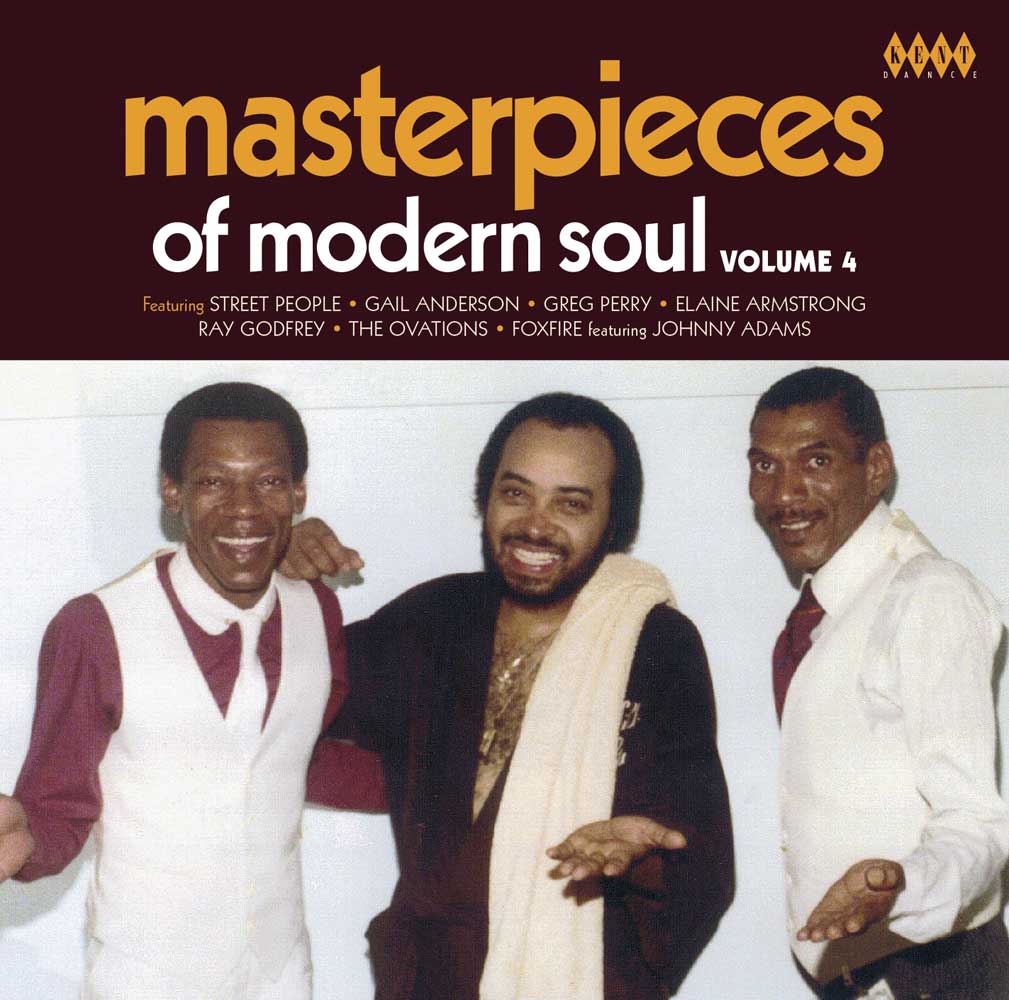
MASTERPIECES OF MODERN SOUL VOLUME 4.
MASTERPIECES OF MODERN SOUL VOLUME 4.
It was back in October 2003, when Kent Soul released the first instalment in the Masterpieces Of Modern Soul series. Since then, another three volumes have been released. The first came in January 2009, when Masterpieces Of Modern Soul Volume 2 was released. Just over two years passed, and then Masterpieces Of Modern Soul Volume 3 hit the shops in November 2011. Since then, connoisseurs of modern soul have patiently awaited the Masterpieces Of Modern Soul Volume 4.
A year passed. Two became three. Still no sign of Masterpieces Of Modern Soul Volume 4. Then after nearly four long long years, the much anticipated fourth volume in what’s one of Ace Records’ most popular series was release. That’s right, recently, Masterpieces Of Modern Soul Volume 4 hit the shops. However, has it been worth the wait?
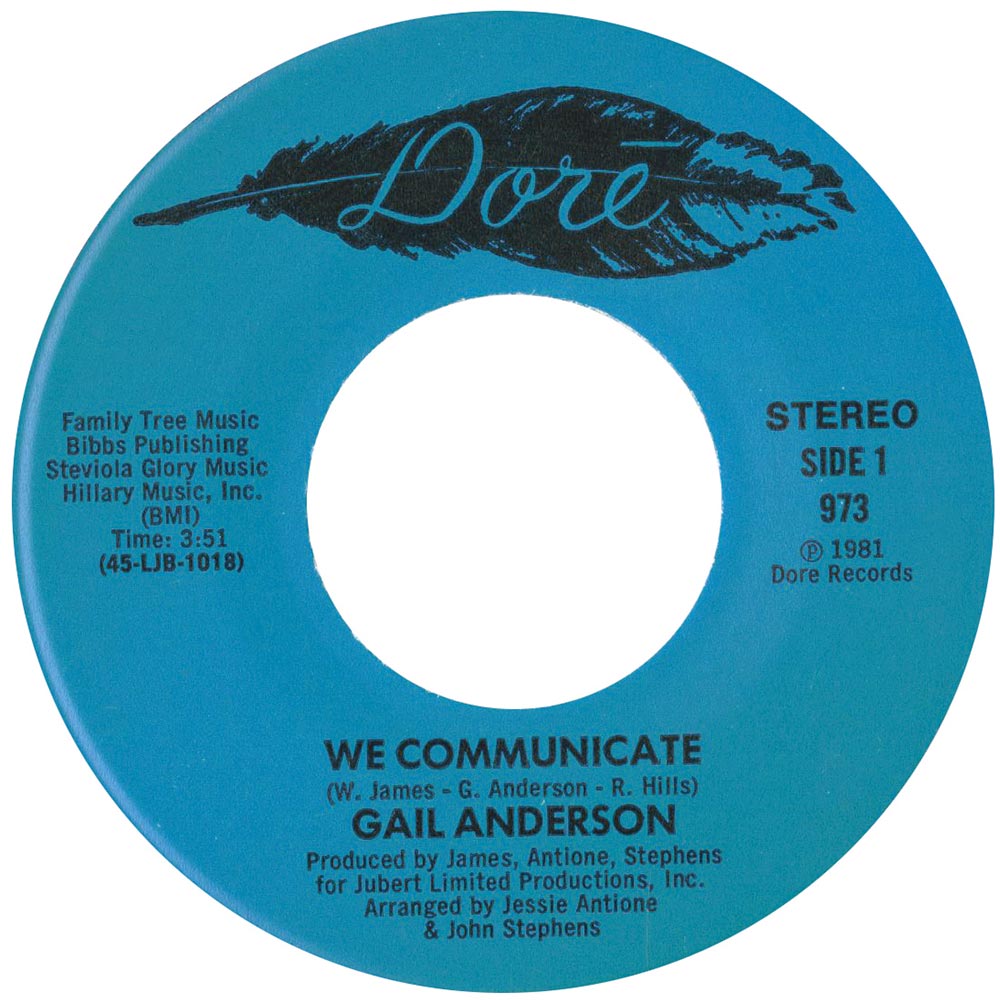
Masterpieces Of Modern Soul Volume 4 features twenty-three tracks. They’re a mixture of familiar faces, minor classic and hidden gems. Among them are contributions from Garland Green, Street People, Herman Davis, The Pretenders, Gail Anderson, Viola Wills, Cesar and Alvin Robinson. There’s also eight tracks that have never been released before. This includes Luv Co, Jesse Johnson and Chocolate Fudge, Elaine Armstrong, The Dramatics and Elayne Starr. These are just a few of the tracks on Masterpieces Of Modern Soul Volume 4, which I’ll pick the highlights of.
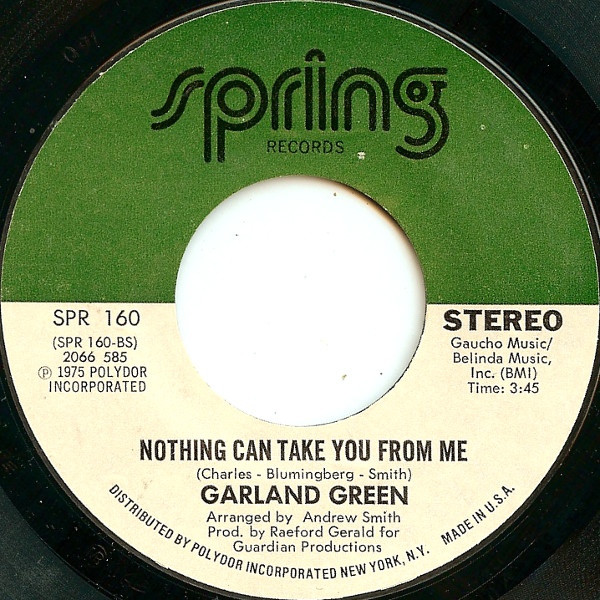
It’s always important to start a compilation with a track that grabs the listener’s attention. Ady Croasdell certainly does that on Masterpieces Of Modern Soul Volume 4. Garland Green’s Just Loving You with the rap intro certainly does this. It was originally released in 1975, as the flip side of Just Loving You, Garland’s final single for Spring Records. The version on Masterpieces Of Modern Soul Volume 4 is an alternate version that first featured on Kent Soul’s 1990 Garland Green compilation The Spring Sides. Twenty-five years later, and Just Loving You makes a welcome return. It’s without doubt, a guaranteed floor filler.
When Greg Perry released It Takes Heart as a single in 1982,
little did anyone realise that it would be his swan-song. Greg penned and produced It Takes Heart. It was released on the Alfa label, and reached number twenty-eight on the US R&B charts. After three decades making music, Greg Perry’s career came to a fitting end with this fusion of boogie, funk, soul and gospel harmonies. Combined, they create a dance-floor friendly single.
The Natural Resources recorded If There Were No You in the seventies. It was a Bobby Swayne composition, produced by Lew Bedell. For some reason, this joyful, string drenched, soulful dancer was never released. That was until it found its way onto Kent Soul’s 2014 compilation Doré: L.A. Soul Sides. If There Were No You takes makes a welcome reappearance on Masterpieces Of Modern Soul Volume 4.
Street People were a soul quintet consisting of Roy Daniels and Milton Daniels, Thomas “Toot” Williams, Joe Gardner and Rick Johnson. They signed to Spring Records in 1974, and released I Wanna Get Over as their debut single. It was written and produced by Ray Dahrouge. Tucked away on the flip side was the irresistible Baby, You Got It All. It’s got everything. A hopeful lead vocal, tight, soulful harmonies and dancing strings. So good is Baby, You Got It All it could’ve been a single.
Another of the unreleased tracks on Masterpieces Of Modern Soul Volume 4 is Jesse Johnson and Chocolate Fudge’s There Will Never Be Another You. It was recorded for Johnny Otis’ Hawk Sound label in the early seventies. It’s Jesse Johnson at his soulful best. Partly, that’s down to Chocolate Soul’s harmonies. They compliment Jesse perfectly. Sadly, There Will Never Be Another You was never released, until now. It’s a welcome inclusion on Masterpieces Of Modern Soul Volume 4.
Toussaint McCall could never be described as prolific artist.
He released just eight singles between 1967 and 1970. Most of the singles he released were on Ronn Records. The exception was his lone single for Doré, Sweet Tea. It was released in 1970. That must have been when Toussaint McCall I’ll Laugh Till I Cry, which he penned with Patrick Robinson and produced by Lew Bedell. However, I’ll Laugh Till I Cry was never released by Doré until it found its way onto Kent Soul’s 2014 compilation Doré: L.A. Soul Sides. It’s a reminder of one of soul’s best kept secrets, Toussaint McCall.
If ever a track was designed to tug at the heartstrings, it’s Obrey Wilson’s Daddy Please Stay Home. It was recorded in 1975, and produced by Phillip Rault. However, it was never released. Since then, this tale impassioned plea to a two-timing father “Daddy Please Stay Home,” has remained in the vaults. Thankfully, not any more. Obrey’s impassioned plea, the funky arrangement and soulful harmonies made its debut on Soul Emissaries-SuperFunk, where it’s one of the compilation’s highlights. Daddy Please Stay Home makes a welcome return on Masterpieces Of Modern Soul Volume 4.
The Ovations featuring Louis Williams recorded You’re My Little Girl for the Sounds Of Memphis label. The version on Masterpieces Of Modern Soul Volume 4 is a demo, as only Louis features. Nothing happened to the demo, and the song lay in the Sounds Of Memphis’ vaults until 2008. That’s when Kent Soul released an The Ovations compilation, One In A Million. At last, this heartfelt ballad was heard by soul fans for the first time.
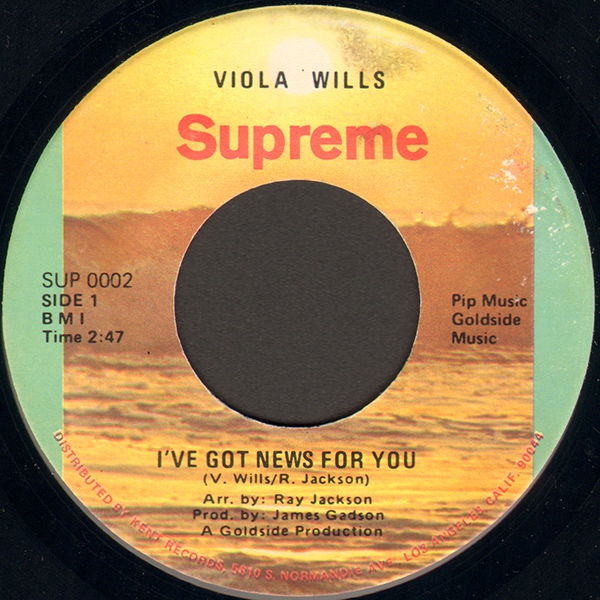
After working with Barry White, Viola Wills hooked up with Ray Jackson for her next single Sweetback, It was released on the Supreme label in 1971. Tucked away on the flip side was, I’ve Got News For You which. Ray arranged I’ve Got News For You and James Gadson produced this hidden gem. Viola is at her soulful best, as she unleashes what can only be described as a
vocal powerhouse.
Forty years ago, Bolivian Cesar Ascarrunz signed to Bob Thiele’s Flying Dutchman Productions. Cesar released his only album Cesar 830 in 1975. It was produced by Bob Thiele and arranged and conducted by Ted Macero, who worked extensively with Miles Davis. One of Cesar 830’s highlights was See Saw Affair, which features vocalist Linda Tillery. She plays an important in this glorious and joyous fusion of Latin, soul and rocky guitars.
Just like New Experience’s Never Felt Like This Before, George Soule’s Midnight Affair was penned and produced by Dave Hamilton. Neither track has been released before and both were mixed by Rob Keyloch. Both tracks, as we’ve come to expect from Dave Hamilton, are dance-floor friendly, and will appeal to anyone who likes their music soulful.
Fox Fire Featuring Johnny Adams close Masterpieces Of Modern Soul Volume 4 with You Amaze Me. The tempo drops and a the man formerly known as Little Johnny Adams, shows he’s all grown up. What follows is a steamy, sultry slice of soulful music. It was recorded by Modern, but has never been released before. It’s another songs that falls firmly into the category of hidden gem. What a way to close Masterpieces Of Modern Soul Volume 4.
Let’s hope that it doesn’t take another four years before Kent Soul, a subsidiary of Ace Records, releases the next instalment in the Masterpieces Of Modern Soul series. Even if it is, and it’s anywhere near as good as Masterpieces Of Modern Soul Volume 4 then it’ll be well worth the wait. Look at the music on the compilation.
There’s a mixture of familiar faces, minor classics and hidden gems. Garland Green, Street People, Herman Davis, The Pretenders, Gail Anderson, Viola Wills, Cesar and Alvin Robinson all feature. Then there’s unreleased tracks from Luv Co, Jesse Johnson and Chocolate Fudge, Elaine Armstrong, The Dramatics and Elayne Starr. These are just a few of the delights awaiting the listener on Masterpieces Of Modern Soul Volume 4.
Compiler Ady Croasdell has surpassed himself with Masterpieces Of Modern Soul Volume 4. All I can say is roll on Volume 5. if it’s anywhere near as good as Masterpieces Of Modern Soul Volume 4, it’ll be well worth waiting for.
MASTERPIECES OF MODERN SOUL VOLUME 4.


LINK WRAY-3-TRACK SHACK.
LINK WRAY-3-TRACK SHACK.
Jimmy Page, Neil Young and Iggy Pop all have one thing in common. They were all influenced by Link Wray, whose 1958 instrumental hit Rumble, popularised the power chord. As a result, several generations of guitarists, owe a debt of gratitude to Link Wray. He’s regarded as one of greatest guitarists in musical history. Sadly, neither in life nor death, Link Wray never deserved the recognition he so richly deserved.
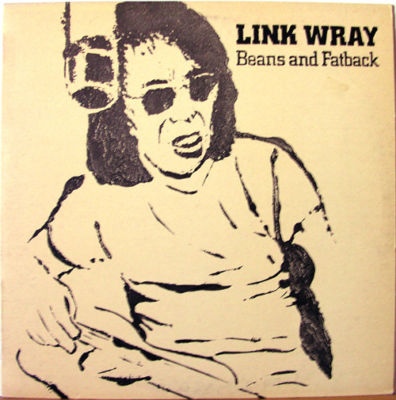
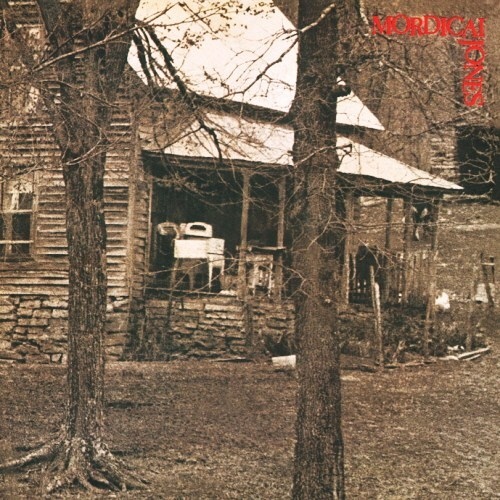
Ace Records are trying rectify this, with the release of 3-Track Shack, a two disc CD set which features three albums, Link Wray, Mordicai Jones and Beans and Fatback. They’re the perfect introduction to Link Wray, who sadly, died ten years ago.
Link Wray died in Copenhagen, Denmark, on November 5th 2005. Nearly eight years later, on October 16th 2013, somewhat belatedly,it was announced that Link Wray had been nominated to be inducted into the Rock ’N’ Roll Hall Of Fame. Sadly, this never came to pass. When the great and good gathered in 2014, Link Wray wasn’t inducted into the Rock ’N’ Roll Hall Of Fame. A musical pioneer had been treated shabbily. He would’ve been a worth inductee. Unlike some who’ve had the same honour bestowed upon then.
Really, do The Beastie Boys belong in the Rock ’N’ Roll Hall Of Fame? Similarly, does disgraced DJ, Alan Freed, who became embroiled in the payola scandal of the early sixties deserve to inducted into such a prestigious institution? There are many others whose inclusion is debatable. However, they’ve been inducted, unlike Link Wray.
The Link Wray story began on May 2nd 1929. That’s when Link Wray was born in Dunn, North Carolina, to Fred Lincoln Wray, Sr. and his wife, Lillian M. Wray. Link Wray’s mother was a Shawnee Indian, and later, Link Wray was proud of his heritage. However, this caused problems growing up.
North Carolina in the thirties was Klu Klux Klan country. Life was tough for the Wray family. At nights, the Klan came calling, wearing their white capes and carrying burning crosses. In the local community, African Americans and Link Wray’s mother feared for their life. They had no option but to hide under their bed, until the Klan left. It was a tough upbringing for Link Wray. To make matters worse, the family were poor.
Link Wray’s father had been pensioned out the US Army. His disability cheque allowed the family to survive the depresson…just. The house had dirt floors, and didn’t even have electricity. However, somehow, Link’s mother and father found the money to buy his elder brother Vernon an acoustic guitar.
When Vernon showed little interest in his guitar, fourteen year old Link Wray picked up the guitar. Link tried to teach himself, and used to sit in the porch strumming and picking his guitar. Then one day, a member of a passing circus saw Link playing his guitar. Realised the young man was struggling, the stranger, who called himself Hambone, showed him how to tune and then play the blues guitar. He showed Link open chords, and how to play the guitar with his fingers and even a knife. It was a masterclass from Hambone, who was just as comfortable playing drums and horns. Having showed Link how it was meant to be played, Hambone left Link playing his guitar, However, every time the circus passed through town, Hambone stopped by, to see how his pupil was progressing.
By the time Link Wray was sixteen, he was more than proficient guitarist. He spent a lot of his spare time listening to the blues. Some of the Wray’s neighbours enjoyed the blues. When they threw open their windows, the music spilled out. As Link sat there, he listened and learnt. For Link, it was part of his musical education, which was going pretty well. He had mastered the guitar.This was just as well. Link was about to leave school.
After a teacher threatened to whip Link, there was a fracas. The outcome was, that Link had to leave school. Initially, he got a job delivering groceries and picking cotton and tobacco. This brought some much needed money into the household. Then in 1947, when Link was eighteen, the Wray family were on the move.
Their destination was Portsmouth, Virginia, where Link’s father and elder brother Vernon got job as pipe fitters at a dockyard. Things were looking up for the Wray family. Not long after this, Link got a job as a messenger at the same dockyard.
After two years working at the dockyard, and scrimping and saving, Link had enough money to buy his first electric guitar in 1949. He chose a Vega electric guitar, which he purchased from a Sears and Roebuck catalogue. From the moment he bought the guitar, Link practised non stop. He was determined to improve his technique and playing. However, in 1950, things were looking up for his family.
Vernon Wray, Link’s elder brother founded his own taxi firm in 1950. He employed his two brothers, Link and Fred as drivers. Not long after he started work as a taxi driver, Link began playing bass in country bands. This made him some extra income until in 1951, he was called up by Uncle Sam.
In 1951, Link Wray was called up to serve in the US Army during the Korean War. This almost wrecked Link Wray’s career. Whilst serving in the US Army, Link Wray contracted T.B. Somehow, nobody realised this. It didn’t become apparent until well after Link Wray left the US Army.
On leaving the US Army in 1953, Link Wray’s thoughts turned to music. He was even more determined to make a career out of music. So on his return home, he bought a new Les Paul guitar and amplifier. It was then his brother Vernon, suggested they form their own band, The Lazy Pine Wranglers.
The nascent group featured Vernon on vocals and rhythm guitar, Link on lead guitar, steel guitarist Dixie Neal and Brantley “Shorty” Horton on stand-up bass. Soon, what was Link Wray’s first group, were a popular draw in the nearby city of Norfolk.
While The Lazy Pine Wranglers were the Wray brothers first group, it wasn’t their last. Link’s brother Doug got a job playing drums and guitar for the Phelps Brothers. They had been really successful on the country circuit, and featured in westerns alongside Roy Rogers. The Phelps Brothers also owned the nearby Palomino Dude Ranch. Somehow, Doug managed to swing a regular gig for the Wray brothers there. As Link Wray and The Palomino Ranch Gang, they provided a country tinged soundtrack at the Phelp Brothers’ ranch. This gave the Wrays career a boost.
Soon, they were backing Tex Ritter, Lash La Rue, Sunset Carson and Wild Bill Elliot. Link Wray and The Palomino Ranch Gang even found their way onto WCMS’ radio’s Hillbilly Concert Hall. This lead to a spot on WMAL-TV’s late night country program Town and Country. With WMAL-TV based in Washington, the Wray brothers moved their permanently, hoping this would further their career.
It did. In 1956, Link Wray released his debut single. He was billed as Lucky Wray, and released It’s Music She Says on the Texan independent label Saturday. The followup was Whatcha Say Honey. Both singles showcased a talented singer. Just as it looked liked Link Wray’s star seemed to be in the ascendancy, tragedy struck.
Link Wray became ill. Initially, the doctors diagnosed pneumonia. He spent a year in hospital. During this period, Link Wray had to have a lung removed. The doctors that treated him thought that Link Wray would never sing again. He proved them wrong.
Early on in 1957, Lucky Wray released another single, Teenage Cutie. This was the last single Link released as lucky. His next release marked the debut of Link Wray.
This came on an E.P. featuring Bob Dean and Cindy With The Kountry Kings. Both acts featured two tracks. Link Wray supplied two of the four tracks on an E.P., I Sez Baby and Johnny Bom Bonny. They saw Link combine country and rockabilly. There’s more than a nod to early Elvis Pressley recordings on the songs that lauched Link Wray’s solo career.
By then, two the Wray brothers were trying to forge a career as singers. Vernon was signed to Cameo, which ultimately resulted in a couple of unsuccessful singles. During one of Vernon’s recording sessions, Link was watching proceedings. When the session finished early, Bernie Lowe allowed Link to record two tracks he had written, Oddball and Swag. When Link heard the playback of Oddball, he knew in his heart, that the song was special. He smiled inwardly, knowing that the session at Broad and Locust, in Philly, cost just $75. For that, Bernie Lowe worked as tape-op.
Little did anyone know how much of a bargain it had been. However, Link struggled to get anyone interested in the song. He played it on Milt Jackson’s show. Wanting to help his friend, Milt even took a copy to Archie Blayer at the Cadence label.
Archie Blayer didn’t like the raucous sounding track, so gave his copy to his teenage step-daughter Jackie Ertel. She however, loved Oddball, and encouraged her father to release the track. The only thing that Jackie didn’t like, was the name. She suggested that Oddball be renamed as Rumble. History was about to be made.
In April 1958, Link Wray and His Ray Men released what would become Link Wray’s most successful single, the classic instrumental Rumble. It saw Link Wray deploy distortion and feedback. This was a first, in more ways than one. Link Wray also became one of the first guitarists to use the power chord on Rumble. He wouldn’t be the last, and since then, it’s been part and parcel of a guitarists arsenal. When the Rumble was released, it was immediately banned.
This made Rumble one of the first instrumentals to be banned. The problem was the title. Rumble was the slang term for a gang fight. The authorities feared that the single would lead to disorder. Ironically, banning Rumble made the song even more popular.
Some nights, Link Wray and His Ray Men played several encores of Rumble. Rumble was popular on both sides of the Atlantic. It reached number sixteen in the US Billboard 100 charts. Across the Atlantic, future members of The Kinks and The Who heard this classic instrumental. Other musicians were won over by it. From Bob Dylan to Phil Everly, Rumble was a favourite of musicians everywhere. After the success of Rumble, many thought that Link Wray would become one of the biggest stars of the late-fifties and sixties.
That proved not to be the case. Things looked good at first. Archie Blayer sent Link Wray and His Ray Men to record the followup. He suggested a track called Dixie Doodle, which was Duane Eddy-esque. However, Link preferred the other track they cut Raw Hide.
Link Wray released Raw-Hide as a single in January 1959. It reached number twenty-four in the US Billboard 100 charts. After that, Comanche a song Link Wray named after his North American Indian roots’ failed to chart. So did Slinky and Vendetta. The rest of 1959 was a right-off. So was 1960.
Neither Trail of the Lonesome Pine nor the Jimmy Reed penned Ain’t That Lovin’ You, Baby charted. 1960 when Link Wray released his debut album, Link Wray and The Wraymen wasn’t going to plan. Luckily, Vernon Wray realised the importance of looking after his brother’s finances.
Having secured funding from Milt Jackson, the Wray brothers setup a two room studio opposite WTTG, where Milt’s show was broadcast. From that studio, Vernon looked after Milt’s publishing and composing rights. The company that took care of the publishing, was Vernon’s Florentine Music. This proved a shrewd move. When the hits dried up for Link Wray, he had a nest egg to fall back on. However, things improved for Link.
Briefly, things improved for Link Wray. He released Jack The Ripper as a single in July 1961. It gave him a minor hit single, when it reached number sixty-four in the US Billboard 100 charts. While any hit was welcome, this was a long way from 1958, when Rumble gave Link Ray launched his career.
Over the next few years, Link Wray continued to release singles and a few albums. Link Wray released his sophomore album Great Guitar Hits by Link Wray, in 1962 and then Jack The Ripper in 1963. By then, Link Wray was struggling. Money was tight, and he was living in a small flat in Washington. He paid for this out of the small wage his brother paid him. Meanwhile, Vernon was making plans.
Vernon bought a house situated in five acres of Land in Livingston Road, Accoceek. After this, started to buy good quality recording equipment that was being sold cheaply. They took pride of place in the recording studio in Vernon’s basement. It’s where Ronnie Dove recorded his hits. Soon, the word was out. Vernon Wray’s studio was the place to record. It was also the Wray family gravitated. In few years, this included Link, whose career was about to stall.
Link’s final album of the sixties was Link Wray Sings and Plays Guitar. It was released in 1964, just as the British Invasion hit America. Suddenly, Link Wray fell out of fashion.
After that, Link Wray sporadically released singles right up until 1966. However, he still toured. Mostly, though, the tours took in the North Eastern states. Link Wray and His Wray Men, whose lineup is best described as fluid, continued to play live. They were still a reasonably popular draw. However, Link Wray was no longer selling records.
Eventually, Link Wray tired of touring. It had taken its toll on him. He was 41 in 1970, and decided to stop touring. So he made his way to Vernon’s farm, which became his home. However, Link hadn’t stopped making music. He played in local bars, and practised at home. That’s until his wife Evelyn tired of the music coming from the basement. So Link moved his studio from the basement to 3-Track Shack, where his next three albums were recorded.
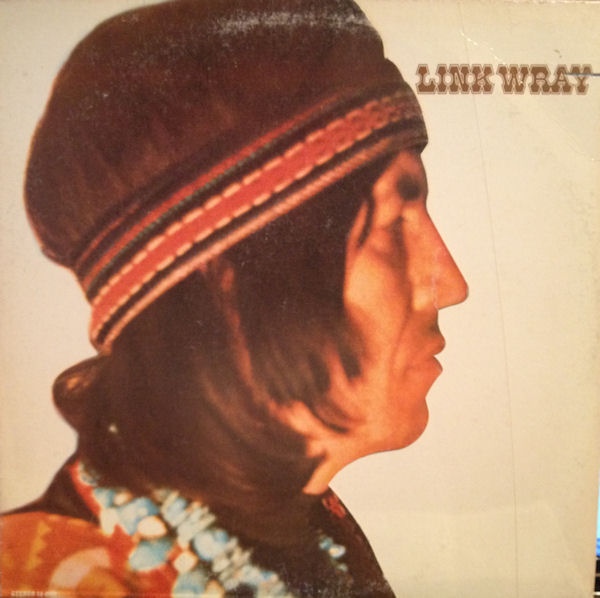
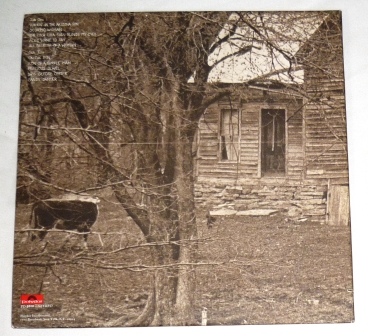
Link Wray.
Initially, Link believed that the first of in this trio of albums, Link Wray, was going to be released on The Beatles’ Apple label. Apple’s New York representative sent someone down to Vernon’s farm. The Beatles it seemed were big fans of Link’s. With the fab four on his side, things were looking good for Link Wray.
As the talks commenced, it quickly became apparent that if Link Wray was released on Apple, it was going to be a lucrative deal. For Link, who had found the past few years difficult financially, his looked like being a godsend. So, Link got to work.
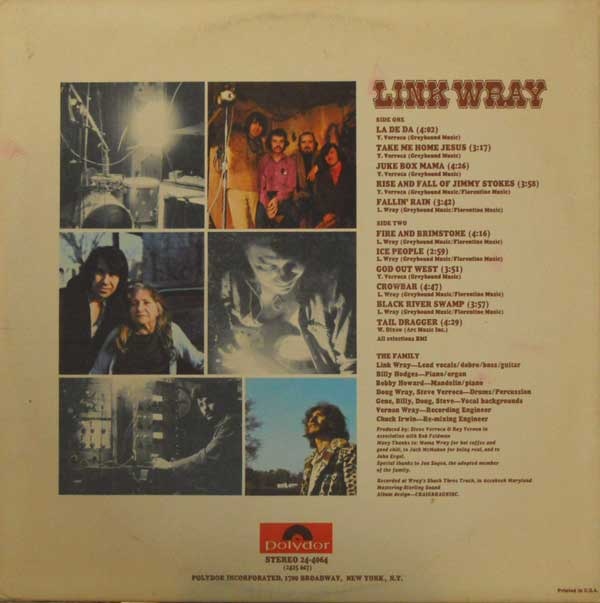
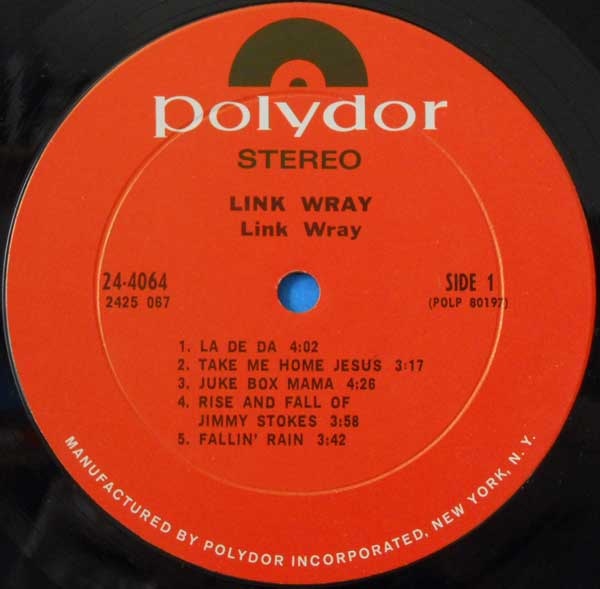
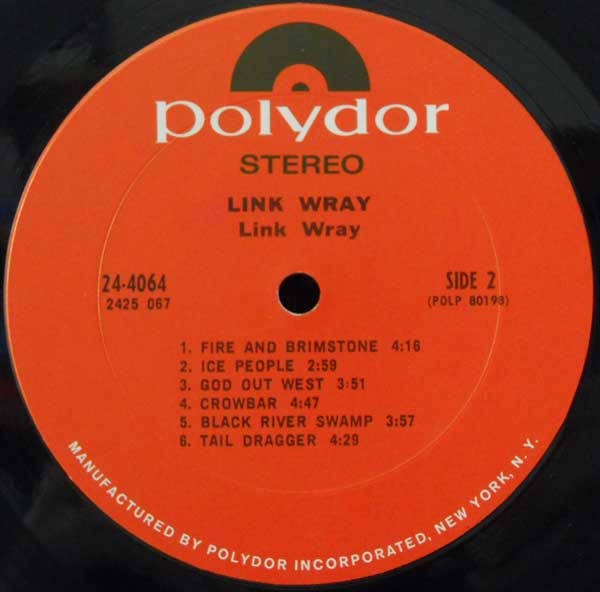
A total of eleven tracks were chosen. Link’s drummer Steve Verroca wrote five of the track. Another five came from the pen of Link Wray. The track that closed Link Wray, was a cover of Willie Dixon’s Tail Dragger. These eleven tracks were recorded by Link and his band in the old chicken shack.
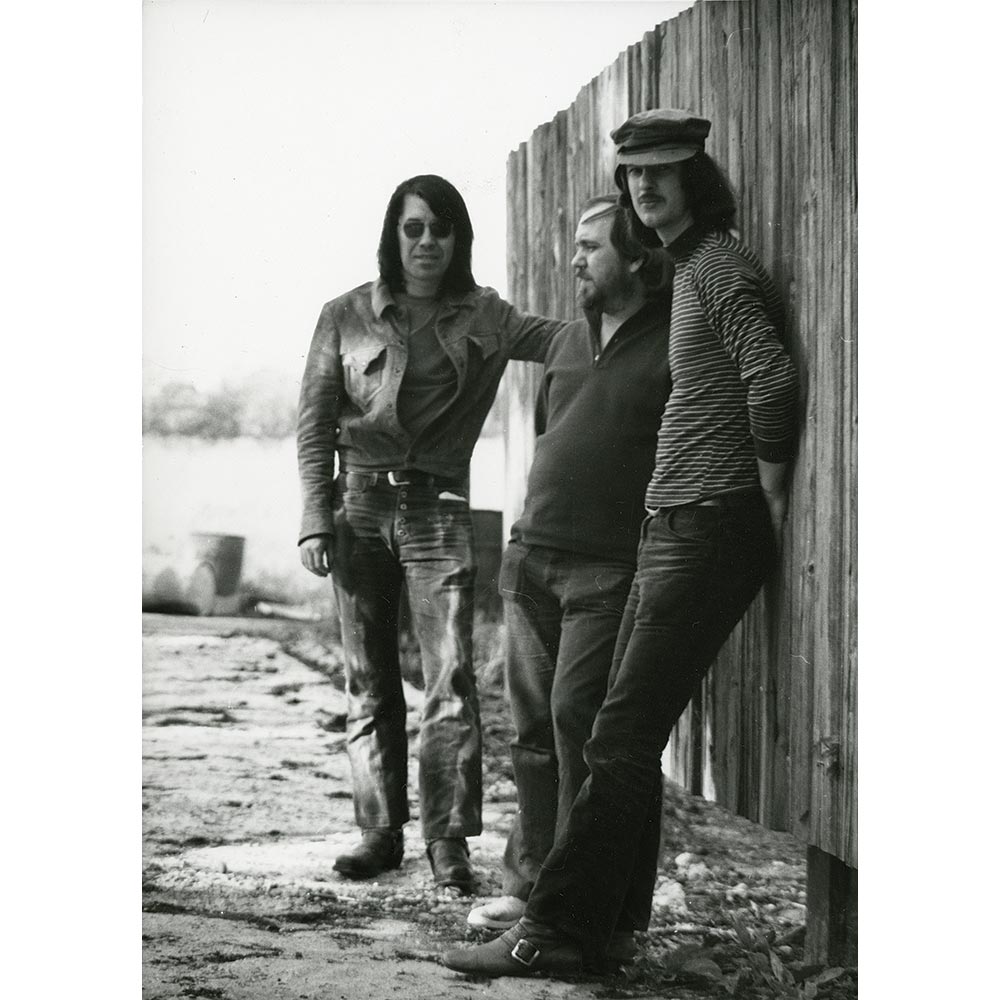
The band featured drummers and percussionists Steve Verroca and Doug Wray. Pianist Bill Hodges also played organ. Bobby Howard switched between piano and mandolin. Along with the rest of the band, Gene Johnson added backing vocals. Link however, sung lead vocals and played bass, guitars and dobro. As the recordings took shape, all Link could think about was, he was about to sign to The Beatles’ label.
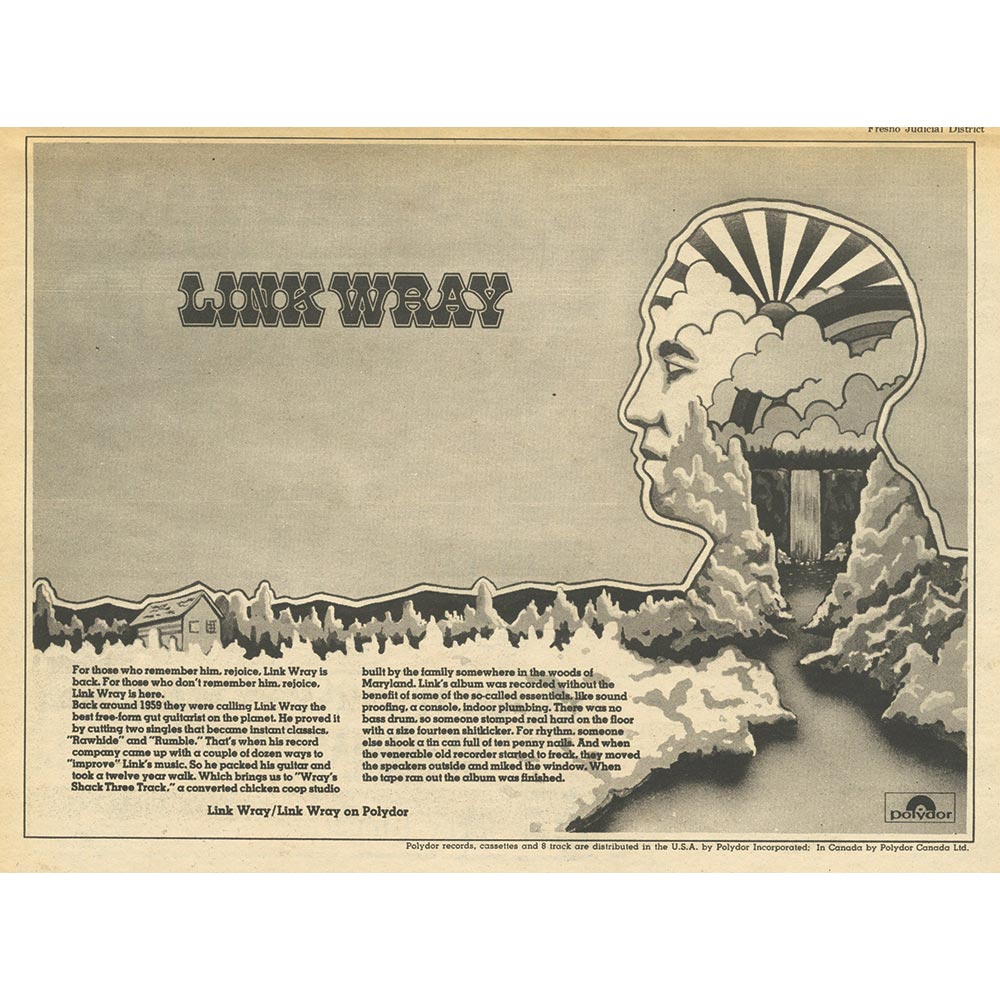
That didn’t happen. After a meeting in New York, Vernon Wray came back with bad news. Link Wray was going to be released on Polydor. This was a huge disappointment for Link. However, at least, he had a recording contract. That was the main thing.
Before the release of Link Wray in June 1971, the critics had their say. Many used to his earlier work, weren’t impressed by Link Wray’s new sound. It was a mixture of Americana, blues, country rock and folk rock. However, what impressed many critics, were the songs Link had written. They were autobiographical, and had an honesty. Since then, Link Wray has been reappraised by critics, who appreciate the lo-fi, honesty of this genre-hopping albums. However, Link’s fans didn’t.
On the release of Link Wray, his fans weren’t impressed by the album. They were shocked by the change of style. Link remarked at this: “in a way I couldn’t care less if the album didn’t sell a single copy. We’re happy with it and we’ve done it our way.” His fans seemed not to noticed music had changed since Rumble, Raw-Hide and Jack The Ripper. As a result, Link Wray stalled at number 186 in US Billboard 200. Although this was disappointing Link was back, back at the Shack recording his next album, Mordicai Jones.
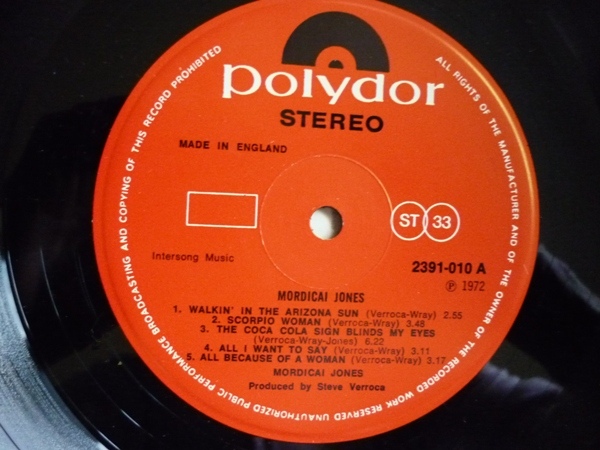
Mordicai Jones.
Just like Link Wray, Link and Steve Verroca wrote most of the album. This time however, they cowrote seven of the tracks. They also cowrote The Coca Cola Sign Blinds My Eye and On the Run with Bobby Howard, who used the alias Mordicai Jones.The other track was a cover Roy Acuff, The King of Country Music’s Precious Jewel. These tracks were recorded at the 3-Track Shack.
This time around, Steve Verroca took charge of production. The lineup of the band was similar to the one that recorded Link Wray. Drummers and percussionist Steve Verroca joined bassist Norman Sue and joined rhythm guitarists Doug Wray and John Grummere in the rhythm section. They were joined by organist and pianist Bill Hodges. Pianist and mandril player Bobby Howar adopted the alias Mordicai Jones and a lead vocals. Ned Levitt added backing vocals, handclaps and foot-stomps. Meanwhile, Link played bass, guitars and dobro on Mordicai Jones. It was released later in 1971.
Stylistically, critics noted, that Mordicai Jones was similar to Link Wray. It comprised the same musical elements. Mordicai Jones was a mixture of Americana, blues, country rock and folk rock. The music has a laid back, pastoral vibe. Other times, there’s a tougher edge. However, critics felt what made a difference were the vocals.
TB had long ago ravaged Link Wray’s voice. It gave it the rough, tough, some would say guttural sound. Unlike the mysterious Mordicai Jones. Bobby Howard’s vocals were heartfelt and impassioned. He sung about “going back to the land,” and what many people see as a simpler way of life. One critic went as far as to describe the music on Mordicai Jones as sounding as if it were made “by folks who actually worked the farm they lived on.” Critics still hadn’t forgiven Link Wray for changing direction musically. Comments like that didn’t do Mordicai Jones album justice. They certainly didn’t help sales of Mordicai Jones.
On the release of Mordicai Jones, the album failed to chart. After the commercial failure of Mordicai Jones, Link Wray was in for a shock.
In 1972, Link’s brother Vernon decided to move to Tucson. He packed up his belongings, and took the back wall of the 3-Track Shack for good luck. As the three brothers said their farewells, Doug asked for his share of the money. Vernon explained there was no money. All the money had been put into the studio. This was the end of Wray brothers partnership. The three brothers never worked again.
Later, when Link decided to ask Vernon about the money, Vernon replied that he received all the glory. There was an uneasy silence. By then, Vernon had a new eight-track studio up and running in Tucson, Doug opened a barbershop and Link recorded Beans and Fatback.
Beans and Fatback.
Beans and Fatback was the last album in the 3-Track Shack trilogy. Just like the two previous albums, Link and Steve Verroca wrote most of the tracks. They cowrote eight of the eleven tracks. The other three tracks, Georgia Pines, In The Pines and Take My Hand, Precious Lord were traditional songs. In The Pines was reworked, courtesy of a new arrangement by Link and Steve, who produced Beans and Fatback.
The band had recorded Beans and Fatback in the 3-Track Shack in 1971. Back then, the rhythm section featured drummer and percussionist Steve Verroca, rhythm guitarist Doug Wray and Link who played bass, acoustic, electric, steel and 12-string guitar. Link also played dobro and took charge of the vocals. Pianist Bill Hodges also played organ, while pianist and mandolin player Bobby Howard revived his alter ego Mordicai Jones. Together, they played harder and faster than on the first two albums on the 3-Track Shack trilogy.
Once Beans and Fatback was complete, the search began for a record company. Eventually, Virgin Records agreed to release Beans and Fatback. By then, producer Steve Verroca was working for Virgin Records, and was producing Kevin Coyne’s album Marjory Razorblade. Steve it seemed, had championed Link Wray’s cause. He knew what the album sounded like, having played and produced the album in 1971. Unlike anyone else he knew that Link Wray had changed direction again.
As copies of Beans and Fatback landed on the desks of critics, they were in for a surprise. The album had a tougher, rougher edge. A hard rocking, sometimes almost raucous, rowdy band worked their way through the eleven tracks combining rock ’n’ roll, Americana, blues and country rock. There was more than a nod to the instrumentals that launched Link Wray’s career. Link Wray was back, and better than ever. Sadly, nobody realised this.
When Beans and Fatback was released in 1973, the album failed to chart. The last instalment in the 3-Track Shack had failed to find the audience it so richly deserved. It would only be later that the 3-Track Shack trilogy found an audience.
By then, there had been an upsurge in interest in Link Wray’s music. Especially, the 3-Track Shack trilogy. Link Wray, Mordicai Jones and Beans and Fatback were hidden gems in Link Wray’s discography. The three albums had been reappraised, and were being championed by a new generation of musicians. Just like The Beatles, The Kinks, The Who and Rolling Stones, musicians were flying the flag for Link Wray and the 3-Track Shack trilogy. These albums show two sides of Link Wray.
The first two albums, Link Wray and Mordicai Jones have a much more laid-back sound. They’re a fusion of Americana, blues, country rock and folk rock. Beans and Fatback, the final instalment in the 3-Track Shack trilogy, has partly been inspired by Rumble. Link Wray and his band kick loose, and unleash a much more rowdy, raucous, rock ’n’ roll sound. There’s still diversions via blues and country rock. However, mostly, the old Link Wray shines through. While this should’ve pleased his fans, they turned their back on the Beans and Fatback when it was released in 1973. They didn’t realise what they were missing.
Maybe, somewhat belatedly, they’ll discover what they missed between 1971 and 1973. They’ve been released as on two CDs by Ace Records, as 3-Track Shack. It features Link Wray, Mordicai Jones and Beans and Fatback. These three albums showcase one of the greatest guitarists in the history of music. Link Wray influenced Jimmy Page, Neil Young and Iggy Pop. Everyone from Bob Dylan, The Beatles, The Kinks, The Who and Rolling Stones to Phil Everly were influenced by Link Wray. Despite this, and a career that lasted six decades, Link Wray never received the recognition he deserved from the musical establishment,
Instead, the Rock ’N’ Roll Hall Of Fame would rather ennoble disgraced DJs and third rate hip hoppers. Whoever said that life wasn’t fair was right. If it was, the three albums on 3-Track Shack would’ve sold in huge numbers, and Link Wray would be receiving the recognition he so richly deserves. Maybe Ace Records’ recent reissue of 3-Track Shack will introduce another generation to Link Wray’s music, and they too will realise, that that he belongs in the Rock ’N’ Roll Hall Of Fame.
LINK WRAY-3-TRACK SHACK.

MUELLER-ROEDELIUS-IMAGORI.
MUELLER-ROEDELIUS-IMAGORI.
Nowadays, some artists spend years working on an album. Partly, that’s down to the way albums are recorded. Things used to be very different.
Forty years ago, the only way to record an album, was in a recording studio. That cost money. So, the only bands able to record an album, were those signed to a record company. Time spent in a recording studio was expensive. So bands had be focused and disciplined. When the red light went on, they had to be ready to record. Nowadays, that’s not the case.
In the last twenty years, the way in which albums are recorded has changed beyond recognition. No longer, do bands need recording studios. Instead, all that’s needed is laptop or iPad containing a Digital Audio Workstation and some VSTs. Add to this, an audio interface, and any aspiring band or artist can record their debut album. That’s exactly what one of the true legends of music did recently.
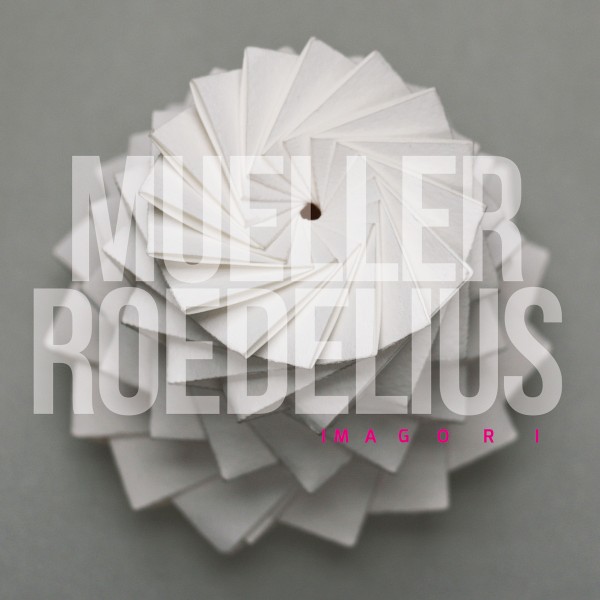
Hans-Joachim Roedelius who currently, is working on ten separate projects, recently, collaborated with Christoph H. Mueller. The result was Mueller-Roedelius’ forthcoming new album Imagori which will be released by Grönland Records on 4th September 2015.
Imagori is the first collaboration between Hans-Joachim Roedelius, who co-founded Kluster, Cluster, Harmonia and Qluster, and the Swiss born composer and Christoph H. Mueller. Both men are experienced and talented artists.
In the case of Hans-Joachim Roedelius, prolific is the best way to describes the Berlin born composer. He has released over 200 albums over the past six decades. This includes solo albums and the albums he made Kluster, Cluster, Harmonia and Qluster. Then there are countless collaborations with the great and good of music.
Over the last forty years, Hans-Joachim Roedelius has collaborated with everyone from Brian Eno and Tim Story, to Lloyd Cole, Conrad Schnitzler, Morgan Fisher and Christopher Chaplin. He is a truly prolific musician, who even today is working on ten separate collaborations. However, Hans-Joachim Roedelius latest collaboration is with Christoph H. Mueller.
Just like Hans-Joachim Roedelius, Christoph H. Mueller has enjoyed a lengthy and successful career. The Swiss born composer first played a synth when he was sixteen. That was him hooked. After that, Christoph H. Mueller decided to make a living out of music.
Christoph H. Mueller’s career began in 1987, when he joined Touch El Arab, Basle based band. Success came quickly to Touch El Arab. They released a single in 1987. It wasn’t going anywhere, until someone flipped over to the B-Side. That’s where they found Muhammar Soon, it was climbing the Swiss charts, before settling at number four. Before long, Muhammar became a hit in France and Italy. This was the start of the Touch El Arab story.
The went onto release several singles and E.P.s, but only one album. That album was L.R.K. which was released in 1998. After that, Touch El Arab released just singles and E.P.s. However, it was Christoph H. Mueller’s introduction to music.
By the nineties, Christoph H. Mueller was working on various projects, including Ten Mother Tongues. This was a collaboration between Christoph and Gabriela Arnon. However, Ten Mother Tongues only released one album, The Listening Tree in 1996. A year later, Christoph hooked up with producer Philippe Cohen to found The Boyz From Brazil.
Little did Christoph or Philippe Cohen realise it, but they would go on to work together over the next three decades. Their first release as The Boyz From Brazil came in 1997, when they realised a trio of singles. Another single followed in 1999. Then in 2000 The Boyz From Brazil released their eponymous debut album. By then, Christoph and Philippe had two other projects up-and-running.
The first was Stereo Action Unlimited. They released two 12” singles, Hi-Fi Trumpet in 1999 and Lovelight in 2001. Christoph and Philippe other project was Fruit Of The Loop, who released the single S*Explore in 1999. However, would reunite for their most successful project, Gotan Project.
Since the new millennia dawned, Gotan Project have been the most prolific of the various projects Christoph and Philippe have been involved with. Apart from countless singles and E.P.s, there’s five albums, compilations, a DJ set and a box set.
Gotan Project released their debut album La Revancha Del Tango in 2000. A fusion of ambient, trip hop and Latin, it was a captivating combination. It seemed that Gotan Project were in no hurry to release their sophomore album. Eventually, Lunático followed in 2006, with Gotan Project Live following in 2008. After this, Christoph decided to embark upon another collaboration.
A year later, in 2009 Christoph and Peruvian percussionist Rodolfo Muñoz Radiokijada released an album togther, Nuevos Sonidos Afro Peruanos. The album was built around Afro Peruvian rhythms and culture, but incorporated a moderne sound. Just like previous projects Christoph had been involved in, it was exciting and ambitious. Sadly, it’s never been repeated. However, a year later, Gotan Project returned.
Tango 3.0, Gotan Project’s third studio album was released in 2010. It was the Gotan Project’s first album in two years. When Tango 3.0 was released to critical acclaim, Gotan Project’s star seemed to be in the ascendancy.
The following year, 2011, Gotan Project returned with La Revancha En Cumbia. This proved to be the last studio album that Gotan Project released. However, Christoph and another member of the Gotan Project formed a new group,
Following the release of Gotan Project’s fourth studio album, Christoph and Eduardo Makaroff of the Gotan Project founded a new project, Plaza Francia. It was a collaboration with French chanteuse Catherine Ringer of Les Rita Mitsouko. They released their debut album A New Tango Song Book in 2014, and earlier in 2015, released Live Re-Experience. However, that’s not the only album Christop will release during 2015.
Recently, Hans-Joachim Roedelius and Christoph H. Mueller collaborated together on an album of ten tracks, Imagori. This new album from Mueller-Roedelius will be released by Grönland Records on 4th September 2015.
Mostly, Imagori is the work of Hans-Joachim Roedelius and Christoph H. Mueller. They composed, performed and produced Imagori. Onnen Beck recorded and edited some of the acoustic piano and synth parts. The only other musician to feature on Imagori is Brian Eno. Even then, it’s just a sample of his voice that can be heard on About Tape. Just like the rest of Imagori, it’s just Hans-Joachim Roedelius, Christoph H. Mueller and the latest in musical technology.
Opening Imagori is Time Has Come. The arrangement crackles and bristles, before a slow, deliberate and melancholy piano plays. Still, the almost rhythmic sound of bristling, and crackling sound remains . It’s joined by pounding, dramatic drums and synths. Later, percussion is added. However, still, the piano takes centre-stage. It’s played slowly and deliberately, space being left in the arrangement. Gradually, the tempo increases, as a bass synth plays and another layer of percussion are added. So are a myriad of sci-fi sounds. Later, ghostly whispers can be heard. By then, musical genres are melting into one. Elements of ambient, avant-garde, electronica and jazz are seamlessly melting into one; and the combination of Hans-Joachim Roedelius and Christoph H. Mueller is proving a potent one. They’re responsible for a captivating and cinematic track.
Swells of disparate sounds open QM. They’re joined by drums and a bass synth. As the synth beeps and squeaks, the drums tap out a code. Washes of synths accompany the crystalline piano. Then when the piano drops out, it’s replaced by neo industrial sound. When the piano returns, it’s cocooned by a variety of disparate sounds. They flit in and out of the arrangement, leaving the beeping, squeaking synth and piano to form an unlikely but successful partnership, in what’s another genre-melting track.
As the piano plays on Origami II, it adds an element of drama. It’s as if Mueller-Roedelius are setting the scene. That proves to be the case. When other instruments are added to this soundscape, the drama builds. Especially when the arrangement is panned. That when percussion and drums are added. Still, the arrangement meanders along, as washes of futuristic synths are added. By then, there’s a mesmeric, meditative quality to Origami II. It washes over you, and suddenly, the world seems a better place.
About Tape sounds like soundtrack to a 21st Century sci-fi movie. Synths add a futuristic language, while drums pound. Then the darkness descends. Partly, that’s down to the piano. It adds a darkness, as the arrangement builds. Instruments are dropped in. Thunderous drums and shrieking, chattering synths are added as the arrangement gallops along, Then a sample of Brian Eno talking About Tape is added. Filters are added the sample, as Roedelius-Mueller make Brian Eno into a possible dance-floor sensation. This track is guaranteed to fill dance-floors everywhere. It’s Mueller-Roedelius at their innovative and inventive best.
There’s an almost haunting quality as A Song Or Not (Piano Version) begins to unfolds. Sounds flit in and out. Some are subtle, others more obvious. They accompany the piano. Effects are added. So are sci-fi sounds, handclaps and percussion. Then a big, bold bass synth kicks in. Gradually, this enthralling fusion of genres unfolds. Both Mueller-Roedelius’ influences can be heard. Elements of ambient, avant-garde, electronica, jazz and world music shine through,as two generations of musicians create a quite beautiful, but thoughtful track.
Valse Mecanique cheeps, beeps and squeaks. It’s as if a code is emerging from the arrangement. Soon, synths enter. A bass synth lumbers, looming large over the arrangement. By then the piano is being played deliberately, and sci-fi sounds. This adds to the cinematic sound, that gradually is emerging. It’s as if Mueller-Roedelius have been asked to write the score for some dramatic sci-fi epic, and have passed with flying colours.
First came Origami II, then came Origami. From the distance stabs of keyboards, percussion and bass synth combine. They usher in the piano, which glides elegiacally across the arrangement. Mesmeric drums and washes of swirling synths join the percussion and sci-fi sounds. Elements of ambient, electronica and dance music are combined, as this gorgeous arrangement gradually shows its hidden secrets.
The squelchiest of bass synths is deployed on The Question. It’s a scene setter. Soon, bells ring out, and thunder sounds. A piano plays, and briefly, a storm blows. Meanwhile, Morse Code punctuates the arrangement, asking The Question. By then, the drama is building. Mueller-Roedelius drop in a spoken word sample. It too has a futuristic sound. Before long, another sample replies to the first. It’s akin to theatre from Mueller-Roedelius as they take futuristic and sometimes ethereal journey to another galaxy, where they ask The Question.
Himmel Über Lima has an understated, thoughtful quality. At the start it’s just a piano playing. However, gradually, Mueller-Roedelius begin to drop in instruments and effects. Heavenly music plays, but a bristling sound interjects. This is cue for the bass synth to enter. Soon, filters are added, and the arrangement becomes choppy and dramatic. Still, the piano persists, growing in volume and power. Eventually, it’s briefly allowed to take centre-stage. Then when other instruments are added, they compliment the arrangement. Mueller-Roedelius are in full flow but with just over a minute to go, slow things way down. Again the bristling sound interjects, as the arrangement reverberates, before heading into the ether, leaving just a a pleasant memory.
808 Fantasy closes Imagori, Mueller-Roedelius’ first collaboration. Deliberate synths are joined by a jazz-tinged piano and a rumbling bass synth. They’re united, before Hans-Joachim Roedelius’ piano escapes from the pack. Soon, it’s taking centre-stage, as drums crack and the bass synth lumbers along. All the time, Mueller-Roedelius continue to paint music with their music, which isn’t enchanting, but has a timeless quality.
That’s the case throughout Imagori, Mueller-Roedelius’ first collaboration. It features two generations of musical pioneers. Both have ploughed lone furrows, by releasing music that’s ambitious and innovative.
In the case of Hans-Joachim Roedelius, he’s been doing this since 1969. He’s been a member of several groundbreaking groups. This started with Kluster, then Cluster and Harmonia. For the last five years, Hans-Joachim Roedelius has been part of Qluster. Just like the other groups he has been part of, they continually made music that’s innovative, inventive, imaginative and inventive. That has been the case throughout Hans-Joachim Roedelius’ career. This music has influenced several generations of musicians. I’m sure that Christoph H. Mueller has been inspired and influenced by Hans-Joachim Roedelius.
Christoph has also been part of a several successful projects. His most successful project was Gotan Project. More recently, Christoph has been involved with a new project, Plaza Francia. However, his latest project is Mueller-Roedelius.
Using the latest technology, Mueller-Roedelius recorded ten tracks. These tracks became Imagori, an album of genre-melting music. Over Imagori’s ten tracks, Mueller-Roedelius combine elements of ambient, avant-garde, classical, electronica, experimental, industrial, jazz and even techno. The music is variously captivating, cinematic, dark, dreamy, dramatic, ethereal and moody. Much of the music on Imagori is like the soundtrack to a film that’s yet to be made. Some of the tracks have a futuristic sound, and wouldn’t sound out of place on the soundtrack to a sci-fi movie. An alternative title to Imagori, could’ve been Music For Films. However, Brian Eno got their first. Imagori however, is the perfect title.
The music on Imagori conjures up images in your mind’s eye. It’s easily to visualise scenes unfolding before your eyes. Suddenly, the listener is directing their own film. All they need to supply is their imagination. They’re soon providing the film that’s yet to be made. Meanwhile, as Imagori plays, Mueller-Roedelius supply the soundtrack.
Imagori, Mueller-Roedelius’ first collaboration will be released by Grönland Records on 4th September 2015. That’s very fitting.
By then, a four day festival to to celebrate the life and music of Hans-Joachim Roedelius will be in full swing in Berlin. It’s been arranged by the HWK, and begins on the 3rd September 2015. Over four days, Hans-Joachim Roedelius will be joined by E.S.B., Peter Kruder, Caramusa, Richard Fearless, Qluster, Christoph Müller, Tempus Transit, Lloyd Cole, Christopher Chaplin, Astronauta Pinguim, Stefan Schneider and The Chor der Kulturen der Welt. It’s a truly star studded lineup, that will provide a fitting celebration of a musical legend who has released over 200 albums.
The latest is Imagori, the first collaboration between Mueller-Roedelius. Given the quality of the music on Imagori, I hope their will be a followup. That could well happen.
Hans-Joachim Roedelius’ love affair with music continues. It’s being going on for forty-six years. Still, he loves music and is currently juggling ten different projects. That’s pretty impressive, given Hans-Joachim Roedelius is now eighty-one. It’s hard to believe. He has more energy than men half his age, and is still making music that innovative, influential and inspiring. This includes Imagori, the captivating, cinematic and critically acclaimed collaboration from Mueller-Roedelius.
MUELLER-ROEDELIUS-IMAGORI.
INTERVIEW WITH HANS-JOACHIM ROEDELIUS.
INTERVIEW WITH HANS-JOACHIM ROEDELIUS.
The words pioneer and innovator are often overused. However, it is a fitting description of Hans-Joachim Roedelius. He is, without doubt, one of the most inventive and influential musicians of the past fifty years. His music has influenced several generation of musicians. And Hans-Joachim Roedelius has released more music that most musicians.
Prolific describes Hans-Joachim Roedelius. He has released over 200 albums over the past six decades. This includes solo albums and the albums he made Kluster, Cluster and Harmonia. Then there are countless collaborations with the great and good of music.
Over the last forty years, Hans-Joachim Roedelius has collaborated with everyone from Brian Eno and Tim Story, to Lloyd Cole, Conrad Schnitzler, Morgan Fisher and Christopher Chaplin. He is a truly prolific musician, who even today is working on ten separate collaborations. However, Hans-Joachim Roedelius is about to release a his collaborations with Christoph H. Mueller.
Imagori, the critically acclaimed collaboration between Mueller-Roedelius, will be released by Grönland Records on 4th September 2015. This is perfect timing. The HWK have arranged a four day festival in Berlin, to celebrate the life and music of Hans-Joachim Roedelius. It begins on the 3rd September 2015, and finishes on 6th September 2015. During the four days, Hans-Joachim Roedelius will be joined by E.S.B., Peter Kruder, Caramusa, Richard Fearless, Qluster, Christoph Müller, Tempus Transit, Lloyd Cole, Christopher Chaplin, Astronauta Pinguim, Stefan Schneider and The Chor der Kulturen der Welt. It’s a truly star studded lineup, that will provide a fitting celebration of a musical legend, who I interviewed recently. His story began in 1934, some eighty-one years ago.
The Hans-Joachim Roedelius’ story began in Berlin, on 26th October 1934. That is when one of the future leading lights of the German music scene was born. However, unlike many future musicians, Hans-Joachim Roedelius didn’t grow up in a musical household.
Music was a luxury as Hans-Joachim Roedelius grew up. Like so many young Europeans, World War II interrupted his his childhood. He grew up “hearing bombs drop across the city” of Berlin. It must have been a terrifying sound and time for young Hans-Joachim Roedelius. However, better, more peaceful times were ahead for all Europeans. It was then that music entered Hans-Joachim Roedelius in earnest.
As Hans-Joachim Roedelius grew up, he begin to discover music. “It was classical composers who I listened to. Their music was played by the great orchestras, including The Bonn Orchestra. This was my eduction, and how I discovered music. I learnt through listening.” This was the first step in Hans-Joachim Roedelius’ journey to becoming a musician. Meanwhile, his future contemporaries were studying music.
By the sixties, many of the musicians who became leading lights of the German music scene were music students. Holger Czukay, Conny Plank and Irmin Schmidt were studying under the legendary Karlheinz Stockhausen in Cologne. Meanwhile, another aspiring musician, Dieter Moebius was studying under Joseph Beuys at Düsseldorf Fine Arts Academy. Their paths would cross with Hans-Joachim Roedelius’ after they graduated.
In 1968, at the height of the psychedelic era, Hans-Joachim Roedelius “cofounded music commune Human Being.I also co-founded Zodiak Free Arts Lab in West Berlin with conceptual artist Conrad Schnitzler. At that period, I was a member of the group Human Being, a forerunner of Kluster.” For Hans-Joachim Roedelius: “this was an exciting time, where there was a sense that anything was possible. It was like a revolution. We were happy to have found this place to work. All the freelance musicians in the city found their way to Zodiak Free Arts Lab. There were members of Can, Tangerine Dream, Ash Ra, Neu! at Zodiak. They were great times.” The Zodiak Free Arts Lab was also where Hans-Joachim Roedelius met someone who would play a huge part in his career.
This was Dieter Moebius. “About the end of 1969, Dieter Moebius visited The Zodiak Free Arts Lab. He wasn’t a member. No. He just visiting, and we got talking.” The two men found they had a lot in common, including the way they believed music should be made. It was almost inevitable that Hans-Joachim Roedelius and Dieter Moebius would form a group.
Kluster.
“It was later, in 1970 that we founded Kluster.” Hans-Joachim Roedelius and Dieter Moebius joined with Conrad Schnitzler to form Kluster. However, Kluster was no ordinary band. Initially, Cluster played an eclectic instruments and utensils. “Everything was spontaneous. Improvisation was key.” Kluster’s music was described in The Crack In The Cosmic Egg magazine as “unlike anything heard before.” Hans-Joachim Roedelius admits: “that was what Kluster set out to do. Kluster was about musical activism.” Soon, the musical activists would record their debut album.
Kluster’s debut album came about in the unlikeliest of circumstances. Although band were based in West Berlin; “one night we were playing a concert in Dusseldorf. A priest just happened to be walking past, and heard the music. He liked our music, and came in to the hall. Once the concert was finished, he asked if we would like to record an album of new church music? The answer was yes!” So Kluster made the journey to the Rhenus-Studio in Gordor.
When Kluster arrived at the Rhenus-Studio, “we met Conny Plank and producer Oskar Gottlieb Blarr. We went into the studio and recorded an hour of music in one take. Religious text was added to this, and became the ‘new church music.’ The music became our first two albums Klopfzeichen and Zwei-Osterei.
Only 300 copies of both albums were pressed. Klopfzeichen was released in 1970, with Zwei-Osterei following in 1971. Critics realised the importance of Kluster’s music. It was described as quite extraordinary, bleak, stark, unnerving and full of electricity. Despite the reviews, the sales of Klopfzeichen and Zwei-Osterei were small. However, later, Kluster would be recognised as one of the most influential groups of the early seventies. This influential and innovative group would only release one further album.
This was Eruption, which was recorded by Kluster during 1971. It featured an hour of experimental music, which was recorded by Klaus Freudigmann. Eruption is quite different from Kluster’s first two albums. There is no religious text, just Kluster at their innovative best. For many, Eruption is Kluster’s finest hour. However, 1971 marked the end of an era for Kluster. One group became two.
Cluster.
In the middle of 1971, Conrad Schnitzler left Kluster, and briefly, worked with another band, Eruption. This was the beginning of the end for Kluster.
After the original lineup of Kluster split-up, “Dieter Moebius and I anglicised the band’s name, and Kluster became Cluster.” Between 1971 and 1981, Cluster would release eight studio albums and a live album. Cluster’s debut was released later in 1971.
Cluster.
When Cluster recorded their eponymous debut album, they were joined in the studio by another legend of German music, Conny Plank. He featured on Cluster, which marked a change in sound. Gone was the almost industrial, discordant sound, which was replaced by an electronic sound. Dieter and I played all the instruments and Conny added all sorts of effects. For us this was the start of a new era.”
Cluster was released later in 1971 on Phillips. “This was Cluster’s major label debut. It found Cluster at a crossroads.” They were ready to turn their back on the avant-garde, almost discordant and industrial sound of Kluster, and begin the shift towards the ambient and rock-tinged sound of the late seventies. That was the future. Cluster which had very little melody, is a series of improvised and atmospheric soundscapes.” They would become part of Cluster, which is now regarded as an innovative classic, and in a sense, this was the start of Cluster’s career in earnest.
Cluster II.
“For the followup to Cluster, Conny Plank was no longer a member of Cluster. We were now a duo, consisting of Dieter and I. Conny had other projects he wanted to concentrate on.” With three becoming two, the two remaining members took a different approach to recording. “To some extent, it was trial and error. We tried different things. Some worked, others didn’t.” Hans Hans-Joachim Roedelius explains. The end result, Cluster II “saw a further shift towards a more electronic sound,” and an album that is seen as a influential classic. Cluster were evolving, and would continue to do so.
Zuckerzeit.
Zuckerzeit, Cluster’s third album released in 1974, was co-produced by Michael Rother of Neu! “Michael first met Dieter and I in 1971. By 1973, Michael was on a break from Neu! We decided to head into the countryside to Forst, to build our own recording studio.” This could’ve been fraught with problems? “No. We knew what we were doing and trying to achieve. All of us had experience in studios, so knew what was required.” The result was a studio “where Michael, Dieter and I recorded the two Harmonia albums, Musik Von Harmonia and Deluxe.” However, before that, Zuckerzeit was released.
On the release of Zuckerzeit, in 1974 Michael Rother’s influence is noticeable. He placed more emphasis on melody, rhythm and the motorik beat.” Hans-Joachim Roedelius explains that previously, Cluster didn’t place the same importance on melody or structure. Michael introduced structure and discipline.” The result was a very different album. That would be the case through Cluster’s career. However, by then Cluster’s career was on hold. Harmonia had been born.
The Birth Of Harmonia.
After completing their recording studio in Forst, it seemed only natural that the three friends record an album. So Harmonia was born. It was meeting of musical minds. The two members of Cluster were receptive to Michael Rother’s way of working. Hans-Joachim Roedelius explains: “there were no problems, we wanted to learn. Previously, we improvised, which made playing live problematic. A song was merely the starting point, it could go anywhere. Michael however, taught us about structure. We influenced him. It was a two-way thing.”
Musik von Harmonia.
That proved to be the case. “Harmonia’s 1974 debut album, Musik von Harmonia, was a move towards ambient rock.” While Michael Rother influence can be heard, so can the two members of Cluster. Their influence is more prominent. They adds an ambient influence to what’s a groundbreaking classic. It saw this nascent supergroup seamlessly embrace and incorporate disparate musical genres. In the process, Harmonia set the bar high for future ambient rock albums. However, Harmonia changed tack on the followup to Musik von Harmonia.
The three members of Harmonia reconvened in their studio in Forst for the recording of Deluxe. Co-producing Deluxe was Conny Plank. This just happened to coincide with Harmonia changing direction musically.
Deluxe.
Deluxe saw a move towards Krautrock or Kominische music. The music was more song oriented. However, still Harmonia were experimenting, pushing musical boundaries. This was Cluster’s influence. Other parts of Deluxe had been influenced by Michael Rother. Hans-Joachim Roedelius agrees. “Michael Rother’s influence can be heard on Deluxe, more so than on Musik von Harmonia.” What was also noticeable, was that Deluxe had a more commercial sound. “This wasn’t a conscious decision. The music morphed and evolved, and the result was Deluxe.” It was released in 1975, to the same critical acclaim as Musik von Harmonia. However, the end was nigh for Harmonia.
Tracks and Traces.
Little did the three members of Harmonia realise, that Deluxe was the last album they would release for thirty-two years. For what was their swan-song, Harmonia were joined by another legend, Brian Eno.
At the studio in Forst, Hans-Joachim Roedelius, Dieter Moebius, Michael Rother and Brian Eno spent eleven summer days recording what was meant to be their third album. The working title was Harmonia ’76. However, by then, “Michael Rother was wanting to concentrate on his solo career. Once the album was completed, it became apparent Harmonia had run its course. It was evolution.” So, Harmonia ’76 was never released until 1997.
During the next thirty-one years, it was thought that the master tapes had gone missing. “That was a rumpur. Harmonia ’76 was released as Tracks and Traces in 1997.” Then ten years later, in 2007, Harmonia reunited.
The reunion was for the release of their Live 1974 album. It featured a a recording of Harmonia’s concert on the 23rd March 1974, at Penny Station Club in Griessem, Germany. To celebrate the release of Live 1974, Harmonia played live for the first time since 1976. This landmark concert took place at the Haus der Kulturen der Welt in Berlin, on November 27th 2007. By then, Hans-Joachim Roedelius had recorded nearly 200 other albums. However, following the breakup of Harmonia, Hans-Joachim Roedelius and Dieter Moebius returned to Cluster.
A New Cluster Album.
After “Harmonia ran its course, we returned to Cluster. We had never stopped being Cluster. We played live, but didn’t release a new album until Sowiesoso, in 1976, which we recorded in just two days.” Despite being recorded in just two days, Sowiesoso found Cluster at their creative, as they recorded an album of understated and beautiful melodies. This was the start of a three year period when Cluster could do no wrong.
Enter Brian Eno.
In June 1977, the two members of Cluster were joined by three old friends. The first was Holger Czukay of Can. “Dieter and I knew Holger from way back, back to Zodiak Free Arts Lab. We hung around with members of Can. Back then, there was a great sense of community. Everyone helped and influenced each other. We even went on to tour together.” Another of the guest artists on Cluster’s 1977 album first met Dieter and Hans at a Cluster concert.
That was Brian Eno: “who Cluster jammed with in 1974. Brian joined us on stage, and we spent the second half of the concert jamming. That was how we first met Brian. Then in 1977, he joined as for the recording of Cluster and Eno. We learnt a lot from Brian. Similarly, I like to think we influenced him. That was the case when we recorded After The Heat.” Before that, Cluster and Eno was recorded.
The four great innovators got to work. They spent part of June 1977 recording enough for two albums. Conny Plank laid down bass lines, while Dieter and Hans-Joachim Roedelius played synths and keyboards. So did Brian Eno who added bass and vocals. Once the recording session was complete, the first collaboration between Cluster and Brian Eno was released later in 1977.
Cluster and Eno.
When Cluster and Eno was released later in 1977, the album was a meeting of minds. Elements of both Cluster and Brian Eno’s music melted into one. Cluster supplied elements of avant-garde, while Brian Eno’s supplied the ambient influence. When this was combined with drone and world music, the result was another classic album.
Widespread critical acclaim accompanied the release of Cluster and Eno. It was hailed a groundbreaking album, one that was way ahead of its time. Cluster and Eno is an album that Hans-Joachim Roedelius: “is proud of.” He remembers the recording sessions fondly, and sees both Cluster and Eno, and its followup After The Heat, as an equally “influential album.”
After The Heat,
Just a year after the release of Cluster and Eno, the second collaboration between Cluster and Brian Eno was released. It too, was released to critical acclaim. This fusion of ambient, art rock, avant-garde, experimental and Krautrock were combined by Cluster and Brian Eno. Again, both Cluster and Brian Eno were influencing each other.
“This was not one way. We both influenced each other. On After The Heat, I believe we influenced Brian’s production style. If you listen to David Bowie’s Low and Lodger albums which Brian Eno produced, Cluster and Harmonia’s influence can be heard. So while Brian influenced Cluster, we certainly influenced him.” After two albums with Brian Eno, Cluster’s next album saw them return to a duo.
The Return Of The Cluster Duo.
Grosses Wasser.
Following two albums with Brian Eno, Cluster returned to the studio in 1979. This time, Cluster were joined by Peter Baumann of Tangerine Dream. He would produce Grosses Wasser, Cluster’s seventh album.
When Cluster released Grosses Wasser later in 1979, it proved to be Cluster’s most avant-garde album. “This wasn’t a conscious decision. Instead, it was just a case of evolution. That was the way that the Cluster worked. It was the same live.” That became apparent on Cluster’s first live album.
Live In Vienna.
Despite releasing seven studio albums, Cluster had never released a live album. That changed when Cluster took to the stage at the Wiener Festwochen Alternativ, on June 12th, 1980. It was the only time that Cluster took to the stage with Joshi Farnbauer. The result was one of Cluster’s most experimental albums.
Sometimes, the music veered towards discordant, and was reminiscent of early performances by Kluster. Hans-Joachim Roedelius remembers: “a song was just the starting point. We never knew what direction it would take. It was improvisation at its purest. Partly, it was because we couldn’t replicate our music live.” That was the case on, Live In Vienna, which featured Cluster at their most ambitious and inventive. However, just like Harmonia four years earlier, the end was nigh for Cluster.
Curiosum.
Cluster recorded their ninth album Curiosum in 1981. Recording took place at Hamet Hof, in Vienna, which was now Hans-Joachim Roedelius adopted home. At Hamet Hof, Cluster recorded seven tracks. Some were relatively short by Cluster standards. Given the title, the seven tracks on Curiosum were somewhat unorthodox. However, they were unusually melodic. It was a fitting way to end chapter one of the Cluster story.
Just like Harmonia, “Cluster had run its course. We decided to concentrate on other projects. There was no fall-out, Cluster just came to a natural end. After nine albums, Cluster was over. Or was it?
The Solo Years.
By the time that Cluster came to an end, Hans-Joachim Roedelius’ was a respected solo artist. “My solo career began in 1972, and by 1978, I was working on various projects, including my debut album Durch die Wüste.” It featured Conny Plank and Dieter Moebius.” There was no ill feeling. The former member of Cluster was happy to help launch his friend’s solo career.
Durch die Wüste was released in 1978. Just like so many albums Hans-Joachim Roedelius had been involved with, critical acclaim accompanied the release of Durch die Wüste. A year later, Hans-Joachim Roedelius released his sophomore album, Jardin Au Fou. It was a fusion of ambient, avant-garde, electronica and new age music. Just like before, Hans-Joachim Roedelius was a pioneer, of what was being called new age music.
Selbstportrait, which was released in 1980, was another album of new age music. It’s described as understated and thoughtful album. That was the case with Selbstportrait Volume II and III. Already, Hans-Joachim Roedelius was showing that he was a prolific artists who is capable of juggling disparate projects “That has been the case throughout my career. Even today, I am working on seven, no ten projects. Back in 1978, I was combining Cluster and my solo career. Since then, I’ve continued to combine projects.”
Throughout the rest of the eighties, Hans-Joachim Roedelius released over a dozen solo albums. Some years he released two or three albums. It seemed Hans-Joachim Roedelius lived to work. “I love music, always have. Making music comes naturally to me. It’s what I enjoy doing.” So is innovating.
By 1986, Hans-Joachim Roedelius was still releasing groundbreaking music. This includes Wie das Wispern des Windes, an album of ambient piano music. The album had been recorded at Hans-Joachim Roedelius’ home, a friend’s house and at the Bloomsbury Theatre in London. Hans-Joachim Roedelius even designed the album cover. There seemed no end to his talents. Meanwhile, a new generation of artists were discovering the music of Hans-Joachim Roedelius.
From the early eighties, a new generation of artists had been influenced by Hans-Joachim Roedelius’ music. Whether it was the music he made with Cluster, Harmonia or Brian Eno, Hans-Joachim Roedelius’ music was proving influential. That would be the case over the next three decades.
As the eighties gave way to the nineties, groups like Primal Scream and the Stone Roses were being inspired by groups like Can, Cluster, Harmonia and Kraftwerk. So were the a new generation of electronic musicians, and even some hip hoppers. They were looking to the past for inspiration for the future. Meanwhile, Hans-Joachim Roedelius was still one of the hardest working musicians. He was looking forward.
During the nineties, Hans-Joachim Roedelius was averaging over an album a year. Still, his music was innovative, inventive and influential. There was no sign of Hans-Joachim Roedelius slowing down. Artists wanted to collaborate with hime. Then there was Hans-Joachim Roedelius various side-projects. Despite this, he managed to find time to reform Cluster.
The Return Of Cluster.
Cluster reformed in 1989, and straight away, began work on their first album for eight years. So Dieter Moebius made the journey to Austria, where his old friend was still living.
Apropos Cluster.
Recording of Cluster’s tenth album took place during 1989 and 1990. Dieter Moebius and Hans-Joachim Roedelius recorded five tracks, including the twenty-two minute epic title-track. It was part of an album that was similar to Grosses Wasser.
That is the comparisons critics drew, when Apropos Cluster was released in 1991. The only difference was, that Apropos Cluster wasn’t as rhythmic as Grosses Wasser. Instead, it was understated, ethereal and thoughtful ambient music. The followup to Apropos Cluster was the first of three live albums.
One Hour
The first of the trio of live albums Cluster released during the nineties, was One Hour. It came about after Cluster improvised in the studio for four hours. They edited this down to One Hour. The result is a truly captivating album that was released in 1995.
One Hour is Cluster at their most imaginative. They take their music in the most unexpected directions. Curveballs are constantly bowled, as what sounds like the soundtrack to a surrealist film unfolds. Elements of ambient, avant-garde and modern classical music combine, resulting in one of the most intriguing albums in Cluster’s discography.
Two years later, in 1997, Cluster released the first of two live albums. The first was Japan 1996 Live. It was followed by First Encounter Tour 1996, which was their thirteen album, was the first double album Cluster had released. It would also be the last album they released for eleven years. During that period, Hans-Joachim Roedelius released countless solo albums, side projects and collaborations.
Collaborations.
Throughout his career, Hans-Joachim Roedelius has collaborated with an eclectic selection of artists. Michael Rother and Brian Eno were among the first. That was just the start of Hans-Joachim Roedelius’ unquenchable thirst to make music.
From the eighties onwards, Hans-Joachim Roedelius would collaborate with everyone from Alexander Czjzek, keyboardist Richard Barbieri, Aqueous and Mexican vocalist Alquimia. However, one of his most high profile collaborations came with Tim Story.
As Lunz, Hans-Joachim Roedelius and Philly born composer and musician Tim Story recorded four albums. The story began in 2000, when Lunz released The Persistence of Memory. Two years later, in 2002, came Lunz’s eponymous sophomore album. Just like Lunz’s debut, it won favour with critics and cultural commentators. However, Lunz’s finest album came in 2008, when Inlandish was released. That is the album that Hans-Joachim Roedelius: “is most proud of. It’s the best album Lunz recorded and is the perfect introduction to Lunz. Recording these albums was an enjoyable period of my life, and I’ll be pleased to be reunited with Tim Story at the forthcoming festival celebrating my career.” Three other artists Hans-Joachim Roedelius has collaborated with will feature at the festival.
This includes Conrad Schnitzler, who back in 1968, co-founded the Zodiak Free Arts Lab with Hans-Joachim Roedelius. They collaborated on the album Acon 2000/1. “That brought back great memories, of the early days at Zodiak. Back then anything seemed possible. It was an exciting time not just for me, but everyone involved.” Then in 2012, Hans was joined by the son of a famous father.
Christopher Chaplin is the youngest son of comedian Charlie Chaplin. He began life as an actor, and became a composer. In 2012, Christopher Chaplin and Hans-Joachim Roedelius released their collaboration King Of Hearts. The following year, Hans-Joachim Roedelius worked with an honorary Scot.
Although he was born south of the border, Scots regard Lloyd Cole as one of their own. He was the lead singer Lloyd Cole and The Commotions, who released a quartet of albums. Their finest hour was Rattlesnakes, a stonewall classic. After Lloyd Cole and The Commotions split-up, Lloyd embarked upon a solo career. Not only has he released a string of successful albums, but has collaborated with a variety of artists. In 2013, this included Hans-Joachim Roedelius.
He has fond memories of their collaboration, Selected Studies Volume 1. “Lloyd is a nice guy, who I enjoyed working with. He is talented and interesting. I will be pleased to see him at the forthcoming festival.I’ll play piano for Lloyd who I enjoyed working with.” That is what everyone who has collaborated with Hans-Joachim Roedelius says.
There are so many people who have been fortunate enough to work with. Among them are Fabio Capanni, Felix Dorner, Hirishi Nagashima and Robin Storey. They collaborated with Hans-Joachim Roedelius on their 2001 album Evermore. Then there are the collaborations between Hans-Joachim Roedelius and Nikos Arvanitis, Morgan Fisher, David Bickley, Kava and Italian composer Alessandra Celletti. Each and every one of these artists have been fortunate enough to work with Hans-Joachim Roedelius. That list continues to grow, as “currently I’m working on ten separate projects.” Then there are Hans-Joachim Roedelius’ various side projects.
Side Projects.
Ever sice his days working with Harmonia, side projects have played an important part in Hans-Joachim Roedelius’ career. This includes Aquarello, who fused ambient music and jazz.
Aquarello were based in Austria, and featured Hans-Joachim Roedelius, multi-instrumentalist Fabio Capanni, and saxophonist Nicola Alesini. As Aquarello, they released three albums. The first was Friendly Game, which initially, was credited to Roedelius, Capanni, Alesini. It was released in 1991. By the time To Cover The Dark was released in 1993, the trio were known as Aquarello. Their swan-song was the 1998 live album Aquarello. A year later, and Hans-Joachim Roedelius embarked upon a new project.
This was the short-lived Globe Trotters. It featured Kenji Konishi, Susumu Hirasawa, Alquimia, David Bickley, Felix Jay, Alex Paterson of The Orb. The Globe Trotters only album was Drive, released in 1999. Later that year, a remix album was released. That however, was all that was heard from the Globe Trotters. They’re just one of the side projects that Hans-Joachim Roedelius has busied himself with. However, with a new millennia about to dawn, the sixty-six year old’s career was about to enjoy one of the most productive period of his career.
The Solo Years Continued.
As some artists struggled to complete one album in two years, Hans-Joachim Roedelius released eight albums between 2000 and 2001. This Hans-Joachim Roedelius acknowledges “was one of the most productive periods of my career. It’s also some of the music I’m most proud of.” Despite approaching the veteran stage, “I was still brimming with ideas, ideas that I wanted to record. It was what I enjoyed doing. There was hardly any time for anything else.”
That would be the case throughout the noughties. Hans-Joachim Roedelius’ album count was rising. He had long passed the hundred mark, and in 2015 “has released over 200 albums. I’m not finished yet. There are still the ten projects I’m working on, plus albums awaiting release.” However, back in 2007, Hans-Joachim Roedelius and Dieter Moebius decided to reform Cluster.
On The Road With Cluster..One Last Time.
It had been ten years since Cluster split-up. They reformed in 2007, and made their first appearance at the Kosmische Club, London. However, the main event was in Berlin.
Berlin ’07.
It had been thirty-eight years since Cluster played in Berlin. That was back in 1969, in the early days of Cluster. That time, Cluster played a twelve hour concert. This time around, Cluster were playing to a packed concert hall. The concert was recorded, and released in 2008 as Berlin ’07.
When Berlin ’07 was released, it featured just two lengthy tracks. This allowed Cluster to stretch their legs and experiment, while fusing musical genres. The album was well received, and resulted in Cluster returning to the studio.
Qua.
Qua was released on May 21st 2009, and showed that after making music for thirty years, Cluster were still relevant, and capable of making music that was imaginative and inventive. This was Cluster’s twelfth album, and first studio album in fourteen years.
It was described as variously cinematic, spartan, sombre and hymnal. Qua was also intriguing. Still Cluster were capable of taking the listener down avenues and alleyways that they never expected. That was what one would expect from one of the most innovative groups of the past forty years, Cluster. They decided to call it a day in November 2010. That wasn’t quite the end of the story.
Qluster.
Following the demise of Cluster, Hans-Joachim Roedelius announced he was forming a new group. Just like Cluster picked up where Kluster left off, Qluster was picking up where Cluster left off. It was an exciting time for Hans-Joachim Roedelius, and his new group.
Qluster were a trio, consisting of electronic musicians Onnen Bock and Armin Metz. They released four studio albums and a live album between 2011 and 2015. Their debut was the studio album Rufen, which was released in 2011. This was the first in a trilogy.
Fragen was also released by Qluster in 2011.The third and final instlemnt in the trilogy was released in 2012. That was Antworten. By then, Qluster were being heralded as one of the most important modern day groups. Age didn’t matter to Hans-Joachim Roedelius. What mattered was the music.
By the time Qluster released their fourth album, Lauschen Hans-Joachim Roedelius was seventy-nine. He wasn’t slowing down, and certainly hadn’t lost any of his enthusiasm for music. Several generations of record buyers were drawn to Qluster’s music. From those who grew up listening to with Kluster, Cluster or Harmonia, Qluster was essential listening. They released their fifth album earlier in 2015. Tasten however, isn’t the end of the road for Hans-Joachim Roedelius.
Far from it. Talking to Hans-Joachim Roedelius he has the energy of someone half his age. He enthuses about music, past and present. Still he constantly juggles numerous projects. “Currently, I’m working on ten different projects. Nowadays, I work with an iPad and software. It’s very different from the old days, when we worked in studios. I can make music anywhere, and the equipment is much lighter! The new software is so helpful and easy to use. Digital audio workstations and plug-ins mean anything is possible. I could never go back to what it was like. Always, I want to go forward, and make more music. One of the projects Hans-Joachim Roedelius I’m most excited about is Imagori, my collaboration with Christoph H. Mueller.”
“I’m also about to release my new record this week. It’s a collaboration with Christoph H. Mueller, called Imagori.” It will be released by Berlin based Grönland Records on 4th September 2015.” The release of Imagori, the critically acclaimed is the first collaboration between Mueller-Roedelius. It’s been perfectly timed.
The HWK have arranged a four day festival in Berlin, to celebrate the life and music of Hans-Joachim Roedelius. It begins on the 3rd September 2015, and finishes on 6th September 2015. Sadly, one man will be missing from this joyous celebration, Dieter Moebius.
After a brave and lengthy battle against cancer, Dieter Moebius died on 20th July 2015. The man whose been at Hans-Joachim Roedelius during some of his greatest and most ambitious musical triumphs will be missing. “After a lifelong friendship, losing Dieter has left a void. We were friends since 1969, and spent a lifetime making music. Many a month we spent on the road, talking, and enjoying friendship as the kilometres passed by. We travelled the world together, and enjoyed every minute. So losing Dieter has come as a shock, albeit it was expected. However, I have great memories of a great man, and a great friend, who I’ll never forget.” Hopefully, when the star studded lineup celebrate Hans-Joachim Roedelius’ career over four days in Berlin, they’ll take time to remember Dieter Moebius. He played a huge part in life and career of Hans-Joachim Roedelius.
And what a life it has been so far. Hans-Joachim Roedelius’ career that has lasted forty-six years. During this period, Hans-Joachim Roedelius’ has released over 200 albums. This includes some truly innovative music.
While a very few artists will be part one groundbreaking group, Hans-Joachim Roedelius has been a member of several. This started with Kluster, then Cluster and Harmonia. For the last five years, Hans-Joachim Roedelius has been part of Qluster. Just like the other groups he has been part of, they continually made music that’s innovative, inventive, imaginative and inventive. That has been the case throughout Hans-Joachim Roedelius’ career.
During his career Hans-Joachim Roedelius hasn’t been afraid to push musical boundaries to their limits, and sometimes, way beyond. That’s what you expect from a true musical pioneer. Hans-Joachim Roedelius has boldly gone, where others musicians have feared to tread.
That has been the case throughout Hans-Joachim Roedelius’ long and successful career. Now eighty-one, Hans-Joachim Roedelius thoughts are the future. This means more music that is ambitious, innovative, inspiring and influential music. That is what Hans-Joachim Roedelius has been doing for forty-six years, and will continue for the foreseeable future. The story of Hans-Joachim Roedelius is one with over 200 chapters, and the next is Imagori, his critically acclaimed collaboration with Christoph H. Mueller.
INTERVIEW WITH HANS-JOACHIM ROEDELIUS.
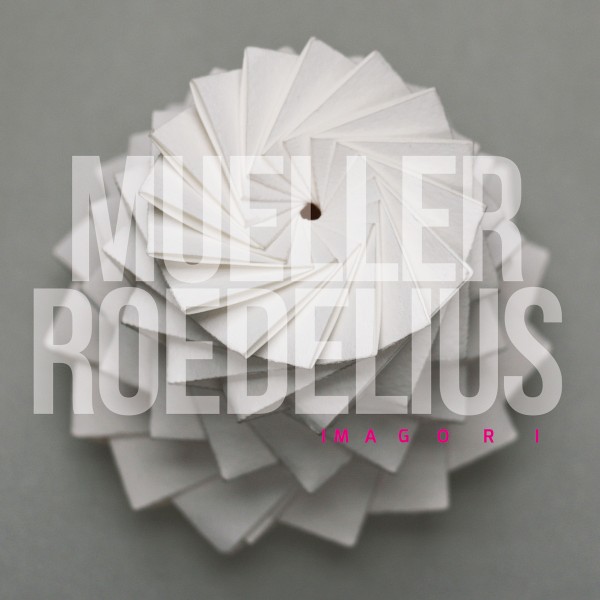
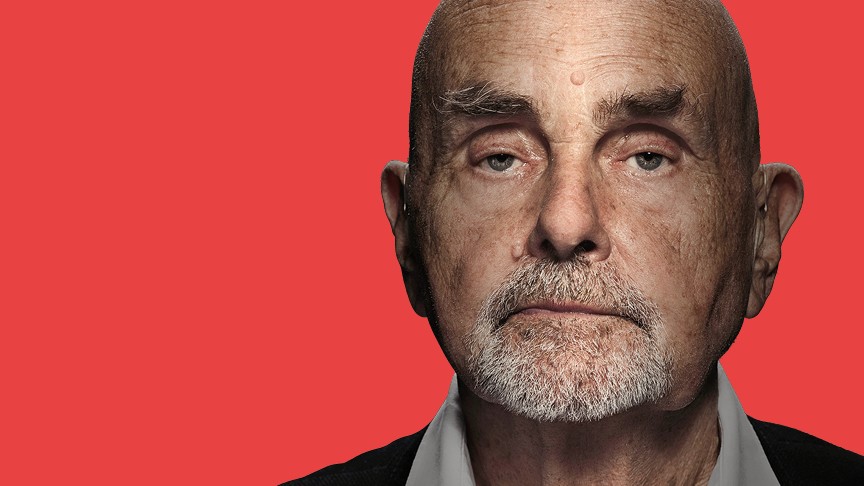
ASAMISIMASA PLAYS THE MUSIC OF ØYVIND TORVUND.
ASAMISIMASA PLAYS THE MUSIC OF ØYVIND TORVUND.
Øyvind Torvund isn’t like other composers and musicians. Instead, he’s a musical pioneer. That’s been the case since Øyvind Torvund graduated from the Norwegian Academy of Music and the Berlin University of the Arts. Since then, the thirty-nine year old Norwegian has been pushing musical boundaries to their limits.
The music that Øyvind Torvund has composed and produced is truly groundbreaking. It’s best described as a fusion of disparate and eclectic musical influences and instruments. Everything from acoustic chamber music and baroque, are combined with folk, punk and rock. This is then combined with lo-fi electronics and field recordings. Often, Øyvind Torvund plays a selection of the bespoke string instruments he’s made himself. This adds to music that’s unique, innovative and influential. That’s why Øyvind Torvund is held in such high regard.
He’s come a long way from the student that played guitar in various rock and improvisational groups. This was very different to his days spent studying composition. However, this was good experience for life after University.
Since graduating, Øyvind Torvund has become one of the rising stars of Norwegian music. Especially, over the last few years. During that period, Øyvind Torvund’s reputation as grown. His star has certainly been in the ascendancy.
He’s been composer in residence for the Oslo Sinfonietta, and has been commissioned by some of the most prestigious ensembles.This includes the Ensemble Ascolta, Ensemble Zwischentone, Trondheim Symphony Orchestra, Plus Minus Ensemble and Yarn/Whire. Øyvind Torvund has also toured the world, playing at some of the most prestigious festivals worldwide. This music has won over music fans, critics, cultural commentators and the organisers of one of the most prestigious music awards.
This came in 2012, when Øyvind Torvund was awarded the Arne Nordheim Prize. The same year, another groundbreaking group, Asamisimasa won another prestigious musical award.
Asamisimasa released their album Pretty Sound in 2012. It featured the music of Danish composer Simon Steen-Andersen. Having ben released top widespread critical acclaim, Pretty Sound was nominated for, and won, a Spellemannprisen, the Norwegian equivalent of a Grammy Award. After the release of such an ambitious project, featuring music that was innovative and inventive, Asamisimasa set about recording the followup to Pretty Sound. That’s where Øyvind Torvund comes in.
Øyvind Torvund was a composer that Asamisimasa had long admired and been inspired by. So, Asamisimasa decided to record an album of Øyvind Torvund’s compositions. The result is Asamisimasa Plays The Music Of Øyvind Torvund will be released by Aurora on 11th September 2015. However, this is no ordinary album.
Far from it. Just like Øyvind Torvund’s music, Asamisimasa’s music is a fusion of disparate and eclectic instruments, sounds and effects. It’s best described as a meeting of the traditional and leftfield. Kristine Tjøgersen plays clarinet, harmonica and whistles and Anders Forisdal plays acoustic and electric guitar. They’re joined by cellist Ellen Ugelvik and pianist and keyboardist Tanja Orning. They represent the traditional side of Asamisimasa. Håkon Stene takes a very different approach. He deploys everything from percussion and a sampler, to an electric drill, cardboard box, amplified water bottle, milk steamer and toy laser gun. The five members of Asamisimasa recorded a quartet of tracks, which featured three guest musicians.
Trombonist Torild G. Berg and violinist Karin Hellqvist play on Wolf Studies. Fittingly, the other guest artist is Øyvind Torvund. He features on three tracks, adding noise generator, feedback and cassette recorders. These three guest musicians join Asamisimasa on Asamisimasa Plays The Music Of Øyvind Torvund. It was recorded at the famous Rainbow Studio, and produced by Jan Martin Smørdal. He played his part in what’s a captivating and groundbreaking album, Håkon Stene.
Opening Asamisimasa Plays The Music Of Øyvind Torvund is Wilibald Motor Landscape, a fifteen minute epic with five movements. Essentially, the track is a collection of five smaller, disparate movements. They represent collecting, something that’s been fundamental part of life since the birth of mankind. Back then, collecting was an essential part of survival. The huger gatherer collected food and fuel. Nowadays, collecting is very different, and cultural. Here, musical hunter-gatherers Asamisimasa collect, then combine an eclectic selection of instruments, implements, sounds and effects on Wilibald Motor Landscape.
Over Wilibald Motor Landscape’s five pieces, Asamisimasa are at their most innovative, inventive and imaginative. Who else could combine such a disparate selection of sounds and instruments. That’s the case from the opening bars of Some Overtures, right through Pinball Ornaments, Car Stereo Romances, Intermission With Noises up until the closing notes of Talking About The Future.
Throughout the five movements, sounds flit in and out. Some stay longer. Others however, make a brief but welcome appearance. Some leave you wondering what you’ve just heard? Many are easy to identify. Especially, the frantic fiddles, searing guitars and a whip cracking. Feedback is deployed. So are sci-fi and growling, snarling sounds. Later, Asamisimasa leave space in the arrangement, and a clarinet, percussion and harpsichord combine. Then in Car Stereo Romances, Asamisimasa replicate the sound of traffic passing furiously. It’s a dramatic, almost disturbing soundscape, and features motors whirring and car alarms sounding. Intermission With Noises and Talking About The Future feature Asamisimasa as their most ambitious on these genre-melting tracks. Elements of avant garde, experimental, free jazz, industrial and neo classical are combined, and are parts of what’s a truly ambitious, captivating and cinematic sounding track.
The Neon Forest is a seven piece movement. It starts with 21 Trio, which is followed by Beamed By Tradition, (and Further), On My Way, On Your Way, Multiple Slatt, Space Corner and Forest Space/Neon Forest. These seven movements are part of an eleven minute track, where Asamisimasa replicate and play along with the sounds of nature.
It features Asamisimasa at their rawest. This is deliberate, and is meant to imitate nature. However, it’s also melodic in what Asamisimasa describe as an “archaic” way. Other times, the music veers between beautiful, soothing and rich, to almost dark, discordant and disturbing. This has to be the case, as nature in the raw isn’t all about beauty. Sometimes, it’s dark and disturbing. Much of the time Asamisimasa are at their most melodic. However, later, there’s a sense of urgency, as the arrangement marches along during Space Corner. This represents a stylistic change. Then during Forest Space/Neon Forest the music becomes understated and minimalist. There’s an spacious, ambient quality as Asamisimasa continue to collect and combine musical genres. Drone music is combined with elements of ambient, avant-garde, classical, experimental and jazz to create a quite beautiful, melodic track.
Unlike the two previous tracks, Wolf Studies isn’t split into separate movements. Instead, it lasts fourteen cinematic minutes. The listener has to shut their eyes, and allow their imagination to run riot. One has to picture the scene, a group of people sitting round a campfire. They whistle, whilst someone plays a guitar. Then someone decides to imitate the sound of a wolf. They howl, while on Wolf Studies Asamisimasa collectively replicate the sound of wolves. Strings, clarinets and an acoustic guitar play leading roles. They’re augmented by field recordings of wolves made by Lars Erik Olsson in the Swedish forests. It’s a spine-tingling and enthralling track that’s captivating, sometimes disturbing and groundbreaking. For fourteen minutes, man and nature become one.
Plastic Waves closes Asamisimasa Plays The Music Of Øyvind Torvund, and is a piece for piano and ensemble. It’s the longest track on the album, and lasts nearly eighteen minutes. Here, Asamisimasa use Øyvind Torvund’s music to make an important point. How can an imitation of something compare favourably to the real thing? A Neon Forest Asamisimasa believe, will never compare to the glorious splendour of a real forest. Nor can Plastic Waves. Here, Asamisimasa unleash waves of music. It grows and builds, instruments and effects being dropped in at just the right moment. Playing a starring role, is Ellen’s piano. She’s aided and abetted by urgent rolls of drums, scratchy strings and Anders’ Hendrix inspired guitar. Asamisimasa it seems, are determined to close their sophomore album on a high. That’s what they do, seamlessly combining avant garde, experimental, free jazz and rock.
Three years have passed since Asamisimasa released their award winning debut album Pretty Sound. Since then, nothing has been heard from Asamisimasa. However, on 11th September 2015, the wait will be over. Asamisimasa Plays The Music Of Øyvind Torvund will be released on the Aurora label. At last, one of Norwegian music’s most ambitious and groundbreaking groups are back.
Asamisimasa Plays The Music Of Øyvind Torvund features four lengthy soundscapes. Two of them, feature several movements. Wilibald Motor Landscape is a five piece movement, while Neon Forest Space features seven movements. Both tracks tell stories, and have a cinematic quality. Just like the two lengthy tracks, Wolf Studies and Plastic Waves, these tracks see Asamisimasa a disparate and eclectic selection of musical genres and influences.
During the four tracks on Asamisimasa Plays The Music Of Øyvind Torvund, elements of ambient, avant-garde, classical, electronica, experimental, free jazz, industrial post rock, psychedelia and rock melt into one. Somehow, though, this fusion of all these disparate musical genres hangs together, and make perfect sense. It tells a story, and Asamisimasa are the narrators. All the listener needs to supply is their imagination. However, one things you should never do is try and second guess Asamisimasa. That’s impossible.
Asamisimasa are musical mavericks. Their ability to manipulate sound sees the sonic explorers take their listeners on a magical musical mystery tour. They take you places that other groups can only dream of. In doing so, Asamisimasa create music that’s variously ambitious, challenging, cinematic, dramatic, inventive, innovative minimalist and urgent. It’s also music that’s guaranteed to make you think.
Sometimes, the music on Asamisimasa Plays The Music Of Øyvind Torvund sets your mind racing. Don’t fight it, enjoy the ride. Just let Asamisimasa take you to places you’ve never been before. It’s just a case of letting your imagination run riot. If you do, you’ll will richly rewarded by musical alchemists hunter-gatherers Asamisimasa, on their new album Asamisimasa Plays The Music Of Øyvind Torvund.
ASAMISIMASA PLAYS THE MUSIC OF ØYVIND TORVUND.

ISAAC HAYES MOVEMENT-DISCO CONNECTION.
ISAAC HAYES MOVEMENT-DISCO CONNECTION.
Disco. Never has a musical genre divided opinion like the D word. It’s been described as musical Marmite. People either love disco, or they loathe it. There’s no in-between. However, forty years ago, in 1976, disco’s star was in the ascendancy. Artists were jumping onto the disco bandwagon. Especially artists whose career was stalling. That however, wasn’t the case with Isaac Hayes.
Ever since he released his sophomore album Hot Buttered Soul, Isaac Hayes in 1969, he could do wrong. Hot Buttered Soul reached number eight in the US Billboard 200 and number one in the US R&B charts. The followup, 1970s The Isaac Hayes Movement also reached number eight in the US Billboard 200 and number one in the US R&B charts. Later, in 1970, …To Be Continued reached number eleven in the US Billboard 200 and number one in the US R&B charts. 1970 had been a hugely successful year for Isaac Hayes. So would 1971.
In July of 1971, Isaac Hayes released his first soundtrack album, Shaft. Not only did it reach number one on the US Billboard 200 and US R&B charts, but spawned the hit single Shaft. This Blaxploitation classic reached number two on the US Billboard 100 and number one in the US R&B charts. The when Isaac Hayes released Black Moses later in 1971, it reached number ten in the US Billboard 200 and number one in the US R&B charts. Live at the Sahara Tahoe, Isaac’s first live album, reached number fourteen the US Billboard 200 and number one in the US R&B charts. That made it six number one albums on the US R&B charts. However, six didn’t became seven.
The run was broken when 1973s Black Moses “only” reached reached number sixteen in the US Billboard 100 and number two in the US R&B charts. However, Isaac Hayes seemed to lose his Midas touch in 1974.
During 1974, Isaac Hayes was commissioned to compose two soundtracks. Neither proved particularly successful. Tough Guys stalled at number 148 in the US Billboard 200, while Truck Turner only reached number 158 in the US Billboard 200. So, Isaac Hayes decided to have a musical rethink. A year later, in 1975, and Isaac Hayes returned with a quite different album.
Hot Chip had been influenced by disco, which by 1975, was growing in popularity. So his seventh studio album, Hot Chip incorporated elements of disco. It reached number eighteen in the US Billboard 100 and number one in the US R&B charts. Given the popularity of disco, and the response to Hot Chip. Isaac Hayes decided to release a disco album with his backing band the Isaac Hayes Movement. This would be no ordinary album. Disco Connection was an instrumental album, which was recently reissued by Ace Records.
Disco was a relatively new musical genre by the time Isaac Hayes decided to release Disco Connection in 1975. It had been around since the early seventies. However, what the first disco record was, is still disputed?
Some critics believe disco was born in 1971, with Barry White and Isaac Hayes pioneering the disco sound. Other critics think 1972 was the year disco was born. They point towards singles like The O’Jays’ Love Train, Jerry Butler’s One Night Affair or Manu Dibango’s Soul Makossa. Even 1972 might be too early for disco’s birth?
It could be that disco wasn’t born until 1973, when the Hues Corporation released Rock The Boat. That argument would find favour with many critics. However, some critics dispute Hues Corporation being one of the earliest disco records. They think disco was born in 1974.
Nowadays, a number of critics think George McCrae’s 1974 number one single got the disco ball rolling. It was released on Henry Stone’s T.K. Records in April 1974 and reached number one in America. Some critics will try to convince you that George McCrae and Henry Stone’s T.K. Records were responsible for getting the disco ball rolling. Others beg to differ.
It’s thought that disco was already celebrating its first birthday by then. The first article in the music press about disco was penned by Vince Aletti for Rolling Stone magazine in September 1973. Little did Vince know, he’d just written the first article about a true musical phenomenon.
Disco was born in America. Music historians have traced disco’s roots to clubs in Philly and New York. These two cities would play an important part in a disco. Philly and New York were where many of the most successful disco records were recorded. They were also home to some of disco’s top labels, Salsoul Records, SAM Records, West End Records and Casablanca. This quartet of labels are perceived as disco’s premier labels. They provided the soundtrack to America’s clubs for the next few years.
Many clubs became synonymous with disco. Especially New York. It was also home to some of the top clubs, including David Mancuso’s Loft, Paradise Garage and Studio 54. While these trio of clubs were soon perceived as some of the most influential clubs of the disco era, disco was making its presence felt worldwide.
Although born in America, soon disco’s influence was being felt worldwide. Around the world, dancers danced to the pulsating disco beat. Disco crossed the continents and provided the musical soundtrack to dance-floors worldwide.
Among the most successful purveyors were Salsoul Records, SAM Records, West End Records and Casablanca. They were creating what is remembered as some of disco’s finest moments. Other labels and artists looked on enviously. Soon, they decided to jump on the disco bandwagon.
Before long, artists whose career had been on the slide for years, were reinventing themselves as disco stars. Johnny Mathis, Cissy Houston, Herbie Mann and Tony Orlando were all willing to undergo a disco makeover to revive flagging and failing careers. Isaac Hayes however, was one of the biggest names in soul, funk and R&B.
While a number of yesterday’s stars jumped on the disco bandwagon, Isaac Hayes had enjoyed the most successful period of his career. Granted, it hadn’t been all smooth sailing, but he was happy with where he was. However, Isaac was determined not to stand still. He was determined to move forward musically. There was though a problem on the horizon.
For a while, Stax Records had been experiencing financial problems. Isaac Hayes was owed a lot of money in royalties. When they weren’t forthcoming, Isaac had no option but to issue writs in 1974. Still, the royalties weren’t forthcoming. So, Isaac, with the backing of ABC Records, founded his own Hot Buttered Soul label. Chocolate Chip had been his first album on his new label. Disco Connection would be the second.
For Disco Collection, Isaac Hayes had penned eight new tracks. They were recorded by the Isaac Hayes Movement at Hot Buttered Soul Recording Studio, in Memphis. Lester Snell and Isaac arranged most of Disco Collection, except Aruba, which they arranged with Johnny Allen. Isaac however, took charge of the production. This was quite a challenge, given Isaac Hayes Movement featured twenty-two musicians and a string section.
The Isaac Hayes Movement’s rhythm section consisted of Willie Cole and William Hall on drums and tambourines, bassist Errol Thomas and guitarists Anthony Shinault, Charles Pitts, Michael Toles and William Vaughn. Keyboardist Sidney Kirk was joined by Jimmy Thompson on congas and Bryant Munch and Richard Dolph on French horn. Add to this a horn section and The Memphis Strings, and the Isaac Hayes Movement took shape. They recorded eight tracks which became Disco Connection.
Disco Connection wasn’t released until 12th January 1976. By then, Isaac Hayes had been back in the studio and recorded his next album, Groove-A-Thon. It would be released on St. Valentines Day, which was less than a month away. This wasn’t a good idea.
With two albums being released in a short space of time, this confused record buyers. Record buyers looking for Isaac Hayes’ next solo album, mistakenly bought Groove-A-Thon. Similarly, those who had enjoyed Disco Connection, bought Groove-A-Thon thinking it would be more of the same were in for a surprise. By releasing two albums in a short space of time, all that had happened, was that sales of both albums were disappointing.
Disco Connection stalled at a disappointing eighty-five in the US Billboard 200 and nineteen in the US R&B charts. Groove-A-Thon fared slightly better, reaching number forty-five in the US Billboard 200 and eleven in the US R&B charts. However, in years to come, the sales of Groove-A-Thon would be seen as a success. Isaac Hayes’ years of number one US R&B albums were a thing of the past. Despite embracing disco on Disco Connection, would he later become another victim of the disco phenomenon?
The First Day Of Forever opens Disco Connection. Straight away, elements of Philly Soul, funk and disco combine. Considering Disco Connection was recorded in Memphis, this is ironic. Strings shiver and dance while the rhythm section and congas combine. They’re joined by braying horns and a Norman Harris’ influenced guitar. By then, the arrangement is gliding elegantly along. Above the arrangement sits the dancing disco strings. During the breakdown, the arrangement slows down and the a melancholy French horn sounds. Pounding drums and a chiming guitars combine, as the arrangement cha cha’s along. Then when the dancing string reenter, this glorious slice of tailor made disco comes alive and all of sudden, it’s 1976 again.
While the rhythm section provide the heartbeat to St. Thomas Square, funky guitars, disco strings and woodwind combine. They’re soon joined by rasping horns and galloping congas. Again, there’s a wistful sound to the track. This soon changes, as the horns and strings unite. Along with the funky rhythm section they add a feel good sound. There’s almost a cinematic sound. That’s not surprising, as Isaac Hayes had written three soundtracks. Later,a jazz tinged guitar unites with braying horns and lush strings. Together, they play their part in what’s an emotive, cinematic slice of disco.
The introduction to Vykk II sees the tempo drop. Gone is the disco sound of the two previous tracks. However, the way the organ, horns and the rhythm section combine, have Isaac Hayes name written all over it. It’s much more like his earlier music, and is best described as soulful, sultry, funky, jazzy and dramatic. Horns play an important part. So does Isaac’s keyboards and the strings. They’re slow and lush, while the sultrier of saxophone drenches the arrangement. It’s aided and abetted by subtle horns that add to the soulful, dreamy and sensual sound.
With its neo Shaft introduction, Disco Connection is disco with a twist. The ride is ridden, before elements of Giorgio Moroder’s Euro Disco combines with an industrial sound. It’s like a whip cracking. Meanwhile, the rhythm section and keyboards keep things funky. Horns growl and bray, strings shimmer and dance. A clavinet adds a heavy duty funky sound. By now, it’s like a ride on a musical roller coaster. Everything from disco, Euro disco, funk, fusion and soul are combined the Isaac Hayes Movement. This combination results in a funky slice of dramatic disco.
Disco Shuffle is an eight minute epic, where Isaac Hayes combines elements of Blaxploitation, disco, funk, jazz, rock and soul. From small acorns, a musical oak grows. Buzzing keyboards join a rhythm and horn section that could just as easily belong on Blaxploitation movie. Anthony Shinault Hendrix-esque guitar solo takes centre-stage. Meanwhile, growling horns and sweeping strings join the buzzing keyboards and the rhythm section. They drive the arrangement along. Soon, the Isaac Hayes Movement are in full flow. It’s a joy to behold. Especially, as stabs of horns sound, drums pound and Anthony Shinault unleashes a blistering guitar solo. The result is a funky, strutting symphony.
A wah-wah guitar joins the rhythm section and growling horns on Choppers. Gradually, the arrangement grows in power and drama. Strings sweep and swirl, as the Isaac Hayes Movement threaten to kick loose. Stabs of keyboards and chiming guitars combine. Still, the quivering shimmering strings that threaten to cut loose. Eventually, swathes of strings dance. Having briefly cut loose, Isaac Hayes reigns them in. A funky guitar and looming horns take centre-stage. Soon, they’re joined by the shimmering strings and washes of Hammond organ. Then the strings dance for joy. It sounds as if the classic lineup of The Salsoul Orchestra had been asked to provide the soundtrack to a blaxploitation movie in 1976. Later, the the Isaac Hayes Movement jam. Seamlessly, the combine musical genres on one of Disco Connection’s highlights.
Keyboards and congas combine to create a dramatic introduction to After Five. Soon, drums, percussion and a flute are added. A chiming, crystalline guitar and deliberate bass are added as the arrangement glides along. Atop the arrangement sits the lushest of strings. Adding a contrast are bursts of pounding drums and a jazz guitar. They add the finishing touches to the genre-melting After Five.
Closing Disco Collection is Aruba. It has an almost avant-garde introduction. For forty-four seconds, an otherworldly sound is accompanied by hypnotic drums and the mellow sound of a Fender Rhodes. Only then does the arrangement unfolds. It’s classic Isaac Hayes. Stabs of blazing horns, swathes of strings, a subtle Fender Rhodes are accompanied by piano and the rhythm section. Gradually, the arrangement builds and builds. That’s until Isaac throws a curveball. The earlier otherworldly sound briefly returns. Then the Isaac Hayes Movement power their way through the rest of Aruba, ensuring Disco Collection ends on a high.
Given the quality of music on Disco Connection, it deserved to fare better than it did. However, the decision to release Groove-A-Thon a month later proved costly. This confused record buyers, who struggled to differentiate between an Isaac Hayes’ solo album and an album by the Isaac Hayes Movement. As a result, confusion reigned and some record buyers ended up buying the wrong album. Other record buyers couldn’t afford to buy both albums, so chose one. The result was that neither album sold in huge quantities. It was a far cry from when eight out of the nine albums Isaac Hayes released between 1969 and 1973, reached number one in the US R&B charts. These were the glory days. Although Chocolate Chip reached number one n the US R&B charts in 1975, that was as good as it got for Isaac Hayes.
Disco Connection and then Groove-A-Thon were the start of a period when Isaac Hayes was no longer the huge star he had once been. His albums either stalled in the lower reaches of the charts, or failed to chart. A few years ago, that would’ve been unthinkable. The most successful album Isaac Hayes released, was 1979s Don’t Let Go. Even then, it only reached number thirty-nine in the US Billboard 200a and number nine in the US R&B charts. The disco years hadn’t been kind to Isaac Years. However, he wasn’t alone.
That had been the case for many soul, funk and R&B artists. Many of these albums were overlooked, despite the quality of music on them. Even albums by some of the biggest names in rock and pop were being cast aside in favour of disco. This was ironic, as the seventies were one of the greatest musical decades ever. Some of the greatest rock music ever was being released. Yet all radio program directors wanted their listeners to hear was disco. Someone had to make a stand. Enter Steve Dahl.
Right up until Christmas Eve 1978, Steve Dahl was a DJ on WDAI, a Chicago radio station. WDAI had been a rock station for a long time. Then on Christmas Eve 1978, it was announced WDAI was going to become a disco station. Given the change in music policy, Steve Dahl was fired. Little did anyone know, that Steve Dahl’s firing would result in disco’s death.
Steve wasn’t out of work long. He was soon hired by WLUP, a rival station. WLUP played rock, which suited Steve Dahl. He had a feeling that disco wasn’t long for this world. The disco bubble was about to burst; and it wouldn’t take long.
Steve wasn’t a fan of disco, and took to mocking disco on-air. Openly, he mocked WDAI’s “disco DAI.” It became “disco die” to to Steve. Soon, Steve had created the Insane Coho Lips, his very own anti-disco army. Along with cohost Gary Meier, they coined the now infamous slogan “Disco Sucks.” The backlash had begun.
From there, the Disco Sucks movement gathered momentum. Events were held all over America. This came to a head at Disco Demolition Derby, which was Steve Dahl’s latest anti-disco event. Each one was becoming bigger, rowdier and attracting even more publicity. Disco Demolition Derby, which was held at Comiskey Park, Chicago on 12th July 1979 surpassed everything that went before. WFUL were sponsoring a Chicago White Sox game at Comiskey Park. if fans brought with them a disco record, they’d get in for ninety-eight cents. These records would be blown up by Steve Dahl. An estimated crowd between 20-50,000 people attended. Quickly the event descended into chaos. Vinyl was thrown from the stands like frisbees. Then when Steve blew up the vinyl, fans stormed the pitch and rioted. Things got so bad, that the riot police were called. After the Disco Demolition Derby, disco nearly died.
Following Disco Derby Night, disco’s popularity plunged. Disco artists were dropped by major labels, disco labels folded and very few disco albums were released. Disco was on the critical list, and suffered a near death experience. It took a long time to recover. After disco’s demise, dance music changed.
No longer were record labels willing to throw money at dance music. Budgets were suddenly much smaller. Gone were the lavish productions of the disco orchestras of the seventies. This was epitomised by The Salsoul Orchestra and John Davis and The Monster Orchestra. Strings and horns were now a luxury. Music would have to go back to basics.
Replacing strings and horns would be sequencers, synths and drum machines, which during the last couple of years, had become much cheaper. Previously, they were only found in studios or were used by wealthy and famous musicians. Now they were within the budget of many musicians. However, with disco now dead, a generations of musicians who suffered during the disco era, could make a comeback. This included Isaac Hayes.
Although Isaac Hayes had never been away, he might as well have been. Many of his albums were overlooked by record buyers. He wasn’t on-trend during the disco years. That’s apart from when he released Disco Connection, which was recently released by Ace Records. Disco Connection is a long lost, hidden gem of the disco era, that somewhat belatedly, makes its debut on compact disco thirty-six years after disco’s supposed death.
ISAAC HAYES MOVEMENT-DISCO CONNECTION.



MAN-CALL DOWN THE MOON.
MAN-CALL DOWN THE MOON.
When Man split-up in 1976, Deke Leonard was asked whether Man would ever reform. Deke was clear about that. He said that Man “would never, ever, be one of those bands who reformed in a futile attempt to recapture past glories.” For fans of Man, that looked like the end of the road for one of Britain’s best loved and most talented bands.
Man had been formed in 1968, out of the ashes of Welsh rock harmony band The Bystanders. The newly formed Man wanted to change direction musically. So, their music headed in the direction of psychedelia and the West Coast sound. As music changed, so did Man.
They were a musical chameleon, whose music constantly changed. From psychedelia and the West Coast sound, Man toyed with progressive rock. Extended jams peppered their sets as Man became one of Britain’s biggest bands. However, the constant touring took its toll.
By 1976, Man decided to call it a day. For the past eight years, Man had worked almost nonstop. They recorded an album, toured the album and did it all again. Despite the commercial success and critical acclaim that came Man’s way, something had to give.
It hadn’t all been plain sailing. There had been controversy and changes in Man’s lineup. When touring Germany, Man were suspected of being terrorists and found themselves in a German jail. On a tour of Belgium, Man were jailed for drugs offences. Then there’s numerous changes in Man lineup.
In 1976, Man had were touring the US when Ryan Williams and John MacKenzie announced they were leaving the group. This was the beginning of the end. Arguments had been rife within the group. The atmosphere during the tour was terrible. This wasn’t conducive to making music. So, the rest of Man decided the band would split-up. There was a problem though.
Man had just signed to MCA Records and owed them three albums. Nobody wanted to record even one album. None of the members of Man wanted to contribute any songs. Cover versions were considered. However, Man this idea was soon forgotten about. Man’s attempts at cover versions floundered. It seemed that Man as a group were finished. So, Man agreed to release a live farewell album, All’s Well That Ends Well. It was recorded at the Roundhouse, London between 11th and 13th December 1976. Three days later, on 16th December 1976, Man announced they were splitting up.
After Man announced All’s Well That Ends Well was their finale, everyone thought that was the last we’d heard from Man. Especially, after all the arguments, backbiting and changes in lineup. That looked like being the case.
Then in 1983, Man announced they were reforming. Those in the know wondered how long the Man reunion would last?
The newly reformed Man headed into the studio and recorded Friday The 13th. This was their first album since 1976s The Welsh Connection. It was well received. Man’s loyal fans awaited a followup. They waited nine long years.
1992 saw Man released what was their tenth studio album, The Twang Dynasty. It had been recored back in 1983. However, Man fell out with producer Peter Kerr. He was also the promoter of the album. So The Twang Dynasty wasn’t released until November 1992. Onlookers said that this could only happen to Man. They’d shot themselves in the foot again. Hopefully, this would be the last time.
Two years later, in November 1994, Man entered the studio for the first time since 1983. Man had written nine tracks which would become Call Down The Moon, which will be reissued on vinyl by Let Them Eat Vinyl on 4th October 2015.
At Egg Studios, Seattle, Ron Sanchez and Man produced Call Down The Moon. Man’s rhythm section included bassist Martin Ace, guitarist Micky Jones and drummer and guitarist John Weathers. Deke Leonard played keyboards and guitar. By the end of November 1994, Call Down The Moon was finished. It would be released in 1995.
On its release in 1995, Call Down The Moon was well received. Some critics didn’t seem to appreciate the lengthy tracks. Man, it seemed, were determined to take advantage of the compact disc’s length. The album opener, Call Down The Moon, lasted a mighty nine minutes. The next six tracks lasted between four and eight minutes. The penultimate track, Drivin’ Around, is a twelve minute epic. Closing Call Down The Moon, was Burn My Workin’ Clothes, which lasts a mere three minutes. For Man’s loyal fans, Call Down The Moon was a return to the past, when lengthy jams were part and parcel of their sets. However, was the music on Call Down The Moon as good as that released during Man’s glory years?
Opening Call Down the Moon is the title-track. Glistening, shimmering guitars glide across the arrangement as the rhythm section and keyboards provide moody backdrop. Man stretch their legs before a hurt-filled vocal enters. It’s tinged with sadness and regret. Meanwhile, the rest of Man add a dramatic backdrop. This comes courtesy of stabs of keyboards, bursts of blistering guitars and a rhythm section that combine rock and blues. Later, Man also add tight harmonies. They’re the perfect foil to the vocal. After that, Man bring put to good use twenty years of experience during this fusion of blues, rock and heartbreak.
If I Were You sees Man return to a late-sixties psychedelic, West Coast sound. A choppy drumbeat, jangling piano and dreamy, lysergic vocal are combined with Deke’s guitar. There’s even what sounds like a harpsichord buried deep in the mix. The more you listen to the arrangement, the more you hear. It’s a complex and multilayered. It marches along to the beat of Man’s rhythm section. Meanwhile, some scorching guitar riffs. So are layer harmonies. They all play their part in a track that’s a homage to not just Man’s musical past, but the music that inspired Man.
Dream Away is a bluesy shuffle. It’s best described as bluesy, moody and broody. As the rhythm section add the heartbeat, a slide guitar adds to this atmospheric ballad. The arrangement almost pauses when a weary, lived in vocal enters. It’s needy as it sings: “there ain’t nothing like a woman’s touch|.” All the time, the rest of Man contribute a bluesy shuffle. Stealing the show is the slide guitar. It’s the perfect foil for a vocal that’s needy and weary.
Blackout bursts into life. Man become one. Keyboards, rhythm section and a reverberating guitar combine with Deke Leonard’s choppy, urgent vocal. Try as he may, Deke can’t quite make the lyrics work. He’s almost trying too hard. Even the rest of Man can’t make the song work. They trade guitar licks while the rhythm section drive the arrangement along. Despite their best efforts, Blackout never rises above average and is a long way from classic Man.
Straight away, The Man With X Ray Eyes sounds more promising. There’s a brief nod to Chicago as keyboards take centre-stage. They’re interrupted by drums, before Man kick loose. This is much more like it. Blistering, riffing guitars and a pounding rhythm section strut their way across the arrangement. It’s one of Man’s best performances. Briefly, there’s a nod to Thin Lizzy courtesy of Man’s guitars. When the vocal enters, it’s almost tender. It carries the lyrics well, before harmonies sweep in. Meanwhile, the rest of Man are delivering a masterclass. They draw upon four decades experience, as they unleash one of their best performances on Call Down the Moon.
Gradually, chiming guitars and a pounding rhythm section join forces as Heaven and Hell unfolds. Keyboards, pounding rhythm section and riffing guitars then set the scene for the vocal. It’s mixture of power and swagger, and comes across as almost theatrical. Again, it’s a case of trying too hard. Meanwhile, stabs of dramatic, rocky guitars and keyboards are unleashed. Later, as the track metamorphosis,’ it heads in the direction of prog rock. Suddenly, the track is transformed. Man become one. Blistering guitars, pounding keyboards and a driving rhythm section join forces. Even the vocal seems to improve later. It becomes a throaty growl, as Man belatedly, recover their mojo.
Dramatic and rocky describes The Girl Is Trouble. The rhythm section provide the engine room, while bursts of machine gun guitars are unleashed. Then when the vocal enters, it’s a mixture of power and drama. It’s replaced by a guitar masterclass from Micky Jones. He lays down some of his best guitar licks on Call Down The Moon during this track. Seamlessly, his hands fly up and down the fretboard, as he dawns the role of guitar hero. Behind him Deke’s keyboards play a supporting role. To a man, Man pull out the stops on this rocky anthem.
Drivin’ Around is the longest track on Call Down The Moon. It lasts over twelve minutes and allows Man to stretch their legs musically. This is the case from the opening bars. A cymbal hisses and shimmers, before keyboards pick up the baton. After that the rest of Man make an entrance. They’re in no hurry and it takes two minutes before Micky Jones’ vocal enters. It’s a mixture of emotion, sadness, control and power. His lived-in vocal is perfect for the lyrics. It sounds as if Micky has lived, loved and survived to tell the tale. He then lays down another peerless solo. Without doubt, it’s the best solo on the album. The rest of Man are left playing a supporting role as Micky steals the show as man combine rock and blues seamlessly.
Burn My Workin’ Clothes closes Call Down the Moon. It’s a really disappointing way to end the album. Maybe Man were trying to be ironic or funny? Instead, they come across as sloppy. Man provide a bluesy backdrop for John Weathers’ mid-Atlantic vocal. He’s accompanied by slide guitar and harmonies. His vocal is distant. So much so, that it sounds as if he’s too far from the microphone. The track’s only saving grace is the slide guitar. However, even that can’t save what’s a disappointing end to Call Down the Moon.
After twelve years away from a recording studio, Man fans thought that the band would be back with a career defining album. That’s what Call Down the Moon could’ve and should’ve been. They were very wrong. Out of the nine tracks, only six at the most pass muster. The rest disappoint.
Blackout is a truly disappointing song. It’s the lyrics that let the Blackout down. Heaven and Hell is best described as a song of two parts. Part one disappoints, while part two marks a return to form from Man. However, Man saved the worst to last. That’s Burn My Workin’ Clothes. Maybe it’s an badly judged attempt at humour or irony? Ironically, things started so promisingly.
The bluesy Call Down the Moon opened the album and set the scene for If I Were You. It’s a return to the psychedelic, West Coast sound Man pioneered. After that, there’s the bluesy shuffle of Dream Away. Following the disappointing Blackout, a strutting Man return with The Man With X Ray Eyes and rocky, anthem The Girl Is Trouble. Without doubt the highlight of Call Down The Moon is Drivin’ Around, where Micky Jones steals the show. Drivin’ Around showed just what Man were capable of.
Surely, it wasn’t too much for Man to return after twelve years away from a recording studio, with nine tracks of the calibre of Drivin’ Around? If they had, then Call Down the Moon would’ve stood alongside the greatest albums Man had released. Sadly, that’s not the case.
Instead, Call Down the Moon which will be reissued on vinyl by Let Them Eat Vinyl on 4th October 2015, is best described as merely above average. Call Down the Moon is far from classic Man. If that’s what you’re looking for, then I’d suggest you’d be better buying the recently released five disc box set, Original Album Series. Unlike Call Down the Moon, the five albums in the Original Album Series box set, feature Man at their very best.
MAN-CALL DOWN THE MOON.

THE LONDON AMERICAN LABEL YEAR BY YEAR 1966.
THE LONDON AMERICAN LABEL YEAR BY YEAR 1966.
For a generation of British teenagers who embarked upon a lifelong love affair with music during the fifties and sixties, the London American Recordings will forever have a place in their heart. London American Recordings was the label that introduced a British music lovers to American pop, rock ’n’ roll and soul. It licensed and released the latest American hit singles in Britain. This had been the case since the mid-fifties.
London American had been licensing singles by Atlantic, Chess, Dot, Imperial, Speciality and Sun Records since the fifties. By the sixties, further labels were licensing their releases to London American. This would include Big Town, Hi Records, Monument and Philles Records. For a generation of music lovers, this made anything featuring the London American label essential listening. It was part of their musical education.
Only by listening to London American’s releases, were music lovers able to keep track of the latest music trends. They usually started in America, then took Britain by storm. Time and time, this proved to be the case. That’s why, for a generation of music lovers, the London American label has a special place in their heart.
It brings back memories of when their love affair with music began. For some music lovers, that was nearly sixty years ago. This was the start of a life long love affair with music. Now it’s possible to relive these memories once again.
Since 2012, Ace Records have been releasing a series of compilations dedicated to the London American label. The first was The London American Label Year By Year 1956, which was released back in 2012. Recently, the eleventh instalment in the series, The London American Label Year By Year 1966 has just been released.
The London American Label Year By Year 1966 is a twenty-eight track compilation. It’s an eclectic compilation full of big names. Folk, pop, R&B, rock, soul features on The London American Label Year By Year 1966. There’s everyone from The Vogues, Darrell Banks, The Butterfield Blues Band and Judy Collins, to Gene Vincent, Joe Simon, The Righteous Brothers, The Association, Barbara Lynn, Love and Ike and Tina Turner.
The Vogues’ Five O’Clock World opens The London American Label Year By Year 1966. When it was released in America, it reached number four in the US Billboard 100. Five O’Clock World also lent its name to The Vogues’ 1966 sophomore album. After six years of trying, The Vogues, from Turtle Creek Pennsylvania, were enjoying commercial success. However, future singles never enjoyed the same commercial success as Five O’Clock World, where elements of pop, psychedelia and rock are combined by The Vogues.
Originally, Darrell Banks’ Open The Key To Your Heart was titled Baby Walk Right In. The song had been penned by Donnie Elbert. However, when Darrell Banks released Open The Key To Your Heart, he was credited as the songwriter. This resulted in a lengthy legal battle. Once it was eventually settled in Donnie Elbert’s favour, the single reached on Revilot Records. It reached number twenty-seven in the US Billboard 100 and number two in the US R&B charts. Since then, Open The Key To Your Heart has become a favourite among the Northern Soul community.
By 1966, The Butterfield Blues Band were signed to Elektra Records. Their debut single was Come On In. It features a vocal powerhouse by Paul Butterfield, while the rest of the band combine blues, R&B and rock seamlessly. The result is a tantalising introduction to The Butterfield Blues Band.
Darrow Fletcher was only fifteen when he released The Pain Gets A Little Deeper in 1966. Despite his tender years, this soulful offering reached number eighty-nine in the Billboard 100 and twenty-three in the US R&B chart. It would also become a favourite on the nascent Northern Soul scene.
Judy Collins had been signed to Elektra Records since 1961. She was a contemporary of Bob Dylan, who had frequented the coffee shops of Greenwich Village. By 1966, her music is best described as folk-rock. That certainly describes I’ll Keep It With Mine, which features a truly impassioned vocal from Judy.
In 1966, The American Poets were signed to Symbol Records. They had started their career at Imperial. However, commercial success eluded them. So, they moved to Symbol Records. That’s where the recorded what was their finest hour, She Blew A Good Thing. On its release, She Blew A Good Thing reached number forty-five on the US Billboard 100. It was then licensed by London American, but wasn’t a commercial success. However, it became a favourite on the Northern Soul scene, and nowadays, is a sought after rarity.
When Joe Simon released Teenager’s Prayer on Sound Stage, he was already a seasoned performer. He had released his debut single in 1960. By 1966, he had one hit single to his name, Let’s Do It Over, which Joe released in 1965. It reached number thirteen in the US R&B charts. Teenager’s Prayer surpassed Let’s Do It Over, when it reached number sixty-six in the US Billboard 100 and number eleven in the US R&B. No wonder. Teenager’s Prayer is a soul-baring ballad, that’s tailor made for Joe Simon.
Johnny Otis’ Hand Jive was an oft-covered song. In 1966, The Strangeloves decided to cover the song. They were a studio based group, put together by the production team of Bob Feldman, Jerry Goldstein and Richard Gottehrer. The F-G-G production team had enjoyed a degree of success. However, their luck ran out when their poppy cover of Hand Jive stalled at number 100 in the US Billboard 100.
The Association are one of the most underrated of the sixties folk-rock groups. They were based in L.A. Success didn’t come quickly for The Association. Their 1965 single, Along Comes Mary was the first to chart, reaching number seven in the US Billboard 100. So, Valiant Records sent them into the studio, where they recorded the 1966 album And Then…Along Comes The Association. It featured the tender, thoughtful ballad Cherish. When it was released in September 1966, The Association hit the jackpot. Cherish reached number one, where it spent three weeks. This was the start of a seven year period where The Association could do no wrong.
It was 1966, that Philly based soul group The Intruders first hooked up with Gamble and Huff. This was the start of a long association that saw The Intruders follow Gamble and Huff to Philadelphia International Records in 1971. That was the future. Gamble and Huff penned and produced United for The Intruders. This early example of their Philly Soul sound reached number number seventy-eight on the US Billboard 100 and twenty-three on the US R&B charts. United was a signal of what was to come from Gamble and Huff and The Intruders.
Phil Spector is one of the legendary producers in musical history. In 1966, Phil Spector was working with The Ronettes. He cowrote I Can Hear Music with Jeff Barry and Ellie Greenwich. Then Phil took The Ronettes into the studio, where he produced I Can Hear Music. Sadly, by the time I Can Hear Music was released, The Beach Boys’ version had charted. It became a classic and overshadowed what was a classy slice of pop from The Ronettes. On its release, The Ronettes version of I Can Hear Music stalled at just number ninety-nine on the US Billboard 100. Its inclusion on The London American Label Year By Year 1966 is to be welcomed and is a reminder of the other version of a pop classic.
We The People were one of many garage bands based in Orlando, Florida. They released You Burn Me Up And Down as a single on the Apex label in 1966. It reached number seventeen on the US Billboard 100, and gave We The People the biggest hit of their career.
Like many bands, Love were more of an albums band, than singles bad. None of their singles made much of an impression on the charts. 7 And 7 Is was the exception. It’s a track from their sophomore album De Capo. When 7 And 7 Is was released as a single, reached number thirty-three on the US Billboard 100. Given its undoubtable quality, 7 And the Arthur Lee penned 7 Is never reached the heights it should’ve. However, nearly forty years later, and De Capo is regarded as a classic album, and Love as one of the most influential and innovative bands of the late sixties. Their fusion of psychedelia and rock is remembered fondly by a generation.
Closing The London American Label Year By Year 1966 is Ike and Tina Turner’s River Deep-Mountain High. It’s a Phil Spector, Jeff Barry and Ellie Greenwich composition. When it was released in America, it stalled at number eighty-eight in the US Billboard 100. However, when River Deep-Mountain High was released in Britain, it reached number one, and was the biggest selling single of 1966. That seems a fitting way to close The London American Label Year By Year 1966.
Just like previous volumes in the series, The London American Label Year By Year 1966 is a fascinating and eclectic musical document. It demonstrates the sheer variety of music being released during 1966. There’s everything from folk, garage, pop, psychedelia, R&B, rock and soul. Eclectic is the best way to describe The London American Label Year By Year 1966. There’s tracks from The Vogues, Darrell Banks, The Butterfield Blues Band and Judy Collins, to Gene Vincent, Joe Simon, The Righteous Brothers, The Association, Barbara Lynn, Love and Ike and Tina Turner. Hits sit side-by-side with misses. Similarly, classics and hidden gems rub shoulders on The London American Label Year By Year 1966. Just like previous volumes, it was compiled by Tony Rounce.
Tony Rounce should be congratulated for the way he’s approached The London American Label Year By Year 1966. Rather than choose the most successful singles released by London American during 1966, Tony has dug deeper. The result is a captivating and truly eclectic selection of tracks. Forgotten favourites and familiar faces feature, during The London American Label Year By Year 1966, which is eclectic and compelling compilation that’ll bring back memories for anyone introduced to American pop, rock ’n’ roll and soul by the London American label. The London American Label Year By Year 1966 which was recently released by Ace Records, is the eleventh instalment in the series, and will allow a generation of music lovers to relive their youth all over again.
THE LONDON AMERICAN LABEL YEAR BY YEAR 1966.










REACHING OUT! CHESS RECORDS AT FAME STUDIOS.
REACHING OUT! CHESS RECORDS AT FAME STUDIOS.
There aren’t many recording studios that play such an important part in their town’s history, that they’re added to the list of local landmarks and designated part of the town’s heritage. That’s what happened to the Fame Recording Studios in December 1997, when the recording studios were added to the Alabama Register of Landmarks and Heritage. That was fitting.
The Fame Recording Studios is no ordinary recording studio. It was where some of the greatest soul music of the sixties was recorded. Fame Recording Studios was also home to one of the greatest house bands in soul music, the Muscle Shoals Rhythm Section. Along with the Muscle Shoals Horns, they featured on countless recordings. Record labels sent their artists to Fame Recording Studios seeking that elusive hit single.
This included Atlantic Records, who in the summer of 1966, started sending artists to the Fame Recording Studios. By the spring of 1967, Muscle Shoals Rhythm Section and Muscle Shoals Horns had worked their magic, playing on hits by Percy Sledge, Arthur Conley and Wilson Pickett. They would later send Aretha Franklin and Jimmy Hughes to the Fame Recording Studios. By 1967, so would Chess Records.
Reaching Out! Chess Records At Fame Studios, which will be released on Kent Soul, an imprint of Ace Records, on 28h August 2015, features twenty-four tracks recorded the legendary studios. The Chess brothers who no longer had their own studio band, sent their artists to Alabama, hoping that they would enjoy the same success as their counterparts at Atlantic Records. By then, Chess Records was one of the best known independent labels. The story began in Chicago, in 1947.
That’s when brothers Leonard and Phil Chess bought part of Aristocrat Records in 1947. Eventually, they owned the entire company, and renamed the company Chess Records. Next step was for Chess Records to release its first single.
The newly renamed Chess Records released its first single in June 1950. This was Gene Ammons’ Your Cheating Heart. It was the nascent Chess Records’ biggest hit of 1950 and launched Chess Records. However, a year later, and Chess Records released one of the most important singles in musical history.
In 1951 the Chess brothers began an association with Sam Phillips. As part of the deal, Sam Phillips’ Memphis Recording Service would give Chess Records first refusal on releases. One of the first releases they were offered was Jackie Brenston and and His Delta Cats Route 88. The Chess brothers liked the song, and released Route 88 on Chess Records. It reached number one on the US R&B charts, and nowadays, is regarded as the first rock ’n’ record. However, it wasn’t with rock ’n’ roll that Chess Records became famous.
1952 saw the Chess brothers forming another label, Checker Records. This wasn’t unusual. Often record companies setup subsidiary companies for different types of music. Mostly though, it was because radio stations would only play a certain amount of singles from any one label. By forming numerous labels, this was a way of circumventing the rules. The following year, 1953, Leonard Chess and Gene Goodman set up a publishing company Arc Music BMI. It would go on to publish songs by the numerous R&B artists that passed through Chess Records’ doors. However, before that, Chess Records had a brief dalliance with doo wop and Alan Freed.
By the mid-fifties, Alan Freed was a DJ and promoter. He was yet to be embroiled in the payola scandal of the early sixties. Alan Freed brought two doo wop groups to The Coronets and The Moonglows. While commercial success eluded The Coronets, The Moonglow proved a successful group. They enjoyed a string of hit singles, several of which Alan Freed cowrote. However, The Moonglows biggest single was Sincerely. It reached number one on the US R&B charts, and in 2002, was inducted into the Grammy Hall Of Fame. It seemed regardless of the musical genre, success was coming the Chess brother’s way.
Whether it was blues, R&B or soul, Leonard and Phil Chess had the magic touch. They signed some musical big hitters. Blues men Muddy Waters, Howlin’ Wolf, Little Walter and Willie Dixon all found their way to Chess Records. So did R&B singers like Chuck Berry and Bo Diddley. Soon, they were releasing singles, and from 1958, albums.
By then, Chess Records’ had a new imprint, Argot Records, which in 1958, became Cadet Records. It would release many of jazz and soul releases.
While many remember Chess Records for its blues release, it was also home to numerous soul singers. Etta James, Mitty Collier, Irma Thomas, Marlena Shaw, The Dells, Terry Caller. At first, they were accompanied by Chess Records’ very own house band.
The Chess Records house band featured future Earth, Wind and Fire rhythm section of drummer Maurice White and bassist Louis Satterfield. They were joined by guitarists Pete Cosey, Gerald Sims and Phil Upchurch, pianist Leonard Caston and organist Sonny Thompson. This was the band that featured on many of the early Cadet Records and Chess Records soul releases. However, by 1967, Leonard and Phil Chess were casting envious glances to Alabama.
Ever since the summer of 1966, Atlantic Records had been sending artists to the Fame Recording Studios, in Alabama. By the spring of 1967, Muscle Shoals Rhythm Section and Muscle Shoals Horns had worked their magic, playing on hits by Percy Sledge, Arthur Conley and Wilson Pickett. Leonard and Phil Chess were needing hits.
They had also just signed Irma Thomas to Chess Records, and wanted to get her career at Chess of to the best possible start. So the decision was made to send Irma Thomas to the Fame Recording Studios. This was no surprise. Ever since the late fifties, there had been a relationship between Fame and Chess Records. That’s when the Fame story began.
It was the late fifties when Rick Hall, Tom Stafford and Billy Sherill founded their record label, and built their first studio above the City Drug Store in Florence, Alabama. However, by the early sixties, this nascent partnership would split-up, resulting in Tom Stafford and Rick Hall needing a new studio.
They decided to move to what had been a tobacco warehouse in Muscle Shoals, Alabama. As if by magic, Rick Hall soon recorded what would be his first hit single, Arthur Alexander’s You Better Move On. Wisely, he decided to invest the profit in a better studio, and moved to their current location Avalon Avenue in Muscle Shoals, Alabama. The first hit single Rick Hall recorded in his new studio was Jimmy Hughes’ Steal Away. Little did Rick Hall know it back then, but soon his new studio would see artists coming from far and wide to record at Fame.
After Rick’s success with Jimmy Hughes, word got out that Fame was the place to go to record a new single or album. Quickly, everyone from Tommy Roe to The Tams, and from Joe Tex, Joe Simon, Wilson Pickett, George Jackson and Clyde McPhatter to Irma Thomas, Etta James, Mitty Collier and even Aretha Franklin arrived at Muscle Shoals. It was at Muscle Shoals that Jerry Wexler brought Aretha Franklin, to record her 1967 album I Never Loved A Man the Way I Loved You. However, why did all these artists choose to head to Muscle Shoals to Fame?
Part of the reason was the session musicians that worked with Rick Hall. This included the legendary Muscle Shoals Rhythm Section and Muscle Shoals Horns. They were some of the hottest and tightest musicians of that era. This included drummer Rodger Hawkins, bassist David Hood, guitarist Jimmy Johnson and keyboardist Barry Beckett. When they recorded together, they were one of the finest backing bands ever. Between 1961 and 1969, when they departed from Fame to found the rival studio Muscle Shoals Sound Studio. However, for eight years, they graced numerous hit singles and album, and played on the tracks that Rick Hall sent to Chess Records.
From the mid-sixties, Rick Hall had been recording songs on spec, and then sending them to Chess Records. Some of these songs were picked up, ands released as singles. This included recordings by Billy Young, The Entertainers and Spooner’s Crowd. The most successful singles was Bobby Moore and The Rhythm Aces’ Searching For My Love. It reached number twenty-seven on the US Billboard 100 and number seven in the US R&B charts. In the process, Searching For My Love sold over one million copies. Rick Hall and the Chess brothers had hit the jackpot. Their relationship continued during the sixties, and is documented on Reaching Out! Chess At Fame Studios.
There’s a total of twenty-four tracks by eight different artists on Reaching Out! Chess At Fame Studios. This includes Bobby Moore and The Rhythm Aces, Charles Chalmers, Etta James, Laura Lee, Lee Webber, Maurice and Mac and Mitty Collier. These artists were accompanied by the hottest house band of the sixties, in the search for that all important hit single.
Laura Lee features five times on Reaching Out! Chess At Fame Studios. Originally, she was a gospel singer, but crossed over in 1965. She signed to Ric Tic, and released two unsuccessful singles. Her luck changed when she signed to Chess Records in 1966. The first thing the Chess brothers did, was send Laura to the Fame Recording Studios. That’s where she recorded her debut single for Chess Records, Dirty Man. It gave Laura a hit single in 1967, reaching number eighty-three in the US Billboard 100 and number thirteen in the US R&B charts. For the followup, Wanted: Lover, No Experience Necessary was chosen. It’s one of the five tracks on Reaching Out! Chess At Fame Studios.
Wanted: Lover, No Experience Necessary was released in November 1967, reaching number ninety-three in the US Billboard 100 and number sixteen in the US R&B charts. By September 1968, Laura made the journey to Fame, and recorded several tracks. Two of them became Laura’s next single. Hang It Up was released as a single, with It’s How You Make It Good on the flip side. It features a vocal powerhouse from Laura. When Hang It Up was released in November 1968, it stalled at forty—eight in the US R&B charts. That was as good as it got for Laura Lee at Chess Records. She left the label in the late sixties, and resurrected her career.
By 1972, Laura Lee had left Chess Records and was enjoying now enjoying commercial success at Hot Wax. So Chess Records released the album Love More Than Pride. It featured It’s All Wrong, But It’s Alright which had been recorded in 1968. So was Sure As Sin, which has never been released before. It’s a soul-baring ballad from Laura, that’s akin to a confessional.
Another new name at Chess Records was Irma Thomas. She had been dropped by Imperial in 1966. To onlookers, it looked as if Irma’s career had stalled. However, Chess Records took a chance on her and singed her in 1967. The first thing they did, was send Irma to Fame, where she recorded Cheater Man, her Chess Records debut. Unfortunately, Esther Phillips had also released the song as a single, and neither version was a commercial success. So Irma made the return journey to Muscle Shoals.
This time around, Irma recorded her single A Woman Will Do Wrong and Let’s Do It Over. While A Woman Will Do Wrong was released later in 1967, this tender, wistful ballad, failed commercially. Let’s Do It Over didn’t fare any better. Sadly, it wasn’t released by Chess Records, and only made its debut on a 1990 Ace Records compilation. However, Irma enjoyed a minor hit single in 1968.
In 1968, Irma released Good To Me as a single. This impassioned and hopeful ballad stalled at forty-eight in the US R&B charts. While it wasn’t the biggest hit of the Soul Queen of New Orleans’ career, it showed that Irma was getting her career back on track. Chess Records didn’t see it that way, and Irma left the label. Her career was at a crossroads. So had been Etta James career in 1967.
Etta James was a familiar face at Chess Records. She had been there from the early sixties. By 1967, Miss Peaches’ career had stalled. No longer was she one of Chess Records’ most successful artists. Four years had passed since Pushover gave Etta a major hit single. The closest she came was when I Prefer You reached the lower reaches of the charts. Something had to give. So a decision was made to send Etta to Fame Recording Studios.
Between 22nd and 24th August 1967, Etta, who was heavily pregnant, recorded eight tracks at Fame Recording Studios. She recorded again in November 1967, then March and August 1968. By the end of her final session, Etta had recorded twenty tracks. One of these tracks, Tell Mama, relaunched Etta’s career, when it reached number twenty-three in the US Billboard 100 and ten in the US R&B charts. Another four of these tracks feature on Reaching Out! Chess Records At Fame Studios.
This includes Security, which Etta released as a single in February 1968. It reached number thirty-five in the US Billboard 100 and number eleven in the US R&B charts. Rick Hall and Muscle Shoals rhythm section had worked their magic again. They accompany Etta on Don’t Lose Your Good Thing, which featured on Etta’s 1968 album Tell Mama. Quickly, Tell Mama became Etta’s most successful album, reaching number eighty-two in the US Billboard 200 and number twenty-one in the US R&B charts. However, The Same Rope has lain unreleased until now. The Same Rope makes a welcome debut on Reaching Out! Chess Records At Fame Studios. It’s one of the hidden gems from Etta James’ back-catalogue, that was made in Muscle Shoals.
That was the case with the two tracks from Mitty Collier on Reaching Out! Chess Records At Fame Studios. Just like Laura Lee, Mitty started life as a gospel singer, but crossed over. By 1967, it had been a year since Sharing You reached number ninety-seven in the Billboard 100 and number ten in the US R&B charts. So Mitty was sent to Muscle Shoals, where she recorded six songs.
When Mitty arrived in Muscle Shoals, she was suffering from polyps on her vocal cords. Once the session was complete, only Gotta Get Away From It was released as a single. The other four tracks have never been released. Two of them, Too Soon To Know, which was originally recorded by Roy Orbison and the bluesy You’re Living A Lie feature on Reaching Out! Chess Records At Fame Studios. There’s a rougher, tougher sound to the former gospel singer’s voice. She wasn’t the only gospel singer signed to Chess Records.
Originally, Maurice and Mac were gospel singers. However, they too crossed over, and were perceived as Chess Records’ answer to Sam and Dave. They made the journey to Muscle Shoals, where they recorded a cover of So Much Love. It was released as a single on Cadet in 1967, but failed commercially. Lightning struck twice when Lean On Me was released as single in 1968. Commercial success eluded Maurice and Mac. Their third contribution to Reaching Out! Chess Records At Fame Studios, Run To me, is akin to a homage to Sam and Dave. It’s never been released before, but this joyous slice of soul to have been inspired by Soul Man. Lee Weber’s Party Time has a similar good time sound.
Party Time is one of two singles Lee Weber released on Chess records in 1968. Both feature on Reaching Out! Chess Records At Fame Studios.Just like his cover of The Beatles’ Good Day Sunshine, it was recorded at Fame Recording Studios. Neither single was a commercial success. However, the neo psychedelic soul of Good Day Sunshine is a captivating cover of this Beatles classic. Another captivating track is Charles Chalmers’ Take Me (Just As I Am).
Charles Chalmers was a jazz saxophonist, who signed to Chess Records in 1967. The first thing Chess Records did, was send C Charles to Fame Recording Studios, where he recorded Sax and The Single Girl. Three tracks from the album feature on Reaching Out! Chess Records At Fame Studios, Take Me (Just As I Am), The Sidewinder and Two In The Morning. Each of the three tracks feature the Muscle Shoals Rhythm Section and the Muscle Shoals Horns. They’re joined on Take Me (Just As I Am) by gospel harmonies and Charles’ sultry saxophone. It’s a truly beautiful combination, that’s one of the highlights of Reaching Out! Chess Records At Fame Studios.
The final tracks on Reaching Out! Chess Records At Fame Studios come courtesy of Bobby Moore and The Rhythm Aces. Rick Hall had recorded the band, and sent a master tape to Chess Records. For the next three years, Bobby Moore and The Rhythm Aces were signed to Checker. Each of their singles were recorded in Muscle Shoals, at Fame Recording Studios. This includes Come Back Baby, which features on their 1966 album Searching For My Love. The following year, 1967, Bobby Moore and The Rhythm Aces released Reaching Out and I Wanna Be Your Man. Neither single was a commercial success, and in 1969 Bobby Moore and The Rhythm Aces left Checker. They were a truly talented band, who should’ve enjoyed much more commercial success. Sadly, that was a familiar story.
That was the case with each of the eight artists on Reaching Out! Chess Records At Fame Studios. Bobby Moore and The Rhythm Aces, Charles Chalmers, Etta James, Laura Lee, Lee Webber, Maurice and Mac and Mitty Collier were all talented artists. However, often, commercial success eluded their releases. Singles and albums passed record buyers by. It was nothing to do with the quality of music.
Far from it. A combination of Etta James or Irma Thomas accompanied by the legendary Muscle Shoals Rhythm Section and Muscle Shoals Horns was a tantalising prospect. They brought out the best in Etta and Irma. That was the case with each of the artists on Reaching Out! Chess Records At Fame Studios. After all, they were working with the hottest house band in America.
Artists came from far and wide to work with this legendary group of musicians. Along with producer Rick Hall, they were hit-makers. Careers were rejuvenated, artists whose career had been at the crossroads enjoyed a new lease of life. Etta James is proof of this. So is Aretha Franklin. Both had their career transformed. However, in Aretha’s case, she was signed to a major.
While Chess Records was one of the best known independent labels, it didn’t have the same power as Atlantic Records. They had an enviable budget for promotion, and were able to get their singles and albums into shops nationwide. Major labels also had the staff to ensure their singles were played on radio. To some extent, labels like Chess Records were fighting a losing battle. While some felt the music should speak for itself, that wasn’t how it worked in real life.
Time and time again, Chess Records, like many smaller labels, released singles that oozed quality. All too often, they stalled in the lower reaches of the charts, or failed to chart. For artists signed to independent labels, it was disheartening. That’s why so many artists turned their back on music, including Irma Thomas. The Soul Queen Of New Orleans.
After leaving Chess Records, Irma Thomas turned her back on music for four years. During that period, one of soul music’s greats was lost to music. By the time she returned, Aretha Franklin, who started out at the same time as Irma, was a multi-million selling superstar. How times had changed. However, she wasn’t alone.
Just like the rest of the artists on Reaching Out! Chess Records At Fame Studios, Irma Thomas never reached the heights her talent deserved. She may have enjoyed fame, but the fortune that came the way of Aretha, never came her way. That was the same for Bobby Moore and The Rhythm Aces, Charles Chalmers, Etta James, Laura Lee, Lee Webber and Maurice and Mac. None of these artists reached superstar status, nor made a fortune out of music. However, they leave behind a rich musical legacy, one that nobody can put a price on. This includes the twenty-four tracks on Reaching Out! Chess Records At Fame Studios, which will be released on Kent Soul, an imprint of Ace Records, on 28h August 2015.
REACHING OUT! CHESS RECORDS AT FAME STUDIOS.




ALL ABOARD! 25 TRAIN TRACKS CALLING AT ALL MUSICAL STATIONS.
ALL ABOARD! 25 TRAIN TRACKS CALLING AT ALL MUSICAL STATIONS.
Nowadays, most compilations seem to be genre specific. They feature only soul, funky, jazz, psychedelia, pop or rock. Some compilations go even further, and focus on a sub genre of music.
That’s because nowadays, many people seem to gravitate to one genre of music. It can be anything from Philly Soul to fusion and jazz funk to Acid House, to dancehall, dub and Northern Soul. Often, compilers of sub genre compilations take things even further, focusing on a label or period time. These compilations are compiled for labels by enthusiastic and knowledgeable people, and include some fantastic music.
One label who have been doing this for nearly forty years are Ace Records. During that period, they’ve released countless compilations. Many of these compilations are genre specific. Not all though.
Other compilations can only be described as eclectic. Some have a theme. That’s the case with Ace Records forthcoming compilation, All Aboard! 25 Train Tracks Calling At All Musical Stations. This twenty-five track is described as: “25 tracks with a train theme or rhythm from across the musical spectrum.” There’s everything from blues, funk, gospel, jazz, pop, psychedelia, R&B, reggae and soul on All Aboard! 25 Train Tracks Calling At All Musical Stations. Everyone from Rufus Thomas, Peggy Lee, Dusty Springfield, James Carr, The Shangri-Las, Chuck Berry, Luther Ingram, Neil Sedaka, Little Walter and The Ethiopians feature on All Aboard! 25 Train Tracks Calling At All Musical Stations. It’s been compiled by Vicki Fox, and will be released on Ace Records on 28th August 2015. For anyone who likes their music eclectic, this is a musical journey not to be missed. Here’s why.
The opening track on any compilation is always the most important. Compiler Vicki Fox realises this, and chose Harold Jackson and The Jackson Brothers’ The Freedom Riders. It’s a truly poignant track, one that’s named after a brave group of people, The Freedom Riders. They protested against segregation on the American railroads and buses. By ignoring the strict rules on segregation, they risked being thrown off buses or railroads. On occasions, they were badly beaten. So, in 1961, jazz pianist Harold Jackson and Dimples Jackson penned Freedom Riders. It was released on Edsel in June 1961, and is a poignant, dramatic reminder of a brave group of civil rights activists who fought for what many take for granted, equality.
Mention blues harmonica players, and most people think of Little Walter, Otis Rush, Big Walter Horton, Jimmy Reed and Sonny Boy Williamson. Not many people will mention Cyril Davies. That’s unless they frequented the London R&B scene in the early sixties. Back then, Cyril Davies and His Rhythm and Blues All Stars were a familiar face. They released Country Line Special in 1963, on Pye International. This Cyril Davies penned track was part of Pye Internationl’s R&B series. Country Line Special also featured on The E.P. The Sound Of Cyril Davies, which showed that a British blues man could play the blues harp.
Peggy Lee wasn’t just a singer. She was songwriter and actress, and enjoyed a long and successful career. In 1943, Peggy Lee collaborated with Dave Barbour and His Orchestra on It Takes A Long Long Train With A Red Caboose (To Carry My Blues Away). It’s a swinging slice of jazzy blues, delivered in Peggy Lee’s unmistakable style.
In 1965, Dusty Springfield was one of music’s rising stars. She was signed to Phillips in Britain, and was about release her sophomore album, Everything’s Coming Up Dusty. It featured Won’t Be Gone Long, which was originally covered by Aretha Franklin. Aided and abetted by Doris Troy and Medeline Bell on backing vocals, Dusty delivers a vocal that’s a mixture enthusiasm, anticipation and joy.
It’s no exaggeration to call James Carr one of the greatest Southern Soul singers ever. His career started in 1964, at Goldwax Records. That’s where he released the best music of his career, including his 1968 single Freedom Train. This is two minutes of joyous, hook laden music with a message. It’s vintage James Carr, and features him at his very best. Sadly, James Carr’s time at the top didn’t last long. By the early seventies, James was drifting between record companies. Soon, releases became infrequent. Eventually, James Carr became one of soul music’s forgotten men. He was almost penniless, and still suffering from mental health problems. However, there was a resurgence in interest in his music in the late nineties. A new generation discovered the music of the greatest Southern Soul singers ever. Freedom Train is a tantalising taste of James Carr at his very best.
Success came quickly to The Shangri-Las. They were formed in 1963, and in 1964, released their classic single Leader Of The Pack. It gave The Shangri-Las commercial success on both sides of the Atlantic. In 1965, The Shangri-Las covered Jeff Berry and Ellie Greenwich’s The Train From Kansas City. It was produced by Shadow Morton, and released on Red Bird. The Train From Kansas City brings with it a problem. A boyfriend is heading home, only to find that his girlfriend is engaged to another. This musical soap opera comes to life thanks to The Shangri-Las and Shadow Morton.
Chuck Berry first came to the attention of record buyers in the 1955. Sixty years later, and he’s still going strong. Now aged eighty-eight, he’s regarded as one of the founding fathers of rock ’n’ roll. He penned The Downbound Train, which was the flip side of his 1956 single No Money Down. It reached number eight in the US R&B charts, and featured on his After School Session album. The Downbound Train sees Chuck painting pictures of his worst nightmare, while his Combo create a blistering rockabilly beat. It’s a captivating track a musical legend.
Although Luther Ingram had been releasing singles since the mid-sixties, commercial success had eluded him. Then in 1971, he cowrote Respect Yourself for The Staple Singers. This was a game-changer. Two years later, in 1972, Luther enjoyed the biggest hit of his career with a cover of (If Loving You Is Wrong) I Don’t Want To Be Right. However, the year before, 1971, Luther released I’ll Love You Until The End as a single on the Koko label. It wasn’t a commercial success. Tucked on the B-Side was Ghetto Train. It’s an anthemic, soulful stomper, that deserves to be heard by a wider audience.
It always pays to check the B-Side of a single. There’s always the possibility that a hidden gem may be hidden away. That’s what happened when people flipped over Neil Sedaka’s 1959 single Oh Carol. It was released on RCA Victor. Tucked away on the B-Side was One Way Ticket (To The Blues). Since then, it’s been mistakenly regarded as one of Neil Sedaka’s hit singles. While that may not be the case, it’s one of his best songs.
“Get onboard the Psychedelic Train” is the opening line of Derrick Harriott and The Chosen Few’s 1970 single. It was penned and produced by Derrick, and is a fusion of funk and reggae with a psychedelic twist.
Sharon Tandy’s Hurry Hurry Choo Choo is without doubt, one of the most sassy and soulful songs on All Aboard! 25 Train Tracks Calling At All Musical Stations. Incredibly, Hurry Hurry Choo Choo was relegated to the B-Side of Sharon’s 1968 Atlantic single Love Is Not A Simple Affair. Thankfully, it’s given an airing on All Aboard! 25 Train Tracks Calling At All Musical Stations, and for that, we should be truly grateful.
Up The Line shows just why Little Walter is regarded as one of the best blues harp players ever. Little Walter unleashes a blistering solo midway through the track. Accompanied by a crack band of bluesmen, Up The Line is Little Walter at his best. It was released as a single in 1963. By then, Little Walter was signed to Checker, an imprint of Chess Records, which was home to some of the giants of blues music. This included the man they called, Little Walter.
Lou Adler discovered Caroline Day, and had high hopes for her. However, Caroline Day only ever released one single. That was Teenage Prayer. On the flip side was Steam. It was written by William Powell and produced by Charles Wright. Sadly, Teenage Prayer passed record buyers by. That’s despite the Wrecking Crew providing the musical backdrop, and Darlene Love and The Blossoms adding harmonies.
A year after releasing their debut single, The Ethiopians released a single that would become a rocksteady classic. That’s Train To Skaville. It was released in Jamaica on the WIRL label in 1967. In Britain, Train To Skaville was released on the Rio label. Since then, Train To Skaville has come to be regarded not just as a rocksteady classic, but a reggae classic.
While the opening track of a compilation is the most important track, the closing track comes a close second. Vicki Fox, the compiler of All Aboard! 25 Train Tracks Calling At All Musical Stations has chosen Daddy Long Legs’ Death Train Blues. It’s a blistering slice slice of bluesy New York garage from the Daddy Long Legs’ sophomore album, Evil Eye On You. It was released in 2012, and is bed described as three minutes of raw power from the New York based trio. This proves the perfect way to close All Aboard! 25 Train Tracks Calling At All Musical Stations, as it leaves the listener wanting more.
As compilations go, All Aboard! 25 Train Tracks Calling At All Musical Stations is one of the best of 2015, and one of the most eclectic. There’s everything from blues, funk, garage rock, gospel, jazz, pop, psychedelia, R&B, reggae and soul on All Aboard! 25 Train Tracks Calling At All Musical Stations. It’s a mixture of familiar faces, classics and hidden gems from Peggy Lee, Dusty Springfield, James Carr, The Shangri-Las, Chuck Berry, Luther Ingram, Neil Sedaka, Little Walter and The Ethiopians. They’re just a few of the names on All Aboard! 25 Train Tracks Calling At All Musical Stations.
I could just as easily have mentioned tracks from Rufus Thomas, Cliff Carlisle, Sister Rosetta Tharpe, Bobby Wayne and James Brown and The Famous Flames. That shows the sheer quality of All Aboard! 25 Train Tracks Calling At All Musical Stations. This truly eclectic compilation that will be released by Ace Records on 28th August 2015, and will be appreciated by anyone with eclectic tastes in music.
Compiler Vicki Fox certainly has eclectic taste in music. On All Aboard! 25 Train Tracks Calling At All Musical Stations Vicki Fox takes the listener on a musical journey full of twists, turns and surprises aplenty. Seamlessly, All Aboard! 25 Train Tracks Calling At All Musical Stations flits between musical genres, taking the listener on a musical journey they’ll want to take time and time again.
ALL ABOARD! 25 TRAIN TRACKS CALLING AT ALL MUSICAL STATIONS.






ROGER WATERS-AMUSED TO DEATH.
ROGER WATERS-AMUSED TO DEATH.
Following the departure of Syd Barrett from Pink Floyd, bassist Roger Waters became the group’s creative force. This was the case from Pink Floyd’s third album, Ummagumma, which was released in 1969, right through to 1983s The Final Cut. After the release of The Final Cut, Roger Waters left Pink Floyd. It was a bitter breakup. However, things had been coming to a head for some time.
Richard Wright, one of the founding members of Pink Floyd had been sacked from the band. As a result, he didn’t feature on The Final Cut. It was the only Pink Floyd album that he didn’t feature on. This was just the tip of the iceberg.
Pink Floyd had been a group divided since 1978. That was when the members of Pink Floyd found out the perilous state of their finances. Some of the investments made on their behalf went south. Amid accusations of financial negligence, Pink Floyd needed to recoup some of the money they had lost. So, Roger Waters presented the other members of Pink Floyd with two propositions.
The Wall.
The first was the script to The Wall, Pink Floyd’s 1979 concept album. Roger Waters’ other proposition was The Pros and Cons Of Hitch Hiking. After giving both propositions some consideration, The Wall won out, and The Pros and Cons Of Hitch Hiking became Roger’s 1984 solo debut album. However, from that day on, things weren’t well within Pink Floyd.
Keyboardist Richard Wright’s contribution to The Wall was criticised by Roger Waters. He was accused of not contributing enough and being uncooperative. Eventually, a deal was struck that Rick Wright would remain a member of Pink Floyd until The Wall was complete. That was just as well.
When The Wall was released in 1979, on 21st March 1983, it was to critical acclaim. Soon, The Wall became Pink Floyd’s biggest selling album. Incredibly, The Wall outsold even Dark Side Of The Moon. In Britain, The Wall reached number three and was certified double platinum. Across the Atlantic in America, The Wall reached number one on the US Billboard 200, selling twenty-three million copes, resulting in the album being certified platinum twenty-three times over. This was just the tip of the iceberg.
Elsewhere, The Wall reached number one in Australia, Austria, Canada, France, Germany, Holland and New Zealand. This resulted in The Wall being certified eleven times platinum in Australia; diamond in France; seven times platinum in Germany; fourteen times platinum in New Zealand; three times platinum in Switzerland, two times diamond in Canada; fourteen times platinum in New Zealand. If The Wall was Rick Wright’s swan-song, it was a profitable one. Roger Water’s final album with Pink Floyd never came close to being the same commercial success.
The Final Cut.
Nearly four years passed before the release of The Final Cut. This was the first Pink Floyd album without Rick Wright. Most of the lyrics and music was penned by Roger Waters. Just like The Wall, The Final Cut was a very personal album for Roger. It was exploring what Roger believed was the betrayal fallen servicemen, including his father, who died while serving during World War II. The only other member of Pink Floyd to contribute to The Final Cut was David Gilmour. He cowrote Not Now John. Mostly, The Final Cut was Roger Water’s work. It was scheduled for release on 21st March 1983.
On the release of The Final Cut, it was accompanied by a short film. It was produced by Roger Waters and directed by Willie Christie. The film featured four songs from The Final Cut, The Gunner’s Dream, The Final Cut, The Fletcher Memorial Home and Not Now John. However, despite the final and what was a powerful and moving album, The Final Cut didn’t win favour with critics and cultural commentators. Reviews were mixed, as the release date loomed.
When 21st March 1983 came around, The Final Cut was released. The Final Cut reached number one in Britain and number six on the US Billboard 200. This resulted in a platinum disc in Britain and The Final Cut was certified double platinum in America. Elsewhere, The Final Cut hadn’t sold in the same vast quantities as The Wall. However, at least The Final Cut was certified gold in Austria, France and Germany. Pink Floyd didn’t even bother touring The Final Cut. Instead, they turned to their various solo projects.
The Pros and Cons Of Hitch Hiking.
In Roger Waters’ case, this was The Pros and Cons Of Hitch Hiking. This was the project he had presented Pink Floyd with in 1978. It was another concept album from the pen of Roger Waters. It’s set in California, and focuses on a man in the throes of a midlife crisis. He’s on a road trip through California, where he dreams of committing adultery with hitchhikers. Other times, he’s beset by fears and paranoia. All this takes place between 04:30:18 AM to 05:12 AM. To bring this to life, Roger called upon some of his musical friends.
This included guitarists Eric Clapton and Ry Cooder. They were joined drummer and percussionist Andy Newmark, percussionist Ray Cooper and saxophonist David Sanborn. Pianist Michael Kamen co-produced The Pros and Cons Of Hitch Hiking. It was recorded between February and December 1983. Once the recording was complete, The Pros and Cons Of Hitch Hiking was released on 30th April 1984.
Before the release of The Pros and Cons Of Hitch Hiking, the critics had their say. Reviews were mixed. Some critics were impressed with The Pros and Cons Of Hitch Hiking. Others hated it, and didn’t shy away from saying so. One of the fiercest critics was Rolling Stone magazine. They gave The Pros and Cons Of Hitch Hiking their lowest rating. This was a huge body blow for Roger Waters. He wanted his solo career to get off to a successful start.
When The Pros and Cons Of Hitch Hiking was released on 30th April 1984, it stalled at number thirty-one on the US Billboard 200, where it was certified gold. In Britain, The Pros and Cons Of Hitch Hiking reached just number thirteen in Britain. The Pros and Cons Of Hitch Hiking hadn’t been the success Roger had hoped.
Things went from bad to worse for Roger. He was due to The Pros and Cons Of Hitch Hiking in 1984 and 1985. The tour began in Stockholm on June 16th 1984. Eric Clapton was part of Roger’s new band. They were going to play new songs, songs from The Pros and Cons Of Hitch Hiking and Pink Floyd classics. However, quickly, it became apparent that the tour wasn’t a success.
Ticket sales were poor, and some of the concerts at larger venues were postponed. It was only when Roger began playing smaller venues, that the sold out signs went up. Eventually, when the tour was over, Roger Waters realised he had lost £400,000 on the tour. That was a conservative estimate. To add to Roger’s problems, the ghost of Pink Floyd was still making its presence felt.
Following the release of The Pros and Cons Of Hitch Hiking, Roger Waters announced that Pink Floyd would not be reuniting. The only problem was, he hadn’t discussed this with the other members of Pink Floyd. He also wanted to dismiss Pink Floyd’s manager Steve O’Rourke. In his place, Roger employed Peter Rudge to look after his affairs. For the other members of Pink Floyd, all this came as a surprise. However, Roger Waters wasn’t finished.
He wrote to EMI and Columbia, and told them that he had left Pink Floyd, and wanted to be discharged from his contractual obligations. Roger Waters had left Pink Floyd, and in the process, tried to wreck the possibility of the band rising like a phoenix from ashes. This was bound to end up in either tears, or court.
Later, Roger Waters said that, if he other members of Pink Floyd made an album using the band’s name, he thought that they would be in breach of contract. This could result in their royalty payments being suspended. Further, Roger alleged that the other members of Pink Floyd had forced him from the band, by threatening to sue him. While all this was going on, Pink Floyd and its members past and present were in a state of flux. Nobody was making music. A resolution had to be found. So, Roger Waters headed to the High Court in London.
Roger Waters wanted to dissolve Pink Floyd, and also prevent the use of the band name. He believed the band were “a spent force creatively.” However, he was in for a surprise.
His lawyers discovered that the Pink Floyd partnership had never been formally confirmed. It was therefore impossible to dissolve something that never existed in the first place. Despite this, Roger Waters returned to the High Court.
This time, he was trying to stop the other members of the band using the Pink Floyd name. Again, he lost out, and Dave Gilmour stated that “Pink Floyd would continue to exist.” With that, the leadership of Pink Floyd passed from Roger Waters to Dave Gilmour. Roger Waters returned to his solo career.
Radio K.A.O.S.
With Pink Floyd returning to the studio, so did Roger Waters. He had penned another concept album Radio K.A.O.S. It was based upon key policies of late eighties politics, especially monetarism. Roger also takes aim at the then Iron, now rusty Lady, Margaret Thatcher. He was an outspoken critic of Thatcher on The Final Cut. Four years on, and he was equally outspoken. Other subjects Roger tackles include the Cold War, eighties popular culture and world politics. These subjects are seen through the eyes of Billy.
On Radio K.A.O.S., Billy is a mentally and physically disabled man from Wales. His brother Benny, is sent to prison after protesting against the government after he loses his job as a miner. This Benny is told, is the result of market forces. With Benny in prison, there’s nobody left to look after Billy. So he has to live with his uncle David in Los Angeles. Radio K.A.O.S. eavesdrops on Billy’s Billy’s mind and worldview, as he converses with Jim a DJ at a fictitious L.A. radio station, Radio K.A.O.S. This story is brought to life by Roger and what he called his Bleeding Heart Band.
Between October and December 1986, Radio K.A.O.S. was recorded at the Billiard Room, London. Accompanying Roger, was a large band. This included many well known names, including guitarist Andy Fairweather Low, vocalist Paul Carrack and saxophonist Mel Collins. Clare Torry who featured on Great Gig In The Sky, from Pink Floyd’s Dark Side Of The Moon, featured on two tracks. Surely with such an all-star band accompanying Roger, Radio K.A.O.S. would be released to critical acclaim and commercial success?
The first most people knew about Radio K.A.O.S. was a press release from EMI, on on 6 April 1987. It announced that Roger Waters’ sophomore solo album, Radio K.A.O.S. would be released on 15th June 1987, and originally, it was hoped that this rock opera would become a film, stage show and live album. First of all, Radio K.A.O.S. would be released as a studio album.
Just like The Pros and Cons Of Hitch Hiking, reviews of Radio K.A.O.S. were mixed. At least Rolling Stone were more positive about Radio K.A.O.S. However, it was a long way from Pink Floyd’s glory days.
So were the sales of Radio K.A.O.S. It stalled at number fifty in the US Billboard 200 and number twenty-five in Britain. Elsewhere, Radio K.A.O.S. didn’t sell in vast quantities. To rub salt into the wound, five months later, on 7th September 1987, Pink Floyd returned with their first album since Roger Waters left, A Momentary Lapse Of Reason. This coincided with the Radio K.A.O.S. tour
The Radio K.A.O.S. tour began in mid-August 1987, and finished at the end of November 1987. Everywhere he went, copies of Pink Floyd’s comeback album, A Momentary Lapse Of Reason were for sale. It had been released on 7th September 1987, reaching number three in Britain and in the US Billboard 200. A Momentary Lapse Of Reason was certified gold in Britain, and four times platinum in America. Having sold four million copies in America alone, the success continued throughout the world. Gold and platinum discs came Pink Floyd’s way. In Canada, Australia and New Zealand, through Europe, A Momentary Lapse Of Reason was a huge success. As the Radio K.A.O.S. winded its way across the globe, Pink Floyd’s A Momentary Lapse Of Reason continued to outsell Radio K.A.O.S. Roger’s solo career wasn’t the commercial success he had hoped.
Later, Roger admitted that he wasn’t a fan of Radio K.A.O.S. He felt the album sounded “too modern.” That was down to Roger and Ian Ritchie’s production. It spoiled Radio K.A.O.S. for the man who masterminded the project. Maybe that’s why Radio K.A.O.S. wasn’t a huge commercial success? However, Roger hoped that his next album would see him rubbing shoulders with his old comrades commercially.
The Wall-Live In Berlin.
To celebrate the fall of the Berlin Wall eight months earlier, Roger Waters performed The Wall-Live In Berlin on 21st July 1990. Roger Waters financed the project, and put together an all-star cast. Joni Mitchell, Van Morrison, The Scorpions, Snowy White and Bryan Adams were just some of the names that made a guest appearance. The concert was staged in what had been no man’s land between East and West. 350,000 people watched the sellout show which recorded and filmed. It would be released a month later on 21t August 1990.
This was a really fast turnaround. The Wall-Live In Berlin was recorded, produced, mastered and marketed within a month. This was a big ask. Ultimately, it proved too ambitious.
Having financed the project himself, the plan was that once Roger Waters had recouped his expenses, the profits from the live album and film, profits would go the Memorial Fund For Disaster Relief, a British charity founded by Leonard Chesire. However, it was a case of the best laid plans of mice and men.
Sales of The Wall-Live In Berlin were disappointing. In Britain, The Wall-Live In Berlin reached number twenty-seven. Across the Atlantic, the album stalled at just number fifty-six in the US Billboard 200. Elsewhere, sales were disappointing. They failed to meet the projections. This had disastrous consequences for the charity.
With the sales not meeting expectations, the charity incurred heavy losses. This resulted in the trading arm of the charity, Operation Dinghy, being wound-up a couple of years later. By then, Roger Waters had released his third studio album, Amused To Death.
Amused To Death.
Just like his two previous albums, Amused To Death was a concept album. Roger had been working on Amused To Death since 1987. It’s recently been remastered, reissued and remixed.
The inspiration for Amused To Death came from Neil Postman’s book Amusing Ourselves To Death. By the time the concept was complete, it revolves around the a monkey who randomly switches between television channels. As channels change, different subjects are discussed. Among them are the Gulf War, World War I, the bombing of Jordan and Libya, and the Tiananmen Square protests of 1989. A total of fourteen tracks feature on Amused To Death. It was recorded between 1987 and 1992.
Recording Amused To Death at various London studios. This includes The Billiard room, Olympic Studios, CTS Studios, Angel Studios and Abbey Road Studios Just like Roger’s two previous solo albums, Amused To Death features a large backing band.
Some feature throughout Amused To Death, others feature on just one or two tracks. Many are well known names. Among them are guitarists Jeff Beck, Andy Fairweather Low, Steve Lukather and B.J. Cole, bassist Randy Jackson and drummer Jeff Porcaro. John “Rabbit” Bundrick plays Hammond organ, while vocalists include Don Henley and Rita Coolidge. Once the tracks were recorded, it was mixed in QSound.
There was a reason for this. It was to enhance the spatial feel of the album. Especially, the sound effects used on Amused To Death. There’s a rifle range, sleigh bells, cars, planes, horses, crickets and dogs. They come to life on Amused To Death. It was produced by Roger and Patrick Leonard. Given the problems with production on Radio K.A.O.S. he wasn’t going to make the same mistake again. It had proved a costly mistake, one they weren’t going to repeat.
After five years of work, Amused To Death was released on 7th September 1992. Given the reception The Pros and Cons Of Hitchhiking and Radio K.A.O.S. received, Roger awaited the reviews with baited breath. Reviews were favourable of what was a cerebral, poignant and thoughtful album. Certain songs stood out.
In The Ballad of Bill Hubbard which opens Amused To Death, a sample of veteran Alfred “Raz” Razzel describing how he found William “Bill” Hubbard severely wounded on the battlefield. Several times Alfred tried to take William to safety. Eventually, he was forced to leave him in no man’s land. It’s a poignant and moving opening track. Unlike What God Wants.
It features a child saying “I don’t mind about the war. That’s one of the things I like to watch–if it’s a war going on. “Cos then I know if, um, our side’s winning, if our side’s losing.” Who would’ve believed a generation would see war as entertainment? This is examined by Roger in Perfect Sense.
Fittingly, Roger examine war as entertainment in Perfect Sense. By 1992, CNN was broadcasting the Gulf War live. Perfect Sense, a two part song sees Roger examine this latest and disturbing phenomenon. Later on Amused To Death remembers two other conflicts.
On The Bravery of Being Out of Range, Roger remembers an air strike in Jordan. It’s a poignant track, one that resonates. So does Late Home Tonight, Part I. It features the same scenario from two very different points of view. It’s the 1986 US air strike against Libya from perspective of two married women and a young American F-111 pilot. While the result of the bombings on both songs is death and destruction, there’s a sense of hope on Watching TV.
Roger duet with Don Henley Watching TV. It’s a song which deals with the media’s influence on the Tiananmen Square protests of 1989. They were a force for good, and told the world what was happening to those who dared to protest for democracy. This scenario is the latest to come to life courtesy of Roger Waters and his band on Amused To Death. Its reviews were better than his two previous albums.
After the favourable reviews, Amused To Death reached number eight on the British charts. This resulted in a silver disc, marking sales of 60,000. While it was a far cry from his days with Pink Floyd, it showed that Roger Waters’ solo career was on the right track.
In America, this proved to be the case. Amused To Death reached number twenty-one on the US Billboard 200. He even enjoyed a hit single, when What God Wants, Part I reached number four on the Mainstream Rock Tracks charts. After three albums and eight years, Roger Waters was forging a successful solo career. Record buyers awaited Roger Waters’ fourth studio album.
They waited a year. A year became two, three, four and five. Five became ten, and ten became twenty. Then twenty became twenty-three. Roger Waters has never released another studio album. He’s now approaching his seventy-second birthday, and with each year that passes, a new album seems increasingly unlikely. However, his former comrade in arms, David Gilmour will soon release a new album, Rattle That Lock. By then, Roger will be seventy-two. Maybe Rattle That Lock will inspire Roger to release his long awaited fourth album?
Until then, Sony Music have reissued Amused To Death. It’s available on a variety of formats. The reissue of Amused To Death is an opportunity to either acquaint or reacquaint yourself with what was Roger Waters’ finest solo album. It was a case of third time lucky for Roger Waters, when he released the underrated Amused To Death in 1992. If I was to compare Amused To Death to a Pink Floyd album, it would be More. Both Roger Waters’ Amused To Death and Pink Floyd’s More are vastly underrated albums, that for far too long, many music aficionados will have overlooked. If that’s the case, the recent reissue of Amused To Death is the opportunity to right a wrong. Roger Waters would approve of that, in more than one way.
ROGER WATERS-AMUSED TO DEATH.

JENNY HVAL AND SUSANNA-MESHES OF VOICE-VINYL EDITION.
JENNY HVAL AND SUSANNA-MESHES OF VOICE-VINYL EDITION.
Six years ago, in 2009, Jenny Hval and Susanna began writing to each other. A lot has happened to Jenny and Susanna since that initial exchange of letters.
Jenny and Susanna were both singer-sonwriters. So it made sense that they collaborated. Together, they cowrote fifteen songs. They showcased these songs at their debut performance at Ladyfest, at the Henie Onstad Art Exchange on March 8th 2009. This performance was recorded, and would become Meshes Of Voices. After the success of their debut performance, Jenny and Susanna were invited to one of the biggest events in the Nordic musical calendar.
After their critically acclaimed performance at Henie Onstad Art Exchange, Jenny and Susanna were invited to one of the most prestigious events in the Norwegian musical calendar, the Oslo Jazz Festival. This is, without doubt, one of the most prestigious events in the Nordic musical calendar. At the Oslo Jazz Festival, Jenny and Susanna won friends and influenced people. Despite this, the recording of the concert at at the Henie Onstad Art Exchange wasn’t released. Indeed, another five years passed before it would be released as Meshes of Voice.
Meshes Of Voice, which was initially released in 2014, will be reissued on vinyl on 14th September 2015, on Susanna’s label SusannaSonatta. A lot has happened since Meshes Of Voice was recorded in March 2009.
Two years later, in 2011, Norwegian singer, songwriter, guitarist and author Jenny Hval released her third album album, Viscera, on Rune Grammofon. Viscera was the first album Jenny had released under her own name.
Previously, Jenny had recorded two albums as Rockettothesky. To Sing You Apple Trees was Rockettothesky’s 2006 debut. Two years later, Rockettothesky released Medea. It reached number twenty in the Norwegian charts. This proved to be the album that launched Jenny’s career.
When Jenny Hval released Viscera in 2011, It was to critical acclaim. Critics realised that Jenny Hval was an innovative artist. So it was no surprise Viscera was hailed one of the best albums of 2011. Uncut magazine placed Visera at number 42 on its list of the Top 50 Albums of 2011. Two years later, Jenny returned with a career defining album.
This was Jenny’s fourth album, Innocence Is Kinky. It reached number thirty-one in Norway in 2013. Not only was Innocence Is Kinky released to widespread critical acclaim, but it saw Jenny nominated for one of Norwegian music’s most prestigious award.
This was a Spellemannprisen, which is the Norwegian equivalent of a Grammy Award. Jenny had been nominated for the best composer award. Despite Innocence Is Kinky being only Jenny’s sophomore album, this Norwegian woman of letters was establishing a reputation as one of Norway’s most innovative artists.
Comparisons were drawn to Laurie Anderson, Yoko Ono and a pre-Sledgehammer Peter Gabriel. Great things were forecast of Jenny Hval. So she headed out on tours of Britain and America. This further reinforced Jenny Hval’s reputation as a truly innovative artist. The same can be said about Susanne Karolina Wallumrød.
Susanna was an experienced artist when she first met Jenny. She’d released two albums as Susanna and The Magical Orchestra, 2004s List Of Lights And Buoys and 2006s Melody Mountain. Then in 2007, Susanna released her first album as Susanna. This was Sonata Mix Dwarf Cosmos, which was released on Rune Grammofon. It featured twelve songs written by Susanna, and made a big impression.
Released to critical acclaim, Sonata Mix Dwarf Cosmos caught the attention not just of record buyers, but some music industry insiders. Among them, were Will Odham. He wrote to Susanna, expressing his admiration for her voice and music. This resulted in Susanna and Will collaborating.
This happened on Susanna’s 2008 sophomore album, Flower Of Evil. On Flower Of Evil, Susanna wrote just two songs. The over twelve songs were cover versions. This included one penned by Will Odham, Joy And Jubilee. Will dawned his Bonnie Prince Billy alias and added vocals on Thin Lizzy’s Jailbreak and a cover of Badfinger’s Without You. Susan gave songs by Lou Reed, Prince, Nico, Sandy Denny and Abba. For critics, this was a masterstroke. On Flower Of Evil’s release, Susanna’s star being in the ascendancy.
The following year, 2009, Susanna returned with another another album from Susanna And The Magical Orchestra. 3 was Susanna And The Magical Orchestra’s third album. Just like her previous releases, Susanna And The Magical Orchestra’s 3 was well received. However, Susanna didn’t release another album until 2011.
By then, she’d started writing to Jenny Hval. They’d been friends for two years when Susanna began one of the busiest years of her musical life, 2011.
During 2011, Susanna released two collaboration and one solo album. The first was a collaboration with Norwegian poet Gunvor Hofmo. On Jeg Vil Hjem Til Menneskene put Gunvor’s poetry to music. This resulted in Gunvor’s poetry reaching a new audience. Then, later in 2011, Susanna collaborated with Swiss harpist Giovanna Pessi on If Grief Could Wait.
Just like Flower Of Evil, If Grief Could Wait saw Susanna combine cover versions and her own songs. She only wrote two tracks. The other eleven tracks were cover versions. Susanna and Swiss harpist Giovanna Pessi reinterpreted songs by Henry Purcell, Leonard Cohen and Nick Drake. The result was another critical acclaimed and commercial successful album. Susanna’s final album of 2011 was a solo album.
Unlike her previous solo album, Susanna released Hangout as Susanna Wallumrød. It was released on ECM Records. Hangout was well received by critics. Susanna had managed to navigate the busiest year of her career successfully. She’d released three very different albums. Each found favour with critics and record buyers. However, there was more to come from Susanna. She was about to found her own record label.
One of the biggest events of 2011, was Susanna launching her own record label SusannaSonatta. That would be the outlet for Susanna’s future albums. Before that, Susanna released one more album on Rune Grammofon. This was Wild Dog.
Wild Dog featured a total of ten tracks. They were written by Susanna. On Wild Dog, Susanna became a musical chameleon. Acoustic, alt rock, balladry, indie rock and pop featured on Wild Dog. Just like previous albums, Wild Dog was well received by music critics. Susanna was well on her way to becoming one of the most successful Norwegian artists.
Susanna’s previous album was a collaboration with Ensemble neoN. The Forrester was released in 2013. Not only was The Forrester released to widespread critical acclaim, but it won a Spellemannprisen, which is Norwegian Grammy. Success came in the open category in 2013. Buoyed by this success, Susanna decided to release her collaboration with her friend Jenny Hval, Meshes Of Voice.
Meshes Of Voice was recorded on 8th March 2009 at the Henie Onstad Art Exchange. This was only Jenny Hval and Susanna’s second performance. Their performance featured fifteen tracks that Jenny and Susanna wrote. That night, Jenny Hval and Susanna were accompanied by a small, talented band.
Jenny Hval and Susanna’s band featured just two members. They were Anita Kausboll and Jo Berger Mhyer. Anita played drum, effects, noise and sung backing vocals. Jo played double bass, zither, effects and noise. Jenny played piano, autoharp and guitar. She also added effects, noise, samples and vocals. Susanna played grand piano, harmonium, and added effects, noise, samples and vocals that night in March 2009. Since then, what became Meshes Of Voice has lain unreleased. Not anymore.
Meshes Of Voice will be released on 18th August 2014. It has a fascinating backstory. The music on Meshes of Voice was written for Ladyfest in 2009. It was inspired by Maya Deren’s 1943 surrealist film, Meshes of the Afternoon, and the gothic visions of Antoni Gaudí. On Meshes Of Voices, Jenny Hval and Susanna prove a musical yin and yang.
Listening to Jenny Hval and Susanna on Meshes Of Voices is like jumping onboard a musical and emotive roller coaster. The music veers between ethereal, haunting and beautiful to wild, discord and joyous. Jenny and Susanna toy with you. They tug at your emotions with music that’s cerebral, poetic, poignant and minimalist. Sometimes, it’s not what they say, but what they leave unsaid. They leave you wondering and thinking. It’s not often that happens in music nowadays. However, Jenny and Susanna are different.
Although their voices are very different, they prove a perfect foil for each other. Especially when they sing call and response. Sometimes, raw power and emotion is countered with ethereal beauty. Other times, it’s a meeting of minds. Always, the vocals are heartfelt, impassioned and delivers with meaning and feeling. Lyrics come to life. You’re in no doubt as to their meaning. Equally compelling are the arrangements.
Mostly, the arrangements are understated. They tinkle, shimmer, glisten and quiver. Examples of this are Droplet and Milk Pleasures. They’re atmospheric and spacious. Other times, the arrangements ooze ethereal beauty. Especially on the piano lead Black Lake and O Sun O Medusa. Both tracks remind me of Kate Bush in her prime.
Equally beautiful is A Mirror in My Mouth, where the subtle arrangement allows the vocals to take centre-stage. Atmospheric describes the arrangement to Thirst That Resembles Me. Again, this allows the tender, heartfelt and ethereal vocals to capture your attention. This is the case throughout the rest of Meshes Of Voice.
I Have a Darkness and Running Down are very different to the rest of Meshes Of Voice. The multilayered arrangement envelops you, as the darkness descend and the track veers between dramatic and discordant. After that, Meshes Of Voices continues to spring surprises.
An understated arrangement provides a backdrop for an impassioned, dramatic and strident vocal on A Sudden Swing. Honey Dew sees the unmistakable sound of a harmonium provide the backdrop for Susanna’s vocal. She seems to dawn the role of a torch singer. Medusa sees another change of tack. It allows Jenny and Susanna to stretch their legs vocally. What follows, is another reminder that you’re listening to two of the finest Nordic voice.
Having just written that, House of Bones reinforces these words.It’s best described as a cathartic outpouring of emotion. Pain, hurt, sadness and emotion. It’s all there, and much more. There’s no drop in quality on Dawn. It features some of the best lyrics on Meshes Of Voice. They come alive as Jenny and Susanna’s vocal become one.
Closing Meshes Of Voice is The Black Lake Took. With an sparse, understated backdrop, there’s very little to distract you from the undisputed ethereal beauty of Jenny and Susanna. This means they close Meshes Of Voice with one of its highlights.
It’s hard to believe that an album as good as Meshes Of Voice has lain unreleased for over five years. Music as good as this deserves a much wider audience. That’s what Meshes Of Voice will be released to. After all, Jenny Hval and Susanna’s profiles are much higher than they were in 2009.
Now, Jenny Hval and Susanna have established themselves as two of the finest Nordic voices. That’s apparent on Meshes Of Voice. It’s just the latest critically acclaimed album from Jenny Hval and Susanna have released since 2009.
Critical acclaim has been a familiar friend for Jenny Hval and Susanna. Each of them have released critically acclaimed albums since 2009. Both Jenny and Susanna have been nominated for a Spellemannprisen, which is the Norwegian equivalent of a Grammy Award. Susanna and Ensemble neon won a Spellemannprisen for their 2013 collaboration The Forrester was released in 2013. Maybe this is what inspired Susanna to release Meshes Of Voice.
Belatedly, Meshes Of Voice which was initially released in 2014, will be reissued on vinyl on 14th September 2015,. Hopefully, Meshes Of Voice won’t be the last collaboration between Jenny Hval and Susanna. After all, what could be better than another collaboration between two of the most talented and successful Norwegian singer-songwriters? They’re like yin and yang on Meshes Of Voice. Their voices are made for each other. They bring out the best in each other, and drive each other to greater musical heights. That’s apparent on Meshes Of Voice, which is a tantalising taste of two of the finest Nordic vocalists Jenny Hval and Susanna as their career unfolds. Maybe, Meshes Of Voice is just the beginning, and further collaborations between Jenny Hval and Susanna will follow?
If they do, we’ll hear a very different Jenny Hval and Susanna. They’re five years older and have a wealth of experience under their musical belts. That’s what makes a followup to Meshes Of Voice such a tantalising proposition. Let’s just hope that somehow, Jenny Hval and Susanna can find the time within their busy schedules to record the followup to the critically acclaimed Meshes Of Voice.
JENNY HVAL AND SUSANNA-MESHES OF VOICE-VINYL EDITION.
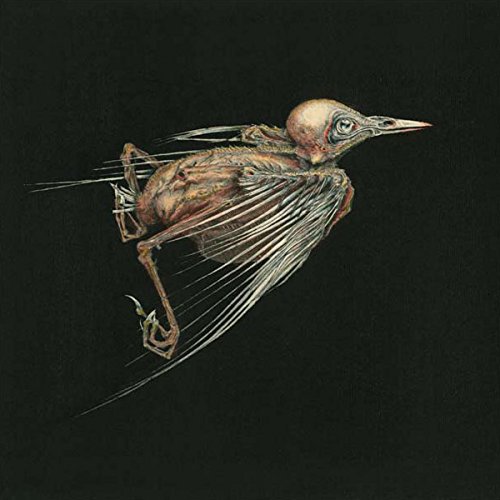
LED ZEPPELIN-CODA-DELUXE EDITION.
LED ZEPPELIN-CODA-DELUXE EDITION.
Led Zeppelin enjoyed ten years at the top. During their ten years at the top, Led Zeppelin released eight albums. They released their debut album Led Zeppelin in January 1969. Just over ten years later, Led Zeppelin released In Through The Out Door in August 1979. These eight albums sold over 100 million copies and resulted in Led Zeppelin being crowned the biggest band in the world. However, that era was about to end in tragedy.
A year after the release of In Through The Out Door, Led Zeppelin began preparing for the 1980 North American tour. The tour was scheduled to begin on 17th October 1980. It would be the first time Led Zeppelin had toured North America since 1977. So Led Zeppelin were keen to make an impression. Rehearsals began a month earlier.
On 24th September 1980, Rex King, Led Zeppelin’s assistant, picked John Bonham up at his home. Rex was to drive John to the rehearsals at Cray Studios. However, en route, John asked to stop for “breakfast.” Breakfast for John Bonham was a ham roll and four quadruple vodkas. Once he had his breakfast, Rex took John to the studios, where the rehearsals began.
John continued to drink throughout the day. Rehearsals continued into the evening. Then when the rehearsals were over, Led Zeppelin headed to Jimmy Page’s house. Still, John continued to drink. Just after midnight, John had fallen asleep, and had to be helped to bed. By then, John had drunk 1.4 litres of 40% vodka. Just after midnight, John, who had fallen asleep, was put to bed. Despite putting him on his side, John Bonham would be found dead the following day.
By 12.45pm, on 25th September 1980 there was no sign of John Bonham. So, Led Zeppelin’s new tour manager, Benji LeFevre and John Paul Jones went to investigate. They found John Bonham dead. He was only thirty-two. Because of the circumstances of John’s death, an inquest was called.
Before the inquest, an autopsy discovered that John Bonham had died of from asphyxiation. He had choked on his own vomit, after drinking the equivalent of forty shots of 40% vodka. At the inquest on 27th September 1980, a verdict of accidental death was recorded. By then, John Bonham had been cremated on the 10th October 1980, and his ashes were buried in St Michael’s Church in Rushock near Droitwich, Worcestershire. For the biggest band in the world, it was the end of an era.
The three remaining members of Led Zeppelin had a huge decision to make. They were meant to be beginning a lucrative North American tour. However, theJimmy Page, Robert Plant and John Paul Jones were mourning the loss of their friend. The last thing on their mind was music.
Despite this, rumours in the music press suggested the tour would continue with a replacement drummer. Names mentioned to play drums on Led Zeppelin’s North American tour included Carmine Appice, E.L.O.’s Bev Bevan, Jethro Tull’s Barriemore Barlow and Free’s Simon Kirke. Cozy Powell who had just parted company with Rainbow earlier in 1980, was said to be a contender. Ultimately, this was mere speculation. The other three members of Led Zeppelin had come to a decision.
Led Zeppelin’s North American tour was cancelled. Then on 4th December 1980 Led Zeppelin’s future became clear. The three remaining members of Led Zeppelin issued a press release. It stated: “We wish it to be known that the loss of our dear friend, and the deep sense of undivided harmony felt by ourselves and our manager, have led us to decide that we could not continue as we were.” At the bottom of the press release, it was signed “Led Zeppelin.” After eleven years,Led Zeppelin were no more.
That seemed to be the end of Led Zeppelin. The three members of Led Zeppelin went their separate ways. Then in 1981, Robert Plant founded The Honeydrippers. He was joined by Jimmy Page and Jeff Beck. The Honeydrippers’ lineup was fluid, with friends of Robert Plant and Jimmy Page joining a variety of other musicians. This kept Robert Plant and Jimmy Page busy. However, in 1982 a ninth Led Zeppelin album would be released.
Led Zeppelin still owed Atlantic Records an album. This dated back to when Led Zeppelin formed their Swan Song label in 1974. However, this wasn’t the official reason.
According to Jimmy Page, the three members of Led Zeppelin had noticed how popular bootleg recordings were. They were selling in vast quantities. Given they were unauthorised releases, Led Zeppelin weren’t benefiting from the releases. So the remaining members of Led Zeppelin decided that they should reissue some of the unreleased material in the vaults.
With Led Zeppelin having been together for eleven years before John Bonham’s death, there was plenty of unreleased material. There was more than enough for one album. That’s apparent on Warner Bros’ recent reissue of Coda. Not only does it feature the eight tracks on the original version of Coda, but two further discs of unreleased material. There’s eight tracks on disc two, and another seven tracks on disc three. Forty-three years later, and the Led Zeppelin vaults are the gift that keep on giving. Back in 1982, John Paul Jones saw the release of Coda as an opportunity for Led Zeppelin to showcase some of the hidden gems that lay unreleased in the vaults.
Just before the release of Coda, John Paul Jones explained why the album was being released. After all, some of the eight tracks had been recorded some time ago? “They were good tracks. A lot of it was recorded around the time punk was really happening.” Most of the music was released John Paul Jones explains. “There wasn’t a lot of Zeppelin tracks that didn’t go out. We used everything.” Some of the music that hadn’t been released would feature on Coda, which was a fitting title to what was Led Zeppelin finale.
When looking for a title for Led Zeppelin’s ninth and final album, a musical term was chosen…Coda. It proved to be a fitting description of what the album was. A Coda, the three remaining members of Led Zeppelin explained, “was a passage that ends a musical piece following the main body.” In the case of Led Zeppelin, In Through The Out Door was the last album in their main discography. Coda was an addendum, featuring tracks recorded between 1970 and 1978.
For Coda, the three remaining members of Led Zeppelin searched through the band’s vaults. They were looking for songs that would be fitting farewell for their fallen comrade. After much consideration, Jimmy Page, Robert Plant and John Paul Jones decided on eight tracks. They became Coda.
Disc One.
Opening Coda, was the bluesy We’re Gonna Groove, which was recorded on 9th January 1970, at the Royal Albert Hall, London. However, the guitar parts were later removed, and over-dubbed in the studio.
Poor Tom was originally meant to feature on Led Zeppelin III. It was penned by Jimmy Page and Robert Plant. Once the recording of Led Zeppelin III was complete, Poor Tom was omitted from the final album. It’s vintage Led Zeppelin.
Another track from the Royal Albert Hall Concert on 9th January 1970, is a cover of Willie Dixon’s I Can’t Quit You Baby. Willie Dixon originally wrote the song for Otis Rush. Later, it became a favourite of Led Zeppelin, who reinvent the track.
Closing side one of Coda, was Walter’s Walk which was recorded on 15th May 1972. It’s thought that the vocals were over-dubbed at a later date. Originally, Walter’s Walk was meant to feature on Houses Of The Holy, but was omitted from the final album. Ten years later, it’s rediscovered and comes to light on Coda.
The majority of side two of Coda are outtakes from the In Through The Out Door sessions. This includes Ozone Baby, a Page and Plant composition. It’s followed by Darlene, which is credited to the four members of Led Zeppelin. Just like Ozone Baby, Darlene failed to make it onto In Through The Out Door, which despite mixed reviews, still managed to sell six million copies in America alone.
Bonzo’s Montreux, which was recorded in September 1976, at the Mountain Studios in Montreux, Switzerland features drumming masterclass from John Bonham. Despite the years of excess, he puts the pretenders to his throne to shame. After the recording of Bonzo’s Montreux, Jimmy Page added a myriad of electronic effects. This adds to what’s one of the highlights of Coda. Why it doesn’t close Coda, seems a strange decision? That would’ve been a fitting homage to John “Bonzo” Bonham.
Instead, the Page and Plant penned Wearing Baby closes side two of Coda. It features Led Zeppelin kick loose, and remind the listener why the sold over 100 million albums in just ten years. Led Zeppelin in full flight was a joy to behold. Sadly, Coda was their swan song. What did critics think of Coda?
Just like previous albums, critics weren’t impressed by Led Zeppelin. It was a familiar story. Reviews were mixed. Some critics panned Coda. They described the album as a mixed bag of songs. Others saw it as Led Zeppelin fulfilling their contractual obligations. However, if the truth be told, Led Zeppelin were never flavour of the month among critics and cultural commentators. Many of them never gave Led Zeppelin the credit that they deserved. Especially during the punk era. Rock groups like Led Zeppelin were seen as musical dinosaurs, who were to be slain by a new breed of gunslinger critics. Ironically, many of the same critics later rewrote musical history, when they changed their mind about Led Zeppelin. Sadly, when Coda was released, Led Zeppelin had few fans in the music press.
Sadly, when Coda was released on 19th October 1982, it wasn’t a huge success. That’s despite reaching number four in Britain, and number six in the US Billboard 200. This resulted in Coda being certified platinum in America, and silver in Britain. When this was translated into sales, Coda sold one million copies in America and 60,000 in Britain. It was a far cry from 1971s Led Zeppelin IV which sold twenty-three million copies in America alone. Then 1973s Houses Of The Holy sold eleven million and 1975s Physical Graffiti sold a further sixteen million copies. In the space of three albums, American record buyers bought fifty copies of Led Zeppelin albums. It’s no wonder that Coda was seen as a commercial failure.
That was the case elsewhere. No longer were Led Zeppelin topping the charts. Only in Australia, Canada and New Zealand did Coda enter the top ten. Led Zeppelin’s time had been and gone.
The group who for several years had been the biggest band in the world were history. After Coda, the three members of Led Zeppelin went their separate ways. In the case of Robert Plant and Jimmy Page, they spent the next few years on The Honeydrippers. However, never again did Led Zeppelin record another album.
That was fitting. Led Zeppelin’s success was down to the four members of the band, not just three. The music on Coda was proof of this. Each and every track features the four members of Led Zeppelin. That’s the case on the three disc version of Coda which was recently released by Warner Bros.
From the opening bars of We’re Gonna Groove on disc one, right through to the Rough Mix of Everybody Makes It Through (In The Light) that closes disc three, the four members of Led Zeppelin play their part in the sound and often, the success of the music.
Disc Two.
Disc two features just eight tracks. They take up around half of the available time on the disc. Three of the tracks on disc two, feature alternative versions of songs from Coda. There’s an alternate take of We’re Gonna Groove, a mix construction in progress of Bonzo’s Montreux and an instrumental mix of Poor Tom. The inclusion of this version of Bonzo’s Montreux is an interesting one. Usually, recordings like this would never be released. They’re reference tracks only. So, it allows listener to see how the track evolved. that’s the case throughout disc two.
Other tracks include a mix of Sugar Mama and Baby Come On Home. Both were recorded in October 1968, when Led Zeppelin were recording their eponymous debut album. Hey, Hey, What Can I Do was the B-Side of Led Zeppelin’s 1970 single Immigrant Song. a rough mix If It Keeps On Raining is an early mix of When the Levee Breaks, from Led Zeppelin IV. The other track is Travelling Riverside Blues, which was recorded during a BBC Session. That’s not the end of Coda. There’s still disc three to go.
Disc Three.
Just like disc two, the seven tracks feature alternative versions of songs from Coda.There’s a rough mix of Bring It On Home from Led Zeppelin II, and Walter’s Walk, which which was recorded in 1972 for the Houses Of The Holy album. However, Walter’s Walk was never released until it featured on Coda. The version on disc three is just a rough mix. That’s the case with
St. Tristan’s Sword, Desire (The Wanton Song) and Everybody Makes It Through (In The Light) which was recorded for the 1975 album Physical Graffiti. These tracks are work in progress, and allow listeners to compare and contrast with the finished article.
Four Hands (Four Sticks) was recorded in 1971, and featured on Led Zeppelin. It was also the B-Side to the single Rock ’N’ Roll. However, the version on disc three is the Bombay Orchestra version. It was recorded in 1972, and features the Bombay Symphony Orchestra. They also feature on Friends, which was recorded at the same time. Both tracks feature a very different side of Led Zeppelin and are a welcome addition to disc three of Coda, which closes the Led Zeppelin remaster series.
It’s taken just over a year for Atlantic and Warner Bros. to rerelease the nine Led Zeppelin albums. These nine albums were released between 1969 and 1982. During that period, Led Zeppelin sold over 100 million albums and became the biggest band in the world. However, like all good stories, the Led Zeppelin story had to come to an end.
When the end came, there was a twist in the tale. The four members weren’t going to live happily ever after. No. Drummer John Bonham, the hardest living member of Led Zeppelin died of asphyxiation on the 25th September 1980. He had choked on his own vomit, after drinking the equivalent of forty shots of 40% vodka the day before. That day, Led Zeppelin died too.
Less than three months later, on 4th December 1980, the other three members of Led Zeppelin announced that the biggest band in the world were no more. They had overlooked the fact that they owed Atlantic Records one album.
So, just under two years later, on the 19th November 1982, Led Zeppelin released Coda. It was a selection of unreleased tracks. While Coda was hardly Led Zeppelin’s finest hour, just like In Through The Out Door, it featured fleeting moments of genius. However, it was a far cry from their first six albums.
From Led Zeppelin right through to Physical Graffiti, Led Zeppelin could do no wrong. However, on Presence and In Through The Out Door, no longer were Led Zeppelin invincible. There was a chink in their armour. What’s more all the years of hard living caught up with Led Zeppelin.
By the time they were recording In Through The Out Door, Jimmy Page was struggling with heroin addiction, and John Bonham was battling alcoholism. Sadly, just over a year after the release of In Through The Out Door, John Bonham lost his battle with alcoholism on 25th September 1980. The day, that John Bonham died, so did Led Zeppelin.
The ideal ending to the Led Zeppelin story would’ve been of the three remaining members of the band pieced together a critically acclaimed album featuring unreleased tracks. Sadly, that would only happen in the movies. Instead, Coda proved to be what critics called a musical mixed big, that became Led Zeppelin’s least successful album. Coda became a Coda to Led Zeppelin’s eleven year career, where they sold over 100 million albums.
LED ZEPPELIN-CODA-DELUXE EDITION.
GIL SCOTT-HERON-SMALL TALK AT 125TH AND LENNOX-VINYL EDITION.
GIL SCOTT-HERON-SMALL TALK AT 125TH AND LENNOX-VINYL EDITION.
There’s been many an important day in Chicago’s musical past. That’s not surprising. The Windy City has given the world some of the biggest names in music. This includes Buddy Guy, Herbie Hancock, Nils Lofgren, Patti Smith, Ray Manzarek of The Doors and Pearl Jam’s Eddie Vedder were all born in Chicago. So was musician, novelist poet and political activist Gil Scott-Heron. Sadly, despite all he achieved, Gil Scott-Heron is to some extent, one of Chicago’s forgotten musical heroes. Gil Scott-Heron’s story began in 1949.
April Fool’s Day in 1949 was an important day in Chicago’s musical history. That was the day Gil Scott-Heron was born. His mother Bobbie Scott-Heron was an opera singer. She sang with New York’s Oratorio Society. Gil’s father was Gil Heron was a Jamaican footballer, who at one time, played for Celtic Football Club. Sadly, Bobbie and Gil’s marriage ended when Gil was young.
After this, Gil was sent to live with his maternal grandmother, Lillie Scott, who lived in Jackson,Tennessee. Then when Gil was just twelve, Lillie Scott died. Gil returned to New York to live with his mother. She was now living in the Bronx. Originally, Gil enrolled at the DeWitt Clinton High School, but later, moved to the Fieldston High School.
This came after impressing the head of the English department. He’d read one of Gil’s essays and recommended that Gil received a full scholarship. This proved a poisoned chalice. The education he was receiving was better. However, he was only one of five black students. He felt alienated. Another problem was the socioeconomic gap. Other students came from a much more affluent background. Gil was the son of a single mother. It was at this period, that Gil became socially and politically aware. His eyes were opened to inequality, injustice and racism. This would shape his music in later years. Before that, Gil headed to university.
Lincoln University was where Gil headed after high school. Gil was recommend to head to Lincoln University by Langston Hughes. He was also at Lincoln University and was a member of Gil’s first band, the Black and Blues. After two years at Lincoln University, Gil decided to take time out to write a novel.
During this period, Gil Scott-Heron wrote two novels. His first novel was a thriller entitled The Vulture, was published in 1970. Whilst writing The Vulture, Gil saw The Last Poets in Lincoln in 1969.
After watching The Last Poets, Gil approached the band and asked: “can I form a band like you guys?” The seed had been sown. Maybe, music rather than writing would be the direction Gil’s career headed?
Having been impressed with The Last Poets and now considering a career in music, Gil had a lot on his mind as he headed back to New York. He found a new home in Chelsea, Manhattan. Once he’d settled in, Gil decided to make his dream a reality. So he looked for a record company. Gil just so happened to approach a label tailor-made for his music, Flying Dutchman Productions.
After his departure from ABC/Impulse Bob Thiele decided to found his own label. Over the last few years, Bob had worked with some of the most innovative and creative musicians in the history of jazz. Bob realised that often, large record companies aren’t the best environment for innovative and creative musicians. Often, these musical mavericks didn’t thrive within such an orthodox environment. Their creativity is restricted, meaning they’re unable to experiment and innovate like they’d like. So when Bob parted company with Impulse, who he’d transformed into one of jazz’s pioneering labels, he founded Flying Dutchman Productions. This was the label that Gil Scott-Heron approached. There was a problem though.
While Bob wanted to sign Gil, there was a problem, funding. The funding that Phillips, the Dutch record label had given Bob wasn’t going as far as he’d hoped. Despite this, when he met Gil he was impressed by the poet, musician, and author. So what Bob did, was fund an album that was a fusion of poetry accompanied by understated, percussive arrangements.
This was Small Talk At 125 and Lenox, which will be reissued on 180 gram vinyl on OST Recordings. Recording of Small Talk At 125 and Lenox took place in the summer of 1970. Rather than record his debut album in a studio, Gil decided to record the album live. So, with percussionists David Barnes, Eddie Knowles and Charles Sanders accompanying him, Gil recorded fourteen tracks he had written. They became Small Talk At 125 and Lenox.
Prior to the release of Small Talk At 125 and Lenox, critics had their say on Gil Scott-Heron’s debut album. Straight away, comparisons were drawn with the group who’d inspired Gil, The Last Poets. To some extent, this was a fair comment.
When one listens closely to tracks like Whitey On The Moon, plus what was the original version of The Revolution Will Not Be Televised, it’s apparent that Gil was taking what The Last Poets had been doing to the next level. With just a trio of percussionists accompanying Gil, Small Talk At 125th and Lenox was a potent and explosive mix of social comment and humour. Given that The Last Poets had enjoyed a degree of success, surely so should Gil?
Sadly, when Small Talk At 125th and Lenox was released, it wasn’t a commercial success. However, a small crumb of comfort was, that The Revolution Will Not Be Televised found its way onto radio play lists. That was encouraging for Bob and Gil. The Revolution Will Not Be Televised introduced a wider audience to Gil Scott-Heron’s scathing take on politics, social comment and satire. This was first heard on Small Talk At 125th and Lenox.
The first thing you realise, is that Small Talk At 125th and Lenox is quite unlike most of the music being released in 1971. The nearest comparison is The Last Poets. However, Gil took what The Last Poets were dong as a starting point, and took it much further. The result, Small Talk At 125th and Lenox is a potent, powerful and explosive mix of social and political comment. It’s a reflection of where America was, socially and politically. Racism still blighted America. Gil took this personally. It was like a personal affront. He felt obliged to speak up for those without a voice. On Small Talk At 125th and Lenox, Gil Scott-Heron also rails and rages against corruption, hypocrisy, inequality, poverty and racism. Gil Scott-Heron a long-term political activist and advocate for change warns against inactivity. He longs for change, and is determined to make America a better country. His manifesto for change was Small Talk At 125th and Lenox.
After introducing his band, fittingly, Gil Scott-Heron begins his set with the song that would become synonymous with him, The Revolution Will Not Be Televised. Accompanied by just bongos and congas, Gil delivers his unmistakable proto rap. His delivery is impassioned, as he encourages the audience to make a difference. Change won’t happen if they’re at home sitting on their sofas watching television. Instead, they’ve got to go out there and make it happen.
Having set the tone for the evening, Gil Scott-Heron goes on to combine satire and passion. Racism, poverty, corruption and inequality inspire Gil. So does hypocrisy on Brothers, The Rainbow Conspiracy on Comment #1 and the money spent on the space race on Whitey On The Moon. Gil rages against money spent on the space race, while deprivation is rife within housing projects. Gil’s anger and disgust is apparent. His delivery is inspired and impassioned. Just like other tracks on Small Talk At 125th and Lenox, Gil delivers the lyrics as if they’re a personal affront.
That’s the case on Evolution (and Flashback) and Enough. Both tracks see Gil examine the progress of black America since slavery. On Evolution (and Flashback), anger and frustration fills his voice as he delivers the lyrics. Later, as he mentions the arrival of Dr. Martin Luther King, there’s a sense of in Gil’s voice. It doesn’t last though. It’s as if the dream has died. especially when Gil ruefully says: “the bitter truth lives on.” Then on Plastic Pattern People compares life in the Northern and Southern states of America. Inequality and racism were rife in the South in the late sixties and early seventies. Again, Gil sees this as a personal affront. He rails against inequality, racism and injustice, as he provides a voice for the poor and oppressed. However, on a couple of tracks, Gil Scott-Heron draws inspiration from daily life.
Like all good poets, Gil finds inspiration in everything and anything. An example is Omen. He was found inspiration for Omen in the New York subway, when he saw a painting publicising Kinji Fukasaku’s film The Green Slime. Then on Small Talk at 125th and Lenox, Gil found inspiration on the street corner. It’s as if he’s been eavesdropping on everyday conversations. He recounts what people were saying, right down to what they had for lunch. Then on a trio of tracks, Gil the poet becomes Gil the vocalist.
On The Vulture, Who’ll Pay Reparations on My Soul? and Everyday, which closes Small Talk At 125th and Lenox sits down at the piano and sings. With just the trio of percussionists accompanying him, Gil is transformed. He proves to be a talented and soulful vocalist. Especially on Who’ll Pay Reparations on My Soul?, which takes a diversion in the direction of jazz. Everyday proves the perfect way to close Small Talk At 125th and Lenox. Especially with gospel tinged harmonies and handclaps accompany Gil’s heartfelt, soulful vocal.
Throughout a fourteen album career, Gil Scott-Heron provided a voice for the disenfranchised. Fearlessly, Gil highlights the social and political problems that blighted America. He encouraged Americans to join together and change America for the better. This pioneering poet and protest singer made a difference politically. Gil made people aware of the problems people were facing and urged them to take action. His career began with Small Talk At 125th and Lenox, which introduced the world to Gil Scott-Heron, novelist, poet, political activist, singer and songwriter.
For the next five decades, Gil Scott-Heron tried to make a difference with his music. His 1971 debut album, Small Talk At 125th and Lenox, is a mature and accomplished album. Gil combines power, passion, emotion, sadness, frustration, anger and confusion. In a way, his youthfulness helps Gil brings the lyrics to life. Gil was a young man and was aware of and possibly, had experienced the inequality and injustice he sings about.
Gil rails and rages against corruption, hypocrisy, inequality, poverty and racism. Gil Scott-Heron a long-term political activist and advocate for change warns against inactivity. He longs for change, and is determined to make America a better country. His manifesto for change was Small Talk At 125th and Lenox.
This potent, powerful and explosive mix of social and political comment was a reflection of where America was, socially and politically. Racism still blighted America. Gil took this personally. It was like a personal affront. He felt obliged to speak up for those without a voice on Small Talk At 125th and Lenox which will be reissued on 180 gram vinyl on OST Recordings.
GIL SCOTT-HERON-SMALL TALK AT 125TH AND LENNOX-VINYL EDITION.



GONG-YOU.
GONG-YOU.
Prolific. That’s a good way to describe the various lineups of Gong. Since Gong formed in 1967, Gong and the various offshoots of Gong have released thirty-four studio albums. Of these albums, three standout from the crowd, the Radio Gnome Trilogy. The last instalment in the Radio Gnome Trilogy was You, which was released in 1974. It was the recently released by Charly, and concludes what was a groundbreaking trio of albums. No wonder. Gong were a pioneering group, featuring musical mavericks and innovators. Their story begins in France, in 1967,
That’s when The Franco-British band were founded by Daevid Allen, an Australian musician, and Gilli Smyth a professor of the Sorbonne. They were joined by vocalist Ziska Baum and flautist Loren Standlee. This was the first lineup of Gong. However, it wouldn’t be the last.
Since then, Gong’s lineup is best described as fluid. Around thirty musicians have come and gone. Some left of their own accord. Others left in acrimonious circumstances. However, in 1967, when Gong were formed almost accidentally, it looked like a brave new world.
In 1967, Australian musician, Daevid Allen, was a member of Soft Machine. Daevid had been spending time in Paris, France. However, the time came to return to London, where Soft Machine were based. When Daevid arrived in London, there was a problem with his visa. He was denied entry into Britain, and returned to Paris where he met Gilli Smyth a professor of the Sorbonne, one of France’s most prestigious universities.
Daevid Allen and Gilli Smyth decided to form a band, which they named Gong. The pair, who were both vocalists, were joined by another vocalist, Ziska Baum, and flautist Loren Standlee. This was the first of numerous lineups of Gong, a group who six decades and forty-eight years later, are still going strong. That’s quite remarkable, given their turbulent history.
A year after Gong formed, France was in the throes of a student revolution. Police and students clashed on the streets during May 1968. This was a worrying time for the members of Gong. So much so, that Daevid Allen and Gilli Smyth fled from Paris, and eventually, settled in Deià, in Majorca.
This resulted in the first changes in Gong’s lineup. After fleeing Paris, the band’s lineup changed. Rumour has it, that Daevid and Gilli discovered saxophonist Didier Malherbe living in a cave in Deià. He would soon join Gong, when they headed to France to record the soundtrack to Jerome Laperrousaz movie about motor cycling, Continental Circus.
Continental Circus.
For the recording of Continental Circus, Gong returned to France. Continental Circus was the soundtrack to Jérôme Laperrousaz’s film about motor cycle racing. By the time Gong arrived in France, things were much calmer. It was a different country to one the one that Gong had been forced to flee from.
Since they left France for Deià, the first changes in Gong’s lineup took place. Vocalist Ziska Baum and flautist Loren Standlee. However, saxophonist Didier Malherbe had joined Gong, who were now reduced to a trio. This was the lineup that recorded the soundtrack to Continental Circus.
The sessions took place at the Château d’Hérouville in France. There, Gong recorded the four tracks that became Continental Circus. One of then, What Do You Want? was familiar to anyone who had bought Camembert Electrique. It seemed to have been “inspired” by Fohat Digs Holes in Space. However, once recording of Continental Circus was complete, and Gong returned home. they were a very different band. Sadly, the release of Continental Circus was delayed. However, at least Continental Circus soundtrack kickstarted Gong’s nascent career. Record labels started to take an interest in Gone.
They were signed to Jean Karakos’ newly formed BYG label, on a multi-album deal. Their first album for BYG was Magick Brother. However, it would be a while before Continental Circus wars released.
Magick Brother.
Recording of Magick Brother, which is regarded as Gong’s debut album, took place in Paris. Between September and October 1969, recording of Magick Brother, took place at Studio ETA and Studio Europa Sonor. The same personnel that featured on Continental Circus, featured on Magick Brother, which was produced by Jean Georgakarakos and Jean-Luc Young.
They guided Gong through the recording of their debut album. Just like on Continental Circus, Daevid Allen played guitar and added vocals. Gilli Smyth was credited as adding vocals and a “space whisper.” Didier Malherbe played saxophone and flute. Augmenting Gong, were some top session musicians.
With Gong lacking a rhythm section, drummer Rachid Houari was brought onboard. So were Earl Freeman, Dieter Gewissler and Barre Phillips, who played contrabass on various tracks. Free jazz pianist, Burton Greene, a native of Chicago, was also brought onboard. The final piece of the jigsaw, was Tasmin Smyth. Her vocal features on Mystic Sister/Magick Brother. Tasmin and the rest of the guest artists, played their part in Gong’s debut album Magick Brother, which was released in March 1970.
On the release of Magick Brother in March 1970, Gong’s debut album was well received by critics. Gong were hailed as an innovative group, one who weren’t afraid to push musical boundaries. Their music was a fusion of musical influences and genres. Everything from psychedelia, free jazz, pop, rock and prog rock can be heard on Magick Brother. The future Kings of the potheads had made their presence felt. However, as was their want, Gong’s music wouldn’t stand still. continue to evolve. This would result in the first classic album of their career, and their first PhP album, Camembert Electrique.
Camembert Electrique.
Camembert Electrique is remembered as the first album in Gong’s PhP phase. The pothead pixies made their debut on Gong’s trailblazing sophomore album.
Gong were one of the earliest prog rock bands. Unlike other prog rock bands their music was a fusion of musical genres. Elements of psychedelia, jazz, avant garde, and pop are combined. Other times, the music is ethereal, spacey and atmospheric. Always though, there’s an intensity throughout Camembert Electrique, as Gong take you on a trailblazing journey. The destination is planet Gong. Providing the soundtrack to the journey was the now legendary radio gnome, which dips in and out of Camembert Electrique. Radio gnome plays its part in a truly groundbreaking album which was recorded in 1971.
Gong had some new additions to their lineup when work began in May 1971. The first of the new additions was bassist and guitarist Christian Tritsch. Drummer Pip Pyle slotted into the rhythm section. Eddy Luiss played Hammond organ and piano. They joined guitarist and vocalist Daevid Allen, vocalist and space whisperer Gilli Smyth and Didier Malherbe on saxophone and flute. This was the the lineup of Gong that headed to Michel Magne’s Strawberry Studios, in north west Paris where they recorded Camembert Electrique, which was mostly, written by Daevid Allen.
Eight of the tracks on Camembert Electrique were written by Daevid Allen. He wrote the other two tracks with new additions to Gong’s lineup. Bassist and guitarist Christian Tritsch cowrote And You Tried So Hard. These songs became Camembert Electrique, which Gong began recording in May 1971.
For Gong’s sophomore album Camembert Electrique, Gong headed to Michel Magne’s Strawberry Studios, in north west Paris. Gong couldn’t have picked a better studio. It was stocked with the latest equipment. This was the perfect location for a groundbreaking band. Over ten days in May 1971, Gong recorded what was the basis for the ten tracks that became Camembert Electrique. Two months later, Gong returned to the studio.
In July 1971 returned to Strawberry Studios, to finish recording of Camembert Electrique. Just like the sessions in May, everything was off the cuff. There was an experimental side to Gong. The used tape recorders that played backwards. Tape loops added bursts of laughter. Gong were making music with a smile on their face. To do this, they fused musical genres and influences. Elements of psychedelia, jazz, avant garde, and pop shine through on Camembert Electrique, which was eventually completed in September 1971, when Gong returned to Strawberry Studios. Little did they realise that they had recorded their first classic album, Camembert Electrique.
Camembert Electrique was released in 1971. Critics hailed the album a classic. It’s now regarded as a cosmic rock classic, that marked the debut of the pothead pixies (PhP). They made their debut on Gong’s trailblazing, genre-melting sophomore album Camembert Electrique. As debut albums go, Gong had released one of the most groundbreaking. Now somewhat belatedly, Continental Circus was released.
Continental Circus.
Continental Circus was released in April 1972, and was the soundtrack to Jérôme Laperrousaz’s film about motor cycle racing. There was air of mystery about the album. No musicians were listed on the cover of Continental Circus. Instead, it was credited credited to Gong avec Daevid Allen. However, it was obvious that this was a Gong album.
Especially to the critics. Gong’s adventurous, innovative streak shawn through. On Continental Circus World, Gong combined dialogue and sound effects. To that they add looped snipped from the film. It plays throughout the track. This was just another example of Gong at their innovative best. They were determine to push musical boundaries. Despite this, reviews of Continental Circus were mixed. Some critics were won over by the music on Continental Circus. However, the music went over the head of other critics. They didn’t “get” Gong. That had been the case with Camembert Electrique. So what would they think of Flying Teapot, the first album in the Radio Gnome trilogy?
Flying Teapot.
Flying Teapot marked the start of a trilogy of truly groundbreaking albums. Over a two year period, Gong released the Radio Gnome trilogy. These three albums would see Gong become part of musical history.
When work began on Flying Teapot, Gong were a very different band. Their lineup featured eight musicians, including guitarist Steve Hillage and Tim Blake. However, still, Daevid Allen penned most of the six tracks. He wrote two tracks and cowrote three other tracks. Gail Smyth cowrote Witch’s Song/I Am Your Pussy with Daevid Allen. Other members of Gong played a part in the songwriting process. Especially, Tim Blake. He wrote The Octave Doctors And The Crystal Machine and cowrote Zero The Hero And The Witch’s Spell with Daevid Allen and Christian Tritsch. These songs became Flying Teapot.
Recording of Flying Teapot began in January 1973, at The Manor Studios, Oxford with producer Giorgio Gomelsky. The newly expanded lineup of Gong combined their combination traditional instruments, sound effects and tape machines effectively. The result was an album that would become part of Gong mythology.
When Flying Teapot was released on 25th May 1973, the album was hailed as one of the most ambitious, groundbreaking albums of 1973. Psychedelia, prog rock and space melted into one on Flying Teapot. It was a meeting of the sixties, seventies and 21st Century cosmic music. The album that had been inspired by Russell’s teapot would late become both a cosmic rock and prog rock classic.
Angel’s Egg.
Having released one of most ambitious albums of 1973, Gong returned back to the studio almost straight away. This time, Gong headed France, in August 1973, where they used the Manor Mobile at Pavillon du Hay.
A total of fourteen songs were to be recorded. Many were just short, musical sketches, lasting a minute long. They had been penned by the various members of Gong. Just like previous Gong albums, Daevid Allen played an important role. He wrote two tracks and cowrote five other tracks. Other members of Gong were beginning to play a more important part of the songwriting process. Especially Steve Hillage, who wrote two tracks and cowrote two others. These songs came to life thanks to Gong and their myriad of instruments, effects and producer Giorgio Gomelsky. Once the fourteen songs were completed, they were mixed at The Manor, in Oxfordshire. Angel’s Egg was released as 1973 drew to a close.
Angel’s Egg was released on 7th December 1973. It wasn’t just the music that was groundbreaking. Gong decided that the album should come complete with a booklet introducing record buyers to the world of Gong. In the booklet, was a in-depth explanation of Gong mythology. The booklet was akin to a who’s who of Gong. It also included Angel’s Egg’s lysergic lyrics. Then there was the cast of characters and their backstory. Finally, there was an introduction to Gong speak. All this was wrapped in a gatefold sleeve. While this impressed record buyers, what the critics were interested in, was the music. How did Angel’s Egg compare to Flying Teapot?
Gong had set the bar high with Flying Teapot. However, Angel’s Egg, which introduced record buyers to Bloomdido Bad De Grass, Shakti Yoni, Sub. Capt. Hillage and Pierre de Strasbourg. These were the names that members of Gong adopted on Flying Teapot. Just like Flying Teapot, Angel’s Egg was hailed as a genre classic by critics. They embraced Gong’s ability to push musical boundaries, and open the doors of perception with their fusion of psychedelia, prog rock and space rock. The second instalment in the Radio Gnome Trilogy was given the seal of approval by critics and released on 7th December 1973. Now the pressure was on Gong to complete the Radio Gnome Trilogy with a fitting followup to Flying Teapot and Angel’s Egg.
You.
In the summer of 1974, Gong began work on the final instalment in the Radio Gnome Trilogy, You. It featured eight tracks that the members of Gong had written. Thoughts for Naught, A P.H.P.’s Advice, A Sprinkling of Clouds, Perfect Mystery and The Isle of Everywhere were written by Daevid Allen, Tim Blake, Steve Hillage, Mike Howlett, Didier Malherbe and Pierre Moerlen. Magick Mother Invocation, Master Builder and You Never Blow Yr Trip Forever were penned by Daevid Allen, Tim Blake, Miquette Giraudy, Steve Hillage, Mike Howlett, Didier Malherbe, Benoit Moerlen, Pierre Moerlen, and Gilli Smyth. The eight songs were recorded at The Manor Studios, in Oxfordshire.
That was where Gong began work on the recording of their fifth album You. The rhythm section featured drummer and percussionist Pierre Moerlen, bassists Mike Howlett and guitarists Steve Hillage. They were joined by percussionists Mireille Bauer and Benoît Moerlen, while Didier Malherbe took charge of wind instruments and vocals. Tim Blake played Moog and EMS synthesisers and Mellowdrone and Miquette Giraudy added backing vocals. Founding members Daevid Allen added vocal guitar and Gilli Smith poems and space whispers. Bringing all this together, was new producer Simon Heyworth. Once the eight tracks on You were complete, the album was mixed.
Rather than mix You at one studio, two were used. Side one was mixed at Pye Studios, Marble Arch and side two at The Manor. Once You was complete, it was ready for release in October 1974.
Some critics felt Gong had kept the best until last. You was the third instalment in the Radio Gnome Trilogy. It found Gone at their most innovative and inventive. Genres were combined, and melted into one. Elements of psychedelia, prog rock, space rock, jazz, pop and rock shine through, as Gong deploy their unique and unmistakable combination of instruments and effects. This creates an album that’s totally unique and unmistakable.
After all, what album featured a gnomic narrative, where pothead pixies and octave doctors are introduced to flying teapots. Then there’s the journeyman Zero the Hero. They’re a figment of Gong’s collective fertile imagination. They come to life thanks to narrator and vocalist Daevid Allen and space whisperer Gilli Smyth. Along with the rest of Gong, they take the listener on a genre-jumping, lysergic journey. While each and every member plays a part in Gong’s Magnus Opus, two members of Gong stand out.
Guitarist Steve Hillage is at the heart of the action. Having settled into his role in Gong, he unleashes inventive, virtuoso performances. His barnstorming solo cut through arrangements. They prove the perfect accompaniment, and foil to Didier Malherbe. The French multi-instrumentalist drenches some of You’s arrangements with musical hailstorms. Steve and Didier stand shoulder to shoulder, as Gong record their finest hour.
Meanwhile, the rest of Gong combine drama, surrealism and urgency. Like much of the rock music released in 1974, there’s a sense of theatre. However, where Gong differ, is they’ve a sense of humour. They’re determined not to take themselves too seriously on You, third and final instalment in the Radio Gnome Trilogy.
Gong had kept the best of the Radio Gnome Trilogy until last. While Flying Teapot and Angel’s Egg were groundbreaking albums, Gong went one better on You. It featured Gong at their most ambitious, innovative and inventive. That’s why You is considered one of Gong’s finest albums. Fittingly, the three instalments in the Radio Gnome Trilogy, Flying Teapot, Angel’s Egg and You have recently reissued by Charly. This trilogy features the musical mavericks as they transform a recording studio into a laboratory.
Just like with Flying Teapot and Angel’s Egg, the music on You was experimental. Much of the music was off the cuff. They used tape recorders that played backwards. Tape loops added bursts of laughter. Whispery and theatrical vocals were added. So were effects. These effects transformed the sound of the original instrument. When all this was brought together by producer Simon Heyworth, the result was a prog rock classic.
You however, features more than prog rock. As Gong make music with a smile on their face, they fused musical genres and influences. Elements of avant garde, cosmic rock, experimental, free jazz, pop, psychedelia and space rock. When this is combined, the result is music that unique and inimitable, and could only have been recorded by a group a group of musical mavericks like Gong. Their 1974 Magnus Opus You, is a fitting finale to the Radio Gnome Trilogy, which features Gong at their innovative and inventive best.
GONG-YOU.
TONY BANK-A CHORD TOO FAR BOX SET.
TONY BANK-A CHORD TOO FAR BOX SET.
Too often, Tony Banks is referred to as “the keyboard player from Genesis.” This is doing the sixty-five year old a huge disservice. Tony Banks is a multi-instrumentalist, whose just as comfortable playing guitar as his playing piano, Hammond organ, synths or Mellotron. Seamlessly, Tony Banks could switch between musical instruments. That and his ability to innovate, played an important part in Genesis’ success. However, while Genesis dominated a large part of Tony Banks’ career, it’s just part of the story.
By the Genesis split-up in 1998, after thirty-one years together, Tony Banks was already an established solo artist. He released his debut album A Curious Feeling in 1979. After that, Tony Banks released another eight albums. They showed the different sides to Tony Banks.
As well as solo albums, Tony Banks released soundtracks and orchestral albums. Then there’s the albums Tony recorded with his Bankstatement and Strictly Inc. projects. These albums showed Tony Bank’s versatility and ability to innovate. Tracks from each of these ten albums feature on the Chord Too Far box set, which was recently released by Estoteric Recordings.
The Chord Too Chord Too Far box set is a four disc box set. It documents Tony Banks’ five decade solo career. Annoyingly, the Chord Too Far box set isn’t in chronological order. That would’ve made sense, and really done justice to Tony Banks thirty-six year solo career. Instead, A Chord Too Far jumps between albums and decades. This is disappointing. It would’ve made sense to start with Tony Banks debut solo album A Curious Feeling, which was released in 1979, and worked through the ten albums, reaching 2012s Six: Pieces for Orchestra. That’s what most people, myself included would’ve done.
A Curious Feeling.
For the past twelve years, Tony Banks had concentrated on making Genesis one of the biggest bands. He had cofounded the band in 1967, and by 1979, the only original members of the band were Tony and Mike Rutherford. The most recent departure was guitarist Steve Hackett, who left in 1977. This left Tony, Mike and Phil Collins, whose first album was a trio was 1978s …And Then There Were Three… The following year, Tony released his first solo album, A Curious Feeling
Before heading off to Polar Music Studios, Stockholm, Sweden, Tony Banks had written eleven tracks. They became A Curious Feeling. It was a concept album. The concept for the album was Daniel Keyes’ short story Flowers for Algernon. Recording of A Curious Feeling took place during the spring and summer of 1979. Accompanying Tony were drummer Chester Thompson and vocalist Kim Beacon, while Tony Banks and David Hentschel produced A Curious Feeling. It was released on 8th October 1979.
When A Curious Feeling was released, the reviews were scathing. This was no surprise. 1979 was the height of the post punk era. Critics slated anything that represented the musical establishment. Tony never stood a chance, despite the quality of music on A Curious Feeling. Six tracks, including From the Undertow, Lucky Me, After The Lie, You, For a While, and The Waters Of Lethe, which feature on A Chord Too Far, show how wrong the critics were about A Curious Feeling.
Despite the protestations of the gunslinger critics, A Curious Feeling reached number twenty-one in Britain and number 171 in the US Billboard 200. Tony Banks was vindicated in his decision to release his debut album. However, it would be five years before he released the followup.
The Wicked Lady.
After a gap of five years, Tony Banks released the first of two albums during 1983. The first was a remake of the soundtrack to Wicked Lady. It had originally been released in 1945, and featured Margaret Lockwood. An estimated 18.4 million million people saw The Wicked Lady, which was based on Magdalen King-Hall’s novel The Life and Death of the Wicked Lady Skelton. Thirty-eight years later, and Tony Banks collaborated with the National Philharmonic Orchestra on the remake of The Wicked Lady.
While Tony Banks featured on side one of the remake of The Wicked Lady, the National Philharmonic Orchestra featured on the second side. This unlikely collaboration found favour with critics.
When The Wicked Lady was released in April 1973, critics were impressed by the Tony Banks produced soundtrack. Especially, the second side. Its drama and complexity found favour with critics. However, the only track on A Chord Too Far from side two is The Wicked Lady. The other two tracks are The Chase and Kit. Even this trio of tracks show that Tony’s vision and creativity had been put to good use. However, later in 1983, Tony released the followup to A Curious Feeling, The Fugitive.
The Fugitive.
Just like A Curious Feeling, Tony wrote the nine tracks on The Fugitive. This time around, Tony recorded The Fugitive closer to home. The Farm in Surrey, Genesis’ studio, was the venue for the recording of Tony’s sophomore album. To coproduce The Fugitive, Stephen Short was drafted in. Recording began in 1982.
Tony began recording the album at home, on an eight-track studio in 1982. He laid down the basic tracks. Then in 1983, recording began at The Farm. This time around, Tony took charge of the vocals. He was joined by Genesis’ touring guitarist Daryl Stuermer, bassist Mo Foster and drummer Steve Gadd. On Charm, no drummer was used. Instead, Tony used a Linn LM-1 drum machine. Eventually, the nine tracks were complete, and The Fugitive was released in late June 1983. By then, Genesis were preparing release their eponymous album in October 1983.
It was a battle of the albums, one that The Fugitive lost. Reviews of The Fugitive were mixed. Some critics like the sparseness of the arrangements, and were won over by Tony’s vocals. Up until then, they were a well kept secret. They can be heard on And the Wheels Keep Turning, Thirty Three’s, By You, At the Edge of Night and Moving Under on A Chord Too Far. The three songs are an introduction to one of Tony Bank’s most underrated albums.
The Fugitive was released in late June 1983, and stalled at number fifty in the British charts. After just two weeks, The Fugitive disappeared from the charts. Since then, The Fugitive has become a rarity. So did Tony Banks solo albums. Genesis were on the cusp of worldwide domination, where commercial success and critical acclaim was omnipresent.
Soundtracks,
So it wasn’t until 1986 that Tony Banks next released an album. Soundtracks featured tracks from two soundtracks that Tony Banks had been involved with. The first was Starship. It was released in December 1984, and is also known as Lorca and the Outlaws. Quicksilver was the other soundtrack. Tony was just one of a number of artists who contributed tracks to Quicksilver. Tracks from both these albums made their way onto Soundtracks.
When Soundtracks was released in March 1986, reviews were mixed. Critics noted that the quality of music was mixed, with the poppier sounding tracks lacking that all important hook. Given the reviews, it was no surprise when Soundtracks wasn’t a commercial success. Despite that, five tracks from Soundtracks feature on A Chord Too Far. They’re Shortcut to Somewhere which features former Marillion frontman Fish, Rebirth and Lion of Symmetry which features Toyah Willcox. You Call This Victory features Jim Diamond and Redwing. These five tracks include the highlights of what proved to be Tony Banks’ final soundtrack album. For his next album, Tony was inspired by the success Mike Rutherford was enjoying with his “other” band.
Bankstatement.
When he wasn’t busy with Genesis, Mike Rutherford was busy with his new group, Mike and The Mechanics. They were enjoying commercial success and critical acclaim. This inspired Tony Banks to form his own band, Bankstatement.
Essentially, Bankstatement were a trio featuring Tony, Alistair Gordon and Australian born singer-songwriter Jayney Klimek. Each of the three vocalists shared vocal duties. They were augmented in the studio by a band that included former Genesis guitarist Steve Hillage. He co-produced Bankstatemen with Tony. Recording took place during 1988 and 1989. A total of eleven songs penned by Tony Banks were recorded. These songs became Bankstatement, which was released in August 1989.
On the release of Bankstatement, the album was well received by critics. They recognised the quality of what was carefully crafted pop songs. Despite the reviews, neither Bankstatement, nor the three singles charted. Two of the singles Throwback and I’ll Be Waiting feature on A Chord Too Far. So do Queen of Darkness and Big Man. However, there’s an error on the back cover of A Chord Too Far. This Is Love isn’t a track from Bankstatement. It was a single released from The Fugitive in 1983. Following the commercial failure of Bankstatement, the project never released a followup. Tony’s next album was his third solo album.
Still.
Five years had passed since Tony released The Fugitive, his second solo album. Since then, he had been busy with Genesis and released an album with Bankstatement. A solo album was overdue. So in 1990, Tony Banks began recording what would become Still.
Unlike Tony’s two previous solo albums, Tony didn’t write each of the ten tracks. He wrote seven and cowrote Red Day On Blue Street and I Wanna Change The Score with Nik Kershaw. Tony cowrote Another Murder of a Day with Fish from neo progressive rock band Marillion. They were just two of the guest vocalists on Still.
The other two vocalists were Jayney Klimek and Andy Taylor of Duran Duran. Along with Nik Kershaw and Fish, recording of Still got underway in 1990, and was completed in 1991. The album was scheduled to be released later in 1991.
Originally, Still was going to be called Still It Takes Me by Surprise, after one of the tracks on the album. However, it was shortened to Still, and released in April 1991. Reviews of Still were mixed. However, Giant Records had high hopes for Still. They promoted the album heavily. Despite their best efforts, Still didn’t sell well in Britain. That was the case a year later, when Still was released in America in April 1992. Since then, Still is regarded by some as Tony Banks best albums. There’s plenty of opportunity to decide if this is the case. Eight tracks from Still, including Red Day On Blue Street, Angel Face, Still It Takes Me By Surprise, I Wanna Change The Score, Water Out Of Wine, Another Murder Of A Day, Back To Back and The Final Curtain feature on A Chord Too Far. Following Still, Tony Banks would reinvent himself several times.
Strictly Inc.
The latest reinvention of Tony Banks came in 1995, when he released Strictly Inc. It was a collaboration between Tony and Jack Hues, the lead singer of Wang Chung. They were joined by a rhythm section of drummer John Robinson, bassist Nathan East and guitarist Daryl Stuermer. Jack Hues played guitar and Tony took charge of keyboards. Ten tracks were recorded between 1994 and 1995. Strictly Inc. was released later in 1995.
Strictly Inc. was released on 11th September 1995. Critics weren’t impressed by Strictly Inc. The highlight of the album critics said, was Tony’s keyboard playing. Layers of keyboards were stacked one on top of another, melting seamlessly into one. They were augmented by Jack’s vocals. However, critics felt that vocals were no match for Tony’s keyboards. Unsurprisingly, when Strictly Inc. was released it failed commercially. That was despite Strictly Inc. bearing the band member’s names.
That was against Tony Bank’s wishes. He wanted Strictly Inc. not to feature the band member’s names. While this would’ve added an air of mystery, it would’ve also meant that cynical critics couldn’t take a swipe at Tony. They weren’t impressed by Strictly Inc. Nor were record buyers. So much so, that Virgin Records never bothered to release Strictly Inc. in America. For those yet to discover Strictly Inc., A Chord Too Far is an opportunity to do so. Walls of Sound, Never Let Me Know, Charity Balls, Something to Live For, A Piece of You and An Island in the Darkness all feature on A Chord Too Far. Strictly Inc. proved to be Tony Bank’s last album. Given the response of critics to Strictly Inc., Tony decided to reinvent himself again.
Seven: A Suite For Orchestra.
In the nine years between Tony Banks releasing Strictly Inc. and the release of Seven: A Suite For Orchestra in March 2004, a lot had happened. Genesis had split-up in 1998. After thirty-one years together, the trio went their separate ways. Five years later, Tony began work on Seven: A Suite For Orchestra in 2003.
Seven: A Suite for Orchestra was a first for Tony Banks. He had never released a classical album. Tony penned the seven suites, and played piano on Spring Tide, The Ram and The Spirit of Gravity. Accompanying him were the London Philharmonic Orchestra, conducted by Mike Dixon. Producing Seven: A Suite For Orchestra was Tony and Nick Davis, who Tony knew from his work engineering and producing Genesis. The pair finished Seven: A Suite For Orchestra was completed in 2004, it was released in March 2004.
When Seven: A Suite For Orchestra was released in March 2004, some critics were surprised by this stylistic departure from Tony Banks. However, Tony had written soundtracks and orchestral pieces before. He took this further on Seven: A Suite For Orchestra. For those who have yet to hear the album, two tracks from Seven: A Suite For Orchestra, Black Down and The Ram feature on A Chord Too Far. It would be eight years before Tony returned with the followup to Seven: A Suite For Orchestra.
Six: Pieces For Orchestra.
It wasn’t until April 2012 that Tony Banks returned with his second classical album, Six: Pieces For Orchestra. Eight years had passed since the release of Seven: A Suite For Orchestra. However, Tony had been busy.
He wrote the six suites on Six: Pieces For Orchestra. Again, Tony and Nick Davis coproduce Six: Pieces For Orchestra. It features the City Of Prague Philharmonic Orchestra. They’re conducted by Paul Englishby. Two soloists play an important part in this evocative, haunting and bewitching album. Martin Robertson plays the alto saxophone on the opening track Siren. Charlie Siem plays violin on Blade. Fittingly, these tracks feature on A Chord Too Far, and feature two of Tony Banks’ finest classical works.
With the story of Tony Banks’ solo career brought up to date, that’s also the story of the A Chord Too Far box set. This four disc, forty-eight track box set documents Tony Banks’ thirty-six year solo career. It features the twists and turns that Tony Banks’ solo career has taken.
Who would’ve thought that after Tony Banks released A Curious Feeling in 1979, he would go on to release soundtracks, orchestral albums and form two bands, Bankstatement and Strictly Inc. However, he did. Then there’s the small matter of Tony’s two other solo albums, 1983s The Fugitive and 1991s Still. These albums are just part of Tony Bank’s long and varied career.
Sadly, of the three members of Genesis, Tony Banks didn’t come close to enjoying the commercial success that came Phil Collins and Mike Rutherford’s way. However, Tony Banks was a musical maverick, who for the last thirty six years has flitted seamlessly between musical genres. He’s a true musical adventurer, whose music is celebrated on the A Chord Too Far box set.
A Chord Too Far is the perfect introduction to Tony Banks’ nine album career. It goes beyond Tony Banks’ solo career, looking at soundtracks and orchestral works. The forty-eight tracks feature some of the best music that Tony Banks has released. Other tracks, like the albums they’re taken from will divide opinion. This includes 1986s Soundtracks and 1995s Strictly Inc. Neither were Tony Banks most successful, nor according to critics, his finest hour. However, tracks from both albums were included, and allow the opportunity listeners to reappraise both albums. They’re part of the musical journey that is Tony Banks’ career. It’s documented and celebrated on A Chord Too Far which was recently released by Esoteric Recordings. This four disc box set, celebrates the career of a pioneering musician, who continually, pushed musical boundaries and by his own admission, sometimes took things, A Chord Too Far.
TONY BANK-A CHORD TOO FAR BOX SET.




TEN YEARS AFTER-TEN YEARS AFTER.
TEN YEARS AFTER-TEN YEARS AFTER.
Between 1968 and 1974, Ten Years After were one of the most successful British bands. They released their eponymous debut album, Ten Years After in October 1967, which was recently reissued by Universal Music. Ten Years After failed to make an impression on either side of the Atlantic. However, Ten Years After showcased the band’s considerable skills. So, it was no surprise that when Ten Years After released their live album Undead in 1968, it was a game-changer.
Ten Years After were well on their way to commercial success on both sides of the Atlantic. Six of Ten Years After’s studio albums and their two live albums reached the top forty in Britain. However, America had an insatiable appetite for Ten Years After.
That was the case from 1968s Undead. It was heard by legendary promoted Bill Graham. He championed Ten Years After in America. From 1968s Undead to 1974s Positive Vibrations, Ten Years After were frequent flyers in the US Billboard 200. Ten Years After could do no wrong in the eyes of the American record buying public.
Even when Ten Years After left Deram, and signed to Columbia, Deram released an album of unreleased tracks and alternate takes. Alvin Lee and Company reached number fifty-five in the US Billboard 200 in 1972. Ten Years After were just the latest band to make it big in America. However, forty-one years after the split-up for the first time, people are still unsure how to describe Ten Years After’s music?
Often, Ten Years After’s music is described as blues rock. While there’s elements of blues rock in Ten Years After’s music, there’s also elements of folk, pop, psychedelia and rock. The reason why it’s so hard to categorise Ten Years After’s music, is they were continually experimenting, and pushing musical boundaries. Ten Years After were pioneers. That had been the case since they released their eponymous debut album in 1967. It was released a year after Blues Trip became Ten Years After. However, the Ten Years After story began in 1960.
That’s when Ivan Jay and the Jaycats were formed. They consisted of musicians from the Nottingham and Manfield area. This included vocalist Ivan Jay, guitarist and vocalist Alvin Lee and bassist Leo Lyons. In 1962, Ivan Jay became The Jaycats and later, Ivan and The Jaymen. Just as the name changed, so did the lineup.
Ivan Jay was the lead vocalists until 1962. He was replaced by Ray Cooper, who also played rhythm guitar. Drummer Pete Evans joined in 1962, but left in 1965, to be replaced by Dave Quickmire. Then in 1965, Ric Evans became The Jaybirds drummer. The following year, 1966, The Jaybirds were on the move, and changed their name.
Like so many bands, The Jaybirds headed to London, where they became The Ivy League. Later, in 1966, keyboardist Chick Churchill joined The Ivy League. They soon came to the attention of future Chrysalis founder, Chris Wright. He became The Ivy League’s manager, who changed their name to Blues Trip. However, the quartet made their debut as Blues Yard.
Chris Wright got the newly named Blues Yard the job of opening for Bonzo Dog Doo-Dah Band. That was their one and only concert as Blues Yard. Not long after this, Blues Yard became Ten Years After. This was the start of the rise and rise of Ten Years After.
Through the Chrysalis Booking Agency, Ten Years After secured a residency at the Marquee. This was a prestigious residency. Suddenly, people were taking notice of Ten Years After. However, it was their appearance at the Windsor Jazz Festival in 1967 that resulted in Ten Years After signing to the Deram, a subsidiary of Decca.
Now signed to Deram, Ten Years After began work on their eponymous debut album. Deram didn’t bother getting Ten Years After to record a single. Even then, it was obvious that Ten Years After were more of an albums band. So Ten Years After were sent into the studio to record their debut album.
For their eponymous debut album, Ten Years After chose a mixture of cover versions and new songs. Cover versions included Paul Jones’ I Want to Know, Al Kooper’s I Can’t Keep from Crying, Sometime, Willie Dixon’s Spoonful and the blues standard help me. Alvin Lee penned Feel It for Me, Love Until I Die and Don’t Want You, Woman. He also cowrote Adventures of a Young Organ with Chick Churchill and Losing the Dog with Gus Dudgeon. These ten tracks became Ten Years After.
Recording of Ten Years After took place at Decca Studios, London during September 1967. The rhythm section featured drummer Ric Lee, bassist Leo Lyons and guitar and vocalist Alvin Lee. Augmenting the rhythm section was keyboardist Chick Churchill. Producing Ten Years After were two experienced and practised producers, Mike Vernon and Gus Dudgeon. Once Ten Years After was completed, it was released in October 1967.
When Ten Years After was released in October 1967, the album was well received by critics. Many described the album as purely blues rock. That wasn’t quite the case.
Granted blues rock was the most obvious influence on Ten Years After. That was the case on I Want Know. Ten Years After seemed to be following in the direction of John Mayall and The Bluesbreakers. However, tracks like I Can’t Keep from Crying, Sometimes had a moody psychedelic hue. Adventures Of A Young Organ saw Ten Years After head in the direction of jazz. There’s a return to the blues on Spoonful. Loosing The Dogs is the perfect showcase from Alvin Lee’s virtuoso performance on guitar. Elements of Americana, blues and country shine through on the track that close side one of Ten Years After.
Side two of Ten Years After featured a trio Alvin Lee penned tracks. Feel It for Me and Love Until I Die are blues rock. Don’t Want You, Woman is an understated blues ballad. Help Me which closes Ten Years After, is an oft-covered blues classic. It comes to life in the hands of Alvin Lee and co. They sound as if they’re from Mississippi Delta, rather than the Midlands of England. However, despite the undeniable quality of Ten Years After, commercial success eluded the album.
Ten Years After was released on October 27th 1967. The album failed to chart on either side of the Atlantic. While this was a disappointment for Ten Years After and everyone at Deram, critics forecast a bright future Ten Years After.
And so it proved to be. From the release of their second album, the live album Undead in 1968, Ten Years After were riding a wave of commercial success and critical acclaim. Championed by Bill Graham, Ten Years After became one of British music’s most successful exports. Twelve of Ten Years After’s albums charted. America had an insatiable appetite for their music. That was the case whether it was studio albums, live albums or compilations. America couldn’t get enough of Ten Years After. Back home, it was a similar story.
Eight of Ten Years After’s albums charted. Their most successful period was between 1969 and 1971. This started with the release of Stonedhenge in February 1969. It reached number six. Sssh was released in October 1968, and reached number four. So did Cricklewood Green, which released in may 1970. Watt was released in January 1971, and reached number five. After that, Ten Years After stalled in the upper reaches of the top forty. It was in America where Ten Years After were most successful. That was the case until 1974, when Ten Years After split-up.
For six years Ten Years After could do no wrong, and were one of the biggest bands on both sides of the Atlantic. The album that launched Ten Years After on to the road to commercial success and critical acclaim is Ten Years After, which was recently reissued by Universal Music.
The newly reissued version of Ten Years After features both the mono and stereo versions of the album on disc one. Disc two features eleven bonus tracks, including versions of Portable People, The Sounds, Spider In My Web, Hold Me Tight and (At The) Woodchopper’s Ball. They’re a welcome addition, and will especially be of interest to completists. This newly reissued version of Ten Years After is one of three reissues. Undead and Stonedhenge have also been released. These reissues are a reminder of one of British music’s most successful exports, as they embark upon what would prove to be a career where commercial success and critical acclaim were constant companions to Ten Years After.
TEN YEARS AFTER-TEN YEARS AFTER

UNLOCK THE LOCK-THE KENT RECORDS STORY VOLUME 1 1958-1962.
UNLOCK THE LOCK-THE KENT RECORDS STORY VOLUME 1 1958-1962.
In 1944, Jules Bihari, a Hollywood based musical entrepreneur, founded Modern Music with his brothers Saul, Joe and Lester. Little did anyone realise, that within a few years the nascent Modern Music would become one of the most successful independent labels. Commercial success visited Modern Music in 1945.
This came after Jules Bihari booked some studio time. Hadda Brookes, the Queen Of The Boogie, entered the studio and recorded Swinging The Boogie. It was released later in 1945, and paved the way for the commercial success that came Modern Music’s way.Three years later, in 1948, Modern Music changed its name to Modern Records. By then, Modern Records had a problem.
Modern Records were releasing so many singles that it was becoming difficult to get all their records played on radio. Radio stations were wary of playing too many records by the same label. They were scared they’d be accused of accepting payola. For labels like Modern Records, this presented a problem. So they had to work out a way round the problem.
Their way of doing this, was to setup a subsidiary company. Often this subsidiary company only released one type of music, like blues or R&B.
Modern Records’ first subsidiary company was Colonial. It was founded in 1948. A year later, in 1949, Modern Records founded their second imprint RPM Records. More companies were founded in the early fifties.
Flair Records was founded in 1952. The same year, the Bihari brothers launched Meteor Records in Memphis. It seemed that the Bihari brothers were building an empire.
Five years later, the Bihari brothers founded the budget label Crown Records in 1957. Then in 1958, the Bihari brothers launched what was, without doubt, their greatest, and most famous label, Kent Records, whose music is celebrated on Unlock The Lock-The Kent Records Story Volume 1 1958-1962. This two disc, forty-eight track compilation was recently released by Ace Records, and tells the story Kent Records’ first four years. Just like previous labels the Bihari brothers founded, it was a case of needs must.
The Bihari brothers decision to form Kent Records came through necessity. Many of the labels they had formed previously, including Colonial, Crown, Flair and Rhythm and Blues had folded. They were currently residing in the great musical graveyard in the sky. Adding to the Bihari brothers’ problems, was the fact that neither RPM nor Modern Records were the success they once were.
RPM released Don Cole’s Snake Eyed Mama in December 1957. Meanwhile, Modern Records had released Van Robinson’s Come On Let’s Dance. Neither single proved particularly successful, and RPM and Modern Records were mothballed by the Bihari brothers. The Bihari brothers were about to launch another new label.
Kent Records was launched by the Bihari brothers in early 1958. However, Kent Records had been launched four years earlier, in 1954 by Lee Silver. He named his nascent label after a brand of cigarettes. Kent Records however, didn’t enjoy the same success as its namesake. After releasing two singles by The Four Guys, Lee Silver called time on his label. His final act was to sell it to the Bihari brothers. They kept the label until it was needed. By 1958, Kent Records’ time had come.
With RPM and Modern Records being mothballed, this allowed the Bihari brothers to get rid of under performing artists. They ruthlessly culled RPM and Modern Records’ rosters, keeping the most successful artists.
B.B. King, Danny Floers and Don Cole made the move from RPM to Kent Records. Etta James and Jesse Belvin were promoted from Modern Records to Kent Records. With its leaner roster of artists, Kent Records was about to release its first singles in 1958. These singles feature on Unlock The Lock-The Kent Records Story Volume 1 1958-1962.
Disc One.
Kent Records celebrated its launch by releasing a trio of singles in early 1958. These singles had been recorded nearly a year earlier, in 1957. The Bihari brothers had been keeping the tracks for their new venture. With a stockpile of music recorded, the Bihari brothers launched their latest label.
Danny Boy’s cover of All Of Me was delivered in a doo wop style, and sported the catalogue number Kent 300. This made it the single that launched the Bihari brothers’ most famous label. The other two singles were B.B. King’s Why Do Everything Happen To Me and The Barker Brothers’ Hey Little Mama. The version of Hey Little Mama on Unlock The Lock-The Kent Records Story Volume 1 1958-1962 is a previously unreleased take. It’s one of nine alternate takes that have never been released before. For Kent completists, this will by musical gold. However, the Bihari brothers hadn’t struck gold.
Kent Records’ first three releases failed to make much of an impact commercially. This was a bitter blow. The Bihari brother could’ve done with a hit single. Especially given their recent lack of success. So their next single was by one Kent Records’ biggest names, Etta James.
She released a sassy version of Baby, Baby” Every Night later in 1958. It was released with the catalogue number Kent 304.
However, Etta James’ flirtation with Kent Records was brief. Her then partner, Harvey Fuqua convinced her that she would be better signing to Chicago based Chess Records, who his own group The Moonglows were signed to. As a result, Kent Records lost one of their crown jewels.
With one of their most promising artists having left their new label, the Bihari brothers turned to another of their big names, Don Cole. His single Sweet Lovin’ Honey was Kent Records’ next release. Sadly, despite being Don Cole’s best release, Sweet Lovin’ Honey went the same was as Snake Eyed Mama. While commercial success eluded Don, the Bihari brothers didn’t turn their back on him. However, they decided to back an up-and-coming artist.
This was Lee Denson. He was twenty-six, but still hadn’t made a commercial breakthrough. However, The Bihari brothers thought he might prove popular in the teen market. So Lee Denson recorded High School Hope as a single. On the flip side was Devil Doll which ironically, was the stronger of the two sides. It features on Hey Little Mama on Unlock The Lock-The Kent Records Story Volume 1 1958-1962. High School Hop wasn’t a commercial success. Later in 1958, Jesse Davis released South’s Gonna Rise Again as a single. On the B-Side was Red Hot Rockin’ Blues. While the single was credited to Jesse Davis, it was actually Lee Denson recording using an alias. This allowed the Biharis two bites of the cherry. Neither bore fruit.
Still, the Bihari brothers continued to release singles during 1958. Flash Terry and His Orchestra released On My Way Back Home. The version on Unlock The Lock-The Kent Records Story Volume 1 1958-1962 is an extended version of On My Way Back Home. Still commercial success eluded the Biharis.
With the Bihari brothers still searching for a hit, they licensed Sonny Knight’s Madness. He had a proven track record, and enjoyed a commercial success in 1957 with Confidential. Lightning didn’t strike twice, and the search for a hit went on.
As 1958 drew to a close, Floyd Dixon and His Orchestra released Change Your Mind as a single. It seemed someone had slipped up, as the flip side Dance The Thing, which features on Unlock The Lock-The Kent Records Story Volume 1 1958-1962 had a better chance of charting. While hits eluded many on Kent Records’ roster during 1958, one of its crown jewels was busier than ever during 1959.
B.B. King proved to be Kent Records’ most prolific artists during 1959. He released five of the thirteen singles Kent Records released. Among the singles were The Fool, Mean Ole Frisco and Worry Worry. The versions of Mean Ole Frisco and Worry Worry on Unlock The Lock-The Kent Records Story Volume 1 1958-1962 are previously unreleased versions. While B.B. King brought some success Kent Records’ way, the Bihari brothers brought back the woman who gave them their first hit single, Hadda Brookes.
Fourteen years earlier, the Queen Of The Boogie released Swinging The Boogie on Modern Music. It was a commercial success, and launched the Bihari brothers nascent label. Their latest label was needing a shot in the arm, so Hadda returned and recorded The Thrill Is Gone, which later, would become synonymous with B.B. King. Her five minute reinvention of The Thrill Is Gone failed commercially, as it was too long for commercial radio. The version of The Thrill Is Gone is an alternate take. However, there was a small crumb of comfort for the Bihari brothers. Hadda Brookes was going to release an album on Kent Records during 1959. The Thrill Is Gone was the musical equivalent of an amuse bouche. Other artists however, concentrated on singles.
This included Jesse Belvin, who previously, had moved from Modern Records to RCA-Victor. Jesse was one of Modern’s rising stars, but couldn’t refuse the opportunity to sign to RCA-Victor. With Jesse enjoying a successful career at RCA-Victor, the Bihari brothers decided to release his 1957 cover of (I Love You) For Sentimental Reasons. Strings and backing vocals were over-dubbed. However, despite the Biharis best efforts, (I Love You) For Sentimental Reasons couldn’t compete with Jesse’s RCA-Victor single Guess Who? With an old face failing to bring that elusive hit to Kent Records, the Biharis turned to George Motola.
Previously, George Motola proved to be a reliable source of hist for the Bihari brothers. George produced The Senders, who released two singles on Kent Records during 1959; The Ballad Of Stagger Lee was the first, and Everybody Needs To Know was the followup. The versions on decided that Kent Records offered him a better chance of fame and fortune. This proved to be a big mistake. Jesse only released one single on Kent Records, (I Love You) For Sentimental Reasons. It wasn’t the commercial success he had hoped for, Unlock The Lock-The Kent Records Story Volume 1 1958-1962 are previously unreleased versions. Neither single sold well. However, the Bihari brothers weren’t for giving up. It was early days.
Disc Two.
As a new decade began, a new era unfolded at Kent Records. The label had been formed two years ago, in 1958. While Kent Records enjoyed a degree of success, the Bihari brothers’ latest venture hadn’t been the huge success many forecast. 1960 was going to be an important year in the Kent Records’ story.
With Kent Records needing hits, they turned to their biggest name, B.B. King. He released ten of the twenty singles that Kent Records released during 1960. This included Good Man Gone Bad and You Done Lost Your Good Thing Now, Five of the ten singles had been released before. However, this didn’t matter. B.B. King still had the Midas touch.
His cover of Big Joe Turner’s Sweet Sixteen Parts 1 and 2 gave B.B. King his biggest hit since 1953. It came close to topping the US R&B charts. Four of B.B. King’s other singles reached the top thirty in the US R&B charts. Kent Records had the hits they so desperately needed. However, could anyone else on Kent Records’ roster add to the commercial success?
Hadda Brooks, who had returned to Kent Records in 1959, was one of the bigger names on Kent Records. She released Tomorrow Night in 1960. Jimmy Witherspoon signed in 1960, and released his Sings The Blues album on Crown Records. It featured his take on Hank Williams’ Your Cheating Heart. Sadly, the single wasn’t promoted, and sunk without trace. This didn’t please Jimmy Witherspoon.
The Bihari brothers seemed to be concentrating their efforts on releasing budget priced albums on their Crown Records imprints. It had been founded in 1959, and was their latest budget label. Among the artists whose albums were released on Crown Records, were B.B. King and Jimmy Witherspoon. These albums were available everywhere, from gas stations to corner shops. This didn’t please B.B. King and Jimmy Witherspoon. Especially, when their singles weren’t being promoted properly. This wasn’t helping Kent Records. However, at least Kent Records had enjoyed a successful year. Would 1961 be as successful?
During 1961, Kent Records released just nine singles. Four of them were by B.B. King. This included Bad Case Of Love. The version featured on Unlock The Lock-The Kent Records Story Volume 1 1958-1962 is an alternate take, where B.B. King fluffs a line. He laughs it off, but ever the professional, records the song that gave him a minor hit single. This was the only single Kent Records enjoyed. That’s despite Jules Bihari’s best efforts.
As the search for a hit continued, Jules Bihari decided that Tony Allen and The Wanderers might bring a hit Kent Records’ way. Tony Allen and The Champs enjoyed a hit with Night Owl in 1955. Six years later, in 1961, Tony Allen and The Wanderers released If Love Was Money. Later in 1961, Dreamin’ was credited to Tony Allen and Group. Neither single was a commercial success. It seemed Tony Allen’s Midas touch had deserted him. This proved a familiar story for the Biharis.
Apart from B.B. King’s Bad Case Of Love, 1961 wasn’t a good year for Kent Records. Commercial success eluded its roster, including Charlie Owens and The Sensational Ink Spots, who released Diane. It wasn’t the type of release that usually sported the Kent Records’ logo. However, Jules Bihari must have been hoping it would strike a nerve with older music fans. That wasn’t to be. This left the Biharis hoping 1962 would prove a better year for Kent Records.
After the disappointment of 1961, the Biharis released seventeen singles between January and June 1962. This included four from B.B. King. The remainder were a mixture of releases by unknowns and reissues. That’s not forgetting the a couple of cash-ins on dance crazes.
In the early sixties, dance crazes were all the rage. The Biharis wanted a slice of the action. So, Joe Houston and Teddy Reynolds were brought onboard to record albums for Kent Records. Both were approaching veteran status, but this didn’t stop them cashing in on The Twist’s popularity. Joe Houston’s recorded Doing The Twist and Teddy Reynolds’ Do You Wanna Twist. Both owe a debt of gratitude to the Hank Ballard penned The Twist. That wasn’t the end of Kent Records’ dalliance with Twist inspired tracks. Little Joe Hinton released The Whip Twist, and Around this time, recorded Get In The Car, which wasn’t released until it featured on a compilation in 1999. Even B.B. King released a dance track, Mashing The Popeye. It didn’t give B.B. King his first hit of 1962. Hits were proving hard to come by.
So the Biharis raided Kent Records vaults. They reissued Etta James’ 1958 recording, Crazy Feeling Aka Do Something Crazy. Another reissue came from 1953, and featured a young Bobby “Blue” Bland. He’s accompanied by Ike Turner and His Orchestra on Love You Baby. Neither single proved particularly successful, so in February 1962, Bill Ray was signed to Kent Records.
Billy Ray only released one single for Kent Records. However, Playboy, and its flip side Texas Queen oozed quality. Despite this, Playboy passed record buyers by. That was the case with two groups that released one single apiece.
The Classicals one and only single was Camel Caravan. It was released on Kent Records in 1962. So was The Newports’ Wonder Of Love. Sadly, neither single was a commercial success, and their time at Kent Records was short. That was the case with the other three artists on disc two of Unlock The Lock-The Kent Records Story Volume 1 1958-1962.
Hal Davis is responsible for the first of this trio. Although he’s best known as a songwriter, who formed a formidable partnership with Burt Bacharach, he was also a singer. He released a heartfelt version of George Motola and Rickie Page’s Without You. It owes much to Jerry Lieber, Mike Stoller and Ben E. King’s Stand By Me. Despite this, Without You failed to find an audience. Neither did Pat Hunt’s cover of Goodnight My Love, nor Bobby Sanders Maybe I’m Wrong, which he penned himself.
Just like a lot of the singles released by Kent Records between 1958 and 1962, there was nothing wrong with the quality of music. That’s apparent when one listens to Unlock The Lock-The Kent Records Story Volume 1 1958-1962, which was recently released by Ace Records. Often, the singles were released at the wrong time. Good examples are Pat Hunt’s cover of Goodnight My Love, Etta James’ Crazy Feeling Aka Do Something Crazy and Bobby “Blue” Bland’s Love You Baby. They had been recorded up to nine years earlier, and released when the Biharis were searching for hits. A few years earlier, and these singles might have been a commercial success. However, music was changing. Another problem was the lack of money spent on promotion.
Similarly, with the Biharis concentrating their efforts and resources on their budget label Crown Records, singles released on Kent Records were, many artists felt, not being promoted properly. This included B.B. King and Jimmy Witherspoon. They felt that their singles never stood a chance. To some extent, that proved to be the case. However, B.B. King was Kent Records’ biggest selling artist.
B.B. King was one of Kent Records crown jewels. He was the man who first brought commercial success Kent Records’ way. This resulted in a B.B. King releasing around twenty singles between 1958 and 1962. That’s why it’s fitting that ten tracks by B.B. King feature on Unlock The Lock-The Kent Records Story Volume 1 1958-1962. The other thirty-eight tracks include some of the biggest names who were signed to Kent Records. This includes Hadda Brooks, Etta James, Jesse Belvin and Don Cole. They had already been signed to the Bihari brothers previous labels, and the Bihari brothers hoped that they could repeat that commercial success. Sadly, lightning didn’t strike twice, despite the quality of the music Kent Records was releasing. That was the case for the period Unlock The Lock-The Kent Records Story Volume 1 1958-1962 covers.
For the first four years of Kent Records’ existence, it released around fifty singles by familiar faces and new names. Sadly, Kent Records didn’t enjoy the commercial success its releases deserved. Despite that, Kent Records went on to become the Bihari brothers most successful and long running label.
Kent Records lasted three decades, and forty years after Kent Records closed its doors for the last time, is still fondly remembered by R&B fans. They’ve been eagerly awaiting the release of Unlock The Lock-The Kent Records Story Volume 1 1958-1962 by Ace Records. Unlock The Lock-The Kent Records Story Volume 1 1958-1962 is the first instalment in the Kent Records’ story, and is a tantalising taste of the music released by the Bihari brothers greatest label.
UNLOCK THE LOCK-THE KENT RECORDS STORY VOLUME 1 1958-1962.
ZACHARY CALE-DUSKLAND.
ZACHARY CALE-DUSKLAND.
Before embarking upon a solo career, Louisiana born singer-songwriter Zachary Cale was a member of several college bands. By Zachary’s own admission, most were short-lived, and none of them were particularly successful. However, they taught Zachary Cale about stagecraft and songwriting. So when Zachary embarked upon a solo career, he was more than ready. He was ready to step out of the shadows, and take centre-stage.
Zachary however, knew that the road ahead wasn’t paved with gold. He had been around long enough to know that. Even getting spotted by a record company was tough. So much so, that the Zachary recorded his first five albums and sold them at gigs. His “debut” My Autumn’s Done Come was released in 2003. The following year, 2004 Zachary released Of Endless Spirit and The Sick List. Then in 2005, Zachary released House Of Cards and Keys To The City. These albums were Zachary’s calling card, and hopefully, would result in him being picked up by a record company. This happened later in 2005.
Later in 2005, Zachary Cale was about to release his debut album, Outlander Sessions on New World of Sound Records. He was twenty-seven, and living in New York. This was a long way from Louisiana, where he was born in 1978. Outlander Sessions reflected Zachary’s personal journey.
Outlander Sessions was the first instalment in Zachary Cale’s musical autobiography. He examines subjects like “distance, isolation and alienation brought on by love.” Zachary also looks at his journey from rock guitarist to acoustic troubadour. That’s what Zachary Cale had become.
No longer were Dead Moon, Unwound and Pere Ubu inspirations. Instead, Tim Hardin, Townes Van Zandt and Peter Laughner inspired the now finger picking Zachary Cale. He announced his arrival in 2005, when Outlander Sessions was released on the New World of Sound Records. This was the start of ten year journey.
Since 2005, Zachary Cale has toured Britain, Europe and America several times, cofounded the independent label All Hands Electric and released four further solo albums. His most recent album, Duskland was recently released on the No Quarter Records. Duskland shows how far Zachary Cale has come.
Following the release of Outlander Sessions in 2005, Zachary Cale was invited to play at the CFA in Berlin. The Contemporary Fine Arts were hosting an art installation which was created by Jonathan Meese and Tal R. They needed someone to provide a musical accompaniment. Zachary fitted the bill, and proved a resounding success.
So much so, that once the installation left Berlin, Zachary was asked to accompany it. He found himself playing at the Statens Museum for Kunst in Copenhagen, before moving on to the Frankfurt Art Fair. For Zachary, this was like a mini European tour. Even better, when the installation was setup at the Bortolami Dayan Gallery in New York, where Zachary lived, he was asked to perform. This brought his music to the attention of a much wider audience. So it made sense that later in 2005, Zachary began recording his sophomore album, Walking Papers.
Walking Papers.
Recording of Walking Papers took place in upstate New York. The studio chosen, was one of the most famous studios in musical history. Bearsville Sound Studios was where The Band, Bob Dylan and Van Morrison recorded some of their best albums. Some four decades later, Zachary Cale made the same journey as these musical legends.
The recording sessions began in the summer of 2005, with engineer Kevin Mcmahon guiding Zachary and his small band. However, Walking Papers wasn’t completed until the summer of 2006. Zachary headed to Bearsville Sound Studios when his schedule permitted. Eventually, Walking Papers was completed by the summer of 2006. It was mixed at Vacation Island by Matt Boynton in 2006. With Walking Papers completed, it was a case of finding a label willing to release the album.
That was easier said than done. With the music industry in a constant state of flux, Zachary struggled to find a label. This was no reflection on his music. Instead, it was the state of the music industry. Eventually, two years after Walking Papers was complete, Zachary found a solution to his problem.
With no sign of a record label willing to release Walking Papers, Zachary decided to found his own record label. His partners in the All Hands Electric label were visual artist Ryan Johnston and musician and graphic designer, Alfra Martin. Together, they cofounded All Hands Electric. Their new label released Walking Papers in the autumn of 2008.
Walking Papers wasn’t the first album released by All Hands Electric. That honour fell to Zachary’s other project, Illuminations.
Illuminations were an outlet for Zachary’s inner rocker. They combined Cosmic Americana, country soul, power pop, post rock and rock and roll on See-Saw. It was the first album released on All Hands Electric. See-Saw showcased a talented band with bags of potential. There’s a nod to Big Star, Gram Parson and The Wipers on See-Saw, where the Illuminations make their debut.
Sadly, See-Saw wasn’t a commercial success, and Illuminations didn’t released any more music until 2011. Before that, Zachary would release another two albums.
The first of these was Walking Papers. It was a very different album to Outlander Sessions. Gone was the lo-fi sound. Replacing it, was a much fuller, bigger production. This was well received by critics. They compared Zachary’s guitar playing to of John Fahey and his songwriting style to Townes Van Zandt. This wouldn’t be the last time Zachary was compared to the great and good of music.
Noise Of Welcome.
Three years passed before Zachary Cale released his third album, Noise Of Welcome. It featured another twelve tracks from the pen of Zachary Cale. These songs were recorded at a variety of locations, including the Vocation Island studios, where parts of Noise Of Welcome was mixed. Once the rest of Noise Of Welcome was mixed at Seaside Lodge, all thoughts turned to the release of Zachary Cale’s third album.
Another year passed before Noise Of Welcome was released in 2010. All Hands Electric weren’t rushing the release of Noise Of Welcome. They were determined that Zachary Cale had every chance of making a commercial breakthrough.
When the release of Noise Of Welcome was announced, it was All Hands Electric’s thirteenth release. This proved not to be unlucky for Zachary Cale. Noise Of Welcome was well received by critics. Critical acclaim accompanied the release of Noise Of Welcome. It was an eclectic album, where Zachary combined tender acoustic ballads, electric country, instrumentals and perfect pop that’s been inspired by The Kinks. It’s a captivating combination of music, that found a champion in Dan Bejar.
Not longer after this, singer-songwriter Dan Bejar heard Noise Of Welcome. He started championing Zachary Cale. Soon, people were starting to take notice of the New York based singer-songwriter. Despite what many of his new fans believed, Zachary Cale was no newcomer to music. He was an experienced singer, songwriter and musician, who would soon, begin recording his fourth album.
Blue Rider.
For his fourth album, Zachary Cale had written eight new songs. These songs were with a small, tight band. Two of the four musicians who played on Blue Rider, only played on one track each. For the rest of Blue Rider, there was a much more minimalist sound. It seemed Zachary was determined to constantly reinvent himself.
That proved to be the case. When Blue Rider was released in September 2013, critics heard another side of Zachary Cale. His trademark vocal delivered folk ballads and country rock. Other tracks are instrumentals, featuring Zachary’s guitar. These tracks are the perfect showcase for Zachary’s picking style. They were part of another eclectic album, one that won over critics.
Just like Noise Of Welcome, critical acclaim accompanied the release of Blue Rider. Critics compared Zachary Cale to Bob Dylan, Leonard Cohen, Donavon, Nick Drake and John Martyn. Other critics compared Zachary’s picking style to John Fahey. Belatedly, Zachary Cale had come to the attention of critics. That’s despite ten years of touring and recording.
Previously, Zachary Cale had released nine albums, four on record labels and toured Britain, Europe and America, playing some of the biggest festivals. He had opened for Michael Chapman, Kurt Vile, Robin Hitchcock, Martha Wainwright and The Black Swans. However, only now was Zachary Cale winning friends and influenced people. While it had taken ten years, it was starting to pay off. So, Zachary began work on his fifth album Duskland.
Duskland.
Following the success of Blue Rider, Zachary Cale’s thoughts turned to his fifth album. He penned nine new tracks, and these new songs became Duskland, which was recorded at Vacation Island.
When recording of Duskland began, Zachary Cale was accompanied by a tight and talented band. Some of the band had worked with Zachary on previous albums. While some musicians feature throughout Duskland, some musicians feature on just one of two tracks.
That’s the case with the rhythm section. Three drummers play on Duskland. This includes Ryan Johnson who adds a rhythm machine and xylophone, while Otto Hauser and Erman Schmidt both play drums and percussion. However, Erman also plays the piano. They’re joined in the rhythm machine by bassist James Preston and Zachary on acoustic guitar, electric, 12-string and slide guitar. Zachary also adds piano, synths and vocals. They were augmented by pianist Robert Boston, organist Phil Glauberzon and trumpeter Carter Yasutake. Brady Sanson on lap steel and Philip Sterk on pedal Steel add a country influence. Alfra Martini adds harmonies throughout Duskland. Together, this tight, talented band played Duskland which was recorded, mixed and mastered by Matt Boynton. Once Duskland was completed, it was released on No Quarter on 7th August 2015. Duskland, which I’ll tell you about, is Zachary Cale’s fifth album in ten years.
Sundowner opens Duskland. The rhythm section and pericsion combine to create a slow, dreamy backdrop. Zachary adds washes of post rock slide guitar. They quiver and shiver, before Zachary delivers the lyrics. They’ve a cinematic quality, which he brings to life. That’s the case from Zachary sings the opening lines: “sundown on the western plain, all is calm, you know I feel no pain.” Later, as he sings: “branded as a fugitive, dressed as an innocent man, sirens ricochet,” scenes unfold before your eyes. It’s like a short story set to music. Meanwhile, Zachary’s vocal veers between distraught, wistful and hopeful, as he strums his acoustic guitar. Behind him, a moody, atmospheric soundscape unfolds, creating the perfect backdrop to this cinematic song.
It’s just drums and Zachary’s chiming, mesmeric acoustic guitar that rings out on Blue Moth. Soon, Zachary’s delivering an impassioned vocal. He’s accompanied by a prowling bass, as he tells how he’s always drawn back, like a “moth to flame.” Is is it a tale of true love or infatuation? Most likely, it’s true love. That becomes apparent as Zachary sings: “when every dull pain that takes host in my brain, is washed away when in the face of my love.”
I Left the Old Cell has a sparse, pared back introduction. It’s just Zachary playing his acoustic guitar. That’s until his country-tinged vocal enters. Soon, washes of lap steel add to the country sound. Meanwhile, Zachary delivers a tortured, thoughtful vocal. He reflects on the life he’s lead, and things he’s done wrong, and is determined not to make them again. “So many lives I’ve lived, I’ve got to bury them now, no surprises this time round, beneath this crown.”
Just a rhythm machine, acoustic guitar and synths combine on Evensong. The arrangement grows in power, as if it’s determined to grab your attention. That proves to be the case. Especially, when Zachary adds a melancholy vocal. It’s accompanied by harmonies and a firmly strummed guitar. Sadness and frustration fill Zachary’s vocal. There’s also an air of mystery as he sings: “a game of chance has placed you here, yet isolation brings no tears, you’ve come to terms with those fears.” These poignant, thoughtful lyrics leave you to wonder who they were about, and what the circumstances were?
Basilica is the only instrumental on Duskland. It’s best described as a two minute soundscape. Zachary plays his acoustic guitar, before percussion, drums and a weeping pedal steel combine. They’re joined by synths and a wistful trumpet. The result is a quite beautiful, melancholy soundscape.
The tempo is slow, as Zachary unleashes a choppy guitar solo on Dark Wings. Soon, he’s joined by the rhythm section and Hammond organ. Zachary’s vocal is akin to a confessional. He confesses his sins, the mistakes he’s made and the wrong turnings he’s taken. Cooing harmonies are added, as a tormented Zachary confesses: “my heart is not at peace.” By then, Zachary sounds like John Lennon on this heartfelt confessional.
Slow, deliberate and moody describes the introduction to I Forged the Bullet. Anger and determination fill Zachary’s voice, as he sings: “I Forged the Bullet, the one that will strike you dead, I built the coffin, that one day will be your bed.” With a Nu Country arrangement for company, Zachary Cale becomes a musical outlaw, with one thing on his mind…revenge.
From the distance, Changing Horses’ arrangement unfolds. Drums rumble, guitars play as the arrangement grows in power. It takes on a country rock sound, as Zachary delivers a drawling vocal. He becomes a sage, warning that: “you can’t change horses now, you can’t undo what’s already done…you can’t turn back the clock on this one.” Nor is it possible to: “vanish without trace.” The way Zachary delivers the lyrics, it’s as if he was forsaken for another. Anger, frustration and sadness fills his voice as he delivers the lyrics. That’s until he sings: “but all that you want, is somewhere to live out your years, beyond the charade.” By then, he’s empathising and sympathising with her plight. Just like other tracks on Duskland, Zachary Cale proves a talented storyteller, whose cinematic lyrics are like a short story set to music.
Closing Duskland is Low Light Serenade, seven-and-a-half minute epic. It opens with Zachary picking his acoustic guitar and delivering a lived-in vocal. Straight away, Zachary sounds like Bob Dylan. Behind him, the rhythm section provide a slow heartbeat and washes of lap steel are unleashed. Soon, a wistful trumpet plays. Meanwhile, Zachary, delivers his Dylan-esque vocal, bringing the evocative and cinematic lyrics to life. Zachary sings of a homecoming: “only to return to familiar shores.” This allows the character in the song to heal. “Now’s the time for healing, before you upon that trail, you tend to all your wounds.” This proves a poignant, thoughtful and moving way to close Duskland, Zachary Cale’s fifth album.
For Zachary Cale, Duskland marks a coming of age. It’s without doubt, the best album of his career. Everything it seems has been leading to Duskland.
As albums go, Duskland is the most accomplished of Zachary Cale’s career. He’s been releasing albums since 2003. He released his first five albums without a label. Instead, he sold them at concerts. Then in 2005, Zachary released Outlander Sessions on New World Of Sound Records. Since then, Zachary Cale has released three further albums between 2008 and 2013. With each album, Zachary Cale improved, and matured as a singer-songwriter and musician. Now thirty-seven, Zachary Cale has come of age with the most eclectic album of his career.
On Duskland, Zachary Cale seamlessly flits between Americana, country, country-rock, Neo Folk and rock. He’s just as comfortable singing country, as he is singing Neo Folk. Zachary Cale is a truly versatile singer, one whose capable of writing incisive, cerebral and cinematic lyrics. They tell stories, stories of people’s lives, their happiness, hopes, hurt and heartbreak. These songs come to life on Duskland. It’s a career defining album from Louisiana born troubadour, Zachary Cale who musically comes of age on Duskland, which is a near flawless opus.
ZACHARY CALE-DUSKLAND.

 dereksmusicblog
