CULT CLASSIC: THE BATHERS-KELVINGROVE BABY.
Cult Classic: The Bathers-Kelvingrove Baby.
The Bathers were formed in Glasgow, in 1985, by singer, songwriter and troubled troubadour Chris Thomson and released six albums between 1987 and 1999. Their fifth album was Kelvingrove Baby is a a minor classic that’s one of the finest Scottish albums ever released. Sadly, Kelvingrove Baby and The Bathers is a story of what might have been.
With Chris Thomson at the helm, the Glasgow-based band could’ve and should’ve been one the biggest Scottish bands ever. After all, The Bathers music is articulate, beautiful, dramatic, ethereal, elegiac, emotive, languid, literate and melancholy. This is music for those that have loved, lost and survived to tell the tale.
Sadly, The Bathers never reached the heady heights their music deserved. As a result, the six albums The Bathers released between 1987s Unusual Places To Die and 1999s Pandemonia, never reached the audience it deserved. For Chris Thomson, history was repeating itself.
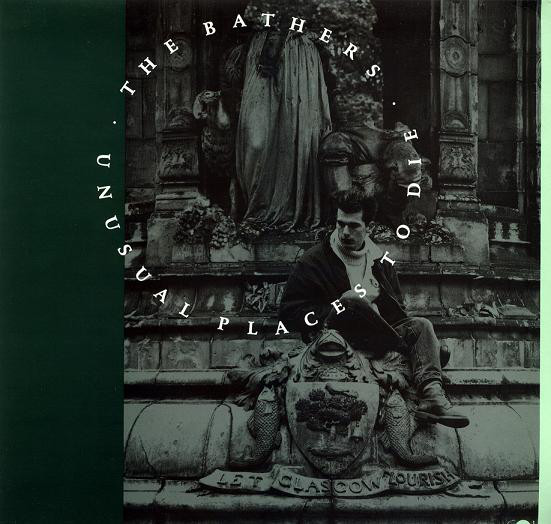
The Bathers were formed in Glasgow in 1985. They formed after Chris Thomson’s previous group Friends Again split up. Initially, The Bathers were a vehicle for singer-songwriter Chris Thomson. However, in 1987, The Bathers secured their first record deal with Go! Discs Records, and released their debut album Unusual Places To Die.
Unusual Places To Die.
For their debut album Unusual Places To Die, Chris Thomson penned ten tracks. These tracks were recorded by The Bathers’ original lineup. This included bassist Sam Loup, drummer James Locke and Chris on guitar and keyboards. Joining The Bathers, were Michael Peden of The Chimes, Douglas Macintyre and James Grant of Love and Money. They played walk on parts on Unusual Places To Die, which was released later in 1987.
When Unusual Places To Die was released in 1987, it was to widespread critical acclaim. Chris Thompson’s songs seemed to strike a nerve with critics. They described the music as variously engaging, emotive and dramatic. One critic went as far to wonder whether Unusual Places To Die was the work of a genius? Despite this critical acclaim Unusual Places To Die wasn’t a commercial success. This was nothing to do with the music though.
Instead, Unusual Places To Die fell victim to the internal politics within the record company. As a result, sales of Unusual Places To Die were poor. Given the critical response to Unusual Places To Die, this was disappointing. So, it wasn’t a surprise when The Bathers switched labels for their sophomore album, Sweet Deceit.
Sweet Deceit.
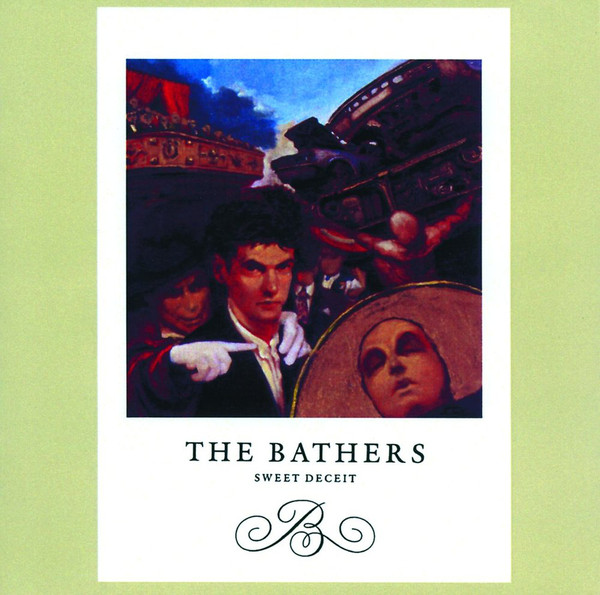
After the Go Discs! internal problems sabotaged the release of Unusual Places To Die, The Bathers moved to Island Records, where the recorded Sweet Deceit.
Sweet Deceit was an epic album, featuring fifteen tracks. Chris wrote thirteen of the tracks, and cowrote the other two. He co-produced Sweet Deceit with Keith Mitchell, and the album was released in 1990.
Three years had passed since Unusual Places To Die was released. The Bathers were back, and according to critics, better than ever. Sweet Deceit was described as impressionistic, beautiful and spellbinding. One critic, quite rightly referred to the album as a mini masterpiece. However, The Bathers had been here before with Unusual Places To Die.
On Sweet Deceit’s release, lightning struck twice for The Bathers. Sales of Sweet Deceit were disappointing. Despite the critically acclaimed reviews, Sweet Deceit seemed to pass record buyers by. For The Bathers, this was a huge disappointment.
Especially when Island Records didn’t renew The Bathers’ contract. There would be another gap of three years before we heard from The Bathers again. However, Chris Thomson was still making music.
Following Sweet Deceit, Chris Thomson joined with two former members of Lloyd Cole and the Commotions, Stephen Irvine and Neil Clark, to create a Scottish supergroup, Bloomsday. They released just one album, Fortuny, which is now regarded as a classic Scottish album. Just like The Bathers two previous albums, Bloomsday’s debut album, Fortuny, was released to critical acclaim. Unfortunately, commercial success eluded Fortuny. However, a more fruitful period was round the corner for The Bathers.
Lagoon Blues.
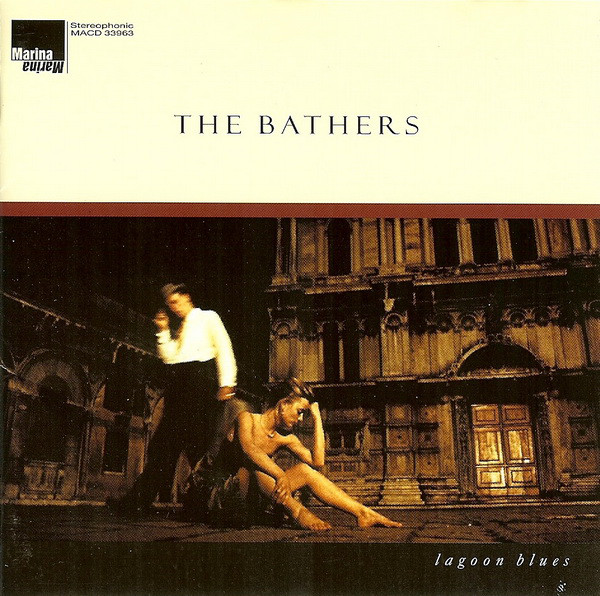
After signing a record contract with a German record label Marina, the group released three albums in a four year period. In 1993, they released Lagoon Blues which was their Marina debut.
Just like Sweet Deceit, Lagoon Blues was another epic album penned by Chris Thompson. It featured sixteen songs, which were the perfect showcase for Chris Thomson’s vocal. Accompanied by what was essentially The Bathers and friends sixteen tracks were recorded at Palladium Studios, Edinburgh and mixed at Palladium Studios and Cava Studios, Glasgow. Once Lagoon Blues was completed, it was released in 1993.
On its release in 1993, critics remarked that Lagoon Blues was a more eclectic album. There were diversions into jazz-skiffle on Pissor, while the album opener Lagoon Blues showcased a string quartet. The strings would play an important part on Lagoon Blues, which was hailed as poetic, elegant, sumptuous and intense. The same critical acclaim accompanied Lagoon Blues, however, this time The Bathers’ music found a wider audience. It seemed after three albums, The Bathers’ star was in the ascendancy.
Sunpowder.
For The Bathers’ fourth album, and followup to Lagoon Blues, they returned with Sunpowder. It marked the debut of a new lineup of The Bathers.
Sunpowder marked The Bathers’ debut of drummer and percussionist Hazel Morrison, keyboardist Carlo Scattini and string players Ian White and Mark Wilson. These new additions would change The Bathers’ sound greatly. Many people refer to this as the classic lineup of The Bathers. This classic lineup, plus guest artist ex-Cocteau Twin, Liz Fraser, who features on four tracks, made its debut on Sunpowder.
For Sunpowder, Chris Thomson had written eleven new songs. They were recorded a at Palladium Studios, Edinburgh. Chris Thomson and Keith Mitchell produced Sunpowder, which was released in 1995.
When Sunpowder was released, it received the same critical acclaim as The Bathers’ three previous albums. Sunpowder was called sumptuous, sensual, dramatic and ethereal. Liz Fraser, an honorary Bather was the perfect foil to Chris Thomson forever the troubled, tortured troubadour. The result was, what was The Bathers most successful album, Sunpowder. That however, would change with Kelvingrove Baby.
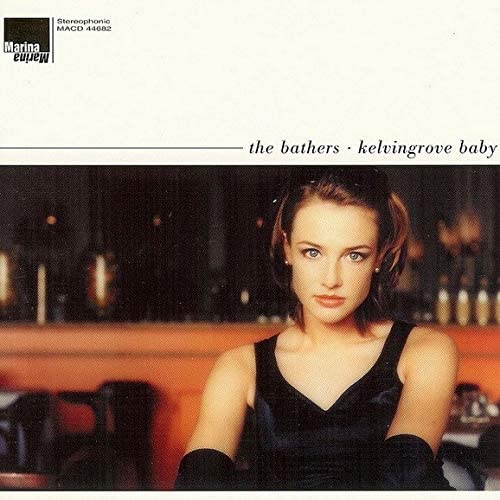
Kelvingrove Baby.
Kelvingrove Baby would be The Bathers’ Marina swan-song. They were certainly eaving the German label on a high.
Chris Thomson had written thirteen new songs for Kelvingrove Baby, which was recorded in Glasgow and Edinburgh. It was at these locations that The Bathers’ expanded lineup reconvened.
Picking up where they left off, were The Bathers’ new lineup, plus a few friends. The Bathers’ rhythm section included bassists Sam Loup, Douglas MacIntyre and Ken McHugh, drummers Hazel Morrison and James Locke, who also played percussion. Joining them in the rhythm section were guitarist Colin McIlroy. They were joined by accordionist, pianist and and organist Carlo Scattini, string players Ian White and Mark Wilson. Fermina Haze plays organ, James Grant of Love and Money plays acoustic guitar and with with Hazel Morrison and Justin Currie of Del Amitri, adds backing vocals. Chris Thomson plays acoustic guitar, piano and adds his unmistakable vocals. He produced most of Kelvingrove Baby, apart from Thrive, which was produced by James Locke. Once Kelvingrove Baby was completed, it was released in 1997.
Just like each of The Bathers’ four previous albums, Kelvingrove Baby was released to overwhelming critical acclaim. Kelvingrove Baby was hailed The Bathers’ finest hour. It seemed everything had been leading up to Kelvingrove Baby.
Opening Kelvingrove Baby, is the James Locke produced Thrive. Just a strummed acoustic guitar takes centre-stage, while subtle washes of keyboards flit in and out. They provide the backdrop for Chris Thompson’s vocal. For the first time on Kelvingrove Baby, he dawns the role of troubled troubadour, playing it to perfection. It’s as if he’s experience, lived through, and survived someone leaving him. His vocal is full of emotion of swells of strings sweep in. They’re the perfect accompaniment as he delivers the lyrics “up on the west coast waiting, I wear the rain like tears.” In doing so, the hurt and loneliness is there for all to see and hear.
Girlfriend is akin to a devotional from the pen of Chris Thomson. A piano and bass probe, while a cymbal is caresses. This sets the stage for a tender, emotive vocal and there’s almost disbelief in his voice that he’s found someone to call his own. He’s fallen head over heels, hence lyrics like “I’m the kind of guy, whose dreams rise unashamed, who will love you ’til the end, cos you’re my girlfriend.” With just a subtle, meandering piano, understated drums, washes of ethereal harmonies and crystalline guitar, Chris Thomson delivers a heartfelt devotional.
If Love Could Last Forever is the perfect showcase for The Bathers’ unique brand of cerebral, literate and poetic pop. After all, who apart from The Bathers write: “they flutter down like fireflies, tugging at your sleeves, somehow rise to shame you, bring you to your knees?” It’s a beautiful, soul-searching song about love. That’s the case from the opening bars, when an acoustic guitar is strummed, a guitar chimes and drums mark the beat. Then, longingly and hopefully, Chris, accompanied by cooing harmonies, sings “ If Love Could Last Forever, forever and a day.” Effortlessly, Chris Thomson breathes life, meaning and emotion into what’s a timeless paean.
While East Of East Delier has an understated arrangement, it allows Chris to unleash his full and impressive vocal range. Drums are caressed and a piano meanders. Meanwhile, a bass adds an element of darkness. This is reflected in the hurt, loneliness and regret in Chris Thomson’s vocal. His vocal soars above the arrangement, with frustration omnipresent at the love he once had and lost.
Accompanied by firmly strummed acoustic guitar No Risk No Glory, unfolds. A guitar chimes as fingers flit up and down the fretboard. Meanwhile, Chris Thomson’s vocal is a mixture of power, emotion and hurt. The hurt is obvious from the moment he sings “I was born to love her,” it’s a case of infatuation and unrequited love. With harmonies, an accordion and guitars for company he delivers a cathartic outpouring of hurt. He wouldn’t have it any other way, singing ruefully “no risk, no glory.”
Dramatic and moody describes the dark, but sparse piano lead introduction to Once Upon A Time On The Rapenburg. If a picture tells a thousand stories, so does a piano. It sets the scene for Chris Thomson as once again, he dawns the role of troubled troubadour. With shimmering strings and a deliberate gothic piano for company he remembers the love affair that almost was.
Kelvingrove Baby is the centre-piece of Kelvingrove Baby. It’s a seven minute epic about an unnamed femme fatale from Glasgow’s West End who toyed with Chris Thomson’s affections. From just a strummed guitar and subtle piano, the arrangement builds. The piano plays a more prominent role, adding an element of drama. After ninety seconds drums pound and ethereal harmonies sweep in. They give way to a worldweary, lived-in vocal. Meanwhile, Hazel Morrison adds ethereal, elegiac harmonies. This seems to spur Chris Thomson on and using his wide vocal range, he unleashes a needy vocal tour de force. Hopefully, he sings “someday I know, that you’ll be back…I don’t know, maybe then you can be my Kelvingrove Baby.” Behind him, the epic, ethereal and dramatic arrangement is the perfect accompaniment for what’s without doubt, The Bathers’ finest hour on Kelvingrove Baby.
Memories come flooding back to Chris Thomson on Girl From The Polders. Instantly, he’s transported back to another time and place. That’s when they first met, and where “I first kissed you.” With the rhythm section and piano providing a backdrop he delivers another hopeful, needy vocal. He hopes that when summer returns, and heads back to Poolewe, his “songbird, melodious and pure,” is there.
Against a backdrop of quivering strings, Chris Thomson delivers a vocal on Lost Certainties that’s equal parts power, passion, frustration and sadness. Below the vocal and strings, the rhythm section drives the arrangement along, adding to the drama and intensity of this soul-baring refrain about a bewitching woman.
After the intensity of Lost Certainties, Dial has a much looser, laid-back sound. Chris Thomson eschews the power of the previous track, as The Bathers deliver an understated, spacious, melodic track. Hazel Morrison, James Grant and Justin Currie add harmonies as Chris Thomson almost croons his way through Dial.
Orchestral strings and a pounding rhythm section set the scene for the vocal on The Fragrance Remains Insane. There’s an intensity in Chris’ lovelorn vocal, on this tale of love gone wrong. He’s struggling to come to terms with the breakup of his relationship, despite his claims “that I’m not crazy about you.”
If Chris Thomson had been born twenty years earlier he would have been a crooner. That’s apparent on Hellespont In A Storm, where he literally croons his way through the track. Accompanied by washes of accordion, swathes of strings, a subtle rhythm section and acoustic guitar. As Chris croons, emotion and regret are omnipresent. Especially when he sings “spread your wings, above you, the time has come to fly away, where I can’t follow.” Given this is the ultimate sacrifice, the beauty and emotion is almost overwhelming.
The piano lead Twelve, closes Kelvingrove Baby. Chris lays bare his soul, accompanied by his trusty piano. Later, swathes of lush strings sweep in. They provide the accompaniment to a telephone conversation, on this story of everlasting love.
For The Bathers, Kelvingrove Baby was a musical coming of age. It’s as if everything they’d been working towards was leading to Kelvingrove Baby. The music was variously atmospheric, cerebral, dramatic, ethereal, heartfelt, hopeful, literate, needy and sensual. It’s also tinged with pathos, regret and sadness. No wonder, given the tales of love found and lost. They’re brought to life by The Bathers’ very own troubled troubadour Chris Thomson. Along with the rest of The Bathers, they’re responsible for Kelvingrove Baby, a truly enthralling album.
On Kelvingrove Baby, the music is captivating. So much so, that you’re drawn into Kelvingrove Baby’s lush, atmospheric sound. Having captured your attention, The Bathers don’t let go. Before long, the listener has fallen in love. They fall in love with music that’s hauntingly beautiful, emotive, dramatic and pensive. Much of this is thanks to Chris Thomson’s peerless vocal performances. He plays the role of the troubled troubadour, to a tee. His worldweary, emotive, heartfelt and impassioned vocal sounds as if it’s lived the lyrics he’s singing about. Lived them not just once, but several times over. As a result, Kelvingrove Baby is akin to a snapshot into Chris Thomson’s life, and very soul. Indeed, Kelvingrove Baby sounds a very personal album from The Bathers’ troubled troubadour, Chris Thomson. Kelvingrove Baby was a career high from The Bathers. However, two years later, somehow, The Bathers managed to top Kelvingrove Baby.
Pandemonia, which was released in 1999, was The Bathers’ swan-song. Just like Kelvingrove Baby, the critically acclaimed Pandemonia, should’ve transformed The Bathers’ career. Sadly, despite oozing quality, The Bathers’ cerebral, literate and melodic brand of chamber pop failed to find the wider audience it deserved. As a result, The Bathers remained almost unknown apart from loyal band of discerning music lovers.
After Pandemonia, most people expected The Bathers to return after a couple of years with their seventh album. That wasn’t to be. Two years became three, became five, ten and fifteen. Now, twenty years have passed since the release of Pandemonia. Throughout the last twenty years, there have been rumours that another Bathers album is in the pipeline . However, Chris Thomson who nowadays is working as a gardener in Glasgow said in a recent interview that a new album from The Bathers was forthcoming and hopefully would be released in 2021. Let’s hope that’s the case for a band that could’ve and should’ve been one of Scotland’s most successful bands.
Alas, The Bathers are unlike most bands. They’re enigmatic, almost reclusive and publicity shy. Quite simply, The Bathers aren’t exactly your normal band. Not for them the rock “n” roll lifestyle favoured by other bands. In many ways, musical fashions and fads didn’t affect them. Their attitude was almost contrarian. Albums were recorded slowly and methodically. It was as if The Bathers were striving for perfection. On Kelvingrove Baby and Pandemonia, they almost achieved the impossible. What’s more they did it their way.
This means The Bathers aren’t willing to jump onto a musical bandwagon in pursuit of fame, fortune or starlets. Quite the opposite. It seemed to be their way or no way, in the pursuit of musical perfection. By perfection this means music that cerebral, dramatic, emotive, ethereal, literate and melodic. That describes The Bathers’ fifth album Kelvingrove Baby perfectly where The Bathers strive for perfection and very nearly achieve the impossible.
Cult Classic: The Bathers-Kelvingrove Baby.
CULT CLASSIC: DOUG CARN FEATURING THE VOICE OF JEAN CARN-SPIRIT OF THE NEW LAND.
Cult Classic: Doug Carn Featuring The Voice Of Jean Carn-Spirit Of The New Land.
Doug Carn was one of the first artists that Gene Russell and Dick Schory signed when they founded Black Jazz Records in 1971. His debut solo album Infant Eyes was the nascent company’s third release and featured vocals from his wife Jean Carn. Infant Eyes was the most successful of the six albums the label released during 1971. Buoyed by this success the Doug and Jean Carn began work on the followup.
This was Spirit Of The New Land, which was released in 1972 and billed as Doug Carn Featuring The Voice Of Jean Carn. It was a new chapter in the story of Doug Carn who was still only twenty-for when he released Spirit Of The New Land.
Doug Carn was born on July the ’14th’ 1948, in St. Augustine, Florida, and growing up music was all around him and was part of the culture around him at home. His mother was a musician, while his uncle was a bebop DJ who could scat the Dexter Gordon solos. It was no surprise that growing up, Doug Carn started listening to jazz and later, decided to learn an instrument.
Initially, Doug Carn took piano lessons and proved to be a quick learner and was soon able to play Bach Two-Part Inventions. That was when it was discovered that he wasn’t reading music and playing by ear. This resulted in Doug Carn being given an alto saxophone which he also mastered was able to play well. Already he was well on his way to becoming a multi-instrumentalist and it was no surprise when Doug Carn decided to study music at university.
He enrolled at Jacksonville University in 1965, and for the next two years studied oboe and composition. When Doug Carn graduated in 1967 he headed to Georgia State University where he completed his musical education in 1969. Later that year he made his recording debut as bandleader.
The twenty-one year old multi-instrumentalist was still living in Georgia and had founded the Doug Carn Trio. However, the new combo needed gigs and the young bandleader decided to visit a friend who ran a booking agency. When he entered the office he was greeted by the receptionist and secretary who was also a singer. This was Jean Carn who later become his wife. Before that, she started singing with the Doug Carn Trio who were about to make their recording debut.
Through the owner of the booking agency, Doug Carn was introduced to Herman Lubinsky the founder and owner of Savoy Records. This introduction turned out to be a gamechanger for the bandleader.
It turned out that the label had a session booked in Atlanta which was going to be produced by Fred Mendelsohn, the President of Savoy. He explained that there was every chance that there might be some spare time after he had recorded the gospel album, and if there was, they would use the time to record the Doug Carn Trio. That turned out to be the case.
That day in 1969, the Doug Carn Trio recorded what became their eponymous debut album. It was released later in 1969 on Savoy Records but wasn’t a commercial success. However, for Doug Carn recording the album was an invaluable experience as he prepared to move to LA as the sixties gave way to the seventies.
When he arrived in LA, Doug Carn started spending time with the members of Earth, Wind and Fire and this resulted in him playing on their first two albums. He played Hammond organ on Earth, Wind and Fire which was released on February 1971 and was certified gold. Doug Carn also played on The Need Of Love which was released in November 1971. By then, his solo career was well underway.
Earlier in 1971, Doug Carn had signed to Black Jazz Records and recorded and released his debut album Infant Eyes which featured his wife Jean Carn’s vocal. Infant Eyes was the most successful of the six albums that the nascent label released during 1971. Buoyed by the success of his debut album Doug and Jean Carn began work on the followup Spirit Of The New Land.
For his second album for Black Jazz Records Doug Carn wrote Dwell Like A Ghost, My Spirit, Arise and Shine, Trance Dance and New Moon. He also covered Miles Davis’ Blue In Green and Lee Morgan’s Search For The New Land which he added lyrics too. These tracks became Spirit Of The New Land which was recorded with tight, talented and versatile band.
Recording of the album took place at Bell Studios, in New York, with Gene Russell taking charge of production. The band featured drummer Alphonse Mouzon, trombonist Garnett Brown, Earl McIntyre on tuba and Charles Tolliver played flugelhorn while George Harper switched between bass clarinet, flute and soprano saxophone. Jean Carn added vocals and Doug Carn played Fender Rhodes, Hammond organ and piano on Spirit Of The New Land.
When Spirit Of The New Land was released later in 1972, the album was billed as Doug Carn Featuring The Voice Of Jean Carn. For the first time, the Carn’s received equal billing on an album that was well received by critics and became Black Jazz Records’ best selling album of 1972.
That was no surprise given the standard of music on Spirit Of The New Land. It showcased the songwriting and keyboard skills of Doug Carn and provided a platform for Jean Carn’s impressive five octave vocal which breathes life, meaning and emotion into the lyrics on what was an eclectic album. There were elements of jazz, funk and soul as well as jazz-funk, free jazz, fusion and soul-jazz on the seven tracks on Spirit Of The New Land.
It opens with the dramatic and atmospheric Dwell Like A Ghost where Jean Carn’s five octave vocal soars high above the arrangement as drums pound and power the arrangement along. This adds to the drama. Meanwhile, Doug Carn interjects and eerie, otherworldly sounds combine with free jazz horns on this ambitious genre-melting album opener.
Jean Carn’s vocal is soulful and impassioned as a shimmering Fender Rhodes combines with wailing horns and thunderous, pounding drums. Briefly, the arrangement becomes understated and the urgent vocal enters as the arrangement to this ten minute epic rebuilds and reveals its secrets. This includes a breathtaking saxophone solo which is accompanied by the Fender Rhodes and drums. Soon, the baton passes to the trombone before bandleader Doug Carn unleashes a fleet-fingered solo. His fingers dart across the keyboard and along with Jean Carn whose vocal heads in the direction of spiritual jazz he plays a leading role in the sound and success of this jazz opus. It also features elements of jazz-funk and fusion and is one of the album’s highlights.
Sharp bursts of horns open Arise and Shine before Jean Carn’s joyous, jazzy vocal enters and she delivers lyrics full of social comment. Her vocal is a mixture of power and passion and soars above the arrangement before being replaced by the soprano saxophone and then bass clarinet take centrestage. Meanwhile, the tight talented and versatile band match them every step of the way. This includes washes of Hammond organ and drummer Alphonse Mouzon who unleashes drums rolls and pounds the hi-hat. Soon, it’s time for Doug Carn’s blistering solo which heads in the direction of soul-jazz. It’s one of his finest and when Jean Carn returns she’s joined by the bass clarinet and delivers the spiritual lyrics as the arrangement swings and then some.
Blue In Green was written by Miles Davis and features lyrics written by Doug Carn. They’re delivered by Jean Carn on this beautiful ballad which has an understated arrangement that features a flute, Fender Rhodes and drums. A less is more approach is taken and this allow the vocal to shine. It’s without doubt Jean Carn’s finest on Search For The New Land.
Very different is Trance Dance which is best described as avant-garde jazz which also features elements of African music, fusion and even elements of free jazz, funk and soul-jazz. Soon the tempo is rising and Doug Carn and his band allow the opportunity to stretch their legs and showcase their considerable talents as genres melt into one.
Search For The New Land was written by Lee Morgan and features lyrics that were written by Doug Carn. From the opening bars, there’s a degree of drama as Jean Carn unleashes a powerhouse of a vocal. It’s impassioned as she delivers lyrics that are full of social comment and sometimes spiritual. Meanwhile, Doug Carn interjects hopefully and stabs at the piano as the bass clarinet soars above the arrangement. They prove a potent combination before the saxophone replaces the clarinet and goes toe-to-toe with the jangling piano which Doug Carn then pounds, jabs stabs and adds flamboyant flourishes as he takes centrestage. Soon, Jean Carn rejoins and adds an impassioned plea on this twelve minute opus that is the centrepiece of the album.
The piano led New Moon closes Spirit Of The New Land and joins forces with drums and bursts of quivering horns as the arrangement cascades and sometimes seems to race along. In doing so, it provides the perfect showcase for Doug Carn and his band who save one of their best performances for last.
When Spirit Of The New Land was released in 1972, it built on the success of Doug Carn’s debut solo album which was released in 1971. It was the most successful album that Black Jazz Records released that year, and so was Spirit Of The New Land. However, neither album sold tens of thousands of copies but both were successful for a small independent label. That was what Black Jazz Records was. It was also a label that had a vision.
Black Jazz Records that wanted “to promote the talents of young African American jazz musicians and singers.” Doug Carn was only twenty-four when he released Spirit Of The New Land and his was Jean Carn was twenty-five. They had created an album that was an alternative to what Gene Russell and Dick Schory referred to as old school jazz. Spirit Of The New Land was a very different and new type of jazz album and featured everything from avant-garde, free jazz, funk, jazz-funk, fusion, soul, soul-jazz and spiritual jazz. These genres were combined by Doug Carn and Jean Carn who unleashed her five octave vocal on Spirit Of The New Land which at the time was their finest hour and set the bar high for future albums.
Cult Classic: Doug Carn Featuring The Voice Of Jean Carn-Spirit Of The New Land.
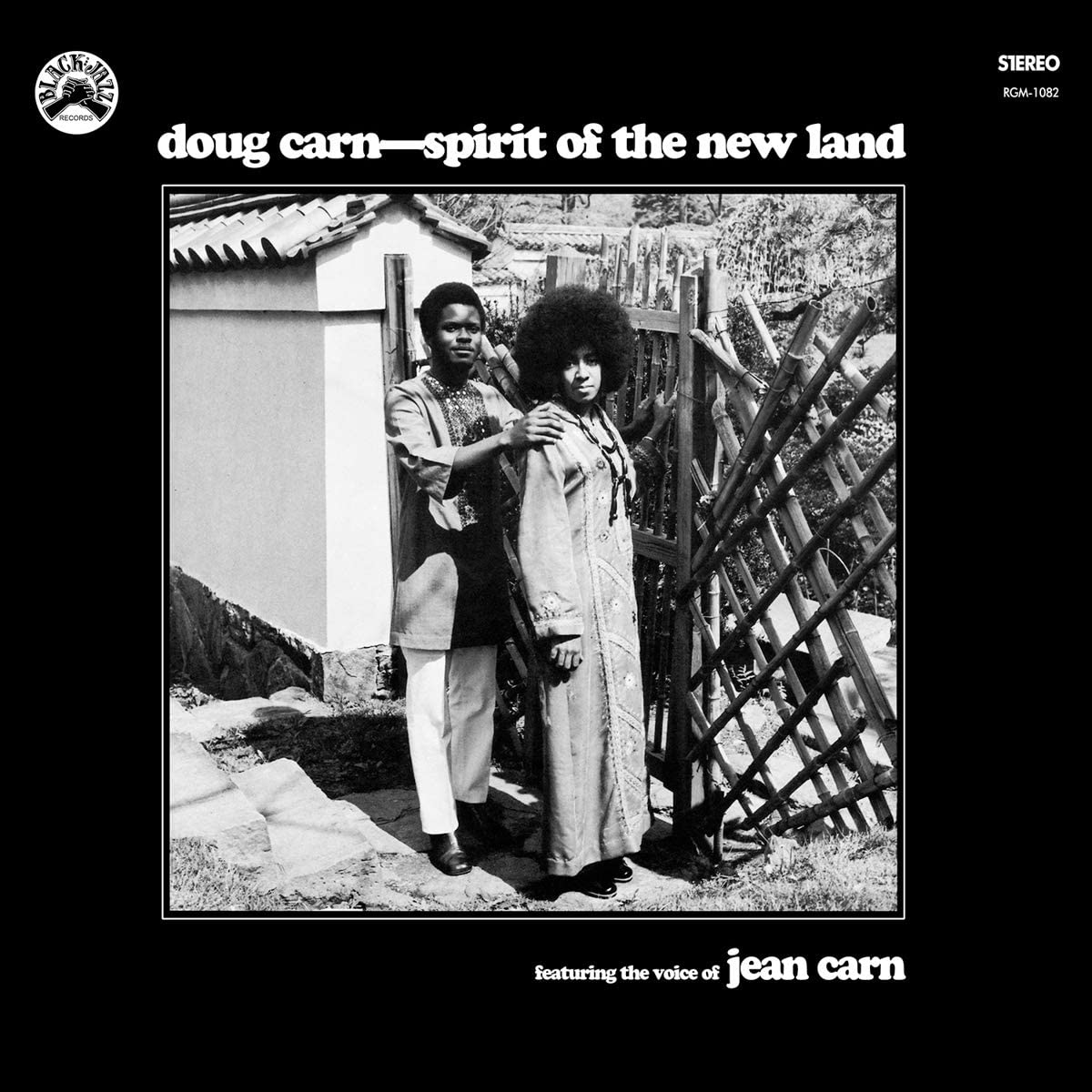
CULT CLASSIC FOUND: THELONIOUS MONK-PALAIS DES BEAUX ARTS 1963.
Cult Classic Found: Thelonious Monk-Palais Des Beaux Arts 1963.
Nowadays, Thelonious Monk is regarded and recognised as one of the greatest ever jazz pianists. However, in the past, he wasn’t without his critics. English poet and jazz critic Phillip Larkin cruelly dismissed him as: “the elephant on the keyboard.” He didn’t appreciate Thelonious Monk’s innovative approach to jazz music which features on Palais Des Beaux Arts 1963 which is a recording that lay unreleased until 2020.
Palais Des Beaux Arts 1963 features five of Thelonious Monk’s own compositions. However, he only composed seventy pieces during a career that spanned thirty-three years. Despite that, he’s now the second-most covered jazz composer of all time.
These compositions and improvisations featured dissonances and what are best described as angular melodic twists, which are an accurate representation of his unique approach to the piano. Initially, it was described as hard swinging, but evolved over the next twenty years.
Those that had followed Thelonious Monk career watched his style evolve, and his extremely percussive attack which featured abrupt and dramatic use of switched key releases, silences, pauses and hesitations, which divided the opinion of jazz critics and fans. What they forgot, was that Thelonious Monk was a relative latecomer to jazz, and had started his career accompanying a touring evangelist on an old church organ. In some ways, Thelonious Monk was making up for lost time, as he was already twenty-four before he first started playing jazz.
Despite arriving to the party late, Thelonious Monk was soon making up for lost time, and from the early fifties, was working as bandleader, sideman and collaborating with other future giants of jazz.
He had started off at Blue Note Records between 1948 and 1952, before moving to Prestige Records where he spent two years between 1952 and 1954. After that, Thelonious Monk moved to Riverside Records which was his home between 1955 and 1961, and by then, his star was in the ascendancy.
This was quite remarkable given everything that Thelonious Monk had been through since the early fifties. He had his New York cabaret card revoked in 1951, when he became the latest victim of a trumped narcotics charge. This meant that he was unable to play in New York’s club’s for six long years. During that time, Thelonious Monk signed to Riverside Records in 1955, which was his home until 1961.
Although Thelonious Monk was held in high regard by critics and commentators, sadly, for someone so talented, his records weren’t selling well. In 1955, he agreed to release an albums of jazz standards, Thelonious Monk Plays Duke Ellington in the hope that this would increase his profile and record sales. However, later in 1955 tragedy struck for Thelonious Monk.
Towards the end of 1955, Thelonious Monk’s mother passed away, and the following year, 1956, a fire destroyed the pianist’s apartment in West ‘63rd’ Street, New York. Thelonious Monk and family were left destitute, and his family of five had no option but to stay with friends for several months, with fifteen people shoehorned into a three room apartment. Meanwhile, Thelonious Monk continued to live with an undiagnosed bipolar disorder, which nobody was aware at the time. Despite this, he released Brilliant Corners an album of hard bop in late 1956, which was one of the finest albums he released for Riverside Records.
In 1957, Thelonious Monk’s run of bad luck continued when he was involved in a car accident, and when the police discovered him unresponsive, took him to Bellevue Psychiatric Hospital, where he spent three weeks. By then, Thelonious Monk was unaware that his father had been living in a psychiatric hospital for the past fifteen years
Things got worse for Thelonious Monk in May 1957, when his wife Nellie became ill, and required a thyroidectomy. After the operation, she became frail and depressed, which affected Thelonious Monk’s wellbeing. The last two years had been hard on the couple, but at least Thelonious Monk was about to get his New York cabaret card back, and could start playing live in the Big Apple.
By then, Thelonious Monk had a manager, and started a six-month residency at the Five Spot Café, and had formed a friendship with John Coltrane. This was a coincidence as many of John Coltrane’s band had served their music apprenticeship Five Spot.
During Thelonious Monk’s residency at the Five Spot Café during 1957 and 1958, the sharp dressed and sartorially elegant pianist took to the stage with his carefully cultivated look. Thelonious Monk wore suits, hats and had taken to wearing sunglasses which hid the window to his troubled and weary soul. Still, he dazzled patrons with his unique playing style as he switched between standards and his own compositions. Thelonious Monk was back in the Big Apple, after a six-year absence.
With Thelonious Monk’s albums still not selling well by 1958, he was asked to release a second album of jazz standards. It was hoped that The Unique Thelonious Monk would increase his profile and record sales. Ironically, later, in 1958, Thelonious Monk’s face was all over American newspapers, after his latest brush with the law.
Thelonious Monk had been hired to play for a week at the Comedy Club, in Maryland, and on his way to the gig, he and Nica De Koenigswarter were stopped by the police in Wilmington, Delaware. When Thelonious Monk refused to answer or cooperate with the police officer, who beat him with a blackjack. During an authorised search the car drugs were found, and suddenly Thelonious Monk was looking at some serious jail time. Fortunately, Judge Christie of the Delaware Superior Court ruled that the pair had been unlawfully detained, and that the beating of Thelonious Monk meant that the consent to the search void as given under duress. Forty-one year old Thelonious Monk survived to fight another day.
As the fifties gave way to the sixties, Thelonious Monk’s relationship with Riverside Records had gone south, after a disagreement over royalty payments. While Riverside Records released two live albums recorded in Europe, Thelonious Monk hadn’t recorded a studio album since 5 By Monk By 5 in June 1959. Fortunately, Columbia Records one of the four major labels were keen to sign Thelonious Monk.
The negations between Thelonious Monk and Columbia Records, were protracted, and it wasn’t until 1962 that a contract was signed. At last, Thelonious Monk could get back into the studio and do what he did best…make music.
In March 1963, Thelonious Monk released his Columbia Records’ debut Monk’s Dream to widespread critical acclaim. It was a return to form and was a reminder of his considerable powers as a performer and composer. So was the followup Criss-Cross which was almost completed. However, before that, Thelonious Monk and his regular quartet embarked upon a European tour.
On the ‘10th’ of March 1963 Thelonious Monk was scheduled to play at the prestigious Palais Des Beaux-Arts in the Belgian capital Brussels. That night, the concert was recorded by the Belgian broadcast company BRT/RTB. They had brought along the best recording equipment to record Thelonious Monk and his quartet.
Thelonious Monk was always a showman and when he shuffled onto the stage he was wearing, a suit, sunglasses and his trademark grey wool Papakha hat. Meanwhile, drummer Frankie Dunlop, bassist John Ore and tenor saxophonist Charlie Rouse were waiting for him. They watched as Thelonious Monk waved his arms around which was their signal to get the show underway.
Side One.
The set opens with the jaunty sounding Bye-Ya from his latest album Monk’s Dream. The rest of this experienced quartet’s playing is tight as they provide the backdrop for Thelonious Monk. He showcase his ability to improvise and his avant-garde flair. It’s a similar case on Monk’s Dream which is a reaffirmation that he’s one of the great jazz pianists. Not to be outdone, Frankie Dunlop showcases his considerable talents on Drum Solo and unleashes a spellbinding and inventive solo that lasts a minute.
Side Two.
Thelonious Monk gives a sneak preview of the title-track of his second Columbia album Criss-Cross. This album of post bop featured complex melodies and harmonies and his stride piano style. It was also showcase for his theories on pitch qualities for his improvisations. Criss-Cross was one of the highlights of Thelonious Monk’s next album as well as Palais Des Beaux Arts 1963 and later became a standard.
From there, Thelonious Monk and his band work their way through Epistrophy before closing the set with one of his favourites Just a Gigolo. For most pianists it would be a challenging piece. However, almost effortlessly Thelonious Monk manages with ease what seem like impossible chords and deploys his trademark halting delivery which he seems to exaggerate. Later, he enjoys his moment in the spotlight during a stunning solo where his hands glide over and caress the keyboard before he and his band take their bow.
After Thelonious Monk’s appearance at Palais Des Beaux Arts 1963 the set lay in BRT/RTB’s vaults for forty-two years. Since then, a team of dedicated archivists and musical technicians have spent their time restoring digitising the tapes so future generations can enjoy them.
This includes Palais Des Beaux Arts 1963 which is a reminder Thelonious Monk who nowadays is regarded as of one of greatest jazz pianists of his generation. Backed by his quartet Thelonious Monk plays an almost flawless set on this cult classic which was rediscovered fifty-seven years after it was originally recorded.
Cult Classic Found: Thelonious Monk-Palais Des Beaux Arts 1963.
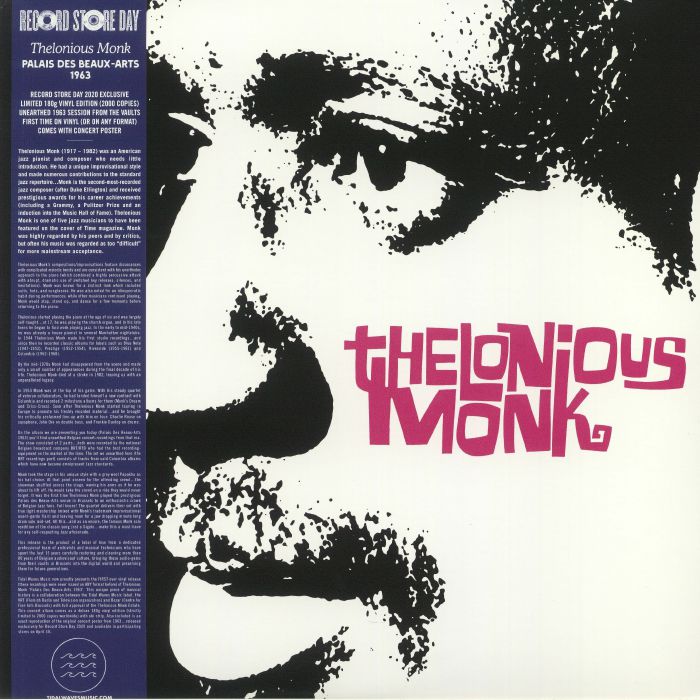
CULT CLASSIC: DR JOHN-REMEDIES.
Cult Classic: Dr John-Remedies.
Although Dr John eventually won six Grammy Awards and was inducted into the Rock and Roll Hall of Fame in March 2011, commercial success and critical acclaim didn’t come overnight for the great showman who released thirty studio albums and nine live albums during a career that spanned six decades where his music fell in and out of fashion. Dr John it’s safe to say enjoyed a roller coaster career and made an impression on anyone who saw him live.
His theatrical stage show was inspired by medicine shows, Mardi Gras costumes and voodoo ceremonies while his inimitable genre-melting sound was a fusion of blues, boogie-woogie, funk, jazz, pop, R&B and rock ’n’ roll. Dr John in full flow was a spellbinding sight as he mixed music and theatre. However, it took time for Dr John’s albums to find the audience they deserved.
Dr John’s first three albums failed to trouble the charts. This included his third album Remedies which was released by Atco on April the ‘9th’ 1970. It was a frustrating time for twenty-nine year old Dr John who must have wondered whether Atco was the right label for him? He was releasing music that was variously ambitious, dark, otherworldly, powerful and poignant. However, very few people had heard his first three albums including Remedies which was the latest chapter in the Dr John story.
The future Dr John was born Malcolm John “Mac” Rebennack Jr, on November the ‘20th’ 1940, in New Orleans, Louisiana. He grew up in the Third Ward of New Orleans, and music was always around him.
His father Malcolm John Rebennack ran an appliance shop in the East End of New Orleans, where he repaired radio and televisions and sold records. He introduced his son to the music of King Oliver and Louis Armstrong. However, one of the people who inspired Mac Rebennack was his grandfather who he heard singing minstrel songs. So did hearing his aunts, uncles, cousins and sister playing the piano. Despite this, Mac Rebennack wasn’t inspired to take music lessons.
This only came later when he was a teenager. He also joined a choir, but was soon asked to leave. However, over the next few years Mac Rebennack learnt to play the guitar and later piano, and through his father’s contacts in the local music scene was soon playing alongside some well known names including Guitar Slim and Little Richard. This was just the start for Mac Rebennack.
When he was thirteen, he met Professor Longhair and he was instantly impressed by the flamboyant showman. Mac Rebennack was soon playing alongside his new hero, and this was the start of his professional career.
Around 1955 or 1956, Mac Rebennack made his debut in the recording studio when he was signed as a singer and songwriter by Eddie Mesner at Aladdin Records. The future Dr John’s career was underway and towards the end of 1957 with the help of Danny Kessler, he joined the musician’s union. That was when he considered himself to be a professional musician.
By the time he was sixteen, Mac Rebennack had been hired by Johnny Vincent at Ace Records as a producer. This led to him working with Earl King, James Booker and Jimmy Clayton. This was all good experience for the young, up-and-coming musician
Despite his new career, Mac Rebennack was still a student at Jesuit High School. This didn’t stop him playing in night clubs and forming his first band The Dominoes. The Jesuit fathers weren’t happy with Mac Rebennack’s lifestyle and issued him with an ultimatum. He was to either stop playing in nightclubs or leave the school. Not long after this, he was expelled from the school. It turned out to be the best thing that happened to him as he was able to concentrate on music full time.
By the late-fifties, Mac Rebennack was playing with various bands in and around New Orleans. This included his own band Mac Rebennack and The Skyliners. However, the young bandleader had also embarked upon a career as a songwriter.
In 1957 Mac Rebennack cowrote his first ever rock ’n’ roll song Lights Out. It was recorded by New Orleans based singer Jerry Byrne, and released on Specialty Records later in 1957 and give him a regional hit.
Two years later, in 1959, Mac Rebennack also enjoyed a regional hit single when he released Storm Warning, a Bo Diddley insprired instrumental, on Rex Records. This was the first hit he enjoyed in a long, illustrious and eventful career.
After Storm Warning, Mac Rebennack and Charlie Miller joined forces and recorded singles for various local labels. This included Ace, Ron, and Ric. They continued to release singles until Charlie Miller decided to move to New York to study music. Mac Rebennack stayed in the Big Easy and continued his career.
Around 1960, Mac Rebennack was playing a gig in Jacksonville, Florida, when his career was changed forevermore. That night, his ring finger on his left hand was injured by a gun shot during an incident. This was a disaster for a right handed guitarist and when he recovered he made the switch to bass guitar. However, after a while Mac Rebennack switched to the instrument he made his name playing, the piano.
Soon, Mac Rebennack had developed a style that was influenced by Professor Longhair who he had met when he was thirteen. It looked as if this was a new chapter in Mac Rebennack’s musical career.
That wasn’t the case and Mac Rebennack ended up getting involved in the dark underbelly of The Big Easy. He was using and selling illegal drugs and at one point, running a brothel. It was almost inevitable that Mac Rebennack was going to have a brush with the law.
He did. In 1963, when Mac Rebennack was arrested on drug charges and sentenced to two years in the Federal Correctional Institution, in Fort Worth, Dallas. By the time his sentence ended and he was released in 1965, New Orleans was a different place.
There had been a campaign to rid the city of its clubs, which meant that musicians like Mac Rebennack found it hard to find work. That was why he decided to move to LA where he knew he could find work as a session musician.
It turned out to be a good decision, and it wasn’t long before Mac Rebennack was one of the first call session musicians in LA. That was the case for the rest of sixties and the seventies. He was also a member of the legendary Wrecking Crew and worked with some of the biggest names in music. This was the new start Mac Rebennack had been looking for when he left New Orleans.
Growing up Mac Rebennack had developed an interest in New Orleans voodoo. This was something he revisited during his early years in LA when he began to develop the concept of Dr John, which initially he thought could be a persona for his friend Ronnie Barron. The concept was based on the life of Dr John, a Senegalese prince, a witch doctor, herbalist and spiritual healer who travelled to New Orleans from Haiti. He was a free man of colour who lived on Bayou Road, and claimed to have fifteen wives and over fifty children. It was believed Dr John also kept a variety of lizards, snakes, embalmed scorpions as well as animal and human skulls, and sold gris-gris, voodoo amulets which were meant to protect the wearer from harm. This Mac Rebennack incorporated into the project he was working on for Ronnie Barron.
Soon, Mac Rebennack had decided to write, produce and play on an album and stage show based on his concept with Dr John emblematic of New Orleans’ heritage. It was meant to feature Ronnie Barron. However, when he dropped out of the project Man Rebennack took over the role and adopted the identity of Dr John. This was a turning point in the life and career of the man born Mac Rebennack.
Dr John became the name that he found fame as and won five Grammy Awards. However, that was still to come.
Having adopted the moniker Dr John,The Night Tripper he was signed by Atco Records and recorded his debut album Gris Gris. It was his his own “voodoo medicine” and marked the start of what’s now regarded as a golden era for Dr John.
Gris Gris.
When a copy of Dr John’s debut album Gris Gris, which was sent to Atlantic Records’ founder Ahmet Ertegun he disliked the album so much, that he was reluctant to even release the album and said: “how can we market this boogaloo crap?” This wasn’t the response that Dr John had been hoping when he recorded Gris Gris which was a combination of psychedelia, blues, free jazz, R&B, soul, funk, jazz. Add to this psychedelic stew the authentic music of the melting pot that is New Orleans and the voodoo image that Dr John had carefully cultivated and Gris Gris was like no other album that Atlantic Records had released. That presented the label with a huge problem.
Atlantic Records’ PR department had idea to promote an album like Gris Gris, as they had no cultural reference points, nothing to compare the album to. Despite the best efforts of Atlantic Records PR department, when Gris Gris was released on January the ’22nd’ 1968 and introduced the world to Dr John The Night Tripper, it failed to trouble the charts and neither critics nor record buyers understood Dr John’s groundbreaking debut album. However, like so many albums that fail to find an album on their release, Gris Gris was later reappraised and belatedly, was recognised as a seminal album that was the start of a rich vein of form from Dr John.
Gris Gris was the start of a six-year period when Dr John could no wrong, and released seven innovative albums that are among the his finest work.

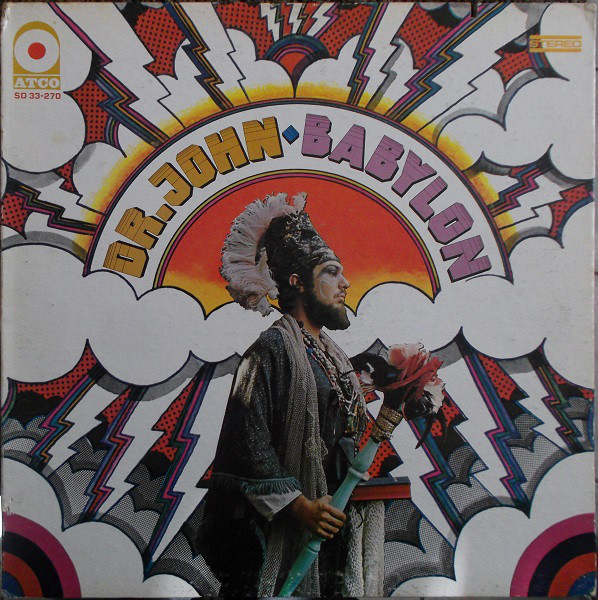
Babylon.
This included his sophomore album Babylon on January the ’17th’ 1969. It was a powerful, cerebral and innovative genre-melting album which socially had much in common with Dr John’s debut album Gris Gris.
Sadly, critics didn’t ‘get’ Babylon and the album which failed commercially. However, just like Gris Gris, Babylon was later reappraised by critics and nowadays is regarded as one of his finest albums and a minor classic.
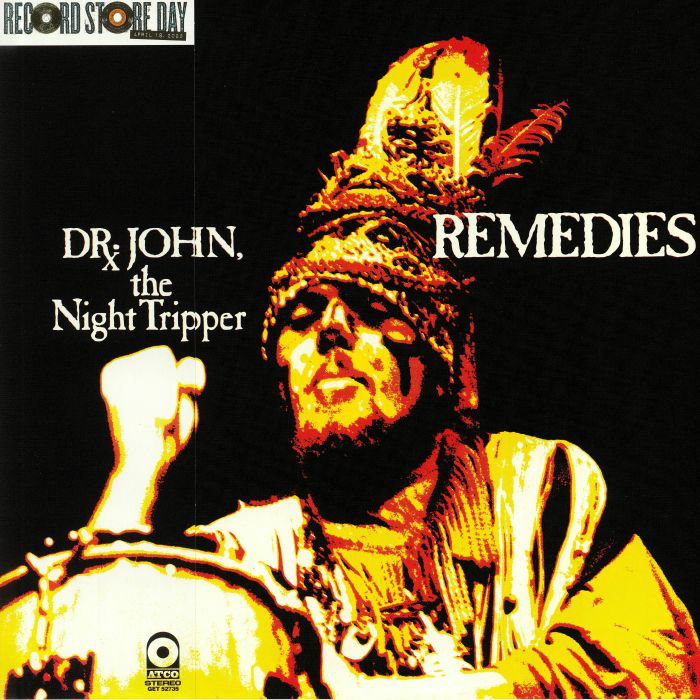
Remedies.
Following the commercial failure of Babylon, things went from bad to worse for Dr John, before he could begin work on his third album Remedies. This started when a deal went south, and he was arrested by the police and ended up in jail. It was a worrying time for Dr John who was parole, and if he ended up with a parole violation, he knew he might end up in the infamous Angola jail. That didn’t bare thinking about, and already Dr John was desperate to get out of the local jail. However, he needed someone to post bail, so contacted his managers who he remembers: “were very bad people.” This proved to be an understatement.
Not long after this, Dr John’s managers had him committed to a psychiatric ward, where he spent some time. By then, it was obvious to Dr John that his managers were no longer playing by the rules. All he wanted to do was make music, and everything that had happened recently were nothing to do with music. Instead, it was all connected to Dr John’s increasingly chaotic lifestyle, which made it all the more frustrating for those that realised just how talented the Gris Gris Man was.
Eventually, and having managed to put his problems behind him, Dr John was discharged from the psychiatric ward. By then, he was worried about violating his parole and ending up back in jail. Especially the infamous Louisiana State Penitentiary, where one of his friends Tangleye had spent forty years.
When Tangleye was released he told Dr John: “I’m gonna sell you this song. Got it in Angola, but ain’t nobody ever cut this song.” This was Angola Anthem which he recorded during the Remedies sessions. It featured on the second side of the album. Forty years after he recorded the song Dr John said: ” Even now guys I know getting out of Angola know this song. It’s still a horrible place to be.”
Having bought Angola Anthem Dr John wrote the other five songs that became Remedies using his real name Mac Rebennack. Among the tracks Dr John had written was What Goes Around Comes Around which later became a favourite during his live shows and Mardi Gras Day which paints pictures of New Orleans when it comes out to play. They’re very different to Angola Anthem which became an eighteen minute epic that took up all of side two of Remedies. Just like the rest of Remedies, it was produced by one of the most successful producers of the day.
Although Harold Battiste had produced Gris Gris and Babylon, he was replaced by Tom Dowd and Charles Greene who were tasked with transforming Dr John’s career. However, although Tom Dowd was enjoying the most successful period of his career, he had never worked with anyone like Dr John.
When Remedies which was released in the spring of 1970, just like his two previous albums, critics didn’t seem to understand Remedies, which was credited to Dr John The Night Tripper. Remedies was another ambitious album of genre-melting, voodoo-influenced album where Dr John The Night Tripper through everything from psychedelia, blues, R&B, soul, funk and jazz into the musical melting pot and gave it a stir to create an album where the music was mysterious, otherworldly and haunting.
The songs on side one were loose, swampy, expressive and lysergic and as Dr John delivers photo raps, humorous rhymes and uses New Orleans’ street slang and lyrics that are full of innuendo. As he chants and raps his incantations take on a mysterious and otherworldly sound. It’s a spellbinding and inimitable sound. Meanwhile, the rhythms were funky, fluid and slinky as the horns bray and blaze lazily through an acidic haze. Then on side two there’s the eighteen minute epic Angola Anthem where Dr John retails the terror of life in the Louisiana State Penitentiary. This he does against a backdrop that features Afrobeat inspired drumming and understated instrumental parts that add to the drama, horror and terror of forty years in the pen. This was a powerful and poignant way to close Remedies which Dr John hoped would be his breakthrough album.
By the time Remedies was released on April ‘9th’ 1970, some FM radio stations had picked up on the album, and were playing it on their late shows. Despite the radio play Remedies had received, the album never troubled the charts, and it was only much later that record buyers realised that they had missed out on another important and innovative album from Dr John.
Remedies was the third of seven albums that Dr John released for Atco Records between 1968 and 1974. While these albums weren’t always appreciated or understood by critics, they’re now regarded as part of what was a golden era for Dr John.
He was at his creative zenith during his Atco Records years and was often misunderstood even by the supposed experts who ran the label. It was only much later that critics reappraised the albums that Dr John released for Atco Records and realised that he was recording and releasing ambitious, imaginative and innovative albums of genre-melting music.
This included Remedies which was one of the finest of the seven albums that Dr John released while signs to Atco Record. It’s also one of the best albums of a career that spanned six decades. It was long and sometimes illustrious career. Other times, it was a roller coaster career lows following highs.
It wasn’t always been smooth sailing for Dr John who battled heroin addiction but eventually he conquered his demons and continued to released albums and tour. By the time of his death on June the ‘6th’ 2019 aged just seventy-seven, Dr John had released thirty studio albums and nine live albums. This includes the seven albums he recorded during the six years he was signed to Atco Records. Looking back, these albums set the bar high for the rest of Dr John’s career.
It was only much later when Dr John’s Atco albums were reappraised that critics and cultural commentators realised their importance and what he was trying to achieve. Dr John was way ahead of his time, which and is part of the reason why his first three albums, including Remedies failed to find an audience. On its release, Remedies passed record buyers by and critics failed to understand what’s nowadays regarded as one of the finest and most ambitious albums Dr John released on Atco. Remedies showcases Dr John’s inimitable genre-melting sound and is part of his rich musical legacy and is a reminder of a truly talented, maverick musician and flamboyant showman during what was one of the most productive periods of his six decade career.
Cult Classic: Dr John-Remedies.
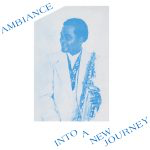
CULT CLASSIC: AMBIANCE-INTO A NEW JOURNEY.
Cult Classic: Ambiance-Into A New Journey.
During the seven year period between 1979 and 1986, Ambiance led by Nigerian born multi-instrumentalist Daoud Abubakar Balewa released six albums on the LA-based private press label Da Mon Records. It was a self-financed business that released short runs of Ambiance’s albums during a time when many smaller independent labels were unable to gain access to parts of the distribution networks.
In 1982, Da Mon Records released Ambiance’s fourth album Into A New Journey. It was an ambitious album of spiritual jazz that included elements of Afrobeat, Bossa Nova, Latin, modal that also had a soulful quality. Into A New Journey was without doubt the finest of the four albums that Ambiance had released. Sadly, the album failed to find an audience and for Ambiance it was a case of what might have been?
It was only much later that Into A New Journey was rediscovered a by a coterie of discerning DJs and record collectors. However many of them were unaware of the story behind this cult classic.
Ambiance was founded by Nigeria-born Daoud Abubakar Balewa who moved to Los Angeles where his career began. He had studied composition and jazz improvisation and was inspired by Jackie McLean and Frank Mitchell of Art Blakey’s Jazz Messengers. Although he was a saxophonist and could play alto, soprano and tenor sax he was equally comfortable playing flute, clarinet, keyboards, and Latin and Brazilian percussion. By the time Daoud Abubakar Balewa founded the jazz collective Ambiance, he was a talented multi-instrumentalist, arranger and producer who had worked as a photographer.
In 1979, Ambiance released their debut album Ebun on Da Mon Records. It showcased what was a tight, talented and versatile group. Especially Bob Selvin who played keyboards and synths. He was part of a group that combined funk, fusion, jazz-funk and Latin on Ebun’s eight tracks which was a mixture of original material and covers. Sadly, very few people heard Ambiance’s oft-overlooked debut which was the first of six private presses they released during a seven year period.
They followed this up with Drift Up To Space in 1980. It was another album where Ambiance combined funk and fusion with jazz-funk and Latin. One thing that changed was Ambiance’s lineup. Daoud Abubakar Balewa shuffled the pack and brought onboard new musicians that suited the style of music he was recording and would bring something new to the session. However, just like on Ebun, keyboardist Bob Selvin played an important part in the album’s sound. When Drift Up To Space was released Ambiance remained one of jazz music’s best kept secrets.
The problem with releasing an album via a small label like Da Mon Records was they couldn’t access the distribution networks that the larger indie labels and majors could. And smaller labels lacked the expertise and marketing budget to promote an album. In reality, the best a group like Ambiance could hope for was that their album was heard by a bigger label who either signed the group or licensed the album. Neither happened to Ambiance who would soon return with a third album.
Ambiance returned in 1981 with their third album (Gida-Gida) “Tight and Tidy.” Just like their sophomore album, there were several changes in the lineup and there was no sign of keyboardist Bob Selvin. One of of the news addition to the group was Curtis Robertson Jr, who at the times, was married to Syreeta Wright. She added backing vocals and finger cymbals on one of Daoud Abubakar Balewa’s compositions Gida-Gida, which she co-produced with Curtis Robertson Jr. It was part of another carefully crafted album that combined fusion, jazz-funk and soul. However, just like Ambiance’s two previous albums it slipped under the radar. This was a great shame as Ambiance’s third album deserved to find a wider audience.
Into A New Journey.
For Ambiance’s fourth album Daoud Abubakar Balewa wrote and the title-track Into A New Journey. They were joined by covers of Joe Henderson’s Black Narcissus; Danny Newark and Monife Balewa’s Something Better; Jim Lum’s Eastwind plus Chick Corea’s 500 Miles High and Windows. These tracks became Into A New Journey which was recorded by a new lineup of Ambiance.
Joining multi-instrumentalist Daoud Abubakar Balewa was Japanese drummer Danny Yamamoto, bassist Randy Landis and guitarist Jim Lun. They were joined by Danny Newmark Fender Rhodes, keyboardists Jim Thornburn and Kimo Cornwell, Rick Smith on African Drums, June Kuramoto on Koto and Tyrone Ponder played the Apito. Adding vocals on Into A New Journey were Monife Balewa and Atiji Malomon. Once the album was completed it was released later in 1982.
When Into A New Journey was released in 1983 it was a familiar story when the album passed record buyers by. They had missed out on what was the finest album of Ambiance’s career.
Into A New Journey opens with Arrival, which is a joyous, celebratory and genre-melting track that’s akin to a call to dance. This is followed by Ambiance’s interpretation of Joe Henderson’s modal classic Black Narcissus which is the perfect showcase for Daoud Abubakar Balewa’s saxophone. He leaves room for Kimo Cornwell’s piano and the two play leading roles in the sound and success of this oft-covered classic. Something Better features vocalists Atiji Malomon and Monife Balewa who showcases her three octave vocal while a sultry saxophone adds the finishing touch to this beautiful and hopeful jazz ballad. Quite different is Into A New Journey, which is a percussive jazz-dance workout that draws inspiration from African and Latin music.
Cinematic describes the introduction to Eastwind before Ambiance combine jazz-funk, fusion, Latin percussion and ethereal harmonies. Daoud Abubakar Balewa’s flute and tenor saxophone also play a part in the sound and success of this slice of musical sunshine. Two Chick Corea covers close the album. The first is a remake of 500 Miles High where Ambiance spring a few surprises as they take the track in a new direction. It’s a case of expect the unexpected during this captivating cover. Closing Into A New Journey is Windows where Monife Balewa’s vocal seamlessly combines with the saxophone and creates a cosmic twist to this soulful fusion classic. In doing so, Ambiance closes the album on a high.
Although Ambiance released two more albums, 1985s Come To Tomorrow and 1986s Colours In Space neither surpassed the quality of Into A New Journey. It was their finest moment and it was as if everything had been leading up to it.
Ever since Ambiance released their debut album Ebun, Daoud Abubakar Balewa had continued to shuffle the pack and the lineup continued to change. The new lineup that featured on Into A New Journey was perfectly suited to play the original material and reinvent the cover versions on the album. They take familiar tracks in new direction and breath new life, meaning, energy and emotion into them. There’s another generic or predictable about these tracks on Ambiance’s genre-melting album.
Throughout Into A New Journey Ambiance combine disparate genres and influences. This includes fusion and jazz-funk with elements of African, Brazilian and Japanese and Latin music on Ambiance’s lost spiritual jazz gem. Into A New Journey still sparkles brightly and is undoubtably a captivating album of spiritual jazz that’s full of beauty, energy and warmth that belatedly is starting to find the audience it so richly deserves and is without doubt Ambiance’s finest hour.
Cult Classic: Ambiance-Into A New Journey.
THE SONGS OF LEON RUSSELL.
The Songs Of Leon Russell.
Label: Ace Records.
Format: CD.
Leon Russell embarked upon a career as a professional musician in the late-fifties, and over the next six decades, the versatile singer-songwriter worked with some of the biggest names in music when he worked as a touring musician and session player. He worked with everyone from The Beach Boys, Dick Dale, Eric Clapton, George Harrison, Bob Dylan, Frank Sinatra and Elton John who called Leon Russell his “mentor” and “an inspiration.”
The pair would collaborate on the Grammy Award winning album The Union in 2010 which was certified gold in Canada and Silver in Britain. This was one of many albums Leon Russell collaborated on.
In 1979 he recorded One For The Road with country music legend and future Outlaw Willie Nelson. The album was certified gold in America and Canada.
So were 1971s Leon Russell and The Shelter People, 1972s Carney, 1973s Leon Live and 1975s Will O’ The Wisp. In total, Leon Russell released thirty-three studio and live albums. His debut album Leon Russell was released in 1970, and in 2017 On A Distant Shore was released posthumously.
Sadly, Leon Russell died on November the ‘13th’ 2016 aged just seventy-four. He had toured during 2016 and had recorded his final album On A Distant Shore. Music was in mourning at the loss of the two time Grammy Award winning singer-songwriter and was inducted into the Rock and Roll Hall of Fame and the Songwriters Hall of Fame.
He was a prolific songwriter whose songs were covered by the great and good of music. This included everyone from Elton John, Joe Cocker and Delaney and Bonnie and Friends to Donny Hathaway and Randy Crawford to Bobby Whitlock and Maria Muldaur right through to Freddie King, Nazareth, California and George Benson. They’re just some of the artists who feature on The Songs Of Leon Russell which is the latest instalment in Ace Records’ long-running and successful Songwriter Series.
Opening the compilation is If It Wasn’t For Bad which is a track from Elton John and Leon Russell’s 2010 Grammy Award-winning collaboration The Union. It reached number three in the US Billboard 200, twelve in Britain where it was certified silver and gold in Canada. Despite having not spoken for over thirty years the two friends had recorded a critically acclaimed, commercially success and and award-winning album. One of the album’s highlights was If It Wasn’t For Bad.
Delta Lady was covered by Joe Cocker for his eponymous album and released on Regal Zonophone in 1969 and certified gold in America. This blues rocker was later released as a singe by the Sheffield-born singer and reached number ten in Britain but stalled at sixty-nine in the US Billboard 200. Despite this, Joe Cocker was enjoying one of the most successful periods of what was a long and illustrious career.
In 1969, Groupie (Superstar) was released as a single on Atco by Delaney and Bonnie and Friends featuring Eric Clapton. He takes charge of the lead vocal while Rita Coolidge adds backing vocals on this moving ballad which features an all-star band.
José Feliciano covered Me And Baby Jane for his Compartments album which was released by RCA in 1973. He had produced the album with Steve Cropper and delivers a tender and heartfelt vocal on this beautiful ballad.
By 1981, Randy Crawford was signed to Warner Bros and released her fifth album Secret Combination to widespread critical acclaim. It was certified double platinum in America and was the most successful album of her career. Nowadays Secret Combination is regarded as a classic album and that’s no surprise when it features beautiful ballad like Time For Love which is one of the highlights of the album.
Leon Russell and Donna Washburn penned Raspberry Rug which was covered by Bobby Whitlock in 1968. He released it as a single on the HIP label but commercial success eluded a track that combines pop rock and psychedelia.
My Cricket was covered by Rumer for her Boys Don’t Cry album which was released on Atlantic in 2012. It features as subtle and understated arrangement that allows the soul-baring vocal to take centrestage. It’s a reminder of one of British music’s most talented singer-songwriters who sadly hasn’t enjoyed the commercial success her talent deserves.
Make Love To The Music was reworked by Maria Muldaur on her 1978 album for Warner Bros, Southern Winds. This familiar songs is transformed into a sensual shuffle with arranger and producer Christopher Bond adding sweeping strings which sweeten the arrangement.
Scottish hard rockers Nazareth covered Alcatraz for their third album Razamanaz. It was released on the Mooncrest label in 1973 and was the group’s first album to chart. Lead vocalist Dan McCafferty struts and swaggers his way through the song delivering one of his inimitable vocal powerhouses.
In 1978, California released a disco version of The Beach Boys’ I Can Hear Music as a single on the RSO label. Those who turned over to the B-Side found a funky and soulful cover of Leon and Mary Russell’s Love’s Supposed To Be That Way. It’s a hidden gem and a welcome addition to The Songs Of Leon Russell.
The final song on The Songs Of Leon Russell is This Masquerade which is reinvented by George Benson. Jazz and funk combines on what’s one of the highlights from his 1976 classic album Breezin’ which was released on Warner Bros. This eight minute genre-melting opus is the perfect way to close the compilation.
These tracks are just a few of the many highlights of The Songs Of Leon Russell. It’s the latest instalment in Ace Records’ long-running Songwriter Series and the twenty-one tracks feature the period between 1966 and 1979. To do it justice to such a long and illustrious career would require further volumes.
That’s the case with so many of the songwriters that have featured in the Songwriter Series. They were prolific and enjoyed a longevity that many other songwriters didn’t enjoy.
Other songwriters were prolific but their career only lasted a relatively short period. That wasn’t the case with Leon Russell whose career as a singer and songwriter spanned six decades. His songs were covered by the great and good of music and even today his songs are heard on radio every day. This includes many of songs on The Songs Of Leon Russell which are a reminder of one of the greatest and most successful songwriters of his generation sadly passed away in 2017 but left behind a rich musical legacy.
The Songs Of Leon Russell.

SHE WANTS YOU! PYE RECORDS’ FEMININE SIDE 1964-1970.
She Wants You! Pye Records’ Feminine Side 1964-1970.
Label: Ace Records.
Format: CD.
Between 1964 and 1970 Pye Records and its sister label Piccadilly Records were housed in London’s West End. Both labels had an enviable roster of artists and included some of the top British female pop singers. Two of the biggest names were Petula Clark and Sandie Shaw. They were enjoying commercial success at home and abroad and were just two of many British female singers signed to Pye Records.
Among the other signings were Billie Davis, Lorraine Silver, Sandra Barry, Anita Harris, Tammy St John, Jackie Trent, Sharon Tandy, Dana Gillespie, Glenda Collins and Mally Page. They were joined by groups like The Ferris Wheel, The New Faces, The Breakaways, Margo and Marvettes, The Satin Bells, Pickettywitch, The Feminine Touch. These singers and groups all feature on an eclectic new compilation released by Ace Records, She Wants You! Pye Records’ Feminine Side 1964-1970.
There’s twenty-five tracks on She Wants You! Pye Records’ Feminine Side 1964-1970. This includes everything from pop and psychedelia to blues, folk jazz and even bubblegum pop. This is a truly eclectic compilation that’s guaranteed to bring back memories of one what was one of the golden ages of British music.
Opening the compilation is a cover of Lennon and McCartney’s Rain which is taken from Petula Clark’s 1966 album I Couldn’t Live Without Your Love. It was produced by Tony Hatch and features an impassioned vocal powerhouse from one of the greatest British female vocalists of her generation.
Lionel Bart’s Reviewing The Situation was the title track to Sandie Shaw’s fifth studio album which was released on Pye 1969. She produced the album with composer and trumpeter Ken Woodman. Sadly the album failed to replicate the success of her earlier albums. However, the hook-laden title-track is one of the album’s highlights and is a reminder of a truly talented British vocalist at the peak of her powers.
I Can’t Break The Habit was the title-track to The Ferris Wheel’s 1967 album. The album marked the group’s debut, and the title-track is a stunning fusion of pop, soul and psychedelic rock that’s stood the test of time.
When Lorraine Silver recorded Lost Summer Love in 1965 it was arranged and conducted by Johnny Harris. Although it was played a couple of times on Radio Luxembourg, this soulful stomper wasn’t a commercial success. Things changed in the late-eighties when the song became a favourite on UK Northern Soul scene and Lorraine Silver started appearing at weekenders across the country.
Before signing to Pye and embarking upon a musical career Sandra Barry was a child actor. In 1965 she recorded a cover of Harold Logan and Lloyd Price’s Question. It’s delivered with energy and enthusiasm but sadly failed to find an audience.
Blackpool-born Julie Grant signed to Pye in 1962 and three years later in 1965, released Stop as a single. This dramatic rendition of a Moody Blues’ song was arranged and produced by Tony Hatch. Sadly, it wasn’t a a commercial success and the eighteen year old left the label later that year.
Another single from 1965 was I Run To Hide which was recorded by Anita Harris. This jazzy track was produced by Mike Margolis and showcases a versatile singer who during her musical career could seamlessly switch between genres.
The Breakaways were an American group who signed to Pye and also sang backing vocals for many solo artists signed to the label. In 1965, then covered Marty Wilde’s Your Kind Of Love which was produced by Tony Hatch. It’s a beautiful ballad which features a tender, almost wistful vocal. It’s one of the hidden gems on She Wants You! Pye Records’ Feminine Side 1964-1970 and is a welcome addition to the compilation.
Jackie Trent was not just one of Pye’s most successful artists, she was also a successful songwriter. She wrote Hollywood with Tony Hatch who arranged and produced this Bacharach and David inspired. Sadly, when it was released as a single in 1968 it failed to replicate the success of earlier singles.
Sharon Tandy only released two singles for Pye. The first was Now That You’re Gone which was released in 1965. It featured Hurtin’ Me was the B-Side which nowadays is a favourite of fans of freakbeat and is regarded as a genre classic.
When Dana Gillespie was signed to Pye she was a folk singer. It was only later that she reinvented herself as a blues singer. However, in 1967 Surrey-born singer covered The Hollies’ Pay You Back With Interest. Tucked away on the B-Side is the oft-overlooked and underrated Adam Can You Beat That.
In 1966, Glenda Collins was signs to Pye and recorded three singles for the label. Work began on an album which Run To Me. The title-track was produced by Joe and is a poppy stomper with a feisty vocal. However, when the producer shot himself Glenda Collins decided not to continue her recording career. Run To Me lay unreleased until 1997 when it featured on the album This Little Girl’s Gone Rockin’. It’s a reminder of a talented singer and also one of the great British producers.
When You’re Ready was featured on the B-Side of The Satin Bells’ single Da-Di-Da-Da which was released in 1968. It’s a catchy and melodic track from the group from Liverpool.
Hurry On Home by The Feminine Touch closes She Wants You! Pye Records’ Feminine Side 1964-1970. This slice of bubblegum pop was released as a single in 1970 just two years after changing their name from The Dollies.
The twenty-five tracks on She Wants You! Pye Records’ Feminine Side 1964-1970 will be walk down memory lane for many record buyers of a certain age. It’s a compilation that’s sure to bring back memories of what was a golden age for music in Britain.
During this period, Pye was one of the most successful British labels. Three of their most successful singers were Petula Clark, Sandie Shaw and Jackie Trent who all feature on this lovingly curated compilation. It features familiar faces who are joined by some old friends as well one hit wonders and what will be new names to many music fans.
Sadly, not all these artists and groups on She Wants You! Pye Records’ Feminine Side 1964-1970 enjoyed the commercial success their talent deserved. Sometimes, commercial success was fleeting and other times it eluded talented artists. This lead to careers that’s were all too brief. As a result, the twenty-five tracks are a mixture of hits, near misses, B-Sides and album tracks. However, each of these songs have one thing in common…quality, and She Wants You! Pye Records’ Feminine Side 1964-1970 is a reminder of one of the great British labels during its heyday and what was a golden age for music.
She Wants You! Pye Records’ Feminine Side 1964-1970.

BIRTH OF SOUL-LOS ANGELES SPECIAL.
Birth Of Soul-Los Angeles Special.
Label: Kent Soul.
Format: CD.
Nowadays, the compilation market is hugely competitive and it’s unlikely that many new series will still be going strong after twenty-five years. Sadly, most new compilation series are short-lived affairs and run out of steam after a few volumes.However, Kent Soul’s Birth Of Soul compilation series is still going strong after twenty-five years.
The most recent instalment in this long-running and much-loved series is Birth Of Soul-Los Angeles Special was released by Kent Soul. It’s a welcome addition to the series which began in 1996.
The first instalment in the series was Birth Of Soul which was released by Kent Soul in May 1996. It featured an impressive all-star lineup that included many of the giants of soul. Bobby Bland rubbed shoulders with Otis Redding, Jerry Butler, Etta James, Sam Cooke, William Bell and The Impressions. With a such an impressive track listing it was no surprise that Birth Of Soul was released to critical acclaim and was one of Kent Soul’s most successful compilations.
Despite having released a successful compilation nearly two years passed before the release of Birth Of Soul-Volume Two in February 1998. It featured a mixture of old friends, familiar faces and new names. However, just like Birth Of Soul the emphasis was on quality, on a compilation that featured old favourites and hidden gems. The new compilation proved popular not just amongst the soul community, but with music fans dipping their toe into soul music.
The Birth Of Soul was a perfect place to start and became an important part in many a newcomer to soul’s musical education. Veterans and newcomers to soul compilations eagerly awaited the next instalment in the series.
Over three-and-a-half years later, Birth Of Soul-Volume Three was released by Kent Soul in October 2001. Just like the two previous volumes in the series it featured contributions from familiar faces and new names. Old favourites joined hidden gems on lovingly compiled compilation where dancers and ballads rubbed shoulders. The compilation was released to critical acclaim and welcomed by soul fans young and old.
2,059 days later, and Birth Of Soul-Volume Four was released in May 2007. Ady Croasdell had dug deep for the twenty-four tracks on Birth Of Soul-Volume Four. There were rarities, hidden gems and the usual smattering of familiar faces and old friends on what was a welcome addition to the Birth Of Soul family.
So was Birth Of Soul: Special Chicago Edition, which was released in 2009. This was a celebration of the Windy City’s soulful past. It had been home to Veejay, Kent, Okeh, ABC-Paramount, One-derful, Brunswick, Curtom, Chess and Cadet. The compilation was a celebration of Chicago’s soulful past and featured an all-star lineup. This fifth instalment in the Birth Of Soul series proved a popular addition to Kent Soul’s long-running and successful series.
Despite the success of the series there were no further instalments in the Birth Of Soul series until April 2017. That was when Kent Soul released Birth Of Soul: Special Detroit Edition 1961-64. This soulful feast featured twenty-four cuts from one of America’s musical capital and was welcomed by soul fans.
So will Birth Of Soul-Los Angeles Special which was recently released by Kent Soul. It’s a veritable feast of soulful music from labels like Modern, Combo, Flash, Flip, Mirwood, Money, Doré and Era. There’s twenty-four tracks including four that have never been released before.
Opening Birth Of Soul-Los Angeles Special is Don Wyatt’s previously unissued track But What About My Broken Heart. The song was recorded in Nashville for
Gary S Paxton’s Garpax label in 1962 during a six month spell the producer spent in the country music capital. Ray Stevens is responsible for arrangement while the vocal that is full emotion, hurt and regret.
Richard Berry was a familiar face within the LA R&B scene when he recorded William Green’s Everybody’s Got A Lover But Me with producer Gary S Paxton and the single was released by the Smash label 1962. The singer started working with the producer two years earlier in 1960. By then, he had already spent time signed to Flip and Modern labels but commercial success eluded him. This dry spell continued when the radio friendly and soulful sounding Everybody’s Got A Lover But Me failed to find an audience.
By 1964, Billy Watkins was signed to Modern Records when he covered Irving Berlin’s How About Me? Sadly, this heartachingly beautiful ballad lay unreleased until it made its debut on Birth Of Soul-Los Angeles Special.
Robert Jackson cowrote I Want A Boyfriend (Girlfriend) with Hal Davis who produced the song for The Soul-Mates. It was released on Era in 1963 and features an uber soulful vocal powerhouse from Brenda Holloway.
San Diego-born Kent Harris penned and produced Let Me Be Your Little Dog which was recorded by The Phillips Sister. It was arranged by Jerry Long and this raunchy sounding single was released on the Swingin’ label in 1963.
Darlene Love recorded Let Him Walk Away which was written by Jackie DeShannon and Jack Nitzsche who also the arranger and producer. This demo lay unreleased until 2008 when it made its debut on the Ace Records’ compilation So Much Love: A Darlene Love Anthology 1958-1998. It’s a reminder of the unmistakable Wall Of Sound which was pioneered by Phil Spector with the help of his friend Jack Nitzsche.
Have You Heard by The Vows was produced by George Motola and released as a single on the Markay label. Soul and doo wop melt into one on this beautiful ballad which has stood the test of time.
Another ballad is Help Me by The Classicals and The Rockets Band which was released on the Prudential label in 1961. Producers Cris Christensen, Spellmon Ward and Bob Orrison take a less is more approach to the instrumentation on arrangement. Instead, harmonies accompany a needy, heartfelt and emotive vocal on this oft-overlooked ballad.
Marty Cooper and Bobby Day produced Let’s Go Home which was released on Dore in 1960 and credited to Vic Granton. However, that may have been a moniker for the vocalist and the his identity is not known. That’s despite having a distinctive voice and delivering a soul-baring vocal on this Jules Castron composition.
Way before he found fame with Sly and The Family Stone, Sylvester Stewart still struggling to make a breakthrough and forge a career as a successful singer-songwriter. His career began in 1956 and by 1962 he was signed to the G&P label. He wrote Help Me With My Broken Heart which was produced by George Motola. This was the only single that Sylvester Stewart released using his own name. Although very different from the groundbreaking music he went on to release it’s a melodic and memorable track from a man who became one of music’s legends.
Sneaking And Cheating was recorded by a LA-based singer Esko Wallace and released as a single on the Hangra label in 1963. This dancefloor friendly R&B track is another hidden gem and a welcome addition to the compilation.
Closing Birth Of Soul-Los Angeles Special is Don’t Leave Me Baby by Joe Lover and The Gaylads Band. It was produced by Kim Fowley and Gary S Paxton and released on the Parliament label in 1961. They play their part in a quite beautiful and moving example of gospel-tinged soul.
Four years after the last instalment in the Birth Of Soul series, Kent Soul, an imprint of Ace Records released Birth Of Soul-Los Angeles Special. It’s the third special edition that’s been released and features the music of the LA. It’s a city that had so much to offer musically during the sixties and seventies.
Many small labels had sprung up across the city, and Birth Of Soul-Los Angeles Special features releases from these labels. While some of these artists went on to bigger and better things, others enjoyed never quite reached the heights their talent deserved. Sadly, some disappeared after releasing just one or two singles. They’ve all played a part of LA’s musical history and make a welcome comeback of Birth Of Soul-Los Angeles Special.
It’s the seventh instalment in Kent Soul’s occasional series, Birth Of Soul. It began in 1996, and twenty-five years later is still going strong. Recently, Birth Of Soul-Los Angeles Special was released, and features songs from old friends, familiar faces and new names. They contribute unreleased songs and a myriad of über soulful singes to Birth Of Soul-Los Angeles Special, which marks the welcome return of this long-running and much-loved series.
Birth Of Soul-Los Angeles Special.

NORTHERN SOUL’S CLASSIEST RARITIES VOLUME 7.
Northern Soul’s Classiest Rarities Volume 7.
Label: Kent Dance.
Format: CD.
Nowadays, Northern Soul compilations are two a penny and hardly a week goes by without yet another Northern Soul compilation being released. That has been the case for the last few years, and nothing has changed recently.
The compilations can be described as the good, the bad and the ugly. Sadly, many of the compilations that are released are third-rate at best. They’re nothing more than hastily compiled cash-ins where labels old and new jump on the Northern Soul bandwagon which has been rolling along for many years and shows no slowing down.
It’s a similar case with the disco bandwagon with record companies continuing to clamber aboard ever since the latest resurgence of interest in the genre that once sucked. This has resulted in the release of countless disco compilations, including compilation of bloated remixes by DJs who have spent the last forty years playing the same set. Just like the record companies who have jumped on the disco bandwagon, the remixers rehash the same tired songs that they pass off as ‘classics.’
Sadly, the same fate has befallen many Northern Soul compilations with the same tracks being rehashed on numerous compilations. Especially many of the compilations that are advertised as: “featuring songs played at the Wigan Casino or Blackpool Mecca. With these compilation it’s a case of caveat emptor. After all, not every track played Wigan Casino or Blackpool Mecca was a classic. Far from it, and in many cases it’s a case of: “don’t believe the hype.”
There’s several ways to separate the wheat from when the chaff when it comes to Northern Soul compilations. Who compiled the compilation is hugely important, and so is the label that released the compilation. Some labels have established a reputation for releasing quality Northern Soul compilations, while others are just jumping on the bandwagon and looking to make a quick buck. They neither care about the music nor the people that made it. However, labels like Ace Records care about Northern Soul and the about the people who made it.
That has been the case for the last three decades. Through their Kent imprint, Ace Records have been releasing Northern Soul compilations for over twenty years. Their most recent was Northern Soul’s Classiest Rarities Volume 7, which was released by their Kent Dance subsidiary. It has everything you could want in a Northern Soul compilation.
That’s not surprising as Northern Soul’s Classiest Rarities Volume 7 was compiled by veteran compiler Ady Croasdell. He’s a man with an encyclopaedic knowledge of all things soulful and is steeped in the Northern Soul scene.
Ady Croasdell has put his knowledge of Northern Soul to good use when compiling the latest addition in the series. It combines classics and collectors items with future classics, hidden gems, obscurities, rarities and unissued tracks. The result is Northern Soul’s Classiest Rarities Volume 7 which is a welcome addition to this long-running and critically acclaimed compilation series.
Opening the compilation is Carolyn Crawford’s Ready Or Not Here Comes Love. It was recorded for the Stevenson International label in 1971 but lay unreleased until it made its debut on a single released by Kent Records in 2019. This soulful stomper makes welcome return and is a reminder of a truly talented vocalist who is best know for her 1965 hit single on Motown My Smile Is Just A Frown (Turned Upside Down).
Kim Weston’s It Takes A Lotta Teardrops is one of the unreleased tracks on the compilation. It was written by Motown staff writers Vicci Bassemore and Leon Ware who later worked with Marvin Gaye. The song was recorded for the Stevenson International label in 1967 and makes it debut on Northern Soul’s Classiest Rarities Volume 7. This hook-laden hidden gem has been influenced by the Motown sound and is a dancefloor filler in waiting.
By 1968, Rocky Gil and The Bishops were signed to Huey P. Meaux’s Tear Drop label. They had already released a single when they entered the studio to record their Soul Party album. One of the tracks they recorded for their debut album was It’s Not The End. It epitomises e everything that’s good about Northern Soul and is a tantalising taste of what’s now an incredibly rare album which was one of just three released by Tear Drop.
Little Nicky Soul recorded You Said which was written Lucille White and Sydney Barnes who produced the single. It was released on the short-lived label Shee Records in 1964 but failed commercially. Nowadays, it’s a favourite of DJs and dancers on both the Northern Soul and rare souls scenes.
In 1968, the Night Owl label released a fifteen track compilation entitled Badger A Go Go. One of the tracks that featured was You Don’t Care which was written by Betty Moore and had recorded by The Esquires earlier in the sixtes. By 1968, they were a successful group and You Don’t Care had never been released. It features a vocal full of hurt and emotion on a track that sounds as if it’s been influenced by the Harvey Scales recordings for Cuca.
I Need Your Love was recorded by Brothers Of Soul for Galaxy in 1969 but was never released until now. It’s a soulful hidden gem with a soul-baring vocal from frontman Fred Bridges who cowrote the song with Bobby Eaton and Richard Knight.
I’ll Fly To Your Open Arms was written by Jack Ashford and George Rowntree and in 1976 was covered by The Family Brick for Just Productions. However, this recording lay unreleased until 2019 when it featured on Jack Ashford’s Just Productions. Two years later and this funky, soulful dancer with a feelgood sound makes a welcome return.
Lee Young produced Love Is Such A Funny Thing for John Wesley and The Four Tees which was released on Melic in 1966. It features a stunning bass line on a track that’s sure to test the stamina of even the fittest dancers.
The tempo drops on Crazy Things which was the B-Side of Joe Douglas’ single Something to Brag About when it was released on the Playhouse label in 1965. The vocal is wistful, emotive, heartfelt and always soulful.
Love In My Heart was recorded by Cats ‘n’ Mouse for the Antler label in 1967 but never released. It’s a tale of betrayal with of soul-baring vocal full of hurt and heartache.
One of the best known names on the compilation is Major Lance who contributes Girl, Come On Home. It was produced by Don Davis and was his debut single for Stax imprint Volt in 1970. It features a needy, pleading vocal on another of the hidden gems on Northern Soul’s Classiest Rarities Volume 7.
Closing the compilation is Under The Street Lamp by The Exits who were based in LA. It’s a beautiful and uber soulful single that was released by the Gemini label in 1967.
There aren’t many compilations are still going strong after seven volumes. By then, the compiler is usually struggling to find new material that warrants another instalment in the series. However, that isn’t the case with Northern Soul’s Classiest Rarities Volume y which literally oozes quality, It features album tracks and collectors items rubbing shoulders with future classics, hidden gems, obscurities, rarities and unissued tracks. They play their part in what’s a must-have compilation for anyone with a passing interest in Northern Soul. There’s a reason for this compiler, Ady Croasdell.
Just like previous instalments in the series, Northern Soul’s Classiest Rarities Volume 7 was compiled by veteran compiler Ady Croasdell. He’s a man steeped in Northern Soul, and has an almost encyclopaedic knowledge of all things soulful. His knowledge of Northern Soul and all things soulful has been put to good use when compiling the latest instalment in this long-running and successful compilation series
While other compilers are happy to rehash the same tracks for the umpteenth time, Ady Croasdell knows that there’s still mountains of soulful delights awaiting discovery and that it’s just a case of discovering them. Like a musical version of the Man From Del Monte, Ady Croasdell goes in search of hidden gems for the Northern Soul’s Classiest Rarities series. Some of these make a welcome appearance on the seventh instalment in the series.
The success of Northern Soul’s Classiest Rarities series is down to its compiler Ady Croasdell. He knows that in the cutthroat world of compilations that competition is fierce, so digs deeper than other compilers of Northern Soul compilations.
Often there’s a myriad of delights awaiting discovery within a record company’s vaults. Ady Croasdell knows that a hidden gem could be hidden in a mislabelled tape box. Within that box could be a killer track that crate-diggers spend a lifetime searching for. Ady Croasdell puts in the hard yards and spent hours, days, weeks and months searching for the twenty-four tracks that feature on Northern Soul’s Classiest Rarities Volume 7 which is one of the finest instalments in this long-running compilations that has long been a favourite of dancers and DJs.
Northern Soul’s Classiest Rarities Volume 7.
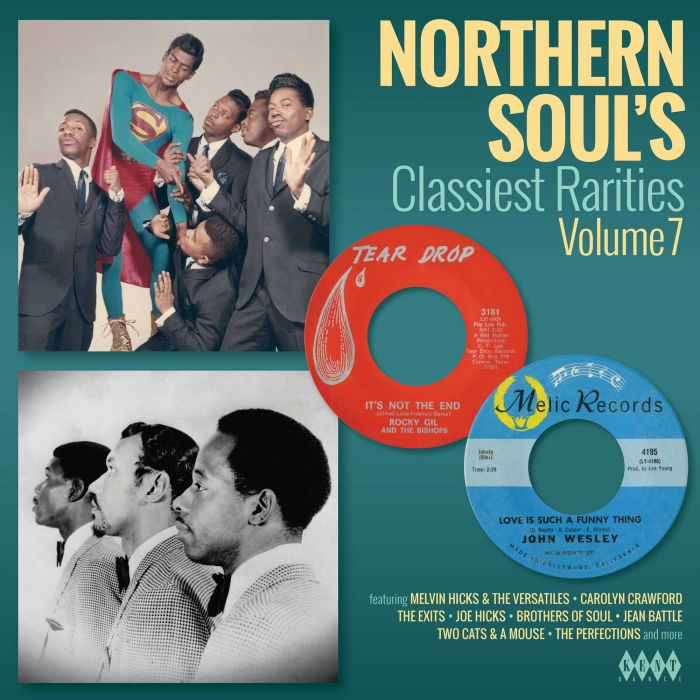
MANONGO MUJICA AND TERJE EVENSEN-PARACAS RITUAL
Manongo Mujica and Terje Evensen-Paracas Ritual.
Label: Buh Records.
Format: 2 x LP.
Manongo Mujica has been a leading light of the Peruvian avant-garde music scene since the seventies, and has met a myriad of musicians who were touring Peru. In 2003, this included Norwegian drummer, sound designer, teacher and composer Terje Evensen who was in the middle of a six week tour with Peruvian guitarist Andrés Prado.
Some nights, the duo collaborated with local musicians. This included a concert at a club called Jazz Zone in Miraflores. That was the night that Manongo Mujica and Terje Evensen first met.
Straight away, Norwegian drummer was hugely impressed by Manongo Mujica’s energy and the music that he was making. However, he had no idea that one day they would eventually collaborate on an album.
Over the next twelve years, the two musicians had little contact. This changed when Terje Evensen returned to Lima in 2015, and he heard how Manongo Mujica was fascinated by the Paracas desert. This was enough to pique the visiting drummer’s interest. He wanted to know more about the desert peninsula located within the province of Pisco, in the Ica Region, on the Southern coast of Peru. However, he didn’t have enough time to investigate on this trip.
Two years later in 2017, Terje Evensen was about to return to and wanted to visit the Paracas desert. The only problem was he wasn’t sure how to get there. That was when he decided to phone Manongo Mujica. He invited Terje Evensen to travel to the desert with him.
The pair stayed in a small hotel called Inti-Mar which was situated on the coast. This was their base during their time they spent in the desert and in the bay of Paracas, South of Lima, on the Peruvian coast. It was also where the pair discovered they shared much in common. This included music. They had met fourteen years earlier, in 2003, but had never spent as much time together.
Each day began in the Inti-Mar hotel which was also a scallop farm. This meant the two musicians were able to enjoy a breakfast of fresh scallops before they journeyed deep into the desert and stayed until it got dark.
Every day, the pair visited different parts of the Paracas desert where they made field recordings. Each and every new place they visited they discovered was unique. This included the sounds they recorded as well as the smell and atmosphere they encountered. It was a voyage of discovery.
The two men walked in a companionable silence contemplating life, music and more, basking in the beauty of the Paracas desert on what had become a personal voyage of discovery. As they crossed the arid, barren desert there was more than an air of mystery. They walked across what was remote, ancient and sacred place that commanded respect.
For some who have journeyed deep into the desert they’ve described it as akin to a journey into the unknown. Some adventures and travellers remember the intensity of the local winds known as paracas, others the dizzying heat and some the sounds that assailed them during their journeys. Manongo Mujica and Terje Evensen were especially interested in the sounds of the vast Paracas desert that measures 3350 km².
As they travelled to different parts of the desert they discovered that each part they visited had its own unique sonic fingerprint which they committed to tape. These field recordings were akin to the spirit of the Paracas desert and had been captured forevermore. The time spent eavesdropping on the landscape gave the Manongo Mujica and Terje Evensen opportunity to expand their musical consciousness. It was a gift from the gods and one that they decided to share.
Like all good things, the time that Manongo Mujica and Terje Evensen spent in the Paracas desert came to an end and they left the Inti-Mar hotel. However, that wasn’t an end to the time they would spend together. Some of the field recordings would be used when Manongo Mujica and Terje Evensen collaborated on an album. This was Paracas Ritual which was recently released as double album by Buh Records.
With the field recordings they had made the veteran Peruvian avant-garde musician Manongo Mujica began to collaborate on a new album with Terje Evensen. He was an experimental musician, sound designer, composer, drummer and teacher. The pair used as inspiration for the album variety of sources and subjects.
This included the sounds that they had recorded in the desert and in the bay. They had spent days listening to them when they recorded them and afterwards. This was part of the inspiration for Paracas Ritual. So were Pauline Barberi’s photographs of the Paracas landscapes and paintings by Manongo Mujica. They had been part of a visual project and were used as a reference point and to compliment the recordings. The visual was an important inspiration for the album.
During their careers, Manongo Mujica and Terje Evensen have both been interested and inspired by the worlds of synesthesia. This is the concept of listening to images and in using sounds as pictorial material. In this case, listening to the sound of the Paracas desert is also a way of listening to the visual field of the landscape, and turning it into an acoustic impression of the mind. The four lengthy soundscapes on Paracas Ritual features these impressions.
Eclectic describes the four soundscapes that feature on the four sides of Paracas Ritual. They’re also ambitious, innovative, genre-melting and cinematic. It’s as if Manongo Mujica and Terje Evensen have been asked to compose the soundtrack to a long lost Wim Wenders’ film.
To do this, they fuse elements of ambient and avant-garde with experimental music, free improvisation, library music and modern jazz. Add to this a myriad of electronic sounds, as well as field recordings, percussive instruments and sound art. They’re part of complex musical montages that veers between atmospheric and spacious to dramatic and intense. Other times, the soundscapes become abstract and dissonant but sometimes become melodic and rhythmic. Sometimes, the soundscapes take a welcome detour in the direction of meditative percussive music allowing the listener to ruminate and reflect. However, occasionally as musical genres and languages melt into one the soundscapes venture into unknown musical territories. The terrain like parts of the Paracas desert is very different to what’s gone before. It’s a case of expect the unexpected during the sprawling soundscapes on Paracas Ritual.
It’s a groundbreaking album of genre-melting soundscapes from musical pioneers Manongo Mujica and Terje Evensen who reflect and remember the time they spent in the desert capturing, listening and later, making the music on Paracas Ritual which is a captivating musical adventure that sometimes is akin to a journey into the unknown.
Manongo Mujica and Terje Evensen-Paracas Ritual.

CULT CLASSIC: THE BLUE NILE-HIGH.
Cult Classic: The Blue Nile-High.
Enigmatic, reluctant and contrarian are words that best of describe The Blue Nile. They’re the complete opposite of most bands. The Blue Nile have been described as publicity shy. That’ is an understatement. Ever since Paul Buchanan, Robert Bell and Paul Joseph Moore formed The Blue Nile, they’ve been one of the most low-profile bands in musical history. It seems that when they were formed thirty-nine years ago, The Blue Nile ticked the “no publicity” box. This has proved a double-edged sword, and resulted in The Blue Nile becoming one of the most enigmatic groups ever. Their story began thirty-nine years ago.
The Blue Nile were formed in 1981, when two friends Paul Buchanan and Robert Bell, met Paul Joseph Moore, all of whom met at Glasgow University. Before forming The Blue Nile, Buchanan and Bell were previously members of a band called Night By Night. Try as they may, a recording contract eluded them. Night By Night’s music wasn’t deemed commercial enough. So Paul, Robert and P.J. decided to form a new band, The Blue Nile.
Once The Blue Nile were formed, they set up their own record label Peppermint Records. It was on Peppermint Records that they released their debut single, I Love This Life. This single was then picked up and rereleased on the RSO label. Unfortunately for the Blue Nile, RSO became part of the Polygram label and I Love This Life disappeared without trace. Despite this setback, The Blue Nile persisted.
Still, The Blue Nile kept writing and recording material after the merger of RSO with Polygram. Some of that material would later be found on A Walk Across the Rooftops. That was in the future.
Recording of The Blue Nile’s demos took place at Castlesound studio near Edinburgh. That’s home to the man whose often referred to as the fourth member of The Blue Nile, recording engineer Calum Malcolm. He was listening to recently recorded demos through the studio’s Linn Electronics system. It had recently had a new set of speakers fitted. So the company founder, Ivor Tiefenbrun, decided to visit Calum Malcolm to hear his thoughts on the speakers. That’s when Ivor Tiefenbrun first heard The Blue Nile.
Calum Malcolm played Ivor Tiefenbrun a demo of Tinseltown In The Rain. Straight away, the founder of Linn was hooked. He decided to offer The Blue Nile a record contract to the label he was in the process of founding. Most bands would’ve jumped at the opportunity. Not The Blue Nile.
It took The Blue Nile nine months before they replied to Ivor Tiefenbrun’s offer. When they did, the answer was yes. The Blue Nile’s debut album A Walk Across The Rooftops would be released on Ivor Tiefenbrun’s new label Linn Reords.
A Walk Across the Rooftops.
Linn Records and The Blue Nile seemed a marriage made in musical heaven. Linn Records weren’t like a major label, pressurising The Blue Nile into making a decision and delivering an album within a certain timeframe. Instead, Linn Records allowed The Blue Nile to do what they did best, make music. From the outside, this looked as if it was working, and working well.
Years later, Paul Buchanan commented that during Linn Records didn’t operate like a record label. Mind you, he conceded that, during this period, The Blue Nile didn’t operate as a band. However, eventually, in May 1984 The Blue Nile’s debut album was released on Linn Records.
On the release of A Walk Across the Rooftops, it was released to critical acclaim. Critics described the album as a minor classic. A Walk Across the Rooftops was described as atmospheric, ethereal, evocative, soulful and soul-baring. It also featured the vocals of troubled troubadour Paul Buchanan. Despite the critical acclaim A Walk Across the Rooftops enjoyed, it wasn’t a huge commercial success, reaching just number eighty in the UK. However, since the A Walk Across the Rooftops has been recognised as a classic album. So has the followup Hats.

Hats.
Unlike most bands, The Blue Nile weren’t in any rush to release their sophomore album Hats. There was a five year gap between A Walk Across the Rooftops and Hats. It was worth the wait. The Blue Nile had done it again. Hats was a classic.
Featuring seven tracks, written by Paul Buchanan, Glasgow’s answer to Frank Sinatra He’s a tortured troubadour, whose voice sounds as if he’s lived a thousand lives. Producing Hats was a group effort, with Paul, Robert and P.J. taking charge of production duties. Guiding them, was Callum Malcolm. On the release of Hats, British and American audiences proved more discerning and appreciative of The Blue Nile’s sophomore album Hats.
On the release of Hats in the UK in 1989, it was critically acclaimed and commercial success, reaching number twelve in the UK. Then when it was released in America in 1990, audiences seemed to “get” Hats. Not only did it reach number 108 in the US Billboard 200 Charts, but The Downtown Lights reached number ten in the US Modern Rock Tracks charts. It seemed that The Blue Nile were more popular in America, than in Britain. Gradually, The Blue Nile’s music was beginning to find a wider and more appreciative album. Especially when they decided to embark upon their debut tour later in 1989.

Although The Blue Nile were formed in 1981, and Hats was The Blue Nile’s sophomore album, the band had never toured. Partly, The Blue Nile seemed worried about replicating the sound of their first two albums. They needn’t have worried, with The Blue Nile seamlessly replicating the sonic perfection of A Walk Across The Rooftops and Hats on the sold out tour. The Blue Nile’s star was in the ascendancy.
Their first ever tour had been a huge success. The Blue Nile had conquered Britain. However, The Blue Nile had also made a breakthrough in America. Hats had sold well, and their American tour had been successful. Most bands would’ve been keen to build on this and released another album before long. Not The Blue Nile.
Seven long years passed, where Blue Nile fans wondered what had become of Glasgow’s most enigmatic trio. However, they’d been busy. After Hats found its way onto American radio stations, The Blue Nile, who previously, had been one of music’s best kept secrets, were heard by a number of prestigious musicians. Among them were Robbie Robertson and Annie Lennox, Michael McDonald. After a decade struggling to get their music heard, The Blue Nile were big news. During this period, America would become like a second home to The Blue Nile, especially Paul.
Paul took to life in America, and in 1991, decided to make it his home. This just so happened to coincide with Paul’s relationship with actress Rosanna Arquette between 1991 and 1993. Hollywood starlets and Sunset Boulevard was a long way from Glasgow’s West End. In the midst of Paul’s relationship, disaster struck for The Blue Nile, they were dropped by their label.
Linn Records and Virgin decided to drop The Blue Nile. For some groups this would’ve been a disaster. Not for The Blue Nile.
They signed a million Dollar deal with Warner Bros. While this sounded like the ideal solution for The Blue Nile, Paul made the deal without telling P.J and Robert. He later explained that “none of the others were in town at the time.” With a new contract signed, The Blue Nile began thinking about their third album, Peace At Last.
Peace At Last.
So the band started looking for the perfect location to record their third album. They travelled across Europe looking for the right location. This location had to be private and suit their portable recording studio. Cities were suggested, considered and rejected. Among them, were Amsterdam, Copenhagen and Venice. Being The Blue Nile, things were never simple. Eventually, after much contemplation The Blue Nile ended up recording what became Peace At Last in three locations, Paris, Dublin and Los Angeles. For the first time, The Blue Nile recorded an album outside of their native Scotland.
For their first album for a major label, things began to change for The Blue Nile. They brought onboard drummer Nigel Thomas, a string section and a gospel choir. Peace At Last was going to be a quite different album to A Walk Across The Rooftops and Hats. However, one things stayed the same, The Blue Nile continued to work with Calum Malcolm. With his help, Peace At Last was ready for release in June 1996. Before that, critics had their say.
Critics remarked upon the change of sound on Peace At Last. It had a much more understated, restrained sound. Acoustic guitars and piano play important parts. Still, The Blue Nile’s beloved synths remain. Occasionally, The Blue Nile add strings. There’s even a gospel choir on Happiness. Gone was the sound of A Walk Across the Rooftops and Hats. Peace At Last showed a different side to The Blue Nile and their music, one that divided the opinion of critics and fans. Paul, Robert and P.J. were back, but it was a different sound. One constant was Paul’s worldweary vocal. Glasgow’s very own Frank Sinatra, Paul Buchanan plays the role of the troubled troubadour, to a tee on songs about love, love lost, betrayal, heartbreak, growing up and growling old. Paul was still the tortured soul, who wore his heart on his sleeve on Peace At Last.
On the release of Peace At Last, in June 1996, it reached just number thirteen and sold poorly. For The Blue Nile this was disappointing, given it was their major label debut. Worse was to come when the lead single Happiness failed to chart. The Blue Nile’s major label debut hadn’t gone to plan. Alas, Peace At Last was the only album The Blue Nile released on a major label.

High.
Following Peace At Last, it was eight years before The Blue Nile released another album. High was released in 2004. During the last eight years, the three members of The Blue Nile had been leading separate lives. P.J. and Robert were content with their lives in the West End of Glasgow, while Paul had been spending his time between Glasgow and Hollywood. Now they were back and ready to record their fourth album, High.
Once High was recorded, all that was left was for The Blue Nile to find a label to release the album. The Blue Nile had been dropped by Warner Bros. So with the completed album, The Blue Nile shopped High to various labels. Eventually, they settled on Sanctuary, which would release High in August 2004. However, before that, critics welcomed back The Blue Nille.
Eight years after the release of Peace At Last, critics remarked that High was a much more grownup album. Songs of family life and heartbreak sat side-by-side. Paul who had been suffering with illness and fatigue, seemed to have found a new lease of life. His lyrics are emotional, observational, cinematic and rich in imagery. They’re also poignant, and full hope, hurt and anguish. Meanwhile, Paul’s vocals were worldweary and knowing, while the music is emotive, ethereal and evocative. Critics love High. So did music lovers.
When High in August 2004, the album reached number ten in the UK. High proved to be The Blue Nile most successful album. This proved to be fitting.
Opening High is The Days Of Our Lives. Stabs of hypnotic, melancholy keyboards are repeated throughout the track. They provide the backdrop to Paul’s worldweary vocal. Soon, washes of synths, swathes of string and the occasional bursts of funky bass can be heard. Later, drums crack, adding to the drama, while Paul’s vocal is wistful and full of pathos. Just like he’s done so often, he makes the lyrics come alive, as he looks backwards at the past. This proves fitting, as High was their swan-song.
I Would Never was the first released from High. It has an understated, lush arrangement. That comes courtesy of washes of crystalline synths, acoustic guitar and pulsating bass. Then there’s Paul’s vocal. Glasgow’s troubled troubadour delivers a heartfelt vocal as he assures his partner “I Would Never turn my back on.” Quite simply, this is a beautiful ballad from a grown up Blue Nile.
Broken Loves opens with Paul’s half-spoken vocal accompanied by stabs of urgent keyboards. Frustration and emotion fill his voice as it grows in power and despair. The despair is caused by a relationship that’s all but over. This results in some soul searching from Paul. He paints pictures, reminiscing about their pasts. Memories from childhood seem to trigger an outpouring of emotion. His vocal becomes needy, and he’s determined they don’t give up on their relationship. Dramatic, emotive and heartbreaking, it’s an evocative description of a relationship gone wrong.
Just a lone acoustic guitar opens Because Of Toledo, as Paul delivers a worldweary vocal. Heartbroken and despondent, his life’s lost meaning and direction, because his relationship has ended. Again, Paul makes the lyrics come to life. They take on a cinematic quality. Soon, pictures unfold before your eyes, a heartbroken Paul sitting despondent, in the motel he sings about during this heartbreakingly beautiful breakup song.
Ethereal describes the introduction of She Saw The World. That’s before the tempo and drama increases. Driven along by drums, keyboards and washes of synths Paul delivers an urgent emotive vocal. Memories come flooding back as he reminisces about two people who drifted apart. Sadness fills his voice as he sings: “ She Saw The World and wanted it all.” Paul he remembers what he once had and lost. Oozing emotion, Paul’s lived-in, weary vocal and one of the best arrangements on High, result in one of the album’s many highlights.
Washes of synths shimmer, while a lone piano provides a contrast as High unfolds. Paul’s vocal is tender, but with a sense of resignation at the relationship that’s gone wrong. A drum machine provides the heartbeat as Paul’s vocal becomes a cathartic outpouring of emotion. Mixing power, passion and drama Paul lays bare his weary soul for all to hear.
As Soul Boy unfolds, drums crack and are matched by a pulsating bass and meandering guitar. Paul’s vocal is tender and needy. He delivers the some of the best lyrics on High. This includes: “let me be the one, there’s been no other one, trusted and true, for so long…I just want to be loved by you.” With an arrangement that’s reminiscent of vintage Blue Nile and Paul’s needy, seductive, vocal this is The Blue Nile back to their best.
Everybody Else is quite different from the previous track. It shows The Blue Nile are determined their music stays relevant. It’s an uptempo track that’s the nearest thing to a dance track The Blue Nile produced. Paul’s vocal is accompanied by swathes of sweeping strings, pounding bass and hypnotic drums. He’s plays the role troubled troubadour to perfection, as The Blue Nile demonstrate another side to their music, on a track that’s not short of poppy hooks.
Stay Close closes High and sadly, the recording career of The Blue Nile. The tempo is dropped, a drum machine, crystalline guitar and washes of synths providing a melancholy backdrop for Paul’s vocal. He’s saved the best to last. It’s as if he knew this was farewell. Digging deep, he unleashes a soul-baring Magnus Opus. His vocal is needy as he pleads, “Stay Close to me.” However, he knows though, “you’ll go your own way.” You’re drawn into this scenario, feel and share Paul’s pain and heartache. He’s not giving up though, and delivers a heartachingly beautiful vocal on this heartbreaking paean. What a way for The Blue Nile to call time on their recording career?
Although The Blue Nile only recorded four albums in a twenty year period, it’s the quality of music that matters. These four albums were almost flawless. Certainly A Walk Across The Rooftop and Hats are classics, while Peace At Last is probably the most underrated album in The Blue Nile’s back-catalogue. That brings us to High.
Having not released an album for eight years. During that period, The Blue Nile had been living separate lives. P.J. and Robert were living in the West End of Glasgow, while Paul lived a nomadic existence, flitting between Hollywood, Europe and Glasgow. He’d been involved in some high profile relationships, and by 2004, just when everyone thought The Blue Nile were no more, they rose like a phoenix from the ashes. They didn’t even have a record deal, so agreed a deal with Sanctuary Records to release High. It proved to be the most successful album of their career.
During the time they’d been away, The Blue Nile had matured as a band. Some people said they’d grownup. What had happened was life. Having been outside the bubble that was Blue Nile, P.J. and Robert had to get on with life. The Blue Nile was on a hiatus, maybe a permanent one. As for Paul, he was leading a very different life. This gave him the material for High.
On the nine songs that comprise High, you’re drawn into the album’s lush, atmospheric sound. Having captured your attention, The Blue Nile don’t let go. Before long, the listener has fallen in love. They fall in love with music that’s hauntingly beautiful, emotive, dramatic and pensive. Much of this is thanks to peerless vocal performances of Glasgow’s very own Frank Sinatra, Paul Buchanan. He plays the role of the troubled troubadour, to a tee. His worldweary, emotive, heartfelt and impassioned vocal sounds as if it’s lived the lyrics he’s singing about. Lived them not just once, but several times over. Paul’s vocal adds soulfulness to an album that references Brian Eno, Kraftwerk, Tim Buckley, classic soul and seventies funk. The result is a compelling, innovative album, High.
After High, people thought that The Blue Nile would return, possibly after another lengthy break. Sadly, that wasn’t to be. The Blue Nile were no more.
At least they did things their way. Right up until the release of High, The Blue Nile were enigmatic, almost reclusive and publicity shy. The Blue Nile weren’t exactly your normal band. Not for them the rock “n” roll lifestyle favoured by other bands. In many ways, musical fashions and fads didn’t affect them. Their attitude was almost contrarian. Albums were recorded slowly and methodically as The Blue Nile strived for musical perfection. This wasn’t a group willing to jump onto a musical bandwagon in pursuit of fame, fortune or starlets. Quite the opposite. It seemed to be their way or no way in the pursuit of musical perfection. The Blue Nile achieved that perfection four times, and ended their career on a High.
Cult Classic: The Blue Nile-High.
CULT CLASSIC: STANLEY TURRENTINE-THAT’S WHERE IT’S AT.
Cult Classic: Stanley Turrentine-That’s Where It’s At.
In September 1962, twenty-eight year old saxophonist Stanley Turrentine released That’s Where It’s At which was his fifth album for Blue Note Records. It was his much-anticipated followup to Dearly Beloved which at the time, many critics hailed as his finest album. That’s Where It’s At had a lot to live up to.
It was also a new chapter in the career of Stanley Turrentine as it was the first time that he had collaborated with pianist Les McCann. He composed four of the tracks on That’s Where It’s At, and was part of the quartet who recorded the album at Van Gelder Studio, Englewood Cliffs, in New Jersey on January the ’2nd’ 1962. This was the seventh solo album that Stanley Turrentine had recorded for Blue Note Records since June 1960. He had come a long way since signing for the label.
Stanley William Turrentine was born on April the ‘5th’ 1934, in Pittsburgh, Pennsylvania and grew up in a musical family in the Hill District. His father Thomas Turrentine, Sr, was a saxophonist with Al Cooper’s Savoy Sultans, while his mother played piano and Stanley’s elder brother Thomas became a professional trumpeter. He was part of his brother’s band when he recorded Comin’ Your Way in 1961 and 1962s Jubilee Shout!!! That was in the future.
When Stanley Turrentine started out, he wasn’t playing jazz. Instead, he was a member of various blues and R&B bands. However, his main influence was jazz tenor saxophonist, Illinois Jacquet who is remembered for his solo on Flying Home, which nowadays, is regarded as the first ever R&B saxophone solo. He wrote his name into musical history and later, so would Stanley Turrentine.
During the fifties, Stanley Turrentine was a member of Lowell Fulson and Earl Bostic’s bands. However, when he joined Earl Bostic’s band he was literally standing in the shadow of a giant as he replaced John Coltrane in 1953. Stanley Turrentine was also a member of pianist Tadd Dameron’s band during this period. Then in the mid-fifties Stanley Turrentine was drafted.
During his time serving his country, Stanley Turrentine received the only formal musical training he ever had. When he left the US Army in 1959 he was a much more complete musician.
Upon leaving the military, Stanley Turrentine joined Max Roach’s band. He featured on four albums by the jazz drummer including 1959s Moon Faced and Starry Eyed, 1960s Quiet As It’s Kept and Parisian Sketches plus 1964s Long as You’re Living. However, when Stanley Turrentine wasn’t working with Max Roach he was in constant demand as a sideman.
Another album he played in during 1959 was Abbey Lincoln’s Abbey Is Blue. This was just the start of prolific period for Stanley Turrentine, who by then, had met his future wife.
As the new decade decade dawned, Stanley Turrentine married organist Shirley Scott in 1960, and the pair often played and recorded together. He accompanied his new wife on nine albums between 1961 and 1978. However, there was no sign of Shirley Scott when Stanley Turrentine recorded his debut album.
In 1960, he signed to Blue Note Records and on June the 16th recorded the six tracks with drummer Al Harewood, bassist George Tucker and pianist Horace Parlan that became Look Out! It was a recording of traditional bop which was quite different from his later bluesy, soul-jazz outings. However, his debut was well received by critics who were impressed by the power, clarity and sweet and articulate album where Stanley Turrentine played within himself. Look Out! was a sign of what was to come from Stanley Turrentine.
Apart from recording his debut album Look Out! in 1960, Stanley Turrentine recorded Blue Hour, a collaboration with and The Three Sounds. It was recorded on June the ‘29th’ and December ‘16th’ 1960 at Van Gelder Studio, Englewood Cliffs, in New Jersey.
That was also where hard bop and post bop pianist Horace Parlan recorded his album Speakin’ My Piece on July the ‘14th’ 1960. It was just one of a number of albums Stanley Turrentine played on during 1960. These albums were released during 1961.
As 1961 dawned, Stanley Turrentine journeyed to Van Gelder Studio, Englewood Cliffs, in New Jersey on January the ’20th’ 1961 to record his sophomore album Comin’ Your Way. The result was a breathtaking album of soul-jazz with diversions via hard bop and balladry that had the potential to transform Stanley Turrentine’s nascent solo career and raise his profile. Despite this, executives at Blue Note Records decided to shelf the project which was belatedly released in 1987.
In its place, Up At “Minton’s”, a live album that was recorded at the famous Harlem venue, just one month after the Comin’ Your Way session was released by Blue Note Records later in 1961. The album was a success, and Up At “Minton’s” Volume 2 followed later in 1961. This allowed executives at Blue Note Records to argue that their decision to shelf Comin’ Your Way was vindicated.
On June the ‘8th’ 1961, Stanley Turrentine returned to Van Gelder Studio to record his next solo album, Dearly Beloved. Joining him on this trio recording were his wife organist Shirley Scott and drummer Roy Brooks. It was released to critical acclaim in February 1962 and was called the finest album of his career. Nowadays, Dearly Beloved is regarded as one of the finest albums Stanley Turrentine recorded for Blue Note Records.
Just over three months later, Stanley Turrentine was making the return journey on the ‘13th’ of September 1961 to Van Gelder Studio where he would record his next solo album, ZT’s Blues. Joining his was an all-star band that featured drummer Art Taylor, bassist Paul Chambers, guitarist Grant Green and pianist Tommy Flanagan. The band recorded seven compositions with groove meisters Stanley Turrentine and Grant Green playing a starring role.
Despite the quality of music on ZT’s Blues, history repeated itself when the album was shelved. This must have been hugely disappointing as here was another album that had the potential to transform Stanley Turrentine’s career. Ironically, when the album was belatedly released in 1985 it was to widespread critical acclaim. For Stanley Turrentine ZT’s Blues was the one that got away.
That’s Where It’s At.
For his next album That’s Where It’s At, Stanley Turrentine decided to collaborate with composer and pianist Les McCann. Although the two men had never collaborated before Stanley Turrentine was no stranger to collaborating on albums. He had collaborated on The Three Sounds album Blue Hour in 1960 and with Shirley Scott on his previous album Dearly Beloved which was released to plaudits and praise in June 1961. That’s Where It’s At was the much-anticipated followup.
For That’s Where It’s At Stanley Turrentine wrote Soft Pedal Blues and his brother Tommy penned Light Blue. Les McCann composed Smile, Stacey, Pia, We’ll See Yaw’ll After While, Ya Heah and Dorene Don’t Cry, I. These six tracks became That’s Where It’s At which was recorded at Van Gelder Studio.
On January the ‘2nd’ 1962, Stanley Turrentine’s quartet travelled to Van Gelder Studio. None of the musicians who played on ZT’s Blues featured on That’s Where It’s At. Instead, the tenor saxophonist was accompanied by drummer Otis Finch who was in his wife Shirley Scott’s group. Joining him in the rhythm section was Herbie Lewis who was in Les McCann’s group. Completing the quartet’s lineup for the recording of That’s Where It’s At was pianist Les McCann. This was one and only album the band recorded.
When That’s Where It’s At was released in September 1962 the majority of critics were won over by Stanley Turrentine’s much-anticipated fifth solo album. That came as no surprise given the quartet was firing on all cylinders to create That’s Where It’s At’s bluesy, funky and soulful and sound as they fuse bop and soul-jazz. Playing leading roles were Stanley Turrentine and Les McCann who seemed to drive each other to greater heights throughout the album.
Stanley Turrentine’s hard blowing tenor saxophone is to the fore throughout That’s Where It’s At as Les McCann’s piano adds a bouncy swing while the rhythm section contribute slinky grooves. When all this is combined the result is a potent and heady musical brew.
That’s Where It’s At opens with the uptempo and joyous sounding Smile, Stacey where Les McCann matches Stanley Turrentine every step of the way. It’s one of the album’s highlights. Another is Soft Pedal Blues where the slow, moody and bluesy saxophone is to the fore and accompanied by the piano. It veers between slow and spacious to deliberate and dramatic and there’s even flamboyant flourishes and just like the saxophone produce a late night ruminative sounding track. Initially, Pia glides along with Stanley Turrentine playing within himself and leaving space before Les McCann adds some of his slinkiest piano playing. The pair feed off each other and seem to bring out the best in each other. Later, the saxophone is played with power and control and sometimes is understated while the rhythm section add swing to this irresistible and memorable mid-tempo track.
There’s no letup on We’ll See Yaw’ll After While, Ya Heah with the saxophone and piano playing leading roles. Stanley Turrentine’s bluesy finger popping saxophone swings as he combines power and emotion. Meanwhile, Les McCann’s fingers dance up and down the piano keyboard flamboyant flourishes stealing the show and proving the perfect foil for Stanley Turrentine. From the opening bars of the bluesy sounding Dorene Don’t Cry, a beautiful, poignant and cinematic sounding track unfolds and paints pictures of hurt, heartbreak and love gone wrong. Closing the album is Light Blue, another slower track where the quartet play within themselves. That includes Messrs. McCann and Turrentine who are to the fore on what’s one of the most soulful sounding tracks on That’s Where It’s At.
After the release of That’s Where It’s At, Stanley Turrentine spent the rest of the sixties signed to Blue Note Records and released albums of the quality of Hustlin’, Easy Walker, The Spoiler and The Look of Love. Then as the seventies dawned, Stanley Turrentine left Blue Note Records.
In 1970 Stanley Turrentine signed to Creed Taylor’s CTI Records and changed direction musically. He recorded a series of albums of fusion including one of his finest outings Sugar which was released in 1970. However, the following year 1971, Stanley Turrentine and Shirley Scott divorced after eleven years of marriage. They never recorded another album together.
Following his divorce, Stanley Turrentine continued to record for CTI Records and released several critically acclaimed album. This included Salt Song, Cherry with Milt Jackson and Don’t Mess with Mister T. Then in 1974, Stanley Turrentine left CTI Records and signed for Fantasy Records. It was the end of an era.
Just like his time at Blue Note Record and CTI Records, Stanley Turrentine was prolific during his time at Fantasy Records. He released nine albums between 1974 and 1980 which encompassed a variety of styles. These albums were orchestrated by the likes of Gene Page and featured an all-star group. Despite that, the albums received mixed reviews, with some of the negative reviews often unwarranted. The Fantasy Records’ years weren’t as successful as Stanley Turrentine’s time at Blue Note Record and CTI Records.
The time that Stanley Turrentine spent signed to Blue Note Records was his most productive and saw him release some of the best and most important albums of his career. This included That’s Where It’s At Stanley Turrentine where he collaborated with Les McCann who was a perfect foil for him throughout the album. Together, they play their part in an almost flawless and timeless album that’s bluesy, funky, soulful and swinging.
It was no surprise that when That’s Where It’s At was released in September 1962 it was well received by the majority of critics. One of the few dissenting voices was Downbeat magazine who gave the album a mixed review. That’s ironic as nowadays, That’s Where It’s At is regarded as one of the albums that gave birth to the soul-jazz genre. One of soul-jazz’s finest practitioners was the tenor saxophonist Stanley Turrentine and proof if any was needed are albums of the quality of Hustlin’, Easy Walker, The Spoiler, The Look Of Love, Comin’ Your Way as well as the cult classic That’s Where It’s At.
Cult Classic: Stanley Turrentine-That’s Where It’s At.
CULT CLASSIC: AL GREEN-GREEN IS BLUES.
Cult Classic: Al Green-Green Is Blues.
The day that Al Green met Willie Mitchell in 1969 was, without doubt, the most important day in the twenty-two year old singer’s career. His career had stalled and he someone who could get it back on track. Willie Mitchell was the man to do that and when he signed him to Hi Records mentored the young singer and become his vocal coach, songwriting partner and producer.
In October 1974, Al Green released his seventh album for Hi Records and eighth overall. This was Al Green Explores Your Mind, which gave him his fifth consecutive number one in the US R&B charts. Four of these albums had been certified gold and one platinum. Then there was the small matter of seven singles being certified gold and one platinum. By then, Al Green had sold over three million albums and over five million singles in America alone. Willie Mitchell had transformed Al Green’s career and he was one of the most successful soul singers of his generation. It was a remarkable transformation that began in 1969 with Green Is Blue.
When Willie Mitchell came across Al Green the producer, songwriter and bandleader was looking for a singer for his band who were playing a show in Texas. This was just the break that Al Green was looking for as his career had stalled.
His career began at high school when he founded Al Greene and The Creations which included Curtis Rodgers and Palmer James. The group would later change its name to Al Greene and The Soul Mates and by the two members would have formed a record label.
Curtis Rodgers and Palmer James formed the indie label Hot Line Music Journal and signed their friend Al Greene. The label released his debut solo album Back Up Train on March the ‘21st’ 1967 and it reached just 162 on the US Billboard 200 and thirty-seven in the US R&B charts. That was despite the title-track reaching forty-one on the US Billboard 100 and five in the US R&B charts. It was a disappointing start to Al Green’s solo career.
After this, he continued to perform with Al Greene and The Soul Mates bur commercial success continued to elude the group. Things changed for frontman Al Greene when he met Willie Mitchell.
He was looking for a singer for his band who were playing a show in Texas and decided that Al Greene fitted the bill. He joined the band for the show and it didn’t take long foe Willie Mitchell to realised what Al Greene was doing wrong.
Willie Mitchell realised thatAl Greene was trying to sing like Jackie Wilson, James Brown, Sam Cooke and Wilson Pickett rather than finding and developing his own voice. To help the young singer, Willie Mitchell became his vocal coach and helped him find his own voice. Al Greene was good pupil and a quick learner and Willie Mitchell signed him to Hi Records.
Having signed to Hi Records Willie Mitchell convinced Al Greene to change his name to Al Green. The pair also cowrote their first song together Tomorrow’s Dream and Al Green penned “Get Back Baby. Meanwhile, Willie Mitchell and Marshall “Rock” Jones wrote What Am I Gonna Do with Myself? while Charles Chalmers and Sandra Rhodes who would add backing vocals on many Al Green albums cowrote One Woman.
The rest of the tracks on the album were cover versions and included My Girl, The Letter, Jerry Butler, Curtis Mayfield and Billy Butler’s I Stand Accused,Carl Smith and Marion “Doc” Oliver’s Gotta Find A New World, Lennon and McCartney’s Get Back plus George and Ira Gershwin’s classic Summertime. These eleven tracks would become Green Is Blues.
Recording took place at producer Willie Mitchell’s Royal Studios and featured the Hi Rhythm and Horn Sections and backing vocalists Chalmers, Rhodes and Rhodes. The result was Green Is Blues, which was a very different album to his debut.
Green Is Blues was released on April the ‘15th’ 1969 two days after Al Green’s twenty-third birthday. The majority of reviews were positive apart from the forever contrarian Rolling Stone. Surely commercial success awaited the album?
When Green Is Blues was released it reached nineteen in the US Billboard 200 and three in the US R&B charts. Meanwhile, Canada, the album reached twenty-eight bringing more success Al Green’s way. This was just the start for the Willie Mitchell and Al Green partnership.
Willie Mitchell had spotted the potential in Al Green and was able to encourage and cajole a series of performances out of him that surpassed anything he had released before. The twenty-two year old worked his way through a mixture of new material and covers of contemporary pop and R&B hits. With the help of a crack band and backing vocalists Al Green gives them a makeover on an album of blues, R&B and Southern Soul.
Al Green sets the bar high on the ballad beautiful, tender ballad One Woman. Tomorrow’s Dream his first collaboration with Willie Mitchell features a heartfelt and emotive vocal on a track that showcases the sound that would bring success Al Green’s way. There’s more than a nod to James Brown on his composition Get Back.
Of the cover versions his needy reading of Talk To Me and his soulful pleadings on My Girl are highlights of the album. So an emotive and soul-baring Southern Soul cover of I Stand Accused and an a hurt-filled version of What Am I Gonna Do With Myself. Al Green then breezes through Lennon and McCartney’s Get Back before closing Green Is Blues with a gorgeous cover of Summertime where blues and Southern Soul melt into one. It’s one the finest versions of this much-covered classic and closes the album on a high.
Al Green’s meeting with Willie Mitchell transformed the young singer’s career and Green Is Blues was a stepping stone for him and allowed him to develop his sound and style.
Green Is Blues allowed Al Green to showcase his considerable skills as he breathes new life, meaning and emotion into these contemporary pop and R&B hits. They were reinvented by Al Green and producer Willie Mitchell whose production skills which shine through on Green Is Blues which was the start of the Al Green’s Hi Records’ years.
He would go on to enjoy the most successful period of his career at Hi Records. This journey started with Green Is Blues which was tantalising taste of what was to come from Al Green and producer Willie Mitchell.
Cult Classic: Al Green-Green Is Blues.
CLASSIC ALBUM: DEEP PURPLE-BURN.
Classic Album: Deep Purple-Burn.
When Ian Gillan and Roger Glover left Deep Purple in 1973, this left a huge void for one of the unholy trinity of British hard rock and heavy metal. They were regarded as almost irreplaceable, and had played a huge part in Deep Purple’s rise to titans of rock. For Deep Purple and their legion of loyal fans, it was the end of an era.
Deep Purple had come a long way since they changed their name from Roundabout in 1968. However, success didn’t come overnight and it was their fourth studio album Deep Purple In Rock, released in June 1970 that transformed their fortunes. It was certified gold in Britain, America, Italy and France. This was just the start for Deep Purple.
For the next three years, commercial success and critical acclaim would be constant companions of the original lineup of Deep Purple. During that period, they were one of the hardest rocking groups of the seventies. They also established a reputation as one of the hardest living bands.
Deep Purple, Black Sabbath and Led Zeppelin were crowned the: “unholy trinity of British hard rock and heavy metal.” The three groups seemed proud of their infamy, and wore it like a badge.
The “unholy trinity’s” penchant for the rock ’n’ roll lifestyle was legendary. Excess and extravagance was an everyday occurrence. Similarly, chaos and carnage was omnipresent as the “unholy trinity” toured the world. Each group seemed to determined to outdo the other. Hotel rooms were wrecked, televisions thrown out of windows and copious amounts of drink and drugs consumed during lengthy tours.
By 1973, all wasn’t well within Deep Purple and the group needed a break. Their management pushed them to finish Who Do We Think We Are despite bad feeling and tension within the band. This led to Ian Gillan quitting the group following the second Japanese tour in the summer of 1973. Then Roger Glover was dismissed at the insistence of Richie Blackmore. It was a huge loss, and many critics thought this could be a fatal blow for Deep Purple.
They brought onboard Glenn Hughes who had been the bassist in Trapeze, and unknown vocalist David Coverdale. The new lineup of Deep Purple began work on their eighth studio album Burn in November 1973. However, the Deep Purple story began six year years earlier.
Although Deep Purple were formed in 1968 in Hertford, the story begins in 1967. That was when ex-Searchers drummer, Chris Curtis, contacted London based businessman, Tony Edwards, with a business proposition. He wanted to create a supergroup which he would name Roundabout. The idea behind the name was that the lineup was fluid. Members would come and go, on what was akin to a musical roundabout. Tony Edwards liked the idea and brought onboard Jon Coletta and Ron Hire. They named their new venture Hire-Edwards-Coletta (HEC) Enterprises. Now with financial backing, Chris Curtis started putting together Roundabout.
The first member of Roundabout was Jon Lord, a classically trained organist. He’d previously played with The Artwoods. Guitarist Richie Blackmore, who recently, had been working as a session musician is Hamburg auditioned. He also joined Roundabout, and so did bassist Nick Simper, whose most recent band was The Flower Pot Men. He was a friend of Richie Blackmore.
The two other members of Roundabout were also friends. Rod Evans was recruited as the lead vocalists. Previously, he was a member The Maze, and their drummer was Ian Paice. He became the final piece in the jigsaw. However, he wasn’t the first choice drummer.
Originally, Bobby Woodman was meant to be Roundabout’s drummer. He was drummer when Rod Evans auditioned as vocalist. However, Richie Blackmore had seen Nick Paice playing before, and although he just eighteen, knew he was a good drummer. So when Bobby Woodman headed out to buy cigarettes, Ian Paice was auctioned. Instantly, everyone realised he was a better drummer. When Bobby returned with his cigarettes he was no longer Roundabout’s drummer. However, at least Roundabout’s lineup was settled. Or so people thought.
Roundabout were kitted out with the finest equipment and lived at Deeves House in South Mimms, Hertfordshire. This was their home during March 1968. That was, until they headed out on a short tour of Denmark and Sweden. It was during this tour that Roundabout became Deep Purple.
It was Richie Blackmore that came up with the name Deep Purple. This was the name of his grandmother’s favourite song. That was the name he wrote on the blackboard, when everyone was asked to choose a new name for the nascent band. Deep Purple wasn’t the favourite though. That was Concrete God. However, the members of Roundabout decided against it. They felt the name was too harsh. So Roundabout became Deep Purple and began recording their debut album in May 1968.
Shades Of Deep Purple.
When Deep Purple entered Pye Studios, in Marble Arch, London Deep Purple in May 1968, they’d chosen ten songs for their debut album Shades Of Deep Purple. Seven songs were written by members of Deep Purple. The other three songs were cover versions. This included Joe South’s Hush, Lennon and McCartney’s Help! and Joe Roberts’ Hey Joe which is synonymous with Jimi Hendrix. These ten songs were recorded by the original version of Deep Purple. This included vocalist Rod Evans, drummer Ian Paice, bassists Nick Simper, organist Jon Lord and guitarist Richie Blackmore. Producing Shades Of Deep Purple was a friend of Richie’s, Derek Lawrence. Once Shades Of Deep Purple was recorded, it was released later in 1969
When critics heard Shades Of Deep Purple they weren’t impressed. Reviews were mostly negative. Since then, critics have rewritten history and most reviews of Shades Of Deep Purple are positive. Back in 1968, things were very different. Shades Of Deep Purple was perceived as unfocused. It was a mix of psychedelia, progressive rock, pop rock and thanks to Richie Blackmore’s hard rock guitar riffs. That was why many critics disliked Shades Of Deep Purple. Record buyers had different ideas about Shades Of Deep Purple,
Shades Of Deep Purple was released in July 1968 in America. It reached number twenty-four in the US Billboard 200 charts. This was no doubt helped by Hush reaching number four in the US Billboard 100 charts. Two months later, Shades Of Deep Purple reached number fourteen in Britain. For Deep Purple their debut album had been a commercial success and their lives transformed.
After the commercial success of the single Hush and Shades Of Deep Purple, Deep Purple were booked into a gruelling tour of America. Their American record company, Tetragrammaton, decided that Deep Purple should record another album. They headed into the recording studio in September 1968 to record what became The Book of Taliesyn.
The Book of Taliesyn.
Time was against Deep Purple as there wasn’t long before their American tour was due to begin. They only had five new songs written and had to rely upon cover versions to complete The Book of Taliesyn. Neil Diamond’s Kentucky Woman, Lennon and McCartney’s We Can Work It Out and River Deep, Mountain High completed The Book of Taliesyn. It was released in America in December 1968,
Just like Shades Of Deep Purple, The Book of Taliesyn was a mixture of psychedelia and progressive rock. The only difference was it had a harder edge. Deep Purple’s trademark sound was evolving and critics seemed to prefer The Book of Taliesyn. It received a much more favourable reception from critics. This was also the case upon the release of The Book of Taliesyn.
Released in December 1968, The Book of Taliesyn reached number fifty-four in the US Billboard 200. Two singles were released in America. Kentucky Woman reached number thirty eight in the US Billboard 100 charts. Then River Deep, Mountain High stalled at number fifty-three in the US Billboard 100 charts. The Book of Taliesyn charted in Canada and Japan. It seemed word was spreading about Deep Purple. However, in Britain, The Book of Taliesyn failed to chart. That wasn’t the only problem Deep Purple would have.
Deep Purple.
By 1969, Deep Purple were becoming a tight, talented band. Onstage and in the studio, they were growing and evolving. This included as songwriters. Although they’d only been together just over a year, they were a much better band. They’d released two albums and toured constantly. There was a problem though. Which direction should their music take?
Some members of Deep Purple wanted their music to take on a rawer, harder sound. This didn’t please everyone. Lead vocalist Rod Evans and bassist Nick Simper were in the minority. Organist Jon Lord, guitarist Richie Blackmore and drummer Nick Paice wanted the band to change direction. With the band split, this wasn’t the best way to prepare for the recording of their third album Deep Purple.
For Deep Purple, the band were keen to turn their back on cover versions. Deep Purple only featured one cover version, Donavon’s Lalena. The eight tracks were all written by members of Deep Purple. Just like their first two albums, Deep Purple would be produced by Derek Lawrence.
Recording of Deep Purple took place during a two-month tour. Deep Purple had ensured they had some free days where they could record their third album during January and March 1969. Recording took place at the De Lane Lea Studio, London. They were familiar with the De Lane Lea Studio. Previously, Deep Purple had rerecorded The Bird Has Flown there. So, they were familiar with the room. This allowed Deep Purple to work quickly. With their reputation in America growing, Deep Purple wanted their eponymous album released as soon as possible.
As soon as Deep Purple was recorded, Deep Purple jumped on a plane and headed back to America. They rejoined the tour of the country that had claimed them as their own. There was a problem though. Tetragrammaton, Deep Purple’s American label hadn’t pressed the album. Worse than that, the label had financial problems. Within a year, they would be insolvent and filing for bankruptcy. Already, this was affecting Deep Purple. Their manager John Colleta headed home. He decided that this would save on a hotel room. Things it seemed, couldn’t get any worse for Deep Purple.
On the release of Deep Purple in June 1969, the album had a harder sound. Elements of blues, progressive rock and heavy metal combined on seven tracks. The exception was The Bird Has Flown. It veered off in the direction of classical music. Mostly, though, Deep Purple’s trademark sound was evolving. How would critics and fans respond to Deep Purple?
Given the problems with Tetragrammaton, it’s no surprise that Deep Purple wasn’t a commercial success. Tetragrammaton couldn’t afford to promote Deep Purple properly. Despite generally positive reviews from critics, Deep Purple stalled at 162 in the US Billboard 200 charts. It failed to chart in the UK on its release in November 1969. At least Deep Purple charted in Japan. Things looked up when Deep Purple was certified gold in Germany. That was the only good news Deep Purple enjoyed.
The tension that was within Deep Purple bubbled over after the release of their third album. This lead to vocalist Rod Evans and bassist Nick Simper being replaced. In came vocalist Ian Gillan and bassist Roger Glover. Little did anyone realise that this would later be perceived as the classic lineup of Deep Purple. It was also the lineup that recorded the album that saw Deep Purple make a commercial breakthrough in Britain, with Deep Purple In Rock.
Deep Purple In Rock.
With their new lineup, Deep Purple Mk II entered the studio for the second time. They made their recording debut on Concerto for Group and Orchestra which was a collaboration between Deep Purple and The Royal Philharmonic Orchestra. However, Deep Purple In Rock was the start of a new era in Deep Purple’s history.
Recording of Deep Purple In Rock took place at IBC, De Lane Lea and Abbey Road Studios. A total of seven songs were recorded. They were written by Deep Purple. These seven songs showcased the new Deep Purple. The music was heavier and more like what would be seen as their classic sound. This was essentially hard rock or heavy metal. It was after the success of Deep Purple In Rock that lead to Deep Purple being referred to as the third member of the “unholy trinity of British hard rock and heavy metal.”
Deep Purple released Deep Purple In Rock on 3rd June 1970. This was Deep Purple’s first album to be released to widespread critical acclaim and commercial success. It was the first Deep Purple album to reach the top ten in Britain. Deep Purple In Rock reached number four in Britain. In America, Deep Purple In Rock only reached number 143 in the US Billboard 200 charts. Elsewhere, Deep Purple In Rock was a huge commercial success worldwide.
From Europe to Argentina, America and Japan, Deep Purple In Rock was a huge success. This resulted in gold discs for Deep Purple in America, Argentina, Britain, France and Holland. For Deep Purple, Deep Purple In Rock was a game-changer. Their decision to change direction musically was vindicated. Now, Deep Purple were one of the biggest bands in rock music. Little did Deep Purple realise that they were entering the most successful period of their career.

Fireball.
Fireball was the first of three number one albums Deep Purple would have in Britain. Belatedly, Britain had “got” Deep Purple. They were their own, and were proud of that. The hard rocking quintet’s unique brand of hard rock was winning friends and influencing people. Having toured extensively, at last Deep Purple were now part of British rock royalty. This continued with Fireball.
Given Deep Purple extensive touring schedule, albums were recorded whenever the band had downtime. Fireball was recorded during various sessions that took place between September 1970 and June 1971. Recording took place at De Lane Lea Studios and Olympic Studios, London. Other sessions took place at The Hermitage, Welcombe, North Devon. During these sessions, seven tracks were recorded. Each of the tracks were credited to the five members of Deep Purple. Unlike other bands, everyone in Deep Purple played their part in the songwriting process. That had been the case since the first album Deep Purple Mk. II had recorded, Deep Purple In Rock. Just like Deep Purple In Rock, Fireball would be a commercial success.
Most critics gave Fireball favourable reviews. There were very few dissenting voices. Apart from later, members of Deep Purple. They felt Fireball wasn’t their best album. Record buyers disagreed.
Across the world, Fireball was a huge commercial success. Fireball was released in Britain in July 1971. Record buyers in America and Europe had to wait until September 1971. By then, Fireball had reached number one in Britain and was certified gold. Two singles were released in Britain. Strange Kind of Woman reached number eight and Fireball number fifteen. This was just the start of Fireball’s success.
When Fireball was released in America it reached number thirty-two in the US Billboard 200 charts and was certified gold. In Canada Fireball reached number twenty-four. Fireball proved one of Deep Purple’s most successful albums in Japan, reaching number sixty-six. Australians were won over by Fireball, when it reached number four. Deep Purple proved popular in Israel, where they enjoyed a top ten album. However, it was in Europe that Fireball burnt brightest.
On Fireball’s release in September 1971, it reached number one in Belgium, Denmark, Germany and Sweden. Fireball reached the top ten in Finland, France, Holland, Italy Norway. Despite the widespread commercial success and critical acclaim Fireball enjoyed in Europe, the only gold disc awarded was in Holland. However, Deep Purple would make up for this with their sixth album, Machine Head.
Machine Head.
By 1972, Deep Purple had established themselves as one of the hardest working bands in music. They seemed to be constantly touring. When they weren’t touring, they were recording. As a result, Deep Purple were about release their sixth album in less than four years, Machine Head.
Unlike their five previous albums, Deep Purple didn’t head into the recording studio. Instead, they brought the recording studio to them. They were booked to stay at the Grand Hotel, in Montreux Casino, Switzerland. So that’s where they brought the Rolling Stone’s sixteen track mobile recording studio to. Between the 6th and 21st December 1971, Deep Purple were meant to record their sixth album, Machine Head. However, there was a problem.
Lead vocalist Ian Gillan had contracted hepatitis and his doctors advised him to rest. For Deep Purple, this was a disaster. The hotel rooms and mobile recording studio was booked. They’d already had to cancel their forthcoming American tour. Cancelling the recording of their sixth album would be an utter disaster. No doubt realising the gravity of the situation, and buoyed by the excitement of starting recording a new album, Deep Purple decided to head to Switzerland.
Deep Purple landed in Switzerland on 3rd December 1971. Only one further concert had to take place at Montreux Casino. That was Frank Zappa’s now infamous concert. It took place on the 4th December 1971. During Frank Zappa’s set, an over enthusiastic member of the audience fired a flare. It hit the roof, causing the Montreux Casino to go on fire. Fortunately, nobody was hurt. Unfortunately, the Montreux Casino was in no fit state to double as a makeshift studio. Luckily, the Montreux Casino’s owner Claude Nobs new a theatre nearby that could be transformed into a makeshift studio. Deep Purple headed to the Pavilion where they recorded a song based on the somewhat surreal experience at the Montreux Casino. This song would become a classic, Smoke On The Water.
For what became Machine Head, Deep Purple had six songs completed. They were all credited to the five members of Deep Purple. So would the unfinished song with was provisionally titled “Title No. 1.” However, as the five members of Deep Purple spoke about the events at the Montreux Casino, bass player Roger Glover uttered the immortal words “Smoke On The Water.” A classic had been born.
During a sixteen day period between the 6th and 21st December 1971, Deep Purple recorded their sixth album, Machine Head. The conditions weren’t ideal. The mobile recording studio was parked outside and cables run through the Pavilion. They ran along corridors and under doors. It was far from the ideal conditions to record an album. Coupled with Ian Gillan’s medical condition, it’s a wonder Deep Purple were able to even record an album, never mind a career defining album.
Machine Head was released on 25th March 1972. Reviews varied between favourable to glowing. Although reviews mattered, what counted was sales. There was no problem there. On its release, Machine Head reached number one in eight countries. This included Argentina, Australia, Austria, Britain, Canada, Denmark, France and Yugoslavia. In Holland, Italy, Japan, Norway andSweden, Machine Head reached the top ten. Across the Atlantic, Machine Head became Deep Purple’s most successful album, when it reached number seven in the US Billboard 200 charts. Given the commercial success of Machine Head, it received a plethora of gold and platinum discs.
Having reached number one in their home country, Machine Head was certified gold in Britain. Across the English Channel, Machine Head was certified gold twice. In Argentina, Machine Head was certified platinum. However, Machine Head was most successful in America, where it was certified double-platinum. However, this wasn’t the end of the commercial success. Machine Head featured two singles.
Never Before was chosen as the lead single in Britain. Although it reached number twelve, this seemed a strange choice. After all, Smoke In The Water was a classic in waiting. It reached number four in the US Billboard 100 charts. It wasn’t until 1977 that belatedly, Smoke In The Water was released as a single, where it reached number twenty-one. How it wasn’t released as a single in 1972, remains a musical mystery. However, having released a career defining album, Machine Head, Deep Purple headed out on their Machine Head World Tour.
Made In Japan.
The Machine Head World Tour would be one of the most gruelling tours Deep Purple had embarked upon. It was scheduled to last the rest of 1972 and into 1973. Deep Purple were a hugely successful band. That’s why music lovers in the four corners of the globe wanted to see and hear Deep Purple. That included in Japan.
By August 1972 Deep Purple had arrived in Japan. They’d been popular in Japan for most of their career. However, Machine Head transformed Deep Purple’s fortunes. This included in Japan. On the 15th and 16th of August 1972, Deep Purple took to the stage in Osaka. Then on 17th August 1972, Deep Purple landed in Tokyo. These three concerts were recorded and became Made In Japan, which was akin to a a heavy rock masterclass from Deep Purple.
For anyone who couldn’t make the Machine Head World Tour, Made In Japan was the perfect reminder of a legendary tour. Especially the Japanese leg. Between the 15th and 17th August 1972, Deep Purple were at their hard rocking best.
This continued wherever they went. However, there were a lot of people who wanted a reminder of this legendary tour. For others, who for whatever reason, couldn’t get to see Deep Purple, a double album entitled Made In Japan was almost as good. It was released in Britain in December 1972 and in America in April 1973.
When critics heard Made In Japan, even the most cynical and hardbitten rock critic had to compliment Deep Purple. They were no one of the three best heavy rock bands in the word. Led Zeppelin were the best and Deep Purple and Black Sabbath fought it out for second place. So well received was Made In Japan, that it was heralded as one of the finest live albums ever. Made In Japan further reinforced Deep Purple’s reputation as one of the greatest heavy metal bands.
On its release in December 1972, Made In Japan reached number fifteen in Britain and was certified gold. Made In Japan reached number one in Austria, Germany and Canada. In Norway, Made In Japan reached number seven. Then in April 1973, Made In Japan reached number six in the US Billboard 200. For Deep Purple, this resulted in even more gold and platinum discs.
Across the word, Made In Japan was a commercial success. After being certified gold in Britain, it was then certified gold in France and platinum in America, Austria, Germany and Italy. In Argentina, Made In Japan was certified double platinum. Just four years after they first formed, Deep Purple were one of the most successful rock bands in the world. Their 1972 legendary live album, Made In Japan, is a reminder of Deep Purple at their very best.
Following Made In Japan, commercial success and critical acclaim continued for Deep Purple. There would also be changes in lineup, breakups and reunions. However, the classic lineup of Deep Purple features on Made In Japan. The classic line up of Deep Purple bid a farewell on 1973s Who Do We Think We Are.

When Who Do We Think We Are.
Following the critical acclaim and commercial success of Made In Japan, Deep Purple were keen to build on the momentum created by their live opus. Fortunately, Deep Purple had already recorded a new studio album. It had been recorded in Europe, during summer and autumn 1972.
The five members of Deep Purple had penned seven new songs, and they were recorded during using the Rolling Stones Mobile Studio. It made its war to Rome, Italy in July and part of When Who Do We Think We Are was recorded there. Then in October 1972, When Who Do We Think We Are was completed in Frankfurt in Germany. With their new studio album completed, this should’ve been a time for celebration. It wasn’t though.
Far from it. The group was slowly being ripped apart by disagreements within Deep Purple. Tensions had been high when When Who Do We Think We Are was being recorded. Things got so bad, that members of the Deep Purple weren’t speaking to each other. This resulted in a schedule having to be drawn up, so that warring band members could record their parts separately. Somehow, though, the five members managed to record the followup to Made In Japan. The big question was, would the internal strife affect quality of music on When Who Do We Think We Are?
When critics heard When Who Do We Think We Are, there was no consensus. Critics felt the quality of music was inconsistent. That was why reviews ranged from mixed to negative. Some critics accused Deep Purple of merely “going through the motions of making an album.” This was a far cry from previous albums.
When Who Do We Think We Are was released in January 1973, it reached number four in Britain. Across the Atlantic, the album proved successful, selling 500,000 copies within the first three months. This helped When Who Do We Think We Are reach number fifteen in the US Billboard 200. This resulted in gold discs in America and France. Compared with Deep Purple’s recent success this was seemed slightly disappointing. To make matters worse, vocalist Ian Gillan and bassist Roger Glover left the band after Who Do We Think We Are. Deep Purple’s career looked like it was at a crossroads.
With Ian Gillan and Roger Glover having left Deep Purple, this left a huge void. marked the end of an era for Deep Purple. Ian Gillan and Roger Glover were almost irreplaceable. They had played a huge part in Deep Purple’s rise to titans of rock.
From Deep Purple In Rock, right through to Made In Japan, Deep Purple enjoyed critical acclaim and commercial success. Deep Purple, and its classic lineup of Ritchie Blackmore, Ian Gillan, Jon Lord, Ian Paice and Roger Glover were one of the biggest bands in the free world. However, the departure of Ian Gillan and Roger Glover looked as if this spelt the end of Deep Purple. Maybe it would be best if Deep Purple called it a day, while they were at the top. The last thing they wanted to do was besmirch their illustrious musical legacy. However, the three remaining members of Deep Purple weren’t ready to call it a day.
Instead, the two departing members of Deep Purple were soon replaced. A then unknown David Coverdale became Deep Purple’s vocalist, while Glen Hughes of Trapeze took over as bassist. They had big shoes to fill. However, with the help of the remaining members of Deep Purple, managed to do so during 1974. It was one of the busiest years of Deep Purple’s career, and saw them release Burn.
Burn.
With the two new members of Deep Purple onboard, work began on the first album of Deep Purple Mk. III’s career. When work began on what became Burn the five members of the band were involved. There was a problem though as Glenn Hughes had unexpired contractual obligations. This meant he couldn’t be credited on the album. Despite this, Glenn Hughes and the rest of Deep Purple cowrote five songs. The exceptions were Sail Away and Mistreated, which Richie Blackmore and David Coverdale cowrote. A200 which closed Burn, was written by Richie Blackmore, Jon Lord and Ian Paice. These songs were recorded in Montreux, in Switzerland.
Recording of Burn took place during November 1973. The Rolling Stones Mobile Studio had been hired, and made its way to Montreux. This was where the new lineup of Deep Purple made its debut. Deep Purple Mk. III featured a rhythm section of drummer Ian Paice, bassist Glenn Hughes and guitarist Richie Blackmore. Augmenting the rhythm section, was keyboardist Jon Lord. They provided the backdrop for new vocalist David Coverdale. He was part of a group that moved Deep Purple’s traditional sound forward. There was more of a boogie influence on Burn, which even featured elements of funk and soul. Once Burn was completed, Deep Purple would shortly showcase their new sound.
With Burn recorded, and the release scheduled for 15th February 1974. Before that, critics had their say on Deep Purple’s eighth studio album. Most of the critics were impressed with Deep Purple Mk. III’s ‘debut’ album. The hard rocking Burn set the bar high, as a hard rocking Deep Purple kicked loose. There was no stopping them, as they incorporated elements of boogie, blues, funk and soul. Burn was an album where Deep Purple’s music began to evolve. However, how would their fans respond?
On the release of Burn on 15th February 1974, it reached number three in Britain and number nine in the US Billboard 200. This resulted in gold discs in America, Argentina, Britain, France, Germany and Sweden. Richie Blackmore, Jon Lord and Ian Paice’s decision to continue with Deep Purple had been vindicated.
Storm had been well received by critics and was a commercial success. While it wasn’t as successful as some of their earlier albums, it was something to build on for Deep Purple Mk. III.
Stormbringer.
Buoyed by the success of Storm, Deep Purple’s thoughts turned to their next album which became Stormbringer. Deep Purple and Martin Birch coproduced the album, which was recorded at Musicland Studios, in Munich, Germany, between August and September 1974.
When Stormbringer was released in November 1974 there was no consensus amongst critics. Their reviews ranged from favourable to mixed although the album featured future classics like Lady Double Dealer, High Ball Shooter and the wistful ballad Soldier of Fortune. Despite the mixed reviews, the album was certified silver in Britain and gold in America and France. However, the album sales were way down, and to make matters worse David Coverdale didn’t like the funky soulful parts of Stormbringer.

On the ‘21st’ of June 1975, it was announced that after just two albums with Deep Purple, David Coverdale had left the band. He joined forces with Ronnie James Dio of Elf, and formed a new band waging they called Ritchie Blackmore’s Rainbow. The name was shortened to Rainbow after the first album. By then, it was all change with Deep Purple.
After the departure of David Coverdale, the other members of Deep Purple cast their net wide and looked at some of the biggest names in music. Everyone from Rory Gallagher, Mick Ronson, Humble Pie’s Clem Clempson and Zal Cleminson of The Sensational Alex Harvey Band. Eventually, one of the quintessential British rock groups settled on American Tommy Bolin who had been a member of The James Gang between 1973 and 1974. He made his debut on Come Taste The Band.
Come Taste The Band.
Deep Purple Mk IV began recording what became Come Taste The Band on the ‘3rd’ of August 1975. The sessions finished on the ‘1st’ of September 1975, and after two months, Deep Purple’s tenth album was complete.
Come Taste The Band was released on the ‘10th’ of October 1975, and Deep Purple returned to a much more traditional hard rocking sound on what was a much more commercial sounding. However, Come Taste The Band the consistency and quality of previous albums and was described as a weak album.
Things didn’t improve for Deep Purple when the album stalled at forty-three on the US Billboard 200. The only small crumb of comfort was when Come Taste The Band reached number nineteen in Britain and was certified silver by November 1975. However, the sales of the album worldwide were disappointing. It was hoped that the 1976 tour would help sales.
In 1976, Deep Purple toured Come Taste The Band and things didn’t go to plan. Although Tommy Bolin was a talented guitarist, his problems with hard drugs started to affect his ability to performances. Fans didn’t realise he was in the throes of addiction and booed him because he couldn’t play solos like Ritchie Blackmore. To complicate matters, Glenn Hughes was addicted to cocaine and all this resulted in a number of poor performances. Things got so bad that the future of Deep Purple was in doubt.

Although Deep Purple Mk. IV called time on their career in the spring of 1976 the break up of the band was only announced in July 1976. By then, only Jon Lord and Ian Paice remained from the lineup of Deep Purple that released Shades Of Deep Purple in 1968. They had been with the band since they released their debut album Shades Of Deep Purple in 1968. Ten albums and four lineups later they were the last men standing and had been with the band through good times and bad.
This included a five year period where the classic lineup of Deep Purple were at the peak of their powers as they released four studio albums and the live album Made In Japan. Between 1970s Deep Purple In Rock and 1975s Who Do We Think We Are, the classic line hardly put a foot wrong. Albums like Deep Purple In Rock, Fireball, Machine Head and Made In Japan are now regarded as classic albums and Jon Lord and Ian Paice played their part in the sound and success of these albums, held transform Deep Purple into one of the most successful and hardest rocking British rock bands of the seventies. They were also one of the hardest living British bands.
Vying with Deep Purple for the title of Kings of seventies rock were Led Zeppelin and Black Sabbath. Just like Deep Purple, they were hugely successful and hard rocking bands. They were also the hardest living living rock groups. This lead to them being known as the “unholy trinity of British hard rock and heavy metal.” The three groups seemed proud of their infamy, and wore it like a badge.
The “unholy trinity’s” penchant for the rock ’n’ roll lifestyle was legendary. Excess and extravagance was an everyday occurrence. Similarly, chaos and carnage was omnipresent as the “unholy trinity” toured the world. Each group seemed to determined to outdo the other. They were living the dream. This continued until the release of Who Do We Think We Are.
By the time Deep Purple began work on Who Do We Think We Are all wasn’t well within the band. Things had gotten so bad, that a schedule was drawn up that allowed band members to record on their own. Somehow, Deep Purple managed to complete Who Do We Think We Are, which was well received by critics and a commercial success. After that, Ian Gillan and Roger Glover left Deep Purple. It was the last album the classic lineup of Deep Purple released.
The departure of Ian Gillan and Roger Glover looked as if this spelt the end of Deep Purple. However, they continued to record and tour but were never quite the same band.
Deep Purple released just three albums after the departure of Ian Gillan and Roger Glover. The first was Burn, which featured elements of boogie, blues, funk and soul, and was by far the best of this trio of albums. It was well received by critics and a bigger commercial success than its predecessor Who Do We Think We Are. Despite that, Burn isn’t regarded as one of Deep Purple’s classic albums. However, it’s much better and stronger album than Stormbringer and Come Taste The Band which are both disappointing albums. Nowadays, Burn is regarded as the last great album that Deep Purple released before splitting up in July 1976.
Just like classic albums like Deep Purple In Rock, Fireball, Machine Head and Made In Japan, Burn features Deep Purple at their hard rocking best. These albums have stood the test of time and so has Burn, which is the best of the rest and an essential album for anyone interested in Deep Purple’s music.
Burn is also a reminder of the golden age of rock, when Deep Purple, Black Sabbath and Led Zeppelin the “unholy trinity of British hard rock and heavy metal” ruled the roost, and recorded and released a string of classic albums that are truly timeless and part of Britain’s rich musical legacy.
Classic Album: Deep Purple-Burn.
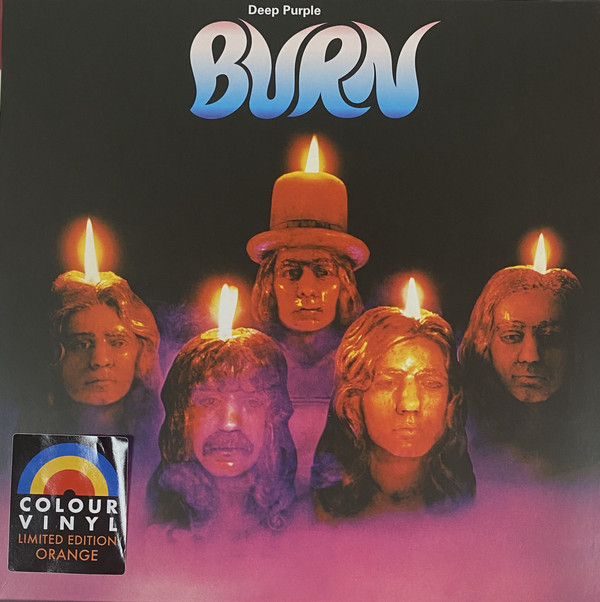
CULT CLASSIC: DAWAN MUHAMMAD-DEEP STREAM.
Cult Classic: Dawan Muhammad-Deep Stream.
By 1979, jazz wasn’t as popular as it was during the fifties and early sixties. That was the golden age for jazz, and saw countless classic albums released on labels like Blue Note, Verve and Impulse! These albums sold in large quantities and were profitable for the record companies that released them. However, by the mid-sixties, jazz was no longer as popular as it had been. Musical tastes were changing and jazz like the blues had to evolve or risk becoming irrelevant.
By the time of John Coltrane’s death in 1967 rock was by far the most popular musical genre in America. A headline in Downbeat magazine warned that: “Jazz as We Know It Is Dead.” The future for jazz looked bleak.
Fortunately, fusion rode to the rescue of jazz in the late-sixties, and suddenly, there was a resurgence of interest the genre which began to grow in popularity. Some of the most important, influential and innovative fusion albums were released between 1968 to 1974. That was a golden period for fusion which was still popular right up to 1979. However, it wasn’t as popular as it once had been. Jazz was changing and so was the way albums were being released.
By 1979, many American jazz musicians had realised that they didn’t need to sign to a major labels to realise an album. There was another way. All across America small local labels had sprung up and were releasing private presses. Some of these labels were formed by an artist to release an album. That was the case with Evidence Artistic Records which was founded by Dawan Muhammad in 1979 to release his debut album Deep Stream.
Composer, arranger, producer and multi-instrumentalist Dawan Muhammad was thirty-three when he began work on Deep Stream. He composed five of the tracks on the album, and wrote the music to Deep Stream and Is That You which featured lyrics by Delores Pierce. She was part of the band that recorded Deep Stream.
Fifteen musicians and vocalist Delores Pierce joined bandleader Dawan Muhammad who played bass clarinet, flute, saxophone, Fender Rhodes, piano, chequere, congas, drums, dumbek and pandeiro on Deep Stream. He was joined by a rhythm section included drummer and percussionists Daniel Sabanovich and Prince H. Lawsha; Christopher Amberger and Stan Poplin on acoustic and electric bass plus guitarist Chris Cooper who also played violin. They were joined by Paul Nagle on Fender Rhodes and piano; Luis Raul Rivera on congas; flautist Jimmy Johnson while Oscar Williams switched between trumpet and flugelhorn. The strings came courtesy of cellists Deborah Ciremeli and Kenneth Johnson; violists Gordon Thrupp and Judith Hobbs plus violinists Philipp Kashap and Ron Paul. This was the band that accompanied Dawan Muhammad as he recorded the seven tracks that eventually became Deep Stream.
With his debut album complete, Dawan Muhammad decided to release the album as a private press via Evidence Artistic Records. He had enjoyed complete artistic freedom when he recorded Deep Stream and could oversee and micromanage every aspect of the release if he wanted. That was the upside of releasing a private press.
The downside was that a small label like Evidence Artistic Records neither had the financial muscle nor marketing expertise required that the bigger labels had. Many of the small labels releasing private presses didn’t even have a distributor. This meant that the label owner or even the artist had to drive around town with boxes of albums trying to convince owners of record shops to stock the album. Often the best they could hope was on a sale or return basis. It was a long way from Blue Note, Verve or Impulse!
When Dawan Muhammad released Deep Stream in 1979 sadly, it passed the majority of jazz fans by. Only a few lucky record buyers heard what was a stunning and timeless album of spiritual jazz. It finds the multitalented bandleader and his extended ensemble showcasing their considerable skills and versatility. They switch between and incorporate elements of funk, fusion, hard bop, Ethio-jazz and even free jazz during this seven track set.
Deep Stream opens with Anxiety a driving, dramatic and genre-melting jam that ebbs and flows veering between urgent and understated. Contrasts are everywhere from stabs of piano, drumrolls and bursts of shrill flugelhorn to a fluttering funky bass and shimmering Fender Rhodes. Later, the piano takes centrestage and plays a leading role before joining forces with the horns and Fender Rhodes for the remainder this captivating roller coaster journey.
As Deep Stream meanders and breezes along a deliberate piano and rhythm section accompanies Delores Pierce’s tender, heartfelt and emotive vocal. When it drops out, the piano and rhythm section stretch their legs and create a slinky arrangement that’s a reminder of jazz’s past. Later, a flute flutters high above arrangement but it’s still the vocal that plays a starring role in the sound and success of one of the album’s highlights. It’s a similar case on the beautiful slow, string-drenched ballad Is That You where Delores Pierce make a welcome return.
Sun, Moon, Stars is an eight-minute epic that allows Dawan Muhammad and his band to stretch their legs and showcase their considerable talent. Christopher Amberger adds a walking bass while braying, sultry and scorching horns accompany pianist Paul Nagle who plays some of his finest solos during this joyous and uplifting opus that will have you reaching for the sky.
Cataclysmic Decision is quite different from what’s gone before. Thunderous drum rolls add a degree of urgency. So does the the flugelhorn which like the strings are almost dissonant. It’s as if the track is heading in the direction of free jazz. It’s a much more avant-garde and experimental sounding track that shows another side to Dawan Muhammad.
East Wind is a much more understated and melodic track. It sashays along as braying horns, Fender Rhodes and percussion combine while the rhythm section provide the heartbeat. Dawan Muhammad and his band paint pictures on this cinematic track that’s akin to a seven minutes of musical sunshine.
Closing Deep Stream is the uber percussive Ethio-jazz of Tambu. It may be short and sweet but it ensures the album closes on a high.
It’s forty-two years since multi-instrumentalist Dawan Muhammad put together a band of talented and versatile jazz musicians to record his debut album Deep Stream. It was released as a private press later in 1979 and is stunning and timeless album of spiritual jazz where Dawan Muhammad also takes detours via fusion, vocal jazz, funk, free jazz and Ethio-jazz during this seven track set.
Sadly, Deep Stream never found the audience it deserved. Part of the problem was that Dawan Muhammad self-released the album. The advantage was that he had complete artistic freedom when he recorded Deep Stream and could oversee and micromanage every aspect of the release. Just like many artists who had released private presses before him, Dawan Muhammad would soon realise that to release and promote an album properly required resources and expertise. This was what a record company provided as well as a distribution deal. Without a distributor it wasn’t possible to get the album into record shops across America.
Many other artists had been in the same situation as Dawan Muhammad and watched as the album they had spent so much of their time writing and recording sunk without trace when it was released. This meant that the majority of jazz fans never heard Deep Stream when it was released. For the multitalented multi-instrumentalist Dawan Muhammad it was a case of what might have been.
It was only much later when jazz fans discovered Dawan Muhammad’s oft-overlooked debut album Deep Stream. By then, it was much a much-prized rarity amongst jazz fans and original copies of the album were beyond the budget of most jazz fans. Thankfully, Dawan Muhammad’s spiritual jazz cult classic was reissued in 2020 and this allowed a new generation of jazz fans to discover the delights of Deep Stream.
Cult Classic: Dawan Muhammad-Deep Stream.
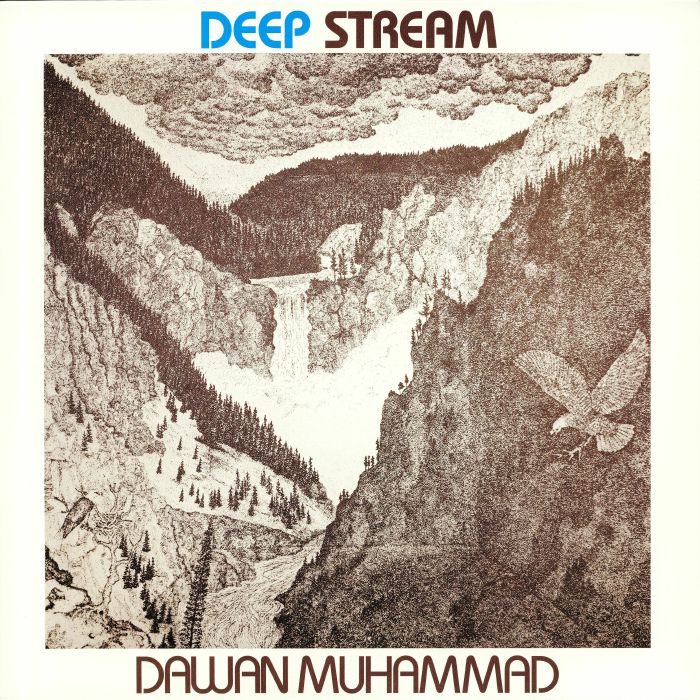
CULT CLASSIC: BOBBIE GENTRY-THE DELTA SWEETE.
Cult Classic: Bobbie Gentry-The Delta Sweete.
Less than three weeks after Bobbie Gentry released Ode To Billie Joe as a single on the ‘10th’ of July 1967 the song topped the US Billboard 100 and US Country charts. The song was penned by Bobbie Gentry and was the twenty-five year old’s debut single as a solo artist.
Buoyed by the success of the single, Capitol Records released Bobbie Gentry’s debut album Ode To Billie Joe on August the ’21st’ 1967. It reached number one on the US Billboard 200 and US Country charts and was certified gold. This was something to celebrate.
In Houston, Mississippi, it was announced that September ’30th’ 1967 was Bobbie Gentry Day. The singer travelled home a week after Ode To Billie Joe ended its four-day run at number one. Bobby Gentry was greeted by 5,000 people, and the same day, Life magazine interviewed her for their November issue. It would feature a photograph of her standing on the Tallahatchie Bridge which Ode To Billie Joe had made famous.
A month later, Bobby Gentry returned to California where and began working on her sophomore album. This became the concept album The Delta Sweete.
For the followup to Ode To Billie Joe, Bobby Gentry decided to write a concept album which was based on modern life in the Deep South. The eight songs documented her childhood and are essentially snapshots of both her home and church life. This includes Reunion and Sermon. For the other songs on the album, Bobby Gentry thought back to the music she heard growing up.
She remembered hearing blues and country songs growing up in Mississippi and decided to cover four of them. This included Mose Allison’s Parchman Farm, John D. Loudermilk’s Tobacco Road, Doug Kershaw’s Louisiana Man plus Luther Dixon and Al Smith’s Okolona River Bottom Band. These songs and the eight originals were recorded during the half of 1967 and featured on The Delta Sweete.
Just like Ode To Billie Joe, The Delta Sweete was produced by Kelly Gordon and recorded at Capitol Recording Studio, in Hollywood. Accompanying Bobby Gentry were some top session musicians including members of the Wrecking Crew. Drummer Hal Blaine and percussionist Earl Palmer were joined by a horn and string section as Bobby Gentry recorded the twelve tracks over a five days in 1967.
The first session took place on July the ‘16th’ 1967 when Penduli Pendulum was recorded. Nearly three months later, Okolona River Bottom Band and Courtyard were recorded on the ‘5th’ of October by Bobby Gentry. She retrained to the studio on November the ‘4th’ and cut Big Boss Man and Parchman Farm. Just a week later, on November the ‘11th Reunion, Mornin’ Glory, Jessye’ Lisabeth and Refractions were recorded. This was Bobby Gentry’s most productive day. A month later on December the ‘12th’ she returned and laid down her vocals for Tobacco Road and Louisiana Man and her sophomore album was finished.
It was decided to call the album The Delta Sweete.The Sweete in the album title was a play on words in two ways. Where Bobbie Gentry grew up, a woman with her Southern Belle good looks would be called “sweete.” The music on the concept album was also a suite of songs. Some thought had gone into the album title and the album cover.
For the album cover, a double exposure of a black and white close up of Bobby Gentry’s face was taken by George Fields. It was then superimposed over a colour photo of her grandparent’s farm where she grew up. The result was an expressive and poignant album cover that was perfect for the music on The Delta Sweete.
Just two months after Bobbie Gentry had finished recording The Delta Sweete, it was released on the ‘16th’ of February 1968. Critics were won over by the album the album’s swampy and folk-infused sound that was mixture of country, pop and blues. There’s also diversions via chamber pop, psychedelia, soul and the Nashville Sound on The Delta Sweete which critics thought would be a commercial success.
That was despite the lead single Okolona River Bottom Band stalling at fifty-four in the US Billboard 100 in 1967. This was a disappointment. It was hoped it was a blip and having chosen the wrong single.
Then when The Delta Sweete was released, it stalled at just 132 on the US Billboard 200 but reached twenty-six on the US Country chart. This was a small crumb of comfort, but there was no gold disc for Bobbie Gentry’s first concept album.
The second single Louisiana Man reached sneaked into in the US Billboard 100 at number 100 and reached seventy-two in the US Country charts. This wasn’t the success that Bobbie Gentry and executives at Capitol Records had been hoping for.
Given the success of Ode To Billie Jo, the commercial failure of The Delta Sweete surprised many people. Especially given the quality of the music on the album which showcased a talented singer, songwriter and storyteller who painted pictures with her lyrics.That was the case on Bobbie Gentry’s sophomore album.
The Delta Sweete opens with one her eight new compositions, the swampy Southern sound of Okolona River Bottom Band. It gives way to the blues Big Boss Man which in Bobby Gentry’s hands is occasionally bawdy and tinged with innuendo.
Reunion finds Bobby Gentry going back to her childhood as she recreates a family arguing at the dinner table. At one point, she even adds a proto rap as she paints pictures of growing up in the Deep South. Then she delivers a despairing version of the chain-gang lament Parchman Farm, which is another of the four songs she heard growing up. It fits well with the rest of the album.
Very different is the sensuous sounding Bobby Gentry composition Mornin’ Glory. It’s followed by another of her songs Sermon, which was inspired by the gospel song Run On. Somehow, she makes song sound both ominous and strangely uplifting.
Bobbie Gentry delivers a filmic cover of Mornin’ Glory, and is accompanied by strings and a Mariachi band. They play their part in song’s bittersweet and wistful sounding song. Penduli Pendulum is a lysergic sounding track while Jesse’ Lisabeth is a heartfelt and emotive folk fable that brings about a sense of apprehension. One of Bobbie Gentry’s finest compositions is Refractions, a thoughtful sounding chamber pop song about a crystal bird that is unable to land because its legs are broken.
While f Bobbie Gentry’s cover of Louisiana Man is well done, it seems to be the odd man out on this concept album. One can’t help but wonder does it deserve its place on The Delta Sweete? It closes with Courtyard a sad and thought-provoking song about a woman who feels stifled by her partner and she struggles with to cope with living with a man who makes promises he doesn’t keep. Bobby Gentry has kept one of the best until last.
Sadly, never came close to matching the success of Bobbie Gentry’s debut album The Delta Sweete. That doesn’t make it a bad album. It was well received upon its release and in many ways this concept album is oft-overlooked and under-appreciated.
It was a fitting followup to Ode To Billie Jo which was the most successful album of her career. When she was recording The Delta Sweete, Bobbie Gentry was given full creative control by Capitol Records and this paid off given the quality of the album she recorded with producer Kelly Gordon. Sadly, it wasn’t a commercial success, and it was a case of what might have been for Bobbie Gentry?
When asked about the commercial failure of the album, she said: “I didn’t lose any sleep over it. I’ve never tried to second-guess public taste. If I were just a performer and not a writer, I might have felt more insecure about the whole thing.”
Bobbie Gentry’s career continued and although she released six solo albums and one with Glen Campbell, The Delta Sweete is nowadays regarded as the finest album of her career.
The Delta Sweete was the album that got away for Bobbie Gentry. If it had matched the success of Ode To Billie Jo she could’ve gone on to become one of the most successful female singer-songwriters of the late-sixties and early seventies.
Fifty-two years later, and The Delta Sweete is regarded as Bobbie Gentry’s finest hour. It’s an oft-overlooked timeless and cinematic concept album where Bobbie Gentry takes the listener on a journey to the Deep South and paints pictures across the suite of songs that is her Magnus Opus, The Delta Sweete.
Cult Classic: Bobbie Gentry-The Delta Sweete.
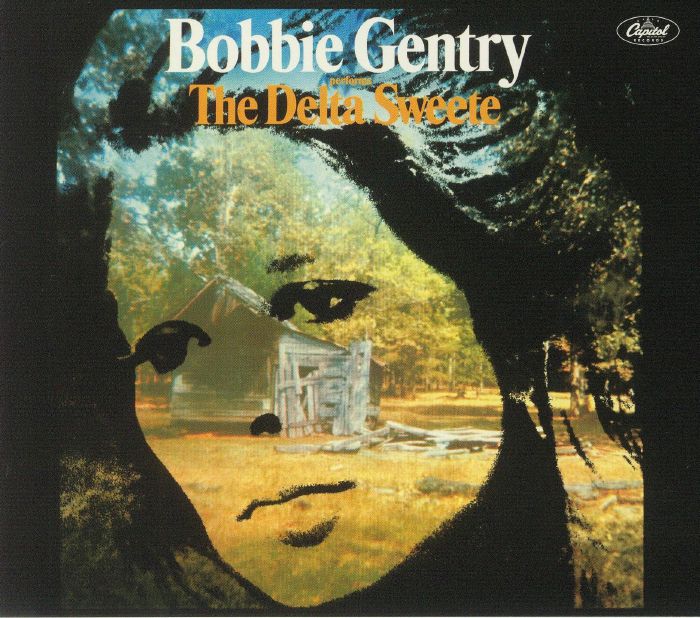
SHINTARO QUINTET-EVOLUTION.
Shintaro Quintet-Evolution.
Label: BBE Music.
Format: CD.
Ever since the mid-fifties, many American jazz musicians journeyed to Japan where they toured and recorded albums. They were respected and treated as series musicians, and when they recorded an album the budget was much more generous and the working conditions far better than they were used to.
It was no surprise that between the late-sixties and early seventies, Art Blakey, Bob James, Gary Peacock, Herbie Hancock and Oliver Nelson either spent lengthy periods living in Japan or decided to live there permanently.
During this period, other American jazz musicians journey to Europe and Scandinavia which became their home-from-home. It was the start of a new chapter in their career as jazz was evolving.
Meanwhile, many Japanese jazz musicians decided to head to the home of jazz. This was where the music that they played and were passionate about was born, evolved and became popular. It was akin to a pilgrimage for musicians like young Japanese jazz musicians like Shintaro Nakamura who arrived in America in the mid-sixties. By 1984, the bassist had founded the Shintaro Quintet who recorded Evolution for Streetnoise Records. By then, he had worked with the great and good of jazz.
Shintaro Nakamura was born in Kobe, in 1956, and discovered jazz music in high school. This came about when one of his classmates brought in a jazz album. For Shintaro Nakamura this was a gamechanger.
Jazz became the soundtrack to daily life for Shintaro Nakamura. For the next three years he played the same records each day. Ella and Louis, Relaxin’ With The Miles Davis Quintet and Cookin’ With The Miles Davis Quintet were the records that started a lifelong love affair with jazz, and especially the bass.
In the early days, Shintaro Nakamura was captivated by Paul Chambers’ bass lines and Red Mitchell’s melodic playing. These two bassists would later influence him as he embarked upon a career as a professional jazz musician.
Having discovered in high school, Shintaro Nakamura was soon hanging out in the jazz kissa, a network of jazz coffeehouses and bars. This was akin to a musical education as he was able to hear an eclectic selection of jazz which was often played on high end stereo systems. Sometimes, he was lucky enough to hear local jazz musicians and occasionally, visiting jazzers from overseas.
After high school, Shintaro Nakamura headed to Kinki University, where he joined the Jazz Studies Group and also learned to play the bass. By 1982, he was too busy with music and dropped out of University.
By then, Shintaro Nakamura had realised there was a limit to the music that he could hear in Japan. He realised that to further his musical education he was going to have to travel to the home of jazz, America.
Shintaro Nakamura decided to study jazz in New York, and while he was there, he decided to write some new compositions. Having played in some jazz sessions he decided that he wanted to record the new tracks.
To do this, he needed to put together a band. By then, Shintaro Nakamura had already played alongside some well known names. This included Larry Carlton, Marcus Miller, Steve Gadd and Woody Shaw a couple of times. However, to record his debut album he handpicked a band.
The first recruit was pianist Jeff Jenkins who sounded as if he had been influenced by McCoy Tyner’s percussive blues. He was joined by American-born saxophonist Robert Kenmotsu who previously had been a member of Jack McDuff’s band. He was joined in the front line by thirty-four year old trumpeter Shunzo Ohno. Drummer Fukushi Tainaka was joined in the rhythm section by bandleader and bassist Shintaro Nakamura who engineered and produced Evolution at Hi-Five Studio, New York, on the ‘10th’ and ‘13th’ January 1984.
Before the recording sessions, the Shintaro Quintet spent just a day practising. That was all they needed. They were ready to record Evolution at Hi-Five Studio. Evolution took just two days for the Shintaro Quintet to record.
Evolution was an album that had been influenced by the jazz music of the late-fifties and early sixties. This was the music that Shintaro Nakamura heard growing up and had influenced him. He recorded Evolution live and there was no overdubs. Instead, the Shintaro Quintet played together and recorded straight to tape. It was an album of modal jazz that sometimes heads in the direction of hard bop, post bop and avant-garde.
Once the recording of Evolution was complete, Shintaro Nakamura returned home to Japan where he met his friend Hedeki Kawamura who had just founded Streetnoise Records. He was looking for albums that had been recorded in New York to release on his nascent label. Shintaro Nakamura agreed to let his friend release Evolution and the Shintaro Quintet’s debut album became Streetnoise Records’ second release.
Streetnoise Records had 1,000 copies of Evolution pressed. It featured a distinctive diagonal OBI strip across the top left hand corner of the sleeve. The album was sold in local record shops and at concerts.
When jazz fans heard Evolution they discovered and were impressed by an album of original music that was played by the Shintaro Quintet. They were tight, talented and versatile and showcased their considerable talents during the five tracks written by bandleader and bassist Shintaro Nakamura. This included Blind Man which closed the album and was a tribute to Woody Shaw who he had played with just before recording Evolution. Sadly, he was almost blind by then and Shintaro Nakamura wrote the track as a tribute to the jazz great. It brought to a close Evolution, the Shintaro Quintet’s J Jazz cult classic which thirty-seven years after its original release is belatedly starting to find a wide audience.
Shintaro Quintet-Evolution.
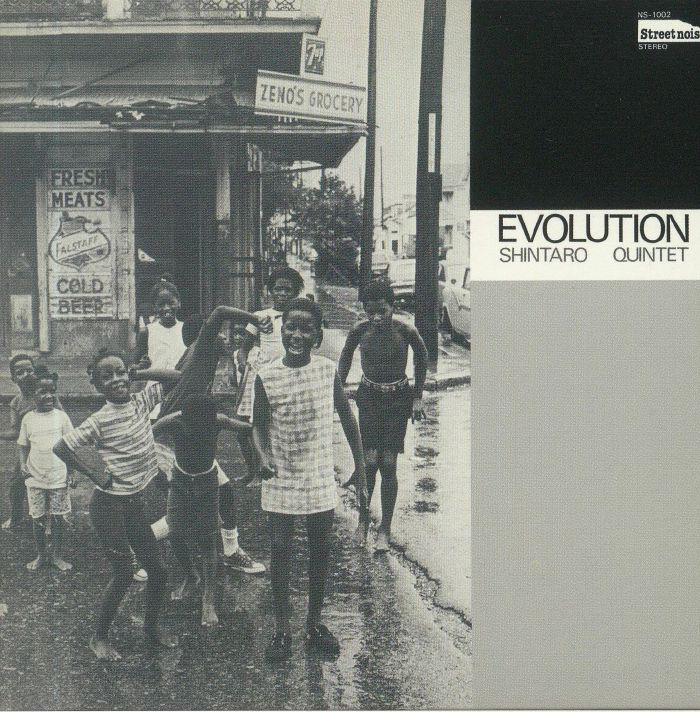
CULT CLASSIC: LOLEATTA HOLLOWAY-CRY TO ME.
Cult Classic: Loleatta Holloway-Cry To Me.
Before being transformed into a disco diva by arranger, guitarist and producer Norman Harris at Salsoul imprint Gold Mind Records, Loleatta Holloway released two albums of Southern Soul for Michael Thevis’ Aware Records. This includes her sophomore album Cry To Me, which was released in 1975.
Loleatta Holloway was born in the Windy City of Chicago, on November the ‘5th’ 1946, and just like Minnie Ripperton and Aretha Franklin her talent was noticeable from an early age. Growing up, music was always part of Loleatta Holloway’s life.
Her first involvement with music was when she joined her mother’s gospel group. Her time with The Holloway Community Gospel Singers was akin to a musical apprenticeship.
That was also the case for another young singer that Loleatta Holloway met whilst singing with her mother’s gospel group. This was a young Aretha Franklin who later, would influence Loleatta Holloway’s vocal style and phrasing.
In 1967, Loleatta Holloway was asked by Albertina Walker to join The Caravans, the gospel group she founded in the fifties. She agreed, and later, that year, The Famous Caravans as they were now billed, released their critically acclaimed album Help Is On The Way. Loleatta Holloway’s recording career was underway.
For the next four years, she was a member of The Caravans and on their 1969 album Think About It takes charge of the lead vocal on two tracks. However, by 1971 Loleatta Holloway was ready to embark on a new chapter in her career.
She acted in the musical revue Don’t Bother Me, I Can’t Cope and formed and toured with her own company Loleatta Holloway and Her Review. By then, she had also met future husband and manager Floyd Smith, who arranged for Loleatta Holloway to record her first secular tracks.
This was a cover of a Gene Chandler song Rainbow 71, which was released on the Apache label in 1971. Later, they leased to Galaxy who were able to distribute the single nationwide. However, the song failed to chart and Loleatta Holloway returned to the studio.
Her next single was Bring It On Up, originally the b-side to Sentimental Reasons. It was around this time that Michael Thevis became aware of Loleatta Holloway, and he signed for his new Atlanta based Aware label.
Now that he had signed Loleatta Holloway, Michael Thevis wasted no time recording her first single for his new label. This was Mother Of Shame, which was released in May 1973, and reached number sixty-three in the US R&B Charts. Although it was only a minor hit, Loleatta Holloway entered the studio with producer Floyd Smith to record her debut secular album.
Loleatta.
This was Loleatta, which was recorded at the Sound Pit Studios, in Atlanta, Georgia. The album was produced by Floyd Smith who penned Part Time Lover, Full Time Fool and cowrote Only A Fool with William Johnson. Accompanying Loleatta Holloway as she recorded the ten tracks were The “Homegrown” Rhythm Section. Once the album was completed, it was released later in 1973.
By July 1973, DJs were playing Our Love which was on the B-Side of Mother Of Shame. It eventually reached forty-three in the US R&B charts and game Loleatta Holloway her second hit single.
Buoyed by the success of Our Love, Part Time Lover, Full Time Fool was released as a single. Despite being one of the strongest song on the album and an obvious choice for a single it failed to chart. This was a disappointment for Loleatta Holloway and Floyd Smith who wrote and produced the song.
There was further disappointment when Loleatta was released later in 1973 and failed to chart. That was despite the album receiving positive reviews from the critics that reviewed it.
The album featured a series of vocal masterclasses from Loleatta Holloway who sounded as if she had lived the lyrics. She breathed life, meaning and emotion into the songs on Loleatta and was like actress in a play on the tales of love and love gone wrong. Sadly, very few people heard Loleatta when it was released in 1973 and she hoped that the followup fared better.
Cry To Me.
In the spring of 1974, Loleatta Holloway returned to the studio to record her next single.The song that had been chosen was a Sam Dees’ composition Help Me My Lord. It found Loleatta Holloway strutting her way through the track delivering a vocal powerhouse as she combines Southern Soul and gospel.
Then Loleatta Holloway delivers a defiant vocal that is a mixture of anger and frustration on Frederick Knight’s The World Don’t Owe You Nothin’. It features a funky, soulful arrangement that is the perfect backdrop to this mini soap opera. However, despite being the stronger of the two tracks it was destined for the B-Side.
This decision came back to haunt Aware Records when Help Me My Lord was released as a single and failed to chart. Despite this, Loleatta Holloway returned to the studio to record the rest of her sophomore album Cry To Me.
Another eight tracks were chosen for the album including Sam Dees’ I Know Where You’re Coming From and The Show Must Go On. They were join ed by David Camon’s Cry To Me; Curtis Mayfield’s Just Be True To Me; Johnny Jacobs and Ronnie Walker’s Something About The Way I Feel; A. Jerline Williams and William Johnson’s I Can’t Help Myself and Jo Armstead’s Casanova. The other track was the Loleatta Holloway composition I’ll Be Gone. These tracks were recorded at the Sound Pit Studios, in Atlanta, Georgia.
Just like Loleatta, Cry To Me was produced by Floyd Smith. Accompanying Loleatta Holloway at the Sound Pit were The “Homegrown” Rhythm Section. Just like her debut album they played an important part in the album’s sound.
This includes on the album opener Cry To Me where a piano plays slowly, guitars chime and combine with the rhythm section as Loleatta Holloway delivers a soliloquy. She’s heartbroken and sings about how her relationship is breaking up against an arrangement that is a mixture of power and drama. Strings sweep in while the rhythm section add drama and backing vocalists accompany a powerful, soul-baring vocal. It’s almost impossible not to to get caught up in the emotion and sadness of what’s one of the album’s highlights.
The Show Must Go On was written by Sam Dees who originally recorded this ballad. Loleatta Holloway delivers a hurt-filled soliloquy against Floyd Smith’s arrangement. By the time the vocal enters, the rhythm section, sweeping strings horns, gospel-tinged backing vocalists, vibes and even applause accompany a defiant, dramatic soul-baring vocal.
I Know Where You’re Coming From is a song about a relationship breakup with a twist in the tale. Loleatta Holloway delivers a soliloquy as a guitar chimes and a bass cuts through the arrangement. Meanwhile, soaring backing vocals join Loleatta Holloway as she reassures her friend: “I Know Where You’re Coming From” before singing: “why don’t you take my hand and be my man” on this timeless slice of sassy Southern Soul.
There’s a sense of drama to the ballad Just Be True To Me. It features an arrangement where strings sweep and horns rasp as the rhythm section provide the heartbeat. Meanwhile, Loleatta Holloway delivers a heartfelt and impassioned vocal that becomes needy and hopeful when she sings: “Just Be True To Me” on this beautiful ballad.
The tempo rises slightly on Something About The Way I Feel as the rhythm section, horns and vibes set the scene for an impassioned vocal. Loleatta Holloway reflects about the past and what she’s been through with her partner. She’s accompanied by backing vocalists that prove to be the perfect foil as the song swings and she gives thanks for the love she’s found, what she has and “the way I feel.” It’s a beautiful paean where the future disco diva paints pictures with the lyrics.
I’ll Be Gone is another ballad and the only song on the album written by Loleatta Holloway. She warns on this tale of love gone wrong that: “I can’t let you keep on hurting me for I’ll Be Gone.” Her vocal is bristling with emotion and hurt as the rhythm section add a degree of drama and are joined by a crystalline guitar, vibes plus sweeping and pizzicato strings. They provide the perfect backdrop as Loleatta Holloway delivers an ultimatum to her cheating, no good man.
Dramatic describes the introduction to I Can’t Help Myself before it sets the scene for Loleatta Holloway’s vocal. There’s a degree of confusion in her voice as she’s fallen for the wrong guy. “I never thought I could fall in love with a guy like you, although I know you could never be true, I find myself wanting to live with ‘cos I love you, I can’t help myself.” Meanwhile, backing vocals soar above the arrangement and coo, as drums pound, a guitar chimes, strings sweep and horns rasp. It’s one of the best arrangements on the album and the perfect accompaniment for the vocal.
Stabs of horns, backing vocalists and the rhythm section combine to create a dramatic backdrop before Loleatta Holloway unleashes a powerful, emotive vocal on Casanova. She tells her parter “Casanova your playing days are over.” Meanwhile, the backing vocalists sing “it’s over, it’s over baby” as strings sweep and swirl and the drama builds during this four minute soap open. It’s one of the eight tracks recorded at the Sound Pit and is without doubt one of the highlight Cry To Me.
With the rest of the album completed, Cry To Me was scheduled for release later in 1975. Loleatta Holloway must have been hoping that it would fare better than her debut album.
Things were looking good when Cry To Me was released as a single in January 1975 and reached sixty-eight in the US Billboard 100 and ten in the US R&B charts.
In June 1975, I Know I Where You’re Coming From was released as a single and stalled at sixty-nine in the US R&B charts. It was a case of one step forward and two steps back for Loleatta Holloway.
She released her sophomore album Cry To Me later in 1975 and although it was well received by critics but like her debut failed to trouble the charts. The problem was this future Southern Soul classic hadn’t been promoted properly. However, this time there was a reason for the lack of promotion.
All wasn’t well at Aware and the label was teetering on the brink. Despite this, Casanova was released as a single but failed to find the audience it deserved. Not long after this, Aware and the rest of Michael Thevis’ empire folded.
All the artists signed to GRC, Aware and Hotlanta Records were left high and dry. They were left without a label and some of the artists were also owed royalties, which in some cases, was a significant sum of money. These artists had no idea what the future held for them.
In the case of Loleatta Holloway she was signed to Salsoul imprint Gold Mind Records by Norman Harris. This was the start of a new chapter Loleatta Holloway who was transformed into a disco diva at her new label.
This was very different to the two albums of Southern Soul Loleatta Holloway had recorded at Aware. Sadly, neither Loleatta nor Cry To Me was a commercial success when they were released. It was only much later that the two albums started to find a wider audience.
Cry To Me is the best of the two albums and is almost flawless. Ironically, the weakest track on the album is the lead single Help Me My Lord. The rest of the songs on the album are tailor made for Loleatta Holloway and play to her strengths. She delivers vocals that veer between dramatic, emotive, heartfelt, impassioned and soul-baring to defiant, hopeful and sassy as she struts her way through the lyrics about love and love gone wrong. Other times, the vocals are needy and hopeful as Loleatta Holloway brings the lyrics to life. Especially when accompanied by Floyd Smith’s timeless arrangements. They add to the drama and theatre of the songs on Cry To Me and are play their part in the sound and success of the album.
Sadly, Aware was the wrong label for Loleatta Holloway and the two albums weren’t promoted properly. Especially Cry To Me which was released just before Michael Thevis’ house of cards collapsed. This was a great shame and meant that very few people got to hear Cry To Me. For Loleatta Holloway it was a case of what might have been?
Forty-five years later, and Loleatta Holloway’s music is more popular than ever. Although she’s better known as a disco diva the two albums she recorded for Aware are belatedly receiving the recognition they deserves and this includes Loleatta Holloway’s Southern Soul classic Cry To Me.
Cult Classic: Loleatta Holloway-Cry To Me.
CULT CALSSIC: TIM MAIA-RACIONAL VOLUME 2.
Cult Classic: Tim Maia-Racional Volume 2.
By 1975, Tim Maia was a changed man and had turned his back on the rock ’n’ roll lifestyle that he had embraced and enjoyed since releasing his eponymous debut album in 1970. Back then, the charismatic Brazilian singer realised that he was only here for a visit and decided to live life to the fullest. He drank, took drugs and partied as he enjoyed the newfound wealth his musical career had brought him.
Despite that wealth and a lifestyle that many of his fans must have envied, Tim Maia wasn’t happy. The problem was the royalty rate that he had been paid by Polydor for his first four album. That was why he decided to found his own publishing company Seroma. This just happened to coincide with him signing to RCA Victor.
This was a new start for Tim Maia, and he began work on his next album which was going to be a double album. He wrote and recorded the instrumental parts and all that was left was for him to write the lyrics.
Seeking inspiration for the lyrics, Tim Maia decided to visit one of his former songwriting partners Tibério Gaspar. That was where he found the book that would change his life, but sadly, not for the better. The book was Universo em Desencanto (Universe in Disenchantment) which revolved around the cult of Rational Culture. It transformed Tim Maia’s life and inspired what was to be his fifth album Racional Volumes 1 and 2, which was also the most controversial of his career. It was the latest extraordinary chapter in his life.
Tim Maia, was born in Rio De Janeiro on September the ‘28th’ 1942 and was the eighteenth of nineteen children. Aged just six, he earned a living delivering homemade food which his mother cooked. This he hoped would be the nearest he ever got to an ordinary job. After that, Tim Maia decided to devote himself to music which offered him an escape from the grinding poverty that was around him.
It turned out that Tim Maia was a prodigiously talented child who wrote his first song as an eight year old. By the time he was fourteen, he had learnt to play the drums and formed his first group Os Tijucanos do Ritmo. They were only together for a year, but during that period, Tim Maia took guitar lessons and was soon a proficient guitarist. This would stand him in good stead in the future.
In 1957, Tim Maia joined the vocal harmony group The Sputniks who made a television appearance on Carlos Eduardo Imperial’s Clube do Rock. However, the group was a short-lived, and Tim Maia embarked upon a solo career. This lasted until 1959 when the seventeen year old decided to emigrate.
Tim Maia decided to head to America, which he believed he was the land of opportunity and arrived in New York with just twelve dollars in his pocket. On his arrival, he who was unable to speak English, but somehow managed to bluff his way through customs telling the officials that he was a student called Jimmy. Incredibly, the customs officer believed him and he made his way to Tarrytown, New York, where he lived with extended family and started making plans for the future. By then, Tim Maia had decided he would never return to Brazil.
During his time in New York, Tim Maia held down a variety of casual jobs and it has been alleged that he even augmented his meagre earnings by committing petty crimes. However, Tim Maia also learnt to speak and sing in English which lead to him forming a vocal group, The Ideals.
During his time with The Ideals, they decided to record a demo which included New Love which featured lyrics by Tim Maia. When they entered the studio, percussionist Milton Banana made a guest appearance. Sadly, nothing came of the demo although Tim Maia later resurrected New Love for his album Tim Maia 1973. Before that, things went awry for Tim Maia and he was eventually deported.
Confusion surrounds why and when Tim Maia was deported from America, and there’s two possible explanations. The first, and more rock ’n’ roll version is that Tim Maia was arrested on possession of cannabis in 1963, and deported shortly thereafter. That seems unlikely given how punitive penalties for possession of even a small quantity of cannabis were in the sixties. Indeed, it’s highly unlikely that Tim Maia would’ve been deported without having to serve a jail sentence first. This lends credence to the allegation that Tim Maia was caught in a stolen car in Daytona, Florida, and after serving six months in prison he was deported back to Brazil in 1964.
Now back home in Brazil, Tim Maia’s life seemed to be going nowhere fast. He was fired from several jobs and was also arrested several times. It was no surprise when he decided to move to São Paulo, where he hoped that he could get his career back on track.
Having moved to São Paulo, Tim Maia, hoped he would be reunited with Roberto Carlos who had been a member of The Sputniks. Ironically, it was Roberto Carlos who Tim Maia had insulted before he left The Sputniks. Despite leaving several messages, Roberto Carlos never returned Tim Maia’s calls and he had no option but to try to make his own way in the São Paulo music scene.
Tim Maia’s persistence paid off, and soon, he had featured on Wilson Simonal’s radio show, and then appeared alongside Os Mutantes on local television. Despite making inroads into the São Paulo music scene, Tim Maia was still determined to contact Roberto Carlos and sent him a homemade demo. Eventually, Tim Maia’s persistence paid off.
When Roberto Carlos heard the demo, he recommended Tim Maia to CBS who offered him a recording deal for a single, and an appearance on the Jovem Guarda television program. However, when Tim Maia’s released his debut single Meu País in 1968, it failed to find an audience.
Tim Maia tried a new approach with his sophomore single and recorded These Are the Songs, in English. It was released later in 1968, but again, commercial success eluded Tim Maia. Things weren’t looking good for the twenty-six year old singer.
Fortunately, Tim Maia’s luck changed when he wrote These Are the Songs for Roberto Carlos which gave his old friend a hit single. At last, things were looking up for Tim Maia.
Things continued to improve when Elis Regina became captivated by Tim Maia’s composition These Are the Songs. This led to Elis Regina asking Tim Maia to duet with her on the song. Tim Maia agreed and they recorded the song in English and Portuguese and the song featured on Elis Regina’s 1970 album Em Pieno Veroa. Recording with such a famous Brazilian singer gave Tim Maia’s career a huge boost, and soon, he was offered a recording contract by Polydor.
Having signed to Polydor in 1970, and somewhat belatedly recorded his debut album Tim Maia 1970. Although it showcased a talented, versatile and charismatic singer, who married soul and funk with samba and Baião. This groundbreaking album spent twenty-four weeks in the upper reaches of the Brazilian charts and launched Tim Maia’s career.
The following year, Tim Maia returned with his sophomore album Tim Maia 1971, where elements of soul and funk were combined with samba and Baião There were even hints of jazz, psychedelia and rock during what was an ambitious and innovative album of genre-melting music. It was released to critical acclaim and like his debut was a commercial success.
Tim Maia 1971 also featured two hits singles Não Quero Dinheiro (Só Quero Amar) and Preciso Aprender a Ser Só. Having released just two albums Tim Maia’s star was in the ascendancy, and it looked as if he was well on his way to becoming one of the biggest stars of Brazilian music.
After the success of his sophomore album, Tim Maia headed to London to celebrate after years of struggling to make a breakthrough. For the first time in his career he was making a good living out of music, and he was determined to celebrate and enjoy the fruits of his label. However, it was during this trip to London, that he first discovered his love of the rock ’n’ roll lifestyle.
Realising that he was only here for a visit, Tim Maia embraced the rock ‘n’ roll lifestyle and almost defiantly, lived each day as if it was his last. He hungrily devoured copious amounts of drugs and alcohol which became part of Tim Maia’s daily diet. Fortunately, his new-found lifestyle didn’t seem to affect his ability to make music. That was until he discovered a new drug that would prove to be his undoing.
In London, Tim Maia discovered LSD and became an advocate of its supposed mind opening qualities. He took 200 tabs of LSD home to Brazil and gave it to his friends and people at his record label. Little did he know, but this was akin pressing the self destruct button.
Over the next two years, he released two further albums, Tim Maia 1972 and Tim Maia 1973. Both were released critical acclaim and were a commercial success in Brazil. It seemed that the charismatic singer who had been christened the father of Brazilian soul music could do no wrong.
The only problem was that after the success of Tim Maia 1973, Tim Maia became unhappy at the royalty rate he was receiving from his publisher. This led to him founding his own publishing company Seroma, which coincided with Tim Maia signing to RCA Victor.
Racional Volumes 1 and 2.
RCA Victor had offered Tim Maia the opportunity to record a double album for his fifth album and he was excited by this opportunity. He, agreed to sign to RCA Victor and soon, began work on his fifth album.
Somehow, Tim Maia was still seemed able to function normally on his daily diet of drink and drugs. He and his band headed to house in a quiet part of Rio de Janeiro and spent their days smoking marijuana and experimenting with hallucinogenics as they worked on new songs. By the end of July, they already had worked out several dozen songs and instrumental grooves followed . They stayed true to Tim Maia’s samba-soul formula.All that was left was for Tim to write the lyrics to the double album.
Seeking inspiration for the lyrics, Tim Maia decided to visit one of his former songwriting partners Tibério Gaspar. That was where Tim main found the book that would change his life, but sadly, not for the better. The book was Universo em Desencanto (Universe in Disenchantment), which revolved around the cult of Rational Culture who didn’t believe in eating red meat or using drugs. Given Tim Maia’s voracious appetite for drink and drugs, he seemed an unlikely candidate to join the cult. However, sadly, he did. It’s also alleged that he coerced the rest of band to join the cult and live by its strict precepts.
Straight away, the cult’s beliefs affected Tim Maia and his music. Ever since he joined the cult of Rational Energy, he was clean-shaved, dressed in white and no longer drank, ate red meat, smoked or took drugs. He also became fixated on UFOs and wherever he went he held a mysterious book in his hand. Tim Maia was a changed man and even his music changed.
The lyrics for his fifth album, and RCA Victor debut, were supposedly about his newly acquired knowledge that came courtesy of Universo em Desencanto. With the ‘lyrics’ complete, Tim Maia’s vocals were overdubbed onto what became Racional Volumes 1 and 2. With the album completed, Tim took it to RCA Victor who promptly rejected the album.
RCA Victor’s reason for rejecting the album was that it wasn’t of a commercial standard. To make matters worse, the lyrics made absolutely no sense. There was only one small crumb of comfort and that was that Tim Maia’s voice was improving. That hardly mattered for RCA Victor who said that they weren’t going to release the album. For RCA Victor, Racional Volumes 1 and 2 was a huge disappointment.
That was until Tim Maia offered to buy the master tapes from RCA Victor so that he could release the album independently. RCA Victor accepted his offer which allowed them to recoup some of their money. Having bought the master tapes, Tim Maia set about releasing Racional Volume 1 in 1975.
When critics and record buyers heard the lyrics on Racional Volume 1 they struggled to understand them. They were very different to the lyrics on his four previous albums. It was hard to believe it was the same artist. Tim Maia was a changed man since joining the cult and was as if he had been brainwashed and was transformed into an excitable evangelist as he shouts: “Read the book, the only book!” throughout the album. That was apart from Rational Culture which was an epic genre-melting jam that closed the album on a high. It was a reminder of what Tim Maia was capable of.
Elsewhere it was a different story as Tim Maia combines his own inimitable brand of gospel music that’s full of sci-fi imagery with elements of blues, soul, pre-disco funk and psychedelic rock. The influence of Motown can be heard and the album heads in the direction of on Imunização Racional. The arrangements were tight and up to Tim Maia’s usual standards as he delivered impassioned and powerful vocals. However, the problem was that Tim Maia was using his fifth album Racional Volume 1 to spread the word about the cult’s so-called philosophy.
This extended to the album cover which detailed the cult’s core beliefs. It was very different from Tim Maia’s previous albums. However, he released Racional Volume 1 on his own label Seroma.
There was a problem though. Most record shops were sure about stocking such a controversial album. However, Tim Maia managed to convince a few shops to stock copies of Racional Volume 1. Despite that, the album wasn’t a commercial success when it was released in 1975. The only track to receive any radio play was Imunização Racional (Que Beleza). Even then, it was only a minimal amount and Racional Volume 1 was the least successful album of Tim Maia’s career. Still he as determined to release Racional Volume 2.
Racional Volume 2.
Following the release of Racional Volume 1 many of Tim Maia’s fans thought he was no longer the artist he once was. The album was very different to his first four albums and they thought he had lost his way musically. However, the problem was his membership of the cult was affecting his judgment and also his music.
It was as if he had been brainwashed and Tim Maia was willing to publicise the cult’s so-called philosophy via his music. He wasn’t the first to do this, but very few artists had decided to dedicate two consecutive albums to a cult’s philosophy. Tim Maia was the first do this.
In 1976, he was preparing to release the rest of the music that he had originally recorded for RCA Victor as Racional Volume 2. Just like his previous album, the lyrics were inspired by the cult’s philosophy which Tim Maia had embraced fully by 1976. He was almost unrecognisable and very different to the musical bon viveur he once was. Now he was preparing to self-release Racional Volume 2 via his own Seroma label.
He went through all the same problems as he had with Racional Volume 1 and struggled to get shops to stock his new album. Given the commercial failure of Racional Volume 1, most shops were reluctant to stock the followup. For Tim Maia this was another disappointment. Despite this, he went ahead with the release of Racional Volume 2.
When Racional Volume 2 was released in 1976 lightning struck twice when the album failed to impress the critics. Worse was to come when the album sunk without trace. Very few copies of Racional Volume 2 were sold and it was another commercial failure for Tim Maia.
Meanwhile, his fans thought that he had lost his way musically after the release of his sixth album Racional Volume 2. It was his second album that wasn’t a commercial success. There was a reason for this.
Tim Maia’s fans didn’t want to buy another album that featured lyrics about the cult’s philosophy. They preferred his usual albums lyrics which ranged from romantic to party oriented while other songs had a feelgood sound. That wasn’t the case on Racional Volume 2.
Just like his previous album, the problem with the songs were the lyrics where Tim Maia parroted the cult’s philosophy. Despite that, he delivers heartfelt vocals while others are a mixture of power, passion and emotion. He may have been singing about a cult’s philosophy but Tim Maia was still a talented vocalist and was improving with every album he released. His voice was clear and powerful and he seemed to be maturing as a vocalist.
Meanwhile, the arrangements marked a return to form from Tim Maia. He combined shuffling South American rhythms with soul and funk where horns play an important part in the arrangements. Sometimes, sweeping orchestrated arrangement take the songs in the direction of MPB. Other times, elements of blues, early-seventies funk and psychedelic rock can be heard on Racional Volume 2. It features some stunning arrangements that are tight and provide the perfect backdrop for Tim Maia’s vocal. Sadly, very few people heard Tim Maia’s sixth album. Maybe this was the wakeup call he needed?
In 1976, Tim Maia quit the cult after the release of Racional Volume 2. By then, he had fallen out with its leader and felt as if he had been duped. So much so, that he wanted the master tapes to Racional Volumes 1 and 2 destroyed. The two albums were part of his past, and now Tim Maia was ready and wanted to move forward.
Nowadays, Racional Volumes 1 and 2 are both regarded as cult classics, whereas in 1976 they tarnished Tim Maia’s reputation. Joining the cult was one of the worst decisions he made in what had already been an eventful life. For the two years he was part of the cult it was as if Tim Maia had been brainwashed and his music was regarded as a way to publicise the cult. He was being used and eventually saw through this ruse in 1976.
By then, Tim Maia had spent money buying back the tapes for Racional Volumes 1 and 2 from RCA Victor and had released the two albums on his own Seroma label. It had been an expensive episode for Tim Maia and wasn’t a happy time in his life.
Tim Maia’s music changed after the release of Racional Volumes 1 and 2 and he entered what was the most prolific period of his career. Sadly, he struggled to reach the heights of his first four albums and Tim Maia was never the same man or musician after his dalliance with the cult of rational behaviour.
Despite this, Racional Volumes 1 and 2 are still regarded as cult classics and must have albums for anyone interested in Tim Maia’s music. However, Racional Volumes 2 is strongest of the two albums and is a reminder of the father of Brazilian soul music during what was one the strangest periods in what was an eventful, roller coaster of a life.
Having said that , Tim Maia enjoyed every minute of a life lived in the fast lane. It was as if his mantra was to live life to the full. That was just as well because Tim Maia passed away on March the ‘15th’ 1998, aged just fifty-five.
Since his death, Tim Maia’s music has been a well-kept secret outside of his native Brazil and even many Brazilians still aren’t aware of his music. However, older record buyers still talk about the maverick singer-songwriter in hushed tones and remember the flawed genius that was Tim Maia and a singer who could’ve and should’ve been a huge star outside of his native Brazil. Sadly, something held him back and stopped Tim Maia from enjoying the widespread commercial success and critical acclaim that his music so richly deserved.
Was it Tim Maia’s love of the rock ’n’ life style which he embraced and enjoyed with a voracious appetite? Maybe Tim Maia’s dalliance with the cult of rational behaviour had lasting effects and somehow stopped this hugely talented singer, songwriter, musician and producer from scaling the heights that he should’ve? However, he left behind a rich musical legacy including several classic albums and his cult classic Racional Volume 2.
Cult Classic: Tim Maia-Racional Volume 2.

KEITH MANSFIELD-CONTEMPO.
Keith Mansfield-Contempo.
Label: Be With Records.
Format: LP.
Nowadays, Keith Mansfield is regarded as one the doyens of library music, and original copies of his 1976 album Contempo are now highly collectable. That’s the case with many other KPM Records’ releases.
Everyone from sample-hungry hip hop producers and crate-digging DJs to film producers collect library music. They remember hearing library music in cartoons, documentaries and quizzes as they growing up in the seventies and eighties. So will many other people who listen to a KPM Records’ releases including Contempo which was released nearly two hundred years after the company was formed.
The Rise and Rise Of KPM.
Robert Keith founded a comp[any in 1780, to make of musical instruments, and fifty years later, in 1830, entered into a partnership with William Prowse, a music publisher. The newly formed partnership was named Keith Prowse Music (KPM), and over the next hundred years, the company grew and expanded into other areas,
By the early twentieth century, Keith Prowse Music was selling sheet music and concert tickets, but it was the invention of the gramophone that proved to be a game-changer.
Demand for sheet music and concert tickets grew, and in 1955, Keith Prowse Music was decided to diversify, into one of the most profitable areas of music, music publishing.
One of the reasons behind the decision to diversify into music publishing, was to feed the demand for soundtracks for radio, television and film. Previously, music libraries supplied classical music, which was what was required. By the mid-fifties, and the birth of television, the world and music were changing, and changing fast.
Four years later, in 1959, Associated Rediffusion bought another music publisher Peter Maurice and merged it with Keith Prowse Music. The newly merged company became Keith Prowse Maurice, which became known as KPM Music.
The newly named KPM Music was a much bigger player in the world music publishing. However, in the mid-sixties, a new name took the helm at KPM Music, and transformed the company into one of the biggest names in library music.
When Robin Phillips joined KPM Music in the mid-sixties, he proved to be an astute and visionary businessman. Two decisions Robin Phillips made demonstrate why. His first decision was that KPM Music should switch from the old 78 records to the LP, which made sense, as LPs were what people were buying. They were less prone to breakage, which meant less returns and more profit. LPs could contain more music, and could be released in limited editions of 1,000. The other decision he made was to hire the best young British composers and arrangers.
Among the composers Robin Phillips hired were Keith Mansfield and Johnny Pearson, whose talent and potential as composers he recognised. Robin Phillips managed to hired them before they’ had established a reputation, although they were known within music publishing circles.
Later, Robin Phillips managed to hire some of jazz musicians of the calibre of John Cameron, Syd Clark, Alan Hawkshaw and Alan Parker. Their remit was to provide him with new music, which was referred to as production music. Many of their remits was to write music which matched themes or moods, which initially, wasn’t isn’t easy, but soon, the composers were able to do so. Almost seamlessly, the composers created themes for many well known television shows and films.
For the composers and musicians involved in writing and recording library music, they were part of what was one of the most lucrative areas of music. When EMI realised that KPM Music had one of the best and most profitable music libraries and decided to buy the company. Executives at EMI had spotted the profitability of library music and the consistency, quality and depth of KPM Music’s back catalogue. However, not everyone within the music industry approved of library music.
Other songwriters looked down on writers of library music, and the British Musician’s Union wasn’t fan of library music. They banned their members from working on recording sessions of library music. Somewhat shortsightedly, the Musician’s Union thought that eventually, there would come a time when there was no need for any further recordings. Their fear was that the sheer quantity of back-catalogue would mean no new recordings would be made, and their members would be without work. Fortunately, KPM Records thought of a way to subvert the ban.
KPM Records would fly out composers, arrangers and musicians to Holland and Belgium, where local musicians would join them for recording sessions. This meant that often, the same musicians would play on tracks that were penned by several composers. For the musicians involved, this proved lucrative and some were reluctant to turn their back on session work for companies like KPM Records.
Still the Musician’s Union’s draconian ban continued, and it wasn’t until the late seventies that they lifted their ban on new recordings of library music. By then, the Musician’s Union realised that they were fighting a losing battle and had no option but to concede defeat.
Meanwhile, the music that was being recorded in Europe and once the ban was lifted in Britain, found its way onto albums of library music released by KPM Music. Again, KPM Music were innovators, and released limited editions of library music. Sometimes, only 1,000 albums were released, and they were sent out to film studios, television and radio stations and advertising agencies. However, by then, interest in library music had grown.
Although the albums of library music were never meant to be commercially available, a coterie of musical connoisseurs had discovered KPM Music’s albums of library music and were determined to add each release to their collection. They weren’t alone.
Later, DJs and sample hungry hip hop and house producers discovered the world of library music. This was a boon for many of these producers who were musically illiterate, and could neither read music nor play an instrument. with lots of practise the musically challenged “producers” were eventually able to sample albums of library music for their latest “production” and very occasionally, this resulted in a hit single for the musical pirates. However, most of the credit should’ve gone to those who made the music that had been sampled.
This included Keith Mansfield who recorded some of the best library music was ever recorded in the UK. Especially the music they recorded for KPM which has ‘inspired’ several generations of musicians. One of the albums of library music that Keith Mansfield recorded for KPM was Contempo, which is part of the legendary KPM 1000 series.
Contempto features Keith Mansfield at his best on a cohesive and truly timeless album of library music. The music is funky, soulful, string-drenched and sometimes jazz-tinged and rocky.
Side One.
Side one of Contempo is uber funky from the get-go. The Fix is mid-tempo track with a tough cinematic sound where funk and rock combines with jazzy horns. They play their part on a track that wouldn’t sound out of place on a seventies cop show. What’s Cooking reveals a dramatic, funky and sometimes has a lighthearted sound as it threatens to explode into life. The drama continues on the driving, funky and aggressive sounding Cut To Music.
Man Alive is another mid-tempo funky track that sometimes heads in the direction of fusion. Sometimes it has aggressive sound and other times breezes along. Closing side one is the funk rock of Funky Footage a toe tapping track that sample hungry producers will appreciate and be inspired by.
Side Two.
String-drenched describes Breezin’ which sounds as it’s been inspired by mid-seventies disco and jazz-funk. Strings sweep and swirl and play a leading role before they’re joined by horns and keyboards. Together they coming to create a beautiful carefully crafted track that’s slick and dancefloor friendly. On Good Vibrations sweeping strings join forces with horns, pounding drums, a funky guitar and sci-fi synths.
They combine to create a mid-tempo track with a romantic sound that’s been influenced by the West Coast Sound and Blaxploitation strut.
Then Sun Goddess reveals a funky, exotic and sensual sound. Love Deluxe then teases the listener before it gradually reveals a quite beautiful dreamy sounding track where synths augment the keyboards and sultry horns.
Closing Contempo is Snake Hips a rocky track where funky horns are deployed and augment the rhythm section on this mid-tempo slouch.
It’s all change on side two of Contempo with Keith Mansfield dropping the tempo. The music on this library record classic from 1976 veers between laidback, languid, dreamy and romantic. It’s time to lie back and light a Dunhill and pour a glass of Bells as the music becomes post-coital.
Keith Mansfield is one of the greatest purveyors of library music and Contempo which was released by KPM is a genre classic. The two sides show different side to his music. Side one features crime funk while the tempo drops on the second side and the music is much more eclectic. He’s been inspired by Blaxploitation, disco, jazz-funk, fusion and the West Coast Sound. Strings, horns and Fender Rhodes are deployed by one of the doyens of library music on Contempo.
Nowadays, original copies of Contempo are rarities and very few copies come up for sale. When they do, the prices are beyond the budget of most collectors of library music.
Luckily, Be With Record recently reissued Keith Mansfield’s library music classic Contempo. It’s just the latest reissue from the KPM 1000 series and is a reminder of the golden age of library music when artists like Keith Mansfield regularly released albums like Contempo.
Keith Mansfield-Contempo.

 dereksmusicblog
