MARY LOVE-LAY THIS BURDEN DOWN-THE BEST OF MARY LOVE.
MARY LOVE-LAY THIS BURDEN DOWN: THE BEST OF MARY LOVE.
The day that Mary Love entered a talent contest in a local club was that the day that her life changed. She sang a cover of Etta James’ Somebody’s Got A Hold On Me and won. This resulted in Mary being hired to sing every Thursday.
She was paid $8 a night and accompanying Mary Love were The Vows who she had befriended. They were her friends and were protective of her.
The next big break came when Sam Cooke’s manager J.W. Alexander heard Mary sing and gave her his card. The next day, J.W. Alexander and Mary Love met. He offered Mary the chance to sing on demos. This was her opportunity to make a life for herself.
Having started singing demos, Hal Davis heard Mary. He liked what he heard and signed Mary to Modern Records. The only problem was her name. Hal though that Mary Love was a better name for a singer. So it was Mary Love that went on to record twelve tracks for Modern Records between 1965 and 1968. These twelve tracks feature on Mary Love-Lay This Burden Down: The Very Best Of Mary Love.
Of the twenty-five tracks on Lay This Burden Down-The Best Of Mary Love, twelve of them were recorded for Modern Records, between April 1965 and September 1967. This begins with You Turned My Bitter Into Sweet, which was one of Mary biggest hit singles. Released in April 1965, it sold well in and around the Los Angeles area and launched Mary Love’s career. You Turned My Bitter Into Sweet has become a favourite in the UK’s Northern Soul scene. It’s one of Mary’s finest tracks and is a Northern Soul classic.
Following Mary’s debut single, You Turned My Bitter Into Sweet, I’ve Got To Get You Back was released as Mary’s sophomore single in August 1965. Again, it sold well in the Los Angeles area. This would be a familiar story. The exception was Move A Little Closer.
Released in in October 1968, Move A Little Closer reached number forty-eight in the US Billboard 100. This was Mary’s biggest hit. Ironically, Move A Little Closer wasn’t the A-Side. This was Let Me Know. When Move A Little Closer proved more popular, Modern Records flipped the song over, and a hit was born. For Mary, she thought her career was now underway.
Sadly, Lay This Burden Down didn’t build on the success of Move A Little Closer, when was released in October 1966. Again, it failed to chart. It was a hit locally. So was the Ashford and Simpson penned Baby I’ll Come, where Mary mixes power, passion and emotion. It’s one of Mary’s best singles. Tucked away on the B-Side is the hidden gem Satisfied Feeling on the B-Side. Released in February 1967, Mary delivers a vocal tour de force on Satisfied Feeling. After this, Mary would only release one more single for Modern Records.
Talkin’ About My Man was released in July 1967. Written by Arthur Adams, here was a ballad that seemed tailor-made for Mary. Despite this, widespread commercial success and critical acclaim eluded Mary. She did release a duet with Arthur Adams, Is That You. He seems to bring out the best in Mary. Indeed, they encourage each other to greater heights. With growling horns and driving drums for company, Mary and Arthur deliver vocal powerhouses. They’re needy, and full of emotion and sass. Unfortunately, this didn’t result in a hit single to end Mary’s time at Modern Records.
During her time at Modern Records, Mary divided her time between her solo career and singing backing vocals. Everyone from The Ikettes, Vernon Garrett and Lowell Fulson were accompanied by Mary. However, Mary was determined to make a success of her solo career.
In 1968, Mary met producers Matt Hill and Skip Layne. She recorded the anthemic The Hurt Is Just Beginning and Don’t Let It Happen. The Hurt Is Just Beginning garnered radio play in Los Angeles. This just happened to be during the trial of the Black Panther’s Huey Newton. They took to singing lyrics from the song: “The Hurt Is Just Beginning and don’t let it happen.” Not long after this, the B-Side, If You Change Your Mind, started getting radio play. It was released nationally on Josie, reaching number forty-six in the US R&B Charts. For Mary this was her second most successful single. Despite this, another three years passed before Mary released her next single.
Ironically, it was back in Sacramento that Mary met John W. Cole, friends of Mary’s grandparents. He was a businessman, who ran a chain of chemist and record shops. John wanted to expand his business. Next for John was the music business, and knew Roger Spotts, who played alongside Johnny and Shuggie Otis, two hugely talented musicians, arrangers and producers. So Roger would and arrange Mary’s next single at Ray Charles’ Los Angeles studio.
The Mary Love penned There’s Someone For Me was chosen as Mary’s next single. Roger would produce There’s Someone For Me and the B-Side, Born To Live With Heartache. Ray Charles even helped out during the session. He took charge of engineering. Beautiful, cathartic and soul-baring describes There’s Someone For Me. As for Born To Live With Heartache, Mary raises the funk factor and shows another side to her music. Both sides of this 1971 single, which was released on Elco are among some of Mary’s finest work. Sadly, history repeated itself when the single flopped. This resulted in Mary taking time out from the music industry.
It wasn’t until 1975 that Mary returned to music. She’d been raising her family and singing in nightclubs. However, she’d taken a break from recording. During that time, she’d hung out with Lou Rawls, Barry White, Willie Hutch and Dennis Edwards. Through her friendship with comedian, Rudy Ray Moore, Mary landed a part in the Blaxploitation movie Dolemite. Appearing as herself, Mary sings When We Start Making Love and Power Of Love which were part of the soundtrack released on Generation Records. That would be the last we heard of Mary for a couple of years.
Again, Mary was featuring in another film. This time it was Rudy Ray Moore’s Petey Wheatstraw. Mary penned five tracks for the film soundtrack, which was released on the Magic Disc label. Two of the tracks feature on Mary Love-Lay This Burden Down: The Very Best Of Mary Love. Joy and Loving You are gospel tinged tracks, very different from the disco inspired title-track. Unfortunately, commercial success still eluded Mary. Her career as a soul singer hadn’t long to go.
Over the next few years, Mary toyed with disco. She released Dance To My Music in 1979, on Inphasion. Although it wasn’t a hit in America, it was a hit in Italy. Then Mary spent three months living in Osaka, Japan, where she was part of Ah Sweet Tastes. They released a single Keep On Dancing, where Mary sings in Japanese and English. Mary’s final two releases were a 1982 cover of Tit For Tat, which was released on Elco. Mary’s final secular single was Save Me, which was released on U-Tone in 1984. After that, Mary Love became a gospel singer. That however, isn’t the end of Lay This Burden Down: The Very Best Of Mary Love.
There are still four tracks to go. I Can`t Wait and Because Of You are from Mary’s solo album. The tape had been destroyed years ago, but the tracks were rerecorded in 1994. The other two tracks are Come Out Of The Sandbox and The Price, recorded in 1987, just as Mary became disillusioned with the music industry. Come Out Of The Sandbox was recorded by Mary as Mary Love-Comer. As for The Price, it’s a poignant way to close Lay This Burden Down: The Very Best Of Mary Love.
Turning her back on secular music, Mary Love became a successful gospel singe. Two of her gospel albums, 2002s Incredible and 2005s Mary, Mary were certified gold, while 2000s Thankful was certified platinum. Mary Love had at last enjoyed the success her voice and undoubtable talent deserved. Sadly, Mary passed away on June 23rd 2013.
She was just sixty-none and that day soul music had lost one of its greatest female singers. Although Mary Love didn’t enjoy the commercial success and critical acclaim her music deserved, her music is popular throughout the world, especially in the UK, where Mary was always a welcome visitor. Mary Love will be sadly missed.
For many people, Lay This Burden Down: The Very Best Of Mary Love which was recently released by Kent Soul, an imprint of Ace Records, will be a very welcome addition to their record collection. Mary Love-Lay This Burden Down: The Very Best Of Mary Love is the only Mary compilation you’ll ever need. Not only is Lay This Burden Down: The Very Best Of Mary Love a perfect introduction to Mary’s music, but is a fitting homage to one of soul’s finest female singers, Mary Love.
MARY LOVE-LAY THIS BURDEN DOWN: THE BEST OF MARY LOVE.

FRANK FOSTER-THE LOUD MINORITY.
FRANK FOSTER-THE LOUD MINORITY.
During a long and illustrious career that lasted over fifty years, Frank Foster played alongside everyone from Count Basie, Donald Byrd, Thelonious Monk, Kenny Burrell, Milt Jackson, Duke Pearson, Elvin Jones and Elmo Hope. Frank was the go-to-guy for anyone looking for an innovative flautist, saxophonist or clarinet player. During the fifties and sixties, Frank it seems, hardly stopped working. He was one of the busiest sidemen, composers and arrangers. Despite this, Frank Foster enjoyed a successful solo career.
This saw Frank record for some of jazz’s biggest and most prestigious jazz labels. Frank released solo albums for labels like Blue Note, Prestige and Savoy. Then in 1972, accompanied by an all-star band, Frank released The Loud Minority for the Mainstream Records. The Loud Minority has recently rereleased by BGP Records, a subsidiary of Ace Records, is one of the most innovative spiritual jazz albums. Frank accompanied by a who’s who of jazz, pushes musical boundaries to their limits. You’ll realise that, when I tell you about The Loud Minority. Before that, I’ll tell you about Franks career up until 1972.
Frank Foster was born in September 1928, in Cincinnati, Ohio. His father worked for the post office, and his mother was a social worker. Growing up, Frank was encouraged to express himself musically. He was something of a prodigy. Just like so many other children, the first instrument Frank learnt to play was the piano. Then came the clarinet and alto-saxophone. Eventually, Frank would graduate to the flute, plus the tenor and soprano saxophones. Before that, Frank would join his first group.
He was only in his mid teens when Frank joined Jack Jackson and His Jumping Jacks. Then in high school, Frank formed a big band. This was all part of his musical apprenticeship. It looked like Frank was destined to become a musician. Before that, Frank headed to University.
The Wilberforce University, Ohio was where Frank studied music. He was a member of the University big band. They won the 1947 Negro College Dance Competition. Part of the prize was the opportunity to play at the Savoy Ballroom, in Harlem, New York. For an aspiring professional musician like Frank, this was the opportunity of a lifetime. Having had a tantalising taste of what life could be like, Frank left university in 1949. However, he failed to finish his degree. This didn’t hold Frank back.
That year, 1949, Frank headed to Detroit, where he immersed himself in the local jazz scene. Then two years later, disaster struck. Frank was drafted. For two years, his career was on hold. Two years later, Frank was back on divvy street, where he caught a break for two reason.
Having left the U.S. Army, Frank joined The Count Basie Orchestra. For Count Basie, he’d not just signed a musician, but an arranger and composer. Frank would write and arrange for The Count Basie Orchestra. He was a stalwart of The Count Basie Orchestra. Right through to the late sixties, Frank was a member of The Count Basie Orchestra. However, 1953 was a special year for Frank for another reason.
1953 saw Frank released his debut album Here Comes Frank Foster on Blue Note. The following year, Frank released his sophomore album New Faces, New Sounds on Blue Note. Along with his work with The Count Basie Orchestra, Frank was kept busy. Despite this, he still found time to work as a sideman.
This included playing on Thelonious Monk’s 1954 album Monk. The same year, Frank played on Elmo Hope’s 1954 album Trio and Quintet. Frank’s reputation was growing. It seemed word was spreading fast about his talents. For the next few years, he split his time between his solo career working with The Count Basie Orchestra and working as a sideman.
1955 is an example of this. Frank recorded several albums with The Count Basie Orchestra. Then with Elmo Hope, Frank recorded Hop Meets Foster. He also played on Donald Byrd’s 1955 album Byrd’s World. This pattern continued for the next few years.
When Kenny Burrell recorded Kenny Burrell Volume 2 in 1956, Frank got the call to accompany him. Then Frank released two solo albums in 1956. Two Franks Please and No Count. For the next few years, Frank was in constant demand.
1957 saw Frank accompany Donald Byrd on All Day Long and Milt Jackson on Plenty, Plenty Soul. The following year, 1958, Frank played in Mathew Gee’s Jazz By Gee and Bennie Green and Gene Ammons’ The Swinging ‘Est. Little did anyone realise that this was jazz’s golden era.
As the sixties dawned, Frank Foster found himself working with a more eclectic selection of artists. 1961 saw him return to working with Elmo Hope on Homecoming. He accompanied Elvin Jones on Elvin, Eddie Higgins on his eponymous album and returned to working with Count Basie on Count Basie / Sarah Vaughan. The next few years, saw Frank working with some of the biggest names in music.
Working with Count Basie meant working with musical legends. This included Frank Sinatra in in 1962 and 1964. The same year, Count Basie worked with Ella Fitzgerald. They would record again in 1966. By then, Frank would be working with another legend.
This was Ray Charles. Frank got the call to play alongside a man who was without doubt, one of the most charismatic musicians ever. Jumping at the chance, Frank played on Side By Side, which closed Ray’s 1966 eponymous album. Despite playing with some of the biggest names in music, Frank hadn’t called time on his solo career.
1965 saw Frank release Fearless Frank Foster on Prestige. Then in 1966, he returned with Soul Outing. That proved to be Frank’s final album for Prestige. For his next album, 1968s Manhattan Fever, he returned to where it all began, Blue Note. Before that, Frank returned to his role as sideman.
Following a gap of six years, Frank worked with Elvin Jones again. He played on Heavy Sounds With Richard Davis, an album released on the prestigious Impulse label. This wouldn’t be the last time they’d play together. They’d reconvene in 1970, when Frank would be part of Elvin’s band until 1972. Frank played on a trio of albums, 1970s Coalition, 1971s Genesis and Merry Go Round. Before that, Frank would record one more solo album and accompany Earl Coleman, Donald Byrd and linois Jacquet.
By 1968, Frank was forty. He seemed to be enjoying splitting his time between his solo career and sideman. Frank played on Earl Coleman’s 1968 album Manhattan Serenade. 1969 saw Frank play on linois Jacquet’s The Soul Explosion. There was also the small matter of Frank’s 1969 eponymous album. Frank Foster was released on Blue Note and would his last album for three years. In the meantime, Frank played alongside Elvin Jones and Donaldy Byrd.
Although Frank was a member of Elvin Jones band, he found time to reacquaint himself with Donald Byrd. They’d known each other since the late fifties. Frank played on Donald’s 1970 album Fancy Free and 1971s Kofi, which were both released on Blue Note. Along with his work with Elvin Jones, Frank was kept busy. However, he wanted to record another solo album.
For some time, Frank had been working on the quartet of songs that became The Loud Minority. It’s a reflection of the times. Back in the late sixties, jazz had become highly politicised. Some musicians had been radicalised. This was no difference from rock music. Frank wanted his music to articulate the problems and emotions Americans were experiencing.
Among the problems that worried Americans was poverty, racism and the Vietnam War. The problem was, many people had no voice. So, Frank and his band were going to give these disenfranchised people a voice. To do this, Frank Foster was going to unleash his unique brand of cerebral, spiritual jazz. This style of jazz was now popular.
Due to the popularity of spiritual jazz, Frank was signed to Mainstream Records. His reputation preceded him. Here was a musician who’d been making records since 1953. He’d played with some of the biggest names in music. Not only that, but Frank enjoyed a successful solo career. For Mainstream Records, this wasn’t exactly a gamble.
Now signed to Mainstream Records, Frank headed into the studio. Accompanying him, was an all-star band. They played on the four songs Frank wrote. The rhythm section included bassists Stan Clarke and Gene Perla, guitarist Earl Dunbar and drummer and percussionist Elvin Jones. Dee Dee Bridgewater added vocals, Jan Hammer and Harold Mabern played piano and Airto Moreira percussion. Then there was the horn section. It featured trombonist Dick Griffin, trumpeter Marvin Peterson, plus Cecil Bridgewater and Charles McGee on trumpet and flugelhorn. Kenny Rogers played alto and baritone saxophone and bass clarinet. Frank trumped everyone, playing alto, soprano and tenor saxophone, plus alto clarinet. This was the lineup that recorded The Loud Minority which was produced by Bob Shad. The Loud Minority, which had been several years in the making, was ready for release in 1972.
On its release in 1972 The Loud Minority, wasn’t a commercial success. It was hailed a progressive, innovative and explosive album. Genres and controversy melted into one. The Loud Minority which was meant to give a voice to the disenfranchised, almost went unheard. That’s despite featuring an all-star lineup. Following the release of The Loud Minority, Frank Foster’s most ambitious album was reappraised. It was only then that The Loud Minority started established a cult status. Now, thirty-two years later, The Loud Minority has been rereleased by BGP Records. It’s a welcome rerelease of a cult classic, The Loud Minority, which I’ll tell you about.
Opening The Loud Minority is the title-track, a fifteen minute epic. Straight away, waves of drama assail you. Hissing hi-hats, washes of piano and a flugelhorn that’s played with passion and emotion. This sets the scene for the cascading horns to announce their arrival. Accompanied by the rhythm section, they reach a wistful crescendo before Dee Dee’s half-spoken vocal enters. She delivers the lyrics with passion, hope and determination. The rest of the band enthusiastically respond to her call, before getting funky. This is very different from what’s gone before. As the horns growl, rasp and protest, Stanley Clark’s prowling bass and a piano combine. As for the piano, it’s played with power, finesse and sometimes, frustration. It plays a crucial role in this horn lead opus. Having said that, there’s no passengers. Earl Dunbar lays down a peerless solo. You can only sit back and admire this all-star band become one. What follows is glorious melange of blues, free jazz, funk and spiritual jazz. By now, you hungrily await the rest of The Loud Minority.
Wistful describes the opening to Requiem For Dusty. Its horn lead sound has a New Orleans sound. It unfolds at a respectful funereal pace. Pensive strings pay tribute to Dusty as drums ominously mark time. Equally ominous are the horns, that’s until they cut loose. Rather than funereal, what follows is the funkiest wake you’ve ever attended. Earl Dunbar steps up, and unleashes blistering jazzy licks. It’s as if he’s laid down the gauntlet. The rest of the band take this as a challenge. Kicking loose, they move through the gears. Basses are slapped, drums pounded and horns bray, blaze and growl. Frank and his band proceed to give Dusty the mother of all send-offs, and in doing so, risk raising the dead.
J.P.’s Thing sees Frank’s alto clarinet set the scene. Everyone follows in his wake. Horns drench the arrangement, while the drums are panned left. They take a back seat, as Frank and the horn section struggle for supremacy. Then the electric piano and Stanley Clark’s bass go toe-to-toe. It’s a fair fight. Joining the fun and funk are percussion and drums. Still, it’s the electric piano that grabs your attention. Midway through the track, the arrangement is pared back. Just a lone wistful horn plays. Then all of a sudden, the band kick loose. Driven along by the piano, rhythm and horn sections, what follows is truly mesmeric. Not once do the band miss a beat. Then it’s time for the drums to take centre-stage. Elvin shows why he was part of Miles Davis’ band. One last time, they fuse free jazz, funk, jazz and spiritual jazz seamlessly. Quite simply, it’s a joy to behold.
E.W-Beautiful People closes The Loud Minority. The tempo drops, but the drama remains. Horns rasp, cascading before Dee Dee’s ethereal vocal enters. Flourishes of piano and jazzy guitar accompany her, before Frank unleashes one of his best solos. He plays tenderly and thoughtfully. Gradually, power and passion combine, while horns, percussion, piano and the rhythm section accompany him. His saxophone dances above the arrangement. The rest of the band are reduced to a supporting role. They must have been aware that they were playing on one of Frank’s finest tracks. So, the band pull out all the stop, ensuring they provide the perfect backdrop. That they do, taking turns to play ying to Frank’s yang. Apart from a stray note on the piano, no-one puts a foot wrong. This results in a beautiful way to close Frank’s comeback album. After three years away, Frank was back with a spiritual jazz cult classic.
Despite the commercial failure of The Loud Minority, for Frank Foster, the album would’ve been perceived as a success. That’s because sometimes, musicians and record companies perceive success differently. For Frank, recording and releasing The Loud Minority was a success.
Frank wanted his music to articulate the problems and emotions Americans were experiencing in the early seventies. Among the problems that worried Americans was poverty, racism, corruption and the Vietnam War. The problem was, many people had no voice. So, Frank and his band were going to give these disenfranchised people a voice. To do this, Frank Foster was going to unleash his unique brand of cerebral, spiritual jazz on The Loud Minority. Over the four songs on The Loud Minority, he spoke up for those who had no voice. Sadly, very few people heard The Loud Minority.
Given The Loud Minority wasn’t a commercial success, Mainstream Records saw the album as a failure. Most record companies weren’t benevolent philanthropists. No. They wanted to make money. If a record didn’t sell, they didn’t make money. Even worse, they lost money. Most record companies didn’t care about the artistic merit of an album. What mattered was the bottom line. That might sound cold hearted, but it’s reality. The Loud Minority wouldn’t make the owners of Mainstream Records rich. At least The Loud Minority was an innovative and influential album.
Thirty-two years after the release of The Loud Minority, Frank Foster’s spiritual jazz album is perceived as a cult classic. Original copies of The Loud Minority change hands for ever increasing sums of money. Despite this, every year, The Loud Minority is heard by even more people. Obviously, the advent of the internet has helped, but for most people, original copies of this spiritual jazz opus are outwit the budgets of most people. Not any more. BGP Records, a subsidiary of Ace Records recently released Frank Foster’s 1972 spiritual jazz opus recently. For that, we should be thankful.
At last, The Loud Minority can be heard by the majority, not just the minority. Take my advice and play The Loud Minority loud. Open your windows and share The Loud Minority with the world. After all, groundbreaking music that pushes musical boundaries to their limits and beyond, shouldn’t be a secret. That’s what The Loud Minority has been. It’s been one of spiritual jazz’s best kept secrets. Not any more. Hopefully, The Loud Minority, which sees Frank Foster accompanied by an all-star band will be heard by a much wider audience. Music as good as Frank Foster’s The Loud Minority deserves to be heard by the majority, not just the minority.
FRANK FOSTER-THE LOUD MINORITY.


LOLEATTA HOLLOWAY-LOLEATTA HOLLOWAY.
LOLEATTA HOLLOWAY-LOLEATTA HOLLOWAY.
When Loleatta Holloway came to record her fifth album, and third for Gold Mind Records Loleatta Holloway, she encountered a very different company. Gone was Norman Harris who’d previously run Gold Mind and who’d been at Loleatta’s side every step of the way, during her Gold Mind career. Norman Harris wasn’t the only change the undisputed Queen of Disco discovered. Indeed, the whole landscape at Salsoul had changed, with musicians, arrangers, songwriters and producers changing.
These changes had started a year ago, when Loleatta recorded her previous album Queen of The Night. Vince Montana Jr, had left Salsoul, after a dispute with the Cayres over royalties. He was now a solo artist at Atlantic Records. Now for the recording of Loleatta Holloway, there was no Baker, Harris, Young rhythm section, no Bobby “Electronic” Eli and no Ron “Have Mercy” Kersey. Given how big a part each of these musicians had played in Loleatta’s career, it would only be natural if she was slightly concerned at their absence. After all, all these changes in personnel could affect the success of the album she was about to record, Loleatta Holloway which will be rereleased by BBR Records. Would that be the case or would Loleatta Holloway continue to wear the crown of the undisputed Queen of Disco with pride?
For Loleatta’s third album for Gold Mind Records Loleatta Holloway, seven tracks were chosen. On Loleatta’s Gold Mind debut Loleatta, it featured tracks like Hit and Run, Dreamin’ and That’s How Heartaches, three of Loleatta’s classic tracks. Queen of The Night wasn’t as heavy on dance classics, but featured Catch Me On the Rebound. The other tracks were a mixture of Loleatta’s soulful and uptempo, dance-floor friendly sides. This was the case with Loleatta Holloway, which featured The Greatest Performance of My Life and All About the Paper, two tracks which showed why Loleatta was the Queen of Disco. With so many of the personnel who wrote and produced Loleatta’s previous album Queen of The Night, many non-Salsoul personnel were brought in to write and produce tracks.
The seven tracks that comprise Loleatta Holloway included The Greatest Performance of My Life written by Oscar Anderle, Robert Allen and Roberto Sanchez and All About the Paper which Clarence McDonald and Lowrell Simon cowrote. Bobby Womack cowrote There Must Be A Reason with Bob Incorvaia, while Helen Robinson wrote Sweet Mother of Mine. Burt Bacharach cowrote Baby It’s You with Barney Williams and Mack David and Floyd Smith and Eugene Record penned There’ll Come A Time. Bunny SIgler kept the Philly influence on That’s What You Said, which he cowrote with Rick Wigginton. For the recording of the seven tracks on Loleatta Holloway, sessions took place at several studios, including Sigma Sound.
Loleatta Holloway was recorded at Sigma Sound Studios, Muscle Shoals Sound Studios, PS Recording Studios and Universal Recording. This was because three different producers were producing the seven tracks. Floyd Smith produced four tracks, Bunny Sigler one and Bobby Womack and Patrick Moten two tracks. They were joined by musicians that included a few familiar faces. Among the other familiar faces were guitarist T.J. Tindall, Bobby Womack and Kim Miller, bassists Raymond Earl and Bernard Reed, and drummer Scotty Miller and Roger Hawkins. They were joined by percussionist and conga player Larry Washington and keyboard players Bunny and Jimmy Sigler. Adding backing vocals were The Sweethearts of Sigma, Barbara Ingram, Evette Benton and Carla Benson, while Don Renaldo and His Strings and Horns feature on several tracks. Eventually, Loleatta Holloway was ready for release on Gold Mind Records in 1979.
On the release of Loleatta Holloway in 1979, the album wasn’t a commercial success, failing to chart. Surprisingly, neither of the singles charted. Considering they were two of the best tracks on Loleatta Holloway, All About the Paper nor The Greatest Performance of My Life this is all the more surprising. However, why was Loleatta Holloway not a commercial success? Was it anything to do with having three producers or Salsoul’s changing personnel? That’s what I’ll tell you, after I’ve told you about the music on Loleatta Holloway.
Opening Loleatta Holloway is The Greatest Performance of My Life, produced by Floyd Smith, with the track remixed by Bobby “DJ” Guttadaro. Gentle keyboards open the track, before Loleatta’s vocal soars, full of power and passion. She unleashes her full vocal range, as Larry Washington’s congas accompany her. Soon, the pounding rhythm section join, and the track explodes into life. Strings sweep and swirl, horns rasp, while the rhythm section combine funk and drama. Meanwhile, Loleatta unleashes apowerful, emotive vamp. She struts her way through the track delivering vocal that’s a mixture of emotion, power, drama and soulfulness. In doing so, the draws upon her Southern Soul roots, her band fuse funk, soul, Latin and disco. While the track isn’t quite the greatest performance of her life, it’s quite simply up their with the best of them and one of her best vocals on Loleatta Holloway.
Running The Greatest Performance of My Life pretty close is All About the Paper. It’s arranged by James Mack, produced by Floyd Smith and remixed by Bobby “DJ” Guttadaro. Chiming guitars, punchy blazing horns and a pounding rhythm section combine to create the perfect backdrop for Loleatta’s vocal. Briefly, you can hear similarities with Chic’s Good Times. When Loleatta’s vocal enters, it’s a sassy, feisty, strutting vamp. She makes the song her own, demonstrating just why she was the Queen of Disco. Strings dance with delight, while the Sweethearts of Sigma add tender harmonies and bursts of horns punctuate the arrangement. They’re joined by the best performance by the rhythm section on Loleatta Holloway. While they’re no Baker, Harris, Young, they’re crucial to the song’s sound and success. What really makes the song is Loleatta’s vocal, one that feisty, fiery and sassy. Combined with a what’s simply a timeless, dance-floor friendly arrangement and the result is vintage Loleatta.
There Must Be a Reason written by Bobby Womack and Bob Incorvaia, sees the tempo drop and Loleatta return to her Southern Soul roots. With just piano, a slow rhythm section and a flourish of harp, Loleatta’s half-spoken vocal is a mixture of heartfelt emotion tinged with drama. After a minute strings sweep in and the rhythm section and piano add to the drama. Loleatta’s vocal grows in power, while the Sweethearts of Sigma respond to her vocal, reflecting the sadness and frustration in her vocal. The interplay between Loleatta and the Sweethearts of Sigma really helps the song, adding to this six-minute mini soap-opera. Soon, Loleatta unleashes her trademark powerful, gut-wrenching vocal, and in doing so, breathes life, meaning and emotion into the song.
That’s What You Said is is arranged by Jack Faith, one of Salsoul and Philadelphia International Records’ best arrangers. The track was penned by Bunny Sigler and Rick Wigginton and sees dancing strings, a pounding rhythm section and growling horns combine with Loleatta’s fiery vocal. Handclaps punctuate the arrangement, while a really catchy, dance-floor friendly arrangement unfolds. There’s a quite joyous sound to the arrangement, with hooks aplenty throughout the track. Playing a big part in the arrangement is the cascading strings, blazing horns and punchy rhythm section. Having said that, the rhythm section don’t have the same presence as Baker, Harris, Young. With them driving the song along, what is a great track, could’ve been even better. Mind you, it still has a joyous, hook-laden, uplifting sound.
Baby it’s You is the other Bobby Womack and Patrick Moten production. It’s very different from the previous tracks and was recorded when Bobby Womack was going through a real lean spell. He does his best, trying to fuse elements of funk, soul and disco. With an artist less talented than Loleatta he might not have pulled it off. However, he does….just. Loleatta’s vocal is a mixture of power, passion and emotion, while the rhythm section drive the track along mixing soul and funk. Soon, strings sweep and swirl, horns dance and cascade as backing vocalists combine with Loleatta as the arrangement heads in the direction of disco. Bobby adds one of trademark gravelly vocals, as if he realizing something is missing. By then it’s a bit late and the song works…but only just. The problem was that Bobby hadn’t worked on songs like this very often and as a result, of the seven tracks on Loleatta Holloway, this is probably the weakest. It’s not a bad track, just not as good as other tracks.
Floyd Smith takes charge of production duties for the next two songs, starting with There’ll Come a Time. Straight away, you realize that this a much better track, one that’s made for Loleatta. There’s a real Southern Soul sound from opening bars when blazing horns, searing guitars, piano and lush strings combine. Meanwhile the rhythm section anchors the track, producing the track’s dramatic heartbeat. Strings then sweep in before Loleatta delivers a vocal that’s full of hurt, sadness and emotion. The Sweethearts of Sigma add soaring, soulful harmonies as this big production unfolds. It reveals a glorious sound. Horns rasp and growl, as the piano and heartfelt harmonies adds the drama and emotion of the song. It’s impossible to resist Loleatta’s gut-wrenching, emotive, tour de force of a vocal. Especially when combined with an arrangement as good as this. That’s why it’s one of the highlights of Loleatta Holloway.
Closing Loleatta Holloway is Sweet Mother of Mine, written by Helen Robinson. The way Loleatta delivers the lyrics, you’d almost think the song was autobiographical. Her half-spoken vocal is heartfelt and impassioned, accompanied by just a slow, thoughtful piano and the lushest of strings. After her half-spoken vocal, the track moves in the direction of gospel. A Hammond organ and piano combines with Loleatta’s sincere vocal, as she sings every word as if she means it and as if the words mean something to her. The result is a powerful, moving song, where Loleatta revisits her gospel roots and in doing so, reveals just how versatile a vocalist she truly is.
While much had changed at Salsoul, one thing that hadn’t changed was Loleatta Holloway’s glorious vocal on Loleatta Holloway. Whether it was Southern Soul or disco, Loleatta grabbed the song and made it her own. She put power, passion, emotion and drama into each song, seamlessly flitting between gut-wrenching Southern Soul singer to strutting, sassy disco diva. This is a remarkable transformation and shows the two sides of Loleatta Holloway’s music. Although Loleatta Holloway stayed the same, her band and production team was very different. With Vince Montana Jr gone and Baker, Harris, Young absent from Loleatta Holloway, it wasn’t the Salsoul A-team that played on Loleatta Holloway. It documents just how much and quickly the times were changing at Salsoul. Vince’s vibes and the Baker, Harris, Young rhythm section would’ve really lifted Loleatta Holloway to the next level. Loleatta Holloway is a great album, but one that could’ve been outstanding with Vince and Norman Harris producing the album.
Having said that, producer Floyd Smith is responsible for some of the best tracks. He’s a talented producer, who seems to understand how to get the best out of Loleatta. Arguably, Bobby Womack and Patrick Moten who produce two tracks, are responsible for the weakest track Baby It’s You. Only the sheer force of her talent and personality rescues the track. Maybe Bobby Womack was the wrong man for the job, and an in-house writer and producer should’ve contributed the two tracks Bobby wrote and produced. Having three separate producers is all very well, if they’re each contributing something worthwhile. However, by the time Loleatta Holloway was released, things were changing at Salsoul and changing fast.
So, Loleatta Holloway, Loleatta’s third Salsoul album features a few familiar faces, but legends aplenty are absent. One thing didn’t change though, Loleatta Holloway. The seven vocals on Loleatta Holloway, her third Salsoul album, see Loleatta flit seamlessly between Southern Soul and disco, and like her two previous albums, feature some quality music from the undisputed Queen of Disco Loleatta Holloway. Standout Tracks: The Greatest Performance of My Life, All About the Paper, That’s What You Said and There’ll Come a Time.
LOLEATTA HOLLOWAY-LOLEATTA HOLLOWAY.


FREDDIE FICTION-I DON’T DREAM.
FREDDIE FICTION-I DON’T DREAM.
Nowadays, when we hear a song we’ve never heard before, we can find out everything we want to know at the click of a button. We either log on to the internet, or reach for our phones. Not this time. Freddie Fiction’s debut single I Don’t Dream isn’t all it seems.
Freddie Fiction is an international man of mystery. There’s a reason for this. Freddie Fiction isn’t who he seems. He’s actually a successful artist, but is keeping is identity under wraps. It’s a case of who is this masked man?
On the cover of I Don’t Dream, Freddie Fiction’s face is obscured by a mask. Try as I may, I’ve been unable to work out who Freddie Fiction is. One thing I can tell you, is he’s clearly talented. I Don’t Dream is described as: “an anti-love song.” It’s wistful, pensive, soulful and moody. I Don’t Dream is also melodic, cerebral, ethereal, pensive and understated. Quite simply, it’s a beautiful song that’s a reminder of how music used to sound. However, there’s more to Freddie Fiction than one track.
Soon, Freddie Fiction will release tracks tinged with humour and social comment. This includes Big Corporation and Pistol Pete. Maybe by then, Freddie Fiction will have been unmasked. The hunt for Freddie Fiction’s identity is a modern day treasure hunt. That’s no exaggeration.
Prizes are being offered if you can guess Freddie Fiction’s identity. So, have a listen to I Don’t Dream and maybe you’ll be the person to unmask Freddie Fiction.
FREDDIE FICTION-I DON’T DREAM.

THE SALSOUL ORCHESTRA-STREET SENSE.
THE SALSOUL ORCHESTRA-STREET SENSE.
1978 was a landmark year for Salsoul Records.Vince Montana Jr, the man who created, conducted, arranged and produced many of The Salsoul Orchestra albums left the label. He’d been at The Salsoul Orchestra’s helm between their 1975 eponymous album and 1978s Up The Yellow Brick Road. When Vince left Salsoul, after a dispute with the Cayres over royalties, it left a huge gap to be filled. The Cayres then brought in DJs not just to remix individual tracks, but whole albums. This included Tom Moulton. He produced The Salsoul Orchestra’s 1979 album Street Sense. It features a very different Salsoul Orchestra.
While 1978 proved to be a landmark year for Salsoul, 1979 proved a tumultuous year for Gold Mind Records, a subsidiary of Salsoul run by Norman Harris. Gold Mind was facing financial ruin, and would eventually become part of Salsoul. Another event in July 1979 would prove not only disastrous for Salsoul, but many other record labels and artists.
That event was the Disco Demolition Night which was organised by the Disco Sucks movement. It took place on 12th July 1979, at Comiskey Park, Chicago, where thousands of disco records were blown up, nearly taking with it the stadium. That night in Chicago disco almost died. To survive, disco evolved and went underground. Unlike other labels, Salsoul survived and lived through the turmoil. For The Salsoul Orchestra, they’d only release two more albums after Street Sense, which will be rereleased by BBR Records on 10th March 2014. Following Street Sense, Christmas Jollies II and Heat It Up, The Salsoul Orchestra were no more. However, that’s no surprise. Music was changing. In many ways, after the events of Disco Demolition Night, we shouldn’t be surprised. Before that, The Salsoul Orchestra released three further albums, including Street Sense.
Like previous Salsoul Orchestra albums, Street Sense was a combination of cover versions and new tracks. Cover versions included Zambesi written by Donny Hathaway, Grace Slick’s Somebody To Love and the Richard Evans’ penned Burning Spear. Tom Moulton and Thor Baldursson cowrote the title-track Street Sense and 212 North Street. Bebu Silvetti and Miguel Tottis contributed Sun After the Rain. These six tracks would be recorded at Sigma Sound Studios with Tom Moulton producing and mixing Street Sense.
For the recording of Street Sense at Sigma Sound Studios, it was a much more slimmed down Salsoul Orchestra that gathered. Most of the original and classic lineup don’t appear on Street Sense. It’s a far cry from 1975, when The Salsoul Orchestra recorded their eponymous debut album. The legends were gone. Norman Harris, Ron Baker, Bobby “Electronic” Eli, The Sweethearts Of Sigma and Vince Montana Jr. The only legends left are Earl Young and Larry Washington.
At Sigma Sound Studios, only drummers Earl Young and Keith Benson, bassist Jimmy Williams conga players Larry Washington, James Walker and Don Renaldo’s strings on horns had been members of the original Salsoul Orchestra. They were joined by guitarist Craig Snyder, Thor Love and the Richard Evans’ penned Burning Spear. Tom Moulton and Thor Baldursson on keyboards and synths and Shanga on congas. Even the Sweethearts of Sigma were absent and were replaced by Soulful Nature, Jon Alton, Ernestine Billingsley and Selinda Watkins. Truly, the times they were a changing and The Salsoul Orchestra was very different from its early, glory days. Would this change in lineup of The Salsoul Orchestra affect Street Sense’s commercial success?
On the release of Street Sense in 1979, the album failed to chart. Disco it seems, was on its deathbed and being granted the last rites. Then when Street Sense was released as a single, it only reached number forty in the US Dance Music/Club Play Singles Charts. This was a long way from The Salsoul Orchestra’s early days, when their debut album The Salsoul Orchestra had sold sufficient copies to be certified gold. Sadly, back in 1975, Salsoul weren’t members of the RIAA and didn’t receive their gold disc. By the time Street Sense was released in 1979, it was a very different Salsoul Records, Salsoul Orchestra and indeed, musical landscape. However, what did the music on Street Sense sound like? That’s what I’ll now tell you.
Opening Street Sense is the exotic sounding Zambesi written by Donny Hathaway. The rhythm section powered by Earl Young’s drums combine with guitars and keyboards to dramatically open the track. A sinister sounding vocal sings “Zambesi” and that seems the signal for The Salsoul Orchestra to kick loose. Soon, Don Renaldo’s strings sweep and swirl, while his horns blaze and growl. They combine with the rhythm section to create The Salsoul Orchestra’s famous disco sound. By now it’s business as usual, although sometimes, the keyboards and the rhythm section take the arrangement in the direction of jazz. Punchy horns give the track a funky influence, while the introduction of synths, keyboards and bursts of hollered vocals see the jazzy sound return, Still the Don’s dancing strings create the track’s irresistible disco sound as the rest of The Salsoul Orchestra fuse jazz, funk and their usual disco sound. Although Salsoul and The Salsoul Orchestra were changing, this slimmed down, leaner lineup of The Salsoul Orchestra still create a track that irresistibly catchy, as Salsoul’s music begins to evolve.
Burning Spear was penned by Richard Evans, who had was one of the main songwriters at Cadet Records, a subsidiary of Chess Records and home to Rotary Connection, Marlena Shaw and Terry Callier. When the track opens, a pounding funky rhythm section is responsible for the track’s funky, pulsating heartbeat. Jimmy Williams bass helps power the track along, while Thor’s synths add a new and different dimension to the arrangement. Still the strings are present and later, a sultry, blazing saxophone solo from Michael Pedicine takes centre stage. After that the rhythm section combine funk and disco, while the horns add a jazzy sound. Larry Washington adds the famous Salsoul percussive sound and Don Renaldo’s strings dance with joy. Although quite different from previous albums, with its introduction of a jazzy twist and synths, one thing doesn’t change, and that’s this a track that’s The Salsoul Orchestra’s dance-floor friendly sound.
By 1979, Grace Slick who wrote Somebody To Love, had been lead singer with three groups, The Great Society, Jefferson Airplane and Jefferson Starship. She was also a talented songwriter. WIth Earl Young’s thunderous drums powering the arrangement along, the track reveals a funky, pulsating Euro Disco beat. The rest of The Salsoul Orchestra fuse funk, jazz and this Euro disco sound. Strings cascade, horns rasp and Soulful Nature add their tight, soulful harmonies. Although they’re crucial to the track’s sound and success, they’re nowhere near as good as The Sweethearts Of Sigma. So too are Don Renaldo’s swirling strings and rasping, plus Earl Young’s drums that provide the track’s heartbeat. A myriad of Latin percussion, rasping horns and Thor’s synths combine during a dramatic breakdown. Then the track gradually rebuild and the track reveals the rest of its secrets. For the first time on Street Sense there’s a real Euro Disco influence and this is no bad thing. Quite the opposite. It plays a part on the track’s joyous, uplifting sound.
Tom Moulton and Thor Baldursson cowrote two tracks on Street Sense. The title-track Street Sense the first of these. Again there’s a real Euro Disco influence and it’s much more obvious than the previous track. This is no surprise, given Thor was a Munich based producers, whose music had obviously been influenced by Giorgio Moroder. As Street Sense opens, there’s a brief similarity with Resorts International. Another similarity is the way the introduction is arranged. It’s similar to other tracks and is somewhat formulaic. Earl Young’s drums and Jimmy Williams bass power the arrangement along, providing the track’s pounding, disco heartbeat, while strings dance joyously and horns rasp and growl. Soulful Nature’s heartfelt harmonies sweep in and out, replaced by dramatic bursts of blazing horns. Later, during a breakdown, the arrangement is stripped way back. Just percussion and synths take centre-stage, while flourishes of strings and brief bursts of horns sit in the background. When the track rebuilds, Soulful Nature’s sassy harmonies are accompanied by a dramatic arrangement. This track would become a favourite at New York’s legendary Loft nightclub.
212 North 12th is the second Tom Moulton and Thor Baldursson penned tracks. Keyboards give way the familiar combination of a pulsating disco beat created by Earl Young’s drums and Jimmy Williams bass. Stabs of keyboards join the mix, before Don Renaldo’s of strings and horns play important roles in the arrangement. Strings sweep and swirl, while horns blaze. Bursts of punchy horns and percussion add drama as the the funky rhythm section provide a relentless, pulsating disco beat. By now one of the most dance-floor friendly tracks unfolds. Again, a breakdown is used to good effect, before searing, guitars, percussion and blazing horns all play their in this multilayered fusion of disco, jazz and funk.
Bebu Silvetti who cowrote Sun After the Rain with Miguel Tottis is best known for his Salsoul classic Spring Rain. This is a quite different track, one that features a more understated arrangement. Percussion, sound effects, bursts of chiming guitars and keyboards are joined by lushest of strings as a very beautiful track unfolds. Elegant is a good description of it. Tender, impassioned harmonies from Soulful Nature are enveloped by the lush strings, as the rhythm section provide a much more subtle heartbeat. Later, the arrangement grows, with swathes of strings and bursts of rasping horns proving the perfect accompaniment to Soulful Nature’s beautiful, tender harmonies. Of the six tracks on Street Sense this is very different from the other tracks. Unlike the other tracks, the arrangement doesn’t have the almost formulaic arrangement. Good as these tracks are, this is much better. Not only does it offer variety, but is imaginative and innovative, as you’d expect from an album baring the Salsoul label.
By the time The Salsoul Orchestra released Street Sense in 1979, it was a very different lineup from their debut album The Salsoul Orchestra. Most of the legends were gone, with just Earl Young, Larry Washington and Don Renaldo left. Despite this, the slimmed down lineup managed to create the impressive sound as earlier albums. Street Sense doesn’t sound like a smaller band, but does find a very different band. Without Vince Montana Jr,The Salsoul Orchestra weren’t the same. They’d released their best music with Vince at the helm. He was The Salsoul Orchestra’s founder and driving force. Vince was a musical visionary, who wrote, arranged, produced and played on The Salsoul Orchestra’s albums. With some of Philly’s greatest musicians at his side, The Salsoul Orchestra were disco’s premier orchestra. Between heir 1975 eponymous album and 1978s Up The Yellow Brick Road they could no wrong. The albums released between 1975 and 1978 includes the best music The Salsoul Orchestra released. Street Sense falls short of the standard set by Vince Montana Jr.
After his departure Tom Moulton produced Street Sense. He took a very different approach. The drums played a bigger part, they were louder, faster and had a similar sound on five of the tracks. He seemed to be concentrating on creating a sound that was dance-floor and DJ friendly. Another change was the use of synths.
Unlike other albums released at this time, the synths, which I’m not a huge fan of, worked..just. The style of music straddled musical genres. with the usual disco sound joined by a jazz funk, Euro Disco and Philly Soul. At least Tom Moulton didn’t desert Salsoul Orchestra disco sound. However, by 1979 disco was no longer as popular and Salsoul would have to adapt or die.
Although Salsoul managed to do so, other labels weren’t as fortunate. While others struggled, Salsoul Records style and sound changed. The company was transformed. New personnel, producers and musicians joined Salsoul. After Street Sense, The Salsoul Orchestra’s sound evolved. Sadly, what was the end of an era wasn’t marked by the release of a classic album. It’s a decent album. Good, but not great describes Street Sense. It’s far from a classic and doesn’t match the quality of their debut album The Salsoul Orchestra, Nice ‘N ‘ Nasty, Up the Yellow Brick Road or indeed The Salsoul Strings’ How Deep Is Your Love. By the next time The Salsoul Orchestra would enter a recording studio, disco would’ve nearly died and music was evolving. Street Sense was the last disco album The Salsoul Orchestra released, before boogie replaced disco as the favourite of discerning DJs and dancers. Standout Tracks: Zambesi, Burning Spear, Street Sense and Sun After the Rain.
THE SALSOUL ORCHESTRA-STREET SENSE.
ONCE IN A MILLION-THE SONGS OF SAM DEES.
ONCE IN A MILLION-THE SONGS OF SAM DEES.
Sam Dees is described as: “a prolific songwriter and occasional performer.” That’s true. While Sam has written nearly four-hundred songs, he’s only released three albums. Clearly, Sam believes in quality over quantity. Anyone whose heard Sam’s 1975 debut album The Show Must Go On will be forced to agree. Despite its commercial failure, The Show Must Go On is regarded as a Southern Soul classic. Following The Show Must Go On returned to writing songs for other people.
That’s what he’d been doing before the release of The Show Must Go On. Sam had written songs for John Edwards, Loleatta Holloway, Clarence Carter, Rozetta Johnson, Jackie Wilson and Frederick Knight. This saw Sam established a reputation as one of the most talented songwriters of his generation. Following the failure of The Show Must Go On, Sam went on to write songs for The Chi-Lites, The Temptations, L.T.D, Johnnie Taylor and Gladys Knight and The Pips. Songs from each of these artists feature on Kent Soul’s forthcoming compilation Once In A Million-The Songs Of Sam Dees. It’ll be released on 3rd March 2014.
Once In A Million-The Songs Of Sam Dees features a total of twenty-two tracks. There’s only one contribution from Sam. That’s his 1977 single My World. It’s a tantalising taste of what Sam Dees is capable of. Then there’s the twenty-one tracks Sam penned. They were recorded by what reads like a who’s who of soul. These tracks were released on labels like A&M, Alarm, Atlantic, Aware, Beverley Glen, Columbia, Brunswick, Dakar, Gordy, Malaco, Polydor, Spring and Warner Bros. However, the twenty-two tracks on Once In A Million-The Songs Of Sam Dees are just a the tip of what’s a musical iceberg. Sam Dees is a prolific songwriter. Once In A Million-The Songs Of Sam Dees is the perfect place to start for anyone whose yet to discover the music of Sam Dees, who I’ll tell you about.
It was in December 1945 that Sam Dees was born in Birmingham, Alabama. He was born into a large family. Sam stood out though. The reason for that was his voice. From an early age, it was obvious that Sam was a talented singer. When he was just nine, Sam was a veteran of talent contests. He’d won numerous talent shows, so decided to form his own group The Bossanovians. By the time Sam was ten, it became apparent Sam had a way with words.
Unlike most ten year olds, Sam was writing poetry and songs. Looking back, Sam Dees was something of a musical prodigy. So, it’s no surprise that he would make a career as a songwriter. Before that, he had dreams of becoming a singer.
Although Sam was a still teenager, he was already travelling from his Birmingham home to perform. This was the equivalent of Sam serving his musical apprenticeship. Then in 1968, Sam caught a break, He got the chance to record his debut single.
Given Sam was an aspiring soul singer, it sees strange that he made his recording debut in Nashville. I Need You Girl was released on SSS International. Sadly, it wasn’t a commercial success. Neither were Easier To Say Than Do nor It’s All Right (It’s All Right), which sam released on Lo Lo Records in 1969. Then as a new decade dawned, Sam’s luck changed.
Since 1968, Clarence Carter had been signed to Atlantic Records. He’d released a trio of albums, to varying degrees of success. His fourth album, Patches, was released in 1970. Produced by Rick Hall, and featuring some of Memphis’ top musicians and backing vocalists, including Chalmers, Rhodes, Chalmers, Patches featured songs from some top songwriters. This included Sam Dees. He wrote Changes, a heartbreakingly beautiful slice of Southern Soul. Hurt and heartbreak ooze out of Clarence’s soul. You can’t help but empathise with his plight. It’s one of the highlights of Patches and had to feature on Once In A Million-The Songs Of Sam Dees.
1971 proved to be an important year for Sam Dees. He signed to Chess Records, releasing two singles, the Larry Weiss penned Maryanna and Can You Be A One Man Woman. Despite the quality of music, Sam wasn’t making that important commercial breakthrough. At least other artists were covering his songs.
Rozetta Johnson. She covered A Woman’s Way, which features on Once In A Million-The Songs Of Sam Dees. A Woman’s Way was the B-Side to Mine Was Real. Sam wrote both songs with his wife Lillian Dees. He co-produced the songs with Clinton Moon. With strings and horns arranged by Dale Warren, Rozetta Johnson’s debut single was a commercial success. Released on Clintone Records, it reached number ninety-four in the US Billboard 100 and thirty-nine in the US R&B Charts. No wonder. It’s a vocal powerhouse, where Rozetta’s vocal is a cathartic cleansing of her weary soul. She sings the lyrics as if she’s lived, loved and survived them.
Having written and produced his first hit single, Sam hadn’t given up hope of forging a successful career as a songwriter. After leaving Chess, Sam released a single for Clintone Records. Claim Jumping didn’t replicate the commercial success of Rozetta Johnson’s Mine Was Real. Despite this, Sam’s career was on the up.
By the early seventies, Atlantic Records was a musical institution. Some of the biggest names in soul had been signed to Atlantic. Now, it was a broad musical church, with Led Zeppelin one of its most successful artists. The next addition to the label was Sam Dees. 1973 saw Sam release two singles for Atlantic, So Tied Up and I’m So Very Glad. Despite their undoubted quality, they weren’t the commercial success they deserved to be. At least a song Sam cowrote proved much more successful.
Stop This Merry-Go-Round was was a song Sam, Albert Gardner and Clinton Moon had written. Originally, Bill Brandon took the song to number thirty-three in the US R&B Charts. Now, John Edwards a future Detroit Spinner would record the track. His Johnny Taylor styled cover was released on Aware in 1973, reaching number forty-five in the US R&B Charts. Bristling with emotion, confusion and frustration, John accompanied by blazing horns and harmonies, delivers a vocal tour de force. It opens John’s 1973 eponymous debut album and is well worth its place on Once In A Million-The Songs Of Sam Dees.
Sam returned to his solo career in 1974. He released two singles, Worn Out Broken Heart and Come Back Strong. Neither were a commercial success, but Come Back Strong proved to be prophetic.
With the last couple of years proving unsuccessful for Sam Dees, 1975 was a big year for him. He released his debut album The Show Must Go On. Sadly, with disco King, it wasn’t a commercial success. Neither were the singles The Show Must Go On, nor Fragile, Handle With Care. For Sam, this must have been a huge disappointment. Here he was, signed to one of soul’s most prestigious labels, but at the wrong time. Belatedly, however, The Show Must Go On has come to be regarded as a Southern Soul classic. Whilst Sam’s solo career had stalled, his song wring career was doing well.
During 1975 Sam wrote songs for a number of artists, including Corey Blake, Loleatta Holloway, Frederick Knight, Jackie Wilson and Sidney Joe Qualls. At last, word was out, Sam Dees was the go-to-guy for artists looking for a talented songwriter capable of writing powerful, emotive, ethereal and beautiful music. Twenty-two examples feature on Once In A Million-The Songs Of Sam Dees. Having told you about tracks from Clarence Careter, Rozetta Johnson and John Edwards, I’ll pick some more of the highlights of Once In A Million-The Songs Of Sam Dees.
Of the songs Sam Dees wrote in 1975, The Show Must Go On was Sam’s Magnus Opus. In the hands of Loleatta Holloway, who back then, was singing Southern Soul, it comes alive. She takes on the role of the character in the song. It’s as if she’s experienced the betrayal, hurt and heartbreak, and knows she must put on a brave face. Her vocal is a cocktail of emotions. Tinged with bravado, anger, despair and hope, there’s no other option, The “Show Must Go On.” It features on Loleatta’s 1975 sophomore album Cry To Me, which was released on Aware. Along with Casanova it’s one of the highlights of Cry To Me. Similarly, The Show Must Go On is one of the highlights of Once In A Million-The Songs Of Sam Dees.
Frederick Knight was another of the artists Sam wrote for in 1975. He cowrote I Betcha Didn’t Know That with Fredrick. Produced by Fredrick, it was released on Stax’s short-lived imprint Truth Records. By this time, Stax was just about to become insolvent. As a result, I Betcha Didn’t Know That wasn’t promoted properly. So, it’s no surprise that the single flopped. With a tender, heartfelt vocal, this ethereal paean falls into the category of hidden gems.
Ray Crumley covered Good Guys Don’t Always Win in 1976. Written by Sam, this was one of a trio of singles Ray released on Alarm. Without doubt, it’s the best of the trio. With swathes of sweeping strings for company, Ray combines emotion, power and sincerity. It’s as if he’s singing from experience, and knows all too well that: “Good Guys Don’t Always Win.” Good as this version is, Sam’s version on his 1975 album The Show Must Go On is the definitive version.
Fittingly, Sam Dees’ 1977 single My World opens Once In A Million-The Songs Often Sam Dees. Released on Polydor, sadly, the single failed commercially. Despite this, it’s a perfect introduction to Sam Dees. Gradually, what is a bewitching and dramatic ballad unfolds. Just piano and strings usher in Sam’s needy vocal. His delivery is dramatic, as he constantly reassures. All the time, cooing harmonies accompany Sam. By the end of the track, you should be convinced that every record collection should’ve a Sam Dees album in it.
Losing Eugene Records was a huge blow for The Chi-Lites. They’d enjoyed commercial success and critical acclaim under his leadership. By 1977, success had almost dried up. Despite this, The Chi-Lites were still capable of creating musical magic. This describes Vanishing Love. Written by Sam, John Edwards enjoyed a hit with it in 1975. Vanishing Love features on The Chi-Lites 1977 album Happy Being Lonely. The version on Once In A Million-The Songs Of Sam Dees, is a UK remix. Full of hooks and dance-floor friendly, it’s a welcome return to form from The Chi-Lites.
For anyone unfamiliar with Dorothy Moore’s Girl Overboard, it’s another hugely underrated song. Written by Sam and Floyd Smith, it was produced by James Stroud, Wolf Stephenson and Tommy Couch. They provide a mellow and understated arrangement for Dorothy’s impassioned, soulful vocal. Released in 1978, on Dorothy’s Once More With Feeling album, this track was a favourite in the rare groove and two step scenes.
In 1979, Sam Dees moved to Los Angeles. That’s where he met Les McCann and another Philly native, Bobby Martin. Bobby was one of architects of Philly Soul. Just like so many others, he never got the credit he deserved. Les had started out playing jazz. By 1979, he was a successful producer and solo artist. Sam cowrote four tracks and cowrote another track for his 1979 album Tall, Dark and Handsome. One of these songs was So Your Love Finally Ran Out For Me. Produced by Benny Golson for Bobby Martin, it’s a truly beautiful ballad. Drama, emotion, heartbreak and beauty, it’s got everything. It’s the smoothest soul you could hope to hear, thanks to Les’ vocal.
My final choice from Once In A Million-The Songs Of Sam Dees, is an artist I’ve always championed, Esther Phillips. There’s one reason for that, her unmistakable vocal. Esther released the best music of her career at Kudu, between 1971 and 1976. That wasn’t the end of the Esther Phillips story though. Poof of this is Cry To Me, from her 1981 Mercury album Good Black Is Hard To Crack. It’s a fusion of jazz, funk and soul. Although Cry To Me doesn’t reach the heights of Loleatta Holloway’s definitive version, it’ll be enough to get people digging into Esther’s illustrious back-catalogue.
Once In A Million-The Songs Of Sam Dees is a compilation I’ve been really looking forward to reviewing. There’s a reason for that. I’m a huge fan of Sam Dees, whose one of the most underrated singer-songwriters. That’s because most people haven’t heard of Sam Dees. Hopefully, Once In A Million-The Songs Of Sam Dees which will be released on 4rd March 2014, on Kent Soul, a subsidiary of Ace Records will change this. Maybe now, people will begin to look at Sam’s back catalogue.
After buying Once In A Million-The Songs Of Sam Dees, Sam’s 1975 debut album The Show Must Go On is an essential purchase. Then there’s two compilations from Kent Soul that are well worth looking out for. Second To None and The Heritage Of A Black Man provide further insight into the best soul singer you’ve never heard. Despite only three studio albums to his name, there’s much more to Sam Dees than that.
Sam Dees has written songs for some of the biggest names in soul. Once In A Million-The Songs Of Sam Dees’ track-listing shows this. He’s penned tracks for everyone from John Edwards, Loleatta Holloway, Clarence Carter, Rozetta Johnson, Jackie Wilson and Frederick Knight right through to The Chi-Lites, The Temptations, L.T.D, Johnnie Taylor and Gladys Knight and The Pips. That saw Sam establis a reputation as one of the most talented songwriters of his generation. That’s no exaggeration. Far from it. Once In A Million-The Songs Of Sam Dees is just the tip of a musical iceberg. Once In A Million-The Songs Of Sam Dees is just a tantalising taste of “a prolific songwriter and occasional performer” whose the best soul singer you’ve never heard. Standout Tracks: Sam Dees My World, Dorothy Moore Girl Overboard, Les McCann So Your Love Finally Ran Out For Me and Loleatta Holloway The Show Must Go On.
ONCE IN A MILLION-THE SONGS OF SAM DEES.


NEW YORK DOLLS-TOO MUCH TOO SOON.
NEW YORK DOLLS-TOO MUCH TOO SOON.
Never in the history of music has an album title proved to be so prophetic than the New York Dolls’ sophomore album Too Much Too Soon. Released in 1974, Too Much Too Soon features one of the hardest rocking and hardest living bands in musical history. Unfortunately, The New York Dolls were music’s equivalent to Icarus. They literally flew too close to the sun. Having released Too Much Too Sun, which reached a disappointing number 167 in the US Billboard 200, Mercury sent the New York Dolls out on an American tour.
That would’ve been okay for an ordinary band. The New York Dolls were no ordinary band. Far from it. Best described as dysfunctional, it’s no surprise what happened next. During what was a chaotic, problematic tour, the New York Dolls literally imploded. Amidst a backdrop of alcohol and drug abuse, and general chaos, the New York Dolls were dropped by Mercury in 1975. This lead to them splitting up. By then, the New York Dolls had lived life to the fullest. Since their debut album, they’d lived the rock ‘n’ roll lifestyle. Remarkably, most of them survived to tell the tale. Somehow, during that time, they’d spawned a thousand imitators and released two classic albums.
Their second classic album Too Much Too Soon, was recently released by the Get On Down on pink vinyl. Described as an audiophile recording, it’s the best sounding version of Too Much Too Soon I’ve heard. This should be the standard other labels aspire to. If only all rereleases sounded this good. The same could be said of the New York Dolls. if only every band sounded as good as the New York Dolls, music would be a better place. One of the New York Dolls finest moments was Too Much Too Soon, which I’ll tell you about, once I’ve told you about their career.
Founded in 1971, the original lineup of the New York Dolls included vocalist David Johansen, guitarist Johnny Thunders and Rick Rivets, bassist Arthur Kane and drummer Billy Murcia. A year later, came the first on countless changes in the New York Dolls’ lineup. Out went Rick Rivets and Billy Murcia. Their replacements were Jerry Nolan and Sylvain Sylvain a pianist and guitarist. This would be the lineup the played on their debut album.
Released in 1973 on Mercury, New York Dolls divided opinion. Some critics hailed New York Dolls as a stonewall classic, others deemed it a parody of a rock album. It certainly took the world by storm, spawning a million imitators. Strangely, on its release, sales of New York Dolls were disappointing. It only reached number 167 in the US Billboard 200. Mercury had hoped that the album would be one of their big sellers of 1973. It certainly captured the attention of critics and music lovers, it was voted both the best and worst album of 1973. It seems that New York Dolls was an enigmatic album and one that divided opinion. Forty years later, history has been rewritten.
Nowadays, New York Dolls is now perceived as a classic album. The New York Dolls fusion of glam rock, proto-punk and hard rock is perceived as Innovative and ahead of the musical curve. The New York Dolls are credited as one of the founding fathers of punk rock. Since then, many groups have imitated the New York Dolls swaggering brand of good time music. Nobody comes close. No ifs, no buts. Having released a career defining album, the New York Dolls never bettered. If ever there’s a case of a band peaking to soon, this was it.
A year after the release of New York Dolls, the band headed back into the studio. Todd Rungren was replaced as producer by Shadow Morton. Unlike their debut album, Too Much Too Soon comprised a combination of cover versions and original songs. David Johansen and Johnny Thunders cowrote Babylon, Who Are The Mystery Girls, It’s Too Late and Human Being. David Johansen and Sylvain Sylvain penned Puss ‘N’ Boots, while Johnny Thunders wrote Chatterbox. Cover versions included Kenny Lewis’ Bad Detective, Sonny Boy Williamson’s Don’t Start Me Talkin, ’Gamble and Huff’s (There’s Gonna Be A) Showdown and Stranded In The Jungle, a James Johnson, Ernestine Smith and Al Curry composition. These ten tracks were recorded at A&R Studios, New York.
Replacing Todd Rundgren as producer, was Shadow Morton, an experienced and enigmatic producer. He seemed to get the best out of the New York Dolls. Their lineup included vocalist David Johansen, plus a rhythm section of guitarist Johnny Thunders, bassist Arthur Kane and drummer Jerry Nolan. Sylvain Sylvain played piano and guitar, while David Johansen added gongs. This was the lineup that played on what should’ve been the New York Dolls’ breakthrough album, Too Much Too Soon.
On the release of Too Much Too Soon, in May 1974, critics hailed the addition of Shadow Morton. He they thought, had harnessed the raw power and energy of the Dolls and added a sheen of refinement. With backing vocals and a myriad of sound effects featuring on Too Much Too Soon, it was a very different band, one that should’ve made their breakthrough. They didn’t. Sadly, Too Much Too Soon wasn’t a commercial success. It stalled at number 167 in the US Billboard 200. Worse was to come.
The New York Dolls headed out on a tour. It was an unmitigated disaster. By now, the band were constantly arguing. Drug and alcohol use was rife on the tour. Performances varied. One night the Dolls were on their game, the next the concert descended into a chaotic shambles. That was part of the charm of the band. It was like a rock ‘n’ circus, with the band unravelling before the audience’s eyes. Mercury watched all this unfold. They felt the band had no future, and dropped them in 1975. Later in 1975, the band split. This was only temporary. Little did they realize, that Too Much Too Soon, which I’ll tell you about, would be the last album the classic lineup of the New York Dolls released.
After a wolf-whistle and a shout of “come on boys,” the New York Dolls explode into action on Babylon, which opens Too Much Too Soon. Driven along by a powerhouse of a driving, rhythm section, scorching, screaming, rocky guitar licks accompany David’s strutting vocal. A mixture of machismo and drama, soaring, coquettish harmonies accompany him. By then the Dolls have hit their stride. Like a well oiled machine, they seamlessly fuse genres. Everything from classic rock, glam rock, proto-punk and blues are thrown into the mix, as the track reaches its dramatic crescendo.
Stranded In The Jungle was recorded by The Cadets in 1959. Here, the Dolls breath new life and energy into the track. Thunderous drums, sound effects, scatted vocals and machine gun guitars accompany David’s vocal is a tongue-in-cheek vamp. Soon, they get down to their hard rocking best. David’s vocal is throaty roar, while punchy, sweet, female harmonies answer his call. Then just as you’re enjoying the Dolls kicking loose, it’s all change, and a return to the earlier slower, dramatic style. Criticized by critics, as a novelty track, it’s more a case of the Dolls experimenting and toying with you, seeing whether you’ve a sense of humour.
Pounding drums and searing, screaming, scorching guitars combine as David struts his way through Who Are The Mystery Girls. Mixing power, bravado and sass, he questions and probes, delivering a vocal masterclass. As for the rest of the Dolls, they create an arrangement that’s best described as raw, refined power. Guitars assail you, as seamlessly, fingers fly up and down the fretboard. The rhythm section provide the heartbeat, never once missing a beat, the Dolls are at their very best. They’re so good, that they sound better than the Rolling Stones did during 1974.
(There’s Gonna Be A) Showdown is a track Gamble and Huff wrote for Archie Bell. Although it’s one of his best known tracks, it’s nowhere near as good as the Dolls’ version. Somehow, they’ve the ability to sound sloppy and tight simaltaneously. Shadow Morton’s influence is apparent from the opening bars, as David’s half-spoken vocal sounds draws inspiration from The Shangri Las. Then machine gun guitars are unleashed and drums punished, while David’s vocal is a sassy, feisty vamp. When his vocal drops out, the Dolls kick loose and demonstrate just why, they’ve spawned countless imitators and are regarded as rock ‘n’ roll royalty.
As drums pound, a bluesy harmonica enters, before machine gun drums and the bass set the scene for David’s vocal on It’s Too Late. It’s the template for punk. Best described as proto-punk in style, I can hear where Johnny Rotten amongst numerous wannabe punks got their inspiration from. Unlike most punk bands, the Dolls were talented musicians. Here, effortlessly, they fuse rock, blues, proto-punk and glam rock. As guitars pogo across the arrangement, a mesmeric bluesy harpsichord solo is unleashed. That’s sheer genius, and adds the finishing touch to a track that inspired a musical revolution.
Raw, refined and controlled power describes the New York Dolls on Puss ‘N’ Boots. They unleash a blistering performance, which features some of the best guitar playing on Too Much Too Soon. That’s saying something. Peerless, scorching, blazing guitar licks join a rhythm section that’s like a well oiled machine. They provide the backdrop for David’s raucous, boisterous vocal and add cooing, coquettish, soaring harmonies. Best described as a fusion of raw power and musical genres, the Dolls sounding like this, have no equals.
David counts the band in on Chatterbox and immediately, there’s an edgier, innovative sound. The band aren’t as tight, as a myriad of searing guitar licks are unleashed. That suits the song, where feisty female vocals deliver a proto-punk vocal. As for the Dolls, they spray machine gun licks above their vocal. Then when the vocals drop out, continue to develop what was the template for punk.
Bad Detective, where David pays homage to Charlie Chan, sees the New York Dolls sound not unlike Talking Heads. Again, here was a band who were way ahead of their time. They would go on to influence future generations of musicians. With a driving rhythm section, searing guitar licks and singalong harmonies, for company, David’s vocal is vampish.He mixes humor and drama, rock, proto-punk and glam rock unite.
Don’t Start Me Talking explodes into being. With an explosive cocktail of machine gun guitars, bluesy harmonica and honky-tonk piano, the Dolls kick loose. This what they were born to do. David struts his way through the track. He’s in his element, with his band at the top of their game, behind him. Rock and blues melt into one, as the New York Dolls must have looked like serious contenders to the Rolling Stones and Led Zeppelin. It’s a heady cocktail of blues rock, that represents the Dolls at their best on Too Much Too Soon.
Human Being picks up where the previous track left off. This makes it the perfect way to close Too Much Too Soon. A hard rocking New York Dolls is a tantalizing prospect. For six minutes the rhythm section, and screaming, rocky guitars lock horns. Feeding of each other, they lock into the tightest of grooves. Above the arrangement, sits David’s proto-punk vocal. It’s an outpouring of frustration anger, and angst, which proves prophetic, given what would happen in 1976.
Too Much Too Soon, the New York Dolls’ sophomore album, is an iconic, innovative album. Ironically, Too Much Too Soon almost passed unnoticed. It hardly troubled the American charts. After its release, Mercury sent the New York Dolls on an American tour. It proved chaotic and almost broke the band. On their return from the ill-fated tour, Mercury dropped the Dolls. Later in 1975, they split up, against a backdrop of rancour, drug abuse and hedonism. The hardest living party band were no more…briefly.
Soon, the band were back together and playing some of the best shows of their career. Then later in 1975, Johnny Thunders and Jerry Nolan left the band. Their replacements were drummer Tony Machine and keyboardist Chris Robinson. This was just the latest change in lineup. It proved to be one of the most successful lineups of the band. They played some of their best concerts and were hailed as one of the hottest bands of the mid-seventies. Nothing lasted long as far as the New York Dolls were concerned. The band broke up and in the last four decades have continued to reform and split up.
Despite reforming, the New York Dolls never reached the heights of Too Much Too Soon which was recently rereleased by Get On Down on pink vinyl. It’s their finest moment. Innovative, groundbreaking and ahead of its time, this fusion of rock, proto-punk, blues and glam rock, helped inspire punk and spawned a thousand imitators. None came close to replicating the New York Dolls at their best. For two albums, the New York Dolls were one of the best bands of that time. Innovative, inventive and determined to rewrite the musical rulebook, there was one problem, the New York Dolls were fundamentally flawed. Their downfall was their penchant for the rock ‘n’ roll lifestyle and hedonism. Just like Icarus, they flew to close to the sun. Before flying to close to the sun, the New York Dolls released their 1974 Magnus Opus, Too Much Too Soon. Standout Tracks: Babylon, Who Are The Mystery Girls, Don’t Start Me Talking and Human Being.
NEW YORK DOLLS-TOO MUCH TOO SOON.


DERECHO-COFFEE AND DISRUPTION.
DERECHO-COFFEE AND DISRUPTION.
Late in 2013, Cambridge based rock band Derecho released their sophomore album Coffee and Disruption. This only reinforced what people knew about Derecho. Here was a band going places. They’d come a long way since forming in late 2010. It was definitely a case of three years well spent.
Derecho had spent much of the three years, gigging all over the UK. This was all about Derecho honing and refining their sound. It’s what previous generations of bands have done. Among them, are the bands that influenced Derecho. Everything from sixties pop, punk, post rock and 21st Century rock have influenced Derecho, who over the last three years, have been winning friends and influencing people.
This includes anyone whose seen Derecho. Once you’ve heard Derecho live, you’ll never forgot it. That’s why Derecho played main stage slots at The Willow Festival in Peterborough and appeared at the 100 Club in London. That’s just two of Derecho’s biggest gigs. There’s much more to Derecho than that. This includes their back-catalogue.
Back in 2011, Derecho released their debut album Nowhere To Hide. This showcased the Cambridge quartet’s musical prowess. Fronted by lead singer and songwriter-in-chief Jo Ash, Nowhere To Run was released in December 2011. Their E.P. Roasted Butterfly was released in January 2013. Then the Change Of Season E.P was released in May 2013. By now, Derecho were enjoying commercial success. Not only had they enjoyed local success, reaching number one in the local charts. Derecho also broke into the top one-hundred in the UK. Things were looking good for Derecho. So, this was the perfect time to release their sophomore album Coffee and Disruption.
For Coffee and Disruption lead singer Jo Ash penned ten tracks. Derecho then headed into the studio. Jo sang lead vocals and played keyboards. The rest of Derecho were drummer Mike Elis, bassist Marc Zyngier and guitarist Mike Wheatley. Once the ten tracks were recorded, Coffee and Disruption was released on December 2013.
On its release, Coffee and Disruption was well received by critics. Reviews were positive. Derecho had come a long way since their debut album Nowhere To Run. The last two years, had been two years well spent. Especially when you listen to the fusion of musical influences and genres on Coffee and Disruption, which I’ll tell you about.
Remembered bursts into life, opening Coffee and Disruption. It’s a fusion of punk and rock. Lead singer Jo Ash’s vocal is a reminder of the spirit of ’76. Unlike many punk vocalists, she’s a talented singer. She delivers the lyrics with power and control. Behind her, the rest of Derecho deliver no frills rock. It’s an impressive sound. The driving, pounding rhythm section are accompanied by searing, screeching guitars. Later guitarist Mike Wheatley delivers a blistering guitar solo. That’s the finishing touch, and leaves you wanting to hear more from Derecho.
As Perfect, Like You begins to unfold, Jo begins to sound like Kate Bush. She’s no ordinary vocalist. She sounds classically trained. Combining drama, power and emotion, she delivers a vocal powerhouse. Meanwhile, Derecho create a slice of nineties rock. It has a big, bold, dramatic sound. Jo adds flourishes of keyboards. They add a contrast, while a machine gun guitar is unleashed. Later, the rhythm section go from mixing drama and power, to helping create a melancholy backdrop. This is the perfect accompaniment to Jo on this evocative, cinematic track.
Stabs of guitar accompany Jo’s tough vocal on Bystander. As she struts her way through the lyrics, you wonder if it’s bravado? A fusion of punk and rock, ratty drums and machine gun drums accompany Jo. Bassist Marc Zyngier is Derecho’s Harry Potter. Again, his bass cast a spell over listeners. With its tough, edgy, everyman sound, this anthemic track is bound to be a crowd pleaser.
Chiming, funky, wistful guitars join meandering, slapped bass on Void. Jo’s voice is tender, full of emotion, frustration and confusion. Soon, like the arrangement, Jo’s vocal grows in power. Thunderous guitars drive the arrangement along to a crescendo. Then when things calm down, Derecho mix funk and soul. The soul comes courtesy of Jo’s breathy vocal, which sounds not unlike Sharleen Spitteri of Texas. Good as this track is, and I like it a lot, I’d like to her the thunderous guitars taken out. Then the track would become much more laid-back, mellow and soulful.
December sees Derecho kick loose. They unleash blistering guitars, while the rhythm section drive the arrangement along. Jo’s vocal is best described as powerhouse. It’s no hold barred. That’s the case with every member of the band. Especially guitarist Mike Wheatley. He’s like a gunslinger. In his hands, the guitar comes to life. He unleashes its potential. With a bit of stray feedback thrown in, he’s ying to Jo’s yang. They’re a formidable partnership, as December shows.
Lonely Girl sees a change in sound. Just a lone acoustic guitar accompanies Jo. Her pensive, wistful vocal allows us to hear another side of Jo, as she sings some of her best lyrics. They’ve a strong narrative and a cinematic quality. The arrangement meanders along, the lyrics coming to life. Jo paints pictures. They unfold before your eyes. With an understated sound, Lonely Girl is Cofffee and Disruption’s highlight. It’s also a side of Derecho I’d like to hear more of.
Crash and Burn sees yet another side of Derecho. It’s almost folk rock. The arrangement gradually unfolds. Just a piano, meandering bass, guitar and drums accompany Jo’s heartfelt, urgent vocal. Emotion fills her vocal as she sings “I’ll Crash and Burn like a car.” With the rhythm section providing a 4/4 beat, intricate chiming guitars weave in and out of the arrangement. What captures your attention is Jo’s vocal. It’s at the heart of this hook-laden track’s success.
This Mask sees a return to the sound of Lonely Girl. The tempo is slower and a piano plays a more prominent role. I’m reminded of Kate Bush again. Drums keep the beat, while the probing bass cuts through the arrangement. Some rocky guitars are added. Their raison d’être is dramatic effect. After that, Jo’s thoughtful, tender vocal takes charge of the drama. That’s before a blistering guitar solo is unleashed. Mike Wheatley sets the scene for Jo’s vocal, as the track heads to its wistful ending.
Alibi sees the bass and guitar go toe-to-toe before Jo’s coquettish, breathy vocal enters. Her vocal is enveloped by guitars and the rhythm section. Again, Jo’s vocal reminds me of Kate Bush as it veers between tender, feisty and sassy. Meanwhile, the arrangement has a classic rock sound. Later, Jo’s cooing and scatted vocal soars above the rocky arrangement. The result is a dramatic and melodic slice of classic rock where Derecho don’t ration the hooks.
The Silence closes Coffee and Disruption. From an understated arrangement, quickly, a pounding, melodic rock track unfolds. Flourishes of keyboards provide the perfect foil to Derecho, who become a power trio. Mike unleashes machine gun guitar licks. The drums have a “ratty” nineties sound and provide the heartbeat. Then there’s Jo’s vocal. It’s a mixture of emotion, energy and enthusiasm. She’s determined to close Coffee and Disruption on a high, and does so, with a slice of indie rock.
Derecho’s sophomore album, Coffee and Disruption, is an old school album. It features just ten tracks. They’d fit on an old vinyl album. That’s fitting, given Derecho are old school band. Their music is a fusion of classic rock, indie rock, post punk and punk. That describes most of the music on Coffee and Disruption. Sometimes, classic rock and punk collides head on. An example of this is the album opener Remembered. This is a sound Derecho return to. However, they’re no one trick pony.
There’s also brief diversions down avenues marked funk and soul. Then there’s Lonely Girl. It shows a side of Derecho I’d like to hear much more of. During that track, Jo’s vocal and piano playing takes centre-stage. She delivers a mesmeric and captivating performance. Lonely Girl reinforces how important Jo is to Derecho. First of all, there’s that voice. Jo sounds like a modern day Kate Bush. The songs she wrote come to life. Their subtleties and nuances unfold. Soon, you’re spell bound and captivated. Especially on tracks like Lonely Girl, Crash and Burn and This Mask. She comes into her own. Having said that, Derecho aren’t a one man band.
There’s guitar hero Mike Wheatley. He’s the perfect foil for Jo’s vocal. In his hands, the guitar comes to life. He unleashes some blistering licks that are an important part of Derecho’s sound. Then there’s Derecho’s Harry Potter, Marc Zyngier. He casts spells with his bass. Finally, there drummer Mark Ellis. Whether its classic rock or a ratty nineties sound, he can make it happen. Together, the four members of Derecho are like a musical A-Team. They too, love it when a plan comes together. That was the case with Derecho’s sophomore album Coffee and Disruption.
DERECHO-COFFEE AND DISRUPTION.

BOB FRANK-BOB FRANK.
BOB FRANK-BOB FRANK.
In 2007, Jim Dickinson described Bob Frank as: “the best songwriter you never heard.” That’s no surprise. Jim Dickinson first met Bob Frank way back in the summer of 1963. Back then, Bob was part of a group of singers and songwriters hanging out in an old butcher’s shop in Crosstown Farmer’s Market. Bob was different from the rest of the group though. Aged just nineteen, the Memphis born singer had graduated in 1962. Now he was already writing his own songs. They were different from much of the music around in ’63.
Bob drew inspiration from American history. Heroes, anti-heroes and tragedies peppered Bob’s songs. His worldweary, lived-in voice brought the lyrics to life. He was a cross between a wizened sage and troubled troubadour. Given his undoubted talent, the future looked bright for Bob. It wasn’t. Nine years passed before Bob released his eponymous debut album Bob Frank, which was rereleased by Light In The Attic Records on 24th February 2014. Before I tell you about Bob Frank, I’ll tell you about Bob’s life and career between 1963 and 1972.
When Jim Dickinson and Bob Frank first met, it was in a Memphis coffee shop. They were both part of Memphis folk scene. Bob was nineteen. He was born in Memphis in February 1944, and had graduated in 1962. Now he was devoting his life to music, folk music in particular. Having met Jim Dickinson, Bob Frank came to regard him as a friend. Bob looked up to Jim. He was a multi-instrumentalist, who back in 1963, was like a one-man band. Jim was also a natural and talented guitarist, who drew inspiration from the old blues players. The pair played together in coffee shops and house parties. Bob would also write songs. This was how he made his living for a couple of years.
Over the next few years, Bob and Jim’s fortunes varied. During the sixties Bob worked at Chips Moman American Studios. Dickinson recorded what has been described as the last great single released by Sun Records, Cadillac Man. Then by the late sixties, Bob was a member of the Memphis’ based band The Dixie Flyers. They’d work with some of the biggest names in music, and in the early seventies, were Atlantic Records’ house band. While Jim’s career was going from strength to strength, Bob’s career had stalled.
While his old friend’s career was progressing nicely, Bob had headed to Vanderbilt University in Nashville. During his time in Nashville, Bob made ends meet by writing songs. Essentially, he was a hired gun, tasked with writing commercially successfully popular country music. However, disaster struck for Bob. In his second year, he was kicked out of University for playing his guitar in his dormitory. The University authorities gave Bob an ultimatum, either stop playing guitar or leave. So Bob picked up his guitar and left, heading home to Memphis in 1964. Then second time lucky, Bob graduated.
Having returned home, Bob got a job for a couple of years. His luck changed, and he got into Southwestern University. After two years, he graduated in early 1966. Then later in 1966, Bob met an old friend.
That old friend was Jim Dickinson. Bob was still playing in clubs. That was where he met Jim. The pair caught up and Jim asked Bob to play a couple of songs. Jim told Bob he was going to record him. Sadly, Bob lucked out. He was drafted in the summer of 1966. It would be another five years before Bob entered a recording studio.
Having been drafted in the summer of ’66 Bob spent the next couple of years in Vietnam. He left the army in 1968. His luck hadn’t changed though. He returned to university in Memphis through the G.I. Bill. After a year Bob dropped out and headed to Nashville. Through an old friend Jerry Thompson, a journalist, Bob got a job at Tree Publishing. History was repeating itself.
Yet again, Bob was a hired gun. He was a songwriter for hire. By day, he wrote throwaway country tracks. Having fought in Vietnam, now Bob was a contract songwriter in Nashville. Jim Dickinson joked: “he didn’t know which was worse.” There’s more than a grain of truth in that. And irony. After six months, Bob hitchhiked to California.
Having followed the sun to California, Bob spent six months there. He hung out with other musicians. They wrote songs, sang and played live. In some ways, this was a reaction to Bob’s structured life. He’d been at University, fought in Vietnam and worked in Nashville. Now he was being himself and finding himself. He also found his future wife Deirdre.
The trips to California became a regular occurrence. Bob spent six months in California and six months in Nashville. During one of these trips, he met Deirdre. They lived together, had children and got married. Over forty years later, they’re still together. This pattern of spending time in California and Nashville was interrupted in 1971.
Although Bob was still a songwriter for hire, none of the songs he’d written were being picked up by record companies. For Bob, this must have made his job something of a thankless task. So he quit. Then he caught a break. Vanguard Records, who’d been a big company in the late-fifties and sixties, wanted to sign Bob.
Bob’s songs were pitched to Atlanta based Lowery Publishing by Cletus Haegart. Gary Walker who worked for Lowery Publishing liked what he heard. So a deal was struck with Vanguard Records for an album. Twelve songs were chosen for what became Bob Frank. All of the songs were written by Bob. He co-produced Bob Frank with Cletus Haegart. Recording took place in two studios.
The first recording sessions took place at Woodland Studios, Nashville in late 1971. Bob played guitar, Charlie McCoy harmonica and Buddie Spicher fiddle. The next sessions took place at Vanguard Studios in New York. Russell George’s bass and Eric Weissberg’s guitar were over-dubbed. Both were veteran of Vanguard sessions, so knew what was necessary. Once the over-dubbed parts were laid down, Bob Frank was ready for release.
There was a problem though. Bob wasn’t happy about a photograph on the album, plus a guitar double on one of the songs. The photograph on the album wasn’t even Bob. It featured someone who’d just walked out one of the houses on the cover. Rather than the photo, Bob wanted Vanguard Records to use a picture a friend of Bob’s had drawn. The other problem was Bob didn’t like Eric’s double on Judas Iscariot. Vanguard said they wouldn’t release Bob Frank unless was Bob approved the album. He didn’t. Despite this, Vanguard went back on their word. Bob Frank was released.
At Bob Frank’s release party, Bob wasn’t happy. Rather than play songs from his album, he played a bunch of new songs. They reflected his new lifestyle. He was living an alternative lifestyle. His home was in the woods, where he lived with his wife, family and newly born baby. That Bob wasn’t playing his new songs, didn’t please the Vanguard people. When Maynard Solomon asked Bob to play songs from his new album, Bob suggested that they: ” buy the f***ing album.” That was the last Bob heard from Vanguard.
On its release Bob Frank wasn’t a commercial success. It sunk without trace. Despite this, a small group of people realised that Bob Frank was a very special album. The problem was, it was released at the wrong time. Bob Frank was the wrong album at the wrong time. Despite this, it’s gained cult status. Original copies of Bob Frank, which I’ll tell you about, now change hands for huge sums of money. No wonder.
Opening Bob Frank is Wino, where Bob’s worldweary, languid vocal is accompanied by his trusty guitar. Bob tells the story about a down and out, who lives of cheap wine he buys with quarters he’s bummed of working men. As Bob delivers his lyrics, they come to life. You imagine the scenes. The poverty, squalor and hopelessness of the situation seems very real. Wino lives in he bottle he’s crawled into, but can’t crawl back out of.
She Pawned Her Diamond For Some Gold is the story of a woman who pawned her wedding ring for some dope. Bob’s vocal is a mixture of admiration, bravado and guilt. Accompanying him is an arrangement straight out of Nashville. Just fiddles, acoustic guitar and bass accompany Bob. There’s a twist in the tale though, as Bob sings: “just as my stash was running low.”
Waitsburg sees Bob draw inspiration from the music Ian Tyson and a true story. The song sounds as if it was recorded in the fifties. Especially, when you listen to the America Bob describes. It’s fifties America, not seventies America. Bob seems out of step with the times. As the lyrics unfold, they’re like a tragicomedy, as he tells the story of a “relationship” that ends up going badly wrong.
Cold Canadian Pines is one of the most poignant songs on Bob Frank. His heartfelt vocal quivers, as the song takes on a country sound. He sings about a young man dodging the draft. You can picture him as his father: “puts a bible in my hand, and told me not to kill.” Despite that, his father can’t understand why his son doesn’t want to go to war. With just a wistful fiddle, guitars and harmonica, this a truly beautiful, poignant song.
Judas Iscariot was probably the most controversial song on Bob Frank. Think about it, here’s a song about a soldier making a $30 bet with a guy called Judas that Jesus Christ is invincible. The song ends with Jesus hanging dead from a cross and Judas laying dead in a tree. In some Southern states, this would be enough to get the album banned. Having said that, Bob’s lyrics are cerebral evocative. Whether by design or accident, he reminds me of Bob Dylan on what’s another of the album’s highlights.
Before The Trash Truck Comes is a throwaway track. Bob remembers that when he write this song, he was just “clowning around.” That’s apparent. His lyrics are tinged with a dark humour, as sings about man dying on the ground looking for a quarter or two. That’s all he needs for his last meal.
Way Down In Mississippi sees Bob change direction. He plays this track like a blues. It’s maybe his homage to the blues greats he met in Memphis coffee shops. His lyrics are almost surreal, and tinged with humour. Especially, when he describes teaching a woman to swim. He sings: “I took her down to the river, she sank all the way to bottom, I never saw that girl again.” After that, he proceeds to seduce her sister. Bob’s vocal is accompanied by a wailing blues harmonica, which is the perfect foil for Bob’s vocal.
Jones And Me is a song about two old friends meeting and talking about their hopes and dreams, then how life really turned out. Bob and his old friend and talk about things that you both wanted to do but never did. It’s a tale of broken dream, regrets and two friends who grew apart. Listen carefully to the melody, and it’s Loch Lomond.
Return to Skid Row Joe is a song Bob wrote after a heavy night. It’s based upon what happened. When he woke up the next day, he sat down and wrote the lyrics about a poet, songwriter and down-and-out. Bob’s lyrics are vivid and evocative. The character comes to life. His life unfolds and we hear what’s caused him to fall so far. This is a woman and a bottle. Then comes the sting in the tale. Skid Row sells some pills which must be taken with alcohol. The person he’s pouring his heart out to, reluctantly agrees and when they went home passed out. It’s only then the listener realises Skid Row isn’t really a victim of circumstances. The result is a poignant track with a twist.
The Deer Hunter is a song about looking for love. It’s not a straightforward love song. No. Bob Frank doesn’t do songs like that. This is much more grownup. Full of symbolism, Bob’s voice is full of longing, as he yearns for love which has eluded him so far.
Memphis Jail closes Bob Frank. It’s the type of song everyone from early blues singers to Johnny Cash have written and sung. It’s all about getting drunk, stealing a car and ending up in a Memphis Jail. Weeping guitars and harmonica accompany Bob’s vocal, which is rueful and full of regret at his newfound plight.
Looking back at Bob Frank with the benefit of hindsight, there’s several reasons why the album wasn’t a commercial success. The main reason was it’s the wrong album at the wrong time. By 1972, singers like Bob Frank had been usurped by men in matching suits singing about Backstabbers. Bob however, was a real artist though. Here was an artist who had everything. He was a singer, songwriter and musician who wrote the twelve songs on Bob Frank. Not only that, but Bob produced his debut album Bob Franks. The only problem was, that Bob Franks was an album that was released too late. Folk, country and blues music wasn’t as popular in ’72. That’s what Bob Frank contains. Then there was the fact that neither Bob nor Vanguard promoted the album.
This all stems to the launch party. At Bob Frank’s release party, Bob wasn’t happy. Rather than play songs from his album, he played a bunch of new songs. They reflected his new lifestyle. That Bob wasn’t playing his new songs, didn’t please the executives from Vanguard. When Maynard Solomon asked Bob to play songs from his new album, Bob suggested that they: ” buy the f***ing album.” That was the last Bob heard from Vanguard. After that, Bob Frank sank without trace.
Since then, Bob Frank which was released by Light Of The Attic on 24th February 2014, has been reappraised. It’s become something of a cult album. So much so, that original copies of Bob Frank, now change hands for huge sums of money. It’s very much a collector’s piece where one of music’s best kept secrets made his musical debut. As Jim Dickinson described Bob Frank he’s: “the best songwriter you never heard.” Standout Tracks: She Pawned Her Diamond For Some Gold, Way Down In Mississippi, Return to Skid Row Joe and The Deer Hunter.
BOB FRANK-BOB FRANK.
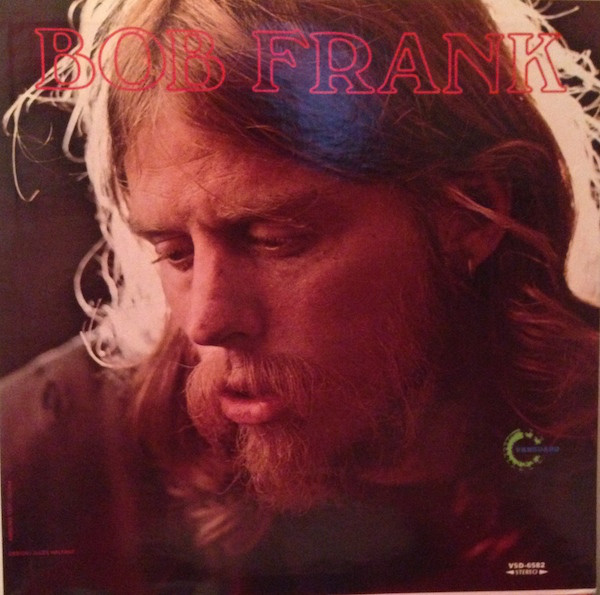
NEU-NEU 2.
NEU-NEU 2.
Although Neu never enjoyed the commercial success their music deserved, they’re without doubt, one of the most influential groups in musical history. They’re perceived as one of the founding father’s of Krautrock. They’ve influenced everyone from Brian Eno, David Bowie, Iggy Pop, Radiohead, Primal Scream and a generation of electronic music producers. That’s despite only releasing a trio of albums between 1972 and 1975. Their eponymous debut was released in 1972. Only 30,000 copies of Neu were sold. Despite that, it’s perceived as one of the most influential albums released during that period. A year later, Neu returned with their sophomore album Neu 2. It too, is perceived as one of the most innovative and influential albums in musical history. You’ll realise why, when I tell you about Neu 2. Before that, I’ll tell you about Neu and the making of Neu 2.
It was 1971 when Klaus Dinger and Michael Rother decided to form Neu. Both had been members of Kraftwerk, but not for any length of time. Klaus, a drummer, joined midway through the recording of Kraftwerk’s eponymous debut album. Michael, a bassist, joined Kraftwerk after the album was finished. When Kraftwerk was released in 1971, it wasn’t a commercial success. It only sold 30,000 copies. For the founder of Kraftwerk Ralph Hutter, this was too much. He left the band for six months. Kraftwerk carried on though.
Kraftwerk were reduced to a trio of Wolfgang Scheider, Klaus Dinger and Michael Rother. They played a few concerts, and even appeared on German television program Beat Club. However, concerts were becoming few and far between. For two members of Kraftwerk, this was becoming frustrating. Klaus Dinger and Michael Rother decided to leave Kraftwerk and form a new band.
When they founded his new band, which was based in Dusseldorf, there were debates about the band’s name. Michael though the band should have an organic name. Klaus however, had hit on the name Neu! So, the new band became Neu! To go with the new name, a pop art logo was designed and copyrighted. This new logo was seen as a comment and protest against the modern consumer society. Just like contemporaries Can, Neu weren’t afraid to combine social comment and art. Having settled on a name, Neu! headed to the recording studio.
Recording of what became Neu! took place in December 1971, at Windrose-Dumont-Time Studios, in Hamburg. Four days had been booked to record the six songs that Klaus and Michael cowrote. Conny Plank, who’d produced Kraftwerk’s debut album would act as producer. He also acted as a go-between, when it came to differences of opinion between Klaus and Michael.
For the first two days, it was slow going. Nothing much was achieved. It was only only when Klaus brought along his Japanese banjo that they began to make progress. That seemed to act as a catalyst. Not long after this, Klaus first played his trademark motorik beat. That’s where Klaus plays a 4/4 drum beat with only very occasional interruptions. The effect is hypnotic and mesmeric. It can be heard on Hallogallo and Negativland. Klaus didn’t realise how influential the motorik beat would become. The sessions carried on and once they were finished, Conny Plank mixed Neu! at Star Musik Studio, in Hamburg. Now Neu! was ready for release.
On its release by Brain Records in 1972, Neu! wasn’t a commercial success. In total, it sold only 30,000 records. For Klaus and Michael this must have been hugely disappointing. They must have felt history was repeating itself again. After all, Kraftwerk’s debut album hadn’t been a commercial success.
Despite the lack of commercial success, Neu! was critically acclaimed. It was described as an influential and innovative album. This resulted in Neu being hailed as one of the founding father’s of Krautrock. Along with Can, they were credited as the founding fathers of Krautrock. Now the pressure was on for Neu to create the followup to their debut album. This would become Neu 2.
When work began on Neu’s sophomore album Neu 2, everything seemed to go wrong. It wasn’t Neu’s fault. Brain Records schedule and budget was tight. Recording had to take place during January 1973. There was no other option. That was all that had been budgeted for.
For Neu 2, Klaus Dinger and Michael Rother eventually, cowrote eleven tracks. Neu headed to Windrose-Dumont-Time Studios, in Hamburg. Recording took place during January 1973. Klaus played Japanese banjo, guitar, percussion, electric piano, electronics and turntables. Michael played guitar, bass, piano, violin, zither, percussion, electronics and effects. Neu and Conny Plank produced what became Neu 2. Things didn’t go smoothly though.
Unfortunately, Neu ran out of money in the middle of recording of Neu 2. Try as they may, Brain Records wouldn’t give Neu any more money. This presented a problem. They hadn’t enough songs for their sophomore album. Then they hit on idea. Why not remix the two singles and use them to fill up the rest of side two of Neu 2. At last Neu 2 was finished. Just like many bands before them, Neu’s sophomore album had proved problematic. How would Neu 2 be received though?
On its release Neu 2 critics realised this was a truly groundbreaking album. Critics were fascinated by the album. It was described as inventive, innovative and influential. Others hailed the album as ambitious, chaotic and experimental. Despite being released to critical acclaim, Neu 2 wasn’t a commercial success. Financially, this was a disaster for Neu. They couldn’t afford another commercial failure. As a result, Klaus and Michael put Neu on hold. Michael joined Harmonia, a Kraturock supergroup. Neu wouldn’t release another album until 1975, when they released ’75. Just like Neu 2, which I’ll tell you about, ’75 is an important album in the history of Krautrock.
Für Immer which translates as Forever, opens Neu 2. It’s not just an epic track, but a Neu classic. Eleven minutes long, the track hesitantly unfolds. Soon, Neu lock into a groove, showcasing their trademark motorik beat. This comes courtesy of the rhythm section who provides the heartbeat. They create the hypnotic beat. Meanwhile guitars chime, reverberate and snarl. Feedback and distortion are tamed by Michael. Using his trusty effect boxes. He unleashes big, bold chords, while white noise makes you recoil. Adding a myriad of effects and percussion Neu augment their trademark motorik beat. The result is a track that’s not just innovative, experimental and pioneering, but epitomises what Neu’s music is about.
White noise recreates the sound of gusting winds or waves crashing on a beach. Then as Spitzenqualität unfolds, thunderous drums pound. The white noise assails you, before the tempo drops and the drums plod along. As effects recreate the sound of traffic, I’m reminded of Kraftwerk’s Autobahn. Both tracks are atmospheric, ambitious and memorable.
Moody describes the gothic sounding Gedenkminute (Für A+K). Wind gusts. It howls as bells chime. The result is a soundscape that’s eerie, gothic and broody.
Neu unleashes screaming, screeching rocky guitars and effects on Lila Engel (Lilac Angel). Then there’s the scatted vocal and mesmeric motorik beat. Soon, machine gun guitars are being sprayed across the arrangement. As for the drums, Michael pounds them. Later, It’s as if Neu have asked the New York Dolls to add the guitars as Krautrock, jazz, proto punk and good time rock ’n’ roll combine. Gnarled chainsaw guitars cut through the raucous arrangement on a track that must have influenced punk pioneers.
The unmistakable sound of crackling vinyl opens Neuschnee 78. That’s before a myriad of instruments are deployed. Everything from a zither, percussion and flute combine. It’s a compelling combination. Especially when played at breakneck speed. Avant-garde, classical, experimental, folk and rock combine during this multi-textured, genre-melting melange.
Super 16 is another track with an experimental sound. Clocks tick, doors shut, vinyl clicks, gongs chime and what sounds like a futuristic army marches towards you. Soon, the track become eerie and haunting. It takes on a cinematic sound. It’s as if Neu have been asked to provide the soundtrack to a gruesome Hammer House of Horror film, and let their imagination run riot.
Neuschnee sees a return to a much more traditional side of Neu. Their motorik beat is augmented by chiming, crystalline guitars, keyboards and violin. Gradually, instruments are added and what follows is a driving slice of Krautrock. Neu are at their most melodic and don’t spare the hooks.
Cassetto is best described as a a sonic experiment. It sounds as if Neu have combined outtakes of The Beatles’ Sgt. Peppers’ Lonely Heart Club Band and Pink Floyd’s Meddle. Add to that, some of Jimi Hendrix’s feedback. Walls and washes of music assail and surround you. You fear for your speaker’s safety. Then all of a sudden the sound cuts out. It’s as if Neu are either toying with you, as they push musical boundaries to their limits and beyond.
Super 78 is another short track. Again, it has an experimental sound. Guitars are played at breakneck speed and drive the arrangement along. Effects are added to the vocal. So much so, that it sounds as if the LGM from Toy Story are supplying the cartoon vocals.
Lysergic, psychedelic and experimental describes Hallo Excentrico! It’s one of the remixes that was used to complete Neu 2. Best described as a sonic experiment, it’s truly innovative. Neu’s rhythm section provide the heartbeat, before effects are added to the track. They mask much of the arrangement and add an experimental sound. What follows is proof of this. Needles are dropped on vinyl, tapes are played at varying speeds. One minute the tempo drops, the next it increases. The result is a track that’s a fusion of avant-garde, electronica, experimental, free jazz and Krautrock.
Closing Neu 2 is Super, where Neu kick loose, combining Krautrock, pro to punk and good time rock ’n’ roll. It’s a heady brew. While the rhythm section drive the arrangement along, machine gun guitars are unleashed. There’s no vocal as such, just hoops, hollers and scats. Neu even add some of their favoured effects. Mostly though, it’s just Neu kicking loose and creating some glorious rock music.
Neu 2 saw Neu build upon their debut album. They took things further than many groups would’ve dared. This was during their sonic experiments. It seemed Neu trod a line between their trademark Krautrock and what might be described as experimental or avant-garde music. Many groups would’ve been scared to go this far. After all, some critics described Neu 2 as disturbing and chaotic. Other critics described Neu 2 as innovative and groundbreaking. They also describe Neu 2 as essential Krautrock. So would I. Just like Neu, Neu 2 belongs in any self-respecting record collection. Why though?
Well, Neu 2 is one of the most innovative Krautrock albums ever released. It’s also an album that’s ambitious, challenging, difficult, experimental, melodic and pioneering. I’d also suggest that Neu 2 is a case of what might have been. What would Neu 2 have sounded like if Neu hadn’t run out of money? Who knows what the result might have been? As a result, Neu had to make do and mend. They remixed two tracks to ensure Neu 2 was completed. This saw Neu 2 head in the direction of experimental music.
With Brain Records telling Neu there was no more money, Klaus and Michael had to think on their feet. It was a case of working with what they had. Following in the footsteps of other innovators, including Pink Floyd, Jimi Hendrix and The Beatles Neu used effects, including white noise. Then there was needles dropped on vinyl and tapes are played at varying speeds. All this makes Neu 2 a compelling album. It’s an album to listen to carefully. The more you listen, the more you hear. Truly, Neu 2 is a genre-melting album.
Everything from ambient, avant-garde, classical, electronica, experimental, folk, Krautrock, prog rock and rock is combined by Neu on their sophomore album Neu 2. The result is an album that’s inventive, influential and innovative. Neu 2 is a classic album that contains truly groundbreaking music. In fact I’d go further, and say that Neu 2 is essential listening for anyone interested in Krautrock, and without doubt, is a true Krautrock classic. Standout Tracks: Für Immer, Lila Engel, Super 16 and Neuschnee.
NEU-NEU 2.

LADY DAISEY-IN MY HEADPHONES.
LADY DAISEY-IN MY HEADPHONES.
Previously, Lady Daisey’s music has been described as: “sunshine for your soul.” That might seem like hype or hyperbole. It’s not. From the moment you press play On Lady Daisey’s new album In My Headphones, you’re captivated. Powerful, sultry, seductive, soulful and sassy, describes Lady Daisey’s voice. The thirteen tracks on In My Headphones, which will be released on BBE Music, on 24th February 2014, come to life. No wonder. From an early age, Lady Daisey’s life has revolved around music. She’s almost a musical veteran.
The Lady Daisey story begins back in Brooklyn. That’s where Daisey Traynham the future Lady Daisey was born. Her parents were both musicians and were in a band. So, Lady Daisey grew up on the road. She was covering everyone from Prince, Michael Jackson and Sister Sledge. Then Lady Daisey had a eureka moment. She realised that she wanted to be a singer. That’s what she did.
Since then, Lady Daisey has toured the world. She travels light. Her motto is to keep life simple. What’s important to Lady Daisey are “love, life, inspiration and peace.” Another thing that’s important to Lady Daisey is “music.” Whether it’s been clubs, concert halls or festivals, Lady Daisey has won friends and influenced people. Travelling light, she’s spread her message of love and inspiration. She delivers it soulfully while her husband Batsauce lays down the beats.
Batsauce and Lady Daisey are a team. They met through music. They’re both members of the hip hop group The Smile Rays. They’ve released two albums, Party Place and Smilin’ On You. Since then, Batsauce has become an important part of Lady Daisey’s team.
When Lady Daisey released her 2010 debut album, In My Pocket, Batsauce played an important part in the album’s success. Batsauce arranged, mixed produced In My Pocket, which was released on BBE Music. He also supplied the beats for Lady Daisey. This is the case with Lady Daisey’s sophomore album In My Headphones.
For In My Headphones, Lady Daisey penned seven tracks. She also cowrote Thank You With Batsauce. He contributed Showdown, Love Is and To Find You and cowrote two other tracks. One was Get Got, which he wrote with George Clinton, who features on Get Got. So Boog Brown on Kiss My Grits and Paten Locke of The Smile Rays on Thank You. These thirteen tracks were recorded in a rather unorthodox way.
Rather than head into a studio, Lady Daisey recorded In My Headphones on a small portable studio. They carry the portable studio everywhere they go. So, whenever they’ve an idea for a song, they can record it. This is what Lady Daisey has been doing during her travels around America, Asia and Europe. Just like with In My Pocket, Batsauce also arranged, mixed and produced In My Headphones. Four years after her debut album, Lady Daisey returns with her sophomore album In My Headphones, which I’ll tell you about.
Without doubt, the most important track on any album is the opening track. Lady Daisey realises this and has chosen Ready. It’s the perfect introduction to her unique fusion of hip hop and Nu Soul. The first thing that strikes you, is Lady Daisey’s sweet, sultry vocal. Sometimes, she reminds me of Minnie Riperton. Batsauce supplies the hip hop. This means thunderous beats, meandering keyboards and soaring harmonies. They provide the perfect backdrop to Lady Daisey’s coquettish vocal. You’re now anticipating the rest of In My Headphones.
Kiss My Grits sees a sassy Lady Daisey strut centre-stage. Growling horns signal her arrival. They join crisp drums and stabs of keyboards. Joining Lady Daisey is Boog Brown, who lays down a feisty rap. She’s the perfect foil to Lady Daisey. Together they create a track that’s feisty, witty, sassy and soulful.
Sci-fi synths open For You before the thundering beats accompany Lady Daisey’s tender, seductive vocal. She delivers the lyrics as if she’s lived them. This she does against a hip hop arrangement. Scratches, beats and bursts of a rap accompany her. However, it’s Lady Daisey that plays the starring role.
What sounds like a clavinet opens The Way You Do. It was a favourite of Stevie Wonder in the early seventies. It’s tough sound suits the track. A feisty Lady Daisey struts her way through the arrangement. Accompanied by flute, beats, sultry saxophone and harmonies, she showcases her versatility. Veering between Nu Soul, R&B, urban and hip hop, she delivers a vocal powerhouse.
Showdown has a vintage R&B sound. Driven along by grizzled, swinging horns and drums, Lady Daisey delivers her vocal at breakneck speed. She draws inspiration from sixties soul right through to R&B, urban and Nu Soul. Using these influences, Lady Daisey makes the song her own. Power, control, and sass are her secret weapons. So are her impressive vocal range and her vast experience.
She Got sees Lady Daisey joined by former Funkadelic star George Clinton. She’s not nervous. Far from it. This seems to bring out the best in Lady Daisey. Her vocal veers between tender, coquettish and sensual. Then when George enters, his grizzled vocal is powerful and full of character. It’s as if he’s lived a thousand lives. They prove a potent partnership. Especially, with bursts of horns punctuating the arrangement and the fact the drums aren’t as loud. Later, George vamps above Lady Daisey’s vocal, reminding us of what’s he’s capable of. Soulful, funky and dance-floor friendly, it would make a good single.
Tender and breathy describes Lady Daisey’s vocal on We Will. The arrangement features just a standup bass and drums. They provide an understated backdrop to Lady Daisey’s tender, seductive vocal. Mostly, it’s jazz-tinged and soulful. Briefly, her vocal become a mini rap, as she demonstrates not just her versatility, but her ability to bring a song to life.
The arrangement to Fruit almost marches along to the tune of the drums. The rest of the arrangement is best described as dramatic and hypnotic. Lady Daisey’s vocal soars. It’s wistful and mysterious. Horns, percussion and rolls of drums accompany her. So do harmonies. They’re the finishing touch to this mini soap opera.
Stabs of growling horns open Love Is. They’re joined by harmonies and bursts of drums. They signal the arrival of Lady Daisey’s breathy, lovestruck vocal. She brings the lyrics to life. The rest of the band compliment her vocal. However, you’re captivated by her heartfelt, tender vocal.
To Find You finds Lady Daisey fusing hip hop and Nu Soul. Her vocal is best described as a soulful rap. She draws inspiration from Erkah Badu and India Arie. With crisp drums and keyboards for company Lady Daisey delivers a needy, soulful vocal. Full of sadness and longing, she paints pictures with her lyrics. All the time, she’s combining Nu Soul, hip hop, urban and electronica.
From the creaky door that opens Attic, it’s obvious Lady Daisey is going to tell us a story. Just like on other tracks, her lyrics have a strong narrative. She paints pictures, so much so, that you can imagine her “dancing in my attic, drowning out the traffic.” With piano, beats and percussion for company, Lady Daisey delivers a vocal masterclass, where jazz and soul combine seamlessly. The addition of the trombone proves the finishing touch to the track.
Cascading harmonies, crunchy beats and effects accompany Lady Daisey on Full Circle. A melancholy piano line and cooing harmonies prove the perfect accompaniment to Lady Daisey. They seem to drive each other to greater heights. The sound effects, including what sounds like waves breaking on a beach work well.
Thank You closes In My Headphones and sees Lady Daisey take her bow. It’s a fusion of R&B, urban, hip hop and Nu Soul. Lady Daisey unleashes a celebratory vocal. Accompanying her is Paten Locke. This seems to spur her on. She goes on to deliver a joyful vocal, combining power, passion and soulfulness.
So, that’s the story of Lady Daisey’s In My Headphones. It features thirteen tracks, where Lady Daisey fuses Nu Soul and hip hop. She also adds to her musical mixing pot jazz, R&B, soul and urban. This demonstrates just how versatile a vocalist she is. She’s just as comfortable singing other styles of music. If her brand of hip hip and soul was ever to fall out of fashion, then Lady Daisey could change direction. That’s something many artists have struggled to do.
Previously, when Nu Soul was flavour of the month, once the genre’s popularity fell, artists were left high and dry. That won’t happen to Lady Daisey. If her hip hop infused brand of soul falls out of fashion, another career awaits. She could sing other styles of music, including classic soul or jazz. Indeed, I’d like to hear Lady Daisey with an old school band behind her. Especially, with strings, horns and backing vocalists accompanying her. So in a way, Music In My Headphones is just a taste of what Lady Daisey is capable of. She’s a versatile singer. Her CV demonstrates this.
Indeed, Lady Daisey could have a long and successful career ahead of her. Proof of this is her CV. In My Headphones is her second solo album. She’s also released two albums with The Smile Rays. Her voice can be heard on recordings with Qwazaar, Typical Cats, Asamov and Marc Hype. Lady Daisey has opened for Sharon Jones, Mayer Hawthorne, Chali 2na, Roxanne Shante, Bahamadia, The Perceptionists. Then there’s appearances at festivals around the world, where Lady Daisey has played alongside The Roots, Method Man, Atmosphere, Muse, Typical Cats, and Souls of Mischief. That’s quite a CV. For Lady Daisey the future looks bright. The next chapter in her career begins on 24th February 2014, when her sophomore album In My Headphones is released by BBE Music.
LADY DAISEY-IN MY HEADPHONES.

STEIN URHEIM-STEIN URHEIM.
STEIN URHEIM-STEIN URHEIM.
Last year, 2013, Stein Urheim’s collaboration with Mari Kvien Brunvoll, Daydream Twin was nominated for a Spellemannprisen, the Norwegian equivalent of a Grammy Award. No wonder. Over the last few years, Stein has established a reputation as one of Norwegian music’s most innovative artists. The story begins back in 2009.
That’s when Bergen based guitarist released his debut album Three Sets of Music. Released to widespread critical acclaim, it was no surprise that in 2010, Stein won the Voss Jazzfestival-Award. The following year, 2011, Stein released Daydream Community, his first collaboration with vocalist Mari Kvien Brunvoll. After that, the pair headed out on tour to celebrate the start of a fruitful and successful musical partnership. Throughout this period, Stein had been working on his sophomore album, Kosmolodi.
Unlike other artists, Stein had recorded Kosmolodi over a period of time and at different studios. It was then released in 2012 on Hubro Music as a limited edition vinyl only release. On its release, critics sat up and took notice of Kosmolodi. They hailed its release and soon word was out, Stein was a musician with a big future ahead of him. The followup to Kosmolodi was highly anticipated. However, critics and music lovers have had to wait patiently on Stein Urheim, which will be released in 24th February on Hubro Music.
In between the release of Kosmolodi and Stein Urheim, Stein recorded and released his second collaboration with Mari Kvien Brunvoll, Daydream Twin. It was so well received, that it was nominated for a Spellemannprisen, the Norwegian equivalent of a Grammy Award. For any Norwegian artist, this is one of the highest musical accolades. Sadly, Stein and Mari Kvien Brunvoll didn’t win. However, maybe his third album Stein Urheim will be nominated next year? Before I tell you about Stein Urheim, I’ll tell you a bit more about Stein and the background to the album.
Stein was born in 1979, and is based in the beautiful coastal city of Bergen. Although he’s a guitarist, he’s best described as a multi-instrumentalist. He plays a wide variety of stringed instruments from different corners of the world. This brings an exotic sound to him music. On Stein Urheim, he plays everything from guitars, flutes, harmonica, slide tamboura, fretless bouzouki, gu qin, mandolin, langeleik, charango, banjo, analog synths and effects. Not only is Stein a multi-instrumentalist, but he’s an experienced and talented musician.
Stein’s worked with some of the biggest names in Norwegian music. One of his first appearances was on Unge Frustrerte Menn’s 2001 album Dronningen Av Kalde Føtter. Three years later, Stein played on Barabass & The Happy Few’s 2004 album Rali Rei. Then in 2009, Stein accompanied Sergeant Petter on his Sgt. Petter album. Other appearances include on Sigrid Moldestad’s 2010 album Sandkorn and Gabriel Fliflet Åresong. Indeed, Stein was a member Gabriel Fliflet’s band Åresong and HP Gundersen’s drone band The Last Hurrah. As you can see, Stein is an experienced, versatile and talented musician. His talents are highly in demand. It’s a wonder he has the time for a solo career. Somehow, he finds time and is about to release his eponymous third album.
For his third album Stein Urheim, Stein wrote five tracks. He then decided to take a different approach to the recording process. Unlike his sophomore album Kosmolodi which was recorded in several places, Stein and sound technician Audun Strype headed to Lysøen. Their destination was the magnificent home of the legendary violinist Ole Bull. It’s on the outskirts of Bergen. Recording got underway in January 2013. Although the wooden houses was incredibly cold, it was atmospheric and had fantastic acoustics. This brought a warmth to the music when recording began.
As the tapes began to roll, Stein literally became a one-man band. He played everything from guitars, flutes, harmonica, slide tamboura, fretless bouzouki, gu qin, mandolin, langeleik, charango, banjo, analog synths and effects. Accompanying him was Jørgen Træen, who played modular synth and added effects. Once most of the five tracks were recorded in Ole Bull’s house, they headed to the Duper Studio, Bergen. That’s where recording was completed and the mixing took place. In charge of that was technician and producer Jørgen Træen. Once Stein Urheim was completed, the released date was scheduled by Hubro Music for 24th February 2014. However, what can you expect? is Stein Urheim a groundbreaking, genre-melting album where Stein comes of age? That’s what I’ll tell you.
Atmospheric and melancholy describes the introduction to Kosmoloda. It ebbs and flows. Gradually, a darker sound threatens to descend. A droning synth, quivering stringed instruments. They produce a hypnotic, experimental sound that veers towards ethereal. Then Stein lays down a slide guitar solo atop the arrangement. It wouldn’t sound out of place on one of the soundtracks Ry Cooder wrote for Wim Wenders movies. Rather than slide along, the slide guitar glides and meanders along. By now layers of music are revealing their secrets. Subtly, they tease, assail and surround you. Wistful, ethereal, languid and atmospheric describes this sonic opus.
After The Festival is an epic track. Eleven minutes long, its bubbling introduction meanders into being. Synths provide a backdrop, their understated, almost futuristic sound unfolding. Slowly and deliberately, strings are plucked, before flitting up and down the fretboard. They scamper up and down before hesitantly, a guitar is played thoughtfully. It takes on a Spanish sound. Melancholy and pensive describes the arrangement, as instruments arrive and leave. Folk, free jazz, world music, rock and blues shine through. Stein is responsible for the blues influence. His bluesy slide guitar weeps, like a cry for help. Later, the track takes on a frenzied, experimental sound. There’s a real fusion of influences. They’re all fighting for your attention. The more you listen, the more you hear, the more you realise that Stein Urheim is one of most ambitious, innovative and pioneering musicians. He’s determined to push boundaries to their limits.
Just a distant, lone guitar draws nearer on Watch The View. Meanwhile, a tender crystalline guitar is played thoughtfully. Eventually, it takes centre-stage where it belongs. It quivers and shivers, while the earlier droning guitar returns. This prompts Stein to play louder. Power and passion are ever-present as he delivers some strident, thoughtful licks. They veer between languid and expressive. Stein fuses an Eastern influence with blues and country. They all melt into one beautiful fusion of musical influence.
A bluesy harmonica and gently plucked guitar combine on Beijing Blues. It’s another fusion of musical genres and influences. Blues is the main influence. So are Chinese gu qin, country and folk. This proves a potent combination. An understated bluesy arrangement unfolds. Stein plays slowly and deliberately, concentrating on every note. Accompanying the weeping bluesy guitar are flourishes of guitar. Gradually, the arrangement unfolds in waves, cascading. Later, the arrangement grows in power and drama. As Stein plays, he marks time and blows his blues harmonica. He’s in a groove and unleashes some delicious bluesy licks, which shows yet another side the the versatile Stein Urheim.
Closing Stein Urheim is Great Distances. Again, it has an atmospheric, understated sound. Stein’s unleashes flourishes of his guitar. It reverberates into the distance, weeping. Just like before, Stein’s playing reminds me of Ry Cooder. Especially, on soundtrack albums like Paris Texas. He’s a virtuoso guitarist, who’s capable of switching between genres. One minute he’s playing blues, the next minute jazz or folk. The guitar comes alive in his hands. He gives it a voice. Mostly, it’s just Stein. Sometimes, though, he’s accompanied by a myriad of stringed instruments. They add to what’s best described as atmospheric, evocative, haunting and cinematic sounding track. Quite simply, Stein has kept the best until last.
While Stein Urheim contains just five tracks and is only forty-one minutes long, it’s virtually flawless. Over the five tracks, Stein fuses Afro-blues, avant-garde, blues, country, experimental, folk, jazz, Chinese gu qin music with langeleik, Norwegian zither music. Add to this the free jazz of Ornette Coleman and the music of American composers Lou Harrison and Steve Reich. The result is an eclectic and potent mix. This heady brew is best described as atmospheric, beautiful, ethereal, haunting, hypnotic, melancholy, sparse, thoughtful and wistful. I’d also described Stein Urheim as an ambitious, groundbreaking and minimalist genre-melting album.
Here is a album where less is more. Stein resists the temptation to overload the mix. Sometimes, only a few instruments are deployed. The result is music that’s sparse and minimalist. Sometimes, I’m reminded of Brian Eno and Ry Cooder. Indeed, on some tracks, it’s as if Brian Eno and Ry Cooder are collaborating. That’s one way of describing the music on Stein Urheim. However, there’s much more to Stein Urheim which will be released in 24th February on Hubro Music, than that.
Stein Urheim has been described as cohesive, unique and understated. On Stein Urheim takes not just instrumental music, but his music in a new and unheralded direction. It’s a direction that it’s never headed before. No worries though. Stein is the equivalent to a swashbuckling musical pioneer. Helped along by his collection of eclectic and exotic stringed instruments from the four corners of the world, Stein created some of the most ambitious, exciting and innovative music of his career. Not only is Stein Urheim the best album of Stein’s career, but it sees him coming of age musically. Indeed, Stein Urheim is well on his way to becoming one of Norway’s most talented and pioneering musicians, whose capable of crafting music that’s not just eclectic, but thoughtful, cerebral and beautiful.
STEIN URHEIM-STEIN URHEIM.


VAMPS ET VAMPIRE-THE SONGS OF SERGE GAINSBOURG.
VAMPS ET VAMPIRE-THE SONGS OF SERGE GAINSBOURG.
Maverick, bon viveur, raconteur and rebel. These are just a few of the words that describe French singer, songwriter, poet, composer, artist, actor and director Serge Gainsbourg. He’s one of the most influential and controversial figures in French culture. Serge did things his way. Often that proved controversial. A master of wordplay, his lyrics are funny, provocative, satirical, subversive, shocking and thought-provoking. This was the case throughout his career. During his career, it was impossible to categorise Serge’s music. His back-catalogue is best described as eclectic. He recorded everything from chanson, disco, jazz, mambo, new wave, pop, prog rock, reggae, rock ’n’ roll and ye ye. Serge’s music was also recorded by a whole host of artists, including many female singers.
Among the artists who recorded Serge Gainsbourg’s Françoise Hardy, Marianne Faithfull, Juliette Gréco, Jane Birkin, Brigitte Bardot and Michèle Torr. They all feature on Vamps Et Vampire-The Songs Of Serge Gainsbourg. It was recently released by Ace International, a subsidiary of Ace Records. Fittingly, Vamps Et Vampire-The Songs Of Serge Gainsbourg features contributions from some of female singers who recorded Serge’s songs. They bring to life Serge’s music. Before I pick my highlights of Vamps Et Vampire-The Songs Of Serge Gainsbourg, I’ll tell you about Serge’s career.
Serge Gainsbourg was born Lucien Ginsburg in April 1928, in Paris, France. He was a twin and grew-up in a family of Russian-Jewish emigrants. His parents had fled Russia during the Russian Revolution. On his arrival in Paris, Serge’s father made a living playing piano in casinos and cabarets. He also taught his children to play piano. Little did realise that Serge would become one of France’s most famous musicians. That was still to come. Before that, the war interrupted Serge’s childhood.
As part of a Jewish family living in Nazi occupied Paris, the war years proved to be a traumatic time for Serge. He was traumatised. Paris had been his family’s safe haven. Not any more. Serge’s family fled Paris, and headed to Limoges. They travelled under false papers. Limoges was unoccupied. However, the Vichy government collaborated with the Nazis. For Jews, this wasn’t the safe haven Serge’s family had hoped for. During the war years, Serge was badly affected by what he saw and heard. Later, his music would prove cathartic, for cleansing himself of these experiences. By then, Serge Gainsbourg had been born.
Following the war, Lucien Ginsburg became Serge Gainsbourg. That wasn’t the only change in Serge’s life. He got married in 1951 and with his first wife Elisabeth had two children. The marriage only lasted six years, before the couple divorced. By the time Serge married for the second time in 1964, his musical career was underway. This time, his marriage to Françoise resulted in another two children. However, the marriage only lasted two years. By then, Serge was about to embark upon affairs with some of the most eligible women in Europe.
During the early years of his career, Boris Vian inspired Serge. Looking back, this seems ironic, given his chanson style of music was perceived as old-fashioned. However, before long, Serge couldn’t resist experimenting musically. As the sixties dawned, ye-ye swept not just France, but Europe. Originally, Serge wasn’t comfortable with this style of music. So his music headed in the direction of jazz and then pop. During this time, Serge spent time with Jaques Brel and Juliette Gréco. His solo career faltered and his early releases didn’t sell well.
During the early sixties, Serge met Elek Bacsik and Michel Gaudry. He asked if they’d collaborate with him.They agreed and the result was their 1963 album Confidentiel. It’s best described as an album the epitomes modern jazz. An innovative album, success eluded Confidentiel. It sold only 1,500 copies. Disappointed, Serge made a decision that day that changed his life.
Following the failure of Confidentiel, Serge was heard to say: ”I’ll get into hack work and buy myself a Rolls.” Despite this, his next album, 1964s Percussions was another groundbreaking album. Again, success eluded Serge. This reinforced his earlier decision to change tack.
Soon, this paid off. Serge was writing more commercial songs. These songs were performed by many artists. One of these France Gall. The French teenager sang Poupée de Cire, Poupée de Son which won Luxembourg the 1965 Eurovision Song Contest. This was just the start of a series of commercially successful songs Serge wrote. Over the next few years, Serge had the best of both worlds. Serge’s solo career continued. He was able to release groundbreaking music, knowing that the songs he wrote for other artists would become commercially successful
Over the next few years, Serge Gainsbourg penned commercially successful tracks for everyone from Françoise Hardy, Marianne Faithfull, Juliette Gréco, Marianne Faithfull, Jane Birkin, Brigitte Bardot and Michèle Torr. They’re among the twenty-four tracks which feature on Vamps Et Vampire-The Songs Of Serge Gainsbourg, which I’ll pick the highlights of.
Fittingly, Brigitte Bardot’s Harley Davidson opens Vamps Et Vampire-The Songs Of Serge Gainsbourg. This is one of two tracks on the compilation. The other is Contact. They were written for Le Brigitte Bardot Show. Having met on the set of the show, the pair embarked upon a hight-profile relationship. These two tracks feature on Brigitte’s 1968 album Show. Released on AZ Records, this was Brigitte’s fourth album. Of the two tracks, Contact is the best. Brigitte’s vocal veers between moody, defiant sultry on this slice of Euro Pop.
Françoise Hardy is one of France’s greatest singer-songwriters. One of her most memorable songs was the 1968 single Comment Te Dire Adieu. This is the definitive version of a song that was originally recorded as It Hurts To Say Goodbye by Margaret Whiting. Having heard an instrumental version, Françoise wanted to record the song. Serge was asked to write some French lyrics and the result was an evocative and beautiful song. It was the title-track to Françoise’s 1968 album. It also features Françoise’s other contribution L’Anamour, which is best described as tender, sensual and beautiful.
France Gall’s Poupee De Cire, Poupee De Son was kick-started Serge’s songwriting career. It won the 1965 Eurovision Song Contest. At first glance it sounds like many a ye-ye single. It’s not. It’s much more than that. Here, Serge showcases his ability as a wordsmith. Not for the last time, wordplay is high on the agenda. Sometimes, this got Serge into trouble. Not here. It transformed his career. The same can be said of France Gall. Poupee De Cire, Poupee De Son was the title-track to her 1965 album. A year later, Les Sucettes featured on France’s FG album. Featuring a tender, breathy vocal and understated, orchestral arrangement, it shows another side to France Gall and her music, one I’d like to hear more of.
At the start of his career, Serge worked with Juliette Gréco. So, it’s fitting that she controbutes two tracks. They’re La Javanaise and Strip Tease. Both are from her Juliette Gréco (8ème Série) album. Released in 1963, this was her fifth album. La Javanaise is the best of the two tracks. It epitomises the chanson style of music and features a pensive, heartfelt and heartachingly beautiful vocal from Juliette.
Catherine Sauvage was one of the first artists to record Serge’s songs. Previously, she’d specialised in bringing the poems of poets like Leo Ferre and Louis Aaragon to music. This was a stylistic departure. The two tracks are very different. Baudelaiire featured on her 1962 E.P. Catherine Sauvage Chante Serge Gainsbourg. It has a much more traditional chanson sound. As for Overseas Telegram, chugging guitars provide a rocky backdrop to her heartbroken vocal. It’s a track from the 2006 box set Mister Melody-Les Interprètes De Serge Gainsbourg. Both tracks have one thing in common, Catherine’s emotive vocal, which brings Serge’s songs to life.
Having written the winning entry to the 1965 Eurovision Song Contest, Serge was seen as the man with Midas touch. All of a sudden, his services were in demand. One of the artists who recorded a Serge Gainsbourg song was Michèle Torr. Non, A Tous Les Garcons is a stomping slice of irresistible Euro Pop which featured on her 1966 E.P.
In 1967, Marianne Faithfull released an E.P. Hier Ou Demain (De La Comédie Musicale Anna.) Serge penned the title-track which Marianne sings in French. This was a departure for her, as usually, she records in English. Her delivery is flawless. She gets across the song’s nuances and subtleties, with a vocal that’s full of emotion, sadness and melancholia.
When Serge and Jane Birkin first met on the set to the film Slogan, they didn’t hit it off. No wonder. Originally, Serge Marisa Bereson to star alongside him. Soon, though, things thawed out and they embarked upon a high profile relationship. This more than made up for being dropped by Brigitte Bardot. Jane was more than an actor though. She was a talented singer. They recorded an album together in 1969. Jane Birkin and Serge Gainsbourg features the sultry, sensual Jane B. and Con C’est Con Ces Consequences, a similarly sultry, seductive track featured on Jane’s 1983 album Baby Alone In Babylone. Fourteen years after Jane B. made her debut, her voice had matured like a fine wine.
My final choice from Vamps Et Vampire-The Songs Of Serge Gainsbourg is Charlotte Gainsbourg’s Elastique. Here was a woman destined to become either a singer, songwriter or actress. She was he daughter of Jane Birkin and Serge, and the granddaughter of Judy Campbell. This is a track from her 1986 debut album Charlotte For Ever. Against a new wave backdrop, Charlotte revisits the classic chanson style. This is perfect for the song. She’s her mother’s daughter, delivering a breathy, coquettish vocal. Even the rocky guitars work, bringing a new twist to her father’s song.
While I’ve only mentioned fifteen of the tracks on Vamps Et Vampire-The Songs Of Serge Gainsbourg, I could just as easily have chosen any number of the tracks. It’s a case of all killer, no filler. That’s thanks to compiler Mick Patrick. He dug deep, in his quest to find what’s essentially the perfect introduction to the music of Serge Gainsbourg. These twenty-five tracks are just the tip of the iceberg. After all, Serge was a truly prolific songwriter. It’s thought Serge penned over one-thousand tracks and released twenty solo albums. However, there was one type of artist Serge seemed to enjoy the most success with.
He seems to be at his best when writing for female singers. That’s what he became known for. Indeed, his known and most successful single was Je T’Aime, Moi Non Plus, which he wrote for and recorded with Jane Birkin on their 1967 eponymous album. When Jane asked him to write the most beautiful song, this is what he wrote. It’s a true classic and one of the most sensual songs ever recorded. Sadly, like many of Serge’s songs it provoked controversy.
Indeed, throughout his career, Serge seemed to court controversy. His lyrics weren’t the usual fare. The was more to Serge’s music that life, love, loss, heartbreak and joy. Subjects other songwriters dared to shy away from, were meat and drink for Serge. Often the way he did this was with subtlety. He used wordplay. Puns, paraprosdokians, dysphemisms and onomatopoeia were Serge’s secret weapons. With Serge’s lyrics, it was a case of listening carefully. Things weren’t necessary what they first seemed. Mind you, what did you expect from a wordsmith extraordinaire. That describes Serge Gainsbourg and is apparent when you listen to Vamps Et Vampire-The Songs Of Serge Gainsbourg, which was recently released by Ace International, a subsidiary of Ace Records.
Vamps Et Vampire-The Songs Of Serge Gainsbourg is the perfect introduction to Serge Gainsbourg’s music. It features contributions from some of the greatest French female vocalists. Among them are Françoise Hardy, Marianne Faithfull, Juliette Gréco, Marianne Faithfull, Jane Birkin, Brigitte Bardot and Michèle Torr. It’s like a who’s who of French music. Each of these songs have one thing in common, they were written by Serge Gainsbourg. He was one of the most influential and controversial figures in French culture. Serge did things his way. Often that proved controversial. A master of wordplay his are lyrics funny, provocative, satirical, subversive, shocking and thought-provoking. This was the case throughout his long and successful career. Sadly, Serge Gainsbourg passed away in March 1991. Twenty-three years ago, French music lost one of its legends. He’s sadly missed and Vamps Et Vampire-The Songs Of Serge Gainsbourg is a reminder of the man and his music.
VAMPS ET VAMPIRE-THE SONGS OF SERGE GAINSBOURG.


THE SEEDS-RAW AND ALIVE.
THE SEEDS-RAW AND ALIVE.
Originally, The Seeds started life as a garage band. That was the past. Music was changing. So were The Seeds. The Beatles’ had just released their psychedelic masterpiece Sgt. Pepper’s Lonely Heart’s Club Band. This was the way music was heading. Hearing this seminal psychedelic opus resulted in The Seeds changing direction.
Realising that psychedelia was the future, The Seeds changed tack. This was a huge risk. During the last two years, The Seeds had worked tirelessly to build a reputation as one of the most innovative bands of the era. They’d released two albums, A Web Of Sound and The Seeds, which featured Pushin’ Too Hard, the biggest single of their career. Despite this, the temptation to experiment and push musical boundaries was too much. For The Seeds, standing still wasn’t an option. Here was the dawn of a new musical era. The Seeds going to be were part of the psychedelic era in 1967. For The Seeds, resisting this temptation was impossible.
In 1967, The Seeds released their third album Future. Future didn’t see The Seeds push musical boundaries to their limits. Instead they blew these limits away. The result was a mind-blowing fusion of psychedelia, garage, rock and pop. Veering towards jazz and soul, eclectic doesn’t even come close to describing Future. This was a long way from The Seeds roots as a garage band. This was very different. Maybe too different. On its release, Future wasn’t a commercial success. It was critically acclaimed and nearly four decades later, is perceived as a psychedelic classic.
Following the commercial failure of Future, The Seeds had bills to pay, so returned to playing live. This was a steady source of income. By 1968, things weren’t going well for The Seeds. Whether the band knew it, but 1968 would see The Seeds release their musical swan-song. This was Raw and Alive and an album that captures The Seeds at their very best. It epitomises what The Seeds live sounded like. Raw and Alive was recently rereleased by Big Beat Records, a subsidiary of Ace Records. This is no ordinary live album though.
Big Beat Records’ rerelease of Raw and Alice is best described as a luxurious double album. Disc One features the original stereo version of Raw and Alive, plus the undubbed version of the concert. On the undubbed version of Raw and Alive, an added extra is a version of 900 Million People Daily All Making Love. With the original and undubbed versions of Raw and Alive, the listener is able to hear The Seeds at the peak of their powers. That’s just disc one.
Then on disc two of Raw and Alive, which is entitled Live In The Studio, which was recorded on 20th February 1968, The Seeds rattle their way through fifteen tracks. Two of these tracks, Gypsy Plays His Drums and Pushin’ Too Hard are new mixes of the track. Just like Raw and Alive, the Live In The Studio captures the very essence of The Seeds live. Telling the story of the recording of Live and Alive is Alec Palao. Just like his sleeve-notes to Future, they’re in-depth, articulate and insightful. He documents a band whose career was at a crossroads.
The Seeds weren’t used to failure. They’d released two successful albums. Their decision to experiment and change direction backfired. So had their manager Lord Tim Hudson’s hype. Hipsters turned on The Seeds. They were seen as passé. That was far from the case. They were one of the most innovative bands of the time. Surely, for The Seeds things couldn’t get worse
With The Seeds change of direction not proving a commercial success, the band needed money. One solution was to record a live album. This made perfect sense for The Seeds. Many of their fans told them that they were better live than on record. So, what they wanted to do was capture what The Seeds sound like live. There were a couple of problems. The first was that The Seeds hand’t been recorded live very often. So, they weren’t aware of the pitfalls that could cause them problems. Playing in front of 18,000 people, anything could, and would, go wrong. A favourite was for the stage to be invaded or the audience to be overcome by hysteria. After all, in some parts of California, The Seeds were treated like The Beatles. That was on a good night.
What happened if the recording was arranged for a night when the audience were less than enthusiastic? This was just as problematic. They’d end up with a recording that wasn’t a reflection on what The Seeds live sounded like. For The Seeds, what sounded a good idea was quickly getting complicated. They pressed on and eventually, Gene Norman President of GNP Records hit on a solution.
Rather than play live in an auditorium, The Seeds would play in a studio in front of an invited audience. This wasn’t new. It had been done before, resulting in mixed results. However, it was seen as the best solution. It didn’t work. It was time for take two. Without the audience, The Seeds returned to the studio to record their “live” album.
When Raw and Alive was recorded, there were no iso booths. Everyone stood together in an attempt to replicate a live sound. Unlike recording an album, the engineers didn’t worry about microphones bleeding into each other. This was all part of The Seeds live experience.
After Humble “Harve” Miller announces the arrival of “Sky Saxon and The Seeds” strut their way through ten songs. This includes Farmer and Up In Her Room from The Seeds 1966 debut album A Web Of Sound. Farmer which opens the albums sets the tone. Sky delivers a sneering, hypnotic slice of psychedelic. Then interspersed throughout Raw and Alive are a trio of tracks from The Seeds eponymous sophomore album. No Escape, Can’t Seem To Make You Mine and Pushin’ Too Hard captures The Seeds live. Bristling with electricity, energy and enthusiasm, The Seeds swagger their way through theses songs. They fuse garage, pop, psychedelia and rock. Genre melting describes The Seeds, who are on a roll. One of the highlights of Raw and Alive is Satisfy You, a fusion of psychedelia, rock and a proto-punk. It featured on The Seeds 1980 comeback album A Spoon Full Of Seedy Blues. Then before you know it, Sky is announcing Pushin’ Too Hard, the final song. Here, The Seeds are reminiscent of The Doors. It’s not just the combination of the keyboards and charismatic frontman that leads to this comparison. No, it’s the quality of The Seeds performance.
On its release in May 1968, The Seeds perceived Raw and Alive as a stopgap until they got round to writing and releasing their fourth album. That never happened. Raw and Alive wasn’t a commercial success. Soon, The Seeds were playing smaller venues. Their music then was no longer fashionable. Rock was now King, while The Seeds were yesterday’s news. Worse was to come. Drugs caused problems within The Seeds’ camp. Sky allegedly succumbed. Reports say he was constantly stoned. For Rick Andridge, this was the final straw. He packed his drums and left. Sitting around waiting for concerts to be arranged wasn’t going to pay the bills. So, he left The Seeds. Raw and Alive is The Seeds’ swan-song.
For fans of The Seeds, having the two versions of Raw and Alive sit side-by-side is fascinating. First up is the version with the overdubs. Then there’s the warts and all version. if anything, this is much more representative of what The Seeds were like live. They swagger their way through ten tracks, fusing musical genres and influences. It’s not a flawless performance. Live performances never are. However, these imperfections and flaws can be forgiven. They make The Seeds performance seem all the more real and authentic. That’s despite the lack of audience. The Seeds still played live. They plugged in and played their way through ten blistering tracks. This was “take two” though.
“Take one” took place on 20th February 1968. Watched by members of The Seeds fan club, the band were introduced by Gene Norman and laid down fifteen tracks. They were rejected and ended up lying in GNP Records’ vaults. That’s until now. For the first time in forty-six years, these fifteen tracks can be heard. They’re a reminder, if any were needed, of how good a live band The Seeds were. It’s a warts and all performance. That’s what makes this essential listening. It’s like eavesdropping on the past. You can even hear the chatter between songs. Then The Seeds showcase their inconsiderable skills. Drawing inspiration from folk, garage, jazz, psychedelia, free jazz, proto-punk and even prog rock The Seeds combine musical genres and influences. Strolling and strutting their way through fifteen tracks, The Seeds must have thought that this was the first step in their musical redemption. Sadly, it wasn’t.
Never again, did The Seeds reach the heights they’d enjoyed on their first two albums, A Web Of Sound and The Seeds. These were musical mountains they’d never climb. The Seeds moment in the sun had been fleeting. Between 1966s A Web Of Sound and 1968s Raw and Alive, The Seeds were one of the most innovative groups. Like a chameleon, they changed from a garage band into one of psychedelia’s flag bearers. They drew inspiration from disparate musical genres and influences. Everything from rock, garage rock, psychedelia, folk, jazz, doo-wop, free jazz, proto-punk and even prog rock, influenced them on their greatest studio album Future. Despite Future being perceived as a minor classic, people said The Seeds never replicated their live sound on any of their three albums. So, they tried to do so on Raw and Alive.
It took two attempts, but eventually, they managed to do so. The result was Raw and Alive, which was recently rereleased by Big Beat Records, a subsidiary of Ace Records. It harnesses The Seeds live sound. Indeed, Raw and Alive harnesses the raw power, energy and electricity of The Seeds. Hard rocking, they play with confidence and a swagger. They’re good and they know it. With a spring in their step, they try to recreate their live sound. They achieve this on Raw and Alive, which sadly, was their swan-song.
The Seeds musical legacy was a trio of studio albums and Raw and Alive. A Web Of Sound, The Seeds and Future feature the changing face of The Seeds. Their best studio album was Future, which is now a psychedelic classic. Drawing inspiration from The Beatles psychedelic masterpiece Sgt. Pepper’s Lonely Heart’s Club Band. It’s a combination of The Seeds garage band roots and psychedelia. The Seeds also were influenced by Frank Zappa, Thirteenth Floor Elevators, The Doors, The Who, the British invasion bands and jazz. All these influences can be heard on Raw and Alive, which marked the end of The Seeds story. They may not have been the most prolific band in musical history, but continue to influence another generation of musicians and music lovers. Raw and Alive is a tantalising glimpse of what The Seeds live must have sounded like.
THE SEEDS-RAW AND ALIVE.


COUNT BASIE AND HIS ORCHESTRA-AFRIQUE.
COUNT BASIE AND HIS ORCHESTRA-AFRIQUE.
By 1970, Count Basie was sixty-six and a legend of jazz. The Grammy Award winner had achieved just about everything. Count Basie had come a long way since he dropped out of school to play the piano at a silent movie theatre. Soon, he was playing regularly. Whether it was pickup bands or groups travelling through New Jersey looking for a piano player, Count Basie was their man. When he was playing, Count Basie was having to hustle for gigs. This was all part of his musical education. Competition was fierce. So only the best got hired. Count Basie was working towards the best.
Aged twenty, Count Basie left his New Jersey home and headed to Harlem. Soon, he was touring throughout America. Five years later, in 1929, Count Basie headed to Kansas City to join Bennie Moten’s band. He was a member of Bennie’s band until he died in 1935. For Count Basie, playing with Bennie taught him how to lead a band. So, the following year, Count Basie decided to form his own orchestra.
Count Basie and His Orchestra made their debut in Chicago in 1936. That was where they made their recording debut. For the next six decades, Count Basie and His Orchestra were one of jazz’s most innovative bands, Born in the swing era, they recorded for Brunswick between 1937 and 1939. After that, Columbia and RCA were home for Count Basie and His Orchestra between 1939 and 1950. During that period, Count Basie and His Orchestra survived the decline in popularity of the big band. By reinventing his Orchestra, they thrived. They went on to collaborate with everyone from Frank Sinatra, Ella Fitzgerald, Tony Bennett, Nat King Cole to Joe Williams. Then in 1969, with jazz changing, Count Basie and His Orchestra reinvented themselves once again. Count Basie and His Orchestra signed to Bob Thiele’s Flying Dutchman Productions and released their classic album Afrique, which was recently rereleased by BGP Records, a subsidiary of Ace Records.
For Bob Thiele, signing Count Basie to his newly formed label, was a huge thrill. He’d always been a fan of big bands. There was none better than Count Basie and His Orchestra. What made them stand out was their legendary rhythm section. They provided the backdrop for the horn section. The rhythm section is described as solid but flexible, while the horns played with an unbridled freedom. Remarkably, Count Basie rebuilt the Orchestra several times. They went on to win seventeen Grammy Awards and are perceived as one of the greatest bands in the history of jazz. So, signing Count Basie and His Orchestra was one of the highlights of Bob Thiele’s career.
Having signed Count Basie and His Orchestra, Bob Thiele was determined that he was going to make Count Basie relevant again. He hadn’t been relevant for the last few years. So, relevant didn’t mean covering Beatles tracks or James Bond themes. That wasn’t relevant to a new generation of music lovers, never mind jazz lovers looking for groundbreaking music. Beatles covers and James Bond themes were passé. It wasn’t even yesterday’s sound, more like last year’s sound. What Bob Thiele wanted was for his hero to record tomorrow’s music today.
To do this, Bob Thiele brought Oliver Nelson onboard. He would arrange and conduct what became Afrique. Playing on Afrique would be a studio version of Count Basie and His Orchestra. They’d record eight tracks, including Step Right Up, Hobo Flats, Afrique, Kilimanjaro and African Sunrise. Other tracks included Gabor Szabo, Albert Ayler’s Love Flower and Pharaoh Saunders’ Japan. These eight tracks were recorded on 22nd and 23rd December 1969.
When recording of Afrique began, the all important rhythm section of Count Basie and His Orchestra included electric bassist John B. Williams, drummer Harold Jones and guitarist Freddy Green. While the rhythm section played an important part in Count Basie and His Orchestra’s sound, so did the horn section. They were joined by Richard Pablo Landrum who played congas and Sonny Morgan bongos. Hubert Laws played flute, Buddy Lucas harmonica and Count Basie piano. Once the eight tracks were recorded, Afrique was released in 1970. With Bob Thiele having given Count Basie and His Orchestra a moderne makeover on Afrique, how would this be received?
On the release of Afrique, it was critically acclaimed. Critics loved the album. They said Count Basie was back and relevant. Music lovers reappraised Count Basie and His Orchestra. They’d lost their way previously, covering Beatles songs and James Bond themes. For a jazz great, this wasn’t how he’d want to be remembered. However, signing to Flying Dutchman transformed Count Basie’s fortunes.
Bob Thiele who produced Afrique, got Count Basie’s career back on track. Having chosen eight recent tracks and paired Count Basie and His Orchestra with arranger, conductor and songwriter critics hailed Afrique as a groundbreaking, classic album. So much so, that it’s one of Count Basie and His Orchestra best post big band albums. It’s also why Afrique, which I’ll tell you about, was nominated for a Grammy Award.
Step Right Up which opens Afrique, is one of five Oliver Nelson penned tracks. Count Basie draws inspiration from the past, laying down some old time piano before his Orchestra kick loose. Again, it’s very much a track with its roots in past. Propelled along by the bass, drums are played with brushes before Howard Jones mixes flamboyance and power. Then the horns are unleashed. They growl and bray, before Count Basie plays a jaunty solo. Soon, high kicking horns take centre-stage as the Orchestra hit their stride. They do what they’d been doing for thirty-four years by creating some of captivating music.
Hobo Flats first made an appearance on Jimmy Smith’s 1963 album. Here, it takes on a moody, bluesy sound. That’s thanks to the combination of bluesy harmonica and grizzled horns. They meander across the arrangement combining blues and free jazz. Meanwhile, minimalist describes Count Basie’s contribution. When he lays down a solo, it’s slinky and jazz-tinged. Mostly, he’s content to let his band shine. This includes fautist Hubert Laws shines. Mostly, though, it’s Buddy Lucas on harmonica and the horn section that take centre-stage during what’s the definitive version of Hobo Flats.
Bongos, congas and Hubert Laws’ flute combine as this Gypsy Queen reveals her secrets. As the cascading, punchy flute and probing bass intermingle, Count Basie lays down some choppy piano lines. His playing is inventive and imaginative. He may have been out of his comfort zone, but he rose to the challenge. With the bass, flute and piano, the arrangement becomes almost dissonant, then dark and dramatic. He stabs at his piano providing a contrast to the flute. Then the horns stride centre-stage. They’re bold, punchy and dramatic, unfolding in waves. They pickup the baton, totally transforming this track. It becomes melodic and the earlier darkness is gone. From the darkness comes light and joy as this Gypsy Queen reveals her secrets.
Count Basie’s tender piano playing opens Love Flower, before the sultriest of saxophone takes centre-stage. Meanwhile, the arrangement shuffles along. Bob Thiele pans the piano left, while stabs of horns assail you. They surround you, as if encouraging you to focus on this virtuoso performance from the saxophone. Right up until the track’s dramatic crescendo, Eddie “Lockjaw” Davis’ saxophone oozes emotion, beauty and later drama.
Afrique sees Count Basie and Hubert Law play the role of musical gunslingers. They go toe-to-toe during this track. Hubert’s flute and Count Basie’s piano are accompanied by a myriad of percussion, grizzled horns and urgent rhythm section. Horns and woodwind cascade, sweeping and swirling, before Hubert attempts to strike a knockout blow. He delivers a solo that’s played with power, control, speed and fluidity. Truly, it’s stunning. Horns encourage him every step of the way. They pick up the baton and help him vanquish his challenger, as he plays with style, flamboyance and passion.
The addition of Kilimanjaro is almost apt. Having gone from covering the Beatles and James Bond themes, signing to Flying Dutchman Count Basie was akin to climbing a mountain. After all, this was the home of innovators, mavericks and free spirits. Count Basie was perceived by some as the establishment. However, he surprised many people with Afrique, climbing his own mountain. With a probing bass, hissing hi-hats and percussion combining, laid-back, languid horns glide in. They grow in power, blazing urgently. They add a real sixties sound to arrangement. Playing an important role is the bass. It provides the heartbeat, while the flute flutters, floating above Kilimanjaro’s now wistful arrangement. With the bass for company, Hubert’s flute and stabs of Count Basie’s piano combine. Then from the shadows, Count Basie takes centre-stage. His playing is understated, thoughtful and melancholy. Then just as you’re enjoying a virtuoso performance, the horns blaze in, kicking loose and driving this seven-minute epic to its dramatic, wistful climax.
African Sunrise sees waves of growling and sultry horns sprayed across the arrangement. Meanwhile, the rhythm section and percussion provide the heartbeat. They then announce the arrival of Count Basie’s piano solo. It’s slow, melancholy and tender. This is easily one of his best. Complimenting his playing are the electric bass and drums that accompany him. Later, vintage horns sweep in. The modernity of earlier is gone, where free jazz combined with Count Basie’s more traditional sound. Despite the more traditional sound, this beautiful African Sunrise features a masterclass from Count Basie and His Orchestra.
Closing Afrique is a cover of Pharaoh Saunders’ Japan. Flourishes of piano are joined by dark horns and persistent percussion. Quickly, the arrangement becomes grandiose and almost ceremonial. That’s thanks to the horns, why become one. Then it’s all change, and briefly, a breezy track unfolds. Having said that, the earlier Oriental sound returns. Later, stabs of grizzled horns inject a sense of urgency, whilst a flute cascades. Count Basie stabs at his piano, repeating the same notes. it’s as if having not got the answer he wants, he repeats the same question ad infinitum. It’s as if he’s searching for an answer and is frustrated. This gives the track a left-field, avant-garde sound. After that, Count Basie allows his Orchestra to take centre-stage, enjoying playing the part of accompanist on this reinvention of Japan.
Bob Thiele was responsible not just for the reinvention of Count Basie, but his music becoming relevant again. Before Afrique, Count Basie and His Orchestra were reduced to playing covers of Beatles songs and James Bond themes. It had come to that. They weren’t going to win any Grammy’s with covers of Yellow Submarine and Goldfinger. Looking back, one of jazz’s founding fathers career was at a crossroads. Mind you, it wasn’t Count Basie’s fault. Probably, it was the brainwave of his record company. This was I’m sure, record company’s idea to make Count Basie relevant to record buyers during the swinging sixties. Instead, it the second half of the sixties saw Count Basie largely irrelevant to modern music. Then Bob Thiele entered the equation.
Luckily, Bob was a huge admirer of Count Basie and His Orchestra. He grew up listening to the big bands. Now times had changed and his idol was neither popular nor relevant. Luckily, having just founded Flying Dutchman Productions, Bob was in a position to do something to help Count Basie and His Orchestra. This meant making Count Basie and His Orchestra relevant again. To do this, Bob had to reinvent Count Basie and His Orchestra. This didn’t mean covering Beatles tracks or James Bond themes. That wasn’t relevant to a new generation of music lovers, never mind jazz lovers looking for groundbreaking music. Beatles covers and James Bond themes were passé. What Bob Thiele wanted was for his hero to record tomorrow’s music today.
He chose some of the most groundbreaking music of the past few years. This included tracks written by Gabor Szabo, Albert Ayler and Pharaoh Saunders’ Japan. These three artists were among the leading free jazz players. Then Bob chose five tracks written by Oliver Nelson, who would arrange and conduct Count Basie and His Orchestra. Bob sent Count Basie and His Orchestra into the studio and over two days, they were reborn.
The result was Afrique, a groundbreaking and urgent album where Count Basie and His Orchestra were reborn. It was akin to a musical resurrection. So much so, that Afrique was nominated for a Grammy. Count Basie and His Orchestra played with freedom and fluidity, passion and power, drive and determination. They were determined to show they were still relevant. They were. That’s despite moving in a new direction. Avant-garde, Afro-beat, blues, experimental, free jazz, soul and Count Basie and His Orchestra’s more traditional brand of jazz were combined. The result was a departure from what fans of Count Basie and His Orchestra had grown used to.
Exciting, ambitious, bold, innovative, soulful and dramatic, Count Basie and His Orchestra were back. The eight song journey that was Afrique rejuvenated not just Count Basie and His Orchestra, but his fans. Having heard Count Basie and His Orchestra on Afrique, they realised that one of jazz’s pioneers and jazz’s founding father’s was still relevant and able to create groundbreaking music. Standout Tracks: Step Right Up, Hobo Flats, Love Flower and African Sunrise.
COUNT BASIE AND HIS ORCHESTRA-AFRIQUE.


LONNIE LISTON SMITH AND THE COSMIC ECHOES-ASTRAL TRAVELLING.
LONNIE LISTON SMITH AND THE COSMIC ECHOES-ASTRAL TRAVELLING.
Bob Thiele’s Flying Dutchman was the perfect label for Lonnie Liston Smith and The Echoes’ unique brand of cosmic jazz. Through working with some of the most innovative and creative musicians in the history of jazz, Bob must have realised that often, large record companies aren’t the best environment for innovative and creative musicians. Often, these musical mavericks didn’t thrive within such an orthodox environment. Their creativity is restricted, meaning they’re unable to experiment and innovate like they’d like. So when Bob parted company with Impulse, who he’d transformed into one of jazz’s pioneering labels, he founded Flying Dutchman Productions. This was the label that Lonnie Liston Smith and The Echoes would release a quintet of groundbreaking albums. Their debut was Astral Travelling, which was recently rereleased by BGP Records, a subsidiary of Ace Records. Astral Travelling is a cosmic jazz classic, which I’ll tell you about. Before that, I’ll tell you about’s Lonnie’s career.
It was almost inevitable that Lonnie Liston Smith would become a musician. He was born in December 1940, into a musical family. His father was a member of Richmond Gospel music group the Harmonising Four. During his childhood, members of The Soul Stirrers and Swan Silvertones visited the Smith household. As if inspired, Lonnie learned piano, tuba and trumpet in High School and college. Next stop for Lonnie was Morgan State University.
Inspired by Trane, Bird and Miles Davis, Lonnie embarked upon a degree in musical education. Throughout his time at University, Lonnie continued playing the pianist in local clubs and singing backing vocals. He played with alto saxophonist Gary Bartz and trombonist Graham Moncur. This was all part of Lonnie’s musical eduction. Having completed his BSc in musical education at Morgan State University, Lonnie walked straight into a job.
On leaving Morgan State University, Lonnie got a job with the Royal Theatre’s house band. For a young musician, this was would help turn them into a musical all-rounder. After all, they had to be able to accompany a wide range of artists. For Lonnie, this was the next stage in his musical education. The next part of his musical education took place in New York.
Having moved to New York, Lonnie was luck enough to get a gig playing piano in Betty Carter’s band. This helped Lonnie get his name known in the Big Apple. Then in early 1965, Lonnie caught a break. He joined Roland Kirk’s band and made his recording debut on March 14th 1965. That was when Here Comes The Whistleman was recorded live in New York Lonnie only played on the title-track, Making Love After Hours, Yesterdays and Step Right Up. Then Lonnie featured on Roland andAl Hibbler’s 1965 live album A Meeting Of The Times. After this Lonnie, joined one of jazz’s top bands.
Over the last few years, The Jazz Messengers had established a reputation for young musicians looking to make a name for themselves. Lonnie joined in 1965. He shared the role with Mick Nock and Keith Jarrett. However, with The Jazz Messengers ever evolving lineup, Lonnie only played three in concerts. These three concerts just so happened to be at the legendary Village Vanguard. For Lonnie, despite the prestigious venue, this must have been a disappointing time. Luckily, he was rehired by Roland Kirk.
Lonnie rejoined Roland Kirk’s band in time to play on his 1968 album Now Please Don’t You Cry, Beautiful Edith. This established Lonnie’s reputation as the go-to-guy for a pianist. It was the start of period where Lonnie worked with some of the most innovative and inventive jazz players. Musical boundaries were about to be pushed to their limits as Lonnie joined Pharaoh Saunders’ legendary free jazz band.
Pharaoh Saunders had worked closely with John Coltrane right up to his death in 1967. The following year, Pharaoh formed a new band. Their music is best described as free jazz. Musical boundaries were pushed to their limits and beyond. Recognising a fellow believer in free jazz, Pharaoh asked Lonnie to join his band. Lonnie went on to play on three of Pharaoh’s best albums. The first of this trio was 1969s Karma. It was followed in 1970 with Jewels of Thought and 1971s Thembi. The other Pharaoh Saunders album Lonnie played on was 1970s Summun Bukmun Umyun. which was released on Impulse. Just like the three albums Pharaoh recorded for Flying Dutchman, it was a groundbreaking album.
During this period, Pharaoh and his band were constantly pushing boundaries and rewriting the musical rulebook. Their music was truly groundbreaking. Even Lonnie was challenged. On Thembi, Pharaoh asked Lonnie to play the Fender Rhodes. This was the first time that Lonnie came across an electric piano. However, he rose to challenge and wrote Thembi’s opening track Astral Travelling. Later, Astral Travelling would become synonymous with Lonnie Liston Smith and The Echoes. Before that, Lonnie would play with some of jazz’s mavericks.
One of these mavericks was Gato Barbieri. He’d just signed to Bob Thiele’s nascent label Flying Dutchman Productions. It was establishing a reputation for providing musicians with an environment where innovative and creative musicians could thrive. Bob believed musical mavericks didn’t thrive within such an orthodox environment. Their creativity is restricted, meaning they’re unable to experiment and innovate like they’d like. So, Bob signed Gato to Flying Dutchman. Lonnie played on his 1969 debut album The Third World. Bob’s next signing was Leon Thomas and played on his debut album Spirits Known and Unknown. Soon, Lonnie was a regular at Flying Dutchman sessions.
When the time came for Gato to record his 1971 sophomore album Fenix, Lonnie was called upon. He played on Fenix and joined Gato’s band. Lonnie played on Gato’s 1972 album El Pampero. He also toured throughout Europe with Gato. Then came the opportunity of a lifetime. After El Pampero, Lonnie got the chance to work with another jazz legend.
Lonnie was a member of Gato Barbieri’s band when Miles Davis got in touch. He wanted Lonnie to join his band. At this time, Miles’ music was changing direction. The direction it was heading in was funk. Electronic instruments were the flavour of the month for Miles and he was exploring their possibilities. However, Miles was doing this outside the studio environment. That’s why there are very few recordings of Lonnie playing alongside Miles at that time. That came later, when Lonnie would later work with Miles. Meanwhile, Lonnie decided to move on with his solo career and his debut album Astral Travelling.
For Astral Travelling, Lonnie wrote four new tracks. The other track was Astral Travelling, which Pharaoh Saunders had recorded on Thembi. These five tracks were recorded by an all-star jazz band, who Lonnie christened The Cosmic Echoes.
When recording of Astral Travelling began, Lonnie had put together some of the most talented and innovative musicians. The Cosmic Echoes’ rhythm section included bassist Cecil McBee, drummer David Lee and guitarist Joe Beck. Sonrily Morgan and James Mtume played percussion and conga, Gee Vashi tamboura and Badal Roy tabla. George Barron played tenor and soprano saxophone and Lonnie played piano and electric piano on Astral Travelling. Bob Theile produced Astral Travelling, which was released in 1973.
On its release in 1973, Astral Travelling was critically acclaimed. It was as if Lonnie had drawn upon all his experience working as a sideman. He’d worked with Pharaoh Saunders, Gato Barbieri, The Jazz Messengers, Leon Thomas, Stanley Turrentine and Miles Davis. This meant he was no ordinary musician. No. Lonnie Liston Smith was an innovator, who was determined to push musical boundaries to their limits and beyond. This is apparent on Astral Travelling, which I’ll tell you about.
Opening Astral Traveling is the title-track, which first featured on Pharaoh Saunders’ Thembi album. Lonnie’s Fender Rhodes sets the scene for a myriad of percussion. Above the languid, meandering arrangement sits the alto saxophone. It’s played with power, passion and control. When it drops out the Fender Rhodes and probing bass intermingle with the percussion. The percussion provides an exotic Eastern sound. It’s a case of East meets West on this beautiful, languid, mellow and spiritual opus. It showcases Lonnie’s unique brand of cosmic jazz.
A blistering, explosive dissonant saxophone and flourishes of piano combine as Let Us Go Into The House Of The Lord unfolds. Meanwhile, percussion provides the perfect accompaniment to the piano. Together they provide flourishes of ethereal beauty. Especially when bells chime. As for the saxophone, it’s slow and soul searching. When it drops out, the piano and percussion take charge. Then later, bursts of frenzied saxophone make their presence felt. While waves of ethereal music unfold in waves, the husky saxophone is akin to an unburdening of the soul. The result is cathartic, beautiful and emotive.
Rejuvenation sees Lonnie’s band join forces to create a track that’s dramatic and emotive. That’s the case from the opening bars. The rhythm section, piano and saxophone join forces. Lonnie boldly and flamboyantly plays the piano, while a bright, airy saxophone solo soars above the arrangement. It’s powered along by the rhythm section and percussion. However, it’s Lonnie’s piano and George’s saxophone that play starring roles. Everything else plays a supporting role. Lonnie and George seem to bring out the best in each other. Spurring each other on, they both reach new heights. Each produce virtuoso performances. It’s as if the other’s presence has lead to a Rejuvenation in their powers.
Slow and dramatic describes I Mani (Faith). Playing starring roles are flamboyant flourishes of Lonnie’s piano and heartachingly beautiful saxophone solo. They’re augmented by the rhythm section and percussion. Again, they’re playing supporting roles. Later, Lonnie plays a supporting role to tenor saxophonist George Barron. He unleashes a blistering, scorching, searing saxophone solo. Unleashing power, passion and emotion, George pushes the saxophone to its limit. Inspired, the rest of the band join in. What follows is a frenzied jam session. Having reached its dramatic, explosive crescendo, a calm descends. There’s a return to the spellbinding beauty of earlier. It’s augmented by a flamboyance and drama as Lonnie Liston and The Cosmic Echoes on what’s been a captivating performance.
In Search Of Truth has a much more tranquil and spiritual sound. Lonnie unleashes flourishes of piano while percussion and the rhythm section provide a slow, thoughtful accompaniment. George adds a sultry, soul searching saxophone solo. Quickly, it drops out, the piano and plucked bass asking a series of question. You can sense their frustration, that their questions aren’t being answered. As the track progresses, this frustration grows. Later, this frustration turns to a sense resignation that they’ll forever be In Search Of Truth. This results in thoughtful, cerebral track that’s still relevant today.
Aspirations closes Astral Travelling. It’s not just slow and serene, but melodic and thoughtful. Lonnie’s Fender Rhodes reverberates, producing a melancholy sound. Percussion accompanies him, adding to the already wistful sound. Space is left within the arrangement, allowing it to breath. Flourishes of Fender Rhodes add a sense of drama to this poignant, spiritual opus where pathos is ever-present.
Innovative, influential and way ahead of the musical curve, describes Lonnie Liston Smith. So does serene and spiritual. Proof of this is the music on Astral Travelling. It shows that Lonnie Liston Smith was way ahead of his time. Here was a musician determined to push musical boundaries to their limits, and sometimes, beyond. That describes what Lonnie Liston Smith was trying to achieve. On Astral Travelling, he drew inspiration from all the jazz greats he’d worked with. Among them, were Pharaoh Saunders, Gato Barbieri, The Jazz Messengers, Leon Thomas, Stanley Turrentine and Miles Davis. He borrowed from each of these artists and the result was his unique brand of cosmic jazz. It’s gone on to influence several generations of musicians and music lovers. Despite this, Lonnie Liston Smith’s music wasn’t the huge success it deserved to be.
With its fusion of avant garde, experimental, free jazz and orthodox jazz, Lonnie Liston Smith’s music never found the wider audience it deserved. Maybe the problem people didn’t understand Lonnie Liston Smith’s music? That’s why his music has only enjoyed a cult following. He never enjoyed the critical acclaim and commercial success enjoyed that came John Coltrane and Miles Davis’ way. That’s a great shame, given the quality of Lonnie Liston Smith’s back-catalogue.
Between 1973s Astral Travelling and 1976s Reflections Of A Golden Dream, Lonnie Liston Smith released a quintet of albums for Bob Thiele’s Flying Dutchman Productions. Lonnie Liston Smith and The Cosmic Echoes’ debut album was Astral Travelling, which was recently rereleased by BGP Records. It was a tantalising taste of what Lonnie Liston Smith was capable of. With his all-star band, Lonnie released a string of truly groundbreaking, genre-melting albums. No wonder. Lonnie was a a true innovator and jazz pioneer who pushed musical boundaries to their limits and beyond. The one that started it all of for Lonnie Liston Smith was Astral Travelling, a true cosmic jazz classic.
LONNIE LISTON SMITH AND THE COSMIC ECHOES-ASTRAL TRAVELLING.


MOTORPSYCHO-BEHIND THE SUN.
MOTORPSYCHO-BEHIND THE SUN.
This year, Motorpsycho, one of Norway’s most successful bands, celebrate their twenty-fifth anniversary with the release of Behind The Sun, which will be released on 10th March 2014, on Rune Grammon. Motorpsycho were formed in Trondheim, central Norway in 1989. Since then, Motorpsycho have become a musical institution. They’ve released over twenty-albums. Their debut album was 1991s Lobotomizer. Demon Box followed in 1993, and Timothy’s Monster in 1994. Since then, Motorpsycho have averaged nearly an album a year. That’s no mean feat. Especially considering Motorpsycho have established a reputation as group who constantly reinvent themselves and their music.
That’s been the case throughout Motorpsyhco’s career. However, Motorpsycho’s two previous albums reinforce this. 2012s The Death Defying Unicorn was an ambitious and groundbreaking collaboration with Ståle Storløkken. It was nearly three years in the making. To celebrate its release, Motorpsycho took the stage at Oslo’s opera house late in 2012, accompanied by a twenty-four piece orchestra. This was a celebration of one of Motorpsycho’s most ambitious, successful and critically acclaimed albums. The only problem was, having climbed a musical mountain, where do you go now?
For Motorpsycho, the answer to that was a journey through the past. The followup to The Death Defying Unicorn was Still Life With Eggplant, which was released in 2013. It contained music that Bent Sæther refers to as “other music.” This was twenty songs that Motorpsycho had written during the last three years. These songs didn’t suit The Death Defying Unicorn. However, they were too good to ignore. So, Motorpsycho decided to record some of these songs. They headed to where it all began for Motorpsycho.
In October 2012, Motorpsycho headed Brygga Studio in Trondheim to record what became Still Life With Eggplant. This was a return to where the Motorpsycho story began. This was where they’d released some of their early albums, including Demon Box and Timothy’s Monster. However, these albums were concept albums. Still Life With Eggplant wasn’t. Instead, Still Life With Eggplant featured five standalone tracks. The recording sessions took just two weeks. During the sessions, Motorpsycho were aided and abetted by guitarist Reine Fiske. An inspired, Motorpsycho recorded five tracks, including the seventeen minute epic, Ratcatcher. Motorpsycho were on a roll, the music just flowed and after two weeks, Still Life With Eggplant was completed.
On its release in April 2013, critics reinforced what Motorpsycho already knew. The music on Still Life With Eggplant was indeed too good not to be released. Still Life With Eggplant an album of “other songs” was well received by critics. They recognised that Motorpsycho had continued to push musical boundaries and reinvent themselves. There was never any chance that Motorpsycho would stand still. However, some sharp eyed critics and fans wondered what about the rest of the “other songs?”
Having listened to the rest of the “other songs,” the three members of Motorpsycho Bent Sæther, Hans Magnus Ryan and Kenneth Kapstad decided that there was enough music for another album. They chose nine tracks and they became Behind The Sun, which again, was recorded Brygga Studio in Trondheim.
At Brygga Studio in Trondheim, Motorpsycho began laying down the nine tracks that became Behind The Sun. Bent Sæther played bass, guitar, drums, keyboards and sang lead vocals. Hans Magnus Ryan played guitar, bass, mandolin, violin and keyboards. Kenneth Kapstad played drums and keyboards. They were joined by guitarist Reine Fiske, Ole Henrik Moe on viola and violinist Kari Ronnekleiv. Producing Behind The Sun, which I’ll tell you about, was Bent Sæther.
Cloudwalker (A Darker Blue) opens Behind The Sun. It meanders into being. It’s as if Motorpsycho are just teasing you. They are. Soon, the track explodes. A thunderous, driving rhythm section, chiming, searing, sneering guitars and Bent’s vocal unite. The result is real rock music. It’s been inspired by the classic rock the of the sixties and seventies. Joining the pulsating bass, machine gun guitars and Bent’s powerhouse of a vocal are the viola and violin. They provide a contrast to the rest of the arrangement. There’s even a West Coast influence, thanks to the harmonies. Melodic, melancholy and explosive this track is all this and more, including a tantalising way to open Behind The Sun.
Quivering, shivering strings open Ghost. It’s very different to the opening track. Just an acoustic guitar is strummed and plucked, before swathes of strings and drums enter. By now, there’s a Pink Floyd influence, especially Wish You Were Here. This increases when a tender, wistful vocal enters. There’s a sense of resignation in his vocal. Especially when Bent sings the line “you have no purpose.” It’s as if he can’t bare to say this, but has to. Meanwhile, a melancholy rock symphony is unfolding. It tugs at you heartstrings, oozing emotion. It also reminds you of Pink Floyd at their very best.
On A Plate sees Motorpsycho to kick out the jams. They’re a transformed into the tightest of units, as they rediscover their heavy rock roots. Drums are pounded and punished, a bass buzzes and Magus delivers a masterclass in rock guitar. He plays with speed, precision and fluidity. His fingers flit up and down the fretboard. Bent’s vocal is delivered with power. No wonder. He’s competing with riffing guitars and a driving, stomping rhythm section as Motorpsycho pay homage to their heavy rock roots. Not only that, but they demonstrate just how talented and versatile they are.
The Promise is another blistering rock track. From the get-go, Motorpsycho kick loose and never let up. With the rhythm section driving the arrangement along, scorching guitars accompany Bent’s urgent vocal. After that, thundering drums and searing, sneering guitars take charge. They return to the heavy rock of the previous track. Right though to the track’s dramatic crescendo, Motorpsycho, never miss a beat as they deliver a virtuoso rock masterclass.
Quickly, Kvæstor (including Where Greyhounds Dare) reveals its secrets. Robotic synths, thunderous drum rolls and glistening guitars join forces. Futuristic, sci-fi sounds are gradually overpowered by blistering, scorching guitars. They’re played at breakneck speed. Despite that, they’re played with accuracy and precision. They unleash an impressive sound. Technically, it’s perfection, and a reminder of bands like Led Zeppelin. Not to be outdone, drummer Kenneth Kapstad unleashes a solo. What follows is the equivalent of a musical duel. The guitars and drums go head to head. It’s an impressive sound and results in a seven minute epic.
Hell, Part 4-6: Traitor/The Tapestry/Swiss Cheese Mountain is a trilogy, lasting twelve minutes. Wistful, almost haunting strings set the scene. They give way to a meandering acoustic guitar and bass. Bent’s vocal is pensive, melancholy and tender. Around him, the arrangement envelops him. Soon, it rocky guitars joining the mix. Later, there’s a return to wistful strings, before washes of ethereal synths enter. As they drop out, the arrangement meanders along. Its melancholy sound is then replaced by a what can only be described as an explosive rocky track. Motorpsycho’s guitars and rhythm section lock into a groove. Guitar riffs escape, climbing above the arrangement during this twelve minute eclectic Opus.
Entropy has a folk rock sound, as a semi-acoustic Motorpsycho unleash a dreamy, lysergic masterpiece. Bent’s dreamy vocal is accompanied by harmonies as a languid, laid back track unfolds. It reminds me of The Byrds and Pink Floyd. That’s how good this mellow folk rock track is. Indeed, it’s so good it’s the highlight of Behind The Sun.
On The Magic and The Wonder (A Love Theme), guitars chime as the rhythm section match each other every step of the way. They provide the heartbeat on this melodic rock track. Bent’s vocal is accompanied by soaring harmonies. When it drops out, screeching, searing guitars are unleashed. What follows are some stunning guitar licks. They’re played with speed, precision and accuracy. Blistering and scorching describes them. Along with vocals, they added to the urgency of this melodic track. Add to this some poppy hooks, and the result is a truly memorable track that showcases Motorpsycho at their best.
Behind The Sun closes on a rocky high. Hell, Part 7: Victim Of Rock is reminiscent of the type of track that would win over even the toughest Donnington Park crowd. Motorpsycho dig deep, unleashing some spiky, rocky licks. They’re dark, urgent and cascade across the arrangement at breakneck speed. Then the vocals enter, with Motorpsycho delivering some singalong vocals. Next up, are the blistering guitars, with twisted synths and pounding drums joining the fun. Drawing inspiration from Black Sabbath, Def Leopard and The Beatles’ Helter Skelter, Motorpsycho loose and show why they’ve enjoyed such a long, successful and critically acclaimed career.
Although Motorpsycho have been together since the late eighties, and have released over twenty albums, they’ve still plenty to offer. They’re still determined to reinvent themselves and their music. That’s refreshing. After all, some band, having found a successful formula, stick to it. Not Motorpsycho. They released a series of concept albums, then the critically acclaimed The Death Defying Unicorn. Next Motorpsycho decided to revisit twenty “other songs” that weren’t suitable for The Death Defying Unicorn.
Motorpsycho hit pay-dirt. These twenty “other songs” proved to be a musical treasure trove. Not only was there enough for their previous album Still Life With Eggplant, but Behind The Sun which will be released on 10th March 2014, on Rune Grammon. Behind The Sun is a fitting followup to Still Life With Eggplant. It’s an innovative and glorious fusion of classic rock, folk rock, psychedelia and psych rock. It also oozes quality. Mind you, that’s what you expect from Motorpsycho.
Ever since their debut album 1991s Lobotomizer, then 1993s Demon Box 1994s Timothy’s Monster, Motorpsycho have been establishing a reputation as one of Norway’s most successful bands. Now Motorpsycho are Norwegian rock royalty. They’re a musical institution not just in Norway, but across Europe. Over the last twenty years, word has spread about Motorpsycho. However, there are still people who haven’t heard Motorpsycho. That’s where Behind The Sun comes in.
For anyone yet to discover Motorpsycho, Behind The Sun is the perfect place to start. Behind The Sun is a reminder that there are still groups capable of making rock music. This isn’t just any rock music. No. Motorpsycho make what I’d describe as classic rock music. So much so, that Behind The Sun is an album that could’ve been recorded anytime over the last forty years. It draws inspiration from everyone from The Byrds, Led Zeppelin, Pink Floyd, Black Sabbath and Def Leopard. The result is the hard rocking Behind The Sun, where Motorpsycho keep the flag flying for classic rock in all its glories. Standout Tracks: Ghost, On A Plate, The Promise and The Magic and The Wonder (A Love Theme).
MOTORPSYCHO-BEHIND THE SUN.

GEORGE DUKE-A BRAZILIAN LOVE AFFAIR.
GEORGE DUKE-A BRAZILIAN LOVE AFFAIR.
By 1979, when George Duke released A Brazilian Love Affair, he was one of the hardest working men in music. Not only had he released fifteen solo albums, but had moved into production. Then there was George’s work as a sideman. The list of musicians George has played with reads like a who’s who of music. What’s even more remarkable is their diversity. Their music crosses the musical genres. This includes everyone from Frank Zappa, through Jean Luc-Ponty, Cannonball Adderley, Billy Cobham to Anita Baker, George Clinton and Flora Purim. Having worked with such a diverse selection of musicians, this must have influenced George’s music. Certainly working with Flora Purim, the Brazilian-born singer must have influence George, when he headed into the studio to record what would become one of his most commercially successful and critically acclaimed albums, A Brazilian Love Affair which was recently rereleased by WEA Japan. This is the copy of A Brazilian Love Affair to buy. The sound quality surpasses previous rereleases.
When George Duke came to record A Brazilian Love Affair, Brazilian music had become much more popular, and moved into the mainstream. Artists like Flora Purim, who George had worked with, plus Gilberto Gil, Ivan Lins and of course Sergio Mendes had been trailblazers. These artists had influenced European and American artists, including George Duke. On A Brazilian Love Affair, George showcased the talents of Flora Purim, Airto, Raul De Souza, Simone and Milton Mascimento. This resulted in one of George’s most successful albums.
For A Brazilian Love Affair, George wrote eight of the ten tracks. Of the other two tracks, the Brazilian influence shawn through, Ronaldo Bastos and Milton Mascimento wrote Cravo E Canela. Milton Mascimento also cowrote Ao Que Vai Nascer with Fernando Brant. These ten tracks saw George Duke fuse Brazilian music with jazz, funk and soul. Helping him to do this, was a band that included a tight and talented back of top musicians.
Recording of A Brazilian Love Affair took place in Rio De Janeiro and Los Angeles. Part of the album was recorded at Level e Hawai Recording Studio, Rio De Janeiro, and Westlake Recording Studios in Los Angeles. Additional sessions took place at Le Gonks West Studio in Los Angeles. Accompanying George Duke were musicians from America and Brazil. This included a rhythm section that variously included bassists Byron Miller and Jamii Joanes, drummers Ricky Lawson and Roberta Silva and guitarists Roland Bautista and Toninho Horto. Jerry Hey and Raul De Souza played trombone, Larry Williams’ saxophone and percussionists Airto and Chico Batera. George a true multi-instrumentalist played guitar, keyboards, synths, piano and sang vocals. With a combination of Brazilian and American musicians collaborating on A Brazilian Love Affair, the completed album was a meeting of cultures and musical genres. Would this prove successful?
A Brazilian Love Affair was released in 1979 to critical acclaim. Critics decided that this fusion of cultures and musical genres was one of George Duke’s finest albums. It was also one of George’s most successful albums, reaching number 119 in the US Billboard 200, number forty in the US R&B Charts and number four in the US Jazz Charts. The only disappointment was when the single Brazilian Love Affair failed to chart. Apart from that, A Brazilian Love Affair fusion of Brasilia, jazz, funk and soul proved popular. I’ll now tell you why.
Opening A Brazilian Love Affair is the only single released from the album, Brazilian Love Affair. Percussion, synths, keyboards and the funkiest of bass lines from Byron Miller combine before George’s light, joyous vocal soars above the arrangement. It’s like a slice of sunshine, unfolding in waves. Dramatic pauses give way to waves of uplifting music. Roland Bautista’s chiming guitar helps drive the arrangement along, while Byron’s bass provides the funk. A healthy sprinkling of percussion is added, before a flourish of electric piano sees the track head in the direction of freeform jazz. From there, jazz, funk and Brazilian music are combined by George and his multitalented band over seven scintillating minutes of dramatic and bold music.
Summer Breezin’ has a real authentic Brazilian sound from its opening bars. It has a lovely understated sound. Just acoustic guitars, percussion, bells and piano combine, before a burst of drums signals the entrance of George’s scatted vocal. Rasping horns join a funky rhythm section as drums punctuate the arrangement confidently. From there George’s band fuse jazz, funk and Brasilia. Later, the arrangement grows in power and drama. George scats while adding the unmistakable sound of the Rhodes. Horns and harmonies accompany him, as the arrangement meanders along. It combines beauty, drama and subtlety in equal measures.
Cravo E Canela sees George accompanied by a cast of Brazilian musicians. They’re key to the track’s joyful, sunshine sound that unravels at breakneck speed. You’re swept along in its wake, almost unable to keep still. Like so much Latin music, it has a feel-good sound, albeit with a twist from George. Massed vocals are joined a myriad of percussion, congas, agogos and caixas. They’re joined by the rhythm section, guitar, synths and keyboards as Latin and jazz music unite. By now the track has taken on a bold, dramatic sound, one that’s almost impossible to resist. Indeed, resistance is impossible, best to succumb to the song’s charms and delight.
Alone 6AM is just a one-minute interlude where George plays electric piano and Roland Bautista guitar. They create that veers between wistful and melancholy to a much bolder, jazzy sound. Too soon, it’s over, leaving but a memory.
Brazilian Sugar features Flora Purim’s vocal on a track where to cultures unite. Here, Brazil and America seamlessly unite through music, Flora’s joyous scatted vocal is accompanied by a jaunty arrangement where the rhythm section join vibes, percussion and keyboards. When Flora’s vocal drops out, a blazing trombone solo from Raul De Souza takes centre-stage. It’s a show-stopper, and one of the best solos on A Brazilian Love Affair. Not to be outdone, guitar and keyboards join the mix. They’re equally impressive. Then when Flora’s vocal returns, she seemingly spurs the band on to even greater heights. Her vocal is impassioned, soulful and even sultry. It proves to be just the finishing touch to George Duke and his band in full flight, on what’s one of the album’s highlights.
Chiming, jazzy guitars join a driving rhythm section and blazing horns as Sugar Loaf Mountain unfolds. It’s a sumptuous slice of driving jazz-funk. Horns growl and rasp while the rhythm section and keyboards create dramatic waves of music. George unleashes an unrivaled piano solo, playing quickly, accurately and with passion. So do the rest of the band. They take their lead from George. Bassist Byron Miller slaps his bass, producing some funky licks, while horns rasp and the rhythm section fuse jazz with funk. By now you realize this is a crack band of musicians at the height of their game. It doesn’t get much better than this, as bold, dramatic waves of music unfold. So good is this track, that you wonder whether it’s possible to better it?
Just chimes and bells open Love Reborn, one of the slowest and most beautiful tracks on A Brazilian Love Affair. From there, just keyboards accompany one of Roland Bautista’s best guitar solos. His playing is slow, spacious and very beautiful. Deservedly, he takes centre-stage. The rest of the band seem to defer to him. Keyboards, rhythm section and heartfelt harmonies accompany Roland, but it’s his searing, riffing guitar that makes this one of the best tracks on A Brazilian Love Affair.
Up from the Sea it Arose and Ate Rio in One Swift Bite opens with a frantic, frenzied combination of percussion, bongos, congas and punchy, lilting harmonies. There’s a real authentic Brazilian sound. It’s like carnival time. Soon, keyboards and the rhythm section join the fun. Byron Miller’s bass helps drive the track along, as the track heads in a jazzy direction. George’s piano give the arrangement a sense of urgency. Later, rocky guitars add another dimension to the track. With keyboards for company, they drive the track along to its dramatic crescendo, where jazz, funk, rock and Brazilian music merge.
After the drama of the previous track, I Need You Now gives the listener a welcome respite. It has a much more understated and elegant sound. Just guitars and a subtle rhythm section combine with the heartfelt vocal. Harmonies accompany it as the arrangement meanders along, gradually revealing its secrets, subtleties and not inconsiderable beauty.
Closing A Brazilian Love Affair is Ao Que Vai Nascer. Just an acoustic guitar accompanies Milton Mascimento’s melancholy vocal. His vocal is full of feeling and emotion, as it takes centre-stage. Distant harmonies accompany him, before the arrangement builds. Guitars, rhythm section, keyboards and synths create a backdrop that’s melodramatic and sometimes broody. It’s also effective, bringing out the emotion and passion in Milton’s vocal. Later, the band kick loose. Castanets join the piano, synths and rhythm section and with a dramatic flourish and sense of urgency, the track comes to an impassioned and emotive conclusion.
Although George Duke was something of a musical veteran by the time he released A Brazilian Love Affair, it became one of his most successful and critically acclaimed albums. It’s no wonder. Quite simply, A Brazilian Love Affair is a delicious fusion of jazz, funk, soul and Brazilian music. Two countries’ music unites seamlessly. George and his band of American and Brazilian musicians fuse genres, which sometimes, melts into one. Over ten tracks, drama, emotion and beauty are combined. Much of this music has an irresistibly catchy, joyous sound. Sometimes, it’s almost impossible to keep still, given the combination of irresistible rhythms and percussive delights. However, this isn’t an album of straight ahead Brazilian music. Instead, it’s Brazilian music with a twist. Funk, jazz, soul and even rocky guitars are added to the equation. The result is one of George Duke’s classic albums, where George and his band showcase their not inconsiderable skills. While A Brazilian Love Affair found commercial success and critical acclaim, it also found favor with a new generation of producers and musicians.
Sample hungry producers and musicians have looked to A Brazilian Love Affair for inspiration. Louie Vega, Jump Cutz and DJ Jorj have all sampled tracks from the album. Indirectly, this has introduced a new generations to George Duke’s music. So too will WEA Records recent rerelease of A Brazilian Love Affair. This will allow another generation of music lovers discover its delights and enjoy A Brazilian Love Affair of their own. Standout Tracks: Brazilian Affair, Summer Breezin,’ Love Reborn and I Need You Now.
GEORGE DUKE-A BRAZILIAN LOVE AFFAIR.

 dereksmusicblog
