SWAMP DOGG-TOTAL DESTRUCTION OF YOUR MIND.
SWAMP DOGG-TOTAL DESTRUCTION OF YOUR MIND.
Described as an album of gonzo soul from a true musical maverick, Total Destruction Of Your Mind was the debut album from Swamp Dogg. Released in 1970, Total Destruction Of Your Mind saw Swamp Dogg draw inspiration from everyone from Frank Zappa, Van Morrison and Sly Stone. Everything from soul, funk, R&B and rock was thrown into the mix. So were songs about war, peace, love, rednecks, cheaters and politics. Controversial, and known for speaking what he be believed to be the truth, Swamp Dogg even managed to make it onto disgraced President Nixon’s infamous enemies list. Swamp Dogg it seemed, was doing something right. That included making music that was downright funky, rock tinged and deeply soulful. Total Destruction Of Your Mind his debut album, which was recently released by Alive Records is proof of this.
Jerry Williams, A.K.A. Swamp Dogg, was twenty-eight when he began work on Total Destruction Of Your Mind. Born in March 1942, in Portsmouth Virginia, Swamp Dogg was a singer, songwriter, multi-instrumentalist and producer. He’d left home as soon as he was old enough. His parents weaned the young Swamp Dogg on country music. Country music would influence Swamp Dogg’s debut album Total Destruction Of Your Mind, which marked a change of direction of Swamp Dogg.
During the sixties, Jerry Williams was for most part, a regular guy. He was a successful singer, songwriter and producer. Mostly, Jerry was content to help other people become stars. He wrote songs, played on their albums and produced their music. Then, as the sixties drew to a close, Jerry Williams dropped acid. It was a life changing experience.
“The Doors of Perception,” as Aldous Huxley said, had been opened. Jerry Williams changed. Psychedelics became his drug of choice. This stimulated his creativity. However, he desperately needed an outlet for this heightened creativity. So he adopted an alter ego Swamp Dogg. He was obsessed by sex, drugs, politics, culture and class. All these subjects came out in his music. His music was funny, prickly, gritty, acerbic and angry. Often, politicians felt the wrath of Swamp Dogg. For the newly enlightened Jerry Williams, Total Destruction Of Your Mind introduced the world to Swamp Dogg.
For his debut album, Total Destruction Of Your Mind, Swamp Dogg penned five tracks, Total Destruction Of Your Mind, Synthetic World, If I Die Tomorrow (I’ve Lived Tonight), Sal-A-Faster and The Baby Is Mine. Jerry cowrote four other tracks. With Gary U.S. Bond, he cowrote Dust Your Head Color Red, Everything You’ll Ever Need and Mama’s Baby, Daddy’s Maybe with Gary U.S. Bonds. Jerry and Dee Erwin wrote I Was Born Blue. Joe South wrote Redneck and These Are Not My People, while Bobby Goldsboro wrote The World Beyond. These twelve tracks became Total Destruction Of Your Mind, which Swamp Dogg recorded with a crack band of session musicians.
To record Total Destruction Of Your Mind, Swamp Dogg headed to Capricorn Studios, in Macon, Georgia, where with a crack band in tow, recording began. The band included a rhythm section of drummer Johnny Sandlin, bassist Robert Popwell and guitarist Pete Carr. Paul Hornsby played organ and piano, while the Jackie Avery Singers added backing vocals and The Maconites added horns. As for Swamp Dogg, he played piano on Total Destruction Of Your Mind, which was released in 1970.
On the release of Total Destruction Of Your Mind in 1970, the album failed to chart. It may have been that people didn’t quite get Swamp Dogg’s unique brand of gonzo soul. At least when Mama’s Baby, Daddy’s Maybe was released as a single, it reached number thirty-three in the US R&B Charts. This was a small crumb of comfort. Sadly, most people had overlooked a groundbreaking album. Total Destruction Of Your Mind finds Swamp Dogg at his most creative. His only real rival in the terms of creativity and innovation stakes was Sly Stone. You’ll realise that, once I tell you about Total Destruction Of Your Mind.
Opening Total Destruction Of Your Mind is the title-track. It’s a driving fusion of funk, rock and soul. Swamp Dogg’s piano, washes of Hammond organ and the rhythm section drive the arrangement along. Swamp Dogg’s vocal is powerful and joyous, as he celebrates his new found hedonism. His lyrics are surreal and lysergic. Proof of this are the opening lines: “sitting on a cornflake, riding on a roller-skate” are lysergic. Bursts of braying horns, stabs of piano and a vocal that’s inspired by Little Richard find the newly enlightened Swamp Dogg at his most creative. Mixing hooks and lysergic, surreal lyrics, this is a heady, potent brew.
Washes of Bruce Hornsby’s Hammond organ open Synthetic World, while the rhythm section mark time. It’s a very different song to the previous one. Swamp Dogg’s vocal is thoughtful, full of sadness and anger. There’s a reason for this. It’s the Synthetic World that surrounds him. “My patience is growing thin, at this Synthetic World we’re living in.” Soulful and rueful describes Swamp Dogg’s vocal, while his lyrics are full of social comment.
Southern Soul, gospel and blues influence Dust Your Head Color Red. It’s a slow, sad song, with Swamp Dogg’s vocal needy and pleading. Just the Hammond organ, piano, rhythm section and stabs of horns accompanying his vocal. The horns add to the emotion, while Swamp Dogg delivers a soul-baring vocal during this paean.
Redneck literally bursts into life. Horns, piano and rhythm section drive the arrangement along. Funk, blues and soul combines, while Swamp Dogg’s vocal is a throaty vamp. Again, he seems to draw inspiration from Little Richard and Jerry Lee Lewis. Showboating his way through the track, Swamp Dogg demonstrates his versatility, as he introduces you to a Redneck you’d like to meet.
Straight away, If I Die Tomorrow has a country soul influence. Crystalline guitars, stabs of piano and the rhythm section provide the backdrop for Swamp Dogg’s impassioned, soulful vocal. He delivers the lyrics with power and emotion. As Swamp Dogg vamps and testifies, horns blaze and piano accompany Swamp Dogg’s heartfelt vocal.
I Was Born Blue sees the tempo drop, as an understated Southern Soul arrangement unfolds. Just the Hammond organ and drums combine, while Swamp Dogg vocal is a combination of power and passion. Guitars chime, horns rasp and drums provide the backdrop for Swamp Dogg. Anger, frustration and sadness fill his voice as he sings about racism, and the unfairness of being judged purely because of the colour of his skin. There’s a sense of resignation in his voice, as if he wonders if things will ever improve? This results in a poignant and moving track.
Sal-A-Faster has a dramatic, cinematic and funky sound. The rhythm section join chiming guitars and piano create a spacious, moody backdrop. It’s against that backdrop that Swamp Dogg vamps. He sings about being the magical properties of Sal-A-Faster, a magical cure-all. Just like the title-track, the lyrics are lysergic, surreal and have a sixties influence. As for the arrangement, funky and dramatic describes it.
The World Beyond sees a late-sixties psychedelic influence combined with gospel and Southern Soul. The piano is panned hard left, while the vocal is panned hard right, with filters added to the vocal. This results in a trippy sound. Then when the vocal takes centre-stage, it becomes deeply soulful. Especially with the Hammond organ, piano and drums accompanying the vocal. Occasionally, there are brief excursions into psychedelia, but mostly, the Swamp Dogg keeps things soulful and almost spiritual on this anthemic track.
These Are Not My People is one of two tracks written by Joe South. It doesn’t take long to realize that this track is more than a little special. Swamp Dogg scats before the track bursts into life. He drops his vocal, delivering it quickly. Meanwhile, horns growl and the rhythm section provide the heartbeat. As the drama builds, cymbals crash, guitars chime, horns bray and the piano helps drive the arrangement along. Everything from pop, soul, funk and Latin music are thrown into the melting pot. Add plenty of poppy hooks, and the result is an irresistible track.
Wistful. That describes the introduction to Everything You’ll Ever Need. Just the piano and drums combine as Swamp Dogg delivers an impassioned and needy vocal. Bluesy horns growl, crystalline guitars and jazzy piano combine as Swamp Dogg reassures that: “I’ll be Everything You’ll Ever Need.”
Slow, thoughtful and with a melancholy sound The Baby Is Mine is another of the ballads on Total Destruction To Your Mind. Swamp Dogg’s vocal brings the lyrics to life. It’s if he’s lived and experienced what he’s singing about when he sings. Clever chord changes add to the drama and emotion. So do bursts of dramatic horns, rolls of drums and piano, on this mini-soap opera that comes to life in the hands of Swamp Dogg.
Closing Total Destruction Of Your Mind is the gloriously bluesy Mama’s Baby, Daddy’s Maybe. A B.B. King-esque guitar gives way to a pounding piano. They’re joined by the rhythm section and chiming guitars. Full of hurt and confusion, Swamp Dogg lives the lyrics. Feeding off his band, who are giving one of their best performances on the album, Swamp Dogg mixes drama, emotion and even a twist of his trademark humor, closing Total Destruction To Your Mind on a high.
Total Destruction Of Your Mind was just the start of Swamp Dogg’s career. It marked the enlightenment of Jerry Williams. Before taking on his Swamp Dogg persona, he’d been plain old Jerry Williams, ever since his 1964 debut single I’m The Lover Man. Then, as the sixties drew to a close, Jerry Williams dropped acid. It was a life changing experience.
It lead to The Doors of Perception opening. Jerry Williams changed. Psychedelics became his drug of choice. This stimulated his creativity. However, he desperately needed an outlet for this heightened creativity. He adopted an alter ego Swamp Dogg. Soon, his music was full of references to sex, drugs, politics, culture and class. All these subjects came out in his music. His music was funny, prickly, gritty, acerbic and angry. Full of humour and social comment, Swamp Dogg became the spokesman for a newly enlightened generation.
Often, politicians felt the wrath of Swamp Dogg. What he said was often controversial. He soon established a reputation for speaking what he be believed to be the truth. This lead to Swamp Dogg making it onto disgraced President Nixon’s infamous enemies list. His were songs about war, peace, love, rednecks, cheaters and politics had touched a nerve. Sadly, although those in power heard about Swamp Dogg’s music, Total Destruction To Your Mind wasn’t a commercial success.
When it was released in 1970, Total Destruction Of Your Mind didn’t sell well. The album was well received, but sales were poor. Maybe the problem was that Canyon Records was only a small record company with a small budget. Sly Stone, who Swamp Dogg is often compared to, was signed to a major label. His music was hugely successful. However, Sly’s label had a bigger budget with a larger staff. This made a huge difference. Gold and platinum discs came Sly’s way. Sadly, for Swamp Dogg, commercial success eluded Total Destruction Of Your Mind, which was recently released by Alive Records.
Despite commercial success eluding Total Destruction OF Your Mind, it’s seen as a lost classic. It features the reinvention of Swamp Dogg, one of the most innovative and creative musicians of his generation. No wonder. Total Destruction Of Your Mind marked the blossoming of Swamp Dogg, when he was embarking upon his career as a musical pioneer and innovator. After that, Swamp Dogg released a series of groundbreaking albums. The first of these was Total Destruction OF Your Mind, which introduced the world to one of music’s pioneers, Swamp Dogg. Standout Tracks: Dust Your Head Color Red, If I Die Tomorrow, These Are Not My People and Mama’s Baby, Daddy’s Maybe.
SWAMP DOGG-TOTAL DESTRUCTION OF YOUR MIND.
ROCKY SHARPE AND THE REPLAYS-IF YOU WANNA BE HAPPY-THE POLYDOR AND RAK MASTERS AND MORE.
ROCKY SHARPE AND THE REPLAYS-IF YOU WANNA BE HAPPY-THE POLYDOR AND RAK MASTERS AND MORE.
December 1978 found Rocky Sharpe and The Replays enjoying an unexpected hit single. They’d covered The Astors’ Rama Lama Ding Dong, which reached number seventeen in the UK. This was the first of series of hit singles Rocky Sharpe and The Replays released between 1978 and 1982. However, commercial success nearly eluded Rocky Sharpe and The Replays.
The original band, Rocky Sharpe and The Razors, were formed in 1974 by Rocky Sharpe. He’d recently graduated from drama school. He co-founded the group with a group of friends. This was just a temporary measure though. Long term, Rocky wanted to become an actor. For the time being, he was happy being in a band. During the next two years, they struggled to make a living. They were only a semi-professional band. So members were juggling work and family commitments. Then in 1976, frustrated with this, some members of Rocky Sharpe and The Razors decided to leave the band. They joined the rhythm section of the John Drummer Blues Band and became The Darts. Soon, they were enjoying commercial success. This left just Rocky Sharpe and his brother Jan (Johnny Stud).
Down but not out, Rocky and Jan decided to put together a new lineup of what would become Rocky Sharpe and The Replays. This was the lineup of the group that recorded Rama Lama Ding Dong. A stomping slice of vintage party music, Rama Lama Ding Dong reached number seventeen in the UK. This was just the start of a string of hit singles that Rocky Sharpe and The Replays released between 1978 and 1982. They feature on If You Want To Be Happy-The Polydor and RAK Masters and More, which was recently released by Chiswick Records, a subsidiary of Ace Records.
If You Want To Be Happy-The Polydor and RAK Masters and More features twenty-six tracks. Twenty-three were recorded Rocky Sharpe and The Replays, two by The Boogie Man and one by Rocky Sharpe. Of the Rocky Sharpe and The Replays tracks, seven have never been released before. This makes If You Want To Be Happy-The Polydor and RAK Masters and More the most comprehensive compilation of music by Rocky Sharpe and The Replays, which I’ll tell you about.
For anyone who doesn’t remember Rocky Sharpe and The Replays, they sounded as if they belonged in another era. Rather than London in 1978, they sounded as if they were an American band from the late-fifties and early-sixties. Their music is best described as veering between doo wop, pop, rock ‘n’ roll and R&B. This was totally unlike the music that was commercially successful when Rocky Sharpe and The Replays enjoyed their debut single Rama Lama Ding Dong.
Having lost most of its members Rocky Sharpe and The Replays rebuilt. Rocky Sharpe and his brother Jan (Johnny Stud) brought in two new members. Just like Rocky and Jan, they adopted a new persona. Helen Blizard became Helen Highwater, while Mike Vernon became Eric Rondo. The new lineup of Rocky Sharpe and The Replays released their first single late in 1978. Rama Lama Ding Dong was a cover of a track originally recorded by The Edsels. In the hands of Rocky Sharpe and The Replays, it became a stomper, reaching number seventeen in the UK Charts. Rocky Sharpe and The Replays were on their way.
Following their first hit single, Rocky Sharpe and The Replays released their second single, Imagination, in March 1979. Although it didn’t replicate the success of Rama Lama Ding Dong, it reached number thirty-nine in the UK. Imagination was a track from Rocky Sharpe and The Replays debut album, Rama Lama, which like the singles, was released on Chiswick Records. This was despite the band recently signing to RAK Records. For their third single, Love Will Make You Fail In School. It reached just number sixty in the UK in August 1979. This didn’t mark the end of Rocky Sharpe and The Replays’ success though.
In 1980, Rocky Sharpe and The Replays released their sophomore album, Rock It To Mars. Released in 1980, Martian Hop was the only successful single on Rock It To Mars. Even then, it stalled at number fifty-five. This was disappointing. Worse however, was to come.
Things got worse when their next two albums weren’t a commercial success. Neither 1981s Come On Let’s Go, nor 1982s Shout Shout, which were released in 1981, were a commercial success. At least the single Shout Shout (Knock Yourself Out) reached number nineteen. This was all very good, but albums were where the money was made. For everyone concerned, the album’s lack of success was a worrying development. Despite the lack of chart success, Rocky Sharpe and The Replays were always in demand overseas. They were a popular live act in Europe. However, in 1982, Rocky Sharpe and The Replays encountered more problems.
In 1982, RAK Records decided it was time to end Rocky Sharpe and The Replays’ four year association with Chiswick Records. Things had started well, but it was a long time since the group had a hit single. It was two years since Martian Hop stalled at number fifty-five. Then another problem arose. Helen decided to leave the group. She was replaced by Carole Forbes, whose persona was Gloria Sunshine. This marked the start of the next chapter in the Rocky Sharpe and The Replays’ story.
Having ended their association with Chiswick Records, Mickie Most, founder of RAK Records, decided that Rocky Sharpe and The Replays should record a cover of Clap Your Hands. On the B-Side was Twenty-Four Hours. Both tracks feature on If You Want To Be Happy-The Polydor and RAK Masters and More. Originally recorded by The Beaumarks, a Canadian group, this was perceived as the perfect comeback for Rocky Sharpe and The Replays. Clap Your Hands a storming, hook-laden track. It reached number fifty-four in the UK charts in 1982. Although it wasn’t a huge success, Rocky Sharpe and The Replays were back. So work began on the followup.
Following the success of Clap Your Hands, Rocky Sharpe and The Replays started work on the followup. They recorded Nicky Chin and Mitch Murray’s First Crush. The group felt this would make a good single. Mickie Most rejected the idea. So, manager David Walker negotiated Rocky Sharpe and The Replays’ release from RAK. A new chapter of their career was about to unfold at Polydor.
At Polydor, work began on Rocky Sharpe and The Replays fifth album. This was Stop! Please Stop! The group were allowed to choose the material for Stop! Please Stop! They decided upon a mixture of new material and cover versions. Among the cover versions were Let’s Twist Again, La Bamba (Parts 1 & 2) and Heart And Soul. Original tracks included Nicky Chin and Mitch Murray’s First Crush, which had been rejected by RAK. This was indeed a missed opportunity. Here was vintage slice of doo wop given an eighties makeover. It was a reminder of another era. That was the case with much of the album which features in its entirety on If You Want To Be Happy-The Polydor and RAK Masters and More. Would Stop! Please Stop! revive the fortunes of Rocky Sharpe and The Replays?
On the release of Stop! Please Stop! in 1983, towards the end of 1983. Despite being promoted by Polydor and the band’s management, it passed almost unnoticed. It hardly garnered a review and wasn’t a commercial success. For the band, this was disappointing. They felt Stop! Please Stop! featured some of their best work. Worse was to come. If You Want To Be Happy was released as a single, and sunk without trace. Ironically, when Rocky Sharpe and The Replays they were still proving to be a successful band. The only problem was, they weren’t selling any records. Something had to give.
During the next year or so, Rocky Sharpe and The Replays continued touring. Then when Rocky Sharpe and The Replays contract with Polydor was up, it wasn’t renewed. They resigned to Chiswick Records, which had been home for them for four years. They released a number of singles, but they weren’t commercially successful. After that, Rocky Sharpe and The Replays called it a day. They’d enjoyed a five hit singles and had released five albums. They’d toured the world and enjoyed six years of relative success. A reminder of this sucess can be found on If You Want To Be Happy-The Polydor and RAK Masters and More, which is available from Chiswick Records, a subsidiary of Ace Records.
If You Want To Be Happy-The Polydor and RAK Masters and More is a reminder of Rocky Sharpe and The Replays. They were a group who were a reminder of another musical era. Undoubtably talented, they could’ve enjoyed more commercial success if they’d recorded music that was commercial. Instead, they went their own way, playing and recording the music that they loved. For that, Rocky Sharpe and The Replays deserve our admiration. They stuck to their principles. Inspired by doo wop, pop, rock ‘n’ roll and R&B, they sounded as if they were an American band from the late-fifties and early-sixties. Rocky Sharpe and The Replays’ fusion of doo wop, pop, rock ‘n’ roll and R&B is given a makeover.
Featuring the vocal talents of Rocky Sharpe and harmonies courtesy of The Replays, If You Want To Be Happy-The Polydor and RAK Masters and More is like a musical journey back in time. During twenty-six tracks, you hear singles like Clap Your Hands, the whole of their fifth album Stop! Please Stop! plus seven tracks that have never been released before. Then there’s two tracks from The Boogie Man and a single from Rocky Sharp. That’s why If You Want To Be Happy-The Polydor and RAK Masters and More, is the most comprehensive compilation of music by Rocky Sharpe and The Replays ever released.
ROCKY SHARPE AND THE REPLAYS-IF YOU WANNA BE HAPPY-THE POLYDOR AND RAK MASTERS AND MORE.


AL GREEN-THE BELLE ALBUM.
AL GREEN-THE BELLE ALBUM.
When Al Green released The Belle Album, it was a very different album to those that preceded it for several reasons. Belle reflected the changes that were happening in Al’s personal life. For several years, religion had played an important part in his life. During that period, he’d struggled to come to terms with its influence. It was difficult for him to reconcile his professional life with his newfound spirituality. His problem was, how could he sing about love and the pleasure of love, when deep down, he felt he should be singing about God. This had an effect on his success.
Between 1972s Let’s Stay Together and 1974s Al Green Explores Your Mind, Al released five albums. Four of them, 1972s Let’s Stay Together, 1973s Call Me and Livin’ For You then 1974s Al Green Explores Your Mind were all certified gold. 1972s I’m Still In Love With You sold over one-million, resulting in a platinum disc. Then despite Al Green Is Love reaching number twenty-eight in the US Billboard 200 and number one in the US R&B Charts, it wasn’t even certified gold. Al’s golden period was over. Neither 1976s Full Of Fire nor Have A Good Time recaptured the success that Al Green had enjoyed. However, by 1977, Al Green had resolved the problems.
By 1977, when Belle was released he’d managed to resolve these problems, and Belle was the first album from the new Al Green, and was a celebration of something new, his feelings about religion and God. The Belle Album which was recently rereleased by Fat Possum Records, was also the first album Al recorded without Willie Mitchell and the Hi house band.
Al’s split with Willie Mitchell wasn’t acrimonious, because Willie felt he wasn’t qualified to work on what would be a contemporary gospel influenced album. So without Willie Mitchell, Al became songwriter, bandleader, producer and even lead guitarist of his own band.
For The Belle Album, Al cowrote the eight the eight tracks with Fred Jordan and Reuben Fairfax Jr. The Belle Album was recorded at the American Recording Studio. Using musicians he’d previously worked with eight songs were recorded. Al’s band included a rhythm section of bassist Reuben Fairfax Jr, drummer Ardis Hardin and guitarist James Bass. Leon Thomas played clavinet and Fender Rhodes, while Johnny Brown played piano and Fender Rhodes. Fred Jordan played Fender Rhodes, Roland String ensemble, trumpet and flugelhorn and John Toney played drums and syndrum. Just like other Al Green albums, a horn section and backing vocalists were part of Al’s trademark sound. Unlike previous album, the Memphis Horns were missing. Backing vocalists Rhodes, Chalmers, Rhodes were also missing. The Belle Album was the start of a new era for Al Green in more than one way. Would it be a successful era?
The Belle Album was released in December 1977. Although the album was well received, with critics praising Al’s vocals, the album didn’t sell well. It stalled at number 103 in the US Billboard 200 and number twenty-nine in the US R&B Charts. This was his least successful album since his 1967 debut album Back Up Train. Although Al’s last few albums, hadn’t sold well, The Belle Album was the least successful. Even the singles didn’t sell well. Belle stalled at number eighty-three in the US Billboard 100 but reached number nine in the US R&B Charts. I Feel Good then failed to chart, reaching number 103 in the US Billboard 100 and number thirty-six in the US R&B Charts. Al however, wasn’t alone.
It wasn’t just Al Green’s albums that weren’t selling well, many formerly successful soul singers were experiencing the same problems, with disco now the most popular musical genre. Since the release of Belle, the album is now seen as one of Al best, and most important albums. This was one of the last secular albums Al recorded, after this, he recorded gospel albums. Thirty-four years since the album’s release, the big question is, how good an album was The Belle Album?
Opening The Belle Album is the title-track Belle, probably the best know song from the album. Belle has a lovely gentle and melodic introduction, with piano, keyboards, rhythm section and guitar combining before Al sings. Like his band, Al sings gently, but with passion, his delivery of the lyrics heartfelt and sincere. As the song progresses, his voice strengthens, laden in passion and sincerity as he gives thanks to God. Behind him, the arrangement is beautiful, with strings lushly sweeping, keyboards and piano combining melodically, while drums provide the track’s heartbeat. The arrangement has an understated quality, with Al’s vocal and the lyrics taking centre-stage. When you listen to the lyrics, Al’s spiritual awakening is apparent, and you can’t help admire his heartfelt and sincere delivery of some deeply spiritual, yet beautiful lyrics. Quite simply, it’s the best track on the album.
Loving You opens with Al’s vocal loud and clear, accompanied by the rhythm section, piano and guitars. Straight away, Al gives thanks to God for what he has done for him. Quickly, the track mixes elements of Southern Soul, gospel and even funk. Horns soulful and funky, punctuate the track. Backing vocalists almost rejoice, take their influence from gospel music, and strings with the Hi sound sweep tenderly in the background. Al meanwhile, is delivering a joyful vocal, one that sees him use his full vocal range. Although his music was moving away from secular music, it’s still sung with passion and feeling. The backing singers contribution is huge, really lifting the song, when they joyfully unite. By the end of the track, Al has given an outstanding vocal, rolling back the years. Together with a really soulful, joyous arrangement, it seems Al’s back.
When Feels Like Summer begins, it has a very different sound and feel to the previous track. The arrangement is much subtler than the previous track, with the a strong bas line opening the track, accompanied by drums, piano and guitar. Al’s vocal is much more restrained as the track begins, but still his delivery is loud, clear and heartfelt. Throughout the track, the bass is prominent, at the front of the mix, while strings, piano, guitars and drums combine. Al’s vocal grows in power and passion, as hollers, shrieks and roars his way through the track. It’s as if after years of torment Al’s reconciled his music to his religion. The lyrics and the happiness he sings of, reflects this. Although different to the two previous tracks, Al’s happiness is almost infectious.
Georgia Boy is sees a funky rhythm section combine with gospel infused backing vocals before Al sings. When he sings, there is a slight roughness in his voice, which when mixed with a whooping joyful delivery of the lyrics demonstrates that on Belle, Al’s vocals were some of his best. During the track, the rhythm section, guitars and piano combine to produce a masterful mixture of funk and country soul. Meanwhile, Al’s vocal has a loose sound, as he sometimes ad-libs and scats his way through the lyrics, constantly accompanied by handclaps, whoops and hollers. Throughout the track, Rueben Fairfax Jr on bass and John Toney on drums provide the funkiest of backdrops for Al. He really loosen up, and lets himself go, and in the process, shows a very different side to Al Green
Al has another surprise up his sleeve on I Feel Good. It opens with blazing horns, the rhythm section, synths and guitars driving the song along, mixing funk, soul and even disco. This track is very different, and it’s as if it’s Al response to disco’s popularity. It’s funk with a capital F, thanks to the rhythm section, horns and guitar, but the additional of sweeping synths, brings to mind the disco sound that was really popular back then. Al gives a really joyous, impassioned vocal. Here, backing vocalists play a huge part in the track, accompanying Al throughout the track, with their vocals helping the track to stray into disco territory. I wonder what Willie Mitchell said when he first heard the track?
All ‘N’ All sees Al return to a much more traditional sound, one that takes elements of soul, funk and gospel. It’s another track about his spiritual awakening and opens with the rhythm section playing quietly, but gradually the tempo and sound grows. The arrangement is tinged in funk, thanks to the rhythm section. Al’s vocal is a mixture of soul and gospel as he sings about asking God for help with his problems. When the backing vocalists enter, they unite sweetly, giving thanks, taking gospel music as their influence. Later horns rejoice brightly, as Al gives thanks, clapping his hands, whooping and shrieking joyously. During the track, it’s a joyous feel-good sound that emerges, with Al, his band and backing singers combining brilliantly, to produce a track, that’s not just spiritual, but joyous and so catchy it’s almost infectious
It’s a dramatic and somewhat hectic mixture of the rhythm section, guitars and piano that opens Chariots of Fire. However, Al’s just messing, and on the count of four, the track starts for real. What follows is one of the most passionate vocals and uber funky arrangements on Belle. Al’s vocal is power personified. He’s roaring and nearly screaming, but with a heartfelt joyousness as he sings the lyrics. Behind him, his band match his passion, with horns blazing, the rhythm section turning up the funk, guitars chime and soar while keyboards fill the gaps. Together with Al’s vocal, it’s a mixture some of the funkiest music you’ll hear on an Al Green album, combined with Al’s celebratory and euphoric vocal. In the end, it’s a potent and brilliant combination, from one of Southern Soul’s most famous voices.
Closing The Belle Album is Dream, a lovely tender song. Al’s accompanied by guitars, piano and rhythm section. Here, his voice is much quieter and thoughtful, as he sings some quite beautiful lyrics. Backing vocalists and strings, sweep in, with the backing vocalists complimenting his voice beautifully. Meanwhile, lush strings sit at the back of the arrangement, as drums veer between providing the track’s heartbeat and adding drama. Adding the drama are the guitar solos. When all this is combined, the result is a near eight-minute epic. It’s easily one of the best tracks on The Belle Album. Al and this backing vocalists unite. They feed off one another, taking the other to new heights of soulfulness as the arrangement builds and builds, reaching a dramatic crescendo. Quite simply, it’s the perfect way to end The Belle Album.
Although The Belle Album wasn’t a huge commercial success, it’s an album that features some wonderful music from Al Green. This was his first album without Willie Mitchell arranging and producing the album. It was also Al’s first album without the Hi house band backing him. So Al produced the album, with Fred Jordan and Reuben Fairfax Jr associate producers. Together they produced an album that was quite different to previous albums. Here, the music reflected his newfound spiritual awakening, with various songs celebrating this. Another difference was the style of music on the album.
The Belle Album wasn’t just an album of Southern Soul. No. It features Southern Soul, funk, gospel and even disco. On The Belle Album, these influences can be heard. Throughout the album, one thing is constant, and that’s Al Green’s passionate delivery of each song. He delivers each song with passion, his delivery ranging from heartfelt and sincere, to soulful and funky. During the album, Al demonstrated all this and more, singing songs he’d co-written with Fred Jordan and Reuben Fairfax Jr. This was the first time he’d recorded an album of his own material. These songs were perfect for his voice, and where he was in his life back then. They were a mixture of secular and spiritual, and demonstrated Al’s talent as a songwriter. Sadly, The Belle Album which was recently rereleased by Fat Possum Records, wasn’t a commercial success.
Indeed, The Belle Album is one of the hidden gems of Al Green’s back-catalogue. Most people will only be familiar with the single Belle. However, there’s much more to The Belle Album than just one track. The Belle Album is an opportunity to hear Al Green at his most versatile. He shows there’s much more to Al Green than Southern Soul. Much more. It also finds him much happier.
Relaxed and happy at having reconciled the dichotomy that haunted him for several, Al Green began a new chapter in his long career. Sadly, despite the quality of music The Belle Album didn’t match the commercial success of his golden period between 1972s Let’s Stay Together and 1974s Al Green Explores Your Mind. During that run of five critically acclaimed albums Al Green was King of Southern Soul. Now three years later, the King of Southern Soul had regained his crown with The Belle Album, a hidden gem in Al’s back-catalogue. Standout Tracks: Belle, Feels Like Summer, All ‘N All and Dream.
AL GREEN-THE BELLE ALBUM.

YOU TOOK IT ALL FEATURING YAZMINE AZAIEZ-NUTRITIOUS DELICIOUS REMIX.
YOU TOOK IT ALL FEATURING YAZMINE AZAIEZ-NUTRITIOUS DELICIOUS REMIX.
Over the last few years, Nutritious has forged a reputation as one of the best remixers and producers in New York. Considering the fierce competition, that’s quite an achievement. Anyone who heard Nutritious’ remixes or productions will know that he’s got a big future ahead of him. That’s why Nutritious’ reputation and fan-base is quickly growing. Not only that, but he’s received the backing of Soul Clap and Boddhi Satva. With critical acclaim from his peers, you realise that Nutritious is a man to watch. He’s also a man with several strings to his musical bow.
Apart from remixes and production, Nutritious is one of New York’s top DJs. He throws some of the best parties in his hometown. Then there’s SpinSpin NYC, Nutritious’ record label. Based in Brooklyn, SpinSpin NYC has gained a reputation as a record company who release innovative music. This includes Nutritious Presents Duke Williams and The Extremes, Internal Device’s Life In Stereo and Cubez’s Skams. Away from SpinSpin NYC Nutritious is forging a career as one of the premier remixers. Proof of this is Nutritious latest remix of You Took It All, which is available from Nurvous Records.
Recently, Nutritious was asked to remix You Took It All which features Yazmine Azaiez. This is the latest release for D-Compost and Sophia Chumburindze. It’s given a musical makeover by New York’s top remixer and producer Nutritious. Best described as a fusion of indie dance, Nu Disco, electro, pop and house Nutritious draws inspiration from the past to make the music of the future.
From the opening bars of You Took It All, it’s apparent that not only is Nutritious back, but back with a bang. He uses the music of the past to reinvent the track. It has a rocky, raucous sound. This is good time party music. Drums pound and crack, joining searing guitars and stabs of synths. They create an irresistible and hypnotic backdrop for Yazmine’s vocal. She seems to draw inspiration from early Madonna. Enveloped by a mesmeric arrangement that’s 120 beats per minutes, Jazmine’s vocal is almost devoid of emotion. Deliberate and defiant, she struts her way through the track. Diva-esque describes her performance, while buzzing, synths, pounding drums and percussion play supporting role to Yazmine’s vocal. Nutritious ensures that Yazmine plays a starring role in this delicious and irresistible genre-melting remix.
You Took It All further reinforces that Nutritious is the go-to-guy for anyone looking for a top class remix. D-Compost and Sophia Chumburindze couldn’t have picked a better man for the job. Nutritious is quickly establishing a reputation as New York’s premier remixers. He reinvents tracks. In his hands, good tracks become great and great tracks become classics in waiting. Quite simply, Nutritious is a master at work. He’s a Picasso among producers. Other remixer haven’t quite got what he has. They’re mere pretenders. Proof of this is You Took It All, which is guaranteed to get any party started. Featuring a dive-esque vocal from Yazmine Azaiez, it’s joyous, good-time, party music. Mind you, that’s not surprising.
Whether it’s as remixer or producer, Nutritious only makes good music. Nutritious makes music that’s guaranteed to fill dance-floors from New York to Newark. The latest floor-filler from Nutritious is the irresistible, hypnotic and genre-melting You Took It All. In the hands of Nutritious, an innovative and pioneering producer and remixer, this track takes on new life.
You Took It All which is available on Nurvous Records, marks the start of another chapter in the life and times of Nutritious. DJ, remixer, producer and purveyor of parties to the great and good of New York, that’s Nutritious‘ raison d’etre. One listen to You Took It All, a joyous and irresistible slice of good-time, party music and you’ll realise Nutritious has done it again.
YOU TOOK IT ALL FEATURING YAZMINE AZAIEZ-NUTRITIOUS DELICIOUS REMIX.

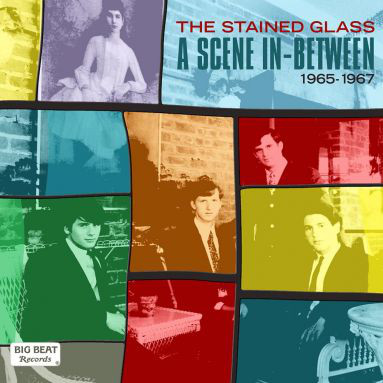
THE STAINED GLASS-A SCENE IN BETWEEN 1965-1967.
THE STAINED GLASS-A SCENE IN BETWEEN 1965-1967.
Sometimes, despite their undoubtable talent, a group fails to make the impact their talent and music deserves. It’s only years later, that people realise how innovative a group they were. That was the case with The Stained Glass, who started life as The Trolls. Quite simply, The Stained Glass were ahead of their time. People neither understood, nor appreciated what they were doing. As a result, The Stained Glass split. Their recording career lasted just three years, and is celebrated in Big Beat’s latest compilation A Scene In Between 1965-1967.
Featuring six tracks from their early years, when The Stained Glass were known as The Trolls, plus eighteen other tracks, A Scene In Between 1965-1967 is truly comprehensive celebration of one of San Francisco’s seminal lost group’s. After listening to A Scene In Between 1965-1967, only then do you realise just how pioneering a group The Stained Glass. So will you, when I tell you about their career.
The Stained Glass’ story begins in San Jose in 1964. Rodger Hedge had just started at San Jose University. He’d arrived from Southern California, where he’d played bass and guitar in the Sen-Sa-Shuns. They were a successful band, who’d supported the Righteous Brothers and Beach Boys. Opening for the Beach Boys must have been ironic, as Rodger had auditioned as their bass player. That wasn’t to be. He enjoyed a successful period in the Sen-Sa-Shuns. That gave him a taste of what a career as a musician would be like. So, on arrival at University, Rodger decided to form a band. He advertised locally, and straight away, Jim McPherson answered the advert.
Jim was a native of Chicago, and was studying radio and television journalism at San Jose University. Originally, he was a bassist, but when he realised how good Rodger was, switched to rhythm guitar. The next member to join the band was drummer Dennis Carrasco.
Dennis was recommended by Barry Wineroth of The Jaguars. He tipped Rodger and Dennis off about this musical prodigy. Unlike Rodger and Jim, Dennis was a native of San Francisco, but had lived in San Jose since 1960. He was younger than his prospective bandmates. In fact, he was still at Blackford High School. The age gap didn’t matter. As a drummer, Dennis was one of the best in San Jose. He’d started off playing in marching bands and after that, was working with The Stratatones and Blue Flames. With the Blue Fames, Dennis recorded some sessions. None of them were ever released. Now his luck looked like changing. Before that, they needed another member.
Although Rodger Hedge was a good guitarist, the band felt they needed another guitarist to play lead guitar. There were two candidates. One was John Sharkey, of the local group Syndicate Of Sound. The other was Bob Rominger, who’d recently moved to San Jose from Albuquerque, Mexico. He was a talented player, capable of unleashing some flashy licks. There was a problem though. Bob had only played in pickup bands. Despite that, he got the gig as lead guitarist. The band was complete. All they needed was a name. They hit upon The Trolls.
From their early days, The Trolls found work easy to come by. Originally, The Trolls played around the San Francisco area. Having established a reputation as a talented and popular band, they started playing further afield. Their performances featured mostly cover versions, with Rodger and Jim sharing lead vocal duties. Then after a while, The Trolls started adding their own original material.
Jim McPherson was The Trolls’ songwriter. He was influenced by the British invasion groups. The Kinks, Beatles, Animals, Rolling Stones and Zombies inspired Jim as a songwriter. So did Paul McCartney, who Jim admired, for the way he structured songs. This seemed to rub off on Jim. However, Jim’s songwriting style is more like Bob Dylan. Perceptive, descriptive, surreal and left-field describes Jim’s songwriter. He was part poet and philosopher. Occasionally, Rodger pitched in with a song, Mostly, it was Jim who wrote The Trolls’ songs. This includes the first songs they recorded.
Such Good Friends and She’s Not Right were the first songs The Trolls recorded. They originally featured on an acetate that was sent to local labels. Eventually, The Trolls released Such Good Friends and She’s Not Right, which has a strong British influence. On both tracks, The Trolls could easily be mistaken for one of the British Invasion groups. Not longer after The Trolls recorded their first two tracks, they released their first single.
The two songs chosen were the ballad How Do You Expect Me To Trust You and the harmonica driven Walkin’ Shoes, with its surreal, enigmatic lyrics. There’s still a British Invasion influence, on Walkin’ Shoes. With lyrics that sound like a homage to The Kinks, a bluesy Rolling Stone sound, especially with the harmonica, The Trolls seemed to have decided if you can’t beat the British Invasion groups, join them. However, apart from some radio play on local radio, The Trolls debut single passed almost unnoticed.
Despite their single failing commercially, The Trolls were one of the most popular live bands. They’d captured people’s imaginations and were winning them over with their mixture of covers and new songs. Despite their popularity, when The Trolls played in the Bay Area Battle of The Bands, it was to a disappointingly small audience. However, there was one man in the audience that would play a part in The Trolls’ future, Rene Cardenas.
Until Rene Cardenas saw The Trolls at The Battle of The Bands, he’d been publishing manager for Trident Productions. Having seen The Trolls live, he decided to form his own company, Jackson Square Productions. The date was 25th April 1966. That day, Rene Cardenas promised to get The Trolls signed to a label. Two weeks later, The Trolls were on their way to Columbia’s Sunset Boulevard Studios, where they’d work with respected arranger Bernie Krause.
At Sunset Boulevard Studios, Bernie Krause helped the band hone their material. He made a number of suggestions, including changing some of the lyrics to Broken Man, a fusion of pop, psychedelia and blues. The other tracks recorded were Second Day and Lonely Am I, which was penned by Bob Rominger. However, the version of Second Day on A Scene In Between 1965-1967 is demo version, recorded at Bob Rominger’s parent’s home. There are two other demos on A Scene In Between 1965-1967 Too Fit To Be Tied and Dollar Sign Friends, which showcase a pioneering psychedelic pop sound. Following the sessions at Sunset Boulevard Studios, The Trolls made a decision that could’ve had a huge impact on their career. They changed their name.
The Trolls were now called The Stained Glass Window. That proved somewhat cumbersome, so they became The Stained Glass. However, that was a result of the word Window being left off the group’s paperwork. Ironically, this mistake worked in their favor. Given the enigmatic nature of the group’s lyrics, this added to the mystery that surrounded the group. The only problem was, would people realize that The Trolls and The Stained Glass were one and the same?
Even after the change of name, The Stained Glass were busy. The Bay Area had many venues, all of which were on the look out for popular bands. A popular band meant a full venue and profitable night. Gradually, The Stained Glass found themselves playing to an older audience. Granted they were still playing to younger people, but mostly, their audiences were older. This suited their baroque infused fusion of pop and psychedelia. The Stained Glass were opening for bigger bands and it looked like a breakthrough was imminent. It wasn’t. The deal with Columbia wasn’t going to happen.
When Columbia passed on The Stained Glass, their manager Rene Cardenas started looking elsewhere. He used his contacts, and The Stained Glass were signed to RCA Victor by the second week in June 1966. Everything looked as it was going well. Then Rene and the RCA Victor producer assigned to The Stained Glass, said they had to record a cover of If I Needed Someone. Written by George Harrison and taken from The Beatles’ Rubber Soul album, this seemed strange. After all, hadn’t Rene been a fan of The Stained Glass’ own songs? Maybe RCA Victor and Rene thought a cover of a Beatles song equalled a hit single. On the B-Side was a remake of The Trolls’ How Do You Expect Me To Trust You? Just before If I Needed Someone was released, it featured on the B-Side of The Beatles’ Yesterday and Today. Despite The Beatles’ version being released first, The Stained Glass’ single was a success in the Bay Area. This resulted in a tour round the East Coast, before The Stained Glass recorded their second single for RCA Victor.
At RCA Victor’s New York studio, The Stained Glass recorded My Buddy Sin. Best described as a baroque tinged track, it’s an example of Jim McPherson’s songwriting skills. The band’s songwriter in chief had done it again. Vanity Fair, The B-Side, is an underrated track. Influenced by The Kinks and Beatles, pop and psychedelia combine on a three minute slice of pop perfection. So good is this track, it could’ve come from the pen of Ray Davies. When the single was being recorded, the group didn’t like My Buddy Sin. They felt the addition of the harmonica spoilt the track. It, they felt, took the edge of the song. On its release, in September 1966, My Buddy Sin failed to chart. It would be another five months before The Stained Glass entered the studio.
When The Stained Glass entered the studios in February 1967, they realized what being signed to a record company entailed. RCA Victor wanted them to record songs by other songwriters. None of them were suitable. Then they hit upon We Got A Long Way To Go, which was penned by Barry Mann and Cynthia Weil. It was totally different to the type of songs the group usually recorded. During recording effects were used to create feedback and sustain. This is very different from previous singles. There’s still a psychedelic sound as pop and rock combine. Full of hooks, would this be The Stained Glass breakthrough single?
On the release of A Long Way To Go, with Corduroy Joy on the B-Side, it didn’t result in the elusive hit single for The Stained Glass. Not long after this, with the lack of success frustrating the band, Rodger Hedge, who’d founded the band was asked to leave. This marked the beginning of the end for The Stained Glass.
Their final single was Mediocre Me, with The Beatles’ inspired A Scene In-Between on the B-Side. Both were penned by Jim McPherson. Sadly, the single failed to chart nationally, but reached number six on KDON’s chart. That’s a small crumb of comfort for one of San Francisco’s most innovative and pioneering groups. Not long after Mediocre Me’s release RCA Victor didn’t renew The Stained Glass’ contract.
This proved to be a blessing in disguise. The Stained Glass signed to Capitol Records and released two critically acclaimed albums, Crazy Horse Roads in 1968. Just before the album was finished, Bob Rominger left the band. The times and lineup was changing.
Joining were keyboardist and guitarist Lance Libby, percussionist Louie Schiavo. In 1969, southpaw guitarist Tom Bryant joined and was a member of The Stained Glass when they recorded their sophomore album Aurora. It was released to critical acclaim in 1969 but failed commercially. After that, The Stained Glass changed their name to Christian Rapid and spent the next three years touring. They never recorded another album. Aurora marked the end of the The Stained Glass’ story.
He was replaced by southpaw guitarist Tom Bryant who With two replacement members, keyboardist and guitarist Lance Libby and percussionist Louie Schiavo The Stained Glass recorded their sophomore album Aurora. It was released in 1969. After that The Stained Glass changed their name to Christian Rapid and spent the next three years touring. They never recorded another album. Aurora marked the end of the The Stained Glass’ story.
The story of The Stained Glass is a familiar one. They were a talented, innovative and pioneering group, but their music was way ahead of its time. That was the case with The Stained Glass, who started life as The Trolls. Quite simply, The Stained Glass were ahead of their time. People neither understood, nor appreciated what they were doing. Sadly, their music failed to make the impact it should’ve. It’s only years later, that people realise how innovative a group The Stained Glass were. From their early days as The Trolls, their music was ahead of the musical curve. Influenced by the British Invasion, The Kinks, Beatles, Animals, Rolling Stones and Zombies inspired The Trolls and The Stained Glass. The other thing that made The Trolls and The Stained Glass standout were their lyrics.
Many of the songs were written by the enigmatic poet philosopher Jim McPherson. He too was influenced by the British Invasion groups. His lyrics are pensive, perceptive, descriptive, surreal and cryptic. Influenced by Ray Davies, Paul McCartney and Bob Dylan, Jim could’ve and should’ve been a hugely successful songwriter. Sadly, just like The Trolls and The Stained Glass, Jim McPherson’s talents went unnoticed for too long. Now a new generation have discovered the music of The Trolls and The Stained Glass.
A Scene In Between 1965-1967, which was recently released by Big Beat, a subsidiary of Ace Records, features twenty-four tracks. This includes six tracks from their early years, when The Stained Glass were known as The Trolls. Then there’s eighteen other tracks, from when The Trolls became The Stained Glass. This includes sixteen tracks that have never been on CD before. Among them are demos and live tracks. This is why A Scene In Between 1965-1967 is the most comprehensive celebration of one of San Francisco’s most innovative lost group’s, The Stained Glass.
For anyone whose a fan of pop-psych, then A Scene In Between 1965-1967 is essential listening. After even one listen, you’ll wonder why The Stained Glass’ unique fusion of blues, pop, psychedelia and rock wasn’t a huge commercial success. Unfortunately, The Stained Glass were ahead of their time. They also signed to the wrong label, RCA Victor, who tried to make them something they weren’t. On another label, The Stained Glass might have prospered and become the success story they deserved to be. At least, somewhat belatedly, The Stained Glass’ seminal music is being heard by a much wider, and appreciative audience on the recently released A Scene In Between 1965-1967. Standout Tracks: Walkin’ Shoes, Broken Man, Vanity Fair and A Scene In Between.
THE STAINED GLASS-A SCENE IN BETWEEN 1965-1967.


DUST MY RHYTHM AND BLUES-THE FLAIR RECORDS R&B STORY 1953-1955.
DUST MY RHYTHM AND BLUES-THE FLAIR RECORDS R&B STORY 1953-1955.
Despite only being around for just three years, Flair Records released some of the best R&B and blues of that period. Formed in 1953, Flair Records became the second subsidiary of Modern Records. RPM was Modern Records’ first subsidiary, Flair Records the second. It was the idea of Jules Bihari, who with his brothers, co-founded Modern Records. Jules was also the head of A&R at Modern Records. He realised that music was changing and Modern Records’ roster was expanding. Modern Records was releasing different types of music. That Jules reckoned, wasn’t right. Surely different labels should release different types of music? An example of this would be Flair Records. For its first ten releases, it only released hillbilly and country and western music. After these ten singles, Flair Records roster changed.
For its next seventy releases, Flair Records established a reputation as one of the best R&B and blues label. Despite the quality of its music, none of the singles Flair Records released became a hit. They were however, successful in California, which was home to Flair Records. Then in 1955, Flair Records closed its doors. Since then, the eighty singles Flair Records released have become hugely collectable. Now sixty years after Flair Records released its first single, their releases are changing hands for ever increasing sums of money. So for fans of none of Flair Records, Ace Records’ recent release Dust My Rhythm and Blues-The Flair Records R&B Story 1953-1955, will come as a welcome release.
Featuring fifty tracks spread over two discs, Dust My Rhythm and Blues-The Flair Records R&B Story 1953-1955, almost half of the tracks have never been released before. Sitting alongside the singles, are alternate takes. For Flair Records completists, this makes Dust My Rhythm and Blues-The Flair Records R&B Story 1953-1955 essential listening. Especially when there’s contributions from Elmore James, Johnny Ace, Big Duke, The Flairs, Bobby Relk, Matt Cockrell and Blink Allen. This makes Dust My Rhythm and Blues-The Flair Records R&B Story 1953-1955 a musical treasure trove, which I’ll pick my highlights of.
DISC ONE.
Little Johnny Jones’ Dirty By The Dozen (Sweet Little Woman) opens Dust My Rhythm and Blues-The Flair Records R&B Story 1953-1955 with Dirty By The Dozen (Sweet Little Woman). Released in 1953, Little Johnny Jones was a blues’ pianist who backed legends like Muddy Waters. Here, Little Johnny Jones steps out of the shadow and takes centre-stage. What follows is on this delicious slice of blues, that’s best described as timeless. Sadly, it’s the only contribution from Little Johnny Jones.
There’s a quartet of Elmore James singles on disc one. Early In The Morning is the first and was released in 1953. It epitomises everything that’s good about blues music. Driven along by the guitar, horns and piano introduce Elmore’s worldweary vocal. It sounds as if it’s been honed on cigarettes and whiskey. The second single is Can’t Stop Lovin’ which was released in 1953. Its much more understated arrangement showcases Elmore’s guitar playing and that unmistakable vocal. Just like Strange Kinda Feeling, which was released in 1954, blues and R&B unite. It’s another song that swings. Elmore keeps the best until last. Sho’ Nuff I Do is a well known track. Released in 1954, it’s a tale of betrayal. Disbelief fills Elmore’s vocal on this classic track and is a tantalising taste of Elmore James, a true giant of blues music.
Duke Henderson career began back in the forties. Since then, he’d recorded for a number of labels, including Apollo, United Artists and Globe. By 1953, when Duke released Hello Baby as a single, he was known as Big Duke. He was also an experienced musician. A fusion of blues, jazz and R&B, Hello Baby is one of four tracks on disc one. The other single is Night Howler, released in 1954, which features a heartbroken, needy vocal. His other contributions are alternate takes of Beggin’ and Pleadin’ and Baby Beat It, which is Big Duke’s best known single. Sadly, the talented Big Duke was lost to music, when he found religion in 1957. After that, he became a successful gospel DJ and then a minister.
James Reed has two tracks on disc one. You Better Hold Me is an alternate take and My Mama Told Me was released as a single in 1954. Slow and bluesy, James languid vocal and chiming guitar make a potent combination. A tale of a mistreating woman, James is captivated. So are you. Bluesy horns and a seemingly never ending guitar solo have you spellbound. It’s a true hidden gem.
Saunders King and His Orchestra’s My Close Friend has a real late night sound. You can imagine this being played late at night, in a Los Angeles nightclub. The track has a really evocative, cinematic sound. Blues and jazz combine on this previously unreleased alternate track. With a vocal oozing heartache, it’s the perfect track for the newly heartbroken.
Although I’ve only mentioned eleven of the twenty-five tracks on Dust My Rhythm and Blues-The Flair Records R&B Story 1953-1955, I could’ve just as easily mentioned any number of other tracks. This includes contributions from The Flairs, Johnny Ace, Matt Cockrell and The Royal Hawk and His Orchestra. Quite simply, Dust My Rhythm and Blues-The Flair Records R&B Story 1953-1955 is a quality compilation. The unreleased tracks feature more than a few hidden gems. For anyone interested in Flair Records, this makes disc one of Dust My Rhythm and Blues-The Flair Records R&B Story 1953-1955 essential listening. Will this be the case with disc two of Dust My Rhythm and Blues-The Flair Records R&B Story 1953-1955?
DISC TWO.
On Disc Two of Dust My Rhythm and Blues-The Flair Records R&B Story 1953-1955, we meet old friends like Elmore James, The Flairs, Shirley Gunter and Ike Turner and His Orchestra. Then there’s contributions from Anna Marie, Blinky Allen, Bobby Relf and Richard Berry. Disc Two of Dust My Rhythm and Blues-The Flair Records R&B Story 1953-1955 is a veritable treasure trove of twenty-five tracks, which I’ll pick the highlights of.
Blinky Allen’s Chop House opens disc two of Dust My Rhythm and Blues-The Flair Records R&B Story 1953-1955. This isn’t the original version of this saxophone driven instrumental. No. It’s an alternate take. Quite simply it’s an irresistible scorcher, and is one of the highlights of the compilation.
Richard Berry has five tracks on disc two. Three of them are singles. This includes The Big Break, released in 1954. Dramatic and theatrical, it’s a genre-melting track. Elements of R&B combine with pop. The same can be said of the 1955 single Oh! Oh! Get Out Of The Car. It’s a poppy slice of R&B. Then there’s three unreleased alternate tracks. Together has Elmore James’ style guitars, while Daddy Daddy is a fusion of R&B, doo wop and R&B. Next Time has a tougher, harder edge. With a bluesy arrangement, Richard’s vocal is sassy and feisty, as we hear another side to his music.
Blues pianist Mercy Dee Walton was already an established artist when he signed to Flair Records in the summer 1955. During what was the final few months of Flair Records’ “lifetime” Mercy Dee released a trio of singles. They showcases Mercy Dee’s piano playing. The first of these is Stubborn Woman. Slow, bluesy and featuring a despairing vocal, it’s the first of three hidden gems. Oh, Oh, Please is a needy, jazz-tinged uptempo track. Lasting ninety seconds, it’s another tale of love gone wrong, delivered in Mercy Dee’s unique way. Have You Ever is the final contribution from Mercy Dee. Again, it’s a slow, moody and broody track, Mercy Dee lays bare his soul. Sadly, seven years after Mercy Dee released these three tracks, Mercy died in 1962, aged just forty-seven. That day, blues music lost a hugely talented pianist and singer.
The Carroll County Boys only contribution on disc two of Dust My Rhythm and Blues-The Flair Records R&B Story 1953-1955 is Dizzy. This isn’t the original version. Instead it’s an alternate track. Featuring a guitar masterclass from Pee Wee Crayton, the addition of braying horns is just the finishing touch to what’s the musical equivalent of pieces of eight.
My final choices from disc two of Dust My Rhythm and Blues-The Flair Records R&B Story 1953-1955 come from Shirley Gunter. She also featured on disc one. On disc two she contributes two tracks. Both are alternate versions. The first is Oop Shoop. Ipsy Opsie Ooh is the best of the two. Best described as a fusion of doo wop and R&B, it’s a beautiful, heartfelt and soulful track. Once again, this track proves that Flair Records’ back-catalogue is a veritable treasure trove.
Again, I’ve only mentioned twelve tracks from disc two of Dust My Rhythm and Blues-The Flair Records R&B Story 1953-1955. I could just as easily have mentioned three tracks from Elmore James, two tracks from Bobby Rey or tracks from The Chimes, Johnny Fuller and Ike Turner and His Orchestra. Once again, compiler Tony Rounce has chosen well. He’s uncovered some hidden musical gems. This includes some of the ten alternate takes that feature on disc two. They ensure that Dust My Rhythm and Blues-The Flair Records R&B Story 1953-1955 is an essential purchase for Flair Records’ completists. After all, where else will you find most of these alternate tracks? The good news is that Dust My Rhythm and Blues-The Flair Records R&B Story 1953-1955, which was released byAce Records, will cost you a fraction of the price of some of the Flair Records’ releases.
Featuring fifty tracks spread over two discs, Dust My Rhythm and Blues-The Flair Records R&B Story 1953-1955 documents the three years when Flair Records were in business. During that three year period, Flair Records released some of the best blues and R&B music of that era. Despite its undoubtable quality, the singles released by Flair Records weren’t a commercial success nationwide. Instead, they were only successful within California, which was home to Flair Records. So it’s no surprise that after three years where its music wasn’t commercially successful, Flair Records closed its doors. However, Flair Records’ left behind a rich musical legacy.
That legacy is Flair Records’ back-catalogue. It includes eighty singles, plus a whole host of alternate takes. A tantalising taste of Flair Records’ back-catalogue features on Dust My Rhythm and Blues-The Flair Records R&B Story 1953-1955, which is a veritable treasure trove that features fifty tracks. Standout Tracks: Little Johnny Jones Dirty By The Dozen (Sweet Little Woman), Elmore James Early In The Morning, Blinky Allen Chop House and The Carroll County Boys Dizzy.
DUST MY RHYTHM AND BLUES-THE FLAIR RECORDS R&B STORY 1953-1955.


HAROLD MELVIN AND THE BLUE NOTES-REACHING FOR THE WORLD.
HAROLD MELVIN AND THE BLUE NOTES-REACHING FOR THE WORLD.
Wake Up Everybody marked the end of an era for Harold Melvin and The Blue Notes. Not only was To Be True the last Harold Melvin and The Blue Notes’ album to feature Teddy Pendergrass, but it was their last album to be released on Philadelphia International Records. It was the end of an era for a band that started back in 1954.
Harold Melvin and The Blue Notes had originally been formed back in the early fifties, as The Charlemagnes, and became The Blue Notes in 1954. Two years later, Harold Melvin and The Blue Notes released their debut single If You Love Me (Really Love Me) in 1956. Since then, they’d toured and released singles, but struggled to make a living. Harold Melvin and The Blue Notes had struggled for success on the supper club circuit for fourteen years. They were no overnight success story. It was only when Harold Melvin brought Teddy Pendergrass onboard that their fortunes improved. Originally the drummer, the charismatic baritone became lead singer. Teddy Pendergrass was an unknown quantity, but Harold Melvin took a chance on him. Sadly and ultimately, Harold’s generosity wasn’t rewarded.
Between 1972 and 1975, Harold Melvin and The Blue Notes released a quartet of albums. This included two number one US R&B albums and four number one US R&B singles. By the time Harold Melvin and The Blue Notes released Wake Up Everybody in November 1975, Teddy Pendergrass felt he deserved star billing. That’s despite the group being billed as Harold Melvin and The Blue Notes featuring Theodore Pendergrass from the release of Wake Up Everybody, their fourth album. Teddy believed the success of the group was down to him. What he forgets in the Blue Notes’ trademark harmonies. Then in 1976, Teddy Pendergrass quit the group over money.
Gamble and Huff who founded Philadelphia International Records, offered Teddy a recording contract. However, Teddy was only willing to sign the contract if Harold Melvin and The Blue Notes weren’t signed to Philadelphia International Records. So forgetting how Harold Melvin and The Blue Notes helped transform Philadelphia International Records, from a small unknown label into one of the biggest soul labels, Teddy Pendergrass got his way. Harold Melvin and The Blue Notes found themselves without a label.
Then in 1977, Harold Melvin and The Blue Notes signed to ABC Records. Their debut album for ABC Records was Reaching For The World, which was recently released by PTG Records. This was the start of a new era for Harold Melvin and The Blue Notes. Their lineup was transformed. Three new members joined the group. Replacing Teddy Pendergrass was David Ebo, while Dwight Johnson and William Spratley replaced Blue Notes Bernard Wilson and Jerry Cummings. It was this new lineup that featured on Reaching For The World. Before I tell you about Reaching For The World, I’ll tell you about their career since they joined Philadelphia International Records.
It was in 1970, that Teddy Pendergrass joined Harold Melvin and The Blue Notes. Two years later, they were signed to Philadelphia International Records. During 1972, Harold Melvin and The Blue Notes enjoyed their first taste of chart success. I Miss You (Part 1) reached number fifty-eight in the US Billboard 100 and number seven in the US R&B Charts. Then If You Don’t Know Me By Now, reached number three in the US Billboard 100 and number one in the US R&B Charts. Harold Melvin and The Blue Notes. were on the way to becoming one of the label’s biggest acts.
In August 1972, that the group released their debut album, originally entitled I Miss You. However, after the success of If You Don’t Know Me By Now, the second single released from the album, Philadelphia International Records decided to repackage the album, giving it a new cover and title, Harold Melvin and The Blue Notes. The now entitled Harold Melvin and The Blue Notes, reached number fifty-three in the US Billboard 200 and four in the US R&B Charts. This was a more than satisfactory outcome for what many people perceive is the classic line up of the group. This was Teddy Pendergrass singing lead vocal, with Harold Melvin, Lloyd Parks, Lawrence Brown and Bernie Wilson singing harmonies and backing vocals.
After this, the group embarked on its most successful period, with Black and Blue their second album, released in September 1973, reaching number twenty-seven in the US Billboard 200 and five in the US R&B Charts. It featured one of their most successful singles, The Love I Lost (Part 1), which reached number seven in the US Billboard 100 and number one in the US R&B Charts. Soon, Harold Melvin and The Blue Notes were rivaling The O’Jays for the title as Philadelphia International Records’ most successful group.
1975 saw the group’s popularity soar, with them releasing two hugely successful albums. The first was To Be True, which was released in February 1975. It reached number twenty-six in the US Billboard 200 and number one in the US R&B Charts. It became the group’s first album to be certified gold. Things were about to get even better.
Later that year, in November 1975, To Be True’s success was surpassed by Wake Up Everybody. It reached number nine in the US Billboard 200 and number one in the US R&B Charts. Not only that, but it was certified platinum, have sold over one million copies. As if that wasn’t enough, Wake Up Everybody (Part 1), the first single released from the album reached number twelve in the US Billboard 100 and number one in the US R&B Charts. Harold Melvin and The Blue Notes were enjoying the most successful period of their career. What could go wrong?
Then in 1976, Teddy Pendergrass, left the group after an argument over money. Teddy seemed to think he was bigger than the group. He wanted top billing, so Harold Melvin agreed to group being billed as Harold Melvin and The Blue Notes featuring Theodore Pendergrass. From the release of Wake Up Everybody, this was how the group were billed. That wasn’t enough for Teddy. So, he quit the group and signed to Gamble and Huff’s Philadelphia International Records.
Ironically, 1975 proved to be the end of an era for Philadelphia International Records. The label lost many of the founding members of its legendary studio band M.F.S.B. They’d been involved in a lengthy dispute with Gamble and Huff over money. When it couldn’t be resolved, many of the best musicians in M.F.S.B. left the label. This included Baker, Harris, Young and Vince Montana Jr. They were much more than musicians. Indeed, they were arrangers, producers and songwriters. This hugely affected Philadelphia International Records, who never enjoyed the same commercial success. Apart from The O’Jays and Teddy Pendergrass, Philadelphia International Records was never enjoyed the same commercial success as they were between 1972 and 1975. After that commercial success was sporadic. That was the golden period. So were Harold Melvin and The Blue Notes leaving at the right time?
When Gamble and Huff offered Teddy a recording contract as a solo artist, he said he’d only sign on one condition. That was that Harold Melvin and The Blue Notes weren’t signed to Philadelphia International Records. It was an ultimatum. Gamble and Huff forgetting how Harold Melvin and The Blue Notes helped transform Philadelphia International Records, from a small unknown label into one of the biggest soul labels, agreed. At a stroke, Harold Melvin and The Blue Notes found themselves without a label. The unknown drummer and singer they’d rescued from obscurity, had made sure they were without a record label.
Then in 1977, Harold Melvin and The Blue Notes signed to ABC Records. Their debut album for ABC Records was Reaching For The World, which was recently released by PTG Records. This new era for Harold Melvin and The Blue Notes began with their fifth album Reaching For The World.
For Reaching For The World, Harold Melvin penned He Loves You And I Do Too and Big Singing Star. Harold cowrote two other tracks He wrote Where There’s A Will, There’s A Way with Melvin and Mervin Steals, then cowrote After You Love Me, Why Do You Leave Me with Kenny Gamble. Hubert V. Yarborough wrote Sandman and Hostage Part 1&2. Derek Floyd wrote the title-track, while MacFadden and Whitehead cowrote Stay Together with Victor Castarphen. These eight tracks became Reaching For The World.
Recording of Reaching For The World took place at Joe Tarsia’s Sigma Sound Studio, in Philly. This was where all the Harold Melvin and The Blue Notes had been recorded. Producing Reaching For The World was Harold Melvin. Once Reaching For The World was finished, it was released in 1977.
On the release of Reaching For The World in 1977, it reached just number fifty-six in the US Billboard 200 and number fifteen in the US R&B Charts. The lead single was Reaching For The World, which reached number seventy-four in the US Billboard 100 and number six in the US R&B Charts. Then After You Love Me, Why Do You Leave Me, which featured Sharon Paige reached number 102 in the US Billboard 100 and number fifteen in the US R&B Charts. Hostage Parts 1&2 was chosen as the final single, but failed to chart. Although Reaching For The World hadn’t matched the heights of their four album for Philadelphia International Records, their was life after Teddy Pendergrass. Indeed, some people on hearing David Ebo said Teddy who? Is that the case or was Teddy missed on Reaching For The World?
Opening Reaching For The World is the title-track. Swathes of the lushest strings sweep and swirl, horns rasp usher in David Ebo’s vocal. Straight away, you’re hooked. David’s worldweary vocal is full of emotion, sadness and regret. He brings the lyrics to life. It’s as if he’s lived the torment he’s singing about. Meanwhile, the rhythm section and percussion provide the pulsating heartbeat, while stabs of growling horns add drama. The Blue Notes add soaring heartfelt, harmonies and strings sweep on this delicious dance-floor friendly track that introduces us to David Ebo.
Melancholy horns bray while drums mark the time on Where There’s A Will, There’s A Way. Then after dramatic bursts of drums and stabs of piano, impassioned, soul-searching harmonies sweep in atop the lushest of strings. With Vince Montana Jr’s vibes for company, they set the scene for David Ebo on his first ballad. He unleashes an emotive powerhouse, vamping his way through the lyrics. His vocal oozes emotion and drama. Matching him for drama are the drums. They play a huge part in the arrangement. So do the harmonies. Then when the vocal changes hands, there’s no weak links. It’s as if the new Blue Notes are determined to prove their worth. This they do and then some. As for David, his soul-baring vocal oozes emotion and hurt.
After You Love Me, Why Do You Leave Me has a jazzy introduction. Horns blaze, strings sweep and the rhythm section roll back the years to another musical era. Propelled along by the bass, an school jazz track unfolds. Sharon Paige takes charge of the lead vocal. Her vocal veers between tender, feisty and sassy, while the Blue Notes add questioning, hurt-filled harmonies. As Sharon’s vocal drops out, David takes centre-stage. He drops his vocal. It’s much more tender, but wistful. Harmonies from The Sweethearts Of Sigma sweep in, before drums pound, horns blaze and strings dance. Then David and Sharon feed off each, driving each other to greater heights of soulfulness. All the time, The Sweethearts Of Sigma sweep in, adding harmonies on this hook-laden, jazz-tinged track.
Strings cascade as Sandman shares his secrets. With a jaunty arrangement the rhythm section provide the heartbeat, while strings dance and The Sweethearts Of Sigma add tender, wistful harmonies. They set the scene for David, whose vocal is heartfelt and tender. Delivered with sincerity, he shows that he’s a versatile frontman. He’s equally comfortable delivering a powerhouse of a vocal as he is a tender, gentle vocal. Drums pound adding dramas, harmonies sweep in. Their beauty caress your ears and are the perfect foil for David’s vocal. Needy, sincere and joyous he pleads: “don’t wake me from my dreams, I might never have this dream again.”
Hostage Part 1&2 bursts into life, Philly Soul and funk colliding head on. The band are given the opportunity to stretch their legs. Driven along by the rhythm section, horns growl, string swirl and Larry Washington adds congas. David’s vocal begins as a vamp, before become a Pendergrass-esque powerhouse. It’s an impressive sound. Especially, when accompanied by some of Philly’s finest musicians in full flight. Stabs of piano, percussion, horns and strings all play their as David vamps and testifies. Quite simply, this is one of the highlights of Reaching For The World and a forgotten gem in Harold Melvin and The Blue Notes back-catalogue.
A soaring, soul-searching falsetto opens He Loves You and I Do Too. It gives way to the harmonies, before the falsetto returns. An outpouring of emotion, it’s accompanied by an understated arrangement. Just the rhythm section, piano, Vince Montana Jr’s vibes and lush strings combine. Then drums pound and David’s vocal enters. He delivers his vocal with power and emotion, proving the perfect foil for the falsetto. When it drops out, The Blue Notes’ harmonies fill the spaces. Their harmonies are poignant and melancholy, adding the finishing touch to this tug of love.
Big Singing Star was the second track written by Harold Melvin. Not only does it show that Harold is a talented songwriter, but a talented producer on this epic fusion of funk and Philly Soul. Despite his undoubted talent, it’s seems strange that Gamble and Huff didn’t allow Harold to write or produce his own music. At ABC Records he had a fresh start and was coming into his own. This is obvious from the opening bars. Against a myriad of growling horns, thunderous drums and dancing strings, David vamps his way through the arrangement. Stabs of piano and urgent harmonies add to the drama of this epic track that sees Harold Melvin blossom as a songwriter and producer. As for David Ebo, he’s comfortably settling into the role of frontman and seems to be relishing the role.
Closing Reaching For The World is Stay Together, which was written by McFadden and Whitehead with Victor Castarphen. Horns rasp, strings cascade, strings chime and the rhythm section provides the heartbeat. They set the scene for needy, tender harmonies from the Blue Notes. As strings quiver, David’s vocal is needy, almost pleading: “let’s forget about the past… we can Stay Together.” As his vocal drops out, the an equally needy falsetto sweeps in. Adding the finishing touch are harmonies. They add to the drama and emotion, all the time encouraging them to “Stay Together.”
Reaching For The World is a truly underrated album in Harold Melvin and The Blue Notes’ back-catalogue. It’s proof that Harold Melvin and The Blue Notes career didn’t end when Teddy Pendergrass left. There’s no question that there was life after Teddy Pendergrass and Philadelphia International Records. The loss of Teddy Pendergrass hurt Harold Melvin and The Blue Notes, but was not a fatal blow. It definitely, affected the group as a commercial entity and couldn’t have come at a worse time.
When Teddy left Harold Melvin and The Blue Notes in 1976, they’d they’d just released their most successful album Wake Up Everybody. ironically, Teddy left over an argument over money. Who knows what heights and riches they’d have enjoyed if they’d stayed together. Harold Melvin and The Blue Notes this must have been hugely disappointing. For Harold Melvin, who rescued Teddy from obscurity, this must have been akin to an act of betrayal. However, Harold had a secret weapon…David Ebo. He was one of three new members of Harold Melvin and The Blue Notes.
On Reaching For The World, David brings the music to life. He grabs songs and makes them work. Whether it’s ballads, dance-tracks or funky vamps, he makes the song his own. He’s no Teddy clone. No. Far from it. David is his own man with his own unique style. On the slower songs, he doesn’t over-sing the songs. He’s not like some soul singers, whose style is almost a parody of a soul singer. That’s not David’s style. Then on the uptempo tracks, David unleashes a series of vocal powerhouses. He vamps his way through songs as Philly Soul and funk becomes one. There’s even an opportunity for David to demonstrate his versatility on the jazzy After You Love Me, Why Do You Leave Me. For David Ebo, Reaching For The World saw him fill Teddy’s shoes for the first time. As for Harold Melvin, he blossomed having left Philadelphia International Records.
Having signed to ABC Harold Melvin got the chance to show he was a talented songwriter and producer. He wrote two tracks and cowrote two others. This was very different to Philadelphia International Records. Despite his undoubted talent, Gamble and Huff didn’t allow Harold to write or produce his own music. At ABC Records Harold Melvin, just like David Ebo had a fresh start and was coming into his own.
Sadly, Harold Melvin and David Ebo’s fresh start wasn’t the commercial success it deserved to be. Reaching For The World reached just number fifty-six in the US Billboard 200 and number fifteen in the US R&B Charts. When the title-track was released as a single, it gave Harold Melvin and The Blue Notes the final hit single in the US Billboard 100. Despite not matching the success of their four previous albums, Reaching For The World is a full of slick arrangements and music that’s infectiously catchy, hook-laden and dance-floor friendly. Then there’s funky tracks and gorgeous, heartfelt ballads. That’s why Reaching For The World, which was released by PTG Records, is a hidden gem in Harold Melvin and The Blue Notes back-catalogue. Reaching For The World also proved there was life after Teddy Pendergrass. Standout Tracks: Reaching For The World, Where There’s A Will There’s A Way, Hostage Part 1&2 and Big Singing Star.
HAROLD MELVIN AND THE BLUE NOTES-REACHING FOR THE WORLD.

SKADEDYR-KONGEKRABBE.
SKADEDYR-KONGEKRABBE.
Recently, Skadedyr have been establishing a reputation as one of Norway’s most exciting up-and-coming bands. Skadedyr however, are no ordinary band. Far from it. Described as an anarchist/democratic band, Skadedyr feature twelve members. These twelve musicians play an eclectic selection of instruments. This includes a brass, string and rhythm section. Even their rhythm section is unlike most other bands. Skadedyr’s rhythm section features two drummers. Then there’s guitars, keyboards and even an accordion. As you can see, Skadedyr aren’t more like other bands.
Instead, Skadedyr are more like pioneering collective of avant-garde musicians. They’ve just recorded their debut album Kongekrabbe, which will be released by Hubro Music on 13th January 2014. Kongekrabbe is no ordinary album. That’s what I’d expection from a pioneering group like Skadedyr, who I’ll tell you about.
Skadedyr were founded by Heida Karine Johannesdottir Mobeck and Anja Lauvdal. They were previously, members of Your Headlights Are On, who released their eponymous debut album in 2011. It was well a received debut album. A great future was forecast for Your Headlights Are On. Sadly, that wasn’t to be. Your Headlights Are On, spilt-up. From the ashes of Your Headlights Are On, came Skadedyr, which Heida and Anja are determined to make a success of. They’re very much the driving force to Skadedyr. They’ve also acted as talent spotters.
Since founding Your Headlights Are On, Heida and Anja have brought together members of some of Norway’s best bands. Among them are Broen Osk, Karokh, Moskus, Skrap and Hullyboo. The result is another Norwegian supergroup which features twelve pioneering, innovative musicians. Harnessing this amount of creativity might sound difficult? That’s turned out not to be the case though. Skadedyr are very much a democracy, which meant recording their debut album Kongekrabbe went smoothly.
When it came to recording Kongekrabbe, Skadedyr recorded four songs that Heida and Anja cowrote four songs. The other track Partylus, was penned Ivar Aasen. These songs had been honed in lengthy practice sessions. So, by the time Kongekrabbe entered the studio, they were ready to go. Everything had been worked out beforehand. This included the arrangements to the five tracks on Kongekrabbe. Every member of the band’s point of view was listened to. It’s very much a democratic decision. Rather than have everything written down, it’s was all what Skadedyr hear and feel. This is music as it used to be made.
On the five tracks on Kongekrabbe, Skadedyr use this eclectic selection of instruments like an artist uses their palette. They paint pictures, musical pictures on Kongekrabbe. Incredibly, Skadedyr recorded Kongekrabbe in just one day. This is a really refreshing. Far too often, bands spend months, even years recording an album. When this happens, too often, the result is a bland, overproduced album. This isn’t the case on Kongekrabbe. Not at all.
Kongekrabbe features five tracks which are best described as unyielding, innovative, energetic and enthralling. You’re captivated by this melting pot of musical influences. Psychedelia, rock, Krautrock, prog rock and jazz are some of the musical influences that shine through. That’s why Kongekrabbe is an album that will appeal to an eclectic selection of music lovers. You’ll realize that when I tell you about Kongekrabbe.
Intro Linselus opens Kongekrabbe. An eerie, haunting and chilling the twenty-second intro grabs your attention. After a silent interlude, the track heads in the direction of avant-garde, experimental, free jazz and industrial. Short bursts of grizzled horns, chilling strings, percussion and an accordion join forces as the track reaches an eerie, discordant ending. Following another silent interlude, synths buzz, strings shriek, horns growl and an accordion wails. It’s akin to the musical equivalent of Primal Scream Therapy. A cathartic outpouring of emotion, it’s enthralling, experimental, dramatic and thought provoking.
Linselus/Due has a much more understated sound. Tender, ethereal and jazz-tinged female vocals are accompanied by a standup bass. It propels the arrangement along, while free jazz horns meander in and out. It’s a case of opposites attract. Then the arrangement literally explodes into life. A frenzied combination of scatted vocals, percussion and bursts of braying, blazing horns. They signal the rest of Skadedyr to join this fusion free jazz, rock, experimental and industrial. Boundaries are pushed to their limits, sometimes, even beyonds. Skadedyr seem determined to explore sonically. Then just as quickly as the drama and energy came into being, it disappears, becoming an ambient soundscape. Eno-esque, it has an ethereal quality. You revel in it. It’s as if you’ve strayed onto a lost excerpt from Music For Airports. There’s even a hint of Sigur Ros on what’s best described as four minutes of ethereal beauty.
The title-track Kongekrabbe, unfolds in waves. Again the music is understated and ethereal sound. There’s also a cinematic sound to this fusion of ambient and jazz. It’s as if Skadedyr draw inspiration from Brian Eno’s ambient classics, Harold Budd, Sigur Ros, Liz Fraser of the Cocteau Twins and Ry Cooder’s Paris Texas. That’s just for the moment. Who knows what curveball Skadedyr may deliver. Any minute, they could spring any number of surprises. They do. Horns are dark, pensive, moody and hopeful, before becoming urgent. Guitars are crystalline, sing-song harmonies joyous and ethereal. The plink plonk piano has an experimental, ambient sound. Later, the track heads in the direction of rock, growing in power and drama. Influences melt into one. Everything from avant-garde, ambient, experimental, free jazz and rock can be heard. The result is mesmeric, as an eclectic musical tapestry takes shape before you. It’s woven by Skadedyr, in their own unmistakable style.
As Partylus unfolds, it’s like journeying back in time. Suddenly, you’re in an old jazz club in New Orleans. It only lasts ten seconds. Then Skadedyr are pushing musical boundaries. The unmistakable snap, crackle and pop of old vinyl ushers in an arrangement that’s inspired by ambient, experimental and jazz. A genre-melting pot pourri of musical influences, you’re captivated. You never know what’s coming next. There’s even a tantalizing cover of Bob Dylan’s Rolling Stone. All to quickly, it gives way to old style jazz. Next a heartfelt, vocal gives way then machine gun guitar licks. The vocal is almost punk in style. Raw and raucous, it’s the just the next part in this musical roller coaster journey where surprises aplenty are in-store for the unsuspecting listener. Best to climb onboard and enjoy the ride.
Lakselus closes Kongekrabbe, Skadedyr’s debut album. Gradually, the arrangement unfolds. It rumbles ominously in the distance. Strings quiver, producing a spine-tingling chilling sound. A myriad of beeps and squeaks are added and the track takes on a space-age sound. Instruments drift in and out. They make their presence felt, but only briefly, and in an unorthodox way. Experimental, industrial and free jazz are the inspiration for Skadedyr. What follows is akin to a chilling, eerie soundscape. Later the drama builds, before the track blossoms, revealing its ethereal beauty. That comes courtesy of strings, piano and ethereal, angelic harmonies. This haunting, cinematic track proves the perfect way to close Kongekrabbe and leaves you wanting to hear more from Skadedyr.
Featuring just five songs, and lasting thirty-six minutes long, Skadedy’s debut album Kongekrabbe is a tantalizing taste of one of Norway’s most exciting up-and-coming bands. Featuring twelve talented and innovative musicians, they’re determined to make music their way. This means with everyone having a say in how the album is made. That’s musical democracy. As for the recording process, Skadedyr don’t waste time. They recorded in just one day. That’s refreshing and resulted in a musical tapestry.
Kongekrabbe is best described as a pot pourri of influences. Ambient, experimental, electronica, industrial, free jazz, Krautrock and rock can all be heard on Kongekrabbe. They’re part of the five atmospheric, dramatic, ethereal and evocative soundscapes. It’s bold, brave and inventive music that paints pictures in your mind’s eye. There’s a cinematic quality to the innovative and imaginative music on Kongekrabbe. I’d also describe Kongekrabbe as cerebral cinematic soundscapes. Sometimes, they’re understated and pensive, while other times they range from dramatic, challenging and futuristic, to moody and broody. Then seamlessly, the music can become crystalline and ethereal, as influences and genres melt into one. All the time the music on Kongekrabbe is articulate and intelligent. One thing Kongekrabbe never are, is boring. No way. This is music that’s guaranteed to pique your imagination and keep you interested. Indeed captivating describes Kongekrabbe perfectly. Kongekrabbe which will be released by Hubro Music on 13th January 2014 is also an innovative, inventive and genre-melting album from Norwegian musical pioneers Skadedyr.
SKADEDYR-KONGEKRABBE.


CAKEWALK-TRANSFIXED.
CAKEWALK-TRANSFIXED.
It was May 2012, when Cakewalk released their genre-melting debut album Wired. Released to critical acclaim, Wired featured intense, mesmeric music. Featuring three experienced and talented musicians, Cakewalk became one. Each member of Cakewalk seemed to have know exactly what the other was about to do. The interaction between them was peerless. They fed off each other, and seamlessly, Cakewalk fused musical genres. Krautrock, experimental, electronica, free jazz and punk all melted into one. The result was music that veered between lively and vibrant, right through to frantic and frenzied. Influences included David Bowie’s Berlin trilogy, plus the Krautrock of Neu and Can. Wired was akin to a musical tapestry, full of nuances, surprises and subtleties. Critics who were won over by Cakewalk, hungrily awaited the followup to Wired. Thankfully, they’ve not had to wait long. No. Transfixed, Cakewalk’s sophomore album, will be released by Hubro Music on 6th January 2014. Before I tell you about Transfixed, I’ll tell you about Cakewalk.
For anyone whose yet to discover Cakewalk, they’re best described as a supergroup of three innovative Norwegian musicians. Their lineup includes Stepan Meidell, Oystein Skar and Ivar Loe Bjornstad. Since they formed, Cakewalk have established a reputation as a groundbreaking group. Their music is melting pot of seventies psychedelia, Krautrock, industrial, experimental, electronica and noise rock. That’s partly because of the three members of Cakewalk’s different musical backgrounds.
Away from Cakewalk, Stepan Meidell is a member of The Sweetest Thrill. He plays bass, guitar, boxes and tape machines. Previously, Stepan was a member of jazz group Mr. Eart, and played on their 2007 album Facts In The Case Of The Mysterious Pop Machine. Two years later, in 2009, Stepan was a member of Vanilla Riot, who fused jazz and electronica. They released their only album Stitch in 2009. Since then, Stepan has been a member of The Sweetest Thrill and Cakewalk.
Oystein Skar, who plays synths, in Cakewalk is a member of two Norwegian groups, Highasakite and Sacred Harp. He played on Sacred Harp’s 2009 eponymous E.P. Then in 2012, Highasakite released their debut album All That Floats Will Rain. Best described as indie rock, ll That Floats Will Rain was well received.
The final member of Cakewalk is drummer Ivar Loe Bjornstad. He’s also a member of The Hedvig Mollestad Trio. They’ve released two albums, 2011s Shoot and 2013s All Of Them Witches. As you can see, the three members of Cakewalk have very different musical backgrounds. This shines through on Transfixed, where Cakewalk change direction.
In some ways, it’s no surprise that on Transfixed, Cakewalk have decided to change direction musically. After all, Cakewalk feature three innovative, groundbreaking musicians. They’re mavericks, and the thought of standing still musically, wouldn’t appeal. Cakewalk want to continue to push musical boundaries. This they do on Transfixed. Gone are short songs of Wired. Replacing them are longer, darker songs. Transfixed is also a bigger album. It’s Cakewalk’s experimental Magnus Opus. That’s not changed, the music on Transfixed is still improvised.
The music on Transfixed were recorded at Cakewalk’s Bergen studios. During the recording sessions, Cakewalk focused on experimenting. They jammed, sometimes for hours. Through these jam sessions, ideas for songs came about. Sometimes it was just riffs. Other times, it was melodies. If they were lucky, Cakewalk found the structure for a song. They were following a well trodden path. Groups like Can had been here before. So, Cakewalk are keeping the improvisational flame alive. Once a song has evolved, that doesn’t mean they’re finished. No. Cakewalk continue to improvise, honing the song until it’s the finished articles. Cakewalk sculpt songs, resulting in mini modernist works of art. Six of these feature on Transfixed.
For recording of Transfixed, the three members of Cakewalk wrote the six songs. Stepan Meidell played bass, guitar, boxes and tape machines, Oystein Skar plays synths and drummer Ivar Loe Bjornstad. They were joined by guest artist Espen Sommer Eide, who plays modular synthesizer on Transfixed, which I’ll tell you about.
Ghosts opens Transfixed, Cakewalk’s sophomore album. Immediately, genres unite. Quickly, the drama builds. It’s ever-present, as jazz, experimental, Krautrock, psychedelia and rock melt into one. Drums provide the hypnotic heartbeat. They’re joined by shredded, machine guitars and a myriad of synths. Cakewalk are in groove and are determined to exploit it fully. As synths add space-age sound effects, others drone and a wall of sound assails you. Best described as a soundscape, it marches towards you, marching to the beat of Cakewalk’s drum. Dramatic, melodic, grandiose and dark describes this track. So does ethereal, explosive and enthralling.
At first glance, Bells sees Cakewalk pay homage to Krautrock Kings Can. However, there’s much more to Bells then that. It’s a fusion of jazz, Krautrock, ambient, funk, experimental, electronica and psychedelia. Cakewalk’s rhythm section lock into a groove. The mesmeric drums drive the arrangement along, while Stephan’s bass adds some funky licks. With the rhythm section providing the foundation, Cakewalk develop this soundscape. It flowers and blossoms. Subtleties, surprises and nuances unfold. This includes Bells that ring, washes of synths and pizzicato strings. All the time, layers of music reveal themselves. The result is music that’s captivating, enchanting and full of surprises aplenty.
Transfixed has an experimental, space-age sound. Cinematic and haunting best describes this track. It would make the perfect soundtrack to a dark, gothic novel. Cakewalk do what they do so well. That’s combine musical genres. Electronica, experimental, industrial, Krautrock and rock combine. As the rhythm section, synths and sound effects lock horns, they make eerie, disturbing, overbearing and gothic music. A six-minute cinematic Magnus Opus, Cakewalk supply the music, you supply the script.
Just a gently strummed, spacious guitar opens Swarm. Then from the distance, guitars Swarm and charge in. They’ve a sense of urgency. This is replicated by the banks of keyboards. They’re almost prog rock in style. Dramatic sound effects, like sonic fireworks are launched, assailing and surrounding you. That’s the signal for Cakewalk to kick loose and find their inner rock god. Searing, scorching, shredding guitars join the rhythm section. As usual, the rhythm section have locked into the tightest of grooves. Joining them are banks of synths and keyboards. You can’t help but be impressed by Cakewalk in full flight. Drawing inspiration from classic rock, psychedelia and noise rock, Cakewalk pay a fitting homage to everyone from Brian Eno, Can, Jimi Hendrix and Led Zeppelin.
Synths drone, as the meander and provide a moody backdrop to Dive. It’s an understated, experimental soundscape. A myriad of eerie beeps and squeaks provide the backdrop to what sounds like someone asleep. Sometimes, the sounds veer grow in power, becoming dramatic, discordant and challenging. However, you never lose interest. You always wonder what’s about to happen? Are Cakewalk about to spring a surprise? What follows is an eerie 21st Century experimental soundscape, which again, has a cinematic sound. Think The Blair Witch Project set in Bergen and you’re halfway there.
Dunes closes Transfixed. Drums provide a dramatic heartbeat. It’s as if we’re on a voyage of discovery. Cakewalk paint pictures. It’s as if we’re heading deep into the jungle. Synths and sound effects escape from the arrangement. They ring out and reverberate, adding to the drama. Influences include Can, Afro-beat, experimental, jazz and rock. Dramatic, grandiose and cinematic, Dunes has an evocative and atmospheric, as it assails and surrounds you and proves a fitting finale to Transfixed that has you Transfixed.
Just under two years after the release of their debut album Wired, Cakewalk return with their sophomore album Transfixed. It’ll be released on Hubro Music on 6th January 2014. Transfixed is aptly titled. It’s an album that has you Transfixed from the opening bars of Ghosts to the closing notes of Dunes. During the six tracks, the music is variously atmospheric, cinematic, dark, dramatic, eerie, ethereal, evocative, experimental, gothic and haunting. Subtleties, surprises and nuances unfold. Soundscapes flower and blossom as genres and influences melt into one.
Everything from ambient, experimental, electronica, free jazz,funk, jazz, Krautrock, prog rock, psychedelia and rock. Influences include Brian Eno, Can, Jimi Hendrix, Kraftwerk, Led Zeppelin, Neu and Pink Floyd can be heard on Transfixed. One of the most obvious influences is Can. Just like Can, Cakewalk improvised on Transfixed. Cakewalk are keeping the improvisational flame alive Transfixed. They hone and sculpt a song until they’re mini modernist works of art. The other way to describe Transfixed, is a cinematic Magnus Opus, where Cakewalk continue to push musical boundaries to their limit and beyond.
CAKEWALK-TRANSFIXED.

PLEASURE-SPECIAL THINGS.
PLEASURE-SPECIAL THINGS.
Having spent spent several years honing their style and sound, Pleasure were “discovered” by Wayne Henderson of The Crusaders. Pleasure’s persistence had paid off. Pleasure had worked hard at improving and honing their style. They’d also made sure any band that swung through Portland, were handed a copy of Pleasure’s demo. Grover Washington Jr. received a copy. He liked the band, and realised they had talent. So Grover told Wayne Henderson of The Crusaders about Pleasure.
Pleasure were formed in 1972, after a merger of two high school bands, Franchise and The Soul Masters. Franchise were led by guitarist and vocalist Marlon McClain. Their music was a fusion of disco and rock. The Soul Masters, whose music was jazz-tinged and soulful, were led by Donald Hepburn. These two groups became one, who they named Pleasure.
For two years, Pleasure played around the Portland area. They soon attracted a loyal following locally. Word started to spread further afield, about this Portland band called Pleasure. No wonder. They were good. Very good. Every band who swung through Portland were handed a copy of Pleasure’s demo. Grover Washington Jr. received a copy. Liking what he heard, he told Wayne Henderson of The Crusaders about Pleasure.
So, Wayne Henderson headed to a club in Portland, where he heard Pleasure. Immediately, he realised Pleasure were a band with a big future. Wayne recommended Pleasure to Fantasy Records, a forward thinking and successful label. Fantasy always keen to sign talented artists and groups. Pleasure were certainly talented and keen to sign to the label, groups like The Blackbyrds called home.
Now signed to Fantasy Records, Pleasure released six albums between their 1975 debut Dust Yourself Off and 1980s Special Things. Their final album for Fantasy Records, 1980s Special Things, which was recently released by BGP, a subsidiary of Ace Records, marked the end of an era for Pleasure.
Having signed to Fantasy Records, they hooked up with The Crusaders’ trombonist Wayne Henderson. Wayne would produce their first four albums. Their debut album was 1975s Dust Yourself Off. Most of Dust Yourself Off, was written by Pleasure. The exception was Midnight At The Oasis, which was given an uber funky makeover. On its release in July 1975,Dust Yourself Off reached just number fifty-four in the US R&B Charts. For a debut album, this was a positive start to Pleasure’s career.
Pleasure’s sophomore album was 1976s Accept No Substitutes, which reached number 162 in the US Billboard 200 and number thirty-two in the US R&B Charts. Accept No Substitutes featured Pleasure’s first hit single. Ghettos of The Mind reached number seventy-one in the US R&B Charts. It seemed Pleasure’s music was reaching a wider audience.
This proved to be the case with Pleasure’s third album Joyous, released in 1977. Not only did Joyous reach number 113 in the US Billboard 200 and number thirty-four in the US R&B Charts, but featured an anthemic track. This was the title-track Joyous, which reached number thirty-five in the US R&B Charts. Since then, this anthemic track has been a dance-floor favourite. Having released their most successful single and album, the future looked bright for Pleasure.
That wasn’t the case. 1978s Get To The Feeling was the last album produced by Wayne Henderson. Rather than building on the momentum of previous albums, it stalled at number 119 in the US Billboard 200 and number forty-two in the US R&B Charts. Get To The Feeling didn’t even feature a hit single. Pleasure had a problem. Their music seemed to have stood still while music changed. Maybe Pleasure and Wayne Henderson’s partnership having run its course? Either that or they’d run out of ideas. Regardless of what the problem was, changes were made.
Out went producer Wayne Henderson. Replacing him was Phil Kaffel, who co-produced their fifth album Future Now with Pleasure’s guitarist Marlon McLain. This marked not just the beginning of a new chapter in Pleasure’s career, but the most successful album of their career. Future Now.
When Future Now was released in 1979, it reached number sixty-seven in the US Billboard 200 and number twenty-seven in the US R&B Charts. Future Now featured two hit singles. The title-track reached number seventy-five in the US R&B Charts. The Glide gave Pleasure the biggest single of their career, reaching number fifty-five in the US Billboard 200 and number ten in the US R&B Charts. Having enjoyed the most successful album of their career, Pleasure would only release one more album for Fantasy Records, Special Things.
For their sixth album, Special Things, Pleasure wrote the eight tracks. Nathaniel Phillips penned the title-track, Marlon McClain wrote Law Of The Raw and Michael Hepburn contributed You Are My Star. Michael cowrote Living Without You with Fred Reed. Donald and Michael Hepburn cowrote Now You Choose Me with Nathaniel Phillips, while Nathaniel and Donald wrote Take A Chance. Marlon McClain and Donald Hepburn penned Yearnin’ Burnin.’ The other track was Spread That Feelin’ All Around, a collaboration between Michael, Nathaniel and guitarist Doug Lewis. These eight tracks became Special Things.
Recording of Special Things took place at Fantasy Studios, Berkeley, California. Producing Future Now was Phil Kaffel and Marlon McLain. The lineup of Pleasure featured a rhythm section of drummer Bruce Carter, bassist Nathaniel Phillips and guitarists Marlon McLain and Doug Lewis. Donald and Michael Hepburn played keyboards, Bruce Smith percussion, Denis Springer soprano and tenor saxophone and Tony Collins flugelhorn and trumpet. They were joined by session musicians. This included Jerry Hey on flugelhorn and trumpet,alto saxophonist Larry Williams and Tim Gorman added synths. The Waters Sisters and Marti McCall sang backing vocals. Once Special Things was recorded, it was released in 1980.
On the release of Special Things in 1980, it reached number ninety-seven in the US Billboard 200 and number twenty-seven in the US R&B Charts. Two singles were released from Special Things. Real Thing reached number sixty-five in the US R&B Charts. Yearnin’ Burnin’ then reached number thirty in the US R&B Charts. Neither Special Things, nor the singles matched the commercial success of Future Now, despite being heavily promoted by Fantasy Records. They wanted to build on the success of Future Now. To do this, Pleasure returned to the formula that made Future Now a success. Soul, funk and dance music were combined by Pleasure over Special Things’ eight tracks. It didn’t match the commercial success of its predecessor though. Why was that? That’s what I’ll tell you, once I’ve told you about the music on Special Things.
Now You Choose Me opens Special Things, what was Pleasure’s final album for Fantasy Records. Stabs of urgent, blazing horns, washes of synths and a gloriously funky bass join drums that crack. The drums have a real eighties sound. That ensures Pleasure have your attention. Now Sherman Davis delivers a powerful, impassioned vocal. It’s delivered with feeling as harmonies soar soulfully above the arrangement. Pleasure it seems, have picked up where they left off on Future Now, combining soul and uber funky, dance-floor friendly grooves.
Thoughtful, pensive keyboards open Special Things. Synths usher in Nathaniel Phillips’ bass. Just like the previous track, he plays an important role in the arrangement. Funky, soulful, dreamy and spacious describes the arrangement. It’s the perfect backdrop for Sherman’s vocal. He unleashes a tender, heartfelt vocal. As the band play around his vocal, thoughtful harmonies, keyboards and synthetic strings sweep. Later, the arrangement heads in the direction of jazz. So does Sherman’s vocal. All this plays it’s part in a quite beautiful, dreamy and genre-melting track that should’ve been a single.
Yearnin’ Burnin’ is a tough, funky track. Pleasure lock into a tight, funky groove, Nathaniel’s bass and the chiming guitars become one. They’re augmented by keyboards. As for the vocal, it changes hands. One minute it’s tough and edgy, the next it’s a tender, sassy falsetto. All the time, Pleasure keep things tough and funky. Their rhythm section are at the heart of the action, before stabs of grizzled horns add to this slice of sassy funk.
Law Of The Raw sees a rock, funk and electronica join forces. Searing rocky guitars, keyboards, synths and the rhythm section create a tough, dramatic arrangement. Cymbals crash, drums roll and pound. Machine gun guitars and banks of keyboards see genre melt into one. Pleasure seem to be enjoying jamming, feeding off each other and seeing what the result is. Towards the end of the track, sizzling rock guitars are added. It’s as if you’ve strayed on to a Van Halen album. That’s not the case. It’s Pleasure, but as you’ve never heard them before. During this instrumental, you realise how good musicians they were.
Bursts of braying horns open Take A Chance. Then washes of synths, chiming guitars, pounding drums and hissing hi-hats join forces with Nathaniel’s bass. They keep things funky as Sherman’s tender, punchy vocal enters. It’s urgent and needy. Meanwhile, there’s a sense of urgency to the arrangement. That comes courtesy of the rhythm section, keyboards and bursts of flugelhorn. Soon, harmonies and horns interject. They play their part in providing the backdrop for Sherman’s vocal. Urgent, sensual and needy it’s one of his most emotive and one of the Special Things on the album.
Living Without You sees the tempo drop. The rhythm section create a slow, floaty and spacious arrangement. Sherman’s vocal is full of heartache, hurt and confusion, as jazz, soul and funk combine. Percussion, melancholy horns and keyboards combine, before a pensive rhythm section are joined by harmonies. Nearly everything falls into place at the right time. That’s apart from some rogue percussion. This is one of Nathaniel, Michael Hepburn and Phil Kaffel’s best productions. Just like on the title-track, Pleasure are at their best when things are soulful.
The drums set the scene on Spend That Feelin’ All Around. Then the bass, stabs of horns and keyboards enter. Gradually, the arrangement’s revealing its secrets. Next comes the vocal and harmonies. One wonders what’ll happen next? What follows, is a joyous, hooky track. It’s as if Pleasure have sought inspiration from The Jacksons. They dig deep and mix soul, funk and jazz horns. There’s even some rocky guitars thrown in for good measure on this delicious and joyous dance track.
Closing Special Things and Pleasure’s time at Fantasy Records, is You Are My Star. Space-age synths meander along. They add a melancholy sound, while the bass, guitar and flugelhorn add to the atmospheric sound. Jazz and funk are combined to create a wistful, melancholy farewell from Pleasure, that showed the direction their music could’ve moved towards.
Special Things represented the end of an era for Pleasure. It was their final album for Fantasy Records. They picked up where they left on Future Now. It marked a change in sound and style. There was still funk, soul, jazz and rock. However, on Future Now, Pleasure’s music took on a space-age, experimental sound. To some extent Special Things featured more of the same. That’s no bad things.
Sadly, Special Things didn’t see Pleasure leave on a high. Neither Special Things, nor the singles matched the commercial success of Future Now. That’s despite Special Things being heavily promoted by Fantasy Records. They wanted to build on the success of Future Now. To do this, Pleasure returned to the formula that made Future Now a success. Soul, funk and dance music were combined by Pleasure on Special Things’ eight tracks. It didn’t match the commercial success of its predecessor though. There’s a reason for that.
Music had changed in the last year. Disco had died and there had been a huge backlash against anything remotely connected to disco. This was affecting sales of soul and funk music too. Special Things despite its quality, was caught in the crossfire. The musical environment had changed. Soon, another musical genre would replace disco. In the meantime, music was at a crossroads. So were Pleasure. What the Future Now held for them was still to be decided.
Having left Fantasy Records after the release of Special Things, which was recently released by BGP, a subsidiary of Ace Records, Pleasure released just one more album. That was Give It Up in 1981. It reached a disappointing number 164 in the US Billboard 200 and number thirty in the US R&B Charts. That was the last album Pleasure released. Looking back, the best music of Pleasure’s seven album career was the music they released at Fantasy Records. This started with their 1975 debut Dust Yourself Off, and finished with 1980s Special Things. Standout Tracks: Special Things, Take A Chance, Living Without You and You Are My Star.
PLEASURE-SPECIAL THINGS.


THE DETROIT EMERALDS-LET’S GET TOGETHER.
THE DETROIT EMERALDS-LET’S GET TOGETHER.
By 1978, when The Detroit Emeralds released their final album, Let’s Get Together, much had happened to them. The last few years had been eventful, and marked a change in the The Detroit Emeralds’ fortunes. For their first three albums, The Detroit Emeralds it seemed they could do wrong. Their three albums charted and The Detroit Emeralds enjoyed ten hit singles. Then in 1974, The Detroit Emeralds were in chaos. The group was on the verge of splitting up. Indeed, there were two versions of The Detroit Emeralds touring. The end looked neigh for The Detroit Emeralds. Somehow, they came back from the brink.
After three years away from the recording studio, The Detroit Emeralds recorded their fourth album Feel The Need. On its release, it became The Detroit Emeralds’ first album not to chart. At least the title-track reached number twenty-two in the US R&B Charts. However, The Detroit Emeralds were at a crossroads. For a group whose music had been part of the soundtrack the seventies, things weren’t looking good. Their next album would be crucial. It had to be a commercial success. Would The Detroit Emeralds’ fifth album, Let’s Get Together, which was recently released by Ace Records, mark a revival in their fortunes? That’s what I’ll tell you, once I’ve told you about The Detroit Emeralds’ career.
Originally, The Detroit Emeralds were formed in the sixties, they were just called The Emeralds. They were formed by the four Tilmon brothers from Little Rock, Arkansas. The original lineup featured Ivory, Abrim, Raymond and Cleophus Tilmon. Then when The Emeralds headed to Detroit, there were some changes afoot.
Raymond and Cleophus decided they didn’t want to relocate to Detroit. So, Ivory and Abrim were joined by their friend James Mitchell. The other change was the name. No longer were group called The Emeralds. No. Now based in Detroit, they became The Detroit Emeralds. This just happened to coincide with their first hit single.
Show Time was released in 1968, on the Ric Tic label. It reached number twenty-two in the US R&B Charts. This was the first of a trio of singles The Detroit Emeralds released for Ric Tic. Shades Down and (I’m An Ordinary Man) Take Me The Way I Am. These three tracks marked the start of a ten year musical journey for The Detroit Emeralds. Two years later, The Detroit Emeralds’ career began in earnest. Before that, their career stalled.
Having released three singles for Ric Tic, suddenly, the label was taken over by Motown. For The Detroit Emeralds, that was a disaster. Like so many other artists, The Detroit Emeralds were lost in the Motown machine. So they decided to sign to a newly formed label. At least they were wanted there.
Armen Baladian had just founded Westbound Records, when The Detroit Emeralds signed to the new label. This would prove to be a home from home for The Detroit Emeralds. They recorded the best music of their career at Westbound. During the next few years, The Detroit Emeralds were a hit-making machine. This started in 1970, in Memphis.
When The Detroit Emeralds were on tour in 1970, the tour swung through Memphis. So, they took the opportunity to start recording some demos. With Willie Mitchell, a few rhythm tracks were laid down at United Sound. The Detroit Emeralds were given a Hi sound makeover.Then when The Detroit Emeralds were back home in Detroit, their vocals and strings were over-dubbed. This approach worked, resulting in two hit singles and for The Detroit Emeralds.
If I Lose Your Love was released as a single in 1970, on Westbound Records, who The Detroit Emeralds had signed to. It reached number thirty-two in the US R&B Charts. Then I Can’t See Myself Doing Without You reached number forty-one in the US R&B Charts later in 1970. The following year, The Detroit Emeralds enjoyed one of the most successful years of their ten year recording career.
Do Me Right was The Detroit Emeralds’ debut album. Released in 1971, Do Me Right reached number 151 in the US Billboard 200 and number twenty-three in the US R&B Charts. The Detroit Emeralds enjoyed two hit singles. This included the title-track, which reached number forty-three in the US Billboard 100 and number seven in the US R&B Charts. Wear This Ring (With Love) then reached number ninety-one in the US Billboard 100 and number eighteen in the US R&B Charts. The Detroit Emeralds career at Westbound had started well. It would soon get even better.
1972 saw The Detroit Emeralds release their sophomore album You Want It, You Got It. It surpassed the success of number seventy-eight in the US Billboard 200 and number thirty-seven in the US R&B Charts. The title-track reached number thirty-six in the US Billboard 100 and number five in the US R&B Charts. Then Baby Let Me Take You (In My Arms) reached number twenty-four in the US Billboard 100 and number four in the US R&B Charts. The final single of 1972s Feel The Need In Me, reached just 110 in the US Billboard 100 and number twenty-two in the US R&B Charts. Little did The Detroit Emeralds realize, that they’d just enjoyed the most successful year of their career.
After enjoying the most successful album of their career, plus a trio of hit singles, The Detroit Emeralds’ third album I’m In Love, failed to replicate the success of its predecessors. It stalled at number 181 in the US Billboard 200, but reached number twenty-seven in the US R&B Charts in 1973. The singles didn’t fare as well as previous ones. Things started well when You’re Gettin’ A Little Too Smart reached number ten in the US R&B Charts. A reissue of You Want It, You Got and then I Think Of You failed to chart. At least Lee reached number seventy-nine in the US R&B Charts. After that, The Detroit Emeralds almost split-up.
Things started to go wrong in late 1973, when Abrim Tilmon left The Detroit Emeralds to pursue a solo career. He released two singles as A.C. Tilmon and The Detroit Emeralds. Meanwhile Ivory Tilmon and James Mitchell decided to form a new group. They added Carl Johnson of Chapter Eight. However, they couldn’t use The Detroit Emeralds name. It had been copyrighted by Westbound, who now owned the name. So, Ivory, James and Carl signed to Fee Records as Now. However, neither Abrim nor Now were enjoying much in the way of success. Given disco was now a huge commercial success this was a lost opportunity.
As 1976 dawned, disco was the most popular musical genre. Disco was providing the soundtrack to American life. The Detroit Emeralds who could’ve and should’ve been disco Kings were the forgotten men of music. Then out of nowhere, The Detroit Emeralds’ career was kickstarted.
Remixes were now the flavor of the months. Remixers, who often, weren’t musicians or even musically trained, were forging careers by giving tracks a musical makeover. Breaks were extended and songs became much more dance-floor friendly. The Detroit Emeralds’ Feel The Need In Me was remixed, and transformed into a seven minute epic. Suddenly, The Detroit Emeralds were back in the public eye.
Woody Wilson, who owned Fee Records, urged the members of The Detroit Emeralds to put their differences aside. So, Abrim Tilmon made amends with Ivory Timmon and James Mitchell. Abrim was now ready to become part of The Detroit Emeralds again. However, there was a problem. The Detroit Emeralds were signed to Fee Records. To allow the group to record, Woody leant Ivory Timmon, James Mitchell and Marvin Willis to Westbound. Now four years after the release of their third album, The Detroit Emeralds released the followup Feel The Need.
On its released in 1977, Feel The Need failed to chart. This was a first. Never before had an album by The Detroit Emeralds failed to chart. For everyone involved that worked so hard to make the album happen, this must have been disappointing. However, The Detroit Emeralds had been away for four years. Music had changed a lot since their previous album. Maybe the followup to Feel The Need, Let’s Get Together would chart?
As work began on Let’s Get Together, The Detroit Emeralds must have known it was make or break. Eight songs were chosen for Let’s Get Together. Abrim Tilmon cowrote and co-produced five tracks. In total, seven tracks were written by members of the band. Only Call Me (Traveling Lady) wasn’t written by the band. These eight tracks were recorded by The Detroit Emeralds at various studios, including Ardent Recording Studios, Memphis.
Recording of Let’s Get Together saw The Detroit Emeralds accompanied by a rhythm section that featured bassists Eddie Watkins and Roderick Chandler, drummers Jerry Jones and Michael Calhoun plus guitarists Dennis Coffey and Bruce Nazarian. The Detroit Symphony Orchestra added strings and woodwind, Brandye contributed backing vocals and Lorenzo Brown played percussion. Production was split between members of the band. Let’s Get Together saw The Detroit Emeralds pulling together. It was as if they realized their future career was at stake.
On the release of Let’s Get Together in 1978, the album failed to chart. Despite being a “Tom Moulton Mix,” the album failed commercially. The Detroit Emeralds career was all but over. They’d released their last album. That was Let’s Get Together, which I’ll tell you about.
Let’s Get Together opens with the title-track. It was written by McKinley Cunningham, James Mitchell and Marvin Willis. Bursts of blazing horns join cascading, dancing strings and a pounding, funky rhythm section. Along with sweeping harmonies, this sets the scene for the lead vocal. Helped along by harmonies, James Mitchell struts and vamps his way confidently through the track. Behind him, some of Detroit’s session musicians seamlessly fuse soul, funk and disco.
Turn On Lady like the first three tracks, was produced by James Mitchell, Mike Theodore and Marvin Willis. Brandye supply breathy, sassy harmonies while swathes of strings sweep and swirl. Horns bray and rasp, while punchy harmonies give way to The Detroit Emeralds. Urgent and soulful, the baton passes to James. He feeds off the harmonies and they urge each other to greater heights. It’s as if they realise the seriousness of the situation. Failure wasn’t an option. Having swept along, a breakdown sees the arrangement stripped back. Latin and funk combine, as The Detroit Emeralds vamp their way through the arrangement. Then the arrangement builds back up and heads towards its dramatic, dance-floor friendly high.
Traveling Man has a much more understated sound. Flourishes of harpsichord give way to a dark, cinematic sound. That comes courtesy of the strings. They provide the backdrop for James half-spoken vocal. It gives way to a heartfelt and heartbreakingly beautiful vocal. He becomes the “Traveling Man.” He wants to fill his partner’s life: “with beautiful things” and “treat her like a Queen.” What follows is quite simply, one of the best songs on Let’s Get Together. James vocal brings the lyrics to life. So much so, they seem real. The harmonies compliment his vocal and feature The Detroit Emeralds at their best.
I Can’t Seem To Forget sees the tempo rising. Immediately, you realise The Detroit Emeralds haven’t spared the hooks. No way. Lush, dancing string, rasping horns and soulful from Brandye are joined by a pounding disco beat. This is the backdrop The Detroit Emeralds deliver their joyous vocals to. Harmonies trade licks with James lead vocal, before each member showcases their vocal prowess. Later, joy turns to be betrayal and heartbreak. Despite this, you’re still swept along atop lush, dancing strings, rasping horns and harmonies. Add to this a pounding disco beat, and the result is a track from The Detroit Emeralds that “I Can’t Seem To Forget.”
Thunderous drums, soaring, defiant harmonies and dancing strings join blazing horns on What’s The Deal. Sassy, feisty and defiant, there’s a tougher edge to this track. The Detroit Emeralds are almost confrontational as funk and soul combine with disco strings. Add to that rocky guitars and stabs of growling horns. The horns add to the drama as The Detroit Emeralds wonder “What’s The Deal?”
Cleveland Horne, Anthony Jones and Abrim Tilmon penned Treat Her Like A Lady. It’s an uber funky track, where The Detroit Emeralds veer between tough, vampish vocals to a much more soulful, then urgent style. This they do against an arrangement where wah-wah guitars join a funky rhythm section, braying horns and cascading strings. For four minutes, The Detroit Emeralds seem to be inspired by The Temptations, circa the early seventies. Soulful, funky, slick, edgy and tough describe this track perfectly.
Chiming guitars and flourishes of strings open I Just Don’t Know About This Girl Of Mine. Heartfelt, wistful harmonies are accompanied by the rhythm section and keyboards. Bursts of grizzled horns and strings provide the backdrop for James vocal. Confusion, frustration, suspicion torment him, while cooing harmonies join the lush strings in accompanying him. This results in a track that’s dramatic, heartfelt, soulful and sometimes, sassy.
Have A Good Day closes Let’s Get Together. Horns blaze, strings sweep and the rhythm section drive the arrangement along. James vocal is like a rap, before the harmonies strut in. They’re in the groove, just like the rhythm section. As James struts his confidently through the song, strings dance and the bass buzzes. Harmonies sweep in and out. James vamps and raps. All the time, the rest of The Detroit Emeralds sing: “Have A Good Day” as disco, soul and funk unite one last time.
Let’s Get Together was make or break for The Detroit Emeralds. Their career rested on the commercial success of Let’s Get Together. Their fourth album Feel The Need, had failed to chart. This was a first. Never before, had a Detroit Emeralds failed commercially. There was, as they say, a first time for everything. Then lightning struck twice in the same place, when Let’s Get Together failed commercially. After that, The Detroit Emeralds called it a day. They went their own way. Part of the problem was, music had changed in the four years they’d been away.
Between The Detroit Emeralds’ third album, 1973s I’m In Love and 1977s Feel The Need, music changed. Disco became a musical phenomenon. The Detroit Emeralds had previously been a soul and funk band, but decided to jump on the disco bandwagon. For some groups, this rejuvenated their career. Not even the much vaunted “Tom Moulton Mix” rejuvenated The Detroit Emeralds career. No. It’s because the disco roller coaster was about to come off the rails. A year later, disco had died. Maybe, if Let’s Get Together had been released a year earlier, it would’ve been a commercial success? Instead, Let’s Get Together was the wrong album at the wrong time. Let’s Get Together failed to rejuvenate The Detroit Emeralds career.
Ironically, the highlight of Let’s Get Together, which was recently released by Ace Records, was the soulful delights of Traveling Man. Sadly, it was the only slow song on Let’s Get Together. It’s easily the highlight of Let’s Get Together. Maybe if Let’s Get Together had featured more soulful songs like Traveling Man, the album would’ve been a bigger success? Who knows, maybe a side of soul and a side of dance-floor friendly tracks would’ve resulted in an album that rejuvenated The Detroit Emeralds career. Sadly, that wasn’t to be.
Let’s Get Together proved to be The Detroit Emeralds’ final album. After that, they went their own ways. At least it saw them end their career with an album of quality music. During the eight tracks on Let’s Get Together, disco, funk and soul were combined by The Detroit Emeralds, as they took their musical bow on Let’s Get Together. Standout Tracks: Let’s Get Together, Traveling Man, I Can’t Seem To Forget and I Just Don’t Know About This Girl Of Mine.
THE DETROIT EMERALDS-LET’S GET TOGETHER.
GEORGE JACKSON-OLD FRIEND-THE FAME RECORDINGS VOLUME 3.
GEORGE JACKSON-OLD FRIEND-THE FAME RECORDINGS VOLUME 3.
Prolific. That’s the best way to describe George Jackson. As a songwriter, he wrote over three-hundred songs. This includes penning tracks for James Carr, Wilson Pickett, Eddie Floyd, Clarence Carter, Z.Z. Hill, Candi Staton, Bettye Swann, Ann Peebles, The Osmonds, Bobby Womack and Bob Seger. George first started writing songs as a teenager, when he recored his debut single.
George was only eighteen when he recorded his first single.This came about after he introduced himself to Ike Turner in 1963. So impressed was Ike, that he took George Jackson to New Orleans and the studio of Cosimo Matassa to record Nobody Wants To Cha Cha With Me. It was released on Ike’s Prann label, but failed to chart. This marked the start of George Jackson’s career as a singer. However, it was at Fame Records that George Jackson’s career took shape.
Having cofounded The Ovations, been rejected by Stax and briefly recorded for Hi Records, producer Billy Sherrill suggested George should get in touch with Rick Hall at Fame Records. At Fame, George was a staff songwriter and enjoyed a parallel career as a singer. However, when success eluded him, George Jackson decided to concentrate on his songwriting career. That was Southern Soul’s loss. A reminder of this is Kent Soul’s recently released George Jackson-Old Friend-The Fame Recordings Volume 3. It’s a poignant reminder of George Jackson, who sadly, passed away in April 2013. Before I tell you about George Jackson-Old Friend-The Fame Recordings Volume 3, I’ll tell you about George’s career.
It was in March 1945, that George Jackson was born. Until he was five, his family lived in Indianola, Mississippi. Then when he was five, his family moved to Greenville, in Washington County. From an early age, it was apparent that George would become a singer or songwriter. He was already writing songs when he was just a teenager. Then when he was eighteen, he met a famous producer.
This was Ike Turner. The encounter took place in 1963. George was just eighteen. Despite his youth, George found the confidence to introduce himself to Ike Turner. George told Ike about his music and showed him some songs. So impressed was Ike, that he took George Jackson to New Orleans, to Cosimo Matassa’s studio. They recorded Nobody Wants To Cha Cha With Me. It was released on Ike’s Prann label, but wasn’t a commercial success. This however, marked the start of George’s career
Two years later, in 1965, George recorded Rufus Come and Get Your Dog for Doro. The same year, he released Blinkity Blink for Dot Records. Neither single gave George the commercial success he was wanting. He wasn’t going to give up though.
After that, George headed to Memphis, which was home to Stax Records. George auditioned for Stax, but they passed him over. Little did they realize they’d missed out on a prolific and talented singer and songwriter. Next stop for George was Goldwax, where he cofounded The Ovations with Louis Williams. George penned and sang on their 1965 classic, It’s Wonderful To Be In Love. It reached number twenty-two in the US R&B Chart, while reaching number sixty-one in the US Billboard 100. For George Jackson, this was his first hit single.
Soon, he was writing for other artists on Goldwax’s roster. Spencer Wiggins and James Carr were beneficiaries of George’s songwriting skills. George also teamed up with Dan Greer, forming the duo George and Greer. They recorded for Goldwax, but never released any singles. Then in 1968, The Ovations were no more. They split-up. That marked the end of George’s time at Goldwax.
Having left Goldwax, George enjoyed a brief spell at Hi Records. He recorded for them, but this never came to anything. Neither did the recordings he made for Decca, Mercury or Capitol. The Decca recordings were released using the alias Bart Jackson. Whether it was George or Bart, success eluded George as a solo artist. Then producer Billy Sherrill suggested George should get in touch with Rick Hall at Fame Records.
Fame Records at Muscle Shoals, was what George Jackson was looking for. It was like a homecoming of sorts. He felt as if he belonged. Soon, he was writing for some of Fame’s biggest stars. Among them were Candi Staton, Clarence Carter and Wilson Picket. George enjoyed instant success, when Clarence Carter’s Too Weak To Fight became a huge hit. It reached number thirteen in the US Billboard 100 and number three in the US R&B Charts. Buoyed by this success, George penned a string of hits for Fame’s artists. This included Candi Staton’s I’d Rather Be An Old Man’s Sweetheart (Than A Young Man’s Fool), I’m Just A Prisoner (Of Your Good Lovin’) and Never In Public. Then in 1970, George wrote the biggest single of his career so far.
Originally, George had written with One Bad Apple with The Jacksons in mind. Then in 1970, The Osmonds visited Fame Studios. When they heard One Bad Apple immediately, they liked the song. They decided to record it and it gave them the first hit of their career. Not only did it reach number one in the US Billboard 200, but number six in the US R&B Charts. For any songwriter, including George Jackson, this was the ultimate accolade. Despite writing a number single, George hadn’t given up hope of becoming a successful single.
Over the next couple of years, George divided his time between songwriting and singing. He continued to be a prolific and successful songwriter. As a singer, he was noted for his versatility and ability to make lyrics come to life. If lyrics needed hurt, heartache or joy, George could deliver that. Despite this, commercial success eluded him. Right up until George left Fame in 1972, he was more successful as a songwriter than singer. This must have frustrated George. After all, he was blessed a hugely, soulful, emotive, expressive and mesmeric voice. Anyone whose heard any of George’s music will agree with that. The twenty-four tracks on George Jackson-Old Friend-The Fame Recordings Volume 3 reinforce that.
None of the songs on George Jackson-Old Friend-The Fame Recordings Volume 3 have ever been released before. Twenty-three of them have lain in Fame Records’ vaults until compiler Tony Rounce discovered them. The other track is a home demo of George’s debut Nobody Wants To Cha Cha With Me. These twenty-four tracks are a poignant reminder of George Jackson the singer and songwriter. I’ll now pick the highlights of George Jackson-Old Friend-The Fame Recordings Volume 3.
Opening George Jackson-Old Friend-The Fame Recordings Volume 3 is It’s Up To His Woman. This explosive slice of Southern Soul was written by Osbie Burnett McClinton. Bursts of urgent blazing horns usher in George’s vocal as he sings about the power of a woman. Braying horns envelope a vocal that’s emotive, and sometimes feisty and sassy. Other times it’s full of confusion. Then when George sings: “It’s Up To His Woman,” it’s as if he can’t believe how his friend has changed. Accompanied by a sultry, Southern Soul arrangement George vamps his way through song wondering what happened to the man he used to know?
Straight away, you wonder why I’m In The Middle Of A Good Thing was never released as a single? It was written by George with Raymond Moore and Claude Williams. They certainly didn’t spare the hooks. The legendary Muscle Shoals Rhythm Section seem determined to make this song work. As they drive the arrangement along, George’s vocal is joyous and full of disbelief: “at the way my baby is loving me.” Quite simply, this glittering, hook-laden, hidden gem is one of the highlights of George Jackson-Old Friend-The Fame Recordings Volume 3.
Dan Greer, who George collaborated with at Goldwax, wrote Don’t Let A Good Thing Go To Waste. Here, George demonstrates his versatility. While the Hammond organ is at the heart of the arrangement, his vocal is delivered in urgent bursts. Then power and passion gives way to a loose, languid vocal. When George leaves space, drums pound, then George yelps and vamps, mixing elements of Southern Soul and funk seamlessly.
Just Another Day which was written by George, Earl Cage and Ronald Townsend, sees the tempo drop. Washes of Hammond organ provide the backdrop to the piano and George’s heartfelt, soul-baring vocal. Needy, he pleads: ”can I have just one more day?” You can share and feel his hurt. Guitars chime, drums mark time and stabs of piano add to the drama, as George delivers a heartbreaking paean to the one he loves and looks like losing. A truly captivating and beautiful song.
On You Got To Make A Decision, which George and Ralph Brown cowrote, we hear another side of George. His vocal’s a mixture of anger, frustration, defiance and despair as he delivers his ultimatum. “You Got To Make A Decision” he tells his two-timing woman. Defiantly, he tells her:“decide who do you want, you can’t love him and me too.” Behind him, the Muscle Shoals Rhythm Section match him every step of the way, mixing Southern Soul and funk, as George delivers his ultimatum. However, the only thing is, we never discover who she chose?
Bad Case Of You is another tale of love gone wrong. It was written by George and Raymond Moore. A mid-tempo track, it features a heartbroken vocal. George has loved, lost and is struggling to get over his loss. His vocal is akin to a cathartic outpouring of emotion. Driven along by the piano, George’s pain and hurt is very real, as he brings the lyrics to life. So realistic is George’s portrayal of the lyrics, it’s as if he’s loved, lost love and survived to tell the tale.
All He Can Do Is Love You, which George wrote, is another of the slower tracks on George Jackson-Old Friend-The Fame Recordings Volume 3. Again, the Hammond organ provides an atmospheric backdrop. It’s accompanied by hypnotic drums and chiming guitars. Meanwhile, George digs deep, delivering an impassioned vocal. His vocal oozes emotion, sadness and regret. He regrets not being able to offer his former the material things other men can. However, he cares for her still, and worries that she’s being treated properly. This outpouring of concern, emotion and love results in one of the most moving and beautiful songs George on the compilation.
Add A Little Sunshine is a breezy, uptempo track written by George. The Muscle Shoals Rhythm Section provide the heartbeat as George unleashes a joyous vocal. Having found love, he’s finding his way in life. Suddenly, everything seems right. He gives thanks, his vocal joyous, sincere and thankful, on what’s essentially a three minute fusion of soul and pop perfection.
Without doubt, Jimmy Webb is one of the great American songwriters. He cowrote Old Friend (You Ask Me If I Miss Her). It’s a heartbreaking tale of love lost. Here, producer Rick Hall is responsible for a mini-masterpiece. A harmonica adds a heartbreaking backdrop for George’s vocal. It’s tender and full of heartache and hurt. It’s accompanied by cooing harmonies, lush strings and rasping horns. Later, the harmonica adds the finishing touch to this lost country soul gem.
My final choice is That From The Heart, which features an arrangement that has Southern Soul written all over it. At the heart of the arrangement are The Muscle Shoals Rhythm Section. They provide a slow, melancholy heartbeat. Meanwhile, a piano accompanies George’s vocal. As he delivers the lyrics he wrote, he seems to draw inspiration from Sam Cooke and Otis Redding. His vocal is a mixture of emotion, passion, sadness and joy as the track reaches it dramatic, emotive crescendo.
During his time at Fame Records, George Jackson was better known for his songwriting skills. Accompanied by The Muscle Shoals Rhythm Section, who included some of the best session players in the South, George had the ability to bring songs to life. Whether it was heartache, hurt or happiness a song needed, George could bring all that and more to a song. Blessed with a voice that can inject emotion, meaning, and energy into a song, lyrics come alive. It only takes one listen to George Jackson-Old Friend-The Fame Recordings Volume 3 to realise this. Whether its sadness or joy, hurt, heartbreak and happiness George can deliver this and more. Love songs, breakup songs and makeup songs George delivers them with feeling. Grabbing the song by the scruff of its neck, he can makes songs come to life. Despite being able to do this, George Jackson never enjoyed the success his talent deserved.
While George Jackson was a successful songwriter, commercial success eluded him as a singer. He was one of Southern Soul’s nearly men. That will be hard to believe when you listen to George Jackson-Old Friend-The Fame Recordings Volume 3, which was recently released by Kent Soul, an imprint of Ace Records. George was certainly not lacking in talent. Far from it. One listen to George Jackson-Old Friend-The Fame Recordings Volume 3 and you’ll realise that. The problem was Lady Luck never shawn on him. George never got the break his career needed. As a result, he ended up writing songs, not singing them.
At least George enjoyed a tantalising taste of commercial success when he was a member of The Ovations. Back in 1965, commercial success made a fleeting visit. Having enjoyed a tantalising taste of commercial success, George Jackson never enjoyed its delights during his time at Fame Records. That’s why he’ll be forever remembered as one of Southern Soul’s nearly men. That’s a great shame, but not unknown.
Often, when talented songwriters who just happen to be singers, sign to a record label, those running the label are more concerned with getting them to write songs, not record them. After all, it takes time and money to develop an artist’s career. That would’ve been the case with George Jackson. That time, maybe people thought, could be better spent writing songs. After all, that was what George was good at. So, in many ways, George’s success as a songwriter was a double-edged sword. The more success he enjoyed, the less chance he had of becoming a successful singer. That must have been frustrating. He wanted to be a star, not the star-maker. Sadly, that never happened. However, it should’ve happened.
George Jackson had the talent and desire to be a successful singer. George Jackson-Old Friend-The Fame Recordings Volume 3 is proof of this. Featuring twenty-four previously unreleased tracks, produced by Rick Hall and featuring The Muscle Shoals Rhythm Section, George Jackson-Old Friend-The Fame Recordings Volume 3 feature one of Southern Soul’s best kept secrets at its best.
George Jackson-Old Friend-The Fame Recordings Volume 3 is also a poignant reminder of a talented singer and songwriter who died in April 2013, aged just sixty-eight. That day, Southern Soul lost one of its most talented sons, and one of the men who made Fame Records one of the greatest labels in the history of Southern Soul. Standout Tracks:and Old Friend (You Ask Me If I Miss Her).
GEORGE JACKSON-OLD FRIEND-THE FAME RECORDINGS VOLUME 3.


SOUL IN HARMONY-VOCAL GROUPS 1965-1977.
SOUL IN HARMONY-VOCAL GROUPS 1965-1977.
Whether your preference is for country, crossover, deep, modern, Northern, Philly or Southern Soul, everyone will have their favourite group soul single. It may be an old favourite or hidden gem, however, for you, it epitomises everything that’s good about group soul. For three minutes, that single tugs at your heartstrings. You’re won over by that slice of musical perfection. You can’t resist the charms of the impassioned, heartfelt, harmonies. Resistance is impossible. You’ve fallen hook, line and sinker for what, to you is, a group soul classic. Betrayal, heartbreak, hurt and joy shine through, on what are often like a short story or kitchen sink drama. That’s the case on Kent Soul’s latest compilation Soul In Harmony-Vocal Groups 1965-1977.
Soul In Harmony-Vocal Groups 1965-1977 features twenty-four soulful soap operas. This includes mini soap operas that are gritty examples of life gone wrong. You’re listen as someone’s life unravels. They’ve been betrayed, and are heartbroken. Harmonies full of hurt bring the lyrics to life. This becomes like a cathartic outpouring of grief. The result is deeply moving and powerful. That’s the case on other tracks, where joy and jubilation shine through.
Harmonies give thanks, thanks for finding someone special, someone to love. Four or five voices become one, and in unison, bring lyrics to life. They tell the story with emotion and passion. So much so, that it becomes very real. That’s group soul at its best. So is Soul In Harmony-Vocal Groups 1965-1977.
For Soul In Harmony-Vocal Groups 1965-1977, compilers Ady Croasdell and Tony Rounce have dug deep. Rather than just pick the a selection of the best known group soul singles, Ady and Tony have compiled familiar tracks and hidden gems. This includes contributions from The Imaginations, The Dramatics, The Webb People, The Pretenders, The Mad Lads, The Love Experience, The Magnificent 7 and The Mark-Keys. These tracks were released on labels like Spring, Volt, Carnival, Dial, Boo and Colossus. Twenty-two of the tracks on Soul In Harmony-Vocal Groups 1965-1977 are new to CD, while six have never been released before. For anyone whose a fan of group soul, Soul In Harmony-Vocal Groups 1965-1977 will be a welcome release, which I’ll pick the highlights of.
Opening Soul In Harmony-Vocal Groups 1965-1977, is The Imaginations’ Strange Voice. This was the second single The Imaginations released on Fraternity. Released in 1968, it was a cover of a track originally recorded by Gene McDaniels in 1963. Produced by Ray Allen and arranged by Rod Bedenbaugh, the single wasn’t a commercial success. That’s despite The Imaginations’ harmonies being an outpouring of betrayal, emotion and hurt. Tinged withe desperation and disbelief, they sing” “she left me.” This heartache seems very real. So much so, that they play their part in a hidden gem
Often the reason a single or album is a commercial failure is nothing to do with the music. That’s the case with The Dynamic Soul Machine’s Boom-A-Rang. It was released as a single in 1975, on Respect, an imprint of Stax Records. Unfortunately, Stax was on the verge of insolvency. With no budget for promotion, the single passed music lovers by. For the quartet from Birmingham, Alabama, that was the end of their musical dream and they never released any further singles. That’s a great shame, because The Dynamic Soul Machine were hugely talented. Slow, sensual and sultry it’s a beautiful slice of soulful perfection.
When The Dramatics released their debut single Bingo, they were signed Wingate. Four years later, they were signed to Volt, a subsidiary of Stax. Their Volt debut was 1969s Your Love Is Strange, which failed to chart. Tucked away on the B-Side, is Since I’ve Been In Love. Written by Fred Bridges, Bobby Eaton and Richard Knight, and produced by Don Davis, it’s very different from The Dramatics’ best known singles Whatcha See Is Whatcha Get and The Rain. Featuring a tender lead vocal, tight, soaring harmonies and cascading strings, it’s truly beautiful, and one of the highlights of Soul In Harmony-Vocal Groups 1965-1977.
We Can Make It Baby was one of two tracks recorded by The Reputations for Carnival Records. It was written by Marvin Gaye and James Nyx, and originally, recorded by The Originals. The other track was a cover of The Delfonics’ I Gave To You. These tracks were never released. Instead, thet lay in the vaults of Carnival Records. That’s a great shame. Music lovers missed hearing a track that features needy, reassuring and hopeful harmonies.
During their time on Carnival Records, The Pretenders released six singles. They’ve one thing in common, their quality. This was the second lineup of The Pretenders, with Pat Tandy replacing Valerie in the quartet. One listen to Just You Wait And See and you’ll realize that. Written by Kenneth Ruffin and produced by Joe Evans, this heartbreakingly beautiful ballad was released in 1974. A tale of heartbreak, defiantly, The Pretenders promise: “Just You Wait And See” to their departing lover. There’s a strong Philly Soul influence on this slick, emotive and dramatic tale of love lost.
Don’t Have To Shop Around was recorded by The Mad Lads for Volt, but never released. That’s despite The Mad Lads releasing a trio of albums for Volt between 1965 and 1973. This track demonstrates why The Mad Lads are perceived as one of Memphis’ best soul groups. With an understated arrangement, The Mad Lads’ harmonies take centre-stage. They shine like a beacon. Tender, heartfelt and impassioned, The Mad Lads sweet harmonies are truly irresistible.
Dramatic. That describes the introduction to The Love Experience’s Waiting For Your Love. Penned by Warren Foster and James Greene, it was produced by George Benz and released as the B-Side to Are You Together. It was released on the little-known Cherry Red label in 1971. Best described as uber rare, original copies of this track change hands for ever increasing sums of money. No wonder. As the arrangement unfolds, you realize something special is happening. Oozing emotion and sincerity, tight, tender and heartfelt harmonies and rasping horns accompany the lead vocal. The result is a track that’s best described as beautiful and, heartfelt outpouring of emotion. That’s why copies of this single change hands for £1,200.
Flourishes of lush, cascading strings open The Festivals’ Take Your Time. Written by Woody Price, it was the B-Side of Baby Show It, which was released on Colossus in 1971. Baby Show It reached number twenty-nine in the US R&B Charts. For anyone whose heard the track, that’s no surprise. Produced by Jerry Ross, a sometime collaborator of Gamble and Huff, there’s a Philly Soul influence to this needy, pleading ballad. Sadly, Baby Show It was the extent of the commercial success The Festivals enjoyed. They never fulfilled their potential and remain the nearly men of Philly Soul.
David Blake and Bert Keyes’ decision to stick with The Radiations’ falsetto lead vocal was vindicated on Love Be Not A Stranger. It was released in 1972, on Valise Records. Written and produced by David Blake and arranged by Bert Keyes, the lead vocal stops you in your tracks. It takes centre-stage after a meandering guitar and cooing harmonies set the scene. Delivered with feeling and sincerity, the falsetto lead vocal is at the heart of the track’s success. Harmonies and strings play a supporting role as the arrangement heads towards its dramatic, emotive crescendo.
Closing Soul In Harmony-Vocal Groups 1965-1977 is The Lovettes’ I’ll Be Waiting. The group were named after Blue Lovett of The Manhattans. He advised The Lovettes to sign for Carnival Records. They released a trio of singles for Carnival, Little Miss Soul, I Need A Guy and Crush. I’ll Be Waiting should’ve been their fourth single. A tender, heartfelt ballad, it’s as good, if not better, than anything The Lovettes ever released. Who knows what they have achieved if this soulful delight had been released?
The ten tracks I’ve mentioned are just some of the highlights of Soul In Harmony-Vocal Groups 1965-1977. There’s much more awaiting discovery. I could just have easily have picked any of the twenty-four tracks. Quite simply, it’s quality all the way on Soul In Harmony-Vocal Groups 1965-1977. Familiar tracks that are like old friends, rub shoulders with hidden gems you may never have heard before. It’s a voyage of musical discovery, where delicious soulful delights are part of a musical feast. During that musical feast singles and B-Sides tug at your heartstrings. You’re won over by their delights. You can’t resist the charms of the impassioned, heartfelt, harmonies and lead vocals oozing with emotion. Resistance is impossible. Betrayal, heartbreak, hurt and joy shine through, on what’s essentially musical theatre.
Soul In Harmony-Vocal Groups 1965-1977, which was recently released by Kent Soul, a subsidiary of Ace Records features twenty-four soulful dramas. They’re full of heartache, hurt and love gone wrong. You’re listen as someone’s life unravels. They’ve been betrayed, and are heartbroken. Lyrics come to life and take on a cinematic quality. You can imagine the scenes unfolding before you. Especially, on the tales of heartache, where the vocals are akin to a cathartic outpouring of grief. The result is deeply moving and powerful, like so much of Soul In Harmony-Vocal Groups 1965-1977.
On other tracks on Soul In Harmony-Vocal Groups 1965-1977, joy and jubilation shine through. Rhe lyrics are a celebration, where they’re give thanks, thanks for finding someone special, someone to love and share their life with. During these songs, four or five voices become one, and in unison, bring lyrics to life. They tell the story with emotion and passion. So much so, that it becomes very real.
By the time you’ve heard Soul In Harmony-Vocal Groups 1965-1977, you’ve experienced a roller coaster of emotions. You empathise, sympathise and feel saddened, frustrated and angry at the plight of the characters on Soul In Harmony-Vocal Groups 1965-1977. That’s testament to the quality of music on Soul In Harmony-Vocal Groups 1965-1977, that the songs come to life. That’s why I’ve compared them variously to short stories, soap operas and theatre. Essentially, the music on Soul In Harmony-Vocal Groups 1965-1977 are mini works of art. These mini works if art epitomise everything that’s good about group soul music. Don’t just take my word for it. No. Taste the musical feast that’s Soul In Harmony-Vocal Groups 1965-1977 for yourself. Standout Tracks: The Dynamic Soul Machine Boom-A-Rang, The Pretenders Just You Wait And See, The Festivals Take Your Time and The Radiations Love Be Not A Stranger.
SOUL IN HARMONY-VOCAL GROUPS 1965-1977.


CHICO HAMILTON WITH PAUL HORN-CHICO HAMILTON WITH PAUL HORN.
CHICO HAMILTON WITH PAUL HORN-CHICO HAMILTON WITH PAUL HORN.
From an early age, Chico Hamilton looked destined to become a jazz drummer. Born in Los Angeles in September 1921, Chico was already a talented drummer by the time he reached high school. Away from school, he was playing alongside some of the greatest jazz musicians of his generation. Chico could hold is own alongside Charlie Mingus, Illinois Jacquet and Dexter Gordon. After high school, Chico was a member of Lionel Hampton’s band, where he played alongside fellow Los Angeles’ native Dexter Gordon. Not long after that, Chico made his recording debut, as Slim Gaillard’s drummer. During that period, where Chico was the resident drummer in Billy Berg’s nightclub. Unfortunately, just as Chico Hamilton’s career was taking off, he had to spend four years in the US Navy.
Between 1942 and 1946, Chico Hamilton has to spend four years in the US Navy. Like so many musicians, their careers were interrupted by the war years. These were four years they’d never get back. So when Chico came out the Navy, it was a case of making up for lost time. That’s when Chico’s career began. Within a few years, Chico Hamilton went from sideman to bandleader at Pacific Jazz. That’s where he recorded the tracks that can be found on Chico Hamilton With Paul Horn, which was recently released by Boplicity, a subsidiary of Ace Records. Before I tell you about Chico Hamilton With Paul Horn, I’ll tell you about Chico’s career.
After leaving the Navy, Chico played alongside Count Basie and was a member of Lester Young’s studio band. Not long after that, Chico joined forces with Charlie Mingus and Dexter Gordon. They knew each other well and were a potent partnership. Soon, Chico was getting calls to work with some of the biggest names in music, including Wardell Grey, Nat King Cole, Lena Horne, Sammy Davis Jr. Then as the forties drew to a close, and a new decade dawned, music changed.
Miles Davis’ seminal classic Birth Of The Cool, which was released in 1949, proved a game-changer. It heralded the birth of West Coast Jazz. Featuring a band that included saxophonist Gerry Mulligan, Birth Of The Cool’s importance can’t be understated. The effect it had, sent shockwaves through music. By the early fifties, bebop was no longer King. Replacing it, was the West Coast Jazz. This would prove a crucial development in Chico’s career.
In 1952, saxophonist Gerry Mulligan hired Chico as a member of the Gerry Mulligan Quartet. Featuring trumpeter Chet Baker, bassist Carson Smith, saxophonist Gerry Mulligan and Chico on drums. They recorded for two of the newly founded labels, Pacific Jazz and Fantasy. For the next few years, the Gerry Mulligan Quartet were one of the finest purveyors of West Coast Jazz. Chico’s performances were lauded. So it’s no surprise that Chico went from sideman to bandleader in 1955.
Chico Hamilton Quintet was released in 1955, on Pacific Jazz. It featured a rhythm section of Chico on drums, bassist Carson Smith and guitarist Jim. Fred Katz played cello and Buddy Collette clarinet, flute, trumpet and alto saxophone. Critical acclaim, plaudits and praise accompanied the release of Chico Hamilton Quintet. Later in 1955, Chico released another album. Billed as the Chico Hamilton Trio, their eponymous album was released on Pacific Jazz. With the Cool School at the peak of its popularity, Chico was riding the crest of a wave.
During 1956, Chico was just as busy. He was working as a sideman and released two albums. There was also another album from the Chico Hamilton Trio. Then the Chico Hamilton Quintet released their sophomore albums. The Chico Hamilton Quintet In Hi-Fi. By then, there had been changes in the lineup.
Musicians like Paul Horn, Eric Dolphy and Howard Roberts all came and went. Despite the changes in lineup, the quality never suffered. Still, Chico was one of the golden boys of the Cool School. The eight tracks on Chico Hamilton With Paul Horn were recorded during this period. When West Coast jazz was no longer the musical flavor of the month, Pacific Jazz sold a number of unreleased tracks to Modern Records. Chico Hamilton With Paul Horn was released in 1963, on Modern Records’ Crown Records imprint. That was still to come. Chico had one more year left at Pacific Jazz.
1957 saw Chico working just as hard. He accompanied Tony Bennett, Fred Katz, John Lewis and Corky Hale. The Chico Hamilton Quintet released their third album, Pacific Jazz Presents. It was released on Pacific Jazz, and would be the last album he’d release for West Coast. Between the release of Pacific Jazz Presents and Chico Hamilton With Paul Horn in 1963, Chico would drift from label to label.
During the next five years, the Chico Hamilton Quintet released albums on World Pacific, Warner Bros, Columbia and Impulse, where Chico recorded some of the finest music of his career. The Chico Hamilton Quintet made a brief return to Pacific Jazz, releasing The Spectacular in 1962. As for the Chico Hamilton Trio, they released one more album on World Pacific. Chico hadn’t lost his appetite for making music. Whether it was as a bandleader or sideman, Chico was still one of the hardest working musicians in jazz. In 1963, he was about to enter one of the most productive periods of his career at Impulse. The first was at Pacific Jazz, where he recorded the eight tracks that became Chico Hamilton With Paul Horn.
Chico Hamilton With Paul Horn features eight songs were recorded over several sessions. This includes a quartet of tracks penned by Fred Katz, Pluck It, Katz Up, Crazy Cats a.k.a. Classical Katz and Lord Randell. Bassist George Duviver wrote Porch Light and Autumn Landscape. Lolly Pop was written by Chico and Gerald Hamilton with Gerald Wiggins. These tracks became Chico Hamilton With Paul Horn.
Very little is known album the lineup that appeared on Chico Hamilton With Paul Horn. Paul Horn only plays on the final four tracks. Bassist George Duviver is joined by either Jim Hall or Howard Robbins on guitar. They’re joined by Chico on drums. Chico Hamilton With Paul Horn is an enthralling insight into the music of Chico Hamilton, one of jazz’s finest drummers, which I’ll tell you about.
Opening Chico Hamilton With Paul Horn is Porch Light. Chico’s drums and George Duviver’s bass drive the arrangement along. George leaves spaces, Chico fills them. Above them is a cinematic guitar solo. Shakers are ever-present adding an atmospheric sound. Soon, it’s time for the solos. Everyone gets the chance to showcase their skills. It’s George’s bass and the guitar that steal the show. If I’d to choose between the two, the mesmeric guitar solo comes out on top. If only we knew who they were?
Autumn Landscape has a pensive, wistful sound. The guitar is at the heart of the arrangement. It provides a melancholy sound, one whose beauty tugs at your heartstrings. Rolls of bold, dramatic drums from Chico open the track. Then when the guitar enters, it’s very different from the previous track. Played with power and aggression, experimental and free jazz shine through. Then it’s all change. The band veer between a more traditional and experimental sound. It’s as if Chico and his band are pushing musical boundaries. Dramatic, bold, melodic, avant-garde and thunderous, are ways to describe this track.
Lolly Pop bursts into life. The rhythm section join forces with the guitar. It’s played at breathtaking speed. Fluid and accurate, you’re enthralled by this mesmeric solo. Somehow, Chico manages to keep up. He plays with brushes, adding crashing cymbals and drum rolls as he adds drama and flamboyance, as he goes head to head with the guitar. Good as Chico’s playing is, he’s overshadowed by some of the best guitar playing on Chico Hamilton With Paul Horn.
Paul Horn makes his debut on Pluck It. He plays clarinet, as the track unfolds in short, sharp and urgent bursts. He joins the bass, which propels the arrangement along. The guitar playing is muted, almost subdued. Later, it’s more like the sound of earlier tracks. Chico meanwhile, is content to let other people take centre-stage. Here, it’s bassist George Duviver and Paul Horn. Their playing veers between urgent, abrupt and fluid on an enthralling track.
Katz Up is the quite different to anything that’s gone before. That’s down to the cello, which ensures the arrangement swings along. It has a scratchy lo-fi sound. Then there’s the clarinet that’s played fluidly. The rhythm section provide the heartbeat, aided and abetted by the guitar. Together they create a swinging track, that occasionally and briefly, heads in the direction of avant-garde and free jazz.
Crazy Cats a.k.a. Classical Katz is a fusion of jazz and classical music. Paul Horn produces his best performance on Chico Hamilton With Paul Horn. He plays a soul-searching solo. Accompanied by a cello, which adds a classical influence, they prove a potent partnership. They force each other to greater heights. Inspiring each other, they play their part in what’s one of the album’s highlights.
Closing Chico Hamilton With Paul Horn is Lord Randall. Heartbreaking, emotive and dramatic describes this track. It has a cinematic quality. That’s down to the cello and flute. They play starring roles, painting pictures. You can imagine Lord Randell preparing to head off to fight in a war. The sombre tones supplied by the cello could well be some tragedy that’s befallen him. The guitar, it adds a melancholy quality, while the bass sounds like an army marching into battle. For over seven magical minutes, Chico and his band create what’s best described as an epic example of musical theatre.
Chico Hamilton With Paul Horn featured eight tracks Chico recorded for Pacific Jazz. Once West Coast jazz was no longer as popular, and the Cool School was out, Pacific Jazz sold a whole host of unreleased tracks to Modern Records. They were released on Modern Records’ Crown Records imprint in 1963. Sadly, Chico Hamilton With Paul Horn wasn’t a commercial success. By then jazz had moved on and Chico was now signed to Impulse, where he’d enjoy one of the most successful periods of his career. However, Chico Hamilton With Paul Horn is an important musical document.
Featuring music that’s variously dramatic, bold, challenging, melodic, melancholy and cinematic, Chico Hamilton With Paul Horn is full of subtleties and surprises. Sometimes, the music briefly heads in the direction of avant-garde, bebop, experimental and free jazz and. Other times the Cool School is back in business. Then on the seven-minute cinematic opus Lord Randall classical music has influenced Chico. Quite simply, Lord Randall is the highlight of Chico Hamilton With Paul Horn. If you close your eyes, Chico and Paul paint pictures. Lord Randall becomes a story waiting to be told or a film to be made. Crazy Cats a.k.a. Classical Katz is another track where there’s a classical influence. It sees jazz and classical music unite seamlessly. These two tracks are just two reasons why Chico Hamilton With Paul Horn which was recently released by Boplicity, a subsidiary of Ace Records is well worth discovering.
Whether you’re a fan of Chico Hamilton, Paul Horn, West Coast jazz or just jazz music in general, then Chico Hamilton With Paul Horn will be a welcome addition to your record collection. Why? Well, Chico Hamilton With Paul Horn features some hidden gems from Pacific Jazz’s back-catalogue and features music from one of the most successful period in Chico Hamilton’s career. During his time at Pacific Jazz, Chico Hamilton had established a career as a pioneering musician who pushed musical boundaries. The eight tracks on Chico Hamilton With Paul Horn are proof of that. Standout Tracks: Porch Light, Autumn Landscape, Crazy Cats a.k.a. Classical Katz and Lord Randal.
CHICO HAMILTON WITH PAUL HORN-CHICO HAMILTON WITH PAUL HORN.


CHET BAKER QUINTETTE-CHET BAKER QUINTETTE.
CHET BAKER QUINTETTE-CHET BAKER QUINTETTE.
Chet Baker’s big break came when he joined Charlie Parker’s band at the Tiffany Club, in Los Angeles. That was in May 1952, when Chet was just twenty-three. Even then, it was widely recognized that Chet Baker was a prodigious talent. A great future was forecast for the former member of the 298th Army Band. No wonder. Whether it was trumpet, flugelhorn, piano or as a vocalist Chet Baker, the James Dean of jazz delighted audiences.
Capable of spellbinding performances, it’s no wonder Chet Baker was one of the most sought after sidemen. He played with the Gerry Mulligan Quartet, Dizzy Gillespie, Stan Getz and then, Bird. Soon, Chet was heading out on his own. He signed to Pacific Jazz in 1954, the year he released Chet Baker Sings. Suddenly, Chet’s music found a wider audience. However, while Chet was enjoying critical acclaim and commercial success, a dark shadow hung over him.
Like many jazz musicians, Chet Baker lived life to the full. He realised he was only here for a visit and lived life to the fullest. Sometimes, this caught up with him. Chet had first taken heroin in the fifties. Sadly, he never could shake the habit. It was like an itch he couldn’t scratch. This resulted in Chet’s life becoming chaotic. During the fifties, Chet was imprisoned several times in America. Then in 1960, Chet spent eighteen months in an Italian prison. He released a comeback album in 1962, Chet Is Back! That proved an ironic title.
Later in 1962, Chet headed to West Germany, where he was arrested. This lead to him being expelled to Switzerland, France and then in August 1962, England, where he appeared in the movie The Stolen Hours. Chet was then deported to France after being found guilty of a drug offence. France was home to Chet for a while. Then he headed to Spain and West Germany. Then his lifestyle caught up with him again. He was deported from West Germany to America and returned home in March 1964.
Back home, Chet flitted between New York and Los Angeles, where he played live. Chet didn’t have a record deal. Recent releases had been albums of outtakes Pacific Jazz sold to Modern Jazz. After all, West Coast jazz was yesterday’s news. People wondered whether Chet Baker was yesterday’s news? So when Chet signed a deal with Crown Records, they wondered whether the years of hard living had affected Chet? They awaited the release of the Chet Baker Quintette’s eponymous album. Chet Baker Quintette which was recently rereleased by Boplicity, an imprint of Ace Records marked the comeback of a jazz giant. Was it a successful comeback? Before I tell you that, I’ll tell you about the tumultuous life of Chet Baker.
Chet Baker was born at the height of the depression. It was November 1929. His father Chesney, a professional guitarist, struggled to find work during the depression and ended up working a series of dead end jobs. His mother Vera, a talented pianist, worked in a perfume factory. Chet’s first exposure to music came through singing in the church choir. Then his father bought Chet a trombone. It proved too cumbersome, so was exchanged for a trumpet, which became Chet’s instrument of choice. Indeed, it was playing the trumpet that Chet found fame.
Having left Glendale Junior High School, where Chet had some musical education, he joined the US Army in 1946. He was just sixteen. His first posting was Berlin, where he became a member of the 298th Army Band. Two years later, Chet’s spell in the army was over.
Heading home, Chet started a two year course in musical theory and composition at Camino College, Los Angeles. Chet didn’t finish the course. Instead, he dropped out in the second year, and in 1950, rejoined the US Army. That didn’t last long. Soon, Chet was spending more time in San Francisco’s jazz clubs. Luckily, Chet received a discharge from the army and his career as a professional musician began,
It was as a member of Vido Musso’s band, that Chet made his professional debut. This was in 1951. Soon, Chet found himself playing with the Gerry Mulligan Quartet. Straight away, he clicked Gerry. It was as if they were musical soul mates, who knew what the other was about to play. Playing with the Gerry Mulligan Quartet lead to Chet playing with Dizzy Gillespie, Stan Getz and then, Charlie Parker in May 1952, at the Tiffany Club, Los Angeles. That made people sit up and take notice. Over the next two years, Chet’s star shawn bright. So it was no surprise he headed out on his own.
Signing to Pacific Jazz in 1954, Chet’s debut was 1954s Chet Baker Sings. Chet Baker and Strings followed later in 1954. Soon, Chet was cutting two albums a year. They were a mixture of studio and live albums. The Trumpet Artistry Of Chet Baker was released in 1955. For the next few years, touring, collaboration and soundtracks kept Chet busy. He toured Europe and released Chet Baker In Europe in 1956. Little did anyone know it, but this was the most consistent and productive period of his career. Ironically, in 1957, Chet provided part of the soundtrack to The James Dean Story.
The irony is, that Chet already had a reputation as one of jazz’s rebels. Chet liked living life fast. This wasn’t a joie de vivre. No. It was something darker and more destructive. During the fifties, Chet had tried heroin. He was hooked. Despite this, he released well received albums. Among them were like 1956s Chet Baker Sings, 1957s Big Band and Grey December. 1958s Chet Baker Sings: It Could Happen To You and In New York both found Chet in form. However, when Chet left Pacific Jazz, where he recorded some of the best music of his career, things started to go wrong.
When Chet left Pacific Jazz, they sold unused recordings to Modern Jazz. Essentially, they were outtakes. West Coast jazz was yesterday’s news. So when these recordings were repackaged and released as albums, Chet wasn’t exactly painted in the best light. That’s all he needed.
During the fifties, Chet was imprisoned several times in America. Then during his five year spell in Europe, Chet spent eighteen months in an Italian prison. He was jailed in 1960 and released in 1962. To celebrate, he released a comeback album in 1962, Chet Is Back! That proved ironic.
Later in 1962, Chet headed to West Germany, where he was arrested. This lead to him being expelled to Switzerland, France and then in August 1962, England, where he appeared in the movie The Stolen Hours. Chet was then deported to France after being convicted of a drug offense. France was then home to Chet for a while. Then he headed to Spain and West Germany. Sadly, his lifestyle caught up with him again. He was deported from West Germany to America and returned home in March 1964. This proved to be a blessing in disguise.
Now home in America, Chet played live in New York and Los Angeles. He also signed for Crown Records and started work on Chet Baker Quintette. It featured six tracks, three of which were written by Phil Urso. He penned Extra Mild, Halema and Luscious Lou. Al Haig wrote Jimpin’ Off A Clif and Bill Loughborough wrote Pawnee Junction. Chet cowrote The Route with Art Pepper and Richie Kamuca. These six songs became Chet Baker Quintette.
Recording of Chet Baker Quintette featured a rhythm section of bassist Jimmy Bond and drummer Peter Littman. They were joined by pianist Bobby Timmons, tenor saxophonist Phil Uros and Bill Loughborough on timpani. This was the band that played on five of the tracks. Chet played trumpet and added vocals. A different band played on The Route. The bad featured drummer Leroy Vinnegar, pianist Stan Levey, alto saxophonist Pete Jolly and tenor saxophonists Art Pepper and Richie Kamuca. When the two bands finished recording Chet Baker Quintette, it was released in 1964.
Opening Chet Baker Quintette, is Extra Mild. It has an understated, carefree sound as if unfolds. Soon, the arrangement is propelled along by the rhythm section, while the horns carry the melody. The band are a tight, talented unit who seem to second guess each other. They appear to know what the other is about play. This really helps. Especially when it gets to the solos. Chet’s still able to carry a tune. His chops don’t seem to have been affected by his years of hard living. He sets the bar high and the rest of the band don’t disappoint. Pianist Bobby Timmons deserves a special mention. So does drummer Peter Littman and saxophonist Phil Urso. They play their back in the second coming of Chet Baker.
Halema, like the previous track was penned by Phil Uros. Slow, with a soul-searching, melancholy sound, it’s perfect late-night listening. Especially, for the newly brokenhearted. The horns plaintive cry is full of hurt and sadness. It’s as if it’s asking why, why me? Pathos gives way to poignant and beauty in four minutes of music. This proves Chet as a trumpeter and bandleader still has what it takes.
Jumpin’ Off A Cliff is very different from the previous track. The band come out of traps at breakneck speed. Horns blaze and bray, cascading urgently over the arrangement. It’s driven along by the rhythm section and piano. It fills the gaps with flamboyant flourishes. However, it’s the horns that have your attention. Along with Bobby Timmons’ piano, they play starring roles. When Chet steps forward to unleash his solo, the band can be heard in the background encouraging him on. After that, Bobby Timmons, bassist Jimmy Bond and drummer Peter Littman unleash a series of spellbinding solos. It’s as if they don’t want to let Chet down. They don’t and join together to bring they track to a dramatic crescendo.
The Route features the other version of the Chet Baker Quintette. Chet’s part of a three piece front line. This includes tenor saxophonists Art Pepper and Richie Kamuca. Pete Jolly’s the other part of the horn section, playing alto saxophone. Here, the arrangement driven along the bass before Stan Levey’s piano enters. Soon, the horns take centre-stage. Then when it’s Chet’s time to step forward and deliver a solo, he plays thoughtfully and within himself. Despite his problems, Chet doesn’t seem out of place. He holds his own, as if relishing the opportunity to share the same studio with such talented musicians. It’s as if this rubs off, bringing out the best in one of jazz’s wayward sons.
Luscious Lou is third and final song penned by tenor saxophonist Phil Uros. He and Chet work well together, producing a slinky, sometimes swinging track. In the background, the band can be heard. It seems they’re enjoying the session and as a result, play freely and fluidly. When the solos arrive, the rhythm section show what they’re capable of. Then the horns take charge, they don’t disappoint. Playing within themselves, the arrangement meanders along to a flamboyant finale.
Pawnee Junction closes sees Chet Baker Quintette. Here, the band play their way into the track. They seem to jam, as if looking for an “in.” When they find it, they’re off. The horns carry the melody, while the rhythm section provide the heartbeat. Driving the arrangement along with the piano, everyone is playing their part. There’s no passengers. Chet indulges in some showboating. So Bill Loughborough on timpani. Next up is the rhythm section and piano. They play together, never missing a beat. Sometimes, Latin and Afro Cuban influence makes an appearance. Then the arrangement becomes a dramatic, joyous, flamboyant and uplifting, like a call to dance. That seems a fitting way for the Chet Baker Quintette to take their bow.
On the release of Chet Baker Quintette, it sank without trace. The problem was, Crown Records released it on one of their budget imprints. This meant the second coming of Chet Baker went unnoticed. That’s a great shame. After all, jazz’s wayward sons was neither washed up, nor yesterday’s news. Chet was still able to carry a tune. His chops don’t seem to have been affected by his years of hard living. He sets the bar high and the rest of the band don’t disappoint on Chet Baker Quintette.
That’s no surprise. Chet had worked with the same musicians before. They’d been by his side for what proved to be some his finest moments. Chet Baker Quintette saw Chet draw inspiration from these glory days. He dug deep, and pulled off a series of solos that showed just what he was capable. If you wanted drama, emotion, joy or heartache, Chet would give you it and then some. Sadly, Chet Baker Quintette which marked a return to form for the James Dean of jazz passed everyone by..until now.
Boplicity, an imprint of Ace Records, have just rereleased Chet Baker Quintette. This reissue comes with sleeve-notes from Dean Rudland. The rerelease of Chet Baker Quintette allows a new generation of music fans to hear one of Chet Baker’s lost albums. Chet Baker Quintette marks a return to form for Chet Baker, jazz’s wayward son and marks his second coming.
CHET BAKER QUINTETTE-CHET BAKER QUINTETTE.


COLEMAN HAWKINS-THE HAWK SWINGS.
COLEMAN HAWKINS-THE HAWK SWINGS.
There aren’t many musicians whose career traversed the big band, swing and bebop eras. Coleman Hawkins did. He was one of the finest tenor saxophonists in the history of jazz. Born in 1904, Coleman Hawkins was around when jazz was born. His recording debut came in 1921, as a member of Mamie Smith’s Jazz Hounds. Then after a gap of twenty-four years, Coleman Hawkins’ solo career began.
His solo career began when he released his debut single Bean Stalking in 1945. Eleven years later, in 1956, Coleman released debut album, The Hawk In Hi-Fi. By then, he was fifty-two. However, he was determined to make up for lost time. Whether it was as a sideman or bandleader, Coleman was creating music that was ambitious, bold and cutting-edge. Soon, Coleman’s career took off. He recorded for labels like Prestige, Verve, H.M.V. and Crown Records who released The Hawk Swings in 1961. The Hawk Swings has recently been rereleased by Boplicity, an imprint of Ace Records. before I tell you about The Hawk Swings, I’ll tell you about Coleman Hawkins’ career.
Coleman Hawkins was born in November 1904, in Saint Joseph, Missouri. When he was nine, he started playing the saxophone. That wasn’t his first instrument. He was already able to play piano and cello before he picked up a saxophone. Already a talented musician, Coleman attended high school in Chicago, then Kansas. By the time he was in his mid-teens, he was already playing with bands around Kansas. That was the start of Coleman’s career.
It was with Mamie Smith’s Jazz Hounds that Coleman Hawkins made his professional debut. He was just seventeen, when he played on the recording of Got To Cool My Doggies Now in 1921. For the next three years, Coleman was a member of Mamie Smith’s Jazz Hounds. Then in 1924, he joined Fletcher Henderson’s Orchestra. This was a turning point in Coleman Hawkins’ career.
Coleman Hawkins was one of the stars of Fletcher Henderson’s Orchestra. Audiences were mesmerized by Coleman’s ability to improvise at breakneck speed. This meant his tenor saxophone was at the heart of the Orchestra’s sound. He played with a fluidity that other tenor saxophonists marveled at. However, Coleman’s ability to play quickly and fluidly, was down to his ability to think quickly.
With his talent, Coleman was treated as a star. When he wasn’t playing, Coleman enjoyed life. Realising he was a star, he lived life like one. He realized we aren’t just here for a visit, so enjoyed the finest cars and clothes. While this satisfied him for a while, eventually, Coleman became restless. So, he decided in 1934 to head to Britain, where he’d play with Jack Hylton’s Orchestra.
Originally, Coleman planned to play just a few concerts with Jack Hylton’s Orchestra. However, he grew to like Britain and Europe. He ended up staying five years, touring Holland, Denmark, France, Sweden and Switzerland as a soloist. Coleman played and recorded with some of the biggest names in European music. Among them were Benny Carter and Stephen Grappelli, who he recorded with in Paris during 1937. Coleman also collaborated with legendary jazz guitarist, Django Reinhardt. This was a meeting, of minds, of two pioneering jazz musicians. Coleman’s time in Europe had been time well spend. This five year adventure came to an end in October 1939, when Coleman returned home to make a landmark recording.
On his return home, briefly, Coleman joined Fletcher Henderson’s Orchestra. Then he took up a residency at Kelly’s Stable, New York. It was there on October 11th 1939, that Coleman recorded the old standard, Body and Soul. This became a landmark recording of the swing era. An innovative recording, Coleman improvises, exploring the song’s subtleties and nuances. He eschews most of the melody, as he transforms the song. It’s almost a new song in the hands of Coleman Hawkins. Little did anyone know of the effects this session would have.
During the forties, Coleman’s residence at Kelly’s Stable, New York proved hugely important in the future development of jazz. With a band that variously included Miles Davis, Max Roach, Thelonious Monk and Oscar Pettiford, gradually, bebop evolved. Little did patrons at Kelly’s Stable realize the importance of what was happening. Coleman was leading the band that helped create one of the most important jazz genres, bebop. Having seen the big band and swing eras unfold, Coleman was central to the future development of jazz, as a new decade unfolded.
The fifties saw Coleman recognized as one of the innovators of jazz. Musicians looked up to Coleman, as if looking for guidance. He was much in demand as a sideman, collaborating with everyone from Stan Getz, Dizzy Gillespie, Milt Jackson, Red Gartland, and Thelonious Monk. As bandleader, Coleman recorded his debut album during the fifties.
In 1956, Coleman released debut album, The Hawk In Hi-Fi. By then, he was fifty-two. Determined to make up for lost time, The Hawk Flies followed in 1957. Then in 1958, Coleman released a trio of albums, The Saxophone Section With Coleman Hawkins, Soul and The High and Mighty Hawk. As the fifties drew to a close, The Genius Of Coleman Hawkins was released in 1959.
As a new decade dawned, Coleman Hawkins released At Ease With Coleman Hawkins in 1960. At Ease With Coleman Hawkins was criticised as muzik rather than music. It neither challenged the listener, nor was perceived as groundbreaking music. Surely Coleman Hawkins wasn’t at a crossroads?
The same year, 1960, Coleman released the first of two albums for Crown Records, Coleman Hawkins and His Orchestra. It featured a small, tight and talented band. This included bassist George Duvivier, drummer Osie Johnson, trumpeter Thad Jones and Eddie Costa on piano and vibes. With Coleman adding tenor saxophone, here was an album that saw Coleman Hawkins back to his bluesy, hard bopping best. After the disappointment of At Ease With Coleman Hawkins, it seemed Coleman was back. Not only was he back, but was back to doing what he did best. Would his next album for Crown Records, The Hawk Swings, match the music on Coleman Hawkins and His Orchestra?
For The Hawk Swings, Coleman Hawkins penned the five tracks, Cloudy, Almost Dawn, Stake Out, Cross Town and Shadows. He then took the same band that played on Coleman Hawkins and His Orchestra into the studio. This included a rhythm section of bassist George Duvivier and drummer Osie Johnson. They were trumpeter Thad Jones and Eddie Costa on piano and vibes. With Coleman adding tenor saxophone, would The Hawk Swings be a return to form from the Hawk?
Cloudy opens The Hawk Swings. Drums give way to a standup bass which, with the horn section and piano propels the arrangement along. The band are as one. A tight unit, they play with a fluidity. Soon, it’s time for the solos. Coleman unleashes a blistering, blazing horn solo. It’s a mixture of speed, accuracy and fluidity. When it drops out trumpeter Thad Jones gets a chance to shine. His performance is spellbinding. Pianist Eddie Costa is next up. Light and airy describes his solo. After that, Coleman and Thad step forward. What follows is like a game of daring do. Driving each other to greater heights, they bring out the best in each other. The result is a blistering slice of hard bopping jazz.
Almost Dawn has a real late-night feel. You can imagine the sun rising and unveiling the Brooklyn Bridge. Stragglers adjust their eyes as they leave a smoke-filled jazz club. Providing the musical backdrop and Coleman and his band. On this piano lead track, rhythm section provide the melancholy heartbeat, before the gently rasping horns enter. There’s a much more understated sound. Think cocktail jazz and you’re not faraway. Coleman doesn’t unleash any lung-bursting solos. Instead, he plays with a tenderness. So do the rest of the band. They leave space within the music, allowing this melancholy, late-night slice of delicious smokey jazz to breath and shine.
As this Stake Out begins, it has an understated, subtle sound. Just the standup bass takes centre-stage. Soon, the horns enter, driving the arrangement along. They play with an urgency, ensuring the song swings. Coleman and Thad are in a groove and become one. That’s until the solos begin. Thad’s solo tugs at your heartstrings. He plays with similar a fluidity to Coleman. So when Coleman picks up the baton, the changeover is seamless. Coleman plays as if he’s been inspired by Thad. His fluidity becomes urgent and emotive. Not once does he miss a beat. Neither does pianist Eddie Costa. When he plays he leaves space. Just like the pregnant pauses left by bassist George Duvivier, they add a sense of pathos and prove poignant. Then when the band unite, they ensure the songs swings to its dramatic crescendo.
Dramatic. That describes the introduction to Cross Town. A braying, soul-baring tenor saxophone solo is accompanied by drum rolls. After that, Coleman and his band deliver a heartbreakingly beautiful track. Coleman’s tenor saxophone, the piano and bass play leading roles. The tempo is slow, the arrangement variously moody, broody, sultry and heartbreaking. There’s a real late-night sound, as drummer Osie Johnson marks time and pianist Eddie Costa add dramatic flourishes. As for the horns, they add to the emotion, sadness and heartbreak during this soul-baring opus.
Shadows closes The Hawk Swings. Again, the tempo is slow and the track has a late-night sound. There’s a cinematic quality to the music. Much of that is because of Coleman’s tenor saxophone. It’s as if he’s unburdening his troubled soul. This musical confession is cathartic. The rest of the band play around him. They play with care, as if wary of overpowering what’s one of his best solos. Emotive, the saxophone’s plaintive cry is full of pathos. When Coleman’s saxophone drops out, Eddie Costa adds a memorable vibes solo. It’s as if Eddie’s trying to cheer Coleman up. That doesn’t work. It’s as if a shadow has cast a burden over Coleman. Nothing it seems will lift these Shadows, which seem to loom large in Coleman’s life. His pain and hurt can be heard in his playing, which is akin to a window into his very soul. This makes Shadows a truly moving way to close The Hawk Swings.
Four decades after his career began, Coleman Hawkins released his second album for Crown Records, The Hawk Swings. That’s a a fitting title. After all, The Hawk Swings and then some. Other times, it’s as if he’s unburdening his troubled soul. For Coleman, his playing sounds cathartic. It’s akin to an act of confession, as if this will cleanse his soul. The result is, music that’s deeply moving and beautiful. With fives songs that variously swung, or were beautiful, moving and heartfelt, Coleman Hawkins’ career it seemed, had been briefly rejuvenated. Before he’d signed to Crown Records, his career was struggling. Sadly, the rejuvenation of Coleman Hawkins’ career didn’t last long.
For the next few years, Coleman’s health continued to suffer. So did his music. It was a vicious circle. For a man who’d been a pioneer of jazz, coping with this must have been hit him hard. As a result, and just like so many musicians in similar circumstances, Coleman Hawkins took to drinking heavily. For the next few years, Coleman Hawkins’ output was mixed. There were fleeting moments of genius, mixed in with some mediocre music. The Hawk Swings proved to one of Coleman Hawkins’ last great albums. Thankfully, Boplicity, a subsidiary of Ace Records, have rereleased Coleman Hawkins’ The Hawk Swings. Released in 1961, forty years after he made his recording debut, The Hawk Swings finds Coleman Hawkins, one of the pioneers of jazz back to his hard bopping best.
COLEMAN HAWKINS-THE HAWK SWINGS.


THE KINKS-MUSWELL HILLBILLIES.
THE KINKS-MUSWELL HILLBILLIES.
By the time The Kinks released Muswell Hillbillies in November 1971, they were no longer as successful in Britain. Their last three albums had failed to chart. The last Kinks album to chart in Britain was 1967s Something Else By The Kinks. It had reached number thirty-five. After that, 1968s The Kinks Are The Village Green Preservation Society, 1969s Arthur (Or The Decline Of The British Empire) and Lola Versus Powerman and The Moneygoround, Part One had all failed to chart. At least their singles were much more successful. Fifteen of their singles had reached the top ten in Britain. Over the Atlantic, The Kinks were enjoying much more success in America.
Since their 1964 debut Kinks, only The Kinks Are The Village Green Preservation Society had failed to chart. Every other Kinks album had charted. This made The Kinks one of the most commercially successful British bands. They enjoyed a longevity and commercial success that very few other British bands enjoyed. That’s not surprising.
Unlike so many bands of The Kinks’ generation, The Kinks eschewed throwaway pop music. Instead, they created cerebral music. It was intelligent, thoughtful, satirical and thought-provoking music. Proof of this was their last three albums. Kinks Are The Village Green Preservation Society, Arthur (Or The Decline Of The British Empire) and Lola Versus Powerman and The Moneygoround were all concept albums written by Ray Davies. Each album was released to critical acclaim. While music critics “got” these albums, they passed record British buyers by. In America, which had more of an album culture, The Kinks enjoyed both commercial success and critical acclaim. They were one of Britain’s most successful musical exports. While this must have pleased The Kinks, deep down, they must have hoped their music would be more successful back home in Britain. Would their luck change with the release of their ninth album Muswell Hillbillies? It was recently rerelease by Universal Marketing as a Deluxe Edition? That’s what I’ll tell you, once I’ve told you about the background to Muswell Hillbillies.
Muswell Hillbillies marked the start of a new era for The Kinks. It was their first album for their new record label RCA. Their previous albums had been released on Pye in Britain and Reprise in the US. However, with The Kinks no longer enjoying the success they used to, Pye didn’t offer them a new contract. So, having left Pye which had been their home for eight studio albums, Muswell Hillbillies marked the start of a new era. Would this mean a reinvention of The Kinks?
Given The Kinks had released a trio of albums that hadn’t been commercially successful in Britain, many people wondered if The Kinks would reinvent themselves. After all, the commercial success The Kinks enjoyed in America was limited. Only four of their first eight albums reached the top hundred in the US Billboard 200. So, maybe, signing to RCA would mark a new chapter in The Kinks’ career. Maybe their dalliance with concept albums would be at an end, and their music would evolve?
That wasn’t the case. Muswell Hillbillies was another concept album. Ray Davies wrote the twelve songs. The themes that ran through Muswell Hillbillies were poverty and working class life. Ray commented on what he saw as the devastation and ruination of the old Victorian neighbourhoods of North London, where Ray and Dave Davies grew up. Back in the seventies, many of the large Victorian properties fell into the hands of property developers, who subdivided the houses. No longer were they home to the large, extended families of Ray’s youth. Essentially, he was lamenting the North London of his youth. This made Muswell Hillbillies a very personal album for the Davies brothers.
Recording of Muswell Hillbillies took place in Morgan Studios between August and October 1970. The lineup of The Kinks featured a rhythm section of bassist John Dalton, drummer and percussionist Mike Avory, plus Dave Davies on lead guitar, slide guitar and banjo. John Gosling played piano and organ, while Ray Davies sang lead vocals, played acoustic guitar, harmonica, trombone, tuba, trumpet and resonator guitar. Among the other musicians who played on Muswell Hillbillies were The Mike Cotton Sound. This included trumpeter Mike Cotton, John Beecham on trombone and tuba, while Alan Holmes played saxophone and clarinet. It was these musicians that spent three months recording The Kinks’ ninth album Muswell Hillbillies. Would their RCA debut rejuvenate their career in Britain.
The answer to that is a resounding no. Muswell Hillbillies was released in November 1971 to critical acclaim. However, yet again, Muswell Hillbillies never troubled the British chart. Neither did 20th Century Man, which was released as a single in December 1971.The commercial failure of Muswell Hillbillies in Britain was disappointing, but not unexpected. How did Muswell Hillbillies fare in the US?
Over the Atlantic, Muswell Hillbillies reached number 100 in the US Billboard 200 Charts. Considering The Kinks previous album, Lola Versus Powerman and The Moneygoround, Part One reached number thirty-five in the US Billboard 200 Charts, this was a disappointment. Worse was to come. 20th Century Man failed to chart, reaching just number 111 in the US Billboard 100. RCA must have been wondering why Muswell Hillbillies hadn’t been a bigger commercial success. After all, critics liked Muswell Hillbillies. They understood the album and its themes. These themes were just as relevant either side of the Atlantic. Yet the album failed commercially. Should Muswell Hillbillies have been a bigger commercial success.
Opening Muswell Hillbillies is Twentieth Century Man. From a thoughtful, wistful introduction The Kinks’ rhythm section provide a pounding heartbeat. Meanwhile, Ray’s vocal sounds as if he’s been born at the wrong time. Born in the “Twentieth Century Man” he’s: “disillusioned…doesn’t want to be here… gotta get out of here.” Fed up of poverty and being controlled by the state, he feels he’s lost control of his life. Behind his vocal, the arrangement veers between blues, R&B and rock. Driven along by the rhythm section, waves of Hammond organ and searing guitars. The result is a track where The Kinks sound like a cerebral and eloquent version of The Who.
Acute Schizophrenia Paranoia Blues is a track that draws inspiration from everything from the music of New Orleans, vaudeville and the soundtrack to early black and white movies. All of these things have influenced Ray Davies. The song sounds as if it was recorded in New Orleans. The Mike Cotton Band add authentic New Orleans’ horns, while the piano and crystalline guitars provide the perfect accompaniment to Ray’s vocal. Full of pain, misery and despair, it’s as if he’s found himself trapped in a world he no longer understands, and that we’re witnessing his unravelling.
Holiday sounds like a song from another era. Maybe Ray uses his childhood for reference points. Again, there’s a vaudeville influence, while an accordion adds a French influence. As a result, the arrangement sounds as if it belongs midway between the Left Bank and Broadway. Ray’s vocal has a melodramatic, lived-in sound. Sometimes, he reminds me of Alex Harvey, who incorporated vaudeville into the Sensational Alex Harvey Band’s music. Indeed, here The Kinks sound like the Sensational Alex Harvey Band. Their playing veers between sloppy and tight. When this is combined with Ray’s vocal, it’s a delicious reminder of another musical era.
Not only does Skin And Bone have a really noticeable country influence, but it’s hook-laden. This is The Kinks at his best. They fuse Americana, blues, country and rock. While they fuse musical genres, they paint pictures with Ray Davies’ lyrics. As he sings of people suffering for hunger and poverty, you almost feel guilty. Especially when reveling in Dave Davies’ slide guitar playing. Just like Ray’s lyrics, it plays an important part in a track where hooks and social comment sit side-by-side.
After unleashing jagged guitars, Alcohol takes on a “New Orleans” sound. That’s thanks to the horns. They come courtesy of The Mike Cotton Band. As the arrangement meanders along, Ray draws inspiration from vaudeville, to tell the story of a man who becomes addicted to Alcohol. Quickly, his life spirals out of control, and he’s left a shadow of his former self. The way Ray delivers the lyrics, they seem very real. They take on a cinematic quality, helped no end by Ray’s melodramatic delivery.
Slide and acoustic guitars combine with a Hammond organ on Complicated Life. They join the rhythm section in providing the backdrop for Ray’s worldweary vocal. Delivered in a mid-Atlantic accent, Ray tells how he’s been advised by his doctor to cut out his “Complicated Life.” There’s a sense of resignation as he delivers the lyrics. Especially when he sings: “life’s overrated when it’s complicated.” He’s joined by harmonies. They add to the song’s memorable, singalong sound. Drawing inspiration from Americana, blues, country and rock, Ray’s created an irresistible, genre-melting melange of music and emotion.
Here Come The People In Grey write about his native North London. In the early seventies, compulsory purchase orders were being used to force people to sell their houses to the council. This tore the life out of the community and was the start of the decline of the sense of community. Ray rails against this. Like a seer, he realized what would happen. Anger, frustration and sadness fills his voice that the “people in grey” can do this. It’s all too sudden. With communities being broken up, his vocal is equal parts anger and sadness. He’s almost resigned to his fate, when he sings: “here come the people in grey, to take me away.”
Have A Cuppa Tea sees Ray’s famous humor shine through. The British answer to any crisis, big or small is “Have A Cuppa Tea.” Drawing inspiration from vaudeville, Ray’s uses his caustic humor to introduce us to another cast of characters. Aunties and uncles, faced with a crisis in their life, their answer is “Have A Cuppa Tea.” So to pay homage to them, Ray puts his songwriting skills to good use.
On Holloway Jail, Ray laments that his girlfriend has been taken to prison. From an understated introduction, one of the finest songs on Muswell Hill unfolds. Sadly, it didn’t get the credit it deserved. If it had been written by Lennon and McCartney, it would’ve been hailed as a minor classic. Fusing everything from Americana, blues, country, gospel-tinged harmonies, pop, rock and soul, The Kinks have your attention. For four minutes, you’re spellbound. Best described as musical perfection, the interplay between Ray’s vocal and backing singers is crucial. So is Dave’s guitar playing. The success of Holloway Jail is definitely down to the Davies’ brothers.
There’s a melancholy sound to Oklahoma USA. Just a piano and tender vocal combine. Strings sweep in and envelop Ray’s vocal. His vocal paints pictures. They’ve a poetic quality and unfold before your eyes. Adding a poignancy is the accordion and piano. A purely acoustic, understated arrangement, this suits this quite beautiful track.
Uncle Son sounds as if The Kinks are just sitting round the studio jamming. It has a loose sound and feel. It’s as if The Band and Crosby, Stills, Nash and Young have influenced The Kinks. They play with freedom, as if they’re really enjoying themselves. Dave unleashes his slide guitar, which an acoustic guitar and harmonies accompany Ray’s heartfelt, soulful vocal. With its almost ab-libbed, loose sound, it shows another side to The Kinks, who are proving a versatile band.
Closing Muswell Hillbillies is the title-track. Bursting into life, crystalline guitars and the rhythm section drive the arrangement along. Ray’s vocal sounds not unlike Bob Dylan. It has a gruff, throaty drawl. His vocal is fiery, defiant and full of emotion. The cause of his anger is watching his community be destroyed. Defiantly, he sings he won’t be driven out of Muswell Hill. He could see what would happen. People would be forced to live in shoddily built boxes, which were the result of a sociological experiment. Planned by grey people who didn’t have to live there, it’s no wonder Ray is angry. As The Kinks mix musical genres seamlessly, they create a poignant track to end Muswell Hillbillies.
Although Muswell Hillbillies was released in 1971, forty-two years later, the album is just as relevant. The themes of poverty is still as relevant. So too, is the way that working class people have been affected. Their communities continue to be devastated. People who have lived in these communities are displaced, forced to live in badly built houses. Meanwhile their old communities are gentrified and property developers prosper. This is seen as progress. It’s not.
Still these people are suffering from alcoholism, poverty and mental illness. Many of these people still feel as if they don’t belong. Just like in Twentieth Century Man and Complicated Life, they feel as if they can’t cope with modern living. Ray Davies lyrics bring all these subjects and problems to life. He was like a seer, a visionary, who forecasted the breakdown of traditional communities. The cause of this was supposed progress. Sadly, as the last four decades have shown, that’s not always the case. Despite being full of cerebral, thoughtful, satirical and thought-provoking music, Muswell Hillbillies wasn’t a commercial success.
Critics realized that The Kinks’ latest concept album, Muswell Hillbillies saw The Kinks at their best. During the twelve tracks on Muswell Hillbillies, Ray Davies introduces us to a whole host of characters. Some of the are angry and frustrated, others are troubled, despairing or resigned to their fate. Heartbreak, hurt and joy feature on Muswell Hillbillies. Full of pathos and nuances, it’s a literate, cerebral album. While the songs are full of social comment, sometimes, like on Have A Cuppa Tea, features Ray’s trademark humor. Sadly, record buyers didn’t “get” Muswell Hillbillies. it either passed them by, or they didn’t understand it.
For RCA, who The Kinks had just signed to, Muswell Hillbillies wasn’t the best way to start this new era. Commercial success in Britain had eluded them. At least Muswell Hillbillies was successful in the US. That would be the case for the rest of The Kinks’ recording career. They never enjoyed another successful album in Britain, while each of their albums charted in the US. The Kinks were more successful in the US than Britain. Despite this, there’s been a resurgence in interest in The Kinks’ music.
Since the mid-nineties, a new generation of musicians have been influenced by The Kinks’ music. They’ve been flying the flag for The Kinks. Now somewhat belatedly, The Kinks are recognized as one of the most important groups in British musical history. They may not have enjoyed the commercial success of their contemporaries, but their music has stood the test of time. Much of The Kinks music has been hugely underrated, including Muswell Hillbillies, their ninth album. A concept album full of social comment and humor, Muswell Hillbillies is one of the hidden gems in The Kinks back-catalogue. Full of intelligent, thoughtful, satirical and thought-provoking music, Muswell Hillbillies is a timeless album, which forty-two years after its release, is just as relevant as the day it was released. Standout Tracks: Twentieth Century Man, Skin and Bone, Holloway Jail and Muswell Hillbillies.
THE KINKS-MUSWELL HILLBILLIES.

THE BETA BAND-THE REGAL YEARS 1997-2004.
THE BETA BAND-THE REGAL YEARS 1997-2004.
Although The Beta Band were only together eight years, their music made a huge impact. Formed in 1996, The Beta Band split-up in 2004. In the intervening eight years, they’d released a trio of E.P.s and albums. The music on these E.P.s and albums influenced a generation of musicians. Inventive, influential and cutting-edge describes The Beta Band’s music. It’s best described as a fusion of influences and genres. The Beta Band fused everything from electronic, experimental, folk, trip hop and rock. This musical melange was known as folktronica, and saw The Beta Band achieve cult status in the UK, Europe and US.
Soon, commercial success and critical acclaim came The Beta Band’s way. Hailed as one of the best bands of their generation, a great future was forecast for The Beta Band. Sadly, after the release of their third album 2004s Heroes To Zeroes, The Beta Band split-up. It was a case of what might have been. Listening to the recently released the six disc box set, The Beta Band-The Regal Years 1997-2004, which was recently released by Regal Records, only reinforces that. Who knows what heights The Beta Band might have reached if they’d stayed together? Would they have reached the heights groups like Radiohead, Arcade Fire and Flaming Lips reached? We’ll never know. What I do know, is that The Beta Band have left behind a rich musical legacy, which I’ll tell you about.
It was 1996 in St. Andrews, Scotland when The Beta Band were formed by vocalist and guitarist Steve Mason and Gordon Anderson. Originally, they’d planned to call their nascent band The Pigeons, but decided instead, to call it The Beta Band. Soon, they began working on their debut E.P. Champion Versions. That’s when drummer Robin Jones and John McLean, a DJ, who played keyboards and sampler joined. The other member was bassist Steve Duffield. He only played on their debut E.P. Champion Versions. After that, Steve left the band. So did Gordon Anderson. Replacing them was bassist Richard Greentree. That was still to come. Before that, The Beta Band released their debut E.P. Champion Versions.
DISC ONE-THE THREE E.Ps.
Champion Versions was released in July 1997, and featured a quartet of tracks. Featuring Dry The Rain, I Know, B + A and Dogs Got A Bone, Champion Versions was released to critical acclaim. Critics hailed the E.P. as groundbreaking and innovative. It featured a guest appearance from Jonathan Levein. He played trumpet on Dry The Rain, emulating the sound of a whale. This reinforced the fact that The Beta Band weren’t like other bands.
No. They were unique, and also ambitious, bold and brave. Their music was constantly evolving.The Beta Band drew inspiration from a variety of sources. Among them were electronic, experimental, folk, trip hop and rock. This resulted in The Beta Band having their own musical genre, folktronica. It can be heard on their sophomore E.P. The Patty Patty Sound. It was released in March 1998. Lasting forty-minutes and featuring Inner Meet Me, The House Song, The Monolith and She’s The One, it built on Champion Versions. By now, word was spreading about The Beta Band. Not only were they know for releasing cutting-edge music, but were establishing a reputation as one of the best live bands. Building on the momentum of The Patty Patty Sound, The Beta Band released their final E.P.
Los Amigos Del Beta Bandidos was released in July 1998, just four months after their previous E.P. The Patty Patty Sound. Just like their two previous E.P.s, it was produced by The Beta Band. Featuring four new tracks, Push It Over, It’s Over, Dr. Baker and Needles In My Eyes the music was innovative fusion of influences. It’s no surprise it was released to critical acclaim. Later in 1998, Regal Records decided to release The Beta Band’s first compilation.
The Three E.P.s compilation was released in September 1998. It reached number thirty-five in the UK and established The Beta Band not just in the UK, but in the US. Since then, Pitchfork magazine hailed The Three E.P.s as one of the best British albums of the nineties. In the UK, Q magazine went further. They included The Three E.P.s in their best hundred albums of all time. The Three E.P.s features on disc one of The Beta Band-The Regal Years 1997-2004. For anyone new to The Beta Band, The Three E.P.s is essential listening. Was that the case for The Beta Band’s debut album?

DISC TWO-THE BETA BAND.
Released in June 1999, The Beta Band is best described as a sonic experiment. Multilayered and full of nuances and subtleties, the music is dense and detailed. The Beta Band is a complex and challenging album. It draws inspiration from a whole host of sources and genres. Essentially, The Beta Band take you on a musical journey, where they tell the story of twentieth century music.
Starting with blues, bubblegum pop, psychedelia, rap, rock, rockabilly, folk and hip hop can be heard on The Beta Band. Quite simply, it’s a journey full of twists and turns. Never scared to be bold, The Beta Band drew inspiration from a variety of sources. Proof of this is The Beta Band Rap, where bubblegum pop, rap and rockabilly unite. The result is an album where orthodox musical beliefs are challenged. Don’t expect the usual verse, chorus, verse, chorus, bridge. That’s not The Beta Band’s way. Just like the Chairman of The Board, they do it their way, albeit with a little help from Frank Zappa, Sun Ra and Captain Beefheart. On its release in 1999, The Beta Band was a huge success.
Reaching number eighteen in the UK The Beta Band should’ve been overjoyed by the success of their debut album. That wasn’t the case. Far from it. The Beta Band called their album: “the worst made this year.” That’s not the case. You’ll realize that when you listen to disc two of The Beta Band-The Regal Years 1997-2004. It features The Beta Band and two bonus tracks.

DISC THREE
Just over two years after the release of their eponymous debut album, The Beta Band released their sophomore album Hot Shots II. Released in July 2001, it was The Beta Band’s most successful album. Not only did it reach number thirteen in the UK, but number 200 in the US Billboard 200 Charts. That’s no surprise. Hot Shots II features the band’s finest music.
Very different from The Beta Band, this was a much more mellow, understated album. The songs were thoughtful, minimalist and with a darkness that descends. One thing stayed the same though. The Beta Band were creating groundbreaking music. Sometimes, the music is fragmented, other times ethereal, bold, dramatic, lush, melancholy and grandiose. Trip hop, folk, electronica, jazz, pop, rock and soul melts into one. Just like their debut album, Hot Shots II is multilayered, full of nuances and secrets. It’s also music that’s wistful, thoughtful, timeless and often, beautiful. What’s The Beta Band’s best album, Hot Shots II, features on disc three on The Beta Band-The Regal Years 1997-2004, along with seven bonus tracks.

DISC FOUR-HEROES TO ZEROES.
When work began on Heroes To Zeroes in 2002, little did The Beta Band realise that it would be their final album. Sadly, that proved to be the case. They’d entered the studio with producer Tom Goodrock. Although a number of tracks were recorded, the band weren’t happy with the result. So, Nigel Godrich was brought in to mix the album. Eventually, what became Heroes To Zeroes was completed by early 2004. Then Heroes To Zeroes was released in April 2004, it reached number eighteen in the UK. Featuring twelve tracks, Heroes To Zeroes proved to be The Beta Band’s finale.
The Beta Band weren’t going to fade away. Instead, they announced their breakup on their website in August 2004. Ironically, their final album Heroes To Zeroes, was the first album The Beta Band were pleased with. Veering between tight to gloriously sloppy, the two sides of The Beta Band shawn through. They combined musical influences and genres to create an album that was enchanting, jagged, haunting, psychedelic, tender, thoughtful. laid-back and at moments, surreal. Drawing inspiration from ambient, experimental, lo-fi, pop, psychedelia and rock, The Beta Band’s career finished as it began, innovating and creating music that was ahead of the musical curve.
Heroes To Zeroes saw The Beta Band end their career as heroes, musical heroes who enjoyed critical acclaim, commercial success and cult status. The album plus four bonus tracks feature on The Beta Band-The Regal Years 1997-2004. That’s not the end of The Beta Band-The Regal Years 1997-2004. Far from it. There’s still two discs to go.

DISC FIVE-BBC LIVE.
Disc five of The Beta Band-The Regal Years 1997-2004 features fifteen live tracks. These tracks were recorded between 1997 and 2004. This includes tracks recorded for sessions with Radio 1 and Radio 6. There’s even a version of Out-Side recorded at T In The Park. This was a homecoming for The Beta Band, given T In The Park is held in their native Scotland in 2004. That features a very different band from their early days in 1997.
Listening to the fifteen tracks, they chart the development of The Beta Band. You can hear the band evolving and maturing as musicians. Dry The Rain and Monolith feature The Beta Band in 1997. Then at T In The Park in Scotland, The Beta Band are at their best and tightest. Inspired by an audience of their fellow countryman, they pull out the stops on tracks like Inner Meet Me, She’s The One, Dry The Rain and Broke. These tracks are a reminder of just how good a live band The Beta Band were. It’s no exaggeration to say, that they were one of the best and most exciting live bands of their generation.
DISC SIX-DEMOS, LIVE AND SESSIONS.
Demos, Live and Sessions is the title of disc six of The Beta Band-The Regal Years 1997-2004. Featuring sixteen tracks recorded between 1997 and 2004, they chart the development of The Beta Band. The first four tracks, Idea For A House Track, Longer Idea For Above, Bed In The Sunlight and B +A are demos. Listening to this quartet of tracks, it’s obvious that here is a band with not just potential, but who are talented and innovative. It’s no surprise that a year after The Beta Band were formed, they were signed to Regal Records.
Poignantly, nine of the tracks on disc six were recorded in 2004, the year The Beta Band split-up. These tracks feature The Beta Band at the peak of their powers. Among the tracks are Dogs Got A Bone, Out-Side and Simple. They were recorded at the XFM Radio Session. Then closing disc six were six tracks recorded live at Shepherd’s Bush Empire. From Squares, Simple, Easy, Dr. Baker, Quiet and House Song you’re enthralled by The Beta Band. Seamlessly, the fuse musical genres and influences creating their unique brand of folktronica.
For seven years, The Beta Band released a series of groundbreaking recordings. This included three E.P.s and a trio of albums. They all feature on The Beta Band-The Regal Years 1997-2004, a six disc box set. Throughout the six discs, innovative, influential and groundbreaking describes The Beta Band’s music. It’s best described as a fusion of influences and genres. Everything from electronic, experimental, folk, trip hop and rock melts into one. Here’s music that’s totally different from everything else being released. It’s exciting, bold, ambitious and totally unique. That’s why this musical melange was known as folktronica. After all, no existing musical genre could describe The Beta Band’s music? So their music was christened folktronica, a fusion of disparate influences.
From their debut 1998 E.P. Champion Versions, right through to their third album 2004s Heroes To Zeroes, The Beta Band’s raison d’etre was creating music that was ambitious, bold, challenging, influential and innovative. It was music that was ahead of its time. By the time other bands cottoned on to what The Beta Band were doing, their music was evolving again. Their music was a living, breathing thing. To breath, it had to change direction. Standing still wasn’t an option. No way. If The Beta Band stood still, they’d lose their edge and advantage. That wasn’t going to happen. The Beta Band prided themselves on being innovators.
Pioneering and revolutionary describes The Beta Band’s music perfectly. They became know for creating cutting-edge, swashbuckling music. That’s why The Beta Band enjoyed commercial success, critical acclaim and cult status. Each E.P. and album was a musical tapestry. Full of nuances and subtleties, The Beta Band created exciting, inventive and genre-melting music. The Beta Band took listeners on a musical journey that challenging and exciting them with music that was way ahead of the competition. Sadly, after the release of their third album 2004s Heroes To Zeroes, The Beta Band split-up. It was a case of what might have been.
Listening to the recently released the six disc box set, The Beta Band-The Regal Years 1997-2004, which was recently released by Regal Records, is a reminder of one of the best bands of a generation. Who knows what heights The Beta Band might have reached if they’d stayed together. Would they have reached the heights groups like Radiohead, Arcade Fire and Flaming Lips reached? That might have been the case. However, we’ll never know. What we do know, is that The Beta Band’s influence is still being felt nine years after they split-up. Who knows when we’ll see their likes again?
THE BETA BAND-THE REGAL YEARS 1997-2004.

JULIEN DYNE-DECEMBER.
JULIEN DYNE-DECEMBER.
One of the most anticipated albums of recent months, has been Julien Dyne’s third album December. It’s just been released on BBE Music, and sees Julien pick up where he left off on his sophomore album Glimpse. On Glimpse we saw a tantalising glimpse of the direction Julien Dyne’s music was heading. This was in the direction of futuristic, innovative, genre-melting 21st Century soundscapes. Julien pushed boundaries, drawing inspiration from his debut album Pins and Digits and the followup, Glimpse. However, Julien was determined to take his music to the next level on December.
Two years in the making, December features fourteen futuristic soundscapes. They feature glistening melodies, pulsating rhythms and a myriad of percussive delights. It’s no exaggeration to say that Julien has pushed musical boundaries to their limits. In doing so, Julien has drawn inspiration from an eclectic selection of musical influences and genres. All these influences and genres have gone into the making of December Julien Dyne’s third album. Before I tell you about December, I’ll tell you about Julien Dyne’s career.
Julien Dyne was born in Montreal, Canada and was brought up in New Zealand. He graduated from the University of Auckland, with a Bachelor of Fine Arts. A talented visual artist, Julien Dyne’s work has been exhibited throughout New Zealand. Then in 2004, Julien headed to Rome, where he attended the Red Bull Academy of Music. At the Academy, Julien was fortunate to be taught by influential session drummer Bernard Purdie. He also learnt from the various guest lecturers who visited the Academy. Each of the inspired and influenced Julien. On graduating, Julien’s career began.
Before Julien’s solo career began, he was a member of Opensouls. He played drums and produced much of their music. Opensouls released In Your Hands and Turn It Up in 2004. He co-produced the B-Side of Turn It Up, What Do You Do. Then in 2006, Julien produced Opensouls’ debut album Kaleidoscope. However, there was more to Julien’s career than Opensouls. Much more.
During this period, Julien was working with a variety of New Zealand’s top soul and hip hop artists. This included Fat Freddy’s Drop, James Duncan, Opensouls, She’s So Rad, Sola Rosa, Eru Dangerspiel and Christoph El Truento. Then in 2007, Julien got the opportunity to work with the Mizelli Brothers.
Previously, the Mizelli Brothers had worked with such luminaries as Donald Byrd and Sun Ra. Now in 2007, Julien had the opportunity to learn from them. This was as part of the A Class Of Its Own recording sessions, which were held in Cologne, Germany. Later that year, Julien released his Phantom Limb E.P. All the time, he was working with other artists and was still a member of Opensouls.
In 2008, Opensouls released their single Dollars. Julien produced the B-Side Sweet Love, which featured vocals from Ladi 6. This would be the last Opensouls’ release for a couple of years. In the interim period, Julien could concentrate on his solo career.
2009 saw Julien release his debut album Pins and Digits. It was originally released on the Japanese boutique label Wonderful Noise. Then BBE Music picked up on Pins and Digits, releasing it in the UK and Europe. Released to critical acclaim, Pins and Digits was a favorite of DJs and tastemakers. So much so, that critics hailed Pins and Digits as one of the best albums of 2009. Given the success of Julien’s debut album, it looked like he’d a big future ahead of him. Surely his sophomore album wouldn’t be faraway?
There was a gap of two years before Julien Dyne released Glimpse on BBE Music. In between the release of Pins and Digits and Glimpse, Opensouls released their sophomore album Standing In The Rain during 2010. Then when Glimpse was released, it had been well worth the wait. It built on Pins and Digits, and saw Julien explore new directions musically. Boundaries were pushed and he continued to innovate. Following the release of Glimpse, Julien headed out on tour, and for the next two years, spent his time touring, collaborating, producing and working on his third album December.
December has just been released by BBE Music. It sees Julien build on the music of Glimpse. In some ways, December is a continuation of the music on Glimpses. However, Julien takes this music to the next level. He does this with the help of Parks, Mara TK of Electric Wire Hustle and Dalziel of Dear Time’s Wast. The result is fourteen futuristic, innovative, genre-melting 21st Century soundscapes. Everything from ambient, experimental, funk, hip hop, house, post-industrial and soul melts into one on December. The music envelops you, its fuzzy, feel-good sound developing and evolving. Growing, heading in new and different directions, December is a magical, mystical, musical mystery tour, which I’ll pick the highlights of.
Given the quality of December, choosing just a few of the highlights isn’t easy. Fools, which opens December, certainly grabs your attention. So much is happening at the one time. A myriad of nuances, subtleties and secrets await discovery. Everything from ambient, hip hop, electronica, experimental and funk unite. Bass bins are punished while washes of synths, handclaps and bursts of vocals escape from the arrangement. Then the arrangement settles down, meandering melodically along. Melodic, wistful and enchanting, the track doesn’t reveal all its secrets at once. Several listens later and you’re still hearing something new.
The title-track December features a guest appearance from Parks. Racing along like an express train, Parks’ light, airy vocal is accompanied by cascading harmonies. Then there’s the buzzing bass, synths and keyboards. They provide the perfect foil for Parks’ vocal, on this fusion of hip hop, electronica, pop and soul. Indeed, soulful and catchy describes this track.
Fog has an old school sound. A combination of hip hop, dub, electronica, jazz and ambient music. Elements of A Tribe Called Quest and Nightmares On Wax shines through. It’s best described as a collage of influences and instruments. With a crackly, old school sound, drums pound while the Fog shelters the mainstay of the mesmeric, jazz-tinged, hypnotic arrangement. Filters shelter everything from stabs of keyboard, melancholy horns, synths and samples. You’re drawn to this track, hypnotised, mesmerised and enchanted by its ambient, old school sound.
Real Life features another of Julien Dyne’s guest artist. Here, She’s So Rad plays a part in this ethereal soundscape. Waves of music assail you. They’re akin to a musical journey across a stormy sea. You’re swept away, While part of the arrangement is elegant and ethereal, thanks to bursts of vocal and synths The other part is dramatic, thanks to thunderous, pounding drums. They add an element of drama and seem to be part of Julien’s trademark sound. Despite being polar opposites, the two part of this ethereal soundscape prove to be like ying and yang.
Dirtcrystal unravels at breakneck speed. Bursts of a buzzing bass synth are joined by crisp drums and washes of synths. Ethereal harmonies glide in. They givie way to Mara TK’s vocal. Heartfelt and soulful, his vocal matches the urgency of the arrangement. Jazzy horns, cascading harmonies and the hopeful vocal are joined by the myriad of synths and drums. The result is a soulful, dramatic and urgent track, where Julien Dyne innovates by creating genre-melting music.
Wood and Break is full of surprises. After a couple of curveballs, which seem designed to wrong foot you, is a real gem. What follows is an ethereal, ambient track that cocoons you with its sci-fi soulful sound.
Tonight which features Dalziel’s vocal, has a much more understated arrangement. Space is left within the soulful, dance-floor friendly arrangement. This allows the music to breath. As for Dalziel’s vocal, it’s crucial to the success of a track that’s one of December’s highlights.
Cron features a space-age, ambient, dubby sound. Atop the arrangement are the pounding drums. They thunder across the arrangement. Behind them, the arrangement is a fusion of musical genres. Ambient, jazz, hip hop, funk, soul and dub are combined seamlessly. The result is a multilayered, hook-laden, dance track that’s truly irresistible.
Best described as a fusion of hip hop, electronica and dub, Kingawesome is another example of what Julien Dyne does so well. He draws inspiration from a wide range of musical influences and genres, and incorporates them into his music. What follows is a musical tapestry. Everything from ambient, dub, electronica, funk, hip hop, jazz and soul melts into one. Featuring Julien’s trademark drum sound, plus a whole host of musical surprises, it’s another example Julien’s reinvention.
Closing December is Thinking One Thing and Doing Five Others. It has a dreamy, ethereal and wistful sound. You’re cocooned and floaty away in this fuzzy musical bubble. Brian Eno and the Cocteau Twins spring to mind as influences on what’s one of Julien’s finest moments. You float away, without a care in the world. Accompanying you, are a backdrop of melancholy, jazzy horns and percussion. So do drums and synths. They’re part of a dreamy, lysergic and a wistful track envelops and cocoons you.
Although I’ve just picked ten of the fourteen tracks on December, I could’ve just as easily have picked any of the tracks. Julien Dyne has surpassed everything that’s gone before. December is a musical coming of age for him. Good as Pins and Digits and the followup, Glimpse were, December which was recently released by BBE Music, is the best album of his career so far. We heard glimpses of December on Glimpse. It showed the direction Julien’s music was heading. With the help of a few friends, he produced an album that saw his music evolve.
Playing their part in December, were a whole host of guest artists. Among them are Parks, Mara TK of Electric Wire Hustle and Dalziel of Dear Time’s Wast. They play a part in the musical success story that’s December, an album Julien Dyne should be proud of. The reason for that is, Julien’s music evolves on December. There was never any chance this would be Glimpse 2. No chance. Julien Dyne isn’t like that. He’s ambitious and innovative and as a result, produces exciting, groundbreaking and genre-melting music.
That’s why December is an album I’d recommend thoroughly. Especially, if you’ve yet to discover Julien Dyne’s music. The perfect starting point is December. After that, explore the twin delights of Pins and Digits and Glimpse. You’ll hear a talented, innovative artist, who seems determined to reinvent himself musically. Julien does this, by combining an eclectic selection of musical genres and influences. Everything from ambient, dub, electronica, experimental, funk, hip hop, pop, post-industrial and soul are thrown into the melting pot. It’s the given a stir, and the result is December, the best album of Julien Dyne’s career. Standout Tracks: Fog, Real Life, Wood and Break and Thinking One Thing and Doing Five Others.
JULIEN DYNE-DECEMBER.

ANGOLA SOUNDTRACK 2.
ANGOLA SOUNDTRACK 2.
Following three aggravated uprisings in 1961, the Angolan authorities were forced to act. There was no denying it, Angola was in crisis. The country could implode. Something had to be done. The status quo wasn’t an option. What followed was a double edged sword of repression and reform. For the first time, foreign investment was allowed into Angola. Another first, was that children were allowed access to education. This was the good news. However, the program of reform proved to be a double edge sword.
At a stroke, the Angolan authorities banned the carnaval groups which had proved popular since 1958. This was perceived as an act of cultural censorship and vandalism. Angolans weren’t going to stand for the suppression and repression of cultural expression. They didn’t take this lying down. Soon, a new generation of Angolan entrepreneurs and musicians started promoting concerts, opening clubs and forming bands. Before long, Angolan music had a thriving, underground music scene. However, it wasn’t until 1969 that Angola had its own recording industry.
Sadly, the Angolan recording industry lasted only nine years. Between 1969 and 1978 just a few record companies dominated the Angolan music industry. They released over 800 records, most of which were singles. Twenty-one of these tracks feature on Angola Soundtrack 2, which was recently released by Analog Africa. These twenty-one tracks documents the musical legacy left by these Angolan labels. Before I pick the highlights of Angola Soundtrack 2, I’ll tell you how the Angolan music scene came about.
After the banning of carnaval, Angolan music started to change. Angolan musicians didn’t take this cultural suppression lying down. They reasoned that Carnaval was just one type of music. Music hadn’t been banned. So, new musical genres evolved. The turmas, which were musical groups, began to incorporate guitars into their music. This influence came from the Congo and Cape Verde. Soon, more bands were formed and the Angolan music scene expanded. What they needed, was somewhere to play.
Montes had been a stalwart of the Angolan music scene since about 1958. Six years later, he was just as supportive of Angolan music. He wanted to take bands to other parts of Angola, where these bands had never played before. Having gotten sponsorship from a beer company, Montes was able to take the bands on a tour of various parts of Angola. This circuit was called the Kutonoca, and eventually, took in nine different venues. At each venue, the bands had a chance to showcase their talent. Most of the songs were sung in the Kimbundu dialect, and became part of Angola’s cultural identity. The only problem was, that the only way people could hear this music was live. Angola didn’t have a recording industry.
That was when Mr. Llorente, formerly of the Congolese record label Ngoma record label, founded Fadiang (Fabrica de Discos Angola). This was Angola’s first record pressing plant. It was pivotal to the future development of the Angolan music industry.
Not only did Angola have its own record pressing plant, soon Angola had its first record company. This was Valentim de Carvalho. They had their own recording studio and released Dicanzas de Prenda’s Brinca Na Areia. It was released on Valentim de Carvalho’s subsidiary Ngola. This was the dawn of Angolan music industry.
A handful of record companies dominated the Angolan music industry. This included the triumvirate of Rebita, Bonzao Discos and Ngola. They released some of the best Angolan music between 1969 and 1978. It can be found on Angola Soundtrack 2, which I’ll pick the highlights of.
Os Anjos’ Avante Juventude opens Angola Soundtrack 2. A truly irresistible and mesmeric track, a guitar meanders its way across the arrangement. Beguiling and fluid, its cinematic sound takes centre-stage. Meanwhile the rhythm section and percussion play supporting roles. Everything from Afro-beat, jazz, funk, Latin and surf music melt into one, during three magical minutes.
Tony Von’s vocal on N’Hoca is slow, pensive and soul-baring. Then all of a sudden, it’s all change. The song bursts into life. It’s akin to a call to dance. A myriad of percussion, chiming guitars and drums provide the backdrop to Tony’s joyous vocal. What follows is a slice of aural sunshine guaranteed to brighten even the dullest, darkest Winter days.
Urbano De Castro contributes two tracks to Angola Soundtrack 2. The first is Kialo Mingo, a single released on the Rebita label. It’s a fusion of influences. Everything from Afrobeat, samba, folk, funk, merengue and soul is combined. As Urbano delivers an impassioned, spirited vocal, he sings call and response, and this musical melting pot threatens to bubble over. The other track Fatimita, is a much more laid-back, understated and wistful sounding track. This allows us to hear two sides Urbano’s music.
One of the highlights of Angola Soundtrack 2 is Agarrem, the first of two tracks from Africa Ritmos. Released on the Rebita label, it’s an instrumental, allowing you to hear some of the best guitar playing on the compilation. It’s truly mesmeric. You’re enthralled by its delights. Then there’s Africa Ritmos’ pulsating, hip swaying rhythms. Truly, this is a potent partnership. Having enjoyed Agarrem, Africa Ritmos don’t let their standards slip on Olha O Pica. It doesn’t disappoint. Far from it. It’s more of the same. You’re swept away by this fusion of influences and genres. Drawing inspiration from jazz, Afro-beat, Latin and funk, you’re left longing to hear more from Africa Ritmos, formerly one of Angola’s musical secrets. Thankfully, not any more.
Negoleiros Do Ritmo released Lemba on the Bonzao Discos label. Written by Almerindo Cruz what follows is an innovative and infectiously catchy track. Percussion, drums and chiming, crystalline guitars usher in a heartfelt, joyous vocal. Soon, you’re caught up in the spirit of what’s an anthemic, joyous dance track where African and Western influences melt into one.
Carlos Lamartine’s Basooka is one of the hidden gems on Angola Soundtrack 2. Previously, it was tucked away on the B-Side of Jesus Diala Ua Kidi, a single released on N’Gola. After Carlos yells “Basooka” a blistering track unfolds. Driven along by guitars, blasts of braying horns, drums and percussion, it’s a glorious melange of merengue, Afro-beat, jazz, funk and soul. There’s even a ska influence. Mostly instrumental, Carlos only intervenes to encourage his band to even greater heights. In doing so, he ensures this is one of the highlights of Angola Soundtrack 2.
Africa Show released Inspiraçáo De Nito on the N’Gola label. This was one of several singles they released on N’Gola. Inspiraçáo De Nito is more than a little special. It has a cinematic, languid and jazz-tinged sound. Elements of Latin and funk shine through, as the guitar melts and wah-wahs into the distance. Shakers. drums and percussion punctuate the arrangement providing the perfect backdrop to this melancholy, wistful track.
Closing Angola Soundtrack 2 is Teta Lando’s Fuguei Na Escola (Para Jogar A Bola). Teta has enjoyed a long and successful career. It started in the seventies, when he released his debut single on CDA. His career spanned four decades, where Teta became one Angola’s most successful musical exports. A heart-wrenching, jazz-tinged ballad Fuguei Na Escola (Para Jogar A Bola) is an emotive and quite beautiful way to close Angola Soundtrack 2.
The twenty-one tracks on Angola Soundtrack 2 span the period between 1969 and 1978. Sadly, in 1978, the Angolan music industry collapsed. A civil war had engulfed Angola in 1975. It lasted twenty-seven years, ending in 2002. By 1978, the country had descended into chaos. Angola’s music industry, which looked like thriving, was no more. Its legacy was 800 releases, most of which were singles. They’re a tantalizing reminder of Angola’s rich musical heritage.
For too long, Angolan music has been overlooked. While we’re familiar with the music of Nigeria, Kenya, South Africa and Ghana, record companies have overlooked Angola’s musical past. Not any more. Samy Ben Redjeb’s Analog Africa released their first compilation of Angolan music in 2010. Three years later, comes the much anticipated followup, Angola Soundtrack 2. Featuring twenty-one tracks, Angola Soundtrack 2 is of the quality I’ve come to expect from Analog Africa.
Analog Africa’s approach to compilations is to concentrate on quality, not quantity. Angola Soundtrack 2 is only their fifteenth compilation. Rather than releasing new compilations each month, Analog Africa take time and care, producing lovingly complied and lavish compilations. Angola Soundtrack 2 is proof of this. Featuring in-depth sleeve-notes, full of interviews with some of the musicians that featured on Angola Soundtrack 2, this sets the standard for compilations. It’s obvious time and effort has gone into the making of Angola Soundtrack 2, an eclectic collection of tracks.
There’s everything from Afro-beat, funk, jazz, Latin, merengue and soul on Angola Soundtrack 2. Musical influences and genres melt into one. Joyous, uplifting, irresistible and infectiously catchy describes the music on Angola Soundtrack 2. So does soulful, heartfelt and impassioned. Full of subtleties, surprises and hidden secrets, Angola Soundtrack 2 is the perfect introduction to Angolan music. It’s also the perfect followup to Angola Soundtrack. Just like Angola Soundtrack, Angola Soundtrack 2 is a tantalizing taste of Angola’s rich and vibrant musical legacy. Standout Tracks: Os Anjos Avante Juventude, Urbano De Castro Fatimita, Carlos Lamartine Basooka and Teta Lando’s Fuguei Na Escola (Para Jogar A Bola).
ANGOLA SOUNDTRACK 2.

 dereksmusicblog
