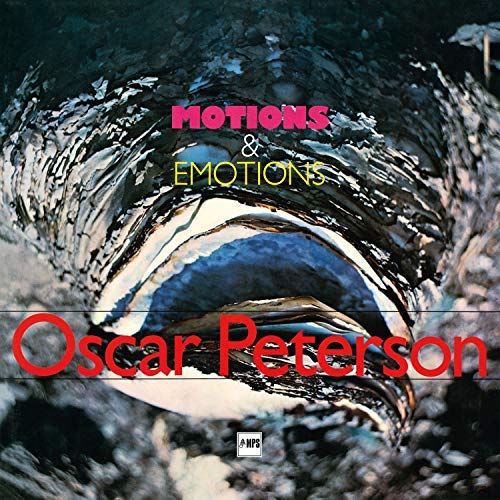
CLASSIC ALBUM: OSCAR PETERSON-MOTIONS AND EMOTIONS.
Classic Album: Oscar Peterson-Motions and Emotions.
By 1969, forty-four year old Oscar Peterson was signed to the MPS label and was well on his way to becoming one of the greatest pianists in jazz history. The man who Duke Ellington called the Maharaja of the keyboard eventually won eight Grammy awards and released over 200 recordings. This included Motions and Emotions which was released in 1969 and is a reminder of Oscar Peterson at the peak of his considerable powers.
Just a year earlier, in 1968, Oscar Peterson had signed to MPS, and began a new chapter in a recording career that began in 1945. Since then, he had already recorded over 100 albums.
Although Oscar Peterson had only signed to MPS in 1968, he had already released four albums. This included The Way I Really Play, My Favorite Instrument, Mellow Mood and Travelin’ On. They were all released to critical acclaim and were a commercial success. These four albums set the bar high and Oscar Peterson was keen to begin work on a new album for MPS.
This was Motions and Emotions which was arranged and conducted by the vastly experienced Claus Ogerman. He had already worked with Billie Holliday, Frank Sinatra, Antônio Carlos Jobim and now Oscar Peterson on his new album Motions and Emotions.
Before recording of Motions and Emotions began, Oscar Peterson chose ten tracks including Henry Mancini’s Sally’s Tomato, Bobby Hebb’s Sunny, Jimmy Webb’s By the Time I Get To Phoenix, Gayle Caldwell’s Wandering and Bacharach and David’s This Guy’s In Love With You. They were joined by Antônio Carlos Jobim’s Wave, Ray Evans, Jay Livingston and Mancini’s Dreamsville, Lennon and McCartney’s Yesterday and Eleanor Rigby and Bobbie Gentry’s Ode To Billie Joe. These tracks eventually became Oscar Peterson’s album Motions and Emotions.
Joining pianist Oscar Peterson were the other two members of his trio drummer Bobby Durham and guitarist Bucky Pizzarelli. They were joined by arranger Claus Ogerman who conducted the orchestra, was responsible for the orchestral arrangements and co-produced Motions and Emotions with Matthias Kunnecke. When these ten familiar tracks were recorded by Oscar Peterson they became Motions and Emotions.
Sally’s Tomato opens Motions and Emotions with Oscar Peterson’s fingers gliding across the keyboard as Claus Ogerman’s orchestral arrangement provides the perfect accompaniment. It’s a similar case on Sonny, which features another flawless performance from Oscar Peterson as he plays with speed and accuracy whilst transforming this familiar song. The tempo drops on a slow, sometimes spacious and wistful rendition of By The Time I Get To Phoenix, with strings augmenting the sense of longing and yearning in the Jimmy Webb’s lyrics. Wandering is akin to musical journey, while the cover of This Guy’s In Love With You is one of the finest recorded and is the perfect homage to Bacharach and David.
Strings add a wistful cinematic sound on Wave before Oscar Peterson’s piano enters. It takes centre stage and soon, the orchestra provide the perfect accompaniment to Oscar Peterson as he gives a virtuoso performance playing with speed and flamboyance. He then reinvents Dreamsville and then Yesterday with the addition of lush strings. Then Oscar Peterson toys with the introduction of Eleanor Rigby before a walking bass and cinematic strings accompany his brisk probing piano. Ode To Billie Joe closes Motions and Emotions and features rasping, growling horns as the tempo quickens and Oscar Peterson plays with speed, confidence and fluidity before the album closes on a dramatic high.
For anyone yet to discover the delights of Oscar Peterson and unsure where to begin Motions and Emotions is the perfect place to start. It was released in 1969 in the middle of a period where Oscar Peterson could do no wrong. By then, he had released just over a 100 albums and was regarded by critics as one of the greatest jazz pianists ever. Proof of that can be found on Motions and Emotions.
It features a series of virtuoso performances by Oscar Peterson that are variously cinematic, emotive, melancholy, uplifting and full of honesty. The music on Motions and Emotions is sure to stir the emotions, and tug at the heartstrings as Oscar Peterson and Claus Ogerman’s orchestral arrangement provide the perfect accompaniment. By then, Oscar Peterson was at the peak of his considerable powers as Motions and Emotions shows, as he interprets and reinterprets a mixture of classics and familiar songs. One flawless performance follows another on Motions and Emotions which is a reminder of one, if not the greatest jazz pianists at his very best, Oscar Peterson.
Classic Album: Oscar Peterson-Motions and Emotions.
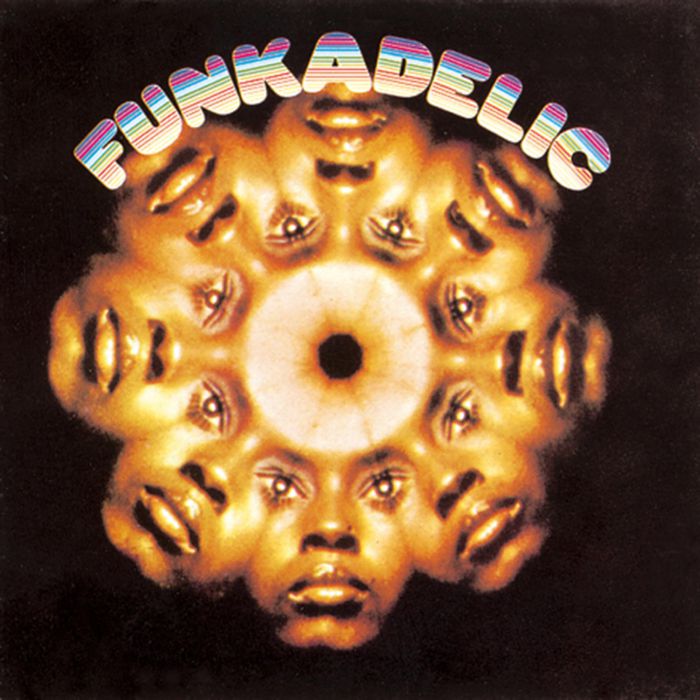
FUNKADELIC-FUNKADELIC AND FREE YOUR MIND…AND YOUR ASS WILL FOLLOW.
Funkadelic-Funkadelic and Free Your Mind…and Your Ass Will Follow.
Label: Westbound Records.
Format: CD.
Although George Clinton was born in Kannapolis, North Carolina, in 1941, he grew up in New Jersey, where he formed the doo wop group The Parliaments in the late fifties.At the time he co-owned a barber salon in Plainfield and spent much of his day straightening hair. That was about to change.
The group feathered Ray Davis, Fuzzy Haskins, Calvin Simon, Grady Thomas and George Clinton who became the leader and manager of The Parliaments who entertained customers in the barber shop. This was good practice as it allowed the group to hone their sound.
In June 1959, The Parliaments released their debut single Poor Willie. Although it failed to trouble the charts this was the start of career that that spanned twenty-one years.
As the fifties gave way to the sixties the group had honed a sound that fused elements of soul and funk with increasingly bizarre and surreal lyrics. Initially, this didn’t find favour with record buyers. To complicate matters, The Parliaments were constantly switching between record labels. Still, though, a hit single continued to elude The Parliaments.
In 1964, George Clinton hired Frankie Boyce, Richard Boyce and Langston Booth to back The Parliaments. They were now a quintet which he hoped would result in a change in fortune for the group.
Sadly, it wasn’t to be and two years later, in 1966, Frankie Boyce, Richard Boyce and Langston decided to join the US Army. This left George Clinton looking for three new musicians.
George recruited bassist Billy Bass Nelson and guitarist Eddie Hazel in 1967. Later, he added guitarist Tawl Ross and drummer Tiki Fulwood. This was the lineup of The Parliaments that headed to Detroit.
By 1967, George Clinton was working as a staff songwriter at Motown. He had also arranged and produced numerous singles for other independent labels in Detroit. However, his own group The Parliaments had still to make a breakthrough.
This was about to change when The Parliaments released I Wanna Testify in May 1967, on the Detroit-based label Revilot Records. It reached number twenty on the US Billboard 100 and three on the US R&B charts. At last, The Parliaments had enjoyed a hit single, and it looked as if this was the breakthrough that they had been working towards.
It may well have been if Revilot Records weren’t forced to file for bankruptcy. This resulted in The Parliaments becoming embroiled in a contractual dispute which led to the band losing the rights to the name “The Parliaments.” For a band that had just enjoyed the biggest hit of their career, this was a disaster.
What The Parliaments needed a new name. That was when Billy Bass Nelson came up with the name Funkadelic. It stuck and the group adopted the new name.
This allowed the newly named Funkadelic to continue to record for other labels, and in 1968 they signed to Westbound Records.
Having signed to Westbound Records, Funkadelic’s music began to evolve. Doo-wop was yesterday’s sound. The newly named Funkadelic needed a new, and much more contemporary sound. Psychedelia, rock, soul and funk were the musical flavours of the month. So were Jimi Hendrix and Sly Stone. So, it made sense for Funkadelic to fuse these musical genres and influences.
This is what Funkadelic did. However, Funkadelic were no ordinary band. This was, after all, the era of the civil rights movement. Just like many other bands, the civil rights movement inspired Funkadelic. Their lyrics were full of social and political comment. Funkadelic’s music would prove to be a heady brew.
By then, George Clinton had decided that Funkadelic would be a funk-rock band which featured five backing musicians and The Parliaments as uncredited guest artists. This would be the lineup of Funkadelic that featured on their debut album which was released on Westbound Records.
Funkadelic.
Before Funkadelic entered the recording studio for the first time, they’d spent two years honing their sound. The newly named Funkadelic were a much more tighter band and ready to record their debut album.
During 1968 and 1969 they recorded seven tracks at Tera Shirma Sound Studios, Detroit. George Clinton penned Mommy, What’s a Funkadelic, Good Old Music and What Is Soul and cowrote three other tracks on the album. This included I’ll Bet You With Sidney Barnes and Theresa Lindsey plus Qualify and Satisfy with Eddie Hazel. The pair then joined forces with William Nelson to write Music For My Mother. Fuzzy Haskins a prodigiously talented young musician and songwriter wrote I Got A Thing, You Got A Thing, Everybody’s Got A Thing. These tracks became Funkadelic which was produced by George Clinton.
When Funkadelic released their eponymous debut album, on ‘11th’ May 1970, it was well received by critics. Rolling Stone magazine gave the album a positive review. Other critics followed suit. Some critics remarked upon Funkadelic’s rhythm section and said they were at the heart of everything that was good about the band. This included the lengthy jams where Funkadelic took the opportunity to stretch their legs. George Clinton’s new band had already made a strong impression.
Funkadelic’s genre-melting eponymous debut album was truly ambitious and found them fusing blues-tinged acid rock, lysergic space funk and conventional soul songs whose sound hinted at Stax and even Motown influences. It was an innovative and imaginative debut album that showcased what George Clinton and the rest of Funkadelic were capable of.
Funkadelic reached 126 in the US Billboard 200 and eight in the US R&B Charts. The future looked bright for the psychedelic, funkateers, Funkadelic.
That was despite Music Is My Mother stalling at fifty in the US R&B charts. Then I’ll Bet You reached sixty-three in the US Billboard 100 and twenty-two in the US R&B charts. The third and final single was I Got A Thing, You Got A Thing, Everybody’s Got A Thing which reached eighty n the US Billboard 100 and thirty in the US R&B charts. This was the start of the Funkadelic success story.
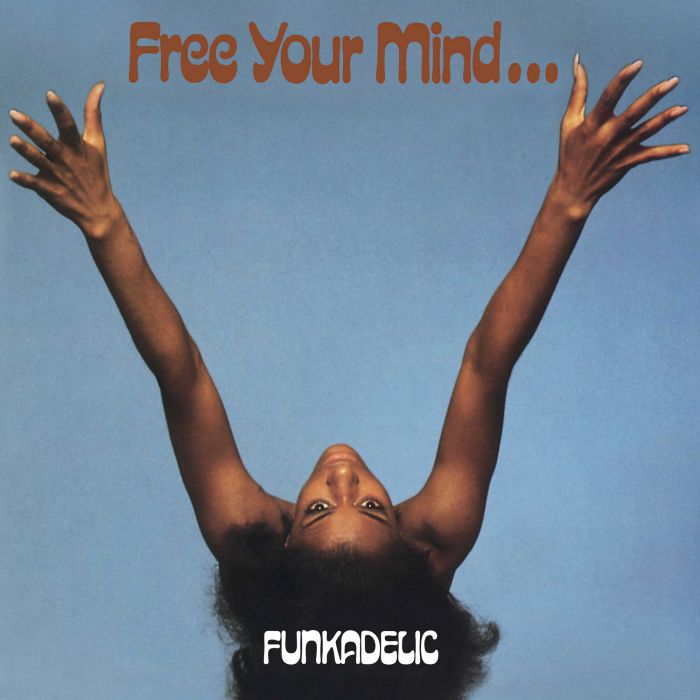
Free Your Mind… and Your Ass Will Follow.
Just two months after the release of Funkadelic, George Clinton and Co. returned in July 1970 with Free Your Mind… and Your Ass Will Follow. It was unlike any album ever released.
After all, no band had tried to record an album while tripping on acid. That’s until Funkadelic tried. George Clinton had a brainwave and wondered if Funkadelic could record an album whilst tripping on acid. The result was Free Your Mind… and Your Ass Will Follow, Funkadelic’s sophomore album.
When Free Your Mind… and Your Ass Will Follow was released the album was mired in controversy. This was down to the title-track. It was a ten minute epic where amidst a feedback drenched backdrop, Funkadelic managed to offend Christians everywhere. Their subversive attitude towards the sacred and specifically, The Lord’s Prayer and the 23rd Psalm meant Funkadelic were unlikely to sell many albums in America’s bible belt. They would make up for this elsewhere.
Following the positive reception of Funkadelic’s eponymous debut album, Free Your Mind… and Your Ass Will Follow received mixed reviews. It seemed Funkadelic couldn’t please all the critics, all the time. Record buyers however, were won over by Free Your Mind… and Your Ass Will Follow. It reached number ninety-two in the US Billboard 200 and number eleven in the US R&B charts. This made Free Your Mind… and Your Ass Will Follow the most successful album of Funkadelic’s career.
Only one single was released from the album, I Wanna Know If It’s Good To You. It reached eighty-one in the US Billboard 100 and twenty-seven in the US R&B charts. This was the fourth hit of Funkadelic’s career.
By July 1970, the group had only existed for two years and already they had established a reputation for creating ambitious and innovative music as they pushed musical boundaries to their limit and sometimes beyond. However, sometimes their music was controversial and subversive which alienated some record buyers.
Despite that, Funkadelic’s genre-melting music was already growing in popularity and record buyers were won over by the combination of blues-tinged acid rock, lysergic space funk, jazz, psychedelia, P-funk, rock, soul and social comment. It was heady and tantalising musical brew.
Funkadelic’s ambitious and groundbreaking eponymous debut album launched the group’s career, and they followed this up two months later with their acid fuelled epic Free Your Mind… and Your Ass Will Follow which although it was seen as subversive and controversial is nowadays regarded as a cult classic and one of the finest moment’s of the group’s three decade career.
Funkadelic-Funkadelic and Free Your Mind…and Your Ass Will Follow.
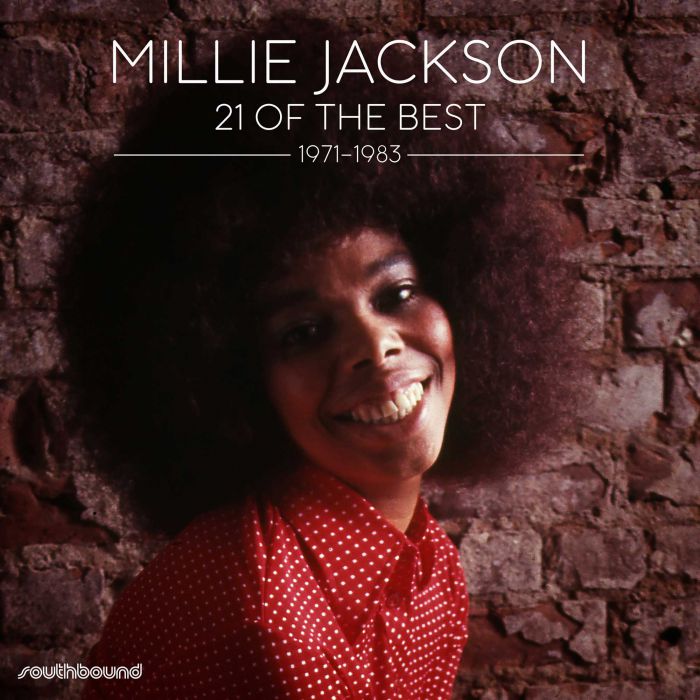
MILLIE JACKSON-21 OF THE BEST 1971-1983.
Millie Jackson-21 Of The Best 1971-1983.
Label: Westbound.
Format: CD.
It’s no exaggeration to say that Millie Jackson was one of the most talented and charismatic female vocalists of the seventies and early-eighties. She spent twelve years signed to Spring Records and released sixteen studio albums between 1972 and 1983. Three of these albums, 1974s Caught Up, 1977s Feelin’ Bitchy and 1978s Get It Out’cha System were certified gold and are a reminder of a truly versatile vocalist. So is 21 Of The Best 1971-1983 which is new Millie Jackson compilation that was recently released by Westbound, an imprint of Ace Records.
Mildred Virginia Jackson was born on July the ’15th 1944 in Thomson, Georgia, where her father was a sharecropper. Sadly, her mother died when she young and Millie Jackson and her father moving to Newark, New Jersey with her father. By the, time she was a teenager she moved to Brooklyn to live with an aunt and by the late-fifties was working as a model for magazines like Jive and Sepia.
It wasn’t until 1964 that Millie Jackson’s musical career began. And this was only when a friend dared her to enter a talent contest in Harlem nightclub which she won. This was just the start for the twenty year old reluctant singer.
Not long after this, she made the first a string of appearances in New York clubs. This was the start of her career as a professional singer. However, it was another five years before she signed her first recording contract.
Millie Jackson signed with MGM Records in early 1969 and in April of that year released her debut single A Little Bit Of Something. The Ronnie Savoy production failed to trouble the charts and it was the only single that Millie Jackson released on MGM Records.
In 1971, Jules and Malcolm Rifkind signed Millie Jackson to their label Spring Records. Little did they realise that she would become one of their most successful signings.
Millie Jackson recorded A Child Of God (It’s Hard To Believe) with the label’s in-house producer Raeford Gerald and Don French. By then, she had honed the song’s bleak narrative and delivers a vocal that’s a mixture of frustration and anger as she rails at people’s double standards and hypocrisy. The single was released in October 1970, and although it stalled at number 102 in the US Billboard 100 it reached twenty-two in the US R&B charts. This was the first hit of Millie Jackson’s career and was the start of the most successful period of her long career.
Four months later in February 1972, she returned with the mid-tempo dancer Ask Me What You Want. It was another Raeford Gerald and Don French production and this time it reached number seven in the US Billboard 100. This was the first o three singles that featured on Millie Jackson’s eponymous debut album which reached 166 in the US Billboard 200.
The followup was the hook-laden dancefloor filler My Man, A Sweet Man which has a strong sixties influence. When it was released in July 1972 it reached number forty-two in the US Billboard 100 it reached seven in the US R&B charts. Millie Jackson was on a roll.
In 1973, she returned with her sophomore album It Hurts So Good which was recorded at Muscle Shoals Sound. When the album was released it reached 175 in the US Billboard 200 and thirteen in the US R&B charts. The lead single Breakaway was released in May 1973 but stalled at 110 in the US Billboard 100. However, when the sensual sounding Hurts So Good was released in August 1973 it reached twenty-four in the US Billboard 100 and three in the US R&B charts. This was the most successful single of Millie Jackson’s career. Her visit to Muscle Shoals Sound was a successful one.
Millie Jackson third album I Got To Try It One Time was released in 1974 but failed to trouble the charts. Then when How Do You Feel The Morning After was released in May 1974 it stalled at seventy-seven in the US Billboard 100. This was a small crumb of comfort for Millie Jackson. However, her career was transformed by her next album.
This was Caught Up was released later in 1974 and reached number twenty-one in the US Billboard 200 and number four in the US R&B Charts. It was certified gold and became the most successful album of Millie Jackson’s career. It featured a cover of (If Loving You Is Wrong) I Don’t Want To Be Right where Millie Jackson’s interpretation of Homer Banks, Carl Hampton and Raymond Jackson’s classic is peerless. She delivers the lyrics with meaning, feeling and a sense of hurt that seems almost real. It’s a deeply powerful and moving song that reached forty-two in the US Billboard 100 when it was released as a single in December 1974.
Millie Jackson returned in 1975 with Still Caught Up which revisited the love triangle of Caught Up. Her fifth album reached just number 112 in the US Billboard 200 and twenty-seven in the US R&B Charts. The lead single featured Leftovers and a cover of Tom Jans’ Loving Arms which features on the compilation. It was released in September 1975 and features an impassioned and emotive vocal. Despite the undeniable quality of the song the single failed to chart. This was another disappointment for Millie Jackson.
In 1976, she returned with Free and In Love which reached seventeen in the US R&B charts. It featured the soulful, funky dancer Bad Risk which was released as a single in June 1976. However, it also failed to chart. For Millie Jackson this was becoming a habit.
Later in 1976, she released Lovingly Yours which reached 175 in the US Billboard 200 and forty-four in the US R&B Charts. It featured the You Can’t Turn Me Off (In The Middle Of Turning Me On) which features a needy vocal from Millie Jackson. It’s one of the hidden gems on the album.
Millie Jackson’s luck changed with the released of Feelin’ Bitchy in August 1977. It reached thirty-four in the US Billboard 200 and four in the US R&B Charts. The album was recorded in Muscle Shoals and featured a Feeling Side and A Bitchy Side. When the beautiful, heartwrenching ballad If You’re Not Back In Love By Monday was released as a single in August 1977 it stalled at forty-three in the US Billboard 100. For the followup, the Southern Soul ballad All The Way Lover was released in February 1978 but missed out on the US Billboard 100 when it peaked at 102. Despite that, Millie Jackson’s career was back on track.
When she returned in 1978 with Get It Out’cha System it reached fifty-five in the US Billboard 200 and fourteen in the US R&B Charts. This resulted in the third gold disc of Millie Jackson’s career. When Sweet Music Man was released as a single in September 1978 it reached thirty-three in the US R&B charts. It’s the B-Side side Go Out and Get Some (Get It Out’cha System) which Millie Jackson wrote with Randolph Klein that features on the compilation. So does the Benny Latimore penned single Keep The Home Fire Burnin’ which was released in December 1978 but stalled at eighty-three in the US Billboard 100. With two hit singles and the another gold disc, Millie Jackson’s career was going from strength-to-strength.
By 1979, Millie Jackson like many artists had jumped on the disco bandwagon when the released A Moment’s Pleasure. She hadn’t turned her back on soul though, and the album reached 144 in the US Billboard 200 and forty-seven in the US R&B Charts. It featured Never Change Lovers In The Middle Of The Night which was released in January 1979 and reached thirty-three in US R&B charts and saw Millie Jackson transformed into a disco diva. The album also featured a cover of Kiss You All Over which was released as a single in Britain. It’s reinvented and takes on a dancefloor friendly sound that shows another side to this familiar song.
Apart from her solo album, Millie Jackson and Isaac Hayes released Royal Rappin’s in 1979. It reached eighty in the US Billboard 200 and seventeen in the US R&B Charts. The album featured Do You Wanna Make Love which is one of the highlights of this collaboration between two giants of soul music.
During 1980, Millie Jackson released two albums including For Men Only. It featured This Is It which was released as a single in October 1980 but failed to chart. On the B-Side was the soulful ballad This Is It Part 2 which features on the compilation and is an underrated track.
The other album Millie Jackson released in 1980 was I Had To Say It, which reached 137 in the US Billboard 200 and twenty-five in the US R&B Charts. By then, Millie Jackson had honed her rap and was able to do so convincingly on the album. However, It’s Gonna Take Some Time This Time is another beautiful ballad which features a vocal that’s mixture of sadness, sensuality and emotion. It’s one of the album’s highlights.
Two years later, in 1982, Millie Jackson released Hard Times which stalled at 201 in the US Billboard 200 but reached twenty-nine in the US R&B Charts. It featured a cover William Davidson’s The Blues Don’t Get Tired Of Me which was the B-Side of Special Occasion when it was released in September 1982. However, the single failed to chart and Millie Jackson’s search for a hit continued.
In 1983, she returned with a new album E.S.P. (Extra Sexual Persuasion) which found Millie Jackson heading in the direction of funk and Hi-NRG. It reached forty in the US R&B charts. Then when I Feel Like Walkin’ In The Rain was released as a single in October 1983 the wistful sounding ballad failed to chart. It’s the one that got away for Millie Jackson.
21 Of The Best 1971-1983 features classics, hits, misses, B-sides and album tracks. There’s some of Millie Jackson’s best known songs and some oft-overlooked hidden gems from her Spring Records’ years which ended in 1983.
The period between 1971 and 1983 was the most successful period of Millie Jackson’s career. She released a string of critically acclaimed and commercially successful albums and singles. Three of her albums were certified gold and transformed Millie Jackson into one of the biggest names in soul music.
Sadly, by 1980 her singles were no longer as successful and by the time Millie Jackson parted company with Spring Records in 1983 even her albums were no longer selling in the same quantities. The most successful period of her career was behind her and the Spring Records years which are celebrated on 21 Of The Best 1971-1983 are a reminder Millie Jackson a truly versatile vocalist at the peak of her powers.
Millie Jackson-21 Of The Best 1971-1983.
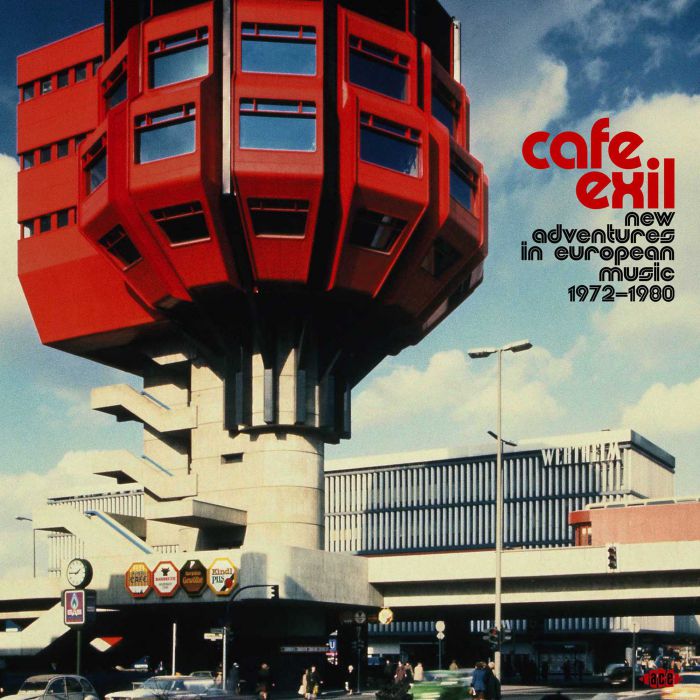
CAFE EXIL-NEW ADVENTURES IN EUROPEAN MUSIC 1972-1980.
Cafe Exil-New Adventures In European Music 1972-1980.
Label: Ace Records.
Format: CD.
At the end of David Bowie’s Station To Station tour in July 1976, he journeyed to Château d’Hérouville to start recording a new album.This wasn’t the followup to his critically acclaimed tenth album Station To Station. Instead, it was his friend Iggy Pop’s debut solo album, The Idiot which he was about to produce.
David Bowie had written seven of the eight songs that featured on The Idiot with Iggy Pop. The sessions began at Château d’Hérouville and later in July 1976 continued at Musicland Studios, in Munich. However, to complete the album everyone headed to another German city, Berlin.
Their destination was Hansa Studio 1, in Berlin, where they Iggy Pop and David Bowie were joined by his regular rhythm section. They took part in overdubbing and then Tony Visconti was drafted in to mix the album. He was handed tapes that were almost demo quality and described his task as: “more of a salvage job than creative mixing.”
The Idiot was well received upon it release on March the ‘18th’ 1977 and nowadays, is regarded as a classic. So was the followup album, Lust For Life.
Just like The Idiot, Iggy Pop’s sophomore album Lust For Life was recorded in Hansa Studio 1, in Berlin, with was David Bowie taking charge of production. When Lust For Life was released by Iggy Pop on August the ’29th’ 1977 it was to critical acclaim. By then, he and David Bowie had made Berlin their home, and a new era had just begun.
This was David Bowie’s Berlin Era which began in 1976 and lasted until 1979. During this three year period, he released the Berlin Trilogy. It began with Low which was released on the ‘14th’ of January 1977 and continued nine months later with Heroes.
It was released to critical acclaim on the ‘14th’ of October 1977 and Heroes is regarded as the finest album in David Bowie’s Berlin Trilogy.
The Lodger was released on the ‘25th’ May 1970 and was the thirteenth studio album of David Bowie’s career. Although it reached number four in Britain it wasn’t as successful as previous albums. However, the final instalment in the Berlin Trilogy is now regarded as one of the most underrated of David Bowie’s career.
Originally, David Bowie travelled to Berlin to complete Iggy Pop’s debut solo album The Idiot but ended up staying three years. By then, his marriage was all but over, his finances weren’t in great shape and he was heavily addicted to cocaine. It was time for a fresh start.
He moved into a flat in Schöneberg a largely working-class district in West Berlin, which was also home to many of the city’s gay clubs. For the next three years David Bowie enjoyed living anonymously and cheaply away from the trappings of fame and the media spotlight. He also enjoyed the Kosmische Musik which was part of the soundtrack to life in West Berlin and the rest of Germany between the late-sixties and 1979.
When David Bowie went out in West Berlin, especially with Iggy Pop one of his favourite haunts was Kreuzberg’s Cafe Exil. It was where everyone from beats to the city’s intellectuals hung out. David Bowie fitted right in and it soon became one of the places he gravitated towards and felt at home. Soon, he and Iggy Pop were regular visitors to Cafe Exil which for three years was a home-from-home where they met friends and listened to the latest music.
Just like David Bowie and Iggy Pop, Bob Stanley and Jason Wood of Saint Etienne are both fans of Kosmische music, and often spend a Sunday afternoon listening to records. They pull out some of their favourite LPs and listen to them from start-to-finish. One rain soaked afternoon, every album the pair played featured European electronic music. This got them thinking about the music that was played in Kreuzberg’s Cafe Exil?
They didn’t just restrict themselves to 1976 to 1979 when David Bowie frequented Cafe Exil. Instead, the music spans the period between 1972 to 1980 and features much more than Kosmische music.
The sixteen tracks on Cafe Exil-New Adventures In European Music 1972-1980 includes everything from Italian folk fusion and library music to motorik and progressive rock. That’s just part of the story of what’s a truly eclectic compilation.
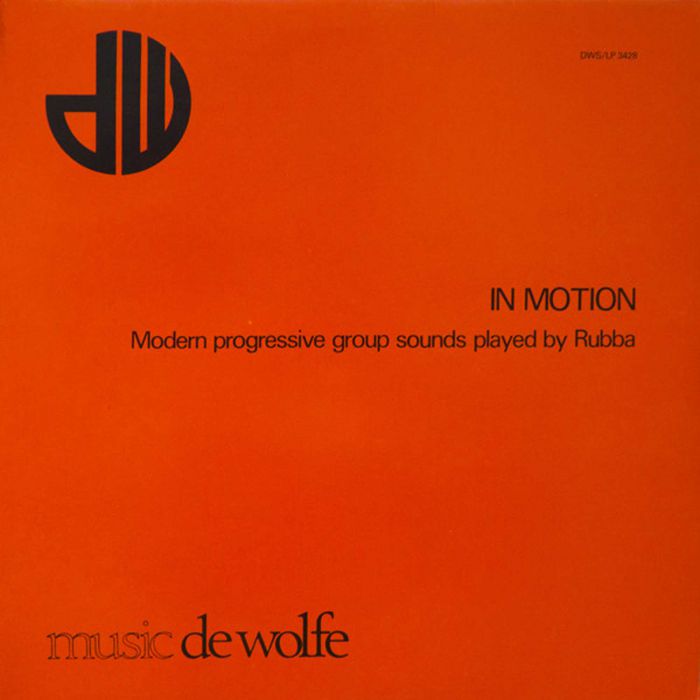
Rubba open Cafe Exil-New Adventures In European Music 1972-1980 Way Star with the atmospheric sounding Way Star, which is taken from In Motion, their second and final album of library music they recorded for Music De Wolfe. It was produced by Albert Skinner and featured French library music legend Jacky Giordiano plus Karl Jenkins and Mike Ratledge of Soft Machine. This all-star band set the bar high for the rest of the compilation with Way Star.
The Dutch progressive rock band Focus were formed in mid-1969 and by 1971 had released their sophomore album Focus II (Making Waves). It reached number four in Holland, two in Britain and eight in the US Billboard 200. This resulted in their first gold disc in America. Buoyed by this success, Focus released Tommy as a single. It was part of an ambitious twenty-three minute instrumental piece that had fifteen parts. They were part of a hard rock adaption of Orpheus and Euridice and an updated version of Jacopo Peri’s opera Euridice. Tommy features some stunning guitar work from Jan Akkerman on who played a huge part in the sound and success of Focus.
Amon Düül II were one of the pioneers of Kosmische Musik and released their debut album Phallus Dei in 1969. Four years later, in 1973, they released their seventh album Vive La Trance which featured A Morning Excuse. It’s one of the highlights of the this genre classic which epitomises everything that’s good about Kosmische Musik.
Steve Hillage was a student in Canterbury and became part of the city’s now legendary music scene. He worked with Gong, Egg, Kevin Ayers and Mike Oldfield before releasing his debut solo album Fish Rising in 1977. Two years later he released his third album Motivation Radio which reached number twenty-eight in the UK. One of the highlights was Octave Doctors a trippy progressive sounding track.
Michael Rother is one of the very few musicians to have played in three of the biggest bands in the history of. He was part of Kraftwerk, Neu! and then the supergroup Harmonia with the two members of Cluster. However, in 1976 he released his debut solo album Flammende Herzen on Sky Records. It’s also one of his finest albums and one of its highlights is the atmospheric and cinematic soundscape Feuerland.
Brian Eno spent three years recording what was one of his finest albums, Before and After Science. It was released in 1977 the year after he collaborated with German supergroup Harmonia on the album Tracks and Traces. Sadly, it disappeared in somewhat mysterious circumstance and was belatedly released in 1997. By then, Before and After Science was regarded as a classic and No One Receiving was seen as one the highlights of what’s one of sonic scientist Brian Eno’s finest hours.
By the time Popol Vuh released their third album Hosianna Mantra in 1972 their music had evolved and they embraced Kosmische Musik which they pioneered. They also released a number of soundtrack albums including Herz Aus Glas on Brain in 1977. However, the original title was Singet, Denn Der Gesang Vertreibt Die Wölfe. When Werner Herzog used some of the music in his latest film Herz Aus Glas the film received top billing on the album cover. It featured Hüter Der Schwelle which is a mesmeric and cinematic track that’s a reminder of Kosmische pioneers Popol Vuh during one of the most fruitful periods of their long career.
After the demise of the Canterbury-based band Wilde Flowers Soft Machine were formed in Canterbury, England. They were one of the first ever British psychedelic bands and made their recording debut in 1967. Six years later, Soft Machine were signed to CBS and released one of their finest albums, Seven. By then, their lineup and sound had changed and moved in the direction of instrumental fusion. Proof of this wasPenny Hitch an atmospheric sounding track that was one of the finest moments on the album.
After studying at the Prague Academy of Musical Arts Jan Hammer moved to Boston to complete his studies at Berklee School of Music in Boston. After graduating, he toured with Sarah Vaughan and in 1976 formed the Jan Hammer Group. A year later they released their sophomore album Melodies. It featured Don’t You Know which is a soulful slice of fusion that was also released as a single in the US and Germany.
By 1976, Cluster were about to release their fourth album Sowiesoso on Sky Records. The title-track finds Dieter Moebius and Hans-Joachim Roedelius combining experimental and ambient music. It’s a tantalising taste of a groundbreaking album which nowadays is considered one of Cluster’s finest. It’s not just a welcome addition to Cafe Ixil-New Adventures In European Music 1972-1980 but the perfect way to close the compilation.
For anyone who likes a compilations to feature an eclectic selection of esoteric music then Cafe Ixil-New Adventures In European Music 1972-1980 will be of interest to them. Bob Stanley and Jason wood have dug deep and chosen a number of Kosmische Musik and added everything from ambient, electronic and experimental music to Italian folk fusion, library music and progressive rock. There’s contributions from a number of familiar faces as well as some new names.
They’re feature on Cafe Ixil-New Adventures In European Music 1972-1980 which was recently released by Ace Records and is one of the best compilations released during 2020. It’s a lovingly compiled and eclectic selection that David Bowie and Iggy Pop would’ve enjoyed and approved of as they watched the world go by in Berlin’s Cafe Ixil. Forty years later and the timeless music on Cafe Ixil-New Adventures In European Music 1972-1980 is the perfect soundtrack to on a lazy Sunday afternoon whether in Bolton, Boston or Berlin.
Cafe Ixil-New Adventures In European Music 1972-1980.
CULT CLASSIC: TIM MAIA 1970.
Cult Classic: Tim Maia 1970.
For many musicians, choosing the title for an album can prove problematic. Especially, for a debut album. As a result, many of new artists and bands have released eponymous albums.This includes everyone from Black Sabbath, Led Zeppelin and The Allman Brothers Band to Art In America and Ash Ra Tempel. Then there’s Cluster, Dire Straits and 10CC, The Band, The Beta Band and The Doors. Eponymous debut albums it seems, have always been popular over with new artists. This included Tim Maia.
When he released his debut album in 1970 it was entitled Tim Maia. It seemed he was following in the footsteps of many other artists. Following the success of his debut album, Tim Maia returned in 1971 with his sophomore album. It too was entitled Tim Maia. So were his third and fourth albums. This was guaranteed to cause confusion.
Nowadays, Tim Maia’s debut album is known as Tim Maia 1970. It was the start of of a three year period when he released some of the best music of his long and illustrious career.
Tim Maia was a hugely talented, charismatic and larger life singer who lived life on the edge and was determined to do things his way. Early on, he realised he was only here for a visit and was going to live life to the full. It was as if he was determined that he would have no regrets. He packed a lot of living into fifty-years but still left behind a rich musical legacy. The Tim Maia story began in Brazil in 1942
On September ‘28th’ 1942, Tim Maia born in Rio De Janeiro and was the eighteenth of nineteen children. Aged just six, he earned a living delivering homemade food which his mother cooked. This would be the nearest he got to an ordinary job. After that, he devoted himself to music.
At the age of eight, Tim Maia had already written his first song and by the time he was fourteen had learnt to play the drums and formed his first group Os Tijucanos do Ritmo. They were a short-lived group who were only together for a year. During that period, he took guitar lessons and was soon a proficient guitarist and was able to teach his friends. With some of his friends, Tim Maia formed a new group in 1957.
This time, it was the vocal harmony group The Sputniks. Not longer after the nascent group was formed in 1957 they made a television appearance on Carlos Eduardo Imperial’s Clube do Rock. Again the group was a short-lived affair and this resulted in Tim Maia embarking upon a solo career. This lasted until 1959 when the seventeen year old singer made the decision to emigrate.
Tim Maia decided to head to America which he believed he was heading for the land of opportunity. With just twelve dollars in his pocket and unable to speak English he arrived in America and called himself Jimmy at customs. Somehow, he managed to bluff his way into the country by saying he was a student.
He lived with his extended family in Tarrytown, New York and worked various casual jobs and augmented his meagre earnings by allegedly committing petty crimes. Soon, he learnt to speak and sing English and this lead to him forming a vocal group The Ideals.
During his time with The Ideals, they recorded a demo of New Love, which Tim Maia had written the lyrics to. Making a guest appearance on the demo was percussionist Milton Banana. Nothing came of the demo and he later resurrected the song for his album Tim Maia 1973. However, by the time Tim Maia recorded New Love with The Ideals he planned on never returning home to Brazil. America was now his home. That was until things went awry for him.
Confusion surrounds why Tim Maia left America and returned home to his native Brazil. There’s two conflicting accounts. The first was that he was arrested on possession of cannabis in 1963, and deported shortly thereafter. That seems unlikely as there were punitive penalties for possession of even a small quantity of cannabis in the sixties. This meant it was unlikely he would’ve been just deported, without serving a jail sentence. This lends credence to the allegation that Tim Maia was caught in a stolen car in Daytona, Florida and after serving six months in prison he was deported back to Brazil in 1964.
Now back home in Brazil, Tim Maia’s life seemed to be going nowhere. He got and lost several jobs, and was arrested several times. It was around this time that he decided to move to São Paulo where he hoped he could get his career back on track.
Having moved to São Paulo, Tim Maia hoped that he would be reunited with one of the former members of The Sputniks. He was hoping to meet Carlos who he hoped could kickstart his musical career. This was ironic as Tim Maia had insulted Carlos before he left the group. It’s no surprise his former bandmate proved inaccessible and he had to make his own way in the São Paulo music scene.
Tim Maia made an appearance on Wilson Simonal’s radio show and then appeared with Os Mutantes on local television. Still, though, he was determined to contact Carlos and sent a homemade demo. Eventually, his persistence paid off.
Carlos on hearing the demo, recommended Tim Maia to CBS. When they heard the demo they offered him a recording deal for a single, and an appearance on the Jovem Guarda television program. His first single was Meu País which was released in 1968 but failed commercially. So did the followup These Are the Songs which he recorded in English. By then, things weren’t looking good for Tim Maia.
His luck changed when Tim wrote These Are the Songs for Carlos. It gave his friend a hit single. At last, things were looking up for Tim Maia.
Things continued to improve when Elis Regina became entranced by These Are the Songs. Elis Regina asked Tim Maia to duet with her on the song. They recorded the song in English and Portuguese and the song featured on Elis’ 1970 album Em Pieno Veroa. This gave Tim Maia’s career a huge boost. Recording with such a famous Brazilian singer lead to him signing a recording contract with Polydor.
1970.
Having signed to Polydor, Tim Maia somewhat belatedly began to work on his eponymous debut album. Tim Maia was fast approaching his twenty-eighth birthday, and musically, had a lot of catching up to do.
Soon, work began on Tim Maia’s debut album. He began writing new songs and choosing cover versions for his what became Tim Maia 1970. Eventually, he had twelve songs he planned to record.
Tim Maia wrote three songs himself and cowrote three others. He wrote Jurema, Flamengo and Azul Da Cor Do Mar and cowrote Cristina and Cristina Nº 2 with Carlos Imperial. Then Tim Maia penned Padre Cícero with his friend Cassiano.
He then wrote Você Fingiu before Cassiano joined forces with Silvio Rochael to write Eu Amo Você and Primavera (Vai Chuva) with Silvio Rochael. They were joined by João Do Vale and Luiz Wanderley’s Coroné Antônio Bento, Fabio and Paulo Imperial’s Risos and Claudio Roditi’s Tributo À Booker Pittman. These songs were recorded with producers Arnaldo Saccomani and Jairo Pires.
Accompanying Tim Maia was a relatively small but tight and talented band. The rhythm section provided the heartbeat and were augmented by keyboards, piano percussion and vibes. Meanwhile, Tim laid down his vocals and added acoustic guitar. Later, strings were overdubbed on six tracks. Only then was Tim Maia 1970 complete. Little did any of the musicians realise that they know that they were about to make musical history.
When Tim Maia 1970 was released later in 1970, the album was hailed a groundbreaking, genre-melting classic by critics. The album was a successful and seamless marriage disparate genres. Soul, funk, samba and Baião rubbed shoulders with hints of easy listening and soul jazz on an album that featured three future Tim Maia classics. They show different sides to Tim Maia.
This includes the album opener Coroné Antonio Bento which is a stomping fusion of soul and funk where Tim Maia’s vocal becomes a vamp.
The ballads are where Tim Maia comes into his own. This includes Cristina and Padre Cícero are soul-baring ballads. So are Você Fingiu and Eu Amo Você where the lushest strings prove the perfect accompaniment to the vocal. However, there’s more to Tim Maia 1970 than ballads.
Jurema sounds as if was recorded in Memphis as stabs of brassy horns and soaring harmonies accompany Ti mMaia as his soulful vocal becomes a vamp. It’s a similar case on Cristina Nº 2, where soul meets funk as his vocal becomes a swaggering vamp.
Risos is a mid-tempo track that floats along and constantly captivates. Then Tributo À Booker Pittman which closes Tim Maia 1970 has a jazz-tinged, soulful sound. This shows Tim Maia’s versatility as seamlessly he switches between and combines musical genres. This he’s been doing throughout Tim Maia 1970.
When Tim Maia 1970 was released this marriage of soul and funk with samba and Baião was a first. No Brazilian artist had attempted this before. It was unheard of. However, it proved popular amongst record buyers.
Tim Maia was released in 1970, and spent twenty-four weeks in the upper reaches of the Brazilian charts. It had been a long, hard struggle ever since he was deported from America. Since then, he had been struggling to make a breakthrough. With his twenty-eighth birthday approaching Tim Maia’s star was in the ascendancy. This should’ve been the start of a long and glittering career.
Instead, Tim Maia’s career was a mixture of genius, farce and tragedy where the hugely talented, charismatic and larger life singer proved to fundamentally flawed. Thing went well for Tim Maia initially.
The following year 1971, he released his much-anticipated sophomore album, Tim Maia 1971. Just like its predecessor it was hailed as another groundbreaking album. Critics were won over by an imaginative fusion of soul, funk, samba and Baião which even featured hints of jazz, psychedelia and rock. It was an ambitious and innovative album of genre-melting music that won over critics and was released to critical acclaim.
Tim Maia 1971 sold well and again entered the higher reaches of the Brazilian charts . It also featured two hit singles, Não Quero Dinheiro (Só Quero Amar) and Preciso Aprender a Ser Só. Tim Maia’s star was still in the ascendancy and it looked as if he was well on his way to becoming one of the biggest stars in Brazilian music. That should’ve been the case given the quality of music on Tim Maia 1971.
After the success of his sophomore album Tim Maia headed to London to celebrate. He had just enjoyed two successful albums after six years of struggling to make a breakthrough. Now it was time to celebrate and enjoy the fruits of his labour. However, it was during this trip to London, that Tim first discovered his love of the rock ’n’ roll lifestyle which would later derail his career.
Realising that he was only here for a visit Tim Maia embraced the rock ‘n’ roll lifestyle. Almost defiantly he lived each day as if it was his last and hungrily devoured copious amounts of drugs and alcohol. They became part of his daily diet. Fortunately, his new found lifestyle didn’t seem to affect his ability to make music. That was until Tim discovered a new drug that would prove to be his undoing.
In London, Tim Maia discovered L.S.D. He became an advocate of its supposed mind opening qualities. He took two-hundred tabs of L.S.D. home to Brazil, giving it to friend and people at his record label. Little did Tim know, but this was like pressing the self-destruct button.
Over the next two years, Tim Maia’s released two further albums, Tim Maia 1972 and Tim Maia 1973. Both albums were released to critical acclaim and he enjoyed commercial further commerial success in Brazil. The only problem was after Tim Maia 1973, he became unhappy at the royalty rate he was receiving from his publisher. Not long after this, Tim Maia founded his own publishing company Seroma. This coincided with Tim signing to RCA Victor.
They offered Tim Maia the opportunity to record a double album for his fifth album. He was excited by this opportunity, agreed to sign to RCA Victor, and began work on his fifth album. Somehow, he was still seemed able to function normally on his daily diet of drink and drugs and had already recorded the instrumental parts. All that was left was for him to write the lyrics.
Seeking inspiration for the lyrics Tim Maia decided to visit Tibério Gaspar as the pair had previously written songs together. That was where he found a book that would change his life and sadly, not for the better.
That book was the Universo em Desencanto (Universe in Disenchantment) which revolved around the cult of Rational Culture. They didn’t believe in eating red meat or using drugs. Considering Tim Maia had a voracious appetite for drink and drugs it seemed unlikely that he would join the cult. However, he did.
Straight away, the cult’s beliefs affected Tim Maia and his music. Ever since he joined cult of Rational Energy who fixated on UFOs, he was now clean-shaved, dressed in white and no longer drank, ate red meat, smoked or took drugs. Always in his hand was a mysterious book. Even his music changed.
The lyrics for his fifth album and RCA Victor debut were supposedly about his newly acquired knowledge. This came courtesy of Universo em Desencanto. With the ‘lyrics’ complete, his vocals were overdubbed onto what became Tim Maia Racional, Volumes 1 and 2. With the album completed, he took it to RCA Victor. They who promptly rejected the album.
It was claimed that Tim Maia Racional, Volumes 1 and 2 wasn’t of a commercial standard and tha the lyrics made absolutely no sense. The only small crumb of comfort was that Tim’s voice was improving. That hardly mattered for RCA Victor, who weren’t going to release the album. For RCA Victor, it was huge disappointment.
They thought they had signed an artists who would become one of the biggest names in Brazilian music. Instead, their star signing had joined a cult and handed over the what was regarded as the worst album of his career. Tim Maia and RCA Victor at an impasse. There seemed to be no way forward.
That was until decided to buy the master tapes from RCA Victor. Tim Maia then released the album independently which nowadays is a cult classic. However, it failed to match the commercial success of his four previous albums. For his many fans, Tim Maia was no longer the artist he once was. Then in 1976, he quit the cult.
Tim Maia quit the cult after the release of Racional Volume 2 after falling out with its leader. He felt duped and wanted Tim Maia Racional, Volumes 1 and 2 destroyed. That was the past and now he wanted to move forward.
Tim Maia’s music changed after Tim Maia Racional, Volumes 1 and 2. He released a new album in 1976, entitled Tim Maia which was the start of the most prolific period of his career.
From 1976 right through to 1998, Tim Maia continued to release albums. He released another twenty-five albums between 1977 and 1998. By then, he had released around thirty-four albums.
Just like his live shows, the albums were hit and miss affairs. Sometimes Tim Maia would turn up, play an outstanding set while other times he would play a mediocre or shambling set. On many occasions, he failed to turn up. He had returned to the rock and roll lifestyle and was living life to the fullest.
The last album Tim Maia released was Nova Era Glacial in 1995. While other albums were released bearing his name right up until 1998 Nova Era Glacial is regarded as his swan-song.
Tim Maia passed away on March 15th 1998 aged just fifty-five. Sadly, by then his shows and behaviour had become unpredictable. That had been the case since his 1976 post-Racional comeback. Tim Maia was never the same man or musician after his dalliance with the cult of Rational Culture.
It’s fair to say that the four album Tim Maia released prior to joining the cult were the highlights of a career that spanned three decades and thirty-four albums. The album that introduced Brazilian record buyers to one of their most talented sons, was Tim Maia 1970, the genre-melting epic that was one the highlight of his scareer.
After Tim Maia 1970, Tim returned with his second classic album album, Tim Maia 1971. He followed this up with Tim Maia 1972 and Tim Maia 1973. They complete a quartet of albums that feature Tim Maia at his very best. Between 1970 and 1973, his star shawn the brightest.
Sadly, since his death in 1998, Tim Maia’s music has been a well-kept secret outside of his native Brazil. Even within Brazil, many record buyers haven’t heard Tim Maia’s music. Those that have, speak about his music with reverence and in hushed tones.
Like many maverick musicians, Tim Maia’s story sees myth and reality become intertwined. Truth and reality become one, just like his music was fusion of influences and musical genres. However, over the past few years, Tim Maia’s music has started to find a wider audience. They will embrace the reissue of Tim Maia 1970, which offers further insight into his music.
Just like many maverick singer-songwriters, Tim Maia was touched by genius but fundamentally flawed. He could’ve, and should’ve, been a huge star. Sadly, something held him back, and stopped him from enjoying the widespread commercial success and critical acclaim his music richly deserved. This was music shaped by a multiplicity of musical influences, genres and of course, his lifestyle. His music is a compelling, captivating fusion influences and musical genres.
Everything from soul, funk, jazz, rock, samba, bossa nova and baiao thrown into Tim Maia’s mystical and psychedelic musical melting pot. Similarly, Tim’s lifestyle including drink, drugs, multiple-marriages and imprisonment all shaped and influenced Tim Maia’s music. It’s then given a stir by one of music’s true maverick’s, who on the verge of critical acclaim and commercial success, made a couple of decisions he would later come to regret.
The first of these was discovering L.S.D. in 1971 during a trip to London. However, it was his decision to join a cult that derailed his career. Despite eventually freeing himself from the shackles of the cult only some of his albums came close to reaching his first four. This included Tim Maia and Disco Club. Other albums were hit or miss affairs while his live shows were either outstanding, mediocre or didn’t happen. All this fuelled the mythology that surrounds Tim Maia.
In a cruel and tragic twist of fate Tim Maia like many maverick musician died young. He was just fifty-five when he died in 1998. Since then, the mythology and rumours surrounding Tim have increased, as has his popularity.
Tim Maia 1970 is a reminder of one of music’s larger than life characters, Tim Maia. He realised that he was only here for a visit and embraced the excesses of the rock and roll lifestyle and lived life in the fast lane.
Maybe without living his life in this way Tim Maia’s music wouldn’t have been as memorable, magical, eclectic and timeless? Tim Maia 1970 is all these things and more. It’s also a classic album that influence and inspired several generations of songwriters. So did the followup Tim Maia 1971 and nowadays both albums are regarded as classic albums in Brazil and among the highlights of his three decade recording career. However, the album that launched his career was Tim Maia 1970 which is the work of a charismatic singer-songwriter career who was touched by genius but fundamentally flawed.
Cult Classic: Tim Maia 1970.

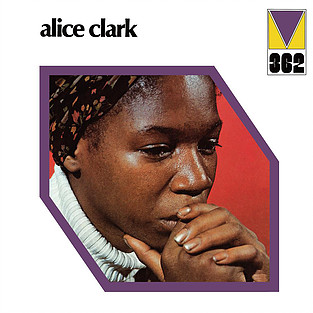
CULT CLASSIC: ALICE CLARK-ALICE CLARK.
Alice Clark-Alice Clark.
Sadly, all too often, hype and image has triumphed over talent, while commercial success and critical acclaim eludes truly talented artists. Chastened by the experience, many of these artists turn their back on the music industry. They’re content to return to civvy street, free from a world populated by A&R executives, PR companies and radio pluggers. At least the artist knows that they gave it their best shot. Alas, it wasn’t to be. Now they begin the first day of the rest of their life.
This is what happened to Brooklyn born soul singer Alice Clark. Her career began in 1968, and was over by 1972. During that four-year period, Alice Clark recorded just fifteen songs during three recording session. This includes two singles, and her 1972 album Alice Clark which nowadays is regarded as a cult classic.
Sadly, after commercial success eluded her, Alice Clark career turned her back on music. Since then, Alice Clark has remained one of the soul music’s best kept secrets. She’s also one of music’s music enigmatic figures.
Very little is known about Alice Clark. Indeed, her story is almost shrouded in mystery. All that’s known, is that Alice Clark was born in Brooklyn, and shared the same manager as The Crystals. It was her manager that introduced Alice to singer-songwriter Billy Vera.
The meeting took place at Billy Vera’s publishers, April-Blackwood Music. That afternoon, Billy spent time teaching her some songs that he had written. These songs would be recorded in 1969.
By the time the recording session took place, Alice Clark had taken to occasionally phoning Billy Vera. However, Alice who seems to have been a private person, only ever made small talk. Despite this, Billy remembers: “I got the impression her home life wasn’t that great.” He remembers that Alice: “had kids and belonged to a religious order.” These are the only thing Billy can remember about Alice. However, what nobody who heard Alice as she made her recording debut will forget is…her voice.
For the 1969 session, Jubliee’s studio was chosen. Billy Vera who wrote and would produce the three tracks put together a tight and talented band. The rhythm section featured drummer Earl Williams, bassist Tyrell and guitarists Butch Mann and Billy Vera. They were augmented by trumpeter Money Johnson and backing vocalist Tasha Thomas. This was the band that accompanied Alice Clark on You Got A Deal, Say You’ll Never Leave Me and Before Her Time. Alice Clark delivered confident and assured performances. Two of these songs became Alice’s debut single.
With the three songs recorded, the Rainy Day label decided to release You Got A Deal in January 1968. It was a driving slice of soul, with a feisty, vocal from Alice. Horns and harmonies accompany Alice as she’s transformed into a self-assured soul singer. The flip side was Say You’ll Never, a quite beautiful ballad. A number of radio stations began playing the song. Despite this, Alice Clark’s first single wasn’t a commercial success. It was an inauspicious start to Alice’s career.
Nothing was heard off Alice Clark until March 1969. By then, Alice had recorded her sophomore single. This was the George Kerr, Michael Valvano and Sylvia Moy penned You Hit Me (Right Where It Hurt Me). On the flip-side was Arthur Mitchell and Eddie Jones’ Heaven’s Will (Must Be Obeyed). The two songs were produced by George and Napoleon Kerr. This GWP Production was released on Warner Bros. Alice Clark was going up in the world.
Alas commercial success continued to elude Alice Clark. When You Hit Me (Right Where It Hurt Me) was released as a single, it failed to trouble the charts. That was despite featuring impassioned, hurt-filled vocal. Tucked away on the B-Side was another ballad, Heaven’s Will (Must Be Obeyed). It features a heartfelt vocal from Alice Clark where the secular and spiritual collide. Both sides of Alice Clark’s sophomore single showcased a truly talented singer. Sadly, very few people heard the single. Alice Clark was still one of music’s best kept secrets.
For the next couple of years, Alice Clark was cast out into the musical wilderness. Then Bob Shad at Mainstream Records decided to take a chance on Alice Clark. Mainstream Records were moving into the soul market, are were signing artists. He decided that Alice Clark fitted the bill, and signed her to Mainstream Records.
Soon, work began on Alice Clark’s debut album. A total of ten tracks were chosen. This included a trio of Bobby Hebb songs, Charms Of The Arms Of Love, Don’t You Care and Hard, Hard Promises. Among the other songs were Jimmy Webb’s I Keep It Hid; Petula Clark and John Bromley’s Looking At Life; Leonard Caston’s Don’t Wonder Why; Juanita Fleming’s Never Did I Stop Loving You and Earl DeRouen’s Hey Girl. The other songs chosen were John Kander and Fred Ebb’s Maybe This Time and Leon Carr and Robert Allen’s It Takes Too Long To Learn To Live Alone. These songs became Alice Clark.
With the material chosen, producer Bob Shad set about putting a band together. Apart from guitarist Ted Dubar, the identity of the rest of the band are unknown. However, Ernie Wilkins was drafted in to arrange the songs on Alice Clark. When it was recorded, the release was scheduled for later in 1972.
By then, three years had passed since a record bearing Alice Clark’s name had been released. You Hit Me (Right Where It Hurt Me) had disappeared without trace upon its release in March 1969. Everyone must have been hoping that history wouldn’t repeat itself. Alas, it did.
I Keep It Hid was chosen as the lead single, with Don’t Wonder Why featuring on the B-Side. On its release, I Keep It Hid sunk without trace. Worse was to come. When Alice Clark was released, the album failed to find the audience it deserved. Very few copies of Alice Clark sold. That was a great shame.
During the three years that Alice Clark had been away, she grown and matured as a singer. Despite this, there was to be no followup album. After Alice Clark failed commercially, Alice turned her back on music. Never again did this talented and versatile vocalist return to the studio. Alice Clark was lost to music.
During her four-year career, Alice Clark had recorded just fifteen tracks. They’re a mixture of beautiful ballads and uptempo songs. On each and every song, Alice breathes life and meaning into the lyrics. Her delivers veers between heartfelt, impassioned and soul-baring, to assured, hopeful and joyous. It seems when Alice Clark stepped into a recording studio, she was transformed.
No longer was Alice Clark the quietly spoken young mother that Billy Vera remembers. Suddenly, the God-fearing Alice Clark disappeared, and was replaced by one that wore her heart on her sleeve. She was comfortable sings songs about love and love lost, and could breathe life and meaning into songs about hope, hurt, heartbreak and betrayal. Despite her ability and versatility, Alice Clark commercial success and critical acclaim eluded Alice Clark.
Chastened by the experience, Alice Clark turned her back on the music industry. Nobody seems to know what happened to Alice Clark? Mystery surrounds this hugely talented singer, who should’ve gone on to enjoy a long and successful career. Sadly, that wasn’t to be.
By 1973, You Hit Me (Right Where It Hurt Me) became a favourite on the UK Northern Soul scene. Apart from that, very few people had heard of Alice Clark or her music. It would be a while before this changed.
As the years passed by, a few copies of Alice Clark found their way into bargain bins. Curious record collectors who chanced upon a copy of Alice Clark decided to take a chance on this little known album. Having paid their money, they discovered one of soul music’s best kept secrets,..Alice Clark. They were the lucky ones.
Since then, Alice Clark has become a real rarity. Anyone wanting an original 1972 copy of Alice Clark on Mainstream, will need to search long and hard. If they can find a copy, it will take at least $500 to prise it out of the hands of its owner. It feature a truly talented singer who could’ve and should’ve enjoyed widespread commercial success and critical acclaim. Sadly, for Alice Clark that wasn’t to be.
Instead, commercial success eluded Alice Clark, and in 1972, she turned her back on music. Since then, nothing has been heard of Alice Clark. Mystery surrounds Alice Clark’s life after she turned her back on music. She seems almost to have vanished into thin air. That’s a great shame. Especially given there’s been a resurgence in interest in her music and belatedly, Alice Clark’s music is finding the wider audience that it so richly deserves. What her newfound fans would like to know is whatever happened to Alice Clark?
Cult Classic: Alice Clark-Alice Clark.
CULT CLASSIC: ZACH AND GEEBAH-FOR THE LOVE OF MONEY.
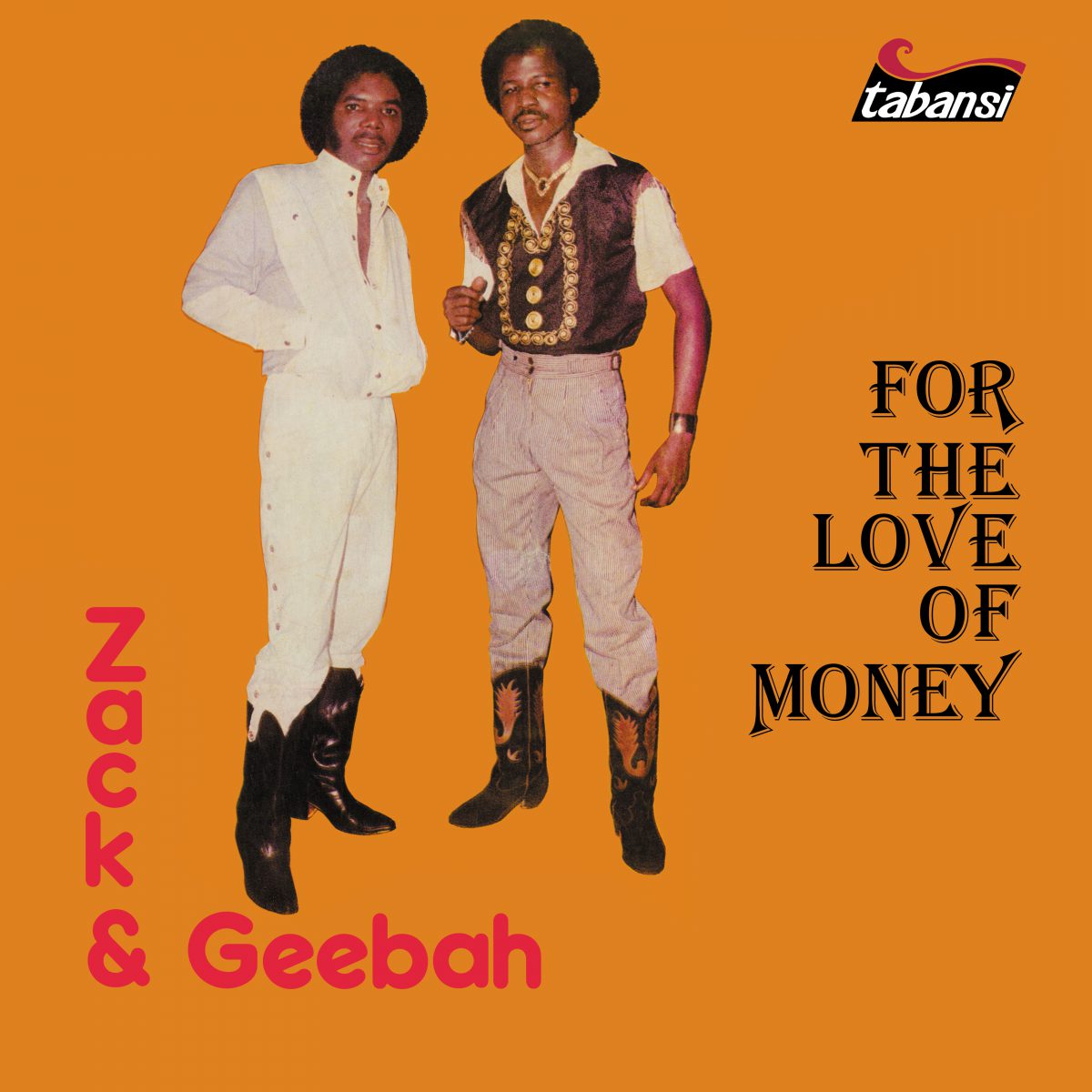
Cult Classic: Zack and Geebah– For The Love Of Money.
Tabansi Records was founded in Nigeria in 1950, and filled a void when major labels like Decca and then Philips closed the doors on their Nigerian operations. Chief (Dr) G.A.D. Tabansi who lent his name to what would become Nigeria’s most important label, recorded artists and then pressed the records at The United African Company’s pressing plant. After that, record vans promoted the latest releases in Nigerian villages. This was just the start for Tabansi Records.
In the sixties, The United African Company decided to concentrate on importing American and European music. With very little competition, Tabansi Records was able to concentrate on local music, which The United African Company had turned its back on. This was a big mistake.
During the seventies, Tabansi Records was the most successful Nigerian label, and its founder Chief (Dr) G.A.D. Tabansi was one of the leading light’s of country’s thriving and vibrant music scene. He had invested in the company he had founded in Onitsha, Lagos, alll these years ago, which now had its own studios and pressing plant. The company was going from strength-to-strength.
By the eighties, Chief (Dr) G.A.D. Tabansi was joined in the company by his son Godwin. He helped with promotion and developing the artists on the Tabansi roster. This included many of Nigeria’s young and up-and coming musicians plus some of its biggest names including reggae star Majek Fashek and Felix ‘Lover Boy’ Liberty. There were many more artists who released albums on Tabansi, including Zack and Geebah, who released the album For The Love Of Money.
For those who have yet to discover the delights of For The Love Of Money, it’s an album that features elements of Afrobeat, boogie, disco and reggae from the Liberian duo Zack and Geebah who met in the mid-seventies.
That was when Zack Roberts and Geebah Swaray, who were both born and brought up in Liberia, but first met in Monrovia. This was after businessman Tonia Williams founded the band Liberian Dreams who released a couple of singles. After that, the group moved to Abidjan seeking further musical opportunities.
Back home in Liberia, there was a coup in 1980, and rather than risk heading home, Zack and Geebah made their way to Nigeria where they worked as session musicians. These sessions led to their debut album For The Love Of Money, which was released on Tabansi in 1980, and straight away, was a huge commercial success across West Africa.
Despite its success in 1980, For The Love Of Money is now a rarity which nowadays, changes hands for large sums of money. Collectors want to hear an album where the six tracks on For The Love Of Money feature elements of Afrobeat, boogie, disco and reggae. Its a heady and tantalising brew.
Opening the album is No Peace No Love, the first or two slices of classic boogie. The other is the title-track For The Love Of Money. They’re joined by the soulful sounding My Luck Will Shine and Home Is Home, a carefully crafted fusion of funk and reggae that hints at Toots and The Maytals. It gives way to one of the album’s highlights, Take It Easy which has an island funk influence. Then Rock To The Music which sounds like an instruction closes the album on a resounding high.
Zack and Geebah’s 1980 debut For The Love Of Money is a dancefloor friendly, funky and soulful and literarily oozes quality. It’s also album that is a reminder of the quality of music that Tabansi released during their eighties’ heyday. During the eighties, Tabansi with Chief (Dr) G.A.D. Tabansi was Nigeria’s premier label. The label had the uncanny knack of being able to spot and develop talent like Zack and Geebah whose 1980 debut album For The Love Of Money was one of the finest albums released on Tabansi in the early eighties and nowadays, is regarded as a cult classic.
Cult Classic: Zack and Geebah– For The Love Of Money.
TERJE RYPDAL-CONSPIRACY.
Terje Rypdal-Conspiracy.
Label: ECM.
Format: CD.
Norwegian guitarist Terje Rypdal was twenty-one when he released his debut album Bleak House on Polydor in 1968. This was the start of a recording career that has spanned six decades and saw the him become one of Norway’s most successful musical exports.
Three years later, in 1971, Terje Rypdal signed to ECM which had been founded in Munich in 1969 by by Karl Egger, Manfred Eicher and Manfred Scheffner and released his eponymous sophomore album. Since then, Terje Rypdal has spent most of his career released twenty-five albums on the label including studio and live albums as well as collaborations and the albums he’s released with The Chasers.
The most recent album that Terje Rypdal has released on ECM is Conspiracy which is his first studio album in twenty years. Conspiracy marks the welcome return of the seventy-tree year old virtuoso guitarist and his trusty Fender Stratocaster.
This is fitting given the guitarists that have influenced Terje Rypdal. Among them are former Shadow Hank Marvin, Jeff Beck and Jimi Hendrix. However, the music they made and continue to make is very different to Terje Rypdal’s atmospheric and evocative soundscapes that often paint pictures of his native Norway and the Norwegian landscapes. This is something that’s been missed by his legion of fans.
The return of Terje Rypdal is also perfectly timed as recently there’s been a resurgence of interest in jazz guitarists. This includes by David Torn and young British jazz guitarists like Ant Law and Rob Luft. They’ll learn from Terje Rypdal’s guitar playing on Conspiracy.
Joining guitarist Terje Rypdal on Conspiracy are drummer Pål Thowsen who has been playing on ECM releases since the seventies. So has keyboardist Ståle Storløkken. However, the youngest member of the band is Endre Hareide Hallre on Fender Precision and fretless bass. He plays an important part in the sound and success of the album and sometimes, his bass takes centrestage.
Opening Conspiracy is As If The Ghost… Was Me!? Initially the arrangement is understated with cymbals combining with the Fender Stratocaster before the rhythm section enter as the intensity grows and drums add a degree of drama. What follows is a wistful, haunting soundscape that sets the bar high for the rest of the album.
What Was I Thinking is a quite beautiful track that finds the album heading in the direction of Scandi jazz. Washes of keyboards and Endre Hareide Hallre’s bass provide the backdrop for Terje Rypdal’s guitar on what’s a quite beautiful but intense sounding track from one of the giants of Scandi jazz.
Quite different is Conspiracy which from the get-go has a heavier, rockier and funkier sound. It shows another side to the quartet as drums pound and combines with a rolling bass as Terje Rypdal unleashes a blistering, rocky solo. Effects are added while keyboards interject as a machine gun guitar solo is sprayed across the arrangement. By then, this stunning genre-melting soundscape which is slow, dramatic and sometimes heads in the direction of fusion.
By His Lonesome is a cinematic soundscape where Endre Hareide Hallre’s bass plays a leading role. It’s atmospheric and sometimes wistful as the quartet paint pictures with music.
Baby Beautiful is an eight minute sweeping soundscape. It’s beautiful and has ruminative sound that aides and encourages the listener to reflect and contemplate as Terje Rypdal unleashes one of finest performances on Conspiracy.
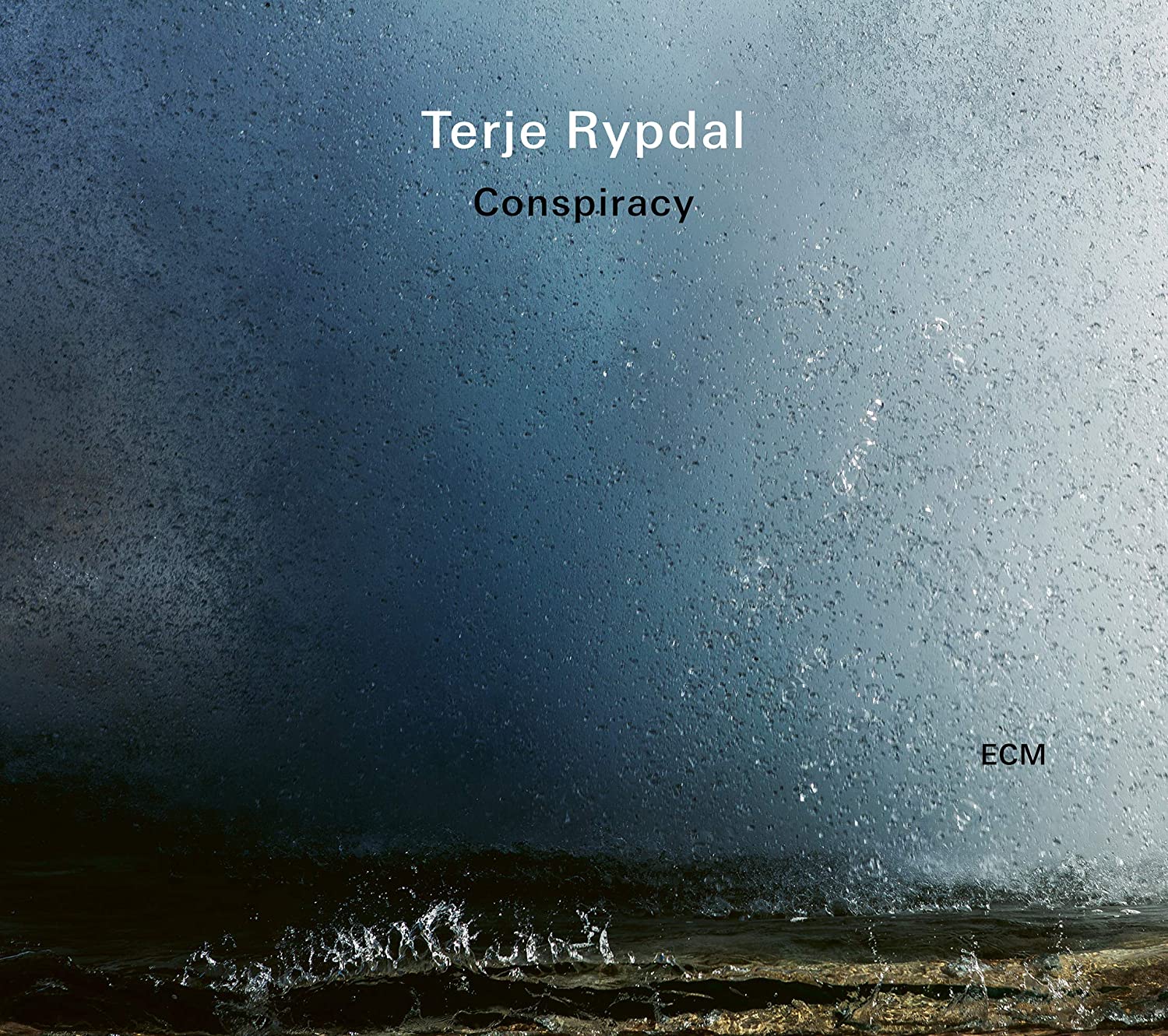
Dawn closes Conspiracy and is a captivating cinematic sounding track. It’s easy to imagine the dawn breaking and in the as the rain lashes down and the wind howls on a cold winter’s day just like the one on the album cover.
Conspiracy is the first solo album from the Norwegian virtuoso guitarist Terje Rypdal. He’s enjoyed a career that’s spanned six decades and released twenty-five albums on ECM. This includes his most recent album Conspiracy where the music is atmospheric, evocative, haunting, ruminative and wistful. The soundscapes also have a cinematic sound on this carefully crafted album which feature the welcome return of musical master craftsman Terje Rypdal, who is one of the finest purveyors of Scandi jazz.
Terje Rypdal-Conspiracy.
ODED TZUR-HERE BE DRAGONS.
Oded Tzur-Here Be Dragons.
Label: ECM.
Format: CD.
In 2015, thirty-one year old Israeli tenor saxophonist Oded Tzur released his much-anticipated debut solo album Like A Great River on Enja Records. It was released to plaudits and praise with critics heaping praise on a pioneering musician who had developed his own saxophone technique which he called Middle Path. It was truly groundbreaking technique that transformed the sound of the saxophone.
On hearing Oded Tzur play, his onetime musical mentor Hariprasad Chaurasia said: “If a curtain were to be drawn in front of him, no one could tell which instrument was being played.” Oded Tzur would use and continue to develop his new technique on his sophomore album.
Two years later, in 2017, he released Translator’s Note on Enja Records, and just like his debut album it won over critics. Oded Tzur was two for two having just released another critically acclaimed album. Great things were forecast for one of jazz’s rising stars. Oded Tzur had come a long way since he started studying the saxophone.
Oded Tzur was born in Tel Aviv, Israel, in 1984, and studied jazz and classical music in the Thelma Yellin High School For The Arts and then at Jerusalem Academy. Then in 2007, he enrolled at what is regarded as one of Holland’s most prestigious musical institutions.
This was the Rotterdam World Music Academy, where Oded Tzur was accepted as a disciple of Indian musical director and classical flautist Hariprasad Chaurasia. He plays the Bansuri, a side blown Indian flute, which is played in the Hindustani classical tradition. The time Oded Tzur spent studying Indian classical music was a crucial period and one that shaped him as a musician.
During this period Oded Tzur developed a new technique that extended the saxophone’s microtonal capacity. This was inspired by the way Hariprasad Chaurasia played the Bansuri and various other Indian instruments. The new technique Oded Tzur called Middle Path.
The newly named Middle Path technique allowed the saxophone to move between the notes and highlight specific microtones. It’s very different to the traditional method of saxophone playing. Oded Tzur’s mentor Hariprasad Chaurasia described the Middle Path technique: “If a curtain were to be drawn in front of him, no one could tell which instrument was being played.” This offered up all sorts of possibilities for Oded Tzur.
In 2011, Oded Tzur presented the Middle Path concept at the 2011 British Saxophone Congress which was being held at Trinity College of Music. He then made presentations at the Amsterdam Conservatory, Copenhagen Conservatory and the Juilliard School. This introduced this new gamechanger of a technique to a wider audience.
Having established himself on the Israeli jazz scene, Oded Tzur moved to New York in 2011 and founded his first quartet with Shai Maestro, Petros Klampanis and Ziv Ravitz. It was soon attracting the attention of crisis and the Japanese jazz magazine CD Journal went as far as to call it The Coltrane Quartet Of The ‘21st’ Century. It was official, Oded Tzur was one of jazz’s rising stars.
By 2015, Oded Tzur had signed to Enja Records and later that year released the first of two critically acclaimed albums for the label. Both featured his original quartet which he founded when he arrived in New York in 2011. This included his debut album Like A Great River which launched his solo career.
Two years later, came Translator’s Note in 2017 which was another groundbreaking album of jazz. By then, Oded Tzur had established a fanbase worldwide who had been won over by his very personal music. This also included the owner of one of jazz’s premier labels.
This was Manfred Eicher’s ECM Records who signed Oded Tzur to his label. By then, he had formed a new band which featured American drummer Johnathan Blake, Greek double bassist Petros Klampanis, Israeli pianist Nitai Hershkovitz and bandleader, composer and tenor saxophonist Oded Tzur. They began recording his third album and first for ECM, Here Be Dragons.
It was recently released by ECM and showcases the unique and inimitable sound that Oded Tzur developed after studying in Rotterdam with Hariprasad Chaurasia who had previously worked with John McLaughlin, saxophonist Jan Garbarek, percussionist Zakir Hussain and even a pop combo called The Beatles. The flautist influenced Oded Tzur and helped him develop his own sound.
“Growing up in Israel as a jazz musician I was looking for something that could be my native language, as it were. It was a tough thing to figure out at first, looking across this world of many traditions for the music that spoke to me more than anything else. What I found in Indian classical music is a laboratory of sounds. A methodical, scientific approach to pitches and notes. While it is, on the one hand, a local music, full of ornaments and elements specifically tied to its geographical and cultural point of origin, there is also something that is very universal in the ways it speaks to sound and colour and melody and rhythm.”
Oded Tzur remembers Hariprasad Chaurasia encouraging him to use a similar approach on the tenor saxophone as he did on the Bansuri. This meant deploying slurs, slides and microtonal shadings to transform the sound of the tenor saxophone. It was revolutionary, and soon Oded Tzur was able to play melodic phrases. It took time to develop what was akin to a new vocabulary for his tenor saxophone and this he called the Middle Path. It’s resulted in comparisons with John Coltrane’s innovative spiritual jazz of the sixties transformed Oded Tzur’s life.
Since then, Oded Tzur has written and lectured on the subject of the Middle Path. The thirty-six year old tenor saxophonist has written his name into jazz history and showcases his unique sound on Here Be Dragons. However, he continues to hone the Middle Path on Here Be Dragons and still sees this innovative sound as work in progress.
While the Middle Path was influenced by Indian classical music, so are the four major original compositions on Here Be Dragons. They all try to develop what are essentially miniature ragas. Three were composed by Oded Tzur, while Charukesi is based upon the traditional Indian scale. These four tracks are part of an album that has been influenced by various cultures and musical genres. And just like his 2017 sophomore album Translator’s Note, the music is very personal and features Oded Tzur’s inimitable sound.
The album opener Here Be Dragons has an understated, calming and melodic sound with space left in the arrangement. Later, Nitai Hershkovits’ twinkling, shimmering piano adds some urgency before leaving space for the beautiful, wistful sound of Oded Tzur’s tenor saxophone. It plays a starring role and in this eight minute epic that whets the appetite for the rest of the album.
To Hold Your Hand is based on the Charukesi scale and reveals a meditative sound that encourages reflection. Drummer Johnathon Blake adds some swing and is responsible for a a much more traditional sound while Oded Tzur’s tenor saxophone sounds more like a soprano. This is a perfect example of his innovative Middle Path technique which he continues to hone.
20 Years is incredibly personal track which Oded Tzur wrote on the twentieth anniversary of his father’s death. His band reserve one of their of finest performances on this raga, which has a spiritual homage and is a beautiful tribute to his father.
The three Miniatures allow the rest of the quartet to take centrestage. Miniature 1 features just a lone piano and encourages the listener to reflect and ruminate on a composition that sounds as if it’s been inspired by Debussy. Then double bassist Petros Klampanis takes centrestage on Miniature 2. He plays slowly and carefully leaving space as if encouraging the listener to continue reflecting. When it comes to Miniature 3, Oded Tzur’s tenor saxophone sounds like a flute as he deploys different and innovative techniques to create a series of distinctive sounds. His playing is slow, deliberate and understated and the raga wistful and ruminative. It’s quite the best of three Miniatures
It’s all change on the uptempo and joyous sounding The Dream. The quartet sound as if they’re enjoying themselves and play with a mixture of energy and enthusiasm.
To close Here Be Dragons Oded Tzur and the band don white jumpsuits as they cover Elvis Presley’s Can’t Help Falling In Love. It’s not the most obvious choice for a cover versions and they slow the song down and pare the arrangement back. Despite the understated sound that familiar melody shines through as the quartet reinvent a classic track.
For anyone yet to discover Oded Tzur’s music, his recently released third album Here Be Dragons is the perfect starting place. He’s accompanied by a new band as he continues to hone his innovative and trademark Middle Path sound.
Sometimes, nothing is as it seems as Oded Tzur uses musical sleight of hand to make his tenor saxophone sound like a soprano saxophone or a flute. To do this, takes years of practice and dedication as Oded Tzur has discovered. He’s the founding father of the revolutionary Middle Path sound and writes and lectures about it. It also transformed his music and makes standout from the crowd.
That has been the case on the three albums he’s released between 2015 and 2020. Oded Tzur’s most recent is Here Be Dragons which is his debut for ECM. Here Be Dragons is a future jazz classic which was recorded in Italy by the Israeli tenor saxophonist Oded Tzur who studied Indian classical music in Rotterdam and nowadays, calls New York his home.
Oded Tzur-Here Be Dragons.
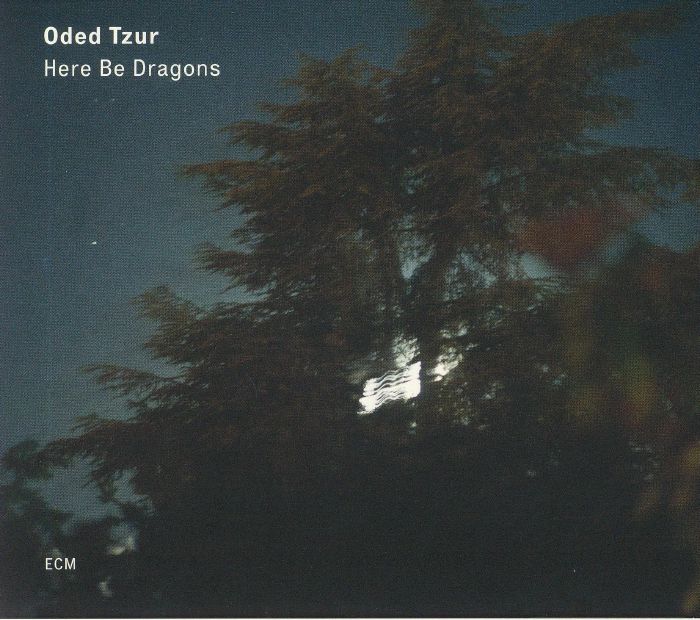
ART BLAKEY AND THE JAZZ MESSENGERS-ROOTS AND HERBS.
Art Blakey and The Jazz Messengers-Roots and Herbs.
Label: Blue Note Records (Tone Poet Series).
Format: LP.
Nowadays, many music historians believe that The Jazz Messengers made their live debut in 1954 and a year later recorded At the Cafe Bohemia, Volumes 1 and 2 on November the ‘23rd’ 1955. It featured the original lineup of drummer Art Blakey, bassist Doug Watkins, pianist Horace Silver and a front line of trumpeter Kenny Dorham and tenor saxophonist Hank Mobley. However, this lineup would evolve over the next six years.
On February the ‘18th’ 1961, Art Blakey and the latest lineup of The Jazz Messengers journeyed to the original Van Gelder Studio, in Hackensack, New Jersey. It featured none of the original lineup. The Jazz Messengers’ lineup had been fluid since then and would continued to be right through until 1990.
One of the new recruits was tenor saxophonist Wayne Shorter who had written six new compositions for the Roots and Herbs’ sessions. This included Ping Pong, Roots and Herbs, The Back Sliders, United, Look At The Birdie and Master Mind. They would be recorded by Art Blakey and the incarnation of The Jazz Messengers.
Joining drummer Art Blakey in the rhythm section was double bassist Jymie Merritt. Two pianists were used Bobby Timmons and Walter Davis Jr and the front line featured trumpeter Lee Morgan and tenor saxophonist Wayne Shorter. They were about to record two albums The Freedom Rider and Roots and Herbs and were joined by engineer Rudy Van Gelder and producer Alfred Lion. Soon, the Roots and Herbs’ sessions were underway.
Five tracks that showcased Art Blakey and The Jazz Messengers’ unique brand of hard bop were recorded that day. Bobby Timmons played piano on two tracks, Ping Pong and Look At The Birdie. Then Walter Davis Jr played on Roots and Herbs, United and Master Mind. By the end of the day Art Blakey and The Jazz Messengers’ had nearly finished the album.
There was just one track to be recorded, so on May the ‘27th’ 1961 so Art Blakey and The Jazz Messengers made the return journey to Van Gelder Studio in Hackensack, New Jersey. That day, they recorded The Back Sliders with Bobby Timmons on piano. Roots and Herbs was completed and bandleader Art Blakey must have been hoping that Blue Note Records would release the album later in 1961.
Sadly, lightning struck twice for Art Blakey and The Jazz Messengers when Blue Note Records decided to shelve the release of The Freedom Rider and Roots and Herbs. This was not uncommon at Blue Note Records where releases were often postponed or shelved. However, it was frustrating for artists. Especially when this happened several times.
It had happened to the same lineup of Art Blakey and the same lineup of The Jazz Messengers the previous year. They had entered Van Gelder Studio on the ‘7th’ of August 1960 to record two albums, The Freedom Rider and Like Someone In Love. They were completed on August the ‘14th’ 1960, and bandleader Art Blakey was looking forward to their release.
The classic album A Night In Tunisia was released in 1961. However, Like Someone In Love was shelved and wasn’t released until 1964. Now it was happening all over again.
When an album was shelved for a number of years artists often worried that the music wouldn’t be relevant. Music was constantly changing and jazz was no different.
By the late-sixties jazz was no longer was popular as it had been a decade earlier. Comparisons were being drawn with the blues which was no longer as popular and was struggling to stay relevant. Many clubs that had once hosted blues musicians now promoted concerts by rock bands. Meanwhile, a number of well known blues musicians were struggling to make a living and some had even gone back to the 9 to 5 grind. Jazz needed a saviour.
It found it in fusion. The genre was developed in the late-sixties when mucicians experimented with jazz harmony and improvisation with rock music, funk, and R&B. Soon, electric guitars, banks of keyboards and later, synths were used by the pioneers of fusion. By 1970, fusion had grown in and transformed jazz and may well have saved the genre from becoming irrelevant.
Despite the transformation of jazz since 1967, and fusion continuing to grow in popularity, Blue Note Records decided to release Roots and Herbs in October 1970. This was an album of hard bop that had been recorded nine years earlier in 1961. It was a snapshot in time and a reminder of how jazz used to sound.
When Roots and Herbs was released in October 1970, the album wasn’t the commercial success that Blue Note Records had hoped. It seemed to slip under the musical radar. However, the critics that reviewed the album realised that Roots and Herbs was one of Art Blakey and The Jazz Messengers’ finest album and a reminder of his inimitable brand of hard bop circa 1961.
That’s no surprise given the quality of the personnel that features on Roots and Herbs. Each member of this all-star band seamlessly unleash stunning solos and deliver a series of energetic performances. Meanwhile, bandleader Art Blakey’s playing was fluid and powerful as his swing beat provides the heartbeat throughout Roots and Herbs.
There’s no ballads on the album which is bristling with energy as Art Blakey and The Jazz Messengers work their way through the six Wayne Shorter compositions. They’re a tantalising taste of what was to come from this talented composer and a reminder of one of the best lineups of The Messengers.
It’s ironic that Roots and Herbs was shelved by Blue Note Records and never surfaced until October 1970 as the album features a series of peerless performances. So much so, that choosing the highlights isn’t easy. However, Ping Pong, Roots and Herbs, Look At Birdie and Master Mind feature Art Blakey and The Jazz Messengers at their very best.
By the time Roots and Herbs was released, the lineup of Art Blakey and The Jazz Messengers had changed a number of times. Bandleader and cofounder Art Blakey wanted to play alongside the best up-and-coming jazz musicians and new names joined the band and others left. This included the five musicians that featured on Roots and Herbs who were hugely talented and all went on to enjoy successful careers.
There’s no doubt that their time as members of The Jazz Messenger was an important part of their career and they improved as musicians. Art Blakey had high standards and wouldn’t settle for second best. That’s apparent through on Roots and Herbs where they constantly reach new heights.
Sadly, though, Blue Note Records waited too long to release Roots and Herbs, which was recently reissued as part of their Tone Poet Series. If it had been released in 1960 or 1961 when hard bop was much more popular it might have been a bigger success than it was when it was released in October 1970. By then, fusion was King and hard bop was seen by many jazz fans as yesterday’s sound. As a result, Roots and Herbs passed many record buyers by and it never found the wider audience it deserved.
Fifty years later and that’s starting to change. Roots and Herbs was until relatively recently one of Art Blakey and The Jazz Messengers’ least well known albums, but this oft-overlooked and lost hard bop classic is belatedly starting to find a wider a wider and appreciative audience .
Art Blakey and The Jazz Messengers-Roots and Herbs.

OCEAN MOON-CRYSTAL HARMONICS.
Ocean Moon-Crystal Harmonics.
Label: Be With.
Format: LP.
2020 has been a busy year for Jon Tye of Seahawks. Earlier this year, Seahawks released a new album Island Visions, which featured a collection of library music they had recorded for KPM. The music on the album focused on the deeper, more spatial side of music. This was something that fascinated Jon Tye and he decided to explore it further on his next album.
This wasn’t another Seahawks album. Instead, he donned his Ocean Moon moniker and recorded another album of library music for KPM, Crystal Harmonics. It’s best described as an album that combines elements of ambient, new age music and modern classical into a suite of library music. To do this, Jon Tye brought onboard some of his musical friends.
They are some of the brightest musical minds and are regarded as innovators and visionaries. This includes the master of the melody Jon Brooks of The Advisory Circle and Ghostbox; vocalist Seaming To of Graham Massey’s Toolshed and Steve Moore of Zombi whose complex and innovative rhythms are a feature of Crystal Harmonics. Finally, there’s The Grid’s Richard Norris whose plays an important part in the album’s ambient sound. These musicians made their way from Derbyshire, London and America and headed to Cornwall.
When recording of Crystal Harmonics began, Ocean Moon and friends headed to The Centre Of Sound in Cornwall. They were about to record an album that would be released on KPM and it was fitting that four albums from the label’s golden era had influenced Jon Tye. The earliest was Adrian Wagner’s 1975 album The Electronic Light Orchestra. Then there was a triumvirate of albums of modern classical and new age library music from the mid-eighties. This included Temple Of The Stars, Breath Of Life and Keith Mansfield’s Circles. These classic library music albums influenced Ocean Moon when they recorded Crystal Harmonics.
Side One.
Just like on previous projects, Jon Tye explores the sounds of spaciousness on Crystal Harmonics. The album opener meanders into being with electronic flute and bells being deployed by Ocean Moon. They play their part in a spacious, ethereal and ruminative soundscape that encourages reflection.
The arrangement to Rainbow Ripples sweeps in slowly before arpeggiated synths rise and fall as subtle beats pitter patter in the background. By now, the influence of ambient music and the Berlin School is apparent on this beautiful, dreamy and almost mesmeric soundscape.
As And Breathe unfolds, vocalist Seaming To’s instructs the listener to “breathe.” Almost hungrily she draws air deep into her lungs as a synth drones and a subtle Fender Rhodes accompanies the vocal. The result is a track inspired by classic new age library music but that wouldn’t sound out of place on a nineties chill out compilation.
Quite different is the cinematic sounding Lost Oceans where Ocean Mean take the listener on a journey to a distant galaxy. Later, the soundscape becomes futuristic and dramatic and sounds like part of the soundtrack to a short sci-fi film.
There’s a degree of tension as New Infinity unfolds and sci-fi synths combine with sweeping pads and crisp beats. Together they create a dramatic backdrop. As the melody repeats pads sweep in and out as beeps and squeaks interject and the drama continues to build and grow before reaching a crescendo.
Closing side one of Crystal Harmonics is the celestial, ethereal and lysergic sounding White Mirror. It floats lazily along painting pictures in the mind’s eye.
Side Two.
Spiritual sounding with an Eastern influence describes Peace Bells. It’s a beautiful, meditative soundscape that’s one of the album’s highlights.
Revolving and Evolving meanders gently along. Synths and the sounds of a babbling brook and birds combine to create a laidback and pastoral soundscape. It sounds as if it’s been influenced not just by mid-eighties new age library music but Kominische pioneers Harmonia.
Mountain Dreaming finds Ocean Moon combining rhythmic synths, a deliberate bursts of zither and birdsong. It’s an unusual, unlikely and imaginative combination of instruments and sounds but one that works and works well.
Playing a leading role in Forest Motion are undulating synth arpeggios, dreamy strings that float along and combine with percussive electronics as the arrangement reveals its secrets. Later, a curveball is thrown and the tension and drama builds during this cinematic soundscape. It’s as if Ocean Moon are setting the scene. Then it’s all change as the arrangement becomes understated as a myriad of subtle sounds are added and the drama dissipates.
Sleep Golden is very different to previous tracks and has a much more experimental sound. A piano is played slowly and hesitantly and is combined with Cantonese whispers. Meanwhile, vocals soar elegantly above the arrangement as various sounds sweep in and out during this captivating soundscape. The more one listens the more one is enchanted by it.
The Long Path closes Crystal Harmonics. It’s a quite beautiful musical journey where bells, drones and chants combine to create a meditative and spiritual sounding soundscape.
For anyone who is interested in library music, then Ocean Moon’s Crystal Harmonics is an album that will be of interest to them. This is an album of modern library music that has been inspired by the genre’s golden age in two ways.
The first is the album cover which is akin to a homage to KPM’s classic albums from the mid-eighties. Anyone who collects albums of library music from this period will realise that Jon Tye is tipping his hat to KPM’s house style from that period.
During the recording of Crystal Harmonics Jon Tye has also been inspired by four albums that were released by KPM between 1975 and the mid-eighties. The earliest was Adrian Wagner’s The Electronic Light Orchestra which was released in 1975. Then in the mid-eighties Temple Of The Stars, Breath Of Life and Keith Mansfield’s Circles were released and combined elements of ambient, new age music and modern classical. The influence of these albums shines through on Crystal Harmonics, However that’s not all.
There’s also elements of avant-garde, the Berlin School, experimental and Kominische music. Listen carefully and the influence of Harmonia and Kraftwerk can also be heard. Add to this the sound of birdsong, chants, pastoral, sci-fi sounds, synth strings and temple bells and the result is a captivating and enchanting album of modern library music where Ocean Moon set out to sooth the listener’s weary soul and succeed in doing so during what’s an antidote to these troubled times.
Ocean Moon-Crystal Harmonics.
NEIL YOUNG AFTER THE GOLD RUSH (50TH ANNIVERSARY EDITION).
Neil Young-After The Gold Rush (50th Anniversary Edition).
Label: Warner.
Format: CD.
During the winter of 1970, Neil Young and his backing band Crazy Horse embarked upon a short winter tour that included a concert at Filmore East, New York, where the twenty-four year old Canadian folk rocker shared a bill with Steve Miller and Miles Davis. At the end of what was a successful tour Neil Young and Crazy Horse headed to LA and Sunset Sound Studios to begin work on his third album After The Gold Rush.
By the time the sessions began, the health of rhythm guitarist Danny Whitten was already deteriorating. He had bravely battled rheumatoid arthritis and to dull the pain he started using heroin. Soon, he was addicted and this started to affect his performance. However, he played on the sessions at Sunset Sound Studios which yielded two tracks the Neil Young composition I Believe In You and a cover of Don Gibson’s Oh, Lonesome Me.
Sadly, Danny Whitten didn’t play on all of the sessions for After The Gold Rush. After the LA sessions, Neil Young decided to record the album in a makeshift studio in the basement of his home in Topanga Canyon. This he named Redwood Studios and was where he hoped he would complete his third solo album.
This was no ordinary album. Some of songs that Neil Young had written for the album were inspired by Dean Stockwell-Herb Bermann‘s screenplay for the film After The Gold Rush. When Neil Young read the screenplay he had asked Dean Stockwell if he could produce the soundtrack? This resulted in him writing After the Gold Rush and Cripple Creek Ferry.
In the early stages of the sessions Danny Whitten and the rest of Crazy Horse were sacked partly because of the rhythm guitarist’s heavy drug use. By then, he had he had played guitar and added vocals on I Believe In You, Oh, Lonesome Me and When You Dance I Can Really Love. When Danny Whitten left the sessions it looked like his time as a member of Crazy Horse was at an end.
Having dismissed Crazy Horse, Neil Young needed to put together new backing band. He decided to bring back Crazy Horse drummer Ralph Molina who was joined in the rhythm section by Crosby, Stills, Nash and Young bassist Greg Reeves. A surprise addition was the prodigiously talented eighteen year old Nils Lofgren of Washington DC-based band Grit who played guitar, piano and added vocals. The final member of the new backing band was pianist Jack Nitzsche.
Other musicians were drafted in to augment the new band. This included Bill Peterson who played flugelhorn. Then when Only Love Can Break Your Heart was recorded Steven Stills joined the session and added backing vocals. Later, another familiar face would make a return.
Towards the end of recording of After The Gold Rush Danny Whitten was brought in to provide harmony vocals on Tell Me Why, Only Love Can Break Your Heart, Cripple Creek Ferry, Southern Man and Till The Morning Comes.
By June 1970, the album was complete and Neil Young and has two bands had recorded eleven songs at three studios. The first sessions took place in the winter of 1970 Sunset Sound with further sessions taking place in Sound City Studios in LA and Redwood Studio. The album became After The Gold Rush which was co-produced by Neil Young, David Briggs and Kendall Pacios.
Just three months after completing After The Gold Rush, Reprise released Neil Young’s much-anticipated third album. When It released on the ‘19th’ of September 1970, it wasn’t well received by critics who were far from impressed. This included Langdon Winner who reviewed the album for Rolling Stone. However, Robert Christgau was more enthusiastic in his review in Village Voice. Mostly, though, critics weren’t won over by After The Gold Rush.
Despite this, Neil Young’s third solo album sold well and After The Gold Rush reached number eight on the US Billboard 200. It went on to sell over two million copies in America and was certified double platinum. In Britain, After The Gold Rush sold over 600,000 copies and was also certified double platinum.
When it came to choose a lead single, Only Love Can Break Your Heart was chosen and released on the ’19th’ of October 1970 it reached number thirty-three in the US Billboard 100, and gave Neil Young his first top forty hit.
When You Dance I Can Really Love was released as the followup in March 1971 it stalled at a disappointing ninety-three in the US Billboard 100.
Five years after the release of After The Gold Rush, critics were starting to change their mind about Neil Young’s third album. Some had gone as far as to call the album a masterpiece. It was and still is.
When Neil Young released After The Gold Rush in 1970, it was without doubt the finest album of his solo career. It also set the bar high for the albums that followed during a career that has now spanned six decades. Fifty years later and After The Gold Rush is now regarded as a classic album.
Nowadays, Neil Young is regarded as a musical chameleon who constantly reinvented his music. That’s apparent on After The Gold Rush which was ostensibly an album of country folk music. It opens with the ballad Tell Me Why where he move from the hard rocking sound of Everybody Knows This Is Nowhere towards folk and country sound. His heartfelt pleading vocal is accompanied by two acoustic guitars which is an effective accompaniment on this beautiful ballad.
The title-track After The Gold Rush is best described as a mystical, cinematic ballad. It was written for the end-of-the-world film that never was.
Very different is the heartwrenching ballad Only Love Can Break Your Heart which features backing vocals from Stephen Stills. Graham Nash later claimed that Neil Young wrote the song for him and that it documents the pain and hurt he experienced after splitting up with Joni Mitchell. It’s an oft-covered classic track and one of the highlights of the album.
So is the rocky sounding protest song Southern Man. It features powerful and vivid lyrics where Neil Young sings of the racism towards African-Americans in the Southern states. He tells the story of a white man who mistreated his slaves and poses the questions when will South make amends for the fortunes made through slavery. His lyrics are poignant and powerful as he sings and wonders: I saw cotton and I saw black, tall white mansions and little shacks, Southern Man, when will you pay them back?”
The piano led Till The Morning Comes closed the first side of After The Gold Rush. It’s melancholy and became melodic and rousing as backing vocals enter and transform this short track.
Oh, Lonesome Me is another ballad that epitomises the country folk sound on the album. It features a hurt-filled vocal from Neil Young who sounds as if he’s experienced the heartache and loneliness he’s singing about.
Don’t Let It Bring You Down has a dramatic introduction which is partly down to Neil Young playing his guitar in double drop C tuning. His impassioned vocal then delivers the emotive and filmic lyrics to another oft-covered ballad from After The Gold Rush.
Nils Lofgren’s piano plays an important part in the sound and success of the album and opens Birds. It’s another heartwrenching ballad about a relationship that’s gone wrong. There’s regret in Neil Young’s voice as he sings “when you see me fly away without you.” Then as the song draws to a close his vocal is tinged with emotion and sadness as he sings: “it’s over, it’s over” as if remembering what they once had.
The tempo rises on the country rocker When You Dance I Can Really Love. It shows another side to Neil Young and his band as they plug in during this optimistic sounding and anthemic love song.
I Believe In You is the most personal song on the album and benefits from an understated arrangement. This allows Neil Young’s impassioned vocal to take centrestage as he reflects. He tries to make sense of the women he’s left and even suggests that he’s unsure if he’ll be able to love and there’s even a reluctance that he will be to enter the new relationship during this powerful, confessional ballad.
Cripple Creek Ferry closes After The Gold Rush and is another short song that was written for the film that never was. Just an acoustic guitar and piano are joined by Neil Young and backing vocals on a song that sounded as if was recorded late at night as the session was drawing to a close. It’s not the most polished performance on the album but the band sound as if they’re enjoying themselves.
Fifty years have passed since Neil Young released After The Gold Rush which nowadays, is regarded as one of his finest albums and a classic album. It features on all lists of the best albums of all time and belongs in every record collection. That comes as no surprise.
There are no weak tracks on After The Gold Rush which showcases Neil Young’s skills as a songwriter. He wrote ten of the eleven tracks including country folk love songs and his rocky protest song Southern Man. There’s even the two tracks he wrote for the soundtrack to After The Gold Rush. This includes the mystical title track and Cripple Creek Ferry.
However, Neil Young is at his best on the ballads on the album. They’re beautiful sometimes autobiographical or cinematic and are heartwrenching and tug at the heartstrings. One of the finest ballads was I Believe In You which was the nearest that he came to writing an MOR ballad. Just like Only Love Can Break Your Heart it’s a timeless and oft-covered track.
For newcomers to Neil Young, his classic album After The Gold The Rush which was released fifty years ago in 1970 is the perfect place to start. After this, albums like Harvest, Tonight’s The Night, On The Beach, Rust Never Sleeps, Freedom and Harvest Moon are among the finest of the forty albums that Neil Young has released so far, during a career that has already spanned six sparkling decades.
Neil Young-After The Gold Rush (50th Anniversary Edition).
THE BRIEF RECORDING CAREER OF AMARA TOURE: 1973-1980.
The Brief Recording Career Of Amara Touré: 1973-1980.
Amara Touré’s recording career spanned just seven years and saw him record just ten tracks. His recording career began in 1973 and was over by 1980. By then, he had recorded three singles and the four tracks that featured his 1980 album Accompagné Par L’Orchestre Massako. These ten tracks comprise Amara Touré’s discography.
While that might not seem like much, but for seven years, Amara Touré consistently released groundbreaking music and forty years after he called the on his record career is remembered as one of the most influential and inventive artists of his generation. His career began back in 1958.
Back then, Senegal had been won over by Son Montuno and Patchanga music. That had been the case since the early forties, when Cuba sailors first brought Son Montuno and Patchanga home from their travels. It quickly found an audience within the local music scene. Soon, Caribbean music was providing the soundtrack to many clubs in Senegal. Before long, the locals had embraced this vibrant, exotic sound. The next stop was to combine Son Montuno and Patchanga with their own music.
Soon, Caribbean music was being combined with West African and Latin music. The result was unique and unlike any other musical genre, as the music of three continents combined. This new sound was quickly embraced by local musicians and producers.
This included Ibra Kassé who also owned the Miami nightclub in Dakar. His club would at the heart of this new scene as it exploded into life. Across Dakar, bands were being formed and ballroom parties were being thrown. There were hardly enough local musicians to fulfil the demand and musicians were coming from much further afield. This included Amara Touré, a percussionist and singer from Guinea-Conakry.
Amara Touré was discovered by Ibra Kassé when he was accompanying Dexter Johnson. When Ibra Kassé first heard Amara Touré he realised the young percussionist and singer had potential and was destined for greater things.
Ibra Kassé asked Amara Touré of he wanted to become part of a new band he was putting together in Dakar. It didn’t take him long to agree. What he didn’t realise was that this new band would change Senegalese music forever.
Having agreed to move to Dakar, Amara Touré packed his belongings and said goodbye to Guinea-Conakry. His destination was Dakar, where he was about to become a member of Le Star Band de Dakar. Little did Amara Touré know, that Le Star Band de Dakar would become one of the most important bands in the history of modern Senegalese music.
The leader of Le Star Band de Dakar was Mady Konaté. He would mentor many up-and-coming musicians so that eventually, would be able to go on and become bandleaders in their own right. Just like many other musicians, Amara Touré severed his musical apprenticeship in Le Star Band de Dakar. From the day he was brought onboard by Ibra Kassé, Mady Konaté realised that the young percussionist was destined for greater things.
As Mady Konaté oversaw rehearsals, he realised that Le Star Band de Dakar latest recruit was something special. Not only was Amara Touré a gifted percussionist, but he had a voice that mixed power, passion and emotion. Watching on, Mady Konaté was captivated as Amara Touré brought the songs to life, breathing meaning and emotion into the Cuban songs. Straight away, Mady Konaté saw what Ibra Kassé saw in Amara Touré. With him onboard, Mady Konaté realised that Le Star Band de Dakar were about to change Senegalese music forever.
Having joined Le Star Band de Dakar in 1958, they continued their residency at Ibra Kassé’s Miami nightclub. Soon, Le Star Band de Dakar’s star was soon in the ascendancy. They swept aside all-comers, and quickly became Dakar’s top orchestra. No other orchestra came close. This meant that patrons flocked to Ibra Kassé’s Miami nightclub. It became the only place in town and each night, was packed to the rafters. This lasted for the ten years that Amara Touré was a member of Le Star Band de Dakar. He left Le Star Band de Dakar in 1968, and a new chapter in his career began.
While Amara Touré was enjoying his time with Le Star Band de Dakar, by 1968, he was thinking about returning home, and forming his own band. However, then he received an offer that he couldn’t turn down when he was contacted by Assane Dieye, about joining L’Ensemble Black and White.
For some time, there had been tension between members of Lynx Tall and the other members of the L’Ensemble Black and White. They thought that Lynx Tall was a “big head,” and that he was more important than the other band members. So Assane Dieye was dispatched to ask Amara Touré whether he wanted to join L’Ensemble Black and White as their new lead singer.
With Amara Touré looking for a new challenge, it made sense to accept this new offer. Especially since he would be playing with some of the top musicians in Senegal. So, Amara Touré agreed to join ’Ensemble Black and White, and journeyed to Cameroon, where they become L’Ensemble Black and White were playing.
For five years, the Black and White ensemble toured Cameroon relentlessly. Night after night, week after week, month after month they played live. One year became two, became three, four and five. During that period, L’Ensemble Black and White played the top venues. They were seen as the top band in Cameroon. So much so, that they were regarded as Cameroon’s presidential band. However, despite their undoubtable popularity, L’Ensemble Black and White had never recorded a single. That changed in 1973 when they entered the studio for the first time,
For their first singles, Amara Touré and the rest of L’Ensemble Black and White headed to the studio. L’Ensemble Black and White’s lineup features Amara Touré on tenor vocal and percussion, with Ahanda on second vocal. Many members of L’Ensemble Black and White were from Cameroon, including bassist Jean-Claude N’Jo, rhythm guitarist Lucien, lead guitarist Charles and keyboardist Tina Brown. Drummer Mosquito and alto saxophonist Fete are from the Congo, while clarinet player Peter was from Nigeria. This musical league of nations entered the studio for the first time in 1973.
In total, L’Ensemble Black and White recorded just three singles with Amara Touré as lead singer. The first of these singles was N’Niyo, which featured Cuando Llegare on the B-Side. They were released on the French label Sonafric, which was an imprint of Sondisc. Despite their popularity, L’Ensemble Black and White’s debut single wasn’t a commercial success. However, at least Amara Touré had fulfilled what he set out to do.
Before he set foot in a recording studio, Amara Touré knew exactly what he wanted to do. He wanted to put on record some of the most sensual, seductive music in the history of African music. This was how he described his music. Especially a song like N’Niyo, where he delivers a truly impassioned, pleading vocal. It’s accompanied by stabs of horns and a hypnotic, meandering arrangement. Sadly, this sensuous music never found the audience Amara Touré hoped when it was released. He wasn’t going to give up though.
The followup to N’Niyo was Temedy, a song written by Amara Touré. He also penned the B-Side Fatou. It was released in 1974 and just like N’Niyo, it wasn’t a commercial success. Nowadays, copies are extremely rare changing hands for over £150. This genre-melting single is a real hidden gem and is a prized possession amongst collectors of African music.
No wonder given its undeniable quality. It features one of Amara Touré’s finest vocals and it soon becomes apparent what Ibra Kassé and Mady Konaté saw in Amara Touré. It’s a fusion of Amara Touré’s Mandingue roots and the Senegalese sound that he mastered with Le Star Band de Dakar. This was the platform for his impassioned Afro-Cuban interpretations of Temedy and Fatou and the third single Amara Touré recorded with L’Ensemble Black and White.
The followup L’Ensemble Black and White recorded what would be the third and final single with Amara Touré. N’Ga Digne M’Be was chosen as the single, and Lamento Cubano as the flip side. Once the two songs were recorded, N’Ga Digne M’Be was released as a single in 1975. Sadly, it was a similar story to the other two singles released by L’Ensemble Black and White and commercial success eluded N’Ga Digne M’Be. It was a huge disappointment for the members of the Ensemble Black and White.
There was further disappointment when they realised that they wouldn’t record any further singles with Amara Touré. They continued to tour with but never again entered a recording studio together.
Right up until Amara Touré left L’Ensemble Black and White in 1980, they were still one of the most popular bands in Cameroon. They continued to tour relentlessly, playing some of the most desirable venues in the country. However, by 1980, Amara Touré wanted to expand his musical repertoire and in 1980 crossed the Cameroonian border and headed to Libreville, Gabon, where he collaborated with the L’Orchestre Masco.
The collaboration between Amara Touré and the L’Orchestre Massako resulted in what many connoisseurs of African music consider a stonewall classic album, Amara Touré Accompagné Par L’Orchestre Massako.
While Amara Touré Accompagné Par L’Orchestre Massako may only feature four tracks but they’re part of what’s akin to lost musical treasure. Copies of Amara Touré Accompagné Par L’Orchestre Massako were incredibly rare and don’t change hands often. When they do it’s for in excess of £230 and that’s why very few people have heard the musical gold that is Amara Touré Accompagné Par L’Orchestre Massako.
Amara Touré Accompagné Par L’Orchestre Massako.
From the opening bars of Afalago, through Tela, Salamouti and right through to the closing bars of Africa, the collaboration between Amara Touré and L’Orchestre Massako is a meeting of musical giants. Accompanied by some of the most talented musicians in the Gabon, Amara Touré reaches previously unreached musical heights. Musical genres melt into one as L’Orchestre Massako prove the perfect foil to Amara Touré’s vocal prowess. His vocals are variously heartfelt, impassioned, powerful, pleading and hopeful as twenty-two years of experience shines through, on what was Amara Touré’s swan-song.
Following the release of Amara Touré Accompagné Par L’Orchestre Massako in 1980, Amara Touré disappeared. It’s thought that he stayed in Cameroon for a while. What’s not known, is whether he’s still alive and nobody has seen or heard from Amara Touré in forty years. That’s sad and also ironic.
Not long after the disappearance of Amara Touré, his music started to find the audience it so richly deserves. Since then, his music has grown in popularity and that’s still the case today.
Amara Touré only recording career began in 1973 and was over by 1980. During that period, he recorded just ten tracks this includes six with L’Ensemble Black and White and four with L’Orchestre Massako. These songs showcase a musical pioneer at the peak of his powers as he fuses elements of African, Afro-Cuban and Latin music. Sometimes, he even adds elements of funk, jazz, soul and rock. This results in a tantalising musical fusion that continues to captivate and is truly timeless. It’s a reminder of Amara Touré, one of the most innovative and inventive African singers and percussionists of his generation, whose music is growing in popularity and belatedly starting find the wider audience it so richly deserves.
The Brief Recording Career Of Amara Touré: 1973-1980.
THE KINKS-LOLA VERSUS POWERMAN AND THE MONEYGOROUND AND PERCY (50th ABBIVERSARY EDITION).
The Kinks-Lola Versus The Powerman and The Moneygoround (50th Anniversary Edition).
Label: Sanctuary.
Format: CD.
By 1970, The Kinks had been through the ringer and everything that could’ve gone wrong had gone wrong. They had lost of bassist Pete Quaife in 1969 after they released their sixth album The Kinks Are the Village Green Preservation Society. It was released in November 1968 and failed to chart in Britain and American. For The Kinks this was a disaster as this was the first time one of their albums failed to chart. This was a first. Surely this was a mere blip as they were one Britain’s most popular musical exports?
Arthur (Or the Decline and Fall of the British Empire).
Down but not out, Ray Davies returned with Arthur (Or the Decline and Fall of the British Empire). This was a concept album which was meant to be the soundtrack to a television play based around a story written by novelist Julian Mitchell.
The album was recorded between May and July 1969 with new bassist John Alton making his Kinks debut. It was a lavish album and horns and strings adorned Arthur (Or the Decline and Fall of the British Empire). It was as if The Kinks were determined to get their career back on track and what better way than providing the soundtrack to television play? After all, The Kinks’ music would be heard by a large part of the British population.
Sadly, that wasn’t to be as the television play was cancelled. This presented The Kinks with a problem as they has just written the soundtrack to a play that would never be made, never mind seen. Despite this, they released Arthur (Or the Decline and Fall of the British Empire) in October 1969.
On its release, the album failed to chart in the UK and stalled at number 105 in the US Billboard 200 charts. For The Kinks, this was an improvement in their previous album. The two singles also gave the group minor hits.
Plastic Man was the lead single and reached number twenty-eight in Britain. Then neither Drivin’ nor Shangri-La failed to chart. The final single Victoria then reached number thirty in Britain and number sixty-two in the US Billboard 100. Maybe The Kinks luck was changing?
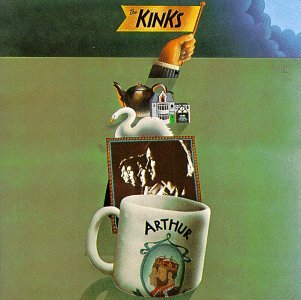
It wasn’t and 1970 proved to be one of the most turbulent years in The Kinks’ career. Drummer Mick Avoy’s illness meant The Kinks had to cancel all booking for ten weeks. This resulted in The Kinks American tour being cancelled. Sadly, that wasn’t the end of their problems.
In the background, The Kinks were experiencing problems with their manager and bureaucrats. It would take time to free themselves of the contractual problems and the problems with bureaucrats really hampered the groups’s career.
The Kinks had been banned from entering and touring America and were unable to build on the early success they enjoyed. That had been the case since 1965. and for four years they hadn’t played live in America. Longterm, this cost The Kinks dearly and they never quite reached the heights they should’ve.
Belatedly, the ban on The Kinks from playing in America had been lifted in 1969. For the first time in four years, The Kinks were able play live in America. Sadly, the concerts weren’t as successful as The Kinks and promoters had hoped. To make matters worse, illness meant the remaining concerts were cancelled and The Kinks lost the chance to make up for lost time.
As a new decade dawned, The Kinks hoped that their luck would change. Sadly, it proved to be one of the most turbulent years of their career
Lola Versus The Powerman and The Moneygoround.
After the disappointment of 1968s The Kinks Are the Village Green Preservation Society and 1969s Arthur (Or the Decline and Fall of the British Empire), The Kinks hoped that a new decade would bring about a change in fortune. For their eight album, Lola Versus The Powerman and The Moneygoround, Ray Davies decided to write another concept album. This was a concept album with a difference though, it was about the music industry.
For Lola Versus The Powerman and The Moneygoround, Ray Davies wrote eleven of the thirteen tracks. Dave Davies penned Strangers and Rats. The Kinks concept album is best described as a satirical, tongue-in-cheek concept examination of the various aspects of the music industry.
During the thirteen tracks, The Kinks look at the various facets of the music industry. Everyone, from music publishers, the music press, accountants, managers and The Kinks’ bette noire, music unions. The American musician’s union had stopped The Kinks playing in America for five long years and now was The Kinks opportunity for payback.
Recording of Lola Versus The Powerman and The Moneygoround, took place took place between at Morgan Studios, Willesden, London. The sessions began in April and lasted until May 1970. The Kinks Mk.II then took a break until August 1970. They then worked through to September 1970.
The latest lineup of The Kinks featured drummer and percussionist Mike Avory, bassist and guitarist John Dalton, Dave Davies on lead guitar, slide guitar and banjo. He also took charge of lead vocal on the two tracks he wrote, Rats and Strangers. John Gosling played piano and organ, while Ray Davies sang lead vocals, played guitar, harmonica, keyboards and resonator guitar. After four months in the studio Lola Versus The Powerman and The Moneygoround was complete.
Before the release of Lola Versus The Powerman and The Moneygoround, two singles were released. The lead single was Lola, which was released in Britain on the ’12th’ of June 197 and it reached number two in Britain, Germany and Canada, four in Australia and topped the charts in Holland and New Zealand. In America, Lola reached number nine in the US Billboard 100 and gave The Kinks one of their biggest hit singles.
Then Apeman was released as a single and just like Lola, gave the group another hit single. It reached number five in Britain, Germany, Australia and New Zealand, nine in Holland and nineteen in Canada. In America, the single stalled at forty-five in the US Billboard 100. However, with two hit singles worldwide it looked as if Lola Versus The Powerman and The Moneygoround, would revive The Kinks’ fortunes.
When Lola Versus The Powerman and The Moneygoround was released in November 1970 it was well received by the British music press. The majority of other reviews were positive and Rolling Stone called it: “the best Kinks album yet.” This includes contrarian critic Robert Christgau. He was one of few dissenting voices. That isn’t the case now.
Since 1970, some critics have changed their opinion of Lola Versus The Powerman and The Moneygoround. Mostly, the album has been well received by critics. However, some recent reviews have been mixed. In the main, Lola Versus The Powerman and The Moneygoround is perceived as one of The Kinks’ finest album and it certainly revived their fortunes.
Just like their previous album Arthur (Or the Decline and Fall of the British Empire), Lola Versus The Powerman and The Moneygoround fared better in American than Britain. It reached number thirty-five in the US Billboard 200 charts and failed to chart in Britain. It seemed that The Kinks were more popular in America than their home country. Maybe, America got better understood the group’s latest concept album which also reached twenty-four in Australia?
Just like so many of their previous albums, Lola Versus The Powerman and The Moneygoround was eclectic off. It veered between pop, power pop, hard rock and folk. There was even a homage to the British music hall which Ray Davies was a devotee of. The Kinks combined acerbic comment, wit, nostalgia, frustration and anger. After all, The Kinks hadn’t had an easy ride at the hand of the music industry. This was apparent when Lola Versus The Powerman and The Moneygoround.
Opening Lola Versus The Powerman and The Moneygoround, is Contenders, a song about bands who dream about making it big. That’s until they have to negotiate with the music publishers in Denmark Street or the unions that feature in the ballad Get Back In Line. Then there’s Lola, the best known song on the album.
Whilst not directly about the music industry, Lola is a song about the type of people who populate the fringes of the music industry. The song is about brief romantic encounter between a young man and a transvestite. Ray Davis’ voice gets across the confusion, panic and bewilderment the narrator encounters when he sings the lyric: “walked like a woman and talked like a man.” Although Lola is the best known track on Lola Versus The Powerman and The Underground, there’s much to the album than one track.
Ray Davis then directs his ire to the television show Top Of The Pops. It was merely an arbiter of popularity, not quality. This must have frustrated him as the music he wrote was much more cerebral and incisive than most of the music that appeared on Top Of The Pops. After Top Of The Pops, business managers and accountants incur the wrath of Ray on The Moneygoround. It’s as if he’s been waiting a while to unleash his ire.
Business managers and accountants incur the wrath of Ray Davis on The Moneygoround which is a homage to the English music hall. It’s as if he’s been waiting a while to unleash the anger and frustration that has been building up.
This Time Tomorrow and the ballad A Long Way Home finds Ray Davis reflecting on the life on the road. Gruelling, tiring and boring, he admits that he misses his family and home.
Dave Davis then tajes charge the lead vocal on the hard rocking song Rats. It features some of the best guitar playing on the album. It’s also reminder of his talent as a singer and songwriter. The hard rocking sound continues on Powerman where The Kinks cut loose on this impressive sounding song.
Closing Lola Versus The Powerman and The Moneygoround, is the poignant, wistful Got to Be Free. It’s a mixture of country and bluegrass and the way Ray Davis delivers the lyrics, it’s as if Ray feels enslaved by the contract he’s tied to. It’s as if all he longs for is to be free of the recording contract.
Never before had anyone written a concept album about the music industry until The Kinks released their eighth album Lola Versus The Powerman and The Moneygoround in 1970. It found the Davies brothers unleashing their acerbic comment, wit, nostalgia, frustration and anger. They turn their guns on the music industry which they felt had treated them badly.
The only way they had of telling people about this was through their music. It proved an eye opener for music fans. Many of them had no idea how the music industry worked. Ironically, having exposed the inner workings of the music industry this proved profitable for The Kinks.
After the commercial success of Lola, The Kinks were offered a new contract by RCA Records. The Kinks negotiated hard. As a result, they were able to build their own recording studio. This made life much easier and cheaper for The Kinks. Now whenever they wanted to record new music, they could head to their own studio. All this was the result of The Kinks best known singles, Lola.
The last few years had been tough for The Kinks in Britain as neither Arthur (Or The Decline and Fall of The British Empire) nor Lola Versus The Powerman and The Underground had charted in Britain. At least the single Lola had given The Kinks a top ten hit single. However, mostly, times had been tough for The Kinks.
There had been illness, managerial problems and tours cancelled. They’ had lost their original bassist Pete Quaife and been banned from playing in America for four years. Despite that, The Kinks returned with one of their biggest hit singles and Lola, and their most successful American album since The Kinks in 1969. Maybe the Davis’ brothers’ luck was changing.
Sadly, that wasn’t the case and their next seven albums failed to match the success of Lola Versus The Powerman and Moneygoround. Then their sixteenth album Sleepwalker became their most successful American album when it reached twenty-one in the US Billboard 100. It surpassed the success of their Lola Versus The Powerman and Moneygoround and became their most successful album.
Fifty years ago in 1970, The Kinks released Lola Versus The Powerman and Moneygoround, which was a concept album about the music industry that explored and exposed its practices and allowed the Davis brothers to vent their frustration and tell the record buying public how badly they had been treated and how difficult it was for them to make a living. Nowadays, Lola Versus The Powerman and Moneygoround is regarded as a minor classic and was one of the finest The Kinks released during the late-sixties and early seventies.
The Kinks-Lola Versus The Powerman and The Moneygoround (50th Anniversary Edition).
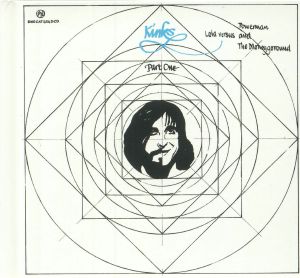
TOO SLOW TO DISCO NEO: THE SUNSET MANIFESTO.
Too Slow To Disco NEO: The Sunset Manifesto.
Label: How Do You Are?
Format: CD.
As 2020 draws to a close the How Do You Are? label have just released the latest instalment in their long-running, critically acclaimed and successful compilation series, Too Slow To Disco. This is Too Slow To Disco NEO: The Sunset Manifesto which takes the series in a new and different direction.
Still the music on Too Slow To Disco NEO: The Sunset Manifesto is dancefloor friendly and features sixteen previously unreleased and exclusive floorfillers handpicked by DJ Supermarkt. Normally, they’re guaranteed to entice even the most reluctant dancer onto the dancefloor. However, with the world in the grip of a global pandemic clubs across the world have been shut and dancefloors are gathering dust. Even the glitter ball has lost its sparkle and dancers like The Three Degree are asking “when will I see you again?”
Some desperate dancers needing their weekly fix are recreating Saturday Night Fever in their kitchen or lounge. Alas, it’s a sad sight as a masked lone dancer takes to the floor so not to upset Bungle, Shifty, Hapless, Notso or the Brothers Doom who resemble two Kraftwerk dummies albeit without the personality.
Across the border, Nasty Nic, the Nutty Nat’s and the Nodding Dentist have outlawed dancing or any form of enjoyment. Couples aren’t even allowed to enjoy a socially distanced smooch on the dancefloor anymore. Those living in Northern Britain can only dream of dancing to the sixteen unreleased tracks on Too Slow To Disco NEO: The Sunset Manifesto.
These tracks were recorded by musicians from all over the world. This includes LA and other part of the Westcoast of America where the Too Slow To Disco sound was born. This time around there’s also contributions from musicians from England, Germany, Holland, Norway and Sweden. Add to this Balearic sounds and Brazilian lounge influences and the music on Too Slow To Disco NEO: The Sunset Manifesto is an eclectic offering from tastemaker DJ Supermarkt or Lidl as he’s know his cratedigging friends.
Opening the compilation is the Dutch duo Kraak and Smaak who contribute the cinematic sounding Hotel Sorriso. It sounds like the theme to a modern day detective series.
Poolside’s I Feel High is given a Vibes4yoursoul Remix. The result is joyous sounding dancefloor filler that brings back memories of long lazy summer days on the white island before dancing to dawn.
Moods are from Rotterdam and contribute a baroque reinvention of Vulfpeck’s Backpocket. The hooks haven’t been spared as funk, soul and disco strings combine with house on a genre-melting dancer.
In the best name stakes Glamour Hammer are the course and distance winner. Is It True is a slick, carefully crafted anthemic track that should be filling dancefloors.
The extended mix of Love Breaks Down by London-based PREP is a mid tempo dancer that fuses elements of eighties synth pop, electro, funk and house. It’s a welcome addition to the compilation.
From the get-go it’s apparent Turbotito’s Heart and Soul is a special track. It’s a laidback, dreamy and smokey Balearic track with sci-fi synths and a soulful vocal that one of the compilation’s highlights.
When Satin Jackets recorded Think About It (Jack Tennis 80s Disco Dub Remix) they sought inspiration from the music of the past. This includes disco and especially Chic, boogie, funk, house, soul and even Kraftwerk. Seamlessly they combine these musical influences on this rueful dancefloor filler. It’s one of the highlights of Too Slow To Disco NEO: The Sunset Manifesto.
LA-based Luxxury’s contribution is At Any Moment (Doctorsoul Need To Survive Dub Retherapy) It’s a smooth, slinky, funky and percussive mix with shimmering disco strings and a soulful vocal with a Balearic sound.
Roosevelt’s Take Me Back (Falcon Punch Remix) epitomises what the Too Slow To Disco and Neo sounds are about. It meanders along revealing an airy, Balearic sound that’s another of the compilation’s highlights.
Private Agenda’s 4 Step is a carefully crafted cinematic track where the hooks haven’t been spared. This a real find that has been unearthed by DJ Supermarkt.
English producer James Alexander Bright closes Too Slow To Disco NEO: The Sunset Manifesto with Under The Sun. It’s the perfect track for chill out DJs to drop as they close their sets and the sunsets above the golden beaches.
The tracks on Too Slow To Disco NEO: The Sunset Manifesto have never been released before and make their debut on the compilation. Sadly, these tracks won’t be heard in a club anytime soon. That’s a great shame as these hidden gems deserve to be heard by a much wider audience in clubs across Britain, Europe and North America. They’re a perfect reminder of the Too Slow To Disco sound and are a welcome addition to this long-running and successful series.
With music this good, maybe even Bungle, Shifty, Hapless, Notso, the Brothers Doom, Nasty Nic and the Nodding Dentist could be tempted onto the dancefloor and would enjoy the anthems and floorfillers that can be found on Too Slow To Disco NEO: The Sunset Manifesto?
Too Slow To Disco NEO: The Sunset Manifesto.
AL STEWART-24 CARROTS (40TH ANNIVERSARY EDITION).
Al Stewart-24 Carrots (40th Anniversary Edition).
Label: Esoteric Recordings.
Format: 3 CD Box Set.
In May 1980, thirty-four year old Glasgow-born folk rocker Al Stewart entered Davlen Studios in Los Angeles to begin work on his ninth album 24 Carrots. It was the first album to feature his new band Shot In The Dark. They were augmented by members of Toto, the Incredible String Band, Steeleye Span and some top session musicians. However, also playing an important part in the sessions was guitarist and keyboardist Peter White who had been part of the Al Stewart success story.
Year Of The Cat.
Peter White had made his debut on Al Stewart’s seventh studio album, Year Of The Cat. It was produced by Alan Parsons and was a carefully crafted and cerebral and cinematic album that was a mixture of folk rock, progressive pop and rock. The album featured songs about historical figures, a mysterious woman and what were akin to mini spy novels set to music. With an album cover designed by Hipgnosis, Year Of The Cat had the potential to transform Al Stewart’s career.
When the lead single Year Of The Cat was released in Britain it stalled at thirty-one, while the album reached thirty-eight and was certified gold. Year Of The Cat was Al Stewart’s most successful album in Britain and was regarded as his finest hour.
Three months later in October 1976 Year Of The Cat was released to widespread critical acclaim. The single reached number eight in the US Billboard 100 and the album number five in the US Billboard 200. By March 1977, Year Of The Cat had been certified platinum in America after selling over one million copies.
Elsewhere, Year Of The Cat gave Al Stewart the biggest single of his career. It reached number thirteen in Australia, fifteen in New Zealand, three in Canada, nine in Belgium and six in Holland. Year Of The Cat reached number ten in Australia and the album transformed Al Stewart’s fortunes. It’s now regarded as a classic album and one of the highlights of a long and illustrious musical career.
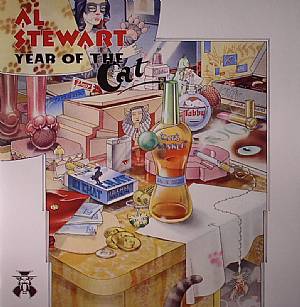
Time Passages.
Buoyed by the success of Year Of The Cat, AL Stewart began work on the followup album, Time Passages. He wrote seven of the songs on the album and cowrote Time Passages and End of The Day with Peter White. He was part of the band that recorded Al Stewart’s eighth album at Davlen Studios in Los Angeles in June 1978.
Joining Al Stewart for the Time Passages’ sessions were twenty musicians and backing vocalists plus producer Alan Parsons. This was the third consecutive Al Stewart album he had produced. Alan Parson played his part on an album that flitted between folk rock, soft rock and a more traditional rocky sound.
In September 1978, Time Passages was released to plaudits and praise in America. It received the same critical acclaim as Year Of The Cat. Al Stewart was hoping it would enjoy the same success.
When the title-track was released as a single, Time Passages reached number seven in the US Billboard 100. It also topped the Billboard Adult Contemporary charts and stayed there for ten weeks. Just like Year Of The Cat, Time Passages sold over a million copies in America and was certified platinum.
Time Passages was released in Britain in November 1978 and reached thirty-nine. This resulted in a silver disc for Al Stewart. The only disappointment was when the title-track was released as a single but failed to chart. Apart from that, the success continued for the thirty-three year old folk rocker.
Meanwhile, when Time Passages was released in Australia it reached fifteen. Al Stewart was enjoying the most successful period of his career. Would this continue with 24 Carrots?

24 Carrots.
As the seventies drew to a close and music continued to change, Al Stewart began work on his ninth studio album. This would eventually become 24 Carrots.
He wrote Mondo Sinistro, Murmansk Run/Ellis Island, Rocks In The Ocean, Paint By Numbers and Optical Illusion. Al Stewart and Peter White joined forces to write Running Man, Midnight Rocks, Constantinople and Merlin’s Time. These songs and the rest of 24 Carrots were recorded by Al Stewart and his new band, Shot In The Dark.
Peter White who had played keyboards, acoustic and electric guitars on Year Of The Cat and Time Passages became a member of Shot In The Dark. He was joined by Robin Lamble on bass, percussion, acoustic guitar and backing vocals; flautist and alto saxophonist Bryan Savage; backing vocalist Krysia Kristianne and Adam Yurman who played electric guitar and added backing vocals. This was Al Stewart’s new band Shot In The Dark, who were augmented by some familiar faces.
Augmenting Shot In The Dark were drummers Russ Kunkel, Steve Chapman, Mark Sanders, Beau Segal and Toto’s Jeff Porcaro. They were joined by keyboardist Bob Marlette, violinist Jerry McMillan, the Incredible String Band’s Robin Williamson on mandocello, conga player Lenny Castro and Sylvia Woods on Celtic Harp. Adding additional backing vocals were Steeleye Span’s Ken Nicol and Harry Stinson. In total, seventeen musicians and backing vocalists worked on 24 Carrots during the sessions that took place during May 1980. However, one man who had played an important part in transforming Al Stewart’s career was missing.
This was producer Alan Parsons who had produced Modern Times, Year Of The Cat and Time Passages. Al Stewart felt that having recorded three albums with Alan Parsons it was time to move on and work with a different producer. Given Al Stewart had just enjoyed the most successful period of his career when working with Alan Parsons this was a huge gamble. However, he felt the need to change things around and brought in Chris Desmond to co-produce 24 Carrots at Davlen Studios in LA.
Incredibly, while Al Stewart was co-producing 24 Carrots he was also the co-producer of Shot In The Dark’s eponymous debut album. It was released on Robert Stogwood’s RSO Records in 1981. By then, 24 Carrots had been released by Al Stewart.
Instead of a split release date 24 Carrots was released worldwide on the ’20th’ of August 1980. The lead single Midnight Rocks reached twenty-four on the US Billboard 100 and fifty in Australia. After this, Mondo Sinistro and Paint By Numbers were released as singles but neither charted. Meanwhile, 24 Carrots was released to plaudits and praise and reached thirty-seven in the US Billboard 200, fifty-five in Britain and fifty-one in Australia. There were no glittering prizes for the first album of the post Alan Parsons’ era.
24 Carrots featured future Al Stewart classics including Running Man and Merlin’s Time as well fans’ favourites like the hit single Midnight Rocks and Murmansk Run/Ellis Island. While the album featured Al Stewart’s much-loved cerebral and cinematic folk rock sound, some tracks showcased a new, harder, rockier sound. This was quite different to what featured on previous albums and led some critics to speculate if someone had been offering an artist who had just released two million selling albums in America some unwanted advice?
One theory was that Arista and Clive Davis wanted more commercial sounding songs that could be released as a single. This wouldn’t have been the first time the veteran music executive had offered his advice to a successful artist.
By then, Al Stewart was playing to larger audiences and some nights 2,500 to 3,000 came to hear hits like Year Of The Cats and Time Passages. However, that was just part of the story and veterans of his music came to expect tracks from the early part of his career including albums like 1967s Bed-Sitter Images, 1969s Love Chronicles, 1970s Zero She Flies, 1972s Orange and 1973s Past, Present and Future. These were the albums that Al Stewart released before teaming up with producer Alan Parsons. Anyone expecting to hear song after song like Year Of The Cats and Time Passages was in for a surprise. However, if they gave the older material a chance they were in for a pleasant surprise as Al Stewart was one of Britain’s finest folk singers and a talented songwriter who painted pictures with his lyrics.
Arista, which was founded by Clive Davis in 1974, weren’t happy with Al Stewart and wanted him to release more commercial material. That was despite him being a successful artist who had enjoyed a string of hit singles. Al Stewart was in for an unpleasant surprise when Arista sent him songs written by other people and suggested he recorded them. This was an insult to a gifted and experienced songwriter who had just released his ninth studio album. Quite rightly, Al Stewart didn’t record the songs, and by then must have known something had to change.
After the release of 24 Carrots he embarked on a gruelling touring schedule and played two sold-out shows in December of 1980. By then, Al Stewart had made up his mind to do two things.
He decided to leave Arista as soon as possible. Unfortunately he still owed the label two albums and it would take time to be free of Arista. The other decision Al Stewart made was to split with his manager Luke O’Reilly. This was a new chapter for him,
Live/Indian Summer.
In October 1981 Al Stewart released the double album Live/Indian Summer. Again, he was backed by Shot In The Dark and the first side featured five new songs. The other three sides were recorded at The Roxy Theatre, Los Angeles in April 1981. Live/Indian Summer was produced by Chris Desmond and Al Stewart and scheduled for release in the autumn of 1981
Six months later, in October 1981 Live/Indian Summer was released and featured a mixture of folk rock and a rockier sound. Sadly, Al Stewart’s first live album stalled at 110 in the US Billboard 200 and reached just fifty in Australia. However, at least Al Stewart would soon be able to leave Arista.

Russians and Americans.
Al Stewart recorded his tenth album Russians and Americans with some of the members of Shot In The Dark and session musicians at four studios in Britain and America. He recorded nine songs that resulted in one of the most powerful albums of his three decade career. The songs were inspired by the political events of 1983 and the tension between Russia and America, the so called home of the free.
This was ironic because when Russians and Americans was released in May 1984, two albums that featured on the British version had been replaced on the American album. Censorship was alive and well at Arista’s headquarters.
When Russians and Americans was released it failed to chart in America but reached a lowly eighty-three in Britain. After this, Al Stewart was dropped by Arista. However, he was now free to sign to a label that understood and respected him and his music.
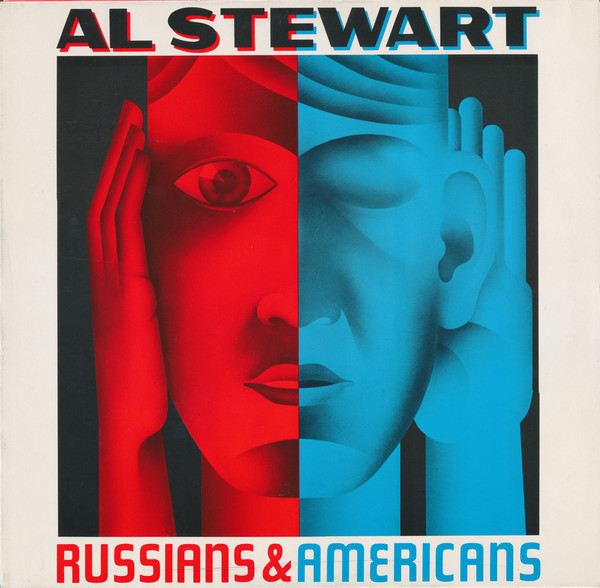
Next stop for Al Stewart was Enigma Records who released his eleventh studio album Last Days Of The Century on the ‘24th’ of August 1988. Sadly, it failed to trouble the charts on either side of the Atlantic. It was a far cry from Al Stewart’s Arista years.
Al Stewart’s time at Arista was the most successful of his long and illustrious career. His breakthrough came in 1975 when he released Modern Times on the Janus label and his sixth studio album reached number thirty in the US Billboard 200. However, disaster strict when after releasing Year Of The Cat Janus folded. Al Stewart signed to RCA who reissued Year Of The Cat and it was the million selling album that transformed his career in America.
From Year Of The Cat through Time Passages to 24 Carrots Al Stewart enjoyed the most successful period of his career. 24 Carrots had a lot to live up to as the Glasgow-born folk rocker had just enjoyed two million selling albums stateside. It’s an oft-overlooked album that features Al Stewart classics and crowd favourites as he mixes folk rock with a harder, rockier sound. What it lacked was a hook-laden radio friendly single like Year Of The Cat or Time Passages.
Despite that, 24 Carrots is an album that’s a favourite of many Al Stewart’s fans. They’ll be pleased it’s been reissued as a three disc box set by Esoteric Recordings. Disc one features the 24 Carrots and the single versions of Running Man and Paint By Numbers. Then disc two features eight demos including instrumental versions of future Al Stewart classics Running Man and Merlin’s Time. On the third and final disc is a previously unreleased recording of Al Stewart live at the Hammersmith Odeon, London. The result is a lavish and lovingly compiled remastered box set. It’s sure to appeal to many fans of Al Stewart, who is one of Britain’s finest folk rock singers who earlier this year celebrated his seventy-fifth birthday. He’s released sixteen studio and albums and three live albums over a forty-one year period. Despite that, still many people have yet discover Al Stewart’s music or only know his two biggest singles Year Of The Cat and Time Passages.
For anyone yet to discover Al Stewart’s music, the best place to start is with Modern Times then his two million-selling classic albums Year Of The Cat and Time Passages. After that, 24 Carrots and Russians and Americans are feature the inimitable Al Stewart’s folk rock sound. Then it’s time to explore Al Stewart’s early albums which are part of a veritable nineteen course musical feast which includes 24 Carrots,
Al Stewart-24 Carrots (40th Anniversary Edition).
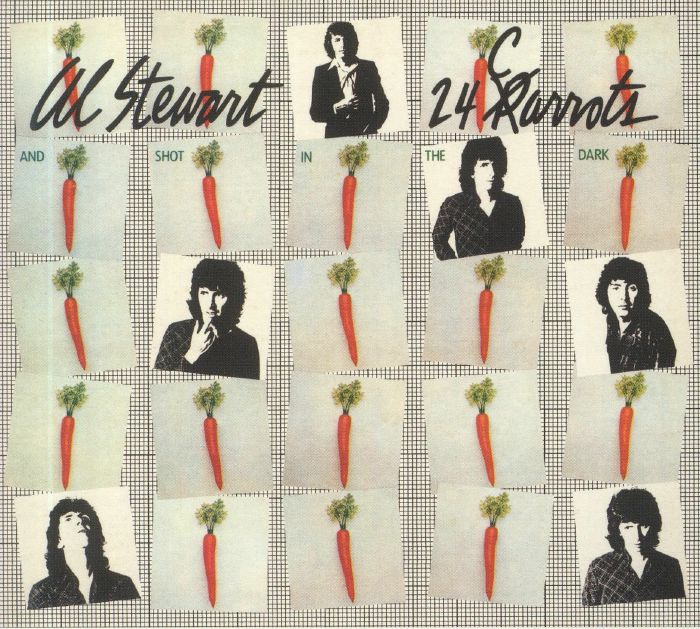
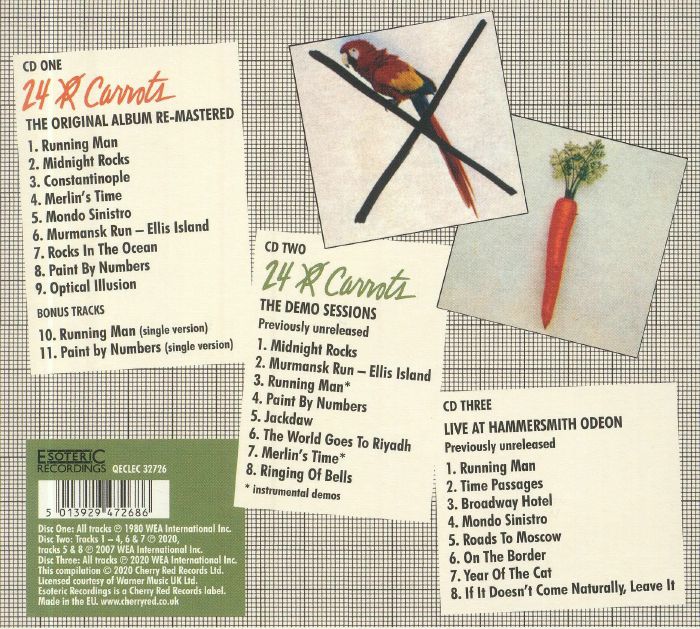
HUNTSVILLE AND YUKA HONDA, NELS CLINE, DARIN GRAY, GLENN KOTCHE-BOW SHOULDER.
Huntsville and Yuka Honda, Nels Cline, Darin Gray, Glenn Kotche-Bow Shoulder.
Label: Hubro Music.
Format: CD.
In the spring of 2006, Chicago alternative rock band Wilco and Huntsville were booked to play at the Festival International de Musique Actuelle de Victoriaville in Quebec, Canada. Wilco played first and their guitarist Nels Cline decided to watch Huntsville’s set and even travelled to the next venue with the Norwegian trio and even bought three of their albums. The group had a new fan.
Despite Huntsville guitarist Ivar Grydeland being a fan of Wilco, he hadn’t realised that Nels Cline was a member of the group. By then, Huntsville and the Nels Cline had promised to keep in touch.
A year later in 2007, Wilco and Huntsville were both booked to appear at the Kongsberg Jazz Festival. That day, Wilco guitarist Nels Cline and the group’s drummer Glenn Kotche agreed to join Huntsville on stage. They had decided to tape the performance, which was lucky as that day, the stars were aligned when Huntsville joined forces with the two members of Wilco on stage and they jammed on the lengthy soundscape Eras. It took up the entire second disc of the band’s stunning sophomore album Eco, Arches and Eras which was released in 2008.
Two more years passed before Huntsville were reunited with the two members of Wilco in Chicago in the summer of 2010 for a concert and recording session. Huntsville performed in the city’s Millennium Park and shared a bill with the dup On Fillmore which featured Glenn Kotche and bassist Darin Gray. That evening, Nels Cline and Glenn Kotche joined Huntsville for the final part of their set. The next day, they were reunited for a recording session and were joined by some new faces.
The recording session took place at the Loft, which is Wilco’s studio and rehearsal space. Joining Huntsville’s Ivar Grydeland, Ingar Zach, and Tonny Kluften were Nels Cline and Glenn Kotche. They were joined by On Fillmore’s bassist Darin Gray and keyboardist Yuka Honda, the cofounder of Cibo Matto who was also an accomplished composer in his own right. This septet were about to participate in a fully improvised sessions.
With a fully improvised session like this, having so many talented musicians in the studio could’ve been problematic. There could’ve been too many people making suggestions and there could’ve been personality clashes. However, there were no problems and there weren’t too many cooks in this kitchen.
Huntsville’s Ivar Grydeland remembers the session in the summer of 2010 well: “I think it is pretty amazing how Nels, Glenn, Yuko, and Darin managed to blend into our project, our music, our way of improvising, our aesthetics.” His trio had previously improvised with outside musicians, but for this project he envisioned “a recording that sounded like Huntsville, but with these amazingly great musicians as guests—not just seven musicians improvising with no preconceptions. Like most of our other recordings, decisions about amps, instruments, positioning, volume, the sound in the recordings space, etc., are important factors that contribute to the direction of the improvisations.” The session at Wilco’s Chicago was deemed a success by two members of Huntsville.
Ingar Zach of Huntsville said: “I remember it as quite chaotic in the studio. A lot of people with lots of sounds. A bit difficult to hear each other, but there is something about the vibe of the recording and also the mix, and how it turned out that I like a lot. I think the presence of the four guests just amplifies the music that Huntsville did at that time, and also slightly tilt it in other directions because of the lovely contributions from the four of them.”
One of them was Glenn Kotche also remembers the improvised session at The Loft: ““For me, it was almost easier to improvise in that setting since the parameters were a bit more clear and focused. They do have a sound and it was nice having a rough idea ahead of time of how I might be able to best fit into what they do, of course, all the while still keeping it free and me still being me. I just viewed it more like an expanded chamber band setting, with Yuka and Darin bringing their brilliance and that Huntsville sound at the core of it all, with all of us bringing something personal to the music and it all branching out in various ways.”
It wasn’t until 2012 that Huntsville were reunited with Nels Cline and Glenn Kotche when they played at the Guelph Jazz Festival in Canada. The members of Huntsville and Wilco had hoped that they would get the opportunity to play together again.
Sadly, that has never happened because of Wilco’s punishing touring schedule. They spend much of the year on the road and have to find time to record new albums. That’s a great shame because Bow Shoulder which has just been released by Hubro Music documents the fully improvised session at the Wilco Loft in Chicago, in the summer of 2010.
Ivar Grydeland decided to mix the Bow Shoulder sessions. These mixing sessions were lengthy but the group wasn’t happy with the result. It was a case of starting the mix again.
Ingar Zach explains: “In the end Ivar started to work on a new mix and that changed everything. The music changed and we found the drive again to try to finish it.”
This took a lot of patience and Ivar Grydeland remembers the mix session well: “It was a massive job to dig into this. There is a lot going on: two basses, two drum kits and percussion, two guitars, and often what Yuka plays sounds like a third guitar to me.”
When the mix was finished and Huntsville listened back to Bow Shoulder the time and effort was worthwhile. It features Huntsville, Wilco’s Nels Cline and Glenn Kotche plus On Fillmore’s Darin Gray and Yuka Honda during another session where the stars were once again aligned. Bow Shoulder is a reminder of this successful collaboration from the summer of 2010 in the Windy City.
Despite the fully improvised sessions for Bow Shoulder featuring and showcasing seven successful and talented musicians their own musical identities still shine through on this genre-melting album. This includes two drummers, two bassists, two guitarists and a percussionist. However, the mix doesn’t seem crowded.
That’s the case on the album open Side Wind which is a twenty-one minute epic that gradually reveals its secrets. It toys with the listener as abstract and cinematic sound combine with guitars and distant galloping percussion. Dramatic washes of sound and instruments are added the multilayered mix which is building. By the midway point, Huntsville and friends are driving the soundscape along and at one point has taken on a melodic and dreamy sound. This is constantly evolving and soon, it’s like a journey on an express train as the ensemble head out of the Windy City destination unknown. The arrangement scrabbles along beaming hesitant as if running out of steam. By then, there’s a nod to Wim Wenders before the arrangement rebuilds and elements of ambient, avant-garde, experimental music and eerie, sci-fi sounds merge into one as the journey into the unknown continues and sounds like the soundtrack to a short film that would put the thrill in thriller.
Higher is a spacious, angular track where a weeping, jangling guitar and probing bass join forces as the arrangement meanders dreamily along. There’s a brief nod to the dusty soundtrack to Paris Texas. Meanwhile, the music becomes ruminative and later takes on a churning, lysergic sound before a chiming guitar proves mesmeric as the rest of the arrangement becomes atmospheric. However, there’s a degree of tension as the tempo rises and Huntsville and friends create a dramatic, edgy and otherworldly cinematic sounding track that brings this adventure in sound to a close.
Pounding, thunderous, industrious and challenging sounds combine on Lower which is the most ambitious sounding track. It’s certainly not easy listening but it’s rewarding and captivating as the soundscape reveals its many secrets. The septet is enjoying the opportunity to improvise and later the multilayered track becomes melodic and dramatic. Then the tempo rises and the rhythm section power the arrangement along, pounding clattering and chattering before it races along and eventually reaches a dramatic crescendo.
The Unshot’s arrangement fuses elements of ambient, avant-garde, electronica, experimental, industrial music and rock. It’s dramatic and spacious before sci-fi sounds and shimmering, glistening and later shrieking guitars combine with beeps, squeaks and subtle drums. Soon, mesmeric, machine-like sounds can be heard during this captivating genre-melting soundscape which veers between cinematic to melodic and sometimes references classic library music.
Ten years after Bow Shoulder was recorded in Chicago in the summer of 2010, it’s been belatedly released by Huntsville and Yuka Honda, Nels Cline, Darin Gray, Glenn Kotche. It’s a reminder of a day when the stars were aligned during this fully improvised session that resulted in the ambitious genre-melting album Bow Shoulder. It finds Huntsville and friends combining everything from ambient and avant-garde to electronic, experimental and improv to industrial, jazz and rock. This results in a captivating musical adventure.
The music on Bow Shoulder veers between cinematic, dreamy, melodic and ruminative to futuristic and otherworldly right through dramatic, hypnotic, lysergic and mesmeric. It’s always ambitious, occasionally challenging and always inventive, innovative and rewarding to listen to. Bow Shoulder is cerebral music that takes the listener on a journey where Huntsville and their friends paint pictures during what sounds like the soundtrack to a short film that’s yet to be made but deserves to be made and hopefully will be sometime soon.
Huntsville and Yuka Honda, Nels Cline, Darin Gray, Glenn Kotche-Bow Shoulder.
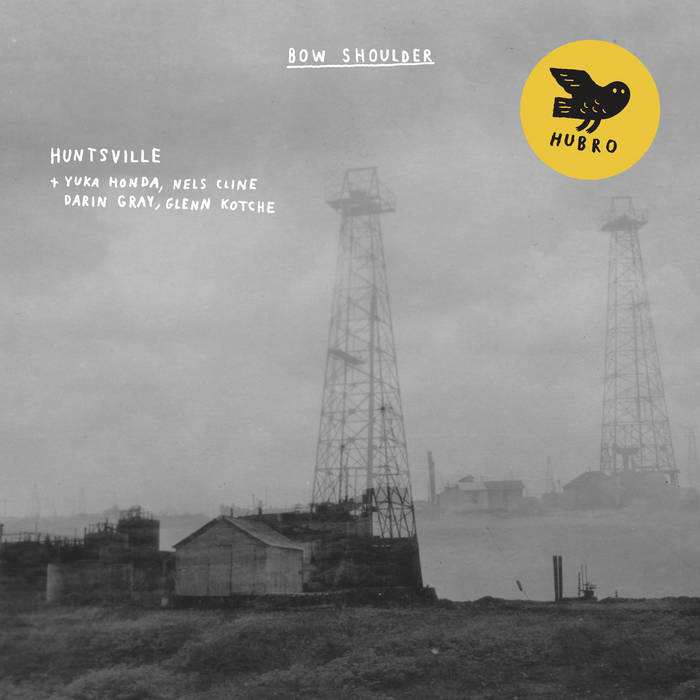
FORTY YEARS AGO JOHN MARTYN RELEASED GRACE AND DANGER.
Forty Years Ago John Martyn Released Grace and Danger.
In November 1977, John Martyn released what’s was undoubtably one the finest albums of his career, One World. It was an atmospheric, experimental and genre-defying album where everything from folk, jazz, reggae and rock melted together during eight tracks. When it was released, it was to overwhelming critical acclaim, and One World was hailed a classic album. This was the second classic album of John Martyn’s ten year recording career.
The first came four years earlier, in February 1973, when he released Solid Air to widespread critical acclaim. Solid Air critics realised, was without doubt, the finest album of John Martyn’s career. It was also the album that saw the Glasgow born troubadour make a commercial breakthrough. This should’ve been the start of the rise and rise of John Martyn.
For his eighth album, Sunday’s Child which was released in January 1975, he reigned in his experimental sound. However, it was a much more eclectic album with John Martyn flitting between country, folk and rock. The result was an eclectic and critically acclaimed album. However, controversy wasn’t far away for John Martyn.
In 1975 Island Records refused to release his Live At Leeds he resorted to selling signed copies by mail from his home. After the release of Live At Leeds in 1977, John Martyn headed to Jamaica on holiday.
What started out as a holiday, ended up with him collaborating with reggae producer Lee “Scratch” Perry on what eventually became One World. Nowadays it’s regarded as the first ever trip hop album and John Martyn is perceived as the genre’s founding father. One World a John Martyn classic and was one of the finest of his career. However, after One World, he didn’t release an album for three years. There was a reason for this.
By the end of the seventies, John Martyn’s marriage had broken down and this led to him pressing “the self destruct button” as he described it. he became addicted to alcohol and drugs and he later said this was a very dark period in his life. Grace and Danger which was released in October 1980, was the album that came out of this period and was the start of a turbulent time for John Martyn, both personally and professionally.
Grace and Danger was an autobiographical album that described what he was going through at that time. His marriage had broken down and divorce proceedings were underway. This makes the music on Grace and Danger very personal. It’s akin to a snapshot to the pain, hurt and regret he was experiencing and this shines through on Grace and Danger.
Eight of the nine tracks that became Grace and Danger, were written by John Martyn. They describe what he was going through emotionally. The only track he didn’t pen was Johnny Too Bad, which was written by Slickers. These nine tracks were recorded by a tight, but talented band.
For Grace and Danger, John Martyn played guitars and added vocals while his friend Phil Collins played drums and sung backing vocals. Tommy Eyre played synths and keyboards and John Giblin played bass. These three musicians and producer Martin Levan were responsible for John Martyn’s soul-baring album Grace and Danger.
Once Grace and Danger was completed, John delivered the album to Chris Blackwell at island Records. When Chris Blackwell realised just how personal an album Grace and Danger was, held the album’s release back a year. Partly, this was because of his friendship with both John and Beverley Martyn. However, Chris Blackwell also felt that Grace and Danger was “too depressing and didn’t want it released.” This angered John Martyn.
When John heard what Chris Blackwell thought of Grace and Danger, he wasn’t happy. He responded to Chris Blackwell saying: “please get it out! I don’t give a damn how sad it makes you feel-it’s what I’m about: direct communication of emotion.’” Eventually, a year later, Grace and Danger was released.
By then, the relationship between John and Island Records was damaged beyond repair. Grace and Danger was released in October 1980. Contrary to Chris Blackwell’s expectations, Grace and Danger was well received by critics. They realised just how personal an album Grace and Danger was, and empathised with what John Martyn had gone through. He had just suffered the breakup of a relationship, and was hurting badly. This however, wasn’t the last relationship that broke down during this period.
After the release of Grace and Danger, John Martyn’s relationship with Island Records deteriorated after he submitted another album to the label. This was The Apprentice which Island Records rejected. However, John Martyn had the last laugh when he eventually released The Apprentice in 1990 as his comeback album. It was a return to form from one of music’s survivors. By then, it was nine years since John Martyn parted company with Island Records.
A year after the release of Grace and Danger, John Martyn left Island Records. This was the end of a fourteen year relationship with the label and during this period, he had released eight albums for Island Records. His swansong, was Grace and Danger one of his most underrated and personal albums.
Opening Grace and Danger, is Some People Are Crazy. Just a broody bass, shimmering synths and bold keyboards combine with drums and crystalline guitars. They provide the backdrop for John Martyn’s vocal. It’s more a confessional that a vocal and there’s an honesty in his vocal. Belatedly, he come the conclusion that people either loved or loathed the hell raising John Martyn of the late seventies. He sings “some people are crazy about him, some people can’t stand his face.” He’s even chased the woman he loves away. This hurts. As if in desperation, John Martyn delivers the lyric “yes this loving kind of business, might be the best find you ever had.” Whether he believes this, though, is another matter? His parting line in this confessional is“some people are crazy, some people are just like me.”
Searing guitars and the rhythm section drive the rocky arrangement to Grace and Danger along. John Martyn’s vocal has a melancholy quality as he realises what he’s lost. Against a backdrop of chiming, blistering guitars, keyboards and the rhythm section his vocal is akin to an outpouring of pain. Reflecting, he sings: “I never knew the road that carried me along.” It’s obvious he had no idea where it would lead. It lead to him losing the woman he loved. Despite his being broken, he wishes Beverley Martyn well. He’s loved, lost and wishes her “sweet grace, no danger.”
Lookin’ On has a jazz tinged arrangement. A bass plays, guitars chime and stabs of keyboards are joined by drums played tenderly. As the drama builds, a tormented John Martyn paints a picture and it’s easy to visualise him returning from a night out, and his now ex-wife who quite rightly, is less than happy. John Martyn comes “stealing in, with an innocent grin, to leave you staring, at the empty ceiling, feeling nothing, lookin’ on, I’m just lookin’ on.” At that moment, he wonders what’s gone wrong with his marriage? Previously, this type of behaviour would’ve elicited a laugh. Not any more. Things have gone to far. That’s reflected in the urgent jazz tinged arrangement. It accompanies his despairing vocal on this tale of love gone wrong.
While Johnny Too Bad wasn’t written by John Martyn it sums up the situation he finds himself in. Just like the character in the song he also has a penchant for hard living. “With your running, and shooting, looting and tooting, you’re too bad, cos one of these days, you’re going to make your woman cry,” these lyrics could’ve been written about John Martyn. It’s as if he realises this, and delivers a gravelly, vampish vocal. Again, he makes the lyrics sound like a confessional. Accompanying him are the rhythm section and guitars. One of the guitars is played through his trusty Echoplex. Then later, he dawns the role of guitar hero and unleashes washes of a blistering, crystalline solo. It’s the perfect foil for the vocal as he vamps his way through the rest of what could be an autobiographical song.
Sweet Little Mystery marks a change in direction on Grace and Danger. It’s the first of a series of ballads. Against a backdrop of twinkling keyboards, synths strings and the rhythm section John Martyn tenderly delivers a beautiful, heartfelt ballad about a relationship that’s all but over. Accopanied by backing vocals, John lays bare his soul. His vocal is full of sadness, hurt and melancholy as he sings: “it’s not the letters you just don’t write, it’s not the crying in the dead of the night.” Instead, “it’s that sweet little mystery that’s in your heart, it’s just that sweet little mystery that makes me cry.” These lyrics show just how talented a lyricist John Martyn was. He wrote about what he had experienced and this includes the breakup of his marriage. It was the inspiration for such a beautiful, poignant tale of love lost.
Deliberately, chords are played on the shimmering keyboards as Hurt In Your Heart unfolds. They’re joined by weeping guitars. They reflect the heartbreak in John Martyn’s weary vocal. It’s akin to a cathartic outpouring of hurt and regret, regret at the way he behaved, and how it caused his marriage to end. However, although his marriage is over he hopes that “when that hurt in your heart has gone, I’ll still be your friend, right to the end of our river, and further still.”
Baby, Please Come Home is another beautiful, soul baring ballad. Against a backdrop of an understated rhythm section, glistening keyboards and a sometime, scorching guitar, John Martyn delivers a needy, hopeful vocal. Full of regret, he wants to make things right, and almost begging and pleading, sings “Baby, Please Come Home.”
Save Some (For Me) sees John Martyn change direction on this mid-tempo track with a punchy, spacious introduction. Drums and synths combine before John Martyn’s tender vocal enters. He leaves space between the lyrics and this adds to the urgency of the arrangement. Soon, he’s accompanied by backing vocals from Phil Collins and combines power, emotion and urgency. Behind him, sci-fi synths, shimmering keyboards and the rhythm section combine and play a supporting role in another emotional roller coaster.
Our Love closes closes Grace And Danger which was John Martyn’s Island Records’ swansong. Phil Collins’ drums set the scene for the rhythm section, keyboards and John Martyn’s needy, hurt filled vocal. Memories come flooding back, back to a time when their love was young. Things were good, the future looked bright. “Our love, once was you and me against this world, made a man from a boy and made a woman from a little girl.” Not any more. Now I find I have to beg before you call my name, please call my name, please call my name, and baby take a look, take a good look, baby, baby take a look in your heart.” As he delivers these lyrics he wells up, regrets omnipresent at the hurt he caused, and the love he lost.
While Grace and Danger was well received upon its release, it wasn’t the commercial success that John Martyn classics like Solid Air or One World. This had nothing to do with the music. Partly, it was to do with the type of music that was popular in 1980. By then, John Martyn’s music was the polar opposite of the post punk, hip hop, electronica and new romantic music that filled the charts. Then there was the fact that Chris Blackwell didn’t like Grace and Danger which was John Martyn’s soul baring opus and a highly personal album .
Chris Blackwell found the music on Grace and Danger “too personal” and “depressing.” As a result, Island Records didn’t seem to cover themselves in glory when it came to promoting Grace and Danger. This was a huge mistake as here was an album that spoke to many people. Grace and Danger was the story of many a failed relationship and marriage. For many, who had loved and lost, Grace and Danger spoke to them. It said everything that they wished they could. Forty years later, that’s and still the case.
Many suffering the heartbreak of a marriage breakup, have found solace in Grace and Danger. John Martyn speaks for, and too them on Grace and Danger. He’s been where they’ve been, and experienced the hurt, heartbreak and regret. Each song brings back a memory, often, a memory of better times. Especially Our Love, which closes Grace and Danger.
John Martyn is at his most eloquent, writing “Our love, once was you and me against this world, made a man from a boy and made a woman from a little girl.” Not any more. “Now I find I have to beg before you call my name, please call my name, please call my name, and baby take a look, take a good look, baby, baby take a look in your heart.” Not only does this prove the perfect way to close Grace and Danger, but sums up succinctly, the thin line between love and hate. That’s one of nine reasons why Grace and Danger is a forgotten classic in John Martyn’s back catalogue.
Quite simply, Grace and Danger is best described as the most personal album John Martyn ever released. It’ tells the story of one of the worst periods in his life, where the newly heartbroken John Martyn lays bare his soul for all to see and hear.
What would’ve been fascinating is if Beverley Martyn had replied to Grace and Danger. We could’ve heard her side to the story. Sadly, that never happened and despite her making a brief comeback this is unlikely to ever happen.
As a result, Grace and Danger is one of John Martyn’s most underrated albums and remains one of the most soul-baring and cathartic breakup albums ever released.
Forty Years Ago John Martyn Released Grace and Danger.
THE BETA BAND: A CASE OF WHAT MIGHT HAVE BEEN?
The Beta Band: A Case Of What Might Have Been?
The Beta Band was formed in Edinburgh in 1996, and a year later, in July 1997 released their Champion Versions EP, which was the first of a trio of innovative EP’s the folktronica pioneers released.
In March 1998 The Beta Band released their sophomore EP The Patty Patty Sound, with Los Amigos del Beta Bandidos following in July 1997. By then, critics were starting to take notice of The Beta Band whose popularity was growing.
Nearly two years later, The Beta Band was released to widespread critical acclaim in June 1999, and everyone at Regal Records celebrated as The Beta Band reached number nineteen in the UK, However, not everyone was happy with the album.
Despite their eponymous debut album giving them a hit in the UK, Steve Mason of The Beta Band called the album: “fucking awful” and “it’s definitely the worst record we’ve ever made and it’s probably one of the worst records that’ll come out this year.” Steve Mason then said in an interview with NME that the album had: some terrible songs,” and they weren’t “fully realised or fully even written. Half-written songs with jams in the middle.” The Beta Band seemed determined to sabotage their career at Regal Records.
To make matters worse, The Beta Band seemed in no hurry to record their sophomore album. Steve Mason recorded and released the No Style EP under his King Biscuit Time EP moniker. After this, Steve Mason and the rest of The Beta Band’s thoughts turned to their sophomore album Hot Shots II, which has just been reissued by Because Music.
Eventually, The Beta Band decided it was time to return to the studio, and this time brought onboard British producer Colin Emmanuel aka C-Swing, who oversaw production of what eventually became Hot Shots II.
During the Hot Shots II sessions, The Beta Band recorded ten new tracks with C-Swing. The tracks were very different to those on The Beta Band. Some of the songs were much quieter and a less is more approach to production was the order of the day. This allowed the songs to breath, with less ‘obstacles’ obscuring the key parts of the songs. Some of the songs were slow and dark and featured descending chords as The Beta Band continued to innovate.
Critics were won over by Hot Shots II, and hailed The Beta Band’s sophomore album as one of the albums of 2001. Hot Shots II was hailed as The Beta Band’s finest hour.
Buoyed by the critical acclaim, Hot Shots II was released in July 2001. Hot Shots II reached number thirteen in the UK and sneaked into the US Billboard 200 at 200. It also reached fourteen in the US Heatseekers chart and eleven in the Independent album charts. The Beta Band looked on the verge of breaking into the lucrative American market. Sadly, they only produced one more album.
This was Heroes To Zeros which was The Beta Band’s swan-song. The Beta Band began demo sessions for what later became Heroes To Zeroes in September 2002. They then entered the studio with producer Tom Rothrock in 2003 and completed a number of tracks. There was a problem though.
Neither The Beta Band nor executives at Regal Records were happy with the recordings and producer Nigel Godrich was brought in to mix the album, which was finally finished in early 2004.
The lead single, Assessment, was released on the ’12th’ of April 2004 and reached number thirty-one in the UK. Two weeks later, the album Heroes To Zeros was released on the ‘26th’ of April 2004 and reached number eighteen in the UK. This would normally be something to celebrate.
Heroes To Zeros featured music that had a much more dense and direct sound but strikes a balance between The Beta Band’s more traditional sound and music that was way ahead of the musical curve. However, some of the music on Heroes To Zeros saw The Beta Band turn their attention to creating pop music.
It was obvious that Brian Wilson of The Beach Boys was still a huge influence on The Beta Band and especially tracks like Good Vibrations and Heroes and Villain. So were albums like 20/20 and Friends. However, The Beta Band were also forging ahead with their own sound, which was intricate and multilayered. They were best qualified to produce the album and bring their new ideas to life.
To do this, The Beta Band adopted a variety of production techniques to bring out the best in what was an idiosyncratic band. No other producer would’ve been able to achieve what The Beta Band did on Heroes To Zeros.
Many of the songs on Heroes To Zeros ended up very different from the initial ideas recorded by The Beta Band. They honed the songs on Heroes To Zeros which open with Assessment and closed with Pure For. Heroes To Zeros featured The Beta Band at the peak of their creative powers on their self-produced swan-song.
By the time The Beta Band released Liquid Bird, as their second single from Heroes To Zeros, many critics had realised that the song was based on a sample of the Siouxsie and The Banshees’ song Painted Bird. This could’ve been an expensive mistake for The Beta Band.
Despite this mistake, The Beta Band released Out-Side, their second from Heroes To Zeroes in July 2004. When it stalled at fifty-four in the UK charts, little did critics or record buyers realise that the end was neigh for The Beta Band.
They announced their breakup on their website on the ‘2nd’ of August 2004. Despite that, The Beta Band performed at the Summer Sundae festival and embarked upon a farewell tour which drew to close at the Liquid Rooms in Edinburgh, on the ‘5th’ of December 2004. This was the end of the story for The Beta Band.
Their swan-song Heroes To Zeros was the only album that The Beta Band produced themselves, since signing to an imprint of a major label. They hadn’t been happy with their first two albums and often made their views known in the music press.
Usually, this was before the album was even released. As they made these comments, members of The Beta Band seemed to forget that they still had help promote their latest release. Executives at Regal Records must have been left shaking their heads in exasperation. Despite the comments of the members of The Beta Band, their three albums were all commercially successful. However, the big question is how successful could The Beta Band have been if they had played the PR game, and reigned in their outspokenness, maverick tendencies and tendency to self sabotage.
Looking back, The Beta Band weren’t suited to being signed to a big label, and would’ve been better suited to a smaller indie label or even self-releasing their albums through their own label. Maybe they would’ve enjoyed a longer career and released more that three albums, including their critically acclaimed, self-produced swan-song Heroes To Zeros?
It features the inimitable genre-melting sound of folktronica pioneers The Beta Band at the peak of their creative powers on Heroes To Zeros their self-produced swansong where the outspoken musical mavericks realise their potential. However, they were a group that could’ve achieved so much more.
The Beta Band were musical pioneers and if they had stayed together, and continued to release further albums, their music would’ve evolved and found the wider audience it so richly deserved. Further critical acclaim and commercial success would’ve followed for the group. Sadly, that wasn’t the case as they decided to call time on their career in 2004.
Just over sixteen years ago, The Beta Band played their final gig in The Liquid Rooms in their native Edinburgh on ‘5th’ of December 2004. It was the end of the road for a group who could’ve and should’ve achieved much more if they had stayed together.
The Beta Band were together for eight years and were climbing the musical mountain and had very nearly reached the summit when they decided to turn back. It had been an eventful journey for the three musical mavericks who were determined to do things their way. That didn’t always go down well with those running the record company and sometimes they made things difficult for themselves. They were sometimes seen as a difficult group to deal with. However, the music that The Beta Band recorded and released made it all worthwhile. It’s just a pity that they didn’t make more of it. Their musical legacy amounts to just three EPs and a trio of albums which are a reminder of the much-missed folktronica pioneers, The Beta Band. Sadly, and just like so many other artists and groups The Beta Band is another case of what might have been?
The Beta Band: A Case Of What Might Have Been?


CULT CLASSIC: MICHAEL NAURA QUARTETT-CALL.
Cult Classic: Michael Naura Quartett-Call.
Michael Naura was just six years old when he first travelled to Berlin with his mother, and began a new life in the city that became his home. It was where he studied journalism, philosophy and sociology. and played piano in a number of swing bands. However, by 1953 the pianist was now a bandleader and the Michael Naura Quintet was well on their way to becoming one of the then most successful jazz bands in West Germany.
Key to the band’s sound and success was vibraphonist Wolfgang Schlüter who was regarded as one of the finest improvisers in the Michael Naura Quintet. Their star was in the ascendancy as they honed and refined their eclectic sound over the next couple of years.
By then, the Michael Naura Quintet had been initially influenced by George Shearing, and then by Dave Brubeck and Horace Silver’s hard bop sound and also the Modern Jazz Quartet. All these influences shawn through in the Michael Naura Quintet’s music as they left Berlin behind.
In 1956, they moved to Hamburg which was the start of a new chapter for the band. They were offered the chance to become the house band at the Hamburg Jazz-Keller Barett in the Colonnaden. This booking was for initially six nights a week and but lasted seven years. Sadly, it also came at a cost.
Playing in smokey cellars six nights a week resulted in Michael Naura’s health deteriorating, and in 1964 he was diagnosed with Polyserositis, and spent a year recuperating in the winter sanctuary. For Michael Naura this was a disaster as the treatment was expensive and he couldn’t afford the bills.
Fortunately, many top jazz musicians in West Germany gave benefit concerts to pay for Michael Naura’s treatment. This act of kindness allowed Michael Naura to recover from what was an extremely serious illness that threatened his musical career.
After his release from the sanctuary, Michael Naura decided to change direction and more or less gave up his career as a musician and worked as a journalist.
Later in 1966, Michael Naura met the Hamburg-based writer and poet Peter Rühmkorf and soon, the pair were combining “jazz and poetry.” By then, the two men had become close friends
During 1967, Michael Naura began work as a sound engineer for the Department of Dance Music of the North German Radio. This was a job he kept until 1971, when he took over as station editor after the death of Hans Gertberg. By then, the Michael Naura Quartett had signed to MPS and was about to record its debut album.
Joining bandleader and pianist Michael Naura in the studio were drummer Joe Nay, bassist Eberhard Weber and vibraphonist Wolfgang Schlüter. The Michael Naura Quartett began recording the eight tracks that eventually became Call.
It was arranged and producer by Michael Naura who played Fender Rhodes. Just like vibraphonist Wolfgang Schlüter he used different amplifiers and effects during the recording session. In the case of Wolfgang Schlüter he used distortion when he recorded his vibes as he sought inspiration from Dave Pike. Stylistically Call was was very different to the music Michael Naura had been making a few years previously.
Gone was the hard bop of the past which was replaced by fusion and elements of European jazz, classical, blues and Latin on what was an imaginative and innovative genre-melting album. As the rhythm section provide the heartbeat, Michael Naura’s Fender Rhodes and Wolfgang Schlüter’s vibes prove to be the perfect foil as the arrangement floats and meanders along. Together, the two men head in a new musical direction with the sounds and textures merging into one from the opening bars of Soledad De Murcia through to the closing notes of Call. In between, Forgotten Garden, Take Us Down To The River and Why Is Mary So Nervous features the Michael Naura Quartett at the peak of their powers.
In 1971, the Michael Naura Quartett released their debut album Call on the MPS label. It was the first of two albums that they released. They returned with their sophomore album Rainbow Runner in 1972, which sadly, was also their swansong. However, the Michael Naura Quartett’s finest hour was their debut album Call, where it seemed the stars were aligned when they recorded what was a genre-melting career-defining epic.
Cult Classic: Michael Naura Quartett-Call.
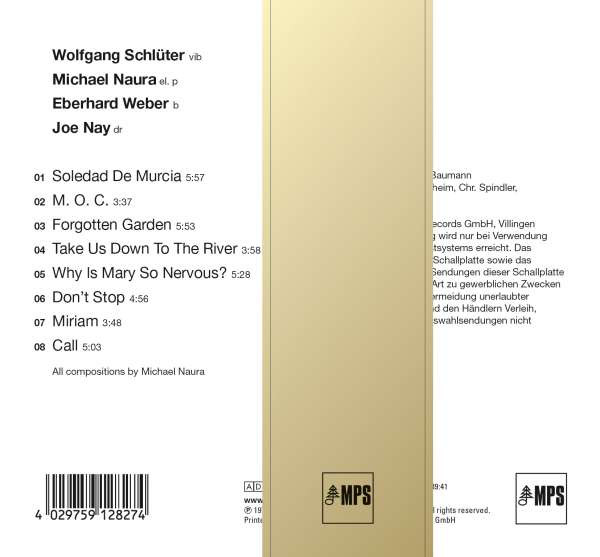
 dereksmusicblog
 dereksmusicblog