CULT CLASSIC: TOHRU AIZAWA QUARTET-TACHIBANA.
Cult Classic: Tohru Aizawa Quartet-Tachibana.
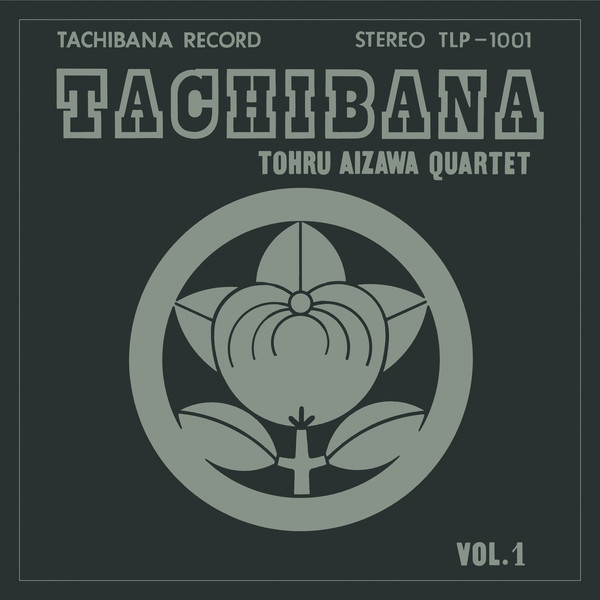
For many connoisseurs of jazz, especially seventies J-Jazz, one little known private pressing is their holy grail, and everywhere they go it’s the one album that they always search for. There’s always the hope that in a backstreet record shop, antique centre or thrift store in a town or city somewhere in the world a copy of Tohru Aizawa Quartet’s 1975 album Tachibana way be sitting unnoticed. It’s highly unlikely though, as only a few hundred copies of Tachibana were pressed.
On the rare occasions when a copy of Tachibana is found, and is offered for sale on an online auction or specialist site where vinyl is bought and sold, many jazz collectors will express an interest. However, very few will be able to afford what is one of the rarest J-Jazz albums ever recorded. Copies can change hands for over £1.000 and there’s This adds to the mystical and much revered album that is talked about in hushed tones. It’s also an album that came about in remarkable circumstances.
The story began in the early seventies when brothers Tetsuya Morimura and Kyoichiroh Morimura decided to form a jazz group. Tetsuya Morimura who was a drummer, had been inspired by his heroes Elvin Jones and Tony Williams, Meanwhile, Tetsuya Morimura’s brother Tetsuya Morimura, who was a saxophonist, was influenced by his heroes John Coltrane, Wayne Shorter and Japanese jazz legend Sadao Watanbe. These musicians and the Morimura brothers love of jazz was why they decided to form a new group.
Prior to this, Kyoichiroh Morimura had been a part of the college jazz scene in Kunitachi Music University, in North Tokyo, and for a while had played with koto master Hideakira Sakurai. Ironically, it was with Hideakira Sakurai that pianist Tohru Aizawa had made his debut. Little did Tohru Aizawa and the Morimura know that their paths were about to cross.
This occurred when the Morimura brothers attended a music festival at medical school in Maebashi, in the Gunma Prefecture, in the norther Kantō region. That night, the brothers saw pianist Tohru Aizawa play for the first time and were captivated by his skills as a pianist. Tohru Aizawa was a couple of older than the Morimura brothers was studying to become a doctor, and also loved jazz music. When Tohru Aizawa and the Morimura brothers met, it wasn’t long before they were planning to form a band together. All they needed was a bassist.
It wasn’t long before Tohru Aizawa and the Morimura brothers met law student and bassist Kozo Watanabe, and the lineup of the nascent quartet was complete. The new quartet they decided to call Mr Aizawa, which would play in local jazz clubs in Maebashi in the Gunma Prefecture.
This included Mokuba, which was situated in Maebashi, and owned by Kohichi Negishi. Mokuba became one of Mr Aizawa’s favourite venues and they soon became the club’s unofficial house band. The more that Mr Aizawa played the better they got, and many of the regular patrons noticed this improvement. Mr Aizawa seemed to improve with each performance and that the music they made was becoming much more melodic. This included a local businessman who had watched with interest as Mr Aizawa improved over the last few weeks and months.
Eventually, Ikujiroh Tachibana who was a local hotelier and huge jazz fan approached Mr Aizawa with an offer that many jazz bands the world over could only have dreamt of. Ikujiroh Tachibana offered to finance and record an album of Mr Aizawa’s music which he would use to promote his various business interests. This included the venue Tachibana Hall, which was situated in Takahashi Machi, in Numata City, which was forty miles from Maebashi. It didn’t take long for the members of Mr Aizawa to accept Ikujiroh Tachibana’s generous offer.
No expense was spared for the recording at Tachibana Sound Hall, Numata, Gunma, Japan. Ikujiroh Tachibana purchased new instruments from the Yukigasa Instrument Store and Mr. Yukimoto ensured the new instruments made their way to Tachibana Sound Hall in plenty of time for the recording of what would eventually Tachibana.
The Tachibana took place in 1975 at Tachibana Sound Hall, where many famous jazz musicians had been invited to play by Ikujiroh Tachibana. Now four students were about to record an album, and no expense was being spared. Kunio Arai an engineer from Trio Kenwood Records had been brought onboard to record and run the sessions, although it was Ikujiroh Tachibana produced the Tachibana. Meanwhile some of the band were preparing to record the album with new instruments.
Drummer Tetsuya Morimura and bassist Kozo Watanabe had new instruments to play, while the final member of the rhythm section pianist Tohru Aizawa, took his seat at a Steinway full concert grand. Saxophonist Kyoichiroh Morimura had a new tenor and soprano saxophone to play for the recordings.
The band that had started life as Mr Aizawa was now called the Tohru Aizawa Quartet, and had written three compositions that were about to be recorded. This included Tetsuya Morimura’s Philosopher’s Stone, Kyoichiroh Morimura’s Sacrament and Tohru Aizawa’s Dead Letter. They were joined by covers of Chick Corea’s La Fiesta and Samba De Orfeu which was penned by Brazilian jazz guitarist and composer Luiz Bonfá. These tracks would become Tohru Aizawa Quartet’s debut album Tachibana.
Later in 1975, Tohru Aizawa Quartet released their debut album Tachibana as a private pressing on Tachibana Record, which had been formed by Ikujiroh Tachibana. It’s thought that anywhere between 150 to 1,000 copies of Tachibana were pressed by Ikujiroh Tachibana as the album wasn’t a commercial release.
Instead, Ikujiroh Tachibana planned to use copies of Tachibana as his business card. Great importance was placed on the exchange of business cards in Japan. It was recognised as part of strict protocol, and part of etiquette that had been established over not just years, but generations. Some business people presented grand and lavish business cards, but a copy of the Tohru Aizawa Quartet’s debut album Tachibana was sure to trump everything. Or so Ikujiroh Tachibana must have thought.
Sometimes when Ikujiroh Tachibana proudly handed over a copy Tachibana, its recipient often discarded the album. They were obviously not a J-Jazz fan.
Ironically the lucky recipient had discarded or given away to their secretary or assistant what would become one of the rarest album J-Jazz albums ever. Especially as there may have only been 150, 200 or 1,000 copies of Tachibana pressed.
It was only much later that the Tohru Aizawa Quartet’s debut album Tachibana became a cult classic amongst jazz fans and especially connoisseurs of J-Jazz. That was no surprise given the quality of this hidden J-Jazz gem.
Tachibana opens with Philosopher’s Stone which was written by Tetsuya Morimura. The track is an energetic percussive workout and a showcase for drummer Tetsuya Morimura’s considerable skills. His playing underpins this muscular track as the Tohru Aizawa Quartet play with urgency, power and freedom as they switch between modal and free jazz.
Sacrament was written by saxophonist Kyoichiroh Morimura and the influence of his heroes Wayne Shorter and John Coltrane, especially his later music. The influence of Pharaoh Sanders can be heard in Kyoichiroh Morimura’s playing. After a prolonged introduction, the rhythm section launch into a busy, swirling groove and Kyoichiroh Morimura unleashes a blazing, scorching soprano saxophone solo . He plays with speed, power and accuracy, as pianist Tohru Aizawa matches him every step of the way. However, Kyoichiroh Morimura steals the show as he pays homage to his hero John Coltrane and also Pharaoh Sanders as he unleashes sheets of sound but resists the temptation to overflow during one of the highlights of Tachibana.
There’s an almost melancholy quality to Tohru Aizawa’s piano during the introduction to La Fiesta. It breezes joyously along with the piano playing a leading role. So does Kyoichiroh Morimura’s saxophone and together, they breath new meaning into the track. Later, Tohru Aizawa delivers a fast and flawless fleet-fingered performance on piano and this seems to inspire the rest of the quartet. Especially Kyoichiroh Morimura, who joined forces with Tohru Aizawa and they play leading roles and play with speed, power and accuracy as they breeze through this Chick Corea composition .
Dead Letter was written by Tohru Aizawa, and features an impressive and energetic performance where the Quartet combine power with urgency. Fittingly, Tohru Aizawa’s piano plays a leading role and sometimes, he seems to have been influenced by McCoy Tyner a stunning performance. Given the quality of his playing during this piece it was no surprise that many thought Tohru Aizawa was destined for greatness. Sadly, Tachibana was his only recording and Dead Letter features his finest hour.
Samba De Orfeu closes Tachibana and finds Tohru Aizawa Quartet race through this cover version. It’s Tohru Aizawa’s piano and Kyoichiroh Morimura’s saxophone that play starring roles. Despite playing at breakneck speed it’s a flawless performance. Tohru Aizawa again showcases his enviable talent during the solos. So does drummer Tetsuya Morimura as he works his way round the kit before passing the baton Tohru Aizawa. He’s joined by Kyoichiroh Morimura and they unite one last time during this joyous sounding race through of Samba De Orfeu, which closes the album on a high.
Tachibana is one of the rarest J-Jazz albums of the seventies, with between 150 and 1,000 copies of the album being pressed. They became Ikujiroh Tachibana’s business card, which he handed out to his business associates. Alas, not every recipient was a jazz fan, and many copies were discarded. This meant that an already rare J-Jazz album became even rarer. That is one reason why an original copy of Tachibana costs between £550 and £1,200. That’s beyond the budget of the majority of jazz fans who will be happy with a reissue of this cult classic.
Tohru Aizawa Quartet’s debut album Tachibana was their only release and nowadays, is regarded as J-Jazz cult classic. It’s also an album that belongs not just in every jazz fan’s collection, but anyone who appreciates and enjoys good music.
Cult Classic: Tohru Aizawa Quartet-Tachibana.
CLASSIC ALBUM: LED ZEPPELIN-PHYSICAL GRAFFITI.
Classic Album: Led Zeppelin-Physical Graffiti.
When Led Zeppelin released Physical Graffiti in on the ‘24th’ February 1975 it was the sixth album of their career. It was also the most ambitious and eclectic album that they had released since rereleasing their eponymous debut on the ’12th’ of January 1969. By then, Led Zeppelin had sold over sixteen million albums in America alone. Despite that, Physical Graffiti was a first for Led Zeppelin.
Physical Graffiti the first ever double album that Led Zeppelin had released. Originally, though Physical Graffiti was meant to be a single album but when the eight songs overran. they decided that Physical Graffiti should become a double album. Considering the circumstances, this was an ambitious project.
They had released their previous album Houses Of The Holy on February ‘ 8th’ 1973 and it proved to be the last album they released on Atlantic Records. Led Zeppelin who were then one of the biggest bands in the world decided to form their own record label, Swan Song. It’s first release was their sixth album Physical Graffiti.
Having released their fifth album in February 1973, Led Zeppelin returned to the studio in November 1973 at Headley Grange. They had hired Ronnie Lane’s mobile recording studio. but things didn’t go well and the recording session ground to a halt. This was a disaster for the group
All wasn’t lost and Bad Company who were signed to Swan Song were about to record their eponymous debut album and used the studio time. However, Led Zeppelin wouldn’t return to the studio until January 1974.
In January 1974, Led Zeppelin resumed the recording of Physical Graffiti. During January and February 1974, the group recorded eight tracks at Headley Grange.
Just like previous albums, Jimmy Page and Robert Plant played a huge role in the writing of Physical Graffiti. They wrote four tracks and cowrote the other four. Custard Pie, Ten Years Gone, The Wanton Song and Sick Again were penned by Jimmy Page and Robert Plant. In My Time Of Dying was credited to Led Zeppelin. Trampled Under Foot and In The Light were written by Jimmy Page and Robert Plant with John Paul Jones. The other track recorded during that session was Kashmir which John Bonham wrote with Jimmy Page and Robert Plant. These eight tracks were produced by Jimmy Page and were destined to become Physical Graffiti.
With the eight songs that became Physical Graffiti recorded, Led Zeppelin took a listen to the finished album. They were pleased with what they heard. Just like previous albums, Led Zeppelin had improvised during the sessions. The result was Led Zeppelin at their hard rocking, raunchiest best. In interviews, Robert Plant referred to these tracks as “belters.” Other tracks saw Led Zeppelin’s music move in a different direction. Physical Graffiti, a mixture of the old and new, looked like being one of their most exciting releases. However, there was a problem.
Unfortunately, the eight tracks on Physical Graffiti were too long to fit on one album. For most groups, this would’ve been a disaster but not Led Zeppelin. They decided to release a double album. By then, double and triple albums were commonplace. Better still, Led Zeppelin didn’t even need to return to the recording studio.
Over the last five years, Led Zeppelin had recorded more music than they needed. In the vaults, were a number of completed tracks and the the group chose another seven songs that would become Physical Graffiti.
The seven songs had been recorded between 1970 and 1972. The earliest song was Bron-Yr-Aur, an instrumental recorded in July 1970, during the sessions for Led Zeppelin III. Night Flight and Boogie With Stu were recorded between December 1970 and January 1971, while Down By The Seaside was recorded in February 1971. These three tracks were recorded during the Led Zeppelin IV sessions, but didn’t make the final album. The Rover, Houses Of The Holy and Black Country Woman were recorded in May 1972 when Led Zeppelin were recording Houses of the Holy but didn’t make it onto the album. Two years later the group had a change a heart and they featured on Led Zeppelin’s sixth album, Physical Graffiti.
With the seven songs from the Led Zeppelin vaults chosen, Physical Graffiti was now a double album which was scheduled for release on the ‘ 4th’ February 1975. This was nearly two years since Led Zeppelin had released Houses Of The Holy and a lot had happened since then.
This included Led Zeppelin leaving Atlantic Records and in May 1974, forming their own label, Swan Song. It was a vehicle for Led Zeppelin to release their albums and merchandise. Later, Bad Company, The Pretty Things, Dave Edmunds, Mirabai, Maggie Bell and Sad Cafe would sign to Swan Song. However, Atlantic Records continued to distribute all Swan Song’s releases, included Physical Graffiti.
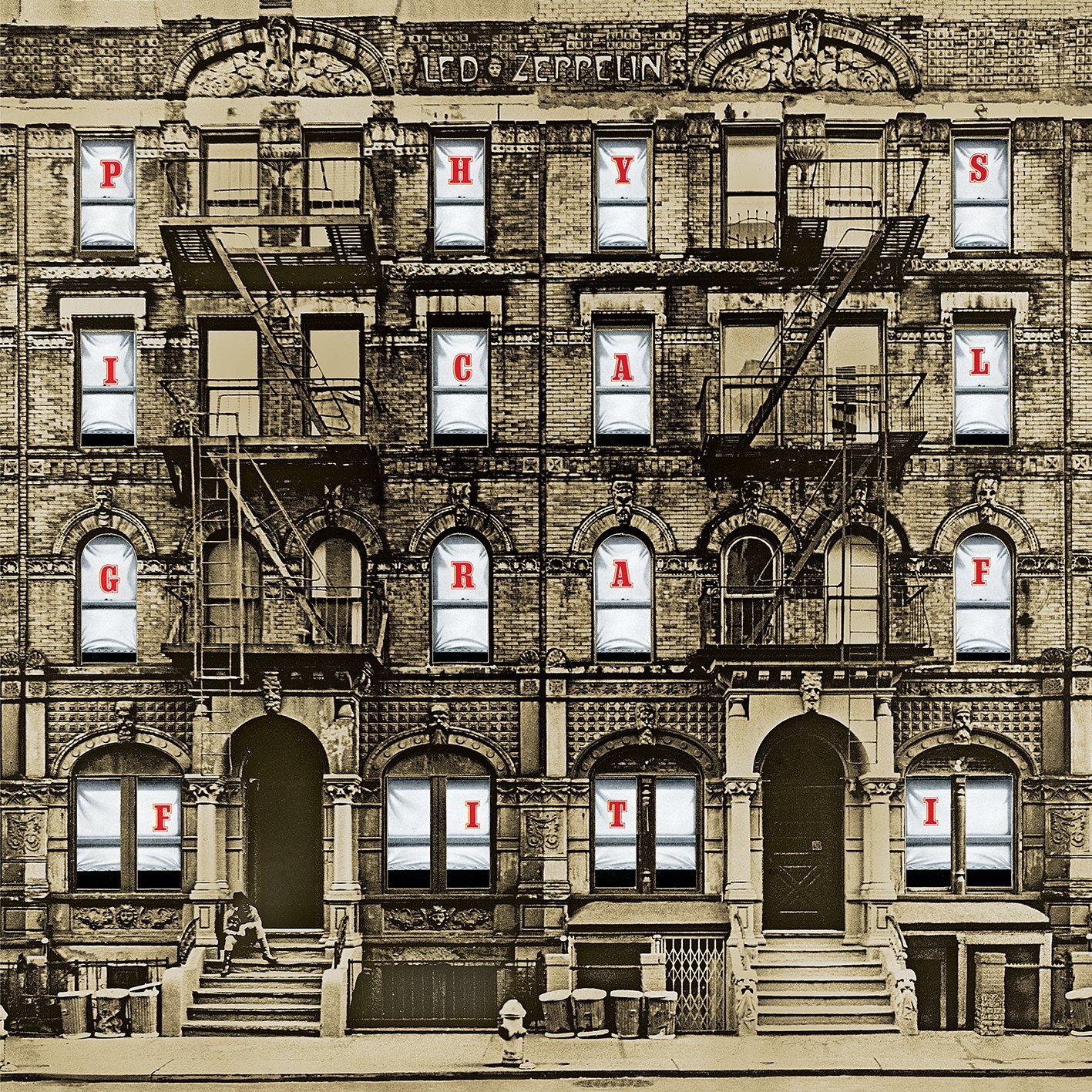
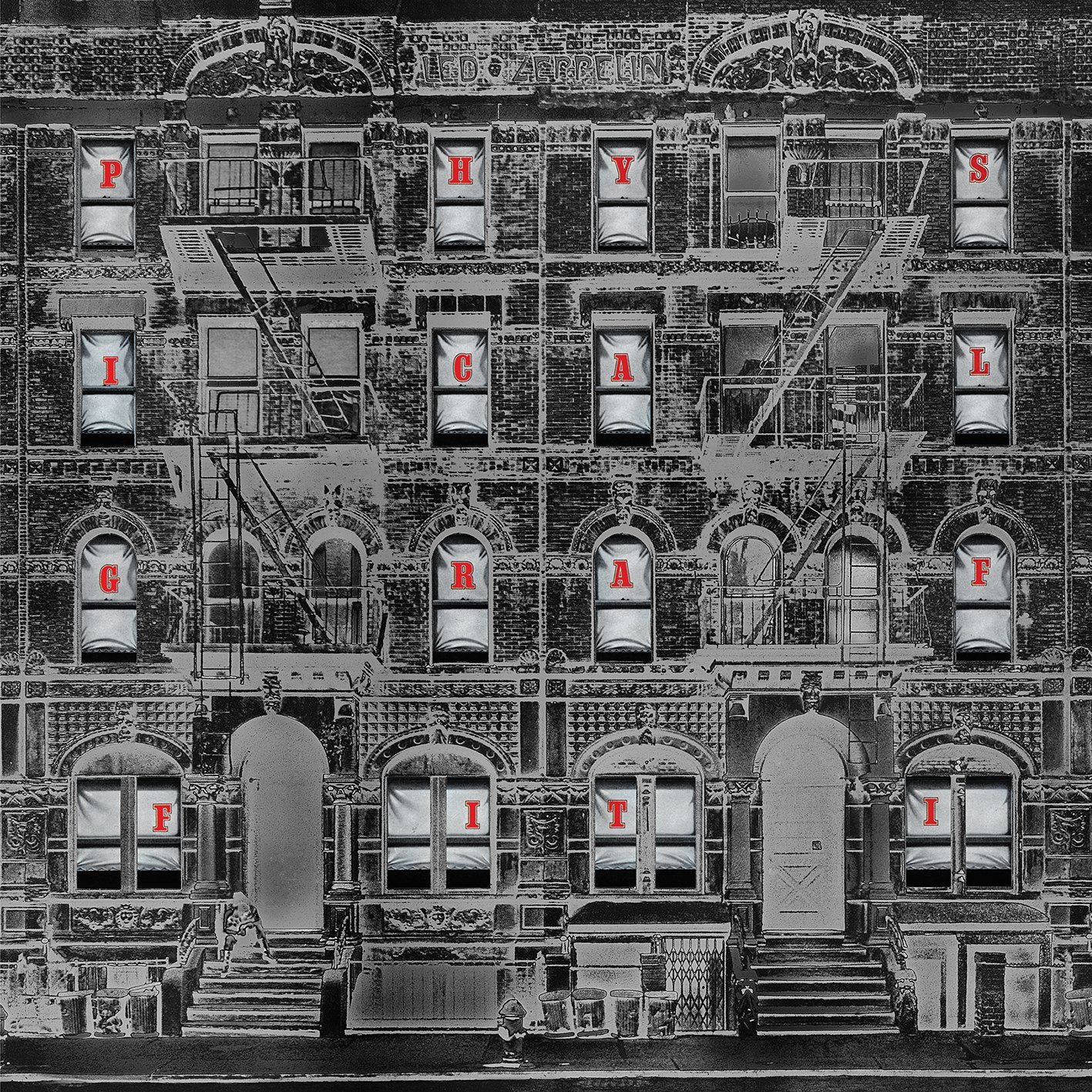
Before the release of Physical Graffiti, the album was sent to critics and the first thing they saw was the now legendary album cover. It featured a photograph of a New York City tenement block. It was taken by Peter Corriston and made the 96 and 98 St. Mark’s Place, New York one of music’s most famous landmarks. Inside Physical Graffiti’s famous cover, was the thirteen track double album.
When critics heard Physical Graffiti, most were won over by Led Zeppelin’s latest album. Critical acclaim accompanied Physical Graffiti’s release. However, a couple of high profile critics weren’t as won over as their colleagues. Unfortunately, one of the dissenting voices were Billboard. They weren’t as impressed as most critics. Neither were Led Zeppelin’s old nemesis, Rolling Stone magazine.
Just like Billboard, Rolling Stone didn’t give Physical Graffiti a glowing review. This was nothing new as Rolling Stone had “previous.” Ever since Led Zeppelin released their eponymous debut album in 1969 Rolling Stone gave the the group’s albums less than glowing reports. They had yet to be won over by Led Zeppelin who currently were on their tenth American tour. However, despite Rolling Stone’s review Physical Graffiti was a huge commercial success.
Even before the release of Physical Graffiti on ‘ 26th’ February 1975, advance orders were huge. On both sides of the Atlantic, Physical Graffiti reached number one and was certified double platinum in Britain and sixteen times platinum in America. This meant Physical Graffiti sold sixteen million copies in America alone. The commercial success and critical acclaim continued across the world.
In Canada, Physical Graffiti reached number one. Physical Graffiti was certified gold in Argentina, France and Germany. From Australia through Austria, France, New Zealand, Norway and Spain, Physical Graffiti reached the top ten. This resulted in Physical Graffiti becoming Led Zeppelin’s second biggest selling album. No wonder.
Physical Graffiti was a fusion of Led Zeppelin old and new. On Custard Pie, The Wanton Song, Sick Again and Houses of The Holy, Led Zeppelin were back to their hard rocking best. This was the Led Zeppelin that had sold over thirty million albums. From there, seamlessly, Led Zeppelin switched between musical genres.
On Kashmir, which was a future Led Zeppelin classic musical genres melted into one. This was orchestral rock with an Eastern twist. Then on In The Light, Led Zeppelin moved in the direction of prog rock. Trampled Under Foot was a mesmeric marriage of musical genres. After its uber funky introduction, Led Zeppelin get into a groove and hit their hard rocking best. It’s a spellbinding fusion. Still, Led Zeppelin continue to change direction.
Boogie With Stu and Black Country Woman see Led Zeppelin roll back the years, with some acoustic rock ’n’ roll. Then Led Zeppelin show their softer side on the ballad Ten Years Gone. Bron-Yr-Au is an acoustic instrumental that Led Zeppelin recorded in 1970. It’s two wistful minutes of music. Then on the soft rock of Down By The Seaside, the melancholy sound continues. Again, it shows Led Zeppelin’s softer side. On their journey through musical genres, Led Zeppelin aren’t afraid to kick loose.
Paying homage to their bluesy roots, Led Zeppelin unleash In My Time of Dying, eleven minutes of blues rock. A slow burner it’s well worth the wait when eventually, Led Zeppelin unleash their bluesy licks. It’s Led Zeppelin at their best as they strut their way through this blues rock Magnus Opus. That’s not the end of the hard rocking Led Zeppelin. Night Flight sees Physical Graffiti head in the direction of country rock, as Led Zeppelin finish what can only be described as genre hopping album.
Featuring thirteen tracks, spread over four sides of vinyl, Physical Graffiti was Led Zeppelin’s most ambitious and eclectic album. From Led Zeppelin’s usual hard rocking style, Physical Graffiti took diversions via acoustic rock ’n’ roll, balladry, blues rock, country rock, prog rock and soft rock. There was even the fusion of orchestral rock and Eastern influences that was Kashmir, a Led Zeppelin classic. With such an eclectic album, it’s no surprise that Physical Graffiti won over to critics, cultural commentators and record buyers.
Released to widespread critical acclaim, and having sold over twenty million copies worldwide Physical Graffiti was well on its way to becoming a classic album. That’s why Physical Graffiti was nominated for a Grammy Award in 1976.
When the nominations for 1976s Grammy Awards were released, Physical Graffiti was nominated for a Grammy Award for Best Recording Package. Sadly, it was a case of close but no cigar. However, after this, Physical Graffiti was hailed a classic by Rock and Roll Hall of Fame and somewhat ironically, Rolling Stone magazine. According to these musical institutions, Physical Graffiti is one of the best 100 albums ever released.
Forty-five years after the release of Physical Graffiti it’s a truly timeless album that deserves to be called a classic. It’s also an album that inspired several generations of musicians and continues to so. Physical Graffiti is album that deserves to find its way into any self respecting record collection.
Despite releasing three further albums, 1976s Presence, 1979s In Through The Out Door and 1982s Coda, Led Zeppelin released an album as good as Physical Graffiti. Everything from car crashes, excess’, addiction, tax exile and sadly, the untimely death of drummer Jon Bonham meant that Led Zeppelin never again reached the heights they did on Physical Graffiti. It was their first double album and was one of the group’s finest hours. Sadly, Physical Graffiti which was an ambitious, eclectic and timeless album, proved to be the final classic album of Led Zeppelin’s nine album career.
Classic Album: Led Zeppelin-Physical Graffiti.

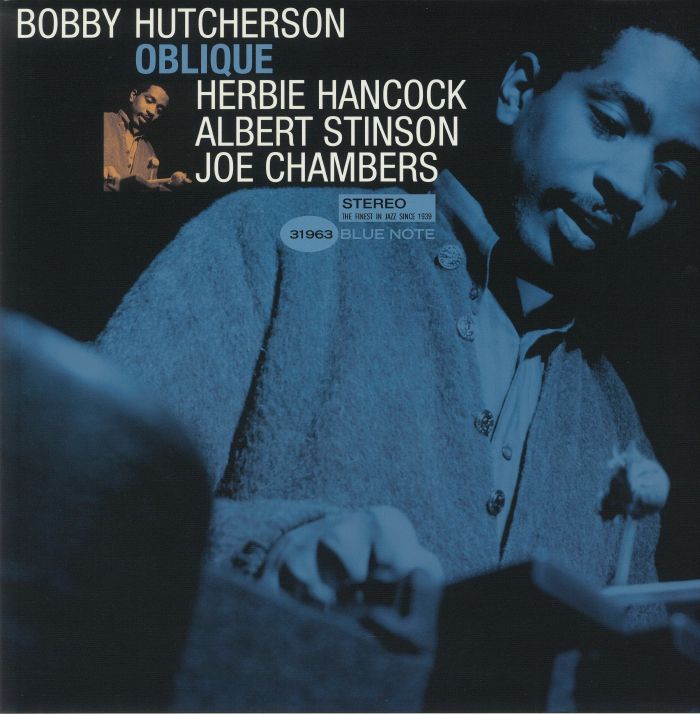
BOBBY HUTCHERSON-OBLIQUE.
Bobby Hutcherson-Oblique.
Label: Blue Note Records-Tone Poet Series.
Format: LP.
On July the ‘21st’ 1967, Bobby Hutcherson journeyed to Van Gelder Studio, in Englewood Cliffs, New Jersey, to record Oblique which was his sixth solo album for Blue Note Records. It was just the second album he had recorded with a quartet.
The first was Happenings, an album of modal hard bop and hard bop which was recorded on February the ‘6th’ 1966 and featured pianist Herbie Hancock. When Happenings was released in late January 1967 it was to widespread critical acclaim.
Just seventeen months later, and Bobby Hutcherson and Herbie Hancock were reunited and were joined by drummer Joe Chambers and bassist Albert Stinson as they travelled to Van Gelder Studio to record Oblique which was has just been reissued by Blue Note Records as part of their Tone Poet Series. It marked a stylistic departure for Bobby Hutcherson and resulted in one of the finest albums of his career. His recording career began in 1960 but jazz had always been part of Bobby Hutcherson’s life.
The future vibes virtuosos was born on January the ’27th’ 1941. His was father Eli was a master mason and his mother Esther was a hairdresser. Growing up, Bobby Hutcherson was introduced to jazz by his brother Teddy who listened to Art Blakey records with his friend Dexter Gordon. Meanwhile, Bobby Hutcherson’s elder sister Peggy was a singer in Gerald Wilson’s orchestra and her boyfriend was Eric Dolphy. She introduced to her younger brother to her boyfriend and also tenor saxophonist Billy Mitchell. However, it was after hearing Milt Jackson play Bemsha Swing on Miles Davis All Stars, Volume 2 that Bobby Hutcherson decided to learn to play the vibes.
By the late-fifties, Bobby Hutcherson who was still in his late teens had embarked upon a career as a professional musician. He worked with tenor saxophonist Curtis Amy, trumpeter Carmell Jones, Eric Dolphy and tenor saxophonist Charles Lloyd at the Pandora’s Box on the Sunset Strip. This was all good experience for Bobby Hutcherson.
He made his recording debut on August the ‘3rd’ 1960, when he recorded two tracks with the Les McCann Trio who were signed to Pacific Jazz. The single was released in 1961. By then, Bobby Hutcherson’s career was well underway.
Just over four months after making his recording debut, Bobby Hutcherson joined the Curtis Amy-Frank Butler Sextet when they recorded Groovin’ Blue on December the ‘10th’ 1960. This was the first of many albums that featured Bobby Hutcherson’s vibes.
In 1962, Bobby Hutcherson moved to New York as he was determined to make a career as a full-time jazz musician. He found a place to live in the Bronx and soon, was spending part of the time working as a session musician. The rest of the time he drove a taxi to supplement his income.This he knew was only a temporary arrangement.
That was the case. Bobby Hutcherson met his childhood friend, the bassist Herbie Lewis who at the time, was working with The Jazztet and also hosted jam sessions at his apartment.
Bobby Hutcherson soon became a regular at the jam sessions which was where Grachan Moncur III who was a member of Jazztet and Jackie McLean’s band saw him play. Straight away, he realised that he might be a useful addition to Jackie McLean’s band and recommended him. When Jackie McLean heard him play, he asked him to join his band and he made his debut on the recording of One Step Beyond on April the ’30th’ 1963. This was also Bobby Hutcherson’s first session for Blue Note Records.
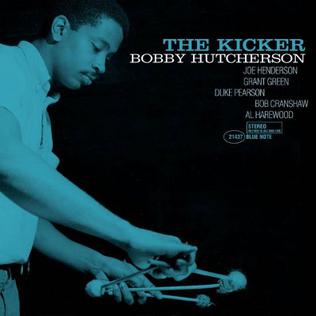
Over the new few months he played on three more Blue Note Records sessions. The first was on the ‘30th’ September when Jackie McLean recorded Destination… Out! Then on the ‘4th’ and ‘15th’ of November, Bobby Hutcherson played on Grant Green’s classic album Idle Moments. Less than a week later, on the ‘21st’ of November Bobby Hutcherson played on the sessions for Grachan Moncur III’s album Evolution. However, Bobby Hutcherson still had one more album to record and this time it was his debut solo album The Kicker.
The Kicker.
Recording of The Kicker took place on the ‘29th’ of December 1963, at Van Gelder Studio. Joining Bobby Hutcherson were drummer Al Harewood, bassist Bob Cranshaw, pianist Duke Pearson and tenor saxophonist Joe Henderson. Guitarist Grant Green played on two of the six tracks on the album which was produced by Alfred Lion and engineered by Rudy Van Gelder.
Sadly, Bobby Hutcherson’s debut album The Kicker was shelved and wasn’t released until 1999. When it was belatedly released jazz fans heard a blistering album of hard bop and blues from Bobby Hutcherson’s all-star quintet.
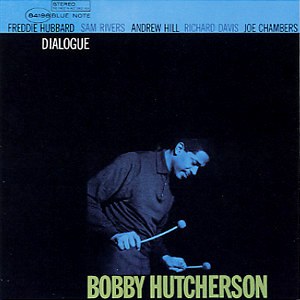
Dialogue.
When Bobby Hutcherson returned to Van Gender Studio on April ‘3rd’ 1965 to record his second album he led a sextet that featured some top musicians. This included drummer Joe Chambers, double bassist Richard Davis, pianist Andrew Hill, trumpeter Freddie Hubbard and Sam Rivers who switched between bass clarinet, flute plus soprano and tenor saxophone. They recorded what was one of the most ambitious and adventurous albums of Bobby Hutcherson’s career.
The music on Dialogue was complex as the sextet combined avant-garde, free jazz, Latin, modal jazz and post-bop with social comment. The album Latin-tinged album opener Catta was regarded as the most conventional on the album but was recorded in 8/4 time. Dialogue was a truly ambitious album.
When Dialogue was released in September 1965 to widespread critical acclaim. Despite this being the second album Bobby Hutcherson had recorded it was regarded as his debut and critics called it one of the finest jazz debuts of recent years.
Components.
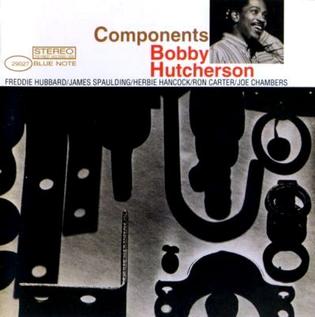
Three months before the release of Components, Bobby Hutcherson recorded the third album of his carer, Tranquillity. Just like his two previous albums it was produced by Alfred Lion. However, the sextet he led at the Van Gelder Studio on June the ‘14th’ 1965 was a quite different band from the one that featured on Components.
This included drummer Joe Chambers, double bassist Ron Carter, pianist Herbie Hancock, trumpeter Freddie Hubbard and James Spaulding on flute and alto saxophone. They recorded eight tracks including four written by Bobby Hutcherson while the other four were penned by James Spaulding. These eight tracks showed the two sides of the sextet.
The four tracks on the first side were penned by Bobby Hutcherson and found the sextet playing in the hard bop style. Then on the second side it’s all change on the James Spaulding compositions as the album heads in the direction of avant-garde. Components was hailed as another innovative album that won over critics when and was released to critical acclaim in November 1966. Bobby Hutcherson’s finest moment was Components which became his best-known composition. By then, he had only released two album but was already regarded as one of jazz’s rising stars.
Happenings.
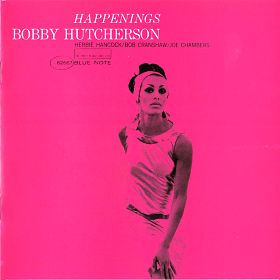
For the followup to Components, Bobby Hutcherson wrote six of the seven tracks that featured on Happenings. The other track was a cover of Herbie Hancock’s Maiden Voyage. These tracks were recorded at Van Gelder Studio on February the ‘8th’ 1966 by a quartet.
This was a first for Bobby Hutcherson who had never led a quartet as a bandleader. He was joined by drummer Joe Chambers, bassist Bob Cranshaw and pianist Herbie Hancock while Alfred Lion took charge of production and Rudy Van Gelder engineered the Happenings’ sessions.
Happenings was released to plaudits and praise by Blue Note Records at the end of January 1967 and was album of post-bop that sometimes, had an experimental sound. It was another ambitious album from Bobby Hutcherson who constantly was seeking to reinvent his music. This he succeeded in doing.
Stick-Up!
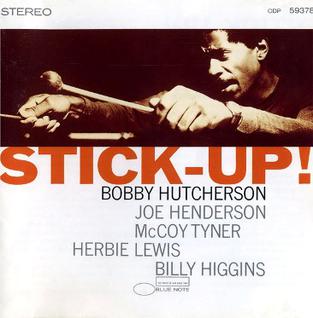
Just five months after the recording of Happenings, Bobby Hutcherson was back at Van Gelder Studio on July the ‘14th’ 1966 for the recording of Stick-Up! The twenty-five year old vibes and marimba player wrote five of the six tracks and decided to cover Ornette Coleman’s Una Muy Bonita.
Just like previous albums, Stick-Up! was produced by Alfred Lion and the engineer was Rudy Van Gelder. However, the lineup of the band had changed beyond recognition. Billy Higgins replaced drummer Joe Chambers and joined bassist Herbie Lewis, pianist McCoy Tyner and tenor saxophonist Joe Henderson. Despite that, Bobby Hutcherson’s new quintet had managed to record a classic jazz album.
Stick-Up! wasn’t released until April 1968 and found Bobby Hutcherson’s quintet flitting between avant-garde and hard bop on what was hailed as a groundbreaking album. It’s now regarded as a classic and just like Components, is another of Bobby Hutcherson’s finest albums.
Oblique.
Disaster struck for Bobby Hutcherson in 1967 when he and and Joe Chambers were arrested for marijuana possession in New York’s Central Park. They both lost their cabaret card and Bobby Hutcherson also lost his taxi driver’s license. Unable to play in New York’s clubs he moved to California, eventually settling in San Francisco. However, Bobby Hutcherson continued to record for Blue Note Records.
He returned to Van Gelder Studio on July the ‘21st’ 1967. Over a year had passed since he recorded his previous album Stick-Up! During that period, Bobby Hutcherson had written Til Then, My Joy and Subtle Neptune for his new album Oblique. These tracks were joined by Herbie Hancock’s Theme from Blow Up and two Joe Chambers’ compositions Oblique and Bi-Sectional. They were recorded by Bobby Hutcherson’s quartet.
The lineup featured drummer Joe Chambers, bassist Albert Stinson, pianist Herbie Hancock and Bobby Hutcherson on vibes. Rudy Van Gelder was in charge of engineering duties and Alfred Lion produced by Alfred Lion.
Much of the music on Oblique was complex, especially the trio of Bobby Hutcherson compositions. The first of his compositions is Til Then a samba-tinged ballad which breezes along.
It’s followed by another Bobby Hutcherson composition the baroque influenced My Joy.When the solos come around vibes virtuoso Bobby Hutcherson and pianist Herbie Hancock are at the top of their game as they improvise. They play with speed and power before only the piano remains. Its sound is elegant and slinky as it plays a starring role before he stabs and jabs the keyboard before the baton passes to bassist Albert Stinson. However, when the piano returns its joyous, beautiful and full of hope on what’s one of the highlights of Oblique.
Theme From “Blow Up” is best describes as a slow burner. The piano led arrangement is understated with the vibes joining as it builds gradually. Herbie Hancock plays with confidence his fingers darting and dancing across the keyboard. Not to be outdone Bobby Hutcherson unleashes a breathtaking solo where he plays four mallets. The piano and vibes combine as the rhythm section accompany them as the quartet effortlessly combine straight ahead jazz with languid funky fusion on a stunning cover of this iconic Herbie Hancock composition.
Subtle Neptune is akin to musical sunshine as the quartet combine sashaying Brazilian rhythms with post-bop. It’s a truly irresistible combination. Resistance is impossible. The result is like a call to dance that’s guaranteed to brighten up even the darkest day.
Free thinking drummer Joe Chambers wrote the two other tracks on the album including Oblique. The quartet’s playing is hard driving and direct on this complicated example of post bop. Bobby Hutcherson unleashes an urgent and driving vibes solo and later, he’s accompanied by pianist Herbie Hancock who matches him every step of the way. When the piano drops out this leaves the coast clear for one of the finest and fastest vibes solos on the album. It’s followed by a darting, urgent and fleet-fingered piano solo before drummer Joe Chambers unleashes his finest solo on the album. Despite that, it’s the bandleader that steals the show on this romping and adventurous example of hard bop.
Closing Oblique is Bi-Sectional which is innovative example of collective improvisation. Although it’s one of the shortest tracks on the album, it finds the quartet pushing musical boundaries to their limits. In doing so, they dared to do what many other bands were reluctant to do on a groundbreaking, spacious and experimental cinematic track.
After the recording of Oblique was completed, Alfred Lion who was by then eighty decided to retire and the project was shelved. History was repeating itself for Bobby Hutcherson as the same thing had happened to his debut album The Kicker. This must have been hugely frustrating for him as he now had recorded six albums and only four had been released by Blue Note Records.
Oblique found Bobby Hutcherson picking up where he left off on Stick-Up! with an album that combined elements of avant-garde, free jazz, funk, fusion, hard bop and post bop. The quartet showcased their considerable talent and versatility throughout the album. Especially Bobby Hutcherson and Herbie Hancock who seemed to drive each other to even greater heights and play a starring role on Oblique.
If the album had been released in 1967 it would’ve built on the success of Stick-Up! and Bobby Hutcherson’s career would’ve continued to go from strength-to-strength. However, Alfred Lion’s decision to retire and his arrest for possession of marijuana derailed his career.
Bobby Hutcherson returned to Van Gelder Studio on March the ‘14th’ 1968 where he led a quintet as they recorded is seventh album Patterns. Sadly, it was also shelved and was only released in 1980.
Blue Note Records was home to Bobby Hutcherson throughout his career. He recorded The Kicker in 1963 and over the next fourteen years, released fifteen studio albums, one live album, two collaborations with Herbie Hancock and five with Harold Land. Bobby Hutcherson was also the go-to-guy for anyone looking for a vibes player and played on over forty albums during his time at Blue Note Records. These albums featured the great and good of jazz, and most of them were released on Blue Note Records.
In 1977, Bobby Hutcherson released Knucklebean which was his fifteenth solo album and his swan-song for Blue Note Records. It was the end of era for Bobby Hutcherson whose recording career began seventeen years earlier.
Sixteen years later in 1993 McCoy Tyner and Bobby Hutcherson released a new album on Blue Note Records, Manhattan Moods. The album was well received by critics but there was no followup or sign of Bobby Hutcherson making a comeback.
That was until vibes virtuoso Bobby Hutcherson returned on the ‘24th’ June 2014 with his first solo album in thirty-seven years, Enjoy The View. It was well received by critics who were looking forward to the followup and wondering what direction Bobby Hutcherson’s music was head.
Sadly, Bobby Hutcherson passed away on the ‘15th’ of August 2016 aged just seventy-five. That day jazz last one of the greatest vibes players ever. During his long and illustrious career Bobby Hutcherson redefined the vibraphone’s emotional pull and what it could do melodically, sonically and technically. He also introduced a new generation to the vibes and the marimba which he also played.
On Oblique, Bobby Hutcherson only plays the vibes on the six track. His playing is absolutely flawless and he unleashes a series of breathtaking solos on Oblique an album which was belatedly released in 1980, and forty years later has been reissued by Blue Note Records as part of their Tone Poet series.
Bobby Hutcherson-Oblique.
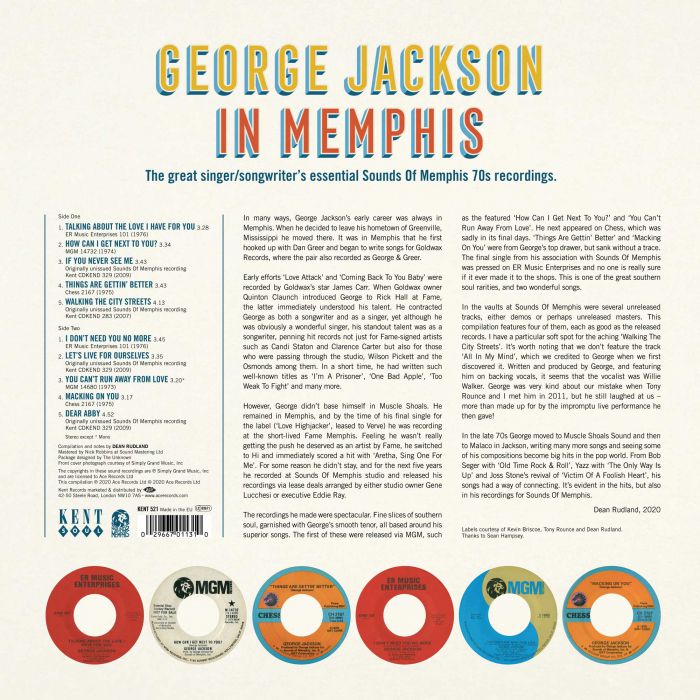
GEORGE JACKSON IN MEMPHIS.
George Jackson In Memphis.
Label: Kent Soul.
Format: LP.
Just like Sam Dees, George Jackson was a prolific songwriter but an occasional recording artist. During his career, he penned over 300 songs which were recorded by everyone from James Carr, Wilson Pickett, Eddie Floyd, Clarence Carter, Z.Z. Hill, Candi Staton, Bettye Swann, Ann Peebles, Bobby Womack and Bob Seger. The only problem was with George Jackson spending most of his time writing songs for other people, this left little time for him to pursue a recording career. As a result, he only released just one album and less than twenty singles. This wasn’t much to show for a truly talented singer-songwriter who had the ability to breath life, meaning and emotion into songs. However, George Jackson just like Sam Dees, seemed content to write songs for other artists.
It was only when Ace Records acquired the Goldwax Records and secured the licensing deals with Fame and Sound Of Memphis that it became apparent that there was much more to George Jackson’s discography than one album and less than twenty singles. Within the vaults of Goldwax Records, Fame and Sound Of Memphis there was what can only be described as a veritable feast of music baring George Jackson’s name. For connoisseurs of soul music this was a tantalising prospect.
So was the recent release on vinyl of George Jackson In Memphis by Kent Soul. It’s a reminder of one of the greatest soul singers you’ve never heard. His story began in 1945.
George Jackson was born in March 1945, and he spent the first five years of his life in Indianola, Mississippi. However, when he was five, the Jackson family decided to move to Greenville, in Washington County, where people soon realised that George Jackson was a gifted musically.
From an early age, it was apparent to those around George Jackson that one day he would embark upon a career as a singer or songwriter. He was a prodigious talent and was already writing songs when he was just a teenager. Then when he was just eighteen, George Jackson met a famous producer.
This was none other than Ike Turner, who George Jackson met in 1963. Despite his youth, he found the confidence to introduce himself to Ike Turner. The young singer-songwriter told him about his music and showed him some of the songs he had written. Ike Turner was so impressed that he wanted to record George Jackson.
Ike Turner took George Jackson to Cosimo Matassa’s studio in New Orleans where they recorded Nobody Wants To Cha Cha With Me. The song was then released as a single on Ike Turner’s Prann label in 1963 but wasn’t a commercial success. However, it marked the start of George Jackson’s career.
Two years later, in 1965, George Jackson recorded Rufus Come and Get Your Dog for the Doro label but the single failed to find an audience. Despite two unsuccessful singles, George Jackson was still determined to make a career out of music.
Later in 1965, he released Blinkity Blink as a single for Dot Records but just like his two previous singles it failed to trouble the charts. This was a huge disappointment and many artists would’ve considered calling time on their career. However, George Jackson was made of stronger stuff and there was no way that he going to give up. Deep down, he knew he had what it took to make a career out of music.
After the commercial failure of Blinkity Blink, George Jackson decided to move to Memphis which had a vibrant and successful music scene. One of the most successful labels in Memphis was Stax Records.
When he arrived in Memphis George Jackson secured an audition at Stax. Incredibly, Stax passed on George Jackson, just like they had on James Carr. Little did they realise that they had missed out on a prolific and talented singer and songwriter.
Next stop for George Jackson was Goldwax Records, where he cofounded The Ovations with Louis Williams. He penned and sang on their 1965 classic It’s Wonderful To Be In Love. It reached number twenty-two in the US R&B Chart, while reaching number sixty-one in the US Billboard 100. For George Jackson, this was his first hit single after two years of trying.
Soon, George Jackson was writing for other artists on Goldwax Records’ roster, and Spencer Wiggins and James Carr were beneficiaries of his songwriting skills. George Jackson also teamed up with Dan Greer, and formed the duo George and Greer. Alas, none of the songs this talented duo recorded for Goldwax Records were ever released. This was another disappointment and things got worse for George Jackson in 1968 when The Ovations split-up and this marked the end of his time at Goldwax Records.
Having left Goldwax Records, George Jackson enjoyed a brief spell at Hi Records. He recorded a number of songs for Hi Records, but none of the songs were ever released. History was repeating itself as this was what had happened to George and Greer at Goldwax Records. It was no surprise that before long, George Jackson was on the move again.
Following his spell at Hi Records, George Jackson signed to Decca and recorded a number of songs for his new label. When it came time to release them, George Jackson was billed as Bart Jackson. However, even a change of name didn’t result in a change of fortune for George Jackson, and he left Decca after failing to enjoy even a modicum of commercial success.
After Decca, George Jackson signed to Mercury and Capitol, but still commercial success eluded him. After three years of trying, George Jackson still hadn’t enjoyed a hit as a solo artist. This was hugely frustrating, as George Jackson knew he had what it took to enjoy a successful career within the music industry. All he needed was someone who could bring out the best in him. Fortunately, producer Billy Sherrill suggested George Jackson should get in touch with Rick Hall at Fame Records.
Fame Records in Muscle Shoals was what George Jackson had spent the last few years looking for and when he arrived at the famous studio it was like a homecoming of sorts. Straight away, he felt as if he belonged and was part of something. Buoyed by this new start, George Jackson’s career blossomed.
Soon, he was writing for some of Fame’s biggest stars including Candi Staton and Clarence Carter. George Jackson enjoyed instant success when Clarence Carter’s Too Weak To Fight became a huge hit. It reached number thirteen in the US Billboard 100 and number three in the US R&B Charts. Buoyed by this success, he penned a string of hits for Fame’s artists. This included Candi Staton’s I’d Rather Be An Old Man’s Sweetheart (Than A Young Man’s Fool), I’m Just A Prisoner (Of Your Good Lovin’) and Never In Public. Then in 1970, George Jackson wrote what was the biggest hit single of his career so far, One Bad Apple.
Originally, George had written with One Bad Apple with The Jacksons in mind. That was until The Osmond’s visited Fame Studios in 1970. When they heard One Bad Apple they immediately liked the song and decided to record it. When it was released as a single it gave the group the first hit of their career when it reached number one in the US Billboard 200 and six in the US R&B Charts. One Bad Apple was the most successful song that George Jackson had written.
A number one single on the US Billboard 100 was what every songwriter dreamt of and was the ultimate accolade. It was what George Jackson had been working towards since he was a teenager. However, despite writing a number one single he hadn’t given up hope of becoming a successful singer.
Over the next couple of years, George Jackson divided his time between songwriting and singing. He continued to be a prolific and successful songwriter, but occasionally headed into the recording studio to record a new song.
As a singer, he was noted for his versatility and ability to make lyrics come to life. If lyrics needed hurt, heartache or hope or anything from despair to joy George Jackson could deliver that. Despite this, commercial success continued to eluded him.
Right up until George Jackson left Fame in 1972 he was more successful as a songwriter than singer. He wrote many hits for other artists, but his own singles never troubled the charts. This must have frustrated George Jackson who hadn’t given up hope of becoming a successful singer.
Having left Fame, George Jackson who was still living in Memphis, continued to divide his time between songwriting and his solo career. He wasn’t ready to give up on his dream of becoming a successful soul singer, and decided that when he was going to record his singles at one of city’s finest recording studios. That was how he came to base himself at the Sounds Of Memphis’ studio for the next five years.
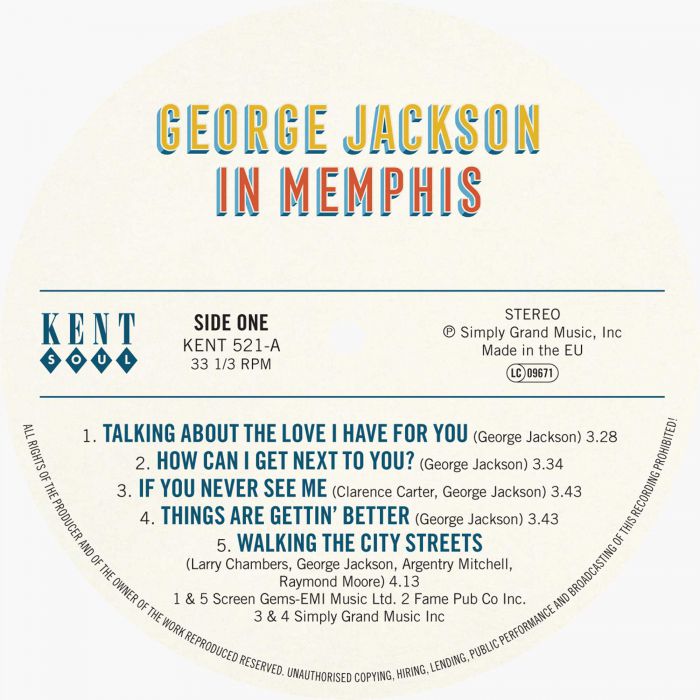
Ten of the songs that he recorded at the Sounds Of Memphis’ studio feature on George Jackson In Memphis. These prime slices of Southern Soul feature George Jackson’s inimitable tenor as he breathes meaning and emotion into the lyrics as he continued his quest to become a successful singer.
During the five years he recorded at the Sounds Of Memphis’ studio George Jackson wasn’t signed to a label. Instead, he decided to lease the singles to different label. This was the case with the You Can’t Run Away From Love a funky slice of Southern Soul that was leased to MGM and released in 1973. Sadly, the single failed to find an audience but George Jackson continued to his quest for his first hit.
In 1974, he leased another single to MGM, How Can I Get Next To You? It’s a beautiful ballad with wistful, needy and heartfelt vocal as braying horns punctuate the arrangement. It was one of the finest singles George Jackson recorded at the Sounds Of Memphis’ studio but sadly, it failed to trouble the charts.
Despite this disappointment, George Jackson wrote and recorded the Southern Soul ballad Things Are Gettin’ Better which was leased to Chess. It featured gospel-tinged vocals and an arrangement that could only have been recorded in Memphis. On the B-Side was another beautiful Southern Soul ballad Macking On You that features a needy, hopeful vocal. Sadly, when Things Are Gettin’ Better was released on Chess in 1975 the song sunk without trace. That was a great shame given the quality of the song. However, by then soul was no longer as popular as it had once been and disco was growing in popularity.
Despite that, continued to write and record new songs. This included the beautiful paean Talking About The Love I Have For You. It’s another ballad which is one of George Jackson’s specialities. Proof of this is I Don’t Need You No More, which is about a relationship that never worked out. His vocal is tinged with sadness as he sings: “When I needed you, you were never around, remember babe” and relief as he adds: “Now I Don’t Need You No More I’m walking out the door.” It’s a cinematic slice of Southern Soul and was too good to be hidden away on a B-Side. Sadly, very few if any record buyers ever heard either song.
Having written and recorded Talking About The Love I Have For You and I Don’t Need You No More George Jackson leased the songs to ER Music Enterprises. The label chose Talking About The Love I Have For You as a single and copies were pressed up. However, nobody seems sure if the song ever made it as far as the shops and it’s one of the rarest George Jackson singles.
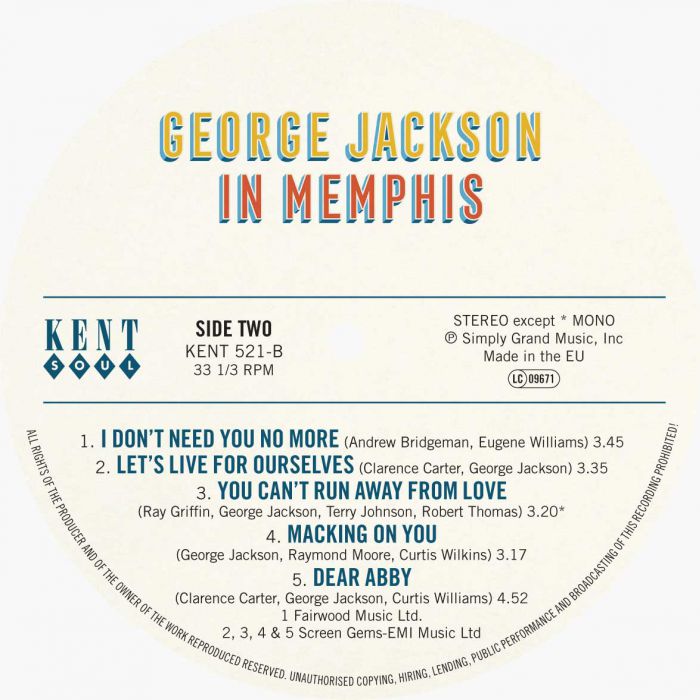
The other four songs on George Jackson were never released at the time they were recorded and were belatedly released on various Kent Soul compilations. This includes Walking The City Streets which made its debut on Can’t Be Satisfied-The XL and Sounds Of Memphis Story which was released in 2007. It’s a ballad that begins with a soliloquy from George Jackson before he delivers a vocal that’s mixture of emotion, frustration and hope as he sings that: “I’m here to make a new life for my family.” This song is a welcome addition to the compilation and a reminder of a truly talented singer-songwriter.
That’s the case with the other three tracks on George Jackson In Memphis. They made their debut in 2009 on George Jackson In Memphis 1972-77 and included the Southern Soul ballad If You Never See Me. It’s about a relationship that’s broken up and features a vocal that’s a mixture sadness, hurt and even defiance as George Jackson warns: “you’ll be sorry you let me go” and “If You Never See Me Again you’re going to miss me baby.” Then Let’s Live For Ourselves is a hidden gem of a Southern Soul ballad where horns and harmonies accompany a vocal that’s heartfelt and emotive. Closing the compilation is Dear Abby which features a soul-baring vocal that’s full of desperation as George Jackson tries to rescue his relationship with the woman he loves. Just like many compilations it’s a case of keeping one of the best songs until last.
Despite his lack of commercial success, George Jackson never game up on his dream of becoming a successful soul singer and after leaving Fame spent five years recording new songs at the Sound Of Memphis’ Studio. Some of these songs were leased to labels like Chess, MGM and ER Music Enterprises and feature on George Jackson In Memphis which was recently released by Kent Soul, an imprint of Ace Records. It’s a welcome release and a reminder of a much-missed singer-songwriter
The ten songs on George Jackson In Memphis are variously beautiful, powerful, poignant and tug at the heartstrings. Ballads were George Jackson’s speciality and there’s songs about love, love gone wrong and love lost. Other times, he paints pictures and with his hugely soulful tenor vocal that’s emotive and expressive as he breathes life, meaning and emotion into the lyrics. Sadly, commercial success eluded George Jackson’s solo singles and nowadays, he’s better known as a songwriter than a singer.
That is a great shame as George Jackson had the talent, desire and voice to become a successful soul singer, but sadly that never happened and instead he spent most of his time writing songs for other artists.
That’s often the case when talented songwriters who just happen to be singers sign to a record label. Sometimes those running the label sometimes would rather they wrote songs rather than record them. It takes time and money to develop an artist’s career, and maybe, record company executives thought that George Jackson like other artists who were also successful songwriters would be better employed concentrating on writing songs? That was what the likes of George Jackson and Sam Dees were good at. Looking back, maybe that was the case with George Jackson?
If that was the case, then George Jackson’s success as a songwriter was a double-edged sword? The more success he enjoyed as a songwriter the less chance he had of becoming a successful singer. Record companies would rather George Jackson spent his time writing rather than recording songs. This must have been frustrating for George Jackson who wanted to be a star, not the star-maker. Sadly, that never happened.
George Jackson passed away on April the ’14th’ 2013 aged just sixty-eight. He left behind a rich musical legacy including the ten tracks on George Jackson In Memphis. There’s singles, B-Sides and tracks that lay unreleased for over thirty years. This includes a number of hidden gems that are a reminder of singer who was blessed with the voice, talent and ability to bring a song to life.
Despite this, commercial success eluded George Jackson who during the sixties and seventies was one of Southern Soul’s nearly men. He’s remembered primarily as a successful songwriter and star-maker who was an occasional recording artist but sadly never the star. That was despite recording songs of the quality of those on George Jackson In Memphis, which is the perfect introduction to one of most underrated Southern Soul singers of his generation and the star-maker.
George Jackson In Memphis.

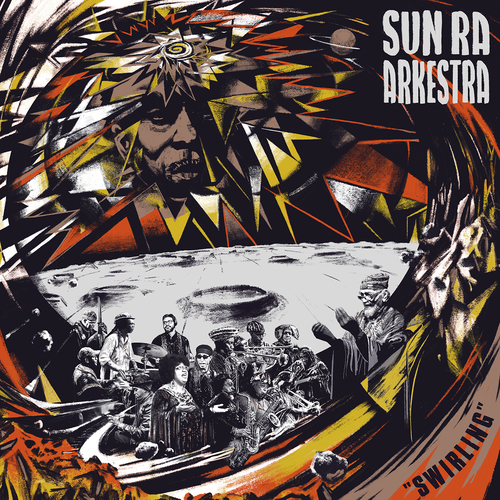
SUN RA ARKESTRA-SWIRLING.
Sun Ra Arkestra-Swirling.
Label: Strut.
Format: LP.
On May the ’30th’ 1993, Sun Ra passed away aged seventy-nine and that day, music was in mourning at the loss a musical pioneer who had played his part in rewriting the history of jazz. From the late-fifties, Sun Ra was one of the pioneers of free jazz and helped shape this new genre.
For the best part of forty years Sun Ra pushed musical boundaries to their limits, and sometimes, way beyond. He was a pioneer and innovator and was also a perfectionist and relentless taskmaster. With some of most talented, inventive and adventurous musicians of their generation Sun Ra set about honing his Arkestra’s sound. He was demanding and had exacting standards. Second best was no use to Sun Ra.That was why his Arkestra featured innovators and musical adventurers that had the same high standards and drive and determination that he had.
This included alto saxophonist Marshall Allen who played an important part in the sound and success of the Sun Ra Arkestra. That was the case right up until Sun Ra’s death in 1993.
Since then, the Sun Arkestra has continued to tour and is led by Marshall Allen who is now ninety-six. However, the Sun Arkestra has never recorded another album. As the years passed by, it seemed increasingly unlikely that they ever would return with a new album. Instead, a myriad of reissues, compilations and live albums have been reissued over the last few years. However, after twenty-seven years’ radio silence the Sun Ra Arkestra has returned from its latest voyage and has delivered a new album Swirling which was recently released by Strut. Swirling was recorded in Philly by the Sun Ra Arkestra under the direction of Marshall Allen.
When work began on what eventually became Swirling, it was decided to record nine of Sun Ra’s finest and most celebrated compositions. The other tracks was the Marshall Allen composition Swirling which later lent its name to the album.
Recording of the Swirling sessions took place at Rittenhouse Soundworks, in Philadelphia, with producer Jim Hamilton. He was joined by the Sun Ra Arkestra under the direction of Marshall Allen. The rhythm section included drummer Wayne Anthony Smith, Jr, bassist Tyler Mitchell and guitarist Dave Hotep. They were joined by pianist Farid Barron; Stanley “Atakatune” Morgan on Congas; Elson Nascimento Sudo drums and percussion; violinist and vocalist Tara Middleton; and Vincent Chancey on French horn. The horn section featured alto saxophonists Marshall Allen and Knoel Scott; baritone saxophonist and flautist Danny Ray Thompson; tenor saxophonist and flautist James Stewart; trombonist and vocalist Dave Davis; and trumpeters Cecil Brooks and Michael Ray. With a couple of new additions onboard the Sun Ra Arkestra began recording their comeback album.
Once Swirling was complete, the Sun Ra Arkestra’s comeback album was announced. By then, twenty-seven years had passed since the death of Sun Ra. For many of his loyal legion of fans the release of Swirling came as a complete surprise and they didn’t know what to expect? Some wondered how it could it be called a Sun Ra Arkestra album without the charismatic bandleader at the helm? He was the man many regarded as Mr Magic and they believed was a musical genius. They wondered what would a Sun Ra Arkestra without Sun Ra sound like? Would it be a pale imitation of the once great Arkestra or would Swirling be a welcome addition to the rich musical legacy that Sun Ra left behind?
The best way to describe Swirling is a lovingly recorded tribute to the much-missed bandleader and musical visionary. Under the direction of Marshall Allen they pay homage to one of the giants of jazz and a man who nowadays is regarded as a pioneer of Afrofuturism and has influenced several generations of musicians. Sadly, it wasn’t always like this and for parts of his career critics, cultural commentators and record buyers didn’t understand Sun Ra’s music. Thats’s changed and Sun Ra is receiving the recognition he so richly deserves.
On Swirling the Sun Ra Arkestra flit between and seamlessly combine musical genres and in doing so recreate their much-loved sound. They combine everything from avant-garde, bebop and free jazz to abstract electronics, Chicago blues, early rock ’n’ roll, improv and even swing on the Marshall Allen composition Swirling. Add to this Egyptian history and space-age cosmic philosophy that was part of the inspiration for Sun Ra’s music.
However, there’s a degree of darkness and an ominous sounds during parts of Swirling. Other times there’s an air of mystery as the latest incarnation of the Sun Ra Arkestra revisit some of the late, great bandleader’s classic compositions. Some of them feature new arrangements.
This includes album opener Satellites Are Spinning/Lights On A Satellite which features the debut of vocalist Tara Middleton. She joined the Arkestra in 2012 and delivers a beautiful and captivating cover of a song that was originally sung by the late June Tyson. It features the lyrics: “A better day is breaking, the planet Earth’s awakening,” and a fitting homage to a truly great vocalist who played an important part in the Sun Ra Arkestra story.
Seductive Fantasy is a near twelve minute epic that allows the Arkestra to stretch their legs during a track where Chicago blues, New Orleans jazz and abstract electronics combine with free jazz on a track that’s sometimes mesmeric but other times sounds futuristic and swings as if it’s part of the soundtrack to a sci-fi soundtrack.
Swirling was written by Marshall Allen, and heads in the direction of swing as the Arkestra are transformed into a big band. However, it’s a big band with a difference. They combine elements of free jazz into this swinging track that features a sultry vocal from Tara Middleton who steals the show.
Angels and Demons At Play is another Sun Ra classic that was given a makeover during the recording of Swirling. Tara Middleton delivers one of her finest vocals. It’s slow, deliberate and full of emotion as abstract electronics, screeching, scratchy free jazz horns and a swaying Egyptian melody accompany the vocal as a familiar track takes on a new meaning.
Melodic describes the massed vocals at the start of this journey across the Sea Of Darkness/Darkness. Soon, there’s a sense of foreboding as the music becomes mesmeric and the darkness starts to descend. Braying horns combine with the piano as the Arkestra sails across the sea in search of better days.
Upbeat, jazzy, futuristic and moderne describes Tara Middleton’s vocal on Rocket No. 9 which is delivered against a bebop riff. Soon, electronics interjects adding sci-fi sounds which the Arkestra combine with free jazz on this ambitious genre-melting track.
Otherworldly describes the introduction to Astro Black as electronics usher in Tara Middleton’s vocal. Sometimes she sings unaccompanied and other times a choir of synths and sirens provide an accompaniment to her emotive vocal on this space-age and cinematic song.
Wistful, futuristic and jazzy describes the introduction to Infinity/I’ll Wait For You. Wailing, mournful horns combine with a piano that’s probed and pounded as the Arkestra unleash blasts of free jazz. They give way to cartoon and sci-fi sounds then a whispery vocal as the track takes on an experimental sound. Later rolls of drums drive the arrangement as a horn sounds and the Arkestra almost gallop along before returning to the earlier frenzied and sci-fi sounds on a track that’s experimental and innovative.
The tempo drops on Sunology as the Arkestra become an intergalactic big band. They accompany Tara Middleton as se delivers one of her finest vocals. It’s deliberate, heartfelt and emotive as the arrangement veers between swinging, experimental and understated before reaching a crescendo.
Just a piano opens Door Of The Cosmos/Say closes Swirling before the joyous massed vocals enter. Meanwhile the piano is pounded before the blazing horns and percussions are joined by a myriad of otherworldly and sci-fi sounds. Later, the drums and sultry saxophone play their part in this impressive jam as the Arkestra close the album on a high with one of their finest moments.
Since Sun Ra’s death in 1993 his Arkestra have continued to tour but never released a new album. That was until they recently released Swirling on the Strut label. It features covers of nine of his classic tracks. Fittingly, some of these tracks are given a makeover and head in a new direction showing a different side to what are familiar tracks. The result is a fitting homage to Sun Ra who was a true giant of jazz and a pioneer of free jazz.
Sun Ra was never content to stand still musically and was always looking to reinvent familiar tracks. The original version of a song was merely the starting point. That is the case on Swirling. What the song became, was anyone’s guess as Sun Ra was always determined to innovate and when he reinvented a track, he took the music in the most unexpected direction. He combined Egyptian history and space-age cosmic philosophy with free jazz, avant-garde and improv. Another component of Sun Ra’s music was his unique and inimitable brand of futuristic, space-age jazz which was part of an innovative fusion that totally transformed the career of the man born Herman Poole Blount.
He was a huge influence on all the members of the Sun Ra Arkestra, and that includes ninety-six year old Marshall Allen who leads from the front on Swirling. In doing so, he plays his part in the sound and success of the San Ra Arkestra’s comeback album. So does vocalist Tara Middleton who channels the sprit of June Tyson and does so with aplomb on Swirling. Sun Ra would’ve enjoyed her contribution and welcomed her to the Arkestra.
On Swirling the Sun Ra Arkestra pays tribute to their much-loved and much-missed leader as they reinvent some of his classic tracks and take them in a new and different direction. In doing so, they’re a reminder of the ambitious and innovative music that free jazz pioneer Sun Ra released during his long illustrious career when he was at the helm of his Arkestra and released over 125 albums.
Sun Ra Arkestra-Swirling.
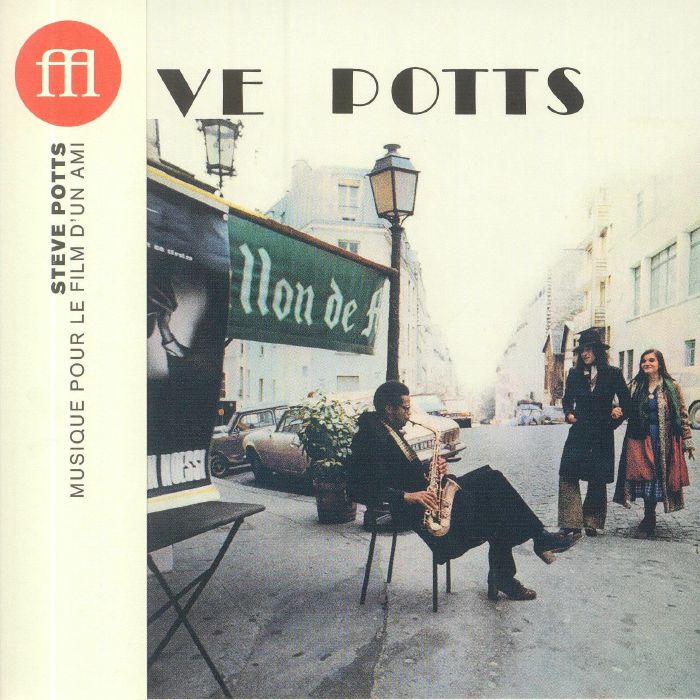
STEVE POTTS-MUSIQUE POUR LE FILM D’UN AMI.
Steve Potts-Musique Pour Le Film D’Un Ami.
Label: Souffle Continu.
Format: CD.
Sadly, musical history is littered with artists whose music never received the recognition that it deserved. Often, it’s only much later that their albums start to find the audience that they so richly deserve. That was the case with Alice Clark, Gram Parsons, Laraaji, John Martyn, Nick Drake, Terry Callier, William Onyeabor and Steve Potts whose 1975 soundtrack Musique Pour Le Film D’Un Ami was recently reissued by the Souffle Continu label. It was the latest chapter in the story of the former architecture student turned jazz saxophonist.
Steve Potts was born in Columbus, Ohio, on January the ’21st’ 1943 and grew-up in a musical family. At an early age, he discovered the saxophone when he heard his cousin Buddy Tate playing in Count Basie’s orchestra. Not long after this, Steve Potts decided to follow in his elder cousin’s footsteps and began playing the saxophone. Initially, this was just a hobby, but this soon changed.
After graduating from high school, Steve Potts headed to Los Angeles where simultaneously he studied architecture and music with Charles Lloyd. Eventually, he decided to dedicate himself to music and headed to New York where he continued his studies with Eric Dolphy.
Having settled in New York, Steve Potts became friends with bassist Ron Carter, and in his spare time was a regular in the city’s jazz clubs where he saw many jazz greats play. This included everyone from John Coltrane, Chick Corea, Herbie Hancock and Wayne Shorter to Jimmy Garrison, Larry Coryell and Tony Williams. However, it wasn’t long before Steve Potts was sharing the stage with some familiar faces.
When Steve Potts started working as a sideman he found himself accompanying Roy Ayers, Richard Davis, Joe Henderson and Reggie Workman. He also spent four years working with Chico Hamilton. This was all part of his musical apprenticeship and was good experience Steve Potts who had decided to leave New York and head to Europe.
In 1970, Steve Potts left New York behind and headed to Paris, France, where the next chapter in his career began. By then, he was regarded as one of the most talented avant-garde musicians of his generation. His decision to relocate to Paris allowed him to work with like minded musicians and fulfil his potential.
Over the next three years Steve Potts worked with a variety of French and American artists and groups. This included jazz guitarist Boulou Ferré, avant-garde pop vocalist and poet Brigitte Fontaine, gypsy guitarist Christian Escoudé, bebop tenor saxophonist Dexter Gordon as well as Johnny Griffin, Mal Waldron, Ben Webster, Hal Singer and free jazz pioneers Art Ensemble Of Chicago. Working with such a wide variety of artists and groups was good experience for Steve Potts. Despite that, by 1973 he was ready was to make the move from sideman to bandleader.
Steve Potts began putting his new band together in 1973 and the final lineup featured Boulou Ferré, Christian Escoudé, Gus Nemeth and Oliver Johnson. This was the start of a new chapter in Steve Potts career.
Later in 1973, he met soprano saxophonist Steve Lacy. Little did they know that this meeting was the start of a thirty year partnership that would see the pair tour the world several times and record over twenty-five albums.
Just two years later in 1975, Steve Potts briefly left Steve Lacy’s band when he got the chance to record his debut album Musique Pour Le Film D’Un Ami (Music For a Friend’s Film). This came about when director Joaquín Lledó needed a soundtrack to his forthcoming film Le sujet ou le secrétaire aux mille et un tiroirs. The man chosen to record the soundtrack was Steve Potts.
Joining Steve Potts in Studio Acousti was a talented and versatile band that included drummers Donny Donable and Kenny Tyler; double bassists Gus Nemeth, Jean-Jacques Avenel and guitarist Christian Escoudé. They were joined by pianist Frank Abel, Elie Ferré on acoustic guitar, accordionist Joss Basselli, trumpeter Ambroise Jackson and Keno Speller on bongos. Steve Potts played alto and soprano saxophone on Musique Pour Le Film D’Un Ami which was produced by Joachim Noessi.
When Musique Pour Le Film D’Un Ami was released later in 1975 on the small Un-Deux-Trois label, Steve Potts’ much-anticipated debut album sunk without trace. It was a bitter blow for one of leading lights of avant-garde music scene in Paris.
Steve Potts and his band had recorded what was a quite beautiful, groundbreaking mixploitatation soundtrack where they push musical boundaries to their limits as they fuse disparate genres. They combine avant-garde, free funk, fusion, leftfield kitsch and modal jazz during the eleven tracks. Sometimes, the group enjoyed the opportunity to embark upon an ambitious genre-melting jam that draws inspiration from various musical genres.
Other times, the music is inspired by the music of the early to mid seventies. This includes the album opener Marie-France where the keyboards sound as if they belong on an early seventies fusion album and the hissing hi-hats sound as if they belong in an early to mid seventies Blaxploitation soundtrack. Steve Potts had drawn inspiration from a variety of genres and artists and the result was an ambitious and innovative albums where genres melted into one.
Steve Potts’ genre-melting debut album Musique Pour Le Film D’Un Ami is best described as a mixploitatation album given the way he and his combined different musical genres as they provided the soundtrack to Joaquín Lledó’s film. The result was an album that went way beyond the similarly ambitious Blaxploitation soundtracks that were still popular in 1975. It was also an album that embraced and encouraged the hybridity concept of global unity. Musique Pour Le Film D’Un Ami was an album that was way ahead of its time.
It was only much later that critics and record buyers rediscovered Musique Pour Le Film D’Un Ami and the album started to attract a following. By then, the album was extremely difficult to find and when copies came up for sale were changing hands for ever increasing sums of money. This meant the album was often beyond the budget of many record buyers. Not any more as the Souffle Continu imprint has recently reissued Musique Pour Le Film D’Un Ami for the first time since its release in 1975.
Hopefully, and albeit belatedly a new generation of music fans will rediscover Steve Potts 1975 ambitious and innovative genre-melting debut album Musique Pour Le Film D’Un Ami which for too long has been overlooked and hopefully this seminal soundtrack will receive the recognition it deserves.
Steve Potts-Musique Pour Le Film D’Un Ami.
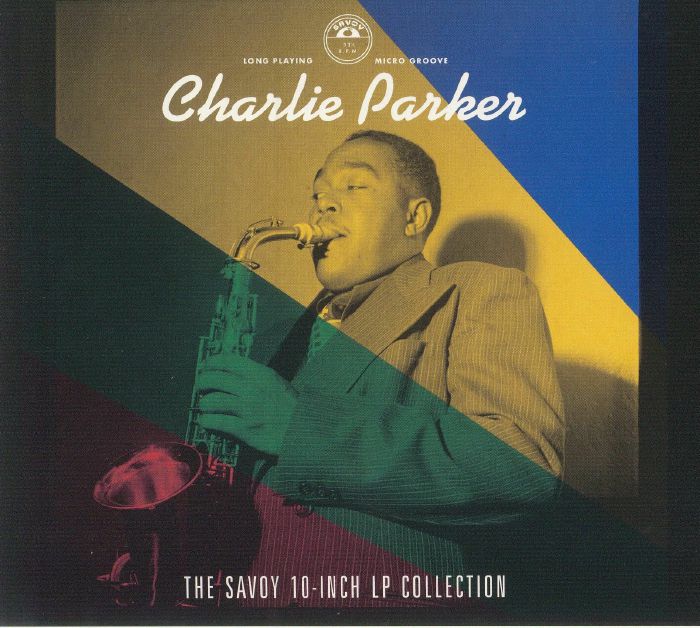
CHARLIE PARKER-THE SAVOY 10-INCH LP COLLECTION.
Charlie Parker-The Savoy 10-Inch LP Collection.
Label: Craft.
Format: CD.
In the early days of bebop, saxophonist Charlie Parker was regarded as a pioneer, and just like Bud Powell, Dizzy Gillespie, Max Roach and Miles Davis was at the forefront of this new, exciting, innovative and radical musical movement.
The first bebop albums were belatedly released after the end of the two year recording strike by the American Federation of Musicians between 1942 and 1944. During the strike union musicians were banned from making commercial recordings for any commercial record company. This was frustrating for the bebop pioneers who were unable to record the new genre that they had been honing and wanted to share with the wider world.
When the first bebop albums were released critics and jazz connoisseurs realised that this was a gamechanger rhythmically, harmonically and melodically. Soon, bebop was providing the basis for jazz in post-war and era. However, not everyone understood this new genre.
They grew up in the swing era and enjoyed the music of the big bands, but couldn’t understand bebop. It was like another language and was incomprehensible to some older jazz fans. Now they knew how the previous generation felt when they heard Louis Armstrong as he transformed jazz.
A generation later and Charlie Parker was also transforming jazz and was a leading light of the bebop movement. His performances were breathtaking as he played with speed, power and confidence. He dug deep and gave something of himself during emotive and soul-baring performances when he played live. Then in 1944, once the Petrillo ban was lifted the twenty-four year old signed to the Savoy label where he made his recording debut as a solo artist.
On November 26, 1945, Charlie Parker recorded for the Savoy label what was later marketed as the “greatest jazz session ever.” The band he led were billed as Charlie Parker’s Reboppers and featured drummer Max Roach, bassist Curley Russell, trumpeter Miles Davis and Dizzy Gillespie. Among the races they recorded were Billie’s Bounce, Ko-Ko and Now’s The Time. These tracks later featured on New Sounds Of Modern Music Volumes 1 and 2 which were released by Savoy. A total of four volumes were released between 1948 and 1950, and feature on The Savoy 10-Inch LP Collection which was recently released by Craft on CD.
A musical revolution began earlier in 1948 with the release of the first LP. Unlike modern albums it was only ten inches wide. This meant that there was limit to how music could fit on the new format. Despite that, it was a gamechanger for artists and record companies.
Unfortunately, by the autumn of 1948 Charlie Parker had left Savoy and they never released any albums of new music. However, for what became New Sounds Of Modern Music Volumes 1 the reissued some of his finest moments in 1950.
New Sounds Of Modern Music Volume 1.
Just like many record companies, executives at Savoy were looking through their back-catalogue for recordings to release on Charlie Parker’s debut album. Eventually, a total of eight tracks were chosen for New Sounds Of Modern Music Volume 1 and it was released in 1950. It featured eight tracks that were recorded between September the ‘15th’ 1944 and August the ‘14th’ 1947.
This included one of his earliest recordings Now’s The Time. It was recorded when the bandleader was just twenty-four but he plays with maturity as he combines speed and fluidity. That’s no surprise as Charlie Parker spent up to fifteen hours a day practising growing up in the thirties.
That was time well spent as Donna Lee, Chasing The Bird, Red Cross, Ko-Ko, Warming Up A Riff, Half Nelson and Sipping At Bells prove. They feature one of the founding father’s of bebop at the peak of his powers.
New Sounds Of Modern Music Volume 2.Buoyed by the success of his debut album, Savoy released the followup a year later in 1951. This required another look through the label’s back-catalogue. Eventually, eight tracks which were recorded between November the ‘26th’ 1945 and December the ‘21st 1947 were chosen and became New Sounds Of Modern Music Volume 2 the it was released in 1951.
Billie’s Bounce was the earliest recording on the album. It was recorded on November the ‘26th’ 1945 and by then, Charlie Parker was a prodigiously talented saxophonist who was already one of the leading lights of the bebop movement. Over the next two years he recorded Cheryl, Milestones, Another Hair-Do, Thriving From A Riff, Buzzy, Little Willie Leaps and Kaunstance. Bird was a prolific during this period but never seemed to let his standards drop.
These eight tracks are a reminder of a musical revolutionary who introduced new harmonic ideas into jazz that changed the genre forever. This included rapid passing chords, new variants of altered chords and chord substitutions. It was groundbreaking and thirty-two year old Charlie Parker was writing his name into jazz history.
Sadly, by 1952 Charlie Parker was still struggling with mental health problems and battling heroin addiction. This was something he had struggled with since he was prescribed opiates after a car accident when he was just sixteen. Life wasn’t easy for Charlie Parker who since 1950 had been living in New York with his common-law wife, Chan Berg and was still signed to Verve. However, Savoy continued to reissue the best of the music he recorded for the label between 1944 and 1948.
New Sounds Of Modern Music Volume 3.
1953 was another busy year for Charlie Parker. He continued to divide his time between recorded and playing live.
On the ‘15th’ of May 1953, Charlie Parker performed at the Massey Hall in Toronto, and led what was billed as a modern Quintet that featured drummer Max Roach, bassist Charlie Mingus, pianist Bud Power and trumpeter Dizzy Gillespie. Sadly, the concert clashed with a televised heavyweight fight between Rocky Marciano and Jersey Joe Walcott and very few people saw this landmark performance by the Quintet that night. However, when the album was released later in 1953 as Jazz At Massey Hall it was to critical acclaim and is now regarded as one Charlie Parker’s finest live albums.
Another Charlie Parker album released during 1953 was New Sounds Of Modern Music Volume 3. It featured six tracks that were recorded between September the ‘15th’ 1944 and September the ‘24th’ 1948. This included Bluebird, Bird Gets The Worm, Parker’s Mood, Steeplechase, Perhaps and Tiny’s Tempo. It was vintage Bird, and featured a musical master craftsman and bebop pioneer as he delivered six virtuoso performances. New Sounds Of Modern Music Volume 3 was the finest in the series so far.
New Sounds Of Modern Music Volume 4.
There was just one more instalment in the series released, New Sounds Of Modern Music Volume 4 released by Savoy. It featured six Charlie Parker compositions that were recorded between the September ‘29th’ 1947 and ‘18th’ September 1948. This included Constellation, Merry Go Round, Riff Warmer, Barbados, Ah-Leu-Cha and Marmaduke, where Charlie Parker was backed by all-star bands and showcased his considerable skills. He was undoubtably one of the finest practitioners of bebop during his four year spell at Savoy.
That was despite being just twenty-four when he signed to Savoy. He was a prodigiously talented saxophonist who revolutionised jazz and should’ve enjoyed a long and illustrious career. Sadly, that wasn’t to be.
By then, Charlie Parker was in the throes of heroin addiction. And when he couldn’t find heroin he used alcohol to numb the pain. Still in this altered state of mind he was capable of recording some of his finest albums. However, when he was booked to play live he unreliable and started to miss shows. It got that some clubs stopped booking one of the giants of jazz. This was something they would regret.
On March the ’12th’ 1955, Charlie Parker passed away aged just thirty-four. That day, he had visited his friend and patron Baroness Pannonica de Koenigswarter who was staying at her suite in the Stanhope Hotel in New York. The saxophonist was watching The Dorsey Brothers’ Stage Show on television when he suffered a heart attack.
When an autopsy took place the official causes of death were listed as a bleeding ulcer, an advanced case of cirrhosis of the liver, lobar pneumonia as well as a heart attack. Although Charlie Parker was only thirty-four the coroner mistakenly estimated his age at between fifty and sixty years old.
Meanwhile, jazz was in mourning at the loss of one of a giant of jazz, Charlie Parker whose career had been cut tragically short.
Charlie Parker had recorded some of his best music early in his career when he was signed to Savoy between 1944 and 1948. These four years were among the most productive of Charlie Parker’s career and are documented on The Savoy 10-Inch LP Collection. During this period, Charlie Parker was at the forefront of the bebop moment and constantly created new, exciting, innovative and radical music for Savoy which was home to a musical revolutionary who introduced new harmonic ideas into jazz that changed the genre forever.
Charlie Parker-The Savoy 10-Inch LP Collection.
NIMBUS SEXTET-DREAMS FULFILLED .
Nimbus Sextet-Dreams Fulfilled.
Label: Acid Jazz Records.
Format: CD.
The roots of the Glaswegian-based contemporary jazz combo can be traced to Scotland’s capital Edinburgh, where pianist, keyboardist and bandleader Joe Nichols was studying at Edinburgh University. That was where he met his long-time collaborators drummer Alex Palmer and bassist Mischa Stevens. They’ve been performing together since then.
In 2018, Nimbus Sextet’s lineup was almost complete when saxophonist Martin Fell and trumpeter Euan Allardice joined the group. The final piece of the musical jigsaw was the addition of James Mackay. And now there were six.
Since then, Nimbus Sextet have been honing their sound and playing live in Scotland and further afield. However, one of the most important gigs of the band’s nascent career was supporting Gilles Peterson at Glasgow’s much-missed Sub Club. Watching the band play was Wayne A. Dickson of Groove Line Records who spotted their potential and during the gig was convinced that Acid Jazz Records would be interested in signing Nimbus Sextet. They were, and Wayne A. Dickson, who has a wealth of music industry experience is now managing Nimbus Sextet.
With his help and encouragement and a lot of hard work on their own part Nimbus Sextet are going from strength-to-strength. They embarked upon a UK tour in February and March of 2020. Anyone who has been fortunate enough to see Nimbus Sextet live will agree that it’s an impressive sight and sound. The starting point for their music is jazz which heads in the direction of fusion and jazz-funk and also incorporates elements of funk neo-soul and world music. Live Nimbus Sextet take the audience on a musical adventure and are at their best when they improvise. It allows this talented and versatile group to showcase their considerable skills as the musical alchemists reinvent the material they’ve written over the last couple of years.
This includes the lead single from Nimbus Sextet’s forthcoming album Dreams Fulfilled which was recently released by Acid Jazz Records. During Trap Door Nimbus Sextet showcase their unique take on jazz. They fuse everything from funk and fusion to jazz-funk during this hook-laden and truly memorable and melodic single Trap Door.
Buoyed by the success of Trap Door, Nimbus Sextet returned with their much-anticipated sophomore single Lily White, which features vocalist Anthony Thomaz. It’s a song that was written in the winter of 2018 before saxophonist Martin Fell joined the group. He was travelling by train from Glasgow to Leeds and the vibrations of the train inspired what became the song’s rhythms. Then as he gazed out at the snow flecked fields this provided the inspiration for the song’s main theme. Soon, the song started to take shape, and once it was completed all the saxophonist needed was a vehicle for it.
When Martin Fell joined Nimbus Sextet he let the rest of the group hear the song. They spotted the song’s potential and decided to recorded it for their debut album Dreams Fulfilled. Joining the group was Anthony Thomaz who delivers a smooth, soulful and sassy vocal. He paints pictures and brings the lyrics to life with a neo-soul vocal. Meanwhile the rest of the group combine elements of jazz-funk, fusion, and jazz as they provide the perfect backdrop for this melodic and memorable song that showcases the combined and considerable talents of Nimbus Sextet.
Understated, atmospheric and cinematic are words that spring to mind as Deep Dark Blue Lights starts to reveal its secrets. So does wistful and melancholy. Meanwhile Nimbus Sextet’s playing is initially restrained as the rhythm section and wheezing keyboards combine to create a rueful slice late-night jazz. A fleet-fingered and funky bass signals it’s time to change direction and a blazing, quivering horn soars high above the arrangement. It’s joined by rolls of thunderous drums and banks of keyboard before a curveball is thrown and the tempo drops but there’s an element of drama. Soon, elements of jazz, funk, fusion and the influence of Herbie Hancock can be heard before this captivating and genre-melting eight minute epic reaches a crescendo. It’s been a roller coaster ride.
From the get-go, there’s a sense of sadness and melancholy on Klara. This comes courtesy of the soul-baring soliloquy. It begins with the line: “why can’t you see what you’re doing to me” and soon hurt and heartache is there for all to hear. When the soliloquy drops out, the jazzy arrangement meanders along with a probing piano playing a leading role as the rhythm section provide an understated backdrop. This less is more approach is perfect and as the piano leads from the front and the band jam. Later, the arrangement is stripped bare and the trumpet enters joining forces with a jazz-tinged guitar, the rhythm section and piano . With less than a minute to go the trumpet is played with power and passion and helps brings this beautiful track to a close. It’s without doubt one of the album’s highlights.
Séance is another of the slower tracks on the album. Keyboards give way to the horns which then flutter as the rhythm section provide the arrangement’s heartbeat. It has a wistful sound as the arrangement meanders along the horns occasionally flutter before the arrangement returns to its previous pedestrian sound. This allows the listener to reflect and ruminate. Later, the horns are played with speed and power adding a hopeful sound as the band jam and the track is transformed. It head in the direction of fusion when a blistering guitar is unleashed before returning to the earlier wistful sound. In doing so, this show’s Nimbus Sextet’s versatility during a track that’s full of twists and turns as well as subtleties and surprises.
The piano play a leading role on Dreams Fulfilled and is joined by the rhythm section during this understated and spacious arrangement that gradually reveals its secrets. Drums punctuate the arrangement, hi-hats ring out and a muted horn plays and accompanies the piano which is played deliberately and plays a starring role. Later, it’s played tenderly as is the alto saxophone. Not for long though and soon it’s being played with power as it soars high above the arrangement and along with the piano plays a starring role as the band jam for the last time. They enjoy the opportunity to stretch their legs before just Joe Nichols’ piano remains for the final minute and he adds a flamboyant flourish before taking his leave on this stunning nine minute cinematic opus which closes Dreams Fulfilled on a high.
Nimbus Sextet’s recently released debut album Dreams Fulfilled was much-anticipated and certainly doesn’t disappoint. The two singles Trap Door and Lily White are an important part of the album’s narrative and a tantalising taste of what was to come from the Glasgow-based group. However, these are just two of the six tracks that were recorded at Luigi Pasquini’s Anchor Lane Studios, in Glasgow. The result was an album that showcase a talented and versatile band who can seamlessly switch between and combine disparate musical genres and influences.
Jazz is at the heart of each and everyone of Nimbus Sextet’s songs on Dreams Fulfilled. They combine elements of funk, fusion, jazz-funk, Neo-Soul and world music during the six tracks on Dreams Fulfilled. Sometimes, the influence of Herbie Hancock can be heard in pianist and keyboardist Joe Nichols’ playing. In the rhythm section bassist Mischa Stevens has obviously been inspired by classic funk keep things funky with fleet fingered solos. However, it’s unfair to single two band members out as everyone plays their part in the sound and success of Dreams Fulfilled.
It’s a captivating musical journey where the music veers between smooth and soulful to hook-laden, melodic and memorable to beautiful and joyous right through to understated, atmospheric and cinematic. Sometimes, the music is wistful and rueful and allows the listener to reflect, ruminate and contemplate. Dreams Fulfilled shows the different sides to Nimbus Sextet who are one of the rising stars of Scotland’s vibrant and eclectic music scene and look like becoming one of the success stories of the forthcoming decade. Especially if they can continue to record albums of the quality of Dreams Fulfilled which showcases Nimbus Sextet’s versatility during a carefully crafted, genre-melting album that’s full of twists and turns and subtleties and surprises.
Nimbus Sextet-Dreams Fulfilled.
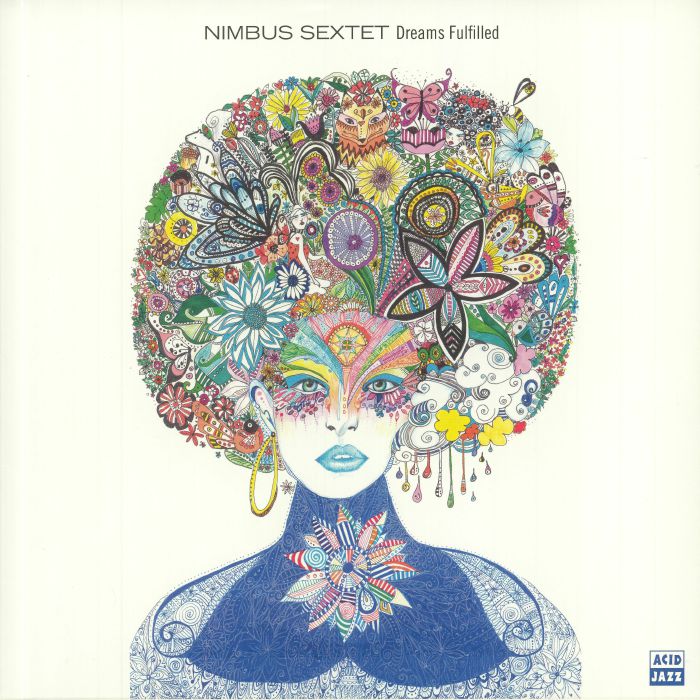
CLASSIC ALBUM: BAD COMPANY-STRAIGHT SHOOTER.
Classic Album Bad Company-Straight Shooter.
Just a year after supergroup Bad Company was formed, they were already one of the biggest bands in Britain, and their eponymous debut album was well on its way to selling five million copies in America alone. Bad Company reached number one in the US Billboard 200 and was certified platinum five times over. In Britain, Bad Company reached number three, and was certified gold. For Paul Rodger, Simon Kirke, Mick Ralphs and Boz Burrell their lives were transformed.
That was despite each of the four members of Bad Company having already been members of successful bands. Vocalist Paul Rodger and drummer Simon Kirke were previously, members of Free while guitarist Mick Ralphs and bassist Boz Burrell had been members of Mott The Hoople. While Free and Mott The Hoople were commercially successful, the success that Bad Company was enjoying would surpass this.
From their 1974 debut album Bad Company, right through to 1979s Desolation Angels, Bad Company were one of the biggest selling bands on both sides of the Atlantic. Their first five albums sold an estimated 13.8 million albums in America and Britain alone. It seemed that Bad Company could do wrong. That proved to be the case when Bad Company released their sophomore album Straight Shooter and pickuped where they left off on their eponymous debut album.
Given the commercial success of Bad Company the band’s record company Swan Song and manager Peter Grant were keen to strike while the iron was hot. They decided that Bad Company should return to the studio as soon as possible. So, in September 1974, Bad Company found themselves back in the studio.
Recording of Straight Shooter, Bad Company’s sophomore album was scheduled to begin at Clearwell Castle, Gloucestershire, England, in September 1974. That’s where Bad Company began recording eight new songs, written by the four band members.
For Straight Shooter, Paul Rogers penned Shooting Star and Call On Me and he also cowrote Feel Like Makin’ Love, Deal With The Preacher and Wild Fire Woman with Mick Ralphs. He also contributed Good Lovin’ Gone Bad, while Simon Kirke penned Weep No More and Anna. These eight tracks became Straight Shooter.
At Clearwell Castle, the band began work in September 1974. Bad Company’s rhythm section of drummer Simon Kirke and bassist Boz Burrell were joined by Mick Ralphs on guitar and keyboards. Lead vocalist Paul Rodger played guitar and piano. Bad Company worked quickly, recording and producing Straight Shooter’s eight songs during September 1974. They also recorded Whisky Bottle, which became the B-Side of Good Lovin’ Gone Bad which was another Paul Rogers and Mick Ralphs composition. Once these tracks were recorded, recording engineer Ron Nevison mixed Straight Shooter.
Mixing of Straight Shooter took place during December 1974. Ron Nevison mixed Straight Shooter at Air Studios in London. While this was happening, Straight Shooter’s iconic cover was being designed.
London based art design group Hipgnosis was chosen to design Straight Shooter’s cover. They had already designed legendary covers for Pink Floyd, Genesis, Led Zeppelin, The Alan Parsons Project, Electric Light Orchestra, Al Stewart and T-Rex. Bad Company were Hipgnosis’ latest high profile client. For Straight Shooter, Hipgnosis pulled out all the stops and Straight Shooter’s iconic “rolling dice” cover, would become a classic album cover. It was a cover befitting a classic rock album. The question was, had Bad Company just recorded their second classic album? Bad Company held their breath until the critics delivered their verdict.
Review copies of Straight Shooter were sent out to critics and after they had time to digest Bad Company’s sophomore album, it was time for the critics to deliver their verdict. Unusually, there was no consensus. Different critics responded differently to Straight Shooter. Some thought that Straight Shooter as a much better album than Bad Company. Partly, this was because, the members of Bad Company maturing as songwriters. However, one thing that divided critics was how to describe Straight Shooter?
Many people, including music critics, described Bad Company as a hard rock group. However other critics weren’t convinced and felt that Straight Shooter wasn’t heavy enough to be described as a hard rock album. Their reasoning was that Paul Rodger’s voice wasn’t strong enough and that the music didn’t have a hard enough sound. Other critics cited the ballads Shooting Star and Feel Like Makin’ Love as proof. Surely, a hard rock band they argued didn’t sing ballads? Bad Company did, and this proved a successful formula.
Good Lovin’ Gone Bad was chosen as the lead single from Straight Shooter. When it was released in March 1975 it only reached number thirty-six in the US Billboard 100. This was a disappointment for Bad Company as greater things had been forecast for Good Lovin’ Gone Bad. However, this proved to be teething problems for Bad Company.
When Straight Shooter was released on April 2nd 1975, it reached number three in Britain, Canada and the US Billboard 200 charts. Straight Shooter was certified gold in Britain and Canada. In America, Straight Shooter sold over three million albums and was certified triple platinum. Bad Company were now one of the biggest rock bands in the world. It seemed they could do no wrong.
Feel Like Makin’ Love was released in July 1975, and became the second single to be released from Straight Shooter. It reached number twenty in Britain and number ten in the US Billboard 100. Bad Company, like Led Zeppelin before them, were more popular in America than their home country, Britain. That had been the case with their eponymous debut album, Bad Company, and was the case with Straight Shooter.
Good Lovin’ Bad opens Straight Shooter and straight away, Bad Company kick loose and return to their hard rocking best. The thunderous rhythm section of drummer Simon Kirke and bassist Boz Burrell kick loose are joined by Mick Ralphs’ blistering, searing guitars. Soon, Paul Rodger delivers a powerhouse of a vocal. How anyone could question how he lacks the power to front a hard rock band seems incredible. He hollers and struts his way through the lyrics revelling in the line: “baby I’m a bad man.” Behind him a glorious wall of sound unfolds, providing the backdrop to a hard rock vocal masterclass.
Just a chiming guitar opens Feel Like Makin’ Love, where Bad Company through a curveball. The guitar is joined by a tender, needy vocal as Paul Rodger sings: “when I think about you, I think about love.” Meanwhile, the three part harmonies and an understated rhythm section accompany Paul. However, this proves to be no ordinary ballad. Crunchy, rocky, guitars are briefly unleashed. Mostly, though Bad Company show their sensitive side on what’s a beautiful ballad.
A guitar ascends the arrangement to Weep No More, climbing above the swathes of lush, cascading string and braying horns. Soon, the rhythm section and a tack piano sets the scene for Paul Rodger’s vocal. By now, the arrangement is heading in the direction of blues rock. Flourishes of piano, washes of Hammond organ and the guitar see to that. Soon, swathes of strings almost dance in delight as Paul Rodger sings of his imminent homecoming.
Shooting Star is another of Straight Shooter’s ballads and tells the story of a rock star who lived fast and died young. Inspiration for the song came from the lives of Jimi Hendrix, Jim Morrison and Janis Joplin. There’s several similarities to Feel Like Makin’ Love. Again an acoustic guitar is used extensively. Then there’s the use of three part harmonies. The other similarity is how Bad Company veer between their rocky and understated sounds. This proves a winning combination. Especially, with guitarist Mick Ralphs unleashing some of his best licks. Everything is in place for Bad Company’s timeless homage to the three members of the twenty-seven club.
Deal With The Preacher sees Bad Company kick loose from the opening bars and they’re at their heaviest. Machine gun guitars accompany hypnotic drums and a probing bass as Paul Rodger delivers another strutting, swaggering vocals. It can only be described as a powerhouse, complete with whoops and hollers. Guitarist Mick Ralphs delivers some blistering licks which are among his best on Straight Shooter. The same can be said of Deal With The Preacher which is a stunning slice of classic seventies rock allows Bad Company to showcase their considerable skills.
Bad Company drop the tempo on Wild Fire Woman and reign in the power slightly. Still drummer Simon Kirke and bassist Boz Burrell provide the heartbeat. Guitarist Mick Ralphs fires off rocky licks and when Paul Rodger’s vocal enters, his lived-in vocal is a bit more understated. Washes of Hammond organ and blistering guitars accompany his vocal. Before long, he kicks loose, and combines power and passion as the rest of Bad Company match him every step of the way. When his vocal drops out at the bridge, the rest of Bad Company jam. This inspires him to return with another of his trademark vocal powerhouses as he vamps his way though the track to its rocky crescendo.
Anna was one of the tracks that divided the opinion of critics and forty-five years later that seems somewhat unjust. It’s a soul baring ballad where once again, Bad Company show their sensitive side. Paul Rodger’s emotive, heartfelt vocal takes centre-stage while the rest of Bad Company drop the tempo and play within themselves as the rhythm section, guitar and Hammond organ frames the needy, soul-baring vocal.
Call On Me closes Straight Shooter. A piano and washes of panned guitar set the scene for Paul Rodger’s vocal and soon, the rhythm section and harmonies are added to this ballad. Again, Bad Company play within themselves. When a guitar solo replaces the vocal Mick Ralphs doesn’t unleash a blistering solo. It’s as if Bad Company were keen to keep the volume consistent throughout on this underrated ballad,
For Bad Company, it was never going to be easy following up their 1974 eponymous debut album which was one of the biggest selling albums of 1974. It transformed Bad Company into one of the biggest British rock bands of the seventies.
The former members of Free and Mott The Hoople had only formed Bad Company a year earlier, and then signed to Led Zeppelin’s Swan Song label. Led Zeppelin’s manager, Peter Grant, became Bad Company’s manager. He was the perfect man to guide Bad Company’s career and advised Bad Company to get back in the studio straight away, That was why in September 1974, Bad Company recorded their sophomore album Straight Shooter. It was released in April 1975, just ten months after their debut album, Bad Company.
On its release, Straight Shooter divided opinion. There was no consensus. Some critics argued that Straight Shooter was a better album while others argued that it wasn’t a hard rock album. That is partly true. Straight Shooter features a trio of ballads which shows a very different side to Bad Company. They’re no longer the hard rocking swaggering rock band and instead show their sensitive side. Then on Call on Me, Bad Company reign in their hard rock sound and produce an A.O.R. sounding track. The rest of Straight Shooter finds Bad Company unleashing their hard rock sound. It’s Bad Company in full flow and that was and still is a glorious sound.
Forty-five years after Straight Shooter was released the album sounds as good as it did back in 1975. It’s an album that has aged well and has stood the test of time. Straight Shooter could be called a timeless rock album. It was certainly hugely successful.
Eventually, Straight Shooter sold over three million copies in America alone. Across the world, Bad Company, the latest British supergroup were enjoying critical acclaim and commercial success with Straight Shooter, the second classic album of their career. For five years and five albums Bad Company could do no wrong and this musical behemoth sold over fourteen million albums and released two classic albums, including 1975s Straight Shooter.
Classic Album Bad Company-Straight Shooter.
CULT CLASSIC: DEUTSCH AMERIKANISCHE FREUNDSCHAFT-FUR IMMER.
Cult Classic: Deutsch Amerikanische Freundschaft-Für Immer.
History treats groups very differently and that was the case with Deutsch Amerikanische Freundschaft a.k.a. DAF, who released five albums between 1978 and 1982. They’ve been described variously as the “godfathers of techno,” the pioneers of EBM and the forefathers of electropunk. DAF were an influential and innovative group and achieved a lot in a relatively short period of time, before bowing out in 1982 with their swan-song Für Immer . However, the DAF story began four years earlier in 1978.
Gabi Delgado-López and Robert Görl met at the at punk club Ratinger Hof, in Düsseldorf, Germany, in August 1978, where the pair were regulars. Not long after this, the two friends decided to form a band together. This band was DAF which initially, was a duo featuring Delgado-López on stylophone and drummer Robert Görl.
When DAF started out, they were one of a number of early Neue Deutsche Welle bands that had been formed within their social circle. However, very few of these bands were as influential as DAF.
Having started out as a duo, Gabi Delgado-López and Robert Görl were joined by bassist Michael Kemner, guitarist Wolfgang Spelmans and keyboardist Kurt “Pyrolator” Dahlke. This new, expanded lineup of DAF decided to enter the studio for the first time.
The early recordings didn’t go to plan, which resulted in Gabi Delgado-López leaving the band temporarily. This meant just four of the members of DAF entered the studio to record their debut album.
Ein Produkt der Deutsch-Amerikanischen Freundschaft.
This was Ein Produkt der Deutsch-Amerikanischen Freundschaft (A Product Of German-American Friendship for Kurt “Pyrolator” Dahlke’s Ata Tak label. When Ein Produkt der Deutsch-Amerikanischen Freundschaft was released in 1979, this fusion of punk and industrial music received mixed reviews from critics. Some critics confused by the album and simultaneously found captivating and repugnant. There seemed to be no middle ground with DAF’s debut album.

Shortly, after the release of Ein Produkt der Deutsch-Amerikanischen Freundschaft was released Kurt “Pyrolator” Dahlke left the band, to pursue other projects. He was replaced by assist and saxophonist Chrislo Haas who also played various electronic instruments.
Not long after this, the new lineup of DAF moved to London, as that was where many of the major and independent record labels were situated. This included Daniel Miller’s Mute Records who signed DAF.
Die Kleinen und die Bösen.
Daniel Miller had a longstanding love and admiration for Krautrock and modern German music, arranged for DAF to record with producer Conny Plank. He produced one side of Die Kleinen und die Bösen while the other was recorded live. When Die Kleinen und die Bösen was released later in 1980 it was hailed as an ambitious album that saw DAF start to make move from industrial music to modern dance music. However, the sales of Die Kleinen und die Bösen were low and what was one of the early electropunk albums was DAF’s only release for Mute.

Following the release of Die Kleinen und die Bösen, DAF’s numbers were reduced, and by the time they signed to Virgin Records, they were a duo featuring Gabi Delgado-López and Robert Görl.
Alles Ist Gut.
For their Virgin Records’ debut, DAF once again headed to Canny Plank’s Studio, where they worked with one of the legends of modern German music between December 1980 and January 1981. The sessions resulted in DAF’s third album Alles Ist Gut which was released later in 1981.
Critical acclaim accompanied Alles Ist Gut which was ambitious, innovative and genre-melting album. It was a fusion of Neue Deutsche Well, electronic body music (EBM) and electropunk. Alles Ist Gut reached number eight in Austria, fifteen in Germany where it would eventually sell hundreds of thousands of copies. However, that wasn’t the end of the success.
DAF had chosen Der Mussolini as the lead single from Alles Ist Gut. This resulted in the band’s first hit single and DAF were going from strength to strength.

Gold und Liebe.
Buoyed by the success of Alles Ist Gut, DAF returned to Canny Plank’s Studio in August 1981 and spent two months recording Gold und Liebe. It was completed in September 1981, and scheduled for release in late 1981.
The Conny Plank produced Gold und Liebe was released to mixed reviews. One of the criticisms was that the music wasn’t as eclectic as on Alles Ist Gut, and that DAF had just about exhausted the possibilities offered by the sixteen-step sequencer. Still, a few critics felt that the album was innovative and ambitious, as it examined the themes of alchemy. Despite there being no consensus amongst critics, Gold und Liebe enjoyed a degree of commercial success.
In Austria, Gold und Liebe reached number four and spent ten weeks in the charts. Meanwhile, Gold und Liebe stalled at thirty-five in the German charts, and failed to replicate the success of Alles Ist Gut. Despite that, 1981 had been a successful year for DAF.
At the end of 1981, the British music magazine included Alles Ist Gut in its top ten albums of the year. 1981 had been an important year for DAF, who had released two albums, and made a commercial breakthrough just three years after the band was formed.

Für Immer.
1981 had been a roller coaster year for DAF, who made their commercial breakthrough with Alles Ist Gut, and watched as Gold und Liebe failed to enjoy the same success. Gabi Delgado-López and Robert Görl knew that they needed another successful album to kickstart their career.
The criticism that DAF had just about exhausted all of the possibilities offered by the sixteen-step sequencer must have stung, because they added ab Oberheim OB-Xa to their musical arsenal for the recording of Für Immer.
Conny Plank who had worked with some of the most innovative musicals of the seventies, including pioneers of Krautrock at one end of the spectrum to electropop artists at the other. The pioneering producer was the perfect person to encourage DAF to expand their musical horizons.
By the time that DAF began work on Für Immer, they were already disillusioned after the reception of Gold und Liebe. At Conny Plank’s Studio in May 1982 DAF began recording what was an ambitious album that was very different from much of the music that had been released during the first half of 1982. The music wasn’t exactly melodic, but couldn’t be described as harsh or brittle as DAF switched between EBM, electropunk, funk, rock ’n’ roll, twisted metal drone and a full-blown dance track on Wer Schön Sein Will Muss Leiden which would later close the album. DAF’s decision to record such an eclectic album seemed to be their way answering their critics who had criticised Gold und Liebe.
Soon, though, what the critics thought of Gold und Liebe was the least of DAF and Virgin Records’ worries. The sense of disillusionment that was present when DAF entered Conny Plank’s Studio had been slowly tearing the band apart. Maybe it hadn’t been a wise decision to let DAF begin recording Für Immer, and when things came to a head, the band decided to split-up.
After five albums in just three years it was the end of the road for DAF, who released Für Immer later in 1982. DAF’s swan-song was well received as they flitted between EBM, electropunk, funk, rock ’n’ roll and twisted metal drone. It was a truly eclectic album that opened with the Kraftwerk inspired electropop of Im Dschungel Der Liebe (In The Jungle Of Love). However, other tracks were quite different, and some were regarded as dark and controversial songs.
Especially Kebabträume which featured ambiguous lyrics about Turkish immigrants. Lyrics like: “Turkish culture behind the barbed wire…Germany, everything has passed!..,We are the Turks of tomorrow” brought criticism DAF’s way. So did Die Götter Sind Weiß which features the lyrics: “your body is white, like the body of the gods.” Even the album cover was deemed controversial, and some critics compared it to the fascistic imagery of the past. DAF it seemed were playing were with fire on Für Immer.
Elsewhere was the EBM anthem Ein Bißchen Krie which was hard and funky. Verlieb Dich In Mich (Fall In Love With Me) was hook-laden, dancefloor friendly and sometimes, hinted at Sparks. Geheimnis (Secret) is a genre-melting track that is oft-overlooked and falls into the category of hidden gem. Dark, dramatic and ominous sounding describes Die Lippe (Lip). Very different was the beautiful paean Prinzeßin which shows another side to DAF on Für Immer. However, like most EBM groups DAF returned to familiar themes.
This included the themes of health and beauty were more like obsessions to EBM groups. Proof of this is Verehrt euren Haarschnitt (Adore Your Haircut), which features the unforgettable lyrics: “worship your haircut.” Then there’s the album closer Wer Schön Sein Will, Muss Leiden (Who Wants To Be Beautiful, Must Suffer) which is a full-blown dance track that closes Für Immer on a high, and allows DAF to bow out in style.
Sadly, when Für Immer was released later in 1982, the album failed to replicate the success of their Virgin Records debut Alles Ist Gut. In fact, it never even came close to enjoying the success of Gold und Liebe. Instead, Für Immer was the one that got away for DAF.
Despite the darkness, controversy and the obsessions with health and beauty that were common to many EBM groups, Für Immer is an underrated album that deserves to be reevaluated. The recent reissue offers this opportunity to revisit Für Immer, which was the swan-song for DAF who were only together four years, but managed to release five albums. Their finest album was Alles Ist Gut, which was the first of the Virgin Records trilogy which ended with Für Immer. It was the end of era for DAF, who nowadays, are regarded as groundbreaking group.
Since they split-up, DAF have variously been described as the “godfathers of techno,” the pioneers of EBM and the forefathers of electropunk. DAF achieved a lot in what was a relatively short space of time. They were founded in 1978, and released their debut album in 1979. This was the first of five albums that DAF recorded over the next three years, before bowing out in style in 1982 with their swansong Für Immer which is a reminder of a truly innovative and important group.
Cult Classic: Deutsch Amerikanische Freundschaft-Für Immer.

ALAIN BELLAICHE-SEA FLUORESCENT/KIRLIAN EFFECT.
Alain Bellaïche-Sea Fluorescent/Kirlian Effect.
Label: Souffle Continu.
Format: CD.
Alain Bellaïche was born in Tunis, the capital of Tunisia, but spent his childhood in Cannes, on the French Riviera which was where he discovered music and played his first concerts.
Initially, he played in friends’ houses where he was guaranteed a captive and appreciative audience. Soon, he had graduated to the local folk clubs where he continued to hone his sound and stagecraft. By then, Alain Bellaïche’s talent was apparent and he was already dreaming of making a living as a musician. That however was all in the future.
Before that, he journeyed to Paris where he enrolled at the influential and prestigious Ecole des Beaux-Arts in Paris. Having graduated, Alain Bellaïche continued his musical career and in 1973 headed to he left France and headed to America.
That was where his home for the next ten years and where he recorded two albums for David Geffen’s Asylum Records. The first album was a collaboration with a fellow countryman.
Metropolitain.
This was Metropolitain which was Alain Bellaïche collaboration with Alain Renaud of Heldon, the Paris-based progressive rock and space rock band. For the album, Alain Bellaïche had written nine new tracks and cowrote The Last One with Alain Renaud. The only cover version was Steve Winwood’s Can’t Find My Way Home. These track were recorded at Bell Studio, New February and March of 1974 in Bell Studio, in New York, with a tight talented band that included keyboardist Nils Lofgren, and the album was released later in 1974.
Billed as Alain Bellaïche avec Alain Renaud on Metropolitain, the pair fused elements of blues, folk, jazz, pop and rock on what was a vastly underrated album. Sadly, the album slipped under the musical radar and record buyers missed out on what was a carefully crafted and enchanting album.

Sea Fluorescent.
After Metropolitain failed to find an audience, Alain Bellaïche began work on his debut solo album Sea Fluorescent. He wrote another nine new tracks which he decided to record at Bell Studio, New York during September and October 1975.
Joining Alain Bellaïche who played acoustic guitar, electric guitar, 12-string guitar, percussion and vocals during the Sea Fluorescent sessions was a small but talented band. This included drummer and percussionist Jean-François Fabiano who also played bells, cabasa, celesta, congas, maracas, triangle, tambourine, vibes and whistle. They were joined by bassist Wornell Jones and Jerry Goodman who played electric violin. Taking charge of the arrangements and production was bandleader Alain Bellaïche who spent the next two months recording his debut album. By October 1975 Sea Fluorescent was complete and ready for release in 1976. So was another album Alain Bellaïche had featured on.
Alain Bellaïche had joined Heldon in the studio when they recorded their fourth album. He only played on one track Perspective IV, which was a near twenty-two minute epic which was the highlight of Heldon IV “Agneta Nilsson” when it was released in 1976.
When Asylum Records were preparing for the release of Sea Fluorescent in 1976 Alain Bellaïche’s debut album sat alongside releases by Bob Dylan, Joni Mitchell, The Byrds and Tom Waits. He was rubbing shoulders with music royalty. The only problem was the music on Sea Fluorescent was very different and he had been influenced by Herbie Hancock, John McLaughlin, Led Zeppelin, The Spencer Davis Group and Weather Report. This resulted in what was an eclectic sounding album that referenced a variety of genres.
Opening Sea Fluorescent is California where the funky rhythm section are soon joined by Alain Bellaïche’s vocal powerhouse. It seems to have been inspired by Led Zeppelin’s Robert Plant. Meanwhile, the bandleader’s guitar veers between funky to rocky and references the West Coast. Later, keyboards are added to this memorable example of West Coast funk that whets the appetite for the rest of the album.
A lone acoustic guitar plays on San Andreas and is joined by vibes and a scatted vocal. What follows is a beautiful, dreamy cosmic ballad that is truly timeless and should be a favourite of compilers.
From the opening bars of I’m Angry there’s more than a nod to The Who. Alain Bellaïche’s vocal is full of frustration and hurt at the betrayal he’s experienced. This is reflected in his scorching, searing guitar licks as the rhythm section drive the arrangement to this rocky anthem along.
The rhythm section and guitar combine before Alain Bellaïche’s impassioned vocal enters on Got My Place In The Country. He unleashes rocky and funky guitar licks as a walking bass is dropped in and out. Later, Jerry Goodman’s electric violin is added to this genre-melting track. It features elements of jazz-funk, folk, fusion and pop-rock on a truly memorable song.
A strummed guitar opens Reggae and Western before the bass, drums and piano enter and the song starts to build. When Alain Bellaïche’s vocal enters it’s tender as he sings of leaving the city behind and being with the woman he loves. Backing vocalists accompany him on this cinematic ballad and soar above the piano-led arrangement.
Understated describes Spanish Roots as an acoustic guitar plays and weaves its way across the arrangement. At first it’s played gently but sometimes it’s played with power and passion. Just vibes accompany the guitar on a track that shows yet another side of Alain Bellaïche.
From the get-go, it’s obvious that Foolin’ Myself is one of the album’s highlights. Alain Bellaïche delivers a soul-baring vocal and with his band combine blues, jazz-funk and fusion. His vocal is rueful, emotive and fool of regret as he sings of a relationship that broke up and the partner he loved, lost and can’t find now that he’s changed his way. When his vocal drops out blistering guitars punctuate the arrangement to this memorable and melodic tale of love lost.
Sun Blues is another short track where an acoustic guitar plays before an impassioned vocal is added. Soon, it drops out and the before long track this quite beautiful track is at an end.
Closing Sea Fluorescent is the title-track which is an instrumental that lasts 6:30. It’s a case of less is more with a chiming guitar being joined joined by a bass that cuts through the arrangement which is punctuated by drums as cymbals rinse and hiss. Later, the sound of birdsong is added as this laidback and cinematic arrangement meander along as Alain Bellaïche saves one of the best songs on the album until last.
Sadly, when Alain Bellaïche’s debut album Sea Fluorescent was released by Asylum Records in 1976 it failed to find the audience it deserved. Part of the problem that the record company didn’t know how to market him? Alain Bellaïche was put in the Asylum Records’ catalogue beside Bob Dylan, Joni Mitchell, The Byrds and Tom Waits. However, his music sounded nothing like theirs. That was a mistake as Alain Bellaïche had honed his own inimitable sound.
On Sea Fluorescent, Alain Bellaïche flits between and fuses avant-garde, funk, fusion, jazz, jazz-funk and pop-rock and rock. Sometimes, the album heads in the direction of AOR and West Coast funk and there were the occasional forays in the direction of folk. Sea Fluorescent was an ambitious, innovative and eclectic album where the music was variously anthemic, beautiful, cinematic, melodic and memorable. It also showed the different sides to Alain Bellaïche who was a talented and versatile musician who should’ve gone onto to greater things. Sadly, it was five years before he returned with new music.
In 1981, Kirlian Effect released their epigynous debut single on the French label Carrere. It found Kirlian Effect combining fusion and jazz-funk on Armadillo-Botafogo which featured a vocal from Alain Bellaïche. Tucked away on the B-Side was the hidden gem Chacha Emotionnel. However, history repeated itself when then the single failed commercially. It must have been a bitter blow for Alain Bellaïche given the quality of the music and sadly, he never released any more music after Kirlian Effect. It was his one and only single.
Just like many albums and singles that failed to find an audience first time round, a new generation of record buyers have discovered both Sea Fluorescent and Kirlian Effect which nowadays are rarities. Nowadays, a copy of Sea Fluorescent can change hands for as much as $300. This is beyond the budget of most people and is why the Souffle Continu label’s reissued on CD of Sea Fluorescent and Kirlian Effect is a welcome one.
Now a new generation of music lovers can discover Alain Bellaïche’s long lost hidden gems Sea Fluorescent and Kirlian Effect which were recorded by Alain Bellaïche during his ten year American adventure. Sea Fluorescent should have been the start of a long and successful solo career for Alain Bellaïche, but sadly, commercial success and critical acclaim eluded this talented and versatile singer, songwriter, arranger and producer whose music is somewhat belatedly, is starting to find an appreciative audience.
Alain Bellaïche-Sea Fluorescent/Kirlian Effect.
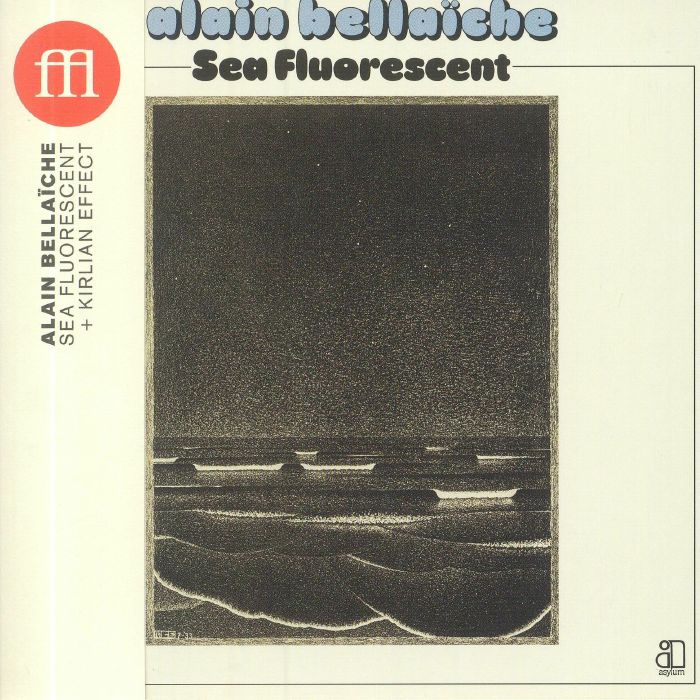
ESTHER PHILLIPS-WHAT A DIFF’RENCE A DAY MAKES.
Esther Phillips-What A Diff’rence A Day Makes.
Label: Music On CD.
Format CD.
Despite releasing eighteen albums during a career that lasted thirty-five years most people haven’t heard of Esther Phillips. That’s a great shame because she was one of the most talented, versatile and underrated singers of her generation. She possessed a totally unique and unmistakable voice and her versatility allowed her to sing blues, country, jazz, pop and soul. Esther Phillips was a truly versatile vocalist who from an early age seemed destined to make a career out of music.
Esther Mae Jones was born in Galveston, Texas, on December the ‘23rd’ 1935, and when she was growing up her parents divorced. This resulted in her spending part of her time with her mother in the Watts district of Los Angeles and the rest of her time with father in Houston. The church played an important part in the Esther Mae Jones’ life and she sang in the church choir. That was where her voice developed and by the time she was fourteen she was already a talented vocalist. That was when she saw the advert for a talent contest at a local blues club.
This was the perfect opportunity for Esther Mae Jones. However, she was reluctant to enter the talent contest until her sister encouraged her to do so. Reluctantly, she agreed and entered and won the talent contest at The Barrelhouse which was owned by Johnny Otis. He was so impressed that he recorded her for Modern Records and she joined his traveling revue, the California Rhythm and Blues Caravan, where she was billed as Little Esther.
A year later, in 1950, aged just fifteen, Little Esther’s recording career began when she released her debut single Double Crossing Blues which reached number one in the US R&B Charts. This was the first of a number of successful singles she released on Savoy with the Johnny Otis Orchestra.
The followup to Double Crossing Blues was Mistrusting Blues a duet with Mel Walker which was released in 1950 and topped the charts for four weeks. However, Little Esther’s third single Misery stalled at number nine in the US R&B charts in 1950. Later that year, she released Cupid’s Boogie and her latest collaboration with the with the Johnny Otis Orchestra resulted in her third number one US R&B single.
Further success came Little Esther’s way during 1950 when Deceivin’ Blues reached number four in the US R&B charts while Wedding Boogie and Far Away Blues (Xmas Blues) both reached number six. Little did the young singer know that she had just enjoyed the most successful year of her career. Never again would she reach the same heights.
Two years later in 1952, Little Esther released Ring-a-Ding-Doo which reached number eight in the US R&B charts. It was her eight hit single of her short carer. However, it would be another ten years before she enjoyed another hit single.
By the mid-fifties, Little Esther had become addicted to drugs and having to spend time in hospital recovering. After she left recovered and left hospital money was tight so she had moved back into her father’s house in 1954. To make ends meet, she sang in small nightclubs around the Southern states of America. However, sometimes she relapsed and spent time in a private hospital in Lexington, Kentucky, receiving treatment for her addiction.
By 1962, the twenty-seven year old singer was billed as Little Esther Phillips. She had adopted the name “Phillips” after she saw it on a gas station sign. One night she was singing in a club in Houston where she was spotted by country singer Kenny Rogers. He was so impressed that he helped her get a contract with his brother Lelan’s Lenox Record label.
This was a new start for Little Esther Phillips and was home for her for the next two years. By 1962, she had overcome her problems and was ready to relaunch her recording career. Her comeback single Release Me produced by Bob Gans, and reached number one in the R&B Charts and reached number eight in the US Billboard 100. It looked like Little Esther Phillips was back.
In 1963, she released I Really Don’t Want to Know as the followup and it stalled at sixty-one in the US Billboard 100. This must have been a disappointment for Little Esther Phillips after she enjoy. Little did she know that things would get worse before they got better.
Later in 1963, she released Am I That Easy to Forget which failed to trouble the charts. This was another bitter blow for Little Esther Phillips. Things improved when You Never Miss Your Water (Til the Well Runs Dry) reached seventy-three in the US Billboard 100 and gave her a minor hit single. This was a small crumb of comfort and the followup You Want It (I’ve Got It) failed to chart. 1963 had been a difficult year for Little Esther Phillips and she hoped that things would improve in 1964.
It did when she released she signed to Atlantic Records in 1964 and Double Crossing Blues was released as single in March. However, it was the B-Side Hello Walls that reached number thirty-six in the US R&B charts and give Little Esther as she was billed a minor hit single.
This was the perfect way to start her career at one of the biggest and most prestigious American record labels. It was a huge opportunity for Little Esther Phillips. However, when she released Mo Jo Hannah in May 1964 it failed to chart. It was a similar case with It’s Too Soon To Know in September and Some Things You Never Get Used To in December 1964. Little Esther Phillips must have known that she needed a hit single soon to kickstart her career at Atlantic Records.
In March 1965, Esther Phillips as she was now billed released a cover of The Beatles song And I Love Him as a single. It reached number forty-four in the US Billboard 100 and eleven in the R&B Charts, and this resulted in The Beatles bringing Esther Phillips over to the UK, which were she gave her first overseas concerts. It looked like she was on the verge of commercial success and critical acclaim.
Sadly, that wasn’t the case. When Moonglow and Theme From Picnic was released as the followup to And I Love Him in July of 1965 it failed to trouble the chart. It was a similar case with Esther Phillips’ debut album And I Love Him which was released in 1965. This many people thought was just a blip but sadly that wasn’t the case.
A year later, in 1966, Esther Phillips enjoyed a minor hit with When A Woman Loves A Man which reached seventy-three in the US Billboard 100 and twenty-six in the US R&B charts. She also released two albums Esther and The Country Side of Esther Phillips on Atlantic Records but neither album charted. This was a huge disappointment was The Country Side of Esther Phillips was one of the finest albums of her career.
The Country Side of Esther Phillips.
The Country Side of Esther Phillips was very different to her debut album and showcased another side of her music. Esther Phillips was better known for singing soul and R&B but seamlessly she switched to country music on her sophomore album. So much so, that it sounded as if she was born to sing country music.
Tracks like I Really Don’t Want To Know, Be Honest With Me, I’ve Forgotten More Than You’ll Ever Know and No Headstone On My Grave came to life in Esther Phillips’ hands. When critics heard The Country Side of Esther Phillips it was hailed the finest of her career so far. However, on its release the album failed to chart. Things weren’t looking good for Esther.
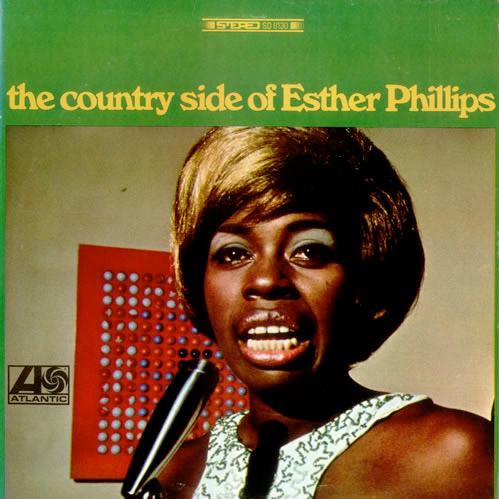
Sadly after the release of The Country Side Of Esther Phillips in 1966, the thirty-one year old never released another studio album on Atlantic Records. As the sixties progressed, Esther Phillips’ earlier drug problem resurfaced and she’d to enter rehab again. Whilst in rehab, she met Sam Fletcher which would later prove fortunate.
As she was recovering from her drug addiction, she released some singles for the Roulette label in 1969. After that, she re-signed to Atlantic Records and released the live album Burnin’ which was a recording of a 1969 concert at Freddie Jett’s Pied Piper Club.
Burnin’ (Live At Freddie Jett’s Pied Piper, LA)
Three years after she’d left Atlantic Records, Esther Phillips she signed to a new contract. This turned out to be just a short stay and she never entered Atlantic Records’ studio. Instead, she released a live album Burnin’ (Live At Freddie Jett’s Pied Piper, LA).
On Burnin’ (Live At Freddie Jett’s Pied Piper, LA), Esther Phillips works her way through eight tracks. They’re tailor made for her and she showcase her versatility and her ability to make lyrics come to life. This is apparent from the opening track a cover of Aretha Franklin and Ted White’s Don’t Let Me Lose This Dream. She follows this up with a heartfelt, soul-baring take on Lennon and McCartney’s And I Love Him. Cry Me A River Blues is transformed as she delivers a vocal powerhouse. There’s no stopping her now and Makin’ Whoopee takes on a sassy, jazz-tinged sound, as Esther Phillips swings and kicks loose. If It’s The Last Thing I Do features a wistful and pensive vocal and it’s a beautiful cover. The same can be said of her reading of Please Send Me Someone To Love which features a needy, hopeful vocal as her band fuse blues and jazz. That’s the perfect way to close Burnin’ (Live At Freddie Jett’s Pied Piper, LA), which was the perfect showcase for Esther Phillips.
When Burnin’ (Live At Freddie Jett’s Pied Piper, LA) was released it was to widespread critical acclaim. It also reached number 115 in the US Billboard 200 charts and number seven in the US R&B charts. Ironically, Burnin’ (Live At Freddie Jett’s Pied Piper, L.A.) was Esther Phillips’ Atlantic Records’ swan-song. A new chapter in the Esther Phillips story was about to unfold.
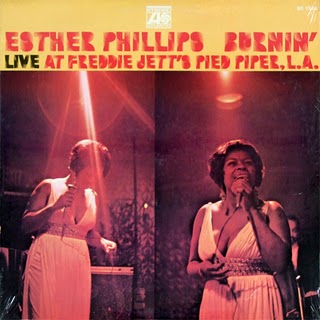
The following year 1970, Johnny Otis who had discovered Esther Phillips reentered her life. She performed with The Johnny Otis Show at the 1970 Monterey Jazz Festival and this allowed her music to be heard by a much wider audience. Maybe her luck was changing?
That proved to be the case. In 1971, Esther Phillips signed to Kudu/CTi and began what was the most successful period of her career. This started with her Kudu/CTi debut was From A Whisper To A Scream.
From A Whisper To A Scream.
By 1971, Esther Phillips had been through several labels and still hadn’t found a label she could call home. That was until 1971 when she signed to Kudu/CTi. She was hot property after the release of Burnin’ (Live At Freddie Jett’s Pied Piper, L.A.) which showed what she was capable of. The only problem was her private life and if she could stay free of drugs. If she could, the sky was the limit for her.
Executives at Kudu/CTi realised this and knew that Esther Phillips was capable of becoming one of the biggest names in soul, jazz and R&B. By 1971, she was in a good place and great things were expected of her at Kudu/CTi when she began work on her label debut From A Whisper To A Scream.
Time was spent choosing songs that suited Esther Phillips and played to her strengths, her inimitable voice. It was a voice that sounded like it lived a thousand lives. This made it perfect for songs like Gil Scott-Heron’s Home Is Where The Hatred Is, Allen Toussaint’s From A Whisper To A Scream and That’s All Right With Me. They sounded as if they’d been written especially for Esther Phillips. Along with six another tracks they were recorded at Van Gelder Studio, Englewood Cliffs, New Jersey by an all-star band.
Creed Taylor was brought in to produce From A Whisper To A Scream while Pee Wee Ellis arranged the tracks and conduct the band. It included some of the top jazz and funk musicians of the day. This included a rhythm section of drummer Pretty Purdie, bassist Gordon Edwards and guitarists Cornell Dupree and Eric Gale. They were joined by organist and pianist Richard Tee and Dick Griffin, who was part of a horn and string section. Along with backing vocalists, they accompanied Esther on From A Whisper To A Scream. It was released in 1972.
When From A Whisper To A Scream was release it was to critical acclaim and Esther Phillips picked up where she left off on Burnin’ (Live At Freddie Jett’s Pied Piper, L.A.). It reached number 137 in the US Billboard 200 and sixteen on the US R&B charts. Things were about to get even better for Esther Phillips.
Later, Set Me Free from the album From A Whisper To A Scream was nominated for a Grammy Award, but Aretha Franklin won the award. Ironically, the Queen of Soul thought Esther deserved to win and presented Esther Phillips with the award. This was the start of one of the most successful periods of her career.
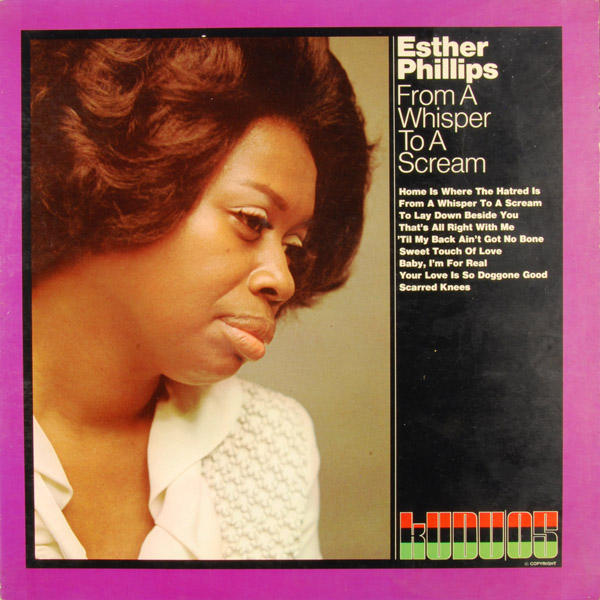
Alone Again, (Naturally).
Later in 1972, and buoyed by the success of From A Whisper To A Scream Esther Phillips released Alone Again, (Naturally). This was her second album for Kudu/CTi. Again, the album was produced by Creed Taylor and everything was put in place for Esther Phillips. This included the songs that suited her and a a band of top musicians that were about to accompany her.
Among the songs chosen for Alone Again, (Naturally), Use Me, where Esther Phillips was at her sassiest. Ballads Let Me In Your Life and I’ve Never Found A Man (To Love Me Like You Do) showcases Esther’s soulful side and allow her to live lyrics. She sounds as if she’s experienced the loneliness and emotion she sings about. On Alone Again (Naturally), a despondency in her vocal as she unleashes a cathartic outpouring of sadness and pain. Then during Esther Phillips’ cover of Do Right Woman, Do Right Man she gives the song a new twist, before closing Alone Again, (Naturally) with her take on Alone Again, (Naturally) where she’s accompanied by band of top musicians.
This includes many of the same musicians that featured on From A Whisper To A Scream. This included a drummer Pretty Purdie, bassist Gordon Edwards and guitarists Cornell Dupree and Eric Gale. Bassist Ron Carter, drummer Billy Cobham and guitarist George Benson were brought onboard. Organist and pianist Richard Tee also returned. He was joined by percussionist Ralph MacDonald and Maceo Parker, who was part of the horn section that featured on Alone Again, (Naturally). It was produced by Creed Taylor, and released later in 1972.
On its release in 1972, Alone Again, (Naturally) was well received by critics. No wonder as the album featured some of the best musicians of the seventies. They provided the perfect backdrop for Esther Phillips as she combined elements of blues, funk,R&B and soul on another critically acclaimed album. It reached number 177 in the US Billboard 200 charts and number fifteen in the US R&B charts. Esther Phillips’ career it seemed, was entering a golden period. Especially when Alone Again Naturally was nominated for a Grammy Award.
Black-Eyed Blues,
After releasing two albums in 1972, Esther Phillips returned in 1973, with Black-Eyed Blues which was produced by Creed Taylor, with Pee Wee Ellis arranging and conducting. Just like her two previous albums, recording took place at Van Gelder Studio, Englewood Cliffs, in New Jersey where the six tracks were recorded. They were a compelling collection of tracks.
Just like her two previous albums, a lot of thought went into the tracks on Black-Eyed Blues. This included Bill Withers’ Justified, Carolyn Plummer’s I’ve Only Known A Stranger, Carolyn Franklin’s and Leonard Feather’s You Could Have Had Me, Baby. The other two tracks were covers of Duke Ellington and Paul Webster’s I Got It Bad And That Ain’t Good and Chris Stainton and Joe Cocker’s Black-Eyed Blues. These six tracks were recorded by a new band.
Unlike her two previous albums, Black-Eyed Blues featured a very different band. The rhythm section featured drummer Ian Wallace, guitarist Charlie Brown and bassists Boz and Ron Carter. Pianist Tim Hinkley and percussionist Arthur Jenkins were joined by backing vocalists plus a horn and string section. They accompanied Esther Phillips on her third album for Kudu/CTi, Black-Eyed Blues.
When Black-Eyed Blues was released in 1973, it was well received by critics. They were won over by this compelling mixture of ballads and uptempo tracks. Esther Phillips was at her best laying bare her soul during wistful, heartfelt ballads and then she kicked loose on the uptempo numbers. Accompanied by a tight, talented band, musical genres melted into one. Jazz, funk, R&B and soul combine throughout Black-Eyed Blues which reached number seventeen in the US R&B charts. For Esther Phillips this was a disappointment.
Ever since the release of Burnin’ (Live At Freddie Jett’s Pied Piper, L.A.), every Esther Phillips’ album entered the US Billboard 200 charts. Not Black-Eyed Blues despite its undoubted quality. The album seemed to pass many people by and as a result, it’s one of the hidden gems in Esther Phillips’ discography. However, back in 1973, Esther Phillips must have wondered if Black-Eyed Blues failure to enter the US Billboard 200 charts, was merely a blip or was her luck changing?
Performance.
After Black-Eyed Blues failed to enter the US Billboard 200 charts, everyone at Kudu/CTi began working towards getting Esther Phillips’ career back on track. Producer Creed Taylor along with associate producers Eugene McDaniels and Pee Wee Ellis put together an all-star band. A great deal of care had gone into choosing the seven songs they would record with Esther Phillips. They were seen as tailor made for her.
The seven songs on Performance were another compelling collection of tracks. Esther Phillips drops the tempo and delivers a slow, sultry, take on I Feel The Same. The title track Performance, is another slow, melancholy track and is a reminder that she was a talented songwriter. Sadly, that’s often overlooked. Esther Phillips then gets funky and sassy on Doing Our Thing. Eugene McDaniels’ Disposable Society is another song full of social comment. She then nails a vocal that’s slow, feisty and funky and she seems to be relishing the opportunity to reflect on the way society is heading. Living Alone (We’re Gonna Make It) is a beautiful ballad, where Esther Phillips is at her melancholy, thoughtful best. Then she romps her way through Dr. John’s Such A Night. Living Alone (We’re Gonna Make It) heads in the direction of gospel while Isaac Hayes and David Porter’s Can’t Trust Your Neighbour With Your Baby oozes social comment and is a reflection of American society circa 1974. During the seven tracks on Performance, Esther releases a series of vocal masterclasses and she’s aided and abetted by an all-star band of session musicians.
This includes a rhythm section of drummer Pretty Purdie and Steve Gadd, bassists Gordon Edwards and guitarists Eric Weissberg, Jon Sholle and Charlie Brown. They’re joined by percussionist Pee Wee Ellis, flautist Hubert Laws and pianists Bob James, Richard Tee and Richard Wyands. Patti Austin and Deniece Williams were among the backing vocalists that joined the string and horn section on Performance. It was released in 1974.
Later in 1974, Performance was released to widespread critical acclaim. Performance featured Esther at her best, as she combined ballads and uptempo tracks. Accompanied by a crack band, Performance was without doubt one of Esther Phillips’ best albums. Sadly, it stalled at just number forty-six in the US R&B charts and for Esther Phillips and everyone at Kudu/CTi, this was hugely disappointing. Performance should’ve fared much better. However, this was a sign of the direction Esther Phillips’ career was heading.
What A Diff’rence A Day Makes.
After the disappointment of 1974s Performance Esther Phillips joined forces with Joe Beck to record What A Diff’rence A Day Makes. This executives at Kudu/CTi hoped would kickstart her career. Just like previous albums, a great deal of care was taken choosing the songs for the album.
By the time work began on What A Diff’rence A Day Makes, disco was growing in popularity and Esther Phillips like a number of other soul singers would record disco tracks between 1975 and 1979. This it was was hoped would introduce their music to a new and wider audience. That was the hopes of Esther Phillips and executives at Kudu/CTi as work began on What A Diff’rence A Day Makes.
Eight tracks were chosen for including Gamble and Huff’s One Night Affair, Maria Grever and Stanley Adams’ What A Diff’rence A Day Makes, Ralph MacDonald and William Salter’s Mister Magic plus Brenda Harris’ You’re Coming Home. They were joined by Jim Price’s I Can Stand A Little Rain, Lu Emerson’s Hurtin’ House, David Nichtern’s Oh Papa and Jerry Capehart’s Turn Around, Look At Me. These tracks were recorded by Esther Phillips and an all-star band.
Recording took place at Van Gelder Studio, Englewood Cliffs, in New Jersey during April 1975. The rhythm section featured drummer Chris Parker, bassist Will Lee and rhythm guitarist Steve Khan. Lead guitarist Steve Beck arranged the album and was joined by Eric Weissberg on pedal steel guitar, keyboardist Don Grolnick, percussionist Ralph McDonald plus a string and horn section. Creed Taylor took charge of production on What a Diff’rence A Day Makes which marked a stylistic departure for Esther Phillips.
She toyed with disco during What A Diff’rence A Day Makes. In doing so, Creed Taylor transformed Esther Phillips into a strutting disco diva during parts of the album. However, she hadn’t turned her back on soul and R&B on What A Difference A Day which features elements of jazz and funk.
Opening What A Difference A Day Makes is One Night Affair where Esther Phillips unleashes a soulful vocal powerhouse against Joe Beck’s pulsating dancefloor friendly arrangement. He combines rocky guitars, dancing strings, blazing horns and rhythm section who take the arrangement to 127 disco heaven. In doing so, the reinvention of Esther Phillips begins.
This continues on What A Diff’rence A Day Makes where a brief breathy and sensuous vamp precedes Esther Phillips soulful and sassy vocal. Soon, the all-star band are combining disco, funk and jazz. Meanwhile, the rhythm section and percussion power the arrangement along as strings sweep and swirl as a saxophone accompanies the breathy vamp. They drops out when a rocky guitar takes centrestage before the vocal returns and is replaced by a searing guitar and the vamp on a track that would transform Esther Phillips into a strutting disco diva.
The tempo drops on Mister Magic and initially the arrangement is underrated as a chiming guitar, shimmering keyboard and braying horns accompany the galloping rhythm section. Meanwhile the vocal is needy and full of longing as a searing, scorching guitar that’s a trademark of the album and drifts in and out. It’s part of this soulful, funky dancer with rocky guitars.
You’re Coming Home is a slower track and the searing rocky guitar and soaring horns set the scene for her vocal. It’s emotive and needy as she sings “I’ll sit here waiting for the phone to ring and say You’re Coming Home.” Meanwhile, keyboards join the rhythm section who provide the heartbeat accompany and horns punctuate the arrangement as Esther Phillips makes a welcome return to her more familiar soulful side.
I Can Stand a Little Rain is another of the soulful sides on the album. A weeping pedal steel combines with a peal of thunder before Esther Phillips’ vocal veers between heartfelt, rueful before growing in power as the horns and the keyboards join the atmospheric arrangement. After a clap of thunder, horns soar above the arrangement and a blistering guitar accompanies one of the most soulful and impassioned vocals on the album.
Understated describes the introduction to Hurtin’ House as chiming guitars combine with bursts of trailing horns and the rhythm section. Then Esther Phillips unleashes a sassy and sometimes soul-baring vocal. Just like previous tracks the horns play an important role and sometimes sound like those on David Bowie’s Fame which was recorded in July 1975. Meanwhile, funk, R&B and soul are being combined by Esther Phillips and her all-star band on what’s one of the oft-overlooked tracks on the album.
Atmospheric with a country influence describes the introduction to the ballad Oh Papa. The rhythm section combine with the pedal steel and Hammond organ as Esther Phillips delivers a tender, emotive vocal. Later, the horns enter and it’s then it’s all change as horns march and strings sweep adding a degree of drama. When they drop out, they’re replaced by the pedal steel and the understated country sound makes a welcome returns and proves the perfect foil for Esther Phillips pensive vocal.
The band drop the tempo on Turn Around, Look At Me closes What a Diff’rence A Day Makes and a pedal steel weeps and adds a country influence. Meanwhile, Esther Phillips combines country, gospel and soul while the band create an understated backdrop. When her vocal drops out it’s replaced by Joe Beck’s guitar which proves the perfect replacement. Then when the vocal returns the pedal steel accompanies Esther Phillips on what’s one of the most beautiful songs on the album.
When What A Difference A Day Makes was released it reached thirty-two in the US Billboard 200 and thirteen in the US R&B charts. The album crept into the Australian charts at ninety-nine. However, back home What A Diff’rence A Day Makes was released as a single and reached number twenty in the US Billboard 100, ten in the US R&B charts and number one single in the disco charts in 1975. In Australia the single reached thirty-eight and six in the UK. However, there was more good news when What A Diff’rence A Day Makes was nominated for the Best Rhythm and Blues Vocal Performance–Female. Esther Phillips career was back on track.
During 1976, she released two albums including Capricorn Princess which reached number twenty-three in the US R&B charts. Later that year, Esther Phillips released For All We Know was Kudu/CTi which stalled at number thirty-two in the US R&B charts. Not long after this she left Kudu/CTi and signed to Mercury Records where she released four albums.
The first was 1977’s You’ve Come A Long Way, Baby which failed to chart. So did All About Esther Phillips when it was released in 1978. Her next album was Here’s Esther, Are You Ready in 1979 which reached forty-seven in the US R&B charts. Two year later in 1981, A Good Black Is Hard To Crack was released by Mercury but failed to chart. Little did anyone know that it was the final album released in Esther Phillips’ lifetime.
She recorded one final album in 1984, A Good Way To Say Goodbye, which was released in 1986. Not long after completing what was her swansong, sadly, Esther Phillips died August the ‘7th’ 1984, from liver and kidney failure, caused by drug use.
Johnny Otis, the man who discovered Esther Phillip conducted her funeral service which was held in Los Angeles. Since Esther’s death, her albums has been reissued. This includes What A Diff’rence A Day Makes which was recently reissued by Music On Vinyl. It shows the different sides one of the most underrated singers of her generation, Esther Phillips.
Arranger Joe Beck and producer Creed Taylor transformed Esther Phillips into a disco diva on parts of What A Diff’rence A Day Makes. Other times she returns to her familiar soulful sound and sometimes she takes the album in the direction of country, gospel and R&B. What A Diff’rence A Day Makes was very different album and to the previous albums she had released on Kudu/CTi and featured element of funk, jazz and rock. It succeeded in rejuvenating Esther Phillips’ career and resulted in her fourth Grammy nomination. Despite that she was was unknown by most record buyers.
During a career that lasted thirty-five years, Esther Phillips’ music passed most people by. Many record buyers were unaware that she was one of the most talented, versatile and underrated female vocalists of her generation. Esther Phillips possessed a totally unique voice and was able to breath life, meaning and emotion into lyrics. Whether it was blues, country, jazz, pop, soul or disco she made music come alive and was a truly versatile vocalist whose career spanned thirty-five years. However, Esther’s career should’ve lasted longer. Sadly, that wasn’t to be.
Esther Phillips struggled throughout her life with drug addiction and this interrupted her time at Atlantic Records. As a result, she never had the opportunity to fulfil her potential and if things had been different, Esther Phillips could’ve and should’ve become one of the most successful singers of her generation. Sadly, that wasn’t to be. Esther Phillips died thirty-six years ago, in 1984 was just forty-eight but left behind a rich musical legacy, that includes What A Diff’rence A Day Makes the album that rejuvenated her career and resulted in her fourth Grammy Award nomination.
Esther Phillips-What A Diff’rence A Day Makes.
DUKE PEARSON FEATURING BOBBY HUTCHERSON-THE PHANTOM.
Duke Pearson Featuring Bobby Hutcherson-The Phantom.
Label: Blue Note Records Tone Poet Series.
Format: LP.
By June 1968, Atlanta-born pianist Duke Pearson was thirty-five, and was about to begin record the twelfth album of his career, The Phantom. It would be the seventh album he had recorded for Blue Note Records since he first signed for the label in 1959, and later that year, had released his debut Profile.
Duke Pearson’s time at Blue Note Records was the most productive of his recording career. He signed to what was jazz’s premier label in 1959, and later that year, released his debut album Profile. Tender Eyes followed in 1960 and was his second album for Blue Note Records which he called home for most of his career.
In 1961, Duke Pearson signed to Polydor and recorded his third album Angel Eyes. However, it wasn’t released until 1968. By then, much had happened to Duke Pearson.
Next stop was Prestige where later in 1961 he recorded Dedication! Just like Angel Eyes, there was a delay in releasing the album and it wasn’t until 1970 that it was belatedly released.
On January the ‘12th’ 1962, The Duke Pearson Quintet recorded an album for the short-lived Jazztime label. This was Hush! which was released to critical acclaim later in 1961. Two years later Duke Pearson returned home to Blue Note Records.
He made the journey to Van Gelder Studio, in Englewood Cliffs, New Jersey, on the ‘21st’ of November 1964 and recorded what was the most ambitious album of his career. Wahoo featured Duke Pearson at his creative zenith on what was one of best and most sophisticated albums of hard bop released during the mid-sixties. When it was released just before the end of 1964, it was hailed as the finest of Duke Pearson’s career.
After releasing his critically acclaimed album Wahoo, Duke Pearson signed to Atlantic Records and recorded two albums during 1965. This included The Duke Pearson Nonet’s album Honeybuns whig was recorded on May the ‘25th’ and ’26th’ 1965 and was well received when it was released in 1966.
For his second album for Atlantic Records Duke Pearson was joined by an all-star band as he recorded what was an album of blues-tinged soul-jazz that ventures into hard bop. Just like its predecessor, reviews of Prairie Dog were positive. Despite that, Duke Pearson left Atlantic Records and once again returned to Blue Note Records.
Sweet Honey Bee.
This time it was for good, and Duke Pearson would call Blue Note Records home for the remainder of his recording career signed to the label. This began with Sweet Honey Bee which featured six Duke Pearson compositions and Big Bertha which he cowrote with Memphis Slim.
Joining Duke Pearson was all-star band that recorded Sweet Honey Bee at Van Gelder Studio on December the ‘7th’ 1966. They were responsible for a series of musical masterclasses on what was hailed as one of the finest albums of Duke Pearson’s career as he combined hard bop, post bop and soul jazz. It was released in 1967 and marked his return to the Blue Note Records’ fold.
The Right Touch.
Buoyed by the success of Sweet Honey Bee, Duke Pearson and his band recorded the followup The Right Touch on September the ’13th’ 1967. He had written the six tracks that were recorded at Van Gelder Studio by his octet that included Stanley Turrentine, Freddie Hubbard and James Spaulding. They raised their game during a session producer by Francis Wolff.
During The Right Touch, Duke Pearson’s music continued to evolve as he and his band combined Latin jazz, post bop and soul jazz. Critics hailed this as an almost flawless album and one of his finest albums. Duke Pearson was in a rich vein of form and it seemed could do no wrong.
Introducing Duke Pearson’s Big Band.
Having recorded albums with a trio, quintet, sextet, octet and nonet Duke Pearson decided to record an album with a Big Band. The album Introducing Duke Pearson’s Big Band was recorded at Van Gelder Studio on December the ‘15th’ 1967 and this time, was produced by the bandleader himself. He had penned five of the nine track on the album which was a stylistic departure for Duke Pearson.
He was taking a risk by recording an album that was very different to the hard bop albums that had proven popular amongst jazz fans. His compositions on Introducing Duke Pearson’s Big Band were very different but just as memorable. It was a case of expect the unexpected, while his interpretations of covers were captivating and left a lasting impression. Introducing Duke Pearson’s Big Band might have been an experimental album, but it was also an album was the perfect showcase for the multitalented bandleader, composer and pianist when it was released in 1968.
The Phantom.
By the time Duke Pearson began work on his twelfth album The Phantom, he was an important figure at Blue Note Records. He had helped move the label in the direction of hard bop and shape the new sound in his role as producer. Duke Pearson had also worked as arranger and sideman at Blue Note Records. In 1963, he had played on Bobby Hutcherson’s album The Kicker. Now it was time for the vibraphonist to return the favour on The Phantom which was billed as Duke Pearson Featuring Bobby Hutcherson.
For what would be Duke Pearson’s twelfth album featured four new compositions including The Phantom, Bunda Amerela (Little Yellow Streetcar), Los Ojos Alegres (The Happy Eyes) and Say You’re Mine. They were joined by covers of Willie Wilson’s Blues For Alvina and The Moana Surf which was penned by flautist Jerry Dodgion. He was part of the band that recorded The Phantom.
The first session took place at Van Gelder Studio on June the ‘24th’ 1968 when “Bunda Amerela (Little Yellow Streetcar) was recorded by the band. It feathered drummer Mickey Roker, bassist Bob Cranshaw, guitarists Sam Brown and Al Gafa plus pianist Duke Pearson. They were joined by Bobby Hutcherson on vibes and flautist Jerry Dodgion. Adding a Latin flavour was the percussion including congas played by Victor Pantoja and Carlos “Patato” Valdes who also played güiro. The result of this genre-melting album was recorded on September the ‘11th’ 1968 with engineer Rudy Van Gelder and producer Francis Wolff.
When The Phantom was released later in 1968, critics discovered another ambitious album from Duke Pearson whose music continued to evolve. It was an album of post bop where he continues his mission to push musical boundaries. To do this, he add a healthy sprinkling of Latin percussion and complicated harmonies that were inspired by avant-garde music. This lesser musicians might have struggled to cope with, but most of the time this multitalented, experienced and versatile band cope admirably during this innovative and intriguing album.
Side A.
The Phantom opens with the ten minute title-track where the groove simmers and smoulders adding more than a degree of drama and tension on this cinematic opus. It sets the bar high for the rest of the album.
Very different is Blues for Alvina which has a much more understated arrangement and finds the band adopting a less is more approach. Space is left as the flute dances across the arrangement and drums and congas add a subtle accompaniment. Duke Pearson’s piano has a slinky sound as it take centrestage on a track where blues, jazz and Latin music melt into one during three magical minutes.
Joyous and uplifting describes Bunda Amerela (Little Yellow Streetcar), which is largely because of the addition of the Latin percussion as the arrangement sashays along with Jerry Dodgion’s flute and Bobby Hutcherson’s vibes playing leading roles. Later, Duke Pearson’s fingers dance across the keyboard during a spellbinding solo where the bandleader and composer steals the show.
Side B.
Los Ojos Alegres (The Happy Eyes) opens the second side of The Phantom and the Bossa Nova beat transports the listener to the Rio de Janeiro. Duke Pearson’s piano and then the vibes atop the the crisp beat during what’s akin to a slice of musical sunshine that’s sure to brighten up even the dullest day.
It’s all change on Say You’re Mine which first featured on Donald Byrd’s album The Cat Walk. It’s a welcome addition and is a beautiful, tender and dreamy track where Duke Pearson and the band paint pictures with music. It brings to mind walking hand-in-hand with the one you love on a rainy day. Other times, the music is ruminative and invites reflection and contemplation.
The Moana Surf closes The Phantom and has starts of slowly and almost hesitantly as the guitar and flute combine. Soon, a drum roll, stabs of piano and vibes signal that it’s all change as the tempo rises. Latin percussion is added and but it’s the flute that plays a starring role before the baton is passed to the vibes and then the piano. In doing so, this allows some showboating and band members to showcase their considerable skills. Later, drums, hissing hi-hats and percussion combine and take centrestage but maybe for too long? When the arrangement gradually rebuilds it comes as a relief. The band is reunited and soon the track reaches a crescendo bringing the album to a close.
The Phantom was another ambitious album where from Duke Pearson where he combined elements of avant-garde, Bossa Nova, Latin jazz and post bop. It was the next step in his career and saw his music continue to evolve. Sadly, the album wasn’t the commercial success he or Blue Note Records’ new owners Liberty Records had hoped. Despite that, he stayed at the label he called home.
That was the case until 1971, when Duke Pearson retired from his position at Blue Note Records. The label’s new owners had made changes and it was time for the thirty-nine year old to head for pastures new. Initially he taught at Clark College and in 1973 toured with Carmen McRae and Joe Williams. By then, the Duke Pearson Big Band was back in business and touring and things were looking good for its leader. Sadly, that wasn’t the case.
Later in the seventies Duke Pearson received a crushing blow when he was diagnosed with multiple sclerosis, and he died on August the ‘4th’ 1980 at the Atlanta Veterans Hospital aged just forty-two. That day, jazz and the wider musical community was in mourning at the loss of a truly talented pianist, composer, bandleader arranger and producer who left behind a rich musical legacy.
This includes The Phantom, which although it’s one of the lesser known and sometimes overlooked album in Duke Pearson’s impressive back-catalogue. The Phantom, is anther ambitious album from the Atlanta-born pianist whose music was continuing to evolve when it was released in 1968, and fifty-two years later it’s just been reissued by Blue Note Records as part of their Tone Poet Series and is fitting homage and reminder of the late, great and multitalented Duke Pearson.
Duke Pearson Featuring Bobby Hutcherson-The Phantom.
ROLAND HAYNES-2ND WAVE.
Roland Haynes-2nd Wave.
Label: Real Gone Music.
Format: CD.
Forty-five years ago in 1975, Roland Haynes released his debut album 2nd Wave on the Detroit-based Black Jazz Records. The label was founded by Gene Russell and Dick Schory and released twenty albums between 1971 and 1975. 2nd Wave was the label’s penultimate release and it folded later in 1975. By then, the label had released a number of important, influential and innovative albums including 2nd Wave.
When pianist Gene Russell and percussionist Dick Schory founded Black Jazz Records in Oakland, California, in 1971, the nascent label’s raison d’être was “to promote the talents of young African American jazz musicians and singers.” This was only part of their vision for their new label.
They were determined that Black Jazz Records would released an alternative to what they saw as the old school jazz that was popular at the time. They wanted to release an alternative to traditional jazz, and this included albums that featured political and spiritual influenced music. However, spiritual jazz was just part of the Black Jazz Records’ story and the label between 1971 and 1975 it released twenty albums that included everything from free jazz and funk to soul-jazz.
Fittingly, Black Jazz Records’ first release was Gene Russell’s sophomore album New Direction which was released in 1971. This was just the start of a prolific year for the label.
In their first year, Black Jazz Records also released Walter Bishop Jr’s Coral Keys, Doug Carn’s Infant Eyes, Rudolph Johnson’s Spring Rain, Chester Thompson’s Powerhouse and Calvin Keys’ Shawn-Neeq. By the end of 1971, the new label had released six albums in its first year. Other labels must have looked on enviously.
Cofounder Dick Schory had founded Chicago-based Ovation Records, which was a successful country and western label which was providing funding for Black Jazz Records and distributing its releases. This gave the label a helping hand and meant it had an edge on its competitors.
The cofounders were determined that as wide an audience as possible hear the albums that the label was releasing so Gene Russell organised a promotional tour, In September 1971, Gene Russell and his Ray Lawrence who was his marketing consultant toured America giving interviews to newspaper journalists and featured on radio and newspaper where they showcased Black Jazz Records and its artists. This resulted in valuable publicity for the label.
By 1972, Black Jazz Records was adding new artists to their roster and signed Henry Franklin who released his album The Skipper later that year. So had another new signing The Awakening, who released Hear, Sense and Feel.
In between albums from Henry Franklin and The Awakening Doug Carn released his sophomore album. This was Spirit Of The New Land which featured his wife Jean Carn, and was the label’s most successful release of 1972.
1973 was Black Jazz Records’ busiest year. Familiar faces returned with new albums including Gene Russell’s Talk To My Lady and Rudolph Johnson’s The Second Coming. However, Black Jazz Records were still signing new artists.
Their latest signing was Kellee Patterson who released her debut album Maiden Voyage in 1973. It was the twelfth album that the label had released in two years.
The other three albums released during 1973 were from familiar faces and included Walter Bishop, Jr’s Keeper Of My Soul, Doug Carn’s Revelation and The Awakening’s Mirage. Again, Doug Carn was responsible for Black Jazz Records’ most successful album.
Doug Carn returned in 1974 with Adam’s Apple which was the label’s biggest selling album that year. Black Jazz Records only released two more albums during 1974 Henry Franklin’s The Skipper At Home and Calvin Keys’ Proceed With Caution! 1973 wasn’t a busy year for Gene Russell and Dick Schory’s label which would release just two more albums.
The first album Black Jazz Records released in 1975 was Roland Haynes’ 2nd Wave. It was also the keyboardist’s debut album.
When Roland Haynes signed to Black Jazz Record very little was known about him. He hadn’t played on any other albums as a session musician, but his talent was undeniable and that was why he was about to record his debut album.
Although Roland Haynes was primarily a keyboardist, he could also play the bass. This meant he had a lot in common with Henry Franklin who was booked to play on the sessions for 2nd Wave. He remembers the session and Roland Haynes: “It was a lot of high energy, it was fun cause Roland was a high energy guy.” That was evident in the music he was about to record.
Roland Haynes led a quartet during the 2nd Wave sessions. It featured drummer Carl Burnett, bassist Henry Franklin and Kirk Lightsey whose wah-wah-fuelled Fender Rhodes proved to be the perfect foil to Roland Haynes’ keyboard playing as the band recorded six of his compositions.
When 2nd Wave was finished and ready for release it was an album that was described as “fresh and today” on the cover. It was also an album that musically was ahead of its time. Soul-jazz, fusion and jazz-funk featured on the six tracks on that was later compared to John Patton’s 1969 album Accent, Herbie Hancock’s classic album Head Hunters and Miles Davis’ seventies band that featured Chick Correa, Herbie Hancock, Joe Zawinul and Keith Jarrett. However, when 2nd Wave was released it was a familiar story.
Just like a number of other albums released by Black Jazz Records since 1971, commercial success eluded Roland Haynes’ debut album 2nd Wave. The album sunk without trace and passed critics and record buyers by. They missed out on one of the hidden gems in the Black Jazz Records discography.
Opening 2nd Wave is the ballad Eglise, where the inimitable lush sound of the Fender Rhodes plays a leading role and combines with the rhythm section who underpin the arrangement. Especially Carl Burnett’s drums and his hi-hats which are an important addition. However, it’s the deliciously dreamy floaty keyboards that provide the perfect foil to the Fender Rhodes during this breathtaking ballad.
Carl Burnett’s drumming on Second Wave is uber funky and upbeat and urgent. He’s joined by wah-wah-fuelled keyboards and a fleet-fingered Fender Rhodes solo. The band play with urgency combining jazz-funk and fusion. They also seem to have drawn inspiration from Blaxploitation soundtracks and Herbie Hancock’s Head Hunters during this spellbinding jam.
Straight away, Kirstin’s Play heads in the direction of fusion. Again, the keyboards and shimmering, chiming, chirping Fender Rhodes are to the fore as the drums power the arrangement along. It’s as if they’ve been asked to score a high speed car chase, and in doing so, combine fusion and jazz-funk to create what’s one of the album’s highlights and one of the hidden gems from Black Jazz Records’ back-catalogue.
After taking a back seat on previous tracks bassist Henry Franklin enjoys the opportunity to showcase his considerable talents on Aicelis. His bass accompanies a shimmering Fender Rhodes as drummer Carl Burnett plays slowly taking care to not overpower the rest of Roland Haynes’ beautiful, languid and sometimes slightly dramatic arrangement. It sounds as if it’s been partly inspired by the Mahavishnu Orchestra.
Descent features both the keyboards and Fender Rhodes to the fore as the arrangement races along. It’s driven along by the rhythm section, but the keyboards to take centrestage. The funky Fender Rhodes is played with speed, power and accuracy and is matched every step of the way by the other keyboards. Meanwhile, Carl Burnett pounds on the cymbals which augment the myriad of keyboard on this high speed jam. This eight minute epic sounds as if it’s been influenced by Miles Davis’ seventies band, Herbie Hancock’s Headhunters, Jan Hammer and even Bill Bruford.
Closing 2nd Wave is Funky Mama Moose. It’s another funky track with the quartet getting into the groove as the Fender Rhodes and keyboards combine with the rhythm section. Soon, Roland Haynes chants: “Funky Mama Moose.” Then when it drops out this allows the band to unleash one of their funkiest performances on a track that DJs, dancers and sample hungry producers will love.
After the release of 2nd Wave in 1975, Black Jazz Records released just one more album later that year. This was Cleveland Eaton’s Plenty Good Eaton. Not long after this, the label closed its doors for the last time and Gene Russell started a new label Aquarican Records.
It was the end of an era as Black Jazz Records had set out to release an alternative to traditional jazz, and this included albums that featured political and spiritual influenced music. This was all very admirable, but only the Doug Carn albums enjoyed any degree of success. The sales although relatively small were good for an independent label. However, maybe they would’ve fared better if released on a bigger label?
The same can be said about Roland Haynes’ 1975 debut album 2nd Wave where he combined funk, fusion, jazz-funk and soul-jazz on six tracks. They were inspired by everything from Bill Bruford and Blaxploitation soundtracks to Herbie Hancock’s classic album Head Hunters, Jan Hammer, Mahavishnu Orchestra and Miles Davis’ fusion band. These influences shine through on 2nd Wave which was one of the oft-overlooked albums from the Black Jazz Records’ back-catalogue.
Thankfully, that’s no longer the case and a new generation of record buyers are discovering the delights of 2nd Wave which is one of the rarest albums that Black Jazz Records released. However, original copies of Roland Haynes’ debut album are much prized amongst record collectors and change hands for large sums of money. The recent reissue of 2nd Wave by Real Gone Music is to be welcomed as now this once oft-overlooked hidden gem is available to everyone who can discover the delights of Roland Haynes’ one and only album 2nd Wave which is a mini masterpiece.
Roland Haynes-2nd Wave.
CLASSIC ALBUM: DEEP PURPLE-DEEP PURPLE IN ROCK.
Classic Album: Deep Purple-Deep Purple In Rock.
Nowadays, the seventies are regarded as the golden era for rock music. It was when rock music came of age. It’s certainly when commercial success and critical acclaim came the way of Deep Purple. Between 1970 and 1975 they enjoyed were on of the most successful British rock bands and enjoyed commercial success and critical acclaim worldwide. The album that started this run of commercial success was Deep Purple In Rock which features one of the hardest rocking groups of the seventies in their heyday.
Vying with Deep Purple for the title of Kings of seventies rock were Led Zeppelin and Black Sabbath. Just like Deep Purple, they were hugely successful and hard rocking bands. They were also the hardest living living rock groups and this lead to them being known as the “unholy trinity of British hard rock and heavy metal.” The three groups were proud of their infamy and wore it like a badge.
The “unholy trinity’s” penchant for the rock ’n’ roll lifestyle was legendary with excess and extravagance an everyday occurrence. Similarly, chaos and carnage was omnipresent as the “unholy trinity” toured the world. Each group seemed to determined to outdo the other as hotel rooms were wrecked, televisions thrown out of windows and copious amounts of drink and drugs consumed. This would ultimately come at a human cost later in the seventies with the death of Led Zeppelin’s John Bonham. Until then, the party continued and the “unholy trinity” continued to make what would be remembered as some of the best, and most memorable music of the seventies. They were living the dream. Especially Deep Purple, who had only been formed in 1968.
Deep Purple were formed in 1968 in Hertford. However, the story begins in 1967 when ex-Searchers drummer, Chris Curtis, contacted London based businessman Tony Edwards with a business proposition. He wanted to create a supergroup which he would name Roundabout. The idea behind the name was that the lineup was fluid. Members would come and go, on what was akin to a musical roundabout. Tony Edwards liked the idea and brought onboard Jon Coletta and Ron Hire. They named their new venture Hire-Edwards-Coletta (HEC) Enterprises. Now with financial backing, Chris Curtis started putting together Roundabout.
The first member of Roundabout was Jon Lord, a classically trained organist who had previously played with The Artwoods. Guitarist Richie Blackmore, who recently, had been working as a session musician in Hamburg auditioned and he too joined Roundabout. So did bassist Nick Simper whose most recent band was The Flower Pot Men and was a friend of Richie Blackmore. The two other members of Roundabout were also friends.
Rod Evans was then recruited as the nascent group’s lead vocalists. Previously, he was a member The Maze whose drummer was Nick Paice. He became the final piece in the jigsaw. However, he was not the first choice drummer.
Originally, Bobby Woodman was meant to be Roundabout’s drummer and was the drummer when Rod Evans auditioned as vocalist. Richie Blackmore had previously watched Nick Paice playing live and was was impressed with the young drummer . Although he was just eighteen, Richie Blackmore knew he was a good drummer. So when Bobby Woodman headed out to buy cigarettes, Nick Paice was auctioned. Instantly, everyone realised he was a better drummer and when Bobby Woodman returned with his cigarettes he was told he was no longer Roundabout’s drummer. This must have been a huge disappointment for him. However, it meant that Roundabout’s lineup was settled. Or so people thought.
Roundabout were kitted out with the finest equipment and lived at Deeves House in South Mimms, Hertfordshire. This was their home during March 1968 and that was, until they headed out on a short tour of Denmark and Sweden. It was during this tour that Roundabout became Deep Purple.
It was Richie Blackmore that came up with the name Deep Purple. This was the name of his grandmother’s favourite song and was the name he wrote on the blackboard when everyone was asked to choose a new name for the nascent band. Deep Purple wasn’t the favourite though. That was Concrete God. However, the members of Roundabout decided against it. They felt the name was too harsh and Roundabout became Deep Purple and began recording their debut album in May 1968.
Shades Of Deep Purple.
When Deep Purple entered Pye Studios, in Marble Arch, London Deep Purple in May 1968, they had chosen ten songs for their debut album Shades Of Deep Purple. Seven songs were written by members of Deep Purple. The other three songs were cover versions. This included Joe South’s Hush, Lennon and McCartney’s Help! and Joe Roberts’ Hey Joe which is synonymous with Jimi Hendrix. These ten songs were recorded by the original version of Deep Purple. This included vocalist Rod Evans, drummer Ian Paice, bassists Nick Simper, organist Jon Lord and guitarist Richie Blackmore. Producing Shades Of Deep Purple was a friend of Richie’s, Derek Lawrence. Once Shades Of Deep Purple was recorded, it was released later in 1969
When critics heard Shades Of Deep Purple they weren’t impressed. Reviews were mostly negative. Since then, critics have rewritten history and most reviews of Shades Of Deep Purple are positive. Back in 1968, things were very different. Shades Of Deep Purple was perceived as an unfocused album with its mix of psychedelia, progressive rock, pop rock and thanks to Richie’s guitar riffs, hard rock. That was why many critics disliked Shades Of Deep Purple. Record buyers had different ideas about Shades Of Deep Purple,
Shades Of Deep Purple was released in July 1968 in America. It reached number twenty-four in the US Billboard 200 charts. This was no doubt helped by Hush reaching number four in the US Billboard 100 charts. Two months later, Shades Of Deep Purple reached number fourteen in Britain. For Deep Purple their debut album had been a commercial success and their lives transformed.
After the commercial success of the single Hush and Shades Of Deep Purple, Deep Purple were booked into a gruelling tour of America. Their American record company, Tetragrammaton, decided that Deep Purple should record another album. So Deep Purple headed into the recording studio in September 1968 to record The Book of Taliesyn.
The Book of Taliesyn.
Time was against Deep Purple. There wasn’t long before their American tour began and they only had five new songs written. They had to rely upon cover versions to complete The Book of Taliesyn. Neil Diamond’s Kentucky Woman, Lennon and McCartney’s We Can Work It Out and River Deep, Mountain High completed The Book of Taliesyn and it was released in America in December 1968,
Just like Shades Of Deep Purple, The Book of Taliesyn was a mixture of psychedelia and progressive rock. The only difference was it had a harder edge. Deep Purple’s trademark sound was evolving and critics seemed to prefer The Book of Taliesyn. It received a much more favourable reception from critics. This was also the case upon the release of The Book of Taliesyn.
Released in December 1968, The Book of Taliesyn reached number fifty-four in the US Billboard 200. Two singles were released in America. Kentucky Woman reached number thirty eight in the US Billboard 100 charts. Then River Deep, Mountain High stalled at number fifty-three in the US Billboard 100 charts. The Book of Taliesyn charted in Canada and Japan. It seemed word was spreading about Deep Purple. However, in Britain, The Book of Taliesyn failed to chart. That wasn’t the only problem Deep Purple would have.
Deep Purple.
By 1969, Deep Purple were becoming a tight, talented band. Onstage and in the studio they were growing and evolving and this included as songwriters. Although they’d only been together just over a year they were a much better band. They had released two albums and were touring constantly. There was a problem though. Which direction should their music take?
Some members of Deep Purple wanted their music to take on a rawer, harder sound. This didn’t please everyone. Lead vocalist Rod Evans and bassist Nick Simper were in the minority. Organist Jon Lord, guitarist Richie Blackmore and drummer Nick Paice wanted the band to change direction. With the band split, this wasn’t the best way to prepare for the recording of their third album Deep Purple.
For Deep Purple, the band were keen to turn their back on cover versions. Deep Purple only featured one cover version, Donavon’s Lalena. The eight tracks were all written by members of Deep Purple. Just like their first two albums, Deep Purple would be produced by Derek Lawrence.
Recording of Deep Purple took place during a two-month tour. Deep Purple had ensured they had some free days where they could record their third album during January and March 1969. Recording took place at the De Lane Lea Studio, London. They were familiar with the De Lane Lea Studio. Previously, Deep Purple had rerecorded The Bird Has Flown there and were familiar with the room. This allowed them to work quickly. With their reputation in America growing they wanted their eponymous album released as soon as possible.
As soon as Deep Purple was recorded, Deep Purple jumped on a plane and headed back to America. They rejoined the tour of the country that had claimed them as their own. There was a problem though. Tetragrammaton, Deep Purple’s American label hadn’t pressed the album. Worse than that, the label had financial problems. Within a year, they would be insolvent and filing for bankruptcy. Already, this was affecting Deep Purple. Their manager John Colleta headed home. He decided that this would save on a hotel room. Things it seemed, couldn’t get any worse for Deep Purple.
On the release of Deep Purple in June 1969, the album had a harder sound. Elements of blues, progressive rock and heavy metal combined on seven tracks. The exception was The Bird Has Flown. It veered off in the direction of classical music. Mostly, though, Deep Purple’s trademark sound was evolving. How would critics and fans respond to Deep Purple?
Given the problems with Tetragrammaton, it’s no surprise that Deep Purple wasn’t a commercial success. Tetragrammaton couldn’t afford to promote Deep Purple properly. Despite generally positive reviews from critics, Deep Purple stalled at 162 in the US Billboard 200 charts. It failed to chart in the UK on its release in November 1969. At least Deep Purple charted in Japan. Things looked up when Deep Purple was certified gold in Germany. That was the only good news Deep Purple enjoyed.
The tension that was within Deep Purple bubbled over after the release of their third album. This lead to vocalist Rod Evans and bassist Nick Simper being replaced. In came vocalist Ian Gillan and bassist Roger Glover. Little did anyone realise that this would later, be perceived as the classic lineup of Deep Purple. It was also the lineup that recorded the album that saw Deep Purple make a commercial breakthrough in Britain, Deep Purple In Rock.
Deep Purple In Rock.
With their new lineup, Deep Purple Mk II entered the studio for the second time. They made their recording debut on Concerto for Group and Orchestra which was a collaboration between Deep Purple and The Royal Philharmonic Orchestra. However, Deep Purple In Rock was the start of a new era in Deep Purple’s history.
Recording of Deep Purple In Rock took place at IBC, De Lane Lea and Abbey Road Studios. A total of seven songs were recorded. They were written by Deep Purple. These seven songs showcased the new Deep Purple. The music was heavier and more like what would be seen as their classic sound. This was essentially hard rock or heavy metal. It was after the success of Deep Purple In Rock that lead to Deep Purple being referred to as the third member of the “unholy trinity of British hard rock and heavy metal.
Deep Purple released Deep Purple In Rock on 3rd June 1970. This was Deep Purple’s first album to be released to widespread critical acclaim and commercial success. It was the first Deep Purple album to reach the top ten in Britain. Deep Purple In Rock reached number four in Britain. In America, Deep Purple In Rock only reached number 143 in the US Billboard 200 charts. Elsewhere, Deep Purple In Rock was a huge commercial success worldwide.
From Europe to Argentina, America and Japan, Deep Purple In Rock was a huge success. This resulted in gold discs for Deep Purple in America, Argentina, Britain, France and Holland. For Deep Purple, Deep Purple In Rock was a game-changer. Their decision to change direction musically was vindicated. Now, Deep Purple were one of the biggest bands in rock music. This was apparent on Deep Purple In Rock.
Speed King explodes into life, opening Deep Purple In Rock. Deep Purple’s rhythm section are at the heart of the action. Ian Paice’s drums crack and pound, and with Roger Glover’s bass, drives the arrangement along. Meanwhile, Ritchie Blackmore unleashes a blistering, searing guitar. Ian Gillan delivers a powerhouse of a vocal on this slice of good time rock. This gives way Jon Lord’s psychedelic keyboard solo. Then a scorching guitar solo is unleashed at breakneck speed. When Ian’s vocal returns, briefly, he pays homage to Little Richard with a burst of Tutti Fruti. By then Deep Purple are in full flight. It’s an impressive sound, as one of the “unholy trinity” kick loose, and showcase their considerable talents before reaching a dramatic crescendo.
Just Ritchie Blackmore’s crunchy guitar opens Bloodsucker. It’s played with speed and precision before the rhythm section join the fray. So does Ian Gillan’s powerful vocal. He’s always in control. Even when his vocal gives way to a vamp that’s reminiscent of Jimmy Page. By then, Deep Purple are in full flight. Ian is swaggering and strutting his way through the lyrics. When his vocal drops out midway through the song, Jon Lord’s keyboards and Richie’s guitar take centre-stage. They unleash peerless solos as they feed off each other. This inspires the rest of Deep Purple. Somehow they raise their game. A hard Deep Purple are accompanied by a machine gun, vampish vocal from Ian Gillan. It’s the finishing touch to this swaggering slice of glorious über hard rock.
Understated keyboards open Child In Time. They’re played slowly and thoughtfully, taking care not to overpower Ian Gillan’s vocal. It’s tender and heartfelt, but grows in power and passion. When the vocal drops out, the rhythm section and cooing harmonies combine. Soon, though, the vocal becomes a powerful vamp as the momentum grows. Ian Paice sprays machine gun drums before Ritchie Blackmore unleashes a blistering, rapid fire guitar licks. By then, the arrangement is galloping along, all the time, gathering speed. It’s akin to a jam now. Deep Purple enjoy the opportunity to stretch their legs. Jon Lord’s keyboard solo goes toe-to-toe with the guitar. That’s until the arrangement almost grinds to a halt. Then keyboards begin to rebuild the arrangement. They’re joined by the vocal which is a mixture of drama and theatre. Later, harmonies add to the drama as the arrangement builds, before this ten minute hard rocking opus reaches a dramatic ending.
From the get-go, Deep Purple are rocking hard and fast on Flight Of The Rat. The rhythm section power the arrangement along, while scorching, blistering licks are unleashed. Ian Gillan delivers another swaggering vocal. By then, he had established himself as one of the top rock vocalists. Similarly, Ritchie Blackmore was one of the top rock guitarists, and his ability to play with speed, precision and accuracy is highlighted here. The same can be said of keyboardist Jon Lord. Meanwhile, the rhythm section anchor the arrangement, as Richie unleashes a succession of machine gun licks. There’s even a few funky licks thrown in for good measure. Then after the song almost grinds to a halt, Deep Purple are off and running. Drummer Ian Paice and Richie on guitar enjoy their moment in the spotlight, before the group reunite. They head for the big finish on what’s another epic track.
The rhythm section and guitar combine on Into The Fire. It’s slower than previous tracks, but is just as rocky and heavy. Especially as Ian Gillan delivers a gravelly, vocal powerhouse. Behind him, the deliberate arrangement features Deep Purple at their heaviest. Later when the vocal vocal drops out, a scorching guitar sits atop, the chugging arrangement. When Ian returns, he continues to unleash what’s one of his best, and most powerful vocals, as Deep Purple seamlessly fuse elements of blues, psychedelia and rock.
Drums set the scene on Living Wreck, before washes of psychedelic organ and scorching guitars enter the fray. They’re joined by another lived-in, throaty vocal from Ian Gillan. When his vocal drops out, washes and flourishes of keyboards join the rhythm section and scorching guitar. Midway through the track, the bass and keyboards add an element of darkness while searing guitars cut through the arrangement. Later, Ian who sounds as if he’s lived and survived the lyrics, delivers a vocal masterclass. Then keyboardist Jon Lord steps forward and unleashes a breathtaking performance. His keyboards play an important part in the sound and success of Living Wreck, which is a truly timeless track.
Hard Lovin’ Man closes Deep Purple In Rock. Dramatic, rocky flourishes are followed by machine gun guitars and psychedelic keyboards. They’re joined by thunderous bursts that come courtesy of the hard rocking rhythm section. Equally hard rocking is Ian Gillan powerhouse of a vocal. Again, it’s reminiscent of Jimmy Page as it soars above the arrangement becoming vampish. By then, the arrangement is galloping along. Richie Blackmore unleashing guitar licks like a gunslinger. Jon Lord’s keyboards have a sixties sounds as he plays them with speed and precision. Sometimes he stabs at them, and they wail like a siren. Later, a searing guitar solo cuts through the galloping arrangement. It became a jam, before Ian’s vocal returns. Just like the rest of Deep Purple, he plays the role of Hard Lovin’ Man to a tee, as they take their bow on Deep Purple In Rock.
Although Deep Purple In Rock was Deep Purple’s fourth album, it was the album that transformed their career. Before Deep Purple In Rock, the only success the band had enjoyed was a gold disc in Germany for their third album Deep Purple in 1969. A year later, Deep Purple In Rock was released to widespread critical acclaim and commercial success. It reached number four in Britain, but only reached number 143 in the US Billboard 200 charts. However, elsewhere, Deep Purple In Rock was a huge commercial success worldwide.
From Europe to Argentina, America and Japan, Deep Purple In Rock was a huge success. This resulted in gold discs for Deep Purple in America, Argentina, Britain, France and Holland. For Deep Purple, Deep Purple In Rock was a game-changer. Their decision to change direction musically was vindicated. Now, Deep Purple were one of the biggest bands in rock music. This success lasted until 1975.
Following Deep Purple In Rock, Deep Purple released another six albums between 1971 and 1975. These albums saw Deep Purple become one of the biggest bands in the world. This started when 1971s Fireball reached number one in Britain and thirty-two in the US Billboard 200. As a result, Fireball was certified gold in Germany, Holland and America. However, this was just the start.
Having made a breakthrough in America, Machine Head was released in March 1972. It reached number seven in the US Billboard 200 and number one in Britain. Across the English Channel, Machine Head was certified gold three times in France. In Argentina, Machine Head was certified platinum. However, Machine Head was most successful in America, where it was certified double-platinum. However, this wasn’t the end of Deep Purple’s commercial success during 1972.
On its release in December 1972, Made In Japan reached number fifteen in Britain and was certified gold. Made In Japan reached number one in Austria, Germany and Canada. In Norway, Made In Japan reached number seven. Then in April 1973, Made In Japan reached number six in the US Billboard 200. For Deep Purple, this resulted in even more gold and platinum discs.
Across the word, Made In Japan was a commercial success. After being certified gold in Britain, it was then certified gold in France. Made In Japan was then certified platinum in America, Austria, Germany and Italy. In Argentina, Made In Japan was certified double platinum. Just four years after they first formed, Deep Purple were one of the most successful rock bands in the world. This was set to continue.
When Who Do We Think We Are was released in January 1973, it reached number four in Britain and number fifteen in the US Billboard 200. This resulted in gold discs in America and France. Compared with Deep Purple’s recent success this was seemed slightly disappointing. To make matters worse, vocalist Ian Gillan and bassist Roger Glover left the band after Who Do We Think We Are. Deep Purple’s career looked like it was at a crossroads.
It wasn’t. The two departing members of Deep Purple were soon replaced. A then unknown David Coverdale became Deep Purple’s vocalist. Glen Hughes of Trapeze took over as bassist. They had big shoes to fill. However, with the help of the remaining members of Deep Purple, managed to do so during 1974. It was one of the busiest years of Deep Purple’s career.
Burn was the first of two album Deep Purple released during 1974. On its released in February 1974, it reached number three in Britain and number nine in the US Billboard 200. This resulted in gold discs in America, Argentina, Britain, France, Germany and Sweden. Then when Stormbringer was released in November 1974, it became apparent that Deep Purple had incorporated elements of soul and funk in their music. Despite this, Stormbringer reached number six in Britain and number twenty in the US Billboard 200. Stormbringer was certified gold in America,, Britain, France and Sweden. 1974 had been one of the most successful years of Deep Purple’s career. Sadly, 1975 was the beginning of the end.
When Deep Purple’s tenth album Come Taste The Band was released in October 1975, guitarist Ritchie Blackmore had left the band. Replacing him on the album was Tommy Bolin. With this latest change to the lineup, Come Taste the Band still reached number nineteen in Britain and forty-three in the US Billboard 200. Come Taste The Band was certified silver in Britain, and gold in Argentina and Czech Republic. While Come Taste The Band didn’t match the success of previous albums, that was the least of Deep Purple’s worries.
Following the release of Come Taste The Band, David Coverdale and Glen Hughes left to form Whitesnake. This lead to Deep Purple splitting up in 1976. However, Deep Purple reformed in 1984. This lasted until 1994, before Steve Morse revived the Deep Purple name. However, Deep Purple never again enjoyed the commercial success they enjoyed between 1970 and 1975.
Deep Purple’s breakthrough album was Deep Purple In Rock in 1970. This was the start of five years of commercial success and critical acclaim. During that period, Deep Purple challenged Led Zeppelin and Black Sabbath for supremacy as most successful and hard rocking band. There was also another competition going on. This was to see which of the “unholy trinity of British hard rock and heavy metal” was the hardest living band. It was a close fought and hard won contest.
Over the years, Deep Purple’s penchant for the rock ’n’ roll lifestyle was legendary. It came with the territory. This was after all, rock ’n’ roll during the early seventies. Chaos and carnage was omnipresent and expected as Deep Purple toured the world. This never seemed to affect Deep Purple’s music. Proof of of this is Deep Purple In Rock which features Deep Purple at their hard rocking, hard living best on the album that transformed and launched their career.
Classic Album: Deep Purple-Deep Purple In Rock.


CLASSIC ALBUM: EMERSON. LAKE AND PALMER-TRILOGY.
Classic Album: Emerson, Lake and Palmer-Trilogy.
By the time Emerson, Lake and Palmer set about recording their third studio album Trilogy, it seemed everything they touched turned gold. Their first two studio albums had been certified gold in America and so had their live albums Pictures At An Exhibition and Welcome Back My Friends to the Show That Never Ends… Ladies and Gentlemen. Already, Emerson, Lake and Palmer were on their way to becoming one of the biggest bands in progressive rock.
Eventually, Emerson, Lake and Palmer would sell over forty million albums. Their most successful period was the seventies. Between 1970s Emerson, Lake and Palmer and 1978s Love Beach, the prog rock giants released six albums. Each album was certified gold in America. However, like many progressive rock bands they were more popular in America than Britain.
Only two of Emerson, Lake and Palmer’s albums were certified gold in Britain and two silver. However, in 1972, Emerson, Lake and Palmer’s star was on the ascendancy. Their first live album had been released in 1971 and was certified silver in Britain. Then their 1972 sophomore album Tarkus reached number one in Britain,
It surpassed the success of Emerson, Lake and Palmer’s eponymous debut album on both sides of the Atlantic so they began work on their third studio album Trilogy it looked like they could do no wrong. On both sides of the Atlantic, Emerson, Lake and Palmer were enjoying commercial success and critical acclaim. This had been the case since their 1970 eponymous album
Emerson, Lake and Palmer.
The Emerson, Lake and Palmer story begins in 1970. That was the year Emerson, Lake and Palmer was founded and they released their eponymous debut album.
Keith Emerson and Greg Lake first met at the Fillimore West, in San Francisco. Both of them were at a musical crossroads. Keith was a member of The Nice, while Greg Lake was a member of King Crimson. Nether Keith nor Greg felt fulfilled musically. So, the decided to form a new band.
This new band would feature Keith on keyboards, Greg on bass and a drummer. Their first choice for a drummer was Mitch Mitchell, who was without a band, after The Jimi Hendrix Experience split-up. They agreed to jam together. Then the music press heard about this jam session.
Rumours started doing the rounds that Jimi Hendrix was going to join this new supergroup. That put an end to the jam session. It never took place. Jimi Hendrix had never been asked to join the supergroup. Mitch Mitchell meanwhile, lost interest in the project. This presented a problem. Keith and Greg still didn’t have a drummer. Then Robert Stigwood, who was then the manager of Cream, suggested Carl Palmer’s name.
Carl Palmer was another experienced musician. He’d previously been a member of The Crazy World Of Arthur Brown. At that time, he was a member of Atomic Rooster. So Carl was approached. He was, at first, reluctant to leave Atomic Rooster, which he’d cofounded. However, when he spoke to Keith and Greg he realised that he could be part of something special.
Having left Atomic Rooster, he became the third member of the newly formed supergroup Emerson, Lake and Palmer. They made their debut was at The Guildhall, Plymouth, on 23rd August 1970. Then on 26th August 1970, Emerson, Lake and Palmer stole the show at the Isle Of Wight Festival. This resulted in Emerson, Lake and Palmer being offered a recording contract by Atlantic Records.
Ahmet Ertegün the President of Atlantic Records realised the potential in Emerson, Lake and Palmer. Here was a band who wouldn’t just sell a huge amount of records, but could fill huge venues. So, not long after signing Emerson, Lake and Palmer, Ahmet Ertegün sent them into Advision Studios, London.
At Advision Studios, Emerson, Lake and Palmer recorded ten tracks that became their eponymous debut album. Although this was meant to be the birth of a supergroup, the ten tracks on Emerson, Lake and Palmer came across as a series of solo pieces. However, Emerson, Lake and Palmer were a new band who has just recorded an eclectic and innovative album.
Although many people refer to Emerson, Lake and Palmer as progressive rock band, they’re much more than that. Their music is eclectic. They draw inspiration from a variety of sources. This includes classical, folk rock, jazz, psychedelia and rock. Some of the music is futuristic. That’s in part to Keith Emerson’s use of the Moog synth. The result was a pioneering, innovative album that would launch Emerson, Lake and Palmer’s career.
When critics heard Emerson, Lake and Palmer, they hailed the album as innovative and influential. On its release in the UK in October 1970, i Emerson, Lake and Palmer reached number four. Three months later, on New Year’s Day 1970, Emerson, Lake and Palmer was released in the US. It reached number eighteen in the US Billboard 200 and was certified gold. Ahmet Ertegün, the President of Atlantic Records had been vindicated. Emerson, Lake and Palmer were on their way to becoming rock royalty.
Tarkus.
It was a case of striking when the iron was hot for Emerson, Lake and Palmer. They returned to Advision Studios, in London to record what became their sophomore album Tarkus. It was much more of a “band” album. Emerson, Lake and Palmer were now a tight, musical unit. This was very different from Emerson, Lake and Palmer, which was more like an album of solo pieces. Tarkus saw the birth of Emerson, Lake and Palmer as one of the giants of progressive rock.
Tarkus was released in June 1971 which wasn’t originally the plan. Instead, Pictures At An Exhibition was meant to have been Emerson, Lake and Palmer’s sophomore album. This was a live album which was recorded in March 1971. It saw Emerson, Lake and Palmer interpret Modest Mussorgsky’s opus Pictures At An Exhibition and was a groundbreaking album. There was a problem though, Emerson, Lake and Palmer’s management didn’t agree.
They weren’t sure that what essentially an interpretation of a classical suite was the direction Emerson, Lake and Palmer should be heading. That was why Tarkus became the followup to Emerson, Lake and Palmer.
On its release in June 1971, critics realised that Tarkus marked a much more united Emerson, Lake and Palmer. They were well on the way to finding their trademark sound. Gone were ballads and jazz-tinged tracks. Instead, it was progressive rock all the way. Record buyers loved Tarkus which reached number one in the UK. Over the Atlantic, Tarkus reached number nine in the US Billboard 200 and was certified gold. Following the commercial success of Tarkus, Pictures At An Exhibition was released later in 1971.
Pictures At An Exhibition.
Pictures At An Exhibition was released as a budget priced album in November 1971. It reached number three in the UK. In America, Pictures At An Exhibition reached number ten in the US Billboard 200. This resulted in Emerson, Lake and Palmer’s third consecutive gold album. A year later, three became four.
Trilogy.
Just like previous albums, Emerson, Lake and Palmer were determined to push musical boundaries on Trilogy, their third studio album. Just like their two previous albums, Trilogy was recorded at Advision Studios, London, which was where the nine tracks on the album took shape.
For Trilogy, Keith Emerson and Greg Lake cowrote four tracks, The Endless Enigma (Part One), The Endless Enigma (Part Two), The Sheriff and Trilogy. Keith Emerson also wrote Fugue and Abaddon’s Bolero, while Greg Lake contributed From The Beginning. Living Sin was the only song the three members of Emerson, Lake and Palmer cowrote. However, they arranged the cover of Aaron Copland’s Hoedown. It was given a makeover on Trilogy, the latest groundbreaking album from Emerson, Lake and Palmer.
At Advision Studios, Emerson, Lake and Palmer began work on Trilogy.Keith Emerson played Hammond organ, Steinway piano, Moog synth, Mini Moog Model D and and a zurna. Greg Lake took charge of vocals, acoustic, electric, and bass guitars. Carl Palmer played drums and percussion. Just like previous Emerson, Lake and Palmer albums, Greg Lake produced Trilogy. It found Emerson, Lake and Palmer at their innovative best, producing progressive rock, but with a twist.
An example of this was the inclusion of Abaddon’s Bolero on Trilogy. Rather than the usual 3/4 rhythm a Bolero would have, it was turned into a march by using a 4/4 rhythm. Emerson, Lake and Palmer also pioneered the beating heart sound on Trilogy. Pink Floyd would use it to such good effect on Dark Side Of The Moon. So would Jethro Tull on A Passion Play and Queen on Queen II. This sound was first heard on Endless Enigma Part One. It came courtesy of Carl Palmer’s Ludwig Speed King bass drum pedal. Once again, Emerson, Lake and Palmer were demonstrating that they were one of the most innovative progressive rock bands. Their efforts were rewarded.
When critics heard Trilogy, they hailed the album a classic. It was a truly captivating and eclectic album, where Emerson, Lake and Palmer combined musical genres and influences. Apart from prog rock, everything from classic rock, symphonic rock, classical, folk and world music can be heard. Emerson, Lake and Palmer continued to embrace the latest technology in what seemed like their quest for musical perfection. They also made use of overdubbing. This made their music difficult to replicate live. The band always felt they came up short live. Despite this, Trilogy well and truly wowed the critics. It would do the same with the record buying public.
On its release in January 1972, Trilogy reached number two in the US. As usual, Emerson, Lake and Palmer enjoyed more success in the US. Trilogy reached number five in the US Billboard 200. This resulted in another gold disc for Emerson, Lake and Palmer. They were now progressive rock royalty, thanks to their latest epic Trilogy, which I’ll tell you about.
Opening Trilogy is The Endless Enigma (Part One.) It’s the first of three parts that makeup The Endless Enigma. The introduction lasts ninety-six seconds and a bass drum replicates a heartbeat, while a Moog adds sci-fi sounds. Meanwhile, a piano adds sudden bursts of cinematic sounds. By now, the arrangement is reminiscent of an early seventies thriller. That’s until the synths burst into life, and with the rhythm section, urgently drive the arrangement along. Keyboards continues to inject a sense of urgency and drama and this is replicated in the vocal. It veers between tender to despairing, dramatic and frustrated. As Greg experiences a wide range of emotions, there’s a brief nod to The Who as the prog rock gives way to classic rock. Mostly though, it’s prog rock all the way, as Emerson, Lake and Palmer combine drama, urgency and emotion on the first track on The Endless Enigma trilogy.
Fugue is the second part in The Endless Enigma. Just a lone, melancholy piano plays. Gradually, though, the tempo increases, and an acoustic guitar is strummed. However, it’s Keith’s piano that plays the starring role. Greg’s acoustic guitar plays a supporting role in a track that veers between wistful and ethereal, to urgent and dramatic.
The third and final part in The Endless Enigma movement, is The Endless Enigma (Part Two). Just like Fugue, it’s a relatively short track, lasting just two minutes. During that period, Emerson, Lake and Palmer make their presence felt. Urgent stabs of a driving piano are joined by drums. Soon, the arrangement is stripped bare, and bells ring out. They set the scene for the synths and a deliberate vocal. Briefly, a vortex of futuristic synths accompany him, as The Endless Enigma, a truly ambitious epic reaches its crescendo.
Greg Lake wrote From The Beginning. It’s a Trilogy’s acoustic ballad. Every Emerson, Lake and Palmer album had one. Just a lone acoustic guitar is plucked and strummed. The playing veers between tender to firm. Similarly tender is the vocal which is also heartfelt and needy. Meanwhile, space is at a premium in the arrangement. Emerson, Lake and Palmer don’t feel the need to fill it. Instead, just understated drums and an electric guitar join the acoustic guitar and futuristic, sci-fi synths which replaces the vocal om this beautiful, atmospheric ballad.
Hesitantly, The Sheriff unfolds. It’s as if Emerson, Lake and Palmer are looking for an in. When they find it, there’s no stopping them. The rhythm section and synths combine rock and even a touch of funk. Briefly, Emerson, Lake and Palmer jam, before the vocal enters and tells the story of The Sheriff and Josie. As the story unfolds the vocal grows in power and eventually, becomes a vocal powerhouse. Then when his vocal drops out, Emerson, Lake and Palmer enjoy another opportunity to jam. When the vocal returns it completes the story and then a curveball is thrown when twenty seconds of honky tonk piano is added and is accompanied by woodblocks. This shows Emerson, Lake and Palmer at their inventive and innovative best.
Hoedown seems an unlikely song for Emerson, Lake and Palmer to cover. However, they transform the track. This required them to rearrange the track. An organ and banks of synths play important roles. So do the rhythm section. They join the synths and organ in driving the arrangement along. Literally, the arrangement unfolds at breakneck speed, resulting in the musical soundtrack to a space-age Hoedown.
Trilogy is a near nine minute epic. Its orchestral introduction gives way to the piano and Carl Palmer’s tender, thoughtful vocal. His heartbroken vocal plays a part in the pastoral quality of the track. No wonder. Just lush strings, flourishes of piano and the vocal sweep in and out. However, thing soon change as the piano injects a sense of urgency. Soon, a buzzing synth and the rhythm section have kicked loose. Now we hear a very different side to Emerson, Lake and Palmer. Gone is the symphonic, pastoral sound. Replacing it is Emerson, Lake and Palmer at their hard rocking best. They combine prog rock and classic rock. There’s even a nod to sixties psychedelia and jazz. Seamlessly, musical genres become one on this musical Magnus Opus.
Jazz-tinged synths opens Living Sin and they’re played with a swagger. This suits the throaty vocal that drifts in and out the track. It’s accompanied by banks of synths and the rhythm section. Together, they power the arrangement along. By then, the vocal is a gravelly powerhouse and it’s as if it’s been inspired by Robert Plant. Later, when Emerson, Lake and Palmer jam it’s as if they’ve been inspired. They pull out the stops and show just why, Emerson, Lake and Palmer in 1972, were regarded as progressive rock royalty.
Closing Trilogy is Abaddon’s Bolero, which is played in 3/4 time. This makes the track sound like a march. Indeed, Emerson, Lake and Palmer march to the beat of Carl’s drums. They’re understated, allowing the keyboards to take centre-stage. Gradually, as the melody is continually repeated, the arrangement builds. Layers are added. This includes strings, flutes, a Hammond organ, a Moog synth, a mellotron and a probing bass. Many of these instruments had to be overdubbed. While this took time, it was well worth it. From the earlier understated arrangement, a glorious wall of sound emerges on this eight minute orchestral epic.
Just like their two previous albums, Emerson, Lake and Palmer and Tarkus, Trilogy was a complex, innovative, genre-melting album. Emerson, Lake and Palmer embraced the latest technology in what seemed like their quest for musical perfection. They also made use of overdubbing and all this made their music difficult to replicate live.
The more complicated and multilayered Emerson, Lake and Palmer’s became the more difficult it was to replicate live. An example was Abaddon’s Bolero, where overdubbing was used extensively. Layer upon layer of instruments were added resulting in a complex orchestral arrangement. However, playing it live was impossible. After several attempts to play the track live they couldn’t make it work. Eventually, they gave up and cut it from their set. That was the problem with some of Emerson, Lake and Palmer’s music. Its complexity made playing it live a huge challenge. For a band as popular as Emerson, Lake and Palmer this could’ve proved a problem.
It didn’t. Instead, their sets featured songs that were possible to replicate live. This was just as well. By the time Trilogy had been released in 1972, Emerson, Lake and Palmer were a hugely successful band on both sides of the Atlantic. They were festival favourites and stadium fillers. Emerson, Lake and Palmer were also one of the most innovative progressive rock bands.
By 1972, Emerson, Lake and Palmer were hitting their stride and Trilogy resulted in their fourth gold disc in America alone. Eventually, the group sold over forty million albums. However, their most successful period was the seventies.
Between 1970s Emerson, Lake and Palmer and 1978s Love Beach, the progressive rock giants released six studio albums. Each of them were certified gold. So were their two live albums Pictures At An Exhibition and Welcome Back My Friends to the Show That Never Ends… Ladies and Gentlemen. This made Emerson, Lake and Palmer one of the biggest progressive rock bands of the seventies. They were also one of the most innovative.
Very few bands were as innovative, inventive and influential as Emerson, Lake and Palmer. Continually, they pushed musical boundaries to their limits, and sometimes, it seemed beyond. This worked. They never stood still, and their music became stale. That’s why, forty-three years after the release of Emerson, Lake and Palmer’s third studio album Trilogy, it sounds as innovative and ambitious as it did in 1972.
Trilogy found Emerson, Lake and Palmer growing, evolving and maturing as a band. They had come a long way in the past two years. Now they were tight and multitalented. Emerson, Lake and Palmer were also a visionary band, who seamlessly, were capable of fusing classical music, folk, jazz, progressove rock, psychedelia, rock and symphonic rock. All these disparate musical genres played their part in the sound, and success, of Trilogy, Emerson, Lake and Palmer’s timeless epic.
Classic Album: Emerson, Lake and Palmer-Trilogy.
THE BATHERS-KELVINGROVE BABY.
The Bathers-Kelvingrove Baby.
Label: Marina Records.
Format: CD.
The Bathers were formed in Glasgow, in 1985, by singer, songwriter and troubled troubadour Chris Thomson and released six albums between 1987 and 1999. Their fifth album was Kelvingrove Baby, which which was recently reissued by Marina Records is a a minor classic that’s one of the finest Scottish albums ever released. Sadly, Kelvingrove Baby and The Bathers is a story of what might have been.
With Chris Thomson at the helm, the Glasgow-based band could’ve and should’ve been one the biggest Scottish bands ever. After all, The Bathers music is articulate, beautiful, dramatic, ethereal, elegiac, emotive, languid, literate and melancholy. This is music for those that have loved, lost and survived to tell the tale.
Sadly, The Bathers never reached the heady heights their music deserved. As a result, the six albums The Bathers released between 1987s Unusual Places To Die and 1999s Pandemonia, never reached the audience it deserved. For Chris Thomson, history was repeating itself.
The Bathers were formed in Glasgow in 1985. They formed after Chris Thomson’s previous group Friends Again split up. Initially, The Bathers were a vehicle for singer-songwriter Chris Thomson. However, in 1987, The Bathers secured their first record deal with Go! Discs Records, and released their debut album Unusual Places To Die.
Unusual Places To Die.
For their debut album Unusual Places To Die, Chris Thomson penned ten tracks. These tracks were recorded by The Bathers’ original lineup. This included bassist Sam Loup, drummer James Locke and Chris on guitar and keyboards. Joining The Bathers, were Michael Peden of The Chimes, Douglas Macintyre and James Grant of Love and Money. They played walk on parts on Unusual Places To Die, which was released later in 1987.
When Unusual Places To Die was released in 1987, it was to widespread critical acclaim. Chris Thompson’s songs seemed to strike a nerve with critics. They described the music as variously engaging, emotive and dramatic. One critic went as far to wonder whether Unusual Places To Die was the work of a genius? Despite this critical acclaim Unusual Places To Die wasn’t a commercial success. This was nothing to do with the music though.
Instead, Unusual Places To Die fell victim to the internal politics within the record company. As a result, sales of Unusual Places To Die were poor. Given the critical response to Unusual Places To Die, this was disappointing. So, it wasn’t a surprise when The Bathers switched labels for their sophomore album, Sweet Deceit.
Sweet Deceit.
After the Go Discs! internal problems sabotaged the release of Unusual Places To Die, The Bathers moved to Island Records, where the recorded Sweet Deceit.
Sweet Deceit was an epic album, featuring fifteen tracks. Chris wrote thirteen of the tracks, and cowrote the other two. He co-produced Sweet Deceit with Keith Mitchell, and the album was released in 1990.
Three years had passed since Unusual Places To Die was released. The Bathers were back, and according to critics, better than ever. Sweet Deceit was described as impressionistic, beautiful and spellbinding. One critic, quite rightly referred to the album as a mini masterpiece. However, The Bathers had been here before with Unusual Places To Die.
On Sweet Deceit’s release, lightning struck twice for The Bathers. Sales of Sweet Deceit were disappointing. Despite the critically acclaimed reviews, Sweet Deceit seemed to pass record buyers by. For The Bathers, this was a huge disappointment.
Especially when Island Records didn’t renew The Bathers’ contract. There would be another gap of three years before we heard from The Bathers again. However, Chris Thomson was still making music.
Following Sweet Deceit, Chris Thomson joined with two former members of Lloyd Cole and the Commotions, Stephen Irvine and Neil Clark, to create a Scottish supergroup, Bloomsday. They released just one album, Fortuny, which is now regarded as a classic Scottish album. Just like The Bathers two previous albums, Bloomsday’s debut album, Fortuny, was released to critical acclaim. Unfortunately, commercial success eluded Fortuny. However, a more fruitful period was round the corner for The Bathers.
Lagoon Blues.
After signing a record contract with a German record label Marina, the group released three albums in a four year period. In 1993, they released Lagoon Blues which was their Marina debut.
Just like Sweet Deceit, Lagoon Blues was another epic album penned by Chris Thompson. It featured sixteen songs, which were the perfect showcase for Chris Thomson’s vocal. Accompanied by what was essentially The Bathers and friends sixteen tracks were recorded at Palladium Studios, Edinburgh and mixed at Palladium Studios and Cava Studios, Glasgow. Once Lagoon Blues was completed, it was released in 1993.
On its release in 1993, critics remarked that Lagoon Blues was a more eclectic album. There were diversions into jazz-skiffle on Pissor, while the album opener Lagoon Blues showcased a string quartet. The strings would play an important part on Lagoon Blues, which was hailed as poetic, elegant, sumptuous and intense. The same critical acclaim accompanied Lagoon Blues, however, this time The Bathers’ music found a wider audience. It seemed after three albums, The Bathers’ star was in the ascendancy.
Sunpowder.
For The Bathers’ fourth album, and followup to Lagoon Blues, they returned with Sunpowder. It marked the debut of a new lineup of The Bathers.
Sunpowder marked The Bathers’ debut of drummer and percussionist Hazel Morrison, keyboardist Carlo Scattini and string players Ian White and Mark Wilson. These new additions would change The Bathers’ sound greatly. Many people refer to this as the classic lineup of The Bathers. This classic lineup, plus guest artist ex-Cocteau Twin, Liz Fraser, who features on four tracks, made its debut on Sunpowder.
For Sunpowder, Chris Thomson had written eleven new songs. They were recorded a at Palladium Studios, Edinburgh. Chris Thomson and Keith Mitchell produced Sunpowder, which was released in 1995.
When Sunpowder was released, it received the same critical acclaim as The Bathers’ three previous albums. Sunpowder was called sumptuous, sensual, dramatic and ethereal. Liz Fraser, an honorary Bather was the perfect foil to Chris Thomson forever the troubled, tortured troubadour. The result was, what was The Bathers most successful album, Sunpowder. That however, would change with Kelvingrove Baby.
Kelvingrove Baby.
Kelvingrove Baby would be The Bathers’ Marina swan-song. They were certainly eaving the German label on a high.
Chris Thomson had written thirteen new songs for Kelvingrove Baby, which was recorded in Glasgow and Edinburgh. It was at these locations that The Bathers’ expanded lineup reconvened.
Picking up where they left off, were The Bathers’ new lineup, plus a few friends. The Bathers’ rhythm section included bassists Sam Loup, Douglas MacIntyre and Ken McHugh, drummers Hazel Morrison and James Locke, who also played percussion. Joining them in the rhythm section were guitarist Colin McIlroy. They were joined by accordionist, pianist and and organist Carlo Scattini, string players Ian White and Mark Wilson. Fermina Haze plays organ, James Grant of Love and Money plays acoustic guitar and with with Hazel Morrison and Justin Currie of Del Amitri, adds backing vocals. Chris Thomson plays acoustic guitar, piano and adds his unmistakable vocals. He produced most of Kelvingrove Baby, apart from Thrive, which was produced by James Locke. Once Kelvingrove Baby was completed, it was released in 1997.
Just like each of The Bathers’ four previous albums, Kelvingrove Baby was released to overwhelming critical acclaim. Kelvingrove Baby was hailed The Bathers’ finest hour. It seemed everything had been leading up to Kelvingrove Baby.
Opening Kelvingrove Baby, is the James Locke produced Thrive. Just a strummed acoustic guitar takes centre-stage, while subtle washes of keyboards flit in and out. They provide the backdrop for Chris Thompson’s vocal. For the first time on Kelvingrove Baby, he dawns the role of troubled troubadour, playing it to perfection. It’s as if he’s experience, lived through, and survived someone leaving him. His vocal is full of emotion of swells of strings sweep in. They’re the perfect accompaniment as he delivers the lyrics “up on the west coast waiting, I wear the rain like tears.” In doing so, the hurt and loneliness is there for all to see and hear.
Girlfriend is akin to a devotional from the pen of Chris Thomson. A piano and bass probe, while a cymbal is caresses. This sets the stage for a tender, emotive vocal and there’s almost disbelief in his voice that he’s found someone to call his own. He’s fallen head over heels, hence lyrics like “I’m the kind of guy, whose dreams rise unashamed, who will love you ’til the end, cos you’re my girlfriend.” With just a subtle, meandering piano, understated drums, washes of ethereal harmonies and crystalline guitar, Chris Thomson delivers a heartfelt devotional.
If Love Could Last Forever is the perfect showcase for The Bathers’ unique brand of cerebral, literate and poetic pop. After all, who apart from The Bathers write: “they flutter down like fireflies, tugging at your sleeves, somehow rise to shame you, bring you to your knees?” It’s a beautiful, soul-searching song about love. That’s the case from the opening bars, when an acoustic guitar is strummed, a guitar chimes and drums mark the beat. Then, longingly and hopefully, Chris, accompanied by cooing harmonies, sings “ If Love Could Last Forever, forever and a day.” Effortlessly, Chris Thomson breathes life, meaning and emotion into what’s a timeless paean.
While East Of East Delier has an understated arrangement, it allows Chris to unleash his full and impressive vocal range. Drums are caressed and a piano meanders. Meanwhile, a bass adds an element of darkness. This is reflected in the hurt, loneliness and regret in Chris Thomson’s vocal. His vocal soars above the arrangement, with frustration omnipresent at the love he once had and lost.
Accompanied by firmly strummed acoustic guitar No Risk No Glory, unfolds. A guitar chimes as fingers flit up and down the fretboard. Meanwhile, Chris Thomson’s vocal is a mixture of power, emotion and hurt. The hurt is obvious from the moment he sings “I was born to love her,” it’s a case of infatuation and unrequited love. With harmonies, an accordion and guitars for company he delivers a cathartic outpouring of hurt. He wouldn’t have it any other way, singing ruefully “no risk, no glory.”
Dramatic and moody describes the dark, but sparse piano lead introduction to Once Upon A Time On The Rapenburg. If a picture tells a thousand stories, so does a piano. It sets the scene for Chris Thomson as once again, he dawns the role of troubled troubadour. With shimmering strings and a deliberate gothic piano for company he remembers the love affair that almost was.
Kelvingrove Baby is the centre-piece of Kelvingrove Baby. It’s a seven minute epic about an unnamed femme fatale from Glasgow’s West End who toyed with Chris Thomson’s affections. From just a strummed guitar and subtle piano, the arrangement builds. The piano plays a more prominent role, adding an element of drama. After ninety seconds drums pound and ethereal harmonies sweep in. They give way to a worldweary, lived-in vocal. Meanwhile, Hazel Morrison adds ethereal, elegiac harmonies. This seems to spur Chris Thomson on and using his wide vocal range, he unleashes a needy vocal tour de force. Hopefully, he sings “someday I know, that you’ll be back…I don’t know, maybe then you can be my Kelvingrove Baby.” Behind him, the epic, ethereal and dramatic arrangement is the perfect accompaniment for what’s without doubt, The Bathers’ finest hour on Kelvingrove Baby.
Memories come flooding back to Chris Thomson on Girl From The Polders. Instantly, he’s transported back to another time and place. That’s when they first met, and where “I first kissed you.” With the rhythm section and piano providing a backdrop he delivers another hopeful, needy vocal. He hopes that when summer returns, and heads back to Poolewe, his “songbird, melodious and pure,” is there.
Against a backdrop of quivering strings, Chris Thomson delivers a vocal on Lost Certainties that’s equal parts power, passion, frustration and sadness. Below the vocal and strings, the rhythm section drives the arrangement along, adding to the drama and intensity of this soul-baring refrain about a bewitching woman.
After the intensity of Lost Certainties, Dial has a much looser, laid-back sound. Chris Thomson eschews the power of the previous track, as The Bathers deliver an understated, spacious, melodic track. Hazel Morrison, James Grant and Justin Currie add harmonies as Chris Thomson almost croons his way through Dial.
Orchestral strings and a pounding rhythm section set the scene for the vocal on The Fragrance Remains Insane. There’s an intensity in Chris’ lovelorn vocal, on this tale of love gone wrong. He’s struggling to come to terms with the breakup of his relationship, despite his claims “that I’m not crazy about you.”
If Chris Thomson had been born twenty years earlier he would have been a crooner. That’s apparent on Hellespont In A Storm, where he literally croons his way through the track. Accompanied by washes of accordion, swathes of strings, a subtle rhythm section and acoustic guitar. As Chris croons, emotion and regret are omnipresent. Especially when he sings “spread your wings, above you, the time has come to fly away, where I can’t follow.” Given this is the ultimate sacrifice, the beauty and emotion is almost overwhelming.
The piano lead Twelve, closes Kelvingrove Baby. Chris lays bare his soul, accompanied by his trusty piano. Later, swathes of lush strings sweep in. They provide the accompaniment to a telephone conversation, on this story of everlasting love.
For The Bathers, Kelvingrove Baby was a musical coming of age. It’s as if everything they’d been working towards was leading to Kelvingrove Baby. The music was variously atmospheric, cerebral, dramatic, ethereal, heartfelt, hopeful, literate, needy and sensual. It’s also tinged with pathos, regret and sadness. No wonder, given the tales of love found and lost. They’re brought to life by The Bathers’ very own troubled troubadour Chris Thomson. Along with the rest of The Bathers, they’re responsible for Kelvingrove Baby, a truly enthralling album.
On Kelvingrove Baby, the music is captivating. So much so, that you’re drawn into Kelvingrove Baby’s lush, atmospheric sound. Having captured your attention, The Bathers don’t let go. Before long, the listener has fallen in love. They fall in love with music that’s hauntingly beautiful, emotive, dramatic and pensive. Much of this is thanks to Chris Thomson’s peerless vocal performances. He plays the role of the troubled troubadour, to a tee. His worldweary, emotive, heartfelt and impassioned vocal sounds as if it’s lived the lyrics he’s singing about. Lived them not just once, but several times over. As a result, Kelvingrove Baby is akin to a snapshot into Chris Thomson’s life, and very soul. Indeed, Kelvingrove Baby sounds a very personal album from The Bathers’ troubled troubadour, Chris Thomson. Kelvingrove Baby was a career high from The Bathers. However, two years later, somehow, The Bathers managed to top Kelvingrove Baby.
Pandemonia, which was released in 1999, was The Bathers’ swan-song. Just like Kelvingrove Baby, the critically acclaimed Pandemonia, should’ve transformed The Bathers’ career. Sadly, despite oozing quality, The Bathers’ cerebral, literate and melodic brand of chamber pop failed to find the wider audience it deserved. As a result, The Bathers remained almost unknown apart from loyal band of discerning music lovers.
After Pandemonia, most people expected The Bathers to return after a couple of years with their seventh album. That wasn’t to be. Two years became three, became five, ten and fifteen. Now, twenty years have passed since the release of Pandemonia. Throughout the last twenty years, there have been rumours that another Bathers album is in the pipeline . However, Chris Thomson who nowadays is working as a gardener in Glasgow said in a recent interview that a new album from The Bathers was forthcoming and hopefully would be released in 2021. Let’s hope that’s the case for a band that could’ve and should’ve been one of Scotland’s most successful bands.
Alas, The Bathers are unlike most bands. They’re enigmatic, almost reclusive and publicity shy. Quite simply, The Bathers aren’t exactly your normal band. Not for them the rock “n” roll lifestyle favoured by other bands. In many ways, musical fashions and fads didn’t affect them. Their attitude was almost contrarian. Albums were recorded slowly and methodically. It was as if The Bathers were striving for perfection. On Kelvingrove Baby and Pandemonia, they almost achieved the impossible. What’s more they did it their way.
This means The Bathers aren’t willing to jump onto a musical bandwagon in pursuit of fame, fortune or starlets. Quite the opposite. It seemed to be their way or no way, in the pursuit of musical perfection. By perfection this means music that cerebral, dramatic, emotive, ethereal, literate and melodic. That describes The Bathers’ fifth album Kelvingrove Baby perfectly where The Bathers strive for perfection and very nearly achieve the impossible.
The Bathers-Kelvingrove Baby.
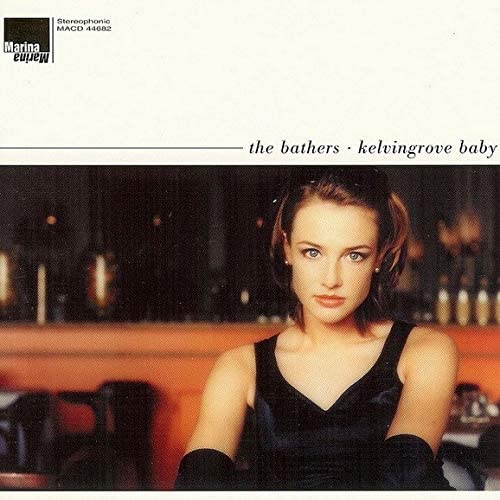
NIMBUS SEXTET-DREAMS FULFILLED .
Nimbus Sextet-Dreams Fulfilled.
Label: Acid Jazz Records.
Format: LP.
The roots of the Glaswegian-based contemporary jazz combo can be traced to Scotland’s capital Edinburgh, where pianist, keyboardist and bandleader Joe Nichols was studying at Edinburgh University. That was where he met his long-time collaborators drummer Alex Palmer and bassist Mischa Stevens. They’ve been performing together since then.
In 2018, Nimbus Sextet’s lineup was almost complete when saxophonist Martin Fell and trumpeter Euan Allardice joined the group. The final piece of the musical jigsaw was the addition of James Mackay. And now there were six.
Since then, Nimbus Sextet have been honing their sound and playing live in Scotland and further afield. However, one of the most important gigs of the band’s nascent career was supporting Gilles Peterson at Glasgow’s much-missed Sub Club. Watching the band play was Wayne A. Dickson of Groove Line Records who spotted their potential and during the gig was convinced the Acid Jazz Records would be interested in signing Nimbus Sextet. They were and Wayne A. Dickson, who has a wealth of music industry experience is now managing Nimbus Sextet.
With his help and encouragement and a lot of hard work on their own part Nimbus Sextet are going from strength-to-strength. They embarked upon a UK tour in February and March of 2020. Anyone who has been fortunate enough to see Nimbus Sextet live will agree that it’s an impressive sight and sound. The starting point for their music is jazz which heads in the direction of fusion and jazz-funk and also incorporates elements of funk neo-soul and world music. Live Nimbus Sextet take the audience on a musical adventure and are at their best when they improvise. It allows this talented and versatile group to showcase their considerable skills as the musical alchemists reinvent the material they’ve written over the last couple of years.
This includes the lead single from Nimbus Sextet’s forthcoming album Dreams Fulfilled which was recently released by Acid Jazz Records. During Trap Door Nimbus Sextet showcase their unique take on jazz. They fuse everything from funk and fusion to jazz-funk during this hook-laden and truly memorable and melodic single Trap Door.
Buoyed by the success of Trap Door, Nimbus Sextet returned with their much-anticipated sophomore single Lily White, which features vocalist Anthony Thomaz. It’s a song that was written in the winter of 2018 before saxophonist Martin Fell joined the group. He was travelling by train from Glasgow to Leeds and the vibrations of the train inspired what became the song’s rhythms. Then as he gazed out at the snow flecked fields this provided the inspiration for the song’s main theme. Soon, the song started to take shape, and once it was completed all the saxophonist needed was a vehicle for it.
When Martin Fell joined Nimbus Sextet he let the rest of the group hear the song. They spotted the song’s potential and decided to recorded it for their debut album Dreams Fulfilled. Joining the group was Anthony Thomaz who delivers a smooth, soulful and sassy vocal. He paints pictures and brings the lyrics to life with a neo-soul vocal. Meanwhile the rest of the group combine elements of jazz-funk, fusion, and jazz as they provide the perfect backdrop for this melodic and memorable song that showcases the combined and considerable talents of Nimbus Sextet.
Understated, atmospheric and cinematic are words that spring to mind as Deep Dark Blue Lights starts to reveal its secrets. So does wistful and melancholy. Meanwhile Nimbus Sextet’s playing is initially restrained as the rhythm section and wheezing keyboards combine to create a rueful slice late-night jazz. A fleet-fingered and funky bass signals it’s time to change direction and a blazing, quivering horn soars high above the arrangement. It’s joined by rolls of thunderous drums and banks of keyboard before a curveball is thrown and the tempo drops but there’s an element of drama. Soon, elements of jazz, funk, fusion and the influence of Herbie Hancock can be heard before this captivating and genre-melting eight minute epic reaches a crescendo. It’s been a roller coaster ride.
From the get-go, there’s a sense of sadness and melancholy on Klara. This comes courtesy of the soul-baring soliloquy. It begins with the line: “why can’t you see what you’re doing to me” and soon hurt and heartache is there for all to hear. When the soliloquy drops out, the jazzy arrangement meanders along with a probing piano playing a leading role as the rhythm section provide an understated backdrop. This less is more approach is perfect and as the piano leads from the front and the band jam. Later, the arrangement is stripped bare and the trumpet enters joining forces with a jazz-tinged guitar, the rhythm section and piano . With less than a minute to go the trumpet is played with power and passion and helps brings this beautiful track to a close. It’s without doubt one of the album’s highlights.
Séance is another of the slower tracks on the album. Keyboards give way to the horns which then flutter as the rhythm section provide the arrangement’s heartbeat. It has a wistful sound as the arrangement meanders along the horns occasionally flutter before the arrangement returns to its previous pedestrian sound. This allows the listener to reflect and ruminate. Later, the horns are played with speed and power adding a hopeful sound as the band jam and the track is transformed. It head in the direction of fusion when a blistering guitar is unleashed before returning to the earlier wistful sound. In doing so, this show’s Nimbus Sextet’s versatility during a track that’s full of twists and turns as well as subtleties and surprises.
The piano play a leading role on Dreams Fulfilled and is joined by the rhythm section during this understated and spacious arrangement that gradually reveals its secrets. Drums punctuate the arrangement, hi-hats ring out and a muted horn plays and accompanies the piano which is played deliberately and plays a starring role. Later, it’s played tenderly as is the alto saxophone. Not for long though and soon it’s being played with power as it soars high above the arrangement and along with the piano plays a starring role as the band jam for the last time. They enjoy the opportunity to stretch their legs before just Joe Nichols’ piano remains for the final minute and he adds a flamboyant flourish before taking his leave on this stunning nine minute cinematic opus which closes Dreams Fulfilled on a high.
Nimbus Sextet’s recently released debut album Dreams Fulfilled was much-anticipated and certainly doesn’t disappoint. The two singles Trap Door and Lily White are an important part of the album’s narrative and a tantalising taste of what was to come from the Glasgow-based group. However, these are just two of the six tracks that were recorded at Luigi Pasquini’s Anchor Lane Studios, in Glasgow. The result was an album that showcase a talented and versatile band who can seamlessly switch between and combine disparate musical genres and influences.
Jazz is at the heart of each and everyone of Nimbus Sextet’s songs on Dreams Fulfilled. They combine elements of funk, fusion, jazz-funk, Neo-Soul and world music during the six tracks on Dreams Fulfilled. Sometimes, the influence of Herbie Hancock can be heard in pianist and keyboardist Joe Nichols’ playing. In the rhythm section bassist Mischa Stevens has obviously been inspired by classic funk keep things funky with fleet fingered solos. However, it’s unfair to single two band members out as everyone plays their part in the sound and success of Dreams Fulfilled.
It’s a captivating musical journey where the music veers between smooth and soulful to hook-laden, melodic and memorable to beautiful and joyous right through to understated, atmospheric and cinematic. Sometimes, the music is wistful and rueful and allows the listener to reflect, ruminate and contemplate. Dreams Fulfilled shows the different sides to Nimbus Sextet who are one of the rising stars of Scotland’s vibrant and eclectic music scene and look like becoming one of the success stories of the forthcoming decade. Especially if they can continue to record albums of the quality of Dreams Fulfilled which showcases Nimbus Sextet’s versatility during a carefully crafted, genre-melting album that’s full of twists and turns and subtleties and surprises.
Nimbus Sextet-Dreams Fulfilled.
LOFTS AND GARAGES-SPRING RECORDS AND THE BIRTH OF DANCE MUSIC.
Lofts and Garages-Spring Records and The Birth Of Dance Music.
Label: BGP.
Format: CD.
Release Date: ‘30th’ October 2020.
As 1979 dawned, the tide was turning against disco, which had been one of the musical success stories of the late-seventies, and had provided the soundtrack to dance floors across the world. That was about to change.
Its critics stated that some disco was formulaic, while others thought the music was mechanical. An article in Time magazine went much further, describing disco as a “diabolical thump-and-shriek.” Another of disco’s biggest critics was Steve Dahl, a Chicago based DJ.
Up until Christmas Eve 1978, Steve Dahl had a show on WDAI in Chicago. This changed when WDAI’s owners read about New York’s WKTU-FM, a struggling rock station that decided to change format in 1978 and began to play disco. Suddenly, the ratings were soaring. The owners of WDAI decided to follow in the footsteps of WKTU-FM, and on Christmas Eve 1978, Steve Dahl was fired.
Talented DJs like Steve Dahl were never out of work for long, and soon, he was hired by the album rock station WLUP. Not long after starting at WLUP, Steve Dahl realised that the anti-disco backlash had begun. Soon, he started mocking rival station WDAI’s Disco DAI slogan on air, changing the slogan to Disco Die. This was just the start of Steve Dahl’s carefully orchestrated campaign.
Before long, the DJ had created his own mock organisation the Insane Coho Lips, which was Steve Dahl’s very own anti-disco army complete with a motto. This was that: “Disco Sucks.”
The anti-disco backlash gathered pace and led to the Disco Demolition Night at Comiskey Park, the home of the Chicago White Sox on the ’12th’ of July 1979.
Everyone who brought a disco record was admitted for ninety-eight cents. Crowds flocked from far and wide to watch the disco records being blown up at half-time during a double-header between the Chicago White Sox and the Detroit Tigers.
For many in the crowd that night, seeing the crate of disco records blown up was the highlight of the evening. Pressing the detonator was Steve Dahl. After the explosion, many in the crowd rushed onto the field and the pitch was damaged, which resulted in the Chicago White Sox having to forfeit the game. However, Chicago White Sox weren’t the only losers, because that night, disco died.
After that, record companies lost interest in disco, and record companies began looking for the “next big thing.” The times they were a changing in dance music and so were DJs.
This had been the case since the seventies during the disco era, when many DJs had a much higher profile than their predecessors and assumed the role as tastemakers. Some of the highest profile DJs were David Mancuso at The Loft and Larry Levan at the Paradise Garage, plus Walter Gibbons and Frankie Knuckles who straddled the disco and house era. Many of the DJs were regarded as high priests of music and their DJ box as their pulpit, and dancers came to the worship at the altar.
That was still the case in New York in what was regarded as the post disco era. Many music journalists seemed to be celebrating the demise of disco.However, disco’s death was exaggerated and it would go on to make a full recovery.
Before that, DJs in the Big Apple began spinning an eclectic selection of music. This included Afro-funk, boogie, Chicago House, Latin rock, mid-tempo Miami productions and extended mixes of Norman Whitfield productions. Some DJs even sprinkled their sets with classic funk, soul and even a few disco tracks. Others were looking for something different and new.
Especially Larry Levan at the Paradise Garage who at the time was one of the high profile DJs in the Big Apple. However, after the demise of disco he like many other DJs was looking for new music to play in his sets. He knew a number of American cities had a vibrant music scene and this included Chicago where house music was born and New York which was home to Spring Records.
The Rifkind brothers had founded Spring Records in 1967 which was an independent label that initially specialised in soul and funk music and was home to Joe Simon, Millie Jackson and the Fatback Band. Spring Records wasn’t just successful in America, its releases sold well in other parts of the world. Partly, this was because of the financial support it received from Polygram and its successor Polydor.
This success continued into the disco era. Spring Records which was based in New York was perfectly placed to climb onboard the disco bandwagon. Joe Simon, Millie Jackson and the Fatback Band all enjoyed a commercial success during the disco era. The label also signed Krystal and Renee Pryor who also enjoyed a degree of commercial. However, by 1979 executives at Spring Records were thinking about the future.
Spring Records executive producer Alan Schivek signed Busta Jones who released the Gino Soccio produced single (You) Keep On Making Me Hot later in 1979. It had a much slower tempo and hinted at the music that the label would release in the future.
In 1980, Spring Records’ executive producer Alan Schivek made three new signings. They were Arthur Baker, Michael Jonzon and Maurice Starr and who would become three of the most influential producers of the post disco era.
While some of the productions featured on the main Spring Records label, others featured on a new imprint Posse Records. It was founded in 1979 and was the latest addition to the Spring and Event Records’ family. The new label was run by Bill Spitalsky who was the company’s president. Some of the Posse Records productions feature on Lofts and Garages-Spring Records and The Birth Of Dance Music which will be released by BGP on the ‘30th’ of October 2020. It features ten tracks including contributions by C-Brand, Ritz, Fonda Rae, Fatback, Glory, Blaze, Body and Lonnie Youngblood. These tracks were played in clubs across the Big Apple including The Loft and Paradise Garage and played their part in the development of modern dance music.
C-Brand was founded in Detroit by Michael Calhoun and Warnsby Stegall who produced the long version of the group’s second single Wired For Games which was released in 1982. It was their debut single on Spring Records and the followup to (Shake Your) A-S-S-E-T-S which was released on Detroit International and was a mixture of soul and funk. Wired For Games had a much more contemporary sound and saw elements of boogie, funk, soul, disco strings and electronica seamlessly mixed by producers Michael Calhoun and Warnsby Stegall during this eight minute joyous dancefloor filler and is the perfect way to open Lofts and Garages-Spring Records and The Birth Of Dance Music.
In 1981, Ritz released the vocal version of Workin’ Out as their sophomore single on Posse Records. It was written and produced by the Boston trio of Arthur Baker, Maurice Starr and Michael Jonzun. They fuse funk, boogie and a soulful vocal to create a track that led to the electro dance movement.
Fonda Rae released two singles on Posse Records including Live It Up. The short vocal version of a track written by Fonda Rae and Freddie Perez which they produced by Danny Weiss. The vocal has been influenced by classic disco and the arrangement is an early example of boogie with a hint of piano house. It’s a potent mix and one that has stood the test of time.
Feel was a studio soul-boogie duo that showcased the talents of Chris Hills and Danny Weiss who arranged and produced The Players Association in the eighties. They released a quartet of singles including Got To Have Your Lovin’ on Posse Records in 1983. It’s a fusion of boogie, electro, funk and a sassy, soulful vocal. Alas, commercial success eluded this single which was popular in clubs in New York and further afield.
Mynk only released the one single on Posse Records, Get Up An’ Dance (Dance With Me) in 1981. It was written by Gerry Thomas who produced the single with Bill Curtis. It’s the vocal version is included on the compilation and this boogie track was a favourite of DJs and dancers in Britain and America.
By 1984, The Fatback Band were known as Fatback and released Spread Love as a single on Spring Records. It was taken from their 1983 album Is This The Future? On the vocal version of Spread Love Fatback combine electro, funk and a dubby, sensuous vocal as they continue to reinvent their music.
Although Glory released Let’s Get Nice as a 12” single on Posse Records in 1981, it’s the 7-inch vocal version that features on Lofts and Garages-Spring Records and The Birth Of Dance Music. It’s a funky slice of electro where a vocoder is used throughout the song. It’s effective and works well on this oft-overlooked rarity.
Blaze was an electro hip hop collaboration between Maurice Starr and Michael Jonzun. They wrote and produced the vocal version of We Come To Jam which was released as a single on Posse Records in 1982. It’s an innovative and memorable fusion of boogie, electro, funk, hip hop and soul from Blaze that sadly, was their only release.
In 1985, Body released Have Your Cake as a 12 single on Posse Records. There were three versions including the vocal version. It was written by Yvette Flowers with Kenny Beck who produced the single. There’s a Germanic sound before elements of house and a soul vocal combine on this underrated dance track.
Sing A Song was released by saxophonist and bandleader Lonnie Youngblood as a single on Spring Records in 1985 closes Lofts and Garages-Spring Records and The Birth Of Dance Music. He delivers a heartfelt and soulful vocal as backing vocalists accompany him and the arrangement combines elements of funk and mesmeric electronica. It’s a case of saving one of the best until last on the compilation.
Despite Spring Records and its Posse Records imprint releasing groundbreaking singles by some of the most important, influential and innovative producers of the time, commercial success eluded the singles on Lofts and Garages-Spring Records and The Birth Of Dance Music. These singles were popular amongst DJs and dancers in clubs in America and further afield. This included in Britain, where DJs discovered the delight of the new sound that was being released by Spring Records and its Posse Records imprint.
The music that Spring Records was releasing was evolving and was very different to what it released in the seventies. It had released soul, funk and Southern Soul before its dalliance with disco later in the seventies. As the eighties dawned dance music was very different in the post disco years. Gone were the disco orchestras with their lush string arrangements and horns which were replaced by synths and drum machines on new the boogie, Chicago House and electro singles. This was dance music for the post disco generation.
Alas, it turned out that disco wasn’t dead, it was just enjoying a deep sleep. When it awoke from its slumbers disco went underground and was embraced and enjoyed by new and old fans alike. Since then, disco’s popularity has continued to grow until the present day.
The same can said of dance music in all its forms. Over the last twenty-five years there’s been a huge increase in interest in dance music. Hardly a week goes by without the release of a new compilation of dance music. Ironically, this includes the many disco compilations that are released each year. That’s despite the supposed death of disco in 1979.
Apart from disco, there are many dance music compilations are released each week. Many feature a selection of dance classics and others are a retrospective of the most important dance labels. These are the labels that shaped modern dance music and this includes Spring Records and its Posse Records imprint which are celebrated on the new BGP compilation Lofts and Garages-Spring Records and The Birth Of Dance Music.
Lofts and Garages-Spring Records and The Birth Of Dance Music.
HAPPY TIMES-THE SONGS OF DAN PENN AND SPOONER OLDHAM VOL 2.
Happy Times-The Songs Of Dan Penn and Spooner Oldham Vol. 2.
Label: Ace Records.
Format: CD.
Release Date: ‘30th’ October 2020.
One of the greatest songwriting partnerships of the past sixty years is without doubt Dan Penn and Spooner Oldham. The pair met at Fame Studios in Muscle Shoals in the mid-sixties and went on to form a formidable songwriting partnership.
Over the next few years the pair wrote hit singles for Arthur Conley, Dionne Warwick, Etta James, Irma Thomas, James Carr, Joe Simon Percy Sledge, Solomon Burke and The Sweet Inspirations. Many of the songs that Dan Penn and Spooner Oldham wrote are now known as Southern Soul and the pair were architects of the genre.
The Dan Penn and Spooner Oldham songwriting partnership was a versatile one, and they also wrote country, pop and rock songs. BJ Thomas, Charlie Rich and The Box Tops were beneficiaries of the pair’s songwriting partnership.
Sometimes, the pair joined forces with other songwriters and this brought further success their way. By the time the Dan Penn and Spooner Oldham songwriting partnership came to an end in the early seventies, they had achieved more than many songwriters achieve in a lifetime.
Nearly fifty years after this exclusive songwriting partnership came to end Ace Records are about to release Happy Times-The Songs Of Dan Penn and Spooner Oldham Vol. 2 on ‘30th’ October 2020. It’s the much-anticipated followup to Sweet Inspiration: The Songs Of Dan Penn And Spooner Oldham which was released in 2011 and featured some of the pair’s best known songs.
Happy Times-The Songs Of Dan Penn and Spooner Oldham Vol. 2 turns its attention to the pair’s lesser known songs and features contributions from Arthur Conley, Bill Brandon, BJ Thomas, Bobby Womack, Don Varner, June Conquest, Merlee Rush, Percy Sledge, Ronnie Milsap, Spooner’s Crowd, The Box Tops, The Yo Yo’s and Wilson Pickett. These tracks are a mixture of unreleased tracks, singles, B-Sides and album tracks and is another reminder of one of the great songwriting partnership Dan Penn And Spooner Oldham.
June Conquest opens Happy Times-The Songs Of Dan Penn and Spooner Oldham Vol. 2 with I Do. It was produced by Rick Hall and Staff at Fame Studios in 1966 and was regarded as a potential single. However, this soulful dancer which seems to have been influenced by Motown lay unreleased until 2012 when this soulful dancer made its debut on all Of Fame (Rare And Unissued Gems From The Fame Vaults).
In 1967, The Box Tops which featured future Big Star vocalist Alex Chilton, released their biggest hit single The Letter. Tucked away on the B-Side was the Dan Penn production Happy Times which is a vastly underrated example of pop-soul.
In 1966 Sandy Posey from Jasper, Alabama, released her debut album Single Girl on MGM Records. The most powerful track on the album which was produced by Chips Moman was Hey Mister. It features a vocal full of despair and hurt as she breathes meaning and emotion into the harrowing lyrics.
When Arthur Conley released his third album Soul Directions on Atco, in 1968, it opened with You Really Know How To Hurt A Guy. The song had originally been recorded by Jimmy Hughes in 1965. However, this latest Southern Soul cover featured a vocal full of sadness, regret and a sense of melancholia.
The Power Of Love was recorded by Don Varner at Quinvy Studios in early 1967 but this Motown influenced song lay unreleased until 1989. That was when it featured on a Charly compilation Rainbow Road-Rare Soul From The Quinvy/Broadway Sound Studio Volume 5. At last, this long-lost hidden soulful gem was available for all to hear. It makes a welcome return on Happy Times-The Songs Of Dan Penn and Spooner Oldham Vol 2.
I Need A Lot Of Loving was released as a single on Goldwax in 1966. Lead vocalist Louis Williams sounds as if he’s paying homage to Sam Cooke on this single which it was hoped would result in a change of fortune for the label.
The late Bobby Womack was one of the greatest soul singers of his generation. Proof of this is Broadway Walk which Dan Penn and Spooner Oldham wrote with Darryl Carter and was released as a single on Minit in October 1967. It’s now regarded as one of Bobby Womack’s finest performances as he vamps his way through the lyrics to this soulful slice of Memphis funk.
Cousins James and Bobby Purify formed a soul duo in 1965 and by 1966 had signed to Bell Records. In 1967, they released The Pure Sound Of The Purifys-James and Bobby which featured the beautiful ballad Hello There. It’s another hidden gem that is a welcome addition on the compilation.
By 1968 Dee Dee Sharp had signed to Atco and was working with producer Tom Dowd. He produced Help Me Find My Groove which is a stunning slice of gospel-tinged Southern Soul.
It was hoped that The Goodies would be Memphis’ answer to The Shangri-Las. Sadly, things didn’t turn out that way. By the time Stax sent them to record with Dan Penn and Spooner Oldham their career was teetering on the brink. They wrote and produced the ballad Goodies which has a vocal that sounds as if it’s been influenced by The Shangri-Las. Despite this, and an arrangement that was recorded at American Studios commercial success eluded this carefully crafted single.
In 1969, BJ Thomas recorded I’ll Pray For Rain for his album Young and In Love which was released on Scepter Records. It’s a compelling ballad with an impassioned vocal that showcases a truly talented singer.
Closing Happy Times-The Songs Of Dan Penn and Spooner Oldham Vol. 2 is I’ll Be Your Baby by Spooner’s Crowd. It’s an instrumental that features Dan Penn on piano and is played waltz time. It was proceed by Rick Hall and released on Cadet in 1966 but failed to find an audience. This oft-overlooked track is the perfect way to close a compilation that pays homage to two songwriting greats.
Nine years after the release of the critically acclaimed compilation Sweet Inspiration: The Songs Of Dan Penn And Spooner Oldham, Ace Records are about to release then much-anticipated followup. This is Happy Times-The Songs Of Dan Penn and Spooner Oldham Vol. 2 which features twenty-four of the pair’s lesser known tracks. There’s tracks that lay unreleased, B-Sides, album tracks and singles that failed to find the audience they deserved. They all have one thing in common quality.
That’s no surprise as these songs were written by one of the greatest songwriting partnerships of the past sixty years. They were all produced by top producers who brought out the best in artists who were either well known names or making their way in the world of music. The result is a compilation that oozes quality and Happy Times-The Songs Of Dan Penn and Spooner Oldham Vol. 2 and is a fitting followup up to Sweet Inspiration: The Songs Of Dan Penn and Spooner Oldham.
Happy Times-The Songs Of Dan Penn and Spooner Oldham Vol. 2.
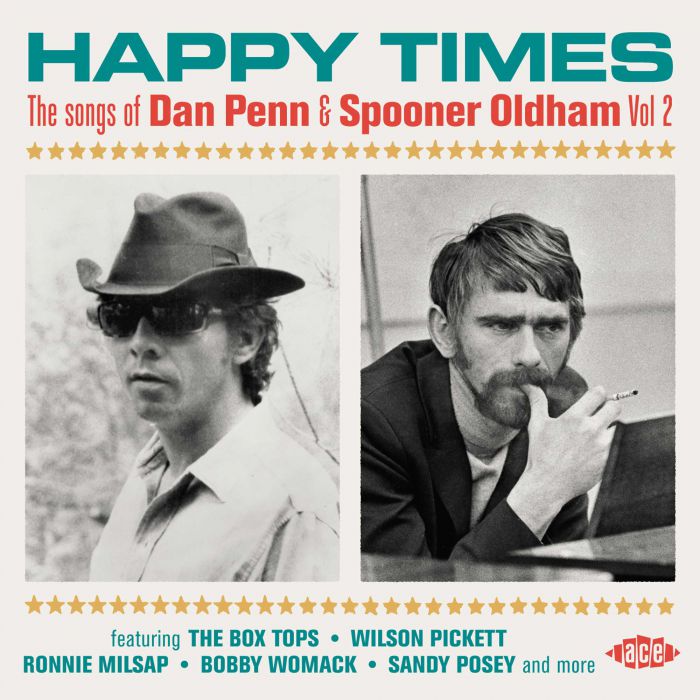
 dereksmusicblog
 dereksmusicblog