LINKWOOD AND OTHER LANDS-FACE THE FACTS.
Linkwood and Other Lands-Face The Facts.
Label: Athens Of The North.
Format: CD.
Although producers Nick Moore and Gavin Sutherland are both based in Edinburgh, Scotland, they hadn’t collaborated on an album until they began work on Face The Facts which is the first album from Linkwood and Other Lands. It was recently released on the Edinburgh-based label Athens Of The North label, and showcases two talented musicians and producers. They take the listener on a captivating journey through disparate musical genres on Face The Facts. It’s the latest chapter in their respective stories.
Nick Moore aka Linkwood released his debut album System on the Prime Numbers label in 2009. Six years later he returned with his sophomore album Expressions which was released on Firecracker Recordings.
Then earlier in 2020 Linkwood returned with a new album. However, it wasn’t a solo album and instead was a collaboration with Greg Foat. When the pair released Linkwood and Foat on Athens Of The North it was to plaudits and praise. It was a welcome return from Linkwood. Very few people realised at the time that he would return with a second collaboration later in 2020.
This time it was with Gavin Sutherland who also records under various monikers including Fudge Fingas, Vin Landers and Other Lands.
Having released his debut single Pattern Transform on Firecracker Recordings in 2018, Other Lands collaborated with The Nuclear Family on the 12” single Surface Noise. After this, began work on a genre-melting mini-album.
This was Rehearse In Reverse, which was released on the Origin Peoples’ label in April 2019. It wasn’t until 2020 that Other Lands returned with a new release.
When Gary Superfly recorded Endless and Purple for Mother Tongue Records both tracks featured Other Lands. The single was released earlier in 2020. By then, he had started work on a new collaboration with another Edinburgh-based musician and producer, Linkwood.
The pair had never worked together before but decided to record an album for the Athens Of The North label. Linkwood and Other Facts ended up writing and recording thirteen new tracks that became Face The Facts.
By the time Linkwood and Other Facts’ debut album Face The Facts was ready for release in November 2020, the world was a very different place. Britain was locked down after the global pandemic struck in earlier the year. Like many producers who had recorded an album of what was ostensibly club music Linkwood and Other Facts were trying to promote Face The Facts when clubs were shut and there was no sign of them opening in the foreseeable future. Certainly not this side of the next Ice Age if Nasty Nic and her Nodding Dentist have anything to do with it.
While tracks from Face The Facts won’t be heard in clubs anytime soon, this eclectic outing from Linkwood and Other Facts is sure to find an audience amongst many music fans. There’s something for all tastes on the album.
Straight away, Face The Facts heads in the direction of electro house on Theme For A City. Synths are to the fore on this upbeat and joyous track that’s guaranteed to brighten up even the darkest day.
It’s a similar case on First Take where synths and keyboards take centrestage as crispy beats provide the heartbeat. The squelchy synths have been inspired by early house and boogie while the keyboards are sometimes jazz-tinged. Later, the sound of a siren adds a cinematic sound and gives way to Porty. Is this a reference to Portobello, Edinburgh’s answer to the Balearics, and where the city’s beautiful people party? Providing the soundtrack are Linkwood and Other Lands who combine subtle grooves and a crystalline, gossamer melody to create a smooth sounding and memorable mid tempo track for the party people.
Face The Facts is quite different to what’s gone before. Sci-fi synths give way to a driving, mesmeric, sometimes funky and haunting, cinematic sound. Kraftwerk and techno seem to have influenced Linkwood and Other Lands on what’s without doubt one of the album’s highlights.
The multilayered 3VSR features a fuzzy analogy rhythm which is combined with a myriad of electronic sounds and a shimmering, probing keyboard. They play their part in what sounds like part of the soundtrack to a futuristic video game.
It’s all change on Don’t Thrown It. Partly, that’s down to the addition of a needy vocal which is combined with dreamy electronic arrangement. This hooky track shows another side of Linkwood and Other Lands, and is one they should revisit in the future.
Dreamy, dubby and shimmering synths combine with dramatic drums on Gold Leith. Sometimes, sci-fi synths are added to the genre-melting arrangement that veers between dubby, jazz-tinged, futuristic, atmospheric and cinematic. It’s one of Linkwood and Other Lands’ finest moments and sounds as if it belongs on an album of modern library music.
It’s a case of expect the unexcited as Downright takes on a Balearic sound. This shows yet another side to Linkwood and Other Lands who flit between genres on Face The Facts.
Varial is the most experimental sounding track on the album. A pulsating synth adds a futuristic and otherworldly sound. It’s augmented by buzzing, chirping sounds that play their part in this experimental soundscape.
Shapes is a near nine minute genre-melting epic where Linkwood and Other Lands enjoy the opportunity to stretch their legs. The track takes twists and turns and they throw a number of curveballs.Again, it’s a case of expect the unexpected as combine elements of dub, electro, electronica, house and Krautrock. Especially Kraftwerk whose influence shines through on during this captivating musical journey.
Slow, shimmering, glistening keyboards combine on Silver Nows while drums click and crack and sci-fi sounds flit in and out. Later, the drums drop out and lush orchestral sound drift in and out on this dreamy and ethereal example of electronica.
The keyboard led Up Wrong closes Face The Facts. Washes of synths are added and play their part in in what’s a slow, ruminative sounding track that encourages reflection. It’s the perfect way to close the album.
Face The Facts is a truly eclectic album from the talented and versatile duo, Linkwood and Other Lands. They combine everything from Balearic music, boogie, dub, electro, electronica, experimental jazz, house, Krautrock, library music, post punk and techno. The result is an album where no two tracks are the same. It’s a case of expect the unexpected as Linkwood and Other Lands bowl curveballs and spring surprises throughout Face The Facts, which hopefully, is the first of a series of albums from the two talented Edinburgh-based producers.
Linkwood and Other Lands-Face The Facts.

WALTER BISHOP JR-CORAL KEYS.
Walter Bishop Jr-Coral Keys.
Label: Real Gone Music.
Format: CD.
In 1971, Gene Russell and Dick Schory founded Black Jazz Records and later that year, the nascent label released their first release. This was Doug Carn’s debut album Infant Eyes. It was the first of twenty albums that the label released between 1971 and 1975.
Later in 1971, Black Jazz Records released their second release Coral Keys, the fifth album by forty-four year old pianist Walter Bishop Jr. By then, he had been a professional musician since he left school in New York. That was no surprise as he was born into a musical family.
Walter Bishop Jr was born in New York on October the ‘4th’ 1927 and grew up in Harlem. His father was the composer Walter Bishop Sr and he had passed on his musical genes to his son.
Growing up, Walter Bishop Jr learnt to play piano and spent time with some of his musical friends who lived nearby. This included three future jazz musicians Art Taylor, Kenny Drew and Sonny Rollins. By the time he left high school, Walter Bishop Jr had already decided that wanted to embark upon a career as a professional musician.
Initially, he played in local dance bands and this was akin to his musical apprenticeship. However, things changed once Walter Bishop Jr was called up in 1945 to do his military service.
He served in the Army Air Corp and was based not far from St Louis. That was where he first heard bebop when visiting jazz musicians played on the base. This made a big impression on Walter Bishop Jr and would transform his career.
After his military service was over, Walter Bishop Jr was able to resume his professional career. By the late-forties he had returned to Manhattan and had developed his bebop style by playing in jam sessions at Minton’s Playhouse. This was good experience, as he was about to encounter one of the giants of jazz, Art Blakey.
He asked twenty-two year old Walter Bishop Jr to join his band. However, he only spent fourteen weeks in the drummer’s employ. The pair were reunited a few years later and recorded together. A lot would happen before that happened.
In 1949, Walter Bishop Jr recorded with Milt Jackson and Stan Getz. Then as a new decade dawned he found himself working old friends and some of the biggest names in jazz.
This included Charlie Parker. Walter Bishop Jr joined his band and worked with him until 1954. He also found time to work with Oscar Pettiford, Kai Winding, the Kenny Dorham Quintet and Miles Davis between 1951 and 1953. The following year he was reunited with a previous employer.
Walter Bishop Jr rejoined Art Blakey’s band for a session and recorded eight tracks with him. They were released later that year on the Blakey album. By then, times were tough for one of jazz’s rising stars.
At the time, Walter Bishop Jr had become addicted to drugs. Sadly, this was not uncommon amongst jazz musicians as drugs were readily available in clubs and many became addicted to heroin.
Things got worse for Walter Bishop Jr when he was arrested and imprisoned. This also led to the withdrawal of his New York Cabaret Card. For a jazz musician this was a disaster as he was no longer able to play live in the city’s clubs.
In early May 1956, Walter Bishop Jr was asked to play on a Hank Mobley session. It became Mobley’s 2nd Message, which was released on Prestige on July the ‘27th’ 1956.
During the second half of the fifties, Walter Bishop Jr converted to the Muslim faith and adopted the name Ibrahim ibn Ismail. This he didn’t publicise and he continued to perform and record as Walter Bishop Jr.
This included when he played on the sessions for Jackie McLean’s album Swing, Swang, Swingin’. It was recorded at Van Gelder Studio on October the ‘20th’ 1959, and released by Blue Note Records in March 1960.
As the sixties dawned, Walter Bishop Jr continued to work as a sideman and he played on a number of sessions during 1960. This included Charlie Rouse’s album Takin’ Care of Business which was released later that year and Dizzy Reece’s Soundin’ Off which was released by Blue Note Records in October 1960.
Walter Bishop Jr also played on Ken McIntyre’s Looking Ahead, Jackie McLean’s Capuchin Swing and Curtis Fuller’s Boss of the Soul-Stream Trombone which were all released in 1961.
During the first two months of 1961, Walter Bishop Jr had played on the sessions for Shorty Baker and Doc Cheatham album Shorty and Doc and The Magnificent Trombone of Curtis Fuller. Then on March the ‘13th’ 1961 he played on the Rocky Boyd Quintet’s Ease It. The following day, Walter Bishop Jr returned to Bell Sound Studio to record his first album as bandleader.
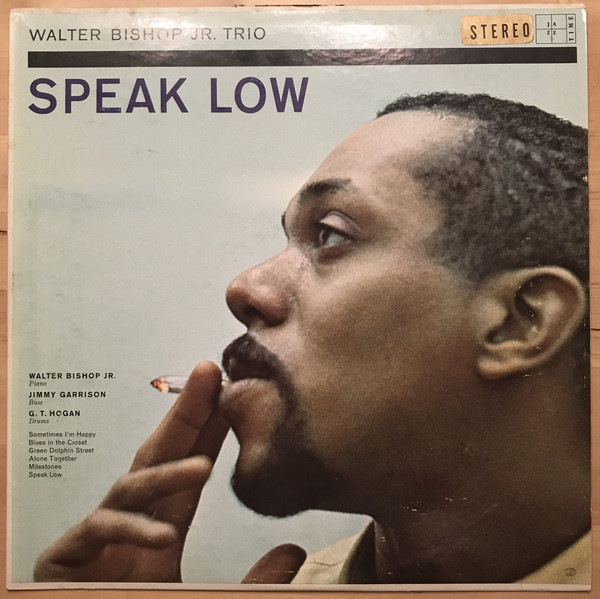
Speak Low.
He had made his professional debut as a teenager in the mid-forties and music had been his life since then. The thirty-three year old pianist made his way to Bell Sound Studio, New York, on March the ‘14th’ 1961 to record an album of standards with the Walter Bishop Jr Trio. He was joined by drummer GT Hogan and bassist Jimmy Garrison and they recorded six standards that became the post bop album Speak Low.
When it was released later in 1961 Speak Low was well received by critics. Many forecast a big future for bandleader Walter Bishop Jr.
Having released his debut album as bandleader, he returned to playing live and session work. Between October the ‘17th’ and ‘18th’ Walter Bishop Jr played on Gene Ammons’ Boss Soul! and Up Tight! Just a month later, on November the ‘13th’ he played on Kenny Dorham’s Inta Somethin’and this brought to an end one of the most important years of a career that had already spanned three decades.
In 1962, Stateside released A Pair of “Naturals” which included contributions the Peter Yorke Orchestra and Walter Bishop Jr Trio. The bandleader must have hoped that the album would introduce his music to a wider audience.
Despite having embarked upon a solo career, he continued to work as a sideman. Just like many jazz musicians session work augmented the income he made playing live and from record sales. In 1962, Walter Bishop Jr played on the sessions for the John Handy album Jazz. It was released later that year. However, after that, session work seemed to dry up for Walter Bishop Jr.
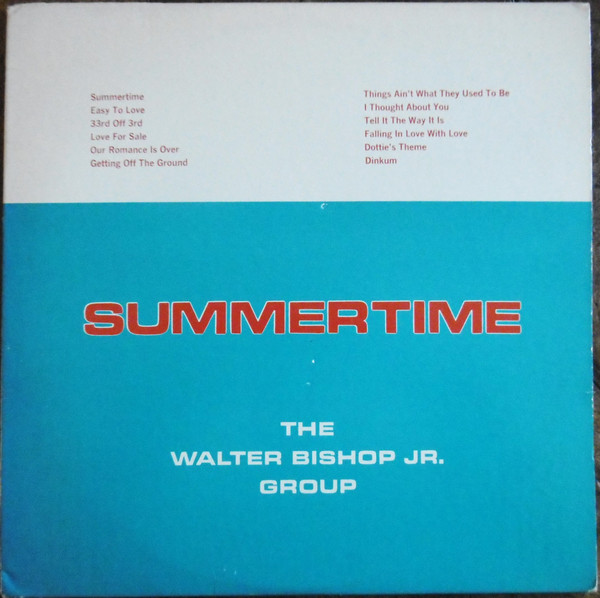
Summertime.
Two years after the release of his debut album as bandleader the new Walter Bishop Jr Group entered the studio. It featured drummer Jimmy Cobb and bassist Butch Warren who joined forces with bandleader and pianist Walter Bishop Jr. They recorded twelve track that were a mixture of standards and familiar tracks. These tracks became Summertime.
Later in 1963, Summertime was released by Cotillion Records, an imprint of Atlantic. It found the new Group flitting between bop and Bossa Nova on album that was well received by critics and hailed as a success. However, it wasn’t a commercial success and it was another five years before Walter Bishop Jr returned with a new album.
Over the next couple of years, Walter Bishop Jr concentrated on playing live. Session work had dried up and the only album he played on in 1965 was Sonny Stitt’s Broadway Soul which was released later that year.
Two years later, Walter Bishop Jr was asked to play on the sessions for Harold Vick’s album Commitment. However, it wasn’t released until 1974. By then, things had changed for Walter Bishop Jr.
During the late-sixties, he decided to return to college. When he left high school in the mid-forties he had embarked upon a career as a professional musician. With jazz no longer as popular as it once was, he enrolled at The Juilliard School and studied with Hall Overton. Later, Walter Bishop Jr would teach music theory in colleges in Los Angeles. Before that he would return to the studio.
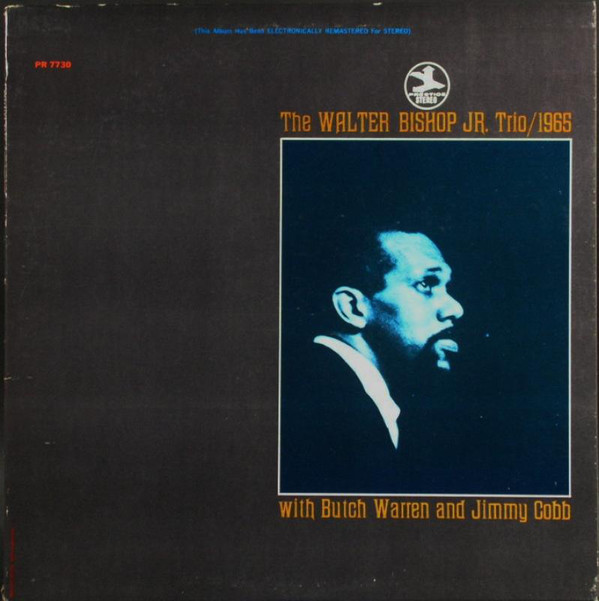
1965.
In 1970, the Walter Bishop Jr Trio returned with their sophomore album, 1965. The lineup featured drummer Jimmy Cobb and bassist Butch Warren and they recorded sixteen tracks with producer Addison Amor.
When 1965 was released, this latest album of bop was hailed as the finest album that the bandleader’s recording career. Walter Bishop Jr was back and would return with a new album in 1971.
Coral Keys.
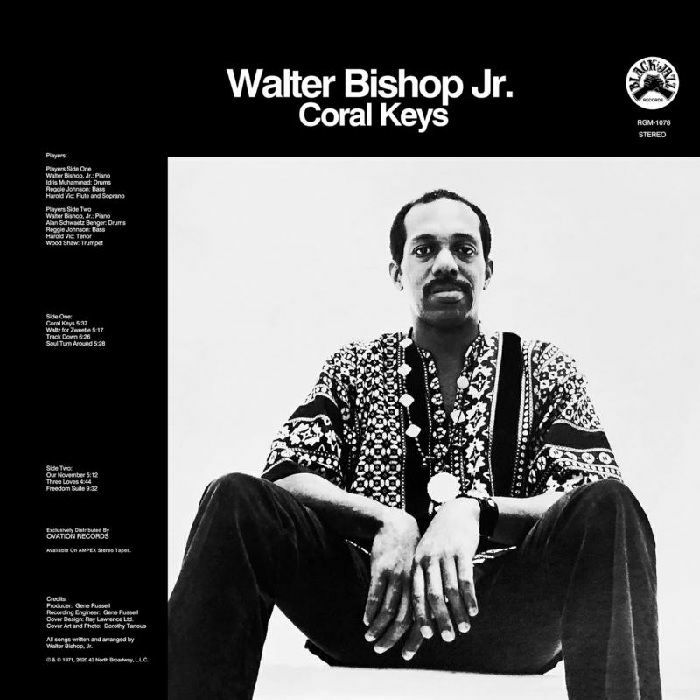
Walter Bishop Jr signed to Gene Russell and Dick Schory’s nascent Black Jazz Records in 1971. They had founded the label to promote the talents of young African-American jazz musicians and singers. Their first signing was Doug Carn who had just released his debut album Infant Eyes. The second album the label released in 1971 was Walter Bishop Jr’s Coral Keys.
Coral Keys featured seven of Walter Bishop Jr’s compositions. Some of these he recorded with a quartet, and others with a quintet.
The quartet played on Coral Keys, Waltz for Zweetie, Track Down and Soul Turn Around. The lineup was drummer Idris Muhammad, bassist Reggie Johnson, Walter Bishop Jr on piano and Harold Vick who switches between flute, soprano and tenor saxophone. For the rest of the album the lineup changed.
For the recording of Our November, Three Loves and Freedom Suite Alan Shwaetz Benger replaced Idris Muhammad and trumpeter Woody Shaw was added to the band. This was the lineup that competed the recording of Coral Keys.
When Coral Keys was released later in 1971, the album wasn’t the commercial success that Walter Bishop Jr or the owners of Black Jazz Records had hoped. It was a disappointment for everyone involved with the album.
Record buyers had missed out on a groove-centric album that found Walter Bishop Jr’s band flitting between modal jazz, hard bop and post bop. Just like all good bandleaders, he’s not afraid to let the rest of the band shine. They grasp the opportunity throughout the album and showcase their considerable skills.
This includes reedman Harold Vick on Coral Keys. Around Walter Bishop Jr’s piano he unleashes an exquisitely melodic soprano saxophone solo. This brings back memories of John Coltrane’s classic My Favourite Things.
Elsewhere the band shine and this includes the rhythm section of drummer Idris Muhammad and bassist Reggie Johnson on the first four tracks. Then the addition of trumpeter Artie Shaw on the final three tracks adds a new dimension to the first album to be credited to Walter Bishop Jr.
On Coral Key’s he’s been influenced by his hero Bud Powell as well as Horace Silver’s classic Blue Note Records’ era as well as Les McCann, Ramsey Lewis and sometime Bobby Timmons, Gene Harris and Red Garland. All these influences shine through on Walter Bishop Jr’s Black Jazz Records’ debut Coral Keys.
Sadly, Coral Keys wasn’t a commercial success when it was released. It was the album that got away for Walter Bishop Jr and so did his 1973 album Keeper Of My Soul. The only Black Jazz Records’ releases that enjoyed a degree of success were Doug Carn’s quartet of albums.
It was only much later when critics, cultural commentators and DJs rediscovered and revisited the Black Jazz Records’ back-catalogue that they realised just how important an album Coral Keys was. It was a groundbreaking album where Walter Bishop Jr and his quartet and quintet flit between and fuse musical genres on what’s without doubt one of the finest of his career. Just like the previous Black Jazz Records albums released by Real Gone Music, Walter Bishop Jr’s Coral Keys is a welcome reissue and a reminder of one of one of the greatest American independent jazz labels of the seventies who always strived to released innovative albums that were ahead of the musical curve.
Walter Bishop Jr-Coral Keys.
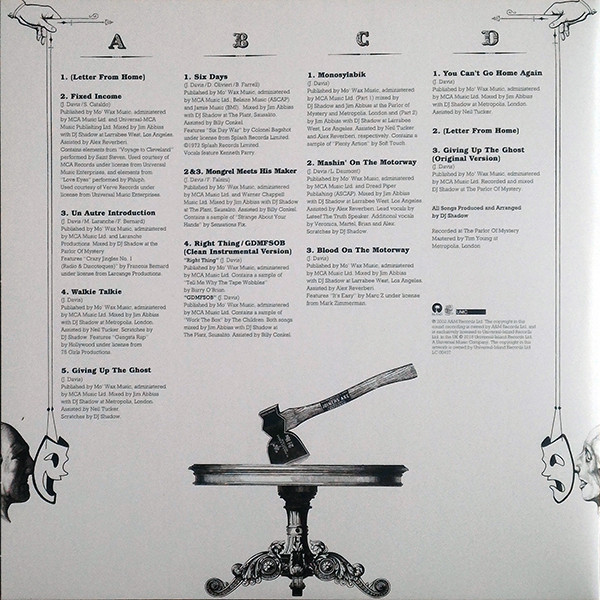
CULT CLASSIC: DJ SHADOW-PRIVATE PRESS.
Cult Classic: DJ Shadow-Private Press.
On September the ’16th’ 1996, DJ Shadow released his critical acclaimed landmark debut album Endtroducing…..on the label Mo Wax Recordings. Endtroducing….which featured uptempo jams and slow, dark and broody tracks was inspired by early hip hop and was hailed as a genre classic-in-waiting.
It was no surprise when Endtroducing….was certified gold in Britain and Canada and sold over 290,000 copies in America. Critics called DJ Shadow one of hip hop’s rising stars and forecast a great future for the twenty-four year old DJ, producer record collector.
By then, DJ Shadow had amassed a 60,000 record collection which he had sampled extensively on Endtroducing….and on his early singles which featured on Preemptive Strike. It was released to plaudits and praise by Mo Wax Recordings on January the ’13th’ 1998 and featured singles released by DJ Shadow between 1991 and 1997. Preemptive Strike was another tantalising reminder of what DJ Shadow was capable of.
A year later, in 1999, DJ Shadow and Cut Chemist released their first live album Brainfreeze. This was the first of a quartet of live albums DJ Shadow and Cut Chemist would release between 1999 and 2008.
Nearly four years after the release of Endtroducing….DJ Shadow entered the The Parlor Of Mystery studio in August 2000 to begin recording his sophomore studio album Private Press. By then, DJ Shadow had signed to MCA Records as he began recording the much-anticipated followup to Endtroducing….which was regarded as a genre classic.
DJ Shadow had recorded Endtroducing….between 1994 and 1996, but spent just over year recording Private Press. It was completed in December 2001, and by then DJ Shadow had released another live album.
This was Product Placement which was released in 2001, and was the second live album from DJ Shadow and Cut Chemist. Product Placement was only released at DJ Shadow’s gigs between 2001 and 2003.
By then, DJ Shadow has released his much-anticipated sophomore album Private Press on CD and a 2 LP set on June the ‘4th’ 2002. Nearly six years after the release of Endtroducing….DJ Shadow was back with Private Press.
When Private Press was released it was to widespread critical acclaim. Critics in Britain and America were won over by Private Press. DJ Shadow had sampled forty-three tracks ranging from novelty tracks to hidden gems and rarities. They were part of the musical tapestry that was Private Press.
Now thirty, DJ Shadow showcases his versatility and production skills on Private Press. Even after a couple of carefully crafted tracks it’s obvious that Private Press is a DJ Shadow album. It opens with the musical amuse-bouche (Letter From Home) before Fixed Income and later, Giving Up The Ghost feature melancholy, string-drenched arrangements that sit atop various sampled breaks. This becomes a pattern as DJ Shadow hops between genres on Private Press.
On Walkie Talkie it’s swaggering disco breaks and wistful sixties pop Six Days through to Right Thing/GDMFSOB where the tempo rises and there’s breaks aplenty. DJ Shadow unleashes a myriad of effects including echo amidst the electro breakbeats before he drops in Leonard Nimoy’s pure energy sample which is a masterful inclusion.
Mashin’ On The Motorway is described as road rage comedy and features Lateef The Truth Speaker. It’s followed by Blood On The Motorway where a lone vocal is combined with a vocal that repeats a biblical text. This proves effective and is followed by You Can’t Go Home Again, before a reprise of (Letter from Home) closes Private Press, which was DJ Shadow’s long-awaited sophomore album.
After DJ Shadow released Endtroducing….which was his critically acclaimed debut album, many critics wondered how would he would followup a genre classic? DJ Shadow returned to the studio where he used his trusty sampler to create a genre-melting album.
Disco, electronica, funk, hip hop, jazz, pop, soul and trip hop were combined by DJ Shadow as he spent over a year piecing Private Press together until his second genre classic was complete. DJ Shadow had followed up Endtroducing…with Private Press which was a fitting followup to one of the best hip hop albums of the nineties,
Prior to the release of Private Press, DJ Shadow was still regarded as one of hip hop’s rising stars. However, DJ Shadow came of age on his sophomore album Private Press which was his second genre classic and sixteen years later is still one of his finest moments.
Cult Classic: DJ Shadow-Private Press.

50 YEARS AGO GEORGE HARRISON RELEASED ALL THINGS MUST PASS.
50 Years Ago George Harrison Released All Things Must Pass
On the ‘10th’ of April 1970, Paul McCartney announced his departure from The Beatles. This signalled the end of The Beatles and start of his solo career which began a week later.
When Paul McCartney released his debut album McCartney, The Beatles were in the process of releasing their swan-song, Let It Be.
Just a month later, the Phil Spector produced Let It Be, and the single The Long and Winding Road were released on the ‘8th’ May 1970. Let It Be was a disappointing swansong from The Beatles, and was their only album not to be accompanied by glowing, critically acclaimed reviews. It was, some critics said, a disappointing end to The Beatles’ career.
Worse was to come when a later in May 1970, when the documentary that accompanied Let It Be was released. Critics were far from impressed by a documentary that had been eagerly awaited. Despite this, the Let It Be documentary still managed to win the 1970 Academy Award for Best Original Song Score. By then, the four former Beatles were concentrating on their solo careers.
After the breakup of The Beatles in 1970, John Lennon, Paul McCartney and Ringo Starr embarked upon solo careers. Most of the attention was centred around John Lennon and Paul McCartney. This suited George Harrison fine.
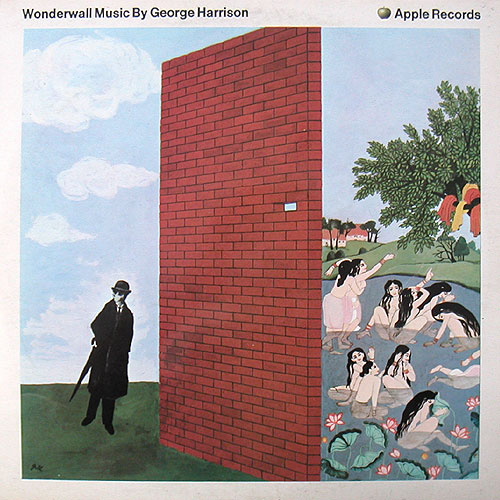
George Harrison had already released two albums by the time the four Beatles went their separate ways. By then, George Harrison had already released two solo albums including the soundtrack to Wonderwall Music. When it was released in November 1968, it was one of the most of the most innovative yet underrated music released by a former Beatle and the album that launched George Harrison’s solo career.
Wonderwall Music.
The album that became George Harrison’s debut album was unlike the other three Beatles’ solo albums. Wonderwall Music was the soundtrack to Joe Massot’s film, and was a fusion of two disparate musical cultures. George Harrison and some of his musical friends recorded an album where Indian classical music and rock sat side-by-side on Wonderwall Music. This wasn’t surprising as George Harrison had been interested in Indian music since 1966. Recording Wonderwall Music allowed George Harrison to experiment with his new musical love.
Recording of Wonderwall Music took place between November 1967 and February 1968 at EMI Studios, London, HMV Studios, Bombay and De Lane Lea Studios, London. These studios were where George Harrison collaboration with renowned classical pianist and orchestral arranger John Barham took shape He played an important part in Wonderwall Music, as did a number of Indian musicians, including Mahapurush Misra, Shivkumar Sharma and Aashish Khan. However, it wasn’t just classical musicians that featured on Wonderwall Music.
Some of George Harrison’s friends from the rock world joined him in the studio. This included former Cream guitarist Eric Clapton, ex-Beatle Ringo Starr and Peter Tork. They were joined on Wonderwall Music by Tony Ashton and his band The Remo Four. This all-star band, that included the best Indian music and rock music had to offer, spent the best part of three months recording of Wonderwall Music. Once the album was complete, it was released on The Beatles’ new record label Apple.
Before Wonderwall Music was released, critics had their say on George Harrison’s debut album. Sadly, Wonderwall Music failed to catch the attention of critics, and many didn’t even bother to review the album. They perceived Wonderwall Music as “just a soundtrack,” and not worthy of a review.
Ironically, since then, the same critics have reevaluated Wonderwall Music and it’s now perceived as a compelling and innovative album. Indeed, Wonderwall Music is now one of the most underrated solo albums by a former Beatle. Not many people would’ve realised this in back 1968.
When Wonderwall Music was released in Britain on the ‘ 1st’ of November 1968 it failed to chart. A day later, Wonderwall Music was released on the ‘2nd’ of November 1968 and peaked at number forty-nine in the US Billboard 200. This vindicated George Harrison’s decision to release such a groundbreaking album. The followup to Wonderwall Music saw George’s music head in a much more avant-garde direction.
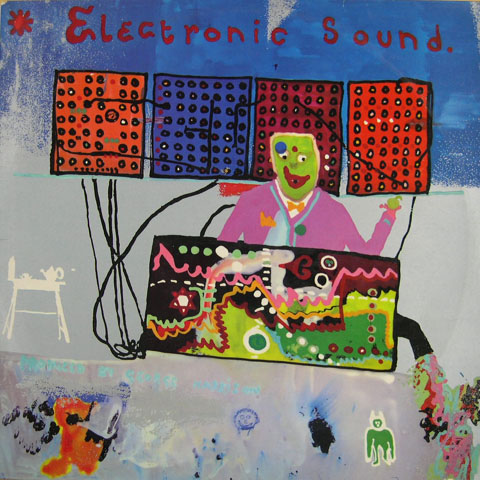
Electronic Sound.
Just over a year after the release of Wonderwall Music, George Harrison returned with his sophomore album, Electronic Sound. Critics and record buyers wondered what direction the Quiet One’s music would head in on his sophomore album? None of them would have guessed that George Harrison was about to release an album of avant-garde music, Electronic Sound.
Electronic Sound was recorded during November 1968 and February 1969 at Sound Recorders Studio, Los Angeles and at Kinfauns, George Harrison’s home in Surrey.The album featured just two lengthy pieces played on Robert Moog’s latest groundbreaking invention, the Moog synth. With a Moog synth, George Harrison recorded Under The Mersey Wall, which lasted nearly nineteen minutes and No Time Or Space, which was a twenty-five minute epic. These two songs became Electronic Sound, which was released on the ‘9th’ of May 1969.
Just like Wonderwall Music, critics weren’t interested in Electronic Sound. Reviews of George Harrison’s sophomore were few and far between, and to some extent, that wasn’t surprising. The problem was that Electronic Sound was an album that was so far ahead of its time, that critics who were used to reviewing albums of pop and rock failed to understand that album, never mind understand what George Harrison was trying to achieve.
It was only later when critics revisited Electronic Sound that they regarded the importance of the album. Electronic Sound was pioneering and innovative album of avant-garde electronic music that later, would be a reference point and inspiration for future generations of musicians. However, the critics that reviewed Electronic Sound in 1969 regarded it as an an album for completists only, or those interested in avant-garde or electronic music. Despite the importance of Electronic Sound, it hasn’t stood the test of time. Neither was it a commercial success.
Electronic Sound was scheduled for released in Britain on the ‘9th’ of May 1969 on The Beatles’ Zapple label. It was an imprint of Apple, with a raison d’être was to release albums of avant-garde music. However, Zapple was a short-lived venture for The Beatles, and was closed down by their new manager Allen Klein as part of his cost cutting measures. One of the few albums Zapple released was Electronic Sound.
Electronic Sound was released in Britain on the ‘9th’ of May 1969, and failed to chart. For George Harrison this was another disappointment. Just over two weeks later, Electronic Sound was released in America on 25th May 1969, and history repeated itself and Electronic Sound failed to chart. However, George’s luck was about to change when he released his third album All Things Must Pass, which was the album that transformed George Harrison’s solo career.
All Things Must Pass.
While his first two album had been adventurous and groundbreaking, George Harrison’s third album, All Things Must Pass was a much more traditional album. It was also an album that showcased George Harrison’s talent as a singer,songwriter, and musician.
For All Things Must Pass, George Harrison headed into the studio with eighteen tracks to record. Many of the songs on All Things Must Pass were new songs, while others were written while George Harrison was still a member of The Beatles. They had turned down tracks like All Things Must Pass and Isn’t It A Pity, preferring to record Lennon-McCartney compositions. While this was frustrating for George Harrison. the Quiet One shrewdly kept them for his solo career. Now was the time to showcase these songs on All Things Must Pass.
Sixteen of the tracks on All Things Must Pass were written by George Harrison. He also cowrote I’d Have You Anytime with Bob Dylan. The only cover version on All Things Must Pass was the Bob Dylan composition If Not For You . These eighteen songs were part of what became a triple album, which was recorded in three top studios and featured an all-star cast.
Recording of All Things Must Pass began on 26th May 1970 and finished in late October 1970, with recording sessions taking place in the familiar surroundings of Abbey Road Studios, Trident Studios and Apple Studios. During that five month period, the great and good of music played a walk on part on All Things Must Pass.
This included George Harrison’s friend and ex-Beatle Ringo Starr played drums on some of the tracks. He was joined by two men who had been members of The Beatles’ inner circle. Billy Preston who played with both The Beatles and the Rolling Stones played piano and organ. Klaus Voormann another Beatles’ confidante arrived at the sessions and played guitar and bass.
They were joined by three members of Derek and The Dominoes, drummer Jim Gordon, bassist Carl Radle and Eric Clapton who played acoustic and electric guitars. Among the other top names that made their way to the sessions were Blind Faith drummer Ginger Baker, Yes’ drummer Alan White, Traffic’s Dave Mason who played electric and acoustic guitars and Phil Collins of Genesis added percussion. These big names were joined by some top session players.
This included Bobby Whitlock, who was formerly a member of Delaney and Bonnie, and in 1970, session musician to the stars. Bobby Whitlock played piano, organ, tubular bells and harmonium. Pete Drake played pedal steel, while Pete Ham, Tom Evans and Joey Molland played acoustic guitar, and Tony Ashton and Gary Brooker played piano. Horns came courtesy of saxophonist Bobby Keys and trumpeter and trombonist Jim Price. Joining this crack band of session players was The Beatles’ former roadie Mal Evans, who played percussion. He played a small part in what would become the most successful album of George Harrison’s career, All Things Must Pass.
With All Things Must Pass completed, George Harrison’s third solo album was scheduled to be released on the ‘27th’ of October 1970. Before then, the music critics passed judgment on All Things Must Pass. They hadn’t been won over by George Harrison’s two previous albums Wonderwall Music and Electronic Sound, and there was a degree of trepidation as the Quiet One awaited the reviews of All Things Must Pass.
When the reviews were published, there was not one dissenting voice. Critics hailed All Things Must Pass as a classic, and critical acclaim accompanied George Harrison’s third solo album. It was, without doubt, the greatest album of George’s three album solo career, and marked the coming of age for George Harrison.
It was as if George Harrison had been freed from the shackles that were The Beatles. No longer was he being held back by the Lennon-McCartney axis who dictated what songs featured on The Beatles’ albums. Most of the time, George Harrison’s songs had been rejected out of hand, and often, inferior songs from Lennon-McCartney partnership were given preference. However, George Harrison was about to have the last laugh.
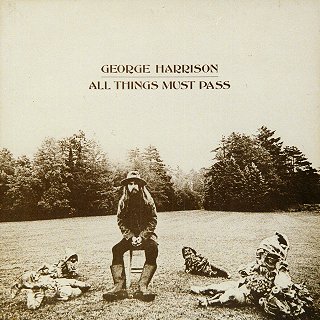
The cover of All Things Must Pass saw George Harrison surrounded by four comedic looking gnomes, which many veteran Beatles watchers believed were meant to represent The Beatles. The same Beatles watchers saw this as George Harrison commenting on his removal from The Beatles. That was George Harrison’s past, and he was no longer defined by his membership of The Beatles. Since the breakup of The Beatles, George Harrison had his own identity back and could forge a career as a solo artist. What better way to start the next chapter in his career that by releasing a classic album, All Things Must Pass.
The ‘27th’ of October 1970 was D-Day for George Harrison. That was the day All Things Must Pass was released as a triple album. The first four sides featured the main part of All Things Must Pass which was produced by George Harrison and Phil Spector. On sides five and six, was Apple Jam which It featured five jams. The lavish triple album that was All Things Must Pass, was about to become one of the most successful solo albums by a former Beatle.
The lead single released from All Things Must Pass during 1970 was a double A-Side. This was My Sweet Lord and Isn’t It A Pity. It reached number one in America, Australia, Britain, Canada, Germany, Holland, Norway, Sweden and Switzerland. Having sold one million copies in America, My Sweet Lord was certified gold, and later, was nominated for a Grammy Award. There was a problem though.
Anyone familiar with Ronnie Mack’s He’s So Fine immediately spotted the similarities between the two songs. So did Bright Tunes Music who filed a writ against George’s Harrisongs Music on the ‘10th’ of February 1971. Nearly five years later, on the ‘23rd’ of February 1976, the case was settled. It was held that George Harrison had “subconsciously copied” He’s So Fine and Bright Tunes Music was awarded damages that totalled $1,599,987, which was deemed 75% of the North American royalties. For George Harrison, the case brought by Bright Tunes Music caused him huge problems, and he became so paranoid about subconsciously copying some else’s work, that he could hardly write. However, back in 1970, that wasn’t the case.
On the release of All Things Must Pass on the ‘27th’ of October 1970, it reached number one in America, Australia, Britain, Canada, Holland, Norway and Sweden. All Things Must Pass also reached number four in Japan and number ten in Germany. Given how successful All Things Must Pass was, it’s no surprise it was certified gold in Britain and Canada. In America, All Things Must Pass was certified platinum six times over. That equates to sales of six million copies of All Things Must Pass. Never again, would George Harrison reach these heights. This was no surprise, as All Things Must Pass was a stonewall classic.
After the release of All Things Must Pass, no longer was George Harrison perceived as a junior partner in The Beatles. That was far from the case as he was a talented and prolific songwriter. The sixteen songs that featured on All Things Must Pass was just the tip of a musical iceberg. For a number of years, George Harrison had been quietly writing songs. By 1970, he had accumulated a vast body of work. Now was the time to let the record buying public hear what he was capable of on All Things Must Pass.
All Things Must Pass was George’s Magnus Opus. It’s an epic album. Lavish, epic arrangements are the perfect foil for George’s vocal. The music is both melodic and mystical. Especially when George draws inspiration from Indian music. This is part of All Things Must Pass’ spiritual sound.
During All Things Must Pass spirituality and religion play an important part. This is apparent on My Sweet Lord. Just like other tracks on All Things Must Pass, My Sweet Lord is a mixture of rock ’n’ religion. It’s an anthemic modern-day hymnal. However, there’s other influences on All Things Must Pass.
This includes The Band, Bob Dylan and of course Phil Spector. His arrangements are part of the albums lavish, grandiose sound. Phil Spector co-produced All Things Must Pass, and was yin to George’s yang. Now that George Harrison was freed from the constraints of Lennon and McCartney he had blossomed as singer, songwriter, musicians and producer. Phil Spector had helped the genie escape from the bottle.
In doing so, Phil Spector helped George Harrison record an album that he would never better, All Things Must Pass. Cerebral, thoughtful and spiritual, the music is often beautiful and sometimes wistful and melancholy on what is a compelling classic album that is spread across side sides of vinyl. It features many musical highlights.
Some of the many highlights include My Sweet Lord is a stonewall classic. It’s one of the best songs ever written and recorded by a former Beatle. It’s a timeless, spiritual song, written in praise of the Hindu god Krishna, where George Harrison calls for the abandonment of religious sectarianism. Sadly, forty-seven years later, this beautiful song is just as relevant.
The thoughtful Isn’t It a Pity was written after the demise of The Beatles, George Harrison is in a reflective mood. There’s a sadness in his voice that no longer are The Beatles such close friends. On All Things Must Pass, it’s as if George has come to terms that The Beatles are no more. Considering they were a part of his life for so long, this couldn’t have been easy.
George Harrison is in an equally reflective mood on What Is Life? Written in 1969, it’s one of George Harrison’s love songs. This is something that he does so well. In this song, the lyrics aren’t just about a woman, but a deity too.
Beware Of The Darkness is another spiritual song, where t he lyrics reflect the supposed philosophy of Radha Krishna Temple. It’s a song full of powerful imagery which gives the track a cinematic sound and feel. Art Of Dying is another spiritual track where George Harrison deals with reincarnation and the need to avoid rebirth. Closing All Things Might Pass is Hear Me Lord, a song that originally, George Harrison put the song forward for Let It Be. It was rejected and makes its debut on All Things Might Pass. A personal prayer in a rock gospel style, George Harrison asks for help and forgiveness from his deity on Hear Me Lord.
Apple Jam, which fills sides five and six, allows George Harrison’s multitalented all-star band to cut loose. On the longer tracks Out of the Blue, I Remember Jeep and Thanks for the Pepperoni they showcase their versatility and considerable talents. This is a fitting way to end All Things Must Pass.
Although George Harrison went on to release nine further solo albums, none of them match All Things Must Pass in terms of success and quality. Most of his albums were commercially successful, but neither replicated the success nor critical acclaim that All Things Must Pass enjoyed. It was George Harrison’s career defining album, and sadly, he would never again reach the same heights.
Try as he may, George Harrison always came up short when he released future albums. All Things Must Pass was George Harrison’s Magnus Opus. Freed from the shackles of The Beatles, George Harrison had blossomed, and was no longer the “junior partner” or “quiet Beatle.” George Harrison was only quiet because he never had was given opportunity to speak musically. When he did, it was a case of tokenism, which The Beatles would come to regret.
Just six months after Paul McCartney announced he was leaving The Beatles in April 1970, George Harrison released All Things Must Pass, which sold over seven million copies and reached number one in Australia, Britain, Europe and North America. There was the small matter of two Grammy Award nominations.
When the Grammy Award nominations came out, George Harrison was nominated twice. All Things Must Pass was nominated for the Album of The Year Award and My Sweet Lord was also nominated for Record of the Year. This was a huge honour, and a recognition of how far he had come since leaving The Beatles. All Things Must Pass also marked the coming age musically of George Harrison.
When George Harrison recorded All Things Must Pass he neither resorted to controversy nor gimmicks Instead, he let his music do the talking, and didn’t need to resort to bed ins, bagism, third-rate protest songs or adaptations of nursery rhymes. Instead, George Harrison who was already one of the most respected figures in music, was joined by some of the biggest names in music
The musicians who joined George Harrison on All Things Must Pass reads like a who’s who of music. They recorded the twenty-three tracks that became All Things Must Pass. This all-star band played their part on became the most successful solo album released by a former Beatle.
After the success of All Things Must Pass, none of the rest of The Beatles’ came close to replicating its success. That is no surprise, as All Things Must Pass is a classic album. Even the contrarian Rolling Stone magazine agree, and include All Things Must Pass in their list of 500 albums of all time. It’s the album that launched George Harrison’s solo career, after the release of two very different albums.
1968s Wonderwall and 1969s Electronic Music were much more groundbreaking, avant-garde albums, while All Things Must Pass saw George Harrison return to a much more familiar sound. The only difference was All Things Must pass marked the debut of George Harrison’s trademark slide guitar sound. Washes of slide guitar play an important part in All Things Must Pass’ sound. This sound would feature on further George Harrison albums.
Over the next thirty-two years, another nine George Harrison albums were released. His final album was Brainwashed, which was released posthumously in 2002, a year after George Harrison’s death. However, George Harrison left behind a rich musical legacy, including the albums he recorded with The Beatles and the twelve solo albums he released between 1968 and 2002. The includes George Harrison’s career-defining Magnus Opus All Things Must Pass, which is a stonewall classic, and the most successful album released by a former Beatle.
50 Years Ago George Harrison Released All Things Must Pass
COLIN CURTIS PRESENTS JAZZ DANCE FUSION VOLUME 2.
Colin Curtis Presents Jazz Dance Fusion Volume 2.
Label: Z Records.
Format: CD.
During the late-seventies and early eighties, one of most popular DJs on the UK jazz-dance scene was Colin Curtis, who was born Colin Dimond, in Madeley, Staffordshire 1952. That was where the his lifelong love of music began when he started to listen to offshore pirate radio stations like Radio Caroline. Not long after this, a friend of Colin Curtis’ sister showed him her collection of Tamla Motown singles, and this was the state of a lifelong love of black American music.
Soon, Colin Curtis was collecting record soul and R&B, and in the late-sixties, started attending Northern Soul all-nighters at the Twisted Wheel in Manchester, and later, at the Golden Torch in Tunstall, Staffordshire. However, Colin Curtis wasn’t content just to dance at the all-nighters, what he really wanted to do was DJ.
He got his opportunity in the late-sixties, while still a teenager, and before long was part of the DJ line-up at the Golden Torch all-nighters. However, it was in 1973 that Colin Curtis got his big break, when he began a weekly residency at the soul nights at the Highland Rooms at the Blackpool Mecca. Soon, Colin Curtis was joined by fellow DJ and record collector Ian Levine, and this was the start of a five-year partnership which that lasted until 1978. However, during this period, there was a split in the Northern Soul scene.
Up until then, the Northern Soul scene was primarily a revivalist scene, with the majority of DJs looking for obscure soul singles from the sixties and seventies. This was too restrictive for Colin Curtis and Ian Levine whose music tastes were much more eclectic. The pair who pioneered mixing in the UK, began adding disco, funk and jazz to their sets which was a controversial move. So much so, that the Northern Soul scene was split in two and the modern soul movement emerged out of the Highland Rooms.
The demise of the Colin Curtis and Ian Levine DJ-ing partnership took place in September 1978, after five years at the Highland Rooms. However, Colin Curtis left to take up a residency at Rafters nightclub in Manchester, which marked a turning point in his DJ-ing career.
Although Colin Curtis still played soul and disco in his sets, they started to move towards jazz funk and fusion. This was the sound that Colin Curtis played at all-nighters up and down the country, including venues like the Blackpool Mecca and Manchester Ritz. These nights were hugely popular, with Colin Curtis regularly playing in front of crowds that ranged from 1,500 right up to 3,000. Colin Curtis’ new sound was proving as popular as the Northern Soul nights he had played at a decade earlier.
Buoyed by the success of his new sound, Colin Curtis started playing at venues around the UK, and by the early eighties, was even playing in mainland Europe. By then, Colin Curtis was regarded as a pioneer of the UK jazz-dance scene which would explode over the next few years. However, if it wasn’t for DJs like Colin Curtis, the UK jazz-dance scene may not have been the success it was.
Over thirty years later, and Colin Curtis is still passionate about the music he played on the UK jazz-dance scene. So much so, that in 2018 Z Records released Colin Curtis Presents Jazz Dance Fusion. It was released to plaudits and praise and found favour with dancers and DJs who have been waiting for the second instalment
Two-and-a-half years later and Colin Curtis Presents Jazz Dance Fusion Volume 2 has just bee released by Z Records and continues to document the glory days of the UK jazz-dance scene.
On Colin Curtis Presents Jazz Dance Fusion Volume 2 there’s thirteen tracks, and he eschews the predictable and familiar and instead, digs deep into his collection for deep cuts, rarities and hidden gems. However, there’s still plenty of floor filling favourites and these top quality workouts will test the stamina of even the fittest dancers. It’s quality all the way and it’s not going to be easy to choose the highlights of a compilation of the quality of Colin Curtis Presents Jazz Dance Fusion Volume 2.
Opening Colin Curtis Presents Jazz Dance Fusion Volume 2 is Revelation by Paoli Mejias and is taken from the Puerto Rican percussionist’s debut album Mi Tambor. It was released on his Paoli Mejias label in 2004. It’s a breathtaking slice of Latin jazz will test the stamina of dancers. This hidden gem and is welcome addition to the compilation.
In 2010, Leslie Lewis and Gerard Hagen Trio released the album Keeper Of The Flame on Surf Cove Jazz. One of the album’s highlights was the title-track which features a vocal masterclass from one of jazz’s best kept secrets. Leslie Lewis combines power and emotion as she breathes life and meaning into the lyrics on what’s a tantalising taste a truly talented vocalist.
When bassist Curtis Lundy released Just Be Yourself on New Note in 1987, the album featured Never Gonna Let You Go. Playing a starring role is vocalist Carmen Lundy who delivers a heartfelt vocal powerhouse. It was one of the highlights of the album and is the perfect introduction to another talented jazz vocalist.
Outside of their native Brazil, not many people will have heard of 8VB. That’s a great shame as they’re a talented group who released their debut album Amicizia on Delira Música in 2007. It featured the genre-melting track Gengis where they seamlessly combine jazz-funk, fusion with Latin jazz on another hidden gem that Colin Curtis has unearthed.
Upa Neguinho featured on the Marita Alban Juarez Quartet’s 2015 album which was released on Youkali Music. It’s a driving Latin jazz dancer that features an almost flawless performance from the Quartet and showcases their considerable skills.
JD Walter’s Golden Lady is taken from his album Sirens In The C-House which was released by Dreambox Media in 2000. It’s one of his own compositions and features an inventive scatted vocal. However, it’s French pianist Jean-Michel Pilc that steals the show. Despite that, it’s one of the weaker tracks on the compilation.
When Steven Kroon released his Without A Doubt (Sin Duda) album in 2011 it featured Tombo 7/4. He combines jazz and Latin during this joyous slice of musical sunshine which sashays along.
Hajime Yoshizawa was part of the Nu-Jazz movement in the late-nineties and then formed Kyoto Jazz Massive with his three brothers. However, in August 2008 the keyboardist released his solo album Japan on the Village Again label. It featured Celebration a sultry sounding track where he unleashes a stunning solo and is joined by vocalist Navasha Daya who makes a guest appearance. Together they play their part in the sound and success of this timeless track.
In an instant the Raffaela Renzulli Ensemble transport the listener to Brasilia. It’s a quite beautiful summery sounding track from their 1987 album Children Of The Light.
Given the quality of Carmen Lundy’s vocal on Just Be Yourself, the inclusion of So This Is Love is a welcome one. She delivers an impassioned vocal on this Latin jazz workout that’s sure to be a favourite of dancers and DJs alike.
Hungarian guitarist and vocalist Tino Gonzales released the album Latin Gypsy in 2006. There’s a sense of urgency during the title-track which features a scratchy gypsy violin. It’s a accompanied by bursts of a scatted vocal and a fleet-fingered jazzy piano solo. Along with the rhythm section they drive the arrangement to this glorious floorfiller along.
When Grady Tate released his album Body and Soul on the Milestone label in 1983 it featured Little Black Samba. Straight away the track heads in the direction of vocal jazz as he unleashes an urgent scatted vocal on a track that’s a reminder of a different era.
Closing Colin Curtis Presents Jazz Dance Fusion Volume 2 is Jam Session Goes Latino’s Manteca. It’s the title-track to an album that featured Al Grey and Isauro. It’s a joyous call to dance that closes the album on a high.
For veterans of the UK jazz dance scene Colin Curtis Presents Jazz Dance Fusion Volume 2 is the perfect opportunity to relive the nights spent dancing to jazz funk, fusion and Latin jazz. The thirteen tracks on Colin Curtis Presents Jazz Dance Fusion Volume 2 were part of this hugely popular scene. It was very different to what had gone before including Northern Soul, disco and boogie and there was a freshness to the music that was being played in clubs.
Never before had DJs played sets that featured jazz funk, Latin jazz and fusion. This many onlookers thought was unheard of, but the roots of the UK jazz dance scene could be traced to the Highland Rooms in Blackpool, when Colin Curtis and Ian Levine started playing funk and disco in their Northern Soul sets. Over the next few years, Colin Curtis’ sets evolved and eventually, he was a pioneer of the UK jazz dance scene.
While other followed in his footsteps, Colin Curtis will always be remembered as one of the pioneers of the UK jazz dance scene who played eclectic sets where anything was possible. Soon, Colin Curtis’ sets featured jazz funk, fusion and Latin jazz, where he eschewed the predictable and familiar for deep cuts, hidden gems and rarities. That is the case on Colin Curtis Presents Jazz Dance Fusion Volume 2. It’s a mixture of floorfillers, fusion, jazz funk and irresistible Latin jazz that are a remainder of the glory days of the UK jazz dance scene. For veterans of the scene this Colin Curtis Presents Jazz Dance Fusion Volume 2 is a compilation that’s going to be of interest to them and is sure to bring back memories.
Colin Curtis Presents Jazz Dance Fusion Volume 2.
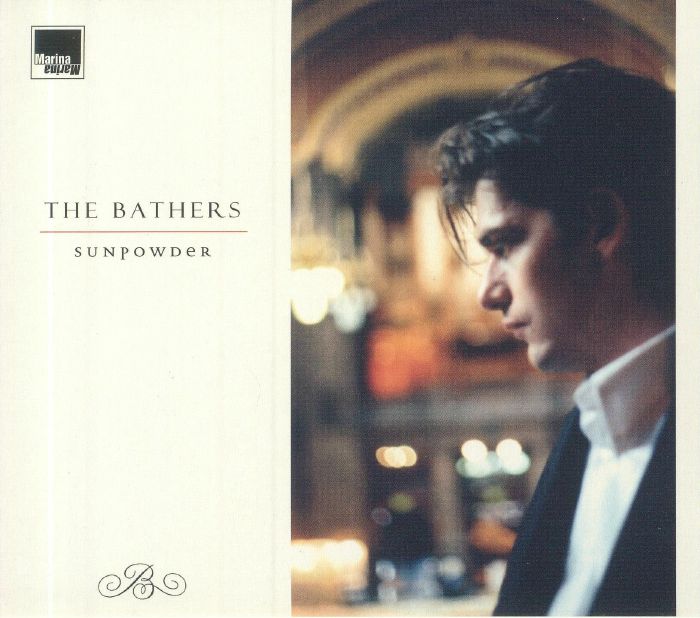
THE BATHERS-SUNPOWDER.
The Bathers-Sunpowder
Label: Marina Records.
Format: CD.
With Chris Thompson at the helm, the The Bathers could’ve and should’ve, been one the biggest Scottish bands ever. Their music was articulate, beautiful, dramatic, ethereal, elegiac, emotive, languid, literate and melancholy. This is music for those that have loved, lost and survived to tell the tale. Sadly, The Bathers never scaled the headiest of heights and instead, it’s story is a case of what might have been.
The Bathers were formed in Glasgow, in 1985, by singer, songwriter and troubled troubadour Chris Thomson and released six albums between 1987 and 1999. Their fourth album was Sunpowder which which was recently reissued by Marina Records and is a reminder of The Bathers at the peak of their power.
Sadly, The Bathers never reached the heady heights their music deserved. As a result, the six albums they released between 1987s Unusual Places To Die and 1999s Pandemonia never reached the audience it deserved. For Chris Thomson, history was repeating itself.
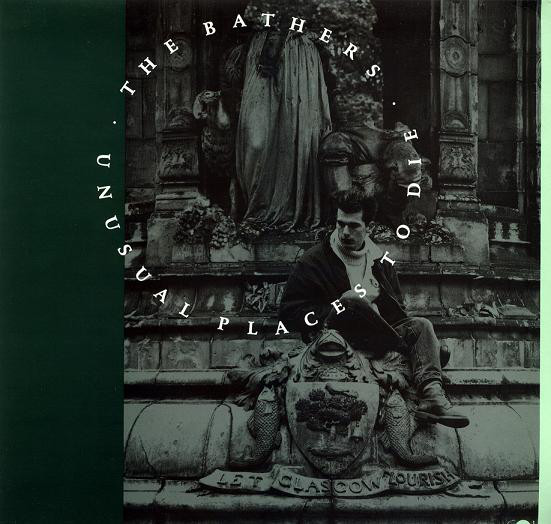
The Bathers were formed in Glasgow in 1985. They formed after Chris Thomson’s previous group Friends Again split up. Initially, the group was a vehicle for singer-songwriter Chris Thomson. However, in 1987, The Bathers secured their first record deal with Go! Discs Records and released their debut album Unusual Places To Die.
Unusual Places To Die.
For their debut album Unusual Places To Die, Chris Thomson penned ten tracks. These tracks were recorded by The Bathers’ original lineup. This included bassist Sam Loup, drummer James Locke and Chris on guitar and keyboards. Joining The Bathers, were Michael Peden of The Chimes, Douglas Macintyre and James Grant of Love and Money. They played walk on parts on Unusual Places To Die, which was released later in 1987.
When Unusual Places To Die was released in 1987, it was to widespread critical acclaim. Chris Thompson’s songs seemed to strike a nerve with critics. They described the music as variously engaging, emotive and dramatic. One critic went as far to wonder whether Unusual Places To Die was the work of a genius? Despite this critical acclaim Unusual Places To Die wasn’t a commercial success. This was nothing to do with the music though.
Instead, Unusual Places To Die fell victim to the internal politics within the record company. As a result, sales of Unusual Places To Die were poor. Given the critical response to Unusual Places To Die, this was disappointing. So, it wasn’t a surprise when The Bathers switched labels for their sophomore album, Sweet Deceit.
Sweet Deceit.
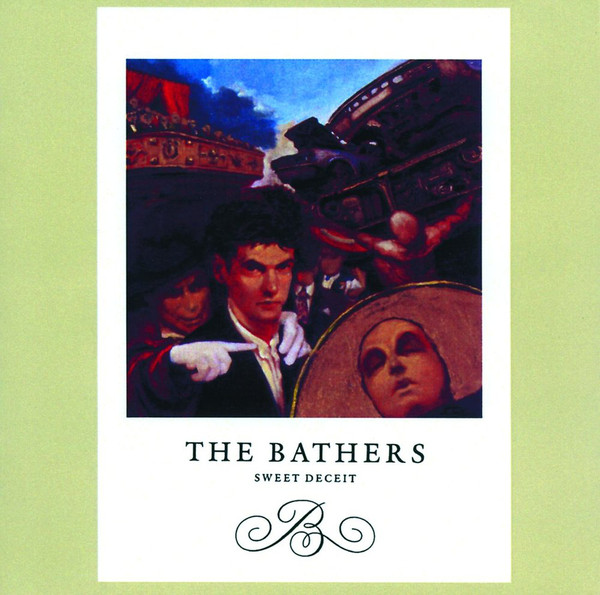
After the Go Discs! internal problems sabotaged the release of Unusual Places To Die, The Bathers moved to Island Records, where the recorded Sweet Deceit.
Sweet Deceit was an epic album, featuring fifteen tracks. Chris wrote thirteen of the tracks, and cowrote the other two. He co-produced Sweet Deceit with Keith Mitchell, and the album was released in 1990.
Three years had passed since Unusual Places To Die was released. The Bathers were back, and according to critics, better than ever. Sweet Deceit was described as impressionistic, beautiful and spellbinding. One critic, quite rightly referred to the album as a mini masterpiece. However, The Bathers had been here before with Unusual Places To Die.
On Sweet Deceit’s release, lightning struck twice for The Bathers. Sales of Sweet Deceit were disappointing. Despite the critically acclaimed reviews, Sweet Deceit seemed to pass record buyers by. For The Bathers, this was a huge disappointment.
Especially when Island Records didn’t renew The Bathers’ contract. There would be another gap of three years before we heard from The Bathers again. However, Chris Thomson was still making music.
Following Sweet Deceit, Chris Thomson joined with two former members of Lloyd Cole and the Commotions, Stephen Irvine and Neil Clark, to create a Scottish supergroup, Bloomsday. They released just one album, Fortuny, which is now regarded as a classic Scottish album. Just like The Bathers two previous albums, Bloomsday’s debut album, Fortuny, was released to critical acclaim. Unfortunately, commercial success eluded Fortuny. However, a more fruitful period was round the corner for The Bathers.
Lagoon Blues.
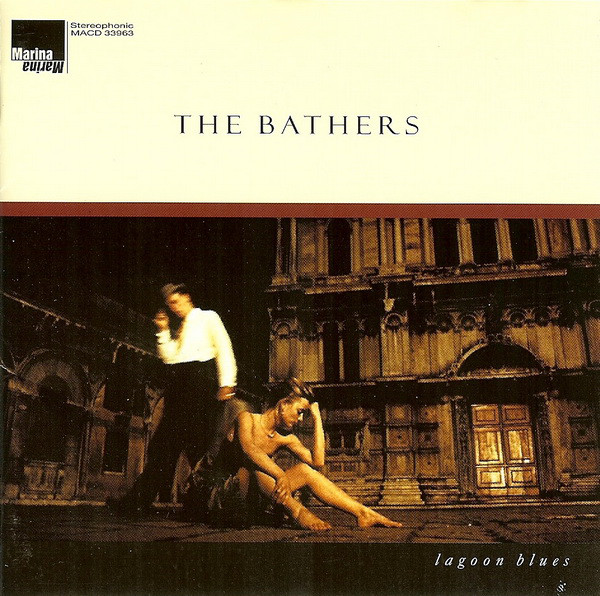
After signing a record contract with a German record label Marina, the group released three albums in a four year period. In 1993, they released Lagoon Blues which was their Marina debut.
Just like Sweet Deceit, Lagoon Blues was another epic album penned by Chris Thompson. It featured sixteen songs, which were the perfect showcase for Chris Thomson’s vocal. Accompanied by what was essentially The Bathers and friends sixteen tracks were recorded at Palladium Studios, Edinburgh and mixed at Palladium Studios and Cava Studios, Glasgow. Once Lagoon Blues was completed, it was released in 1993.
On its release in 1993, critics remarked that Lagoon Blues was a more eclectic album. There were diversions into jazz-skiffle on Pissor, while the album opener Lagoon Blues showcased a string quartet. The strings would play an important part on Lagoon Blues, which was hailed as poetic, elegant, sumptuous and intense. The same critical acclaim accompanied Lagoon Blues, however, this time The Bathers’ music found a wider audience. It seemed after three albums, The Bathers’ star was in the ascendancy.
Sunpowder.
For The Bathers’ fourth album, and followup to Lagoon Blues, they returned with Sunpowder. It marked the debut of a new lineup of The Bathers.
Sunpowder marked The Bathers’ debut of drummer and percussionist Hazel Morrison, keyboardist Carlo Scattini and string players Ian White and Mark Wilson. These new additions would change The Bathers’ sound greatly. Many people refer to this as the classic lineup of The Bathers. This classic lineup, plus guest artist ex-Cocteau Twin, Liz Fraser, who features on four tracks, made its debut on Sunpowder.
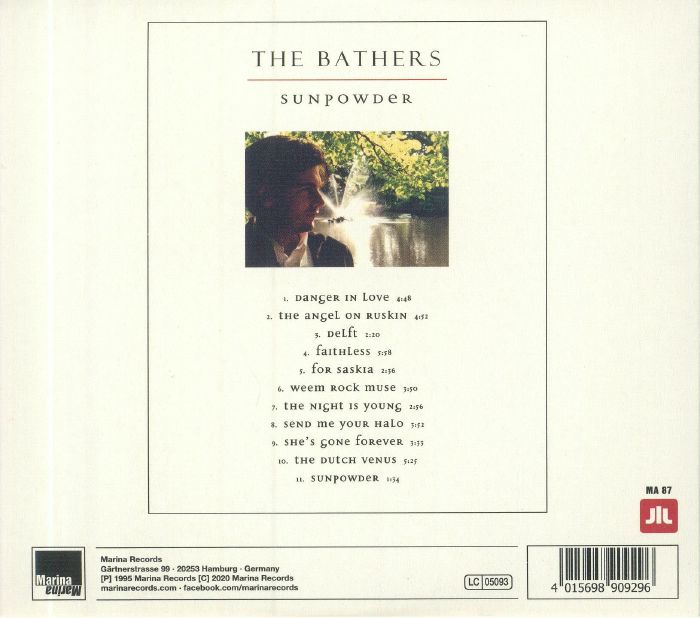
For Sunpowder, Chris Thomson had written eleven new songs. They were recorded a at Palladium Studios, Edinburgh. Chris Thomson and Keith Mitchell produced Sunpowder, which was released in 1995.
When Sunpowder was released, it received the same critical acclaim as The Bathers’ three previous albums. Sunpowder was called sumptuous, sensual, dramatic and ethereal. Liz Fraser, an honorary Bather was the perfect foil to Chris Thomson forever the troubled, tortured troubadour. The result was, what was The Bathers most successful album, Sunpowder.
Danger In Love a song about falling in love again opens Sunpowder. The sound of thunder can be heard before a distant organ plays and creates a dramatic sound. Soon people speak and the organ sounds dark and moody before the mood changes and a piano plays softly, meandering gently, against a background of strings. When Chris Thomson sings his voice is full of emotion as he delivers the lyrics with feeling his voice full of sadness. Meanwhile , strings sweep in and out accompanying the piano and Liz Fraser’s ethereal backing vocals. Together they make this a beautiful and emotive track, and one that benefits from an almost flawless arrangement. Just like the pieces of a jigsaw everything falls into place
The Dutch Venus continues the downtempo feel and features a lush string arrangement which is accompanied by a piano. From the opening bars the mood is set and there’s an air of sadness is omnipresent. This is reinforced when Chris Thomson delivers the lyrics and sings of lost love. He remembers someone he loved, then lost and the love affair gone wrong. Like many of the group’s songs it’s set in Glasgow, he name-checks Kelvingrove in West End of the City and it’s as if the song is personal, as if it means something to him. Maybe it’s autobiographical? The understated arrangement is perfect for the song with just piano, strings and the vocal which is accompanied by Liz Fraser. Her voice is a perfect foil for Chris Thomson. Her’s is light and bright, his sad and full of hurt and and heartbreak on what’s one of the album’s highlights.
Angel On Ruskin has a hesitant slightly start, a guitar is gently strummed, drums play, and one wonders where the track is heading? When Chris Thomson sings, he gives the track direction and soon is joined by Liz Frazer whose backing vocals are crystalline, a thing of beauty. She almost steals the show on the track where the drums are more prominent. Meanwhile two of Scotland’s finest vocalists deliver a masterclass with Liz Fraser filling in the spaces left by Chris Thomson as he sings about being captivated by a woman’s beauty and being enthralled by her. Here, Thomson’s lyrics have the same quality and power as good poetry. They affect how we feel and we empathise with characters involved and live the drama on a track I’ll never tire of hearing.
Like many of the tracks on Sunpowder, the arrangement to Delft is understated and this adds to the dramatic affect of the music. As a piano plays, space is left allowing the music to breath and adding to the drama. When ChrisThomson delivers his vocal is slow and emotive as he leaves which also adds to the drama as violins and a piano play. It’s subdued and understated but highly effective and suits this song about loving someone from afar, but they’re just out of reach, and will never be part of your life. It’s a beautiful, heartwrenching song that many people will be able to relate to.
Weem Rock Muse starts with a guitar strumming and Chris Thomson singing. His voice sounds lighter and he sounds happier as if some of the worries have been removed from his shoulders. He’s accompanied by a Hammond organ playing in the background. However, as the track progresses his vocal gets stronger and he’s joined by a harmonica that meanders in and out the track. This adds to the soulfulness of of another love song set in Scotland. Just like all of Chris Thomson’s lyrics they have a strong narrative and are thoughtful and cerebral .
On Faithless, Chris Thomson’s voice is moody and tinged with sadness on this slow burner of a song. It has a long meandering and atmospheric introduction before he dons the familiar role of troubled troubadour. His delivery is heartfelt his vocal bathed in pathos. Towards the end of the track his vocal becomes a soliloquy and really drives home their sadness on another mini-masterpiece from The Bathers that tugs at your heartstrings.
For the first time on Sunpowder, the tempo increases on She’s Gone Forever. It’s a track that deceives, because it sounds an uptempo track, but the lyrics are about losing someone you love and a relationship breaking up. They’re some of Chris Thomson’s best lyrics which he delivers against a much fuller arrangement. It feature James Grant of Love and Money who plays acoustic guitar and sings backing vocals on this heartbreaking song about love lost.
The more uptempo style continues on Send Me Your Halo where an acoustic guitar plays before Chris Thomson’s vocal enters. He’s accompanied by strings playing gently, behind his tender vocal. It’s as if the lyrics bring back pleasant memories as he sings about falling hopelessly in love, being swept off your feet and a summer long love affair. This beautiful paean shows a different side to The Bathers, especially on Sunpowder.
Just a piano plays on Saskia setting the mood before the troubled troubadour takes centrestage and sadness seeps out his very pore on this song about love lost. He’s left with merely a memory, a memory he can only recreate in a song or that appears in his dreams. So powerful is soul-baring vocal that one can share and empathise with his pain and hurt.
Strings sweep at the start of The Night Is Young which has an almost classical feel and sound at the start. The understated string arrangement sets the tone for what follows. It’s a romantic song, one where the cadence of Chris Thomson’s voice helps get across, the beauty of the lyrics. Liz Fraser sings backing vocals, her voice angelic, soaring and falling and its ethereal quality is almost otherworldly. Their voices are like light and shade, but are a match made in heaven and combine perfectly to produce one of the most beautiful and heartfelt songs on Sunpowder.
The album ends with the Sunpowder, an instrumental track where a piano and violin play and immediately one feel melancholy. Welcome to The Bathers world, a world you’ve privileged to visit. It’s a lovely way to end this album, which is one of the best albums to be made by a Scottish band in the last forty years.
When The Bathers released Sunpowder it was a career-defining album and one that set the bar high for future albums. It was a mini-masterpiece full of beautiful soul-baring ballads that featured troubled troubadour Chris Thomson as he delivers a series of soul-baring vocals as he sings of love and love lost. This is something that most people will be able to release to and demonstrate his talent as a songwriter. His lyrics are like poetry set to music and the music on Sunpowder are timeless. It’s hard to believe twenty-five years have passed since the release of what’s one of the finest Scottish albums of the past fifty years. However, it was a team effort.
It would be unfair to credit Chris Thomson alone for making this such a special album. Credit must be given to the other members of what’s regarded as the classic lineup of The Bathers. The lineup was augmented by two special guests, James Grant and Liz Fraser who played a huge part in the sound and success of the album with her flawless ethereal backing vocals to several tracks.
For The Bathers, Sunpowder wasn’t just the finest albums of their four album career but their most successful. That was no surprise. The music was atmospheric, cerebral, cinematic, dramatic, literate and is tinged with hurt and heartbreak as well as pathos, regret and sadness. No wonder given the tales of love and love lost on Sunpowder. They’re brought to life by The Bathers and a series of soul-baring vocals from their very own troubled troubadour Chris Thomson. It’s a role that seems to come easy to him and one can only wonder if the lyrics are autobiographical? This is what makes Sunpowder such a powerful album. So does Chris Thomson’s worldweary, emotive vocals which are heartfelt and impassioned. He sounds as if it’s lived the lyrics he’s singing about and has lived them not just once, but several times over on Sunpowder the album that should have launched The Bathers.
After Sunpowder, The Bathers released Kelvingrove Baby to widespread critical acclaim in 1997. It was hailed as their finest hour until the release of Pandemonia in 1999. Sadly, The Bathers’ cerebral, literate and melodic brand of chamber pop failed to find the wider audience it deserved and they remained almost unknown apart from loyal band of discerning music lovers. That’s despite releasing albums of the quality of Sunpowder, a mini-masterpiece which when its was released in 1995 was a career-defining album from The Bathers who were always striving for perfection and very nearly achieved what to lesser bands seemed impossible and out of reach.
The Bathers-Sunpowder.
NICK LUSCOMBE PRESENTS TOKYO DREAMING.
Nick Luscombe Presents Tokyo Dreaming.
Label: Wewantsounds.
Format: CD.
Release Date: 27th November 2020.
Usually, the compilation market is buoyant with a myriad of exciting, eclectic and esoteric releases hitting the racks of record shops each week. Sadly, 2020 hasn’t been like most years and this has resulted in many record labels have scaled back their release schedule. Many releases were pushed back until 2021 when hopefully, a degree of normality returns. However, with Bungling Boris, Hapless Hancock, Shifty, Notso and their Oxbridge chums in charge this could take a while.
Meanwhile, many of Britain’s indie labels are struggling to stay afloat. This includes established and up-and-coming record companies. It’s a difficult market to trade in and sadly, some labels won’t survive. The British music industry could look very different by the second half of 2021.
It’s no different in other countries where many indie labels are also struggling to keep the lights on. Even before the global pandemic, many smaller labels were living from hand to mouth and were happy if they could break even on a release. If they were lucky enough to make a modest profit this was cause for celebration, albeit not at Hapless Hancock’s favourite eaterie.
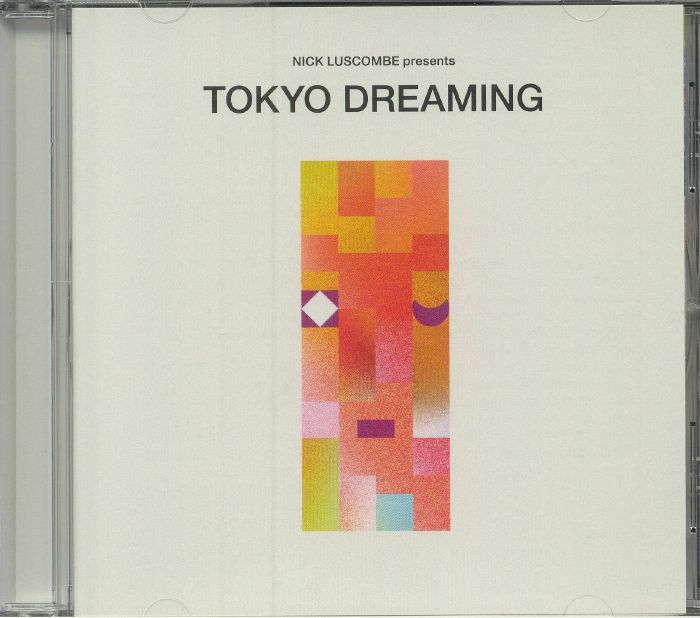
Despite this being one of the most difficult markets since the birth of rock ’n’ roll, record labels still continue to release new albums, reissues and compilations. This includes the Paris-based label Wewantsounds who will release the Nick Luscombe Presents Tokyo Dreaming compilation on the ‘27th’ of November 2020.
For Nick Luscombe Presents Tokyo Dreaming the British DJ, radio presenter, journalist and Japanese music expert was given access to carefully guarded Nippon Columbia vaults. For anyone with even a passing interest in Japanese music this was dream come true. It’s the type of things that crate-diggers dream of. However, very few people are allowed access to the this musical land of milk and honey.
After being granted access to the highly collectible Nippon Columbia label Nick Luscombe was also given access to the Better Days imprint. This was almost unheard of, and he found himself surrounded by the sound of Tokyo in the late seventies and eighties.
As Nick Luscombe looked through the vaults, he discovered an eclectic section of tracks from familiar faces as well as a number of new names. They were responsible for a myriad of well known tracks, rarities, hidden gems and oft-overlooked obscurities. It was almost overwhelming and it wasn’t going to be easy for Nick Luscombe to narrow his selections down so that they fitted on one CD or a two LP set. However, he managed to so.
The result was Nick Luscombe Presents Tokyo Dreaming, an eclectic sixteen track selection that featured everything from ambient, city pop, electro, experimental, funk, fusion, new wave, and synth pop. There’s tracks from Ryuichi Sakamoto, Mariah, Shigeo Sekito, Juicy Fruits, Hitomi “Penny” Tohyama and Yumi Murata. Some of their contributions have never been released outside of Japan. This definitely makes Nick Luscombe Presents Tokyo Dreaming of interest to collectors of Japanese music from the seventies and eighties. It’s a compilation that’s long on quality.
Opening Nick Luscombe Presents Tokyo Dreaming is The End Of Asia by one of the best known artists on the compilation, Ryuichi Sakamoto. The track is taken from the album Thousand Knives Of Ryuichi Sakamoto which was released by the Better Days’ label in 1978. It’s a captivating and joyous combination of electronic music and synth pop that sets the bar high for the rest of the compilation.
Self Control is a track from saxophonist Chika Asamoto’s 1988 album Gypsy Moon. Jazz, funk and soulful harmonies combine on this memorable dance track. It’s one of the compilation’s highlights.
Rainy Driver featured on Hitomi Penny Tohyama’s 1988 album for Columbia, Call Me Penny. It’s a beautiful AOR ballad that features an impassioned and emotive vocal.
The quality continues with the cinematic sounding La Maison Est En Ruine which was released by Yumi Seino in 1983. It sounds as if it belongs on the soundtrack to a spy movie and features a flawless vocal that’s slightly edgy and full of emotion.
When Kazumi Watanabe released a cover of Bryan Ferry’s Tokyo Joe as a single on Better Days in 1979 he reinvented the track. Swooshing, swirling synth opens this captivating cover where elements of electronic music, fusion and synth pop are combined with dancing disco strings to take this familiar track a new direction.
In 1981, Coloured Music released their eponymous debut album on Better Days. It featured Heartbeat a fusion of new wave and experimental music where a pulsating beat and squelchy syncs combine with chanted vocals and later, traditional Japanese music on this genre-melting track.
When Akira Sakata released the mini album Tenoch Sakana on Better Days in 1980, it featured Room. It’s best described as a slice of skanking electro-reggae that’s dark, menacing and cinematic
Saxophonist Yasuaki Shimizu released his album Kakashi on Better Days in 1982. It featured Semi Tori No Hi which is a moody, mysterious but memorable mixture of ambient music and synth pop.
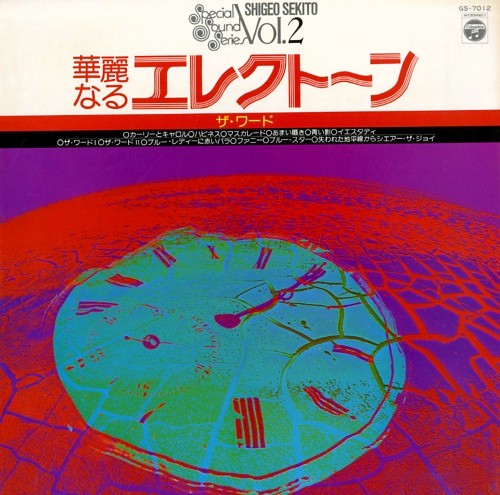
Closing Nick Luscombe Presents Tokyo Dreaming is Shigeo Sekito’s The Word II. It featured on his 1975 debut album which was released on Columbia. Its an atmospheric and quite beautiful sounding track that encourages the listener to reflect and ruminate.
For anyone with even a passing interest in Japanese music, especially from the seventies and eighties, then Nick Luscombe Presents Tokyo Dreaming is one that they’ll be interested in adding to their collection. It’s an eclectic selection of tracks that features everything from ambient, city pop, electro and experimental music to funk, fusion, new wave, and synth pop. There’s something for all tastes.
Anyone whose familiar with Japanese music will spot some familiar faces on Nick Luscombe Presents Tokyo Dreaming. They’re joined by and what will be new names to many people. They play their part in Nick Luscombe Presents Tokyo Dreaming which is a lovingly curated release that features familiar tracks, rarities, hidden gems and oft-overlooked obscurities and is one of the best and most eclectic compilations of this month.
Nick Luscombe Presents Tokyo Dreaming.
MICHAEL ROTHER-SOLO II AND DREAMING.
Michael Rother-Solo II and Dreaming.
Label: Gronland Records.
Format: CD.
By the early seventies, the German music scene was thriving, and was one of the most vibrant in Europe. Some of the most influential and innovative music was being recorded and released by German bands who were part of a new musical movement and were making Kosmische musik.
Its roots can be traced to the late-sixties, and in a way, were a reaction against the rigidity and rules of traditional music. No longer were musicians willing to be constrained by the rules of modern music. They wanted to free themselves from the shackles of rules and rigidity, and in the process, create new and groundbreaking music.
To do this, musicians fused a disparate and eclectic selection of musical genres, including everything from avant-garde, electronica, experimental rock, free jazz and progressive rock. All this influenced and inspired the Kosmische bands.
They went on to create music that was ambitious, groundbreaking and innovative. Musical boundaries were pushed to their limits and musical norms were challenge. The members of the early Kosmische bands were fearless visionaries whose groundbreaking music would influence several generations of musicians.
This includes Michael Rother, who was a member of three of the biggest bands in German musical history Kraftwerk, Neu! and Harmonia and in 1977 released his debut solo album Flammende Herzen. Forty-three years later and earlier this year the seventy year old guitarist released his Solo II box set which includes his tenth solo album Dreaming. It has just been released by Gronland Records and is the latest chapter in the Michael Rother story.
Michael Rother was born on 2nd September 1950 in Hamburg which was home for the early years of his life. Then the Rother family moved from Hamburg to Wilmslow in Cheshire “because my father was a pilot. This was just the first in a series of moves.”
“Next we moved to Karachi, in Pakistan, where I was: captivated by the street musicians. The sounds, scales, rhythm and constant repetition mesmerised me. They would later influence as a musician.” That wasn’t Michael Rother’s first musical influence.
“Originally, my earliest musical influence, was classical music. I remember my mother, who was a pianist, playing Chopin’s concertos. Then it was rock ’n’ roll. My brother who was ten years older than me, had rock ’n’ parties. Little Richard was my favourite, I loved the energy. Later, after the British explosion, The Beatles, Rolling Stones and The Kinks were the groups I listened to. Much later, the guitarists Eric Clapton, Jeff Beck and Jimi Hendrix when he descended down, were my influences.” However, the mention of Jimi Hendrix’s name and almost in an instant, Michael Rother is a teenager again.
“I was lucky, I once saw Jimi Hendrix live, it was an incredible experience.” As Michael Rother speaks, he’s almost awe-struck. Then he reflects on the subject of influences: “later, when I became a musician, I came to regard those that I worked with, and collaborated with, as my influences and inspirations.” It’s then that he turns to the clock back to 1965, when his career began.
Spirits Of Sounds.
“My career began in 1965, when I joined a covers band at school. I had watched them play, so went away and spent the next year practising my guitar. Once I was ready, I asked if I could join and I became a member of Spirits Of Sounds. They said yes and this was the start” This cover’s band featured two other musicians who would enjoy successful processional careers.
Wolfgang Flür went on to form Kraftwerk and Wolfgang Riechman formed Wunderbar. Spirit Of Sounds must have been the only cover’s band to feature three musicians who would later transform German music. That was still to come.
“Spirits Of Sound played just covers, including songs by The Beatles, Rolling Stones and The Who.” For Michael Rother, this was his akin to a musical apprenticeship. Playing with Spirits Of Sound allowed him to learn his trade and hone his sound. All the time, he was listening to music which changed throughout the sixties.
“Later guitarists like Eric Clapton, Jeff Beck and Jimi Hendrix that were influencing me.” By then, Michael Rother was happy being part of a band, and seeing what life in a group was like. He was also well on his way to refining his guitar playing. However, then in 1969, Michael Rother got the call all young people must have dreaded.
Back in 1969, every German citizen had to spend six months in the army. Those who refused, or suffered from ill-health, could spend six months as a civilian volunteer. That’s how in 1969, Michael Rother found himself working at St. Alexius hospital, Neuss. He had no option.
By the time his six month as a civilian volunteer was over, Michael Rother “was beginning to become frustrated with playing in a cover’s band. It had its limitations, and wanted to move away from traditional music.” Fortunately, Michael Rother got the opportunity to jam with a new band in late 1969…Kraftwerk .
Kraftwerk.
At first, Michael Rother was just jamming with Kraftwerk. He enjoyed the freedom that their approach to music had. “When I began playing with Kraftwerk, they improvised, playing melodies without the blue notes.” This opened his eyes to the possibilities that were in the process of unfolding. Kosmische musik had just been born, and Kraftwerk were one of its pioneers. “After I had jammed with Kraftwerk, Florian Schneider and I exchanged phone numbers.”
After his session with Kraftwerk, Michael Rother returned to Spirits Of Sound. Musically, his eyes had been opened. A new musical movement had been born in West Germany. However, for the time being, he was back in his covers band.
Then in 1971, Michael Rother received a call from Florian Schneider. “Ralf Hütter had quit Kraftwerk unexpectedly, and returned to university to complete a course.” Meanwhile “the first Kraftwerk album had been a hit, and they wanted to build on the momentum.” Florian wanted him to join Kraftwerk on a permanent basis.
It didn’t take Michael Rother long to agree. After six years with Spirits Of Sound, a new chapter in his career was about to begin. He was going to be part of Kraftwerk, who were now a trio.
When joined Kraftwerk, the group’s lineup was very different to the one that had recorded their 1970 eponymous debut album. Just Florian Schneider and Klaus Dinger remained. The edition of Michael Rother on guitar filled out the sound. However, very quickly he discovered that all wasn’t well within Kraftwerk.
His role in Kraftwerk was twofold. “I would play live and play on what was to be their second album.” Straight away, Michael Rother discovered that life with Kraftwerk was eventful. “It was exciting, never boring. When we played live, it could become chaotic, fights broke out between Klaus and Florian. They were both spiky characters.” That was only half the story.
“Sometimes, the audience didn’t understand what they heard. They came to hear what they heard on Kraftwerk. That was just a starting point. We took things from there. For members of an audience who expected to hear Kraftwerk replicated live, this what frustrating. Other members of the audience were excited by the possibilities. It was an exciting time for everyone” However, it was also a frustrating one.
After the success of Kraftwerk, Florian and Klaus were keen to record their sophomore album with producer Conny Plank. Tension was in the air. The recording sessions were fraught with difficulties. Although songs were recorded, the album was never completed. “Eventually, we hit a dead-end and the recordings have never been released. It was then that Klaus and I decided to form a new band, Neu!”
The Birth Of Neu!
By then, Michael Rother and Klaus Dinger realised that: “we had a similar musical vision.”The nascent band were formed later in 1971, and was based in Düsseldorf. After the disagreements and frustration of Kraftwerk towards the end, the new band was a breath of fresh air. It was sure to revitalise the two musicians. The only thing they couldn’t agree on, was the band’s name
Michael though the band should have an organic name. Klaus however, had hit on the name Neu! This made sense, as they were a new band, who were part of the new musical Kosmische musik movement.
So, the new band became Neu! To go with the new name, a pop art logo was designed and copyrighted. This new logo was seen as a comment and protest against the modern consumer society. Just like contemporaries Can, Neu weren’t afraid to combine social comment and art. Having settled on a name, Neu!’s thoughts turned to recording their debut album. There was a problem though.
Neu!
Michael Rother explains “we were poor musicians,’ All we could afford were four nights at Windrose-Dumont-Time Studios in December 1971. The reason we chose to record at nights, is it was cheaper. However; “it was a close shave, I get the shivers thinking about it. However, with the help of the genius Conny Plank, we got our message across.”
Over the four days, Neu! recorded a total of six tracks. They were written by Michael and Klaus. The two members of Neu! laid down all the parts onto an eight-track recorder. Michael Rother played guitars and bass, while Klaus Dinger played drums and a Koto. “At first the recording was slow, then we found the positive energy to move forward. The songs were stripped down to the bare essentials, they had to be we only had eight tracks to record onto.” Five of the six songs Neu! recorded were lengthy tracks. This included Hallogallo and Negativland.
Both feature Klaus Dinger’s innovative and mesmeric Motorik beat. He played a 4/4 constantly, with only an occasional interruptions. Its hypnotic sound would soon become famous.
As the two members of Neu! listened to the playback of Hallogallo and Negativland, they had no idea that this drumbeat would become synonymous with Kosmische musik. Even once Conny Plank had mixed Neu! at Star Musik Studio, in Hamburg, the two members of Neu! had no idea how influential the album would become.
“Once the album was mixed, Conny Plank gave me a copy of the cassette to listen to. I was proud, and played it to my girlfriend, family and friends. I’d no idea the effect the album would have. I was just pleased to have recorded my album. It had been a close shave.” Michael Rother had no inclination that he had recorded a classic album.
Neu! was scheduled for release in early 1972. At the time, critic’s opinions were divided. Some critics realised Neu! was a truly groundbreaking album, and appreciated what was a genre-melting album. Elements of ambient, electronica, experimental, free jazz, industrial, music concrete and rock can be heard. These critics identified the album as a Kosmische classic. Other critics didn’t seem to understated Neu!, or Kosmische musik, which by then, had been renamed.
In London, a critic at Melody Maker had coined the term Krautrock. This came after Amon Düül released their 1969 album Psychedelic Underground. It featured a track titled Mama Düül und Ihre Sauerkrautband Spielt Auf, which in English, translates as Mama Düül and her Sauerkrautband Strike Up. At first, many people were reticent about using the name of this new genre.
By the time Neu! was released in 1972, that was no longer the case. Other critics and record buyers were using Krautrock rather than Kosmische musik. This was how they described the music of Can and Kraftwerk, and then Neu!, who had just released their eponymous debut album.
When Neu! was released on Brain in 1972, the album sold 30,000 copies in Germany. For an underground album, that was seen as a success. However, outside of Germany, Neu! didn’t sell in vast quantities. Despite only selling well in Germany, Neu! began work on their sophomore album, Neu! 2.

Neu! 2.
In January 1973, Neu! found themselves back in the studio with producer Conny Plank. “We weren’t signed to a record label, so Klaus, Conny and I had saved our money, and when we went to the studio, handed over enough to record for ten days.”
With Conny Plank producing what became Neu! 2, Michael Rother and Klaus Dinger began work. “This time, we had sixteen tracks to work with, so could layer instruments. I played my guitar, it was played backwards, the tempo was sped up and effects were added.” Neu! it seemed, had taken experimenting to a new level, and were pushing musical boundaries to their limits, and sometimes way beyond. Everything seemed to be going so well. Then a problem arose.
“By then we had spent a week exploring, adding layers. I stacked five six guitars, added effects like distortion. This had taken a week, and we only had half an album recorded. We panicked. Then we thought of a solution. We had released recently Neuschnee and Super as a single. For some reason, the record company hadn’t promoted it. They seemed not to value singles. So we began to experiment.”
This was: “a result of desperation. Side two of Neu! 2 is made different versions of Neuschnee and Super. We did all sorts of things. I played the single on a turntable, and Klaus kicked it as it played. We than played the songs in a cassette player, slowing and speeding up the sound, and mangling the sound in the process.” Just like their debut album, Neu! 2 was completed just in time. It was another: “close shave.”
With Neu! 2 complete, it was scheduled for release later in 1973. When the album was released, critics heard than Neu! had refined their trademark sound, and taken it even further. “Für immer an eleven minute epic was the best example.” It features the two members of Neu! becoming one. As the drums propel the arrangement along, Michael Rother delivers a virtuoso performance. Critics were won over by “Für immer, which was regarded as the highlight of Neu! 2. However, side two proved controversial.
Many critics weren’t impressed by side two of Neu! 2. They saw the music as gimmicky, and accused Neu! trying to fool and rip off record buyers. As indignant critics took the moral high-ground, again, it was a case that they didn’t understated music.
“What we had done, was take ready-made music and deconstruct it. Then we could either reconstruct or manipulate the deconstructed music.” Critics either couldn’t or didn’t want to understand this. Neither did record buyers.
Just like critics, those who bought Neu! 2 were won over by side one. Für immer was Neu! 2 masterpiece, and most people realised this. However, when record buyers turned over to side two, they quickly became alienated. “They felt that we were trying to rip them off. That was not the case. Side two was Neu! at their most experimental, deconstructing only to reconstruct or manipulate. People didn’t understand this. It’s only recently that the music on side two has began to find favour with people. That wasn’t the case in 1973.”
On its release, Neu! 2 didn’t sell well. Even in Germany, Neu! 2 failed commercially. Brian who released Neu! 2, had expected the band to tour the album. However, there was very little interest in Neu!
Klaus Dinger and his brother Thomas even headed to London, to see if he could organise a Neu! tour of Britain. There, he met DJ John Peel, and Karen Townsend, the wife of The Who’s guitarist Pete. Although John Peel played tracks from Neu! 2 on his radio show, and tried to champion the band, there was no appetite for a Neu! tour of Britain. When Klaus returned home, he and Michael Rother put Neu! on hold.
Both Klaus and Michael were keen to make it clear that this wasn’t the end of Neu! They merely, wanted to take some time out, to pursue other interests and projects. Klaus Dinger’s new project was La Düsseldorf. Meanwhile, Michael Rother decided to embark on a journey to the Forst Commune.
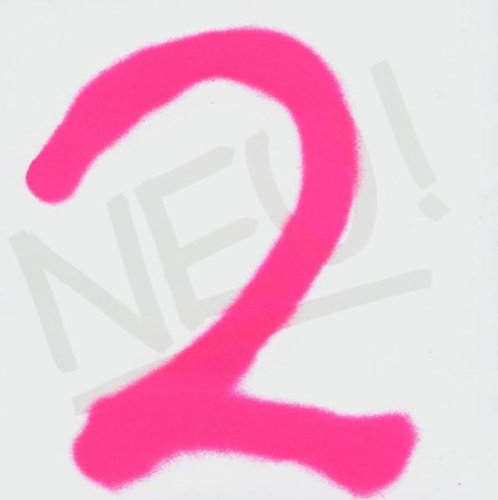
The Birth Of Harmonia.
That was where he would meet Dieter Moebius and Hans-Joachim Roedelius of Cluster. Michael Rother had heard Im Süden, a track from Cluster’s sophomore album Cluster II. The track struck a nerve with him and he who wondered if Dieter Moebius and Hans-Joachim Roedelius would be interested in joining an extended lineup of Neu!? Then he began to consider a German supergroup consisting of Neu! and Cluster.
That proved to be the case. At the Forst Commune, he jammed with Dieter Moebius and Hans-Joachim Roedelius. That initial jam later became Ohrwurm, a track from Harmonia’s 1974 debut album Musik von Harmonia. Following their initial jam session, Michael Rother stayed at the Forst Commune to prepare for the recording of Harmonia’s debut album.
Meanwhile, Klaus and Thomas Dinger had returned from London. They came, they thought, baring gifts. One of the gifts was studio engineer Hans Lampe, who for much of 1972, had been Conny Plank’s engineer. The other was Klaus’ brother Thomas. They Klaus proposed, would join an extended lineup of Neu! In preparation, they played a series of concerts as La Düsseldorf. However, by then, Michael Rother was busy with Harmonia and they were planning to record their debut album, and build a recording studio.
Building a recording can be fraught with difficulties. However, for the three members of Harmonia the building of their studio in Forst went smoothly. This new studio would play a hugely important part in Michael Rother’s future career. Not only would it be where Harmonia recorded their debut album, but where Michael Rother worked on future projects with Neu! and later, recorded his solo albums. That was still to come. Before that, Harmonia began to record their debut album Musik von Harmonia.
Musik Von Harmonia.
Having built their new studio, Michael Rother, Dieter Moebius and Hans-Joachim Roedelius started recording what became Musik von Harmonia in June 1973. Over the next five months, Harmonia recorded eight songs. The two members of Cluster were receptive to Michael Rother’s way of working. Hans-Joachim Roedelius explained: “there were no problems, we wanted to learn. Previously, we improvised, which made playing live problematic. A song was merely the starting point, it could go anywhere. Michael however, taught us about structure. We influenced him. It was a two-way thing.”
That’s definitely the case. Michael Rother believes: “that working with Dieter Moebius and Hans-Joachim Roedelius made him a more complete musician.” Over his time working with the two members of Cluster; “I learnt so much.”
This became apparent when Musik von Harmonia was completed in November 1973. Harmonia’s 1974 debut album, Musik von Harmonia, was a move towards ambient rock. Both Michael Rother and the two members of Cluster’s influences can be heard on the nascent supergroup’s debut album. It was released in January 1974.
When Musik Von Harmonia was released, many critics realised the importance of what’s a groundbreaking classic. It saw this nascent supergroup seamlessly embrace and incorporate disparate musical genres. In the process, Harmonia set the bar high for future ambient rock albums. Despite the critical acclaim that accompanied Musik von Harmonia, the album wasn’t a commercial success.
Michael Rother remember ruefully: “the seventies weren’t a good time for Harmonia. Our music was ignored, it was tough to survive during this period. So towards the end of 1974, Michael and Klaus reunited for Neu!’s third album.
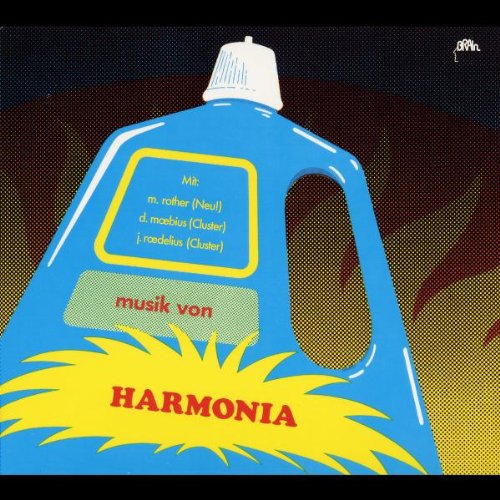
The Return Of Neu!-Neu! ’75.
For Neu!! ’75, Michael Rother and Klaus Dinger reunited in December 1974 at Conny Plank’s studio. By then, Conny’s Studio was the go-to recording studio for German groups. They wanted: “the genius” to sprinkle his magic on their albums. This would be the case for Neu! ’75.
The two members of Neu! had changed. Klaus Dinger was heavily into rock music, while Michael Rother’s interest in ambient music was growing. He explains: “After two years apart, we were different people. To complicate matters, Klaus wanted to move from behind the drum kit. He felt he was hidden away. I can understand this. But it was what Klaus did so well. However, he wanted to become an entertainer, playing the guitar and singing. He wanted to bring in two new musicians to replace him.” This included Klaus’ brother Thomas and Conny Plank’s former engineer Hans Lampe. These new musicians would allow Neu! to make a very different album.
Michael Rother realised this was problematic. “By then Klaus could be difficult to work with. I realised we had to compromise, so ended making an album with two very different sides. Side one was old Neu! and side two was new Neu!” On side two Klaus come out from behind his drum kit and played guitar and sang. He became the entertainer on what proved to be an album of two sides. It was completed in January 1975, and released later that year.
When critics were sent copies of Neu! ’75, they were struck by side one’s subtle, ambient, melodic sound. Michael remembers: “we used keyboards and phasing a lot on both sides. While Michael Rother’s name was written large all over side one; side two was very different, and quite unconventional. Reviews were mixed, partly because of side two. Some critics felt that if Neu! ’75 had the same sound throughout, it would’ve been hailed a classic. However, later Neu! ’75 and Neu!’s earlier albums would be reevaluated. Before that Neu! ’75 was released.
Just like Neu! 2, Neu! ’75 didn’t sell well. The problem was, many people didn’t understand what was essentially parts of two disparate albums joined together. The proto-punk of side two was so different from the ambient sound of side one. Record buyers were confused, and didn’t understand what Neu! stood for? It seemed that Neu! were just the latest groundbreaking group whose music was misunderstood and overlooked.
Michael Rother looking back at Neu! ’75 reflects: “It was a time. Klaus wasn’t the easiest person to work with. He was involved with different people, and being pulled in different ways. We were also very different musically. Then there were the new drummers on side two. They weren’t particularly good. Certainly neither were as good as Klaus,” a rueful Michael Rother remembers. “It was a difficult project. By then Klaus was different to the man I’d met a few years earlier.” He wouldn’t work with Klaus for another decade. By then, Neu!’s music had inspired a new musical movement, punk.
Things started to change in 1976. Michael explains: “many punks claim that Neu! ’75 inspired them. Especially, side two.” That wasn’t the only Neu! album that inspired the punk ideal. Side two of Neu! 2 was a favourite of punks. It was: “a result of desperation,” which struck a nerve with the nascent punk movement, and its D.I.Y. approach. That’s when the revaluation of Neu! began. However, “it was a long time before our music was accepted and recognised, and began to sell in the quantities it does now”. That is also the case with Harmonia, who began recording their sophomore album in June 1975.

The Return Of Harmonia-Deluxe.
In June 1975, the three members of Harmonia returned to their studio in Forst for the recording of their sophomore album, Deluxe. Joining them, was a new face, Conny Plank, who was co-producing Deluxe. Conny Plank and Michael Rother were good friends, and had worked together on four projects. This included Kraftwerk’s aborted album and Neu!’s two albums. The addition of the man who Michael Rother calls: “the genius,” just happened to coincide with Harmonia changing direction musically.
Deluxe saw a move towards Kominische musik. Partly, this was down to the addition of Guru-Guru drummer Mani Neumeier. He played on some tracks, and added a Kominische influence. Another change was that Michael Rother’s guitar played a more prominent role. That wasn’t Michael’s only influence.
The music on Deluxe was more song oriented. This was Michael Rother’s influence. He had taught the two members of Cluster the importance of structure. However, still Harmonia were experimenting, pushing musical boundaries. This was Cluster’s influence. Other parts of Deluxe had been influenced by Michael Rother. Hans-Joachim Roedelius agrees. “Michael Rother’s influence can be heard on Deluxe, more so than on Musik Von Harmonia.” What was also noticeable, was that Deluxe had a more commercial sound.
“This wasn’t a conscious decision. The music morphed and evolved, and the result was Deluxe,” Hans-Joachim Roedelius reflects.
Michael Rother agrees. “Every album I’ve made I set out for it to be commercial. Sometimes, though, it doesn’t work out that way.” Sadly, that proved to be the case.
When Deluxe was released in 1975, to the same critical acclaim as Musik von Harmonia. The noticeable shift to what was a more commercial sound, surely would lead to a change in Harmonia’s fortunes?
That wasn’t to be. Deluxe was released on 20th August 1975, and sales of the album were slow. They never picked up, and history it seemed, was repeating itself. Michael reflects: “Still our music was being ignored. It was a difficult time for us. So much so, that Michael decided to record his debut solo album.
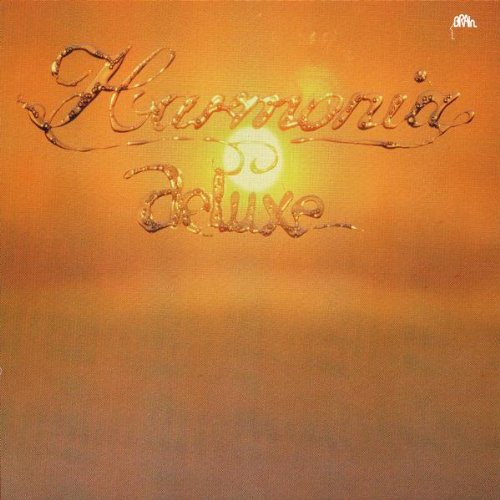
Michael Rother-The Solo Years-Part One.
With Harmonia having just about run its course, Michael Rother embarked upon his solo career. That would take up the majority of his time. His first solo album was “Flammende Herzen which I recorded at Conny’s Studio.” Michael Rother had entrusted his solo career to the man he refers to as “the genius.”
Flammende Herzen.
Recording of Flammende Herzen began at Conny’s Studio in June 1976. Michael had penned five tracks, and planned to play most of the instruments himself. The only instrument he couldn’t play were the drums, so Jaki Liebezeit of Can came onboard, and this was the start of a long-lasting collaboration. That was the case with Conny Plank, who co-produced Michael Rother’s debut solo album.
At Conny’s Studio, five instrumentals which were based around Michael Rother’s guitar were recorded. These tracks became Flammende Herzen, which was completed in September 1976 and was scheduled for release in March 1977.
Before the release of Flammende Herzen, critics had their say on Michael Rother’s solo album. Most of the reviews were positive, and it seemed that Michael’s fortunes were about to change.
When Flammende Herzen was released in March 1977, the album wasn’t a commercial success. Despite releasing album after album of innovative and influential music, they failed to sell. It seemed that the music Michael Rother was too innovative and record buyers didn’t understand the music. The only small crumb of comfort for Michael, was that: “Flammende Herzen, which, was released as a single, was later used in the soundtrack to Flaming Hearts.”
Nowadays, Flammende Herzen is regarded as one of Michael Rother’s finest solo albums. It’s as if this was the album he had been longing to make. Sadly, in 1977, as punk was making its presence felt, Flammende Herzen passed record buyers by. By then, he had been back in the studio with Harmonia, and a special guest, Brian Eno.
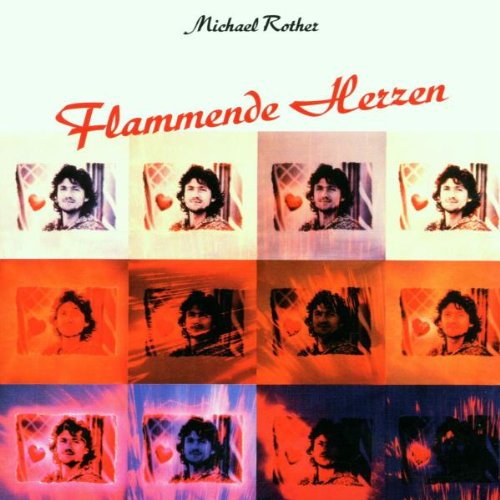
The Return Of Harmonia With Brian Eno-Tracks and Traces.
After the release of Musik von Harmonia, Brian Eno had called Harmonia was: “the world’s most important rock band” at the time. It was no surprise that when Harmonia reunited to record their third album, it was a collaboration with Brian Eno. However, it was also the end of an era.
Little did the three members of Harmonia realise, that Deluxe was the last album they would release for thirty-two years. For what was their swan-song, Harmonia were joined by another legend, Brian Eno.
Michael Rother remembers the sessions well. “Brian Eno was a very intelligent man. He seemed to know what music was on the way up. By then, he was making ambient music and was working as a producer. He was about to produce David Bowie’s Heroes’ album.” However, for the next eleven days, Brian Eno joined the band he had been championing since their debut album.
At the studio in Forst, Hans-Joachim Roedelius, Dieter Moebius, Michael Rother and Brian Eno spent eleven summer days recording what was meant to be their third album. The working title was Harmonia ’76. However, by then, Hans-Joachim Roedelius remembers “Michael Rother was wanting to concentrate on his solo career. Once the album was completed, it became apparent Harmonia had run its course. It was evolution.”
This wasn’t surprising. Harmonia weren’t selling many records. Michael Rother remembers: “it was a tough time for us. Our music seemed to be ignored.” Neu! also seemed to have run its course. “Neu ‘75 hadn’t sold well. Klaus wasn’t an easy person to work with. So, I decided to return to my solo career after the release of Harmonia ’76.” That never happened.
Incredibly, the master-tapes for Harmonia ’76 went missing. “We feared they were lost forever. Then twenty years later, they were found.” What was meant to be Harmonia ’76 was released Tracks and Traces in 1997.” That wasn’t the end of the Harmonia story. However, before the next chapter in the Harmonia story unfolded, Michael Rother’s solo career continued apace.
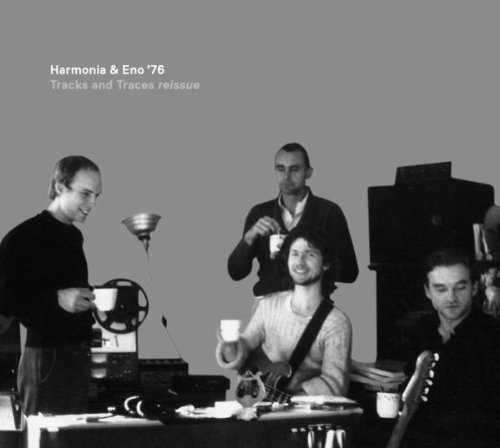
Michael Rother’s Solo Career-Part Two-Sterntaler.
After the drama and disappointment of the loss of the master tapes for Harmonia ’76, the three members of Harmonia went their separate ways. By September 1977, Michael was ready to record his sophomore album Sterntaler.
It was recorded between September and November 1977 at two studios. This included Conny’s Studio, and Michael Rother’s studio in Forst. By then, Michael Rother was a true multi-instrumentalist, and was playing guitar, bass guitar, piano, synths, electronic percussion Hawaiian slide guitar and synth strings. Augmented by Jaki Liebezeit’s drums, Sterntaler took shape.
Unlike his debut album, the synths were playing an important part in Sterntaler’s sound, and were responsible for the melody. Then on the ambient sounding Blauer Regen, Jaki Liebezeit’s weren’t needed. This was another signal that Michael Rother’s music was changing. He and co-producer Conny Plank finished work on Sterntaler in November 1977. Maybe the stylistic shift would result in a change in his fortune?
Sadly, it was a familiar story. The reviews of Sterntaler were generally positive, and Michael Rother was regarded as one of the most innovative musicians of his generation. However, when Sterntaler was released, the album didn’t sell well. He remembers; “my music seemed to be out of fashion.” However, he continued to make music, music that continued to evolve.
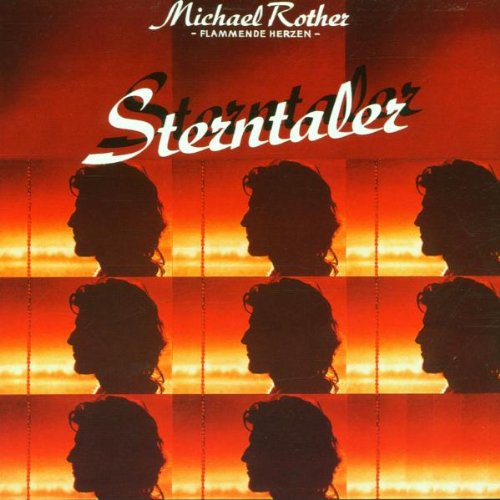
Katzenmusik.
Recording of Michael Rother’s third album Katzenmusik took place between March and July 1979. Just like his previous album, the album was recorded in Forst and Conny’s Studio. This time, he used mainly electronic instruments which were augmented by guitars and Jaki Liebezeit’s drums.
It seemed that if Michael Rother was a painter,he was reducing his pallet. That would be the case for most musicians. However, Michael Rother wasn’t most musicians and along with his co-producer Conny Plank, they recorded two suite of songs which featured twelve tracks. Essentially, they were variations layered around four different five-note melodies. They then recur in a variety of ways. Although stylistically, the music was similar to his two previous albums, the instruments used had changed. However, this didn’t stop Michael Rother recording another album of groundbreaking music. It was released later in 1979.
On Katzenmusik’s release, some critics hailed the album Michael Rother’s finest hour. He had come of age as a solo artist. This should’ve been a cause for celebration. However, it was, and it wasn’t.
Katzenmusik was the last album he recorded with Conny Plank. “It was no reflection on Conny. The man was a genius. However, I wanted to go my own way, and explore other options.” Sadly, Michael Rother and Conny Plank’s swan-song wasn’t a commercial success. It would be another three years before Michael Rother released a new album.
Fernwärme.
It was 1981 when Michael Rother began work on his fourth album. The recording took place at his own Flammende Herzen Studio in Forst. It was just Michael Rother and drummer Jaki Liebezeit. Unlike his first three albums, Conny Plank was absent. “We remained friends, and I owe Conny a lot, but it was the time to move on.”
This couldn’t have been easy as he had worked on nearly every project Michael Rother had been involved with. Fernwärme was a first. It was just the two musicians and the latest electronic instruments which were used extensively. This included drum machines. For Jaki Liebezeit the writing was on wall and Fernwärme was thd last album that he recorded with Michael Rother.
He explains: “Fernwärme was the last project Jaki worked on. Again, it was nothing personal. It was similar to the situation with Conny Plank. I wanted to move in a different direction, and already had began to use drum machines. Jaki was a fantastic drummer. The man is a machine, and will be drumming the rest of his life. However, Fernwärme was the last time we worked together.”
As Michael Rother prepared for the release of Fernwärme in 1982, it must have been with a degree of trepidation. It was the first album he had produced himself. However, he needn’t have worried, as Fernwärme was well received upon its release. Critically his first album in three years was regarded as a success. Sadly, the wider record buying public still hadn’t discovered Michael Rother’s music. “It was a really frustrating time for me.”
Lust.
After the release of Fernwärme in 1982, Michael Rother didn’t return to his Sterntaler Studio, Forst until 1983. When he did, he was on his own. “Lust was the first album I wrote, recorded and produced on my own. Because I had my own studio, I found myself spending more time thinking things over. Sometimes, when I went to bed, all I could think of was what I had been working on. That is the downside of having a home studio. However, the advantages outweigh disadvantages. I had also bought a Fairlight, and was just getting use to it. Its sounds divides people. Some people like it, others love it. Lust was the first album where I used the Fairlight.” That was another reason he spent as long as he wanted perfecting Lust. Only then, was he ready to release the album.
Lust was released in 1983, and was Michael Rother’s fifth album. It was all his own work. No other musician had played a part in recording the album, which showcased a new sound. At the heart of the sound was the Fairlight. Although the Fairlight divided people’s opinion, the majority of critics gave Lust positive reviews. The latest reinvention of Michael Rother had been a critical success. However, when Lust wasn’t the commercial success many critics forecast, it was another two years before he returned with his sixth solo album.
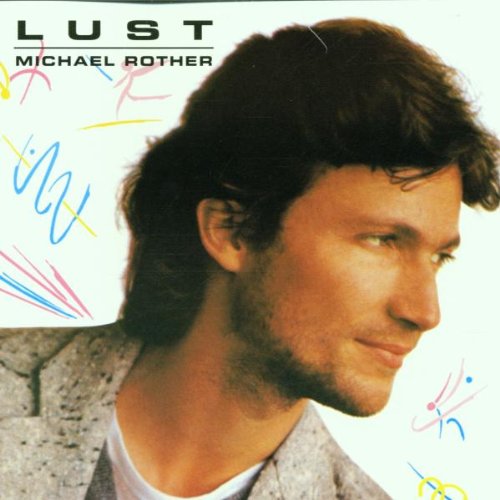
Süßherz und Tiefenschärfe.
November 1984 saw Michael Rother return to his Katzenmusik Studio, in Forst to record what would become Süßherz und Tiefenschärfe. Just like his previous album Lust, he wrote, recorded and produced Süßherz und Tiefenschärfe. It was just Michael Rother his trusty guitar and the electronic instruments that he now favoured. For three months he honed what became his sixth solo album. It was completed in February 1985, and became Süßherz und Tiefenschärfe.
Later in 1985, Polydor released Süßherz und Tiefenschärfe. Before that, critics had their say on Michael Rother’s sixth solo album. Again the reviews were positive. Some critics went as far as to say that üßherz und Tiefenschärfe was one of the best albums he had recorded. It was released later in 1985. By then, Michael Rother and Klaus Dinger had been reunited.
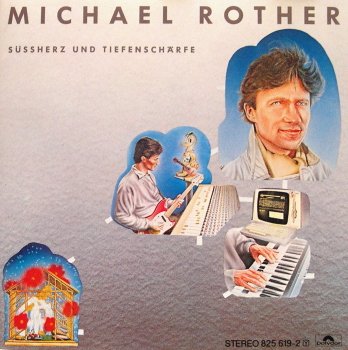
Neu! Reunite Again.
Little did Michael Rother realise what he was letting himself in for. When he met Klaus Dinger: “I realised that Klaus wasn’t in a good place. He had surrounded himself with people who were pulling him in all directions. Klaus was also needing money, and recording a new Neu! album offered him the opportunity to make some money. So we entered a small studio in Düsseldorf. It wasn’t like the professional studio we had worked in before. Instead, it was more like a semi-professional studio.” That was where recording of Neu!’s most controversial album began.
Recording began in October 1985. The members of Neu! then moved between Grundfunk Studio and Dinerland-Lilienthal Studio. The sessions were problematic. A decade had passed since the pair had worked together. Michael Rother remembers: “Klaus seemed different. He was argumentative, and there was no longer the same chemistry between us. It wasn’t an easy time. Despite that, we managed to record tracks which I took to my own studio in Forst.”
The group’s sound was very different. Synths were added to Neu!’s old sound. It was Neu! with a new wave twist. However, this didn’t work. By then, Klaus Dinger and Michael Rother were very different as musicians. Michael Rother had moved towards the electronics and technology and Klaus Dinger it seemed, hadn’t moved at the same pace.
By April 1986, work on the album stopped, and the project was cancelled. “Klaus and I met in Düsseldorf and agreed to abandon the project. We even went as far as sealing the tapes. This seal wasn’t to be broken without the other’s permission. The album was certainly not going to be released. That was why we sealed the master tapes. I never thought the would be released. Certainly not in the way that was released in late 1995.” By then, Michael Rother was concentrating on his solo career.
Michael Rother The Solo Years Part 3-Traumreisen.
After the abandoned Neu! project, Michael Rother didn’t return to the studio until January 1987. He spent the next six months in his home studio. “That was the benefit of having your own studio. I could record when I wanted. Sometimes, it a lonely life, and I felt as if I was going slightly mad.” Eventually, though, Traumreisen was completed in July 1987.
Just like his previous album, Traumreisen featured just guitars and Michael Rother’s various electronic instruments. Critics were won over by Traumreisen, which was released later in 1987. It was a case of deja vu, when Traumreisen failed to reach the wider audience it deserved. After seven solo albums, he was still to make a commercial breakthrough. Michael Rother’s music it seemed, was only appreciated by connoisseurs of Kosmische musik. This lack of commercial success resulted in Michael: “beginning to lose interest in recording albums.” It would be another nine years before he released another album. By then, he had founded his own record company.
Random Records was founded in 1993. This coincided with Michael managing to secure the rights to his back catalogue. However, the new label’s first release was a compilation, Radio-Musik Von Michael Rother-Singles 1977-93. It was released in 1993, with reissues of Michael’s solo albums being released over the next few years. Each album was remastered and released with bonus tracks on Michael’s Random Records. Michael was in control of his musical destiny. At least for his solo career. Neu! was a completely different matter.
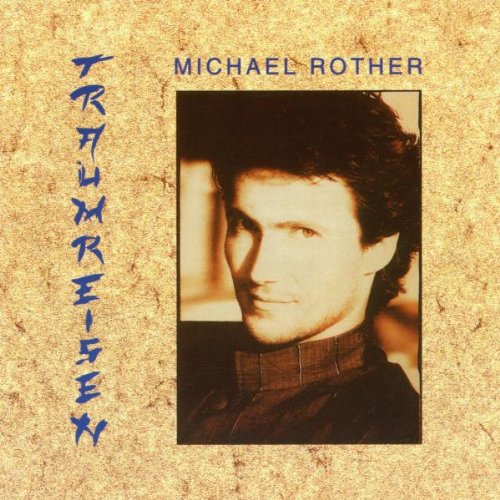
Neu! 4.
By the time Michael founded Random Records, Neu!’s first three albums had been released on CD by Germanofon Records, a Luxembourg based label. However, there was a problem.
Michael Rother explains: “the deal to release Neu!’s first three albums was entered into, without his permission. These bootlegs were available in every record shop I entered into.” There’s frustration and anger in his voice. It’s not about money though. Instead; “I was frustrated that people were buying an inferior product. It wasn’t of the quality I expected.” If he was frustrated about the release of Neu!’s first three albums, he was in for a shock on the morning of 17th October 1995.
“That day, I was sitting at home, when I received a fax from Klaus congratulating on the release of Neu! 4. I was shocked, as I hadn’t given my permission or consent to release the album. Soon, the picture became clear.
“By then, Klaus was really frustrated and angry about the bootleg releases of our first three albums. They were selling well, and neither of us were making anything from them. To make matters worse, Klaus was short of money, and desperate, so entered into a deal with the Japanese label Captain Trip Records. The owner was a huge fan of Neu! and was impressed by Klaus. He gave Klaus cash which he was meant to share with me. In the sleeve-notes to what was billed as Neu! 4, Klaus railed against the bootleggers.” Ironically, this was something that both Michael Rother and Klaus agreed about. However, the release of Neu! 4 drove a wedge between the two old friends.
With the benefit of hindsight, Michael Rother reflects: “looking back, I wish I’d jumped on the train to Düsseldorf and punched Klaus on the nose. I’m not that kind of person though. But I might have felt better. Then we could’ve moved on. However, we never did.”
After the release of Neu! 4, Klaus and Michael were continually at loggerheads. This was ironic. “By then, Neu! were at last, a popular band. People wanted to buy our albums. All that was available were the bootlegs, and Neu! 4 which to me, wasn’t a legally released or genuine album.”
Eventually, though, Michael Rother and Klaus Dinger reached an agreement in 2000, and Astralwerks in America and Grönland Records in Europe released Neu!’s first three albums. They also recalled copies of Neu! 4, which has been out of print ever since. However, Michael Rother stresses: “I’ve no problem people buying a second-hand copy of Neu! 4, I just don’t want the album rereleased. After the problems with Neu! 4, he released his eighth solo album in 1996.

Esperanza.
Unlike his last couple of albums, Michael Rother didn’t work alone on Esperanza. This time, he was joined by Jens Harke, who wrote the lyrics and added vocals to Weil Schnee und Eis. This was a first. Apart from the occasional vocal sample, Michael Rother’s album had been vocal free zones. That wasn’t the only change.
The other contributor to Esperanza was Joachim Rudolph who took charge of Pro Tools programming. Things had changed since Michael Rother’s last album. It was the digital age and now, DAWs had found their way into recording studios. As befitting the digital age; “I used only electronic instruments on Esperanza. There were no guitars on the album. This wasn’t a first. I’d already gone on a tour of America without a guitar. I was tired of the guitar and wanted to experiment.” That is what Michael Rother did between January 1995 and January 1996 at three studios. Once the album was completed, it was released two months later.
Esperanza was released on the 11th March 1996, on Michael Rother’s Random Records. Most of the reviews of Esperanza were positive. Michael Rother, was continuing to innovate and push musical boundaries. However, when Esperanza wasn’t a commercial success, “I began to lose interest in recording, and decided to concentrate on playing live.” As a result, it was a new millennia when Michael released his next album.
Remember (The Great Adventure).
On April the 25th 2004 Michael Rother released his ninth solo album, Remember (The Great Adventure). It had been recorded over a period of seven years and was a collaboration with various electronic musicians. This includes Thomas Beckmann, Andi Toma and Jake Mandell, who all programmed beats for the rhythm tracks. Sophie Williams and Herbert Grönemeyer added vocals on Remember (The Great Adventure). This was only his second album to feature vocalists.
Michael Rother’s collaboration with a new generation of musicians was well received by critics. Just like his previous albums, he didn’t shy away from innovating and embraced new ideas. Always he was determined to look forwards rather than backwards. That had been the case throughout his solo career.
Following Remember (The Great Adventure), Michael Rother “decided to concentrate on playing live. It’s allowed me to travel the world and play all over Europe, America and in 2014, in China. My albums were not selling well, and after a while, I lost interest in recording music.” However, it wasn’t just Michael that was playing live. One of his old groups reunited and took to the stage one more time, Harmonia.
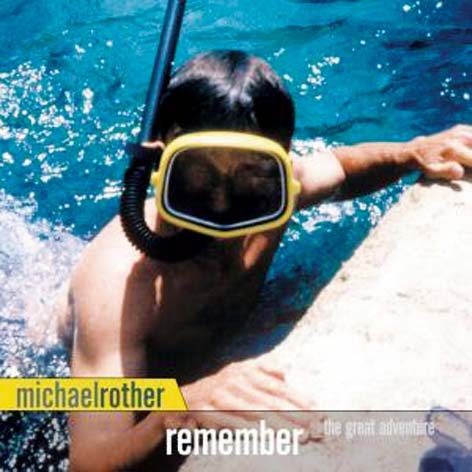
Harmonia Reunited and Live.
The reunion was for the release of Harmonia’s Live 1974 album. It featured a recording of Harmonia’s concert on the 23rd March 1974, at Penny Station Club in Griessem, Germany. To celebrate the release of Live 1974, Harmonia played live for the first time since 1976. This landmark concert took place at the Haus der Kulturen der Welt in Berlin, on November 27th 2007. Sadly, it would be the last time the three members of Harmonia played live. Belatedly, they had found the critical acclaim and commercial success they so richly deserved. It had taken thirty years, but Harmonia were regarded as one of the most innovative and influential groups in Kosmische musik. So were Neu!
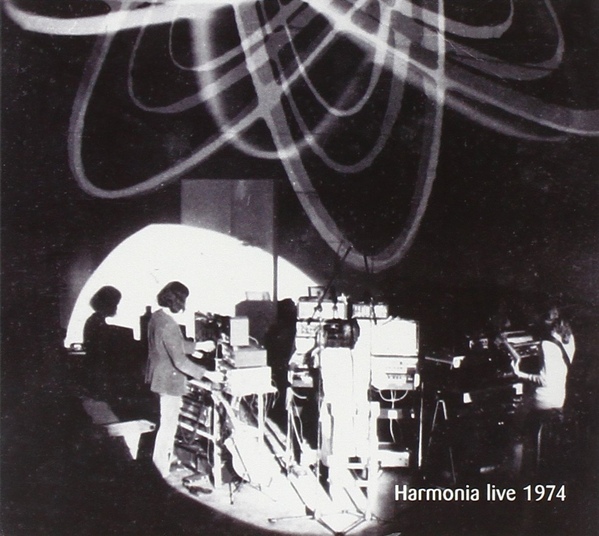
Neu! The Comeback-Neu! ’86.
As the years passed by, Neu! 4 was still a sore point for Michael Rother. It had driven a wedge between the two friends. “Sadly, Klaus died in 2008. I was deeply saddened. We had been great friends once.” Kosmische musik had lost one of its pioneers.
Two years later, Michael Rother got the opportunity to right a wrong. He explains: “in early 2010, I came to an agreement with Klaus’ widow. It allowed me work on what had been Neu! 4. Using the master tapes, I remixed the whole album.” That wasn’t the only change.
The running order changed. Some of the tracks were given new names. Only twelve of the fourteen tracks on Neu! 86 found their way onto Neu! 86. A new song, “Drive (Grundfunken) was added to what became Neu! 86 which was released as part of the Neu! box set on May 10th 2010. Then on August 16th 2010, a CD version of Neu! 86 was released.
Mostly, reviews of Neu! 86 were positive. The only criticism was that the album was overproduced. Michael Rother disagrees but agree: “it’s all matter of taste and opinion. I feel I did the best I could with what I had. Now Neu! 86 is much nearer to the album we had tried to make in 1985.” A quarter of a century later, and Michael Rother was happy at with release of Neu! 86 in 2010. That wouldn’t be the last project from the past that he would undertake.
 Harmonia-Complete Works,
In October 2105, a project that Michael Rother has been working on for some time came to fruition, the Harmonia-Complete Works box set. Michael Rother had overseen the remastering of Harmonia-Complete Works which included Musik Von Harmonia, Deluxe, Tracks and Traces, Live ’74 and an album of unreleased material. One of the unreleased tracks was nearly lost forevermore.
Michael Rother explains what happened. “Harmonia recorded all our shows and rehearsals. However, we were a poor band, and had to reuse each tape. Luckily, one night, a friend asked if we could record a rehearsal? Hans-Joachim Rodelius recorded the show, and at the end of the night, handed him the tape. That tape features what I consider to be the ultimate version of Tiki. Having given the tape away, I feared we would never see it again. Fortunately, our friend has kept that tape and the version of Tiki features on the fifth album of Complete Works.” However, for Michael Rother the release of Complete Works is tinged with sadness.
After a brave and lengthy battle against cancer, Dieter Moebius died on 20th July 2015. Michael Rother was saddened by the passing of his old friend. Along with Hans-Joachim Roedelius and Michael Rother, Dieter Moebius was part of one of the most innovative groups in the history of Kosmische musik. They’re now regarded as one of the finest purveyors of Kosmische musik. Harmonia deserve to sit alongside the holy trinity at Kosmische musik’s top table. At the head of the table is Michael Rother.

There’s a reason for this. Michael Rother has been part of three of the biggest bands in the history of Kosmische musik; Kraftwerk, Neu! and Harmonia. He then released nine solo albums and more recently, two soundtrack albums. “That was a new experience. However, now I concentrate my time on performing live” he explains.
“I’ve been fortunate it’s taken me all over the work. One of the highlights was playing in China in 2014.” This is just one of the many countries that Michael Rother has played over the last few years. He’s now sixty-seven and busier than ever. Michael Rother and his band have even been playing at some of the biggest festivals on the circuit. Just like Neu! and Harmonia, Michael Rother’s popularity has never been higher.
What does the future hold for Michael Rother? He’s unsure what it holds. “Maybe, I’ll go back into the studio? I don’t know. That’s the future.”
Dreaming.
As the years passed by, many critics wondered if Michael Rother would ever return with his tenth solo album? His last album was Remember (The Great Adventure) which was released in May 2004. Since then, he had recorded two soundtracks and spent much of his time touring the world and playing live. However, while Michael Rother had never real a new studio album between he had never stopped recording.
By 2020, he had spent forty-five years living in Forst. In his home, was the studio that he built with the other two members of Harmonia. It may have changed over the years, especially since the birth of the digital age, but it was still the place Michael Rother went to make music. Some of the recordings weren’t fully formed songs, just sketches that would inspire his tenth solo album Dreaming, which earlier this year featured on his Solo II box set.
When Germany entered lockdown, the concerts Michael Rother was due to play were cancelled. That was when he decided to record his long-awaited tenth solo album and decided to look at the songs and musical sketches he had recorded since 1995. He discovered seventy-five musical sketches that he had recorded between 1995 and 2020. As he listened to the harmonies, rhythms, and sounds he realised that there were some hidden gems that he could develop for his new album.
Having struck musical gold, Michael Rother began developing these musical sketches. Over the weeks and months, he was able to devote all his energy and time into writing and recording the nine tracks on Dreaming. Seven of these tracks feature vocals by British musician Sophie Joiner who Michael Rother met in 1997.
He had been out for a Turkish meal with his friend Thomas Beckmann who has collaborated with on projects. Michael Rother told him how he was looking for a vocalist for the album that became Remember (The Great Adventure).
Later that night, the pair decided to head to a bar for a drink where they heard a young woman singing and playing the cello. This was Sophie Joiner. Straight away, Michael Rother realised he had found the vocalist he was looking for.
He introduced himself and this led to a recording session. Michael Rother took along the seventy-five sketches and would ask Sophie Joiner to call out a number. He would then play a snippet of the sketch and then she would sing. Six or seven of these ideas were used on Remember (The Great Adventure) and the rest lay unused. That was until the recording of Dreaming.
Sophie Joiner’s vocal features on seven of the nine tracks on Dreaming. She’s absent only on Wopp-Wopp and Gravitas and plays an important part in the sound and success of the album.
Dreaming finds Michael Rother reflecting on the global pandemic and how life has changed beyond recognition. He was separated from his partner during the lockdown and missed spending time with his friends. Gone were the time they spent together and the things they did together. Then there was the fear as he watched the death toll rise in Germany and other parts of the world. Lockdown was a scary time for Michael Rother. However, he used the time to create his first album in sixteen years, Dreaming.
The album opener Dreaming is best described as ethereal, dreamy and cinematic example of ambient pop. Playing an important part is vocalist Sophie Joiner who makes a welcome return.
Bitter Tang with its mesmeric beat, squelchy, lysergic synths and shimmering guitar references Michael Rother’s past. Meanwhile, the elegiac vocal floats above the arrangement as ambient, synth pop, trip hop and Kosmische musik combine seamlessly during this carefully crafted soundscape as it washes over the listener.
Fierce Wind Blowing meanders along as a dubby, dreamy and breathy vocal takes centrestage. When it drops out Michael Rother’s searing guitar cuts through the arrangement which becomes ruminative and like the lyrics invite refection.
Futuristic describes Wopp-Wopp as otherworldly and ethereal sounds combine to create a cinematic soundscape. Later, there’s even a nod to Kraftwerk during a track that sounds as if it’s part of a sci-fi soundtrack.
Hey-Hey is one of the highlights of Dreaming and It combines Michael Rother’s love of ambient music with his previous solo albums. He deploys his trusty synths and trademark guitar which provides abackdrop for Sophie Joiner’s vocal. The result is a quite beautiful, languid and soothing soundscape with a carefree sound.
It’s a similar case with the lysergic and dreamy sounding Lovely Mess. However, there’s a darkness to the lyrics as Sophie Joiner warns: “Uh uh his could be the end.” Her lyrics were recorded in 1997 and are almost prophetic. Later, the arrangement changes and combines ambient music with industrial music. This is effective and proves the perfect accompaniment to the vocal on another carefully crafted track.
The arrangement to Out In The Rain shimmers and glistens before a slow rueful guitar ushers in the dreamy, dubby and wistful vocal. It floats above the meandering, lysergic and ruminative arrangement which floats along and is another of Dreaming’s highlights.
Slow, deliberate synths opens the instrumental Gravitas and add a wistful sound as the arrangement meanders along. They create a cinematic sound and later, become futuristic and take on a sci-fi sound. Later, bells chime and combine with sci-fi synths as a a stunning cinematic track takes shape.
Quiet Dancing closes Dreaming and thanks to Sophie Joiner’s vocal is reminiscent of Julee Cruise. It has an ethereal quality and the spacious, cinematic arrangement meanders and floats along with Michael Rother saving one of the best until last.
Dreaming marks the welcome return of Michael Rother after a fourteen year absence. It finds him combining ambient music and Kosmische musik with elements of avant-garde, Berlin School, electronic, industrial, synth pop and trip hop. He deploys synths, drum machines and his trusty guitar and is joined Sophie Joiner whose ethereal vocal adds the finishing touch to Dreaming which is best described as a modern ambient album. It was originally released earlier in 2020 as part of the Solo II box set. However, Dreaming was recently released by Gronland Records and is the perfect introduction to Michael Rother who is one of the founding fathers and giants of Kosmische musik.
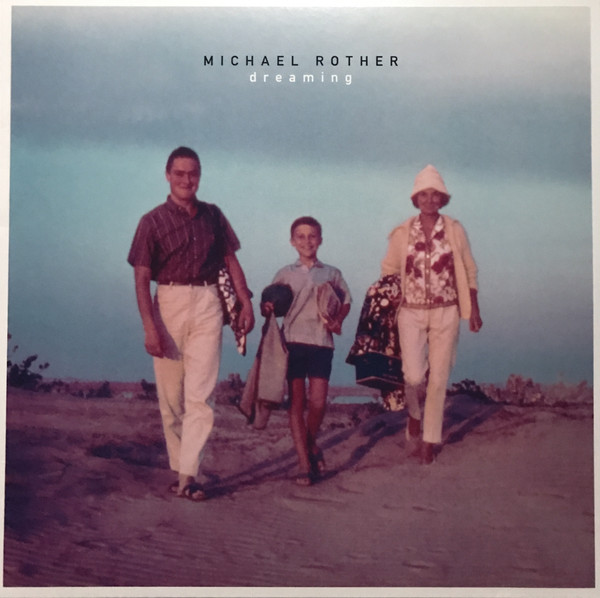
Fifty-five years after his career began, Michael Rother’s music continues to find a new audience. This includes the albums he recorded with Kraftwerk, Neu! and Harmonia and his ten solo albums. His Solo II box set covers the period between Lust and his tenth solo album Dreaming which has just been released. Dreaming is his first solo album in fourteen years and is a return to from from Michael Rother, the one-time Kraftwerk guitarist and cofounder of Neu! and Harmonia.
Michael Rother’s music is more popular than it’s ever been and is starting to find the wider audience it deserves. This is very different from the early days of Harmonia and when he embarked upon a solo career and his albums failed to finds the audience they deserved. The Solo and Solo II box sets cover Michael Rother’s soli career and are a reminder of one of the leading lights of Kosmische music whose continues to influence and inspire a new generations of musicians
Michael Rother-Solo II and Dreaming.

EABS-DISCIPLINE OF SUN RA.
EABS-Discipline Of Sun Ra.
Label: Astigmatic Records.
Format: CD.
Having orbited planet earth and ascertained that it was safe to land, the spaceship carrying the Sun Ra Arkestra landed in Kalisz, one of the oldest cities in the Polish People’s Republic on the ‘7th’ of December 1986. Martial law had been imposed by the Pro-Moscow regime five years earlier in 1981 and life in socialist era Poland was tough. However, for the past thirteen years the people of Kalisz had looked forward to the International Jazz Piano Festival.
Especially in 1986, when it was announced that the Sun Ra Arkestra had been booked for the thirteenth edition of the Festival. They were due to take to the stage on the ‘7th’ of December 1986. That night, the tapes were running and concert was recorded for posterity.
Those who saw the Sun Ra Arkestra that night in Kalisz never forgot what was a truly memorable performance. They knew that they were fortunate to witness the Arkestra at the peak of their powers.
In 2019, Live In Kalisz 1986 was belatedly released and at last, a new audience were able to hear what turned out to be the only concert that the Sun Ra Arkestra played in Poland.
By then, Sun Ra’s music was influencing a new generation of musicians. This included the members of EABS (Electro-Acoustic Beat Sessions). They eagerly awaited the release of Live In Kalisz 1986 and at last were able to hear that legendary concert by the Sun Ra Arkestra. It insprired the jazz improv sextet to put on a special concert related to this release of Live In Kalisz 1986. This wasn’t all.
During the lockdown, EABS recorded tribute to Sun Ra. This became EABS fifth album Discipline Of Sun Ra which was recently released by Astigmatic Records.
Despite having just released their fifth album, many record buyers have still to discover EABS. It’s still one of European music’s best kept secrets.
Initially, the group was akin to a movement where improv musicians met up and played together. Some heard about the sessions by chance, and others by word of mouth. Soon, other types of musicians started to come along to the sessions and the numbers grew. By then, a concept had evolved.
The concept was reconstruction of deconstruction, and this was a tribute to the musicians that had influence the members of the EABS crew. This included everyone from Ahmad Jamal and Gil Scott-Heron to Jay Dee and Pete Rock.They had influenced the musicians who had made their way to the sessions and would become part of EABS
EABS “pursues the tradition of the Polish school of jazz, while escaping various sound patterns, presenting a carefree and completely original approach to genres and established musical standards.” That’s been the case since they released throughout their career.
Puzzle Mixtape.
In November 2016, EABS released Puzzle Mixtape an album of jazzy hip hop on Astigmatic Records. It’s now a much-prized rarity amongst collectors, and showcased the talented sextet .
Repetitions (Letters To Krzysztof Komeda).
They returned with their sophomore album Repetitions (Letters To Krzysztof Komeda) in June 2017. It was ostensibly an album of classic jazz that was interspersed with modern sounds. The album well received by critics and so was EABS third album.

Repetitions (Letters To Krzysztof Komeda) Live At Jazz Club Hipnoza (Katowice).
This was Repetitions (Letters To Krzysztof Komeda) Live At Jazz Club Hipnoza (Katowice) which was released to critical acclaim in July 2018. Although it was another album in the tradition of the Polish Jazz school, it found EABS continuing to reinvent the genre and combined jazz with elements of avant-garden. The album went on to win numerous awards and introduced EABS music to a wider audience.
Slavic Spirits.
EABS returned in June 2019 with what was their finest album, Slavic Spirits. This time around, they eschewed the influence of the Polish Jazz school on what was a much more experimental album. It was inspired by Slavic mythology and Polish demonology and found the group reflecting upon the modern spiritual condition of the Polish people. However, it was what EABS describe as “Slavic melancholy” that was the inspiration for the album. They explored this on Slavic Spirits which was the finest album of their career.

Discipline Of Sun Ra.
Little did anyone know that a few months after the release of Live In Kalisz 1986 that the world was about to be descended into darkness when a pandemic swept planet earth and lockdowns followed.That was when EABS decided to record their tribute to Sun Ra. This became Discipline Of Sun Ra.
The members of EABS chose seven Sun Ra classics that they would recreate. This included Brainville, Interstellar Low Ways, The Lady with the Golden Stockings (The Golden Lady, Discipline, Neo-Project Number 2, Trying To Put The Blame On Me and UFO. These tracks were recorded using two of Sun Ra’s ideas deconstruction and discipline.
Sun Ra’s concept of deconstruction came about when he decided to recreate the music of swing legend Fletcher Henderson. He dispatched members of the Arkestra to research individual members of the group. However, he warned them it wasn’t so much a case of copying the parts, it was a case of having the correct information to recreate the spirt behind them.
Just as important was Sun Ra’s series of exercises and compositions entitled Discipline which were adopted and used by the Arkestra. He designed these exercises with the minimum amount of material in mind. The foundation was the brass section, and this found a cyclical melody unfolding from the fragments that allowed each member of the Arkestra to play their lines exactly and without any deviation from the score. This is what the title to EABS’ album Discipline Of Sun Ra refers to.
The music on Discipline Of Sun Ra is quite different to the original versions. On the album opener Brainville Sun Ra’s lyrics seem prophetic: “It’s after the end of the world, don’t you know that yet?” EABS then take Sun Ra’s original as a starting point and reinvent it combining of theatre, jazz, sci-fi sounds and jazz-funk and free jazz. It certainly whets the listener’s appetite for the rest of the album.
Interstellar Low Ways veers between futuristic, sensual and melancholy as EABS adopt a less is more approach. Sometimes, there’s a lo-fi sound to the otherworldly sound to keyboards as the track becomes dreamy and cinematic.
Quite different is The Lady with the Golden Stockings (The Golden Lady) which has an edgier, jittery sound. Here EABS draw inspiration from Nu-Jazz and deploy lo-fi beats, sci-fi synths as horns take centrestage and a haunting laugh interjects. It’s a moderne makeover of a Sun Ra classic that its creator would appreciate.
Discipline 27 is cinematic, urgent and dramatic as sci-fi sounds, crunchy mesmeric beats and free jazz horns combine to create a futuristic widescreen soundscape.
Initially Neo-Project Number 2 is slow and almost laidback but gradually it’s all change as the drums power the arrangement along and combine with bass to inject a degree of urgency. Keyboards shimmer as a piano glistens and the horns play slowly and deliberately. It’s a captivating track where the more one listens the more one hears.
Trying To Put The Blame On Me is a slow, smooth and beautiful and is one of the highlights of the album. It’s a Sun Ra cover I’ll never tire of hearing.
UFO closes Discipline Of Sun Ra on a high with what’s an irresistible fusion of space funk, hip hop, jazz and Sun Ra’s inimitable philosophy. The track is given a 21st Century makeover by EABS who have kept one of the best until last.
When EABS released Slavic Spirits in 2019, it was the finest album of the group’s career. That was until the recent release of Discipline Of Sun Ra which is without doubt the finest album of their five album career.
On Discipline Of Sun Ra EABS reimagine and reinvent seven of Sun Ra’s classics using two of his concepts, deconstruction and discipline. To do this, they combine elements of avant-garde, contemporary jazz, electronica, free jazz, funk, hip hop, jazz-funk, library music and Nu-Jazz with lo-fi beats and sci-fi synths. The result is Discipline Of Sun Ra, a career-defining album from EABS, and their genre-melting homage to the man from Saturn, a true musical pioneer and giant of jazz whose groundbreaking music is timeless.
EABS-Discipline Of Sun Ra.
CULT CLASSIC: EROL BÜYÜRBURÇ-HOP DEDIK.
Cult Classic: Erol Büyükburç-Hop Dedik.
By October 1976, Erol Büyükburç was one of the biggest names in Turkish music. He was a flamboyant showman who looked like, dressed like and conducted himself like a star. Erol Büyükburç wore lame suits and was greeted by a legion of loyal fans every time he took the stage. These fans had followed Erol Büyükburç’s career since he made a breakthrough with his first hit single Little Lucy in 1961.
It was the first of fifty-eight singles and two albums that Erol Büyükburç released between 1961 and October 1976. In, October 1976, there was another addition to Erol Büyükburç’s burgeoning discography, his third album Hop Dedik. Unlike his two previous albums, Hop Dedik wasn’t an album of singles. Instead, Hop Dedik featured new material which showed a different side to his music This was a new start for forty year old Erol Büyükburç.
He was born on ‘22nd’ March 1936 in Adana, on the southern coast of Turkey. Growing up, music played an important part in family life. Erol Büyükburç’s mother played the violin, and his parents had an eclectic selection of 78s. This ranged from folk to pop and classical music. The young Erol Büyükburç was allowed, and encouraged, to listen to his parent’s collection to folk, pop and classical music. Soon, though, Erol Büyükburç wanted to learn to play a musical instrument.
By then, Erol Büyükburç was attending a French language primary school. Most children at the school wanting to learn to play a musical instrument would’ve been sent to music lessons. Not the young Erol Büyükburç. Instead, he sat and played along to his parent’s 78s. It seemed that he had a natural and gifted musician. Life was good for Erol Büyükburç until disaster struck and he had a brush with death.
This happened when Erol Büyükburç and a sibling were playing in the family home. What happened next is lost in the mists of time. All that’s known is that Erol Büyükburç’s sibling pushed him out of a window. The fall nearly killed Erol Büyükburç, and he required twenty-two stitches. To recover from the accident, Erol Büyükburç was advised to rest at home. Erol Büyükburç spent the time listening to music which was fast becoming his favourite pastime.
By 1951, Erol Büyükburç Büyükburç was about to start high school in Istanbul, where the family had moved a few years previously. The school specialised in economics and Erol Büyükburç’s father was keen that his son would become a businessman. That was the plan.
It didn’t quite work out that way. At high school, Erol Büyükburç joined his first band and became the lead singer. This gave him first tantalising taste of what life in a band was like.
In 1954, eighteen year Erol Büyükburç took to the stage with Ismet Sirel’s Orchestra for the first time. Already, Erol Büyükburç had a powerful, emotive voice. This he put to good use over the next few years.
Despite his interest in music, Erol Büyükburç enrolled at Istanbul University to study economics. He had struck a deal with his mother that he could practise his singing in the basement until his father returned home. When he returned home, Erol Büyükburç had stop his practise and concentrate on his studies. Eventually, it became apparent that Erol Büyükburç wasn’t going to complete his degree. So he left University and began his military service.
This was compulsory for all young Turkish men. Erol Büyükburç was sent to Urfa, which was around three hours east of Adana. However, much of his two years military service was spent singing in the officer’s club. That was where he first met movie star Leyla Sevar.
After their initial meeting at the officer’s club, the pair soon became friends. Leyla Sevar realised that Erol Büyükburç had potential as a singer. She was willing to used her many contacts within the Turkish music industry to help him secure a recording contract. Soon, Leyla Sevar had secured Erol Büyükburç a recording contract. The next weekend he headed home to Istanbul, he recorded Little Darling and One Way Ticket at the city’s Odeon Studio. This was the first of many singles he recorded during his long and successful career.
Success didn’t arrive overnight for Erol Büyükburç. Instead, he had to wait several years before enjoying a hit single. This allowed him to hone his skills as a singer and songwriter. By 1961, Erol Büyükburç was writing his own songs, which he sung in English. One of his compositions was Little Lucy which he released as a single in 1961. It gave him his breakthrough single and transformed his fortunes in the process.
Over the next four years, Erol Büyükburç star was regarded as one of the rising stars of Turkish music. This changed in 1965, when he entered the prestigious Altin Mikrofon competition.
Entrants were encouraged to combine Turkish lyrics with Western instrumentation. That year, the competition was fierce, with Silüetler one of the favourites for the first prize. However, it was Erol Büyükburç that won the Altin Mikrofon competition. This was a game-changer for him.
Just like all artists who won the Altin Mikrofon competition, Erol Büyükburç was awarded a recording contract and embarked upon extensive tours.
Soon, Erol Büyükburç embarked upon one of the most productive periods of his career. He released single after single, as 45s and 78s. This included singles like Kiss Me, Lovers Wish and Memories. Other singles included covers of songs made famous by Elvis Presley and The Kingston Trio. After 1965, most of the singles Erol Büyükburç released from 1965 onwards were sung in Turkish, as Anatolian pop and rock was booming. The only single he released with English lyrics was in 1969. By then, Erol Büyükburç had diversified.
The first Turkish national orchestra was founded in 1964, and a competition called the Balkan Music Festival was held to choose the lead singer. Several singers had enjoyed their time as lead singer of the Turkish national orchestra. However, when he entered he won the competition three years in a row. Soon, he had settled into his new role and enjoyed fronting the Turkish national orchestra.
Having won the Altin Mikrofon competition and having fronted the Turkish national orchestra for three years, Erol Büyükburç’s had never been higher. He was one of the biggest names in Turkish music. It was no surprise that film directors wanted Erol Büyükburç to star in their movies. Erol Büyükburç agreed and eventually, would feature in thirty-three films during his career.
Despite his nascent acting career, music was still Erol Büyükburç’s priority. It had been his career for over a decade. That would still be the case as he signed to the French label Pathé in the late sixties.
That was no surprise to anyone familiar with Turkish music. Erol Büyükburç was still a hugely popular artist in Turkey. He was colourful, flamboyant and a showman. Sometimes when Erol Büyükburç took to the stage, he sported the latest fashions. Other times, his stage costumes were outlandish, and very different to what most musicians were wearing in the late sixties. It was no surprise that Pathé decided to sign Erol Büyükbur.
He released two albums for Pathé during 1968. The first album Erol Büyükbur released was Kırık Kalp, which featured singles Erol Büyükburç had released over the last few years. So did Yasemin, which was released later in 1968. However, both albums sold well and the Erol Büyükburç success story continued.
Towards the end of the sixtes, Erol Büyükburç switched labels again. This time, he signed to Saner Plaklari and released much more experimental, harder sounding music. Given how different the music was to his previous singles, Erol Büyükburç risked alienating his existing fans. Still, these singles gave him several minor hit singles. Alas, they didn’t enjoy the same success as other Anatolian rockers liken Barış Manço and Cem Karaca. Their music was regarded as much more political, and dealt with social issues that affected the people of Turkey. This was very different to the singles Erol Büyükburç had released. However, in 1972, his career headed in a very different direction.
For the majority of his career, Erol Büyükburç had been accompanied by an orchestra on his singles. This sound had fallen out of favour as Anatolian rock grew in popularity. So in 1972, Erol Büyükburç’ joined forces with the rock band Elçiler.
Over the next few years, Erol Büyükburç and Elçiler released a series of singles and EP’s. This included some of the tough, hard rocking music as Erol Büyükburç sought to reinvent himself and his music. The sound had the potential to introduce Erol Büyükburç to a much wider audience.
Anatolian rock was hugely popular by 1972. During the years Erol Büyükburç and Elçiler worked together, Anatolian rock grew in popularity. However, the partnership never quite reached the heights it should’ve. What didn’t help was the constant changes in Elçiler’s lineup. When Erol Büyükburç switched labels, and moved from Saner Plaklari to Diskotür this spelt the end of the partnership.
The move to Diskotür coincided with Erol Büyükburç returning to much softer arrangements. Not long after this, Erol Büyükburç collaborated briefly with Turkish lyricist Çiğdem Talu. Erol Büyükburç even recorded some children’s songs and at one point, recorded some heavier sounding songs. Then in 1976, Erol Büyükburç began work on his third album Hop Dedik.
Hop Dedik.
Although Hop Dedik would be Erol Büyükburç’s third album, his two previous albums featured singles that he had released. Never before had recorded an album from scratch. This was a new experience for him.
For Hop Dedik Erol Büyükburç put his songwriting skills to good use. He cowrote nine of the twelve tracks, including Oldu Olacak, Dandini, Bile Bile Lades, Sen Mi O Mu, Öyle Mi Böyle Mi, Şaka Maka Derken, Hop Dedik, Civciv Çıkacak Kuş Çıkacak and Sevgiye Tutsak. The other three songs, Güz Şarkısı, Hep Sen Varsın and Dedim Dedi were cover versions. These songs were recorded with Erol Büyükburç’s backing band Efsaneler.
They had been formed in 1973, but Efsaneler’s lineup changed several times over the next three years. It wasn’t until December 1975 that Erol Büyükburç and Efsaneler released their debut single Allah’im Beni De Gor. Tucked away on the B-Side was Civciv Çıkacak Kuş Çıkacak. It would feature on Hop Dedik.
The rest of Hop Dedik was recorded in early 1976 by Erol Büyükburç and Efsaneler. They recorded music that had a much more contemporary sound. It had been influenced by everything from disco, funk, rock and soul. Still, there was an Anatolian influence throughout Hop Dedik, which was released in late 1976.
When Hop Dedik was released Erol Büyükburç it was to critical acclaim. Erol Büyükburç had reinvented himself and music on his third album Hop Dedik. It was well worth the eight year wait.
Oldu Olacak (Will Be) opens Hop Dedik, and straight away there’s traditional sound, as a mandolin joins with the rhythm section. Only the rhythm section remain when Erol’s heartfelt vocal enters and he delivers the lyrics to this rueful ballad. Meanwhile, the rhythm section lock into a tight groove. Sometimes, the bass is almost funky as the arrangement becomes jaunty. Later Efsaneler contribute harmonies and the mandolin returns. They accompany Erol as seamlessly they combine traditional Turkish and Western music on this beautiful, ballad.
A chirping guitar is panned left and almost dances across the arrangement to Dandini. It features drums, percussion and a second guitar. They accompany Erol as he delivers a powerful, emotive vocal. When it drops out, a funky guitar takes centre-stage. Soon, the vocal returns and grows in power. Still the guitars and percussion play an important part as the song reaches a melodic and memorable crescendo.
As Bile Bile Lades unfolds traditional Turkish and Western music melt into one. The arrangement is choppy, as a bağlama join with the rhythm section. They usher in Erol’s vocal, which quickly grows in power. Soon, the tempo increases slightly and the arrangement flows. Meanwhile, urgent soulful harmonies accompany Erol’s impassioned vocal while the rhythm section provide the heartbeat. All too soon, this quite beautiful, melodic song is over, leaving just the memory of what’s gone before.
There’s a tougher, almost psychedelic sound to Sen mi O mu. A searing guitar cuts through the arrangement, that comes courtesy of the rhythm section and guitar. Soon, Erol’s vocal enters, and he delivers the lyrics quickly. Meanwhile, an effects laden guitar responds to his call, while drums rumble. Later, a blistering guitar cuts through the arrangement as Erol and Efsaneler combine psychedelia, Anatolian rock and pop to create a truly irresistible song.
A bubbling bass, percussion, chirping guitar combine on Öyle mi Böyle (Is It So?. They’re joined by urgent harmonies as the arrangement heads in the direction of funk. When Erol’s vocal enters it’s soulful and stylistically is reminiscent of legendary Brazilian singer Tim Maia. Meanwhile, the tempo is slow, and the music funky. Hooks haven’t been spared on this slow, soulful and funky track that features Erol Büyükburç at his best.
There’s a much more understated and wistful sound to Güz Şarkısı (Autumn Song) as an acoustic guitar and percussion combine. Soon, the rhythm section join but take care not to overpower Erol’s soul-baring vocal. It grows in power and at one point, there’s an almost psychedelic sound. This comes as a myriad of percussion joins the acoustic guitar and rhythm section. Later harmonies provide the perfect accompaniment to Erol on as he lays bare his soul on this wistful ballad.
Straight away, a funky guitar takes centre-stage as fingers fly up and down the freeboard, as it’s joined by the rhythm section and percussion on Şaka Maka Derken. Soon, soulful harmonies accompany Erol, and respond to his call. Behind him, the rhythm section and guitars have locked into a funky groove. Meanwhile, the harmonies have a gospel sound, and sometimes, are reminiscent of Brothers and Sisters. There’s even a nod to Sly and The Family Stone, on this soulful, funky opus as Erol continues to reinvent his music.
A guitar rings out on Hop Dedik before wah-wahing. It’s joined by the rhythm section who power the arrangement along. By then, it sounds as if British groups from the late-sixties have influenced Efsaneler. They enjoy the opportunity to showcase their considerable skills. This continues when Erol’s choppy, vampish vocal enters. Meanwhile, a strummed acoustic guitar, bubbling bass and funky guitar accompany Erol. When his vocal drops out, Efsaneler take centre-stage, combining elements of rock, funk and psychedelia. When Erol’s vocal returns, it’s soulful, emotive and vampish as he breathes life into the lyrics on this genre-melting track.
There’s an urgency to Hep Sen Varsın as the rhythm combine rock and funky. Guitars wah-wah as Erol unleashes a vocal powerhouse and is accompanied by punchy harmonies. When the vocal drops out, handclaps accompany the rhythm section as they drive the arrangement along and guitars ring out. Later, when the vocal returns, it’s soulful and swings before becoming urgent. So too does the arrangement, while the guitars add to the funk factor before this irresistible song reaches a crescendo.
The rhythm section lock into a groove with a wah-wah guitar on Civciv Çıkacak Kuş Çıkacak. They power the arrangement along, before an accordion and percussion join. Soon though, the accordion drops out, and Erol’s delivering a breathy vampish vocal. As it soon grows in power, Erol scats emotively. Meanwhile, percussion, wah-wah guitar and accordion combine to create a backdrop for Erol Later, when the accordion drops out, the wah-wah guitar accompany Erol whose vocal veers between breathy and tender to powerful and impassioned. It’s one of his finest vocals on Hop Dedik.
There’s a heavy, lysergic sound to Dedim Dedi (I Said I Said) as guitars wah-wah, cymbals rinse and the bass adds an element of darkness. Soon, percussion accompanies Erol, whose vocal is rueful and full of sadness. Slowly and deliberately he delivers the lyrics while the bass bubbles, the guitars shimmers and later, harmonies accompany him. They seem to sympathise with him, before his vocal becomes a rueful soliloquy on this poignant song.
Closing Hop Dedik is Sevgiye Tutsak which has a cinematic sound. That’s no surprise, as three songs on the album, Oldu Olacak, Sen mi O mu, Şaka Maka Derken featured on films that Erol starred in. Despite its cinematic sound, Sevgiye Tutsak never made it onto the silver screen. That is a great shame, as it’s one of the highlights of the album. It features a heartfelt vocal from Erol, while an organ, guitar and the rhythm section accompany him. They take care not to overpower his emotive, impassioned vocal on this beautiful cinematic ballad.
Eight years after Erol Büyükbur released his sophomore album, he returned with Hop Dedik in October 1976. It was very different from the two previous album Erol Büyükbur had released. They were essentially greatest hits albums. By 1976, record buyers wanted something more.
What they wanted was an album of new material from Erol Büyükbur. So he went away and cowrote six new songs. The other three, that he cowrote, had already featured on films that Erol Büyükbur had starred in. These new songs and three cover versions were recorded with his talented backing band Efsaneler. The result was Hop Dedik, which was released in October 1976.
When Hop Dedik was released, it was to critical acclaim. Sadly, the album didn’t sell in vast quantities. Since then, Hop Dedik has become a cult album classic that recently is starting to find a wider audience.That’s no surprise as Erol Büyükbur’s third album Hop Dedik found him reinventing his music.
The result is Hop Dedik, a truly enclitic album, where Erol Büyükbur combines elements of several disparate genres. This includes traditional Turkish music, disco, funk, pop, psychedelia, rock and soul. There’s also Anatolian pop and rock influences throughout Hop Dedik where the music of two continents melt into one.
Hop Dedik was without doubt, the best album of Erol Büyükbur’s career. He reinvented himself and his music on Hop Dedik, which was a genre-melting album. No two tracks are the same as Erol Büyükbur switches seamlessly between heart-wrenching ballads, funk, rock, soul and psychedelia. This showed that Erol Büyükbur was a truly and talented and versatile singer. Proof, if any is needed is Hop Dedik, a career-defining album that features flamboyant showman Erol Büyükbur at the peak of his powers.
Cult Classic: Erol Büyükburç-Hop Dedik.
CLASSIC ALBUM: JETHRO TULL-HEAVY HORSES.
Classic Album: Jethro Tull-Heavy Horses.
By April 1978, Jethro Tull were still one of the most successful British bands of their generation, and were about to release their eleventh album of their career, Heavy Horses. It was the second album in a trilogy of folk rock albums and Jethro Tull hoped that it would build on the success of Songs From The Wood which had been released in February 1977. It was the first instalment in Jethro Tull’s folk rock trilogy, which was a new chapter in their career which began fifteen years earlier.
The origins of Jethro Tull can be traced to Blackpool, Lancashire, in 1962, where Ian Anderson formed his first group Blades, which was originally a four piece, featuring Ian Anderson on vocals and harmonica. A year later in 1963, Blades were a quintet and in 1964 the group was a sextet who played blue-eyed soul. However, by 1967 blades decided to spread their wings and head to London.
Having moved to London, the band split-up within a short time, and only Ian Anderson and bassist Glen McCornick were left. This proved a blessing in disguise as they were soon joined by blues guitarist Mick Abrahams and drummer Clive Bunker. This was the lineup that featured of Jethro Tull that featured on their debut album This Was. That was still to come.
Before that, the nascent band had to settle on a name, and various names were tried, only to be rejected. Then someone at a booking agent christened the band Jethro Tull, after the eighteenth century agriculturist. Little did anyone realise that the newly named Jethro Tull would become one of the biggest bands in the world over the next decade.
Not long after becoming Jethro Tull, Ian Anderson acquired his first flute. Up until then, he had played harmonica and was trying to learn to play the guitar. Soon, Ian Anderson realised that wasn’t a great guitarist, and having realised that the world had enough mediocre guitarists, decided to expand his musical horizons and bought a flute. Little did he realise this would be one of Jethro Tull’s trademarks.
After a couple of weeks, Ian Anderson had already picked up the basics of the flute. He was learning as he played. While this wasn’t ideal, it was the only way that possible. Especially with things happening so quickly for Jethro Tull who would soon release their debut single.
Sunshine Day was penned by Mick Abrahams, with Derek Lawrence taking charge of production. However, when their debut single was pressed, Jethro Tull realised that an error meant the single was credited to Jethro Toe. To make matters worse, Sunshine Day wasn’t a commercial success and failed to trouble the charts. Despite this disappointment, thing got better when Jethro Tull released their debut album This Was.
This Was.
Recording of This Was took place at Sound Techniques in London, with the sessions beginning on the ‘13th’ of June 1968, and finishing on the ‘23rd’ of August 1968. By then, Jethro Tull had only £1,200 was spent recording their debut album This Was. This money would soon be recouped when This Was released.
Prior to the release of Jethro Tull’s debut album This Was critics had their say on the album. The majority of the critics were impressed by This Was which was a fusion of blues rock, R&B and jazz. This pleased Jethro Tull and their management, who decided to launch This Was at the Marquee Club, in London.
Jethro Tull was only the third band to launch their debut album at the Marquee Club, and would follow in the footsteps of the Rolling Stones and The Who. Both bands were amongst the biggest bands in the world by 1968, and so would Jethro Tull.
On the ‘25th’ October 1968 Jethro Tull released This Was, which reached number ten in the UK. Three months later, Jethro Tull released This Was in America on the ‘3rd’ of February 1969 and it reached sixty-two in the US Billboard 200. This was seen as a success by Island Records in Britain and Reprise in America. Jethro Tull had made inroads into the most lucrative music market in the world. It was a successful start to Jethro Tull’s career, which was about to enter a period where critical acclaim and commercial success were almost ever-present. However, there was a twist in the tale.
By then, Mick Abrahams left the band after he and Ian Anderson disagreed over the future direction of Jethro Tull. The sticking point was that Mick Abraham wanted Jethro Tull to stick with blues rock, while Ian Anderson realised there was no real future in blues rock. He wanted to take Jethro Tull to explore a variety of musical genres. As a result, Mick Abrahams left Jethro Tull and was replaced by Michael Barre. Little did either Mick Abraham nor Michael Barre realize that Stand Up marked the start of a period where Jethro Tull would sell over sixty-million albums.
Stand Up.
With new guitarist Michael Barre onboard, work began on Jethro Tull’s sophomore album Stand Up, which was a much more eclectic album to This Was. Ian Anderson who was now Jethro Tull’s primary songwriter, penned nine of the ten tracks and drew inspiration from everything from blues rock, Celtic, classical, folk and rock. These ten tracks became Stand Up, which was recorded over three months in 1969.
Recording of Stand Up took place at Morgan Studios and Olympic Studios. The sessions began on the ‘17th’ of April 1969, and continued through to the ‘21st’ of May 1969. Three months later, and Stand Up was released.
Before the release of Stand Up in September 1969, the reviews of Jethro Tull’s sophomore album were positive, with the musicianship and production receiving praise from critics. They also noted that the Jethro Tull’s music was starting to evolve, although Stand Up still featured blues rock sound. Elsewhere on Stand Up, Jethro Tull had started to expand their musical palette and this struck a nerve with critics and record buyers.
On Stand Up’s release in the UK on the ‘1st’ of August 1969 Jethro Tull’s sophomore album. topped the charts. When Stand Up was released on the ‘29th’ of September 1969 it reached number twenty in the US Billboard 200 Charts and was certified gold. This was the start of a golden period in Jethro Tull’s career.
Benefit.
Following the commercial success of Stand Up, Jethro Tull returned to Morgan Studios, in London, on the ‘3rd’ of September 1969 and spent the next five months recording ten new tracks which were penned and produced by Ian Anderson. By the ‘25th’ of February 1970 Jethro Tull had completed Benefit, which was much more experimental and darker album and the first album of the progressive rock years.
Before the release of Benefit, the critics had their say on Jethro Tull’s third album, which they noted had a much more experimental sound as the band flitted between progressive rock and folk rock. Ian Anderson had allowed Jethro Tull more freedom to express themselves as he also wanted Benefit to have a live sound. This shawn through, as does Benefit’s darker sound which Ian Anderson claimed was because of the pressure of a forthcoming American tour, and his disillusionment with the business side of the music industry. However, the new sound didn’t affect sales.
Jethro Tull released Benefit on the ‘20th’ of April 1970, and it reached number three in the UK, and eleven in the US Billboard 200 Charts. Just like Stand Up, Benefit was much more popular stateside than in the UK. It seemed American record buyers “got” Jethro Tull more than their British counterparts. This would the case when Jethro Tull released their first classic album, Aqualung.
Aqualung.
By December 1970, Jethro Tull had just returned from a gruelling American tour, and were about to head into the studio to record their fourth album Aqualung. This wasn’t ideal, and already, Ian Anderson wasn’t enjoying the months away from home. He missed his friends and family which was one of the downsides of being a member of one of the most successful rock bands in the world. To make matters worse, while his friends and family were readying themselves for the forthcoming festive season, Ian Anderson and the rest of Jethro Tull were about to begin recording their fourth album, and their second progressive rock album, Aqualung.
Despite Jethro Tull’s gruelling touring schedule, Ian Anderson’s creativity hadn’t been stifled, and he returned with the lyrics to the band’s most ambitious and cerebral album, Aqualung. It was a concept album that examined ”the distinction between religion and God.” This seemed an unlikely subject for an album, even a seventies concept album. However, Aqualung, which feature two new band members was a game-changer of an album.
Joining Jethro Tull arrived at Island Studios in December 1970, where Ian Anderson and Terry Ellis took charge of production were new recruits, keyboardist John Evans and bassist Jeffrey Hammond. Both were looking forward to recording their first album with their new band, which was another album of progressive rock that featured elements of folk rock. Aqualung took until February 1970 to complete, but was worth the wait as it was Jethro Tull’s most cerebral and philosophical album and also their most successful album.
Once Aqualung was completed, neither Chrysalis in Britain, nor Reprise in America wasted time in releasing Jethro Tull’s fourth album. Given the subject matter, there must have been a degree of trepidation amongst the executives at both record companies as concept albums were controversial. However, a concept album that examined ”the distinction between religion and God” could prove hugely controversial and there could be a huge backlash against the album given its subject matter.
As copies of Aqualung were sent out to critics, executives at Chrysalis and Reprise awaited their reviews with bated breath. They need not have worried as most of the reviews were positive, with critics remarking upon the quality of the music, the standard of the musicianship and Ian Anderson’s thought-provoking and cerebral lyrics. Many critics hailed Aqualung as Jethro Tull’s finest album and a progressive rock classic. Record buyers agreed.
On the release of Aqualung on the ‘19th’ of March 1971, it reached number four in the UK. Meanwhile, Aqualung reached seven in the US Billboard 20 and was certified triple platinum in America. Elsewhere, Aqualung reached number five in Germany, and was certified gold and Jethro Tull’s fourth album sold seven million copies worldwide. This transformed Jethro Tull’s fortunes, who now one of the biggest rock bands in the world.
For the two new members of Jethro Tull, this must have been hard to take in. Suddenly, they were part of a band who had just sold over seven million albums which must have seemed surreal for the newcomers. Meanwhile, another member of Jethro Tull decided to call it a day after the success of Aqualung.
Drummer Clive Bunker had been a member of Jethro Tull since the early days and it wasn’t going to be easy to replace him. He had decided to bow out after Jethro Tull’s most successful album, and must have known that following up Aqualung wasn’t going to be easy.
Thick As A Brick.
After the commercial success and critical acclaim of Aqualung, critics, record company executives and the record buying public wondered what Ian Anderson had in-store for the fifth Jethro Tull album?As always, it was a case of expect the unexpected.
What nobody expected, was that Ian Anderson would pen one lengthy track that took up both sides of Thick Of A Brick. Side one of the original album featured Thick as a Brick Part I, while side two featured Thick as a Brick Part II. This song of two parts comprised Jethro Tull’s latest concept album which was recorded at Morgan Studios, in London during December 1971 and was the first to feature new drummer, Barriemore Barlow.
Following critics conclusion that Aqualung was a “concept album,” Ian Anderson decided to have some fun at the critic’s expense. He decided to “come up with something that really is the mother of all concept albums.” Among his influences were Monty Python and the movie Airplane. Just like Airplane poked fun at the cinema goers, filmmakers and critics, Thick Of A Brick saw Jethro Tull poke fun at their audience and music critics. However, Jethro Tull weren’t laughing at their audience, they were laughing with them and maybe, were laughing at other groups.
Later, Ian Anderson would say Thick As A Brick was a reaction against the concept albums being released by groups like Yes and Emerson, Lake and Palmer. That would explain why Ian Anderson produced an album that he later described as “bombastic” and “over the top.”
Thick As A Brick was recorded in a day. It was meant to be an adaptation of an epic poem written by a fictional eight year old prodigy, Gerald Bostock. Ian Anderson even went as far as giving the fictional Gerald Bostock a co-credit. The poem was meant to be pseudo Homeric, but with a bombastic, humorous style. The album came wrapped in a cover that replicates a comedic newspaper and features the poem penned by the child prodigy. Although Thick As A Brick’s album cover and the album had spoof written all over it, many people didn’t get Jethro Tull, or more specifically, Ian Anderson’s unique style of humour. It was way too subtle.
With Thick As A Brick complete, and the fictional Gerald Bostock’s epic poem brought to life, copies of the album were sent out to critics. They hailed the album one of Jethro Tull’s finest. The music on Thick As A Brick was groundbreaking, innovative, slick and sophisticated. Most critics were won over by music that was complicated, but tinged with subtle humour. Incredibly, some critics failed to find the funny side of Thick As A Brick, and bought it hook, line and sinker. They failed to see that Jethro Tull were poking fun at the concept album, and laughing along with their audience at what Ian Anderson perceived as its pomposity. However, what very few critics overlooked was Jethro Tull’s first true progressive rock offering.
Thick As A Brick marked the completion of Jethro Tull’s move towards progressive rock which they had toyed with on their two previous albums. On Thick As A Brick they embraced progressive rock fully, on album which featured numerous musical themes, changes in time signature and tempo shifts. This proved popular with their legion of fans.
When Thick As A Brick was released on the ‘10th’ of March 1972 it reached number one in Australia, Canada and the US Billboard 200 charts. Back home in Britain, Thick As A Brick reached number thirteen which wasn’t unlucky for Jethro Tull. Thick As A Brick proved to be Jethro Tull’s most popular album in Britain and was certified silver. Meanwhile Thick As A Brick was certified gold in America and Ian Anderson’s parodic concept album saw Jethro Tull triumph again, as they became progressive rock pioneers.
A Passion Play.
In March 1973, Jethro Tull returned to Morgan Studios, where they began work on their sixth album A Passion Play. It was another concept album where individual songs were arranged into a single continuous piece of music that followed the progress of the spiritual journey of Ronnie Pilgrim in the afterlife. Just like Aqualung, it was an ambitious and innovative album that was cerebral and through-provoking.
By the time work began on A Passion Play, the members of Jethro Tull were contemplating moving to France to escape the punitive tax rates that were imposed on high earners like rock stars. Jethro Tull had even identified the Château d’Hérouville as a potential venue to record A Passion Play which was meant to be a double album.
Eventually, Jethro Tull had only enough material for three sides of the double album, and they decided that A Passion Play should be a single album. One of the tracks, The Story of the Hare Who Lost His Spectacles seems to have been inspired by Prokofiev’s Peter and The Wolf, while other parts of A Passion Play are reminiscent of to T.S. Eliot’s The Waste Land and John Milton’s A Passion Play, as Jethro Tull decided to head further down the road marked progressive rock. However, they also incorporated elements of traditional English folk music and played an array of disparate instruments on A Passion Play which was scheduled for release in July 1973.
Prior to the release of A Passion Play, critics had their say on Jethro Tull’s sixth album, but the majority of reviews were highly critical of the album. Although none of the critics were won over by A Passion Play, but record buyers were.
Despite the poor reviews, A Passion Play still reached thirteen in the UK on its release on the ‘13th’ of July 1973 and was certified silver. Ten days later, A Passion Play was released in North America on the ‘23rd’ of July 1973 and reached number one in Canada and the US Billboard 200 and was certified gold. Jethro Tull had triumphed over adversity for Jethro Tull, and had now old in excess of five million albums in America alone.
War Child.
Following the criticism of A Passion Play, it looked as like the end of the road for Jethro Tull, and it was rumoured that Ian Anderson was going to disband the group. However, eventually, Jethro Tull returned in October 1974 with a new album War Child.
Some of the tracks that hadn’t been used on Aqualung and A Passion Play resurfaced on War Child, which had been recorded in Morgan Studios, London, and in the Château d’Hérouville. Despite the poor reviews of A Passion Play, it was a much more relaxed Jethro Tull that recorded the new tracks at Château d’Hérouville that would feature on War Child.
It was meant to be a double album that accompanied a film project The War Child, which was described as a metaphysical black comedy based on a teenage girl in the afterlife, who meeting characters based on God, St. Peter and Lucifer who were portrayed as shrewd businessmen. However, the film was abandoned after failing to find a major movie studio willing to finance it. This left just War Child.
When War Child was finished, it followed in the footsteps of A Passion Play, and was another album of orchestrated album of progressive rock that sometimes, headed in the direction of a more traditional rock sound. However, just like A Passion Play, critics disliked War Child, and wrote scathing reviews of the album. No longer were Jethro Tull the darlings of the critics.
Despite that, War Child was released on the ’14th’ of October 1974, and reached fourteen in the UK and two on the US Billboard 200. This was enough for another gold disc for Jethro Tull, who knew that they needed to change tack for their next album.

Minstrel In The Gallery.
By the time Jethro Tull began work on their eighth album Minstrel In The Gallery, they were one of the biggest selling groups of the seventies. However, this came at a cost to songwriter-in-chief and lead vocalist, and the constant cycle recording an album and then touring it, had cost him his marriage. Commercial success and critical acclaim had come at cost, by April 1975, Ian Anderson’s marriage to Jennie Franks had ended in divorce. It wasn’t a good time for the Jethro Tull frontman.
When Ian Anderson began work on what became Minstrel In The Gallery, it proved a cathartic experience, he wrote about his divorce, and the pressures of having to constantly, write, record and tour. These songs were recorded between the ‘5th’ of May 1975 and the ‘7th’ of June 1975 at Maison Rouge Mobile Studio, in Monaco. Ian Anderson had brought onboard a string quartet, to replace the orchestra that featured on the two previous albums. This he hoped would help transform Jethro Tull’s fortunes. Once Minstrel In The Gallery was completed, it was scheduled for release in September 1975. Before that, the critics had their say.
The reviews of Minstrel In The Gallery were hardly glowing and some critics slated the album. Rolling Stone’s unnamed critic didn’t hold back. Their review called Minstrel In The Gallery “instantly forgettable.” However, Rolling Stone weren’t alone, and only a few reviews were favourable and the majority of the reviews were mixed. No longer was Jethro Tull’s fusion of progressive rock, folk rock and hard rock as popular amongst the critics. It was a different case with the record buying public, who had the final say.
On its release in Britain on the ‘5th’ of September 1975, Minstrel In The Gallery reached number twenty and was certified sliver. Three days later, Minstrel In The Gallery was released on the ‘8th’ of September 1975 and reached number two in the US Billboard 200, and was certified gold. Meanwhile, in Austria, Germany, Norway and Sweden, Minstrel In The Gallery sold well and Jethro Tull were still one of the biggest bands of the seventies, thanks to Minstrel In The Gallery.

Too Old To Rock ‘n’ Roll: Too Young To Die!
After the gruelling Minstrels In The Gallery tour, bassist Jeffrey Hammond was exhausted. Life with Jethro Tull seemed to be a schedule of record an album, then tour the album. It was non-stop and Jeffrey Hammond wanted to slow down, so, after the Minstrels In The Gallery tour, he announced he was leaving to become an artist. For Jethro Tull, this presented a problem, as they were about to record their ninth album Too Old to Rock ‘n’ Roll: Too Young to Die!
Fortunately, John Glascock was recruited and joined Jethro Tull just in time to record their latest concept album Too Old To Rock ‘n’ Roll: Too Young To Die! at Radio Monte Carlo, using the Maison Rouge Mobile Studio. This wasn’t the same studio that Jethro Tull had used to record Minstrels In The Gallery. However, Too Old to Rock ‘n’ Roll: Too Young to Die! which was recorded between the ’19th’ of November 1975 and the ’27th’ of January 1976 was a very different album to its predecessor.
Too Old To Rock ‘n’ Roll: Too Young To Die! told the story of Ray Lomas, an ageing rock star, who had retired from music, when the music he played fell out of fashion. Still, Ray Lomas was a greaser who wasn’t going to have a makeover. Not even when he went onto the “Quizz” show and won the jackpot. Even money however, didn’t bring Ray Lomas happiness.
After winning the money, Ray Lomas tries to commit suicide, and like the Sleeping Beauty, he falls into a deep sleep. When Ray Lomas wakes up, the greaser fashion is back in style, and he makes a comeback. Never did he lose faith that his style would come back into fashion. This was the story that Too Old To Rock ’N’ Roll: To Young To Die was attempting to tell and which featured on cartoon printed on the album cover. However, not everyone was impressed by Jethro Tull’s latest concept album.
Critics on hearing Too Old To Rock ’N’ Roll: To Young To Die weren’t impressed with the album, and felt that the plot lacked clarity and Ian Anderson may have been a gifted lyricist, but wasn’t a storyteller. The reviews of Too Old To Rock ’N’ Roll: To Young To Die ranged from poor to mixed, but not all of these reviews were an honest reflection on the music on the album.
The rise of punk, which was the antithesis to progressive rock, resulted in groups like Jethro Tull being labelled musical dinosaurs by a new breed of gunslinger critics. They perceived Jethro Tull as remnants of the music’s past and slated their albums. This affected sales of Too Old To Rock ’N’ Roll: To Young To Die.
When Too Old To Rock ’N’ Roll: To Young To Die was released on the ’23rd’ of April 1976, it stalled at fifteen in the UK. Three weeks later, on the ’17th’ of May 1976 Too Old To Rock ’N’ Roll: To Young To Die reached number fourteen in the US Billboard 200, and this time there was no gold disc for Jethro Tull. By then, Jethro Tull realised that they had to change direction and soon, the folk rock years would begin.
Songs From The Wood.
Following the disappointment of Too Old To Rock N’ Roll: Too Young To Die, Jethro Tull decided to reinvent their music and move in the direction of folk rock. This new era began at Morgan Studios, in London where between September and November 1976 Jethro Tull recorded the nine songs that became Songs From The Wood.
It’s an album that is rich in imagery from medieval Britain, while Folklore, Myths and Legends of Britain seems to have inspired Ian Anderson as he wrote Songs From The Wood. Songs Jack-In-The Green, Cup Of Wonder and Ring Out Solstice Bells are full of medieval imagery and transport the listener back in time to another time and another place. Meanwhile, Velvet Green and Fire At Midnight showcase what’s best described as an ornamental folk arrangements while Pibroch (Cap in Hand) has a much more experimental sound. However, despite the strong folk influence on Songs From The Wood, Ian Anderson was quick to dismiss this description as irrelevant, and instead saw the album as Jethro Tull reaffirming their British identity.
With Songs From The Wood complete, critics had their say on Jethro Tull’s first folk rock album. The majority of the albums were positive, and this made a change from recent Jethro Tull albums which had been slated by critics. It looked as if their luck was changing.
When Songs From The Wood was released on ’4th’ of February 1977, it reached number twenty in the UK and eight in the US Billboard 200. This was enough for gold discs on both sides of the Atlantic, as Jethro Tull announced their return with Songs From The Wood which marked the start of the folk rock years.
Heavy Horses.
Buoyed by the success of Songs From The Wood, Jethro Tull began work on their second folk rock album, Heavy Horses. Although Ian Anderson was still Jethro Tull’s songwriter-in-chief Martin Barre and David Palmer who both contributed to Heavy Horses. Mostly, though, Heavy Horses was an album written by Ian Anderson and which featured telluric, imaginative and esoteric themes than those that feature on Songs From The Wood.
Journey Man saw Ian Anderson writing about how humans have to conform each and every day of their life. On a lighter note, Rover was dedicated to Ian Anderson’s dog and …And the Mouse Police Never Sleeps for his cat and No Lullaby was written for his young son, James. However, other songs found Ian Anderson contemplating the ever-changing and disappearing world which prove poignant and powerful. Meanwhile, Acres Wild and Weathercock find Ian Anderson hoping and pleading that better days are ahead for planet earth. Then there’s Heavy Horse, which is the second of two complicated suites that is comparable to the music on Aqualung, as it progresses from a piano led ballad to the galloping arrangement which Ian Anderson knew that the older and more experienced lineup of Jethro Tull would cope with admirably as they began recording their eleventh album in May 1977.
This time, Maison Rouge Studio, in Fulham, London, was where Jethro Tull recorded their much-anticipated eleventh album Heavy Horses between May 1977 and January 1978. By then, Jethro Tull’s rhythm section featured drummer and percussionist Barriemore Barlow, bassist John Glascock and guitarist Martin Barre. John Evan played piano and organ while David Palmer played pipe organ, keyboards and took charge of the orchestral arrangements. Ian Anderson played flute, mandolin, acoustic and occasionally electric guitar. Augmenting Jethro Tull was Curved Air violinist Darryl Way who featured on Acres Wild and Heavy Horses. He played his part on what was another carefully crafted, cerebral and thought-provoking album.
On Songs From The Wood, Jethro Tull decided to reinvent their music again, by eschewing the folk lyrical content that featured on their previous album, Songs From The Wood. It was replaced by a much more realistic outlook at a wold that was changing, and changing fast. Despite that, Heavy Horses was dedicated by Ian Anderson and Jethro Tull to the: “indigenous working ponies and horses of Great Britain.”
With Heavy Horses completed, critics were keen to hear the followup to Songs From The Wood, and were pleasantly surprised to hear Jethro Tull at their tightest for many years rocking hard on an album of folk rock that sometimes headed in the direction of progressive rock. It seemed that progressive rock wasn’t in Jethro Tull’s past despite their recent reinvention as a folk rock band. However, Jethro Tull unlike many of their contemporaries weren’t willing to embrace punk and post punk in an attempt to win back listeners.
Instead, Jethro Tull stuck to their guns, and recorded Heavy Horses which was the folk rock album they had always intended to record. Granted, it was a harder rocking album and much more progressive album than Songs From The Wood, and won that found favour with critics.
Just like Songs From The Wood, critics lavished praise and critical acclaim on Heavy Horses and especially the instrumental arrangements, esoteric, cerebral and thought-provoking lyrics and when Jethro Tull decided to kick loose and rock hard. However, winning over critics was only half the battle, and Jethro Tull had still to win over record buyers with Heavy Horses.
They need not have worried, because when Heavy Horses was released on the ’10th’ of April 1978, it reached twenty in the and nineteen in the US Billboard 200. This was enough for a silver disc in the UK and a gold disc in America. However, that wasn’t the end of the story of Heavy Horses which was also certified gold in Canada. Record buyers just like critics in Britain and North America had been won over by Jethro Tull’s latest folk rock album.
Heavy Horses which was the second of Jethro Tull’s folk rock trilogy, continues where Songs From The Wood left off, and finds Ian Anderson continuing their return to form. They were once again enjoying commercial success and critical success and had now sold in excess of seven million albums in America alone. Jethro Tull had come a long way since their early days as a blues rock band, and were still one of the most successful British bands of the seventies.
Ironically, Jethro Tull was still more popular in America than in Britain, where record buyers never seemed to ‘get’ their music. That was the case during their progressive rock years, and also when they reinvented themselves as a folk rock group. This began with Songs From The Wood, which was the next chapter in Jethro Tull’s folk rock years and continued on on their eleventh album Heavy Horses. The chameleon like Jethro Tull had returned with another carefully crafted, cerebral, progressive and thought-provoking folk rock album which features the band at their hard rocking best.
Classic Album: Jethro Tull-Heavy Horses.

BOB MARLEY AND THE WAILERS-CATCH A FIRE (75TH ANNIVERSARY EDITION).
Bob Marley and The Wailers-Catch A Fire (75th Anniversary Edition.
Label: Island Records.
Format: LP.
Having signed to Chris Blackwell’s Island Records, The Wailers released their fifth studio Catch A Fire on April the ‘13th’ 1973. The first 20,000 copies came encased in Rob Dyer and Bob Weiner’s now famous Zippo lighter’ hinged album sleeve. However, Island Records had underestimated demand for what was a landmark album and 14,400 copies sold in the first week. More copies of Catch Of Fire were ordered after a rethink.
When the new copies of Catch A Fire hit the shops, the album had a new cover designed by John Bonis which featured Esther Anderson’s portrait of Bob Marley smoking a spliff. This wasn’t the only change to the album cover. The group was no longer billed as The Wailers. Instead, Catch A Fire was credited to Bob Marley and The Wailers.
Catch A Fire was certified silver and then gold in the UK and transformed Bob Marley and The Wailers’ fortunes. This was the start of a period where critical acclaim and commercial success were constant companions for Bob Marley and The Wailers. However, Catch A Fire was also the album that introduced the world to Bob Marley, a man who was much more than a singer.
Poet, philosopher and political activist are words that describe Bob Marley who was born on the ‘6th’ February 1945, in Nine Mile, Saint Anne Parish, Jamaica. During his life, he was someone who spoke up for the Jamaican people, and sadly this sometimes put his life in danger. Despite this, he was determined to be a force for good and peace. Religion played an important in his daily life and he was a deeply religious and spiritual man. Bob Marley was a devout Rastafarian and his religion influenced the music he made.
Back in the 1970s, Bob Marley was hugely influential and increased the popularity of reggae. Before that, although reggae hadn’t crossed-over and gained mainstream appeal. Bob Marley were instrumental in raising reggae’s profile. Especially his Island Records debut Catch A Fire which was recently remastered and reissued on vinyl to celebrate the seventy-fifth anniversary of his birth. It was the album that launched and transformed Bob Marley and The Wailers’ career and was their debut album for a major record label.
Catch A Fire was Bob Marley’s first album for his new record label Island Records, which was owned by Chris Blackwell. The pair had first met in London in 1972, when Bob Marley and The Wailers were stranded in London.
They had entered in a deal with CBS Records, and gone on tour with American singer-songwriter Johnny Nash. However, things had gone badly wrong and Bob Marley and The Wailers found themselves stranded in London. That was when they decided to approach Chris Blackwell about recording a new single. Instead, Chris Blackwell said he wanted the group to record a whole album. At the time, this was unheard of, but Chris Blackwell was adamant and he asked Bob Marley how much an album would cost? When he said between £3,000 and £4,000 Chris Blackwell gave him £4,000 and Bob Marley and The Wailers headed back to Kingston, Jamaica, to record Catch A Fire.
Now that Bob Marley and The Wailers had the funds to record a new album they headed for Harry J’s recording studio in Kingston. It had an eight track recording studio which was the type that rock bands were using. Again, this was a first, as previously, no reggae band had used such a facility. However, Chris Blackwell wanted more than a reggae album. He said he wanted: “more of a drifting, hypnotic-type feel than a reggae rhythm.” To achieve this, Bob Bob Marley travelled to London to oversee Chris Blackwell’s overdubbing of the tracks. Chris Blackwell had enlisted the help of two top American musicians, Wayne Perkins and John “Rabbit” Bundrick.
Wayne Perkins was responsible for rerecording some of the lead and rhythm guitar parts while John Bundrick added organ, synths, clavinet and electric piano to the UK mix of the album. Another of Chris Blackwell’s decisions was to lessen the heavy bass sound. Two songs were then left off the album. However, this “new mix” didn’t go down well back in Jamaica. Despite this, music critics loved the album and it released to widespread critical acclaim. However, the big question was how would the record buying public react to Catch A Fire?
On Catch A Fire’s release in April 1973 it initially sold 14,400 copies in the UK. However, Bob Marley and the Wailers’ Island debut was certified silver and then gold. This was just the start of a glittering career.
Catch A Fire was the first of six gold discs and one silver disc Bob Marley and the Wailers were awarded in the UK between the release of Catch A Fire In 1973 and Confrontation in 1983.
When Catch A Fire was released in America the album only reached 171 in the US Billboard 200 and fifty-one on the US R&B charts. After this, Bob Marley and The Wailers were awarded six gold discs in America and sold in excess of three million albums stateside. However, Catch A Fire was the album that launched Bob Marley and The Wailers on both sides of the Atlantic.
After Catch A Fire, the band embarked on a period where they released a string of classic albums and suddenly, after many years of trying, Bob Marley and The Wailers, were household names. One thing that saddens many people, is how the original Wailers weren’t part of this success story. They had split up in 1973, tired of struggling for success. Little did they know in 1973, that success was just a year away.
One of the attractions of Catch A Fire for critics and music fans alike were Bob Marley and Peter Tosh’ lyrics. Peter Tosh penned 400 Years and Stop The Train, while Bob Marley wrote the other seven tracks. Both Peter Tosh and Bob Bob Marley were both socially aware and militant and weren’t afraid of raising subjects and issues that would be deemed confrontational and controversial. Both wished for a future where people in Jamaica, and elsewhere, would be free from oppression. Other times, their view of the world was an optimistic one, and this is apparent in the music on Catch A Fire which would eventually be regarded as a classic album.
Catch A Fire opens with Concrete Jungle. It begins somewhat hesitantly, with a guitar, rhythm section and organ combining. Quickly, the arrangement opens out and it’s tough and edgy as pulsating rhythms emerge and Bob Marley delivers a heartfelt, frustrated vocal. Behind him, the arrangement has an understated quality, with a bass reverberating, an organ gently playing and drums steadily keep the beat. The arrangement gently pulsates as instruments emerge, join and leaves the mix. A guitar soars, but is then played subtly while a constant is the buzzing bass. Meanwhile, Bob Marley sings about the poverty and conditions faced by people in the poorer areas of Jamaica. His vocal is full of emotion, frustration and sadness as he highlights their plight in this poignant, moving and timeless song.
On Slave Driver Bob Marley’s lyrics tackle the subject of slavery head on. Drums and Hammond organ are accompanied by backing vocals as the track unfolds and the vocal enters. The arrangement is understated and meanders along taking care never to overpower the vocal. This allows the listener to focus on Bob Marley’s vocal and his righteous anger on one of the most powerful songs on Catch A Fire.
The militant Bob Marley can be heard on 400 Years which was written by Peter Tosh. The arrangement has a dark, heavy sound and is very different from the previous tracks. Even the vocal sounds different and is deeper has an edge to it. Maybe it’s because Bob Marley is airing his frustration and anger? Meanwhile, the the arrangement is fuller as the buzzing bass returns and is accompanied by drums and guitar. Backing vocals are provided by The Wailers who provide the perfect accompaniment to Bob Marley’s vocal which is impassioned but full of frustration and despair
One of the best known songs on the album is the Peter Tosh composition Stop the Train I’m Leaving. Drums almost crack as they combine with the guitar and melodic sounding Hammond organ which meanders in and out of the track. Bob Marley’s vocal sounds strong, yet relaxed and heartfelt as sits atop the arrangement. Behind him, one of the best arrangements on the album is emerging as a chiming guitar, throbbing bass, subtle drums and a dreamy melodic Hammond organ combine with a powerful and charismatic vocal. It’s a potent combination is one of the highlights of Catch A Fire.
On Baby We’ve Got A Date (Rock It Baby) give a glimpse of Bob Marley’s romantic side on this lighter, brighter track. This is apparent when the organ plays, gently and melodically. Drums play, they’re subtle, similarly, the bass is way back in the mix. They take care not overpower the Hammond organ which is everpresent nor the vocal. It’s tender and heartfelt as is accompanied by one of the finest arrangements on the album. The female backing vocalists provide the perfect accompaniment on a beautiful romantic ballad.
Stir It Up is one of the tracks Chris Blackwell changed by bringing in Wayne Perkins to redo the lead guitar on the track. As the rhythm section opens this track, a bass reverberates and drums play. They’re joined by the guitar while the bass throbs way down in the bottom of the mix. Meanwhile, Bob Marley’s vocal sounds lighter and happier as the music is emerges in waves washing over the listener.
Kinky Reggae has a laidback feel from the opening bars. The rhythm section play accompany Bob Marley who is much more relaxed and happier and is accompanied by backing vocalists as he sings lyrics loaded with not so subtle innuendo.
Very different is No More Trouble where the rhythm section and backing vocalists accompany Bob Marley’s impassioned and emotive vocal. He sings about peace and a cessation to the war which was tearing his country apart. Behind him, the arrangement veers between understated to dramatic as drums and percussion punctuate the arrangement. Meanwhile, soulful backing vocalists accompany Bob Marley as he delivers a soul-baring vocal and tries and succeeds in getting his message across.
Midnight Ravers closes Catch A Fire and is another of Bob Marley’s protest songs. Here, he was ahead of his time, when he wrote about the problem of pollution. A drum roll opens the track, a guitar plays, as the song meanders along. Backing singers join in and accompany a vocal that’s saddened by the destruction he’s singing about and its effect on everyone. It’s a powerful song from Bob Marley who was akin to musical a seer with a social conscience.
On its release, it may not have been their most successful album. Eventually though, it was certified silver and then gold and by then, it had launched the career of Bob Marley and The Wailers. It’s also an album that has stood the test of time and the messages within it are just as relevant today, as they were in 1973.
The lyrics on Catch A Fire were socially aware and militant, and neither Bob Marley, nor Peter Tosh were afraid of raising subjects and issues that could be deemed controversial or confrontational. This included subjects like poverty, slavery and pollution all needed to be tackled in 1973. Bob Marley and The Wailers didn’t shy away from doing so, and tackled these subjects head on Catch A Fire.
Bob Marley like Peter Tosh both wished for a future where people in Jamaica and elsewhere would be free from oppression. Their view of the world was also an optimistic one. This is apparent on Catch A Fire. It was an album that featured music with a social conscience and also gave a glimpse of the romantic side of Bob Marley. Catch A Fire showed the different sides to Bob Marley and The Wailers and was the album that launched their career.
That was despite Catch A Fire only selling only 14,400 albums in the UK. Eventually it was certified silver and then gold. By then, it had launched the career of Bob Marley and The Wailers.
Catch A Fire is a timeless album and one of Bob Marley and The Wailers finest albums. They went on to release a string of classic albums including Natty Dread, Exodus and Kaya. These album may have been more successful, but Bob Marley and The Wailers’ Island debut Catch A Fire is a classic album.
Catch A Fire was the album that announced Bob Marley and The Wailers arrival to the wider world. Before that, The Wailers were a hugely successful group in Jamaica. However, following the release of Catch A Fire and the decision to “rebrand” them as Bob Marley and The Wailers’ their popularity spread far and wide.
Although Catch A Fire didn’t match the success of later albums including Natty Dread, Exodus and Kaya, it’s one of the most important albums in Bob Marley and The Wailers’ back-catalogue. Just like the rest of the albums they released on Island, Catch A Fire has been remastered at Abbey Road Studios and reissued to celebrate the seventy-fifth anniversary of Bob Marley’s birth.
For anyone yet to discover Bob Marley and The Wailers’ music, then Catch A Fire is the perfect place to start. It was their first classic album and one of the greatest albums they released during the decade they spent signed to Island. Along with Natty Dread, Exodus and Kaya, Catch A Fire contains some of the best music that Bob Marley and The Wailers’ released during their Island Records years. Catch A Fire is worthy of being called a timeless classic and is powerful and poignant reminder of a musical seer with a social conscience.
Bob Marley and The Wailers-Catch A Fire (75th Anniversary Edition.


CULT CLASSIC KABASA-AFRICAN SUNSET.
Cult Classic: Kabasa-African Sunset.
Kabasa was formed in Soweto by vocalist and bassist Tata “TNT” Sibeko and percussionist Oupa Segwa and guitarist Robert “Doc” Mthalane who previously, had been members of the iconic Afro-rock band Harari. The group had started life as The Beaters, but during a tour of Rhodesia (now Zimbabwe) in 1976, changed their name to Harari. This was the name of a a township outside Salisbury the country’s capital. This change of name resulted in a change of fortune for the group .
The first album the band released after changing their name to Harari was Rufaro Happiness in 1976. Over the next couple of years, Harari’s popularity grew as they released Genesis in 1977 and Mañana in 1978. Their success was because of their unique and inimitable sound. Seamlessly they combined Afrobeat, Afro-rock, funk and fusion but other times took diversions into disco and psychedelia and this proved hugely popular. So much so, that they became became not just one of the biggest bands in South Africa but neighbouring countries. This resulted in Harari being the first ever local black pop band to appear on South African television. In apartheid-era South Africa history had just been made. Harari weren’t just a successful band but one that was breaking down barriers.
In 1979, the classic lineup of Harari recorded their last album together, Kala Harari Rock. By then, the group was enjoying the most successful period of their career and they were regarded as one of the best Afro-rock bands of the seventies. Despite this, percussionist and conga player Oupa Segwa and guitarist Robert “Doc” Mthalane decided to call time on their career with the band.
They joined forces with bassist Tata “TNT” Sibeko to form Kabasa. This was a new start for percussionist Oupa Segwa and guitarist Robert “Doc” Mthalane, who was regarded as South Africa’s answer to Jimi Hendrix. A confident and technically gifted guitarist he could switch seamlessly between genres and combine them in one genre-melting track. Their new group Kabasa offered a showcase for Robert “Doc” Mthalane and the other two members of the band to showcase their considerable skills.
Kabasa.
Having signed to Atlantic Records, the new group began work on their eponymous debut album at Satbel Recording Studios, in Johannesburg, South Africa. The group recorded seven new tracks that featured everything from funk, fusion, rock and soul. Kabasa was a truly eclectic debut album from South Africa’s newest supergroup.
When Kabasa released their eponymous debut album in 1980 it was to plaudits and praise. The combination of the two members of Harari and guitarist Robert “Doc” Mthalane didn’t disappoint and critics agreed that the supergroup had a bright future in front of them. Their debut album Kabasa was the album that launched their career, and many critics awaited the followup with interest.
Searching.
Just a year later, in 1981, Kabasa returned with their eagerly awaited sophomore album Searching, which they had also recorded at Satbel Recording Studios, in Johannesburg, South Africa and featured six new tracks. Just like their debut album, it featured everything from funk and fusion to rock and soul and showcased a tight and talented band. Founder and bass wizard Tata Sibeko found virtuoso guitarist and flamboyant showman Robert “Doc” Mthalane the perfect foil. The final piece of the jigsaw was percussionist Oupa Segwa whose contribution resulted in a very different and unique sound on Searching.
The album was released to critical acclaim and although Searching sold well locally. Kabasa’s popularity was growing and the group was going from strength to strength. Their third album looked like being a game-changer.
African Sunset.
Before Kabasa began to record their third album African Sunset, percussionist Oupa Segwa left the group. This must have been a huge blow for the other two members of the group as he was an important and integral part of the group’s sound and success.
The search for Oupa Segwa’s began but didn’t take long. He was replaced by Mabote “Kelly” Petlane who was a percussionist and flautist and the new addition changed Kabasa’s sound.
When work began on what later became African Sunset, the songwriting and production duties were shared between the three members of the band. The songs the members of Kabasa wrote for African Sunset, touched on the political problems facing South Africa. However, they had to be careful as to avoid detection from government censors at the South African Broadcasting Corporation.
Despite this, radio copies of one of the tracks, Mefeteng, fell foul of the censors. Mefeteng is a town in Lesotho, which at the time, was associated with political exiles and the censors deliberately scratched out and the track rendering the song unplayable. Other tracks on African Sunset are best described as progressive rather than being an album of music that was trying to bring about a revolution in South Africa. Proof of this is the album opener Rainbow Children which champions South Africa’s multi-racial dissidents with the lyrics; “we are the rainbow children-we run and hide.”
When African Sunset was released in 1982, on the short-lived Lyncell Records imprint, it was a carefully crafted, genre-melting album featuring musicianship of the highest quality and lyrics that featured political and social comment, but not enough to raise the hackles of the censors. African Sunset found Kabasa combining elements of psychedelic rock, jazz, funk and traditional African music. Sadly, African Sunset wasn’t the success that Kabasa had hoped, and very few copies were sold.
Nowadays, original copies of African Sunset are rarities, although the album is quite rightly recognised as being a timeless, cult classic that showcases that talented trio Kabasa, at the peak of their powers.
After the release of African Sunset, the members of Kabasa went their separate ways. Their legacy is a triumvirate of albums including African Sunset, their finest hour and undoubtably a timeless, cult classic which sadly, was also Kabasa’s genre-melting swan-song.
Cult Classic: Kabasa-African Sunset.

CULT CLASSIC: AZTECA-AZTECA.
Cult Classic: Azteca-Azteca.
When brothers Coke and Pete Escovedo were growing up in Oakland in the sixties, they were surrounded by Latin music which influenced them when they decided to form their own group, Azteca.
Just like Santana, Azteca’s music was a fusion of musical genres and influences, including Latin and funk. They were also a group that was best known for their vocal and percussive talents and also blazed a trail for Latin music. Azteca introdced the sounds of Salsa and Mamba to a much wider and appreciative audience and nowadays are remembered as a pioneering band.
Referring to Azteca as a band in almost an understatement. During the four years that they were together the lineup of what’s best described as a Latin orchestra featured between fifteen and twenty-five musicians. This included some top musicians.
Among their number were bassist Paul Clark who played on several Herbie Hancock albums, while drummer Lenny White worked with everyone from Miles Davis through to Stanley Clarke and Freddie Hubbard. With such a multitalented lineup it was no surprise when Azteca signed to Columbia Records and in 1973 released their eponymous debut album. It was the latest chapter in their story.
During the last few years of the sixties, music was evolving quickly. Musical fashions were changing and often genres were melting into one. Often artists fused a variety of genres and influences to create their own signature sound. This included who Jimi Hendrix merged blues, rock, jazz, psychedelia, funk and Latin music. Santana did something similar.
Their music was a melting pot of rock, blues, psychedelia, jazz, funk and Latin music. Seamlessly, Santana melted genres into something new and innovative. Two musicians that played their part in Santana’s unique and pioneering sound were brothers Coke and Pete Escovedo. Having been part of Santana’s rise to success they decided to form their own band, Azteca.
For Coke and Pete Escovedo forming Azteca made perfect sense. They had grown up in Portland not just surrounded by Latin music but totally immersed in the music. It was something they loved, lived and breathed. They were so keen to perfect their percussive skills that they decided to organise Mambo lessons. During these lessons, they were able to benefit from the experience of other musicians’ experience. The effect this had was to hone and perfect their percussive skills. However, it wasn’t just Latin music that influenced Azteca’s music. Just like Santana, their music is a melting pot of rock, blues, psychedelia, jazz, funk, fusion, Salsa, Mambo and Latin music. This melting of music brought Azteca to the attention of Columbia Records.
Columbia Records signed Azteca and in September 1972, work began on recording their eponymous album Azteca. Recording took place at Columbia Studios in San Francisco. Joining Coke and Pete Escovedo were over sixteen of the most talented jazz and Latin musicians of the time.
They also wrote or cowrote the eleven tracks on the album. This included George DiQuattro writing Peace Everybody who Pete Pete Escovedo who cowrote Ah! Ah with Tito Puente. Once Azteca was recorded the album was scheduled for release in December 1972.
On the release of Azteca in December 1972, it reached number 151 in the US Billboard 200 and number thirty-eight in the US R&B Charts. However, when the lead single Mamita Linda was released as 1972 it failed to trouble the charts. It was a similar case when Ain’t Got No Special Woman was released in 1973. Despite that, Azteca’s eponymous debut album had introduced the group’s unique and innovative sound to a wider audience.
La Piedra Del Sol opens Azteca and is just 1:13 long and is a tantalising taste of what’s in store. Urgent, growling horns join forces with meandering, noodling keyboards and dramatic, questioning strings merge with a myriad of percussion. A glimpse of crystalline guitars whets your appetite as jazz, Latin, classical and rock unite dramatically. Now Azteca have your attention they won’t let go.
Mamita Linda picks up where the opening track left off. Thunderous drums, stabs of braying horns, percussion and cascading flute combine as the track explodes into life. The lyrics are delivered in Spanish and English and delivered with a fervor that matches the arrangement. Accompanying the vocal is a truly infectious arrangement that gallops and thunders along, mixing Latin, jazz and Salsa. It’s a mass of percussion, drums and piano while stabs of flute urgently answer the vocal. By the end of the track Azteca must be spent and exhausted at the energy and enthusiasm they’ve expended.
Ain’t No Special Woman sees Azteca seek inspiration from Santana’s Black Magic Woman and is probably the poppiest track on Azteca. From the opening bars you’re hooked, as Latin, rock, jazz, psychedelia and funk are thrown into Azteca’s musical melting pot and stirred for six minutes as the arrangement sashays along. Rico Reyes’ vocal is heartfelt and accompanied by soulful harmonies that later are delivered in a call and response style. Later, when Azteca kick loose, they flourish, showcasing their mesmerizing skills. Frantic percussion, searing, screaming rocky guitars, bursts of growling horns unite to fuse musical genres and influences aplenty. This results in the highlight of Azteca. One can’t can’t help compare Azteca to Santana, albeit with more than a hint of Jimi Hendrix thrown in for good measure.
Empty Prophet sees the tempo drop, with a really moody, bluesy backdrop accompanying Errol Knowles’ despairing vocal. Space is left in the arrangement, proving effective, allowing the vocal to take centre-stage. A wandering bass, rasping horns and thoughtful rhythm section combines with a chiming guitars and Hammond organ. Gradually, the arrangement grows in power and drama. So too does the vocal which grows in emotion, power and doubt, questioning and probing, while breathing life and meaning into some of the best lyrics on Azteca.
Can’t Take the Funk Out of Me sees Azteca combine good-time funk with elements of rock, jazz and Latin music. Add to that gospel tinged harmonies. It’s a delicious fusion. A tough, uber funky bass-line, stabs of blazing horns and sizzling, searing rocky guitar at the heart of the arrangement, while Paul Jackson’s grizzled, sassy vocal briefly is reminiscent of B.B. King. Gospel infused harmonies accompany the vocal as they drive each other to greater heights. Meanwhile, the band showboat and their grandstanding is mesmerising. The rhythm section and horns join keyboards and percussion to create what’s quite simply delicious slice of good time funky music.
When Peace Everybody begins one is reminded of the unmistakable opening to Isaac Hayes’ Shaft. It’s the rhythm section complete with hissing hi-hats that lead to this comparison. Bursts of growling horns transform Azteca into a funk-laden musical juggernaut. Driving the arrangement along are the funkiest bass and searing guitar licks. They’re helped by the impassioned vocal, who are joined by joyous, pleading harmonies. Peace Everybody is their plea. Then later, Bob Ferreria jumps into the driver’s seat, his tenor saxophone growling and moaning, injecting jazz into this musical stew. Bob’s healthy sprinkling of jazz is added to the a plentiful supply of funk, augmented by the addition of Latin, rock and psychedelia. The result is a musical feast, which you’ll want several servings of.
Non Pacem meanders into being, Moody, spacey and pensive soon changes into a driving groove, where funk, jazz and Latin music combine. Grizzled horns, sweet, but spacey vocals and a funky backdrop. Then Tom Harrell takes charge, laying down a trumpet solo that’s peerless. It blazes, growls and rasps, while stabs of Hammond organ fill in the spaces. The rhythm section and mass of percussion join the sixties-tinged vocal. Later, the arrangement takes on an Afro-Cuban sound, while jazzy horns dance dramatically above the arrangement. You never know what’s about to happen. Curveballs are thrown by Azteca, teasing and toying with you but always tantalising and surprising and it’s a case of expect the unexpected.
Ah! Ah! sees a change in style, with the track’s Latin influence shining through. Percussion, flamboyant flourishes of cascading flute and the vocal combine, as the arrangement sashays along. Joining the fun are rasping horns, bursts of pizzicato strings and a pounding bass line. One minute the arrangement sashays along, the next it’s stop-start. Meanwhile, keeping still is impossible during what’s akin to a call to dance.
Love Not Then sees another change in direction and again, there’s a poppy sound to the track. It flows beautifully along, gradually revealing its laidback, melodic secrets. Just a chiming guitar, piano and percussion accompany the understated rhythm section. Then tender harmonies float in, giving way to the sweetest and tenderest of vocals from Wendy Haas. The interplay between the harmonies and the vocal is exquisite, with lush strings adding to the beauty. Warm, subtle keyboards and rasping horns provide musical contrasts as the arrangement flows beautifully along. However, the vocal and harmonies are the finishing touch to a track where beauty, emotion, drama and poppy hooks sit comfortably side-by-side.
It’s almost fitting that track called Azteca typifies what Azteca’s music was about. This is a fusion of musical genres and influences. During four minutes of music, Azteca manage to incorporate jazz, Latin, Afro-Cuban and elements of rock and funk. Drama, power and surprises aplenty are in-store. Horns inject a jazzy sound, helping drive the arrangement along. Percussion is everpresent adding Afro-Cuban and Latin flavors. For their part, the rhythm section add a touch of funk, while a guitar briefly references rock music. All these references rolled into one are a musical description of the music of Azteca.
Bookending Azteca is Theme: La Piedra Del Sol, which like the opening track, lasts less than two minutes. The arrangement meanders into being, pensive and spacious. A sprinkling of percussion is joined by a broody bass and braying horns. They’re joined by chiming guitar, timbales and percussion. Repetitive, hypnotic and pensive. Azteca probe, questions and quiz, asking a series of musical questions. Towards the end of the track horns provide an answer to the questions, bookending Azteca in style.
Azteca’s eponymous 1972 debut album Azteca, is a compelling, captivating and enthralling musical melting pot. During the eleven tracks on Azteca, musical genres and influences melt into one. There’s everything from Afro-Cuban, blues, funk, fusion, jazz, Latin, Mambo, psychedelia, rock and Salsa on Azteca. Add to that soulful vocals and gospel-tinged harmonies that are part and parcel of this genre-melting album. Azteca put all this into their musical melting pot and give it a good stir and the result is a delicious musical feast with surprises aplenty.
Curveballs are thrown on regular basis and one learns to expect the unexpected. It’s a musical journey with twists and turns aplenty. Each track is very different from the preceding one and that’s what makes Azteca such an enthralling and fascinating album.
While the words pioneers are used to freely this is a fitting description of Azteca. Rather than play things safe, they push musical boundaries and produce innovative music. Although Santana produced similar music before Azteca, they took this further. The music on Azteca fuses even more musical genres and influences than Santana did. It’s even more complex and multilayered and gradually, and with each listen further subtleties are revealed.
Although Azteca was released in December 1972 it’s an album that has stood the test of time. Sadly, many record buyers have still to discover the delights of this genre-melting cult classic. The music on Azteca is captivating and enthralling and is best described as a musical melting pot where Azteca fuse musical genres and influences aplenty seamlessly and with flair and panache.
Cult Classic: Azteca-Azteca.
CLASSIC ALBUM: THE ALLMAN BROTHERS BAND AT FILLMORE EAST.
Classic Album: The Allman Brothers Band At Fillmore East.
Nowadays, there aren’t many bands who make a commercial breakthrough with a live album. That, however, is what happened to The Allman Brothers Band in 1971 when they released their third album At Fillmore East. It was a gamechanger reaching number thirteen in the US Billboard 200 and when it sold over one million copies the album was certified platinum. This transformed The Allman Brothers Band’s career.
Just two years previously, brothers Duane and Gregg Allman had founded The Allman Brothers Band in Jacksonville, Florida. The pair had been involved in music since they attended high school in Dayton, Florida. Gregg Allman was first to get the music bug. Then when Duane discovered music, he bought a guitar and set about mastering it. Before long, he quit high school, determined to make a living out of music. The Escorts was the first step on that road.
Not long after founding The Escorts, one of Gregg Allman’s friend introduced him to R&B and soul. Gregg Allman was hooked. Soon, The Escorts began to incorporate R&B and soul into their sets. Then in 1967, The Escorts made a breakthrough.
The Escorts were playing in St. Louis when a Los Angeles’ based music executive heard them. He suggested they move to Los Angeles and change their name to The Hour Glass.
Taking his advice, The Hour Glass. headed to L.A. That’s where they recorded two albums. Sadly, neither 1967s The Hour Glass, nor 1968s Power Of Love were a commercial success. As a result, a disillusioned Duane Allman left L.A. to make a living as a session musician.
Meanwhile, Gregg Allman wanted to embark upon a solo career. However, the contract with Liberty meant this wasn’t possible. So he stayed in L.A. and for the first time in a year the brothers were apart.
The only time the two brothers worked together, was when they produced 31st of February. They were a Florida based rock band, featuring Jacksonville Florida natives’ Scott Boyer, David Brown and Butch Trucks, who later, would play an important part in The Allman Brothers Band story. Before that, Duane Allman was well on his way to establishing a reputation as one of the best session guitarists.
Having left Los Angeles, Duane Allman travelled to Muscle Shoals, where he became the primary guitarist in Fame Records house band. Duane accompanied some of the biggest names in R&B and soul music including Aretha Franklin, King Curtis and Wilson Pickett. Then after Duane Allman suggested Wilson Pickett cover The Beatles’ Hey Jude he was offered a five year recording contract and began putting together a band.
The new band included Johnny Sandlin and Paul Hornsby and soon, drummer Jai Johanny “Jaimoe” Johanson was recruited. Not only did Duane Allman get a new drummer but a place to stay. He moved into Jai’s house on the Tennessee River. Bassist Berry Oakley was next to come onboard the nascent band after being asked to jam with them. However, this was very different to most bands around in the late-sixties.
Duane decided that his new band should feature two lead guitarists and two drummers. This didn’t please Rick Hall at Fame Records. He wasn’t impressed with the way Duane Allman’s new band were approaching the recording sessions and offered the group’s five year contract to Jerry Wexler of Atlantic Records and Phil Walden, who formerly had managed Otis Redding. He was looking for rock groups to manage and the new band fitted the bill. Especially when Rick Hall was only asking $10,000 for their contract. Little did he realise he’d sold what would’ve been his most successful band for $10,000.
Disillusioned with being a session guitarist at Fame Records, and playing the “house sound” day in, day out, Duane Allman moved with Jaimoe to Jacksonville in early March 1969. As soon as he was settled, he sent out an invitation to local musicians that if they wanted to join his jam sessions they were welcome to do so.
These sessions resulted in Dickey Betts of The Second Coming becoming The Allman Brothers Band second lead guitarist. Butch Trucks who previously had been a member of 31st Of February and who Duane Allman co-produced less than a year earlier, became The Allman Brothers Band’ second drummer. Keyboardist Reese Wynans briefly joined the band. He was replaced by Gregg Allman on 26th March 1969, who could also play keyboards. After a few months honing their sound and where the band’s lineup is best described as fluid, the as yet unnamed band moved to Macon, Georgia.
The reason for the move to Macon, was that’s where Phil Walden was going to base his Capricorn Records’ label. It was in Macon that The Allman Brothers Band met two of their most loyal lieutenants, roadies Mike Callahan and Joseph “Red Dog” Campbell, a former disabled Vietnam veteran who helped to fund the band by giving them his disability checks. Meanwhile, The Allman Brothers Band were ‘bonding.’
These ‘bonding’ sessions took place at The Allman Brothers Band’ self-styled Hippie Crash Pad and the Rose Hill Cemetery. That’s where they consumed copious amounts of psychedelic drugs, wrote their early songs and rehearsed. Then on the 30th and 31st May 1969, The Allman Brothers Band made their debut, opening for The Velvet Underground. This was the start of the rise and rise of The Allman Brothers Band.
The Allman Brothers Band.
In August 1969, flew to New York, where they were meant to record their eponymous debut album, The Allman Brothers Band Band with Tom Dowd. Unfortunately, the man who had produced Aretha Franklin, Cream and John Coltrane was double booked. Finding someone of the the calibre of Tom Dowd was almost impossible.
Adrian Barber an Atlantic Records’ engineer was given the job of producing The Allman Brothers Band Band Band. This was his production debut and for a new and up-and-coming band like The Allman Brothers Band, this was a big risk.
For The Allman Brothers Band Band, Greg Allman who was now the principal songwriter, had written five songs. The other two tracks were cover versions. This included The Spencer Davis Group’s Don’t Want You No More and Muddy Water’s Trouble No More. These seven songs were recorded between the 3rd and 12th September 1969 and less than two months later The Allman Brothers Band Band was released.
On November 4th 1969, The Allman Brothers Band Band was released, reaching just number 188 in the US Billboard 200. The Allman Brothers Band Band had sold just 35,000 copies. This was disappointing especially considering the critics response to The Allman Brothers Band Band.
Critics gave The Allman Brothers Band Band positive reviews and were won over by this unique fusion of blues, blues rock and rock. The Allman Brothers Band Band critics forecasted, had a bright future in front of them. How right they were. Southern Rock was about to be born, and The Allman Brothers Band were its founding fathers.
Idlewild South.
Having failed to secure the services of Tom Dowd first time round, The Allman Brothers Band got their man for Idlewild South, their sophomore album. It was recorded between February and July 1970, while The Allman Brothers Band were on an extensive tour. As a result, three different studios were used to record Idlewild South.
Recording of Idlewild South took place at Phil Walden’s new Capricorn Studios in Macon and then as the tour continued, other sessions took place at Criteria Studio, Miami, and Regent Sound Studios in New York. That’s where Tom Dowd produced Idlewild South, The Allman Brothers Band sophomore album.
Idlewild South featured seven tracks and just like their debut album it was a mixture of original songs and cover versions. Gregg Allman wrote Don’t Keep Me Wonderin,’ Please Call Home and Leave My Blues at Home. He also cowrote Midnight Rider with Robert Payne. Dickey Betts contributed Revival and In Memory of Elizabeth Reed. The only cover version was Willie Dixon’s blues’ classic Hoochie Coochie Man. These seven tracks became Idlewild South Rolling Stone later called one of the forty most groundbreaking albums of all time.
On Idlewood South, Southern Rock was born and The Allman Brothers Band were its founding fathers. Only in later years did critics and cultural commentators realise Idlewood South’s significance.
On its release on 23rd September 1970, Idlewood South was released to critical acclaim. A new genre had just been born and Idlewood South was hailed as a truly groundbreaking album. This was reflected in the record sales as the album reached number thirty-eight on the US Billboard 200. The Allman Brothers Band were on their way.
Atlantic Records realised this and encouraged The Allman Brothers Band to move to Los Angeles. Despite telling The Allman Brothers Band they could be one of the biggest groups of the seventies, they were content to stay in Macon, Georgia. However, within a year, The Allman Brothers Band’ lives were transformed.
At Fillmore East.
In between the recording of Idlewild South and At Fillmore East, Duane Allman had worked with Eric Clapton on his side project. Derek and The Dominoes.
Duane Allman who had been a huge fan of Cream, had been asked to work with Eric Clapton on his Derek and The Dominoes’ album, Layla and Other Assorted Love Songs. For Duane Allman this was a no-brainer. He met Eric Clapton after a show and the pair jammed all night. Straight away, it became clear the pair were musical soul mates.
During the recording of Layla and Other Assorted Love Songs Duane and Eric Clapton became firm friends. Once the recording was completed, a reinvigorated Duane Allman returned to The Allman Brothers Band. All wasn’t well though.
For much of 1970, The Allman Brothers Band toured America. At first, they travelled in a Ford Econoline van but given how long the tour was this wasn’t practical. They would play over 300 concerts during 1970 and eventually they bought a Winnebago, which they nicknamed the Wind Bag. However, the first cracks were showing.
Some members of The Allman Brothers Band were struggling with drug addiction, and money was so tight, that the band were struggling to make ends meet. Things got so bad, that one night, when a promoter failed to pay the band, tour manager Twiggs Lyndon stabbed and killed him. For The Allman Brothers Band things weren’t looking good. Then their fortunes improved during 1971.
Legendary promote Bill Graham had always been a fan of The Allman Brothers Band. They first played the Fillmore East in 1969, when they opened for Blood, Sweat and Tears. Then in 1970, The Allman Brothers Band opened for Buddy Guy and B.B. King at the Fillmore West in San Francisco. After this, they opened for the Grateful Dead at the Fillmore East. These concerts were crucial in establishing The Allman Brothers Band reputation as one of the best up-and-coming bands. By 1971, however, The Allman Brothers Band were the finished article and were ready to make the next step.
Bill Graham would play a big part in the rise and rise of The Allman Brothers Band. This began when Butch Trucks mentioned to Bill Graham that The Allman Brothers Band were frustrated recording studio albums. Their next album, The Allman Brothers Band hoped, would be a live album. This would allow The Allman Brothers Band to stretch their legs, as they jammed and improvised. So, Bill Graham made this live album happen. It became At Fillmore East.
A contract between The Allman Brothers Band and Bill Graham was drawn up. Bill Graham proposed that on the nights of March 11th, 12th and 13th 1971. For each of the five concerts, The Allman Brothers Band would be paid just $1,250. However, there’s a reason for that. The Allman Brothers Band weren’t the headline act.
The bill also featured Johnny Winter and The Elvin Bishop Group. The headline act was Johnny Winter. However, on the final night, The Allman Brothers Band would close the show. With the contracts signed, The Allman Brothers Band brought Tom Dowd onboard to produce At Fillmore East.
Over three nights, The Allman Brothers Band combined their trademark brand of blues, country, jazz and rock. This was something that no other band were doing. The Allman Brothers Band were musical pioneers. That’s apparent from the moment they walked onstage At Fillmore East and work their way through an eclectic set.
Over three nights, The Allman Brothers Band took to the stage five times. Each night, they played a set the featured between six and ten songs.
Each night, the set-list At Fillmore East changed slightly. Some songs, however, were staples of The Allman Brothers Band’s sets including Blind Willie McTell’s Statesboro Blues, Muddy Waters’ Trouble No More, T-Bone Walker’s Stormy Monday, Wille Cobbs’ Don’t You Love Me and Elmore James’ Done Somebody Wrong. However, it wasn’t just cover versions The Allman Brothers Band’ played At Fillmore East.
The Allman Brothers Band featured some talented songwriters. Their songwriter-in-chief was Greg Allman who penned Don’t Keep Me Wonderin’ and Whipping Post. Dickey Betts contributed In Memory of Elizabeth Reed and Hot ‘Lanta was credited to The Allman Brothers Band. Each of these songs were showcased during the five concerts At Fillmore East, where The Allman Brothers Band’ fortunes were transformed.
Over three nights and five concerts, the founding fathers of Southern Rock, The Allman Brothers Band went from contenders to title-holders. They blew away Johnny Bishop and The Elvin Bishop Band. The Fillmore East’s audiences only had ears for The Allman Brothers Band, as seamlessly the fused musical genres. Elements of blues, country, jazz and rock melted into one, as The Allman Brothers Band won friends and influenced people. No wonder.
For the three nights At Fillmore East, The Allman Brothers Band were at the peak of their powers. Over the past two years, they had honed their sound and by March 1971, this group of experienced and talented musicians were playing as one. Although they had only been together since 1969, The Allman Brothers Band had played 300 concerts during 1970 and were much more experienced, practiced and talented than similar bands. What also helped is that Duane Allman was well on his way to becoming one of the greatest guitarists of his generation and one of the greatest guitarists in the history of rock music. Dickey Betts, The Allman Brothers other lead guitarist, was the perfect foil for Duane Allman and they brought out the best in each other, and played an important part in the Live At Fillmore’s success. Before that, Jerry Wexler of Atlantic Records had to be convinced to release At Fillmore East.
When Phil Walden of Capricorn Records first spoke to Jerry Wexler about releasing At Fillmore East as a double album, he dismissed the idea. He asked why The Allman Brothers Band wanted to release what was essentially an album of jams? Phil Walden, The Allman Brothers Band’s manager explained that the band didn’t see themselves as a studio band and were more of a live band. Eventually, Jerry Wexler agreed to release At Fillmore East as a live album. There was a but though. At Fillmore East should be sold at the price of a single album. For The Allman Brothers Band this would prove expensive.
When At Fillmore East was released on 6th July 1971, it was to overwhelming critical acclaim. Critics hailed Live At Fillmore East The Allman Brothers Band’s finest hour. It was much more representative of The Allman Brothers Band’s true sound. In some ways, their two previous studio albums didn’t do The Allman Brothers Band justice. At Fillmore East was Southern Rock at its finest and found them taking diversions via blues, country, jazz and rock. Record buyers agreed.
On its release At Fillmore East reached number thirteen in the US Billboard 200 and was certified platinum. This transformed The Allman Brothers Band’s career. Sadly, there was a twist in the tale.
Riding high on the commercial success of At Fillmore East, The Allman Brothers Band were no longer struggling to make ends meet. They had money to burn and this wasn’t good for a band with a drug problem. By October 1971, having completed their third studio album, Eat The Peach, Duane Allman, Berry Oakley, and roadies Robert Payne and Joseph “Red Dog” Campbell realised they had to do something about their drug problem. So they checked into the Linwood-Bryant Hospital to undergo rehab. That should’ve helped the situation. Sadly, for Duane Allman it didn’t.
On 29th October 1971, Duane Allman was returning to the Linwood-Bryant Hospital from a trip to Macon. He was driving his motorbike at high speed when, he swerved to avoid hitting a flatbed lorry. This resulted in Duane hitting the back of crane. He was thrown off his bike. It then landed on top of him. With the motorbike on top of him, Duane Allman skidded ninety feet along the road, all the time, the motorbike was crushing his internal organs. Despite being rushed to hospital, Duane Allman was pronounced dead a couple of hours later. The Allman Brothers Band founder and guitarist was just twenty-four.
After the death of Duane Allman, The Allman Brothers Band decided to continue as a quintet. The first thing the five members of The Allman Brothers Band had to do, was finish Eat A Peach, which would become The Allman Brothers Band’s third studio album.
Eat A Peach.
When Duane died, The Allman Brothers Band had just finished recording Eat A Peach. It was unlike any of their three previous albums.
On Eat The Peach, songs recorded in Criteria Studio, with producer Tom, between September and December 1971 sat side-by-side with live recordings, including Mountain Jam, a thirty-four minute jam that took up sides two and four of Eat The Peach. This ten track album became The Allman Brothers Band’s most successful album.
On its release on February 12th 1972, commercial success and critical acclaim accompanied Eat The Peach. Critics hailed the album a Southern Rock classic. Record buyers turned Eat The Peach into a million selling album, when it reached number four in the US Billboard 200. This resulted in another platinum disc for The Allman Brothers Band. For a band in the throes of drug addiction this was quite an achievement.
After the release of Eat The Peach, The Allman Brothers Band bought 423 acres of land in Juliette, Georgia. Nicknaming it The Farm, this was a dream come true for bassist Berry Oakley. He had long talked of the band living communally. Sadly, the dream didn’t last long.
Berry Oakley missing his fallen comrade, started drink heavily and take excessive quantities of drugs. He lost weight, direction and ambition. Then on 11th November 1972, Berry Oakley was looking forward to leading a jam session the next day. However, he got high and drunk and decided to go for a ride on his motorbike. Three blocks from where Duane Allman lost his life, Berry Oakley’s motorbike hit the side of a bus. Declining hospital treatment Berry Oakley returned home, became delirious and died from a traumatic brain injury. Berry Oakley was buried next to his fallen comrade Duane Allman. His dream was over.
For The Allman Brothers Band, Eat The Peach marked the end of an era. It was the last time the original and classic lineup of The Allman Brothers Band can be heard. Although they continued to release albums the commercial success soon dried up.
1973s Brothers and Sisters reached number one on the US Billboard 200, and was certified platinum. The followup Win, Lose Or Draw reached number five on the US Billboard 200, and was certified gold. After that, only 1979s Enlightened Rogues was certified gold. By then, The Allman Brothers Band were in what seemed like a perpetual state of chaos.
Just like the early days, drug abuse was at the heart of the problem. That was nearly the end of the commercial success. Most of The Allman Brothers Band’s albums failed to scale the heady heights of At Fillmore East, Eat The Peach and Brothers and Sisters. However, when The Allman Brothers Band made a comeback as the nineties dawned, 1994s Where It All Begins was certified gold. That was the end of The Allman Brothers Band’s commercial success. Where it all began was with their landmark live album At Fillmore East.
Since its release in July 1971, At Fillmore East is regarded as one of the greatest live albums ever. Rolling Stone magazine included At Fillmore East in its 500 greatest albums of all time. That is quite an accolade.
Not as much as the US Congress choosing At Fillmore East as one of city albums to be added to the National Recording Registry in 2004. By then, At Fillmore East had attained classic status, and is perceived as part of any self-respecting record collection.
At Fillmore East is an introduction to the founding fathers of Southern Rock, The Allman Brothers Band at the peak of their powers. Over the three night in March 1971, The Allman Brothers Band played five concerts At Fillmore East and these groundbreaking concerts transformed The Allman Brothers Band’s career and turned them into the Kings of Southern Rock.
Classic Album: The Allman Brothers Band At Fillmore East.

CULT CLASSIC: MOTORHEAD-WHAT’S WORTH WORDS.
Cult Classic: Motörhead-What’s Worth Words.
When Wilko Johnson of Dr. Feelgood heard of a project to preserve William Wordsworth’s manuscripts, he decided to put on a fundraising concert on the ’18th’ February 1978. The lineup to the fundraiser featured Wilko Johnson and some of the bands from Chiswick Records’ label which he was signed to. This included The Count Bishop a group going by the name of Iron Fist and The Hordes From Hell. Those in the know knew that this was actually Motörhead, who because of contractual reasons, had to take to the stage using an alias. Some of the crowd at the The Roundhouse were in for a pleasant surprise when Iron Fist and The Hordes From Hell took to the stage.
After all, Motörhead was one of the rising stars of heavy rock. They had released their Motörhead on the ’21st’ of August 1977, which reached forty-three in Britain and was certified silver after selling over 60,000 copies. For founder Ian “Lemmy” Kilmister this was a reason to celebrate.
Just two years after Ian “Lemmy” Kilmister was sacked from Hawkwind after being arrested in Windsor, Ontario, at the Canadian-American border on drug possession charges in May 1975. This was the excuse the other members of Hawkwind had been waiting for, and Lemmy was sacked from the band.
On his return home to England, Lemmy started putting together a new band, which he initially called Bastard. This was what he planned to call the new band which featured guitarist Larry Wallis, who previously was a member of The Pink Fairies. Steve Took’s Shagrat and UFO. He was joined by drummer Lucas Fox who joined Lemmy on bass in Bastard’s rhythm section. However, the group’s then manager Doug Smith explained that there was no way a group called Bastard would feature on prime time TV and suggested the name Motörhead.
Not long after this, Motörhead signed to United Artists, which was also home to Lemmy’s former group Hawkwind. With the ink dry on the recording contract, Motörhead headed to Rockfield Studios in Wales to record their debut album.
During late 1975 and early 1976, Motörhead recorded what was meant to be their debut album. However, when United Artists heard the album, they refused to release it. This was a huge blow to Motörhead.
Just over a year later, and Motörhead’s lineup had changed beyond recognition by the ‘1st’ of April 1977. Drummer Phil “Philthy Animal” Taylor had replaced Lucas Fox who didn’t seem committed to the band. Guitarist “Fast” Eddie Clarke had also joined Motörhead as the second guitarist and would join up with Larry Wallis. However, not long after this, Larry Wallis left Motörhead. This was another blow to the band.
So much so, that Motörhead decided to call time on their short but eventful career. However, they were determined to bow out in style with a farewell gig at London’s Marquee Club later in 1977.
Meanwhile, Ted Carroll was running Chiswick Records, the label he formed not long after Lemmy was fired from Hawkwind. Ted Carroll also owned a record shop where Lemmy was a regular visitor buying rare singles. When Ted Carroll heard that United Artists weren’t willing to release Motörhead’s debut album he decided to ride to the rescue.
After negotiating Motörhead’s release from their contract with United Artists, Ted Carroll signed the bad to his label Chiswick Records. At first, Motörhead wanted to record their farewell gig at the Marquee Club. However, the owners of the Marquee Club wanted £500 to allow the recording to take place. That was out of the question, so Ted Carroll offered Motörhead the chance to record a single over two days at Escape Studios in Kent, England, with producer John “Speedy” Keen. That was the plan.
Between the ‘27th’ and ‘29th’ April 1977, Motörhead aided by some illicit substances recorded eleven tracks. When Ted Carroll heard the tracks, he paid for further studio time to complete Motörhead which features the classic lineup of drummer, Phil “Philthy Animal” Taylor, bassist Ian “Lemmy” Kilmister and guitarist “Fast” Eddie Clarke. They would write their name into musical history.
When Motörhead was released on the ’21st’ of August 1977, it reached forty-three in Britain and was later certified silver. Somewhat belatedly Motörhead’s recording career was underway.
Nearly seven months after the release of Motörhead, Lemmy and Co. arrived at The Roundhouse on the ’18th’ February 1978. Parked outside was the Rolling Stones mobile recording studio which had been hired by Chiswick Records’ owner Ted Carroll to record The Count Bishops next album. Motörhead’s then manager Tony Secunda asked if the band could use the mobile recording studio to record their set. An agreement was reached and two albums were recorded that night at The Roundhouse, which was Wilko Johnson’s fundraiser to preserve William Wordsworth’s manuscripts. However, strictly speaking Motörhead shouldn’t even he at The Roundhouse.
Contractual problems meant that Motörhead wasn’t allow to play at Wilko Johnson’s fundraiser. They had hatched a cunning plan, and decided to dawn the moniker Iron Fist and The Hordes From Hell. The audience was in for a surprise as they took to the stage later that evening.
As Iron Fist and The Hordes From Hell prepared to take to the stage, producer Duncan Cowell took his place in the Rolling Stones mobile recording studio and prepared to record what would prove be a landmark concert.
As Motörhead took to the stage, they launched into one of Lemmy’s compositions The Watcher. It gave way to Iron Horse and Born To Lose before Motörhead revisited Larry Wallis’ On Parole, which had been a staple of the band’s early shows. By then, Motörhead’s mixture of high adrenaline heavy metal, hard rock, blues rock and rock ’n’ roll was proving a popular combination. There was no stopping Motörhead as they launched into White Line Fever, which took marked the halfway point.
They followed White Line Fever with Keep Us On The Road which was penned by Motörhead and Mick Farren. It gave way the first of four cover versions, including a cover of Holland, Dozier and Holland’s Leaving Here which was given hard rocking makeover. Motörhead then covered John Mayall’s I’m Your Witchdoctor which was a staple of their live sets. So was Train Kept A-Rollin’ had featured on Motörhead. Bringing this barnstorming performance to a close, was a cover of The Pink Fairies’ City Kids. Mick Farren then joined the band for a cover of Lost Johnny, which never made it onto the subsequent album.
That album was What’s Worth Words, which was released by Ted Carroll’s record label Big Beat on the ‘5th’ March 1983. What’s Worth Words is reminder of the classic lineup of Motörhead in full flight. Unlike most albums, there’s no overdubbing. It’s a warts and all performance from Motörhead who by 1983, were enjoying a glittering career. Everything the band turned to silver or gold. Little did any of the members of Motörhead realise that it was the most successful period of their recording career.
Following the success of Motörhead, which is now regarded as a genre classic, Motörhead returned on the ‘24th’ of March 1979 with their sophomore album Overkill. It was released on the Bronze label, and reached twenty-four in Britain. Soon, Overkill which is regarded in heavy metal circles as a minor class, became Motörhead’s second album to be certified silver. Soon, two became three.
Seven months later, Motörhead returned on the ’27th’ October 1979 with their third album Bomber. It was a difficult album to record, with producer struggling with heroin addiction. However, the album was completed and found favour with Motörhead’s legion of fans. This included both heavy metal fans and punks who were won over by Motörhead’s hard rocking sound. They were also won over by Bomber, which reached number twelve in Britain and was again, certified silver.
Having released two albums within the space of seven months, it was thirteen months before Motörhead returned with their fourth album Ace Of Spades. It was produced by Vic “Chairman” Maile, and featured a fusion of heavy metal, hard rock and speed metal. This found favour with critics, who called Ace Of Spades’ one of Motörhead’s finest albums.
Prior to the release of Ace Of Spades, the title-track was released as a single, on October the ’27th’ 1980 and reached number fifteen in Britain. When the album Ace Of Space was released on the ‘8th’ of November 1980, it reached number four in Britain and was certified gold by March 1981. This was the most successful album of Motörhead’s career, and one that later, would be called a classic.
The same can be said of Motörhead’s first live album No Sleep ’til Hammersmith, which was released on the ‘27th’ of June 1981. It reached number one in Britain, and charted in everywhere from Germany to Norway and Sweden to New Zealand. No Sleep ’til Hammersmith was also the first Motörhead album to be released in America. Alas. the album failed to trouble the US Billboard 200.
Buoyed by the success of No Sleep ’til Hammersmith, Motörhead returned ten months later, with their first studio album in nearly two years, Iron Fist. It was the much-anticipated follow-up to Ace Of Spades which was produced by Vic Maile. He started producing Iron Fist, but didn’t return to project after Motörhead played some gigs in November and December 1981 with Tank. Replacing Vic Maile were Will Reid Dick, Eddie Clarke. They played their part in the success of Iron Fist, which was released on the ’17th’ of April 1982, and reached number six on the British album charts, and was certified gold. Across the Atlantic, Iron First reached 174 in the US Billboard 200. Motörhead were making some inroads into the lucrative American market.
After the release of Iron Fist, Motörhead began work on their next studio album Another Perfect Day. Before it was released, Motörhead would release their second live album, What’s Worth Words. By 1983, Motörhead were no longer managed by Tony Secunda. After some issues, he and Motörhead parted company and Doug Smith once again, became the band’s manager. He helped negotiate the release of What’s Worth Words on Ted Carroll’s Big Beat Records.
What’s Worth Words featured Motörhead’s barnstorming, speed fuelled performance at The Roundhouse on the ’18th’ February 1978. It’s a snapshot in time, and features the material Motörhead played during the late-seventies and early eighties. After that, these songs hardly ever featured in Motörhead’’s sets. They were in the band’s past, a reminder of which is What’s Worth Words. It features the classic lineup of Motörhead at the peak of their powers.
Many critics agreed, and called What’s Worth Words one of the best live albums ever. It was a warts and all performance from Motörhead that was released on the ‘5th’ of March 1983, and reached seventy-one on the British album charts. This was disappointing considering that it’s one of Motörhead’s best live albums, and regarded as one of best live albums ever released.
After the release of What’s Worth Words, Motörhead released Another Perfect Day three months later, on June the ‘4th’ 1983. It reached just twenty in the British album charts, and was the Motörhead’s first studio album not to be certified silver or gold.
Sadly, none of the albums Motörhead released between Bastard in November 1983 and their twenty-second studio album Bad Magic in August 2015 were certified silver or gold. However, Motörhead enjoyed a glittering career between Motörhead in 1977 and Iron Fist in 1982, when they could do no wrong. This included the night they recorded What’s Worth Words at The Roundhouse on the ’18th’ February 1978. That night, the classic lineup of Motörhead reached new heights during a barnstorming performance where they worked their way through the nine tracks on their cult classic What’s Worth Words
Cult Classic: Motörhead-What’s Worth Words.
CULT CLASSIC: TOHRU AIZAWA QUARTET-TACHIBANA.
Cult Classic: Tohru Aizawa Quartet-Tachibana.
For many connoisseurs of jazz, especially seventies J-Jazz, one little known private pressing is their holy grail, and everywhere they go it’s the one album that they always search for. There’s always the hope that in a backstreet record shop, antique centre or thrift store in a town or city somewhere in the world a copy of Tohru Aizawa Quartet’s 1975 album Tachibana way be sitting unnoticed. It’s highly unlikely though, as only a few hundred copies of Tachibana were pressed.
On the rare occasions when a copy of Tachibana is found, and is offered for sale on an online auction or specialist site where vinyl is bought and sold, many jazz collectors will express an interest. However, very few will be able to afford what is one of the rarest J-Jazz albums ever recorded. Copies can change hands for over £1.000 and there’s This adds to the mystical and much revered album that is talked about in hushed tones. It’s also an album that came about in remarkable circumstances.
The story began in the early seventies when brothers Tetsuya Morimura and Kyoichiroh Morimura decided to form a jazz group. Tetsuya Morimura who was a drummer, had been inspired by his heroes Elvin Jones and Tony Williams, Meanwhile, Tetsuya Morimura’s brother Tetsuya Morimura, who was a saxophonist, was influenced by his heroes John Coltrane, Wayne Shorter and Japanese jazz legend Sadao Watanbe. These musicians and the Morimura brothers love of jazz was why they decided to form a new group.
Prior to this, Kyoichiroh Morimura had been a part of the college jazz scene in Kunitachi Music University, in North Tokyo, and for a while had played with koto master Hideakira Sakurai. Ironically, it was with Hideakira Sakurai that pianist Tohru Aizawa had made his debut. Little did Tohru Aizawa and the Morimura know that their paths were about to cross.
This occurred when the Morimura brothers attended a music festival at medical school in Maebashi, in the Gunma Prefecture, in the norther Kantō region. That night, the brothers saw pianist Tohru Aizawa play for the first time and were captivated by his skills as a pianist. Tohru Aizawa was a couple of older than the Morimura brothers was studying to become a doctor, and also loved jazz music. When Tohru Aizawa and the Morimura brothers met, it wasn’t long before they were planning to form a band together. All they needed was a bassist.
It wasn’t long before Tohru Aizawa and the Morimura brothers met law student and bassist Kozo Watanabe, and the lineup of the nascent quartet was complete. The new quartet they decided to call Mr Aizawa, which would play in local jazz clubs in Maebashi in the Gunma Prefecture.
This included Mokuba, which was situated in Maebashi, and owned by Kohichi Negishi. Mokuba became one of Mr Aizawa’s favourite venues and they soon became the club’s unofficial house band. The more that Mr Aizawa played the better they got, and many of the regular patrons noticed this improvement. Mr Aizawa seemed to improve with each performance and that the music they made was becoming much more melodic. This included a local businessman who had watched with interest as Mr Aizawa improved over the last few weeks and months.
Eventually, Ikujiroh Tachibana who was a local hotelier and huge jazz fan approached Mr Aizawa with an offer that many jazz bands the world over could only have dreamt of. Ikujiroh Tachibana offered to finance and record an album of Mr Aizawa’s music which he would use to promote his various business interests. This included the venue Tachibana Hall, which was situated in Takahashi Machi, in Numata City, which was forty miles from Maebashi. It didn’t take long for the members of Mr Aizawa to accept Ikujiroh Tachibana’s generous offer.
No expense was spared for the recording at Tachibana Sound Hall, Numata, Gunma, Japan. Ikujiroh Tachibana purchased new instruments from the Yukigasa Instrument Store and Mr. Yukimoto ensured the new instruments made their way to Tachibana Sound Hall in plenty of time for the recording of what would eventually Tachibana.
The Tachibana took place in 1975 at Tachibana Sound Hall, where many famous jazz musicians had been invited to play by Ikujiroh Tachibana. Now four students were about to record an album, and no expense was being spared. Kunio Arai an engineer from Trio Kenwood Records had been brought onboard to record and run the sessions, although it was Ikujiroh Tachibana produced the Tachibana. Meanwhile some of the band were preparing to record the album with new instruments.
Drummer Tetsuya Morimura and bassist Kozo Watanabe had new instruments to play, while the final member of the rhythm section pianist Tohru Aizawa, took his seat at a Steinway full concert grand. Saxophonist Kyoichiroh Morimura had a new tenor and soprano saxophone to play for the recordings.
The band that had started life as Mr Aizawa was now called the Tohru Aizawa Quartet, and had written three compositions that were about to be recorded. This included Tetsuya Morimura’s Philosopher’s Stone, Kyoichiroh Morimura’s Sacrament and Tohru Aizawa’s Dead Letter. They were joined by covers of Chick Corea’s La Fiesta and Samba De Orfeu which was penned by Brazilian jazz guitarist and composer Luiz Bonfá. These tracks would become Tohru Aizawa Quartet’s debut album Tachibana.
Later in 1975, Tohru Aizawa Quartet released their debut album Tachibana as a private pressing on Tachibana Record, which had been formed by Ikujiroh Tachibana. It’s thought that anywhere between 150 to 1,000 copies of Tachibana were pressed by Ikujiroh Tachibana as the album wasn’t a commercial release.
Instead, Ikujiroh Tachibana planned to use copies of Tachibana as his business card. Great importance was placed on the exchange of business cards in Japan. It was recognised as part of strict protocol, and part of etiquette that had been established over not just years, but generations. Some business people presented grand and lavish business cards, but a copy of the Tohru Aizawa Quartet’s debut album Tachibana was sure to trump everything. Or so Ikujiroh Tachibana must have thought.
Sometimes when Ikujiroh Tachibana proudly handed over a copy Tachibana, its recipient often discarded the album. They were obviously not a J-Jazz fan.
Ironically the lucky recipient had discarded or given away to their secretary or assistant what would become one of the rarest album J-Jazz albums ever. Especially as there may have only been 150, 200 or 1,000 copies of Tachibana pressed.
It was only much later that the Tohru Aizawa Quartet’s debut album Tachibana became a cult classic amongst jazz fans and especially connoisseurs of J-Jazz. That was no surprise given the quality of this hidden J-Jazz gem.
Tachibana opens with Philosopher’s Stone which was written by Tetsuya Morimura. The track is an energetic percussive workout and a showcase for drummer Tetsuya Morimura’s considerable skills. His playing underpins this muscular track as the Tohru Aizawa Quartet play with urgency, power and freedom as they switch between modal and free jazz.
Sacrament was written by saxophonist Kyoichiroh Morimura and the influence of his heroes Wayne Shorter and John Coltrane, especially his later music. The influence of Pharaoh Sanders can be heard in Kyoichiroh Morimura’s playing. After a prolonged introduction, the rhythm section launch into a busy, swirling groove and Kyoichiroh Morimura unleashes a blazing, scorching soprano saxophone solo . He plays with speed, power and accuracy, as pianist Tohru Aizawa matches him every step of the way. However, Kyoichiroh Morimura steals the show as he pays homage to his hero John Coltrane and also Pharaoh Sanders as he unleashes sheets of sound but resists the temptation to overflow during one of the highlights of Tachibana.
There’s an almost melancholy quality to Tohru Aizawa’s piano during the introduction to La Fiesta. It breezes joyously along with the piano playing a leading role. So does Kyoichiroh Morimura’s saxophone and together, they breath new meaning into the track. Later, Tohru Aizawa delivers a fast and flawless fleet-fingered performance on piano and this seems to inspire the rest of the quartet. Especially Kyoichiroh Morimura, who joined forces with Tohru Aizawa and they play leading roles and play with speed, power and accuracy as they breeze through this Chick Corea composition .
Dead Letter was written by Tohru Aizawa, and features an impressive and energetic performance where the Quartet combine power with urgency. Fittingly, Tohru Aizawa’s piano plays a leading role and sometimes, he seems to have been influenced by McCoy Tyner a stunning performance. Given the quality of his playing during this piece it was no surprise that many thought Tohru Aizawa was destined for greatness. Sadly, Tachibana was his only recording and Dead Letter features his finest hour.
Samba De Orfeu closes Tachibana and finds Tohru Aizawa Quartet race through this cover version. It’s Tohru Aizawa’s piano and Kyoichiroh Morimura’s saxophone that play starring roles. Despite playing at breakneck speed it’s a flawless performance. Tohru Aizawa again showcases his enviable talent during the solos. So does drummer Tetsuya Morimura as he works his way round the kit before passing the baton Tohru Aizawa. He’s joined by Kyoichiroh Morimura and they unite one last time during this joyous sounding race through of Samba De Orfeu, which closes the album on a high.
Tachibana is one of the rarest J-Jazz albums of the seventies, with between 150 and 1,000 copies of the album being pressed. They became Ikujiroh Tachibana’s business card, which he handed out to his business associates. Alas, not every recipient was a jazz fan, and many copies were discarded. This meant that an already rare J-Jazz album became even rarer. That is one reason why an original copy of Tachibana costs between £550 and £1,200. That’s beyond the budget of the majority of jazz fans who will be happy with a reissue of this cult classic.
Tohru Aizawa Quartet’s debut album Tachibana was their only release and nowadays, is regarded as J-Jazz cult classic. It’s also an album that belongs not just in every jazz fan’s collection, but anyone who appreciates and enjoys good music.
Cult Classic: Tohru Aizawa Quartet-Tachibana.
CLASSIC ALBUM: LED ZEPPELIN-PHYSICAL GRAFFITI.
Classic Album: Led Zeppelin-Physical Graffiti.
When Led Zeppelin released Physical Graffiti in on the ‘24th’ February 1975 it was the sixth album of their career. It was also the most ambitious and eclectic album that they had released since rereleasing their eponymous debut on the ’12th’ of January 1969. By then, Led Zeppelin had sold over sixteen million albums in America alone. Despite that, Physical Graffiti was a first for Led Zeppelin.
Physical Graffiti the first ever double album that Led Zeppelin had released. Originally, though Physical Graffiti was meant to be a single album but when the eight songs overran. they decided that Physical Graffiti should become a double album. Considering the circumstances, this was an ambitious project.
They had released their previous album Houses Of The Holy on February ‘ 8th’ 1973 and it proved to be the last album they released on Atlantic Records. Led Zeppelin who were then one of the biggest bands in the world decided to form their own record label, Swan Song. It’s first release was their sixth album Physical Graffiti.
Having released their fifth album in February 1973, Led Zeppelin returned to the studio in November 1973 at Headley Grange. They had hired Ronnie Lane’s mobile recording studio. but things didn’t go well and the recording session ground to a halt. This was a disaster for the group
All wasn’t lost and Bad Company who were signed to Swan Song were about to record their eponymous debut album and used the studio time. However, Led Zeppelin wouldn’t return to the studio until January 1974.
In January 1974, Led Zeppelin resumed the recording of Physical Graffiti. During January and February 1974, the group recorded eight tracks at Headley Grange.
Just like previous albums, Jimmy Page and Robert Plant played a huge role in the writing of Physical Graffiti. They wrote four tracks and cowrote the other four. Custard Pie, Ten Years Gone, The Wanton Song and Sick Again were penned by Jimmy Page and Robert Plant. In My Time Of Dying was credited to Led Zeppelin. Trampled Under Foot and In The Light were written by Jimmy Page and Robert Plant with John Paul Jones. The other track recorded during that session was Kashmir which John Bonham wrote with Jimmy Page and Robert Plant. These eight tracks were produced by Jimmy Page and were destined to become Physical Graffiti.
With the eight songs that became Physical Graffiti recorded, Led Zeppelin took a listen to the finished album. They were pleased with what they heard. Just like previous albums, Led Zeppelin had improvised during the sessions. The result was Led Zeppelin at their hard rocking, raunchiest best. In interviews, Robert Plant referred to these tracks as “belters.” Other tracks saw Led Zeppelin’s music move in a different direction. Physical Graffiti, a mixture of the old and new, looked like being one of their most exciting releases. However, there was a problem.
Unfortunately, the eight tracks on Physical Graffiti were too long to fit on one album. For most groups, this would’ve been a disaster but not Led Zeppelin. They decided to release a double album. By then, double and triple albums were commonplace. Better still, Led Zeppelin didn’t even need to return to the recording studio.
Over the last five years, Led Zeppelin had recorded more music than they needed. In the vaults, were a number of completed tracks and the the group chose another seven songs that would become Physical Graffiti.
The seven songs had been recorded between 1970 and 1972. The earliest song was Bron-Yr-Aur, an instrumental recorded in July 1970, during the sessions for Led Zeppelin III. Night Flight and Boogie With Stu were recorded between December 1970 and January 1971, while Down By The Seaside was recorded in February 1971. These three tracks were recorded during the Led Zeppelin IV sessions, but didn’t make the final album. The Rover, Houses Of The Holy and Black Country Woman were recorded in May 1972 when Led Zeppelin were recording Houses of the Holy but didn’t make it onto the album. Two years later the group had a change a heart and they featured on Led Zeppelin’s sixth album, Physical Graffiti.
With the seven songs from the Led Zeppelin vaults chosen, Physical Graffiti was now a double album which was scheduled for release on the ‘ 4th’ February 1975. This was nearly two years since Led Zeppelin had released Houses Of The Holy and a lot had happened since then.
This included Led Zeppelin leaving Atlantic Records and in May 1974, forming their own label, Swan Song. It was a vehicle for Led Zeppelin to release their albums and merchandise. Later, Bad Company, The Pretty Things, Dave Edmunds, Mirabai, Maggie Bell and Sad Cafe would sign to Swan Song. However, Atlantic Records continued to distribute all Swan Song’s releases, included Physical Graffiti.
Before the release of Physical Graffiti, the album was sent to critics and the first thing they saw was the now legendary album cover. It featured a photograph of a New York City tenement block. It was taken by Peter Corriston and made the 96 and 98 St. Mark’s Place, New York one of music’s most famous landmarks. Inside Physical Graffiti’s famous cover, was the thirteen track double album.
When critics heard Physical Graffiti, most were won over by Led Zeppelin’s latest album. Critical acclaim accompanied Physical Graffiti’s release. However, a couple of high profile critics weren’t as won over as their colleagues. Unfortunately, one of the dissenting voices were Billboard. They weren’t as impressed as most critics. Neither were Led Zeppelin’s old nemesis, Rolling Stone magazine.
Just like Billboard, Rolling Stone didn’t give Physical Graffiti a glowing review. This was nothing new as Rolling Stone had “previous.” Ever since Led Zeppelin released their eponymous debut album in 1969 Rolling Stone gave the the group’s albums less than glowing reports. They had yet to be won over by Led Zeppelin who currently were on their tenth American tour. However, despite Rolling Stone’s review Physical Graffiti was a huge commercial success.
Even before the release of Physical Graffiti on ‘ 26th’ February 1975, advance orders were huge. On both sides of the Atlantic, Physical Graffiti reached number one and was certified double platinum in Britain and sixteen times platinum in America. This meant Physical Graffiti sold sixteen million copies in America alone. The commercial success and critical acclaim continued across the world.
In Canada, Physical Graffiti reached number one. Physical Graffiti was certified gold in Argentina, France and Germany. From Australia through Austria, France, New Zealand, Norway and Spain, Physical Graffiti reached the top ten. This resulted in Physical Graffiti becoming Led Zeppelin’s second biggest selling album. No wonder.
Physical Graffiti was a fusion of Led Zeppelin old and new. On Custard Pie, The Wanton Song, Sick Again and Houses of The Holy, Led Zeppelin were back to their hard rocking best. This was the Led Zeppelin that had sold over thirty million albums. From there, seamlessly, Led Zeppelin switched between musical genres.
On Kashmir, which was a future Led Zeppelin classic musical genres melted into one. This was orchestral rock with an Eastern twist. Then on In The Light, Led Zeppelin moved in the direction of prog rock. Trampled Under Foot was a mesmeric marriage of musical genres. After its uber funky introduction, Led Zeppelin get into a groove and hit their hard rocking best. It’s a spellbinding fusion. Still, Led Zeppelin continue to change direction.
Boogie With Stu and Black Country Woman see Led Zeppelin roll back the years, with some acoustic rock ’n’ roll. Then Led Zeppelin show their softer side on the ballad Ten Years Gone. Bron-Yr-Au is an acoustic instrumental that Led Zeppelin recorded in 1970. It’s two wistful minutes of music. Then on the soft rock of Down By The Seaside, the melancholy sound continues. Again, it shows Led Zeppelin’s softer side. On their journey through musical genres, Led Zeppelin aren’t afraid to kick loose.
Paying homage to their bluesy roots, Led Zeppelin unleash In My Time of Dying, eleven minutes of blues rock. A slow burner it’s well worth the wait when eventually, Led Zeppelin unleash their bluesy licks. It’s Led Zeppelin at their best as they strut their way through this blues rock Magnus Opus. That’s not the end of the hard rocking Led Zeppelin. Night Flight sees Physical Graffiti head in the direction of country rock, as Led Zeppelin finish what can only be described as genre hopping album.
Featuring thirteen tracks, spread over four sides of vinyl, Physical Graffiti was Led Zeppelin’s most ambitious and eclectic album. From Led Zeppelin’s usual hard rocking style, Physical Graffiti took diversions via acoustic rock ’n’ roll, balladry, blues rock, country rock, prog rock and soft rock. There was even the fusion of orchestral rock and Eastern influences that was Kashmir, a Led Zeppelin classic. With such an eclectic album, it’s no surprise that Physical Graffiti won over to critics, cultural commentators and record buyers.
Released to widespread critical acclaim, and having sold over twenty million copies worldwide Physical Graffiti was well on its way to becoming a classic album. That’s why Physical Graffiti was nominated for a Grammy Award in 1976.
When the nominations for 1976s Grammy Awards were released, Physical Graffiti was nominated for a Grammy Award for Best Recording Package. Sadly, it was a case of close but no cigar. However, after this, Physical Graffiti was hailed a classic by Rock and Roll Hall of Fame and somewhat ironically, Rolling Stone magazine. According to these musical institutions, Physical Graffiti is one of the best 100 albums ever released.
Forty-five years after the release of Physical Graffiti it’s a truly timeless album that deserves to be called a classic. It’s also an album that inspired several generations of musicians and continues to so. Physical Graffiti is album that deserves to find its way into any self respecting record collection.
Despite releasing three further albums, 1976s Presence, 1979s In Through The Out Door and 1982s Coda, Led Zeppelin released an album as good as Physical Graffiti. Everything from car crashes, excess’, addiction, tax exile and sadly, the untimely death of drummer Jon Bonham meant that Led Zeppelin never again reached the heights they did on Physical Graffiti. It was their first double album and was one of the group’s finest hours. Sadly, Physical Graffiti which was an ambitious, eclectic and timeless album, proved to be the final classic album of Led Zeppelin’s nine album career.
Classic Album: Led Zeppelin-Physical Graffiti.
BOBBY HUTCHERSON-OBLIQUE.
Bobby Hutcherson-Oblique.
Label: Blue Note Records-Tone Poet Series.
Format: LP.
On July the ‘21st’ 1967, Bobby Hutcherson journeyed to Van Gelder Studio, in Englewood Cliffs, New Jersey, to record Oblique which was his sixth solo album for Blue Note Records. It was just the second album he had recorded with a quartet.
The first was Happenings, an album of modal hard bop and hard bop which was recorded on February the ‘6th’ 1966 and featured pianist Herbie Hancock. When Happenings was released in late January 1967 it was to widespread critical acclaim.
Just seventeen months later, and Bobby Hutcherson and Herbie Hancock were reunited and were joined by drummer Joe Chambers and bassist Albert Stinson as they travelled to Van Gelder Studio to record Oblique which was has just been reissued by Blue Note Records as part of their Tone Poet Series. It marked a stylistic departure for Bobby Hutcherson and resulted in one of the finest albums of his career. His recording career began in 1960 but jazz had always been part of Bobby Hutcherson’s life.
The future vibes virtuosos was born on January the ’27th’ 1941. His was father Eli was a master mason and his mother Esther was a hairdresser. Growing up, Bobby Hutcherson was introduced to jazz by his brother Teddy who listened to Art Blakey records with his friend Dexter Gordon. Meanwhile, Bobby Hutcherson’s elder sister Peggy was a singer in Gerald Wilson’s orchestra and her boyfriend was Eric Dolphy. She introduced to her younger brother to her boyfriend and also tenor saxophonist Billy Mitchell. However, it was after hearing Milt Jackson play Bemsha Swing on Miles Davis All Stars, Volume 2 that Bobby Hutcherson decided to learn to play the vibes.
By the late-fifties, Bobby Hutcherson who was still in his late teens had embarked upon a career as a professional musician. He worked with tenor saxophonist Curtis Amy, trumpeter Carmell Jones, Eric Dolphy and tenor saxophonist Charles Lloyd at the Pandora’s Box on the Sunset Strip. This was all good experience for Bobby Hutcherson.
He made his recording debut on August the ‘3rd’ 1960, when he recorded two tracks with the Les McCann Trio who were signed to Pacific Jazz. The single was released in 1961. By then, Bobby Hutcherson’s career was well underway.
Just over four months after making his recording debut, Bobby Hutcherson joined the Curtis Amy-Frank Butler Sextet when they recorded Groovin’ Blue on December the ‘10th’ 1960. This was the first of many albums that featured Bobby Hutcherson’s vibes.
In 1962, Bobby Hutcherson moved to New York as he was determined to make a career as a full-time jazz musician. He found a place to live in the Bronx and soon, was spending part of the time working as a session musician. The rest of the time he drove a taxi to supplement his income.This he knew was only a temporary arrangement.
That was the case. Bobby Hutcherson met his childhood friend, the bassist Herbie Lewis who at the time, was working with The Jazztet and also hosted jam sessions at his apartment.
Bobby Hutcherson soon became a regular at the jam sessions which was where Grachan Moncur III who was a member of Jazztet and Jackie McLean’s band saw him play. Straight away, he realised that he might be a useful addition to Jackie McLean’s band and recommended him. When Jackie McLean heard him play, he asked him to join his band and he made his debut on the recording of One Step Beyond on April the ’30th’ 1963. This was also Bobby Hutcherson’s first session for Blue Note Records.
Over the new few months he played on three more Blue Note Records sessions. The first was on the ‘30th’ September when Jackie McLean recorded Destination… Out! Then on the ‘4th’ and ‘15th’ of November, Bobby Hutcherson played on Grant Green’s classic album Idle Moments. Less than a week later, on the ‘21st’ of November Bobby Hutcherson played on the sessions for Grachan Moncur III’s album Evolution. However, Bobby Hutcherson still had one more album to record and this time it was his debut solo album The Kicker.
The Kicker.
Recording of The Kicker took place on the ‘29th’ of December 1963, at Van Gelder Studio. Joining Bobby Hutcherson were drummer Al Harewood, bassist Bob Cranshaw, pianist Duke Pearson and tenor saxophonist Joe Henderson. Guitarist Grant Green played on two of the six tracks on the album which was produced by Alfred Lion and engineered by Rudy Van Gelder.
Sadly, Bobby Hutcherson’s debut album The Kicker was shelved and wasn’t released until 1999. When it was belatedly released jazz fans heard a blistering album of hard bop and blues from Bobby Hutcherson’s all-star quintet.
Dialogue.
When Bobby Hutcherson returned to Van Gender Studio on April ‘3rd’ 1965 to record his second album he led a sextet that featured some top musicians. This included drummer Joe Chambers, double bassist Richard Davis, pianist Andrew Hill, trumpeter Freddie Hubbard and Sam Rivers who switched between bass clarinet, flute plus soprano and tenor saxophone. They recorded what was one of the most ambitious and adventurous albums of Bobby Hutcherson’s career.
The music on Dialogue was complex as the sextet combined avant-garde, free jazz, Latin, modal jazz and post-bop with social comment. The album Latin-tinged album opener Catta was regarded as the most conventional on the album but was recorded in 8/4 time. Dialogue was a truly ambitious album.
When Dialogue was released in September 1965 to widespread critical acclaim. Despite this being the second album Bobby Hutcherson had recorded it was regarded as his debut and critics called it one of the finest jazz debuts of recent years.
Components.
Three months before the release of Components, Bobby Hutcherson recorded the third album of his carer, Tranquillity. Just like his two previous albums it was produced by Alfred Lion. However, the sextet he led at the Van Gelder Studio on June the ‘14th’ 1965 was a quite different band from the one that featured on Components.
This included drummer Joe Chambers, double bassist Ron Carter, pianist Herbie Hancock, trumpeter Freddie Hubbard and James Spaulding on flute and alto saxophone. They recorded eight tracks including four written by Bobby Hutcherson while the other four were penned by James Spaulding. These eight tracks showed the two sides of the sextet.
The four tracks on the first side were penned by Bobby Hutcherson and found the sextet playing in the hard bop style. Then on the second side it’s all change on the James Spaulding compositions as the album heads in the direction of avant-garde. Components was hailed as another innovative album that won over critics when and was released to critical acclaim in November 1966. Bobby Hutcherson’s finest moment was Components which became his best-known composition. By then, he had only released two album but was already regarded as one of jazz’s rising stars.
Happenings.
For the followup to Components, Bobby Hutcherson wrote six of the seven tracks that featured on Happenings. The other track was a cover of Herbie Hancock’s Maiden Voyage. These tracks were recorded at Van Gelder Studio on February the ‘8th’ 1966 by a quartet.
This was a first for Bobby Hutcherson who had never led a quartet as a bandleader. He was joined by drummer Joe Chambers, bassist Bob Cranshaw and pianist Herbie Hancock while Alfred Lion took charge of production and Rudy Van Gelder engineered the Happenings’ sessions.
Happenings was released to plaudits and praise by Blue Note Records at the end of January 1967 and was album of post-bop that sometimes, had an experimental sound. It was another ambitious album from Bobby Hutcherson who constantly was seeking to reinvent his music. This he succeeded in doing.
Stick-Up!
Just five months after the recording of Happenings, Bobby Hutcherson was back at Van Gelder Studio on July the ‘14th’ 1966 for the recording of Stick-Up! The twenty-five year old vibes and marimba player wrote five of the six tracks and decided to cover Ornette Coleman’s Una Muy Bonita.
Just like previous albums, Stick-Up! was produced by Alfred Lion and the engineer was Rudy Van Gelder. However, the lineup of the band had changed beyond recognition. Billy Higgins replaced drummer Joe Chambers and joined bassist Herbie Lewis, pianist McCoy Tyner and tenor saxophonist Joe Henderson. Despite that, Bobby Hutcherson’s new quintet had managed to record a classic jazz album.
Stick-Up! wasn’t released until April 1968 and found Bobby Hutcherson’s quintet flitting between avant-garde and hard bop on what was hailed as a groundbreaking album. It’s now regarded as a classic and just like Components, is another of Bobby Hutcherson’s finest albums.
Oblique.
Disaster struck for Bobby Hutcherson in 1967 when he and and Joe Chambers were arrested for marijuana possession in New York’s Central Park. They both lost their cabaret card and Bobby Hutcherson also lost his taxi driver’s license. Unable to play in New York’s clubs he moved to California, eventually settling in San Francisco. However, Bobby Hutcherson continued to record for Blue Note Records.
He returned to Van Gelder Studio on July the ‘21st’ 1967. Over a year had passed since he recorded his previous album Stick-Up! During that period, Bobby Hutcherson had written Til Then, My Joy and Subtle Neptune for his new album Oblique. These tracks were joined by Herbie Hancock’s Theme from Blow Up and two Joe Chambers’ compositions Oblique and Bi-Sectional. They were recorded by Bobby Hutcherson’s quartet.
The lineup featured drummer Joe Chambers, bassist Albert Stinson, pianist Herbie Hancock and Bobby Hutcherson on vibes. Rudy Van Gelder was in charge of engineering duties and Alfred Lion produced by Alfred Lion.
Much of the music on Oblique was complex, especially the trio of Bobby Hutcherson compositions. The first of his compositions is Til Then a samba-tinged ballad which breezes along.
It’s followed by another Bobby Hutcherson composition the baroque influenced My Joy.When the solos come around vibes virtuoso Bobby Hutcherson and pianist Herbie Hancock are at the top of their game as they improvise. They play with speed and power before only the piano remains. Its sound is elegant and slinky as it plays a starring role before he stabs and jabs the keyboard before the baton passes to bassist Albert Stinson. However, when the piano returns its joyous, beautiful and full of hope on what’s one of the highlights of Oblique.
Theme From “Blow Up” is best describes as a slow burner. The piano led arrangement is understated with the vibes joining as it builds gradually. Herbie Hancock plays with confidence his fingers darting and dancing across the keyboard. Not to be outdone Bobby Hutcherson unleashes a breathtaking solo where he plays four mallets. The piano and vibes combine as the rhythm section accompany them as the quartet effortlessly combine straight ahead jazz with languid funky fusion on a stunning cover of this iconic Herbie Hancock composition.
Subtle Neptune is akin to musical sunshine as the quartet combine sashaying Brazilian rhythms with post-bop. It’s a truly irresistible combination. Resistance is impossible. The result is like a call to dance that’s guaranteed to brighten up even the darkest day.
Free thinking drummer Joe Chambers wrote the two other tracks on the album including Oblique. The quartet’s playing is hard driving and direct on this complicated example of post bop. Bobby Hutcherson unleashes an urgent and driving vibes solo and later, he’s accompanied by pianist Herbie Hancock who matches him every step of the way. When the piano drops out this leaves the coast clear for one of the finest and fastest vibes solos on the album. It’s followed by a darting, urgent and fleet-fingered piano solo before drummer Joe Chambers unleashes his finest solo on the album. Despite that, it’s the bandleader that steals the show on this romping and adventurous example of hard bop.
Closing Oblique is Bi-Sectional which is innovative example of collective improvisation. Although it’s one of the shortest tracks on the album, it finds the quartet pushing musical boundaries to their limits. In doing so, they dared to do what many other bands were reluctant to do on a groundbreaking, spacious and experimental cinematic track.
After the recording of Oblique was completed, Alfred Lion who was by then eighty decided to retire and the project was shelved. History was repeating itself for Bobby Hutcherson as the same thing had happened to his debut album The Kicker. This must have been hugely frustrating for him as he now had recorded six albums and only four had been released by Blue Note Records.
Oblique found Bobby Hutcherson picking up where he left off on Stick-Up! with an album that combined elements of avant-garde, free jazz, funk, fusion, hard bop and post bop. The quartet showcased their considerable talent and versatility throughout the album. Especially Bobby Hutcherson and Herbie Hancock who seemed to drive each other to even greater heights and play a starring role on Oblique.
If the album had been released in 1967 it would’ve built on the success of Stick-Up! and Bobby Hutcherson’s career would’ve continued to go from strength-to-strength. However, Alfred Lion’s decision to retire and his arrest for possession of marijuana derailed his career.
Bobby Hutcherson returned to Van Gelder Studio on March the ‘14th’ 1968 where he led a quintet as they recorded is seventh album Patterns. Sadly, it was also shelved and was only released in 1980.
Blue Note Records was home to Bobby Hutcherson throughout his career. He recorded The Kicker in 1963 and over the next fourteen years, released fifteen studio albums, one live album, two collaborations with Herbie Hancock and five with Harold Land. Bobby Hutcherson was also the go-to-guy for anyone looking for a vibes player and played on over forty albums during his time at Blue Note Records. These albums featured the great and good of jazz, and most of them were released on Blue Note Records.
In 1977, Bobby Hutcherson released Knucklebean which was his fifteenth solo album and his swan-song for Blue Note Records. It was the end of era for Bobby Hutcherson whose recording career began seventeen years earlier.
Sixteen years later in 1993 McCoy Tyner and Bobby Hutcherson released a new album on Blue Note Records, Manhattan Moods. The album was well received by critics but there was no followup or sign of Bobby Hutcherson making a comeback.
That was until vibes virtuoso Bobby Hutcherson returned on the ‘24th’ June 2014 with his first solo album in thirty-seven years, Enjoy The View. It was well received by critics who were looking forward to the followup and wondering what direction Bobby Hutcherson’s music was head.
Sadly, Bobby Hutcherson passed away on the ‘15th’ of August 2016 aged just seventy-five. That day jazz last one of the greatest vibes players ever. During his long and illustrious career Bobby Hutcherson redefined the vibraphone’s emotional pull and what it could do melodically, sonically and technically. He also introduced a new generation to the vibes and the marimba which he also played.
On Oblique, Bobby Hutcherson only plays the vibes on the six track. His playing is absolutely flawless and he unleashes a series of breathtaking solos on Oblique an album which was belatedly released in 1980, and forty years later has been reissued by Blue Note Records as part of their Tone Poet series.
Bobby Hutcherson-Oblique.
GEORGE JACKSON IN MEMPHIS.
George Jackson In Memphis.
Label: Kent Soul.
Format: LP.
Just like Sam Dees, George Jackson was a prolific songwriter but an occasional recording artist. During his career, he penned over 300 songs which were recorded by everyone from James Carr, Wilson Pickett, Eddie Floyd, Clarence Carter, Z.Z. Hill, Candi Staton, Bettye Swann, Ann Peebles, Bobby Womack and Bob Seger. The only problem was with George Jackson spending most of his time writing songs for other people, this left little time for him to pursue a recording career. As a result, he only released just one album and less than twenty singles. This wasn’t much to show for a truly talented singer-songwriter who had the ability to breath life, meaning and emotion into songs. However, George Jackson just like Sam Dees, seemed content to write songs for other artists.
It was only when Ace Records acquired the Goldwax Records and secured the licensing deals with Fame and Sound Of Memphis that it became apparent that there was much more to George Jackson’s discography than one album and less than twenty singles. Within the vaults of Goldwax Records, Fame and Sound Of Memphis there was what can only be described as a veritable feast of music baring George Jackson’s name. For connoisseurs of soul music this was a tantalising prospect.
So was the recent release on vinyl of George Jackson In Memphis by Kent Soul. It’s a reminder of one of the greatest soul singers you’ve never heard. His story began in 1945.
George Jackson was born in March 1945, and he spent the first five years of his life in Indianola, Mississippi. However, when he was five, the Jackson family decided to move to Greenville, in Washington County, where people soon realised that George Jackson was a gifted musically.
From an early age, it was apparent to those around George Jackson that one day he would embark upon a career as a singer or songwriter. He was a prodigious talent and was already writing songs when he was just a teenager. Then when he was just eighteen, George Jackson met a famous producer.
This was none other than Ike Turner, who George Jackson met in 1963. Despite his youth, he found the confidence to introduce himself to Ike Turner. The young singer-songwriter told him about his music and showed him some of the songs he had written. Ike Turner was so impressed that he wanted to record George Jackson.
Ike Turner took George Jackson to Cosimo Matassa’s studio in New Orleans where they recorded Nobody Wants To Cha Cha With Me. The song was then released as a single on Ike Turner’s Prann label in 1963 but wasn’t a commercial success. However, it marked the start of George Jackson’s career.
Two years later, in 1965, George Jackson recorded Rufus Come and Get Your Dog for the Doro label but the single failed to find an audience. Despite two unsuccessful singles, George Jackson was still determined to make a career out of music.
Later in 1965, he released Blinkity Blink as a single for Dot Records but just like his two previous singles it failed to trouble the charts. This was a huge disappointment and many artists would’ve considered calling time on their career. However, George Jackson was made of stronger stuff and there was no way that he going to give up. Deep down, he knew he had what it took to make a career out of music.
After the commercial failure of Blinkity Blink, George Jackson decided to move to Memphis which had a vibrant and successful music scene. One of the most successful labels in Memphis was Stax Records.
When he arrived in Memphis George Jackson secured an audition at Stax. Incredibly, Stax passed on George Jackson, just like they had on James Carr. Little did they realise that they had missed out on a prolific and talented singer and songwriter.
Next stop for George Jackson was Goldwax Records, where he cofounded The Ovations with Louis Williams. He penned and sang on their 1965 classic It’s Wonderful To Be In Love. It reached number twenty-two in the US R&B Chart, while reaching number sixty-one in the US Billboard 100. For George Jackson, this was his first hit single after two years of trying.
Soon, George Jackson was writing for other artists on Goldwax Records’ roster, and Spencer Wiggins and James Carr were beneficiaries of his songwriting skills. George Jackson also teamed up with Dan Greer, and formed the duo George and Greer. Alas, none of the songs this talented duo recorded for Goldwax Records were ever released. This was another disappointment and things got worse for George Jackson in 1968 when The Ovations split-up and this marked the end of his time at Goldwax Records.
Having left Goldwax Records, George Jackson enjoyed a brief spell at Hi Records. He recorded a number of songs for Hi Records, but none of the songs were ever released. History was repeating itself as this was what had happened to George and Greer at Goldwax Records. It was no surprise that before long, George Jackson was on the move again.
Following his spell at Hi Records, George Jackson signed to Decca and recorded a number of songs for his new label. When it came time to release them, George Jackson was billed as Bart Jackson. However, even a change of name didn’t result in a change of fortune for George Jackson, and he left Decca after failing to enjoy even a modicum of commercial success.
After Decca, George Jackson signed to Mercury and Capitol, but still commercial success eluded him. After three years of trying, George Jackson still hadn’t enjoyed a hit as a solo artist. This was hugely frustrating, as George Jackson knew he had what it took to enjoy a successful career within the music industry. All he needed was someone who could bring out the best in him. Fortunately, producer Billy Sherrill suggested George Jackson should get in touch with Rick Hall at Fame Records.
Fame Records in Muscle Shoals was what George Jackson had spent the last few years looking for and when he arrived at the famous studio it was like a homecoming of sorts. Straight away, he felt as if he belonged and was part of something. Buoyed by this new start, George Jackson’s career blossomed.
Soon, he was writing for some of Fame’s biggest stars including Candi Staton and Clarence Carter. George Jackson enjoyed instant success when Clarence Carter’s Too Weak To Fight became a huge hit. It reached number thirteen in the US Billboard 100 and number three in the US R&B Charts. Buoyed by this success, he penned a string of hits for Fame’s artists. This included Candi Staton’s I’d Rather Be An Old Man’s Sweetheart (Than A Young Man’s Fool), I’m Just A Prisoner (Of Your Good Lovin’) and Never In Public. Then in 1970, George Jackson wrote what was the biggest hit single of his career so far, One Bad Apple.
Originally, George had written with One Bad Apple with The Jacksons in mind. That was until The Osmond’s visited Fame Studios in 1970. When they heard One Bad Apple they immediately liked the song and decided to record it. When it was released as a single it gave the group the first hit of their career when it reached number one in the US Billboard 200 and six in the US R&B Charts. One Bad Apple was the most successful song that George Jackson had written.
A number one single on the US Billboard 100 was what every songwriter dreamt of and was the ultimate accolade. It was what George Jackson had been working towards since he was a teenager. However, despite writing a number one single he hadn’t given up hope of becoming a successful singer.
Over the next couple of years, George Jackson divided his time between songwriting and singing. He continued to be a prolific and successful songwriter, but occasionally headed into the recording studio to record a new song.
As a singer, he was noted for his versatility and ability to make lyrics come to life. If lyrics needed hurt, heartache or hope or anything from despair to joy George Jackson could deliver that. Despite this, commercial success continued to eluded him.
Right up until George Jackson left Fame in 1972 he was more successful as a songwriter than singer. He wrote many hits for other artists, but his own singles never troubled the charts. This must have frustrated George Jackson who hadn’t given up hope of becoming a successful singer.
Having left Fame, George Jackson who was still living in Memphis, continued to divide his time between songwriting and his solo career. He wasn’t ready to give up on his dream of becoming a successful soul singer, and decided that when he was going to record his singles at one of city’s finest recording studios. That was how he came to base himself at the Sounds Of Memphis’ studio for the next five years.
Ten of the songs that he recorded at the Sounds Of Memphis’ studio feature on George Jackson In Memphis. These prime slices of Southern Soul feature George Jackson’s inimitable tenor as he breathes meaning and emotion into the lyrics as he continued his quest to become a successful singer.
During the five years he recorded at the Sounds Of Memphis’ studio George Jackson wasn’t signed to a label. Instead, he decided to lease the singles to different label. This was the case with the You Can’t Run Away From Love a funky slice of Southern Soul that was leased to MGM and released in 1973. Sadly, the single failed to find an audience but George Jackson continued to his quest for his first hit.
In 1974, he leased another single to MGM, How Can I Get Next To You? It’s a beautiful ballad with wistful, needy and heartfelt vocal as braying horns punctuate the arrangement. It was one of the finest singles George Jackson recorded at the Sounds Of Memphis’ studio but sadly, it failed to trouble the charts.
Despite this disappointment, George Jackson wrote and recorded the Southern Soul ballad Things Are Gettin’ Better which was leased to Chess. It featured gospel-tinged vocals and an arrangement that could only have been recorded in Memphis. On the B-Side was another beautiful Southern Soul ballad Macking On You that features a needy, hopeful vocal. Sadly, when Things Are Gettin’ Better was released on Chess in 1975 the song sunk without trace. That was a great shame given the quality of the song. However, by then soul was no longer as popular as it had once been and disco was growing in popularity.
Despite that, continued to write and record new songs. This included the beautiful paean Talking About The Love I Have For You. It’s another ballad which is one of George Jackson’s specialities. Proof of this is I Don’t Need You No More, which is about a relationship that never worked out. His vocal is tinged with sadness as he sings: “When I needed you, you were never around, remember babe” and relief as he adds: “Now I Don’t Need You No More I’m walking out the door.” It’s a cinematic slice of Southern Soul and was too good to be hidden away on a B-Side. Sadly, very few if any record buyers ever heard either song.
Having written and recorded Talking About The Love I Have For You and I Don’t Need You No More George Jackson leased the songs to ER Music Enterprises. The label chose Talking About The Love I Have For You as a single and copies were pressed up. However, nobody seems sure if the song ever made it as far as the shops and it’s one of the rarest George Jackson singles.
The other four songs on George Jackson were never released at the time they were recorded and were belatedly released on various Kent Soul compilations. This includes Walking The City Streets which made its debut on Can’t Be Satisfied-The XL and Sounds Of Memphis Story which was released in 2007. It’s a ballad that begins with a soliloquy from George Jackson before he delivers a vocal that’s mixture of emotion, frustration and hope as he sings that: “I’m here to make a new life for my family.” This song is a welcome addition to the compilation and a reminder of a truly talented singer-songwriter.
That’s the case with the other three tracks on George Jackson In Memphis. They made their debut in 2009 on George Jackson In Memphis 1972-77 and included the Southern Soul ballad If You Never See Me. It’s about a relationship that’s broken up and features a vocal that’s a mixture sadness, hurt and even defiance as George Jackson warns: “you’ll be sorry you let me go” and “If You Never See Me Again you’re going to miss me baby.” Then Let’s Live For Ourselves is a hidden gem of a Southern Soul ballad where horns and harmonies accompany a vocal that’s heartfelt and emotive. Closing the compilation is Dear Abby which features a soul-baring vocal that’s full of desperation as George Jackson tries to rescue his relationship with the woman he loves. Just like many compilations it’s a case of keeping one of the best songs until last.
Despite his lack of commercial success, George Jackson never game up on his dream of becoming a successful soul singer and after leaving Fame spent five years recording new songs at the Sound Of Memphis’ Studio. Some of these songs were leased to labels like Chess, MGM and ER Music Enterprises and feature on George Jackson In Memphis which was recently released by Kent Soul, an imprint of Ace Records. It’s a welcome release and a reminder of a much-missed singer-songwriter
The ten songs on George Jackson In Memphis are variously beautiful, powerful, poignant and tug at the heartstrings. Ballads were George Jackson’s speciality and there’s songs about love, love gone wrong and love lost. Other times, he paints pictures and with his hugely soulful tenor vocal that’s emotive and expressive as he breathes life, meaning and emotion into the lyrics. Sadly, commercial success eluded George Jackson’s solo singles and nowadays, he’s better known as a songwriter than a singer.
That is a great shame as George Jackson had the talent, desire and voice to become a successful soul singer, but sadly that never happened and instead he spent most of his time writing songs for other artists.
That’s often the case when talented songwriters who just happen to be singers sign to a record label. Sometimes those running the label sometimes would rather they wrote songs rather than record them. It takes time and money to develop an artist’s career, and maybe, record company executives thought that George Jackson like other artists who were also successful songwriters would be better employed concentrating on writing songs? That was what the likes of George Jackson and Sam Dees were good at. Looking back, maybe that was the case with George Jackson?
If that was the case, then George Jackson’s success as a songwriter was a double-edged sword? The more success he enjoyed as a songwriter the less chance he had of becoming a successful singer. Record companies would rather George Jackson spent his time writing rather than recording songs. This must have been frustrating for George Jackson who wanted to be a star, not the star-maker. Sadly, that never happened.
George Jackson passed away on April the ’14th’ 2013 aged just sixty-eight. He left behind a rich musical legacy including the ten tracks on George Jackson In Memphis. There’s singles, B-Sides and tracks that lay unreleased for over thirty years. This includes a number of hidden gems that are a reminder of singer who was blessed with the voice, talent and ability to bring a song to life.
Despite this, commercial success eluded George Jackson who during the sixties and seventies was one of Southern Soul’s nearly men. He’s remembered primarily as a successful songwriter and star-maker who was an occasional recording artist but sadly never the star. That was despite recording songs of the quality of those on George Jackson In Memphis, which is the perfect introduction to one of most underrated Southern Soul singers of his generation and the star-maker.
George Jackson In Memphis.

 dereksmusicblog
