CULT CLASSIC: RAMSEY LEWIS- SOLAR WIND.
Cult Classic: Ramey Lewis-Solar Wind.
Nowadays, very few recording artists spend sixteen years signed to the same label, but bandleader, composer and pianist Ramsey Lewis signed to Chess Records in 1956, and his band Ramsey Lewis and The Gentlemen Of Swing their debut album later on the Argo Records imprint later that year. This was the first of nineteen albums that Ramsey Lewis released on Argo Records, before moving to the Chess Records imprint Cadet Records in 1965.
Ramey Lewis went on to release fourteen studio and live albums for Cadet Records between 1965 and 1972, and enjoyed million selling singles with The In Crowd Hang On Sloopy and Wade In The Water. With three gold discs to his name, Ramsey Lewis was one of the most successful jazz pianists, and was also enjoying something that many jazz musicians craved…crossover appeal.
By 1966, Ramey Lewis’ albums were regularly charting high in the US R&B and US Jazz charts as his popularity continued to grow. However, many of Ramsey Lewis’ albums were now charting the US Billboard 200, as his music continued to find a wider audience after the success of The In Crowd, Hang On Sloopy and Wade In The Water. This triumvirate of singles had introduced Ramsey Lewis’ music to a non-jazz audience who suddenly, were buying his albums. It looked like Ramsey Lewis had hit the musical jackpot.
Over the next few years, Ramsey Lewis’ popularity grew, and by the time he signed to Columbia Records in 1972, the thirty-seven year old pianist was one of the most prolific and successful jazz artists of his generation. Ramsey Lewis had released thirty-three albums for Argo Records and Cadet Records by the time he signed to Columbia was one of the most successful artists on Chess Records’ roster. However, with his time at Chess Records at an end, a new chapter began at Columbia.
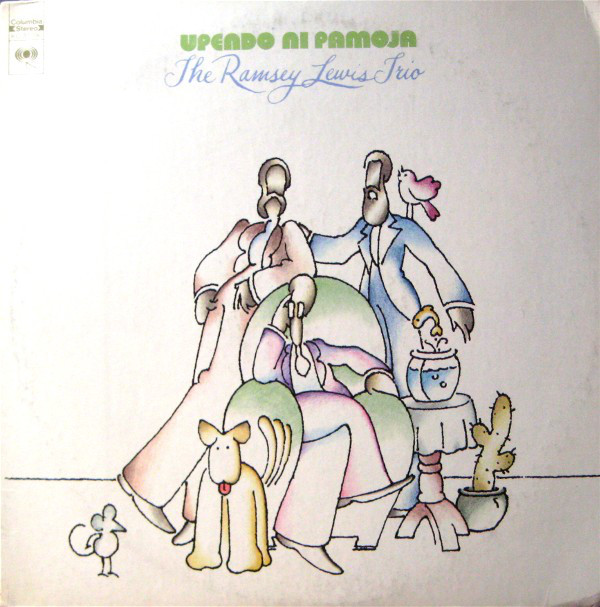
Upendo Ni Pamoja.
Later in 1972, Ramsey Lewis released his Columbia debut Upendo Ni Pamoja which was a trio recording that featured drummer and percussionist Morris Jennings and bassist Cleveland Eaton. They worked their way through eight cover versions and Cleveland Eaton’s Trilogy of Morning, The Nite Before and Eternal Peace. It was part of album that received mixed reviews from critics, who believed that the album was a couple of tracks from being an essential album from Ramsey Lewis. He was hoping that his next album would fare better.
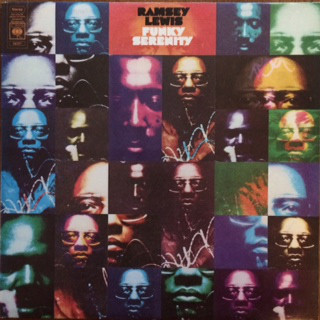
It wasn’t long before Ramsey Lewis began work his next album which became Funky Serenity. It saw the musical chameleon continue to reinvent himself.
Funky Serenity.
After the mixed reviews of Upendo Ni Pamoja, Ramsey Lewis was determined to make an impression with his next album Funky Serenity. It would eventually feature a mixture of cover versions and songs penned by Ramsey Lewis, Cleveland Eaton and Morris Jennings. This included What It Is!, Serene Funk and Dreams. Violinist and percussionist Eddie Green who was drafted in to play on Funky Serenity contributed Kufanya Mapenzi (Making Love) and My Love For You. They were joined by covers of Homer Banks, Carl Hampton and Raymond Jackson’s (If Loving You Is Wrong) I Don’t Want to Be Right, Justin Hayward’s Nights In White Satin, Thom Bell and Linda Creed’s Betcha by Golly, Wow and Ralph MacDonald and William Salter’s Where Is The Love. These nine tracks were recorded by a quartet which was produced by Ramsey Lewis.
When recording of Funky Serenity began, drummer, percussionist and conga player Morris Jennings was joined by bassist Cleveland Eaton and Ramsey Lewis who played piano, electric piano and harpsichord. Violinist and percussionist Eddie Green was the final member of the quartet that recorded Funky Serenity.
When critics heard Funky Serenity, it was well received by critics who called the album an essential album from Ramsey Lewis. It was regarded as a much stronger album and Ramsey Lewis’ Columbia debut, and finds him combining elements of blues, funk, gospel, pop, soul and even briefly, a hint of avant-garde. However, Funky Serenity was a reminder of why Ramsey Lewis was one of the most successful jazz pianists of his generation.
Kufanya Mapenzi (Making Love) sets the bar high on Funky Serenity before the ballad, If Loving You Is Wrong is given a jazzy makeover. Very different is the gospel-tinged and funky What It Is!, which is a reminder of Ramsey Lewis’ mid-sixties classic sound. My Love For You is a dreamy, mid-tempo ballad that ebbs and flows, before giving way to Nights In White Satin, where Ramsey Lewis drops the tempo and Ed Greene’s violin adds a brief avant-garde influence as they try to reinvent a classic. It’s all change on Serene Funk which is slow, bluesy and funky, as Ramsey Lewis pounds at the electric piano and plays a starring role. Initially, Dreams is atmospheric, eerie and otherworldly before heading in the direction of funk. This leaves just covers of Betcha by Golly, Wow and Where Is The Love which ensures that Funky Serenity closes on a high.
Buoyed by the reviews of Funky Serenity, an edited version of Kufanya Mapenzi (Making Love) was released as a single, but failed to trouble the charts. To make matters worse, when Funky Serenity was released in 1973, it failed to chart in the US Billboard 200 and US R&B charts. However, Funky Serenity reached number seven in the US Jazz charts, which offered a small crumb of comfort to executives at Columbia.
Ramsey Lewis’ Golden Hits.
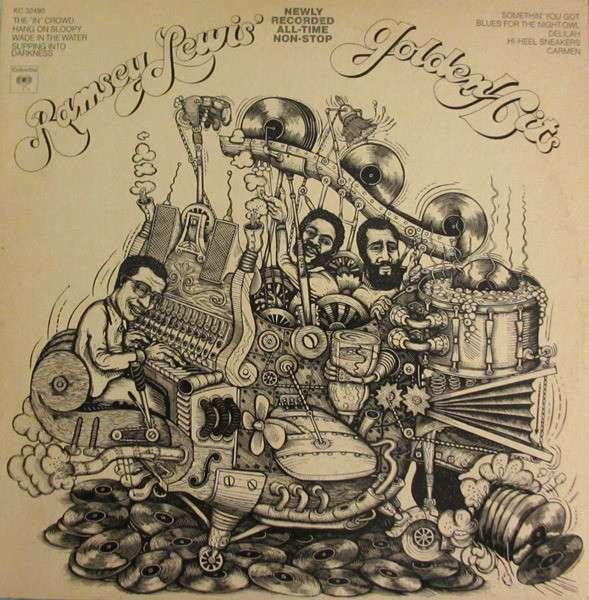
After Funky Serenity’s failure to crossover, Ramsey Lewis came up with an interesting concept for his third album for Columbia. He wanted to reinvent some of his biggest and best known hits that he released on Argo and Cadet Records. This included his three biggest hits The In Crowd, Hang On Sloopy and Wade In The Water which would featured on Ramsey Lewis’ Newly Recorded All-Time Non-Stop Golden Hits, which later, became known as Ramsey Lewis’ Golden Hits.
Ramsey Lewis chose a total of nine tracks, which also included Blues For The Night Owl, Hi-Heel Sneakers, Carmen, Song Of Delilah, Slipping Into Darkness and Something You Got. They were joined by the three million selling singles The In Crowd, Hang On Sloopy and Wade In The Water, which were recorded later in 1973.
This time around, it was just a trio of drummer and percussionist Morris Jennings was joined by Cleveland Eaton on bass and standup bass and Ramsey Lewis who played piano and electric piano. Taking charge of production as the trio set about reinventing some of his best know songs was Ramsey Lewis.
When critics heard Ramsey Lewis’ Golden Hits, they were keen to hear the new versions of his three million selling singles. They didn’t have long to wait with a joyous, Caribbean influenced version of Hang On Sloopy opening the album. Wade In The Water the rhythm section proving an almost rocky backdrop to Ramey Lewis’ piano as he stayed true to his 1966 soul-jazz version. There’s also a funkified version of Hi-Heel Sneakers and a remake of Ramsey Lewis’ first funk hit Slipping Into Darkness. However, closing the album was a The In Crowd where a rocky rhythm section provides the backdrop for Ramsey Lewis who plays piano and harpsichord and closes the album on a high.
Upon the release of Ramsey Lewis’ Golden Hits later in 1974, the album sneaked into the US Billboard 200 and 198 and reached a disappointing fifty in the US R&B charts. However, at least Ramsey Lewis was back in the charts, and could begin work on a new album.
Solar Wind.
Solar Wind was a much more ambitious album from Ramsey Lewis, as he looked forward, rather than back. To do this, Ramsey Lewis added synths to his musical arsenal, and brought onboard some additional musicians.
The core band featured drummer and percussionist Morris Jennings, Cleveland Eaton on bass and standup bass and Ramsey Lewis who this time around, switched between keyboards, ARP and Moog. They were joined by drummers Carl Mars and Ron Capone, guitarist Steve Cropper, percussionist Calvin Barnes and James L. Herson on Moog. One of the new additions to Ramsey Lewis’ band wrote three of the tracks on Solar Wind.
This was Steve Cropper who joined forces with Carl Marsh to write Sweet and Tender You, Solar Wind and Love For A Day. Meanwhile Ramsey Lewis and Cleveland Eaton wrote Jamaican Marketplace, which was joined by five cover versions. This included Jim Seals and Dash Crofts’ Hummingbird and Summer Breeze, Sonny Rollins’ The Everywhere Calypso, Paul Simon’s Loves Me Like A Rock and Elton John and Bernie Taupin’s Come Down in Time. These nine tracks were recorded by the extended band in Chicago and Memphis, and released in early 1974, with Ramsey Lewis, Cleveland Eaton and Steve Cropper all receiving production credits.
Critics on hearing Solar Wind were impressed by Ramsey Lewis’ third outing for Columbia, which found him moving away from the trio sound that served him well during the fifties and sixties. With a little help from his friends who were part of an expanded band, Ramsey Lewis had recorded a carefully crafted album that featured elements of jazz, funk, R&B, soul and much more.
Opening Solar Wind was the uptempo Sweet and Tender You which was recorded in Memphis and was one of three tracks produced by Steve Cropper. Sonically and stylistically the track references Ramsey Lewis’ classic mid-sixties recordings for Chess Records. After this, the understated, but familiar strains of Hummingbird are a welcome addition, before giving way to Solar Wind, which is another slice of R&B that was made in Memphis but features a Motown backbeat. Ramsey Lewis heads to the Caribbean on Jamaican Marketplace and The Everywhere Calypso, before returning to familiar territory with three cover versions. There’s the jazz-funk of Summer Breeze, while gospel and soul-jazz combine on Loves Me Like A Rock and a pop-rock version of Come Down In Time. Closing Solar Wind was the filmic funk of Love For A Day.
After being well received by critics, Ramsey Lewis and executives at Columbia had high hopes for Solar Wind. However, upon its release in 1974 the album sunk without trace and Ramsey Lewis was back to square one.
It was a frustrating time for Ramsey Lewis as his career at Columbia wasn’t going to plan. In 1972, Upendo Ni Pamoja which was his debut for Columbia had failed to chart and so had the followup Funky Serenity in 1973. Then Ramsey Lewis’ Golden Hits reached 198 in the US Billboard 200 and fifty in the US R&B chart in 1974. This was a small crumb of comfort to a man who had enjoyed million selling singles when signed to Chess. It was no wonder that Ramsey Lewis decided to change direction on Solar Wind.
Ramsey Lewis wasn’t going to rest on his laurels and wanted to try new things. This included the new technology that was playing an important part in music. On Solar Wind which was the thirty-eighth album of his career Ramsey Lewis used synths on an album for the first time. They brought a new dimension and sound to Solar Wind, which brought a new dimension to his music on this oft-overlooked album that nowadays is regarded as a cult classic..
For Ramsey Lewis, Solar Wind was the album that got away and had the potential to rejuvenate his career which had stalled. It was an album that referenced his classic sixties sound but also included elements of Caribbean music, funk, gospel, jazz-funk, pop-rock, R&B, soul, soul-jazz and Southern Soul. Solar Wind was a musical melting pot that featured a myriad of musical genres and influences as musical chameleon Ramsey Lewis continued to reinvent himself and explore new musical ideas.
Cult Classic: Ramey Lewis-Solar Wind.

CULT CLASSIC : DAVID JOHANSEN-HERE COMES THE NIGHT.
Cult Classic: David Johansen-Here Comes The Night.
Singer, songwriter and actor David Johansen first came to prominence as the lead singer of the seminal proto punk band the New York Dolls, in the early seventies. This was the start of a long and varied career for David Johansen, who after the demise of the New York Dolls embarked upon a solo career in 1978.
This period of his career is often overlooked, especially his first three solo albums. He released his eponymous debut album in 1978 and followed this with In Style and Here Comes The Night in 1979. Both are oft-overlooked and underrated albums from David Johansen whose career began eight years earlier in 1971.
In October 1971, David Johansen joined the proto punk pioneers, the New York Dolls, and just two months later, they made their debut at a homeless shelter, the Endicott Hotel on Christmas Eve 1971. This was the start of the New York Dolls roller coaster career.
Seven month later, on July the ‘27th’ 1973, the New York Dolls released their hard rocking eponymous debut album to widespread critical acclaim. Despite the critical acclaim, New York Dolls stalled at just 116 in the US Billboard 200. This was a disappointment for everyone concerned, especially David Johansen who had assumed the role of the New York Dolls’ songwriter-in-chief.
He had played a part in writing ten of the eleven songs on New York Dolls. David Johansen had written three songs and cowrote another seven on an album that later, would be hailed as a classic. New York Dolls was the first of two classic albums the band would release within a year.
For the New York Dolls’ sophomore album Too Much Too Soon, lead singer and songwriter-in-chief David Johansen had written five of the ten songs on the album with various songwriting partners. Too Much Too Soon was produced by veteran producer Shadow Morton after the New York Dolls had voiced their dissatisfaction with Todd Rundgren’s production on their eponymous debut album. The band hoped that a change of producer would result in a change of fortune for the band.
On May the ’10th’ 1974, the New York Dolls returned with their sophomore album Too Much Too Soon. It was released to the same critical acclaim as New York Dolls, and would also be hailed as a classic album in the future. Despite the critical acclaim Too Much Too Soon reached just a lowly 167 in the US Billboard 200 and this was a worrying time for the New York Dolls.
After the release of Too Much Too Soon, the New York Dolls embarked upon a national tour, which was fraught with problems. On their return home, the New York Dolls were dropped by their record company Mercury. However, the group continued to play live.
By 1975, the New York Dolls were being “managed” by British “musical impresario” Malcolm McLaren. By then, the New York Dolls found themselves playing much smaller venues as the group began to unravel. Drug and alcohol abuse was a problem within the New York Dolls, with Johnny Thunders, Jerry Nolan and Arthur Kane embracing the rock ’n’ roll lifestyle fully. This would prove costly for Arthur Kane who occasionally, was too drunk to play live. When this happened roadie Peter Jordan took over on bass. That was the case for much of an eventful tour of Florida and Carolina during March and April of 1975.
During the tour, Johnny Thunders and Jerry Nolan argued with David Johansen, and the two men left the band. Blackie Lawless was drafted in to replace Johnny Thunders and the New York Dolls finished their tour in Florida and Carolina in April of 1975. Not long after this, the New York Dolls split-up for the first time.
Just three months later, the New York Dolls reformed in July 1975 and toured Japan with Jeff Beck and Felix Pappala. This time, the lineup of the New York Dolls featured David Johansen, Sylvain Sylvain, Peter Jordan, drummer Tony Machine and former Elephant’s Memory keyboardist Chris Robison. After an uneventful and relatively successful tour of Japan, the New York Dolls returned to New York and began playing in venues in America and Canada.
Everything seemed to be going to plan with the New York Dolls’ performance at the Beacon Theatre, in New York, in New Year’s Eve being hailed as one of their finest performances by critics. However, it wasn’t long before the New York Dolls pressed the self destruct button again.
After a drunken argument with Sylvain Sylvain, keyboardist Chris Robison was sacked, and replaced by Bobbie Blaine. He was a member of the New York Dolls when they played their last show on December the ’30th’ 1976. This was the end of the road for one of the most important and influential bands of the seventies.
Solo Years.
After the demise of the New York Dolls, Malcolm McLaren wanted David Johansen to jump on the punk bandwagon. Fortunately, David Johansen resisted Malcolm McLaren’s overtures, and decided to divide his time between the David Johansen Band and the solo career that embarked upon in 1977.
With his former New York Dolls bandmate Sylvain Sylvain, David Johansen began writing then new songs that would form the basis for his live sets and eventually, his eponymous debut album. Before that, David Johansen had to secure a recording contract, and this wasn’t far away.
By the time Blue Sky Records, an imprint of Columbia Records signed David Johansen, he had already established a reputation as a talented performer, and was regarded as a singer who could have a big future ahead of him. With David Johansen signed to Blue Sky Records, he was paired with Richard Robinson, who would co-produce the former New York Dolls’ frontman’s eponymous debut album.
David Johansen.
When recording of David Johansen began, nine tracks had been chosen for the album. This included a trio of David Johansen compositions Pain in My Heart, Donna and Lonely Tenement. They were joined Funky But Chic, Girls, Cool Metro and Frenchette which were penned by Sylvain Sylvain and David Johansen. He wrote Not That Much with Buz Verno and the pair wrote I’m A Lover with Johnny Ráo and Thomas Trask. These songs were recorded at The Record Plant, New York.
Joining David Johansen who took charge of lead vocals and played guitar, castanets and chimes, were drummer Frankie LaRocka, bassist Buz Verno and guitarists Johnny Ráo and Thomas Trask. This core band were joined by Sylvain Sylvain who played guitar on Cool Metro, organist Bobby Blain and percussionist Tony Machine who had all been part of the New York Dolls’ story. Other musicians included rhythm guitarist Joe Perry, saxophonist Stan Bronstein, violinist Scarlet Rivera and organist Felix Cavaliere, rhythm guitarist Joe Perry, saxophonist Stan Bronstein and vocalists Sarah Dash, Nona Hendryx, Gene Leppik and Jimmie Mack. Taking charge of production were Richard Robinson and David Johansen as his eponymous debut album was recorded during February 1978.
Three months later, in May 1978 David Johansen which was a carefully crafted album of tight, focused and hard rocking music. Gone was the sloppiness that had almost been a trademark of the New York Dolls, with David Johansen and his hand-picked band created a sharp and powerful backdrop for his vocals. They were very different and eschewed the camp, theatrical sound that had dismayed their critics. However, there was a nod to the New York Dolls on Funky But Chic while Cool Metro epitomises good time rock ’n’ roll. On Girls and I’m A Lover David Johansen’s vocal is full of machismo, before his vocal on Pain In My Heart is full of hurt and despair. Then on Donna and Frenchette, David Johansen lays bare his soul for all to see on his critically acclaimed eponymous debut album.
Despite the quality of music on David Johansen, when the album was released in May 1978 it failed the chart. Even the single Funky But Chic never troubled the charts, which was another disappointment for David Johansen, who tow months later, recorded an album with The David Johansen Band.

The David Johansen Band.
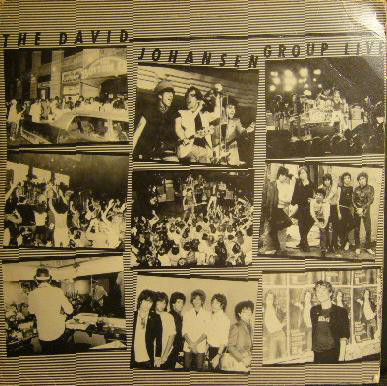
This was no ordinary album though. Instead, The David Johansen Group Live was originally a promotional only album that was released by David Johansen in an attempt to help promote his solo career. It was recorded at The Bottom Line, in New York on July the ’21st’ 1978.
That night, The David Johansen Band featured David Johansen who took charge of lead vocals and played acoustic guitar on Frenchette. The rhythm section featured drummer Frankie LaRocka, bassist Buz Verno and guitarists Johnny Ráo and Thomas Trask. They were joined by Sylvain Sylvain who played guitar, piano and like the rest of the band added backing vocals. The band worked their way through eighteen tracks including cover versions, songs David Johansen and the New York Dolls two albums. This included Babylon, where Johnny Thunders took to the stage with The David Johansen Band for the final song of what was a truly memorable set. It was no surprise that the recording of that night at The Bottom Line was eventually released commercially.
Initially, the album was meant to promote David Johansen’s career, but by 1983 The David Johansen Band was released on CD and found favour with critics. They were won over by The David Johansen Band’s performance five years earlier, and wondered aloud why it had taken five years to release the album? By then, David Johansen’s solo career was almost at an end.
In Style.
After the disappointing sales of his eponymous debut album, David Johansen was forced to rethink his approach to his sophomore solo album In Style. Being realistic, he knew that there was no point in releasing David Johansen II, as there was every change that the album wouldn’t sell in vast numbers. David Johansen knew that if he wanted to enjoy commercial success, he was going to have to change direction musically. If he didn’t he wasn’t going to be signed to Blue Sky Records for long.
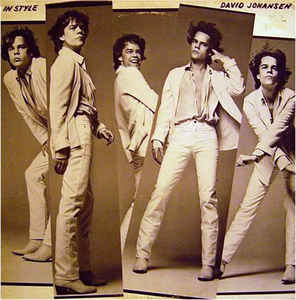
Face with that stark reality David Johansen began work on his sophomore album, which became In Style. David Johansen wrote Big City, Justine and In Style, and with his songwriting partner Sylvain Sylvain wrote She Knew She Was Falling in Love, Swaheto Woman, Wreckless Crazy and Flamingo Road. Just like on his eponymous debut album, David Johansen wrote songs with other songwriting partners. He penned Melody with Ronnie Guy, She with Buz Verno and You Touched Me Too with Johnny Ráo. These ten tracks became In Style, which was recorded at The Schoolhouse, Westpoint, Connecticut during 1979.
At The Schoolhouse producer and guitarist Mick Ronson joined David Johansen who was set to take charge of vocals and play guitar on In Style. His band featured a rhythm section of drummer Frankie LaRocka, bassists Buz Verno and Dan Hartman plus guitarists Johnny Ráo and Thomas Trask. They were joined by organist Tommy Mandel, pianists Ronnie Guy and Ian Hunter, saxophonist Stan Bronstein. Joining the rest of the band in adding backing vocals were Sylvain Sylvain, Gary Green and engineer Dave Still. With a new producer and a few changes to the lineup of his band David Johansen set about recording his sophomore album In Style.
When In Style was completed, Blue Sky Records scheduled the release of the album for later in 1979. In Style would mark the debut of David Johansen’s new more commercial, pop rock sound. Deep down, he knew that his music had to change to attract a wider audience. It was all very well making albums that albums uncommercial albums that found favour with the musical cognoscenti, but they didn’t pay the bills. Nor would their sales please executives at Blue Sky Records. David Johansen hoped his new pop rock sound that debuted on In Style would find favour with executives at Blue Sky Records, music critics and record buyers.
The majority of critics on hearing In Style were impressed by David Johansen’s new sound. Even Robert Christgua the self-styled Dean of American rock critics, grudgingly gave In Style a B+ in one of his usual pompous reviews. At least this was a sign that David Johansen was on the right road with In Style.
In Style was a much more polished and slick album with several radio friendly songs. Gone was the hard rocking, swaggering sound of his eponymous debut album, and in its place was a much more eclectic album.
Melody the album opener saw David Johansen move towards R&B, before She showcased an almost snarling, post punk sound. Big City which features saxophonist Stan Bronstein, stylistically sounds not unlike Bruce Springsteen. So too does Justine, which like Big City, is a memorable, melodic and anthemic track. Very different is You Knew You Were Falling In Love with its reggae beats, before Swaheto Woman heads in the direction of disco. In Style marks a return to the rocky sound of David Johansen, while You Touched Me combines soulful vocal with harmonies that have been influenced by sixties girl groups. Then on Wreckless Crazy David Johansen pays homage to the New York Dolls, before delivering a soul-baring vocal on the Flamingo Road a six-minute epic that closes the album In Style.
Buoyed by the reviews of In Style, the album was released in the autumn of 1979. Sadly, history repeated itself and In Style failed to chart. Neither did Swaheto Woman when it was released as a single. By then, it was too late to jump on the disco bandwagon, which had crashed earlier in 1979. The commercial failure of In Style resulted in David Johansen rethinking his future.
Here Comes The Night.
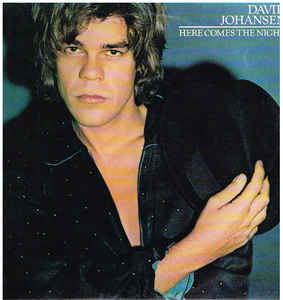
When David Johansen returned in 1981 with his third album Here Comes The Night, much had changed since the release of In Style. David Johansen had been working with new songwriting partners, producers and even his band had changed. Much of the changes were down to David Johansen’s decision to recruit a former Beach Boy.
This was Blondie Chaplin, who had been drafted in to the Beach Boys when Dennis Wilson injured his hand and was unable to play for the best part of two years. Two new musicians joined the Beach Boys on a temporary basis, drummer Ricky Fataar and guitarist Blondie Chaplin. After a while, Brian Wilson who was impressed by both musicians made them fully fledged Beach Boys. That was the case until Blondie Chaplin left the band in 1973.
Seven years later, in 1980, Blondie Chaplin, who had spent just a couple of years with the Beach Boys, was looking for someone to work with, when he met David Johansen. Blondie Chaplin told David Johansen how he admired him as a performer, and proposed that they work together. Despite having established a songwriting partnership with Sylvain Sylvain, David Johansen agreed, and in an instant, had marginalised his old friend and songwriting partner.
Straight away, Blondie Chaplin joined David Johansen’s band as they headed out on the road. This was so Blondie Chaplin could collaborate on songs with David Johansen. Eventually, the pair had written She Loves Strangers, You Fool You, My Obsession, Here Comes The Night, Suspicion and Rollin’ Job. The pair also wrote Party Tonight with Bobby Blain. David Johansen wrote Heart Of Gold, wrote Bohemian Love Pad with Sylvain Sylvain and Havin’ So Much Fun with Elliot Murphy. These songs were recorded by David Johansen’s new band at Sundragon Studios, New York where The Ramones and Suicide had recorded pioneering albums.
One man who was missing as the recording session began was Sylvain Sylvain, who had received the musical equivalent of a kiss on the left cheek. His replacement was Blondie Chaplin who played guitar and added backing vocals. The man he had replaced, Sylvain Sylvain, was working on his own burgeoning solo career, while David Johansen’s was much changed.
David Johansen’s band featured a rhythm section of drummer Tony Machine, bassists Ernie Brooks plus rhythm guitarist Elliot Murphy who also played harmonica. They were joined by organist and pianist Tommy Mandel, pianist Bobby Blain, percussionist Ulysses Delavega and Othello Molineaux who played steel drums. David Johansen and Barry Mraz took charge of production with Blondie Chaplin credited as giving “production assistance” on Here Comes The Night.
As recording began, Barry Mraz brought the band into the studio and laid down the dominant guitar parts on each song on Here Comes The Night. Straight away, it became apparent that the two co-producers David Johansen and Barry Mraz were determined to record an album that would appeal to rock radio stations.
Mostly, David Johansen and his band unleash a hard rocking music, especially on the album opener She Loves Strangers and My Obsession, which is a mixture of urgency and paranoia. Bohemian Love Pad a carefully crafted, hard rocking song tribute to the beatnik lifestyle, while You Fool You is a catchy song which could only have been recorded in the early eighties. However, It’s not all hard rocking songs, as Marquesa de Sade heads in the direction of nu-samba, and Rollin’ Job incorporates elements of calypso.
After that, there’s no stopping David Johansen as he unleashes vocal powerhouse on the über rocky Here Come The Night, before Party Tonight and Havin’ So Much Fun showcase a good time rock ’n’ roll sound. Closing Here Comes The Night was Heart Of Gold, one of the album’s highlights. The big question was, was Here Comes The Night as the album that would see David Johansen make a commercial breakthrough?
When Here Comes The Night was released later in 1979, the album failed to make any impression on the US Billboard 200. For David Johansen this was just latest disappointment for the former New York Dolls’ frontman.
He had been trying to make a breakthrough since releasing David Johansen in 1978. It had failed to find an audience, and neither did In Style nor Here Comes The Night. Both albums showcase a talented singer, songwriter and musician who spent the first three albums of his career trying to find his true sound.
As befitting a former member of the New York Dolls, David Johansen’s eponymous debut album featured a hard rocking sound, which he eschewed on In Style, which features a number of songs written with his songwriting partner Sylvain Sylvain. These songs play their part in the sound and success of an album that deserved to find a wider audience.
After the commercial failure of In Style, David Johansen changed his songwriting partner, band and style. One person who was missed was Sylvain Sylvain, who had been David Johansen’s songwriting partner on his first two albums. He was usurped by Blondie Chaplin, on Here Comes The Night which was mostly, a hard rocking album, albeit with David Johansen throwing the occasional curveball. Sadly, Here Comes The Night followed in the footsteps of In Style, and failed to make any impression on the charts. However, Here Comes The Night is hidden gems and a cult classic that is a reminder of David Johansen’s solo career, and proved that there was life after the New York Dolls.
Cult Classic: David Johansen-Here Comes The Night.
CULT CLASSIC: TAKEO MORIYAMA-EAST PLANTS.
Cult Classic: Takeo Moriyama-East Plants.
In 1983, Japanese jazz drummer Takeo Moriyama was thirty-eight and into his third decade as a musician when he released his 1983 cult classic East Plants. It’s highly prized by collectors of J-Jazz and one of his finest albums. His story began in 1945.
Takeo Moriyama was born on the ‘27th’ of January 1945, in Katsunuma, in the Yamanashi Prefecture. As a child, Takeo Moriyama played piano before switching to drums in his late teens. This resulted in him taking a degree in percussion at the Tokyo University of the Arts.
In 1967, Takeo Moriyama joined Yosuke Yamashita’s group and embraced upon several international tours before leaving in 1975. This was all good experienced for Takeo Moriyama who was unsure about his future.
So much so, that Takeo Moriyama was unsure whether he wanted to continue working as professional musicians, and instead decided to concentrate his efforts on teaching. Between 1975 and 1977, Takeo Moriyama stayed way from studio and never took to the stage. Many of his fans wondered if Takeo Moriyama would return to his former life as a professional musician?
In 1977, Takeo Moriyama returned of from what was akin to a lengthy sabbatical and decided to found his own quartet. Soon, the Takeo Moriyama Quartet were touring West Germany, Italy and the USSR. This allowed the new group to hone their sound before recording a new albums.
This included the Takeo Moriyama Quartet’s 1977 live debut album Flush Up. Four years later, in 1981 they returned with followup, Smile.
It was a very different album, and Smile that eschewed the eruptive improvisation of the past. Smile feature a new approach from drummer Takeo Moriyama whose steady, sophisticated and unfussy style was perfect for his unique and inimitable style of composition.
When Takeo Moriyama returned with his My Dear album in 1982, pianist Fumio Itabashi was absent. He was recording and promoting his solo album Watarase. While the absence of Fumio Itabash was loss to Takeo Moriyama’s band, the bandleader knew that his pianist might not return for the followup Fast Plants.
East Plants.
By 1983, thirty-eight year old Takeo Moriyama was regarded as one of Japan’s finest jazz drummers. He had been a musician since the sixties and was a vastly experienced drummer who had .just signed to the Japanese VAP label. They would release Takeo Moriyama’s solo album East Plants later in 1983.
East Plants featured six tracks, but only one Takeo Moriyama’s composition Kagelou. The rest of the album was written by saxophonist Toshihiko Inoue, and recorded at CBS-Sony Roppongi Studio, in Tokyo.
Joining drummer Takeo Moriyama was bassist Hideaki Mochizuki, percussionist Yoji Sadanari plus Shuichi Enomoto and Toshihiko Inoue who switched between tenor and soprano saxophone on East Plants. Once the album was completed the release of East Plants was scheduled for later in 1983.
Sadly, when East Plants was released in 1983, the album passed record buyers. They missed out on what was later regarded as a J Jazz cult classic.
That was no surprise given East Plants featured several key features of Takeo Moriyama’s music. There’s the clearly connected and innovative rhythms, grooves that are accessible, balanced, controlled and elegant, while the arrangements are best described as open and orderly East Plants.
With no piano, the rhythm section are joined by percussion and saxophones . They open the album with the title-track East Plants. Its build-up is similar to a raga as a mesmeric track unfolds and is one of East Plants’ highlights. There’s an urgency to Take where the band play with power and freedom as the saxophone plays a starring role. Kaze Kaze majestic example of modal jazz, while the ferocious post bop exertions of Fields is one of East Plants highlights.
Thirty-eight years East Plants after was release it’s an album that is highly prized by collectors of J-Jazz and is regarded as one of Takeo Moriyama’s finest albums. He’s joined by talented quintet on the album and they showcase their talent and versatility on the album. Each member of this multitalented quintet play their part in the sound and success of East Plants, which is Takeo Moriyama’s mystical sounding opus which until recently, was an oft-overlooked hidden gem that is now regarded as a J-Jazz cult classic
Cult Classic: Takeo Moriyama-East Plants.

CULT CLASSIC: TERRY REID-RIVER.
Cult Classic: Terry Reid-River.
Music is all Terry Reid has ever known. It’s been his life since he left St Ivo School, in St.Ives Cambridgeshire, in 1965 . By then, it was is if he was destined to become a musician and his breakthrough came when he joined Peter Jay’s Jaywalkers.
By then, Terry Reid was just sixteen. He had been born in Huntingdon, on 13th November 1949. Growing up, Terry attended St. Ivo School, St.Ives, Cambridgeshire. That was where he joined a local band, The Redbeats.
It was when platting with The Redbeats, that Peter Jay, the drummer from a rival group, Peter and The Jaywalkers first spotted Terry Reid in action. Straight away, he realised he would be the perfect addition to Peter and The Jaywalkers. Peter Jay convinced Terry Reid to join his band, and soon, Terry was a Jaywalker.
Soon, Peter and The Jaywalkers’ star was in the ascendancy, when they were named as the support act for the Rolling Stones, when they played at the Royal Albert Hall. This was where Graham Nash of The Hollies first met Terry Reid.
The two musicians soon became firm friends, and Graham Nash suggested that Peter and The Jaywalkers should sign to the UK division of Columbia Records. Peter and The Jaywalkers didn’t have to think twice, and soon, were signing on the dotted line.
At Columbia Records, Peter and The Jaywalkers worked with producer John Burgess on their debut single, The Hand Don’t Fit the Glove. It was released by Columbia in 1967, and gave the band a minor hit. Unfortunately, by then, Peter and The Jaywalkers had split-up. After this, Terry Reid decided to pursue a solo career.
Fortunately, he come to the attention of producer and music impresario, Mickie Most. He produced Terry Reid’s debut single Better By Far. On its release in 1968, it found favour amongst DJs, who soon, began to play the single on their radio shows.
That was when Mickie Most decided to take Terry Reid into the studio to record his debut album, Bang Bang, You’re Terry Reid. When it was released later in 1968, it was to widespread critical acclaim. However, unfortunately the album passed record buyer by. Soon, so did the opportunity of a lifetime.
Terry Reid had come to the attention of Jimmy Page, who had just disbanded The Yarbirds. He was in the process of putting together a new band, The New Yarbirds, and was looking for a vocalist. Jimmy Page had set his sights on Terry Reid, and decided to recruit him for his new band. There was a problem though.
It turned out that Terry Reid had agreed to tour America with Cream. Terry was the opening act, and as part of the tour, would play the prestigious Miami Pop Festival. Everything was agreed, and Terry was a man of his word. There was no way he could back out at the this late moment. So Terry recommended Robert Plant, a Birmingham based vocalist, as The New Yarbirds to Jimmy Page. Terry’s recommendation, changed musical history. He could’ve been part of one of the most successful rock bands ever, Led Zeppelin. Incredibly, lightning struck twice for Terry Reid.
1969 found Terry Reid’s star in the ascendancy. The American tour and his appearance at the Miami Pop Festival resulted in him becoming popular in America. Terry was also a familiar face in Britain during 1969. He opened for Fleetwood Mac and Jethro Tull, and released his sophomore eponymous album Terry Reid. Although it received positive reviews from critics, the album failed to find an audience. So later in 1969, Terry headed stateside where he opened for the Rolling Stones on their American tour.
By then, Terry Reid a familiar face in America, and already built up a loyal fan-base. So touring America with the Rolling Stones allowed Terry Reid’s music to be heard by a much wider audience. Night after night, Terry opened for the Rolling Stones as they played sold-out shows coast to coast. The only Rolling Stones concert that Terry Reid didn’t play at, was their biggest and most controversial, the Altamont Music Festival.
Fortunately, Terry Reid wasn’t booked to appear on the bill of the hastily organised Altamont Music Festival. This meant he avoided the bloodshed, chaos and violence. Terry Reid had a lucky escape. However, he might not have been on the Rolling Stones’ tour if things had turned out differently with Deep Purple.
During their 1969 American tour, Deep Purple decided to change direction, and move towards a heavier, rockier sound. Vocalist Rod Evans the other members of Deep Purple though, wasn’t suited to this style. It was decided that Rod Evans would be replaced. He was already contemplating an alternative career as an actor. So Deep Purple went looking for a replacement. The man Richie Blackmore set his sights on was Terry Reid.
Unfortunately, Terry Reid was still contracted to Mickie Most and had signed an “exclusive recording contract.” Mickie Most had two options. He could let him join Deep Purple, or hold him to his contract. Rather than letting him join Deep Purple, Mickie Most held him to his contract. After all, Mickie Most had plans for Terry Reid.
Musical impresario Mickie Most decided to reinvent Terry Reid, the man who would be known as superlungs as a balladeer. This didn’t go down well with Terry Reid who fell out with Mickie Most in December 1969. Again, Mickie Most reached for the “exclusive recording contract.”
The “exclusive recording contract” that Terry Reid had signed with Mickie Most didn’t expire until 1973. Things had deteriorated to such an extent, that Terry Reid was unwilling to record with Mickie Most and headed to California to take some time out.
Over the next few years, Terry Reid only played a few live shows. This included the Isle of Wight Festival 1970 and later that year, the second Atlanta Pop Festival. Then in 1971, Terry returned to play at the Glastonbury Fayre. Apart from that performance, he kept a low profile as he ran down Mickie Most’s “exclusive recording contract.” By 1973, Terry Reid was free at last.
River.
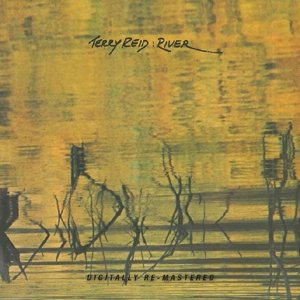
This left Terry Reid free to sign to Atlantic Records. Soon, he began work on what became River.
For River, Terry had penned Dean, Things To Try, River and Dream. He cowrote Avenue with John Abercrombie; Live Life with Ray Davies and put lyrics to Miles Davis’ Milestones. These tracks Terry Reid recorded with his own band.
Recording began at Advision Studios, in London, with Eddy Offord producing the River sessions. Eddy Offord who went on to produce Yes and Emerson, Lake and Palmer, was regarded as a perfect fit for Terry Reid. He was no stranger to electric blues, and had produced two albums for Taste, a trio which featured Rory Gallagher. The two albums 1969s Taste and On The Boards had turned out well. So given his track record, surely, the partnership of Eddy Offord and Terry Reid would work out well?
That should’ve been the case. So, with Eddy Offord booked to produce the River sessions, Terry Reid and his band arrived at Advision Studios. He added vocals and guitar during what were long, drawn-out and frustrating sessions at Advision Studios.
For whatever reason, Terry Reid and his band didn’t hit the ground running. Usually, recording sessions ran smoothly, and weren’t long, drawn-out affairs. The River sessions was a frustrating time, with recording of what was meant to be the River a time-consuming and ultimately fruitless. There was a problem, but nobody seemed to know what? Maybe Eddy Offord was the wrong producer? That’s never became clear. What became clear, is that Terry Reid wasn’t happy with River. He decided to scrap the album, and head to Los Angeles to rerecord River.
Terry Reid and his band arrived at Wally Helder’s, in Los Angeles. This time around, the band featured drummer Conrad Isidore, bassist Leo Miles and David Lindley on electric guitar, slide guitar and steel guitar. Willie Bobo added percussion on just the one track, River. Engineer Ed Barton acted as a de facto producer. Despite that, Tom Dowd was credited as producing five tracks that made it onto River. Once the sessions were completed at Wally Helder’s in L.A, Terry headed over to Miami, clutching the master tapes.
At Criteria Studios, the final master tapes were assembled. Only two songs produced by Eddy Offord, Dream and Milestones made it onto River. Five Tom Dowd productions made it onto the River, including Dean, Avenue, Things To Try, Live Life and River. These seven tracks became River.
Once River was complete, Terry Reid delivered the completed album to his new label Atlantic Records. They scheduled the release of River for later in 1973. Maybe after two false starts during the Mickie Most years, it would third time lucky for Terry Reid?
That looked like the case when critics heard River. They were hugely impressed by Terry Reid’s comeback album. After four long years, Superlungs was back, with album that married elements of blues rock, folk rock, Latin and rock. It was impressive fusion of styles, with Terry picking up where he left off on Terry.
Critics were won over by what was, without doubt, Terry Reid’s finest hour. As a result, critical acclaim accompanied the release of River. This bode well for River.
When River was released in 1973, it was well received by critics. Many critics preferred the looser sound of River. They saw River as Terry and his band were jamming and experimenting, seeing where the tracks took them. This was very different to his first two albums. Sadly, River wasn’t a commercial success. It stalled at just number 172 in the US Billboard 200 charts. For Terry Reid, this was hugely disappointing. Signed to Atlantic Records and with Tom Dowd producing River, this could’ve and should’ve been the start of the rise and rise of Terry Reid. Since the release of River in 1973, it’s always been an underrated album.
Opening River is Dean where guitar is panned right and Terry Reid scats and a crystalline guitar is panned left and provides a contrast to the other guitar. In the middle sits the worldweary, lived-in vocal. Providing the heartbeat are the rhythm section. Conrad Isidore drums and Leo Miles’ bass become one as the vocal continues to grows in power and emotion becoming needy. Flanking the vocals are the guitars which are the perfect foil for each other and of a vocal powerhouse from th man they call superlungs.
The looser sound is apparent again on Avenue. It’s as if Terry Reid and his small band are just jamming and in search of ideas. It’s a case of seeing where the arrangement leads and this works. As they unleash searing, blistering licks the rhythm section drive the arrangement. Then all of a sudden, Terry Reid seems all in. His vocal sounds quite different to his two previous albums. It’s as if he’s lived a lot since then. Guitars scream and riff and cymbals constantly crash adding an element of drama to the whiskey soaked vocal. All the time, Terry Reid and his band push boundaries and fuse musical genres. Seamlessly rock, blues and even Southern Rock combine on this Avenue.
As Things To Try unfolds, Terry Reid and his band get to work. A steel and slide guitar are panned left as a probing bass and acoustic guitar are panned right. Thunderous drums pound and sometimes, flamboyant drum rolls punctuate the arrangement. The vocal is gravelly and raspy and it’s hard to believe Terry was only twenty-four when he recorded River. Sometimes, his lyrics are akin to a stream of consciousness. It’s as they’re constantly evolving with each take. Behind him, his crack band of musicians who are in full flow and relish the opportunity to showcase their considerable talents on this genre-melting track where they’re at the peak of their powers. This is without doubt one of River’s highlights.
An acoustic guitar is strummed urgently on Live Life before percussion is added by Willie Bobo and a country-tinged guitar is panned left. The band are at their tightest and get straight down to business and the track just flows. Terry Reid’s vocal veers between tender to powerful and impassioned and sometimes, he sounds like Robert Plant. When his vocal drops out, the band combine country-rock, Southern Rock and blues. They even indulge in a mini jam, before the vocal returns. From there the arrangement veers between dramatic to flowing and briefly, takes on a West Coast sound, as Terry’s vocal powerhouse drifts in and out.
River has a much more understated, laid-back sound and melancholy describes the arrangement. It’s just crystalline guitars and a shuffling rhythm section that combine before a tender, thoughtful vocal enters. This shows another side to Terry Reid. His vocal is clearer as he delivers some of his finest lyrics on River. The arrangement is a fusion of jazz, folk and the West Coast sound as he dawns the role of balladeer. It’s a role that suits him and is the finest track on River.
The last two tracks feature just Terry and his trusty acoustic guitar. Dream features a wistful Terry Reid. Confusion, doubt and emotion fill his vocal. So does hurt. Later, his vocal grows in power. It’s as if he’s unleashing the pain he feels. This is apparent in the way he plays the guitar. He almost pounds the strings as he delivers a soul-baring vocal.
Milestones closes River. Again, it’s just Terry and his acoustic guitar and his finger flit up and down the fretboard. He seems unsure and the microphone picks up him breathing as he thinks about the direction the track is heading. Soon, he whistles and later, scats. It’s as if he’s trying to find an in. Eventually, his tender vocal pensive vocal enters. Quickly, it grows in power as hurt and pain is omnipresent. The playing and singing proves cathartic as he vents his feelings, hurt and pain. His vocal becomes a hurt-filled wail and in the midst of this cathartic outpouring and he plays a couple of wrong notes. This doesn’t seem to matter as it’s a breathtaking vocal that oozes emotion, hurt and pain it’s a potent and powerful way to close River.
Sadly, commercial success eluded River and Terry Reid continued to be one of music’s best kept secrets. Following the commercial failure of River, Atlantic Records cut their losses and he left the label.
By the time that Terry Reid released his eponymous sophomore album music had changed. Progressive rock, heavy metal, the West Coast Sound, folk and Southern Rock were popular but Terry Reid a true musical alchemist went his own way on River.
River sees Terry Reid combining elements of blues, rock, folk, jazz, the West Coast Sound and Southern Rock. Some influences are stronger than others as he and his band jam their way through River. It has a much looser sound than his two previous albums. That’s no surprise.
During he recording of River, he and his band enjoyed lengthy jam sessions. It was a case of plug in and hit record. They played and saw where the track headed and that is apparent on River. Sometimes, it’s as if Terry and his band see where the track is heading and eventually they find an in. From there, a song takes shape. Especially on the first four tracks.
The first four tracks feature Terry Reid at his hard rocking best and he and the band feed off each other and drive each other on. Although he was only twenty-four, he was already an experienced bandleader who had had talented musicians at his side as he lays down four explosive tracks. It quickly becomes apparent why Jimmy Page thought Terry Reid would’ve be the perfect fit for The New Yarbirds and sometimes, on River he sounds like Robert Plant. That’s until the last three tracks on River.
River is an album where we hear both sides of Terry Reid. The three final songs on River, feature a very different side to Terry Reid as he’s transformed into a balladeer and lays bare his soul on the three tracks. Dream and Milestones feature Terry and an acoustic guitar. It’s akin to an outpouring of hurt, pain and emotion. These tracks are amongst the highlights of River. There’s an element of irony in this as Mickie Most thought that Terry Reid had a future as a balladeer. This was something he resisted.
Terry Reid balladeer was very different to what he envisaged for his future. He had different ideas what the future held for him. That’s what lead to the split with Mickie Most. On River, Terry Reid has his cake and eats it as he showcases his hard rocking side on the first four tracks and is transformed into a balladeer of the final three tracks. That’s why River is such a compelling album.
It provides an insight to Terry Reid as he matured as a singer, songwriter and musician. He was twenty-four when he released River in 1973. His previous album Terry Reid, had been released in 1969, when he was just twenty. Much had happened in the previous four years. This included the dispute with Mickie Most. During that period, Terry Reid didn’t play many concerts but when he did, they were high profile dates, including the 1970 Isle Of Wight Festival, the 1970 Atlanta II Pop Festival and the 1971 Glastonbury Fayre. This meant people never forgot Terry Reid. Sadly, when Terry Reid returned in 1973, his third album wasn’t a commercial success.
Released in 1973, River stalled at number 172 in the US Billboard 200 charts. River which showed the two sides of Terry Reid didn’t even match the success of his two previous albums. Terry must have rued his decision to turn down the opportunity to join Led Zeppelin and Deep Purple. That was Terry Reid’s chance to become a member of rock royalty. He certainly had the talent. Sadly, Terry didn’t get the breaks.
While Terry Reid enjoyed a successful career, he never quite fulfilled reached the heights he could’ve and should’ve. Things could’ve been very different. However, then he would never have recorded River, which shows the two sides of Terry Reid.
Cult Classic: Terry Reid-River.
ENO/CALE-WRONG WAY UP.
Eno/Cale-Wrong Way Up.
Label: All Saints Records.
Format: CD.
Brian Eno and John Cale first worked together in 1974, when they also recorded the album June 1, 1974. When it was released twenty-seven days later on the ‘28th’ of June 1974 it was credited to Kevin Ayers, John Cale, Brian Eno and Nico. Two of the three men who played on the album became friends and worked together on several occasions.
Sixteen years after Brian Eno and John Cale took to the stage at the Rainbow Theatre in London to record June 1, 1974 the two friends were reunited. Unsurprisingly there was sign of Kevin Ayers at Brian Eno’s Wilderness Studio, in Woodbridge, Suffolk when recording began in April 1990. The pair had history.
It’s alleged that the night before the recording of June 1, 1974 that John Cale found Kevin Ayers sleeping with his wife. That was why there was a tense atmosphere as the all-star band took to the stage and also explains the bemused stare that John Cale is giving Kevin Ayers on the album cover. The Velvet Underground cofounder took his revenge the following year.
When he was recording his solo album Slow Dazzle he included he wrote Guts which opens with the line: “The bugger in the short sleeves fucked my wife.” It was no surprise when Brian Eno and John Cale decided to record an album together Kevin Ayers played no part.
Instead, it was just Brian Eno and John Cale that began recording Wrong Way Up in April 1990. By then, they had written nine new tracks and Brian Eno had penned The River. These eleven tracks were recorded between April and July 1990 and would eventually feature on Wrong Way Up.
At Wilderness Studio, Brain Eno sang lead and backing vocals and played bass, guitars, Indian drum, keyboards, little Nigerian organ, Linn M1, rhythm bed, Shinto bell and Yamaha DX7 synth. John Cale added backing vocals and played bass, dumbek, harp, horn, keyboards, piano, Omnichord, strings and viola. During the session, Brian Eno and John Cale were augmented by some of their musical friends.
This included drummer Ronald Jones who also played tabla, bassists Daryl Johnson and Dave Young who played guitar and rhythm guitarist Robert Ahwai. They were joined by violinist Nell Catchpole and Bruce Lampcov who added backing vocals and engineered John Cale’s vocals on Wrong Way Up.
The songs often took shape late at night as Brian Eno locked himself away and developed lyrics through singing sing nonsense words so he could create cadences which he then developed into syllabic rhythms. The next stage was to create phrases and then melodies. It was the way that Brian Eno worked and it worked for him.
So did the way the arrangements were crafted and complimented the vocals. A sequencer and synths were used and combined with what was an eclectic selection of traditional and ethnic instruments. They feature on Wrong Way Up which was produced by Brian Eno while John Cale only was given a co-producer’s credit. This raised eyebrows when the album was released in the autumn of 1990.
By then, the two men were openly admitting that they hadn’t gotten on during some or even much of the recording sessions. It also came to light that Brian Eno had allegedly called John Cale “irrational.” The sessions seem to have been difficult.
Later, John Cale recalled how Brian Eno: “would listen to what you said, but he really didn’t have much patience with it…I haven’t figured out yet what Brian’s notion of cooperation, or collaboration, is.”
John Cale also admitted during the session he was missing his wife and young daughter. He was suffering from “cabin fever” and the tension between made things worse. Things came to a head when John Cale alleges that he saw an irate Brian Eno coming towards with a chopstick clenched in his hand. After this, a panic-stricken John Cale phoned his manager to tell him he needed to book into a hotel. This Brian Eno has no memory of disputes. However, given all that had happened it was no surprise that with Wrong Way Up complete there was no plans to record a followup to the album that was released thirty years ago.
On the ‘5th’ of October 1990 Brian Eno and John Cale released their first collaboration Wrong Way Up to critical acclaim. Only a couple of contrarian critics found fault with what was a carefully crafted album of mainstream album with commercial appeal. Maybe the contrarian critics thought that Brian Eno and John Cale were selling out?
If that had been the case, Wrong Way Up wasn’t a particularly profitable venture as it failed to chart in Britain or America. Things didn’t improve when Been There, Done That was released as a single in America and failed to trouble the Billboard 100. However, it reached number eleven on the Billboard Modern Rock Tracks chart. That was as good as it got became when Word was then released in Britain and America it failed to chart. Brian Eno and John Cale’s collaboration Wrong Way Up had passed record buyers by.
Now thirty years later Wrong Way Up has been reissued by All Saints Records to mark the album’s thirtieth anniversary. It’s an album that was made despite the personality clashes between two musical icons. It could’ve been a recipe for disaster putting two strong willed characters in the same studio for three months while they recorded an album. However, the album was finished although there was no followup. That was a great shame.
Wrong Way Up featured music that was atmospheric, cerebral, hopeful and sometime cinematic and beautiful. It was an accessible album that featured elements of ambient stylings, art pop, art rock, electronic music, pop and progressive rock that features mainstream music that should’ve appealed to a wide audience. Proof of this is the album opener Lay My Love and Spinning way which are poetic pop penned by Brian Eno and both feature peerless electronic arrangements with the latter augmented by sweeping strings .
Very different is One Word where John Cale sings a line and is answered by Brian Eye. Then during the refrains, John Cale’s voice soars high above a choir of Eno’s on this thought-provoking and experimental track where art pop and electronica combine on a track that has an eighties sound.
In The Backroom was written by John Cale and is a mini-drama in four minutes. The arrangement is atmospheric, moody and cinematic as he paints pictures with his lived-in and weary vocal. It’s one of the highlights of the album.
Although Empty Frame was recorded in 1990 Empty Frame has an eighties sound in parts. This includes the drums and synths that feature on a track rich in imagery. It’s about a never-ending journey on a ship and ironically features the line: “We have no single point of view.” It’s part of what’s an incredibly catchy and memorable track that sounds a bit like OMD who were influenced by Brian Eno.
Cordoba came about after Brian Eno read Hugo’s Latin-American Spanish In Three Months. This inspired this chilling, cinematic song about two men planning to plant a bomb on a bus. John Cale’s delivery is haunting and the scenes unfold in front of the listener’s eyes and they’re left wondering did they plant the bomb or not?
Cinematic describes Footsteps which is a three mini drama written by John Cale who delivers the lyrics. He sings of slight of hand, danger, drama and double dealing on what sounds like
the soundtrack to a film that has yet to be made.
One can’t help wonder what inspired Been There, Done That which was written by John Cale? It’s upbeat and catchy from the get-go as synth pop and art rock combine as he reflects on his life and what he thought were the best o times: “Thinking we were having a ball.” It’s only when someone says: “Been There, Done That” does his older and wiser self realises: “Been there, don’t wanna go back.”
Boogie woogie piano opens Crime In The Desert and drives this John Cale composition along. He paints pictures about Tucson and Guadalajara and tells the story of a mysterious lady murdered and her ideas stolen. All this is part of another catchy and cinematic track from the pen of John Cale.
Closing Wrong Way Up is the ballad The River which features one of Brian Eno’s finest vocals. It’s a quite beautiful and haunting song with an understated arrangement that is the perfect accompaniment to the vocal.
For anyone yet to discover Wrong Way Up, which was Brian Eno and John Cale’s one and only collaboration it’s recently been reissued to mark the album’s thirtieth anniversary. There’s also two bonus tracks Grandfather’s House and Palanquin which were recorded during the Wrong Way Up session.
It was a session beset by personality clashes and where chopsticks were perceived as a dangerous weapon by John Cale. The recording of Wrong Way Up was no ordinary recording session and the pair didn’t get on. Despite that, they spent three months locked in Brian Eno’s Wilderness Studios and drew on their past experiences to record their first collaboration. To do that, they combined elements of ambient, art pop, art rock, electronic music, pop, progressive rock and synth pop on Wrong Way Up. It wasn’t the album critics and record buyers were expecting from the two musical icons.
Brain Eno and John Cale released what was an accessible album of mainstream music that should’ve had commercial appeal.Sadly, Wrong Way Up failed to find the audience it deserved. It’s only thirty years later that Wrong Way Up is starting to receive the recognition it deserved and that record buyers are embracing an album that music’s odd couple spent three months recording. It turned out to be time well spent.
Eno/Cale-Wrong Way Up.

DOUG CARN FEATURING THE VOICE OF JEAN CARN-SPIRIT OF THE NEW LAND.
Doug Carn Featuring The Voice Of Jean Carn-Spirit Of The New Land.
Label: Real Gone Music.
Format: CD.
Doug Carn was one of the first artists that Gene Russell and Dick Schory signed when they founded Black Jazz Records in 1971. His debut solo album Infant Eyes was the nascent company’s third release and featured vocals from his wife Jean Carn. Infant Eyes was the most successful of the six albums the label released during 1971. Buoyed by this success the Doug and Jean Carn began work on the followup.
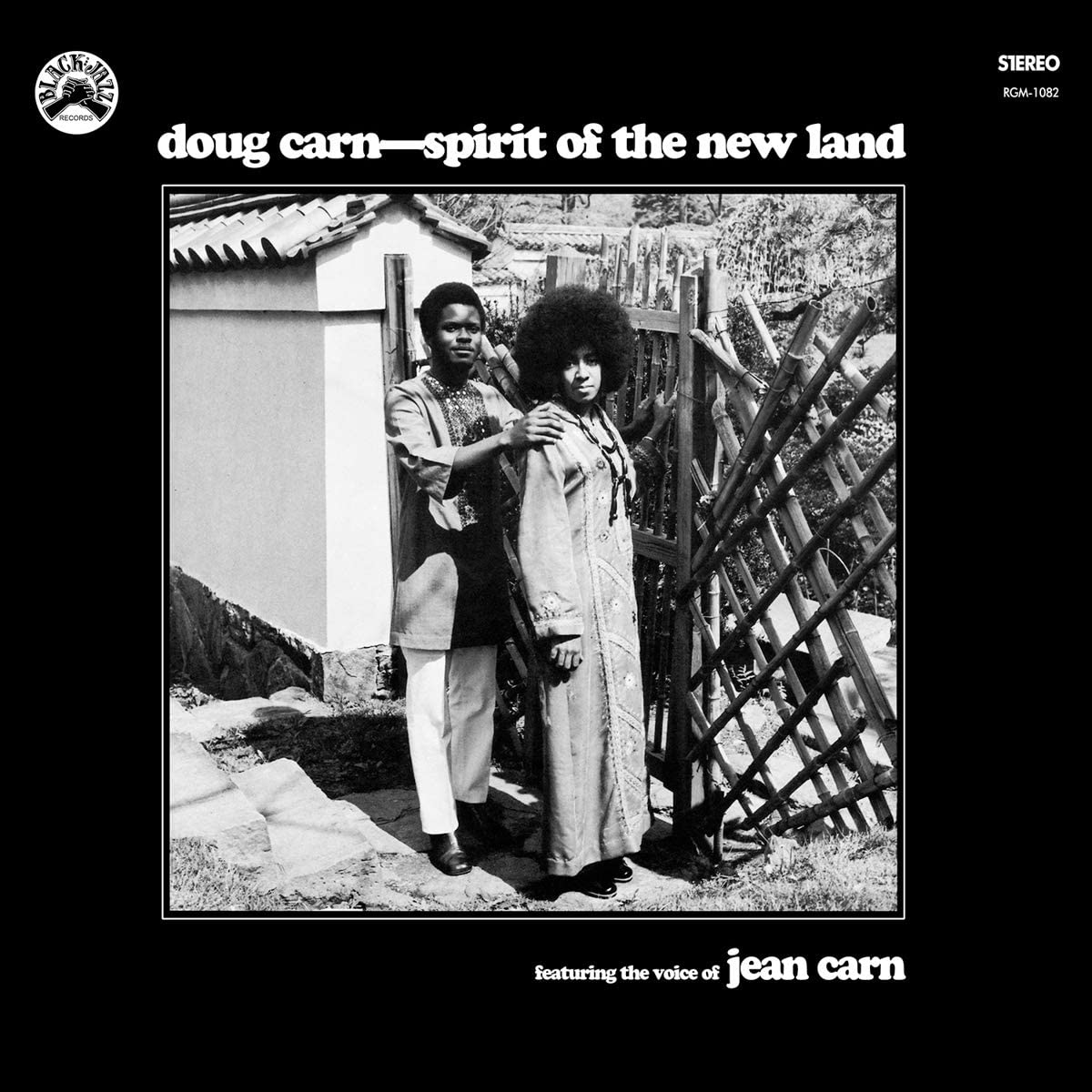
This was Spirit Of The New Land, which was released in 1972 and billed as Doug Carn Featuring The Voice Of Jean Carn. It was recently reissued by Real Gone Music, and was a new chapter in the story of Doug Carn who was still only twenty-for when he released Spirit Of The New Land.
Doug Carn was born on July the ’14th’ 1948, in St. Augustine, Florida, and growing up music was all around him and was part of the culture around him at home. His mother was a musician, while his uncle was a bebop DJ who could scat the Dexter Gordon solos. It was no surprise that growing up, Doug Carn started listening to jazz and later, decided to learn an instrument.
Initially, Doug Carn took piano lessons and proved to be a quick learner and was soon able to play Bach Two-Part Inventions. That was when it was discovered that he wasn’t reading music and playing by ear. This resulted in Doug Carn being given an alto saxophone which he also mastered was able to play well. Already he was well on his way to becoming a multi-instrumentalist and it was no surprise when Doug Carn decided to study music at university.
He enrolled at Jacksonville University in 1965, and for the next two years studied oboe and composition. When Doug Carn graduated in 1967 he headed to Georgia State University where he completed his musical education in 1969. Later that year he made his recording debut as bandleader.
The twenty-one year old multi-instrumentalist was still living in Georgia and had founded the Doug Carn Trio. However, the new combo needed gigs and the young bandleader decided to visit a friend who ran a booking agency. When he entered the office he was greeted by the receptionist and secretary who was also a singer. This was Jean Carn who later become his wife. Before that, she started singing with the Doug Carn Trio who were about to make their recording debut.
Through the owner of the booking agency, Doug Carn was introduced to Herman Lubinsky the founder and owner of Savoy Records. This introduction turned out to be a gamechanger for the bandleader.
It turned out that the label had a session booked in Atlanta which was going to be produced by Fred Mendelsohn, the President of Savoy. He explained that there was every chance that there might be some spare time after he had recorded the gospel album, and if there was, they would use the time to record the Doug Carn Trio. That turned out to be the case.
That day in 1969, the Doug Carn Trio recorded what became their eponymous debut album. It was released later in 1969 on Savoy Records but wasn’t a commercial success. However, for Doug Carn recording the album was an invaluable experience as he prepared to move to LA as the sixties gave way to the seventies.
When he arrived in LA, Doug Carn started spending time with the members of Earth, Wind and Fire and this resulted in him playing on their first two albums. He played Hammond organ on Earth, Wind and Fire which was released on February 1971 and was certified gold. Doug Carn also played on The Need Of Love which was released in November 1971. By then, his solo career was well underway.
Earlier in 1971, Doug Carn had signed to Black Jazz Records and recorded and released his debut album Infant Eyes which featured his wife Jean Carn’s vocal. Infant Eyes was the most successful of the six albums that the nascent label released during 1971. Buoyed by the success of his debut album Doug and Jean Carn began work on the followup Spirit Of The New Land.
For his second album for Black Jazz Records Doug Carn wrote Dwell Like A Ghost, My Spirit, Arise and Shine, Trance Dance and New Moon. He also covered Miles Davis’ Blue In Green and Lee Morgan’s Search For The New Land which he added lyrics too. These tracks became Spirit Of The New Land which was recorded with tight, talented and versatile band.
Recording of the album took place at Bell Studios, in New York, with Gene Russell taking charge of production. The band featured drummer Alphonse Mouzon, trombonist Garnett Brown, Earl McIntyre on tuba and Charles Tolliver played flugelhorn while George Harper switched between bass clarinet, flute and soprano saxophone. Jean Carn added vocals and Doug Carn played Fender Rhodes, Hammond organ and piano on Spirit Of The New Land.
When Spirit Of The New Land was released later in 1972, the album was billed as Doug Carn Featuring The Voice Of Jean Carn. For the first time, the Carn’s received equal billing on an album that was well received by critics and became Black Jazz Records’ best selling album of 1972.
That was no surprise given the standard of music on Spirit Of The New Land. It showcased the songwriting and keyboard skills of Doug Carn and provided a platform for Jean Carn’s impressive five octave vocal which breathes life, meaning and emotion into the lyrics on what was an eclectic album. There were elements of jazz, funk and soul as well as jazz-funk, free jazz, fusion and soul-jazz on the seven tracks on Spirit Of The New Land.
It opens with the dramatic and atmospheric Dwell Like A Ghost where Jean Carn’s five octave vocal soars high above the arrangement as drums pound and power the arrangement along. This adds to the drama. Meanwhile, Doug Carn interjects and eerie, otherworldly sounds combine with free jazz horns on this ambitious genre-melting album opener.
Jean Carn’s vocal is soulful and impassioned as a shimmering Fender Rhodes combines with wailing horns and thunderous, pounding drums. Briefly, the arrangement becomes understated and the urgent vocal enters as the arrangement to this ten minute epic rebuilds and reveals its secrets. This includes a breathtaking saxophone solo which is accompanied by the Fender Rhodes and drums. Soon, the baton passes to the trombone before bandleader Doug Carn unleashes a fleet-fingered solo. His fingers dart across the keyboard and along with Jean Carn whose vocal heads in the direction of spiritual jazz he plays a leading role in the sound and success of this jazz opus. It also features elements of jazz-funk and fusion and is one of the album’s highlights.
Sharp bursts of horns open Arise and Shine before Jean Carn’s joyous, jazzy vocal enters and she delivers lyrics full of social comment. Her vocal is a mixture of power and passion and soars above the arrangement before being replaced by the soprano saxophone and then bass clarinet take centrestage. Meanwhile, the tight talented and versatile band match them every step of the way. This includes washes of Hammond organ and drummer Alphonse Mouzon who unleashes drums rolls and pounds the hi-hat. Soon, it’s time for Doug Carn’s blistering solo which heads in the direction of soul-jazz. It’s one of his finest and when Jean Carn returns she’s joined by the bass clarinet and delivers the spiritual lyrics as the arrangement swings and then some.
Blue In Green was written by Miles Davis and features lyrics written by Doug Carn. They’re delivered by Jean Carn on this beautiful ballad which has an understated arrangement that features a flute, Fender Rhodes and drums. A less is more approach is taken and this allow the vocal to shine. It’s without doubt Jean Carn’s finest on Search For The New Land.
Very different is Trance Dance which is best described as avant-garde jazz which also features elements of African music, fusion and even elements of free jazz, funk and soul-jazz. Soon the tempo is rising and Doug Carn and his band allow the opportunity to stretch their legs and showcase their considerable talents as genres melt into one.
Search For The New Land was written by Lee Morgan and features lyrics that were written by Doug Carn. From the opening bars, there’s a degree of drama as Jean Carn unleashes a powerhouse of a vocal. It’s impassioned as she delivers lyrics that are full of social comment and sometimes spiritual. Meanwhile, Doug Carn interjects hopefully and stabs at the piano as the bass clarinet soars above the arrangement. They prove a potent combination before the saxophone replaces the clarinet and goes toe-to-toe with the jangling piano which Doug Carn then pounds, jabs stabs and adds flamboyant flourishes as he takes centrestage. Soon, Jean Carn rejoins and adds an impassioned plea on this twelve minute opus that is the centrepiece of the album.
The piano led New Moon closes Spirit Of The New Land and joins forces with drums and bursts of quivering horns as the arrangement cascades and sometimes seems to race along. In doing so, it provides the perfect showcase for Doug Carn and his band who save one of their best performances for last.
When Spirit Of The New Land was released in 1972, it built on the success of Doug Carn’s debut solo album which was released in 1971. It was the most successful album that Black Jazz Records released that year, and so was Spirit Of The New Land. However, neither album sold tens of thousands of copies but both were successful for a small independent label. That was what Black Jazz Records was. It was also a label that had a vision.
Black Jazz Records that wanted “to promote the talents of young African American jazz musicians and singers.” Doug Carn was only twenty-four when he released Spirit Of The New Land and his was Jean Carn was twenty-five. They had created an album that was an alternative to what Gene Russell and Dick Schory referred to as old school jazz. Spirit Of The New Land was a very different and new type of jazz album and featured everything from avant-garde, free jazz, funk, jazz-funk, fusion, soul, soul-jazz and spiritual jazz. These genres were combined by Doug Carn and Jean Carn who unleashed her five octave vocal on Spirit Of The New Land which at the time was their finest hour and set the bar high for future albums.
Doug Carn Featuring The Voice Of Jean Carn-Spirit Of The New Land.
KELLEE PATTERSON-MAIDEN VOYAGE.
Kellee Patterson-Maiden Voyage.
Label:Real Gone Music,
Format: CD.
When pianist Gene Russell and percussionist Dick Schory founded Black Jazz Records in Oakland, California, in 1971, the nascent label’s raison d’être was “to promote the talents of young African American jazz musicians and singers.” This was only part of their vision for their new label.
They were determined that Black Jazz Records would released an alternative to what they saw as the old school jazz that was popular at the time. They wanted to release an alternative to traditional jazz, and this included albums that featured political and spiritual influenced music. However, spiritual jazz was just part of the Black Jazz Records’ story and the label between 1971 and 1975 it released twenty albums that included everything from free jazz and funk to soul-jazz.
Fittingly, Black Jazz Records’ first release was Gene Russell’s sophomore album New Direction which was released in 1971. This was just the start of a prolific year for the label.
In their first year, Black Jazz Records also released Walter Bishop Jr’s Coral Keys, Doug Carn’s Infant Eyes, Rudolph Johnson’s Spring Rain, Chester Thompson’s Powerhouse and Calvin Keys’ Shawn-Neeq. By the end of 1971, the new label had released six albums in its first year. Other labels must have looked on enviously.
Cofounder Dick Schory had founded Chicago-based Ovation Records, which was a successful country and western label which was providing funding for Black Jazz Records and distributing its releases. This gave the label a helping hand and meant it had an edge on its competitors.
The cofounders were determined that as wide an audience as possible hear the albums that the label was releasing so Gene Russell organised a promotional tour, In September 1971, Gene Russell and his Ray Lawrence who was his marketing consultant toured America giving interviews to newspaper journalists and featured on radio and newspaper where they showcased Black Jazz Records and its artists. This resulted in valuable publicity for the label.
By 1972, Black Jazz Records was adding new artists to their roster and signed Henry Franklin who released his album The Skipper later that year. This wasn’t the only new signing made that year. However, a familiar face returned with another album.
This was organist and pianist Doug Carn who was accompanied by his wife on his sophomore album Spirit Of The New Land. He would go on to release four albums between 1971 and 1975 and they were Black Jazz Records’ most successful releases.
The other album Black Jazz Records released in 1971 was The Awakening’s debut Hear, Sense and Feel in 1972. It wasn’t as busy a year as 1971, but Gene Russell and Dick Schory were concentrating on quality not quantity. However, the following year, 1973, was a much busier year for Black Jazz Records.
Cofounder Gene Russell returned in 1973 with Talk To My Lady which was his second album for Black Jazz Records. This was followed by Rudolph Johnson’s new album The Second Coming. However, the label’s third release of 1973 was Maiden Voyage the debut album from a new signing Kellee Patterson.
By the time Kellee Patterson signed to Black Jazz Records the young singer had achieved a lot during what was already a varied career.
Kellee Patterson was born Pat Patterson in the Midwest on the outskirts of Chicago, but grew up Gary, Indiana. She started singing aged five, and growing up, won a number of local talent contests with her neighbours The Jacksons. While they won the male awards Kellee Patterson won the female awards. Given the success she enjoyed in the talent shows nobody was surprised when she became a professional singer.
When she was sixteen, Kellee Patterson made her professional debut as a singer, and by time she was at college she was singing with a group called Groovy and The Electra’s. Although they were essentially a rock group, Kellee Patterson sang covers of Gladys Knight and Aretha Franklin songs. However, after a while she parted company with the band.
Not long after this, Kellee Patterson entered the 1971 Miss Indiana pageant under her real name. She became the first black woman to win the title and qualified for the Miss America pageant in 1972.
This turned out to be the boost that Kellee Patterson’s career needed. She made some television appearances in the Chicago area and also featured in The Streets Of San Francisco in 1972. However, after Kellee Patterson’s appearance in the Miss America pageant, word started spreading that she was a talented singer. Soon, several record companies began to offer recording contracts. This included Motown who she turned down to sign with Black Jazz Records in 1973.
Having signed with Black Jazz Records Kellee Patterson began work on her debut album which became Maiden Voyage. It was an album of eight cover versions. This included Earl DeRouen’s Magic Wand Of Love; John Lehman’ Look At The Child and Be All Your Own; Don Sebesky’s Soul Daddy (Lady) and Herbie Hancock’s Maiden Voyage. They were joined by Gordon Parks’ Don’t Misunderstand; Flip Nunez’s See You Later and Lani Hall’s You. They were recorded by Kellee Patterson and a talented band.
Maiden Voyage was recorded in Hollywood Spectrum Studios, Los Angeles, and produced by Gene Russell. The band featured double bassist John Heard, bassist Henry Davis, Sajih on congas and triangle which Billy Osborne also played. The rest of the band included pianist Ernest Van Trease, flautist George Harper, trumpeter Everett Turner and John Lasalle on tambourine. They accompanied Kellee Patterson on her debut album Maiden Voyage.
When Maiden Voyage was released later in 1973, the album failed to attract the attention of critics and record buyers and became of the of hidden gems in Black Jazz Records’ back-catalogue.
That was despite Maiden Voyage being the most mainstream and commercial sounding album that was released on Black Jazz Records between 1971 and 1975. However, compared to Kellee Patterson’s later albums, Maiden Voyage is very different. It has a tougher sound and is a more challenging album. Having said that it’s also a rewarding album of laidback and mellow jazz that’s also soulful. This is down to Gene Russell’s production and the band that feature on the album.
That’s the case on Magic Wand Of Love where the rhythm section provide an understated backdrop as a flute flutters above the arrangement accompanying Kellee Patterson’s heartfelt and impassioned vocal as she delivers lyrics full of social comment. One of the most beautiful songs on the album is the cover of the piano-led, jazz ballad Look At The Child. Very different is the boogaloo of Soul Daddy (Lady) which shows another side of Kellee Patterson. So does an atmospheric reading of Maiden Voyage which features lyrics written by Herbie Hancock’s sister. It meanders along shimmering keyboards, bass and stabs of trumpet accompanying the vocal during this journey in search of love.
One of the best ballads on Maiden Voyage is Don’t Misunderstand with its late-night, jazzy sound and a wistful vocal from Kellee Patterson. The tempo rises on See You Later which features a much more powerful, soulful and sultry vocal that’s full of emotion. Meanwhile, the arrangement sashays along and provides the perfect accompaniment for the vocal on this relationship song. Then the tempo drops on You as a flute flutters and ushers in the vocal on this beautiful paean and is the perfect showcase for Kellee Patterson’s vocal. So is Be All Your Own which closes Maiden Voyage where her vocal is soulful and impassioned and is accompanied by an understated arrangement that allows the vocal to take centrestage.
For Kellee Patterson, her debut album Maiden Voyage was the one that got away. Despite the quality of music on the album it failed to attract the attention of either critics or record buyers. It was a disappointing start her to recording career and she must have wondered whether she had signed to the right label?
Kellee Patterson must have wondered if things would’ve been different if she had signed to Motown who she rejected before signing to for Black Jazz Records? It was regarded as a much more fashionable label and one who wanted: “to promote the talents of young African American jazz musicians and singers” like her. The label also wanted to release an alternative to traditional jazz. Black Jazz Records must have seemed like an attractive alternative to Motown and the perfect label to launch her career.
On Maiden Voyage, Kellee Patterson there’s songs full social comment, beautiful ballads and mid-tempo tracks on what was a carefully crafted album that veers between jazz, soul and soul-jazz. It’s an album with no weak tracks and where Kellee Patterson showcases her vocal versatility. She breathe life, meaning and emotion into the eight tracks on Maiden Voyage which was the only album she released on Black Jazz Records.
Gene Russell closed the doors at Black Jazz Records for the last time in 1975, and by then, the label he had cofounded had released twenty albums. The most successful albums were the four released by Doug Carn which featured his wife Jean. Apart from these four albums, the remainder failed to find an audience until much later.
In the nineties, DJs and record collectors rediscovered the twenty albums released by Black Jazz Records. By then, many of the albums were rarities that changed hands for large sums of money. Those that owned the Black Jazz Records’ back-catalogue cherished what was a groundbreaking collection of albums and were reluctant to part with them. This includes Kellee Patterson’s debut album Maiden Voyage which has just been reissued by Real Gone Music and is the perfect introduction to a prodigiously talented vocalist who is another of jazz music’s best secrets.
Kellee Patterson-Maiden Voyage.
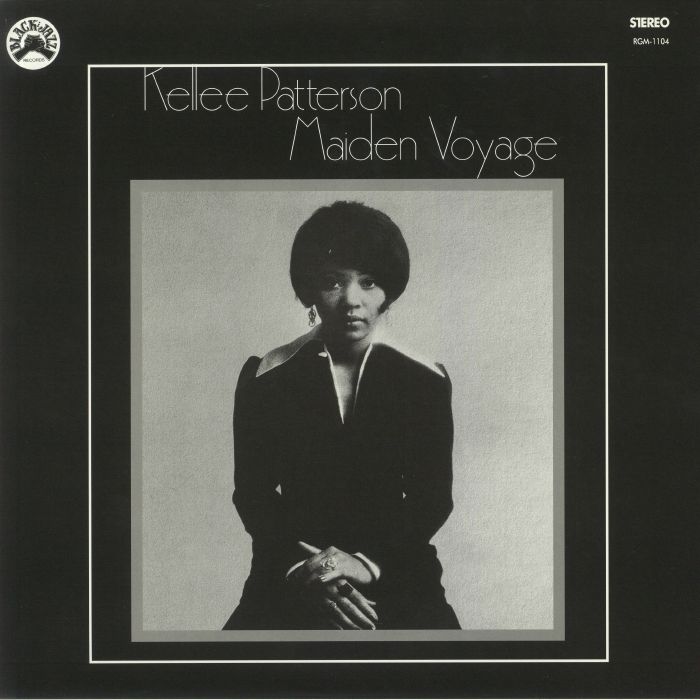
JACKIE MCLEAN-IT’S TIME!
Jackie McLean-It’s Time!
Label: Blue Note Records-Tone Poet Series.
Format: LP.
When Jackie McLean and his band journeyed to Van Gelder Studio, in Englewood Cliffs, New Jersey, on August the ‘5th’ 1964, it was his fourteenth solo session for Blue Note Records and resulted in the album It’s Time! It which was recently reissued by Blue Note Records as part of their Tone Poet Series featured a new band and saw him revisit his old hard bop sound.
For the It’s Time! session, Jackie McLean had put together a new band. It still featured drummer Roy Haynes who at thirty-nine was the elder statesman of the band. The rest of the band were newcomers. This included thirty year old bassist Cecil McBee, pianist Herbie Hancock who was twenty-five and twenty-two year old trumpeter Charles Tolliver. They were due to record six new compositions that became It’s Time!
This included Das’ Dat, It’s Time and Snuff which were Jackie McLean compositions. They were joined by Cancellation, Revillot and Truth which were written by Charles Tolliver. The It’s Time session was engineered by Rudy Van Gelder and was produced by Alfred Lion and on August the ‘5th’ 1964.
The producer and engineer listened to what was a quite different album from Destination…Out!, which was regarded as one of the most innovative, progressive and experimental albums that Jackie McLean had recorded. He embraced the avant-garde on an album which was a fusion of post-bop and free jazz. It was thought that the followup would see him embrace free jazz fully. Instead It’s Time was an album of driving, swinging hard bop from his new band.
It’s Time! opened with Cancellation which is best described as an advanced example of driving hard bop. Horns add a fanfare while the rhythm section provide stop time rhythms and Herbie Hancock pounds his piano. Meanwhile, the almost abrasive sound of Jackie McLean’s alto-saxophone soars, wah wahs as his playing becomes fast and fluid. Charles Tolliver’s playing starts with the same fluidity but later heads in the direction of free jazz. It’s accompanied by a piano which veers between abstract, ruminative to dramatic, fluid and urgent as it’s played with speed and accuracy. Later, the band join forces and head for home never missing a beat during this breathtaking example of hard driving, angular and swinging hard bop.
Das’ Dat bursts into life and the quintet play as one on what’s a more traditional example of hard bop. Its bluesy roots can be quite clearly heard as Jackie McLean revisits his part. The horns and piano that play leading rolls as the rhythm section ensure the track swings. When the solos come around, up first is a sultry swinging solo from the composer and bandleader. Next up is trumpeter Charles Tolliver who plays like a veteran. So does pianist Herbie Hancock whose fingers dance across the keyboards as the rhythm section provide a subtle backdrop. Then when the band reunite and head for home combining to create what can only be described as swinging, high kicking and hard bop par excellence.
It’s Time is another of the more progressive tracks on the album and the influxes of modal jazz can be heard. The quintet play at breakneck speed before it’s time for the solos and effortlessly Jackie McLean plays with speed and fluidity. Next up, is Charles Tolliver whose solo is inventive and imaginative before he builds up a head of steam and plays with speed accuracy All the time, the piano punctuates the arrangement and then Herbie Hancock delivers a fleet-fingered solo his fingers caress, jab, stab and dance across before he accompanies Cecil McBee’s bass. When drummer Roy Haynes unleashes a solo his playing is subtle as he takes a polyrhythmic approach and plays an important part in the sound and success of what’s one of the album’s highlights.
Side Two.
Horns unite, blaze and soar on Revillot before uniting with the rest of the band playing with speed and an inventiveness. From the get-go the horns go head-to head and it’s akin to a musical duel with two master craftsman showcasing their considerable skills. They deliver spellbinding solos and everyone else plays a supporting role. Even Herbie Hancock whose play with speed, jabbing, stabbing and adding flamboyant flourishes before his playing becomes fluid and sometimes abstract. Despite that, it’s the horns that steal the show.
On Snuff the horns lead the way as drums punctuate the arrangement. Soon, it’s time for the solos and Jackie McLean steps up and plays his alto-saxophone with speed, fluidity and an inventiveness during a complex solo where it bobs, weaves and winds. Herbie Hancock accompanies him and plays a supporting role. He rises to the challenge and goes toe-to-toe with the bandleader answering the saxophonist’s call and does the same with trumpeter Charles Tolliver who unleashes one of his finest performances during a complex solo takes twists and turns. Herbie Hancock is inspired and raises his game adding further flamboyant flourishes and when his solo comes around he plays with speed, accuracy and inventiveness during a breathtaking performance. All too soon, the band reunite and it’s a race to the finishing post. It’s not hands and heels going into the final furlong. Instead, it’s a sprint finish and after a performance as good as this there’s only one winner…jazz.
Closing It’s Time! is the melancholy ballad Truth which was written by Charles Tolliver. Sometimes, the truth hurts and that seems to be the case here. His trumpet playing it emotive and has a worldweary soul-baring sound. Meanwhile, the rest of the band provides a sympathetic backdrop on this beautiful ballad that shows another side to the quintet.
Having recorded It’s Time! Blue Note Records scheduled a release for the summer of 1965. In late-June, early July It’s Time! was released in a Miles Reed album cover that would later be regarded as a design classic. The album was well received by the majority of critics who had expected Jackie McLean to fully embrace free jazz on It’s Time! They were surprised to hear an album of hard bop but welcomed its familiarity of It’s Time. Sadly, the album passed jazz fans by, and they never heard Jackie McLean’s new quintet in full flight.
It was only much later that jazz fans discovered Jackie McLean’s It’s Time! By then, it was one of the hidden gems in his back-catalogue and one the most underrated albums that he recorded at Blue Note Records. It’s Time! is an album of hard driving and swinging hard bop from Jackie McLean that features a series of breathtaking performances and is bristling with energy that somewhat belatedly is starting to receive the recognition it so richly deserves.
Jackie McLean-It’s Time!
CULT CLASSIC: JUDY HENSKE-HIGH FLYING BIRD.
Cult Classic: Judy Henske-High Flying Bird.
It was in 1962, when Judy Henske was living in Los Angeles, that the Queen of the Beatniks first came to the attention of Elektra Records’ founder Jac Holzman. He had just setup the A&R and marketing operation in LA and was on looking for new artists to add to Elektra Records’ roster. The first night he saw Judy Henske sing he knew that he had to sign her. It wasn’t just her powerful voice, it was also her presence onstage and bawdy humour. Jac Holzman was sure that this was a winning combination and set about signing Judy Henske.
Eventually, it cost Jac Holzman $2,000 to sign Judy Henske to Elektra Records. His initial offer was $1,000 which he hoped would secure the signature of Judy Henske. However, he was so keen to sign Judy Henske that he was willing to double his initial offer to $2,000. That was enough to secure her signature.
Not long after this, Judy Henske recorded her eponymous debut album in front of studio audience. Judy Henske was released on Elektra Records in 1962, with High Flying Bird following in 1963. By the time High Flying Bird was released in 1963, twenty-seven year old Judy Henske had come a long way since embarking upon a solo carer four years earlier.
The Judy Henske story began in Chippewa Falls, Wisconsin where Judith A. Henske was born on December ’20th’ 1936. She attended Notre Dame Grade School and then Notre Dame-McDonell Memorial High School, before heading to Rosary College, River Forest, Illinois. After that, Judy Henske enrolled at the University of Wisconsin, in Madison, and when she graduated moved to Ohio.
Judy Henske began working in the office of Oberlin College, Ohio. That was where Judy Henske’s first starting making music. Her boyfriend left her and moved to India. However, he left behind his banjo and soon, she had taught herself to play it. This was the start of a musical voyage of discovery. Soon, she was playing Dixieland jazz and murder ballads. Not long after this, Judy Henske relocated.
This time, she moved to Philadelphia, Pennsylvania, where she worked for a while as a cook in a Quaker co-operative. During this period, she was able to find herself and grow as a person. After that, Judy Henske was on the move again.
In 1959, Judy Henske relocated to San Diego where she lived in a sloop in a yacht basin. Not long after her arrival in San Diego, she started singing in the coffee houses in Pacific Beach and soon, in Los Angeles. That was where she first encountered comedian Lenny Bruce. The pair often worked together, during the time Judy Henske spent in San Diego. However, after spending the best part of two years in San Diego she was ready for a change of scenery.
Judy Henske headed to New York, where she was asked to contribute four live songs that would appear on a compilation. The Coffee House was released on the Dorian label in 1959, and marked the debut of Judy Henske. Soon, she was moving from East Coast to the West Coast.
1960 saw Judy Henske arrive in Los Angeles. She was a stranger in town and the only person she knew of was Herb Cohen who was one of the leading lights of Sunset Strip folk scene. For a new folk singer who had arrived in LA, Herb Cohen was a good man to know.
On her first night in Los Angeles, Judy Henske went looking for Herb Cohen. She met him outside of Cosmo Alley, one of two coffee shops Herb Cohen owned. When he saw his friend clutching her banjo he asked if she could play it? This lead to an impromptu audition and before he had hired Judy Henske and become her manager. She would receive $90 for playing at his other coffee shop, the Unicorn.
At the Unicorn, she soon became the warmup act for Lenny Bruce. By then, she had acquired a strong stage presence, where in-between songs, Judy Henske’s bawdy humour entertained patrons. They were a tough crowd, but her put downs and her incredible powerful voice captivated the patrons at Herb Cohen’s coffee shops. Before long, Judy Henske had developed an act which was a combination humorous monologues and music which made her a popular draw.
Dave Guard and The Whiskeyhill Singers.
So much so, that Herb Cohen decided to send Judy Henske to one of the biggest coffee shops in Oklahoma City. That was where she was spotted in early 1961 by Dave Guard, who previously, had been a member of the Kingston Trio. He was about to form a new group The Whiskeyhill Singers and he asked Judy Henske to join his new folk group and sing the female lead vocal? Before she could agree, Judy Henske had to ask her manager Herb Cohen? When he gave the go ahead, Judy Henske joined The Whiskeyhill Singers.
Compared to her gigs at the Unicorn, and warming up for Lenny Bruce, The Whiskeyhill Singers were somewhat staid by comparison. Dave Guard brought to Judy Henske onboard The Whiskeyhill Singers to provide balance to the group. She was going to be yin to his yang, on their debut album.
This was Dave Guard and The Whiskeyhill Singers which was released on Capitol in 1962. By then, the group had honed their own, unique sound and style. It was hailed as often innovative by critics. However, Dave Guard and the Whiskeyhill Singers failed to find an audience upon its release. Nether did the singles Ride On Railroad Bill nor Plane Wreck At Los Gatos when they were released in 1962. Despite this, The Whiskeyhill Singers began work on their sophomore album.
How The West Was Won.
Before that, The Whiskeyhill Singers were asked to provide some songs to the How The West Was Won soundtrack. Originally, the producers of this MGM wanted to the Kingston Trio to feature on the soundtrack. However, when they heard that Dave Guard had a new group, The Whiskeyhill Singers they felt their sound was much more suited to the soundtrack. This resulted in the The Whiskeyhill Singer being asked to feature on the How the West Was Won soundtrack. For Judy Henske, and the rest of The Whiskeyhill Singers this was the break they were looking for.
The Whiskeyhill Singers began work on their sophomore album, which was completed later in 1962. However, The Whiskeyhill Singers 2nd Album was never released by Capitol Records. Nor long after that, Dave Guard called time on The Whiskeyhill Singers. It had been a short-lived, unfortunately, unsuccessful project that lasted just over six months. However, they had managed to record a lot of music during this period.
After the demise of The Whiskeyhill Singers, Judy Henske decided to return to Los Angeles, where the folk boom was continuing. She was able to pickup where she left off, singing at the Unicorn and at the Troubadour which was well on its way to coming one of LA’s top music venues. It was where many of the biggest names in music hung out, including some of the leading lights of the folk scene.
As the folk boom continued, many within the music industry were keen to profit from the genre’s popularity. Many music industry veterans were aware that folk music, like previous genres, was a bubble, that could burst at any minute. The trick was to make hay while the sun shined. This included compiling and releasing a slew of folk compilations. With Judy Henske’s star in the ascendancy, it was no surprise that she was asked to feature on a couple of these compilations.
This included featuring on folk compilations like and Folk At The Troubadour. These compilations would introduce Judy Henske and the other artists to a much wider audience when they were eventually released. By then, twenty-six year old Judy Henske had made a big breakthrough.
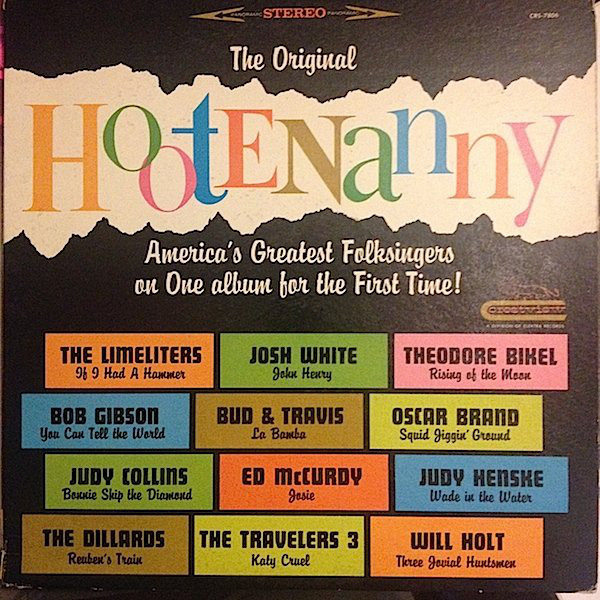
It was just another night when Judy Henske took to the stage at an LA club. She had honed her stagecraft and had onstage presence that was the envy of many less talented singers. Judy Henske made it look so easy as she unleashed her incredibly powerful voice. She brought meaning and emotion to lyrics and seamlessly switched between folk and blues. Then in-between songs, she embarked on a long, but carefully cultivated monologue. The patrons were won over by Judy Henske and so was Elektra Records’ founder Jac Holzman.
He had just setup A&R and marketing operation in LA and was on looking for new artists to add to Elektra Records’ roster. That was why he was sitting in the club, as Judy Henske started to sing. Straight away, he knew that he had to sign her. Her combination of music, monologues and bawdy humour Jac Holzman was sure, was a winning combination. Jac Holzman set about signing Judy Henske, and adding her to Elektra Records’ burgeoning roster.
Eventually, it cost Jac Holzman $2,000 to sign Judy Henske to Elektra Records. His initial offer was $1,000 which Jac Holzman was hoping would secure Judy Henske’s signature. When she hesitated, Jac Holzman reached over and scored out $1,000 and replaced it with $2,000. That was enough to secure the signature of Judy Henske, who joined Elektra Records’ roster of folk singers.
Not long after this, Judy Henske recorded her eponymous debut album in front of studio audience. This was what Judy Henske had been working towards for three years.
Judy Henske.
When Judy Henske joined Elektra Records, she joined Phil Ochs and Fred Neil, Judy Collins and soon, Tim Buckley. Jac Holzman was well on his way to securing the signatures of the creme de la creme of young American folk singers.
Not long after signing to Elektra Records, Judy Henske began preparing to record her debut album. Jac Holzman had decided to record the album in front of a large studio, with an invited audience. At first, Jac Holzman thought of recording just Judy Henske and her guitar. However, he wanted a bigger sound, so decided to hire an orchestra.
Jac Holzman secured the services of Onzy Matthews, an experienced LA based bandleader. Meanwhile, guitarist John Forsha would trombonist John ‘Streamline” Ewing would lead the orchestra. They would accompany Judy Henske on eleven tracks.
For her debut album, Judy Henske chose two of her own songs, Hooka Tooka and Lily Langtree. Judy Henske arranged Low Down Alligator, Ballad Of Little Romy, Wade In The Water, I Know You Rider, Love Henry, Every Night When The Sun Goes In and wrote new lyrics to Salvation Army Song. They were joined by JC Johnston’s Empty Bed Blues and James Shelton’s Lilac Wine. These songs would be recorded in LA, and become Judy Henske’s eponymous debut album.
Once Judy Henske had recorded her much-anticipated eponymous debut album, it was released on Elektra Records in 1962. Critics on hearing Judy Henske, realised she was a very special and versatile singer, and the album received praise and plaudits.
While Judy Henske was well received by critics, who were appreciative of the album and a very special young singer who was making her debut, the album failed to find an audience outside of the folk community. While this was disappointing, Judy Henske and Elektra Records’ founder Jac Holzman were playing the long game.

High Flying Bird.
By the time it came time for Judy Henske to record her sophomore album High Flying Bird, she was a popular draw in Los Angeles and New York. It looked as if her star was in the ascendancy. This was the perfect time for Jac Holzman to send Judy Henske back into the studio.
When it came to recording High Flying Bird, Judy Henske penned Oh, You Engineer with Shel Silverstein. She also added new lyrics to a number of traditional songs, including Buckeye Jim, Columbus Stockade, Lonely Train, Duncan and Brady, Good Old Wagon and Charlotte Town. Judy Henske also arranged Blues Chase Up A Rabbit. The other songs included Billy Ed Wheeler’s High Flying Bird which was joined by Till The Real Thing Comes Along, Hoagy Carmichael’s Baltimore Oriole, Arthur Herzog Jr and Billie Holliday’s God Bless The Child and Bart Howard and John Peter Windsor’s You Are Not My First Love. These thirteen songs became Judy Henske’s sophomore album High Flying Bird.
This time around, Jac Holzman who oversaw production, decided to take a different approach. There was no orchestra on Flying Bird, just a small band that featured a rhythm section of drummer Earl Palmer, bassist Bill Montgomery and guitarist Jack Marshall. They were augmented by two familiar faces, trombonist John ‘Streamline’ Ewing and Jack Forsha who would play the twelve string guitar. This quintet accompanied Judy Henske who switched between banjo and guitar on the thirteen tracks. They were recorded in small studio in Los Angeles and became High Flying Bird.
When critics heard High Flying Bird, they were greeted by a very different side of Judy Henske. Gone is the orchestra that accompanied Judy Henske on her eponymous debut album. High Flying Bird featured a much pared back sound, where the arrangements play second fiddle to Judy Henske as she moves between tear jerking ballads and rousing, uptempo tracks where she kicks loose. High Flying Bird was a potent and heady brew and one that won over critics.
Just like Judy Henske, High Flying Bird proved popular within the folk community upon its release in 1963. The problem was, that Judy Henske’s music wasn’t finding a wider audience beyond the folk community. When Jac Holzman ran the numbers, he realised that High Flying Bird hadn’t sold enough copies to warrant offering Judy Henske another contract. For Judy Henske it was the end of the for her at Elektra Records.
After just two album, Judy Henske and High Flying Bird, one of the rising stars of the American folk scene found herself without a label. For Judy Henske her recording career was already at a crossroads.
It was ironic that she had released to accomplished albums, Judy Henske and High Flying Bird, which later, was credited as one of the albums that led to the folk rock genre. However, in 1963, nobody realised that Judy Henske had provided what was essentially the blueprint to folk rock. It was only much later, when music historians were tracing folk rock’s roots that they realised the importance and relevance of Judy Henske’s sophomore album High Flying Bird.
After leaving Elektra Records, Judy Henske released Little Bit of Sunshine…Little Bit of Rain on Mercury Records in 1965. Just like her two Elektra Records albums, Little Bit of Sunshine…Little Bit of Rain failed to find a wider audience. Sadly, it was a similar case with The Death Defying Judy Henske, which was released on Reprise in 1966.
Three years later, in 1969, and Judy Henske and her husband Jerry Yester, who was also a musician, released their cult classic Farewell Aldebaran in 1969. There was no followup, as the couple were about to embark upon a new musical venture.
By 1971, Judy Henske and Jerry Yester had founded Rosebud with Craig Doerge, John Seiter, and David Vaught. Rosebud released their eponymous debut album in 1971. However, following Rosebud’s release, the band played a couple of live shows, and split up. Judy Henske and Jerry Yester divorced, and she went on to marry and Craig Doerge in 1973. Not long after this, Judy Henske retired from performing and recording.
Judy Henske was only thirty-even when she announced that she was retiring from music. She continued to write songs and eventually, after over twenty years away from music, Judy Henske was ready to make a comeback in the nineties.
Her comeback went so well, that Judy Henske released two studio albums 1999s Loose In the World and 2004s She Sang California. By then, Judy Henske’s music was finding a wider audience receiving the recognition it deserved. Especially her first two albums Judy Henske and High Flying Bird. They’re a reminder on Judy Henske at the peak of her powers when it looked like she was destined to become one of the biggest names in folk music. Sadly, that wasn’t the case, and Judy Henske whose now eighty-three, and has been blind for the past thirteen years, didn’t enjoy the success her talent warranted. A reminder of Judy Henske’s considerable talent can be found on the two albums she released for Elektra Records Judy Henske and her the peerless High Flying Bird which nowadays, is regarded as an album that provided the blueprint to folk rock.
Cult Classic: Judy Henske-High Flying Bird.

CULT CLASSIC: MICHAEL CHAPMAN-PLAYING GUITAR THE EASY WAY.
Cult Classic: Michael Chapman-Playing Guitar The Easy Way
Nine years after releasing his debut album Rainmaker on Harvest Records, Michael Chapman released Playing Guitar The Easy Way which was very a different album from his previous ten albums. Partly that was because of the title and the album cover. Some people who looked at the cover thought it was an album about how to play the guitar. It wasn’t. However, Playing Guitar The Easy Way had some secrets within its sleeve-notes.
The idea behind Playing Guitar The Easy Way was to make life easier for aspiring guitar players and in the sleeve-notes, Michael Chapman had included a series of practical tips. He makes it clear that this isn’t an instruction book just a series of handy hints that will make life easier for experienced guitar players. Each song has its own handy hint and they’re explained concisely. No matter whether the guitarists had been playing six weeks or six years it would help you. That’s not all.
For hardcore Michael Chapman fans, there’s even a list of tunings for many of his songs. If they wanted to cover Goodbye To Monday Night the tuning is DADGBE. If Wrecked Again is one of their favourites Michael Chapman songs then the tuning is also DADGBE. All this made Playing Guitar The Easy Way a unique album. It was also his tenth album since he released his debut in 1969. A lot had happened to Michael Chapman since then.
Before releasing his 1969 debut album Rainmaker, on Harvest Records, Michael Chapman taught art and photography and he was a part-time musician. However, he was a regular on the folk circuit and traveled from his home county of Yorkshire down to London and Cornwall. It wasn’t until 1967, that Michael Chapman was “discovered.” Two years later, he released his debut album Rainmaker. This was the first of four albums Michael Chapman released on Harvest.
Rainmaker.
Harvest Records, a subsidiary of Capitol Records, was home to Pink Floyd, Kevin Ayers, Third Ear Band and Deep Purple. Michael Chapman found himself in illustrious company. Here were some of the most progressive musicians of the late-sixties. The label’s newest signing was well thought of and executives at Harvest thought Michael Chapman had a big future. So much so, that they brought in Gus Dudgeon to produce Rainmaker, Michael’s 1969 album.
Rainmaker was released to widespread critical acclaim in 1969 and was hailed as a cut above mainstream British folk. The album showcased Michael Chapman’s skill as a songwriter, musician and singer. Sadly, Rainmaker which was a mixture of folk, blues and rock wasn’t a commercial success. Neither was his sophomore album Solo Guitar.
Solo Guitar.
Solo Guitar was released later in 1969 and unlike Rainmaker, was released on the Standard Music Library label. It featured nine tracks written by Michael Chapman which showed that he was already starting to mature as a songwriter. However, this album of folk and blues failed to find an audience and commercial success continued to elude him. Despite this, Harvest decided to persist with Michael Chapman believing success wasn’t far away.
Fully Qualified Survivor.
After the release of Solo Guitar Michael Chapman continued to strengthen his songwriting skills. He seemed to be a perfectionist as he worked on new material for his third album. This was no bad thing and paid of.
For the recording of his third album Fully Qualified Survivor, Michael Chapman was reunited with producer Gus Dudgeon, and also brought a new lead guitarist onboard. This was Mick Ronson who later, made his name as David Bowie’s guitarist. However, before that the new addition played his part in transforming Michael Chapman’s fortunes.
A combination of some of Michael Chapman’s best songs, Gus Dudgeon’s production work and a guitar masterclass from Mick Ronson resulted in critics hailing Fully Qualified Survivor as a mini-masterpiece. It struck a nerve with music fans and reached number forty-five in the UK. After the commercial success and critical acclaim Fully Qualified Survivor enjoyed, it looked like Michael Chapman was about to become one of the most successful artists of the early seventies.
Window.
Sadly, that wasn’t to be. For his third album Window, producer Gus Dudgeon seemed to allow Michael Chapman more freedom. He had written nine new songs for Window which lyrically, was a much more eclectic album. This wasn’t the only change, Mick Ronson didn’t feature on Window which was produced by Gus Dudgeon.
When Window was released the album divided opinion. Compared to Rainmaker and Fully Qualified Survivor, Window wasn’t perceive as Window as progression and Michael Chapman was treading water. Record buyers agreed and Window failed to chart on its release in 1970. Michael Chapman would later argue that that was no surprise.
After the release of Window, he disowned Window and alleged it comprised a series of unfinished demos which Harvest released when he was on tour. Ironically, Window, the album Michael Chapman disowned has been have reevaluated by critics and is now regarded as his most underrated album.
Back in 1971, after the release of Window, Michael Chapman’s career at a crossroads. He knew that he had to get his career back on track and managed to do this with his next album, Wrecked Again.
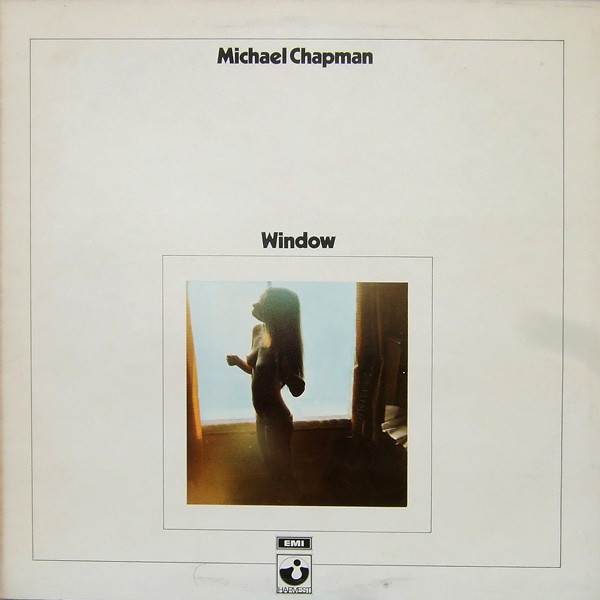
Wrecked Again.
Wrecked Again features eleven songs written by Michael Chapman and saw him reinvent himslef musically. The album is often described as his “Memphis” album, but the best way to describe Wrecked Again is eclectic. Everything from folk, blues, rock, country and jazz can be found within Wrecked Again, which was recorded at Rockfield Studios and produced by Gus Dudgeon.
When Wrecked Again was released early in 1971, Michael Chapman’s fifth album failed to chart. Record buyers weren’t won over by the album’s eclectic, all encompassing sound. At least critics were and recognised Wrecked Again as a return to form from the Leeds’ born troubadour. Sadly, Harvest decided Wrecked Again would be Michael Chapman’s final album for Harvest.
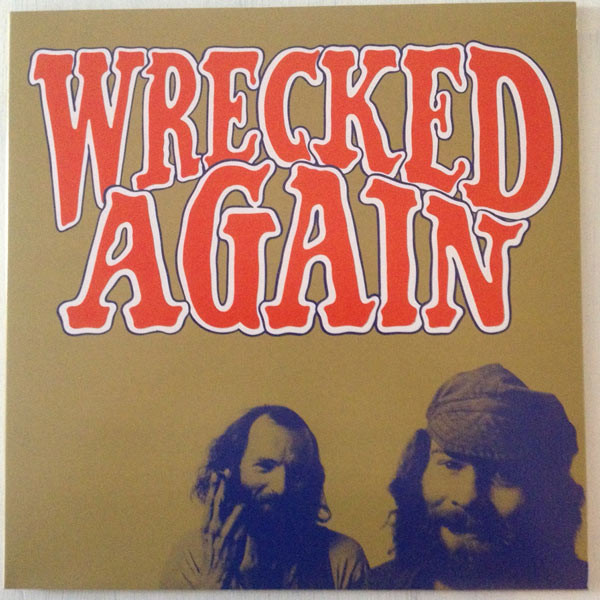
Millstone Grit
After leaving Harvest, Michael Chapman signed to Decca which became his home for the next few years. His Decca debut was Millstone Grit which was released in 1973. It was much more eclectic than some of the albums he had previously released and featured everything from folk and folk rock to blues and country. However, Millstone Grit failed to find and commercial success continued to elude Michael Chapman.
He was down but not out and a year later, returned with one of his finest albums, the hugely underrated Deal Gone Down.
Deal Gone Down.
When Deal Gone Down was released in 1974 and was the followup to Millstone Grit. Critics on hearing the album hailed Deal Gone Down as one of Michael’s finest albums. Michael Chapman was back with an album that combined folk rock with a more traditional rocky sound. It was an album that should’ve appealed to a wide audience. Sadly, the album wasn’t a commercial success and it would be another two years before Michael Chapman released another studio album.
Pleasures Of The Streets.
In 1975 Michael Chapman decided to release his first live album, Pleasures Of The Streets. Playing live was what he liked doing best so he decided to record a live album during his European tour. The result was Pleasures Of The Streets, which was a tantalising taste of what Michael Chapman sounded like live. It was also an album that made commercial sense.
Live albums were growing in popularity during the mid-seventies, and the release of Pleasures Of The Streets saw Michael Chapman dip his toe into what was an expanding market. It was oped that this would help rejuvenate his recording career? After all, his last album to chart was 1970s Fully Qualified Survivor. However, despite the quality of Michael Chapman’s first live album, it failed to trouble the charts. It was a frustrating time for the Leeds-born troubadour.
Savage Amusement.
The following year 1976, Michael Chapman released Savage Amusement which was his first studio album since 1974s Deal Gone Down. It was his seventh studio album and by then, Michael Chapman was talented songwriter. That was evident on the nine new songs he had written for Savage Amusement which was produced by Don Nix. He was backed by his usual band on what was a vastly underrated album of folk rock.
When it was released in 1976 on Decca, it was well received by critics but failed to chart despite its undoubted quality. It was now six years since Fully Qualified Survivor reached forty-five in the UK charts. Michael Chapman’s time at Decca wasn’t a successful one and was about to come to an end.
The Man Who Hated Mornings
Despite the disappointment of the commercial failure of Savage Amusement, Michael Chapman began work on the followup. Having written seven new songs that would feature on The Man Who Hated Mornings, he decided that he would produce the album himself.
The result was an album country rock, folk and folk rock that featured Michael Chapman at his mellowest. It was one of the finest albums of Michael Chapman’s career and he and executives at Decca hoped that this was the album that would kickstart his career.
Things were looking good for Michael Chapman when critics called The Man Who Hated Mornings one of his finest albums of recent years. It was an album that showed that he was capable of moments of genius. Sadly, the record failed to find an audience and never came close to troubling the charts. Worse was come, when it was announced that Michael Chapman and Decca were about to part company.
Playing Guitar The Easy Way.
Having left Decca, Michael Chapman signed to Criminal Records. His first release for the label was Playing Guitar The Easy Way which featured twelve tracks. Eleven were written byMichael Chapman. The exception was Rockport Sunday, which was penned by Tom Rush. They were recorded by Michael at Virgin Studios.
At Virgin Studios, in London, recording of Playing Guitar The Easy Way got underway. Michael Chapman played a selection of classic guitars including a Fylde, Martin D.16, Fender Stratocaster and Gibson 175. He also used some secret weapons during the sessions. This included a FOXX fuzz box, MXR phase shifter, H.H. tape delay, Korg synthesiser pedal and wah wah pedal. During the sessions, Keith Herd was the engineer and Michael Chapman took charge of production on Playing Guitar The Easy Way.
Normal Norman opens Playing Guitar The Easy Way and just like all the tracks on the album, it begins with an open tuning. Before long, Michael Chapman is unleashing waves of bluesy guitar. Seamlessly, his hands flit up and down the fretboard and his playing seem to have matured since his 1969 debut Rainmaker. That’s apparent on the album opener which showcases one of British music’s best kept secrets.
The bluesy sound continues on Revival Time where there’s similarities with the previous track. Again, it’s a reminder that Michael Chapman is one of British music’s most underrated guitarists. It doesn’t take long to realise this as he uses he makes good use of a phase shifter as the two guitars embark upon a spellbinding duel.
Understated and mellow describes Suite Mellow Dee. So does joyous. It’s two minutes of beautiful, meandering, music where Michael Chapman plays both acoustic and slide guitar. They’re a perfect foil for each other. Then towards the end of the track, the slide guitar drops out, as the lone acoustic guitar takes centre-stage on this mellow, laidback track.
On English Musick Michael Chapman deploys his fuzz box as he unleashed dramatic rocky licks on his electric guitar. Meanwhile, he also plays his trusty acoustic guitar and his playing is quick, intricate and folk-tinged. His hands fly up and down the fretboard and hear two sides to Michael Chapman.
After the usual open tuning Pipe Dreams unfolds and has a mellow, country blues’ sound. That’s thanks to brief bursts of slide guitar which is augmented by Michael Chapman’s trusty acoustic guitar. They work well together and before long, he ups the ante. At breakneck speed his hands fly up and down the fretboard never missing a note. As if by magic layers of music melt into one as Michael Chapman becomes a one man band and showcases his considerable skils.
Deliberate strums of guitar prove to be a curveball on High Wide and Handsome. Before long, Michael Chapman returns to his familiar country blues sound and then he plays some slide guitar. It’s no exaggeration to say that this is a glorious sound. It sounds as ifMichael Chapman was weaned on Mississippi Fred McDowell and Blind Willie Johnson and is paying homage to their memory.
Straight away, Michael Chapman deploys his box of tricks on A Scholarly Man. He uses it to briefly transform the sound. After that his guitar rings out and at breakneck speed he gives what can only be described as a guitar masterclass. He digs deep, drawing upon all the music that’s influenced him and what follows is best described joyous and dramatic and is one of the highlights of Playing Guitar the Easy Way.
Sometimes In The Night has a wistful sound. Having said that, there’s an ethereal beauty in the music which is simplicity itself. Essentially, it’s one man and his guitars, albeit, aided and abetted by his effect boxes. He uses them sparingly. At first it’s just Michael Chapman on his acoustic guitar, Before long, he’s playing a double and subtly uses effects to shape the sound. His fingers fly up and down the fretboard, twisting, shaping and honing the sound. Almost effortlessly he creates a track that’s melancholy, wistful and has an ethereal beauty.
Listening to Loop The Loop is reminiscent of the legendary country and western singer, songwriter and guitarist Merle Travis. He played a Gibson and sometimes so does Michael Chapman. On Playing Guitar The Easy Way he had a variety of guitars to call upon. Here he makes his guitar sing as he seamlessly combines elements of blues, country and western and folk.
Rockport Sunday sees Michael Chapma’s guitar ring out joyously. He’s a guitarist’s guitarists and technically, he’s up there with the best British guitarists of his generation. He’s a hugely talented, versatile and technically proficient guitarist and here he demonstrates what he’s capable of.
Envious Eyes allows Michael to show different sides to his music. One minute, the music is understated and thoughtful, the next it takes on a country hue. That’s because Michael deploys his wah-wah pedal and he also plays two different guitars. They sound very different and at one point, the second guitar is replying to the first guitar’s call. It wah wahs across the arrangement, as we hear yet another side to Michael Chapman’s music.
Steel Bonnets closes Playing Guitar the Easy Way. He strums the guitar and deploys the phaser making the music shimmer and quiver and reverberates into the distance. Effects aren’t overused and instead they’re used sparingly. This add to what’s a beautiful, mellow and melancholy track and the perfect way to close the album.
Playing Guitar The Easy Way was Michael Chapman’s eleventh album and very different to his previous albums. It was an album made up entirely of instrumentals. This was the perfect showcase for Michael Chapman who is without doubt, one of the best British guitarists of his generations.
That’s apparent from the first time you hear Playing Guitar the Easy Way. You’re spellbound by his playing as his hands fly up and down the fretboards. He draws inspirations from blues, country and western, country blues, folk and rock. Michael Chapman is just as happy playing acoustic guitar as he is unleashing some slide guitar and in his hands a guitar comes alive. He has the ability to make a guitar come to life and it sings. The music he creates veers between bluesy, hopeful, joyous, melancholy through to uplifting and wistful. Other times, it’s beautiful and ethereal. However, despite the undoubted quality of Michael Chapman’s music, he’s still one of British music’s best kept secrets and Playing Guitar the Easy Way is a cult classic that has still to find a wider audience. Sadly, so has most of his albums.
Only Michael Chapman’s 1970 album Fully Qualified Survivor charted and even then, it stalled at number forty-five in the UK. For the rest of his career it’s a case of what might have been? Commercial success and critical acclaim managed to elude Michael Chapman and that was the case with 1978s Playing Guitar the Easy Way. It showcases a man whose been described as a guitarist’s guitarist and one of British music’s best kept secrets who aged seventy-nine is still playing live and has released over forty albums. One of Michael Chapman’s finest albums is his cult classic Playing Guitar The Easy Way.
Cult Classic: Michael Chapman-Playing Guitar The Easy Way
DEUTSCHE ELEKTRONISCHE MUSIK 4: EXPERIMENTAL GERMAN ROCK AND ELECTRONIC MUSIC 1971-83.
Deutsche Elektronische Musik 4: Experimental German Rock and Electronic Music 1971-83.
Label: Soul Jazz Records.
Format: CD.
Release Date: ‘16th’ October 2020.
Nowadays, the period between 1968 and the early eighties is regarded as a golden period for German music, and saw groundbreaking artists and groups like Amon Düül, Can, Cluster, Deuter, Faust, Harmonia, Neu!, Popul Vuh and Tangerine Dream released innovative albums that would influence and inspire future generations of musicians. This music ranged from Krautrock to the
Berlin and Düsseldorf Schools of Electronic Music which nowadays, are regarded as the holy trinity of modern German music.
Despite the importance of Krautrock and the Berlin and Düsseldorf Schools of Electronic Music, many of the leading lights of these scenes didn’t enjoy the critical acclaim and commercial success that their innovative music deserved. It was only much later, that a new generation of musicians and record buyers discovered the wealth of groundbreaking music that had been recorded between 1968 and the early eighties and realised its importance. Here were albums that were innovative and way ahead of the musical curve, but sadly, in many cases had failed to find an audience. However, this was about to change.
Belatedly, a new generation of musicians, record collectors and journalists, began to fly the flag for Krautrock and also the Berlin and Düsseldorf Schools of Electronic Music. Suddenly, the music started to influence a new generation of musicians and was growing in popularity.
Before long, the music was receiving the recognition it deserved and eventually few record companies released compilations of music from Germany’s golden era. This included Soul Jazz Records will released Deutsche Elektronische Musik 4: Experimental German Rock and Electronic Music 1971-83 as a two CD set on the ‘16th’ of October 2020 and features nineteen tracks.
Opening Deutsche Elektronische Musik 4: Experimental German Rock and Electronic Music 1971-83 is Patella Black by Alex. It’s taken from his 1973 eponymous debut which was released on the Pan label. However, Alex Wiska’s career began in 1964 when he joined The Famous Four and then later, became a member of The Playboys. Then in 1967 he formed his own band Ombächli who released their debut single later that year. The following year, Alex Wiska was studying classical guitar at Köln Musik Konservatorium when he met Holger Czukay and Jaki Liebezeit. They would later go on to found Can and in 1973 co-produced Alex’s debut album. By then, he was one of the pioneers of electric Baglama which features on his debut album. It can be heard on Patella Black which is captivating and inventive fusion of Anatolian rock, progressive rock and psychedelia.
Nowadays, Can are regarded as one of the most important, innovative and influential of the Krautrock bands. By 1972, they were signed to United Artists and released I’m So Green as a single. It features a vocal from inimitable Damo Suzuki and is a tantalising taste of one of Can’s classic albums Ege Bamyasi which belongs in every record collection.
One of the oft-overlooked Krautrock groups is Agitation Free. They were formed in 1967 and were the house band at he legendary Zodiac Arts Centre, in Berlin. By 1973, they were signed to Vertigo ad released their sophomore album 2nd. It featured Laila, Part II a breathtaking track where elements of Krautrock, progressive rock and even fusion melt magically into one.
Amon Düül II roots can be traced to a Munich commune where the group was born and became part of the city’s underground music scene. Their music was a mixture of free-form improvisation and psychedelic rock and in 1969 they released their groundbreaking debut album Phallus Dei and followed this up in 1970 with the seminal classic Yeti. Two years later in 1972, the group had signed to United Artists and released Wolf City which brought to an end what was the classic period for Amon Düül II. A reminder of this is the genre-melting title-track Wolf City where they seamlessly combine Krautrock and psychedelic rock to create what was one of the album’s highlights.
Michael Rother came to prominence as a member of Kraftwerk before joining Neu! and then Harmonia. He then embarked upon a long and successful solo career and nowadays is regarded as one of the greatest German guitarists of his generation. His playing is inventive and imaginative. That’s the case on Flammende Herzen which is the title-track to his 1977 debut album as he plays slowly and carefully leaving space while a Motorik beat accompanies him. Flammende Herzen and the followup Sterntaler are the perfect introduction to Michael Rother.
In 1978, pioneering avant-garde musician Conrad Schnitzler was signed to the Egg label when he released his experimental electronic album Ballet Statique. The title-track features on the compilation and sounds way ahead it’s time. So much so, that it’s hard to believe that is was released in 1978.
Kalacakra’s contribution to the compilation is Nearby Shiras which is a track from their incredibly rare private press Crawling To Lhasa. It was released in 1972 and is fusion of Kraut-folk and psychedelic rock with a spiritual sound. The highlight of the album is Nearby Shiras which is a welcome addition to the compilation.
Et Cetera was founded in 1971 and later that year, released their eponymous debut album on Global Records. The album featured Mellodrama 2a which was an experimental and innovative fusion of avant-garde, jazz, rock and world music.
By 1979, Roedelius was still signed to Sky Records when he released his new album Selbstportrait (Teil 1 Sanfte Musik). It featured Halmharfe which was a quite beautiful but understated and almost mesmeric soundscape.
Cluster’s Hans-Joachim Roedelius and Dieter Moebius joined forces with Michael Rother of Neu! to create the German supergroup Harmonia. Their sophomore album was Deluxe which was released on Brain in 1975. It features Deluxe (Immer Wieder) one of the album’s highlights and a reminder of Harmonica at the peak of their powers on a Krautrock classic.
Witthüser and Westrupp released their debut album Der Jesuspilz/Musik Vom Evangelium on the Pilz label in 1971. The album featured Schöpfung (1. Mose 1) and finds the duo combining folk rock and psychedelic rock on this beautiful track that closes Deutsche Elektronische Musik 4: Experimental German Rock and Electronic Music 1971-83.
Just like the three previous instalments in the series, Deutsche Elektronische Musik 4: Experimental German Rock and Electronic Music 1971-83 features talented, innovative and influential bands and musicians who played their part in what was a musical revolution in Germany. In the late-sixties, a group of musicians set out to rewrite musical history in Germany and create new, exciting and innovative music for a new generation. They succeeded in doing so, and the proof of that is the music on Deutsche Elektronische Musik 4: Experimental German Rock and Electronic Music 1971-83.
It includes Krautrock and tracks from the Berlin and Düsseldorf Schools of Electronic Music and further afield. There’s also elements of acid folk, ambient, avant-garde, electronica, experimental, industrial, modern classical, progressive rock, psychedelia and rock. All these influences can be heard on Deutsche Elektronische Musik 4: Experimental German Rock and Electronic Music 1971-83, which is the latest instalment in this occasional series.
Deutsche Elektronische Musik 4: Experimental German Rock and Electronic Music 1971-83 is the perfect introduction to the golden age of modern German music, especially when added to the three previous volumes. This could be the start of a lifelong love affair with Krautrock or the Berlin and Düsseldorf Schools of Electronic Music.
However, Deutsche Elektronische Musik 4: Experimental German Rock and Electronic Music 1971-83 will also be of interest to anyone who is interested in the golden age of German modern music.
Hopefully, Deutsche Elektronische Musik 4: Experimental German Rock and Electronic Music 1971-83 won’t be the last in this occasional series, as there’s plenty more material awaiting discovery. This could be a compilation series that runs and runs, and it won’t be long until Volume 5.
This critically acclaimed and lovingly curated compilation series combines tracks from familiar faces with contributions from new names and a selection of hidden gems. That is the case on Deutsche Elektronische Musik 4: Experimental German Rock and Electronic Music 1971-83. It’s the latest instalment in a series that looks back at what was the most important period in modern German music, and showcases some of the most important, innovative and influential German artists and bands from this golden era.
Deutsche Elektronische Musik 4: Experimental German Rock and Electronic Music 1971-83.
DR JOHN-IN THE RIGHT PLACE.
Dr John-In The Right Place.
Label: Get On Down.
Format: LP.
Very few musicians or bands can be accurately described as an overnight success. That is something that hardly ever exists except in the minds of a few tabloid journalists . The reality is that most bands need to do the hard yards and hone their sound before commercial success comes their way. That was the case with Dr John.
Commercial success eluded him until he released his fourth album The Sun, Moon and Herbs on August the ’31st’ 1971. That was despite him having already released future classics like Gris Gris and Babylon. Sadly, neither album was a commercial success and it was only much later that critics reappraised both albums and they started to find a wider audience. However, The Sun, Moon and Herbs fared better spending five weeks on the US Billboard 200 peaking at 184 . It was a start for Dr John, and something he could build on.
Things improved when Dr John’s Gumbo was released on April the ’20th’ 1972, and spent eleven weeks on the US Billboard 200 reaching reached 112. Gradually, Dr John’s music was starting to find the wider audience it deserved.
When he released his sixth album In the Right Place on the ‘25th’ of February 1973 it was a gamechanger and transformed Dr John’s career. Not only was did it become his biggest selling album, it featured his biggest hit single which became one of his classic songs. Those that were unaware of the Dr John story and didn’t know that the thirty-one year old had been a professional musician since he was thirteen.
The future Dr John was born Malcolm John “Mac” Rebennack Jr, on November the ‘20th’ 1940, in New Orleans, Louisiana. He grew up in the Third Ward of New Orleans, and music was always around him.
His father Malcolm John Rebennack ran an appliance shop in the East End of New Orleans, where he repaired radio and televisions and sold records. He introduced his son to the music of King Oliver and Louis Armstrong. However, one of the people who inspired Mac Rebennack was his grandfather who he heard singing minstrel songs. So did hearing his aunts, uncles, cousins and sister playing the piano. Despite this, Mac Rebennack wasn’t inspired to take music lessons.
This only came later when he was a teenager. He also joined a choir, but was soon asked to leave. However, over the next few years Mac Rebennack learnt to play the guitar and later piano, and through his father’s contacts in the local music scene was soon playing alongside some well known names including Guitar Slim and Little Richard. This was just the start for Mac Rebennack.
When he was thirteen, he met Professor Longhair and he was instantly impressed by the flamboyant showman. Mac Rebennack was soon playing alongside his new hero, and this was the start of his professional career.
Around 1955 or 1956, Mac Rebennack made his debut in the recording studio when he was signed as a singer and songwriter by Eddie Mesner at Aladdin Records. The future Dr John’s career was underway and towards the end of 1957 with the help of Danny Kessler, he joined the musician’s union. That was when he considered himself to be a professional musician.
By the time he was sixteen, Mac Rebennack had been hired by Johnny Vincent at Ace Records as a producer. This led to him working with Earl King, James Booker and Jimmy Clayton. This was all good experience for the young, up-and-coming musician
Despite his new career, Mac Rebennack was still a student at Jesuit High School. This didn’t stop him playing in night clubs and forming his first band The Dominoes. The Jesuit fathers weren’t happy with Mac Rebennack’s lifestyle and issued him with an ultimatum. He was to either stop playing in nightclubs or leave the school. Not long after this, he was expelled from the school. It turned out to be the best thing that happened to him as he was able to concentrate on music full time.
By the late-fifties, Mac Rebennack was playing with various bands in and around New Orleans. This included his own band Mac Rebennack and The Skyliners. However, the young bandleader had also embarked upon a career as a songwriter.
In 1957 Mac Rebennack cowrote his first ever rock ’n’ roll song Lights Out. It was recorded by New Orleans based singer Jerry Byrne, and released on Specialty Records later in 1957 and give him a regional hit.
Two years later, in 1959, Mac Rebennack also enjoyed a regional hit single when he released Storm Warning, a Bo Diddley inspired instrumental on Rex Records. This was the first hit he enjoyed in a long, illustrious and eventful career.
After Storm Warning, Mac Rebennack and Charlie Miller joined forces and recorded singles for various local labels. This included Ace, Ron, and Ric. They continued to release singles until Charlie Miller decided to move to New York to study music. Mac Rebennack stayed in the Big Easy and continued his career.
Around 1960, Mac Rebennack was playing a gig in Jacksonville, Florida, when his career was changed forevermore. That night, his ring finger on his left hand was injured by a gun shot during an incident. This was a disaster for a right handed guitarist and when he recovered he made the switch to bass guitar. However, after a while Mac Rebennack switched to the instrument he made his name playing, the piano.
Soon, Mac Rebennack had developed a style that was influenced by Professor Longhair who he had met when he was thirteen. It looked as if this was a new chapter in Mac Rebennack’s musical career.
That wasn’t the case and Mac Rebennack ended up getting involved in the dark underbelly of The Big Easy. He was using and selling illegal drugs and at one point, running a brothel. It was almost inevitable that Mac Rebennack was going to have a brush with the law.
He did. In 1963, when Mac Rebennack was arrested on drug charges and sentenced to two years in the Federal Correctional Institution, in Fort Worth, Dallas. By the time his sentence ended and he was released in 1965, New Orleans was a different place.
There had been a campaign to rid the city of its clubs, which meant that musicians like Mac Rebennack found it hard to find work. That was why he decided to move to LA where he knew he could find work as a session musician.
It turned out to be a good decision, and it wasn’t long before Mac Rebennack was one of the first call session musicians in LA. That was the case for the rest of sixties and the seventies. He was also a member of the legendary Wrecking Crew and worked with some of the biggest names in music. This was the new start Mac Rebennack had been looking for when he left New Orleans.
Growing up Mac Rebennack had developed an interest in New Orleans voodoo. This was something he revisited during his early years in LA when he began to develop the concept of Dr John, which initially he thought could be a persona for his friend Ronnie Barron. The concept was based on the life of Dr John, a Senegalese prince, a witch doctor, herbalist and spiritual healer who travelled to New Orleans from Haiti. He was a free man of colour who lived on Bayou Road, and claimed to have fifteen wives and over fifty children. It was believed Dr John also kept a variety of lizards, snakes, embalmed scorpions as well as animal and human skulls, and sold gris-gris, voodoo amulets which were meant to protect the wearer from harm. This Mac Rebennack incorporated into the project he was working on for Ronnie Barron.
Soon, Mac Rebennack had decided to write, produce and play on an album and stage show based on his concept with Dr John emblematic of New Orleans’ heritage. It was meant to feature Ronnie Barron. However, when he dropped out of the project Man Rebennack took over the role and adopted the identity of Dr John. This was a turning point in the life and career of the man born Mac Rebennack.
Dr John became the name that he found fame as and won five Grammy Awards. However, that was still to come.
Having adopted the moniker Dr John,The Night Tripper he was signed by Atco Records and recorded his debut album Gris Gris. It was his his own “voodoo medicine” and marked the start of what’s now regarded as a golden era for Dr John.
Gris Gris.
When a copy of Dr John’s debut album Gris Gris, which was sent to Atlantic Records’ founder Ahmet Ertegun he disliked the album so much, that he was reluctant to even release the album and said: “how can we market this boogaloo crap?” This wasn’t the response that Dr John had been hoping when he recorded Gris Gris which was a combination of psychedelia, blues, free jazz, R&B, soul, funk, jazz. Add to this psychedelic stew the authentic music of the melting pot that is New Orleans and the voodoo image that Dr John had carefully cultivated and Gris Gris was like no other album that Atlantic Records had released. That presented the label with a huge problem.
Atlantic Records’ PR department had idea to promote an album like Gris Gris, as they had no cultural reference points, nothing to compare the album to. Despite the best efforts of Atlantic Records PR department, when Gris Gris was released on January the ’22nd’ 1968 and introduced the world to Dr John The Night Tripper, it failed to trouble the charts and neither critics nor record buyers understood Dr John’s groundbreaking debut album. However, like so many albums that fail to find an album on their release, Gris Gris was later reappraised and belatedly, was recognised as a seminal album that was the start of a rich vein of form from Dr John.
Gris Gris was the start of a six-year period when Dr John could no wrong, and released seven innovative albums that are among the his finest work.

Babylon.
This included his sophomore album Babylon on January the ’17th’ 1969. It was a powerful, cerebral and innovative genre-melting album which socially had much in common with Dr John’s debut album Gris Gris.
Sadly, critics didn’t ‘get’ Babylon and the album which failed commercially. However, just like Gris Gris, Babylon was later reappraised by critics and nowadays is regarded as one of his finest albums and a minor classic.
Remedies.
Following the commercial failure of Babylon, things went from bad to worse for Dr John, before he could begin work on his third album Remedies. This started when a deal went south, and he was arrested by the police and ended up in jail. It was a worrying time for Dr John who was parole, and if he ended up with a parole violation, he knew he might end up in the infamous Angola jail. That didn’t bare thinking about, and already Dr John was desperate to get out of the local jail. However, he needed someone to post bail, so contacted his managers who he remembers: “were very bad people.” This proved to be an understatement.
Not long after this, Dr John’s managers had him committed to a psychiatric ward, where he spent some time. By then, it was obvious to Dr John that his managers were no longer playing by the rules. All he wanted to do was make music, and everything that had happened recently were nothing to do with music. Instead, it was all connected to Dr John’s increasingly chaotic lifestyle, which made it all the more frustrating for those that realised just how talented the Gris Gris Man was.
Eventually, having managed to put his problems behind him, Dr John wrote the six tracks that became Remedies using his real name Mac Rebennack. Among the tracks Dr John had written was What Goes Around Comes Around which later became a favourite during his live shows and Mardi Gras Day which paints pictures of New Orleans when it comes out to play. Very different was Angola Anthem which was inspired by a friend of Dr John’s who had just been released from Angola, the Louisiana State Penitentiary after forty years. Dr John paid tribute to his friend with an eighteen minute epic that took up all of side two of Remedies. It was produced by one of the most successful producers of the day.
Although Harold Battiste had produced Gris Gris and Babylon, he was replaced by Tom Dowd and Charles Greene who were tasked with transforming Dr John’s career. However, although Tom Dowd was enjoying the most successful period of his career, he had never worked with anyone like Dr John.
When Remedies which was released in the spring of 1970, just like his two previous albums, critics didn’t seem to understand Remedies, which was credited to Dr John The Night Tripper. Remedies was another ambitious album of genre-melting, voodoo-influenced album where Dr John The Night Tripper through everything from psychedelia, blues, R&B, soul, funk and jazz into the musical melting pot and gave it a stir to create an album where the music was mysterious, otherworldly and haunting.
By the time Remedies was released on April ‘9th’ 1970, some FM radio stations had picked up on the album, and were playing it on their late shows. Despite the radio play Remedies had received, the album never troubled the charts, and it was only much later that record buyers realised that they had missed out on another important and innovative album from Dr John.
The Sun, Moon and Herbs.
Despite Dr John’s first three albums failing to find an audience, many of his fellow musicians were fans of his music, and were only too happy to feature on his fourth album The Sun, Moon and Herbs. This included Eric Clapton, Mick Jagger, Bobby Whitlock, Graham Bond, Carl Radle, Jim Gordon and Doris Troy. They were joined by The Memphis Horns as Dr John and Charles Greene took charge of production.
They were responsible for a dark and swampy sounding album that is rich in imagery and paints of New Orleans on a hot, sticky night as thunder crackles and rumbles in the distance like the drums on The Sun, Moon and Herbs. When it was released on August the ’31st’ 1971, still critics struggled to understand Dr John’s music, but this time, The Sun, Moon and Herbs which featured an all-star cast, spent five weeks in US Billboard 200 and peaked at 184. At last, Dr John’s music was starting to find a wider audience.
Dr John’s Gumbo.
Buoyed by the success of The Sun, Moon and Herbs, Dr John decided to record an album of cover versions for his fifth album. These weren’t just any cover versions. Instead, they were covers of what were New Orleans’ classics. These tracks became Dr John’s Gumbo.
The recording took place at Sound City Studios, in LA with Dr John playing guitar, piano, cornet and taking charge of the vocals. He was joined by drummer and percussionist Fred Staehle, bassist Jimmy Calhoun and guitarist Ken Klimak. They were joined by percussionist Richard Washington, a horn section plus backing vocalists Shirley Goodman, Tammy Lann, Robbie Montgomery and Jessica Smith. Producing Dr John’s Gumbo were Harold Battiste and Jerry Wexler.
They produced what was Dr John’s tribute to the music of the city of his birth. It was a very different album to his four previous releases. Dr John’s Gumbo marked a move away from what his persona Dr John The Night Tripper. Some critics didn’t understand Dr John’s musical alter ego and certainly didn’t “get” the voodoo references. Despite that, he had a cult following. That was about to change.
When Dr John’s Gumbo was released critics called it one of Dr John’s finest albums. They preferred and understood the music on the album which was much more straightforward, accessible and steeped in New Orleans’ R&B traditions. Especially, tracks like Iko Iko, Dr John’s new composition Somebody Changed The Lock, Mess Around, Let The Good Times Roll, Junko Partner, Those Lonely Lonely Nights and the Huey Smith Medley. These songs were part of what was akin to a homage to the Big Easy that showcased Dr John’s considerable talents. It was also Dr John’s most accessible album.
Dr John’s Gumbo was released on April the ‘20th’ 1972, it spent and spent seven weeks in the US Billboard 200. On June the ‘24th’ 1972 it reached 112 in the US Billboard 200 and became Dr John’s most successful album. However, that would change with the release of his next album In The Right Place.
 .
.
In The Right Place.
Following the success of Dr. John’s Gumbo, Dr John began work on the followup album which eventually became In The Right Place. It was a very different album from its predecessor which was an album of covers of New Orleans’ classics. The only song that Mac Rebennack aka Dr John had written was Somebody Changed the Lock. This time things were different.
Mac Rebennack had penned seven new songs for his sixth album including Right Place, Wrong Time, Same Old Same Old, Just the Same, Life, Such A Night, Shoo Fly Marches On and Cold, Cold, Cold. He joined forces with Jessie Hill to write Qualified and the pair wrote I Been Hoodood with Alvin Robinson. The other two tracks were covers and included James Waynes’ Travelling Mood and Allen Toussaint’s Life. These eleven tracks became In The Right Place which was recorded in Miami, Florida.
Dr John travelled to Criteria Studios, in Miami, where he recorded In The Right Place with songwriter, musician, arranger and producer Allen Toussaint. He was one of the most influential figures in the New Orleans’ music scene and was able to bring out the best in Dr John. Especially with The Meters acting as his backing band. Their lineup included drummer Joseph Modeliste, bassist George Porter Jr, lead guitarist and organist Art Neville. They were joined by The Bonaroo Horn Section, Gary Brown on acoustic and electric saxophone and Allen Toussaint who showcased his versatility as he switched between a variety of instruments. Adding backing vocals were Jessie Smith and Robbie Montgomery while percussionist Ralph MacDonald and David Spinozza made guest appearances. They augmented the all-star band that accompanied Dr John on In The Right Place as Allen Toussaint took charge of production. He was the perfect foil for Dr John and the result was one of his finest albums.
Once In The Right Place was completed, Dr John and Allen Toussaint returned to the Big Easy and Atco began preparing for the release of In The Right Place.
It was a fusion of blues, funk and New Orleans R&B. There’s also elements of gospel, jazz, New Orleans rock, soul and voodoo funk on another Dr John album where musical genres melted into one.
Side One.
That was the case with the album opener Right Place, Wrong Time. It bursts into life and there’s a degree of urgency as funk, New Orleans R&B, rocky guitar licks and soulful, soaring backing vocals combine and accompany Dr John on a track that would become a classic and a staple of his live shows. Same Old Same Old has a slow, moody and swampy sound that features on previous albums. This is the backdrop for a despairing vocal about the mundane reality everyday life and especially the 9-5 grind. Very different and quite beautiful is the ballad Just The Same where gospel-tinged and soulful harmonies accompany the heartfelt vocal. Then as Qualified unfolds Dr John showcases his peerless piano playing before he and his all-star band deliver a breathtaking performance. They combine funk, jazz, New Orleans R&B, rock and soul on a track that has made in the Big Easy by Dr John and has his name written all over it. Traveling Mood is a tale of love gone wrong which still swings. Horns punctuate the arrangement which features a complex bass line as Dr John’s piano plays a leading role as he contemplates his future. The tempo drops and the Dr is accompanied by soulful backing vocalists as he delivers his message Peace Brother Peace “all over the world.”
Side Two.
It’s a cover of Allen Toussaint’s Life that opens the second side, and gives way to another Dr John classic, Such A Night. This hook-laden song is instantly recognisable and is without doubt one of his finest and most popular songs. Just like it Right Place, Wrong Time it was always on the setlist when Dr John played live. Shoo Fly Marches On is another genre-melting track where blues, funk, jazz and R&B combine with a searing a rocky guitar and soulful harmonies. They’re the perfect accompaniment to the lived-in and impassioned vocal on a track that was way ahead of its time. I Been Hoodood has a moody, swampy sound that is best described as voodoo funk and is one of the album’s highlights. Cold Cold Cold features a vocal full of hurt from Dr John who discovers his partner has been cheating on him. Soaring harmonies, horns, washes of Hammond organ and piano accompany his soul-baring vocal on this tale of love gone wrong. It brought to a close In The Right Place which was a gamechanger of an album.
Critics on hearing In The Right Place which was a fusion of funk, blues and New Orleans R&B hailed the album as one of his finest. Later, the album would regarded as one of Dr John’s classic albums and the album that transformed his career.
Right Place, Wrong Time was released by Atco as the lead single from In The Right Place and it gave Dr John the biggest single of his career. It reached nine on the US Billboard 100, six in Canada and ninety-eight in Australia. Then when In The Right Place was released on February the ’25th’ 1973, it spent thirty-three weeks on the US Billboard 200 and peaked at twenty-four on June the ’23rd’ 1973. This meant that In The Right Place was the most successful album of Dr John’s career.
What Ahmet Ertegun had foolishly described as: “boogaloo crap” just a few years earlier, was now proving profitable for his company. Dr John was having the last laugh. In The Right Place was the sixth of seven albums that Dr John released via Atco Records between 1968 and 1974. While these albums weren’t always appreciated or understood by critics, they’re now regarded as part of what was a golden era for Dr John.
He was at his creative zenith during his Atco Records years and was often misunderstood even by the supposed experts who ran the label. It was only much later that critics reappraised the albums that Dr John released for Atco Records and realised that he was recording and releasing ambitious, imaginative and innovative albums of genre-melting music. That describes perfectly the music on his first four albums Gris Gris, Babylon, Remedies and The Sun, Moon and Herbs.
Ironically when he returned to what was a much more traditional R&B sound for his fifth album Dr John’s Gumbo, Dr John enjoyed the most successful album of his career. That was until he followed this up with In The Right Place which featured two classic tracks Right Place, Wrong Time and Such A Night. They would go on to become staples of his live sets over the next four decades. They would prove eventful for Dr John.
He only released one further album for Atco, and that was Desitively Bonnaroo on the ‘8th’ of April 1974. It was the much-anticipated followup to In The Right Place. It was also produced by Allen Toussaint and found The Meters backing Dr John. However, the album only spent eight weeks on the US Billboard 200 and peaked at 105 on June the ‘1st’ 1974. This brought the curtain down on Dr John’s Atco Records’ years.
Nowadays, the Atco Records’ years are regarded as a golden era in Dr John’s career which lasted six decades. One of the finest albums of Dr John’s Atco Records’ is In the Right Place a genre-melting epic produced by Allen Toussaint who coaxed, cajoled and brought out the best in Dr John and in the process transformed his career.
Dr John enjoyed a long and illustrious career, and released thirty studio albums and nine live albums. He also won six Grammy Awards and was inducted into the Rock and Roll Hall of Fame in 2011. However, it wasn’t always been smooth sailing for Dr John who battled heroin addiction but eventually he conquered his demons and continued to released albums and tour.
Sadly, Dr John passed away on June the ‘6th’ 2019 aged just seventy-seven. Dr John was a truly talented and versatile musician who was a mercurial maverick. However, he left behind a rich musical legacy which includes the seven albums he recorded during his Atco Records years including his classic album In The Right Place which was Dr John’s most successful album and introduced his music to a much wider audience. Hopefully, Get On Down’s reissue of In The Right Place will have a similar affect and a new generation of record buyers will discover one of the finest albums of Dr John’s career and embark upon a journey through his back-catalogue.
Dr John-In The Right Place.
ANDREW WASYLYK-FUGITIVE LIGHT AND THEMES OF CONSOLATION.
Andrew Wasylyk-Fugitive Light and Themes Of Consolation.
Label: Athens Of The North.
Format: LP.
When Dundee-based writer, producer and multi-instrumentalist Andrew Wasylyk released his fourth album Fugitive Light and Themes Of Consolation on the Athens Of The North label this brought to an end a journey that began back in 2017. That was when he released Themes For Buildings and Spaces, which was the first instalment in a trilogy of albums that were journeys through the architecture and landscape of Eastern Scotland. This was followed in 2019 by The Paralian, which was shortlisted for the Scottish Album Of The Year Award. Bringing the trilogy to a close is Fugitive Light and Themes Of Consolation. It’s the latest chapter in the Andrew Wasylyk story.
For anyone unfamiliar with Andrew Wasylyk, this is the alias of Scottish writer, producer and multi-instrumentalist Andrew Mitchell. He was born in Dundee in 1982, and by the age of eight was learning to play the violin and cello. Neither instrument was for him, and he turned his back on music. Instead, he decided that he wanted to follow in his elder brother’s footsteps and become a footballer. Andrew Mitchell’s priorities changed when his uncle gave him an eighties Fender Stratocaster when he was sixteen.
Up until then, he was happy to listen to music and spent his spare time listening to cassettes of everything from Crystal Gayle and The Beatles to Carl Cox. However, by the time Andrew Mitchell left school in 1999, his musical tastes were expanding and becoming even more eclectic. Soon, he and his friends had discovered Cannonball Adderley, Fairport Convention and The Salsoul Orchestra as well as Gang Starr, Pavement and Olivia Tremor Control. This search for new music continued as Andrew Mitchell decided to form a band.
He and his friend Matthew Marra formed the indie pop group The Hazey Janes which also featured Alice Marra and Liam Brennan. They signed to Measured Records and in 2004, released their eponymous debut album. This was the first of five albums the group released over the next thirteen years. During this period, the toured the UK several times, opened for Wilco across Europe and appeared at the South By Southwest Festival with Andrew Mitchell playing guitar and keyboards. All the recording sessions and tours were a learning experienced and shaped him as a musician for life beyond and after The Hazey Janes.
Andrew Mitchell went on to work with Art Of The Memory Palace, Electric Soft Parade, School Of Language, Deacon Blue, Idlewild and Roddy Woomble. However, he had also embarked upon a solo career. That was when Andrew Wasylyk was born.
Soroky.
On November the ‘6th’ 2015, Andrew Wasylyk released his debut album Soroky. This was the name of the village in West Ukraine that his grandfather Iwan Wasylyk was from.
Soroky was a cinematic, cerebral and sometimes uneasy sounding album that was recorded in just five days on the island of Mull. It found Andrew Wasylyk drawing inspiration from baroque pop, modern classical and seventies Laurel Canyon singer-songwriters and his fragile and emotive vocal sounding as if he had been influenced sonically and stylistically by The Blue Nile’s Paul Buchanan, The Bathers’ Chris Thompson, former Associate Billy McKenzie as well as Scott Walker and Randy Newman. These influences shine through on an album which deals with a variety of themes. This ranges from the sense of disillusionment and anxiousness on Last Of The Loved right through to the playful retort of Mr White, It’s No Trouble At All. The result was a powerful and poignant debut solo album that borrowed from music’s glorious past and showcased a talented singer-songwriter who it seemed had bright future ahead of him.

Themes For Buildings and Spaces.
Andrew Wasylyk returned on the ‘28th’ of April 2017 with his sophomore album Themes For Buildings and Spaces. It was also the first instalment in the trilogy of albums that were journeys through the architecture and landscape of Eastern Scotland. The album had been inspired by his home city of Dundee, famed for jam, jute and journalism. However, it was the city’s architecture and open spaces that inspired the instrumental soundscapes on Themes For Buildings and Spaces. They reflect the materials which are in everyday use in the city as it’s evolved in the postwar years.
This includes Under High Blue Skies which pays homage to the Brutalist architecture in Dundee while Drift and Lower Dens Works reflects the city’s industrial past and especially the jute mills. Heavy industry is no longer part of Dundee and The Howff with its understated sound is reminder of a city that was once an industrial powerhouse. Sadly that’s no longer the case and sadness and wistfulness permeates an album which is a nostalgic look back at Dundee’s glory days. However, there’s also optimism and hope for the future on Themes For Buildings and Spaces.
The Paralian.
In 2019, Andrew Wasylyk released The Paralian which was the second instalment in the trilogy. The album came about after he received what was a once in a lifetime opportunity.
The previous year, 2018, Andrew Wasylyk was offered a residency invite by the arts centre and historic house, Hospitalfield, in Arbroath. He spent the next five month composing and creating new music on their recently restored nineteenth Century Erard Grecian harp and the house’s original grand piano. This music was inspired by the Angus landscape and incorporated field recordings made during trips to Seaton Cliffs and Bell Rock Lighthouse and formed the basis for The Paralian.
Then as winter gave way to spring, all that was left was for Andrew Wasylyk to augment the harp, piano and field recordings with synths, drones, an upright piano, flugelhorn, euphonium, oboe and a string trio. The result was The Paralian, which drew inspiration from disparate musical genres including ambient music, British folk, classic British jazz from the sixties, experimental music, fusion, modern classical, soundtracks and the golden era of library music. All these influences were part of Andrew Wasylyk’s atmospheric and cinematic album where he painted pictures and takes the listener on a journey where he explores the exchanges between sea and shore. The result was the finest album of his career and one whose filmic sound brought back memories for many people.
Fugitive Light and Themes Of Consolation.
The final instalment in the trilogy was Fugitive Light and Themes Of Consolation which was recorded between the summer of 2019 and January 2020. The album was written by Andrew Wasylyk who is a talented multi-instrumentalist who plays all of the instruments on the album as he returns to where the journey began…Dundee,
On Fugitive Light and Themes Of Consolation, Andrew Wasylyk returns to his home city. He retraces his steps on this journey upriver as sets sail and heads upriver, inland and home as he navigates his way to the city famous for jam, jute and journalism. This means sailing across the River Tay’s inner estuary and watching as the pale moon shines on the barren winter fields as the watery winter light casts a shadow on the empty city streets at dawn. They sit proudly upon what once was a quarry that was excavated to build the Dundee that Andrew Wasylyk’s journeys across. That journey is documented on and the city celebrated on the ten tracks on Fugitive Light and Themes Of Consolation.
Side One.
The music Fugitive Light and Themes Of Consolation is understated, subtle and cinematic. This filmic album from Andrew Wasylyk is also atmospheric and evocative. However, the album opener A Further Look At Loss is tinged darkness, sadness and melancholy. There’s a change of mood on Last Sunbeams Of Childhood as Andrew Wasylyk reflects on what’s the best days of our lives. Fugitive Light Restless Water then meanders along veering between a ruminative and hopeful sound as ambient, modern classical and jazz combine to create a beautiful soundscape. The Violet Hour is a piano-led cinematic track with a pastoral sound as birds sing, horns play and strings add a haunting sound. It paints a picture of a city awakening from its slumbers where sadness and hope could be near neighbours as dreams are dashed and come true. After the mechanical opening to Everywhere Something Sublime suddenly it’s all change and beauty is omnipresent as Andrew Wasylyk picks the perfect combination of instruments especially the piano, percussion and muted horns. He’s like a painter picking the perfect selection of colours as a masterpiece takes shape.
Side Two.
There’s an almost moody, haunting sound to In Balgay Silhouettes which sounds as if it belongs on the soundtrack to a French film from the sixties. Then Awoke In The Early Days Of A Better World offers hope, hope for the future. That’s apart from in Sturgeon’s Scotland where the nasty Nat’s peddle their divisive policies. Meanwhile, the genre-melting arrangement meanders melodically and floats dreamily along fusing elements of ambient, fusion, library music and modern classical music with industrial sounds and clicking kick drums. It’s a quite beautiful and memorable combination.
Even the title (Half-light Of) The Cadmium Moon paints pictures as the journey continues. That’s the case from the opening bars as the piano plays before instruments drop in and out playing a supporting role as the music becomes ethereal, elegiac and sometimes dramatic. It’s always cinematic and so much so, that one can imagine the city appearing in the (Half-light Of) The Cadmium Moon. There’s then a sense of melancholy in Black Bay Dream Minor as if the journey nears its ends that the city is no longer the proud industrial powerhouse it once was. On Lost, Aglow which closes the album there’s a sense of sadness as a Fender Rhodes is joined by drums and wistful horns as the arrangement almost reluctantly unfolds. Later, the shimmering Fender Rhodes shimmers and horn give way to the unmistakable sound of the sea. One is left to wonder how the journey ended and did the traveller reach dry land and home on this cinematic epic?
Fugitive Light and Themes Of Consolation is without doubt the finest album of Andrew Wasylyk’s career. It’s also the final instalment in a trilogy of albums that were journeys through the architecture and landscape of Eastern Scotland. Fittingly, the singer, songwriter, multi-instrumentalist and producer journeys back to Dundee the city of his birth, which has also inspired him as a musician.
On Fugitive Light and Themes Of Consolation Andrew Wasylyk seems draws inspiration from Alice Coltrane, Brian Eno, David Axelrod, John Barry, Mark Hollis and Virginia Astley and during the album fuses everything from ambient music, avant-garde, jazz, library music, modern classical, soundtracks and spiritual jazz. All this plays their part in the breathtaking cinematic journey where Andrew Wasylyk paints pictures with music on Fugitive Light and Themes Of Consolation which is a career defining album from the thirty-eight year old Dundonian.
Andrew Wasylyk-Fugitive Light and Themes Of Consolation.
VICTOR CHUKWU-AKALAKA-/UNCLE VICTOR CHUKS AND THE BLACK IROKOS-THE POWER.
Victor Chukwu–Akalaka /Uncle Victor Chuks and The Black Irokos–The Power.
Label: BBE Africa.
Format: CD.
Release Date: ‘6th’ November 2020.
By 1977, Victor Chukwu was regarded as one of masters of Igbo highlife and over the next two years recorded two of his most important and rarest albums. The first was a solo album Akalaka, and The Power which was credited to Uncle Victor Chuks and The Black Irokos. These two albums will be reissued on one CD by BBE Africa on the ‘6th’ of November 2020 as part of their Tabansi Gold series. These albums are also a reminder of Victor Chukwu’s unique brand of Igbo highlife. It’s feelgood music that is uplifting, dignified and spiritual that played and continues to play an important part in Igbo culture.
The roots of Igbo highlife can be traced to the late-fifties, and Onitsha, a city which was located on the banks of the Niger River in Nigeria’s Anambra State. That was where Igbo highlife was born.
Igbo highlife grew in popularity during the early sixties, especially just after Nigeria gained independence. However, all wasn’t well in Nigeria. There was poverty, wages were low and housing was overcrowded and dangerous. This resulted in strikes and by June 1964 the Nigerian people had enough and there was a general strike. Although this resulted in wage increases, there was tension between the army and civilians who believed the government was corrupt. It went to the polls at the end of 1964.
On the ‘30th’ of December 1964, there was meant to be an election in Nigeria. However, in some parts of the country the election didn’t take place until the ‘18th’ of March 1965. The Northern People’s Alliance won the election, but the result was marred by violence accusations that the result had been manipulated. Sadly, things were about to get worse for the people of Nigeria.
Ten month later there was a military coup on the ’15th’ of January 1966. Just four months later, the 1966 anti-Igbo pogrom began in May and lasted until September. By then, an estimated 80,000 to 100,000 Igbos and people of southern Nigerian origin had been murdered. Another million Igbos fearing for their lives fled from the Northern Region to eastern Nigeria.
This led to the secession of the eastern Nigeria region and the declaration of the Republic of Biafra. Sadly, those that had sought sanctuary were now caught up in the Nigeria-Biafra war which began on the ‘6th’ of July 1967, and lasted until the ’13th’ of January 1970. After a war lasting two years, six months, one week and two days there had been 100,000 military casualties, while between 500,000 and three million Biafran civilians died of starvation and Biafra rejoined Nigeria.
During what was a bloody period in Nigerian history, Igbo highlife’s popularity grew. It was primarily guitar-based music, which also included a combination of horns and vocal rhythms. They’re sung in a call and-response style in Igbo or pidgin English. The music takes its 6/8 time signature from the Ogene bell that take a prominent place at the front of Igbo gatherings.
The Igbo bell can also be heard on Victor Chukwu’s solo release Akalaka and on Uncle Victor Chuks and The Black Irokos’ album The Power. They’re two of the albums that Victor Chuku recorded and released for the Tabansi label between the late-seventies and early eighties.
Before signing to Tabansi, Victor Chukwu and The Black Irokos had released Vol. 1-Nwanne Bu Nwanne on the Jet Sound Studio label in 1975. The bandleader wrote the six tracks on this album of Igbo highlife which was recorded at the Jet Sound Studio. It’s one of the earliest recordings of Victor Chukwu and nowadays, is an extremely rare album with copies changing hands for upwards of $375.
Next stop for Victor Chukwu was Tabansi Records, which by the late-seventies was Nigeria’s biggest and most important record company. It was founded by Chief Tabansi in Nigeria in 1952, and filled a void when major labels like Decca and later, Philips closed the doors on their Nigerian operations.
In the early days, Chief Tabansi recorded artists in the towns and villages in parts of Nigeria, and then pressed the records at The United African Company’s pressing plant. After that, record vans promoted the latest releases in Nigerian villages. This was just the start for Tabansi Records.
In the sixties, The United African Company decided to concentrate on importing American and European music. With very little competition, Tabansi Records was able to concentrate on local music, which The United African Company had turned its back on. This was a big mistake
During the seventies, Tabansi Records was the most successful Nigerian label, and its founder Chief Tabansi was one of the leading light’s of country’s thriving and vibrant music scene. He had invested in the company which was based in Onitsha, Lagos, and by the seventies, it had its own studios and pressing plant. Tabansi Records was going from strength-to-strength. This was the perfect time for Victor Chukwu to sign to Tabansi Records.
Akalaka.
Very little is known about the time Victor Chukwu spent signed to Tabansi Records. He released three albums for the label, including his solo album, Akalaka. It’s thought that it was recorded around 1977, at the Tabansi Studios in Onitsha.
Victor Chukwu wrote and arranged the four tracks that became Akalaka. He was joined in the studio by a drummer, bassist and some horns. To augment this small but tight and talented band Victor Chukwu doubled his tenor saxophone and adds guitar. Taking charge of production was Chief Tabansi who also mixed and mastered Akalaka.
It’s thought that Tabansi Records released Akalaka later in 1977. However, like so many of the Tabansi Records’ releases the exact dates of the recordings and release dates are unknown. It requires a degree of detective work and sometimes, an element of guesswork to work out a release date. That was the case with Victor Chukwu’s Tabansi Records’ debut Akalaka.
Ogbu Mmadu (Murderer) was recorded in 6/8 time and opens Akalaka. It combines a Igbo highlife groove with calypso influenced horns and Victor Chukwu’s Hawaiian-tinged guitar which weaves and winds its way across the arrangement. He’s accompanied by backing vocalists as he delivers an impassioned vocal and narrates the story about the Murderer.
Although Nwanne Bu Nwanne was recorded in 6/8 time it’s quite different from the album opener. The tempo increases and the music is joyous and uplifting as the arrangement trots along. It features a myriad of percussion, stabs of horns and woodwind which join forces with the crystalline, chiming guitar. They create an almost mesmeric backdrop for the vocal which veers between a vamp to jazz-tinged and soulful on one of the album’s highlights.
Born Throwaway is another example of major key Igbo highlife. However, this time, the vocal and backing vocals are delivered in pidgin rather than the regular Igbo language. Meanwhile, the arrangement has an almost mesmeric quality as the percussion and guitar melt into one and stabs of blazing horns punctuate the arrangement which later becomes funky. When all this is combined it’s a spellbinding and potent combination.
Closing the album is Akalaka (Mind Your Business). It’s delivered in a similar storytelling style to Chief Stephen Osita Osadebe. Horns and woodwind play a leading role in the arrangement as Victor Chukwu delivers a warning to the listener to Mind Your Business.
When Akalaka was released in 1977, Victor Chukwu’s debut for Tabansi Records the album wasn’t a commercial success. Very few copies and sold and nowadays, Akalaka is one of Igbo highlife rarity.
Despite the commercial failure of Akalaka, the music was of the highest quality. Victor Chukwu took Igbo highlife as a starting point and with the help of a tight and talented band combined elements of funk, jazz and soul. The result was music joyous, uplifting and akin to a call to dance and sometimes thought-provoking and cerebral. Other times, there was a spiritual quality to the music which sometimes, was like a mini moral tale. This made Akalaka an intriguing album. Given the quality of music on the album it deserved to find a wider audience. Sadly, that wasn’t the case and very few people bought or heard Akalaka. Despite that, Victor Chukwu’s career at Tabansi Records continued.
The Power.
The next album he recorded was The Power, where he was billed as Uncle Victor Chuks and The Black Irokos. Just like Akalaka, it’s not known when the album was recorded and released. It could be 1979 or as late as 1984 as there are a few copies of the album that are dated 1984. However, going by the catalogue number it seems more likely that The Power was released in 1979.
For The Power, Victor Chukwu had written three new tracks which he arranged. He also played tenor saxophone and guitar on the album. It was recorded at the Tabansi Studios in Onitsha, and produced, mixed and mastered by Chief Tabansi.
When The Power was released it also failed to find an audience. That was despite being an ambitious album that tried to take Igbo highlife in a new direction. Proof of that was the album opener.
Onwu Uwa (Famine) which is played in 6/8 time opens The Power and sounds almost psychedelic. That’s because of the way the electric guitar is played. The strings are dampened and plucked pizzicato style as effects are added from the mixing desk. Soon, blazing horns are added and combine with percussion and an impassioned and heartfelt vocal delivers lyrics full of social comment on this powerful, genre-melting track that in parts is experimental.
Just like the previous track, Anya Ukwu (Envy) is played in 6/8 time and features a pizzicato guitar which combines with an impressive ogene drumming combo. At one point, the track seems to have been influenced by Ghanian sikyi minor key highlife. Meanwhile, Victor Chukwu delivers the lyrics to this genre-melting moral tale.
Oge Chukwu(Time For God) closes The Power and it’s a case of saving the best until last. Victor Chukwu’s guitar weaves and lopes its way across the arrangement and just like the horns and woodwind plays a starring role. Together they play their part in this uplifting, joyous and spiritual opus.
Despite the undeniable quality of the music on The Power it also failed to find an audience. That was despite being an ambitious and innovative album of Igbo highlife where Uncle Victor Chuks and The Black Irokos weren’t afraid to experiment on this genre-melting album. They added funk, gospel, jazz, psychedelic and soul to Igbo highlife on the three tracks. One was full of social comment, another was a moral tale and the album closer was spiritual. The Power was a joyful, powerful and thought-provoking album that just like Akalaka, failed to find the audience it deserved.
Since then, a new audience has discovered the delight of Victor Chukwu’s album Akalaka and Uncle Victor Chuks and The Black Irokos’ The Power. The starting point on both albums is Igbo highlife, which is combined with funk, Ghanian highlife, gospel, jazz and soul. The result is music that’s joyful, uplifting, catchy, soulful and dancefloor friendly as also thought-provoking and spiritual. It’s a powerful combination that will be of interest to anyone with a passing interest in African music.
The only problem is that very few copies of the album are available. When they come up for sale, the prices are beyond the budget of most record buyers. However, on the ‘9th’ of November 2020 BBE African will release Akalaka and The Power on one CD and LP. At last, record buyers on a budget can discover the delights of Victor Chukwu’s two Igbo highlife rarities Akalaka and The Power.
Victor Chukwu–Akalaka /Uncle Victor Chuks and The Black Irokos–The Power.
HORACE SILVER QUINTET-FURTHER EXPLORATIONS BY THE HORACE SILVER QUINTET.
Horace Silver Quintet-Further Explorations By The Horace Silver Quintet.
Label: Blue Note Records-Tone Poet Series.
Format: LP.
By 1950, composer and pianist Horace Silver was twenty-two and living in Hartford, Connecticut, where he had formed his own trio. They were already a familiar sight in the local clubs and are were quickly establishing a reputation as one of the up-and-coming jazz combos.
That was why when Stan Getz was booked to play in one of the clubs in Hartford, Horace Silver’s trio was booked to back him. The saxophonist was so impressed by the trio that he hired them to accompany him on tour. This was the big break that Horace Silver had been looking for.
The trio spent the rest of 1950 touring with Stan Getz, and in December he had a session booked to record a quartet album. This was Horace Silver’s recording debut but he wasn’t fazed and his career continued on an upward spiral. That was despite being replaced in Stan Getz’s group after a year.
Horace Silver moved to New York where he worked as a session musician. During this period, he established a reputation as a gifted composer and his bluesy piano playing was in demand. He worked with Lester Young, Coleman Hawkins and Lou Donaldson who he credited with helping develop his understanding of bebop.
In 1952, Lou Donaldson had signed to Blue Note Records and was about to record his debut album. It was a quartet recording at Van Gelder Studio that featured drummer Art Taylor, bassist Gene Ramey and Horace Silver. Little did he know how important a session this would be.
Later in 1952, Lou Donaldson was scheduled to record another quartet album for Blue Note Records. It was a slightly different lineup that made their way to the Van Gelder Studio. Art Taylor had been replaced by Art Blakey. However, someone else was missing…Lou Donaldson. The saxophonist had withdrawn from the session which presented a problem for Alfred Lion who had booked the studio. He offered Horace Silver the opportunity to record a trio album. History had just been made.
Horace Silver would go on to spend twenty-eight years with Blue Note Records. During this period, the bandleader recorded thirty-six studio albums and three live albums. This includes Further Explorations By The Horace Silver Quintet which was recently released by Blue Note Records as part of their Tone Poet Series.
Having made his recording debut, Horace Silver divided his time between his nascent solo career and his work as a sideman. His services were in demand and in 1953 he played on sessions for albums by Sonny Stitt, Howard McGhee and Al Cohen. The following year, 1954, he worked with some of the biggest names in jazz including Art Farmer, Miles Davis and Milt Jackson. Horace Silver also won Down Beat critics’ new star award for piano players in 1954, and was a member of the Modern Jazz Quartet at the first ever Newport Jazz Festival when he stood in for John Lewis. The twenty-six year old had come a long way in a short space of time.
Whilst he was living in New York, Horace Silver cofounded the Jazz Messengers with Art Blakey. In late 1954 and early 1955 the nascent group recorded two ten inch albums under Horace Silver’s name. They were later repackaged and reissued as Horace Silver and The Jazz Messengers in October 1956. It featured The Preacher which gave Horace Silver his first hit single.
Horace Silver was also a member of the Art Blakey Quintet when they recorded A Night at Birdland Volume 1. It was originally released as a ten inch album in 1954 and repackaged and reissued in 1956. It’s regarded as an important album in the development of hard bop.
So were At The Cafe Bohemia, Volumes 1 and 2 which Horace Silver recorded during his time with The Jazz Messengers. These albums feature the original lineup of the group and nowadays, are regarded as jazz classics. However, by the time the albums were released in 1956, Horace Silver had left The Jazz Messengers.
The last time Horace Silver recorded with The Jazz Messengers was in May 1956. Later that year, he left the band. He had been a Jazz Messenger for eighteen months and recored several important and influential albums during that period. However, towards the end of his time with the band, some of the members were becoming increasingly reliant on heroin. This was something he didn’t approve of and wanted no part of, so he left The Jazz Messengers and formed the Horace Silver Quintet.
This made sense for Horace Silver. While he was still a Jazz Messenger he had been contacted by club owners who had heard his albums and wanted to book him. Joining him in the first lineup of the Horace Silver Quintet was drummer Louis Hayes, bassist Doug Watkins, trumpeter Art Farmer and tenor saxophonist Hank Mobley. However, the lineup was fluid and changed over the next few years.
Silver’s Blue.
By the time that Silver’s Blue was recorded on July the ‘2nd,’ ‘17th’ and ‘18th’ of July 1956 the group’s lineup had evolved. Only Hank Mobley and Doug Watkins reminded from the original lineup. During the three day session, they were joined by drummers Art Taylor and Kenny Clarke and trumpeters Joe Gordon and Donald Byrd. They recorded a total of seven tracks which were produced by Carl Lampley.
When Silver’s Blue was eventually released in August 1957 and was an innovative album of funky jazz. It was an album that was ahead of its time which the critics didn’t understand. They gave the album mixed reviews and it was only much later that the album’s importance was recognised.
6 Pieces Of Silver.
Three months after the Silver’s Blue session, the Quintet made their way to Van Gender Studio on November the ‘10th’ 1956. The lineup was drummer Louis Hayes, bassist Doug Watkins, tenor saxophonist Hank Mobley and trumpeter Donald Byrd who played on five of the seven tracks. This was essentially the previous year’s lineup of The Jazz Messengers. This multitalented and versatile combo were joined by engineer Rudy Van Gelder and producer Alfred Lion. During the session, the Quintet continued to develop their sound and recorded a track that launched Horace Silver’s career.
This was the Horace Silver composition Señor Blues which went on to become a jazz standard. He also went on to write lyrics which were recorded for the first time in 1958 by the Quintet with vocalist Bill Henderson. However, when 6 Pieces Of Silver was released in January 1957 it was to critical widespread critical acclaim. This time, the Horace Silver Quintet had over critics with an album of hard bop. It was the start of a fruitful period for Horace Silver.

The Stylings Of Silver.
On May the ‘8th’ 1957 the Horace Silver Quintet journeyed to Van Gelder Studio to record what would become The Stylings of Silver. By then, the Quintet and their charismatic leader were a crowd pleasing combo who were already a popular draw in jazz. No wonder with such a talented lineup.
Horace Silver was joined by drummer Louis Hayes, bassist Teddy Kotick, tenor saxophonist Hank Mobley and trumpeter Art Farmer. Five of the six tracks were written by Horace Silver with My One and Only Love the only cover version. Just like the scions for 6 Pieces Of Silver, it was engineered by Rudy Van Gelder and produced by Alfred Lion.
When The Stylings Of Silver was released later in 1957, this album of swinging hard bop was well received by critics. It was a consistent and enjoyable album of finger popping and toe tapping hard hop that showcased Horace Silver’s skills as a composer, bandleader and pianist. He and his Quintet were going from strength-to-strength.
Further Explorations By The Horace Silver Quintet.
Another eight month passed before the Horace Silver Quintet returned to Van Gelder Studio on January the ’13th 1958. By then, Horace Silver was a successful bandleader and composer and was no longer working as a sideman. This was unusual as many successful jazz musicians still worked as sidemen. It was another source of income and allowed them to keep up with new developments in jazz. That was something that Horace Silver did throughout his career as his music evolved and he recorded everything from bebop and hard bop to soul-jazz and fusion.
When he recorded Further Explorations By The Horace Silver Quintet he was joined by drummer Louis Hayes, bassist Teddy Kotick, tenor saxophonist Clifford Jordan and trumpeter Art Farmer. Alfred Lion took charge of production and Rudy Van Gelder engineered the album which eventually feathered six tracks.
This included five Horace Silver compositions, The Outlaw, Melancholy Mood, Pyramid, Moon Rays and Safari which had been released as Horace Silver’s debut single in 1952. They were joined by a cover Harold Arlen and Ted Koehler’s Ill Wind on Further Explorations By The Horace Silver Quintet.
Two months after the recording session, Blue Note Records released Further Explorations By The Horace Silver Quintet was released in March 1958. The reviews of the album were positive with critics won over by another substantial and impressive album of hard bop that revealed the considerable talents and versatility of the Quintet. While the album was slightly more restrained than previous albums it had one thing in common…quality.
Side One.
Further Explorations By The Horace Silver Quintet featured a band that was firing on all cylinders from the opening bars of The Outlaw. The rhythm section power the arrangement along, and it sashays along fusing elements of reggae and bebop. Meanwhile, the horns are to the fore and play a starring role. Horace Silver is no slouch and gives an impressive performance during the solos and as he leads the Quintet on this irresistible future hard bop classic.
Very different is Melancholy Mood a much more understated and quite beautiful piano-led track which allows time to reflect and contemplate.
There’s a degree of urgency as the horns unite and open Pyramid. They’re joined by stabs of dramatic piano before the arrangement unfolds and there’s a fluidity to the trumpet and then the sultry tenor saxophone as they soar above the arrangement. Meanwhile, drummer Louis Hayes and Horace Silver piano play with freedom. He goes from jabbing and stabbing the piano to adding a slinky accompaniment before his fingers dance across the keyboard during a fleet fingered solo. He’s then joined by the horns and they reunite and play a starring role as he once again jabs and stabs his keyboard before the this Horace Silver composition reaches a crescendo and closes side one.
Side Two.
Initially, Moon Ray is slow and mournful and at times dramatic as it unfolds. Partly this is because of the horns which add a mournful sound while the drums and piano add a degree of drama. Soon, it’s all change as the Quintet kick loose and it’s as if the sun has come out after a thunderstorm as the horn carries the melody. Clifford Jordan sounds as if he’s enjoying himself before the baton passes to Art Farmer who unleashes one of his best solos. So does Horace Silver whose fingers effortlessly glide across the keyboard playing with speed on accuracy before he’s joined by the rest of band. By now, the joyous sounding arrangement is swinging. That’s until the last minute as the tempo drops but the quality remind on a track that would become a Horace Silver classic.
Safari bursts into life as scrabbling horns inject urgency as drums pound, hi-hats hiss and the piano punctuate the arrangement. The quintet is like a boy racer as they go from nought to 100 in the blink of an eye. It’s a case of sit back and enjoy the ride as play with urgency and invention on a track that epitomises everything that’s good about hard bop circa 1958.
Closing Further Explorations By The Horace Silver Quintet is a cover of the standard Ill Wind. The tempo drops and straight away, the arrangement seems to hark back to earlier era. The melancholy horns are to the fore with the piano playing a supporting role Drummer Louis Hayes adds occasional bursts of drama and with bassist Teddy Kotick drives the arrangement along. Meanwhile, Horace Silver showcases his versatility his piano stuttering before becoming slinky and fluid. He then joins the sultry, late night horns as the Quintet take their leave and close the album with a truly memorable track.
When Further Explorations By The Horace Silver Quintet was i n March 1958, it was well received by critics. However, the album was never regarded as one of the Quintet’s classic. By then, they had released their first classic, 6 Pieces of Silver. Over the next few years, the Quintet would release Blowin’ The Blues Away, The Tokyo Blues, Silver’s Serenade and Song For My Father which nowadays are regarded as jazz classics.
Meanwhile, Further Explorations By The Horace Silver Quintet has been reevaluate by critic and while it’s not regarded as a classic it’s an oft-overlooked and underrated album. There’s not a weak track on the album where the Quintet are firing on all cylinders as they showcase their talent and versatility. This includes tenor saxophonist Clifford Jordan whose playing was sometimes underrated. He plays a starring role on Further Explorations By The Horace Silver Quintet where he joins forces with Art Farmer to create a potent front line. They’re part of a Quintet where there’s no weak links. The result is a stunning, soulful and swinging album of hard bop that for too long was overlooked and underrated, but thankfully that’s no longer the case with Further Explorations By The Horace Silver Quintet.
Horace Silver Quintet-Further Explorations By The Horace Silver Quintet.
CULT CLASSICS: SIDIKU BUARI-FEELINGS AND SIDIKU BUARI AND HIS JAM BUSTERS.
Cult Classics: Sidiku Buari-Feelings and Sidiku Buari His Jam Busters.
There aren’t many people who forge a career in sport and music, but Ghanian-born Sidiku Buari managed to do just this. He was a silver medallist in the 400 metres at the 1963 All-Africa Games held in Dakar, Senegal. Two years later, in 1965, he was a member of the 4×400 relay team and the All-Africa Games in Brazzaville, the Republic Of Congo, and won a bronze medal. However, while Sidiku Buari was a talented and successful athlete he enjoyed more success as a musician.
Sidiku Buari was a prolific artist, arranger, composer and producer who released in excess of twenty-five albums. This includes two extremely rare albums , Feelings and Sidiku Buari and His Jam Busters on the short-lived and extremely collectable label Precious Records. These rarities are now regarded as cult classics and are a reminder of Sidiku Buari who led a remarkable life.
After his second appearance at the All-African Games, Sidiku Buari emigrated to America in 1966, and studied music at the New York School of Music. After that, he studied interior design at the La Sale University in Chicago, Illinois. By then, his musical career was underway, but his love of sport saw him playing baseball to a reasonable standard during his three decade stay in the United States.
In 1983, Sidiku Buari’s recorded Feelings which was the first of the two albums he released on Precious Records. The followup Sidiku Buari and His Jam Busters, was released in 1984, and featured a similar sound to Feelings. By then, Sidiku Buari had turned his back on the highlife and Afrodisco he made a name recording.
This was replaced by on Feelings and Sidiku Buari and His Jam Busters by Afroboogie, electrofunk and Accra funk. On both albums, Sidiku Buari deploys electronic drums and synths that provide a backdrop for his impassioned vocals that deliver lyrics full of socially conscious lyrics delivered in his native tongue. All this is a potent and powerful combination. The music is hook-laden, anthemic, dancefloor friendly and memorable.
Among the highlights of Feelings are Music and Anokwar (Truth) which bookend the album. Both feature squelchy synths on what are dancefloor friendly tracks that have stood the test of time. Then Let’s Go Funky Town opens Sidiku Buari and His Jam Busters before a slap bass powers along Minsumobo. Karambani is peerless example of dub disco, while Power To My People features poweful socially conscious lyrics featuring a heartfelt vocal. Closing Sidiku Buari and His Jam Busters is the truly memorable Rhythm Of Africa, where a flute plays a starring role on what’s one of the album’s highlights.
Feelings and Sidiku Buari and His Jam Busters are careful crafted albums that combined disparate musical genres as the Ghanian master musician headed in a different direction. He combined elements of African and Western music to create albums that for way too long were oft-overlooked hidden gems.
Sadly, neither Feelings nor Sidiku Buari and His Jam Busters sold well when they were released. It was only much later that DJs and record collectors discovered by DJs and record collectors. However, both albums are rarities started to change hands for increasingly large sums. Belatedly it seemed that justice was being done and these two oft-overlooked albums were belatedly starting to find the audience they deserved. They were just two of over twenty-five albums that Sidiku Buari released during his career.
He started off as an athlete, and became a singer, songwriter, musician, producer and arranger as well as an award-winning music video producer and later in life, the president of Ghana’s Musicians’ Union and a recipient of a Lifetime Achievement Award of the Pan- African Society. He’s a truly a remarkable man who was a prolific musician and Feelings and Sidiku Buari and His Jam Busters are both cult classics and among the finest albums he recorded during his long, varied, eventful and successful career that saw him effortlessly make the move from athlete to musician.
Cult Classics: Sidiku Buari-Feelings and Sidiku Buari His Jam Busters.

WHO WAS WILLIAM ONYEAEBOR?
Who Was William Onyeabor?
Enigmatic. That was the perfect word to describe synth funk pioneer, William Onyeabor who died on January 16th 2017 aged just seventy. That day, Nigerian music lost a musical pioneer. However, he was also one of the most mysterious, elusive and enigmatic musicians in musical history and much of his life was shrouded in mystery.
After releasing eight albums between 1978 and 1985, William Onyeabor became a born-again Christian. He turned his back on music and refused to talk about his life or music. In some ways, this helped perpetuate the myths surrounding William Onyeabor.
With William Onyeabor refusing to discuss his past, numerous rumours surrounded his life after music. Rumours were rife about what happened next. Some believe he studied cinematography in the Soviet Union, then returned to Nigeria where he founded his own film company, Wilfilms. Then there’s the rumour that he studied law in England and then became a lawyer in his native Nigeria. Others believe William Onyeabor became a businessman in Nigeria while others say he worked for the Nigerian government. Nobody can say with any degree of certainty. The only person who knew what happened next was William Onyeabor.
William Onyeabor wasn’t for telling. When he found religion and turned his back on music he refused to discuss his past. This means that little is known about Nigerian music’s most enigmatic musicians, William Onyeabor. The effect this has, to perpetuate the myth of a man who was a a musical riddle, wrapped in a mystery, inside an enigma. Sadly, the death of William Onyeabor means that this riddle will never be solved and there’s no clues in his biography.
Trying to write an accurate biography of William Onyeabor is almost impossible. Especially when he refused to talk about his past. There are some things we can say with a degree of certainty. The first is that growing up, William Onyeabor was a talented musician.
Prior to his death, nobody even knew William Onyeabor’s date of birth. Only William Onyeabor and he won’t say. It was speculated that he was born in 1944 However, it turned out that William Onyeabor was born on March 26th 1946. He was brought up Enugu, in the Nigerian provinces and growing up, showed an interest in music.
Soon, he was hooked and music began to play a bigger part in his life. Before long, he realised listening to music was one thing, bur he now he wanted to make his own music and decided it was tine to learn how to play an instrument. It’s thought that the first instrument he learnt to play were keyboards. That was his musical weapon of choice. Before long, it became apparent that William Onyeabor was a talented musician and some people thought that when he left school, he would make a living out of music. They were in for a surprise.
When William was a teenager and ready to leave high school, it’s thought he was awarded a scholarship to study cinematography in the old Soviet Union. That may, however, be one of the myths surrounding William Onyeabor.
Anyone who has a copy of William Onyeabor’s 1977 debut album, Crashes in Love, will see he is described as an American and French trained filmmaker on the back cover. Crashes In Love is allegedly the soundtrack to the film of the same name. It’s meant to have been made by his own film company Winfilms. That however, is another of the controversies surrounding William Onyeabor.
On his return to his native Nigeria, William Onyeabor founded his own film company, Winfilms. Between 1977 and 1985, when his career was at its height, people wonder whether Winfilms released any films? However, nobody could say with a degree of certainty the company ever released a film.
That’s despite efforts have been made to trace any films that Winfilms released. The conclusions were that it’s unlikely the company ever released a film. This includes the much vaunted Crashes In Love which was billed as “a tragedy of how an African princess rejects the love that money buys.” However, another company William Onyeabor founded was more active and successful.
Wilfilms Records was a subsidiary of Winfilms and released William Onyeabor’s eight albums. They were recorded at Winfilms Recording Studio in Enugu, Nigeria including William Onyeabor’s debut album 1978s Crashes In Love.
Crashes In Love.
Crashes In Love was released in 1978 on Wilfilms Records and was supposedly a soundtrack album. However, no trace of the film Crashes In Love has ever been traced. That’s not the only mystery surrounding Crashes In Love.
Seemingly, there are two versions of Crashes In Love in existence. There’s the original album and what’s known as the electronic version. It’s essentially a remix album where the four songs have added drumbeats.
The original version of Crashes In Love has just five tracks. It opens with the ten minute spic Something You’ll Never Forget and after that, the music continues to be funky, soulful and dance-floor friendly. Especially Ride On Baby and Crashes In Love would showcase William Onyeabor’s trademark sound. However, with two version of Crashes In Love being released, it seems even mystery surrounds William Onyeabor’s debut album.

Atomic Bomb.
Following his debut album, William Onyeabor released his sophomore album Atomic Bomb in 1978. Featuring the Winfilms Resident Band, Atomic Bomb was groundbreaking, genre-sprawling album. Released on his own label, Wilfilms Records, Atomic Bomb was a career defining album further established is reputation as a pioneering musician.
Atomic Bomb is one of those albums where there are no weak tracks and it just oozes quality. From Beautiful Baby to the defiant, social comment of Better Change Your Mind and Atomic Bomb to the understated, spacey lo-fi funk of Shame and I Need You All Life it’s a musical tour de force and is why William Onyeabor would be hailed as one of the most innovative Nigerian musicians of the late seventies.
Tomorrow.
For the recording of his third album Tomorrow, William Onyeabor headed to the familiar surroundings of Wilfilms Studios Limited, in Awakunanaw, Enugu. That was where he would record five new tracks that would feature his trademark sound.
Essentially, this was funk and soul fused with pulsating Afrobeat. Sometimes, the female backing vocal took the music in the direction of gospel music. Especially when they sung call and response with William Onyeabor. The music was joyous and irresistible. What made William Onyeabor’s music stand out were the banks of synthesisers that he used on the album. This was very different from most of the music coming out of Nigeria.
William Onyeabor it seemed, was determined to stand out musically. Tomorrow and Fantastic Man are proof of this. This is Why Go To War was one of many ant-war songs he recorded and this music had a social conscience. His music was also evolving with each album. There was no chance of William Onyeabor standing still. That wasn’t his style. He was determined his music would continue to evolve and that would be the case as a new decade dawned.
Body and Soul.
For the cover of Body and Soul, William Onyeabor dawns a while suit and bow tie which made him resemble Lou Rawls. So much so, that when record buyers dropped the needle on The Way To Win Your Love they must have been expecting a slice of the smoothest soul. They were in for a shock as it’s all beeps and squeaks from the music and sound-effects department of Wilfilms Ltd. Add to this stabs of horns and hissing hi-hats on an album were soul, funk and Afrobeat melt into one. This is the case right Poor Boy, Body and Soul and Believe In God, which provides a clue to William Onyeabor’s future.
Five years after the release of Body and Soul, William Onyeabor would become a born-again Christian. Was the release of Believe In God a hint of the direction William Onyeabor’s life was leading? He was certainly known for his anti-war songs and social conscience, but religion was apparently a new thing. Believe In God was just a hint that William Onyeabor was changing.
Great Lover.
Just like Body and Soul, the cover of Great Lover is akin to a homage to the album covers of the giants of American soul. William Onyeabor dawns a tuxedo and top hat on Great Lover. Wearing a watch that’s the size of a dinner plate, he looks urban and debonair. This is very different to the younger version of William Onyeabor that headed to the former Soviet Union to study cinematography. The image on the album cover is also very different to the reality of William Onyeabor’s life.
By 1981, when he released Great Lover he wasn’t exactly a giant of Nigerian music. He was enjoying a modicum of success but wasn’t one of Nigerian’s most successful musical exports. It was no surprise that rumours continued to surround this mystery man. However, one thing wasn’t in doubt, William Onyeabor’s talent.
That’s apparent on his genre-hopping alum Great Lover. Elements of Afro-beat, Afro-Cuban, funk and soul melt into one during this concept album. Just like his previous albums, he’s determined to innovate and manages to do that on an album that’s soulful, funky and tinged with the influences of three continents.
Hypertension.
In 1982, William Onyeabor was ready to release his sixth album, Hypertension. It marked a change of direction from the man they called a musical chameleon, William Onyeabor.
He fused Afrobeat, funk, psychedelia, rock and there’s even a hint of soul on Hypertension. Songs of praise and protest songs sit side-by-side on this musical melange which found William Onyeabor back to his eclectic best.
Hypertension was probably William Onyeabor’s most eclectic and ambitious and akin to a musical magical mystery tour. That was the case from the opening bars of The Moon And The Sun which gave way to Papa Na Mama and Hypertension. However, on Politicians William Onyeabor’s social conscience shines through. He believes there not for the people and they’re to blame for Nigeria and the wider world’s problems. This impassioned track closes what was William Onyeabor’s most eclectic and innovative album, Hypertension.

Good Name.
Little did anyone realise it, but 1983s Good Name would be the penultimate album William Onyeabor released. It’s a truly compelling album although it only features two tracks. They’re a fusion of Afrobeat, electronica and funk and speak volumes.
On side one, William Onyeabor dawns the role of a preacher and the message he preaches is about Love. That he believes leads to peace, harmony and happiness. Then on side two, he sings about the importance of good name which he believes is better than silver and gold. He reinforces this message by singing: “ No money, no money, no money, No money can buy good Name.” Looking back, this could be seen as the beginning of a change in William Onyeabor. Maybe this was the start of him turning his back on music?
Anything You Sow.
If Good Name gave a hint of what was about to happen, Anything You Sow spelt it out in large letters. Given the title, Anything You Sow, it looks as if he was changing. Maybe he was on the verge of a spiritual awakening and was questioning the world around him? This would explain songs like When The Going Is Smooth and Good, This Kind Of World, Anything You Sow and Everyday?
The album was a fusion of Afrobeat, funk and soul and the changes in his life didn’t affect the quality of music on Anything You Sow. William Onyeabor was continuing to push musical boundaries. He was determined to do so and was maybe even fearful of releasing music that didn’t evolve? There was no chance of that. Similarly, there was no hint of what was about to happen next.
Looking at the back cover to Anything You Sow, William Onyeabor continued to give an impression that Wilfilms Limited was an important, thriving company. It wasn’t a case of what Wilfilms Limited did, it was case of what they didn’t do.
Their services were listed as “recording and record manufacturing industry. Music, video and film producers.” They also had within their portfolio of business interests an office, factory and recording studios within the Wilfilms Complex. To the onlooker, it looked like William Onyeabor was on his way to building a business empire on the back of his recording career.
That’s what it’s claimed that William Onyeabor had been doing. During the first half of the eighties, he opened a flour mill and food processing business. Both it’s claimed became flourishing businesses. If that’s the case maybe the success of William Onyeabor’s business interests resulted in what happened next.
After the release of Anything You Sow in 1985, William Onyeabor turned his back on music. He became a born-again Christian and refused to discuss his music or his past. Both his musical career and his past are another country. Since then, rumours, myths and speculation have surrounded William Onyeabor.
After his death, it has been claimed that William Onyeabor being awarded West African Industrialist of the Year in 1987. It’s also been claimed that at that when he was at peak of his popularity, he was given the honorary title of Justice Of The Peace. Further claims include that he was president of Enugu’s branch of the Musician’s Union, and the chairman of Enugu Rangers his local football team. However, like other parts of William Onyeabor’s life it’s hard to substantiate fact from fiction.
Indeed, there were even rumours that William Onyeabor didn’t even exist and the music had been made by other people. All the myths and mysteries were just part of a marketing strategy to sell records. This was just one of a myriad of rumours that surrounded William Onyeabor.
One of the most controversial parts of his life was where he studied.Which side of the Iron Curtain did William Onyeabor study? Originally, he claimed to have won a scholarship to study cinematography in the former Soviet Union. Then on his 1977 debut album Chains Of Love, which was the alleged soundtrack album, William Onyeabor claims to have studied cinematography in France and America. Just like the rest of his life, William Onyeabor refused to speak about this period of his life. So tight lipped was William Onyeabor, that he wouldn’t even confirm if he had ever made a film. As a result, allegations of the Russian connection in William Onyeabor’s life refuse to go away.
This is all part of the rumour, mystery and speculation that surrounds Nigerian synth funk pioneer, William Onyeabor who sadly, passed away on the 16th January 2017. Since then a few more details about William Onyeabor’s career have emerged since his death. Ironically, they have further fuelled the speculation surrounding William Onyeabor’s life after music. Alas, nobody will ever know exactly what happened to William Onyeabor after his sad and sudden retirement from music. Doubtless the speculation will continue. However, one thing that’s not in doubt is that William Onyeabor was a musical pioneer.
Over a seven-year period, William Onyeabor released eight innovative and inventive, groundbreaking, genre-melting albums. On each of these albums, was music that was way ahead of the musical curve. Everything from Afrobeat, cosmic funk, gospel, jazz, post-disco, proto-house, psychedelia, reggae, rock and soul was thrown into the melting pot by William Onyeabor. The music was the work of a musical visionary. That’s no exaggeration.
After all, how many people could successfully mix sci-fi synths with soul and jazz? William Onyeabor could, and does on Let’s Fall In Love. Then on Fantastic Man, William like a mystic, foresaw the changing of the musical guard. The ghost of disco passes the musical baton to Chicago house. This fusion of post-disco and proto-house demonstrates the versatility of William Onyeabor.
Indeed, William Onyeabor’s music evolves throughout the period between William released his 1978 debut album Crash In Love and 1983s Good Name. Whilst other artists were churning out albums of similar music, he was pushing musical boundaries. He wasn’t content to stand still. His albums are proof of this.
From 1980 onwards, his music evolved. It became much more reliant on synths, keyboards and drum machines. Sometimes, it’s best described as futuristic with a sci-fi sound. An example of this is Let’s Fall In Love, from his 1983 album Good Name. Buzzing, sci-fi synths are key to the track’s futuristic sound. To this inventive track, somehow, he welds soul and jazz. It’s a combination that shouldn’t work, but does. In a way, it’s just one example of the genius of William Onyeabor, which was lost to music after his 1985 album Anything You Sow.
That William Onyeabor turned his back on music, is music’s loss. Who knows what heights of innovation and inventiveness William Onyeabor might have reached? Alas, we will never know. Sadly, William Onyeabor who was elusive and enigmatic musical visionary passed away on the 16th of January 2017. The death of William Onyeabor means that music has lost another pioneer. However, he left behind a rich musical legacy for future generations to enjoy. They will are sure to embrace, enjoy and appreciate this groundbreaking music but are sure to wonder who was William Onyeabor?
Who Was William Onyeabor?

BOBBY HUTCHERSON-THE KICKER.
Bobby Hutcherson-The Kicker.
Label: Blue Note Records-Tone Poet Series.
Format: LP.
Less than three years after Bobby Hutcherson made his recording debut, the twenty-three year old vibraphonist recorded his debut album The Kicker for Blue Note Records in 1963. This was the start of the most prolific period of his long and illustrious career.
Over the next fourteen years, Bobby Hutcherson released fifteen studio albums, one live album, two collaborations with Herbie Hancock and five with Harold Land. Bobby Hutcherson was also the go-to-guy for anyone looking for a vibes player and played on over forty albums during his time at Blue Note Records. These albums featured the great and good of jazz, and most of them were released on Blue Note Records.
In 1977, Bobby Hutcherson released Knucklebean which was his fifteenth solo album and his swan-song for Blue Note Records. It was the end of era for Bobby Hutcherson whose recording career began seventeen years earlier.
On the ‘3rd’ of August 1960 nineteen year old Bobby Hutcherson made his debut with the Les McCann Trio when they recorded a single that was released on Pacific Jazz in 1961.
Just over four months after making his recording debut, Bobby Hutcherson joined the Curtis Amy-Frank Butler Sextet when they recorded Groovin’ Blue on December the ‘10th’ 1960. This was the first of many albums that featured Bobby Hutcherson’s vibes.
In 1962, Bobby Hutcherson moved to New York as he was determined to make a career as a full-time jazz musician. He found a place to live in the Bronx and soon, was spending part of the time working as a session musician. The rest of the time he drove a taxi to supplement his income.This he knew was only a temporary arrangement.
That was the case. Bobby Hutcherson met his childhood friend, the bassist Herbie Lewis who at the time, was working with The Jazztet and also hosted jam sessions at his apartment.
Bobby Hutcherson soon became a regular at the jam sessions which was where Grachan Moncur III who was a member of Jazztet and Jackie McLean’s band saw him play. Straight away, he realised that he might be a useful addition to Jackie McLean’s band and recommended him. When Jackie McLean heard him play, he asked him to join his band and he made his debut on the recording of One Step Beyond on April the ’30th’ 1963. This was also Bobby Hutcherson’s first session for Blue Note Records.
Over the new few months he played on three more Blue Note Records sessions. The first was on the ‘30th’ September when Jackie McLean recorded Destination… Out! Then on the ‘4th’ and ‘15th’ of November, Bobby Hutcherson played on Grant Green’s classic album Idle Moments. Less than a week later, on the ‘21st’ of November Bobby Hutcherson played on the sessions for Grachan Moncur III’s album Evolution. However, Bobby Hutcherson still had one more album to record and this time it was his debut solo album The Kicker which has just been reissued by Blue Note Records as part of their Tone Poet Series.
On the ‘29th’ of December 1963, Bobby Hutcherson and his band journeyed to Van Gelder Studio, in Englewood Cliffs, New Jersey where they would record The Kicker. Joining Bobby Hutcherson were drummer Al Harewood, bassist Bob Cranshaw, pianist Duke Pearson and tenor saxophonist Joe Henderson. Guitarist Grant Green played on two of the six tracks on the album which was produced by Alfred Lion and engineered by Rudy Van Gelder.
Bobby Hutcherson only wrote one track on The Kicker, For Duke P. It was joined by a cover of Jay Lerner and Frederick Loewe’s If Ever I Would Leave You, Joe Chambers’ Mirrors, Duke Pearson’s Bedouin plus Joe Henderson’s The Kicker and Step Lightly. These tracks were recorded during a one day session and became The Kicker.
Side One.
The album opens with Bobby Hutcherson’s reinvention of the ballad If Ever I Would Leave You. It starts off slowly and soon the band are moving up through the gears and have transformed this familiar and much-love ballad into an energetic example of hard bop where the all-star band are firing on all cylinders and showcasing their skills collectively and individually.
Quite different is Mirrors where the tempo drops and Joe Henderson’s tenor saxophone and Bobby Hutcherson’s vibes play leading roles in this ruminative sounding track that encourage the listener to reflect.
The tempo increases on For Duke P which is the only Bobby Hutcherson composition on the album. He flits in and out the track playing with speed and precision. Meanwhile, Duke Pearson’s fingers dance across the keyboard with Joe Joe Henderson’s saxophone matching him every step of the way as the drums add a degree of drama. The result is a breathtaking and scorching track that showcases a talented composer and his band.
Side Two.
Grant Green joins the band on The Kicker which epitomises everything that’s good about hard bop. This includes a dazzling performance from Joe Henderson. His blazing saxophone is played with power and speed while Duke Pearson’s hands dance across and pound the piano keyboard. Later, the saxophone drops out and is replaced by what’s one of dizzying vibes solo before Grant Green steps forward and shows why he was regarded as one of jazz’s leading guitarist. However, it’s Duke Pearson who steals the show on what’s without doubt the highlight of the album.
The tempo drops on Step Lightly which is just over fourteen minutes long. It starts off slowly with the rhythm section, slinky piano and tenor saxophone combining. The playing is understated with the band playing within themselves. However, it’s effective and Grant Green’s guitar solo is proof of this. Then when the solos come round they enjoy the opportunity to showcase their considerable skills. This includes bandleader and vibes virtuoso Bobby Hutcherson, pianist Duke Pearson and tenor saxophonist Joe Henderson who play their part in this beautiful blues based track where this talented band Step Lightly on another of The Kicker’s highlights.
Joe Henderson wrote Bedouin which closes The Kicker and his tenor saxophone and Duke Pearson’s piano are to the fore as the rhythm section playing briskly and inject some swing. Spurts of rapid fire saxophone are sprayed across the arrangement. A motif is repeated on the piano before the saxophone starts to play a freedom and swings. Meanwhile, stabs of piano and the repeated motif combine with a chirping, crystalline guitar before the vibes enter and a lengthy solo unfolds. Later, a slinky piano and drum rolls are added to a track that sometimes is mesmeric and is always memorable, melodic and swings.
When Bobby Hutcherson left Van Gelder Studio on the ’29th’ of December 1963, he must have thought it was only a matter of time before Blue Note Records released his debut album. He and his all-star band had recorded an album of hard bop and blues based jazz that had the potential to launch his solo career. However, The Kicker wasn’t released in 1964.
That was despite him winning the Talent Deserving Of Wider Recognition award in the 1964 DownBeat readers’ poll. The Kicker had been shelved indefinitely and what should’ve been Bobby Hutcherson’s debut album lay unreleased in the Blue Note Records’ vaults.
Bobby Hutcherson wasn’t alone and many artists signed to Blue Note Records recorded albums that weren’t released until much later. Sometimes, thirty or forty years passed before the albums were released and occasionally the artist had died by the time the album was released. Thankfully, that wasn’t the case with Bobby Hutcherson.
Somewhat belatedly The Kicker was released by Blue Note Records in 1999, and at last, jazz aficionados were able to hear Bobby Hutcherson’s lost classic of blues based jazz and hard bop for the first time.
Twenty-one years later and The Kicker is now regarded as a jazz classic, and Blue Note Records have reissued the album as part of their Tone Poet Series. It’s a welcome reissue of The Kicker which is a reminder of the prodigiously talented Bobby Hutcherson as he embarked on what was a long, illustrious and successful solo career.
Bobby Hutcherson-The Kicker.
NIMBUS SEXTET-TRAP DOOR.
Nimbus Sextet-Trap Door.
Label: Acid Jazz Records.
Format: Single from the album Dreams Fulfilled released “23rd October 2020.
For the best part of six decades, Scotland has enjoyed a vibrant and eclectic music scene and has produced many successful artists and bands that have gone on to enjoy commercial success and critical acclaim.
This began in the sixties with Sunshine Soldier Donavon, John Martyn and Al Stewart and continued into the seventies with Average White Band, Maggie Bell, Nazareth and the Sensational Alex Harvey Band who were among Scotland’s most successful musical exports.
Then as the eighties dawned, it soon became apparent that this was the start of a golden era for Scottish music. A nation of five million people had managed to produce bands of the quality of Orange Juice, Aztec Camera, Cocteau Twins, Deacon Blue, Del Amitri, Jesus and Mary Chain, Lloyd Cole and The Commotions, Love and Money, Simple Minds and The Blue Nile. These groups blossomed and released classic Scottish albums during the eighties.
During the nineties, Scotland’s eclectic and vibrant music scene continued to go from strength-to-strength. Groups like Belle and Sebastian, BMX Bandits, Boards of Canada, Mogwai, Primal Scream, Teenage Fanclub, The Bathers, The Beta Band, The Pearlfishers and The Trashcan Sinatras all released critically acclaimed albums and their careers continued into the next millennia.
In the noughties, Franz Ferdinand, Glasvegas and The Delgados prospered while new bands included Admiral Fallow, Biffy Clyro, Errors and Frightened Rabbit who were hailed as: “the new big thing.” Scottish music continued to thrive.
Between 2010 and 2019 eclectic described Scotland’s music scene. King Creosote was making the best music of his career while the rise and rise of Mogwai and Biffy Clyro continued and Chvrches became one of the most successful of the new Scottish bands. Meanwhile, Calvin Harris the DJ, producer and remixer from Dumfries was now one of the biggest names in music. Scottish music continued to punch above its weight and was one of the country’s most successful musical exports in the post industrial age.
The future looked was looking bright for Scottish music as a new decade dawned. Little did anyone know a pandemic was around the corner and this would have a devastating effect on the music industry worldwide.
Before that, critics and cultural commentators were asked which bands they though would make a breakthrough in 2020 and what were one with a big future ahead of them? Some through the names of obscure indie bands, post rockers and hip hoppers into the ring. However, one band that had been making waves in Scotland and further afield is the Glasgow-based jazz combo Nimbus Sextet who are definitely one to watch in 2020 and beyond.
The roots of the Glaswegian-based contemporary jazz combo can be traced Edinburgh where pianist, keyboardist and bandleader Joe Nichols was studying at Edinburgh University. That was where he met his long-time collaborators drummer Alex Palmer and bassist Mischa Stevens. They’ve been performing together since then.
In 2018, Nimbus Sextet’s lineup was almost complete when saxophonist Martin Fell and trumpeter Euan Allardice joined the group. The final piece of the musical jigsaw was the addition of James Mackay. And now there were six.
Since then, Nimbus Sextet have been honing their sound and playing live in Scotland and further afield. However, one of the most important gigs of the band’s nascent career was supporting Gilles Peterson at Glasgow’s much-missed Sub Club. Watching the band play was Wayne A. Dickson of Groove Line Records who spotted their potential and during the gig was convinced the Acid Jazz Records would be interested in signing Nimbus Sextet. They were and Wayne A. Dickson, who has a wealth of music industry experience is now managing Nimbus Sextet.
With his help and encouragement and a lot of hard work on their own part Nimbus Sextet are going from strength-to-strength. They embarked upon a UK tour in February and March of 2020. Anyone who has been fortunate enough to see Nimbus Sextet live will agree that it’s an impressive sight and sound. The starting point for their music is jazz which heads in the direction of fusion and jazz-funk and also incorporates elements of funk neo-soul and world music. Live Nimbus Sextet take the audience on a musical adventure and are at their best when they improvise. It allows this talented and versatile group to showcase their considerable skills as the musical alchemists reinvent the material they’ve written over the last couple of years.
This includes the lead single from Nimbus Sextet’s forthcoming album Dreams Fulfilled which will be released by Acid Jazz Records on the ‘23rd’ of October 2020. During Trap Door Nimbus Sextet showcase their unique take on jazz. They fuse everything from funk and fusion to jazz-funk during this hook-laden and truly memorable and melodic single Trap Door.
It’s a tantalising taste of Nimbus Sextet’s much-anticipated debut album Dreams Fulfilled which will be released in just three weeks time. This will be the start is a new chapter for this talented and versatile group who have a big future ahead of them. Nimbus Sextet is one of the rising stars of Scotland’s vibrant and eclectic music scene and look like becoming one of the success stories of the forthcoming decade and if they continue to record music of the quality of Trapdoor they could become of Scottish music’s most successful exports.
Nimbus Sextet-Trap Door.
JIMMY SMITH WITH STANLEY TURRENTINE-PRAYER MEETIN’.
Jimmy Smith With Stanley Turrentine-Prayer Meetin’.
Label: Blue Note Records-Tone Poet Series.
Format: LP.
When Jimmy Smith entered Van Gelder Studio on February the ‘8th’ 1963, he was about to record his fourth album in a week. This meant that he had fulfilled the terms of his contract with Blue Note and could sign with Verve. The album he was about to record was Prayer Meetin’ which was a collaboration with tenor saxophonist Stanley Turrentine. It’s just been reissued by Blue Note Records as part of their Tone Poet series and was the third time Stanley Turrentine had played on a Jimmy Smith album.
The first time Stanley Turrentine played on a Jimmy Smith session was on April the ’25th’ 1960 at session for Blue Note Records at Van Gelder Studio. That day, he was part of a quartet that featured drummer Donald Bailey and guitarist Kenny Burrell. During the session which was engineered by Rudy Van Gelder and produced by Alfred Lion the quartet recorded enough material for two albums.
This included Midnight Special which was released to plaudits and praise in November 1961, At the time, the album was hailed as one of Jimmy Smith’s finest recordings for Blue Note Records. That’s still the case fifty-nine years later.
In April 1963, Back At The Chicken Shack was released to widespread critical acclaim. Just like Midnight Special, critics called at another of Jimmy Smith’s finest recordings for Blue Note Records. Nowadays, it’s regarded not just as a genre classic, but a jazz classic as he combined hard bop and soul-jazz.
Just two months before the release of Back At The Chicken Shack, Jimmy Smith had journeyed to Van Gelder Studio, in Englewood Cliffs, New Jersey, for the final day of what had been a marathon recording session. By the end of February the ‘8th’ 1963, he would’ve recorded four albums in a week. This included Prayer Meetin’ his collaboration with his friend Stanley Turrentine.
This time around, the band featured drummer Donald Bailey, guitarist Quentin Warren, tenor saxophonist Stanley Turrentine Jimmy Smith on Hammond organ. They were joined during for the session by bassist Sam Jones as they recorded eight tracks.
Bandleader Jimmy Smith had written Prayer Meetin’, Picnickin’ and Smith Walk. He decided to cover When The Saints Go Marching In and Ivory Joe Hunter’s I Almost Lost My Mind. They were joined by Wilmoth Houdini’s Stone Cold Dead In The Market (He Had It Coming), Gene Ammons’ Red Top plus Gene Austin and Nathaniel Shilkret’s Lonesome Road. Six of these tracks became Jimmy Smith’s Blue Note Records swansong Prayer Meetin’.
During the session which was engineered by Rudy Van Gelder and produced by Alfred Lion, bassist Sam Jones only played on Lonesome Road and Smith Walk. However, neither track made it onto Prayer Meetin’ which was released in 1964 and was another quartet recording.
When Prayer Meetin’ was released in 1964, the album was billed as Jimmy Smith With Stanley Turrentine. By then, soul-jazz pioneer Jimmy Smith had signed to Verve and embarked upon a new chapter in his career. He watched with interest when Prayer Meetin’ was released and critics lavished praise on his latest collaboration with Stanley Turrentine. It was hailed as the perfect way to close the triumvirate of albums they had recorded for Blue Note Records.
When the album was released in 1964, Prayer Meetin’ reached eighty-six on the US Billboard 200 where it spent twenty weeks. This meant the album was one of the most successful albums Jimmy Smith released on Blue Note Records. This was ironic given he had left the label a year earlier. However, he bowed out in style.
Side One.
Prayer Meetin’ was Jimmy Smith’s Blue Note Records’ swansong and found him flitting between and fusing musical genres. The album opener and title-track is best described as jazz-gospel while I Almost Lost My Mind has a late night bluesy sound that’s wistful and invites reflection. It also features some of the best solos from Messrs Smith and Turrentine on the album. Wilmoth Houdini who was born in Trinidad and Tobago and moved to American where he wrote Stone Cold Dead In The Market. The The cover stays true to the original and sashays along a Caribbean and Latin influences present as the sultry saxophone dances above the Hammond organ resulting in a track that will puts a smile on anyone’s face.
Side Two.
A joyous and uplifting version of When The Saints Go Marching In opens side two and finds the quartet combining gospel and soul-jazz. Add to this a jazz-tinged guitar and a spellbinding tenor saxophone solo from Stanley Turrentine and the result is a truly memorable cover of this classic. As Donald Bailey provides the heartbeat on Red Top washes and then stabs of Jimmy Smith’s Hammond organ accompany Stanley Turrentine’s swinging tenor saxophone. It plays a leading role before passing the baton to the bandleader before they’re reunited as the saxophone and organ soar above the arrangement on a funky, swinging and toe tapping slice of soul-jazz. The tempo rises on Picknickin’ which closes Prayer Meetin’. Jimmy Smith’s fingers fly up and down the keyboards while the drums and jazzy guitar play supporting roles. Right up until the last minute it’s the Jimmy show. Then Stanley Turrentine enters his playing his subtle as he fills the gaps and lets his friend Jimmy Smith play a starring role on what was the last album he recorded for Blue Note Records.
Despite Jimmy Smith’s last recording for Blue Note Records taking place in 1963, the label was still releasing new albums right up until 2007. was prolific during his time with Blue Note Records when he was one of the pioneers of soul-jazz and also one of its finest exponents.
The three albums he recorded with Stanley Turrentine are among the best soul-jazz albums he recorded for Blue Note Records. This began with Midnight Special and continued with his classic album Back At The Chicken Shack and ended with Prayer Meetin’. However, there’s much more to Prayer Meetin’ than soul-jazz.
Soul-jazz is a starting point for Jimmy Smith and Stanley Turrentine who combine switch between and combine blues, funk, gospel, hard bop and Latin on Prayer Meetin’. Seamlessly the move between and fuse disparate genres as they reinvent familiar tracks and take them in a new direction. Sometimes, the music is wistful and ruminative and other times it’s uplifting, joyous and stirring as Jimmy Smith and Stanley Turrentine prove to be a potent partnership. They bring out the best in each other on Prayer Meeetin’ which was Jimmy Smith’s swansong for Blue Note Records which nowadays, is regarded as one of the finest albums he recorded for the label.
Fifty-six years after the release of Jimmy Smith and Stanley Turrentine final’s collaboration for Blue Note Records, Britain and America are becoming secular societies, but their Prayer Meeetin’ is one where there would be standing room only and dancing in aisles.
Jimmy Smith With Stanley Turrentine-Prayer Meetin’.
 dereksmusicblog
 dereksmusicblog