CULT CLASSIC: DEUTSCH AMERIKANISCHE FREUNDSCHAFT-FUR IMMER.
Cult Classic: Deutsch Amerikanische Freundschaft-Für Immer.
History treats groups differently, and that was the case with Deutsch Amerikanische Freundschaft a.k.a. DAF, who released four albums between 1980 and 1982. They’ve been described variously as the “godfathers of techno,” the pioneers of EBM and the forefathers of electropunk. DAF recorded five albums during the four years that they were together, and bowed out in 1982 with their swan-song Für Immer. However, the DAF story began four years earlier in 1978.
Gabi Delgado-López and Robert Görl met at the at punk club Ratinger Hof, in Düsseldorf, Germany, in August 1978, where the pair were regulars. Not long after this, the two friends decided to form a band together. This was DAF which initially, was a duo featuring Delgado-López on stylophone and drummer Robert Görl.
When DAF started out, they were one of a number of early Neue Deutsche Welle bands that had been formed within their social circle. However, very few of these bands were as influential as DAF.
Having started out as a duo, Gabi Delgado-López and Robert Görl were joined by bassist Michael Kemner, guitarist Wolfgang Spelmans and keyboardist Kurt “Pyrolator” Dahlke. This new, expanded lineup of DAF decided to enter the studio for the first time.
The early recordings didn’t go to plan, which resulted in Gabi Delgado-López leaving the band temporarily. This meant just four of the members of DAF entered the studio to record their debut album.
Ein Produkt der Deutsch-Amerikanischen Freundschaft.
This was Ein Produkt der Deutsch-Amerikanischen Freundschaft (A Product Of German-American Friendship for Kurt “Pyrolator” Dahlke’s Ata Tak label. When Ein Produkt der Deutsch-Amerikanischen Freundschaft was released in 1979, this fusion of punk and industrial music received mixed reviews from critics. Some critics confused by the album and simultaneously found captivating and repugnant. There seemed to be no middle ground with DAF’s debut album.

Shortly, after the release of Ein Produkt der Deutsch-Amerikanischen Freundschaft was released Kurt “Pyrolator” Dahlke left the band, to pursue other projects. He was replaced by assist and saxophonist Chrislo Haas who also played various electronic instruments.
Not long after this, the new lineup of DAF moved to London, as that was where many of the major and independent record labels were situated. This included Daniel Miller’s Mute Records who signed DAF.
Die Kleinen und die Bösen.
Daniel Miller had a longstanding love and admiration for Krautrock and modern German music, arranged for DAF to record with producer Conny Plank. He produced one side of Die Kleinen und die Bösen while the other was recorded live. When Die Kleinen und die Bösen was released later in 1980 it was hailed as an ambitious album that saw DAF start to make move from industrial music to modern dance music. However, the sales of Die Kleinen und die Bösen were low and what was one of the early electropunk albums was DAF’s only release for Mute.

Following the release of Die Kleinen und die Bösen, DAF’s numbers were reduced, and by the time they signed to Virgin Records, they were a duo featuring Gabi Delgado-López and Robert Görl.
Alles Ist Gut.
For their Virgin Records’ debut, DAF once again headed to Canny Plank’s Studio, where they worked with one of the legends of modern German music between December 1980 and January 1981. The sessions resulted in DAF’s third album Alles Ist Gut which was released later in 1981.
Critical acclaim accompanied Alles Ist Gut which was ambitious, innovative and genre-melting album. It was a fusion of Neue Deutsche Well, electronic body music (EBM) and electropunk. Alles Ist Gut reached number eight in Austria, fifteen in Germany where it would eventually sell hundreds of thousands of copies. However, that wasn’t the end of the success.
DAF had chosen Der Mussolini as the lead single from Alles Ist Gut. This resulted in the band’s first hit single and DAF were going from strength to strength.

Gold und Liebe.
Buoyed by the success of Alles Ist Gut, DAF returned to Canny Plank’s Studio in August 1981 and spent two months recording Gold und Liebe. It was completed in September 1981, and scheduled for release in late 1981.
The Conny Plank produced Gold und Liebe was released to mixed reviews. One of the criticisms was that the music wasn’t as eclectic as on Alles Ist Gut, and that DAF had just about exhausted the possibilities offered by the sixteen-step sequencer. Still, a few critics felt that the album was innovative and ambitious, as it examined the themes of alchemy. Despite there being no consensus amongst critics, Gold und Liebe enjoyed a degree of commercial success.
In Austria, Gold und Liebe reached number four and spent ten weeks in the charts. Meanwhile, Gold und Liebe stalled at thirty-five in the German charts, and failed to replicate the success of Alles Ist Gut. Despite that, 1981 had been a successful year for DAF.
At the end of 1981, the British music magazine included Alles Ist Gut in its top ten albums of the year. 1981 had been an important year for DAF, who had released two albums, and made a commercial breakthrough just three years after the band was formed.

Für Immer.
1981 had been a roller coaster year for DAF, who made their commercial breakthrough with Alles Ist Gut, and watched as Gold und Liebe failed to enjoy the same success. Gabi Delgado-López and Robert Görl knew that they needed another successful album to kickstart their career.
The criticism that DAF had just about exhausted all of the possibilities offered by the sixteen-step sequencer must have stung, because they added ab Oberheim OB-Xa to their musical arsenal for the recording of Für Immer.
Conny Plank who had worked with some of the most innovative musicals of the seventies, including pioneers of Krautrock at one end of the spectrum to electropop artists at the other. The pioneering producer was the perfect person to encourage DAF to expand their musical horizons.
By the time that DAF began work on Für Immer, they were already disillusioned after the reception of Gold und Liebe. At Conny Plank’s Studio in May 1982 DAF began recording what was an ambitious album that was very different from much of the music that had been released during the first half of 1982. The music wasn’t exactly melodic, but couldn’t be described as harsh or brittle as DAF switched between EBM, electropunk, funk, rock ’n’ roll, twisted metal drone and a full-blown dance track on Wer Schön Sein Will Muss Leiden which would later close the album. DAF’s decision to record such an eclectic album seemed to be their way answering their critics who had criticised Gold und Liebe.
Soon, though, what the critics thought of Gold und Liebe was the least of DAF and Virgin Records’ worries. The sense of disillusionment that was present when DAF entered Conny Plank’s Studio had been slowly tearing the band apart. Maybe it hadn’t been a wise decision to let DAF begin recording Für Immer, and when things came to a head, the band decided to split-up.
After five albums in just three years it was the end of the road for DAF, who released Für Immer later in 1982. DAF’s swan-song was well received as they flitted between EBM, electropunk, funk, rock ’n’ roll and twisted metal drone. It was a truly eclectic album that opened with the Kraftwerk inspired electropop of Im Dschungel Der Liebe (In The Jungle Of Love). However, other tracks were quite different, and some were regarded as dark and controversial songs.
Especially Kebabträume which featured ambiguous lyrics about Turkish immigrants. Lyrics like: “Turkish culture behind the barbed wire…Germany, everything has passed!..,We are the Turks of tomorrow” brought criticism DAF’s way. So did Die Götter Sind Weiß which features the lyrics: “your body is white, like the body of the gods.” Even the album cover was deemed controversial, and some critics compared it to the fascistic imagery of the past. DAF it seemed were playing were with fire on Für Immer.
Elsewhere was the EBM anthem Ein Bißchen Krie which was hard and funky. Verlieb Dich In Mich (Fall In Love With Me) was hook-laden, dancefloor friendly and sometimes, hinted at Sparks. Geheimnis (Secret) is a genre-melting track that is oft-overlooked and falls into the category of hidden gem. Dark, dramatic and ominous sounding describes Die Lippe (Lip). Very different was the beautiful paean Prinzeßin which shows another side to DAF on Für Immer. However, like most EBM groups DAF returned to familiar themes.
This included the themes of health and beauty were more like obsessions to EBM groups. Proof of this is Verehrt euren Haarschnitt (Adore Your Haircut), which features the unforgettable lyrics: “worship your haircut.” Then there’s the album closer Wer Schön Sein Will, Muss Leiden (Who Wants To Be Beautiful, Must Suffer) which is a full-blown dance track that closes Für Immer on a high, and allows DAF to bow out in style.
Sadly, when Für Immer was released later in 1982, the album failed to replicate the success of their Virgin Records debut Alles Ist Gut. In fact, it never even came close to enjoying the success of Gold und Liebe. Instead, Für Immer was the one that got away for DAF.
Despite the darkness, controversy and the obsessions with health and beauty that were common to many EBM groups, Für Immer is an underrated album that deserves to be reevaluated. The recent reissue offers this opportunity to revisit Für Immer, which was the swan-song for DAF who were only together four years, but managed to release five albums. Their finest album was Alles Ist Gut, which was the first of the Virgin Records trilogy which ended with Für Immer. It was the end of era for DAF, who nowadays, are regarded as groundbreaking group.
Since they split-up, DAF have variously been described as the “godfathers of techno,” the pioneers of EBM and the forefathers of electropunk. DAF achieved a lot in what was a relatively short space of time. They were founded in 1978, and released their debut album in 1979. This was the first of five albums that DAF recorded over the next three years, before bowing out in style in 1982 with Für Immer a cult classic which was their swan-song.
Cult Classic: Deutsch Amerikanische Freundschaft-Für Immer.
CULT CLASSIC: HOLGER CZUKAY-MOVIES.
Cult Classic: Holger Czukay-Movies.
By 1979, Holger Czukay’s career was at a crossroads, after Can the group he cofounded in 1968, had split-up. After releasing eleven albums in eleven years, one of music’s most innovative groups were no more. This came as no surprise to Holger Czukay, who was about to resume his solo career.
During the ten years Can had been together, Holger Czukay’s solo career had been on hold. He had released his debut solo album Canaxis 5 in 1969, and since then, there had been no sign of Holger Czukay’s sophomore album. With Can consigned to musical history, Holger began work on Movies, which was released in 1979. Movies marked the comeback of Holger Czukay, after the demise of Can.
The last few years had been tough for Holger Czukay. He had watched as Can slowly disintegrated. Latterly, Can were a far cry from the group that released some of the most innovative Krautrock that was released between 1969 and 1977. This included their legendary golden quartet of albums.
From Tago Mago in 1971, to 1972s Ege Bamyasi, 1973s Future Days and 1974s Soon Over Babaluma, Can were all conquering colossus of a group. They were musical pioneers, who released groundbreaking albums of genre-melting music. This music would go on to influence several generations of musicians. However, latterly, things had gone awry for Can.
The problems began in 1977, when Rosko Gee and Rebop Kwaku Baah had joined Can. They made their debut on Can’s ninth album Saw Delight, which was recorded at the group’s Inner Space Studio in Cologne, in January 1977.
Saw Delight.
When recording of Saw Delight got underway, Can’s music had changed since they released their golden quartet. Landed in 1975, and 1976s Flow Motion saw Can’s music move towards a more traditional sound. So much so, that Flow Motion featured a disco track, I Want More. It reached twenty-six in the UK. Can were still basking in the glow of their hit single when work began on their ninth album.
At Inner Space Studio in Cologne, the old and new members began work for the first time. Drummer Jaki Liebezeit was joined by guitarist Michael Karoli and keyboardist Irmin Schmidt. Bassist Holger Czukay was relegated to adding a myriad of sound-effects. Replacing Holger Czukay was former Traffic bassist Rosko Gee. He was joined by another former member of Traffic, percussionist Rebop Kwaku Baah. Along with the original members of Can, the new recruits spent January 1977 recording Saw Delight.
Before Saw Delight was released, critics had their say on Can’s ninth album. It was an ambitious album that found Can embracing world music. Alas, Saw Delight was way ahead of its time, and failed commercially. For Can, it was a familiar story.
They had always been trailblazers, who were ahead of their time. This had been the case with their golden quartet. History repeated itself on Saw Delight, which if it had been released in the eighties, like albums by Paul Simon or Peter Gabriel, would’ve been a commercial success. Sadly, by then Can were no more. That was still to come. However, already things weren’t well within the Can camp as they began recording the prophetically titled Out Of Reach.
Out Of Reach.
Following the commercial failure of Saw Delight, Can returned to Inner Space Studio in Cologne, in October 1977. By then the cracks were showing within Can. Holger Czukay felt he was being: “sidelined.” ?During the recording of Out Of Reach, I felt an outsider in my own group. I was on the outside looking in. I was on the margins. All I was doing was adding sound-effects.” Holger Czukay felt his group had been “hijacked by Gee and and Baah Things got so bad, that I quit Can.”
Following the departure of Holger from Can, Baah and Gee began to dominate the recording of Out Of Reach. However, they didn’t understand what Can were about. Gone was the free flowing sound that featured on classic Can albums and it was replaced by the rhythmic discipline that Baah and Gee introduced. This hampered Can. Jaki Liebezeit’s drumming was reigned in, and became almost subdued. Considering Jaki provided the group’s heartbeat, this was a major faux pax. Only Michael Karoli’s guitar sound remained unchanged. Everything else was changing.
The critics rounded on Out Of Reach. They found very little merit in Out Of Reach. Gee and Baah were rightly blamed for the album’s failure. Even Can disliked Out Of Reach. Holger, Michael, Jaki and Irmin later disowned Out Of Reach.
So it was no surprise that when Out Of Reach was released in July 1978, that the album passed record buyers by. By then, Can had already recorded their eleventh album Can. Holger’s role in the making of Can was minimal.
Can.
Following the failure of Out Of Reach, the members of Can began recording what became Can. Remarkably, Gee and Baah were still part of Can. Sadly, Holger Czukay was not longer a member of Can, having left during the making of Out Of Reach. His only involvement was editing Can.
Can had been recorded during February 1978, at the familiar surroundings of Inner Space Studio in Cologne. As the group reconvened to record their eleventh album, Can were a group on the brink. It was touch and go whether they would survive the recording sessions. They did, and the result was Can, which provided a challenge for Holger Czukay.
Even Holger’s renowned editing skills couldn’t save Can. Try as he may, he could only work with what he was given. Once he completed editing Can, which is sometimes referred to as Inner Space, the album was released in July 1979.
Again, critics weren’t impressed by Can. It received mixed reviews. They agreed one one thing, that Holger was sadly missed. However, little did anyone realise how bad things were within the Can camp.
Things had gotten so bad, that Can split-up after the release of Can. It proved to be their swan-song. However, even before that, the warning signs were there. Holger had “felt marginalised since Gee and Baah became part of Can. They had hijacked Can,” who were now consigned to musical history. A once proud and innovative group became a shadow of its former self since 1977. This saddened Holger, as he decided to resume his solo career.
There was a problem though. Holger hadn’t really been making music since 1976. The last three Can albums saw Holger editing the music. So, Holger set about finding “his own sound again. I had “been through this with Can,” Now he’d have to do so again. It would be worth it though, when he released his first solo album since 1969s Canaxis 5, Movies.
Movies.
For his sophomore album Movies, Holger Czukay wrote four new songs, Cool in the Pool, Oh Lord, Give Us More Money, Persian Love and Hollywood Symphony. These four tracks were recorded with friends and foe alike.
Recording of Movies took place at Inner Space Studio, Cologne, which was where Can had recorded the best music of their career. It was like a Can reunion. Jaki Liebezeit played drums and congas on Movies. The other original members of Can played walk-on parts on Movies. Guitarist Michael Karoli featured on Oh Lord, Give Us More Money; while Irmin Schmid added grand piano. Incredibly, Rebop Kwaku Baah was drafted in to play organ on Oh Lord, Give Us More Money!. Meanwhile, Holger was akin to a one-man band. Not only did Holger record Movies, he also played guitars, bass, keyboards and synths. Then when the four songs that became Movies were recorded, Holger mixed and produced the album. Movie would see Holger hailed the comeback King.
When Movies was released in 1979, it was to widespread critical acclaim, and was hailed as one of the best albums of 1979. Movies found its way into NME’s album of year list. Sounds’ magazine went even further, and called Movies one of the top 100 albums. Holger’s decision to embark upon a solo career had been vindicated. He was back doing what he did best, creating ambitious, groundbreaking and pioneering music on Movies ! Sadly, this groundbreaking opus wasn’t the commercial success it deserved to be.
Cool In The Pool opens Movies, and shows another side to Holger Czukay’s music. A briskly strummed guitar is panned right, before a French horn is panned left, and ushers in the rhythm section and Holger’s vocal. It’s tinged with humour, theatre and faux sass. Especially as Holger suggests: “let’s get Cool In The Pool.” Backing vocalists reply: “is it hot?”Meanwhile, washes of keyboards join the rhythm section who nail a 4/4 beat. It provides the heartbeat, as Holger adds a variety of instruments, sounds and samples. Everything is added at the right time, as if Holger is putting together a musical jigsaw. He adds a chiming guitar, scratchy strings, a wailing braying, horn and a variety of samples. This includes a cockerel, snippets of dialogue and what sounds like a horse whinnying. By now, the newly enlivened Holger plays a starring role. So do the keyboards, and rhythm section who inject some funk into a track where the hooks haven’t been rationed. The result is an irresistible, innovative and timeless slice of hook-laden musical magic that once heard, will never be forgotten.
Oh Lord, Give Us More Money is a thirteen minute epic. Straight away, washes of synths add a degree of drama. They’re joined by a crystalline guitar, probing bass, rustling, rumbling drums and crashing cymbals. Meanwhile, stabs of the grand piano add to the darkness and drama. Again, Holger has carefully chosen each instrument, and deploys them when it makes sense. This includes a variety of synths, a funky bass and searing, blistering guitar. It cuts through the arrangement, which is powered by Can’s former rhythm section. By then, there’s a progressive rock influence. Then the arrangement is stripped bare, and only a pulsating bass remains. That’s until a burst of drama signals the arrival of Holger’s vocal. It’s delivered quickly and with passion, as a myriad of disparate sound flit in and out of this musical vortex. Shrill synth strings, a pulsating bass, a dark, dramatic piano and a myriad of samples and sounds are added. Snippets of dialogue; animals snarling and growling; traffic, sirens and thunder punctuate the arrangement. Still, Holger ensures the drama remains. Key to this is the grand piano and funky rhythm section. Then as futuristic otherworldly sounds are added, Holger’s vocal veers between whispered, impassioned and pleading. Later, the arrangement is understated before Michael Karoli adds a crystalline, blistering guitar and join with the rhythm section and organ in adding the finishing touch to a dramatic, cinematic opus.
Deliberate washes of synths sweep in as Persian Love unfolds. They’re joined by an impassioned vocal, while a chirping guitar joins washes of synths and exotic percussion. The cinematic arrangement literally meanders along, constantly painting pictures of a distant, ancient land. Then the rhythm section add a pulsating heartbeat. They’re soon joined by a crystalline guitar which is panned left, and replaces the synths, On their return, the arrangement continues to meander along. Holger adds snippets of dialogue, and then a sample of a Middle Eastern female vocalist. Her quivering, heartfelt vocal gives way to another sample of male vocalist, while the rhythm section, congas and guitar lay down the groove on this fusion of Afro-reggae, funk and world music. Later, a chirping guitar dances above the bass while the drums provide the heartbeat on this beautiful captivating and genre-melting track.
Hollywood Symphony a fifteen minute epic, closes Movies. Radio waves bristle and quiver, before a thunderous rhythm section and guitar set the scene for Holger’s tender, thoughtful vocal. Synth strings accompany him, while bursts of the thunderous rhythm section and guitar are added. Meanwhile, Holger’s vocal has been multi tracked, with a touch of delay add to the second vocal. Soon, sound effects and samples are added, as the arrangement veers between dramatic, cinematic and melodic. Still, the earlier drama remains. Now it comes courtesy of a bristling, crystalline guitar runs; a broody, moody bass and bubbling, futuristic, sci-fi sounds. Along with a myriad of samples, they punctuate the atmospheric arrangement, before it’s all change.Having built up the drama, the tempo rises, as synth strings and the rhythm section propel the arrangement along. They’re join by squelchy, acidic synths and the earlier bristling, crystalline guitar. Later, swathes of synth strings, samples and a blistering guitar solo play leading roles as the tempo drops. However, the drama remains for the rest of this captivating, sprawling, cinematic epic. It marked the welcome return of Holger Czukay.
After three years away, Holger Czukay certainly hadn’t lost his Midas touch. Instead, he had reinvented himself musically with a truly eclectic album that captured the imagination of critics and record buyers alike. They realised that Movies marked a return to form from the former Can bassist.
For the other members of Can, this must have been embarrassing. They had backed the wrong horse back in 1977, when Holger decided to quit Can. The problem lay with Gee and Baah, who Holger felt had “hijacked” Can. However, rather than sack Gee and Baah, the other members of Can watched as their old comrade left the group he had cofounded. Sadly, after two further albums, Can were no more. This proved ironic.
While Can split-up in 1979, later that year, Holger resumed his solo career with Movies It featured a newly enlivened Holger Czukay. He embarked upon a creative spree that included a string of albums and collaborations. Through the eighties, nineties and beyond, Holger continued to create groundbreaking music that introduced his music to a much wider audience. However, the album that started this creative spree was Movies.
Movies features a musical pioneer at the peak of his powers, on a genre-melting album. Holger combines elements of Afro-Reggae, avant-garde, disco, funk, pop, progressive rock, rock and world music. These genres are combined by Holger, as he incorporates a myriad of musical instruments, sounds and samples. Indeed, sampling and editing played an important part in the sound and success of Movies.
Holger has used sampling throughout his long and illustrious career. Indeed, he was one of the pioneers of sampling, and used sampling extensively on Movies. That was also the case with editing, which Holger pioneered from the early days of Can. After lengthy jams, Holger edited the various takes, splicing the parts together to make a complete track. This was the case on Movies, where a myriad of instruments, sounds and samples were akin to part of a musical jigsaw which Holger had to put together.
Seamlessly, Holger puts all various parts together in a way that the music on Movies makes sense. The result is an album that’s variously beautiful, captivating, cinematic, dramatic, hook-laden, irresistible and melodic. After three year years away from making music, Holger Czukay returned with Movies, his long-awaited and much-anticipated sophomore album which should’ve been the most sucessful of his career. Sadly, that wasn’t the case. Despite that, Movies is a career defining album that marked the return of one the most innovative and progressive musicians of his generation, the comeback King Holger Czukay.
Cult Classic: Holger Czukay-Movies.

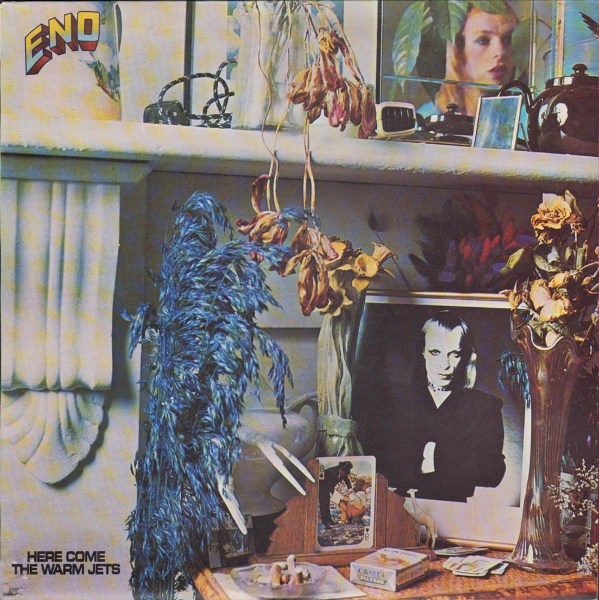
CULT CLASSIC: BRIAN ENO-HERE COME THE WARM JETS.
Cult Classic: Brian Eno-Here Come The Warm Jets.
For Brian Eno, 1973 was the year the second chapter in his career began as he had just left Roxy Music after touring their sophomore album, For Your Pleasure. By the end of the tour, he had realised the life of a rock star wasn’t for him. He found the life of a rock star tedious. The constant touring, and spending half his life either on stage, or in an anonymous hotel room, wasn’t for Brian Eno. Then there were the disagreements with Roxy Music’s flamboyant frontman, Bryan Ferry. All this meant that Brian Eno’s time with Roxy Music was at an end. This however, was a huge decision.
Leaving Roxy Music was a brave and controversial decision for Brian Eno. Roxy Music were one of the most successful British bands of the early seventies. However, Brian Eno’s creativity was being stifled. He felt that he had much more to offer music. Having toured For Your Pleasure, a frustrated and restless Brian Eno left Roxy Music, and embarked on a solo career.
Having left Roxy Music, straight away, Brian Eno began work on his debut album Here Come The Warm Jets. It’s best described as a fusion of art rock, avant garde, experimental and glam rock. Here Come The Warm Jets was an innovative album from Brian Eno.
Freed from the shackles of Roxy Music, Brian Eno wrote six songs for what became Here Come The Warm Jets. He also cowrote four other tracks. He penned Needles in the Camel’s Eye and Cindy Tells Me with ex-Roxy music colleague, Phil Manzanera. Brian and King Crimson founder Robert Fripp cowrote Blank Frank. The other track on Here Come The Warm Jets, was Some Of Them Are Old. It was a collaboration between Brian, Paul Thompson, Busta Jones and Nick Judd. These ten tracks became Here Come The Warm Jets, which was recorded over twelve days in September 1973, at Majestic Studios, London.
When recording of Here Come The Warm Jets began at Majestic Studios, London, Brian Eno was accompanied by the great and good of British rock. Over twelve days in September 1973 at Majestic Studios, London, Brian, and sixteen guest musicians recorded the ten tracks that became Here Come The Warm Jets.
Joining Brian Eno for recording of Here Come The Warm Jets, were some of biggest names in music and some of the top session players. This included guitarists Robert Fripp of King Crimson, Roxy Music’s Phil Manzanera, Chris Spedding and Paul Rudolph. Lloyd Watson, who had opened for Roxy Music and King Crimson played slide guitar. Bassists included John Wetton of King Crimson and Family, Chris Thomas, Busta Jones and Bill MacCormick. Keyboardists included Roxy Music’s Andy MacKay, Nick Judd and Nick Kool and the Koolaids. Percussion came courtesy of Simon King, Marty Simon and Paul Thompson, who was then the Roxy Music drummer. Sweetfeed added the all important backing vocals on On Some Faraway Beach and Blank Frank. Brian Eno produced Here Come The Warm Jets, added vocals and played guitar, synths and keyboards. Once Here Come The Warm Jets was completed later in September 1973, Brian Eno was ready to release his debut album.
On its release in January 1974, Here Come The Warm Jets was mostly well received, by critics. Reviews ranged from favourable to positive. There were some contrarian critics, namely Rolling Stone. However, since then, Here Come The Warm Jets has been reappraised by a new generation of critics. They realised that Here Come The Warm Jets was an ambitious, innovative album. As a result, Here Come The Warm Jets is now regarded as a classic album, one that shows what Brian Eno, freed from the restraints of Roxy Music was capable of. However, the record buying public didn’t seem to “get” Here Come The Warm Jets.
When Here Come The Warm Jets was released in January 1974, it only reached number twenty-six in the UK and number 151 in the US Billboard 200. This must have been a disappointment for Brian Eno who previously, had been part of one of the most successful British bands of the early seventies. Belatedly, however, Here Come The Warm Jets record buyers recognised the quality of music on Brian’s debut album. Here Come The Warm Jets, Brian Eno’s debut album was the album he had been longing to make.
Needle In The Camel’s Eye opens Here Come The Warm Jets. It’s a guitar driven, explosion of energy. From the get-go, a wall of joyous, melodic and hook laden music assails you. As guitars drive the arrangement along, drums pound urgently. The guitars are panned left and right. They surround and assail you. Meanwhile, Brian Eno delivers the vocal with energy and enthusiasm. Later, as his vocal drops out, a sixties influenced guitar solo takes centre-stage. It toys with the listener, before Brian and his all-star band kick loose during the rest of this anthemic track.
Listening to The Paw Paw Negro Blowtorch, it’s obvious that this track influenced David Byrne’s Talking Heads. This is the case from the moment Brian Eno’s delivers a vampish, flamboyant vocal. He’s accompanied by chiming, funky and searing guitars, the rhythm section and harmonies. Later, a myriad of futuristic, sci-fi sounds and a piano adds to what’s an ambitious and innovative track that spawned a thousand imitators.
Urgent and dramatic describes the ominous, slightly sci-fi introduction to Baby’s On Fire. Again, Brian Eno’s vocal is vampish. It’s as if each track is a short story, and he’s playing a starring role. As a result, he adapts his vocal to suit each song’s lyrics. Keyboards, the rhythm section and sci-fi sounds join a searing, bristling, scorching guitar solo from Robert Fripp. He steals the show, wielding his guitar like a musical wizard. This adds a healthy dose of drama to what, thanks to Robert’s guitar, and earlier, Brian Eno’s vocal, is an epic track.
Cindy Tells Me has a vintage sound, one that brings back memories of a musical era. Think late fifties, early sixties. However, this being Brian Eno, he gives the music of the past a makeover. Stabs of piano and cooing harmonies join Brian Eno’s vocal. It veers between wistful to ironic. Sometimes, seems to mock, even pity those he’s singing about. Above his vocal, washes of guitar are akin to musical vapour trails. They’re joined by angelic, ethereal harmonies. They prove to be the finishing touch to what’s a fusion of music’s past, present and future.
Driving Me Backwards has an almost Bowie-esque sound. However, it’s taken further than before. Brian Eno’s impassioned, soul-baring vocal is accompanied by a piano which is bathed in effects. Meanwhile, guitars reverberate, a bass buzzes and drama abounds. The result is a track that’s moody, broody and given that it paints pictures in your mind’s eye, cinematic.
Just a lone piano and ethereal harmonies combine on On Some Faraway Beach. In the distance drums and keyboards and a searing guitar plays. As the arrangement grows, they almost overpower the piano. Almost but never quite. Instead, and like Brian Eno’s tender vocal they compliment what’s already beautiful, dramatic arrangement.
Blank Frank is very different from the previous track. They’re polar opposites. Raw power and nihilistic describes Blank Frank. Brian Eno delivers a snarled vocal tinged with irony and anger. Meanwhile his band play loosely and with aggression. They almost attack their instruments. Guitars growl, while keyboards and drums are pounded. Soon, the track becomes a captivating jam. However, the aggression and anger of Blank Frank might well have played a part in inspiring punk two years later.
As drums and a piano play, you wonder where what direction Brian Eno will take Dead Finks Don’t Talk. Against a backdrop of drums and piano, Brian sounds like a preacher delivering an ironic, spoken word vocal. It soon changes, becomes a tender, thoughtful vocal. He’s accompanied by howling backing vocals. Then when they drop out, a blistering guitar solo is unleashed. It’s replaced by handclaps and Brian’s chameleon like vocal. It veers between tender, thoughtful, comedic and ironic on what’s best described as a mixture of music, theatre and comedy.
Straight away, Some Of Them Are Old has wistful, melancholy sound. Just an organ and deliberate harmonies accompanies Brian Eno on what’s a beautiful, wistful and lysergic track.
Here Come The Warm Jets closes with the title-track. Guitars bathed in effects, accompany the driving rhythm section and keyboards. Later, they’re joined by harmonies. They’re responsible for a driving, everyman, anthem.
Just ten months after leaving Roxy Music, Brian Eno released Here Come The Warm Jets, his much anticipated debut album in January 1974. Here Come The Warm Jets was well received upon its release. Reviews ranged from favourable to critically acclaimed. Despite that, Here Come The Warm Jets only reached number twenty-six in the UK and number 151 in the US Billboard 200. This must have been a disappointment for Brian, who previously, had been part of one of the most successful British bands of the early seventies. Belatedly, however, Here Come The Warm Jets record buyers recognised the quality of music on Brian Eno’s debut album.
Here Come The Warm Jets is best described as a fusion of art rock, avant garde, experimental and glam rock is considered one of Brian Eno’s finest albums. Belatedly, this genre defying cult classic is starting to find a wider audience. No wonder as it’s an ambitious and innovative album. This was the album Brian Eno had been longing to make. However, as a member of Roxy Music this wasn’t possible.
Here Come The Warm Jets was a step too far from the music Roxy Music released. They couldn’t risk releasing an album like Here Come The Warm Jets, so early in their career. That would risk everything Roxy Music had worked towards. So, the only alternative for Brian Eno was to leave Roxy Music, the group he co-founded. Roxy Music had just made that all important commercial breakthrough, and were the critic’s darlings. That was a lot to sacrifice. Brian Eno however, was willing to make that sacrifice. It paid off.
Between 1974 and 1983, Brian Eno could do no wrong. He was one of the most innovative musicians of his generations. This run of critically acclaimed albums continued with his sophomore album Taking Tiger Mountain (By Strategy), which was released in November 1974. While Taking Tiger Mountain (By Strategy) wasn’t a commercial success, critical acclaim accompanied its release. That was the case from 1975s Another Green World and Discreet Music, to 1977s Before and After Science and 1978s Music For Films, which is another classic album. After that, Brian embarked upon a string of innovative albums. This includes 1982s Ambient 4: On Land, 1983s Apollo: Atmospheres and Soundtracks and then 1983s More Music For Films. This was one of the most fruitful periods of Brian Eno’s career.
Ten years after leaving Roxy Music, Brian Eno wasn’t just enjoying a solo career. He collaborated with a wide range of artists and had reinvented himself as a successful producer. His decision to leave Roxy Music had paid off.
While Brian Eno didn’t enjoy the same commercial success as a solo artist, as he would’ve with Roxy Music, Brian Eno’s self respect was intact and he was making music he believed in. Much of this music was groundbreaking, innovative and influential. This includes his groundbreaking debut album Here Come The Warm Jets, where freed from the shackles of Roxy Music, Brian Eno embarked upon the start of a long and illustrious solo career.
Cult Classic: Brian Eno-Here Come The Warm Jets.
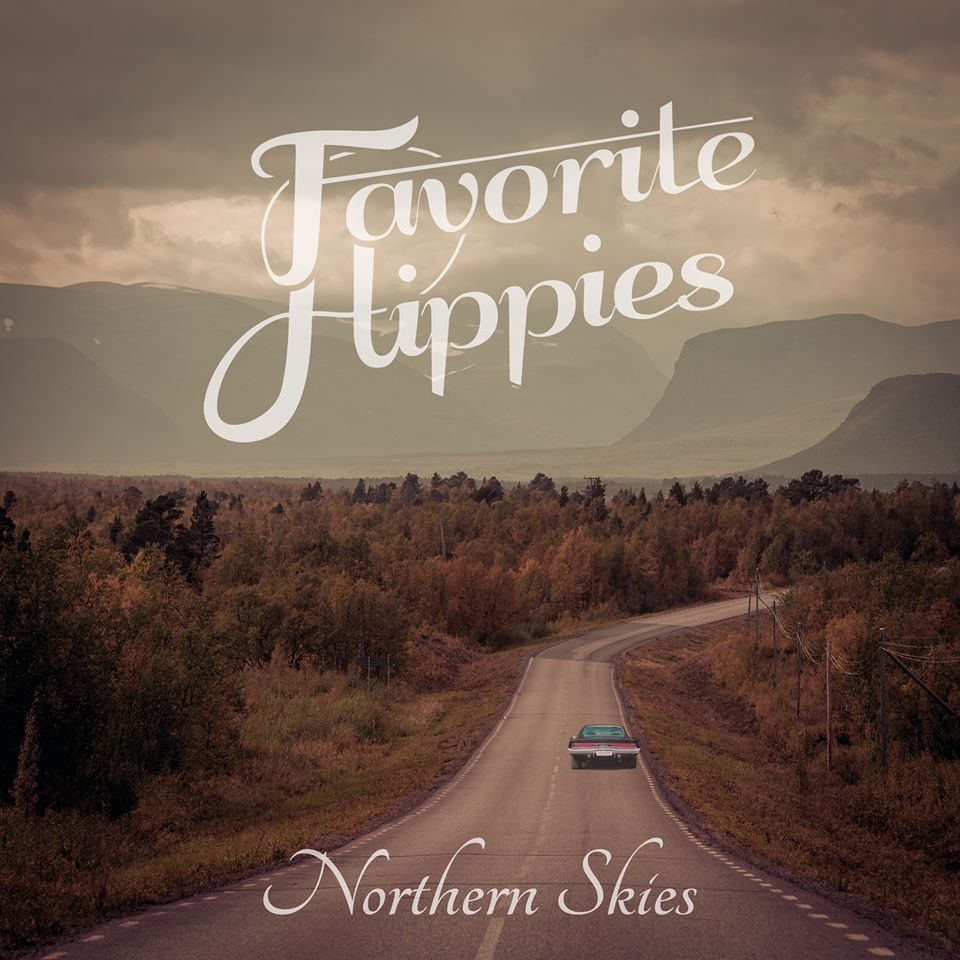
FAVORITE HIPPIES-NORTHERN SKIES.
Favorite Hippies-Northern Skies.
Release Date: ‘28th’ March 2020.
Album Of The Week.
Just over four years after the release of their critically acclaimed sophomore album Love is Hard in early 2016, Favorite Hippies, who are one of the top Swedish alt-rock and Americana bands, returned with their much-anticipated and long-awaited third album Northern Skies. It’s been available to stream and download since early 2020. However, on the ‘28th’ March 2020 Northern Skies will be released on vinyl and showcases the considerable talents of the Favorite Hippies. They’ve come a long way in just ten years.
In 2010, guitarist, songwriter and charismatic frontman Örjan Mäki found himself with some free time between his regular gigs. That was when he decided to found a side project that became the Favorite Hippies.
Back then, Örjan Mäki who is from Kaunisvaara, in the far north of Sweden , was already a familiar face in the vibrant Swedish scene. The talented, inventive and versatile roots guitarist was a member of the renowned Willy Clay Band and had already played alongside artists like Chip Taylor, Doug Seegers and Will Kimbrough. Although he enjoyed being part of a band and working as a sideman, Örjan Mäki wanted to develop and showcase his skills as a singer, songwriter and guitarist. That was when he hit on the idea of a founding a new band, and the Favorite Hippies was born.
In the new band, Örjan Mäki was able to take centrestage, playing lead guitar and took charge of the vocals. He was already a gifted songwriter and when he sang, he became a storyteller who painted picture with his lyrics. Meanwhile, the rest of the Favorite Hippies proved the perfect foil for him as they combined disparate musical genres including alt-rock, Americana and roots rock. The new band were on their way.
Three years after founding the Favorite Hippies, they released their debut album Sidekick Stories in 2013, on Rootsy Records. It was released to critical acclaim and great things were forecast for the band.
They headed out on tour to promote Sidekick Stories. However, not long after the release of Sidekick Stories, the Favorite Hippies decided to relocate, and headed to rural idyl just outside of Stockholm. This resulted in a change in the band’s lineup. For many bands, this could’ve proved disastrous, but the Favorite Hippies regrouped and became a stronger and tighter band.
By 2015, this new lineup of the Favorite Hippies were ready to record their sophomore album.They had honed their sound by touring and were more than ready to lay down the tracks that became Love Is Hard.
When the Favorite Hippies released their much-anticipated Love Is Hard in early 2016, it was to the same critical acclaim as their debut Sidekick Stories. Critics and fans agreed that the album was well worth the wait, and were looking forward to the followup.
After the release of Love Is Hard, the Favorite Hippies headed out on the road to promote the album. They were now used to touring and doing the hard miles as they traversed Sweden, Denmark and Finland promoting Love Is Hard which was hailed as their finest album to date.
When the Favorite Hippies returned to the studio to record the followup to Love Is Hard, the lineup included the tight and talented rhythm section of Zacharias Ahlvik and bassist Morgan Korsmoe. While Örjan Mäki played lead guitar and took charge of lead vocals, his nephew Johan Mäki. They form a formidable partnership on Northern Skies which wasn’t the easiest album to record.
It took a while before the Favorite Hippies were happy with the sound of the nine songs on Northern Skies. Forever the perfectionists, their perseverance and dedication was worthwhile and resulted in a career-defining album.
There’s something for everyone on the Favorite Hippies’ carefully crafted third album Northern Skies. It was released to earlier in 2020, and finds the Favorite Hippies switching between and fusing disparate genres. The majority of these genres’ roots are in the deep South.
They’re part of what’s an eclectic collection of songs from a tight, talented, rocking band who in the space of nine songs switch between alt-rock, and sentimental sounding classic country to guitar driven Southern Rock to R&B and roots music which is the basis for the album.
Örjan Mäki explains: “All our songs still derive their common ground in roots music from the American south. I bet you all can quite easily figure out who our musical heroes are. This is just our interpretation of their legacy; American roots music in a Northern Scandinavian fashion. I’ve reached that certain age where you find a soothing self confidence to write music and stories that you’d like to listen to yourself, I simply don’t have to please anyone else..If i felt like quoting Joe Hill in a raging outcry, or singing a melancholic story about a father and his grown-up son, I’ve just gone all in and let it end up on the same record. And this time around we’ve definitely let the lyrical content guide the musical vibe of each and every song.”
Favorite Hippies kick loose on the album opener In The Back Seat Of A Beat Up Ford Back In Nineteen Seventy Eight. They’re a tight talented group who have done the hard miles over the last ten years, and from the opening bars seamlessly combine good time rock ’n’ roll, Southern Rock and Americana. There’s more than a nod to the Rolling Stones, while frontman Örjan Mäki sounds uncannily like Neil Young in his prime on one of the best tracks I’ve heard in a long time. It sets the bar high for the rest of the album.
The tempo drops on Speak Of Peace, as a harmonica and acoustic guitar combine before Örjan Mäki showcases his skills as a songwriter and storyteller. His vocal is lived-in and emotive as he paints picture with the lyrics. Meanwhile, the rhythm section anchor the arrangement as the wistful harmonica and guitar on this melodic and memorable song.
It’s all change on Tears In Her Tip Jar, which is a beautiful and heart-wrenching country ballad. Örjan Mäki who again, sounds like Neil Young in the seventies, delivers the sentimental and cinematic lyrics. Meanwhile the rhythm section, jangling piano and weeping pedal steel provide the perfect backdrop to a track that tugs at the heartstrings and sounds as if it was recorded in Nashville, not Sweden.
Pick and Strum was rebased as the lead single from Northern Skies. It’s a jaunty sounding fusion of Americana and country about a reluctant soldier. All he wants to do is Pick and Strum, which the Favorite Hippies do with aplomb on what’s one of the album’s highlights.
The tempo drops, on the moody, thoughtful sounding Wolf Hour. It features some blistering guitar licks before Örjan Mäki’s lived-in vocal enters. He’s a talented storyteller who paints pictures as he delivers a needy, emotive vocal. Later, drums provide the heartbeat and then pound adding drama, as searing guitars combine as the Favorite Hippies join forces and showcasing their considerable talents. Adding the finishing touch to this seven minute epic is a soul-baring vocal that bristles with emotion.
As the rocky sounding Organise unfolds, the guitars combine with the rhythm section and washes of swiping organ. Örjan Mäki delivers a powerhouse of a vocal as scorching guitars are unleashed and thunderous drums pound. The four members of the band morph into one on this irresistible fusion of Southern Rock and R&B. It’s a glorious a reminder of what rock music used to sound like.
I Need A Rocker explodes into life and is a slice of good time rock ’n’ roll that brings to mind The Killer, Jerry Lee Lewis. Favorite Hippies transport the listener back in time on this irresistible sounding track that’s guaranteed to get any party started.
The tempo drops on Perfect Timing, where alt-country guitars combine with the rhythm section complete with slow, pounding drums before it’s all change. Just Örjan Mäki’s wistful vocal and a strummed guitar combine, and this contrast prove effective. Soon, though, the arrangement builds and the rhythm section and guitars are added and. occasionally, Favorite Hippies sound like Wilco. Both bands have something in common, lead vocalists who can breath life, meaning and emotion into lyrics like Örjan Mäki does here.
Closing Northern Skies is the title-track which is quite different to other tracks. The arrangement is spacious and is allowed to breath as the Favorite Hippies taking a less is more approach. Just a guitar, bass, drums and harmonica combine with Örjan Mäki’s heartfelt vocal as he sings to his son on this quite beautiful slice of bluesy and sentimental sounding Alt-country music. It’s the perfect way to end the album.
Four years after the release of their critically acclaimed sophomore album Love Is Hard, Favorite Hippies return with their much antiquated third album Northern Skies. It finds the talented quartet switching between alt-country, Americana, country, good time rock ’n’ roll, R&B and Southern Rock. There’s even diversions via alt-rock and elements of blues as they showcase their considerable skills on Northern Skies.
It features a series breathtaking performances and is an almost flawless album. There’s a reason for this. Rather than record twelve to fifteen songs, Favorite Hippies recorded just nine tracks for Northern Skies and every one of these carefully crafted tracks is of the highest quality. They’re part of Northern Skies, which is a career-defining album from the truly talented and versatile Favorite Hippies.
Favorite Hippies-Northern Skies.
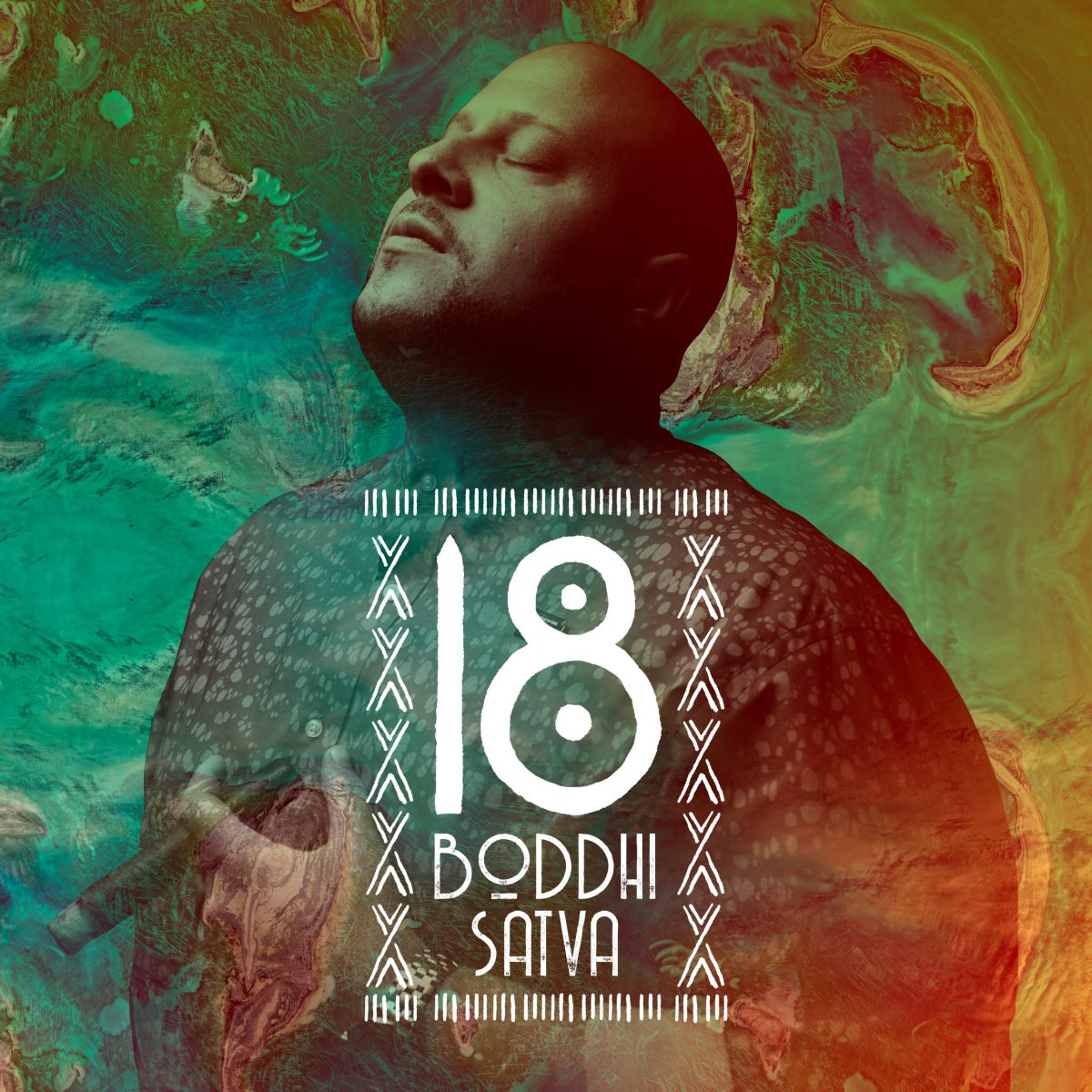
BODDHI SATVA-18.
Boddhi Satva-18.
Label: BBE Music.
Release Date: ‘20th’ March 2020.
Boddhi Satva was born and spent much of the the early part of his life in Bria in the Eastern part Central African Republic. Soon, he was immersed in music, and spent his time writing, rapping and producing with the hip hop crew the Gbekpa Crew, which he had founded with his friends. Although Boddhi Satva enjoying being an integral part of the local music scene he wanted his music to be heard much further afield.
When he headed to Belgium in 2000 to continue his studies, his dream of his music reaching a wider audience came true. That was where he discovered something that he quickly became passionate about,…deep house music.
Now that he had discovered deep house, Boddhi Satva started immersing himself in the music. Quickly, he discovered the giants of the deep house scene including Kevin Yost, Alton Miller, Osunlade and Masters At Work who were soon, among his favourites artists.
Having discovered deep house, Boddhi Satva wasn’t content to just listen to the music and dance to it. Instead, he wanted to make a career out of the music he loved. He decided to embark upon a career as DJ and producer. DJ-ing and producing was how Boddhi Satva was going to earn a living.
That is still the case today. Twenty years later and Boddhi Satva, the founding father of Ancestral Soul, founder of Offering Recordings and one of the pioneers of modern day African music will release a retrospective double album 18, on BBE Muisc on the ‘20th’ March 2020. It features nearly two decades of innovative music.
In 2006, Boddhi Satva had been working as a DJ and producer for six years when he released his first solo project for Yoruba Records, Bria’s Offering. It was a tribute to Bria, the city he grew up and started making music. This was the first of a number singles and EPs Boddhi Satva released on Yoruba.
This included two EPs with Alton Miller in 2006. The pair collaborated on the See The Day EP. For Boddhi Satva this was a dream come true as Alton Miller was one of his favourite deep house producers and one the artists who inspired him to be embark upon a career as a DJ and producer, and had be inspired him to make a career out of the music he loved. This was Alton Miller who collaborated on two EPs with Boddhi Satva.
Already Boddhi Satva was receiving recognition from his peers in the music industry. Quickly, he established a reputation as a talented producer, one capable of producing music that had an uplifting quality. He was already in demand as a remixer and producer. The next step would be for Boddhi to start his own label, Offering Recordings.
Having established Offering Recordings, Boddhi set about releasing quality music, music that was uplifting, had a spiritual quality and carried a message
By 2007, Boddhi Satva had already established a reputation as a talented and imaginative remixer. The Boddhi Satva Ancestral Soul Mix of God Is Love by DJ Pippi vs. Danny Marquez feat. Marcel was released by Bubble Soul Music and showcased his talents as a remixer and his trademark sound.
The flowing year, 2008 was a busy one for Boddhi Satva and two tracks from that year feature on 18. This includes the timeless sounding Manda Island, a track from Afefe Iku’s album Artifacts Of Pottery Vessels. It was released on Osunlade’s Yoruba Records. So was Gabriele Poso’s album From The Genuine World which featured Until Our Work It’s Done. After the album was released, the Genuine Remixes EP was released and featured Boddhi Satva’s Ancestral Remix of Until Our Work It’s Done. It’s the highlight of the EP and is a truly memorable remix.
2009 was another busy year for Boddhi Satva, who was busy producing his own music and remixing. He released Big Theme on his own label Offering Recording, which was inspired by the Kenny Dope track No Hook. That’s certainly not the case here. Boddhi Satva remixed Jay Tripwire’s Into The Shadows and his Ancestral Soul Remix was a dancefloor filler.
Another of his remixes from 2009 was V’s Born Again. This time, Boddhi Satva and Mr. V joined forces for the Retouch of Born Again. When Mr. V played the track to Louie Vega who in turns played it to Pete Adarkwah from BBE Music wo released the track. This was the start of a relationship that has continued for over a decade.
Meanwhile, Boddhi Satva had established and was running his own label Offering Recordings. This didn’t stop Louie Vega, from Masters At Work signing Boddhi Satva to his label in 2010. This was one of the people who inspired Boddhi Satva, and had fuelled his love of house music.
Louie Vega was by now a Grammy Award winning producer and owner of Vega Records and started introducing everyone to Boddhi Satva’s music. From Miami’s World Music Conference, to London’s Ministry of Sound and everywhere from Amsterdam to Ibiza, music lovers and music industry insiders were introduced to Boddhi Satva and his music.
In 2011, Boddhi Satva’s continued to divide his time between DJ-ing, production and remixing. He was asked to remix Wake With The Day by Koyla featuring Zaki Ibrahim. The Boddhi Satva Afriki Soul Mix takes the song in new and sometimes unexpected directions and showcases a talented and inventive remixer at work.
Later in 2011 Boddhi Satva and Abel Tabu’s Moina Ya Mokili EP was released on Atal Music. The title-track was the first song to feature a vocal from Boddhi Satva. He and Abel Tabu drew inspirations from their respective backgrounds and cultures to create a a powerful, but dancefloor friendly track. It was the perfect way to end the year.
Three months later, in March 2012, Boddhi Satva released Invocation to critical acclaim on BBE Music. It was a truly eclectic collection of disparate music spanning Nu Soul, African Roots and ragga, all with Boddhi Satva’s own unique sound. It recorded during visits to Africa and features Oumou Sangare, Vikter Duplaix, C. Robert Walker, Freddy Masamba Leslie Kisumuna and Pegguy Tabu. They played their part in an album of uplifting, inspirational and beautiful music, music that crosses and fuses the musical genres.
Followup the release of Invocation, Boddhi Satva returned with the Ode To Ancestral Healing later in 2012 on Offering Recordings. It featured Yuba who can be heard on the spiritual sounding The Depth Of The Source. It’s a welcome addition to 18 and is a reminder of where Boddhi Satva was as a composer, arranger and producer in 2012.
Three years later, and Boddhi Satva released his sophomore album Transition on his own label Offering Recordings. It featured Mama Kosa where Boddhi Satva collaborated with Kaysha. However, one of the highlights of the album was the opening track Papa, which he multitalented and versatile Boddhi Satva who cowrote, arranged, mixed and produced Papa. The song features vocalist Mohamed Diaby who delivers a heartfelt vocal on this beautiful and emotive Boddhi’s late father.
In 2016, Boddhi Satva released Sweet Brown Sugar on Offering Recordings. This was another of his compositions which he also arranged and produced. It features another of Boddhi Satva’s house music heroes E-Man. Yet again, he was getting a chance to work with the people who had inspired him musically.
During 2017, Boddhi Satva who has long been passionate about Gwana music and culture had to travel to Casablanca, in Morocco, where he collaborated with Maalem Hammam on four tracks. This included Belma Belma, a tribute to Gwana culture and spiritually. Belma Belma is also the combination of the colours that known and used for healing purposes in Gwana culture.
Another track Boddhi Satva released in 2017 was Ni An Bagay, which he cowrote with David Walters. It was mixed and produced by Boddhi Satva and released on Offering Recordings’ founder and released in 2017. It’s a welcome addition to 18 and shows how Boddhi Satva’s music was evolving by 2017.
Closing 18 is Kanga Mu a collaboration between Boddhi Satva and Spilulu that features H-Baraka’s vocals. They play their part in what was one of Boddhi Satva’s biggest club hits. By then, Boddhi Satva Kanga Mu had come a long way since his early days in Belgium when he decided to embark upon a career as a deep house DJ and producer. It was a gamble, but one that had paid off.
Twenty years after embarking upon his career as a deep house DJ and producer, BBE Music will release 18, a two disc retrospective focusing on the first two decades of Boddhi Satva’s career on the on the ‘20th’ of March 2020. It features seventeen tracks and covers the period between 2006 and 2018.
During this period, Boddhi Satva has gained a reputation as a talented, inventive, innovative and versatile producer and remixer. He’s regarded as the founding father of Ancestral Soul and is one of the pioneers of modern day African music. Boddhi Satva has also run his own label Offering Recordings for over a decade and released music for the soul, music that helps people forget their worries, fears and pain. Although Boddhi has an almost unique take on music, he doesn’t forget that the music he’s producing is for people to dance to. That is no surprise, as deep house was what inspired him to embark upon a career as a producer.
This is something that Boddhi Satva was born to do, and for twenty years has created music that crosses and often fuses disparate musical genres. During that period, he’s created his own trademark sound, Ancestral Soul . It’s what we’ve come to expect from Boddhi Satva.
Two decades after the founding father of Ancestral Soul, embarked upon a career as a DJ and producer Boddhi Satva is still making music that is dancefloor friendly and also uplifting, joyous, inspirational, beautiful, powerful and spiritual and 18 is the perfect introduction to his music.
Boddhi Satva-18.
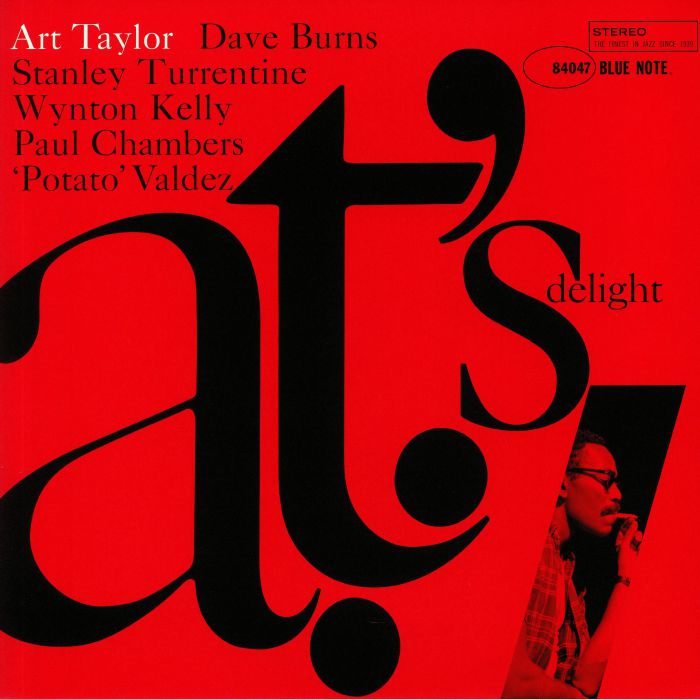
ART TAYLOR-A.T.’S DELIGHT.
Art Taylor-A.T.’s Delight.
Label: Blue Note Records.
One of the most influential drummers in the history of jazz is Art Taylor, who was born in New York, on the ‘6th’ of April 1929, and as a teenager, played in a local Harlem-based band that featured pianist Kenny Drew and saxophonists Sonny Rollins and Jackie McLean. Each of these young musicians would enjoy a successful career in jazz, and record for Blue Note Records.
Art Taylor only released one album for Blue Note Records, A.T.’s Delight in 1960. It was was recently reissued and is a reminder of the man who “helped define the sound of modern jazz drumming,” Art Taylor.
In 1948, nineteen year old Art Taylor joined Howard McGhee’s band. This was akin to a musical apprenticeship as Art Taylor played alongside one of the first bebop trumpeters.
As the fifties dawned, Art Taylor joined Coleman Hawkins band. Just like Howard McGhee, the Hawk was an inventive and innovative musician who forged his own sound. Although Art Taylor was only the Hawk’s drummer until 1951, it was another learning experience.
Having left the Hawk’s employ, Art Taylor joined bebop clarinetist Buddy DeFranco’s band in 1952. He was regarded as the finest jazz clarinet player and once again, Art Taylor was playing alongside top musicians. However, a year later, he was on the move again.
Art Taylor joined jazz pianist Bud Powell’s band for the first time in 1953. By then, Bud Powell was a hugely influential musician who nowadays, is credited with being a leading figure in the development of modern jazz. Once again, Art Taylor who was still only twenty-four was learning from the best and made his recording debut in 1953. He would feature on twelve albums Bud Powell released between 1953 and 1958, including five for Blue Note Records. However, in 1954 Art Taylor moved on.
In 1954, Art Taylor playing in George Wallington and Art Farmer bands, before returning to Bud Powell’s employ in 1955. Still, Art Taylor was a member of George Wallington’s band until 1955.
That year, 1955, Art Taylor played on Elmo Hope and Frank Foster’s album Hope Meets Foster. This was the start of a prolific period when the recording studio became a second home for Art Taylor.
The following year, 1956, was an important year for Art Taylor. As sideman, he played on the first of eleven Red Garland albums released between 1956 and 1961, and the first of twelve Gene Ammons solo albums released during the same period. He also joined Jackie McLean for the first time, and played on nine albums released between 1956 and 1960. Prolific seemed to be Art Taylor’s middle name.
During 1956, Art Taylor could be heard on a number other albums. This included two albums released by Thelonious Monk; Matthew Gee’s Jazz By Gee; Kenny Burrell’s All Night Long; Horace Silver’s Silver’s Blue; Lee Morgan’s Introducing Lee Morgan and Donald Byrd and Art Farmer’s collaboration 2 Trumpets. Although Art Taylor was still only twenty-seven, he was quickly becoming the go-to drummer for many jazz mucicians given his talent, versatility and inventiveness.
Art Taylor had also joined Gigi Gryce in 1956, and featured on five albums released between 1956 and 1958. The same year 1956, he formed his own band Taylor’s Wailers and also joined Donald Byrd’s band. Art Taylor would spend six years touring and also recording with Donald Byrd between 1957 and 1963. By then, Art Taylor was a respected figure and always in demand as a sideman.
1957, was a significant year for Art Taylor, who was now working with some of the giants of jazz. He was touring with Thelonious Monk, and in 1957, featured on Miles Davis album Miles Ahead. Art Taylor was part of John Coltrane’s band and featured on thirteen albums released between 1956 and 1964. This meant that Art Taylor featured on 1958s Soultrane, 1959s Giant Steps and 1964s Bahia. However, Art Taylor played on many more albums during the late-sixties.
When jazz fans looked at the credits on a number of albums released during 1957, often the drummer was Art Taylor. He played on Kenny Burrell’s All Day Long and 2 Guitars; Paul Chambers’ Bass On Top; Sonny Clark’s Sonny’s Crib; Pepper Adams’ Baritones and French Horns; Milt Jackson’s Bags and Flutes; Thad Jones’ After Hours;Toots Thielemans’ Man Bites Harmonica; Ernie Henry’s Presenting Ernie Henry; Sahib Shihab’s Jazz Sahib; Julius Watkins; Clifford Jordon’s and Charlie Rouse‘s Les Jazz Modes and two releases by Lee Morgan’s City Lights and Candy. Art Taylor was also a member of The Prestige All Stars on Interplay For 2 Trumpets and 2 Tenors. By then, he was still just twenty-eight and had come a long way.
Art Taylor had also released his critically acclaimed debut album Taylor’s Wailers, on Prestige in 1957. He had spent the best part of a decade as sideman, and had stepped out of the shadows on Taylor’s Wailers.
Despite that, 1958 saw Art Taylor return to working as a sideman, dividing his time between live work and spending time in the studio. Just like the last few years, Art Taylor featured on a number of albums released during 1958. He continued to work with Gene Ammons, Donald Byrd, Gigi Gryce John Coltrane and Red Garland. Art Taylor played on Dorthy Ashby’s two albums In A Minor Groove and Hip Harp; Kenny Bureell’s Just Wailin’; Dizzy Reece’s Blues In Trinity and Louis Smith’s Here Comes Louis Smith. However, the following year 1959, saw Art Taylor turn his attention to his solo career.
That was despite being busy working as a sideman for a growing number of jazz musicians live and in the studio. However, Art Taylor played on Clark Terry’s Top and Bottom Brass; Lem Winchester’s Winchester Special; Oliver Nelson’s Meet Oliver Nelson; Tiny Grimes’ Tiny in Swingville; Benny Golson’s Gettin’ With It; Arnett Cobb’s Party Time; Walter Davis Jr’s Davis Cup and Jimmy Cleveland’s A Map of Jimmy Cleveland. The other album Art Taylor recorded in 1959 was his much-anticipated sophomore album Taylor’s Tenors.
Just like his 1957 debut album Taylor’s Wailers, Taylor’s Tenors featured two of Thelonious Monk’s compositions, Rhythm-A-Ning and Straight, No Chaser. The album also featured the Art Taylor composition Dacor. This was a first for Art Taylor, whose album was released to plaudits and praise just like Taylor’s Wailers. However, Taylor’s Tenors was the last album Art Taylor released for Prestige. His next album A.T.’s Delight was released on Blue Note Records.
As the sixties dawned, there was no letup for Art Taylor as he continued to divide his time between his solo career and his work as a sideman. Before recording his third solo album and Blue Note Records’ debut A.T.’s Delight, on the ‘6th’ of August 1960, Art Taylor worked on Arnett Cobb’s More Party Time and Movin’ Right Along; Kenny Dorham’s Showboat; Ken McIntyre’s Looking Ahead; Julian Priester’s Spiritsville; Charlie Rouse’s Takin’ Care Of Business ; Johnny “Hammond” Smith’s Talk That Talk and Lem Winchester’s Lem Beat and Duke Jordan’s Flight To Jordan on the ‘4th’ of August 1960.
A.T.’s Delight.
Two days after recording with Duke Jordan’s on his fourth album Flight To Jordan, Art Taylor and his band made their way to Van Gelder Studio, in Englewood Cliffs to record A.T.’s Delight.
Joining drummer Art Taylor were bassist Paul Chambers, pianist Wynton Kelly, trumpeter Dave Burns, tenor saxophonist Stanley Turrentine and conga player Carlos “Patato” Valdes. They recorded six tracks with producer Alfred Lion.
For A.T.’s Delight, Art Taylor wrote Cookoo and Fungi, while the other five tracks were cover versions. This included John Coltrane’s Syeeda’s Song Flute; Kenny Clarke and Thelonious Monk’s Epistrophy; Denzil Best’s Move and two Kenny Dorham compositions High Seas and Blue Interlude. These six recordings became Art Taylor’s third album and Blue Note Records’ debut A.T.’s Delight.
When A.T.’s Delight was released to widespread critical acclaim later in 1960, and was hailed as the finest album of Art Taylor’s career. It was as if everything he had done had been working towards this one album.
A.T.’s Delight opens with Syeeda’s Song Flute, which was a John Coltrane’s composition from Giant Steps that hardly anyone covered. It’s reinvented and reinvigorated by Art Taylor and his band who take the track in a new direction. Playing starring roles are solos by Dave Burns’ trumpet and Stanley Turrentine’s tenor saxophone while Paul Chambers pizzicato bass returns to the melody in this bright, percussive and uplifting epic.
There was no surprise when Art Taylor’s covered Monk’s Epistrophy, which was originally called Fly Rite. It’s an atonal 32-bar tune in ABCB-form, where each member of the band enjoys their moment in the sun and showcases their considerable skills. This includes Carlos “Patato” Valdes’ whose congas compliment the drums as the arrangement bounds along during this homage to one of Art Taylor’s heroes Thelonious Monk.
As Move unfolds, the tempo rises and rhythm section power the arrangement along. There’s no stopping Art Taylor and the band who ensure the track swings and then some. Playing a starring role is trumpeter Dave Burns who steals the show with a barnstorming and blistering solo.
High Seas is a relatively simple but extremely effective 32 bar minor key theme. It finds Art Taylor’s drums and Paul Chambers bass power the pulsing arrangement along on this dark, bluesy and ruminative sounding track.
Cookoo and Fungi is the only Art Taylor composition on the album. When it eventually unfolds, it bristles with nervous energy before morphing into a calypso during the main theme. It’s akin to a trip on a musical roller coaster where it’s a case of expect the unexpected from Art Taylor and his band.
Closing A.T.’s Delight is the second Kenny Dorham composition Blue Interlude. It’s has a spacious arrangement that breezes along and later becomes dark and moody but still swings as this all-star band showcase their skills one last time.
A.T.’s Delight was the third of five albums that Art Taylor released during a career that spanned forty-seven years. For much of that time, Art Taylor was content to be a sideman and worked with the great and good of jazz. However, when he took centre-stage on his first three solo albums they’re a reminder of one of the best and most influential and inventive jazz drummers. Proof of that can be found on A.T.’s Delight, where Art Taylor comes of age as a solo artist on a flawless and truly timeless album that was the finest of his career.
Art Taylor-A.T.’s Delight.
UZELLI ELEKTRO SAZ 1976-1984.
Uzelli Elektro Saz 1976-1984.
Label: Uzelli.
By the early seventies, many Turkish people decided to move to other parts of Europe in search of a better life. Some headed to England and France, settling in large cities like London and Paris. Others headed to Germany, and in particular, Frankfurt.
Soon, Frankfurt like many other European cities had a burgeoning Turkish community. While they exiled Turks found the better life that they had been looking for, many of the Turkish community missed things that reminded them of home. That was until two brothers decided to open a shop in the early seventies.
This was the Uzelli brothers, who decided to open a shop in that would sell reminders of home to the Turkish community. At first, they sold carpets, tea glasses and works of art that would proudly adorn the walls of the exiled Turks’ homes. This all proved popular within the Turkish community. So did the music that the Uzelli brothers sold from their shop.
When the Uzelli brothers first started selling music in their shop, it proved hugely popular. Soon, members of the Turkish community were regularly making their way to the Uzelli brothers shop seeking the music that reminder them of home. This proved to be one of their most popular products. So much so, that the Uzelli brothers decided to dip their toes into the Turkish music industry.
Rather than just selling LPs and cassettes, the Uzelli brothers decided to form their own label in 1975. That was when Uzelli label was born. Little did the Uzelli brothers know that their nascent label would eventually become an international company.
Eventually, the Uzelli label would release 1,300 albums. At first, Uzelli’s albums were released on vinyl. By the mid-eighties, vinyl was no longer as popular so Uzelli started to release albums on cassette. This changed in the late-eighties, when there was a decline in popularity of cassettes. While this affected many Turkish record companies, Uzelli had realised CDs were the future, and opened a chain of record shops in Turkey. They were the latest addition to the Uzelli musical empire.
After a period of expansion, Uzelli owned warehouses and manufacturing plants in Turkey. The company had come a long way from the small shop in Frankfurt. What helped was that the Uzelli company wasn’t resistant to change. That was the case when the digital revolution arrived.
They were early adopters and nowadays, much of Uzelli’s back-catalogue is available digitally. Eventually, all of its Uzelli’s 1,300 album back-catalogue will be available digitally. Uzellia have continued to release albums and compilations to this day.
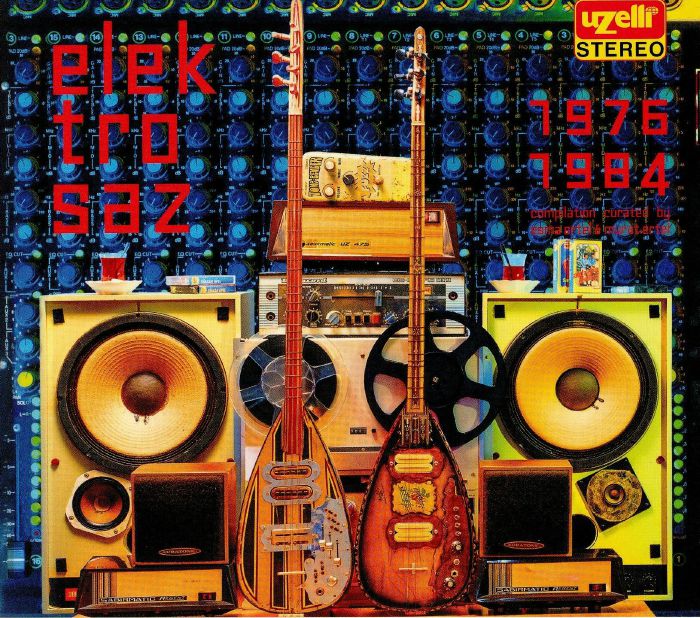
Their latest Uzelli release is a new compilation Uzelli Elektro Saz 1976-1984. It was curated by Murat Ertel, who is the lead singer and saz player of psych band BaBa Zula and his wife, Esma Ertel. They’ve chosen thirteen tracks from the Uzelli archives which features one of the most important instruments in Anatolian culture, the electric saz or bağlama.
Originally, the saz was an acoustic instrument and was one of the most significant instruments used in traditional Turkish folk music. It’s been around since 1400BC, when it was first used in the Anatolia region. It was named the saz by the Seljuks around the ‘11th’ Century, and the bağlama in the ‘18th’ Century and became a core instrument in Turkish folk music.
Just like in Britain and America, as folk music evolved, the instruments that musicians used started to change. In Britain and America, the electric guitar was used by the first wave of folk rockers. A similar thing happened in Turkey when musicians started using the electric saz.
It was essentially an updated and electrified version of what was by then Turkey’s most-used traditional string instrument, the saz. It plays an important part in Anatolian culture and previously, has been described as the “people’s instrument” and “the mouthpiece to rebellion.” Proof of this is the music on Uzelli Elektro Saz 1976-1984.
The compilation features an eclectic and exotic selection of tracks from the Uzelli archives. There’s something for on Uzelli Elektro Saz 1976-1984. This included psychedelic rock, popular music from the period and updated covers of traditional Turkish folk songs. The music veers between trippy, lysergic, spacey, otherworldly and dreamy to catchy, and irresistible to ruminative and wistful. Many of the tracks are the equivalent to time travel and take the listener back to Turkey between 1976 and 1984. It’s a captivating, intriguing and intoxicating collection of songs where the emphasis is on quality.
Choosing just a few of the highlight on a compilation as good as Uzelli Elektro Saz 1976-1984 isn’t easy. This includes Akbaba İkilisi’s rocky ballad Darildim Darildim, the exotic and cinematic Anatolian rock of Kina Gecesi Ensemble’s Misket and Sari Zeki’s beautiful, thoughtful sounding Topal.
While the emphasis is on the electric saz on the compilation, Sultan Sümbül’s Mercanlar and Gülcan Opel’s Yaz Dostum both feature impassioned and powerful vocals.
Sarı Zeki’s psych-folk jam Dom Dom Kursun is one of the standout tracks. So is Kina Gecesi Ensemble’s second contribution Ari Yildiz which features a peerless blistering and fleet fingered electric saz solo. However, it would be remiss not to include Asik Emrah’s lysergic, rocky and truly memorable sounding 20 Asrin Bozuk Duzeni which closes Uzelli Elektro Saz 1976-1984. It’s the perfect way to close this latest lovingly curated compilation from the Uzelli archives.
Uzelli Elektro Saz 1976-1984 features thirteen tracks released from a period that encompasses the heyday of vinyl and the beginning of cassette culture. Cassettes were something that Uzelli embraced during this period. For many Turkish music lovers was how they discovered and grew to love and appreciate the music that Uzelli released between 1976 and 1984.
The music on Uzelli Elektro Saz 1976-1984 still sounds as good in 2020, and has an timeless quality. Unlike a lot of music released during this period, the eclectic selection of music on Uzelli Elektro Saz 1976-1984 doesn’t sound dated. It’s stood the test of time and Uzelli Elektro Saz 1976-1984 is also a tantalising taste of the delights awaiting the newcomer to the Uzelli label. A musical feast awaits them, and Uzelli Elektro Saz 1976-1984 is the perfect amuse bouche.
Uzelli Elektro Saz 1976-1984.
BREAD, LOVE AND DREAMS-AMARYLLIS-VINYL.
Bread, Love and Dreams-Amaryllis-Vinyl.
Label: Magic Box.
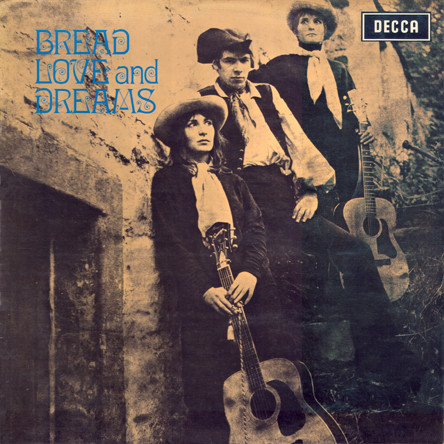
When Scottish acid folk trio Bread, Love and Dreams appeared at the 1968 Edinburgh Festival, David McNiven, Angie Rew and Carolyn Davis had no idea that the concert was going to transform their lives. In the audience that night, was Ray Horricks, a Decca Records staffer, who nowadays, is credited with discovering Bread, Love and Dreams.
They already had a loyal local following and were regarded as one of Scotland’s up-and-coming groups. It was no surprised when Bread, Love and Dreams were signed by Decca Records and went on to release three albums between 1969 and 1971. Their swansong was Amaryllis, which was recently released on vinyl by Magic Box.
Having signed to Decca Records, Ray Horricks took Bread, Love and Dreams to London, where they began work on their eponymous debut album. It featured mostly original material, apart from a cover of Artificial Light (Of All The Living Lies). The album was produced by Ray Horricks, with Ian Green writing, arranging and conducting the strings on Bread, Love and Dreams. Once the album was completed, it was scheduled for release in early 1969.
Bread, Love and Dreams.
Upon its release, Bread, Love and Dreams was well received by critics who noticed the similarities to another Scottish group who had influenced them, the Incredible String Band. On their eponymous debut album, Bread, Love and Dreams showcased their trademark acid folk sound on an album that featured several tracks with string arrangements. It was a carefully crafted album of acid folk that deserved to find a much wider audience. However, the problem was that there many other groups releasing similar albums and the album failed commercially.
This must have been a huge disappointment for the band given the quality of music on the album. Guitarist Carolyn Davis was so disappointed that she left the band. However, that wasn’t the only problem facing Bread, Love and Dreams.
After the commercial failure of Bread, Love and Dreams, Decca Records wanted to drop the band. However, Ray Horricks still believed in the band and went into back for them. This resulted in Bread, Love and Dreams being given a second chance by Decca Records.
Bread, Love and Dreams headed out on tour with Magna Carta and T Rex, and during their downtime, wrote new material for their sophomore album. That wasn’t all.
During this period, Bread, Love and Dreams began working with the Traverse Theatre Group in Edinburgh. Their director Max Stafford wanted David McNiven to adapt one of the songs he had written , Mother Earth, for the stage. It was performed to critical acclaim first in Edinburgh and then London, before heading to Scandinavia, the Benelux countries and Spain. This was the break that Bread, Love and Dreams had been looking for.
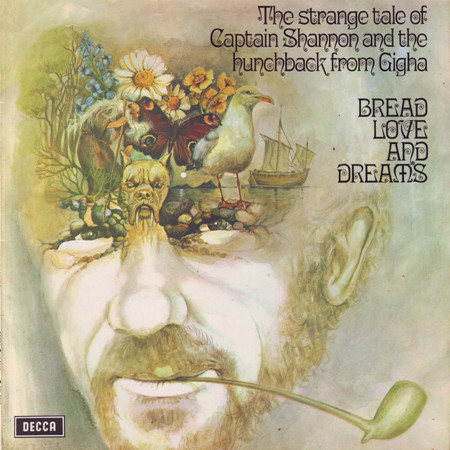
The Strange Tale Of Captain Shannon and The Hunchback From Gigha.
In the summer of 1970, Bread, Love and Dreams entered the studio to record a new album. They were joined by guest artists including drummer Terry Cox, Pentangle’s double bassist Danny Thompson, bassist Dave Richmond and organist and pianist Alan Trajan. Over a five day period, managed to record enough material for two albums.
The reason that Bread, Love and Dreams recorded two album’s worth of material was that they were scared they were about to be dropped by Decca Records.
Despite having enough material for their next two albums, Bread, Love and Dreams briefly considered releasing a double album like the Incredible String Band’s Wee Tam and The Big Huge. However, eventually, Bread, Love and Dreams decided to release two more albums, the first being The Strange Tale Of Captain Shannon and The Hunchback From Gigha.
When Bread, Love and Dreams released their sophomore album The Strange Tale Of Captain Shannon and The Hunchback From Gigha in 1970, it was to critical acclaim. The album feature the epic title-track which sounded as if it had been influenced by the Incredible String Band and Sucking On A Cigarette, which featured former guitarist Carolyn Davis. She played a walk-on part on an album that could’ve transformed the fortunes of Bread, Love and Dreams.
Sadly, when The Strange Tale Of Captain Shannon and The Hunchback From Gigha was released it failed commercially. This was a disaster for the two remaining members of Bread, Love and Dreams, and frustrated executives at Decca Records decided to rush release third album, Amaryllis.
Amaryllis.
In a way, Bread, Love and Dreams decision to record enough material for two albums backfired as the group knew that Amaryllis was the stronger and best album of their career.
David McNiven had written the three-part title-track, Amaryllis, Time’s The Thief and Circles Of Night. He also penned My Stair-Cupboard At 3 A.M. with Lindsay Levy. The other track on the album was Brother John which was written by Angie Rew, a talented songwriter and multi-instrumentalist.
Vocalist Angie Rew played guitar and percussion on Amaryllis, while David McNiven played guitar and added vocals. Augmenting Bread, Love and Dreams were drummer Terry Cox, double bassist Danny Thompson, bassist Dave Richmond plus organist and pianist Alan Trajan. Just like the two previous albums, Amaryllis was produced by Ray Horricks and released in 1971.
In their haste to release Amaryllis in 1971, Decca Records made two massive mistakes. The first was failing to promote the album properly. While this didn’t necessary mean the album was doomed to failure, failing to press enough albums was.
Ironically, Amaryllis was released to widespread critical and was regarded as their finest hour. Despite this, the album failed to even match the sales of Bread, Love and Dreams’ first two albums. This was because Decca Records had failed to press enough copies of Amaryllis, which had the potential to launch Bread, Love and Dreams’ career. Sadly, it wasn’t to be.
Side one of the album is taken up with Amaryllis, an ambitious three-part suite. Part. 1: Out Of The Darkness and Into The Night has a dark, mysterious and ruminative sound. Despite being released in 1971, there’s a flower power sound. There’s also acid guitar and beautiful folksy harmonies from Angie Rew and David McNiven as the song blossoms and Bread, Love and Dreams move Out Of The Darkness and Into The Night. The centrepiece of the first side was Part 2: Zoroaster’s Prophecy, an eleven minute epic that was inspired by religion and philosophy. Several songs are weaved into one by Bread, Love and Dreams to create this lengthy, imaginative and mysterious piece of modern musical folklore. It’s without doubt the album’s highlight. Closing side one is Part 3: Light, a truly beautiful, heartfelt, romanic and emotive song. Much of the success of the song is because of the way Angie Rew and David McNiven blend combines and creates another of the album’s highlights.
Opening side two is Time’s The Thief, a lovely folk ballad which is driven along by an acoustic guitar. Although Bread, Love and Dreams were often influenced by the Incredible String Band, here there’s a nod to Fairport Convention’s Song No. 5. Another beautiful folk ballad is My Stair-Cupboard, which hints at Sandy Denny’s Fotheringay and Pentangle which starred Danny Thompson who plays double bass on Amaryllis. Then on the wistful and ruminative sounding Brother John the hugely Angie Rew’s heartfelt and soul-baring plays a starring role as she paints pictures with the lyrics. Closing Amaryllis is Circle of Night which is the most traditional sounding folk song on the album. It’s also uplifting and irresistible and closes this oft-overlooked hidden gem of an album on a high.
On Amaryllis, Bread, Love and Dreams and friends fuse elements acid folk, traditional folk and progressive folk on what’s an album of quite beautiful, cerebral, emotive and sometimes romantic music. These tracks were part of a vastly underrated album that when it was released in 1971 deserved to find a much wider audience.
Sadly, that wasn’t the case. Decca Records’ failure to promote Amaryllis properly and then their failure to press enough copies of the album is an object lesson in how not to release an album. Ironically, Amaryllis was regarded as Bread, Love and Dreams’ strongest and best album and had the potential to transform their careers from also rans to acid rock contenders. Alas, that wasn’t to be for the band who many critics thought were about to follow in the footsteps of the Incredible String Band.
Following Bread, Love and Dreams’ presentation at the Royal Court Theatre in Edinburgh, executives at Decca Records decided to drop the band. The three albums that Bread, Love and Dreams recorded for the label were written down as a tax write off. It was a sad end to a musical adventure that began just three years earlier in 1968 and promised so much. However, Bread, Love and Dreams kept their finest album until last, and their ambitious and critically acclaimed opus Amaryllis, makes a welcome return thanks to a reisue by Magic Box on vinyl.
Bread, Love and Dreams-Amaryllis-Vinyl.

CULT CLASSIC: VOIGT/465-SLIGHTS UNSPOKEN.
Cult Classic: Voigt/465-Slights Unspoken.
The story of Voigt/465 is a case of what might have been. They were formed in Sydney, Australia in 1976, and spent the next three years trying to make a breakthrough. By May 1979, things were looking up for Voigt/465 and they looked on the verge of a breakthrough. Their single State was being played on radio in London and Sydney. Not long after this, Voigt/465 secured a residency in Sydney, and even embarked upon a short tour of Melbourne. Voigt/465 were playing better than ever before, and had built up a loyal following. Surely, nothing could go wrong?
Unfortunately it did. What started off as a discussions about the future direction of Voigt/465 resulted in bassist Lindsay O’Meara leaving the band. Given how important a part he was in Voigt/465’s sound, the rest of the band knew that they couldn’t continue without out him. Voigt/465 called time on their career, after being tantalizingly close to making a breakthrough.
Although it looked like had been consigned to musical history, discussions were taking place between the band members to reunite one last time. They wanted to document the life and times of Voigt/465. After much cajoling, the five band members agreed to record what became an album at Axtent Studios, in suburban Kogarah. That album was Slights Unspoken which was released on the Unanimous Weld Enunciations in 1979. Sadly, Slights Unspoken marked the end of the road for Voigt/465.
Things had looked very different, three years earlier in 1976, the year that punk arrived in Australia, and across the country new bands were being formed. Many were short-lived, and never came close to playing live, never mind recording a single. A few, including Voigt/465 went on to make their on the Australian music scene.
Voigt/465 was formed by a group of friends in Sydney in 1976. The original lineup of the band included bassist Lindsay O’Meara, guitarist Rod Pobestek, keyboardist and vocalist Phil Turnbull plus vocalist Rae Bryom. They had been inspired by the music of Can, Faust, Henry Cow, Pere Ubu, Slapp Happy, Syd Barrett, The Stooges and early Roxy Music five friends decided to form a band. These influences would play their part in one of the first wave of post-punk bands in Australia.
The newly formed Voigt/465 set about honing their sound, and over the next few weeks and months, gradually the nascent’s band started to emerge. It a raw, abrasive and genre-melting sound that over the next couple of years, would incorporate elements of art rock, avant-garage, DIY, electronica, improv,industrial, Krautrock, noise, post-punk and psychedelia. This new sound would gradually find favour with Sydney’s post-punk scene.
By 1978, Voigt/465 were one of the leading light of Sydney’s thriving and vibrant post-punk scene. They had spent the last two years creating their own scene. In the early days when Voigt/465 couldn’t find somewhere to play live, they found makeshift venues. This included a free open air gig at Bigge Park, in Liverpool, a suburb of Western Sydney. Later they graduated to playing pubs and clubs on the local circuit. This was akin to their musical apprenticeship, and allowed the band’s sound to evolve. The next step was to record their debut single.
Unlike many post-punk bands, Voigt/465 hadn’t rushed into recording their debut single. Instead, they waited until the group had matured, and its sound had evolved. By then, Voigt/465 had also matured as songwriters. They had penned State, which they planned to record as their debut single, with A Secret West on the B-Side. Voigt/465 booked a local studio to record their debut single.
This was Axent Studios, which was based in Kogarah, a suburb of Sydney. Joining Voigt/465 was a local musician Ross McGregor, who would co-produce State and A Secret West. State was raw and rocky, but was melodic and showcased a truly talented post punk band. The B-Side, A Secret West, was a much more experimental sounding track, that showed the pop psych side of Voigt/465. These two tracks were recorded during one session, and would showcase the different sides Voigt/465.
When State was pressed, it was as a limited edition of just 547. As a result, copies of State are now incredibly rare, and have changed hands for Aus$325. When State was released, it was on a local label Unanimous Weld Enunciations. Singles were sold locally and at gigs. A few were sent to DJs, and would later spread the word about Voigt/465.
Buoyed by having released their debut single State, Voigt/465 were full of energy and enthusiasm. They played several gigs and in August 1978, managed to convince the owners of French’s Wine Bar to allow them to play live. For the show, Voigt/465 took along a slide projector, which would show a lysergic light show. This was all very Pink Floyd circa 1967, and something that Voigt/465 thought would appeal to the patrons.
As Voigt/465 took to the stage the venue was just about full. When started to play, it looked like they had won over the audience. Then came the lysergic light show, which proved to be their undoing. Suddenly, the audience turned on Voigt/465 and someone through a glass tankard at the band. Ross Turnbull remembers the shouts of: “you bunch of hippies.” For a group with impeccable post punk credentials that one hurt. Especially when Voigt/465 realised that the hecklers were fans of Voigt/465. The only small crumb of comfort was that the band got paid. However, the fallout continued the next day.
To make matters worse, the events at French’s Wine Bar resulted in drummer Bruce Saddler leaving Voigt/465 the next day. What should’ve been a successful show had cost the band their second drummer. Now the search began for a replacement.
Eventually, Voigt/465 settled on Mark Boswell, who was chosen as Bruce Stadler’s replacement. He soon had settled into life as Voigt/465’s drummer, and was ready to make his debut.
Mark Boswell made his Voigt/465 debut at Garibaldi’s, an Italian community centre in East Sydney that had seen better days. That didn’t matter to Voigt/465, who were one of the bands supporting The Thought Criminals. When Voigt/465 started to play, they soon, had won over the audience. So much so, by the time that Voigt/465 left the stage, it was a to a standing ovation. That night, Voigt/465’s music was discovered by a whole new audience.
That came as no surprise. After the events at French’s Wine Bar, Voigt/465 went in search of like-minded people. Suddenly, they were preaching to the converted and playing in front of audiences who were part of Sydney’s post-punk scene. This made a huge difference, and soon, Voigt/465’s star in the ascendancy.
Suddenly, things started to fall into place for Voigt/465. The group moved into a new rehearsal room in October 1978 in Darlinghurst. At last, they could practise anytime they wanted. This was very different to the two previous years, where they were constantly hunting for places to practice and work on new songs. Not any more, now that Voigt/465 had their own practise area. They also hoped to interest a record company in their music.
Although there were a number of record companies in Sydney, Voigt/465’s bassist Lindsay O’Meara was about to embark upon a journey overseas, where he hoped to interest record companies in their single State b/w A Secret West. The five members of Voigt/465 had high hopes for the single, and hoped that when Lindsay O’Meara returned, it would be with several offers of recording deals.
Before Lindsay O’Meara headed off on his journey, Voigt/465 decided to play one more gig. Just like many of gigs that Voigt/465 had played, it would be financed by the band. The venue they choses wasn’t in one of Sydney’s many pubs or clubs. Instead, in the spirit of ’76, it was at the Western Distributor construction site in Pyrmont.
This was somewhere that was off-limits for the public. That was no surprise, given huge electricity pylons crisscrossed the makeshift venue. However, someone managed to secure entry into the site, and the band started setting up their equipment. Soon, Voigt/465 were ready to play. That was when things started to go awry.
As the band took to makeshift stage, most of the band weren’t feeling well. They had caught a flu bug from Ross Turnbull, but didn’t want to disappoint their fans by cancelling. The show had to go on. To make matters worse, the band were experiencing problems with their PA. After a lengthy delay, eventually, Voigt/465 took to the makeshift stage, and when they looked down, the crowd numbered no more than fifteen, including a couple of curious kids. Not long after Voigt/465 started to play, site security turned up the gig was over before it began. However, Voigt/465 managed to squeeze in I Wanna Be Your Dog as an encore. For Voigt/465 it had been a night to forger. Especially when they realised that they had lost Aus$64.
While the Pyrmont gig was a disappointment, soon, Lindsay O’Meara returned from his travels, and had some good news. Although he hadn’t received any offers of recording contracts, it turned out that John Peel had been playing State on BBC Radio one show, and the song was being on the Australian radio station 2JJ. Buoyed by this news Voigt/465 decided to concentrate their efforts, and see if they could make a breakthrough. It certainly seemed tantalizingly close.
Over the next month, things started to fall into place for Voigt/465. They secured a residency at the Sussex Hotel in May 1979, and proved a popular draw. Those who paid the Aus$1 entry fee, saw Voigt/465 at the peak of their powers. The band had never played as well. It was as if everything had been leading to this. Later, in May 1979, Voigt/465 embarked upon a short, but successful tour of Melbourne. Just like their performances at the Sussex Hotel, the gigs they played in Melbourne are regarded as some of the band’s finest performances. It seemed that Voigt/465 were on the verge of a breakthrough.
Sadly, that wasn’t the case. After having enjoyed a hugely successful time during May 1979, Voigt/465 started discussing their future musical direction. There had already been disagreements about the band’s future direction. Some of Voigt/465 wanted to play rock, while others in the band wanted to focus solely on improv. This was something that Voigt/465 had already explored and incorporated as part of their genre-melting sound. However, what had started off as a discussions about the future direction of Voigt/465 resulted in bassist Lindsay O’Meara leaving the band.
Given how important a part Lindsay O’Meara played in Voigt/465’s sound, the rest of the band knew that they couldn’t continue without out him. Voigt/465 called time on their career, despite being tantalizingly close to making a breakthrough.
After making the decision to split-up, the band started to regret that they had never documented the life and times of Voigt/465. Now it was too late. Or was it?
Eventually, the five members of Voigt/465 started to talk about reuniting for the sole purpose of documenting their musical lives together. It took much cajoling and convincing, but the members of Voigt/465 agreed to put their differences to once side to record an album together.
To record the album, Voigt/465 returned to Axtent Studios, in suburban Kogarah. That was where the session for the album Slights Unspoken was recorded. The album was recorded quickly, with Voigt/465 drawing inspiration from a variety of bands, whilst fusing elements of art rock, avant-rock, electronica, improv, industrial, Krautrock, noise, post-punk, psychedelia and punk. Over the course of the session, an emboldened Voigt/465 strut their way through the ten songs that would eventually become Slights Unspoken.
Voigt/465 play with power and intensity, and sometimes with freedom and fluidity. Other times, their playing is inventive and innovative as they throw curveballs and take the music is a very different direction. Sometimes, they experiment and improvise as they take the listener on a voyage of discovery. For what was their swan-song, up the ante and play as if their very lives depended upon it during that final session at Axtent Studios, where they documented three years of making music.
They play with power and intensity on the album opener Voices A Drama, where post punk meets art rock in this anthem-in-waiting. This gives way to the genre-melting Red Lock On See Steal, which features Voigt/465 at their most inventive and innovative, as they seamlessly fuse elements of Krautrock, industrial, electronica and psychedelia. In doing so, they reveal the other side of Voigt/465. A Welcome Mystery is reminiscent of Voices A Drama, with art rock and post-punk playing their part in another anthemic track. Imprint is a jittery fusion of post punk and punk, that brings memories of ’76. Many Risk bursts into life, and finds the two sides of Voigt/465 becoming one. It’s not just rocky, melodic, memorable and mesmeric, but showcases the much more experimental side of Voigt/465. Elements of Krautrock, industrial, art-rock and post-punk combined and close side one.
Voigt/465 play with power, intensity and inventiveness on Is New Is, as they use punk and post punk as the building blocks for the track. To this they head briefly in the direction of improv, before lysergic washes of Hendrix-inspired feedback transform the track. Briefly, 4 Hours meanders, before this choppy and punchy post punk gradually begins to reveal it secrets. It’s one of the highlights of the album. At just a minute long, P is the musical equivalent of an amuse-bouche. P’s hypnotic and strangely melodic sound is sure to tantalize. F1 finds Voigt/465 experiment and improvise as they take the listener on a voyage of discovery during this seven minute epic. Closing the album was Winchsoul, where the two sides of Voigt/465 unite. Elements of improv and rock are combined with post punk as Voigt/465 close Slights Unspoken on a high.
These ten songs that were recorded at Axtent Studios would eventually become Slights Unspoken which was Voigt/465’s debut album. Slights Unspoken was released in September 1979, and was released by Unanimous Weld Enunciations. Two different pressings of the album were released. The first features a white picture sleeve cover, while the second version has an orange coloured album cover with different artwork. Nowadays, both are incredibly rare and highly collectible. Both versions of Slights Unspoken are an irresistible reminder of Voigt/465 and their genre-melting sound, and are a reminder of one of the greatest bands to emerge out of Sydney’s post-punk scene.
Despite that, Voigt/465 went their separate ways after the release of Slights Unspoken. There were no last-gasp attempts to rescue the group. By then, the damage had been done, and some members of Voigt/465 had moved on. It was the end of era, for the five members of Voigt/465, who if things had been different, could’ve gone on to greater things. Alas, it wasn’t to be.
Instead, Voigt/465’s musical legacy was Slights Unspoken, which features a band at the peak of their powers. It features Voigt/465 the day they reunited to record what wasn’t just their debut album, but was also their swan-song, Slights Unspoken, a cult classic that documents their place in Sydney’s musical history.
Cult Classic: Voigt/465-Slights Unspoken.
CULT CLASSIC: RUPTURE-ISRAEL SUITE/DOMINANTE EN BLEU.
Cult Classic: Rupture-Israel Suite/Dominante En Bleu.
Over the last fifty years, bands and artists have penned ambitious concept albums about all manner of subjects. No subject matter it seems is off-limits when it comes to the concept album. There’s been concept albums about bureaucracy and censorship, death and dreams, evolution and revolution, heaven and hell, hurt and heartbreak, love and loss, power and politics and even wizards and warlocks. However, one of the most ambitious and powerful concept albums ever written and recorded was Rupture’s 1973 album Israel Suite/Dominante En Bleu.
It was a very different to most concept albums, and set out to document the history of the Israel. Israel Suite/Dominante En Bleu was released as a private press, in 1973. Very few copies of the album were released, which nowadays, is a spiritual jazz classic. However, it’s also one of the rarest European jazz records of the past fifty years. Copies hardly ever come up for sale, and when they do, they’re beyond the budget of most record buyers. The story behind Israel Suite/Dominante En Bleu began in 1973.
That was when the French songwriter Boris Bergman decided to write and record a concept album that documented the history of Israel. This was very different to previous projects that Boris Bergman had been involved with.
By 1973, Boris Bergman was an experienced and well known songwriter. He was also a prolific songwriter, who from 1967 onwards, had been writing songs for some of the biggest names in French music. However, as the seventies dawned, Boris Bergman was penning songs for Aphrodite’s Child, Nana Mouskouri, Sophia Loren, Demis Roussos, the New Seekers, Charles Aznavour, Nicoletta and Patrick Juvet. Already, Boris Bergman had written well over 200 songs. They had been recorded by an eclectic selection of artists. However, these songs were very different to the concept album twenty-eight year old Boris Bergman was about to write and record.
Having made the decision to write and record a concept album based around the history of Israel, Boris Bergman decided to approach one of France’s top musicians, drummer, percussionist and singer Sylvain Krief.
Just like Boris Bergman, Sylvain Krief already had a wealth of musical experience. He had played alongside many artists, including Michel Fugain, Charles Aznavour, Clark Terry and Bud Powell. Now Sylvain Krief was about to join Boris Bergman in his new project.
Having secured the services of Sylvain Krief, who would play drums, percussion and add vocals, soon, many other top musicians were joining the band that eventually, became Rapture. This included J.-F. Jenny-Clark who played contrabass, and previously, had worked with Don Cherry, Steve Lacy and Karlheinz Stockhausen. The next recruit was Total Issue guitarist Georges Locatelli, who played acoustic, electric and 12-string guitar. Multi-instrumentalist and future soundtrack composer Jean-Pierre Mas joined Rupture, and played electric piano, guitar, organ, percussion, piano and added vocals. Jean-Louis Chautemps was drafted in to play soprano saxophone on Israel Suite and flute on Entre Ses Cils. He became part of what was essentially a European jazz supergroup. They were joined by Le Big Bazar choir, and vocalists Michel Fugain and Nicole Croisille. They would spend the next three months recording Israel Suite/Dominante En Bleu at Studio Davout, in Paris.
That was where Rupture recorded the six compositions that became Israel Suite/Dominante En Bleu. They were arranged by Sylvain Krief and Jean-Pierre Mas. This included Mes Histoires Bleues, Voyage Sous La Mer and Autrefois which were written by Jean-Pierre Kernoa and Jean-Pierre Mas. Jean-Pierre Kernoa wrote Alice Aux Miroirs and Entre Ses Cils with Sylvain Krief. He composed the music to Israel Suite while Boris Bergman wrote the lyrics. Israel Suite would feature on side one of Israel Suite/Dominante En Bleu when the album was released in 1973.
Once Israel Suite/Dominante En Bleu was completed, it was decided to release the album as a private pressing. This Rupture were able to do with the help of the Futura label. Only a small number of albums were pressed, and when Israel Suite/Dominante En Bleu was released, this genre-melting album has only heard by a small number of people. That was great shame, given then quality of music on Israel Suite/Dominante En Bleu.
Israel Suite opens Israel Suite/Dominante En Bleu and took up the entire first side of the original album. There’s an element of drama, as sounds emerge from the distance. Gradually, the grow in power, as the rhythm section combine with a wah-wah guitar. Suddenly, drum pounds and dialogue enters ominously. It’s akin to a newsflash, which adds to the drama. Meanwhile, the vortex of sound is omnipresent until a piano enters. It’s played quickly and accompanies the dialogue. The tempo slows and quickens, highlighting and nuancing the dialogue subtly. By then, Rupture hove switched between and combined jazz, funk, rock and avant-garde. Soon, though, it’s all change.
When the choir enter, they combine pop and soul, as the all-star jazz group provide a flowing accompaniment. That’s until they reprise an earlier part of the suite, before heading in a direction marked jazz. The piano plays a leading role, while the contrabass joins with the drums in powering the hopeful and uplifting arrangement along. It breezes along, picking up speed before dialogue interjects, and an impassioned, wailing soprano saxophone plays a leading role as the track heads in the direction of fusion. Seamlessly, Rupture cope with the changes, before dialogue interjects adding another newsflash.
After the dialogue drops out, much more understated and subdued jazz track emerges, while the soprano saxophone heads towards free jazz. It’s as if it’s reacting to the news and is pained and troubled by it. Later, the choir return and sing tenderly, before a gospel influence emerges. So does an impassioned solo, as the piano and rhythm section combine and drive the arrangement along. When the vocal drops out, Rupture enjoy another chance to showcase their skills and versatility as the tempo rises. The when it drops all that remains is a poignant piano, which accompanies dialogue. Soon, the track rebuilds with soulful vocals joining the dreamy arrangement as this eighteen minute Magnus Opus heads towards its conclusion.
Mes Histoires Bleues bursts joyously into life, with the rhythm section, guitar and piano powering the jazzy arrangement along. They accompany Jean-Pierre Mas’ heartfelt and emotive vocal, while he adds a breathtaking, fleet fingered piano solo. It plays a starring role. Meanwhile, the rhythm section anchor the arrangement, and with the piano, add pregnant pauses, which add an element of drama. Soon, Rupture rebuild, and continue to combine jazz with elements of funk and fusion over two memorable and melodic minutes.
The tempo drops on Voyage Sous La Mer which has a slow, spacious arrangement. Less is more, with just the contrabass and guitar accompanying an ethereal, cooing backing vocal. This signals the arrival of, Jean-Pierre Mas’ tender, but wistful vocal. By then, an electric piano has been added, and is soon, joined by and replaced by a piano. It’s played quickly and confidently, and replaces the vocal. Still, though, the rest of Rupture play slowly adding a dreamy, ruminative backdrop. When the rueful vocal returns, the piano fills in the gaps it leaves, and in the process,proves the perfect foil and accompaniment during this beautiful, melancholy ballad.
As Alice Aux Miroirs unfolds, a bass plays and is joined by keyboards which are panned quickly and ghostly harmonies. They’re replaced by Sylvain Krief’s impassioned vocal. Meanwhile, the rhythm section and electric piano combine with harmonies as the arrangement builds. Soon, it changes and heads in the direction of fusion and rock. This allows Rupture to stretch their legs, and jam. Guitarist Georges Locatelli and keyboardist Jean-Pierre Mas play starring roles, with drummer also enjoying his moment in the sun as Rupture showcase their skills and versatility.
A shimmering electric piano opens Autrefois. It’s played slowly, before the baton passes to the drums. They’re joined by Jean-Pierre Mas’ vocal, as he reminisces about “the old days,” while the Choir add soulful harmonies. They prove to be the perfect accompaniment to the vocal, as the vocal and harmonies take centre-stage. Later, when they drop out, Rupture jam, with the electric piano, bass and guitar enjoying their moment in the sun. Then when Jean-Pierre Mas and the Choir return, the rest of Rupture play a supporting role. That’s apart from the electric piano and bass which augment the impassioned vocal and soulful harmonies. They play their part in the sound and success of this beautiful, soulful ballad about “the old days.”
Closing Israel Suite/Dominante En Bleu is Entre Ses Cils, which is another ballad. Just a piano plays as the rhythm section enter and a flute flutters above the arrangement. They accompany Sylvain Krief’s slow, emotive vocal. Meanwhile, the piano is at the front of the mix, while the bass meanders and the subtle flute adds a wistful sound. Later, as the tempo rises, the vocal drops out and the drums play a more important role. Still, though, the piano plays a leading role, while the flute augments it. That’s the case when Sylvain’s impassioned vocal returns, before the song reaches a dramatic and poignant crescendo, and in the process, closes one of the rarest concept albums ever recorded.
Very few copies of Israel Suite/Dominante En Bleu were pressed when the album was released. As a result, for many years, Israel Suite/Dominante En Bleu remained one of music’s best kept secrets. Only a few connoisseurs of European jazz were aware of this genre-melting album’s existence.
Israel Suite/Dominante En Bleu which featured Rupture switching between and fusing jazz, funk, fusion, free jazz, pop, psychedelia and rock. There’s even elements of avant-garde, gospel, progressive and soul on Israel Suite/Dominante En Bleu. It features Rupture, who were essentially a French jazz supergroup. They put their considerable talents to good use on Israel Suite/Dominante En Bleu, which for far too long, was one of was one of music’s best kept secrets. Many jazz aficionados were even aware of the album’s existence. However, eventually, record buyers became aware of Israel Suite/Dominante En Bleu.
Just like many rare albums, it was like a gold rush as record buyers went in search of a copy of Israel Suite/Dominante En Bleu. Despite searching record shops, dusty warehouses, second hand shops and thrift stores, very few crate diggers discovered that elusive copy of Israel Suite/Dominante En Bleu. Those that had a copy weren’t for selling their copy. That was no surprise, given the quality of the album.
With each passing year, more record buyers discovered the delights of Rupture’s one and only album, Israel Suite/Dominante En Bleu. By then, the album was the Holy Grail for many record collectors. They couldn’t pass a record store or junk shop without searching the racks of records. It was all in vain, and for the majority of people searching for a copy of Israel Suite/Dominante En Bleu it’s unlikely that they’ll find what’s become their own personal Holy Grail.
Israel Suite/Dominante En Bleu was a landmark album that finds Rupture documenting the history of Israel, and is, without doubt, one of the most ambitious and powerful concept albums ever written and recorded. One listen to Rupture’s cult classic Israel Suite/Dominante En Bleu and that will become apparent.
Cult Classic: Rupture-Israel Suite/Dominante En Bleu.
VICTOR CAVINI-JAPAN.
Victor Cavini-Japan.
Label: Be With Records.
In the the history of German library music, Selected Sound is regarded as an institution by collectors and connoisseurs and one of its finest releases was Japan, which was released by Victor Cavini in 1983.
Thirty-seven years, this rarity is a cult classic that’s on the wants list of many collectors. Sadly, this instantly recognisable album of koto funk, which features the giant Buddha of Kamakura on the front cover, never turns up. Crate diggers and collectors continue their search their usual haunts, but there’s no sign of copies of Japan in backstreet record shops, thrift stores and online auctions. It’s an elusive album. That is no longer the case.
Recently, Be With Records reissued Japan and at last, Victor Cavini’s cult classic is available once again. Record collectors, connoisseurs of library music and sample hungry producer will give thanks for this reissue. Many of them have never heard the album, and only know it by reputation. Now they can add it to their collection at a lot less than the cost of an original copy.
Anyone who is interested in German library music will know that Victor Cavini was the pseudonym composer and musician Gerhard Trede used when he recorded albums of library music. He was prolific composer and multi-instrumentalist who could play over fifty instruments, and showcases his versatility by playing a variety of traditional Japanese wind and string instruments on the fourteen tracks on Japan. Gerhard Trede didn’t restrict himself to just one genre of music, and was a versatile musician who had the talent to seamlessly switch between different types of music. This included music from all around the world, including Japan.
When he recorded Japan, Gerhard Trede donned his Victor Cavini alias and set about recording an album of traditional Japanese folk music, which he reinterpreted and sometimes gave a twist. Japan was essentially how Victor Cavini, a Western musician interpreted and reinvented Japanese folk music, occasionally taking in a new and unexpected direction.
When Japan was released in 1983, the fourteen Pictures of Japan are variously airy and spacious, bewitching and mesmeric and sometimes, intense, urgent and unrelenting. However, always, the music on Japan captivates and is breathtakingly beautiful. Especially during the first twelve Pictures Of Japan, where mostly, the koto and flute play leading roles and combine with a myriad of percussion and strings. Together, they create airy and uncluttered arrangements where space is left for the track to breathe. Quite different is Pictures of Japan XII which only features drums.
Having thrown his first curveball Victor Cavini, nothing prepares the listener for the understated insalubrious sleazy sounding Pictures of Japan XIII. In some ways, this is just a musical aperitif as the entire band join forces and kick loose on the genre-melting Pictures of Japan XIV where traditional Japanese instruments are combined with elements of funk and psychedelia as Victor Cavini brings the album to an impressive close. Its a case of saving the best until last on Japan.
Japan was released in 1983, which was during a golden era for library music. It began in the late-sixties and continued right into the eighties. During this period, a number of classic library records were released, including two in 1973. They were Rino de Filippi’s Oriente Oggi and Giancarlo Barigozzi’s Oriente in 1973. Both albums have influenced Victor Cavini when he made his genre classic Japan. These three albums are highly prized amongst collectors and connoisseurs of library music.
That’s no surprise as Japan is a captivating and enchanting album that’s truly timeless, and showcases the considerable talents of composer and multi-instrumentalist Victor Cavini at peak of his creative powers.
Victor Cavini-Japan.
NANCY PRIDDY-YOU’VE COME THIS WAY BEFORE-VINYL.
Nancy Priddy-You’ve Come This Way Before-Vinyl.
Label: Sundazed.
Nowadays, many people remember Nancy Priddy as an actress who appeared in Bewitched, The Waltons and Matlock and later, alongside her daughter Christina Applegate in the television series Married…With Children and the film The Sweetest Thing. However, other people remember Nancy Priddy as a singer-songwriter who in 1968, released her debut album You’ve Come This Way Before. It’s a captivating and enchanting album of psychedelic baroque-folk that nowadays, is regarded as a cult classic and was recently reissued by the Sundazed label.
Nancy Lee Priddy was born to Katherine Iona Driggs and Carl Priddy on January the ’22nd’ 1941, in South Bend, Indiana. Growing up, music played an important in her life, and after graduating from high school Nancy Priddy studied liberal arts at Oberlin College, and eventually graduated from the Northwestern School of Drama.
After graduating, Nancy Priddy decided to embark upon a career in the theatre. Initially, she worked in cabaret but soon decided to change direction.
In 1964, Nancy Priddy headed to Greenwich Village where she joined the folk group The Bitter End Singers. She joined Bob Hider, Lefty Baker, Norris O’Neill, Tina Bohlmann and Vilma Vaccaro in The Bitter End Singers who later in 1964, were signed by Mercury.
Having signed to Mercury, The Bitter End Singers began work on their debut album. Discover The Bitter End Singers was released later in 1964. The followup Through Our Eyes was released by in 1965. However, following the release of their sophomore album Nancy Priddy decided to leave The Bitter End Singers and resume her acting career.
Having left New York, Nancy Priddy moved to Chicago, where she resumed her acting career and began writing her own songs. She entered the studio and recorded demos of some of these songs. It seemed Nancy Priddy was still interested in a musical career, and in 1967, she left the Windy City and returned to New York.
When Nancy Priddy returned to the Big Apple, Leonard Cohen was about to record his debut album and was looking for a backing vocalist. Nancy Priddy fitted the bill and contributed backing vocals on the classic album Songs Of Leonard Cohen. It was released later in 1967 and launched the career of Leonard Cohen.
Later in 1967, Nancy Priddy met Phil Ramone, who was an up-and-coming producer. At the end of the year, the pair began working on what became Nancy Priddy’s debut album You’ve Come This Way Before.
It featured ten tracks which Nancy Priddy penned with various songwriting partners. This included And Who Will You Be Then, You’ve Come This Way Before and Christina’s World with Everett Gordon. Bobby Whiteside and Nancy Priddy penned Ebony Glass, while she wrote Mystic Lady and Epitaph with John Simon. The other four songs We Could Have It All, My Friend Frank, O Little Child and On The Other Side Of The River were written by Nancy Priddy and Manny Albam. These tracks were recorded at A & R Studios, in New York.
Phil Ramone took charge of production, and three arrangers worked on the album. This included Everett Gordon who arranged Christina’s World and John Simon arranged Mystic Lady, We Could Have It All and Epitaph. Manny Albam arranged the rest of the tracks on You’ve Come This Way Before which featured some top musicians including drummer Bernard “Pretty” Purdie. When it was completed, it was released by the Los Angeles based Dot Records in late 1968.
When You’ve Come This Way Before was released, Dot Records did little to promote Nancy Priddy. After It was no surprise when Nancy Priddy’s debut album When You’ve Come This Way Before disappeared without trace.
That was a great shame as When You’ve Come This Way Before is a hidden gem of an album that has been rediscovered by critics and discerning record buyers. It’s a fusion of disparate musical genres, ranging from baroque-folk to folk and folk-rock to pop, pop-soul and psychedelia to underground music that sounded unlike anything else that was released in 1968.
Although Nancy Priddy had been a member of The Bitter End Singers and recorded with Leonard Cohen, with the help of producer Phil Ramone she seemed to have no preconceived ideas about an album should be recorded.
There’s an innocence and unworldly sound Nancy Priddy’s vocal as she delivers some of the lyrics on Ebony Glass. Sometimes, Nancy Priddy delivers lyrics that are lysergic and trippy and sometimes have a surreal quality. It’s like a musical equivalent of Alice In Wonderland. Other times, the lyrics are akin to a stream of consciousness and sometimes, the lyrics have a dream like quality. However, some songs on When You’ve Come This Way Before are full of symbolism. It’s a quite beautiful, intricate album where layers of music are combined by Nancy Priddy and her band.
They try new things and push musical boundaries to their limits, and sometimes beyond. To do this effects units were deployed including echo and ring modulators which add to the instruments and vocals on a number of tracks and add to the psychedelic sound on You’ve Come This Way Before.
Meanwhile, the arrangements are quite different from those on other albums released in 1968. Curveballs are thrown as the mood and time signatures change keeping the listener on their toes. It’s a case of expect the unexpected on an album that features everything from the lushest of strings to trumpets that sound as if they belong on a Bacharach and David session. It’s as if You’ve Come This Way Before is trying to appeal to fans of pop and psychedelia and everything in between. And no wonder.
You’ve Come This Way Before is a beautiful, captivating and enchanting album and will win the listener over after just one listen. Soon, it’ll become a firm favourite as the listeners try to decipher the lyrics on this hidden gem of an album. Sadly, it failed to find an audience upon its release in 1968, but fifty-two years later, and Nancy Priddy’s debut album You’ve Come This Way Before is regarded as a cult classic and belatedly, is starting to find the wider audience that it so richly deserves.
Nancy Priddy-You’ve Come This Way Before-Vinyl.
PHAROAH SANDERS-WELCOME TO LOVE-VINYL.
Pharoah Sanders-Welcome To Love-Vinyl.
Label: Tidal Waves Music.
By the time Pharoah Sanders began recording Welcome To Love on the ‘17th’ of July 1990, at Studio Gimmick, Yerres, France, the American saxophonist and pioneer of free jazz was fifty, and was signed to the Dutch independent label, Timeless Records.
Pharoah Sanders debut for his new label was Moon Child, a much more traditional jazz album which featured ruminative and contemplative sounding tracks and was released in 1989. This was very different to the albums of blistering avant-garde and free jazz which feature his overblowing, harmonic, and multiphonic techniques. While this might not have pleased his longterm fans, Moon Child was a much more accessible album that had the potential to introduce Pharoah Sanders’ music to newcomers.
So had the followup, Welcome To Love, which was a similar sounding album that has just been released as a two LP set by Tidal Waves Music. It was recorded by the quartet Pharoah Sanders led during three days in July of 1990. This was the latest chapter in the story of Pharoah Sanders’ career.
Born Farrell Sanders, in Little Rock, Arkansas, in October 1940, Pharoah Sanders’ career began in Oakland, California. That’s where the tenor saxophonist made his professional debut, playing in local blues and R&B bands. It’s also where Pharoah developed and honed his distinctive style. However, as the fifties drew to a close, Pharoah Sanders wanted to widen his horizons and headed to New York.
Initially, Pharoah’s time in New York wasn’t the happiest of his life. He was homeless, reduced to sleeping on the streets, under stairs or just about anywhere warm and dry. With his clothes reduced to rags, many a lesser man would’ve headed home. However, Pharoah Sanders wasn’t about to give up on his dream of making a living as musician. His persistence paid off when he met another Sun Ra.
Not only did Sun Ra give Pharoah a place to stay and bought him some new clothes, but brought him into his band. This was just the start of Pharoah Sanders’ career. Then in 1964, Pharoah released his debut album Pharoah’s First, on ESP Disk. A year later, Pharoah joined John Coltrane’s band, where he came to the attention of a much wider audience.
It was during the two years he spent as a member of John Coltrane’s band, that he perfected his sheets of sound technique. Pharoah Sanders was best known for his overblowing, harmonic and multi-phonic techniques and was the perfect addition to John Coltrane’s band.
He played on albums like Ascension, Meditation and Om and playing alongside ‘Trane was a musical apprenticeship worth its weight in gold. Sadly, John Coltrane’s career was cut short, when he died in July 1967, aged just forty. Having learnt from the master, Pharoah Sanders returned to his solo career.
During his time playing with John Coltrane, Pharoah Sanders had released two solo albums, 1965s Pharoah and 1966s Tauhid, which his debut for Impulse!. It was at Impulse! where he released the best music of his career. Just like before, Pharoah Sanders split his time between his solo career and accompanying some of the giants of jazz. Among the artist he accompanied, were Alice Coltrane, McCoy Tyner and Don Cherry, and collaborated with Terry Callier, Sun Ra and Ornette Coleman. Between 1969 and 1974, Pharoah Sanders was prolific as he divided his time between his solo career and working as sideman.
In 1969, Pharoah Sanders recorded an album for the Chicago-based. This was Izipho Zam (My Gifts), which wasn’t released until 1973. By then, Pharoah Sanders had released some of the best music of his career during the Impulse! Years.
The Impulse! Years.
Karma.
Having signed to Impulse!, Pharoah Sanders released Karma, an album of spiritual jazz in May 1969. It found the pioneering saxophonist fusing avant-garde, free jazz, Indian and African music on album that was called innovative and progressive.

Jewels Of Thought.
So was Jewels Of Thought, which was released by Pharoah Sanders in October 1969. It featured an all-star band that included Leon Thomas, Lonnie Liston Smith, Cecil McBee and Idris Muhammad, and is an oft-overlooked album in Pharoah Sanders’ back-catalogue. This was the last album he released during the sixties, and as the seventies dawned, he continued to create groundbreaking music and push musical boundaries to their limits.
Summun Bukmun Umyun.
1970 saw Pharoah release one of his most ambitious and spiritual albums. Summun Bookman Umyun or Deaf Dumb and Blind, was influenced by African music. The album is an exploration of faith, spiritual truth and enlightenment. Deaf Dumb and Blind are the “non-believers,” those who have rejected faith. Joining Lonnie Liston Smith and Cecil McBee were Gary Bartz and Woody Shaw. They played their part in what critics called an ambitious album of spiritual music.

Thembi.
Sadly, critics didn’t say the same thing about the followup, Thembi, which is an underrated album and one of three Pharoah Sanders released during 1971. It was a quite different album to his previous albums. Gone were the lengthy jams which were replaced by shorter much more concise tracks that were breezy and uptempo. Pharoah Sanders and his band played an eclectic selection of instruments as they fused avant-garde, experimental music and free jazz during the two recording sessions.
This resulted in the criticism that Thembi didn’t flow, and instead, seemed like parts of two albums. That was unfair as Thembi which was a transitional album for Pharoah Sanders as he tried new instruments and techniques. However, one thing never changed, and that was that the music was inventive and captivating, just like on previous albums. So was the other album he released during 1971, Black Unity.

Black Unity.
When Black Unity was released in December 1971, it marked the end of era as Pharoah Sanders decided to change tack. He decided to innovate rhythmically and concentrated on the groove.
To do this, he brought onboard younger musicians, who could fuse Afrobeat, funk, free jazz, avant-garde and experimental music during a thirty-seven minute track. His front line played their part in what was heralded as an innovative as they pushed musical boundaries to their limits, sometimes, even way beyond. The result was a musical melting pot, that produced a mesmeric, hypnotic, genre-melting, groove-laden album that was one of Pharoah Sander’s finest albums. Despite this, in 1972, he returned briefly, returned to being a sideman and released two more albums.

Pharoah Sanders had featured on Alice Coltrane’s 1971 album Journey In Satchidanada. A year later, in 1972, he returned and played on the followup Ptah, The El Daoud which was released to critical acclaim. Meanwhile, Pharoah Sanders solo career continued.
Live At The East.
When Pharoah Sanders played at The East, in New York, in 1971, he was joined by an all-star band that included Stanley Clarke, Cecil McBee and Norman Connors. As the band took to the stage the tapes were running as they ran through Healing Song, Memories Of J. W. Coltrane and Lumkil during a forty-three minute set. It was an impassioned performance that was released to critical acclaim in 1972.

Wisdom Through Music.
The other album Pharoah Sanders release during 1972 was Wisdom Through Music. It was well received by critics, who thought that this golden period that Pharoah Sanders was enjoying would continue for the foreseeable future. How wrong they were.
In 1973, Pharoah Sanders left Impulse! after recording and releasing some of the best music of his career.
Love In Us All.
This included Love In Us All, which was released during 1972 and 1973, and included two extended, groundbreaking compositions Love Is Everywhere and To John. They were an aural representation of the way Pharoah Sanders believed that his music divided the opinion of critics and connoisseurs of jazz. When the album was released it was to plaudits and praise, unlike the other album Pharoah Sanders released during 1973.

Village Of The Pharoahs.
This was Village Of The Pharoahs which was recorded at sessions held during 1971, 1972 and 1973. When its was released in 1973, critics felt there wasn’t the same spontaneity as previous album and the music failed to flow. Critics wondered why? Some wondered if it was because the album featured a new band? Others wondered if its was because he played tenor saxophone on one track? For the rest of the album he played soprano saxophone, and added some vocals on Village Of The Pharoahs. Although critics regraded it as a disappointing album compared to previous releases, they thought that stylistically, it was like a return to his earlier albums. It was the penultimate album that Pharoah Sanders released on Impulse!.

Elevation.
Pharoah Sanders’ swansong for Impulse! was Elevation, which was released in 1974. It was a fusion of Afrobeat, avant-garde, free jazz, post bop and progressive jazz and although it was well received, Elevation didn’t receive the same critical acclaim as previous albums. Part of the problem was free jazz was no longer as popular and was perceived as yesterday’s music. With musical tastes changing, record buyers missed out on an ambitious, bold, innovative and progressive album that brought to an end Pharoah Sanders’ Impulse! years.

He was without a record deal, and only released one album since leaving Impulse in 1973, Pharoah in 1977 on the American independent label India Navigation. However, things were soon to change when a musician from his past would reenter his life, Norman Connors.
The Arista Years.
He had first played with Pharoah when he was just sixteen, and part of John Coltrane’s band. Due to Trane’s regular drummer Elvin Jones not being able to play, Norman Connors replaced him. After this, Norman Connors and Pharoah Sanders paths continued to cross.
By 1978, Norman had released a trio of successful albums, 1976s You Are My Starship, 1977s Romantic Journey and Norman’s first album for Arista, 1978s This Is Your Life. Having seen the conditions Pharoah Sanders was living in, and realized how their careers had taken quite different paths Norman Connors decided to try and help his idol.
He approached Clive Davis, head of Arista, and broached the subject of signing Pharoah to Arista. Clive Davis agreed to this, and Pharoah Sanders who then signed a recording contract with Arista.
This saw Pharoah Sanders leave his rundown flat in New York, as he headed to California where he recorded two albums for Arista. The first was 1977s Love Will Find A Way which reached number forty-one on the US R&B Charts. This marked a change in Pharoah Sanders fortunes commercially.
The following year, 1978, Pharoah Sanders retrained with his second album for Arista, Beyond A Dream. However, the album failed to find an audience and not long after this, Pharoah Sanders left Arista. However, three years later, Arista released the live album Beyond A Dream. By then, a new chapter was unfolding for Pharoah Sanders.
Theresa Records.
Just seven years after leaving Impulse!, which was one of the greatest labels in jazz history, Pharoah Sanders released his first album for Theresa Records. This was the double album Journey To The One, which was released in 1980. It was followed in 1981, by Rejoice, a captivating double album that was one of Pharoah Sanders’ finest albums for Theresa Records.
He returned in 1982 with another Pharoah Sanders Live and Heart Is A Melody in 1983. It featured drummer Idris Muhammad, while Andy Bey, Deborah McGriff and Jes Muir were among the vocalists on Heart Is a Melody of Time (Hiroko’s Song). It’s one of the highlights of the album which is a hidden gem in Pharoah Sanders’ back-catalogue.
Two years later, Pharoah Sanders returned with Shukuru, in 1985. At times, the album harked back to his Impulse! years, and other times, it seemed that he was paying homage to his mentor John Coltrane and sometimes, sounded like him. However, Pharoah Sanders time at Teresa Records was almost at an end.
A Prayer Before Dawn was released in 1987, and brought to an end another chapter in the career of Pharoah Sanders.
After leaving Teresa Records, Pharoah Sanders released one album for the Doctor Jazz label. This was Oh Lord, Let Me Do No Wrong in 1987. Next stop for Pharoah Sanders was Timeless Records.
Timeless Records.
Moon Child.
Pharoah Sanders debut for Timeless Records was Moon Child, which was released in 1989. It was an album where new compositions and standards rub shoulder on what was a much more traditional jazz album. Moon Child featured ruminative and contemplative sounding tracks and showed a different side to Pharoah Sanders. While this may have disappointed some of his fans, it was a much more accessible album that had the potential to introduce Pharoah Sanders to a much wider audience. So would the followup Welcome To Love.

Welcome To Love.
Recording of Welcome To Love began on the ‘17th’ of July 1990, at Studio Gimmick, Yerres, France. Joining Pharoah Sanders who switched between tenor and soprano saxophone, were drummer Eccleston W. Wainwright Jr, bassist Stafford James and pianist William Henderson. They recorded a mixture of standards and the Pharoah Sanders’ composition The Bird Song, over the next three days.
Three of the standards had been recorded by John Coltrane. This included two tracks from his 1961 album Ballads. They were You Don’t Know What Love Is which opened the album, and Nancy (With The Laughing Face), while Mal Waldron’s Soul Eyes featured on ‘Trane’s 1960 album Coltrane.
Other tracks included the Hoagy Carmichael and Ned Washington composition The Nearness Of You; Guy Wood an Robert Mellin’s My One and Only Love; Billy Eckstine’s I Want to Talk About You and Jimmy Van Heusen and Johnny Burke’s Polka Dots and Moonbeams. They were joined by Frank Loesser and Jimmy McHugh’s Say It (Over and Over Again); J. J. Johnson’s Lament and John Blackburn and Karl Suessdorf’s Moonlight In Vermont which closed the album which was produced by Russ Musto and Tetsuo Hara and was completed on the ‘19th’ of July 1990.
When Welcome To Love was released in 1991, Pharoah Sanders continued to reinvent his music. Pharoah Sanders’ eschewed his trademark sheets of sound and overblowing. Instead, his music was much more subtle and understated on what critics called a much more traditional jazz album. It feature a much gentler, understated sound on an album that was a tribute to John Coltrane’s 1961 album Ballads.
On Welcome To Love, Pharoah Sanders plays within himself, and chooses each note with the utmost care. His plays with a subtlety and there’s a serene sound to the music which has a much more subtle and understated sound. It was what some critics called a much more traditional jazz album. There were no detours via avant-garde nor free jazz on an album where the music was variously beautiful, emotive and tugged at the listener’s heartstrings. Other times, the music was melancholy and wistful, and sometimes, it was ruminative and invited reflection. Pharoah Sanders was certainly in a reflective mood during as he was homesick during the recording. Despite that, there’s a warmth to the music on Welcome To Love, which is a beautiful album of what’s often referred to as “straight up” jazz from a musical master craftsman Pharoah Sanders.
Despite being released to critical acclaim upon its release in 1991, Welcome To Love wasn’t a commercial success and nowadays, it’s a rarity. That is the main reason why Tidal Waves Music’s reissue is a welcome one. The other is the inclusion of the bonus track Say It (Over And Over Again), which was recorded at the same session. However, the reissue of Welcome To Love is a limited edition of 500 in three different colours of vinyl. There’s 200 in white vinyl, 200 in clear vinyl and 100 in apple red. It’s a case of get a copy of this oft-overlooked hidden gem while you can.
Welcome To Love shows another side to one of the legends of jazz, saxophonist Pharoah Sanders who throughout his career continued to reinvent his music. That was case during his time with Timeless Records when he released Welcome To Love a beautiful and sometimes ruminative sounding album that is perfect late night listening for those in love and those who have loved and lost and have lived to tell the tale.
Pharoah Sanders-Welcome To Love-Vinyl.

ERLEND APNESETH-FRAGMENTARIUM.
Erlend Apneseth-Fragmentarium.
Label: Hubro Music.
When the Erlend Apneseth Trio recorded their third album Salika, Molika they were joined by top Norwegian accordionist Frode Haltli as they fused folk and experimental improv and electronic music. The result was an ambitious and groundbreaking album that was hailed as a gamechanger when it was released to critical acclaim in April 2019. Critics called Salika, Molika one of the Erlend Apneseth Trio’s finest albums and wondered what was next from this talented triumvirate?
Less than a year later, and twenty-nine year Hardanger fiddler Erlend Apneset made a welcome return but without his trio. Instead, he’s joined by a Nordic supergroup that features Stein Urheim, Anja Lauvdal, Fredrik Luhr Dietrichson, Hans Hulbækmo and Ida Løvli Hidle. They showcase their considerable skills on Fragmentarium, which is another album of original compositions by Erlend Apneset that was recently released by Hubro Music. This is the latest chapter in the Erlend Apneset story which began thirty years ago
Erlend Apneseth was born on the ’11th’ of August 1990, in Jølster, in Sogn og Fjordan, a county in Western Norway. It’s a small town with a population of just over 3,000 that is a popular destination for skiers. It was also where Erlend Apneseth first picked up the Hardanger fiddle and began a journey that would see him become an award-winning musician. That was still to come.
Before that, Erlend Apneseth enrolled at the prestigious Ole Bull Akademiet in Voss, Norway, where he studied traditional Norwegian folk music. Erlend Apneseth’s turbo at the Ole Bull Akademiet was none other than Håkon Høgemo, another Hardanger fiddler who had already released a quartet of solo albums and featured on many other albums. He mentored Erlend Apneseth during his time at the Ole Bull Akademiet. By the time Erlend Apneseth graduated, he was ready to embark upon a musical career.
The first many people heard of Erlend Apneseth was when he won Grappa’s New Artist Award in 2012. Buoyed by winning such a prestigious award, Erlend Apneseth began work on his debut album Blikkspor.
Prior to the release of Erlend Apneseth’s debut album Blikkspor, he was one of five folk musicians under the age of twenty-five nominated for the Fureprisen award. This was one of the most prestigious prizes in Norwegian music, and one that came with a first prize of 50,000 Norwegian Kroner.
At the award ceremony in June 2013, the five young, up-and-coming musicians waited to hear who had won the Fureprisen award. When the announcement came, Erlend Apneseth won the Fureprisen award and the first prize of 50,000 Norwegian Kroner. This augured well for the release of his debut album Blikkspor in October 2013.
Blikkspor.
Blikkspor had been recorded at and mixed at Rainbow Studio during April and August 2013. The album was recorded with the help of a few of his musical friends, including trumpeter Arve Henriksen who also produced Blikkspor. When it came to record Sommarflukt, which closed Blikkspor, Erlend Apneseth brought onboard drummer Øyvind Hegg-Lunde and guitarist Stephan Meidell. They worked well together, but little did the three musicians realise that they would become part of one of the most exciting and innovative trios in the Norwegian music scene.
Before that, Blikkspor was released by Hubro Music, in October 2013. Critical acclaimed accompanied the release of Blikkspor, which was described as an ambitious album of groundbreaking and genre-melting music that announced the arrival of an innovative musician. It was also a tantalising taste of what Erlend Apneseth was capable of. Critics awaited his sophomore album with interest.
Critics and record buyers had to be patient, as Erlend Apneseth was busy over the next couple of years. He found himself collaborating with musicians from a variety of different backgrounds, including folk, improv, jazz and rock. Groups big and small were joined by the Jølster born fiddler. So were folk singer Torgeir Vassvik and poet Erlend O. Nødtvedt. For Erlend Apneseth it was a case of have fiddle will travel, as he worked with a variety of different artists and bands. Erlend Apneseth even enjoyed a spell as a soloist with the Bergen Philharmonic Orchestra.
Meanwhile, Erlend Apneseth was winning further awards that boosted his burgeoning CV. This included the Øivind Bergh Memorial Award and the Music Scholarship from Sparebanken Vest in 2014. The third award that Erlend Apneseth won in 2014 was the Ingerid, Synnøve and Elias Fegerstens Foundation For The Norwegian composers and Performing Musicians. Winning these three awards boosted Erlend Apneseth’s as his thoughts turned to recording a new album.
Det Andre Rommet.
While Blikkspor was credited to Erlend Apneseth, his next album was credited to the Erlend Apneseth Trio. Its origins can be traced to the recording of Blikkspor, and when Erlend Apneseth brought drummer Øyvind Hegg-Lunde and guitarist Stephan Meidell onboard to feature on the album closer Sommarflukt. Erlend Apneseth hit it off with the two musicians, and asked them if they wanted to join him in a trio? They agreed, and that day, the Erlend Apneseth Trio was born.
Since then, the Erlend Apneseth Trio had been playing live, and the supergroup was honing their sound. Having played together for the best part of two years, the Erlend Apneseth Trio recorded their debut album between the ‘9th’ and ‘12th’ if March 2015. A total of ten tracks were recorded and would become Det Andre Rommet.
When Det Andre Rommet was released by Hubro Music in July 2016, it was to widespread critical acclaim. The three musical mavericks had created an a groundbreaking and innovative album where they fused elements of avant-garde, improv, jazz, Musique Concrète and even rock. This resulted in an album that has the capacity to captivate as the Erlend Apneseth Trio spring surprises, as they take the listener in new and unexpected directions on Det Andre Rommet. It was hailed one of the finest Norwegian albums at the end of 2016. By then, Erlend Apneseth’s thoughts had turned to his sophomore solo album.
Nattsongar.
As 2017 dawned, Erlend Apneseth entered the Engfelt Forsgren Studio on the ‘5th’ of January 2017 to record his sophomore album Nattsongar. Just like his debut album Blikkspor, Erlend Apneseth brought onboard some of his musical friends. This included Stein Urheim, Ole Morten Vågan and Hans Hulbækmo. They were part of the band that spent the next three days recording eight of the nine tracks on Nattsongar, which was completed on the ‘7th’ of January 2017.
Three months later, Erlend Apneseth’s sophomore album Nattsongar was released to the same critical acclaim as his debut album Blikkspor. Just like Blikkspor, Nattsongar was hailed as an ambitious and innovative album from Erlend Apneseth when it was released on the Heilo label, an imprint of Grappa Musikkforlag AS which also owns Hubro Music. It would release the Erlend Apneseth Trio’s sophomore album Åra later in 2017.
Åra.
Just over a year after the Erlend Apneseth Trio released their critically acclaimed debut album Det Andre Rommet, this supremely talented and versatile supergroup returned with their sophomore album Åra. It was an ambitious, innovative and genre-melting opus that had managed to surpass the quality of Det Andre Rommet. To dp that, the Erlend Apneseth Trio features continued to combine disparate musical genres.
This includes elements of ambient, avant-garde, drone, experimental, free jazz, improv, jazz, Musique Concrète, Nordic Wave and rock. The Erlend Apneseth Trio paint pictures with their carefully crafted soundscapes and push musical boundaries to their limits and beyond on what was hailed as a career-defining album.
Salika, Molika.
By September 2018, the Erlend Apneseth Trio were already working on their third album, which became Salika, Molika. They were joined by top Norwegian accordionist Frode Haltli as they began fusing folk, experimental improv and electronic music on what was another ambitious album
When Salika, Molika was released in April 2019, it was to plaudits and praise and critics. It was captivating combination of sound and spoken word where less is more. The Trio added trip hop beats, grooves influenced by middle Eastern music as well as pizzicato strings, moody, shimmering drones and understated but irresistible melodies. Adding the final touch to this engrossing sonic adventure was Frode Haltli’s accordion. Salika, Molika was a musical tour de force from the Trio. The big question was, what was next for Erlend Apneseth?

Fragmentarium.
Instead of beginning work on the Trio’s fourth album, Erlend Apneseth began work on his third solo album, which became Fragmentarium.
“This project was originally commissioned for the Kongsberg Jazz Festival in 2019. As I was free to choose what I wanted to do, I knew I wanted to work with a new ensemble, as an experiment to make my music go in new directions. Some of the musicians I had worked with in other bands or on other occasions, some of them I met musically for the first time. Most importantly, they all have in common a very open-minded approach to music, and have inspired me with their work on previous occasions, so this was really a dream-team gathering for me.”
Erlend Apneseth was joined in the studio by what was a Nordic supergroup that features guitarist Stein Urheim and pianist Anja Lauvdal who plays synths and is responsible for the electronics on the album. They’re joined by double bassist Fredrik Luhr Dietrichson, drummer Hans Hulbækmo and accordionist Ida Løvli Hidle. They helped him to make a very specific album which he wanted: “to feel like the past, the present and the future, all at the same time.”
To do this Erlend Apneseth came to his all-star band: “with a set of tunes and ideas, but we all arranged it together in a very free and playful approach. The music is a mixture of themes and improvisations and I didn’t really have any particular aims for the music other than trying to integrate the different musical personalities as much as possible, basically by not trying to control it too much. As the original setting for the piece was Kongsberg, a place with a lot of folk music history, I once again spent some time in the archives trying to find recordings from this area that could set a kind of historical context for it all. With this approach, I am trying to add some further layers to the instrumental music. Ideally, I want it to feel old, present and future at the same time”.
Just like on the Trio’s previous album Salika, Molika, Erlend Apneseth makes good use of spoken word samples taken from the archival recordings at the Folkemusikksenteret i Buskerud, in Prestfoss, Norway. Here, it’s a case of less is more with the samples used sparingly. This proves effective and each sample alters the mood of the genre-melting soundscapes.
The best way to describe the music on Fragmentarium is eclectic. Everything from traditional folk to electronica, experimental and improv right through to jazz, pentatonic jam-band blues, Nordic Wave, avant-garde as well as hints of Celtic, Eastern and library music shine through as this all-star band paint pictures with their music on what’s an incredibly powerful and filmic album.
To do this, they use a mixture of acoustic and electronic instruments as they flit between and fuse disparate genres, often in the same track. Always the band plays with freedom throughout the seven soundscapes on Fragmentarium as they improvise. Curveballs are thrown as tracks heads in what are often unexpected directions. Playing a part in the sound and success of the soundscapes are the samples. They play their part in tracks that veer between atmospheric to broody and moody and sometimes become chilling, dark and eerie. Sometimes, the music is beautiful and emotive and other times poignant, while other times it’s thoughtful and ruminative and invites reflection. For much of Fragmentarium there’s a cinematic quality to the music, which has been the case with previous albums by Erlend Apneseth. Always the music is powerful and leaves a lasting impression on the listener.
That comes as no surprise as Hardanger fiddler virtuoso Erlend Apneseth is joined by a Norwegian supergroup on Fragmentarium, which was recently released by Hubro Music. It’s without doubt Erlend Apneseth’s finest solo album and finds the award winning master musician reaching new heights. Incredibly, Erlend Apneseth isn’t even thirty, and won’t be until August of 2020. There’s a lot more music to come from this pioneering bandleader, composer and musician who always releases ambitious and innovative albums. Fragmentarium is proof of this, and is the latest chapter in the story of Erlend Apneseth, who is well on his way to becoming one of the leading lights of the Norwegian music scene.
Erlend Apneseth-Fragmentarium.
ALEX ATTIAS PRESENTS LILLYGOOD PARTY! VOLUME 2.
Alex Attias Presents LillyGood Party! Volume 2.
Label: BBE Music.
Release Date ‘20th’ March 2020.
Thirty-two years ago in 1988, Alex Attias decided to embark upon a career as a DJ in his home city of Lausanne, Switzerland, and began playing an eclectic selection of dancefloor friendly music. This didn’t come as a surprise to Alex Attias friends as he had always been interested in music, and spent much of his time crate digging and searching for oft-overlooked hidden gems to add to his impressive and enviable collection of vinyl. These hidden gems became part of Alex Attias’ DJ sets, which featured everything from funk, house and jazz which proved popular with dancers. However, this was the first chapter in the Alex Attias’ story.
Having spent several years establishing himself as one of Europe’s leading DJs, the next logical step for Alex Attias was to start producing his own music. In 1996, Alex Attias and Seb Kohler released Magik which was the first of several singles the pair released as the Bel-Air Project.
After this, Alex Attias collaborated with Paul Martin, and their new musical vehicle Beatless released its debut single To Expand in 1997. This was the start of a successful collaboration between the pair that lasted several years.
By 1997, Alex Attias had left his home in Lausanne, and was now living in London, where he had just founded a new record label, Visions. Little did he know that he and the nascent label would be at the heart of the emerging West London Broken Beat scene which emerged around his studio at Goya.
In 1999, Alex Attias had dawned the moniker Catalyst and released the single Silly Games [Part 1]. It became a dancefloor favourite, and Alex Attias was now a successful DJ, producer and record label owner. However, he was keen to add another string to his bow.
This came about when Alex Attias was asked to compile a compilation of jazz by the Italian record label Irma. Alex Attias put his crate-digging skills to good use and the result was Presents Quiet Moments which was released in 2000. This was the first of several compilations Alex Attias would go on to compile.
After the dawn of the millennia, Alex Attias’ career as a DJ and producer continued to blossom, and he continued to release edits and remixes of everyone from Art Blakey, Sun Ra and Ennio Morricone to Incognito, 4Hero and Roni Size. Still, Alex Attias continued to release new music and sometimes, dawned the monikers Freedom Soundz, Xela Saitta and Mustang to do so. Alex Attias continued to collaborate with other artists, and has released collaborations as River Plate, Plutonia, Idema + Co, The Age Of Selfishness and Attias. Soon, Alex Attias would embark upon new projects where it all began for him… Lausanne.
This new chapter of Alex Attias’ career began when he started the ‘LillyGood Party!’ in his native Lausanne. Alex Attias had no idea just how successful the ‘LillyGood Party!’ would eventually become. Since then, it’s evolved into a radio show and record label, and in 2018, BBE Music released the compilation Alex Attias Presents LillyGood Party! It was a tantalising taste of the music Alex Attias plays at a LillyGood Party.
So is the followup Alex Attias Presents LillyGood Party! Volume 2. It features eleven tracks that include contributions from 12 Senses, Our Own Organisation, Stacy Kidd featuring Peven Everett, Mausiki Scales, Dwayne Morgan and MJ Lallo. These artists are just a few of the names on Alex Attias Presents LillyGood Party! Volume 2, which is a lovingly curated and eclectic compilation that will be released by BBE Music on the ‘20th’ of March 2020.
Opening Alex Attias Presents LillyGood Party! Volume 2 is Touch by Copenhagen based octet 12 Senses which is led by percussionist Peter Stenbæk. Joining this talented and versatile band is British broken beat keyboardist Kaidi Tatham. Together, they showcase their considerable skills on Touch, a track from the Movement EP which was released by Creak Inc. Records in 2018. It finds 12 Senses combining broken beat, jazz-funk and fusion are combined with a squelchy synth, shimmering Fender Rhodes and percussion during this irresistible dancefloor friendly workout. It sets the bar high for the rest of the compilation.
There’s no let up in quality on Playground by Martin Iveson featuring Sarai Jazz. It was released on the Atjazz Record Company in 2019. The arrangement is essentially classic house combined with elements of hip hop and electronica. However, Martin Iveson’s secret weapon is Sarai Jazz’s emotive and uber soulful vocal which plays a leading role in this genre-melting track.
It’s hard to believe that it was twenty-two years ago in 1998, that Universal Tongues featuring Elle released Open up Your Mind (Honeycomb Vocal Mix). It’s a timeless sounding slow burner from the Boston-based collective that gradually reveals its secrets and is guaranteed to fill any dancefloor.
By 2004, American jazz saxophonist David Murray was forty-nine and had already released over seventy-five albums. This included a number of collaborations. One of these was with The Gko-Ka Masters in 2002. They were reunited two year later in 2004, joined forces with one of the pioneers of jazz Pharoah Sanders. They recorded Gwotet, a groundbreaking album of genre-melting music that was released on the Justin Time label. The highlight of the album was the title-track Gwotet where Pharoah Sanders and David Murray’s blistering saxophones combine with The Gko-Ka Masters trademark percussion and swaying harmonies as disparate genres are combined. Everything from jazz and funk to Gwo Ka and Latin jazz melt into one and drive this joyous and uplifting track along.
Our Own Organisation is a transatlantic collaboration between Chicago’s Andres Ordonez and Madrid-based Jose Rico. Their most recent release was 2 Finger Hash Band EP, which was released on the Neroli label in 2018. One of the tracks on the EP was Days Of Old, an understated slice of techno that’s one of Our Own Organisation’s finest moments.
Another track from the Windy City of Chicago is the house classic How Bad I Want Ya. It was produced by Chicago-based house producer Stacy Kidd and features vocalist Peven Everett. Later, the track was reinvented by fellow Chicago house producer Glenn Underground, who was a founding member of the Strictly Jaz Unit. He added his trademark bass, Fender Rhodes as well as guitar, hi-hats and percussion. The result was the GU Peak Time Mix How Bad I Want Ya, which is a tantalising take on a classic track where disco. funk, R&B and soul melts into one on this dancefloor filler.
Keyboardist Mausiki Scales has been part of the Atlanta music scene for nearly two decades, and is also the founder and musical director of the Common Ground Collective. He also wrote Freedom Flight, a oft-overlooked rarity, which sounds as if it’s been influenced by late-seventies and early eighties soul-jazz. It was edited by Alex Attias, and his Party Edit totally transforms the track. The result is beatific and joyous slice of dancefloor friendly musical sunshine .
When Cuban vocalist, composer, arranger and band leader Daymé Arocena recorded his 2016 album One Take, it was produced by London-based production duo Yam Who. The album was released on Gilles Peterson’s Brownswood Recordings, and featured Stuck, a truly memorable and modern example of soul-jazz that went on to become a favourite of dancers and DJs.
Children Of The World is a twelve minute epic that was released in 2012 by Louis Vega’s Elements Of Life and features vocalist Josh Milan. He plays a starring role in this soulful house classic which is a favorite of Alex Attias at his LillyGood Party.
Closing Alex Attias Presents LillyGood Party! Volume 2 is MJ Lallo’s beautiful, boogie ballad Star Child Going Home. It’s a case of keeping the best until last as Alex Attias closes the compilation on a high with this hidden gem.
Two years after the release of the first instalment in the series, BBE Music will released the much-anticipated followup Alex Attias Presents LillyGood Party! Volume 2. It’s another eclectic compilation which is a tantalising taste of the music Alex Attias plays at his LillyGood Party in Lausanne, Switzerland or will hear on his radio show of the same name. Just like his DJ sets and radio shows, Alex Attias has taken a great deal of time compiling this new compilation.
Alex Attias Presents LillyGood Party! Volume 2 is another lovingly curated compilation from the Swiss DJ, remixer and producer that features singles, B-Sides, album cuts, remixes, rarities, edits and hidden gems. It’s quality all the way on Alex Attias Presents LillyGood Party! Volume 2 which is is sure to get any party started. Especially one Alex Attias legendary LillyGood Party’s.
Alex Attias Presents LillyGood Party! Volume 2.

CULT CLASSIC: PAUL MARCANO AND LIGHTDREAMS-10,001 DREAMS.
Cult Classic: Paul Marcano and LightDreams-10,001 Dreams.
In 1981, British Columbian band LightDreams released debut album Islands In Space. It was a captivating psychedelic sci-fi odyssey where LightDreams explored cosmic ideology. Normally, an album like Islands In Space would’ve found favour with fans of psychedelia and progressive rockers who embraced cerebral, innovative and epic albums. Alas, that wasn’t the case with Islands In Space, which was released by LightDreams. Sadly, history repeated itself a year later.
LightDreams who were now billed as Paul Marcano and LightDreams, had returned to the studio to record their sophomore album 10,001 Dreams. The album picked up where Islands In Space left off, and went as far as exploring what was described as “utopian outer space colonisation.” This was something that fascinated and enthralled Paul Marcano since he first encountered the work and theories of author, physicist and space activist, Gerard K. O’Neill. His work and theories influenced Paul Marcano and the genre-melting music on 10,001 Dreams. It was recorded during 1982 and released that year.
This time around, Paul Marcano and LightDreams decided not to release the album on vinyl. Instead, it was released by the band on cassette. Just like Islands In Space, 10,001 Dreams found an audience within British Columbia, where the band were based. However, beyond British Columbia failed to find the audience it so richly deserved.
It was only much later, that word began to spread about Islands In Space and 10,001 Dreams. Occasionally, a few lucky record and tape collectors chanced upon a copy of Islands In Space or 10,001 Dreams. They paid their money and discovered two groundbreaking hidden gems. Before long, collectors and aficionados of psychedelia were looking for copies of Islands In Space and 10,001 Dreams. The roots of these two cult classics can be traced to British Columbia in 1981.
Back in 1981. like most towns and cities, British Columbia had a vibrant and thriving music scene. Paul Marcano was part of this scene. He was looking for like minded musicians to collaborate with. Eventually, Paul found his circle of friends and like minded musicians. Among the members of the newly formed band which became LightDreams, were Cory Rhyon and Andre Martin. They would record their debut album Islands In Space, later in 1981.
Islands In Space.
Paul Marcano dawned the role of the newly formed LightDreams. He was brimming with ideas, enthusiasm and energy. Not only had Paul been writing songs for a number or years, but he was also a talented multi-instrumentalist. With Paul at the helm, LightDreams’ thoughts began to turn to their debut album.
There was a minor problem though. Recording studios were expensive and beyond the budget of LightDreams. An alternative was, recording the album using the pro-sumer technology that was becoming popular in the early eighties. That still required funds, funds which for most new bands, were limited. However, one of LightDreams’ friends had another idea, and decided to approach executives at the TEAC Corporation, in the hope that they would let the band use some of their technology. This was a long shot, but one that paid off.
The TEAC Corporation, who were a market leader in early eighties recording equipment, allowed LightDreams to use a 144 track cassette recorder. This was beyond their widest dreams, and more than enough to the record the psychedelic opus that LightDreams were planning.
LightDreams planned to record seven songs penned by Paul Marcano. These songs had been slightly influenced by the work and theories of author, physicist and space activist, Gerard K. O’Neill. This was someone who Paul Marcano had been enthralled by for several years.
One of his theories was, that eventually, mankind would inhabit outer space. This Gerard K. O’Neill believed, would result in a much better world for those left behind inhabiting earth. No longer would there be problems with overpopulation and a reliance on natural resources. However. Paul took this proposition further, exploring whether mankind’s grasp of space-age technology could lead to a peace and cosmic presence on earth? He was following in the footsteps of the progressive rockers, in making cerebral and ambitious music.
To makes this music, which became Islands In Space, Paul Marcano who was producing the album would make good use of the 144 track cassette recorder. This was more than enough to record even the most ambitious Magnus Opus. Islands In Space had its very own Magnus Opus, Atmospheric Dreams; My Spirit Soars; Atmospheric Dreams a near eleven minute epic. It was just one of the seven tracks that were recorded and became Islands In Space.
Now that Islands In Space was completed, LightDreams decided to release the album themselves. This wasn’t unusual back in 1981, when there were many private pressings released. LightDreams had a 1,000 vinyl copies of Islands In Space pressed. These albums they hoped, they would be able to sell to their fellow British Columbians.
Alas, it wasn’t to be. Islands In Space, a captivating psychedelic and progressive sci-fi odyssey where LightDreams explored cosmic ideology passed record buyers by. They missed out on an album that wasn’t just ambitious, but innovative and featured cerebral and thought-provoking lyrics. However, Paul Marcano and the other members of LightDreams, weren’t beaten. They decided to record a followup to Islands In Space. This would eventually become 10,001 Dreams.
10,001 Dreams.
After the disappointing response to LightDreams’ debut album Islands In Space, they dusted themselves down and returned to the studio in 1982. By then, LightDreams were now being billed as Paul Marcano and LightDreams. For many groups, one member receiving equal billing as the group could’ve torn the group apart. However, Paul was playing a huge role in LightDreams. Not only was he the group’s principal songwriter, vocalist and producer, he was also a multi-instrumentalist. He would would play an important part on what became 10,001 Dreams.
For the best part of a decade, Paul Marcano had been writing songs. Some of these songs he believed, were perfect for 10,001 Dreams. So Paul dusted down songs he had previously penned. The earliest of these songs was Follow The Stream, which Paul had written and recorded in 1973. It was part of an album Paul recorded, but never released. This wasn’t the only album Paul hadn’t released.
Five years later, and Paul had penned Everyone Grows and Grows and Who Is The One in 1978. Again, it was part of an album that Paul recorded, but decided not to release. Since then, he had kept the song awaiting the right project. 10,001 Dreams was it. However, more songs were required for the album.
The rest of 10,001 Dreams consisted of new songs, including Andre Martin’s Being Here and Paul’s composition 10,001 Dreams. They were augmented by a trio of instrumentals including Stream III, the twenty-three minute epic In Memory Of Being Here and Building Islands In Space (Reprise). These tracks became 10,001 Dreams, the followup to Islands In Space.
Again, Paul Marcano and LightDreams recorded 10,001 Dreams with the 144 track cassette recorder. With so many tracks available, Paul who was producing the album, was able to let his imagination run riot. Paul Marcano and LightDreams deployed a myriad of New Age synths and augmented this with the rhythm section and fuzzy, lysergic, languid and dreamy guitars. The result was a truly eclectic album, where a myriad of disparate influences seem to have influenced Paul Marcano and LightDreams.
The guitars that feature on 10,001 Dreams bring to mind Michael Rother’s first three albums, Flammende Herzen, Sterntaler and Katzenmusik. There’s also similarities to Manuel Göttsching’s Inventions For Electric Guitar. Similarly, the synths on 10,001 Dreams were reminiscent of those that played an important part of so many Berlin School and Krautrock albums. Other notable influences included sixties British psychedelia, seventies progressive rock, folk pop at its most melodic and ambient and avant-garde music. 10,001 Dreams was another ambitious and innovative album, which features aul Marcano and LightDreams at their most inventive and progressive. All that was left was to release the album.
With 10,001 Dreams completed, releasing the album on vinyl would’ve proved problematic. The album was the best part of ninety minutes long. It was far too long to fit on a one album. Instead, 10,001 Dreams would need to be a double album. This would’ve required significant investment from Paul Marcano and LightDreams. For the band, it was a big decision.There was always the possibility that the album might no sell, and they would fail to recoup their initial investment. A much simpler solution, was to release 10,001 Dreams on cassette.
This made sense, as this meant that Paul would be able to make the cassette himself. So 10,001 Dreams was released on cassette later in 1982. Now it was a waiting game how would the music fans react?
Sadly, just like Islands In Space, 10,001 Dreams never found the audience it so richly deserved. That only happened much later.
Somewhat belatedly, word began to spread about 10,001 Dreams. Occasionally, a few lucky tape collectors chanced upon a copy of 10,001 Dreams. They paid their money a groundbreaking hidden gem. Before long, collectors and aficionados of psychedelia were looking for copies of 10,001 Dreams. This was a long shot, and most collectors came up short. Now though, Got Kinda Lost Records’ remastered reissue of 10,001 Dreams allows the album to be heard by a much wider and appreciative audience.
Opening 10,001 Dreams, is the title-track, a fourteen minutes epic. Thematically, it picks up where Islands In Space left off. A guitar takes centre-stage, chirping and chiming urgently. It’s panned quickly, adding a lysergic hue. So does the vocal that’s buried in the midst of the arrangement. By then, the guitar is reminiscent of Manuel Göttsching’s on Inventions For Electric Guitar. Later, the guitar is multi-tracked and assails the listener, as genres melt into one. Elements of psychedelia, Krautrock, avant-garde and progressive rock combine. Guitars then envelop the vocal which sits back in the mix. When it drops out, guitars take charge before Paul returns and sings of his futuristic, utopian dream against a dreamy, psychedelic backdrop. His vocal is hopeful and delivered in a folk pop style, as the multilayered arrangement briefly becomes rocky and urgent. Much later, the guitar adds occasional Eastern sounds. It’s just one of the many secrets, subtitles and nuances, within this melodic, genre-melting epic.
Stream III is the first of a trio of instrumentals. Washes of crystalline guitars, break like waves on a beach. They chirp, cheep and wah-wah, and are at the forefront of this multilayered arrangement. Soon, they’re panned quickly adding a trippy effect. Remembering the maxim less is more, effects are used sparingly. Then a rhythm guitar is played with an element of urgency, and plays an important part, carving out rhythms aplenty. Later, when effects are used on a guitar, it becomes like the musical equivalent of the big dipper as the dry signal is bent out of shape. Mostly, though, the effects are used sparingly and effectively. They play their part on what’s a captivating and carefully sculpted soundscape. It paints pictures in the mind’s eye, with its innovative and timeless sound.
Guitar shimmer and glimmer on Everyone Grows and Grows unfold. The guitars are almost choppy, as Paul’s lysergic vocal enters. It sits atop meandering, fluffy synths that float dreamily along. Paul’s vocal evokes memories of sixties British psychedelia, including The Beatles at their most psychedelic. There’s even a stylistic nod to Pink Floyd’s Speak To Me around 1.20, as Paul becomes a carnival barker as he enthuses: “find yourself a dream.” Later, the guitars range veer between garage rock and take on an almost Eastern sound. However, Everyone Grows and Grows is psychedelic at purest. Especially the Paul’s vocal and harmonies than can only be described as lysergic and beatific as he enthuses about: “when I make the Great transformation…what a day it will be.” Similarly, what a song this is, psychedelia at its best.
Straight away, guitars glisten and shimmer on Visual Breakfast, while a bass probes before a blistering, searing rocky guitar cuts through the arrangement. It’s played with speed and accuracy, as the washes of guitar join the pulsating arrangement. It has a mesmeric quality, that’s reminiscent of many a Krautrock album. Soon, the rocky guitar assails the listener. When it drops out, cinematic guitars plays as synths augment the dreamy arrangement. Before long, it takes on a rocky sound, as which again, references The Beatles. Especially their psychedelic era. Synths are added and augment an arrangement that’s variously rocky, psychedelic, shrill and melodic as Paul delivers the cerebral lyrics. Always, though, he and the rest of LightDreams have the capacity to throw curveballs and continually captivating. At 7.42 they seem to pay homage to Pink Floyd as a quite beautiful psychedelic ballad unfolds. It gives way to a slice of Beatles-esque psychedelic rock, during what’s been a Magical Mystery Tour.
Guitars are to the fore on Who Is The One. Washes of lysergic guitar join the bass as another guitar is strummed with a degree of urgency. Then a searing rocky guitar is added. It’s panned before Paul’s lysergic vocal enters. Later, shimmering and celestial guitars are added to the multilayered arrangement. This includes dreamy synths, acoustic guitars, bass and Paul’s vocal, which is a mixture of folk pop and thanks to the effects, psychedelic. These effects have been used on a guitar, which panned and swirls, adding a psychedelic hue. It adds yet another layer, as the scorching, blistering guitar climbs and climbs, before soaring like an eagle above the genre-melting arrangement.
At first glance, In Memory Of Being Here might look like a twenty-three minute epic. It’s not. Instead, it’s a six part musical suite, which opens with Being Here. Guitars are the forefront of the arrangement, while Paul’s vocal has been treated with effects. Harmonies and chirping, chiming and bristling guitars on this slice of psychedelic rock. It gives way to Subtle Arrival, where washes of celestial synths ebb and flow, adding a futuristic, Berlin School inspired sound. Later, it rumbles ominously before echoing, and referencing Pink Floyd. From there, Something Out Of Nothing opens which scrabbled guitars cooing, before trippy synths beep and squeak as if covering in some obscure interplanetary language. Washes of guitar shimmer and glisten, before ethereal, elegiac and futuristic synths reverberate. Meanwhile, on Shuttle Departure the sound of an engine can be heard above the arrangement? It drones and glides, making its presence felt. In doing so, the script to this cinematic track takes shape. What follows is akin to the soundtrack to a sci-fi film. That’s until the penultimate part of this six part suite.
Maybe having reached the destination, Paul Marcano and LightDreams replicate the welcome they receive on Windsong For The Rain. Acoustic guitars are played quickly and join mesmeric persuasion that seems determined to replicate the sound of raindrops. Meanwhile, the guitars are played with speed and urgency, creating a joyous backdrop. Soon, though the arrangement almost grinds to a halt. A thunderstorm stops play as the arraignment meanders along. What sounds like traffic, a thunderstorm and wistful Eastern sound combine. This comes courtesy of synths and wind instruments. Later, as the storm passes just an understated but cinematic backdrop remains. It gives way to Erona Interlude, as world music is combined with sound of the shuttle returning. As the arrangement drones and buzzes, this epic musical journey is over and has showcased Paul Marcano and LightDreams at their creative zenith. In Memory Of Being Here deserves to be called a Magnus Opus.
Maj Moorhsum is another example of inventiveness. Layers of guitars, bass and synths combine. This includes a searing guitar that adds a melodic backdrop and a buzzing bass. Filters and effects are used, as a couple layers seem to be played backwards. This proves effective. Especially as panning has been used, adding to the psychedelic rock sound. It’s not just lysergic and strangely melodic, but vaguely hypnotic, experimental and ultimately, musically satisfying for anyone whose a sonic explorer.
Closing 10,001 Dreams is Building Islands In Space (Reprise).. Again, filters and effects are used throughout. Guitars chirp, chime and bristle, while synths augment the arrangement. The vocal is akin to a mesmeric, dreamy, chant that’s reminiscent of sixties gurus, offering spiritual and sometimes, psychedelic guidance. Essentially, there’s a cinematic sound to Building Islands In Space (Reprise), which like so many tracks on 10,001 Dreams is an invitation to let your imagination run riot. Those that do, will be richly rewarded.
Although 10,001 Dreams, was self released in 1982, Paul Marcano and LightDreams’ sophomore album passed most people by. It was only discovered by a small group of discerning music fans living in British Columbia. Most collectors and aficionados of psychedelia got to the party late, as far as 10,001 Dreams was concerned. That’s apart from a few lucky music fans who found a copy of the tape in second hand stores or bargain bins. They paid their money, and discovered a groundbreaking, genre-melting hidden gem. Before long, word was out, and collectors and aficionados of psychedelia were looking for copies of 10,001 Dreams. It takes as its starting point psychedelia.
10,001 Dreams is much more than psychedelic album. Elements of ambient, avant-garde, Berlin School, folk pop, Krautrock, progressive rock and rock can be heard throughout Paul Marcano and LightDreams captivating cult classic. It’s a musical potpourri, where instruments and influences melt into one as Paul Marcano and LightDreams sculpt a captivating psychedelic sci-fi odyssey. Just like Islands In Space, 10,001 Dreams finds Paul Marcano and LightDreams continuing to explore cosmic ideology. This may seem like an unlikely theme for an album. However, back in the the seventies, when Paul Marcano wrote three of the songs on 10,000 Dreams, that was the age of progressive rock epics. They were almost de rigeur. It was almost a rite of passage for any self-respecting progressive rock band. Paul Marcano and LightDreams weren’t progressive rockers. They were however, musical pioneers.
Proof of that, is Paul Marcano and LightDreams’ sophomore album 10,001 Dreams, which was an ambitious, innovative and cerebral Magnus Opus, that thirty-four years later, is truly timeless, and deserves to find its way into any self-respecting sonic explorer’s record collection.
Cult Classic: Paul Marcano and LightDreams-10,001 Dreams.
CULT CLASSIC: EL TURRONERO-NEW HONDO.
Cult Classic: El Turronero-New Hondo.
All to often, music that was way ahead of its time failed to find the audience it deserves. It’s only much later when the music is reevaluated by a new generation of record buyers who realise and recognise the importance of the music. That has been the case time after time, during the last twenty years with obscure and overlooked albums being rediscovered.
Belatedly, these albums are reissued and embraced by a much more knowledgeable and appreciative audience. They’ve a much more educated musical palette, and a more eclectic taste in music than the record buyers who overlooked these lost genre classics and hidden gems first time around. As a result, many albums that failed to find the audience they deserved first time around, are being rediscovered by a new generation of record buyers. That is the case with El Turronero’s cult classic New Hondo which belatedly is starting to find an audience.
When El Turronero released New Hondo on Belter Records in 1980, Manuel Mancheño Peña it was the seventh album of the thirty-three year old flamenco singer’s career. It began two decades earlier, when Manuel Mancheño Peña was just seventeen.
Manuel Mancheño Peña ‘Turronero’ was born in Vejer de la Frontera, Cádiz, on August the ‘15th’ 1947. However, Manuel Mancheño Peña ‘Turronero’ was brought up in Ultrera. He was brought up in the ways of flamenco, and eventually, eventually would become a cantaor, a flamenco singer.
That was no surprise as Manuel Mancheño Peña ‘Turronero’ was singing from an early age. His parents sold nougats at fairs, and when Manuel Mancheño Peña ‘Turronero’ accompanied them, his mother would ask her son to sing? This he would do, and this was good practise for when Manuel Mancheño Peña ‘Turronero’ embarked upon a career as a flamenco singer.
Growing up, Manuel Mancheño Peña ‘Turronero’ immersed himself in flamenco music, and began listening to three of the most popular singers of that time, El Perrate Fernanda, Bernarda and Manuel de Angustias. Soon, Manuel Mancheño Peña ‘Turronero’ decided to emulate the three cantaor singers.
That was when Manuel Mancheño Peña ‘Turronero’ first met the guitarist Diego del Gastor. He would accompany the aspiring cantaor, and when he moved to Madrid in 1963. The two months Manuel Mancheño Peña ‘Turronero’ spent in Madrid were tough.
The first person the young cantaor auditioned for told him he was “useless,” which would’ve knocked many young singer’s confidence. However, Manuel Mancheño Peña ‘Turronero’ was made of stronger stuff, and this made him even more determined to make it as a cantaor. Fortunately, Gitanillo de Triana saw Manuel Mancheño Peña ‘Turronero’s potential, and hired the young cantaor for two months. He sang each day until the club closed down. This was good experience for Manuel Mancheño Peña ‘Turronero.’
After this, Manuel Mancheño Peña ‘Turronero’ returned to Seville, where he spent a month at Las Cavas de Nemesio. This was good experience for Manuel Mancheño Peña ‘Turronero.’ However, it wasn’t particularly profitable and he was almost penniless. It was around that time that Manuel Mancheño Peña ‘Turronero’ met flamenco dancer Antonia Gades, and the pair would later travel the world. Before that, Manuel Mancheño Peña ‘Turronero’ was called up for military service.
Having completed his military service, Manuel Mancheño Peña ‘Turronero’ and Antonia Gades spent four-and-half years travelling the world. By the time, he returned to Madrid Manuel Mancheño Peña ‘Turronero’ had established himself as a flamenco singer. In Madrid he befriends Camaron de la Isla and also, flamenco dancer Carmen Montiel, and soon, the pair become a couple.
By the seventies, Manuel Mancheño Peña ‘Turronero’ had met guitarist and composer Paco Cepero and embarked upon a recording career as El Turronero. His debut album Y Primero El Compás-Canta El Turrón was released in 1970, with Cantes Viejos Temas Nuevos following in 1973 and Huele A Romero in 1975.
El Turronero was already a hugely popular singer and a familiar face at festivals across Spain. Audiences watched as the versatile El Turronero switched between flamenco palos, Bulerias, Debla, Fandangos, Romera, Seguiriyas, Sevillanos, Soleares, Tarantos and Tentos. El Turronero with the help of Paco Cepero, started to update theme of cantes bringing the lyrics up-to-date and adding a progressive sound. Sometimes, the lyrics were full of social comment, and spoke for those that had no voice. This was dangerous in a dictatorship.
Spain started to change after the death of dictator Francisco Franco on the ’20th’ of November 1975, and gradually, the country became a parliamentary monarchy. As Spain started to change, its music industry moved from Barcelona to Madrid, which was also home to El Turronero.
In 1976, El Turronero released his fourth album Vente Conmigo, Niña which was an eclectic album that featured a mixture of Bulerías, Fandangos, Romera, Siguiriyas, Tangos and Tarantos. This was what El Turronero’s fans expected from him. He was a versatile and talented singer, whose progressive lyrics provided a voice for the Spanish people. To many the twenty-nine year old El Turronero was a hero who spoke for and to them.
By 1978, El Turronero was signed to Belter Records, which was Spain’s biggest record company. Belter Records and its imprint Olivo would be home to El Turronero for the next three years. In 1978, El Turronero released two albums, including Asi Lo Siento which was released on the Olivo label, which specialised in flamenco music. The other album El Turronero released was El Cante Del Turronero which was released on Belter Records. Just like previous albums, both albums were eclectic and showcased the versatile cantaor who it seemed, could do no wrong.
The following year, 1979, was a landmark year for Spanish music, which was evolving. Camaron had just released La Leyenda Del Tiempo, which nowadays, is regarded as the album that started the New Flamenco movement. Ironically, La Leyenda Del Tiempo was pilloried by critics who failed to see the importance of what was an important and innovative album where Camaron fused jazz, rock and flamenco. This was a game-changer for Spanish music.
Meanwhile, El Turronero released his sixth album Mi Sangre on the Olivo label in 1979. Just like previous albums, Mi Sangre saw El Turronero flit between Bulerías, Fandangos, Romera, Siguiriyas, Tangos and Tarantos. This was the type of music that El Turronero had been making with Paco Cepero’s help since 1970. However, when El Turronero returned in 1980 with New Hondo, it marked the start of a new era for one of Spain’s leading cantaor singers.
As the eighties dawned, El Turronero was also ready to change direction musically. These albums features songs penned by flamenco guitarist Paco Cepero who played on the album. He played his part in the albums that El Turronero released between 1970 and 1979. Although each album was eclectic, and showcased a variety of different styles, by 1980 El Turronero had come to the conclusion that his music couldn’t stand still, and it had to evolve.
Camaron had realised that a year earlier when he released La Leyenda Del Tiempo on 1979. Now El Turronero was about to follow in Camaron’s footsteps. However, this wasn’t a decision that El Turronero took lightly. He remembered what had happened to his friend when he released La Leyenda Del Tiempo. His innovative fusion of jazz, rock and flamenco incurred the wrath of critics who failed to understand the album.Neither did record buyers, and La Leyenda Del Tiempo failed commercially. Despite this, El Turronero made the decision to change direction musically on New Hondo.
This wasn’t the only change that El Turronero would make on New Hondo. On previous album, his friend guitarist and composer Paco Cepero had contributed a number of songs. However, on New Hondo Paco Cepero’s only contribution was Sufrimiento which he cowrote with José Carrasco Domínguez. The rest of the songs on New Hondo were written by two songwriters. Juan Barcons Moreno penned Las Penas, Si Yo Volviera A Nace, Tiene Bigotes, Yo Soy Nube Pasajera, Navegan Mis Pensamientos and A Nadie Se Le Ha “Ocurrio.” They were joined by Eres Lava De Un Volcan, Y La Razón and Mis Venas which were written by José Carrasco Domínguez. These song became New Hondo, which was recorded in Madrid.
Recording of New Hondo took place at Estudios Belter, which was founded in 1965, and was one of Spain’s top studios. Taking charge of production was Juan Barcons who also played keyboards and added backing vocalists. The rest of El Turronero’s band featured some of city’s top musicians, including a rhythm section of drummer G. Martínez, Fernando Cubedo on contrabass and Max Sunyer on electric guitar. They were joined by percussionist Coco and acoustic guitarist Josep Maria Bardagí. One man was missing when New Hondo was released … Paco Cepero. He didn’t feature on his friend El Turronero’s most ambitious album.
Prior to the release of New Hondo later in 1980, critics had their say on the album that marked the reinvention of El Turronero. Just like Camaron’s 1979 album La Leyenda Del Tiempo, critics didn’t understand New Hondo. It saw producer Juan Barcons and El Turronero set out to modernise traditional flamenco music. This was a controversial decision, and one that didn’t find favour with critics who failed to understand New Hondo nor its importance.
When Juan Barcons and El Turronero set out to record New Hondo, their plan was to record album that modernised traditional flamenco music. It had changed very little until relatively recently. This included Camaron’s album La Leyenda Del Tiempo in 1979. However, New Hondo wasn’t going to be fusion of flamenco, jazz and rock. Instead, it was an ambitious genre-melting album that drew inspiration from a variety of musical genres.
For El Turronero his starting point on New Hondo was flamenco. Just like on his previous albums, he switched between different types of flamenco, some of which came from different parts of Spain. Among them, were Bamberas, Bulerías, Jaberas, La Caña, Malagueña, Seguiríyas and Tangos. These types of flamenco were combined with a variety of musical genres from the sixties, seventies and early eighties. This included funk, psychedelia, rock and Philly Soul, which had provided the soundtrack to much of the seventies. So had disco, especially between 1976 and 1979. A feature of both genres were swathes of lush strings. They can be heard on several tracks on New Hondo. Disco also inspired some of the drums tones that featured on New Hondo. The other influence is boogie, which following disco’s demise in the summer of 1979, became a favourite of dancers and DJs. All these genres can be heard on El Turronero’s pioneering album New Hondo, which features lyrics full of social comment.
El Turronero sets the bar high with the album opener Las Penas, which would later become a cosmic disco classic. It’s one of several tracks that feature lush sweeping, swirling strings. They’re combined with La Caña style of flamenco, funk and soulful harmonies as El Turronero delivers a soul-baring vocal. This is followed by the psychedelic funk of Si Volviera A Nacer which is another of New Hondo’s highlights. It features an electric sitar and an impassioned vocal from El Turronero as he transforms flamenco and takes it in a totally new direction.
The tempo drops on Tiene Bigotes which features sweeping disco strings. What doesn’t change is the emotion and passion in El Turronero’s vocal on this Tanguillos.
Dancing disco strings return on Yo Soy Nube Pasajera, where a funky bass helps propel the arrangement along and harmonies accompany El Turronero as he seamlessly switches to the Bamberas style of flamenco. Still he breathes life, meaning and emotion into this hook-laden dance-floor filler.
There’s another change of style on Navegan Mis Pensamientos, where soulful harmonies set the scene on this example of the Alegrías style of flamenco. El Turronero copes admirably with one of the most complex arrangements on New Hondo. It features a slapped bass and rock inspired guitar as El Turronero complies power and passion. In doing so, he demonstrates his versatility and talent. The tempo drops on A Nadie Se Le Ha “Ocurrio,” as El Turronero tackles a Bulerías on this hip shaking fusion of funk and boogie. El Turronero then delivers one of his most heartfelt, emotive and soulful vocal on Eres Lava De Un Volcan which is an example of the Jaberas style of flamenco. Then on Sufrimientos, which features a laid-back and lushly orchestrated arrangement, El Turronero accompanied by harmonies adds the finishing touch to a beautiful ballad.
It’s all change on Y La Razón a Seguiríyas, where the bass adds a tough, funky sound as El Turronero combines power and emotion. Meanwhile, disco strings sweep and swirl as El Turronero continues in his mission to reinvent flamenco. Closing New Hondo was the ballad Mis Venas Malagueña which is a Malagueña, a type of flamenco from the Andalusia region. Just like on so many other tracks on new Hondo, it features a vocal masterclass from El Turronero, who showcases his versatility and as he copes with another change of style and closes this genre classic on a high.
Sadly, when New Hondo was released in 1980 by Belter Records, the album wasn’t well received by critics. To make matters worse, the album failed to find an audience and sold badly. It a similar case when the future cosmic disco classic Las Penas was released as a single in 1980. The single failed commercially and soon, found its way into bargain bins.
Now forty years later, and New Hondo has been rediscovered by a new generation of record buyer and is regarded as a cult classic. Similarly, Las Penas is a cosmic disco classic and favourite of DJs and dancers. Original copies of New Hondo and Las Penas are rarities and change hands for large sums of money. That’s no surprie as it’s the most ambitious album of El Turronero’s career.
By then, El Turronero was an experienced cantaor singer with a legion of fans across Spain. They travelled to see him in concert and at festivals, and bought his albums. That was until his ambitious, groundbreaking and genre-melting album New Hondo, where El Turronero set about reinventing flamenco. As a starting point, he took a number of different styles of flamenco and combined this with boogie, disco, funk Philly Soul, psychedelia, rock and social comment. Then when El Turronero fused several genres, the result was the cosmic disco classic of Las Penas and the psychedelic funk of Si Volviera A Nacer. They’re among the highlights of New Hondo, which marked the reinvention of El Turronero and flamenco.
Not everyone welcome the reinvention of El Turronero, who was one of the most popular cantaor singers of his generation. His fans didn’t want him to change direction, and liked his music the way it was. El Turronero could’ve continued to churn out similar albums year after year. This would’ve been a popular and decision amongst El Turronero’s legion of fans, but would’ve been soul-destroying for a singer of his calibre. Just like Camaron who had he released La Leyenda Del Tiempo a year earlier in 1979,El Turronero style was ready to reinvent his music and indeed flamenco.
At the back of El Turronero’s mind was that changing direction risked alienating his fans. Sadly, that was the case, and New Hondo was his least successful album El Turronero had released. However, El Turronero was willing to take that risk, as he determined to change direction musically and hopefully reinvent flamenco. Sadly, it was a decision that didn’t payoff in the short-term.
Eleven years after the death of El Turronero in 2006, his groundbreaking and genre-melting album New Hondo is receiving the critical recognition it so richly deserves. New Hondo was a landmark album from El Turronero and had the potential to transform the future of flamenco music. New Hondo followed in the footsteps of Camaron’s 1979 album La Leyenda Del Tiempo and both albums are regarded as game-changing albums. Especially El Turronero’s New Hondo, which is regarded as important, innovative and timeless genre-melting album from a true musical pioneer who was willing to risk his popularity to transform flamenco music.
Cult Classic: El Turronero-New Hondo.
PHILOPSIS.
Philopsis.
Label: Digger’s Digest.
Over the last few years, there’s been a resurgence of interest in library music, with British and European independent record labels releasing lovingly curated compilations that are welcomed by a coterie of musical connoisseurs who have a passion for library music. This includes DJs, producers and record collectors who are willing to pay large sums of money to add rare releases to their collections of library music.
Many British collectors of library music started off collecting releases by labels like KPM, De Woife, Amphonic, Conroy and Sonoton from the sixties, seventies early eighties, which is regarded by many collectors as a golden age for library music. This is ironic as albums of library music were never meant to fall into the hands of collectors.
Originally, library music was meant to be used by film studios or television and radio stations, and was never meant to be commercially available. The music was recorded on spec by music libraries who often hired young unknown composers, musicians and producers. This ranged from musicians who were known within publishing circles, to up-and-coming musicians who later, went onto greater things, and look back fondly at their time writing, recording and producing library music. This they now regard as part of their musical apprenticeship.
For the musicians hired to record library music, their remit was to music libraries with a steady stream of new music, which was originality referred to as production music. During some sessions, the musicians’ remit was write and record music to match themes or moods. This wasn’t easy, but after a while they were able to this seamlessly. Soon, the musicians were able to enter the audio and write and record a piece of music that matched a theme or mood for a film or television show.
Once the library music was recorded, record libraries sent out demonstration copies of their music to advertising agencies, film studios, production companies, radio stations and television channels. If they liked what they heard, they would license a track or several tracks from the music libraries. That was how it was meant to work.
Sometimes, copies of these albums fell into the hands of record collectors, who realising the quality of music recorded by these unknown musicians, started collecting library music. However, it always wasn’t easy to find copies of the latest albums of library music. That was until the arrival of the CD.
Suddenly, record collectors and companies across Britain were disposing of LPs, and replacing them with CDs. It didn’t matter that the prices of LPs were at all-time low, some record collectors just wanted rid of their collection they were replacing with CDs. With people literally dumping LPs, all sorts of musical treasure was available to record collectors who didn’t believe the hype about CD. This included everything from rare psych and progressive rock right through to albums of library music. These albums were often found in car boot sales, second hand shops and charity for less than a skinny latte macchiato.
This was the case throughout the period that vinyl fell from grace, and suddenly, it was possible for collectors of British library music to add to their burgeoning collections. Gradually, longtime collectors of library music had huge and enviable collections and were almost running out of new music to collect. Some of them decided that the time had come to see what European library music had to offer.
Now these collectors had a whole continent’s worth of library music to discover. Some collectors were like magpies buying albums from all over Europe, while others decided to concentrate on just one country or company. Although it was more expensive to collect European library music, gradually, enviable new collections started to take shape.
This includes French, German and Italian library music which was recorded during the sixties and seventies. One of the rarest French library records of the seventies was Philopsis which was released in 1978 on Freesound, an imprint of the British publisher Ambient Music which was dedicated only to French composers. At the heart of the Philopsis project was Jacky Giordano who was a somewhat mysterious musician.
Over the last few years, the an air of mystique hangs over Jacky Giordano’s recordings, as well as the albums he recorded using various aliases. This includes Discordance, G. Serili, Jacky Nodaro, Joachim Sherylee and José Pharos. The enigmatic French organist music has gained a cult status, especially amongst a coterie of connoisseurs of library music.
In 1973, Jacky Giordano and Francis Personne recorded Rythmes Et Mélodies an album of library music for Sonimage. His next album was released on Freesound, where he released what’s recorded as the best library music of his career.
Collectors and connoisseurs of library music believe that Jacky Giordano’s Freesound years were the highpoint of his career. His This includes 1974s Challenger and Schifters which he recorded with Yan Tregger. However, four years would pass before Jacky Giordano released another album on Freesound.
Two years later, in 1976, he released Pop In… Devil’s Train on André Farry’s Editions Montparnasse 2000 label. It’s regarded as another of Jacky Giordano’s finest albums.
During this period, he could do no wrong and released Jacky Giordano Organ in 1977 on L’Illustration Musicale. So was the followup Jacky Giordano Organ Plus in 1978. These two albums of library music are highly collectable and it was no surprise in 2019 when they were reissued again. However, the other album Jacky Giordano recorded in 1978 was his library music masterpiece Philopsis for Freesound
Philopsis is instantly recognisable because of the portrait on the album cover. Just like Jacky Giordano, there’s an air of mystery to this enigmatic figure. With a cover that captured the imagination, the music on Philopsis was very different to what many people expected.
Many misguided critics of library music often put forward the same tired and inaccurate argument that the music was bland, lacking in inspiration and imagination and was mostly jingles that were used by the advertising industry. How wrong they were and proof of that was Philopsis.
On Philopsis, Jacky Giordano was accompanied by Yan dY’s. This it’s thought included his old friend and colleague Yan Tregger which was an alias for Edouard Scotto Di Suoccio. Nowadays, Yan Tregger is regarded as one of the forgotten heroes of European library music. Another musician who worked on Philopsis was Francis Personne, who later worked as a sound engineer and on numerous eighties zouk productions. Jacky Giordano and his group experimented as they recorded Philopsis.
Side One.
The resulting album of jazz-funk that Jacky Giordano and friends recorded features is best described as veering between light, airy and spacious to futuristic with sci-fi synths a feature of album opener Jumbo Flash. Quite different is the tough and funky sound of Magolia. Callisto is a jazzy jam where this talented band play within themselves. They manage to resist the urge to kick loose. Athanor has a seventies experimental sound that again, is futuristic. Supplice Form sounds as if it’s been written with a military drama in mind, while Agharta sounds like the soundtrack to space-age cop show.
Side Two.
Just like Supplice Form, there’s a military influence to the drums on Usine Inhumaine while the rest of the arrangement has a sci-fi sound. Steel Mongoes has a tough funky sound and wouldn’t sound out of place as part of the soundtrack to a seventies cop show. By contrast Screw On has a ruminative sound, while Fluid Man bounds along as this glorious tough, funky sci-fi sousing track unfolds. Acid Feerique is a multilayered track where genres and influences are combined by Jacky Giordano and his band. They close side two and Philopsis with the title-track, which sounds not dissimilar to the music that featured on children’s cartoons from the late-seventies. Just like so many tracks on Philopsis, it has a cinematic quality and paints pictures in the mind’s eye.
Philopsis is a incredibly coherent album where Jacky Giordano and his tight, talented and versatile band fuse elements of funk, fusion, jazz, jazz-funk, library music as well as electronica, the soundtracks to early seventies Blaxploitation movies and Herbie Hancock’s classic album Headhunters. They’ve also been influenced by Brian Eno’s early solo albums and the music of Ennio Morricone, Jean-Jacques Perrey, Lalo Schiffrin and Nino-Nardini. When all these genres and influences are combined by Jacky Giordano, the result is Philopsis, which was his finest moment for Freesound.
Nowadays, Philopsis is one of the rarest library records of the seventies. Digger’s Digest reissue on heavyweight is to be welcomed. However, it’s a limited edition of 500 and these will soon be hoovered up by connoisseurs of library music who have either been unable to find or afford an original copy of Philopsis. This reissue is the next best thing, and is the perfect introduction to the library music recorded by the enigmatic Jacky Giordano during the seventies, when this musical maverick could do no wrong.Philopsis is Jacky Giordano’s library music masterpiece and a genre classic.
Philopsis.
TABANSI STUDIO BAND-WAKAR ALHAZI KANO AND MUS’EN SOFOA.
Tabansi Studio Band–Wakar Alhazai Kano and Mus’en Sofoa.
Label: BBE Africa.
Philadelphia International Records’ house band was MFSB, while Motown the Funk Brothers and Fame Records had the Muscle Shoals Rhythm Section between 1961 and 1969. These three house bands played an important part in each label’s sound and success. That was also the case with the Tabansi Studio Band.
They helped shape the sound of Tabansi Records.and played their part in the the success of the most important, influential and innovative Nigerian record label of the past six decades. However, just like MFSB, the Tabansi Studio Band weren’t just content to be a studio band and released several albums. This included Wakar Alhazai Kano and Mus’en Sofoa, which have just been released on one CD by BBE Africa.
Tabansi Records was founded in Nigeria in 1952, and filled a void when major labels like Decca and later, Philips closed the doors on their Nigerian operations.
Chief Tabansi, who lent his name to what would become Nigeria’s most important label, recorded artists and then pressed the records at The United African Company’s pressing plant. After that, record vans promoted the latest releases in Nigerian villages. This was just the start for Tabansi Records.
In the sixties, The United African Company decided to concentrate on importing American and European music. With very little competition, Tabansi Records was able to concentrate on local music, which The United African Company had turned its back on. This was a big mistake.
During the seventies, Tabansi Records was the most successful Nigerian label, and its founder Chief Tabansi was one of the leading light’s of country’s thriving and vibrant music scene. He had invested in the company he had founded in, in Onitsha, Lagos, all these years ago, which by the seventies, had its own studios and pressing plant. Tabansi Records was going from strength-to-strength.
Playing their part in the success of the label by the late seventies was the Tabansi Studio Band. They featured on the majority of the albums released by Tabansi Records. That was only part of the story,
Unlike studio bands like the Wrecking Crew and the Funk Brothers, the Tabansi Studio Band wanted to follow in the footsteps of the MFSB and embark upon a recording career. In 1979, they recorded their first two albums Wakar Alhazai Kano and Mus’en Sofoa, which nowadays, are real rarities that are prized by collectors.
When BBE Africa were about to embark upon the Tabansi Gold reissue series they had chosen around sixty albums to release over a two year period. They hadn’t planned on releasing Alhazai Kano and Mus’en Sofoa until Joe Tabansi, the son of the label’s founder discovered two white labels marked TRL 115 and TRL 116. For everyone involved the Tabansi Gold reissue series this was a hugely important find as they hadn’t been able to find a copies of the albums that were playable.
One listen to Alhazai Kano and Mus’en Sofoa was all it took to realise that these were two extremely important albums in the history of Tabansi Records. Each album features just two tracks of glorious improvised where the Tabansi Studio Band lock into a groove as they combine disparate genres on these two long lost hidden gems.
Wakar Alhazai Kano is an album of Hausan Afrobeat, which is a rarely heard style of music. Playing their part in the sound and success of Alhazai Kano are the seven Martins brothers. They were all talented multi-instrumentalists who were part of the Tabansi Studio Band and accompanied the multilingual vocalist Professor Goddy-Ezike.
He’s regarded as one of the greatest African vocalists of his generation and deserves to be spoken about in the same breath as Salif Keita and Youssou N’Dour. Professor Godwin-Ezike is always impassioned and veers between mordant and trenchant as he delivers the vocals. His style is very different to the likes of Fela Kuti’s Yoruba-Pidgen Afrobeat. The combination of Professor Goddy-Ezike and the Martins brothers is a potent one.
The genre-melting Wakar Alhazai Kano opens that album and just like Lokoci Azumi Ta Wuca has been influenced by Northern Hausa music. Throughout the album, which is in 6/8 time, the Martins brothers fuse elements of Islamic music, Hausa pop, Libyan Tuareg music, traditional folk, court and Andean music as well as Bollywood and reggae. Against this genre-melting backdrop that comes courtesy of the Martins brothers Professor Goddy-Ezike delivers what can only be described as an impassioned and emotive vocal masterclass on this much prized Afrobeat rarity.
On Mus’en Sofoa, the tracks Kama Sofos and Aka Ji Ego Ga Anu Nwam are both sung in Igbo. This doesn’t present a problem to the multilingual vocalist Professor Goddy-Ezike. He combines with the Martins brothers to create two tracks in 4/4 time which feature elements of jazz, funk and soul. They play a myriad of traditional percussion which allows them Martins brothers the opportunity to improvise and take the tracks in what may seem unexpected directions as they showcase their considerable skills.
For anyone with even a passing interest in Afrobeat, the Tabansi Studio Band’s first two albums, Wakar Alhazai Kano and Mus’en Sofoa are essential listening. These two albums feature two very different and rarely heard styles of Afrobeat.
Hausa Afrobeat features on Wakar Alhazai Kano and Igbo Afrobeat on Mus’en Sofoa. These two albums are not just two of the rarest albums released byTabansi Records, but two of the rarest Afrobeat albums ever released. They’re so rare that many Afrobeat collectors doubted the very existence of Wakar Alhazai Kano and Mus’en Sofoa which have been just been reissued by BBE Africa on one CD. This is a welcome reissue and a welcome reminder of the Tabansi Studio Band at the peak of their powers as they showcase their talent, versatility and ability to innovative on two long lost hidden Afrobeat gems Wakar Alhazai Kano and Mus’en Sofoa.
Tabansi Studio Band–Wakar Alhazai Kano and Mus’en Sofoa.
CULT CLASSIC: TEMPLE-TEMPLE.
Cult ClassicL Temple-Temple.
Ever since the birth of rock ’n’ roll, there’s been many short-lived record labels, including small, obscure local labels founded to release privately pressed albums, to regional labels that released just a handful of singles before closing their doors for the last time. Other labels lasted slightly longer, but were hardly prolific, including Robin Page’s controversial Cologne-based label Pyramid Records which recorded just eleven albums between 1972 and 1976.
This included Temple’s eponymous debut album Temple which like any Pyramid Records’ release it’s sure to provoke debate and speculation, with the doubters wondering whether the album really recorded in the seventies, or at a later date?
Building The Pyramid.
The Pyramid Records’ story began in Cologne in 1972, when the label was founded by forty-year old British expat Robin Page, who was one of the leading lights in the burgeoning Fluxus arts movement. He had moved from London, England to Cologne, in West Germany in 1969, which had been his home ever since. However, it turned out that Robin Page wasn’t the only expat who was living in Cologne during that period.
Cologne was also home to Tony Robinson, a South African, who had travelled from his home in Cape Town, to West Germany to work with the legendary Karlheinz Stockhausen, the Godfather of modern German electronic music at the WDR Studio. This was where akin to a musical apprenticeship for Tony Robinson, and served him well in the future. After he left Karlheinz Stockhausen’s employ, Tony Robinson started working at Dierks Studio, near Cologne, and it was around this time that he met Robin Page.
By then, Robin Page was a successful and established artist whose work within the Fluxus movement was regarded as ambitious, daring and groundbreaking. One of the trademarks of Robin Page’s work was humour, which he used to challenge what was regarded as good taste within the art establishment. Before long, Robin Page’s paintings started to find an audience, and became particularly sought after, which was what Robin Page had dreamt of, and worked towards ever since ‘he had left’ art college in Vancouver. His new-found success and financial security allowed Robin Page to work towards fulfilling another of his dreams, making music.
Robin Page was so serious about making music, that he decided to invest some of his newfound fortune in building a recording studio. This wasn’t a luxurious state-of-the-art recording studio that was situated within a fashionable area of Cologne. Instead, the studio was situated in the basement of what looked like a derelict building. It was an unlikely place for Cologne’s newest recording studio, and where the nascent Pyramid Records first album was recorded.
It was then pressed by a Turkish entrepreneur, who just happened to keep his cutting lathe within the same building as the studio was situated. The lathe which it’s been alleged was used to produced bootleg albums, was used to cut what became PYR 001, Pyramid Records’ first ever release. Robin Page then commissioned a local student to design the album cover to PYR 001, which was released later in 1972. Robin Page had just made with the release of Pyramid Records’ first album.
Just like many private presses released in 1972, Robin Page had only a small number of copies of PYR 001 pressed. He decided to press between 50 and 100 albums, which became the norm for future Pyramid Records’ releases. It’s claimed that some of the albums were sold in Cologne’s art galleries and clubs, while Robin Page gave some of his closest friends copies of PYR 001. This included one of his one newest friends, Toby Robinson.
Robin Page had first encountered Tony Robinson in Cologne, in 1972. It turned out that the engineer shared the same circle of friends as Robin Page, which included a number of local artists and musicians. Some of these musicians would join Tony Robinson at Dierks Studio for after hours’ jam sessions, which would allow the engineer to experiment with effects as he sculpted sonic soundscapes. It’s claimed that some of these musicians would later feature on Pyramid Records’ recordings. That was all in the future.
Not long after Robin Page met Toby Robinson, the artists managed to persuade his new friend to provide the material for Pyramid Records’ second release. Toby Robinson’s recordings featured sounds that were bounced from one reel-to-reel tape recorder to another. After he had an album’s worth of material, a master was cut, and between 50-100 copies of PYR 002 were either given away to Robin Page’s friends, or sold in Cologne’s art galleries and clubs. However, there was a problem with the label’s first two releases.
Over the next few years, the master tapes and the last remaining copies of PYR 001 and PYR 002 were mislaid, and it was as if the two albums had never existed. This was something that those who were keen to disprove the existence of Pyramid Records seized upon at a later date. So would what happened next.
During 1973, Robin Page’s Pyramid Records released two further albums, PYR 003 and PYR 004, with between 50 and 100 copies of each album being pressed. Again, some albums were sold in Cologne’s art galleries and clubs, while Robin Page gave copies to some of his closest friends. However, over the next couple of years, incredibly the master tapes and remaining copies of PYR 003 and PYR 004, were mislaid.
History had repeated itself, again, it was as if PYR 003 and PYR 004 had never existed. The master tapes seemed to have vanished into thin air, and forty-five years later, it’s as if Pyramid Records first four releases never existed. This would later provide more ammunition to those trying to disprove the very existence of Pyramid Records.
The first Pyramid Records release to survive is believed to be PYR 005, which is the Cozmic Corridors’ eponymous debut album. It’s one of just eleven recordings that remain in the Pyramid Records’ vaults. These recordings were made between 1974 and 1976 and include Temple’s eponymous debut album Temple.
Temple.
Just like Pyramid’s eponymous debut album, there’s a degree of confusion surrounding the recording of Temple. The exact date of the recording sessions are unknown, and the best guess is that Temple was recorded during 1975 or 1976 at Dierks Studio.
It’s thought that Temple was the result of a number of late night, after hours recording sessions where musicians joined Tony Robinson in the studio. Some of these musicians are thought to have been recording at Dierks Studio before joining the Temple Sessions. A couple of the musicians, including lyricist and vocalist Pauline Fund is thought to have featured on Cozmic Corridors, another Pyramid Records’ release. Other musicians that featured on Temple are though to be well known names, and include Zeus B. Held who was a member of Birth Control between 1973 and 1978. However, speculation sounds the identity of those who played on Temple as pseudonyms were used and there’s discrepancies between the original album cover and the 1997 reissue.
The lineup of Temple feature a rhythm section of drummer Otto Bretnacher, bassist Joachim Weiss and guitarists Heinz Kramer and Rolf Foeller. They were joined by Zeus B. Held on Hammond organ, Mini Moog and Mellotron, while vocalist included Poseidon and Pauline Fund plays Tambourine. Interestingly, Tony Robinson’s name is written large all over Temple, and he wrote parts of Temple with Rolf Foeller and Pauline Fund. However, Tony Robinson is also credited as “performer/multi-instrumentalist” under his Mad Twiddler moniker and the recordist F.B. Nosnibor looks like another of his many pseudonyms. He’s part of the group that is thought to have recorded Temple during 1975 and 1976.
Temple must have been one of the last albums that Pyramid Records released, as Robin Page’s label closed its door for the final time in 1976, when he decided to emigrate to Canada. He took with him the master tapes to the Pyramid Records’ releases and the albums that he hadn’t sold or given away to friends. This is why after Robin Page emigrated to Canada, it looked like Pyramid Records had never existed.
Twenty years later, and Tony Robinson approached Virgin Records with some of Pyramid Records’ master tapes. This resulted in the release of Unknown Deutschland-The Krautrock Archive Volume 1 in 1996. Later that year, two further volumes followed, and Temple’s eponymous debut album was reissued for the first time in 1997. Given its rarity, collectors of Krautrock were keen to add a copy Temple album to their collection, and the album soon sold out. Listeners were in for a surprise.
Having listened to Temple, many listeners realised that it sounded as if two different bands had played on the album. This added to the rumour and speculation that was already rife about the mysterious Pyramid Records, and has continued to build up ever since.
Twenty-three years later, and further speculation surrounds Temple. While it sounds as if two bands played on Temple, that comes as no surprise as the lineup of Temple was fluid, with different musicians playing on the sessions. This included multi-instrumentalist Tony Robinson. However, one thing that caused much of the speculation was the use of two different vocalists on Temple.
Three of the tracks sounded as if they had been recorded by a hard rocking, heavy psychedelic rock band that was led by a vocalist that sounded as if he had been inspired by The Damned’s Dave Vanian. This includes the album opener Heathen, Ship On Fire and Crazy Hat/Kingdom Of Gabriel which closes Temple. However, the identity of the vocalist that features on these three tracks, and dawned the moniker of Poseidon as he sung the lyrics in English is unknown? Could this have been Tony Robinson who played such an important part in the record of album? His influence can be heard on these three tracks as he unleashes a myriad of effects throughput this genre-melting album where Temple unleashed a fusion of hard rocking, heavy psychedelic rock with Krautrock, and space rock. Then it’s all change.
The remainder of the songs on Temple, including Leaves Are Falling/Black Light, Age Of Ages, sounded as if they had been recorded by an otherworldly gothic folk band fronted by French female vocalist Pauline Fund. Her vocal veers between dramatic, dubby, eerie, ethereal and mysterious as the music becomes dreamy, lysergic and theatrical. Especially as Pauline Fund delivers a soliloquy on Age Of Age. These two tracks show a very different side to Tempe and features elements of art rock, avant-garde, dub, folk-rock and a proto-gothic sound. That is as long as Temple was recorded before the gothic style of music became popular.
Ever since Tony Robinson approached Virgin Records with some of Pyramid Records’ master tapes, which resulted in the release of Unknown Deutschland-The Krautrock Archive Volume 1 in 1996, rumour and speculation has surrounded Robin Page’s short-lived label. The doubters have tried to disprove the very existence of Pyramid Records, and some believe that it’s nothing more than a musical hoax, akin a to modern-day great rock ’n’ roll swindle. To prove their case, the doubters have left no stone unturned.
One of the main thrusts of the doubters arguments is if Robin Page took the master tapes and remaining copies of the Pyramid Records’ albums to Canada, where did the master tapes Tony Robinson took to Virgin Records’ come from? It may be that these tapes were duplicates that were only discovered at a later date?
Some of the doubters believe that at least some of the albums, especially the unreleased ones may have been recorded at a later date, either in the eighties or nineties. Despite examining everything from the recording techniques and instruments used, they’ve been unable to prove beyond all reasonable doubt these albums were recorded post 1976. This hasn’t stopped the doubters saying that some of the albums sound as if they were recorded at a later date.
Sadly, all the debate and speculation surrounding Pyramid Records gets in the way of what are important and exciting reissues of albums by groundbreaking groups like Temple. This short-lived studio band that features mostly anonymous musicians sounds as if it was inspired by Amon Düül II, Ash Ra Tempel, Birth Control, Hawkwind and Popol Vuh as they recorded what was their one and only album Temple. Just like so many of Pyramid Records’ releases, Temple features music that is ambitious, innovative and way ahead of its time, and would never have been recorded and released if it wasn’t for Robin Page and his short-lived label which championed esoteric music including Temple’s controversial cult classic.
Cult ClassicL Temple-Temple.
 dereksmusicblog
 dereksmusicblog