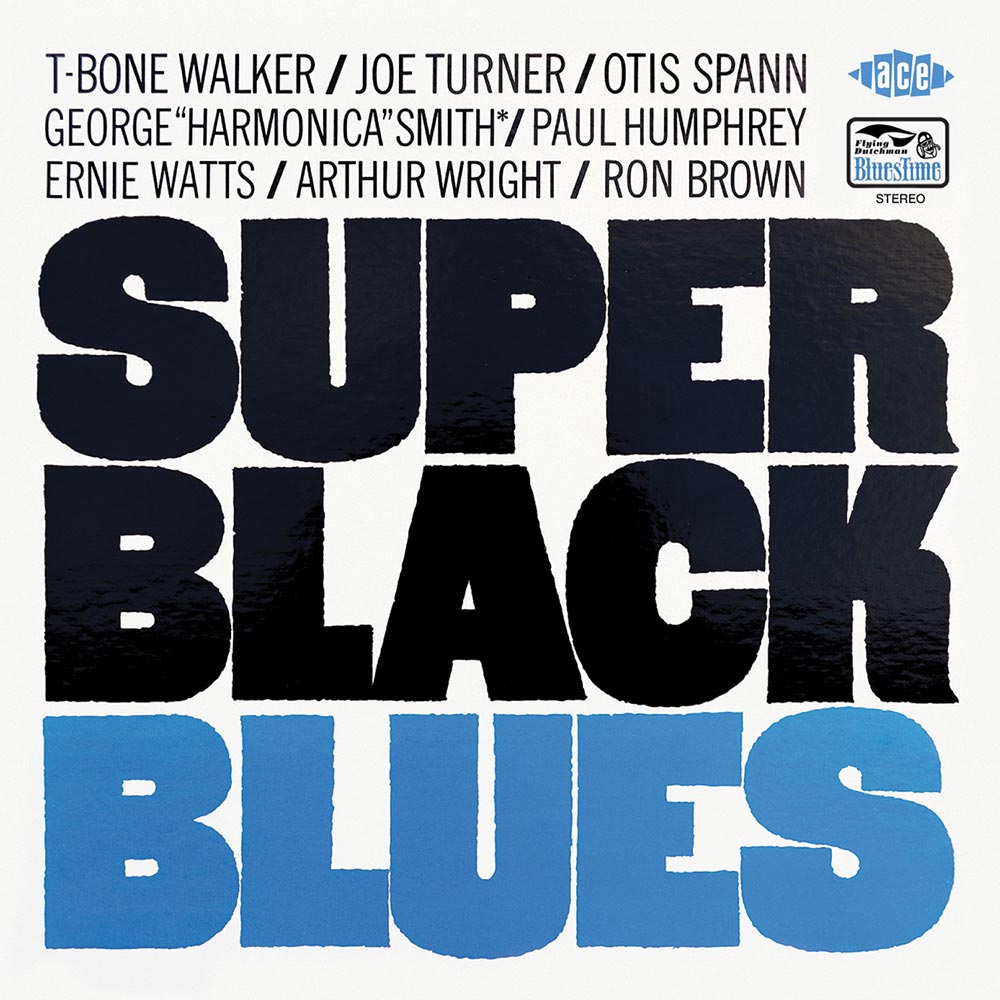
CULT CLASSIC: T-BONE WALKER, JOE TURNER, OTIS SPANN-SUPER BLACK BLUES.
Cult Classic: . T-Bone Walker, Joe Turner and Otis Spann-Super Black Blues.
By the late sixties, blues music was no longer as popular. Psychedelia and rock music were the most popular genres. Groups like The Beatles, the Rolling Stones, Pink Floyd, Cream, Led Zeppelin, The Band, Canned Heat and Fleetwood Mac were some of the biggest selling acts. Along with Bob Dylan and Jimi Hendrix, they were music’s future. Blues music many people thought, represented its past. For many musicians, that wasn’t the case.
Many of the biggest names in music acknowledged the influence blues music had on them. Jimi Hendrix, the Rolling Stones, The Beatles, Canned Heat and Fleetwood Mac all were inspired by blues music. They made no bones about that. Each of these artists realised this. Without the blues, they wouldn’t be enjoying the commercial success and critical acclaim that they were enjoying. The blues was where modern music began. It couldn’t and shouldn’t be allowed to die. So, groups like the Rolling Stones and Fleetwood Mac revisited old blues tracks. This gave the blues a much needed boost.
With a new generation of musicians breathing new life and meaning into blues classics, there was a sudden upsurge of interest in the blues. So, record companies started signing new blues acts. Some record companies even signed ageing blues musicians. This included Bob Thiele’s new label.
After leaving Impulse, following the musical equivalent of a coup d’etat Bob Thiele, formed Flying Dutchman Productions. He also believed the blues had a future. So, he started signing some of the biggest names in blues music to his nascent label. Before long, Flying Dutchman’s roster read like a who’s who of the blues. T-Bone Walker, Joe Turner and Otis Spann were all signed to Flying Dutchman Productions and would release comeback albums.
In 1969, Joe Turner released The Real Boss Of The Blues on Flying Dutchman Productions. Otis Spann released Sweet Giant Of The Blues during 1969. A year later, T-Bone Walker released Every Day I Have The Blues, in 1970. However, a year earlier, in 1969, T-Bone Walker, Joe Turner and Otis Spann collaborated on on Super Black Blues, which was released by Flying Dutchman Productions in 1969. Super Black Blues features what was, essentially, a blues supergroup.
Joining T-Bone Walker, Joe Turner and Otis Spann were George “Harmonica” Smith, Ron Brown, Arthur Wright, Ernie Watts and Paul Humphrey. For blues aficionados, it’s a tantalising taste of what the three musicians were capable of.
Of the four tracks on Super Black Blues, T-Bone Walker penned Paris Blues, Jot’s Blues and Blues Jam under his real name, Aaron Walker. The fourth track was a cover of Lew Brown, B.G. DeSylva and Ray Henderson’s Here I Am Broken Hearted. These four tracks were recorded by T-Bone Walker, Joe Turner and Otis Spann’s all-star blues’ band.
When the recording of Super Black Blues began, the recording studio was full with blues greats. The rhythm section included drummer Paul Humphrey, bassist Ron Brown and guitarists T-Bone Walker and Arthur Wright. Otis Spann played piano, Ernie Watts tenor saxophone and George “Harmonica” Smith blew his unmistakable blues harmonica. Adding the finishing touch was Joe Turner’s vocals. As sessions go, it must have been one of Bob Thiele’s easiest.
No wonder with all the experience and talent that gathered together in the one recording studio. For Bob Thiele, a huge blues aficionado, this was a dream come true. Although he was the producer, musicians this good, almost didn’t need a producer. They’d been here many times before and new how a session worked. So, for Bob, it was a case of enjoy the show.
Once the microphones were setup and instruments tuned, it was a case of pressing the record button and enjoying the recording sessions for Super Black Blues. T-Bone Walker, Joe Turner and Otis Spann’s all-star blues’ band didn’t disappoint.
On the release of Super Black Blues in 1969, it seemed to pass people by. That was a shame, given it’s three blues masters at the peak of their powers. It seemed that the sudden resurgence in interest in the blues had been overstated? Since then Super Black Blues, has remained a hidden gem, a cult classic that’s talked about in hushed tones among blues fans.
Super Black Blues opens with Paris Blues. It’s slow, moody and bluesy. A probing bass, jangling piano and crystalline guitar combine with bursts of bluesy harmonica. They set the scene for Joe Turner’s lived-in, heartbroken vocal. He’s hurting as he sings: “I love my woman, but she doesn’t love me.” Behind him, the rest of the band lock into a groove. They feed off each other. It becomes a game of daring do. Whatever Otis Spann can do on the piano, T-Bone Walker can do better on the guitar. All the time, bassist Ron Brown provides the heartbeat. Chiming guitar, flourishes of piano and bursts of bluesy harp provide the backdrop for Joe’s soul-baring vocal. Everyone gets the opportunity to shine. Not just T-Bone Walker, Joe Turner and Otis Spann. There’s plenty of time for that. After all, this is a fourteen minute Magnus Opus, where three blues’ greats and their friends get the opportunity to showcase their considerable talents.
T-Bone Walker’s crystalline guitar opens Here I Am Broken Hearted. It sets the scene for another heartbroken vocal from Joe. He leaves gaps, which are filled by Ernie Watts’ blistering, riffing tenor saxophone. Ernie’s playing raises the bar. Suddenly, everyone is pulls out the stops. They lift their game. Especially, T-Bone’s guitar and Otis’ piano. They’re played with flamboyant flourishes. They’re the perfect foil for Joe’s despairing, hurt-filled vocal.
Just T-Bone Walker’s opens Jot’s Blues, as the arrangement gradually unfolds. Deliberatelym he picks at the strings, before a dramatic flourish signals the band to enter. Otis Spann plays flamboyantly, while the rhythm section lock into a bluesy groove. T-Bone unleashes some brief, bluesy licks. Then Joe’s grizzled, weary vocal enters. It’s accompanied by Ernie Watts’ scorching tenor saxophone and Otis’ piano. They seem to drive each other to greater heights. It’s a case of anything you can do, I can do better. Soon, T-Bone gets in on the act. Effortlessly, his fingers fly up and down the fretboard, his guitar chiming all the time. Meanwhile, Joe unleashes a vocal that’s full of sadness and emotion. His timing is perfect. He’s also quite happy to allow others to shine, during this eight minute epic. Playing starring roles are Otis, Joe, T-Bone and Ernie Watts, who are responsible for a blues masterclass.
Closing Super Black Blues is Blues Jam. Straight away, the rhythm section and Otis’ piano get to work. They drive the arrangement along. T-Bone unleashes bursts of bluesy guitar. When Joe’s vocal enters, he’s got the blues. The band try to lift his spirits, as they unleash a jaunty arrangement. Everyone does their best. Especially, George “Harmonica” Smith, who blows his best solo. He never misses a beat. Neither does Otis as he pounds his piano. Accompanying him is Ernie Watts, who seems to bring out the best in Otis. After that, Joe returns, and takes on the roll of MC. By then, the band are on a roll. They’re at their tightest, as the music just flows through them. A scorching saxophone, pounding piano and rhythm section accompany a lovestruck Joe as the band drive the track towards its crescendo. They’re determined to close Super Black Blues on a high. This they do and then some. Without doubt, they’ve kept the best until last.
Often, when a group of top musicians get together, egos get in the way of the music. Not on Super Black Blues. T-Bone Walker, Joe Turner and Otis Spann were too long in the tooth for that. They’d spent a lifetime playing the blues. As the sixties drew to a close, blues music had been in the doldrums. Not any more.
A new generations of music had acknowledged the influence blues music had on them. Jimi Hendrix, the Rolling Stones, The Beatles, Canned Heat and Fleetwood Mac all were inspired by blues music. They revisited old blues tracks and brought new life and meaning into them. This lead to a resurgence in interest in blues music.
Record companies were now signing new blues acts. Meanwhile, Bob Thiele’s Flying Dutchman Productions took a different approach. They went looking for blues greats. This described T-Bone Walker and Joe Turner, who were approaching the veteran status. Otis Spann was different. He was one of a new breed of bluesmen. He was only thirty-nine when he recorded Super Black Blues. However, Otis loved life. Too much it turned out.
Otis faithfully lived the life of a bluesman. This meant a regular diet of wine, women and song. Sadly, this caught up with him in 1930. He died age forty. That’s much too young. A hugely talented pianist never got the opportunity to fully fulfil his potential. Listening to Super Black Blues, which was one of Otis, last recordings, one wonders what heights he would have reached?
Sadly, Super Black Blues was the only time T-Bone Walker and Joe Turner ever recorded with Otis Spann. Although this cult classic features just four songs and lasts thirty-three minutes, Super Black Blues is an essential purchase for anyone interested in the blues.
Cult Classic: . T-Bone Walker, Joe Turner and Otis Spann-Super Black Blues.
CULT CLASSIC: DIETER MOEBIUS-DING.
Cult Classic: Dieter Moebius-Ding.
Ten years after Hans-Joachim Roedelius and Dieter Moebius formed Cluster in 1971, the first chapter in the Cluster story drew to a close 1981, after the release of their seventh studio album, Curiosum. Hans-Joachim Roedelius said: “Cluster had run its course. We decided to concentrate on other projects. There was no fall-out, Cluster just came to a natural end.”
In the post-Cluster years, Dieter Moebius divided his time with a variety of projects, including a variety of collaborations and, his solo career. Dieter Moebius’ solo career solo career had to fit round his many other musical commitments. As a result, solo albums were sporadic. In total, Dieter Moebius released just five solo albums during his lifetime, including Kram in 2009 and Ding in 2011. By the time, Dieter Moebius Ding, his career had taken a few twists and turns.
Moebius and Plank.
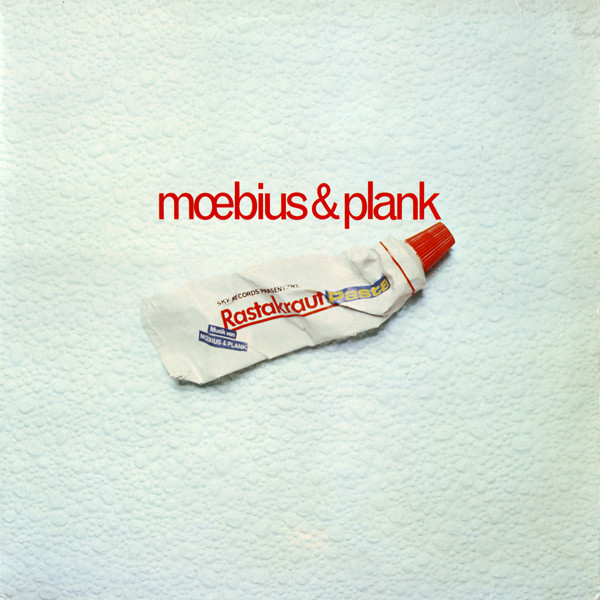
Rastakraut Pasta.
In 1980, Dieter and Conny Plank entered Conny’s Studio to record seven tracks. They were joined by another giant of German music, Can bassist Holger Czukay. He played on Feedback 66, Missi Cacadou and Two Oldtimers. When the seven tracks were completed, Rastakraut Pasta was would be released later in 1980.
Critics hailed Moebius and Plank’s debut Rastakraut Pasta a truly groundbreaking album. It was a fusion of avant-garde Kominische, industrial, electronica, experimental and dub reggae. This disparate and unlikely fusion of genres proved a potent musical pot-pourri, that proved popular with critics and record buyers. So much so, that Conny Plank and Dieter Moebius released a second album together.
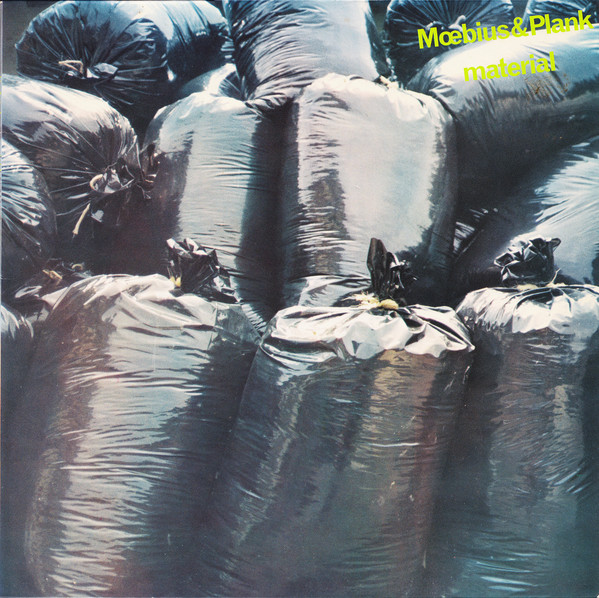
Material.
The Moebius and Plank partnership returned in 1981 with their sophomore album, Material. It featured five songs recorded at Conny’s Studio. This time, there was no sign of Holger Czukay. Instead, the two old friends and musical pioneers worked together on another album of truly groundbreaking music that became Material.
Just like Rastakraut Pasta, Material was hailed as another album of groundbreaking, genre-melting music. Elements of avant-garde Kominische, industrial, electronica, experimental and dub reggae. This resulted in music that wasn’t just innovative, but way ahead of its time. Material was also a timeless album, and one that resulted in what seemed like a queue of musicians wanting to collaborate with Dieter Moebius.
First in the queue was Gerd Beerbohm. They released their first collaboration, Strange Music in 1982. This was the first of two albums that the pair would record tougher. The followup Double Cut was released in 1983. That same year, Dieter Moebius released his debut album Tonspuren.
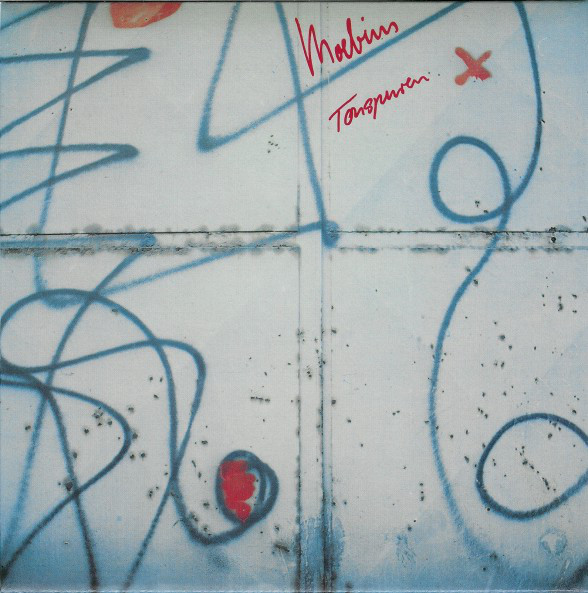
Tonspuren.
To record his debut solo album, Dieter Moebius headed for the familiar surroundings of Conny’s Studio, in Cologne. He had made this journey countless times before, and in the second half of 1982, Dieter began recording ten soundscapes. With Conny looking on approvingly, and making a few suggestions, Tonspuren began to take shape. Once the album was recorded, Conny mixed Tonspuren. It was then released in 1983.
Just like his previous collaborations with Conny Plank, Tonspuren was released on Günter Körber’s Sky Records. It was the perfect label for an album of minimalist, experimental and ambient music.
Günter Körbe had setup Sky Records in 1975, and had never been afraid to release music that many labels would’ve shied away from. Many other German labels were only interested in commercial music. However, Sky Records, just like Brain and Ohr before them, were determined to released groundbreaking music. This was how some critics described Tonspuren.
Critics had awaited the release of Tonspuren with interest. They wondered what direction Dieter Moebius’ music would head? When they heard Tonspuren, with its minimalist, ambient and sometimes experimental sound, they knew. It was a captivating debut album, and critics awaited Dieter’s sophomore album with interest. Sadly, they would have a long wait.
Sixteen years to be exact. Dieter Moebius would released several collaborations, and Cluster would’ve reunited before Dieter Moebius released his sophomore album. By then, Dieter Moebius had reinvented himself, while music, and the way it was made had changed.
Following the release of Tonspuren, Dieter Moebius continued to collaborate with other artists, This included two collaborations with Karl Renziehausen. Dieter Moebius also wrote the soundtrack to Blue Moon in 1986. However, it was Conny Plank that Dieter Moebius collaborated with most often. They recorded three further albums with Conny Plank, This included 1983s Zero Set which featured Guru Guru drummer Mani Neumeier; 1995s En Route; and Ludwig’s Law which featured Mayo Thompson. However, still, Dieter Moebius found time to reunite with Hans-Joachim Roedelius for the comeback of Cluster.
Apropos Cluster.
Recording of Cluster’s tenth album took place during 1989 and 1990. Dieter Moebius and Hans-Joachim Roedelius recorded five tracks, including the twenty-two minute epic title-track. It was part of an album that was similar to Grosses Wasser.
That is the comparisons critics drew, when Apropos Cluster was released in 1991. The only difference was, that Apropos Cluster wasn’t as rhythmic as Grosses Wasser. Instead, it was understated, ethereal and thoughtful ambient music. The followup to Apropos Cluster was the first of three live albums that Cluster would release.
One Hour
The first of the trio of live albums Cluster released during the nineties, was One Hour. It came about after Cluster improvised in the studio for four hours. This they edited this down to One Hour, and the result is a truly captivating album that was released in 1995.
One Hour features Cluster at their most imaginative as they take their music in the most unexpected directions. Curveballs are constantly bowled, as what sounds like the soundtrack to a surrealist film unfolds. Elements of ambient, avant-garde and modern classical music combine, resulting in one of the most intriguing albums in Cluster’s discography.
Two years later, in 1997, Cluster released the first of two live albums. The first was Japan 1996 Live. It was followed by First Encounter Tour 1996, which was their thirteen album, was the first double album Cluster had released. It would also be the last album they released for eleven years. During that period, Dieter Moebius released four further solo albums. The first of this quartet of solo albums was Blotch.
Blotch.
After a sixteen year period where he was constantly collaborating with other artists, the release of Blotch in 1999, marked the start of a period where mostly, Dieter Moebius would concentrate on his solo career. While there was the occasional excursion with Cluster, and a collaboration with Asmus Tietchens in 2012, mostly, the period between 1999 and 2014 are best described as the solo years.
One thing that never changed during the solo the solo years, was Dieter Moebius’ determination to innovate. Helping Dieter Moebius to innovate, was the technology that hadn’t been available when he recorded his debut solo album, Tonspuren in 1983. Dieter Moebius embraced this new technology when he recorded Blotch, which featured Tim Story. The result was his long-awaited comeback album, Blotch.
Blotch featured a series of playful mesmeric loop based tracks. They’re atmospheric and experimental, with Dieter Moebius adding bursts of speech and samples to the musical canvas. They were ‘painted’ by Dieter Moebius, who makes full use of musical palette, which included the new technology. Dieter Moebius’ willingness to innovate and embrace this new technology resulted in an album that was well worth the sixteen year wait.
When Blotch was released, Dieter Moebius was hailed as the comeback King. He had reinvented himself musically, and recorded a much more experimental, genre-melting album. Dieter Moebius had made good use of new technology, and added snatches of speech to the seven soundscapes. This proved a potent combination on album that fused everything from ambient and avant-garde, through to electronica and experimental to industrial, Krautrock and Musique Concrète. The result was an album of atmospheric, dramatic, futuristic and sometimes, ethereal, understated and beautiful music. These soundscapes were always cinematic and mostly, have a hypnotic quality on Blotch, the album that marked the return of Dieter Moebius.
Nurton.
Seven years after Dieter Moebius’ comeback, he returned in 2006 with the third album of his solo career, Nurton. The album was recorded a year earlier in 2005, with Dieter Moebius making good use of some of the technology that he had used on Blotch. One of Dieter Moebius’ secret weapons was the Korg Prophecy which replicated a variety of analog synths. This Dieter Moebius put to good use on Nurton.
Dieter Moebius had pushed musical boundaries to their limit on Nurton. Just like he had throughout his career, he had turned his back on musical convention and structure. Instead, he let his imagination run riot, and studio became a laboratory, where Dieter Moebius experimented.
The result was Nurton, which veers between moody and broody, to dark and dramatic, to ethereal and elegiac to understated and beautiful. Always, though, the best words to describe Nurton were futuristic, cinematic and hypnotic. Dieter Moebius had pulled out the stops on Nurton, which was a captivating album that painted pictures in the mind’s eye. Much of the music on Nurton was akin to a sci-fi soundtrack. Nurton also has a timeless quality, and featured some of the most ambitious, innovative and experimental music of Dieter Moebius’ career. He had set the bar high for the followup album, which was Kram, which was released in 2009.
Kram.
By the time Dieter Moebius came to record Kram, life was good for one of the leading lights of the German music scene. Somewhat belatedly, the music Dieter Moebius recorded with Kluster, Cluster and Harmonia was receiving the recognition it deserved at home and abroad. German music fans realised that Dieter Moebius was one of their national treasures and had grown to appreciate his music.
Dieter Moebius was still one of the leading lights of the Berlin music scene in 2008, when his thoughts turned to recording a new studio album. By then, Dieter Moebius and his wife Irene were dividing their time between Berlin and Majorca, where they could enjoy a much more agreeable climate. However, Dieter Moebius spent some of his time in Majorca working on new music. He had a small mobile recording setup, which replicated the one he kept at him home in Berlin.
This meant that whenever he felt inspired to make music, Dieter Moebius could enter his studio, and work on music for his latest project. In 2008, the project that Dieter Moebius was working on was his fourth studio album, which would eventually become Kram, which translates as “stuff”. The time he sent in his studios in Berlin and Majorca resulted in ten soundscapes which lasted nearly fifty-two minutes. These soundscapes became Kram, which when it was released, became Dieter Moebius’ first album in three years.
With the release of Kram fast approaching in 2009, it was changed days for Dieter Moebius. In the early days of his career, when albums by Kluster, Cluster and Harmonia failed to attract the attention of critics. Sometimes, they passed almost unnoticed, or received just a few reviews. By 2009, Dieter Moebius was fifty-five and one of the elder statesmen of German music. He had been one of the pioneers in the late sixties, and forty years later, was still going strong and releasing ambitious and innovative music on Kram.
Critics upon hearing Kram, hailed the album one of Dieter Moebius’ finest hours as a solo artist. The album received praise and plaudits, with one of the founding fathers of modern German music creating a captivating album that was a musical roller coaster.
Kram is best described as veering between understated, ruminative and elegiac to playful, joyous and tinged with humour, to charming and moderne. Other times, the music is mesmeric and hypnotic, before becoming dark and dramatic. Sometimes, the music becomes experimental and ambitious, while other times, Dieter Moebius unleashes a myriad of futuristic and sci-fi sounds. They join found and throwaway sounds, samples and Dieter Moebius’ trusty synths which he uses to create another genre-melting album which is sometimes cinematic, but captivates from the opening bars of Start to the closing notes of Markt.
During Kram, Dieter Moebius combines elements of ambient, avant-garde, the Berlin School, electronica, experimental music, Krautrock and even briefly rock. The result is an album that features Dieter Moebius at most ambitious and innovative. Proof of this are some of the highlights of Kram.
This includes Kommit, where the mesmeric music pulsates and before becoming rocky ands futuristic. On Wommit which has a Krautrock influence, Dieter Moebius toys with the controls of his synths as avant-garde meets electronica. Then Dauert is an ethereal soundscape where Dieter Moebius adds sci-fi sounds. Steigert is dark, dramatic and cinematic. So too is Rennt, which features an urgency and a myriad of futuristic sounds. The hypnotic Schwitzt also has darkness, and is moody, broody and cinematic. Closing Kram is Markt, a dramatic and cinematic soundscape where Dieter Moebius fuses elements of avant-garde, electronica, experimental and Musique Concrète and ensures the album ends on a high. He had kept one of the best until last.
After three years away, Dieter Moebius returned with one of the finest solo albums of his career. Sadly, it would prove to the penultimate album of his long and illustrious career.
Ding.
Two years after the release of Kram returned with his fifth solo album Ding in 2011. He had recorded Ding a year earlier, in Berlin studio. Now he was ready to release the much-anticipated followup to Kram. By then, the music Dieter Moebius had created with Kluster, Cluster and Harmonia had never been as popular. This resulted in an upsurge of interest in his solo career.
Just like previous solo albums, Dieter Moebius had embraced the latest technology. This included a random loop generator, which he had put to good use during the making of Ding. The loops it generated, were combined with bifurcate rhythms, impalpable and ghostly voices and a myriad of assorted audio matter which became part of the eleven soundscapes on Ding.
When critics heard Ding, they realised that it was quite different from its predecessor. It was another ambitious album, where Dieter Moebius set about reinventing his music once again. To do this, he combined elements of avant-garde with the Berlin School, electronica, experimental, industrial, Krautrock and Musique Concrète. There was also an array of hypnotic, industrial mechanical and robotic sounds on Ding, which was one of the most ambitious and experimental albums of Dieter Moebius’ solo career.
That is apparent straight away, on the album opener Walksol, where a myriad of repetitive and hypnotic sounds join various mechanical and industrial sounds as Dieter Moebius unleashes a fleet-fingered keyboard solo. Then Defekt has a much more understated, but moody and cinematic sound. Flink and Neue Newsw are among the most ambitious tracks as Dieter Moebius knits together a myriad disparate of sounds and samples. Somehow, they make perfect sense musically. So does Alaise a dramatic, futuristic and cinematic soundscape. Alfred also showcases a cinematic sound, albeit one that has an understated and lo-fi sound. Still though, it captivates and finds Dieter Moebius innovating. Ding marks a return to the more robotic and mechanical sounds, while Zufall sounds like it’s part of the soundtrack to a sci-fi film. Dramatic describes Bone, which has moody, mechanical sound, before Fou Dieter Moebius unleashes a menagerie of samples to create a menacing backdrop. Closing Ding is Ruston and Monotron, which picks up where Fou left off. Drones, samples and found sounds combine on this fusion of avant-garde, industrial and Musique Concrète. As befitting of a true musical pioneer, Dieter Moebius closes the album with one of his most ambitious soundscapes.
Just as he had been doing throughout his long and illustrious career, Dieter Moebius had created groundbreaking music and ambitious music on Ding. He embraced new technology, and used an array of samples, found sounds and leftfield sounds to create new and ambitious music. The music on Ding pushed musical boundaries to their limit, which amongst the most ambitious music released during 2011. That was what critics and record buyers had come to expect from sonic pioneer Dieter Moebius. Sadly, his cult classic Ding, which was the last album that Dieter Moebius released.
Musik für Metropolis
The following year, 2012, Dieter Moebius was invited to perform music to accompany a screening of Fritz Lang’s legendary silent film Metropolis. For the screening, Dieter Moebius began work on producing new tracks and samples. These he would play on the night and treated with a myriad of effects during Dieter Moebius’ improvised performance. His performance was planned so that it would provide the soundtrack to what was happening on the sliver screen. The Metropolis project took a lot of planning, but it was well worthwhile.
When the day of the screening of Metropolis arrived, Dieter Moebius made his way to the venue. With him, he took the equipment which he planned to put to good use that night. That was the case. It was a masterful and triumphant performance from Dieter Moebius, as he provided the perfect soundtrack for Metropolis. It had highlighted the drama and tension of Fritz Lang’s classic film. Buoyed by the success of his performance, Dieter Moebius began contemplating the next part in the Metropolis project.
All along, Dieter Moebius planned to record a full-length album featuring the music from the Metropolis project. Dieter Moebius began work on the Metropolis’ project, and continued to work on other projects. The sixty-eight year old still had an insatiable appetite for music, and immersed himself in the Metropolis’ project, which gradually started to take shape. Then tragedy stuck, when Dieter Moebius was diagnosed with cancer.
Suddenly, music didn’t matter any more, as Dieter Moebius was fighting for his life. He battled bravely against cancer, fighting for his future and very life. Sadly, Dieter Moebius died on the ‘20th’ of July 2015’ after what had been a brave and lengthy battle against cancer. He left behind a richest musical legacy.
This included the albums he released with Kluster, Cluster and Harmonia, plus his many collaborations and five solo albums. Two of his finest solo albums are Kram and his groundbreaking cult classic Ding. It features one of the founding fathers of modern German music doing what he did best, creating ambitious and innovative music. It’s a reminder of sonic pioneer and musical maverick Dieter Moebius, at the peal of his powers, during his constant and continual quest to reinvent his music during his solo years.
Cult Classic: Dieter Moebius-Ding.
CULT CLASSIC: ARTHUR-DREAMS AND IMAGES.
Cult Classic: Arthur-Dreams and Images.
The story of Arthur Lee Harper is a familiar one. He was a talented singer-songwriter who looked as if he was destined for great things. Sadly, that proved not to be the case. Arthur only ever released one album, Dreams and Images which was released on Lee Hazelwood’s LHI Records 1968.
Dreams and Images could’ve and should’ve been the first of many successful albums from Arthur. That wasn’t case. Arthur’s recording career was over before it could start. Things could’ve been very different though.
When Arthur was about to sign to LHI Records, Arthur got the opportunity to sign to the same company as The Beach Boys. This was a very tempting offer. However, that deal was only for a single. LHI Records were offering an album deal. That seemed a better offer to Arthur. Sadly, Arthur had backed the wrong horse. His recording career was over. For the rest of Arthur’s life, it was a case of what might have been?
Arthur Lee Harper was born in Melbourne, Florida. That’s where he spent his early years. Then just before his teenage years, Arthur’s parent’s marriage broke down. It was a tough time for Arthur. So, Arthur went to live with his grandmother. She decided to move to California.
The move to California was a fresh start for Arthur. He and his grandmother’s two sons settled into life in California. One of the main attractions for Arthur was Hollywood’s music scene. It was like a beacon, constantly trying to catch Arthur’s attention. Eventually, it succeeded.
When he was old enough, Arthur made the move to Los Angeles. Once there, Arthur witnessed the rock ’n’ roll lifestyle, which quickly, he decided wasn’t for him. He shied away from the drugs that fuelled Tinseltown. However, what interested and inspired Arthur was the music.
Arthur decided to make a living in L.A. as a singer-songwriter. That, he soon realised, wasn’t going to be easy. He was living in the Y.M.C.A. That’s where he met poets Mark Lindsey Buckingham and Stephen John Kalininch. They all had one thing in common, they dreamed of making it big in Tinseltown.
Before long, things were looking good for the three friends. Mark and Stephen were offered a deal with The Beach Boys’ Brother Records as songwriters. Not long after this, Arthur signed to Lee Hazelwood’s LHI Records.
Back then, it didn’t take much to get an audition at LHI Records. It was a case of ring the bell, and then audition. For the lucky few, including Arthur, it was a case of signing on the dotted line. Now, he was on his way to releasing his debut album.
During his time in L.A., Arthur had been writing songs. This included the ten tracks that would become Dreams and Images. Arthur laid down his vocal and played acoustic guitar at the sessions on the 21st and 22nd November 1967. After that, Arthur described how he envisaged, and “heard,” the arrangements. Only then, did producer Lee Hazelwood bring onboard his tried and trusted musical lieutenants.
This included arranger Don Randi and some of Lee’s favourite session musicians. He used them on many of his recordings, and knew what to expect from them. They added colour to Dreams and Images. Only then, was Dreams and Images ready to be released.
Dreams and Images was released on Lee Hazelwood’s LHI Records in 1968. Dreams and Images epitomised the the psychedelic folk sound that by 1967, was proving popular. Arthur seemed to be in the right place, with the right album. Surely, things couldn’t go wrong?
Especially with Lee Hazelwood’s LHI Records just having received several hundred thousand dollars from ABC Records. This was part of a distribution deal between the two labels. It gave ABC Records the right to distribute LHI Records’ releases. With LHI Records apparently cash rich, they’d go all out to promote Dreams and Images?
For some reason, that proved not to be the case. As is often the case when working with small, independent labels Dreams and Images wasn’t heavily promoted. Instead, it was a low key release. In one fell swoop, Arthur’s hope of a successful album were crushed.
Dreams and Images didn’t sell well. It had nothing to do with the music. Instead, it was down to the lack of promotion. Sadly, it’s an all too familiar story. Especially where independent labels are concerned. Sadly, forty-seven years after the release of Dreams and Images, that’s the case to this day.
Apart from selling a few thousand copies in Denver, Colorado, Dreams and Images passed most people by. It was a case of what might have been? How successful would’ve Dreams and Images been in it had been released on Elektra Records? Sadly, Arthur and ABC Records had backed the wrong horse.
Later in 1968, ABC Records dissolved their partnership with LHI Records. It had been an expensive lesson, one that cost ABC Records several hundred thousand dollars. The upside was it yielded three albums, including Arthur’s Dreams and Images,
Dreams and Images, which was released in 1968, by Lee Hazelwood’s LKI Records, is yet another hidden gem that, could’ve and should’ve transformed Arthur’s career. Sadly, that wasn’t the case. Arthur backed the wrong horse.
Two record companies wanted to sign Arthur. The first was LHI Records and releasing an album. They offered Arthur the chance to release Dreams and Images. At the same time, Arthur had the opportunity to sign to the same label as The Beach Boys. However, they were offering a one-off single deal. Once they saw how the single went, the label would take it from there. To Arthur, who was still a young man, the prospect of an album seemed too good an offer to refuse. Especially, when LHI Records was cash rich.
Lee Hazelwood’s LHI Records had just received several hundred thousand dollars from ABC Records. This was part of a distribution deal between the two labels. It gave ABC Records the right to distribute LHI Records’ releases. Arthur must have though that the cash rich LHI Records would go all out to promote Dreams and Images. That wasn’t the case.
LHI Records were reticent to spent large sums of money on any of the three albums they released during 1967 and 1968. As is often the case when working with small, independent labels Dreams and Images wasn’t heavily promoted. Instead, it was a low key release. In one fell swoop, Arthur’s hope of a successful album were crushed.
Dreams and Images didn’t sell well. It had nothing to do with the music. Instead, it was down to the lack of promotion. Sadly, it’s an all too familiar story. Especially where independent labels are concerned. All too often they’re desperate to sign an artist, but unwilling to promote them properly. That appears to be the case with Arthur’s debut album Dreams and Images. Without the necessary promotion, Dreams and Images passed most record buyers by.
That’s apart from in Denver, Colorado, where Dreams and Images sold a few thousand copies. They were the lucky ones, and heard what’s without doubt a lost psychedelic folk album. Sadly, most people never heard Dreams and Images. The failure of Dreams and Images impacted upon Arthur’s recording career.
Sadly, Dreams and Images was the only album Arthur recorded. Not long after leaving LHI Records Arthur turned his back on the music industry.
Arthur became a Christian, and took to writing religious songs. He worked as an engineer, and then as a special education teacher. However, Arthur still played and wrote music as a hobby. His shot at fame and fortune was long gone. Sadly, tragedy struck for Arthur in 2002.
On the 10th of January 2002, Arthur’s wife Lori tragically, died in a car crash. That night, Arthur died of a heart attack. Arthur Harper Lee, the man who could’ve and should’ve been a star was forever lost to music. However, Arthur left behind a quite beautiful, captivating, haunting and mesmeric musical legacy, Dreams and Images, a lost psychedelic folk cult classic.
Dreams and Images
DISCO DEMANDS PART SIX-BY AL KENT.
Disco Demands Part Six-By Al Kent.
Label: BBE Music.
Release Date: ‘7th’ February 2020.
After a ten year wait, Scotland’s disco King Al Kent makes a welcome return on the ‘7th’ of February 2020 with Disco Demands Part Six, which will be released by BBE Music as a 2CD or 3LP set. For fans of the now legendary Disco Demands series this new instalment will be a welcome addition to this long-running compilation series.
Disco Demands Part Six finds DJ, producer and remixer Al Kent digging deep into his enviable collection for a new selection of hidden gems, obscurities and dancefloor fillers that will appeal to dancers, DJ and connoisseurs of disco.These tracks have been edited and raid tested by Al Kent.
The tracks Disco Demands Part Six have been part of Al Kent’s sets for a number of years. This has allowed him to see how dancers reacted when he played one of his edits. After all, this is a compilation that is aimed primarily at dancers and DJs. That is why having edited the tracks, Al Kent donned his tin helmet and played them to a roomful of dancing drunks. They enjoyed every one of the tracks, and that is no wonder as Disco Demands Part Six features a stellar selection of dancefloor
fillers.
Disc one of Disco Demands Part Six features eight tracks mixed by Scotland’s disco King. His track selection is peerless and mixing seamless as he moves between tracks. This is what one has come to expect from Al Kent, who nowadays, is a globetrotting DJ. However, he’s also a remixer and producer and used these skills when he edited the tracks on Disco Demands Part Six.
There’s no better way to open the album with a twelve minute edit of Ava Cherry’s You Never Love Me. This is a track from her debut album Ripe, which was released on Curtom/RSO in 1980. It was one of the highlights of Ripe, and Al Kent’s edit doesn’t just extend but transforms the original and takes the listener to 127 disco heaven.
Fire Keep On Burning by King Sporty and The Root Rockers was released on TK Disco in 1980. Dancing disco strings and stabs of horns play a starring while mesmeric drums never miss a beat and accompany the soulful vocals. When all this is combined, the result is a this hidden gem that is akin to a call to dance.
Givin’ Back The Feeling is quite unlike George McRae’s best known track Rock Your Baby. Here, Al has removed the vocal and lets the uber funky bass line and disco strings take centrestage. The finishing touch are the horns. They play their part in a tough and funky slice of cinematic sounding disco that sounds as if it belongs in a Blaxploitation movie.
Al Kent’s edit of Tangerue’s Doin’ Your Own Thing is another welcome addition to Disco Demands Part Six. He’s removed what he considers the “cheese” from this slice of Euro Disco and left what’s a killer groove and one of the best orchestrations on the compilation. Take a bow the Ultimate Players who are responsible for the horns and strings.
Jo Bisso wrote and produced I Wanna Love, where funk meets disco. It which was released in 1979 on the label and is a funky floorfiller. There’s a funky bass, wah-wah guitar, sweeping, swirling strings and punchy horns on this driving track that discerning DJs and dancers will love.
JD Hall’s Wonder Woman was released in 1981, after disco’s demise. Despite that, there’s a strong disco influence in a track that’s a veritable potpourri of musical genres. Everything from boogie and disco to funk, soul and even a hint of dub are combined by JD Hall. So are the best piano part on the compilation, a percussive break and Chic-style vocals that become dubby. This is one of Al’s finest edits and is a welcome addition Disco Demands Part Six and the series.
Grupo Macho released San Salvador for the first time in 1981. The single was eventually released three times. Dancing strings and a chiming guitar play leading roles in the sound and success of this soulful and funky slice of disco.
Phillip and Lloyd’s Keep On Moving was released in 1978, at the peak of disco’s popularity. This is joyous and hook-laden hidden gem that is a dancefloor filler.
Southroad Connection gave their 1977 single for Mahogany Records the perfect title, You Like It, We Love It. With dancing strings and a killer bass line this is a track that is impossible not to like and is the perfect way to close disc two of Disco Demands Part Six.
For fans of the long-running and critically acclaimed Disco Demands series, a new instalment will be like Christmas coming early. Disco Demands Part Six is a welcome addition to the new series, and is all-killer, no filler. Al Kent has dug deep into his enviable collection and chosen the nine tracks with great care. This new selection of hidden gems, obscurities and dancefloor fillers are sure to appeal to dancers, DJ and connoisseurs of all things disco. These tracks have been edited and road tested by Al Kent.
When he edited the tracks he trimmed any fat or “cheese,” and left the best bits. The result is a selection of tracks that are guaranteed to fill any dancefloor. What’s more, Disco Demands Part Six doesn’t feature the usual tired tracks that can be found on lesser compilations. That isn’t the Al Kent way.
With each compilation he releases, Scotland’s disco King’s reputation is on the line, so Al Kent has dug deeper than other DJs, and edited each track so that they’ll appeal to dancers and DJs. That’s sure to be the case as Disco Demands Part Six is one of Al Kent’s finest compilations on what can only be described as a stellar selection of dancefloor fillers as Scotland’s disc King takes you to to 127 disco heaven.
Disco Demands Part Six-By Al Kent.
ROY AYERS-VIRGIN UBIQUITY: UNRELEASED RECORDINGS 1976-1981 AND VIRGIN UBIQUITY II: UNRELEASED RECORDINGS 1976-1981.
Roy Ayers-Virgin Ubiquity: Unreleased Recordings 1976-1981 and Virgin Ubiquity II: Unreleased Recordings 1976-1981
Label: BBE Music.
For Roy Ayers, the late-seventies through to the early eighties was one of the most productive periods of his long and illustrious careers. He was signed to Polydor Records, and between 1976 and 1981, the legendary vibes man was on a roll, and released seven solo albums. This included some of the best, and most powerful music of his career. However, not all of the music Roy Ayers recorded during this period was released.
Roy Ayers was a prolific artist and always managed to record more music than he needed for a new album. When he had completed a new album, he always kept copies of his master tapes. This included the unreleased tracks. It was as if he knew that one day, Roy Ayers knew that he would do something with these unreleased tracks.
By 1981, the master tapes documented the various lineups of Roy Ayers’ band. During this period, different vocalists joined the band and the rhythm section changed. However, the band’s philosophy remained the same, and so did the quality of the music. It was vintage Roy Ayers and these unreleased tracks deserved to be heard. However, this didn’t happen overnight.
It was over twenty years later, when Peter Adarkwah of BBE Records, in London, heard about Roy Ayers’ unreleased tracks. He realised the importance of the music, and when he heard the quality of the unreleased tracks, decided to release a compilation. This was Virgin Ubiquity: Unreleased Recordings 1976-1981, which was released to critical acclaim in 2004. So was the followup Virgin Ubiquity II: Unreleased Recordings 1976-1981 when it was released by BBE Records in 2005. It wasn’t long before these albums had sold out, and since then, have been much prized amongst fans of Roy Ayers and discerning music lovers.
Now fifteen years later, and Virgin Ubiquity: Unreleased Recordings 1976-1981 and Virgin Ubiquity II: Unreleased Recordings 1976-1981 have just been reissued by BBE Music. These two albums are a reminder of Roy Ayers at the peak of his creative powers between 1976 and 1981. By then, he had enjoyed a successful solo career and worked with some of the biggest names in music.
The Roy Ayers story began in Los Angeles, on the ‘10th’ of September 1940, when he was born into a musical family. His mother Ruby was a schoolteacher who also taught the piano, while Roy Sr, spent part of his life working as a parking attendant and playing the trombone.
Growing up, Roy Ayers showed an aptitude from an early age. Like many children, the first instrument he learnt to play was the piano. However, not many children can play boogie woogie piano by the time they’re five. To further his musical education the Ayers took their son to see Lionel Hampton’s Big Band.
At the end of the concert, the great man used to walk up the aisle thanking people for attending his concert. That night, Lionel Hampton saw the young Roy Ayers and gifted the excited five year old a set of vibe mallets. His parents decided to keep them safe until he was older. By then, Roy Ayers was a musical all-rounder.
By the time he was nine, he was able to play steel guitar and later sang in the school choir. This was just the start, and during his teenage years, Roy Ayers learnt to play the flute, trumpet, drums before eventually settling on the vibes.
This came about when his parents presented their seventeen year old son with Lionel Hampton’s vibe mallets. Roy Ayers decided to teach himself how to play the vibes. Not long after this, he discovered Bobby Hutcherson an up-and-coming vibes player who lived locally, and who took Roy Ayers under his wing.
The two young musicians started to practice together and collaborated, and before long were good friends. By then, Roy Ayers formed had formed his first group while he was a student of harmony at Jefferson High School. Fittingly, he called group the Jefferson Combo, which he later renamed Latin Lyrics. After graduating from high school Roy Ayers attended Los Angeles City College and studied advanced music theory.
This was the perfect course for an aspiring musician. In 1961, twenty-one year old Roy Ayers embarked upon a career as a professional musician. Over the next few years he worked with and played alongside everyone from Chico Hamilton, Gerald Wilson, Jack Wilson, Phineas Newborn and Teddy Edwards. By then, had also made his recording debut.
Roy Ayers recorded Way Down and Tippin’ On Through, and in 1962, got the chance to appear at the Las Vegas Jazz Festival. That night, the up-and-coming musician, composer and arranger played in front of the biggest audience of his nascent career. In the audience that night, was one of the most eminent jazz producers and writers, Leonard Feather. This resulted in Roy Ayers signing to United Artists and releasing his debut album.
West Coast Vibes was produced by Leonard Feather and featured an all-star cast. They played their part in the Roy Ayers sound which made its debut on West Coast Vibes when it was released in 1963. The album was found favour amongst jazz critics who hailed Roy Ayers as a rising star.
After the release of his critically acclaimed debut album West Coast Vibes, Roy Ayers’ popularity grew and he was playing concerts across America. Other musicians looking for a vibraphonist sought out Roy Ayers. This including none other than jazz flutist Herbie Mann.
The legendary flautist needed someone to play vibes in his band at a gig at the Lighthouse Club, in Los Angeles. A call went out to Roy Ayers, and he joined the band. Little did anyone realise how successful the Herbie Mann and Roy Ayers’ partnership would become as they took to the stage. Later, that evening as they left the to a standing ovation with applause ringing in their ears. This was the start of a successful four-year collaboration, and during that period, Roy Ayers was an integral part of Herbie Mann’s band.
By 1967, Roy Ayers had signed to Atlantic Records and recorded his first album with Herbie Mann producing. Virgo Vibes was released to plaudits and praise later in 1967. The followup was 1968s critically acclaimed album Stoned Soul Picnic and then Daddy Bug in 1969. These are three of the finest and most successful albums that Roy Ayers has released during his long and successful career.
As the seventies dawned, changed was afoot for Roy Ayers as he signed for Polydor Records which was home until 1982. During that period, he continued to push musical boundaries, and continued to experiment and explore sonically. This included using wah wah and fuzz tones on his vibes which was a first, and not for the first time Roy Ayers was called a pioneer.
Now signed to Polydor Records, Roy Ayers began work on his debut album. Ubiquity was released in 1970 and this was the start of a new era for Roy Ayers.
By then, the Roy Ayers had formed a new group who released ten albums between 1972 and 1977. This was Roy Ayers Ubiquity, who released He’s Coming and Live At The Montreux Jazz Festival in 1972. The following year, 1973, the new group released two critically acclaimed albums Virgo Red and Red, Black and Green. This was just the start of new chapter for Roy Ayers Ubiquity.
Meanwhile, Roy Ayers was asked to record and produce the soundtrack to the Blaxploitation movie, Coffy which starred Pam Grier. Both the film and its soundtrack which featured vocalist Dee Dee Bridgewater and pianist Harry Whitaker was released to critical acclaim and was a commercial success. Nowadays, the soundtrack to Coffy is regarded as a genre classic. This is no surprise as during this period Roy Ayers was enjoying one of the most productive periods of his career.
Change Up The Groove followed in 1974, with Mystic Voyage and A Tear To A Smile being released to plaudits and praise in 1975. The prolific Roy Ayers Ubiquity returned with Vibrations and one of their finest outings Everybody Loves The Sunshine in 1976. A year later, they released their swansong Lifeline in 1977. The anthemic jazz-funk title-track gave Roy Ayers a hit single that was guaranteed to fill dancefloors. This was the perfect way to end five prolific and successful years for the Roy Ayers Ubiquity.
A new era began in 1978 when Roy Ayers returned with two new solo albums including Let’s Do It which reached thirty-three in the US Billboard 200 and fifteen US R&B charts, while You Send Me reached forty-eight and sixteen respectively. Both albums featured a glittering array of talent, including drummer Bernard “Pretty” Purdie and vocalist Merry Clayton. This was the start of a period between 1978 and 1982 when Roy Ayers released seven albums and they all charted in the US Billboard 200 and US R&B charts.
This was no surprise giving Roy Ayers was at the peak of his creative powers and enjoying one of the most productive periods of his long career. In 1979, Roy Ayers released another two albums, Fever which reached sixty-seven in the US Billboard 200 and twenty-five US R&B chart. However, No Stranger To Love stalled at eighty-two in the US Billboard 200 and twenty-five in the US R&B charts despite the quality of music on the album. While neither album were as successful as previous offerings, they were still part of what was a golden era for Roy Ayers.
Love Fantasy released in 1980, was the first album Roy Ayers released during the eighties. It was another ambitious album, where he was joined by a some of the top session players and various vocalists including Sylvia Striplin. This time around, Roy Ayers deployed various synths, a Fender Rhodes and a clavinet as he continued his mission to innovate and release groundbreaking music. Sadly, the album stalled at a disappointing 157 in the US Billboard 200 and forty-seven in the US R&B chart.
When Roy Ayers returned in 1981, it was with powerful, landmark album Africa, Center Of The World. Sadly, what was one of his finest albums of recent years failed to find the audience it deserved and reached 197 in the US Billboard 200 and forty-three in the US R&B charts. For Roy Ayers this must have been hugely disappointing and he would only release one more album on Polydor Records.
This was Feeling Good, which was released in 1982 and reached 160 in the US Billboard 200 and forty-five in the US R&B charts. Reviews of this underrated album were mixed, and Roy Ayers left the label that had been home to him since 1970. During that period, he had enjoyed the most successful and productive period of his career.
During the period between 1976 and 1981, Roy Ayers recorded everything from jazz and funk to fusion, jazz-funk, Latin, R&B and soul-jazz. He was a truly versatile musician who seamlessly switched between and combined disparate genres seamlessly, often, creating music that was truly unique. However, Roy Ayers often recorded far more music than he could release and it ended up in his vaults.
Roy Ayers kept copies of all of his master tapes, as if knowing that one day in the figure he would get the chance to release some of these unreleased tracks. This chance came in 2003, twenty-one years after he released his final album for Polydor Records.
By then, Peter Adarkwah of BBE Records, in London, who was a heard about Roy Ayers’ unreleased tracks. He was a longterm fan of the legendary vibraphonist who on hearing about the unreleased tracks realised their importance. When he heard the quality of Roy Ayers’ unreleased tracks, Peter Adarkwah decided to release a compilation of them.
This was Virgin Ubiquity: Unreleased Recordings 1976-1981 , which was released to critical acclaim in 2004. So was the followup Virgin Ubiquity II: Unreleased Recordings 1976-1981 when it was released by BBE Records in 2005. It wasn’t long before the two albums had sold out, and since then, have been much prized amongst fans of Roy Ayers and discerning music lovers.
Now fifteen years after the release of the second instalment in the series, BBE Music have decided that it’s time to reissue Virgin Ubiquity: Unreleased Recordings 1976-1981 and Virgin Ubiquity II: Unreleased Recordings 1976-1981. These are welcome reissues and are a reminder of what was a golden era for Roy Ayers.
Virgin Ubiquity: Unreleased Recordings 1976-1981.
That is the case from Boogie Down which opens Virgin Ubiquity: Unreleased Recordings 1976-1981 and features drummer Bernard “Pretty” Purdie and vocalist Carla Vaughan who Roy Ayers called” “one of the most exciting and unique singers that I ever had in my band.” Carla Vaughan returns on the slow, meandering and beautiful sounding Mystic Voyage and Together Forever where she delivers a tender and heartfelt vocal.
Another of the finest vocalists to star in Roy Ayers’ was Merry Clayton, who makes her debut on What’s The T? This is followed by what can only be described as a vocal masterclass on I Really Love You. It’s without doubt one of the album’s highlights. The same can be said of Oh What A Lonely Feeling thanks to Merry Clayton’s heart-wrenching vocal. She then delivers a powerful and emotive vocal Mystery Of Love. Then there’s Merry Clayton’s soul-baring vocal powerhouse on Brand New Feeling. These tracks are a reminder of a truly talented vocalist who should’ve enjoyed a much more successful career as a solo artist.
Other highlights include Green and Gold which features a stunning vibes solo from Roy Ayers on what’s a truly timeless sounding track that one will never tire of hearing. The funky sounding I Am Your Mind, which features a soliloquy from Roy Ayers closes this album on a high. However, in soccer parlance it’s only half-time as there’s still Virgin Ubiquity II: Unreleased Recordings 1976-1981 to come.
Virgin Ubiquity II: Unreleased Recordings 1976-1981.
Holiday opens the album and features Terry Wells on lead vocals. She wrote the lyrics at the time of the controversy surrounding whether Dr. Martin Luther King’s birthday should be a public holiday? Terry’s impassioned vocal soars above the pulsating arrangement and is accompany by sweeping backing vocals, piano and vibes.
Funk In Hole is a funky jam where strings and horns are added. Roy Ayers deploys effects adding a dubby sound to this genre-melting track.
It’s followed by the smooth, soulful and laid back sound of Liquid Love which features Roy Ayers on clavinet. Third Time is another smooth and soulful sounding track where sweeping strings dance above Carla Vaughan’s vocal. It’s augmented by backing vocalists which add the cherry on the cake.
That is also the case on the funky and soulful Tarzan. Here, the tempo rises and ethereal harmonies play a starring role on a track that sounds as if it’s been influenced by James Brown. There’s no letup on I Like The Way You Do It To Me which features a sassy and impassioned vocal, while Come To Me features a needy vocal from the star of show Roy Ayers. Funk and boogie combines on Release Yourself which features a vocal powerhouse from Terry Wells and gospel-tinged backing vocals.
Roy Ayers’ vibes play a starring role on Wide Open as the rhythm section including a walking bass and and a sci-fi synth. However, it’s a case of saving the best until last and a demo of one of Roy Ayers finest songs Sunshine. Despite this being a demo, it’s still got the same feel good sound and is a slice of musical Sunshine and the perfect way to close Virgin Ubiquity II: Unreleased Recordings 1976-1981.
BBE Music’s decision to reissue Virgin Ubiquity: Unreleased Recordings 1976-1981 and Virgin Ubiquity II: Unreleased Recordings 1976-1981 is to be welcomed, and is a tantalising taste of Roy Ayers at his creative zenith. This began in 1967, when he signed to Atlantic Records and continued during the Polydor years.
During the Polydor years Roy Ayers was determined to push musical boundaries to their limits and released music that was ambitious and groundbreaking. Sometimes, he seamlessly flitted between musical genres on an album that could feature anything from boogie, jazz and funk to fusion, jazz-funk, Latin, R&B and soul-jazz.. Other times, he fused disparate musical genres to create music that was unique and innovative. However, all of the music Roy Ayers released during this golden era would influence a new generation of musicians and the hip hop producers who sampled Roy Ayers’ music. He eventually became one of the most sampled musicians in musical history.
Looking back, the Polydor years was one of the most fruitful periods of Roy Ayers’ career, which has now spanned six decades. He became a professional musician aged twenty-one and later in 2020, Roy Ayers turns eighty. There’s no sign of the legendary vibes man slowing down, and in the spring of 2020 he embarks upon another British tour where he will be given a hero’s welcome. Until then, Virgin Ubiquity: Unreleased Recordings 1976-1981 and Virgin Ubiquity II: Unreleased Recordings 1976-1981 are a tantalising reminder of a musical pioneer Roy Ayers at the peak of his powers during the second part of his Polydor years when commercial success and critical acclaim were constant companions.
Virgin Ubiquity: Unreleased Recordings 1976-1981 and Virgin Ubiquity II: Unreleased Recordings 1976-1981.

CULT CLASSIC: NON BAND-NON BAND.
Cult Classic: Non Band-Non Band .
In the summer of 1978, a musical revolution took place in Japan, which changed music forevermore,..punk. The Japanese punk rockers were christened Tokyo Rockers, and initially were disregarded by the mainstream music industry. Record company executives made the mistake of thinking that the Japanese punk movement was just a passing fad, and that before long, it would be replaced by another musical movement. How wrong they were.
Left to their own devices, a vibrant and thriving underground music scene was born. Over the next few years, the Tokyo Rockers headed to underground clubs, which were similar to the ones frequented by British punks just a couple of years earlier. The Tokyo Rockers saw an eclectic selection of bands ranging from the new punk groups through to avant-garde bands and even on occasions, indie rockers. It was a fascinating scene populated by of independent and individualistic musicians who were keen to make an impression on the audiences. Some bands however, stood out from the crowd, including Maria 023, a male-female duo.
Maria 023 were just one of many bands who had caught the imagination of the Tokyo Rockers. Their lineup featured Genet and the bassist Non. She and Genet released the EP, Maria 023, which was released on Gozira Records in 1978, featured Theme and Human Being with Machine Sex and Face To Face on the B-Side. This was their one and only release, because Maria 023 proved to be a short-lived band.
During the short time that Maria 023 were together, they made a lasting impression on the Tokyo Rockers. Especially Maria 023’s bassist Non, who had come close to becoming a cult figure. However, when Maria 023 split-up, nothing was heard of Non until August 1979.
Non made her comeback at a legendary concert, Drive To 80s. Nobody was aware that Non was about to make her comeback that night, until she took to the stage. Accompanied by just her bass, she stood centre-stage, and sung several new songs during an intense, emotive and highly charged performance. When Non left the stage that night, little did she know that this was the start of a new chapter in her career.
Over the next few months, Non played a series of solo gigs. Non would pitch up at the venue with just her bass, and sing her new songs. By then, she was a talisman figure and role model amongst the female Tokyo Rockers. They admired and were inspired by Non, who they saw as a strong, independent young woman. For many female Tokyo Rockers, Non was everything they wanted to be, if they had been able to cast off their inhibitions. As a solo artist, she was already one of the leading lights of the Japanese punk movement. Soon, though, Non would form a band that would write their way into Japanese musical history…Non Band.
It was almost inevitable that Non would make the move from solo artist to founding her own, new band. Just like many new bands, it took several changes in lineup before they arrived at a settled lineup. By then, the Non Band’s lineup featured drummer Mitsuru Tamagak, bassist Non and Kinosuke Yamagishi who switched between clarinet and violin. This was the classic lineup of the Non Band, and the one that found the group at the peak of their musical powers. However, music was changing within Japan.
By then, the Japanese punk and new wave rock scene was evolving, and moving in a new direction. Many new bands were also being formed, including the second generation of bands. This was similar to what had happened in Britain. Just like in Britain, many new independent labels were also being formed and offered bands, old and new, an outlet for their music. This included Telegraph Records, which had been formed by Jibiky Yuichi in 1981. He then started putting together a distribution network for the records he planed to release.
Ever since forming Telegraph Records, Jibiky Yuichi had been watching the progress of Non Band. He was a fan of their music, and deep down, had always hoped that one day, he would be able to release a Non Band album. However, with so many new independent labels being founded, the best bands could have their pick of labels. The Non Band were one of the best bands, and convincing the Non Band to sign to a relatively new label wasn’t going to be easy.
Jibiky Yuichi proved persuasive and the Non Band eventually signed to Telegraph Records. Having signed a recording contract, the next step was for the Non Band to record their debut album.
Recording began at the Mod Studio, in Tokyo, in October 1981. The Non Band’s lineup featured drummer and percussionist Mitsuru Tamagak, Non who played bass, guitar and added vocals, plus Kinosuke Yamagishi who played clarinet, violin and mandolin. They were augmented by Chiko Hige who played mini keyboards plus Kummy and Mitsuwa who added the chorus. Producing the album was the Non Band, who completed their eponymous debut album in November 1981.
Three months later, and the Non Band and Telegraph Records were preparing to released their eponymous debut album in February 1982. This was step into the unknown for Non Band, while Telegraph Records the album was the label’s fifth release. Unlike most albums being released in 1982, a decision had been made to release Non Band as a ten inch album. It featured six songs from the Non Band, which it was hoped would introduce their music to a wider audience.
Jibiky Yuichi who owned Telegraph Records, knew that at best, a release like Non Band would sell around 1,000 copies. If Non Band sold anything like 1,000 copies the album would be deemed a success. When Non Band was released, the album surpassed even Jibiky Yuichi’s expectations. After repressing Non Band several times, the numbers were added up, and Jibiky Yuichi announced that the album had sold 2,000 copies. Non Band had a hit album on their hands. Soon, their popularity soared and Non Band was receiving critically acclaimed reviews. Thirty-five years later, and Non Band is a genre classic.
Although Non Band were primarily a punk group, their eponymous debut album was much more than a punk album. There were elements of the post punk and new wave sounds, and occasional diversions into funk, free jazz, traditional Japanese music and even some poppy hooks. Very occasionally, Non Band took on a jazz and experimental sound and headed in the direction of avant-garde. Mostly, Non Band evokes the spirit of ’78, when the punk arrived in Japan. However, music had changed by late 1981 when Non Band was recorded, and this explains why it’s such a genre-melting album. Non Band was much more than a punk album, that launched the career of punk pioneers Non Group.
Following the success of Non Band, it was a case of hail the conquering heroes when the group took to the stage. By then, Non Band’s lineup had been expanded when two female rockers joined the group. Guitarist Kummy and keyboardist Mitsuwa joined Non Band at what proved to be the peak of their powers.
Everyone within the Tokyo Rockers’ scene expected the Non Band to go on to even greater success. Non Band was surely, the first of many critically acclaimed albums. Sadly, that wasn’t to be. Six months after the release of the Non Band, the Non Band was no more.
When members of the band departed, Non struggled to find suitable replacements. Eventually, she realised that it was an uphill struggle, and the Non Band disbanded. It was the end of the line for a truly innovative band. They went out at the peak of their powers, unlike some of their British counterparts who in similar circumstances, struggled on and became a parody of their former selves. Not the Non Band. They weren’t going to fade away, and went out at the top.
Non drifted away from the Tokyo Rockers’ scene, and returned home to Hirosaki in the south-west Aomori Prefecture, of Japan. This was the start of another new chapter in Non’s life. She settled down and raised two children, and eventually, took over the running of the family business. The former Tokyo Rocker now found herself running an arts supplies business. While she was happy in her new life, it was almost inevitable that Non would one day, contemplate a comeback.
It wasn’t until 1999 that Non started to think about her former life as a musician. She realised that she missed music, and began putting plans in place for the second coming of Non.
Twenty years after her triumphant comeback at Drive To 80s in August 1979, Non went in search of like-minded musicians. She found Keiji Haino and Tatsuya Yoshida, who Non invited to her home in Hirosaki. They began playing live together, and sometimes, Non played solo gigs. The second coming of Non was well underway.
For Non it was a new chapter in a story that started over twenty years earlier. However, it was a story that would run and run.
Non returned to Tokyo, where she had made her name in the late-seventies, but this time as a solo artist. Fans of the Non Band awaited her first appearance in Tokyo in two decades. As Non took to the stage, she was welcomed by fans old and new. It was a triumphant return, and Non’s comeback was almost complete.
The only thing that Non still had to do was release her debut solo album. That came in 2002, when Non released her much-anticipated debut album Ie. It received praise and plaudits, thanks to songs like Vagabond, Love Song and OK Song. Non’s comeback was complete. However, now that Non was back, she was here to stay, she was about to hatch a new plan.
Despite establishing herself as a successful solo artist, Non had unfinished business from twenty years ago. She decided it was time to make two phone calls. However, she didn’t know what response she would receive when she called Mitsuru Tamagak and Kinosuke Yamagishi. They were pleased to hear from Non, and agreed to reform the Non Band.
Just like their final performances in 1982, the original trio was expanded, with accordionist Emi Sasaki joining the Non Band. The newly expanded lineup of the Non Band booked a few comeback gigs, after twenty years away.
When the Non Band played their comeback gigs after twenty years away, it was to a wider fan-base. Since the Non Band had been away, a new generation had discovered their eponymous debut album. It was now a genre classic, that had won over two generations of music fans. These fans flocked to see the Non Band when they hit the comeback trail. They noticed that the Non Band had matured as musicians and as a group. The Non Band played with the same power, passion and intensity, and dazzled fans old and new during their comeback gigs. For the Non Band, their comeback had been a huge success.
After the comeback gigs, the Non Band decided that they were back for good. There was a caveat though. They weren’t going to embark on gruelling tours each year, and instead, would play just a few gigs each years. This was what the Non Band have been doing ever since, and in 2012, a live album Non Band Liven’ 2009-2012 was issued on Jibiky Yuichi’s Telegraph Records which had also made a comeback. The release of Non Band Liven’ 2009-2012 was a reminder of just how good a live band the Non Band were.
While the Non Band continued to play a few gigs each year, Non continued to work as a solo artist, and in 2014, self-released her long-awaited sophomore album Non Solo Song Book. It featured seventeen new songs, including Earth Song, ほいかん and 善でも悪でもない精霊 which featured the All Aomori Survivors, who had all survived the 2011 tsunami. They played their part in the sound and success of the Non’s sophomore album. When Non Solo Song Book was released in 204, it was welcomed by Non’s fans. So would another album three years later.
Nowadays, interest in the Non Band is greater than ever. Especially, their eponymous debut album Non Band which is a groundbreaking timeless cult classic which is the first chapter in the Non Band story which began forty-two years ago in 1978.
Cult Classic: Non Band-Non Band .

CULT CLASSIC: HARMONIA-MUSIK VON HARMONIA.
Cult Classic: Harmonia-Musik Von Harmonia.
Having spent five months between June and November 1973 recording their debut album, a new German supergroup Harmonia, released Musik Von Harmonia in January 1974. This groundbreaking album should have been the dawn of a new and successful era for the Harmonia, but sadly it failed to find the audience it deserved and and failed commercially.
So did the followup Deluxe, which was released in June 1975. Forty years later Harmonia cofounder Michael Rother remembered this period, when I interviewed him in 2015: “The seventies weren’t a good time for Harmonia. Our music was ignored, it was tough to survive during this period.” Harmonia weren’t alone.
Other Kominische bands were releasing albums that passed almost unnoticed. Can and Amon Düül II were in a similar boat. Even Kraftwerk’s first three albums weren’t a commercial success. It was a similar story for Neu! back in 1973.
Back in 1973, Neu! had just released their sophomore album Neu! 2. It failed to match commercial success and critical acclaim of their eponymous debut album. Neu! had sold 30,000 copies in Germany alone. This was good for an underground album. However, Neu! 2 was a different matter.
The problems started when Neu! went into the studio to record Neu! 2. They had booked ten days to record their second album. This should’ve been plenty of time. Neu! had recorded their debut album in four days. However, Micahel and Klaus spent too long recording side one of the album. With only three days left, the pair panicked. Desperation set in. Then they remembered a single Neu! had released, Neuschnee which featured Super on the flip-side. This was the solution to their problems.
So for side two of Neu! 2, Michael and Klaus recorded versions of Neuschnee and Super. Michael remembers “We did all sorts of things. I played the single on a turntable, and Klaus kicked it as it played. We than played the songs in a cassette player, slowing and speeding up the sound, and mangling the sound in the process.” Just like their debut album, Neu! 2 was completed just in time. It was another: “close shave.”
With Neu! 2 complete, it was scheduled for release later in 1973. When the album was released, critics were won over by side one. Neu! were refining the sound of their debut album. Für immer was Neu! 2’s masterpiece. However, critics weren’t impressed by side two.
Many critics saw the music as gimmicky, and accused Neu! trying to fool and rip off record buyers. Indignant critics took the moral high-ground. Some record buyers agreed. “They felt that we were trying to rip them off. That was not the case.” Side two was Neu! at their most experimental, deconstructing ready made music only to reconstruct or manipulate it. However, neither critics nor record buyers realised this, and Neu! 2 failed commercially. This left Michael Rother and Klause Dinger with a problem.
Both men decided to look for a solution to the problem. Klaus headed to London, where he tried to drum up interest in Neu! Meanwhile, Michael found the solution to his problem in a song.
After hearing “Im Süden, a track from Cluster’s sophomore album Cluster II,” Micahel Rother decided to turn Neu! into the first German supergroup. So Michael embarked upon a journey to the Forst Commune, where his he had a proposal for two of his friends, Dieter Moebius and Hans-Joachim Roedelius of Cluster.
As Michael made his way to the Forst Commune, he wondered if Dieter Moebius and Hans-Joachim Roedelius would be interested in joining an extended lineup of Neu!? Then Michael began to consider another possibility, a German supergroup consisting of Neu! and Cluster? This would be a first. Nobody had ever tried this before. It was the opportunity of a lifetime.
Soon, it became apparent that Michael’s idea of a supergroup was about to take shape, just not in the way Michael had originally envisaged. That initial jam later became Ohrwurm, a track from Harmonia’s 1974 debut album Musik Von Harmonia. Following their initial jam session, Michael stayed at the Forst Commune to prepare for the recording of Harmonia’s debut album. Germany’s first supergroup had just been born. It wasn’t an extended version of Neu! Instead, it was a new band Harmonia.
Musik Von Harmonia.
Soon, Michael Rother, Dieter Moebius and Hans-Joachim Roedelius started recording what became Musik von Harmonia in June 1973. It was meeting of musical minds. Over the next five months, Harmonia recorded eight songs. The two members of Cluster were receptive to Michael Rother’s way of working. Hans-Joachim Roedelius explained recently: “there were no problems, we wanted to learn. Previously, we improvised, which made playing live problematic. A song was merely the starting point, it could go anywhere. Michael however, taught us about structure. We influenced him. It was a two-way thing.”
That’s definitely the case. Michael Rother believes: “that working with Dieter Moebius and Hans-Joachim Roedelius made him a more complete musician.” Over his time working with the two members of Cluster; “I learnt so much.”
This became apparent when Musik von Harmonia was completed in November 1973. Harmonia’s 1974 debut album, Musik von Harmonia, was a move towards ambient rock. Both Michael Rother and the two members of Cluster’s influences can be heard on the nascent supergroup’s debut album. It was released in January 1974.
When Musik von Harmonia was released, many critics realised the importance of what’s a groundbreaking classic. It saw this nascent supergroup seamlessly embrace and incorporate disparate musical genres. In the process, Harmonia set the bar high for future ambient rock albums. Despite the critical acclaim that accompanied Musik von Harmonia, the album wasn’t a commercial success.
Opening Musik Von Harmonia is Watussi. Rhythmic and hypnotic describes this track. Drumbeats courtesy of a drum machine crack, joining banks of synths. Constant panning is used, so the sound assails and surrounds the listener. Hypnotic but joyous, this is classic Kominische, albeit with a twist. The twist is the ambient influence. In the background, ambient and experimental music are fused. Washes of synths, percussion and searing, blistering guitar combine with effects. This results in a mesmeric and innovative fusion of classic Kominische with elements of ambient, avant-garde and experimental music.
Sehr Kosmisch has a much more understated, subtle sound. It’s best described as an ambient soundscape. The music unfolds in waves, growing ever closes. The drama grows, as drums steadily pulsate. There’s a cinematic quality, as purposely, Harmonia march to the beat of the drum. Meanwhile, washes of synths are variously ethereal and jagged, meandering as their eerie, broody sound grows. As the arrangement progresses, the drama builds. Gone is the understated sound. There’s a still a hypnotic, pulsating sound to the dramatic arrangement. It still unfolds in waves as it builds to its crescendo, as Harmonia reinvent Kominische muzik with a groundbreaking, moody, cinematic Magnus Opus.
Sonnenschein bursts into life, the arrangement panning from right to left. Guitars reverberate and are joined by synths, drums and futuristic, otherworldly sound effects. Together, they create a bold, dramatic and almost grandiose arrangement. Soon, it’s as if Harmonia are taking the listener on a journey. Harmonia become a benevolent, modern day Pied Piper, and the listener marches along as if en route to some idyllic, rural Kominische utopia, where carefree communal living offers an alternative to the drudgery of 9 to 5 and der mann. As they march along, Harmonia continue to rewrite Kominische music’s rulebook. To do this, they fuse ambient, avant-garde, classical, experimental, rock and world music. This results in music that’s hypnotic, grandiose, dramatic, futuristic and impressive, as musical visionaries Harmonia, continue their pioneering musical journey.
Dino is driven along by the drums, while guitars wah-wah and synths buzz and beep. Straight away, there’s a similarity to Neu!’s first two albums. That’s thanks to the hypnotic Apache beat. It’s present despite only one half of Neu! playing on Musik Von Harmonia. However, Klaus Dinger’s influence can be heard by proxy. The Apache beat is replicated by a drum machine. Soon, elements of Neu!, Cluster and Krafterk shine through. The mesmeric Apache beat, and Michael’s shimmering, sometimes choppy guitar play leading roles. By then, Harmonia are in top gear. Aided and abetted by Dieter and Hans-Joachim, they create what’s the perfect soundtrack to any journey down the Autobahn.
Swathes of eerie, haunting synths open Ohrwurm. Add to this pizzicato strings and experimental guitar. Feedback hangs in the air, as the track takes on an avant-garde sound. It’s as if Harmonia are just jamming, seeing where this leads. This was what Can did, and called spontaneous composition. By now, fuzzy guitars are sprayed across the arrangement. Menacingly, they hang in the air. So do the the jagged synths. It all becomes very avant-garde and experimental, but strangely melodic and compelling. Harmonia it seems, are determined to constantly reinvent their music, and do so, almost seamlessly.
Ahoi has an spacious, ambient sound. Just a melancholy keyboard and chiming guitar combine. They meander along, seemingly in no hurry. Space is left, as the keyboards and guitar keep each other company. The guitar reverberates into the distance, while a wistful piano poses questions that are never answered. Later, it’s all change. Waves of dramatic music threaten to assail you. Urgent strings, hypnotic keyboards and a myriad of percussion swagger along. By then, the arrangement veers towards discordant and disturbing, but remains the rights side of dramatic. A song of two parts, it shows two equally enthralling sides to Harmonia’s music.
Veterano is a dramatic, driving fusion of Kominische, psychedelia and rock. Synths, crunchy, punchy drums and mesmeric keyboards unite. They drive the arrangement along. Meanwhile guitars drift in and out. They’re panned hard right, and sometimes, sound hesitant. Other times they’re responsible for some peerless solos. A myriad of percussion adds to the hypnotic nature of this driving, urgent arrangement that forty years later, is truly timeless.
Hausmusik closes Musik Von Harmonia. A vintage sounding keyboard plays in the distant. It sounds like a reminder of another age. Gradually, it draws closer. Washes of synths, percussion and wailing guitars are panned right to left assailing and surrounding you. It’s as if Harmonia are determined to close their debut album on a high. This they do, mixing vintage and space-age sounds to create a soundscape that’s innovative, ethereal, multilayered and full of nuances and subtleties.
Forty-six years after the release of Musik Von Harmonia, Harmonia are somewhat belatedly getting, the recognition their music so richly deserve. Harmonia are now regarded as one of the finest purveyors of Kosmische musik.
Each and every one of these groups were innovators, whose music was way ahead of its time. The musicians in these groups, including Harmonia were visionaries, who were determined to make a new type of music. This music was neither going to be influenced by American nor British music.
Instead, Kosmische musik’s roots can be traced to the late-sixties, and in a way, were a reaction against the rigidity and rules of traditional music. No longer were musicians willing to be constrained by the rules of modern music. They wanted to free themselves from the shackles of rules and rigidity, and in the process, create new and groundbreaking music.
To do this, they fused a disparate and eclectic selection of musical genres. Everything from avant-garde, electronica, experimental rock, free jazz and progressive rock influenced and inspired Kosmische musik. Michael Rother explained: “we weren’t influenced by the blues music that had influenced other musicians. That wasn’t our music. Nor was the Schlager music which our parents listened to. We were looking for something new. Musically this was our year zero.” So in the late-sixties, this new breed of you German musicians embarked upon a musical revolution.
By 1974, when Harmonia released their debut album Musik Von Harmonia, Germany was in the midst of a musical revolution. At the forefront of this vanguard for change, were Can, Kraftwerk, Amon Düül II, Neu! and Popol Vuh. Only Kraftwerk had made a breakthrough. Even then, that came when Kraftwerk changed direction musically upon the release of Autobahn in 1974. They were like a new band, almost unrecognisable from their first three albums. Like the starving artist, other Kosmische bands, stayed true to their principles. Others gave up altogether, and it’s only fairly recently, that they’ve started to receive the plaudits they so richly deserve.
That’s the case with Harmonia. It’s a far cry from the seventies, which an almost rueful Michael Rother remembers; “wasn’t a good time for Harmonia. Our music was ignored, it was tough to survive during this period.” Survive they did. Not only did Harmonia survive, but recently, their music has been rediscovered by a new generation of music lovers. This has lead to Harmonia’s music being reappraised by music critics and cultural commentators. Somewhat belatedly, they’ve realised that Harmonia were musical pioneers, whose music was groundbreaking, innovative and way ahead of its time. Brian Eno went even further.
On hearing Musik Von Harmonia. Brian Eno called Harmonia: “the most important band in the world.” Harmonia went on to inspire and influence several generations of musicians during the seventies, including David Bowie, Brian Eno and Iggy Pop. Since then, several generations of musicians have been inspired by Harmonia, and their critically acclaimed debut album Musik Von Harmonia.
Innovative and timeless, Musik Von Harmonia is a Koninische classic. It’s also an album that belongs in every self-respecting record collection. Sadly, most record buyers have yet to discover the delights of Musik Von Harmonia is still a cult classic that most record buyers have still to add to their collections.
Despite that, Musik Von Harmonia is a reminder of one of the most important, influential and innovative bands in Kominische music history, and Harmonia, deserve to dine at the genre’s top table alongside Can, Kraftwerk and Neu!
Cult Classic: Harmonia-Musik Von Harmonia.

CULT CLASSIC: BOBBY WHITLOCK-BOBBY WHITLOCK.
Cult Classic: Bobby Whitlock-Bobby Whitlock
Before embarking upon a solo career in 1971, Memphis born Bobby Whitlock, had worked with some of the biggest names in music. His career started when he was just seventeen and signed to Stax Records. He went on to work with Albert King, Booker T. and The MGs, Sam and Dave and the Staple Singlers. Then in 1968, Bobby Whitlock joined one of rock’s supergroups, Delaney and Bonnie.
A year earlier, in 1967, Delaney and Bonnie Bramlett formed what would become one of rock’s first supergroups. Over the next five years, everyone from Dave Mason, Eric Clapton, George Harrison, King Curtis, Leon Russell,Rita Coolidge and the Allman Brothers were members of Delaney and Bonnie. In 1968, Bobby Whitlock joined Delaney and Bonnie and featured on two albums.
Home.
Bobby Whitlock made his Delaney and Bonnie debut, on their debut album Home. It was recorded during 1968 and 1969, at Stax Studios, Memphis. Accompanying Delaney and Bonnie, were the Stax house band plus a few friends. This included Bobby and Leon Russell. Once Home was completed, it was released later in 1969.
On the release of Home, it failed to chart. Delaney and Bonnie’s debut seemed to pass record buyers by. However, the reviews of Home were mostly positive, and the album would later be reissued. By then, critical acclaim and commercial success would’ve come Delaney and Bonnie’s way. This started with Delaney and Bonnie sophomore album, The Original Delaney and Bonnie and Friends (Accept No Substitute).
The Original Delaney and Bonnie and Friends (Accept No Substitute).
Released to widespread critical acclaim in July 1969, The Original Delaney and Bonnie and Friends (Accept No Substitute) saw everything from blue eyed soul, country, gospel and soul melt into one. Hailed as one of the best albums of 1969, it’s a surprise that The Original Delaney and Bonnie and Friends (Accept No Substitute) only reached number 175 on the US Billboard 200 charts. After the release of The Original Delaney and Bonnie and Friends (Accept No Substitute)., Delaney and Bonnie and Friends headed out on tour with Eric Clapton.
On Tour with Eric Clapton.
On their return from touring with Eric Clapton, Delaney and Bonnie released their live album, On Tour with Eric Clapton. It was released in March 1970, and peaked at number twenty-nine in the US Billboard 200 in April 1970. Over the Atlantic, On Tour with Eric Clapton reached number thirty-nine in Britain and was certified gold. Meanwhile, Delaney and Bonnie were working on their third album, To Bonnie from Delaney. However, by then, Bobby had joined Eric Clapton’s latest supergroup, Derek and The Dominoes.
Layla and Other Assorted Love Songs.
When Bobby Whitlock joined Derek and The Dominoes, he never realised, that he was about to become part of musical history. Layla and Other Assorted Love Songs would become a classic album.
For Layla and Other Assorted Love Songs, Eric Clapton wrote or cowrote nine tracks. This included Keep On Growing, Anyday, Tell The Truth and Why Does Love Got to Be So Sad with Bobby. Bobby also contributed Thorn Tree in the Garden, which closes Layla and Other Assorted Love Songs, Eric Clapton. These nine tracks, plus five cover versions, would become Layla and Other Assorted Love Songs, Eric Clapton, which was recorded in Miami.
At Criteria Studios, Miami, what can only be described as a supergroup began recording the fourteen tracks on 28th August 1970. Joining Eric and Bobby were guitarist Duane Allman, bassist Carl Radle and drummer Jim Gordon. This band recorded the fourteen tracks, including Layla and Other Assorted Love Songs’s centrepiece Layla, which tells of Eric Clapton’s infatuation for Patti Boyd, who was then married to George Harrison. It would become a track that will forever be synonymous with Eric Clapton. By the of 2nd October 1970, Layla and Other Assorted Love Songs was completed. It would released in November 1970.
When Layla and Other Assorted Love Songs was released in November 1970, reviews were mixed. That seems strange, given Layla and Other Assorted Love Songs is now regarded as a classic album. However, in 1970, some critics viewed Eric Clapton and Duane Allman’s guitar playing as macho posturing, and the love songs as lightweight. As is often the case, music critics are prone to rewrite history. Layla and Other Assorted Love Songs is a case in point. Still, the album sold well.
Despite the mixed reviews, and a limited promotional budget, Layla and Other Assorted Love Songs managed to reach number sixteen in the US Billboard 200 charts. This resulted in Layla and Other Assorted Love Songs being certified gold. Still, Polydor viewed Layla and Other Assorted Love Songs as a commercial failure. Part of the problem was some record buyers weren’t aware of Eric Clapton’s involvement.As a result, Layla and Other Assorted Love Songs was rereleased in 1972. However, there was no followup to Layla and Other Assorted Love Songs. Derek and The Dominoes was a one-off project. Following the demise of Derek and The Dominoes, Bobby Whitlock embarked upon his solo career.
Bobby Whitlock.
Having been a member of two supergroups, Bobby Whitlock decided to embark upon a solo career. He was determined to make the move from sideman to frontman. So Bobby got to work on what would become his eponymous debut album, Bobby Whitlock.
For what became Bobby Whitlock, Bobby wrote eight tracks and cowrote two more. Bobby cowrote Where There’s A Will with Bonnie Bramlett, and A Day Without Jesus with Don Nix. These ten tracks would become Bobby Whitlock, which was recorded at Olympic Studio’s Studio B.
Recording of Bobby Whitlock took place at Olympic Studio’s Studio B, between January and March 1971. Bobby was joined by what joined by what can only be described as an all-star band. This included Delaney and Bonnie and three members of Derek and The Dominoes. Bassist Carl Radle, drummer Jim Gordon and guitarist Eric Clapton provided an enviable rhythm section. They were joined by George Harrison on guitar. Bobby had played on George’s Magnus Opus All Things Must Pass, and was repaying the favour. Other guest artists included bassist Klaus Voormann, drummer Jim Keltner, saxophonist and trombonist Bobby Keys, trumpeter Jim Price and guitarist Jerry McGhee. As for Bobby, he played piano, organ, twelve-string guitar and acoustic guitar. Once the ten tracks were recorded, Bobby went looking for a record company for his debut album, Bobby Whitlock.
Before that, George Greif, Jimmy Miller’s manager got in touch. He wanted to become Bobby’s manager. So Bobby flew to Los Angeles to meet George and his business partner Sid Garris, at their offices on Beverley Boulevard. After a lengthy discussion, the three men headed to ABC-Dunhill Records’ headquarters. That’s where George and Sid introduced Bobby to Jay Lasker, President of ABC-Dunhill Records. Bobby played Jay his eponymous debut album. Having listened intently, Jay Lasker signed Bobby to a two album deal.
The first of these two albums, Bobby Whitlock, was released in March 1972. Bobby Whitlock’s release would’ve been earlier. However, ABC-Dunhill Records objected to some of the material. Eventually, Bobby Whitlock was released in March 1972. Reviews of Bobby Whitlock were mixed, ranging from critically acclaimed to favourable. One of the problems was, that critics kept comparing Bobby Whitlock to Layla and Other Assorted Love Songs. That wasn’t fair, as Bobby Whitlock was a solo album. It just so happened that many of the same personnel featured on both albums. Despite the mixed reviews, Bobby Whitlock reached number 140 in the US Billboard 200 charts. While Bobby Whitlock didn’t reach the heights of Layla and Other Assorted Love Songs, Bobby’s solo career was underway.
Where There’s a Will opens Bobby Whitlock. Literally, the arrangement explodes into life, with the all-star rhythm section driving the arrangement along. It includes drummer Jim Gordon and George Harrison on rhythm guitar. They’re joined by Eric Clapton on slide guitar. Bobby delivers a gravelly, rocky vocal and adds flamboyant flourishes of keyboards. Later, Bobby Key’s adds the finishing touch, when he unleashes a blistering saxophone solo. This seems to spur Bobby and his all-star band on, as the track reaches a rocky, dramatic crescendo where elements of blues, rock and Southern Rock unite.
Song For Paula shows a very different side of Bobby Whitlock. Just an acoustic guitar, bass and piano provide the backdrop for Bobby’s vocal. It’s tender, heartfelt and has a vulnerability. As it grows in power, so does the arrangement. Jim Gordon’s drums, guitars and Bobby’s Hammond organ are joined by a piano. By then, Bobby’s vocal veers between hopeful and needy. Accompanied by backing vocals he unleashes a soul-baring vocal. Then when the backing vocals drop out, Bobby’s all-star band kick loose. They add an element of drama, and add to the emotion in this hopeful paean.
As Bobby plays Eric Clapton’s twelve-string guitar, Traffic’s Chris Wood adds a wistful flute on A Game Called Life. Meanwhile, Delaney adds bass and a confused Bobby delivers a vocal full of bewilderment. His relationship’s at an end, he’s got his “suitcase in his hand,” and he wonders why? Backing vocals flit in, strings swirl and a flute wanders across the arrangement. All the time, hurt and confusion is omnipresent in Bobby’s vocal.
As Bobby plays acoustic guitar and delivers a worldweary vocal on Country Life, Jerry McGee’s crystalline guitar and Carl Radle’s bass marches the arrangement along. Meanwhile, Delaney and Bonnie add backing vocals. All the time, Jim Keltner’s drums add the heartbeat to this laid-back slice of country music.
The gospel tinged A Day Without Jesus was penned by Bobby and Don Nix. Bobby’s vocal is akin to an outpouring of emotion and sincerity. The rhythm section create a slow, sometimes dramatic backdrop. Meanwhile, washes of Hammond organ and gospel influenced backing vocals are the perfect foil to Bobby’s heartfelt vocal.
Back in My Life Again is quite different from the two previous tracks. A driving, scrabbling rhythm section and funky, chiming guitar drive the explosive arrangement along. They’re aided and abetted by stabs of blazing horns and a Hammond organ. Atop the arrangement sits Bobby’s gravelly, joyous vocal. He turns the track into a celebration, when he sings “now that you’re Back in My Life Again.” His all-star band raise the stakes, storming their way through the track. That’s until the tempo drops and a trombone soars above the arrangement. This allows Bobby and his band to regroup, before grandstanding their way through this celebration of love.
The Scenery Has Slowly Changed sees Bobby drop the tempo again. A crystalline guitar floats above the understated arrangement. It’s joined by Bobby’s croaky vocal and Eric Clapton and Jim Gordon on guitar. This allows Bobby’s vocal to take centre-stage. It’s rueful, and full of emotion and regret, at the love he’s lost and is missing. Later, Bobby’s vocal becomes a hurt fuelled vamp, where he delivers the vocal as if he’s lived and survived them.
I’d Rather Live the Straight Life is another country-tinged track. Seamlessly, Bobby, accompanied by his all-star band, create a track that sounds as if it was recorded in Nashville, not London. Unlike the other tracks, which were produced by Bobby and Andy Johns, Bobby and Joe Zagarino produce this track. It features bassist Carl Radle and Bobby and Jerry McGee on guitar. Their guitars are at the heart of the track’s success. Bobby’s vocal is throaty and charismatic. Later, Delaney and Bonnie add backing vocals, that give the track a raucous, singalong sound. They’re the perfect foil to Bobby, on this country-tinged track.
Just acoustic guitars and percussion accompany Bobby on The Dreams of a Hobo. His vocal is thoughtful, tender and wistful. This shows another side of Bobby. It’s captivating, beautiful and dreamy.
Closing Bobby Whitlock is Back Home in England. It’s another wistful, dreamy track. Just guitars, lush strings and drums accompany Bobby’s vocal. It’s a cathartic outpouring of emotion. Especially with the swathes of strings and meandering guitars for company. They ensure that Bobby Whitlock ends on a beautiful, emotive high.
Having been a member of two supergroups, Delaney and Bonnie and Derek and The Dominoes, Bobby Whitlock decided now was the time to move from sideman, to frontman. So, he signed to ABC-Dunhill Records and released his eponymous debut album, Bobby Whitlock, in March 1972 and reached just number 140 in the US Billboard 200 charts. However, Bobby Whitlock was released to mixed reviews.
Bobby Whitlock was an album that divided the opinion of critics. Partly, this was because they compared Bobby Whitlock to Layla and Other Assorted Love Songs. Given it was a classic album, released by Eric Clapton, an experienced artist, this was hardly comparing like with like. The critics also compared Bobby’s voice to Eric Clapton and Delaney Bramlett. Eric and Delaney, the critics announced were better singers. That may have been the case, but Bobby’s voice brought the ten songs on Bobby Whitlock to life.
Whether it was emotion, heartache, hope, hurt, joy, melancholy, neediness or sadness, Bobby was able to bring this to a song. Sometimes, his vocal sounded lived-in, worldweary and gravelly. Seamlessly, Bobby a versatile vocalist, could switch between country, gospel, rock and Southern Rock. So could his band. They also took diversions via blues and funk on Bobby Whitlock. The result was a captivating album, Bobby Whitlock.
Although Bobby Whitlock wasn’t a huge commercial success, and divided the opinion of critics upon its release, it’s an album that falls into the category of hidden gem. Just like so many albums, Bobby Whitlock passed many record buyers by. They never heard Bobby Whitlock, or any of Bobby’s other solo albums. That’s a great shame, as Bobby Whitlock is a hugely talented artist. Sadly, most people remember Bobby Whitlock as a sideman, rather than frontman.
No wonder. As a sideman, Bobby Whitlock played with everyone from Bonnie and Delaney, Derek and The Dominoes, George Harrison, Dr. John, Eric Clapton, John Lennon and The Rolling Stones. However, between 1972 and 1976, Bobby Whitlock released a quartet of solo albums. The first of these was Bobby Whitlock, his cult classic that’s variously beautiful, celebratory, emotive, ethereal, joyous, laid-back and rocky.
Cult Classic: Bobby Whitlock-Bobby Whitlock

CULT CLASSIC: CIRCLES-MORE CIRCLES.
Cult Classic: Circles-More Circles.
Between 1969 and 1977, German music was thriving. In towns and cities, new groups were being formed. Many of these bands eschewed the Anglo-American, jazz-blues tradition, and decided to plough their own musical furrow. What followed, was a musical revolution…Krautrock.
The Krautrock era lasted for eight years, and nowadays, is regarded as a golden age for German music. No wonder. From 1969 to 1977, German bands were releasing some of the most innovative, influential and important music in Europe.
In the early days of Krautrock, groups like Amon Düül, Kluster, Kraftwerk, Tangerine Dream, and Can lead the way. They were pioneers who paved the way for groups like Amon Düül II, Ashra Tempel, Cluster, Neu!, Harmonia and Popol Vuh. These groups were just the tip of what was a musical iceberg.
A whole host of other groups were releasing groundbreaking music. From Sunbirds, Ikarus and Kollektiv, to Embryo, Guru Guru, Jane and Lava. Each and every one of these groups were musical pioneers. Sadly, like all good things, the Krautrock era came to an end.
Incredibly, many Krautrock groups didn’t enjoy the commercial success that their music deserved. Even groups like Harmonia struggled financially during the mid-seventies. The problem was, many German music lovers still preferred British and American music. Ironically, they were missing out on a musical revolution that by the early eighties, many critics and cultural commentators felt, would never be repeated.
By then, Krautrock had influenced a new generation of European musicians. Across Europe, a new generation of musicians were about to form bands. Many of them had grownup listening to Krautrock. It was now regarded as some of the most innovative, influential and important music of the late-sixties and early-seventies. This music was revolutionary and would go on to influence several generations of musicians. This included two musicians in Frankfurt, Dierk Leitert and Mike Bohrmann.
The pair were part of the post Krautrock underground scene. Its roots could be traced back to the end of the Krautrock era in the late seventies. By 1983, the post Krautrock underground scene was vibrant underground movement throughout Germany. This included Frankfurt, where Dierk Leitert and Mike Bohrmann were making music as Circles, and in 1983, were about to release their eponymous debut album which takes the listener back to an exciting time in German music.
In many ways, the “post Krautrock underground” scene brought back memories of the Krautrock era just a decade earlier. It was an exciting time, with a sense that anything was possible. Once again, a new generation of new bands were making new and innovative music. Many of these bands were releasing their music independently.
This had happened during the Krautrock era. Many bands had recorded albums, and then released them on small, independent labels. Other bands, even founded their own record label. Meanwhile, groups like Neu!, hired a recording studio to record an album. Only once they had recorded an album, they took it to a record company. This meant they were making music on their own terms. However, things had changed since then.
Imbued by the D.I.Y. spirit of punk, now bands had the confidence and nous to record, release and distribute their own albums. No longer did groups view record companies as a vital cog in the musical machine. Instead, they were determined to do things their way. This included Circles.
Circles.
By 1983, music and the way music was made had changed drastically. It was very different to how Can, Cluster and Neu! made music just a decade earlier. No longer were synths, sequencers and drum machines prohibitively expensive. Now they were within the budget of musicians like Dierk Leitert and Mike Bohrmann. For aspiring musicians about to record their debut album, suddenly, there was a level playing field.
So when Dierk Leitert and Mike Bohrmann began recording Circles’ eponymous debut album, they had access to technology that a decade earlier, would’ve been way beyond their budget. With a mixture of technology and traditional instruments Circles wanted to record an album that picked up where Cluster and Harmonia left off.
For their eponymous debut album, the two members of Circles Dierk Leitert and Mike Bormann cowrote six tracks. Dierk Leitert wrote Chant, Tropflut and Intermezzo. These nine tracks would become Circles, which was recorded in Eppstein, Frankfurt.
To do this, the two multi-instrumentalists deployed an impressive musical arsenal in a studio in the Frankfurt suburbs. Both musicians were versatile, and seamlessly, could switch between instruments. Dierk Leitert was a one man rhythm section, playing drums, bass and guitar. He also played saxophone, flute and vocals. However, Dierk Leitert was equally comfortable with technology had access to a wide selection of synths and sequencer. Mike Bohrmann was equally versatile, playing guitars, bass and synths. Along with a few musical friends, an arsenal of effects and an eight track Tascam recorder, the nine tracks that became Circles.’ eponymous debut album took shape.
Once Circles was recorded, the album’s distinctive and memorable album cover was designed. This was the finishing touch to Circles, which was released on Dierk Leitert and Mike Bohrmann’s own label, Einhorn Music.
Rather than trying to interest a record label in Circles, Dierk Leitert and Mike Bohrmann decided to form their own label, Einhorn Music. This was what a lot of groups within the post Krautrock underground scene were doing. It meant that Circles were recording and releasing music on their own terms.
When Dierk Leitert and Mike Bohrmann were preparing to release Circles’ eponymous debut album, many of their contemporaries were aware of the post Krautrock underground scene. Just like Krautrock and the Berlin School, the post Krautrock underground scene was another of Germany’s best kept musical secrets. As Circles was released in 1983, still, many German record buyers seemed to prefer British and American music. History was about to repeat itself all over again.
When Circles was released, it was well received by critics. They recognised that this was a groundbreaking band from one of the most talented groups in the post Krautrock underground scene. Despite the reviews, Circles didn’t sell well. Circles sold well within the post Krautrock underground scene. However, the album remained an underground album. It didn’t crossover into the mainstream. This meant that Circles were now rubbing shoulders with everyone from Amon Düül and Kluster, to Can, Cluster, Neu! and Harmonia. Each of these groups had watched as their debut album passed German record buyers by. They missed what was groundbreaking album of genre-melting music.
Those that discovered a copy of Circles in the record store, and took a chance on the album wrapped in the mysterious album cover, were in for a veritable musical feast. Over nine genre-melting tracks lasting forty minutes, Circles set out to pick up where Cluster and Harmonia left off. What followed was a musical journey where musical genres and influences melt into one.
Straight away, Circles roots be traced back to the Krautrock era. That’s apparent on the opening track Einblicke. It seems to reference Kluster and Amon Düül II. From there, Circles draw inspiration from numerous members of Kraftwerk royalty. Everyone from Can, Cluster, Harmonia and Neu! seem to have influenced Circles. The Neu! influence is apparent on Rockcola and 10º Unter Null, which feature Rother-esque guitar solos.
Throughout Circles, there’s also brief nods to a whole host of Krautrock pioneers. Anima, Embryo, Cosmic Jokers, Dueter and Irmin Schmidt have influenced and inspired Circles. Sometimes, the influence is brief, other times it’s more it’s noticeable as a captivating and innovative album unfolds. What becomes apparent, is it’s not just Krautrock that’s influenced Circles
On what’s a magical mystery tour, Circles take the listener on a journey through musical genres. Listeners will discover elements of ambient, avant-garde, electronica, free jazz, psychedelia and rock. There’s also hints of Eastern music as a series of captivating soundscapes share their secrets.
Listen carefully, and Circles pay homage Fripp and Eno on Reibend. Circles’ contemporaries Throbbing Gristle have been another influence for the Frankfurt based pioneers. They’re determined to push musical boundaries to their limits, and sometimes, way beyond.
This is apparent on Viele Wege. It’s starting point is a Faustian collage, before elements of rock, psychedelia, avant-garde and Krautrock are added. Soon, these musical ingredients are competing for your attention on Viele Wege. Hot on its heels comes Chant, a lysergic and mesmeric mixture of musical genres. From there, the journey continues with Circles as your musical tour guide.
Before long, Circles is almost over. The brief, but futuristic, sci-fi sound of Intermezzo sounds like the Cosmic Jokers at their lysergic best. However, Circles have kept the best until last. Woistich-Umgedreht is a twelve minute epic. Hypnotic and dreamy, it’s a Magnus Opus, and the highlight of Circles.
Once Circles is over, one can’t help but wonder why the album wasn’t a bigger success? It was a truly groundbreaking album, that picked up where the Krautrock pioneers left off. Their influence could be heard throughout Circles. It’s as if Circles are paying homage to Krautrock royalty, by taking their music as a starting point and adding elements of other musical genres. The result is an album that featured groundbreaking, innovative and influential music. Circles stood head and shoulders above the musical competition.
Apart from a few discerning musical connoisseurs, it was mainly those within the post Krautrock underground scene that were aware of Circles. They realised that here was an album that deserved to be heard by a much wider audience. That wouldn’t happen until much later. By then Circles would’ve released their sophomore album More Circles.
More Circles.
Just a year after the release of their eponymous debut album, Circles returned in 1984 with their sophomore album, More Circles. It featured ten new songs from Circles. They were penned by Dierk Leitert and Mike Bohrmann, and recorded in their studio in Eppstein, in the Frankfurt suburbs. Again, Circles had put their impressive of array of technology and traditional instruments to good use.
Synths again played an important part when Circles were recording More Circles. Circles had an access to impressive selection of synths, and they helped sculpt the nine soundscapes on More Circles. Aided and abetted by melodic, Rother-esque guitars and drums bathed in echo and an arsenal of effects, More Circles began to take shape. Eventually, with a little help from their friends, Circles sophomore album More Circles was completed.
For Dierk Leitert and Mike Bohrmann, they had been before. It was a case of deja vu, right down to mysterious, album cover. However, Circles were hoping that there would be a happier ending to the story when More Circles was released later in 1984.
When critics heard More Circles, they were won over by what was another ambitious, adventurous and innovative album. Circles hadn’t stood still. Their music had evolved, and metamorphosed. They knew that any group who stood still, risked their music becoming irrelevant. That wasn’t going to happen to Circles.
Despite continuing to create music that was ambitious and innovative, it failed to find an audience outwith the “post Krautrock underground” scene. For the members of Circles, this was a devastating blow. The only small crumb of comfort was that they had made music on their own terms, and music that they believed in. This music would stand the test of time, and eventually, found the audience it deserved.
Back in 1984, those that bought a copy of More Circles had struck musical gold. Minimal Instant found a free jazz saxophone accompanying synths and a motorik beat. They may sound like unlikely bedfellows, but proved a potent combination. Sadly, all too briefly and Minimal Instant is over, and Several Steps Leading Through Different Rooms-Escapades begins to unfold. It’s a dark, moody, meandering epic lasting twelve minutes. Circles seem to enjoy the opportunity to stretch their legs, while referencing Cluster’s Zuckerzeit and washes of guitar that’s reminiscent of Robert Fripp. This leads to the cinematic Escapades, complete with fuzz guitars, as it heads in the direction of avant-garde. Then it’s all change.
Tripletwin, which features drummer Gerde Poppe. His drums add a Faustian sound to the myriad of synths. Paris Cut is best described as a futuristic symphony, where nothing is as it seems. Circles’ array of effects are responsible for this. That’s is the case on Mental Dart, where a vocoded vocal has been added. It’s akin to Dadaist poetry that’s the perfect addition to an array of haunting, sci-fi sounds. By then, Circles it seems, at their most inventive and innovative.
This continues on Trio Atonale, where everything from avant-garde, free jazz, electronica and experimental music. Briefly, there’s a hint of Pharaoh Sanders and his sheets of sound. Words like eerie, haunting and cinematic described parts of Tranquilo Gonzales. It finds Circles drawing inspiration from Cluster and Harmonia. That’s their starting point, on this pulsating, spine-tingling, cinematic track.
The eerie cinematic sound continues on Sequences, which picks up where Paris Cut left off. Again, Cluster’s Zuckerzeit has obviously influenced Circles, who on More Circles seem to enjoy creating cinematic soundscapes. They provide the soundtrack, while the listener is left to come up with the script. Whether the listener dares to come up with a script to Consequences is another thing? Is that the sound of digging? What about the futuristic sounds? Do they come courtesy of bubbling synths; or is it something more sinister? By the end of track this space age soundscape, one can’t help but think of murderous aliens beating a hasty retreat to the planet Zogg. Having conjured up that image, Circles close More Circles with Spiral Dance. With its motorik beat, it’s a reminder of Krautrock, the music that inspired and influenced Circles to embark on a career as music. For that we should be grateful.
After releasing More Circles, Circles only released one further album, The 3rd Cycle. However, that wasn’t the end of the partnership between Dierk Leitert and Mike Bohrmann. They had to much too offer musically; and continued to release albums as D.O.C. and Leitert and Bohrmann. Even today, Dierk Leitert and Mike Bohrmann are still collaborating, and releasing music together as Circles. It’s a partnership that’s lasted over thirty years.
The albums that started the Circles’ story off were Circles and More Circles which are cult classics of the post Krautrock underground era.
Both Circles and More Circles feature groundbreaking, genre-melting music. Circles combine everything from ambient and avant-garde to electronica, experimental and free jazz to Krautrock, psychedelia and rock. There’s even hints of Eastern music as Circles take the listener on a musical adventure. During that adventure, Circles draw inspiration from, and pay homage to Krautrock royalty. This includes everyone from Amon Düül II, Can, Cluster, Kluster, Neu! and Harmonia. Other influences include Michael Rother, Irmin Schmidt and Holger Czukay. They all seem to inspire Circles. So do do Fripp and Eno and Throbbing Gristle. The result are two genre classics that sadly, when they released, failed to find the audience they deserved.
For Circles, it was a case of everything comes to he who waits. Belatedly, a new generation of record buyers discovered Circles and More Circles. Suddenly, the two albums recorded in the Frankfurt suburbs now had a cult following. Copies of the albums became collector’s items, and were prized amongst collectors. So it’s no surprise that Mental Experience have reissued Circles and More Circles.
Both Circles and More Circles feature music groundbreaking music from two musical pioneers, Circles. This was the start of a lifetime making music together. Circles started as they meant to go on, creating music that was ambitious, innovative, inventive and went on to influence further generation of musicians. Circles and More Circles are cult classics that show that there was life after Krautrock.
While the Kruatrock era was a golden age for German music, music continued to evolve over the next four decades. Circles played a part in the reinvention of German music in the post Krautrock era. Their first two albums Circles and More Circles were timeless genre classics, where Circles show that there was definitely life after Krautrock.
Cult Classic: Circles-More Circles.
SCOTT WALKER MEETS JACQUES BREL.
Scott Walker Meets Jacques Brel.
Label: Ace Records.
Release Date: “31st” January 2020.
It’s no exaggeration to say that Scott Walker and Jacques Brel were two of the most influential singer-songwriters of their generation. However, if it wasn’t for Scott Walker covering nine of Jacques Brel’s songs on his first three solo albums, the Belgian singer-songwriter’s music wouldn’t have reached such a wide audience. And even today, a new generation of record buyer are discovering Jacques Brel’s music through Scott Walker. That is why it’s fitting that both men feature on the next instalment of Ace Records’ Songwriter Series, Scott Walker Meets Jacques Brel.
This nineteen track CD features Scott Walker’s nine cover version of Jacques Brel’s. They’re joined by his original versions and a cover of the Scott Walker song Seul. It was performed live by Scott Walker on his show, but he never recorded the song. It’s a track that will be of interest to fans of both singers. Their story begins in 1967, when The Walker Brothers and Scott Walker embarked upon a solo career.
By then, Scott Walker had been introduced to Jacques Brel’s songs by his German girlfriend, who loves the chansons and translated them into English for the singer. Straight away, he captivated, spellbound by Jacques Brel’s songs.
Not long after this, a demo disc of American lyricist Mort Shuman’s translations of Jacques Brel’s chansons was given to the Rolling Stones manager Andrew Loog Oldham, who passed the record to Scott Walker.
When Mort Shuman first saw Jacques Brel’s perform it had huge effect on him and he said: “The only time I’d heard such virility in a voice was in black singers…I just had to find out what he was singing about. Then I had to translate it. He wrote about things you didn’t hear people singing, of things you normally only found in philosophy or in novels. By that time, Dylan and the Beatles were doing interesting things, but I was much more impressed by Brel. Here was a man who combined raw force with the most meaningful lyrics I had heard in songs, a deep understanding of the human condition.”
Mort Shuman translated Jacques Brel’s chansons from French into cover versions that English speaking audiences could relate. Importantly, the translations stayed true to the original songs and Scott Walker would eventually record nine of Jacques Brel’s chansons that had been translated by Mort Shuman. This included three on his debut album.
When he came to record his debut album Scott, the former Walker Brother decided to record a trio of tracks written and recorded by Jacques Brel and accompanied by orchestral arrangements by Peter Knight, Reg Guest and Wally Stott. The album open was Mathilde which Jacques Brel wrote with Gérard Jouannest. It was joined by My Death and Amsterdam which were penned by Jacques Brel and focused on two things that he admitted to being “obsessed” about.
This included death, loneliness, prostitution and romance, which were themes he would revisit throughout his songwriting career.
In a 1966 interview with the British music magazine Melody Maker, Jacques Brel explained that I’m obsessed by those things that are ugly and sordid, that people don’t want to talk about, as if they were afraid of touching a wound that might soil them.”
Having released his debut album Scott in Britain on the ’16th’ of September 1967, and the album reached number three. The following year, 1968, Scott was released in America but failed to chart. That was despite Scott Walker’s covers of Jacques Brel’s three songs. They were part of an album where the vocals were dramatic, ruminative, impassioned and meditative. Scott was a classic album, and the twenty-four year old singer was hugely influenced by Jacques Brel’s impassioned, heartfelt and soul-baring vocals. He was impressed with Scott Walker’s vocals and must have felt here was a kindred spirit.
So much so, that Jacques Brel told Mort Shuman to give Scott Walker his song folio over to him. This would allow Scott Walker to cover more of Jacques Brel’s songs on his sophomore solo album Scott 2.
When it came to choosing the songs for Scott 2, two songs Jacques Brel wrote with Gérard Jouannest were chosen. They were Jackie and The Girls and The Dog. The other Jacques Brel composition was Next. These songs were much more risqué than the Jacques Brel compositions on Scott and dealt with sexual themes and decadence. However, some things stayed the same and that was the orchestral arrangements came courtesy of Peter Knight, Reg Guest and Wally Stott.
Before the release of Scott 2, Jackie was released as a single towards the end of 1967, and proved controversial because of its lyrics. This resulted in the single being banned by mainstream radio. Despite this, the single still reached twenty-two in Britain. This augured well for the release of Scott 2.
The album which was another mixture of covers and some origin material was released in March 1968 to critical acclaim, and reached number one in the UK. Sadly, the album failed to replicate that success in America when it was released in July 1968.
By then, a wider audience were discovering Scott Walker and Jacques Brel’s music. In the case of Brel, his popularity was growing in English-speaking countries. This continued with the release of Scott 3.
For his third solo album Scott Walker decided to cover Tons Of and Funeral Tango which were written by Gérard Jouannest and Jacques Brel. He penned If You Go Away with American singer, songwriter, poet and actor Rod McKuen. The trio of Brel tracks closed the album which was produced by John Franz and featured lush string drenched arrangements by Wally Scott.
When Scott 3 was released in March 1969, some critics thought that Wally Scott’s string arrangements made Scott Walker seem like a crooner who belonged on the Las Vegas strip. However, crooners didn’t usually release albums which featured dronings and jarrings sounds as well as hints of dissonance. Scott 3 was an ambitious album that showcased a vocal that matured with each album, and was perfectly suited to Jacques Brel’s songs. Despite that, Scott 3 didn’t sell as well as its two predecessors, and “only” reached number three in the UK. It was also the end of an era.
Never again did Scott Walker record another of Jacques Brel’s songs. The nine songs that he recorded on Scott, Scott 2 and Scott 3 feature on Scott Walker Meets Jacques Brel. So do Brel’s originals which he recorded in French. These tracks re the perfect introduction to two hugely talented singers who were contrarians and enigmatic. They were also innovators whose music was way ahead of their time, and as a result were sometimes misunderstood.
Scott Walker and Jacques Brel did things their way and weren’t afraid to offend sensibilities by recording songs which featured lyrics that could offend some people. They created cerebral, cinematic, dark and thought-provoking music and sang about everything from death and loneliness to prostitution and romance. It seemed nothing was off-limits for Jacques Brel and his kindred spirit Scott Walker.
Ace Records new compilation Scott Walker Meets Jacques Brel celebrates the two men’s music. The first nine tracks are Scott Walker’s covers which are followed by Jacques Brel’s original French language versions. Closing the album is Brel’s cover of the Scott Walker song Seul. He sang it on his television show, but never recorded the song. It was later recorded by Jacques Brel and his rendition is a fitting way to close this lovingly curated compilation. It’s that is a homage two great and hugely influential singer-songwriters who wrote their way into musical history. For anyone yet to discover either their music, there’s no better place to start than Scott Walker Meets Jacques Brel.
Scott Walker Meets Jacques Brel.

EZE-NRI ROYAL DRUMMERS VOL. 1
Eze-Nri Royal Drummers Vol. 1.
Label: BBE Africa.
One of the most important labels in the history of African music is Tabansi Records, which was founded in Onitsha, a trading centre in the Igbo southeast of Nigeria, in 1952. Chief (Dr) G.A.D. Tabansi had watched as Decca, and then Philips, closed the doors on their Nigerian operations. His new label became the most important and influential Nigerian record label, and consistently released music that was groundbreaking and of cultural significance.
Without doubt, one of the most culturally significant albums Tabansi even released was a live recording of the investiture ceremony of an Eze-Nri king. Given the cultural importance of the album original copies of Eze-Nri Royal Drummers Vol. 1 are incredibly rare and valuable. This puts copies beyond the budget of the majority of record buyers. Thankfully, BBE Africa has recently reissued Eze-Nri Royal Drummers Vol. 1 as part of their Tabansi Gold Series. It’s another welcome reissue and a reminder of the music Tabansi Records released during their heyday.
Having founded his new label in 1952, Chief (Dr) G.A.D. Tabansi began recording artists and then pressed the records at The United African Company’s pressing plant. After that, record vans promoted the latest releases in Nigerian villages. This was just the start for Tabansi Records.
In the sixties, The United African Company decided to concentrate on importing American and European music. With very little competition, Tabansi Records was able to concentrate on local music, which The United African Company had turned its back on. This was a big mistake.
During the seventies, Tabansi Records was the most successful Nigerian label, and its founder Chief (Dr) G.A.D. Tabansi was one of the leading light’s of country’s thriving and vibrant music scene. He had invested in the company he had founded in, in Onitsha, Lagos, all these years ago, which had its own studios and pressing plant. The company was going from strength-to-strength.
By the eighties, Chief (Dr) G.A.D. Tabansi was joined in the company by his son Godwin. He helped with promotion and developing the artists on the Tabansi roster. This included many of Nigeria’s young and up-and coming musicians plus some of its biggest names. However, by then, the label was also releasing albums of culturally significance.
This included a live recording of the investiture ceremony of an Eze-Nri king. Historians believe that the musical elements of the ceremony have never changed in over a thousand years. That is despite there being many changes in Nigeria, and indeed other parts of West Africa.
Nowadays, the majority of the countries in West Africa are republics. However, there are still a few countries that are traditional and ritual kingships. The oldest of these in Nigeria is the Nri kingdom, which is situated within the Igbo area which coincidentally, is where Tabansi Records was founded in 1952.
Originally, the kingdom of Nri was a medieval society in what’s now known as Nigeria. In medieval times, the kingdom was an area of political and religious centre and influenced around a third of the population of Igboland. It was administered or ruled by a sacred king or priest king called an Eze Nri. Their role was to manage trade and diplomacy on behalf of the Nri people. They were group of the Igbo speaking people who had divine authority in religious matters.
The kingdom of Nri welcomed anyone who had been rejected by their community and was a safe haven for them. It was also a place for slaves to free themselves from their bondage. Over the years, the kingdom expanded, but never through force. Instead, Nri expanded by forming allegiances with neighbouring communities. That was all in the future.
Nri’s royal founder Eri, was said to be a “sky being” who came down to earth and established civilisation. Later, Nri culture went on to have a permanent influence in Northern and Western Igbo, and especially through religion and taboos.
By the eighteenth Century the Nri kingdom was no longer as influential. However, remnants of the eze hierarchy persisted until the establishment of colonial Nigeria in 1911, and even today, it represents one of the traditional states within modern Nigeria. Some things it seems don’t change in Nigeria.
That includes the music on Eze-Nri Royal Drummers Vol. 1. It historians and archaeologists believe is similar to what people in Igboland heard in the early agrarian settlements at the time of Christ, or even before. That is the case with the music played by the royal investiture music group. It features three or four musicians playing hand and stick drums of various sizes as well as a large Alou Ogene. This is an Igbo cowbell, which is struck by two musicians who are seated facing each other and each strike the bell in a series of intricate cross patterns. However, on Eze-Nri Royal Drummers Vol. 1 another instrument is deployed an Oja flute, which is sometimes referred to as a talking flute.
The Oja flute is wooden, and is hand carved and has a cavity inside. On the top, is a wide opening which fits the shape of the human lower lip. There’s also a small hole at the bottom and two smaller holes close to the top on the opposite side. The musician blows through the wide opening, and places their thumb and ring fingers on the two smaller holes to control rhythm and tempo. This unique and ancient instrument can be heard throughout Eze-Nri Royal Drummers Vol. 1.
It’s an album of huge cultural significance and BBE Africa, which is an imprint of BBE Music, are to be commended for reissuing the album and making Eze-Nri Royal Drummers Vol. 1 available to a new audience. They’re now able to hear a live recording of the investiture ceremony of an Eze-Nri king. This is an important, ancient ceremony which previously very few people have heard. It’s an important part of Nri culture, and historians and archeologists believe this has been the case since the time of Christ, or maybe even before.
While much has changed in Nigeria the investiture ceremony of an Eze-Nri king stayed the same. Now for the first time, many people will be able to listen to this ancient and scared ceremony. The music on Eze-Nri Royal Drummers Vol. 1 is powerful and spiritual, and it’s a privilege to hear such an important musical document that will be of interest to anyone who is interested in Nigeria, its history, culture or African music.
Eze-Nri Royal Drummers Vol. 1.
CULT CLASSIC: AGITATION FREE-2ND.
Cult Classic: Agitation Free-2nd.
Berlin, in 1967 was where the Agitation Free story began. That was when Lutz ‘Lüül’ Ulrich, Michael ‘Fame’ Günther, Lutz ‘Ludwig’ Kramer and Christoph Franke formed Agitation. This new band quickly established a reputation as one of the pioneers of Berlin’s underground music scene.
When Agitation played live, their sets were like the “happenings” that were popular in London, New York and San Francisco’s underground scenes. At clubs like UFO in London, Pink Floyd played against a backdrop of liquid projectors. So did Agitation, who were also establishing a cult following.
Crowds packed Berlin’s clubs to see Agitation play. When Agitation took to the stage, it quickly became apparent that their music was a fusion of disparate influences. They improvised, playing with a freedom during sets that featured innovative improvised pieces. Agitation seamlessly combined elements of free jazz, rock and avant-garde with electronic, trance and world music. As they played, liquid projectors were used to show slides and short films made my members of Agitation. This added lysergic backdrop to Agitation’s set, which was much more than a concert. Instead, it was a multi-media event, or “happening.” Members of the audience and other club owners were captivated.
Berlin in the late-sixties had a thriving underground arts and music scene. New clubs had opened, including the Zodiak Free Arts Lab in West Berlin. It had been founded in 1968, at the height of the psychedelic era by Hans-Joachim Roedelius and Conrad Schnitzler. Soon, all the freelance musicians in Berlin made their way to Zodiak Free Arts Lab. This included members of Can, Tangerine Dream, Ash Ra and Neu! However, in 1968, the Zodiak Free Arts Lab’s new house band was Agitation. For what was a relatively new band, this was a coup.
Being the Zodiak Free Arts Lab’s house band lifted Agitation’s profile. It was where the great and good of Berlin’s music scene met. They were joined by artists, poets, writers, philosophers and sometimes, revolutionaries plotting change. Meanwhile, Agitation concentrated on honing their sound. However, around this time a new member had joined the band.
This was vocalist John L. His addition meant that Agitation were now a six piece band. However, John L’s addition proved to be a controversial, and short-lived one.
John L was sacked by Agitation within a year. It’s thought that this was down to John L’s habit of taking to the stage naked. This didn’t go down well, and within a year, John L exited stage left. However, after John L’s departure, Agitation got the opportunity to play at a prestigious festival.
This happened in early 1970, when Agitation were invited to play at the First German Progressive Pop Festival, at the Berliner Sportpalast. By then, Agitation’s star was in the ascendancy. They had collaborated with John Cage, Erhard Großkopf, Peter Michael Hamel and Ladislav Kupkovi at The Electronic Beat Studio. So, it was no surprise that Agitation were invited to appear at such an important festival. It seemed the dawn of a new decade coincided with an improvement in Agitation’s fortunes. That proved not to be the case.
Instead, two original members of Agitation left the band during 1970. The first was Ludwig Kramer, who was replaced by Ax Genrich. Not long after he joined Agitation, Guru Guru asked if they could “borrow” Ax Genrich. Agitation agreed, but Ax Genrich never returned. To make matters worse, Christoph Franke left to join Tangerine Dream. He became the third departure from Agitation. They were looking for two new recruits.
The first was guitarist Jörg Schwenke, who replaced Ax Genrich. Then Gerd Klemke was drafted in. However, was only a member for a year, and in 1971, Agitation’s lineup changed again.
With Gerd Klemke heading for the exit door, two new names joined Agitation. The first was synth player Michael Hoenig. Next to join Agitation was drummer and vocalist Burghard Rausch. These two additions became the classic lineup of what became Agitation Free.
In the early seventies, Agitation discovered that there was another band with the same name. At that time, Agitation were due to play a free concert, and free was added to the name. This just happened to coincide with an upturn in the band’s fortunes.
1972 was the most important year in Agitation Free’s five year career. Agitation Free who were now a quintet, at last had a stable lineup. They were now regarded as one of the most innovative groups of the Berlin School. So much so, that in 1972, Agitation Free were sponsored by the Goethe-Institut, a German cultural association, to tour Egypt, Greece, Lebanon and Cyprus. This tour proved inspirational, and inspired Agitation Free’s debut album, Malesch.
Malesch.
On Agitation Free’s return to Berlin, they had been inspired by their journey to the Near East. Part of the inspiration was the sights and sound of their recent tour. Essentially, Malesch was a fusion of exotic Near Eastern sounds which were combined with Agitation Free’s trademark sound.
When Agitation Free entered Audio Tonstudio, in Berlin on February 25th 1972, they were joined by recordist Stan Regal and producers Wolfgang Sander and Peter Strecker. They would guide the five members of Agitation Free sound the recording process.
Without a producer, recording Malesch would’ve proved difficult. Malesch was Agitation Free’s debut album. They also planned to use an eclectic and exotic sounding selection of instruments on Malesch. This was perfect for their purpose.
Guitarist Jörg Schwenk was joined by Lutz Ulbrich on zither and keyboards. Burghard Rausch played drums, percussion and added vocals. Michael Hoenig switched between synths, keyboards and steel guitar; while bassist Michael Günther also took charge of live tapes. This mixture of tradition instruments and technology would play their part on the seven soundscapes that would eventually feature on Malesch.
Malesch was released later in 1972, on the Music Factory label. The critics who reviewed Malesch, were immediately won over by what his hailed as an innovative, genre-melting album. Elements of free jazz, rock and avant garde, rub shoulders with ambient, progressive rock, psychedelia, electronic, world music and Krautrock. However, it’s not just musical genres that combine.
Layers of music intertwine on Malesch, resulting in spacey, intricate, leisurely, luxuriant, exotic and sometimes smooth and sumptuous music. Other times, the music’s mesmeric, or there’s an element of drama. Especially as guitars duel, in what seems like a fight to the death. Always, though, the music is innovative, as Agiation Free push musical boundaries. Despite this, Malesch wasn’t a huge commercial success.
While Malesch was a popular album, it seemed as if Agitation Free were destined to be forever, an underground band. That was until they were invited to perform at the 1972 Munich Olympics.
Playing at the Munich Olympics meant that people from all over the world heard Agitation Free’s music. This was publicity money couldn’t buy. However, Agitation Free were no strangers to playing live.
By 1972, Agitation Free had been constantly touring Europe for the past few years. This was the only way to build an audience. It was also the only way to promote Malesch. So Agitation Free embarked on arduous and gruelling tour.
In early 1973, Agitation Free were in France, on their first French tour. For two months, Agitation Free played in concert halls the length and breadth of France. Then on their return home, Agitation Free were asked to join the biggest names in German music.
The German Rock Super Concert was due to take place in May 1973, in Frankfurt. Agitation Free were asked to appear. This was a huge honour, and meant that Agitation Free’s music would be heard by a much wider audience. This was perfect timing, as Agitation Free were about to record their sophomore album 2nd
2nd.
Agitation Free decided to record 2nd during July 1973. It had been a busy year for the group, with their two month tour of France and preparing for German Rock Super Concert. Then there were other live appearances in Germany. So finding time to record an album, wasn’t easy. However, found time during July 1973, where they locked themselves away in the studio.
This time, Agitation Free decided to head to Munich, where they recorded 2nd at Studio 70. It was the first recording session with the latest member of Agitation Free, guitarist Stefan Diez.
He had replaced Jörg Schwenk, who had left the band. This was unfortunate timing, as Agitation Free had a settled lineup. Now the latest recruit would have to earn his stripes in Agitation Free’s rhythm section.
For 2nd, Agitation Free’s rhythm section featured Burghard Rausch on drums, percussion, mellotron and vocals; bassist Michael Günther; and guitarists Stefan Diez and Lutz Ulbrich who also played bouzouki. Michael Hoenig, the final member of Agitation Free played keyboards and synths. Unlike Malesch, 2nd was produced by Agitation Free, and released later in 1974.
For Agitation Free it was a familiar story. Critical acclaim accompanied the release of 2nd, but the album failed to sell in vast quantities. Agitation Free seemed destined to forever be a cult band. That sadly, proved to be the case. It shouldn’t have been, given the quality of music on 2nd.
First Communication opens 2nd, and almost explodes into life. It’s like being in a rock as it heads for a distant galaxy. Especially with a myriad of sci-fi sounds flitting in and out. Meanwhile,urgent flourishes of keyboards are joined by slow, crystalline guitars. They’re joined by keyboards as the lysergic arrangement meanders, lazily along. Guitars are panned left and right, complimenting each other, while the rhythm section provide the heartbeat.Stealing the show is the guitar panned right. It soars above the arrangement, a spellbinding, searing solo. As it shimmers and bristles, a Hammond organ enters, adding another layer. Soon the chiming guitar panned left enjoys a moment in the sun. Fingers fly up and down the fretboard as another stunning solo takes shape. It’s aided and abetted by the second guitar, which interjects, but is played tenderly and subtly. By then, every member of Agitation Free has played their part in sound and success of this eight minute epic, where musical genres seamlessly unite.
A dramatic crash of a piano opens Laila, Part 1. After it dissipates, a chiming guitar enters. Gradually, the understated arrangement changes course. Searing rocky guitars join the rhythm section as Agitation Free freewheel into a glorious slice of timeless rocky music.
It’s all change on Laila, Part 2. Washes of Hammond organ provide a backdrop that’s been inspired by progressive rock. With the rhythm section and guitars playing as one, there’s no showboating. That’s until the first guitar solo. The guitar panned left takes centre-stage, as the rest of the band provide a driving backdrop. Then the second guitar steps forward. It seems to have been inspired by the first solo. What follows is a game of daring do, with each guitarist trying to outdo the other. At one point, jazzy runs are tinged with hints of rock. By then, the second guitar is augmenting the first guitar. Their performance inspires the rest of the band, as they head for home, having combined elements of jazz, progressive rock, psychedelia and rock. As they do, Agitation Free show why in 1973, they were considered one of the leading lights and innovators of the German music scene.
As In The Silence Of The Morning unfolds, it’s as if a code is being tapped up. Birdsong interjects as Agitation Free experiment. They combine ambient and avant-garde, before slowly, the arrangement takes shape. Burghard Rausch keeps the beat playing just the ride. Meanwhile, a slow, probing bass, washes of Hammond organ and dual guitars combine. Agitation Free play slowly, creating a moody groove. Still, the sci-fi sounds punctuate the arrangement. So does a crystalline guitar solo. The second guitar plays a supporting role. His time will come. By now, Agitation Free are combining jazz, rock, avant garde and progressive rock. This results is a track that’s variously laid-back, melodic, mesmeric, innovative, futuristic and cinematic. That’s thanks to multitalented, musical alchemists Agitation Free.
A Quiet Walk finds Agitation Free putting their trusty tapes to good use. They’re augmented by a bass, guitar and synths. For just over four minutes, they’re part of what sounds like an ambient soundscape. This allows the listener to let their imagination run riot. Understated and minimalist, sounds and instruments drift in and out. It’s up the listener to supply to pictures to this soundtrack as they enjoy A Quiet Walk. Then as futuristic, sci-fi sounds beep and squeak, and a dramatic, droning organ plays, this is a signal that things are about to change. Agitation Free are stirring. An acoustic guitar plays, adding a Celtic influence. A bristling, searing guitar flits in and out, wah-wah-ing, while a hand drum is panned left. They’re playing supporting roles to the urgent acoustic guitar, and compliment it perfectly on what’s not just A Quiet Walk, but an enjoyable one.
Closing 2nd is Haunted Island. From the opening bars, there’s an eerie, otherworldly sound. Especially when the haunting, whispery vocals enter. They sound as if they belong on an early seventies progressive rock album. Soon, though, the vocals drop out, and what sounds like gusts of wind join a droning organ. They sit well together, as Agitation Free head for the Haunted Island. Later the rhythm section join keyboards, and the vocal returns. Synths strings, a bounding bass and blistering guitars are added. Soon another solo is underway. What follows is a guitar masterclass. It seems to lift the rest of the band, as they head for home on what’s been a career defining album…2nd.
Agitation Free should’ve built on 2nd. However, by 1974, all the years spent touring was beginning to take its toll. Agitation Free had also taken port in an experimental radio program, which was a forerunner of reality television. This “fly on the wall” documentary gave listeners an insight into life within Agitation Free. Sadly, all wasn’t well.
In 1974, the band split-up, and the five members went their separate ways. Agitation Free’s swan-song was 2nd, released in 1973. 2nd was a groundbreaking album where the Berlin based musical alchemists released what was a career defining album.
Partly, that was because Agitation Free refused to stand still. Instead, their music changed on 2nd. It was a very different album from Malesch. Elements of ambient, avant garde, electronic, jazz, progressive rock, psychedelia and rock are combined by Agitation Free. The result was an album that should’ve transformed Agitation Free’s fortunes.
That wasn’t the case. When Vertigo released 2nd, it pass record buyers by. Just like so many German bands of this era, commercial success eluded Agitation Free. The relentless and gruelling touring schedule had all been for nothing, and in 1974, Agitation Free went their separate ways.
Despite the demise of Agitation Free, a third album, Last, was released in 1976 on the Barclay label. By then, the five members of Agitation Free had embarked on solo careers.
When Last was released in 1976, Agitation Free part of Germany’s illustrious and rich musical history. Last was a reminder of what Agitation Free were capable of. Agitation Free were the nearly men, who could’ve sat at the top table of German music and Malesch and their cult classic 2nd are reminders of that.
Cult Classic: Agitation Free-2nd.
TEA AND SYMPHONY: THE ENGLISH BAROQUE SOUND 1968-1974.
Tea and Symphony: The English Baroque Sound 1968-1974.
Label: Ace Records.
Release Date: ‘31st’ January 2020.
As the sixties gave way to the seventies, music in Britain was changing, with rock becoming and harder and heavier as groups like Led Zeppelin, Deep Purple and Black Sabbath emerged and went on to become three of the most successful bands of the seventies. Meanwhile, some psychedelic groups turned their back on the genre and returning to their bluesy roots, while others became pioneers of progressive rock. However, not everyone was willing to turn their back on psychedelia.
There were still many British musicians and groups who were influenced by psychedelia, especially the homegrown variety of the genre. Its melancholy sound conjured up visions of Victoriana, and the pastoral sound of genteel village life in rural England as well as the simple pleasures of suburban living. Essentially British and specifically English psychedelia harked back to Britain’s past, which was romanticised and perceived as idyllic. It was a much more innocent and simpler time, and very different to Britain during the psychedelic era. So was the music.
A number of factors influenced the inimitable British psychedelic sound. Just like their American counterparts, British musicians questioned the establishment. This led to some musicians retreating to the countryside and their new rural idylls influenced the pastoral sound of their music. Others remained in the city, but tried to imagine the countryside in their music which often, became part of an Arcadian fantasy world. However, the countryside was just one of factors that influenced the British psychedelic sound.
This included travel. By then, a number of musicians had travelled to countries like India, Morocco and traversed Europe. The music they heard often influenced the music they went on to make. So did classical and jazz music. Some musicians embraced and dabbled with LSD which also influenced the music they made. These factors influenced the British psychedelic sound while others didn’t.
Many British musicians distrusted the nascent technology that emerged during the psychedelic era, and also rejected much of American culture. Instead, British musicians looked to their own culture for inspiration.
Meanwhile, musicians deployed an eclectic selection of instruments to create the British psychedelic sound. This included everything from the cello, woodwind and harpsichord to a variety of African instruments and the Mellotron. These instruments provided the backdrop the wistful melodies that were part of the British psychedelic sound. However, by the late-sixties psychedelia was no longer as popular as it had been. Many critics thought it was the end of an era.
That wasn’t the case, and like so many other genres of music, including blues and jazz, British psychedelia had to evolve to stay relevant. There were still many musicians who wanted to continue to create music using the same instruments and wistful melodies and they became pioneers of a new sub-genre of pop, the English Baroque sound.
At the forefront of this new musical movement were some of the psychedelic groups who were joined by the new breed of singer-songwriter. They pioneered the English Baroque which was celebrated on the CD compilation Tea and Symphony: The English Baroque Sound 1968-1974. It was compiled by writer and Saint Etienne member Bob Stanley and released fifteen years ago, and nowadays, is a collector’s item that changes hands for anything between £50 to £100. However, most people are holding on to their copies of Tea and Symphony: The English Baroque Sound 1968-1974 which is why Ace Records have released a new and improved version of the compilation.
Originally, Tea and Symphony: The English Baroque Sound 1968-1974 was only ever released on CD. However, the new and improved version, which will be released by Ace Records on CD and vinyl on the ‘31st’ January 2020. It features Lora Findlay’s artwork which has been given a makeover. That isn’t the only difference between the original and new version of Tea and Symphony: The English Baroque Sound 1968-1974.
The new version includes several tracks that haven’t been released before. The CD version of Tea and Symphony: The English Baroque Sound 1968-1974 features twenty-two tracks and includes everyone from Ray Brooks, The Honeybus, Mike Batt, Colin Blunstone, Nirvana, Les Payne, Clifford T. Ward, The Bliss and Matthew Bones.
Opening the Tea and Symphony: The English Baroque Sound 1968-197 compilation is Pictures by Ray Brooks. It was released by Polydor in 1972, and epitomises the English baroque pop sound which by then, had grown in popularity. With sweeping, swirling and cinematic lyrics Ray Brooks paints Pictures on a track that sets the bar high for the rest of the compilation.
For me the highlight of the compilation is The Honeybus’ classic I Can’t Let Maggie Go. It was written and produced by Pete Dello and released by Deram in 1968, reaching number eight in the UK. Since then, this beautiful heart-wrenching English baroque pop classic has been a favourite of many music lovers and even the opening bars are enough to bring memories flooding back.
One of the rarest tracks on the compilation is Alice a gothic tale by Jon Plum. It was released in 1969, on SNB, but failed to find the audience it deserved. Some fifty-one years later makes a welcome return and hopefully, will be appreciated by a new generation of discerning music lovers.
Another English baroque pop classic is Colin Blunstone’s Say You Don’t Mind, which was released by Epic in 1972 and reached the top twenty. This beautiful and truly memorable track belatedly launched Colin Blunstone’s career. It features a soul-baring vocal, while a cello is at the heart of this minimalist chamber pop arrangement.
Mary Jane was released by Erasmus Chorum on Chapter One in 1972, on the B-Side of their EP. It features a string led arrangement which also includes a melancholy organ and piano. They provide the backdrop to what can only be described a heartfelt and emotive vocal on this English baroque pop hidden gem.
Mention Nirvana and many people think of Kurt Cobain et al. However, for many connoisseurs of British music that isn’t the case. The original Nirvana released six carefully crafted albums between 1967 and 1974. On these albums they collaborated with top musicians, arrangers and producers. The result were albums which although released to critical acclaim, weren’t hugely successful. This includes their 1971 album Songs Of Love and Praise, which was released on Phillips. Please Believe Me is one of the album’s highlights, and a tantalising reminder of the original Nirvana, whose music is well worth discovering.
Many people will remember Justin Hayward’s cover of Forever Autumn on Jeff Wayne’s Musical Version Of The War Of The Worlds in 1979. However, this wasn’t a new track. It was penned by Gary Vigrass and Paul Osborne who were at the time part of Jeff Wayne’s team who wrote advertising jingles. Forever Autumn was originally used for a Lego advert, and was then released as a single. Vigrass and Osborne’s single was produced by Jeff Wayne, and gave the pair a major hit in Japan, and a minor hit in America. Sadly, this beautiful, wistful song failed to chart in Britain, and is another of the hidden gems on the compilation.
By the time Les Payne released I Can’t Help To Feel The Love via RCA, in 1974, he was a staff writer at Chappell Music. Sadly, the single flopped and commercial success continued to elude the talented singer-songwriter. Proof of that is Very Well, a string driven anti-war song which was tucked away on the B-Side.
Clifford T. Ward’s best known and most successful single was Gaye, which reached number eight in the UK and sold over a million copies and features on his classic album Home Thoughts. However, there’s much more to Clifford T. Ward than one song. His sophomore single was Coathanger a reflective and melodic track from his 1972 debut album Singer-Songwriter. It’s another of Clifford T. Ward’s finest albums and is the perfect introduction to a hugely talented singer-songwriter who deserved to be a huge star.
David McIvor covered Peter Green’s Closing My Eyes in 1969. The single was released on Warner Bros and produced by Fleetwood Mac’s manager Clifford Davis. He’s responsible for the dramatic arrangement as David McIvor lays bare his soul.
Closing Tea and Symphony: The English Baroque Sound 1968-1974 is Two Sugars by Matthew Bones. This was the B-Side to his 1971 single I Am The Pixi. Of the two sides, Two Sugars an observational song that sounds as if it’s been inspired by The Kinks is by far the best.
The reissue of Tea and Symphony: The English Baroque Sound 1968-1974 on and vinyl by Ace Records ‘31st’ January 2020 is a welcome. Nowadays, the original compilation is now a sought after rarity which is beyond the budget of most record buyers. Thankfully, soon, that will no longer be the case.
For the forthcoming reissue Lora Findlay’s artwork has been given a makeover and new tracks have been added to the new and improved version of Tea and Symphony: The English Baroque Sound 1968-1974. It features everything from English baroque classics, contributions from familiar faces, hidden gem, hit singles, oft-overlooked songs and little known B-Sides. They’re part of Tea and Symphony: The English Baroque Sound 1968-1974 which is a lovingly curated compilation which makes a welcome return fifteen years after its initial release, and for newcomers to the genre is the perfect primer.
Tea and Symphony: The English Baroque Sound 1968-1974.
CULT CLASSIC: CAN-FUTURE DAYS.
Cult Classic: Can-Future Days.
In the history of modern German music, Can were undoubtably one of the most ambitious and innovative groups of the past fifty years. Their music was constantly evolving and was always groundbreaking. So much so, that it was always way ahead of the musical curve. Ca’s music is also timeless and has influenced several generation of musicians. Especially, Can’s “golden quartet” of albums.
Can’s “golden quartet” of albums started with a stonewall classic, Tago Mago, released in February 1971. The followup to Tago Mago, was another groundbreaking, classic album.
Ege Bamyasi was released in November 1972. Just like Tago Mago, critical acclaim accompanied the release of what was called a pioneering album. However, despite Tago Mago and Ege Bamyasi being recognised as two of the most important and innovative albums in musical history, Holger Czukay was almost evangelical about Future Days the third in the “golden quartet” of albums.
In 2016, I interviewed Holger Czukay and asked him what he regarded as Can’s best album? Straight away, Holger responded “Future Days,” which was released in August 1973. When I asked what his favourite Can album was, without hesitation Holger responded that “Future Days is my favourite Can album.” Holger spoke almost evangelically about Future Days, which is a cult classic classic, where musical chameleons Can reinvent themselves and their music. Can had come a long way since their early days in Cologne.
Can’s roots can be traced back to 1963 where Holger Czukay met Conny Plank and Irmin Schmidt. Just like Holger, they were students of Karlheinz Stockhausen. The three studied under Stockhausen until they graduated in 1966.
Having graduated, Holger was enjoying life as a music teacher. Holger was enjoying his newfound career as an educator. He wasn’t a fan of pop or rock music. That was about to change in 1967.
That’s when Holger heard The Beatles’ I Am A Walrus in 1967, he was captivated by this psychedelic rock single. Holger describes this “as a life-changing moment…the music of the past and present came together.” At last, “here was music that made the connection between what I’d studied and I was striving towards” With the innovative use of bursts of radio and the experimental sound and structure, “I went in search of similar music.”
Soon, Holger discovered Velvet Underground, who Holger sad would later, influence Can.“Velvet Underground they were different, they were really influential” “They influenced the music I made…I remember the first time I heard Velvet Underground and where I heard it” This was “sitting in a friend’s flat looking through piles of albums. We’d study the sleeve-notes and then spread the album covers all over the floor. We scrutinised them, then immersed ourselves in the music. It was a shared experience. We listened and discussed the music. I can remember these times well.”
Inspired by what he’d heard, Holger decided to form his own band in 1968. In his new band, Holger was joined by another graudate of Karlheinz Stockhausen, Irmin Schmidt. They had spent three years studying together, so knew each other well. However, after graduating Irmin had headed to New York.
In New York, Irmin spent time with avant-garde musicians like Steve Reich, Terry Riley and La Monte Young. Soon, Irmin was aware of Andy Warhol and Velvet Underground. This inspired him to form his own band when he returned home to Cologne.
Back home, Irmin a pianist and organist formed Can with American avant garde flautist David C. Johnson and bassist Holger Czukay. Up until then, the trio had exclusively played avant-garde classical music. Now their ambitions lay beyond that. Their influences included garage, rock, psychedelia, soul and funk. So they brought onboard three new members of the group, which started life as Inner Space, and then became The Can. Eventually, they settled on Can, an acronym of communism, anarchy, nihilism
The first two new additions were guitarist Michael Karoli and drummer Jaki Liebezeit. Vocalist and New York-based sculptor Malcolm Mooney joined the band midway through 1968. By then, they were recording material for an album Prepare To Meet Thy Pnoom. Two tracks, Father Cannot Yell and “Outside My Door were already recorded. Unfortunately, record companies weren’t interested in Prepare To Meet Thy Pnoom. As a result, it wasn’t released until 1981, when it was released as Delay 1968. Undeterred, Can continued to record what became their debut album, Monster Movie.
Despite not being able to interest a record company in Prepare To Meet Thy Pnoom, Can were confident in their own ability. So Can continued recording what would become their debut album Monster Movies. That’s despite being what Holger referred to as “a poor man’s band.” They didn’t have the equipment that other groups did. What they did have was “an ambition to create innovative music.” However, before long, there was a problem.
David C. Johnson left Can at the end of 1968. He was disappointed at the change in musical direction. Little did he realise that he’d lost the chance to be part of one of the most groundbreaking band’s in musical history, Can.
Monster Movie.
Monster Movie had been recorded in Schloss Nörvenich, a 14th-century castle in North Rhine-Westphalia. Can recorded Monster Movie between 1968-69. It was the released in August 1969. This marked the debut of Can. Their career started as they meant to go on. A groundbreaking, genre-melting fusion of blues, free jazz, psychedelia, rock and world music, Monster Movies has a Velvet Underground influence. It’s as if Can have been inspired by Velvet Underground and pushed musical boundaries to their limits.
Throughout Monster Movie, Can improvised, innovated and experimented. Multilayering and editing played an important part in Monster Movie’s avant garde sound. So did spontaneous composition, which Can pioneered.
Spontaneous composition was hugely important in Can’s success. Holger remembers “that the members of Can were always ready to record. They didn’t take time to think. It was spontaneous. The music flowed through them and out of them.” Holger remembers that he was always “given the job of pressing the record button. This was a big responsibility as the fear was failing to record something we could never recreate.” In some ways, Can were an outlet for this outpouring of creativity, which gave birth to a new musical genre.
This new musical genre was dubbed Krautrock by the British music press. So not only was Monster Movie the album that launched Can’s career, but saw a new musical genre, Krautrock coined. The founding father’s of Krautrock were Can, lead by Holger Czukay. Can would soon, begin work on their sophomore album Soundtracks.
Soundtracks.
Released in 1970, Soundtracks, was Can’s sophomore album. Essentially, Soundtracks is a compilation of tracks Can wrote for the soundtracks to various films. It’s the album that marked the departure of vocalist Malcolm Mooney. Replacing him, was Japanese busker, Kenji Damo Suzuki. He features on five of the tracks, contributing percussion and vocals. The addition of Damo wasn’t the only change Can were making.
Soundtracks was a coming of age for Can. It marked a move away from the psychedelic jams of Monster Movie and a move towards their classic sound. That saw the music becoming much more experimental and avant-garde. The music took an ambient, meditative, mesmeric and thoughtful sound. This marked the beginning of what became known as Can’s classic years, when albums like Tago Mago, Ege Bamyasi and Future Days were released.
Tago Mago.
The first instalment in the golden quartet was Tago Mago. This was the first album where Kenji Damo Suzuki was a permanent member of Can. He and the rest of Can spent a year in the castle in Schloss Nörvenich. It was owned by an art collector named Mr. Vohwinkel. He allowed Can to stay at Schloss Nörvenich rent free. For what Holger described as “a poor man’s band,” this was perfect.
Holger remembers Can during this year as “just jamming and seeing what took shape. Songs started as lengthy jams and improvised pieces.” This Holger remembers is “how Can always worked” After that, Holger worked his magic. He edited them and these mini masterpieces featured on Tago Mago, which was four months in the making.
For four months between November 1970 and February 1971, Can recorded what would become one of their most innovative and influential albums, Tago Mago.
A double album, it featured seven groundbreaking tracks. Tago Mago was released in February 1971. Straight away, critics realised the importance of Tago Mago. Here was a game-changer of an album. It has an intensity that other albums released in 1971 lacked. Jazzier with an experimental sound, the music is mysterious, mesmeric and multilayered. It’s innovative, with genres and influences melting into one. Nuances, subtleties and surprises reveal themselves. No wonder. Can deliver a avant garde masterclass.
This comes courtesy of jazz-tinged drumming, improvised guitar playing and showboating keyboard solos. Then there was Kenji Damo Suzuki’s unique vocal style. All this, resulted in an album that was critically acclaimed, influential and innovative.
Released to widespread critical acclaim in 1971, Tago Mago was the start of a golden period for Can. Their reputation as one of the most innovative groups of the seventies started to take shape. Can had released one of the most innovative albums, Tago Mago. Holger remembers the reaction to Tago Mago. “I knew Tago Mago was an innovative album, but I never realised just how innovative an album it would become?
On Tago Mago’s release, it was hailed as their best album yet. However, not in Holger’s opinion. “Tago Mago is a classic album, but I much prefer Future Days.” Despite Holger’s preference, several generations of musicians have been inspired by Tago Mago, a true Magnus Opus, that belongs in every record collection. So does the followup Ege Bamyasi.
Ege Bamyasi.
Can were on a roll. It seemed they could do no wrong. They released Spoon as a single in 1972. It reached number six in Germany, selling over 300,000 copies. That was helped no end, by the single being used as the theme to a German thriller Das Messer. It seemed nothing could go wrong for Can. The money the made from Spoon, allowed Can to hire disused cinema to record what became Ege Bamyasi.
Can advertised for a space to record their next album, Ege Bamyasi. Recording began in a disused cinema, which doubled as a recording studio and living space. The sessions at Inner Space Studio, in Weilerswist, near Cologne didn’t go well. Irmin Schmidt and Kenji Damo Suzuki took to playing marathon chess sessions. As a result, Can hadn’t enough material for an album. This resulted in Can having to work frantically to complete Ege Bamyasi. Despite this, Can were still short of material. So Spoon was added and Ege Bamyasi was complete.
Ege Bamyasi was a fusion of musical genres. Everything from jazz, ambient, world music, psychedelia, rock and electronica melted into one. When it was Ege Bamyasi released in November 1972, it was to the same critical acclaim as previous albums. Critics were won over by Can’s fourth album. It was perceived as a more accessible album than its predecessors. Just like Can’s previous albums, the quality of music was consistent.
Critics hailed Can as one of the few bands capable of creating consistent and pioneering albums. They were one of the most exciting bands of the early seventies. Can were continuing to innovate and influence musicians and music lovers alike. Just like its predecessor, Tago Mago, Ege Bamyasi is an essential part of any self respecting record collection. Having released two consecutive classic albums and their first single, it seemed nothing could go wrong for Can.

Future Days.
Despite Tago Mago and Ege Bamyasi being referred to as two of the most influential albums ever released, Holger Czukay prefers Future Days. This is the album he calls “my favourite Can album.”
Future Days, was Can’s fifth album. It was the third in Can’s golden quartet, and marked a change in direction from Can. On Future Days, Can’s music head in the direction of ambient music. The music is atmospheric, dreamy, ethereal, melancholy, expansive and full of captivating, mesmeric rhythms. It’s also pioneering and progressive, with elements of avant garde, experimental, psychedelia and rock melting into one. Rather than songs, soundscapes describes the four tracks written by Can.
Recording of Future Days took place at Inner Space Studios. Can’s rhythm section featured drummer and percussionist Jaki Liebezeit, Holger Czukay played bass and double bass and Michael Karoli added guitar and violin. Irmin Schmidt keyboards and synths. Damo Suzuki who bade his farewell on Future Days, added vocals and percussion. Once the four tracks were recorded, Future Days was released in August 1973.
On its release in August 1973, Future Days was hailed a classic by music critics. The move towards ambient music may have surprised some Can fans. However, Can were constantly determined to reinvent their music. Standing still wasn’t an option. Instead, Can wanted to move forwards musically. That’s what they did. Critics described the music on Future Days, as variously atmospheric, dreamy, ethereal, expansive and melancholy. Here was an album full of captivating, mesmeric rhythms. Future Days, you’ll realise, is also a pioneering and progressive album, were Can music moved in the direction of ambient music. This must have pleased Holger’s guru Karlheinz Stockhausen. He must have looked on proudly as Can released the third of a quartet of classic albums, Future Days.
Opening Future Days is the title-track, Future Days. Straight away, ambient and avant-garde combine. Swells of futuristic, sci-fi music unfold, combining with elements of what nowadays, is referred to as “chill out” music. The music shimmers, quivers, glistens and bubbles. Sounds flit in and out of this cinematic soundscape. They’re variously captivating, dreamy, haunting, hypnotic, mesmeric and always, understated. Resistance is impossible. You’re captivated. Hungrily, you wait to see what’s about to unfold. Surprises aplenty make flitting appearances. Some last longer, their beauty almost omnipresent. For nine minutes, instruments, and the vocal, flit in and out, of this genre-melting arrangement. It’s variously beautiful, dramatic, dreamy and ethereal, as ambient, avant-garde, Krautrock and psychedelia melt into one. The result is a track that sounds both cinematic and one that could have given birth to modern “chill out music.”
There’s an element of tension and drama as Spray unfolds. Again, the track has a cinematic sound. A bubbling, gurgling Hammond organ joins a rhythm section that combines funk, Kraurock and free jazz. It’s as of Can are jamming, feeding off each other and seeing what direction their music will head. However, it thanks to Hall makes perfect sense. The disparate genres combine to create a compelling, dramatic, dreamy and lysergic musical journey. As journeys go, it’s akin to climbing onboard the DB Netz and enjoying a journey from Cologne into the surrounding Saxony countryside.
Moonshake is the shortest track on Future Days. It lasts just under four minutes. It’s very different from the previous tracks. Can’s rhythm section is joined by bursts of subtle, chiming guitars. They provide the backdrop for Damo Suzuki’s soft, pensive vocal. When it drops out, futuristic, robotic sounds grab your attention. This results in the track taking on a sci-fi sound. Then when Damo’s vocal returns, gone is the sci-fi sound. Replacing it, is one of the most accessible, poppy songs Can produced.
Bel Air closes Future Days. It’s the centre-point of Future Days. It’s a twenty-minute epic, that’s one of Can’s finest hours. The multi-layered, ambient arrangement meanders into being. This comes courtesy of a chiming guitar, probing bass and washes of synths. Meanwhile, waves break on a beach. Soon, an ad-libbed vocal and searing rocky guitar combine. Both sit back in the mix, ensuring neither overpowers the mix. At the heart of the mix, is the rhythm section, who provide the heartbeat. They take the arrangement in the direction of Krautrock, free jazz, avant-garde, experimental and rock. Joining them, are synths and percussion, in what at one point, is a freeform jam. However, it’s more than that. Later, Bel Air heads in the direction of minimalist, ambient music. There’s even a nod to avant-garde music. From there, the music grows in power, becoming bold, confident, expansive and rocky. Can are on a roll, and become a musical powerhouse during this musical tour de force. It’s the musical equivalent to an impressionistic painting, where layer upon layer of disparate musical genres are spread upon Can’s musical canvas. These genres and influences are the equivalent of colours and hues, and play their part in an innovative and expansive musical epic.
Future Days was the third in Can’s golden quartet. Just like Tago Mago and Ege Bamyasi, Future Days was hailed a classic. However, Future Days was very different from Tago Mago and Ege Bamyasi. It saw Can, forever the musical chameleons, reinvent themselves and their music. This time, Can’s music moved in the direction of ambient music.
On Future Days, the music is atmospheric, dreamy, ethereal, melancholy, expansive and full of captivating, mesmeric rhythms. It’s also pioneering and progressive, with elements of avant garde, experimental, psychedelia and rock melting into one. Rather than songs, soundscapes describes the four tracks. Future Days and Bel Air showcase Can’s new sound. Bel Air was the Future Day’s epic. It lasted just over nineteen minutes, and takes you on an enthralling musical journey and brings to an end this cult classic which was the penultimate album in their “golden quartet.”
It was followed by Soon Over Babaluma which marked the end of Can’s golden period. This was the end of a period where Can were releasing some of their most innovative and groundbreaking music. There was a change of direction on Soon Over Babaluma. Can were without a vocalist. Kenji Damo Suzuki left Can and married his German girlfriend. He then became a Jehovah’s Witness. Despite the lack of a vocalist, Can continued as a quartet. They released Soon Over Babaluma in November 1974.
When Can released Soon Over Babaluma in November 1974, it received praise from critics. With a myriad of beeps, squeaks and sci-fi sounds, Soon Over Babaluma is like musical journey into another, 21st Century dimension. A musical tapestry where layers of music are intertwined during five tracks on Soon Over Babaluma. It followed in the ambient footsteps of Future Days and brought to a close the most fruitful period of Can’s career. Following the “golden quartet,” Can didn’t go into decline. Instead, Can continued to reinvent themselves and their music. That was the story of Can’s career.
Throughout their career, Can were innovators. Although innovative is an overused word, that’s the perfect description of Can. They were an innovative and pioneering group, who weren’t afraid to push musical boundaries to their limits, and sometimes, way beyond. That’s what record buyers came to expect from musical mavericks, Can, when they released their fifth album Future Days.
On Future Days, Can’s reputation for releasing ambitious, innovative, and influential music continued. Can it seemed that they could do no wrong, and forty-seven years after they released Future Days, they’re regarded as one of the most innovative and influential bands of the past fifty years. That’s why today, and in the future, Can music will continue to influence and inspire further generations of musicians and Especially, their “golden quartet” of Tago Mago, Ege Bamyasi, Future Days and Soon Over Babaluma.
Cult Classic: Can-Future Days.
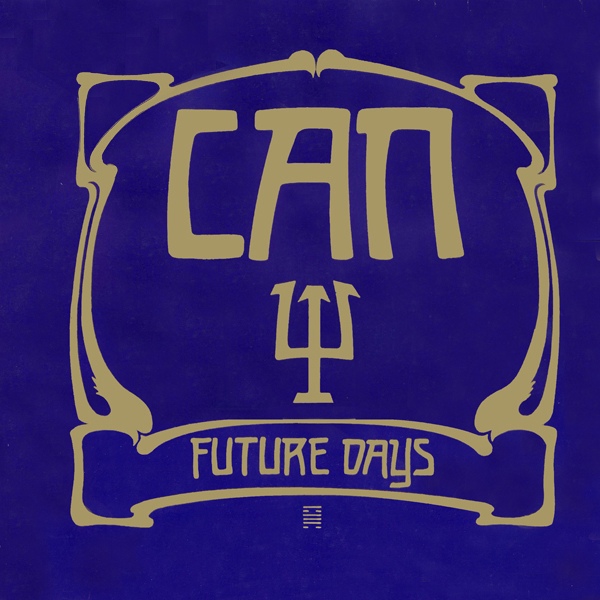
CULT CLASSIC: PETER WALKER-“SECOND POEM TO KARMELA” OR GYPSIES ARE IMPORTANT.
Cult Classic: Peter Walker-Second Poem To Karmela” Or Gypsies Are Important.
Back in 1967, Peter Walker released his seminal album Rainy Day Raga, which was released on Vanguard Records. Since then, it’s become a cult classic. Many people though, thought Rainy Day Raga wa his only album. It wasn’t and The following year, 1968, Peter released his sophomore album “Second Poem To Karmela” Or Gypsies Are Important,
It picks up where Rainy Day Raga left off, and proceeds to take things much further. So much so, that “Second Poem To Karmela” Or Gypsies Are Important has been described as: “the missing link between Ravi Shankar, Sandy Bull and Timothy Leary, in more ways than one.” This quotation makes “Second Poem To Karmela” Or Gypsies Are Important an album the everyone must hear once in their life. It showcases the considerable talents of a truly talented musician whose.
Peter Walker was born in 1938 and grew up in Medford, just north of Boston. His father played the guitar, and aged three, Peter first picked up the guitar. He was hooked. Having broken the strings on the guitar, his parents bought him a mandolin. This was an important part of Peter’s musical education.
By the time he was a teenager, his parents had decided that Peter should be a musical all-rounder. So, he Peter played brass, woodwinds, piano and later, harmonica. The guitar came later.
That came after Peter ran away from home. This was the real thing. Peter spent time travelling round America. Incredibly, he was still in the early years of high school. On his return, Peter took up the guitar. Sadly, Peter wasn’t given any encouragement.
Far from it. His stepfather was far from happy about Peter’s decision to take up the guitar. There was no stopping him though. Looking back, Peter thinks it was his way of connecting with his father, who he still missed after his parent’s split-up. While Peter played guitar, he was broadening his musical taste.
Using a radio that he’d hidden under his bed, Peter started listening to the Grand Ole Opry. Soon, his musical tastes broadened. Blues, folk, gospel, R&B and rock ’n’ roll. Peter was hooked.
So much so, that he started learning the songs he heard on his radio. He bought a capo and started learning all the keys. One of the first songs he learnt, was The House Of The Rising Sun. Soon, he realised that playing guitar made him popular.
Out of all of the ten-thousand students at the University of Cincinnati in 1957, only two people played the guitar. So, this more or less guaranteed them invites to any campus parties. After college, Peter became a beatnik. This was around 1958 or 1959.
Back in 1957, Jack Kerouac had released his seminal classic On The Road, a book which inspired dreams and for the lucky ones, road trips and easy living. Peter lived the dream. With his guitar for company, he hung around North Beach, San Francisco. It was during this time, Peter honed his sound. By night, Peter lived above the Bagel Shop in Grant Avenue. During this time, Peter met a cast of colourful characters.
Among them were Jim Gurley, who later, would find fame with Big Brother and The Holding Company. He was taking his first steps musically, as he learnt to play the guitar. Then there Brownie McGhee, Sonny Terry, Josh White, Jose Feliciano, Lightnin’ Hopkins, Joan Baez, The Jim Jweskin Jug Band and Karen Dalton. Indeed, it was Peter who lent Karen Dalton the long-necked banjo that she plays on her classic album In My Own Time. All this was part of Peter’s development as a musician.
So were the early sixties. Peter was combining his time working a regular job and honing his musical style. This included hearing Ravi Shankar live. In 1962, Peter had bought a 100 string sarangi in 1962. He saw it in the window of a shop and was intrigued. Two years later, in 1964, Peter saw Ravi live. His music would go on to influence Peter’s debut. However, by then, Peter had been on a road trip.
The death of President Kennedy had affected Peter. He headed off, after believing his life was destroyed. During Kennedy’s presidency Peter had travelled back and forward between Mexico, buying guitars. After Kennedy’s assassination, Peter headed off on the mother of road trips.
First of all he headed to Spain. With the help of the US Consulate, Peter found a Flamenco teacher. This was Senor Pappas, who Peter addressed as Maestro. Throughout the winter, which he spent in Spain and North Africa, Peter studied Flamenco. Then when he headed back to America, he heard Ravi Shankar and began studying Indian music.
Hearing Ravi Shankar live inspired Peter. He headed down to Mexico and using a stereo he’d borrowed from his friend John Barrymore’s car, set about copying Ravi Shankar’s technique on the guitar. It took seven long months of playing along with a tape played at half-speed before Peter achieved what he set out to do. Being able to play both Flamenco and make his guitar sound like Ravi Shankar would result in a captivating debut album.
That would come later. Before that, John Barrymore Jr. took Peter under his wing. They’d become good friends. So, John showed around Hollywood. John introduced Peter as if he was a guitar maestro. Peter enjoyed his spell in Hollywood, but decided to return to New York.
Back in New York, Peter and Monte Dunn started playing together. Peter also played sessions at Columbia and had a residency at Cafe Au Go Go. It was there that a representative of Vanguard Records heard Peter. They liked what they heard, came backstage and offered Peter a contract on the spot.
Delighted, Peter accepted Vanguard Records offer. He set about recording his debut album Rainy Day Raga. Peter penned nine tracks and covered Lennon and McCartney’s Norwegian Wood. On its release in 1967, Rainy Day Raga seemed to pass most people by. It wasn’t a commercial success. Rainy Day Raga was described as: “the perfect L.S.D. soundtrack.” Since then, Rainy Day Raga has become a cult classic. Most people thought that was the end of the Peter Walker story. It wasn’t.
Following Rainy Day Raga, Peter began work on his sophomore album “Second Poem To Karmela” Or Gypsies Are Important. He wrote nine tracks and cowrote Mixture with Michael Chechik which were recorded and mixed at Vanguard Records’ Vanguard’s 23rd Street Studio.
As recording of “Second Poem To Karmela” Or Gypsies Are Important began at Vanguard Records’ Vanguard’s 23rd Street Studio, Peter would be accompanied by a talented band. This included flautist Jim Pepper, organist Michael Chechik, violinist John Blair and Jim Hotep on tabla. Midnite added tamboura and ondiolines came courtesy of New York Tactical Force. Peter played sarod, guitar and sitar. Producing “Second Poem To Karmela” Or Gypsies Are Important was Michael Chechik. Once “Second Poem To Karmela” Or Gypsies Are Important was completed, it was released in 1968.
When “Second Poem To Karmela” Or Gypsies Are Important was released in 1968, lightning stuck twice. It wasn’t a commercial success. Neither critics nor music lovers picked up on “Second Poem To Karmela” Or Gypsies Are Important. Again, it passed them by. Since then, only a small group of music lovers with eclectic tastes have appreciated “Second Poem To Karmela” Or Gypsies Are Important, which I’ll tell you about.
Opening “Second Poem To Karmela” Or Gypsies Are Important is Second Song. Wistful, eerie and exotic describes the arrangement. That’s before the drums gallop away and a flute cascades. The guitar is transformed in Peter’s hand. It takes on an Indian sound. That’s down to the tuning. As for his playing, his hands flit up and down the fretboard. It’s mesmeric. He joins forces with the drums and flute. There’s an urgency, fluidity and passion in their playing.
From the distance, an Eastern sound emerges. It’s captivating. So is Peter’s playing on I and Thou. Slow, careful and tenderly he plays his guitar. Behind him, subtly, instruments accompany. They weave in and out. Tamboura and tabla combine. However, it’s Peter’s playing that has your attention. His guitar has become an extension of him and his emotions. It’s as if his emotion, fears and frustrations flow through him to his guitar on this Flamenco influenced track.
Just Peter’s lone guitar opens Southwind. He plucks thoughtfully and gently at his guitar. Miles Davis believed space is left within the arrangement. So does Peter. Here, it adds to the drama. As do the tabla and flute. Together, they ask an unanswerable question. Peter and the flute match each other every step of the way for drama. Peter’s playing is exquisite. Jim Pepper’s flute proves a perfect foil for Peter.
Tenderly, but beautifully and soon, urgently Tear unfolds. Peter has your attention. Unaccompanied, he plays a spellbindingly beautiful solo. His playing veers between tender, strident, stark and melancholy. Heartache and hurt are ever-present and you can imagine a Tear falling.
Barefoot features a myriad of influences. Gradually, they all merge into one. Straight away, there’s the influence of Ravi Shankar. It comes courtesy of Peter’s guitar and tabla. Then a flute later joins gypsy violins. They’re played urgently, creating a joyous sounding track which you could dance Barefoot and carefree to.
Subtly and wistfully, Peter strums his guitar Gypsy Song, Tabla tremble and gypsy violins lay bare their soul. They’re played with tenderness and emotion. Meanwhile, the flute flutters above the arrangement. Even when the tempo rises, melancholy and soul-searching describes this track.
Circus Day has a similar wistful sound. Peter plays his thoughtfully and slowly. His playing takes on a sense of urgency. So much so, that it’s as if the flute is trying to reassure him. Try as it might, it can’t. Gradually, the arrangement grows. So does the Indian influence. Tabla and saron accompany the flute as they play with urgency, speed and fluidity. Somehow, they keep this up throughout the day, as of trying to replicate the happiness and joy Circus Day brings.
Blake Street veers between folk and Flamenco. Confidently, Peter plays the guitar. His playing is strident. Then as you think he’s about to change tack and head of in another direction, the song is over. Your left wondering what it might have become?
Tabla set the scene on Socco Chico. They march ominously towards you. When Peter plays the sarod, it’s thoughtfully and tenderly. He then plays his guitar with confidence. Meanwhile, the flute cascades across above the arrangement. It makes you think of an eagle in full flight. Later, Peter’s guitar playing becomes urgent. So do the tabla and flute during this dramatic opus.
Mixture which closes “Second Poem To Karmela” Or Gypsies Are Important, has a different sound. That’s because of new instruments, including an organ, ondiolines and sitar. There’s even tapes playing backwards. Slow, surreal and psychedelic describes this track. To that, I’d add moody and eerie. Meandering along, it proceeds to spring a series of sonic surprises, musical genres melt into one. Gypsy violins and tablas, psychedelia, jazz and rock combine to create a lysergic melange that closes “Second Poem To Karmela” Or Gypsies Are Important on a hypnotic high.
For Peter Walker, the commercial failure of “Second Poem To Karmela” Or Gypsies Are Important must have been ironic. The title “Second Poem To Karmela” is a reference to the book Sibbartha, which is the story of a man seeking enlightenment. Once he’s become enlightened, he decides to his newly enlightened self in the material. It’s during this part of his life, the man meets Karmela, a beautiful woman. Despite this, and his newly enlightened state, he decides to return to his monastic life. For Peter this must have struck a nerve. Having failed to enlighten music lovers, he turned his back on music.
For thirty-eight years, Peter Walker was lost to music. It was in 2006, that Peter made his comeback, when he recorded Second Raga For Peter Walker. After thirty-eight years in self-imposed exile, one of music’s innovators made his return. However, what might have Peter have achieved during this thirty-eight year period? Who knows? He may have become one of the most influential and innovative artists of his generation? We’ll never know. What I do know is that Peter Walker’s self-imposed exile was music’s loss.
It only takes one listen to Second Poem To Karmela” Or Gypsies Are Important to realise this. It’s a truly innovative and influential genre-melting album. Lysergic, experimental and groundbreaking, Peter Walker was ahead of his time. That’s nothing new.
A whole host of artists have suffered the same fate. However, not all of these artists walk away from music for thirty-eight years. Peter Walker did, leaving behind two minor classics. The first of these is Rainy Day Raga in 1967. A year later, Peter Walker released his second cult classic “Second Poem To Karmela” Or Gypsies Are Important which sadly. has been overlooked since its release in 1968. Thankfully, Peter Walker’s groundbreaking, genre-melting sophomore album “Second Poem To Karmela” Or Gypsies Are Important is starting to find the wider audience it so richly deserves.
Cult Classic: Peter Walker-Second Poem To Karmela” Or Gypsies Are Important.

CULT CLASSIC: BERT JANSCH-L.A. TURNAROUND.
Cult Classic: Bert Jansch-L.A. Turnaround.
On New Year’s Day, 1973, Glasgow-born Bert Jansch announced his intention to leave folk-jazz band Pentangle, and concentrate on his burgeoning solo career. This resulted in the headline: “Pentangle Split” featuring on the first edition of Melody Maker released in 1973. For some of Pentangle’s fans, this came as a surprise, while others thought that the writing had been on the wall for a while. Especially now that Bert Jansch was a successful solo artist who had already released seven albums since 1965.
By then, folk singer Bert Jansch was signed to the Transatlantic label, and had released his eponymous debut album to critical acclaim on the ‘16th’ of April 1965. Eight months later, he released the followup It Don’t Bother Me to plaudits and praise. It looked as if the twenty-two year singer was about to enjoy a successful solo career.
With things looking good for Bert Jansch, he returned to the studio in early summer 1966, and was once again, joined by his friend John Renbourn as he recorded Jack Orion. When this third album of traditional folk was released in September 1966, the reviews were mixed. While some critics were won over by the album, and continued to fly the flag for the folk singer, others felt it was a weaker album than its predecessors. Despite that, Bert Jansch’s star was still in the ascendancy.
As 1967, dawned little did Bert Jansch realise that this would one of the most important year of his career. He entered the studio to record his fourth album Nicola in April 1967, which was Bert Jansch’s first folk rock album. When it was released in July 1967, many reviews were positive, but some weren’t sure about the new direction Bert Jansch’s music was heading. Bert Jansch had realised that his music had to evolve to stay relevant, and increase his fan-base. However, this wasn’t the only change made during 1967.
In 1967, Bert Jansch was one of the cofounders of Pentangle, which joined included his friend John Renbourn, Danny Thompson, Danny Cox and Jacqui McShee. They would combine disparate musical genres including blues, folk, folk rock and jazz over the next few years.
Having joined Pentangle, Bert Jansch’s solo career was put on hold as the new band began honing their sound and playing live. Then in 1968, Pentangle released their critically acclaimed debut album The Pentangle on the ’17th’ May 1968. It was followed by another album of folk rock Sweet Child, which was released on the ‘1st’ of November 1968 to plaudits and praise. After this, Bert Jansch’s thoughts turned to completing his sixth solo album.
Bert Jansch had started recording his sixth album in October 1968, and completed the album in November, just after Pentangle released Sweet Child. Two months later, Birthday Blues, which was produced by Shel Talmy, was released in January 1969 and was hailed as one of Bert Jansch’s finest albums. However, it would two years before Bert Jansch returned with the followup to Birthday Blues.
Buoyed by the response to Birthday Blues, Bert Jansch joined the rest of Pentangle and recorded the album Basket Of Light with producer Shel Talmy. When it was released on the ‘28th’ October 1969, it was to critical acclaim as the album reached number forty-three in Britain. Nowadays, Basket Of Light which finds Pentangle fusing folk jazz and fusion is now regarded as a minor classic, and one the Pentangle’s finest hours.
Meanwhile, Bert Jansch was working on his seventh album Rosemary Lane, between June 1970 and January 1971. Despite working on the album on and off for the best part of seventh months, Rosemary Lane, which was produced by Bill Leader received mixed reviews. This was a blow for Bert Jansch who had invested so much of his time into recording Rosemary Lane.
Two months later, and Bert Jansch was back in the studio, and spent three weeks during March 1971, recording Reflection, which was a genre-melting album. Reflection found Pentangle combining Celtic music, country, folk, folk rock, gospel and even funk on what was an ambitious and eclectic album, but one that didn’t find favour with all the critics. Some were unsure of Reflection, and their reviews were far from positive. It was a case of deja vu for Bert Jansch after the response to Rosemary Lane.
Despite the reviews of Rosemary Lane, Pentangle eventually returned to the studio and began work on their sixth album Solomon’s Seal. By then, Pentangle’s contract with Transatlantic had expired amidst arguments and wrangling over royalties. This resulted in Pentangle signing to Warner-Reprise, who had distributed their albums in America. Pentangle released Rosemary Lane on Reprise in September 1972, but the reviews were poor and so were the sales. Things weren’t looking good for Pentangle.
They got even worse when Bert Jansch announced his intention to leave Pentangle on On New Year’s Day, 1973. Melody Maker ran the story Pentangle to split in the first edition of 1973. It was the end of an era, that had ended with a disappointing swan-song that sold badly.
By then, the members of Pentangle had all spent the advances that they had received from Reprise, and owed the company significant sums of money. It would take the band until the early eighties before the advance was paid off. That was still to come, and in 1973, Bert Jansch was looking for a new record label.
He was no longer signed to Transatlantic, and had signed to Pentangle’s old label Reprise. Bert Jansch’s debut for his new label was Moonshine, which was released on Reprise in February 1973. It was produced by Danny Thompson, and saw Bert Jansch combine baroque folk and folk rock which found favour with the critics. However, after just one album, Bert Jansch left Reprise and signed for Charisma Records.
By then, Bert Jansch had written Chambertin which was one of two songs he recorded with Danny Thompson in early 1973 The other was John Renbourn’s Lady Nothing, which later, became part of Bert Jansch’s nine album L.A. Turnaround.
Having signed to Charisma, Bert Jansch began writing the rest of L.A. Turnaround. Eventually, Bert Jansch had written eight new songs including Fresh As A Sweet Sunday Morning, One For Jo, Travelling Man, Open Up The Watergate (Let the Sunshine In, Stone Monkey, Of Love and Lullaby, Needle Of Death and There Comes A Time. Bert Jansch also penned the lyrics to The Blacksmith and Doc Smith wrote the music. These songs were joined by John Renbourn’s Lady Nothing and the traditional song Chuck Old Hen which was arranged by Bert Jansch, and became L.A. Turnaround , and was recorded at between April ad June 1974, at Sound City, Sepulveda, California.
Taking charge of production was former Monkee, Michael Nesmith, while some top musicians became Bert Jansch’s band. This included a rhythm section of drummer Danny Lane, bassist Klaus Voormann and guitarists Michael Nesmith; Jay Lacy who played on Of Love and Lullaby and Jesse Ed Davis who featured on Open Up For Watergate. They were joined by Red Rhodes on steel guitar, Michael Cohen who played electric piano on The Blacksmith, while Byron Berline played fiddle and mandolin on Cluck Old Hen. Meanwhile, Bert Jansch played guitar, piano and added vocals on L.A. Turnaround , which took two months to record, and was released in September 1974.
Critics on hearing Bert Jansch’s ninth album, realised that stylistically, L.A. Turnaround was very different to his previous albums. There were elements of country rock, and traditional English folk rock on L.A. Turnaround , which was hailed as a minor masterpiece from Bert Jansch.
As Fresh As A Sweet Sunday Morning opens L.A. Turnaround , straight away it’s reminiscent of Pentangle at the peak of their considerable powers. The same can be said of Of Love and Lullaby later in the album. However, elsewhere on L.A. Turnaround , Bert Jansch and his inimitable and idiosyncratic guitar style as he moved from acoustic to rhythm guitar. His guitar takes centre-stage on the Danny Thompson produced instrumental Chambertin, and on Lady Nothing a quintessentially English folk song rich in imagery, that brings to mind a late-evening walk in a garden in the home of Wadsworth and Blake.
Travellin’ Man is one of the country rock tracks, before the bluesy Open Up The Watergate (Let The Sunshine In) breezes joyously along. The cinematic sounding Stone Monkey features some of the best lyrics on L.A. Turnaround , as troubadour Bert Jansch returned to the country rock sound that suits him. Bert Jansch then returns to English folk rock on Of Love and Lullaby, and country rock on Needle of Death where a weeping pedal steel accompanies Bert Jansch, on this poignant and ruminative sounding song. It’s one of the highlights of L.A. Turnaround and showcases one of the great British singer-songwriters of his generation at the peak of his powers. The country rock continues on There Comes A Time as a weeping pedal steel accompanies Bert Jansch’s mid-Atlantic accent as he’s accompanied by one the finest and fullest arrangements on L.A. Turnaround .
Bert Jansch combines blues and traditional folk on Cluck Old Hen, which is quite unlike the rest of the album. However, it’s undeniably Bert Jansch and is reminiscent of his previous albums. Closing L.A. Turnaround The Blacksmith, which bursts into life and is a mixture of the old, the new and traditional folk. Again, it’s reminiscent of earlier albums, but still ensures the album ends on a high.
L.A. Turnaround with its mixture of blues, country rock and traditional English folk was Bert Jansch’s ninth album, and first for Charisma. Pentangle’s influence could also be heard on As Fresh As A Sweet Sunday Morning and Of Love and Lullaby. This made L.A. Turnaround an album that looked to Bert Jansch’s past, present and into the future.
Bert Jansch was hoping that L.A. Turnaround would appeal to his fans that had followed his solo career since 1965, the fans that embraced his folk rock sound and those that had followed Pentangle’s career. However, Bert Jansch’s decisions to head in the direction of country rock, showed that he was thinking about the future and hoping to broaden his commercial appeal on L.A. Turnaround .
That should’ve been the case as L.A. Turnaround was a carefully crafted album that was released to critical acclaim, and immediately hailed as one of Bert Jansch’s finest hours. That was no surprise as L.A. Turnaround was Bert Jansch’s finest hour, and by 1974, was the most accomplished and cohesive album of his career. By then, he had released nine solo albums, and depite L.A. Turnaround’s commercial failure this cult classic is a minor masterpiece and is Bert Jansch’s finest hour and a tantalising taste of a singer-songwriter at the peak of his considerable powers.
Cult Classic: Bert Jansch-L.A. Turnaround.
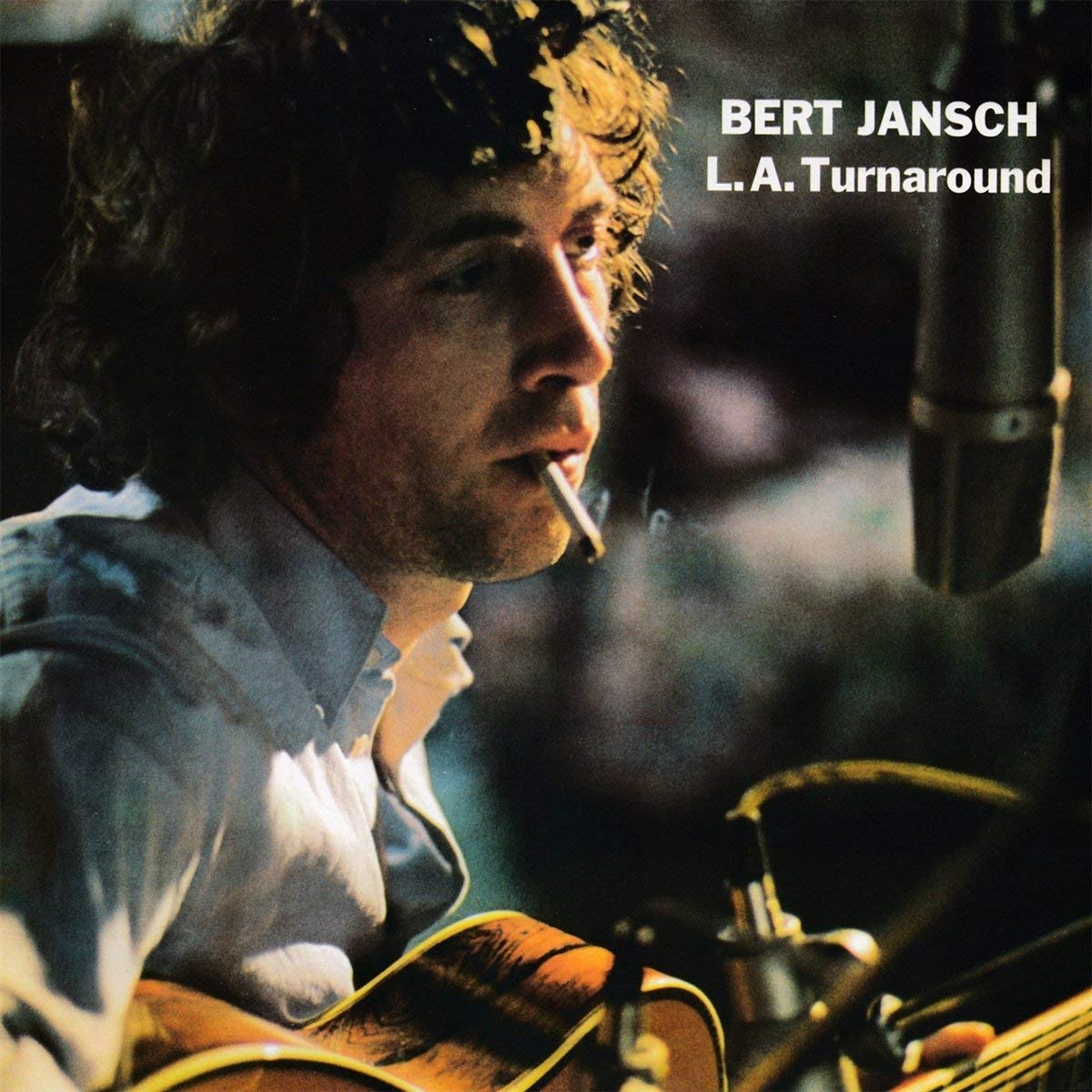
STEVEN TAYLOR-SONGS OF INNOCENCE AND OF EXPERIENCE: SHEWING THE TWO CONTRARY STATES OF THE HUMAN SOUL.
Steven Taylor-Songs Of Innocence and Of Experience: Shewing The Two Contrary States Of The Human Soul.
Ace Records.
Nowadays, many critics consider that the enigmatic William Blake was England’s greatest ever poet and artist. Some critics have gone as far as to say that he was the greatest poet and artist and artist ever. Blake was certainly a revolutionary whose work was innovative and influential.
The work of Blake has influenced everyone from the pre-Raphaelite artists, Romantic poets, writers like Aldous Huxley, James Joyce, Jack Kerouac and William S. Burroughs as well as filmmakers, cartoonists and the great and good of music.
Everyone from The Beatles, the Rolling Stones, Van Morrison, Jim Morrison, Led Zeppelin and David Axelrod, who proudly described himself as a self-confessed “Blake freak were all influenced by Blake.” So has singer, songwriter, musician and ethnomusicologist, Steven Taylor.
Recently, Ace Records released definitive versions of William Blake’s Songs Of Innocence and Of Experience: Shewing The Two Contrary States Of The Human Soul. The album features twenty-nine tracks that are described as being “tuned by Allen Ginsberg and Steven Taylor” with the latter receding them posthumously for the album William Blake’s Songs Of Innocence and Of Experience: Shewing The Two Contrary States Of The Human Soul. Its roots can be traced to July 1948.
That was when Ginsberg hallucinated the voice of Blake and began chanting two songs from Songs Of Experience. This was just the start for Ginsberg.
Later, he began to set Blake’s songs to his own arrangements. This was next step in what was a lifelong love of, and homage to the man who was by then regarded by many as England’s greatest poet and artist.
Then in 1976, Ginsberg was booked to play a gig at a college and needed a guitarist. One of the professors approached a student who could accompany him on guitar. That was the easy part. The student had to be able to accompany Ginsberg as he sang Blake’s songs. Fortunately, Steven Taylor was able to do so.
Little did Steven Taylor realise that this was the start of an association and friendship between Steven Taylor and Ginsberg that lasted three decades and twenty years.
Six years later, and the two friends were wandering through Greenwich Village, when Ginsberg said that Ed Sanders was rehearsing at One Fifth Avenue and why didn’t the gatecrash the rehearsal? When the pair made their arrival, Ed Sanders was rehearing with a trio and were hoping to play at the Mudd Club. Not long after this, fate intervened when the band began singing Blake’s Oh How I Roam’d, and Steven Taylor decided to add a harmony. Ed Sanders liked when The Fugs reformed he joined the band. However, his collaboration with Ginsberg continued.
During that time, Steven Taylor accompanied Ginsberg on guitar when he performed Blake’s songs to an appreciative audience of afficianados of the legendary poet and artist’s work. The continued to work together right through until 1996, but sadly, Ginsberg passed away on the ‘5th’ of April 1997 aged seventy. That day, America mourned the passing of one of a great poet, philosopher and writer. Ginsberg’s final words to his friend were “finish the Blake.”
Steven Taylor set out to carry out the final wishes of his friend and longterm musical collaborator. He began recording Blake’s songs his two books Songs Of Innocence and Songs Of Experience. Joining his were a band that included fellow Fug Scott Petito on acoustic bass, electric bass and keyboards, drummer Billy Atwell II, pianist Marilyn Crispell and Ross Goldstein on mellotron. They recorded the twenty-nine tracks on Songs Of Innocence and Of Experience: Shewing The Two Contrary States Of The Human Soul which was recently released by Ace Records. It has been a labour of love for everyone involved in the project
Opening the album is Introduction, which is the first of eighteen songs taken from Songs Of Innocence. It was first printed in 1789, and was a conceptual collection that included nineteen poems. The book was illustrated and hand coloured by Blake. Among the other songs from Songs Of Innocence are The Shepherd, The Lamb, The Chimney Sweeper, The Little Boy Lost, The Little Boy Found, Holy Thursday and A Nurse’s Song. Some of these titles Blake revisited five years later in Songs Of Experience.
Blake published Songs Of Experience in 1794, which featured twenty-six poems. Eleven feature on Songs Of Innocence and Of Experience: Shewing The Two Contrary States Of The Human Soul. A couple of the poems, The Little Girl Lost and The Little Girl Found had featured in Songs Of Innocence and Blake moved them between the two books.
Blake also used the same title on Holy Thursday and Nurse’s Songs, but the meaning of the two songs are very different. Just like all of Blake’s work they’re cerebral and thought-provoking.
Other poems from Songs Of Experience include The Sick Rose, The Fly, The Angel, The Garden Of Love and London. They’r just some of the eleven songs Steven Taylor and his band covered. These songs have understated and subtle arrangements which allow the vocal to take centrestage. That is the case throughout this captivating album, and the less is more approach works allowing the listener to focus on the songs and work out their meaning on Steven Taylor’s homage to his late friend Allen Ginsberg Ginsberg who prior to his passing asked him to: “finish the Blake.”
While he’s not quite finished this ambitious project, twenty-nine of the forty-five songs feature on Songs Of Innocence and Of Experience: Shewing The Two Contrary States Of The Human Soul. It’s been part of Steven Taylor’s life for over twenty-two years, and the story so far features on Songs Of Innocence and Of Experience: Shewing The Two Contrary States Of The Human Soul which was recently released by Ace Records. Steven Taylor has carried out Allen Ginsberg Ginsberg’s wishes with homage to, and reminder of the enigmatic genius that is William Blake who was England’s greatest ever poet and artist who was an innovator who has influenced everyone from poets, artists, writers and musicians, and will continue do so forevermore.
Steven Taylor-Songs Of Innocence and Of Experience: Shewing The Two Contrary States Of The Human Soul.
CULT CLASSIC: RIM KWAKU OBENG-RIM ARRIVES.
Cult Classic: Rim Kwaku Obeng-Rim Arrives.
For collectors of Afro-funk and disco, many albums remain tantalisingly out of reach. This includes Ghanian drummer Rim Kwaku Obeng’s legionary lost debut album Rim Arrives. It was released in 1977, four years after a perilous time for Rim Kwaku Obeng.
He found himself stranded in London, without money, documents or friends. Soon, Rim found himself homeless, and spent six long and lonely months sleeping rough. It was only through a chance meeting with Joan Armatrading that Rim got his life back on track. This was the start of Rim Kwaku Obeng’s comeback.
By 1977, he found himself in San Francisco. Disco was at the peak of its popularity, Everyone was jumping on the disco bandwagon. Rim Kwaku Obeng was no different. When he entered the studio, Rim was determined to record an album that would fill dance-floors from Lagos to Los Angeles. He succeeded in doing so, However, it was long after 1977, that songs like Brushing Means Making Love, Gas Line and Believe In Yourself filled dance-floors.
Sadly when Rim Arrives was released, it failed to find the audience it deserved. It was only much later, that DJs spinning rare disco came across copies of Rim Arrives. They were the lucky ones. Very few copies of Rim Arrives still exist and those that do, change hands for up to £200. The story behind Rim Arrives is one of what might been. It was recorded by a truly talented and gifted musician Rim Kwaku Obeng.
He started life as Samuel K. Mfojo, in Begoro, Ghana.However, when his career in music began, he adopted the name Rim Kwaku Obeng. Music however, was in Rim’s blood.
Both his father and uncle were master drummers. It was no surprise when young Rim followed in their footsteps. Rim was a quick learner. By the time he was eighteen, he was a master drummer. There was no higher position. Or so it seemed.
Soon, Rim became the personal drummer to the Ashanti chief in his community. This was a position Rim held for the next eight years. He held this position until he was twenty-six, Then he heard the comedy group the Accra Trio.
They were playing a type of music that was new to Rim. It excited and inspired him. So much so, that Rim asked if he could tour with them. Given Rim’s position in the community, they agreed. It was to everybody’s benefit. He was after all, the Ashanti chief’s personal drummer.
This was the start of Rim’s professional career. It began with Rim touring with the Accra Trio. Then he was approached by Duke Oketa, the leader of one of the top Highlife bands in Ghana, the Uhuru Dance Band.
Over the next five years, Rim toured Britain, America and even Russia with the Uhuru Dance Band. During that period, he honed and perfected his playing style, Rim also became firm friends with Duke Oketa as the Uhuru Dance Band toured, All the time, their music continued to evolve. That was the case for five years, until Rim was called up and had to spend time in the armed forces.
Once Rim’s time in the armed forces was over, he was reunited with his old friend, Duke Oketa. He told Rim he was going to Los Angeles for a recording session. What’s more, he wanted Rim to accompany him. This was no surprise.
Rim and Duke travelled far and wide for five years. By then they had become firm friends. So when Duke Oketa headed to Los Angeles for a session, Rim went too.
By then, the Uhuru Dance Band could do no wrong. Every song they recorded, had the potential to be a hit. So, for their next session, Duke Oketa decided to head to Los Angeles, and one of the city’s top studios.
Once there, Duke booked a studio for a new recording. Duke, however, didn’t do things by halves. He booked one of L.A.’s top studios, A&M Studios. However, Duke wasn’t done yet. For his session, he hired a huge string section. They made their way to the A&M Studios expecting everything to be ready. It wasn’t.
There were no charts awaiting the string section. Duke had no option but to postpone the session for a week. Luckily, Duke knew a man who could have the charts ready within a week. That was his drummer and friend, Rim Kwaku Obeng. He got to work preparing the charts. Within a week they were completed. Duke was so pleased that he paid Rim $700. While all this was playing out, one Quincy Jones was watching on.
He just happened to be spending some time at A&M Studios. When Quincy Jones saw how Rim handled the situation with the charts, he was impressed, Preparing the charts within a week was a big ask. However, Rim managed it. So, Quincy Jones asked Rim to join him. Unfortunately for Rim. Duke got involved, and threatened to sue Quincy Jones if Rim left his employ. Despite ruining the opportunity of a lifetime, Rim stayed loyal to Duke. That was a big mistake.
After the L.A. escapade, Duke invited Rim to accompany him to London. Duke told Rim they were going to record with “a band called Traffic” and Joan Armatrading, who was then, an up-and-coming singer-songwriter. For Rim, this must have seemed like the opportunity of a lifetime. Sadly, that wasn’t the case.
When Duke and Rim arrived in London, they booked into a hotel. Everything it seemed, was going well. However, that was until Rim’s second morning in London. Rim discovered that Duke had checked out of the hotel taking with him Rim’s passport, documents, money and luggage. While the hotel staff were sympathetic at his plight, this left Rim with a huge problem, how did he get home? The answer was, he couldn’t.
With no money, passport or documents, Rim was stranded. What’s more, he had nowhere to live. In the space of little over twenty-four hours, Rim found himself homeless. For the next six long and lonely months. Rim spent them sleeping rough. He was down, out and destitute. It was as if his world had ended. Over the next six months, Rim experienced hell on earth. It was only after a chance meeting with Joan Armatrading that Rim turned his life around.
One day, Rim saw that Joan Armatrading was playing in Ronnie Scott’s jazz club. He recognised and remembered the name. Here was the young singer-songwriter that he was meant to work with when he arrived in London. So, he returned to Ronnie Scott’s the night Joan was playing. He couldn’t get in, given his dishevelled state. So, Rim tried plan B.
Rim found a phone box and tried to phone home, call collect. No luck. Eddie Lee who he was phoning wasn’t around. With things going from bad to worse, and Rim exhausted, he fell asleep in the phone box. That was until someone wanted to use the phone. Then Rim was on the move again. He was out of luck. Or was he?
Surrounded by hotels, Rim decided to try and find a hotel where he could either phone home, or spend the night. Then fate intervened, The hotel he decided to try was the one where he spent his first night in London. When the receptionist who had asked him to leave, saw the state of Rim she was worried. Rim told her what had happened, and slowly, she began to realise that he was a well known musician. So she allowed Rim to phone Eddie Lee.
Having got through to Eddie Lee, his old friend paid for a room in the hotel for three weeks. Eddie Lee also got in touch with Joan Armatrading
When she heard what had happened to Rim, and what he’d been through, Joan promised to help him.
No longer was London the lonely, scary place it had been for the past six months. During that period, Rim had survived by the skin of his teeth. It had been a terrifying time, Now life was looking up, and could only get better for Rim. Joan took Rim home, got him fed and cleaned him, and the next day, bought him new clothes. Soon, he was rehearsing with Joan’s band. Thanks to Joan Armatrading the next chapter in Rim’s life was about to begin.
By 1977, Rim Kwaku Obeng had gone from sleeping rough on the streets of London, to Los Angeles. He had struggled to raise the money to cross the Atlantic. Eventually, he had saved enough, that he could say goodbye to London.
When he arrived in L.A., Rim was able to stay with a friend while he found his feet. Soon, he was working with a group of expat African musicians. Some weren’t even professional. However, before long, Rim turned them into a crack band who were able to seamlessly, combine Western and African music. This fusion of musical influences, would feature on Rim’s debut album.
For his debut album, Rim Arrives. Rim had written seven tracks, He took the band he had honed, and augmented them with some top L.A. session players.
When the recording sessions for Rim Arrives began, Rim took his place in the rhythm section, where he played drums. That wasn’t all. He played piano, bells, clavinet, congas, piano, shaker and timbales. Joining Rim in the rhythm section were basists Baba Tunde, Max Bennett and Phillip Scott; and guitarists Arthur Adams, Jimmy Garrett and Kevin Way. Kwesi Topsy played congas, Fifi Essel shakers and Thomas Hensley piano. The horn section featured trombonist Steve Johnson; trumpeters Robert Hicks and Steve Kurash; and saxophonists Frank Mayes, Stanley Hood and Dennis Dreith who also played the flute. Anita Berry and Shirley Washington added backing vocals. Akua Sewaa switched between lead and backing vocals. Producing Rim Arrives were Rim and Kwaku Lynn. Together with a crack band of African and American musicians, they recorded what could’ve, and should’ve been an album of dance-floor fillers.
Especially with 1977, being the year disco’s popularity peaked. Everyone and anyone were releasing disco records. This included the biggest names in music, actors and stars whose career had hit the buffers. However, back in 1977 Rim was one of the rising stars of Afro-funk and disco. Rim Arrives, his debut album, many felt would lunch his career.
That didn’t happen. Instead, Rim Arrives failed to find an audience until much later. when DJs spinning rare disco came across copies of Rim Arrives. They were the lucky ones. Very few copies of Rim Arrives still exist. That’s until the recent release of Rim Arrives by BBE Africa. At last, this hidden gem can be heard by everyone. Here’s what’s in-store for them.
Gas Line opens Rim Arrives. Straight away, drums pound, horns sound and percussion plays. Stabs of horns are joined by what sounds like a party in the studio. By then, the rhythm section are laying down the funkiest of grooves. Meanwhile, Akua Sewaa takes charge of the lead vocal. It’s sultry and soulful. Backing vocals and blasts of horns reply to her call. All the time, the rhythm section and percussion are creating an irresistible, funky and dance-floor friendly backdrop. Add to this Akua Sewaa’s sassy,soulful vocal and belatedly, Rim has arrived.
As backing vocalists sing “Believe In Yourself,” a bass line bounds across the arrangement. Thunderous drums and stabs of blazing horns add an element of drama, while percussion punctuates the arrangement. The backing vocalists add a soulful sound to this anthemic dance track. It has everything you could want in a dance track. Funky? You bet? Soulful? Definitely. What more can anyone one with a track where African and Western influences combine seamlessly.
There’s a change of direction on Sunkwa (Life First). It has a much more traditional sound. Having said that, Western influences haven’t been negated. After almost cha-chaing into life, the Afro-beat influence takes over. A piano and guitar accompany Rim’s vocal. Then the horn and rhythm section combine with myriad of percussion. Rim unleashes a vampish vocal, as his band kick loose. It’s a joy to behold.
Backing vocalists add a jazz-tinged vocal as Funky Drummer deigns to show its funky delights. The drums are loud and proud. They’re accompanied by the rhythm section and guitars. Soon, musical genres are melting into one. As the vocal becomes soulful, elements of Afro-funk and disco can be heard. Soon, the track takes on a hypnotic quality, as Rim’s band lock down the groove. Playing a starring role are the backing vocalist, rhythm section and blistering guitar solo. The horns deserve an honourable mention, as five minutes of fabulously funky music shares its secrets.
Afro-disco with a funky twist. That describes Brushing Means Making Love. The backing vocalists get the party started, adding a soulful accompaniment to the pounding, dramatic and funky rhythm section. Stabs of horns punctuate the arrangement. So is percussion. Meanwhile, another sensual, sultry vocal is added. Harmonies accompany it, as elements of classic disco and Euro disco provide inspiration for Rim. By then, it’s apparent that Rim and his band are determined to the listener to 127 disco heaven.
Just the drums and percussion accompany the backing vocalists as Nothing Is Free unfolds. Soon, the bass and growling horns are dropped in. By the time the lead vocal enters, the arrangement is just the rhythm section and percussion. Backing vocalists respond to the vocal, as the arrangement builds. Horns blaze and growl, drums roll and a searing guitar solo is unleashed. It soars above the arrangement, as the band stretch their legs, before the track reaches a dramatic, and sassy crescendo.
Closing Rim Arrives is Spend Your Money. It follows a familiar formula to Nothing Is Free. Just drums and percussion accompany the backing vocalists. Then the arrangement bursts into life. Horns sound, guitars chime and chirp while the backing vocalists sings: “Spend Your Money, miser.” It’s impossible not to be won over by this track. Hooks haven’t been rationed during this good time, dance track. It has an anthemic quality. That’s not all. Like so much of Rim Arrives, Spend Your Money has a timeless sound. It has survived the test of time, and is guaranteed to fill floors and get parties started.
Rim Arrives was released in 1977, and like so many albums released during the seventies, they failed to find an audience first time around. It was only later, when a new generation of DJs were looking for rare disco to spin, that they came across copies of Rim Arrives. They were the lucky ones.
Given Rim Arrives wasn’t a commercial success, very few copies were sold. Later, in the seventies, a shortage of vinyl in parts of Africa, including Ghana, led to many albums being recycled. Doubtless, this included copies of Rim Arrives. That’s why nowadays, trying to find a copy of Rim Arrives in good condition, is like looking for the proverbial needle in a haystack. Even if an original copy of this cult classic turns up, clued up record dealers will be asking anything up to £200. No wonder as it’s essential listening for anyone whose interested in either Afro-funk, disco, funk or soul. The music on Rim Arrives is funky, soulful, dance-floor friendly and timeless. Rim Arrives is also guaranteed to fill dance-floors and get any party started.
Cult Classic: Rim Kwaku Obeng-Rim Arrives.
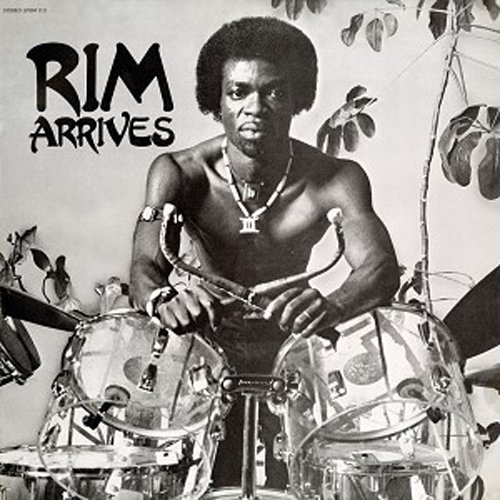
CULT CLASSIC: KLAUS SCHULZE-CYBORG.
Cult Classic: Klaus Schulze -Cyborg.
By the time Klaus Schulze released his debut solo album Irrlicht in 1972, he had already been in what would prove to be two of the most important, innovative and influential Krautrock bands, Tangerine Dream and Ash Ra Tempel. Both groups would write their names into the history books. However, being in a band didn’t seem suit Klaus Schulze. He found that the endless discussions got in the way of the important thing, making music. He wanted to make music, not talk about it.
Klaus’ approach was to let the music flow through him. Other musicians seemed to want to discuss every aspect of the music. Meanwhile, Klaus wanted to improvise. It was frustrating, and stifling Klaus’ creativity. As a solo artist, he wouldn’t have to put up with the endless pointless discussions. So Klaus left Ash Ra Tempel, and decided to pursue a solo career.
When Klaus embarked upon his solo career, he was something of a free spirit. He was determined to make music that was unique. Klaus couldn’t point at an artist, and say: “that’s the type of music I want to make.” While Klaus was aware of minimalist composers Terry Riley and Steve Reich, this wasn’t the type of music he was considering making. They did share some things in common, the concepts of repetition, phrasing and sequencing. Apart from that, Klaus was heading in a different direction.
This meant Klaus was never going to be accused of following in someone’s footsteps. Musically, he had a blank canvas to work with. His palette of sounds were unlike other musicians. When he began recording Irrlicht in April 1972, Klaus musical owned an amplifier that wasn’t working; a guitar; percussion; zither; an organ; a cheap microphone and a cassette recorder. The cassette recorder and microphone he used to tape the famous Freie Universitat Berlin orchestra.
Irrlich.
Before the recording of Irrlicht, Klaus had gone along to watch the Colloquium Musica Orchestra rehearse. As he stood and watched, he told the conductor “I like what you are doing, but could you do something different for me for half an hour?” With that, the bemused conductor asked “what would you like to have?” Klaus responded, with: “I don’t care, just play anything. I just want the sound. I’m going to play the tape backwards.” When Klaus returned half an hour later, his tape was ready and an integral part of Irrlicht was complete. This recording Klaus would alter with filters. Now, it was a case of bringing everything together. However, before Klaus did this, he would modify some of his equipment.
Klaus set about modifying the broken amplifier. He modified it, so that when he turned the volume up it caused feedback, tremolo and chirping sounds. The organ was modified by Klaus so that it no longer sounded like an organ. Along with his microphone and cassette recorder, Klaus set about recording his debut album, Irrlicht.
Recording of Irelicht took place in Berlin, during April 1972.With his bruised, battered and modified equipment, Klaus got to work, and the recording studio became a place where he could experiment. Using his modified organ and amplifier, plus percussion, zither and guitar, Klaus got to work. The backdrop for what was one of the most ambitious and experimental albums of 1972, was the tape played backwards. One thing was missing..synths
Incredibly, Klaus didn’t even a synth. While other artists owned banks of expensive synths, Klaus created an album that sounds as if it’s made entirely by an array of synths. Instead, Irrlicht, with its cosmic sound and ambient drones was a synth free zone. Instead, Irrlicht was more like an album of Musique Concrète. Klaus manipulated tapes, adding filters, delay, echo and an array of effects. The result was a trio of cinematic tracks that sounded like the soundtrack to an early seventies sci-fi film. It was released in August 1973 as Irrlicht.
While Irrlicht was well received by some critics, many critics failed to realise how important an influence Klaus Schulze have on music. He was a musical pioneer who would become a leading light of the Krautrock and Berlin School movements. However, very few German record buyers were aware of either movement. That was the case throughout Europe. Apart from a few discerning critics and record buyers, neither albums of Krautrock nor Berlin School found an audience. That would come much later. By then, Klaus Schulze would’ve released several albums, including his sophomore album Cyborg.
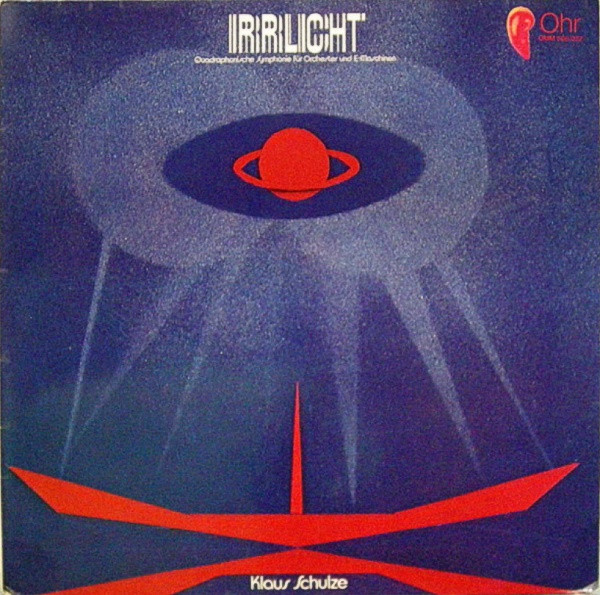
Cyborg.
When Klaus began work on Cyborg, he was still hampered by the equipment he owned. While other musicians owned banks of expensive synths, Klaus’ only synth was a twitter synth, the VCS 3. This was progress, as Klaus didn’t use synths on Irrlicht. To the VCS 3, Klaus added the organ that featured on Irrlicht, percussion and his Revox tape machine. Again, this played an important part in Cyborg’s sound.
Just like Irrlicht. Klaus would use tapes of an orchestra. Klaus had befriended music students at Colluquim Musica Orchestra. They had recorded some rehearsals at the recording studio in Berlin University. These tapes were important for several reasons.
The first was that Klaus wasn’t making much money out of music. That’s despite recording albums with Tangerine Dream, Ash Ra Tempel and releasing his debut album Irrlicht. These albums hadn’t been particularly successful. So the only time Klaus made money through music, was when he played live. Other times, Klaus had to resort to odd jobs to make ends meet. He delivered telegrams to augment his income. Given his financial situation, Klaus like many Krautrock and Berlin School bands and musicians, couldn’t afford expensive equipment. With the cupboard bare, Klaus again used the tapes to augment his array of instruments.
The tapes Klaus had been given by the music students at Colluquim Musica Orchestra, he decided to splice with a razor blade, and add to the four lengthy tracks that became Cyborg. This wasn’t easy and took time, patience and practice. However, by the time he came to record Cybord, Klaus was skilled at cutting up the tapes and rejoining them. Later, Klaus described this as “adding spice.” However, adding spice took time.
Recording of Cyborg began in February 1973, and the sessions continued until July 1973. During that five month period, Klaus played organ, the VCS 3 synth, percussion and added vocals. He also took charge of editing the tapes provided by the Colluquim Musica Orchestra. They’re billed as the Cosmic Orchestra on Cyborg, which by what became Cyborg was completed.
During the recording sessions, Klaus had recorded four lengthy tracks. They ranged from twenty-three to twenty-six minutes. Given the limitations of vinyl, there was no way that the music would fit onto one album. So a decision was made that Cyborg would be a double album. This would prove expensive for everyone involved.
It wasn’t just that a double album was more expensive to manufacture. Artists receive a reduced royalty rate for a double album. So often, artists avoided releasing a double album. Not Klaus Schulze. He must have realised that he had recorded a truly ambitious and groundbreaking, Cyborg. It found Klaus experimenting, pushing musical boundaries and fusing disparate musical genres. This time Klaus, was taking further what he began on Irrlicht. However, how would critics react?
When critics heard Cyborg, many critics realised the importance of the album. They heaped praise and critical acclaim on Cyborg. One critic from the music magazine Flash, enthusiastically described Cyborg as “cosmic music.” This didn’t please Klaus.
This he felt cheapened and debased the music on Cyborg. Cosmic music sounded as if it was the soundtrack to the cheap sci-fi novels of Klaus’ youth. One man who liked the term cosmic music, was Rolf-Ulrich Kaiser, the founder and in house producer of the Ohr label. It was the label that was about to release Cyborg. Soon, Rolf-Ulrich Kaiser had coined the phrase Cosmic Couriers. This was partly a nod to Klaus’ job delivering telegrams. The term Cosmic Couriers didn’t please Klaus, but was used to market this groundbreaking album, Cyborg. It was scheduled for release in autumn 1973.
When Cyborg was released in October 1973, the album wasn’t a commercial success. Instead, the album sold in relatively small quantities. It would be much later before Cyborg found a wider audience. That was a great shame, as Cyborg was a genre classic.
Synphära opens Cyborg. The arrangement drones almost dramatically. That’s until a melancholy synth plays. Still, the drone pulsates, sending out washes of dark, gothic and ruminative music. Meanwhile the synth adds a contrast, while the gothic sound of an organ plays. It sounds as if belongs in one of Berlin’s churches. Later, there’s a maudlin sound to the organ, as what sounds like a lament. Still the sound of the church remains. Even as sci-fi sounds fights for the listener’s attention. They disappear, only to return as traditional and futuristic sounds combine. By then, the organ drones, as space invader synth are fired across the bows of the arrangement. These sounds assail the listener, as they encircle the arrangement. It’s dominated by the dark, gothic organ and futuristic synths . Later, the dark, gothic sound lessens, the arrangement veers between futuristic, wistful, cinematic and dramatic. By then, it’s as if Klaus is providing the soundtrack to sci-fi film. This captivating, complex and cinematic conjures up a journey to distant galaxies. Quite simply, Synphära is a timeless epic
The sound of traffic opens Conphära, before a drone makes its presence felt. One wonders if this maybe inspired Kraftwerk to make Autobahn? Meanwhile sounds flit in and of the arrangement. It has a mesmeric, motorik sound as it pulsates. Just like on the previous track Klaus has layered instruments and sounds. Klaus uses them like an artist uses a palette, and creates this ambient soundscape. To do this, Klaus combines elements of ambient, avant-garde, Berlin School, experimental and musique concrète are combined with Krautrock. The result is a soundscape that replicates the sound of a city. What sounds like traffic and sirens can be heard . Later, as the drone dominates the arrangement, it sounds as if Klaus is taking the listener on a journey. That’s until the Cosmic Orchestra add a melancholy hue. They play an important role in what’s a pulsating, cinematic epic. Strings are to the fore, while synths and the organ combine. Slowly and gradually, the arrangement begins to reveal its deepest secrets. By then, ambient and cinematic become melodic, futuristic and otherworldly. Much later, the ghostly arrangement pulsates and drones, as motorik and elegiac sounds unite. Together they play their part in what becomes an ethereal, beautiful, dramatic and futuristic. This multi-layered epic invites the listener to let their imagination run riot. If they do, they’ll be richly rewarded, as they wallow in Klaus pioneering the Krautrock and Berlin School sounds.
Again, Klaus uses the sound of traffic to open Chromengel. That’s because the listener is about to embark upon a journey, a musical one. There’s a mournful sound as the journey begins. A cello plays, it’s dark, ruminative sound dominating the arrangement. Soon, strings and sci-fi synths are added. The result is captivating and beautiful. Before long, sounds assail the listener. This includes the sound of a helicopter. Mostly, the strings and sci-fi synths take centre-stage, creating a beautiful, but mournful sound. Sometimes, it’s futuristic and otherworldly, while other times it’s elegiac and ethereal. Resistance is impossible as this sci-fi symphony unfolds. Later, the strings disappear, and the arrangement features just the sci-fi sounds. Klais unleashes washes of eerie, otherworldly sounds that encircle and assaie the listener. This is Klaus Schulze at his most innovative, as this sci-fi symphony takes an unexpected twist, before it reaches a crescendo.
Neuronengesang closes Cyborg. There’s an element of darkness and drama as the arrangement decides to share its secrets. A drone dominates the arrangement, while sci-fi, space invader synths beep and squeak. Meanwhile, distant strings add a wistful hue. By then, the dark drone sounds like a ship sending out a warning in a storm. Already sounds assail the listener, and the cinematic sound taunts the listener, daring them to let their imagination run riot. As they conjure up scenarios, drones dominate the arrangement. They’re joined by futuristic, Star Wars synths. Later, it’s all change as the arrangement takes on an ethereal sound. Still, the synths beep and squeak. They’re then joined by the melancholy sound of the organ and elegiac sounds. Just like previous tracks, instruments and sounds flit in and out, adding to a track that’s variously symphonic, experimental and futuristic. There’s also darkness and drama. Beauty, melancholy and otherworldly sounds also visit, as the arrangement meanders, drones and pulsates. Always though, continues to captivate and compel as one would expect of an innovator like Klaus Schulze. He had just Cyborg released Cyborg, which would later be hailed as a genre classic.
Sadly, although many critics recognised that Cyborg was an important, innovative and influential album, it passed most record buyers by. Especially in Klaus’ native Germany, where he was one of a new wave of musicians who were writing a new chapter in the country’s musical history. It was only later that most German’s discovered the music of the Berlin School and Krautrock.
Cyborg, 1973 Klaus Schulze’s sophomore album was later regarded as a Berlin School classic. However, Cyborg also references Krautrock, plus ambient, avant-garde, drone, experimental and musique concrète. This genre-melting album features Klaus Schulze at his innovative best. He pushes musical boundaries to their limits, and sometimes way beyond. To do this, Klaus used his various modified musical instruments and his excerpts from his tapes from Colluquim Musica Orchestra. These tapes added “spice” to this captivating genre classic.
Cyborg featured four cinematic epics. They variously understated, broody, moody, dark, dramatic and gothic. Other times, the music is futuristic and full of otherworldly and sci-fi sounds. Sometimes, though, the music is beautiful, elegiac and ethereal. Occasionally, the music is eerie, mesmeric and ruminative. Always, Cyborg has a cinematic sound. The same could be said of Klaus Schulze’s debut solo album Irrlicht. Both are cult classic and feature cinematic, multilayered soundscapes. They are full of nuances, subtleties and surprises aplenty. The result is Cyborg, an epic cinematic space symphony, which features musical maverick Klaus Schulze at his innovative best on a timeless genre classic.
Cult Classic: Klaus Schulze -Cyborg.

CULT CLASSIC:REQUIEM-FOR A WORLD AFTER.
Cult Classic: Requiem-A World After.
For six months, George A. Speckert and Massimo Grandi laboured long and hard in Sparky Studios to record Requiem’s debut album For A World After. Eventually, the two men had completed what was an ambitious and innovative concept album, For A World After. It had been written by George A. Speckert and “tells the story of world annihilation through nuclear war.” Requiem had recorded a powerful and poignant musical statement.
Now that For A World After was completed, 1,000 copies were pressed. They were released on David Cassidy’s Daviton label later in the autumn of 1981. Sadly, when For A World After was released as a private press, the album failed to find the audience it deserved. For George A. Speckert and Massimo Grandi all their hard work, dedication and perseverance had been for nothing. It was a huge disappointment.
It was only much later that For A World After that For A World After began to find the audience it so richly deserved. This genre-melting, cult classic finds Requiem fusing elements of ambient, Berlin School, Krautrock and psychedelia on For A World After. In doing so, Requiem reference Berlin School pioneers, Klaus Schulze, Tangerine Dream, Conrad Schnitzler, Dieter Moebius, Popol Vuh and Michael Hoenig. It’s a captivating album, and very different from the music that originally dreamt of making.
When George A. Speckert was seven, he told his parents that he want to play the viola in an orchestra. This came as something of a surprise as George had never played the viola. Despite this, the Speckerts encouraged and helped their son to follow his dream.
So did George’s next door neighbour, a classically trained musician. He took George along to performances by the philharmonic orchestra. By then, George was receiving music lessons, and night after night, week after week, was practising on his viola. The weeks became months, and the months became years. Still, George continued to dedicate himself to music. He was determined that one day, he was going to make a career out of music.
By the time that George headed to university in Evansville, Indiana, he was already a classically trained musician. University was the next part of George’s musical education. It was also where love blossomed for George A. Speckert.
During his time at university, George fell in love with his German pen friend. Once he had graduated, George headed to Germany to be with his future wife. However, this meant sacrificing his dream of playing viola in an orchestra.
Instead, George got a job as a music teacher in the village of Bünde, in North Rhine-Westphalia. The only problem was there was no call for a viola teacher, so George found himself teaching piano and the basics of composition. Soon, George was climbing the career ladder, when he became music director in the nearby city of Löhne.
Despite being a more prestigious post, George became frustrated at the amount of paperwork he having to do on a daily basis. This was stifling his creativity. After a while, George decided to rethink his plans.
He decided to spend half his time working as a school administrator, and the other half writing, recording and producing music. This was the best of both worlds for George A. Speckert.
Before long, he was a familiar face within the local music scene. George wrote songs and worked as a producer. Sometimes, he would work with local school bands. This could range from writing a song, producing their music or even programming a synth. Not that synths were commonplace. They were beyond the budget of most bands.
The first time that George A. Speckert came across a synth was when he was producing a children’s record. George had been booked to produce We Are The Wives Of The Wanted. He also ended up accompanying the three girls on synth. This was a first, and was something of a eureka moment for George A. Speckert.
Suddenly, George A. Speckert wanted to know more about synths and the nascent musical technology. He also realised what was possible with synths and the new musical technology. Soon George realised, that the nascent technology would allow him to record an album. That was still something of a pipe dream.
Before George could even contemplate recording an album, he had to buy the necessary equipment and learn how to use it. Fortunately, he knew of a shop in Herford, in North Rhine-Westphaliathat that sold synths. It was owned by another American expat, David Cassidy. He also owned a recording studio and record label. Both would play an important part in the story of Requiem’s debut album For A World After. That was still to come.
On his first visit to David Cassidy’s music shop, he helped George choose a suitable synth. Little did George realise that this was the start of a musical voyage of discovery. It was also the start of an expensive six month period for George. Over the next six months, George assembled an array of synths, plus a keyboard, sequencer, drum machine, organ and Fender Rhodes. This proved expensive, and used up much of George’s disposable income. The rest he kept in reserve for recording his debut album.
Having bought the equipment, George set about discovering how to use it. Soon, he was immersing himself into the world of synths, sequencers and samplers. For a newcomer to the nascent technology, it was a steep learning curve. Soon, though, George began to realise the opportunities that the new technology offered. This would soon include recording Requiem’s debut album For A World After.
Inspiration for For A World After came about after George spoke to a friend who worked for the German government and the possibility of an atomic bomb being dropped on Germany. They were worried about the possibility of a third world war, between the East and West. It was after all, the height of the Cold War. George listened as his friend explained that if an atomic bomb was dropped, there would be no survivors. This was a horrifying thought, but one that inspired George to write a concept album, For A World After.
During For A World After George: “tells the story of a world annihilation through nuclear war.” This begins with the two aggressors unable to set aside their cultural or ideological differences. Soon, they’re unleashing an arsenal of bombs and rockets. Before long, the world is totally obliterated. However, like a phoenix from the ashes, the world and civilisation rebuilds. After the Destruction and Devastation, the world gradually rebuilds. This George planned on doing over six cinematic soundscapes lasting forty minutes.
To make provide the soundtrack to this third world war, George planned to deploy his newly assembled arsenal of instruments. This included a Korg MS 20 mono-synth; Korg SQ-10 sequencer; Casioton CT 201 electronic keyboard; Crumar DS-2 mono-synth with a polyphonic string section; Jupiter 4 polyphonic synth; Crumar Multiman orchestrator and a Yamaha CS5 mono-synth. To this, George added a drum machine, organ and Fender Rhodes. They had all see better days, but would be utilised by George during the recording of For A World After. He would play each of these instruments.
The only other musician who featured on For A World After, was Italian guitarist Massimo Grandi. He had been introduced by David Cassidy, who owned the music shop George bought all his equipment from. Massimo Grandi’s guitar would prove to the finishing touch to For A World After.
With Massimo Grandi onboard, work could begin on Requiem’s debut album, For A World After. They spent six months recording when the album at Sparky Studios. Massimo laid down the guitar parts, while George took charge of keyboards, synths and the rest of the nascent technology. David Cassidy engineered the sessions and fulfilled the role of producer. Gradually, the album began to take shape. Eventually, six tracks lasting just over forty minutes were completed. All that reminded was for David to master For A World After.
After this, 1,000 copies of For A World After were pressed. It was released as a private press on David Cassidy’s Daviton label. George managed to secure a distribution deal for Requiem’s debut album. Alas, For A World After wasn’t huge a commercial success. That is despite the music being ambitious, cerebral, challenging and innovative. For the two members of Requiem, it was a huge disappointment. They had dedicated six months of their lives to For A World After. It would be much later when For A World After eventually found the audience that it deserved.
Opening For A World After, is Destruction. It portrays the world on the brink of destruction. From the distance a slow and moody arrangement unfolds. A code being tapped out on a synth, before rockets soars above the arrangement. There’s a sense of foreboding as synths replicate a siren. It seems that the first bomb has dropped, and what was once a nightmare scenario has become reality. Ethereal synths are joined by a crystalline guitar solo and replicate the post nuclear landscape. Still, the sirens sound, despite there being very little, if any chance of anyone surviving the resultant nuclear winter. Drumbeats signal its onslaught, while rockets and bombs seem determined to obliterate humanity. Synths add a dramatic and urgent backdrop, while others replicate sirens, rockets and bombs. Surely, nobody can escape from this onslaught as third world war plays out? It’s a realistic, poignant and cinematic portrayal and reminder of the Cold War era and what was the nightmare scenario.
Somehow, a few survive the onslaught of bombs and rockets. They’re left to face the Devastation. People have been injured, mutilated or poisoned by the bombs that have been dropped. Towns and cities are reduced to rubble. Requiem set about creating a dark, dramatic and bubbling soundscape. Listening to it unfold, it’s sounds as if the listener is looking down from a helicopter on the trail of Devastation. As the listener is taken on a journey, slow, buzzing synths and the occasional guitar create a dark, despondent backdrop. Sometimes, it sounds as if the sound of bird song can be heard. They seem to be one of the survivors. Later, there’s a rueful, wistful sound as Requiem successfully create a post nuclear soundscape. There’s a sense of despondency and hopelessness as synths glide and bubble and the drama builds. So does the bleakness that’s replicated by a bass synth. By then, the full scale of the Devastation becomes apparent to the survivors.
It’s only having surveyed the Devastation, that there’s a Realisation by the survivors that civilisation has destroyed itself. Suddenly, the survivors are left confused and despairing at the cruelty, damage and Devastation that mankind has caused. A bass synth is played quickly as washes of futuristic music assail the listener. They’re akin to the thoughts that assail the listener as that they’re struggle to make sense of what they’ve discovered. Fittingly, the arrangement becomes dark, ominous and takes on a sci-fi sound. This suits the mood of the survivors. Synths are to the fore, and glide darkly and ominously along. Meanwhile, an effects laden Michael Rother inspired guitar is addd. Still, the bass synth dominates the arrangement, while the guitar and glacial, ethereal synths play a supporting role. As the sound draws to a close, the darkness seems to dissipate. Maybe there’s hope for the future?
Relevation finds the survivors analysing what’s happened in an attempt to make sense of it. Many years have passed since that fateful day. Everyone has accepted what happened and are determined to learn from their past mistakes. They’re determined that this will never happen again. Meanwhile, the soundscape begin to unfold, and a pulsating bass synths joins with gusts of wind and sci-fi sounds. A searing, rocky guitar joins elegiac, ethereal synths. Some of the sounds used, are almost reminiscent of Destruction. However, there’s a sense of hope, hope for the future as the guitar plays. One can’t help but wonder whether the gusts of winds signal a rebirth, and a new beginning for the survivors? Especially as the drama builds. Soon, the pulsating bass slows down and the guitar hangs in air. It’s as if it’s signalling a new beginning.
It does. Construction marks a new beginning as the People Of The World design and build new buildings. This is part of rebuilding of the post war infrastructure. Straight away, there’s a Krautrock influence in the drums. Meanwhile, notes and chords are picked out on the banks of synths. Sometimes, stabs of synths add to what’s a hopeful and upbeat backdrop. It’s very different to what’s g before. Synth strings are used to sweeten the soundscape. Briefly, the synths used are reminiscent of those used during Kraftwerk’s classic period. Augmenting the banks of synths is Massimo’s guitar. He unleashes a blistering guitar solo which cuts across the arrangement. It’s the perfect foil for George’s synths, during the joyous backdrop to this new beginning.
Closing For A World After is Creation. Having constructed the material things, the People Of The World decide to reconstruct their thoughts and spirits. They decide that tolerance, freedom of thought, communication and understanding are crucial to this work of this “Brotherhood” where everyone is happy. Synths are to the fore, with waves of synths pulsating, ebbing and flowing. Meanwhile, the lead synth piays the leading role in what could be this utopian land’s anthem. There’s a sense of hope and poignancy as the music unfolds. It marks the start of a new era for the People Of The World.
After six soundscapes lasting just over forty minutes, Requiem’s poignant concept album For A New World is over. It: “tells the story of world annihilation through nuclear war,” the aftermath, and how the People of the World having learnt from their mistakes, and rebuilt a new and better world. Out of despair, despondency and Devastation, came a new beginning and hope for the future. However, when Requiem released For A New World in 1981, it was poignant and thought provoking album.
Back in 1981, it was still the Cold War era, and a generation on both sides of the Iron Curtain lived in fear of nuclear war. For A New World is a reminder of these days, and what was the worst case scenario. Requiem replicate the Destruction, Devastation and the Realisation that mankind brought about the destruction of the civilisation. Then Requiem replicate the Construction and Creation of the post war landscape. To do this, George A. Speckert deployed banks of synths and the latest in musical technology. Adding the finishing touch was Massimo Grandi’s guitar. Together, they were responsible for what is nowadays regarded as a lost classic.
When For A New World was released, the 1,000 copies failed to sell. That was despite being ambitious, cerebral, challenging concept album. For A New World was genre-melting, cult classic that stood head and shoulder above the competition. Requiem fused elements of ambient and avant-garde with Berlin School, electronica, experimental, Krautrock, psychedelia and rock. Similarly, Requiem drew inspiration from Berlin School pioneers, Klaus Schulze, Tangerine Dream, Conrad Schnitzler, Dieter Moebius, Popol Vuh and Michael Hoenig. The result was a captivating and cinematic album, that was a heady and potent brew of musical genres and influences It should’ve introduced Requiem’s music to a much wider audience.
Sadly, it was a familiar story. Just like many private presses released on small labels, the Daviton label lacked the financial muscle to promote For A World After. However, George A. Speckert wasn’t going to give up without a fight. He negotiated a distribution deal which helped sales. Still, though, Requiem failed to sell the 1,000 copies of For A World After. Record buyers in 1981 missed out on hearing an ambitious, captivating, cerebral and challenging album of innovative and cinematic soundscapes.
It was only much later that Requiem’s For A World After began to attract the attention of record buyers. Soon, the album had attracted a cult following. Alas, by then, original copies of this cinematic and thought provoking concept album were changing hands for upwards of $500. It’s a much prized album for anyone interested in Krautrock or the Berlin School of Electronic music.
Requiem’s debut album For A World is a cerebral, cinematic, poignant and thought-provoking cult classic that’s a powerful reminder of the dark days of Cold War era, when Destruction and Devastation loomed large in the lives of people on both sides of the Iron Curtain.
Cult Classic: Requiem-A World After.
 dereksmusicblog
