BEN JAGGA-HOLD ON PRETTY WOMAN.
Ben Jagga-Hold On Pretty Woman.
Label: BBE Africa.
Nowadays, every third rate, regional bar band has delusions of becoming the next Led Zeppelin, Deep Purple or Black Sabbath, and spend their days dreaming of fame and fortune. Alas, these poor deluded fools shouldn’t give up their day job and should stick to pumping gas and parking cars because they usually lack one important thing…talent.
Meanwhile, many talented artists have released albums that through no fault of their own, never found the wider audience that they deserved. This includes Shuggie Otis, Nick Drake, Linda Perhacs and even the likes of John Martyn, Tom Waits, Andy Bey and Jon Lucien. To these names add Nigerian singer, songwriter and arranger Ben Jagga, who released the West African boogie classic Hold On Pretty Woman.
Original copies of Hold On Pretty Woman are much prized amongst afficianados of boogie nowadays, but comes at a price. Sadly, it’s a price that nowadays, is beyond most record collectors. That was until now, and BBE Africa’s lovingly curated reissue of Ben Jagga’s Hold On Pretty Woman which is part of their Tabansi Gold reissue project. It’s the first ever reissue of this much-loved West African boogie classic.
The story begins when Nigerian singer, songwriter and arranger Ben Jagga wrote the eight tracks that would eventually become his debut album Hold On Pretty Woman. It was the only album that he would release as a solo artist, although he was a member of Cloud 7 and The Ice Cream. However, Ben Jagga’s best known album is Hold On Pretty Woman.
It was recorded and produced by Ephraim Nzeka of Brother To Brother at Tabansi Recording Studios. Joining Ben Jagga was a band who are responsible for tight, understated arrangements. It consisted of just drums, bass, guitar and keyboards. Adding backing vocalists was a who’s who of artists signed to the of Tabansi label. Added backing vocals were Bummy Olajubu, Judith Ezekoka, Zak Roberts, Eric Kol and Nkem Njoku. Once the album was recorded, Martin Ikebuaku, who worked for all of the major Nigerian record labels, and is regarded as one of the architects of the West African boogie sound. This included several classics, including Hold On Pretty Woman which was released by Tabansi and marks the debut of Ben Jagga.
Sadly, when Ben Jagga’s debut album Hold On Pretty Woman was released, it wasn’t a huge commercial success. It was a familiar story, in that it wasn’t until much later when DJs and record collectors picked up copies of Hold On Pretty Woman did they realise that this hidden gem was in fact, a West African boogie classic.
Opening with the title-track Hold On Pretty Woman which is a joyous, funky slice of boogie and sets the bar high. You’re The Light Of My Life is a heartfelt soulful ballad, which gives way to the heartachingly beautiful Let’s Vow We’ll Never Part where gospel and soul melt into one. You’re My Reason For Living is a gorgeous paean, while Aliyenju is a fusion of boogie and roots reggae of Aliyenju. Just Forgive and Forget has an understated arrangement that allows the vocal to take centre-stage, while It’s You Forever is another irresistible slice of West African boogie. Closing Hold On Pretty Woman is an adaptation of the nursery rhyme Jack and Jill, which is given a musical makeover and heads in the direction of what’s best described as Brit Pop. It brings to a close this West African boogie classic.
Ben Jagga never released a followup to Hold On Pretty Womanwich is much prized amongst collectors of boogie. That is no surprise as it’s an album that oozes quality. Hold On Pretty Woman features eight tracks that are funky, soulful and dancefloor friendly and there’s no doubt that this oft-overlooked hidden gem from Ben Jagga is a West African boogie classic.
Ben Jagga-Hold On Pretty Woman.

ALAN PRICE AND THE ANIMALS’ GOLDEN YEARS: 1964-1969.
Alan Price and The Animals’ Golden Years: 1964-1969.
So much can happen to a band in just five years, and The Animals were proof of this. They released their eponymous debut album in September 1964, and over the next few years, became one of the biggest of the British Invasion bands. However, by 1969, The Animals’ story was over. By then, the seven separate lineups of The Animals had released ten albums since the group had had been formed in 1962.
That was when The Animals were formed in Newcastle, England. However, The Animals roots can be traced to a band that that had been formed four years earlier, in 1958, The Alan Price Rhythm and Blues Combo.
They were popular within the Newcastle area, in the late-fifties and early sixties. However, by 1962, music was changing, and changing fast. The Beatles had burst onto the scene, and this was a game-changer. So in 1963, The Alan Price Rhythm and Blues Combo decided to add a vocalist to their lineup.
The man they chose was Eric Burdon. He joined a rhythm section of drummer John Steel, bassist Bryan “Chas” Chandler and guitarist Hilton Valentine. Completing the lineup, was organist and the man who lent his name to the Combo, Alan Price. However, not for long.
Not long after Eric Burdon joined the band, The Alan Price Rhythm and Blues Combo decided to change their name to something more rock ’n’ roll, The Animals. They set about making their presence felt in the Newcastle music scene.
Soon, The Animals were one of the most popular local bands. Their fiery sets of saw The Animals fusing electric blues and rock. This proved popular, and won over audiences night after night. Each night, The Animals’ sets were combination ran through covers of songs recorded by blues greats like Muddy Waters, Howlin’ Wolf, John Lee Hooker and Jimmy Reed. This struck a nerve with audiences in their home city. However, The Animals had set their sights higher than being a big fish in a small pond.
In 1964, The Animals made the decision to move to London. By then, The Animals had struck up a relationship with music impresario Giorgio Gomelsky. He owned the Crawdaddy Club, and for a time managed the Rolling Stones, who were the club’s house band. However, by 1964, the Rolling Stones had gone on to bigger things. Soon, so would The Animals.
Not long after The Animals moved to London, they were signed by Columbia Records. Quickly, The Animals repaid Columbia Records’ faith in them. Their debut single Baby Let Me Take You Home was produced by producer and pop impresario Mickie Most. When the single was released in March 1964, it reached twenty-one on the UK singles charts. Success had come quickly for The Animals in Britain. America was a different proposition though.
Five months later, and Baby Let Me Take You Home was released in America, but stalled at 102 in the US Billboard 100. Soon, though, The Animals would be one of the biggest British Invasion bands.
Three months later, in June 1964, The Animals released The House Of The Rising Sun as a single. This traditional song transformed The Animals’ career it when it reached number one in Britain, America, Canada, Australia and Sweden. Elsewhere, including Germany and Holland, The House Of The Rising Sun gave The Animals a top ten single. They were well on their way to becoming one of the biggest bands on both sides of the Atlantic.
The Animals.
Given the success of The House Of The Rising Sun, The Animals were sent into the studio to record an album with producer Mickie Most. Columbia wanted an album quickly, to build on the success of The House Of The Rising Sun.
Twelve songs were chosen and would become The Animals. The songs included old blues and R&B numbers, and was a reminder of The Animals’ musical roots. Among the songs that were chosen were Ray Charles’ Talkin’ About You Baby, John Lee Hooker’s Mad Again, Fats Domino’s I’ve Been Around. It was joined I’m in Love Again which Fats Domino wrote with Dave Bartholomew. Two Chuck Berry’ songs were chosen, Around and Around and Memphis, Tennessee. They joined The Animals first two singles Baby Let Me Take You Home and The House Of The Rising Sun. These songs became The Animals eponymous debut album. It was released later in 1964.
Before that, critics reviewed The Animals debut album. It was mostly well received, and showcased what The Animals as a band were about. The Animals was then released in Britain and America in September 1964.
On both sides of the Atlantic, The Animals built on the success of The House Of The Rising Sun. The Animals reached number six in the UK and seven in the US Billboard 200. This was the start of rise and rise of The Animals to become one of the most successful British Invasion groups.
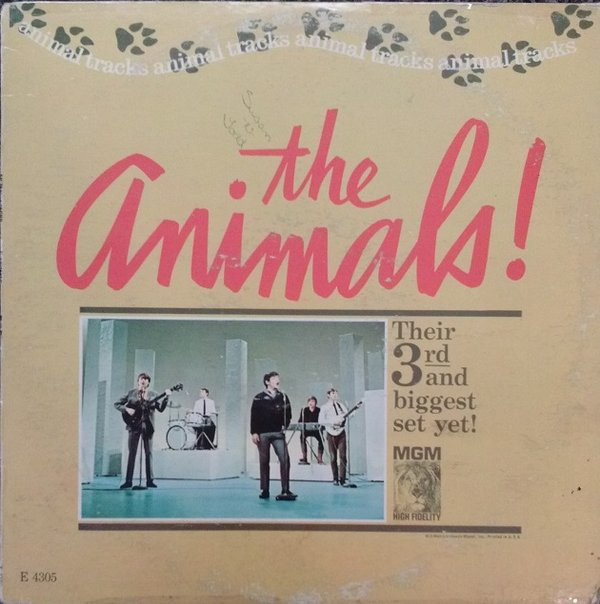
Animal Tracks.
Just eight months later, The Animals released their sophomore album Animal Tracks. It had been recorded during 1964 and 1965, and mostly, followed in the footsteps of The Animals’ eponymous debut album.
Mainly, Animal Tracks was another album of covers of R&B and blues. This included Chuck Berry’s How You’ve Changed, Ray Charles’ Hallelujah I Love Her So, Big Maceo Merriweather’s Worried Life Blues, Clarence Carter’s I Ain’t Got You, Jimmy Reed’s Bright Lights, Big City and Bo Diddley’s Roadrunner. There was also a cover of Shirley Goodman and Leonard Lee’s Let The Good Times Roll, which Ray Charles made famous. However, tucked away on side two of Animal Tracks, was the first song penned by a member of The Animals.
It was Eric Burdon who was the first member of The Animals to write a song for an Animals’ album. His contribution was For Miss Caulker. This was just the start of Eric Burdon’s songwriting career, which blossomed over the new few years. Before that, Animal Tracks was recorded with producer Mickie Most. Once the album was complete, it was released in Britain in May 1965.
Unlike the reviews of their eponymous debut album, Animal Tracks wasn’t as well received by critics. Some of the songs were as strong as those on The Animals. They lacked the quality and energy. However, this didn’t bother record buyers.
When Animal Tracks was released in May 1965, it reached number six in the UK. However, Animal Tracks wasn’t released in America until September 1965, but reached just fifty-seven in the US Billboard 200. Before Animal Tracks was released in America, The Animals released their American sophomore album The Animals On Tour.
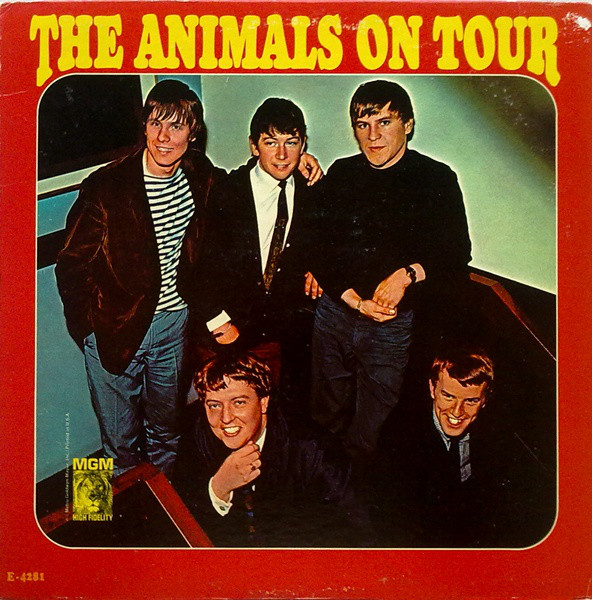
The Animals On Tour.
After the released of their eponymous debut on both sides of the Atlantic, The Animals ‘ popularity soared stateside. They quickly became one of the most popular and successful British Invasion groups. So a decision was made to record an album that would only be released in America, The Animals On Tour.
This was the start of confusing time for fans of The Animals. Albums were released in Britain and America at different times. Some albums, including The Animals On Tour weren’t officially released in Britain. The first album that wasn’t officially released in Britain, was The Animals On Tour.
Given the title, many record buyers thought The Animals On Tour was a live album. It wasn’t. Instead, it was another album of cover versions. Some of the tracks had featured on Animal Tracks, including Chuck Berry’s How You’ve Changed, Ray Charles’ Hallelujah I Love Her So, Big Maceo Merriweather’s Worried Life Blues, Calvin Carter’s I Ain’t Got You, Jimmy Reed’s Bright Lights, Big City and Bo Diddley’s Roadrunner. There was also a cover of Shirley Goodman and Leonard Lee’s Let The Good Times Roll. They rubbed shoulders with John Lee Hooker’s Boom Boom and Dimples, which he wrote with James Bracken. The only new track on The Animals On Tour was an Eric Burdon and Alan Price composition I’m Crying. These twelve tracks were recorded in 1964 and produced by Mickie Most.
The Animals On Tour was released in March 1964, the same times as Animal Tracks was released in Britain. Doubtless copies of Animal Tracks made their way across the Atlantic, where fans of The Animals were in for a surprise. Both albums featured a number of similar tracks. So it was no surprise that The Animals On Tour stalled at a lowly ninety-nine in the US Billboard 200. This was a disappointing outcome for The Animals.
What was a bigger disappointment was when of organist Alan Price quit The Animals in May 1965. Tension had been building within the band for some time. They had also been touring almost non stop. The constant touring made things worse, as Alan Price had a a fear of flying. So when he left The Animals, reasons cited were personal and musical differences, plus Alan Price’s fear of flying. This was a huge blow for The Animals.
Mick Gallagher stepped into the fray, and replaced Alan Price on a temporary. This was only until Dave Rowberry joined The Animals and became their keyboardist. This was the start of a new era for The Animals.
Things improved for The Animals when Animal Tracks was released in America in September 1965. It reached fifty-seven in the US Billboard 200. That was despite many of the tracks on Animal Tracks having already featured on The Animals On Tour. It seemed that The Animals were still one of the most popular and prolific British Invasion bands.
The Animals had released three albums in America in the space of a year. Each album had sold well, and by late 1965, The Animals were one of the most popular British Invasion bands. They were rubbing shoulders withThe Kinks and The Who, and had set their sights on The Beatles and Rolling Stones. If all went well, The Animals could be one of the biggest British bands of the sixties. However, the pressure continued to build as The Animals began to work on their new American album, Animalization.
Animalization.
When work began on Animalization, the lineup of The Animals featured a rhythm section of drummer John Steel, bassist Bryan “Chas” Chandler and guitarist Hilton Valentine. Completing the lineup, were vocalist Eric Burdon and keyboardist Dave Rowberry. They chosen twelve songs that became Animalization.
Just like previous albums, the majority of Animalisms featured cover versions. This included covers of soul, blues and R&B songs. Among them, were Joe Tex’s One Monkey Don’t Stop No Show, John Lee Hooker’s Maudie, Chuck Berry’s Sweet Little Sixteen, Screamin’ Jay Hawkins’ I Put a Spell on You and Alonzo Tucker and Jackie Wilson’s Squeeze Her, Tease Her. Joining the nine cover versions were a trio songs penned by members of The Animals.
Eric Burdon and new keyboardist Dave Rowberry formed a new songwriting partnership, penning You’re On My Mind and She’ll Return It. Dave Rowberry also wrote Clappin’. The Animals’ newest member was making his presence felt. Soon, though Dave Rowberry was no longer the new member of The Animals.
When recording of Animalization began, work began on laying down twelve tracks with producer Mickie Most. Dave Rowberry made his Animals’ debut, adding keyboards. However, with eight tracks recorded, drummer John Steel quit. He was replaced by Barry Jenkins, who featured on Don’t Bring Me Down, Cheating, See See Rider and She’ll Return It. Once the album was complete, Animalization was released in June 1966.
Prior to the release of Animalization, reviews of the album were published. They were mostly positive, with some of the reviews calling Animalisms one of The Animals’ best albums. Elements of blues, rock, R&B and soul were combined by The Animals. The only problem was, The Animals were still too reliant on cover versions. Maybe the Eric Burdon and Dave Rowberry songwriting partnership would flourish? That was in the future.
When Animalization was released in America, the album reached number twenty in the US Billboard 200, and became The Animals’ second biggest selling American album. Now they had to build on the success of Animalization.

Animalisms (US Version).
Just four months later, The Animals released an American version of Animalisms. It featured an alternative track listing, which featured twelve cover versions. They were an eclectic selection of songs.
Frank Zappa’s All Night Long sat side by side with Sam Cooke’s Shake, Fred Neil’s The Other Side of This Life, Howlin’ Wolf’s Smokestack Lightnin’, Percy Mayfield’s Hit The Road Jack, Muddy Water’s Louisiana Blues and Donovan’s Hey Gyp. These songs were recorded during July 1966.
The recording session took place at Lansdowne Recording Studio, in London, England and T.T.G, Hollywood, in California. Tom Wilson took charge of production. He gave The Animals more freedom to express themselves artistically. They embraced this opportunity on what was the last session that featured drummer Barry Jenkins. He played on ten tracks, with John Steel playing on Outcast and That’s All I Am to You. When the sessions were complete, Animalisms was released on 21st November 1966.
When critics heard Animalisms they were impressed with the album, which found The Animals relishing their new found artistic freedom. They flit seamlessly between musical genres on Animalisms. Sadly, when Animalisms was release, it failed to chart. This was a huge disappointment. However, the times they were a changing for The Animals.

When a cover of the blues classic See See Rider was released, the group were now billed as Eric Burdon and The Animals. This lineup was short-lived and split-up in September 1966. The Animals’ career was over after just two years.
Eric Burdon and The Animals.
A new chapter in The Animals’ story began shortly thereafter. Eric Burdon began putting together a new band. Drummer Barry Jenkins was the first person recruited by Eric Burdon for his new band.
This new band became Eric Burdon and The Animals, who musically had undergone a Damascene conversion musically. Previously, Eric Burdon had a been a disciple of hard driving blues. Not any longer. He decided to incorporate his take on psychedelic rock into Eric Burdon and The Animals’ music. This began on their debut album Eric Is Here.
While Eric Burdon and The Animals was a new band, not all members of the band featured on the band’s debut album Eric Is Here. It comprised entirely of twelve cover versions. This time around, Eric Burdon was relying on many Brill Building songwriters. This included Goffin and King’s On this Side of Goodbye, Barry Mann, Cynthia Weil’s It’s Not Easy and Tommy Boyce and Bobby Hart’s In The Night. Three Randy Newman songs were also chosen, including Mama Told Me Not To Come, I Think It’s Going To Rain Today and Wait Till Next Year. These songs were quite unlike what The Animals had previously covered. However, this was a new beginning for Eric Burdon and The Animals.
What didn’t change was that Tom Johnson produced Eric Is Here. He brought onboard an orchestra, who accompanied Eric Burdon and The Animals. They combined blues rock, R&B psychedelic rock and rock on Eric Is Here. Alas, it was neither a potent nor heady brew.
When Eric Is Here was released, only Eric Band and Barry Jenkins were credited as having played on the album. It proved to be an inauspicious start to Eric Burdon and The Animals’ career. Neither critics nor record buyers were won over by Eric Is Here. The reviews of Eric Is Here included some of the worst that any Animals album had received. Things got were when Eric Is Here was released in March 1967. The album stalled at a lowly 121 in the US Billboard 200. Across the Atlantic, Eric Is Here failed to chart in Britain. All that Eric Burdon could hope, that things would improve when Eric Burdon and The Animals released their sophomore album, Winds Of Change.

Winds Of Change.
Following the disappointment of Eric Is Here, Eric Burdon began putting together Eric Burdon and The Animals. Joining drummer Barry Jenkins in the rhythm section was bassist Danny McCulloch and guitarist Vic Briggs. The final piece of the jigsaw was John Weider, who played electric violin. Now Eric Burdon and The Animals could begin to move towards psychedelic rock on their sophomore album Winds Of Change.
On their previous album Eric Is Here, Eric Burdon and The Animals had just toyed with psychedelic rock. Not this time. psychedelic rock. Eric Burdon and The Animals wrote ten new tracks, and covered Mick Jagger and Keith Richards’ Paint It Black. Producing Winds Of Change was Tom Johnson.
Recording of Winds Of Change took place over a two week period in March 1967, at TTG Studios in Los Angeles. That was where Eric Burdon and The Animals recorded their hard rocking cover of Paint It Black. The rest of Winds Of Change was the most psychedelic album Eric Burdon and The Animals recorded and released.
Winds Of Change was released in September 1967, but before that, critics lavished the album with critical acclaim. It was Eric Burdon and The Animals at their most psychedelic, on what was one of their best albums. Among the highlights were Winds Of Change and Yes I Am Experienced which was Eric Burdon and The Animals’ answer to the Jimi Hendrix Experience. The quality continued on San Franciscan Nights, Good Times and the album closer, It’s All Meat. It found Eric Burdon and The Animals at their most psychedelic. After a false start, Eric Burdon and The Animals had returned with a career defining album.
When Winds Of Change was released in September 1967, it reached forty-two in the US Billboard 200, but failed to chart in Britain. Despite that, it looked as if Eric Burdon and The Animals might go on to reach the heights that The Animals reached between 1964 and 1966. The new group certainly had the talent, and had something that The Animals lacked. Eric Burdon and The Animals featured five talented songwriters. They would put their songwriting skills to good use on The Twain Shall Meet.

The Twain Shall Meet.
For the very first time in the history of The Animals and Eric Burdon and The Animals, an entire album was written by members of the band. This was a first. No longer were Eric Burdon and The Animals reliant on old blues or R&B songs. Gone also, were the days when Eric Burdon and The Animals relied upon songs by Brill Building songwriters. The Twain Shall Meet was written by the five members of Eric Burdon and The Animals.
Among the songs they wrote for The Twain Shall Meet was Monterey, a celebration of 1967 Monterey Pop Festival. Sky Pilot Parts 1 & 2) was an anti Vietnam War song, which would give Eric Burdon and The Animals a number fourteen hit single in the US Billboard 200. It tapped into the mood of the American nation. These songs were recorded in December 1967.
When the recording began, Tom Wilson returned to produce The Twain Shall Meet. This time though, two vocalist were used on The Twain Shall Meet. Eric Burdon took charge of the vocals on five songs, while bassist Danny McCulloch added the vocals on Just the Thought and Orange and Red Beam. These seven songs were completed later in December 1967, and released in April 1968.
Unlike Winds Of Change which was released to critical acclaim, The Twain Shall Meet received mixed reviews. One of the fiercest critics of The Twain Shall Meet was Rolling Stone magazine. This was disappointing for Eric Burdon and The Animals.
So was the performance of The Twain Shall Meet. It was only released. When it was released in March 1967, Eric Burdon and The Animals’ third album stalled at just seventy-nine in the US Billboard 200, but failed to chart in Britain. The only small crumb of comfort was the performance of the singles.
Monterey was the lead single, and fifteen in the US Billboard 100. The followup Anything, reached just a lowly eighty in the US Billboard 100. However, Sky Pilot then reached number fifteen in the US Billboard 100 and forty in the Britain. Two top twenty singles almost made-up for The Twain Shall Meet stalling a seventy-nine in the US Billboard 200. Maybe Eric Burdon and The Animals’ next album, Every One of Us, would be bigger success?
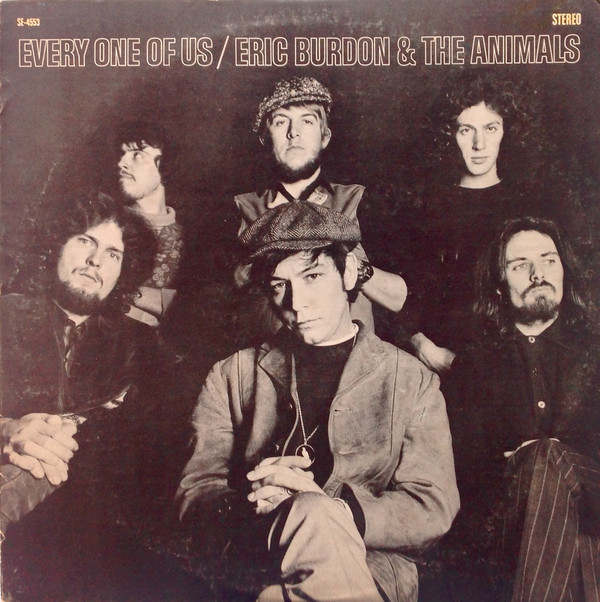
Every One of Us.
1968 was without doubt, the busiest year of Eric Burdon and The Animals’ career. They released a trio of albums. The second album in the trio was Every One of Us, which was recently reissued by BGO Records. It’s a welcome reissue, because when Eric Burdon and The Animals released Every One of Us, it was never released in Britain.
Eric Burdon and The Animals were never as popular as The Animals in Britain. None of their albums had charted in Britain. It was very different to when The Animals enjoyed three top ten albums. That was the past, and the past was another country for Eric Burdon and The Animals.
When work began on Every One of Us, Eric Burdon and The Animals were now a sextet. Zoot Money, a British vocalist and keyboardist had joined the band. The addition of a new band member was risky. There was always the potential that it would upset the equilibrium of the band. Especially since the band had been working well together, and had written two albums. This changed on Every One of Us.
For Every One of Us, which featured seven tracks, Eric Burdon wrote much of the album He penned White Houses, Uppers and Downers, The Immigrant Lad, The Year Of The Guru and cowrote New York 1963-America 1968 with Zoot Money. Eric Burdon also arranged the traditional song St. James Infirmary Blues. The only song that Eric Burdon didn’t play a part in was Serenade To A Sweet Lady. It was written by John Weider. These seven songs would become Every One of Us.
When recording of Every One of Us began, there was no sign of producer Tom Wilson. Instead, Eric Burdon and The Animals produced For Every One of Us. By then, the rhythm section consisted of drummer Barry Jenkins, bassist and 12-string guitarist Danny McCulloch and guitarist and bassist Vic Briggs. John Weider switched between guitar and celeste and Zoots Money played Hammond organ and piano. This time round, Eric Burdon took charge of all the vocals. Once Every One of Us was complete, it was scheduled for release later in 1968.
When Every One of Us was released in August 1968, this accomplished album of psychedelic blues stalled at just 152 in the US Billboard 200. This was a huge disappointment, considering the quality of the music and musicianship. The critics had thought that Every One of Us would fare much better. Things didn’t improve when White House was released as a single. It reached just sixty-seven in the US Billboard 100. For Eric Burdon and The Animals this just rubbed salt into their wounds.
Especially since Eric Burdon and The Animals had released what was without doubt, one of their finest albums since the release of Eric Is Here in March 1967. The only album that surpasses Every One of Us, is Winds Of Change which was released in September 1967. Given the quality of music on Every One of Us, it was a frustrating time for Eric Burdon and The Animals. However, soon, they began work on their third album of 1968. Love Is.
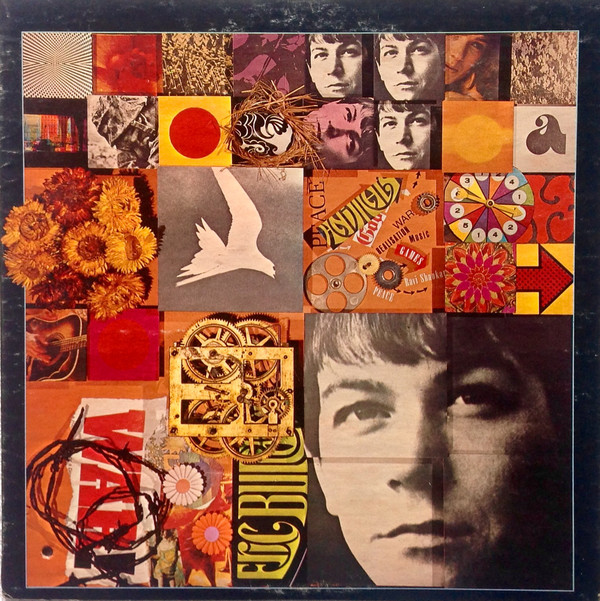
Love Is.
For Love Is, the lineup of Eric Burdon and The Animals and changed yet again. Vic Briggs and Danny McCulloch had left the band, and former Police guitarist joined Eric Burdon and The Animals. They were no longer a sextet to a quintet, as work began on their tenth album, which would be Eric Burdon and The Animals’ first double album.
Unlike recent albums, Love Is featured mostly cover versions. This included Phil Spector, Jeff Barry and Ellie Greenwich’s River Deep-Mountain High; Sly Stone’s I’m an Animal; June Carter and Merle Kilgore’s Ring Of Fire and Steve Winwood, Jim Capaldi and Chris Wood’s Colored Rain. They were joined by Barry and Robin Gibb’s To Love Somebody plus Don Deadric Robey’s As the Years Go Passing By. Eric Burdon contributed just the one song, I’m Dying (Or Am I?). Completing Love Is was an eighteen minute epic where Steve Hammond’s Gemini gave way Zoot Money and Andy Summers’ Madman Running Through the Fields. These eight tracks would become Love Is.
Recording of Love Is took place at TTG and Sunset Sound Studios, in Hollywood, California during October 1968, with The Animals producing Love Is. It featured the recording debut of the new lineup. Its rhythm section featured drummer Barry Jenkins; bassist pianist and organist Zoot Money o plus guitarist and violinist John Weider. This time around, the vocals were shared, with Zoot Money featuring on I’m Dying (Or Am I?) and on Gemini, while Eric Burdon took charge of the rest of the vocals. Once recording of Love Is was completed in October 1968, the album was released in December 1968.
Before that, critics had their say on Love Is, which was a very different album from recent albums. Love Is featured mainly cover versions. These cover versions were totally transformed by Eric Burdon and The Animals. The songs featured extended arrangements, and sometimes, new lyrics and sections. Among the highlights were Ring Of Fire and Traffic’s Coloured Rain, which featured a guitar masterclass from Andy Summers. His guitar solo lasts an incredible four minutes and fifteen singles. Eric Burdon and The Animals bowed in style with Gemini and Madman Running Through The Fields, an eighteen minute epic that took up the final side of Love Is. Whole most of the reviews proved positive, there were a few dissenting voice among the critics.
Despite that, Love Is recached 123 in the US Billboard 200, which surpassed the commercial success of Every One Of Us. An edited version of Ring Of Fire was then released as a single. It reached thirty-five in the UK and entered the top forty in Australia, Germany and Holland. Things it seemed, were looking up for Eric Burdon and The Animals.

Sadly, that wasn’t the case. Love Is proved to be Eric Burdon and The Animals’ swan-song. In 1969, Eric Burdon and The Animals disbanded for the second time. This time, it looked as if it was the end of the road for one of the most successful of the British Invasion groups. They had enjoyed four successful years together.
Between them, The Animals and then Eric Burdon and The Animals released nine studio albums and one live album between 1964 and 1968. These albums proved more successful in America than they were in Britain. The Animals and then Eric Burdon and The Animals enjoyed ten top twenty singles in the UK and America. Their most successful single was The House Of The Rising Sun in 1964, which reached number one on both sides of the Atlantic and sold five million copies worldwide. Nowadays, The House Of The Rising Sun is synonymous with The Animals and Eric Burdon and The Animals.
That’s somewhat ironic, as there’s much more to their career than just one song. Proof of that is the ten albums that The Animals and later, Eric Burdon and The Animals released during their four year recording career. These albums are a reminder of a truly talented band, that constantly reinvented their music to ensure their music music remained relevant. That was the case right up to Eric Burdon and The Animals released heir swan-song Love So in December 1968. Not long after the release of Love So, Eric Burdon and The Animals disbanded in 1969. That was the end of the road for Eric Burdon and The Animals.
Sadly, there was no pot of gold waiting for Eric Burdon and The Animals. Just like many bands, they had been mismanaged over the years. So it was no surprise that eight years later, the original lineup of The Animals announced they were about to reunite.
The Animals released their first reunion album, Before We Were So Rudely Interrupted was released to critical acclaim in August 1977. It reached number seventy in the US Billboard 200, and was the most successful album since the release of Winds Of Change in September, 1967. Despite the success of Before We Were So Rudely Interrupted, The Animals comeback was brief and consisted of just the one album.
Another six years passed The Animals made their second comeback, when they released Ark in August 1983. Although the album was well received, there were a few dissenting voices. Despite that, Ark reached sixty-six in the US Billboard 200. Ark proved to be last album the reunited line-up of The Animals released. This time there would be no more comebacks.
Never again, would The Animals reunite. This time, it really was the end of the road for one of the most successful and influential of the British Invasion bands. While their two comeback albums were a reminder of what The Animals were capable of, The Animals released the finest music of their career during their golden years between 1964 and 1969.
Alan Price and The Animals’ Golden Years: 1964-1969.

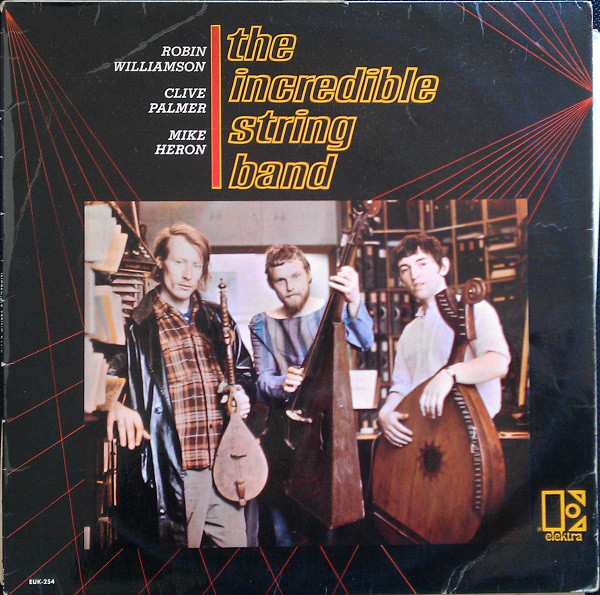
THE INCREDIBLE STRING BAND-1966-1969: THE INCREDIBLE STRNG BAND TO ChANGING HORSES
The Incredible String Band-1966-1969: The Incredible String Band To Changing Horses
Robin Williamson and Clive Palmer first played together at the Crown Bar, Edinburgh, in 1963 where Archie Fisher hosted a weekly folk night, and two years later, in 1965, Joe Boyd, who was then working as an A&R man for Elektra Records first saw the Incredible String Band. Joe Boyd would later play an important part in the Incredible String Band story. However, before that, two became three.
Later in 1965, Robin Williamson and Clive Palmer decided that The Incredible String Band should become a trio. They decided that they needed someone to fill out their sound, and started looking for a rhythm guitarist. Before long, Robin Williamson and Clive Palmer were joined by Mike Heron, and the as unnamed band donned the moniker The Incredible String Band. This was the final piece of the jigsaw, and was the lineup of The Incredible String Band that Joe Boyd saw when he reentered the band’s world a year later.
By 1966, The Incredible String Band were the house band at Clive’s Incredible Folk Club, which was based on the fourth floor of a building on Sauchiehall Street, in Glasgow, Scotland’s musical capital. One night, Joe Boyd made his way to Clive’s Incredible Folk Club. He was a man with a mission and was determined to sign The Incredible String Band.
Elektra Records had heard about The Incredible String Band, and wanted to sign them. They were, after all, predominately, a folk label and it made sense to sign The Incredible String Band to their roster. There was only one problem though, another label was interested in the Incredible String Band, Transatlantic Records. However, Joe Boyd managed to sign the Incredible String Band and took them into the studio in May 1966.
The Incredible String Band.
To record their eponymous debut album, Joe Boyd took the Incredible String Band into the Sound Techniques’ studio in London. Joe Boyd would produce The Incredible String Band which featured a total of sixteen songs. They were a mixture of original and traditional songs. On these songs, the Incredible String Band deployed an eclectic selection of instruments. Guitars, fiddles, a mandolin, kazoo, violin and tin whistle featured on The Incredible String Band, which was completed in June 1966.
On its release, on ‘20th’ July 1966, The Incredible String Band was well received by critics. It featured a much more traditional sound than later Incredible String Band albums. There was no sign of the psychedelic sound that featured on later albums. That was still to come. In 1966, the Incredible String Band were still a traditional folk group and a popular one at that.
The Incredible String Band reached number thirty-four in the UK charts, where it spent three weeks. Considering it was The Incredible String Band’s debut album for Elektra Records this was seen as a success, and something to build on. However, just when things seemed to be going to plan for The Incredible String Band, sadly, things went awry.
After recording The Incredible String Band, the band split-up. Clive Palmer decided to head off on the hippie trail to Afghanistan and India. Robin Williamson and his girlfriend also caught the travel bug and headed to Morocco. Only Mike Heron remained in Edinburgh, where he hooked up with Rock Bottom and The Deadbeats. With the Incredible String Band looking like history, it looked as if Mike Heron’s future lay with Rock Bottom and The Deadbeats. However, that wasn’t the case, when The Incredible String Band decided to reform.
Robin Williamson returned from Morocco after running out of money. However, he brought back an eclectic selection of musical Moroccan instruments which would feature on later Incredible String Band albums.
Clive Palmer and Robin Williamson decided that The Incredible String Band should reform, but only as a duo. This was essentially The Incredible String Band Mk II.
They made their debut on a tour in November 1966, where The Incredible String Band, who were now a duo, supported Judy Collins and Tom Paxton. After the tour, The Incredible String Band had an award to collect.
Their debut album The Incredible String Band won the Folk Album Of The Year in Melody Maker’s 1966 annual poll. By then, The Incredible String Band was well-regarded among their musical peers. Bob Dylan referred to October Song as one of his favourite songs of the mid-sixties in an interview in Sing Out magazine. With the Incredible String Band reforming, this was spurred them on to greater heights.
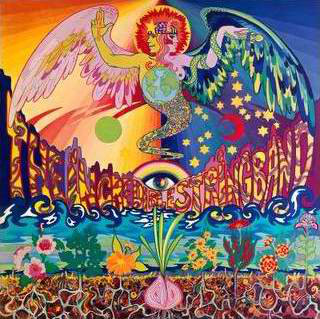
The 5000 Spirits Or The Layers Of The Onion.
Buoyed by winning the Folk Album Of The Year Award, and the praise of Bob Dylan ringing in their ears, the Incredible String Band set about writing and recording their sophomore album. Unlike many bands, the Incredible String Band didn’t write together. When they were apart, this was when they wrote their new songs. This was the case with their sophomore album The 5000 Spirits Or The Layers Of The Onion. Clive Palmer and Robin Williamson contributed seven songs each and they became The 5000 Spirits Or The Layers Of The Onion.
Reduced to a duo, The Incredible String Band brought onboard a number of guest musicians. This included Pentangle double bassist Danny Thompson, pianist Jon Hopkins and Soma, who played sitar and tamboura. Licorice McKechnie, who was Robin William’s girlfriend, made her Incredible String Band debut contributing percussion and adding vocals. Just like on The Incredible String Band, Joe Boyd took charge of production on The 5000 Spirits Or The Layers Of The Onion, which was completed early in 1967. When it was released, it marked a change in The Incredible String Band’s sound.
The 5000 Spirits Or The Layers Of The Onion marked the start of The Incredible String Band’s psychedelic folk era. However, mostly, The 5000 Spirits or the Layers of the Onion drew upon traditional British folk music. What was apparent was that Robin Williamson and Mike Heron had honed The Incredible String Band’s sound and matured and evolved as musicians. They were now talented multi-instrumentalists who could seamlessly switch between traditional and exotic instruments that played their part in the sound and success of The 5000 Spirits Or The Layers Of The Onion.
Critics on hearing The Incredible String Band’s sophomore album, realised that Robin Williamson and Mike Heron were both talented songwriters. Their songs were cerebral and full of imagery and mystery. There was also a psychedelic hue to The 5000 Spirits Or The Layers Of The Onion. This fusion of the traditional and psychedelic, found favour amongst critics and music lovers.
When The 5000 Spirits Or The Layers Of The Onion was released in July 1967, it seemed to typify the underlying counter-culture. It struck a nerve with critics and music lovers. Critics hailed The 5000 Spirits or the Layers of the Onion as an eclectic and innovative album that found The Incredible String Band picking up where the left with their eponymous debut album.
With its eclectic, genre-melting style The 5000 Spirits or the Layers of the Onion appealed to a wide range of record buyers, and soon, the album was climbing the UK charts. Eventually, it reached number twenty-five in the UK charts, where it spent five weeks. Gradually, the Incredible String Band’s popularity was growing, and it seemed as if the band was on the verge of greatness.
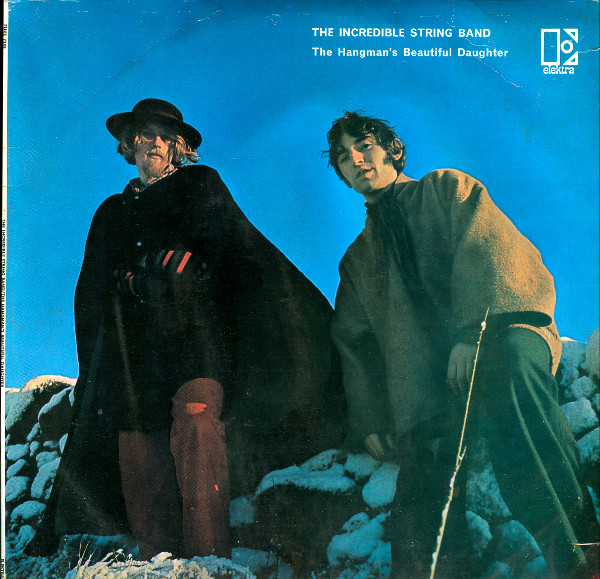
The Hangman’s Beautiful Daughter
That proved to be the case. 1968 was the to be the biggest year of The Incredible String Band’s nascent career. They released two albums, including The Hangman’s Beautiful Daughter, which was their first album of 1968.
For The Hangman’s Beautiful Daughter, Robin Williamson wrote seven songs while Mike Heron penned just three songs. The Incredible String Band had decided that The Hangman’s Beautiful Daughter wasn’t going to be sprawling album. Their two previous albums featured sixteen and fourteen songs. This time, only ten songs featured, and with Robin Williamson and Mike Heron concentrating on quality, this marked a coming of age for The Incredible String Band.
With Joe Boyd producing The Hangman’s Beautiful Daughter, the Incredible String Band entered the studio in December 1967. This time round, Robin Williamson and Mike Heron played most of the instruments on The Hangman’s Beautiful Daughter. They were joined by Licorice McKechnie, who was with the Incredible String Band until 1972. Other musicians were drafted in on an ad hoc basis. This included Fairport Convention’s Judy Dyble and Richard Thompson, who played piano on The Minotaur’s Song. During the recording sessions, The Incredible String Band made use of the new multi-track tape recorders, which meant they were able to layer instruments on top of each other. For the Incredible String Band, this was a departure from their “usual sound.” It worked though, and played its part in what was the Incredible String Band’s Magnus Opus.
Released in March 1968, The Hangman’s Beautiful Daughter represented, promoted and epitomised the hippie ideal. This included Eastern mysticism, communal living and rational pantheism. The Hangman’s Beautiful Daughter was a cerebral and beautiful album which featured songs that were dreamy, ethereal, cerebral and surreal. Especially The Minotaur’s Song, which is essentially a parodic song that is sung from the Minotaur’s perspective, and has been influenced by the British musical hall. Very different is A Very Cellular Song, which is a thirteen minute epic that is a reflective and thoughtful song that poses a series of big questions on life, love, and amoebas. Just like the rest of The Hangman’s Beautiful Daughter, The Incredible String Band fuse disparate musical genres. Mostly though, their unique brand of progressive, psychedelic folk shines through. This found an audience on both sides of the Atlantic.
Released to widespread critical acclaim, The Hangman’s Beautiful Daughter reached number five in the UK, where it spent twenty-one weeks in the charts. This was The Incredible String Band’s most successful UK album. The Hangman’s Beautiful Daughter became the Incredible String Band’s first album to chart in the US. It reached number 161 in the US Billboard 200. Having spent nine weeks in the US Billboard 200, The Hangman’s Beautiful Daughter the Incredible String Band was nominated for a Grammy Award. It seemed the Incredible String Band was going places.
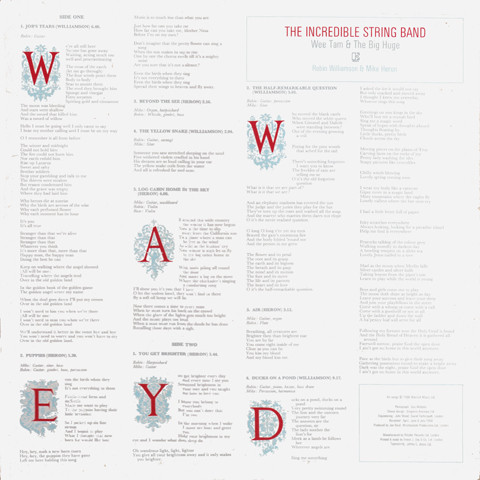
Wee Tam and The Big Huge.
Having just released the most successful album of their career, The Incredible String Band were one of the most successful British groups of the late-sixties. They were capable of filling the biggest venues in Britain, and were just as popular across the Atlantic in America. The Incredible String Band was capable of selling out both the Filmore East in New York and the Filmore West in San Francisco. This was something only a small number of British bands could do. However, The Incredible String Band’s star was in the ascendancy and they were a popular draw after the released of their third album The Hangman’s Beautiful Daughter. It was a game-changer, and broke The Incredible String Band in America. Later, in 1968, they tried to do the same with Wee Tam and The Big Huge.
Wee Tam and The Big Huge was without doubt, the most ambitious album of The Incredible String Band’s career. It was released as a double-album in the UK and as two individual albums, Wee Tam and The Big Huge, in America. This meant that Robin Williamson and Mike Heron had been busy.
On their return from the latest gruelling tour, members of The Incredible String Band and their entourages lived together in Newport, in eight cottages that cottages that had been joined together. This communal living was typical of the time, and was where the eighteen tracks that became Wee Tam and The Big Huge were written. Robin Williamson penned ten songs and Mike Heron the other eight tracks. When Wee Tam and The Big Huge was recorded at Sound Techniques studio, in Chelsea it would be with their usual eclectic selection of instruments and their two girlfriends Licorice McKechnie and Rose Simpson.
Joe Boyd, who had produced the Incredible String Band’s three previous albums would produce Wee Tam and The Big Huge. This time, Joe Body decided that The Incredible String Band should be recorded as a group, rather than overdubbing parts later. Given time was short, for The Incredible String Band this seemed a risky decision as recording of Wee Tam and The Big Huge began in April 1968. It could’ve backfired, but Joe Boyd wanted to capture the essence of the Incredible String Band live.
Given the variety of instruments Robin Williamson and Mike Heron played on Wee Tam and The Big Huge, some overdubbing was necessary. Unlike previous albums, no guest artists featured on Wee Tam and The Big Huge. Instead, only Licorice McKechnie and Rose Simpson, Robin Williamson and Mike Hero’s respective girlfriends featured on Wee Tam and The Big Huge. Rose Simpson’s voice was used to balance out the role of Licorice McKechnie, ion an album that saw The Incredible String Band combine elements of British and American influences. By August 1968, The Incredible String Band had completed recording of Wee Tam and The Big Huge, such was released later in 1968.
November 1968 saw the release of Wee Tam and The Big Huge which was the much-anticipated followup to The Hangman’s Beautiful Daughter. However, The Incredible String Band knew that The Hangman’s Beautiful Daughter was a hard act to follow. It was the greatest album of their career, so rather record The Hangman’s Beautiful Daughter Mk. II, Wee Tam and The Big Huge was a very different album.
Eclectic describes Wee Tam and The Big Huge which is an album of disparate influences. Similarly, a verity of different instruments were used, and even the arrangements differ from previous albums. By then, Robin Williamson and Mike Heron were influencing the arrangements to each other’s songs. This was a new development, but by then, the internal politics of the group and its dynamics had changed. Despite this, Wee Tam and The Big Huge was another ambitious and cerebral album from The Incredible String Band. The themes included mythology, religion, awareness and identity, on what was the first album from The Incredible String Band as a four piece band.
Critics appreciated this change of direction from the new lineup of The Incredible String Band, and recognised that Wee Tam and The Big Huge was another ambitious release. The addition of Rose Simpson had given The Incredible String Band a much more balanced sound on Wee Tam and The Big Huge. It was an album that The Incredible String Band should be able to replicate live critics noted. However, the only problem was that Wee Tam and The Big Huge didn’t fare well commercially.
Wee Tam and The Big Huge was released as a double album in Britain in November 1968, but incredibly failed to chart. This was a huge surprise for The Incredible String Band, producer Joe Boyd and executives at Elektra Records. They could only hope that Wee Tam and The Big Huge would fare better upon their released in America.
Four months later, Wee Tam and The Big Huge were released as separate albums in March 1969. Wee Tam reached number 174 in the US Billboard 200 and The Big Huge stalled at just number 180 in the US Billboard 200. After spending just three weeks in the charts, both albums disappeared. This was yet another disappointment for the members of The Incredible String Band, producer Joe Boyd and executives at Elektra Records.
Despite its lack of commercial success, Wee Tam and The Big Huge is nowadays regarded as one of the best albums that The Incredible String Band released. However, for The Incredible String Band Wee Tam and The Big Huge was regarded as the album that got away. It should’ve been a commercial success, but slipped under the musical radar. This was a disappointment for The Incredible String Band who wouldn’t release another album until November 1969.
In 1969, the Incredible String Band hit the road, and embarked upon what was a gruelling touring schedule. During this period, the Incredible String Band continued to live communally in a farmhouse in Newport, Pembrokeshire. It was also during this time, that The Incredible String Band became interested in mixed media, which was something that would later influence their music. However, in 1969, touring was what kept them busy.
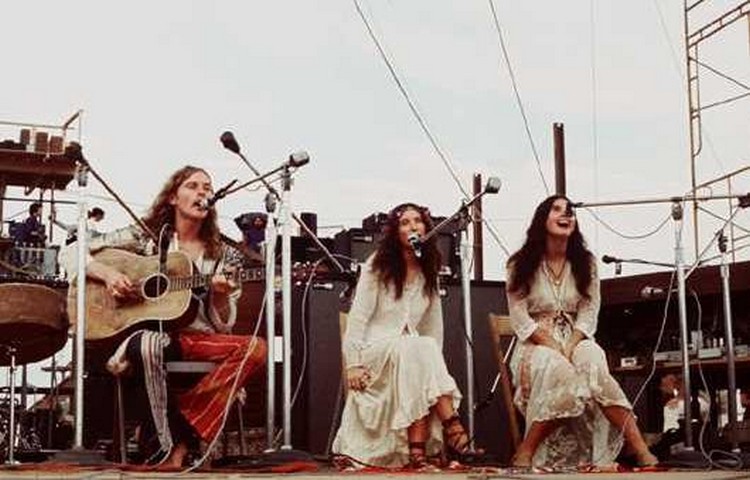
The Woodstock Music and Art Fair.
The Incredible String Band’s most high-profile performance took place at the Woodstock Music and Art Fair which took place between the ‘15th’ and ‘17th’ of August 1969. By then, The Incredible String Band were one of the biggest and most successful folk bands in the world. That’s why they were booked to play at Woodstock in 1969.
Rain delayed the Incredible String Band’s performance at Woodstock. They were due to play at 10.50pm on Friday ‘15th’ August 1969. This was when all the other folk acts were due to play. The Incredible String Band were due to follow Ravi Shankar, However, as Ravi Shankar played, the heavens opened. This presented a problem for The Incredible String Band, who refused to take to the stage. Realising that The Incredible String Band were one of the biggest folk bands of the day, their performance was rescheduled. Melanie was called in as a last-minute replacement for The Incredible String Band and they took to the stage the following day.
Between 6.00-6.30pm on Saturday the ‘15th’ August 1969, the Incredible String Band took to the stage, following Keef Hartley. From the moment that The Incredible String Band took to the stage, they played a starring role in the Woodstock Festival. They had the audience in the palm of their hands. Following their appearance at the Woodstock Festival, The Incredible String Band kept on touring.
Two weeks after playing a starring role at the Woodstock Festival, The Incredible String Band found themselves in Texas for the Labor Day Weekend. That was when the Texas International Pop Festival was held at the Dallas International Motor Speedway. The Incredible String Band played on Sunday the ‘30th’ August 1969. However, their performance didn’t match their appearance at the Woodstock Festival which disappointed the members of The Incredible String Band. However, they had to put this behind them, as they an album to release in three months time, Changing Horses.
Changing Horses.
In November 1969, The Incredible String Band were preparing to release their fifth album Changing Horses. By then, much had changed over the last few months for The Incredible String Band and especially Robin Williamson and Mike Heron.
Robin Williamson and Mike Heron had split from their respective girlfriends and moved from Newport to Innerleithen, in Peeblesshire, Scotland. This became the new headquarters for The Incredible String Band.
While The Incredible String Band had performed as a quartet on Wee Tam and The Big Huge, the only two full-time members of the band were Robin Williamson and Mike Heron. However, despite the breakup of their relationships, Robin Williamson and Mike Heron confirmed that Licorice McKechnie and Rose Simpson were now full-time members of The Incredible String Band. This wasn’t the only change that occurred.
Recently, The Incredible String Band had fully embraced the controversial cult-like Church Of Scientology. They had been “believers” since the autumn of 1968, when they dined with producer Joe Boyd after a sellout show in New York. That night, Joe Boyd happened to mention that the manager of the restaurant they were dining in had turned his life around since he last seen him. This transformation the manager claimed was down to his recent conversion to the Church Of Scientology. Having told the story, Joe Boyd finished his meal and then left the restaurant to head off on a business trip to California. Little did Joe Boyd realise the consequences of his story.
In Joe Boyd’s absence, The Incredible String Band approached the band’s US agent wanting the payments that they were owed for the mini tour of the East Coast. When the US agent phoned Joe Boyd before paying the money to The Incredible String Band, he decided to find out what the band wanted the money for?
Joe Boyd struggled to contact any of the members of The Incredible String Band, who had checked out of the Chelsea Hotel. By then, Joe Boyd was wondering why The Incredible String Band needed any money as he had given the band an allowance before leaving for California. Eventually, though, Joe Boyd got through to Licorice McKechnie, who explained they needed the money to pay for some “courses” with the Church Of Scientology. This was just a day after Joe Boyd had mentioned the Church Of Scientology. Had they working quickly on their latest potential converts, who just so happened to be high-profile and relatively wealthy musicians?
When Joe Boyd returned the next day, he was met by the four members of The Incredible String Band who were determined that he should write them a cheque for the “courses.” After questioning the group, it turned out that after Joe Boyd left the restaurant, the manager began his pitch on how the Church Of Scientology had transformed his life. The next day, the same restaurant manager invited the four members of The Incredible String Band to its New York “celebrity centre.” By the end of the evening, Robin Williamson and Licorice McKechnie had been converted.
Joe Boyd was reluctant to write the cheques there and then, and managed to convince Mike Heron and Rose Simpson to think things over. They agreed and headed home to Britain, but before long they too had been caught in the Church Of Scientology’s thrall.
Mike Heron’s account differs slightly, and claims that his conversion to the Church Of Scientology came after reading a book on self-improvement. After reading the book, he decided to embrace the Church Of Scientology “philosophies.”
After embracing the controversial and secretive Church Of Scientology, The Incredible String Band’s concerts began to change. It’s claimed that the concerts took on a much more communal and friendlier than before their “conversion.” That wasn’t the only change.
The other thing that changed was The Incredible String Band’s attitude to money. After joining the Church Of Scientology the band began to have weekly meetings to discuss their finances. Despite their newfound spirituality. money began to play an increasingly important role in The Incredible String Band’s lives. Already the members of The Incredible String Band were changing due to their dalliance with the Church Of Scientology, and this would affect their music and lifestyle.
After Robin Williamson and Mike Heron’s conversion to the Church Of Scientology the pair gave up drugs, which previously had been part of their lives. Mike Heron alludes to their decision in White Bird, which was one of two tracks he contributed to Changing Horses. The other was Sleepers Awake!, while Mike Heron and Robin Williamson wrote Dust Be Diamonds. Robin Williamson’s contributions to Changing Horses were Big Ted, Mr. and Mrs and Creation. These six tracks would become Changing Horses, The Incredible String Band’s fifth album.
Recording of Changing Horses had to fit round The Incredible String Band’s touring schedule, but much of recording took place over the summer of 1969, at Sound Techniques studio in London, and at Elektra Records studio in New York. By then, the members of The Incredible String Band were different people from. They now spent time studying spirituality and philosophy, and self-analysing as part of their conversion to conversion to the Church Of Scientology. Their newfound religious belief meant that drugs were a thing of the past for The Incredible String Band during the recording of Changing Horses which marked a series of changes.
The first was that The Incredible String Band started to move from psychedelic folk to a new British folk rock sound and even a hint of the progressive rock influences. Joe Boyd started to be more flexible when it came to the band’s creative process, and very rarely chose to intervene. This allowed The Incredible String Band to develop new ideas. By then Licorice McKechnie and Rose Simpson were playing a more active roles in the band. Licorice McKechnie played the guitar and organ on some tracks, while Rose Simpson’s Simpson’s bass featured on each track on Changing Horses. Just like on previous albums, Robin Williamson and Mike Heron played their usual mixture of traditional and exotic instruments and shared lead vocals. They were no longer as close as they once were, and there was a friction between them. However, by the end of the summer of 1969, the recording of Changing Horses was completed. However, two songs dominated the album, with White Bird and Creation taking up thirty of the fifty minutes on Changing Horses. This was a first for The Incredible String Band.
In October 1969, The Incredible String Band released an edited version of Big Ted as a single. However, it failed to chart, which was disappointment for The Incredible String Band. They had never been a singles band, and were known for the four albums they had released. Soon, four would become five. Before that, the critics had their say on Changing Horses.
Critics on hearing Changing Horses were surprised that The Incredible String Band had moved away from their trademark psychedelic folk sound. It was another eclectic album that marked the start of a new chapter in The Incredible String Band’s career.
On the release of Changing Horses in November 1969, it reached number thirty in the UK. However, after a week, Changing Horses disappeared from the charts. Over the Atlantic, Changing Horses stalled at just 166 in the US Billboard 200. Three weeks later, it disappeared from the charts. This was a disappointment for The Incredible String Band who had starred at the Woodstock Festival just three months earlier.
Having triumphed at Woodstock, The Incredible String Band must have been hoping that Changing Horses would see the band build on their two critically acclaimed albums. However, record buyers didn’t seem to “get” Changing Horses which was an album that saw The Incredible String Band in a reflective mood as they mused on their newfound spirituality, retell the story of Creation and deal with subjects like family life on Mr. and Mrs. Other times, the music was quirky and comedic as The Incredible String Band experimented and changed direction on what was a genre-melting album full of different musical textures.
They came courtesy of The Incredible String Band’s fusion of traditional, Moroccan and Eastern instruments, which were augmented by electric guitars and a Hammond organ on Changing Horses. It found The Incredible String Band move from their former psychedelic folk sound to their new British folk rock sound that hints at progressive rock. There’s also elements of country, doo wop, ragtime and vaudeville on Big Ted, while Creation is full of Eastern sounds. They’re part of what was an eclectic album from The Incredible String Band, which marked the end of their golden period.
It was also the end of The Incredible String Band as a duo, as Licorice McKechnie and Rose Simpson were now full-time members of the band. They would continue to record and play live as band rather than a duo. No longer was it just two friends playing the music that they loved. Instead, The Incredible String Band would spend the rest of their career trying to reach recreate the music they released between their 1966 eponymous debut album and Changing Horses in 1969.
Sadly, never again would The Incredible String Band reach the same heights of creativity again. Never again, would their star shine as brightly as it had between The Incredible String Band and Changing Horses, which marked the end of a three-year period where The Incredible String Band released five albums and were one of the biggest and most successful folk bands in the world and were on their way to becoming musical royalty.
The Incredible String Band-1966-1969: The Incredible String Band To Changing Horses

CAPTAIN BEEFHEART-1967-1972: SAFE AS MILK TO CLEAR SPOT
Captain Beefheart-1967-1972: Safe As Milk To Clear Spot.
It was in 1964 that Don Van Vliet first dawned his Captain Beefheart persona. By then, Don was already twenty-three and had led an eventful life. He had been called a child prodigy, attended art school, sold vacuum cleaners and for the last two years, been a member of Alex Snouffer’s Magic Band. His story began in Glendale, California in 1941.
That’s where the future Captain Beefheart, was born Don Glen Vliet on January 15th 1941. By the time Don was three, he was already sculpting and his speciality was animals. So, it’s no surprised that when Don was nine, he won a children’s sculpting competition organised by Los Angeles zoo. This was just the start of Don’s artistic career.
During the fifties Don worked as an apprentice with Rodrigues who spoke in glowing terms about Don, referring to his as a child prodigy. He wasn’t wrong.
Growing up, all Don wanted to do was sculpt. Sometimes, he was so busy sculpting, that Don forgot to eat. All that mattered was his art. Don it seemed, was aiming for artistic perfection. So, when he was offered several scholarships, it seemed that Don would jump at the opportunity.
Sadly, Don’s parents didn’t approve of their son heading to art school. As a result, Don wasn’t heading to art school. Instead, he was heading to Lancaster, in the Mojave desert, where the aircraft industry was thriving. This would influence Don’s sculpting.
It was also where Don’s eclectic musical taste developed. Blues and jazz were favourites of Dons, including Son House, Howlin’ Wolf, Muddy Walters, John Coltrane, Thelonious Monk and Ornette Coleman. Soon, Don was spending all day listening to music and sculpting. However, sometimes, Don spent time socialising with members of local bands The Omens and The Blackouts. Mostly though, art dominated Don’s life.
So much so, that Don wasn’t a regular attendee at Antelope Valley High School, in Lancaster. That didn’t seem to matter, as he was a gifted student. After high school, Don attended Antelope Valley Junior College as an art major. A year later, Don quit and got a job selling vacuum cleaners. Again, this didn’t last long, and Don got a job managing a shoe shop. After a while, Don quit and headed to Rancho Cucamonga, California, where once again, he hooked up with Frank Zappa, on old school friend.
With Frank Zappa’s help, Don was confident enough to take to the stage, imitating Howlin’ Wolf and playing the harmonica. What became apparent, was that Don had a wide vocal range. This would prove useful when his career began in 1962.
It was in in Lancaster, California, that Don met Alex Snouffer, an R&B guitarist. He asked Don to join his Magic Band. This resulted in Alex Snouffer becoming Alex St. Clair, and Don Glen Vliet becoming Don Van Vliet. A year later, in 1965, Don Van Vliet became Captain Beefheart.
Just a year later, Captain Beefheart and His Magic Band signed to A&M Records. Little did anyone realise that that day, the career of one of the most innovative artists began.
For Captain Beefheart and His Magic Band’s debut single, they covered Bo Diddley’s Diddy Wah Diddy. The followup was Moonglow, penned by David Gates, who would find fame and fortune with Bread. By then, Captain Beefheart and His Magic Band would be pushing musical boundaries to their limits, and sometimes, beyond. That’s the case on the thirteen albums Captain Beefheart and His Magic Band would release including his debut Safe As Milk
Safe As Milk.
In 1967, Captain Beefheart and His Magic Band’s released their debut album, Safe As Milk. It was recorded at RCA Studios, in Los Angeles, during April 1967. Safe As Milk was a tantalising taste of what Captain Beefheart and His Magic Band were capable of.
Safe As Milk, Captain Beefheart and His Magic Band’s debut album, was released in September 1967. It was produced by Richard Perry and Bob Krasnow and featured an all-star cast. This included Ry Cooder and Taj Mahal of Rising Sons plus guitarist Russ Titelman. They played their part in a groundbreaking album, Safe As Milk.
On hearing Safe As Milk, critics realised this was unlike anything they’d heard before. It was an innovative and experimental, genre-melting album. Captain Beefheart’s love of the delta blues was evident on Safe As Milk. There’s even a cover of Robert Pete Williams’ Grown So Ugly. It was arranged by Ry Cooder. The other eleven tracks on Safe As Milk are original tracks, which Captain Beefheart either wrote or cowrote.
These tracks feature lyrics that veer between surreal and absurd. Another difference was the time signatures. This wasn’t an album of music in a 4/4 time signature. Instead, different time signatures feature throughout Safe As Milk, which critics hailed a classic. However, despite this, neither record buyers nor Buddah Records agreed.
Record buyers didn’t seem to ‘get’ Safe As Milk. It failed to chart in Britain or America. This would be the case with many of Captain Beefheart and His Magic Band’s albums. Commercial success would continue to elude them. Buddah Records didn’t get Safe As Milk. They were beginning to come to the conclusion that Captain Beefheart and His Magic Band’s music was too left-field and unconventional. That’s despite releasing a classic album, Safe As Milk.

Strictly Personal.
After Safe As Milk was released, Captain Beefheart and His Magic Band began work on their sophomore album Strictly Personal. It featured eight tracks penned by Captain Beefheart. They were recorded at Sunset Sound Studios, Los Angeles, between April 25th and May 2nd 1968. Once Strictly Personal was completed, it was due to be released by Buddah Records.
However, by then, Buddah Records had decided that Captain Beefheart and His Magic Band’s music was too leftfield and unorthodox. So, they decided not to release Strictly Personal.
Luckily, Bob Krasnow’s Blue Thumb Records were wiling to release Captain Beefheart and His Magic Band’s sophomore album Strictly Personal. However, there was a problem.
Bob Krasnow, who produced Strictly Personal, used phasing during the recording of Strictly Personal. It was used on many tracks. This production technique proved controversial. Initially, Captain Beefheart thought this was a good idea. However, later, he claimed that the phasing had been used without his permission or approval. As a result, Captain Beefheart claimed that he hated the psychedelic effects used on Strictly Personal. Never again, would effects be used on a Captain Beefheart and His Magic Band album. These effects would divide the attention of critics.
When Strictly Personal was released in September 1968, critics were divided. They were unable to decide if Strictly Personal was the work of a genius, or incoherent ramblings. Mostly, critics were won over by Strictly Personal. However, many critics felt that the effects jarred, and detracted from the music. Record buyers didn’t seem to have an opinion on Strictly Personal, as it failed to chart in America or Britain. Still, Captain Beefheart and His Magic Band were a cult band. That was about to change, with Captain Beefheart and His Magic Band’s second classic album, Trout Mask Replica.

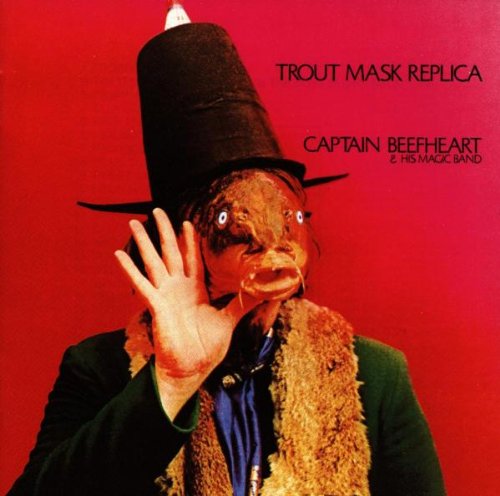
Trout Mask Replica.
For their third album Trout Mask Replica, Captain Beefheart and His Magic Band headed to Sunset Sound Studios, Los Angeles, in August 1968. That’s where Captain Beefheart hooked up with his old school friend and musical soul mate, Frank Zappa. He would produce Captain Beefheart and His Magic Band’s most ambitious and innovative album Trout Mask Replica.
For Trout Mask Replica, Captain Beefheart had penned twenty-eight tracks. As a result, Trout Mask Replica would be a sprawling and genre-melting double album. After the sessions at Sunset Sound Studios, Captain Beefheart and His Magic Band reconvened at Los Angeles’ Whitney Studios in March 1969. That’s where Trout Mask Replica was completed. It was then released on June 16th 1969.
Trout Mask Replica was released on Straight Records on June 16th 1969. It failed to chart in America, but reached number twenty-one in Britain. Just like Safe As Milk, Trout Mask Replica was another classic album from Captain Beefheart and His Magic Band. Elements of Americana, avant-garde, blues, classical, experimental, folk, free jazz, psychedelia, rock and surrealism melted into one on Trout Mask Replica. The lyrics were cerebral and controversial, dealing with politics, religion, love, sexuality, the Holocaust, conformity, the environment and musical history. It was an ambitious, far reaching and genre-melting opus. Sadly, only music critics, cultural commentators and a few discerning music lovers realised the importance of Trout Mask Replica. It’s now regarded as one of the most important albums of the late sixties. Captain Beefheart and His Magic Band saw the sixties close with a classic. What, however, would the seventies bring for Captain Beefheart and His Magic Band?
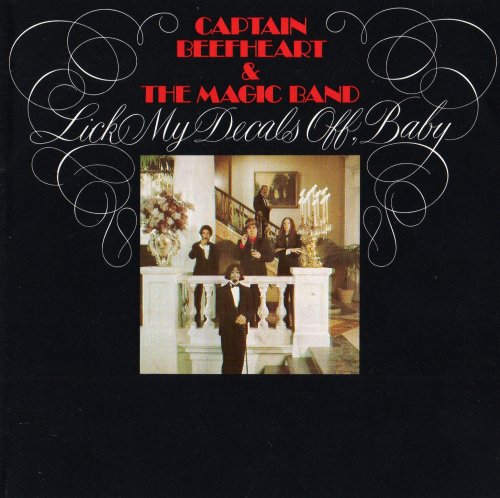
Lick My Decals Off, Baby.
As the seventies dawned, a frustrated Captain Beefheart and His Magic Band returned to the studio. This frustration gave Captain Beefheart the inspiration for his fourth album’s title, Lick My Decals Off, Baby.
Captain Beefheart was a man on a mission. That mission was to to get rid of “labels”. Instead, he wanted people to evaluate things, including music, according to its merits, rather than according to superficial labels or “decals.” This was admirable. After all, Captain Beefheart had been a victim of labels. Trout Mask Replica was in some quarters, labelled an avant-garde album. Conservative record buyers recoiled in horror, rather than giving an innovative album an opportunity. Maybe after Lick My Decals Off, Baby, things would change.
For Lick My Decals Off, Baby, Captain Beefheart had written fifteen songs, including I Love You, You Big Dummy, Woe-Is-Uh-Me-Bop, The Smithsonian Institute Blues (Or The Big Dig) and The Clouds Are Full Of Wine (Not Whiskey Or Rye). They were recorded at United Recording Corporation, Los Angeles during May 1970. With Captain Beefheart producing Lick My Decals Off, Baby, Captain Beefheart and His Magic Band fused avant-garde, blues, experimental, free jazz, psychedelia and rock. Accompanied by His Magic Band’s ever evolving lineup, Lick My Decals Off, Baby was released in December 1970.
On Lick My Decals Off, Baby’s release, in December 1970, critics called the album a mini masterpiece. Some went as far as to say that Lick My Decals Off, Baby was better than Trout Mask Replica. Described as captivating, challenging, engrossing, humorous, innovative and playful, what started as pieces of music improvised on his home piano, became Captain Beefheart and His Magic Band’s third classic. It even surpassed the commercial success of Trout Mask Replica, reaching number twenty in Britain. It seemed things were looking up for Captain Beefheart and His Magic Band.
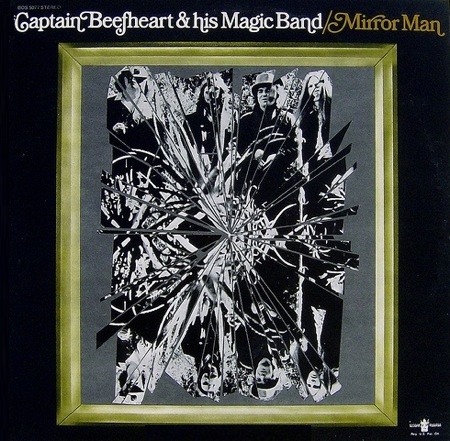
Mirror Man.
Just as things were looking up for Captain Beefheart and His Magic Band, Buddah Records decided to release Mirror Man. It was originally recorded as as part of an abandoned project, It Comes to You in a Plain Brown Wrapper album. However, the album was shelved and some of the material found its way onto Captain Beefheart and His Magic Band’s 1968 sophomore album. However, Buddah Records were obviously keen to cash-in on Captain Beefheart and His Magic Band’s popularity.
The Bob Krasnow produced Mirror Man was released in April 1971. Mirror Man features just four tracks. This includes three lengthy blues jams. They make Mirror Man’s release worthwhile. These tracks showcase Captain Beefheart and His Magic Band at the start of their career, and is very different from the band that features on On Lick My Decals Off, Baby.
Critics remarked upon that. They also remarked that Mirror Man wasn’t for newcomers to Captain Beefheart and His Magic Band. It was a case of only seasoned veterans of Captain Beefheart and His Magic Band should try Mirror Man, a hidden gem in Captain Beefheart and His Magic Band’s back-catalogue. It features Captain Beefheart and His Magic Band at their intensive and creative best. However, Captain Beefheart’s sixth album, The Spotlight Kid, was his most accessible.
The Spotlight Kid.
During autumn 1971, Captain Beefheart and co-producer Phil Schier, began work on what would become The Spotlight Kid. Captain Beefheart wrote nine tracks and cowrote Blabber ‘N Smoke with Jan Van Vliet. These ten tracks would become The Spotlight Kid, which was credited to Captain Beefheart.
Although His Magic Band featured on The Spotlight Kid, the album is just credited to Captain Beefheart. The starting point for The Spotlight Kid, is Captain Beefheart’s beloved blues. However, this is blues with a twist. Marimba, bells and percussion are added. They provide a contrast to the slide guitar, rhythm section and harmonica. The result was what critics called Captain Beefheart’s most accessible album.
From I’m Gonna Booglarize You Baby, through White Jam, Alice In Blunderland, Grow Fins and the closing track Glider, Captain Beefheart produces his most accessible album. Blues tinged, albeit with a twist, there’s more than a nod to Howlin’ Wolf and Muddy Waters. Critics hailed The Spotlight Kid as raw, intensive, powerful and accessible. The Spotlight Kid was seen as the perfect introduction to Captain Beefheart.
To some extent, this proved to be the case. In America, The Spotlight Kid reached number 131 on the US Billboard 200 charts. Over the Atlantic, The Spotlight Kid stalled at number forty-four in Britain. It was swings and roundabouts. At least, however, Captain Beefheart had made a breakthrough in his home country.

It had been a long coming. Captain Beefheart had toiled for years trying to make a breakthrough. One of the problems was, that many of Captain Beefheart’s aren’t particularly accessible.
Especially for the newcomer to Captain Beefheart and His Magic Band. A good place to start are three album 1970s Lick My Decals Off, Baby, 1971s The Spotlight Kid and 1972s Clear Spot. They’re much more accessible than albums like Safe As Milk and Trout Milk Replica. Even Captain Beefheart and His Magic Band’s accessible albums are ambitious, adventurous albums of genre-melting music where the music is unique and innovative and feature one of music’s mavericks.
He was way ahead of his time. That’s why commercial success eluded Captain Beefheart for much of his career. Captain Beefheart, like his old schoolfriend Frank Zappa, was always determined to push musical boundaries, sometimes, to their limits and beyond. Other times, like on The Spotlight Kid and Clear Spot, Captain Beefheart yearned for commercial success. Captain Beefheart wanted to share his music with a wider audience. Sadly, Captain Beefheart never reached the heady heights his music and talent deserved. At least belatedly, Captain Beefheart a musical pioneer, is recognised as one of the most innovative and adventurous musicians of his generations. That’s apparent on the albums Captain Beefheart and His Magic Band released between 1967 and 1972, which feature a musical maverick at his creative and innovative best.
Captain Beefheart-1967-1972: Safe As Milk To Clear Spot.
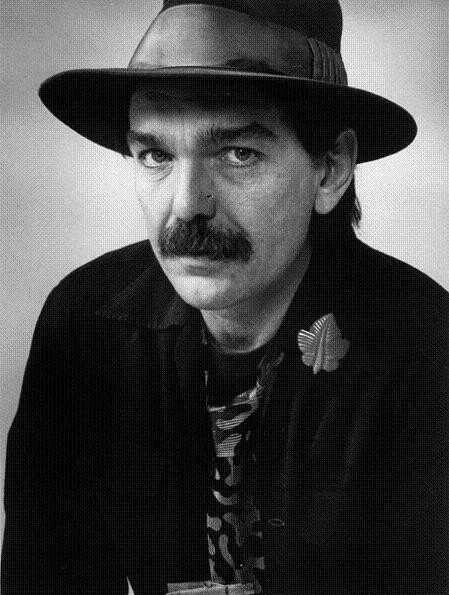
IF MUSIC PRESENTS YOU NEED THIS-A JOURNEY INTO DEEP JAZZ VOL. 3
IF Music Presents You Need This–A Journey Into Deep Jazz Vol. 3.
BBE Music.
Album Of The Week.
For the best part of four decades, Jean-Claude Thompson has been one of the leading lights of London’s vibrant and eclectic music scene. Since 1990, he’s been one half of production duo The Amalgamation Of Soundz who have released critically acclaimed albums, compilations, countless singles and remixes a plenty. Amalgamation Of Soundz also played a memorable DJ set at Glastonbury back in 2005. That was no surprise.
For many a year, Jean-Claude has been a top DJ, and is a familiar face in London’s club scene. He’s travelled far and wide DJ-ing, flying the flag for his genre-defying, jazz-tinged sound. Recently, when he’s not been involved in production nor DJ-ing, Jean-Claude has been busy with a variety of new projects.
This includes hosting radio shows on NTS and Soho Radio. Jean-Claude also finds time to run a record shop IF Music, and curate a series of compilations. The most recent compilation that Jean-Claude curated was IF Music Presents You Need This–A Journey Into Deep Jazz Vol. 3 for BBE Music.
IF Music Presents You Need This-A Journey Into Deep Jazz Vol. 3 is the latest and much anticipated instalment in BBE’s deep jazz series. It’s no ordinary deep jazz compilation though. Instead, IF Music Presents You Need This-A Journey Into Deep Jazz Vol. 3 is a triple album that is about to be released on heavyweight vinyl. It features ten eclectic slices of deep jazz and there’s something for everyone on IF Music Presents You Need This–A Journey Into Deep Jazz Vol. 3.
The music on IF Music Presents You Need This–A Journey Into Deep Jazz Vol. 3 veers between soulful and spiritual to free jazz. There’s obscurities, rarities and hidden gems that will have eluded even the most dedicated and determined collector. These tracks are sure to appeal to a wide range of record buyers.
This ranges from hipsters discovering jazz for the first time, to DJs, dancers and veteran collectors. IF Music Presents You Need This–A Journey Into Deep Jazz Vol. 3 is sure to appeal to a wide range of record buyers. They’re in for a veritable musical feast from Jean-Claude Thompson’s collection.
Side A.
Opening IF Music Presents You Need This–A Journey Into Deep Jazz Vol. 3 is Middle Passage, a track by Tyrone Jefferson who was James Brown’s trombonist and musical director. He released two albums track is from the album Free Your Mind, released in 1988. It’s a breathtaking workout where horns accompany Ellene Rockette’s inimitable vocal that is akin to an extra musical instrument as she takes the listener on a memorable journey.
Beaver Harris 360 Degree Music Experience recorded Aladdin’s Carpet for the 1979 album Beautiful Africa. It’s a welcome addition and a reminder of this underground anthem that for many a year, has been a favourite of jazz DJs.
Side B.
Legendary Hungarian jazz guitarist Gabor Szabo recorded 24 Carat View for his 1979 album Belsta River which was released on the Swedish label Four Leaf Clover Records. 24 Carat View is an impressive fifteen minute epic that showcases the considerable talents of Gabor Szabo and what can only be described as an all-star cast.
Side C.
In 1974, Björn Alkes Kvartett released his debut album Jazz I Sverige 1974, on Caprice Records. It was recorded by the bandleader and his quartet at the Swedish Broadcasting Corporation. One of the standout tracks is Nepal, which is another favourite of jazz DJs and is sure to fill a dancefloor.
Between 1969 and 1986 Jazz Celula released a total of five albums. Probuzeni is a track from their 1976 sophomore album Oheň Až Požár, and is a majestic slice of jazz-funk.
Side D.
Karl Hester and The Contemporary Jazz Art Movement recorded and released Pan African Ballet Music in 1981. This twenty-one minute epic is musical tour de force that isn’t just inventive and innovative, and for the first six minutes will test the stamina of dancers. This hidden gem is another welcome addition to IF Music Presents You Need This–A Journey Into Deep Jazz Vol. 3.
Side E.
Manteca was written by Dizzy Gillespie and recorded by Phineas Newborn Jr. in 1962 for his album The World Of Piano, which was released on Contemporary Records. It’s another hidden gem where the Tennessee born pianist and his band deliver a breathtaking performance.
In 1982, the fusion supergroup Sangam Jazz Yatra Sextett released their one and only album Sangam. It featured Dawn, which opened the album and features this pioneering supergroup at the peak of their powers.
Side F.
Copa Salvo’s Hasta La Victria Siempre is a track from the album Loveletter From Far East, which was released by RD Records in Japan, in 2006. Only 300 copies of the album were pressed and Hasta La Victria Siempre is one of the highlights of an album where elements of Latin, funk, jazz and soul melt into one. Sadly, very few people know about Loveletter From Far East, and Hasta La Victria Siempre will introduce Copa Salvo’s music to the wider audience it deserves.
Stafford James Ensemble only released one album, and that was their eponymous album on Red Record in 1979. It featured a memorable and captivating cover of John Coltrane’s Impressions which is the perfect way to close IF Music Presents You Need This–A Journey Into Deep Jazz Vol. 3.
IF Music Presents You Need This–A Journey Into Deep Jazz Vol. 3 features ten tracks. This includes obscurities, rarities and hidden gems that will have eluded even the most dedicated and determined collector. To track down these obscurities, rarities and hidden gems would prove expensive. Several of the albums the tracks on IF Music Presents You Need This–A Journey Into Deep Jazz Vol. 3 are taken from are extremely rare albums. Copies don’t come up for sale very often, and when they do, they change hands for large sums of money. However, they all feature on Jean-Claude Thompson’s lovingly curated IF Music Presents You Need This–A Journey Into Deep Jazz Vol. 3, which is a tantalising taste of the music on these albums. It’s music that is ambitious, innovative and inventive music. Proof of that can be found on IF Music Presents You Need This–A Journey Into Deep Jazz Vol. 3, which is a lovingly curated compilation which BBE Music have just as a triple album, and for anyone interested in jazz, then this will be a welcome addition to their record collection.
It doesn’t matter if you’re a hipster dipping your toe into the world of jazz for the first time, or DJs, dancers or veterans of jazz compilations past, IF Music Presents You Need This–A Journey Into Deep Jazz Vol. 3 is without doubt one of the finest jazz compilations money can buy and is another tantalising taste of inventive and innovative deep jazz from yesteryear.
IF Music Presents You Need This–A Journey Into Deep Jazz Vol. 3.
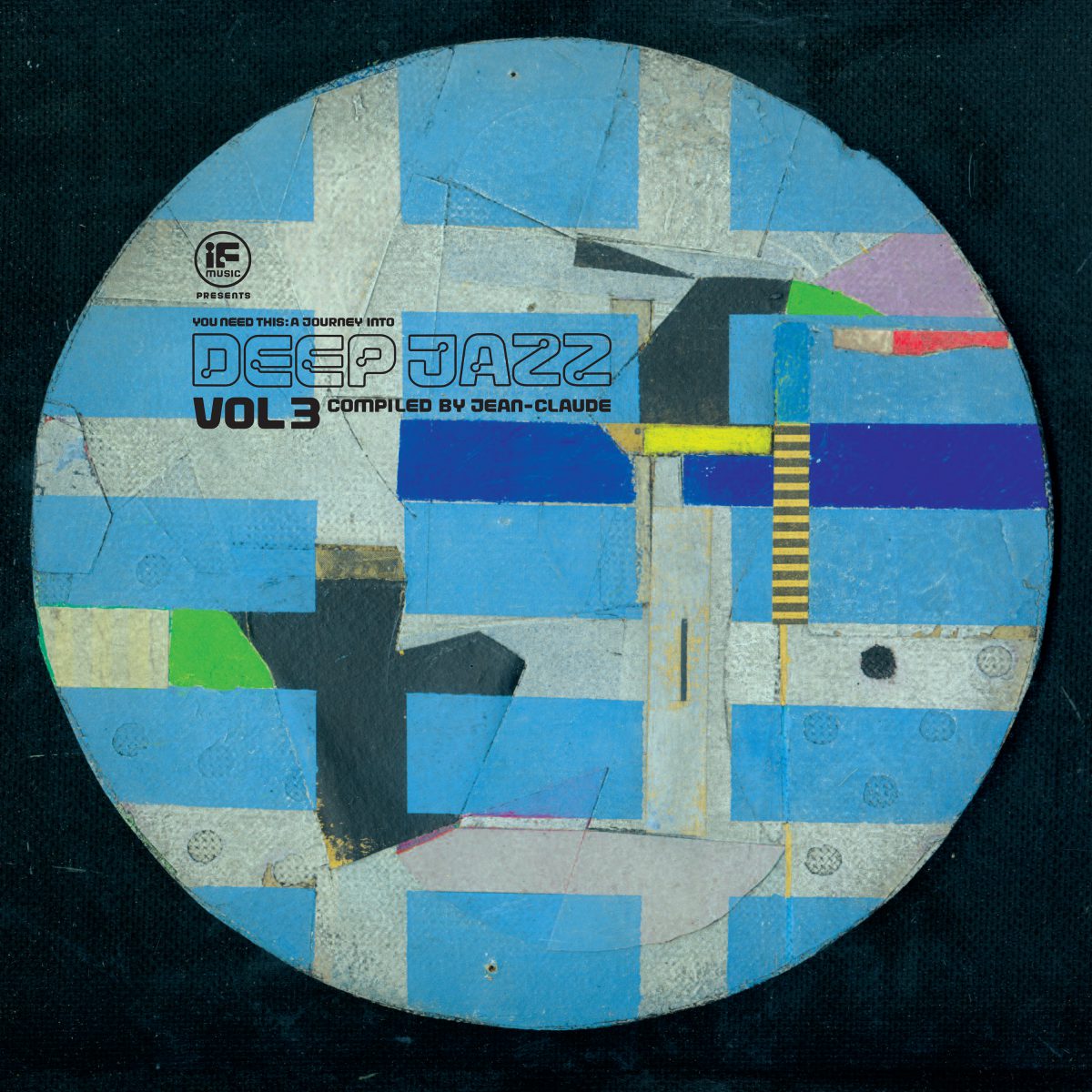
THE STORY OF THE BROTHERHOOD AND THEIR CULT CLASSIC STAVIA.
The Story Of The Brotherhood and Their Cult Classic Stavia.
After Ohio-based singer, songwriter and musician John Hurd wrote a new song Tragedy in 1971, he booked some studio time so that his band The Revised Brotherhood could record their debut single. Joining John Hurt in the studio when The Revised Brotherhood recorded Tragedy and Those Things was his friend Bill Fairbanks.
When the time came to record Tragedy, Bill Fairbanks stepped up the microphone and added backing vocals which were the perfect foil for John Hurd’s lead vocal. As the two high school students listened to the playback, they were pleased with the results. Now though, John Hurd planned to release Tragedy as a single.
This John Hurd knew was going to be easier said than done. He had two alternatives try to interest a local label in the single, or release The Revised Brotherhood’s debut single Tragedy as a private press. However, John Hurd had always planned to release Tragedy as a private press and arranged to have 100 copies pressed by the Heard label which was an imprint of Universal Language.
By the time John Hurd took delivery of the 100 copies of Tragedy, things had changed for the leader of The Revised Brotherhood. John Hurd and Bill Fairbanks had enjoyed recording Tragedy and were keen to repeat the experience. So much so, that they had decided to put together a new band and record an album together.
This new band they called The Brotherhood, which was very different to The Revised Brotherhood. For a start, it was setup more like a traditional rock band and was five piece band. The lineup featured John Hurd on bass, organ and piano and The Revised Brotherhood’s drummer Donny Hoskins. They were joined by Bill Fairbanks who played acoustic guitar, bass and piano. Soon, three became four when Bill Fairbanks recommended a talent and charismatic guitarist who would he believed would be perfect for addition to the new band, Jeff Hanson. He was a versatile guitarist who could seamlessly switch between lead and rhythm guitar. After an audition, Jeff Hanson joined The Brotherhood. By then, the lineup was almost complete and soon, the dream of making an album became reality.
The final piece of the jigsaw fell into place when John Hurd met flautist MJ Coe, and invited him to jam with The Brotherhood. After the initial jam session, John Hurd asked MJ Coe to join The Brotherhood, and when he accepted the rest of the band knew that the lineup of the band was complete. Now they could begin working towards their debut album Stavia.
With the lineup of The Brotherhood in place, John Hurd asked Bill Fairbanks and Jeff Hanson to bring any songs that they had written and might suit the band to the first rehearsal. Neither John Hurd nor The Brotherhood were wasting any time, began work on their debut album straight away. Recording an album was The Brotherhood’s raison d’être. It was why the band had been formed in April 1972, and was what The Brotherhood worked towards over the next five months.
At their next rehearsal, John Hurd brought along a couple of songs that he had been working on, Colour Line, Uncle and Meditation Part 2. These songs were work-in-progress until he showed them to Bill Fairbanks. Soon, Colour Line, Uncle and Meditation Part 2 were compete and were credited to John Hurd and Bill Fairbanks. He also contributed Back Door and Meditation Part 1, while guitarist Jeff Hanson wrote For Her Time. Meanwhile, John Hurd had written Rock and Roll Band and Cry Of Love. A decision was also taken to rerecord Tragedy which had been released in 1971 as The Revised Brotherhood’s debut single.
Over the next few weeks and months, The Brotherhood spent much of their time tightening and honing their songs and the group’s sound. The band knew that they had to have their A-Game on when they eventually entered the studio. As a result, much of their time was spent rehearsing, and occasionally The Brotherhood played live during the summer of 1972. However, they never lost sight of what brought them together recording an album.
Eventually, the time came for The Brotherhood to record the nine songs that became their debut album Stavia, which John Hurd decided should become a place that existed only in the band’s imagination. However, Stavia had a theme running through the nine songs on the album. That theme of Stavia was love, with The Brotherhood hoping that people could love and be free and pleasant to each other. This may seem idealistic in 2019, but Stavia has to be taken in context. In 1972, the Vietnam War was raging and the Civil Rights movement continued in its valiant attempt to transform the lives of African-Americans. It’s no surprise that The Brotherhood’s message on Stavia was love and the hope that people could be free and pleasant to each other.
When the time came for The Brotherhood to record Stavia, the band was more than ready to record their debut album. They had spent months tightening the song and honing their sound. Drummer Donny Hoskins was joined by Bill Fairbanks on acoustic guitar, bass, piano and vocals while John Hurd played bass, organ, piano and added vocals. Flautist MJ Coe also played acoustic guitar and added vocals. So did Jeff Hanson as he switched between lead and rhythm guitar. Soon, The Brotherhood had achieved what they had set out to do, and recorded their debut album Stavia.
With Stavia complete, the next step was for The Brotherhood to release their debut album. Just like The Revised Brotherhood’s debut single Tragedy, Stavia was released as private press. However, this time, Rite Record Productions produced around 200 copies of Stavia which nowadays, it’s an extremely rare album.
Stavia is also an album that for many a year was shrouded in mystery and had had become a mythical album. Some record collectors doubted that Stavia even existed. It did and does.
Back in September 1972 The Brotherhood achieved what they had set out to do five months earlier when they released their debut album Stavia. Sadly, that was the end of the road for The Brotherhood now that they had released their debut album. There was no followup to Stavia, and the five members of The Brotherhood went their separate ways. However, their musical legacy is Stavia.
When The Brotherhood released 200 copies of Stavia in September 1972 it was a proud moment, and one that they had been working towards for five months. Little did five members of The Brotherhood realise the impact that Stavia would have over the next five decades.
Nowadays, Stavia is regarded as one of the great acid rock private presses released in America during the early seventies. However, sometimes, the music heads in the direction acid folk, funk, heavy rock and in the case of vocals soul. To this musical potpourri The Brotherhood add social comment as they comment on the problems facing America in 1972. Other times, John Hurd becomes a storyteller as he delivers tales of love lost and heartbreak on Stavia which was the mythical place that The Brotherhood invented.
Sadly, Stavia was the one and only album that that the Ohio-based Rock and Roll Band The Brotherhood released during a career that lasted just five months. Incredibly, that was long enough for The Brotherhood to released their spellbinding acid rock genre classic Stavia which features a truly talented and versatile band.
The Story Of The Brotherhood and Their Cult Classic Stavia.

MELISSA MANCHESTER-1973-1976: HER EARLY YEARS AND BREAKTHROUGH.
Melissa Manchester-1973-1976: Her Early Years and Breakthrough.
It was almost inevitable that Melissa Manchester would end up embarking upon a musical career. The Manchester family were a highly creative family, and music played an important part in everyday life. That was no surprise. Melissa’s father was a bassoonist in the New York Metropolitan Opera. She would later follow in his footsteps, and would enjoy a career in music.
Unlike her father, Melissa Manchester would embark upon a career as a singer-songwriter. Melissa was twenty-two when she signed to Bell Records in 1973. Later that year, she released her debut album Home To Myself. It was the first of five albums that Melissa Manchester released between 1973 and 1975. Her story began on 15th February 1951
That was when Melissa Manchester was born in the Bronx, New York. Her mother was a clothing designer, and would later found her own company. However, Melissa’s father was a musician. He was a bassoonist in the New York Metropolitan Opera. So music played an important part in the family home. It was no surprise that Melissa embraced music from an early age.
Having started singing at an early age, Melissa Manchester enrolled at Manhattan’s High School of Performing Arts. That was where she learnt to play piano and harpsichord. It was during this time, that Melissa started singing on jingles for radio and television. Soon, Melissa was demoing the songs that was writing.
Already Melissa Manchester was a prolific songwriter. She spent much of her free time writing and honing songs. Despite being a prolific songwriter, when Melissa recorded her debut single for MB, neither the single Beautiful People, nor the B-Side A Song For You were her compositions. When the Beautiful People was released in 1967, it failed to make an impression on the charts. However, a year later, and a new opportunity arose for Melissa.
When Melissa was seventeen, and still a student at the High School of Performing Arts, she became a staff writer for Warner Chappell. Already, it was inevitable that she was going to pursue a career in music.
After Melissa left the High School of Performing Arts, she enrolled on the songwriting course at the prestigious New York University. One of her tutors was none other than Paul Simon. He advised Melissa to find her own voice as a songwriter. This she realised was good advice, and her songwriting quickly improved.
In the evenings and weekends, Melissa sang in clubs. She had been doing that for years. During that period, she graduated from folk clubs and open-mics to Manhattan clubs. Melissa was going up in the world. Her rise was about to continue.
It was while Melissa was singing in a Manhattan club during 1971, that she first met Barry Manilow. He would later be credited as ‘discovering’ Melissa Manchester. When he first saw, Melissa singing, he realised that she was a talented and accomplished singer. So he decided to introduce Melissa to his employer, Bette Midler.
Since earlier in 1971, Barry Manilow had been working as Bette Midler’s arranger and pianist. He also co-produced Bette Midler’s first two albums. Barry Manilow introduced Melissa to Bette Midler. Later in 1971, Melissa became one of Bette Midler’s backing singers The Harlettes.
During her time with Bette Midler, Melissa met songwriter Carole Bayer Sager. The pair soon became fiends and started writing songs together. Little did they realise that their formidable songwriting partnership would later write some contemporary classics. That was still to come.
Before that, Melissa featured on the 1972 album National Lampoon Radio Dinner. She appeared on the track Magical Misery Tour as Yoko One and sung backing vocals on Deteriorata. However, the next time she featured on an album would be her debut album.
Home To Myself.
Melissa Manchester was approached by Bell Records, who had spotted her potential. By then, she had spent time as one of Bette Midler’s backing singers The Harlettes and formed a songwriting partnership with Carole Bayer Sager. Signing a recording contract was the next logical step. It hadn’t been easy though.
Time after time, Melissa sent demos to record companies. They would listen to the demo, and jump to the wrong conclusion. Many record companies thought that Melissa remembers they: “would think I was a black girl based on the sound.” Bell Records who had been watching Melissa’s progress didn’t make that mistake.
Bell Records were willing to give Melissa total creative freedom when she recorded her debut album. She would be able to record the album that she wanted. There was a reason for their largesse though.
Previously, Bell Records was known as a singles label. They were keen to change that. So Bell Records started to add artists to their roster who would produce albums and singles. Melissa Manchester fitted the bill.
With her recording contract signed, Melissa began work on her debut album. The Melissa Manchester and Carole Bayer Sager partnership contributed If It Feels Good (Let It Ride), Easy, Something To Do With Loving You, Pick Up The Good Stuff (Reprise), Be Happy Now, One More Mountain To Climb and Home To Myself. Melissa penned Funny That Way, Jenny and Doing The Best (That He Can). These songs were recorded in New York.
To produce what would later become Home To Myself, Hank Medress and Dave Appell were brought onboard. They oversaw recording at Century Sound Studios, in New York. No expense was spared. Strings, horns and woodwind sections augmented by a band that featured some of New York’s top session musicians. They began recording the ten songs. When they were complete, they would become Home To Myself.
Later in 1973, Bell Records were preparing for the release of Melissa Manchester’s debut album Home To Myself. Critical acclaim accompanied the album’s release, as Melissa brings life, meaning and emotion to the lyrics. Especially on the ballads that feature on Home To Myself. There’s a confessional quality to ballads like If It Feels Good (Let It Ride), Easy,Funny That Way, One More Mountain To Climb, Doing The Best (That He Can) and Home To Myself. Sometimes, it’s as if Melissa is laying bare her soul. Then as the tempo rises, the piano playing singer-songwriter sometimes, combines power and passion on Something To Do With Loving You and Be Happy Now. During Home To Myself, Melissa switched between and combined musical genres.
Elements of pop, rock, folk and soul were combined. Stylistically, comparisons were drawn with Carole King, Bette Midler and Laura Nyro, who had such an influence on Melissa. What surprised many critics was how accomplished and polished a singer Melissa was. It was hard to believe Home To Myself was her debut album. However, she had spent six years honing her sound. Melissa Manchester was hoping that this would pay off.
When Home To Myself was released later in 1973, it charted and began climbing the US Billboard 200. Eventually, it reached 156. Considering it was only Melissa Manchester’s debut album, this was regarded as a success. Previously, many debut album had failed to even trouble the charts. Melissa Manchester had something to build on.

Bright Eyes.
After the relative success of Home To Myself, Melissa Manchester began working on her sophomore album Bright Eyes. This time, the Melissa Manchester and Carole Bayer Sager partnership only penned the one track, Ruby And The Dancer. Their partnership would resume on Melissa’s third album. For her sophomore album, Bright Eyes, Melissa had a new songwriting partner lyricist Adrienne Anderson.
They too, would establish a successful songwriting partnership. For Bright Eyes Melissa and Adrienne Anderson wrote Bright Eyes, Alone, No.1 (Ahwant Gemmeh) and He Is The One. Melissa contributed O Heaven (How You’ve Changed Me) and Inclined.
They penned Bright Eyes, Alone, No.1 (Ahwant Gemmeh) and He Is The One. The other track was a cover of Vernon Duke and George Gershwin’s I Can’t Get Started. Melissa had decided to cover it for her sophomore album Bright Eyes.
When recording of Bright Eyes began, Melissa was joined by two familiar faces, Hank Medress and Dave Appell. They returned to produce Bright Eyes. Just like Home To Myself, recording of Bright Eyes took place at Century Sound Studios, in New York.
Again, the arrangements were featured strings, horns and woodwind sections and band that included some of New York’s top session musicians. With Hank Medress and Dave Appell taking charge of production, they recorded Bright Eyes. Once it was complete, Bell Records began preparing for the release of Bright Eyes.
Home To Myself had introduced Melissa Manchester to critics and record buyers. Now Bell Records wanted Melissa’s music to reach a wider audience. Before that, the critics had their say.
Just like Home To Myself, Bright Eyes was well received by critics. They were quick to compare Melissa’s new songwriting partnership with Adrienne Anderson to her partnership with Carole Bayer Sager. The verdict was that the Melissa Manchester and Carole Bayer Sager won the day. That wasn’t surprising. Carole Bayer Sager was well on her way to becoming one of the top songwriters of her generation. However, both songwriting partnerships played an important part on Bright Eyes, which like her debut album won over by critics.
Given the positive reviews of Bright Eyes, Bell Record had high hopes for Melissa’s sophomore album. Upon its release later in 1974, the album it reached just 159 in the US Billboard 200. This was a disappointment for everyone concerned. Bell Records and Melissa had been looking to build on the success of Home To Myself. What didn’t help, was that the wrong song was chosen as the lead single.
There were several contenders for lead single. Eventually, O Heaven (How You’ve Changed Me) was chosen. It featured The Dixie Hummingbirds. However, rather than release the version on the album, the song was rerecorded. Despite all this effort, the song never came close to troubling the charts. This added to the disappointment. However, Bell Records who were about to be renamed Arista, kept faith with Melissa.

Melissa.
After Bright Eyes had stalled at 159 in the US Billboard 200, several changes were made for Melissa Manchester’s third album, Melissa. This included everything from songwriting partners to the producer that was hired and even the studio that Melissa was used. Arista president Clive Davis, it seemed were looking for a result.
For Melissa, Melissa and Carole Bayer Sager resumed their songwriting partnership in earnest. They wrote We’ve Got Time, Stevie’s Wonder, This Lady’s Not Home Today and I Got Eyes. Melissa also wrote It’s Gonna Be Alright with Adrienne Anderson. However, her new producer contributed a song.
Hank Medress and Dave Appell had been replaced by Vini Poncia. He and Melissa penned Just Too Many People. Similarly, Melissa and the guitarist from her new band, David Wolfert cowrote Party People. Completing Melissa were two cover versions, Stevie Wonder and Syreeta Wright’s Love Havin’ You Around and Randy Newman’s I Don’t Want To Hear It Anymore. These songs would be recorded with a new producer and band at a new studio. Nothing was left to chance.
For the recording of Melissa, two studios were used. With Melissa now living in LA., it made sense to record much of the album at Sunset Sound Studios, in Los Angeles. Other sessions took place at A & R Studios, in New York. Vini Poncia took charge of production and marshalled the cast of musicians and backing vocalists. This included for the first time on a Melissa Manchester album synths. However, strings were still used to sweeten the album. So were horns as Melissa took shape. Eventually, Melissa was completed and ready for release.
Once Melissa was completed, a release date was scheduled for later in 1975. This time, great thought went into choosing the right single. Executives at Arista hoped that Melissa would introduce Melissa Manchester’s music to a much wider audience. However, partly, that would depend upon what critics said about Melissa Manchester’s third album, Melissa.
Melissa was quite different from previous albums. It was an album that was a mixture of two types of songs, ballads and uptempo tracks. Unlike previous albums, the albums was divided equally between ballads and uptempo tracks, This allowed Melissa to showcase her versatility.
With critical acclaim accompanying the release of Melissa, the album was released later in 1975. It reached number twelve in the US Billboard 200, and sold over 500,00 copies. Melissa Manchester received her first gold disc. That was no surprise.
Midnight Blue the ballad that Melissa cowrote with Carole Bayer Sager in 1973, was released as the lead single from Melissa in May 1975. It reached number six in the US Billboard 100 and number one in the Adult Contemporary charts. Buoyed by this success, sales of Melissa grew in America. Across the border on Canada, Midnight Blue reached number five and number one Adult Contemporary charts. However, it had been hard work promoting Midnight Blue.
Arista was quite unlike Bell Records. President Clive Davis wanted his artists to work hard to break singles. So Melissa criss crossed America, meeting and greeting DJs and various movers and shakers. It was hard work, but eventually it paid off. The first song that Melissa cowrote with Carole Bayer when they first met had given her the biggest hit single of her career.
Following the success of Midnight Blue, Just Too Many People was released as the followup. It reached number thirty in the US Billboard 100 and number two in the Adult Contemporary charts. For Melissa, her third album had transformed her career. Now came the hard part, replicating the success of Melissa.

Better Days and Happy Endings.
Following the success of Melissa, work began on Better Days and Happy Endings. This was the first of two albums Melissa released during 1976. Arista hoped that she would replicate the success of Melissa and Midnight Blue. However, that was easier said than done.
Melissa had featured some of the best songs of Melissa Manchester’s career. They were written by Melissa and Carole Bayer Sager. The pair had forged a successful partnership on Melissa’s first three albums. Playing an important part in Melissa was Vini Poncia. He returned to produce Better Days and Happy Endings.
So did many of the musicians who worked on Melissa. They joined Melissa at Davlen Studios, North Hollywood. A total of ten tracks were recorded. Vini Poncia concentrated on producing an album of lush, feel good music. When it was complete, Arista and Melissa began work on promoting her fourth album, Better Days and Happy Endings.
Critics were won over by Better Days and Happy Endings. Melissa they noted, continued to mature as a singer, and had the potential to become one of the most successful female singer-songwriters of the seventies. Especially if she continued to produce albums with slick, polished and lush arrangements. Just like on Melissa, the album was well produced, with ballads and uptempo tracks rubbing shoulders with one another. It was critics said, a fitting followup to Melissa.
When Better Days and Happy Endings was released in 1976, it reached number twenty-four in the US Billboard 200. The lead single Just You and I reached number twenty-seven in the US Billboard 100 and number three in the Adult Contemporary charts. Better Days then stalled at seventy-nine in the US Billboard 100, but reached number nine in the Adult Contemporary charts. Happy Endings failed to reach the US Billboard 100 and reached just thirty-three in the Adult Contemporary charts. When the single was flipped over, the B-Side of Happy Endings, Rescue Me reached just seventy-six in the US Billboard 100. Despite that blip, Better Days and Happy Endings continued the Melissa Manchester success story. Arista hoped it would continue later in 1976.
Help Is on the Way.
Buoyed by the success of Better Days and Happy Endings, work began on the followup album. Arista were hoping that Melissa would enjoy another successful album. Her last two albums had sold well, and featured five hit singles in the US Billboard 100 and Adult Contemporary charts. So Melissa got to work.
This time around, Melissa and Carole Bayer Sager only wrote two songs, Help Is On The Way and There’s More Where That Came From. This left a huge void to be filled.
Filling that void was Melissa. She penned Talkin’ To Myself, Headlines and So’s My Old Man. The Melissa Manchester and Arienne Anderson penned Singing From My Soul. Melissa also wrote Be Somebody with Vini Poncia, and Johnny Vastano. Completing Help Is On The Way were a trio of cover versions.
This included Michael Franks’ Monkey See-Monkey; Do; Steely Dan’s Dirty Work and A Fool In Love. These songs and the rest of Help Is On The Way were recorded in L.A.
Two studios were used to record Help Is On The Way. Recording sessions took place in Hollywood at Sound Labs Inc. and at the Burbank Studios, Burbank. Vini Poncia returned for the third time, and was joined by some of the band that played on Melissa and Better Days and Happy Endings. Having worked together twice before, the sessions ran smoothly, and the album was ready in time to be released later in 1976.
Arista were keen to release Melissa’s fifth album, Help Is On The Way, hot on the heels of Better Days and Happy Endings. Melissa was enjoying the most successful period of her career, and Arista wanted to build upon it. So promotional copies of Help Is On The Way were sent out.
Just like Better Days and Happy Endings, critics gave Help Is On The Way positive reviews. It was another carefully crafted selection of songs that allowed Melissa to showcase her versatility and oozes quality.
Given the critical response to Help Is On The Way, Arista thought the album would follow in the footsteps of Melissa and Better Days and Happy Endings. However, when Help Is On The Way was released later in 1976, the album stalled at just sixty in the US Billboard 200. Again, Arista backed the wrong horse when it came to the lead single. They chose Monkey See, Monkey Do, which failed to chart. Neither did Be Somebody. For Melissa, Help Is On The Way had been a disappointment.
Things could’ve been very different if a different lead single had been chosen. Monkey See, Monkey Do was the wrong choice. By the time that Be Somebody was released, the album had stalled. It was a frustrating time for Melissa.
Despite that, the last three years had been a roller coaster for Melissa Manchester. An important factor in the rise of Melissa Manchester was her songwriting partnership with Carole Bayer Sager. They formed a successful and enviable partnership. Not only would the songs they wrote bring success Melissa’s way, but for many other artists. It was a fruitful and profitable partnership. It helped launch Melissa’s career in 1973.
Her 1973 debut album Home To Myself established an audience for her music. That audience were here to stay when Bright Eyes was released in 1974. However, Melissa’s fortunes changed in 1975.
This coincided with Bell Records becaming Arista. Clive Davis, who was Arista’s president wanted his artists to provide him with hits. It didn’t matter how hard they had to work for these hits. So Melissa Manchester criss-crossed America, glad-handling DJs and music industry movers and shakers. All her hard work and persistence paid off when Midnight Blue, a song she penned with Carole Bayer Sager gave her a top ten hit. The success of Midnight Blue helped Melissa’s third album Melissa, sell over 500,000 copies.
The success continued when Melissa released Better Days and Happy Endings in 1976. Later that year, Melissa released her second album of the year. Sadly, Help Is On The Way failed to fulfil its potential and failed to match the success of Melissa’s two previous albums.
Nowadays, Help Is On The Way is one of the most underrated of the five albums Melissa Manchester released between 1973 and 1976. It’s also a reminder of one of the most versatile and talented, singer-songwriters of her generation, Melissa Manchester during the the early years of her career
Melissa Manchester-1973-1976: Her Early Years and Breakthrough.
THE ROZETTA JOHNSON STORY: A CASE OF WHAT MIGHT HAVE BEEN.
The Rozetta Johnson Story: A Case Of What Might Have Been.
Throughout the history of modern music, some of the most talented artists haven’t enjoyed the commercial success and critical acclaim that their considerable talent deserves. That was the case with Nick Drake, Jackie Leven, Gram Parsons, Townes Van Zandt, Michael Chapman, Tim Buckley, Alice Clark, Linda Perhacs and Vashti Bunyan. None of these artists went on to enjoy fame or fortune. Far from it.
The music of Jackie Leven and Townes Van Zandt was enjoyed by a small, but discerning coterie of music lovers until their death. Meanwhile, Michael Chapman continues to tour, but still, his albums fail to find the audience that they so richly deserve. Sadly, this is all too familiar a story.
It was also the case with Alice Clark, Linda Perhacs and Vashti Bunyan’s debut albums. Sadly, each of these albums failed commercially. This resulted in these three talented singers turning their back on music. Music was loser.
Music was also the loser when Nick Drake, Tim Buckley and Gram Parson’s careers were cut tragically short. Each of these artists joined the dreaded twenty-seven club. Ironically, the music of Nick Drake, Tim Buckley and Gram Parson would belatedly find the audience it deserved. That was also the case with Jackie Leven, Townes Van Zandt, Alice Clark, Linda Perhacs and Vashti Bunyan. Belatedly, these artists are reaching a much wider audience and receiving the critical acclaim it so richly deserves. It’s a similar story with Southern Soul singer, Rozetta Johnson.
She was born in Tuscaloosa, Alabama on the 11th of June 1942. From an early age, Rozetta Johnson loved music. She also loved to sing. This she did at the local church, and at home. That was until she said her prayers.
Rozetta Johnson’s family were church going, and God-fearing people. The rule in the Johnson house was that once Rozetta had said her prayers, there was to be no singing. This rule young Rozetta obeyed…usually.
Then one night, when Rozetta Johnson was about six, she went to her room and said her prayers. Later, when she was listening to the radio, her favourite song, Goodnight Sweetheart, came on the radio. Rozetta began to sing along. Her great-grandfather told her to stop singing. Young Rozetta began to hum along to the song. This her great-grandfather took as an act of disobedience. He left the room, and returned with his switch. For this perceived act of disobedience he beat young Rozetta. That night, she cried herself to sleep. For a while, Rozetta was too scared to sing. Her career was nearly over before it began. Thankfully, that wasn’t the case.
Growing up, Rozetta Johnson sang in church, and later joined a gospel group. Each Sunday, they would sing in several churches. As the group’s popularity grew, they were singing in five different churches. Still, though Rozetta chose to stay in the background. The beating she had suffered weighed heavily on her mind. Then one Sunday, Rozetta had no option but to move to the front of the gospel group.
The two lead singers had an argument, and decided that they couldn’t or wouldn’t perform. Rozetta Johnson stepped into the breach. That day she regained her confidence, are musical career began to blossom. Especially when the gospel group broke up.
While this was a disappointment, it allowed Rozetta Johnson to think about the future. By then, she was seventeen and hadn’t earned a thin dime singing gospel all these years. Up until then, Rozetta was happy just to be singing. However, deep down, Rozetta knew she could make a living as a singer. So she decided to head to the local club she passed each day, the 401 in Birmingham, Alabama.
That was where Rozetta Johnson lived with her grandmother. She though Rozetta was in church, as she headed to the 401. With more than a degree of trepidation, Rozetta took her first tentative steps into the 401. This was unknown territory for her, and for the family, the 401 would be the equivalent of Sodom and Gomorrah. Never having set foot inside a nightclub, Rozetta was totally unprepared.
Especially when the owner asked her to audition. Rozetta Johnson sung the only secular song she knew, Somewhere Over The Rainbow. When she was asked what key she was about to sing in Rozetta had no idea. Despite being so unprepared, Rozetta received a standing ovation. The next day, Rozetta was hired and from the following Sunday, she would receive $8 each night.
For a high school senior, this was a small fortune. More importantly, Rozetta Johnson was taking her first tentative steps in a career as a professional singer. Over the next few years, Rozetta served her professional apprenticeship. She honed her style singing sets that featured songs Rozetta heard on the radio. They were reworked by Rozetta. However, after three years singing professionally, she got her big break.
This came when Rozetta Johnson was spotted by Bill Doggett. He was looking for a female vocalist for the Bill Doggett Revue to cover maternity leave. Rozetta fitted the bill. Her brief spell with the Bill Doggett Revue was the next part of her musical apprenticeship. This was good experience. Working with such seasoned performers helped Rozetta to improve her stagecraft, and prepared her for when she made her recording debut.
By 1963, Rozetta Johnston was signed to Bill Lowery’s NRC label and about to make her recording debut. It wasn’t a solo single though. Instead, Rozetta as accompanied by The Organettes. They were backing vocalists that Rozetta met at the recording session.
They only recorded the one single, I Understand My Man, with Willow Weep For Me on the B-Side. When it was released in 1963, Rozetta Johnson was billed as Rosetta Johnson and The Organettes. The single failed to make any headway, and Rosetta Johnson and The Organettes’ recording career was over before it had even began. For Rozetta Johnston the whole experience had been disappointing.
Another two years before Rozetta Johnston returned with a new single. By then, she was signed to Jessica Records. It was a short-lived label, that released just a few singles. This included Rozetta’s That Hurts, a soul-baring ballad. When That Hurts was released later in 1965, it failed to make any impression. History was repeating itself all over again.
Or so it seemed. That was until Atlantic Records decided to take a chance on That Hurts. They licensed the song from Jessica Records, and it was released in July 1966. Despite Atlantic Records’ financial power and marketing expertise, That Hurts failed to trouble the charts. It seemed that Rozetta Johnston’s recording career had stalled.
For the next four years, Rozetta Johnston found herself singing mostly, in local clubs. Very occasionally, Rozetta headed out of Alabama, and sung in another state. Most of the time, she found herself singing in the same local clubs. It must have been a frustrating time. Especially with her recording career having stalled. However, as the sixties gave way to the seventies, Rozetta ’s luck changed.
In 1970, Rozetta Johnston’s recording career resumed when she signed to Clintone Records. They had recently signed a distribution deal with Atlantic Records. This meant there was more chance that Rozetta’s singles would find an audience nationwide. Especially if they were written by Sam Dees.
Rozetta Johnston met Sam Dees through her manager Jesse Davis. Sam was writing and producing for Clintone Records. That’s despite Sam Dees being a talented singer in his own right. Sadly, Sam Dees struggled to make a breakthrough. That would be the case throughout his career. However, Sam Dees was a talented and prolific songwriter, and would pen Rozetta Johnston’s Clintone Records’ debut.
Sam Dees penned A Woman’s Way with his wife Lillian Dees. When A Woman’s Way was then released in October 1970, it reached ety-four in the US Billboard 100 and thirty-nine in the US R&B charts. This was regarded as a success as Clintone Records was a relatively new label, and A Woman’s Way was Rozetta Johnston’s first single in four years. Belatedly, she was enjoying a tantalising taste of the heady brew that’s success.
After the success of A Woman’s Way, Clintone Records were keen to build on the momentum that had been created. So Rozetta Johnson was sent back into the single to record two more songs that had been penned by Sam Dees, Who Are You Gonna Love (Your Woman Or Your Wife) and Can Feel My Love Comin’ Down. These songs were arranged by Dale Warren and produced by Sam Dees. Once they were recorded, the single was scheduled for release in early 1971.
In February 1971, the string drenched ballad Who Are You Gonna Love (Your Woman Or Your Wife) was released as a single. Despite the quality of this future soul classic, it stalled at just forty-five on the US R&B charts. Although this was disappointing, Rozetta Johnson had just enjoyed another hit single. She was two for two.
The problem was, the two hit singles were only minor hits. Given their quality, they deserved to find a wider audience. It was a case of back to the drawing board.
Just like Rozetta Johnson’s two previous singles, Sam Dees wrote her thing single Holding The Losing Hand. This was another ballad, and one that seemed tailor made for Rozetta who combined power and emotion, while gospel tinged backing vocals and string accompanied her. With Sam Dees taking care of production, surely Holding The Losing Hand would mark a change in fortune for Rozetta?
On Holding The Losing Hand’s release in September 1971, it failed to even trouble the lower reaches of the charts. This was the first single Rozetta Johnston released for Clintone that hadn’t charted. This was a huge disappointment.
After the failure of Holding The Losing Hand, five months passed before Rozetta Johnston returned with her fourth single. This time, there was no sign of Sam Dees. He was working on a new album for Atlantic Records, The Show Must Go On. With Clintone Records’ main source of songs unavailable, Rozetta covered Barry and Robin Gibb’s To Love Somebody for her next single. It was produced by the Moon, Gardner and Lewis production team and was due to be released in early 1972.
Despite reinventing To Love Somebody as a soul-baring Southern Soul ballad, the single failed to chart upon its release in February 1972. This was another blow for Rozetta Johnsto whose last two singles hadn’t come close to troubling the charts. It was a worrying time for Rozetta Johnston.
Later in 1972, it’s thought Rozetta Johnston returned to the studio to record the Sam Dees and David Camon penned ballad How Can You Love Something You Never Had. However, later, Rozetta later cast doubt upon whether the recording is actually her? It’s hard to tell. She was a versatile vocalist who seamlessly could switch between styles. Indeed, Rozetta could mimic a wide variety of singers, so there is every chance she features on Personal Dancer.
Little did Rozetta Johnson realise, that she would only record one more single for Clintone Records. This was It’s Been So Nice, a slice of the deepest soul. It was penned and produced by Sam Dees, who had played such an important part in Rozetta’s career. However, the single wasn’t released until 1975.
Initially, It’s Been So Nice was released on Clintone Records in 1975. Rozetta watched as the single failed to chart. She felt that Clintone Records hadn’t promoted the single sufficiently. It was a similar case when It’s Been So Nice was picked up by Columbia later in 1975. Again, it failed to even trouble the charts. By then, Rozetta was totally disillusioned with the music industry.
That was why Rozetta Johnston made the decision to turn her back on music. That was no surprise. Rozetta has released a string of singles that oozed quality. Especially the ballads. They featured Rozetta Johnston at her very best as she breathed life, meaning and emotion into the songs. However, when they were released as singles, they failed to find an audience. Maybe it would’ve been different if they had been released on a major label? Then Rozetta Johnston’s music might have found the audience it deserved. However, in 1975, that wasn’t the case.
Rozetta Johnston was struggling to make a living out of music. She was no longer getting the bookings she once had. To make matters worse, only two of her singles had charted. Even then, they were only minor hits. So Rozetta Johnston made the decision to embark upon a new career.
This meant going back to school, and then heading to college part-time. Rozetta Johnston worked her way through college, and eventually, graduated with a BA in sociology from the University of Alabama. After graduating, Rozetta Johnston began work as a teacher at Ramsay High School.
Little did the pupils know that their teacher had once been one of the best up-and-coming Southern Soul singers. Rozetta Johnston could’ve and should’ve become one of the most successful Southern Soul singers. Sadly, that never happened.
It was only later that the music Rozetta Johnston released between 1963 and 1975 has began to find a wider audience. By then, Rozetta Johnson had made a comeback.
She had reinvented herself as a jazz singer, before returning to her first musical love, gospel. Sadly, three years after releasing a gospel album in 2008, Rozetta Johnson passed away on the 24th March 2011. That day we los of one of the finest Southern Soul singers of her generation, Rozetta Johnson.
The Rozetta Johnson Story: A Case Of What Might Have Been.





SPENCER WIGGINS-ONE OF SOUL MUSIC’S BEST KEPT SECRETS.
Spencer Wiggins-One Of Soul Music’s Best Kept Secrets.
Although Spencer Wiggins is nowadays, widely recognised by critics as one of the finest exponents of deep soul, sadly, he’s still one of soul music’s best kept secrets. Spencer Wiggins at the peak of his powers, had the ability to breath life, meaning and emotion into the lyrics of a song. Sadly, talent alone didn’t guarantee commercial success and critical acclaim for Spencer Wiggins, whose singles failed to find the audience they so richly deserved. Meanwhile, James Carr and Bobby Bland who grew up in the same part of Memphis, were enjoying successful careers while he struggled to make a breakthrough first at Goldwax and then Fame. Ironically, that was when Spencer Wiggins released the best music of his career. His story began in Memphis in 1942.
Spencer Wiggins was born on January the ‘8th’ 1942, in Memphis, Tennessee, and for much of the forties and fifties, the Wiggins’ family lived in Homer Street. That was where Spencer Wiggins’ love of music blossomed, which his parents encouraged in the hope that it would save their son from getting into trouble.
Both parents wanted their young family including Spencer Wiggins to embrace different types of music, and in the evening they settled down and listened to jazz, gospel and R&B on the radio. However, it was gospel music that Mrs Wiggins was particularly interested in, as she regularly sung in the choir at the New Friendship Baptist Church. Soon, she was encouraging her family to attend services on a Sunday, and succeeded in doing so.
Before long, the choir at the New Friendship Baptist Church was a family affair, with Spencer and Percy Wiggins plus their sisters all joining their mother. By then, Spencer Wiggins had been introduced to Sam Cooke, who for a while was his favourite singer.
Soon, Spencer Wiggins who was still a high school student, decided to start singing outside of the confines of the New Friendship Baptist Church. Before long, he had discovered BB King Bobby Bland and Ray Charles who Spencer Wiggins quickly became his favourite singers. By then, he had introduced songs by BB King Bobby Bland and Ray Charles into his sets. This was fitting.
Bobby Bland was one of a number of singers who grew up in the same part of Memphis as Spencer Wiggins. Others included James Carr, Homer Banks, Maurice White and of course Spencer Wiggins’ brother Percy. All of these singers would go on to enjoy different degrees of success during their career.
Meanwhile, music was a constant throughout Spencer Wiggins’ schooldays. He sung at elementary school and then at Booker T. Washington High School which produced many famous musicians. During Spencer Wiggins’ time at Booker T. Washington High School, Booker T. Jones, Carl Hampton, David Porter, Gene Miller, Homer and James Banks, The Mad Lads, Maurice White and William Bell. Many of these singers, songwriters and musicians would become part of the Memphis music scene. That was all in future.
Before that, Nat D. Williams a history teacher Booker T. Washington High School started arranging talent nights for amateur musicians in Beale Street, which was situated in downtown Memphis. For aspiring musician including Spencer Wiggins, this was an opportunity to a make a breakthrough.
It was around this time that the Wiggins family formed a new five piece gospel group, the New Rival Gospel Singers. Initially, they played at the New Friendship Baptist Church before playing in churches across Memphis. Then in 1957, the New Rival Gospel Singers made their radio debut on Bless My Bones, but never got as far as recording a single or album.
During this period, Spencer Wiggins was a member of the Booker T. Washington High School’s sixty strong Glee Club, which featured his brother Percy, David Porter and Dan Greer. Three of this group Dan Greer, Percy and Spencer Wiggins were close friends from the early fifties right through to the early sixties. However, in 1961 nineteen years old Spencer Wiggins who had been held back a year, graduated high school. Now he had to decide what to do with his life.
Spencer Wiggins had no doubt about what he wanted to do with his life,…become a singer. Not just any singer, but one who enjoyed success coast to coast. Initially, Spencer Wiggins started singing on the local Memphis club scene, where he soon became a popular draw at venues like The Flamenco Club. He worked five nights a week, and earned $9 a night, which soon rose to $15. Before long, Spencer Wiggins was sharing the bill with Al Green, and other nights, opened for Elvis Presley. For Spencer Wiggins the whole experience was a roller coaster, but one he was thoroughly enjoying.
Some nights when he finished at 2am, Spencer Wiggins headed to another venue like the WC Handy Club where he and has friends would shoot the breeze. Then as a new day dawned, Spencer Wiggins and the band wold practised for anything up to three hours. Spencer Wiggins was determined to make a career out of music, and was already making an impact in Memphis’ vibrant soul scene.
One night when Spencer Wiggins appeared at The Flamenco Club, he met Quinton Claunch the founder and owner of Goldwax Records after he had finished his set. By then, Spencer Wiggins was a regular performer in Memphis’ clubs, and it was possible that someone had told Quinton Claunch about the young soul singer Spencer Wiggins who many thought had a bright future ahead of him. So must have Quinton Claunch who offered Spencer Wiggins his first recording contract.
Soon, Spencer Wiggins was in Sam Phillips Madison Avenue studio, where he recorded his debut single for the Bandstand imprint. This was the Isaac Hayes composition Lover’s Crime which featured a hurt-filled vocal. However, when Lover’s Crime was released in April 1964, it failed to trouble the charts.
In the spring of 1965, Spencer Wiggins returned to Sam Phillips’ studio on Madison where he recorded his sophomore single Take Me Just As I Am which was written by Dan Penn and Spooner Oldham. It features one heartfelt and emotive vocal from Spencer Wiggins whose at his most soulful . Considering Spencer Wiggins was just twenty-three, he shows a remarkable maturity on Take Me Just As I Am. Despite that, when Take Me Just As I Am was released as a single, lightning struck twice and the single failed to trouble the charts.
Despite his first two singles failing commercially, Spencer Wiggins continued to play the clubs around Memphis where he was still a popular draw. If anything, his popularity was rising, so Quinton Claunch sent him to Madison to record his third single.
The song that was chosen was Old Friend (You Asked Me If I Miss Her a collaboration between Jimmy Webb and George Jackson who wrote the B-Side Walking Out On You. When Old Friend (You Asked Me If I Miss Her was released on Goldwax Records, in December 1966, it featured the best performance of Spencer Wiggins’ career on a soul-baring slice of deep soul. Despite the quality, Spencer Wiggins’ single failed commercially and he was was no nearer that elusive hit single.
Four months later, and Spencer Wiggins returned with his fourth single Up Tight Good Woman, which was written by Dan Penn and Spooner Oldham. It’s a song that could’ve only been recorded in Memphis in the late-sixties, as Spencer Wiggins delivers an impassioned vocal while elements of Southern Soul and Deep Soul melt into one. Sadly, when Up Tight Good Woman was released in April 1967, it too, failed commercially and Spencer Wiggins’ search for his first hit single continued.
Another five months passed before Spencer Wiggins returned with his fifth single which the soul-baring ballad The Power Of A Woman which was penned by Quinton Claunch. This time around, the single was recorded in Memphis by a band that featured some top musicians, while Quinton Claunch and Randolph V. Russell took charge of production. They were partly responsible for one of Spencer Wiggins’ finest singles, which sadly, wasn’t the success that everyone hoped. Still, Spencer Wiggins was looking for his breakthrough single.
Five months later, and Spencer Wiggins released the Quinton Claunch composition That’s How Much I Love You on Goldwax Records in February 1968. I’m A Poor Man’s Son Spencer Wiggins’ impassioned vocal bristles with emotion as horns and harmonies accompany him on a song that could’ve transformed his fortunes. Again, both sides were recorded in Memphis, and were produced by the Quinton Claunch and Randolph V. Russell. Sadly, and despite their best efforts That’s How Much I Love You passed record buyers by.
After the commercial failure of That’s How Much I Love You, Quinton Claunch seemed in no hurry to release the followup single. Nine months passed before Spencer Wiggins released Once In A While (Is Better Than Never At All) as his seventh single for Goldwax Records. Sadly, things didn’t get any better when Spencer Wiggins’ seventh single failed to find an audience in November 1968. For Spencer Wiggins this was just the latest disappointment. Surely things couldn’t get any better?
As 1969 dawned Spencer Wiggins was preparing to release a cover pf Ronnie Shannon’s I Never Loved A Woman (The Way I Love You) as a single in February 1969. It was produced by Quinton Claunch and Randolph V. Russell who hoped that I Never Loved A Woman (The Way I Love You) would give Spencer Wiggins his belated breakthrough. Sadly, it wasn’t to be and it was the end of the line for Spencer Wiggins and rest of artists at Goldwax Records.
Later in 1969, the two owners of Goldwax, Quinton Claunch and Randolph V. “Doc” Russell decided to dissolve the label. They had been unable to agree on the future direction of Goldwax Records, which drove a wedge between the pair. However, James Carr’s increasingly erratic behaviour caused by a worsening in his mental health problems was the final straw. The two friends decided to dissolve Goldwax and Spencer Wiggins and rest of artists at Goldwax Records were left without a label.
Next stop for Spencer Wiggins was Fame, where he released Love Machine in November 1969 and Double Lovin’ in July 1970. When neither single was a commercial success, Spencer Wiggins was left without a label. Adding to Spencer Wiggins’ problems was that he never employed a manager. This was a decision that would cost Spencer Wiggins dearly.
Nearly three years later, in February 1973, Spencer Wiggins released I Can’t Be Satisfied (With A Piece Of Your Love) as a single on MGM Sounds Of Memphis. However, when the single failed to find an audience this was Spencer Wiggins’ eleventh single that that had failed commercially and caused Spencer Wiggins to rethink his future.
Spencer Wiggins wasn’t making a living singing soul, and when he left MGM Sounds Of Memphis he decided to reinvent himself as a bluesman in Florida. However, his career as a bluesman was short-lived and when his band failed to turn up for a show in Memphis in 1973, Spencer Wiggins called time on his career as a bluesman. For the next two years his life headed in a different direction.
For the next couple of years, spent most of his time working in a local church, and made his swan-song as a bluesman in 1975. A year later in 1976, and Spencer Wiggins ‘found’ god, and from 1977 onwards started singing gospel music.
The same year, 1977, the Japanese label Vivid Music released an album of songs Spencer Wiggins recorded for Goldwax, Soul City USA. This includes Sweet Sixteen, My Love Is Real, I’ll Be True To You and Who’s Been Warming My Oven which made their debut on Soul City USA. It was also Spencer Wiggins’ debut album, as he had previously, only ever released singles. It was almost ironic that Spencer Wiggins’ debut album, Soul City USA was only released after her turned his back on soul and blues, and began recording gospel music. It was the end of era.
Sadly, Spencer Wiggins never enjoyed the commercial success and critical acclaim that his talent warranted. Despite that, Spencer Wiggins is nowadays, widely recognised by critics as one of the finest exponents of deep soul, but sadly, is still one of soul music’s best kept secrets. Even many soul fans haven’t heard of Spencer Wiggins, but after hearing his music once, they’re fans for life of a singer who had the potential and talent to become a giant of soul.
Spencer Wiggins-One Of Soul Music’s Best Kept Secrets.

THE PAUL MARCANO AND LIGHTDREAMS STORY.
The Paul Marcano and LightDreams Story.
When British Columbian band LightDreams released their debut album Islands In Space in 1981, it was a captivating psychedelic sci-fi odyssey exploring cosmic ideology. Normally, an album like Islands In Space would’ve found favour with fans of psychedelia and progressive rockers who embraced cerebral, innovative and epic albums. Alas, that wasn’t the case with Islands In Space, which was released by LightDreams. Sadly, history repeated itself a year later.
LightDreams who were now billed as Paul Marcano and LightDreams, had returned to the studio to record their sophomore album 10,001 Dreams. The album picked up where Islands In Space left off, and went as far as exploring what was described as “utopian outer space colonisation.” This was something that fascinated and enthralled Paul Marcano since he first encountered the work and theories of author, physicist and space activist, Gerard K. O’Neill. His work and theories influenced Paul Marcano and the genre-melting music on 10,001 Dreams. It was recorded during 1982 and released that year.
This time around, Paul Marcano and LightDreams decided not to release the album on vinyl. Instead, it was released by the band on cassette. Just like Islands In Space, 10,001 Dreams found an audience within British Columbia, where the band were based. However, beyond British Columbia failed to find the audience it so richly deserved.
It was only much later, that word began to spread about Islands In Space and 10,001 Dreams. Occasionally, a few lucky record and tape collectors chanced upon a copy of Islands In Space or 10,001 Dreams. They paid their money and discovered two groundbreaking hidden gems. Before long, collectors and aficionados of psychedelia were looking for copies of Islands In Space and 10,001 Dreams. This was a long shot, and most collectors came up short. However, the lucky ones were able to go back in time to British Columbia in 1981 when Paul Marcano met the musicians with whom he would form LightDreams.
Back in 1981. like most towns and cities, British Columbia had a vibrant and thriving music scene. Paul Marcano was part of this scene. He was looking for like minded musicians to collaborate with. Eventually, Paul found his circle of friends and like minded musicians. Among the members of the newly formed band which became LightDreams, were Cory Rhyon and Andre Martin. They would record their debut album Islands In Space, later in 1981.
Islands In Space.
Paul Marcano dawned the role of the newly formed LightDreams. He was brimming with ideas, enthusiasm and energy. Not only had Paul been writing songs for a number or years, but he was also a talented multi-instrumentalist. With Paul at the helm, LightDreams’ thoughts began to turn to their debut album.
There was a minor problem though. Recording studios were expensive and beyond the budget of LightDreams. An alternative was, recording the album using the pro-sumer technology that was becoming popular in the early eighties. That still required funds, funds which for most new bands, were limited. However, one of LightDreams’ friends had another idea, and decided to approach executives at the TEAC Corporation, in the hope that they would let the band use some of their technology. This was a long shot, but one that paid off.
The TEAC Corporation, who were a market leader in early eighties recording equipment, allowed LightDreams to use a 144 track cassette recorder. This was beyond their widest dreams, and more than enough to the record the psychedelic opus that LightDreams were planning.
LightDreams planned to record seven songs penned by Paul Marcano. These songs had been slightly influenced by the work and theories of author, physicist and space activist, Gerard K. O’Neill. This was someone who Paul Marcano had been enthralled by for several years.
One of his theories was, that eventually, mankind would inhabit outer space. This Gerard K. O’Neill believed, would result in a much better world for those left behind inhabiting earth. No longer would there be problems with overpopulation and a reliance on natural resources. However. Paul took this proposition further, exploring whether mankind’s grasp of space-age technology could lead to a peace and cosmic presence on earth? He was following in the footsteps of the progressive rockers, in making cerebral and ambitious music.
To makes this music, which became Islands In Space, Paul Marcano who was producing the album would make good use of the 144 track cassette recorder. This was more than enough to record even the most ambitious Magnus Opus. Islands In Space had its very own Magnus Opus, Atmospheric Dreams; My Spirit Soars; Atmospheric Dreams a near eleven minute epic. It was just one of the seven tracks that were recorded and became Islands In Space.
Now that Islands In Space was completed, LightDreams decided to release the album themselves. This wasn’t unusual back in 1981, when there were many private pressings released. LightDreams had a 1,000 vinyl copies of Islands In Space pressed. These albums they hoped, they would be able to sell to their fellow British Columbians.
Alas, it wasn’t to be. Islands In Space, a captivating psychedelic and progressive sci-fi odyssey where LightDreams explored cosmic ideology passed record buyers by. They missed out on an album that wasn’t just ambitious, but innovative and featured cerebral and thought-provoking lyrics. However, Paul Marcano and the other members of LightDreams, weren’t beaten. They decided to record a followup to Islands In Space. This would eventually become 10,001 Dreams.
10,001 Dreams.
After the disappointing response to LightDreams’ debut album Islands In Space, they dusted themselves down and returned to the studio in 1982. By then, LightDreams were now being billed as Paul Marcano and LightDreams. For many groups, one member receiving equal billing as the group could’ve torn the group apart. However, Paul was playing a huge role in LightDreams. Not only was he the group’s principal songwriter, vocalist and producer, he was also a multi-instrumentalist. He would would play an important part on what became 10,001 Dreams.
For the best part of a decade, Paul Marcano had been writing songs. Some of these songs he believed, were perfect for 10,001 Dreams. So Paul dusted down songs he had previously penned. The earliest of these songs was Follow The Stream, which Paul had written and recorded in 1973. It was part of an album Paul recorded, but never released. This wasn’t the only album Paul hadn’t released.
Five years later, and Paul had penned Everyone Grows and Grows and Who Is The One in 1978. Again, it was part of an album that Paul recorded, but decided not to release. Since then, he had kept the song awaiting the right project. 10,001 Dreams was it. However, more songs were required for the album.
The rest of 10,001 Dreams consisted of new songs, including Andre Martin’s Being Here and Paul’s composition 10,001 Dreams. They were augmented by a trio of instrumentals including Stream III, the twenty-three minute epic In Memory Of Being Here and Building Islands In Space (Reprise). These tracks became 10,001 Dreams, the followup to Islands In Space.
Again, Paul Marcano and LightDreams recorded 10,001 Dreams with the 144 track cassette recorder. With so many tracks available, Paul who was producing the album, was able to let his imagination run riot. Paul Marcano and LightDreams deployed a myriad of New Age synths and augmented this with the rhythm section and fuzzy, lysergic, languid and dreamy guitars. The result was a truly eclectic album, where a myriad of disparate influences seem to have influenced Paul Marcano and LightDreams.
The guitars that feature on 10,001 Dreams bring to mind Michael Rother’s first three albums, Flammende Herzen, Sterntaler and Katzenmusik. There’s also similarities to Manuel Göttsching’s Inventions For Electric Guitar. Similarly, the synths on 10,001 Dreams were reminiscent of those that played an important part of so many Berlin School and Krautrock albums. Other notable influences included sixties British psychedelia, seventies progressive rock, folk pop at its most melodic and ambient and avant-garde music. 10,001 Dreams was another ambitious and innovative album, which features aul Marcano and LightDreams at their most inventive and progressive. All that was left was to release the album.
With 10,001 Dreams completed, releasing the album on vinyl would’ve proved problematic. The album was the best part of ninety minutes long. It was far too long to fit on a one album. Instead, 10,001 Dreams would need to be a double album. This would’ve required significant investment from Paul Marcano and LightDreams. For the band, it was a big decision.There was always the possibility that the album might no sell, and they would fail to recoup their initial investment. A much simpler solution, was to release 10,001 Dreams on cassette.
This made sense, as this meant that Paul would be able to make the cassette himself. So 10,001 Dreams was released on cassette later in 1982. Now it was a waiting game how would the music fans react?
Sadly, just like Islands In Space, 10,001 Dreams never found the audience it so richly deserved. That only happened much later.
Somewhat belatedly, word began to spread about 10,001 Dreams. Occasionally, a few lucky tape collectors chanced upon a copy of 10,001 Dreams. They paid their money a groundbreaking hidden gem. Before long, collectors and aficionados of psychedelia were looking for copies of 10,001 Dreams.
Ironically when 10,001 Dreams, was self released in 1982, Paul Marcano and LightDreams’ sophomore album passed most people by. It was only discovered by a small group of discerning music fans living in British Columbia. Most collectors and aficionados of psychedelia got to the party late, as far as 10,001 Dreams was concerned. That’s apart from a few lucky music fans who found a copy of the tape in second hand stores or bargain bins. They paid their money, and discovered a groundbreaking, genre-melting hidden gem. Before long, word was out, and collectors and aficionados of psychedelia were looking for copies of 10,001 Dreams. It takes as its starting point psychedelia.
10,001 Dreams is much more than psychedelic album. Elements of ambient, avant-garde, Berlin School, folk pop, Krautrock, progressive rock and rock can be heard throughout 10,001 Dreams. It’s a musical potpourri, where instruments and influences melt into one as Paul Marcano and LightDreams sculpt a captivating psychedelic sci-fi odyssey. Just like Islands In Space, 10,001 Dreams finds Paul Marcano and LightDreams continuing to explore cosmic ideology. This may seem like an unlikely theme for an album. However, back in the the seventies, when Paul Marcano wrote three of the songs on 10,000 Dreams, that was the age of progressive rock epics. They were almost de rigeur. It was almost a rite of passage for any self-respecting progressive rock band.
Paul Marcano and LightDreams weren’t just progressive rockers. Instead, they created innovative and inventive genre-music. They were musical pioneers and proof of that, is Paul Marcano and LightDreams’ debut album Islands In Space and the followup 10,001 Dreams, which feature ambitious, innovative and cerebral music that is truly timeless, and deserves to find its way into any self-respecting sonic explorer’s record collection.
The Paul Marcano and LightDreams Story.
CLUSTER’S CLASSIC YEARS 1971-1981.
Cluster’s Clasic Years 1971-1981.
The Cluster story began in the Zodiak Free Arts Lab in West Berlin when Hans-Joachim Roedelius first met Dieter Moebius. Little did they know that they were about to embark upon a musical journey that would last five decades.
During that period, Hans-Joachim Roedelius and Dieter Moebius were part of three of the most important, influential, and innovative bands of the Kominische era. This includes Kluster, Cluster and Harmonia. Each of these groups have inspired several generations of musicians. That’s still the case today. However, the Cluster story, Hans-Joachim Roedelius told me, began in the late sixties.
It was in 1968, at the height of the psychedelic era, that Hans-Joachim Roedelius “cofounded music commune Human Being. I also co-founded Zodiak Free Arts Lab in West Berlin with conceptual artist Conrad Schnitzler. At that period, I was a member of the group Human Being, a forerunner of Kluster.” For Hans-Joachim Roedelius: “this was an exciting time, where there was a sense that anything was possible. It was like a revolution. We were happy to have found this place to work. All the freelance musicians in the city found their way to Zodiak Free Arts Lab. There were members of Can, Tangerine Dream, Ash Ra, Neu! at Zodiak. They were great times.” The Zodiak Free Arts Lab was also where Hans-Joachim Roedelius met someone who would play a huge part in his career, Dieter Moebius.
“About the end of 1969, Dieter Moebius visited The Zodiak Free Arts Lab. He wasn’t a member. No. He just visiting, and we got talking.” The two men found they had a lot in common, including the way they believed music should be made. It was almost inevitable that Hans-Joachim Roedelius and Dieter Moebius would form a group.
Kluster.
“It was later, in 1970 that we founded Kluster.” Hans-Joachim Roedelius and Dieter Moebius joined with Conrad Schnitzler to form Kluster. However, Kluster was no ordinary band.
Initially, Cluster played an eclectic instruments and utensils. “Everything was spontaneous. Improvisation was key.” Kluster’s music was described in The Crack In The Cosmic Egg magazine as “unlike anything heard before.” Hans-Joachim Roedelius admits: “that was what Kluster set out to do. Kluster was about musical activism.” Soon, the musical activists would record their debut album.
Kluster’s debut album came about in the unlikeliest of circumstances. Although band were based in West Berlin; “one night we were playing a concert in Dusseldorf. A priest just happened to be walking past, and heard the music. He liked our music, and came in to the hall. Once the concert was finished, he asked if we would like to record an album of new church music? The answer was yes!” So Kluster made the journey to the Rhenus-Studio in Gordor.
When Kluster arrived at the Rhenus-Studio, “we met Conny Plank and producer Oskar Gottlieb Blarr. We went into the studio and recorded an hour of music in one take. Religious text was added to this, and became the ‘new church music.’ The music became our first two albums Klopfzeichen and Zwei-Osterei.
Only 300 copies of both albums were pressed. Klopfzeichen was released in 1970, with Zwei-Osterei following in 1971. Critics realised the importance of Kluster’s music. It was described as quite extraordinary, bleak, stark, unnerving and full of electricity. Despite the reviews, the sales of Klopfzeichen and Zwei-Osterei were small. However, later, Kluster would be recognised as one of the most influential groups of the early seventies. This influential and innovative group would only release one further album.
This was Eruption, which was recorded by Kluster during 1971. It featured an hour of experimental music, which was recorded by Klaus Freudigmann. Eruption is quite different from Kluster’s first two albums. There is no religious text, just Kluster at their innovative best. For many, Eruption is Kluster’s finest hour. However, 1971 marked the end of an era for Kluster. One group became two.
Kluster To Cluster.
In the middle of 1971, Conrad Schnitzler left Kluster, and briefly, worked with another band, Eruption. This was the beginning of the end for Kluster.
After the original lineup of Kluster split-up, “Dieter Moebius and I anglicised the band’s name, and Kluster became Cluster.” Between 1971 and 2009, Cluster would release twelve studio albums and four live album. Cluster’s debut was released later in 1971.
Cluster.
When Cluster recorded their eponymous debut album, they were joined in the studio by another legend of German music, Conny Plank. He featured on Cluster, which marked a change in sound. Gone was the almost industrial, discordant sound, which was replaced by an electronic sound. “Dieter and I played all the instruments and Conny added all sorts of effects. For us this was the start of a new era.”
Cluster was released later in 1971 on Phillips. “This was Cluster’s major label debut. It found Cluster at a crossroads.” They were ready to turn their back on the avant-garde, almost discordant and industrial sound of Kluster, and begin the shift towards the ambient and rock-tinged sound of the late seventies. That was the future.
Before that, Cluster began work on their eponymous debut album. In the studio, Cluster set about honing and sculpting a trio of soundscapes. Hans-Joachim Roedelius remembers: Cluster which had very little melody, is a series of improvised and atmospheric soundscapes.” They’re best described as futuristic, moody, dramatic and truly captivating. Heavy rhythms, beeps, squeak and drones drenched in effects assail the listener. It’s as if Cluster have been inspired by avant-garde, free jazz, early electronica, industrial, free jazz and even rock. This fusion of influences became Cluster.
Once Cluster was completed, the album was released on Philips. Little did anyone, even Cluster themselves, realise the effect album bearing the serial number Philips 6305074 would have. Nowadays, Cluster is regarded as an innovative classic, and in a sense, this was the start of Cluster’s career in earnest.
Cluster II.
“For the followup to Cluster, Conny Plank was no longer a member of Cluster. We were now a duo, consisting of Dieter and I. Conny had other projects he wanted to concentrate on.” With three becoming two, the two remaining members took a different approach to recording.
Cluster had added to their impressive arsenal of equipment. As Conny Plank watched on, two organs, analog synths, a Hawaiian guitar, a bass and an electronically treated cello were brought into the studio. Cluster weren’t finished yet. The two members of Cluster started setting up array of effects. This included audio-generators which usually, was found in an electrician’s toolbox. They became part of Cluster’s alternative orchestra. With everything setup, Cluster got to work.
“To some extent, it was trial and error. We tried different things. Some worked, others didn’t,” Hans Hans-Joachim Roedelius explains. The end result, Cluster II “saw a further shift towards a more electronic sound.”
The music veered between futuristic and dramatic to hypnotic, dreamy, lysergic and otherworldly. Sometimes the music becomes pastoral; other times understated and occasionally, explodes into life. However, for much of the time, Cluster II is melodic and mesmeric. Again, Cluster had produced an album that was way ahead of its time.
When Cluster II was released, it was on Germany premier label when it came to ambitious and innovative music, Brain. Cluster II was assigned the serial number Brain 1006, and when in was released in 1972, it was well on its way to becoming a groundbreaking genre classic.
Ironically, many German critics and record buyers overlooked groups like Cluster. Instead, they were more interested in the music coming out of America and Britain. Incredibly, they never realised that some of the most innovative music was being made in their own backyard. This includes that made by musical chameleons, Cluster whose music would continue to evolve.
Zuckerzeit.
Zuckerzeit, Cluster’s third album, was released in 1974, and was co-produced by Michael Rother of Neu! “Michael first met Dieter and I in 1971. By 1973, Michael was on a break from Neu! We decided to head into the countryside to Forst, to build our own recording studio.” This could’ve been fraught with problems? “No. We knew what we were doing and trying to achieve. All of us had experience in studios, so knew what was required.” The result was a studio “where Michael, Dieter and I recorded the two Harmonia albums, Musik Von Harmonia and Deluxe.” However, before that, Zuckerzeit was released.
On the release of Zuckerzeit, in 1974 Michael Rother’s influence is noticeable. He placed more emphasis on melody, rhythm and the motorik beat.” Hans-Joachim Roedelius explains that previously, Cluster didn’t place the same importance on melody or structure. Michael introduced structure and discipline.” The result was a very different album.
That’s apparent from the opening bars of Hollywood. A crisp Motorik beat provides the backdrop for Cluster’s synths. They create music that’s variously melodic, ethereal, evocative, haunting and cinematic. Especially on tracks like Hollywood, Rosa, Fotschi Tong and Marzipan. Then on Rote Riki, the music becomes futuristic, with the man machine adding sci-fi sounds that sound as if they’re from a distant planet. Meanwhile, Caramel would influence future generations of dance music producers. Although Caramba has futuristic sound, it’s melodic and contemporary. It sounds as if it belongs on the dance-floors of Berlin’s clubs. This is incredible, given Zuckerzeit was released later in 1972.
Cluster had released two albums on Brain during 1972. Both would become future genre classics, and both would show a different side to Cluster. Zuckerzeit with its mixture of electronic pop, art rock and avant-garde, was an album way ahead of its time. It’s a truly innovative and timeless album, where Cluster continue to reinvent themselves. The decision to bring Michael Rother onboard as producer was a masterstroke; and also resulted in the birth of a new band, Harmonia who released four albums before Cluster returned in 1976.
Sowiesoso.
After “Harmonia ran its course, we returned to Cluster. We had never stopped being Cluster. We played live, but didn’t release a new album until Sowiesoso, in 1976, which we recorded in just two days.”
Despite being recorded in just two days, Sowiesoso found Cluster at their creative zenith. They had recorded an album of understated, beautiful, poignant and melancholy melodies, including Umleitung, Zum Wohl and Es War Einma. The arrangements are often minimalist, but always, cinematic. Sometimes, the music is evocative and atmospheric. Occasionally, there’s an air of mystery. Especially, Halwa, with its cinematic sound. Just like the rest of Sowiesoso, the music paints pictures. That was the case in 1976, and is the case in 2016.
When Sowiesoso was released in 1976, it was on Günter Körber’s Sky Records. It had been formed in 1975, and by 1976, was already regarded as a label that released ambitious, influential and innovative music. This described Cluster’s first album in four years. However, Sowiesoso was a very different album to Zuckerzeit.
That was no surprise to those familiar with Cluster’s music. They were like musical chameleons, constantly reinventing their music. The musical chameleons were about to enter a three year period where Cluster could do no wrong.
Enter Brian Eno.
In June 1977, the two members of Cluster were joined by three old friends. The first was Holger Czukay of Can. “Dieter and I knew Holger from way back, back to Zodiak Free Arts Lab. We hung around with members of Can. Back then, there was a great sense of community. Everyone helped and influenced each other. We even went on to tour together.” Another of the guest artists on Cluster’s 1977 album first met Dieter and Hans at a Cluster concert.
That was Brian Eno: “who Cluster jammed with in 1974. Brian joined us on stage, and we spent the second half of the concert jamming. That was how we first met Brian. Then in 1977, he joined as for the recording of Cluster and Eno. We learnt a lot from Brian. Similarly, I like to think we influenced him. That was the case when we recorded After The Heat.” Before that, Cluster and Eno was recorded.
Cluster and Eno.
The four great innovators got to work. They spent part of June 1977 recording enough for two albums. Conny Plank laid down bass lines, while Dieter and Hans-Joachim Roedelius played synths and keyboards. So did Brian Eno who added bass and vocals. Once the recording session was complete, the first collaboration between Cluster and Brian Eno was released later in 1977.
When Cluster and Eno was released later in 1977, the album was a meeting of minds. Elements of both Cluster and Brian Eno’s music melted into one. Cluster supplied elements of avant-garde, while Brian Eno’s supplied the ambient influence. When this was combined with drone and world music, the result was another classic album.
Widespread critical acclaim accompanied the release of Cluster and Eno. It was hailed a groundbreaking album, one that was way ahead of its time. Cluster and Eno is an album that Hans-Joachim Roedelius: “is proud of.” He remembers the recording sessions fondly, and sees both Cluster and Eno, and its followup After The Heat, as an equally “influential album.”
After The Heat.
Just a year after the release of Cluster and Eno, the second collaboration between Cluster and Brian Eno was released. It too, was released to critical acclaim. This fusion of ambient, art rock, avant-garde, experimental and Krautrock were combined by Cluster and Brian Eno. Again, both Cluster and Brian Eno were influencing each other.
“This was not one way. We both influenced each other. On After The Heat, I believe we influenced Brian’s production style. If you listen to David Bowie’s Low and Lodger albums which Brian Eno produced, Cluster and Harmonia’s influence can be heard. So while Brian influenced Cluster, we certainly influenced him.” After two albums with Brian Eno, Cluster’s next album saw them return to a duo.
Grosses Wasser.
Following two albums with Brian Eno, Cluster returned to the studio in 1979. This time, Cluster were joined by Peter Baumann of Tangerine Dream. He would produce Grosses Wasser, Cluster’s seventh album.
It was an album where Cluster drew inspiration from ambient, art rock and avant-garde to electronica and free jazz. The result was music that’s ambitious, challenging and experimental. Other times, the music becomes ethereal, elegiac, melancholy and cinematic. Sometimes, though, Cluster throw a curveball like on Breitengrad 20, and a track changes direction. This adds to avant-garde sound of Grosses Wasser.
When Cluster released Grosses Wasser later in 1979, it proved to be Cluster’s most avant-garde album. “This wasn’t a conscious decision. Instead, it was just a case of evolution. That was the way that the Cluster worked. It was the same live.” That became apparent on Cluster’s first live album.
Live In Vienna.
Despite releasing seven studio albums, Cluster had never released a live album. That changed when Cluster took to the stage at the Wiener Festwochen Alternativ, on June 12th, 1980. It was the only time that Cluster took to the stage with Joshi Farnbauer. The result was one of Cluster’s most experimental albums.
Sometimes, the music veered towards discordant, and was reminiscent of early performances by Kluster. Hans-Joachim Roedelius remembers: “a song was just the starting point. We never knew what direction it would take. It was improvisation at its purest. Partly, it was because we couldn’t replicate our music live.” That was the case on, Live In Vienna, which featured Cluster at their most ambitious and inventive. However, just like Harmonia four years earlier, the end was nigh for Cluster.
Curiosum.
Cluster recorded their ninth album Curiosum in 1981. Recording took place at Hamet Hof, in Vienna, which was now Hans-Joachim Roedelius adopted home.
At Hamet Hof, Cluster recorded seven tracks. Some were relatively short by Cluster standards. Given the title, the seven tracks on Curiosum were somewhat unorthodox. However, they were unusually melodic. It was a fitting way to end chapter one of the Cluster story.
Just like Harmonia, “Cluster had run its course. We decided to concentrate on other projects. There was no fall-out, Cluster just came to a natural end. After eight studio albums and a live album, Cluster was over. Or was it?
That wasn’t the case and Cluster released twelve studio albums and four live albums between 1971 and 2009. However, Cluster’s classic years were between 1971 and 1981, when they released the best music of their career. There’s a reason for this. Cluster weren’t afraid to push musical boundaries to their limits, and sometimes, way beyond. Musically, Cluster were willing to go, where others musicians feared to tread, This paid off, and Cluster consistently released music that was truly innovative and inventive. Sadly, between 1971 and 1981 Cluster’s groundbreaking and genre-melting music was way ahead off its time and failed to find the audience it deserved.
Somewhat belatedly, Cluster are being recognised for being musical pioneers, who released ambitious, groundbreaking and timeless music. It has gone on to influence several generation of musicians. They cite Cluster as one of the bands who influence and inspired them. That will continue to the case as the music Cluster made was truly timeless and groundbreaking.
Cluster’s Clasic Years 1971-1981.

THE RADIATORS-GHOSTOWN 40TH ANNIVERSARY VERSION.
The Radiators-Ghostown-40th Anniversary Version.
Label: Chiswick.
When The Ramones played at the Roundhouse in London on the ‘4th’ of July 1976, this was a catalyst for punk movement. Many of the future leading lights of the punk movement have since claimed to have been present that night. In the audience were apparently future members of Generation X, Siouxsie and the Banshees, The Adverts, The Slits and X-Ray Spex. They watched the as the support act The Stranglers worked their way through their set. Little did they know how important a band The Stranglers, would be or the longevity they would go on to enjoy.
As The Stranglers, left the stage, there was a sense of anticipation in the air about The Ramones. Very few people had seen them live, but some had read about them in the music press. Others had only heard third hand about The Ramones and speculated about what was about to unfold. The speculation was nothing compared to the reality of The Ramones live at the Roundhouse on the ‘4th’ of July 1976. This was a seminal moment for the nascent British punk scene. After seeing The Ramones legendary concert, many of the future leading lights of the punk scene went on to form bands.
They weren’t alone. Up and down Britain, new bands were formed on an almost daily basis and the punk rock movement exploded. It was the musical movement British youths had been waiting for, as it allowed them to vent their frustration at life in battered Britain in 1976. Soon, it was a similar situation elsewhere.
This included across the Irish Sea in Dublin, where the punk movement was also born in July 1976. Just like Britain, the Republic of Ireland’s economy was far from healthy. Less that fifty percent of school leavers were fortunate enough to find a job. The rest was known as the “unemployed generation.” Adding to their woes, and that of the rest of the Irish youth was the lack of recreational facilities. They had been overlooked and failed by their government.
Some fell into a life of crime, while others made the journey “across the water,” to British cities where many Irish people had settled. This they hoped would lead to a better life. However, the prospects were no better there, and often, the natives were far from friendly. As a result, many young Dubliners decided to stay were they were. It was a case of “better the devil you know.”
Some of the young Dubliners that stayed in the city of their birth would become involved in the city’s nascent punk scene after July 1976. This was ground zero for Irish punk and many young Dubliners would form bands, found independent record labels and publish or write for fanzines. A thriving and vibrant scene was about to take shape over the next year or so. All this was partly due to Ireland’s first punk band The Radiators From Space. They issued a call to arms, and asked the Irish youth to unleash their creativity.
That is what the Irish youth proceeded to do, over the next few months and years. They discovered hidden talents that had passed unnoticed at schools across the country. This wouldn’t have happened if it hadn’t been for the band who are credited as Ireland’s very first punk band, The Radiators From Space, whose debut album TV Tube Heart is the perfect entrée for newcomers to the ban d who were formed in 1976, and were unlike most punk bands.
It’s safe to say that The Radiators From Space were a much more cerebral and literate band that the majority of punk bands. They were intelligent and didn’t indulge in the clichéd, vacuous posturing of many of the British punk groups who used controversy as a means of self promotion. That wasn’t the way that The Radiators From Space operated.
The Radiators From Space were formed in Dublin in 1976, and their early lineup included Philip Chevron, Pete Holidai, Steve Rapid (Steve Averill), Jimmy Crashe and Mark Megaray. From their early days, it was obvious that were different from other Irish and indeed, British punk bands.
Not only were The Radiators From Space cerebral and literate, they also had an almost encyclopaedic knowledge of music and musical history. Partly, this was because Steve Rapid’s father brought back music and American music magazines from his regular trips to New York. These magazines Steve Rapid and the rest of the band poured over, developing and honing their knowledge of music. Meanwhile, The Radiators From Space listened to groups like Hawkwind, MC5, The Deviants and The Stooges, right through to pop, rock, subversive German cabaret and traditional Irish music. This The Radiators From Space regarded as their musical education, and unlike many other punk bands, they didn’t reject this music when punk arrived. Instead, it was part of The Radiators From Space’s musical DNA as they moved forward.
Having formed The Radiators From Space, the band announced that they had developed their own manifesto. This had all been thought out and carefully considered as The Radiators From Space announced that they wanted to transform the Irish youth from consumers to producers. The Radiators From Space knew that the Irish youth were capable of forming bands and record labels, founding fanzines and putting on club nights. They would issue a rallying call, and this encouraged the Irish youth to become producers not just of music, but create a fledgling music and entertainment industry. Part of this inspirational rallying call was also about enjoyment and pleasure.
This wasn’t easy in Ireland in 1976, where poverty and unemployment were rife. Many youths were from broken homes and there was a massive problem with illiteracy. There was also ‘The Troubles’, which blighted both sides of the Irish border. Many Irish youths didn’t want to get involved in the conflict, as they had watched as friends and acquaintances got caught up in it. Some ended up in prison, while others were injured or even killed. That was a road they weren’t going down, and the only rallying call they listened to was The Radiators From Space.
They were at the heart of the nascent punk movement, with The Radiators From Space playing live and ran and published their own fanzine Raw Power. This was an outlet for the band’s manifesto and allowed them to discuss their plans for an Alternative Ireland. This wasn’t a political movement. Instead, it was about making a better life for young Irish people. The Radiators From Space, wasted to inspire and foster a feeling of solidarity. Readers were encouraged to try to find pleasure during each day. Sometimes, readers found love, and a few even found love across the religious divide. This was controversial and indeed dangerous in Ireland in 1976.
Before long, The Radiators From Space and their fanzine was coming in for criticism from the Catholic Church. When Father Brian D’Arcy, a spokesperson for the Catholic church wrote about out The Radiators From Space and their fanzine Raw Power, he didn’t encourage their endeavours or creativity. Instead, Father Brian D’Arcy sneered contemptuously of The Radiators From Space and their fanzine Raw Power. It seemed that The Radiators From Space had the Catholic church rattled with their call to arms as a largely secular generation look for an alternative to organised religion. However, The Radiators From Space had another means of reaching an even wider audience…their music.
Although The Radiators From Space were activists and creatives, they were also musicians. That was what they hoped would offer them an escape from the grinding poverty and unemployment that besmirched Ireland, and indeed Britain. Music just like football and boxing was still an escape for working class youths in 1976.
It was a similar case in Britain, where punk bands were being formed almost daily. Many of them lacked talent and charisma, and were ill-suited to what was still the entertainment industry. By comparison, those that encountered The Radiators From Space found them engaging and intelligent. They were also talented, and a cut above the average punk band.
After a while, The Radiators From Space wanted to embark upon a recording career. They were no different from punk bands in Britain, America and Australia. For punk bands, releasing a single was a rite of passage, and for others, would be a reminder of their brief brush with the music industry. Most didn’t get any further than that, and disappeared without trace. However, releasing a record in Britain was much easier than in Ireland.
Unlike many capital cities, Dublin didn’t have a music industry by 1976. There were neither major labels nor recording studios. Some bands travelled across the border to Belfast to record singles prior to the punk era. That was the past; and given the DIY spirit of punk, bands in Britain had recorded singles without going near a recording studio. They used basic equipment and transformed garages or basements into makeshift studios.
One option for all Irish bands had been to pack their bags and travel to London, where they would try to forge a career. The lucky ones like Rory Gallagher and Thin Lizzy went on to sign recording contracts, and became Ireland’s most successful musical exports. However, not all bands wanted to move to London, and that included The Radiators From Space during the early part of their career.
They were at the centre of Dublin’s scene and realised that something special was starting to take shape. Across Ireland, a new wave of bands, writers, fanzine publishers, promoters, record label owners and DJs were becoming part of the country’s burgeoning music scene. This included Eamon Carr and Jackie Hayden, who had founded the independent label Midnite Records.
The pair was also friendly with a trio of Irish expats living in London, where they were part of the music industry. Ted Caroll was from the Republic of Ireland, while his friend and colleague Roger Armstrong was from Northern Ireland. Both lived and breathed music and were cut from the same cloth as Eamon Carr and Jackie Hayden. Both Ted Caroll and Roger Armstrong were musical entrepreneurs who had embraced the DIY principal and owned Chiswick Records. They kept in touch with booking agent Paul Charles, another Irish expat who still kept his finger on the pulse in the Irish music scene. He booked many of the top Irish bands and was part of The Radiators From Space inner circle.
Of all the Irish bands, Paul Charles was especially taken with The Radiators From Space. They were the only punk band who managed their own affairs. This was just a continuation of the DIY spirit The Radiators From Space had tried so hard to foster. It’s also likely given The Radiators From Space encyclopaedic knowledge of music that they were wary of music managers and would rather manage their own affairs. This was about to work in their favour.
In 1977, The Radiators From Space signed to Chiswick Records. Unlike many labels, Chiswick Records didn’t require the band to move to London. Instead, The Radiators From Space could continue to live in Dublin.
Television Screen.
With the deal signed and sealed, The Radiators From Space began work on their debut album TV Tube Heart. Before the album was recorded, The Radiators From Space their debut single in May 1977. The song they chose was Television Screen with Love Detective on the B-Side of their debut single. It was Sounds magazine record of the week, and was a memorable way for The Radiators From Space to announce their arrival.

TV Tube Heart.
It was a mixture of original songs and Party Line’s version of the traditional song The Radiators From Space. TV Tube Heart was very much a group effort with the five members of the band having penned the twelve original songs.
When recording began of TV Tube Heart began on ‘22nd’ June 1977, with Roger Armstrong took charge of production. The Radiators From Space’s rhythm section featured drummer Jimmy Crashe, bassist Mark Megaray and guitarists Phil Chevron and Pete Holidai. Adding the lead vocal was Steve Rapid. Eventually, TV Tube Heart was completed by August 1977.
On the ‘9th’ of September 1977, The Radiators From Space played a showcase gig at The Vortex. During a blistering set, they played Prison Bars, Contact, Party Line, Press Gang and Enemies, which feature on the newly released 40th Anniversary Version of TV Tube Heart. These tracks feature The Radiators From Space at the peak of their powers.
A month later, TV Tube Heart was released by Chiswick Records on October the ‘7th’ 1977. Critics were won over by The Radiators From Space’s debut album TV Tube Heart. Critics spoke as one, praising TV Tube Heart. That came as no surprise given the reception their debut single had received.
The Radiators From Space had followed this up with an accomplished album of pop punk that wasn’t short of anthems and social comment. From the howling feedback that opens Television Screen, it’s a case of sit back and enjoy the ride. It’s a memorable way to open the album, as The Radiators From Space combined elements of garage rock, pop, punk, rock and even rock ’n’ roll. Unlike many punk bands, The Radiators From Space prove dto be talented songwriters and musicians.
Nowadays, TV Tube Heart is punk classic, and a cut above many of the third-rate albums that were being released. The Radiators From Space had made their mark on the punk scene on both sides of the Irish Sea. Surely, it was only a matter of time before one of the majors came calling?
Two months later, and The Radiators From Space released their sophomore single Enemies in on Chiswick Records in December 1977. Just like its predecessor Television Screen, it won the approval of critics. Things were looking good for The Radiators From Space, who critics said had a bright future in front of them.

Ghostown.
Nearly two years later, and The Radiators as they were now known were still signed to Chiswick Records. They had moved to London earlier in 1979. This was a big step for the band, leaving their home city behind.
By then, The Radiators had written the ten tracks that became Ghostown. It was recorded during 1978, with The Radiators now a quartet featured a rhythm section of drummer Jimmy Crashe, bassist Mark Megaray and guitarist Pete Holidai. Phil Chevron switched between guitar and synths and took charge of the lead vocal at Good Earth Soundhouse. London. Taking charge of production was American producer Tony Visconti.
Once Ghostown was recorded, its release was delayed for the best part of a year. By then, Million Dollar Hero (In a Five and Ten Cents Store) has been released as single in April 1978, with Let’s Talk About The Weather following in June 1979. The singles were a tantalising taste of Ghostown, which was released in the summer of 1979.
When the album was released on August ’10th’ 1979, it was to overwhelming critical acclaim. Critics called the music on Ghostown ambitious and literate, with tracks like Million Dollar Hero (In a Five and Ten Cents Store), Let’s Talk About The Weather and Kitty Ricketts which was released as a single on the ‘31st August 1979. Along with Song of the Faithful Departed and Walking Home Alone Again these were the highlights of Ghostown, which some critics were calling The Radiators’ finest hour.
While some critics, Ghostown was The Radiators e finest hour, Others sill believed that TV Tube was their best album. What was clear, was that The Radiators From Space had released two genre classics. Both albums have been reissued by Chiswick, an imprint of Ace Records to celebrate the fortieth anniversary of each album’s release. TV Tube Heart was reissued in 2017, and Ghostown has just been reissued as a lavish two CD set. On disc one is the original version of Ghostown and ten bonus tracks. Then on the second there’s another twenty-five tracks that feature different versions of tracks on Ghostown. For fans of The Radiators and their ambitious and literate sophomore album it’s the perfect way to celebrate the fortieth anniversary of Ghostown, whose star was in the ascendancy in 1979.
Sadly, two years later in 1981, The Radiators split-up. It was the end of an era for what many regard as Dublin and indeed Ireland’s first punk band.
The Radiators were reunited in 1987 and were together until they spilt for the second time in 1989. They were reunited in 2004, and are still together today During that period, they’ve released two albums 2006s Trouble Pilgrim and Sound City Beat in 2012. It was another five years before The Radiators From Space returned to the studio and rerecorded some of their songs that featured on TV Tube Heart-40th Anniversary Version. They were billed as Live In The Studio.
Two years later, the celebration of The Radiators continues with Ghostown-40th Anniversary Version, which has been expanded and features thirty-five tracks. They’re part of a lovingly curated release which us the perfect way to celebrate The Radiators’ landmark sophomore album Ghostown.
The Radiators were punk pioneers, who are regarded by many as Ireland’s first ever punk band. Their sophomore album Ghostown is a true genre classic, and showcases one of the best and most accomplished punk bands, who were a cut above the competition. By comparison, many of the British punk bands, who were a rag-bag of chancers, charlatans, publicity seekers and talentless no-hopers. Meanwhile, across the Irish Sea, The Radiators were cerebral, literate, inspirational and had a social conscience. They were also one of the leading lights of the Irish punk scene and recorded two true genre classics TV Tube Heart and Ghostown-40th Anniversary Version.
The Radiators-Ghostown-40th Anniversary Version.

BLACK MOON CIRCLE-THE STORY SO FAR.
Black Moon Circle-The Story So Far.
Just seven years ago, brothers Øyvin and Vemund Engan founded the psychedelic space rock band Black Moon Circle, and since then, this talented band from Trondheim, in Norway, have released seven albums. Not many bands average an album a year, but not many bands have the talent that Black Moon Circle have. Their story begins seven years ago.
The Black Moon Circle story began in the city of Trondheim, in Norway, in 2012, when brothers Øyvin and Vemund Engan decided to form their own band. It was a case of needs must, after the demise of their previous band, the Trondheim-based punk rock group The Reilly Express, where the Engan brothers served their musical apprenticeship. With The Reilly Express now consigned to musical history, the Engan brothers decided to form a new band, which would allow them to head in a new direction musically.
In The Beginning.
Having made the decision to form a new group, which the Engan brothers named it Black Moon Circle, which was going to play psychedelic space rock. Øyvin would play bass, guitar and take charge of vocals, while his brother Vemund would also play guitar. All that the nascent Black Moon Circle needed was a drummer, and this would be the start of a new and exciting chapter in the Engan brothers musical career.
Before long, Black Moon Circle’s lineup was complete when drummer Per Andreas Gulbrandsen joined the band. He was the final piece of the musical jigsaw, and now Black Moon Circle could begin to hone their sound.
After spending time honing their sound, gradually, Black Moon Circle’s trademark sound started to evolve. Initially, it was a combination of lengthy jams, searing guitar riffs and a myriad of effects added to the bass and guitar. This was Black Moon Circle’s now unique brand of described as psychedelic space rock, which soon found an appreciative audience.
Now that they had honed and tightened their sound, Black Moon Circle made their first tentative steps onto the local live scene. While they were the newest addition to Norway’s thriving and vibrant and thriving psychedelic space rock scene, their music soon started to find a receptive and appreciative audience. That came as no surprise.
It wasn’t just that that Black Moon Circle was a talented band whose popularity was growing, but by then, space rock’s popularity was growing all over Europe. Flying the flag for Norwegian space rock was Black Moon Circle, whose music was about to find a wider audience in 2013.
Black Moon Circle.
Although Black Moon Circle had been together less than a year, they had already decided to record a mini album at Nautilus Studios. Black Moon Circle recorded three tracks Plains, American Eagle and Enigmatic Superbandit, which would mark the debut of the Trondheim-based psychedelic space rockers.
The mini album Black Moon Circle was released as a limited edition of 300 in February 2014 by Space Rock Productions, the label run by the Øresund Space Collective from Copenhagen, Denmark. Black Moon Circle introduced the band’s music to a new and wider audience, and launched their career.
After the release of their mini-album, Black Moon Circle were already making plans for the future, and this included recording their much-anticipated debut album. Black Moon Circle weren’t the type of band to let the grass grow under their feet, and the recording began in the spring of 2014.
Andromeda.
When Psychedelic space rockers Black Moon Circle returned to the studio in April 2014, they had been together the best part of two years, and were already a tight band who were capable of seamlessly creating genre-melting music. Black Moon Circle worked quickly and efficiently, recording the five songs on Andromeda in just one day. Six months later, and Andromeda was ready to be released.
Black Moon Circle’s debut album, Andromeda which showcased their psychedelic space rock sound was released to plaudits and praise by Crispin Clover Records in October 2014. Critics forecast a great future for the Trondheim-based trio, who were already hatching a plan that sounded like something from the seventies, the golden age of rock.
The Studio Jams Volume I: Yellow Nebula in the Sky.
Black Moon Circle had decided to release a trilogy of albums featuring studio jams, which was something that harked back to the seventies, when rock was King. It seemed that this was Black Moon Circle’s way of paying homage to the golden age of rock which had influenced their music. In mid-2015, Black Circle announced their intention to release a trilogy of studio jams, which was by far, the most ambitious project of their career.
The first of the trilogy was The Studio Jams Volume I: Yellow Nebula in the Sky, where Black Moon Circle were joined in the studio by Scott Heller a.k.a. Dr. Space who played synths on the album. It was released in August 2015, and was the start of a new era for Black Moon Circle.
Critics hailed The Studio Jams Volume I: Yellow Nebula in the Sky as Black Moon Circle’s as finest hour as they fused psychedelic space rock with elements of electronica, experimental music and free jazz. Seamlessly, these disparate musical genres and influences merge into something new and innovative that was cinematic, dramatic, futuristic, moody, rocky and as Øyvin Engan says: “intense.” However, for their third album, Sea Of Clouds, Black Moon Circle added two new ingredients to their successful musical formula.
Sea Of Clouds.
With The Studio Jams Volume I: Yellow Nebula In The Sky recorded, but not yet released, Black Moon Circle’s thoughts turned to their next album, which wasn’t going to be another instalment in the Studio Jams’ series. Instead, Black Moon Circle changed direction slightly on Sea Of Clouds.
When Black Moon Circle recorded Sea Of Clouds in June 2015, they were again joined by Scott Heller who played synths, while new guest artist Magnus Kofoed played keyboards. During the course of just one day, Black Moon Circle recorded the four lengthy jams that became Sea Of Clouds.
When Sea Of Clouds was released, critics were won over by another album of hard rocking, psychedelic space rock that was futuristic, moody, otherworldly and featured Black Moon Circle’s trademark intensity. Sea Of Clouds was a carefully crafted fusion of avant-garde, free jazz, heavy metal, Krautrock and post rock which had been inspired by Black Sabbath, Can, Deep Purple, Emerson, Lake and Palmer, Hawkwind, Iron Maiden, Led Zeppelin, Hawkwind, Moster, Motorpsycho, Radiohead and Yes. All these bands had influenced Sea Of Clouds, which was another ambitious and innovative offering from the expanded lineup of Black Moon Circle, who were about to record the most accessible album of their career.
The Studio Jams Volume 2.
Seven months after the release of Sea Of Clouds, Black Moon Circle returned with their eagerly awaited fourth album, The Studio Jams Volume 2. It had been recorded in June 2015 by Black Moon Circle who were joined by Scott Heller a.k.a. Dr. Space on synths
Just like previous albums, critical acclaim accompanied the release of The Studio Jams Volume 2, which found Black Moon Circle fusing the classic rock of the sixties and seventies with psychedelia and space rock. To this, Black Moon Circle add elements of avant-garde, electronica, experimental music, free jazz, Krautrock and post rock. Seamlessly, these disparate musical genres and influences merge into one on another album of ambitious, exciting and innovative music. It’s also cinematic, dramatic, futuristic, moody, rocky and features Black Moon Circle’s trademark intensity. However, The Studio Jams Volume 2 was also Black Moon Circle’s most accessible album, and was the perfect introduction to the Trondheim based musical pioneers, who were about to square the circle.
The Studio Jams Volume III: Flowing Into The 3rd Dimension.
This came when the four members of Black Moon Circle entered the studio early in 2017, to record the last instalment in their trilogy of Studio Jams, which featured two epic jams. When the time came to record the album closer Waves, Black Moon Circle were joined by Hans Magnus Ryan a.k.a Motorpsycho’s guitarist Snah.
With Snah onboard, the expanded lineup of Black Moon Circle ensured that the Studio Jams’ trilogy ended on a high with a genre-melting opus. Black Moon Circle took psychedelic space rock as a starting point, and added elements of avant-garde, Berlin School, blues rock, classic rock, electronica and experimental music, improv, Krautrock, post rock and progressive rock to the two epic jams on The Studio Jams Volume III: Flowing Into The 3rd Dimension. Black Moon Circle had saved the best until last instalment until last on their Studio Jams’ trilogy
Psychedelic Spacelord.
By the time Black Moon Circle released The Studio Jams Volume III: Flowing Into The 3rd Dimension, the band had already recorded their next album Psychedelic Spacelord. It had been recorded during what Øyvin Engan described as “a spaced out session in March 2017” by an expanded lineup of Black Moon Circle.
Joining the core lineup of Black Moon Circle was keyboardist Magnus Kofoed, who had previously featured on Sea Of Clouds. Magnus Kofoed returned and played Fender Rhodes, Mellotron, Hammond organ on Psychedelic Spacelord. Øresund Space Collective violinist Jonathan Segel was the other guest artist who joined Black Moon Circle when they were recording their sixth full-length album. Later, vocals were overdubbed onto Psychedelic Spacelord, and added what was finishing touch to this much-anticipated album.
Psychedelic Spacelord is a much-anticipated album, with critics and record buyers wondering what the future holds for Black Moon Circle in the post Studio Jams era? However, what nobody expected was for Black Moon Circle to return with an album that features one epic track that lasts forty-six magical minutes, and is spread over two sides of vinyl and the CD that accompanies the LP. Quite simply, Psychedelic Spacelord is the most ambitious album of Black Moon Circle’s career and is the perfect way to begin the post Studio Jams era.
Psychedelic Spacelord was the first album of the post Studio Jams era. It finds the expanded lineup of Black Moon Circle sounding better than they’ve ever sound, and rocking harder than ever on Psychedelic Spacelord which is a very different album to everything that has gone before.
There’s only one track on Psychedelic Spacelord, albeit last forty-six incredible minutes where psychedelic space rockers take the listeners on a magical mystery tour as this genre-melting track reveals its secrets. Although psychedelic space rock is the basis for Black Moon Circle’s music, they also combine elements of avant-garde, blues rock, classic rock, electronica, experimental music, heavy metal, improv, Krautrock and post rock on Psychedelic Spacelord, which is a musical roller coaster. During the forty-six minutes the music veers between dark and dramatic, to atmospheric, cinematic and futuristic as sci-fi sounds assail the listener before the music becomes anthemic and uplifting and other times, lysergic, trippy and for much of the time hard rocking. Indeed, Psychedelic Spacelord features Black Moon Circle at their hard rocking best.
Freak Out In The Fjord.
Nearly a year after releasing Psychedelic Spacelord, Black Moon Circle return with Freak Out In The Fjord their collaboration with Øresund Space Collective. The story begins on Friday the 17th November 2017, when Black Moon Circle and Øresund Space Collective were booked to play a show in Trondheim, Norway billed as Freakout in the Fjord, where they were joined on the bill by the local band, Red Mountains. This was the perfect workout for Black Moon Circle and Øresund Space Collective who left the show to a standing ovation and were perfectly prepared for the recording session that was about to take place the next day.
On Saturday 18th November 2017, Black Moon Circle and Øresund Space Collective were booked into one of Trondheim’s top studio where they were about to record a jam session. The two bands made their way to the Øra studio, where they began setting up their equipment, which took time. There was the small matter of three drum kits, two basses and two guitars in the rhythm section alone. Drums, basses and guitars were positioned right and left, just like the recording for the recording of Miles Davis’ Bitches Brew. The rhythm section was augmented by a modular synth, Fender Rhodes and Oberheim synth. When the equipment was setup. Black Moon Circle and Øresund Space Collective worked their way through four tracks lasting two incredible hours.
The four genre-melting jams were recorded by recording engineer Magnus Koefod, who watched on as Black Moon Circle and Øresund Space Collective open the album with the futuristic, rocky, psychedelic and dubby Rendezvous In The Nebula where heavy riffs are the order of the day. It gives way to the Miles Davis inspired Afterglow In The Sea Of Sirens to Dinner With Greg A and Jerry G which pays homage to the Grateful Dead. Closing this two hour genre-jumping and melting journey is Freak Out In The Fjord which is a tour de force of heavy space rock. With that, Black Moon Circle and Øresund Space Collective take a well deserved bow on their first, and hopefully not their last collaboration.
Just a year after their career defining opus Psychedelic Spacelord, which was a reminder of the golden age of rock, when hard rocking groups like Black Sabbath, Deep Purple and Led Zeppelin were among the most successful bands in the world, Black Moon Circle make a welcome return.
They were joined by Øresund Space Collective on Freak Out In The Fjord, where they drive each other to even greater heights. The two bands fuse disparate musical genres including classic rock, fusion, jazz, Krautrock, psychedelic rock and space rock on the genre-melting collaboration Freak Out In The Fjord. Billed as OSC Meets BMC, the two pioneering groups unleash their own brands of innovative and inventive music on Freak Out In The Fjord, which draws inspiration and pays homage to some of the legends of music. These influences can be heard throughout Freak Out In The Fjord.
Black Moon Circle’s story began seven years ago, and since then, has seen Trondheim’s finest winning friends and influencing music lovers across Europe and beyond, with their inimitable, groundbreaking and genre-melting music.
Black Moon Circle-The Story So Far.


COME ON LET’S GO! POWER POP GEMS FROM THE 70s AND 80s.
Come On Let’s Go! Power Pop Gems From The 70s and 80s.
Label: Big Beat.
In 1967, Pete Townsend of The Who was promoting Pictures Of Lily, and was asked how he would describe their music, he replied: “power pop is what we play.” Back then, music journalists weren’t always wanting to pigeon hole music, so the power pop sub-genre never really caught on. It wasn’t until the late-seventies when power pop became common currency amongst music journalists. They knew exactly what power pop sounded like, and was a form of musical shorthand.
Power pop was essentially guitar based pop that is driven along by a dynamic and powerful beat that is energetic, joyful and played with enthusiasm. That was the case with groups like The Raspberries, Big Star and The Flamin’ Groovies who showcased and pioneered power pop, and feature on a new compilation released by Big Beat, an imprint of Ace Records, Come On Let’s Go! Power Pop Gems From The 70s and 80s. It features twenty-four tracks from familiar faces, old friends and what will be new names to many people.
That isn’t the case with the track that opens Come On Let’s Go! Power Pop Gems From The 70s and 80s, Come On Let’s Go which was released on Sire in 1978 and finds The Paley Brothers and Ramones joining forces. It’s infectiously catchy and epitomises everything that is good about power pop, and sets the bar high for the rest of the compilation.
Inspired by The Beatles, The Raspberries were formed in Cleveland, Ohio, and in 1972 released I Wanna Be With You on Capitol on Capitol. By early 1973 I Wanna Be With You had reached number sixteen on the US Billboard 100. This was one of seven US Billboard 100 hits The Raspberries enjoyed. I Wanna Be With You which is a power pop cult classic, is one of The Raspberries’ finest hours.
In 1977, the Dwight Twilley Band released their Twileuy Don’t Mind album on Arista. Its was produced by Denny Cordell, an English expat based in Los Angeles. One of the highlights of the albums is Looking For The Magic a carefully crafted, melodic and timeless track from the Dwight Twilley Band.
Often it’s interesting to hear the original version a band record of a track and compare it to the single or album track. That is the case with the first version of Shake Some Action by The Flamin’ Groovies. It was recorded in 1973, and is a power pop hidden gem from one of its finest purveyors.
Joyous, energetic and hook-laden describes Radio Heart by The Secrets. It was recorded in 1978 by The Secrets, a group from Kansas City, who had been signed by a local label Titan Records. With its radio friendly sound, Radio Heart should’ve been released at the earliest opportunity. Sadly, iyt wasn’t until 1982 that a rerecorded version of Secret Heart was released. For The Secrets it was a case of what might have been? However, Secret Heart is a welcome addition to Come On Let’s Go! Power Pop Gems From The 70s and 80s and showcases a truly talented power pop group.
As Nuclear Boy is the title-track to 20/20’s sophomore album, which was released by Portrait in 1981. 20/20’s take on power pop is darker, and sometimes they sound not unlike The Jam, Nuclear Boy is upbeat and long on hooks.
Melodic and memorable describes The Toms’ anatomic sounding Nothing Comes Close. It featured on The Toms’ Black Sheep album which was released on the Throbbing Lobster label in 1987, and Nothing Comes Close is another power pop hidden gem that has been unearthed.
Straight away, The Rooks’ Glitter Best, which was released in 1995, sounds as if it was inspired by Teenage Fanclub at their most melodic. This is another track that falls into the category of hidden gem and is a welcome addition to Come On Let’s Go! Power Pop Gems From The 70s and 80s.
The Shivvers featured keyboardist Jill Kossoris, who also took charge of lead vocals. Teen Line was released by Fliptop in 1980, and benefits from a youthful exuberance and vibrancy on this slice of punchy power pop.
Without doubt, the best known and best track on Come On Let’s Go! Power Pop Gems From The 70s and 80s is Big Star’s September Gurls, from their 1974 album Radio City. Quite simply, September Gurls is a timeless power pop classic and nothing else on the compilation comes close.
Rock and Roll Is Dead by The Rubinoos sounds as if it’s been inspired by the Rolling Stones. The song featured on The Rubinoos’ 1977 eponymous debut album, and forty-two years later Rock and Roll Is Dead is still a favourite of power pop connoisseurs.
Closing Come On Let’s Go! Power Pop Gems From The 70s and 80s is Utopia’s One World. It was produced by Utopia and Todd Rundgren who also cowrote the song which featured on the 1982 album Swing To The Right. One World was one of the album’s highlights and is a anthemic slice of power pop.
For anyone with even a passing interest in power pop, or just anyone who loves well crafted pop music, then Come On Let’s Go! Power Pop Gems From The 70s and 80s is a must-have album. It’s a full of joyous and guitar based pop played with energy and enthusiasm. Hooks haven’t been rationed, on a compilations where the music is irresistibly catchy and anthemic. These tracks come courtesy of familiar faces and what will be new names to many music fans.
Sadly, some of these tracks failed to find an audience when they were released, and only now will they be heard by a wider audience. Other tracks like Big Star’s September Gurls is a power pop classic, and a tantalising taste of this seminal and hugely influential group. However, there’s more to Come On Let’s Go! Power Pop Gems From The 70s and 80s than one track and the twenty-four tracks that come courtesy of familiar faces and what will be new names to many music fans are part of a lovingly curated compilation that is one of the best in recent months and a perfect introduction to power pop
Come On Let’s Go! Power Pop Gems From The 70s and 80s.
THIS IS IT! MORE FROM THE VAN McCOY SONGBOOK 1962-1977.
This Is It! More From The Van McCoy Songbook 1962-77.
Label: Kent Soul.
Everything comes to he who waits. So says the maxim. And that is the case with the followup long-awaited and much anticipated followup to 2010s The Sweetest Feeling, which was Kent Soul’s first collection of songs penned by Van McCoy. Now nine years later, and This Is It! More From The Van McCoy Songbook 1962-77 has just been released by Kent Soul, an imprint of Ace Records. It’s a welcome release that features twenty-four sought after dancefloor friendly tracks from the pen of Van McCoy, who far too many people only associate with The Hustle. That is only part of the story of this truly talented, singer, songwriter, arranger and producer whose songs have been recorded by the great and good of music over the past six decades.
Van McCoy’s career as a songwriter spanned a twenty year period, beginning in 1959, and continuing up until his tragic death on the ‘6th’ of July 1979, aged just thirty-nine. Despite his career being cut so tragically short, Van McCoy left behind a musical legacy that included the 300 songs he wrote between 1959 and 1979. This includes the twenty-four on This Is It! More From The Van McCoy Songbook 1962-77.
Opening This Is It! More From The Van McCoy Songbook 1962-77 is Kenny Carlton’s Lost And Found, a melodic dancer which was released on Blue Rock, in 1968, and is a favourite on the UK Northern Soul scene. So is Major Lance’s Wait Till I Get You In My Arms, which was released on Okeh in 1967 and Erma Franklin’s Abracadabra from 1967. It’s also a favourite on the Belgian popcorn scene.
Another highly rated dance track is Sandi Sheldon’s You’re Gonna Make Me Love You, which was released on Okeh in 1967. Some collectors and connoisseurs have gone as far as to call it one of the greatest dance records ever recorded.
Betty Everett who contributes Gonna Be Ready, which was released on Vee Jay in 1965, is another of the hugely talented soul sisters on This Is It! More From The Van McCoy Songbook 1962-77. This includes
Way before Peaches and Herb recorded Reunited, this boy and girl duo which featured Francine Barker and Dave Kapralik recorded We’re In This Thing Together. It was written, arranged and conduced by Van McCoy and released on Date in 1966. However, commercial success eluded We’re In This Thing Together, and it wasn’t until the late seventies when Peaches and Herb released Reunited, which featured the third Peaches Linda Greene, that they enjoyed a hit single. Two of the three Peaches feature on This Is It! More From The Van McCoy Songbook 1962-77. Francine Barker’s Mr DJ, which was released on Columbia in 1968, and Laura Greene ’s Memories and Souvenirs which was released on Capitol in 1972 showcase two talented singers . Interestingly, Memories and Souvenirs which Van McCoy co-produced is a taste of the disco sound that would play such an important part in seventies dance music.
The Choice Four who released ten singles during their career, were Van McCoy’s attempt at putting together a boy band. If I Don’t Love You was a track from their Finger Pointers album, which was released in 1974 by RCA, and is a beautiful soulful, string drenched smoocher.
The standout track on This Is It! More From The Van McCoy Songbook 1962-77 is Baby Don’t Change Your Mind by Gladys Knight and The Pips. It’s a timeless classic from their 1977 album Still Together, which was released on Buddah. By then, Gladys Knight and The Pips were enjoying the commercial success and critical acclaim their talent warranted.
For David Ruffin there was life after The Temptations who he left in 1969. By 1976, his career was in the doldrums and he looked like yesterday’s man. Then Van McCoy rejuvenated his ailing career writing, arranging and producing Everything’s Coming Up Love which was the title-track to David Ruffin’s 1976 album for Motown.
Closing This Is It! More From The Van McCoy Songbook 1962-77 is Melba Moore’s This Is It, an infectiously catchy dance track released on Buddah in 1976. This version is the Tom Moulton mix, which will still fill a dancefloor forty-three years after its release.
The nine year wait for the followup to The Sweetest Feeling, has been worth it with the release of This Is It! More From The Van McCoy Songbook 1962-77 by Kent Soul. It features songs by superstars, famous faces and new names. There’s hits, hidden gems, B-sides and tracks that should’ve lit up the charts on this lovingly curated compilation . It’s a reminder of just how talented, a singer, songwriter, musician, arranger and producer Van McCoy was during a career that lasted just twenty years. However, during that period, Van McCoy wrote 300 songs, including the twenty-four on This Is It! More From The Van McCoy Songbook 1962-77, which is a fitting and homage to the man and his music.
This Is It! More From The Van McCoy Songbook 1962-77.
JOHN JAMES-THE TRANSATLANTIC RECORDS YEARS.
John James-The Transatlantic Records Years.
When twenty-one year John James first started playing in folk clubs across Britain, many musicians and music fans were struck by just how versatile a guitarist he was. Many started referred to the Welsh singer-songwriter as a virtuoso as he showcased his fingerstyle guitar technique. Seamlessly, he could switch between blues to jazz and even ragtime. Musically, John James was a man for all seasons. However, what many musicians and music fans didn’t know, was that John James was a recent convert to the guitar.
John James who was born in Lampeter, Wales in 1967, learnt the basics of music on the piano, but at the age of twelve, decided to switch to the guitar. This was a decision he certainly wouldn’t regret.
Having mastered the guitar, John James would later, start playing in various pop and R&B bands on the local live circuit. For John James, this akin ti serving a musical apprenticeship and where he learnt his trade.
After a while, John James turned his back on the local pop and R&B bands, and decided to concentrate on acoustic folk. This was no surprise, given the American folk boom of the early sixties. Across the Atlantic, many an aspiring folk musician made their way to Greenwich Village, in New York, where Bob Dylan, Phil Ochs, Tom Paxton, Fred Neil, Tom Rush and Gordon Lightfoot had embarked upon successful careers. Many young, musicians also became part of the British folk boom, including John James.
He was twenty-one when he made his debut on the British folk scene, where John James joined Pentangle, Gerry Rafferty, Gordon Giltrap, Ralph McTell and Al Stewart. For the next two years, John James crisscrossed Britain, playing in various folk clubs. Each night, John James’ set was a mixture of his own songs, and a selection of old ragtime piano songs which were rearranged for on the guitar. This proved a winning combination on the folk scene, as John James served what was the final part of his musical apprenticeship. It would stand him in good stead for the future, as the sixties gave way to the seventies.
In 1970, twenty-three John James was approached by Transatlantic Records, with the offer of a recording contract. The A&R people at Transatlantic Records had heard John James playing live, and realised that the music on his setlist would prove popular with record buyers. It didn’t take long for John James to accept Transatlantic Records offer, before he signed on the dotted line. This was the start of a five-year spell at Transatlantic Records, where John James released four albums between 1970 and 1975.
Morning Brings The Light.
Now that John James had signed to Transatlantic Records, they were keen for John James to begin work on what became his debut album, Morning Brings The Light. It would feature a mixture of John James and cover versions.
For Morning Brings The Light, John James chose a selection of songs that reflected one of his live sets. This included eight of his own compositions including If Only I, One Long Happy Night, Once I Lived By The Sea, Picture Rag, A Little Blues, So Long Since I Was Home, Lampeter and Morning Brings The Light. They were augmented by Pickles and Peppers which was arranged John James, plus Stan Kelly’s Liverpool Lullaby, Hogan’s Alley (Black Eyed Blues) and the Original Dixieland Jazz Band’s Ostrich Walk. These twelve songs were produced by Chris Golbey.
Transatlantic Records contracted out the recording of John James’ debut album, which was recorded by a production company. Chris Golbey was credited as producer and Len Black executive producer. They oversaw John James as sang and played his trusty guitar on the twelve tracks became Morning Brings The Light.
Morning Brings The Light was well received by critics and amongst the folk community. Critics were won over John James, as he switched between folk, blues and ragtime. It was no surprise that when Morning Brings The Light was released, John James’ debut album found favour within the folk community. Transatlantic Records who knew their market, it sold reasonably well. However, not well enough to reach the British charts. Despite that, John James had sold well for a folk album, and the future looked bright for the Welsh troubadour.

John James.
Two years before John James returned with his eponymous sophomore album. During that period, John James concentrated on the playing live. This was much more profitable for many folk singers, who were reluctant to give up lucrative live work. However, for any artist, an album was like a calling card, and had the potential to introduce their music to a much wider audience.
For his eponymous sophomore album, John James wrote seven of the eleven tracks, including To Meet You I Hurry Down, Evening Comes Quickly, Three Through The Lanes, Tim E Whay, Song Around A Square, Rolling On Down and Daughter Of The Wind. They were joined by four cover versions including Pete Berry’s Jazzbo’s Holiday. The other three tracks Original Rags, Stoptime and Listening To That Old Rag and Ragtime Dance were Scott Joplin compositions
John James had been given piano rolls featuring some Scott Joplin’s music by Reg Turner. He suggested that John James transpose some of the Scott Joplin compositions for the guitar, as he had the necessary talent. This wasn’t going to be easy, but if anyone could, it was John James.
He managed to transpose the songs for guitar, and when he came to record John James, they were among the eleven songs he recorded with producer John Whitehead at Sound Techniques and Livingston Studios, in London. The only other person present while the recording was taking place was Jo James, who was then married to John James. Soon, the album started to take shape and before long, was completed.
After nearly two years away, the Welsh troubadour returned with his sophomore album John James. Just like Morning Brings The Light, John James received praise and plaudits upon its release. It was another album of acoustic folk, blues and ragtime. John James decision to transpose the trio of Scott Joplin songs proved to be a masterstroke, and they took on new life when played on the guitar. The album showcased one of finest purveyors of the fingerstyle guitar technique on the British folk scene, and one of its rising stars.
Later in 1972, Transatlantic Records released John James, which although it didn’t sell in huge quantities, proved popular within the folk community. Sadly, John James didn’t find an audience within the wider musical community. By 1972, music was changing, with progressive rock, hard rock and glam rock growing in popularity. Albums of acoustic folk and ragtime weren’t going to reach the British charts. As a result, John James was one of music’s best kept secrets as far as the wider record buying public were concerned.
Sky In My Pie.
That was a great shame, given how talented John James was. He was one of the finest guitarists on the British folk scene. So was Pete Berryman, who was another familiar face on the British folk scene. The two virtuoso guitarists, who had been attempting to popularise the ragtime guitar style, and the music found a small, appreciative audience. However, it was still to be heard by the wider record buying public. John James and Pete Berryman wanted to change this, and hit on the idea of collaborating on an album together, which became Sky In My Pie.
For Sky In My Pie, fifteen songs were chosen, with John James writing And Sam Came Too, Kicking Up The Dust and Be Mine Or Run. John James also wrote Sailor’s Farewell, Easy Street and Blap Bam Boom with Pete Berryman, who contributed Sky In My Pie, Conquistador, Quiet Days and Turn Your Face. Other songs included Mammy O’Mine and the traditional song Out On The Rolling Sea which Pete Berryman arranged. They were joined by Alec Templeton’s Bach Goes To Town, Felix Arndt’s Nola and Scot Joplin’s Weeping Willow. These fifteen tracks became John James’ third album Sky In My Pie.
Recording of Sky In My Pie took place at Sound Techniques, London, with Stefan Grossman taking charge of production. He was a friend of John James, and the two men had much in much in common.
Stefan Grossman was a Brooklyn born, acoustic fingerstyle guitarist and singer, who had moved from New York to London in 1967. This was the same time that John James had arrived in London. Not long after this, the two men met and became friends. By 1972, Stefan Grossman had already released eight albums, and had embarked upon a career as a producer. Sky In My Pie was his latest production, and he proved the perfect person to record an album featuring two guitarists.
Sky In My Pie was released later in 1972 and received praise and plaudits within the folk community. The album featured a masterclass from two of the finest exponents acoustic fingerstyle guitar playing. They showcase their considerable skills from the opening bars of And Sam Came Too, and proceed to work their way through fifteen songs where they flit between folk, blues and ragtime on one of the hidden gems in the history of British acoustic folk.
Sadly, it was a familiar story when Sky In My Pie was released. While Sky In My Pie was popular within the folk community, it failed to find an audience further afield. This was disappointing as John James, Pete Berryman and producer Stefan Grossman had hoped that it would introduce the music to the wider record buying public. Alas, it wasn’t to be as Sky In My Pie slipped under the musical radar.
Head In The Clouds.
Nearly three years passed before John James began work on his fourth album for Transatlantic Records, Head In The Clouds, in 1975. Just like his previous album Sky In My Pie, John James was joined on Head In The Clouds by a very special guest artist, John Renbourn.
By 1975, John Renbourn was one of the leading lights of the British folk scene, John Renbourn. He was another English fingerstyle guitarist, singer and songwriter, and had been a member of Pentangle. However, John Renbourn had just left Pentangle and moved to Devon to form a new band. That was where John James and John Renbourn met, when they became neighbours. When John James’ thoughts turned his fourth album, Head In The Clouds, John Renbourn agreed to collaborate on the album.
Before recording began John James penned Georgemas Junction, Head In The Clouds, Stranger In The World, Secrets In The Sky and Stretching Of A Young Girl’s Heart. They were joined by covers of George Botsford’s Black And White Rag, Rev. Gary Davis’ Slow Drag, John Renbourn’s Wormwood Tangle, Charlie Byrd’s Blues For Felix, Scott Joplin’s Heliotrope Bouquet and the Griffiths’ composition Rags To Riches. These eleven tracks which became Head In The Clouds, were recorded at two studios.
This included Sound Techniques, in London, which was where John James first met Ritchie Gold who had just embarked upon a career as a producer. Neither John James nor John Renbourn had ever met Ritchie Gold, which made him a strange choice for producer. However, he produced the sessions for Head In The Clouds at Sound Techniques, and at Chipping Norton Recording Studios, in Chipping Norton, Oxfordshire.
That was where one of British acoustic folk’s finest fingerstyle guitarists recorded made his return on Head In The Clouds. As an added bonus, John James was joined by guitarist John Renbourn on Georgemas Junction, Wormwood Tangle and Stranger In The World. These three tracks on Head In The Clouds marked a meeting of great musical minds. When Head In The Clouds was complete, it was scheduled for release later in 1975.
After nearly three years away, John James returned with Head In The Clouds. Just like his previous albums, critics within the folk community lavished praise on Head In The Clouds. Other critics were won over by Head In The Clouds, and realised that they had heard a musical masterclass where John James switched between folk, ragtime and blues.
For John James, Head In The Clouds was a familiar story. The album found a niche within the folk community, but never found a wider audience. It was particularly disappointing, as Head In The Clouds was his best solo album.
Head In The Clouds was the last album John James released for Transatlantic Records. When he returned with Descriptive Guitar Instrumentals in 1976, John James had signed to Kicking Mule Records, which Stefan Grossman cofounded. This was a new chapter in John James’ career, which began at Transatlantic Records. They’re the perfect introduction to the first two chapters in the John James story.
He started out as a singer-singer songwriter on Morning Brings The Light and John James, before he decided to concentrate on his guitar playing on Sky In My Pie and Head In The Clouds. However, each of this quartet of albums feature John James, who between 1970 and 1975, was without doubt, one of British acoustic folk’s finest fingerstyle guitarists. However, talent doesn’t necessary equate to commercial success.
While John James’ quartet of albums proved popular within folk circles, they never found the wider audience they deserved. That only came much later. It wasn’t until the internet age when a new generation of music fans discovered John James’ music. By then, he was one of the elder statesmen of British folk. However, the four albums that started off his long and illustrious career, Morning Brings The Light, John James, Sky In My Pie and Head In The Clouds are a reminder of one of British acoustic folk’s finest fingerstyle guitarists at the peak of his powers.
John James-The Transatlantic Records Years.
JIMMY HOLIDAY-THE ACCIDENTAL SINGER-SONGWRITER AND ONE OF MUSIC’S BEST KPET SECRETS.
Jimmy Holiday-The Accidental Singer-Songwriter and One Of Music’s Best Kept Secrets.
Jimmy Holiday never set out to make a career out of music, and instead, he wanted to be a boxer. He got as far as fighting in the annual Golden Gloves competition, and then Jimmy started to get beat. That wasn’t in his plans. Realising he was never going to be more than a contender, Jimmy Holiday hung up his gloves aged thirteen. That presented a problem. What was he going to do with his life?
Eleven years later, in 1958, Jimmy Holiday, who born on 24th July 1934, in Durant, Mississippi, was about to embark upon a career as a singer-songwriter. Jim Holiday and The Futuretones released their debut single Voice Of The Drums, on the Hollywood based Four Star label. Voice Of The Drums sunk without trace, and this proved an inauspicious start to Jimmy Holiday’s recording career. It would be another five years before Jimmy Holiday released his sophomore single.
It wasn’t until 1962, that Jimmy Holiday returned with How Can I Forget, which was the first of two singles he released on Everest Records. How Can I Forget, penned by Ed Townsend, proved to be one of Everest Records’ most successful singles of 1963. At last, it looked as if Jimmy Holiday’s career was going places.
With How Can I Forget proving a regional hit single, Jerry Wexler at Atlantic Records decided he wanted to license the single. Everest Records declined Jerry Wexler’s overtures. So, Jerry Wexler had Ben E. King cover How Can I Forget. This backfired on Atlantic Records.
The Ben E. King cover of How Can I Forget stayed in the US R&B charts for one week. Meanwhile, Jimmy’s version reached number fifty-seven in the US Billboard 100 and number eight in the US R&B charts. This looked like being the start of the rise and rise of Jimmy Holiday at Everest Records.
That proved not to be the case. None of the other singles Jimmy Holiday released on Everest Records failed to chart. So, Jimmy moved on, next stop K.T. Records.
At K.T. Records, one of many short lived labels, Jimmy Holiday released just one single, Shield All Round. History repeated itself when Shield All Round failed commercially. This resulted in Jimmy moving on.
Next stop for Jimmy Holiday was Tip Records, another indie label. He released just the one single, A Friend Of Mine. Still, commercial success eluded Jimmy. Like a musical nomad, he moved on again.
This time, Jimmy called Diplomacy Records home for some time. Jimmy released just two singles, 1965s The New Breed and 1966s I Can’t Stand It. Both tracks proved popular locally. So much so, that Joe Biharis’ Kent Records’ licensed The New Breed and I Can’t Stand It, releasing them in 1967. By then, Jimmy Holiday was signed to the label where he enjoyed the best music of his career, Minit Records.
Between 1966 and 1970, Jimmy Holiday was signed to Minit Records. It had been bought by Liberty Records in 1963, when they bought Imperial Records. A few months later, Minit closed its doors. Then in 1966, Minit arose, like a phoenix from the ashes, and became a dedicated soul label. Calvin Carter, formerly head of A&R at Vee Jay was brought in to take charge of A&R at Minit. His first signing was Jimmy Holiday in May 1966.
At Minit, Jimmy Holiday would go on to release a string of singles and two albums. . His time career at Minit began in 1966, when Jimmy Holiday released his minute debut Baby I Love You.
Accompanied by the studio band that Calvin Carter worked with at Vee Jay, Jimmy Holiday entered the studio to record Baby I Love You and the B-Side, You Won’t Go Away. Baby I Love You, a soul-baring ballad struck a nerve. On its release, it climbed up the US R&B charts, reaching number twenty-one. By then, Baby I Love You was a favourite of radio DJs. Following the success of Baby I Love You, the signing of Jimmy Holiday seemed like a masterstroke.
Especially when Jimmy’s second single for Minit, The Turning Point, proved to be a minor soul classic. Even nearly fifty years later, The Turning Point, penned by Jimmy, is still guaranteed to tug at the heartstrings. Tucked away on the B-Side, was I’m Gonna Move To The City. It’s a mid tempo, hidden gem, that might well have been autobiographical. Despite the quality of The Turning Point and I’m Gonna Move To The City, the single failed to chart. For Jimmy this was disappointing. However, after the success of Baby I Love You, surely this was merely a blip?
Still, Minit went ahead with the release of Jimmy’s debut album, Turning Point. Complete with a testimonial from Ray Charles, Turning Point hit the shops. However, Turning Point didn’t enjoy the same success as its namesake. For Jimmy this was a huge disappointment. Despite this, Jimmy’s thought turned to his third single.
The song that was chosen, was In The Eyes Of My Girl, a beautiful, needy, heartfelt ballad. It was scheduled to be released as Jimmy’s third single of 1966, with Give Me Your Love on the flip side. What should’ve been Jimmy’s third single, oozed quality. It could’ve relaunched Jimmy’s faltering career, and showcased the two sides of Jimmy Holiday. Sadly, at the last minute, the release of In The Eyes Of My Girl was cancelled. For Jimmy, this was a crushing blow.
As 1966 became 1967, Jimmy Holiday returned with his long awaited third single, which was the ballad Everybody Needs Help. The B-Side was Give Me Your Love, which originally, was destined to be the flip side of In The Eyes Of My Girl. On its release, Give Me Your Love stalled at number thirty-six in the US R&B charts. Although this was disappointing, at least the single had charted. A small crumb of comfort was Jimmy’s popularity was increasing in Britain.
On both sides of the Atlantic, Jimmy’s next single was a duet with Clydie King, Ready Willing And Able, an uptempo dancer. The flip side was We Got A Good Thing Goin’ a track from Jimmy’s debut album Turning Point. This mid tempo ballad, sees Jimmy and Clydie feed off each other, and transform the track. Sadly, Ready Willing And Able wasn’t a commercial success. However, Jimmy would write Clydie’s single I’ll Never Stop Loving You. Before that, Jimmy would’ve released his next single.
This was I Wanna Help Hurry My Brothers Home. It’s another ballad, full of social comment. With the Vietnam War raging, Jimmy with anger, emotion and sadness filling his voice, sings “ I Wanna Help Hurry My Brothers Home.” It’s an impassioned plea. On the B-Side is the rueful ballad We Forgot About Love. It featured on Jimmy’s debut album Turning Point. Sadly, I Wanna Help Hurry My Brothers Home wasn’t a Turning Point in Jimmy’s career. The single disappeared without trace. For Jimmy, his career seemed to be at a crossroads.
With 1967 drawing to a close, Jimmy recorded The Beauty Of A Girl In Love. It’s an impassioned, string driven ballad. Jimmy accompanied by backing vocalists combines emotion and power. However, despite the quality of The Beauty Of A Girl In Love, it failed to chart. Minit desperate for a hit single, decided something had to change.
So, Jimmy was sent South, to work with Buddy Killen. They recorded the funky, soulful Spread Love at Chips Moman’s American Studios, in Memphis. This was very different from what people expected from Jimmy Holiday. The B-Side, however, was business as usual. It featured the ballad, We Got A Good Thing Goin’ from Jimmy’s debut album Turning Point. However, on the release of Spread Love, the decision to bring Buddy Killen onboard was vindicated. Spread Love reached number thirty-five in the US R&B charts. This looked like being the boost Jimmy’s career needed.
Sadly, that wasn’t the case. Having just finished a concert in June 1968, Jimmy left the stage and collapsed. He was rushed to hospital, where it was discovered he required open heart surgery. Following the operation, Jimmy was told to rest. Stuck at home, Jimmy continued to write songs. This meant, when Jimmy’s health improved, he could head back down South and work with Buddy Killen again.
That’s what Jimmy did. Having recovered from the open heart surgery, Minit sent Jimmy South again. With Buddy Killen, Jimmy recorded the string drenched, ballad I’m Gonna Use What I Got (To Get What I Need). For the flip side, Minit chose another track from Turning Point. This time, it was the ballad I Don’t Want to Hear It. These two tracks became Jimmy’s comeback single, I’m Gonna Use What I Got (To Get What I Need). Although it was a far better song than Spread Love, Jimmy’s comeback single flopped. Despite this setback, two other tracks recorded at American Studios, Memphis became Jimmy’s next single.
For Jimmy’s next single, Baby Boy’s In Love was chosen. It’s an uptempo, driving slice of soul. Jimmy accompanied by a crack band of musicians and backing vocalists kicks loose. Here, we hear a very different side of Jimmy. The same can be said of the B-Side, a cover of If You’ve Got The Money, I’ve Got The Time. Originally recorded by Larry Frizzel, this hillbilly song heads in the direction of country soul and funk. There’s even a few yodels thrown in for good measure. This is Jimmy Holiday as he’s never been heard. However, still the commercial success that accompanied The Turning Point eluded Jimmy.
For Jimmy, this was hugely frustrating. He certainly wasn’t lacking in talent. Jimmy Holiday was, after all, a talented singer-songwriter. However, for whatever reason, he wasn’t a consistent hit maker. So, he spent much of 1969 writing with Jackie DeShannon and her brother Randy Myers. One of their compositions, Yesterday Died became Jimmy’s next single for Minit. It sees Jimmy head in another direction. Nobody Died sees elements of soul, gospel and rock unite. It’s a welcome stylistic departure. The flip side Would You Like To Love Me, had been recorded a couple of years before, but never release. It’s another ballad, where Jimmy’s vocal veers between wistful to hopeful. These two very different sides to Jimmy Holiday became his next single. Yet again, however, commercial success eluded Jimmy. This proved to the beginning of end for Jimmy at Minit.
With commercial succes proving elusive for Jimmy Holiday, it was only a matter of time before his career at Minit drew to a close. His swan-song was A Man Ain’t Nothin’ Without A Woman.It features an understated, gospel-tinged arrangement. A despairing Jimmy, accompanied by testifying backing vocalists ensures Jimmy’s time at Minit ends on a high. Especially, with I’m In Love With You on the B-Side. This should’ve been a recipe for success. Sadly, it wasn’t to be.
Worse was to come. Minit closed its doors for the second time. Its final release was Jimmy’s swan-song A Man Ain’t Nothin’ Without A Woman. This was the end of the line for a once great label.
Jimmy Holiday’s career at Minit spanned four years and two albums. He was Calvin Carter’s first signing when Minit reopened its doors in 1966. Having signed in May 1966, Jimmy Holiday released a string of singles and two albums. Sadly, success eluded him. Apart from a few minor hit singles, Jimmy’s time at Minit is a case of what might have been?
That’s a great shame. Jimmy Holiday deserved better. After all, he was a talented singer-songwriter. In some quarters, Jimmy Holiday is regarded as an equal of Marvin Gaye, Otis Redding and Stevie Wonder. Sadly, Jimmy Holiday never enjoyed the same success as a singer. However, he forged a successful career as a songwriter.
As a songwriter, Jimmy Holiday penned songs from everyone from Bobby Womack, Ray Charles, Ry Cooder, Jimmy Lewis, Jackie DeShannon, James Brown, Doris Duke, Z.Z. Hill and Little Milton. That’s not forgetting Al Perkins, Willie Hobbs, Jerry Lee Lewis and Velma Perkins. However, one of Jimmy Holiday’s best known songs is Put A Little Love In Your Heart.
Originally recorded by Jackie DeShannon, Put A Little Love In Your Heart was then recorded by everyone from Al Green, Ella Fitzgerald, Dolly Parton and David Ruffin. Put A Little Love In Your Heart became Jimmy Holiday’s most successful song and changed his life.
During the seventies, Jimmy enjoyed a successful career as a songwriter. His recording career took second place to songwriting. Then in the eighties, very little was heard of Jimmy Holiday.
Ill health had taken its toll, and during the eighies, Jimmy Holiday decided now was the time to take things easy. Sadly, on 15th February 1987, Jimmy Holiday died of heart failure. He was only fifty three. That day, soul music lost one of its most talented singer-songwriters.
Sadly, during the four years Jimmy Holiday spent at Minit, he never enjoyed the commercial success and critical acclaim his music deserved. Jimmy Holiday could’ve and should’ve become one of the biggest names in soul music. That wasn’t to be. Instead, Jimmy Holiday established a reputation as a talented songwriter. This sometimes, leads to Jimmy Holiday’s career as a singer being overlooked. Recently though, there’s been a resurgence in interest in Jimmy Holiday’s music, and belatedly the accidental singer-songwriter and one of music’s best kept secrets who belatedly, us being discovered by a new audience.
Jimmy Holiday-The Accidental Singer-Songwriter and One Of Music’s Best Kept Secrets.
OZARK MOUNTAIN DAREDEVILS-THEIR MAJOR LABEL YEARS.
Ozark Mountain Daredevils-Their Major Label Years.
Ozark Mountain Daredevils roots can be traced back to 1971, when a group of friends in Springfield, Missouri began playing as Family Tree. By 1972, the band had changed its name to Ozark Mountain Daredevils and were being managed by folk rock duo Brewer and Shipley.
This came about after Ozark Mountain Daredevils sent Brewer and Shipley a copy of their second demo tape. They listened to the tape, and liked it so much they agreed to manage the band. Brewer and Shipley began formulating a plan for Ozark Mountain Daredevils’ future.
Part of this plan involved Ozark Mountain Daredevils heading out to play on the live circuit. One of Ozark Mountain Daredevils earliest concerts was at the Cowtown Ballroom in Kansas City on February 8th 1973. Over the few months, Ozark Mountain Daredevils became familiar faces on the live circuit. Soon, Ozark Mountain Daredevils were a popular draw on the local live circuit. Throughout the rest of 1972 and into 1973, Ozark Mountain Daredevils’ popularity grew. Then fate intervened.
A copt of Ozark Mountain Daredevils demo found its way to A&M Records staff producer David Anderle. He liked what he heard, and was in the market for a country rock band similar to The Eagles. So David Anderle and Glyn Johns flew to Missouri to see the Ozark Mountain Daredevils play at the at Cowtown Ballroom on March 10th 1973. However, when Ozark Mountain Daredevils heard that the two men from A&M would be in audience, they became nervous and didn’t give their best performance. Fortunately, Paul Peterson rescued the situation.
He invited David Anderle and Glyn Johns to his house, where Ozark Mountain Daredevils gave unplugged performance by candlelight. It may have been an unorthodox audition but it worked, and Ozark Mountain Daredevils signed A&M Records on May 1st 1973.
Ozark Mountain Daredevils.
Straight away, A&M Records sent Ozark Mountain Daredevils to England, where they recorded their eponymous debut album with David Anderle and Glyn Johns. During June and July 1973, Ozark Mountain Daredevils recorded ten tracks where they fused country rock and Southern rock. Ozark Mountain Daredevils’ unique brand of Southern fried country rock proved popular.
When Ozark Mountain Daredevils was released in December 1973, it was well received by critics and reached twenty-six in the US Billboard 200. The lead single If You Wanna Get To Heaven the reached twenty-five in the US Billboard 100, and twenty-three in Canada. Ozark Mountain Daredevils were on their way.
It’ll Shine When It Shines.
Buoyed by the success of their debut album, Ozark Mountain Daredevils began work on their sophomore album It’ll Shine When It Shines in early 1974. This time, Ozark Mountain Daredevils had managed to convince A&M Records to record the album locally.
So David Anderle and Glyn Johns made the journey to Missouri where Ozark Mountain Daredevils were rehearsing in a pre-American Civil War farmhouse. That was where the album would be recorded by a mobile recording studio. Ozark Mountain Daredevils seemed to relax in their home environment, and the two producers managed to capture some of the best songs of their band’s career. This would include the swamp rocker E.E. Lawson and Jackie Blue, which was released as a single later in 1974.
It’ll Shine When It Shines was released to widespread critical acclaim in October 1974. When the album was released, it reached number nineteen in the US Billboard 200. Jackie Blue which was sung by drummer Larry Lee, was chosen as the lead single. On its release, it reached number three in the US Billboard 200 and number two in Canada. Elsewhere, Jackie Blue was a hit in Australia, New Zealand and South Africa. The success of Jackie Blue had transformed the fortunes of Ozark Mountain Daredevils. Now they had to build on this success.
The Car Over The Lake Album.
Having just enjoyed the most successful album of their career, A&M Records were keen that Ozark Mountain Daredevils should enter the studio as soon as possible. This time though, there were several changes.
The first was that David Anderle took charge of production. Glyn Johns who had co-produced Ozark Mountain Daredevils’ first two albums, was nowhere to be seen. Another change was that Bill Jones who rejoined Ozark Mountain Daredevils. He would also arranged the songs on The Car Over The Lake Album. It was recorded in the country music capital Nashville. This was a bone of contention,
A&M Records’ executive wanted Ozark Mountain Daredevils to move to Southern California, where much of then music industry was based. However, Ozark Mountain Daredevils weren’t willing to move. This was just one sticking point. A&M Records wanted Ozark Mountain Daredevils to tour more. The band weren’t willing to embark on the lengthy tours like other bands. Nor were Ozark Mountain Daredevils willing to try and replicate Jackie Blue on The Car Over The Lake Album. All this didn’t please executives at A&M Records. Ozark Mountain Daredevils weren’t exactly winning friends and influencing people.
When The Car Over The Lake Album was completed, the album was released in September 1975 to praise and plaudits. However, the album stalled at fifty-seven in the US Billboard 200. This was disappointing after the success of It’ll Shine When It Shines. Then when If I Only Knew was released as a single, it reached just seventy-four in the US Billboard 100 and sixty-five in Canada. Already, executives at A&M were beginning to lose interest in Ozark Mountain Daredevils.
Men From Earth.
Following the release of The Car Over The Lake Album, Ozark Mountain Daredevils headed out on a European tour during April and May 1976. By then, the band was exhausted with the schedule of recording and touring.
Tension was high during a concert in Copenhagen. The engineer was struggling with the mix, and a frustrated Randle Chowning decided to turn his amplifier up to eleven. This resulted in him getting involved in a slanging match with other band members. When Ozark Mountain Daredevils returned home, Randle Chowning decided to embark upon a solo career. This was the start of personnel changes within Ozark Mountain Daredevils.
Replacing Randle Chowning in Ozark Mountain Daredevils was Rune Walle, who the band met on tour. He lead his own band, The Flying Norwegians. Now he was about to become a member of Ozark Mountain Daredevils and would make his debut on Men From Earth
Recording of Men From Earth began before the European tour. Now it was a matter of completing the album. Just like The Car Over The Lake Album, it was produced by David Anderle. Men Form Earth was recorded in Quadrofonic Sound Studios, in Nashville, American Artist Studio, in Springfield, Missouri and at Caribou Ranch, in Colorado. Once Men From Earth was complete, it was released in autumn of 1976.
Men From Earth marked the end of an era. It was founder member Randle Chowning’s swan-song. However, when the album was released in September 1976, he was no longer listed as a member of the band. Instead, he was named as one of the “Sidemen From Earth.” They played their part in an album that won over critics. Especially two of the songs penned by Larry Lee, You Know Like I Know and the Homemade Wine. Given the critics response to Men From Earth, maybe Ozark Mountain Daredevils’ luck was changing?
Despite winning favour with critics, Men From Earth reached just seventy-four in the US Billboard 200. Then when You Know Like I Know was released, it reached seventy-four in the US Billboard 100 and sixty-two in Canada. For Ozark Mountain Daredevils, Men From Earth was the least successful album of their career. It was a worrying time for the band.
Don’t Look Down.
For their fifth album Don’t Look Down, it was all change for Ozark Mountain Daredevils. There had been another departure from the band. Buddy Brayfield was next to leave. He had decided to head to medical school. This was a big loss.
Ozark Mountain Daredevils decided to add three new musicians. This included their longtime friend, singer and guitarist Steve Canaday. He was joined by mandolin player Jerry Mills, and keyboardist and vocalist Ruell Chappell. The new additions made their debut on Don’t Look Down, where Ozark Mountain Daredevils were joined by a new producer.
David Kershenbaum was chosen to produce Ozark Mountain Daredevils’ fifth album Don’t Look Down. Part of his remit was to transform Ozark Mountain Daredevils’ along fortunes. Ever since the release of It’ll Shine When It Shines in 1974, Ozark Mountain Daredevils’ albums had failed to sell in the same quantities. When Men From Earth reached seventy-four in the US Billboard 200, this was the lowest chart placing of any Ozark Mountain Daredevils’ album. Surely, the only way was up?
Recording of Don’t Look Down took place at Caribou Ranch, Colorado. A mobile studio was brought in to record the album. Still it seemed that Ozark Mountain Daredevils were determined to do things their way. They recorded eleven new songs which they hoped would transform the fortunes of Ozark Mountain Daredevils.
Once Don’t Look Down was completed, the album was scheduled for release in October 1977. Don’t Look Down which featured the latest lineup of Ozark Mountain Daredevils was well received by critics. However, when Don’t Look Down was released, it stalled at a lowly 130 in the US Billboard 200. This was the lowest chart placing of any of the Ozark Mountain Daredevils’ albums.
There were several explanations for this. Country rock and Southern rock had been hugely popular when Ozark Mountain Daredevils released their first two albums. Alas, that was no longer the case. Now there was a disco boom, which was affecting all types of musicians. From soul to country rock and Southern rock, the disco boom was impacting on record sales. The slick, formulaic sound of disco seemed to filled the American charts. That was what American record buyers wanted to hear. So many artists from other genres sold their soul to the disco devil, and did what many thought was unthinkable, and released a disco record. Not Ozark Mountain Daredevils though; they had other plans.
I’m Alive.
Back in the seventies, most rock bands released a live album. That was something Ozark Mountain Daredevils had still to do. So they decided to record a live album in April 1978.
To record I’m Alive, Ozark Mountain Daredevils decided to tape concerts that they were due to play in Missouri and Kansas during April 1978. This would allow Ozark Mountain Daredevils to cherry pick the best recordings for their forthcoming double live album.
So Ozark Mountain Daredevils hired a mobile recording studio for the live dates in April 1978. Ozark Mountain Daredevils had picked the perfect concerts to record. They were playing in front of their hometown crowd. Joining them each night Buddy Brayfield who made a guest appearance. Each night, Ozark Mountain Daredevils seemed to lift their game each night. There was plenty of material to choose for the forthcoming live album.
Eventually, Ozark Mountain Daredevils who produced I’m Alive, chose sixteen tracks. This included singles and some of their most popular album tracks. They featured on the double live album I’m Alive, which was due to be released in the autumn of 1978. It was a hugely important album for Ozark Mountain Daredevils.
So much so, that I’m Alive was the most important album Ozark Mountain Daredevils had released in many a year. Ozark Mountain Daredevils only owed A&M Records one more album. After I’m Alive, Ozark Mountain Daredevils’ contract was up. However, A&M Records held an option to give Ozark Mountain Daredevils a new contract. They seemed to be undecided about Ozark Mountain Daredevils’ future. If I’m Alive sold well, then this might result in A&M Records taking up the option.
I’m Alive was well received by critics. It found Ozark Mountain Daredevils rolling back the years. The critical response to the album bode well for the release of I’m Alive in September 1978. However, when I’m Alive was released, it reached a lowly 178 in the US Billboard 200. Suddenly, Ozark Mountain Daredevils’ future at A&M Records’ looked in doubt.
That was apart from those who had witnessed Ozark Mountain Daredevils’ performance on The Midnight Special. They had been booked as the special guest, and were to play a set. This was the perfect showcase for Ozark Mountain Daredevils, and could help rejuvenate their career.
The disco years hadn’t been kind to country rock bands like the Ozark Mountain Daredevils. Their record sales had fallen between 1976 and 1978. The last album Ozark Mountain Daredevils released was It’s Alive in 1978, which stalled at 176 in the US Billboard 200.
This couldn’t have come at worse time, as the band’s contract with A&M was coming to an end. At least A&M still held an option to give Ozark Mountain Daredevils a new contract. A good performance on The Midnight Show would maybe convince A&M to renew Ozark Mountain Daredevils’ contract?
Fortunately, Ozark Mountain Daredevils caught a break. The band were invited to appear on a forthcoming appearance on The Midnight Show later in September 1978.
Ozark Mountain Daredevils’ managers contacted executives at A&M know about the band’s forthcoming appearance on The Midnight Show. A&M were still undecided about picking up the option on Ozark Mountain Daredevils’ contract. So it was decided that Jerry Moss would head to Los Angeles to see Ozark Mountain Daredevils play live on The Midnight Show.
The Ozark Mountain Daredevils had flown to Los Angeles to play on The Midnight Show. This was a prestigious television show, and had the potential to introduce Ozark Mountain Daredevils’ music to a new and much wider audience. All Ozark Mountain Daredevils had to do was play a short set. There was a problem though.
Before going onstage, some members of Ozark Mountain Daredevils had been alleged that the band had been some enjoying backstage hospitality. As they took to the stage, it was obvious that some of the band were under the inebriated. They flew through their set and then took their leave. A&M Records’ Jerry Moss who was watching on, wasn’t amused.
Jerry Moss had the final say on Ozark Mountain Daredevils’ future. He decided not to pickup the option on their contract. Ozark Mountain Daredevils were dropped by A&M Records in 1979.
After six years at A&M Records, Ozark Mountain Daredevils were without a recording contract. The band faced an uncertain future. Things had changed quickly for the band. Less than a year earlier, they were opening for Fleetwood Mac. Now they were without a recording contract. That was until Columbia Records approached Ozark Mountain Daredevils.
Ozark Mountain Daredevils.
They signed to Columbia Records in 1979. For Ozark Mountain Daredevils, it was a new start for one of the finest purveyors of Southern fried country rock. Being dropped by A&M Records had been a wakeup call. Now Ozark Mountain Daredevils were ready to begin work on their seventh studio album, which became Ozark Mountain Daredevils.
It was a very different lineup of the Ozark Mountain Daredevils that began work on what was their second eponymous album. Only four members of the band remained. Steve Cash, John Dillon, Michael Granda and Larry Lee had been with Ozark Mountain Daredevils since the group was formed. They were the last men standing in Ozark Mountain Daredevils. The rest of the band had left to pursue other projects.
The four members of Ozark Mountain Daredevils that remained, went away and began writing their next album. John Dillon, Larry Lee and Steve Cash penned Take You Tonight, Jump At The Chance, Empty Cup, Rosalie, Runnin’ Out and Fool’s Gold. John Dillon and Steve Cash wrote Tuff Luck and cowrote two other songs. He cowrote Sailin’ Around The World with Steve Cash, and then penned Lovin’ You with former Flying Norwegian frontman Rune Walle. Larry Lee contributed Oh, Darlin’ to Ozark Mountain Daredevils. It was recorded in Los Angeles.
Given Ozark Mountain Daredevils had newly signed to Columbia Records, them weren’t really in a position to call the shots about where the album was recorded. So Ozark Mountain Daredevils made the journey to Los Angeles, where two of the city’s top studios were used. Recording sessions took place at Westlake Studios and The Record Plant with producer John Boylan. Harmonica player and vocalist Steve Cash joined guitarist and vocalist John Dillon; bassist Michael Granda and Larry Lee Michael who played keyboards, guitar, percussion and added vocals. Augmenting Ozark Mountain Daredevils were backing vocalists and some top session players.
Over the next weeks and months, Ozark Mountain Daredevils’ seventh studio album began to take shape. Eventually, the four members of the band Ozark Mountain Daredevils guided by producer John Boylan completed what was a very different album from their last couple of albums.
After Ozark Mountain Daredevils’ last two studio album failed commercially, the band decided to change tack. This was a big decision, and one they didn’t take lightly. The last thing they wanted to do was alienate their existing fans. However, if Ozark Mountain Daredevils didn’t reinvent their music, the future looked bleak. They couldn’t continue to release albums that reached the lower reaches of the US Billboard 200. So Ozark Mountain Daredevils marked the start of a brave new world.
Ozark Mountain Daredevils had recorded an album which featured everything from AOR, country rock, FM rock, pop, rock, Southern rock and the West Coast sound. Stylistically, it sounded as if Ozark Mountain Daredevils were following in the footsteps of The Eagles and the Little River Band by recording an album of carefully crafted, melodic and radio friendly songs. They were bang on trend, and should attract the attention of radio programers. If that was the case, then Ozark Mountain Daredevils would be the comeback Kings.
All Ozark Mountain Daredevils had to do was convince critics and record buyers. Ozark Mountain Daredevils were halfway their when critics hailed their eponymous album their finest album of recent years. That was no surprise, given the quality of songs on Ozark Mountain Daredevils.
Sadly, it wasn’t to be. When Ozark Mountain Daredevils was released, the album reached just 170 in the US Billboard 200. This was slightly better than I’m Alive. However, it wasn’t good enough for Columbia Records, and for the second time in two years they were dropped by a record label. For Ozark Mountain Daredevils it was the last album they released on a major label.
That wasn’t the end of The Ozark Mountain Daredevils’ story. They continued to play live over the next three decades. Alas, they no longer were as popular as they once were. It was changed days for The Ozark Mountain Daredevils.
What was also very different was The Ozark Mountain Daredevils’ lineup. It was very different from the band’s glory days. During this period, the band’s lineup was fluid, with members of the band leaving, being replaced and sometimes, returning. However, what the different lineups of The Ozark Mountain Daredevils didn’t do, was release another studio album until 1997.
Seventeen years after the release of The Ozark Mountain Daredevils, they released 13, which failed to trouble the charts. That proved to be The Ozark Mountain Daredevils’ swan-song. Never again would they release another studio album. After seven studio albums, The Ozark Mountain Daredevils recording career was over.
While The Ozark Mountain Daredevils continued to play live, they never ever returned to the studio. After releasing seven albums between 1973 and 1997, was the end of era for The Ozark Mountain Daredevils. They’re regarded as one of the finest purveyors of Southern fried country rock, and a group who left behind a rich musical legacy, especially the music The Ozark Mountain Daredevils released during their Major Label Years.
Ozark Mountain Daredevils-Their Major Label Years.

SACRED SOUNDS-DAVE HAMILTON’S RAW GOSPEL.
Sacred Sounds-Dave Hamilton’s Raw Detroit Gospel.
Label: Kent Soul.
Guitarist, songwriter, producer and record label owner Dave Hamilton was a familiar face on Detroit’s vibrant music scene for over fifty years. His career began in the mid-forties, and he was still working in the nineties. Not many people had enjoyed a career that spanned six decades, never mind working with some of the biggest names in the Detroit music scene. Part of the reason for his longevity was his versatility.
Dave Hamilton didn’t just work on one type of music, he recorded different genres of music, from the soul the he was famous for, right through to the gospel music. This includes the twenty-four tracks that feature on Sacred Sounds-Dave Hamilton’s Raw Detroit Gospel, a new compilation released by Kent Soul, which is an imprint of Ace Records. These tracks are a reminder that Dave Hamilton produced much more than soul.
Despite not being a particularly religious man, Dave Hamilton, who lived opposite Reverend C.L. Franklin’s New Bethel Baptist Church, spent part of his career recording gospel music in Detroit. This included for a number of Detroit based labels, especially Sacred Sounds.These tracks were recorded between 1969 and 1976, but a number make their debut on Sacred Sounds-Dave Hamilton’s Raw Detroit Gospel.
Opening Sacred Sounds-Dave Hamilton’s Raw Detroit Gospel is Jesus Is With Me Pt 1 – Little Stevie & The Reynolds Singers, which was released in 1969. It sets the bar high and is a tantalising taste of what’s still to come. This includes I’m Not Ready To Die which The Scott Singers released in 1971. It’s also delivered with emotion and passion. These two tracks were released on the Sacred Sounds label, while the hidden gem Pressing On by The Silver Harps was released on the Silver Harp label in 1974. However, after this comes the first of the unreleased tracks.
This includes Rev Simon Barbe’s (This Is) My Plea which was originally recorded in 1974, while Mr Bo’s Savior On The Throne was recorded in 1976, but was never released until now. Both tracks are welcome additions. So are the extended version of The Scott Singers’ When The Saints Go Marching In and another of their unreleased tracks I Thank You Jesus For One More Day. However, If I Had My Way by OC Tolbert and Clara White Houston is a real fine and is one of the best of the unreleased tracks.
Another track released by Sacred Sounds in 1969 was I Heard A Voice Pt 1 by the Sensational Angelettes, which oozes quality like Grown Old And Feeble by The Soul Inspirers from 1973. Both tracks were released on Sacred Sounds which released so much of Detroit’s best gospel music. This also included He’s All I Need by The Sensational Sunset Paraders from 1972 and The Fantastic Voices Of Joy’s 1969 track The Little Light. That isn’t forgetting Down Here Praying released in 1970 by The Detroit Silver-tones. Closing Sacred Sounds-Dave Hamilton’s Raw Detroit Gospel is another from unreleased track from The Scott Singers, My God Is Calling Me. It’s another track from the Sacred Sounds vaults which is where some of the best gospel recorded in Detroit currently resides.
For many music fans, the name Dave Hamilton is synonymous with soul music. However, he produced many different genres of music during a six decade career. This includes gospel music, and the twenty-four tracks on Sacred Sounds-Dave Hamilton’s Raw Detroit Gospel, which was released by Kent Soul, and is an imprint of Ace Records. Sacred Sounds-Dave Hamilton’s Raw Detroit Gospel features twenty-four sacred sounds that are sung with emotion, passion and sincerity.
Sacred Sounds-Dave Hamilton’s Raw Detroit Gospel.
HORN ROCK AND FUNKY GUITAR GROOVES 1968-1974.
Horn Rock and Funky Guitar Grooves 1968-1974.
Label: BGP.
Nowadays, music historians regard 1968 as the year that American rock returned to its soulful roots. The man responsible, was one of the true legends of music, Bob Dylan, who joined forces with The Band, and they went in search of a chimerical America, and what they believed was its musical sound. The result was the classic album Big Pink.
Meanwhile, other bands went in search of a quintessentially American sound which fused elements of jazz, R&B and soul. For many of these bands, they were going back to basics and the music that inspired them to become musicians in the first place.
This was the case form New Jersey to San Francisco, and way on down to Memphis and New Orleans, as rock evolved and was reinvented by the bands on Horn Rock and Funky Guitar Grooves 1968-1974, which has just been released by BGP, an imprint of Ace Records. The singles they released and even some albums were played by DJs in clubs and enticed even the most reluctant dancer on the floor.
This music was very different from the lysergic sound of psychedelia which was still growing in popularity amongst the counter culture on both sides of the Atlantic. Despite its popularly, the new and emerging sound found a following amongst DJs who
eschewed psychedelia and started spinning these danceable rock tracks. For the first time in years, it was possible to dance to rock music.
Between 1968 and 1974, this new sound was championed by Blood, Sweat and Tears, Al Kooper, The Sons, The Electric Flag, Tower Of Power, Cold Blood, Donnie Brooks, Paul Butterfield Blues Band, Chase, Hammer and Black Magic. They all feature on Horn Rock and Funky Guitar Grooves 1968-1974. It features seventeen tracks that are a reminder of a sometimes oft-overlooked period in American music.
That was apart from hip hop artists, who unable to play an instrument and believing a key opened a door, looked to singles and albums released during this period for “inspiration.” Many of these tracks were oft-sampled by these musical robber barons who were lacking original thought. The only good thing was that on hearing the samples, many record buyers went in search of the original track.
Sadly, up until now, nobody has thought to curate a compilation from the period when American rock returned to its soulful roots. That has all changed with the recent release of Horn Rock and Funky Guitar Grooves 1968-1974.
Horn Rock and Funky Guitar Grooves 1968-1974 opens with Buddy’s Advice from Paul Butterfield Blues Band’s 1969 album Keep On Movin’, which was released by Elektra. The album was unlike anything the Paul Butterfield Blues Band had released before and wrong footed critics. They weren’t expected what was a carefully crafted fusion of blues, rock and soul.
The same year, 1969, Al Kooper released the album I Stand Alone, which fettered Isaac Hayes and David Porter’s Toe Hold. It epitomises the horn rock sound, which essentially refers to the jazz style of big band arranged rock which is associated with bands like Blood, Sweat and Tears which Al Kooper founded. Funky with a soulful vocal and stabs of horns punctuating the arrangement, it’s a captivating and truly memorable cover of Toe Hold.
Delaney and Bonnie’s It’s Been A Long Time Coming from their 1968 debut album Delaney and Bonnie and Friends which was released on Stax. This soulful and heartfelt rendition of this anthemic track features Booker T and The MGs, The Memphis Horns, Leon Russell and William Bell and could only have been recorded in Memphis and released on Stax and epitomises everything that is good about horn rock.
The LP verse of Lighthouse’s One Fine Morning, which is the title-track from their 1971 album is a welcome addition. Not content to fuse jazz and soul, they incorporated elements of classical music in a track that reached the top thirty in the US Billboard 100 and number two in Canada which was home to Lighthouse, who made their breakthrough with their fourth album One Fine Morning.
By he time Blood, Sweat and Tears rebased their 1973 album, which featured horn rock classic Roller Coaster, the band’s lineup was unrecognisable. Only Bobby Colomby remained from the group that was formed six years earlier in 1967. Despite the changes, Roller Coaster is without doubt, one of Blood, Sweat and Tears’ finest hours.
Of all the horn rock groups, Tower Of Power is one of the best know. Their contribution is Clever Girl from their 1973 album Tower Of Power. It’s a languid, jazz-tinged track with Lenny Williams vocal playing a starring role on one of the highlights of Tower Of Power’s breakthrough album.
Tuane by New York-based Hammer is a track from their 1970 eponymous album. However, despite eschewing horns, Hammer were able to produce a memorable funk rock track.
Tobias Wood Henderson 1971 album Blue Stone was recorded in New Orleans and featured some of the Big Easy’s top musicians, including the late, great Dr John. One of the highlights Of Blue Stone was Gypsy Boy II, which a glorious fusion of blues, rock and soul as horns help power the track along.
The Electric Flag became the vehicle for Mike Bloomfield after he departed the Paul Butterfield Blues Band. He was joined by a talented group of musicians who showcase their talents on the 1974 album The Band Kept Playing. It features Make Your Move where everything from big band, blues to gospel and the Memphis soul of Stax. The result is a delicious musical stew. Aunt Marie – American Sound Ltd
Closing Horn Rock and Funky Guitar Grooves 1968-1974 is Aunt Marie by American Sound Ltd which was released in 1968. Sadly, this funk rock rarity wasn’t a commercial success, but nowadays, is prized by funk collectors.
For anyone who loves the sound of horns in a rock record, then Horn Rock and Funky Guitar Grooves 1968-1974 is a must have. The seventeen tracks features a mixture of familiar faces and well known names on a collection that oozes quality. Horn Rock and Funky Guitar Grooves 1968-1974 features tracks are danceable and memorable and are a reminder of a period when American rock music was reinventing itself as it returned to its soulful roots.
Horn Rock and Funky Guitar Grooves 1968-1974.
 dereksmusicblog
 dereksmusicblog