THE REMARKABLE STORY OF THE SOULJAZZ ORCHESTRA.
The Remarkable Story Of The Souljazz Orchestra.
When The Souljazz Orchestra was founded in Ottawa, Canada, in 2002 none of its members had any idea where they would or what they would be doing in fifteen years time. They didn’t even know if The Souljazz Orchestra would still be together? The Souljazz Orchestra could’ve been consigned to musical history by 2019.
Fast forward fifteen years, and The Souljazz Orchestra are still together and are one of the leading lights of the Canadian music scene. They’ve been nominated for three Juno Awards in their native Canada, released seven albums and have just embarked on their 2017 Autumn Tour.
Music fans in Britain, Belgium, Denmark, France, Germany, Greece, Sweden, Switzerland and later Canada will witness The Souljazz Orchestra taking to the stage, and unleashing their inimitable sound. It comes courtesy of blazing horns, vintage keyboards, a myriad of percussion and a pulsating rhythm section that provides The Souljazz Orchestra’s heartbeat. In full flow, The Souljazz Orchestra is an irresistible and impressive sound that has won over music fans across the globe. That has been the case since 2002.
That was when The Souljazz Orchestra was founded in Ottawa, Canada. They spent the next three years honing their and playing live. Then in 2005, The Souljazz Orchestra released their debut album Uprooted on Funk Manchu Records. It featured nine tracks that showcased The Souljazz Orchestra unique potpourri of musical genres and influences.
By 2007, The Souljazz Orchestra had been together five years and were a familiar face on the live scene. They had started playing locally in and around Ottawa, but gradually spread their wings and were playing venues further afield. Soon, The Souljazz Orchestra’s popularity was growing. This was perfect timing, as The Souljazz Orchestra returned with their sophomore album Freedom Must Die in 2007. It was the first of two albums The Souljazz Orchestra would release the Toronto based indie record label Do Right! Music. Freedom Must Die was well received by critics.
So was their genre-melting third album Manifesto, which was released by Do Right! Music in 2008. Manifesto was captivating and powerful album full of social comment. Critics called Manifesto the finest album of The Souljazz Orchestra’s career. It was also their swan-song for Do Right! Music.
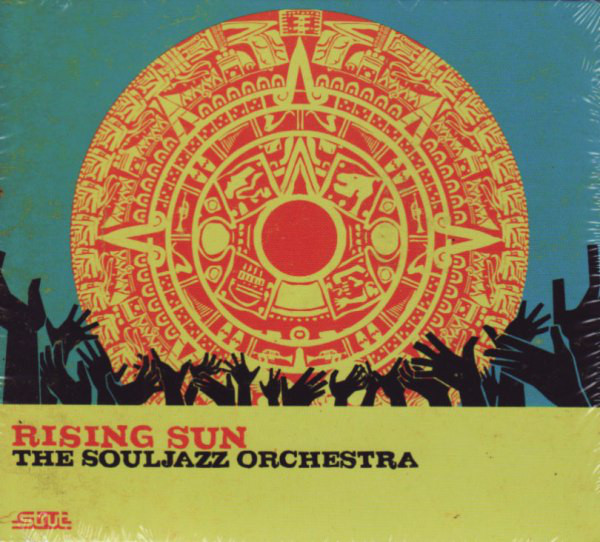
When The Souljazz Orchestra returned with their fourth album Rising Sun in 2010, they had signed to Strut Records, which has been their home ever since.
Rising Sun featured a different side of The Souljazz Orchestra. It was an acoustic album, which was something of a stylistic departure for The Souljazz Orchestra. Despite that, Rising Sun found favour with critics who were won over by The Souljazz Orchestra’s new sound. So were the judges of Canada’s most prestigious musical award…the Juno’s. The Souljazz Orchestra were nominated for Instrumental Album of the Year. Alas, it was a case of so close yet so far.
Two years later, The Souljazz Orchestra returned with their fifth album Solidarity in 2012. It marked another change of direction from The Souljazz Orchestra. Gone was the acoustic style of Rising Sun. Replacing it, was an electric, vocal driven style. Joining The Souljazz Orchestra were a number of guest artists. They played their part in what was The Souljazz Orchestra’s most eclectic album. Solidarity was a journey through African, Caribbean and Latin music with detours via jazz and soul. The result was an album that had raw lo-fi, analogue sound. It was released to widespread critical acclaim and was a perfect way for The Souljazz Orchestra to celebrate their tenth anniversary.
There were further celebrations when Solidarity was nominated for a Juno Award for the World Music Album of the Year. This was the second time The Souljazz Orchestra had been nominated for a Juno. Sadly, it was another disappointment for the Ottawa based musical collective.
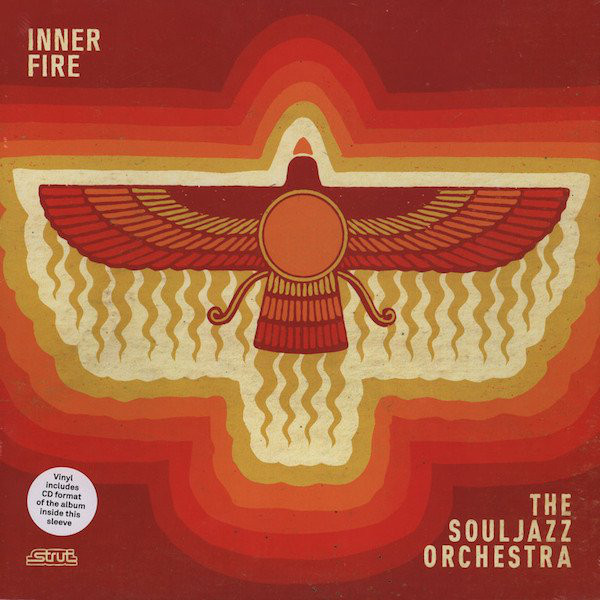
Despite the disappointment of failing to win their first Juno Award, The Souljazz Orchestra continued their musical voyage of discovery. Some of the members of The Souljazz Orchestra went away and worked with some of the most talented musicians in Cuba, Haiti, Nigeria and Rwanda. These master musicians would influence The Souljazz Orchestra’s sixth album Inner Fire.
When Inner Fire was released in 2014, it was a compelling fusion of musical influences and genres. Inner Fire had been clearly influenced by the master musicians the members of The Souljazz Orchestra worked with. They absorbed musical influences like a sponge, and they played their part in what was a musical melting pot. It was given a stir by The Souljazz Orchestra, and the result was a tantalising and tasty dish that was one of the finest the Ottawa based collective had cooked.
Although The Souljazz Orchestra had just released one of the finest albums in 2014, they were determined not to make the same album twice. Instead, the members of The Souljazz Orchestra were determined to introduce new musical genres and influences as work began on Resistance, Pierre Chrétien explained: “we approached this album with a fresh ear. We were keen to build on the band’s sound and message, so I brought in some of the French Caribbean and Francophone West African influences that I’ve loved since my youth.”
To do this, Pierre and the rest of The Souljazz Orchestra fused elements Coupé-Décalé, Zouk, and Ndombolo to their usual mixture of Afro-beat, funk, jazz and soul. The result was Resistance, which one minute was full of social comment, the next dance-floor friendly and joyous as The Souljazz Orchestra showcase their impressive and irresistible sound. When Resistance was released in 2015, it was to widespread critical acclaim. Critics hailed Resistance as The Souljazz Orchestra’s finest hour.
When the nominations for the Juno Awards were released in 2016, The Souljazz Orchestra had been nominated for the World Music Album of the Year. Surely, this was The Souljazz Orchestra’s year, as they had released what was regarded as their finest album? Sadly, it was a case of close but no cigar for The Souljazz Orchestra.
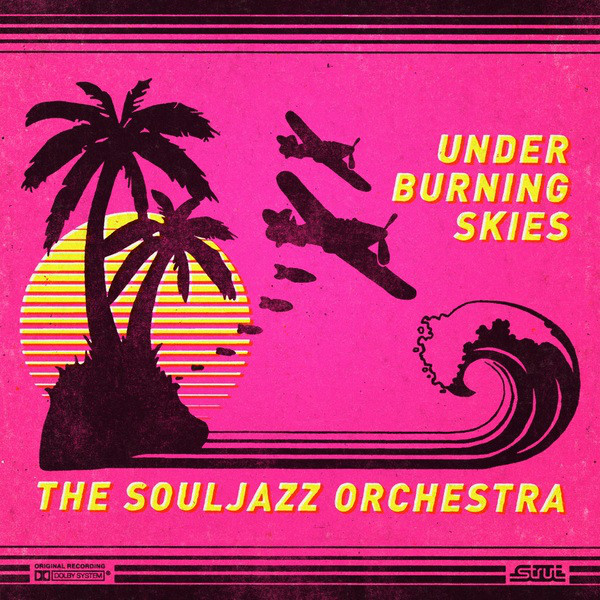
Just over a year after The Souljazz Orchestra lost out on their first ever Juno Award, the Ottawa based collective is back with the much-anticipated seventh album of their fifteen year career, Under Burning Skies. It finds The Souljazz Orchestra continuing to reinvent their sound.
On Under Burning Skies, The Souljazz Orchestra introduce some tropical influences to their music. There’s also the introduction of soul and jazz on Under Burning Skies, as The Souljazz Orchestra continue to push musical boundaries.
To do this, The Souljazz Orchestra unleash their unique and inimitable musical arsenal. As usual, this features braying blazing horns. To this, The Souljazz Orchestra add vintage synths and early eighties drum machines. They add lo-fi disco, boogie and electro influences to Under Burning Skies which has an organic analogue sound. Just like previous album The Souljazz Orchestra’s lyrics are full of social comment. They seem to come into their own and shine during turbulent times. The Souljazz Orchestra’s lyrics on Under Burning Skies certainly pack a lyrical punch. That has been the case throughout their career, and is the case throughout Under Burning Skies.
The Souljazz Orchestra is like a fine wine and improves with age. They celebrated their fifteenth anniversary with the release of their seventh album Under Burning Skies on Strut Records, It’s without doubt the finest album of The Souljazz Orchestra’s career. This is something that has been said before. However, with every album the Ottawa based musical collective reach new heights.
What makes the rise and rise of The Souljazz Orchestra even more remarkable is their decision to eschew the latest musical equipment, and instead, use an eclectic selection of instruments. Many of these are instruments are long-lost, sometimes unloved junk shop finds. This doesn’t matter, as The Souljazz Orchestra is capable of creating incredible music with these instruments. That is the case on Under Burning Skies and has been the case for fifteen years as The Souljazz Orchestra continue to create a potent, heady and irresistible music brew. Long may that continue.
The Remarkable Story Of The Souljazz Orchestra.

VAN HALEN-THE DAVID LEE ROTH ERA AND BEYOND.
Van Halen-The David Lee Roth Era and Beyond
For any successful band, losing their lead singer can prove disastrous. Suddenly, the very future of the band is at risk.The band has two options, to and find a replacement or call it quits. However, this isn’t really an option for a band whose first six albums had sold thirty-four million copies in America alone,..Van Halen. So Van Halen went in search for a David Lee Roth. This wasn’t going to be easy. David Lee Roth had played an important part in the rise and rise of Van Halen .
The Van Halen story began in the early seventies, when brothers, Eddie and Alex Van Halen had formed a band. Like many bands, they found it difficult to settle on a name. Initially, they were called The Broken Combs, then changed the name to The Trojan Rubber Co. By then, The Trojan Rubber Co. had a settled lineup.
Their lineup featured Alex on drums and Eddie on guitar. They were joined by bassist Mark Stone and vocalist David Lee Roth, who they had hired a sound system from. Eddie had initially failed the audition. However, Eddie and Alex were realists. Money was tight, so if they brought David onboard, they would save having to hire a sound system. They also thought that David might improve as a vocalist. However, in 1974, The Trojan Rubber Co. changed its name and its lineup.
1974 was a pivotal year for The Trojan Rubber Co. By then, bassist Mark Stone had been replaced by bassist Michael Anthony. His audition was unorthodox. Only after Michael took part in an all night jam session, was he hired. So, Michael left local band Snake and joined The Trojan Rubber Co. Soon, The Trojan Rubber Co. changed its name to Mammoth, and then Van Halen. For the next three years, Van Halen spent honing their sound.
Van Halen played wherever they could. Backyard parties, clubs and dive bars, they weren’t proud. Far from it. They certainly were loud. Too loud some thought.
When Van Halen went to audition at Gazzarri’s, a bar on Sunset Strip, that was down on its luck, the owner Bill Gazzarri, told them they were “too loud, and refused to hire them.” However, Van Halen’s new managers stepped in.
Mark Algorri and Mario Miranda had just been installed as Van Halen’s managers. They had also just taken over the booking at Gazzarri’s. So, Van Halen were installed as the house band. Not long after this, Van Halen entered the studio for the first time.
The four members of Van Halen headed to Cherokee Studios, which had recently housed Steely Dan. At Cherokee Studios, Van Halen recorded their demo tape. It would become their calling card, and see them play some of L.A.’s top clubs, including the famous Whisky-A-Go-Go.
Soon, Van Halen were a permanent fixture in L.A.’s top clubs. That’s where they continued to hone their sound. It’s also where they came to the attention of Kiss’ Gene Simmons.
Gene Simmons had heard good things about Van Halen. So, he went to check out Van Halen. According to what he had heard, they were one of the rising stars of L.A.’s music scene. When Gene Simmons arrived at the Gazzarri club in the summer of 1976, he was won over by Van Halen. He knew they were going places.
So, Gene Simmons took Van Halen to Village Recorders in L.A. to produce a new demo tape. Overdubs then took place at Electric Ladyland in New York. Things were looking good for Van Halen. The only thing Van Halen baulked at, was Gene’s suggestion to change the band’s name to Daddy Longlegs. That was a step too far. The next step was for Gene to take the newly recorded demo tape to Kiss’ management.
When Kiss’ management heard the demo, they were pretty disparaging about Van Halen. According to Kiss’ managers, Van Halen “had no chance of making it.” These words would come back to haunt them, after Van Halen sold over 50.5 million albums in America alone. However, with Kiss’ management not interested in signing Van Halen, Gene Simmons bowed out of the story. He would be replaced a year later by Mo Ostin and Ted Templeman.
Down but not out, Van Halen returned to the club circuit. For the next year, they continued to hone their sound on the club circuit. One night, in the middle of 1977, Van Halen were playing at the Starwood in Hollywood. There wasn’t much of an audience. However, little did Van Halen know, that two very special guests were in the audience, Mo Ostin and Ted Templeman of Warner Bros. Records. The pair liked what they heard and less than a week later, Van Halen had signed to Warner Bros. Records. Mo Ostin dispatched Van Halen to Sunset Sound Records with producer Ted Templeman, where recording of Van Halen I began.
Van Halen.
Like many bands recording their debut album, Van Halen were fearless. They had no apprehension. Mind you, this wasn’t exactly a new experience. Van Halen had been in studios before, recording two different demo tapes. However, this was for real. The band had written nine tracks. The other two were covers of The Kinks’ You Really Got Me and John Brim’s Ice Cream Man. These eleven tracks would eventually become Van Halen’s debut album, Van Halen.
Recording of Van Halen began in the middle of September 1977. Van Halen’s rhythm section of drummer Alex Van Halen and bassist Michael Anthony set about proving the album’s pulsating heartbeat. A week was spent recording Eddie’s guitar parts. Another two weeks were spent recording David’s vocals and the backing vocals. By early October 1977, recording of Van Halen was all but complete. The decision was made not to do much in the way of over-dubbing. This meant Van Halen was much more like hearing Van Halen live. How would critics respond to this?
Before the release of Van Halen, critics had their say. For everyone at Warner Bros. Records, they held their breath. Back in 1978, critics could be venomous. It was hardly rock critic’s finest hour. They were in the throes of a love affair with punk. Many critics took great pleasure in trashing rock albums. The critics didn’t hold back when it came to Van Halen. Most of the reviews were negative. One of the worst reviews came from the so called doyen of critics, the contrarian Robert Christgau. The equally contrarian Rolling Stone were not fans of Van Halen. At least they admitted that Van Halen were going places. Mostly, the reviews panned Van Halen. However, soon, critics would be eating their words.
When Van Halen was released on 18th February 1978, it began climbing the charts. Eventually, it reached number nineteen in the US Billboard 200 charts. Since then, Van Halen has sold over ten million copies and has been certified diamond. Back in 1978, rhis was just the start of the rise and rise of Van Halen, who critics had changed their mind about.
Gradually, critics changed their minds about Van Halen. Suddenly, they began to regard Van Halen as one of the best debut albums in the history of rock ’n’ roll. That’s the case today, with critics hailing Van Halen as a classic, and one of the greatest debut albums ever released. From that album, a trio singles were chosen.
Three singles were released from Van Halen. A cover of The Kinks’ You Really Got Me reached number thirty-six in the US Billboard 100. Runnin’ With The Devil Stalled at number eighty-four in the US Billboard 100. The final single released from Van Halen was Ain’t Talkin’ ’bout Love. It failed to chart. While the singles failed to replicate the success of Van Halen, it showcased the band at their hard rocking best.
Literally, Van Halen strut and swagger through the eleven tracks on their debut album Van Halen. It’s no surprise that rock and heavy metal fans were won over by Van Halen. It’s a track full of some of Van Halen’s biggest songs, including Runnin’ With The Devil, Eruption, You Really Got Me, Ain’t Talkin’ ‘Bout Love, Jamie’s Cryin’ and Ice Cream Man. Van Halen’s rhythm section of Alex and Michael provide the backdrop to Eddie’s blistering guitars and David’s lived-in vocal. From the opening bars of Runnin’ With The Devil, right through On Fire, Van Halen win friends and influence people. The band who just a year ago, were being hailed L.A.’s best bar band, were on their way to becoming a one of the biggest bands on planet rock.
Van Halen II.
When Van Halen entered Sunset Sound Recorders, in Hollywood, on 11th December 1978, the the four members of the band must have wondered what had happened in the last ten months? They had gone from bar room band, to a million selling rock band. All of a sudden, they were one of the biggest bands in the America. They were being touted as the saviour of American rock. This was hard to comprehend. It also meant that Van Halen were under pressure to record a fitting followup to Van Halen.
Recording of what became Van Halen II began on 11th December 1978. Nine of the ten tracks were penned by Van Halen. Many of the tracks weren’t new songs. Instead, they featured on the Gene Simmons’ sessions. However, given Van Halen were under pressure to record their sophomore album, it’s no surprise that they chose to dust off these songs. The other track chosen for Van Halen II was Clint Ballard Jr.’s You’re No Good. These ten track were produced by Ted Templeman. By January 1979, Van Halen II was complete, and ready for release.
Given the negative reviews of their debut album, the four members of Van Halen must have awaited the reviews of Van Halen II with bated breath. Mostly, reviews of Van Halen II were positive. That’s apart from the “usual suspects,” who still, failed to be won over by Van Halen. They were in the minority. The majority of critics were impressed by Van Halen II’s upbeat, feel good sound. Especially tracks like Dance The Night Away and Beautiful Girls, which some critics referred to Van Halen II as perfect party music. One track however, was very different to the rest.
This was the instrumental, Spanish Fly. It was perceived as the followup to Eruption on Van Halen. Spanish Fly however, is only a minute long, and featured Eddie Van Halen on an acoustic guitar. Rather than fingerpick, he uses a plectrum. This makes things doubly hard. Despite this, he delivers a guitar masterclass. Eddie deploys a variety of techniques, including finger tapping and tremolo picking. Those who had marvelled at Eruption, would be spellbound by Eddie’s performance on Spanish Fly.
That would be the case with Van Halen’s performance on Van Halen II. When Van Halen II was released on March 23rd 1979, copies of Van Halen II sold quickly. It was one of 1979s must have rock albums. Soon, Van Halen two reached number six in the US Billboard 200. Eventually, it sold five million copies in America, and was certified platinum five times over. Across the border, Van Halen II was certified double platinum in Canada. Meanwhile, in France Van Halen II was certified gold. It seemed Van Halen could do no wrong.
While that was the case with Van Halen’s first two albums, their singles were selling as well. While Dance The Night Away reached number fourteen in the US Billboard 100, Beautiful Girls stalled at number eighty-four. Just like many other rock bands before them, Van Halen looked like being an album’s band. Maybe that would change with their third album?
Women and Children First.
Just a year after Van Halen began recording their sophomore album, the band began work on their third album, Women and Children First. It marked the beginning of a new chapter in the Van Halen story.
On Van Halen’s first two albums, Van Halen had added cover versions. This included a cover of The Kinks’ You Really Got Me and John Brim’s Ice Cream Man on Van Halen. Then on Van Halen II, Van Halen covered Clint Ballard Jr.’s You’re No Good. However, when recording of Women and Children First began in December 1979, cover versions were a thing of the past.
Women and Children First, Van Halen’s third album was their first album featuring just songs written by the four members of the band. Maybe Van Halen had realised that putting cover versions on albums was costing the band royalties? There was certainly no need to resort to cover versions? The four members of Van Halen were talented songwriters, capable of writing their own material. So when Van Halen entered the studio to record Women and Children First, they came with ten new songs they had penned. This however, wasn’t the only change that became apparent.
As recording of Women and Children First began, onlookers in the studio realised that Van Halen’s music was becoming heavier. This wasn’t just a stylistic change, and to some extent, a thematic one. Some of Van Halen’s later songs had a degree of darkness. Mostly, though, Van Halen were still the same hard rocking, good time band. However, what became apparent was that their way of recording was changing.
Unlike Van Halen and Van Halen II, Women and Children First saw Van Halen rely more upon overdubs. Backing vocals weren’t used as extensively. They were on Could This Be Magic?, and Nicolette Larson was drafted in to sing the choruses and backing vocal. This was the one and only time a female backing vocalist featured on a Van Halen album. Another first was the keyboard driven And the Cradle Will Rock. Although it sounds like a guitar, it’s a Wurlitzer electric piano with a phase shifter used to transform the sound. It seemed that Van Halen had the confidence to experiment more on Women and Children First. Given that Van Halen were working with such an experienced producer as Ted Templeman, this was the perfect opportunity to try new things. He could show Van Halen how to make their ideas work.
Despite the stylistic change and change in their way of recording, producer Ted Templeman didn’t try to reign in Van Halen. He must have known that Van Halen wanted to broaden their horizons musically. They had always been a hard rocking band, and weren’t willing to sacrifice what many felt was their true sound. Maybe Van Halen had sacrificed some of their true sound on their first two albums. Now that they had their foot in Warner Bros’ door, they could show their true colours. This may not have pleased everyone.
Van Halen finished recording Women and Children First in February 1980. At last, those within Warner Bros. could hear Women and Children First. Some were aware of Van Halen’s music changing stylistically. This didn’t please everyone. Van Halen were one of Warner Bros.’ biggest success stories. By changing their style, this could alienate their audience. Not everyone who had bought Van Halen, and Van Halen II, would be receptive to a heavier Van Halen. Would this be the case within Warner Bros?
Once the executives at Warner Bros. heard Women and Children First, they were able to form an opinion. Most of those whose opinion mattered liked Van Halen’s new sound. They realised that Van Halen wanted to evolve as a band. They couldn’t keep rehashing Van Halen, and Van Halen II. Instead, they had to move forward. However, it was a big risk. Van Halen, and Van Halen II were million selling albums. There was a lot at stake. If Women and Children First flopped it would prove costly.
Van Halen had two hurdles to overcome before they would know if Women and Children First had been a success. The first was the critics.
As the critics their say, everyone at Warner Bros. and the four members of Van Halen awaited the verdict. Eventually, the reviews were published. Many critics remarked upon Van Halen’s heavier sound. They also noted that the four members of Van Halen had written the ten tracks on Women and Children First. Although Women and Children First was quite different from Van Halen II, it was well received by critics. They felt Van Halen were maturing as a band and songwriters. Proof of this were tracks like Could This Be Magic? and Everybody Wants Some!!, which reinforced Van Halen’s reputation and credentials as a good time party band. Having cleared the first hurdle, now record buyers had the final say.
Only if Women and Children First sold in similar quantities to Van Halen and Van Halen II could the album be declared a success. Women and Children First was released on March 6th 1980. Straight away, Women and Children First was selling well. Soon, Women and Children First reached number six in the US Billboard 200. Eventually, it sold three million copies in America, and was certified triple-platinum. Elsewhere, Women and Children First was certified double platinum in Canada and gold in France. As Van Halen and everyone at Warner Bros. breathed a sigh of relief, still Van Halen weren’t selling singles in vast quantities.
The only single released from Women and Children First, was And The Cradle Will Rock. It stalled at number fifty-five in the US Billboard 100. Van Halen it seemed, were never going to be a singles band. However, what really mattered was that Women and Children First had sold well. That was certainly the case. Worldwide, Women and Children First sold over three million copies. Van Halen’s decision to change direction had paid off.
Fair Warning.
By the time that Van Halen began recording their fourth album, Fair Warning, Van Halen were a divided band. The band’s two main men were at loggerheads. David Lee Roth wanted Van Halen to return to the sound of the first two album. He wasn’t in favour of the heavier sound, which he felt didn’t appeal to as many people. The proof of this was the sales of Women and Children First.
Eventually, Women and Children First sold over three million coupes. Van Halen eventually sold ten million copies and Van Halen II five million copies. David felt it Van Halen continued with the heavier sound, they risked alienating record buyers. Van Halen co-founder didn’t agree.
Eddie wanted Van Halen to continue their heavier sound. Women and Children First was the first time they showcased this sound. He felt that the way forward was longer songs with much more complicated song structures. This would allow Van Halen to shine as musicians, especially Eddie, who was seen one of the best guitarists of the late-seventies and early eighties. Given Eddie was one of the best guitarists of his generation, he felt his guitar playing should take centre-stage. David Lee Roth disagreed, and disagreed with Eddie’s other proposal.
The other change Eddie proposed was a continuation of the darker themes that Van Halen began exploring on Women and Children First. For David Lee Roth, this wasn’t what Van Halen were about. They were, in many people’s eyes, a good time rock ’n’ roll band. However, that wasn’t the direction Eddie wanted Van Halen to take. Instead, it looked as if Eddie wanted Van Halen to become the Led Zeppelin of the eighties. With David and Eddie at loggerheads, work began on Van Halen’s fourth album Fair Warning.
Just like Women and Children First, Van Halen penned the ten tracks on Fair Warning. Recording of these ten tracks began in late 1980. Quickly, it became apparent that Eddie’s ideas had prevailed. The music was fast, rocky and sometimes dark. This allowed Van Halen’s rhythm section to showcase their skills Fair Warning. Especially Eddie, who unleaded a series of fierce, blistering solos on tracks like Mean Street, Hear About It Later, Unchained and So This Is Love? David who seemed to have pst the argument, added his trademark vocals. Producer Ted Templman had the job of bringing Fair Warning together. The result was the hardest rocking album of Van Halen’s career, Fair Warning.
Before Fair Warning was released on April 29th 1981, the critics had their say on Van Halen’s hardest rocking album. Reviews of Fair Warning were mixed. Most of the critics embraced Fair Warning. They were impressed by Eddie’s virtuoso skills. Aided and abetted by his box of sound effects, Eddie unleashes a series of blistering solos. Along with the other two members of the rhythm section, he was key to Van Halen’s new, hard rocking style. Together, they provided the backdrop for David’s vocals. He brought to life the lyrics, as Van Halen continued to evolve musically.
It seemed Fair Warning had won over most of the critics. However, while most of the reviews of Fair Warning praised Van Halen’s fourth album, there were still some doubters. They felt that Van Halen were heading down the wrong road. On Women and Children First and Fair Warning, Van Halen’s music had become much harder. This had cost Van Halen precious sales on Women and Children First. Would this be the case with Fair Warning?
On the release of Fair Warning on 29th March 1981, sales were slow. Fair Warning was the slowest selling Van Halen album of their four album career. Eventually, it reached number six in the US Billboard 200. While this was the same as Van Halen II and Women and Children First, sales were way down. Fair Warning sold “just” two million copies. This was a million less than Women and Children First, and three million less than Van Halen II. To make matters worse, none of the singles charted.
Four singles were released from Fair Warning during 1981. The first was So This Is Love. It failed to chart. So did Mean Street, Push Comes To Shove and Unchained. This wasn’t unexpected, as Van Halen weren’t a singles band. However, it further reinforced David Lee Roth’s argument.
Given that Fair Warning was Van Halen’s slowest selling and least successful album, many onlookers wondered whether Van Halen would rethink their sound. It seemed record buyers weren’t embracing Van Halen heavier sound. Maybe it was time to come round to David Lee Roth’s way of thinking?
Diver Down.
After the release of Fair Warning, Van Halen headed out on tour. They spent months promoting Fair Warning. Still, Fair Warning sold slowly, and failed to match the sales of previous albums. Once the tour was over, Warner Bros. started pressurising Van Halen into recording their fifth album.
That wasn’t what Van Halen wanted to hear. They wanted to take some time out, and then spend time writing and recording their fifth album. That wasn’t to be though.
Not long after the Fair Warning tour ended, David Lee Roth came up with an idea. He wanted Van Halen to record a single and release it just after the New Year. He had the very song in mind, Roy Orbison’s Oh, Pretty Woman. While this wasn’t the most obvious choice for a single, the rest of Van Halen agreed.
So the four members headed to Sunset Sound and recorded their cover of Oh, Pretty Woman. After working out an arrangement with producer Ted Templeman, Van Halen recorded Oh, Pretty Woman. Once it was finished, Oh, Pretty Woman was released early in the New Year.
Just after New Year 1981, Van Halen’s version of Oh, Pretty Woman was released. Van Halen weren’t known as a singles band. However, Oh, Pretty Woman succeeded where better Van Halen songs failed, and reached number twelve in the US Billboard 100 and number one on the US Mainstream Rock charts. Ironically, this became the most successful single of Van Halen’s career. However, the success of Oh, Pretty Woman backfired on Van Halen.
Having just enjoyed the biggest selling single of their career, Warner Bros. started pressurising Van Halen into recording their fifth album. Van Halen didn’t get the time to write and record their fifth album.
Eventually, Van Halen relented. That’s despite having been on tour for months. For the last four years, Van Halen had been recording and touring albums. It was like a merry-go-round, one that Van Halen needed to get off. Especially since the last year hadn’t been easy.
Eddie and David were still at loggerheads. Although Eddie had won the day, David had been vindicated. Sales of Fair Warning were way down. It sold a million less than Women and Children First. This was costing Van Halen and Warner Bros. money. So, Van Halen could hardly refuse Warner Bros.’ request to begin recording their fifth album. However, that wasn’t Warner Bros.’ only request.
Given Fair Warning hadn’t been as successful as previous Van Halen albums, someone at Warner Bros hit on the idea that Van Halen should include some covers on what became Diver Down. The reasoning for this was, that if people recognised some of the songs on the album, they would be more likely to by it. Especially if these songs had been hits before. So, Van Halen went in search of covers.
Having already recorded and released Oh, Pretty Woman, Van Halen got to work on their fifth album, Diver Down. In addition to Oh, Pretty Woman, Van Halen had chosen four other cover versions. This included The Kinks, Where Have all the Good Times Gone and Martha and The Vandellas’ Dancing In The Streets. They were augmented by Milton Ager and Jack Yellen’s Big Bad Bill (Is Sweet William Now) and Dale Evans’ Happy Trails. Apart from the five cover versions, Van Halen had seven new songs. Three of the songs weren’t so new.
Hang ‘Em High started life as Last Night, a track from Van Halen’s 1977 demo. Happy Trails was another song from the 1977 demos, which had been included as a joke. Now the joke was on Warner Bros. The other song was Cathedral, a song Van Halen had been playing for a couple of years. During that period, the song had continued to evolve. These three songs would become part of Diver Down, which was recorded in two studios in Los Angeles.
Recording of Diver Down began in January 1982. Two studios were used by Van Halen. The first was Sunset Sound, where Van Halen had recorded previously. Other sessions took place at Warner Bros. Recording Studios, which before the corporate rebinding, was known as Amigo Studios. At these two studios, Van Halen and Ted Templeman got to work. Things weren’t going to plan as Van Halen began recording eleven of Diver Down’s twelve songs.
During the recording of Van Halen’s previous album, Diver Down, released in 1982, David, Eddie and producer Rod Templeman had clashed. The problem was, Eddie wanted to make keyboards a prominent part of the Van Halen sound. David and Rod disagreed. Thinking that Van Halen was a democracy, the two men thought the matter was settled. They were wrong.
Despite this, Eddie went ahead and recorded much of Diver Down at his home studio. When the band heard it, it was keyboard heavy rock rubbed shoulders with Van Halen’s trademark sound. Presented with what seemed like a fait accompli, David began to reconsider his position. He was far from happy with Eddie’s sudden discovery and love of synths. For a rock ’n’ roller like David, this was sacrilege. Despite this, David and Eddie managed to work together.
Over the next three months, Van Halen worked their way through the twelve tracks. Some were easier to record than others. Sometimes, things didn’t go to plan. Some of the covers were difficult to adapt, so that they took on Van Halen’s sound. One of the most problematic was Dancing In The Streets. The problem was Eddie couldn’t work out a guitar riff. Eventually though, Van Halen figured out an their take on Dancing In The Streets. Gradually, Diver Down began to take shape. By March 1982, Diver Down was completed. It would be released on April 14th 1982.
This meant there wasn’t long before Van Halen completed Diver Down and its release on April 14th 1982. By then, some of the members of Van Halen were beginning to realise that Diver Down wasn’t their finest moment. Eddie Van Halen would later say: “I’d rather have a bomb with one of my own songs than a hit with someone else’s.” However, Van Halen had folded too quickly for a band who had already sold over fifteen million albums. They had been cajoled into recording cover versions. For the hard rocking Van Halen, this almost subservient attitude was surprising. Or was it?
When critics were sent advance copies of Diver Down, they were struck by the album cover. It portrayed the diver down flag, which is used to indicate that a scuba diver is diving within that area. If ever it was a case of “a picture paints a thousand words.” David Lee Roth explained that “there was something going on that’s not apparent to your eyes…it’s not immediately apparent to your eyes what is going on underneath the surface.” That could easily be replaced by the press and record buyers weren’t aware what was going on behind the scenes. They never knew that Van Halen were pressurised to record Diver Down. Would the pressure Warner Bros. under, could come back to bite them?
Having received advance copies of Diver Down, critics were determined to have their say. Most were impressed by Diver Down. Some weren’t enamoured with the cover versions. This was quite unlike Van Halen. However, mostly, the reviews of Diver Down were positive. Things were looking up for Van Halen.
On its release on 29th April 1982, Diver Down reached number three in the US Billboard 100. This was the highest chart position of Van Halen’s first five album. Eventually, Diver Down sold four million copies, which was double the amount of Fair Warning. This was pretty good for album that included cover versions and a trio of tracks from Van Halen’s past. However, the success didn’t stop there.
Dancing In The Street was the second single to be released from Diver Down. It stalled at number thirty-eight in the US Billboard 100. The other four singles, Secrets, Little Guitars, The Full Bug and Where Have All the Good Times Gone failed to reach the US Billboard 100. At least they reached the US Mainstream Rock charts. However, times had changed, with Van Halen having enjoyed two hit singles from Diver Down. For a band who hadn’t been known as a singles band, this was changed times for Van Halen, in more ways than one.
Previously, Van Halen would’ve held their ground, and not acquiesced to Warner Bros.’ request to record an album before they were ready. However, it was only later than the members of Van Halen realised that they had folded too easily. They shouldn’t have given in to Warner Bros., as they were an experienced and successful band. If they had taken the time to write and record the album they wanted, they may have reached the scaled the same heights as their next album.
Two years later, in 1984, and Van Halen’s first five albums were well on their way to selling twenty-four million copies. However, their sixth album, 1984 was a game-changer, in more ways than one.
1984.
During the six years since Van Halen released their eponymous debut album, Van Halen were without doubt, the biggest bands in planet rock. Van Halen were certainly the highest paid band in rock music. No wonder. Each album reached a higher chart placing than its predecessor. So, it’s no surprise that Van Halen
had sold fourteen million albums in America alone. 1984, however, was a game-changer, in more ways than one.
Behind the scenes, all wasn’t well within Van Halen. David Lee Roth, Van Halen’s charismatic frontman would quit after 1984. In some ways, the writing had been on the wall.
During the recording of Van Halen’s previous album, Diver Down, released in 1982, David, Eddie and producer Rod Templeman had clashed. The problem was, Eddie wanted to make keyboards a prominent part of the Van Halen sound. David and Rod disagreed. Thinking that Van Halen was a democracy, the two men thought the matter was settled. They were wrong.
Despite this, Eddie went ahead and recorded much of Diver Down at his home studio. When the band heard it, it was keyboard heavy rock rubbed shoulders with Van Halen’s trademark sound. Presented with what seemed like a fait accompli, David began to reconsider his position. He was far from happy with Eddie’s sudden discovery and love of synths. For a rock ’n’ roller like David, this was sacrilege. However, David decided to continue with Van Halen…meantime.
Recording of 1984 took place during 1983 at 5150 Studios, in Studio City, California. Van Halen cowrote all of 1984s songs. Michael McDonald however, received a credit for I’ll Wait. Van Halen’s rhythm section of drummer Alex Van Halen and Michael Anthony’s thunderous bass set about providing the 1984’s heartbeat. Eddie Van Halen played guitar and keyboards. For the last time, David Lee Roth added vocals. Once 1984 was completed, it was that time again, time for critics to have their say on Van Halen’s sixth album.
When reviews of 1984 were published, mostly, they were positive. As usual, there was the odd dissenting voice. One Napoleonic critic described 1984 as a one sided album. For him, the second side received the consolation prize. What he failed to see, was that side one set the bar high.
From the instrumental 1984, through the the Van Halen classics Jump and Panama, Van Halen could do wrong. They were well on their way to hitting a home run. Top Jimmy and Drop Dead Legs rounded off side one, and left you wanting more of Van Halen’s heaving rocking music. Everything just dropped into place. Even the synths had their place, and played their part in a classic album. The fun didn’t stop there.
Hot For Teacher was the perfect way to start side one. An anthemic track, it gave way to I’ll Wait, one of the singles from 1984. Girl Gone Bad was another fist pumping anthem, that showcased what Van Halen were capable. By the time House Of Pain closed 1984 it was apparent that Van Halen had released the second classic album of their career.
1984s fusion of keyboard heavy rock, combined Van Halen’s trademark hard rocking sound proved a winning combination. These two sides of Van Halen resulted in a classic album that would become the biggest selling album of Van Halen’s career.
On its release on January 9th 1984, 1984 started climbing the charts. Eventually, it reached number two in the US Billboard 200. This was the highest chart placing of Van Halen’s six album career. It also became the biggest selling album of Van Halen’s career. Eventually, 1984 sold twelve million copies. 1984 became Van Halen’s second album to be certified diamond. Elsewhere, 1984 was a huge seller.
In Canada, 1984 was certified five times platinum. Over the Atlantic, 1984 was certified gold in Britain and France. Meanwhile, 1984 was certified platinum in Germany. That wasn’t the end of the commercial success.
Four singles were released from 1984. Jump reached number one in the US Billboard 100. I’ll Wait then reached number thirteen in the US Billboard 100. Panama became the third single to be released from 1984. It reached number two in the US Billboard 200. The final single released from 1984, was Hot For Teacher, which stalled at number fifty-six in the US Billboard 200. By then, 1984 had become Van Halen’s most successful album of their career, and their second classic album. However, it was the end of an era.
Following the release of 1984, David Lee Roth left Van Halen. The disagreements with Eddie Van Halen had taken their toll. Relations had been strained since the recording of Diver Down. Eddie was pro synths, David a died in the wool rock ’n’ roller, wasn’t in favour of this stylistic departure. When the pair couldn’t resolve their disagreements, David called time on his career with Van Halen.
David had had a good run. Especially since he was originally seen as a stopgap singer. He had failed the original audition. However, David lasted six albums. They sold thirty-six million copies. Not bad for what one critic referred to as a bar band. It would be another twenty-two years before David Lee Roth rejoined Van Halen.
This came during Van Halen’s 2006. This was the second Van Halen reunion during Van Halen’s long and turbulent career. However, when David Lee Roth left Van Halen after the release of 1984, the group’s future was in doubt.
Looking back, there was no way that Van Halen were going to call time on their career. They were one of the biggest bands in the world. However, replacing David Lee Roth wasn’t going to be easy.
That proved to be the case. The three remaining members of Van Halen were struggling to find the right frontman. Names were considered, and eventually, disregarded. At one point, Van Halen even considered using temporary lead vocalists, including Eric Martin, Jimmy Barnes and Patty Smyth of Scandal were considered as temporary replacements. When Patty Smyth was asked, she declined the opportunity to replace David Lee Roth. She knew his were big shoes to fill. Meanwhile, Warner Bros. were worried.
So much so, that Warner Bros. advised the remaining members of Van Halen to discontinue using the Van Halen name. This request was refused, and the search went on. It came to an end in July 1985, when Eddie Van Halen was talking to a mechanic who was working on his Ferrari. The mechanic recommended Sammy Hagar, the former Montrose frontman. That day, Van Halen found their new lead singer.
Eddie Van Halen contacted Sammy Hagar, and the pair met. They hit it off, and soon, Sammy Hagar was working with Van Halen. This didn’t please everyone.
Even critics who had never been a fan of David Lee Roth were less than impressed with the addition of Sammy Hagar. They didn’t believe the former Montrose frontman was the answer to Van Halen’s problem in the long term. This proved to be the case.
5150.
Van Halen had began recording 5150 in November 1985, and finished the albumin at 5150 studios in February 1986. The band were facing the biggest challenge of their career, following up their second classic album, 1984. However, the new lineup came up short in this challenge.
5150 was released in March 1986, and was the first album of the Sammy Hagar era. It showcased a much more experimental sound than 1984. Critics weren’t impressed by 5150. This included some critics who hadn’t been a fan of David Lee Roth.
These critics weren’t afraid to shoot from the hip. Their reviews ranged from disappointing to favourable. That is despite Eddie Van Halen playing a starring role. His performance was described as a mixture of brilliance and banality. Robert Christgau was less than impressed by Sammy Hagar, saying: “no musician with something to say could stomach responding to Sammy Hagar’s call.” Given the disappointing reviews of 5150, Van Halen and Warner Bros. must have been wondered how the album would sell?
On the release of 5150, it reached number one on the US Billboard 200. 5150 was certified six times platinum in America; three times platinum in Canada; silver in the UK and gold in Germany. 5150 had sold four million fewer copies than 1984. However, 5150 was the start of a new era. maybe there was life after David Lee Roth?
OU812.
When Van Halen returned with OU812 in May 1988, it had been a close run thing. Reording began in September 1987, but was only finished at 5150 Studios in April 1988. With only weeks to spare, OU812 was ready for release.
It was a familiar story. Critics were less than impressed with OU812. Although the whole band came in for criticism, vocalists Sammy Hagar was singled out. He critics felt, was costing Van Halen their shot at becoming the greatest rock band of the eighties. However, Eddie Van Halen seemed to have lost some of his magic, and the usually reliable rhythm section weren’t immune from criticism. With OU812 receiving decidedly mixed reviews, things weren’t looking good for the release of OU812.
When OU812 was released in April 1988, the album reached number one on the US Billboard 200. OU812 was certified four times platinum in America and silver in the UK. Although OU812 topped the American charts, it had sold two million fewer copies than 5150. Elsewhere the album hadn’t sold in the same quantities. This was a worrying time for Van Halen.
For Unlawful Carnal Knowledge.
Following the release of OU812, over three years passed before For Unlawful Carnal Knowledge was released in June 1991.Van Halen had been locked away in 5150 Studios between March 1990 and April 1991. After thirteen months, they returned with their ninth studio album, and the third of the Sammy Hagar era.
When For Unlawful Carnal Knowledge was released, it wasn’t to critical acclaim. Instead, the reviews of the album were mixed. Here was a rock band that had forgotten their raison d’être, and somehow, seemed to have forgotten how to rock. Van Halen were a pale shadow of the band they had been during the David Lee Roth years.
Despite this, For Unlawful Carnal Knowledge reached number one on the US Billboard 200, and was certified three times platinum. Elsewhere, was certified platinum in Canada and silver in the UK. Van Halen’s fans were still religiously buying the band’s albums, albeit in greatly reduced numbers. For Unlawful Carnal Knowledge had sold a million fewer copies in America OU812. Van Halen were no longer as popular as they had once been.
Balance.
Nearly four years passed before Van Halen returned with Balance in January 1995. It had been a turbulent time for the band. Van Halen’s longtime manager and friend Ed Leffler, had passed away in October 16th 1993. He was replaced by Alex’s brother-in-law, Ray Danniels. Balance proved to be a baptism of fire for Ray Danniels.
Balance had been recorded over a three year period. Strung Out was the first song that was recorded. It was recorded in 1993. After this, Van Halen didn’t return to the studio until May 25th 1994. Over the next few months, Van Halen spent time at Studio City, Los Angeles and Little Mountain Sound Studios in Vancouver. That was where five of the lead vocals were recorded by Sammy Hagar. The rest of the album was recorded in L.A. Gradually, Balance begin to take shape, with Van Halen working eight hour days. Eventually, Balance was completed on September 2nd 1994, and was released in early 1995.
Balance, Van Halen’s tenth album was released on 25th January 1995. By then, all was not well within the band. Van Halen were a band divided. In one corner, were Eddie and Alex Van Halen, while a lonely Sammy Hagar sat in the other corner. There was only going to be one winner. However, before the knockout blow was delivered, Balance was released.
If Eddie and Alex Van Halen hadn’t decided what to do next, the reviews of Balance must have made their mind up. Just like the three previous albums featuring Sammy Hagar, the reviews were mixed. Critics weren’t impressed by the album, which had taken over a year to record. It was hard to believe that it was the same group that had released classic albums Van Halen and 1984.
Despite this, when Balance was released, it reached number one on the US Billboard 200. This resulted in Balance being certified triple-platinum in America and Canada. In Brazil, Balance was certified gold. This was a long way from the six million selling 5150, which had been Sammy Hagar’s debut. Balance proved to be Sammy Hagar’s final album with Van Halen. However, that wasn’t the end of the Sammy Hagar era.
After the release of Balance, Van Halen set off on tour. The tour wasn’t the easiest for the band. Tensions within the band were high. Especially between the Van Halen brothers, and lead vocalist Sammy Hagar. This had been the case for some time.
Eddie Van Halen was able to trace back to when he quit drinking on October 2nd 1994. Sadly, during the Balance tour, things got so bad, that Eddie fell off the wagon and began drinking. That wasn’t all that happened.
Two members of Van Halen succumbed to injuries during the Balance tour. Eddie Van Halen was struggling with a hip injury, while brother Alex ended up having to wear a neck brace. However, the major casualty was Sammy Hagar. He departed Van Halen Mk II on Father’s Day 1997, when the band were recording songs for the soundtrack to Twister. The Sammy Hagar era was over, after just four albums.
Van Halen III.
Van Halen should’ve called time on the band after the departure of Sammy Hagar. The band was on its last legs. Bassist Michael Anthony’s contribution to Van Halen III was minimal. However, the benefit of hindsight is a wonderful thing. Instead, Van Halen decoded to continue and brought onboard Extreme lead vocalist Gary Cherone. He made his debut on Van Halen III.
Recording of Van Halen III took place at 5150 Studios, between March and December 1998. Most of the album was recorded by the Van Halen brothers, with Gary Cherone adding vocals. Michael Anthony who had with Van Halen through the highs and lows played only a small part in the album. He featured on Without You, One I Want and Fire In The Hole. The rest of the bass parts were recorded by Eddie Van Halen. It looked like it was the end of an era.
Before the release of Van Halen III, critics had their say on the album. They were less than impressed, and savaged the album. The reviews were among some of the worst any Van Halen received. That wasn’t surprising, as Van Halen III was a low-point in the band’s career in more than one way.
When Van Halen III was released on March 17th 1998, it reached number four on the US Billboard 200. Having sold over 500,000 copies, this was enough for the album to be certified gold. It was a far cry from Van Halen’s glory days, in terms of quality and units sold. However, Van Halen’s glory days were a long gone.
After Van Halen toured Van Halen III, a decision was made to put the band on hold in 1999. This decision was made somewhat belatedly. Van Halen had come close to tarnishing their reputation. By 1999, Van Halen were one of the biggest bands on planet rock. Their 1977 debut album Van Halen and 1984 which were both classic albums, had been certified diamond after selling over ten million copies. This was something very few albums have done. Both albums feature the vocals of David Lee Roth. However, after David Lee Roth left 1984, Van Halen never scaled the same heights.
David Lee Roth proved to be irreplaceable. Neither Sammy Hagar nor Gary Cherone ever came close to replacing David Lee Roth. The four albums Van Halen recorded with Sammy Hagar sold 16 million in America alone; while Van Halen III the only album to feature Gary Cherone, sold just 500,000 copies in America. By comparison, the six albums featuring David Lee Roth sold over thirty-four million copies in America. These albums feature Van Halen at the peak of their power, when they were one of the biggest and most successful bands in musical history. Sadly, after the departure of David Lee Roth, Van Halen were never the same band.
What was ironic was that David Lee Roth left Van Halen after their second classic album, 1984. Who knows what heights the band could’ve reached if they could’ve reconciled their differences. The original lineup of Van Halen’s was a classic, and executives at Warner Bros. believed should’ve been their swan-song.
With David Lee Roth having left the band, executives at Warner Bros. advised Van Halen not to continue using the name. Maybe executives at Warner Bros. were correct, and that the Van Halen name shouldn’t have been used after the departure of David Lee Roth? Every album the new lineup of Van Halen released, was compared to the albums they released during the David Lee Roth. These albums didn’t compare favourably.
Van Halen Mk II and III were a pale shadow of their former self. While they continued to sell records by the million, the sales fell with each of the five albums. Even Van Halen loyalists realised that the band’s best years were behind them.
While Van Halen survived the loss of David Lee Roth, the band didn’t prosper. It was a case of what might have been, if the original lineup had stayed together. Sadly, the original lineup never recorded another album. The nearest they came was in 2012, when Van Halen Mk IV released A Different Kind Of Truth.
A Different Kind Of Truth.
Six years earlier, David Lee Roth was reunited with Van Halen, and they toured together. By then, the Wolfgang Van Halen was the permanent bassist. Van Halen was now, a family affair.
Recording of A Different Kind Of Truth took place between November 2010 and August 2011 at the old A&M Studios. They were now called Henson Recording Studio. That was where Van Halen spent the best part of nine months recording. Six of the songs were new songs. Seven of the thirteen songs on A Different Kind Of Truth were old songs, that Van Halen had written and demoed in the late seventies and early eighties. These songs were rewritten and rearranged. This took time.
Van Halen returned to the studio in early January 2012 to complete A Different Kind Of Truth. It was released on February 7th 2012.
Before the release of A Different Kind Of Truth, the album received something that no Van Halen studio album had received since 1984…critical acclaim. It seemed the return of David Lee Roth had signalled a change in fortune for Van Halen.
On the release of A Different Kind Of Truth, it reached number two in the US Billboard 200. No longer did groups need to sell millions of albums to reach number two. Instead, A Different Kind Of Truth sold 188,000 copies in the first week, and 411,000 copies during 2012. Although this wasn’t enough for a gold disc, A Different Kind Of Truth was the sixth biggest selling album of 2012. Elsewhere, A Different Kind Of Truth was certified gold in Canada. By 2012s standards, Van Halen’s comeback had been a success. It was a reminder of the most successful period of their career, the David Lee Roth years.
A Different Kind Of Truth was a brief and tantalising reminder of Van Halen’s classic years, between 1977 and 1984. During that period, David Lee Roth, Michael Anthony, Eddie and Alex Van Halen were members of members of one of the best and most successful bands. For seven years, Van Halen Mk I rocked hard and lived hard.
They were also a notoriously hard living band. Van Halen burnt the candle at both ends, replicating the excesses of Led Zeppelin, Black Sabbath and Deep Purple. Just like Icarus, members of Van Halen sailed to close to the sun. However, Van Halen lived to tell the tale, and in the process, released some of the best rock music of the late seventies and early eighties. Sadly, all too soon, the David Lee Roth years were over, and Van Halen never scaled the same heights again. It had been good while it lasted. Two reminders of this period, are the classic albums Van Halen and 1984, which feature the hard rocking Van Halen at the peak of their musical powers.
Van Halen-The David Lee Roth Era and Beyond.


HENRY GROSS-HIS SEVENTIES SOLO YEARS.
Henry Gross-His Seventies Solo Years.
When Henry Gross took to the stage with Sha Na Na at ‘7.30pm’ on Sunday, August the ‘17th’ 1969, the eighteen year old made history, he became the the youngest person to perform at the Woodstock Music and Arts Fair. Despite his relative youth, Henry Gross took playing in front of 400,000 people in his stride during Sha Na Na’s thirty-minute set that preceded the arrival of Jimi Hendrix. This was no surprise, as Henry Gross was already an experienced musician.
Henry Gross was born on the ’1st’ of April 1951, in Brooklyn, New York. His mother was a music lover who encouraged Henry Gross’ love of music and later, nascent career.
By the time Henry Gross was thirteen, he had already played at the World’s Fair with his first band. Within a year, fourteen year old Henry Gross was a familiar face in the clubs of New York. This was a tough musical apprenticeship.
One of the clubs Henry Gross’ band played was owned by a major New York gangster who encouraged Henry to pursue his musical career. Playing the tough, rough and ready clubs of New York meant Henry Gross was ready for anything. However, when the summer came, Henry played to a very different audience.
When the school term ended, Henry Gross headed to the Catskill Mountains where he played at the resort hotels. This was other part of Henry Gross’ musical apprenticeship.
By the time Henry Gross graduated from high school in 1969, his music apprenticeship was complete and he headed to Brooklyn College. That was where Henry Gross founded Sha Na Na.
Sha Na Na.
When Sha Na Na were founded, there was one word that many critics used to describe the nascent band…unique. They realised the importance of standing out from the crowd, so Sha Na Na billed themselves as a group: “from the streets of New York.” They wore leather jackets and gold lame. Their hair styles ranged from a pompadour to slicked back ducktails. Similarly unique were their shows.
When Sha Na Na walked on stage they proceeded to combine song and dance, and the music they played was a mixture of fifties rock ’n’ roll and doo w0p. Sha Na Na managed to simultaneously revived and sent up rock ’n’ roll. This proved a popular draw, and before long, Sha Na Na were opening for some of the biggest names in music including Dr. John, Grateful Dead, B.B. King, Canned Heat, Santana, Taj Mahal and The Kinks. That was how highly Sha Na Na’s peers thought of them. For Sha Na Na, this was just the start of their rise and rise.
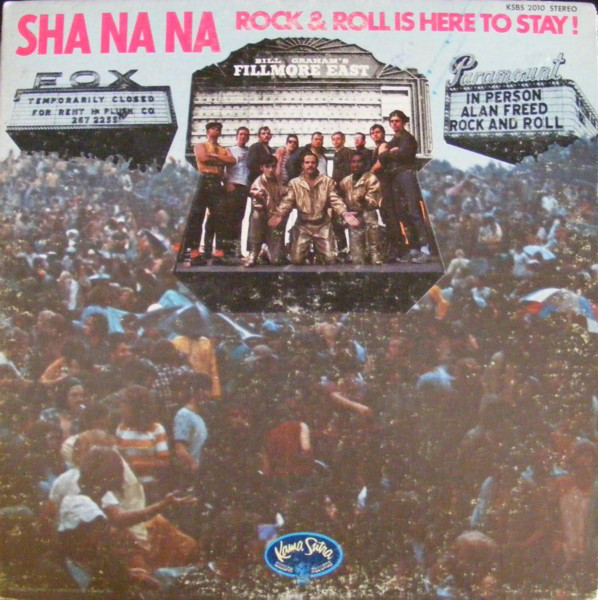
Later in 1969, Sha Na Na released their debut album Rock ’N’ Roll Is Here To Stay. Although it only reached number 183 in the US Billboard 200, word spread about Sha Na Na. This lead to Sha Na Na being asked to play at the 1969 Woodstock Music and Arts Fair.
The Woodstock Music and Arts Fair took place between the 15th and 17th August 1969, and was advertised as “three days of peace and music.” For Sha Na Na this would launch their career.
When the day came, Sha Na Na headed to the main stage where they played a thirty-minute set that began on ‘7.30pm’ on Sunday, August the ‘17th’ 1969. For a relatively new band, this was the opportunity of a lifetime, and was like hitting a home run in the World Series. However, Henry Gross didn’t see it like this.
Standing at the side of the stage, Henry Gross watched some of the biggest names in music play. Then as Jimi Hendrix brought the Woodstock Music and Arts Fair to a close, Henry realised Sha Na Na wasn’t what he wanted to be doing.
He thought about Sha Na Na, which featured twelve men and women dressed as if they’d stepped out of the fifties. However, psychedelia was King, and the fifties was another country. Musically, Henry Gross knew that the fifties was music’s past. Henry Gross also looked at the other members of Sha Na Na.
They were happy doing what they were doing, and Henry Gross knew They were good people. However, they weren’t taking things seriously. Henry Gross was different, and wanted to make a living out of music. He knew had was a talented singer and songwriter, so, in 1970, Henry Gross left Sha Na Na.
The Solo Years.
Having left Sha Ne Na in 1970, Henry Gross signed to ABC-Dunhill Records in 1971, and soon, was working on his eponymous debut album. When he wasn’t working on his debut album, Henry Gross did some session work. One of the albums he played on was Jim Groce’s I Got A Name. It was released in 1973, and reached number two in the US Billboard 200. By then, Henry Gross had left ABC-Dunhill Records.
Henry Gross.
Having written and recorded his eponymous debut album, Henry Gross released by ABC-Dunhill Records in 1972. Henry Gross was reasonably well received by critics with tracks like My Sunshine and Loving You-Loving Me showing what Henry Gross was capable of. However, some critics felt that Henry Gross was a couple of tracks short of being a fine album. Prayer To All and You’ll Be Mine disappointed critics.While these tracks may not have been the strongest on the album, Henry Gross certainly showed how much potential the young singer-songwriter had.
When Henry Gross was released in 1972, record buyers failed to spot that potential and Henry Gross failed to chart. As a result, Henry was dropped by ABC-Dunhill Records. He wasn’t without a record contract long and signed to A&M in 1973.
Henry Gross.
ABC-Dunhill Records seemed to have been hasty releasing Henry Gross, and he was snapped up by A&M. Henry Gross hadn’t been allowed to develop and mature as an artist by ABC-Dunhill, which takes time. Sometimes, an artist doesn’t hit his stride until his second or in some cases, third album.
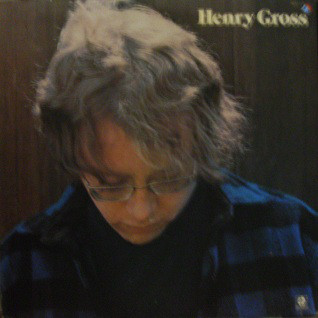
Now signed to A&M, Henry Gross began work on his sophomore album, which when it was completed, somewhat confusingly, was also entitled Henry Gross. It found favour amongst record critics.
On the release of Henry Gross in 1973, it was apparent that Henry was maturing as a singer and songwriter. Accompanied by a tight, talented band, Henry Gross worked his way through ten tracks. One of the highlights was Meet Me On The Corner, which gave Lindisfarne the biggest hit of their career. Other highlights included Simone, The Ever Lovin’ Days and Lay Your Love Song Down, which all showcased Henry Gross as he evolved as a singer and songwriter. It was no surprise when Henry Gross was released, to widespread critical acclaim. Sadly, commercial success eluded Henry.
Despite the undoubted quality of Henry Gross, the album failed to chart. For Henry Gross, this must have proved frustrating. After all, singer-songwriters were in vogue, and James Taylor, Jackson Browne, Tim Buckley, Joni Mitchell and Carole King were enjoying critical acclaim and commercial success. Soon, so would Henry Gross.
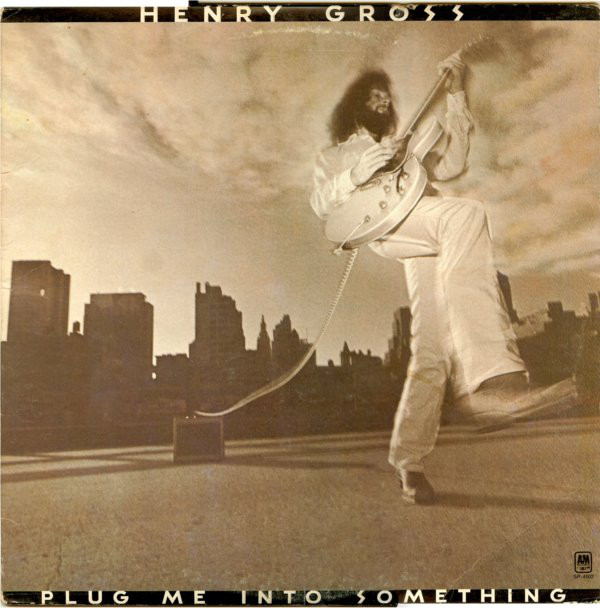
Plug Me Into Something.
Although the commercial failure of Henry Gross’ sophomore album was disappointing, it made him even more determined to succeed. Henry Gross went away and began work on his third solo album, Plug Me Into Something.
When Plug Me Into Something was released in 1975, it proved to be a coming of age for Henry Gross musically. Plug Me Into Something was hailed a career defining album for Henry Gross, and saw him continue to mature as a singer and songwriter. Proof of this were songs of the quality of One More Tomorrow, I’ll Love Her, All My Love and Tomorrow’s Memory Lane, which showed how far the twenty-four year old Henry Gross had come.
When twenty-four year old Henry Gross he released Plug Me Into Something in 1975, he was still only twenty-four, and had grown and matured as a singer, songwriter and storyteller since leaving ABC three years earlier. His critically acclaimed third album Plug Me Into Something reached number twenty-six in the US Billboard 200 chart, which made it the most successful album of his career.
Over at ABC-Dunhill Records, someone had some explaining to do. They had cut Henry Gross loose too early in his career. Adding to their embarrassment was that he was about to enjoy the most fruitful period of his career, starting with Release, which featured the biggest hit single of Henry’s career, Shannon.
Release.
By the time Henry began work on his fourth album Release, he was in-demand as a session guitarist. Henry Gross had also left A&M Records, and signed to Terry Cashman and Tommy West’s Lifesong Records.
Signing to Lifesong Records must have been a culture shock for Henry Gross, who had previously been signed to large labels, ABC-Dunhill Records and A&M Records. At Lifesong Records, the roster was smaller and meant each artist was treated as individual.Artists were no longer part of the corporate machine, and the label’s two co-owners Terry Cashman and Tommy West would produce Release, Henry’s Lifesong Records’ debut.
For Release, Henry Gross penned a total of ten tracks, which included a song he wrote about the death of Carl Wilson’s red setter dog, Shannon. To onlookers, this seemed a strange subject for a song. Little did anyone know the effect Shannon would have. However, before Shannon was released as a single, it had to be recorded.
Recording of Release took place at The Record Plant, New York, between September and November 1975. Henry Gross was joined by a band that featured some session players. Once they had played their part, a horn and string section adding the finishing touches to Release, which was released in 1976.
When critics heard Release, they were won over by Henry’s fourth album. Release received widespread critical acclaim. Henry Gross’ blend of pop, soft rock and A&M pop found favour with critics. Dissenting voices were very much in the minority. Everything was looking good for the release of Release.
That proved to be the case when Shannon was released as a single, it reached number six in the US Billboard 100, number one in Canada and number thirty-two in the UK. Eventually, Shannon was certified gold in America alone. The sophomore album Springtime Mama, then reached number thirty-seven in the US Billboard 100. Then when Release, which was Henry Gross’ most eclectic album was was released in 1976, it reached number sixty-four in the US Billboard 200.
The only disappointment was that Release hadn’t reached the same heights as Plug Me Into Something. However, Release featured Shannon which had just been certified gold and was regarded as most eclectic and finest album. Everything in Henry Gross’ career had been building up to Release, and critics thought that this was the start of a lengthy period when critical acclaim and commercial success would come Henry Gross’ way.
Show Me To The Stage.
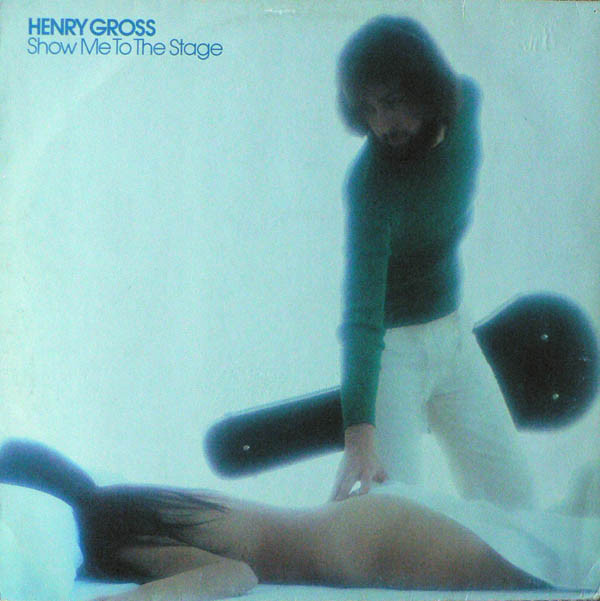
After the commercial success and critical acclaim of Release, Henry started work on his fifth album. He wrote the ten tracks that became Show Me To The Stage, which was recorded at The Record Plant, New York.
Recording took place between October 1976 and January 1977, at The Record Plant. Some of the musicians who played on Release returned for Show Me To The Stage. Once again, Tommy West and Terry Cashman took charge of production, and once recording of Show Me To The Stage was completed, in was released in 1977.
Five years after releasing his eponymous debut album in 1972, Henry Gross released Show Me To The Stage. Critics regarded Show Me To The Stage as an album of two sides. Side one was something of a slow burner, cumulating in an intriguing cover of The Beatles’ Help. It showcases the not just the production skills of Cashman and West, but their harmonies. Then on side two of Show Me To The Stage Henry can do no wrong. Hooks are in plentiful supply as side two has an uplifting and joyous with a feel-good, summery vibe. Critics forecast great things for Show Me To The Stage.
Sadly, that wasn’t to be. Show Me To The Stage stalled at just number 176 in the US Billboard 200. For Henry, his career had stalled. Worse still, he was back to where he was after his sophomore album. For Henry Gross this was a huge disappointment.
Show Me To The Stage was one that got away for Henry Gross, and is an album deserved to far much better than it did. It’s without doubt the most underrated album of Henry Gross’ career. However, for Henry Gross the most worrying thing was that he was back to where he was after his eponymous sophomore album. His next album was the most important of his career.
Love Is The Stuff.
Fortunately, Henry Gross still owed Lifesong Records one album, and this offered him the chance to redeem himself. If his next album was successful, there was every possibility his contract would be extended and he could continue to rebuild his career.
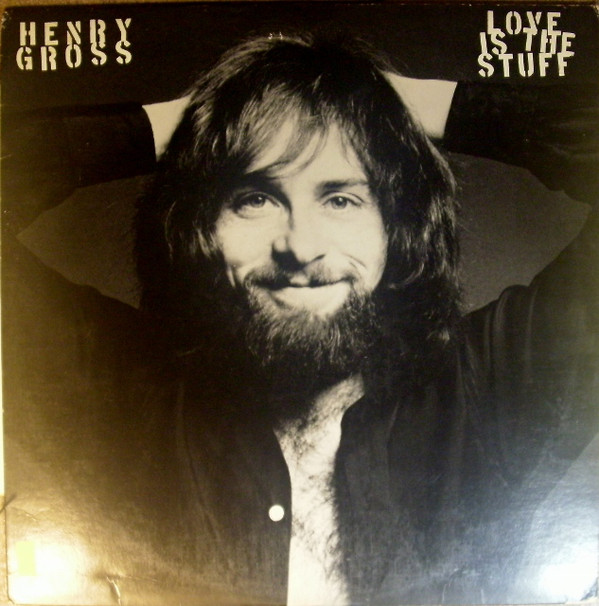
Meanwhile, Tommy West and Terry Cashman had decided that Henry Gross’ next album would be a live album, This was much cheaper to record than a studio album like Show Me To The Stage. Maybe, the pair had realised that Henry Gross’ career was already on the slide, and that if they poured money into recording a studio album, it was money they were unlikely to recover. However, with Henry Gross was booked to play twice at New York’s Bottom Line for the King Biscuit Flower Hour this was the perfect opportunity to record a live album.
Tommy West and Terry Cashman arranged for both of Henry Gross’ performances to be recorded, and one of these would become Show Me To The Stage. Eventually, it was the second of Henry Gross’ two appearances at New York’s Bottom Line for the King Biscuit Flower Hour was chosen by Tommy West and Terry Cashman. chose the second, where Henry Gross plays a selection of his best known and best-loved songs. The late shows saw Henry Gross playing nine songs, including Rock ‘N’ Roll I Love You, Come Along, Juke Box Song, Southern Band and his biggest hit single Shannon. This live set of some of his finest songs, Henry Gross hoped would rejuvenate his career upon its release in 1978.
Before Lifesong Records released Love Is The Stuff, critics had their say on an album which found Henry Gross switching between pop, rock and rock ’n’ roll. While most of the critics were won over by the album, some critics weren’t convinced by Love Is The Stuff.
When Love Is The Stuff was released in 1978, the album failed to even trouble the lower reaches of the US Billboard 200. This was a huge disappointment for Henry Gross, considering it was his swan-song for Lifesong Records.
Not long after Love Is The Stuff was released, Henry Gross was signed by CBS Records, who had given a distribution deal to Cashman and West’s label. Now signed to a major, who had the budget to promote his albums, this should’ve been the start of the rise and rise of Henry Gross. Sadly, Henry Gross’ only release for CBS was What’s In A Name, which was released by Capitol Records in 1981 and failed to chart. This was the end of Henry Gross’ time at CBS.
When Henry Gross returned six years later, with his new album I Keep On Rockin’ in 1987, he was signed to the Scandinavian label Sonet Records. Just like his previous album, commercial success eluded I Keep On Rockin’. It was a similar case when Sonet Records released She’s My Baby in 1989. After that, Henry Gross left Sonet Records and in the early nineties, formed his own label Zelda Records.
By then, the success of the album Plug Me Into Something and his the single Shannon must have seemed a long time ago, However, it was only 1975, that critics were forecasting a great future for Henry Gross, who had been heralded as having the potential to become one of the great singer-singers of the seventies.
Especially after the release of Plug Me Into Something in 1975, which featured his biggest hit single Shannon. However, it was all downhill after Plug Me Into Something, with Henry Gross never reaching the same nights. When Henry Gross released his fifth Show Me To The Stage in 1977, it was his last album to chart.The rise and then demise of Henry Gross had been equally rapid.
That was a great shame, as Henry Gross had released the best music of his career during the seventies. Plug Me Into Something and Release were Henry Gross’ finest albums, while Show Me To The Stage and Love Is The Stuff are both hidden gems.. They’re a reminder of Henry Gross, whose star briefly shawn brightly during the mid-seventies, when it looked looked this truly talented troubadour was going to become one of great singer-songwriters of his generation.
Henry Gross-His Seventies Solo Years.

THE LIFE AND TIMES OF HUGO FATTUOSO
The Life and Times Of Hugo Fattoruso.
Composer, arranger and multi-instrumentalist Hugo Fattoruso, was born in the Uruguayan capital of Montevideo on the ‘29th’ June 1943, and formed his first band Trío Fattoruso in 1952 aged nine. Sixty-seven years later and Hugo Fattoruso is still involved in music. He has dedicated his life to music, and released an eclectic selection of albums, and today, is one of the biggest names in Uruguayan music. His story began in 1952,
Hugo Fattoruso joined the family group Trío Fattoruso as a nine-year old in 1952, and what was his first ever band, was together for six years. However, in 1958 it looked as if it was the end of the road for Trío Fattoruso. Nothing more was heard of the group until the dawn of the new millennia, when Hugo Fattoruso would reformed Trío Fattoruso in 2000. By then, his musical career had six decades and he was a veteran of many groups.
This included The Hot Blowers who were formed in 1959, when Hugo Fattoruso was sixteen. They were together for four years, until the band went their separate ways in 1963.
Los Shakers
Another year passed before Hugo Fattoruso and his brother Osvaldo formed the four piece band Los Shakers. This came after they saw the film A Hard Day’s Night which starred The Beatles. They would heavily influence Los Shakers musically, and the band even copied the way the Fab Four dressed.
Just a year after Los Shakers was founded, the band signed to Odeon imprint of EMI in Argentina in 1965 and became part of the Uruguayan Invasion of South America. When Los Shakers released their debut single Break it All later in 1965, the group was briefly billed as The Shakers. However, when they returned with their eponymous debut album in 1965 they were now called
Los Shakers.
In January 1966, Los Shakers made their one and only attempt to break into the lucrative American market when they released Break It All. However, the album failed to make any impact in America, Los Shakers decided to concentrate on Latin America and especially the Argentinian market.
Ten months later, in November 1966, Los Shakers released Break It All, which was their breakthrough album. By the, Los Shakers were being referred to in the press as “The South American Beatles.” This was what Hugo and Fattoruso had been working towards. They may have achieved their goal, but some critics believed that they were merely copying The Beatles, and their music lacked originality.
These comments were ironic, because when Los Shakers released their third album La Conferencia Secreta del Toto’s Bar in 1968, it was hailed as the Latin American equivalent of Sgt. Pepper’s Lonely Hearts Club Band. However, Los Shakers’ record label neither liked nor approved of the new sound, and failed to promote the album. For Los Shakers this was the end of the road.
Opa.
In 1969, Hugo Fattoruso left Uruguay behind, and moved to New York where he founded Opa. They fused Candombe which is the traditional rhythm of Uruguay with rock, jazz, funk and various other Latin American rhythms to create an irresistible and inimitable Afro-Uruguayan sound. This would influence and inspired many artists over the next few years and beyond.
Before that, Hugo Fattoruso worked with Airto Moreira and played on Fingers, which was released in 1973 and became one of the percussionist’s most successful albums. Three years later, in 1976, played on Flora Purim’s groundbreaking album. However, the same year, Opa released their much-anticipated debut album.
Seven years after Opa was founded, they released their critically acclaimed debut album Goldenwings in 1976. Buoyed by its reception Opa returned with their sophomore album Magic Time following in 1977. It was released to plaudits and praise and it wasn’t until 1981 that Opa realised A Los Shakers four years later in 1981. Five years later, Hugo Fattoruso released his solo album Hugo Fattoruso with Opa’s fourth album En Vivo following in 1988. By then, Hugo Fattoruso was living in Brazil and had begun a new chapter in his career.
As the nineties dawned, Hugo Fattoruso released his solo album Oriental in, but after that, much of his time was spent working with various Brazilian artists. That was until Opa decided to record a new album, Back Home which was released in 1996. This was Opa’s first album in eight years and was their swan-song.
In 1997 Hugo Fattoruso returned with his first new album in seven years, Homework. However, the highlight of 1997 for Hugo Fattoruso was arranging and working on Milton Nascimento’s 1997 World Grammy Award winning album Nascimento.
Three years later, in 2000, Hugo Fattoruso reformed Trío Fattoruso, and they played together for the first time in forty-two years. Still though, Hugo Fattoruso found time to work on a variety of other projects.
This included his solo album Ciencia Fictiona, which was released in 2004. After that, Hugo Fattoruso spent much of the next five years working with other artists and collaborating on albums with Tomohiro Yahiro, Ray Tambor and Aska Strings. However, in 2011 Hugo Fattoruso returned with Acorde On and followed this up with Fatto In Casa in 2014. Despite turning seventy-one, Hugo Fattoruso was as busy as ever.
Hugo Fattoruso then jailed forces with Leo Maslíah recorded Montevideo Ambiguo, which was released in 2015. That was Hugo Fattoruso’s last release for the best part of three years.
The next album that Hugo Fattoruso released was Y Barrio Opa, which was released in 2018, and take as a starting point for the album, Opa’s original sound. To that they add Afro-Uruguayan rhythms, a healthy dose of funk, fusion, jazz harmonies, jazz-funk and Candombe drumming which comes courtesy of the De Silva brothers. They play their part in the success of Y Barrio Opa which is a captivating, genre-melting album from Hugo Fattoruso.
Y Barrio Opa was one of the finest solo albums of Hugo Fattoruso’s career, and without doubt, his finest post-millennium solo album. It’s a reminder of a versatile and innovative music who is one of the legends of Uruguayan music. Sadly, many music lovers are still unaware of composer, arranger and multi-instrumentalist Hugo Fattoruso, which is a great shame, as he’s a truly talented musician who creates groundbreaking and genre-melting music which was always ahead of its time. Maybe that will change before long, and Hugo Fattoruso will no longer be one of music’s best kept secrets?
The Life and Times Of Hugo Fattoruso.
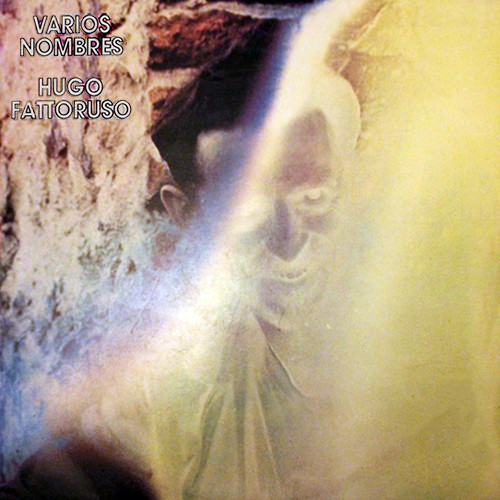
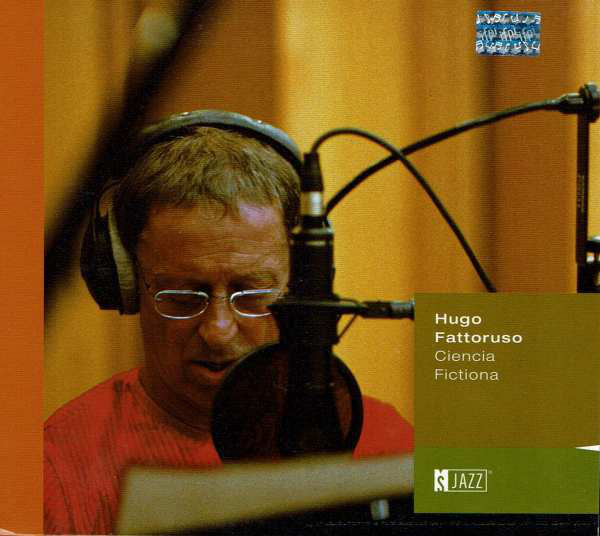
JEANETTE-SPAIN’S SILKY VOICED SONGSTRESS 1967-1983.
Jeanette-Spain’s Silky-Voiced Songstress 1967-1983.
Label: Ace Records.
During the sixties, seventies and eighties, Jeanette’s quiet, tender and languorous vocal was something of an anomaly in Spain, and was the polar opposite of many singers including Rocío Dúrcal, Massiel, Encarnita Polo, Marisol and Karina who had deep, raw, blazing, and powerhouse vocals. Jeanette’s unique style proved popular, as the versatile singer-songwriter started singing folk pop in the mid-sixties with her band Pic-Nic, before delivering heart-achingly beautiful ballads during a career that spanned three decades.
During this period, Jeanette worked with some of the most talented producers, arrangers and songwriters from Spain, Argentina and France, They provided the songs that made Jeanette a star not just in the Spanish speaking world, but as far afield as Japan.
Now, Jeanette’s music is starting to find an even wider audience, and the release by Ace Records of Spain’s Silky-Voiced Songstress 1967-1983, is sure to introduce the singer to a wider audience. Jeanette’s story is a fascinating one, and began in London in 1951.
Although Jeanette made a name as a singer in Spain, she was born Janette Anne Dimech on the ‘10th’ October 1951, in London, to a father of Maltese descent who lived in the Belgian Congo and a Spanish mother. Jeanette’s grandparents owned an import-export business, which was why she spent her early years in Chicago, Los Angeles and La Habra, California. However, when she was twelve her parents split-up and Jeanette, moved to Barcelona, in Spain.
Having lived all her life in America, Jeanette was enrolled in an American school and spoke no Spanish. This changed when she befriended some Spanish children, who taught her Spanish. This would prove useful when she embarked upon a musical career.
In the sixties, Jeanette learned to play the guitar and started writing her own songs. She modelled herself on the new wave of American folk musicians, including Bob Dylan and The Byrds, and Scottish singer-songwriter Donovan. These were just some of Jeanette’s favourite artists and bands, and who she wanted to emulate.
The opportunity arose when Jeanette joined the student band Pic-Nic as a singer, and in 1967 they had a measure of success with a folk version of the Spanish children’s song Cállate Niña which she cowrote and features on Spain’s Silky-Voiced Songstress 1967-1983. So does two more of their best know and best loved songs, Amanecer and No Digas Nada which showcase a talented singer.
While the success of these songs resulted in Pic-Nic becoming a popular group, all wasn’t well behind the scenes. There always seemed to be disagreements between band members, and one of the mute points was should they record English versions of their songs? This would’ve introduced their music to a much wider audience, but this didn’t happen as the constant arguments resulted in the band splitting up. The Pic-Nic was over.
After the demise of Pic-Nic, Jeanette returned to her studies, but before long, received a call from her former record label Hispavox. This had been home to Pic-Nic, and an executive at the label had a proposal.
Hispavox were working on a project that required a female vocalists, and Jeanette fitted the bill. After some thought, she returned to Barcelona in 1971, where she embarked upon a solo career. Her debut single Soy Rebelde (I Am A Rebel) saw the singer’s name which was Janette, misspelt as Jeanette. It would be expensive to repress the single, so Jeanette was born and Soy Rebelde which features on Spain’s Silky-Voiced Songstress 1967-1983, gave her a hit in many Spanish speaking countries and proved popular, This was just the start for the newly christened Jeanette.
The ballad Estoy Trist, which featured No Digas Nada on the B-Side was released in 1972 and gave Jeanette another hit. Both songs feature on Spain’s Silky-Voiced Songstress 1967-1983. So does her 1973 release Palabras, Promesas which features Debajo Del Platanero (Underneath The Mango Tree) on the flip side and 1974s Porque Te Vas which gave her an international hit and features the B-Side Seguiré Amando. Many of these songs were ballads and featured Jeanette’s tender, languid vocal.
After Porque Te Vas, which was also the title of her 1976 album, Jeanette continued to release singles on a regular basis. This included Todo Es Nuevo which lent its name to her 1977 album, and featured Pequeña Preciosa on the B-Side. Both sides are welcome additions to Spain’s Silky-Voiced Songstress 1967-1983. So is No Digas Buenas Noches which was released in 1978.However, by then, Jeanette’s career had stalled.
In 1981, thirty year old Jeanette released Corazón De Poeta as single, but it failed commercially. That was a great shame as it was taken from a carefully crafted and lavishly produced album.
A year later in 1982, Toda La Noche Oliendo A Ti was released as a single, and it failed commercially. By 1983, the hits had dried up for Jeanette who had enjoyed a three decade career.
Jeanette’s career is celebrated on Spain’s Silky-Voiced Songstress 1967-1983, which features songs from her time with Pic-Nic and her solo career. This includes many of trademark beautiful ballads which she was famous for. They’re among the twenty-three tracks on Spain’s Silky-Voiced Songstress 1967-1983, including a beautiful version of a 10CC’s I’m Not In Love (Te Esperaré). It’s one of the highlights of Spain’s Silky-Voiced Songstress 1967-1983, which features some of Jeanette’s finest songs, and is the perfect introduction to a singer whose largely unknown outside of Spain.
Jeanette-Spain’s Silky-Voiced Songstress 1967-1983.

OSC MEETS BMC-FREAK OUT IN THE FJORD
OSC Meets BMC-Freak Out In The Fjord.
Label: Space Rock Productions.
Some seven years ago, brothers Øyvin and Vemund Engan founded the psychedelic space rock band Black Moon Circle, and since then, this talented band from Trondheim, in Norway, have released six albums. Six became seven when Black Moon Circle and Øresund Space Collective released their first collaboration Freak Out In The Fjord on CD, LP and digital on Space Rock Productions. After that Black Moon Circle and Øresund Space Collective will hit the road together, starting up in Copenhagen on May 23rd on a tour that takes in venues in Denmark, Germany, Poland, Latvia, Lithuania, Finland and Sweden. This is the latest chapter in the Blc
The Black Moon Circle story began in the city of Trondheim, in Norway, in 2012, when brothers Øyvin and Vemund Engan decided to form their own band. It was a case of needs must, after the demise of their previous band, the Trondheim-based punk rock group The Reilly Express, where the Engan brothers served their musical apprenticeship. With The Reilly Express now consigned to musical history, the Engan brothers decided to form a new band, which would allow them to head in a new direction musically.
In The Beginning.
Having made the decision to form a new group, which the Engan brothers named it Black Moon Circle, which was going to play psychedelic space rock. Øyvin would play bass, guitar and take charge of vocals, while his brother Vemund would also play guitar. All that the nascent Black Moon Circle needed was a drummer, and this would be the start of a new and exciting chapter in the Engan brothers musical career.
Before long, Black Moon Circle’s lineup was complete when drummer Per Andreas Gulbrandsen joined the band. He was the final piece of the musical jigsaw, and now Black Moon Circle could begin to hone their sound.
After spending time honing their sound, gradually, Black Moon Circle’s trademark sound started to evolve. Initially, it was a combination of lengthy jams, searing guitar riffs and a myriad of effects added to the bass and guitar. This was Black Moon Circle’s now unique brand of described as psychedelic space rock, which soon found an appreciative audience.
Now that they had honed and tightened their sound, Black Moon Circle made their first tentative steps onto the local live scene. While they were the newest addition to Norway’s thriving and vibrant and thriving psychedelic space rock scene, their music soon started to find a receptive and appreciative audience. That came as no surprise.
It wasn’t just that that Black Moon Circle was a talented band whose popularity was growing, but by then, space rock’s popularity was growing all over Europe. Flying the flag for Norwegian space rock was Black Moon Circle, whose music was about to find a wider audience in 2013.
Black Moon Circle.
Although Black Moon Circle had been together less than a year, they had already decided to record a mini album at Nautilus Studios. Black Moon Circle recorded three tracks Plains, American Eagle and Enigmatic Superbandit, which would mark the debut of the Trondheim-based psychedelic space rockers.
The mini album Black Moon Circle was released as a limited edition of 300 in February 2014 by Space Rock Productions, the label run by the Øresund Space Collective from Copenhagen, Denmark. Black Moon Circle introduced the band’s music to a new and wider audience, and launched their career.
After the release of their mini-album, Black Moon Circle were already making plans for the future, and this included recording their much-anticipated debut album. Black Moon Circle weren’t the type of band to let the grass grow under their feet, and the recording began in the spring of 2014.
Andromeda.
When Psychedelic space rockers Black Moon Circle returned to the studio in April 2014, they had been together the best part of two years, and were already a tight band who were capable of seamlessly creating genre-melting music. Black Moon Circle worked quickly and efficiently, recording the five songs on Andromeda in just one day. Six months later, and Andromeda was ready to be released.
Black Moon Circle’s debut album, Andromeda which showcased their psychedelic space rock sound was released to plaudits and praise by Crispin Clover Records in October 2014. Critics forecast a great future for the Trondheim-based trio, who were already hatching a plan that sounded like something from the seventies, the golden age of rock.
The Studio Jams Volume I: Yellow Nebula in the Sky.
Black Moon Circle had decided to release a trilogy of albums featuring studio jams, which was something that harked back to the seventies, when rock was King. It seemed that this was Black Moon Circle’s way of paying homage to the golden age of rock which had influenced their music. In mid-2015, Black Circle announced their intention to release a trilogy of studio jams, which was by far, the most ambitious project of their career.
The first of the trilogy was The Studio Jams Volume I: Yellow Nebula in the Sky, where Black Moon Circle were joined in the studio by Scott Heller a.k.a. Dr. Space who played synths on the album. It was released in August 2015, and was the start of a new era for Black Moon Circle.
Critics hailed The Studio Jams Volume I: Yellow Nebula in the Sky as Black Moon Circle’s as finest hour as they fused psychedelic space rock with elements of electronica, experimental music and free jazz. Seamlessly, these disparate musical genres and influences merge into something new and innovative that was cinematic, dramatic, futuristic, moody, rocky and as Øyvin Engan says: “intense.” However, for their third album, Sea Of Clouds, Black Moon Circle added two new ingredients to their successful musical formula.
Sea Of Clouds.
With The Studio Jams Volume I: Yellow Nebula In The Sky recorded, but not yet released, Black Moon Circle’s thoughts turned to their next album, which wasn’t going to be another instalment in the Studio Jams’ series. Instead, Black Moon Circle changed direction slightly on Sea Of Clouds.
When Black Moon Circle recorded Sea Of Clouds in June 2015, they were again joined by Scott Heller who played synths, while new guest artist Magnus Kofoed played keyboards. During the course of just one day, Black Moon Circle recorded the four lengthy jams that became Sea Of Clouds.
When Sea Of Clouds was released, critics were won over by another album of hard rocking, psychedelic space rock that was futuristic, moody, otherworldly and featured Black Moon Circle’s trademark intensity. Sea Of Clouds was a carefully crafted fusion of avant-garde, free jazz, heavy metal, Krautrock and post rock which had been inspired by Black Sabbath, Can, Deep Purple, Emerson, Lake and Palmer, Hawkwind, Iron Maiden, Led Zeppelin, Hawkwind, Moster, Motorpsycho, Radiohead and Yes. All these bands had influenced Sea Of Clouds, which was another ambitious and innovative offering from the expanded lineup of Black Moon Circle, who were about to record the most accessible album of their career.
The Studio Jams Volume 2.
Seven months after the release of Sea Of Clouds, Black Moon Circle returned with their eagerly awaited fourth album, The Studio Jams Volume 2. It had been recorded in June 2015 by Black Moon Circle who were joined by Scott Heller a.k.a. Dr. Space on synths
Just like previous albums, critical acclaim accompanied the release of The Studio Jams Volume 2, which found Black Moon Circle fusing the classic rock of the sixties and seventies with psychedelia and space rock. To this, Black Moon Circle add elements of avant-garde, electronica, experimental music, free jazz, Krautrock and post rock. Seamlessly, these disparate musical genres and influences merge into one on another album of ambitious, exciting and innovative music. It’s also cinematic, dramatic, futuristic, moody, rocky and features Black Moon Circle’s trademark intensity. However, The Studio Jams Volume 2 was also Black Moon Circle’s most accessible album, and was the perfect introduction to the Trondheim based musical pioneers, who were about to square the circle.
The Studio Jams Volume III: Flowing Into The 3rd Dimension.
This came when the four members of Black Moon Circle entered the studio early in 2017, to record the last instalment in their trilogy of Studio Jams, which featured two epic jams. When the time came to record the album closer Waves, Black Moon Circle were joined by Hans Magnus Ryan a.k.a Motorpsycho’s guitarist Snah.
With Snah onboard, the expanded lineup of Black Moon Circle ensured that the Studio Jams’ trilogy ended on a high with a genre-melting opus. Black Moon Circle took psychedelic space rock as a starting point, and added elements of avant-garde, Berlin School, blues rock, classic rock, electronica and experimental music, improv, Krautrock, post rock and progressive rock to the two epic jams on The Studio Jams Volume III: Flowing Into The 3rd Dimension. Black Moon Circle had saved the best until last instalment until last on their Studio Jams’ trilogy
Psychedelic Spacelord.
By the time Black Moon Circle released The Studio Jams Volume III: Flowing Into The 3rd Dimension, the band had already recorded their next album Psychedelic Spacelord. It had been recorded during what Øyvin Engan described as “a spaced out session in March 2017” by an expanded lineup of Black Moon Circle.
Joining the core lineup of Black Moon Circle was keyboardist Magnus Kofoed, who had previously featured on Sea Of Clouds. Magnus Kofoed returned and played Fender Rhodes, Mellotron, Hammond organ on Psychedelic Spacelord. Øresund Space Collective violinist Jonathan Segel was the other guest artist who joined Black Moon Circle when they were recording their sixth full-length album. Later, vocals were overdubbed onto Psychedelic Spacelord, and added what was finishing touch to this much-anticipated album.
Psychedelic Spacelord is a much-anticipated album, with critics and record buyers wondering what the future holds for Black Moon Circle in the post Studio Jams era? However, what nobody expected was for Black Moon Circle to return with an album that features one epic track that lasts forty-six magical minutes, and is spread over two sides of vinyl and the CD that accompanies the LP. Quite simply, Psychedelic Spacelord is the most ambitious album of Black Moon Circle’s career and is the perfect way to begin the post Studio Jams era.
Psychedelic Spacelord was the first album of the post Studio Jams era. It finds the expanded lineup of Black Moon Circle sounding better than they’ve ever sound, and rocking harder than ever on Psychedelic Spacelord which is a very different album to everything that has gone before.
There’s only one track on Psychedelic Spacelord, albeit last forty-six incredible minutes where psychedelic space rockers take the listeners on a magical mystery tour as this genre-melting track reveals its secrets. Although psychedelic space rock is the basis for Black Moon Circle’s music, they also combine elements of avant-garde, blues rock, classic rock, electronica, experimental music, heavy metal, improv, Krautrock and post rock on Psychedelic Spacelord, which is a musical roller coaster. During the forty-six minutes the music veers between dark and dramatic, to atmospheric, cinematic and futuristic as sci-fi sounds assail the listener before the music becomes anthemic and uplifting and other times, lysergic, trippy and for much of the time hard rocking. Indeed, Psychedelic Spacelord features Black Moon Circle at their hard rocking best.
Freak Out In The Fjord.
Nearly a year after releasing Psychedelic Spacelord, Black Moon Circle return with Freak Out In The Fjord their collaboration with Øresund Space Collective. The story begins on Friday the 17th November 2017, when Black Moon Circle and Øresund Space Collective were booked to play a show in Trondheim, Norway billed as Freakout in the Fjord, where they were joined on the bill by the local band, Red Mountains. This was the perfect workout for Black Moon Circle and Øresund Space Collective who left the show to a standing ovation and were perfectly prepared for the recording session that was about to take place the next day.
On Saturday 18th November 2017, Black Moon Circle and Øresund Space Collective were booked into one of Trondheim’s top studio where they were about to record a jam session. The two bands made their way to the Øra studio, where they began setting up their equipment, which took time. There was the small matter of three drum kits, two basses and two guitars in the rhythm section alone. Drums, basses and guitars were positioned right and left, just like the recording for the recording of Miles Davis’ Bitches Brew. The rhythm section was augmented by a modular synth, Fender Rhodes and Oberheim synth. When the equipment was setup. Black Moon Circle and Øresund Space Collective worked their way through four tracks lasting two incredible hours.
The four genre-melting jams were recorded by recording engineer Magnus Koefod, who watched on as Black Moon Circle and Øresund Space Collective open the album with the futuristic, rocky, psychedelic and dubby Rendezvous In The Nebula where heavy riffs are the order of the day. It gives way to the Miles Davis inspired Afterglow In The Sea Of Sirens to Dinner With Greg A and Jerry G which pays homage to the Grateful Dead. Closing this two hour genre-jumping and melting journey is Freak Out In The Fjord which is a tour de force of heavy space rock. With that, Black Moon Circle and Øresund Space Collective take a well deserved bow on their first, and hopefully not their last collaboration.
Just a year after their career defining opus Psychedelic Spacelord, which was a reminder of the golden age of rock, when hard rocking groups like Black Sabbath, Deep Purple and Led Zeppelin were among the most successful bands in the world, Black Moon Circle make a welcome return.
They’re joined by Øresund Space Collective on Freak Out In The Fjord, where they drive each other to even greater heights across a 3LP or 2 CD set. It finds Black Moon Circle and Øresund Space Collective combining disparate musical genres including classic rock, fusion, jazz, Krautrock, psychedelic rock and space rock on the genre-melting collaboration Freak Out In The Fjord. Billed as OSC Meets BMC, the two pioneering groups unleash their own brands of innovative and inventive music on Freak Out In The Fjord, which draws inspiration and pays homage to some of the legends of music. These influences can be heard throughout Freak Out In The Fjord.
For Black Moon Circle, Frae represents a new chapter in their story which began seven years ago, and has seen Trondheim’s finest win friends and influence music lovers across Europe. Black Moon Circle’s music will continue to find a wider audience by releasing albums of the quality of Freak Out In The Fjord, which features Øresund Space Collective who they’re about to tour Europe with from May 23rd and showcase the music on this genre-melting musical journey.
OSC Meets BMC-Freak Out In The Fjord.

KABASA-AFRICAN SUNSET.
Kabasa-African Sunset.
Label: BBE Music.
Kabasa was formed in Soweto by vocalist and bassist Tata “TNT” Sibeko and percussionist Oupa Segwa and guitarist Robert “Doc” Mthalane who previously had been members of the iconic Afro-rock band Harari, who the first ever local black pop band to appear on South African television. Despite Harari being regarded as one of the best Afro-rock bands of the seventies, Oupa Segwa and guitarist Robert “Doc” Mthalane decided to call time on their career with the band.
They joined forces with bassist Tata “TNT” Sibeko to form Kabasa. This was a new start for percussionist Oupa Segwa and guitarist Robert “Doc” Mthalane, who was regarded as South Africa’s answer to Jimi Hendrix. A confident and technically gifted guitarist he could switch seamlessly between genres and combine them in one genre-melting track. The new group Kabasa, offered a showcase for Robert “Doc” Mthalane and the other two members of the band to showcase their considerable skills.
In 1980, Kabasa released their eponymous debut album, which was released to plaudits and praise. This launched Kabasa’s career who many critics had a bright future in front of them.
Just a year later, in 1981, Kabasa returned with their sophomore album Searching. It featured everything from jazz, funk, rock and soul to fusion and showcased a tight and talented band. Founder and bass wizard Tata Sibeko found virtuoso guitarist and flamboyant showman Robert “Doc” Mthalane the perfect foil. The final piece of the jigsaw was percussionist Oupa Segwa whose contribution resulted in a very different and unique sound on Searching. Kabasa were going from strength to strength, and their third album looked like being a game-changer.
Before Kabasa recorded their third album African Sunset, which will be rereleased by BBE Music on the ’24th’ May 2019, percussionist Oupa Segwa left the group. His replacement was Mabote “Kelly” Petlane who was a percussionist and flautist. His addition changed Kabasa’s sound.
When work began on what later became African Sunset, the songwriting and production duties were shared between the three members of the band. The songs the members of Kabasa wrote for African Sunset, touched on the political problems facing South Africa. However, they had to be careful as to avoid detection from government censors at the South African Broadcasting Corporation.
Despite this, radio copies of one of the tracks, Mefeteng, fell foul of the censors. Mefeteng is a town in Lesotho, which at the time, was associated with political exiles and the censors deliberately scratched out and the track rendering the song unplayable. Other tracks on African Sunset are best described as progressive rather than being an album of music that was trying to bring about a revolution in South Africa. Proof of this is the album opener Rainbow Children which champions South Africa’s multi-racial dissidents with the lyrics; “we are the rainbow children-we run and hide.”
When African Sunset was released in 1982, on the short-lived Lyncell Records imprint, it was a carefully crafted, genre-melting album featuring musicianship of the highest quality and lyrics that featured political and social comment, but not enough to raise the hackles of the censors. African Sunset found Kabasa combining elements of psychedelic rock, jazz, funk and traditional African music. Sadly, African Sunset wasn’t the success that Kabasa had hoped, and very few copies were sold.
Nowadays, original copies of African Sunset are rarities, although the album is quite rightly recognised as being a timeless, cult classic that showcases that talented trio Kabasa, at the peak of their powers.
After the release of African Sunset, the members of Kabasa went their separate ways. Their legacy is a triumvirate of albums including African Sunset, their finest hour and undoubtably a timeless, cult classic which sadly, was also Kabasa’s genre-melting swan-song.
Kabasa-African Sunset.

THE LIFE AND TIMES OF VICTOR ASSIS BRASIL
The Life and Times Of Victor Assis Brasil.
Victor Assis Brasil was born into a middle class family in Rio de Janeiro, on the ‘28th’ of August 1945, and from an early age, expressed an interest in music. Seeing their son’s interest in music, Victor Assis Brasil’s parents decided to foster an environment that was conducive to his musical education. There was always the finest music playing in the house, as Victor Assis Brasil and his twin João Carlos Assis Brazil were growing up,
They were exposed to an eclectic selection of music. Sometimes, classical music was played, while other days, the young Victor Assis Brasil listened intently as jazz played. All the music that Victor Assis Brasil heard would influence and inspire him later, when he embarked upon a career as a professional musician.
Having heard such a wide range of music in his formative years, it was jazz that Victor Assis Brasil was drawn to and which he preferred to listen to. However, already Victor Assis Brasil wanted to go from listening to music to playing music.
This began when he was given a harmonica, and Victor Assis Brasil started playing along to the songs that he heard. While he played all sorts of music, Victor Assis Brasil always returned to jazz which was his already his favourite genre. The only problem was a harmonica wasn’t best suited to playing jazz. Fortunately, fate intervened when Victor Assis Brasil was fourteen.
That was when Victor Assis Brasil’s aunt arrived at the family home with an alto saxophone that she had won. This she presented to Victor Assis Brasil, and this opened up a new world for the young musician.
Victor Assis Brasil was a natural when it came to playing the alto saxophone, but still he practised for hours on end, day after day. Within just four years, Victor Assis Brasil was a truly talented saxophonist who was already playing in public. Whether it was nightclubs, parties or in schools Victor Assis Brasil took to the stage and showcased his considerable skills.
By then, people were starting to take notice of Victor Assis Brasil, and in 1963 made his first recording at a friend’s house. Little did anyone know that history had just been made.
A year later in 1964, nineteen year old Victor Assis Brasil had graduated to sitting in on jam sessions that took place in nightclubs in the South zone. Most of the musicians were older, and much more experienced, but Victor Assis Brasil didn’t look out-of-place, and sometimes upstaged the veterans he shared the stage this. This didn’t bother them, as they knew that Victor Assis Brasil was a special talent.
They were right, and in 1966 Victor Assis Brasil entered the studio to record his debut album Desenhos. During the sessions, torrential rain fell and it was so bad that the studio ceiling started leaking. Despite that, the sessions continued, and Victor Assis Brasil and his band were reluctant to leave the studio and ended up recording far more songs than was needed for an album. Many of these songs documented a prodigious talent in the early stages of his recording career and would’ve featured on Drawings.
Sadly, the leak in the studio damaged the tapes, and some of the songs were lost for good. Despite that, when Desenhos was released in 1966 it showcased a truly talented twenty-one year old saxophonist and was hailed as the first major jazz album recorded in Brazil. Many critics though Victor Assis Brasil had a long and illustrious career in front of him.
After the release of Desenhos, Victor Assis Brasil studied with saxophonist and conductor Paulo Moura in an attempt to improve his knowledge of music theory and improve his technique. Later that year, Victor Assis Brasil started touring further afield, and played in Europe. This included Austria where he took part in the International Jazz Contest in Vienna, and was third place in the saxophonists section. The same year, won the award for the best soloist at the Berlin Jazz Festival. By then, Victor Assis Brasil was one of jazz’s rising stars.
Victor Assis Brasil returned home to Brazil, and continued to play live, leading quartets and quintets. Soon, the time came for Victor Assis Brasil to record his sophomore album Trajeto where he combined Bossa Nova and Latin jazz. When Trajeto was released in 1967, it was to widespread critical acclaim. However, it was the last album Victor Assis Brasil would release in Brazil for three years.
In 1969, Victor Assis Brasil applied and was granted a place to study at the prestigious Berklee College of Music, where he played alongside of Dizzy Gillespie, Chick Corea, Ron Carter and Clark Terry. This was all part of Victor Assis Brasil’s musical education, and was good experience when resumed his recording career.
During the summer of 1970, Victor Assis Brasil where he planed to record his third album Toca Antonio Carlos Jobim, which featured four tracks that the legendary Brazilian composer, arranger, singer, pianist, and guitarist made famous. This included Tinha De Ser Com Você, Wave, Bonita and Dindi which were recorded by Victor Assis Brasil and became his homage to Antonio Carlos Jobim.
Joining Victor Assis Brasil in the studio was a band that featured drummer Edison Machado, bassist Edison Lôbo guitarist Hélio Delmiro and pianist Salvador. Meanwhile Victor Assis Brasil played alto saxophone and Roberto Quartin took charge of production. Just like during the recording of his debut album, Victor Assis Brasil ended up recording more music than they needed.
Victor Assis Brasil and his band also recorded Jimmy Heath’s ‘Ginger Bread Boy and three of his own compositions Marilia, Quarenta Graus À Sombra and Ao Amigo Quartin. These four tracks would later become Esperanto and by the end of the session Victor Assis Brasil had recorded two albums that were released during 1970 including Toca Antonio Carlos Jobim.
Critics on hearing Toca Antonio Carlos Jobim realised that it was game-changer of an album. Gone was the smooth, easy on the ear sound of the Bossa Nova, which was the sound of Brazil’s past.Certainly now that Brazil was no longer a democracy, and after a military coup, was being ruled by an iron fist by a military dictatorship.
Brazil was country under attack from the enemy within, Many within the country lived in fear, and daren’t speak out in case they were dragged kicked and screaming away by army. Despite the fear that pervaded the country, jazz was still important in the lives of many.
When Toca Antonio Carlos Jobim was released on Quartin in 1970, jazz fans were won over by Victor Assis Brasil’s groundbreaking new album. Antonio Carlos Jobim’s relaxing, soothing originals were transformed into the rawest of deep jazz cuts where Latin jazz and post bop melt into one. Toca Antonio Carlos Jobim was a powerful, potent and popular album that showed the way Brazilian jazz was heading.
Many critics believed that Victor Assis Brasil was well on his way to becoming one of the biggest names in Brazilian jazz. Especially ager the release of Esperanto later in 1970, which was another landmark album where Victor Assis Brasil and his band seamlessly fused Latin jazz, Música Oopular Brasileira and post bop.
After Victor Assis Brasil released Esperanto and Toca Antonio Carlos Jobim, critics believed that these two groundbreaking and genre-melting landmark albums were just another chapter in the story of twenty-nine year old Victor Assis Brasil.
In 1979 the Victor Assis Brazil Quintet released their eponymous album. However, in 1980 Victor Assis Brasil released his new album, Pedrinho which was also his swan-song.
Just a year later, on the ‘14th’ of April 1981, Victor Assis Brasil passed away aged just thirty-five. Brazilian music was in mourning at the loss of one of its most talented and innovate musicals who is just a fifteen year period had released six albums. These albums featured music that was ambitious, innovative and inspirational including Victor Assis Brasil’s much loved cult classics Esperanto and Toca Antonio Carlos Jobim.
The Life and Times Of Victor Assis Brasil.

ORNETTE COLEMAN’S ATLANTIC YEARS.
Ornette Coleman’s Atlantic Years.
Just under four years ago, on June 11th 2015, that Ornette Coleman passed away, aged eighty-five. Music had lost a true legend, whose album Free Jazz: A Collective Improvisation lent its name to a musical genre, free jazz. It’s the genre that Ornette Coleman became synonymous with. However, two years earlier, this nascent genre had no name.
Ornette Coleman released his Atlantic Records’ debut in 1959. The Shape of Jazz to Come hinted that jazz was changing. However, it wasn’t until the release of Ornette Coleman’s fourth album for Atlantic Records, Free Jazz: A Collective Improvisation that the genre was christened. Suddenly, free jazz was born. It was being hailed the most exciting development in jazz, and Ornette Coleman was one of its most innovating practitioners. His story began in 1930.
It was on March 9th, 1930, that Ornette Coleman was born Randolph Dernard Ornette. He was born and brought up in Forth Worth, Texas, where his musical skills were apparent from an early age. A true multi-instrumentalist, Ornette played saxophone, violin and trumpet and composed music. His trademark sound is blues-based, with a crying, keening timbre. Growing up, Ornette played in his high school band, but was thrown-out, for jamming during a rendition of Washington Post.
As a teenager, Ornette formed a band, with fellow students Prince Lasha and Charles Moffett. Then in 1949, he started playing with Silas Green, in his R&B show. It was during a show in Baton Rouge, that Ornette was assaulted and his saxophone destroyed. This resulted in Ornette changing to alto-saxophone. After the Baton Rouge assault, Ornette decided to leave Silas Green’s band.
After leaving Silas Green’s band, Ornette joined Pee Wee Crayton’s band. When he wasn’t making music, Ornette worked a variety of jobs, including lift operator. Still, he was determined to make a living playing music. Other musicians, however, didn’t understand Ornette’s style of music.
From his high school days, Ornette had a unique musical style. Schooled in R&B and bebop, Ornette’s approach to chord progression and harmony was very different. It was much more fluid. He played what heard in his head, which coupled with his blues’ influence, may have resulted in the rawness in Ornette’s playing. For some musicians, they thought Ornette was out-of-tune. That wasn’t the case. Unlike them, Ornette was a visionary, an innovator, a musician who’d become one of the giants of free jazz.
Even though many musicians didn’t understand Ornette Coleman, he was gradually building up a group of influential supporters. This included pianist Paul Bley, who later collaborated with Ornette. Paul however, didn’t feature on Ornette’s 1958 debut album Something Else. Released on Contemporary Records, Something Else featured Don Cherry on trumpet and Walter Norris on piano, as be bop combined with free jazz. Ornette released his sophomore album in 1959s. Tomorrow Is The Question was also released on Contemporary Records. All of sudden, people were taking notice of Ornette Coleman. They were “getting” Ornette’s unique sound and approach to jazz.
So it was no surprise that in 1959, Ornette Coleman signed to what was then, one of the biggest record labels, Atlantic Records. They had a huge roster, and released an eclectic selection of music. This included everything from blues, R&B, soul and of course, jazz. Ornette Coleman was their latest signing.
Atlantic Records was home to Ornette Coleman between 1959 and 1962. During that time, he entered the studio ten times. The first time came on 22nd May 1959, when Ornette Coleman made his way to Radio Recorders in Hollywood, California. With his quartet, Ornette Coleman recorded eight tracks. This included the six tracks that became The Shape Of Jazz That To Come. It was released in October 1959, and was the first of six albums released by Ornette Coleman between 1959 and 1962.
During the ten sessions Ornette Coleman recorded between 1959 and 1962, a total of fifty-eight tracks were recorded. Atlantic Records, just like all jazz labels, would get their money’s worth.
Following the release of Ornette On Tenor in December 1962, Ornette Coleman left Atlantic Records. However, there were still thirty-six tracks unreleased. This proved enough for another three albums. These nine albums include some of the best and most innovative music of Ornette Coleman’s career. He was one of the founding fathers of free jazz, who came of age at Atlantic Records.
The Shape Of Jazz To Come.
Having served his musical apprenticeship, Ornette Coleman was more than ready to sign to a major label. On his first two albums, Ornette Coleman pioneered this new musical genre. Some likened it do avant garde. Others thought that what Ornette Coleman and his band were playing had an experimental sound. However, after his first session with ‘producer’ Nesuhi Ertegun, he had the answer to this conundrum.
On 22nd May 1959, Ornette Coleman made his way to Radio Recorders in Hollywood, California. Joining him, were the other three members of his quartet, drummer Billy Higgins, bassist Charlie Haden and Don Cherry on cornet. They recorded eight tracks with Ornette Coleman recorded eight tracks. These tracks followed a different format to what most musicians were used to.
Each of the eight compositions Ornette Coleman’s quartet record a brief thematic statement. After that, there were several of minutes of free improvisation. Then they revisit the main theme. While this may sound similar to bebop, there’s a big difference. Advocates of free jazz abandoned the use of chord structures. Having listened to Ornette Coleman’s quartet pioneer this nascent genre, Nesuhi Ertegun had an idea for the album title.
After thinking about the session he had just ‘produced,’ Nesuhi Ertegun realised that it was important that the album title gave record buyers: ”an idea about the uniqueness of the LP.” It Nesuhi Ertegun realised, was a game-changer. This new sound was about to change jazz
Ornette Coleman’s Atlantic Records’ debut was The Shape Of Jazz To Come. It was released in October 1959, and initially, divided the opinion of critics.
Some critics and cultural commentators hailed the music on The Shape Of Jazz To Come as innovative and inventive. Lonely Woman, the album’s opener was seen as a future classic. That proved prescient. Nowadays, Lonely Woman is a jazz standard. These critics that forecast this, and realised the importance of The Shape Of Jazz To Come knew that something important was happening.
So did some of Ornette Coleman’s peers and contemporaries. They realised that potentially, this new musical movement could be the biggest innovation since bebop. Especially when Ornette Coleman began a two week residency at the Five Spirit on November 17th 1959. It became the hottest ticket in town. Ornette Coleman’s residency was extended, and eventually, last two-and-a-half months. It seemed Ornette Coleman was well on his way to becoming one of the major players in jazz. Not everyone agreed.
The lack of chordal structure proved controversial. Up until then, a pianist and guitarist gave compositions chordal structure. Not on The Shape Of Jazz To Come. That was jazz’s past. Another criticism was the harsh timber of Ornette Coleman’s saxophone. However, this wasn’t surprising. He eschewed the finest saxophone, instead, preferring a plastic Grafton saxophone. This he believed gave his music, a “harmolodic” sound, which was a fusion of harmony, movement, and melody. There was a reason for this.
Harmonic accompaniment, Ornette Coleman believed, wasn’t important. Instead, he focused merely on improvising melodies and variations on themes and motifs. Proof of this could be found on The Shape Of Jazz To Come, which in 1959, was recognised as an important, innovative and inventive album. It was also an album that changed jazz. At the forefront of this new musical movement was Ornette Coleman.
Change Of The Century.
By the time that The Shape Of Jazz To Come was released, Ornette Coleman had been back in the studio twice. On the 8th October 1959, Ornette Coleman and the his band recorded four tracks. That day, Don Cherry switched from cornet to pocket trumpet. Then the following day, 9th October 1959 another five tracks were recored. Seven of these tracks became Change Of The Century.
When Change Of The Century was released in June 1960, it was to widespread critical acclaim as The Shape Of Jazz To Come. There were no dissenting voices. Ornette Coleman critics realised, was a trailblazer, and with his fellow travellers, was the future of jazz.
This Is Our Music.
Having just recorded eight tracks on the 8th and 9th July 1960, Ornette Coleman returned to the studio later that month. On 19th July 1960, his band recorded nine new tracks. That day, there was a new face in the studio
Drummer Ed Blackwell had replaced Billy Higgins. Seamlessly, he slotted into the rhythm section alongside bassist Charlie Haden. Once the nine tracks were recorded, the band took a break for a week.
Ornette Coleman and his band returned on the 26th August 1960. That day, they recorded eleven songs. This was enough for two albums at least. It seemed that Atlantic Records were stockpiling recordings. This was nothing new. Record companies had been doing this since the musician’s strike two decades ago. Never again, would they be short of material to release.
Music was a record company’s lifeblood. Nesuhi Ertegun realised this. So on August 2nd 1960, Ornette Coleman and his band returned to Atlantic Recoding Studio, New York. That day, they recorded three of the tracks that featured on Ornette Coleman’s next album, This Is Our Music. Not content with recording Ornette Coleman’s next album, Nesuhi Ertegu decided that the band began work on the next album, Free Jazz: A Collective Improvisation.
Just as 1960 was drawing to a close, Ornette Coleman’s band found themselves A&R Studios, New York between 19th and 21st December. The first two days were spent recording two tracks for a new project, John Lewis Presents Contemporary Music Jazz Abstractions. It featured music composed by Gunther Schuller and Jim Hall. This new project allowed Ornette Coleman to work with different musicians.
So on Monday 19th December, six days before Christmas, Ornette Coleman was due to record the Gunther Schuller and Jim Hall composition, Abstraction. It featured an expanded lineup of Ornette Coleman’s band.
The rhythm section featured drummer Sticks Evans; bassists Scott LeFaro and Alvin Brehm; and guitarists Jim Hall. Augmenting this new lineup, was The Contemporary String Section. Once Abstraction was recorded, it was all change again,
On Tuesday 20th December 1960, Ornette Coleman and another expanded lineup of his band were due to record Variants On A Theme Of Thelonious Monk. The lineup read like a who’s who of jazz.
In the rhythm section alongside drummer Sticks Evans; were bassists Scott LeFaro and George Duvivier; and guitarists Jim Hall. Pianist Bill Evans joined Eddie DeCosta on vibes and flautist Robert DiDomenica and Eric Dolphy on alto saxophone, flute and clarinet. Adding the finishing touch, were The Contemporary String Section. This all-star lineup recorded one of the most complex suites Ornette Coleman’s band had recorded. When Variants On A Theme Of Thelonious Monk was completed, it would find its way onto the the 1961 album John Lewis Presents Contemporary Music Jazz Abstractions. However, on the final day of the session, Ornette Coleman recorded two tracks for his own career.
Wednesday 21st December 1960, Ornette Coleman’s band recorded two tracks, including Free Jazz, which was destined for Free Jazz: A Collective Improvisation. It featured a double quartet.
This was unheard of. Ornette Coleman decided that a different quartet feature on the right and left channel. On the left channel, was Ornette Coleman on alto saxophone, Don Cherry’s pocket trumpet and a rhythm section of drummer Billy Higgins and bassist Scott LeFaro. The right channel featured a rhythm section of drummer Ed Blackwell and bassist Charlie Haden. They were joined by trumpeter Freddie Hubbard and Eric Dolphy on bass clarinet. With this expanded lineup, Ornette Coleman was making the music of the future. It was an exciting time, and one that could change music. Before that, however, This Is Our Music was released.
Having recorded twenty-three tracks during the last three sessions, there was plenty of music to choose from. Eventually, seven tracks were chosen. This included a cover of George and Ira Gershwin’s Embraceable You. It was the first time Ornette Coleman’s had covered a jazz standard. However, never had Embraceable You been covered the way Ornette Coleman did on This Is Our Music.
The release of This Is Our Music in February 1961, was Ornette Coleman’s third release for Atlantic Records, and his fifth album overall. This Is Our Music marked the first release from the new lineup. However, what didn’t change, was the critics response to This Is Our Music. Described as inventive and innovative, Ornette Coleman was one of the pioneers of this new and exciting musical movement. It still didn’t have a name. That would soon change.
Free Jazz: A Collective Improvisation.
Just over a month after their last recording session, Ornette Coleman’s band returned to Atlantic Recording Studios, New York. There was a new member of the band. Scott LaFaro had replaced Charlie Haden. Over the last six months, a new rhythm section had joined Ornette Coleman’s band. This latest lineup was all set to make their debut on 31st January 1961.
The tapes started rolling at 3pm on 31st January 1961. By 7.30pm, another seven tracks were in the can. By now, Atlantic records still had twenty-three unreleased tracks. At this rate, they had enough for at least three albums. Despite this, less than two months later, Ornette Coleman’s band would return to the same studio.
Wednesday March 21st 1961 found another new lineup of Ornette Coleman’s band at Atlantic Recording Studios, New York. Jimmy Garrison was the new bassist, and replaced Scott LaFaro. This new lineup only recorded one track, EOS, which found its way onto Ornette On Tenor. Recording of that album was completed on Monday, March 27th 1961.
That was the last time Ornette Coleman’s band returned to Atlantic Recording Studios, New York. Never again, would Ornette Coleman record for Atlantic Records. However, that day proved productive. Ornette Coleman’s band recorded five tracks for Ornette On Tenor, and Harlem’s Manhattan for Art Of The Improvisers. This session marked the end of era for Ornette Coleman. Not for Atlantic Records.
It was ironic that Ornette Coleman’s contract with Atlantic Records was over. When Free Jazz: A Collective Improvisation was released in September 1961, it was a game-changer.
Critics listened intently to Free Jazz: A Collective Improvisation. Each side featured one lengthy track. Free Jazz (Part One) filled side one, and lasted nearly twenty minutes. On side two, Free Jazz (Part Two) lasted just over sixteen minutes. On both tracks, the two rhythm sections played as one. Then came the solos, where the soloists were allowed the freedom and opportunity to improvise on the two tracks. No longer were musicians constrained, they were allowed the opportunity to take the music wherever they wanted. This was revolutionary music. So it was fitting that the album cover featured Jackson Pollock’s painting The White Light.
Just like so many landmark albums, Free Jazz: A Collective Improvisation divided opinion. Critics either loved or loathed the album. There was no middle ground. Most reviews were filled with praise and plaudits. Some critics saw no merit in Free Jazz: A Collective Improvisation. To them, it was forty minutes of their life they would never see again. However, since then, Free Jazz: A Collective Improvisation is regarded as one of the most innovative and influential free jazz albums. For Ornette Coleman, who had left Atlantic Records, it must have been a bittersweet moment.
His latest album would lend its name to a genre, free jazz. Free Jazz: A Collective Improvisation was also being hailed one of the most innovative and influential albums in the nascent free jazz genre. To add to the irony, Atlantic Records had plenty more music to release.

Ornette!
Just five months after the release of the groundbreaking Free Jazz: A Collective Improvisation, Atlantic Records released Ornette! in February 1962. It was the first album to feature Scott LaFaro on bass.
He played his part in an album where elements of free jazz and avant garde combined on the four tracks on Ornette! These four tracks, W.R., U, T and T, C and D, R.P.D.D. were an acronym of Sigmund Freud’s Wit and Its Relation To The Unconscious, Totem and Taboo. Civilization and Its Discontents, and the essay Relation of the Poet to Day Dreaming. This was a first. Never before had a jazz musician been inspired founding father of psychoanalysis. Ornette! was released to widespread critical acclaim.
While Ornette! was released to critical acclaim, it didn’t match the quality of Free Jazz: A Collective Improvisation. That was Ornette Coleman’s Magnus Opus. However, Ornette! didn’t divide opinion in the same way as Free Jazz: A Collective Improvisation. It seemed that Ornette Coleman could do no wrong. That however, was about to change.
Ornette On Tenor.
Twenty-one months after Ornette Coleman’s last recording session for Atlantic Records, Ornette On Tenor was released in December 1962. It was Ornette Coleman’s eight album, and sixth for Atlantic Records.
Ornette On Tenor featured further changes to the lineup of Ornette Coleman’s band. Jimmy Garrison replaced Scott DeFaro on bass. The other change was Ornette Coleman switched from alto to tenor saxophone. This wasn’t the success he hd hoped.
When Ornette On Tenor was released in December 1962, critical opinion was, once again divided. Some critics called the album a classic. They thought that the Ornette Coleman Quartet were continuing to revolutionise jazz. Others disagreed.
They thought Ornette On Tenor was the weakest by the Ornette Coleman Quartet. The album, in their opinion, wasn’t regarded as as innovative or groundbreaking as its predecessors. Once again, Ornette Coleman had divided opinion, with what was meant to be his Atlantic Records’ swan-song.
After that, Ornette Coleman became something of a musical nomad. He flitted between labels, never spending long at any label. Briefly, Columbia and Impulse were home to Ornette Coleman. The exception was Blue Note, where he released three albums.
Ornette Coleman’s Blue Note years began with 1966s The Empty Foxhole. Two years later, in 1968, Ornette Coleman released New York Is Now. Later in 1968, Ornette Coleman’s Blue Note years were at an end, when Love Call was released. After this, Ornette Coleman’s signed to Impulse Records.
At Impulse Records, Ornette Coleman released just two albums. The first was Ornette At 12, which was released in late 1968. It was another album that divided the opinion of critics and record buyers. Things improved in 1969, when Ornette Coleman released the live album Crisis, which critics felt marked a return to form from Ornette Coleman. However, after the release of Crisis, Ornette Coleman found himself without a record label.
While labels recognised Ornette Coleman’s undoubtable skill, they seemed reluctant to sign him. However, Bob Thiele took a chance on Ornette Coleman, and signed him on a one album deal. The result was Friends And Neighbors-Ornette Live At Prince Street.
Ornette Coleman’s second live album in two years found the founding father of free jazz back to his inventive best. Along with his Friends And Neighbors-Ornette Live At Prince Street showed that Ornette Coleman still a pioneer, who had much to offer music. Maybe that what’s made Atlantic Records release The Art Of The Improvisers.
The Art Of The Improvisers.
When The Art Of The Improvisers was released in 1971, many record buyers presumed that Ornette Coleman was back at Atlantic Records. They were wrong, very wrong.
The Art Of The Improvisers had been recorded between May 22nd 1959 and 31st January 1961. This meant the music was between ten and twelve years old.
Despite a moderne album cover, the music on The Art Of The Improvisers sounded as if it had been recorded a decade ago. There was a big difference to what Ornette Coleman had been releasing recently. However, some critics and record buyers welcomed this return to the past. This was when Ornette Coleman released the best music of his career. While this was all very revisiting the vaults once, if Atlantic Records did this too often, there would be the sound of the barrel being scrapped.
Twins.
1971 saw Atlantic Records return to the well for the five tracks that became Twins. It was released on October 4th 1971. Just like The Art Of The Improvisers, Twins wasn’t a new album of material.
The five tracks that became Twins, were recorded between 8th October 1959 and 2nd August 1960. This meant that Little Symphony had been recorded two decades ago. However, it wasn’t just Atlantic Records who were doing this.
Many jazz labels were releasing tracks that had been recorded many years previously. Some of the tracks had been initially regarded as outtakes. However, if an artist’s career was enjoying an Indian summer, their old record companies would sometimes release an album of unreleased tracks. They knew that those who had purchased their previous albums. Often they were in for a surprise.
When critics heard Twins, they realised that just like The Art Of The Improvisers, it was an album from Ornette Coleman’s classic era. Some critics realising that Twins didn’t feature new material overlooked the album. They missed a hidden gem of an album.
Twins features some masterful performances from Ornette Coleman. Aided and abetted by his usual, tight, talented band, apart from on Little Symphony and Joy Of A Toy, Ornette Coleman turns back the clock. The music is variously uptempo, soulful, bluesy and features masterful interplay between Ornette Coleman and Don Cherry. They’re like two master craftsmen as they weave their way across Twins, reminding listeners what Ornette Coleman in his prime, sounded like. That looked like it was the last Ornette Coleman album Atlantic Records would release. However, it wasn’t.
To Whom Who Keeps A Record.
Late 1975, which was over four years since the release of Twins, Warner Japan released To Whom Who Keeps A Record. The album was released only in Japan.
That’s despite Ornette Coleman having a worldwide fan-base. They missed out on an album of uncompromising, fiery and provocative free jazz. It was well received in Japan, forty years ago, and is a welcome addition to Ornette Coleman’s discography.
Despite over fifty albums bearing Ornette Coleman’s name being released, the albums he released at Atlantic Records included some of the best music. Ornette Coleman released a total of nine albums for Atlantic Records between 1959 and 1975. These albums find one of the founding fathers of free jazz at his most inventive and innovative.
Freed from the constraints of bebop, Ornette Coleman and his band embark upon what was akin to a series of musical adventures. During these adventures, they push musical boundaries to their limits, and sometimes way beyond. They challenge what was conventional thinking, and create music that’s ambitious, groundbreaking and innovative. This new genre of music free jazz, was the future of music. It was far removed from the blandness of the Cool School, and the constraints of bebop. Ornette Coleman was at the vanguard of this new musical movement.
That’s not surprising. Ornette Coleman was one of jazz’s most innovative and inventive musicians and composers in the history of jazz. Bold, and unafraid to produce cutting-edge music, Ornette Coleman produced music that was challenging music, music that challenged musical norms. Realising musical rules were there to be broken, Ornette Coleman set about breaking these rules. However, Ornette Coleman knew when to break the rules.
By breaking these rules, Ornette Coleman created some of the most inventive, influential and innovative music in the history of jazz. This was music that fused various musical genres and influences. Bebop, free-jazz, blues, avant-garde and experimental music all influenced Ornette Coleman’s music. These genres and influences were thrown into the melting pot of one of the most creative and inventive musicians of the twentieth century. Sadly, Ornette Coleman died on June 11th 2015, that Ornette Coleman passed away, aged eighty-five. Music had lost a true legend, whose album Free Jazz: A Collective Improvisation lent its name to a musical genre, free jazz.
Free Jazz: A Collective Improvisation was Ornette Coleman’s Magnus Opus, and was recorded during what was the most productive and fertile period of his career. That was the three years he spent at Atlantic Records. During the Atlantic Records’ years, Ornette Coleman recorded enough music for nine albums. This included some of the best music of Ornette Coleman’s his long and illustrious career.
Ornette Coleman’s Atlantic Years.

LITTLE FEAT’S GLORY YEAR’S: THE LOWELL GEORGE YEARS.
Little Feat’s Glory Years: The Lowell George Years.
Before founding Little Feat in 1969, Lowell George was a member of Frank Zappa’s Mothers Of Invention. Then in 1969, Lowell met Bill Payne who previously, had auditioned for The Mothers Of Invention. Bill however, never joined The Mothers Of Invention. No. In 1969 pianist Bill Payne and guitarist Lowell George formed Little Feat. They were joined by former Mothers Of Invention bassist Roy Estrada, and drummer Richie Hayward. Previously, Richie had been a member of The Factory, Lowell’s previous band, and later, The Fraternity of Man, who found fame with Don’t Bogart Me, a track from the Easy Rider Soundtrack. With Little Feat’s lineup complete, they would become one of the most influential and successful bands of the seventies.
Having formed Little Feat in 1969, they signed to Warner Bros. in 1970. It was Frank Zappa that recommended Warner Bros. sign Little Feat. That was somewhat ironic. One rumour had it, that Frank Zappa had fired Lowell George from The Mothers Of Invention. Another rumour was that Lowell had written a song about drugs, Willin.’ A more plausible rumour is that Frank Zappa, realising just how talented Lowell George was, advised him to form his own band. He then recommended Little Feat to Warner Bros.
It was at Warner Bros. that Little Feat released the best music of their career. They released a total of eleven albums between 1970s Little Feat, and 1990s Representing The Gumbo. However, Little Feat’s story begins in 1970, when they released their eponymous debut album.
Little Feat.
Recording of Little Feat took place during August and September 1970. During that period, Little Feat recorded eleven tracks. Ten of these songs were written by members of Little Feat. Lowell George cowrote four with Bill Payne, one with Roy Estrada and wrote three more. This included Willin’ the song that supposedly, resulted in Lowell leaving The Mothers Of Invention. Willin’ features a slide guitar part. Usually, Lowell would play this. However, there was a problem. Lowell had hurt his hand in an accident.
Ry Cooder, who back in 1970, was a session guitarist, was drafted in to play on Little Feat. He laid down the slide guitar part on Willin,’ and Sneaky Pete Kleinow played pedal steel. Producer Russ Titelman added percussion and piano on I’ve Been the One. Once Little Feat was completed, it was released in January 1971.
On its release, Little Feat, which can be described as a fusion of blues, garage rock, roadhouse blues, Southern Rock and swamp rock was released to overwhelming critical acclaim. Little Feat looked like they were music’s next big thing. However, record buyers didn’t agree and Little Feat failed to chart. For Little Feat, it was a case of back to the drawing board.

Sailin’ Shoes.
For Sailin’ Shoes, Little Feat’s sophomore album, Lowell George had written seven of the ten tracks. He also cowrote Easy to Slip with guitarist Martin Kibbe, who was making his Little Feat debut on Sailin’ Shoes. Previously, Martin was a member of The Factory, Lowell’s previous band. However, on Sailin’ Shoes Martin was billed as Fred Martin. Just like on Little Feat, Bill Payne contributed two tracks which were recorded in Los Angeles.
A new producer, Ted Templeman, was brought onboard for Sailin’ Shoes. Previously, he had worked with The Doobie Brothers on their first two albums. They had been a huge commercial success. Obviously, Warner Bros. were hoping Ted’s Midas touch would work with Little Feat.
When Sailin’ Shoes was completed, Little Feat’s sophomore album, marked a change in style for the group. They had refined their raw style on Sailin’ Shoes. This was a step towards the sound on their classic album Dixie Feat.
Just like their eponymous debut album, 1972s Sailin’ Shoes was released to widespread critical acclaim. It was Little Feat’s first album to feature Neon Park’s striking artwork. This would become a feature of their albums. However, what won critics over were songs like Easy to Slip, A Apolitical Blues and Sailin’ Shoes. They were among Sailin’ Shoes’ highlights and would become Little Feat favourites. Despite the rave reviews, still commercial success eluded Little Feat. After Sailin’ Shoes, bassist Roy Estrada quit Little Feat. That wasn’t his best decision.

Dixie Chicken.
Roy Estrada had jumped ship too early. Little Feat’s third album, 1973s Dixie Chicken, saw the band make their commercial breakthrough. Ironically, it was with a new lineup that this commercial breakthrough came.
With Roy Estrada gone, bassist Kenny Gradney replaced him. Other new members were guitarist Paul Barrere and conga player Sam Clayton. They would play their part in what is Little Feat’s finest hour.
For Dixie Chicken, Lowell penned five tracks and cowrote Dixie Chicken with Fred Martin. His other contribution was Lafayette Railroad, which he cowrote with Bill Payne. Bill also cowrote Walkin’ All Night with new recruit Paul Barrere. These tracks became part of Little Feat’s classic album, which was produced by Lowell George.
Dixie Chicken was the album the defined Little Feat’s sound. Until then, their sound was difficult to describe. However, Dixie Chicken, with its laid-back, funky, quirky, seductive New Orleans’ influenced sound, was a classic. There was no doubt about it, Little Feat had landed, and Dixie Chicken was a coming of age for Lowell George and his band. What’s more, Dixie Chicken saw Little Feat make their commercial breakthrough. Little Feat Mk.II were on their way.

Feats Don’t Fail Me Now.
Having made their commercial breakthrough with Dixie Chicken in 1973, Little Feat returned with Feats Don’t Fail Me Now in 1974. It was recorded during early 1974 at Blue Seas Recording Studio in Hunt Valley, Maryland. Just like Dixie Chicken, Lowell George’s name was written large all over the album. He wrote Down the Road and Spanish Moon and cowrote four other tracks. He also cowrote seven of the eight tracks at Blue Seas Recording Studio.
For the recording of Feats Don’t Fail Me Now, Bonnie Riatt returned to adding backing vocals. So did Emmylou Harris. Tower Of Power were drafted in to add horns. Van Dyke Parks was brought in to produce Spanish Moon. Once Feats Don’t Fail Me Now was completed, it was released in August 1974.
While Dixie Chicken is perceived as Little Feat’s finest hour, Feats Don’t Fail Me Now comes a close second. On Dixie Chicken, Lowell George played a huge part in the album’s success. However, on Feats Don’t Fail Me Now it’s much more of a band effort. It won over critics and music lovers. Critical acclaim and commercial success accompanied Feats Don’t Fail Me Now. Little Feat, it seemed could do no wrong.
The Last Record Album.
1975 saw Little Feat release their fifth album, The Last Record Album. It was another landmark album for Little Feat. Having climbed the mountain and discovered fame and critical acclaim, Little Feat were at a crossroads.
On The Last Record Album, Lowell only wrote Long Distance Love and Down Below The Borderline. He however, cowrote the classic Mercenary Territory, one of The Last Record Album’s highlights. By then, Bill Payne was playing a bigger part in the songwriting process. Bill wrote Somebody’s Leavin’ and cowrote four other tracks. Among the highlights were All That You Dream, one of Bill’s best compositions. These tracks became The Last Record Album, which was released in November 1975.
This wasn’t a good time for Little Feat. Bill Hayward had been involved in a serious motorcycle accident. Bill wasn’t insured and the medical bills were ruinous. So much so, that Bill moved back to Canada. By then, the cracks were beginning to show in Little Feat.
When The Last Record Album was released, critics wondered if Little Feat had hit the wall. They had released five albums in five years. This could be beginning to take its toll, they wondered. After all, The Last Record Album wasn’t as consistent an album. Neither was it as cohesive an album. There were however, a number of highlight. among them, were All That You Dream, Mercenary Territory and Long Distance Love. The problem was, there weren’t enough highlights. Little Feat realised that. When the lyrics featured on the back of the album cover, the words “maybe next time” from Hi Roller were highlighted.

Time Loves A Hero.
For Time Loves A Hero, Lowell George didn’t contribute any songs. He left the rest of Little Feat to write Time Loves a Hero. There was a reason for this. Lowell didn’t approve of the direction Little Feat’s music was heading. Little Feat was his baby, and they weren’t a fusion band. That however, was the direction Little Feat were heading. As a result, Lowell became disillusioned.
Recording of Time Loves a Hero took place at four recording studios in Los Angeles. The lengthy sessions took place during 1976 and 1977. Eventually, Time Loves a Hero was completed, and the album was released in May 1977.
On its release, critics remarked that Time Loves a Hero was a departure in sound from Little Feat. It’s a genre-melting album. Elements of jazz, fusion, Latin, psychedelia and Southern Rock melt into one. Little Feat’s past and present make their presence felt on the Ted Templeman produced Time Loves a Hero. It divided the opinion of critics. Some welcomed the new sound, others mourned for the Little Feat of Dixie Chicken and Feats Don’t Fail Me Now. Mostly, critics wondered what the future held for Little Feat?

Waiting for Columbus.
During 1978, Little Feat didn’t release a studio album. Instead, they released a live album, Waiting for Columbus. It had been recorded during seven concerts in 1977. Four were recorded in London and three in Washington. From the tapes, seventeen songs were chosen.
The seventeen songs on Waiting for Columbus, showcased just how good a live band Little Feat were. They reinvented familiar tracks, while other songs became lengthy jams. On others, a horn section augmented Little Feat’s lineup. These songs showed another side to Little Feat. For anyone who had just heard Little Feat’s studio albums, this was an eyeopener.
On its release February 10th 1978, Waiting for Columbus was well received by critics. Many of the critics were familiar with Little Feat live’s sound, and welcomed the release of Waiting for Columbus. After all, it was much more representative of Little Feat. They seemed to enjoy the opportunity to stretch their legs, jamming and improvising. Sadly, this was a false dawn.
Down On The Farm.
Ever since Time Loves a Hero, it had been apparent that Lowell George’s interest in Little Feat was waning. What many people didn’t realise was that Lowell’s health was failing. This soon became apparent.
Lowell began work on what would eventually become Down On The Farm. Before long, Lowell called time on Down On The Farm and Little Feat. He wasn’t a well man and died on 29th June 1979, aged just thirty-four.
Two weeks after Lowell’s death, Little Feat announced they had split-up. Down On The Farm, which was released in November 1979, would be the last Little Feat album for nine years. Ironically, Lowell George would play a big part in Down On The Farm.
Ironically, Down On The Farm featured many of Lowell’s songs. He contributed Kokomo and cowrote five of the other eight tracks. Lowell’s vocals also featured on Down On The Farm, his Little Feat swan-song.
As swan-songs go, Down On The Farm isn’t the finest. Critics called Down On The Farm, a mixed bag of songs. While there’s a hint of Little Feat’s earlier greatness, some of the songs don’t match the quality of their first four albums. It seemed Little Feat’s farewell was something of a damp squib. Down On The Farm was a rather disappointing end for Little Feat.
Hoy-Hoy!
Two years after the death of of Lowell George, and the announcement that Little Feat had split up, Warner Bros. released the compilation Hoy-Hoy! in 1981. It was a double album of rarities, demos, alternate tracks and live tracks. Hoy Hoy was the first album bearing Little Feat’s name since Down On The Farm.
For Little Feat completists, Hoy-Hoy! had plenty to offer. There were demos of Teenage Nervous Breakdown and an acoustic demo of Rocket in My Pocket. Live tracks include Skin It Back, Red Streamliner, The Fan, Teenage Nervous Breakdown, Two Train and Feats Don’t Fail Me Now. There’s a version of All That You Dream, from the Lowell George tribute concert, which features Linda Ronstadt. Fittingly, a version of Feats Don’t Fail Me Now closes Hoy-Hoy!
Hoy-Hoy! was essential listening for Little Feat fans. It featured previously unheard and unreleased tracks. However, for newcomers to Little Feat, this wasn’t the case. Dixie Chicken and Feats Don’t Fail Me Now were the place to start. Both albums features Little Feat and their charismatic frontman at their very best, on albums that are Southern Rock classics. Despite this, it wasn’t Little Feat’s biggest selling album.

That came in 1988. Although Lowell George had died on 29h June 1979, and Little Feat had announced that they had split-up many two weeks later, 1988 saw the band reform. While many of the original members remained, Little Feat without Lowell George weren’t the same band.
Let It Roll.
Nine years after Little Feat had split-up, they reformed. Craig Fuller, the founder member of Pure Prairie League, joined Little Feat. He would take charge of many of the lead vocals and cowrote nine of the ten tracks. For Little Feat, their eighth album Let It Roll, was the start of a new era.
Producing Let It Roll were Bill Payne and George Massenburg. Craig Fuller had big shoes to fill. After all, Lowell George was Little Feat’s founder and driving force. It was natural that comparisons would be made between the pair. The new look Little Feat answered their critics with a gold disc.
Let It Roll was released in July 1988. Mostly, the reviews of Let It Roll were positive. Some critics, weren’t won over by the new look Little Feat. Despite this, Let It Roll was certified gold on St. Valentine’s Day 1989. Ironically, Let It Roll was Little Feat’s biggest selling album. Their ninth album, Representing the Mambo was their Warner Bros. farewell.
Representing The Mambo.
March 29th 1990, was the date that Little Feat entered the MTV age. That day, Little Feat released Representing The Mambo. Lowell George must have been spinning in his grave. Little Feat, it seemed, had sold their soul. The lead single, Texas Twister, aided and abetted by a populist video, was a staple of MTV. This wasn’t the only change.
Although Let It Roll saw Little Feat stay true to their past. Representing The Mambo saw Little Feat’s sound change. It was given a glossy makeover, with the dreaded sound of synths playing an important part of the tacky Texas Twister and other tracks. For many critics and fans, this was the end of an era.
Some critics were scathing of Representing The Mambo, while some loyal fans turned their back on Little Feat. It was the end of an era. So was the fact that Representing The Mambo was Little Feat’s final album for Warner Bros. They had had the best of Little Feat.
Representing The Mambo, marked the end of the Warner Bros. Years years. During that period, Little Feat recorded nine studio albums. However, not all Little Feats were created equal.
Especially Little Feat’s first four albums. From Little Feat, through Sailin’ Shoes, Dixie Chicken and Feats Don’t Fail Me Now, Little Feat, with Lowell George at the helm, could do no wrong. Only when Little Feat released The Last Record Album did the cracks start to show.
The Last Record Album was halfway to being a Little Feat classic. However, after The Last Record Album, Little Feat decided to change direction. Time Loves A Hero saw Little Feat in the direction of fusion. Despite that, Time Loves A Hero isn’t a bad album. It has its moments. Sadly, Down On The Farm, released five months after Lowell George’s death, was a mixed bag of songs. It wasn’t exactly a fitting farewell to Little Feat. That was the last that was heard of Little Feat until 1979.
As is often the case, replacing a legend isn’t easy. Lowell George was Little Feat’s founder, vocalist, guitarist, driving force and shining light. Nine months after Little Feat split-up after Lowell George’s death they returned with a new lineup. Craig Fuller was supposedly Lowell’s replacement. However, he was neither in Lowell George’s league as a frontman nor a songwriter. Despite that, success came Little Feat Mk. II’s way.
When Let It Roll was released in 1988, mostly, Little Feat Mk. II had stayed true to their past. Ironically, this resulted in a gold disc and was Little Feat’s most successful album. The irony was that none of of Little Feat’s first four albums had been certified gold. That’s despite Little Feat, Sailin’ Shoes, Dixie Chicken and Feats Don’t Fail Me Now being the best albums of Little Feat’s career. They were also far superior albums to Let It Roll. However, having released the most successful album of their career, Little Feat followed this up with the worst record of their career, Representing The Mambo.
On Representing The Mambo, Little Feat’s music takes on a polished sheen and enters the MTV age. For many loyal fans, that was a step too far. The new lineup of Little Feat had tarnished the Little Feat name. They turned their back on a once great group, after what was their Warner Bros. swan-song.
Representing The Mambo was a sad way to end Little Feat’s Warner Bros. Years. Despite a disappointing end to the Warner Bros. Years, Little Feat are still remembered as the most influential and greatest bands of the seventies. That was Little Feat’s decade.
The seventies were also the Lowell George years. This was the greatest period of Little Feat’s career. Thet were a pale shadow of their former self during the Craig Fuller year, When Lowell died on June 29th 1979. Little Feat died too. The two post Lowell George albums may be Little Feat in name, but not in spirit.
Little Feat are synonymous with Lowell George, one of music’s mavericks and legendary figures. Lowell George was Little Feat’s founder and driving force. He was also a musical pioneer, and one of the founding father’s of Southern Rock. Sadly, Lowell George died thirty-seven years ago, on 29th June 1979, aged just thirty-four. Although his life was cut tragically short, Lowell George packed a lot of living into thirty-four years. This included recording a quartet of classic albums with Little Feat. Little Feat, Sailin’ Shoes, Dixie Chicken and Feats Don’t Fail Me Now are a reminder of the Lowell George years, which were by far, the greatest period of Little Feat’s career.
Little Feat’s Glory Years: The Lowell George Years.
GEORGE HARRISON’S APPLE YEARS.
George Harrison’s Apple Years.
On the 10th April 1970, Paul McCartney announced his departure from The Beatles. A week later, he released his debut album McCartney. Meanwhile, The Beatles were in the process of releasing their swan-song, Let It Be.
Just a month later, the Phil Spector produced Let It Be, and the single The Long and Winding Road were released on the 8th May 1970. Let It Be was a disappointing swan-song from The Beatles. It was the only Beatles album not to be accompanied by glowing, critically acclaimed reviews. Worse was to come, later in May 1970, the documentary that accompanied Let It Be was released. Critics weren’t impressed by the documentary. Despite this, Let It Be won the 1970 Academy Award for Best Original Song Score. By then, the four former Beatles were concentrating on their solo careers.
After the breakup of The Beatles in 1970, John, Paul and Ringo embarked upon solo careers. Most of the attention was centred around John and Paul. This suited George Harrison fine.
George Harrison’s solo career began in November 1968, nearly two before the breakup of The Beatles. That’s when George Harrison released the soundtrack to Wonderwall. It became George Harrison’s debut album, and one of the most of the most innovative, yet underrated music released by a former Beatle. This starts with George Harrison’s debut album, Wonderwall.
Wonderwall.
Wonderwall was the soundtrack to Joe Massot’s film. The soundtrack was a fusion of two musical cultures. Indian classical music and rock sat side-by-side on Wonderwall. This isn’t surprising. George Harrison had been interested in Indian music since 1966. Now George had the opportunity experiment with his new musical love.
Recording of Wonderwall took place between November 1967 and February 1968. On Wonderwall, George Harrison collaborated with renowned classical pianist and orchestral arranger John Barham. He played an important part in Wonderwall. So did a number of Indian musicians, including of the other Mahapurush Misra, Shivkumar Sharma and Aashish Khan. However, it wasn’t just classical musicians that featured on Wonderwall.
Eric Clapton, Ringo Starr and Peter Tork featured on Wonderwall. So did Tony Ashton and his band The Remo Four. Once recording of Wonderwall was complete, it was released on The Beatles’ new record label Apple.
Before Wonderwall was released, it failed to catch the attention of critics. Many didn’t even bother to review Wonderwall. They perceived it as just a soundtrack. However, since then, critics have reevaluated Wonderwall. It’s now perceived as a compelling and innovative album. Indeed, Wonderwall is now one of the most underrated solo albums by a former Beatle. Not many people would’ve realised this in 1968.
Wonderwall was released in Britain on 1st November 1968, it failed to chart. A day later, Wonderwall was released on 2nd November 1968. It peaked at number forty-nine in the US Billboard 200. This vindicated George Harrison’s decision to release such a groundbreaking album. The followup to Wonderwall saw George’s music head in a much more avant garde direction.
Electronic Sound.
Just over a year later, George Harrison released his sophomore album, Electronic Sound. It was an album of avant garde music. Electronic Sound was released on The Beatles’ short lived Zapple label in May 1969.
Zapple was an imprint of Apple. Its raison d’être was to release of avant garde music. However, Zapple didn’t last long. When Allen Klein started managing The Beatles, he closed the label down. This was one of his cost cutting measures. One of the few albums it released was Electronic Sound.
Electronic Sound was recorded during November 1968 and February 1969. The album featured just two lengthy pieces played on the Moog snyth. Under the Mersey Wall lasted nearly nineteen minutes and No Time or Space was a twenty-five minute epic. These two songs became Electronic Sound, which was released in May 1969.
Just like Wonderwall, critics weren’t interested in Electronic Sound. Reviews were few and far between. That’s not surprising. Here was an album that ahead of its time. Very few people understood what George was trying to achieve. Later, when critics revisited Electronic Sound, it was deemed as an album for completists only or those interested in pioneering electronic albums. Electronic Sound hadn’t stood the test of time. Neither was it a commercial success.
Electronic Sound was released in Britain on 9th May 1969, and failed to chart. Just over two weeks later, Electronic Sound was released in America on 25th May 1969. History repeated itself and Electronic Sound failed to chart. However, George’s luck was about to change. His third album All Things Must Pass, which was recently released by Commercial Marketing as a double album, would transform George Harrison’s career.
All Things Must Pass.
While his first two album had been adventurous and groundbreaking, George Harrison’s third album All Things Must Pass is much more traditional. All Things Must Pass showcases George’s talent as a songwriter.
For All Things Must Pass headed to the studio with eighteen tracks. Many of the songs were new songs. Some of the tracks on All Things Must Pass were written while George was a member of The Beatles. They turned down tracks like All Things Must Pass and Isn’t It A Pity. So George kept them for his solo career. Now was the time to showcase these songs on All Things Must Pass.
Sixteen of these tracks were written by George. The exceptions were I’d Have You Anytime, which George and Bob Dylan cowrote. If Not For You was the other track on All Things Must Pass. It was a cover of a Bob Dylan song. These eighteen songs were part of what became a triple album. It was recorded in three top studios and featured an all-star cast.
Recording of All Things Must Pass began on 26th May 1970 and finished in late October 1970. Three studios were used. This included Abbey Road Studios, Trident Studios and Apple Studios. During that five month period, the great and good of music played a walk on part on All Things Must Pass.
During the recording sessions for All Things Must Pass, Derek and The Dominos featured. Jim Gordon played drums, Carl Radle bass and Eric Clapton acoustic and electric guitars. Ex-Beatle Ringo Starr played drums. Billy Preston who played with both The Beatles and Rolling Stones played piano and organ. Another Beatles’ confident, Klaus Voormann, played guitar and bass. Ginger Baker of Blind Faith played drums. Dave Mason of Traffic played electric and acoustic guitars and Phil Collins of Genesis percussion. Alan White of Yes added drums. These big names were joined by some top session players.
This included Bobby Whitlock. He was formerly a member of Delaney and Bonnie, and in 1970, session musician to the stars. Bobby played piano, organ, tubular bells and harmonium. Horns came courtesy of saxophonist Bobby Keys and trumpeter and trombonist Jim Price and pedal steel Pete Drake. Playing acoustic guitar were Pete Ham, Tom Evans and Joey Molland. Pianists included Tony Ashton and Gary Brooker. Joining this crack band of session players was Beatles’ roadie Mal Evans, who played percussion. He played a small part in what would become the most successful album of George Harrison’s career, All Things Must Pass.
With All Things Must Pass completed, it was scheduled to be released on 27th October 1970. Before then, the music critics passed judgment on All Things Must Pass. There was not one dissenting voice. Critics hailed All Things Must Pass as a classic. Critical acclaim accompanied All Things Must Pass. It was, without doubt, the greatest album of George’s three album solo career. It was a coming of age for George Harrison.
It was as if George Harrison had been freed from the shackles that were The Beatles. He was being held back by the Lennon-McCartney axis. They dictated what songs featured on albums. George’s songs were rejected out of hand. He was about to have the last laugh though.
The cover of All Things Must Pass saw George Harrison surrounded by four comedic looking gnomes. They were meant to represent The Beatles. Beatles watchers saw this as George commenting on his removal from The Beatles. No longer was he a Beatle. After all these years as a Beatle, George was had his own identity back. Even better, he was about to release a classic album All Things Must Pass.
27th October 1970 was D-Day for George Harrison. That was the day All Things Must Pass was released as a triple album. The first four sides featured the main part of All Things Must Pass. It was produced by George and Phil Spector. On sides five and six, was Apple Jam. It featured five jams. The lavish triple album that was All Things Must Pass, was about to become one of the most successful solo albums by a former Beatle.
The lead single released from All Things Must Pass during 1970 was a double A-Side. This was My Sweet Lord/Isn’t It A Pity. It reached number one in America, Australia, Britain, Canada, Germany, Holland, Norway, Sweden and Switzerland. Having sold one million copies in America, My Sweet Lord was certified gold. It was then nominated for a Grammy Award. There was a problem though.
Anyone familiar with Ronnie Mack’s He’s So Fine, will immediately spot similarities between the two songs. So did Bright Tunes Music. They filed a write against George’s Harrisongs Music on 10th February 1971. Nearly five years later, on 23rd February 1976, the case was settled. It was held that George Harrison “subconsciously copied” He’s So Fine. Damages totalled $1,599,987, which was deemed 75% of the North American royalties. For George, the case caused him huge problems. He became so paranoid about subconsciously copying some else’s work, that he could hardly write. However, back in 1970, that wasn’t the case.
On the release of All Things Must Pass on 27th October 1970, it reached number one in America, Australia, Britain, Canada, Holland, Norway and Sweden. All Things Must Pass also reached number four in Japan and number ten in Germany. Given how successful All Things Must Pass was, it’s no surprise it was certified gold in Britain and Canada. In America, All Things Must Pass was certified platinum six times over. That equates to sales of six million copies of All Things Must Pass. Never again, would George Harrison reach these heights. After all, All Things Must Pass is a stonewall classic.
After the release of All Things Must Pass, no longer was George perceived as a junior partner in The Beatles. That was far from the case. He was a talented and prolific songwriter. The sixteen songs he wrote for were just the tip of a musical iceberg. For years, George had been quietly writing songs. By 1970, he had accumulated a vast body of work. Now was the time to let the record buying public hear what he was capable of on All Things Must Pass.
All Things Must Pass was George’s Magnus Opus. It’s an epic album. Lavish, epic arrangements are the perfect foil for George’s vocal. The music is both melodic and mystical. Especially when George draws inspiration from Indian music. This is part of All Things Must Pass’ spiritual sound.
During All Things Must Pass spirituality and religion play an important part. This is apparent on My Sweet Lord. Just like other tracks on All Things Must Pass, My Sweet Lord is a mixture of rock ’n’ religion. It’s an anthemic modern day hymnal. However, there’s other influences on All Things Must Pass.
This includes The Band, Bob Dylan and of course Phil Spector. His arrangements are part of the albums lavish, grandiose sound. Phil Spector co-produced All Things Must Pass. He was yin to George’s yang. Now that George was freed from the constraints of Lennon and McCartney, Phil helped the genie escape from the bottle.
In doing so, Phil Spector helped George Harrison record an album he’d never better, All Things Must Pass. Cerebral and spiritual, beautiful, thoughtful and spiritual, the music is sometimes wistful and melancholy. Always, you’re compelled during six sides of music. For George Harrison, many thought that following up All Things Must Pass was almost impossible.
Living In The Material World.
After the release of All Things Must Pass, George Harrison put his career on hold. Instead, he spent much of 1971 and 1972 raising money for the refugees in the newly independent Bangladesh. One of George’s biggest, and most ambitious, fundraising projects was The Concert for Bangladesh on the 1st August 1971.
Two concerts took place on the 1st August 1971. At 2.30pm and 8pm, George Harrison and Friends took to the stage. These “friends” included Bob Dylan, Eric Clapton, Ringo Starr, Billy Preston, Ravi Shankar, Leon Russell and Badfinger. These concerts were recorded and released as a triple album.
When The Concert For Bangladesh album and film were released in America on 20th December 1971 and on 10th January 1972 in Britain, it proved to be a huge success. The album topped the charts around the world, and won a Grammy for Album of the Year. Eventually, George’s fundraising efforts raised twelve million dollars, which was sent to Bangladesh. Only after the fundraising was over, would George’s career resume.
For his fourth album, and first since 1970, George penned the eleven new tracks that became Living In The Material World. It was a highly personal album. The songs dealt with George continued struggle for spiritual enlightenment. This wasn’t easy. Especially with George being viewed as a musical “superstar.” Living in the physical world, with all its temptations made it difficult for George to reach his spiritual goals. George a deeply spiritual man, it seemed, was struggling with Living In The Material World.
Recording of Living In The Material World began at George’s Oxfordshire home, Friar Park. In Friar Park’s guest room, George had a recording studio installed. It centred around sixteen-track tape machine. The sessions began during October 1972 and continued through to March 1973. Other sessions took place at the Apple Studios and Abbey Road Studios. This was where George’s band got to work.
When the recording of Living In The Material World, began, George had decided to use a smaller band. This included Gary Wright, Jim Keltner, John Barham, Klaus Voormann, Nicky Hopkins, Zakir Hussain and ex-Beatle Ringo Starr. They recorded the eleven tracks that became Living In The Material World. Later, in February and March 1973, overdubbing took place. Once Living In The Material World was recorded,it was scheduled for release in May and June of 1973.
Before the release of Living In The Material World, it was one of the most highly anticipated albums of 1972. No wonder. George Harrison hadn’t released an album since 1970. A taste of Living In The Material World was the single Give Me Love (Give Me Peace on Earth). On its release it reached number four in Britain and number one in the US Billboard 100. This augured well for Living In The Material World.
When critics heard Living In The Material World, they hailed the album a pop classic. Words like cerebral, profound and spiritual were used to describe the deeply personal Living In The Material World. This critically acclaimed classic was an insight into life as an ex-Beatle. What was obvious, was that George Harrison was obviously finding it difficult reconciling his spiritual needs, with life as a music legend. His legendary status was about to grow.
Living In The Material World was released in America on 30th May 1973, and reached number one in the US Billboard 200 charts. This resulted in a gold disc for George. When Living In The Material World was released in Britain on 22nd June 1973 it reached number two. Elsewhere, Living In The Material World reached number one in Australia and Canada, and reached the top ten in Holland, Japan, Norway and Sweden. George Harrison’s star was still in the ascendancy, having released his second classic album. What next for George Harrison though?
Dark Horse.
The aptly titled Dark Horse was George’s fifth album. After all, George had released the most successful solo album by a former Beatle, All Things Must Pass. He’d followed this up by his second solo album Living In The Material World. So by December 1975, critics and music lovers eagerly awaited the release of Dark Horse. However, the Dark Horse album will forever by mired in controversy, due to the accompanying tour. The story begins in November 1973.
For Dark Horse, George wrote seven of the nine tracks. He also cowrote two other tracks, including Far East Man, which George and Ron Wood wrote. George also cowrote Bye Bye Love with Felice and Boudleaux Bryant. These tracks, like much of of the music on Dark Horse is extremely honest and personal.
This begins with Simply Shady, which opens Dark Horse. A guilt ridden George, examines his pursuit of earthly pleasures, rather than spiritual fulfilment. So Sad addresses the failure of George’s first marriage. It’s a soul-baring, autobiographical song. Maya Love is a song about illusory nature of love. George’s solo success lead to him being called the Dark Horse. After all, most people thought that John or Paul would enjoy the most successful solo career. These people had underestimated George. It Is ‘He’ (Jai Sri Krishna) was penned by George after he visited Vrindavan, in northern India, with his friend Ravi Shankar, who later, would play an important role in the Dark Horse story.
Before that, recording of Dark Horse began in November 1973. Recording began at George’s home studio at Friar Park, Oxfordshire. After a break the sessions resumed in April 1974. Then between August and October 1974, Dark Horse was completed. Some of the sessions took place in Los Angeles, at A&M Studios. Accompanying George was an all-star band.
For the recording of Dark Horse, some of the musicians that played on Living In The Material World returned. Among them, were Gary Wright, Jim Keltner, Klaus Voormann, Nicky Hopkins and Beatle Ringo Starr. They were joined by Ron Wood, saxophonist Tom Scott, Roger Kellaway and Alvin Lee. Just like previous albums, Dark Horse which was released in December 1974, was produced by George.
On the 9th December 1974, Dark Horse was released in America. This coincided with George’s Dark Horse tour of North America. This was a controversial tour for two reasons. The first was, that Ravi Shankar was named as co-headliner. Given that this was the first North American tour by an ex-Beatle since 1966, this didn’t go down well.
Audiences wanted to see George, not what many audience members regarded as a “little known” Indian musician. This was far from the truth. Ravi Shankar was a well known, and highly regarded and respected musician. He was also a good friend of George, who sadly, was struggling with laryngitis during the tour.
Due to the laryngitis, George couldn’t feature as heavily as he wanted. However, he thought this was the perfect opportunity to let audiences hear more of Ravi Shankar. This backfired on George.
Critics, including some of the most influential music critics and cultural commentators rounded on George and his decision to allow Ravi Shankar to feature so heavily. Some of the concert reviews were scathing and the George Harrison-Ravi Shankar tour called a failure. This affected sales of Dark Horse.
Rather than judge Dark Horse on its merits, it was a case of guilt by association. What was a groundbreaking album, showcasing George’s new sound was trashed by some axe grinding, influential critics. Their view of Dark Horse was taken as gospel. Looking back, Dark Horse was an ambitious and innovative album, one that should’ve been a bigger commercial success.
Prior to the release of Dark Horse, the title-track was released as a single in America on 18th November 1974, and reached number fifteen in the US Billboard 100 charts. The second single was Ding Dong, Ding Dong, was released on the 6th of December 1974. It reached number thirty-eight in Britain and thirty-six in the US Billboard 100 charts. However, the album, Dark Horse fared better commercially.
Dark Horse was released on 9th December 1974. It reached number four on the US Billboard 200 charts. This resulted in another gold disc for George. However, in Britain, Dark Horse failed to chart. However, it was later certified silver, having sold over 50,000 copies. After Dark Horse, critics were left wondering if George’s star was no longer in the ascendancy?
Extra Texture (Read All About It).
The criticism of the Dark Horse tour and album had affected George badly. Returning to Friar Park, George became melancholy and wistful. Some went as far as to say he was slightly depressed. This was reflected in some of the ten songs that George wrote for Extra Texture (Read All About It). They find a melancholy George in a reflective state. Unlike other albums, Extra Texture (Read All About It) has no spiritual message. It’s quite different from George’s five previous albums, right down to where it was recorded.
Whilst George had recorded previous albums in Britain, he decided to forsake his home country for Los Angeles. This made sense. After all, most of George’s band were Americans.
While most of Dark Horse was recorded in A&M Studios, Los Angeles, some recording took place at George’s home studio, in his Friar Park mansion. Abbey Road Studios were also used. However, for much of the time A&M Studios, Los Angeles was a home from home for George as he recorded Extra Texture (Read All About It).
LA was where many of George’s band, including Gary Wright, Jim Keltner, Klaus Voormann, Nicky Hopkins and Beatle Ringo Starr lived. They were joined in the studio by Ron Wood, saxophonist Tom Scott, Billy Preston, Ronnie Spector and George’s wife Dhanni Harrison. They recorded Extra Texture (Read All About It), which was George Harrison’s Apple Records’ swan-song.
Ever since George was working on Dark Horse, he’d been working on founding his own record label, Dark Horse. It would release his future albums, and albums by artists George discovered or believed in. Getting a record label up and running, was taking time. However, at least this allowed him the opportunity to fulfil his obligations to Apple Records. Would however, George leave Apple Records on a high with Extra Texture (Read All About It),?
Critics didn’t think so. On its release, Extra Texture (Read All About It) was panned my critics. They called the album a series of sermons from George Harrison. These sermons they called aimless and pointless. Sometimes, there was air of pomposity about Extra Texture (Read All About It). Only Tired Of Midnight Blue and Can’t Stop Thinking About You were up to George’ usual high standards. This resulted in the critics turning on George. Rolling Stone savaged the album. Other critics followed suit. For George, Extra Texture (Read All About It) didn’t look like being the swan-song he’d hoped for.
Extra Texture (Read All About It)’s lead single was You, which was released on 12th September 1975. You reached number thirty-eight in Britain and number twenty in the US Billboard 200. Then when This Guitar (Can’t Keep from Crying) was released in America on 8th December 1975, it failed to chart. Two months later, history repeated itself, when This Guitar (Can’t Keep from Crying) was released in Britain. On its release on 6th February 1976, This Guitar (Can’t Keep from Crying) failed to chart. Had George lost his Midas touch?
Despite the scathing reviews, Extra Texture (Read All About It) was still a commercial success. It reached number sixteen in Britain and number eight in the US Billboard 200 charts. This resulted in another gold disc for George. While Extra Texture (Read All About It) wasn’t his most critically acclaimed album, it was a commercial success. This allowed George Harrison to leave Apple Records with his head held high.
After Extra Texture (Read All About It), a new era began for George Harrison. He released his future albums on his own Dark Horse label. It was distributed by A&M Records. For George, owning his own label made commercial sense, and just as importantly, for a musical innovator, gave him much more artistic freedom.
At Apple Records, George was one of four partners in the label. In the early days of Apple Records, George was allowed the freedom to experiment. This allowed him to record Wonderwall, a groundbreaking album, that for far too long, was underrated by critics. Then when Allen Klein became The Beatles’ manager, he wasn’t keen to release Electronic Sound, George’s sophomore album. It was far too experimental, for Allen Klein’s liking.
He had been brought in to sort out The Beatles and Apple Records’ finances. Allen Klein realised that albums like Electronic Sound, important and innovative they may be, weren’t going to be million sellers. However, Electronic Sound was released and for his third album, George Harrison released the most successful album by a former Beatle, All Things Must Pass.
Of all the albums George Harrison recorded, All Things Must Pass is his Magnus Opus. Featuring his classic single My Sweet Lord, All Things Must Pass was a career defining album. George was on a roll. He followed All Things Must Pass with Living In The Material World.
This was George’s second classic album. Living In The Material World showed, that, the man referred to as the Dark Horse had hidden depths. That was obvious from George’s Beatles’ days.
He had already written If I Needed Someone, Taxman, Within You Without You, While My Guitar Gently Weeps, Something, Here Comes The Sun and I Me Mine. It was obvious to most people that George was a talented songwriter. Except it seemed two of his friends and bandmates.
The only people who it seemed, couldn’t see that George Harrison was indeed a talented songwriter, were Lennon and McCartney. Time after time, they rejected George’s songs. This must have been disheartening. Especially as he watched some of Lennon and McCartney’s worst songs, including Dig A Pony, Sun King, Polythene Pam, Revolution 9, Everybody’s Got Something To Hide Except Me And My Monkey and Don’t Bother Me make their way onto Beatles’ albums. Eventually, George Harrison tired of having his songs rejected by Lennon and McCartney. So he decided to stockpile these songs for his solo career.
By 1974, George was about to release Dark Horse. This was a controversial album. After two albums where seemingly, George could do no wrong, the critics turned on George. Partly, the scathing reviews were down to give Ravi Shankar equal billing. When George was struck down with laryngitis, Ravi Shankar played a bigger role in the tour. This didn’t please some high profile critics. They turned on George, giving both the Dark Horse tour and album scathing reviews. This affected sales of Dark Horse.
Although, Dark Horse was a success in America, back in Britain, the album flopped. No longer was the Dark Horse enjoying the same commercial success as he had. To make matters worse, his sixth album Extra Texture (Read All About It) was also panned by critics. However, the difference was, it was a bigger success in Britain and America. For George Harrison, this was a successful, if not critically acclaimed end to The Apple Years.
After six albums for Apple Records it was the end of an era for George Harrison. The Dark Horse had founded his own label, and was about to embark upon a new chapter in his career. However, the music he had released during the Apple Years, was some of the best, most successful and innovative to be released by a former Beatle.
George Harrison’s career began with his two mist overlooked albums, Wonderwall and Electronic Sound. Both albums are truly groundbreaking, and feature music that was way ahead of its time. They’re two of the reasons why George Harrison was, and will always be remembered as a musical pioneer. However, there’s more to The Apple Years than two albums.
During The Apple Years released George Harrison’s two classic album All Things Must Pass and Living In The Material World. Bothwere career defining albums, that set the bar high for the remainder of George Harrison’s Apple Years.
After this, George Harrison released just two further albums for Apple Records, Dark Horse and Extra Texture (Read All About It). It brought to an end George Harrison’s Apple Years. Now, forty-one years after George Harrison left Apple Records, the six solo albums he released are a reminder of the early part of George Harrison’s illustrious solo career. For many, the six albums George Harrison released for Apple Records represent the former Beatle at his creative zenith.
During that period, George Harrison released some of the most innovative, critically acclaimed and commercially successful solo albums by any of the former Beatles. Alas, after the Apple Years, never again, would George Harrison reach the same heights.
At least George Harrison enjoyed the satisfaction that during much of Apple Years, that he managed to outshine the rest of the Fab Four in terms of innovation, critical acclaim and commercial success. The man the rest of The Beatles called the Dark Horse, had the last laugh during the Apple Years.
George Harrison’s Apple Years.
FOTHERINGAY-SANDY DENNY’S SOMETIMES FORGOTTEN AND SHORT-LIVED GROUP.
Fotheringay-Sandy Denny’s Sometimes Forgotten and Short-Lived Group.
When Sandy Denny left Fairport Convention in December 1969, the reason she gave, was that the wanted to hone her skills as a songwriter. However, less than a year after her departure from Fairport Convention, Sandy Denny formed a new group, Fotheringay. Although Fotheringay were a short lived band, they certainly made a lasting impression on British folk music.
The Fotheringay story began in 1970, not long after Sandy Denny’s departure from Fairport Convention. Sandy decided to put together a new band. One of the first musicians she brought onboard was guitarist Trevor Lucas.
He had been born in Australia, but was now based in Britain. Trevor was now a familiar face in the British folk scene. Previously, Trevor was a member of Eclection. That’s when Trevor met Sandy Denny. The pair started dating in May 1969, and eventually, married in 1973. However, Trevor’s career began back in Australia, in the early sixties.
Back then, Trevor Lucas was a solo artist. He released his debut solo album See That My Grave Is Kept Clean in 1964. Then on New Year’s Eve Trevor boarded a ship and made the journey from Australia to Britain. That’s when he became a member of Eclection, and met drummer Gerry Conway.
Eclection were a folk-rock band, who were formed in 1967, and broke up two years later in 1969. However, by then, Trevor Lucas and Gerry Conway were firm friends. They renewed their musical partnership in Fotheringay.
Gradually, Sandy’s new band was taking shape. The final pieces in the musical jigsaw were two former members of the Poet and the One Man Band. Guitarist Jerry Donahue had moved from Manhattan to Britain, where he quickly became stalwart of the folk scene. This wasn’t surprising. Jerry’s father was big band saxophonist Sam Donohue. However, Jerry wasn’t inspired by his father. Instead, Gerry McGee, Earl Scruggs, Chet Atkins and Duane Eddy inspired Jerry, who in 1970, joined Fotheringay with Edinburgh born bassist Pat Donaldson.
By 1970, Pat Donaldson was a familiar face in the London music scene. He had moved to London in the early sixties. Since then, he had been a member of Bob Xavier and the Jury, Zoot Money’s Big Roll Band and the reformed Dantalian’s Chariot. Fotheringay was just the latest group the twenty-seven year old bassist work with.
With the lineup of her new band finalised, all Sandy Denny needed was a name for the band. She decided on Fotheringay, after Fotheringay Castle where Mary Queen Of Scots was imprisoned. With its lineup complete and a name in place, Sandy Denny’s new band could begin work on their debut album.
Fotheringay.
Sandy Denny didn’t waste any time recording Fotheringay’s debut album. She wrote four tracks and cowrote Peace in the End with Trevor Lucas. He also penned The Ballad of Ned Kelly. Other tracks included covers of Gordon Lightfoot’s The Way I Feel, Bob Dylan’s Too Much Of Nothing and Banks of the Nile. These ten tracks were recorded between February and April, 1970 at Sound Techniques, in London with Joe Boyd producing what became Fotheringay.
Once Fotheringay was completed, the album was released in June 1970. It was one of the most eagerly awaited albums of the year. Both critics and record buyers awaited with interest the release of Fotheringay’s eponymous debut album with interest and anticipation. Here was a group that had the potential, to be one of the biggest and most successful folk group.
On the release of Fotheringay, critics weren’t disappointed. Quite the opposite. Critics hailed the album a masterful debut. Sandy Denny was back, and better than ever. Her enchanting, ethereal vocal was complimented by a tight, talented band. They won not just the critics, but record buyers.
Fotheringay sold well upon its release in June 1970, and reached number eighteen in Britain. Good as this was, it wasn’t good enough for Island Records. Their expectations and Fotheringay’s differed. Island Records hoped the album would be one of the label’s biggest selling albums. That wasn’t the case. This resulted in Island Records’ pressurising Sandy to embark upon a solo career.
Sandy Denny dug her heels in. She was determined to continue with Fotheringay. So work began on what was meant to be Fotheringay’s sophomore album.
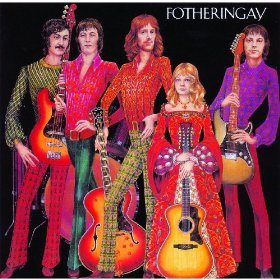
Fotheringay 2.
A total of eleven tracks were meant to feature on Fotheringay’s sophomore album. This time, Sandy Denny only wrote two songs. Trevor Lucas and Pete Roach penned Knights of the Road and Restless.Among the other tracks were traditional songs, a cover of Bob Dylan’s I Don’t Believe You and the Dave Cousins’ composition Two Weeks Last Summer. These eleven tracks were recorded by an expanded lineup of Fotheringay.
Joining the usual lineup of Fotheringay was Linda Thompson. She was going to add backing vocals when the sessions began in November 1970. The sessions continued into December 1970. Everyone thought that things were going to plan. Sadly, that wasn’t the case.
In January 1971, it was announced that Fotheringay were no more. The band broke up and what would eventually become Fotheringay 2 was shelved. The songs were in various states of completion. Fotheringay 2 wasn’t an album in the true sense of the word. There was a lot to do before Fotheringay 2 could be released. However, back in 1971, it seemed unlikely that Fotheringay 2 would be released. This would change in 2008.
Although Fotheringay 2 wasn’t complete, and to some extent, was work-in-progress, a decision was made to release the album in 2008. Using editing and modern recording techniques, the album was completed by Jerry Donohue and the other surviving band members. By then, several of the tracks had been released.
The two Trevor Lucas and Pete Roach compositions found their way onto two Fairport Convention albums. Knights of the Road featured on the 1973 album Rosie; while Restless found its way onto the 1975 album Rising For The Moon album. Fairport Convention even decided to record the Bob Dylan song I Don’t Believe You for their album Nine. Despite recording I Don’t Believe You, it never made it onto Nime when it was released in 1973. By then, Sandy Denny had recorded several Fotheringay songs for her solo albums.
When Sandy Denny was choosing material for her debut album The North Star Grassman And The Ravens, the decided to cover a trio of tracks that had been recorded for Fotheringay 2. Late November, John The Gun and The North Star Grassman And The Ravens all found their way onto Sandy Denny’s 1971 debut album. Then for Sandy’s 1974 album Rendezvous, she decided to record Silver Threads and Golden Needles. Belatedly, the song made its debut. So would Fotheringay 2 in 2008.
When Fotheringay 2 was released, the long lost album was well received. It was a reminder of Fotheringay’s potential. If they had stayed together, they could’ve become one of the great British folk bands. That critics said, was apparent by listening to Fotheringay 2. However, critics wondered what Fotheringay 2 would’ve sounded like if more time had been spent on the album? Would Fotheringay 2 have become one of the great British folk albums? Sadly, that wasn’t to be and it was a case of what might have been.
If Fotheringay hadn’t split-up in January 1971, would they have become a serious rival to Fairport Convention for the title of Britain’s premier folk-rock band. While that might seem unlikely, Fotheringay had something Fairport Convention didn’t…Sandy Denny. Her enchanting, ethereal vocal was at the heart of the sound and success of Fotheringay. So was her songwriting skills.

That’s why Sandy Denny left Fairport Convention. She wanted to improve as a songwriter. While she formed Fotheringay not long after leaving Fairport Convention, Sandy Denny was already a talented songwriter. She got the chance to shine on Fotheringay’s 1970 eponymous debut album. Not only did Sandy pen four tracks, but she wrote Peace in the End with Trevor Lucas. It seemed away from Fairport Convention, Sandy Denny was maturing as a singer and songwriter. Maybe, it was because was Fotheringay was her band? No longer was she surrounded by strong personalities who maybe, overshadowed Sandy. Given time, Sandy Denny’s new group could’ve rivalled Fairport Convention.
Sadly, that wasn’t to be. When Fotheringay reached a respectable number eighteen in 1970, this wasn’t good enough for Island Records. They started whispering in Sandy Denny’s ear, encouraging her to embark upon a solo career. While this wasn’t what Sandy Denny wanted, it would be financially advantageous to Island Records. However, Sandy Denny wanted to continue with Fotheringay. Sadly, Fotheringay was short-lived.
In January 1971, the announcement came, that Fotheringay had split-up. Island Records got their wish. Sandy Denny embarked upon a solo career.
The Solo Years.
Her debut album was The North Star Grassman and the Ravens. It was released in September 1971, and featured Late November, John The Gun and The North Star Grassman And The Ravens, which were meant to feature on Fotheringay 2. Critical acclaim accompanied the release of The North Star Grassman and the Ravens. Sandy Denny it seemed, could do no wrong.
A year later, Sandy Denny released her sophomore album Sandy in September 1974. It was released to the same critical acclaim as The North Star Grassman and the Ravens. However, Sandy surpassed the quality of The North Star Grassman and the Ravens. Indeed, it would prove to be the best album of her solo career.
It wasn’t until 1974, that Sandy Denny released Like an Old Fashioned Waltz followed in June 1974. The album saw a philosophical Sandy consider themes like loneliness, fear of the dark, the passing of time and even the changing seasons. Essentially, Sandy was fixating on growing old and death. That would prove ironic
When Like an Old Fashioned Waltz was released, critics noticed Sandy’s stylistic departure. Pop and folk featured heavily. It seemed Island Records were trying to turn Sandy Denny into something she wasn’t. Maybe that’s why Sandy returned to Fairport Convention.
A Return To Fairport Convention.
Sandy rejoined Fairport Convention in 1974. By then, Sandy’s husband Trevor Lucas was also a member. They joined for the Fairport Convention’s world tour. It was captured on the 1974 live album Fairport Live Convention. Sadly, Sandy and Trevor left Fairport Convention in 1975. Their swan-song was Rising For The Moon.
The Solo Years Take 2.
Following her second departure from Fairport Convention, Sandy returned to her solo career. Soon, she began work on what before her fourth solo album Rendezvous. One of the songs Sandy recorded was Silver Threads And Golden Needles. It had been recorded during the Fotheringay 2 sessions. However, Sandy decided to review the song for her fourth solo album Rendezvous.
She released Rendezvous in May 1977. Rendezvous saw Sandy embrace a contemporary rock sound. This was very different from previous albums. Still, Rendezvous was reasonably well received by critics. However, they noted that Rendezvous didn’t match the quality of The North Star Grassman And The Ravens and Sandy. Not long after the reviews were published, Rendezvous was released. Now record buyers could have the final say on Rendezvous.
Despite touring Britain promoting Rendezvous, the album didn’t sell well. The final night of the tour took place on 27th November 1977, at the Royalty Theatre, in London. It was recorded and was meant to be released as a live album, Gold Dust. Problems with the guitars meant this didn’t happen until 1998, when Gerry Donhue rerecorded the guitars. Ironically, that ill-fated concert was Sandy Denny’s swan-song.
When Rendezvous failed commercially, Island Records dropped Sandy. She was already drinking heavily, smoking and snorting cocaine. Her behaviour became erratic. Sandy was also suffering from severe headaches. So a doctor prescribed a distalgesic. However, Sandy continued to drink. Whether this played a part in a fall she had in late March 1978 is unknown. What we know, is that tragedy struck on 17th April 1978.
That night, Sandy Denny was admitted to the Atkinson Morley Hospital in Wimbledon. She fell into a coma, and four days later, on 21st April 1978, Sandy Denny died. The cause of Sandy’s death was a brain haemorrhage and blunt force trauma. It’s likely that when Sandy Denny fell, this played a contributory factor in her death. Tragically, Sandy Denny was only thirty-one. That day, British folk music lost one of finest voices.
While Sandy Denny is remembered for her two spells with Fairport Convention and four solo albums, often her time with Fortheringay is often overlooked. That’s a great shame, as Sandy Denny’s short-lived other group features Sandy Denny at the peak of her powers. With Sandy Denny at the helm, Fotheringay could’ve gone on to rival Fairport Convention. Sadly, they never got the opportunity to do so, and the Fotheringay story was over before it had began. It’s Sandy Denny’s “other,” sometimes forgotten and short-lived group
Fotheringay-Sandy Denny’s Sometimes Forgotten and Short-Lived Group.

THE LIFE AND TIMES OF MOGWAI.
The Life and Times Of Mogwai.
The Mogwai story which began in 1991, when Stuart Braithwaite and Dominic Aitchison met in Scotland’s musical capital, Glasgow. Four years later, they met drummer Martin Bulloch and formed Mogwai, which film buffs will remember, is a character from the movie Gremlins. Mogwai was always meant as a temporary name, until they came up with something better.
Later in 1995, three become four when guitarist John Cummings joined Mogwai. Since then, John Cummings’ role in Mogwai has changed, and he’s now described as playing “guitar and laptop,” and is regarded as the maestro when it comes to all things technical. However, not long after John Cummings joined Mogwai in 1995, the nascent band started honing their sound and making plans for the future.
In 1996, Mogwai founded their own record label Rock Action Records. It would play an important part in the rise and rise of Mogwai over the next twenty-one years. So would Mogwai’s Castle Of Doom Studios, which was cofounded by Mogwai and Tony Doogan in 2005. It’s situated in the West End of Glasgow, and is a home from home for Mogwai, when they record a new album. That was still to come.
Before that, Mogwai released their debut single Tuner on their newly founded label Rock Action Records. Tuner was released to critical acclaim and the NME awarded it their single of the week award. Later in 1996, Mogwai released two further singles. Angels v. Aliens and Summer. By then, Mogwai were well on their way to becoming one of the hottest bands of the late nineties.
Mogwai’s career continued apace in 1997, when they released two more singles.The first of these, was New Paths To Helicon Pt. 1, which showed Mogwai growing and maturing as a band. NME agreed, and just like their debut single Tuner, New Paths To Helicon Pt. 1 won NME’s single of the week award. The followup Club Beatroot was also well received by critics. This was the perfect time for Mogwai to record their debut album, Mogwai Young Team.
Mogwai Young Team.
For Mogwai Young Team, Mogwai brought onboard Brendan O’Hare the Teenage Fanclub’s drummer. Another guest artist was Aidan Moffat of Falkirk based band Arab Strap. He added the vocal to R U Still In 2 It, while the rest of Mogwai Young Team consisted of instrumentals. Mogwai Young Team was recorded at Chem 19 studios and produced by two of Scotland’s top producers, ex-Delgado Paul Savage and Andy Miller. Once Mogwai Young Team was completed, it was then released on Scotland’s biggest record label, Chemikal Underground Records.
Before its release, Mogwai Young Team was a hailed as a groundbreaking album of post-rock by critics. They were won over by Mogwai Young Team, and Mogwai were hailed as a band with a big future.
That proved to be a perceptive forecast. When Mogwai Young Team was released on 21st October 1997, sold over 30,000 copies and reached number seventy-five in the UK. The Mogwai Young Team were on their way. However, a few changes were about to take place.
Come On Die Young.
A year later, Mogwai were back in the studio recording their sophomore album Come On Die Young. Much had changed. A new member had joined the band, Barry Buns a flautist and sometimes pianist, who had already played a few gigs with the band. He was invited to become the fifth member of Mogwai. Not long after this, violinist Luke Sutherland joined Mogwai, but not on a full-time basis. This wasn’t the only change.
Recording of what became Come On Die Young was split between New York and Glasgow. This time, they’d forsaken Chem 19 in Blantyre and recorded parts of the album in Rarbox Road Studios, New York. Some sessions took place in Glasgow’s Cava Studios. Producing Come On Die Young was Dave Fridman. For some critics, his addition changed Mogwai’s sound.
Some critics felt his production style resulted in a much more orthodox sounding album. However, others felt that Come On Die You was part of Mogwai discovering their “sound” and direction. Come On Die Young is a much more understated, but also ambient, experimental, multi-textured and melodic. There’s a fusion of ambient, grunge and post rock on Come On Die Young, which was released in 29th March 1999.
On its release, Come On Die Young reached number twenty-nine in the UK. Mogwai it seemed were now on their way to finding their sound and fulfilling the potential that was evident on their debut album. This was apparent with tracks of the quality of CODY and Hugh Dallas s. However, like all innovative bands, Mogwai continued to reinvent their music.
This proved to the case on their eponymous E.P, which includes Stanley Kubrick, which was recorded in the exotic surroundings of Cowdenbeath in Fife. Burn Girl Prom Queen was recorded at Cava Studios, in Mogwai’s hometown of Glasgow. These two tracks were part of E.P., which further enhanced Mogwai’s reputation as post rock pioneers. So did their third album Rock Action.
Rock Action.
Mogwai’s music continued to evolve on their third album 2001s Rock Action. More use was made of electronics on Rock Action. This was part of a process that would continue over the next few albums. There were even more layers and textures on Rock Action, as Mogwai continued to expand their sonic palette. Seven of the songs were instrumentals, while Dial Revenge featured Gruff Rhys of Super Furry Animals. Again, Rock Action was produced by Dave Fridman, while recording took place in New York and at Glasgow’s Cava Studios. Once Rock Action was completed, it became Mogwai’s first album to be released on Play It Again Sam.
Rock Action was released in April 2001, and proved to be Mogwai’s most successful album. It reached number twenty-three in the UK. Critics remarked upon how Rock Action wasn’t as dark an album as its predecessors. That didn’t mean that Mogwai’s view of the world had changed. They were still worldweary which would become a Mogwai trademark.
Six months after the release of Rock Action, Mogwai returned with another single, The My Father My King. It was released in October 2001, and was described “as the companion piece to Rock Action.” A sticker on the cover bore Mogwai’s description of the single as: “two parts serenity and one part death metal.” That was about to change. Soon, they’d be happy people writing happy songs and making a breakthrough into the American market.
Happy Songs For Happy People.
Happy Songs For Happy People was released in 2003, and Mogwai’s evolution continued. Their music continued further down the electronic road. While Mogwai still deployed electric guitars and a drummer, synths were playing a more important role in Mogwai’s music. So were the addition of strings and a piano. They played their part in what was a much more understated album. Part of this change in style was a change of producer.
Tony Doogan was brought onboard as producer, and replaced Dave Fridman. Gone were transatlantic recording sessions. Happy Songs For Happy People was recorded at Cava Sound Studios, Glasgow. On its release in June 2003, Happy Songs For Happy People was well received by critics. Critics drew attention to I Know You Are But What Am I? and Hunted By A Freak, two of the album’s highlights. The critics also welcomed Mogwai’s latest change in style. So did record buyers.
While Happy Songs For Happy People only reached number forty-seven in the UK, it spent a week in the American charts, reaching number 182 in the US Billboard 200. After four albums, Mogwai had broken into the American market. Happy Songs For Happy People it seemed, was a landmark album.
Having made inroads into the lucrative American market, Mogwai didn’t rush their fifth album. It was released three years after Happy Songs For Happy People. There’s a reason for this. They were working on tree separate projects.
The first was their fifth album Mr. Beast. Then there was the first soundtrack they’d written and recorded. This was for the 2006 movie Zidane: A 21st Century Soundtrack. Mogwai also collaborated with Clint Mansell on the soundtrack to The Fountain. Although soundtracks were a nice sideline for Mogwai, their fifth album Mr. Beast was of huge importance. Especially, if it was a commercial success in America.
Mr. Beast.
Recording of Mr. Beast took place at Mogwai’s new studio, Castle Of Doom Studios in Glasgow. Co-producing Mr.Beast with Mogwai, was Tony Doogan. Between April and October 2005, Mogwai honed their fifth album, and after six months, Mr. Beast was complete. It was Mogwai’s most important album.
Everyone realised the importance of Mr. Beast. Mogwai were on a verge of breaking into the American market. Happy Songs for Happy People had got Mogwai’s foot in the door of the American market. Now was the time for the Mogwai Young Team to kick the door of its hinged, and make their presence felt. That was what Mogwai intended to do with tracks like Travel Is Dangerous, Friend Of The Night and We’re No Here. They featured Mogwai at their innovative and creative best. This trio of tracks were part of an album that would please critics, Mr. Beast.
On its release, it was mostly, to critical acclaim. Critics were fascinated at how Mogwai’s music continued to evolve. For Mogwai, standing still was going backwards. Record buyers agreed and expected Mogwai to continually release groundbreaking and innovative. That was what Mogwai delivered.
When Mr. Beast was released on 5th March 2006, record buyers found an album of groundbreaking and innovative music. It climbed thirty-one in the UK. Across the Atlantic, Mr. Beast reached number 128 in the US Billboard 200. Mogwai were now one of Scotland’s most successful musical exports. They were certainly well on their way to becoming Scotland’s most innovative band. This was a title they weren’t going to give up without a fight.
Zidane: A 21st Century Portrait.
Following the release of Mr. Beast, the other two projects that Mogwai had been working on, were released. The first was Zidane: A 21st Century Portrait. This was project that came about in late 2005, when artist Douglas Gordon asked Mogwai to write and record a soundtrack to a film he was making about footballer Zinedine Zidane. This was Zidane: A 21st Century Portrait. Having heard the details of the project, it didn’t take Mogwai long agree to provide the soundtrack to Zidane: A 21st Century Portrait, which gave them their entry into the world of soundtracks.
Mogwai grasped this opportunity, and recorded Zidane: A 21st Century Portrait at their Castle Of Doom Studios. During the sessions, Mogwai recorded ten tracks, which were produced by Tony Doogan. However, when the soundtrack was released, it came baring a secret.
This was the hidden track Untitled, which was a twenty-three minute epic, that featured Mogwai at their most inventive. That was the case throughout Zidane: A 21st Century Portrait. Most critics realised this. However, a few didn’t seem to ‘get’ Zidane: A 21st Century Portrait. Despite the slings and arrows of the critics that didn’t get Mogwai’s introduction into the world of soundtracks, the critics that mattered gave Mogwai the recognition they deserved when Zidane: A 21st Century Portrait was released on 30th October 2006. Then less than a month later, the soundtrack to The Fountain was released on 27th November 2006.
The Fountain.
The Fountain was a collaboration between contemporary classic composer Clint Mansell, string quartet the Kronos Quartet and Mogwai. To some onlookers, it looked like an unlikely collaboration. That wasn’t the case though.
Mogwai had spent December 2005 locked away in their Castle Of Doom Studios with producer Tony Doogan. Other parts of The Fountain project were recorded in New York and Los Angeles. Then once the project was complete, The Fountain was released on 27th November 2006.
When The Fountain soundtrack was released, the reviews were positive. Mogwai’s contribution to the soundtrack had proved vital, while the Kronos Quartet proved a perfect foil the Mogwai Young Team. Mogwai’s lasted soundtrack had enhanced their reputation as the go-to guys for a soundtrack. That would their sideline in the future. However, before they released another soundtrack, Mogwai would release another two albums.
The Hawk Is Howling.
The first of these was The Hawk Is Howling. To ensure they kept their title of Scotland’s most innovative bands, Mogwai returned to the studio where it all began, Chem 19 in Blantyre.
Andy Miller who had co-produced Mogwai Young Team, Mogwai’s debut album was chosen to produce what became The Hawk Is Howling. This was Mogwai’s sixth album and marked a first. It was Mogwai’s first album to consist of just instrumentals. Among them were I’m Jim Morrison, I’m Dead, The Sun Smells Too Loud, Batcat and Scotland’s Shame. They feature the post rock pioneers pushing musical boundaries to their limits, and sometimes, beyond. Once The Hawk Is Howling was recorded, Garth Jones mixed the album at Castle Of Doom Studios in Glasgow. After that, The Hawk Is Howling was ready for release.
The Hawk Is Howling was released on 22nd September 2008. Critics were won over by The Hawk Is Howling. There were no dissenting voices. This was one of Mogwai’s best albums, and it was no surprise it sold well in the UK and America.
On its release, The Hawk Is Howling reached number thirty-five in the UK and number ninety-seven in the US Billboard 200. It seemed with each album, Mogwai’s music evolved and matured. This resulted in even more success coming their way. Would this continue with Hardcore Will Never Die?
Hardcore Will Never Die, But You Will.
For their seventh album, Mogwai returned to Chem 19 Studios in Blantyre, where they hooked up with ex-Delgado Paul Savage. Since he had produced Mogwai’s debut album, Mogwai Young Team Paul had established a reputation as one of Scotland’s best producers.
By then, Paul Savage had worked with everyone from Franz Ferdinand to R.M. Hubbert. However, it was a very different Mogwai Paul encountered. They were very different to the band who recorded Mogwai Young Team Paul. Their music had evolved and was continuing to do so. They’d matured as musicians and embraced the new technology. Hardcore Will Never Die, But You Will was proof of this.
Here was an album of groundbreaking, genre-melting post-rock with attitude. Hardcore Will Never Die, But You Will was also an album not short on humour. Poppy soulster Lionel Ritchie provided the inspiration for You’re Lionel Ritchine. There was also a celebratory sound to Hardcore Will Never Die, But You Will.
The death of Scotland’s nemesis, Margaret Thatcher sparked celebration in Glasgow’s George Square. Hardcore Will Never Die, But You Will, celebrated provided the soundtrack to the celebrations. It was just one track on an album of pioneering, post rock music crammed full of hooks, humour and attitude. Others highlights Mexican Grand Prix, Rano Pano and How To Be A Werewolf . With music of this quality, surely Hardcore Will Never Die, But You Will couldn’t fail?
Before the release of Hardcore Will Never Die, But You Will, Rano Pano was released as a single. On the flip side was Hasenheide, which didn’t feature on Hardcore Will Never Die. . Things it seemed were looking good for Mogwai.
Yet again, Mogwai won over the majority of critics with Hardcore Will Never Die, But You Will. A couple of contrarian critics proved to be mere dissenting voices in the wilderness. Most critics realised that Hardcore Will Never Die, But You Will was one of Mogwai’s finest hours. Record buyers would agree.
Hardcore Will Never Die, But You Will reached number thirty-five in the UK and number ninety-seven in the US Billboard 200. For Mogwai, they were now into their third decade as band and had just enjoyed their biggest album to date. The question was, what would Mogwai do next?
Les Revenants.
The answer to that was Les Revenants, a soundtrack to a French television series. Les Revenants or The Returned, is essentially a television program about zombies, albeit with a twist. Just like similar films, Les Revenants, finds the “undead” returning to the town they lived in. However, the zombies in Les Revenants weren’t how most films portray zombies. Another difference was the way Mogwai were commissioned.
Usually, someone writing a soundtrack can watch the film they’re writing music to. Not Mogwai. They were just shown a few scripts, which gave them an overview of what the series was about. From there, Mogwai wrote thirteen of the fourteen tracks including Wizard Motor and Hungry Face. They’re two of the album’s highlights. The other track on Les Revenants was What Are They Doing In Heaven Today, which was written by Charles Elbert Tilney. These fourteen tracks were recorded by Mogwai, who produced Les Revenants with Neil MacMenamin. Once Les Revenants was finished, it was released in February 2013.
Before Les Revenants was released an E.P. was released. It featured four tracks. That was a tantalising taster of what was to come. After all, Mogwai would approach a soundtrack like Les Revenants in a different manner. They wouldn’t do anything predictable. Les Revenants was a case of expect the unexpected. Critics loved Les Revenants and hailed the album as one of the best albums Mogwai had released. However, Mogwai had other ideas.
Rave Tapes.
Rave Tapes features ten tracks which were written by Mogwai. These tracks were recorded at Mogwai’s Castle Of Doom Studios, in Glasgow. Producing Rave Tapes was ex-Delgado Paul Savage, who had produced previous Mogwai albums and knew how the band worked. This was important, given Mogwai were at last, enjoying the critical acclaim and commercial success their music deserved. Work began on Rave Tapes on the 28th August 2013.
This was like the first day back at school for Mogwai, as they began recording what was their eighth studio album. The lineup of Mogwai has been settled for a few years. This included a rhythm section of bassist and guitarist Dominic Aitchison, drummer Martin Bulloch and guitarists Stuart Braithwaite and John Cummings who also played piano. Barry Burns plays organ, piano and guitar. at Castle Of Doom Studios, Glasgow, Mogwai recorded the ten tracks that became Rave Tapes, which was released on 20th January 2014.
Rave Tapes was one of the most anticipated albums of 2014. The big question was, what direction Mogwai’s music would head? After all, Mogwai’s music never stands still. It’s in a constant state of evolution. That’s no bad thing. Standing still is akin to going backwards in Mogwai’s book. On Rave Tapes, Mogwai’s music continues to evolve. Musical genres and influences melt into one on tracks like Remurdered, The Lord Is Out Of Control and Tell Everyone I Love Them. However, one of the most prominent influences on Rave was Krautrock. Add to this ambient, avant-garde, electronica, experimental, indie rock and rock. We hear different sides to Mogwai on Rave Tapes. Whether it’s fuzzy soundscapes or kicking out the jams, Mogwai didn’t disappoint with Rave Tapes.
Critics agreed. Rave Tapes was released to widespread critical acclaim. Superlatives were exhausted in search of a fitting description of what many felt was Mogwai’s finest hour. Some critics wondered aloud whether Mogwai’s music was mellowing. Others felt that Mogwai were improving with age. Record buyers agreed.
When Rave Tapes was released on 14th January 2014, the album reached number ten in Britain and fifty-five in the US Billboard 200 charts. Rave Tapes became Mogwai’s most successful album in Britain and America. Elsewhere, Rave Tapes sold well across Europe. Mogwai were enjoying the most album of their three decade career. However, it would be two years before Mogwai released a new album. Before that, Mogwai decided to celebrate their twentieth anniversary in style.
Central Belters.
In 2015, Mogwai were celebrating their twentieth anniversary. By then Mogwai were Scottish music’s elder statesmen, A lot had happened to them during the first twenty years of their career. Mogwai have released eight studio albums and three soundtracks. That’s not forgetting there’s countless singles, E.P.s and two remix albums. It was official, Mogwai had been one of the hardest working bands in music between 1995 and 2015. They were also one of the most innovative.
It was no surprise that critical acclaim and commercial success accompanied the release of each Mogwai album. Suddenly, the Glasgow-based were enjoying success not just in Britain, but in Europe and in America. Now was the perfect time for Mogwai to release Central Belters, a three disc career retrospective box set. Central Belters tells the story of the first twenty years of Mogwai.
With Mogwai not planning to release a studio album or soundtrack during 2015, Central Belters was a perfect stopgap. It was released on 23rd October 2015, and reached number forty in Britain, Central Belters sold reasonably well across the Europe, and was a perfect primer to the first twenty years of Mogwai’s career. The next chapter of Mogwai’s career began with a soundtrack album, Atomic.
Atomic.
Having enjoyed celebrating their twentieth anniversary during 2015, Mogwai got back down to business on 1st April 2016. That was when they released Atomic, their first new album in over two years. Atomic was Mogwai’s fourth soundtrack album,
During the summer of 2015, Mogwai had provided the soundtrack Mark Cousins documentary Atomic: Living In Dread and Promise. It was aired on BBC Four, and was a very personal memoir of growing up in the nuclear age. Using archive film, Mark Cousins constructed an impressionistic cinematic memoir of what was a harrowing time.
Post rock pioneers Mogwai were commissioned to write the soundtrack to Atomic: Living In Dread and Promise. It was hailed as the perfect backdrop to Atomic: Living In Dread and Promise, which was a personal and poignant cinematic memoir. However, after the documentary was aired in the summer of 2015, Mogwai decided to re-record Atomic.
At their Castle Of Doom Studios in Glasgow, Mogwai were joined be an old friend, occasional band member Luke Sutherland. Mogwai were also joined by Sophie, Robin Proper-Sheppard formerly of The God Machine and Glasgow composer Robert Newth. Together, they got to work on Atomic, which was Mogwai’s twelfth album since they formed back in 1995.
Once Atomic was completed, it was scheduled for release on 1st April 2016. Before that, Atomic was hailed as Mogwai’s finest soundtrack album, and a welcome addition to their discography.
On Atomic, Mogwai combine disparate and eclectic musical genres. Elements of avant-garde, Berlin School, electronica and experimental music are combined with indie-rock, Krautrock, post-rock and psychedelia. This results in a genre-melting, cinematic album. Atomic captivates and compels, and takes the listener on a musical journey. It veers between dramatic and dreamy, to surreal and lysergic, to beautiful, pensive and understated to melancholy and melodic. Other times the music is dramatic, moody and broody. One thing the music never is, is boring. That is one thing that can never be levelled against Mogwai. Instead, it was another case of always expect the unexpected.
That’s been the case since Mogwai were formed in 1995, and released their debut album Mogwai Young Team. Since then, it’s always been a case of expect the unexpected from the Mogwai, who continue to release albums of ambitious and innovative music. There was no way that Mogwai would contemplate recording the same album twice. Instead, they leave that to lesser bands who specialise in albums of twee or pseudo-intellectual music. That isn’t Mogwai’s bag. They’re constantly moving forward musically and making music that pushes boundaries to their limits, and sometimes, way beyond. Proof of that is Every Country’s Sun, which is their ninth studio album and thirteenth overall.
Every Country’s Sun.
Every Country’s Sun is Mogwai’s first studio album since they released Rave Tapes in January 2014. However, Mogwai haven’t been resting on their laurels and enjoying the fruits of the rock star lifestyle. That isn’t Mogwai’s style. Since the release of the Rave Tapes, Mogwai have released the three CD best compilation Central Belters in October 2015, and the soundtrack album Atomic in April 2016. There’s also the small matter of running their own record label Rock Action Records and their Castle Of Doom studio in Glasgow’s West End. Still, the four members of Mogwai found the time to return to the studio and record their ninth studio album Every Country’s Sun, which showcases their new sound.
When the time came for Mogwai to record Every Country’s Sun, they didn’t renew their successful partnership with Tony Doogan, who had produced their most recent album Atomic. Tony Doogan had also produced Mr. Beast and Zidane-A 21st Century Portrait, and is part of Mogwai’s inner circle. He knows Mogwai better than most, and knows that they often work with different producers. That was the case on Every Country’s Sun, where Mogwai renewed their partnership with experienced American producer Dave Fridmann.
The last time Mogwai had worked with Dave Fridmann was on Come On Die Young, which was released in 1999. Since then, much had happened for Mogwai and Dave Fridmann. Mogwai have released twelve albums and Dave Fridmann now has over 200 production credits to his name. He’s worked with some of the biggest names in indie music, including Flaming Lips, Mercury Rev, Jane’s Addiction, The Delgados, MGMT and The Vaccines. Dave Fridmann had beefed up his CV since the last time he worked with Mogwai.
Having made the decision to work with Dave Fridmann, Mogwai decided to record Every Country’s Sun at their own Castle Of Doom Studios in Glasgow. The alternative was for Mogwai to travel to New York to work with Dave Fridmann at Tarbox Road Studios in New York. That was unnecessary expense, considering that Mogwai had their own studio. They could always send the tracks over to Dave Fridmann in New York. This was very different to when Mogwai recorded their debut album Mogwai Young Team in 1996,
Each day, drummer Martin Bulloch, bassist Dominic Aitchison, guitarist and vocalist Stuart Braithwaite plus multi-instrumentalist Barry Burns entered Castle Of Doom Studios and began laying down the eleven tracks. These tracks were sent to Dave Fridmann in New York, who took charge of production. Gradually, Every Country’s Sun started to take shape and Mogwai were well on their way to completing what would be their first studio album in over three years. Eventually, Mogwai completed recording Every Country and Dave Fridmann mixed the album at Tarbox Road Studios. All that remained was for the album to be mastered by Frank Arkwright at Abbey Road Studios, in London. Now Mogwai were ready to embark upon a new chapter in a career that began twenty-two years ago in 1995.
Since then, post rock pioneers Mogwai have enjoyed an unrivalled longevity, and are now one of the most successful Scottish bands of their generation. Remarkably, the three original members of the band, Stuart Braithwaite, Dominic Aitchison and Martin Bulloch still remain are still part of Mogwai’s and played their part in latest album ambitious and innovative album, Every Country’s Sun.
There was an air of excitement when Mogwai announced the arrival of Every Country’s Sun earlier in 2017. The big question among critics and cultural commentators was what direction would Mogwai’s music head in? Most agreed that Every Country’s Sun would mark another stylistic departure for Mogwai.
The music on Every Country’s Su is sometimes, elegiac and ethereal, other times, the music is dark, dramatic, eerie, moody, ominous and otherworldly. Often, there’s a cinematic sound to Mogwai’s music, as they switched seamlessly between and combine musical genres and influences.
Mogwai combine elements of numerous disparate musical genres, ranging from classic rock, grunge, pop, post rock, psychedelia and space rock, to ambient, avant-garde, the Berlin School, electronica, experimental music and Krautrock. These are all part of the rich and vibrant musical tapestry that is Mogwai’s ninth studio album Every Country’s Sun, which was recently released by their own Rock Action Records. Every Country’s Sun and is Mogwai’s finest hour. The big question was what was next from Mogwai.
Kin.
Following the success of Every Country’s Sun, Mogwai were asked by film directors Jonathan and Josh Baker to write the soundtrack to the American sci-fi film Kin, which was written Daniel Casey. This was something that Mogwai had wanted to do since they began working on soundtracks for documentaries and films.
While Mogwai had written the score to three documentaries and contributed to tracks to 2006s The Fountain and Before The Flood in 2016 writing the soundtrack to a film was a challenge that they welcomed.
Not long after this, Stuart Braithwaite, Dominic Aitchison and Barry Burns began writing soundtrack to Kin. Eventually, they had written the nine tracks, including Eli’s Theme, Scrap, Flee, Funeral Pyre, Donuts, Miscreants, Guns Down, Kin and We’re Not Done (End Title). These tracks became Kin, which was recorded in familiar surroundings.
This was Mogwai’s own Castle Of Doom Studios, which is situated in Glasgow, Scotland. While Kin was recorded and produced by Mogwai, Paul Savage took charge of engineering duties. He watched on has Mogwai deployed an array of synths, traditional instruments and effects as Kin started to take shape. Eventually, Mogwai’s first post rock soundtrack was ready for Tony Doogan to mix.
Once Kin was mixed, the album was mastered at Abbey Road Studios, in London, by Frank Arkwright. Now Kin was ready to released on Mogwai’s Rock Action Records.
The release of Kin was scheduled for the ‘31st’ of August 2018. Before that, critics had their say on Kin which was the first soundtrack Mogwai written and recorded.
Straight away, Kin brings back memories of another of Mogwai’s soundtrack albums Les Revenants. Both albums feature the minor key piano where reverb is deployed to give Mogwai’s trademark sound. This has become a feature of many Mogwai albums, and Kin is no different.
The grand old men of Scottish music put their twenty-three years of experience to good use on their latest carefully crafted album Kin. It’s the first film soundtrack that Mogwai have released. Kin showcases a cinematic sound which features drama, tension, sci-fi sound and poppy hooks on a melodic and memorable soundtrack album. It also finds Mogwai fusing disparate musical genres on Kin.
Mogwai were inspired by ambient, avant-garde, Berlin School, electronica, experimental music, indie rock, Krautrock, pop, post rock, psychedelia and space rock on Kin. Sometimes, these genres can be heard only briefly on Kin. It’s Mogwai’s first ever film soundtrack and marks a new chapter in a story that is into its third decade.
Twenty-three years after Mogwai were founded in 1995, the post rock pioneers return with their cinematic epic Kin, which is which is their first ever film soundtrack and a reminder why they’re still one of Scotland’s too bands
Hopefully, it won’t be long before Mogwai begin thinking about their next musical adventure. This isn’t the type of adventure Enid Blyton’s Famous Five once enjoyed. Far from it. There’s no picnics, lemonade and bicycle trips. Instead, it’s Mogwai’s musical adventures are a bit more edgy and gritty. That has been the case throughout Mogwai’s career, where the post rock pioneers i have continued to created groundbreaking and innovative music.
The Life and Times Of Mogwai.
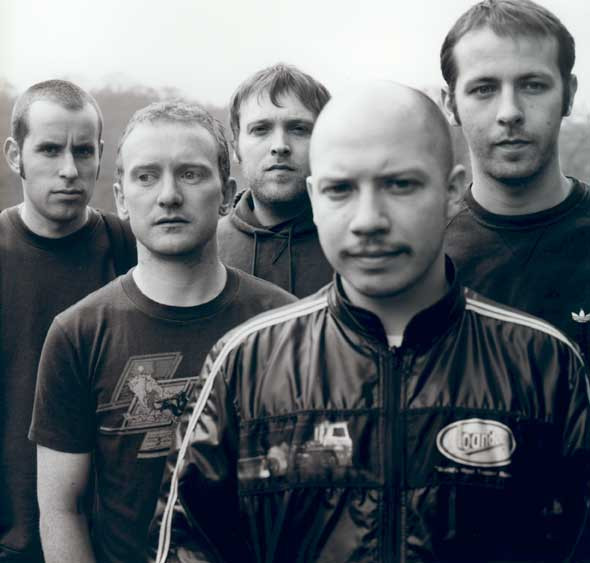
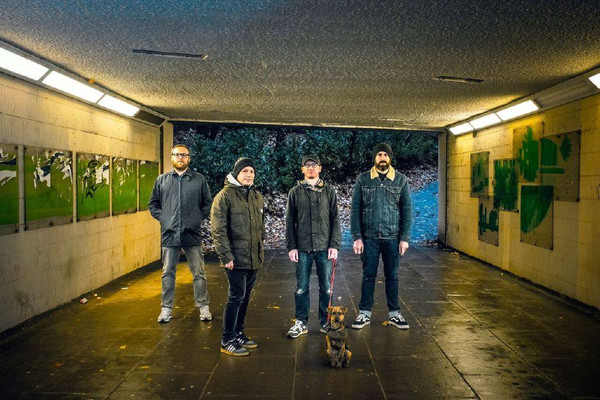
STEVE TIBBETTS-HIS ECM RECORDS YEARS.
Steve Tibbetts-His ECM Records Years.
Ever since Minnesota born composer and guitarist Steve Tibbetts signed to ECM Records in 1981, the pioneer of sound-forming has only released nine albums for Manfred Eicher’s Munich-based label. These albums document the career of a musical innovator who was introduced to music at an early age.
Steve Tibbetts was born in Madison, Wisconsin, in 1954, and growing up, was introduced to the music of the Kingston Trio, Pete Seeger and Johnny Winter by his father, who worked at the University of Wisconsin School for Workers and also taught labour law around the state. Sometimes, Steve Tibbetts’ father invited anything up to twenty union workers and organisers to the family home, where they would eat, and later, would enjoy an impromptu jam session. Initially, Steve Tibbetts would watch as his father and his friends played an assortment of instruments, including autoharps, banjos, flutes, guitars, psalteries and recorders. Before long, Steve Tibbetts found the confidence to standup and take part in the musical evenings, which were good practise for the future.
By 1975, Steve Tibbetts was a student at Macalester College, and spent much of his time listening to music with friends in his dorm. Days were whiled away smoking and listening to everything from John Coltrane and Pharaoh Sanders, to Mountain, and sometimes, Paul McCartney and Todd Rundgren. When Steve Tibbetts heard an album that was recorded solely by Todd Rundgren, he believed that he could record a similar type of album. Usually, that would’ve been easier said than done.
Fortunately, Steve Tibbetts was offered a work-study placement at Macalester College’s recording studio, and this allowed him to learn how a studio operated. It was akin to a musical apprenticeship and would prove invaluable as Steve Tibbetts learnt how to operate the equipment, splice and join tape and between 1975 and 1976 record his debut album. By then, the recording studio had become a second home for Steve Tibbetts, and although latterly, he was no longer officially a student, he completed his eponymous debut album in Macalester College’s recording studio.
Steve Tibbetts.
Having completed his eponymous debut album, Steve Tibbetts was released in 1977 on the Cuneiform label. By then, one of the tracks on Steve Tibbetts, Jungle Rhythm, was being used by the ice hockey team the Bay Area Bombers. There was even a rumour that Clive Davis at Arista was interested in signing Steve Tibbetts, and he spent the best part of two weeks waiting for the phone to ring. Despite that disappointment, Steve Tibbetts sold enough copies of his debut album that he was able to but an eight-track tape recorder and set up his own recording studio.

Yr.
In his new recording studio, Steve Tibbetts recorded his sophomore album Yr on his new eight-track tape recorder, and once the album was completed, he began shopping the album to record labels. This proved a thankless task, as Steve Tibbetts the rejection letters dropped through his letterbox. Eventually, they numbered 200, and it wasn’t until 1980 that Frammis released Yr, which was heard by one of the most influential men in European jazz and experimental music.
This was Manfred Eicher, the founder of the Munich-based label ECM Records, who spotted Steve Tibbetts’ potential and signed him in 1981. Since then, ECM Records has been home to Steve Tibbetts, who continued to pioneer sound-forming on his major label debut.
Already, Steve Tibbetts had realised that it was possible to use the recording studio itself as a tool for creating sounds, and this was something that he would pioneer during his career. However, having signed to ECM Records in 1981, he was soon in the studio with Manfred Eicher, who took charge of production.
Northern Song.
Previously, Steve Tibbetts had spent a great deal of time recording his first two albums, but that wasn’t the way that ECM Records’ founder and in-house producer worked. He was used to working quickly, and recording albums over a two or three days. This way of recording worked for most of the artists signed to ECM Records and the label had released many critically acclaimed albums. However, when Steve Tibbetts’ third album and ECM Records’ debut Northern Song was released in 1982, the reviews of what was an adventurous, ambitious and thoughtful album were scathing and critics were far from impressed by the album. For Steve Tibbetts and Manfred Eicher who produced Northern Song, this was a huge blow.
Safe Journey.
Two years later, in 1984, multi-instrumentalist Steve Tibbetts returned with his fourth album Safe Journey. By then, he had returned to his tried and tested way of recording an album, and had spent months recording Safe Journey, which was released to critical acclaim and was the most eclectic album of his career. It featured elements of folk, jazz, modern classical, psychedelia, rock and world music which were combined to create an ambitious and innovative album. Safe Journey was the album that launched Steve Tibbetts’ career at ECM Records.
Exploded View.
When Steve Tibbetts recorded his fifth album Exploded View, he was once again joined by percussionist Marc Anderson, who had played on every album since Northern Song. Marc Anderson’s percussion played an important role in the sound and success of Exploded View, which was released in 1986, and was another eclectic and melodic album, which has been inspired by African, Indian and Moroccan rhythms, and to some extent, the psychedelic and progressive music of the late-sixties and seventies. However, stealing the show was Steve Tibbetts delivers a series of explosive and inventive performances on guitar during this carefully crafted album of soundscapes. It was released to critical acclaim and further enhanced Steve Tibbetts’ reputation.
So did the reissue of Steve Tibbetts’ ECM Records’ debut Northern Song in 1988, which resulted in the album being reappraised by critics. Not for the first time, critics rewrote history, after realising that Northern Song was an ambitious and groundbreaking release that showcased a pioneering musician as he embarked upon his career. Seven years later, and Steve Tibbetts was about to release his sixth album, and fourth for ECM Records, Big Map Idea.
Big Map Idea.
Despite his star being in the ascendancy, Steve Tibbetts seemed in no hurry to release a new album, and his sixth album Big Map Idea wasn’t released until 1989. It was worth the wait and featured a myriad of exotic and ethnic instruments that play their part in an intriguing, mysterious and to some extent, mystical album that is full of twists and turns, as the music on Big Map Idea ebbs and flows, and gradually reveals its secrets. Critics hailed the album as a welcome addition to Steve Tibbetts’ burgeoning discography
The Fall Of Us All .
The next addition to Steve Tibbetts’ discography was The Fall Of Us All, which was released in 1994, five years after Big Map Idea. By then, Steve Tibbetts continued to explore and pioneer sound forming and used the recording studio as an instrument as he continued to create ambitious and innovative music.
Proof of that was The Fall Of Us All, which was another eclectic album that veered between explosive, urgent, uplifting and spiritual as Steve Tibbetts fused elements of Arabian music, art-pop, Eastern sounds, modal jazz, psychedelia, rock and even rock ’n’ roll. The Fall Of Us All was released to widespread critical acclaim and hailed as one of Steve Tibbetts’ finest hours.
Following the success of The Fall Of Us, Steve Tibbetts wasn’t tempted to rush release a new solo album and decided to spend the next few years collaborating with other artists. This included recording a new album with Nepalese Buddhist nun Ani Choying Drolma. In 1997, Steve Tibbetts and Ani Choying Drolma they released their first collaboration Chö, which was well received by critics.
After completing Chö, Steve Tibbetts began recording a new album with Norwegian Hardanger fiddle player, Knut Hamre. Eventually, Steve Tibbetts and Knut Hamre completed the album Å, which was released to plaudits and praise in 1999.
A Man About A Horse.
Eight years after the release of his last solo album Steve Tibbetts returned with A Man About A Horse, which was his sixth release for ECM Records and his eighth solo album. A Man About A Horse was another album with an Eastern influence, and finds Steve Tibbetts eschewing Western scales as the he carves fluid, jagged, rocky and experimental soundscapes. Joining Steve Tibbetts on what was another groundbreaking offering, were percussionists Marc Anderson and Marcus Wise, who play a part in the sound and success of A Man About A Horse. It seemed that Steve Tibbetts’ music was maturing like a fine wine.
Two years after releasing his eighth solo album, Steve Tibbetts and Nepalese Buddhist nun Ani Choying Drolma returned in 2004 with their sophomore album Selwa, which was the followup to their 1997 album Chö. Selwa was an almost flawless collaboration where Eastern and Western music combines seamlessly. It was without doubt, the finest collaboration of Steve Tibbetts’ twenty-seven year career.
After the release of Selwa, Steve Tibbetts didn’t seem in a hurry to release a new album, and preferred to work slowly, as he honed and perfected another ambitious and innovative album. Steve Tibbetts remembered recording Northern Song, which had been in a matter of days, and the scathing reviews were a reminder of the album. That taught him an important lesson, and since then, he worked at his own speed and did things his own way.
Natural Causes.
That was the case when he recorded Natural Causes with his friend Marc Anderson during 2008. In 2010, Steve Tibbetts released his ninth album Natural Causes, which was his first solo album in eight years, and was very different from previous albums. Steve Tibbetts had switched to his father’s Martin D-12-20 12-string acoustic guitar on Natural Causes, which was recorded when he was rethinking his approach to music. This resulted in him studying Bach, Bartók and music theory on a daily basis as he tried to improve himself as a musician.
This paid off, and Natural Causes was released to widespread critical acclaim. Just like his previous albums for ECM Records, Steve Tibbetts was joined by Marc Anderson and they deployed an eclectic array of exotic instruments that accompanied the Martin D-12-20 12-string acoustic guitar. The resulting album, Natural Causes, featured enchanting and captivating multilayered soundscapes that were full of Eastern sounds and was another welcome addition to his discography.
Life Of.
Following the release of Natural Causes, Steve Tibbetts’ fans were already looking forward to his tenth solo album, but deep down, they knew that they were in for a long wait. Steve Tibbetts seems to only release a new solo album every eight years. He had released The Fall Of Us All in 1994, with A Man About A Horse following in 2002 and Natural Causes in 2010. The smart money was on Steve Tibbetts returning with his tenth solo album in 2018. That was the case, with Life Of, being released by ECM Records in May 2018, which marks the octennial appearance of musical pioneer Steve Tibbetts.
For his tenth solo album Life Of, Steve Tibbetts composed thirteen new soundscapes which he decided to record in St. Paul, which was where he had recorded so many of his previous albums. This time, though, it was just a small band that would accompany as he recorded Life Of.
Although Steve Tibbetts is a talented multi-instrumentalist, he decided that he would only play piano and his father’s fifty year old Martin D-12-20 12-string acoustic guitar, that had served him so well on Natural Causes during the recording of Life Of. Joining Steve Tibbetts, was his old friend and percussionist Marc Anderson, who had played on every solo album he had released for ECM Records. The only other musician that joined Steve Tibbetts and Marc Anderson was cellist Michelle Kinney also adds the drones that feature on Life Of. Together, the three musicians began recording what was Steve Tibbetts’ tenth solo album, Life Of which was then mixed at his old alma mater Macalester College. Gradually, Life Of took shape, and was released in May 2018.
The music on Life Of is a quite different from some of Steve Tibbetts’ earlier albums, and features a much more understated and minimalist sound. Life Of features elements of ambient, avant-garde, experimental music, jazz and world music as Steve Tibbetts and his band carefully crafted, understated and minimalist dreamscapes.
They veer between melancholy to meditative and ruminative as the music invites reflection. Other times, the music is broody and moody, or dark and dramatic, while other dreamscapes are cinematic, hopeful, melodic and rich in imagery as Steve Tibbetts and his band paint pictures during Life Of which is a powerful and poignant album that is almost flawless.
Just like Steve Tibbetts’ previous albums, Life Of is a captivating and rewarding album from a musical pioneer whose enjoyed a long and illustrious recording career that has lasted five decades including the ECM Records years.
Steve Tibbetts-His ECM Records Years.
BERT JANSCH-1965-1975.
Bert Jansch-1965-1975.
Although folk singer Bert Jansch was born in Springburn, Glasgow on the ‘3rd’ of November 1943, he spent his formative years living in West Pilton, in Edinburgh, where he later, embarked upon a career as a professional musician. Before long, Bert Jansch was regarded as one of the leading lights of folk scene and looked destined for a long and successful career.
As 1965 dawned, folk singer Bert Jansch was signed to the Transatlantic label, and had released his eponymous debut album to critical acclaim on the ‘16th’ of April 1965. Eight months later, he released the followup It Don’t Bother Me to plaudits and praise. It looked as if the twenty-two year singer was about to enjoy a successful solo career.
With things looking good for Bert Jansch, he returned to the studio in early summer 1966, and was once again, joined by his friend John Renbourn as he recorded Jack Orion. When this third album of traditional folk was released in September 1966, the reviews were mixed. While some critics were won over by the album, and continued to fly the flag for the folk singer, others felt it was a weaker album than its predecessors. Despite that, Bert Jansch’s star was still in the ascendancy.
As 1967, dawned little did Bert Jansch realise that this would one of the most important year of his career. He entered the studio to record his fourth album Nicola in April 1967, which was Bert Jansch’s first folk rock album. When it was released in July 1967, many reviews were positive, but some weren’t sure about the new direction Bert Jansch’s music was heading. Bert Jansch had realised that his music had to evolve to stay relevant, and increase his fan-base. However, this wasn’t the only change made during 1967.
In 1967, Bert Jansch was one of the cofounders of Pentangle, which joined included his friend John Renbourn, Danny Thompson, Danny Cox and Jacqui McShee. They would combine disparate musical genres including blues, folk, folk rock and jazz over the next few years.
Having joined Pentangle, Bert Jansch’s solo career was put on hold as the new band began honing their sound and playing live. Then in 1968, Pentangle released their critically acclaimed debut album The Pentangle on the ’17th’ May 1968. It was followed by another album of folk rock Sweet Child, which was released on the ‘1st’ of November 1968 to plaudits and praise. After this, Bert Jansch’s thoughts turned to completing his sixth solo album.
Bert Jansch had started recording his sixth album in October 1968, and completed the album in November, just after Pentangle released Sweet Child. Two months later, Birthday Blues, which was produced by Shel Talmy, was released in January 1969 and was hailed as one of Bert Jansch’s finest albums. However, it would two years before Bert Jansch returned with the followup to Birthday Blues.
Buoyed by the response to Birthday Blues, Bert Jansch joined the rest of Pentangle and recorded the album Basket Of Light with producer Shel Talmy. When it was released on the ‘28th’ October 1969, it was to critical acclaim as the album reached number forty-three in Britain. Nowadays, Basket Of Light which finds Pentangle fusing folk jazz and fusion is now regarded as a minor classic, and one the Pentangle’s finest hours.
Meanwhile, Bert Jansch was working on his seventh album Rosemary Lane, between June 1970 and January 1971. Despite working on the album on and off for the best part of seventh months, Rosemary Lane, which was produced by Bill Leader received mixed reviews. This was a blow for Bert Jansch who had invested so much of his time into recording Rosemary Lane.
Two months later, and Bert Jansch was back in the studio, and spent three weeks during March 1971, recording Reflection, which was a genre-melting album. Reflection found Pentangle combining Celtic music, country, folk, folk rock, gospel and even funk on what was an ambitious and eclectic album, but one that didn’t find favour with all the critics. Some were unsure of Reflection, and their reviews were far from positive. It was a case of deja vu for Bert Jansch after the response to Rosemary Lane.
Despite the reviews of Rosemary Lane, Pentangle eventually returned to the studio and began work on their sixth album Solomon’s Seal. By then, Pentangle’s contract with Transatlantic had expired amidst arguments and wrangling over royalties. This resulted in Pentangle signing to Warner-Reprise, who had distributed their albums in America. Pentangle released Rosemary Lane on Reprise in September 1972, but the reviews were poor and so were the sales. Things weren’t looking good for Pentangle.
They got even worse when Bert Jansch announced his intention to leave Pentangle on On New Year’s Day, 1973. Melody Maker ran the story Pentangle to split in the first edition of 1973. It was the end of an era, that had ended with a disappointing swan-song that sold badly.
By then, the members of Pentangle had all spent the advances that they had received from Reprise, and owed the company significant sums of money. It would take the band until the early eighties before the advance was paid off. That was still to come, and in 1973, Bert Jansch was looking for a new record label.
He was no longer signed to Transatlantic, and had signed to Pentangle’s old label Reprise. Bert Jansch’s debut for his new label was Moonshine, which was released on Reprise in February 1973. It was produced by Danny Thompson, and saw Bert Jansch combine baroque folk and folk rock which found favour with the critics. However, after just one album, Bert Jansch left Reprise and signed for Charisma Records.
By then, Bert Jansch had written Chambertin which was one of two songs he recorded with Danny Thompson in early 1973 The other was John Renbourn’s Lady Nothing, which later, became part of Bert Jansch’s nine album L.A. Turnaround.
Having signed to Charisma, Bert Jansch began writing the rest of L.A. Turnaround, which was produced by former Monkee, Michael Nesmith, and released to widespread critical acclaim in September 1974. L.A. Turnaround was an album of blues, country rock, folk and folk rock and was hailed as , Bert Jansch’s finest hour.
Buoyed by the critical acclaim and commercial success that L.A. Turnaround, Bert Jansch returned with Santa Barbara Honeymoon in October 1975. It was a good, but not great album and was a disappointing followup to L.A. Turnaround. For Bert Jansch it was a case of what might have been as Santa Barbara Honeymoon failed to build on L.A. Turnaround.Santa Barbara Honeymoon was Bert Jansch’s tenth album since he released his debut in 1965, and was a somewhat disappointing way to close the first decade of his career.
Despite that, the first decade of Bert Jansch’s career was the most prolific and successful of a career that spanned five decades. During the period between 1965 and 1975, Bert Jansch divided his time between his solo carer and his former band Pentangle and by 1975 was regarded as one of the top British folk musicians.
This was just the start for Bert Jansch, who nowadays is regarded as one of the most influential folk musicians of his generation, who between 1965 and 1975 released some of his finest solo albums and was a member of the inimitable and pioneering Pentangle.
Bert Jansch-1965-1975.


THE LIFE AND TIMES Of LARAAJI.
The Life and Times Of Laraaji,
Laraaji’s career has spanned five decades, and during that period, the American multi-instrumentalist has released around forty albums and countless collaborations. Many of these albums were self released by Laraaji on cassettes, and feature his unique and inimitable genre-melting sound. This is best described as a fusion of ambient, avant-garde, experimental and psychedelia which is hypnotic, mesmeric and meditative which features the zither, Mbira and piano. However, Laraaji is best known as a zither player, and as is the man who transformed and reinvented this oft-overlooked traditional instrument.
Having bought a zither in a local pawn shop in the early seventies, Laraaji set about converting it into an electronic instrument. This he succeeded in doing, to the bemusement of traditionalists who saw the zither as an acoustic instrument. Soon, that was no longer the case, as Laraaji began experimenting and playing his newly adapted zither like a piano. Nobody had ever seen this before, not even Brian Eno.
He and Bill Laswell were walking through Washington Square Park, when they came across Laraaji sitting cross-legged on top of a blanket with his eyes closed, played his zither using the open tunings he favoured. Brian Eno watched for a while and realising he was watching a talented musician wrote a message, which he left for Laraaji.
The next day, Brian Eno and Laraaji met and discussed ambient music and electronics. Three weeks later, Laraaji, recorded Ambient 3 (Day Of Radiance) at Apple Studios, in Green Street, New York. Once the album was recorded, Ambient 3 (Day Of Radiance) was released later in 1980. This album it was hoped would launch Laraaji’s career, and transform the busker’s fortunes.
While Ambient 3 (Day Of Radiance) was released to critical acclaim, and is nowadays, considered a cult classic, it didn’t change Laraaji’s life. Three years after Brian Eno ‘discovered’ Laraaji, the zither player back self-releasing albums.
It was only much later that Laraaji’s music was discovered by a wider audience, and in 2017 he released Bring On The Sun and Sun Gong on the All Saints’ label. Tracks form Bring On The Sun and Sun Gong were remixed and re-edited for the Sun Transformations’ album was released by the All Saints label for Record Store Day 2018. These remixes and edits show anther side to Laraaji’s music, and hopefully will introduce this remarkable musician’s music to a new audience. The Laraaji story began in 1943.
In The Beginning.
Laraaji was born Edward Larry Gordon in Philadelphia in 1943, and at early age, moved with his family to New Jersey. That was where Larry studied violin, piano, trombone and took singing lessons. At high school, Larry played in the school band and orchestra. Music was part of his life, and he was exposed to an eclectic range of music.
His family attended the local Baptist church, where Larry heard choral and gospel music, as well as negro spirituals. At home though, he heard very different music.
Larry sat and absorbed everything from jazz to R&B and rock ’n’ roll. However, it was the great piano players that especially inspired Edward Larry Gordon, including Oscar Peterson, Fats Domino and Ahmad Jamal. Over the next months and years, Laraaji spent much of his time listening to music. Still, though, he continued to play the violin, piano, trombone and sang. Music was Larry’s passion and it was no surprise that having graduated from high school this talented multi-instrumentalist decided to study music.
Having won a scholarship to study piano and composition, Larry headed to one of the most prestigious universities in America, Howard University, in Washington DC. During the next few years, Larry totally immersed in music, and where he first discovered marijuana in his second year and also psychedelic drugs. They would play a part in opening Larry’s consciousness during his spiritual awakening, while he would later use marijuana as an aide to the creative process. Before that, it seemed that Larry was destined to pursue a career in music. However, that wasn’t the case.
Laughter: Is The Best Medicine.
After graduating from Howard University, Larry decided not to pursue a career in music, which was a huge surprise to his friends, including this he had studied alongside. Instead, Larry decided to pursue a career as a standup comic. His love of comedy began in college, and when he left University, Larry and his comedy partner decided to head to New York to audition at the Bitter End, who regularly held talent shows.
This was where Bill Cosby’s comedy career began. For an aspiring comedian, the Bitter End seemed the perfect place to launch their new career. However, the night Larry and his comedy partner were meant to make their debut, his partner never turned up. Having been left in the lurch, Larry had not option to make his debut as a solo artist. He was well received, and this was the start of Larry’s new comedy career. Soon he became a regular on New York’s thriving comedy circuit. However, comedy wasn’t the only career Larry had.
Through his exploits as a comedian, Larry came to the attention of Ernestine McClendon, who was a respected theatrical agent. She took Larry under her wing and guided his nascent career. Soon, she was sending Larry to auditions, and before long, he found himself appearing on television commercials, theatre and even films.
On The Big Screen.
One of these films that Larry appeared in was Putney Swope, which was a comedy directed by Robert Downey which examined the of role race and advertising in America. Putney Swope was very different to anything Larry appeared in before, as much of the film was improvised. This which was new to Larry, but something he coped with in a film, the chairman of an advertising company dies, and the firm’s executive board must elect someone to fill the vacant position. However, each member, is unable to vote for himself, and Swope who was the token African-American on the board is unexpectedly elected chairman. He decides to do things his way, and fires all the staff, apart from a lone white employee. Swope then renames the company Truth and Soul, Inc. and no longer accept represents companies selling tobacco, alcohol, or war toys. The film must have made a big impression on Larry, because when Putney Swope was released it inspired him to look at the role of the mass media. Looking for answers, Larry read books and learnt to meditate.
To help him, he turned to teachers who taught Larry how to meditate properly He soon was practising meditation and calisthenics. Larry was also using piano exercises as an outlet which was how he discovered spontaneous music. Everything was improvised, off-the-cuff and experimental. Straight away, Larry realised the possibilities were endless. However, meditation was key to this. Soon, Larry was starting to realise just what he could do with music and art now that he had discovered meditation. Discovering meditation was akin to the first part of Larry’s spiritual awakening. Before long, the next part of Larry’s Meditation spiritual awakening took place.
Spiritual Awakening.
Around 1974 or 1975, Larry found himself was living not far from JFK airport, and decided to go out for a walk in the evening. On his return home, he started hearing what he describes as: “the music of the spheres.” This was akin to a cosmic symphony where the music was joyous and celebratory. Larry became part of the music and was at one with the music. The whole experience had a lasting effect and was his spiritual and cosmic awakening.
Suddenly, he understood things that had previously puzzled him. Things now started to make sense after what Larry refers to as: “a trigger for a cosmic memory.” It was as if Larry had been enlightened. However, he wanted to know more about what had happened, and decided to embarked on a course of study.
To further understand what had happened to him, Larry embarked upon a study of Vedic teachings. Part of the Vedic teachings is that the yogis hear music in layers. When Larry heard this, he realised this what he had experienced and was why he was able to describe the music so vividly. His teachers told him that he had reached such a high level of consciousness that he was now able to see things differently from most people. It seemed his spiritual and cosmic awakening was almost complete. Now he decided that he wanted to recreate the music that he heard that night near JFK Airport.
At last, Larry was able to put his musical education to good use. He had always played music, even when he was working as a comedian and actor. Latterly, he’d been playing the Fender Rhodes, but was fed up having to transport such a heavy instrument. One night as he was preparing to go onstage, he told his “cosmic ear” that he would: “like a lighter instrument to share his musical consciousness with the world.”
A few days later, Larry found himself in a pawn shop where he was ready to pawn his guitar when suddenly, out of nowhere, a voice told Larry to swap his guitar for a stringed instrument in the shop window. This he realised was an autoharp, which he was unable to play. However, Larry decided to swap his guitar for the autoharp, and he after that, he headed home, where he was determined to master this new instrument.
A Musical Voyage Of Discovery Begins.
When Larry took the instrument home, he tuned it to his favourite piano chords and open guitar tunings. The effect this had, was to return it to what was essentially a zither, whose roots can be traced back the ancient, traditional instrument the kithara. Gradually, through a process of experimentation, Larry discovered what the autoharp was capable of. Then when he added an electric pickup, this was a game-changer, and he discovered that the possibilities were endless. He was able to begin creating the music that he had heard that fateful night, albeit with a little help from a friend.
Not long after Larry begin playing the autoharp, he was strumming and plucking it like a guitar which seemed to him the way to play the autoharp. That was until he met Dorothy Carter who was a hammered dulcimer artist and encouraged Larry to play his autoharp with hammers. The other thing Dorothy did, was invite Larry to the Boston Globe Music Fest where he met another innovator.
At the Boston Globe Music Fest, Larry met Steven Halpern who is one of the pioneers of new age music. Meeting Steven Halpern exposed him to music that he never new existed, and changed Larry’s way of thinking. He realised that music didn’t need to follow the structures that he had been taught as a child and at university. Music didn’t need to have a beginning, end or even a melody. Instead, it could be a freeform stream of consciousness. Larry also learnt that there was always room for experimentation and improvisation within music. For Larry this changed his approach to music. Inspired and confident in his ability to play the autoharp, Larry was ready to make his debut.
The old saying that the world is a stage proved to be the case for Larry, who made his debut as a busker on the streets of New York in 1978. He had released his first album Celestial Vibration in 1978, which he hoped would introduce his music to a wider audience.
A year later, Larry was still busking and had self-released his sophomore album Lotus-Collage in 1979. However, he was busking abet in a different location. This proved fortuitous, while other said it was fate.
Enter Brian Eno.
Larry was now busking in Washington Square Park and on that fateful day, he sat on top of a blanket, cross-legged and with his eyes closed, played his zither using the open tunings he favoured. As a result, he never saw Brian Eno standing watching him play. The man who many called The Godfather of ambient music was transfixed as he watched Larry play. Little did Brian Eno realise when he walked through the park with Bill Laswell that he would come across a fellow innovator. Recognising the potential that Larry had, Brian Eno wrote a message on a piece of paper which Laraaji as he was now calling himself found later.
The next day Brian Eno met with Laraaji and the two men spoke about ambient music and electronics. Straight away, they got on and three weeks Laraaji, was heading to Apple Studios, in Green Street, New York where he recorded Ambient 3 (Day Of Radiance).
Ambient 3 (Day Of Radiance).
When Laraaji arrived at Apple Studios, he brought with him his zither and dulcimer, and five tracks that he had composed. With Brian Eno taking charge of production the five tracks that became Ambient 3 (Day Of Radiance) were recorded, which was the latest instalment in this groundbreaking series.
Later in 1980, Laraaji was preparing to release Ambient 3 (Day Of Radiance), which it was hoped would launch his career and transform him from an underground artist to a successful experimental musicians. The only worry was in the post punk days, the snarling angry young gunslingers in the music press weren’t exactly accommodating to music that didn’t fit their particular agenda. However, some critics gave Ambient 3 (Day Of Radiance) a chance, and realised that this was a groundbreaking album where elements of ambient, avant-garde, dub, electronica, experimental, folk, New Age and world music were combined by Laraaji on this future cult classic.
Despite the critically acclaimed reviews of Ambient 3 (Day Of Radiance), the album wasn’t a huge success and didn’t transform Laraaji’s career. It was disappointing for Laraaji who over the next few years, continued to record new music, often late at night in his flat not far from Columbus University which was where a young man called Barrack Obama was studying.
The Eighties.
In 1981 Laraaji returned with his new album, I Am Ocean which was released on the Celestial Vibration label, and was the much-anticipated followup to Ambient 3 (Day Of Radiance). However, it failed to make much of an impression upon its release. Later in 1981, Laraaji was back to self-releasing his next album Unicorns in Paradise. This was something he would do regularly throughout his five decade career.
A year later, when Laraaji released Rhythm N’ Bliss in 1982, it was on the Third Ear label. This was the start of a period when Laraaji was a prolific artist, who often self-released his own music on cassettes which are now sought after.
1984 was one of the most prolific years of Laraaji’s career. He released a triumvirate of albums including Om Namah Shivaya on the Celestial Vibration label and self-released Sun Zither. However, one of the most important albums he released at this period was his epic album Vision Songs Volume 1.
Unlike previous albums, which featured freeform songs where Laraaji enjoyed the opportunity to improvise, Vision Songs Volume 1 featured eighteen gospel inspired songs where he wrote and sang the vocals. This was a stylistic departure from Laraaji, who had released his debut album Celestial Vibration six years previously in 1978. By 1984, Laraaji who was a talented and versatile multi-instrumentalist who wasn’t afraid to innovate.
Laraaji continued to innovate during the remainder of the eighties, and was a truly prolific recording artist between 1985 and 1989. He often recorded and released several albums during a year, which he self-released. This included 1986s Once Upon A Zither, and the following year, Zither Bliss, White Light Music and Urban Saint which were released during 1987. However, as the eighties gave way to the nineties, Laraaji’s profile was rising.
The Nineties.
By 1992, Laraaji had signed to All Saints Records and recorded an album with Canadian producer Michael Brook. That album was Flow Goes The Universe which was released to plaudits and praise.
In 1994, Laraaji was part of Channel Light Vessel, when they released their debut album Automatic. This was then first of several projects Laraaji would work on during the nineties.
This included Laraaji’s 1995 collaboration with the Japanese reggae fusion band Audio Active. It was released by All Saints Records and introduced Laraaji’s music to a new audience.
The same year, 1995, Laraaji and Roger Eno’s album Islands was released to critical acclaim. Soon, Laraaji was working with some of the leading lights of the experimental music scene.
Before that, Laraaji was part of Channel Light Vessel, when they released their sophomore album Excellent Spirits on All Saints Records. It was becoming a home from home for Laraaji.
Laraaji’s next collaboration was with Bill Laswell, and in 1998, they released Divination/Sacrifice. It featured two musical pioneers at the peak of their powers.
A New Millennia.
So did Celestial Reiki which was a collaboration between Laraaji and Jonathan Goldman that was released in 2000, as the new millennia dawned. By then, Laraaji was nearly fifty-seven and had been making music for four decades.
While many musicians start to slow down in their late-fifties, that wasn’t the case with Laraaji. In 2000 he released Shiva Shakti Groove, with Celestial Zone and My Orangeness following in 2002. That same year, Laraaji and Jonathan Goldman released their second collaboration Celestial Reiki II which also featured Sarah Benson.
Two years passed before Laraaji returned with a triumvirate of self-released albums in 2004. This included Water and Soft Zither, Laughter: The Best Medicine and Chakra Balancing Music. In a Celestial Water Garden followed in 2006, and was the only solo album Laraaji realised until Ambient Zither in G Pentatonic and Mountain Creek Water in 2007. As Laraaji approached his sixty-fifth birthday, he self-released Sonic Portals. After that, it was three years before Laraaji returned.
In 2011, the experimental music duo Blues Control and Laraaji released their collaboration FRKYWS, Volume 8. Blues Control were the latest in a long line of artists to collaborate with Laraaji and the results were impressive.
Over the next few years, Laraaji the master of celestial music continued to make and release music. He also masterminded what he described as: “seriously playful laughter workshops” which he believed were therapeutic. He had showcased this form of therapy on his Laughter: The Best Medicine album, which featured five untitled tracks. However, the next album Laraaji released was very different.
This was the genre-melting album Professional Sunflow which was a collaboration between Laraaji and Sun Araw, which was released in June 2016. Critics were impressed by this latest collaboration from Laraaji, whose recording career now spanned six decades.
Having re-signed to All Saints Records, Laraaji released Bring On The Sun and Sun Gong on as a two CD set, while Bring On The Sun and Sun Gong were released on vinyl as two separate albums. However, when Laraaji’s new collection of blissed out percussive jams and ruminative hymnals was released to widespread critical acclaim in late September 2017, and hailed as one of seventy-five year old musician’s finest albums. However, the big question what was next for Laraaji?
Following the success of Bring On The Sun and Sun Gong, a decision was made for remixers and DJs to remix and edit tracks from Laraaji’s latest collection with a view to releasing them as an album for Record Store Day 2018. This it was hoped would bring Laraaji’s music to a wider audience.
Sadly, for too long, Laraaji’s music has slipped under the musical radar. Maybe part of the problem was Laraaji’s decision to self-release much of his music? This meant that the majority of record buyers never got the opportunity to discover many of his albums. That is a great shame as consistently Laraaji released albums of quality music. The music was variously beautiful, cerebral, dreamy, ethereal, melancholy, mystical, soulful, spiritual, thought-provoking and uplifting..
Forty years after Laraaji released his debut album Celestial Vibration, the man who reinvented the zither is still writing, recording and releasing albums. Recently, Laraaji’s music has started to find the wider audience that it deserves a true musical pioneer goes from strength-to-strength musically.
The Life and Times Of Laraaji,
MOUNTAIN-THEY COULD’VE BEEN GIANTS OF ROCK.
Mountain-They Could’ve Been Giants Of Rock.
Mountain were the band who could’ve and should’ve become one of the biggest hard rock band of the seven tie but left the field clear for the unholy trinity of hard rock. Led Zeppelin, Black Sabbath and Deep Purple continued to write their way into musical history while Mountain would only play a walk-on part in the history of hard rock. However, things might have been very different.
The Mountain story began in Long Island in 1969, when former Vagrants guitarist Leslie West, decided to form a new band, which would allow him to further hone his sound. Initially, the new band was called Leslie West Mountain, and featured drummer Ken Janick, keyboardist Norman Landsberg and guitarist Leslie West. Initially, the band played which played blues and R&B around Long Island, and quickly became a popular draw on the local live scene. However, Leslie West who was heavily influenced by Cream, soon, became disillusioned with blues and R&B, and preferred the sound of their classic album Disraeli Gears.
When Leslie West looked at Disraeli Gears, he realised there was a familiar face in the credits, Felix Pappalardi. He had produced Leslie West’s first band The Vagrants, and was now producing Cream. This inspired the members of Leslie West Mountain to go and see Cream in concert at the Filmore East.
When the members Leslie West Mountain arrived at the Filmore East, they took all dropped LSD before the curtain rose. Even in their altered state, the members of Leslie West Mountain realised that compared to Cream, they weren’t in the same ballpark as the legendary British power trio. That night, the members of Leslie West Mountain realised that they needed to practise.
That was what they spent the next weeks and months doing. Meanwhile, the British blues bands like Fleetwood Mac and John Mayall Bluesbreakers plus Jeff Beck and Eric Clapton continued to influence American music. So did the British Invasion bands, including The Kinks, Rolling Stones and The Who. They inspired and influenced Leslie West Mountain, and so did the British blues explosion.
Leslie West Mountain wanted to move away from blues and R&B, towards a much heavier, hard rocking sound. This took time and practise, but the band were getting there. Especially when bassist Felix Pappalardi joined the band and became its vocalist. The lineup was almost complete.
Before that, Mountain was asked to play at The Woodstock Music and Art Fair on Saturday, August the ’16th’ 1969. This was only Mountain’s third gig, but when they took to the stage 9:00 pm and played for hour nobody had any idea that the group was in its infancy. Especially as Mountain left the stage at 10:00 pm, having written their name into music history.
The only thing that let Mountain down was their drummer, who was the weak link. Many within the music industry who had run the rule over the band realised this, and eventually, Corky Laing replaced Ken Janick. Mountain’s classic lineup was complete.
With a lineup of drummer Corky Laing, bassist and vocalist Felix Pappalardi, guitarist Leslie West and keyboardist Steve Knight who had replaced Norman Landsberg, Mountain hit the road. The new lineup of Mountain began honing their sound, and Felix Pappalardi was already looking like an inspired choice for frontman.
It was no surprise when blues Mountain signed their first recording contract in late-1969. What was a surprise was it was a small label like Windfall Records. The would release Mountain’s debut album in 1970.
Climbing!
Mountain spent late 1969 and early 1970 recording nine compositions at the Record Plant Studios. The four members of Mountain combined elements of blues rock, hard rock and psychedelic rock on what later became Climbing! It was produced by Felix Pappalardi and released in March the ‘7th’ 1970.
Before that, Mississippi Queen was released as a single in February 1970, and reached twenty-one on the US Billboard 100. Mississippi Queen is now regarded as a classic rock single, and has been covered by many bands. However, Mountain’s original is regarded as the best, and was just the start. However, this wasn’t the end of the commercial success for Mountain.
Meanwhile, Mountain released Climbing!, to widespread critical acclaim and critics praised songs of the quality of Mississippi Queen and Theme For An Imaginary Western. They were part of what was a hugely successful album.
Climbing! charted on the US Billboard 200, and continued to climb until it reached seventeen on the US Billboard 200 in 1970. This was enough for Climbing! to be certified gold. Little did Mountain realise that they had released a rock classic, Climbing!
Nantucket Sleighride.
Buoyed by the success of their debut album, Mountain began work on their debut album Nantucket Sleighride. Eventually, the members of Mountain had written nine new songs including the title-track dedicated Nantucket Sleighride.
It refers to the experience of being towed along in a boat by a harpooned whale, and the song Nantucket Sleighride is was dedicated to Owen Coffin. He was a teenage sailor who was on the whaler Essex when it was rammed by a sperm whale and sank in 1820. After the sinking, Owen Coffin was shot and eaten by his shipmates.
Nantucket Sleighride was joined eight other songs, including Tired Angels a homage to Jimi Hendrix and Travellin’ In The Dark (To EMP), which was written for Felix Pappalardi’s mother Ella. Felix Pappalardi even wrote Taunta (Sammy’s Tune) for his pet poodle. These songs and the rest of the album were recorded at The Record Plant, New York, and were produced by Felix Pappalardi in late 1970.
In January 1971, Nantucket Sleighride was released to plaudits and praise and hailed a classic as Mountain fused blues rock and hard rock with psychedelic rock. Given the critical response to Nantucket Sleighride, things were looking good for Mountain.
The Animal Trainer and The Toad was chosen as the lead single, but stalled at seventy-six in the US Billboard 100 in early 1971. However, Nantucket Sleighride reached sixteen in the US Billboard 200 and was certified gold. Mountain had just enjoyed their most successful album, and after just two albums had sold over a million units. Now they had to build on this.
Flowers Of Evil.
Having just enjoyed two successful studio albums, many groups would’ve stuck to what looked a winning formula and written a third album. However, Mountain decided that the first side of their third album Flowers Of Evil would be recorded in the studio and the second side feature the band live.
Bassist and vocalist Felix Pappalardi played a huge part in the writing of the first side of Flowers Of Evil. He wrote King’s Chorale and cowrote Flowers Of Evil with David Rea. The other three songs, One Last Cold Kiss, Crossroader and the epic Pride and Passion were penned by Felix Pappalardi and his wife Gail Collins. These songs were recorded at The Record Plant, New York, and produced by Mountain during September 1971. They were joined on side two by two tracks that featured Mountain live.
Mountain had played the Filmore East, on September 1971, where the recorded the twenty-five minute suite ream Sequence. It sounds as it it’s been inspired by Cream, as Mountain improvise their way through what was their live Magnus Opus. A guitar solo from Leslie West gives way to a cover of Roll Over Beethoven, Dreams Of Milk and Honey, Variation and Swan Theme. During the four-part suite, Leslie West unleashes blistering guitar licks and vocalist Felix Pappalardi channels the spirit of Robert Plant. It’s a potent and heady brew, and gets even better as Mountain’s theme tune Mississippi Queen closes the set on a high,
Flowers Of Evil was released in November 1971, and found favour with critics. They were won over by an album where Mountain successfully combined blues rock and hard rock with psychedelic rock in the studio and on the stage. Buoyed by the critical response to Flowers Of Evil, Mountain watched with interest as the album.
When Flowers Of Evil was released the album reached just thirty-one in the US Billboard 200. While this was ordinarily a respectable chart placing, it was a disappointment for Mountain whose first two albums had been certified gold. However, there was always the next time for Mountain.
Mountain Live: The Road Goes Ever On.
After the release of Flowers Of Evil, Mountain headed out on tour, and the latest stop in their schedule was Britain. It was another successful tour for Mountain, who on their return home, were about to spring a surprise.
In February 1972, Mountain was no more after the band announced their intention to split-up. They had been together just three years and released three albums which sold in excess of one million copies in America alone. Mountain, it seemed, were bowing out while they were at the top.
Although Mountain wanted to call time on their career, Windfall Records had other ideas. They scheduled the release of another live album for April 1972.
This was Mountain Live: The Road Goes Ever On, which takes its title from JRR Tolkien’s 1937 novel The Hobbit. Mountain Live: The Road Goes Ever On featured four tracks that were recorded between 1969 and 1972.
Long Red and Waiting To Take You Away which Mountain recorded at The Woodstock Music and Art Fair on Saturday, August the ’16th’ 1969. Although this was only Mountain’s third gig, they sound a much experienced band. These two songs hinted at what was to come from Mountain.
This included Crossroader which featured on their 1971 sophomore album Nantucket Sleighride. Mountain recorded this live version in January 1972. Crossroader features a much tighter and more versatile group than the one that took to the stage at The Woodstock Music and Art Fair.
Mountain kept the best until last on Mountain Live: The Road Goes Ever On, and close the album with an eighteen minute version of Nantucket Sleighride that was recorded at The Academy Of Music, New York, on December the ’14th’ 1971. It’s a genre-melting epic where Mountain improvise and transform what started life as a six-minute song into an eighteen minute epic as Mountain bowed out on a high.
Just like their three previous albums, Mountain Live: The Road Goes Ever On was well received by critics. It was a hard rocking album where Mountain switch between and combine blues rock, hard rock and psychedelic. It was another potent and heady brew from Mountain.
Sadly, when Mountain Live: The Road Goes Ever On was released in April 1972, it reached just sixty-three in the US Billboard 200. This meant that Mountain Live: The Road Goes Ever On was Mountain’s last successful.
Mountain Live: The Road Goes Ever On is also Mountain’s most underrated album and is a hidden gem in their discography. BGO Records’ recent remastered reissue of Flowers Of Evil and Mountain Live: The Road Goes Ever On as a two CD set, is a welcome one, previously, record companies have focused on Mountain’s first two albums. However, there’s more to Mountain than just two albums.
While Climbing! and Nantucket Sleighride are regarded as classic albums, all too often the other two albums released by the classic lineup of Mountain are overlooked.Flowers Of Evil showcases a tight, versatile and hard rocking band in the studio and on the stage. Their swan-song Mountain Live: The Road Goes Ever On, documents Mountains’s three year career in just four songs. Mountain came a long way in just three years since they took to the stage at The Woodstock Music and Art Fair. Sadly, Flowers Of Evil brought the curtain down on Mountain’s career and by February 1972, when they announced that they had split-up.
Just like many groups, Mountain’s couldn’t resist a comeback, and reformed in 1973 band returned with their fifth album Avalanche in November 1974. It featured the debut of guitarist David Perry, who replaced keyboardist Steve Knight. However, Avalanche stalled at a lowly 102 in the US Billboard 200, and bassist and vocal Felix Pappalardi left Mountain for good. After this, this Mountain split for the second time.
That was the last that was heard of Mountain when they reunited in Leslie West and Corky Laing reformed Mountain, with ex-Savoy Brown guitarist Miller Anderson and bassist Keef Hartley). Mountain’s lineup changed in 1984 when Miller Anderson was replaced by Mark Clarke who was a member of Mountain when the group recorded Go For Your Life. It was released in March 1985 and stalled at a lowly 166. This was a long way from Mountain’s first two albums which were certified gold. Not long after the release of Go For Your Life Mountain split-up once more, and nothing was heard of the band for seven years.
Nothing was heard of Mountain until 1992 when Leslie West and Corky Laing decided to reform the band. The pair tried several different lineups before Mark Clarke returned, and in 1996 and Mountain recorded and released Man’s World which failed to chart. This was a first for Mountain, and in 1998 Mountain split-up again until 2001.
After reforming in 2001, Mountain released their comeback album Mystic Fire. Just like Man’s World, Mystic World failed to chart, and it was five years before Mountain returned with a new album in 2007.
That was Masters Of War, an album of Bob Dylan cover versions. Sadly, history repeated itself when Masters Of War failed to chart, and that was the last studio album Mountain released. They continued to play live until 2010, when Mountain played what proved to be their final live show. It was the end of an era.
After forty-one years, fallouts, comebacks and eight studio albums Mountain were no more. The band that could’ve rivalled Led Zeppelin, Black Sabbath and Deep Purple. Sadly, it wasn’t to be. However, Mountain released two classics Climbing! and Nantucket Sleighride which are both underrated albums and a reminder of Mountain’s glory days.
Mountain-They Could’ve Been Giants Of Rock.


THREE DECADES OF POPOL VUH.
Three Decades Of Popol Vuh.
In West Germany in the early seventies, a number of groundbreaking bands were formed including one of the most important, innovative and influential bands in the history of German music, Popol Vuh. Over the next three decades Popol Vuh. established a reputation for releasing ambitious and innovative music that influenced the next generation of musicians. This was the case from the release of Popol Vuh’s 1970 debut album Affenstunde, right through to their twentieth album Messa Di Orfeo, which was released in 1999 and was their swan-song.
By 1999, Popol Vuh was regarded as one of the legendary German bands. and were held in the same regard as Can, Cluster, Harmonia, Kraftwerk, Neu and Tangerine Dream, who Florian Fricke later joined. Just like each of these bands, Popol Vuh’s music has played an integral and important part in German musical history. Part of Popol Vuh’s success, was keyboardist Florian Fricke.
Florian Fricke was born in Lindau Am Bodensee, West Germany on the ‘23rd’ of February 1944. Growing up, Florian Fricke learnt to play the piano, and quickly, had mastered the instrument. When he left high school, Florian Fricke studied piano, composition and directing at the Conservatories in Freiburg and Munich. By then, Florian had two new passions.
The first was music, which was one of Florian Fricke’s passions in life. Especially new music, and this included free jazz, which Florian Fricke embraced. He through himself into this new musical genre, and quickly, realised its potential and possibilities. However, there was more to Florian’s life than making music.
In his spare time, Florian Fricke had started to make short films. Although it was just a hobby, he would later become a film critic for the Swiss newspaper Neue Zürcher Zeitung. By then, he had already some experience as a critic.
When he was a student, Florian Fricke was the music critic for Der Spiegel, a German magazine. Music and art seemed to dominate Florian Fricke’s life.
That was the case when Florian graduated. In 1967, Florian Fricke met film director Werner Herzog, and the two became friends, Just a year later in 1968, Florian Fricke landed a part in Werner Herzog’s film, Lebenszeichen. This was just the start of their relationship. They would reunite in 1972, but before that, Florian Fricke formed Popul Vuh in 1970.
Joining Florian Fricke in Popol Vuh, were percussionist Holger Truelzsch and fellow synth player Frank Fiedler. All the nascent group took its name from an ancient, sacred, Mayan manuscript. With a name in place, Popol Vuh began work on Affenstunde, the first of twenty albums they released.
From the earliest days of Popol Vuh, Florian Fricke established himself as the group’s leader. He had been one of the first musicians to own a Moog II synth which wasn’t an easy instrument to “tame.” Florian Fricke, a talented keyboardist soon got to grips with what was cutting edge technology. However, it was the Moog II would be used extensively on Popol Vuh’s debut album Affenstunde.
Recording of Affenstunde took place at Bavaria Music Studio, in Munich, where Popol Vuh were joined by Bettina Fricke. She produced Affenstunde with Gerhard Augustin and the producers guided the nascent group through their debut album. It featured just four tracks that were innovative and influential tracks. Especially Affenstunde, a near nineteen minute epic, which took up all of side two.
When Affenstunde was released later in 1970, the album was described variously as space rock and cosmic music. It was very different to much of the music being released. While there were other like-minded groups releasing similarly innovative and influential music very few would enjoy the longevity of Popol Vuh.
Just a year later, in 1971, Popol Vuh returned with In den Gärten Pharaos, which was a precursor of ambient music. Popul Vuh deployed Florian’s Moog II and add a myriad of experimental electronic sounds on In den Gärten Pharaos which was perceived variously as groundbreaking, experimental and thanks to the African percussion, exotic. Vuh, which took up side two of In den Gärten Pharaos was perceived as kosmische musik at its most spiritual. In den Gärten Pharaos was the first classic album of Popol Vuh’s long and illustrious career.
Popol Vuh’s third album, Hosianna Mantra was released in 1972, but passed many critics and record buyers by. By them, Popol Vuh’s lineup changed for the first time, and . Florian Fricke was the only remaining original member of the band left. Over the next three decades there were many more changes in the lineup, which is is best described as fluid.
That didn’t seem to matter as Hosianna Mantra featured music that was timeless, spiritual and innovative. Sadly, it went almost unheard of outside Germany. It was only later, that Hosianna Mantra found the audience it so richly deserved. However, Hosianna Mantra wasn’t the only album Popol Vuh released during 1972 after Florian Fricke renewed his friendship with Werner Herzog.
By 1972, Werner Herzog was producing the conquistador movie Aguirre, The Wrath Of God and needed someone to provide the soundtrack. That’s where Popol Vuh came in. Not only did Popol Vuh provide the soundtrack to He needed someone to provide the soundtrack to A Aguirre, The Wrath Of God, but Heart Of Glass in 1976 and 1979s Nosferatu The Vampyre. The combination of Popol Vuh and Werner Herzog proved a successful one. Popol Vuh were already experienced and accomplished when it came to composing soundtracks. This would stand Popol Vun in good stead later in their career.
Before that, the German music scene was thriving during the seventies, and Popol Vuh released an album every year of the seventies. Very rarely, did they disappoint. The nearest they came was with 1973s Seligpreisung which received mixed reviews from critics.
Popol Vuh more than made up for this with 1974s Einsjäger und Siebenjäger which is now recognised as one of their best albums of the seventies. The followup Das Hohelied Salomos was released in 1975, and featured Popol Vuh showcasing New Age music. Constantly, it seemed Popol Vuh reinvented their music. However, later in 1975, Popul Vuh returned to the world of soundtracks and penned the soundtrack to Werner Herzog’s latest film, Aguirre, The Wrath Of God. The soundtrack, Aguirre became Popol Vuh’s seventh album since 1970.
In 1976, Popol Vuh returned with their eighth album, Letzte Tage–Letzte Nächte was released to critical acclaim, and ensured that Popol Vuh were seen as purveyors of ambitious, exciting and groundbreaking music. Partly, that was down to Popol Vuh’s determination to push musical boundaries to their limits.
Popol Vuh’s reputation was further enhanced when they recorded the soundtrack to Werner Herzog’s movie Herz aus Glas in 1978.
Later in 1978, Popol Vuh released Brüder des Schatten–Söhne des Lichts which they had recorded in August of 1978. When it was released on Brian Records, critics embraced the Gerhard Augustin produced album. Despite the critical acclaim lavished on their albums, still many people were unaware of Popol Vuh.
Fortunately, Popol Vuh were about to write and record the soundtrack to another film directed by Werner Herzog, Nosferatu. This exposed Popol Vuh’s music to a wider audience, and Nosferatu was hailed as one of their finest soundtrack albums, and Popol Vuh’s penultimate album of the seventies.
Die Nacht der Seele, which was subtitled tantric songs, was released to critical acclaim in 1979, and was a fitting way for Popol Vuh to close the seventies. Incredibly, Die Nacht der Seele was Popol Vuh’s twelfth album since they formed in 1970.
During the eighties, Popol Vuh were no longer as prolific as they were during the seventies, and only released four albums. The first was Sei Still, Wisse Ich Bin, which was released in 1981, two years after Die Nacht der Seele. It was well worth the wait as Die Nacht der Seele saw Popol Vuh reinvent themselves once again on another ambitious and innovative album which was released to widespread critical acclaim. However, after Die Nacht der Seel, it was another two years before Popol Vuh returned.
When they did, it was with Agape-Agape. The album was released on the Norwegian label Uniton. Agape-Agape found Popol Vuh creating music that was variously, beautiful, captivating, dramatic and as one would expect from Popol Vuh, groundbreaking. It won the approval of critics, but didn’t find a wide audience. Sadly, neither did Florian’s debut solo album.
After thirteen years as a professional musician, Florian Fricke somewhat belatedly, released his much-anticipated debut album Die Erde Und Ich Sind Eins in 1983. Despite his status as one of the most innovative German musicians of his generation, Florian Fricke found himself releasing Erde Und Ich Sind Eins as a private pressing. Just like Popol Vuh, he wasn’t getting the credit he deserved. Meanwhile, Can, Kraftwerk and Neu! were receiving all the plaudits. Despite that, Popol Vuh and Florian Fricke continued to make music.
1985 saw Popol Vuh release the fifteenth album of their career, Spirit Of Peace which was released on the French label, Spalax. Despite its quality, and how highly regarded their music was by some critics, Popol Vuh albums weren’t selling in vast quantities. So when Warner Herzog used We Know About The Need The as part of the soundtrack to Dark Glow Of The Mountains, this was welcomed by Popol Vuh.
Two years later, and Popol Vuh Walter Herzog were reunited.Walter Herzog was directing Cobra Verde. He needed someone to compose and record the soundtrack to Cobra Verde. By then, Popol Vuh were had plenty of experienced writing and recording soundtracks. They had also worked extensively with Walter Herzog so it made sense that they provide the soundtrack. However, the Cobra Verde soundtrack was released to mixed reviews. This was disappointing for Popol Vuh who didn’t release another album during the eighties.
It wasn’t until 1991 that Popol Vuh released another album. Again, it was a soundtrack album. This time, the soundtrack was for the film For You and Me and was described as: “a celebration of world music.” For You and Me showcased Popol Vuh’s versatility and ability to switch between genres. However, some critics didn’t seem to “get” the music, and again, reviews were mixed., and it was another four years before Popol Vuh returned.
Before that, Florian Fricke released another solo album. This time, it was an album of classical music. Florian Fricke Plays Mozart was released in 1992, and showcased another side to the Popol Vuh leader. Unknown to some people, Florian was a keen student of classical music and had studied music at the Conservatories in Freiburg and Munich, and just as comfortable playing classical music than working with Popol Vuh. So in his down time from Popol Vuh, Florian often composed piano pieces, However, in 1995 Popol Vuh returned with their eighteenth album.
City Raga had been recorded at the New African Studios, in Munich by Florian Fricke, Guido Hieronymus, and Maya Rose who had composed the seven tracks. This latest lineup of Popol Vuh were joined by Daniel Fichelscher and the Kathmandu Children’s Choir. The result was a captivating album from Popol Vuh.
Another two years passed before Popol Vuh returned with their nineteenth Shepherd’s Symphony-Hirtensymphonie. Again, Popol Vuh’s lineup had changed. They were still a trio featuring Florian, Guido Hieronymus and Frank Fielder, who would later collaborate with Florian Fricke. Before that, the latest lineup of Popol Vuh headed off into the studio.
The three members of Popol Vuh made their way to Afro Sounds Studio, in Munich and between September 1995 and March 1996 recorded Shepherd’s Symphony-Hirtensymphonie. It was released in 1997 and wowed critics.
Popol Vuh’s swan-sonn was Messa Di Orfeo which was recorded at an audio-video light installation in the Labyrinth of Molfetta, Bari, Apulia on the ‘20th’ of September 1998. The album was written, directed and produced by keyboardist Florian Fricke with Maya Rose taking charge of vocals and featured a recitation from Guillermina De Gennaro. It plays its part in an album that is a mixture of cinematic music and drama where Popol Vuh combine elements of ambient, avant-garde , Berlin School, and electronic music. There’s even elements of New Age and world music that provided the soundtrack to audio-video-light installation that was a one-off.
Sadly Messa Di Orfeo was Popol Vuh’s swan-song and German music was in mourning when Florian Fricke passed away ahed just fifty-seven in 2001. German music mourned the passing of one of its pioneers Florian Fricke,
Throughout a career that spanned three decades Florian Fricke led Popol Vuh as they released music that was innovative and influential. Constantly, Popol Vuh pushed musical boundaries, and constantly reinvented their own music and their back catalogue is best described as eclectic. Maybe, that’s because Popol Vuh’s lineupwas constantly evolving?
With a lineup that can only be described as fluid, Popol Vuh release some of the most groundbreaking music of the seventies and eighties. That period, was what many regard as the golden era of German music.
Sadly, Popol Vuh often didn’t get the credit they deserve, and instead, Ash Ra, Can, Cluster, Kraftwerk and Harmonia received the plaudits. To some extent, Popol Vuh, who were much more prolific than most of their contemporaries, are the forgotten group of the golden era of German music. However, that is starting to change and Popol Vuh are starting to receive the credit for a glittering career where they released innovative and influential music.
Three Decades Of Popol Vuh.
ØYWIND TORVUND-THE EXOTICA ALBUM.
Øyvind Torvund-The Exotica Album.
Label: Hubro Music.
With some albums, nothing is as at seems as a myriad of disparate sounds assail the listener leaving them wondering what was that I heard? It was, wasn’t it? Surely not? It was. This argument rages on as they contemplate the music that they’ve just heard. That is the case with Øyvind Torvund’s new release The Exotica Album, which has just been released on Hubro Music.
The Exotica Album was commissioned by the Bit20 Ensemble and premiered at Oslo’s Only Connect festival in May 2017, and features the Ensemble conducted by Trond Madsen and stars saxophonist Kjetil Moster and Jorgen Traeen on electronics. They’re part of an album where nothing is as it seems, and is very different to the majority of albums being released during 2019.
There’s everything from choruses of whistling leads that sound as if they’ve been inspired by old Disney movies the synthesised sounds of jungle animals and beautiful lush and sensuous strings. They’re joined by synths that imitate strings, distortion, jabs of piano, distorted percussion, stabs of an Alpine horn, a spiritual jazz saxophone and what’s meant to resemble bird song, but is actually the sound of a short wave radio. Meanwhile, bongo drums and a ring modulator prove unlikely partners in a duet that is part of the wider musical picture.
Listen carefully, to the various collages and there’s elements of everything from avant-garde and exotica to bursts of electronica as well as nature and cartoon music. Then there’s Kontiki lounge music on The Exotica Album, which is like nothing that has been released during 2019. It’s been inspired by an eclectic selection of musicians from the past sixty years.
The Exotica Album is like an album made by two of the leading lights of electronic music Karl-Heinz Stockhausen and G.M. Koenig along with free jazz giant Sun Ra, exotica composers Les Baxter and Martin Denny plus collage pioneers John Zorn, Otomo Yoshihide and Christian Marclay. However, in reality, The Exotica Album is a new recording from Øyvind Torvund and some of his musical friends.
With such a talented cast of musicians, it’s no surprise that The Exotica Album is no ordinary album. Instead, it’s an ambitious, playful and imaginative album of otherworldly genre-melting music that also has an innocence and optimism. That makes a welcome change from the cynicism that is prevalent on so many albums in 2019. That isn’t the case with The Exotica Album where
Øyvind Torvund who mangoes to combine early electronic modernism with exotica an album of experimental and innovative music from a musical pioneer whose abstract compositions and improvisations are a reminder of other musical eras, and show that there’s still musicians who are willing to push musical boundaries to their limits and beyond in pursuit of musical excellence.
Øyvind Torvund-The Exotica Album.
IF YOU’RE NOT PART OF THE SOLUTION-SOUL, POLITICS AND SPIRITUALITY IN JAZZ 1967-1975.
If You’re Not Part Of The Solution-Soul, Politics and Spirituality In Jazz 1967-1975.
Label: BGP.
By the late sixties, jazz like the blues was at a crossroads and both genres risked becoming irrelevant to a new breed of record buyers. The problem was, that jazz was no longer as popular as it had once been, and was facing competition from soul and rock music.
Soul music had grown in popularity amongst many of jazz fans. They were won over by the diverse nature of soul music, and how it often provided a voice for the downtrodden and disenfranchised. The other threat to jazz’s very future came from rock music, which over the last few years had undergone an intellectualisation, and had grown in popularity amongst college students, who previously, had been fans of jazz music. However, with fusion in its infancy, jazz like the blues was no longer as popular and many musicians were struggling to make a living. Jazz had to evolve or risk becoming irrelevant.
The only option for jazz musicians was to reinvent the genre, and make it more relevant to life in the late-sixties. It was make or break for jazz.
Much had been happening in America during the late-sixties, and the land of the free was still a country divided by race. The Civil Rights’ movement continued their fight for racial equality, but still, discrimination was rife in America. That was despite the best efforts of the Civil Rights movement in America,
Many African-Americans were part of the Civil Rights movement and had devoted themselves to, and had been working towards the day when America would be fully integrated since the wary sixties. That was the day that they had long dreamt about. Sometimes, it seemed tantalizingly close, other times, it looked as if their dream of integration and equality was out of reach. However, the members of the Civil Rights movement were never going to give up on that dream. Their American Dream was integration and equality.
Things started to change after The Civil Rights Act 1964 was enacted. It banned discrimination based on race, colour, religion, sex, or national origin in employment practices. The Civil Rights Act 1964 also ended unequal application of voter registration requirements, and prohibited racial segregation in schools, the workplace and in public accommodation. This was a huge step forward for the African-Americans population.
So was the implementation of The Voting Rights Act of 1965, which restored and protected voting rights for minorities. This was a hugely important piece of legislation. Another important piece of legislation was The Immigration and Nationality Act of 1965 which removed racial and national barriers to immigration, and expanded opportunities for immigrants from regions other than Europe. The third piece of important piece if legislation was The Fair Housing Act 1968, which banned discrimination in the sale or rental of housing. It looked as if progress was being made in America.
Especially as many African-Americans made a conscious decision to re-enter politics, even in the deep South. Other young African-Americans became involved in the Civil Rights’ movement. It looked as if this was a new beginning in America.
While America was changing, there was widespread rioting in many of America’s inner cities. This began in the African-American communities in 1964, and lasted right through to 1970. By then, the nascent Black Power movement’s influence was growing.
The Black Power movement’s roots can be traced back to the mid-sixties. By 1966, different groups within the Civil Rights movement had embraced the slogan Black Power. This included SNCC and CORE during the nineteen day March Against Fear in June 1966. Both organisations embraced the slogan Black Power, using it as way to describe trends towards militancy and self-reliance. Elsewhere, the Black Power movement started to gain and promote more of a sense in black pride and identity as well.
Among the most public faces of the Black Power movement were the Black Panther Party, which had been founded by Huey P. Newton and Bobby Seale in 1966. They adopted their own dress code, created a ten point plan, openly displayed firearms, used the clenched fist as a symbol of solidarity and used the slogan: “power to the people.” However, the Black Panther Party adopted the ideology of Malcolm X, the former member of the Nation of Islam, and used a: “by-any-means necessary” approach to stop inequality.
By 1968, the militant calls for Black Power were growing louder. It was a frustrating and worrying time for all African-Americans, not just those involved in the Civil Rights’ Movement.
The Civil Rights Act of 1968 had been filibustered as the year dawned. This had happened several times before, and most likely, would’ve happened again. However, when The National Advisory Commission On Civil Disorders in 1967 published its report on the ‘1st’ March 1968, it recommended that: “a comprehensive and enforceable federal open housing law” was a possible remedy to the civil disturbances. It looked as if there was a solution to what had been a long running problem.
Ironically, as The Senate debated The Civil Rights Act of 1968 Dr. Martin Luther King Jr was assassinated in Memphis, on April the ‘4th’ 1968. This lead to the worst ever wave of civil unrest. Suddenly, filibustering was a thing of the past. The House passed The Civil Rights Act of 1968 on April ’10th’ and President Johnson signed it a day later on the ‘11th’. Although this was an important day for African-Americans, the death of Martin Luther King Jr, who had been an inspirational figure for many within the Civil Rights’ Movement. It was a sad and sobering day for those within the Civil Rights movements and African-Americans who wondered what the future held for them?
Meanwhile, a number of jazz musicians realised that the music they played and loved had to change to survive. They began to reinvent jazz music, and as inspiration, took their cue from what was going on in America, and in the communities they lived in. In doing so, they provided a voice for the downtrodden and disenfranchised using their music.
That was the case with the ten musicians and bands that feature on If You’re Not Part Of The Solution-Soul, Politics and Spirituality In Jazz 1967-1975, which was recently released by BGP, an imprint of Ace Records. It features the Joe Henderson Quintet, Johnny Hammond Smith, Catalyst, Harold Vick, Johnny Lytle, Eddie Jefferson, Gary Bartz NTU Troop and Funk Inc and features myriad of ideas that were being put forward during this time.
If You’re Not Part Of The Solution-Soul, Politics and Spirituality In Jazz 1967-1975 opens with the Joe Henderson Quintet’s If You’re Not Part Of The Solution which lends its name to the compilation, and sets the bar high for what follows.
This includes Hammond organist Johnny Hammond Smith’s call for Black Feelings and the meandering cosmic sound of Catalyst’s Celestial Bodies. They’re joined by the Clifford Jordan Quartet’s ruminative homage to John Coltrane, and Harold Vick’s H.N.I.C. where the tempo increases and breezes along combining power and passion.Johnny Lytle’s Tawhid sounds as if it’s been inspired by Miles Davis, while Eddie Jefferson’s Bitches Brew has a much more innovative and experimental sound.
Africans Unite finds Gary Bartz NTU Troop combining elements of jazz, funk and fusion on a track that is the perfect introduction to one of music’s best kept secrets. Azar Lawrence’s Warriors Of Peace and Funk Inc’s Let’s Make Peace, And Stop The War which closes If You’re Not Part Of The Solution-Soul, Politics and Spirituality In Jazz 1967-1975 are both innovative tracks full of social comment. This is the perfect way to close the compilation.
If You’re Not Part Of The Solution-Soul, Politics and Spirituality In Jazz 1967-1975 is another lovingly compiled compilation from BGP, which focuses on what was hugely important time for America, and also jazz music. Both were in crisis, and something had to be done.
During the period that If You’re Not Part Of The Solution-Soul, Politics and Spirituality In Jazz 1967-1975 covers, the Civil Rights movement fought for racial equality and end to discrimination. Meanwhile, many African-Americans realised that something had to be done, and many political and spiritual outlets were founded. Similarly, many jazz musicians were determined to be part of the solution to the problems facing African-Americans in the land of the free.
They used their music to provide a voice for the downtrodden and disenfranchised. This includes the musicians and bands on If You’re Not Part Of The Solution-Soul, Politics and Spirituality In Jazz 1967-1975, This period was a turning point for jazz, which was no longer as popular as it had been a few years earlier, and was in crisis. However, thanks to the efforts of innovative and inventive musicians who created groundbreaking music this was the start of an exciting time for jazz music, which is documented on If You’re Not Part Of The Solution-Soul, Politics and Spirituality In Jazz 1967-1975.
If You’re Not Part Of The Solution-Soul, Politics and Spirituality In Jazz 1967-1975.
 dereksmusicblog
 dereksmusicblog