THE LIFE AND TIMES OF THE SEEDS
The Life and Times of The Seeds
When The Seeds were formed in Los Angeles in early 1965 by Sky Saxon, Daryl Hooper, Jan Savage, Jeremy Levine and Rick Andridge nobody had any idea just how influential the nascent garage band would be. Over the next four years, The Seeds released five albums, enjoyed four hit singles and pioneered mid-sixties garage rock and acid rock. The Seeds are nowadays regarded as one of the original freakbeat bands, who also coined the term “flower power” and paved the way for punk rock a decade later. However, by 1969 The Seeds were no more, with the latest lineup of the band deciding to call time on their career. It was the end of an era for an influential and innovative band who left behind a rich musical legacy during their short career.
The Seeds began their musical adventure in Los Angeles, in 1965 , when five young musicians decided to found a new band. One member of the new band was charismatic vocalist Sly Saxon who was by far the most experienced member of the band.
He had been a professional musician since the late-fifties and had been releasing singles as Richie Marsh since the early sixties. Sly Saxon who came from Salt Lake City, had moved to Los Angeles to further his musical career. However, he had been treading water until he saw an advert in 1965 looking for musicians to join a new band. This Sly Saxon hoped might be the breakthrough he had been looking for. That proved to be the case, and after an audition Sly Saxon became The Seeds vocalist.
With the lineup of The Seeds finalised, the new band spent time honing their sound. Soon, though, they made their first tentative steps onto LA’s live scene where they secured regular gigs at the Los Angeles nightclub Bido Lito’s. The Seeds were a popular draw with music fans flocking to the venue to see this new band’s high octane performance. Already The Seeds were making their mark on the LA music scene.
Not long after that, The Seeds recorded what would become their debut single Can’t Seem To Make You Mine. With the recording complete, charismatic frontman Sly Saxon started trying to interest record labels in the song. Mostly, it was a case of thanks but no thanks, until he entered the offices of GNP Crescendo Records. They listened to the song and promised Sly Saxon they would get back to him. By then, he and the rest of The Seeds knew not to get their hopes up.
This time it was different, with GNP Crescendo Records getting back to Sly Saxon and telling him how much they liked the song. Not only did they like Can’t Seem To Make You Mine, but they wanted to take The Seeds back into the studio and rerecord it with Marcus Tybalt.
The Seeds agreed and headed into the studio with Marcus Tybalt, where they rerecorded Can’t Seem To Make You Mine. It was then released by Crescendo and picked up by Santa Monica based radio station KBLA. Soon, other radio stations had picked up on Can’t Seem To Make You Mine, and this future cult classic became a regional hit in Southern California. After just a few months together, already The Seeds already had a regional hit single to their name which was a dream come true for the band.
While The Seeds celebrated the success of Can’t Seem To Make You Mine, guitarist Jeremy Levine announced that he was leaving the band for personal reasons. This was a huge blow for The Seeds who looked as if they were on the verge of making a breakthrough.
With The Seeds now a quartet, they returned Los Angeles’ vibrant live scene, where people were starting to take notice of this, new up-and-coming band who had just scored a hit with Can’t Seem To Make You Mine. By then, The Seeds’ popularity was rising and they became a firm favourite of audiences across LA. They were impressed by The Seeds’ high octane, energetic performances as they showcased the new garage rock sound that they were pioneering.
The Seeds.
Although The Seeds spent much of their time playing live, they were already working on their eponymous debut album. Frontman Sly Saxon had dawned the role of The Seeds’ songwriter-in-chief and had penned ten of the twelve tracks that featured on The Seeds. He also wrote Evil Hoodoo with Daryl Hooper and penned No Escape with Jan Savage and Jimmy Lawrence. These twelve tracks were recorded at Columbia Studios, in Hollywood.
At Columbia Studios, Sly Saxon co-produced The Seeds with Marcus Tybalt who had masterminded their debut single Can’t Seem To Make You Mine. When the recording sessions began, drummer Rick Andridge wasn’t joined in the rhythm section by vocalist Sly Saxon who it was thought played bass on The Seeds recordings. Instead, Daryl Hooper who played keyboards, organ melodica and piano, laid down the bass parts using a bass keyboard. Meanwhile, Jan Savage took charge of the bass parts on The Seeds. Eventually, The Seeds had completed their much-anticipated eponymous debut album which would be released by GNP Crescendo Records.
In April 1966, The Seeds were just about to release their eponymous debut album The Seeds. Critics on hearing The Seeds were won over by this classic-in-waiting. The Seeds featured an irresistible fusion of fuzzy guitars, bubbling Hammond organ and Sly Saxon’s vocal which seems to have been inspired by everyone from Mick Jagger to Buddy Holly and Eddie Cochran. When The Seeds was released, it was to plaudits and praise, and nowadays, the album is regarded as a garage rock classic. Indeed, many critics believe that The Seeds is the finest garage rock album ever released.
On its release, The Seeds sold well and reached 132 in the US Billboard 200. Meanwhile, a decision was made to reissue Pushin’ Too Hard which had been released in 1965. While it failed to chart first time round, this time, Pushin’ Too Hard reached thirty-six in the US Billboard 100 and forty-four in Canada. Later in 1966, Can’t Seem To Make You Mine was also reissued and reached forty-one in the US Billboard 100 and thirty-three in Canada. Things were looking good for The Seeds, as their thoughts turned to their sophomore album A Web Of Sound.
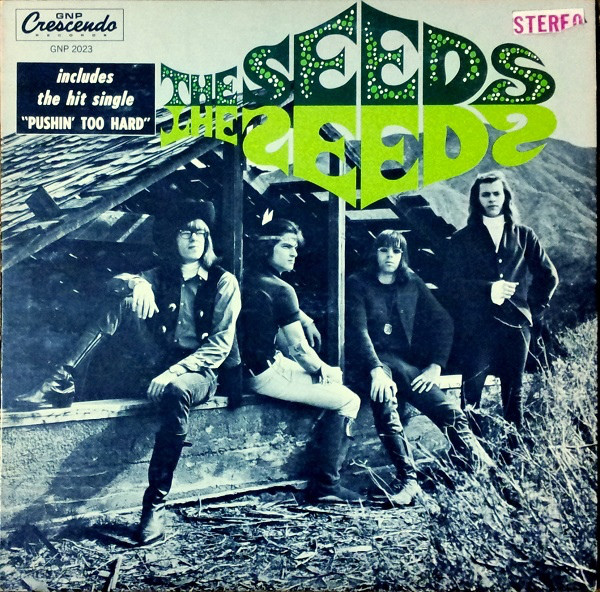
A Web Of Sound.
By the time The Seeds began work on A Web Of Sound, they had been working tirelessly since early 1965. They were now a familiar face and favourite on LA’s live scene. All The Seeds hard work was paying off and they had established a reputation as one of the most innovative bands of the mid-sixties. The Seeds were known to push musical boundaries to their limits as they created music that was best described as eclectic. Despite that, many people still referred to The Seeds as a garage band. However, The Seeds added elements of acid rock, proto-punk and psychedelia to their music. Their sophomore album A Web Of Sound was going to be a very different album to The Seeds.
Just like their debut album The Seeds, Sly Saxon was songwriter-in-chief on A Web Of Sound. On Tripmaker and Rollin’ Machine, the mysterious Marcus Tybalt was credited as one of the songwriters. However, this was just an alias of Sly Saxon who wrote Mr. Farmer, I Tell Myself, Rollin’ Machine and Up In Her Room. Sly Saxon and Darryl Hooper teamed up to write Pictures and Designs, Tripmaker and A Faded Picture. The pair then wrote Just Let Go with Jan Savage. These eight tracks were recorded during July 1966.
The Seeds recorded A Web Of Sound at RCA Victor and Columbia Studios in Hollywood. The sessions started on the ‘5th’ of July 1966 with Sly Saxon using the alias Marcus Tybalt taking charge of production. This time around, drummer Rick Andridge was joined by Harvey Sharpe who was brought onboard for the A Web Of Sound. Completing the rhythm section was Jan Savage who laid down all the guitar parts. Darryl Hooper switched between celeste, organ and piano, while vocalist Sly Saxon added percussion and played piano. After twenty-four days A Web Of Sound was completed on the ‘29th’ of July 1966. It was a very different album to their debut The Seeds.
Critics on hearing A Web Of Sound, realised just how far The Seeds had come in a relatively short space of time. In just six month, their music had progressed, and it looked as if The Seeds were going to match their LA based contemporaries like The Doors and Love every step of the way. That was the case with A Web Of Sound, which was an album of two very different sides.
A Web Of Sound marked the start of a new chapter in The Seeds career, as they broadened their musical horizon on what was a much more eclectic album. The Seeds incorporated elements of acid rock, blues, garage rock, proto punk and psychedelic rock on album that was embraced by the hippies. They were won over by A Web Of Sound which they believed was an unconventional album that featured open-ended songs which appealed to their mindset. These songs eschewed the carefully plotted thoughts and didacticism of the majority of songs on the charts, and left plenty of room for interpretation. The Seeds songwriter-in-chief Sly Saxon was an unlikely hero for the hippies.
When A Web Of Sound was released in October 1966, the album wasn’t a commercial success initially. This changed after the reissue of Pushin’ Too Hard gave The Seeds another hit single. Suddenly, record buyers started investigating The Seeds’ sophomore album A Web Of Sound which had slipped under the radar. While it sold reasonably well, A Web Of Sound was a cult album that failed to replicate The Seeds. It was only later that A Web Of Sound would be embraced by a much wider audience.
By then, critics, cultural commentators and record buyers realised that A Web Of Sound was a stepping stone for The Seeds, as their sound continued to evolve on their third album Future.
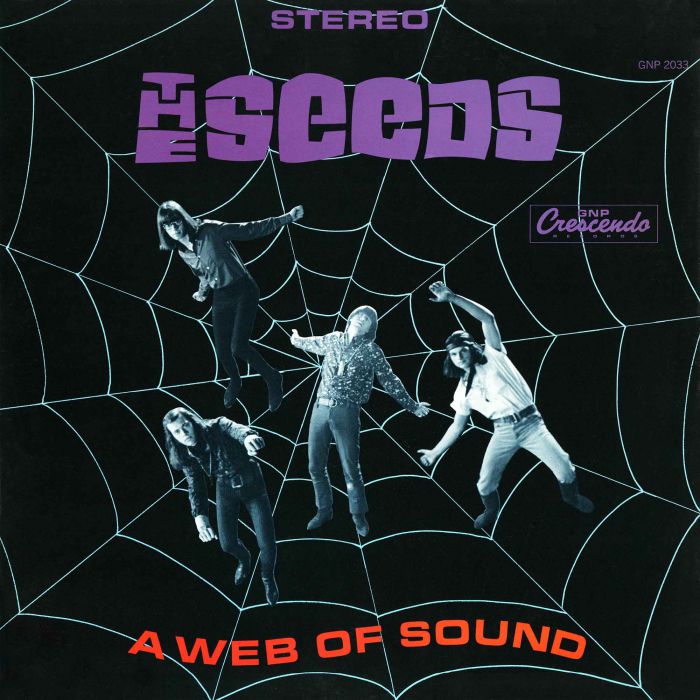
Future.
While The Seeds had pushed musical boundaries to their limits on The Seeds and A Web Of Sound, they blew these limits away on Future. The result was a mind-blowing fusion of psychedelia, garage, rock and pop that veered towards jazz and soul.Eclectic doesn’t even come close to describing Future. It’s a minor classic that is a long way from The Seeds roots as a garage band. However, listening to A Web Of Sound it’s obvious that The Seeds were in the process of changing.
When Future was released, it was to critical acclaim and the album reached the top hundred in the US Billboard 200. While this pleased The Seeds, the single A Thousand Shadows failed to match the success of previous albums. This was a disappointment for The Seeds who had produced heady and potent musical brew that showcased a truly talented and versatile band who were musical pioneers. That had been the case since they released The Seeds in April 1966.

After Future, The Seeds’ popularity slumped, and they became a victim of changing musical fashions. That wasn’t the only thing that was changing.
By mid-1968, The Seeds’ personnel began to change, and the other change was their name. The Seeds became Sky Saxon and the Seeds, and in August 1968, Satisfy You was released as a single. It was a fusion of psychedelia and rock, and The Seeds seemed to be heading in the direction of The Doors on Satisfy You. While it failed to chart, it’s a storming reminder that for The Seeds, they had a future after Future.
Falling Off The Edge Of My Mind was the final single The Seeds released for GNP Crescendo. Wild Blood was chosen as the B-Side for The Seeds GNP Crescendo swan-song. Released in January 1969, Falling Off The Edge Of My Mind failed to chart. A fusion of country, psychedelia and rock it saw The Seeds looking for a new direction. Ironically, the B-Side Wild Blood was a better track. Rocky, with a nod to The Rolling Stones, Sly struts his way through the track, as they bid their farewell to GNP Crescendo.
In 1969, The Seeds’ lineup changed. Guitarist Bob Norsoph and Don drummer Boomer replaced Jan Savage and Rick Andridge. Despite this change in lineup, Sky Saxon continued to use the name The Seeds. They didn’t release another single until August 1970.
By then, the best way to describe The Seeds’ lineup is fluid. Various backing musicians came onboard. It was more a band entity than band. Bad Part Of Town was released as a single in August 1970, on MGM. It was rocky track with a psychedelic twist. However, it failed to chart and four months after the release of Bad Part Of Town, The Seeds released their final single.
Love In A Summer Basket was released in December 1970, and was The Seeds’ second single for MGM. Slow, moody, pensive, dramatic and trippy it’s the sunshine psychedelia that The Seeds specialised in a few years earlier. While Love In A Summer Basket failed to chart, their recording career ended on a high. On the flip side of Love In A Summer Basket, was Did He Die. A driving slice of rocky, psychedelia, it showed that The Seeds still had something to offer music. There was only one problem, music was changing. This meant The Seeds had to change.
For the next two years, The Seeds continued, with Sky Saxon keeping the group alive. However, The Seeds best days were between 1965 and 1967. During that period, they released a trio of genre-defying albums and showcased one of the most exciting and adventurous bands of the late sixties. The Seeds were, without doubt, musical pioneers and their three albums are proof of this.
From 1966s The Seeds through 1967s A Web Of Sound and their 1968 swan-song Future, The Seeds weave their magic. They combine a disparate combination of musical genres and influences. Everything from rock, garage rock, psychedelia, folk, jazz, doo-wop, free jazz, proto-punk and even prog rock. With every listen to The Seeds trio of albums, further surprises and subtleties reveal their hidden secrets. Rather than seamlessly flowing from one genre-specific track to another, The Seeds become a musical chameleon. Every track is like a surprise, with hidden depths awaiting the listener. However, The Seeds finest moment was their final album, Future.
The only way to describe Future is a genre-sprawling album. Magpie-like, The Seeds seem to collect musical genres and influences, put them into their lysergic melting pot and sprinkle some secret ingredients. What comes out of The Seeds melting pot was Future. Under appreciated upon its release, that’s no longer the case. Now Future is perceived as a mind-blowing, boundary breaking and genre-defying album, where The Seeds tore up the rule book and rewrote it. Future is essential listening for anyone interested in The Seeds’ music, and is part of their musical legacy.
The Seeds musical legacy was a trio of studio albums, A Web Of Sound, The Seeds and Future feature the changing face of The Seeds. Their best studio album was Future, which is now a psychedelic classic. Drawing inspiration from The Beatles psychedelic masterpiece Sgt. Pepper’s Lonely Heart’s Club Band. It’s a combination of The Seeds garage band roots and psychedelia. The Seeds also were influenced by Frank Zappa, Thirteenth Floor Elevators, The Doors, The Who, the British invasion bands and jazz. Sadly Future marked the end of The Seeds story and while they weren’t the most prolific band in musical history, nearly fifty years later they continue to influence and inspire another generation of musicians and captivate music lovers with their genre-melting sound.
The Life and Times of The Seeds
THE CAREER OF MUSICAL INNOVATOR STEVE TIBBETTS
The Career Of Musical Innovator Steve Tibbetts.
Although Minnesota born composer and guitarist Steve Tibbetts signed to ECM Records in 1981, the pioneer of sound-forming has only released nine albums for Manfred Eicher’s Munich-based label. They showcase the talents of musical innovator Steve Tibbetts.
Steve Tibbetts was born in Madison, Wisconsin, in 1954, and growing up, was introduced to the music of the Kingston Trio, Pete Seeger and Johnny Winter by his father, who worked at the University of Wisconsin School for Workers and also taught labour law around the state. Sometimes, Steve Tibbetts’ father invited anything up to twenty union workers and organisers to the family home, where they would eat, and later, would enjoy an impromptu jam session. Initially, Steve Tibbetts would watch as his father and his friends played an assortment of instruments, including autoharps, banjos, flutes, guitars, psalteries and recorders. Before long, Steve Tibbetts found the confidence to standup and take part in the musical evenings, which were good practise for the future.
By 1975, Steve Tibbetts was a student at Macalester College, and spent much of his time listening to music with friends in his dorm. Days were whiled away smoking and listening to everything from John Coltrane and Pharaoh Sanders, to Mountain, and sometimes, Paul McCartney and Todd Rundgren. When Steve Tibbetts heard an album that was recorded solely by Todd Rundgren, he believed that he could record a similar type of album. Usually, that would’ve been easier said than done.
Fortunately, Steve Tibbetts was offered a work-study placement at Macalester College’s recording studio, and this allowed him to learn how a studio operated. It was akin to a musical apprenticeship and would prove invaluable as Steve Tibbetts learnt how to operate the equipment, splice and join tape and between 1975 and 1976 record his debut album. By then, the recording studio had become a second home for Steve Tibbetts, and although latterly, he was no longer officially a student, he completed his eponymous debut album in Macalester College’s recording studio.
Steve Tibbetts.
Having completed his eponymous debut album, Steve Tibbetts was released in 1977 on the Cuneiform label. By then, one of the tracks on Steve Tibbetts, Jungle Rhythm, was being used by the ice hockey team the Bay Area Bombers. There was even a rumour that Clive Davis at Arista was interested in signing Steve Tibbetts, and he spent the best part of two weeks waiting for the phone to ring. Despite that disappointment, Steve Tibbetts sold enough copies of his debut album that he was able to but an eight-track tape recorder and set up his own recording studio.

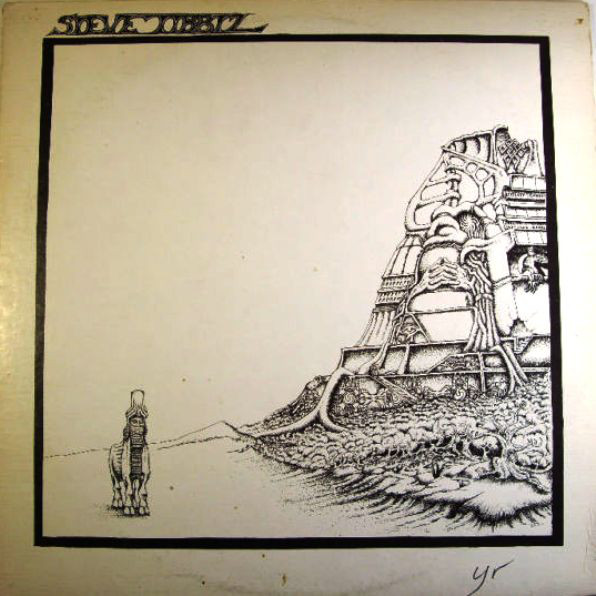
Yr.
In his new recording studio, Steve Tibbetts recorded his sophomore album Yr on his new eight-track tape recorder, and once the album was completed, he began shopping the album to record labels. This proved a thankless task, as Steve Tibbetts the rejection letters dropped through his letterbox. Eventually, they numbered 200, and it wasn’t until 1980 that Frammis released Yr, which was heard by one of the most influential men in European jazz and experimental music.
This was Manfred Eicher, the founder of the Munich-based label ECM Records, who spotted Steve Tibbetts’ potential and signed him in 1981. Since then, ECM Records has been home to Steve Tibbetts, who continued to pioneer sound-forming on his major label debut.
Already, Steve Tibbetts had realised that it was possible to use the recording studio itself as a tool for creating sounds, and this was something that he would pioneer during his career. However, having signed to ECM Records in 1981, he was soon in the studio with Manfred Eicher, who took charge of production.
Northern Song.
Previously, Steve Tibbetts had spent a great deal of time recording his first two albums, but that wasn’t the way that ECM Records’ founder and in-house producer worked. He was used to working quickly, and recording albums over a two or three days. This way of recording worked for most of the artists signed to ECM Records and the label had released many critically acclaimed albums. However, when Steve Tibbetts’ third album and ECM Records’ debut Northern Song was released in 1982, the reviews of what was an adventurous, ambitious and thoughtful album were scathing and critics were far from impressed by the album. For Steve Tibbetts and Manfred Eicher who produced Northern Song, this was a huge blow.
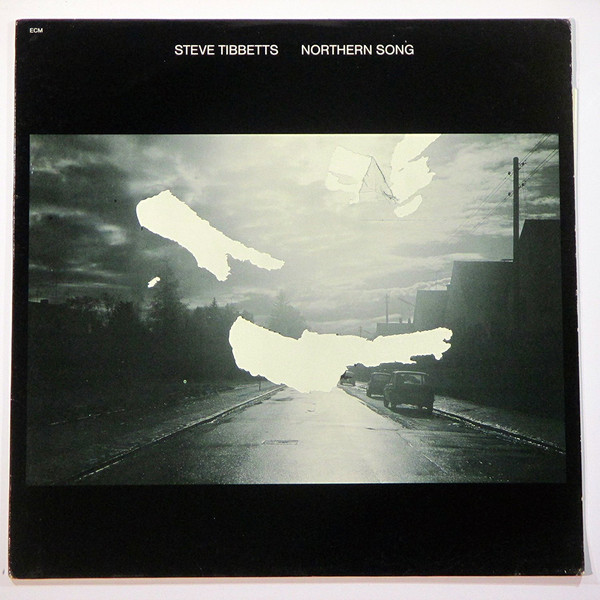
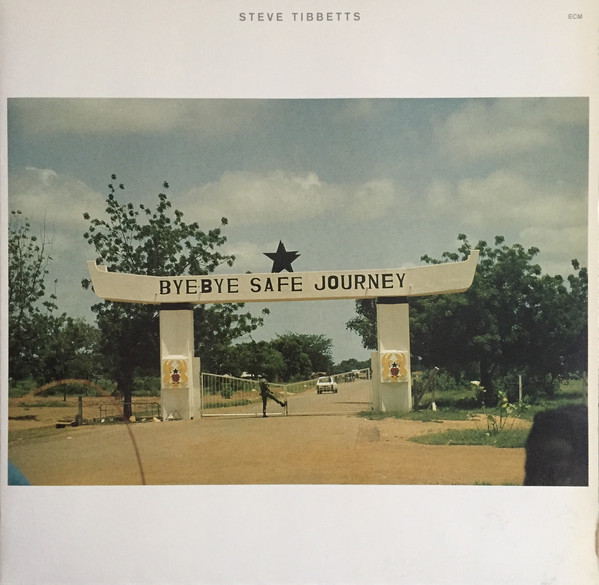
Safe Journey.
Two years later, in 1984, multi-instrumentalist Steve Tibbetts returned with his fourth album Safe Journey. By then, he had returned to his tried and tested way of recording an album, and had spent months recording Safe Journey, which was released to critical acclaim and was the most eclectic album of his career. It featured elements of folk, jazz, modern classical, psychedelia, rock and world music which were combined to create an ambitious and innovative album. Safe Journey was the album that launched Steve Tibbetts’ career at ECM Records.
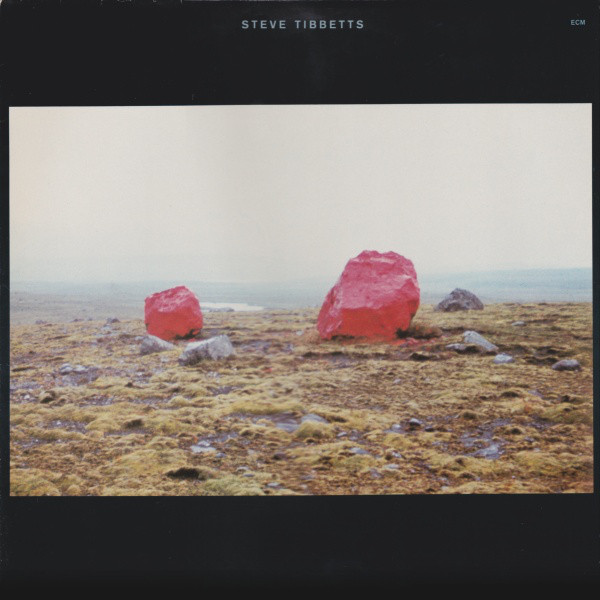
Exploded View.
When Steve Tibbetts recorded his fifth album Exploded View, he was once again joined by percussionist Marc Anderson, who had played on every album since Northern Song. Marc Anderson’s percussion played an important role in the sound and success of Exploded View, which was released in 1986, and was another eclectic and melodic album, which has been inspired by African, Indian and Moroccan rhythms, and to some extent, the psychedelic and progressive music of the late-sixties and seventies. However, stealing the show was Steve Tibbetts delivers a series of explosive and inventive performances on guitar during this carefully crafted album of soundscapes. It was released to critical acclaim and further enhanced Steve Tibbetts’ reputation.
So did the reissue of Steve Tibbetts’ ECM Records’ debut Northern Song in 1988, which resulted in the album being reappraised by critics. Not for the first time, critics rewrote history, after realising that Northern Song was an ambitious and groundbreaking release that showcased a pioneering musician as he embarked upon his career. Seven years later, and Steve Tibbetts was about to release his sixth album, and fourth for ECM Records, Big Map Idea.
Big Map Idea.
Despite his star being in the ascendancy, Steve Tibbetts seemed in no hurry to release a new album, and his sixth album Big Map Idea wasn’t released until 1989. It was worth the wait and featured a myriad of exotic and ethnic instruments that play their part in an intriguing, mysterious and to some extent, mystical album that is full of twists and turns, as the music on Big Map Idea ebbs and flows, and gradually reveals its secrets. Critics hailed the album as a welcome addition to Steve Tibbetts’ burgeoning discography
The Fall Of Us All .
The next addition to Steve Tibbetts’ discography was The Fall Of Us All, which was released in 1994, five years after Big Map Idea. By then, Steve Tibbetts continued to explore and pioneer sound forming and used the recording studio as an instrument as he continued to create ambitious and innovative music.
Proof of that was The Fall Of Us All, which was another eclectic album that veered between explosive, urgent, uplifting and spiritual as Steve Tibbetts fused elements of Arabian music, art-pop, Eastern sounds, modal jazz, psychedelia, rock and even rock ’n’ roll. The Fall Of Us All was released to widespread critical acclaim and hailed as one of Steve Tibbetts’ finest hours.
Following the success of The Fall Of Us, Steve Tibbetts wasn’t tempted to rush release a new solo album and decided to spend the next few years collaborating with other artists. This included recording a new album with Nepalese Buddhist nun Ani Choying Drolma. In 1997, Steve Tibbetts and Ani Choying Drolma they released their first collaboration Chö, which was well received by critics.
After completing Chö, Steve Tibbetts began recording a new album with Norwegian Hardanger fiddle player, Knut Hamre. Eventually, Steve Tibbetts and Knut Hamre completed the album Å, which was released to plaudits and praise in 1999.
A Man About A Horse.
Eight years after the release of his last solo album Steve Tibbetts returned with A Man About A Horse, which was his sixth release for ECM Records and his eighth solo album. A Man About A Horse was another album with an Eastern influence, and finds Steve Tibbetts eschewing Western scales as the he carves fluid, jagged, rocky and experimental soundscapes. Joining Steve Tibbetts on what was another groundbreaking offering, were percussionists Marc Anderson and Marcus Wise, who play a part in the sound and success of A Man About A Horse. It seemed that Steve Tibbetts’ music was maturing like a fine wine.
Two years after releasing his eighth solo album, Steve Tibbetts and Nepalese Buddhist nun Ani Choying Drolma returned in 2004 with their sophomore album Selwa, which was the followup to their 1997 album Chö. Selwa was an almost flawless collaboration where Eastern and Western music combines seamlessly. It was without doubt, the finest collaboration of Steve Tibbetts’ twenty-seven year career.
After the release of Selwa, Steve Tibbetts didn’t seem in a hurry to release a new album, and preferred to work slowly, as he honed and perfected another ambitious and innovative album. Steve Tibbetts remembered recording Northern Song, which had been in a matter of days, and the scathing reviews were a reminder of the album. That taught him an important lesson, and since then, he worked at his own speed and did things his own way.
Natural Causes.
That was the case when he recorded Natural Causes with his friend Marc Anderson during 2008. In 2010, Steve Tibbetts released his ninth album Natural Causes, which was his first solo album in eight years, and was very different from previous albums. Steve Tibbetts had switched to his father’s Martin D-12-20 12-string acoustic guitar on Natural Causes, which was recorded when he was rethinking his approach to music. This resulted in him studying Bach, Bartók and music theory on a daily basis as he tried to improve himself as a musician.
This paid off, and Natural Causes was released to widespread critical acclaim. Just like his previous albums for ECM Records, Steve Tibbetts was joined by Marc Anderson and they deployed an eclectic array of exotic instruments that accompanied the Martin D-12-20 12-string acoustic guitar. The resulting album, Natural Causes, featured enchanting and captivating multilayered soundscapes that were full of Eastern sounds and was another welcome addition to his discography.
Life Of.
Following the release of Natural Causes, Steve Tibbetts’ fans were already looking forward to his tenth solo album, but deep down, they knew that they were in for a long wait. Steve Tibbetts seems to only release a new solo album every eight years. He had released The Fall Of Us All in 1994, with A Man About A Horse following in 2002 and Natural Causes in 2010. The smart money was on Steve Tibbetts returning with his tenth solo album in 2018. That was the case, with Life Of, being released by ECM Records in May 2018, which marks the octennial appearance of musical pioneer Steve Tibbetts.
For his tenth solo album Life Of, Steve Tibbetts composed thirteen new soundscapes which he decided to record in St. Paul, which was where he had recorded so many of his previous albums. This time, though, it was just a small band that would accompany as he recorded Life Of.
Although Steve Tibbetts is a talented multi-instrumentalist, he decided that he would only play piano and his father’s fifty year old Martin D-12-20 12-string acoustic guitar, that had served him so well on Natural Causes during the recording of Life Of. Joining Steve Tibbetts, was his old friend and percussionist Marc Anderson, who had played on every solo album he had released for ECM Records. The only other musician that joined Steve Tibbetts and Marc Anderson was cellist Michelle Kinney also adds the drones that feature on Life Of. Together, the three musicians began recording what was Steve Tibbetts’ tenth solo album, Life Of which was then mixed at his old alma mater Macalester College. Gradually, Life Of took shape, and was released in May 2018.
The music on Life Of is a quite different from some of Steve Tibbetts’ earlier albums, and features a much more understated and minimalist sound. Life Of features elements of ambient, avant-garde, experimental music, jazz and world music as Steve Tibbetts and his band carefully craft what’s best described as an album of dreamscapes. These carefully crafted dreamscapes veer between melancholy to meditative and ruminative as the music invites reflection. Other times, the music is broody and moody, or dark and dramatic, while other dreamscapes are cinematic, hopeful, melodic and rich in imagery as Steve Tibbetts and his band paint pictures during Life Of which is a powerful and poignant album that is almost flawless.
Just like the other albums Steve Tibbetts has released Life Of showcases the talents of a true musical pioneer Steve Tibbetts. He may not be a prolific artist, but the albums Steve Tibbetts has released have always featured ambitious, innovative and groundbreaking music, during a long and illustrious recording career that has lasted five decades.
The Career Of Musical Innovator Steve Tibbetts.
RHYTHM AND BLUESIN’ BY THE BAYOU-BOP CAT STOMP.
Rhythm and Bluesin’ By The Bayou-Bop Cat Stomp.
Label: Ace Records.
Nowadays, the compilation market is without doubt, one of the most competitive in the music industry. Every week hundreds of compilations are released by labels in America, Europe and Britain. Some are released by major labels, while others are lovingly curated and released by smaller independent labels. However, what many of these compilations concentrate on one type of music.
This can be anything from progressive rock and psychedelia, to funk or fusion, throughout to blues, country, R&B, reggae and soul. Some record companies have taken to focusing on one of America’s great musical cities or states. Among the favourite cites for compilers have been Chicago, Detroit, LA, Memphis, New York and Philly. Often though, some of America’s most musical cities and states were being overlooked, and for too long, this included Louisiana and later, Texas. One man decided to rectify this, Ian Saddler.
He’s a renowned expert in Louisiana and Texas’ rich musical heritage, which made Ian Saddler the perfect person to compile Boppin’ By The Bayou for Ace Records. It was released in 2012, and was so successful that another instalment in the series was commissioned.
Boppin By The Bayou More Dynamite followed in 2013, and enjoyed the same commercial success as its predecessor. Since then, By The Bayou has become one of Ace Records’ longest running and most successful compilation series. The latest instalment in the series is Rhythm and Bluesin’ By The Bayou-Bop Cat Stomp, which is another welcome addition forAce Records’ much-loved compilation series.
For Rhythm and Bluesin’ By The Bayou-Bop Cat Stomp, Ian Saddler takes the listener to the bayou region of South Louisiana and South East Texas, which us an area that spreads from New Orleans in the East to Port Arthur in the West. This area was where the twenty-eight tracks on Rhythm and Bluesin’ By The Bayou-Bop Cat Stomp were recorded.
These tracks were recorded by some of the region’s best known and most successful producers and record label owners. This includes Eddie Shuler, Floyd Soileau, Huey Meaux, JD Miller and Sam Montel who all had one thing in common, an uncanny ability to recognise talented musicians and creating an environment to nurture them and allow them to fulfil their potential.
Eddie Shuler was tased in Lake Charles, while Crowley was home to JD Miller when they both decided to found their first labels. Initially, they were recording and releasing Cajun music but both switched to blues and R&B in the early fifties.
Around a decade later, Floyd Soileau, who was based in Ville Platte, and Baton Rouge-based Sam Montel both founded their own companies. Floyd Soileau focused on Cajun music, while Sam Montel turned his attention to R&B and rock ’n’ roll.
Meanwhile, future producer, Huey Meaux, was managing artists in Port Arthur, where he was based. Initially, he managed Cajun artists but soon was adding rock ’n’ roll singers to his burgeoning roster. At first he placed artists with Floyd Soileau’s Jin label, but soon realised that owning a record label and publishing company was more profitable than working as an artist manager. Huey Meaux was the final member of this quintet of producers who were responsible for recording the music that defined a generation.
This includes the music on Rhythm and Bluesin’ By The Bayou-Bop Cat Stomp, which features twenty-eight tracks where there’s pounding pianos, braying saxophones, scorching guitars and on some songs, accordion or harmonica. They accompany vocals which were encouraged and cajoled by the various producers and who brought the best out of the artists on Rhythm and Bluesin’ By The Bayou-Bop Cat Stomp.
The twenty-eight tracks on Rhythm and Bluesin’ By The Bayou-Bop Cat Stomp includes eleven that have never been released before or are alternate takes. This is similar to previous instalments in the By The Bayou series. Rhythm and Bluesin’ By The Bayou-Bop Cat Stomp opens with Everybody Wants To Know by Lester Robertson which sets the bar high. However, compiler Ian Saddler has unearthed some more unissued hidden gems this time round. This includes Cookie and The Cupcakes’ Crazy Rock plus Rocks On My Pillow. They’re joined by Sonny Martin’s For Your Precious Love and alternate take 2s of Blues Boy Palmer and The Bill Parker Band’s Mary, Mary and Little Miss Peggie and The Bill Parker Band’s Come Over Here. Then there’s Rockin’ Sidney’s Augustine, Thaddeus Declouet’s Shake It Up (All Night Long), Big Chenier’s Stand By My Side, I Wants You by Ashton Savoy and Guitar Gable and King Karl’s Goodbye Whiskey. These unreleased and alternate takes are a cut above what most compilers unearth. However, they don’t have Ian Saddler’s knowledge.
Among the highlights of the other tracks are Big Walter’s Never Too Old plus Crazy Dream and Bop Cat Stomp by King Charles and His Orchestra which features Left-Hand Charlie. They’re joined by Clifton Chenier’s It Happened So Fast, Margo White’s Don’t Mess With My Man and Whoa Mule by Leroy James and His Combo Rhythm and Bluesin’ By The Bayou-Bop Cat Stomp on a stomoung high.
Rhythm and Bluesin’ By The Bayou-Bop Cat Stomp which was recently released by Ace Records is a welcome addition to this successful series. It finds Ian Saddler digging deep in South Louisiana and South East Texas. He’s found some hidden gems amongst the unreleased tracks and alternate takes which sit side-by-side with singles from old friends, familiar faces and new names on Rhythm and Bluesin’ By The Bayou-Bop Cat Stomp which is all killer and no filler.
Rhythm and Bluesin’ By The Bayou-Bop Cat Stomp.

BOBBY HUTCHERSON’S COLUMBIA RECORDS YEARS.
Bobby Hutcherson’s Columbia Records Years.
Less than three years after Bobby Hutcherson made his recording debut, the twenty-three year old vibraphonist released his debut album The Kicker on Blue Note Records in 1963. This was the start of the most prolific period of his long career.
Over the next fourteen years, Bobby Hutcherson released fifteen studio albums, one live album, two collaborations with Herbie Hancock and five with Harold Land. Bobby Hutcherson was also the go-to-guy for anyone looking for a vibes player and played on over forty albums during his time at Blue Note Records. These albums featured the great of jazz, and most of them were released on the legendary Blue Note Records. However, by 1977, Bobby Hutcherson’s time at Blue Note Records was at an end. His swan-song was Knucklebean, which had been released in 1977. After releasing twenty-one albums for Blue Note Records, Bobby Hutcherson was heading for pastures new.
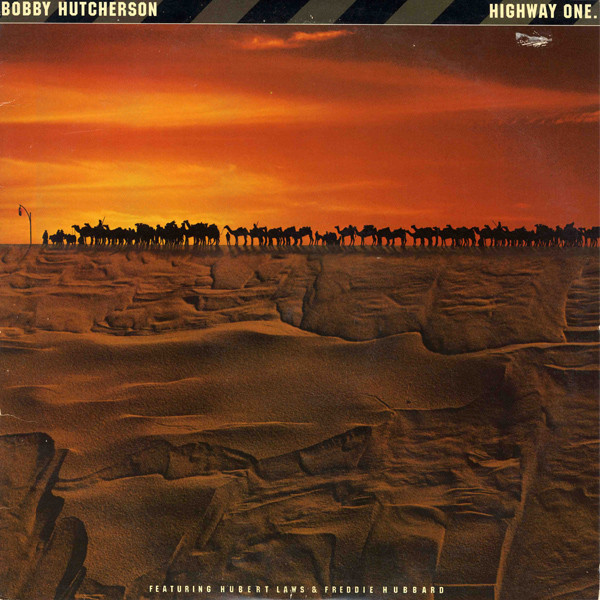
Next stop for Bobby Hutcherson was Columbia Records, where he released a trio of albums between 1978 and 1980. Bobby Hutcherson’s Columbia Records’ 1978 debut was Highway One in 1978, followed by 1979s Conception: The Gift Of Love and Un Poco Loco following in 1980. These three albums marked the start of a new chapter in Bobby Hutcherson’s career.…the Columbia Records’ years.
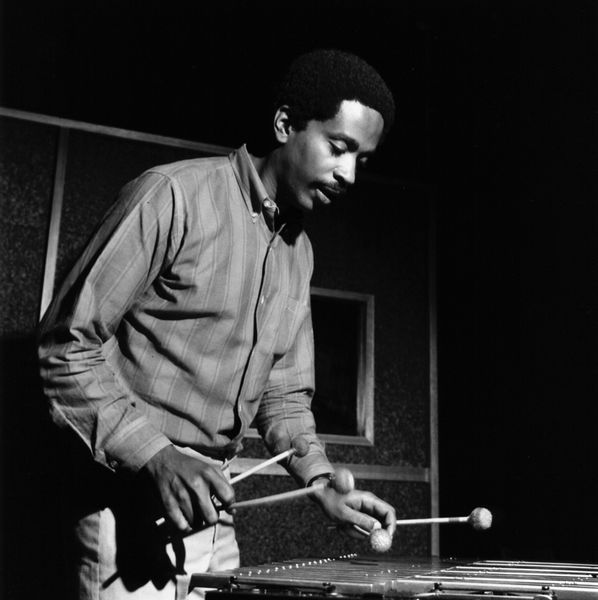
By the time that Bobby Hutcherson signed to Columbia Records, jazz’s number one vibes man was thirty-seven, and had been a familiar face on the American jazz scene since he made his recording debut on the West Coast August 1960.
Nineteen year old Bobby Hutcherson made his debut with the Les McCann Trio, on the ‘3rd’ of August 1960 when they recorded a single that was released on Pacific Jazz in 1961. Just over four months later, and Bobby Hutcherson joined the Curtis Amy-Frank Butler Sextet when they recorded Groovin’ Blue on December the ‘10th’ 1960. This was the first of many albums that featured Bobby Hutcherson’s vibes.
In 1962, Bobby Hutcherson moved to New York, and was living in the Bronx. Although he was determined to make a career as a jazz musicians, he supplemented his income by driving a taxi.
Just over a year later, Bobby Hutcherson had released his debut album The Kicker on Blue Note Records in 1963. This was the start of the rise and rise of Bobby Hutcherson. Over the next four years, Bobby Hutcherson divided his time between his solo career and his work as a sideman. By 1967, Bobby Hutcherson was already a stalwart of the New York scene. Then disaster struck for Bobby Hutcherson.
This came after Bobby Hutcherson and Joe Chambers were arrested for possession of marijuana in 1967. As a result, the twenty-six year old lost his New York City Cabaret Card and taxi license. For Bobby Hutcherson this was a disaster, as he was no longer able to work on New York City’s cabaret circuit or drive a taxi, which was how Bobby Hutcherson had supplemented his income since the earliest days of his career. That was no longer possible. With his New York City Cabaret Card and taxi license revoked, Bobby Hutcherson decided to go west.
Bobby Hutcherson moved to the West Coast in 1967, looking for a new start. While he continued to record for Blue Note Records until 1977, life on the West Coast suited Bobby Hutcherson, and he eventually found a house forty-five miles outside of San Francisco, just off Highway One. This was an idyllic place to live, and would provide the inspiration for Bobby Hutcherson’s first album for Columbia Records, Highway One.
Highway One.
When it became known that Bobby Hutcherson was leaving Blue Note Records, Bruce Lundvall made his move and signed the vibes man. This was the second major coup of the past two years. Bruce Lundvall had signed Dexter Gordon in 1976, and his signing was a commercial success. Soon, Bruce Lundvall got the green light to sign more ‘straight ahead’ jazz musician. This included Woody Shaw and in 1978, Bobby Hutcherson.
Having signed to Columbia Records, Bobby Hutcherson was keen to begin work on his first album since leaving Blue Note Records. He was hoping to replicate the success that Dexter Gordon had recently enjoyed. To help him write his Columbia Records debut, Bobby Hutcherson and his keyboardist George Cable began work.
It was Bobby Hutcherson that came up with the concept of Highway One, which he named after the Pacific Coast Highway that winds its way around the Californian coast. This beautiful coastal road provided the inspiration for Highway Road. However, as Bobby Hutcherson knew, Highway One meant different things to different people. For those travelling from Mexico and South America, it was the road they travelled through on their way to their other parts of the America. As a result, Highway One is representative of everyone who has travelled that road over the years. Highway One which was one of two tracks penned by Bobby Hutcherson, tries to paint pictures of a journey along that famous coastal road.
Having written Highway One, Bobby Hutcherson also wrote Bouquet. His keyboardist George Cables wrote Secrets Of Love, Sweet Rita Suite (Part 2-Her Soul) and Circle. George Cables and producer Todd Barkan wrote Secrets of Love (Reprise). These six tracks were recorded in San Francisco.
Recording of Highway One took place at Wally Helder Studios, San Francisco, California between the ‘30th’ of May and the ‘23rd’ of June 1978. Accompanying Bobby Hutcherson was an all-star band. The rhythm section featured drummer Eddie Marshall and bassist James Leary. Bobby Hutcherson’s go-to keyboardist, George Cables played piano and electric piano, while Cedar Walton drafted in to play on Bouquet. They were joined by percussionist Kenneth Nash, flautist Hubert Laws and Freddie Hubbard on flugelhorn. When it came to record the closing track Secrets of Love (Reprise), vocalist Jessica Cleaves was brought onboard. This left just strings and horns to be overdubbed and Highway One was completed.
The release of Highway One was scheduled for later in 1978. When critics heard Highway One, they were impressed by the first album of Bobby Hutcherson’s post Blue Note Records’ career. It wasn’t just a case of Bobby Hutcherson picking up where he left off at Blue Note Records. He seemed to have been reinvigorated.
Highway One found favour with critics, and this augured well for the release of the album later in 1978. Upon Highway One’s released, the album found an audience within the jazz community. However, it didn’t follow in the footsteps of Dexter Gordon’s albums for Columbia, and introduce Bobby Hutcherson’s music to the wider audience it deserved. Despite this, Bobby Hutcherson began work on his second album for Columbia Records, Conception: The Gift Of Love in 1979.
Conception: The Gift Of Love.
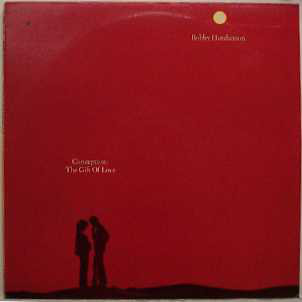
When work began on Conception: The Gift Of Love, Bobby Hutcherson only contributed one of the seven tracks, No Siree Bob. George Cables wrote Dark Side, Light Side and Quiet Fire. The other tracks included Cedar Walton’s Clockwise, James Leary’s Remember To Smile and Hold My Hand and Eddie Marshall’s Dreamin’. These tracks become Conception: The Gift Of Love which was inspired by the new life that Bobby Hutcherson’s wife Rosemary was carrying.
Recording of Conception: The Gift Of Love took place at A&R Recording Studios and Rudy Van Gelder Studio, Englewood Cliffs, New Jersey. Bobby Hutcherson was joined by some of the same musicians that featured on Highway One, including the rhythm section of drummer Eddie Marshall, bassist James Leary and George Cables on piano and electric piano. They were joined by percussionists Kenneth Nash and Bill Summers and flautist Hubert Laws. The horn section featured trumpeters Jon Faddis, Danny Moore, Anthony Tooley, Joseph Wilder and Earl Gardner; tenor trombonists Robert Alexander, John Gale and Urbie Green;alto saxophonist Lenny Hambro; tenor saxophonists Daniel Trimboli and Frank Wess; while Romeo Pinque played baritone saxophone and bass clarinet. Cedar Walton took produced Conception: The Gift Of Love, which was released later in 1979.
Before that, the critics had their say on what was album number twenty-four for Bobby Hutcherson, Conception: The Gift Of Love. The album was well received by critics, who were won over by an album that took as its starting point hard bop.
This was the music that Bobby Hutcherson grown up listening to and he still loved. However, Conception: The Gift Of Love wasn’t a homage to hard bop. Instead, Bobby Hutcherson reworked hard bop and transformed it into music that would appeal to an audience in 1979. Just like the twenty-three albums that preceded Conception: The Gift Of Love, it was album that was an album that was guaranteed to swing.
Conception: The Gift Of Love received praise and plaudits from critics, and was released later in 1979. While the album sold well within jazz circles, Conception: The Gift Of Love eluded mainstream record buyers. Still, Bobby Hutcherson was one of jazz music’s best kept secrets, even though he had released twenty-four albums.
Un Poco Loco.
Soon, work began on the twenty-fifth album of Bobby Hutcherson’s career, Un Poco Loco. Just like his previous album Conception: The Gift Of Love, Bobby Hutcherson only penned one track I Wanna Stand Over There, while George Cables contributed Love Song and Ebony Moonbeams. The other tracks included Jack DeJohnette’s Silver Hollow, Bud Powell’s Un Poco Loco, Red Young’s Ivory Coast and The Sailor’s Song which was written by Steve George, John Lang, Jerry Manfedi and Richard Page. These tracks became Un Poco Loco, which was produced by Dale Oehler.
Recording of Un Poco Loco took place at A&M Recording Studios, Los Angeles later in 1979. This time round, the band was quite different to the two albums Bobby Hutcherson had recorded for Columbia. The rhythm section featured drummer and percussionist Peter Erskine, bassist Chuck Domanico, guitarist John Abercrombie and pianist George Cables. They accompanied Bobby Hutcherson who switched between vibes and marimba on Un Poco Loco. It was released in 1980, which marked the start of Bobby Hutcherson’s third decade as a musician.
Prior to the release of Un Poco Loco, critics hailed the album as Bobby Hutcherson’s finest since signing to Columbia.Bobby Hutcherson had saved his best album until last during his spell at Columbia. Alas, history repeated itself when Un Poco Loco proved popular amongst the jazz community, but failed to find the wider audience that executives at Columbia had hoped. For Bobby Hutcherson, Un Poco Loco marked the end of a two-year spell at Columbia.

Between 1978 and 1980, a newly reinvigorated Bobby Hutcherson released a trio of timeless albums. Highway One, Conception: The Gift Of Love and Un Poco Loco are carefully crafted and accomplished albums which feature a much more commercial and contemporary sound. This should have introduced legendary vibes virtuoso Bobby Hutcherson and his music to a much wider audience. Sadly, that wasn’t to be.
By the time Bobby Hutcherson left Columbia, the thirty-nine year old had already released twenty-five albums. The first twenty-two albums were released on Blue Note Records between 1963 and 1977. This included some of the best and most important music of his long and illustrious career. Then between 1978 and 1980, Bobby Hutcherson released Highway One, Conception: The Gift Of Love and Un Poco Loco on Columbia, which are among the most underrated albums of his long and illustrious career. That took his toll of albums to twenty-five.
After that, Bobby Hutcherson continued to record and between 1982 and 2012 released another twenty albums. Sadly, just three years after releasing Somewhere In The Night (Kind of Blue) in 2012, Bobby Hutcherson passed away on August the ’15th’ 2016, aged seventy-five. That day, music lost one of its most talented sons, Bobby Hutcherson, who left behind a rich musical legacy.
This includes around forty-five solo albums including the three he recorded during the Columbia Records’ years, and all the albums which feature Bobby Hutcherson as sideman during his long and illustrious career.
Bobby Hutcherson’s Columbia Records Years.
COLOMBIAN SOUL COMPILED BY BAGAR AKA TRICKY D.
Colombian Soul Compiled By Bagar AKA Tricky D.
Label: BBE Music.
Release Date: ‘7th’ June 2019.
During a long and successful career, Dean Bagar has done just about everything in music, from managing brands and folding record labels to owning a record shop, DJ-ing and working as a producer. He also collaborated with General Electrick and DJ Deckar in 2001 as Fab Factory, who released three singles and an album. Then in June 2014, using his Tricky D moniker, Dean released his debut album Equanimity. Now five years later, he’s back with a new compilation Colombian Soul Compiled By Bagar AKA Tricky D, which will be released by BBE Music on the ‘7th’ June 2019. It’s the latest instalment in the Tricky D story.
Dean’s roots are in Croatia, where he was born and brought up. Originally, he was a visual artist, and part of the Croatia’s punk and new wave scene, during the early eighties. By the late-eighties Dean had left Croatia.
Towards the end of the eighties, Dean found himself in London. That was where he first came across reggae sound systems. For Dean, musically, this was an important musical discovery and later, Dean would spend time in Jamaica. Before that, Dean found himself a refugee.
Back home in Croatia, the political situation was perilous. People were fleeing the Balkan region which was a war zone. As a result, Dean found himself a refugee in Berlin. In his newly adopted hometown, Berlin, he began to become part of the city’s thriving and eclectic music scene.
As a reaction to the problems affecting his home country, Dean threw himself into Berlin’s Daisy Age movement. Its raison d’être was to bring positivity back to the dance floor. Daisy Age stands for “DA Inner Sound Y’all.” It represents a vibe and sound that’s happy, upbeat, playful and experimental. The term Daisy Age was first coined by De La Soul in 1989 and was supported by The Native Tongue movement. It was the Daisy Age movement that saw Dean make his DJ-ing and production debut.
Having become a part of Berlin’s burgeoning music scene, Dean started to get involved in one of Berlin’s underground clubs, Eimer. It was there he made his debut as an underground breakbeat activist. Not long after this, Dean was part of one Germany’s first live drum´n´bass bands, Elektronauten. Dean’s next venture was founding his first record shop, Tricky Tunes. This was a smart move as Berlin’s music scene was thriving. However, before long, Dean has founded another business.
This came after Dean and his friend Mez spent some time in Jamaica. The reason for the journey to Jamaica was to record some sessions with Jamaican singers. After this, Dean decided to found his own label, which he also decided to name Tricky Tunes. His newly founded label went on to release a series of singles and Tricky D’s compilation of collaboration entitled Tricky Tunes Cuts, in February 2011. However, this wasn’t Tricky D’s first collaboration.
This came back in 2001 when General Electrick, DJ Deckart and Tricky D collaborated as Fab Factory. They released a trio of singles and an album. The singles were Keep The Sunshine, City Lights and Magica, while Fab Factory’s only album was City Lights. It was an ambitious album that was well received. Despite that being the only album Fab Factory released, Tricky D’s production career has continued
Following the release of City Lights in 2001, Tricky D has been working hard DJ-ing and producing. Tricky D has been refining his sound. He’s also been a member of Digital Tattoo, an visual-audio project. Then in 2006, Tricky D made his first trip to Columbia.
Since 2006, Tricky D has been commuting between Berlin and Columbia. During his trips to Columbia, Tricky D has become an integral part of the country’s music scene. He manages and produces many artists, including Los Transatlanticos, who released their critically acclaimed album in 2012. Tricky D has also collaborated with a number of Columbian artists. A number of Columbian artists feature on Equanimity, the long-awaited debut album from Tricky D.
Equanimity is a genre-melting musical journey which features a whole host of guest artists. Among them are Jupiter, Lianna, Tango Crash, Hernan Lopez Newbery, Katya Tasheva Terrence Borwy, Mr. Baba, Big Mancilla and Nuewella Love. Each of these artists played their part in the sound and success of Equanimity, which was released to critical acclaim in June 2014.
Four years later, Tricky Dubs, an album of Tricky D’s remixes, was released to plaudits and praise by BBE Music. The fifteen remixes showed another side to the original tracks on Tricky Dubs.
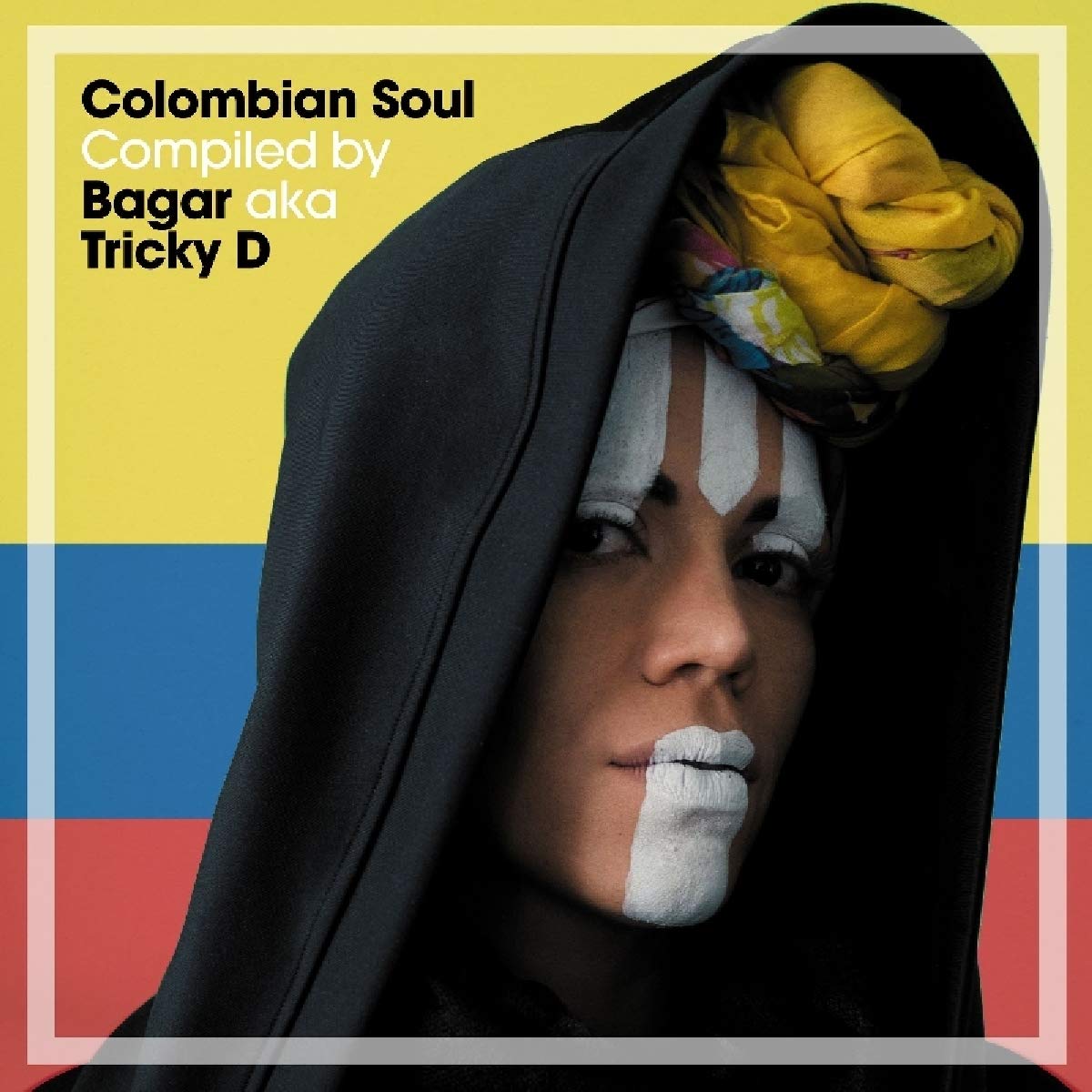
A year later, on the ‘7th’ of June 2019, Colombian Soul Compiled By Bagar AKA Tricky D will be released by BBE Music, who also released Equanimity. Colombian Soul Compiled By Bagar AKA Tricky D shows another side to Colombian music, which usually is breezy, upbeat and vibrant with traditional and contemporary tailor made for dancing.
Tricky D, whose lived in Colombia for many years, and is an important part of the country’s vibrant music scene, discovered wjya is a much softer and smoother side to Colombian music. This music was almost unknown outside of Columbia, and Tricky D wanted to share this music with the rest of the world. That was how Colombian Soul Compiled By Bagar AKA Tricky D came about. Tricky D remembers his eureka moment: : “I realised that there is no compilation of Colombian downbeat music, so I decided to dig deep and get together collection of dubby, downbeat, minor tuned songs. The result is this collection of twenty spacey, soulful songs recorded by well recognised Colombian artists, many of whom I’ve collaborated with over the past few years.”
The best way to describe the music on Colombian Soul Compiled By Bagar AKA Tricky D is the perfect primer to Colombia’s eclectic electronic music scene which is home to everything from underground sound system crews, hip hop collectives and artists who have been nominated for Latin Grammy Awards. They all share one thing in common, talent, and that is apparent on Colombian Soul Compiled By Bagar AKA Tricky D.
That talent is on show from .Jimena Angel’s Ãyelo which opens Colombian Soul Compiled By Bagar AKA Tricky D and gives way to Cuando Canto Grito by Cerrero and features the talented Lucia Pulido, Next up, is the compiler himself Bagar aka Tricky D who is joined by Jupier and Lianna on Time; Los Secundos Nunca Paran,. These tracks are joined by Pernet’s Gracias, Lianna’s Cada Paso, Alma’s Kong and Salsagroove’s irresistible Mujer Divina.
Another familiar face to connoisseurs of Colombian music is Bareto who contributes La Negra Y El Fantasma. Los Transatlanticos who were produced by Tricky D are joined by Pilar Matarola on De Donde Vengo Yo which is one of the highlights of Colombian Soul Compiled By Bagar AKA Tricky D.
Welcome additions to Colombian Soul Compiled By Bagar AKA Tricky D are Romperayo’s De Tocaima A Acapulco, Ruzto’s ManÌana SeraÌ and Magallanes’ Tres DÃas De Oscuridad which closes the compilation on a high.
Colombian Soul Compiled By Bagar AKA Tricky D is a lovingly curated compilation, and is the perfect introduction to this little known side of the vibrant Columbian music scene. Just like any good compilation, familiar artists are joined by new names on what’s an eclectic compilation, that showcases some of the truly talented artists and bands who have emerged in Columbia’s underground music scene over the last few years. Hopefully, we’ll hear more from these artists, and hopefully, a followup to Colombian Soul Compiled By Bagar AKA Tricky D, which is a compilation that oozes quality.
Colombian Soul Compiled By Bagar AKA Tricky D.
THE THREE MAN ARMY STORY.
The Three Man Army Story.
Adrian and Paul Gurvitz were both experienced musicians before they formed Three Man Army in 1971. Especially Adrian. He had been playing professionally since he was fifteen. The guitarist’s career began in 1964, when he headed out on tour with Billie Davis, Crispian St. Peters and Screaming Lord Sutch. After serving his musical apprenticeship, Adrian formed his first band Rupert’s People.They enjoyed a brief brush with commercial success in 1967, when their single Reflections Of Charlie Brown reached number thirteen in Australia. Alas, that was as good as it got for Rupert’s People. For Adrian, the next stop in his career was The Gun.
That was when Adrian Gurvitz joined his brother Paul’s group, The Gun. The group had been founded in 1966, and originally, was called The Knack. However, in 1967 The Knack changed its name to The Gun. This wasn’t the only change that was about to be made.
Soon, The Gun downsized to a trio, featuring drummer Louie Farrell, bassist Paul Gurvitz and Adrian Gurvitz on lead guitar and vocals. The change in name resulted in a change in fortune for The Gun.
They signed to CBS Records in early 1968, and soon, began work on their eponymous debut album. Once it was complete, The Gun was ready for release. It featured The Gun’s best known song, Race With The Devil.
In October 1968, Race With The Devil was released a single. It reached number ten in Britain, thirty-five reached in Australia and number one in several European countries. For the followup, CBS Records chose Drives You Mad, which wasn’t on The Gun. This non album track was released as a single in 1969, but it didn’t enjoy the same commercial success as Race With The Devil. Despite this, they sent The Gun back into the studio in 1969.
The Gun recorded ten songs which became their sophomore album, Gun Sight. It was released in 1969. So was the lead single from Gun Sight, Hobo. Alas, neither Gun Sight nor Hobo, enjoyed same commercial success as Race With The Devil. For The Gun, this was a huge disappointment. Their last two singles had failed commercially. Surely, two wouldn’t become three?
When it came to releasing a followup to Hobo, CBS Records decided to release a non album chart, and settled on Runnin’ Wild. It was released later in 1969, but failed commercially. Two had become three, and time was running out for The Gun.
They released their final single Long Hair Wild Man in 1970. It was a familiar story, with single failing to trouble the charts. Record buyers within the underground counter culture failed to connect with, or identify with The Gun. Their music passed record buyers by. However, Jimi Hendrix knew who The Gun were.
At the Isle of Wight Festival in June 1969, Jimi Hendrix played a riff from Race With The Devil. This was a huge compliment to The Gun. Alas, they were about to become part of musical history. The Gun disbanded, and the brothers Gurvitz spent a while working on separate projects.
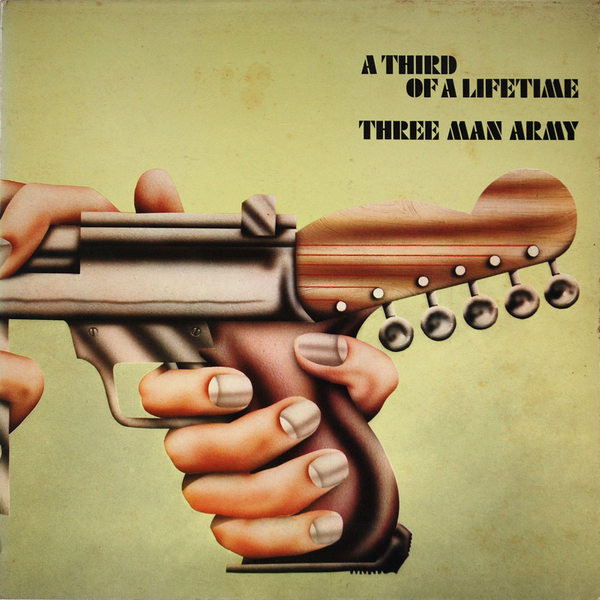
After The Gun disbanded, Adrian Gurvitz began work on what was meant to be his debut solo album. Eventually, though, the album became Three Man Army’s 1971 debut album, A Third Af A Lifetime. Before that, Buddy Miles was asked Adrian Gurvitz to join The Buddy Miles Express, on their US tour.
Having agreed to join The Buddy Miles Express, Adrian Gurvitz spent the best part of two years touring. Night after night, they played to huge audiences. Some nights, 50,000 came along to see The Buddy Miles Express. For Adrian Gurvitz this was the perfect showcase for his considerable skills as a guitarist. However, after two years on the road, the tour was over. What now for Adrian Gurvitz?
Back home in Britain, Adrian Gurvitz was reunited with his brother Paul. They decided to form a new band, which they called Three Man Army, who released their debut album A Third Af A Lifetime in 1971.
A Third Af A Lifetime.
Having formed Three Man Army, Adrian and Paul Gurvitz began work on their debut album, A Third Af A Lifetime. This was the album that Adrian had been working on, before he headed out on tour with The Buddy Miles Express.
For A Third Af A Lifetime, Adrian Gurvitz wrote eight of the ten songs as Adrian Curtis. (Curtis was Adrian’s middle name, and the name he used until later in his career). Adrian penned Another Day, A Third Af A Lifetime, Nice One, Three Man Army, Agent Man, See What I Took, Midnight and Together. He also cowrote Butter Queen with Keith Ellis and Daze with Lou Reizner. Even then, Adrian was the creative force behind Three Man Army. He wrote the album, and when the album was recorded, would dawn the role of lead vocalist and lead guitarist.
With ten new songs penned, Three Man Army headed into the studio with producer Lou Reizner. There was only one problem, the Three Man Army didn’t have a permanent drummer. Spooky Tooth’s Mike Kelly was drafted in and played on nine tracks. He joined bassist Paul Gurvitz in the rhythm section. Meanwhile, Adrian laid down the guitar parts and sang the lead vocals. However, Three Man Army found themselves without a drummer to record Butter Queen. Fortunately, Buddy Miles was in Britain, and Adrian asked him if he could lay down the drum parts on Butter Queen. Not only did Buddy Miles do that, he also added bass on Nice One and organ Midnight. These were the finishing touches to A Third Af A Lifetime. It was released later in 1971.
Before that, critics had their say on A Third Af A Lifetime. It was well received by critics, who regarded the album as a minor hard rocking classic, where classic rock and blues was fused with hard rock. Among the album’s highlights were Hold On, the blistering and anthemic Come On Down To Earth, Mahesha, Take A Look At The Light and Can’t Leave The Summer-Part I and II. Take Me Down From The Mountain and Woman were much more melodic, rock tracks. So much so, that they’ve stood the test of time. However, back in 1971 critics felt that Three Man Army were carrying on the tradition of sixties power trios, and doing so with style and aplomb. The big question was, would Three Man Army’s debut album find favour with record buyers?
When A Third Af A Lifetime was released by Pegasus later in 1971, Three Man Army’s debut album failed to find an audience. For the Gurvitz brothers, and especially Adrian who creatively, was the group’s driving force, this was a huge disappointment. They could only hope that Three Man Army’s luck would change next time around.
Three Man Army.
Three Man Army’s luck changed when met drummer Tony Newman. He was a veteran of numerous groups, including the Rod Stewart Group and Sounds Incorporated. While they were quite different stylistically to Three Man Army, Tony Newman was a talented and versatile drummer. From the first time the Gurvitz brothers heard him play, they realised that he was the missing link in Three Man Army.
Now that Three Man Army’s lineup was complete, work could begin on their sophomore album. The album would be Three Man Army’s debut for their new record companies. Three Man Army had recently signed recording contracts with Polydor in Britain and Reprise Records in America. With the commercial and marketing might of two of the biggest record companies in Britain and America, things were looking up for Three Man Army. All they had to do was write and record their sophomore album.
Just like A Third Af A Lifetime, Adrian Gurvitz wrote most of their sophomore album, including Come On Down To Earth, Take Me Down From The Mountain and Can’t Leave The Summer, Parts 1 & 2. He teamed up with Lee Baxter Hayes Jr to write Take A Look At The Light. However, the addition of new drummer Tony Newman resulted in the formation of a new songwriting partnership.
When Tony Newman joined Three Man Army, it soon became clear that he wasn’t just a talented and versatile drummer, but someone who would become Adrian Gurvitz’s new songwriter also partner.Together, they cowrote Hold On, Woman, Mahesha and Trip. The other track on Three Man Army was a cover of Jack Yellen and Lew Pollack’s My Yiddishe Mama. These songs were recorded at Morgan Studio, in London.
Recording of Three Man Army took place during April of 1972. The new lineup of Three Man Army band had spent time honing their sound, and were ready to record their sophomore album. Producer Lou Reizner returned, but this time round, co-produced the album with Three Man Army. Their lineup featured drummer Tony Newman, bassist Paul Gurvitz and lead vocalist and guitarist Adrian Gurvitz, who also played organ. They recorded nine songs during April of 1972, and they would eventually become Three Man Army.
There was time lag between Three Man Army completing their sophomore album, and its eventual released in 1973. In Britain, the album was released as Mahesha. Across the Atlantic, the album was released as Three Man Army. What critics on both sides of the Atlantic agreed on, was the quality of the music.
Critics were won over by a soulful album of melodic, memorable and hard rocking music. Comparisons were drawn to Deep Purple, Black Sabbath and Led Zeppelin. Some critics saw Three Man Army as the natural successor to Cream. Especially given the consistency and quality of music on Three Man Army. It was hailed as minor classic by certain critics. However, they had said the same about A Third Af A Lifetime, and it had failed commercially.
History repeated itself when Three Man Army was released in 1973. The album failed to chart in America, and didn’t find the audience it so richly deserved. Despite the disappointment this caused, Three Man Army regrouped and began work on their third album.
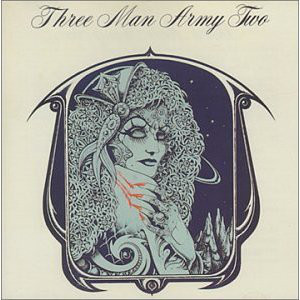
Three Man Army Two.
Despite the disappointment of Three Man Army’s commercial failure, the band were determined to move forward. So Adrian Gurvitz began writing Three Man Army’s third album. He wrote Today, Flying, Space Is The Place. This time around, Adrian and Tony Newman cowrote just the one track, Irving. The pair joined with Paul Gurvitz to write Burning Angel. Adrian also renewed his songwriting partnership with Lee Baxter Hayes, and the pair penned Polecat Woman, I Can’t Make The Blind See and In My Eyes. These songs were recorded at Ramport Studios, in Battersea, London and would become Three Man Army Two.
When recording of Three Man Army Two began, there had been a number of changes made. There was no sign of producer Lou Reizner. He had produced A Third Af A Lifetime and co-produced Three Man Army with the band. For Three Man Army Two. Three Man Army and Cyrano co-produced the album. It featured Three Man Army and a few friends.
Just like Three Man Army, the lineup remained the same. Drummer and percussionist Tony Newman was joined in the rhythm section by Paul Gurvitz who also added acoustic guitar. Meanwhile, Adrian Gurvitz played lead guitar, slide guitar, organ and added lead vocals. Peter Robinson played piano on Space Is The Place and I Can’t Make The Blind See. It also featured backing vocals from Doris Troy, Ruby James and Madeline Bell. With a little help from their friends, Three Man Army recorded what became Three Man Army Two.
Casting around for a title, Three Man Army decided to call the album Three Man Army Two. Their reasoning, was that this was the second album from this lineup of the band. The album was delivered to Warners, who would release the album on Polydor in Britain and Reprise Records in America. Before that, critics had their say on Three Man Army Two.
Just like their two previous albums, Three Man Army Two caught the imagination of critics. However, when Three Man Army Two was released in 1974, the album failed commercially. Just like their two previous albums, Three Man Army Two and its fusion of blues, psychedelia and rock passed record buyers by. Three Man Army were out of luck. Despite that, they planned to record a fourth album.
That didn’t come to pass. Instead, Tony Newman got the chance to join David Bowie’s band. This was too good an opportunity to turn down. Three Man Army were to square one, and without a drummer.
Before the search for a new drummer began, Adrian and Paul Gurvitze joined with Ginger Baker the Baker Gurvitz Army. They released a trio of studio albums between 1974 and 1976. The formation of Baker Gurvitz Army spelled the end of Three Man Army.
Unlike many seventies rock groups, Three Man Army never reunited. Even when interest in their music began to grow. Three Man Army now have a cult following, who have discovered and appreciate Three Man Army’s three albums. They regard each of these albums as cult classics. The first of these three albums is A Third Of Lifetime, which a reminder of another British rock music’s best kept secrets, Three Man Army.
The Three Man Army Story.
SLY AND THE FAMILY STONE-WOODSTOCK SUNDAY AUGUST 17 1969-RECORD STORE DAY
Sly and The Family Stone –Woodstock Sunday August 17, 1969-Record Store Day.
Label: We Are Vinyl.
Between 1966 and 1976, psychedelic soul pioneers Sly and The Family Stone released eight studio albums and their first Greatest Hits album, which showcased their genre-melting music. It took as a starting point psychedelic soul and added funk and rock to this heady musical brew. This proved an irresistible for many record buyers. However, that was only part of the story of Sly and the Family Stone whose message was one of peace, brotherly love, and anti-racism
There’s much more to the story of Sly and the Family Stone. It’s also a story that features gangsters, death threats, drugs and the thugs that infiltrated one of the greatest bands of the late-sixties and early seventies. All this played a part in the rise and demise of Sly and the Family Stone.
Their story began in 1966, when Sly Stone formed Sly Stone and The Stoners which featured his friend Cynthia Robinson on trumpet. Meanwhile, Sly Stone’s brother Freddie Stone was also founding a new group Freddie and The Stone Souls. Its lineup included drummer Gregg Errico and saxophonist Ronnie Crawford. Saxophonist Jerry Martini who was a friend of Sly Stone’s, suggested that the Sly and Freddie Stone should combine the two bands. This made sense, and Sly Brothers and Sisters was born. However, in October 1966 Sly Brothers and Sisters became Sly and the Family Stone.
Soon, Vanetta Stewart, Mary McCreary and Elva Mouton who had their own gospel group The Heavenly Tones approached Sly Stone about joining the nascent group. He agreed and they became Little Sister, who became Sly and the Family Stone’s backing vocalists.
It wasn’t long before Sly and the Family Stone came to the attention of record companies. This happened after a gig at the Winchester Cathedral, which was a night club in Redwood City, California. After the show, CBS Records David Kapralik executive approached Sly and the Family Stone. He had heard the group’s set and wanted to sign them to CBS’s Epic Records label. Soon, a deal was concluded and Sly and The Family Stone began work on their debut album A Whole New Thing.
A Whole New Thing.
In October 1967, Sly and the Family Stone prepared to release their debut album A Whole New Thing. It had been recorded live in the studio and found Sly and The Family Stone fusing soul and funk. Although reviews of the album were mixed, a number of musicians, including Mose Allison and Tony Bennett were won over by the album. Alas, when A Whole New Thing was released, it failed to chart. This was a disappointing start to Sly and the Family Stone’s recording career.

Dance To The Music.
After the commercial failure of A Whole New Thing, CBS executive Clive Davis asked Sly Stone to make his music more poppy. This he hoped would find favour with DJs and record buyers. Sly Stone decided to write music that would please his employer, and come up with what was essentially a musical formula. Still, though, it allowed Sly and the Family Stone to spread their message of peace, brotherly love, and anti-racism and reach a much wider audience.
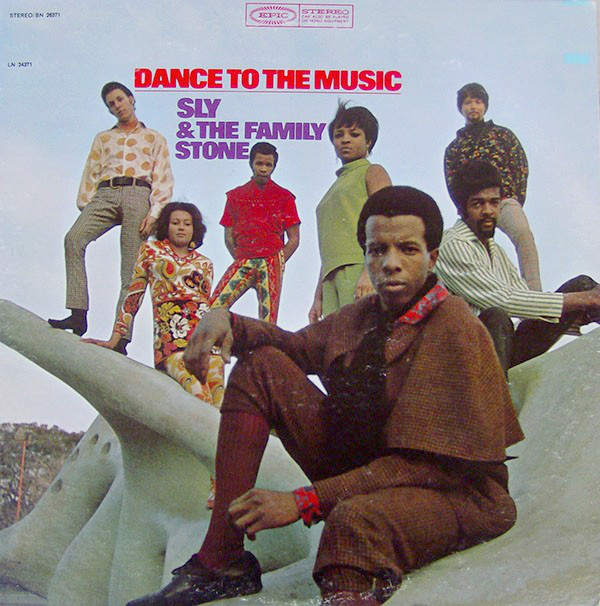
The song that Sly Stone wrote was the anthemic Dance To The Music. When it was recorded, new vocalist and keyboardist Rose Stone made her debut. On it release, Dance To The Music reached number eight in the US Billboard 100 and US R&B charts. This was Sly and The Family Stone’s psychedelic soul debut, which was copied by many within the music industry.
In April 1968, Sly and the Family Stone returned with their sophomore album Dance To The Music. This album of psychedelic soul was released to critical acclaimed and is now regarded as an influential and innovative album. Dance To The Music reached 142 in the US Billboard 200 and eleven in the US R&B charts. Sly and The Family Stone’s career was underway.
Life.
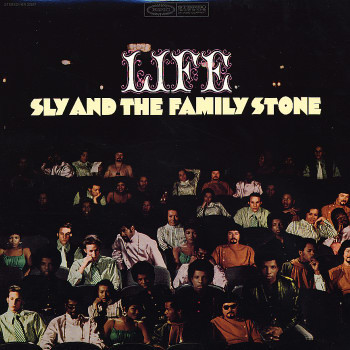
Sly and The Family Stone was keen to build on the success of Dance To The Music, and four five months later returned with their third album Life. While it was well received by critics and featured songs of the quality of Fun, Love City and M’Lady, Life failed to replicate the success of Dance To The Music. Instead, it stalled at a lowly 195 on the US Billboard 200. It was a case of one step forward and two back for Sly and The Family Stone.
Stand.
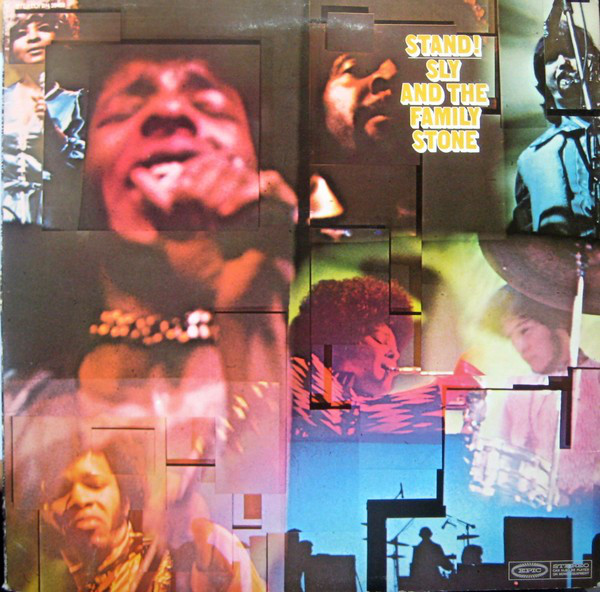
After the disappointing sales of Life, Sly and The Family Stone began work on the band’s fourth album Stand. It was written and produced by lead singer and multi-instrumentalist Sly Stone. He and the rest of Sly and The Family Stone had surpassed their previous efforts.
When critics heard Stand the hailed the album Sly and The Family Stone’s finest hour, pointing at the quality of songs like Sing A Simple Song, I Want To Take You Higher, Stand and Everyday People. Stand was a classic in-waiting and would transform Sly and The Family Stone’s career.
Everyday People was released as the lead single from Stand in 1969, and topped the US Billboard 100 and US R&B charts. This augured well for the release of Stand. When it was released in May 1969, Stand reached number thirteen in the US Billboard 200 and three in the US R&B charts. By November 1969 Stand had sold over 500,000 copies, was certified gold. Seventeen years later, and Stand was certified platinum. Now Stand was sold over three million copies and is one Sly and The Family Stone’s most successful albums.
Woodstock.
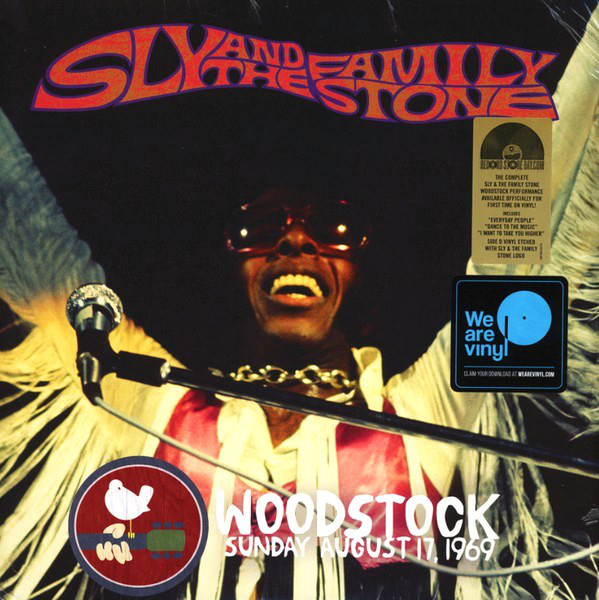
Following Stand, Sly and The Family Stone were invited to appear at Woodstock, and were one of the stars of the legendary festival. Their early morning set on ‘17th’ August 1969, was one of the highlights of Woodstock, and their set was released as a two LP set for Record Store Day 2019. It’s entitled Woodstock Sunday August 17, 1969-Record Store Day and was released by We Are Vinyl and features Sly and The Family Stone at the peak of their powers.
That morning, they opened their set with M’Lady which gave way to Sing A Simple Song, You Can Make It If You Try, Everyday People and the anthemic Dance To The Music. From there, a medley of Music Lover and Higher are followed by one of the the highlights of the set, Want To Take You Higher which is another anthem from Sly and The Family Stone who were fusing psychedelic soul, funk and rock to create a truly heady musical brew. This continued on Love City before they close the show with Stand! which is a reminder if any was needed, of how good a band Sly and The Family Stone were in 1969.
Their appearance at Woodstock further cemented their huge popularity, abd Sly and The Family Stone’s profile was at an all time high. Their record company CBS was desperate for a new album.Deadlines for a new album were set, and deadlines were missed. For CBS, this was frustrating as Sly and The Family Stone had never been as popular. If the band had completed their album on time, it could’ve been their biggest selling album. When CBS realised that a new album wasn’t going to be imminent, they had to settle for Sly and The Family Stone’s’ first Greatest Hits album which was released in 1970, and sold over five million albums. This was helped by their appearance at Woodstock when Sly and The Family Stone stole that morning, and came of age with a barnstorming performance from the psychedelic soul pioneers which is celebrated on Woodstock Sunday August 17, 1969, which was a welcome release on Record Store Day.
Sly and The Family Stone –Woodstock Sunday August 17, 1969-Record Store Day.
THE STEVIE RAY VAUGHAN STORY: TRIUMPH AND TRAGEDY,
The Stevie Ray Vaughan Story: Triumph and Tragedy
Just like countless other musicians, Stevie Ray Vaughan’s career is a story of triumph and tragedy. He spent eleven years struggling to make a breakthrough, and during that period, Stevie Ray Vaughan spent six years as a sideman, which was akin to a musical apprenticeship. Having served his apprenticeship, Stevie Ray Vaughan headed out on his own in 1977.
Stevie Ray Vaughan formed Triple Threat Revue, who would later, become Double Trouble in 1977. They announced their arrival with a barnstorming set at 1982s Montreux Jazz Festival. This resulted in Stevie Ray Vaughan and Double Trouble being signed to Epic.
Just over a year later, Stevie Ray Vaughan and Double Trouble released their debut album Texas Flood in 1983. It went on to sell over two million copies, and was certified platinum. This was triumph in the story of Stevie Ray Vaughan. The tragedy came just seven years later.
On August 27th 1990, tragedy struck, when Stevie Ray Vaughan was killed in a helicopter crash. The Texan blues man was just thirty-six, and had only enjoyed seven years in the spotlight. During that period, it seemed that Stevie Ray Vaughan and Double Trouble could do no wrong. They had released albums sold over eight million albums. It was a far cry from when Stevie Ray Vaughan dropped out of high school, Stevie Ray Vaughan, and embarked upon life as a blues man.
College or university Stevie Ray Vaughan decided, wasn’t for him. He had known that for a while. Maybe longer than he realised? After all, Stevie Ray Vaughan had been playing the guitar most of his young life.
Stevie Ray Vaughan was born in Dallas, Texas on October 3rd 1954. After watching his brother Jimmie play his guitar, seven year old Stevie Ray Vaughan picked up a guitar for the first time. Soon, he was hooked, and was determined to master the guitar.
By the time Stevie Ray Vaughan, he had mastered the guitar, and music became more important than getting an education. Eventually, he began to think of making a living out of music. After all, neither college nor university Stevie Ray Vaughan decided wasn’t for him. He had known that for a while. Instead, he wanted to play the blues. This many thought was just a pipe dream, a phase he was going through and eventually, Stevie would settle down. However, in 1971, Stevie Ray Vaughan dropped out of hight school and embarked upon a career as a blues man.
Ever since Stevie Ray Vaughan dropped out of high school in 1971, he had been playing the blues. Having played in a series of bands, Stevie’s break came when he started playing with Marc Benno’s band The Nightcrawlers. After The Nighcrawlers, Stevie played with Danny Freeman in The Cobras. For Stevie, this was all part of his musical apprenticeship. Then in 1977, Stevie Ray Vaughan went from sideman to bandleader, when he formed Triple Threat Revue.
Triple Threat Revue would later become Double Trouble. This came about, when Stevie Ray Vaughan brought onboard the rhythm section of drummer Chris Layton and bassist Tommy Shannon. It was with Double Trouble at his side, that Stevie Ray Vaughan announced his arrival at 1982s Montreux Jazz Festival.
That night, at 1982s Montreux Jazz Festival, Stevie Ray Vaughan and Double Trouble announced their arrival. Stevie, playing vintage guitars, eschewed the use of effects. Effects were used sparingly during his performance. While Stevie turned his back on effects, he and Double Trouble liked to crank the sound up. To do this, they combined a series of amplifiers. This made the audience sit up and take notice. What they saw was a a blistering, virtuoso performance. By the time Stevie Ray Vaughan and Double Trouble left the stage, at 1982s Montreux Jazz Festival their star was in the ascendancy.
Eleven months later, Stevie Ray Vaughan and Double Trouble released their debut album Texas Flood on Epic. It sold over two million copies, and was certified double platinum. This was the start of the rise and rise, of Stevie Ray Vaughan and Double Trouble.
Texas Flood.
Before they signed to Epic, Stevie Ray Vaughan and Double Trouble headed to Jackson Browne’s recording studio in Los Angeles. Between 22nd to 24th November 1982, Stevie Ray Vaughan and Double Trouble recorded ten tracks that would become their debut album, Texas Flood.
At Jackson Browne’s recording studio, Stevie Ray Vaughan and Double Trouble hooked up with engineer Richard Mullen. He would co-produced Texas Flood with Stevie Ray Vaughan and Double Trouble.
Texas Flood featured ten tracks. Five were penned by Stevie, who also cowrote Dirty Pool with drummer Doyle Bramhall. Along with covers of Howlin’ Wolf’s Tell Me and Buddy Guy’s Mary Had a Little Lamb, these tracks became eventually become Texas Flood.
On the first of the three days at Jackson Browne’s recording studio, Stevie Ray Vaughan and Double Trouble spent setting up their equipment. The next two days, Stevie Ray Vaughan and Double Trouble recorded what would become Texas Flood. Now all Stevie Ray Vaughan and Double Trouble needed, was a label to release Texas Flood.
In early 1983, Epic signed Stevie Ray Vaughan and Double Trouble. Epic having heard the master tapes of Texas Flood, decided it needed remastered. So, a $65,000 advance was given to remaster the recordings. The advance also allowed Stevie to lay down his vocals at Riverside Sound in Austin, Texas. Then on June 13th 1983, Texas Flood was released.
When Texas Flood was released, it was mostly, well received by critics. No wonder, Stevie Ray Vaughan was easily, one of music’s most exciting guitarists. However, Rolling Stone magazine and Robert Christgau, forever the contrarians, weren’t won over by Texas Flood. This didn’t affect sales of Texas Flood, which reached number thirty-eight in the US Billboard 200. Having sold two million copies, Texas Flood was certified double platinumin America and Canada. Following the success of Texas Flood, Stevie Ray Vaughan and Double Trouble headed out on a gruelling tour.
On 20th July 1983, Stevie Ray Vaughan and Double Trouble found themselves in Toronto. That night, they played at The El Mocambo. The concert was broadcast live, with Stevie Ray Vaughan and Double Trouble, billed as a A Legend In The Making.
Stevie Ray Vaughan and Double Trouble made their way through eight tracks. They were a mixture of original tracks and cover versions. Tracks from Texas Flood and Stevie Ray Vaughan and Double Trouble’s sophomore album Couldn’t Stand the Weather, sat side-by-side. These eight tracks were a tantalising taste of Stevie Ray Vaughan and Double Trouble live. Following the concert at The El Mocambo, the tour continued, before Stevie Ray Vaughan and Double Trouble returned to the studio in January 1984.
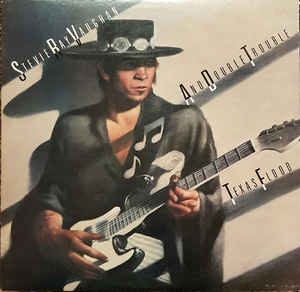
Couldn’t Stand the Weather.
Just like Texas Flood, Couldn’t Stand the Weather, Stevie Ray Vaughan and Double Trouble’s sophomore album Stevie penned half the tracks. He wrote four of the eight tracks. The other four tracks were cover versions, including a cover of Jimi Hendrix’s Voodoo Child (Slight Return). These eight tracks were recorded at The Power Station, New York.
Over nineteen days at The Power Station, Stevie Ray Vaughan and Double Trouble recorded Couldn’t Stand the Weather. Producing Couldn’t Stand the Weather, were Stevie Ray Vaughan and Double Trouble, Richard Mullen and Jim Capter. From the minute Stevie Ray Vaughan and Double Trouble laid down their cover of Tin Pan Alley, it was obvious to those in the control room that, here was a band at the top of their game.
That proved to be the case. On the release of Couldn’t Stand the Weather, on 15th May 1984, Stevie Ray Vaughan and Double Trouble’s fusion of blues rock, electric blues and Texas rock, won friends and influenced people. This included the programmers at MTV. They put the video for Couldn’t Stand the Weather on heavy rotation. For Stevie Ray Vaughan and Double Trouble this meant their music reached a much wider audience.
Then when critics heard Couldn’t Stand the Weather, it received widespread critical acclaim. Stevie Ray Vaughan and Double Trouble were now being hailed as the saviour of the blues. It had fallen out of fashion long ago. The problem was, the blues hadn’t evolved since the advent of the electric guitar. As a result, the blues was on life-support and close to breathing its last. Then came Stevie Ray Vaughan and Double Trouble, a blue group who were on MTV. This was as game-changer.
Especially when Couldn’t Stand the Weather was released on May 15th 1984, and reached number thirty-one on the US Billboard 200 charts. This resulted in Couldn’t Stand the Weather being certified double platinum in America and platinum in Canada. It seemed that Stevie Ray Vaughan and Double Trouble could do no wrong.

Soul To Soul.
In March 1985, Stevie Ray Vaughan and Double Trouble returned to the studio. This time, they headed to the Dallas Sound Lab. Between March and May 1985, Stevie Ray Vaughan and Double Trouble recorded the ten tracks that became Soul To Soul.
For Soul To Soul, Stevie only penned four of the ten tracks. They were Only Say What, Ain’t Gone ‘N’ Give Up On Love, Empty Arms and Life Without You. Drummer Doyle Bramhall contributed Lookin’ Out the Window and Change It. The other tracks were cover versions, including Willie Dixon’s You’ll Be Mine and Earl King’s Come On. Just like Texas Flood, Soul To Soul was co-produced by Stevie Ray Vaughan and Double Trouble and Richard Mullen. Soul To Soul would be released on September 30th 1985. However, before that, Stevie Ray Vaughan and Double Trouble made a triumphant return to where it all began, the Montreux Jazz Festival.
Three years after making their breakthrough at 1982s Montreux Jazz Festival, Stevie Ray Vaughan and Double Trouble returned to where it all began. They played a storming ten song set. That night, just like three years earlier, Stevie Ray Vaughan and Double Trouble had the audience enthralled. Here was the most exciting blues band in the world. Since their Montreux debut, Stevie Ray Vaughan and Double Trouble had sold four million albums in America alone. Before long, four would become five.
On the release of Soul To Soul, it was well received by critics. Soul To Soul received the same critical acclaim as their two previous albums. Stevie Ray Vaughan and Double Trouble were regarded as the most exciting blues band in the world. They were also one of the most successful.
Change It, one of two singles released from Soul To Soul, found flavour with MTV programmers. It reached number seventeen on the US Rock charts. Despite this, Soul To Soul wasn’t as big a commercial success as Stevie Ray Vaughan and Double Trouble’s two previous albums.
Soul To Soul was released on September 30th 1985. However, the album reached number thirty-four in the US Billboard 200 charts, and was certified platinum. In Canada, where Stevie Ray Vaughan and Double Trouble’s two previous albums were certified platinum, Soul To Soul was only certified gold. This was a troubling time for Stevie Ray Vaughan and Double Trouble.

Live Alive.
After the release of Soul To Soul, it would be four years before Stevie Ray Vaughan and Double Trouble released another album. During this period, Stevie’s appetite for drink and drugs couldn’t be sated. After breakfast, Stevie would begin his daily diet of a quart of whiskey and a quarter ounce of cocaine. This was Stevie’s daily diet. It would’ve killed most people. Not Stevie. He continued to record and play live. One of Stevie Ray Vaughan and Double Trouble live performances was released in July 1986, as Live Alive.
Live Alive was a double album recorded during 1985 and 1986s Live Alive tour. Stevie Ray Vaughan and Double Trouble swagger their way through fourteen tracks on Live Alive. Despite his chaotic lifestyle, Stevie was still one of the best blues guitarists of his generation. Backed by the tightest of rhythm sections, Stevie unleashes a series of blistering performances. Whether it’s original songs or cover versions, they come alive in Stevie Ray Vaughan and Double Trouble’s hands. As a result, critics and record buyers were won over by Live Alive.
Most critics gave Live Alive positive reviews. A few critics disagreed. However, that’s not surprising. Live albums always divide the opinion or critics. Not record buyers. When Live and Alive was released in July 1986, it reached number fifty-two in the US Billboard 200 charts. Although this was the lowest chart placing of any Stevie Ray Vaughan and Double Trouble album, Live Alive was certified platinum in America and Canada. This would be the last album Stevie Ray Vaughan and Double Trouble would release for three years.
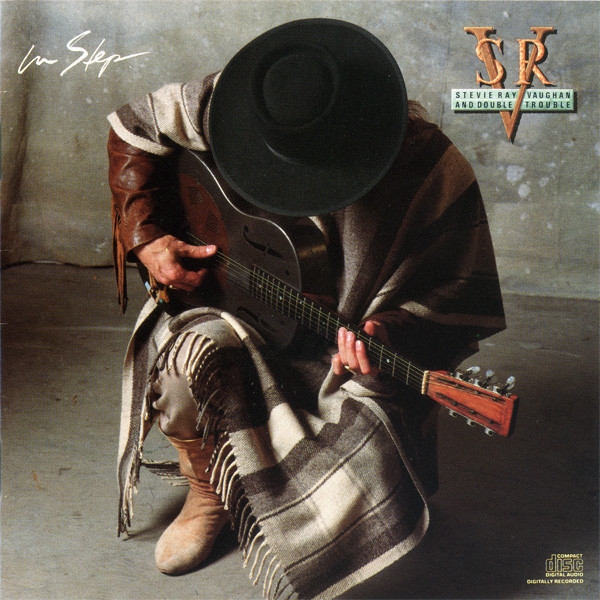
In Step.
By the time Stevie Ray Vaughan and Double Trouble returned with their fourth album, In Step, Stevie was a changed man. Gone was the hard living, wild man, with the insatiable appetite for drink and drugs. This was reflected in some of the songs on In Step.
For In Step, Stevie only wrote two tracks, Travis Walk and Riviera Paradise. However, Stevie cowrote four tracks with Doyle Bramhall. This included Wall of Denial and Tightrope, which reflect Stevie’s newfound sobriety. Along with covers of Willie Dixon’s Let Me Love You Baby, Buddy Guy’s Leave My Girl Alone and Howlin’ Wolf’s Love Me Darlin,’ these songs became In Step.
Recording of In Step began on January 25th 1989 and lasted right through to March 13th 1989. Further sessions took place at Kiva Sudios, Memphis, and then in Los Angeles at Sound Castle and Summa Studios, where Double Trouble and Jim Gaines co-produced In Step. Once In Step was finished, it was released on June 6th 1989.
When In Step was released on June 6th 1989, the album was well received by critics. Stevie Ray Vaughan and Double Trouble’s fused of blues, rock and soul on In Step, which was perceived as an incredibly honest, personal and autobiographical album. This appealed to record buyers.
On In Step’s release, it reached number thirty-three in the US Billboard 200 charts. This resulted in In Step being certified double platinum in America, and platinum in Canada. Stevie Ray Vaughan and Double Trouble were the most successful blues bands of the eighties,
Since 1983s Texas Flood, Stevie Ray Vaughan and Double Trouble had sold eight million albums. Sadly, In Step was the final Stevie Ray Vaughan and Double Trouble album released during Stevie’s lifetime.
Tragedy struck for Stevie Ray Vaughan on August 26th 1990. After playing two shows with Eric Clapton at the Alpine Valley Music Theatre, in East Troy, Wisconsin, some of the musicians were due to fly to Chicago. This included Stevie Ray Vaughan. He made his way to one of the four helicopters waiting on a nearby golf course. However, there was a problem.
Witnesses report that that night, the skies weren’t clear. Instead, there was fog, haze and low cloud. This was far from ideal flying conditions. Despite this, the helicopters took off. Joining Stevie Ray Vaughan in the third helicopter, were three of Eric Clapton’s entourage. Once the passengers and crew were ready, the Bell 206A JetRanger helicopter took off, en route for the Merge Field, in the Windy City at 12.50 a.m.
As the helicopter made its way from East Troy, Wisconsin to Merge Field, Chicago, the pilots were instructed to fly over a 1000-foot ski hill. Given the inclement weather conditions, this seemed a strange route. It had disastrous consequences.
By the time the helicopter took off from, it was now the 27th August 1990. As the helicopter climbed high into the night sky, it suddenly, veered to the left and crashed into the ski hill. It was later discovered that the helicopter crashed just fifty feet from the summit. For everybody on board it had been a case of so close, yet so far.
At 4.30 a.m, the Civil Air Patrol were told about the incident. It took them three hours to locate the crash site. When they did, they were able to ascertain that there were no survivors. That day, music lost one of its most talented and charismatic sons, Stevie Ray Vaughan.
The Texan blues man was only thirty-five. Stevie Ray Vaughan had only released four studio albums and one live album. However, these albums sold over eight million copies, making Stevie Ray Vaughan and Double Trouble the most successful blues bands of the eighties.
Stevie Ray Vaughan and Double Trouble almost single handedly, revived interest in blues music. Suddenly, there was a resurgence in interest in what was an almost a moribund musical genre. Not any more. Throughout the eighties, Stevie Ray Vaughan and Double Trouble’s unique brand of blues rock reached a new, and much wider audience. Playing an important part in the rise and rise of Stevie Ray Vaughan and Double Trouble was MTV.
A number of Stevie Ray Vaughan and Double Trouble’s tracks were on heavy rotation on MTV. Suddenly, a new generation had been introduced to the blues by Stevie Ray Vaughan and Double Trouble. They were their gateway to a whole wider body of work. However, tragically, Stevie Ray Vaughan and Double Trouble’s amounts to just the five albums released during Stevie Ray Vaughan’s lifetime.
Stevie Ray Vaughan and Double Trouble’s swan-song was In Step, which was released on June 6th 1989, some twenty-seven years ago. However, still, a new generation of musicians cite Stevie Ray Vaughan as an influence. No wonder; he was one of the greatest blues guitarists of his generation. Sadly, Stevie Ray Vaughan was only in the spotlight for seven years.
During the seven years that Stevie Ray Vaughan and Double Trouble’s star was in the ascendancy, they released four studio albums and one live album. Their swan-song was In Step, which was released in 1989. By then, Stevie had turned his life around. No longer was he living the rock ’n’ roll lifestyle.
Stevie Ray Vaughan was a changed man. Gone was the hard living, wild man, with the insatiable appetite for drink and drugs. The change in Stevie Ray Vaughan was reflected on In Step’s lyrics. It introduced the listener to a new, changed Stevie Ray Vaughan. They liked what they heard, and In Step reached number thirty-three in the US Billboard 200 charts. This resulted in In Step being certified double platinum in America, and platinum in Canada. Stevie Ray Vaughan and Double Trouble looked like becoming one of the biggest bands of the nineties. They had already sold over eight million copies between 1982 and 1989.
Sadly, that never happened. On August 27th 1990 Stevie Ray Vaughan was killed in a helicopter crash. He was only thirty-five years old. That day music lost one of its most charismatic and talented sons, Stevie Ray Vaughan, whose life is one of triumph and ultimately tragedy, but one that will never be forgotten.
The Stevie Ray Vaughan Story: Triumph and Tragedy.
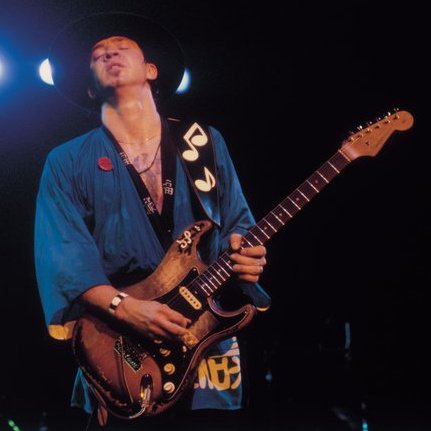


JAMES CARR-UNDOUBTABLY THE GREATEST SOUTHERN SOUL SINGER
James Carr-Undoubtably The Greatest Southern Soul Singer.
By 1964, Memphis was a musical hotbed, and home to many up-and-coming soul singers and songwriters looking to make a breakthrough. Roosevelt Jamieson was a friend of many of these songwriters and soul singers, including OV Wright and James Carr, who were both looking for a label. It was a frustrating period for the two future soul greats, and Roosevelt Jamieson was determined to help the singers on the road to success.
Roosevelt Jamieson arranged for OV Wright and James Carr to audition at Stax, in the hope that his two friends would be signed to what was one of soul’s top labels. When the three men arrived at Stax, they were greeted by Steve Cropper who was going to audition OV Wright and James Carr. Given both singer’s voice’s and talent surely, Steve Cropper would be keen to secure the signature of OV Wright and twenty-two year old James Carr?
After OV Wright and James Carr had auditioned, Steve Cropper showed very little interest in signing either singer. His rational was that they already had two male vocalists on their roster, Otis Redding and William Bell on their roster. Stax didn’t want to add any more male vocalists to their roster. This was a decision that Stax would come to regret.
In late-1964, Roosevelt Jamieson arrived at the home of Quinton Claunch the owner of Goldwax Records on a cold wet winter’s night with OV Wright and James Carr. After some small talk, the two singers sung unaccompanied in front of Quinton Claunch. That was all he needed to hear, and that night, Quinton Claunch signed both OV Wright and James Carr. Stax’s loss was Goldwax Records’ gain. During his time with Goldwax Records, James Carr matured into one of the greatest soul singers of the past six decades, and his single Dark End Of The Street which redefined the future of Southern Soul.
The Goldwax Records’ Years.
With OV Wright and James Carr now signed to Goldwax Records, Quinton Claunch set about finding the right song for his latest signings. He chose That’s How Strong My Love Is for OV Wright, which when it was released on Goldwax Records, charted and gave the twenty-five year old a hit single. There was only one problem though.
After the success of That’s How Strong My Love Is, Don Tobey who owned and ran Duke-Peacock Records claimed to have OV Wright under contract, dating back to when he was a member of The Sunset Travellers. Quinton Claunch, who knew of Don Robey’s alleged business practises, wasn’t going to argue with the ‘music impresario’ who had a reputation for allegedly using intimidation and violence to get what he wanted. OV Wright’s contract at Goldwax Records was canceled, leaving Quinton Claunch with just James Carr.
With OV Wright out of the picture, Quinton Claunch decided to give his other new signing his full attention. Quinton Claunch started looking for the right song for James Carr’s debut single for Goldwax Records. Eventually, the pair settled on Only Fools Run Away, which was released in late-1964 and distributed through Vee-Jay Records.
By then, Vee-Jay was starting to experience financial problems, and no longer had the budget to promote singles, including James Carr’s Only Fools Run Away. Sadly, James Carr’s debut single failed to trouble the charts, which was a disappointing way to start his career at Goldwax Records.
Things didn’t improve for James Carr when I Can’t Make when I Can’t Make It was released in February 1965, and also failed commercially. By then, Vee-Jay’s finances were worsening, and it no longer had the financial muscle it once had.
History repeated itself in September 1965, when James Carr released his third single She’s Better Than You. With Vee-Jay’s financial situation worsening all the time, James Carr watched as another single failed to find the audience it deserved. This was a frustrating time for James Carr and Goldwax Records’ owner Quinton Claunch.
Fortunately, by late-1965 Quinton Claunch had managed to negotiate a new long-term distribution deal with the New York-based Amy, Maia and Bell group of labels. Quinton Claunch was pleased because this meant that Goldwax Records’ releases would be distributed and promoted properly. This was perfect timing, as James Carr’s career was about to be transformed.
For James Carr’s fourth single for Goldwax Records, and his first under the new distribution deal was You’ve Got My Mind Messed Up was chosen. It was a song with a complicated past.The roots of You’ve Got My Mind Messed Up could be traced back to That’s How Strong My Love Is, which OV Wright sung at his Stax audition. Steve Cropper liked the song, and after putting the words to a different melody, gave it to Otis Redding. This didn’t please its Roosevelt Jamieson and Quinton Claunch, who asked one of the Goldwax Records’ staff writers OB McLinton, if he could change the melody. The last thing that Quinton Claunch wanted was to release a hit single, and be accused of plagiarism. After OB McLinton made the necessary changes, James Carr could record You’ve Got My Mind Messed Up.
Quinton Claunch sent James Carr to Chips Moman’s American Studio in late-1965, where he was scheduled to record You’ve Got My Mind Messed Up. Accompanying James Carr was a band that featured some of the top session players. They Quinton Claunch hoped would play their part in James Carr’s breakthrough single.
Goldwax Records scheduled the release of You’ve Got My Mind Messed Up for February 1966, and when the single was released, the powerful, soul-baring ballad entered the charts and reached sixty-three on the US Billboard 100 and seven on the US R&B charts. After four attempts, James Carr had a hit single to his name.
Four months later, James Carr returned with his fifth single for Goldwax Records, a cover of Quinton Claunch’s Love Attack. It featured an impassioned, hurt-filled vocal, and was released in June 1966. Love Attack reached ninety-nine on the US Billboard 100 and twenty-one on the US R&B charts. While Love Attack hadn’t replicated the success of You’ve Got My Mind Messed Up, it gave James Carr his second hit single. James Carr was no one hit wonder.
In September 1966, James Carr returned with his sixth single, Pouring Water On A Drowning Man. Just like James Carr’s two previous singles, it sounded as if he had lived the lyrics to Pouring Water On A Drowning Man. It reached eighty-five on the US Billboard 100 and twenty-three on the US R&B charts giving James Carr his third consecutive hit single. However, James Carr would one more single during 1966.
For his fourth single of 1966, James Carr covered the Chips Moman and Dan Penn composition Dark End Of The Street. It was recorded at Hi Studios in Memphis, as Chips Moman’s American Studio was being upgraded. With some top session players accompanying James Carr, he recorded one of the greatest songs in the history of soul music. Its lyrics hinted at an extramarital or interracial relationship, and James Carr sounded as if he had experienced the hopelessness and torment that comes with this pursuit of forbidden fruit. When Dark End Of The Street was released by Goldwax Records in December 1966, and reached seventy-seven on the US Billboard 100 and ten on the US R&B charts, and redefined the future of Southern Soul.
As 1966 gave way to 1967, James Carr had four hit singles to his name, and was seen by many within the Memphis music industry as one of soul’s rising stars. Steve Cropper at Stax must have been ruing his decision not to sign James Carr, as he was outperforming William Bell. He had just two minor hit singles, and hadn’t enjoyed the crossover appeal that James Carr had. It looked like Steve Cropper had backed the wrong horse.
After enjoying the biggest hit of his career with The Dark End Of The Street, James Carr and Goldwax Records’ owner Quinton Claunch were keen to build on that success. The beautiful ballad Let It Happen was chosen for his next single. However, when Let It Happen was released in May 1967, it just missed out on the US Billboard 100, but reached thirty in the US R&B charts. This gave James Carr his fifth consecutive hit single.
James Carr’s hot streak continued when he released I’m A Fool For You in August 1967. He was joined by Betty Harris, who wasn’t credited on the single, and their duet reached ninety-seven on the US Billboard 100 and forty-two on the US R&B charts. James Carr had now enjoyed six consecutive singles.
During 1967, James Carr released his debut album You Got My Mind Messed Up on Goldwax Records. It featured the Dan Greer composition I Don’t Want To Be Hurt Anymore and other tracks including You Got My Mind Messed Up were Pouring Water On A Drowning Man, Love Attack, The Dark End Of The Street and You’ve Got My Mind Messed Up. When You Got My Mind Messed Up was released in 1967, the album reached twenty-five in the US R&B charts. The James Carr success story continued.
For James Carr’s final single of 1967, he released a cover of Quinton Claunch and OB McLinton’s A Man Needs A Woman. It’s a Southern Soul ballad whose roots are in the church, and features a tender, heartfelt vocal from James Carr. When A Man Needs A Woman was released in December 1978, it reached thirty-three on the US Billboard 100 and sixteen on the US R&B charts. Just like 1966, 1967 had been a good year for James Carr who had enjoyed seven consecutive hit singles.
James Carr was, by then, one of Quinton Claunch’s most successful signings for Goldwax Records. What must have made James Carr’s success even sweeter was that Stax had rejected the chance to sign him. However, tragedy had struck during 1967, and Stax’s most successful male vocalist Otis Redding, had died in a plane crash. Within Memphis’ close knit musical community the death of Otis Redding was mourned.
By 1976, Stax which was enjoying one of the most fruitful periods its history and had a strong roster. This included several male vocalists, including William Bell, who had a handful of minor hit singles to his name, and Johnny Taylor who had signed to Stax in 1966. Neither were regarded as being of the standard of James Carr though.
During the first half of 1968, James Carr had released his sophomore album A Man Needs A Woman on both sides of the Atlantic. However, when Goldwax Records released A Man Needs A Woman disaster struck, and the album failed to trouble the charts. This was a disappointment for James Carr and Quinton Claunch. Especially after seven consecutive hit singles. Quinton Claunch was hoping that this was a just blip.
It wasn’t until June 1968 that James Carr returned with a new single Life Turned Her That Way. It was a poignant ballad from James Carr’s sophomore album A Man Needs A Woman. Sadly, Life Turned Her That Way failed to chart, and James Carr didn’t enjoy his eighth consecutive hit single.
With his sophomore album A Man Needs A Woman and the single Life Turned Her That Way falling to chart, it was a worrying time for James Carr, and Quinton Claunch the owner of Goldwax Records. However, he still believed in James Carr, and in October 1968 Freedom Train was released as a single, and it reached thirty-nine in the US R&B charts. James Carr was back with his eighth hit single.
Five months later, and James Carr returned with a new single To Love Somebody which was written by the Gibb brothers, who were better known as the Bee Gees. When To Love Somebody was released in March 1969, it reached forty-four in the US R&B charts. This was James Carr’s ninth, and sadly, final hit single.
By then, music was changing, and soul music was no longer as popular as it had been. The exceptions were some of the music being released by the Motown soul factory, and artists like Aretha Franklin. However, other genres had overtaken soul in the popularity stakes and artists like James Carr was no longer as popular as they had once been.
Nothing more was heard of James Carr until he released Everybody Needs Somebody in December 1969. Sadly, the single failed to chart, and proved an inauspicious end to James Carr’s time at Goldwax Records.
Life After Goldwax Records.
Little did James Carr realise that he had enjoyed the most successful period of his recording career, and never again would he scale the same heights. That was despite James Carr signing to Atlantic Records after his departure from Goldwax Records. However, when Hold On was released in July 1971, it failed to chart and James Carr left Atlantic Records having just released one single.
Two years later, reissues of two of James Carr’s singes were released on the Flashback label. Neither The Dark End Of The Street which was released in 1973, nor A Man Needs A Woman troubled the charts. It looked as if James Carr was yesterday’s man.
Nearly four years passed before James Carr released Let Me Be Right (Don’t Want To Be Wrong) on the Memphis based River City label in 1977. By then, disco was flavour of the month and neither Southern Soul, nor soul in general, were no longer as popular.
Despite that, James Carr released a new album Freedom Train in 1977. It bore the Goldwax Records name and was released in conjunction with Vivid Sound. However, the album was only released in Japan and available as an import. Soul fans in America and Britain missed out on Freedom Train, where James Carr rolled back the years on several tracks.
A year after the release of Freedom Train, James Carr returned in 1978 with Oriental Live And Living. It was James Carr’s first live album, and again, was only released in Japan where he was still popular.
Nothing more was heard of James Carr, until Ace Records released Take Me To The Limit in 1991. By then, James Carr wasn’t in good health, but showed more than a few glimpses of his old magic. It was a similar case when Ace Records released the aptly titled Soul Survivor in 1993. The Soul Survivor showed further glimpses of why he was regarded as a true soul great on what was his swan-song.
Sadly, James Carr died of lung cancer in a nursing home in Memphis, Tennessee, on January the ‘7th’ 2001, aged just fifty-eight. Life had been tough for James Carr after freezing on stage during a tour of Japan in 1979. In his later years, he lived with his sister, and bravely battled the bipolar disorder that he had suffered from for much of his life. Sometimes, he required hospitalization, but for much of the final years of his life, soul great James Carr lived quietly with his sister. Music was his past, and was the legacy that he left after his death in 2001.
James Carr left behind a rich musical legacy after his death in 2001, including the ten singles and two albums that he released for Quinton Claunch’s Goldwax Records. That was where James Carr released the best music of his career including singles of the quality of You’ve Got My Mind Messed Up, Pouring Water On A Drowning Man and Dark Side Of The Street. On each song, James Carr breathes life, meaning and emotion into the lyrics. Sometimes, it sounds as if James Carr had lived and survived the lyrics so realistic is his impassioned, emotive and deeply soulful vocals. They’re a reminder and feature the late, great James Carr in his musical prime.
The Goldwax Records’ years were also the most successful period of James Carr’s career. Sadly, James Carr’s Goldwax Records’ years lasted just five years between 1964 and 1969, and saw him enjoy nine hit singles. His most successful single was the timeless Southern Soul classic Dark Side Of The Street, which redefined Southern Soul and is part of James Carr’s rich musical legacy. Dark Side Of The Street is also one reason why James Carr is regarded by many critics and soul aficionados as the undoubtably greatest Southern Soul singer
James Carr-Undoubtably The Greatest Southern Soul Singer.

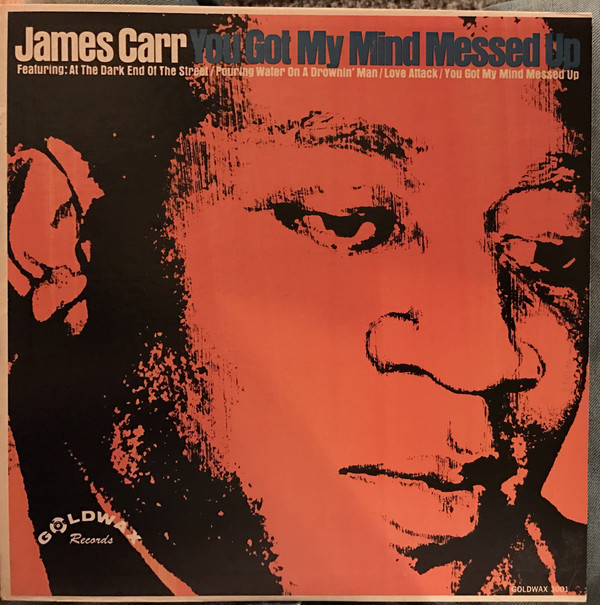


CLEAR LIGHT-A CASE OF WHAT MIGHT HAVE BEEN.
Clear Light-A Case Of What Might Have Been.
Elektra records had come a long way by the sixties, and was home to everyone from folk singers Judy Collins and Josh White to Phil Ochs and Tim Buckley, right through to psychedelic pioneers Love and The Doors, to Detroit based rockers like MC5 and The Stooges and Bread who would become one of the label’s most successful bands in the seventies. By then, Elektra had come a long way since it was founded in a college dorm in 1950.
That was where the Elektra Records story began in 1950, when Jac Holman and Paul Rickol were students at the prestigious and exclusive St. John’s College, in Santa Fe. They decided to form a record label, and agreed to invest $300 each into their new business venture. A year later Elektra Records was ready to release its album.
This was New Songs, a classical album featuring Georgianna Bannister and John Gruen, which was released as a limited edition in March 1951. However, when the album sold only a few copies this was an inauspicious start to the Elektra Records story.
Despite this setback, Elektra Records would thrive during the fifties and early sixties, and was at the forefront of the folk revival. They signed Ed McCurdy, Oscar Brand, Judy Collins, Phil Ochs and Tom Paxton. These artists brought commercial success and critical acclaim the way of Elektra Records. However, by 1964, Elektra Records was ready to diversify.
By then, Jac Holman had been analysing the classical music market and spotted a gap that was waiting to be filled. None of the major labels had realised that there was room for a new classical budget label, and before long Jac Holman launched Nonesuch Records. It was a huge success, and before long, other labels launched similar ventures. However, Nonesuch Records was by far the market leader. Buoyed by this success, Elektra Records decided to enter the pop music market.
Elektra Records entered into a joint venture with Survey Music, and founded a new label Bounty Records. However, it wasn’t a particularly successful venture, and ultimately floundered and folded. The only thing Elektra Records gained from Bounty Records was The Paul Butterfield Band, which they fell heir to. This would play an important part in Elektra Records future.
With the psychedelic era unfolding before their eyes, Elektra Records decided to sign some of the genre’s most promising up-and-coming acts. Soon, The Doors a San Francisco based band had signed to Elektra Records. They were soon joined by another new band from Los Angeles, Love. However, they weren’t the only band from L.A. who would soon call Elektra Records home.
By 1967, so would Clear Light, another group from the City Of Angels. They were a relatively new group and had only been together since early 1966.
That was when Los Angeles’ based Michael Ney advertised for a guitarist for a pickup band he was organising. One of the first people to answer the advert was Clyde Edgar “Robbie” Robinson, who was already a stalwart of the local music scene.
In the early sixties, Robbie began performing as Robbie The Werewolf. He even released an album Live At The Whaleback in 1964. Then Robbie and his wife formed a duet, and sung on the local folk circuit. That was until Barbara Robison was asked to join the folk rock group The Ashes, who in 1966 became The Peanut Butter Conspiracy. With his wife now a member of a band, Robbie was looking for a new group.
As he set off for the audition, Robbie wondered if Michael Ney’s new group was where his future lay? When he arrived at the audition, and introduced himself to Michael Ney, and straight away, the two men got on. Everything it seemed was going well. That was until Robbie failed the audition. At least Robbie came away having made a new friend, Michael Ney.
Just like Robbie, Michael Ney wasn’t a newcomer to music. For a while, he had been Tito Puente’s percussionist, and then had played in a series of bands in Hollywood. However, recently he had been looking at forming a new band whilst living alone in L.A.
When Robbie and Barbara Robison heard that Michael was living alone, they insisted that he move into their small, apartment on Manhattan Beach. There wasn’t much room for three adults and the Robison’s young child. However, everyone got on well, and soon, Robbie and Michael Ney were making plans to form a new band.
This time, there were no adverts placed looking for musicians. Instead, Robbie and Michael Ney went in search of the best musicians. The place to find them was the Hollywood and Sunset Strip clubs, and night after night, the two friends went in search of musicians for their new band. That was where Robbie and Michael Ney would eventually meet two musicians from Phoenix, Arizona.
When Robbie and Michael Ney began their search for band members, Bob Seal and Dallas Taylor were still playing in Phoenix. However, Dallas had played in L.A. before, but it had been a messy experience, literally.
Having answered an advert, drummer Dallas Taylor had travelled to L.A. for an audition. He landed the gig, and his new band were scheduled to open for The Mothers Of Invention. By then, Dallas Taylor had just had an appendectomy, and rather than tell his new band mates this, decided to play at the Shrine Auditorium. He played with such energy and enthusiasm, that his stitches burst. Dallas Taylor ended the gig with blood seeping through his burst stitches. Given the pain he was having to endure, Dallas Taylor wasn’t at his best, and was replaced as drummer. That was how he ended up back home in Phoenix. However, Dallas Taylor convinced Bob Seal to head to L.A.
Bob Seal and Dallas Taylor arrived in Los Angeles around September 1966, and straight away, began looking for fellow musical travellers. It was at a Peanut Butter Conspiracy concert, that Bob Seal and Dallas Taylor began talking to the band’s bassist Alan Brackett. Eventually, Bob Seal and Dallas Taylor asked Alan if he knew any musicians looking to form a band? Fortunately, Alan Brackett did, and introduced them to Robbie.
When the three men began talking, Robbie explained that he and Michael Ney were writing songs together, and explained what they were trying to achieve. It looked like Robbie and Michael Ney had found the musicians they were looking for. There was a problem though.
Both Bob Seal and Dallas Taylor were homeless and had no idea where they were going to spend the night after they finished talking to Robbie. He invited them to stay at the small Manhattan Beach apartment.
By then, the hippie era was in full swing, and communal living was becoming the norm. It certainly was at the Robison’s house, and they had been joined by Michael Ley, Bob Seal and Dallas Taylor. This allowed the nascent band to write, practise and jam.
As the musicians jammed over a couple of days, Michael Ney and Dallas Taylor quickly realised that two drummers were better than one. It gave the band a unique sound where power and fluidity reigned. Along with Bob Seal’s guitar, the as yet unnamed band’s sound was being honed. However, they still needed more musicians, and a name.
One thing the band need was a vocalist, and Barbara Robison was everyone’s first choice. She declined, so Wanda Watkins a friend of the Peanut Butter Conspiracy was recruited. All that the group now needed was a name.
This came about when one of the group passed road sign saying Garnerfield Sanitarium. At last, the group had a name. However, still the lineup wasn’t complete.
Despite this, Garnerfield Sanitarium were playing weekend live at various clubs in Manhattan Beach. It was at one of these shows, that a young, aspiring songwriter approached them. He was Wolfgang Dios, who already was already signed to a publishing company. Wolfgang Dios was so impressed with Garnerfield Sanitarium, that he hooked them up with his publishing company.
The publishing company was owned by a former professional boxer and aspiring songwriter, Bud Mathias. He was formerly the Arizona Lightweight Champion between 1951 and 1954. Now he was a musical entrepreneur, who was involved in songwriting, recording and publishing. There was, it seemed, no end to Bud Mathias’ talents.
After his boxing career was over, Bud Mathias was looking four a new career. He decided to get involved in music. That was despite having no experience in the music industry. However, Bud Mathias had written Runnin’ Wild which was recorded by Brenton Wood. Bud Mathias had also formed the publishing company Little Giant Music which published and administered Wolfgang Dios’ songs. When Bud Mathias met Garnerfield Sanitarium, he thought the band had potential.
There was a but though, Garnerfield Sanitarium still needed a decent bassist. As luck should have it, the musical entrepreneur just happened to know a bassist, Doug Lubahn, a former ski instructor.
When Mamma Cass first met Doug Lubahn in Aspen, Colorado, he was a ski instructor during the day, and played in a nightclub band at night. Mamma Cass thought Doug had potential, so encouraged him to move to L.A.
Things hadn’t gone well for Doug Lubahn, and for a while he was homeless, and had no option but to sleep on L.A.’s streets. However, by the time he joined Garnerfield Sanitarium, Doug Lubahn’s luck was changing.
After meeting the band, Doug Lubahn moved into the Robison’s Manhattan Beach apartment. By then, space was at a premium. This was the end for Barbara Robison. For some time the Robison’s marriage has been on shaky ground. She and her baby Scotty Robison, moved into Peanut Butter Conspiracy’s house in Silver Lake. Meanwhile, Manhattan Beach apartment became Garnerfield Sanitarium’s headquarters.
By then, the new lineup of Garnerfield Sanitarium had realised that the band’s name wasn’t right. After some debate, it was thought the name was “too long” and “not cool enough.” It was then that Alan Brackett suggested Brain Drain. This however, wasn’t the only change.
After a band meeting, it was announced that Wanda Watkins was no longer Brian Drain’s vocalist. However, before long, Wanda Watkins was back with a new band. Bud Mathias had recruited Wanda Watkins into Joint Effort. By then, Brain Drain had gone up in the world.
Brian Drain was now playing clubs around Hollywood, and were taking to the stage at Pandora’s Box, The Witch and The Hullabaloo. At these clubs, Brain Drain were a proving a popular draw. Given their newfound success, Brian Drain decided to record a couple of tracks.
For Brain Drain’s first ever recording session, they decided to record just two songs. This included the Wolfgang Dios composition Black Roses, which was joined Me which was
penned by new bassist Doug Lubahn and Brain Drain’s manager Bud Mathias. Once the two songs were recorded, Bud Mathias decided to swing by Elektra Records’ West Coast office with an acetate of Brain Drain’s new recording.
Bud Mathias had timed his run perfectly, as the receptionist at Elektra Records was out having lunch, and had left the door unlocked. As Bud Mathias walked in, A&R man Billy Jones was about to head out for lunch. However, Bud Mathias managed to get Billy Jones to listen to the Brian Drain acetate. He liked the recording and agreed to send it to Jac Holman at Elektra Records’ headquarters.
Over the next couple of days, the members of Brian Drain waited for news from Elektra Records. When it came, it was good news. Jac Holman liked the recording, and wanted Brain Drain to sign to Elektra Records.
In early January 1967, Brain Drain were about to sign to one of the major labels. It was then that Bud Mathias inexperience caught up with. He had never got Brian Drain to sign a management contract with him. Bud Mathias was a worried man.
He had every right to be. At Elektra Records, staff producer Paul Rothchild was talking with Brain Drain. He had just produced The Doors’ recently released eponymous debut album, and had previously, had worked with Love. This gave Paul kudos in the eyes of Brain Drain. Paul Rothchild had a propositions for Brain Drain.
This was that Paul Rothchild become Brain Drain’s new manager. Paul Rothchild pointed out that they needed someone with music industry experience managing Brain Drain. Given his track record with The Doors, and especially Love, Brain Drain soon agreed. Bud Mathias was history, and left ruing his inexperience. He had lost a band that had just signed to a major label by forgetting to get a management agreement signed.
With Paul Rothchild managing Brain Drain, Elektra Records records rented an apartment for the band to live in. Their new home was situated in Franklin Avenue, and was once home to comedian W.C. Fields. Soon, it became known as the Light House.
The name came about, because in March 1967, Brain Drain had changed their name to Clear Light. The newly named band were also well on their way to transforming the faded grandeur of the Light into a rehearsal cum living space. Soon, Clear Light would be joined by The Doors, and the two Elektra Records’ bands would jam into the early hours, as they prepared to record new albums.
In The Doors’ case, they were preparing to record their sophomore album Strange Days. Their eponymous debut album had been released on January the ‘4th’ 1967, and reached number two on the US Billboard 200. The Doors was well on its way to selling four million copies. Would lightning strike twice when Clear Light released their debut album?
Clear Light entered the studio with producer Paul Rothchild for the first time in the spring of 1967. The band recorded several songs, which they hoped would find their way onto their debut album. However, when producer Paul Rothchild listened to the recordings, he wasn’t happy with the results.
The problem Paul Rothchild felt, was that the band needed a vocalist who could make his presence felt. All the successful bands had a distinctive vocalist. That was what producer Paul Rothchild felt Clear Light were lacking. Despite this, the members of Clear Light were about to become movie stars.
Meanwhile, Clear Light were asked to feature in Theodore J. Flicker’s film The President’s Analyst, where the band would play themselves in a nightclub scene. However, when it came time for Clear Light to play She’s Ready To Be Free, vocalist Robbie was unwell, and was replaced by Barry McGuire. While his delivery was perfectly acceptable, it was no match for Robbie’s recent recording.
After the filming of The President’s Analyst, Paul Rothchild began the search a replacement vocalist. Eventually, Paul Rothchild found the vocalist he was looking for…Cliff De Young.
At first, Cliff De Young seemed to be in the wrong movie. While the rest of Clear Light looked like, and adopted the hippie lifestyle, Cliff De Young was preppy looking by comparison. It was an unlikely match, when the aspiring actor, singer and songwriter joined Clear Light as. However, Cliff De Young possessed the distinctive vocal that Clear Light. Paul Rothchild realised this, and so did Robbie Robinson.
He didn’t make things difficult for the rest of Clear Light. Robbie resigned from Clear Light, and Cliff De Young replaced him. Now all Clear Light needed was a new guitarist.
Several guitarists were auditioned, including Doug Hastings of The Daily Flash. He had previously stood in for Neil Young in Buffalo Springfield, but despite his pedigree, Doug Hastings didn’t get the gig. Instead, Ralph Schuckett, who had played in various bands on Hollywood Strip and Topanga Canyon won the day. Soon, the new lineup of Clear Light were heading on a seventeen day residency in New York.
At their first gig in New York, new recruit Ralph Schuckett earned his Clear Light stripes. He wasn’t impressed by the crowd’s response and lack of enthusiasm and started chiding the audience, becoming more and more angry. By then, the venue manager was racing across the stage, and sacked Clear Light on the spot. His parting words were “you’ll never work in this town again.” How wrong he was.
The next day, Steve Paul phoned Clear Light and booked them to play at Scene East, which was a much more prestigious venue. By the time Clear Light took to the stage word of Ralph’s rant had spread like wildfire. Suddenly, everyone wanted to hear Clear Light, and this resulted in Clear Light enjoying a longer stay in the Big Apple. This also allowed Clear Light to hone their sound and songs, and by the time they returned to L.A. they were ready to finish recording their debut album.
For their eponymous debut album, the members of Clear Light had written nine new songs. They would later augment these songs with two cover versions. Clear Light penned Black Roses with Wolfgang Dios; and A Child’s Smile with Michael Ney. Doug Lubahn wrote Sand, Think Again and Night Sounds Loud. Bob Seal penned With All In Mind, They Who Have Nothing and How Many Days Have Passed. Clear Light’s new vocalist Cliff De Young cowrote The Ballad Of Freddie and Larry with keyboardist Ralph Schuckett. These nine songs would be recorded at one of the Hollywood’s top studios.
Before recording of Clear Light began at Sunset Sound Recorders, the newly named band had made their L.A. live debut. This took place at L.A.’s first love-in on Easter Sunday. Clear Light quickly won over what was an appreciative audience. Buoyed by the success of their live debut, Clear Light were ready to record their eponymous debut album.
When Clear Light arrived at Sunset Sound Recorders, they were met by their manager and producer Paul Rothchild. He was now one of the hottest producers in America, having just finished producing The Doors’ Strange Days. Joining Paul Rothchild in the studio was Elektra Records cofounder Jac Holman. He was the recording and production supervisor. As Paul Rothchild and Jac Holman watched on, Clear Light prepared to record their eponymous debut album.
By then, Clear Light’s lineup included a rhythm section of bassist Doug Lubahn, guitarist Bob Seal and drummers Dallas Taylor and Michael Ney who added percussion. They were joined by Ralph Schuckett, who switched between organ, piano and celesta. Cliff De Young add vocals on nine tracks, while Bob Seal takes charge of vocals on Black Roses and his composition All In Mind. With Paul Rothchild producing Clear Light, surely the album would soon be recorded?
With the addition of keyboardist Ralph Schuckett and new vocalist Cliff De Young, Clear Light could concentrate on completing their debut album. However, producer Paul Rothchild decided that songs recorded before Ralph Schuckett and Cliff De Young joined Clear Light, should be rerecorded. This meant the sessions would take longer. There was no other option though. Paul Rothchild saw the early versions as just work in progress. They just weren’t good enough to make the album. This was disappointing for Clear Light. However, the extra work was worthwhile.
When the songs were rerecorded, and keyboards and new vocals added, some of the songs took on new life and meaning. It was a total transformation, and much more representative of the new Clear Light. Gradually, Paul Rothchild was moulding Clear Light, and began to steer them in a new direction.
With nine songs recorded, Paul Rothchild decided that to complete the album, Clear Light should record two songs by members of Elektra Records’ family. The songs he had chosen were Greg Copeland and Steve Noonan’s Street Singer and Tom Paxton’s Mr. Blue. These two songs Paul Rothchild felt, would be ideal for Cliff De Young’s “Hamlet on acid delivery.” This would prove true. However, by then, Clear Light were beginning to resent Paul Rothchild.
Members of Clear Light felt that their manager and producer was becoming too controlling. He was also a perfectionist, which was no bad thing. However, the band tired of Paul Rothchild’s constant changing things. It was as if he was on a search for sonic perfection. Given the success Paul Rothchild had enjoyed with Love, The Doors and The Paul Butterfield Band, most bands would’ve been willing to listen and learn. Not Clear Light who decided to rebel.
Eventually, something snapped in Clear Light and they began to rebel. They felt Paul Rothchild was too controlling of the band. This may have worked with other bands, including Love, The Doors and The Paul Butterfield Band. However, the members of Clear Light had a rebellious streak, and didn’t take kindly to being constantly told what to do. This wasn’t the only thing the drove a wedge between Clear Light and Paul Rothchild.
By then, guitarist Bob Seals the oldest member of Clear Light was questioning the wisdom of having their producer as a manager. When he spoke out, Bob Seals claims he was singled out for criticism by Paul Rothchild. He remembers doing a guitar overdub on a song he had written. Meanwhile, Neil Young and some big name musicians were watching in the control room. By then, Bob Seals was wound up like a spring. When he stumbled over the guitar part, he claims Paul Rothchild said through the intercom: “you know, there are ten thousand guitar players in this town that can do this track if you can’t.” For Bob Seals this was a crushing blow. It was just as well that the album was almost completed.
When Clear Light was completed, the relationship between Clear Light and Paul Rothchild had sunk to a new low. Elektra Records had scheduled the release of Clear Light for October 1967. However, there was another problem.
Elektra Records had hired William S. Harvey to shoot the album cover. By then, Robbie Robinson was still a member of Clear Light. However, Elektra Records got round this by describing the former founder member as the band’s “guru” Robbie wasn’t on the photos in the inner sleeve. They feature the new lineup of Clear Spot, and does the instructions “in order to appreciate the spectacular double drumming of Clear Light, play at high volume.”
Whether critics followed these instruction isn’t known. What’s known, is that the reviews of Clear Light were positive on an album of carefully crafted music that veered between folk rock to heavy psychedelia. Producer Paul Rothchild brought the best out of Clear Light on their eponymous debut album, which later became a psychedelic classic.
Clear Light was an album that showcased the two talented vocalists. Bob Seal who provided the folk rock compositions was Clear Light’s secret weapon when he added the lead vocals on Black Roses and With All In Mind. Maybe if Clear Light had looked closer to home, then Bob Seal would’ve solved their vocalist problem? However, Cliff De Young vocal on Street Singer was dramatic and lysergic and was perfectly described as“Hamlet on acid delivery.” Then on Mr. Blue Cliff Young’s vocal was, dramatic, theatrical and menacing, before becoming manic and unhinged on The Ballad Of Freddie and Larry is manic and unhinged. Cliff Young it seems is taking a trip, as Clear Light waltz their way through the song. Doug Lubahn three contributions see Clear Light disappear further down the psychedelic rabbit hole. Sand, Think Again and Night Sounds Loud are prime cuts of heavy psychedelia and are lysergic and trippy. These tracks on Clear Light are a reminder of the golden age of psychedelia.
Following the release of Clear Light, the band embarked on a second tour of the East Coast in December 1967. Clear Light had just released Black Roses as a single, with She’s Ready To Be Free on the flip side.
When Clear Light arrived in New York, they started auditioning new guitarists. Little did Bob Seal realise that he was about to be replaced. His bandmates had stabbed him in the back. They wanted someone less outspoken, someone who would tow the party line. Eventually, Danny “Kootch” Kortchmar won the day.A heartbroken Bob Seal left, and headed to Sausalito, where he began a new life as a bassist. However, Bob Seal had the last laugh.
The new guitarist needed time to learn the band’s songs, and this meant that Clear Light were unable to play live or record. Some of the members of Clear Light picked up some session work to tide them over. However, by the end of February 1968, the latest lineup of Clear Light opened for Jefferson Airplane. Meanwhile, Night Sounds Loud became Clear Light’s third single in Britain. Things seemed to be going well for Clear Light.
They even got as far as beginning work on their sophomore album. However, the loss of Bob Seal had hit Clear Light hard, and they were no longer the same band. Cliff De Young realised this, and left the band in June 1969. This was perfect timing, as the rest of Clear Light had been looking for a new vocalist.
Dave Palmer who went on to join Steely Dan was first choice. When this didn’t work out, Duane Allman was approached, and talks took place. However, nothing came of it, and by September 1968, Clear Light split-up.
Looking back, the Clear Light story is one of what might have been. If Clear Light had continued to work with Paul Rothchild, what heights might they have reached? Would Clear Light have followed in the footsteps of their label mates and jamming partners The Doors? After all Paul Rothchild,had an enviable track record.
Paul Rothchild produced everyone from Tim Buckley to Love, The Doors, Janis Joplin, Fred Neil and The Paul Butterfield Blues Band. Part of his recipe for success was he was a perfectionist, who was constantly looking to improve the slightest detail. This worked and got results with many bands. However, Clear Light felt stifled, and rebelled.
This was a great shame. Clear Light were a talented band, who could’ve should’ve reached greater heights. However, by the end of the recording of Clear Light, their partnership with Paul Rothchild was all but over. Over the next eleven months, Clear Light seemed to implode. Guitarist Bob Seal, who had played an important part in the sound and success of Clear Light was betrayed, when his band mates started auditioning for a new guitarist. This backfired, and Clear Light were never the same tight unit. Their answer was to replace vocalist Cliff De Young. However, he beat them to it, and left Clear Spot. By then, the game was up for Clear Spot, and by September 1968 this talented and versatile band called time on their career.
Sadly, just over two years after Michael Ney first met Robbie Robinson, the adventure was over for Clear Light. A lot had happened since then. The lineup and name had changed several times, managers had come and gone, and Clear Light had recorded a stonewall psychedelic classic. Sadly, nearly fifty years after Clear Light called time on their career, they’re still one of music’s best kept secrets. However, Clear Light’s music is appreciated by discerning few musical connoisseurs who have discovered this psychedelic classic, which was recording by a group who should’ve gone on to reach heights. Sadly, for Clear Light, theirs is A Story Of What Might Have Been?
Clear Light-A Case Of What Might Have Been.
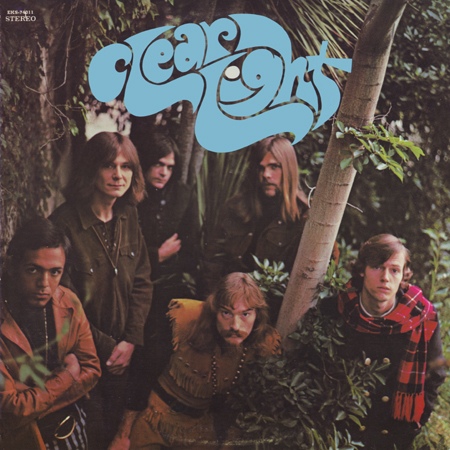
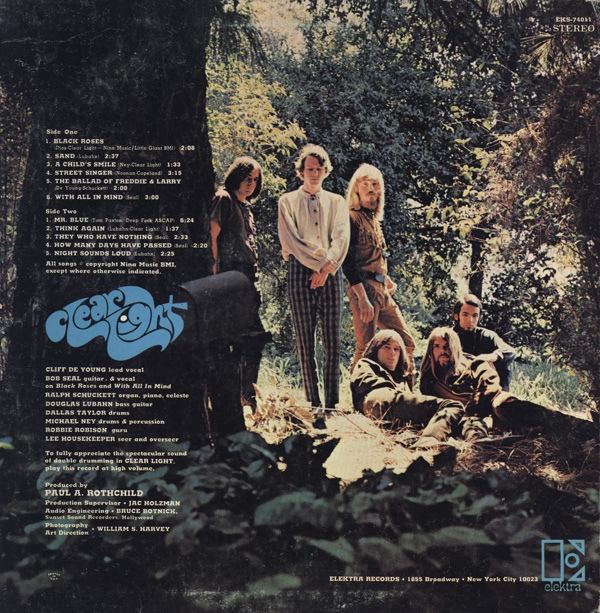
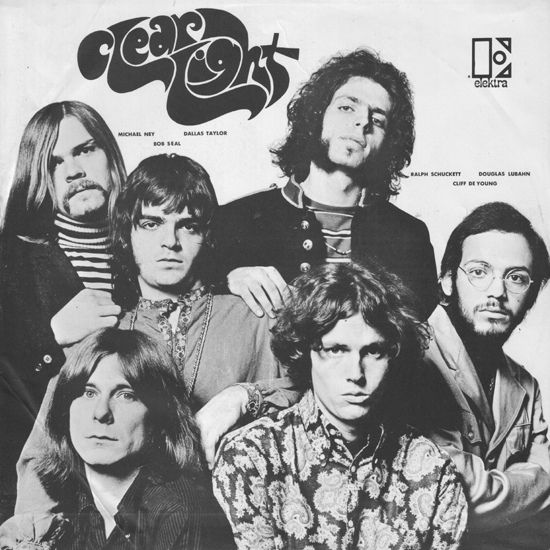
THE LIFE AND TIMES OF THE DOORS
The Life and Times Of The Doors.
By 1972, The Doors were history after the tragic death of their charismatic frontman Jim Morrison, who had died on the 3rd July 1971. The Lizard King became the latest entrant into the twenty-seven club, where he joined Brian Jones, Janis Joplin, Alan Wilson and Jimi Hendrix. This meant that The Doors’ career ended at the top and their fans memories of them were never tarnished.
The Doors were never going to grow old together and they would forever be the band that featured on their final album L.A. Woman. Never would they age. Nor would they make a series of comebacks or reunions. There would never be any third-rate albums released. No way. The Doors career ended whilst they were at the top with a classic album. What saddened their fans is that The Doors’ career ended in tragic circumstances. However, their many fans still have their musical memories.
These memories included a sextet of critically acclaimed and commercially successful albums. Between 1967s The Doors and 1971s L.A. Woman, The Doors only ever released six albums. Their debut album, The Doors was certified platinum five times over. After that, four of the next five albums were certified platinum and one double platinum. That wasn’t all.
1970 saw The Doors’ release Absolutely Live. It was certified gold. The same year, they released their first compilation, 13. Released in January 1970, it was certified platinum. Then six months of the tragic loss of Jim Morrison, a second Doors’ compilation was released, Weird Scenes From Inside The Gold Mine. It was a fitting tribute to one of rock’s greatest ever groups, The Doors, whose career began in 1965.
It was in 1965, that The Doors were formed in Los Angeles. The Doors had taken their name from Aldous Huxley’s seminal book The Doors Of Perception.They were a quartet lead by the charismatic vocalist Jim Morrison.
Jim Morrison was more than a singer, he was a lyricist and poet. He was a free spirit, charismatic, enigmatic and wildly unpredictable. Life was for living, and Jim Morrison lived a thousand lives in twenty-seven years. However, The Doors weren’t a one man band.
No. The Doors’ success was down to the four members of The Doors. This included drummer John Densmore, guitarist Robby Krieger and keyboardist Ray Manzarek. Together, they were about to enjoy the kind of commercial success and critical acclaim that they’d only dreamed of.
The Doors got their break in 1966. That was when they signed to Elektra Records. It was the first label to spot the potential in psychedelic rock. Before long. Elektra Records started signing up a whole host of psychedelic rock bands. Among the most successful were Love and The Doors, who released their debut album in January 1967.
The Doors.
Recording of what became The Doors, took place between the 24th and 31st August 1966. Six months later, on 4th January 1967, The Doors was released. It would become one of most influential albums The Doors released. So much so, it’s worthy of being referred to as a classic. Gradually, The Doors reached number two in the US Billboard 200 and was certified platinum five times over. Across the world, from Canada through Europe and into the UK, The Doors was critically acclaimed and commercially successful. In the UK it was certified platinum twice, while it was certified platinum five times over in France. This was helped by the commercial success of Light My Fire.
On its release Light My Fire, reached number one on the US Billboard 100 charts. It was the second single released from The Doors. Break On Through (To the Other Side) was the first single, but wasn’t a commercial success. Both singles featured on the 1972 compilation Weird Scenes From Inside The Gold Mine. So did the haunting The End. It would go on to become a Doors’ classic. So would several songs from The Doors’ sophomore album Strange Days.

Strange Days.
Eight months later, The Doors returned with Strange Days, their sophomore album. It was released to the same widespread critical acclaim and commercial success. Released on 25th September 1967, Strange Days was hailed a heavy, psychedelic classic, after it reached number three in the US Billboard 200 charts. This resulted in Strange Days being certified platinum. Eventually, nine million copies of Strange Days were released. No wonder. Look at the psychedelic delights of Strange Days.
Strange Days featured some of the most psychedelic songs The Doors ever released. Among them were Strange Days, Love Me Two Times, When The Music’s Over and the moody, haunting People Are Strange. These tracks would feature on the 1972 compilation Weird Scenes From Inside The Gold Mine. Two of these tracks, People Are Strange and Love Me Two Times were released as singles.
Both People Are Strange and Love Me Two Times reached the top thirty in the US Billboard 100, with People Are Strange proving the most successful, reaching number twelve. This proved that The Doors weren’t a one trick pony. No. The Doors were one of the heaviest, psychedelic rock bands of the sixties, lead by the charismatic Lizard King. Critics wondered what direction The Doors’ music would head?

Waiting For The Sun.
July 1968 saw The Doors release their third album Waiting for the Sun. Just like Strange Days, many of the songs had been written before The Doors signed their first recording deal. The Doors matured early as songwriters, and had enough material for several albums of material. This included Waiting for the Sun.
Waiting for the Sun. became The Doors’ first number one album. This gave the The Doors’ their second platinum album. Just like their two previous albums, Waiting for the Sun was a huge success worldwide. Whether it was Europe, Britain or North America, The Doors were providing the soundtrack to a generation’s life.
This included the two singles which were released from Waiting for the Sun. The first single was The Unknown Soldier, which was Jim Morrison’s reaction to the Vietnam War. A poignant, dramatic anti-war song, The Unknown Soldier gave voice to the frustration and anger a generation felt. Instantly, The Doors became the voice of a generation. This showed another side of The Doors’ music. Very different was the second single from Waiting for the Sun, Hello I Love You. It’s best described as two minutes of perfect pop. A timeless anthem, Hello I Love You gave The Doors a number one single. However, Hello I Love You doesn’t feature on Weird Scenes From Inside The Gold Mine.
Instead, the compilers choose two hidden gems from Weird Scenes From Inside The Gold Mine. They’re Love Street and Five To One. Love Street started life as a poem and became a baroque pop song. Five To One saw Jim Morrison drawing inspiration from the ninth century hymn and bedtime rhyme Now the Day is Over. By eschewing the obvious, when compiling Weird Scenes From Inside The Gold Mine, it became one of the most captivating compilations of The Doors’ music ever released. What tracks from The Doors’ fourth album The Soft Parade.
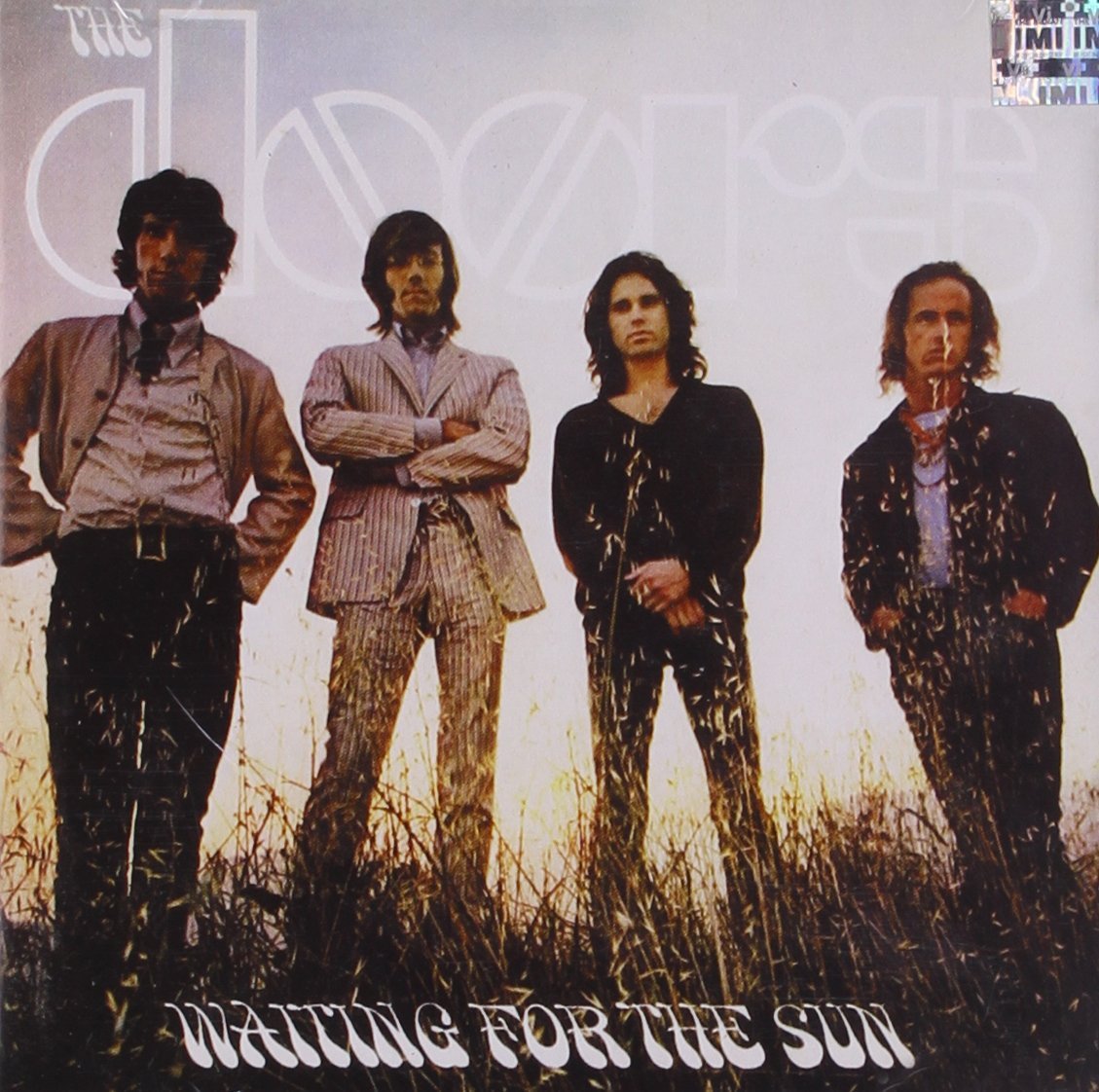
The Soft Parade.
Never before had a year passed before The Doors’ released an album. That’s until they released The Soft Parade. It was released on 21st July 1969. Gone was the stripped down, understated sound of their first three albums. Instead, The Doors decided to add strings and horns. Some fans and critics didn’t welcome this change of sound. They also had a problem with the lyrics.
For some fans, The Soft Parade’s lyrics were formulaic. They felt that The Doors were following a formula when it came to writing lyrics. Given this was their fourth album, fans and critics felt that The Doors sound had to change. Despite this, The Soft Parade was a commercial success.
Released on 21st July 1969, The Soft Parade reached number six in the US Billboard 200 charts. This was The Doors’ least successful album. However, it still was certified platinum. This success continued with the lead single.
Who Scared You was released in 1968, as a taster of The Soft Parade. It reached number three in the US Billboard 100. The other three singles, Wishful Sinful, All The People and Runnin’ Blue all charted, but failed to crack the top thirty in the US Billboard 10. None of the singles feature Weird Scenes From Inside The Gold Mine.
Instead, Weird Scenes From Inside The Gold Mine features Who Scared You and Shaman’s Blue. Who Scared You was the B-Side to Wishful Sinful, Shaman’s Blues, with its laid-back, lysergic sound, epitomises the late-sixties and is one of the forgotten highlights of The Soft Parade, which marked a change in The Doors’ music. What next for The Doors?
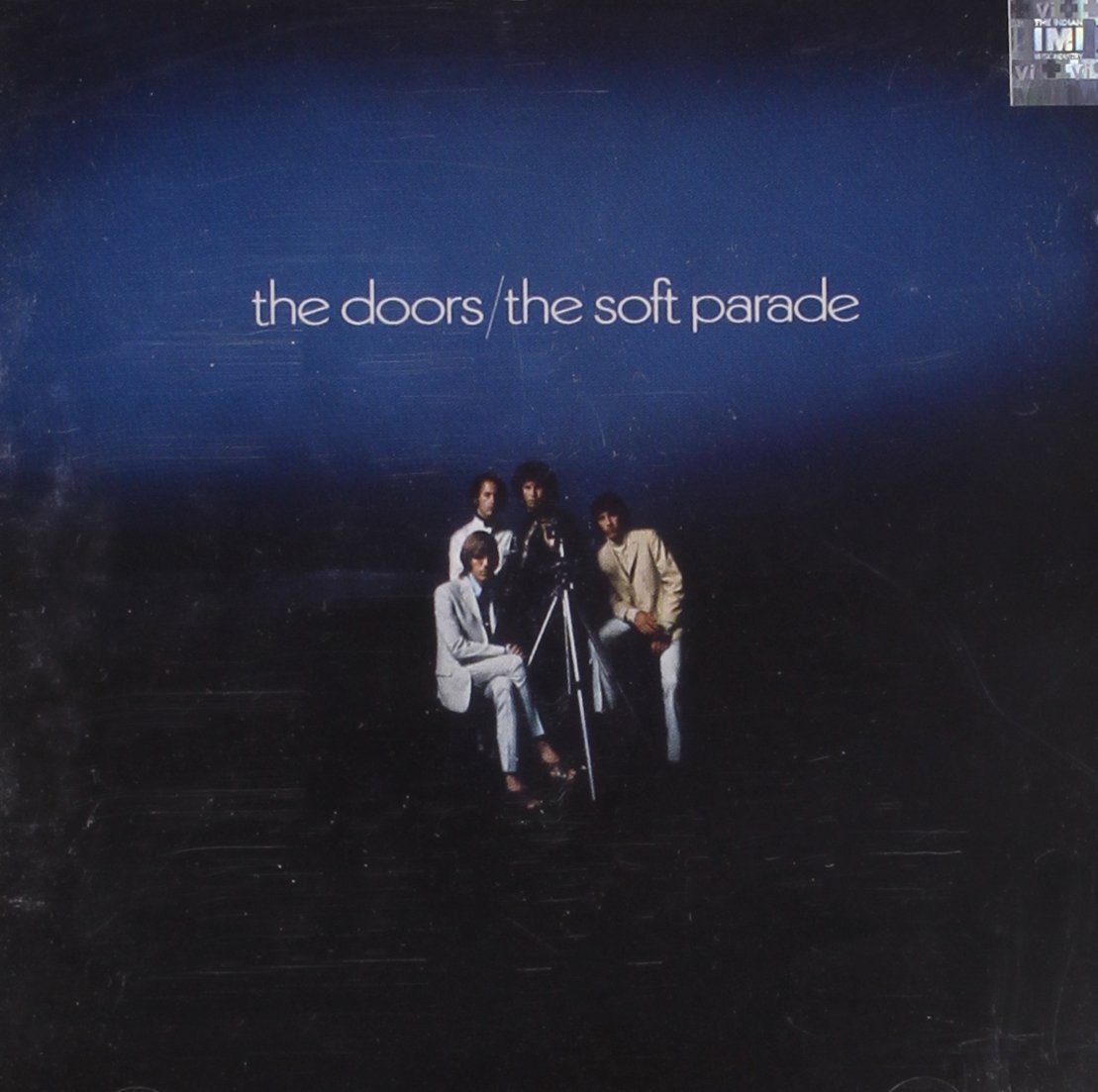
Morrison Hotel.
As a new decade dawned, little did The Doors know that they’d only release two more studio albums. The first of these two albums was Morrison Hotel, which saw The Doors change direction again
For their fourth album The Soft Parade, The Doors changed direction. This didn’t please critics and fans. So, on on Morrison Hotel, The Doors returned to their trademark sound and combined it with a bluesy hue. Recording took place during August 1966, March 1968 and November 1969. The result was a fusion of psychedelia and blues rock. It proved popular with critics and music lovers.
Released on 9th February 1970, Morrison Hotel, which is often referred to as Hard Rock Café, after the title of the first side of the album, reached number four in the Us Billboard 200. This resulted in Morrison Hotel being certified platinum. Over the Atlantic, Morrison Hotel was certified gold. That was a familiar story. Throughout the world, Morrison Hotel was both commercially successful and critically acclaimed. The Doors were back, despite Morrison Hotel not featuring a hit single.
You Make Me Real was the only single released from Morrison Hotel. It stalled at just number fifty in the US Billboard 100. Maybe that’s why You Make Me Real doesn’t feature on Weird Scenes From Inside The Gold Mine. Roadhouse Blues the B-side to You Make Me Real features on Weird Scenes From Inside The Gold Mine. So does The Spy, Maggie McGill and Ship Of Fools. They feature The Doors at the peak of their powers, when they were one of the biggest and best bands of the late-sixties. Absolutely Live The Doors first live album, is proof of this.

Absolutely Live.
Just five months after the release of Morrison Hotel, The Doors released their first live album, Absolutely Live. It was a tantalising taste of The Doors live. This was a double album that had been compiled from The Doors’ tour. Absolutely Live is one of the best live albums you could hope to hear. Featuring The Lizard King at his most charismatic, he struts his way through some of The Door’ best known songs. It’s no surprise that Absolutely Live was a huge commercial success.
Released on 20th July 1970, Absolutely Live reached number eight in the US Billboard 200. It was certified gold. The same year, The Doors released their first compilation, 13 and the commercial success kept on coming.
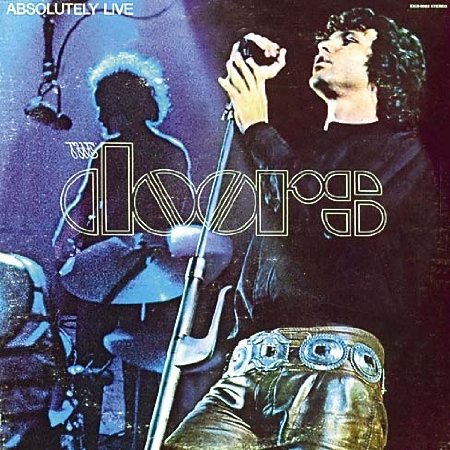
13.
Released in November 1970, 13 featured some of greatest music The Doors released between 1967 and 1967. So, it’s no surprise that it reached number twenty-five in the US Billboard 200. This resulted in 13 being certified platinum. It seemed The Doors could do no wrong.
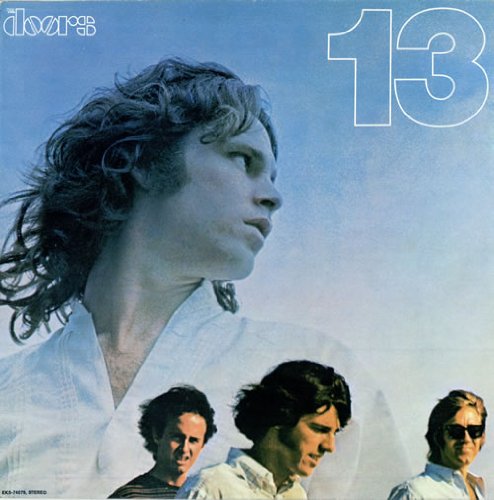
L.A. Woman.
L.A. Woman proved to be the last album released during Jim Morrison’s lifetime. It was released on 19th April 1971. Three months after the release of L.A. Woman, The Lizard King was dead. His swan-song was L.A. Woman.
Just like Morrison Hotel, L.A. Woman saw The Doors combine blues rock and psychedelia. There was a difference though. Longtime Doors’ producer Paul Rothschild had been replaced. In his place, Bruce Botnick co-produced L.A. Woman with The Doors, which marked another appearance from Jim Morrison’s alter ego, the blues veteran.
At this point in his life, Jim Morrison was heavily Influenced by legendary blues singers like Howlin’ Wolf, Muddy Waters and John Lee Hooker. This influence began on Morrison Hotel, and continued on L.A. Woman.
Recording of L.A. Woman began at The Doors workshop, in Los Angeles. After that, much of L.A. Woman was recorded live. The recording took just two months. Between December 1970 and January 1971 ten tracks were recorded. Only a few overdubs were added. So essentially, L.A. Woman is a live album. It was also critically acclaimed and commercially successful.
Released on April 19th 1971, L.A. Woman reached number eight in the US Billboard 200. This resulted in L.A. Woman being certified double platinum. Across the world, L.A. Woman sold in vast quantities. Even more so, three months later when The Doors’ charismatic frontman Jim Morrison had died on the 3rd July 1971. Before that, there was still the small matter of two top twenty singles.
They were L.A. Woman and Love Her Madly. L.A. Woman reached number eleven in the US Billboard 100. Riders In The Storm, a true Doors’ classic then reached number fourteen in the US Billboard 100. This marked the end of an era. Never again, would the original lineup of The Doors release another album. So, it’s fitting that four tracks from L.A. Woman feature on Weird Scenes From Inside The Gold Mine.
A quartet of tracks that feature on feature on Weird Scenes From Inside The Gold Mine include the anthemic L.A. Woman, the single Love Her Madly and its B-Side (You Need Meat) Don’t Go No Further). The other track is The Wasp (Texas Radio & The Big Beat). Just like the other tracks, it shows what The Doors were capable of. They were one of the most exciting, innovative and pioneering band of the late-sixties. Their music is timeless and remains some of the finest rock music ever recorded. However, the question we’ll never know the answer to, is what further greatness The Doors might have achieved?
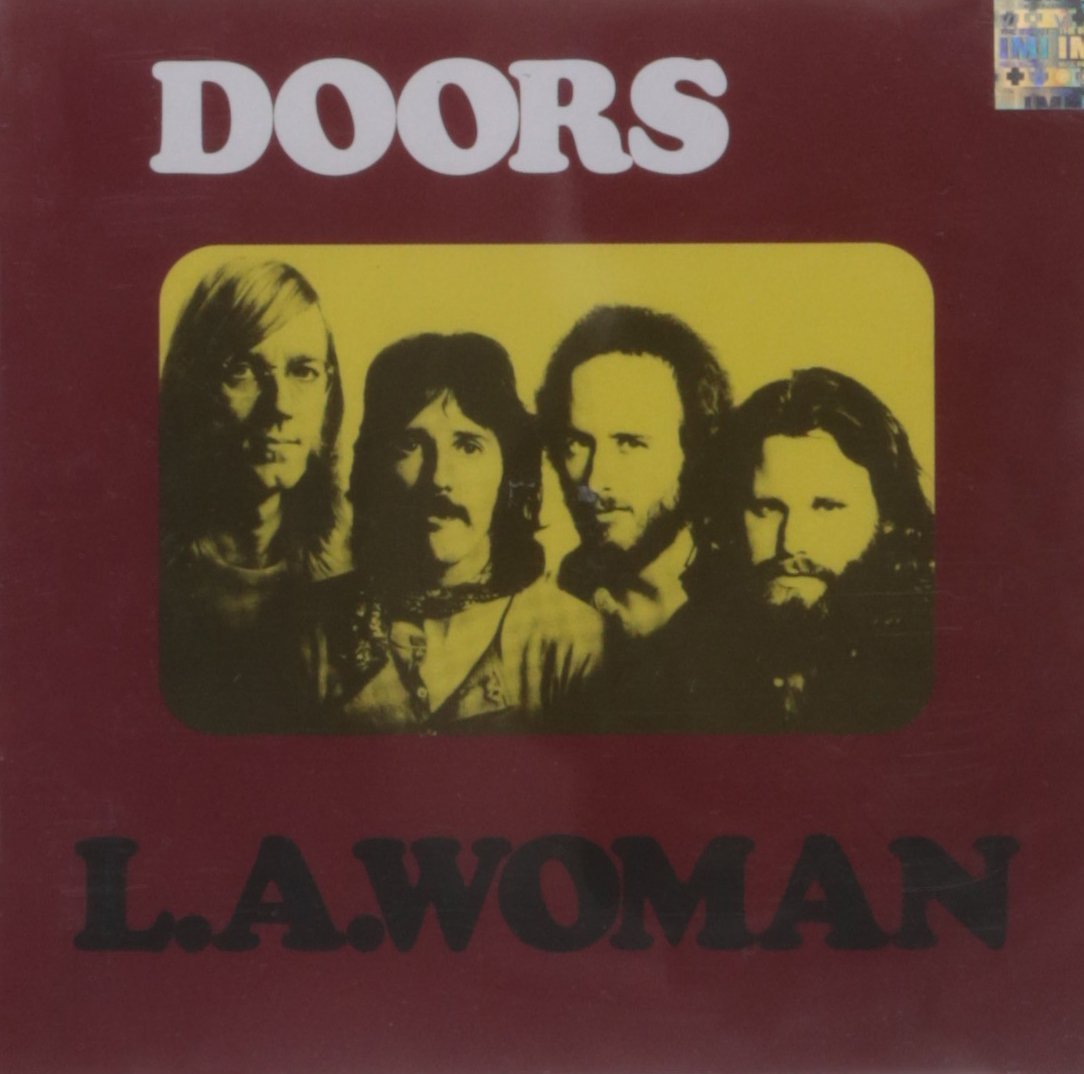
One Voice.
One can only speculate the direction that The Doors’ music might have headed? They did release one further album, One Voice. Released in October 1971, it reached just number thirty-one in the US Billboard 100. Without the charismatic Lizard King’s vocals, The Doors weren’t the same band, the band that features on the second compilation they released Weird Scenes From Inside The Gold Mine, which was originally released in January 1972.
Weird Scenes From Inside The Gold Mine.
On it release in January 1972, Weird Scenes From Inside The Gold Mine reached number fifty-five in the US Billboard 200. It was certified gold and is a captivating compilation of one of the greatest bands in musical history. One of the reasons for this, is the choice of music on Weird Scenes From Inside The Gold Mine, which was a double album.
Rather than just make Weird Scenes From Inside The Gold Mine a greatest hits album, the compiler digs deeper. B-Sides, rarities and album tracks are included. The result is a fascinating overview of one of the most innovative and pioneering bands in musical history. Weird Scenes From Inside The Gold Mine was a fitting tribute to The Lizard King. On its release, Weird Scenes From Inside The Gold Mine was certified gold. This meant that in the space of five years, The Doors had sold over thirteen-million albums.
Over five years, The Doors released six studio albums, one live album and one compilation. They sold over thirteen million copies in America alone. Across the world, The Doors were one of the biggest selling bands of the late-sixties and early seventies. There’s a reason for this. The Doors pushed musical boundaries to their limits, and sometimes, beyond. Their music was ambitious, groundbreaking and genre-melting as well as ambitious and innovative. The Doors are one of he greatest groups of all time and release several classic albums.
This included their debut album The Doors, and their sophomore album Strange Days, plus Waiting for the Sun, Morrison Hotel and L.A. Woman, which tragically, proved to be The Doors’ swan-song. These albums showcase one of the greatest groups of the sixties and early seventies. Sadly, their time at the top was cut tragically shot.
Never again, would the original lineup of The Doors set foot in a recording studio. As a result, The Doors’ career ended at the top. Our memories of them were never tarnished. The Doors never got to grow old together. Instead, they would forever be the band that featured on their final album L.A. Woman. Never would they age. Nor would they make a series of comebacks or reunions. Instead, The Doors will forever remain one of the most important, innovative, influential and successful groups in musical history,
The Life and Times Of The Doors.
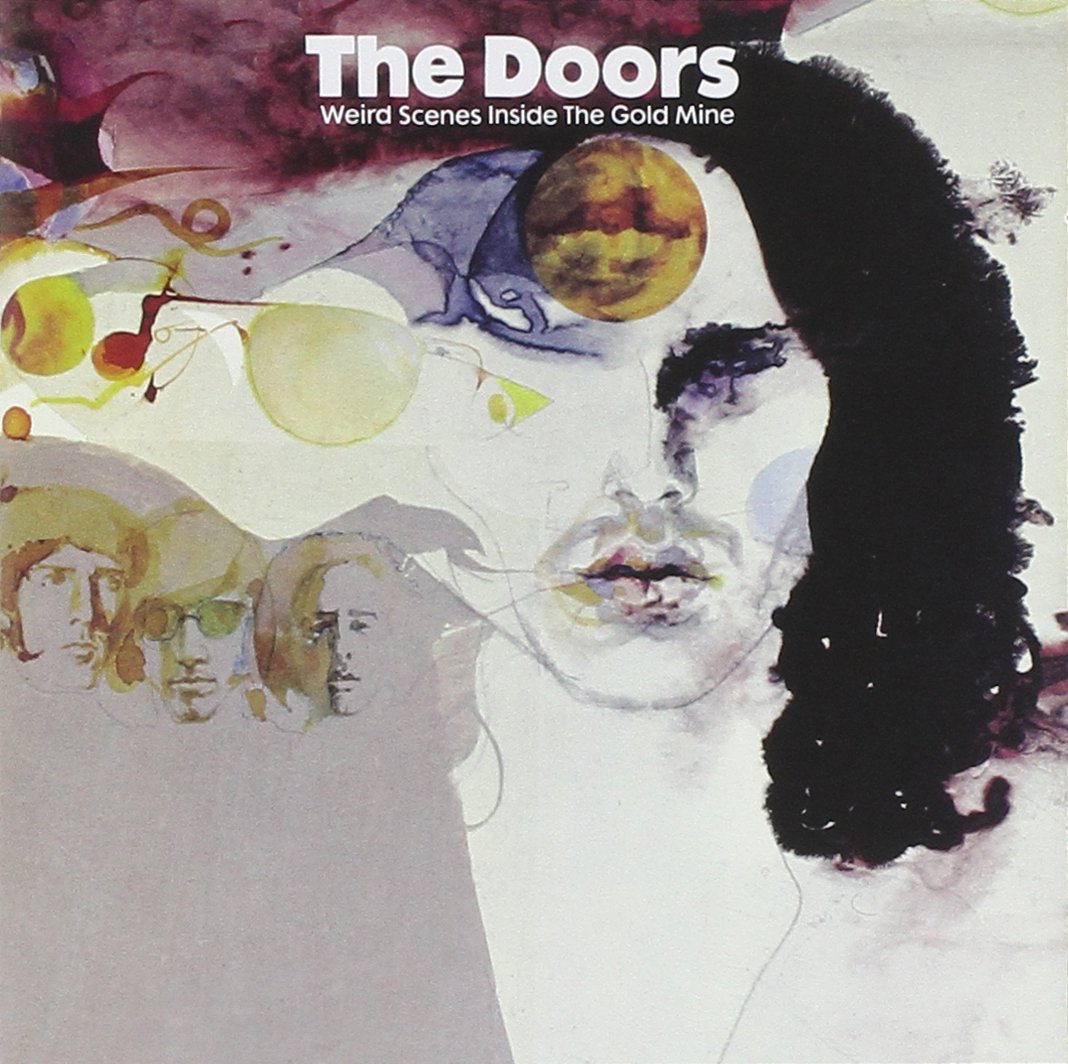
MARIANNE FAITHFUL’S DECCA YEARS.
Marianne Faithful’s Decca Years.
By March 1964, it was apparent that pop music wasn’t just a passing fad. The Beatles were a global phenomenon, and the British Invasion of the American charts had just begun. Britain was a musical powerhouse, that the world envied. Despite this, many labels weren’t resting on their laurels.
Record companies in Britain were constantly on the search for ‘the next big thing.’ Surely they reasoned, there was another Fab Four somewhere in Britain. It was all a matter of finding them. Some labels put more effort into this than others.
Decca Records had an enviable network of A&R executives and talent scouts across Britain. Their finger was on the pulse of the local music scene. Night after night, talent scouts headed out to local pubs and clubs, where they listened to new bands and singers. Promising artists were signed to contracts, before other labels even had a chance to hear them. Helping Decca Records add to their already enviable roster, were various producers and music ‘impresarios.’
They were the trusted ears of some record companies. This included the Rolling Stones manager Andrew Loog Oldham. He was by 1964, was managing the second biggest band in the world. The Rolling Stones only rivals were The Beatles. So when Andrew Loog Oldham recommended a new, unknown artist to Decca Records, they took notice.
The artist Andrew Loog Oldham was unlike any he had come across. Even her background was unlike that of any artist he had encountered. The eighteen year old former convent girl, was the daughter of an Austrian aristocrat and a former British Army officer, who was now a professor of psychology and Italian literature at Bedford College of London University. They had met in Vienna, and were living in Hampstead when Marianne Faithful was born on 29th December 1946. However, this would soon change.
The Faithful family had to move to Ormskirk in Lancashire, while her father finished his doctorate at Liverpool University. Later, the Faithful family lived at the commune and institution for social research in Braziers Park, a Grade II listed building at Ipsden, Oxfordshire. This must have seemed an idyllic place to grow up. However, when Marianne was six, her parents divorced.
For Marianne the Reading years weren’t exactly happy ones. She lived with her mother in Milman Road, Reading, which she refers to as the “Reading Gaol.” No wonder. It was a far cry from the early years of her life.
Now, money was tight, and Marianne and her mother were reduced to living in suburbia. To make matters worse, Marianne suffered from tuberculosis; and she had to become a subsidised pupil at St Joseph’s Convent School where she was a weekly boarder. It was at school, that Marianne Faithful first took to the stage.
It wasn’t as a singer though. Instead, she was part of the school’s Progress Theatre group. Little did anyone realise, that when Marianne Faithful left St Joseph’s Convent School, she spend much of her life on the stage. Before that, Marianne Faithful escaped the drudgery and boredom of suburban Reading.
Very different was London’s social scene, which Marianne Faithful threw herself into. It was as if she was making up for the Reading years. London was different from small-town Reading. Marianne enjoyed the constant round of parties, record launches and gallery openings. She even travelled to Cambridge to attend a University ball, where she met her future husband John Dunbar. By then, Marianne was regular in London’s folk circuit.
For some time, Marianne Faithful had been playing coffee shops, including Cafe Au Lait and Shades. Her career was in its infancy, but through John Dunbar, Marianne Faithful met Peter Asher of Peter and Gordon. They were enjoying a successful career. Not as successful as the two men Peter Asher introduced Marianne Faithful to at a party in March 1964.
Marianne Faithful went along to a party with John Dunbar in March 1964. That was where she was introduced to the leaders of the two biggest groups in the world. First Marianne met Paul McCartney, and then she was introduced to Mick Jagger. Little did she realise the effect this meeting would have on her career.
Through Mick Jagger, Marianne Faithful was introduced to Andrew Loog Oldham. Straight away, he signed Marianne Faithful to Decca Records. Soon, work began on Marianne’s debut single.
For Marianne Faithful’s debut single, As Tears Go By, which was penned by Mick Jagger and Keith Richards was chosen. It was produced by Mike Leander, and released in the summer of 1964. As Tears Go By reached number nine in Britain; twenty-two in the US Billboard 100 and thirty-five in Australia. The eighteen year old had enjoyed a hit single on three continents. However, the followup single wasn’t as successful.
Having chosen to cover a Jagger-Richards song for her debut single, Marianne Faithful decided to cover Bob Dylan’s Blowin’ In The Wind for her sophomore single. When it was released later in 1965, it failed to chart on both sides of the Atlantic. Surely Marianne Faithful wasn’t a one hit wonder?
Decca Records didn’t think so, and decided that Marianne Faithful should begin work on not just one album, but two albums.
Come My Way.
It was a case of striking while the iron was hot. Many artists weren’t didn’t enjoy a long shelf life. So as soon as they had a single under their belt, they were sent into the studio to record an album. Decca Records decided that Marianne Faithful should record two quite different albums, Come My Way and Marianne Faithful. Of the two albums, Come My Way would only be released in Britain.
For Come My Way, Marianne Faithful chose fourteen tracks. Many of the tracks were traditional songs. This included Come My Way, Jaberwoc and Spanish Is The Loving Tongue, Fare Thee Well, Down In The Salley Garden, Full Fathom Five and Bells Of Freedom. Other tracks included Lee Hayes’ Lonesome Traveller and Ian Tyson’s Four Strong Winds. These songs were recorded at IBC Studio, London with producer Tony Calder.
On Come My Way, Marianne Faithful concentrated purely on folk music. This was what Marianne had been singing up until then. She sang and played her acoustic guitar against John Mark’s spartan arrangements. This would prove successful when Come My Way was released.
It wasn’t until 15th April 1965 that Marianne Faithful released Come My Way. The album was well received by critics, and reached number twelve in Britain. However, Come My Way wasn’t released in America. Instead, Marianne Faithful’s eponymous sophomore was released on both sides of the Atlantic the same day as Come My Way.
Marianne Faithful.
Marianne Faithful was recorded at the same time as Come My Way, and would be released in America and Britain. However, Marianne Faithful was a very different album to Come My Way. Gone was the folk sound of Marianne’s debut album. It was replaced by pop, chanson and ye-ye. Already, Marianne was showing that she was a versatile singer.
For Marianne Faithful, fourteen pop covers had been chosen. This included Jackie DeShannon’s Come and Stay With Me; Bacharach and David’s If I Never Get to Love You; Tony Hatch’s Downtown; Jagger and Richards’ As Tears Go By; Jackie DeShannon and Jimmy Page’s In My Time of Sorrow; and Lennon and MCartney’s I’m A Loser. Marianne Faithful also made her songwriting debut, cowriting Time Takes Time with Barry Fantoni. These songs were recorded in two London studios.
At Lansdowne Studios and Decca No. 2 Studio, London, Marianne Faithful recorded another fourteen songs with producer Tony Calder. This time, a band accompanied Marianne, as she flitted between musical genres. Then Plaisir D’Amour became one of the first songs that Marianne would record in French. The London born chanteuse was about to become one of the ye-ye girls, while enjoying commercial success on both sides of the Atlantic.
Just like Come My Way, Marianne Faithful was released on 15th April 1965. Reviews of the album were positive, with critics remarking that some of the song’s were perfectly suited to Marianne Faithful. She brought life and meaning to the songs. So it wasn’t a surprise that Marianne Faithful reached fifteen in Britain, and twelve in the US Billboard 200. This wasn’t the end to the success.
Come And Stay With Me was released as a single from Marianne Faithful. It reached number four in Britain, and twenty-six in the US Billboard 100. Then This Little Bird was released later in 1965, and reached number six in Britain, and thirty-two in the US Billboard 100. For Marianne, this was a fairytale. A year after signing to Decca Records, she was a star on both sides of the Atlantic.
Less than a month after the release of Come My Way and Marianne Faithful, Marianne married John Dunbar on the 6th of May 1965, in Cambridge. After the wedding, the pair lived in a flat in Belgravia, in London. What looked like a fairytale continued.
Go Away From My World.
Although newly married, and expecting her first child, Marianne Faithful had to record a new American album. It featured twelve tracks, which were a mixture of traditional songs and cover versions.
Among the traditional songs were Come My Way, Mary Ann, Scarborough Fair and North Country Maid. Cover versions included Lennon and McCartney’s Yesterday and Tom Paxton’s The Last Thing On My Mind. Marianne also decided to cover Francis McPeake’s Wild Mountain Thyme and Cyril Tawney’s Sally Free and Easy. These songs were produced by Mike Leader, and scheduled for release in November 1965.
Reviews of Go Away From My World were mainly positive. However, looking back with the benefit of hindsight, it’s an album that’s appealing to everyone. There’s songs for people who like folk and pop music; while Marianne Faithful had been a much more pop oriented album. Maybe Go Away From My World fell between two stools?
After the success of Marianne Faithful in America, Go Away From My World reached a disappointing eighty-one on the US Billboard 200. The only crumb of comfort was that when Summer Nights was released as a single, it reached number ten in Britain and number twenty-four in the US Billboard 100. Then Marianne’s cover of Yesterday reached number thirty-six in Britain. Her last single from Go Away From My World was the title-track, which reached a lowly eighty-nine in the US Billboard 100. Little did Marianne know, that Go Away From My World would be her last American hit. That would’ve been the least of her worries.
In December 1965, Marianne Faithful left her husband of seventh months, and went to live with the Rolling Stones’ frontman Mick Jagger. Little did Marianne realise this decision would change her life, and people’s perception of her forever more. That was still to come. Before that, Marianne Faithful began work on her next album North Country Maid.
North Country Maid.
As 1966 got underway, Marianne Faithful and Mick Jagger through themselves headfirst into swinging London’s social scene. They epitomised swinging London, and were seen at the smartest parties. However, Marianne had an album to record.
North Country Maid would become Marianne Faithful’s third British album. However, six of the songs had featured on the now ironically titled American album Go Away From My World. This included traditional songs like Scarborough Fair; How Should I Your True Love and North Country Maid. The other tracks included Cyril Tawney’s Sally Free and Easy; Jon Mark’s Lullabye and Francis McPeake’s Wild Mountain Thyme. This left Marianne to record six new songs.
They were a mixture of traditional song and cover versions. The traditional songs included Cockleshells; She Moved Through The Fair and How Should I Your True Love Know. Other tracks included covers of Tom Paxton’s Last Thing On My Mind; Ewan McColl’s The First Time Ever I Saw Your Face and Donavon’s Sunny Goodge Street. These tracks were recorded with producer Mike Leander.
When the recording the six songs began, Marianne Faithful was joined by guitarists Big Jim Sullivan and Jon Marks. He had worked on all of Marianne’s albums, arranging the tracks. Joining them in the studio was an up-and-coming engineer, Gus Dudgeon. Soon, the six songs took shape, and the release of North Country Maid was scheduled for spring 1966.
Before the release of North Country Maid on 1st of April 1966, critics had their say on Marianne Faithful’s third album. The consensus was, that North Country Maid was the finest album of her nascent career. That however, was no surprise.
Great care had gone into choosing the twelve songs that became North Country Maid. These songs seem tailor made for Marianne, as she flits seamlessly between musical genres. Although primarily an album of folk music, blues, country, acid folk and even pop can be heard on North Country Maid. It’s the perfect showcase for Marianne’s versatility as a singer.
Playing an important part in the success of North Country Maid, were Mick Taylor and Jon Mark’s arrangements. Jon Mark and Big Jim Sullivan accompany Marianne on arrangements that although they’re mostly understated and spartan, allow Marianne’s vocal to take centre-stage; She’s equally comfortable singing traditional songs and cover versions on North Country Maid, which was by far, the best album of Marianne Faithful’s career.
Despite that, North Country Maid failed to chart on its release on 1st April 1966. For Marianne Faithful this was a huge blow. Her two previous albums had sold well in Britain, and she had enjoyed several hit singles. However, the warning signs were there when Go Away From My World failed to chart. This made Marianne’s next album a crucial one.
Love In A Mist.
For her fourth British studio album, Love In A Mist Marianne Faithful decided to change tack. It was a case of needs must. Not only had her career stalled, but acoustic folk music was no longer as popular. Even Bob Dylan had plugged in, and gone electric in 1966. So Marianne decided to reinvent herself on Love In A Mist.
She had started to reinvent herself on her American album, Faithful Forever. It was released in September 1966, but failed to chart. Despite this, half of the tracks that featured on Faithful Forever, found their way onto Love In A Mist. Along with the other seven songs, a total of fourteen tracks found their way onto Love In The Mist.
Among the tracks on Love In The Mist were a trio of tracks from Donovan, In the Night Time, Young Girl Blues and Good Guy. Marianne covered Jackie DeShannon’s You Can’t Go Where the Roses Go and With You In Mind. She also covered Tim Hardin’s Don’t Make Promises and Reason To Believe. Other tracks included Lennon and McCartney’s Yesterday; John D. Loudermilk’s; This Little Bird; Bob Lind’s Counting and Bernstein and Sondheim’s I Have A Love. Ne Me Quitte Pas and Coquillages allowed Marianne to show her versatility on a couple chanson songs. Love In The Mist was shaping up to be her most eclectic album.
With seven tracks to record, Marianne entered the studio with a band. This was a first. They played on Love In The Mist, but took care not to overpower Marianne’s vocal. It veers between elegiac and ethereal, to melancholy and wistful. Sometimes it’s hopeful, but often it sounds worldweary. Marianne it seemed, had lived some of the lyrics. On several tracks, there’s a return to the understated sound of previous albums. However, Mike Leander decided to orchestrate parts of Love In The Mist. He even added subtle horns on several tracks. They work well, and should’ve played an important part in the reinvention of Marianne Faithful.
Sadly, by the time Love In The Mist was released, Marianne had been embroiled in scandal. Her decision to befriend the Rolling Stones had backfired on her badly. This could be traced back to 1965, when she left husband John Dunbar in December, and moved in with Mick Jagger not long after this. By 1965, Marianne had befriended another member of the Rolling Stones’ inner circle…Anita Pallenberg.
Marianne and Anita became friends in 1965. Soon, they were smoking marijuana together. Then in 1966, Marianne decided to take her son to stay with Anita and Brian Jones. By then, Marianne was a familiar face with Mick Jagger at swinging London’s smartest and wildest parties. So some time with Anita and Brian Jones would allow to spend some time with friends. The time passed off without incident. If only the same could be said of the events of 12th February 1967.
By then, it was less than a month before Marianne Faithful would release her fourth album. On Sunday 12th February 1967, she was relaxing with members of the Rolling Stones’ inner circle at Redlands, Keith Richards country estate. That night, the Sussex police raided Redlands looking for drugs. The claimed to have been tipped off that a drug were being consumed on the premises When they entered Redlands, they discovered Marianne covered by just a fur rug. This would come back to haunt Marianne.
After a search of Redlands, various tablets and substances, including amphetamine and cannabis were discovered. This lead to the arrest of Mick Jagger and Keith Richards. They were charged, and were facing imprisonment. However, as the story became front page news, so did the details of how the police discovered Marianne. This shocked many little Englanders, who viewed not just Mick Jagger and Keith Richards with distaste, but Marianne Faithful too.
Suddenly, the press were raking over her private life, serving up every salacious piece of petty gossip for the titillation of the little people in their two up, two downs. They stood in judgment of Marianne, who was about to release a new album.
Just over three weeks later, Marianne Faithful released her fourth album, Love In A Mist on the 2nd of March 1967. Despite the quality of the music on Love In A Mist, the album never came close to troubling the charts. Whether the unwanted publicity affected sales of Love In A Mist is a matter of speculation? Following the release of Love In A Mist, Decca Records and Marianne Faithful parted company. Marianne’s Decca Records ‘ swan-song was her most underrated albums.
Love In A Mist is a genre hopping album were Marianne Faithful flits between folk, chanson and pop to country, acid folk and baroque pop. It’s a captivating roller coaster of emotion. However, sadness, melancholy and hurt feature throughout Love In A Mist. Sadly, very few people heard Love In A Mist, which makerked the end of Marianne Faithful’s career at Decca Records. It would be a long time before she reached these heights again.
Indeed, it wasn’t until 1975 that Marianne Faithful released another album Dreamin’ My Dreams. By then, Marianne Faithful had been to hell and was still on the way back. The last eight years had taken their toll.
In 1968, Marianne Faithful suffered a miscarriage. At the time, she was struggling with a cocaine addiction. For Marianne it was a huge blow. However, she was a survivor, and would be back.
In 1970, her relationship with Mick Jagger was over, and she lost custody of her son. This lead to Marianne Faithful trying to commit suicide. Over the next few years, Marianne battled anorexia nervosa and heroin addiction. Things got so bad that for two years, Marianne was homeless in London. Mike Leander found Marianne living in the streets of London in, and tried to revive her career. However, Marianne’s addictions and problems made recording an album impossible.
During the early seventies to mid seventies, Marianne Faithful made just a few public appearances. Many critics thought that Marianne Faithful’s career was over. Some feared the worst. It was a far cry from 1964, when her star was in the ascendancy and she was the brightest star in the London music scene. However, in 1975. Marianne returned with a new album.
Dreamin’ My Dreams was released in 1975, and reached number one in Ireland. It was a start, and a step in the right direction.
When Broken English was released in 1979. the comeback of Marianne Faithful was complete. The album featured her now husky voice. Drink and drugs had taken their toll. This didn’t stop Broken English being released to critical acclaim, and selling over a million copies worldwide. Since then Marianne Faithful, who is now seventy-eight, has rebuilt her life and is one of music’s true survivors whose Decca years are regarded of the highlight of a long and eventful life and career.
Marianne Faithful’s Decca Years.
ALICE COOPER’S WARNER BROS YEARS 1969-1983.
Alice Cooper’s Warner Bros Years 1969-1983.
It was in Detroit, Michigan, on February 4th 1948, Vincent Damon Furnier was born, and he would go on to become one of the biggest names in music, after changing his name to Alice Cooper in 1968. After that, Alice Cooper’s career has spanned five decades and twenty-six studio albums. This includes the fifteen albums released on Warner Bros. between 1969 and 1983. During the first fourteen years of Alice Cooper’s sometimes controversial career, he released some of the best music of his long and eventful career. However, when Vincent Damon Furnier was growing up, very few people could’ve foreseen that he would forge a career as a rock star.
Growing up as Vincent Damon Furnier life was very different. Vincent Damon Furnier grew up in Detroit, Michigan, where his father was a minister in the Church of Jesus Christ. When Vincent was eleven, he was already participating in church life. This was short-lived, and only lasted until Vincent was twelve.
By then, he was attending Nankin Mills Jr. High School, and was suffering from a variety of illnesses. This resulted in the Vincent’s father moving the family to Phoenix, Arizona.
Having moved from Detroit to Phoenix, Vincent attended Cortez High School in North Phoenix. After leaving high school, Vincent attended Glendale Community College, where he graduated with a Bachelor of Fine Arts. By then, Vincent’s musical career was well underway. It began in 1964, when Vincent and the members of the school’s cross-country team, formed a group The Earwigs.
They entered the annual high school talent show. The Earwigs performance saw the mime to various Beatles’ songs. Somehow, this was enough for The Earwigs to win the first prize. This was enough to whet Vincent’s musical appetite. Soon, The Earwigs were renamed as The Spiders. The newly formed group’s lineup featured Vincent on vocals; lead guitarist Glen Buxton, rhythm guitar John Tatum, bassist Dennis Dunaway and drummer John Speer. Mostly, The Spiders played cover versions of songs by British Invasion bands. This included The Beatles, The Who, Rolling Stones and The Kinks. Soon, though, The Spiders’ thoughts turned to recording their debut single.
Why Don’t You Love Me was recorded in 1965, and became The Spiders’ debut single. For the recording of Why Don’t You Love Me, Vincent had to learn the harmonica. On the flip side was a cover of Hitch Hike, which had given Marvin Gaye a hit. The single was then released on Mascot Records, which was owned by local music impresario Jack Curtis. He was a concert promoter, owned the Stage 7 club, where The Spiders had a residency. Things were going well for The Spiders, who were set to graduate high school in 1966. Having all graduated in 1966, change was on the horizon.
Michael Bruce replaced rhythm guitarist John Tatum. The new recruit played on The Spiders’ sophomore single Don’t Blow Your Mind. Although this was one of the first songs The Spiders had penned themselves, it went on to reach number one locally. By 1967, The Spiders’ star was in the ascendancy.
They were travelling as far afield as Los Angeles, to play live. It was around this time that The Spiders changed their name to Nazz, and released Wonder Who’s Lovin’ Her Now? On the B-Side was a song that would reappear later, Lay Down and Die, Goodbye. It would become an Alice Cooper favourite. Before that, drummer John Speer was replaced by Michael Speer, and Nazz relocated.
Like many bands before them, Nazz decided to move to L.A. From he birth of rock ’n’ roll, bands always moved to where the record companies, recording studios and prestigious clubs were. Nazz were no different, and decided moved to L.A. where they hoped they could attract the attention of a record company. However, there was a problem. Word got back to the members of Nazz, that Todd Rundgren had a also a band called Nazz. It had been around longer, so the members of Nazz had to come up with a new name. This was when Alice Cooper was born.
Many myths surround the naming of Alice Cooper. However, the most plausible was, that Alice Cooper was the name of a character in an American television series Mayberry R.F.D. It was shown on CBS, one of the biggest television networks. So in homage to Mayberry R.F.D., Nazz became Alice Cooper. So did Vincent Damon Furnier. The twenty-one year old singer, songwriter and musician saw the potential in adopting a persona. That persona, allowed him to portray various “characters.” This varied from album to album. However, with Vincent’s sense of theatre, drama, flamboyance and showmanship, this would prove crucial not just to the success of the band Alice Cooper, but later, his solo career. Before that, Alice Cooper the band, attracted the attention of Frank Zappa.
Ironically, this came after a particularly disappointing gig. Alice Cooper only played ten minutes at the Cheetah club in Venice, California. That was enough for Alice Cooper to clear the room. That was a disaster. However, for Alice Cooper, every cloud had a silver lining. Shep Gordon, who managed various bands, approached Alice Cooper. He realised that Alice Cooper had potential, and it was just a matter of guiding them, and pointing them in the right direction. This included arranging an audition with Frank Zappa, who had just founded a new record label, Straight Records.
Being a new label, Frank Zappa’s Straight Records were looking to build up a roster of artists. So Shep Gordon arranged for Alice Cooper to audition at Straight Records. The time of the audition was seven o’clock. What the members of Alice Cooper didn’t realise, was that they were meant to arrive at Frank Zappa’s house at 7pm. Instead, they arrived at 7am. This could’ve proved disastrous, but didn’t. After hearing Alice Cooper’s brand of psychedelic rock, Frank Zappa offered the band a three album deal, which they accepted. Now Alice Cooper could begin work on their debut album, Pretties For You.
Pretties For You.
Now signed to Straight Records, the five members of Alice Cooper began recording what became Pretties For You. Producing the album, were producers Ian Underwood and Herb Cohen. They oversaw the recording of thirteen tracks, penned by the five members of Alice Cooper.
This included the rhythm section of drummer Neal Smith, bassist Dennis Dunaway and rhythm guitarist Michael Bruce. They were augmented by lead guitarist Glen Buxton and Alice Cooper on lead vocals. That’s apart from on Sing Low, Sweet Cheerio, which features Michael Bruce on lead vocal. Throughout the album, effects are used extensively. They add to what Alice Cooper saw as an ambitious and innovative album of psychedelia. Guiding Alice Cooper through the musical maze that was their debut album were producers Ian Underwood and Herb Cohen. However, it was more than an psychedelic album.
Pretties For You was an album that had obviously been influenced by Pink Floyd. Especially, The Piper At The Gates Of Dawn. However, psychedelia wasn’t the only influence on Pretties For You. There’s also a jazz influence, on Pretties For You, as Alice Cooper experiment with various time signatures. Avant garde and experimental music influenced Alice Cooper as they worked on their debut album.
These eclectic influences lead to criticism of Pretties For You. For some critics, Pretties For You was just too left-field an album. They didn’t understand the eclectic influences that had shaped the album. Nor did they understand the constant changes in tempo and time signatures. Reviews ranged from unfavourable to mixed. This didn’t augur well for the release of Pretties For You. June 1969 saw the release of Pretties For You. The album stalled at 193 in the US Billboard 200. This was disappointing for Alice Cooper, who were about to receive some unwelcome publicity.
On September 13th 1969, Alice Cooper were playing at the Toronto Rock and Roll Revival. Mid-set, a chicken flew onto the stage. Alice Cooper thinking the chicken could fly, threw it off the stage. What happened next is unclear. Allegations were made that when the chicken was thrown off the stage, it was ripped to pieces. By the next day, newspapers were reporting that Alice Cooper had bitten the head off the chicken.
The next day, Frank Zappa phoned Alice Cooper to establish what exactly happened. Alice Cooper denied the story. Frank Zappa thinking that all publicity is good publicity, told him to admit to biting the head off the chicken and drinking its blood. This was the worst advice he could’ve given Alice Cooper. The story has haunted him, and has harmed his career. For many people, his name is synonymous with that story. Once the controversy had started to die down in 1969, Alice Cooper began work on their sophomore album Easy Action.
Easy Action.
Despite Alice Cooper’s newly acquired hell raising image, he was in fact, a very different person. The title to Alice Cooper’s sophomore album, Easy Action, came from a line in West Side Story. It featured nine new tracks, penned by the five members of Alice Cooper. No longer were all the tracks credited to the five members of the band. Now, it was every man for himself, as work began on Easy Action.
The nine tracks tracks that became Easy Action were recorded between late-1969 and early 1970. Producing Easy Action was David Briggs. The change of producer was meant to bring a change in fortune for Alice Cooper. That wasn’t to be. When critics heard Easy Action, they weren’t impressed. Reviews were far from flattering of what was a commercial type of psychedelia. Later, even members of the band weren’t impressed with Easy Action. Drummer Neal Smith felt it resembled the music was more like a: “TV or radio commercial.” Part of the blame lay at producer David Briggs’ door. Neal Smith remembers “he did not help with song arrangement or positive input in any way.” It’s not surprising that when Easy Action was released, it wasn’t a commercial success.
Easy Action was released in March 1970, and disappeared without trace. Alice Cooper’s sophomore album sunk faster than the Titanic. With just one album left on their contract with Frank Zappa’s Straight Records, Alice Cooper needed a break.

Love It to Death.
Even Frank Zappa seemed to be having his doubts about Alice Cooper. He decided that Alice Cooper released a single before releasing what became Love It to Death. The song chosen, was I’m Eighteen, which showcased Alice Cooper’s new, hard-rocking sound.
This was the third single Alice Cooper had released, but the first to chart. I’m Eighteen reached number twenty-one on the US Billboard 100. Alice Cooper got the green light to record their third album, Love It to Death.
For the recording of Love It To Death, a new production team of Jack Richardson and Bob Erzin were brought onboard. Bob Erzin had earned his stripes producing the hit single I’m Eighteen. Now he and Jack Richardson had to hone Alice Cooper’s new sound. The one-time freak psychedelic band had reinvented themselves as a swaggering, hard-rocking band. Elements of hard rock and heavy metal melted into one, on Love It To Death. Every member of Alice Cooper had played a part in writing the nine songs. Alice Cooper wrote Second Coming, and cowrote I’m Eighteen and Is It My Body with the rest of the band. These tracks, and the rest of the album were recorded at RCA Mid-American Recording Center, Chicago and scheduled for release on March 8th, 1971.
Before that, critics had their say on Love It To Death. They were won over by Alice Coopers, swaggering, aggressive and ballsy hard-rocking sound. They were a group reborn sonically and stylistically. Om Love It To Death’s album cover, Alice Cooper wore dresses and makeup. This would prove controversial in the conservative parts of America. That didn’t seem to affect album sales. When Love It To Death was released, it reached thirty-five in the US Billboard 200. Having sold one million copies, Love It To Death was certified platinum. Elsewhere, Love It To Death proved popular in Canada and Britain. Alice Cooper’s career was well underway.
Killer.
Having released Love It To Death on Straight Records in conjunction with Warner Bros., Alice Cooper’s three album deal with Frank Zappa was up. The members of Alice Cooper knew that to move to the next level, they needed the major label machine behind them. So they signed to Warner Bros. and began work on their fourth album, Killer.
Alice Cooper didn’t waste time before returning to the recording studio. They were keen to build on the success of Love It To Death. So Alice Cooper headed to RCA Studios, in Chicago to record eight new tracks with producer Bob Erzin.
Again, various members of Alice Cooper wrote or cowrote tracks. This included Alice Cooper, who cowrote five tracks. Among them, were ou Drive Me Nervous which Alice cowrote with Michael Bruce and producer Bob Erzin. He cowrote two tracks, and was quickly, becoming an important part of the Alice Cooper success story.
That success, if the critics were correct, would’ve ground to a halt. Many reviews of Killer were far from positive. Killer was seen as licking the cohesion of Love It To Death, and revisited the erratic sound of Alice Cooper’s first two albums. Robert Christgau had some strong words; referring the album as “surreal,” “theatrical,” and let us not forget “transvestite” trappings”. Adding to irony of Robert Christgau’s comments, are his comments about the weakness of Under My Wheels and Be My Love.
When the singles were chosen from Killer, Under My Wheels reached fifty-nine, before Be My Love surpassed this, reaching number forty-nine in the US Billboard 100. While neither single matched the success of I’m Eighteen, it was obvious that Alice Cooper were on the right road. Especially when Killer was released in November 1971, and reached twenty-one on the US Billboard 200. This was enough for Alice Cooper to receive their second platinum album. Could they make it three in a row?
School’s Out.
Alice Cooper arrived at The Record Plant, New York early in 1972. They were about to begin work on their fifth album in three years. By then, Alice Cooper and the rest of the band were just twenty-four. Success had come quickly, and they were living the rock ’n’ roll dream. The Record Plant was one of New York’s premier studios. However, Alice Cooper were well on their way to becoming one of America’s biggest bands. A lot depended on their fifth album, School’s Out.
For School’s Out, Alice Cooper played a bigger part in the songwriting process. He cowrote seven of the nine tracks. This included cowriting the anthemic School’s Out with the rest of the band; and My Stars with Bob Erzin. Again, Bob Erzin cowrote two tracks on what’s loosely described as Alice Cooper’s first concept album.
School’s Out dealt with school, and coming of age. The album opener was the future Alice Cooper classic, School’s Out. It would reach number two in the US Billboard 100, number three in Canada and number one in Britain. Since then, it’s been a staple of Alice Cooper’s live shows. However, when School’s Out was released in June 1972, nobody realised how popular the single and album would become.
When critics heard School’s Out, they realised that it wasn’t just an album hard rocking music. There was a hint of glam rock, like on Killer, and a nod to art rock. Essentially, Alice Cooper were spreading their wings stylistically. That didn’t seem to matter. Reviews of School’s Out ranged from mixed to favourable. Partly, that was because some critics looked down on the theatre, drama and showmanship of Alice Cooper, and their live shows. It was only later that critics would rethink their opinions on Alice Cooper. So with disappointing reviews preceding the release of School’s Out, there was no hint that Alice Cooper were about to release the most successful album of their career.
When School’s Out was released, the record vinyl was wrapped in a pair of paper pants. This must have seemed like a good idea at the time. However, it later transpired that the material the paper pants were made out of, were flammable. By then, School’s Out was racing up the charts.
June 1972 saw the release of School’s Out, which reached number two in the US Billboard 200. This resulted in the third platinum album of Alice Cooper’s career. Elsewhere, from Canada to Australia, Europe and Britain, School’s Out found its way into the top ten. Alice Cooper were now one of the biggest bands on planet rock.
Billion Dollar Babies.
Just two months after the release of School’s Out, Alice Cooper began work on their sixth album, Billion Dollar Babies. By then, Alice Cooper were touring School’s Out. So the album was recorded in studios on both sides of the Atlantic with Bob Erzin.
Three studios were used to record Billion Dollar Babies. Sessions took place at The Galecie Estate, Greenwich and The Record Plant, New York were the two American studios Billion Dollar Babies was recorded at. Other sessions took place at Morgan Studios, London. A total of ten songs were scheduled to be recorded for Billion Dollar Babies. Of these ten tracks, nine were cowritten by Alice Cooper. Again, Bob Erzin collaborated on two tracks and added keyboards as Alice Cooper celebrated their good fortune.
The album title, Billion Dollar Babies, was a result of the money coming Alice Cooper’s way. After four years releasing records, the members of Alice Cooper were very rich young men, and able to buy whatever they wanted. Suddenly, people who previously, wouldn’t have looked their way, wanted to know them. This included women who wanted to date them; and men wanted to befriend them, hoping some of their good fortune would come their way. However, there was also a darkness to Billion Dollar Babies.
During Billion Dollar Babies, Alice Cooper explored the sick perversions that some people have. The album titles hint at the darkness within Raped and Freezin’, No More Mr. Nice Guy, Sick Thing and I Love The Dead. Other themes included fear of dentists, horror and sexual harassment. This was all part and parcel of Alice Cooper’s most controversial album. How would critics respond to Billion Dollar Babies?
Ironically, Billion Dollar Babies received some of the best reviews of any Alice Cooper. Critically acclaimed described the reviews. The only criticism was that Billion Dollar Babies lacked an obvious single. That proved not to be the case.
Four singles were reeled from Billion Dollar Babies. Elected was the lead single in 1972, and reached number twenty-six on the US Billboard 100. Hello Hooray then reached thirty-five on the US Billboard 100 1973. No More Mr. Nice Guy reached number twenty-five on the US Billboard 100. The final single was Billion Dollar Babies, which reached number fifty-seven on the US Billboard 100. That didn’t matter though.
When Billion Dollar Babies was released on February 25th 1973, it reached number one in Britain and America. Billion Dollar Babies was certified platinum in America, and gold in Canada. Elsewhere, Billion Dollar Babies reached the top ten everywhere from Australia to Austria, Germany and Norway. In the Netherlands, Billion Dollar Babies reached number one. Alice Cooper had just enjoyed the most successful album of their career. Now they set about touring Billion Dollar Babies.
Following the release of Billion Dollar Babies, Alice Cooper embarked upon an ambitious tour of America. Alice Cooper were all set to play sixty-four dates in fifty-nine cities in ninety days. This tour was meant to gross over $20 million.
Alice Cooper played each night against a set that would put many Hollywood theatres to shame. Each night, between forty and fifty road crew arranged 26,000 pounds of equipment. The list of equipment ran to page after page. Despite this, the concert which veered towards theatre and horror show, grossed only $4 million. This was disappointing for Alice Cooper. Worse was to come. The followup, Muscle Of Love, would prove to be Alice Cooper’s swan-song.

Muscle Of Love.
Following the success of Billion Dollar Babies, Alice Cooper began work on the followup, Muscle Of Love. It marked a change of style and sound. Gone was the theatre of Billion Dollar Babies, to be replaced by a much more back to basics rock ’n’ roll sound of Muscle Of Love.
Recording of Muscle Of Love took place at Sunset Sound, Hollywood, The Record Plant, New York and The Cooper Mansion, Greenwich. That’s where the nine tracks were recorded. They were all cowritten by Alice Cooper. He was forming a successful songwriting partnership with Michael Bruce. They cowrote four songs, and cowrote another four with various songwriting partners. However,one man was missing, producer Bob Erzin.
For the first time since Easy Action, Bob Erzin was missing. The official line was, that he was recovering from an illness. However, later, Dennis Dunaway alleged that Michael Bruce had an argument with Bob Erzin when the producer refused to change the arrangement of Woman Machine. This argument lead to Bob Erzin splitting with Alice Cooper, and Jack Richardson and Jack Douglas replacing him. The result was a concept album, which was far from Alice Cooper’s finest hour.
Just like School’s Out, Muscle Of Love can be loosely described as a concept album. This time, the subject matter Alice Cooper claimed was ”urban sex habits”. Alice Cooper seemed to like to walk on the wild side, and shock conservative middle America. Critics were also shocked. Not at the subject matter, but the quality of the album.
Critics weren’t impressed by The Jack Richardson and Jack Douglas produced Muscle Of Love. Reviews ranged from the good, bad and indifferent. Only Creem gave Muscle Of Love a positive review. They seemed to see something nobody else did.
Muscle Of Love as a mixed bag was, and still is, one of the worst albums in Alice Cooper’s career. It’s down there with Alice Cooper’s sophomore album Easy Action. Neither Jack Richardson nor Jack Douglas were able to replace Bob Erzin. That became clear when Muscle Of Love was released on November 20th 1973.
On its release Muscle Of Love reached number ten on the US Billboard 200, and was certified gold. Elsewhere, Muscle Of Love reached number four in Canada, and was a minor hit in Australia and Britain. It was a disappointing way for the Alice Cooper story to end.
Members of Alice Cooper decided to put the band on hold. This allowed Alice Cooper to forge a career on television. Meanwhile, Alice Cooper’s Greatest Hits was released in August 1974, and reached number eight on the US Billboard 200. This stopped people forgetting about Alice Cooper. So did the release of the feature film Good To See You Again, Alice Cooper, which featured footage of the band live. However, by then Alice Cooper were history.
Alice Cooper said farewell during a South American tour, which took place during March and April 1974. One of the highlights of the tour was playing un front of 158,000 fans in Sao Paulo, Brazil. This wasn’t the end of the Alice Cooper story. Far from it.
Alice Cooper returned in 1975, having changed his name officially to Alice Cooper. This meant there were no legal problems for him using his former band’s name. He was now touring as a solo artist, using what was now regarded as his real name, Alice Cooper.
Alice Cooper-The Solo Years.
Welcome To My Nightmare.
Having now embarked upon a solo career, Alice Cooper brought back Bob Erzin. He had been badly missed on Muscle Of Love. He wasn’t just a producer, but a songwriter, keyboardist and confident.
On Welcome To My Nightmare, Bob Erzin cowrote six of the ten tracks with Alice Cooper. He worked with various songwriting partners, including singer, songwriter, musician and ‘musical impresario’ Kim Fowley. Another songwriting partner was Dick Wagner, of Lou Reed’s band.
Many members of Lou Reed’s band accompanied Alice Cooper on Welcome To My Nightmare. It was recorded at the Soundstage, Toronto and the Record Plant, Electric Lady and A&R Studios, New York during the second half of 1974 and early 1975. Once Welcome To My Nightmare was complete, Alice Cooper’s debut solo album was scheduled for release in March 1975.
Prior to the release of Welcome To My Nightmare, critics received a copy of Alice Cooper’s debut album. Just like some of Alice Cooper’s previous albums, it was a concept album. This time, it was a musical journey through the nightmares of a child called Steven. Critics however, weren’t over impressed, and reviews were mixed. One mistake was the horns that punctuated what was a fusion of heavy metal, art rock and classic rock. They were in the wrong movie. However, rescuing the album were Devil’s Food, The Black Widow, Department of Youth and Cold Ethyl. Maybe, this quartet of tracks could kick-start Alice Cooper’s solo career.
Only Woman Bleed was chosen as the lead single from Welcome To My Nightmare, and reached number twelve in the US Billboard 100. Then Department of Youth reached a lowly sixty-seven and Welcome to My Nightmare stalled at forty-five in the US Billboard 100. By then, Welcome to My Nightmare had reached number five in the US Billboard 200. This resulted in the album being certified platinum. Across the border, Welcome To My Nightmare was certified double platinum. Meanwhile, Welcome to My Nightmare was certified platinum in Britain. It looked like Alice Cooper was about to enjoy a long and successful solo career.
Alice Cooper Goes To Hell.
For his sophomore album, Alice Cooper returned to the story of Steven, which began on Welcome To My Nightmare. The next part of the story unfolded on Alice Cooper Goes to Hell.
For Alice Cooper Goes To Hell, eleven tracks were penned. Nine were written by Alice Cooper, Bob Erzin and guitarist Dick Wagner. I Never Cry was penned by Alice Cooper and Dick Wagner; while You Chasing Rainbows was a standard penned by Harry Carroll, Joseph McCarthy. These eleven tracks would be recorded in three studios.
Just like Welcome To My Nightmare, some of Alice Cooper Goes To Hell was recorded at Soundstage, Toronto and at Record Plant, New York. Other sessions took place on the West Coast, at RCA Recording Studios, Los Angeles. Accompanied by a tight, talented band of top session players, and Bob Orzin producing, Alice Cooper recorded his second solo album, Alice Cooper Goes To Hell. It was scheduled for release on June 25th 1976, with an ambitious tour following.
All wasn’t well in Alice Cooper’s personal life. He had been enjoying the rock ’n’ roll lifestyle too much. Now, Alice Cooper was a borderline alcoholic. He revealed this on I Never Cry, which was tantamount to a confession via a rock ballad. This was something Alice Cooper had some success with.
Only Women Bleed, the most successful single from his debut solo album, Welcome To My Nightmare, had been a ballad. He was hoping that lightning would strike twice, when I Never Cry was released as a single. Just like Only Women Bleed, it reached number twelve in the US Billboard 100. This augured well for the release of Alice Cooper Goes To Hell.
Much however, would depend on the critical reception to Alice Cooper Goes To Hell. Just like Welcome To My Nightmare, the reviews of Alice Cooper Goes To Hell were mixed. It seemed that Alice Cooper had struggled to release a cohesive album. Only Billion Dollar Babies was seen as a cohesive album from Alice Cooper. That had been when Alice was with the band. Three years had passed since the release of Billion Dollar Babies. The portents were there.
On the release of Alice Cooper Goes To Hell on June 25th 1976, the album stalled at twenty-seven on the US Billboard 200. It was certified gold. However, these were worrying times.
Especially when Alice Cooper was forced to cancel his 1976 Alice Cooper Goes To Hell tour. He was suffering from Anaemia. Was his lifestyle catching up on Alice Cooper?
Lace and Whiskey.
There was more than a hint that this was the case, in the title of Alice Cooper’s third solo album, Lace and Whiskey. It was a concept album with a difference. Gone was the darkness of previous albums. To replace it, Alice Cooper adopted the persona of heavy drinking, hard living, comedic P.I. Maurice Escargot. Alice Cooper even dresses as P.I. Maurice Escargot on the back of Lace and Whiskey’s album cover.
On the back of Lace and Whiskey was the track listing. There were ten tracks, including eight written by Alice Cooper, Dick Wagner and Bob Ezrin. You and Me was penned by Alice Cooper and Dick Wagner; while Charles Underwood wrote Ubangi Stomp. These ten tracks would be recorded in four studios.
Lace and Whiskey was recorded at Soundstage, Toronto, Record Plant, New York and at RCA Recording Studios, Los Angeles. Other sessions took place a the Producer’s Workshop in L.A. With many of the same top session players that played on Alice Cooper Goes To Hell, Bob Orzin got to work producing, Alice Cooper’s third solo album, Lace and Whiskey.
April 29, 1977 was when Lace and Whiskey would be released. However, by then, critics had quite rightly, torn Lace and Whiskey to shreds. Essentially, Lace and Whiskey was a rock album. However, sometimes, Alice Cooper seemed to flit between genres. This included on the easy listening ballad You and Me, and the disco tinged No More) Love at Your Convenience. Neither could be described as Alice Cooper’s finest moment. Indeed, Lace and Whiskey was the worst album of Alice Cooper’s solo career…so far.
The lead single from Lace and Whiskey was You and Me, which somehow, reached number nine in the US Billboard 100. Then Lace and Whiskey reached just forty-two in the US Billboard 200. There neither a platinum nor gold disc this time round. Despite this, Alice Cooper embarked on his King of the Silver Screen tour.
It started off in the summer of 1977, and saw Alice Cooper return to the theatre of previous tours. There were even commercials between some of the songs. So popular was the tour, that it returned in the summer of 1978, when it was renamed the School’s Out For Summer tour. By then, Alice Cooper had climbed into, and out a bottle.
From The Inside.
In 1978, Alice Cooper celebrated his thirtieth birthday. Over the last couple of years, he had been to hell and back. He spent time in a psychiatric hospital, in an attempt to cure his alcoholism. This experience he revisited on what would become his fourth solo album, From The Inside.
For From The Inside, there was a change in songwriting partnership. The lyrics to six songs were penned by Alice Cooper and Bernie Taupin; while Dick Wagner and Alice wrote the music. Alice cowrote the other four tracks with various songwriting partners, including Dick Wagner and David Foster who cowrote the title-track. One name missing, was Bob Erzin.
The man who had been at Alice Cooper’s side for the best years of his career was missing. The last time Bob was absent, had proved disastrous, when 1973s Muscle Of Love proved to be the Alice Cooper band’s swan-song. Bob Erzin’s replacement was David Foster. Could he fill the void left by Bob Erzin?
David Foster and Bernie Taupin weren’t the only new names. Guitarist Davey Johnstone and bassist Dee Murray had previously been members of Elton John’s band. They joined Alice Cooper’s band to record an album that veered between classic rock to heavy rock and a much more poppy sound. Then there was the power ballad How You Gonna See Me Now? It was later chosen would as the lead single, and reached number twelve in the US Billboard 100. Before that, critics had their say on From The Inside.
Reviews of From The Inside ranged from mixed to favourable. This was an improvement on the disastrous Lace and Whiskey. However, still, Alice Cooper hadn’t released an album that was cohesive. From The Inside was still a mixed bag of songs.
This became apparent when From The Inside was released in November 1978. It stalled at number sixty in the US Billboard 200. Then when From The Inside was released as a single, it failed to chart. For Alice Cooper, this was a disaster. Those within the music industry wondered if Alice Cooper’s career was at a crossroads?
Despite the musings of critics and industry insiders, Alice Cooper headed out on the Madhouse Rocks Tour, which followed the release of From The Inside. From February to April 1979, Alice Cooper toured America, hoping that this would improve sales of From The Inside. That wasn’t to be, and Alice Cooper wouldn’t release another album until 1980.
Flush The Fashion.
After the Madhouse Rocks Tour finished in April 1979, Alice Cooper’s thoughts turned to recording his next album. It was a time of change for Alice Cooper.
Not only did Flush The Fashion sees a stylistic change from Alice Cooper. His music veered from classic rock to hard rock and even new wave. This was a first, but showed that Alice Cooper was determined to move with the times. To help him do that, he brought onboard new songwriting partners.
Six of the ten tracks on Flush The Fashion were credited to Alice Cooper, Davey Johnstone and Fred Mandel. Alice Cooper also cowrote Dance Yourself to Death with Frank Crandall. Along with a small, tight band, featuring just four musicians, Alice Cooper recorded his first album of the eighties, Flush The Fashion. It was released on April 28th 1980.
By then, it had been a long time since Alice Cooper had enjoyed a successful album. Gold and platinum discs were a thing of the past. According to critics, that would be the case for the foreseeable future. Flush The Fashion was a decidedly average album, featuring the good, the bad and the mediocre. That became apparent when Flush The Fashion was released.
Before that, Clones (We’re All) was released as the lead single, but reached just forty in the US Billboard 100. Then Talk Talk failed to chart. When Flush The Fashion was released, it stalled at forty-four in the US Billboard 200. This was disappointing. However, a small crumb of comfort came when Flush The Fashion was certified gold in Canada. Maybe Alice Cooper’s luck was changing?
Special Forces.
By the time, Alice Cooper began recording Special Forces, he should’ve been buoyed by Flush The Fashion being certified gold in Canada. However, he was living a lie. Alice was in the throes of cocaine addiction. He was hopelessly addicted. So much so, that he recorded three albums, and can’t remember doing so. The first was Special Forces.
For the recording of Special Forces, Alice Cooper’s band had expanded to five. This included Duane Hitchings, who cowrote four songs with Alice. The pair also cowrote Vicious Rumours with two other members of the band, Erik Scott and Mike Pinera. In total, Alice Cooper cowrote nine of the ten tracks on Special Forces. The other track was a cover of Arthur Lee’s Love classic Seven and Seven Is. This track, and the rest Special Forces was produced by another new producer, Richard Podolor, who previously, had produced Three Dog Night and Stepponwolf. Could he rejuvenate Alice Cooper’s career.
The answer to that was no. Special Forces received mixed reviews. Stylistically, it was similar to Flush The Fashion, flitting between classic rock, hard rock and new wave. Just like Flush The Fashion, Special Forces was another decidedly average album. It was a long time since Alice Cooper had released an album that had critics reaching for superlatives. With each album, he seemed more like yesterday’s man. However, this wasn’t surprising.
Special Forces was the first of a trio of what Alice Cooper refers to as his “blackout albums.” So far in throes of addiction was Alice Cooper, that he can’t remember Special Forces. He probably can’t remember on The Tomorrow Show dressed in military fatigues. Alice Cooper looked gaunt, and a lot older than thirty-three. Viewers worried that this was a story without a happy ending.
When Special Forces was released in September 1981, it reached just 125 in the US Billboard 200. Elsewhere, Special Forces bombed. For Alice Cooper, and executives at Warner Bros., these were worrying times.
Despite that, Alice Cooper toured Special Forces. In Canada, Alice Cooper arrived onstage late. The Canadian audience, who had always been loyal to Alice Cooper, took umbrage. A riot ensued, and the show was cancelled. With sales slow and Alice Cooper’s asthma worsening, the tour finished in February 1982, and Alice Cooper didn’t tour again for four more years.
Zipper Catches Skin.
Following the end of his tour in February 1982, Alice Cooper began to think about what was his fourteenth album since 1969. Incredibly, he was only thirty-four. That was hard to believe. Alice Cooper looked ten years older. His lifestyle was catching up on him. It was also affecting his music. That had been apparent for a while. However, most of the time, Alice Cooper could remember recording an album. Special Forces was the first time that Alice Cooper recorded an album and can’t remember doing so. Zipper Catches Skin was the second in Alice Cooper’s “blackout” trilogy.
Stylistically, Zipper Catches Skin featured several changes in direction. Apart from the classic rock, hard rock and new wave of his last two albums, Alice Cooper added elements of pop punk and post punk. However, Alice Cooper had gotten to the post punk party late.
Other bands had pioneered the post punk sound from 1977 onwards. For Alice Cooper, however, post punk was new. He wanted to avoid the cliches that other post punk artists resorted to, on what would be lean, mean, stripped back songs.
Aiding and abetting Alice Cooper, were Billy Steele, Erik Scott and John Nazzinger. They penned Zorro’s Ascent. The Alice Cooper, John Nitzinger and Erik Scott songwriting team cowrote I Like Girls, Remarkably Insincere and Tag, You’re It. These songs were high on the sarcasm count. Make That Money (Scrooge’s Song and No Baloney Homosapiens was a track from the old songwriting partnership of Alice Cooper and Dick Wagner. They joined with Erik Scott to pen I Better Be Good and I’m Alive (That Was the Day My Dead Pet Returned to Save My Life). Along with a cover of Gary Osborn and Lalo Schifrin’s I Am The Future, these ten tracks became Zipper Catches Skin.
This time around, Alice Cooper’s band had expanded. Joining the rhythm section were four guitarists, a synth player, percussionist and backing vocalists. However, this was no ordinary band. They were tight, talented and determined to rejuvenate Alice Cooper’s career. That however, was easier said than done.
Midway through the recording of Zipper Catches Skin, Dick Wagner had enough. He didn’t like what he saw, and left. Dick described Zipper Catches Skin as an: “off to the races speedy album” and a “drug induced nightmare.” Many thought that he was exaggerating. However, he was later vindicated when the documentary Super Duper Alice Cooper was released and showed Alice Cooper smoking crack cocaine during the Zipper Catches Skin. No wonder Dick Wagner exited stage left. By then, Alice Cooper was coproducer of the second “blackout” album.
Zipper Catches Skin was being produced by Alice Cooper and Erik Scott; with Steve Tyrell producing I Am The Future. Despite this latest change in producer, still Alice Cooper wasn’t able to reach the heights of his debut album. Again, Zipper Catches Skin lacked cohesion, and was another mixed bag of songs. There were some good songs on the album. However, they were in the minority. This became apparent when Zipper Catches Skin released on August 25th 1982.
Despite Alice Cooper appearing on a television commercial for Zipper Catches Skin, it became the first album since Easy Action not to chart. Zipper Catches Skin was a long way from the days of million selling albums. Executives at Warner Bros. and critics wondered if these days were gone for good?
DaDa.
For Alice Cooper’s fifteenth album, Bob Erzin returned to try and reduce his old friend’s career. Six years had passed since the pair had worked together. Since then, Alice Cooper’s career had hit the buffers. Making a bad situation even worse, was that Alice Cooper had started drinking again. After several years sober, Alice Cooper had fallen off the wagon. He was showing no sign of climbing back onboard. This made the recording of DaDa hard work.
Despite seeing things that scared him away from the Zipper Catches Skin sessions, Dick Wagner returned. He collaborated with Alice Cooper and Bob Erzin on Former Lee Warmer, No Man’s Land, Scarlet and Sheba and Fresh Blood. The trio also cowrote Enough’s Enough, Dyslexia and I Love America with Graham Shaw. However, it was Bob Erzin who wrote the title track, which opened DaDa. Fittingly, Alice and Dick Wagner penned Pass The Gun Around, which closed DaDa. It was produced by Bob Erzin, who guided what was an experienced band through the recording of Alice Cooper’s fifteenth album, DaDa.
Just like many previous Alice Cooper album, DaDa is best described as a concept album of sorts. Thematically, DaDa is somewhat weak. It appears that the album’s central character Sonny, suffers from mental illness. This manifests itself in a personality disorder; and various personalities emerge through the album. Dada, which came complete with a Dadaist cover, was critics believed, a marginally better album than the two previous “blackout” albums. That was ironic.
Alice Cooper’s contract with Warner Bros. was almost at an end in 1983, when he released DaDa on September 28th 1983. It flitted between avant garde and experimental to classic rock, new wave and hard rock. However, Warner Bros., who had almost lost patience with Alice Cooper, didn’t seem to spend much promoting DaDa. This showed, when DaDa failed to chart. This was an ignominious end to Alice Cooper’s Warner Bros. years.
After fourteen years and fifteen albums, Alice Cooper’s Warner Bros. years were over. DaDa was the last album Alice Cooper released until 1986. During that three year sabbatical, Alice Cooper made every effort to get clean. This resulted in a brief resurgence in Alice Cooper’s career between 1986 and 1991. However, for many people, the best period of Alice Cooper’s career came between 1971s Love It To Death and 1973s Billion Dollar Babies. During that period, the four albums Alice Cooper released were all certified platinum in America. Even the Alice Cooper band’s swan-song, the rock ’n’ roll inspired Muscle Of Love was certified gold. Then when Alice Cooper embarked upon a solo career, things looked so promising.
1975s Welcome To My Nightmare was certified platinum, and Alice Cooper Goes To Hell was certified gold in America. These two albums were the finest albums of Alice Cooper’s Warner Bros. years. Other albums lack the quality of these albums. They’re mixed bags, ranging from the good, bad and indifferent. Even Alice Cooper’s trilogy of “blackout” albums feature some hidden gems. Even on his worst albums, there’s something worth hearing. It seems even in his darkest hour, Alice Cooper could produce something guaranteed to grab the listener’s attention. However, the best music of Alice Cooper’s career was released between 1971 and 1973 and includes a quartet of albums that includes Love It To Death, Killer, School’s Out and Billion Dollar Babies. They’re without doubt, the best of Alice Cooper’s Warner Bros. Years.
Alice Cooper’s Warner Bros Years 1969-1983.

IAN GILLAN-FROM THE GILLAN BAND TO GILLAN.
Ian Gillan-From The Gillan Band To Gillan.
From the late sixties, right through to the seventies, fusion was one of the most popular musical genres on both sides of the Atlantic. However, by the late seventies record buyers were tiring of the fusion of jazz and rock. So were some musicians. This included former Deep Purple frontman Ian Gillan.
In July 1978, Ian Gillan called time on The Ian Gillan Band, which he had formed three years earlier in 1975. Since then, The Ian Gillan Band had released a trio of albums. Their debut was 1976s Child in Time. However, The Ian Gillan Band story began two years earlier, in 1973.
That’s when vocalist Ian Gillan left Deep Purple. He played his part in the recording of Deep Purple’s 1974 album Who Do We Think We Are? It was released in America in January 1973, and a month later, in February 1973, in Britain. By then, Ian Gillan was exhausted. He and the band were desperately in need of a rest. That however, wasn’t going to happen.
Deep Purple, one of the unholy trinity of British hard rock, were about to go out on tour. However, Deep Purple desperately needed a rest. Their management wanted Deep Purple to tour Who Do We Think We Are? Reluctantly, they agreed. So they headed out on tour. Before long, tensions arose within Deep Purple.
By the summer of 1973, Deep Purple were in Japan. This was their second Japanese tour. Unlike their first tour, all wasn’t well within the band. Arguments arose between members of the band. Lead vocalist Ian Gillan and Bob Glover clashed with guitarist Richie Blackmore. Whatever had happened or been said, there was no going back. Ian Gillan and Bob Glover quit Deep Purple in June 1973.
On his return home, Ian Gillan announced he had retired from the music business. He wanted to focus on other business ventures, including a business building motorcycle engines, a country hotel ands the Kingsway Recording studio. However, Ian didn’t stay retired for long.
By April 1974, Ian was using the Kingsway Recording studio to begin work on his first solo tracks. He debuted them at Roger Glover’s Butterfly Ball at the Albert Hall, on 16th October 1975. This whet Ian’s appetite. Before long, he was putting a new band together. It eventually became The Ian Gillan Band.
The Ian Gillan Band.
Child in Time.
Originally, Ian called his new band Shand Grenade. This was a combination of Shangri-la and Grenade. The name didn’t go down well with his management. They managed to persuade Ian to change the name to The Ian Gillan Band, which was an Anglo-American band.
The first lineup featured the rhythm section of drummer and percussionist Mark Nauseef, a native of New York. The rest of the band, including bassist John Gustafson and guitarist Ray Fenwick were British. So were keyboardist Mike Moran and Ian, who added vocals and harmonica. They headed to the Musicland Studios in Munich, which was then, one of the most famous European studios.
That’s where The Ian Gillan Band recorded their debut album Child in Time. Recording took place between December 1975 and January 1976. Seven songs were recorded, including six which were penned by members of The Ian Gillan Band. Then once Child in Time was completed, the album was mixed at Mountain Studio, Montreux, February 1976. Five months later, Child in Time which was produced by Roger Glover, was ready for release.
Child in Time was well received by critics. That’s despite the change in style. Ian Gillan was no longer the hard rocking musician of his Deep Purple days. The Ian Gillan Band had turned their back on rock, in favour of fusion and even, funk. This shocked fans of Deep Purple.
Especially when Deep Purple fans realised that Child In Time, a Deep Purple classic, was given a funky makeover. This was perceived as an act of sacrilege. It certainly didn’t help sales of Child Of Mine, which was released on Island.
When Child in Time was released in July 1976, it reached number fifty-five in Britain. Elsewhere, Child in Time reached number thirty-six in Sweden. Little did Ian Gillan and rest of The Ian Gillan Band realise, that that was as good as it got for them.
Clear Air Turbulence.
After the release of Child In Time, The Ian Gillan band returned to the studio in July 1976. Right through to September 1976, they recorded the six tracks that became Clear Air Turbulence which doesn’t feature in The Album Collection. Once the album was completed, The Ian Gillan Band were set to head out on tour.
That never happened. While the concerts were scheduled, and the tour promoted, it was eventually cancelled. Things weren’t going well for The Ian Gillan Band. It was just about to get worse.
Ian Gillan wasn’t happy with Clear Air Turbulence’s sound. So much so, that the album’s release was postponed. This allowed Clear Air Turbulence to be remixed. Once the remixing was completed, the release of Clear Air Turbulence was schedule for April 1977.
On the release of Clear Air Turbulence, reviews were mixed. The Ian Gillan Band experimented on Clear Air Turbulence. Hard rock, prog rock and fusion sat side-by-side. Some critics felt this didn’t work. However, on tracks like Money Lender and the jazz-fusion of Over The Hill and Goodhand Liza, The Ian Gillan Band find form. However, this was too little too late.
When Clear Air Turbulence was released on 15th April 1977, it wasn’t a commercial success. For Ian Gillan this was a huge disappointment. All his efforts had been in vain.
Scarabus.
Sadly, Scarabus proved to be The Gillan Band’s swan-song. The ten tracks had been recorded at Kingsway Recorders, London, between July 1977 and August 1977. Three months later, in November 1977, Scarabus was released.
When the critics heard Scarabus, they were disappointed by what they heard. Ian Gillan seemed ill at ease by Scarabus’ somewhat contrived jazzy sound. Critics longed for Ian to kick loose. He never does. Even when Scarabus heads in the direction of rock, it’s more like faux rock. So, it’s no surprise that Scarabus was the weakest and least successful album by The Ian Gillan Band.
On its release in November 1977, Scarabus wasn’t a commercial success. It didn’t trouble the charts. For The Ian Gillan Band it was a disappointing end to their career. However, before long, Ian Gillan was back to his hard rocking best with a new band, Gillan


Gillan.
Gillan (The Japanese Album).
With The Ian Gillan Band history, Ian Gillan began the next chapter in his musical career, Gillan. It saw Ian return to a much harder, rocky sounding style of music. For Ian Gillian, this was what he did best. His new band Gillan featured a familiar face and some new names.
The only member of The Ian Gillan Band that joined Gillan was Colin Towns. He was joined by guitarist Steve Bryd, bassist John McCoy and drummer Pete Barnacle. However, although Pete featured on Gillan’s eponymous debut album, he was soon replaced by Liam Genockey. This was just one of several changes in Gillan’s lineup over the next four years.
With his new band in tow, Ian headed to what were familiar settings, Kingsway Recorders, in London. That’s where the ten tracks that became Gillan, were recorded between July 1978 and August 1978. Gillan would be released in September 1978.
Straight away, there was a problem. Gillan didn’t have a record deal in Britain. However, Gillan had a record deal for Japan, Australia and New Zealand. So, Gillan was only released in these three countries.
On the release of Gillan it sold well in Japan, Australia and New Zealand. That wasn’t surprising. The reviews of Gillan were positive. So were the reviews in the British music press. However, with Gillan unavailable in Britain, it had to be imported from Japan. This lead to Gillan being referred to as The Japanese Album. When copies of the album arrived, it quickly became apparent that Gillan marked a return to form from Ian Gillan and his hard rocking band. They weren’t going to be long without a recording deal in Britain.
Mr. Universe.
That proved to the case. By the time Gillan returned to Kingsway Recorders in April 1979, Gillan had signed to Acrobat. For the next two months, the classic lineup of Gillan recorded the ten tracks that became Mr. Universe.
By the time of the Mr. Universe sessions, Gillan were already onto their third drummer. Mick Underwood was Gillan’s drummer, having replaced Liam Genockey. Mick was joined in the rhythm section by bassist John McCoy and guitarist Berne Tormé. Colin Towns played keyboards and flute and Ian Gillan played harmonica and added vocals. This is regarded as the classic lineup of Gillan.
The new lineup of Gillan worked hard for the next two months. Eventually, by June 1979, Mr. Universe was completed. Gillan were ready to release what was their first British album.
Prior to the release of Mr. Universe, critics were sent a copy of Gillan’s sophomore album. For Ian, this was a worrying time. Latterly, during his days with The Ian Gullan Band, the critics hadn’t been kind to him. That wasn’t the case with Mr. Universe. The critics were won over by Gillan’s hard rocking sound. They were pleased to hear Ian Gillan back what he did best.
Equally happy were the record buying public. When Mr. Universe was released in October 1979, it reached number eleven in the British charts. Ian Gillan had just announced his return. He wasn’t going anywhere.
Glory Road.
After the success of Mr. Universe, Ian Gillan was keen to strike while the iron was hot. So, having toured Mr. Universe, work began on Gillan’s third album, Glory Road.
Recording of Glory Road began in April 1980. For two months, Gillan were locked away at the studio Ian built, Kingsway Recorders. That’s where he had recorded all The Ian Gillan Band and Gillan albums. It’s where Gillan recorded the ten tracks that became Glory Road, the album they hoped would give them their first transatlantic hit.
After the success of Mr. Universe in Britain, Gillan were determined to crack the lucrative American market. Ian knew, that was where the big money was to be made. His time with Deep Purple showed him the riches that were capable of being made in America. However, in hoping to break America, this presented a problem.
Many bands didn’t release the same version of their album in America. That was the case with Glory Road. The running order was different, and Your Mother Was Right replaced Sleeping on the Job. The release date was scheduled as October 1980.
Before the release of Glory Road, the critics had their say. For any band, this can be a nervous time. A bad review can prove costly. Fortunately, most of the reviews of Glory Road were positive. Granted, there were a few dissenting voices. Mostly, though, Gillan looked as if they were heading down the Glory Road.
When Glory Road was released, in October 1980, Gillan fans made a beeline for the limited edition double album. It contained the free album For Gillan Fans Only. Most fans had to settle for ordinary version of Glory Road.
Plenty did. Glory Road became Gillan’s biggest selling album. Not only did it reach number three in Britain, but was certified solver. This made Glory Road Gillan’s biggest selling album. However, that wasn’t the end of Glory Road’s success.
In America, Glory Road crept into the US Billboard 200, reaching 183. This was the first time a Gillan album had charted in America. Were Gillan about to crack the lucrative American market?
Future Shock.
Buoyed by the success of Glory Road in both Britain and America, Gillan set about recording the followup. The last few months had been among the busiest in Gillan’s career. What with promoting Glory Road in Britain and America, plus a gruelling touring schedule, Gillan had hardly any time to think about their fourth album, until now.
Just like previous albums, Gillan headed to Ian’s studio, Kingsway Recorders, in London, UK. The recording began in December 1980. After breaking for Christmas and New Year, Gillan returned to Kingsway Recorders in January 1981. They finished their fourth album later that month.
Much of what became Future Shock was penned by Ian, John McCoy and Bernie Tormé. This included the title-track. It was was inspired by Alvin Toffler’s book Future Shock. As for Future Shock’s distinctive artwork, it was created by Alan Daniels for Young Artists. With its eye-catching, futuristic image, Future Shock was guaranteed to grab record buyers attention. So was the music.
Before Future Shock was released in March 1981, the critics had their say. They were one over by Future Shock. So much so, that they called Future Shock one of the greatest hard rock albums. This bode well for the release of Future Shock.
When Future Shock hit the shops, it became Gillan’s biggest selling album in Britain. Future Shock reached number two, and was certified silver. However, across the Atlantic, Future Shock failed to chart. This was a disappointment. After all, America was the most lucrative market. Especially, for hard rock. Sadly, it looked like Gillan were never going to be as successful in America, as they were in Britain.
Double Trouble.
Just seven months after the release of Future Shock, Gillan were back with their fifth album Double Trouble. Unlike previous albums, it was a double album. However, this was a double album with a difference.
For their fifth album, Gillan had decided to release a double album. The first album contained studio recordings, while the second album featured Gillan live. Double Trouble had been recorded during 1981, just as Gillan’s lineup was changing.
Gillan had returned to the studio in August 1981. This was the first time since Bernie Tormé had been sacked. Gillan had been asked to play on British pop show Top Of The Pops. Their single No Laughing in Heaven had charted. However, Bernie didn’t want to play on Top Of The Pops. So he was sacked.
Bernie’s replacement was Janick Gers. he featured on the eight tracks recorded at Kingsway Recorders. However, Bernie featured on If You Believe Me, which was recorded at the Rainbow Theatre, London on 4th March 1981. The remainder of the live tracks were recorded at the Reading Festival, on 29th August 1981. These live tracks showcased what Gillan in concert sounded like.
For Gillan, Double Trouble was akin to their calling card. It featured studio recordings and live tracks. This was the perfect introduction to Gillan. However, it was always risky releasing a hybrid album like Double Trouble.
Other groups had tried this. For some groups, it worked, and worked well. However, for other groups it backfired on them. They were accused of throwing together an album. So, were Gillan risking their reputation with Double Trouble?
That proved to be the case. The critics weren’t impressed with Double Trouble. Reviews were mixed. It seemed Gillan’s decision to combine studio recording and live tracks on Double Trouble seemed to have backfired.
When Double Trouble was released in October 1981, it reached number twelve in Britain. After the mixed reviews, the members of Gillan breathed a collective sigh of relief. The Gillan success story continued apace.

Magic.
Nine months after releasing Double Trouble, Gillan returned to the studio in July 1982. At Kingsway Recorders, in London, Gillan began recording what would become Magic. A total of eighteen tracks were recorded between July and August 1982. However, only ten made the cut. They became Magic.
With Magic completed, Gillan’s sixth album was scheduled for release later in 1982. However, before that, the critics had their say.
Just like Double Trouble, Magic failed to excite the critics. They weren’t won over by Magic. The reviews were mixed. This didn’t bode well for Magic.
On its release, Magic reached just number seventeen in Britain. This was Gillan’s least successful album in Britain. It was also their last.
The end was neigh for Gillan. Not long after the release of Magic, Black Sabbath were looking for a new lead singer. This was a huge opportunity for someone. Black Sabbath knew who they wanted. The chosen one, was Ian Gillan.
It was an offer Ian Gillan couldn’t refuse. Still, Black Sabbath were one of the biggest names in rock. So, he disbanded Gillan became the new lead singer of Black Sabbath. Ironically, his new job didn’t last long.
Ian Gillan’s time with Black Sabbath lasted just one album and one tour. Then Ian Gillan returned home. He rejoined Deep Purple, the group where he started his career. Gillan was now history.
Gillan had lasted just four years. During that period, they had managed to release six albums. Five of these albums were released in Britain, and reached the top twenty in the album charts. The two most successful albums were 1980s Glory Road and 1981s Future Shock. Both albums were certified silver. Along with Gillan’s 1978 eponymous debut album and 1979s Mr. Universe, these albums feature Gillan at their hard rocking best. Quite simply, it’s a joy to behold. That describes Gillan on Mr. Universe, Glory Road and Future Shock. They don’t hold back. In full flow, they’re torchbearers for British rock. As rock goes, it doesn’t get much harder or heavier than Gillan. They were one of the last great British rock bands, and were responsible for rebuilding Ian Gillan’s career.
After the disappointment of The Ian Gillan Band’s last two albums, Ian Gillan’s career was at a crossroads. His reputation had taken a bruising, and he had to prove himself all over again. This he did with Gillan. Four years later, a rejuvanted Ian Gillan had reinvented himself, and was the lead singer of another of the unholy trinity of British hard rock, Black Sabbath. While his time with Black Sabbath was sadly short-lived, Ian Gillan was back at the top of the musical tree. His jazz-fusion years were long gone, for four years, Ian Gillan was back to his hard rocking best with Gillan.
Ian Gillan-From The Gillan Band To Gillan.
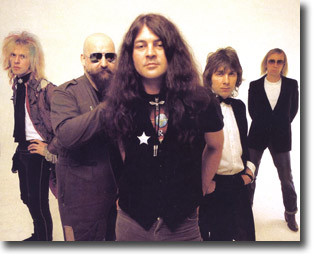
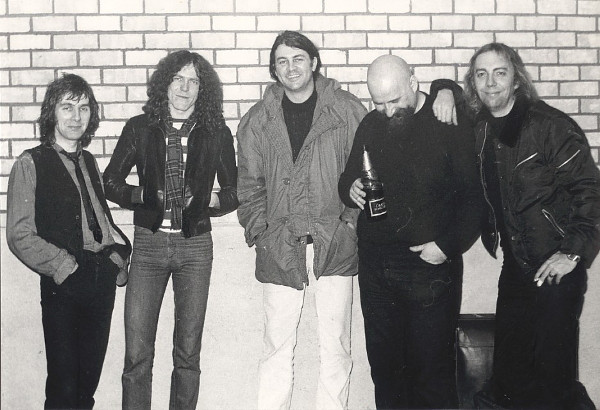
WEATHER REPORT-THEIR COLUMBIA YEARS 1971-1975.
Weather Report-Their Columbia Records Years 1971-1975.
By the late-sixties, jazz was no longer as popular as it had once been and the genre’s popularity had plummeted over the last few years. Many jazz clubs were closing, or being converted into venues that put on rock bands and album sales had fallen. Critics and cultural commentators were drawing comparisons with blues music in the late sixties.
Although there had been a brief resurgence in the blues popularity earlier in the sixties, many of its biggest names were struggling to eek out a living. They played wherever they could get a gig. Some had even turned their back on the blues. For many it was a worrying time. Part of the problem was, the blues hadn’t really evolved. While the same couldn’t be said of jazz, its popularity was declining, and declining rapidly. Something had to change.
Jazz albums were no longer selling in the same quantities as a decade earlier. Some established labels struggled financially. So did the newer labels, who promised a brave new world in jazz. That didn’t happen. Across America, jazz’s decline was noticeable. Many jazz clubs were now putting on pop and rock groups. Jazz was, yesterday’s music. It was a dying genre. However, had jazz’s demise been overstated?
That proved to be the case. Riding to the rescue, like jazz’s very own caped crusader, came fusion. A mixture of jazz, funk and rock, fusion proved to be jazz’s savour. Maybe just, jazz had a future?
That proved to be the case, with many of the biggest names in jazz embracing jazz. This included one of the most innovative and influential supergroups of the jazz-fusion era, Weather Report. The most successful period of their career was between 1971 and 1975, when the signed to Columbia. During this period, Weather Report’s lineup and music were both evolving musically.
The Weather Report story began in New York 1970. That was when Weather Report was founded by Austrian keyboardist and composer Joe Zawinul and saxophonist and composer Wayne Shorter. They were friends and previously, had been members of Miles Davis’ band. Now that they had founded their own group Weather Report, which decided they would lead together. However, before they could lead Weather Report, the needed to complete the lineup.
So Joe Zawinul and Wayne Shorter went in search of a rhythm section. The first musician they brought onboard was Czech bassist Miroslav Vitouš. To complete Weather Report’s lineup, drummer and percussionist Alphonse Mouzon. This quartet were hugely experienced musicians.
Previously, Joe Zawinul had worked with Cannonball Adderley and then Miles Davis, where he met Wayne Shorter. They’d previously been members of Maynard Ferguson’s Big Band. Then Wayne Shorter had worked with Art Blakey. It was after Wayne Shorter and Joe Zawinhul played on Miles Davis’ two fusion albums, 1969s In A Silent Way and 1970s Bitches Brew that they came up with the idea of their own band. Little did they realize that this new band, Weather Report, would go on to record fourteen studio albums and two live albums during their sixteen years together. During Weather Report’s lifetime, the lineup was fluid. However, despite the changes in lineup, Weather Report’s music was always innovative, inventive and influential. That was case from their 1971 debut album Weather Report.
Weather Report.
Start as your mean to go on could and should’ve been Weather Report’s motto. From their 1971 debut album Weather Report, they were innovators, breaking new ground musically. The quartet of keyboardist Joe Zawinhul, saxophonist Wayne Shorter, bassist Miroslav Vitous and drummer and percussionist Alphonse Mouzon were joined by percussionists Don Alias, Barbara Burton and Airto Moreira. Recording took place between 16-22 February and then on 17th March. Eight tracks were recorded, which became Weather Report. This was very different to anything that had gone before.
Abstract, avant garde, abstract and experimental are all words that were used to describe Weather Report. Influenced by Miles Davis’ two fusion albums In A Silent Way and Bitches Brew, Weather Report is variously explosive, intricate, subtle and always, compelling, captivating and innovative. Having said that, Weather Report wasn’t a hugely successful album.
Jazz critics lauded the inventiveness and innovation of Weather Report. Critically acclaimed it was, commercially successful it wasn’t. Weather Report only reached number 191 in the US Billboard 200, but reached number seven in the US Jazz Charts. Often, however, great works of art and music, aren’t recognized straight away. Given how ahead of their time Weather Report were, this was the case here. Their second album I Sing The Body Electric would see a change in fortune for Weather Report.

I Sing The Body Electric.
I Sing The Body Electric, Weather Report’s 1972 sophomore album, saw two new members join the group. They were percussionist Dom Um Romao and drummer Eric Gravatt, who replaced Alphonse Mouzon. Recording took place during sessions in November and December of 1971. I Sing The Body Electric completed in January 1972, when Medley: Vertical Invader, Surucucu and Directions were record live in Tokyo. For the audience attending these concerts, they were able to glimpse the direction Weather Report’s music was heading.
When Weather Report’s sophomore album I Sing The Body Electric was released in 1972, critics and fans heard another side to their music. Weather Report with its new lineup had reinvented themselves and their music. I Sing The Body Electric proved much more popular that their debut album, reaching number 147 in the US Billboard 200. The music appealed to a wider audience, incorporating jazz, rock and electronica.
With five tracks were recorded in the studio, three live and the music was much more complex, eclectic and ethnically diverse. I Sing The Body Electric drew inspiration and influence from a wider range of influences. Music from four corners of the globe, plus electronic instruments and guest artists aplenty, all player their part in I Sing The Body Electric commercial success and critical acclaim. Guest artists included guitarist Ralph Towner and flautist Hubert Law. They played their part in I Sing The Body Electric’s rich tapestry. Intricate, complex, grandiose, forward-thinking, experimental, it was all these things and much more. With two studio albums behind them, Weather Report decided that the next step was the release of the first of two live albums, Live In Tokyo.

Live In Tokyo,
Fans of Weather Report had enjoyed a taster of the group’s live sound on I Sing The Body Electric. The last three tracks on I Sing The Body Electric were recorded in Tokyo. Now, fans had the opportunity to hear what Weather Report live sounded like, when a double-album entitled Live In Tokyo, was released later in 1972. For critics and fans alike, they were at last able to hear a four tantalizing sides of a group featuring some of the most talented, inventive and innovative musicians feeding off each other.
Live In Tokyo allowed Weather Report to showcase their inventiveness and innovativeness. There was everything from free form jazz and fusion, which gave way to explosive, then intricate, complex passages of music. Veering into experimental and avant garde, before taking detours into multicultural music and rock, always, the music returns to jazz. The interplay between the members of Weather Report is stunning. It’s as if each member intuitively knows what the other is about to do. They read and anticipate this, responding to what’s gone before with something equally compelling and captivating. Whether the tempo increases or another layer of music is added to the rich, multi-textured tapestry, second guessing Weather Report ins’t easy. Indeed, over two discs of Live In Tokyo, Weather Report demonstrate and reinforce just why, they were such an important, influential and innovative band, who each time they released an album, would reinvent themselves and their music. This would be the case with their third studio album Streeetnighter.

Streetnighter.
Streetnighter was to prove the final album where bassist Miroslav Vitous would be Weather Report’s sole bassist. On Streetnighter, which was recorded during a five-day period in February 1973, Miroslav shares bass-playing duties with Andrew White. Similarly, Herschel Dwellingham plays drums on four of the six tracks. Like previous albums, Streetnighter found Weather Report’s lineup in a state of constant evolution. Changing too, was their music on Weather Report’s third studio album Streetnighter.
When Streetnighter was released in April 1973, critics and fans hailed the album’s groove oriented sound. As a result, Streetnighter reached number eighty-five in the US Billboard 200, number forty-one in the US R&B Charts and number seven in the US Jazz albums. This was Weather Report’s most successful album. It also marked another change in direction musically for Weather Report.
Andrew White’s electric bass played a much more prominent role on Streetnighter. Miroslav Vitous featured on just two tracks. As usual, for Joe Zawinhul, the groove was key to Streetnighter’s success. So, Andrew White played a huge part. From the opening bars of the thirteen-minute epic Boogie Woogie Waltz, played in 3/4 time and with a glorious Latin sound, Weather Report are in the tightest of grooves, right through to the closing notes of Non-Stop Home. For Joe Zawinhul, Streetnighter was a voyage of discover. He realized he could use his wah-wah pedal with his Fender Rhodes and introduced his ARP synth to add a melodic twist. The other change was in Wayne Shorter’s playing. He’s reined in, his playing much more restrained. It seemed, Streetnighter marked the start of a new era for Weather Report. With another new lineup and having reinvented themselves yet again, what would the future hold for Weather Report on their fourth studio album Mysterious Traveller.

Mysterious Traveller.
While Streetnighter saw Miroslav Vitous share bass duties with Andrew White, on Mysterious Traveller he played on only one track American Tango. The other six tracks marked the Weather Report debut of Philly bassist Alphonso Johnson. Like the bass, two drummers played on Mysterious Traveller. Skip Hadden played on two tracks and Ishmael Wilburn the other five tracks. Along with guest artists and vocalists, Mysterious Traveller saw the birth of what many people regard as Weather Report’s signature sound. Funk, fusion, R&B and rock. Gone was the improvisational nature of Weather Report’s first three studio albums. How would this change in style be received by critics and fans?
When Mysterious Traveller was released in 1974, critics lauded the album as Weather Report’s best album so far. Fans too, loved the new sound. Mysterious Traveller reached number forty-six in the US Billboard 200, number thirty-one in the US R&B Charts and number two in the US Jazz Charts. It was an album that appealed to a much more broader section of listeners. Whether it was fans of funk, jazz, R&B or rock, there was something for them all on Mysterious Traveller. The best way to describe Mysterious Traveller is as fluid, but funky and containing a pulsating heartbeat. Although Wayne Shorter plays a lesser role on Mysterious Traveller, his contribution was crucial. So too was Weather Report’s new member, Alphonso Johnson. For Miroslav Vitous, Mysterious Traveller was his Weather Report swan-song. At least Miroslav had played his part in making Mysterious Traveller Weather Report’s most successful album. What would the future hold for Weather Report next?

Tale Spinnin’
With Miroslav Vitous having left Weather Report, the lineup on Tale Spinnin’ was now Joe Zawinhul, Wayne Shorter and the newest member, bassist Alphonso Johnson. Another new face would feature on Tale Spinnin.’ However, this would just be a walk-on part. It could’ve been much more long term though.
Joe Zawinhul had heard Leon “Ndugu” Chancier playing with Carlos Santana’s band. He’d been hugely impressed with this multitalented drummer and percussionist. Leon was part of Carlos Santana’s band, and was recording in the studio next to Weather Report. He was asked to join Weather Report for a session. This session lasted a week. It resulted in Leon being asked to become a member of Weather Report. He declined the offer, preferring to stay with Carlos Santana. Recording of Tale Spinnin’ took place at Wally Helder Studios in Los Angeles. The sessions started in February 1975 and ended in April 1975. Six tracks were recorded during this two month period, and became Weather Report’s fifth studio album Tale Spinnin.’
Ever since Weather Report released their debut album Weather Report, each of their studio albums had surpassed the success of the previous one. This was the case with Tale Spinnin.’ It proved their most successful album, reaching number thirty-one in the US Billboard 200, number twelve in the US R&B Charts and number three in the US Jazz Charts. Critics and fans alike, took to with Tale Spinnin’s heavier, funkier sound. Key to Tale Spinnin’s success were two new addition’s to Weather report’s lineup.
While Leon filled the drummer’s seat, percussionist Alyrio Lima added an African influence. This replaced the Latin influence of Mysterious Traveller. So, funk, fusion, R&B and rock were joined by African influences. Just like their four previous studio albums, Weather Report continued to reinvent and innovate. Unlike other group’s, Weather Report weren’t content to stand still. Granted, the trademark sound had started to take shape on Mysterious Traveller, but on Tale Spinnin’ evolved. The result was six groundbreaking, innovative and inventive tracks, which became Tale Spinnin,’ Weather Report’s most successful album of their six album career. This was just the start in the Weather Report story, which would see them release another nine studio albums and one more live album.

Between 1971 and 1975, Weather Report’s music continued to evolve. From their debut album Weather Report through I Sing The Body Electric and Streetnighter, Weather Report’s trademark sound evolved. With a constantly evolving lineup, the change constantly evolved as Weather Report reinvented themselves and their music. By Mysterious Traveller, Weather Report’s signature sound had taken shape. Tale Spinnin’ saw this signature sound begin to evolve. Weather Report weren’t the type of group to discover their signature sound then churn out album after album of similar music. Instead, Weather Report continued to innovate and reinvent themselves and their music. This resulted in Weather Report becoming one of the most influential jazz fusion groups.
With Wayne Shorter and Joe Zawinhul at Weather Report’s helm, they fused musical genres and influences, resulting in some of the most groundbreaking, inventive and influential music of the seventies and eighties. Weather Report were together between 1970 and 1986, and released fourteen studio albums and two live albums.However, some of the most innovative, inventive and influential music Weather Report recorded and released was between 1971 and 1975, when the Columbia Years were just beginning.
Weather Report-Their Columbia Records Years 1971-1975.


RICK WAKEMAN-1973-1977: HIS GLORY YEARS.
Rick Wakeman-1973-1977: His Glory Years.
In January 1973, Rick Wakeman released his sophomore album The Six Wives Of Henry VIII, which was a groundbreaking album, one that would forever change prog rock. The Six Wives Of Henry VIII was the album that legitimised synths in prog rock. This was a game-changer.
Following the success of The Six Wives Of Henry VIII, synths became commonplace in prog rock. However, without Rick Wakeman and The Six Wives Of Henry VIII, maybe, the history of prog rock would’ve been very different? However, Rick Wakeman found inspiration for The Six Wives Of Henry VIII when touring with Yes.
The Six Wives Of Henry VIII.
In early 1972, Yes were touring America to promote their fourth studio album Fragile. On a stopover in Richmond, Virginia, Rick Wakeman, joined Yes in August 1971, and made his debut on Fragile, was perusing the airport bookshop. Eventually, Rick bought four books, including Nancy Brysson Morrison’s The Private Life Of Henry VIII.
On the subsequent flight from Richmond to Chicago, Rick began reading Private Life Of Henry VIII. As he began reading about Anne Boleyn, Rick remembered a recording he had made in 1971. Since then, Rick had done nothing with that piece of music. After recording the music, Rick had been struggling to come up with lyrics to accompany it. This being the age of the concept album, what Rick was looking for, was a theme that could run through the recording. Not any more.
Suddenly, everything came together. The notes Rick made about Anne Boleyn on the flight to Chicago were just the start. Over the next few weeks and months, whether at home or on tour, Rick focused on each of Henry VII’s six wives. At his piano, he continued to make notes. Eventually, Rick’s notes became the thread that ran through his sophomore album, The Six Wives Of Henry VIII. It transformed Rick Wakeman’s solo career.
Prior to the release of The Six Wives Of Henry VIII in January 1973, Rick Wakeman had only released one solo album, 1971s Piano Vibrations. However, controversy surrounds Piano Vibrations. Rick doesn’t even consider Piano Vibrations as part of his discography. Rick’s involvement was minimal. He neither wrote, nor chose the material on Piano Vibrations. Eight of the ten tracks were cover versions of popular songs, and the two other tracks were cowritten by producer, John Schroeder. All Rick who was working as a session musician, had to do, was turn up and play piano. The result was what is best described as a cheesy sounding album, that failed to chart. This was the polar opposite to Rick’s sophomore album The Six Wives Of Henry VIII.
Having joined Yes in August 1971, Rick played on their fourth album, Fragile. It was released on 29th November 1971 in Britain, reaching number seven. This resulted in Fragile being certified silver. Across the Atlantic, Fragile was released on 4th January 1972, and reached number four in the US Billboard 200. Fragile was certified double platinum, and became the most successful album of Yes’ career. This would also be the case with Rick’s sophomore album, The Six Wives Of Henry VIII.
Recording of The Six Wives Of Henry VIII took place between February and October 1972. A&M Records gave Rick an advance of £4,000 to help with recording of The Six Wives Of Henry VIII. That wasn’t going to go far. Luckily, Rick was a multi-instrumentalist, who could rely upon members of Yes, and his former band The Strawbs.
On The Six Wives Of Henry VIII, Rick played Minimoog and ARP synths, Mellotron, Hammond organ, church organ, electric piano, grand piano and harpsichord. Accompanying Rick, who produced The Six Wives Of Henry VIII, were some of the top musicians of the early seventies.
Among Rick’s band were what can only described as prog rock royalty. This included Yes’ rhythm section of drummers Bill Bruford and Alan White, bassist Chris Squire and guitarist Steve Howe. They were joined by The Strawbs bassist Chris Cronk and Dave Cousins, who played electric banjo. These were just a few of the musicians who played on The Six Wives Of Henry VIII.
Other musicians who played a part in the making of The Six Wives Of Henry VIII were drummer Barry de Souza, bassists Dave Winter and Les Hurdle and guitarist Mike Egan. They were joined by percussionists Ray Cooper and Frank Ricotti and vocalists Laura Lee, Sylvia McNeill, Judy Powell, Barry St. John and Liza Strike. Once the six tracks were recorded, the cost of The Six Wives Of Henry VIII had risen to £25,000. A&M Records’ advance hadn’t come close to covering the cost of The Six Wives Of Henry VIII. Rick needed The Six Wives Of Henry VIII to be a huge success.
Prior to the release of The Six Wives Of Henry VIII, Rick was booked to appear on BBC TV’s The Old Grey Whistle Test, where he would play excerpts of The Six Wives Of Henry VIII. That should’ve given The Six Wives Of Henry VIII a huge boost. However, back then, there were only three television channels. On one of the other channels, ITV a documentary about Andy Warhol was scheduled to be released. The documentary was much anticipated, and as many as ten million viewers were expected to view it. Luckily, at the last minute, it was banned. With ten million people looking for something to watch, many turned to BBC 2, and The Old Grey Whistle Test. That night, excepts from Rick Wakeman’s sophomore album, The Six Wives Of Henry VIII were heard by a huge audience. This was just what he needed.
Reviews of The Six Wives Of Henry VIII hadn’t been good. Only Time magazine and Rolling Stone seemed to appreciate The Six Wives Of Henry VIII. They published glowing reviews. However, they were the only ones. Other critics weren’t won over by The Six Wives Of Henry VIII. Neither were many people at A&M Records. Behind the scenes, staff at A&M Records referred to The Six Wives Of Henry VIII as “unsellable.” They reckoned that an instrumental prog rock album was unlikely to sell well. So, only 12,500 copies of The Six Wives Of Henry VIII were pressed prior to release. How wrong executives at A&M Records were.
On the release of The Six Wives Of Henry VIII on 23rd January 1973, it topped the charts in four countries. The Six Wives Of Henry VIII reached number seven in Britain, and number thirty in the US Billboard 200 charts. This resulted in The Six Wives Of Henry VIII being certified gold in America. However, things would get even better for Rick Wakeman.
By July 1973, The Six Wives Of Henry VIII was certified platinum, having sold two million albums. Eventually, The Six Wives Of Henry VIII sold over fifteen million copies. As 1973 drew to a close, Time magazine named The Six Wives Of Henry VIII as the best album of 1973. Since then, it’s attained classic status. What was described as an “unsellable,” instrumental prog rock album is now regarded as one of the genre’s best examples,
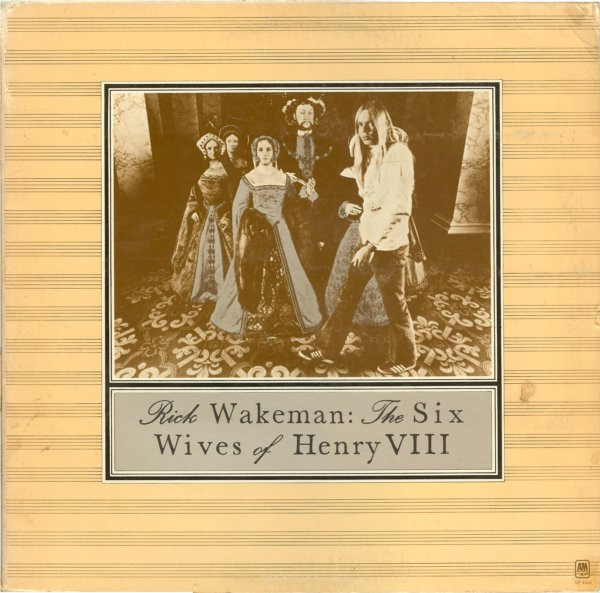
Journey To The Centre Of The Earth.
Following the success of The Six Wives Of Henry VIII, Rick Wakeman began work on his third album, Journey To The Centre Of The Earth. This was another concept album. It was based on Jules Vernes’ science fiction novel Journey To The Centre Of The Earth, which was published in 1864. It inspired Rick to write and record another prog rock opus.
Journey To The Centre Of The Earth featured two lengthy tracks written by Rick Wakeman. The Journey/Recollection, which lasted twenty-one minutes, would fill side one of Journey To The Centre Of The Earth. Side two featured The Battle/The Forest, which lasted nearly nineteen minutes. However, these two tracks weren’t recorded in a studio.
No. Journey To The Centre Of The Earth was recorded at the Festival Hall, London. On 18th January 1974, Rick Wakeman, accompanied by the London Symphony Orchestra, the English Chamber Choir and a select group of musicians who Rick named The English Rock Ensemble. With such an ambitious project, Rick wasn’t taking chances. Two concerts were scheduled and both were recorded. The second concert would feature on the completed version of Journey To The Centre Of The Earth, which was released on 9th May 1974.
Before the release of Journey To The Centre Of The Earth, critics had their say. To say reviews were mixed is an understatement. Among the less favourable reviews, words like a “classical pastiche” “genuinely appalling” and “brutal synthesiser overkill” peppered reviews. For Rick this was hugely disappointing. It had been a hugely ambitious project, one which took a lot out of him. However, other critics, especially the rock critics, were much more open minded. They gave Journey To The Centre Of The Earth glowing reviews. Maybe, Rick’s hard work was about to pay off?
When Journey To The Centre Of The Earth was released on 9th May 1974, Rick Wakeman had the last laugh. Journey To The Centre Of The Earth reached number one in Britain and number three in the US Billboard 200 charts. This resulted in Journey To The Centre Of The Earth being certified gold in America, Britain and Brazil. Rick Wakeman had been vindicated. Especially when Journey To The Centre Of The Earth won an Uvor Novello Award and was nominated for Grammy Award. However, his world was about to be turned upside down.
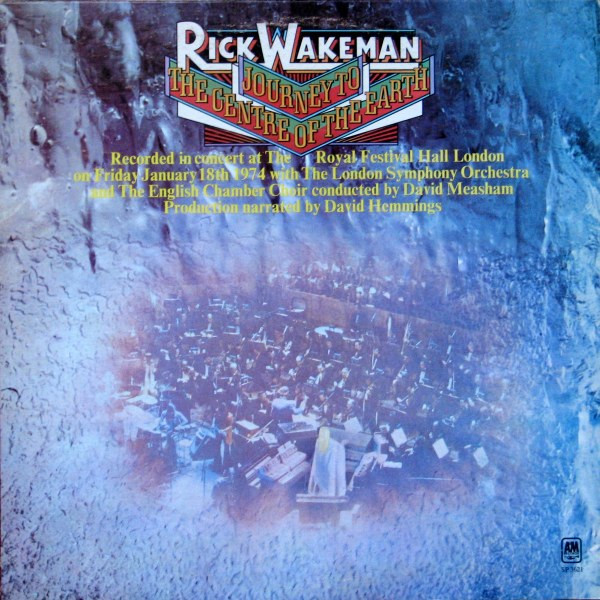
The Myths and Legends Of King Arthur and The Knights Of The Round Table.
Following the release of Journey To The Centre Of The Earth, Rick Wakeman was getting ready to begin work on his fourth album. Then disaster struck. Rick had the first of three minor heart attacks. He was taken to Wexham Park Hospital, near Slough, in Berkshire. That’s where Rick recuperated and began writing The Myths and Legends Of King Arthur and The Knights Of The Round Table.
When Rick was admitted to the Wrexham Park Hospital, the prognosis wasn’t good. Far from it. The doctor advised Rick to stop playing and touring. If he retired, his health might improve. Rick wasn’t amenable to this suggestion. So, that night, he penned The Last Battle, the track which would eventually, close The Myths and Legends Of King Arthur and The Knights Of The Round Table. This was the start of Rick Wakeman’s recovery.
The suggestion that Rick Wakeman retired seemed to inspire him. So, whilst recovering from the heart attack, Rick wrote most of The Myths and Legends Of King Arthur and The Knights Of The Round Table at Wrexham Park Hospital. Before long, his health had improved and he was ready to record The Myths and Legends Of King Arthur and The Knights Of The Round Table.
Recording of The Myths and Legends Of King Arthur and The Knights Of The Round Table began at Morgan Studios, London, on 16th October 1974. Right through to the 10th January 1975, Rick and his band recorded the seven tracks that became The Myths and Legends Of King Arthur and The Knights Of The Round Table. Rick’s band included the rhythm section of drummer Barney James, bassist Roger Newell and Geoff Crampton on lead and acoustic guitar. They were joined by percussionist John Hodgson and The English Chamber Choir. Taking charge of the lead vocalis were Gary Pickford-Hopkins and Geoff Crampton. Rick who produced The Myths and Legends Of King Arthur and The Knights Of The Round Table, played synths, keyboards and grand piano. Once recording was completed on 10th January 1975, The Myths and Legends Of King Arthur and The Knights Of The Round Table was released in April 1975.
Before that, the critics had to have their say about The Myths and Legends Of King Arthur and The Knights Of The Round Table. This time, generally, reviews were more favourable. Gone were the scathing, jaundiced reviews that preceded Journey To The Centre Of The Earth. Things were looking good for Rick Wakeman.
On the release of The Myths and Legends Of King Arthur and The Knights Of The Round Table, in April 1975, it reached number two in Britain and number twenty-one on the US Billboard 200 charts. This resulted in Rick’s third consecutive gold disc in America. The Myths and Legends Of King Arthur and The Knights Of The Round Table also was certified gold in Japan, Australia and Brazil. Things were indeed, looking up for Rick Wakeman. However, according to the musical rumour mill, there was a problem.
Rick had decided to tour The Myths and Legends Of King Arthur and The Knights Of The Round Table, to support the album. This included three nights at Wembley, which was billed as King Arthur On Ice. Although these nights sold out, rumours persisted that Rick Wakeman had taken a large financial hit. Some rumour mongers went as far as to suggest that Rick had been declared bankrupt. That was far from the truth.
Later, it became apparent that Rick never lost money on the tour that accompanied The Myths and Legends Of King Arthur and The Knights Of The Round Table. Indeed, the tour and album had been a profitable venture, selling over twelve million copies worldwide. Not bad for an album Rick Wakeman wrote in his hospital bed, and released forty years ago, when progressive rock, like Arthur was King?
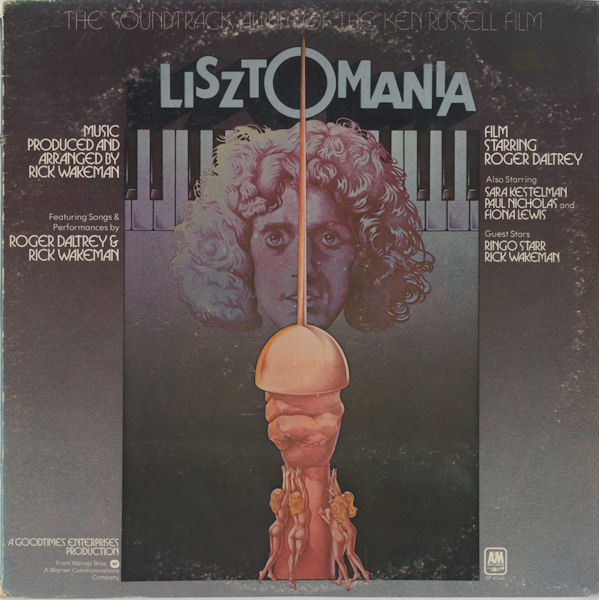
Lisztomania.
After three hugely successful albums, Rick Wakeman’s profile had never been higher. Rick was commissioned to write and record the soundtrack to Ken Russell’s film Lisztomania, which was a biography of classical composer Franz Liszt.
Ken Russell gave Rick Wakeman free reign when it came to the soundtrack. So Rick Wakeman brought onboard Who frontman Roger Daltrey. He wrote some of the lyrics and added the vocals. Joining Roger Daltrey, were vocalists Linda Lewis and Paul Nicholas. They featured on the Lisztomania soundtrack which was released in November 1975.
There was a problem with Lisztomania. Rick Wakeman wasn’t happy with the soundtrack. So much so, that album was reworked and rereleased as The Real Lisztomania. Rick’s concerns about Lisztomania proved to be correct. The reviews were mixed. This didn’t bode well for the release of Lisztomania.
When Lisztomania was released in November 1975, the album failed to chart in Britain. Across the Atlantic, Lisztomania stalled at 145 in the US Billboard 200. For someone who was used to gold and platinum discs, this was a low point of Rick Wakeman’s career. However, redemption wasn’t far away.
No Earthly Connection.
Once the festive period was over, Rick Wakeman and his band returned to the studio in January 1975. That would be their home for the next three months.
Like many rock stars during the seventies, Rick Wakeman decamped to France to record albums and sometimes, to live. Many musicians who were unwilling to pay the high rates of income tax in Britain, became tax exiles. Others, just enjoyed the more exotic location of Château d’Hérouville, in Hérouville. This was where Rick decided to record the three tracks that became No Earthly Connection a creation myth which was based on music.
Rick had written No Earthly Connection. The centrepiece of the album, was an ambitious, five part suite Music Reincarnate. It was a twenty-eight minute epic. For No Earthly Connection, Rick had written The Prisoner and The Lost Cycle. These three tracks featured Rick’s band.
The rhythm section featured drummer Tony Fernandez, bassist Roger Newell and John Dunsterville on guitars and mandolin. They were augmented by a horn section Martyn Shields on trumpet, flugelhorn and French horn, and Reg Brooks on trombone and bass trombone. Adding vocals was Ashley Holt. Rick played all manner of pianos, keyboards and organs, and produced No Earthly Connection. It was completed in March 1976, and would be released in May 1976
Before that critics had their say on No Earthly Connection. Most of the reviews were positive. There was the occasional dissenting voice. Overall, No Earthly Connection was regarded as a return to form from Rick Wakeman, and a vast improvement on Lisztomania. This bode well for No Earthly Connection, which came with a couple of surprises.
On the release of No Earthly Connection in May 1976, it began to climb the charts. Eventually, it reached number nine in Britain. Across the Atlantic, No Earthly Connection stalled at number sixty-seven in the US Billboard 200. This time around, there were neither gold nor platinum discs for Rick Wakeman. However, his career was back on track. Lisztomania had been a blip, and redemption came in the shape of No Earthly Connection. While it didn’t match the quality and success of The Six Wives of Henry VIII, Journey to the Centre of the Earth and The Myths and Legends of King Arthur and the Knights of the Round Table, No Earthly Connection was a reminder that Rick Wakeman was one of the most ambitious and innovative British musician of the seventies.
White Rock.
Despite his disappointment with how the soundtrack to Lisztomania had turned out, Rick Wakeman agreed to record White Rock, a documentary film about the 1976 Winter Olympics, in Innsbruck, Austria. Rick approached the White Rock soundtrack differently.
Instead of using a band for the White Rock soundtrack, Rick Wakeman took his banks of trusty keyboards and synths to CBS Studios. Rick’s banks of keyboards and synths were able to produce the majority of the sounds on White Rock. However, augmenting Rick was drummer and percussionist Tony Fernandez, plus St Paul’s Cathedral Choir. They began work on White Rock in January 1976.
By then, Rick Wakeman had written seven tracks. That was all very well. However, he was meant to have written eight. When Rick entered the studio one day, he realised he forgotten to record what became After the Ball. Rather than admit to his mistake, Rick Wakeman proceeded to improvise his way through After the Ball. With the track recorded, Rick listened to the playback and realised that it was a flawless take. There was no need for a further take. For the track that closed the White Rock soundtrack, Rick pioneered the use of sampling.
Ice Run was the track that closed the soundtrack. As Rick worked on the track, he realised that a two parts of one of his old tracks would be perfect for Ice Run. So Rick sampled two parts Anne Of Cleves, from Rick’s album The Six Wives Of Henry VII. By using two samples from Anne Of Cleves this completed the song. However, White Rock wasn’t complete until September 1976.
With White Rock complete, A&M Records scheduled the release for 1977. This meant Rick Wakeman had to wait before hearing how his second venture into the world of soundtracks would be greeted? Deep down, Rick must have been hoping that lightning wouldn’t strike twice. Sadly it did.
By 1977, the musical landscape had changed. Punk had arrived in Britain, kicking and screaming. Hanging on their every word, were a new breed of gunslinger critics. They were happy to fly the flag for this anti-music, and acted as the punks mouthpiece. If a puff piece was needed, the gunslinger critics wrote it. They were happy to be their master’s voice. The gunslinger critics slavishly agreed with their musical masters, saying progressive rock was yesterday’s music. Progressive rockers were dinosaurs the script went. That’s despite the gunslinger critics once championing progressive rock. It seemed they had recently undergone a Damascene conversion. These ‘critics’ savaged White Rock, calling it the worst album of Rick Wakeman’s career. Other critics wrote much more unbiased reviews, concluding that White Rock was a good, but not great album. The curse of the soundtrack had struck again.
Or had it? When White Rock was released in 1977, it reached number fourteen in Britain. This resulted in a silver disc for Rick Wakeman. He had the last laugh, Meanwhile, in America White Rock stalled at 128 in the US Billboard 200. While this was disappointing, it was an improvement on Rick’s last venture into the world of soundtracks. Still, Rick was a popular artist on both sides of the Atlantic.
That had been the case since The Six Wives Of Henry VIII, which was the first album in the 5 Classic Albums box set. This commercial success continued from Journey To The Centre Of The Earth, through The Myths and Legends Of King Arthur and The Knights Of The Round Table, No Earthly Connection and White Rock. These albums feature one of the pioneers of British progressive rock, Rick Wakeman. He was a musical pioneer who wrote and recorded several classic albums.
This included The Six Wives Of Henry VIII, Journey To The Centre Of The Earth and The Myths and Legends Of King Arthur and The Knights Of The Round Table. These albums deserve to be called classic albums. No Earthly Connection was a return to form from Rick Wakeman, and featured some innovative music. Especially the five part, twenty-eight minute epic Music Reincarnate. However, No Earthly Connection stops short of reaching classic status, but is still one of the highlights of Rick’s career. White Rock by comparison, is a disappointing album that’s best described as good, but not great. Despite this, the album Rick Wakeman released between 1973 and 1977 are a reminder of the most successful period of Rick Wakeman’s carer. Throughout this period, he constantly strove for perfection.
That was what Rick Wakeman spent much of the seventies searching for. For most musicians, that’s unattainable. However, Rick Wakeman wasn’t most musicians.
Just like so many musicians of the progressive rock era, he was a musical pioneer, who created cerebral, groundbreaking and innovative music. To do this, Rick Wakeman pushed musical boundaries, and came closest on The Six Wives Of Henry VIII, Journey To The Centre Of The Earth and The Myths and Legends Of King Arthur and The Knights Of The Round Table. These albums deserve to be called classics, and are a reminder of Rick Wakeman during what was his relentless pursuit of perfection. Between 1973 and 1977 Rick Wakeman reached his creative zenith, and created some of the best, and ambitious music of his long and illustrious career.
Rick Wakeman-1973-1977: His Glory Years.
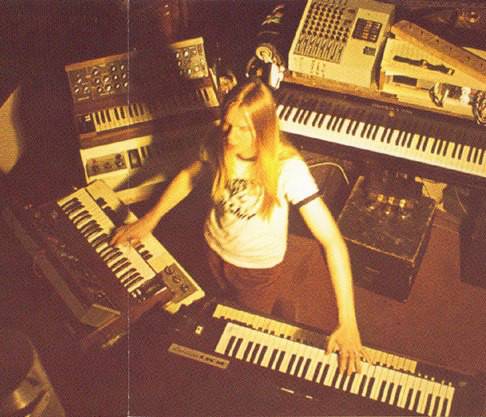
TRIGAL’S FIVE YEAR MUSICAL ODYSSEY.
Trigal’s Five Year Musical Odyssey.
When Trigal signed to Belter Records in 1975, this was the start of a musical adventure that would last five years and see the band release two albums and four singles. They featured Trigal’s unique and inimitable fusion of gypsy rumba-funk and flamenco pop, which found favour with audiences the length and breadth of Spain. Especially between 1976 and 1977, which was Trigal’s “classic period.” Sadly, though, nothing lasts forever, and by 1980,Trigal decided to call time on their career, as their popularity was declining. The Trigal story was over but the trio had made their mark on Spanish music.
Although Trigal signed to Belter Records in 1975, the bands roots can be traced to 1961. That was when seventeen year old Antonio ‘Tony’ Carmona Martínez started work as a technician for Radio de Nacional Espana, in Malaga. When he wasn’t working at the radio station, Antonio ‘Tony’ Carmona Martínez became involved with various local bands. For the teenager, he was doing what he loved.
Antonio ‘Tony’ Carmona Martínez had learnt to play the guitar when he was eight, and since then, had been passionate about music. Even then, there was an inevitability that Antonio ‘Tony’ Carmona Martínez would embark upon a career as a musician.
When he did, it was with Los Tres Del Sur, a trio that featured Maria Victoria ‘Vicky’ Cabrera and Rafael Romero. Los Tres Del Sur were influenced by Los Guacamayos, Los Panhcos and Los 3 Sudamericanos, and their set list usually featured a variety of Latin classics. This proved popular when Los Tres Del Sur took to the stage at venues on the Costa Del Sol during the summer holidays. This was where Los Tres Del Sur spent the first few years of their career, gaining experience and honing their sound. By the late-sixties, Los Tres Del Sur decided to leave the Costa Del Sol behind.
They were one of a number of acts who were hired to play on US military airbases. For the next three years, Los Tres Del Sur travelled the length and breadth of America, and played wherever American troops were stationed. This resulted in Los Tres Del Sur performing in Cuba and Jamaica. For Los Tres Del Sur this was valuable experience and they became a better band.
In 1972, Los Tres Del Sur returned home having completed their three-year contact. When they returned to Malaga, Antonio ‘Tony’ Carmona Martínez and Maria Victoria ‘Vicky’ Cabrera who were by then a couple, decided to marry. Not long after this, Rafael Romero left Los Tres Del Sur.
This could’ve been a potential disaster for Los Tres Del Sur, who were by then an experienced band. Fortunately, Los Tres Del Sur found a more than suitable and experienced replacement for Rafael Romero. Guitarist Manuel Gallego Carretero Carter was only twenty-four, but had a wealth of musical experience in the Spanish music scene. He was also regarded as a virtuoso guitarist and would add a new dimension to Los Tres Del Sur.
Los Tres Del Sur’s new lineup now featured Antonio ‘Tony’ Carmona Martínez, Maria Victoria ‘Vicky’ Cabrera and Manuel Gallego Carretero Carter. They spent the next three years playing live and building their fan-base. This paid off, and in 1975 Juan Barcons ‘Jaobim’ the founder of Belter Records offered the trio a recording contract. There was one caveat though, and that was that the group change their name. The three members of Los Tres Del Sur agreed, and Trigal was born in 1975.
Having signed to Belter Records, Trigal were now rubbing shoulders with some of the biggest names in Spanish music. This included Rhumba Tres, and would later, cover some of their songs. That was still to come.
Before long, Trigal was introduced to the man who would play an important part in their sound and success, Ramon Farran. He was thirty-six and vastly experienced, having spent twenty years working in the Spanish music industry.
Ramon Farran’s career began at an early age when he played drums in his father’s big band. Since then, Ramon Farran had worked as a session musician, arranger, producer and was a successful and experienced composer. That was why Belter Records’ Juan Barcons ‘Jaobim’ entrusted Ramon Farran to modernise Trigal’s music.
To do this, Ramon Farran would introduce fashionable, moderne arrangements, and braying, blazing, jazzy horns that more than hinted at his love of Miles Davis and Sonny Rollins. Ramon Farran also incorporated elements of hook-laden rumba pop. This was something that Ramon Farran was familiar with, as he had previously written and produced a number of rumba pop singles. He knew that the secret of a hit single was a catchy chorus. However, there was also an experimental side to Trigal’s music, which would emerge over the next five years.
Trigal.
Having signed to Belter Records and been introduced to their new producer Ramon Farran, Trigal began work on their eponymous debut album. Eventually, Trigal settled on ten tracks which featured on Trigal’s eponymous debut album. This included a number of songs that were written by the three members of Trigal.
The album opener Gol was penned by C.A. Diaz and Antonio ‘Tony’ Carmona Martínez, who wrote Tamara with J.L. Carretero. Meanwhile, Antonio ‘Tony’ Carmona Martínez had formed a successful songwriting partnership with Manuel Gallego Carretero Carter, who had been a member of Trigal for three years. They wroteToma Que Dale, Recuerdos and Por Culpita De Mi Mal Peens. These songs would become part of Trigal which was recorded with Maria Victoria ‘Vicky’ Cabrera in Barcelona, which was home to Belter Records.
Later, in 1976,Trigal released their eponymous debut album. Trigal was released on Belter Records and was an ambitious genre-melting album. Trigal married a variety of different musical genres and influences including flamenco pop and gypsy rumba-funk which were combined with jazz, rock and soul. There’s even a nod towards the Blaxploitation movies that had a cult following during the first half of the seventies.
Trigal unleashed thunderous drums which joined forces with the bass in the rhythm section. They were joined by searing guitars, a myriad of percussion and dancing strings. Meanwhile, stabs and bursts of blazing, braying horns which flit between jazz and funk and are and sometimes joined by wah wah guitars. The final piece of the jigsaw were the gypsy female vocal which veered between heartfelt and hopeful, to sassy and soulful. From the opening bars of Gol to the closing notes of Si Te Quiero, Trigal’s debut album was an irresistible combination of musical genres and influences.
Soon, Belter Records’ Juan Barcons ‘Jaobim’ decision to sign Trigal was vindicated as they became a popular band. Trigal’s debut single Gol was released in 1976, and featured Por Culpita De Mi Mal Pensá on the B-Side. The followup was Toma Que Dale was incredibly catchy and had a radio friendly sound. Tucked away on the B-Side was the hidden gem Recuerdos which fused funk, pop and stabs of brassy horns. Recuerdos was too good to languish on the B-Side of a single. Toma Que Dale was released by Belter Records later in 1976 and saw the Trigal success story continue.
Baila La Rumba.
After the success of their debut album, Trigal began work on what became their sophomore album Baila La Rumba. It featured another ten new songs, including Baila La Rumba, El Gitano Andrés,Temporal, Déjame, Sacromonte, Vente Conmigo and Si Te Quiero. They were all penned by the songwriting team of Antonio ‘Tony’ Carmona Martínez and Manuel Gallego Carretero Carter.
The ten tracks that became Baila La Rumba were recorded in Barcelona with the third member of Trigal, Maria Victoria ‘Vicky’ Cabrera. When Baila La Rumba was completed, it was scheduled for release in 1977.
Just like Trigal, Baila La Rumba was released to praise and plaudits. Baila La Rumba was another musical potpourri, where musical genres and influences are combined by Trigal. This included flamenco pop, funk, and gypsy rumba-funk, jazz, rock and soul. There were elements of Blaxploitation and disco on Baila La Rumba which was Trigal’s most eclectic album.
Baila La Rumba was also another album of irresistible music where the hooks hadn’t been spared. The majority of the tracks were uptempo and dance-floor friendly. Some featured disco strings, while others featured a funkier sound. Occasionally, a rocky sound emerged from the carefully crafted arrangements. Other times, including on Vente Conmigo, Maria Victoria ‘Vicky’ Cabrera delivers an impassioned, soulful vocal. The role she played in Trigal’s can’t be underestimated.
After the release of Baila La Rumba, Trigal’s popularity continued to grow. They released Baila La Rumba as a single later in 1977, with Vente Conmigo on the B-Side. However, Baila La Rumba was the last single that Trigal released during what was their classic period.
Between 1976 and 1977, Trigal enjoyed the most successful period of their five-year career. By 1978, Maria Victoria ‘Vicky’ Cabrera was expecting her first child. Little Tony was born later in 1978.
In 1979, Manuel Gallego Carretero Carter announced that he was leaving Trigal. His replacement was Enrique García González who had been a member of Fresa y Nata and Group 69. This was the third and final lineup of Trigal. They entered the studio with arranger and producer Joan Barcons ‘Jobim,’ and recorded
Trigal’s fourth single A Los Mundiales, which featured Toca Las Palmas on the B-Side. Alas, the single failed to replicate the success Trigal’s previous releases. Little did the three members of Trigal know that this would their final single.
With Trigal’s popularity declining, it was no surprise that in 1980 the band decided to call time on their career. Making the announcement was Antonio ‘Tony’ Carmona Martínez. He and his wife had been with Trigal since the sixties, when they were still called Los Tres Del Sur. They had been about to enter their third decade as a group.
Antonio ‘Tony’ Carmona Martínez had another announcement to make that day in 1980. He had decided to retire, and would never again take to stage.
Instead, he spent the next nine years selling sound equipment. However, in 1989 Antonio ‘Tony’ Carmona Martínez decided to open his own recording studio ACM Records in Malaga. This was the start of Antonio ‘Tony’ Carmona Martínez’s long career as a producer.Later he began to write songs with his old songwriting partner Manuel Gallego Carretero Carter. They picked up where they left off in 1979.
Antonio ‘Tony’ Carmona Martínez and Manuel Gallego Carretero Carter played their part in the sound and success of Trigal’s two albums. They also collaborated on another project Los Percheleros, who released a trio of albums. This began with 1974s Las Mejores Rumbas Del Año, 1976s Nuevos Aires De Rumba and the band’s swan-song Los Percheleros in 1977.
Many people will remember Antonio ‘Tony’ Carmona Martínez, Manuel Gallego Carretero Carter and Maria Victoria ‘Vicky’ Cabrera for the two albums they released as Trigal between 1976 and 1977. These two albums, Trigal and Baila Mi Rumba feature Trigal’s unique and inimitable fusion of flamenco pop, funk, and gypsy rumba-funk, jazz, rock and soul, which sometimes incorporates Blaxploitation and disco. This musical potpourri found favour with audiences the length and breadth of Spain, and transformed the career of Antonio ‘Tony’ Carmona Martínez and Maria Victoria ‘Vicky’ Cabrera.
By the time they signed to Belter Records, they had spent the best part of a decade playing in holiday resorts and army camps as part of Los Tres Del Sur. The addition of Manuel Gallego Carretero Carter in 1972 was the final piece of the jigsaw. When Trigal signed to Belter Records in 1975, they were ready to make the next step, and between 1976 and 1977, their music was part of the soundtrack to daily life in Spain
Trigal’s Five Year Musical Odyssey.
RANDY MEISNER-THE EPIC YEARS
Randy Meisner-The Epic Years.
Musical history was made in September 1971, when Don Henley, Glenn Frey, Bernie Leadon and twenty-five year old Randy Meisner formed The Eagles and signed with David Geffen’s new label Asylum Records. Little did David Geffen realise that he had signed one of the biggest bands of the seventies, and The Eagles would transform the fortunes of new label.
Over the next six years, Randy Meisner was the bassist and adding backing vocals on The Eagles’ first five albums which sold twenty-five million copies in America alone. The most successful album The Eagles released was Hotel California in December 1976 which sold sixteen million copies, was certified diamond and won two Grammy Awards. The success of the album was beyond The Eagles’ wildest dreams, but despite that, all wasn’t well behind the scenes.
In September 1977, Randy Meisner announced he was leaving The Eagles, citing exhaustion, which was no surprise given the band’s gruelling recording and touring schedule over the past six years. However, part of the reason behind Randy Meisner’s departure was the constant arguments among the group. While the departure of Randy Meisner marked the end of an era for The Eagles, but the start of a new chapter for thirty-one year old singer, songwriter and bassist.
Randy Meisner.
Randy Meisner had decided to embark upon a career as a solo artist, and signed to Asylum Records in 1978. Later that year, the thirty-two year old released his debut album Randy Meisner in June 1978. While this album of country rock, AOR and rock was well received by the majority of critics, it wasn’t the success that Randy Meisner had hoped and the album failed to trouble the charts. For Randy Meisner who wasn’t used to failure, this was a huge disappointment, and to make maters worse, he was dropped by the label. This made him doubly determined that his sophomore album would be a success.
Two years later, and Randy Meisner returned in 1982 with One More Song which was released on Epic and was the start of a new chapter for the singer-songwriter.
One More Song.
Following the commercial failure of Randy Meisner, the former Eagle eventually began work on his sophomore album which later, became One More Song. It was a quite different album from Randy Meisner, which was essentially an album of cover versions. The only Randy Meisner composition on the album had been a reworking of Take It To The Limit which he cowrote with Don Henley and Glen Frey. This was proof, if any was needed, that Randy Meisner was a talented songwriter. All he needed was the right songwriting partner.
Fortunately, Randy Meisner discovered singer-songwriter Eric Kaz, and the pair cowrote Hearts On Fire and Deep Inside My Heart. They the joined forces with Wendy Waldman and penned Gotta Get Away, Come on Back to Me, I Need You Bad and Trouble Ahead. Jack Tempchin who wrote The Eagles classic Peaceful Easy Feeling contributed One More Song and White Shoes. To close One More Song, Randy Meisner decided to cover Richie Furay’s Anyway Bye Bye.
The recording of One More Song began on May the ’26th’ 1980 and continued to August the ’20th’ 1980. Joining Randy Meisner who took charge of lead vocals and played guitar was a rhythm section of drummer Craig Krampf, bassist Bryan Garofalo and guitarist Craig Hull who also played steel guitar and pedal steel. The other members of the band included keyboardist Sterling Smith and percussionist and backing vocalist Don Francisco. Other musicians were brought onboard to record one or two songs.
This included Kim Carnes who added background vocals on Deep Inside My Heart. When it came time to record One More Song, Eagles Glen Frey added backing vocals and Bill Cuomo played synths and returned when it came to record I Need You Bad, which featured saxophonist Michael Jacobs. Wendy Waldman joined the band during the recording of Come On Back To Me, and played acoustic guitar, backing vocals and guitar. Meanwhile, Val Garay took charge of production on One More Song which was hoped would kickstart Randy Meisner’s solo career.
With One More Song completed in late August 1980, the album was scheduled for release by Epic in October 1980. This was a quick turnaround and only left two months to promote what was now the most important album of Randy Meisner’s solo career.
When critics heard One More Song, they were won over by a carefully crafted album of country rock, AOR and rock that was a much better album than his 1978 eponymous debut album. Partly, that was because of the songs that featured One More Song, and especially the songs he wrote with his new songwriting partners.
There was also an honesty and innocence to a number of the songs while others had a rootsy sound that were perfectly suited to Randy Meisner. However, among the highlights of the album was the heartfelt paean I Need You, and beautiful ballads about love and love lost like Gotta Get Away, One More Song and Trouble Ahead. They’re a showcased Randy Meisner’s skills as a singer and songwriter. Meanwhile, the songs that had been earmarked as singles Hearts On Fire and Deep Inside My Heart were languid AOR tracks were radio friendly. Very different was the lively and exuberant Anyway Bye Bye, which closed the album on a memorable high.
When Deep Inside My Heart was released the lead single from One More Song, it reached twenty-two in the US Billboard 100. This augured well for the release of One More Song in October 1980, which released fifty in the US Billboard 200 and forty-four in Canada. Hearts On Fire was released as a single in 1981, and reached nineteen in the US Billboard 100 and fourteen in the Mainstream Rock charts. One More Song which had charted and featured two hit singles and had transformed Randy Meisner’s fortunes and he was keen to build on this success.
Randy Meisner.
Buoyed by the success of One More Song, Randy Meisner began work on his third album later in 1981. He had received plaudits and praise for the songs he cowrote for One More Song, including the love songs. Many critics thought that Randy Meisner would renew his songwriting partnership with Eric Kaz and Wendy Waldman. However, that wasn’t the case.
Instead, Randy Meisner only wrote four new songs for his third album, with new songwriting partners. Randy Meisner wrote Layin’ In The Deep End and Nothing Is Said (‘Til the Artist Is Dead with Dixon House, then joined forces with Howard Leese to write Still Runnin’. Then Randy Meisner, Dixon House and Howard Leese wrote Jealousy together. These four songs were augmented by five cover versions.
This included Craig Bickhardt’s Never Been In Love, David Palmer’s Darkness Of The Heart, Bryan Adams and Jim Vallance’s Tonight. They were joined by Elton John and Gary Osborne’s Strangers and John Corey’s Doin’ It For Delila which would close Randy Meisner.
Recording of Randy Meisner began on December the ’18th’ 1981 and continued right though to February the ’22nd’ 1982. This time around, Mike Flicker and Randy Meisner who played bass, guitar and added vocals, co-produced the album. They were joined by an expanded band that featured a rhythm section of drummer Denny Carmassi, bassist and guitarists Brian Smith and
John Corey who played piano and added backing vocals. They were augmented by backing vocalists Ann Wilson, Nancy Wilson and Marcy Levy, saxophonist Phil Kenzie, synth player Mitchell Froom, Tower Of Power who added horns and Sterling Smith who played organ, synths and piano. This all-star band was joined by Randy Meisner’s two songwriting partners, with Dixon House playing organ, piano, background vocals and Howard Leese played acoustic and electric guitar, synths and added backing vocals. After three months, Randy Meisner was completed and ready for release.
This time around, Epic decided to release Randy Meisner in August 1982, which allowed more to promote the album. They were hoping to build on the success of One More Song, which featured two hit singles.
Critics on hearing Randy Meisner, realised that it was a beautiful, melodic album of country rock, AOR and rock that sometimes packed a punch. During this latest carefully crafted album, Randy Meisner incorporated hooks aplenty, soaring melodies, Tower Of Power’s horns, backing vocals from Nancy Wilson, clever lyrics and sometimes, raw power. Randy Meisner was another carefully crafted album from a talented singer, songwriter, musician and now producer.
It opened with the hook-laden rocker Never Been In Love, and continued to rock on Darkness Of The Heart that sounds not unlike Meat Loaf. Jealousy was a melodic and memorable track that featured raw power, while Tonight features soaring harmony and Playin’ In The Deep End was an anthem-in-waiting. Strangers was a beautiful, elegiac duet with Heart’s Ann Wilson duets while Still Runnin’ was a hook-laden, anthem that featured one of Randy Meisner’s best vocals. Nothing Is Said (‘Til the Artist Is Dead) was a slice of good time country rock before Randy Meisner closed the album on a high with the radio friendly Doin’ It for Delilah.
Buoyed by reviews which hailed Randy Meisner as a fitting followup to One More Song, executives at Epic and Randy Meisner must have been feeling positive about the album’s release in August 1982. Sadly, Randy Meisner stalled at a lowly ninety-four in the US Billboard 200. The only small crumb of comfort was that Never Been In Love reached twenty-eight in the US Billboard 100 and thirty in Canada. However, Randy Meisner was an album that deserved to fare much better than it did.
After the release of Randy Meisner, its author left Epic and never again released a solo album that featured new original songs. That was a great shame as Randy Meisner was a talented songwriter who could breathe life, meaning and emotion into the songs that he wrote. That was the case on One More Song and Randy Meisner. These two albums feature Randy Meisner at the peak of his powers during the early years of what should’ve been a long and successful solo career.
Sadly, Randy Meisner never reached the heights that he should’ve during his solo career, and nowadays is remembered as a member of Poco, but mostly as The Eagles bassist and backing vocalist. That was where he enjoyed the most successful period of his career. However, like many musicians who become part of a hugely successful band, Randy Meisner struggled with his newfound fame.
Throughout his career, Randy Meisner has bravely battled his demons and has struggled with alcohol dependency. That was the case during the six years he was a member of The Eagles, and during his solo career. Maybe his battle with alcohol dependency stopped Randy Meisner fulfilling his potential as a solo artist?
Despite a turbulent life marred by addiction, health problems and tragedy, Randy Meisner has been a member of two successful bands Poco and The Eagles who sold twenty-five million albums while he was a member. After that, Randy Meisner embarked upon a solo career, and in 1980 and 1982 recorded his two finest solo albums One More Song and Randy Meisner which are a reminder of a truly talented singer-songwriter.
Randy Meisner-The Epic Years.

COLD WAR COUNTDOWN: COUNTRY MUSIC GOES TO WAR (1952-1972).
Cold War Countdown: Country Music Goes To War (1952-1972).
Label: Omni Record Corpration
On the ’25th’ June 1950, North Korea invaded South Korea, and the Korean War lasted three years, one month and two days. The US Army arrived in early July 1950 and were involved right up until the end of the Korean War on the ’27th’ July 1953. Americans hoped that was the last war their troops would be involved in.
Sadly, that wasn’t the case and on the ‘1st’ November 1955, the Vietnam War began. This time around, America were on the side of South Vietnam in a bloody and brutal war would last nineteen years, five months, four weeks and one day, and ended on the ’30th’ April 1975.
By the end of the Vietnam War, the US Army had been at war for nearly twenty-three of the past twenty-five years. The two wars America had been involved in divided the nation, with those in favour of military intervention seeing themselves as patriots, while those in the peace corps were often labeled “pinkos,” “commies” and “traitors” by their critics. Often, families were divided, with generations disagreeing on America’s involvement in the two wars, especially during late-sixties when the peace movement was thriving.
The peace movement’s numbers grew as the casualties in Vietnam increased, and young American soldiers died fighting for their country in what was a brutal war, that deep down, many officers within the US knew that they couldn’t win. So did many back home, who joined the peace corps on a daily basis. They regularly clashed with those who were pro war, and the two sides provided inspiration for authors, poets, songwriters and musicians during the fifties, sixties and seventies.
So many songs were written about war, that there’s been several compilations released, including Cold War Countdown: Country Music Goes To War (1952-1972) by the Omni Record Corporation for Record Store Day 2019. Cold War Countdown: Country Music Goes To War features sixteen tracks and there’s eight on side one which is entitled War, while side two is entitled Peace and also features eight tracks. These tracks to some extent, document the views of the American nation during a twenty year period.
Opening side one, War, is Moore and Napier’s God Please Protect America, which gives way to Grandpa Jones’ defiant rendition of I’m No Communist. It’s joined by Art and Glenda Davis’ anti-Castro song The Bearded Bandit Of Cuba and American country and rockabilly musician Autry Inman’s Ballad Of Two Brothers. Closing side one is Red Castle’s Fall Out, which brings this War to a close.
Wanda Jackson and The Party Timers open side two Peace, with Little Boy Soldier, which is followed by Stringbean and His 5 String Banjo 1966 single Crazy Viet Nam War. It’s full of disbelief and even despair at what was happening in Vietnam. A familiar song is Ruby, Don’t Take Your Son to Town sung by Mel Tillis. Arlene Harden’s released Congratulations (You Sure Made A Man Out Of Him) in 1971, while Marie Roberson’s The Patriot makes its debut on Cold War Countdown: Country Music Goes To War (1952-1972). Both tracks are anti-war, and so are the Jefferson County Bluegrass Boys’ The Craziest War Of The Universe and The Wilburn Brothers’ album closer The War Keeps Draggin’ They’re full of social comment and sung with passion, despair and sadness and are a thought-provoking way to end Cold War Countdown: Country Music Goes To War (1952-1972).
For anyone who is a fan of country music, then Cold War Countdown: Country Music Goes To War (1952-1972) will be of interest to them. This lovingly curated compilation was released for Record Store Day 2019, and is a limited edition of 500. There’s 250 pressed on black vinyl, and the other 250 were pressed on yellow vinyl. However, there’s not many copies still available. That is no surprise.
Cold War Countdown: Country Music Goes To War (1952-1972) eschews the familiar and finds the compilers digging deeper for hidden gems that have passed previous crate diggers and curators by. Having said that, there’s still songs by familiar faces and tracks that many country music fans will know. However, Cold War Countdown: Country Music Goes To War (1952-1972) which is a mixture of the new, familiar and hidden gems, and is a compilation that will appeal to more than fans of country music, as it documents an important period in American history that divided a nation.
Cold War Countdown: Country Music Goes To War (1952-1972).

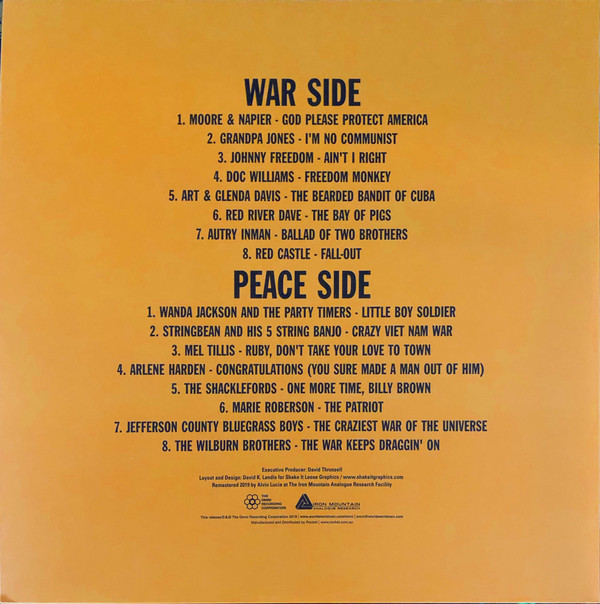
THE LIFE AND CAREER OF BOO HEWERDINE.
The Life and Career Of Boo Hewerdine
There aren’t many people who have spent the past four decades doing something they love. Nowadays, they’re in the minority, and are the lucky ones. Award winning singer-songwriter Boo Hewerdine is one of the lucky ones, and has been fortunate enough to spend the last four decades fulfilling what was once a dream.
This dream began as a seven year old, when Boo Hewerdine was given a handful of singles and a Dansette record player. He remembers: “I would study the labels. The title, the singer, the numbers, Columbia, HMV, the stuff about rights written around the edge and most intriguing–the names in the brackets. It turned out that these people had “written” these songs. Songs could be made up. Conjured out of thin air. I decided then, at the age of seven, that’s what I would do. I couldn’t sing or play an instrument but I had an internal jukebox going on the whole time.” This Boo Hewerdine would put to good use in the future.
By the time Boo Hewerdine left school a decade later, he had mastered the guitar and was an aspiring singer-songwriter. Despite his ambition and aspirations, Boo Hewerdine ended up working in the warehouse of Andy Records’ in Bury. St. Edmunds. However, Boo Hewerdine always had ambition beyond working in a record shop.
This first materialised when he formed his first band with a friend. Placebo Thing may have been a short-lived band, but it gave Boo a tantalising taste of life as a musician. Suddenly, he wanted to be making records rather than selling them.
Boo Hewerdine made his recording debut thirty-five years ago with The Great Divide. Four decades later, and Boo Hewerdine is regarded as one Britain’s leading singer-songwriters. He will release his much anticipated solo album Swimming In Mercury, on Reveal Records on ‘28th’ 2017. It’s a very personal, insightful and autobiographical album, with Boo Hewerdine reflecting on the past on Swimming In Mercury. There’s been much for Boo Hewerdine to reflect on during a career that’s spanned four decades.
The Great Divide.
Fortunately, he didn’t have long wait. Boo Hewerdine joined The Great Divide in the early eighties. They were another local band, but one that looked as if they were going places.
By 1982, The Great Divide had signed to a local Cambridge label, Wimp Records. Twenty-one year old Boo Hewerdine made his debut on the single Who Broke the Love Bank. Not long after this, The Great Divide caught a break, when Mike Scott of The Waterboys heard the band.
He thought that The Great Divide had potential, so recommended them Ensign Records. Executives at Ensign Records agreed, and signed The Great Divide. They went on to release a trio of singles on Ensign Records. Alas, commercial success eluded these singles. By 1985, Boo Hewerdine was back where it all started for him.
With The Great Divide consigned to musical history, Boo Hewerdine was back working in a record shop in 1985. This time, Boo Hewerdine was behind the counter of the Beat Goes On record shop in Cambridge. While this allowed Boo to be around music, he hadn’t given up on his dream of making a living as a musician. So when Boo met jazz drummer Tony Shepherd, it looked like his time behind the counter could be coming to an end.
The Bible.
Originally, Tony Shepherd was a jazz drummer when he met Boo Hewerdine. While Tony sat in with other bands, he was like Boo, between bands. So the pair decided to form a new band, and The Bible were born. They drafted in Kevin Flanagan another former member of The Great Divide. Before long, The Bible began to make an impression locally.
Soon, The Bible were a popular band locally. They had quickly acquired a cult following. Word began to spread further afield about this new band from Cambridge. This was through word-of-mouth. So it was no surprise that a record company decided to sign The Bible.
The label that signed The Bible was Black Records, a Norwich based independent label. They released The Great Divide’s 1986 debut album Walking The Ghost Back Home. It reached number ten in the UK Indie Charts, and featured two hit singles. Graceland reached number eighty-seven in UK charts, before Mahalia reached number fifteen in the UK Indie Charts. Given the success of Walking The Ghost Back Home, it was no surprise that bigger record labels started to take an interest The Bible.
Eventually, The Bible decided to sign to Chrysalis. They began work on their sophomore album Eureka. The Great Divide had decided to produce the album with Pete Smith and Owen Morris. However, the initial sessions proved unsatisfactory for the band. It was then that their management suggested bringing country rocker Steve Earle onboard to produce Eureka. This worked, and the album was scheduled for release in 1988.
Prior to the release, the reviews of Eureka were positive. Despite this, the album stalled at just seven-one in the UK. For everyone involved, this was disappointing, considering how popular The Bible were. Surely this was a blip?
Just a year later, The Bible enjoyed the most successful single of their career. A rerecorded version of Graceland reached fifty-one in the UK. It looked like things were improving for them. Then Honey Be Good reached fifty-four in the UK. However, when The Bible released their third album Dodo, it failed to chart. Things were set to get even worse.
A year later, and The Bible split-up in 1990. After five years together, and a lineup that’s best described as fluid, it looked like the end of the road for The Bible. It wasn’t.
Since then, The Bible have reformed twice. The first time came in 1994, and the second in 2011. However, then Boo Hewerdine was a successful solo artist.
Boo Hewerdine and Darden Smith-Evidence.
Once The Bible split-up, Boo Hewerdine decided to concentrate on his solo career. He knew the direction his career was heading. A meeting a year earlier had influenced the direction his music was about to head in.
This meeting took place in 1989, while The Bible were still together. That was when an A&R executive introduced him to New Country singer Darden Smith. The two realising they had much in common, decided to write and record an album together. Time was short though.
Somehow, Darden Smith and Boo Hewerdine managed to write and record an album in just nine days. This album became Evidence, which was released to critical acclaim in 1989. This was the first, but not the last time Boo would collaborate with other artists. By then, he would be a solo.
The Solo Years.
Now that The Bible had split-up, Boo Hewerdine embarked upon a solo career. This solo career began in 1990. Since then, Boo has released a string of E.P.s. and will soon release his ninth album Swimming In Mercury.
Two years after the demise of The Bible, Boo Hewerdine released his debut album Ignorance in 1992. Critical acclaim accompanied the release Ignorance. It was a much anticipated and highly accomplished album of carefully crafted songs. However, three years would pass before the followup was released.
The reason for the delay, was that by then, Boo Hewerdine was writing for other artists. This included writing for Eddi Reader and Clive Gregson’s 1993 album Wonderful Lie. Since then, Boo has written songs for many successful artists, including KD Lang, Kris Drever, David McAlmont, Natalie Imbruglia and Alex Parks. However, this sometimes curtailed his ability to release albums quickly.
It wasn’t until 1995 that Boo Hewerdine returned with his sophomore album Worlds End. Just like Ignorance, praise and plaudits accompanied the release of World’s End. Buoyed by the response and success of World’s End, Boo released Baptist Hospital in 1996. Some critics felt that was the best album of Boo’s career. With album he seemed to be maturing and growing as a singer and songwriter. Like a fine wine, Boo was maturing with age.
So when Nick Hornby was looking for someone to write the soundtrack to the film adaptation of his book Fever Pitch, Boo got the call. The film was released in 1997, the same year that the film Twenty Four Seven was released. Boo and Neil MacColl had written the soundtrack. The other soundtrack that Boo penned for the television film Our Boy. For Boo, writing for film and television was a whole new world, and one he would return to later. Before that, Boo released a new solo album.
Three years had passed since Boo Hewerdine had released Baptist Hospital in 1996. He returned in 1999 with his fourth album Thanksgiving. It featured a guest appearance by Martha Wainwright. By then, Boo’s music was reaching a wider audience. That wasn’t surprising given the quality of songs on Thanksgiving. The Birds Are Leaving, Hope Is A Name, Our Boy, Homesick Son and A Long Winter showcased a talented singer, songwriter and storyteller. However, in 2002, Boo added another string to his bow.
This came about when Boo Hewerdine was asked to co-produce Eddie Reader’s album Angels and Electricity. Boo had written a number of songs for Eddi, but was now co-producing her albums. Soon, Boo was producing The Corrs, Heidi Talbot and Chris Difford. Along with his work as a songwriter, Boo was constantly busy. Sometimes, his solo career seemed to take a backseat. However, in 2001, Boo’s contribution to music was recognised.
In 2001, Boo Hewerdine was named as the Performing Rights Society’s songwriter in residence at The Song’s The Thing concert series in London. Boo had come a long way from when he was working in a record shop warehouse and about to form his first band. Now he was regarded as one of Britain’s top songwriters. He took to the stage during one of The Song’s The Thing concerts, and got the opportunity to showcase his skills as a singer and a songwriter. However, another opportunity for Boo to showcase his songwriting skills arose during 2001.
This came when Boo returned to the world of soundtracks. One of his songs featured in Christine Lahti‘s My First Mister. For Boo, this meant a whole new audience would hear his music. This couldn’t have happened at a better time, as Boo would released a new album in 2002.
Anon, which was released in 2002, was Boo Hewerdine’s first album of the new millennia. By then, Boo’s star was in the ascendancy. It seemed that every album he released was welcomed with open arms by admiring critics. His new album Anon was no different. Boo was consistently releasing albums of carefully crafted, thought provoking songs. That continued to be the case.
When Eddi Reader entered the studio to record her critically acclaimed album Sings The Songs Of Robert Burns, Boo Hewerdine was drafted in to co-produce the album. The result was one of the most successful albums of Eddi Reader’s career. It found favour with Burns aficionados across the world. Buoyed by the success of Sings The Songs Of Robert Burns. 2003 had been a good year for Boo.
It got even better when Boo’s song Different God was chosen to feature on the soundtrack to the film Intermission. After such a successful year, Boo’s thoughts began to turn to his solo career.
Two years later, and Boo Hewerdine returned with a new album in 2005. This was his sixth album, Harmonograph. Boo it seemed had the Midas touch, and critics heaped praise on Harmonograph. However, Boo it seemed, was in no rush to release a followup.
That wasn’t surprising. Boo Hewerdine now spending more time writing songs for other artists. He was also in demand as a producer. He also recorded a comeback album with The Bible. Money and Time was released in 2007. However, Boo hadn’t turned his back on his solo career.
Still, though, he found time to play live, and when he had the time, headed into the studio. The fruits of his most recent sessions were his seventh album God Bless The Pretty Things. It was released in 2009, and just like the albums the had preceded it, was well received by the critics. They lavished praise on God Bless the Pretty Things, which was a welcome, and some felt overdue addition to Boo’s back-catalogue.
Little did they realise it would be six years before Boo Hewerdine released another album. During that period featured on State Of The Union’s two albums. He wrote much of their eponymous debut album and shared the lead vocals with Brook Williams. This was the case when State Of The Union released their 2012 sophomore album Snake Oil. These albums weren’t the only albums Boo worked on.
When Kris Drever was recording his solo album Last Man Standing, Boo featured on the album. Last Man Standing was released in 2015, the same year that Boo released his long-awaited comeback album.
Open was released in 2015, and found Boo Hewerdine crowned the comeback King. He may have been six years since his last solo album, but the fifty-three year old’s comeback album had been well worth the wait. Critical acclaim accompanied the release of Open. However, Boo’s fans wondered when they would hear from Boo again?
Born E.P.
Little did they realise it would be so soon. Just a year later, in 2016, Boo Hewerdine returned with The Born E.P. This the first E.P. that Boo has released since Toy Box No. 2 in 2008. However, the Born E.P. was a very personal collection of songs. It was a collaboration between Boo Hewerdine and his son Ben. They penned five songs, including The Year I Was Born and Swimming In Mercury. They were a tantalising taste of what was in store on Boo Hewerdine’s ninth album Swimming In Mercury.
Swimming In Mercury.
Boo Hewerdine made his recording debut thirty-five years ago with The Great Divide. Four decades later, and Boo Hewerdine is regarded as one Britain’s leading singer-songwriters. He released Swimming In Mercury, a very personal, insightful and autobiographical album in July 2017 and it finds Boo Hewerdine reflecting on the past. There’s been much for Boo Hewerdine to reflect on during the past four decades.
While The Born E.P. was a akin to a musical amuse bouche, Swimming In Mercury was the entree. It featured twelve new songs. Most of these songs were penned by Boo Hewerdine. That is apart from Swimming in Mercury which Boo and Ben Hewerdine cowrote. These twelve songs would eventually become Swimming in Mercury, which was recorded at Chris Pepper’s studio in Cambridge.
Given Swimming in Mercury was an album of autobiographical music and memories, Boo Hewerdine decided to record the album in a very different way to recent albums. He recalls: “the new album was recorded in the spirit of the first four track recording I ever did… but instead of a chunky cassette deck we were able to use Chris Pepper’s Cambridge studio. It was an incredibly enjoyable and creative way to work. Often I would write a song in the morning and by the end of the day we would have another track done”. This was a very different approach to how most albums are recorded nowadays. Still Boo was able to get his message across on Swimming in Mercury as he reflects on this past on what’s a very personal and autobiographical album.
Two years after the release of his last album Open, one of Britain’s finest troubadours Boo Hewerdine, made a welcome return with the ninth album of his career Swimming In Mercury. It’s a crafted autobiographical album that was without doubt the finest albums of Boo Hewerdine’s long and illustrious career and shows why many regard him as one of Britain’s greatest singer-songwriter.
Boo Hewerdine is a musical master-craftsman and one of the most talented songsmiths of his his generation. Sadly, Boo Hewerdine’s music hasn’t found the wider audience that it deserves and he’s still one of music’s best kept secrets. That is a great shame, as Boo Hewerdine’s music deserves to find a wider audience, as he’s a hugely talented and articulate singer-songwriter, who has a burgeoning back-catalogue that is well worth investigating,
The Life and Career Of Boo Hewerdine.

 dereksmusicblog
 dereksmusicblog