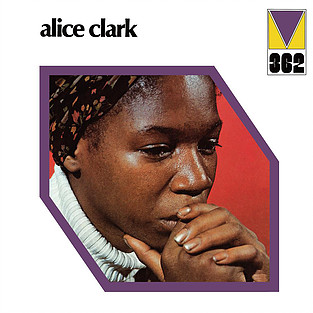
ALICE CLARK-ALICE CLARK.
Alice Clark-Alice Clark.
Label: We Want Sounds.
Sadly, all too often, hype and image has triumphed over talent, while commercial success and critical acclaim eludes truly talented artists. Chastened by the experience, many of these artists turn their back on the music industry. They’re content to return to civvy street, free from a world populated by A&R executives, PR companies and radio pluggers. At least the artist knows that they gave it their best shot. Alas, it wasn’t to be. Now they begin the first day of the rest of their life.
This is what happened to Brooklyn born soul singer Alice Clark. Her career began in 1968, and was over by 1972. During that four-year period, Alice Clark recorded just fifteen songs during three recording session. This includes two singles, and her 1972 album Alice Clark which has just been reissued by We Want Sounds on vinyl. After commercial success eluded her, Alice Clark career turned her back on music. Since then, Alice Clark has remained one of the soul music’s best kept secrets. She’s also one of music’s music enigmatic figures.
Very little is known about Alice Clark. Indeed, her story is almost shrouded in mystery. All that’s known, is that Alice Clark was born in Brooklyn, and shared the same manager as The Crystals. It was her manager that introduced Alice to singer-songwriter Billy Vera.
The meeting took place at Billy Vera’s publishers, April-Blackwood Music. That afternoon, Billy spent time teaching her some songs that he had written. These songs would be recorded in 1969.
By the time the recording session took place, Alice Clark had taken to occasionally phoning Billy Vera. However, Alice who seems to have been a private person, only ever made small talk. Despite this, Billy remembers: “I got the impression her home life wasn’t that great.” He remembers that Alice: “had kids and belonged to a religious order.” These are the only thing Billy can remember about Alice. However, what nobody who heard Alice as she made her recording debut will forget is…her voice.
For the 1969 session, Jubliee’s studio was chosen. Billy Vera who wrote and would produce the three tracks put together a tight and talented band. The rhythm section featured drummer Earl Williams, bassist Tyrell and guitarists Butch Mann and Billy Vera. They were augmented by trumpeter Money Johnson and backing vocalist Tasha Thomas. This was the band that accompanied Alice Clark on You Got A Deal, Say You’ll Never Leave Me and Before Her Time. Alice Clark delivered confident and assured performances. Two of these songs became Alice’s debut single.
With the three songs recorded, the Rainy Day label decided to release You Got A Deal in January 1968. It was a driving slice of soul, with a feisty, vocal from Alice. Horns and harmonies accompany Alice as she’s transformed into a self-assured soul singer. The flip side was Say You’ll Never, a quite beautiful ballad. A number of radio stations began playing the song. Despite this, Alice Clark’s first single wasn’t a commercial success. It was an inauspicious start to Alice’s career.
Nothing was heard off Alice Clark until March 1969. By then, Alice had recorded her sophomore single. This was the George Kerr, Michael Valvano and Sylvia Moy penned You Hit Me (Right Where It Hurt Me). On the flip-side was Arthur Mitchell and Eddie Jones’ Heaven’s Will (Must Be Obeyed). The two songs were produced by George and Napoleon Kerr. This GWP Production was released on Warner Bros. Alice Clark was going up in the world.
Alas commercial success continued to elude Alice Clark. When You Hit Me (Right Where It Hurt Me) was released as a single, it failed to trouble the charts. That was despite featuring impassioned, hurt-filled vocal. Tucked away on the B-Side was another ballad, Heaven’s Will (Must Be Obeyed). It features a heartfelt vocal from Alice Clark where the secular and spiritual collide. Both sides of Alice Clark’s sophomore single showcased a truly talented singer. Sadly, very few people heard the single. Alice Clark was still one of music’s best kept secrets.
For the next couple of years, Alice Clark was cast out into the musical wilderness. Then Bob Shad at Mainstream Records decided to take a chance on Alice Clark. Mainstream Records were moving into the soul market, are were signing artists. He decided that Alice Clark fitted the bill, and signed her to Mainstream Records.
Soon, work began on Alice Clark’s debut album. A total of ten tracks were chosen. This included a trio of Bobby Hebb songs, Charms Of The Arms Of Love, Don’t You Care and Hard, Hard Promises. Among the other songs were Jimmy Webb’s I Keep It Hid; Petula Clark and John Bromley’s Looking At Life; Leonard Caston’s Don’t Wonder Why; Juanita Fleming’s Never Did I Stop Loving You and Earl DeRouen’s Hey Girl. The other songs chosen were John Kander and Fred Ebb’s Maybe This Time and Leon Carr and Robert Allen’s It Takes Too Long To Learn To Live Alone. These songs became Alice Clark.
With the material chosen, producer Bob Shad set about putting a band together. Apart from guitarist Ted Dubar, the identity of the rest of the band are unknown. However, Ernie Wilkins was drafted in to arrange the songs on Alice Clark. When it was recorded, the release was scheduled for later in 1972.
By then, three years had passed since a record bearing Alice Clark’s name had been released. You Hit Me (Right Where It Hurt Me) had disappeared without trace upon its release in March 1969. Everyone must have been hoping that history wouldn’t repeat itself. Alas, it did.
I Keep It Hid was chosen as the lead single, with Don’t Wonder Why featuring on the B-Side. On its release, I Keep It Hid sunk without trace. Worse was to come. When Alice Clark was released, the album failed to find the audience it deserved. Very few copies of Alice Clark sold. That was a great shame.
During the three years that Alice Clark had been away, she grown and matured as a singer. Despite this, there was to be no followup album. After Alice Clark failed commercially, Alice turned her back on music. Never again did this talented and versatile vocalist return to the studio. Alice Clark was lost to music.
During her four-year career, Alice Clark had recorded just fifteen tracks. They’re a mixture of beautiful ballads and uptempo songs. On each and every song, Alice breathes life and meaning into the lyrics. Her delivers veers between heartfelt, impassioned and soul-baring, to assured, hopeful and joyous. It seems when Alice Clark stepped into a recording studio, she was transformed.
No longer was Alice Clark the quietly spoken young mother that Billy Vera remembers. Suddenly, the God-fearing Alice Clark disappeared, and was replaced by one that wore her heart on her sleeve. She was comfortable sings songs about love and love lost, and could breathe life and meaning into songs about hope, hurt, heartbreak and betrayal. Despite her ability and versatility, Alice Clark commercial success and critical acclaim eluded Alice Clark.
Chastened by the experience, Alice Clark turned her back on the music industry. Nobody seems to know what happened to Alice Clark? Mystery surrounds this hugely talented singer, who should’ve gone on to enjoy a long and successful career. Sadly, that wasn’t to be.
By 1973, You Hit Me (Right Where It Hurt Me) became a favourite on the UK Northern Soul scene. Apart from that, very few people had heard of Alice Clark or her music. It would be a while before this changed.
As the years passed by, a few copies of Alice Clark found their way into bargain bins. Curious record collectors who chanced upon a copy of Alice Clark decided to take a chance on this little known album. Having paid their money, they discovered one of soul music’s best kept secrets,..Alice Clark. They were the lucky ones.
Since then, Alice Clark has become a real rarity. Anyone wanting an original 1972 copy of Alice Clark on Mainstream, will need to search long and hard. If they can find a copy, it will take at least $500 to prise it out of the hands of its owner. It feature a truly talented singer who could’ve and should’ve enjoyed widespread commercial success and critical acclaim. Sadly, for Alice Clark that wasn’t to be.
Instead, commercial success eluded Alice Clark, and in 1972, she turned her back on music. Since then, nothing has been heard of Alice Clark. Mystery surrounds Alice Clark’s life after she turned her back on music. She seems almost to have vanished into thin air. That’s a great shame. Especially given the resurgence in interest in her music and belatedly, Alice Clark’s music is finding the wider audience that it so richly deserves. What her newfound fans would like to know is whatever happened to Alice Clark?
Alice Clark-Alice Clark.
WARFARING STRANGERS: ACID NIGHTMARES LP.
Warfaring Strangers: Acid Nightmares LP.
Label: Numero Group.
Numero Group’s most recent release Warfaring Strangers: Acid Nightmares, documents an oft-overlooked and intriguing part of the psychedelic era. This came after the optimism of the hippie movement came to a sudden end. Gone was the hopeful, positive and sunshine psychedelia. In its place, was a darker and much more abrasive and lysergic style of music. Sometimes, there was a paranoia to the music, as if the hippie dream was now a nightmare.
Sadly, it was for some. There were many who were ill-suited to L.S.D. and other hallucinogenic drugs. Many who had decided to turn in tune in drop out were now acid casualties, and were a shadow of their former selves. This would include Roky Erickson of The ‘13th’ Floor Elevators and Sid Barrett of Pink Floyd. Just like Icarus, they had flown to close to the sun, and never recovered from their ill-judged dalliance with hallucinogenic drugs.
By the time the psychedelic era was over, and music have moved on, a huge amount of singles and albums had been released that were labelled as psychedelia. However, as is so often the case, not all that glittered was gold. Indeed, some of the music released during the psychedelic era bore only a passing resemblance to psychedelia. If George Orwell had been around and writing about music, he would surely remarked: “all psychedelia is equal, but some is more equal than others.”
Many singles and albums released during the psychedelic era were only vaguely psychedelic. That was no surprise, as there had been a lot bandwagon jumping going on during the psychedelic era. Especially groups trying to revive flagging and failing careers. Their last hope was to reinvent themselves as a psychedelic group and enjoy one last payday.
Meanwhile, many unknown groups were releasing some of the most psychedelic music that was released during the sixties and early seventies. These singles and albums were often released in small numbers as private presses. Nowadays, these singles and albums are incredibly rare, and exchange hands for ever-increasing sums of money.
This includes the eighteen tracks on Warfaring Strangers: Acid Nightmare, a limited edition 2-LP set which includes some of the darkest, most abrasive and lysergic music during the psychedelic era. They were proof that that the hippie dream was well and truly over. The music on Warfaring Strangers: Acid Nightmare also hints at the music that would follow in psychedelia’s footsteps over the next few decades. There’s a nod towards heavy metal, grunge and stoner rock on Warfaring Strangers: Acid Nightmare, which are akin to a template for these genres. Each of these genres roots can be traced to some of the tracks on Warfaring Strangers: Acid Nightmare. They’re a reminder of true psychedelia, not the sanitised version peddled by bands on their last legs or record labels trying to make a quick buck.
Opening Warfaring Strangers: Acid Nightmare is Xarhanga’s 1973 single Acid Nightmare. It was released on the Portuguese label Zip Zip, which was named after a well known television show. On Acid Nightmare, Xarhanga showcase their unique brand of lysergic, hard rocking sound. Sadly, Xarhanga only released a couple of singles and never got as far as releasing an album.
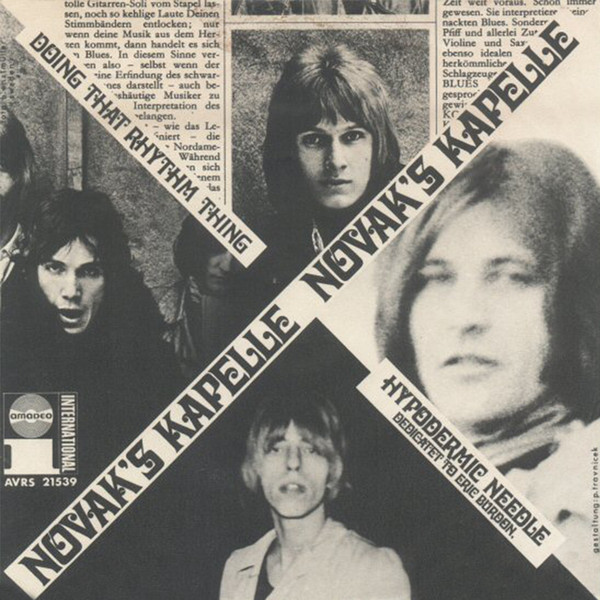
In 1968, the Vienna based band Novak’s Kapelle released Doing That Rhythm Thing as their debut single on the Austrian label Amadeo. Tucked away on the B-Side was Hypodermic Needle a blistering and raucous fusion of garage rock and psychedelia that is impossible not to like. This was the start of a recording career that lasted eleven years and saw Novak’s Kapelle released one album and four singles.
As the seventies dawned, and the hippie dream was over, a new breed of psychedelic bands emerged. This included Whistlers Mother, who were a tight and talented band. They released Dark Dawn as a single on Multi Records, in 1970. It features a dark, abrasive and lysergic sound that is antithesis to the hippie dream of a few years earlier. There’s also more than a hint of the stoner rock sound that would find favour with music fans further down the line.
To publicise the 1971 Hartlepool Rock Festival, the short-lived Abreaction label released an EP that featured four of the bands on the bill. Opening the EP, was Brass Alley, who contributed Pink Pills. It was penned by Ken Mountain,who produced the songs with Ken McKenzie. From the opening bars, it’s apparent Brass Alley is another talented band, and one who should’ve gone on to greater things. Although lysergic and hard rocking,Pink Pills is melodic a reminder of all that is good about early seventies hard rock.
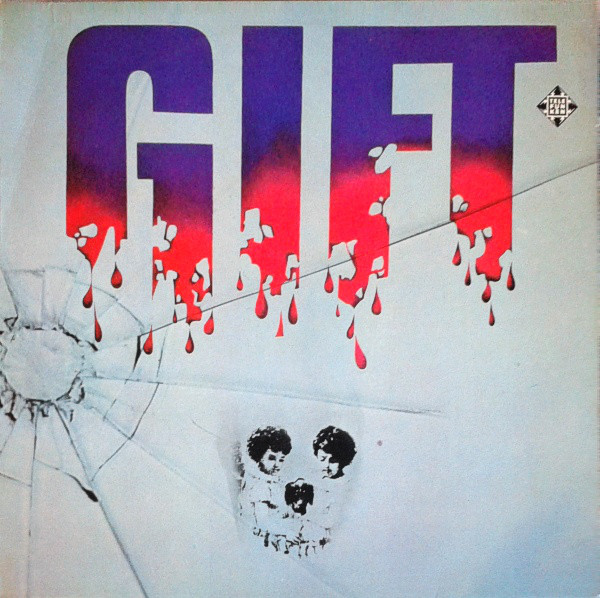
Gift were a West German group who started life as Phallus Dei, which was also the title of Amon Düül II’s 1969 album. However, Phallus Dei decided to change their name to Gift around 1969. This was a less controversial name for the band who released their eponymous debut album three years later on Telefunken in 1972. Opening the album was Drugs a blistering and progressive hard rocking track from one of the early Krautrock bands.
Acid was a German heavy rock band from Heidelberg. They were formed around 1975 and four years later, released their one and only single Acid. It was released in 1979 on the Frankfurt-based Stall-Studio which was owned by engineer Michael Unger. Straight away, Acid has a slow, dark and moody sound. Soon, the tempo builds and there’s a slight progressive sound to this long-lost heavy rock single.
During the early seventies, Sardonicus was regarded as South-East London’s top rock band. The four piece band cut Nymph as a single for John Martin’s County Recording Service label in Binfield, Berkshire in 1973. Hidden away on the B-Side was Evaporated Brain, which is an intriguing genre-melting song. As guitarist Valentine Pascal lays down some chiming guitar licks, while Chris Rance’s vocal is part garage rock part proto-punk. Three years later, and this vocal style would de rigueur. Chris Rance was ahead of his time on this genre-defying track.
When Mass Temper entered the studio to record a demo in 1968, one of the tracks they recorded was Grave Digger. Since then, this demo has featured on several compilations. It’s best described as proto-metal and was a taste of the music that was to come in the late-sixties and early seventies.
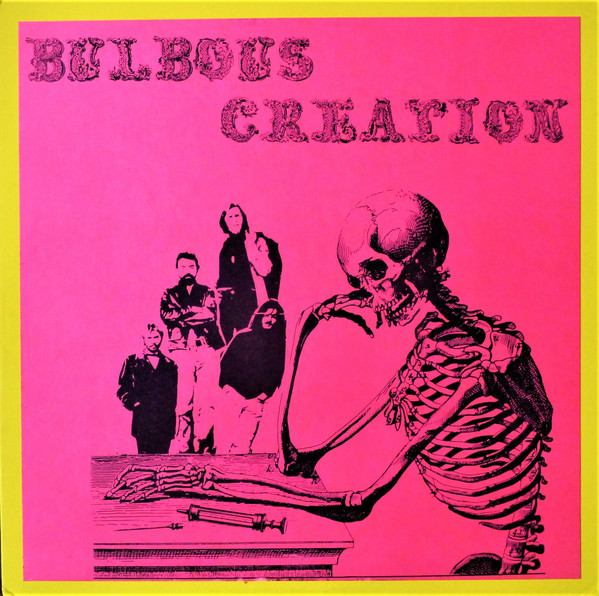
Bulbous Creation was an acid rock band from Prairie Village, Kansas. They recorded their debut album You Won’t Remember Dying in 1971. Sadly, the album wasn’t released until 1994 when it eventually made its debut on the Dallas based psychedelic label Rockadelic Records. One of the highlights of You Won’t Remember Dying was the dramatic and moody sounding Hooked, which features the acid rockers at their very best.
The Ritual were an American band who released a couple of singles in the late sixties and early seventies. Speed Freak was The Ritual’s debut single and was released on the Hastle label in 1969. Although The Ritual were essentially a psychedelic band there’s a progressive sound to Speed Freak. Despite their undeniable talent, The Ritual only released one more single, and never enjoyed the success they deserved.
Purple Sun is one of the many bands who only ever release one single. Their single was Doomsday which was released on the short-lived Rampart Street label in 1970. Doomsday finds Purple Sun fusing psychedelia and hard rock. Later, there’s even a hint of grunge as Purple Sun continue to strut their way through the track.
Sunn Cycle’s Acid Raga closes Warfaring Strangers: Acid Nightmares in style. It’s no exaggeration to say that the compilers have saved the best until last. Acid Raga epitomises the late-sixties psychedelic rock sound. It finds Sunn Cycle fusing psychedelic rock and Eastern influences on Acid Raga. Playing a leading role in the sound and success of this long-lost psychedelic rock hidden gem is a Hendrix inspired virtuoso guitar solo. Sadly, when this Chuck Taylor production was released in 1969 by Spectrum Records who were based in North Carolina, it failed to find the audience it deserved. Now forty-seven years later, and Sunn Cycle’s Acid Raga ensures that closes on a high.
Warfaring Strangers: Acid Nightmares is the latest lovingly curated compilation from Numero Group. It’s another compilation that is all killer and no filler. That takes some doing on a compilation that features eighteen tracks. However, Numero Group dig deeper than many of their competitors and have unearthed a myriad of a long-lost hidden gems. They’re a reminder of an oft-overlooked period in the psychedelic rock era.
During the period Warfaring Strangers: Acid Nightmares documents the hippie dream was but a distant memory. Gone was the hope and optimism of a few years earlier. The flower children had grown up, and moved on. So had music.
Gone was the hopeful, positive and sunshine psychedelia. In its place, was a darker and much more abrasive and lysergic style of music. Sometimes, there was a paranoia to the music, as if the hippie dream was now a nightmare. Sadly, that was a case for many who had become acid casualties. This was one of the realities that became clear when the psychedelic party came to sudden end.
The music on Warfaring Strangers: Acid Nightmares is a reminder of this period. This is a part of the psychedelic era that many writers and compilers have conveniently overlooked. Partly, because it doesn’t fit their idealistic portrayal of the hippie dream and psychedelic era. They’ve convinced themselves and others that the second half of the sixties was a musical nirvana, where peace, love and spiritually mattered and neither consumerism nor capitalism were important. Somehow they’ve managed to overlook the bad music and bad drugs that resulted in many acid casualties. They’ve also managed to forget that most of the yogis and gurus were charlatans, only in it for the money. So were many of the musicians who jumped onboard the psychedelic bandwagon looking for a quick buck.
By the early seventies, which Warfaring Strangers: Acid Nightmares covers, many of the hippies were different people. They were now well on their way to becoming the people they once despised…breadheads. No longer had they any interest in psychedelia, despite the genre being alive and kicking.
Psychedelia by the early seventies was evolving. It had to. If it stood still it risked becoming irrelevant. As a result, many of the new breed of psychedelic bands were taking psychedelia in different direction. That is apparent on Warfaring Strangers: Acid Nightmares which shows a very different side to psychedelia. It’s not just dark and abrasive, but moody, broody, dramatic and always lysergic. The psychedelia on Warfaring Strangers: Acid Nightmares is far removed from the vaguely psychedelic music that the bandwagon jumpers looking for one last payday produced. Instead, the music on Warfaring Strangers: Acid Nightmares is authentic and is always lysergic, and is the perfect addition to any collection of psychedelia.
Warfaring Strangers: Acid Nightmares LP.


STONEGROUND’S WARNER BROS YEARS.
Stoneground’s Warner Bros Years.
The Stoneground story began in San Francisco in 1968, when guitarists Tim Barnes and Luther Billed joined forces with drummer Mike Mau and founded Stoneground. In the early days, Stoneground were happy playing as a trio but before long, the lineup began to expand.
This came about when Tom Donahue, a DJ and promoter who Stoneground’s manger, introduced the band to the two remaining members of The Beau Brummels. They had been one of the pioneers the country rock sound. However, in 1968, The Beau Brummels, who had once been signed to Tom Donahue’s Autumn Records, were reduced to a duo. Since then, the band failed to reach the same heady heights they once had. Maybe it was time for a new challenge?
So when Tom Donahue introduced Stoneground to The Beau Brummels’ vocalist Sal Valentino and guitarist and bassist John Blakely, the five musicians hit it off. They agreed to join forces as an expanded lineup of Stoneground. Soon though, five became nine.
Despite now being a five piece, Stoneground’s lineup was still not complete. Stoneground decided to add four female vocalists to the lineup. Annie Sampson, Lynne Hughes, Lydia Phillips, and Deirdre LaPorte were added to the lineup of Stoneground.
This newly expanded lineup of Stoneground began to hone their sound. At first, they played in San Francisco and in the Bay Area. Their popularity grew, and soon, Stoneground being booked to play further afield.
This resulted in Stoneground being booked to tour America and Europe. It was during that tour that Stoneground found the final piece of the musical jigsaw. This was keyboardist and bassist Pete Sears, who later, would join Jefferson Starship and Hot Tuna. He became the tenth and final member of Stoneground.
Having returned home from what had been the longest tour of their career, Stoneground returned to playing in San Francisco. That was where they were spotted by an A&R executive from Warner Bros. They signed Stoneground, and early in 1970, entered the studio to record what became their eponymous debut album.
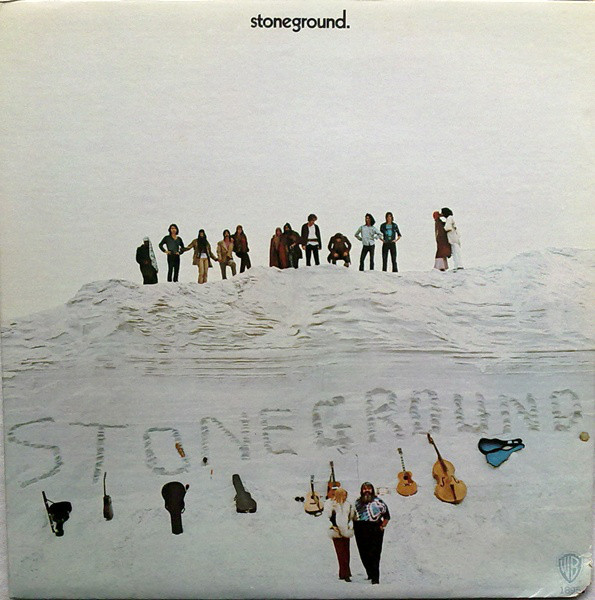
Stoneground.
Now signed to Warner Bros, Stoneground began work on their eponymous debut album in London, at Trident Studios during a UK tour. However, when Warner Bros heard the tracks they weren’t happy with them. This resulted in Stoneground having to rerecord their debut album.
This time, Sal Valentino assumed the role of songwriter-in -chief. The former Bueau Brummel penned Looking for You, Added Attraction (Come and See Me), Dreaming Man, Stroke Stand and Colonel Chicken Fry. John Blakely and Tom Donauhue wrote Brand New Start. The rest of Stoneground was made up of cover versions.
One of them was Reverend Gary Davis’ Great Change Since I’ve Been Born. It was joined by Ray Davies’ Rainy Day in June and John D. Loudermilk’s Bad News. The other cover version was John Mayall and Sonny Thompson’s Don’t Waste My Time. These tracks would become Stoneground.
Recording of Stoneground took place at Sunwest Studios, Los Angeles during early 1971. By then, Stoneground were an eleven piece band. Keyboardist and percussionist Ron Nagle had been added to Stoneground. This expanded lineup began work on Stoneground.
The rhythm section included drummer Mike Mau, bassist and rhythm guitarist John Blakeley and bassist and keyboardist Pete Sears. Sal Valentino played electric and acoustic guitar while Luther Bildt played guitar and Tim Barnes added lead and bottleneck guitar. Keyboardist and percussionist Ron Nagle was joined by vocalists Annie Sampson, Lynne Hughes, Lydia Phillips, and Deirdre LaPorte. Taking charge of some of the lead vocals were Luther Bildt, Tim Barnes and Sal Valentino. He also co-produced Stoneground with the band’s manager Tom Donahue. Eventually, the album was complete and delivered to Warner Bros.
They had great hopes for Stoneground, and embarked upon an extensive promotional campaign. This made sense. By then, Stoneground were already a popular band with a loyal following. That is despite not releasing an album. However, Stoneground had spent much of their time playing live, and their lives shows were extremely popular. No wonder. Stoneground were a talented and versatile band who seamlessly switched between and combined genres. They continued to do this on their eponymous debut album.
When of Stoneground were sent out to critics by Warner Bros, the band had become the travelling house band for the Medicine Ball Caravan. This was seen by some as Warner Bros trying to jump on the success of the concert film genre. However, Stoneground could walk the walk. Their eponymous debut album was proof of that.
As critics played Stoneground, they heard a captivating fusion of blues, folk, pop, psychedelia, rock and soul. Seamlessly, Stoneground switch between and fuse musical genres and influences. To do this they deploy seven separate vocalists on what’s a genre-melting album where Stoneground showcase their considerable skills.
This was no surprise as Stoneground was a tight, talented band who played with a fluidity that would be the envy of many bands. Stoneground’s potential shawn though on what was an accomplished and eclectic album. It was living up to Warner Bros heavy marketing campaign.
Despite the time and money spent on Stoneground, the album failed commercially. Although Stoneground were a popular live band, the album failed to trouble the US Billboard 200. For Stoneground and Warner Bros this was a huge disappointment. Soon, everyone’s thoughts turned to Stoneground’s sophomore album.
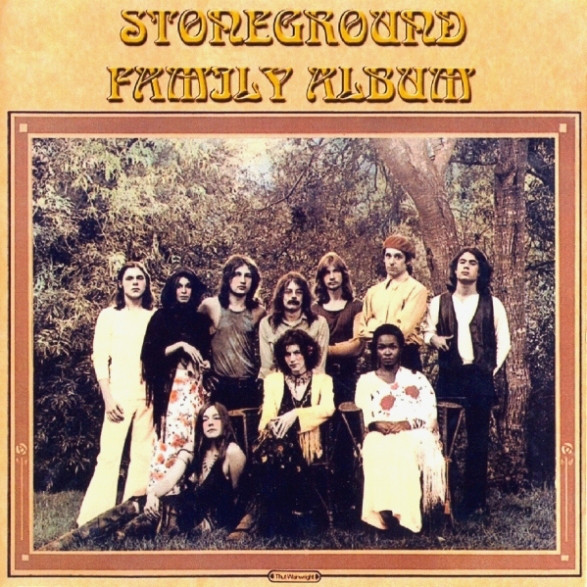
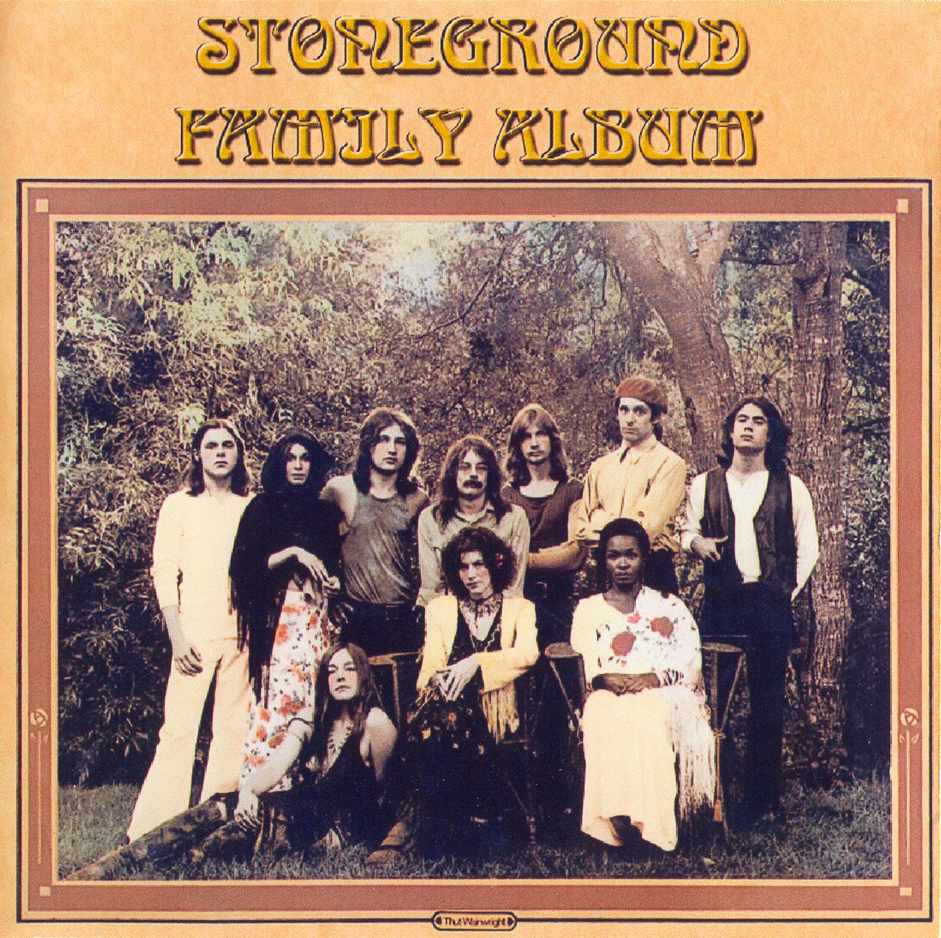
Family Album.
After the release of Stoneground, the band continued in their role as the travelling house band for the Medicine Ball Caravan. They would feature in the the Medicine Ball Caravan film. It documents a hippie caravan on an 8,000 mile road trip. A total of 154 buses, truck and groups like Stoneground made the journey. When the soundtrack was released that accompanied the film, it featured three songs by Stoneground. This introduced their music to a wider audience.
So they hoped would their sophomore album. However, by the time work began on what became Family Album, there had been several changes in Stoneground’s lineup.
Keyboardist and basset Pete Sears left to play on Rod Stewart’s album Every Picture Tells A Story. His replacement was keyboardist Cory Lerios. Two other departure were guitarist Luther Bildt and drummer Mike Mau. He was replaced by Stephen Price. This meant that Stoneground had been reduced to a ten piece band. The new lineup would make their recording debut with Stoneground on the 8th of August 1971.
This recording session wouldn’t take place in the one of San Francisco’s recording studios. Instead, it would take place in KSAN, a radio station in San Francisco, had booked Stoneground to play in what was a series of live broadcasts. Stoneground would take to the air on KSAN in San Francisco on Sunday the 8th of August 1971.
For Stoneground, this was a huge booking. Potentially, they were about to be heard by their largest audience. So before they took to the air, Stoneground began to hone a potential setlist.
When Stoneground arrived at KSAN in San Francisco on Sunday the 8th of August 1971, this was the first time the band had recorded as a ten piece. The rhythm section included drummer Stephen Price, bassist Brian Godual and John Blakeley on bass and rhythm guitarist Sal Valentino played electric guitar, acoustic guitar and percussion. Meanwhile Tim Barnes added lead guitar and Cory Lerios keyboards. This left just the vocalists. Annie Sampson, Lynne Hughes, Lydia Phillips, and Deirdre LaPorte were joined by vocalists Tim Barnes and Sal Valentino. Once the band was setup, they began to work their way through what was a truly eclectic set in front of a specially invited audience of 200 people.
With Family Album completed, Warner Bros began promoting Stoneground’s sophomore album. Copies of Family Album were sent out to critics. They hailed what was a truly eclectic album as a captivating album. It found Stoneground switching between genres and playing with freedom, fluidity and spontaneity. Some critics called the album Stoneground’s finest hour. Later, Family Album was regarded by some critics as the band’s best recording. It showed very different sides to truly talented band.
On Family Album, Stoneground worked their way through a mixture of original songs and cover versions on an album that featured live tracks and songs recorded at the Record Plant. Family Album showed the two sides of Stoneground. They were a talented band who many felt came into their own in the live setting. However, in the studio, Stoneground were capable of crafting memorable music like All My Life, Where Will I Find Love, Gonna Have A Good Time and Jam It. Given Family Album showed the two different sides to Stoneground, Warner Bros had high hopes for the album.
Alas, it wasn’t to be. When Family Album was released late in 1971, the album followed in the footsteps of Stoneground and failed to chart. It was another disappointment for Stoneground. However, their career continued at Warner Bros.
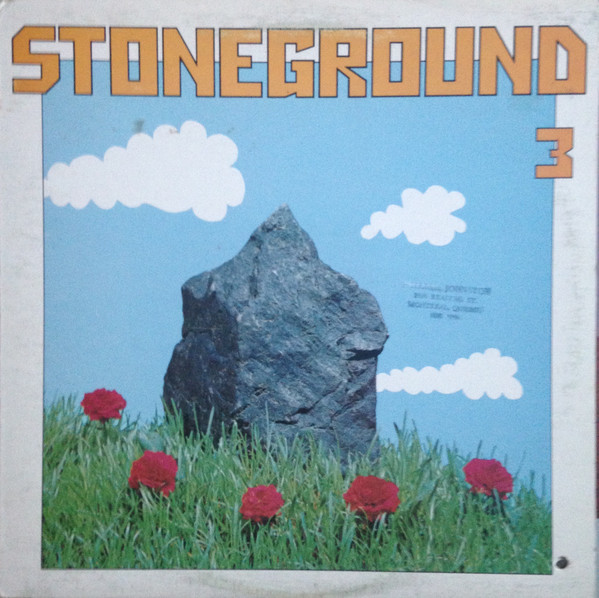
Stoneground 3.
The commercial failure of Stoneground’s sophomore album Family Album meant they were under pressure to come up with a successful third album. Stoneground had signed a three album deal with Warner Bros. This meant that they only ‘owed’ Warner Bros one more album. Should Stoneground’s third album fail commercially, then Warner Bros might take the opportunity to part company with the band. Stoneground were aware of this as they began writing their third album, which later, became Stoneground 3.
For Stoneground 3, Stoneground’s songwriter-in-chief, Sal Valentino contributed six carefully crafted songs. This included Dancin’, Down To The Bottom, From A Sad Man Into A Deep Blue Sea, From Me, Lovin’ Fallin’and Heads Up. Other members of Stoneground contributed songs to Stoneground 3. Lynn Hughes wrote On My Own; Tim Barnes penned You Better Come Through; Deirdre La Porte’ contributed Ajax and Annie Sampson Gettin’ Over You. Cory Lerios wrote Butterfly and cowrote Everybody’s Happy with David Jenkins. These twelve tracks became Stoneground 3.
Recording of Stoneground 3 took place at Wally Helder’s in San Francisco. It was one of the city’s top studios, and was perfectly equipped to record the most important album of Stoneground’s career. Just like previous albums, Sal Valentino took charge of production. By then, Stoneground’s ‘sound’ had changed. Gone was the eclecticism of their two previous albums. This was replaced by a much more radio friendly, pop rock sound. The result was a much more focused album, Stoneground 3.
This Stoneground hoped would find favour with music critics and record buyers. Executives at Warner Bros must have been hopeful when they heard Stoneground 3. Here was an album that they could pitch to radio programmers. The only problem was that maybe the change of sound would alienate Stoneground’s existing fan-base? It was a risk that Stoneground and Warner Bros decided to take.
It looked as if it had paid off. Critics hailed Stoneground 3 the band’s most focussed album. Gone was the free wheeling eclecticism of their two previous albums. In its place were shorter, much more radio friendly songs. This ranged from pop-rock to blues rock and country. Ten of the twelve tracks on Stoneground 3 were less than four minutes. This Stoneground thought would be perfect for radio playlists. Especially as many of the songs were melodic and memorable. Hooks hadn’t been spared on an album where ballads and uptempo tracks rubbed shoulders. This critics forecast was a potent and heady brew, that could transform Stoneground’s fortunes.
Sadly, when Stoneground 3 was released in late 1972, the album wasn’t a commercial success. That was despite Stoneground changing direction musically. This musical sacrifice had all been for nothing. Still, Stoneground 3 had sold poorly. Things weren’t looking good for Stoneground.
Not long after the release of Stoneground 3, Warner Bros decided to drop Stoneground. By then, the tension was high within Stoneground. Outsiders thought that Stoneground weren’t long for the world.
And so it proved to be. Stoneground announced that they would play one final concert on January 6th 1973 at the Sacramento Memorial Auditorium. That proved to be the final time that the ten members of Stoneground took to the stage together.
Just a couple of weeks after Stoneground’s swan-song, Sal Valentino left the band. Stoneground had lost their songwriter-in-chief and producer. Surely things couldn’t get any worse?
They did. Cory Lerios and Steven Price left Stoneground, and founded Pablo Cruise. Not long after this, four more members of Stoneground left. The only members of the band that reminded were Tim Barnes and Annie Sampson, who later in 1973, put together a new lineup of Stoneground. However, Stoneground’s best days were behind them.
Stoneground’s first three albums were the highlight of their career. This began with Stoneground in 1970. It was followed up by Family Album in 1971 and Stoneground 3 in 1972. These three albums feature Stoneground at the peak of their creative and musical powers. Stoneground and Family Album features Stoneground’s free wheeling, genre-melting sound. The quality continues on Stoneground 3, which is a much more focused album. It mixes pop-rock with blues rock and country. Just like the free wheeling eclecticism of their first two albums, this proves a heady brew. Sadly, the music didn’t find the audience it deserved.
It would be much later when Stoneground’s music began to find a wider audience. A new generation of record buyers began to discover the delights of Stoneground’s first three albums. Nowadays, these three albums from Stoneground’ Warner Bros Years are regarded as the highlights of their long career and back-catalogue.
Stoneground’s Warner Bros Years.
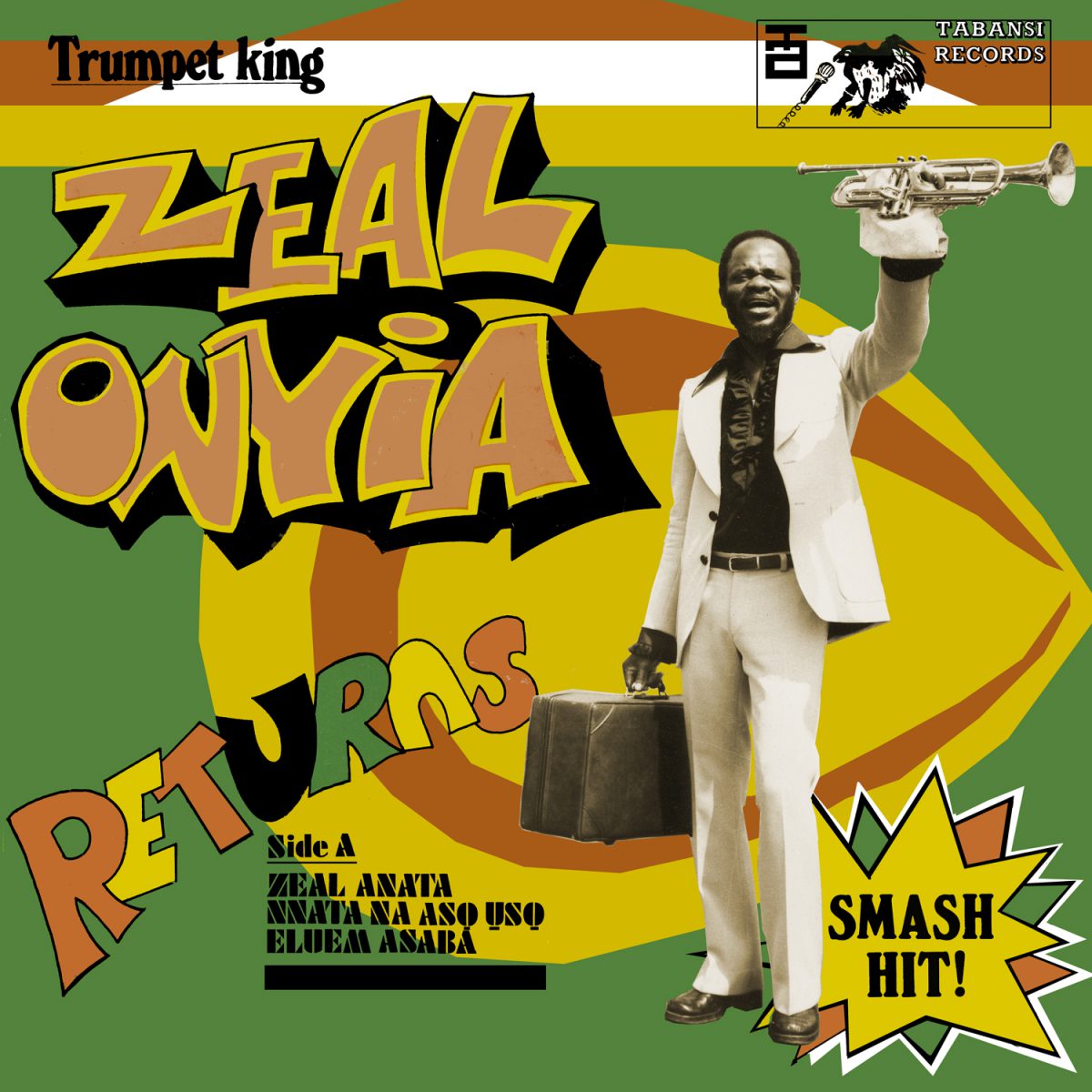
ZEAL ONYIA-TRUMPET KING ZEAL ONYIA RETURNS.
Zeal Onyia-Trumpet King Zeal Onyia Returns.
Label: BBE Music.
It was none other than Louis Armstrong who upon hearing Zeal Onyia for the first time described him as: “the highlife hep cat of Nigerian jazz trumpet’. Like so many others before him, Louis Armstrong was captivated by the combination of Zeal Onyia’s unique tone, rhythm and breathtaking power. This combination, meant that Zeal Onyia was a truly gifted musicians who wrote his name into the history of modern African music.
Zeal Onyia was one of the founders of West African highlife in Ghana and Nigeria, and through his career, was a hugely popular musician. One of his most memorable finest albums was King Zeal Onyia Returns, which was recorded in 1979 after returned from Germany, where he spent much of seventies studying classical music. However, Trumpet King Zeal Onyia Returns, which has just been released by BBE Music as part of their Tabansi Gold reissue series, was very different from the classical music that Zeal Onyia had been studying. It was the latest chapter in his career.
Zeal Onyia’s career began in the forties, when he was playing with Bobby Benson. They played swing and dance which was influenced by Duke Ellington. This was just the start for the versatile trumpeter.
By the fifties, Zeal Onyia had changed direction and was playing classic highlife with ET Mensah. This was the start of a new chapter in the career of a true musical pioneer.
Although Zeal Onyia spent the fifties playing classic highlife this versatile and talented trumpeter changed direction again during the early sixties. He was part of a small jazz band who were so good, that they provided competition for Fela Kuti’s first ever band. However, as the sixties gave way to the seventies, Zeal Onyia left his home behind and headed to Germany where the part of his musical education began.
For much of the seventies, Zeal Onyia studied classical music in Germany, and eventually, returned home to Lagos, in Nigeria, in 1979. One of the first things he did was record an album. This wasn’t an album of classical music, it was Trumpet King Zeal Onyia Returns.
When Zeal Onyia entered the studio in Lagos in 1979, he was joined by the Tabansi Studio Band. Together, they recorded six spellbinding tracks where Zeal Onyia showcases his unique tone, rhythm and breathtaking power. Two of the highlights are the joyous, feel-good of Zeal Anata that transports the listener to a remote Nigerian village as they celebrate a local festival. Then Egwu Olili is stunning instrumental where Zeal Onyia and the Tabansi Studio Band show a remarkable understanding as they reach new heights on what’s a cult classic and historic recording.
Sadly, it’s almost impossible to find copies of Trumpet King Zeal Onyia Returns. The very few copies that come up for sale change hands for large sums of money. Thankfully, BBE Music have recently reissued Trumpet King Zeal Onyia Returns, which is a breathtaking West African highlife classic and that is regarded as a career defining performance from: “the highlife hep cat of Nigerian jazz trumpet,’ Zeal Onyia.
Zeal Onyia-Trumpet King Zeal Onyia Returns.
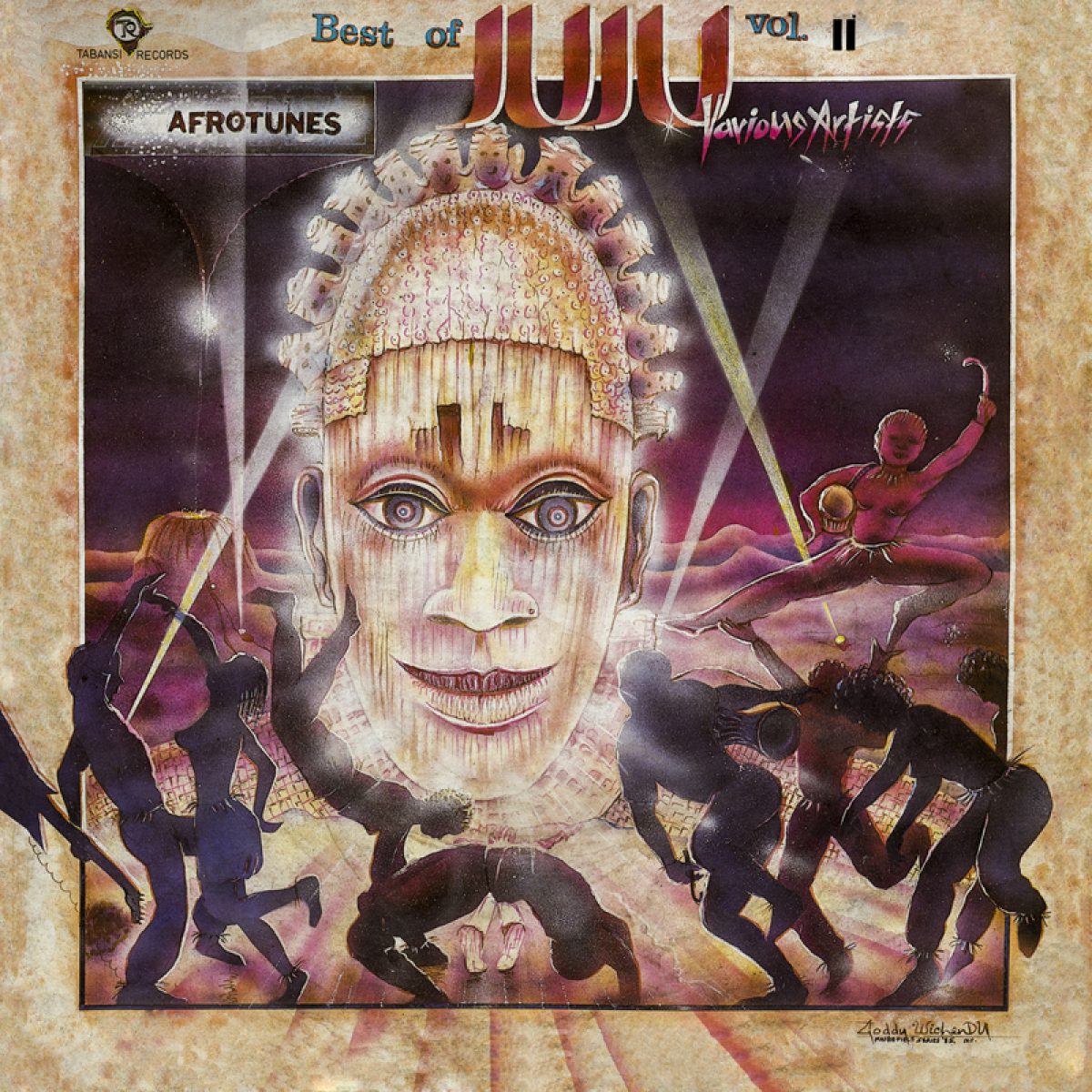
OJO BALINGO-AFROTUNES-BEST OF JUJU VOL. II-OBA MIMO OLORUN AYO.
Ojo Balingo–Afrotunes –Best of Juju Vol. II–Oba Mimo Olorun Ayo.
Label: BBE Music.
Release Date: ‘28th’ June 2019
Each week, record companies in America, Britain and Europe tempt and tantalise collectors with reissue of rarities that have never been released before. This includes everything from Acid House to zydeco and everything in between, including a compilation of juju music from the mysterious and multitalented Ojo Balingo. The new compilation Afrotunes–Best of Juju Vol. II–Oba Mimo Olorun Ayo which will be released on the ‘28th’ June 2019 by BBE Music, and showcases the multitalented juju music master Ojo Balingo.
The first time many people heard of juju music was when it was popularised by King Sunny Ade during the eighties. Suddenly, juju music was exposed to a much wider audience and people all over the world were enjoying and embracing what was until then, essentially, a traditional type of African music which was mostly played by Yoruba musicians for audiences consisting of Yoruba people.
Juju music’s origins can be traced back to the twenties, when it was first heard in south west Nigeria. Over the next sixty years, it was popularised by several generations of Yoruba musicians. They played juju music to audiences that mainly consisted of the Yoruba people. This was their music, and music which is similar to Highlife. However, what had up until the eighties had been the Yoruba people’s music was discovered by a global audience.
Many music fans across the globe were keen to discover more about the juju music that had been popularised by King Sunny Ade, wanted to hear it played by some of its finest exponents. This included Ojo Balingo who although he was a juju master, is something of mysterious figure who it seems, preferred to let job music do the talking.
A reminder of juju master Ojo Balingo’s music can be found on Afrotunes –Best of Juju Vol. II–Oba Mimo Olorun Ayo. Looking at the artwork to the original album which is a rarity pressed by Nigeria’s Tabansi label, it initially looks like a various artists album, but it’s not. However, what’s clear it’s the same band that feature on each of the eight tracks on Afrotunes –Best of Juju Vol. II–Oba Mimo Olorun Ayo, which is an album of two very different sides.
On the first side, which features Oba Mimo Olorun Ayom, Ayo Igbala Ni Mofe, Gbede Lonro Koko Lagbala and Mrs Titilayo Martins the music is best described as featuring traditional juju music. Flip over the the second side, which includes Igbe Eiye Oloburo, Jide Babalola and Bayo Babalola, Soji Oyebade and Sola Kolawole and Ile Aiye Ile Ese Ile Aiye Ogun. Here, the music is darker and funkier with breaks aplenty which will please sample hungry producers. There’s also talking drums and psychedelic rock Hawaiian guitars which are part of teh backdrop to lyrics that are full of social comments and deeply political. The result is an eclectic and captivating album from the enigmatic and mysterious juju master Ojo Balingo whose talent is indisputable.
For anyone with even a passing interest in Africa music, Afrotunes –Best of Juju Vol. II–Oba Mimo Olorun Ayo which showcased the considerable talents of Ojo Balingo is captivating and breathtaking album from a juju master whose music deserves to be heard by a much wider audience.
Ojo Balingo–Afrotunes –Best of Juju Vol. II–Oba Mimo Olorun Ayo.
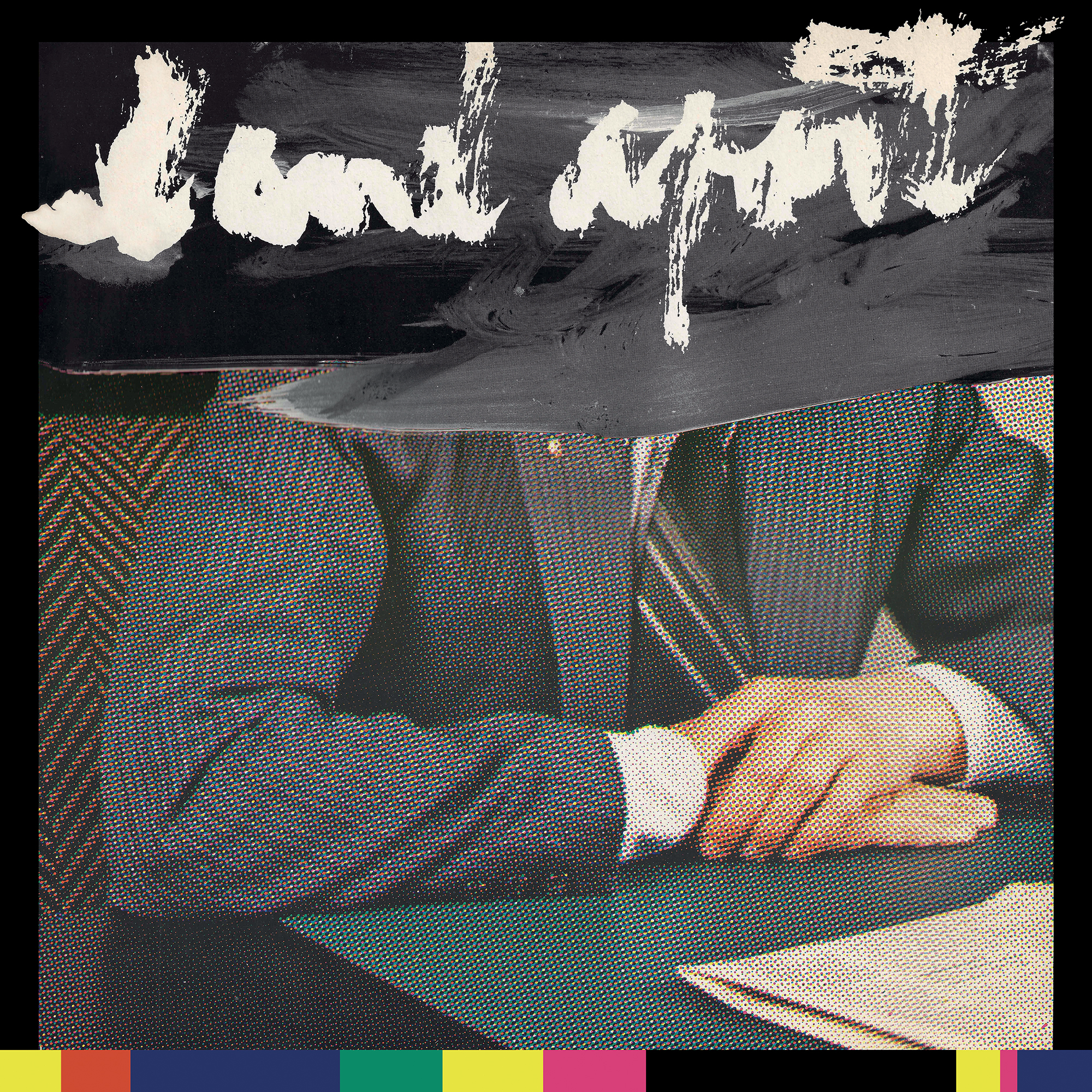
BAND APART-BAND APART.
Band Apart-Band Apart.
Label: Crammed Discs.
French-American group Band Apart were founded in the early eighties by New York-based poet and performance artist Jayne Bliss, and Marseille-based musician and producer M.Mader and signed to Marc Hollander’s nascent Crammed discs who released the group’s critically acclaimed eponymous EP in 1981. Two years later in 1983, Band Apart returned with their debut album Marseille, which was also released by Crammed Discs to plaudits and praise. Great things were forecast for Band Apart, but sadly, that wasn’t to be.
After just two years together, Band Apart, who were already making waves and a name for themselves on the No Wave scene, were no more. The group called time on their and career and went their separate ways, resulting in critics wondering what might have been?
Band Apart who achieved a lot during that two year period, had the potential to become one of the leading lights of the No Wave scene, and define its very future. However, that wasn’t to be, and Band Apart were regarded as a group who although they released groundbreaking and innovative music, never quite fulfilled their potential. Or did they and Band Apart’s contribution to music has been underestimated, these unsung heroes of the eighties No Wave scene actually overachieved during the two years they were together?
One way to decide, is to listen to recently release LP or digital album Band Apart, which was released by Crammed Discs and features their complete works. The release of Band Apart is a welcome one, and reminder of a pioneering band, who were one of the first to sign for Marc Hollander’s nascent label Crammed Discs. It was the start of a two year adventure for Jayne Bliss and M.Mader, aka Band Apart.
Having signed to Crammed Discs not long after the label was founded by Marc Hollander in 1981, Band Apart began work on their eponymous EP which featured the moody sounding Jaguar and Strainer with its jangling metallic sound. They’re joined by Eve Ryonne and Le Mont Des Olives which appears at first listen to be joyous and enchanted until the sardonic and scathing lyrics hit home. These four tracks became the Band Apart EP, which was released later in 1981. It featured whispery vocals that are part of a multilayered mix where otherworldly and sci-fi sounds that escape on this groundbreaking No Wave EP. It features raw, mesmeric and mysterious and hazy, lazy and lysergic music that had pop pretensions, but would later influence genres like showcase, lo-fi and dream pop. This was the case with Band Apart’s debut album Marseille.
Two years passed before Band Apart returned with their debut album Marseille in 1983. By then, Band Apart had been playing live in Europe and in New York, and had developed a loyal following with the No Wave scene who would embrace their long-awaited debut album Marseille, which was released to critical acclaim despite it making a change in direction.
Unlike the Band Apart EP, Marseille featured a much more dancefloor friendly collection of songs. This included Ham Sandwich, while Lover which is poppy and has a memorable chorus still leads the listener astray with attempts to disorientate using a musical sleight of hand. O My Beautiful somehow manages to be bright and rueful and will remind many people of the Cocteau Twins. It’s just one of the highlights of a Marseille, a truly captivating and engaging album where Band Apart throw curveballs as they continue their mission to create inventive and innovative music. Sadly, though, not for much longer,
Not long after the release of Marseille in 1983, Band Apart literally fell apart and it was the end of the road for this groundbreaking group who could’ve gone on to even greater things. Sadly, that wasn’t to be and Band Apart’s musical legacy amounted to just their 1981 eponymous EP and their 1983 debut album Marseille.
Thirty-six years later, and there’s been a resurgence of interest in Band Apart, whose music has been reevaluated recently. They’re now regarded as a pioneering group whose music was always inventive and innovative and influenced many musicians making everything from shoegaze, lo-fi, No Wave and dream pop. Many musicians still namecheck Band Apart, and to thus day, are influenced by their music including their 1981 eponymous EP, the five tracks from their debut album Marseille and two bonus tracks, which feature on Crammed Discs new release on vinyl and digital Band Apart which is a welcome reissue of an oft-overlooked but innovative group.
Band Apart-Band Apart.
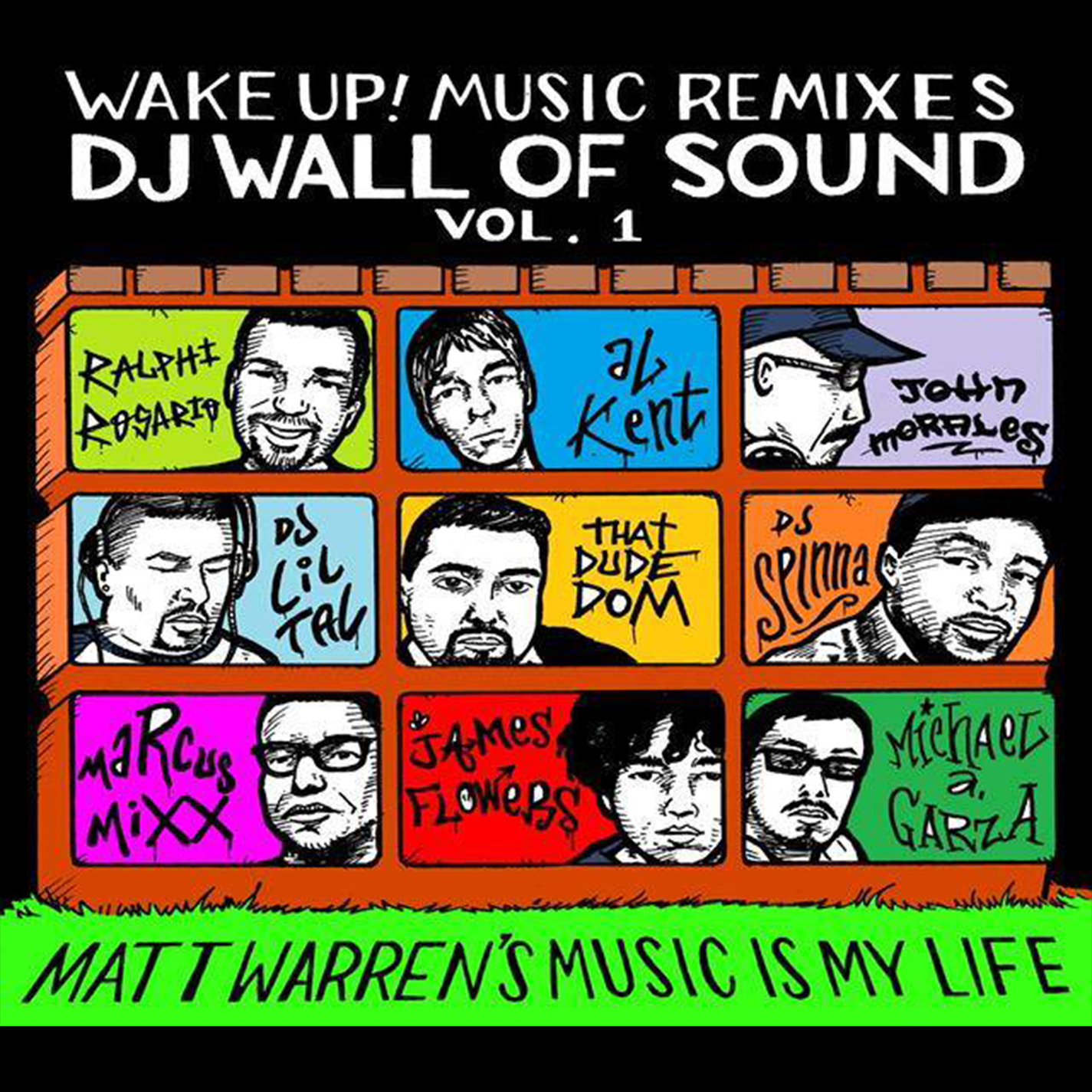
WAKE UP! MUSIC REMIXES DJ WALL OF SOUND VOLUME 1: MATT WARREN’S MUSIC IS MY LIFE
Wake Up! Music Remixes DJ Wall Of Sound Volume 1: Matt Warren’s Music Is My Life.
Release Date: ‘19th’ July 2019.
Label: Wake Up! Music.
Buoyed by the success of the Matt Warren’s critically acclaimed Nu-House classic, Music Is My Life, Wake Up! Music’s founder and creative director MyMy Lady G aka Pepper Gomez, decided that the Chicago-Miami based label’s next project would be an album of remixes. This, she decided wasn’t going to be just another remix album.
Instead, some of the world’s top DJs were invited to remix a track from Music Is My Life. Calls went out to the legendary John Morales, Brooklyn’s very own DJ Spinna, international man of mystery Al Kent, and the Chicago-based triumvirate of Ralphi Rosario, DJ Lil Tal and Marcus Mixx. They were joined by Texan DJ Dominic Sustaita as well as up-and-coming DJs James Flowers and Michael A. Garza. These nine DJs play a starring role on Wake Up! Music Remixes DJ Wall Of Sound Volume 1: Matt Warren’s Music Is My Life, which is the first instalment in a new and exciting series of Nu-Music from Wake Up! Music which is sure to fuel the parties, dance floors and lives of DJs, dancers and music fans the world over.
The ten remixes find the nine DJs at the top of their game, breathing new life into the tracks on Music Is My Life. Opening Wake Up! Music Remixes DJ Wall Of Sound Volume 1: Matt Warren’s Music Is My Life is Ralphi Rosario a recent convert to Nu- House, who teases the listener with his Big Love Radio Remix of How Do I Love Thee that features a coquettish vocal from the legendary house diva Pepper Gomez. After that, it’s time for take off, and the DJ Spinna Galactic Soul Remix of The Way to My Heart, before disco meets house on what’s an amazing remix from New York’s very own John Morales. The John Morales M+M Mix once again finds Pepper Gomez’s vocal plays a starring role on a track that was one of the highlights of Music Is My upon its release.
Get On Up which topped the DRT Indie Charts in December 2018, is reinvented on the Thank God It’s Tal Remix which is oh so funky, and dancefloor friendly. So is the That Dude Dom Club Mix of Going Deeper which is a call to dance, just like the James Flowers Remix of Musica Es Mi Vida.
The Marcus Mixx Remix of Bang The Box brings back memories of the Acid House days, and convoys of cars trapping round the countryside looking for a likely venue for a rave. Adding a Latin flavour is Michael A Garza’s Deep Future Mix Extended, before the Al Kent Mix of Sometimes finds Scotland’s disco king showing his versatility with a trancey, lysergic and very Nu sounding track. Bookending the album is Ralphi Rosario’s anthemic Big Love Remix of How Do I Love Thee, which is a guaranteed floorfiller and future favourite of dancers everywhere.
Wake Up! Music Remixes DJ Wall Of Sound Volume 1: Matt Warren’s Music Is My Life features ten peerless, innovative and carefully crafted Nu-House remixes from superstar DJs like Ralphi Rosario, John Morales, DJ Spinna and Al Kent, old friends including Marcus Mixx, DJ Lil’ Tal and That Dude Dom, plus up-and-coming producers like James Flowers and Michael A Garza. This uber talented cast of DJs and producers that feature on Wake Up! Music Remixes DJ Wall Of Sound Volume 1: Matt Warren’s Music Is My Life are responsible for hook-laden anthems and floorfillers galore, which are guaranteed to get any party started and will fill any dancefloor.
Wake Up! Music Remixes DJ Wall Of Sound Volume 1: Matt Warren’s Music Is My Life.
DAM
SEAFARING STRANGERS: PRIVATE ROCK LP.
Seafaring Strangers: Private Rock LP.
Label: Numero.
As the sixties drew to a close, the Rolling Stones were one of the most successful bands of the decade. They were preparing to release their Let It Bleed, on the ‘5th’ of December 1969. It was the Rolling Stones eighth album in Britain, but their tenth album in America. That was where the Rolling Stones were most popular, and where they were enjoying a glittering career.
Already, the Rolling Stones had sold in excess of six million albums in America since 1964. Six of the Rolling Stones’ albums were certified gold and three platinum, including their previous album Beggars Banquet. Let It Bleed was the followup, and was released to critical acclaim on the ‘5th’ of December 1969. The following day, the Rolling Stones had agreed to put on a free concert at Altamont Speedway, in Northern California
The concert at Altamont Speedway on the ‘6th’ of December 1969, was meant to feature an all-star cast, including some of the great and good of psychedelia. Jefferson Airplane, The Grateful Dead and Santana were joined by The Rolling Stones, The Flying Burrito Brothers and Crosby, Stills, Nash and Young. They were all booked o play in what was meant to be a landmark event in psychedelic’s musics history, and a hopefully, a good news story. Alas, it wasn’t.
As the Rolling Stones took to the stage, accompanied by Hells Angels who were providing security, the concert descended into chaos. Some of the Hell’s Angels fought with the audience, and Meredith Hunter, a black teenager, was allegedly stabbed by a member of the Hells’s Angels. This resulted in the cancellation of Altamont. One of the headliners, The Grateful Dead, never even took to the stage. Altamont was an unmitigated disaster.
There were three accidental deaths, many were injured, property was destroyed and cars stolen and destroyed. As the sixties drew to a close, the events at Altamont played its part in the decline of psychedelia and a backlash against the hippie movement.
It was no wonder that when the clock struck midnight on the ’31st’ of December 1969, many within the music industry breathed a sigh of relief. While the sixties had been the most important and influential decade in musical history, it ended with chaos and controversy, and a barrage of negative publicity. The dawn of a new decade, was also a new start for music.
With psychedelia no longer as popular, critics and cultural commentators, wondered where was heading? There were several possibilities. The heavy rock pioneered by Led Zeppelin was already popular, and so was the nascent progressive rock movement. Then there was soul and fusion? Critics and cultural commentators all speculated at what the future held for music.
As the seventies took shape, many musical movements proved popular. This included heavy rock, progressive, fusion, Philly Soul and later, disco and punk. There was also soft rock which later became known West Coast sound.
Back in the seventies, the West Coast sound was the perfect soundtrack to the lives of the Baby Boomers, who had grownup and were now parents. They were enjoying the West Coast sound, which incorporated elements of pop, rock, jazz, funk and soul. The music had a slick sound and was full of hooks. This came courtesy of clever chord progressions, lush harmonies and often, swathes of strings. They played their part in the sound and success of the West Coast sound, which forty years later, is enjoying a resurgence in popularity. Nowadays, though, the West Coast sound is known as Vanilla Funk or Yacht Rock.
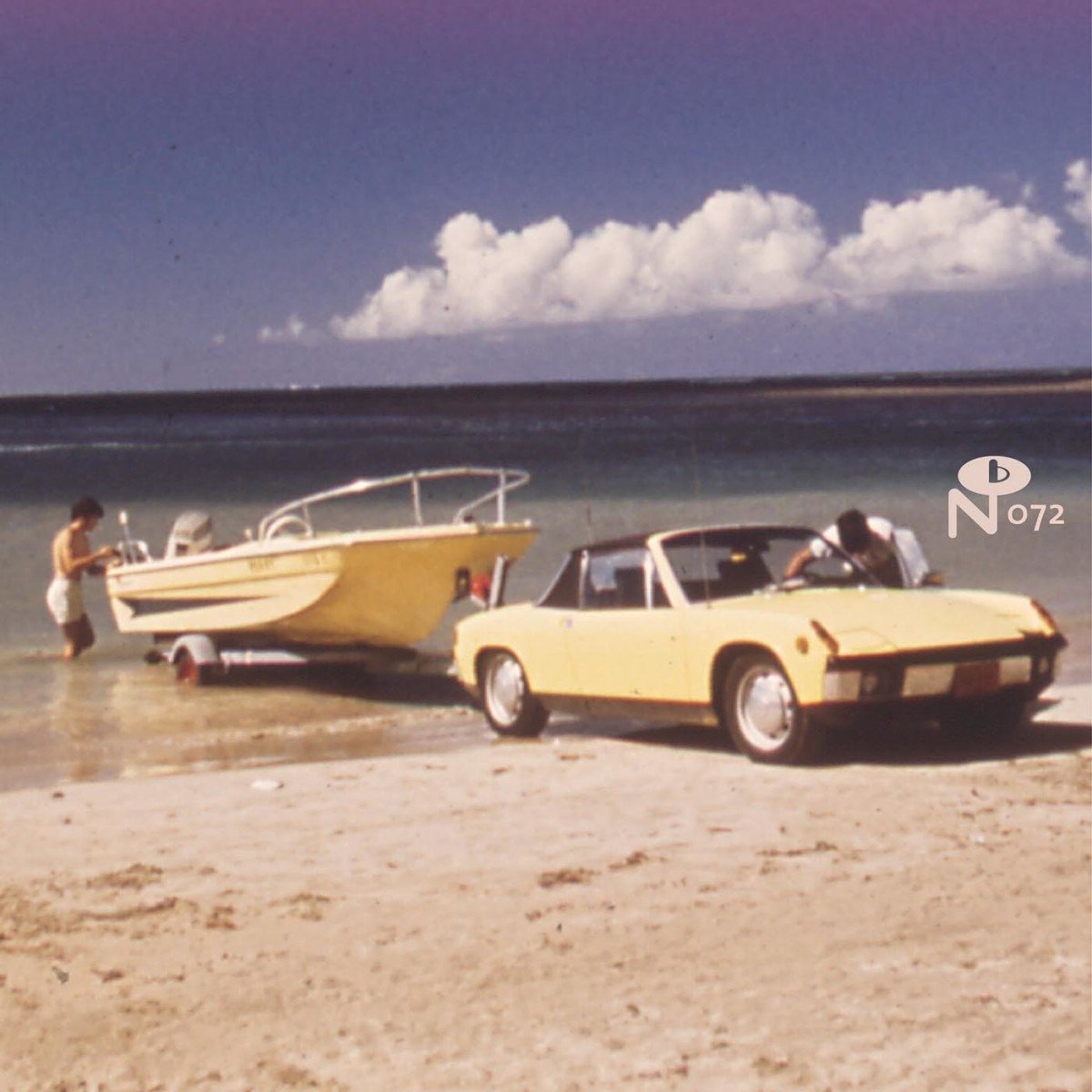
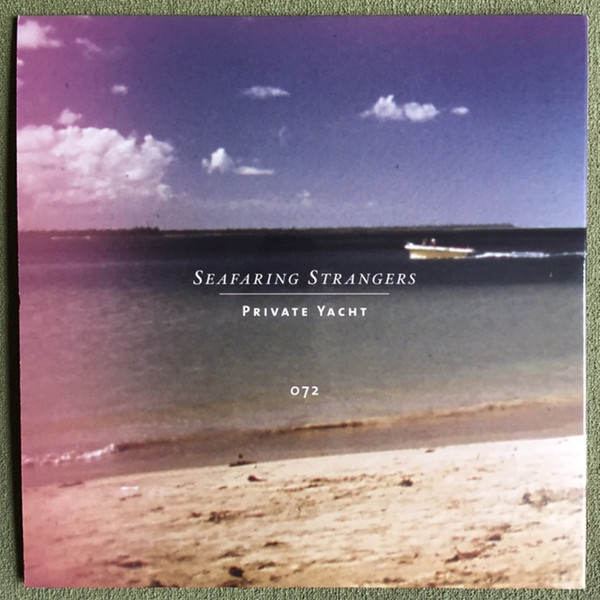
Recently, several compilations of Yacht Rock have been released. The most recent was Seafaring Strangers: Private Rock, which was released by the Numero label on the ‘7th’ of July 2017. It features twenty tracks from artists like Jim Spencer, Ned Doheny, Jeff Harrington, Paul Skyland, Calvin Johnson, Salty Miller, Canyon, Gary Marks, Country Comfort, Chuck Senrick and Rudy Norman. Many of these tracks fall into the category of hidden gems. They’ve been taken from privately pressed albums which were released on small labels.
Often, these albums were self-released by the artist, who had a 1,000 albums pressed and sold them at concerts or through a network of local record shops. Nowadays, many of these albums have a cult following, and are extremely rare. Sadly, some of these albums slipped under the radar, and it was only much later that they were discovered by intrepid crate-diggers. Tracks from these albums, make a welcome appearance on Seafaring Strangers: Private Rock which was been reissued as a 2 LP set by Numero.
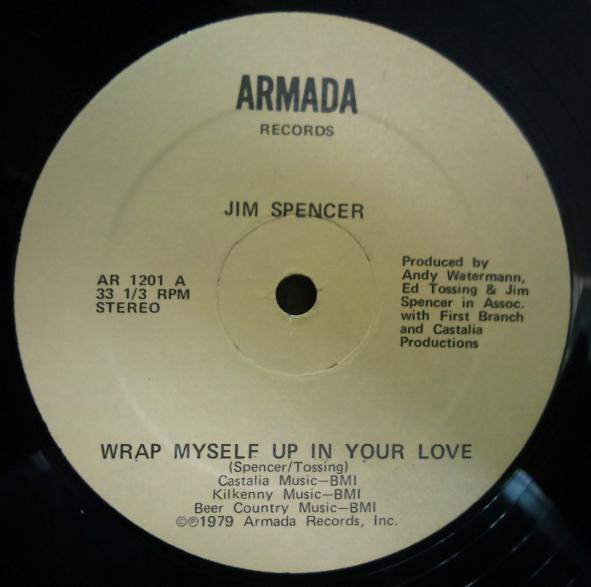
Opening Seafaring Strangers: Private Rock is Jim Spencer’s Wrap Myself Up in Your Love which was released on Armada Records in 1979. By then, Jim Spencer was thirty-five and had already released two solo folk albums, 1973s Landscapes and 1974s 2nd Look. Five years later, and Jim Spencer was ready to reinvent himself. He had written Wrap Myself Up in Your Love with Ed Tossing, and they produced the single with Andy Watermann. It saw Jim Spencer embrace disco, on a track that seamlessly fuses elements of funk, proto-boogie, jazz and soul. The result is a beautiful, slow devotional that sets the bar high for the rest of the compilation.
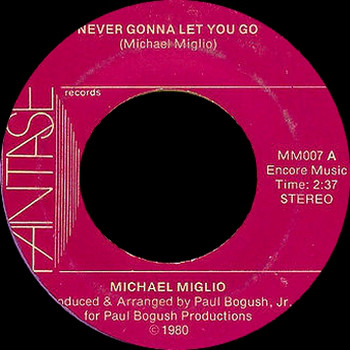
In 1980, Chicago-based singer, songwriter and multi-instrumentalist Michael Miglio released Everytime It Rains as a single on Michael Records. Hidden away on the B-Side was Never Gonna Let You Go, which was the stronger of the two tracks. It’s a beautiful, heartfelt paean that meanders along, all the time winning friends and influencing people. If it had been chosen as the single, maybe things would’ve been very different for Michael Miglio? Instead, his recording career amounts to just one single, which features the hidden gem Never Gonna Let You Go on the B-Side.
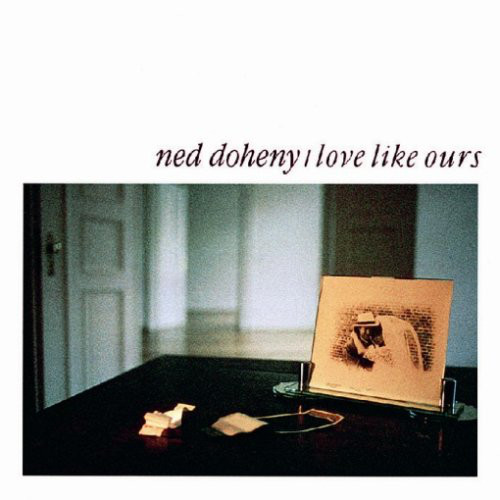
Ned Doheny’s career began at David Geffen’s nascent Asylum Records in 1973, when he released his eponymous debut album. By then, Ned Doheny was as familiar face on the Californian music scene, and was a contemporary of Jackson Browne, The Eagles and Joni Mitchell. However, Ned Doheny didn’t enjoy the same commercial success, and by 1991 was signed to the Japanese label Polystar. He released a trio of albums on Polystar, including Love Like Ours in 1991. It featured Before I Thrill Again, where a funky bass and backing vocalists accompany Ned Doheny’s hurt-filled vocal on a song that epitomises everything that is good about Yacht Rock. It’s also a reminder of a truly talented singer, songwriter and musician whose music should’ve found a wider audience.
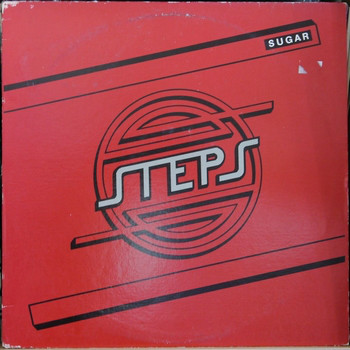
When Carter Minor returned to Chapel Hill, in North Carolina, he formed Steps, a five piece band with four new graduated of the local University. Soon, Steps began playing on the local live scene, and in 1982 released their debut EP Sugar on Dolphin Records. It was produced by Steve Gronback and Tim Hildebrandt, featured the Carter Minor composition Your Burning Love. Steps had saved the best until last. It was the last song on the B-Side, and found five members of Steps came into their own. While Carter Minor takes charge of the lead vocal, the rest of Steps add cascading vocals on this dance-floor friendly track that draws inspiration from the blue-eyed soul of The Doobie Brothers and Earth, Wind and Fire. Sadly, there was no followup to the Sugar EP, and Steps had split-up within a year. Your Burning Love is reminder of Steps, who could’ve gone on to reach greater heights.
Paul Skyland’s Give Me Your Love is one of the real finds on Seafaring Strangers: Private Rock. It’s a track from Paul Skyland’s self-released 1982 album Songchild. It was recorded at Suma Recorders in Cleveland, where Paul Skyland spent time carefully crafting his debut album. He believed that Give Me Your Love was his strongest song, and hoped that it would generate interest from record companies. Sadly, that wasn’t the case and Paul Skyland’s debut album remains one of music’s best kept secrets. A tantalising taste of Songchild, is Give Me Your Love a beautiful and carefully crafted song from one of music’s master craftsmen.
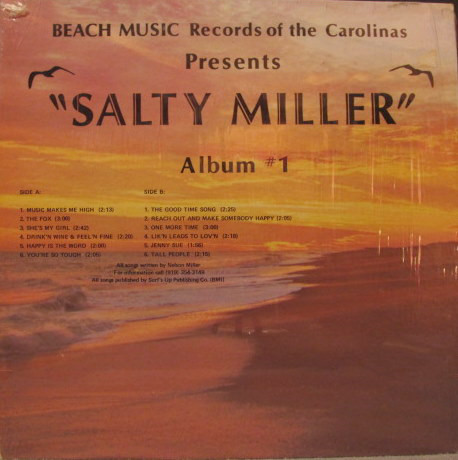
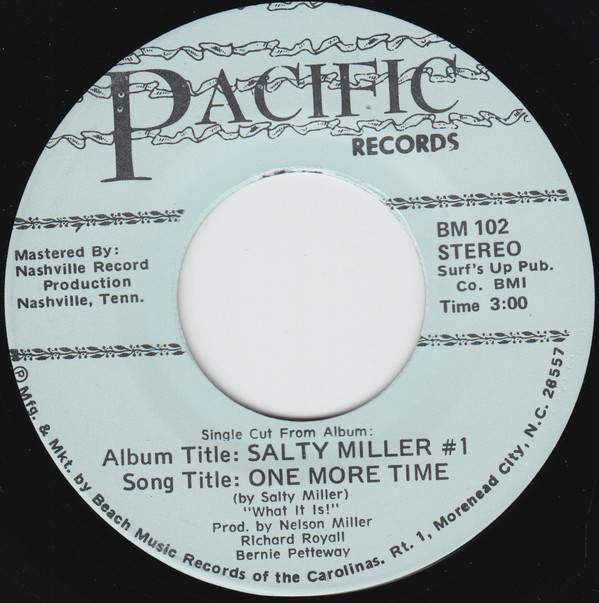
From the opening bar’s of Salty Miller One More Time, it’s obvious that this is a very special song. That proves to be case as this beautiful ballad from Salty Miller’s debut album Album #1 takes shape. It’s atmospheric and cinematic, with the sound of waves breaking on a deserted beach as birds fly overhead. Fittingly, Album #1 was released on Beach Music Records Of The Carolinas in 1982. So was the single One More Time, which is a beautiful, tender, heartfelt ballad that showcases the considerable talents of Salty Miller.
Canyon Country were a bar band in Fargo, North Dakota, when Overland Stage’s drummer Dave Hanson asked the band to record his new composition, Lovin’. This was Canyon Country’s shot at the title. They rose to the challenge, and recorded an understated and mellow ballad, that is melodic and memorable. It’s a welcome addition to Seafaring Strangers: Private Yacht.
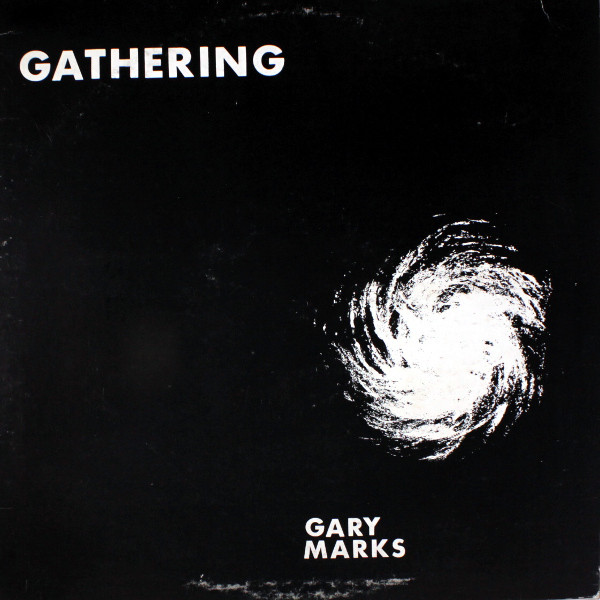
Having put together his band, Gary Marks headed to Vitra Sonic Recording Studios in New York. where he recorded his 1974 debut album Gathering. It was the first of five albums that Gary Marks released on his own label Arewea. The album that started it all off was Gathering, which features an understated, dreamy and ruminative ballad that captivates.
Madness rose from the ashes of Brass Unlimited in 1974. The now defunct band’s rhythm section became Madness. Three years later, they were joined by singer-songwriter Tommy Bruner. His addition saw Madness release their debut single Let’s Hear It For The Man in 1979. In late 1979, Tommy Bruner wrote Madam Operator which became part of the band’s setlist. That was how it came to feature on the K101 radio station’s sampler of music by local bands First Annual Iowa Album in 1980. By then, the answering machine message had been rewritten, to include “Iowa“. This was perfect for an album showcasing Iowa’s up-and-coming bands, of which Madness were one. Sadly, they never made a commercial breakthrough, and their recording career amounts to one single and Madam Operator, which featured on First Annual Iowa Album.
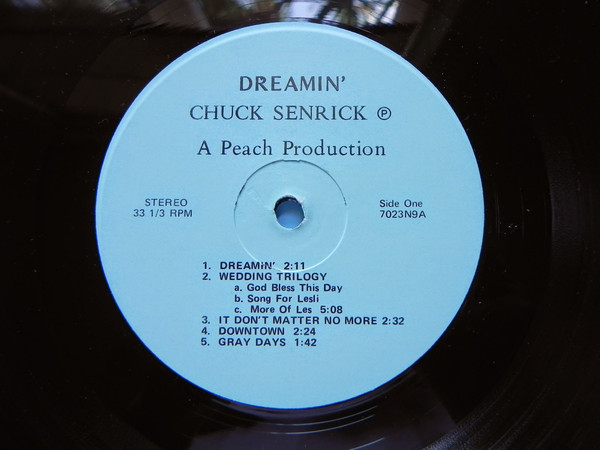
Chuck Senrick’s love of music began as a child, when he was growing up in Minnesota. He learnt to play the piano as a child, and by the time he was fifteen, had joined John Zimmer and The CR4. The band played cover versions on the local live scene. By the time Chuck Senrick graduated from high school, he was already a talented composer and had written the songs that would feature on his 1976 album Dreamin’. Opening the album was the title-track, an understated and impassioned ballad where keyboards and drums are part of a spartan arrangement and allow Chuck Senrick’s impassioned vocal to take centre-stage. It’s a tantalising taste of a truly talented singer, songwriter and multi-instrumentalist, Chuck Senrick.
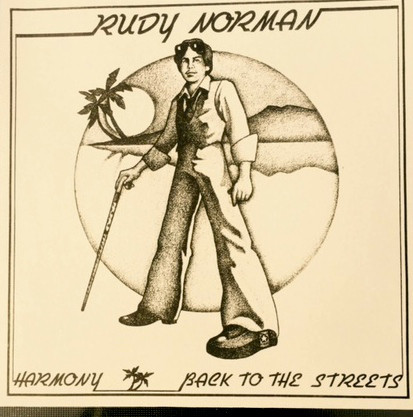
Closing Seafaring Strangers: Private Yacht is Rudy Norman’s Back To The Streets. It was the B-Side to Rudy Norman’s 1980 single Harmony. This cover a cover of Elton John Song, and marked the return of Rudy Norman, who after falling out of love with music, had called time on his musical career. By 1980 Rudy Norman was ready to make a comeback and recorded Harmony as a single. On the B-Side was Back To The Streets, a mid-tempo tale of the allure of life in the fast lane. Initially, 500 copies of the single were pressed, and released on New Day Records later in 1980. Sadly, that was the only single Rudy Norman released. However, Back To The Streets was the perfect way to celebrate the comeback of Rudy Norman.
He’s one of twenty artists that feature on Seafaring Strangers: Private Yacht, which was recently released by Numero. It’s the latest compilation of what’s now called Vanilla Funk or Yacht Rock. Previously, it was known as AOR, Soft Rock or the West Coast Sound. That was before the genre underwent a makeover or rebranding.
Now Yacht Rock is growing in popularity, and no longer is the type of music that is found on compilations like Too Slow To Disco Volume 3 and Seafaring Strangers: Private Yacht a guilty pleasure. Instead, Yacht Rock has been growing in popularity over the three years. With Yacht Rock bang on trend, there will be more and more Yacht Rock compilations released over the next few months.
Already, two Yacht Rock compilations have been released over the last couple of weeks. However, Seafaring Strangers: Private Yacht is the best Yacht Rock compilation of 2017. The twenty songs have been taken from privately pressed singles and albums that were either self-released, or released in small quantities by regional labels. Sometimes, as little as 500 copies of a single or album were pressed, and many of these albums are incredibly rare. So much so, that finding an original copy is almost impossible. That is a great shame, as many of the songs on Seafaring Strangers: Private Yacht will whet the listener’s appetite, and they’ll want to hear more from twenty talented artists and groups.
None of the artists and groups on Seafaring Strangers: Private Yacht were lacking in talent, but for whatever reason, never enjoyed the commercial success that their music deserved. That the case with two of the best known artists on Seafaring Strangers: Private Yacht, Ned Doheny and Gary Marks, who released a string of albums. Sadly, these album never found the audience they deserved. They weren’t alone.
Many of the artists on Seafaring Strangers: Private Yacht only released one single or album, and never returned to the recording studio. When their albums failed to find an audience, some became disheartened, and a few turned their back on music, deciding to return to the tedium of the 9 to 5 grind. Other artists didn’t return to the recording studio, but continued to play live, which was much more profitable. In the case of a group like Steps, they split-up up, and never got the chance to fulfil their potential. Sadly, that is a familiar story with some of the artists on Seafaring Strangers: Private Yacht.
For many of the artists on Seafaring Strangers: Private Yacht, it’s often a case of unfulfilled potential and what might have been? They were able to write slick sounding songs full of hooks. These songs featured clever chord progressions, lush harmonies and often, swathes of the lushest strings. It’s an irresistible combination, and one that should’ve brought many of the artists on Seafaring Strangers: Private Yacht to the wider record buying public.
These private presses should’ve acted as a calling card to the artists and bands on Seafaring Strangers: Private Yacht, and should’ve opened the doors to major record labels. They had the expertise and financial muscle to promote the artists on Seafaring Strangers: Private Yacht, and ensure their music found the audience it so richly deserved. Sadly, that wasn’t the case and instead, some of the albums ended up in Dollar bins and thrift stores.
That was where they remained, until relatively recently, when intrepid crate diggers took a chance on these albums. Somewhat belatedly, some of music released by the artists on Seafaring Strangers: Private Yacht started to find an audience. This has been helped by the resurgence in interest in private presses and indeed Yacht Rock. However, hopefully, the recent release of Seafaring Strangers: Private Yacht, which is a flawless compilation of Yacht Rock, will lead to a resurgence in interest in all the artists that feature on the compilation, and somewhat belatedly, their music will find the wider audience that it deserves.
Seafaring Strangers: Private Rock LP.
ELEPHANT9- PSYCHEDELIC BACKFIRE I AND PSYCHEDELIC BACKFIREII WITH REINE FISKE
Elephant9 -Psychedelic Backfire I and Psychedelic Backfire II With Reine Fiske.
Label: Rune Grammofon.
There aren’t many bands who release two albums on the same day, but that is what Elephant9 did recently, when they released Psychedelic Backfire I and Psychedelic BackfireII With Reine Fiske on Rune Grammofon. These two albums feature the return of one of finest Norwegian jazz groups of their generation and is the latest chapter in a story that began in 2006.
That was when keyboardist Ståle Storløkken, drummer Torstein Lofthus and bassist Nikolai Hængsle Eilertsen decided to embark upon a new project. This new project they called Storløkken/Eilertsen/Lofthus. The trio consisted of experienced and talented musicians who had a reputation for producing ambitious and innovative music. That had been the case throughout their careers, when they had worked on a variety of projects.
The elder statesman of the trio was keyboardist Ståle Storløkken, who was thirty-seven in 2006. He had been a member of a number of bands including Audun Kleive Generator X, Veslefrekk, Pocket Corner, Humcrush, Pocket Corner and the Trondheim Jazz Orchestra. Each of these groups had released at least one album, and so had the other groups Ståle Storløkken was involved with, Bol, Cucumber and Supersilent. It seemed Ståle Storløkken had an insatiable thirst for making music. That was also the case with drummer Torstein Lofthus.
Just like Ståle Storløkken, drummer Torstein Lofthus was a veteran of several bands. He was twenty-nine in 2006, and had previously been a member of Damp and Shining. Both of these band had released two albums, and Torstein Lofthus was no stranger to the recording studio or live scene. It was a similar case with third member of the trio bassist Nikolai Hængsle Eilertsen.
He had just turned twenty-eight in 2006, and was the youngest member of the trio. Just like the other members of the trio he was already an experienced musician. Nikolai Hængsle Eilertsen was already a member of Big Bang and The National Bank, who were regarded as rising stars of the Norwegian music scene. Despite this, Nikolai Hængsle Eilertsen was keen to join the nascent trio, and like many Norwegian musicians was a member of several bands.
That was also the case with Ståle Storløkken and Torstein Lofthus, who had spent much of their careers working on different projects and collaborating with a variety of musicians. Some of these projects enjoyed a degree of longevity, others were short-lived. When Storløkken/Eilertsen/Lofthus began working together they had no idea that eleven years later, they would still be together and enjoying commercial success and critical acclaim. Before that, the new group had to change its name.
For much of the first year, the nascent band spent time honing their sound. When they made their first tentative steps onto the live circuit critics upon hearing Storløkken/Eilertsen/Lofthus described the music as a mixture of fusion, progressive rock and neo-psychedelia. Before long, Storløkken/Eilertsen/Lofthus’ music was already proving popular on the live scene. However, after a year together, the band decided to change their name, and Elephant9 were born in 2007.
Dodovoodoo.
Just a year after the birth of Elephant9, and already the nascent band were preparing to release their much-anticipated debut album Dodovoodoo. It was due for release on the Norwegian label Rune Grammofon in May 2008. However, before that, critics had their say on Elephant9’s debut album Dodovoodoo.
Critics were impressed by Dodovoodoo and lavished praise and plaudits on Elephant9’s groundbreaking, genre-melting debut album. Some critics went as far as to forecast a big future for Elephant9, and tipped them as a band to watch.
Buoyed by the critic’s response to Dodovoodoo, the three members of Elephant9 returned to the live circuit, where they over the next few weeks and months they began to play in front of bigger audiences. Elephant9 who had only been together for two years, had come a long way in a relatively short space of time. However, before long, Elephant9’s thoughts turned

Walk The Nile.
Just over a year after the release of Dodovoodoo in March 2008, Elephant9 returned to the studio to record their much-anticipated sophomore album, Walk The Nile. Elephant9 returned to Grand Sport Studio, where they had recorded their debut album Dodovoodoo. After settling into the familiar surrounding of Grand Sport Studio, Elephant9 set about replicating one of their much vaunted live performances. They came pretty closes as they unleashed a spellbinding, genre-melting performance. Elements of fusion, jazz and rock were combined by Elephant9 at Grand Sport Studio by Elephant9 who reached new heights, on what was the most important album of their career.
Before the release of Walk The Nile, Elephant9’s eagerly awaited sophomore album won over both jazz and rock critics who championed the album When Walk The Nile was released by Rune Grammofon, it was to widespread critical acclaim.
Record buyers were also won over by Walk The Nile, and Elephant9 were on their way to becoming one of Norway’s leading bands. However, Elephant9’s career got another boost later in 2008.
After the release of Walk The Nile, Motorpsycho asked Elephant9 to open for then in Norway and in London. This meant that Elephant9’s music was being heard by a much wider audience. For a group being hailed one of the rising stars of Norway’s vibrant and thriving music scene, 2010 was suddenly getting even better. However, just as it looked like things couldn’t get even better for Elephant9 they did.
Later in 2010, the shortlist for Spellemannprisen Awards were announced, and Elephant9 found their name on the shortlist in the jazz category. The Spellemannprisen Awards which are the Norwegian equivalent of a Grammy Award were the most prestigious in Norwegian music, and even being nominated was an achievement in itself. However, Elephant9 went one better, and won a Spellemannprisen Award. 2010 had been the most successful year of Elephant9’s four year career, but they weren’t going to rest on their laurels.

Live At The BBC.
In 2011, Elephant9 released their first live album, Live At The BBC. It was recorded in London, and released by Rune Grammofon. Live at the BBC was a tantalising taste of Elephant9 live. Seamlessly, the three master musicians switched between genres on a quartet of tracks from their first two albums. From I Cover The Mountain Top, through Dodovoodoo, Aviation and the twelve-minute album closer Habanera Rocket, Elephant9 are at their very best. This whetted record buyer’s appetite for Elephant9’s third album.

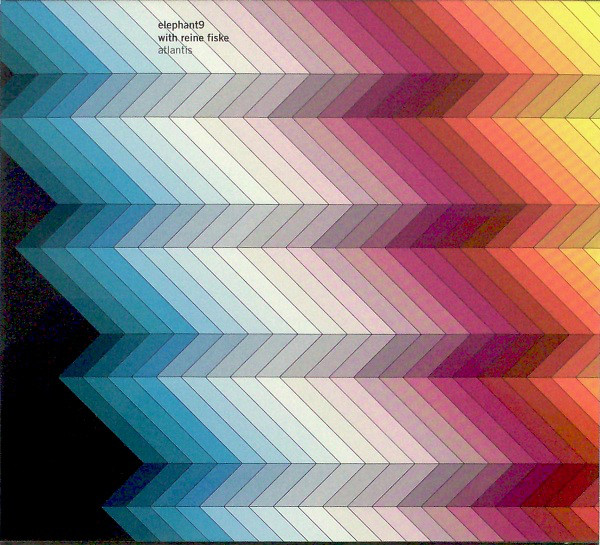
Atlantis
For their third studio album Atlantis, Elephant9 decided to collaborate with legendary Swedish progressive rock guitarist Reine Fiske. He had made his name with Dungen, and then had joined Reform. However, when he first collaborated with Elephant9, Reine was a member of Sylvester Schlegel’s band The Guild. With Reine Fiske onboard, Elephant9 began work on their third album Atlantis. Once the album was completed, it was scheduled for release later in 2012.
Before Rune Grammofon released Atlantis in October 2012, critics had their say on Elephant9’s third studio album. Just like their first two albums, critical acclaim accompanied the release of Atlantis. Some critics saw Reine Fiske as Elephant9’s missing link. Adding a guitarist to the lineup completed their sound, and now it was a case of onwards and upwards for Elephant9.
That proved to be the case as Elephant9 took to the stage at some of Norway’s biggest festivals after the release of Atlantis. The biggest and most prestigious festival was the Kongsberg Jazzfestival. Elephant9 also won over audiences at Union Scene, and Victoria, before rounding off 2012 with an appearance at Najonal Jazzscene.
Silver Mountains.
After releasing Atlantis to critical acclaim and commercial success, critics and record buyers awaited the release of Elephant9’s fourth album. However, they were in for a long wait, as the three members of Elephant9 were busy with other musical projects. As a result, it was a case of fitting the recording of Elephant9’s fourth album Silver Mountains into Ståle Storløkken, Torstein Lofthus and Nikolai Hængsle Eilertsen busy schedules.
In October 2014, Elephant9 returned to the studio where they were once again, joined by Swedish guitarist Reine Fiske. The quartet recorded four tracks penned by Elephant9 and a cover of Stevie Wonder’s You Are The Sunshine Of My Life. These tracks became Elephant9’s fourth album Silver Mountains.
Another year passed before Rune Grammofon released Silver Mountains in October 2014. By then, critics had already hailed Sliver Mountain as the finest album of Elephant9’s career. Record buyers agreed, and the Elephant9 success story continued apace.

Greatest Show On Earth.
Two years after the release of Silver Mountains, the three members of Elephant9 returned to Studio Paradiso in October 2017, where they were about to record their fifth album Greatest Show On Earth. This time, there was no sign of Reine Fiske, who many critics thought was the final piece of the jigsaw. These critics thought that Reine Fiske’s guitar filled and completed Elephant9’s sound. However, when recording began, it was just the core trio of Elephant9 that featured on Greatest Show On Earth.
After just over a two-year wait, Elephant9 recently returned with their much-anticipated fifth album Greatest Show On Earth, which was released by Rune Grammofon. Greatest Show On Earth is their first album to feature just the core trio of Elephant9 since Walk The Nile. However, Elephant9 have come a long way since Walk The Nile.
What’s noticeable about Greatest Show On Earth is that it’s a much more structured album that Elephant9’s previous albums. While much of Greatest Show On Earth was fully composed there were opportunities for a freewheeling Elephant9 to improvise. This is something that Elephant9 excel at as they fuse disparate influences including the progressive rock of Focus, King Crimson and Yes with the fusion of Miles Davis, Tony Williams Lifetime and Weather Report. However, Elephant9 fuse more to the Greatest Show On Earth than fusion and progressive rock. Elephant9 flit between and fuse avant-garde, free jazz, Krautrock, psychedelia, the Canterbury Scene and rock. Not content with fusing an array genres and influences, Elephant9 seamlessly change keys and time signatures during Greatest Show On Earth, which is another album of imaginative, inventive and innovative music where this talented trio play with a freedom and fluidity despite the absence of guitarist Reine Fiske
The addition of guitarist Reine Fiske was seen as the missing piece of the jigsaw. He makes a welcome return on one of two albums that Elephant9 released recently. Psychedelic Backfire I the much-anticipated followup to Greatest Show On Earth, features the core trio and was released on Rune Grammofon. The same day, Psychedelic Backfire II was released and features Reine Fiske.
Psychedelic Backfire I.
Psychedelic Backfire I and II were recorded when Elephant9 played a four day residency at the intimate Kampen Bistro in the Norwegian capital Oslo. On both nights, Elephant9 were greeted by enthusiastic audiences as the local heroes took to the stage to showcase their rocky and grooving inimitable brand of jazz.
On Psychedelic Backfire I, it’s just Elephant9 that take to the stage in this small venue, and from the opening bars are greeted like conquering heroes from the opening bars of I Cover The Mountain Top, which sets the bar high for the rest of the set. Elephant9 like a challenge and launch into Farmer’s Secret and then a seventeen minute version of Habanera Rocket spelt epic.
By now, Elephant9 are combining disparate genres and never miss a beat during a spellbinding and flawless performance. Elephant9 are ate the peak of their powers with the rhythm section locking down the groove as keyboards compliant and fill in the gaps, and prove that not every group needs a guitarist. Even if that guitarist was Reine Fiske. who guested on two previous albums.
After the seventeen minute opus, Elephant 9 launch into a thirteen minute rendition of SkinkFugl and Fønix, before closing the set this action packed set with Actionpack 1 and then Dodovoodoo. It’s the perfect way to close a set that lasts the best part of seventy-two minutes and is spread over four sides of vinyl.
As those that were lucky enough to witness a genre-meting set where elements of avant-garde, free jazz, Krautrock, psychedelia and rock can be heard. It’s a musical potpourri that many thought wouldn’t be bettered. Or could it?
Psychedelic Backfire II With Reine Fiske.
For what became Psychedelic Backfire II, Elephant9 were joined by a very special guest and the man many believe is the missing link in the group, guitarist Reine Fiske. This resulted in the album being entitled Psychedelic Backfire II with Reine Fiske.
For that night, Elephant9 were a back playing as a quartet, who had an almost telepathic understanding. That was the case from the moment they took to the stage at the Kampen Bistro in Oslo, and opened the set with a captivating cover of Stevie Wonder’s You Are The Sunshine Of My Life which gives way to Skink and Fugl Fønix then Habanera Rocket which both feature on Psychedelic Backfire I. That doesn’t matter as the expanded lineup take the tracks in new directions.
Although virtuoso guitarist Reine Fiske is a special guest, he takes care not to overpower or overshadow the members of Elephant9. Even when the band are in full flight, as he expresses himself, he’s happy to compliment Ståle’s keyboards and together, they prove e successful and potent partnership. That is the case on Freedom’s Children and John Tinnick which closes the set and Psychedelic Backfire II on a high. Elephant9 With Reine Fiske take their leave knowing they had reached new heights during the residency. Those that were lucky enough to see the concert realised that they had witnessed something special which now has been released as Psychedelic Backfire II.
Elephant9 throw a series of musical curveballs during Psychedelic Backfire II, where the music is ambitious, innovative and just like on Psychedelic Backfire I, genre-melting. Psychedelic Backfire I and Psychedelic Backfire I are both spellbinding and captivating albums. On Psychedelic Backfire II three before four, as Reine Fiske joins forces with Elephant9, and prove a potent partnership, as they reach new heights. and showcase their considerable skills on what is the second of two breathtaking live albums.
Elephant9 -Psychedelic Backfire I and Psychedelic Backfire II With Reine Fiske.

FIRE! ORCHESTRA-ARRIVAL
Fire! Orchestra-Arrival.
Label: Rune Grammofon.
When Mats Gustafsson, Johan Berthling and Andreas Werliin founded the Fire! Orchestra in 2011, it featured twenty-eight musicians and vocalists who were responsible for the ensemble’s impressive sound. Now eight years and as they release their fifth album Arrival on Rune Grammofon, its a slimmed down line-up that appears on the new album.
There’s now “only” fourteen members of the Fire! Orchestra, with slimed down rhythm and horn sections being two of the changes. Another addition is the addition of a string quartet which adds a new dimension to the music. So do two familiar faces, vocalists Mariam Wallentin and Sofia Jernberg have been members of Fire! Orchestra and play a starring role on Arrival. It’s the latest chapter in the Fire! Orchestra story which began in 2009, when another group was formed.
2009 was when bassist Johan Berthling, drummer Andreas Werliin and saxophonist Mats Gusfasson decided to form a new band which they called Fire! It was to all intents and purposes a Swedish supergroup. After all Johan, Andreas and Mats were three of Sweden’s finest jazz musicians. Their speciality was free jazz. However, there was a minor problem.
Mats Gustafsson ,Johan Berthling and Andreas Werliin all had busy schedule. So they would have to fit playing and recording as Fire! round their existing schedules and other musical commitments.
Reeds player and saxophonist Mats Gustafsson is the elder statesmen of Fire! He was born in 1964, and has been involved in the Swedish music scene since 1988. Since then, Mats Gustafsson has worked as a musician, arranger, composer, conductor and producer. He’s played and performed on over 200 albums. That’s just the tip of the iceberg.
Currently, Mats Gustafsson is a a member of jazz trio The Thing. However, over the past three decides Mats Gustafsson has collaborated with everyone from Jim O’Rourke to Sonic Youth and Lasse Marhaug. Then there’s the solo albums Mats Gustafsson has released. These solo albums and collaborations add another seventy albums to Mats Gustafsson’s C.V. However, he’s not the only member of Fire! with an impressive C.V.
Just like Mats, bassist Johan Berthling is a veteran of numerous bands. Previously, he’s been a member of Angles, Angles 9, Boots Brown, Nacka Forum, Ohayo, Pipeline, Sten Sandell Trio, Tape, The Godforgottens, The Tiny and Time Is A Mountain. Away from these bands, Johan has worked as a hired hand.
Johan has worked as an arranger, musician, producer and songwriter. Already, he has around 170 credits to his name. When Johan’s not working on other people’s albums, he runs a record label.
In 1999, John and Klas Augustsson founded the Häpna record label. It’s based in Stockholm, and has released nearly sixty releases. This includes albums by Tape, who released their eighth album Casino in 2014. Just like other members of Fire!, Johan has a voracious appetite for making music.
The same can be said of drummer and percussionist, Andreas Werliin. He was born in 1982, and is the youngest member of Fire! Although he’s only thirty-four, Andreas is almost veteran of Swedish music. Andreas has worked as an arranger, musician, singer, songwriter and producer. He’s happy to work as a hired hand, when not been working with the various bands he’s been a member of.
Among the groups that Andreas has played in, are Angles 9, Time Is a Mountain, Tonbruket and Wildbirds and Peacedrums. In both Angles 9 and Time Is a Mountain, Andreas is joined by Johan in the rhythm section. They’ve formed a formidable partnership, since Fire! released their debut album in 2009.
You Liked Me Five Minutes Ago.
You Liked Me Five Minutes Ago was Fire!’s debut album. It showcased what was a new and innovative approach to improvised music. Fire! stepped out of their comfort zone on You Liked Me Five Minutes Ago, seamlessly combining free jazz, psychedelic rock and noise. This was the perfect showcase for the three members of Fire!’s considerable musical skills. Critics were won over by Fire!, and forecast a bright future from the Swedish trio.
Unreleased?
Two years later, and Fire! returned with the first collaboration of their career. They had recorded four lengthy improvised pieces with Chicago born, but Tokyo based performer, composer and record producer. He was a veteran of countless collaborations since his career began in the late eighties. Now he was ready to hitch a ride with Fire!
When the album was ready for release in 2011, Fire! received star billing. Fire! With Jim O’Rourke Unreleased? was released on Rune Grammofon. This genre-melting album saw Fire! continue to push musical boundaries, taking the music in hitherto unexpected directions. The collaboration with Jim O’Rourke was regarded as an overwhelming success. So it was no surprise when another artist asked to collaborate with Fire!
In The Mouth-A Hand.
This time, it was Australian experimental electronic guitarist and percussionist, Oren Ambarchi. He was no stranger to collaborations, and previously, had worked a variety of artists, including Keith Rowe. Fire! agreed to the collaboration, and the result was the album In The Mouth-A Hand.
It featured another four lengthy, improvised tracks. This allowed Fire! and Oren Ambarchi to take the listener on a musical adventure, where musical genres and influences were combined. Three of the most prevalent influences were free jazz, noise and psychedelic rock. Just like previous albums, this was a crucial part of Fire!’s sound.
When In The Mouth-A Hand was released on Rune Grammofon, again, Fire! received top billing. They played a huge part in what was another important album collaboration. With Oren Ambarchi, Fire! had created another album of groundbreaking, innovative music. Despite this, Fire!’s next album wasn’t a collaboration. Instead, it featured just the three members of Fire!
(Without Noticing).
By the time, Fire! began work on (Without Noticing), they were regarded as one of the most exciting and innovative groups in the Scandinavian music scene. Fire! had released three albums in three years. Now they were four for four.
When (Without Noticing) was released on Rune Grammofon in 2013, it was hailed a career defining album. It was a fusion of free jazz and psychedelic rock via a more traditional rocky and jazz-tinged sound. Fire! weren’t afraid of pushing musical boundaries, and on (Without Noticing), continued to do so. This resulted in critically acclaimed reviews from critics. However, by then, Fire! had realised the limitations of a trio, and founded the Fire! Orchestra.
Fire!-Orchestra-Exit.
In 2011, that the members of Fire decided to expand beyond the core trio. They hit on the idea to expand the group. The way Fire! did this, was to bring onboard the great and the good of Scandinavian jazz, improvisation and avant rock players and vocalists. They called this new musical venture Fire! Orchestra. It was a musical first in Sweden.
The newly named Fire! Orchestra were building on the music of some of the legendary free jazz big bands. This includes the big bands of Sun Ra, Charlie Haden’s Liberation Orchestra, Mike Westbrook and Mike McGregor. There was more to the Fire! Orchestra that free jazz. They incorporated funk, blues, rock and jazz. This became apparent when the Fire! Orchestra made their tentative first steps.
In the beginning, the Fire! Orchestra played just a handful of shows. They were finding their feet musically. Gradually, they were finding their sound. It’s best described as genre-melting and was showcased on their live debut album, Exit.
It was in 2013, when Fire! released their live debut album Exit. Released to widespread critical acclaim, Exit was a genre-melting sound that people wanted to hear more of.
Enter.
So after playing a couple of concerts early in January 2014, the Fire! Orchestra entered the Svenska Grammofonstudion, in Gothenberg on 10th January 2014. This wasn’t going to be a long session. Instead, the Fire! Orchestra took just one day to record Enter.
The result was an album of music that critics called innovative and progressive. Enter showcased the Fire! Orchestra in full flight. This was an impressive sound. Especially given their fusion of mesomorphic rock rhythms, funk, free jazz and the bluesy, soul-baring vocals of the Fire! Orchestra’s three vocalists. Add to this the scorching free jazz saxophone of Joe McPhee and Enter, has a potent, powerful and captivating sound; which succeeded in bringing back memories of musical luminaries like Sun Ra, Charlie Haden’s Liberation Orchestra, Mike Westbrook and Mike McGregor. So successful was Enter, that Fire! Orchestra released one more album.
Exit Again.
Just like Exit, Exit Again was another live album. The concert was recorded on 2nd September 2012 at Festival Les Rendez-Vous de L’erdre, in Nantes, France. Joining a slimmed down version of the Fire! Orchestra that night, was guitarist Oren Ambarchi. Joined the great and good of Scandinavian music for what was the Fire! Orchestra’s encore.
When Exit Again was released on 14th January 2014, it was a limited edition release. Only 500 copies of the Exit Again were released on vinyl. Again, the Fire! Orchestra in full flight was an impressive sound. On Second Exit Part One and Second Exit Part Two, the Fire! Orchestra showcase their considerable skills and seamlessly, switch between disparate musical genres. Somehow, it all makes sense, and has the listener wanting to hear more of the Fire! Orchestra. Before that, Fire! would return.
Fire!-She Sleeps, She Sleeps.
Work began on She Sleeps, She Sleeps back in March 2015. That’s when the three members of Fire! recorded the four songs they had written, and would produce.
Recording of She Sleeps, She Sleeps took place at Orionteatern studios in Stockholm. The album was recorded by Mikael Werliin, who also recorded guest artist cellist Leo Svensson Sander at Rud Studios, in Stockholm. Halfway around the world, in Melbourne, Australia, guitarist Oren Ambarchi laid down his parts for She Bid A Meaningless Farewell. Once the sessions were complete, the album was mixed and mastered. Only then was She Sleeps, She Sleeps ready for release.
Eventually, She Sleeps, She Sleeps was scheduled for release on 19th February 2016, by Rune Grammofon. The album was released to widespread critical acclaim. Plaudits and praise accompanied She Sleeps, She Sleeps. I described the album as: “groundbreaking, influential and innovative.” She Sleeps, She Sleeps was also “progressive” and Fire!’s “Magnus Opus.” For the three members of Fire!, this was a good way to start 2016.
Fire! Orchestra-Ritual.
After the release of Fire!’s fifth album She Sleeps, She Sleeps, Johan Berthling, Andreas Werliin and Mats Gusfasson’s thoughts turned to the Fire! Orchestra’s new album Ritual. It had already been recorded by the “slimmed down” lineup of the Fire! Orchestra in 2015.
For the Fire! Orchestra’s fourth album Ritual, Johan Berthling, Andreas Werliin, Mats Gusfasson and Mariam Wallentin composed the five part Ritual suite. It examines mysteries and rituals, not just in life, but in music. Ritual featured texts by Erik Lindegren. This included extracts from his poetry books The Man Without A Way and 1942, which when it was published, was heralded as a truly influential piece of work. With Ritual composed, the next step was for the the Fire! Orchestra to record the album.
Recording of Ritual was scheduled to take place at Rixmixningsverket, in Stockholm. That was where the new lineup of the Fire! Orchestra would record the five part Ritual suite. This new lineup saw the Fire! Orchestra slim down from twenty-nine to twenty-one members. Despite its reduced numbers, the Fire! Orchestra were still capable of producing an impressive sound.
Ritual finds the Fire! Orchestra at their progressive and innovative best. That’s despite the Fire! Orchestra slimming down its lineup from twenty-nine to ‘just’ twenty-one musicians. However, they’re no ordinary musicians. The Fire! Orchestra features some of the most talented musicians Sweden, Norway, Denmark and France has to offer. When they join the Fire! Orchestra,they become part of a pan European supergroup. It’s featured some of the biggest names in European jazz. However, the lineup is somewhat fluid, and members of the Fire! Orchestra have been ever-present since Johan Berthling, Andreas Werliin and saxophonist Mats Gusfasson formed the Fire! Orchestra back in 2011. Since then, the Fire! Orchestra’s star has been in the ascendancy.

Arrival.
That is still the case some eight years they first played live, the Fire! Orchestra are now a hugely popular live draw. When they play live, the sold out signs are up. After all, the Fire! Orchestra in full flow, is an impressive sound. That has been the the case with each of their four previous albums. However, four became five with the release of Arrival, which features the newly slimed down fourteen piece ensemble.
For their fifth album Arrival, Fire! Orchestra recorded seven tracks. Five of these tracks are credited to founder members Mats Gustafsson, Johan Berthling and Andreas Werliin, but other members of Fire! Orchestra play their part in what s a much more individual set of compositions and songs. These five songs are joined by two peerless cover versions. This includes groundbreaking guitarist Robbie Basho’s Blue Crystal Fire which originally featured on his 1978 album Visions Of The Country. The other cover version is t Last I Am Free which was penned by Chic’s is today probably best known from Robert Wyatt’s version, but originally written by Bernard Edwards and Nile Rogers. However, Robert Wyatt’s version is regarded as the definitive version, but the Fire! Orchestra reinvent the track on an album that is totally different to previous albums which are regarded by some critics as uniform works. However, this time around, Fire! Orchestra change tack and thanks to drummer and producer Andreas Werliin.
He masterminded what is complex album full of detail. where Fire! Orchestra use their all of their muscial palette to create an album that veers between light and shade to sometimes joyous and full of despair and soulful to sultry. Other times, the music is edgy, mystical and otherworldly, but can just as easily be smooth and polished. Arrival is best described as a carefully crafted album that finds Fire! Orchestra seamlessly switching between, and fusing disparate musical genres. This includes avant-garde, bop, free jazz, fusion, improv, jazz, Krautrock, progressive rock and even swing as this all-star showcase their considerable talents. They’re just as happy improvising as they create innovative and inventive music on Arrival, which is their finest hour.
Arrival is also an album that has a warmth and a deep, dynamic mix. This will gladden the heart of everyone who loves good music, and appreciates an album that has been well mixed and mastered, That is the case with Arrival which marks the return of the slimmed down Fire! Orchestra as they reach new heights musically and find their true musical identity on a truly captivating and genre-melting album that is also ambitious, experimental and progressive. Just like previous albums, Fire! Orchestra’s playing on Arrival is imaginative, inventive and innovative as they come of age musically after eight years and five albums.
Fire! Orchestra-Arrival.
MASTERPIECES OF MODERN SOUL VOLUME 5.
Masterpieces Of Modern Soul Volume 5.
Label:Kent Dance.
Nearly sixteen years ago, back in October 2003, Kent Soul released the first instalment in the Masterpieces Of Modern Soul series. Since then, another five volumes have been released. The first came in January 2009, when Masterpieces Of Modern Soul Volume 2 was released. Just over two years passed, and then Masterpieces Of Modern Soul Volume 3 hit the shops in November 2011. Since then, connoisseurs of modern soul have patiently awaited the Masterpieces Of Modern Soul Volume 4.
A year passed. Two became three, and still no sign of Masterpieces Of Modern Soul Volume 4. Then after nearly four long long years, the much anticipated fourth volume in what’s one of Ace Records’ most popular series was released to critical acclaim in September 2015.
Then as 2016 dawned, the Masterpieces Of Modern Soul series converted from CD to vinyl when a compilation Masterpieces Of Modern Soul was released.
That was the last instalment in this long-running and popular complain series until recently, when Masterpieces Of Modern Soul Volume 5 was released by Kent Dance, an imprint of Ace Records. It features twenty-four tracks that are a mixture of familiar faces, minor classic and hidden gems.
Opening Masterpieces Of Modern Soul Volume 5 is Given My Life by the Mighty White a joyous, soulful dancer which sets the bar high. There’s no let up in quality with the addition of L-O-V-E by jazz singer Leon Thomas is popular shuffler on the Northern Soul scene. Quite different is Major Lance’s That’s The Story Of My Life which is an example of seventies soul dance. John Edwards’ How Can I Go On Without You and The Independents’ Lucky Fellow are welcome additions to the compilation and are a reminder of everything that is good about modern soul.
There’s five edits on Masterpieces Of Modern Soul Volume 5. The highlights are an We Talk It Over an unreleased track Eddie Floyd recorded for Stax. Then there’s the inimitable Millie Jackson’s 1976 recording for Spring I’ll Continue To Love You, Loleatta Holloway’s Southern Soul hidden gem Mrs So and So’s Daughter and A Star In The Ghetto by Foxfire which features none other Johnny Adams. These three uber soulful edits are welcome additions to Masterpieces Of Modern Soul Volume 5.
The Moderations who were from Detroit, contribute Ride The Disco Train, while Felecia Johnson and T.S.B. Inc’s Franchise On Love is funky and soulful. So is Chet Ivey and His Fabulous Avengers’ Dose Of Soul. Deeply soulful is The Headliners’ unreleased dancer I’ll Live My Life Loving You and Herman Davis’ heartfelt rendition of Gotta Be Loved Part 2. Other highlights include Street People’s Your Momma Had A Baby, which was recorded during there first Spring session. Freddie Scott’s laidback hidden gem I Guess God Wants It This Way ensures that Masterpieces Of Modern Soul Volume 5 closes on a soulful high.
Hopefully, it won’t be another four years before Kent Dance, an imprint of Ace Records, releases the next instalment in the Masterpieces Of Modern Soul series. Even if it is, and it’s anywhere near as good as Masterpieces Of Modern Soul Volume 5 then it’ll be well worth the wait as this is no ordinary soul compilation.
There’s a mixture of familiar faces, minor classics and hidden gems on Masterpieces Of Modern Soul Volume 5. Then there’s unreleased tracks and edits on Masterpieces Of Modern Soul Volume 5 which is uber soulful, sometimes funky and dancefloor friendly. What more can fans of modern soul ask for?
Masterpieces Of Modern Soul Volume 5.
NARADA MICHAEL WALDEN-THE SOLO YEARS 1976-1988.
Narada Michael Walden-The Solo Years 1976-1988
The first many record buyers heard of Narada Michael Walden, was when he was announced as Billy Cobham’s replacement in the second lineup of the Mahavishnu Orchestra in 1974. By then, Narada Michael Walden was just twenty-two and the Mahavishnu Orchestra was one of the top fusion bands. However, Narada Michael Walden seemed to settle into the role and played on the four albums the Mahavishnu Orchestra’s released between 1974 and 1976s Inner Worlds. That was the last album the second lineup of the Mahavishnu Orchestra would release, and it would be eight years before the fusion pioneers returned with a new album.
Inner Worlds was the last Mahavishnu Orchestra album that Narada Michael Walden played on, and later in 1976 was signed by Atlantic Records where he realised seven albums between 1976 and 1982, before signing to Warner Bros later in 1982. However,Narada Michael Walden’s solo carrer began in 1976.
Garden Of Love Light.
In late 1976, Narada Michael Walden released his debut album Garden Of Love Light on Atlantic Records. The label offered Narada Michael Walden the choice of two producers, but given the album had a rocky sound, he chose staff producer Tom Dowd who had an enviable track record.
Between the ’21st’ of August and the ‘6th’ of September 1976, nine songs were recorded, including seven penned by Narada Michael Walden. They showcased a talented singer-songwriter who Atlantic Records had high hopes for.
When Garden Of Love Light was released, Narada Michael Walden’s debut album sunk without trace. This was a huge disappointment for the twenty-four year old.

I Cry, I Smile.
For his sophomore album I Cry, I Smile, Narada Michael Walden wrote ten new tracks and decided to take charge of production. He had decided to change direction and recorded his first fusion album during April and May 1977.,
I Cry, I Smile was released by Atlantic Records later in 1977, and history repeated itself when his sophomore album failed to chart. This was a disaster for Narada Michael Walden who realised that he needed a hit single.
Atlantic Records had invested heavily in Narada Michael Walden and were yet to see any return on their investment. The two albums that Narada Michael Walden hadn’t even troubled charts and if his third album failed to make an impression on the US Billboard 200 and US R&B charts, Narada Michael Walden’s career could be over before it began. Fortunately, Narada Michael Walden had a plan.
Awakening.
By the time Narada Michael Walden began work on his third album, disco was at the peak of his popularity, and many artists looking to revive ailing and failing careers had jumped on the disco bandwagon. For some artists, a discover makeover had done wonders for their career. Narada Michael Walden was hoping that this would be the case when he began recording the nine new songs he had written for Awakening.
Recording of Narada Michael Walden’s third album Awakening took place at three of New York’s top studios, the Power Station, Electric Ladyland, and Crystal Sound. Narada Michael Walden brought onboard Bob Clearmountain who recorded and mixed five of the nine tracks on the album. The other songs were recorded by Jim Shifflett and Alan Sides, while Patrick Adams and Sonny Burke co-produced Awakening with Narada Michael Walden. When it was completed, the release was scheduled for early 1979.
Before the release of Awakening, Don’t Want Nobody Else (To Dance With You) was released as a single in early 1979 reaching forty-seven in the US Billboard 100 and nine in the US R&B charts. Narada Michael Walden’s luck changed when Awakening then made it into the top twenty in the US R&B charts. Buoyed by this success Narada Michael Walden began work on his fourth album, The Dance Of Life.
The Dance Of Life.
After the success of Awakening, Narada Michael Walden began writing what became The Dance Of Life. This time, he wrote three songs and cowrote the other five with various songwriting partners. They were recorded by a small band at Filmways-Heider Recordings, where Narada Michael Walden and Bob Clearmountain co-produced The Dance Of Life which featured disco, R&B and soul.
Prior to the release of The Dance Of Life, I Shoulda Loved Ya was released as a single and reached sixty-six in the US Billboard 100 and four in the US R&B charts. When The Dance Of Life was released it charted in the US R&B charts, but didn’t replicate the commercial success of Awakening. However, by then, Narada Michael Walden thought that disco had saved his career which had been at a crossroads before the release of The Dance Of Life.
Then on the ’12th’ of July 1979, the disco bubble burst, and suddenly, after the events of the Disco Demolition Derby, at Comiskey Park, Chicago. Suddenly, record companies were dropping disco artists and groups, which was worry for Narada Michael Walden. What did the future hold for him?

Victory.
Despite the disco bubble bursting in spectacular style, Narada Michael Walden returned to the studio later in 1979, to record his fifth album Victory. It featured three Narada Michael Walden compositions and five that he cowrote with various songwriting partners. Just like The Dance Of Life, Narada Michael Walden and Bob Clearmountain took charge of production on Victory, which featured a band that included top session players and backing vocalists.
When Victory was released in 1980, the album featured a mixture of disco, funk, R&B and soul. The only problem was that the record buying public didn’t want to buy disco albums, and Victory failed to replicate the success of Awakening and The Dance Of Live when it stalled in the lower reaches of the US R&B charts and failed to replicate the success of Awakening and The Dance Of Live. It was one step forward, and two steps back for Narada Michael Walden.
Confidence.
After the commercial failure of Victory, it was two years before Narada Michael Walden returned with his sixth studio album Confidence. It featured eight tracks which Narada Michael Walden had written with variety of different songwriting partners. These songs were recorded during 1981 and 1982 with a small, but talented band at three studios. This time, there was no sign of Bob Clearmountain, and Narada Michael Walden took charge of production.
Narada Michael Walden produced another album dancefloor friendly album of soul and R&B. Confidence was released in 1982, stalled in the lower reaches of the US R&B charts,despite the album featuring two minor US R&B hits. Summer Lady reached just thirty-nine and You’re # 1 which reached nineteen and was Narada Michael Walden’s most successful single in three years. However, these two singles were hiding the fact that the time had come for Narada Michael Walden to reinvent himself musically.
Looking At You, Looking At Me.
Eventually, Narada Michael Walden realised this, and when he began work on his seventh album Looking At You, Looking At Me. Narada Michael Walden wrote six songs with songwriting partner Jeffrey Cohen, and the pair also joined forces with Preston Glass and Theo Martin. These songs were joined by covers of Reach Out I’ll Be There and Never Wanna Be Without Your Love where Narada Michael Walden duetted with Angela Bofill.
When Narada Michael Walden recorded Looking At You, Looking At Me, he was joined by the musicians that had featured on the majority of his album. This included bassist Randy Jackson and guitarists Corrado Rustici who were part of a much larger band than had featured on previous albums. It included bassist David Sancious, a horn section and backing vocalists Jim Gilstrap, Frankie Beverley and Maze, Sheila Escovedo. They all featured on Looking At You, Looking At Me where Narada Michael Walden set about reinventing himself on an album that was poppy, soulful, funky and dancefloor friendly.
When Looking At You, Looking At Me was released in 1982, the album wasn’t the success that Narada Michael Walden nor executives at Atlantic Records had hoped and stalled at fifty-one in the US R&B charts. To make matters worse, the lead single Black Boy failed to trouble the charts. However, the cover of Reach Out I’ll Be There reached forty in the US R&B chart and gave Narada Michael Walden a minor hit single. This was another disappointment for the thirty-year old singer, songwriter, arranger and producer, and was the last album he released on Atlantic Records.
After the disappointment of Looking At You, Looking At Me, it was another three years before Narada Michael Walden returned with his eighth album. During that three-year period, Narada Michael Walden concentrated on his burgeoning production career, before returning with The Nature of Things in 1985 on Warner Bros.
The Nature of Things.
After spending much of the time between 1982 and 1985 producing albums for other artists and groups, Narada Michael Walden returned with The Nature of Things in 1985. It featured eight new tracks with he had written with his songwriting partner Jeffrey Cohen and various songwriting partners for his Warner Bros’ debut.
For The Nature of Things, Narada Michael Walden and Jeffrey Cohen wrote High Above The Clouds and Wear Your Love before joining forces with Preston Glass to write Gimme, Gimme, Gimme, Suspicion and The Nature of Things. Narada Michael Walden and Jeffrey Cohen then teamed up with Walter Afanasieff to pen Live It Up, before the trio wrote Dancin’ On Main Street with Preston Glass. The Narada Michael Walden and Jeffrey Cohen songwriting team wrote That’s The Way It Is with Corrado Rustici. These eight songs were by then arranged and produced by Narada Michael Walden with his “house band” and a few friends including Patti Austin.
The Nature Of Things was a truly eclectic album, and one that the Warner Bros’ A&R department had high hopes for. However, when the album was released in 1985, it failed commercially and never came close to troubling the charts. The only success came when Narada Michael Walden’s duet with Patti Austin on Gimme, Gimme, Gimme was released as a single and reached the top forty in the US R&B charts. That was as good as it got for Narada Michael Walden.
Divine Emotion.
After the commercial failure of The Nature Of Things, Narada Michael Walden returned to his production career and didn’t return with a new album until 1988s Divine Emotion. It was another album which showcased Narada Michael Walden’s songwriting skills.
For Divine Emotion, Narada Michael Walden penned We Still Have A Dream and with Jeffrey Cohen cowrote Wild Thing, Explosion, Belong, Certain Kind Of Lover, Jam The Night and But What Up Doh? Narada Michael Walden joined forces with Corrado Rustic to write and That’s The Way I Feel About Cha. He then wrote How Can I Make You Stay with Walter Afanasieff and David Frazer, then Narada Michael Walden penned Divine Emotions with Jeffrey Cohen, David Frazer and Bongo Bob Smith. These eleven tracks were recorded by a band that featured familiar faces and new names, and became Divine Emotion.
After a three-year absence,Narada Michael Walden released Divine Emotions as a single, and it reached number twenty-one in the US R&B charts and topped the US Dance charts. This augured well for the release of Divine Emotion in 1988. However, the album stalled at sixty-seven in the US R&B charts. Meanwhile, Divine Emotions reached eight in the UK single’s charts while the album Divine Emotion reached sixty in the album charts.
Although Narada Michael Walden was back in the charts on both sides of Atlantic, he was in no hurry to release a new album, and seven years passed before Sending Love To Everyone was released in 1995. By then, Narada Michael Walden was a successful producer who was working with some of the biggest names in music.
Narada Michael Walden career as a produer began in 1980, and by 1982 he had started to concentrate more on production. Between 1982 and 1988 he was enjoying more success as a producer than a singer. Indeed, many people remember Narada Michael Walden more for his career as a producer than a singer. However, he released nine albums between 1976 and 1988, including six for Atlantic Records and three for Warner Bros. These albums showcase musical chameleon Narada Michael Walden’s versatility and talents as a singer, songwriter and musician as he reinvented himself several times in the pursuit of a commercial success during the twelve year period between 1976 and 1988.
Narada Michael Walden-The Solo Years 1976-1988
THE SPENCER WIGGINS STORY.
The Spencer Wiggins’ Story.
Although Spencer Wiggins is nowadays, widely recognised by critics as one of the finest exponents of deep soul, sadly, he’s still one of soul music’s best kept secrets. Spencer Wiggins at the peak of his powers, had the ability to breath life, meaning and emotion into the lyrics of a song. Sadly, talent alone didn’t guarantee commercial success and critical acclaim for Spencer Wiggins, whose singles failed to find the audience they so richly deserved. Meanwhile, James Carr and Bobby Bland who grew up in the same part of Memphis, were enjoying successful careers while he struggled to make a breakthrough first at Goldwax and then Fame. His story began in Memphis in 1942.
Spencer Wiggins was born on January the ‘8th’ 1942, in Memphis, Tennessee, and for much of the forties and fifties, the Wiggins’ family lived in Homer Street. That was where Spencer Wiggins’ love of music blossomed, which his parents encouraged in the hope that it would save their son from getting into trouble.
Both parents wanted their young family including Spencer Wiggins to embrace different types of music, and in the evening they settled down and listened to jazz, gospel and R&B on the radio. However, it was gospel music that Mrs Wiggins was particularly interested in, as she regularly sung in the choir at the New Friendship Baptist Church. Soon, she was encouraging her family to attend services on a Sunday, and succeeded in doing so.
Before long, the choir at the New Friendship Baptist Church was a family affair, with Spencer and Percy Wiggins plus their sisters all joining their mother. By then, Spencer Wiggins had been introduced to Sam Cooke, who for a while was his favourite singer.
Soon, Spencer Wiggins who was still a high school student, decided to start singing outside of the confines of the New Friendship Baptist Church. Before long, he had discovered BB King Bobby Bland and Ray Charles who Spencer Wiggins quickly became his favourite singers. By then, he had introduced songs by BB King Bobby Bland and Ray Charles into his sets. This was fitting.
Bobby Bland was one of a number of singers who grew up in the same part of Memphis as Spencer Wiggins. Others included James Carr, Homer Banks, Maurice White and of course Spencer Wiggins’ brother Percy. All of these singers would go on to enjoy different degrees of success during their career.
Meanwhile, music was a constant throughout Spencer Wiggins’ schooldays. He sung at elementary school and then at Booker T. Washington High School which produced many famous musicians. During Spencer Wiggins’ time at Booker T. Washington High School, Booker T. Jones, Carl Hampton, David Porter, Gene Miller, Homer and James Banks, The Mad Lads, Maurice White and William Bell. Many of these singers, songwriters and musicians would become part of the Memphis music scene. That was all in future.
Before that, Nat D. Williams a history teacher Booker T. Washington High School started arranging talent nights for amateur musicians in Beale Street, which was situated in downtown Memphis. For aspiring musician including Spencer Wiggins, this was an opportunity to a make a breakthrough.
It was around this time that the Wiggins family formed a new five piece gospel group, the New Rival Gospel Singers. Initially, they played at the New Friendship Baptist Church before playing in churches across Memphis. Then in 1957, the New Rival Gospel Singers made their radio debut on Bless My Bones, but never got as far as recording a single or album.
During this period, Spencer Wiggins was a member of the Booker T. Washington High School’s sixty strong Glee Club, which featured his brother Percy, David Porter and Dan Greer. Three of this group Dan Greer, Percy and Spencer Wiggins were close friends from the early fifties right through to the early sixties. However, in 1961 nineteen years old Spencer Wiggins who had been held back a year, graduated high school. Now he had to decide what to do with his life.
Spencer Wiggins had no doubt about what he wanted to do with his life,…become a singer. Not just any singer, but one who enjoyed success coast to coast. Initially, Spencer Wiggins started singing on the local Memphis club scene, where he soon became a popular draw at venues like The Flamenco Club. He worked five nights a week, and earned $9 a night, which soon rose to $15. Before long, Spencer Wiggins was sharing the bill with Al Green, and other nights, opened for Elvis Presley. For Spencer Wiggins the whole experience was a roller coaster, but one he was thoroughly enjoying.
Some nights when he finished at 2am, Spencer Wiggins headed to another venue like the WC Handy Club where he and has friends would shoot the breeze. Then as a new day dawned, Spencer Wiggins and the band wold practised for anything up to three hours. Spencer Wiggins was determined to make a career out of music, and was already making an impact in Memphis’ vibrant soul scene.
One night when Spencer Wiggins appeared at The Flamenco Club, he met Quinton Claunch the founder and owner of Goldwax Records after he had finished his set. By then, Spencer Wiggins was a regular performer in Memphis’ clubs, and it was possible that someone had told Quinton Claunch about the young soul singer Spencer Wiggins who many thought had a bright future ahead of him. So must have Quinton Claunch who offered Spencer Wiggins his first recording contract.
Soon, Spencer Wiggins was in Sam Phillips Madison Avenue studio, where he recorded his debut single for the Bandstand imprint. This was the Isaac Hayes composition Lover’s Crime which featured a hurt-filled vocal.. However, when Lover’s Crime was released in April 1964, it failed to trouble the charts.
In the spring of 1965, Spencer Wiggins returned to Sam Phillips’ studio on Madison where he recorded his sophomore single Take Me Just As I Am which was written by Dan Penn and Spooner Oldham. It features a heartfelt and emotive vocal from Spencer Wiggins whose at his most soulful performance. Considering Spencer Wiggins was just twenty-three, he shows a remarkable maturity on Take Me Just As I Am. Sadly though, when Take Me Just As I Am was released as a single, lightning struck twice and the single failed to trouble the charts.
Despite his first two singles failing commercially, Spencer Wiggins continued to play the clubs around Memphis where he was still a popular draw. If anything, his popularity was rising, so Quinton Claunch sent him to Madison to record his third single.
The song that was chosen was Old Friend (You Asked Me If I Miss Her a collaboration between Jimmy Webb and George Jackson. When Old Friend (You Asked Me If I Miss Her was released on Goldwax Records, in December 1966, it featured Spencer Wiggins’ best performance on this soul-baring slice of spine tingling deep soul. Despite oozing quality, the single failed commercially and Spencer Wiggins was no nearer that elusive hit single.
Four months later, and Spencer Wiggins returned with his fourth single Up Tight Good Woman, which was written by Dan Penn and Spooner Oldham. It’s a song that could’ve only been recorded in Memphis in the late-sixties, and Spencer Wiggins delivers an impassioned vocal while elements of Southern Soul and Deep Soul melt into one. Sadly, when Up Tight Good Woman was released in April 1967, it too, failed commercially and Spencer Wiggins’ search for his first hit single continued.
Another five months passed before Spencer Wiggins returned with his fifth single which the soul-baring ballad The Power Of A Woman which was penned by Quinton Claunch. This time around, the single was recorded in Memphis by a band that featured some top musicians, while Quinton Claunch and Randolph V. Russell took charge of production. They were partly responsible for one of Spencer Wiggins’ finest singles, which sadly, wasn’t the success that everyone hoped. Still, Spencer Wiggins was looking for his breakthrough single.
Five months later, and Spencer Wiggins released the Quinton Claunch composition That’s How Much I Love You on Goldwax Records in February 1968. Again, the single was recorded in Memphis, and produced by the Quinton Claunch and Randolph V. Russell production partnership. Sadly, and despite their best efforts That’s How Much I Love You passed record buyers by.
After the commercial failure of That’s How Much I Love You, Quinton Claunch seemed in no hurry to release the followup single. Nine months passed before Spencer Wiggins released Once In A While (Is Better Than Never At All) as his seventh single for Goldwax Records. It failed to find an audience upon its release in November 1968. For Spencer Wiggins this was just the latest disappointment. Surely things couldn’t get any better?
As 1969 dawned Spencer Wiggins was preparing to release a cover pf Ronnie Shannon’s I Never Loved A Woman (The Way I Love You) as a single in February 1969. It was produced by Quinton Claunch and Randolph V. Russell who hoped that I Never Loved A Woman (The Way I Love You) would give Spencer Wiggins his belated breakthrough. Sadly, it wasn’t to be and it was the end of the line for Spencer Wiggins and rest of artists at Goldwax Records.
Later in 1969, the two owners of Goldwax, Quinton Claunch and Randolph V. “Doc” Russell decided to dissolve the label. They had been unable to agree on the future direction of Goldwax Records, which drove a wedge between the pair. However, James Carr’s increasingly erratic behaviour caused by a worsening in his mental health problems was the final straw. The two friends decided to dissolve Goldwax and Spencer Wiggins and rest of artists at Goldwax Records were left without a label.
Next stop for Spencer Wiggins was Fame, where he released Love Machine in November 1969 and Double Lovin’ in July 1970. When neither single was a commercial success, Spencer Wiggins was left without a label. Adding to Spencer Wiggins’ problems was that he never employed a manager. This was a decision that would cost Spencer Wiggins dearly.
Nearly three years later, in February 1973, Spencer Wiggins released I Can’t Be Satisfied (With A Piece Of Your Love) as a single on MGM Sounds Of Memphis. However, when the single failed to find an audience this was Spencer Wiggins’ eleventh single that that had failed commercially and caused Spencer Wiggins to rethink his future.
Spencer Wiggins wasn’t making a living singing soul, and when he left MGM Sounds Of Memphis he decided to reinvent himself as a bluesman in Florida. However, his career as a bluesman was short-lived and when his band failed to turn up for a show in Memphis in 1973, Spencer Wiggins called time on his career as a bluesman. For the next two years his life headed in a different direction.
For the next couple of years, spent most of his time working in a local church, and made his swan-song as a bluesman in 1975. A year later in 1976, and Spencer Wiggins found god, and from 1977 onwards started singing gospel music.
The same year, 1977, the Japanese label Vivid Music released an album of songs Spencer Wiggins recorded for Goldwax, Soul City USA. This includes Sweet Sixteen, My Love Is Real, I’ll Be True To You and Who’s Been Warming My Oven which made their debut on Soul City USA. It was also Spencer Wiggins’ debut album, as he had previously, only ever released singles. It was almost ironic that Spencer Wiggins’ debut album, Soul City USA was only released after her turned his back on soul and blues, and began recording gospel music. It was the end of era.
Sadly, Spencer Wiggins never enjoyed the commercial success and critical acclaim that his talent warranted. Despite that, Spencer Wiggins is nowadays, widely recognised by critics as one of the finest exponents of deep soul, but sadly, is still one of soul music’s best kept secrets. Even many soul fans haven’t heard of Spencer Wiggins, but after hearing his music once, they’re fans for life. of a singer who had the potential and talent to become a giant of soul.
The Spencer Wiggins’ Story.
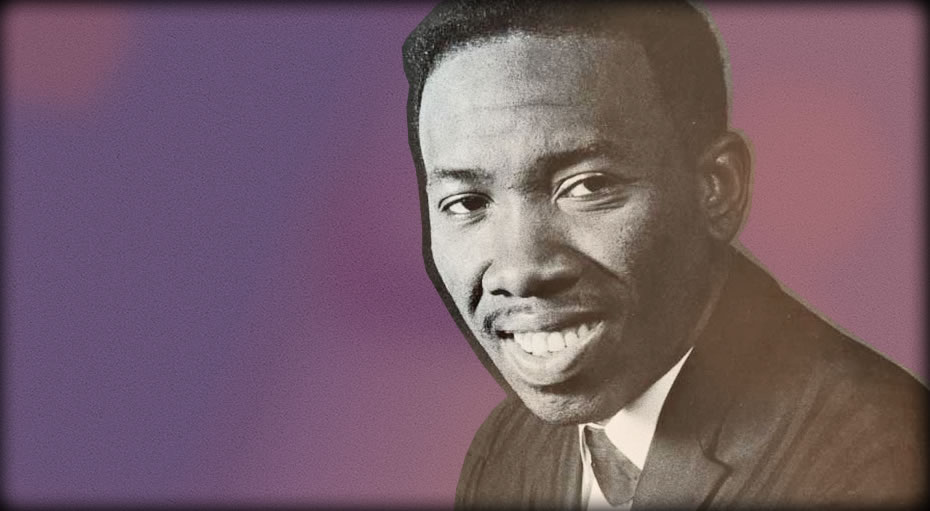
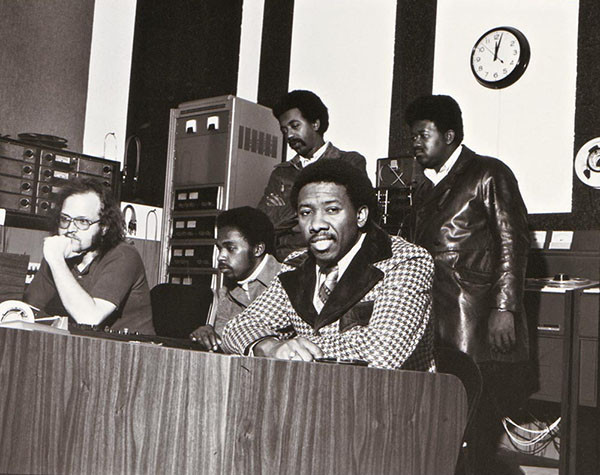
SPOOKY TOOTH’S ISLAND RECORDS YEARS.
Spooky Tooth’s Island Record Years.
All too often, some bands don’t get the credit they deserve, and that was the case with Spooky Tooth, who for a time, pioneered the use of twin keyboards. They lead the way and soon, other bands were following in their wake. By then, the Spooky Tooth story was over.
Spooky Tooth were only together seven years between 1967 and 1974, but managed to release eight seven albums. They could’ve become one of the biggest British bands of the late-sixties, early-seventies. However, Spooky Tooth wandered down a rocky road. That was the case since for a lot longer.
The Spooky Tooth story started in 1963, when The V.I.P.s were founded in Carlisle, Cumbria by lead vocalist Mike Harrison and bassist Greg Ridley. Over the next four years, The V.I.P.s lineup evolved. Rhythm guitarist Frank Kenyon, lead guitarist Jimmy Henshaw, drummer Mike Kellie and guitarist Luther Grosvenor were members between 1963 and 1967. Other musicians played a walk-on roll on The V.I.P.s’ story. This included Keith Emerson whose keyboards would play a starring role in The Nice and Emerson, Lake and Palmer. However, by the time The V.I.P.s decided to change direction musically, Keith Emerson had left the band.
For the four years they were together, The V.I.P.s played blues and R&B. By 1967, they decided that to change direction musically. So The V.I.P.s changed their name to Art and recorded their one and only album, Supernatural Fairy Tales.
Supernatural Fairy Tales.
In 1967, the newly named Art found themselves signed to Chris Blackwell’s Island Records. Art were about to go into the studio with producer Guy Stevens, so began work on their debut album.
By then, Art’s lineup featured drummer Mike Kellie and guitarist Luther Grosvenor, bassist Greg Ridley, guitarist Luther Grosvenor and vocalist and keyboardist Mike Harrison. The four members of Art got to work on what became Supernatural Fairy Tales.
For their debut album Supernatural Fairy Tales, the four members of Art wrote ten tracks. They would be augmented by covers of The Young Rascals’ Come on Up and Buffalo Springfield’s For What It’s Worth. Recording took place at two studios.
Pye Studios was where the majority of Supernatural Fairy Tales was recorded. Some recording took place at Olympic Studios. At the two studios, producer Guy Stevens, whose career was in the ascendancy, took charge of production. He guided Art through the maze that’s recording a debut album. The result was Supernatural Fairy Tales, which became a cult classic.
When critics heard Supernatural Fairy Tales, the reviews of Art’s debut album were mostly positive. Its progressive, psychedelic rock sound was decidedly on trend. It tapped into a sound that was commercial. Surely, Supernatural Fairy Tales would prove a commercial success?
Sadly, when Supernatural Fairy Tales was released in the Autumn of 1967, the album wasn’t a commercial success. This was disappointing for Art and Island Records.
Shortly after the release of Supernatural Fairy Tales Art split-up. However, like a phoenix from the ashes rose a new band, Spooky Tooth.

The Birth Of Spooky Tooth.
Gary Wright was also a psychology student, who had travelled to Berlin to finish his studies. That was where Gary Wright formed the band The New York Times with some American expats and a German bassist. They had opened for Traffic, and were thinking about recording an album. So Gary Wright contacted his old friend Jimmy Miller. The producer was working for Island Records, and suggested that The New York Times hotfoot it to London.
When The New York Times arrived in London, the recording sessions didn’t go to plan. The rest of the band split, leaving Gary Wright. It was then, in October 1967, that Gary Wright was introduced to the former members of Art and they formed a new band, Spooky Tooth.
It’s All About.
Straight away, work began on Spooky Tooth’s debut album. The new recruit quickly made his presence felt. Whereas the four members of Art cowrote most of their debut album Supernatural Fairy Tales, that wasn’t the case with Spooky Tooth.
Gary Wright penned Sunshine Help Me and cowrote another six tracks. This included It Hurts You So and Forget It, I Got It with his ole buddy Jimmy Miller. The Wright and Miller partnership weren’t finished. They cowrote Love Really Changed Me with Luther Grosvenor. That trio joined Mike Harrison in penning Here I Lived So We. Luther Grosvenor and Gary Wight also cowrote Bubbles. Spooky Tooth was quickly becoming the Gary Wright show.
If the other members felt uncomfortable that Chris Wight was playing a leading role in Spooky Tooth. He was friends with Jimmy Miller, who was chosen to produce It’s All About. He just happened to be friends with Island Records’ owner Chris Blackwell. To onlookers, these relationships looked too cosy. After all, it was Chris Blackwell who introduced Gary Wright. He would join the rest of Spooky Tooth at Olympic Studios.
Island Records’ recording sessions were notorious for only allotting a specific amount of time to record an album. Woe betide the band and producer who went over budget. Spooky Tooth had twelve songs to record when they entered the studio in November 1967. This included covers of Janis Ian’s Society’s Child, Bob Dylan’s Too Much Of Nothing and John D. Loudermilk’s Tobacco Road. Along with the songs penned by members of Spooky Tooth, the twelve songs became It’s All About.
Before the release of It’s All About in June 1968, critics had their say on Spooky Tooth’s debut album. They were won over by It’s All About. Many critics gave the albums rave reviews. Some critics liked that Spooky Tooth had two different vocalists. This was uncommon. However, with Mike Harrison and Gary Wright sharing the lead vocals, this allowed the band to take their music in a variety of directions. On It’s All About, this included blues, rock and psychedelia. Despite winning over critics, record buyers weren’t convinced.
When It’s All About was released in June 1968, the album wasn’t the success many had forecast. This would soon change.
Spooky Tooth were about to become one of Europe’s most popular live bands. Then in August 1968, Spooky Tooth were invited to tour America. This was a game-changer. Especially when Spooky Tooth were invited to play at one of the most prestigious venues in America, the Fillmore West in San Francisco.
Promoter Bill Graham invited Spooky Tooth to play the Fillmore West. This was a rite of passage for bands touring America. It was a signal they had arrived. Spooky Tooth were going up in the world, so Island Records’ thoughts turned to their sophomore album, Spooky Two.

Spooky Two.
Unlike their debut album, Spooky Two only featured eight songs. Partly, this was why Spooky Too was a leaner, more focused album. Again, Gary Wright who had assumed the role of Spooky Tooth’s songwriter-in-chief.
Gary Wright penned four tracks and cowrote three others. This included Feelin’ Bad and I’ve Got Enough Heartaches with drummer Mike Kellie. Mike Harrison and Luther Grosvenor cowrote Waitin’ for the Wind with Gary Wright. Spooky Two’s other track, was a cover of Larry Weiss’ Evil Woman. These songs were recorded at Morgan Studios, London.
Just like It’s About You, Spooky Two was produced by Jimmy Miller. Recording began in November 1968, and Spooky Tooth began recording what’s now considered their greatest album, Spooky Two.
Once Spooky Two was complete, the release was scheduled for March 1969. This didn’t leave much time to promote the album. However, the reviews did a good job of this. Spooky Two was hailed a masterpiece of blues, hard rock, psychedelia and classic rock. Luther Grosvenor’s guitar playing was at the heart of the album’s success. It was loose, but fluid. Spooky Tooth’s played hard, raw and rock on Spooky Too. Critics forecast that Spooky Two was going to be Spooky Tooth’s breakthrough album.
That proved to be the case. On its release in March 1969, Spooky Two reached number forty-four in the US Billboard 200. This resulted in Spooky Tooth’s profile rising.
Suddenly, they were playing in front of bigger audiences on nearly every continent. Other musicians wanted to work with Spooky Tooth. This included French electronic musician, Pierre Henry.
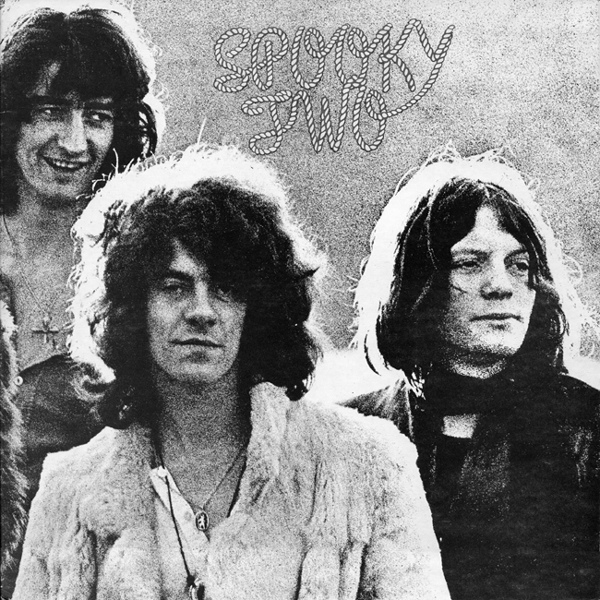
Ceremony.
After the release of Spooky Too, there was a change to Spooky Tooth’s lineup. In 1970, bassist Greg Ridley was asked to join Humble Pie. He agreed, and Andy Leigh was drafted in as his replacement. This was the first, but not the last change in Spooky Tooth’s lineup.
After the commercial success and critical acclaim of Spooky Too, Spooky Tooth’s star was in the ascendancy. Suddenly, people wanted to work with Spooky Tooth. This included French electronic musician, Pierre Henry.
He described himself as a found-object” composer. Pierre Henry took everyday objects and transformed them into an instrument. This wasn’t a new concept.
Pablo Picasso had pioneered the idea in 1912, when he pasted aprinted image of chair caning onto his painting Still Life with Chair Caning. Turning everyday objects into musical instruments took the idea further. That’s what Pierre Henry, and many other moderne musicians did.
Originally, Spooky Tooth were collaborating with Pierre Henry. It was his album. The new lineup of Spooky Tooth were essentially his backing band, on Ceremony.
For Ceremony, Pierre Henry and Gary Wright wrote six tracks. He and the rest of the new lineup of Spooky Tooth made their way to France. It was agreed that Pierre Henry and Spooky Tooth would co-produce Ceremony, due to the fact the album takes the form of a church service.
Quickly, Spooky Tooth recorded their parts. This left Pierre Henry to play synths and take charge of electronics on five tracks. On Hosanna, which closed Ceremony, Spooky Tooth took centre-stage. It was Ceremony’s Magnus Opus. Once the recording was complete, Spooky Tooth headed home.
Having returned home, Spooky Tooth were sent a copy of Ceremony. Gary Wright didn’t like what he heard. He was straight on the phone to Chris Blackwell, urging him not to release Ceremony. This didn’t work.
Chris Blackwell disagreed, telling Gary Wright: “people will love this album. We have to put this out.” According to Gary Wright, the rest of Spooky Tooth didn’t want Ceremony released. He went as far as to say: “it was against our wishes.” He thinks that the “release of the album lead to the initial breakup of the band.”
With Island Records determined to release Ceremony, December 1969 was scheduled as the release date. Before that, critics had their say on Ceremony. This fusion of rock and avant-garde was billed as an album from Spooky Tooth and Pierre Henry. Reviews were mixed. It wasn’t what most critics had expected from Spooky Tooth. The problem Mike Harrison says was;”people thought it was Spooky Tooth’s third album.”
When Ceremony was released in December 1969, it reached just ninety-two in the US Billboard 200. Spooky Tooth were going backwards. That was only part of the story.
All wasn’t well within Spooky Tooth. There was disharmony within the ranks. Mike Kellie believes things would’ve been different if Spooky Tooth: “had independent management.” They could’ve been an arbiter in the conflicts. Without that, Spooky Tooth split-up.

The Last Puff.
That wasn’t the end of the Spooky Tooth story. Instead, it was just the end of a chapter. Mike Harrison, Mike Kellie and Luther Grosvenor remained. Gary Wright exited stage left. So did bassist Andy Leigh. In their place, came some new faces.
Among them, were guitarist Henry McCullough, bassist Alan Spenner and Chris Stainton. He played bass, piano and organ. His versatility would be put to good use on The Last Puff, which was billed as an album from Spooky Tooth Featuring Mike Harrison.
For The Last Puff, seven cover versions were chosen. Among them were Lennon and McCartney’s I Am The Walrus; Joe Cocker and Peter Nichols’ Something to Say; David Ackles’ Down River and Elton John and Bernie Taupin’s Son of Your Father. New recruit Chris Stainton contributed The Last Puff. Ironically, The Wrong Time a song penned by Gary Wright and Hugh McCracken. Given Gary Wright had just left Spooky Tooth this seemed a strange decision.
Recording of The Last Puff took place at Island Studios, London. Producing the album was Island Records’ owner Gary Blackwell and Chris Stainton. Once the new lineup of Spooky Tooth finished recording The Last Puff, it was released in July 1970.
Critics however, received advance copies of Spooky Tooth Featuring Mike Harrison’s album The Last Puff. Critical acclaim accompanied this album of art rock, blues rock, psychedelia and rock. It seemed the loss of two members hadn’t derailed Spooky Tooth.
That seemed to be the case. The Last Puff proved more successful than Ceremony, reaching number eighty-four in the US Billboard 200. However, not long after the release of The Last Puff, Spooky Tooth split-up.
That looked like the end of the line for Spooky Tooth. Island Records were dismayed. They had just lost one of their most popular groups.
So a year later, in 1971, Island Records repackaged and rereleased It’s All About as Tobacco Road. When the album was released, it reached number 152 in the US Billboard 200. That many people thought, was Spooky Tooth’s swan-song. It wasn’t.

You Broke My Heart So I Busted Your Jaw.
In 1972, Spooky Tooth reformed, with a new lineup. The only musician who had played on The Last Puff was Mike Harrison.
Luther Grosvenor had joined Mott The Hoople, where he dawned the alias Ariel Bender. His replacement in Spooky Tooth, was future Foreigner guitarist Mick Jones. Mike Kellie was replaced by drummer and percussionist Bryson Graham. Chris Stewart became Spooky Tooth’s fourth bassist. However, the biggest surprise, was the return of Gary Wright.
Quickly, Gary Wright resumed the role of Spooky Tooth’s songwriter-in-chief. He wrote six of the eight songs, and cowrote Times Have Changed with Mick Jones. The other song on You Broke My Heart So I Busted Your Jaw was the Bryson Graham composition This Time Around. These eight songs were recorded at three London studios.
Recording of You Broke My Heart So I Busted Your Jaw. Olympic Studios, Island Studios and Apple Studios. It seemed no expense was being spared for Spooky Tooth’s comeback album. These were some of London’s top studios. One expense that was saved was a producer. Spooky Tooth produced You Broke My Heart So I Busted Your Jaw. It was scheduled for release in ay 1973.
Many of Spooky Tooth’s fans eagerly awaited their comeback album. However, when reviews were published, they were mixed. Some critics felt that You Broke My Heart So I Busted Your Jaw wasn’t Spooky Tooth’s finest hour. That’s despite Spooky Tooth combining progressive rock, hard rock and blues rock. While hard rock was still popular, progressive rock dominated the charts. However, other critics were won over by Spooky Tooth’s comeback album.
Other critics liked the dual keyboard sound on You Broke My Heart So I Busted Your Jaw. This brought a new dimension to Spooky Tooth’s sound. There was no consensus. For once, a Spooky Tooth album had divided the critics’ opinion. However, record buyers were of one mind.
On the release of You Broke My Heart So I Busted Your Jaw, in November 1973, the album reached number eighty-four in the US Billboard 200. This matched the popularity of The Last Puff. Spooky Tooth were back to where they were before Ceremony. What could go wrong?
Witness.
After making their comeback with You Broke My Heart So I Busted Your Jaw, Spooky Tooth looked as if their career was back on track. Then there was a change in Spooky Tooth’s lineup.
This time, Spooky Tooth’s original drummer Mike Kellie made a comeback, and replaced recent recruit Bryson Graham. However, that wasn’t the end of Bryson Graham. He played on some of the tracks on Witness. It was a tale of two drummers.
One thing didn’t change, Gary Wright wrote most of Witness. He penned six of the nine tracks, and cowrote the other three tracks with members of Spooky Tooth. Considering the other members weren’t regarded as songwriters, they were proving a reliable source of songs. Gary Wright and Chris Stewart penned Don’t Ever Stray Away. Mick Jones collaborated with Gary Wright on All Sewn Up. Drummer Mike Kellie celebrated his return by cowriting Pyramids with Chris Stewart. It seemed the other members of Spooky Tooth had hidden talents.
They also produced Witness, which was recorded at Olympic Studios and Island Studios, in London. At two of London’s premier studios, Spooky Tooth recorded their sixth studio album. Little did anyone realise, but this would be the last time one of the band set foot in a recording studio with Spooky Tooth. It was the end of an era.
Sadly, with one of the band about to call time on their career with Spooky Tooth, the reviews of Witness were mixed. Not for the first time, a Spooky Tooth album divided opinion. Some critics enjoyed Witness mixture of hard rock, blues rock, progressive rock and psychedelia. Others felt the sound was dated. Record buyers had the deciding vote.
They too were undecided. When Witness was released in November 1973, it stalled at ninety-nine in the US Billboard 200. Witness hadn’t matched the commercial success of You Broke My Heart So I Busted Your Jaw. That was disappointing. However, it wasn’t as disappointing as losing one of the band’s most important figures.
Mike Harrison, who founded The V.I.P.s ten years previously, called time on the band he cofounded with Greg Ridley. The group’s cofounder wanted to pursue other projects. Another departure was bassist Chris Stewart. While he was a loss, his departure didn’t leave the void that Mike Harrison’s left. It was a case of the King is dead, long live the King.
The Mirror.
By 1974, music was changing, and changing fast. Progressive rock was one of the most popular genres. It was the most cerebral type of rock music. Glam rock however, was all style and no substance. Then there was Art Rock, which groups like Roxy Music pioneered. Heavy rock was still popular, with Led Zeppelin and Bad Company two of it’s finest purveyors. Spooky Tooth had previously aligned themselves with hard rock. Now they decided to change direction.
With Spooky Tooth changing direction, a new member joined the band. Val Burke had featured on Witness, but on Mirror became a permanent member. Again, Mike Kellie and Bryson Graham both featured on Witness. Drummer, percussionist and keyboardist Mike Patto, was another new addition. It was a very different version of Spooky Tooth that began work on The Mirror.
Gary Wright wrote just two songs and cowrote the other seven songs. The other members of the band seemed to want to contribute to The Mirror. Mick Jones cowrote Fantasy Satisfier with Gary Wright. They cowrote Two Time Love and The Mirror with Mike Patto. He joined Gary Wright in penning The Hoofer. Along with Kyle and I’m Alive, which Gary Wright cowrote, these nine songs became The Mirror.
When recording of The Mirror began, Gary Wright, Eddie Kramer and Mick Jones were co-producing the album. It quickly became apparent to onlookers, that Spooky Tooth had changed direction. Gospel, pop and R&B combined with rock on The Mirror. Once it was complete, Island Records announced The Mirror would be released in October 1974.
Before then, critics had their say on The Mirror. Most were impressed by the new Spooky Tooth. Some weren’t convinced. The new lineup of Spooky Tooth was a shadow of its vainglorious self. Cynics suggested that Spooky Tooth had dumbed down their sound in the hope of commercial success. If that was the case, it backfired on Spooky Tooth.
When The Mirror was released in October 1974, it only reached 130 in the US Billboard 200. It became Spooky Tooth’s least successful album. However, there was a twist in the tale.
A month after the release of The Mirror, Spooky Tooth announced they were splitting up. The members of Spooky Tooth joined other bands, or embarked upon new projects. Some critics said it was the end of an era.
In reality, the departure of Mike Harrison marked the end of an era. He had founded The V.I.P.s with Greg Ridley in Carlisle, in 1963. The V.I.P.s became Art, and then Art became Spooky Tooth. However, Spooky Tooth without Mike Harrison was gin without the tonic. He was part and parcel of the band’s sound, and been a vital cog in the Spooky Tooth Wheel. Without him, the band limped on, and a year later, literally fell apart.

That was the end of Spooky Tooth until 1999, when they reformed and released Cross Purpose. Mike Harrison was back at the helm. Gary Wright wasn’t part of the newly reformed Spooky Tooth. Making a comeback in the Spooky Tooth story was Island Records founder, Chris Blackwell. He produced Cross Purpose, which proved to be Spooky Tooth’s last studio album.
Spooky Tooth went on to released two live albums. The first was Live In Europe in 2001. Another six years passed before Nomad Poets-Live In Germany 2004 was released in 2007. By then, Spooky Tooth were enjoying a resurgence in popularity. It was too little too late for a group who musical history should remember as pioneers and innovators.
It was Spooky Tooth who pioneered the use of twin keyboards in their music. This was something that many other groups went on to adopt later, and contributed to the commercial success and critical acclaim they enjoyed. Spooky Tooth were also one of the few rock bands to use two vocalists. While this had ben tried in other genres, very few rock bands used two vocalists. That was until Spooky Tooth, who embraced also innovation.
Probably Spooky Tooth’s most ambitious and controversal album who collaborated on the album Ceremony with French electronic musician, Pierre Henry. However, b then, Spooky Tooth had already been combining disparate musical genres on their albums. Elements of blues and blues-rock to hard rock, psychedelia and rock featured on Spooky Tooth’s albums. This ensured that their music stayed relevant during what was a golden age for rock music.
During this period competition was fierce. Many of the top rock bands came from Britain, including Bad Company, Black Sabbath, Deep Purple and Led Zeppelin. They were among the hardest rocking bands of the late-sixties and early-seventies. This meant they were rivals of Spooky Tooth. However, Bad Company, Black Sabbath, Deep Purple and Led Zeppelin enjoyed far more commercial success and critical acclaim than Spooky Tooth. That’s despite the quality of music Spooky Tooth released. Looking back, Spooky Tooth never quite fulfilled their potential.
This wasn’t helped by changes in lineup and breakups. Despite this, Spooky Tooth still managed to make some of the best, and most memorable rock music of the late-sixties and early-seventies. This music could’ve and should’ve enjoyed much more commercial success and critical acclaim. Even one of the members of Spooky Tooth realised this.
Mike Kellie realised that things would’ve been different if Spooky Tooth: “had independent management” throughout their career. Maybe, with the right manager guiding their career, Spooky Tooth would’ve enjoyed a settled lineup; and The Island Records Years would’ve lasted longer than seven years and seven studio albums; and that Spooky Tooth would be receiving the credit they deserve.
Spooky Tooth’s Island Record Years.

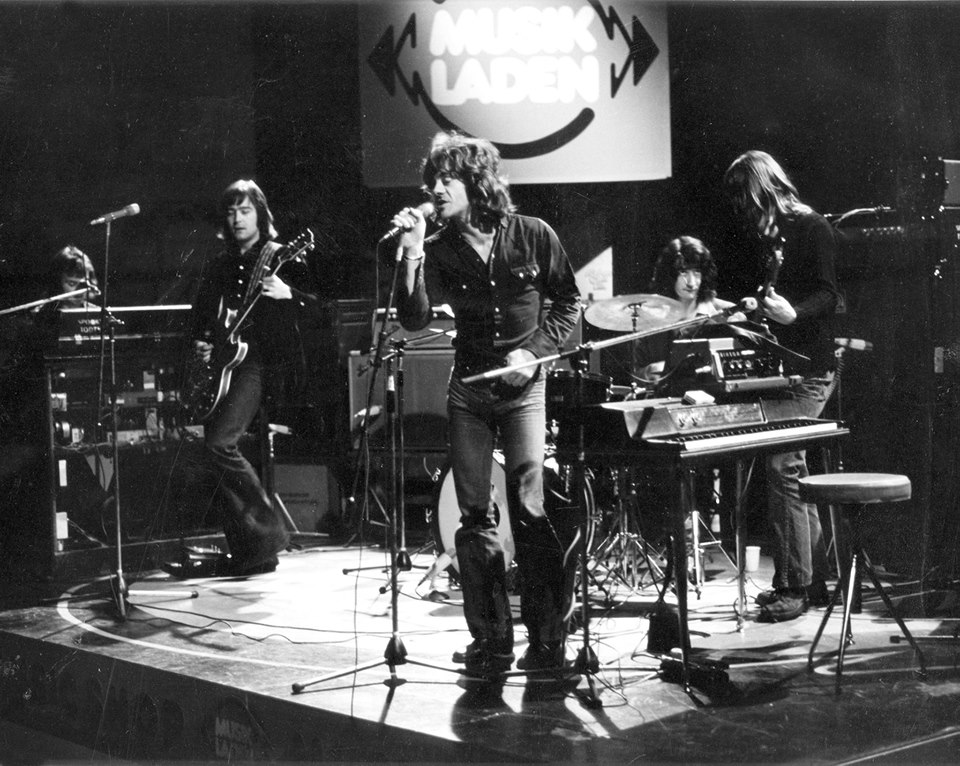

THE STORY OF MARY LOVE.
The Story Of Mary Love
The day that Mary Love entered a talent contest in a local club was that the day that her life changed forevermore. She sang a cover of Etta James’ Somebody’s Got A Hold On Me and won. This resulted in Mary being hired to sing every Thursday.
She was paid $8 a night and accompanying Mary Love were The Vows who she had befriended. They were her friends and were protective of Mary.
The next big break came when Sam Cooke’s manager J.W. Alexander heard Mary sing and gave her his card. The next day, J.W. Alexander and Mary Love met. He offered Mary the chance to sing on demos. This was her opportunity to make a life for herself.
Having started singing demos, Hal Davis heard Mary. He liked what he heard and signed Mary to Modern Records. The only problem was her name. Hal though that Mary Love was a better name for a singer. So it was Mary Love that went on to record twelve tracks for Modern Records between 1965 and 1968.
Mary Love’s Modern Records debut was You Turned My Bitter Into Sweet. It was released in April 1965, and became one of Mary biggest hit singles. The single sold especially well around the Los Angeles area. This was enough to launch Mary Love’s career. Since then, You Turned My Bitter Into Sweet has become a favourite in the UK’s Northern Soul scene, and nowadays, is regarded as a Northern Soul classic.
Following Mary’s debut single, You Turned My Bitter Into Sweet, I’ve Got To Get You Back was released as Mary’s sophomore single in August 1965. Again, it sold well in the Los Angeles area, but failed to find an audience further afield. This would be a familiar story. The exception was Move A Little Closer.
Released in in October 1968, Move A Little Closer reached number forty-eight in the US Billboard 100. This was Mary’s biggest hit. Ironically, Move A Little Closer wasn’t the A-Side. This was Let Me Know. When Move A Little Closer proved more popular, Modern Records flipped the song over, and a hit was born. For Mary, she thought her career was now underway.
Sadly, Lay This Burden Down didn’t build on the success of Move A Little Closer, when was released in October 1966. Again, it failed to chart. It was a hit locally. So was the Ashford and Simpson penned Baby I’ll Come, where Mary mixes power, passion and emotion. It’s one of Mary’s best singles. Tucked away on the B-Side is the hidden gem Satisfied Feeling on the B-Side. Released in February 1967, Mary delivers a vocal tour de force on Satisfied Feeling. After this, Mary would only release one more single for Modern Records.
Talkin’ About My Man was released in July 1967. Written by Arthur Adams, here was a ballad that seemed tailor-made for Mary. Despite this, widespread commercial success and critical acclaim eluded Mary. She did release a duet with Arthur Adams, Is That You. He seems to bring out the best in Mary. Sadly, this didn’t result in a hit single to end Mary’s time at Modern Records.
During her time at Modern Records, Mary divided her time between her solo career and singing backing vocals. Everyone from The Ikettes, Vernon Garrett and Lowell Fulson were accompanied by Mary. However, Mary was determined to make a success of her solo career.
In 1968, Mary met producers Matt Hill and Skip Layne. She recorded the anthemic The Hurt Is Just Beginning and Don’t Let It Happen. The Hurt Is Just Beginning garnered radio play in Los Angeles. This just happened to be during the trial of the Black Panther’s Huey Newton. They took to singing lyrics from the song: “The Hurt Is Just Beginning and don’t let it happen.” Not long after this, the B-Side, If You Change Your Mind, started getting radio play. It was released nationally on Josie, reaching number forty-six in the US R&B Charts. For Mary this was her second most successful single. Despite this, another three years passed before Mary released her next single.
Ironically, it was back in Sacramento that Mary met John W. Cole, friends of Mary’s grandparents. He was a businessman, who ran a chain of chemist and record shops. John wanted to expand his business. Next for John was the music business, and knew Roger Spotts, who played alongside Johnny and Shuggie Otis, two hugely talented musicians, arrangers and producers. So Roger would and arrange Mary’s next single at Ray Charles’ Los Angeles studio.
The Mary Love penned There’s Someone For Me was chosen as Mary’s next single. Roger would produce There’s Someone For Me and the B-Side, Born To Live With Heartache. Ray Charles even helped out during the session. He took charge of engineering. Beautiful, cathartic and soul-baring describes There’s Someone For Me. As for Born To Live With Heartache, Mary raises the funk factor and shows another side to her music. Both sides of this 1971 single, which was released on Elco are among some of Mary’s finest work. Sadly, history repeated itself when the single flopped. This resulted in Mary taking time out from the music industry.
It wasn’t until 1975 that Mary returned to music. She’d been raising her family and singing in nightclubs. However, she’d taken a break from recording. During that time, she’d hung out with Lou Rawls, Barry White, Willie Hutch and Dennis Edwards. Through her friendship with comedian, Rudy Ray Moore, Mary landed a part in the Blaxploitation movie Dolemite. Appearing as herself, Mary sings When We Start Making Love and Power Of Love which were part of the soundtrack released on Generation Records. That would be the last we heard of Mary for a couple of years.
Again, Mary was featuring in another film. This time it was Rudy Ray Moore’s Petey Wheatstraw. Mary penned five tracks for the film soundtrack, which was released on the Magic Disc label. Two of the tracks feature on Mary Love-Lay This Burden Down: The Very Best Of Mary Love. Joy and Loving You are gospel tinged tracks, very different from the disco inspired title-track. Unfortunately, commercial success still eluded Mary. Her career as a soul singer was almost at an end.
Over the next few years, Mary toyed with disco. She released Dance To My Music in 1979, on Inphasion. Although it wasn’t a hit in America, it was a hit in Italy. Then Mary spent three months living in Osaka, Japan, where she was part of Ah Sweet Tastes. They released a single Keep On Dancing, where Mary sings in Japanese and English. Mary’s final two releases were a 1982 cover of Tit For Tat, which was released on Elco. Mary’s final secular single was Save Me, which was released on U-Tone in 1984. After that, Mary Love became a gospel singer. .
Turning her back on secular music, Mary Love became a successful gospel singer. Over the years she became one of the most successful gospel singers. Two of her gospel albums, 2002s Incredible and 2005s Mary, Mary were certified gold, while 2000s Thankful was certified platinum. Mary Love had at last enjoyed the success her voice and undoubtable talent deserved. This commercial success was on Mary’s terms. Sadly, Mary passed away on June 23rd 2013.
She was just sixty-nine and that day soul music had lost one of its greatest female singers. Although Mary Love didn’t enjoy the commercial success and critical acclaim her music deserved, her music is popular throughout the world, especially in the UK, where Mary was always a welcome visitor. That music is a reminder of Mary Love who was one of soul’s finest female singers.
The Story Of Mary Love

THE DAMNED-THE STIFF AND CHISWICK RECORDS’ YEARS.
The Damned-The Stiff and Chiswick Records’ Years.
Not many bands are still going strong after forty-three years. Especially punk bands, which in many cases, were short-lived affairs, who released one or two singles, before calling it a day. However, there’s one punk band are still going strong after forty-three years, The Damned.
The Damned were formed in London in 1976, when members of two existing groups decided to form a new band. This included Dave Lett, Raymond Burns and Chris Millar, who previously, had been members of Masters Of The Backside. They were joined by final Brian Robertson, who had been a member of the London SS. They became The Dammed.
In The Damned, the four musicians sported new musical identities. Vocalist David Lett was known as Dave Vanian; drummer Chris Millar became Rat Scabies; bassist and future guitarist Raymond Burns sported the moniker Captain Sensible. Guitarist Brian Robertson became known as Brian James. Together as The Damned, they soon began making their presence felt in London’s nascent punk scene.
On the 6th of July 1976, The Damned made their live debut, when they supported the Sex Pistols at 100 Club. This was the start of a rivalry between the two groups, which saw one writing their name into musical history.
Having made their live debut, The Damned’s thoughts eventually turned to releasing a debut single. None of the punk groups had released a single yet. Somebody had to be first, so why not The Damned?
They headed to Pathway Studios, London, with producer Nick Lowe. That was where The Damned recorded their new single, the Brian James’ composition New Rose. On the B-Side, was a cover The Beatles’ Help, which was given a punk makeover. Once the single was recorded, it was released on October 22nd 1976, and made history.
New Rose was released by Stiff Records, and reached eighty-one in the UK single charts. It became the first single to be released by a British punk rock group. The Damned had beaten the Sex Pistols’ Anarchy In The UK to the title by five weeks. This wouldn’t the only time The Damned made musical history.
Damned, Damned, Damned.
After the success of New Rose, The Damned headed out on tour with the Sex Pistols, The Clash and The Heartbreakers. The plan was to tour Britain, taking punk to the provinces. However, by then, the Sex Pistols had released Anarchy In The UK as a single. This resulted in many venues cancelling the concerts, in case anarchy in the provinces broke out. After a shorter tour than The Damned had expected, they returned to London, and completed the recording of their debut album.
Recording of Damned, Damned, Damned took place during three sessions at Pathway Studios, London. The first was in September 1976, with the album being completed in December 1976 and January 1977. In total, it had taken just ten days to record Damned, Damned, Damned. This left just the album to be mixed. It was completed on 15th January 1977, and just a month later, Damned, Damned, Damned was released.
Before that, critics had their say on The Damned’s debut album Damned, Damned, Damned. The reviews were mostly positive, and praised the energy and humour of the songs. Most were penned by Brian James, with Tony James cowriting Fish, and Rat Scabies contributing Stab Yor Back. Closing the album was a cover of The Stooges’ I Feel Alright. It was one of the tracks where critics remarked upon drive and energy of the rhythm section. Rat Scabies’ drums and Brian James’ bass were crucial to the album’s sound and indeed, success.
When Stiff Records released The Damned’s debut album Damned, Damned, Damned, on 18th February 1977, it reached number thirty-one in the UK album charts. Making the success even sweeter, was the thought that The Damned had become the first punk band to release an album. Again, The Damned had beaten their old nemesis’ the Sex Pistols again, and in doing so, had written their way into musical history. This was becoming a habit.
Alas, The Damned’s run of breaking records came to an abrupt end on 18th February 1977. The same day as Damned, Damned, Damned was released, Neat, Neat, Neat was released as a single. It failed to even trouble the charts. There was small crumb of comfort. Neat, Neat, Neat featured a truly memorable bass line from Captain Sensible. So much so, that in 2006 Stylus magazine called Captain Sensible’s one of the thirty-third best bass line of all time. However, back in 1977, The Damned hardly had time to worry about the commercial failure of Neat, Neat, Neat.
Straight after the release of Damned, Damned, Damned, The Damned headed out on tour, to promote their debut album. Then in March 1977, The Damned got the opportunity to open for T-Rex in March 1977. Things were happening quickly for The Damned, and as spring turned to summer, they then embarked upon an American tour. The Damned became the first British punk band to tour America. Again, they had beaten the Sex Pistols to the punch. However, by August 1977, changes were afoot.
In August 1977, The Damned brought onboard Lu Edmonds as a second guitarist. Around this time, there was also an ill-conceived and ill-fated attempt to bring Syd Barrett onboard to produce their sophomore album. Sadly, by then the founder of Pink Floyd was living a reclusive lifestyle and had serious health problems. However, his onetime colleague Nick Mason agreed to produce what became Music For Pleasure.

Music For Pleasure.
Now a five piece, The Damned began work on their sophomore album, Music For Pleasure. Again, Brian James wrote much of the album. He penned six songs of the ten songs; cowrote Problem Child and Stretcher Case with Rat Scabie and joined with Dave Varian to write Your Eyes. The remaining song, Idiot Box, came from the pen of Dave Varian and Rat Scabies. However, to onlookers, Brian James was playing a major part when it came to writing The Damned’s first two albums. Without him, where would they be?
When it came to recording Music For Pleasure, The Damned had come up in the world. They headed to Britannia Row Studios, which Pink Floyd had built after recording Wish You Were Here in 1975. It was a cutting edge facility, and very different to most studios that punk bands frequented. With Nick Mason taking care of production, The Damned recorded the ten tracks that became Music For Pleasure. Once it was recorded, Stiff Records scheduled the release for late 1977.
Eventually, Music For Pleasure was scheduled for released on the 18th November 1977. Before that, critics had their say on the album. Critics were far from impressed. Part of the problem was the quality of songs. They failed to match the quality on Damned, Damned, Damned. This isn’t unusual, as often, a band have spent months, even years writing their debut album. So when asked to write an album in a short space of time, this is often a step too far. Among the few highlights were Politics, Alone, Your Eyes and Creep (You Can’t Fool Me). They just about stood up to scrutiny, in an album that some critics felt, lacked focus and musical direction. Even new addition Lu Edmonds came in for criticism, with critics doubting that he brought anything to the table. Did The Damned really need two guitarists? That some critics felt was debatable. However, Lu Edmonds almost got away lightly. Other critics went further, calling the album a disaster and a musical misjudgement. This didn’t augur well for the released of Music For Pleasure.
Especially when Stretcher Case Baby had been released as the lead single, on 3rd July 1977, but never came close to troubling the charts. This must have worried members of The Damned and everyone at Stiff Records. Things got worse when Problem Child was released on the 28th September 1977, and failed to chart. Surely things couldn’t get any worse for The Damned?
By then, they must have been fearing the worst, and preparing for what was to come. However, even The Damned couldn’t have foreseen what would happen. When Music For Pleasure was released on the 18th November 1977, the album failed to chart. Neither did final single released from Music For Pleasure.
When Don’t Cry Wolf which was released in December 1977, it failed to chart. It became The Damned’s fourth consecutive single that failed to chart. Only their debut single New Rose charted, and even then, reached a lowly eighty-one in the UK single charts. These were worrying times for The Damned.
Little did The Damned know that two members of the band were planning to quit. Don’t Cry Wolf would prove to be two members of The Damned’s swan-song. That was in the future. Before that, The Damned were hit by two huge blows.
The first was when Stiff Records dropped The Damned. Suddenly, the band who were at the vanguard of the punk movement were without a label. To make matters worse, one of their most talented musicians walked away from the band.
Rat Scabies was so disappointed with Music For Pleasure, that he quit The Damned. Given the importance of Rat Scabies’ drums in The Damned’s sound, it was a blow the band wouldn’t recover from.
That is despite bringing future Culture Club drummer Jon Moss onboard. He couldn’t replicate the sound of Rat Scabies, and in February 1978, The Damned split-up for the first time.
For the next year, the members of The Damned worked on a variety of projects. However, in late 1978, Rat Scabies had formed a new band, Les Punks for a one off gig. Its lineup featured vocalist Dave Vanian, Captain Sensible and a rhythm section of drummer Rat Scabies and Motorhead’s Lemmy on bass. So successful was the Les Punks’ gig, that they reunited in early 1979.
When Les Punks reunited, they decided to change their name to The Doomed. This as close as they dare to using The Damned name. If they had performed as The Damned, there was the likelihood that they would encounter problems with the use of the band’s trademark. By then, Captain Sensible had switched to guitar and keyboards. This left the band without a bassist. While Lemmy filled in when recording demos and playing a few live dates, he had other commitments.
This left The Doomed searching for a replacement bassist. They thought they had found it in Henry Badowski. He spent part of 1978 playing with The Doomed. Then Henry Badowsk was eventually replaced by The Saints’ former bassist Algy Ward. The Doomed’s problematic bass position had been solved. At last, The Doomed had a settled lineup. The only blip came in December 1978, during The Doomed Scottish tour. Gary Holton had to briefly fill in for Dave Vanian. Apart from that, things were looking up for The Doomed.
By April 1979, The Doomed were now The Damned. The group was now, officially able to play and record as The Damned. It was a big relief to the band, whose career had been on hold. Now The Damned could begin to play live and sign a new record deal.
The Damned made their ‘second’ debut in April 1979. By then, Dave Vanian’s vocal style had changed, and he was no longer just singing in his former high baritone style, but crooning. It came as a shock to those who remembered The Damned’s early days as punk pioneers. Another difference was The Damned had adopted a much more melodic style. It was a mixture of speed and volume, and driven along by Captain Sensible’s keyboards. The times they were a changing.
Later in 1979, The Damned’s good luck continued, when they signed a record deal with Chiswick Records. Not long after signing their new recording contract, The Damned headed to Wessex Studios to record what became Machine Gun Etiquette.
Machine Gun Etiquette.
Before heading to Wessex Studios, The Damned had written ten new tracks and cowrote I Just Can’t Be Happy Today with Giovanni Dadomo. Gone were the days when The Damned were reliant upon one songwriter to write most of an album. Belatedly, The Damned were a democracy as far songwriting went. Machine Gun Etiquette was a much more collaborative album. It was also album where they paid homage to one of their musical heroes, MC5.
On their debut album Damned, Damned, Damned, The Damned covered The Stooges I Feel Alright. This time around, The Damned covered MC5s Looking at You. This was fitting given the new direction The Damned’s music was about to head in on Machine Gun Etiquette.
The Damned would combine elements of sixties garage rock, pop, punk and psychedelic rock. There was also a more experimental sound Machine Gun Etiquette. It seemed as if The Damned were in the process of finding themselves musically. Helping them to do so, was producer Roger Armstrong.
When The Damned arrived at Wessex Studios, London, they immediately encountered another of the punk pioneers, The Clash. They were in the process of recording their classic album, London Calling. The new lineup of The Damned must have been hoping that their comeback album would enjoy some of the success that previous Clash albums had enjoyed. They were now one of the biggest British bands, while the third lineup of The Damned were starting over.
This new lineup of The Damned featured vocalist Dave Vanian; drummer Rat Scabies; bassist Algy Ward and Captain Sensible who was switching between guitar and keyboards. It took two lots of sessions to record Machine Gun Etiquette. The first began in March, and finished in May 1979. After a month which The Damned spent playing live, they returned to the studio in July. They spent the next two months completing their third album Machine Gun Etiquette. By August 1979, The Damned were ready to begin their comeback.
For The Damned’s comeback single, the album opener Love Song was chosen, and when in it was released in April 1979, it caught the imagination of the record buying public. Love Song reached number twenty in the UK, and was then released in France, Germany and Holland. The Damned had just enjoyed the biggest hit of their career so far. Soon, The Damned were on a role.
Having enjoyed a hit single with Love Song, The Damned were keen to repeat the experience. The song that was chosen for their second single, was Smash It Up. It’s a song of two parts, where the melodic first half giving way to riotous fusion of pop and punk. It was critique of hippie culture, and a call for political revolution. This the BBC took offence at, fearing it would lead to anarchy in the UK. However, this was the best thing that could happen to the song.
Smash It Up was released on the 28th September 1979, with ironically Burglar on the B-Side. Burglar saw Rat Scabies take charge of the lead vocal. Suddenly, curiosity got the best of record buyers, who bought the single to see what the fuss was about. When this was combined with The Damned fans who bought Smash It Up, it reached thirty-six in the UK. The Damned’s call for political revolution, had been a successful and profitable exercise.
Having released two hit singles from Machine Gun Etiquette, things were looking good for The Damned as November 1979 release date approached. There was only one hurdle left to overcome, the critics. All The Damned had to do, was avoid the slings and arrows of over critical critics.
Unlike their sophomore album Music For Pleasure, Machine Gun Etiquette was hailed a resounding success by critics. Some went as far as to use the c-word, and called Machine Gun Etiquette a classic. This some critics said, was The Damned’s second classic. However, whether Damned, Damned, Damned was a classic is debatable. Machine Gun Etiquette certainly was
Critics enjoyed, embarked and welcome The Damned’s exploration through sixties garage rock, pop, punk and psychedelic rock. They hadn’t turned their back on their punk roots, but The Damned knew that their music had to evolve. What hadn’t changed was The Damned’s ability to create music that is witty and sometimes, full of social comment. Elsewhere, The Damned swagger their way through Machine Gun Etiquette, as they created riotous, rocky and memorable music. It’s akin to an adrenaline rush as The Damned rock, and rock hard. They kick out the jams, referencing Detroit’s finest MC5 on Looking At You, a blistering, driving fusion of garage rock and punk. However, one of the highlights is I Just Can’t Be Happy Today which stylistically and sonically, is reminiscent of the Electric Prunes. Hooks aren’t in short supply on this fusion of pop and rock. However, on other songs, other sides to The Damned shines through on Machine Gun Etiquette which was hailed a stonewall classic.
When Machine Gun Etiquette was released in November 1979, it was to critical acclaim. Ever since their comeback, The Damned’s luck had changed. This continued when Machine Gun Etiquette reached number thirty-one in the UK album charts. Eventually, it was certified silver. The Damned had released the most successful and finest album of their career, Machine Gun Etiquette.
Nowadays Machine Gun Etiquette recognised as a classic album. The Damned come of age on Machine Gun Etiquette. No longer were they the punk band that made their debut on Damned, Damned, Damned. While The Damned hadn’t turned their back on their punk roots, they had moved towards a much more rocky sound.
The Damned incorporate elements of sixties garage rock, pop and psychedelia to their punk roots on Machine Gun Etiquette. This resulted in a much more accessible album than their first two albums. Machine Gun Etiquette had a much wider appeal than Damned, Damned, Damned and Music For Pleasure. Partly, this was to do with the new lineup.
With Captain Sensible switching to keyboards and guitar, this left a void. A new bassist was needed, and Algy Ward fitted the bill. He slotted into the rhythm section alongside drummer Rat Scabies, and they formed a formidable partnership. Meanwhile, Captain Sensible proved a talented keyboardist and guitarist. This game of musical chairs had worked. So had the other change since The Damned had reformed.
This final change was that no longer were The Damned reliant upon one songwriter. Suddenly, the band was a democracy as far as songwriting was concerned. Their lyrics were clever, controversial, witty and sometimes, full of social comment. These songs came to life in the Wessex Studios, and gave The Damned the most successful album of their career. The big question was could they surpass the success of Machine Gun Etiquette?
The Black Album.
Having just released the most successful album of their career, and one that was hailed a classic, The Damned got to work on their fifth album. Most bands would’ve have decided to pickup where they left on Machine Gun Etiquette. However,The Damned weren’t most bands. Instead, they were about to head off on a musical journey through disparate genres.
For The Black Album, David Vanian, Rat Scabies, Captain Sensible and Paul Gray wrote ten new tracks. The Damned also wrote Wait For The Blackout with Billy Karloff, and Dr Jekyll and Mr Hyde with Giovanni Dadomo. These twelve tracks were recorded at two studios.
One of studios that were used was the famous Rockfield Studios, in Monmouthshire. It had been where many classic albums had been recorded. Now The Damned became the latest group to use its prestigious studios. The rest of The Black Album was recorded at Shepperton Studios, Shepperton, in Surrey These studios became a home from home for The Damned as they recorded The Black Album.
When recording of The Black Album began, The Damned had decided to produce the album themselves using the alias The Kings Of Reverb. The exception was History Of The World (Part One), which Hans Zimmer who played synths, produced. The rest of The Black Album featured just The Damned.
For the second album in a row, drummer Rat Scabies had a new partner in the rhythm section. This time, it was bassist Paul Gray. He joined Captain Sensible who played electric guitar, acoustic guitar and keyboards. As usual, David Vanian took charge of the vocals. As the sessions began, it quickly became apparent that The Black Album wasn’t going to very different to Machine Gun Etiquette, in more ways than one.
Quickly, it became apparent that The Black Album was a much different album from its predecessor. The Damned were veering between, gothic rock, indie rock, new wave, psychedelia, punk and rock. It’s a much more eclectic, expansive album. This made the title The Black Album all the more fitting. So would the album cover. That was still to come.
The other difference between Machine Gun Etiquette that The Black Album was a much longer album. One track, Curtain Call, lasted just over seventeen minutes. There was no way that The Black Album would fit on one album. However, there wasn’t enough music to fit on two albums. Then came the idea to have side four feature live tracks.
Fortunately, The Damned had recorded a concert especially for members of their fan club. It had been recorded at Shepperton Studios, on 26th July 1980. Six songs were chosen from the recording of the concert, and found their way onto side four of The Black Album. This included Damned classics and favourites, including Love Song, Second Time Around, Smash It Up (Parts 1 & 2), New Rose, I Just Can’t Be Happy Today and Plan 9 Channel 7. These six songs were a tantalising taste of what The Damned live sounded like. So was the entire recording of the fan club concert, which was released in 1982 as Live Shepperton 1980. By then, The Black Album had been released.
Before that, The Damned decided that the The Black Album deserved an album cover worth of its title. Against a plain black album cover, Damned was written in gothic script, which holly leaves surrounding the nameplate. However, when The Black Album was reissued in 1982 as a single album, the album cover parodied The Beatles’ White Album. However, even in its present form, the album cover was perfect for The Damned’s ambitious, sprawling and genre-hopping double album, The Black Album. It would be released in October 1980, but before that, the lead single from The Black Album was released.
Just a month prior to the release of The Black Album, The History Of The World (Part 1), was released as single in September 1980. On the flip side was a non album track Sugar and Spite. When The History Of The World (Part 1) was released, it came with the credit ‘credit:’ “overproduced by Hans Zimmer.” Ironically, the synth driven History Of The World (Part 1) was a poppy and polished track, and one that radio stations should’ve picked up on. Alas, it reached just fifty-one in the UK singles’ charts. This was another disappointment.
Meanwhile, critics had received their advance copies of The Black Album. It was an ambitious, sprawling double album, where The Damned experimented, flitting between, and sometimes, combining disparate musical genres. This includes on future Damned classic Wait For The Blackout, a dramatic fusion of punk and psychedelia. There was also The Damned’s first foray into gothic rock, which the album cover more than hinted at. Gothic rock was a genre The Damned would embrace throughout the rest of the eighties. That was still to come. Before that, The Black Album was released.
Eleven months after the release of Machine Gun Etiquette, The Black Album was released by The Damned in October 1980. It reached number twenty-nine in the UK album charts, which was the highest placing of The Damned’s four albums. However, the only slight disappointment was that The Black Album wasn’t certified silver like its predecessor. However, the commercial success of The Black Album was a reason to celebrate. A hit single however, would be the cherry on the cake.
So The Damned released There Ain’t No Sanity Clause in November 1980. It wasn’t a track from The Black Album. Instead, it was hoped that There Ain’t No Sanity Clause might make an impact on the lucrative British Christmas singles market. It wasn’t to be, and the single stalled at ninety-seven in the UK singles charts. Maybe The Damned would have better luck next time?
In February 1981, Dr Jekyll and Mr Hyde was released as the second single from The Black Album. Alas, the single failed to chart. The Damned were out of luck.
The Black Album was the final album The Damned released for Chiswick. However, a year later, in May 1982, Chiswick imprint Big Beat Records, released Wait For The Blackout as a single. Sadly, lightning struck twice, and the single failed to chart. This was a slightly disappointing end to The Damned’s time at Chiswick. However, the two albums that The Damned had released on Big Beat Records, Machine Gun Etiquette and The Black Album were two most successful albums of their career. Machine Gun Etiquette is a classic album, while The Black Album finds The Damned’s music evolving.
The Black Album find The Damned moving towards goth rock, which they went on to embrace throughout the eighties. There’s also a psychedelic influence to The Black Album, as The Damned begin to move away from their punk roots. They didn’t cut the ties entirely, for fear of alienating their older fans, who had been around since The Damned released the first punk single and album. That was just four years before the release of The Black Album in 1980. A lot had happened since 1976.
Forty-three years later, and incredibly, The Damned are still going strong. They’ve had their ups and downs, but still keep making music and playing live. They’ve released over thirty albums since The Black Album. However, The Black Album and its predecessor Machine Gun Etiquette are both reminders of The Damned in their prime, when they swaggered their way through albums, displaying a devil may care, rebellious attitude. This resulted in some of the most memorable music of their forty-three year career. Thos included the classic album Machine Gun Etiquette, and the album where The Damned came of age musically, The Black Album which featured a much more sophisticated and eclectic style.
The Damned-The Stiff and Chiswick Records’ Years.

ERIC ANDERSEN-STILL ONE OF MUSIC’S BEST KEPT SECRETS
Eric Andersen-Still One Of Music’s Best Kept Secrets.
In 1975, thirty-two year old folk singer and songwriter Eric Andersen moved to Greenwich Village, New York, where it had all started for him in the early sixties. Back then, Eric Andersen was part of the folk scene, and as a twenty-one years in 1964, had auditioned for Vanguard Records at Gerdes Folk City, a well known music venue in the East Village. The audition was successful, and Eric Andersen was signed to Vanguard Records.
The following year, 1965, Eric Andersen released his debut album Today Is The Highway on Vanguard Records. It was well received by critics, and launched Eric Andersen’s nascent career.
1966 was one of the most important years of Eric Andersen’s career. He made his debut at the Newport Folk Festival, and released his sophomore album ‘Bout Changes ‘N’ Things. Songs like Violets Of Dawn, Thirsty Boots,I Shall Go Unbounded and Close The Door Lightly When You Go showcased a hugely talented songwriter who many critics believed had a big future ahead of him. Just like his debut album, ‘Bout Changes ‘N’ Things was released to plaudits and praise, and Eric Andersen was seen as one of the rising stars of the vibrant folk movement.
When Eric Andersen released ‘Bout Changes ‘N’ Things 2 in 1967, it had much in common with ‘Bout Changes ‘N’ Things. The same songs featured on the album, but they had been rerecorded and Eric Andersen had used different instruments. The songs were resequenced, and When ‘Bout Changes ‘N’ Things 2 was released, it showed another side to these familiar songs as Eric Andersen’s music evolved and moved towards folk rock.
The reinvention of Eric Andersen’s music continued on his fourth album More Hits From Tin Can Alley, which was released in 1968. It was the most eclectic album of Eric Andersen’s career.
When it came time for Eric Andersen to record his fifth album for Vanguard Records, A Country Dream, he was following in the footsteps of many folk singers who had also made the journey to Nashville. Joining Eric Andersen was a band that featured top session players. They played their part in Eric Andersen’s first album of country rock which featured a cover of Otis Redding’s Sittin’ On The Dock Of The Bay. It was given a makeover and was one of the talking points of A Country Dream when it was released in 1969. Despite being well received, A Country Dream was Eric Andersen’s swan-song for Vanguard Records. He was about to go up in the musical world.
After releasing five albums for Vanguard Records, Eric Andersen signed to Warner Bros. Records. Later in 1969, Eric Andersen released Avalanche where he flits between country-rock and his now familiar folk rock sound. Some of the songs are cerebral, while others feature a reflective, introspective Eric Andersen as he sings of roller coaster romances. However, on It’s Comin’ and It Won’t Be Long, Eric Andersen sounds like Bob Dylan right down to his phrasing. Other songs are understated and allow Eric Andersen’s emotive vocal to centre-stage as this new chapter to his career began.
This new chapter continued with the release of Eric Andersen in 1970. It was Eric Andersen’s second album for Warner Bros. Records, and saw him continue to mature as a singer and songwriter. He had written then entire album which saw Eric Andersen continue to combine country rock and folk rock and on occasions move towards a pop rock sound. Despite being one of his finest albums of recent years, Eric Andersen failed commercially. For Eric Andersen this was the end of his time at Warner Bros.
Later in 1970, Eric Andersen joined Janis Joplin, the Grateful Dead and country rockers The Speckled Hen on the Festival Express Tour. It wound its way across Canada and introduced Eric Andersen’s music to a new audience. However, it would be two years before Eric Andersen returned with a new album.
By 1972, Eric Andersen had signed to Columbia and began work on Blue River which was produced Norbert Putnam and features The Jordanaires and Joni Mitchell on backing vocals on the title-track. When Blue River was released later in 1972, it was to overwhelming critical acclaim. Record buyers were also won over by an album the featured elements of AOR, country rock, folk rock, pop and rock, and Blue River reached 169 in the Us Billboard 200. This meant that Blue River was Eric Andersen’s most successful album. It had taken seven years and eight albums, but somewhat belatedly, Eric Andersen had made a commercial breakthrough.
Buoyed by the success of Blue River, Eric Andersen returned to the studio and began work on the followup, which was going to be called Stages. Eric Andersen completed the album, but before it could be released, the master tapes disappeared. This was almost unheard of, and despite searching high and low for the master tapes, there was no sign of it. For Eric Andersen this was a devastating blow, as he had just made a commercial breakthrough.
The loss of the Stages’ master tapes affected Eric Andersen badly, and he decided to take a break from recording. Little did anyone realise that this break would last two long years.
It wasn’t until 1974 that Eric Andersen decided that he was ready to return to the recording studio. This was perfect timing as Clive Davis, who signed Eric Andersen to Columbia, had founded a new label Arista earlier in 1974 and was looking to add artists to the roster. One of the artists he wanted to sign was Eric Andersen, who signed to Arista in 1974, and began work on Be True To You. It’s the first two albums that Eric Andersen released for Arista, and features Eric Andersen as he hits the comeback trail.
Be True To You.
Having signed to Arista, Eric Andersen began writing the ten songs that eventually became Be True To You. This was the much-anticipated followup to the album that was regarded as his masterpiece, Blue River. Be True To You was an album Eric Andersen’s fans had waited patiently for. They had heard about the loss of the master tapes to Stages, and Eric Andersen’s two year absence from the recording studio.
Some of the songs on Be True To You had originally featured on Stages, while others were new songs that Eric Andersen had just written. There was also one cover version Ol 55 on Be True To You. These songs became part of an album that focused on the subject of love and various events that happened during life. However, there was more to Be True To You than that. The album also dealt with how love had affected other people. Be True To You featured two themed sides, with side one entitled I’m Weary Of These Petty Wars while and side two Lovers They Make Promises, But Lovers They Tell Lies, and was ready for release in 1975.
Before the release of Be True To You in 1975, critics had their say on what was the belated followup to Blue River and essentiality, Eric Andersen’s comeback album after three years away. Just like Blue River, critics dissevered that Be True To You was a carefully crafted album where featured folk rock, country rock and pop rock. Critics hailed Be True To You a fitting followup to Blue River, and welcomed the return of Eric Andersen. His partnership with producer Tom Sellers was success.
Sadly, when Eric Andersen released Be True To You in 1975, his Arista debut failed to trouble the charts. This was a huge disappointment for Eric Andersen, who maybe, had been away too long? Three years had passed since Blue River, and many record buyers had short memories and may have forgotten about Eric Andersen. Music was also changing by 1975, and record buyers had moved on to different genres. However, despite the commercial failure of Be True To You, Eric Andersen decided to begin work on the followup Sweet Surprise.
Sweet Surprise.
For Sweet Surprise, Eric Andersen wrote eight new songs whist living in one room high in the mountains of Montana. This backdrop provided the inspiration for Eric Andersen to write Sweet Surprise, where he would renew his partnership with producer Tom Sellers.
Just like on Be True To You, Tom Sellers took charge of production on Sweet Surprise. This time, it was a much smaller band who joined Eric Andersen when recording of Sweet Surprise and they used a different selection of instruments to those that featured on Be True To You.
Sweet Surprise was scheduled for release later in 1976. Before that, the critics sat in judgment, before having their say on the followup to Be True To You. The majority of critics were impressed by Sweet Surprise, which should’ve found an audience within the country music community.
When Sweet Surprise was released in 1976, the album failed to even trouble the charts. This was another disappointment for Eric Andersen, who wound’t release another album for Arista.
Eric Andersen’s Arista years lasted two just two years, when he released Be True To You and Sweet Surprise which were recently remastered and reissued by BGO Records. It was the end of another chapter in a story that began in 1964 when Eric Andersen auditioned for Vanguard Records at Gerdes Folk City.
Twelve years later, and Eric Andersen’s time at Arista had come to a close after releasing just two albums in two-year. During his short stay at Arista, Eric Andersen released two carefully crafted albums, Be True To You and Sweet Surprise, which are best described as hidden gems in his back-catalogue. Especially Be True To You which was the followup to his 1972 album Blue River. Be True To You is a fitting followup to Blue River, and showcases a truly talented singer, songwriter and guitarist. Sadly, Be True To You didn’t find the audience it deserved and slipped under the musical radar. It was a similar case with Sweet Surprise where Eric Andersen embraces country rock on his second set for Arista. When Sweet Surprise failed commercially this was the last album that Eric Andersen released in America for eighteen years.
By the late seventies, Eric Andersen found himself without a record company, and for nearly two decades he fell into obscurity. During that period, Eric Andersen moved to Europe, and released 1980s Midnight Son, 1984s Tight Is The Night and Istanbul in 1985. Things changed in 1988 when Eric Andersen released Ghosts Upon The Road which sold well and caught the attention of critics in Europe. Still though, Eric Andersen was a forgotten man in America, despite producing albums of the quality of Blue River the two carefully crafted hidden gems he released on Arista Be True To You and Sweet Surprise.
Eric Andersen-Still One Of Music’s Best Kept Secrets.
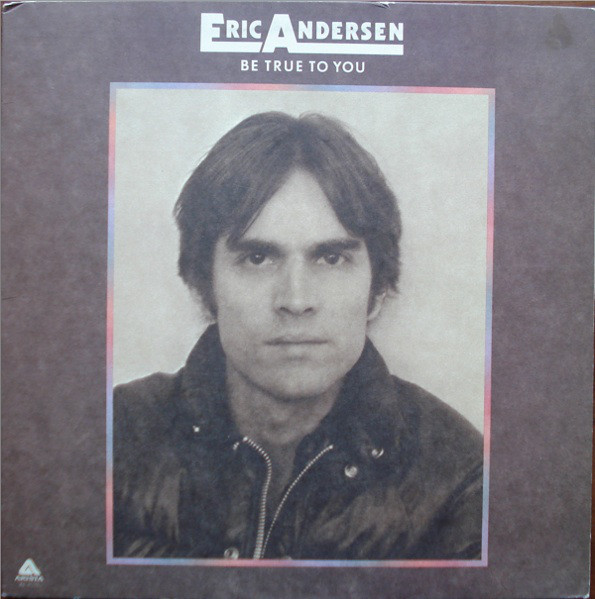
STUBBLEMAN-MOUNTAINS AND PLAINS.
Stubbleman-Mountains and Plains.
Label: Crammed Discs.
Forty years ago, in 1979, Pascal Gabriel aka the groundbreaking and maverick composer and producer Stubbleman, moved from his home in a Belgium to London. The former punk musician joined a series of experimental art school bands, which was the start of a voyage of discovery that led to him discovering the recording studio. This was the start of a long and illustrious career for a producer and songwriter who has gained international recognition.
In the early days, Pascal Gabriel was known for the string of dance hits including Theme from S’Express and Beat Dis. This opened doors for Pascal Gabriel who was soon writing, producing and mixing tracks and albums by everyone from Can, Inspire Carpets and Wire to Dido, Kylie Minogue, Bebel Gilberto, Miss Kittin and Ladyhawke. However, despite working with so many high profile names, Pascal Gabriel’s ended up in the pop wilderness.
Sadly, this was where he was destined to stay for a number of years. However, recently, Pascal Gabriel returned with a new album that shows another side to his music. This is the ambitious and adventurous electronic ambient music that he recorded and recently released as Stubbleman, which is the latest moniker Pascal Gabriel has adopted. Stubbleman recently released his debut album Mountains and Plains on Crammed Discs.
Mountains and Plains is best described as a cinematic and panoramic album which was inspired by Stubbleman’s road trio across America. As he travelled across the land of the free, he experienced train tracks that seemed to go on forever, enjoyed cities that never sleep and visited ruins that brought about a feeling of nostalgia for another era. Stubbleman experienced and witness vast skies, visited the desert plains and junctions that no longer went anywhere. Throughout his road trip, Stubbleman indulged in people watching as he passed through towns and cities which were populated by a wonderfully diverse populace.
On returning home, Stubbleman began work on what later became Mountains and Plains. He fused lo-fi, cinematic mixture of found sounds and field recordings with modular synths and sometimes live piano on eleven soundscapes which combine electronic ambient music and experimental with avant-garde.
The result was Mountains and Plains, a carefully crafted and captivating album of cinematic and panoramic music that is beautiful but understated and engaging, and also emotive and evocative. Sometimes, Mountains and Plains features melancholy rhythms and wistful music which seems designed to tug at the listeners heartstrings. Other times, surges of music emerge from the soundscapes as Stubbleman uses his musical palette to paint vivid pictures.
This he does throughout his debut album, which is best described as a very personal and autobiographical ambient opus, where Stubbleman lays bare his soul as he paints pictures of a distant land and the people he met during his road trip over the Mountains and Plains that decorate the land of the free.
Stubbleman-Mountains and Plains.
DARK STAR SAFARI BY JAN BANG, ERIK HONORE, EIVIND AARSET, SAMUEL ROHRER.
Dark Star Safari by Jan Bang, Erik Honoré, Eivind Aarset, Samuel Rohrer.
Label: Arjunamusic Records.
Jan Bang, Erik Honoré and Eivind Aarset are among the leading lights of Norway’s vibrant music scene, and are know for creating ambitious, innovative and progressive music that pushes musical boundaries to its limits. So is forty-two year old Swiss drummer Samuel Rohrer, who is known as a versatile musician who can effortlessly switch between musical genres. This is something that Samuel Rohrer has in common with Jan Bang, Erik Honoré and Eivind Aarset. They’re like-minded musicians, and it was no surprise when they four friends decided to collaborate on a new project in December 2017.
This new project they called Dark Star Safari, which is by Jan Bang, Erik Honoré, Eivind Aarset, Samuel Rohrer and was recorded in December 2017. Additional recording took place during the summer of 2018 in Berlin, which has been home to Samuel Rohrer since 2003. Meanwhile, Jan Bang, Erik Honoré and Eivind Aarset were doing additional recording in studios in Kristiansand and Oslo, in Norway. When the album was complete, it mixed in June 2018 by Ingo Krauss at Candybomber Studio Berlin. All that was left was for Mike Grinser to master the album at Manmade Mastering in Berlin, December 2018. Now Dark Star Safari were ready to released their debut album.
Dark Star Safari by Jan Bang, Erik Honoré, Eivind Aarset, Samuel Rohrer was recently released on Berlin-based Arjunamusic Records. It’s the result of four like-minded musicians collaborating.
When Jan Bang, Erik Honoré, Eivind Aarset and Samuel Rohrer began recording in December 2017, it was on a project where they were determined to give themselves an organic freedom that enables the music: “to fill itself in”, and to self-actualise through the efforts of the pan-European group of musical pioneers. To create the ten tracks on Dark Star Safari, they began by improvising and sketching out the tracks. Having done this, they examined the ten soundscapes and looked at what potential each one had. From there, Jan Bang, Erik Honoré, Eivind Aarset and Samuel Rohrer began adding to the sketches. The four musicians were like artists, who used their musical palettes to add detail and colour to the ten sketches.
The result is ten multilayered and multi-textured soundscapes that make the listener think.Their cinematic sound is sure to paint pictures in their mind’s eye. Some will bring back memories from the distant past, while others have a dreamy, dreamlike sound. Other tracks are evocative, melancholy and wistful quality. Other times, the darkness descends as the music becomes dark, moody and shadowy. Offering a contrast is Jan Bang’s smooth delivery of Erik Honoré’s perceptive lyrics. They play their part in what’s an album of ambitious, innovative, progressive and genre-melting music from this pan-European group of musical pioneers.
Elements of avant-garde, electronica, experimental, free jazz and improv are combined on Dark Star Safari by Jan Bang, Erik Honoré, Eivind Aarset, Samuel Rohrer. They’re responsible for Dark Star Safari which is a truly captivating, cinematic and thought provoking album, that deserves to be heard by as wide an audience as possible given its quality.
Dark Star Safari by Jan Bang, Erik Honoré, Eivind Aarset, Samuel Rohrer.
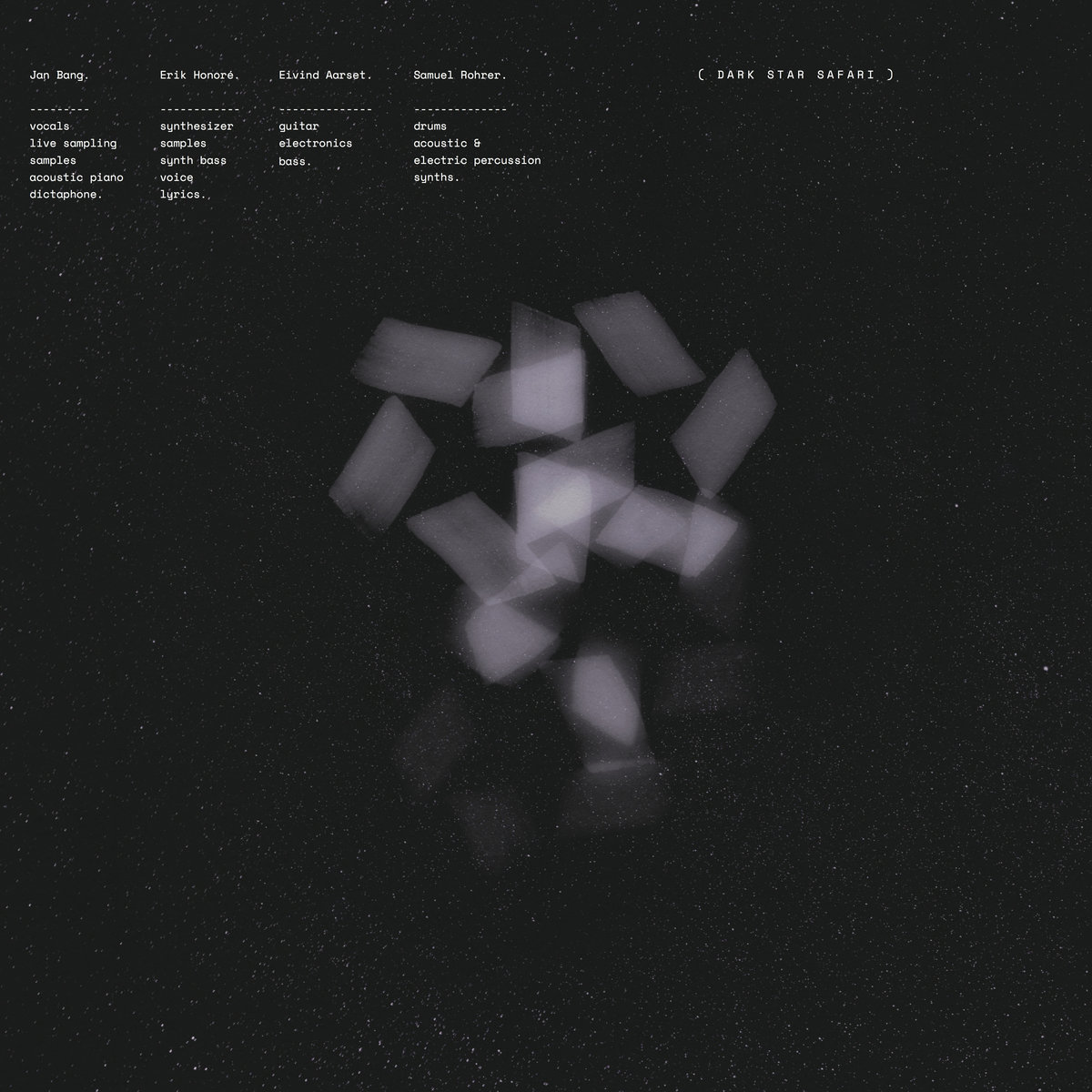
THE BLUE NILE-HATS
The Blue Nile-Hats.
Label: Confetti Records.
Enigmatic, reluctant and contrarian are words that best of describe The Blue Nile. They’re the complete opposite of most bands. The Blue Nile have been described as publicity shy. That’ is an understatement. Ever since Paul Buchanan, Robert Bell and Paul Joseph Moore formed the Blue Nile, they’ve been one of the most low-profile bands in musical history. It seems that when they were formed thirty-eight years ago, The Blue Nile ticked the “no publicity” box. This has proved a double-edged sword, and resulted in The Blue Nile becoming one of the most enigmatic groups ever. Their story began thirty-five years ago.
The Blue Nile were formed in 1981, when two friends Paul Buchanan and Robert Bell, met Paul Joseph Moore, all of whom met at Glasgow University. Before forming The Blue Nile, Buchanan and Bell were previously members of a band called Night By Night. Try as they may, a recording contract eluded them. Night By Night’s music wasn’t deemed commercial enough. So Paul, Robert and P.J. decided to form a new band, The Blue Nile.
Once The Blue Nile were formed, they set up their own record label Peppermint Records. It was on Peppermint Records that The Blue Nile released their debut single, I Love This Life. This single was then picked up and rereleased on the RSO label. Unfortunately for the Blue Nile, RSO became part of the Polygram label and I Love This Life disappeared without trace. Despite this setback, Blue Nile persisted.
Still, The Blue Nile kept writing and recording material after the merger of RSO with Polygram. Some of that material would later be found on A Walk Across the Rooftops. That was in the future.
Recording of The Blue Nile’s demos took place at Castlesound studio near Edinburgh. That’s home to the man whose often referred to as the fourth member of The Blue Nile, recording engineer Calum Malcolm. He was listening to recently recorded demos through the studio’s Linn Electronics system. It had recently had a new set of speakers fitted. So the company founder, Ivor Tiefenbrun, decided to visit Calum Malcolm to hear his thoughts on the speakers. That’s when Ivor Tiefenbrun first heard The Blue Nile.
Calum Malcolm played Ivor Tiefenbrun a demo of Tinseltown In The Rain. Straight away, the founder of Linn was hooked. He decided to offer The Blue Nile a record contract to the label he was in the process of founding. Most bands would’ve jumped at the opportunity. Not The Blue Nile.
It took The Blue Nile nine months before they replied to Ivor Tiefenbrun’s offer. When they did, the answer was yes. The Blue Nile’s debut album A Walk Across The Rooftops would be released on Ivor Tiefenbrun’s new label Linn Reords.
A Walk Across the Rooftops.
Linn Records and The Blue Nile seemed a marriage made in musical heaven. Linn Records weren’t like a major label, pressurising The Blue Nile into making a decision and delivering an album within a certain timeframe. Instead, Linn Records allowed The Blue Nile to do what they did best, make music. From the outside, this looked as if it was working, and working well.
Years later, Paul Buchanan commented that during Linn Records didn’t operate like a record label. Mind you, he conceded that, during this period, The Blue Nile didn’t operate as a band. However, eventually, in May 1984 The Blue Nile’s debut album was released on Linn Records.
On the release of A Walk Across the Rooftops, it was released to critical acclaim. Critics described the album as a minor classic. A Walk Across the Rooftops was described as atmospheric, ethereal, evocative, soulful and soul-baring. It also featured the vocals of troubled troubadour Paul Buchanan. Despite the critical acclaim A Walk Across the Rooftops enjoyed, it wasn’t a huge commercial success, reaching just number eighty in the UK. However, since the A Walk Across the Rooftops has been recognised as a classic album. So has the followup Hats.

Hats.
Unlike most bands, The Blue Nile weren’t in any rush to release their sophomore album Hats. There was a five year gap between A Walk Across the Rooftops and Hats. It was worth the wait. The Blue Nile had done it again. Hats was a classic.
Featuring seven tracks, written by Paul Buchanan, Glasgow’s answer to Frank Sinatra He’s a tortured troubadour, whose voice sounds as if he’s lived a thousand lives. Producing Hats was a group effort, with Paul, Robert and P.J. taking charge of production duties. Guiding them, was Callum Malcolm. On the release of Hats, British and American audiences proved more discerning and appreciative of the Blue Nile’s sophomore album Hats.
On the release of Hats in the UK in 1989, it was critically acclaimed and commercial success, reaching number twelve in the UK. Then when it was released in America in 1990, audiences seemed to “get” Hats. Not only did it reach number 108 in the US Billboard 200 Charts, but The Downtown Lights reached number ten in the US Modern Rock Tracks charts. It seemed that The Blue Nile were more popular in America, than in Britain. Gradually, The Blue Nile’s music was beginning to find a wider and more appreciative album. Especially when The Blue Nile decided to embark upon their debut tour later in 1989, and showcased what was one of the albums of the year.
In many ways, Hats is a like a musical journey, a voyage of discovery. Over The Hillside is the first step on the journey. Slow, spacious drums, washes of wistful synths and a dramatic guitar combine. Then Paul’s worldweary vocal enters. The sheer drudgery, repetitiveness and almost hopelessness of everyday life flavors Paul’s vocal. Sage-like, he sees through living to work and working to live. It fills him with dread and despair. Reflecting this, is the arrangement, with its somewhat industrial, repetitiveness. Drums with a synthetic, monotonous regularity and washes of wistful synths combine. As the drums reflect the pointlessness of the 9 to 5 life, synths offer a sympathetic backdrop. Meanwhile, eloquently and giving voice to the lack of hope, opportunity and escape, is Paul’s vocal, which brings to life the relentless grind of modern life. Bleak, honest but eloquence personified is this five minute track.
A sprinkling of cascading synths gives way to thunderous drums and washes of synths as The Downtown Lights begins. Soon, Paul Buchanan’s tortured vocal enters. It’s a mixture of emotions, worldweary, but heartfelt and reassuring. Drums cracks, synths fill the gaps and a pounding, broody bass reflects the drama in Paul’s vocal. As the arrangement grows in power and drama, so too does the emotion and reassurance in Paul’s voice. When he sings “it’s alright,” you believe him. His vocal grows in emotion and soulfulness, enveloped by swathes of synths, a funky bass and crispy drums. Later, as the power, drama and emotion grows, driven along by chiming guitars, you realize this is deeply soulful, but not soul music. Instead, it’s music for the soul, music about love, being in love and insecurity.
Waves of synths meander, growing in tension and drama. Let’s Go Out Tonight has just began to reveal its cerebral beauty. Guitars chime, while the backdrop is minimalistic. Paul’s whispered vocal is filled with despair. His relationship is almost over. It’s on its last legs. Rather than stay home and talk about it, it’s easier to go out. Best to dance around the subject and problems, rather admit it’s over. Meanwhile, synths, keyboards and guitar join Paul’s vocal, as he lays bare his soul, his hurt and heartache. His voice is tinged with regret and sadness, as if he can’t believe it’s over. For anyone whose been in this situation, or is going through it, then this song describes it perfectly. Quite simply, this is highlight of Hats and one of the Blue Nile’s greatest songs.
The tempo increase on Headlights On The Parade. So too does the emotion. Blue Nile mix moody funk courtesy of the bass and guitars with waves of bright, hopeful synths and stabs of keyboards. It’s almost as if they’re setting the scene for the worldweary troubadour, Paul Buchanan. From the moment Paul’s vocal begins, his vocal is filled with emotion. Saying: “I love you” isn’t easy, it’s hard, the three hardest words for him to say. Waves of symphonic, hopeful music cascade, envelop Paul’s vocal as he finally plucks up the courage.When he does, it’s almost a relief, it seems. Keyboards and quivering strings join him. Having found the courage, they serenade the one he loves. The result is an elegant, symphonic and beautiful song, one about conquering and overcoming the fear of commitment and the fear of rejection.
From A Late Night Train is a track that’s wonderfully moody and melancholy. The arrangement is broody and minimalistic, meandering behind Paul’s heartfelt vocal. It’s a bit like Frank Sinatra meets Brian Eno. Keyboards picked out carefully and cautiously are joined by occasional bursts of wistful horns. Slowly, Paul delivers lyrics that are poetic, with a strong narrative and steeped in emotion. His half-spoken vocal is filled with sadness, as he sings of his relationship being “over now.” You can imagine him heartbroken, sitting on the late night train, wondering why and what could I have done differently? Considering this track is only four minutes long, it’s a poetic, descriptive and emotive tour de force, Blue Nile style.
Squelchy synths, crunchy drums and percussion join a funky bass as Seven A.M. unfolds. A combination of an industrial sounding arrangement, which brings to mind Can, Neu and Velvet Underground join Paul’s worldweary, wistful vocal. Pensive, probing and questioning, he wonders “where is the love?” It’s a question posed a thousand times before, puzzling poets and philosophers alike. Paul sounds just as puzzled, pondering, wondering. Lovelorn and confused Paul and the Blue Nile bring out the subtleties and beauties of the lyrics, but pose a question that’s unanswerable, even for them.
Saturday Night sees the Blue Nile close Hats with another of their Magnus Opus.’ Like Let’s Go Out Tonight, this is classic Blue Nile. Washes and stabs of synths, chiming guitars, a buzzing bass and crispy drums combine with Paul’s vocal. It’s a mixture of hope, happiness and longing, but tinged with insecurity. Washes of synths and lush strings cascade. They sweep and swirl, and are joined by chiming guitars. Together they envelope Paul’s deeply soulful vocal. His vocal is filled with hope and emotion and plays its part in one of the most beautiful tracks the Blue Nile ever recorded. As if a remastered version of Hats isn’t enough in itself, then there’s the bonus disc.
Unlike the original version of Hats, the newly remastered version includes a second disc of six bonus tracks. While these tracks may not be particularly rare, they offer an insight to an enigmatic band. A live studio version of Seven A.M, alternate versions of Saturday Night Let’s Go Out Tonight are three hidden gems from The Blue Nile back-catalogue. So too is the live version of Headlights On the Parade, which is the perfect reminder of how good a live band the Blue Nile were. The Wires Are Down is a tantalizing glimpse of The Blue Nile and what might have been. I’m sure there’s many more tracks like this hidden, safely away in The Blue Nile’s vaults. Hopefully, before too long, we’ll be able to hear many more of these hidden gems. So, having told you about the newly released, remastered version of Hats, is Hats a better album than their debut album A Walk Across the Rooftops?
Hats is a captivating, bewitching and beautiful album, where The Blue Nile lay bare their soul. Not only do they lay bare their soul, but articulate their hopes, fears, frustrations and dreams. Articulating this range of emotions, is Glasgow’s troubled troubadour, who mixes Frank Sinatra, Tom Waits and Tim Buckley, but doing so in a way that’s almost quintessentially Scottish. This newly remastered version of Hats accentuates the Scottishness of the seven songs. However, despite this quintessentially Scottishness, the music transcends geographical boundaries. For anyone whose lived, lost and lost love, then this album speaks to and for them. It brings to life their heartache and hurt, their sense of how life will never be quite the same again. Combining elements as diverse as Brian Eno, Can, Neu and the Velvet Underground Hats is an album of many influences, but unique. Only the Blue Nile could produce an album so special, so deeply soulful, beautiful and emotive. In some ways, Hats is a very different album from A Walk Across the Rooftops, the Blue Nile’s debut album. However, is Hats a better album?
A Walk Across the Rooftops was one of the best debut albums released by a Scottish, or indeed British band. A Walk Across the Rooftops belongs in every self-respected record collection. So too does Hats. Both albums are the perfect introduction the Blue Nile and their music. After just one listen to the seven tracks on A Walk Across the Rooftops and Hats, you’ll fall in love with the music of The Blue Nile. These were the two best albums of The Blue Nile’s career. Choosing which is the best album is like asking a parent which of their children is their favorite child. Just like they’d refuse to answer the question, I’m going to refuse to choose between not just two of my favorite albums, but two of the best albums released by a British band in the last forty years. Instead, I’ll leave you to decided. The best way to do this, is to buy copies of A Walk Across the Rooftops and Hats, two of best albums by one of music’s best kept secrets.
The Blue Nile-Hats.

 dereksmusicblog
 dereksmusicblog