THE LIFE AND CAREER OF MUSICAL PIONEER EMILIO APARICIO.
The Life and Career Of Musical Pioneer Emilio Aparicio.
Nowadays, the words pioneer and innovator tend to be overused, and musicians who create truly groundbreaking music seem to be sadly, few and far between. While there are some pioneering musicians whose music continues to push musical boundaries, there are no longer as many as there once were. Especially in the sixties and seventies, which was a golden period for music that saw creativity and innovation blossom.
The sixties and seventies was also when Emilio Aparicio, an electronic experimental musician from Guatemala, pioneered the use of the Moog synth in Latin America. Between 1969-1971 he used his newly acquired Moog synth to record the music on Expansión Galáctica which was recently released by Mental Experience, an imprint of Guerssen Records, and showcases the a musical pioneer, Emilio Aparicio.
Just two years before Emilio Aparicio started to record the music on Expansión Galáctica, he was a student at the National Music School, in Guatemala City. That was where he first came across fellow student and member of Abularach dynasty, Roberto Abularach. Twenty-one year Roberto Abularach came from a very different background to Emilio Aparicio, but their paths would cross after they had completed their respective studies.
After leaving the National Music School, the friendship between Emilio Aparicio and Roberto Abularach continued. By then, Roberto Abularach was managing the La Estrella warehouse in the Zona 1. It was where musical instruments were imported into Guatemala and sold. However, before long the warehouse was a favourite place for local musicians and bands.
Soon members of Apple Pie, Modulo 5 and Cuerpo y Alma and were hanging out at the La Estrella warehouse. So were local musicians who weren’t part of bands. Some of these musicians went on to form bands, including Les Prince. Many of the bands and musicians were supported by Roberto Abularach, who became their patron. There was no ulterior motive to this, as Roberto Abularach was a kind, generous and wealthy young man.
Not only did Roberto Abularach’s generosity include helping musicians buy their instruments, he sometimes gave instruments to musicians embarking upon musical careers. One of the musicians who made their way to the La Estrella warehouse was Emilio Aparicio.
A graduate of the National Music School, Emilio Aparicio had two passions in life, music and electronics. When he entered the La Estrella warehouse he remembered Roberto Abularach from the National Music School. Soon, they started talking and realised that they had much in common. This was the start of a close friendship.
Emilio Aparicio and Roberto Abularach enjoyed long conversations on music and electronics. By then, Roberto Abularach had spotted Emilio Aparicio’s potential, and was keen to help his friend.
The opportunity arose when Emilio Aparicio decided to buy purchase what was his very first piano. However, the piano was expensive, so Roberto Abularach helped his friend buy the piano. This Emilio Aparicio put to good use, and his talent blossomed.
Over the next year, Emilio Aparicio interest in electronic and experimental music grew. This was something he discussed at length with his friend Roberto Abularach, who in 1969 was about to journey to New York.
During Roberto Abularach’s visit to New York, he visited the Modern Art Museum. That was where Roberto Abularach saw the very first Moog synth, which had been presented to the Modern Art Museum by its founder Robert Moog. Having seen the Moog synth, Roberto Abularach decided to purchase one directly from its inventor, Robert Moog and take it home to Guatemala.
When Roberto Abularach met Robert Moog, he bought a 3P modular synth which bore the serial number 00003. This was only the third Moog modular synth that Robert Moog had made, and Roberto Abularach was taking it home to Guatemala, where it would go to a good home.
Given his interest in electronic and experimental music, it seemed fitting that Roberto Abularach gave the Moog 3P modular synth to his friend Emilio Aparicio. His passion for music and electronics, and interest in both electronic and experimental music meant he would put the Moog to good use.
Having gifted the Moog 3P modular synth to Emilio Aparicio, Roberto Abularach had it installed in his friend’s home in late 1969. Roberto Abularach told Emilio Aparicio that the Moog was his, and he had complete freedom to use the synth in whatever way he wished. While Emilio Aparicio had gained a synth, he had also gained a patron and the man who would support and champion his music.
From late-1969 until 1971, Emilio Aparicio transformed a room in Roberto Abularach country mansion in Zona 12 into a makeshift studio. This was the perfect location for a recording studio, as the country house was empty for much of the year, which allowed Emilio Aparicio to concentrate all his efforts on writing and recording new and innovative music.
In his new studio, was Emilio Aparicio’s newly acquired Moog 3P modular synth and some of the early drum machines. Compared to the drum machine available nowadays, the drum machines were almost primitive. Meanwhile, it took time and patience to work with the Moog 3P modular synth.
It was a relatively instrument which its inventor Robert Moog had demonstrated in early 1967. Even two years later, only a relatively small number of people knew how to setup and use the Moog synth. Through patience and persistence this now included Emilio Aparicio, who had even worked out how to deal with a couple of common problems.
One of the problems that Moog users encountered were that the its oscillators were somewhat unstable. However, soon, Emilio Aparicio realised that if he switched the machine on way before the session began, this allowed them to warm up. Occasionally, the Moog failed to stay in frequency and the tuning was out. Emilio Aparicio knew to expect teething problems with such a complex and groundbreaking piece of equipment. Having got to grips with the Moog 3P modular synth, Emilio Aparicio started making music.
Sometimes, the seclusion that Emilio Aparicio enjoyed was interrupted when Roberto Abularach arrived at his country house. Sometimes, he was joined by various musicians and poets, and the assembled company experimented with hallucinogenic drugs including LSD and Floripondio. This helped Emilio Aparicio open the doors of perception, as he created experimental, innovative and ambitious music.
Not only did the Moog 3P modular synth transform now Emilio Aparicio made music, but also what type of music he made. It was unlike most of the music being made within Guatemala, especially what the pop and rock bands were making. Instead, the music that Emilio Aparicio was making had more in common with the electronic and experimental music being made in Europe and America.
As the sixties gave way to the seventies, Emilio Aparicio continued to spend long periods of time in the studio he had built in Roberto Abularach’s country home. Little did anyone who visited the studio or even heard the music realised that Emilio Aparicio was making the music of tomorrow, today.
After two years locked away in his studio, Emilio Aparicio had completed the ten tracks that feature on Expansión Galáctica. There was only one problem, though, Emilio Aparicio had no idea what to do with the music?
Emilio Aparicio wasn’t chasing the rock star dream, and had no interest in fane and fortune. His interest was making music. Fortunately, his friend and patron, Roberto Abularach, who continued to champion Emilio Aparicio’s pioneering music had come up with a plan to introduce his friend’s music to a wider audience.
To do this, Roberto Abularach planned to use one of one of the Abularach dynasty’s businesses, Salvavidas Rojas. It was a popular drink within Guatemala, and Roberto Abularach had come up with a plan that if customers sent four corks from Salvavidas Rojas’ bottles and three quetzal coins they would receive the five volumes of 45 singles featuring the music that Emilio Aparicio had recorded between late-1969 and 1971. This must have seemed a good idea at the time.
Sadly, very few people took the time to collect the corks and return them to Salvavidas Rojas. Those that sent away for Emilio Aparicio’s five singles, didn’t understand the music. It was unlike anything they had heard on the radio or bought in local record shops. What didn’t help was that Emilio Aparicio didn’t play live and wasn’t part of a band. Instead, he was a relative unknown, who was part scientist, sonic explorer and musician, whose natural habitat was the recording studio. That was where he had spent the best part of two years recording the singles.
It was frustrating that people who sent away for the records often threw them away, or that they were recycled with the other discarded vinyl. Meanwhile, in the Salvavidas Rojas factory piles of unclaimed vinyl sat in the store rooms. They too, were destined for the recycling plant. This was something that many people would later regret.
Following the failure of his first release, Emilio Aparicio dusted himself down and created his next project, La Banda Plastica. Just like his previous project, La Banda Plastica was an experimental and non-commercial project. It was signed to Guatemala’s biggest record label Dideca. They gave Emilio Aparicio total freedom to record whatever he wanted.
This was unusual for Dideca, who usually told bands and artists what type of sound they expected from them. Dideca frowned upon music that wasn’t commercial or had an aggressive sound. That was a no-no. The exception to this was Emilio Aparicio and his new La Banda Plastica project. However, deep down, executives at Dideca and Emilio Aparicio knew that a single from La Banda Plastica had no commercial appeal. La Banda Plastica released just a couple of singles, including Libertad Viene, Libertad Va. Neither single sold well, and the majority of the singles were given away to DJs at radio stations during the Christmas period. This brought to an end what was a somewhat surreal period for Emilio Aparicio.
Sadly, after the commercial failure of La Banda Plastica, Emilio Aparicio became a much more reclusive figure, who recorded purely for his own interest. The music Emilio Aparicio made he had no intention of releasing. That was his hobby, while the jingles and videos he made for television and technical companies paid the bills.
Later, Emilio Aparicio changed direction and started working with computers. He went on to build the first ever computer to be used by the National Bank of Guatemala. Emilio Aparicio had come a long way from when he started working with his Moog synth.
By the early eighties, Emilio Aparicio was one of the leading lights in electronics and technology in Guatemala. He was also working on a new piece of musical technology which he hoped would be used by musicians and bands across the world. This was a guitar synth, and he presented the prototype at Audio Engineering Society’s conference when it took place in Anaheim, California, in 1982. While Audio Research bought patent for the guitar synth, developing it proved problematic. Emilio Aparicio’s invention never made the same impression as Robert Moog’s Moog 3P modular synth.
Still, Emilio Aparicio never lost his love of music, and he continued to record at the home he shared with his wife. Now Emilio Aparicio was recording onto cassettes, which were cheaper and allowed him to record much more music. These recordings were only heard by the person who was closest to him…his wife. She was his musical confidante. It was as if Emilio Aparicio feared that his music would be rejected for a third time. As a result, the music he recorded has never been released.
While music was Emilio Aparicio’s first love, he gradually started to concentrate his efforts on video art in his spare time. By day, Emilio Aparicio was a professor at the Galileo University, which was founded on October ’31st’ 2000 in Guatemala City. Emilio Aparicio taught a new generation of computer scientists, who knew nothing about his former career in music.
Sadly, Emilio Aparicio fell victim to prostate cancer and passed away in 2012. By then, Ruffy Tnt had rediscovered the five volumes of music that Emilio Aparicio had recorded between late-1969 and 1971.
Ruffy Tnt was on a crate-digging expedition in Quetzaltenango in Guatemala, and found himself in a dusty basement that had once been the warehouse of Iximché, who had once distributed the rock-o-la machines. With dust and detritus on the floor, Ruffy Tnt was wary as he hunted through the warehouse. The last thing he wanted was to be bitten by one of the rats that had obviously been present. However, his patience, persistence and bravery was rewarded when he spotted two rooms crammed full of old singles. In amongst some incredibly rare records were two of the five privately pressed volumes of Emilio Aparicio’s music released by Salvavidas Rojas.
The two volumes of Emilio Aparicio’s music that Ruffy Tnt left the warehouse with were Brujería (Witchcraft) and Transmutación del iniciado (Transmutation Of The initiated). However, this was just the start of a seven-year treasure hunt.
Over the next seven years, Ruffy Tnt searched far and wide for the remainder of Emilio Aparicio’s recordings. By 2017, Ruffy Tnt had found the eight singles released baring Emilio Aparicio’s name. This includes the five volumes that were released by Salvavidas Rojas as part of special offer, which Roberto Abularach hoped would introduce Emilio Aparicio’s music to a much wider record buying public.
Sadly, that wasn’t the case, and very few Guatemalan record buyers were won over by the music on the five singles that recently featured on Expansión Galáctica. They’re a reminder of Emilio Aparicio, who throughout his career, was a musical pioneer, who pushed musical boundaries to their limits, and sometimes, way beyond. Proof of that are the ten genre-melting Emilio Aparicio recorded.
The genre-melting tracks that Emilio Aparicio made between late-1969 and 1971, were way ahead of their time and incorporated elements of disparate musical genres. This included everything from electronic and experimental music, to abstract and avant-garde, through to Latin and psychedelia. There’s also occasional elements of dub, jazz, musique concrète pop and rock on Expansión Galáctica, which was lysergic and mind-expanding magical mystery tour where a true musical pioneer combines the music of the past and present to make the music of the future.
Apart from a few aficionados of electronic and experimental music, sadly, very few people will have heard of the late Emilio Aparicio Moog. This little known musical pioneer, who created ambitious, innovative and imaginative music during what was a short, but unsuccessful recording career.
Emilio Aparicio Moog only released eight singles, which sadly, failed to find the audience they so richly deserved. Especially the five singles he released as part of an offer in conduction with the popular drinks’ company Salvavidas Rojas. Very few people took up the offer, and those that did, failed to understand the music. Many of the singles were thrown away or recycled and nowadays, the five singles are extremely rare. Fortunately, Ruffy Tnt rediscovered these singles, which are a a welcome reminder of Emilio Aparicio Moog, who was a groundbreaking musician whose music was way ahead of its time.
That was why people failed to understand Emilio Aparicio Moog’s music, which is ambitious, innovative, imaginative and even today, has the potential to inspire a new generation of electronic musicians.
Emilio Aparicio Moog spent two years recording the music on Expansión Galáctica, where he pushed musical boundaries to their limit, and sometimes, way beyond. In doing so, musical pioneer Emilio Aparicio Moog created the truly timeless, genre-melting music which hopefully, will somewhat belatedly find the audience that it deserves.
The Life and Career Of Musical Pioneer Emilio Aparicio.
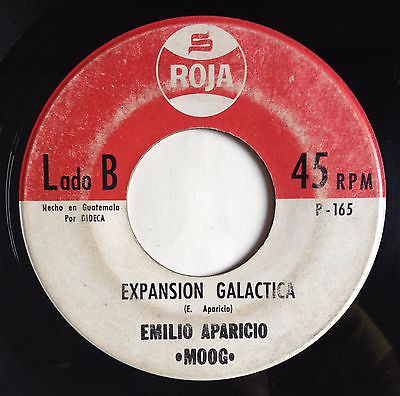

THE MORENA Y CLARA STORY.
The Morena Y Clara Story.
As 1973 dawned, a new Spanish flamenco-pop duo Morena y Clara, were about to make their debut at the now legendary tablao restaurant Caripen in Madrid. This was where just Los Grecas had been discovered just a few months previously by producer José Luis de Carlos and were signed to CBS by the time Morena Y Clara took to the stage at Caripen. Little did the two members of Morena y Clara realise that they and Los Grecas would go on to enjoy a friendly rivalry as they became two of the most successful Spanish female duos between 1974 and 1978.
The story started when two sisters from Madrid, in Spain, Ana María Muñoz Hernández and Carmen Muñoz Hernández decided to form a new vocal duo together. Ana María Muñoz Hernández dawned the moniker Morena, which translates as brunette, while Carmen Muñoz Hernández became Clara, which translates as blond. With that Morena y Clara was born, and not long after that, they made their debut at the tablao restaurant Caripen in Madrid.
Later in 1973, Morena y Clara made their recording debut, when they were invited by their cousin Juan Antonio Jiménez to add backing vocals on Los Chicos debut single Ni Más Ni Menos. Juan Antonio Jiménez was in the process of establishing himself as a songwriter, and Ni Más Ni Menos which was released by Philips later in 1973 his latest song. However, over next few years, Juan Antonio Jiménez would become one of Spain’s most successful songwriters, and would help play his part in the rise and rise of a number of artists and groups. This included Morena y Clara.
Their career began in earnest in 1974, partly due to the success of Los Grecas, and the rise in popularity of the new “gipsy rock” sound, which fused female flamenco with funk and progressive rock. Playing a part in the success of the new “gipsy rock” sound, were composer, arranger and pianist Felipe Campuzano, songwriter Juan Antonio Jiménez and Portuguese guitarist and producer Johnny Galvao, who nowadays, are regarded as three of the architects of this new sound. Its popularity was growing, and after Los Grecas single Te Estoy Amando Locamente sold over 500,000 copies in 1973, record companies were keen to cash-in on the success of “gipsy rock.” This was good news for Morena y Clara.
The other record labels knew that CBS had the most successful “gipsy rock” band, Los Grecas on their roster, and started looking for bands that could replicate their success. A&R executives were looking for up-and-coming “gipsy rock band.” However, it was television presenter and manager Lauren Postigo, that discovered Morena y Clara who were performing one night at the Caripen restaurant.
Lauren Postigo was married to Carmen Salazar La Camboria, a flamenco dancer who was now working as a producer. She and her husband would play their part on the success of Morena y Clara. Before that, Lauren Postigo secured a contract for Morena y Clara who were performing one night at the Barcelona based record company Discophon. This was home to Morena y Clara between 1974 and 1978.
Now signed to Discophon, Morena y Clara, began recording the two songs that became their debut single. This was No Llores Más, with Dejé De Quererte destined for the B-Side. Both songs were penned by Juan Antonio Jiménez and Spanish guitarist Carlos Villa, with Lauren Postigo taking charge of production. The result was two songs where flamenco vocals and emotive lyrics were combined with arrangement that bore a close resemblance to progressive rock. That wasn’t only similarity.
When Discophon released No Llores Más, with Dejé De Quererte on the B-Side. in 1974, critics noticed similarities with songs that had been released by CBS and Phillips. However, many of the songs released by groups like Morena y Clara and Los Chicos shared much in common sonically. This didn’t matter to Morena y Clara when No Llores Más gave No Llores Más their first hit single. Both songs also feature No Llores Más compilation.
A year after the release of their debut single Morena y Clara returned with their sophomore single Morena y Clara No Me Quieres, No, which featured Serás Mi Luz on the B-Side. Both sides were penned and produced by Lauren Postigo, because Morena y Clara’s cousin Juan Antonio Jiménez was now focusing on writing songs for Los Chicos. While his songs were a loss to Morena y Clara, Lauren Postigo was a talented songwriter and producer.
Proof of this was Morena y Clara’s sophomore single No Me Quieres. Although it had a similar sound to the nonaino loveless songs which had pioneered by Juan Antonio Jiménez, Morena y Clara with the help of producer gave this sound a twist. They combined it with an orchestral arrangement and Morena y Clara’s progressive funk rock sound. The result was a melodic and memorable mixture of drama and emotion that introduced Morena y Clara’s music to a new audience.
Later in 1975, Morena y Clara were introduced to Ricardo Jiménez Barrull, who was the nephew of the Galician singing brothers El Luis. Ricardo Jiménez Barrull was in the process of forging a successful musical career, and later, would supply Morena y Clara with songs.
When the time came for Spain to choose their entry into the 1976 Eurovision Song Contest, Morena y Clara made it onto the shortlist with u Mal Comportamiento. However, Braulio who was a popular singer secured the most votes from the television audience, and headed to The Hague where he sang Sobran las palabras. However, he ended up a disappointing twelfth out of eighteen contestants.
Despite not making it all the way to The Hague, Morena y Clara returned Tu Mal Comportamiento as their third single later in 1976. Just like the B-Side El Chico Que Yo Mas Quiero it was written and produced by Lauren Postigo. Tu Mal Comportamiento was one of his finest productions for Morena y Clara, and featured dancing strings and dramatic drums while Morena y Clara delivered a soulful vocal powerhouse. It was one of their finest songs, and showed just what Morena y Clara was capable of, as their popularity continued to grow.
Later in 1976, Discophon released Morena y Clara’s long-awaited eponymous debut was released, with some critics comparing it to Las Grecas’ Gipsy Rock album. Morena y Clara featured ten tracks including four new songs. This included Sé Que Tú Me Querías and Buscando Alegría which were penned by Lauren Postigo. They were joined by Volveré A Soñar which was written by Isidro Muñoz and José Miguel. These were joined by Morena y Clara’s first three singles and their respective B-Sides. This meant that Llores Más and the B-Side Dejé De Quererte were joined by Morena y Clara’s sophomore single No Me Quieres, No, and the B-Side Serás Mi Luz on the B-Side. They were joined by Morena y Clara’s third single Tu Mal Comportamiento and its B-Side El Chico Que Yo Mas Quiero. These nine tracks feature the No Llores Más compilation, and are a reminder of the early years of the Lauren Postigo and Morena y Clara partnership which was proving a successful one. Morena y Clara’s star was in the ascendancy.
By the time Morena y Clara released their eponymous sophomore album, Ricardo Jiménez Barrull was now supplying the duo with songs. Ten of his compositions featured on Morena y Clara, which were produced by Lauren Postigo. This includes Todo Pasó and Quiero Que Tú Me Beses which feature on the No Llores Más compilation. However, neither of these songs were released as singles.
Morena y Clara’s fourth single was Hoy Yo Me Encuentro Sola, with Todo Pasó relegated to the B-Side. When the single was released in 1977, it failed to replicate the sales of Morena y Clara’s previous singles. Neither did the followup single El Camino Del Amor, which featured Quiero Que Tú Me Beses on the B-Side. It was released later in 1977 and confirmed that Morena y Clara’s was on the decline. This was a worrying time for Morena y Clara who up until then, had been a popular act. However, music was changing, and sadly, Morena y Clara were no long as popular.
The following year, 1978, Morena Y Clara returned with their third eponymous album. It was produced by Lauren Postigo while Ricardo Jiménez Barrull wrote nine of the ten tracks. This included Aquellos Años, Eres Fiel A Tus Caprichos and Ya No Te Guardo Rencor, which feature on the recent compilation No Llores Más. Despite Morena y Clara maturing and blossoming as artists, their third album of genre-melting music failed commercially. Morena Y Clara was the least successful album of the duo’s career, and sadly, that was the end of the road for them.
Morena y Clara planned to record and release a fourth album for Discophon, but that never materialised. Discophon must have decided to cut their losses, and Morena y Clara were left without a label in 1978.
By 1979, producer Jose Luiz de Carlos somewhat belatedly started paying attention to Morena y Clara. They sent demos to CBS which were well received, but ultimately, CBS decided not to offer Morena y Clara a recording contract. There would be no fourth album from Morena y Clara.
Even after CBS declined to offer Morena y Clara a recording contract, Morena y Clara didn’t give up hope and continued to look for a label. When they failed to secure a recording contract, Morena y Clara realised their time was up after a triumvirate of carefully crafted albums.
These three albums, which were released between 1976 and 1978 were all entitled Morena y Clara, featured a groundbreaking fusion of flamenco and rock that provided the backdrop for sassy, sensual lyrics. The vocals were delivered with power, passion and were full of emotion and showcased two talented sisters who could’ve and should’ve enjoyed a longer and more successful career.
Sadly, by the time Morena y Clara released their sophomore album in 1977, music was changing. Disco was at the peak of its popularity, and other genres were suffering. As a result, many albums slipped under the musical radar. That was the case with Morena y Clara in 1977 and Morena y Clara in 1978. These albums are hugely underrated and best described as hidden gems, with their pioneering fusion of funk, Latin, pop, progressive rock, rhumba and rock and are ia reminder of Morena y Clara at the peak of their powers between 1974 and 1978 when they were signed to the Barcelona based Discophon label.
The Morena Y Clara Story.


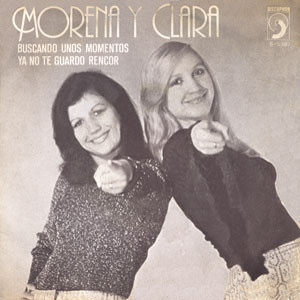
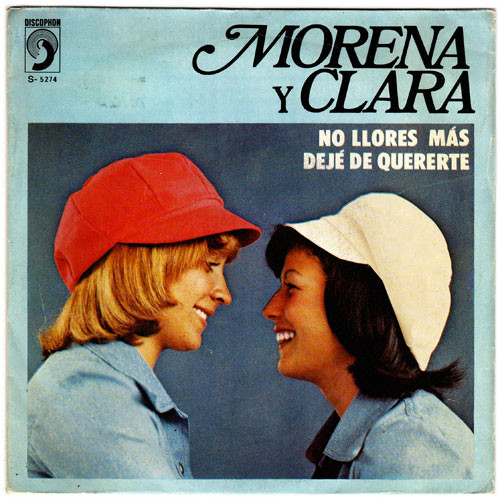

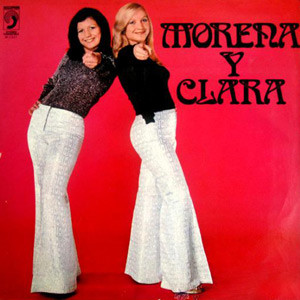
THE SHORT-LIVED STORY OF VOIGT/465
The Short-Lived Story Voigt/465.
The story of Voigt/465 is a case of what might have been. They were formed in Sydney, Australia in 1976, and spent the next three years trying to make a breakthrough. By May 1979, things were looking up for Voigt/465 and they looked on the verge of a breakthrough. Their single State was being played on radio in London and Sydney. Not long after this, Voigt/465 secured a residency in Sydney, and even embarked upon a short tour of Melbourne. Voigt/465 were playing better than ever before, and had built up a loyal following. Surely, nothing could go wrong?
Unfortunately it did. What started off as a discussions about the future direction of Voigt/465 resulted in bassist Lindsay O’Meara leaving the band. Given how important a part he was in Voigt/465’s sound, the rest of the band knew that they couldn’t continue without out him. Voigt/465 called time on their career, after being tantalizingly close to making a breakthrough.
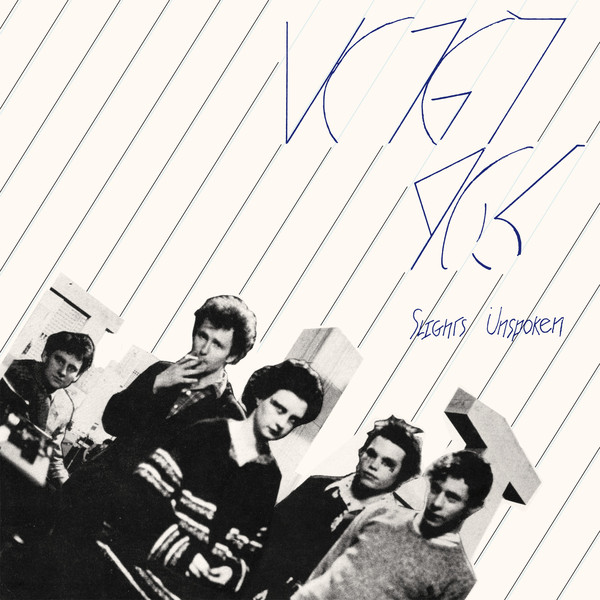
Although it looked like had been consigned to musical history, discussions were taking place between the band members to reunite one last time. They wanted to document the life and times of Voigt/465. After much cajoling, the five band members agreed to record what became an album at Axtent Studios, in suburban Kogarah. That album was Slights Unspoken which was released on the Unanimous Weld Enunciations in 1979. Sadly, Slights Unspoken marked the end of the road for Voigt/465.
In The Beginning.
Things had looked very different, three years earlier in 1976, the year that punk arrived in Australia, and across the country new bands were being formed. Many were short-lived, and never came close to playing live, never mind recording a single. A few, including Voigt/465 went on to make their on the Australian music scene.
Voigt/465 was formed by a group of friends in Sydney in 1976. The original lineup of the band included bassist Lindsay O’Meara, guitarist Rod Pobestek, keyboardist and vocalist Phil Turnbull plus vocalist Rae Bryom. They had been inspired by the music of Can, Faust, Henry Cow, Pere Ubu, Slapp Happy, Syd Barrett, The Stooges and early Roxy Music five friends decided to form a band. These influences would play their part in one of the first wave of post-punk bands in Australia.
The newly formed Voigt/465 set about honing their sound, and over the next few weeks and months, gradually the nascent’s band started to emerge. It a raw, abrasive and genre-melting sound that over the next couple of years, would incorporate elements of art rock, avant-garage, DIY, electronica, improv,industrial, Krautrock, noise, post-punk and psychedelia. This new sound would gradually find favour with Sydney’s post-punk scene.
By 1978, Voigt/465 were one of the leading light of Sydney’s thriving and vibrant post-punk scene. They had spent the last two years creating their own scene. In the early days when Voigt/465 couldn’t find somewhere to play live, they found makeshift venues. This included a free open air gig at Bigge Park, in Liverpool, a suburb of Western Sydney. Later they graduated to playing pubs and clubs on the local circuit. This was akin to their musical apprenticeship, and allowed the band’s sound to evolve. The next step was to record their debut single.
Unlike many post-punk bands, Voigt/465 hadn’t rushed into recording their debut single. Instead, they waited until the group had matured, and its sound had evolved. By then, Voigt/465 had also matured as songwriters. They had penned State, which they planned to record as their debut single, with A Secret West on the B-Side. Voigt/465 booked a local studio to record their debut single.
This was Axent Studios, which was based in Kogarah, a suburb of Sydney. Joining Voigt/465 was a local musician Ross McGregor, who would co-produce State and A Secret West. State was raw and rocky, but was melodic and showcased a truly talented post punk band. The B-Side, A Secret West, was a much more experimental sounding track, that showed the pop psych side of Voigt/465. These two tracks were recorded during one session, and would showcase the different sides Voigt/465.
When State was pressed, it was as a limited edition of just 547. As a result, copies of State are now incredibly rare, and have changed hands for Aus$325. When State was released, it was on a local label Unanimous Weld Enunciations. Singles were sold locally and at gigs. A few were sent to DJs, and would later spread the word about Voigt/465.
Buoyed by having released their debut single State, Voigt/465 were full of energy and enthusiasm. They played several gigs and in August 1978, managed to convince the owners of French’s Wine Bar to allow them to play live. For the show, Voigt/465 took along a slide projector, which would show a lysergic light show. This was all very Pink Floyd circa 1967, and something that Voigt/465 thought would appeal to the patrons.
As Voigt/465 took to the stage the venue was just about full. When started to play, it looked like they had won over the audience. Then came the lysergic light show, which proved to be their undoing. Suddenly, the audience turned on Voigt/465 and someone through a glass tankard at the band. Ross Turnbull remembers the shouts of: “you bunch of hippies.” For a group with impeccable post punk credentials that one hurt. Especially when Voigt/465 realised that the hecklers were fans of Voigt/465. The only small crumb of comfort was that the band got paid. However, the fallout continued the next day.
To make matters worse, the events at French’s Wine Bar resulted in drummer Bruce Saddler leaving Voigt/465 the next day. What should’ve been a successful show had cost the band their second drummer. Now the search began for a replacement.
Eventually, Voigt/465 settled on Mark Boswell, who was chosen as Bruce Stadler’s replacement. He soon had settled into life as Voigt/465’s drummer, and was ready to make his debut.
Mark Boswell made his Voigt/465 debut at Garibaldi’s, an Italian community centre in East Sydney that had seen better days. That didn’t matter to Voigt/465, who were one of the bands supporting The Thought Criminals. When Voigt/465 started to play, they soon, had won over the audience. So much so, by the time that Voigt/465 left the stage, it was a to a standing ovation. That night, Voigt/465’s music was discovered by a whole new audience.
That came as no surprise. After the events at French’s Wine Bar, Voigt/465 went in search of like-minded people. Suddenly, they were preaching to the converted and playing in front of audiences who were part of Sydney’s post-punk scene. This made a huge difference, and soon, Voigt/465’s star in the ascendancy.
Suddenly, things started to fall into place for Voigt/465. The group moved into a new rehearsal room in October 1978 in Darlinghurst. At last, they could practise anytime they wanted. This was very different to the two previous years, where they were constantly hunting for places to practice and work on new songs. Not any more, now that Voigt/465 had their own practise area. They also hoped to interest a record company in their music.
Although there were a number of record companies in Sydney, Voigt/465’s bassist Lindsay O’Meara was about to embark upon a journey overseas, where he hoped to interest record companies in their single State b/w A Secret West. The five members of Voigt/465 had high hopes for the single, and hoped that when Lindsay O’Meara returned, it would be with several offers of recording deals.
Before Lindsay O’Meara headed off on his journey, Voigt/465 decided to play one more gig. Just like many of gigs that Voigt/465 had played, it would be financed by the band. The venue they choses wasn’t in one of Sydney’s many pubs or clubs. Instead, in the spirit of ’76, it was at the Western Distributor construction site in Pyrmont.
This was somewhere that was off-limits for the public. That was no surprise, given huge electricity pylons crisscrossed the makeshift venue. However, someone managed to secure entry into the site, and the band started setting up their equipment. Soon, Voigt/465 were ready to play. That was when things started to go awry.
As the band took to makeshift stage, most of the band weren’t feeling well. They had caught a flu bug from Ross Turnbull, but didn’t want to disappoint their fans by cancelling. The show had to go on. To make matters worse, the band were experiencing problems with their PA. After a lengthy delay, eventually, Voigt/465 took to the makeshift stage, and when they looked down, the crowd numbered no more than fifteen, including a couple of curious kids. Not long after Voigt/465 started to play, site security turned up the gig was over before it began. However, Voigt/465 managed to squeeze in I Wanna Be Your Dog as an encore. For Voigt/465 it had been a night to forger. Especially when they realised that they had lost Aus$64.
While the Pyrmont gig was a disappointment, soon, Lindsay O’Meara returned from his travels, and had some good news. Although he hadn’t received any offers of recording contracts, it turned out that DJ John Peel had been playing State on BBC Radio One show, and the song was being on the Australian radio station 2JJ. Buoyed by this news Voigt/465 decided to concentrate their efforts, and see if they could make a breakthrough. It certainly seemed tantalizingly close.
Over the next month, things started to fall into place for Voigt/465. They secured a residency at the Sussex Hotel in May 1979, and proved a popular draw. Those who paid the Aus$1 entry fee, saw Voigt/465 at the peak of their powers. The band had never played as well. It was as if everything had been leading to this. Later, in May 1979, Voigt/465 embarked upon a short, but successful tour of Melbourne. Just like their performances at the Sussex Hotel, the gigs they played in Melbourne are regarded as some of the band’s finest performances. It seemed that Voigt/465 were on the verge of a breakthrough.
Sadly, that wasn’t the case. After having enjoyed a hugely successful time during May 1979, Voigt/465 started discussing their future musical direction. There had already been disagreements about the band’s future direction. Some of Voigt/465 wanted to play rock, while others in the band wanted to focus solely on improv. This was something that Voigt/465 had already explored and incorporated as part of their genre-melting sound. However, what had started off as a discussions about the future direction of Voigt/465 resulted in bassist Lindsay O’Meara leaving the band.
Given how important a part Lindsay O’Meara played in Voigt/465’s sound, the rest of the band knew that they couldn’t continue without out him. Voigt/465 called time on their career, despite being tantalisingly close to making a breakthrough.
After making the decision to split-up, the band started to regret that they had never documented the life and times of Voigt/465. Now it was too late. Or was it?
Eventually, the five members of Voigt/465 started to talk about reuniting for the sole purpose of documenting their musical lives together. It took much cajoling and convincing, but the members of Voigt/465 agreed to put their differences to once side to record an album together.
To record the album, Voigt/465 returned to Axtent Studios, in suburban Kogarah. That was where the session for the album Slights Unspoken was recorded. The album was recorded quickly, with Voigt/465 drawing inspiration from a variety of bands, whilst fusing elements of art rock, avant-rock, electronica, improv, industrial, Krautrock, noise, post-punk, psychedelia and punk. Over the course of the session, an emboldened Voigt/465 strut their way through the ten songs that would eventually become Slights Unspoken.
Voigt/465 play with power and intensity, and sometimes with freedom and fluidity. Other times, their playing is inventive and innovative as they throw curveballs and take the music is a very different direction. Sometimes, they experiment and improvise as they take the listener on a voyage of discovery. For what was their swan-song, up the ante and play as if their very lives depended upon it during that final session at Axtent Studios, where they documented three years of making music.
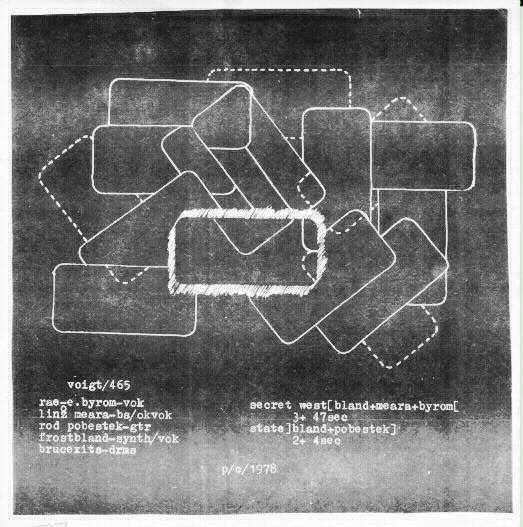
These ten songs that were recorded at Axtent Studios would eventually become Slights Unspoken which was Voigt/465’s debut album. Slights Unspoken was released in September 1979, and was released by Unanimous Weld Enunciations. Two different pressings of the album were released. The first features a white picture sleeve cover, while the second version has an orange coloured album cover with different artwork. Nowadays, both are incredibly rare and highly collectible. So much so, that original copies of Slights Unspoken are beyond the budget of most record buyers. Sadly, Sights Unspoken wasn’t a commercial success. However, Voigt/465 were regarded as a band who had the potential to enjoy a successful career.
Despite that, Voigt/465 went their separate ways after the release of Slights Unspoken. There were no last-gasp attempts to rescue the group. By then, the damage had been done, and some members of Voigt/465 had moved on. It was the end of era, for the five members of Voigt/465, who if things had been different, could’ve gone on to greater things. Alas, it wasn’t to be.
Instead, Voigt/465’s musical legacy was Slights Unspoken, which features a band at the peak of their powers. It features Voigt/465 the day they reunited to record what wasn’t just their debut album, but was also their swan-song, Slights Unspoken, which album that documents their place in Sydney’s musical history.
The Short-Lived Story Voigt/465.

HEAT EXCHANGE AND THEIR LOST DEBUT ALBUM REMINISCENCE.
Heat Exchange and Their Lost Debut Album Reminiscence.
Heat Exchange’s root’s can be traced to a Toronto high school, in the late-sixties. That was when four school friends decided to form a blues band, which they named Cloud. Just a couple of years later, and Cloud were one of the top bands in Toronto.
Several record labels were chasing Cloud’s signature. Major and independent labels vied for Heat Exchange’s signature. At one point, RCA looked like securing the signature of Cloud. Then at the last minute, Yorkville Records trumped RCA’s offer with what saxophonist Craig Carmody called: “a phenomenal offer.” It was too good to turn down, so Cloud signed on the dotted line. That was when Yorkville Records discovered another band called The Clouds. So to avoid any confusion, the record company suggested that Cloud should change their name.
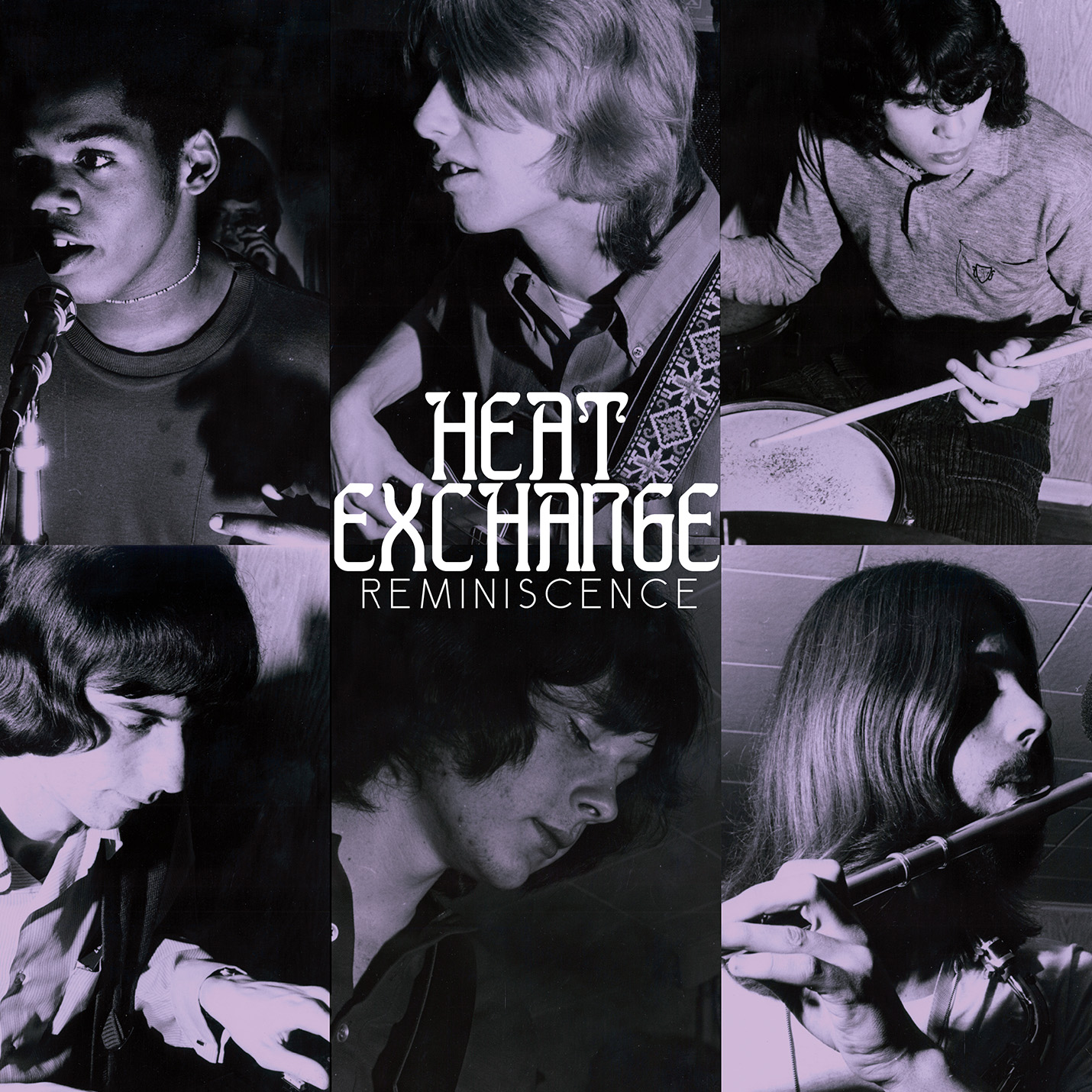
After drawing up a shortlist, Yorkville Records’ favoured the name Heat Exchange. This they felt was the perfect name for the label’s newest latest signing. However, as recording began, the band hadn’t settled on a new name. Eventually, the band adopted the name Heat Exchange. It was meant to feature on their debut album Reminiscence. This should’ve been the start of the rise and rise of Heat Exchange. However, Reminiscence was never released and was just another chapter in the story of Heat Exchange, which began in the late sixtes.
Cloud were formed in a Toronto high school in the late sixties, when four school decided to form a blues band, Cloud. Its initial lineup featured a rhythm section of drummer and vocalist Marty Morin, bassist Ralph Smith and guitarist Neil Chapman. They were joined by keyboardist and harmonica player Gord McKinnon. The nascent band made one of its first performances in the high school cafeteria. Watching Cloud play was a future member of the band.
The new addition was saxophonist and flutist Craig Carmody. He was invited to join Cloud, and although he was a couple of year older than the rest of the band accepted the invitation. Now Cloud began working out how to incorporate the saxophone to their existing song. Soon, Cloud had successfully incorporated the saxophone into their sound. Soon, though, five became six as Cloud expanded their lineup again.
This time, Cloud decided to add a new lead vocalist to the band. Up until then, drummer Marty Morin had been the lead vocalist. It wasn’t easy for him combining the two roles. Eventually, the members of Cloud decided that it would be best if the added a lead vocalist and allowed Marty Morin to concentrate on his duties as drummer. So Cloud began the search for a new vocalist.
Eventually, they had settled on a shortlist of potential vocalists. The next step was auditioning them. However, when Mike Langford began to sing, the rest of Cloud new they had their new vocalist. Cloud were now a sextet.
With Mike Langford now Cloud’s new vocalist, the new lineup of the band began looking for somewhere to rehearse. Finding a rehearsal space wasn’t going to be easy. Fortunately, Cloud met Blaine Pritchett, a familiar face in the Toronto music scene. He owned a local music shop, and allowed Cloud to rehearse in the basement.
In the music shop’s basement, Cloud began to hone their sound and write their own songs. This took time, practice and dedication. Gradually, though, Cloud became a tight band and new sound began to take shape. Now Cloud were ready to make tentative steps onto the Toronto’s live scene.
Cloud were determined to things properly. They wanted to be taken seriously, so registered with the local branch of the Musician’s Union. Next stop, was a booking agency, who Cloud hoped would get them some bookings.
The booking agent came up trumps, and soon, Cloud had several bookings. This included a booking at the three day Rock Hill music festival.
Despite being relatively new on the live scene, Cloud lucked out and found themselves playing on the main stage at the Rock Hill music festival. That day Cloud gave what was a career defining performance.
A couple of days after Cloud returned home from the Rock Hill music festival, Craig Carmody received a phone call from Blaine Pritchett. He had taken on the roll of Cloud’s road manager and sound man since the band made their live debut. Blaine Pritchett explained that he had received a phone call from Roland Paquin, who managed many of the Toronto’s top bands. Roland Paquin had heard Cloud at the Rock Hill music festival and like what he heard. So much so, that he wanted to become Cloud’s manager. Things were looking up for Cloud.
A couple of days later and a meeting was scheduled between Cloud Roland Paquin. After listening to what Roland Paquin had to say, Cloud agreed that he would become their new manager. With an agreement in place Roland Paquin went in search for a record company to sign Cloud.
Over the next weeks and months, Roland Paquin brought record companies to hear Cloud. They would play a selection of songs that Cloud and Roland Paquin had picked earlier. These songs showcased then band’s considerable talents. One of the labels that came to hear Cloud were RCA. Having heard Cloud, were keen to sign the band.
Despite this, Roland Paquin the Canadian label Arc Sound to hear Cloud play. By then, Cloud were leaning towards signing to RCA. Still Cloud agreed to play for Bill Gilliland and Richard Gael and from Arc Sound. After Cloud band had finished playing, Roland Paquin headed out to wine and dine the record company executives. Later that night, Roland Paquin came baring news Craig Carmody.
Roland Paquin told Craig Carmody that Arc Sound’s record company Yorkville Records were interested in signing Cloud. They had spotted Cloud’s potential and really wanted to sign the band. Yorkville Records’ offer was an indication of how keen they were to sign the band. However, the offer came with conditions.
Yorkville Records wanted the band to concentrate all their efforts of recording album. This meant stopping playing live until the album was recorded. In return, the members of Cloud would receive a salary that would allow them to live while they practised and then recorded the album. Then once the album was released. If Cloud agreed, they could use the label’s recording studios and would be assigned a full-time producer. It was an incredible offer and was thought to be the biggest recording contract offered to any Canadian band up until then. So it was no surprise that Cloud were keen to sign. So Cloud put pen to paper, and signed on the dotted line. However, it soon became apparent there was a problem with the band’s name.
It turned out that another band had released an album as The Clouds. This could lead to record buyers confusing the two bands. So a decision was made to rename the band. The members of Cloud drew up a list of names, but when it came to choosing the name, it was Yorkville Records that was calling the shots. They eventually settled on the name Heat Exchange.
By then, Heat Exchange began work on their debut album Reminiscence. Bill Gilliland was named the executive producer while Richard Gael took charge of production. The two executives played a hands on roll, helping choose the material for the album. Eventually, ten tracks for the album were chosen and Heat Exchange were ready to begin work on what became Reminiscence.
Each day, Heat Exchange arrived at the studio, at 10am and rehearsed until 6pm. Some nights, the band used their key to let themselves into the studio, where they continued to work late into the night. Then at the end of the week, Heat Exchange received their salary which didn’t amount to much. However, for six young men still living at home, they were living the dream.
Especially as Heat Exchange moved to Manta Sound, which was then Toronto’s top recording studio. That was where the band met David Green who owned Manta Sound. He was also the in-house engineer David Green, and would by Heat Exchange’s side as began recording ten tracks written by the band. This was just as well, as Heat Exchange were working without a producer. Despite this, the band recorded a rough mix of Reminiscence.
This rough mix of Reminiscence David Green told Heat Exchange had been played to executives at major labels in America. They liked the album, but wanted to know more about the band. Two questions that kept coming up were had Heat Exchange had a hit single and what were they like live? By then, Heat Exchange hadn’t played live for over a year, and hadn’t released a single. So Heat Exchange decided to release a single. This should generate interest in the album when it was released.
Heat Exchange decided to choose the most commercial song on the album in the hope of it beaming a FM hit. Can You Tell Me fitted the bill, and was released with Inferno on the B-Side. It proved popular in some Canadian cities, and is thought to have reached the top ten in at least one city. However, it failed to reach the Canadian charts. The problem was that Yorkville Records didn’t seem willing to promote the single properly. That was worrying.
Having failed to write a FM hit, Heat Exchange were encouraged to write an AM hit. The song they came up was Scorpio Lady, which showcased a more poppy sound. On the B-Side Heat Exchange added Reminiscence. This Heat Exchange hoped would provide them with that elusive single. Especially since Yorkville Records seemed to be reigning in their expenditure.
Originally, the label had been so keen to sign Heat Exchange that they outbid RCA. Now though, everything had changed for Heat Exchange. They were no longer receiving their salary from Yorkville Records and had to return to playing live to make ends meet. Heat Exchange travelled far and wide playing live. Meanwhile, the label wanted the band to come up with a hit single. That was despite commercial success eluding their two previous singles. Despite this, Heat Exchange decided to write and record one more single.
They were hoping it would be third time lucky when She Made Me All Alone was released as a single. On the flip-side was Philosophy. When the single was released, it failed to make any impression on the Canadian charts. For two members of Heat Exchange that was the final straw.
For two members of the band, Heat Exchange’s dream of becoming a successful band was almost over. Saxophonist and flautist Craig Carmody decided to leave Heat Exchange. So did bassist Ralph Smith. This proved to be the beginning of the end for Heat Exchange.
The other four members of Heat Exchange started to get involved with another group Truck. They began to tour with Truck. For Heat Exchange, the dream was over. Their debut album Reminiscence was never released by Yorkville Records. Record buyers never got the opportunity to hear Heat Exchange at their creative zenith on Reminiscence.
Sadly, Heat Exchange never returned to the recording studio together, and Reminiscence was the only album the band recorded. That was a great shame, as Heat Exchange were a hugely talented band who had the potential to go on to become one of the most successful Canadian bands of the early seventies. They might have fulfilled their potential if they had signed to RCA.
Instead, Heat Exchange signed to Yorkville Records and spent the best part of a year recording album. During that period, the band weren’t playing live, and instead, were receiving a salary from Yorkville Records. However, after Heat Exchange failed to delver a hit single, Yorkville Records began to lose interest in the band. Their singles weren’t promoted properly, and eventually, they stopped receiving their weekly salary. This resulted in Heat Exchange heading back out on the road.
As Heat Exchange toured the length and breadth Canada trying to eke out a living, Yorkville Records were still wanting the band to deliver a hit single. By then, Craig Carmody the elder statesmen of the band was looking to future. He was about to get married, and needed a steady income. Craig decided to leave Heat Exchange. So did Ralph Smith. Suddenly, six became four and the writing was on the wall for Heat Exchange.
Meanwhile, the other four members of Heat Exchange started to get involved with another group Truck. They began to tour with Truck. For Heat Exchange, it was the end of the line. Heat Exchange’s debut album Reminiscence was never released by Yorkville Records.
Sadly, Reminiscence lay unreleased for forty-five years and nobody got to hear Heat Exchange’s genre-melting album. Heat Exchange took as their starting point hard rock, and added to the musical melting pot folk rock, funk, fusion, jazz and progressive rock. Heat Exchange switched between and fused these disparate genres over the tracks on Reminiscence. It showcases truly talented band who were who had recorded an almost flawless album of hard rocking, catchy, complex, melodic and memorable music. That album was Reminiscence, which was belatedly released in 2017. At last, Heat Exchange’s long lost classic album Reminiscence eventually saw the light of day, and is a reminder of one of Canada’s great lost groups in the early seventies, looked destined for greatness.
Heat Exchange and Their Lost Debut Album Reminiscence.
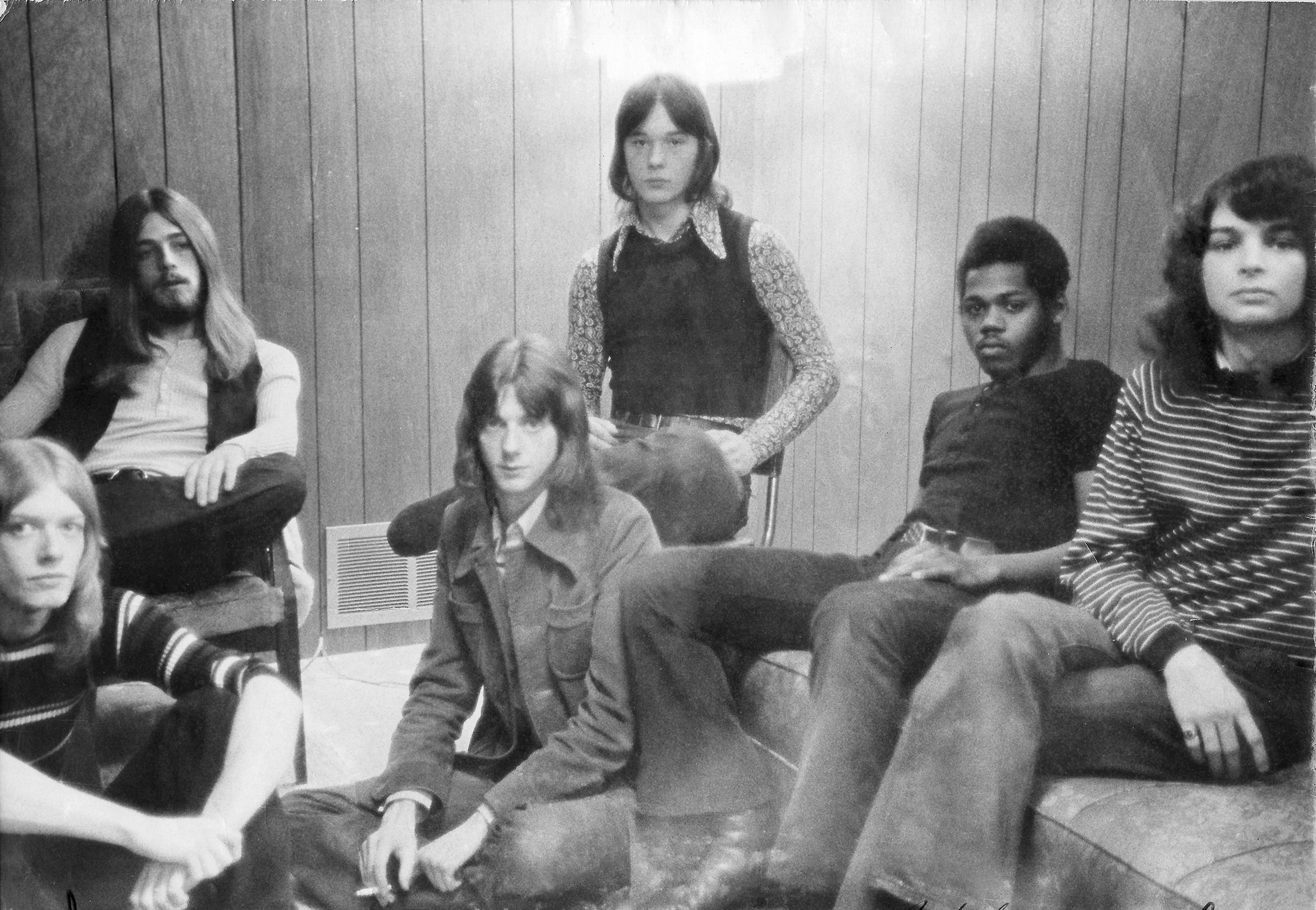
CROMWELL-WHAT MIGHT HAVE BEEN?
Cromwell-What Might Have Been?
By 1975, Dublin had an eclectic and vibrant music scene , and there literally was something for all musical tastes. This ranged from the traditional showbands that had long been part of the Irish music scene, right through to traditional Irish music and sentiment-laden pop music. However, this was only part of the story.
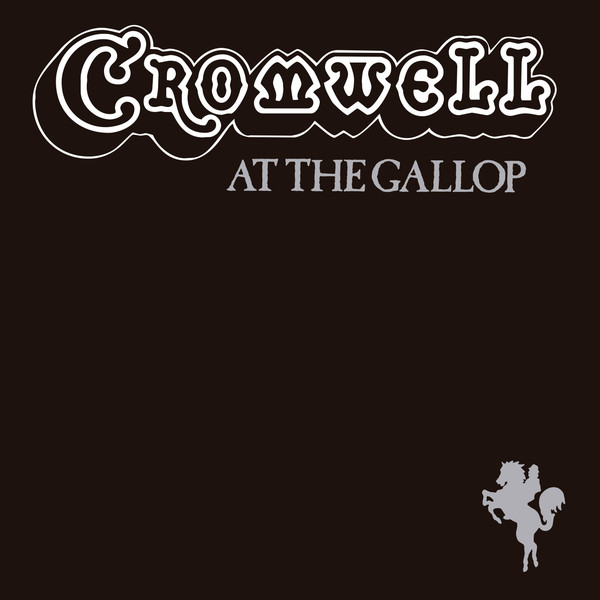
At the other end of the musical spectrum was Dublin’s most successful music export, Thin Lizzy. Lead by the inimitable Phil Lynott, Thin Lizzy’s hard rocking sound won them fans the world over. Then there was Horslips, the founding fathers of the Celtic rock sound. They had just released their fourth album and were one of Ireland’s most successful bands. Meanwhile, another Dublin based band Cromwell were about to release their debut album At The Gallop on their now Cromwell label.
The local critics who had heard At The Gallop, forecast a bright future for Cromwell. They had honed their hard rock sound over the last few years. Now that Cromwell had come of age musically, surely it was only a matter of time before they made the journey over the water, where they would sign for one of the London based major labels. Maybe then, Cromwell would follow in the footsteps of Ireland’s most famous sons like Thin Lizzy and Rory Gallagher?
Alas, that wasn’t the case. Cromwell’s debut album wasn’t the success that critics had forecast. Neither did Cromwell make the Journey to London to sign for a major label. Nor did Cromwell release a followup to At The Gallop. After releasing five singles and one album, the Cromwell story was at an end. Sadly, Cromwell’s discography consists of five singles and one album and their story began in Dublin 1970.
As a new decade dawned, a new band was born in Drumcondra, in Dublin in 1970. Originally, Cromwell was a quintet, based around the three Kiely brothers who previously had been members of Julian’s Heirs. Cromwell was a new start for the Kiely brothers. Dave Kiely became Cromwell’s frontman, while Desmond became the bassist and Michael the rhythm guitarist. They were joined drummer Derek Dawson and lead guitarist Patrick Brady. With the lineup complete, Cromwell were soon making their first tentative steps onto the local live circuit.
Cromwell made their live debut at an open air concert, in Swords, just north of Dublin. This was the start of a period where Cromwell were constant features of the local live circuit. They played pubs, clubs and dance halls, which allowed Cromwell to hone their sound. However, by November 1971, Cromwell were reduced from a quintet to a trio when Dave and Demond Kiely Kiely exited stage left. The two brothers had decided to pursue other opportunities.
Now that Cromwell were reduced to a trio, there were some changes. Michael Keily switched from rhythm guitar to bass and Cromwell’s sound became heavier and rockier. This was more in keeping with the sound that was popular on both sides of the Atlantic. For Cromwell, they were one step nearer to finding their true sound.
Meanwhile, when Cromwell played live, their setlist included covers of songs The Who, Rolling Stones and Granny’s Intentions. To this, Cromwell added covers of twelve-bar blues. Gradually, it seemed Cromwell were moving towards what would become their trademark sound. Maybe the addition of a new vocalist would prove to be the finishing touch?
When Cromwell went looking for a new vocalist, their luck was in. They managed to secure the services of Droghedaean born vocalist Mick O’Hagan. He had an impeccable musical pedigree. His father was famous Irish tenor Patrick O’Hagan, and his brother was Johnny Logan who would later, win the Eurovision Song Contest. However, when Mick O’Hagan joined Cromwell, he was regarded as Ireland’s premier blues and rock vocalist. Surely, he was the final piece in the jigsaw?
That should have been the case. The new lineup of Cromwell began playing live. By then, drummer Derek Dawson, bassist Michael Kiely and lead guitarist Patrick Brady were just nineteen. However, they played like seasoned veterans. With Mick O’Hagan as Cromwell’s new frontman, it looked like Cromwell were heading for bigger and better things.
Local hero Rory Gallagher certainly thought so, and booked Sleepy Hollow and Cromwell to open for him on his 1972 Irish tour. This was the opportunity of a lifetime. Cromwell’s music would be heard by a much wider audience, and maybe, A&R men would be in the audience?
If they were, they didn’t see Mick O’Hagan. He quit Cromwell just before the band headed out on tour with Rory Gallagher. Despite this disappointment, Cromwell headed out on tour with lead guitarist Patrick Brady taking charge of lead vocals. This continued when Cromwell returned from touring with Rory Gallagher.
Cromwell continued to play live. By now, Cromwell were heading much further afield. They were now touring the Emerald Isle and were regarded as one of the rising stars of the Irish music scene. So it made sense for Cromwell to record their first demo.
To record the demo, this necessitated a trip to Belfast, in Northern Ireland. This was at the height of the troubles. Three young men, who looked as if they belonged in a rock group were always going to attract the scrutiny of the British Army. When Cromwell crossed the border, their van was stopped. The three members of Cromwell were searched at gunpoint. Meanwhile, their van and the equipment it held was searched. This was the case each and every time Cromwell made the journey from the Republic of Ireland to Northern Ireland. Considering Cromwell were heading to Belfast to record a demo, this wasn’t the best preparation.
Having arrived in Belfast, Cromwell made their way to the recording studio. That was where Cromwell recorded songs penned by the Patrick Brady and Michael Kiely songwriting partnership. It was beginning to blossom, and over the next few years, would be fruitful source of material.
With the demo recorded, Cromwell started trying to attract the attention of British record labels. This was the only option. Ireland didn’t have the successful music industry that it now has. So Irish bands had no other option but to sign to British labels. However, not every band signed to British labels.
After recording the demo, Cromwell tried to attract the attention of British based record labels. It was to no avail. So Cromwell returned to playing live. They travelled far and wide, following in the footsteps of Ireland’s two great bands, Rory Gallagher’s Taste and Thin Lizzy.
Usually, Cromwell weren’t short of gigs. Sometimes, though when gigs were hard to come by, Cromwell went in search of places to play. Cromwell weren’t averse to heading off the beaten track, and into small towns where no rock bands ever played. The three members of Cromwell were welcomed with open arms, by youths starved of music that was relevant to them. It was a heartening site.
The only problem for Cromwell was the 1973 oil crisis. Suddenly, petrol was rationed and the price soared. Fortunately, Cromwell were always able to secure an extra can of petrol which they stored with the equipment in their van, before heading out to gigs. Cromwell’s mission to take rock music to every town and village in Ireland continued.
Later in 1973, Cromwell’s thoughts turned to releasing a single. The three members of Cromwell had come to the conclusion that if a record label wasn’t going to sign them, they would release a single on their own label. That day, Cromwell followed in the footsteps of The Beatles and Rolling Stones and their Cromwell label was born.
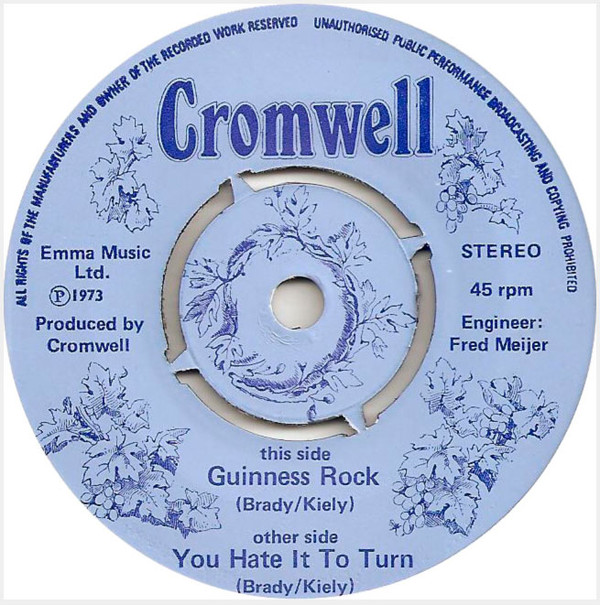
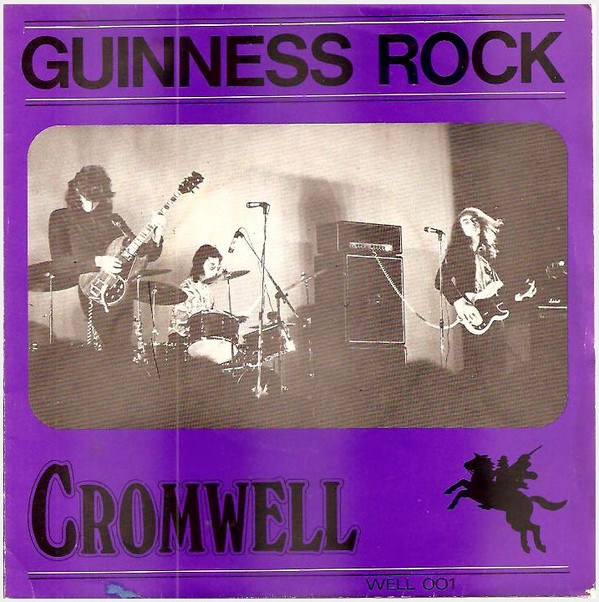
Later in 1973, the nascent Cromwell label released its first single, Guinness Rock. This was the first single that Cromwell had released since they were formed three years earlier in 1970. Guinness Rock garnered some radio play locally, while the band were featured on RTE, the Irish national broadcaster. One of the Irish magazines New Spotlight championed Cromwell and their music. This paid off when Cromwell released their sophomore single.
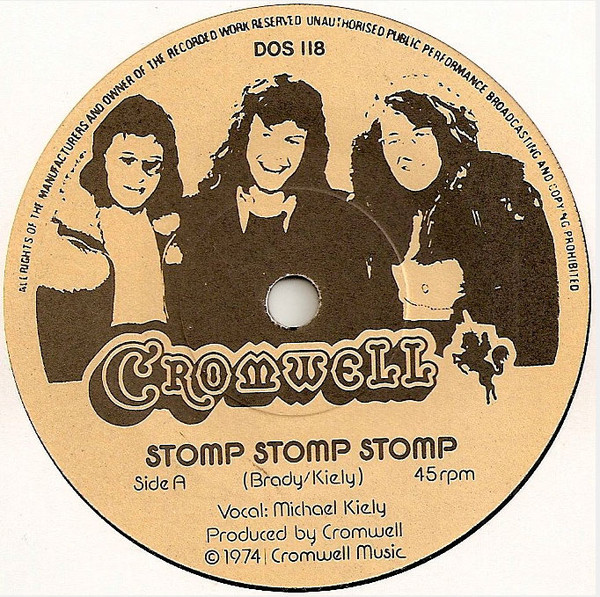
This was Stomp Stomp Stomp which was released in 1974. It sold well and reached number eleven in the Irish single’s charts. For Cromwell, this was something of a coup, and introduced the band’s music to a new and wider audience.
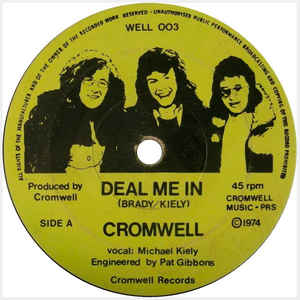
Following the success of Stomp Stomp Stomp, Cromwell released Deal Me In. It failed to replicate the success of Stomp Stomp Stomp. For Cromwell this was a disappointment.
They didn’t release another single until You Got It Made in 1975. It would feature on Cromwell’s debut album At The Gallop, which was released later in 1975.
At The Gallop featured ten hard rocking tracks from the Patrick Brady and Michael Kiely songwriting partnership. They were recorded by drummer Derek Dawson, bassist Michael Kiely and lead guitarist Patrick Brady who took charge of the lead vocals. They were by then a tight and talented trio who many thought had a bright future ahead of them.
So much so, that some local critics thought that Cromwell were about follow in the footsteps of Ireland’s most famous sons like Thin Lizzy and Rory Gallagher. Sadly, that wasn’t the case. Cromwell’s debut album At The Gallop wasn’t the success that critics had forecast. However, At The Gallop is a timeless cult classic that’s won over a new generation of rock fans. That is no surprise.
Cromwell’s debut album At The Gallop was an irresistible fusion of musical genres and influences. Everything from swaggering, strutting, good time, seventies rock ’n’ roll rubs shoulders with blues, country rock and beautiful ballads on At The Gallop. Similarly, Cromwell were inspired by everyone from early seventies Rolling Stones’ albums to Thin Lizzy Mott The Hoople, The Faces and the Flamin’ Groovies’ 1971 album Flamingo. This potpourri of musical genres and influences should’ve transformed the fortunes of Cromwell.
After all, Cromwell were one of the top bands in the Irish music scene. They looked as if they were about to follow in the footsteps of two of Ireland’s most successful recent musical exports, Taste and Thin Lizzy.
Alas, despite the undoubted quality of the music on At The Gallop wasn’t a huge commercial success. There was some interest locally, in Dublin and in other parts of Ireland. This must have been a bitter blow. Especially given Cromwell had spent years touring Ireland, playing towns, cites and even villages. They took rock music to places it had never been before. For the three members of Cromwell, it must have been a huge disappointment. They had spent years working towards releasing their debut album.
What Cromwell were aware of, was that the market for rock music wasn’t as strong as in Britain. Rock music was still frowned upon by the establishment in Ireland, which didn’t even have a fledgling music industry. It would be some time before the Irish music industry took shape. However, in 1975, things were very different in Britain. Maybe Cromwell’s debut album At The Gallop, Cromwell would attract the interest of major labels based in London?
At The Gallop could’ve and should’ve acted as Cromwell’s calling card, and opened the doors to major labels in London. Sadly, it wasn’t to be. None of major labels based in London came calling.
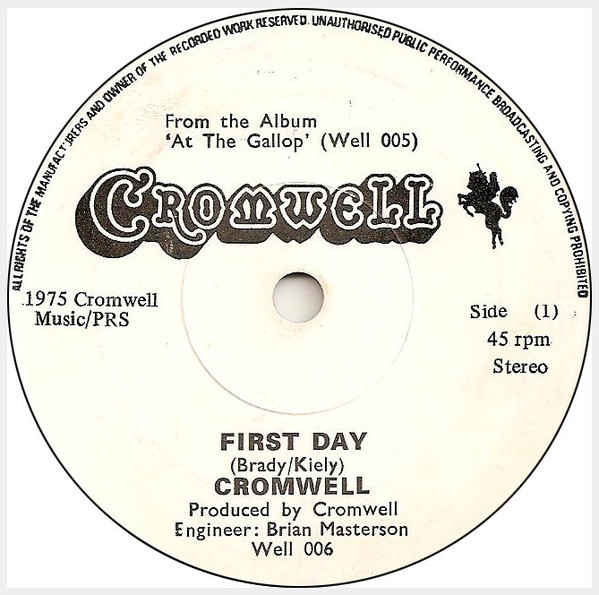
Cromwell only released one further single, First Day. It was released later in 1975 and proved to be Cromwell’s swan-song. They neither released another single, nor album. The Cromwell story was all but over, and before long, the band called time on their career. For Cromwell, the dream was over.
Since then, a new generation of record buyers have discovered At The Gallop. It’s a musical hidden gem that’s a reminder of one Ireland’s great lost groups, Cromwell. Nowadays, their one and only album At The Gallop is regarded as a cult classic. It’s a rarity with original copies changing hands for upwards of €400. That is no surprise as Cromwell were the most underrated and talented Irish bands of the early seventies, and the heir apparent to the legendary Thin Lizzy.
Cromwell-What Might Have Been?
GILLIAN HILLS-THE YE-YE YEARS 1960-1965.
Gillian Hills-The Yé-Yé Years 1960-1965.
Gillian Hills was born in Cairo, Egypt, on the ‘5th’ of June 1944 and was the daughter of teacher, traveller, author and adventurer Denis Hills and Dunia Leśmianowna, daughter of Polish poet Bolesław Leśmian. Much of Gillian Hills’ early life was spent in France which was where the fourteen year old came to the attention of film director Roger Vadim.
From the moment Roger Vadim met Gillian Hills, he thought that he discovered the British equivalent of Brigitte Bardot. Within a year, Roger Vadim cast Gillian Hills in the lead role of Les Liaisons dangereuse in 1959. So controversial was the film, that Gillian Hills had no option but to leave school.
The following year, 1960, Gillian Hills starred alongside Adam Faith in Beat Girl, which featured John Barry’s first ever film score. Two of the films’ stars, Adam Faith and Shirley Ann Field featured on the soundtrack and when Gillian Hills heard it, this was a eureka moment. She realised there and then that she wanted to become a singer.
Not long after that, Gillian Hills signed a deal with agent Jacques Alain, who brokered a deal with record producer Eddie Barclay who had founded and owned the Paris-based Barclay label.Their latest signing was actress turned singer Gillian Hills, who would spend the next five years signed the Barclay label between 1960 and 1965. During the period, French music was changing and moving away from the chanson traditional that had previously provided the soundtrack to life. Between 1960 and 1965, many singers in France embraced the new pop and rock which had grown in popularity. This included Gillian Hills was in the right place at the right time, and was a beneficiary of the change in musical tastes in France.
Having signed to Barclay, Gillian Hills’ recording career began later in 1960. For her Barclay debut, Eddie Barclay decided to pair Gillian Hills with French comedian and singer Henri Salvador on the EP Allo Brigitte? Ne Coupez Pas! It was released in August 1960, and featured Cha Cha Stop which was regarded as the highlight of an EP, that resulted in Gillian Hills being compared with Brigitte Bardot This was a comparison that Gillian Hills was unable to shake off.
Later in 1960, Près De La Cascade was released as a single, with Cha Cha Stop relegated to the B-Side. However, the next time Gillian Hills released a single, she would take star billing.
Three months later, and Gillian Hills returned with a new EP Si tu veux que je te dise. It was joined by the catchy cover of Jo Ann Campbell’s Le Paradis Pour Toi (A Kookie Little Paradise) and Ma Première Cigarette (Smokin’ My First Cigarette) which became a favourite of Gillian Hills. However, the young singer had no say in which songs that she was recorded. Instead, she had to rely on others to choose the right songs for her.
In February 1961, Gillian Hills returned released the Jean Lou EP. Ballads were the older of the day on Gillian Hills’ latest EP. Eddie Barclay had employed Charles Aznavour to write two songs for Gillian Hills. Both Jean Lou and Ne Crois Surtout Pas were jazz pop ballads and suited Gillian Hills, who was already proving a versatile vocalist. Proof of that was Un Petit Baiser (The Kiss) a string drenched ballad where Gillian Hills delivers a heartfelt vocal. It plays its part of what was the strongest EP of Gillian Hills’ short career.
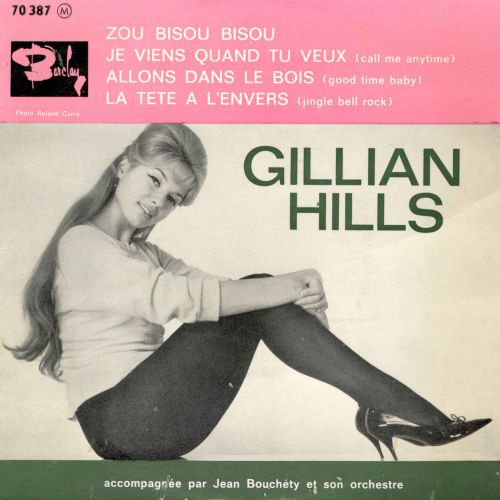
Just a few months later, Gillian Hills returned with the Zou Bisou Bisou EP. The highlight of the EP was Zou Bisou Bisou where Gillian Hills delivers a playful, kittenish cover of a song originality covered by another actress, Sophia Loren for the soundtrack to The Millionaires. Fifty-one years later, and it was Zou Bisou Bisou that sparked a resurgence of interest in Gillian Hills’ music when the song featured in an episode of Mad Men in 2012. That was all in the future.
After the release of the Zou Bisou Bisou EP, the Barclay label was struggling to work out how to market Gillian Hills. Up until then, her music hadn’t been aimed at the teenage market, which seemed her natural audience. As a result, Gillian Hills’ releases hadn’t enjoyed the commercial success that everyone had hoped. It was time for Eddie Barclay to rethink how he was going to market seventeen year old Gillian Hills in the future.
In the autumn of 1961, Gillian Hills joined Johnny Hallyday when he made his debut at the Olympia Theatre in Paris. It was one of the most prestigious venues in the French capital, and was where Johnny Hallyday showcased his new rockier sound. This was a sound that many other artists would embrace in the future, including Gillian Hills.
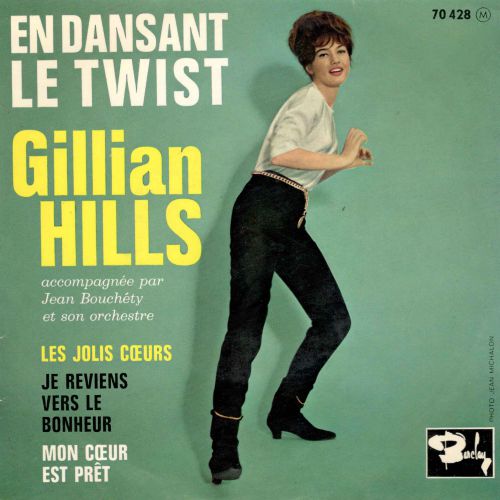
As the new year dawned, Gillian Hills Accompagnée Par Jean Bouchéty Et Son Orchestre released the En Dansant Le Twist EP in January 1962. It was aimed squarely at the teenage market, who could relate to Gillian Hills and the songs on the EP. Especially the ballad Mon Coeur Est Prêt (Don’t Treat Me Like A Child), where Gillian Hills spoke for generation of teenagers. Another of the highlights of the EP was the uptempo, filmic sounding Les Jolis Coeurs (Kiss’N’ Run). These two tracks showcased two different sides of Gillian Hill as she began a new chapter in her career.
Gillian Hills next EP featured four songs from her latest movie, Les Parisiennes which also starred Johnny Hallyday and Catherine Deneuve. Les Chaussettes Noires Avec Gillian Hills released the Musique Du Film Les Parisiennes in February 1962 and featured the uptempo song C’est Bien Mieux Comme Ça. When it was released as a single in America, it gave Gillian Hills the second hit of her career as she continued to reinvent her sound.
By the time Gillian Hills released her Avec Toi EP in November 1963, she was writing her own songs. Four of her new songs featured on her Avec Toi EP. This included the irresistible uptempo, horn driven Tu Mens, Avec Toi, Ne T’en Fais Pas and Maintenant Il Téléphone an organ driven song that is one of Gillian Hills’ most memorable compositions. These four new songs showcased a burgeoning songwriter who looked as if she had great future ahead of her. After all, Gillian Hills was able to write distinctive and catchy songs that should’ve struck a chord with record buyers. Sadly, the Avec Toi EP failed to find the audience it deserved. For Gillian Hills this was a disappointing start to her songwriting career.
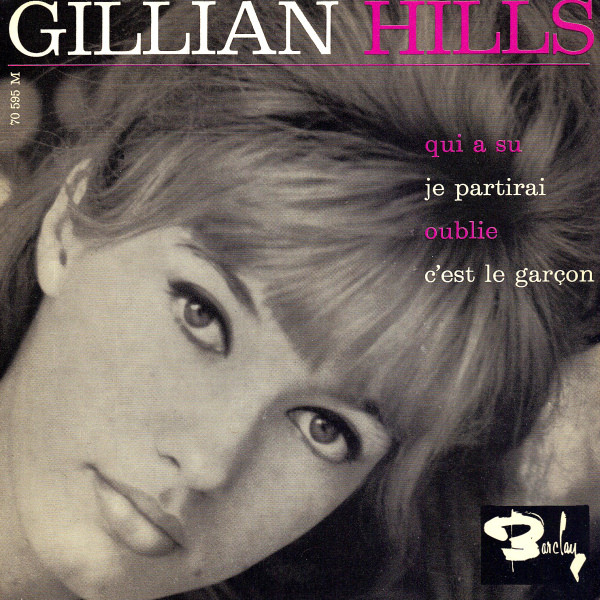
Barclay must have thought that the Avec Toi EP would’ve been a commercial success as Gillian Hills returned to the studio in November 1963. The Qui a Su EP was released in January 1964, and also featured Oublie, C’est Le Garçon and Je Partirai. Just live the Avec Toi EP, Gillian Hills had written the four songs on the Qui a Su EP. She was already maturing as a songwriter, and had come a long way in a short time. Proof of that were Oublie and C’est Le Garçon which featured a much tougher, contemporary sound that should’ve found favour with record buyers. So should the ballad Je Partirai, where horns and harmonies accompany Gillian Hills. Sadly, once again, commercial success eluded Gillian Hills, and at the end of 1964, she was dropped by Barclay.
For Gillian Hills this was a huge blow. She had spent the last four years trying to forge a career as a singer. However, she had only enjoyed two hit singles. Considering she had released fourteen EPs and a couple of singles, this wasn’t good enough for Eddie Barclay. However, Gillian Hills was determined to have one last roll of the dice.
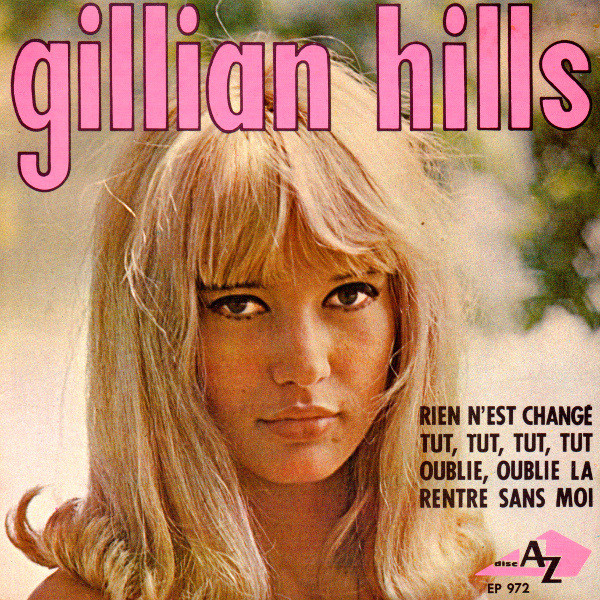
For her next EP, Gillian Hills signed to the Disc’Az label which was owned by the radio station Europe 1. Gillian Hills entered the studio and recorded four songs including her latest composition Rien N’est Changé. It joined cover versions of
The Zombies’ Leave Me Be which became Rentre Sans Moi, while The Lollipops’ Busy Signal became Tut, Tut, Tut, Tut. These songs became the Rien N’est Changé EP, which released in 1965. For Gillian Hills it was a case of now or never.
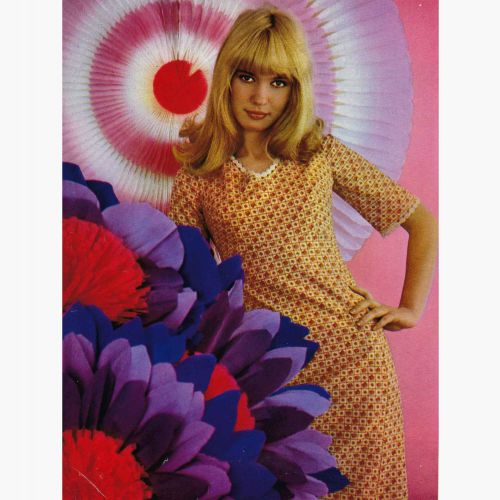
By the time the Rien N’est Changé EP was released, Gillian Hills’ profile had never been higher. She was a film star and a familiar face in magazines where she modelled the latest fashions and endorsed or advertised various products. With her profile so high, and a carefully orchestrated marketing campaign, the Disc’Az label had high hopes for the Rien N’est Changé EP. Sadly the EP which featured carefully chosen cover versions and Gillian Hills’ latest composition failed commercially. It was the end of Gillian Hills’ recording career in France.
By the end of 1965, Gillian Hills’ recording career was over, and she returned to acting full-time. She had managed to successfully juggle her acting and musical careers between 1960 and 1965. However, during that five-year period, Gillian Hills had only enjoyed two hit singles. Gillian Hills had failed to replicate the success of the other high-profile Yé-Yé singers. However, many of Gillian Hills’ other EPs didn’t enjoy the success that they deserved.
Many times, Gillian Hills’ EPs slipped under the radar, and it was a case of what might have been for this versatile and talented singer and later, songwriter? Maybe Barclay was the wrong label for Gillian Hills, and she would’ve enjoyed more success if she had signed to a major label? Possibly things would’ve been very different for Gillian Hills, and she would’ve gone on to enjoy a long and successful career? Sadly, that wasn’t to be commercial success eluded Gillian Hills for the majority of her career.
That is a great shame, as Gillian Hills’ music certainly deserved to be heard by a wider audience. Instead, she retired from music in 1965, after a career that lasted just five years, and was over by the time she was twenty-one.
Gillian Hills-The Yé-Yé Years 1960-1965.
THE LIFE AND TIMES OF SUSANNE SUNDFOR.
The Life and Times Of Susanne Sundfør,
Although Susanne Sundfør only embarked upon a musical career in 2005, the thirty-three year old is already one of Norway’s most successful singer, songwriter and producers. Her last four studio albums have topped the Norwegian charts, including her fifth album Music For People In Trouble which was released in 2017. Music For People In Trouble sees the rise and rise of Susanne Sundfør continue.
Susanne Aartun Sundfør was born on the ’19th of March 1986, in Haugesund, in Norway. Her grandfather is the academic, theologian and linguist Kjell Aartun. However, it was neither religion nor languages that Susanne Sundfør became interested in growing up. Instead, it was music.
By the age of six, Susanne Sundfør was already taking music lessons.Initially, Susanne Sundfør played the tambourine and sang. This however, piqued her interest and by the age of eight, she started to play the violin. A year later, nine-year old Susanne Sundfør started to take piano lessons. When she was twelve Susanne Sundfør started to take singing lessons. While music was playing an important part in Susanne Sundfør’s life it was still a hobby. She wasn’t spending every waking minute practising.
Things would change when Susanne Sundfør attended a music high school, and the next part of her musical education began. Despite her musical background, when Susanne Sundfør left high school, she didn’t study music at university. Instead, she studied English and Art at the prestigious University of Bergen. However, by 2005, nineteen year old Susanne Sundfør’s musical career began.
English singer-songwriter Tom McRae was about to embark upon a tour of Norway in 2005, and was looking for a support act. Susanne Sundfør was chosen, and each night his Norwegian tour, she opened for Tom McRae. This was the break that Susanne Sundfør had been looking for, and launched her nascent career.
In 2006, Susanne Sundfør headed out on tour with the Norwegian alternative rock band Madrugada. Each night, she joined the band when they sung their 2005 single Lift Me. It started life as a duet with singer Ane Brun, but was transformed with the addition of Susanne Sundfør. The experience she gained touring with Madrugada was vital, as Susanne Sundfør’s thoughts turned to her solo career.
Later in 2005, Susanne Sundfør released her debut single Walls in November. It reached number three in the Norwegian charts and in the process, launched Susanne Sundfør’s solo career.
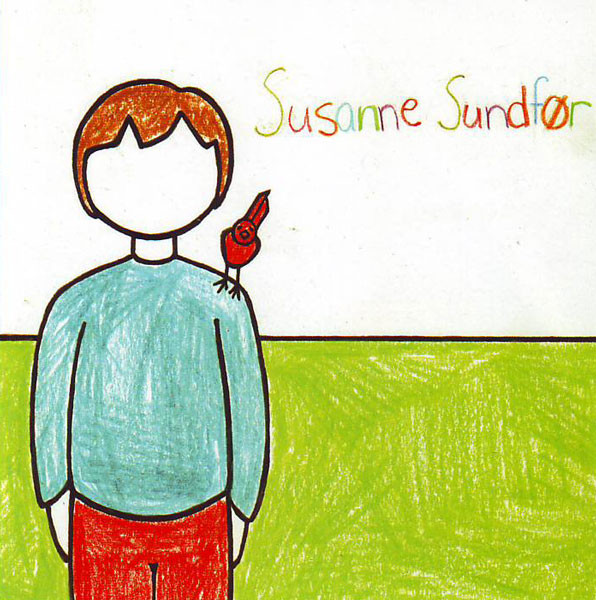
Susanne Sundfør.
Sixteen months later, and Susanne Sundfør was signed to Warner Norway, and was preparing to release her eponymous debut album. It featured eleven songs penned by Susanne Sundfør. These songs were produced by Geir Luedy, and featured a band that included some top Norwegian musicians including Morten Qvenild, who played synths and autoharp on Susanne Sundfør album of folk pop.
When Susanne Sundfør was released on the ‘19th’ of March 2007 to praise and plaudits. It entered the Norwegian charts and climbed all the way to number three. The album which Susanne Sundfør described as: “folk inspired” alum showcased a truly talented singer-songwriter who had a great future ahead of her.
Take One.
Just under two years later, Susanne Sundfør returned with her first live album Take One on the ‘10th’ of March 2008. Susanne Sundfør hadn’t been planning to release an acoustic album, but her legion of fans wanted to hear the songs on her eponymous debut album in their original form. They remembered Susanne Sundfør playing the songs live, with just a piano for company and wanted a reminder of these days.
Susanne Sundfør decided that seen there was demand for a live album, that she would record and then release an album of acoustic versions from her eponymous debut album. The only change that was made was Morocco was omitted, and replaced by an Interlude which knitted the album together. With just a piano or guitar for company, Susanne Sundfør worked her way through the eleven tracks on Take One.
Take One was produced by Susanne Sundfør and Geir Luedy, and was released by the Bergen based label Your Favorite Music. On the ‘10th’ of March 2008, Take One was released and reached thirty-two in the Norwegian charts. It gave Susanne Sundfør’s fans a reminder of her early days when she was starting out as a singer. By then, she was already thinking about her sophomore album.
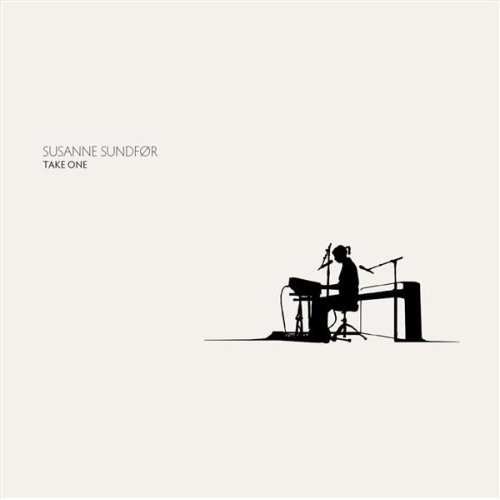
The Brothel.
Another two years passed before Susanne Sundfør returned with her much-anticipated sophomore studio album The Brothel on the ‘15th’ of March 2010. It featured ten new songs, with Susanne Sundfør writing nine and writing As I Walked Out One Evening Lars Horntveth. These ten songs became The Brothel, were Susanne Sundfør changed direction musically.
With a band that featured many of Norway’s leading musicians, including Jørgen Træen, Gard Nilssen, Morten Qvenild and Helge Sten whose vocal features on six tracks. He and the rest of this multitalented and versatile band and producer Lars Horntveth help Susanne Sundfør reinvent her music. Gone was the piano driven folk pop, to be replaced by a much ambitious fusion of art-folk and electronic music. This new sound marked the start of new era for Susanne Sundfør.
Critical acclaim accompanied the release of The Brothel, which was hailed as an ambitious and innovative album. When it was released by EMI Norway, it reached number one and was certified platinum. This wasn’t the end of the success for Susanne Sundfør.
Later when the nominations for Spellemannprisen, which are seen as the Norwegian Grammy Awards were announced, Susanne Sundfør had been nominated for two categories. Susanne Sundfør was nominated for the Best Lyrics and Best Composer. When the winners were announced, Susanne Sundfør won a Spellemannprisen for the Best Composer. This was a huge honour, and rounded off the most successful year of Susanne Sundfør’s career.
A Night At Salle Pleyel.
Having enjoyed the most successful year of her career, Susanne Sundfør was kept busy during 2011. She was the guest vocalist on the title-track to Nils Petter Molvær’s 2011 album Baboon Moon. Susanne Sundfør was also commissioned to record a live instrumental album for the twenty-fifth anniversary of the Oslo Jazzfestival.
The remit for what became A Night At Salle Pleyel was that Susanne Sundfør had to write forty-four minutes of music. Apart from that, Susanne Sundfør was free to use whatever instruments she wanted. Initially, she decided to write a piece for a string quartet. However, midway through writing the piece, Susanne Sundfør changed her mind and it became a piece for five synths.
When the commissioned piece was written, it was recorded at Sentrum Scene, in Oslo, Norway on the ‘18th’ August 2008. Joining Susanne Sundfør on stage were four other synth players, including Ådne Meisfjord, Morten Qvenild, Øystein Moen and Christian Wallumrød. They stood behind banks of synths and played six Movements that lasted forty-seven minutes.
Three months later, and A Night At Salle Pleyel was released on EMI Norway on the ‘18th’ November 2008. A Night At Salle Pleyel was Susanne Sundfør’s second live album, and hailed as ambitious fusion of electronic, experimental and classical music. It also showed another side of Susanne Sundfør, who was a versatile and talented musician. However, this side of Susanne Sundfør’s music was one she has decided to keep separate from her solo career which resumed in 2012.

The Silicone Veil.
Two years after the release of her number one, platinum certified and award-winning album The Brothel, Susanne Sundfør returned with The Silicone Veil, which was her third studio album, and fifth album overall. It featured ten songs penned by Susanne Sundfør which showcased her talent and versatility as a singer, songwriter and producer.
When Susanne Sundfør recorded The Silicone Veil at the Pooka Studio and Kikitépe Tearoom Studio, once again, she co-produced the album with Lars Horntveth. It was her most eclectic album that took as a starting point electro-folk and incorporated elements of art pop, baroque, dream pop, Scandinavian electronica, synth pop and even a hint of baroque pop. Given the eclecticism of The Silicone Veil, Susanne Sundfør got the opportunity to showcase her full and impressive vocal range. Whether it was on orchestrated arrangements, or against an electronic backdrop Susanne Sundfør breathed life, meaning and emotion to life the lyrics to her ten compositions. They looked at a wide range of subjects which Susanne Sundfør described as: “apocalypse, death, love and snow.” They found favour with critics when The Silicone Veil was released.
The Silicone Veil was scheduled for release on the ’23rd’ of March 2012. It was Susanne Sundfør’s first album to be released in Britain, where it was hoped her music would find a new and wider audience. Before that, critics had their say on The Silicone Veil. They were won over by The Silicone Veil, which was regarded as her finest hour.
That was no surprise, given the carefully crafted, genre-melting arrangements, and lyrics that approached and challenged such a wide range of subjects. Susanne Sundfør wasn’t afraid to deal with subjects that lesser artists would’ve shied away from. That wasn’t Susanne Sundfør’s style. She was made of sterner stuff and wrote cerebral, engaging and thought-provoking lyrics that she delivered with a mixture of confidence, boldness and emotion. The music on The Silicone Veil veered between melancholy and wistful, but was beautiful, imaginative and playful. Sometimes, Susanne Sundfør sung of romance and intrigue during cinematic songs that painted pictures. Without doubt, The Silicone Veil was one of Susanne Sundfør’s finest albums.
It was no surprise that when The Silicone Veil was released on the ’23rd’ of March 2012 the album reached number one in the Norwegian charts. This was Susanne Sundfør’s second consecutive number one album. She hoped that two would become three when she returned with her third album Ten Love Songs.
Ten Love Songs.
Not long after the release of The Silicone Veil, Susanne Sundfør began writing her fourth studio album which later, became Ten Love Songs. Originally, Susanne Sundfør intended to write an album that dealt with the subject of violence. However, just like when Susanne Sundfør was writing the common A Night At Salle Pleyel, the album became something very different.
After spending some time in New York where she tried to write songs for what became Ten Love Songs, Susanne Sundfør returned home. It hadn’t been a successful trip, and she had little to show for her time spent in the Big Apple.
Now at home in Oslo, Susanne Sundfør began to write the songs that would feature on Ten Love Songs. Before long, she noticed two themes developing…love and relationships. By then, Susanne Sundfør had decided to head in a different direction musically. This was only part of the story as Susanne Sundfør changed direction again.
Ten Love Songs would be a much more pop orientated album. This required Susanne Sundfør to write in a different way. She knew the songs would have to be much more repetitive and have a different and more direct musical and lyrical structure. This was very different to her previous studio albums. This however, wasn’t the only change Susanne Sundfør was about to make.
Having written Ten Love Songs, Susanne Sundfør was determined to involve herself in every aspect of making an album. She wanted to involved not just in the production, but the recording, orchestration, editing and mixing Ten Love Songs. This was a huge amount of work. However, Susanne Sundfør knew this and wanted to know more about how the album was recorded.
Recording of Ten Love Songs took place between 2012 and 2014, and just like previous albums, Susanne Sundfør was joined by some of Norway’s top musicians. Two of the recordists that worked on the album were Jørgen Træen and Morten Qvenild, who were both talented musicians who had worked with Susanne Sundfør on previous albums. Co-producing the album was Susanne Sundfør was Lars Horntveth. However, Susanne Sundfør bought different producers onboard to work on different tracks, including Anthony Gonzalez, Jonathan Bates and Röyksopp. As a result, other sessions took place in America and France. By late 2014, Ten Love Songs was completed and Susanne Sundfør had been involved with every part of the music making process. She was exhausted, but it had been a rewarding learning experience.
With Ten Love Songs completed, Warner Music Norway scheduled the release of the album for the ’16th’ of February 2015. By then, nearly three years had passed since 16 February 2015 Susanne Sundfør had released an album. Her legion of fans eagerly awaited Susanne Sundfør’s fourth solo album Ten Love Songs. So did critics.
Critics were greeted with an album that had two main themes. However, there was more to Ten Love Songs than love and relationships. Instead, the album death with extremes of love and violent hatred. That hadn’t always been Susanne Sundfør’s concept for the album.
Two of the songs, Accelerate and Trust Me had been written before the release of The Silicone Valley in March 2012. These two songs were meant to be the focus of the album, which was meant to revolve around scenarios that included statues, buildings and weaponry. However, when Susanne Sundfør wrote Fade Away that was the turning point.
After that the album’s central themes were said to be love and relationships. This Susanne Sundfør clarified: “the lyrics are never really about the topic of “love” that was “corny” at the time of its release, but rather the extreme topics about sex and violence that was discussed in the media.” Ten Love Songs was in reality an album about extremes of love and violent hatred. As a result, there’s a darkness to the music as Susanne Sundfør deals with loss, grief and even the compulsive nature of love. These were subjects many songwriters were afraid to deal with and many of Susanne Sundfør’s fans had experienced. These lyrics were delivered against another eclectic album.
While Ten Love Songs was described as a pop oriented album, it featured a myriad of different musical genres and influences. Everything from art pop, baroque pop, EDM, electro pop, electronica, Europop, industrial, Italo disco, synth pop and a much more experimental pop sound was incorporated on Ten Love Songs. Given the subject matter of Ten Love Songs, there’s a cold, almost bleak sound to some songs. This works and bring a sense of reality to the cinematic lyrics. On some songs, there’s an eighties influence partly because of the synths and drum machines used. Other songs are irresistibly catchy including the Europop of Kamikaze and the EDM of Silencer. These tracks grab the listener’s attention straight away, and like Fade Away, Delirious and Accelerate were radio friendly. Susanne Sundfør had also written an album that critics received critical acclaim and was called one best albums of 2015. It also found favour with Susanne Sundfør’s many fans.
When Ten Love Songs was released, it topped the Norwegian charts, and was certified gold. Ten Love Songs was Susanne Sundfør’s third consecutive studio album that had reached number one in Norway. In Sweden, Ten Love Songs reached number forty-seven and seventy-eight in Britain. Susanne Sundfør’s music was starting to find a much wider and appreciative audience. They would welcome Susanne Sundfør’s fifth studio album Music For People In Trouble when it was released.

Music For People In Trouble.
Buoyed by three consecutive number one albums in Norway and a gold disc for Ten Love Songs, Susanne Sundfør decided to begin work on her fifth studio album, and seventh album overall, Music For People In Trouble. It marked another stylistic departure for musical chameleon Susanne Sundfør.
By the time work began on Music For People In Trouble, she had recovered from the making of Ten Love Songs. After the album was completed, Susanne Sundfør was exhausted, anxious, suffering from flu and depressed. However, after some rest and recuperation, and some time travelling the world and had experienced life everywhere from North Korea to the Amazon jungle. After her adventures,
Susanne Sundfør was ready to write and record her fifth album Music For People In Trouble. It was going to be a very different album to its predecessor Ten Love Songs.
Music For People In Trouble was a much easier album for Susanne Sundfør to write. She later said it was the easiest album to write since her 2007 eponymous debut album. Inspiration for the album came from Part of the inspiration for Music For People In Trouble
was Susanne Sundfør’s travels and two books she read during the time she spent writing the album. This included Lawrence M. Krauss’ A Universe From Nothing and Robert Bly’s anthology of poetry News Of The Universe, which was food for thought for Susanne Sundfør.
Some of the songs were written as Susanne Sundfør sat in bed, in her home in Dalston, East London. These were what Susanne Sundfør later called “guitar songs.” After this, Susanne Sundfør headed to Los Angeles where she wrote another two more songs, Good Luck Bad Luck and No One Believes In Love Anymore. Just like the songs that she had written in London, the songs came easy to Susanne Sundfør. They seemed to flow through and out of her as she surveyed the world around her. With two new songs written, Susanne Sundfør returned to London, where she penned Mountaineers. However, Susanne Sundfør’s travels weren’t at an end and she headed to Woodstock, in the outskirts of New York where she wrote Bedtime Stories in a log cabin. The final song that Susanne Sundfør wrote for Music For People In Trouble was The Golden Age, which she recorded with the help of her longterm collaborator Jørgen Træen.
They set out to record a very different album to Ten Love Songs. it saw Susanne Sundfør return to her roots, on album that married art pop and folk. Music For People In Trouble featured stripped back, understated and spartan arrangements, that eschewed the synths and technology of previous albums. By then, Susanne Sundfør admitted she was: “tired of technology”: I wanted to feel like I was a musician again. But also, what I wanted to say needed something organic to convey it.” To create that organic sound, a piano, flute, clarinet and acoustic guitar joined a rhythm section that featured a double bass. Susanne Sundfør was going on an odyssey back to her roots.
Recording of Music For People In Trouble, which was co-produced by Susanne Sundfør and Jørgen Træen, took place at a number of studios. This included Duper Studio, Bergen; NRS Recording Studio in Catskill, New York; Tropical Hi-Fi Studio; Bella Union Studios; Amper Tone Studio and Propeller Music Division, in Oslo. Joining Susanne Sundfør were some talented and versatile musicians. They were occasionally augmented by samples, found sounds and electronic textures. Susanne Sundfør said they: ”take the songs into experimental territory,” such as “trickling water sounds, wiry bleeps and animal peeps.” Some of these were inspired by, and reminded Susanne Sundfør of her recent travels. Other sounds ranged from dry and industrial, to innocent and romantic and played their part in what was a personal, poignant and powerful album from Susanne Sundfør.
Susanne Sundfør’s fifth studio album saw her marry art-pop and folk with avant-garde, country, electronica, experimental, folk, industrial, jazz, musique concrète on Music For People In Trouble. It was a very different album from Ten Love Songs, and another album of grownup music. This was what Susanne Sundfør excelled at. She was a storyteller par excellence who neither shied away from uncomfortable subjects nor controversy on her albums of cerebral and thought-provoking music. That was the case with Music For People In Trouble.
When Music For People In Trouble was released, it went straight to number one in Norway. This was Susanne Sundfør’s fourth consecutive number one album. After a few weeks, Music For People In Trouble had reached 124 in Belgium and ninety-three in Britain. However, an album of the quality of Music For People In Trouble was destined to climb the charts.
Just like Susanne Sundfør’s previous albums, Music For People In Trouble was a carefully crafted album of genre-melting music that featured cerebral and thought-provoking music. It asks a series of questions, and deals with a variety of scenarios and subjects. Some of them will ring true with those that buy the album. They’ll have suffered the same hurt and heartbreak, or feel the same way about love or romance. Similarly, The Sound Of War brings home the seriousness of the current situation, where two megalomaniacs could bring about World War III and oblivion for large parts of the world. Elsewhere on Music For People In Trouble, Susanne Sundfør embarks upon musical experiments, as she embraces avant-garde. This is all part of another album of ambitious and innovative genre-melting album from Susanne Sundfør.
Since releasing her critically acclaimed eponymous debut album, Susanne Sundfør has continued to flits between and fuse musical genres and influences. The result are albums that are quite different as the chameleon-like singer-songwriter continues reinvents her music. It’s a case of expect the unexpected from Susanne Sundfør.
Her more recent album Music For People In Trouble was her most accomplished and gave her fourth consecutive number one studio album in her native Norway. Despite that, Susanne Sundfør is still a relative unknown in Britain and America. However, if this truly talented singer-songwriter continues to release albums of ambitious, atmospheric, beautiful, cinematic, emotive, enchanting and genre-melting music, then commercial success will come her way on both sides of the Atlantic. Especially if Susanne Sundfør continues to release diverse albums where piano led ballads sit side-by-side with epics and more experimental songs that showcase one of Norway’s top singer-songwriters who consistently releases albums of personal, poignant and powerful music.
The Life and Times Of Susanne Sundfør,
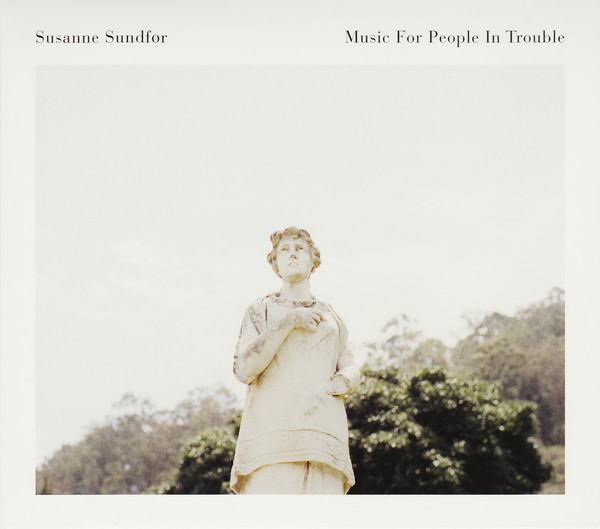
THE NON BAND STORY
The Non Band Story.
In the summer of 1978, a musical revolution took place in Japan, which changed music forevermore,..punk. The Japanese punk rockers were christened Tokyo Rockers, and initially were disregarded by the mainstream music industry. Record company executives made the mistake of thinking that the Japanese punk movement was just a passing fad, and that before long, it would be replaced by another musical movement. How wrong they were.
Left to their own devices, a vibrant and thriving underground music scene was born. Over the next few years, the Tokyo Rockers headed to underground clubs, which were similar to the ones frequented by British punks just a couple of years earlier. The Tokyo Rockers saw an eclectic selection of bands ranging from the new punk groups through to avant-garde bands and even on occasions, indie rockers. It was a fascinating scene populated by of independent and individualistic musicians who were keen to make an impression on the audiences. Some bands however, stood out from the crowd, including Maria 023, a male-female duo.
Maria 023 were just one of many bands who had caught the imagination of the Tokyo Rockers. Their lineup featured Genet and the bassist Non. She and Genet released the EP, Maria 023, which was released on Gozira Records in 1978, featured Theme and Human Being with Machine Sex and Face To Face on the B-Side. This was their one and only release, because Maria 023 proved to be a short-lived band.
During the short time that Maria 023 were together, they made a lasting impression on the Tokyo Rockers. Especially Maria 023’s bassist Non, who had come close to becoming a cult figure. However, when Maria 023 split-up, nothing was heard of Non until August 1979.
Non made her comeback at a legendary concert, Drive To 80s. Nobody was aware that Non was about to make her comeback that night, until she took to the stage. Accompanied by just her bass, she stood centre-stage, and sung several new songs during an intense, emotive and highly charged performance. When Non left the stage that night, little did she know that this was the start of a new chapter in her career.
Over the next few months, Non played a series of solo gigs. Non would pitch up at the venue with just her bass, and sing her new songs. By then, she was a talisman figure and role model amongst the female Tokyo Rockers. They admired and were inspired by Non, who they saw as a strong, independent young woman. For many female Tokyo Rockers, Non was everything they wanted to be, if they had been able to cast off their inhibitions. As a solo artist, she was already one of the leading lights of the Japanese punk movement. Soon, though, Non would form a band that would write their way into Japanese musical history…Non Band.
It was almost inevitable that Non would make the move from solo artist to founding her own, new band. Just like many new bands, it took several changes in lineup before they arrived at a settled lineup. By then, the Non Band’s lineup featured drummer Mitsuru Tamagak, bassist Non and Kinosuke Yamagishi who switched between clarinet and violin. This was the classic lineup of the Non Band, and the one that found the group at the peak of their musical powers. However, music was changing within Japan.
By then, the Japanese punk and new wave rock scene was evolving, and moving in a new direction. Many new bands were also being formed, including the second generation of bands. This was similar to what had happened in Britain. Just like in Britain, many new independent labels were also being formed and offered bands, old and new, an outlet for their music. This included Telegraph Records, which had been formed by Jibiky Yuichi in 1981. He then started putting together a distribution network for the records he planed to release.
Ever since forming Telegraph Records, Jibiky Yuichi had been watching the progress of Non Band. He was a fan of their music, and deep down, had always hoped that one day, he would be able to release a Non Band album. However, with so many new independent labels being founded, the best bands could have their pick of labels. The Non Band were one of the best bands, and convincing the Non Band to sign to a relatively new label wasn’t going to be easy.
Jibiky Yuichi proved persuasive and the Non Band eventually signed to Telegraph Records. Having signed a recording contract, the next step was for the Non Band to record their debut album.
Recording began at the Mod Studio, in Tokyo, in October 1981. The Non Band’s lineup featured drummer and percussionist Mitsuru Tamagak, Non who played bass, guitar and added vocals, plus Kinosuke Yamagishi who played clarinet, violin and mandolin. They were augmented by Chiko Hige who played mini keyboards plus Kummy and Mitsuwa who added the chorus. Producing the album was the Non Band, who completed their eponymous debut album in November 1981.
Three months later, and the Non Band and Telegraph Records were preparing to released their eponymous debut album in February 1982. This was step into the unknown for Non Band, while Telegraph Records the album was the label’s fifth release. Unlike most albums being released in 1982, a decision had been made to release Non Band as a ten inch album. It featured six songs from the Non Band, which it was hoped would introduce their music to a wider audience.
Jibiky Yuichi who owned Telegraph Records, knew that at best, a release like Non Band would sell around 1,000 copies. If Non Band sold anything like 1,000 copies the album would be deemed a success. When Non Band was released, the album surpassed even Jibiky Yuichi’s expectations. After repressing Non Band several times, the numbers were added up, and Jibiky Yuichi announced that the album had sold 2,000 copies. Non Band had a hit album on their hands. Soon, their popularity soared and Non Band was receiving critically acclaimed reviews. Thirty-five years later, and Non Band is a genre classic.
Although Non Band were primarily a punk group, their eponymous debut album was much more than a punk album. There were elements of the post punk and new wave sounds, and occasional diversions into funk, free jazz, traditional Japanese music and even some poppy hooks. Very occasionally, Non Band took on a jazz and experimental sound and headed in the direction of avant-garde. Mostly, Non Band evokes the spirit of ’78, when the punk arrived in Japan. However, music had changed by late 1981 when Non Band was recorded, and this explains why it’s such a genre-melting album. Non Band was much more than a punk album, that launched the career of punk pioneers Non Group.
Following the success of Non Band, it was a case of hail the conquering heroes when the group took to the stage. By then, Non Band’s lineup had been expanded when two female rockers joined the group. Guitarist Kummy and keyboardist Mitsuwa joined Non Band at what proved to be the peak of their powers.
Everyone within the Tokyo Rockers’ scene expected the Non Band to go on to even greater success. Non Band was surely, the first of many critically acclaimed albums. Sadly, that wasn’t to be. Six months after the release of the Non Band, the Non Band was no more.
When members of the band departed, Non struggled to find suitable replacements. Eventually, she realised that it was an uphill struggle, and the Non Band disbanded. It was the end of the line for a truly innovative band. They went out at the peak of their powers, unlike some of their British counterparts who in similar circumstances, struggled on and became a parody of their former selves. Not the Non Band. They weren’t going to fade away, and went out at the top.
Non drifted away from the Tokyo Rockers’ scene, and returned home to Hirosaki in the south-west Aomori Prefecture, of Japan. This was the start of another new chapter in Non’s life. She settled down and raised two children, and eventually, took over the running of the family business. The former Tokyo Rocker now found herself running an arts supplies business. While she was happy in her new life, it was almost inevitable that Non would one day, contemplate a comeback.
It wasn’t until 1999 that Non started to think about her former life as a musician. She realised that she missed music, and began putting plans in place for the second coming of Non.
Twenty years after her triumphant comeback at Drive To 80s in August 1979, Non went in search of like-minded musicians. She found Keiji Haino and Tatsuya Yoshida, who Non invited to her home in Hirosaki. They began playing live together, and sometimes, Non played solo gigs. The second coming of Non was well underway.
For Non it was a new chapter in a story that started over twenty years earlier. However, it was a story that would run and run.
Non returned to Tokyo, where she had made her name in the late-seventies, but this time as a solo artist. Fans of the Non Band awaited her first appearance in Tokyo in two decades. As Non took to the stage, she was welcomed by fans old and new. It was a triumphant return, and Non’s comeback was almost complete.
The only thing that Non still had to do was release her debut solo album. That came in 2002, when Non released her much-anticipated debut album Ie. It received praise and plaudits, thanks to songs like Vagabond, Love Song and OK Song. Non’s comeback was complete. However, now that Non was back, she was here to stay, she was about to hatch a new plan.
Despite establishing herself as a successful solo artist, Non had unfinished business from twenty years ago. She decided it was time to make two phone calls. However, she didn’t know what response she would receive when she called Mitsuru Tamagak and Kinosuke Yamagishi. They were pleased to hear from Non, and agreed to reform the Non Band.
Just like their final performances in 1982, the original trio was expanded, with accordionist Emi Sasaki joining the Non Band. The newly expanded lineup of the Non Band booked a few comeback gigs, after twenty years away.
When the Non Band played their comeback gigs after twenty years away, it was to a wider fan-base. Since the Non Band had been away, a new generation had discovered their eponymous debut album. It was now a genre classic, that had won over two generations of music fans. These fans flocked to see the Non Band when they hit the comeback trail. They noticed that the Non Band had matured as musicians and as a group. The Non Band played with the same power, passion and intensity, and dazzled fans old and new during their comeback gigs. For the Non Band, their comeback had been a huge success.
After the comeback gigs, the Non Band decided that they were back for good. There was a caveat though. They weren’t going to embark on gruelling tours each year, and instead, would play just a few gigs each years. This was what the Non Band have been doing ever since, and in 2012, a live album Non Band Liven’ 2009-2012 was issued on Jibiky Yuichi’s Telegraph Records which had also made a comeback. The release of Non Band Liven’ 2009-2012 was a reminder of just how good a live band the Non Band were.
While the Non Band continued to play a few gigs each year, Non continued to work as a solo artist, and in 2014, self-released her long-awaited sophomore album Non Solo Song Book. It featured seventeen new songs, including Earth Song, ほいかん and 善でも悪でもない精霊 which featured the All Aomori Survivors, who had all survived the 2011 tsunami. They played their part in the sound and success of the Non’s sophomore album. When Non Solo Song Book was released in 204, it was welcomed by Non’s fans. So would another album three years later.
Nowadays, interest in the Non Band is greater than ever. Especially, their eponymous debut album Non Band which is a groundbreaking timeless genre classic and is the first chapter in the Non Band story which began forty-one years ago in 1978.
The Non Band Story.


CRAIG ARMSTRONG-SUN ON YOU-VINYL.
Craig Armstrong-Sun On You-Vinyl.
Label: Decca.
Over the past twenty years, Glasgow born Craig Armstrong has been one of the hardest working British composers and is the man many top film directors call when they’re looking for a score to their latest movie. This includes fellow Glaswegian Peter Mullan and Baz Luhrmann, who Craig Armstrong collaborated with and created the score to Moulin Rouge and The Great Gatsby. They’re two of the highest profile projects the quietly spoken fifty-nine year old award-winning composer has worked on during a long and illustrious career.
It began in 1981. after Craig Armstrong graduated from the Royal Academy Of Music in Glasgow, and became the music and dance specialist at Strathclyde Regional Council. A year later, Craig Armstrong joined Midge Ure’s band on his Gift World Tour. This was very different to his previous job was good experience for the twenty-six year old musician and composer.
In 1994, Craig Armstrong was commissioned by the Royal Shakespeare Company to write music for two new productions. This included The Broken Heart and The Tempest which were both directed by Michel Boyd. Craig Armstrong’s spell with the Royal Shakespeare Company ended in 2002, but by then his career was blossoming.
By then, Craig Armstrong was award-winning ssoundtrack composer with a BAFTA, Golden Globe, and American Film Institute Award, as well as World Soundtrack Award and a Golden Satellite Award for Moulin Rouge!. Despite being constantly in demand to score soundtracks and compose for television, Craig Armstrong had always wanted to embark upon a solo career.
This dream came true in February 1998 when Craig Armstrong released The Space Between Us to plaudits and praise. Some four years later he returned with his crucially acclaimed sophomore album As If To Nothing in February 2002. Since then, Craig Armstrong has continued to successfully juggle his solo career and soundtrack work.
That was the case until relatively recently, when the fifty-nine year old decided that after twenty years moving from project to project, the time had come to spend more time with his family and more time making solo albums. This included Sun On You which is Craig Armstrong’s debut album for Decca.
Sun On You finds an older and wiser Craig Armstrong revisit the music of his younger self. It’s an album of what Craig Armstrong regards as his own music.
This might sound like a strange thing to say, but it makes sense to Craig Armstrong and those who have followed his career closely. In the early days of his solo career, Craig Armstrong’s music was inimitable and showcased a talented composer and musician, However, after a few albums, Craig Armstrong started to be influenced by other musicians and bands. This was something has happened to many composers and artists over the years, and some are frustrated by this.
They try to detox their system and rid themselves of all the outside influences that might affect their music. This was what Craig Armstrong decided to do when he wrote and recorded Sun On You.
Having written sixteen tracks that are described as music for piano and strings, Craig Armstrong went back to basics. He played piano and produced on Sun On You, which meant that he had to eschew the impressive array of electronics that surrounded him in his recording studio. In their place was strings that came courtesy of the strings of the Scottish Ensemble. They joined Craig Armstrong at Gorbals Sound Studio, Glasgow, and AIR Studio, in London and recorded what became Sun On You.
Only when Sun On You was completed to Craig Armstrong’s satisfaction did he deliver the album to Decca. His new record won over executives at Decca, and Sun On You was released and marked the start of a new chapter for Craig Armstrong.
Sun On You is a carefully crafted and cinematic album of instrumental music from Craig Armstrong, This comes as no surprise given Craig Armstrong has spent three decades as a soundtrack composer.
The music on Sun On You is also emotive and expressive, and has been inspired by various abstract paintings, including those by Rothco. These paintings provided the inspiration for Craig Armstrong to create an album where as classical and cinematic music melt into one.
In doing so, Craig Armstrong and the string section of the Scottish Ensemble create music that is variously beautiful, cinematic, dramatic elegiac, emotive , ethereal and expressive. The music on Sun On You is also filmic.and sometimes haunting and uplifting on where Craig Armstrong hoes back to basics on an album of organic music.
Unlike previous albums, it’s just a piano and strings that featured on Sun On You, where the older Craig Armstrong seeks inspiration from his younger self on a carefully crafted fusion of filmic and cinematic music where one of Scotland’s leading composers and musicians roll back the years.
Craig Armstrong-Sun On You.
SEUN KUTI-HIS FATHER’S SON MAKING HIS OWN WAY IN MUSIC.
Seun Kuti-His Father’s Son Making His Own Way In Music.
Nowadays, one of the most overused word in the English language is legend, which is bandied about all too freely, with faux punks, third-rate Britpop bands and Beatles impersonators being labelled legends by fawning music journalists who hang on their every word. These bands aren’t worthy of being called legends, and in truth, very few bands or artists can truly be referred to as legends. However, one artist who deserves to be called a legend is the late, great Afrobeat pioneer and human rights and political activist Fela Kuti, who passed away in Lagos, Nigeria, on the ‘2nd’ of August 1997, aged just forty-eight. That day, African music lost one of its greats.
By his death in 1977, Fela Kuti was a truly prolific artist, who had recorded over forty albums,and they were part of the rich musical legacy that he left behind. This included many albums of groundbreaking and timeless music, that nowadays, are regarded as Afrobeat classics. Some of these albums were recorded with his band Egypt 80, and after Fela Kuti’s death, many people wondered what would happen to this talented band?
They never expected Fela Kuti’s youngest son, fourteen year old Seun Kuti to takeover from his father, and lead Egypt 80. For some, this was a totally unexpected development, while others had watched Seun Kuti learn from his father over the past five years.
Seun Kuti was born Oluseun Anikulapo Kuti in Lagos, Nigeria, on the ’11th’ of January 1983, and by the age of nine, told his father Fela Kuti, that he wanted to sing with his band. For Fela Kuti, this was the latest member of his family who was about to follow in his footsteps, and embark upon a musical career in 1992.
By then, Femi Kuti who was the eldest child, was thirty, and already was a successful musician. Seun Kuti knew he had a long way to go before he would enjoy the same success as his brother. That was all in the future, and Seun Kuti was happy to serve his musical apprenticeship singing with Fela Kuti and Egypt 80.
Over the next few years, Seun Kuti went to school during the day, and in the evenings and weekends played live with Fela Kuti and Egypt 80. Seun Kuti soon became a valuable member of Egypt 80, but music wasn’t the only thing that he was good at. He was also a talented schoolboy footballer who many thought had the potential and talent to eventually become a professional player. This meant that Seun Kuti had to choose between football and music. However, there was only one winner, and Seun Kuti decided to continue his musical apprentice and learn from his father who by 1997 was regarded as one of the greatest ever African musicians.
Sadly, Fela Kuti passed away on the ‘2nd’ of August 1997, when Seun Kuti was just fourteen. His death came as a huge shock to his family, and left a massive void including in his band Egypt 80. The big question was it too big a void to fill?
Many thought that nobody could replace Fela Kuti, but not long after his death, his youngest son Seun Kuti decided to become the lead singer of Egypt 80. The fourteen year old was now leading a band full of seasoned musicians who were among the best in Nigeria.
Initially, Seun Kuti and Egypt 80 started playing covers of his father’s music, including songs from his many albums. This was welcomed by the audience, as Fela Kuti had never played songs from his albums live, and when Seun Kuti and Egypt 80 played like Shuffering and Shmiling, Colonial Mentality and Army Arrangement live this was a first. Fela Kuti’s old fans and Seun Kuti’s new fans welcomed the opportunity to hear classic songs and old favourites. Gradually, though, Seun Kuti and Egypt 80 started to introduce new songs into their sets, and over the next two years, the young bandleader honed his songs with a view to recording his debut album.
In 2007, Seun Kuti and Africa released the 12” single Think Africa which marked the debut of the twenty-four year old bandleader. A year later, Seun Kuti and Africa returned with their debut album Many Things in 2008, which was produced by Martin Meissonnier, who had previously produced two albums for Fela Kuti. Many Things was released to plaudits and praise and marked the start of a new chapter in the story of the Kuti musical dynasty.
Nearly three years later, Seun Kuti and Africa returned with their sophomore album From Africa With Fury in April 2011. This time, it was recorded in London with Brian Eno, John Reynolds and Seun Kuti. From Africa With Fury was a powerful and politically charged album from Seun Kuti and Africa, it was released to critical acclaim.
Nine months after the release of From Africa With Fury, Seun Kuti became involved with the Occupy Nigeria protest in his native Nigeria in January 2012. Just like his father, Seun Kuti was already heavily involved and interested in politics and human rights, and protested against the fuel subsidy renewal protest by the Nigerian President Goodluck Jonathan. Seun Kuti was following in his father’s footsteps not just musically, but with his political activism.
Three years ager the release of From Africa With Fury, Seun Kuti and Africa returned with their much-anticipated third album A Long Way To The Beginning. Just like their previous album From Africa With Fury, A Long Way To The Beginning found favour with critics who hailed the album another ambitious and powerful album.
Following A Long Way To The Beginning, Seun Kuti and Africa spent much of the next couple of years touring, but found time to record the Struggle Sounds EP which was released in 2016.
Apart from the Struggle EP, nothing more was heard from Seun Kuti and Africa until 2018 when they returned with their fourth album Egypt Times. It was well worth the wait and is undoubtably the most powerful album that Seun Kuti and Egypt 80 have released. The eight tracks were penned by Seun Kuti and find the thirty-five year turn his attention to the problems facing his native Nigeria. Just like his father Fela Kuti, Seun Kuti is determined to provide a voice for the millions of Nigerians who have none. His way of doing this is through the music on Black Times.
Although it’s nearly four years since Seun Kuti and Egypt 80’s previous album, Black Times was well worth the wait. It’s a powerful and politically charged album that features Seun Kuti and Egypt 80 are in full flight combining Afrobeat, funk, soul and sometimes blues, jazz and rock on eight new songs. These are songs that Seun Kuti’s father Fela Kuti would be proud of, as his son speaks to and for his fellow countryman in his native Nigeria
Thirty-six year old Seun Kuti whose spent the last twenty-two years playing live and recording with Egypt 80, and is following in his father’s footsteps by recording and releasing powerful, politically charged cerebral and thought-provoking that provides a voice for those who are disadvantaged and disenfranchised.
Seun Kuti-His Father’s Son Making His Own Way In Music.


IRMIN SCHMIDT-FROM CAN TO THE THE SOLO YEARS.
Irmin Schmidt-From Can To The Solo Years.
After eleven years and eleven studio albums, Can called time on their career in 1979. By then, Can were rightly regarded as one of the most innovative bands of the Krautrock era. They had enjoyed an almost unrivalled longevity.
Can were formed in 1968, by Holger Czukay and Irmin Schmidt. Both had been students of Karlheinz Stockhausen and graduated in 1966. By then, Irmin Schmidt was twenty-nine. He born in Berlin on 29th May 1937, and grew up playing piano and organ. Soon, it was apparent that he was a talented musician. So it came as no surprise that Irmin headed to the conservatorium in Dortmund, to study music. This was just the start of Irmin’s studies.
From there, Irmin moved to Folkwang University of the Arts in Essen, before moving to Austria, and the Mozarteum University of Salzburg. The final part of Irmin’s musical education took place in Cologne, where Irmin met Holger.
The two future founding members of Can were studying composition under Karlheinz Stockhausen at the Cologne Courses For New Music. Between 1962 and 1966, Irmin and Holger studied composition. However, after they graduated, their lives headed in different directions.
Holger Czukay became a music teacher, and began a career educating a new generation of young Germans. Meanwhile, Irmnin Scmidt headed to New York.
During his time in New York, Irmnin Scmidt spent time with avant-garde musicians like Steve Reich, Terry Riley and La Monte Young. Soon, Irmin Scmidt was aware of Andy Warhol and Velvet Underground. This inspired him to form his own band when he returned home to Cologne.
By the time Irmin Scmidt returned home, Holger Czukay what he described to me “as a life-changing moment…the music of the past and present came together.” At last, “here was music that made the connection between what I’d studied and I was striving towards” With the innovative use of bursts of radio and the experimental sound and structure, “I went in search of similar music.”
He found Velvet Underground. Holger remembers Velvet Underground when he first heard them. “They were different…and really influential.” They influenced the music I made. This would include the music Holger Czukay made with Can.
When Irmin Scmidt returned home, he decided to form a band with his old friend Holger Czukay. So in Cologne in 1968, Can was born.
Pianist and organist Irmin Scmidt formed Can with American avant garde flautist David C. Johnson and bassist Holger Czukay. Up until then, the trio had exclusively played avant-garde classical music. Now their ambitions lay beyond that. Their influences included garage, rock, psychedelia, soul and funk. So they brought onboard three new members of the group, which started life as Inner Space, and then became The Can. Eventually, they settled on Can, an acronym of communism, anarchy, nihilism
The first two new additions were guitarist Michael Karoli and drummer Jaki Liebezeit. Vocalist and New York-based sculptor Malcolm Mooney joined the band midway through 1968. By then, they were recording material for an album Prepare To Meet Thy Pnoom. Two tracks, Father Cannot Yell and Outside My Door were already recorded. Unfortunately, record companies weren’t interested in Prepare To Meet Thy Pnoom. As a result, it wasn’t released until 1981, when it was released as Delay 1968. Undeterred, Can continued to record what became their debut album, Monster Movie.
Despite not being able to interest a record company in Prepare To Meet Thy Pnoom, Can were confident in their own ability. So Can continued recording what would become their debut album Monster Movies. However, soon, there was a problem.
David C. Johnson left Can at the end of 1968. He was disappointed at the change in musical direction. Little did he realise that he’d lost the chance to be part of one of the most groundbreaking band’s in musical history, Can.
Monster Movie.
Monster Movie had been recorded in Schloss Nörvenich, a 14th-century castle in North Rhine-Westphalia. Can recorded Monster Movie between 1968-69. It was the released in August 1969. This marked the debut of Can. Their career started as they meant to go on. A groundbreaking, genre-melting fusion of blues, free jazz, psychedelia, rock and world music, Monster Movies has a Velvet Underground influence. It’s as if Can have been inspired by Velvet Underground and pushed musical boundaries to their limits.
Throughout Monster Movie, Can improvised, innovated and experimented. Multilayering and editing played an important part in Monster Movie’s avant garde sound. So did spontaneous composition, which Can pioneered.
Spontaneous composition was hugely important in Can’s success. Holger Czukay remembers “that the members of Can were always ready to record. They didn’t take time to think. It was spontaneous. The music flowed through them and out of them.” Holger remembers that he was always “given the job of pressing the record button. This was a big responsibility as the fear was failing to record something we could never recreate.” In some ways, Can were an outlet for this outpouring of creativity, which gave birth to a new musical genre.
This new musical genre was dubbed Krautrock by the British music press. So not only was Monster Movie the album that launched Can’s career, but saw a new musical genre, Krautrock coined. The founding father’s of Krautrock were Can.
Soundtracks.
Released in 1970, Soundtracks, was Can’s sophomore album. Essentially, Soundtracks is a compilation of tracks Can wrote for the soundtracks to various films. It’s the album that marked the departure of vocalist Malcolm Mooney. Replacing him, was Japanese busker, Kenji Damo Suzuki. He features on five of the tracks, contributing percussion and vocals. The addition of Damo wasn’t the only change Can were making.
Soundtracks was a coming of age for Can. It marked a move away from the psychedelic jams of Monster Movie and a move towards their classic sound. That saw the music becoming much more experimental and avant-garde. The music took an ambient, meditative, mesmeric and thoughtful sound. This marked the beginning of what became known as Can’s classic years, when albums like Tago Mago, Ege Bamyasi and Future Days were released.
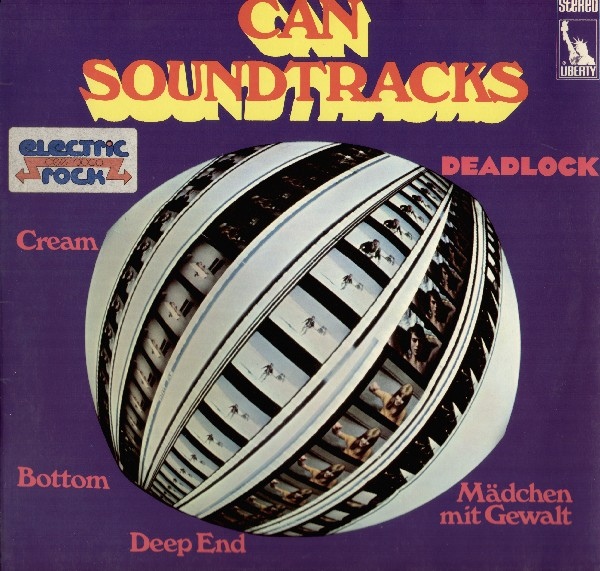
Tago Mago.
The first instalment in the golden quartet was Tago Mago. This was the first album where Kenji Damo Suzuki was a permanent member of Can. He and the rest of Can spent a year in the castle in Schloss Nörvenich. It was owned by an art collector named Mr. Vohwinkel. He allowed Can to stay at Schloss Nörvenich rent free. For what Holger described as “a poor man’s band,” this was perfect.
Holger remembers Can during this year as “just jamming and seeing what took shape. Songs started as lengthy jams and improvised pieces.” This Holger says “how Can always worked” After that, Holger edited the songs which became and the mini masterpieces featured on Tago Mago, which was four months in the making.
For four months between November 1970 and February 1971, Can recorded what would become one of their most innovative and influential albums, Tago Mago.
A double album, it featured seven groundbreaking tracks. Tago Mago was released in February 1971. Straight away, critics realised the importance of Tago Mago. Here was a game-changer of an album. It has an intensity that other albums released in 1971 lacked. Jazzier with an experimental sound, the music is mysterious, mesmeric and multilayered. It’s innovative, with genres and influences melting into one. Nuances, subtleties and surprises reveal themselves. No wonder. Can deliver an avant garde masterclass.
This comes courtesy of jazz-tinged drumming, improvised guitar playing and showboating keyboard solos. Then there was Kenji Damo Suzuki’s unique vocal style. All this, resulted in an album that was critically acclaimed, influential and innovative.
Released to widespread critical acclaim in 1971, Tago Mago was the start of a golden period for Can. Their reputation as one of the most innovative groups of the seventies started to take shape. Can had released one of the most innovative albums, Tago Mago. Holger remembers the reaction to Tago Mago. “I knew Tago Mago was an innovative album, but I never realised just how innovative an album it would become?
On Tago Mago’s release, it was hailed as their best album yet. Since then, several generations of musicians have been inspired by Tago Mago, a true Magnus Opus, that belongs in every record collection. So does the followup Ege Bamyasi.
Ege Bamyasi.
Can were on a roll. It seemed they could do no wrong. They released Spoon as a single in 1972. It reached number six in Germany, selling over 300,000 copies. That was helped no end, by the single being used as the theme to a German thriller Das Messer. It seemed nothing could go wrong for Can. The money the made from Spoon, allowed Can to hire disused cinema to record what became Ege Bamyasi.
Can adverted for a space to record their next album, Ege Bamyasi. Recording began in a disused cinema, which doubled as a recording studio and living space. The sessions at Inner Space Studio, in Weilerswist, near Cologne didn’t go well. Irmin Schmidt and Kenji Damo Suzuki took to playing marathon chess sessions. As a result, Can hadn’t enough material for an album. This resulted in Can having to work frantically to complete Ege Bamyasi. Despite this, Can were still short of material. So Spoon was added and Ege Bamyasi was completed.
Ege Bamyasi was a fusion of musical genres. Everything from jazz, ambient, world music, psychedelia, rock and electronica melted into one. When it was Ege Bamyasi released in November 1972, it was to the same critical acclaim as previous albums. Critics were won over by Can’s fourth album. It was perceived as a more accessible album than its predecessors. Just like Can’s previous albums, the quality of music was consistent.
Critics hailed Can as one of the few bands capable of creating consistent and pioneering albums. They were one of the most exciting bands of the early seventies. Can were continuing to innovate and influence musicians and music lovers alike. Just like its predecessor, Tago Mago, Ege Bamyasi is an essential part of any self respecting record collection. Having released two consecutive classic albums and their first single, it seemed nothing could go wrong for Can.
Future Days.
Despite Tago Mago and Ege Bamyasi being referred to as two of the most influential albums ever released, Holger Czukay prefers Future Days. This is the album he calls “my favourite Can album.” It was the third in Can’s golden quartet, and marked a change in direction from Can.
Future Days saw Can’s music head in the direction of ambient music. The music is atmospheric, dreamy, ethereal, melancholy, expansive and full of captivating, mesmeric rhythms. It’s also pioneering and progressive, with elements of avant garde, experimental, psychedelia and rock melting into one. Rather than songs, soundscapes describes the four tracks. Future Days and Bel Air showcase Can’s new sound. Bel Air was the Future Day’s epic. It lasted just over nineteen minutes, and sees can take you on an enthralling musical journey. Just like the rest of Future Days, critics hailed the album a classic.
On its release in August 1973, Future Days was hailed a classic by music critics. The move towards ambient music may have surprised some Can fans. However, Brian Eno was just one artist pioneering ambient music. This move towards ambient music must have pleased Holger’s guru Karlheinz Stockhausen. He must have looked on proudly as Can released the third of a quartet of classic albums. The final album in this quartet, Soon Over Babaluma was released in 1974.
Soon Over Babaluma,
Soon Over Babaluma marked the end of Can’s golden period. It was the end of a period where they were releasing some of their most innovative and groundbreaking music. There was a change of direction on Soon Over Babaluma. Can were without a vocalist. Kenji Damo Suzuki left Can and married his German girlfriend. He then became a Jehovah’s Witness. Despite the lack of a vocalist, Can continued as a quartet. They released Soon Over Babaluma in November 1974.
When Can released Soon Over Babaluma in November 1974, it received praise from critics. With a myriad of beeps, squeaks and sci-fi sounds, Soon Over Babaluma is like musical journey into another, 21st Century dimension. A musical tapestry where layers of music are intertwined during five tracks on Soon Over Babaluma. It followed in the ambient footsteps of Future Days and brought to a close the most fruitful period of Can’s career. Following the “golden quartet,” Can didn’t go into decline. Instead, Can continued to reinvent themselves and their music.
Landed.
Landed was released in September 1975. It had been recorded between February and April 1972 at Inner Space Studios. Just like previous albums, Can produced Landed. Holger and Tony Robinson mixed the first four tracks at Studio Dierks, Stommeln. The other two tracks were mixed by Holger at Inner Space Studios. These six tracks marked a change of direction from Can.
As well as a change in direction musically, Landed was the first Can album to be released on Virgin Records. Gone is the ambient sound of Soon Over Babaluma. Only Unfinished on Landed has an ambient influence. Instead, Landed has a poppy, sometimes glam influence. With uptempo, shorter songs, Landed was a much more traditional album. How would the critics react?
Critics were divided about Landed. Some critics saw Landed as the next chapter in the Can story, while others praised the album as adventurous, eclectic and innovative. Others thought Can were conforming. Surely not?
Flow Motion.
Flow Motion was Can’s eight album. As usual, it was recorded at Inner Space Studios. Produced by Can, Flow Motion was an album that drew inspiration from everything from funk, reggae, rock and jazz. It was an eclectic, genre-melting album. It’s also one of Holger Czukay’s favourite Can albums.
Holger remembers Flow Motion as an “Innovative and eclectic” album. He calls it “one of Can’s underrated albums,” Flow Motion marked a another change in Can’s way of working.
Released in October 1976, Flow Motion featured lyrics written by Peter Gilmour. This was a first. Never before, had anyone outside the band had written for Can. It worked. Can enjoyed their first UK single I Want More. It would later be recorded Fini Tribe and then Italo disco group Galaxis. With what was just their second hit single in seven years, maybe Can were about to make a commercial breakthrough?
Saw Delight.
Sadly, that wasn’t to be. Saw Delight which was released in March 1977, wasn’t the commercial success many people forecast. That’s despite the new lineup of Can embracing world music.
Joining Can were bassist Rosko Gee and percussionist and vocalist Rebop Kwaku Baah. They’d previously been members of British rock band Traffic. Rosko Gee replaced Holger on bass. Holger decided to add a percussive element, Holger added a myriad of sound-effects. This was Holger at his groundbreaking best. Experimental sounds including a wave receiver was used. The result was one of the most ambitious albums can had released.
Despite the all-star lineup and a bold, progressive and experimental album, Saw Delight wasn’t a commercial success. It was well received by critics. The problem was, Saw Delight was way ahead of its time. If it had been released in the eighties, like albums by Paul Simon or Peter Gabriel, it would’ve been a bigger commercial success. Sadly, by then Can would be no more. That was still to come. However, things weren’t well within the Can camp.
Out Of Reach.
Nine years after Can had released their debut album Monster Movie, they released their tenth album, Out Of Reach. It was released in July 1978. The title proved to be a prophetic. After all, commercial success always seemed to elude Can. Not only did Out Of Reach fail commercially, but the Out Of Reach proved to be Can’s most controversial album.
So much so, that they disowned Out Of Reach. On Out Of Reach Holger was left to add myriad of sound-effects. Bassist Rosko Gee and percussionist Rebop Kwaku Baah of Traffic returned. They were part of the problem. Holger confirms this.
When I asked him what he meant by this, he said “During the recording of Out Of Reach, I felt an outsider in my own group. I was on the outside looking in. I was on the margins. All I was doing was add sound-effects.” For Holger, he felt his group had been hijacked by Rosko Gee and and Rebop Kwaku Baah. Things got so bad, that Holger quit Can.
Rosko Gee and Rebop Kwaku Baah dominated Out Of Reach. Gone was the loose, free-flowing style of previous albums. Even Jaki Liebezeit’s play second fiddle to Baah’s overpowering percussive sounds. The only positive thing was a guitar masterclass from Michael Karoli. Apart from this, things weren’t looking good for Can. It was about to get worse though.
The critics rounded on Out Of Reach. They found very little merit in Out Of Reach. Gee and Baah were rightly blamed for the album’s failure. Even Can disliked Out Of Reach. They later disowned Out Of Reach. Despite this, Rosko Gee and and Rebop Kwaku Baah remained members of Can.
Unable to play with the necessary freedom Can were famed for, the two ex-members of Traffic stifled Can. Rebop’s percussion overpowers Jaki’s drums, which have always been part of Can’s trademark sound. At least Michael’s virtuoso guitar solos are a reminder of classic Can. A nod towards Carlos Santana, they showed Can were still capable of moments of genius. There wouldn’t be many more of these. Can would breakup after their next album.
Can.
Following the failure of Out Of Reach, the members of Can began recording what became Can. Remarkably, Rosko Gee and Rebop Kwaku Baah were still part of Can. Sadly, Holger was not longer a member of Can. He’d left during the making of Out Of Reach. His only involvement was editing Can.
Can, which is sometimes referred to as Inner Space, was released in July 1979. Again, critics weren’t impressed by Can. It received mixed reviews. No longer were Can the critic’s darlings. The music on Can was a fusion of avant garde, electronica, experimental, psychedelia and rock. Add to that, a myriad of effects including distortion and feedback, and here was an album that divided the opinion of critics. The critics agreed, it was better than Out Of Reach. They agreed that Holger was sadly missed.
Even Holger’s renowned editing skills couldn’t save Can. Try as he may, he could only work with what he was given. He did his best with Can, which the eleventh album from the group he co-founded. By the time Can was released, Holger “had come to a realisation, that it was time to go his own way.” Holger describes this as “necessary.”
Can had split-up after the release of Can. That was their swan-song. However, even before that, Holger “felt marginalised, this had been the case since Rosko Gee and Rebop Kwaku Baah became part of Can. They’d hijacked Can.” This lead to the death of a great and innovative band.
With Can now part of musical history, Irmin Schmidt, Holger Czukay, Michael Karoli and Jaki Liebezeit set about reinventing themselves. Music critics wondered whether they would form new bands or embark upon solo careers? Irmin Schmidt, Holger Czukay and Michael Karoli all embarked upon solo careers. The most prolific of the trio was Irmin Schmidt.
Since Can disbanded in 1979, Irmin Schmidt has established a reputation as the most prolific former member of Can. Irmin has written the scores for over 100 films and television programs. Some of this music features in the recently released Irmin Schmidt box set Electro Violet. This twelve disc box set, which was recently released by Mute, features not just the five volumes of the Filmmusik Anthology, but a previously unreleased sixth volume. Then there’s Irmin Schmidt’s first four solo albums, 1981s Toy Planet, 1987s Musk At Dusk and 1991s Impossible Holidays. Then there’s Irmin Schmidt’s two collaborations with Kumo, 2001s Master Of Confusion and 2008s Axolotl Eyes. The final disc in the Electro Violet box set is opera Gormenghast, which was released in 2000, and was based on Mervyn Peake’s classic novel. Gormenghast shows the versatility of Irmin Schmidt, the classically trained musician who become part of Can, one of the most successful bands of the twentieth century. Sadly, by 1980, Can was history, and it was a brave new world for Irmin Schmidt.
Filmmusik.
Just a year after Can released their swan-song, Irmin Schmidt released the first volume in his Filmmusik series. This eight track compilation, was an introduction to the music Irmin had been writing for film and television. It would become a popular, and much anticipated series, which introduced many people to Irmin’s solo music. On the first volume of Filmmusik, Irmin was joined by old friends and some new names.
Among the old friends, was Can guitarist Michael Karoli. He featured on the eight minute, cinematic epic Im Herzen Des Hurrican (Verfolgung) and Im Herzen Des Hurrican (No. 5). Michael Karoli played his part in the success of Filmmusik. So did what was a new name to many Can fans was tenor saxophonist Bruno Spoerri.
He had been making electronic music since 1965, and by 1980, the forty-five year old, was running his own studio in Zurich. This was Studio Für Elektronische Musik Spoerri, where some of the Filmmusik sessions took place. Most of the recording of Filmmusik took place at Can’s Inner Space Studio, near Cologne. This had been where Can recorded some of the best music of their career. It would be no different for Irmin Scmidt.
While the cinematic sound of Filmmusik was very different to the music Can had been releasing, it showed just how versatile a composer and musician Irmin was. He had created eight tracks that were evocative, and had the ability to paint picture’s. This was important for anyone composing music for film and television. It looked like Irmin Schmidt had a big future ahead of him. He had stepped out of the shadow of Can and was about to enjoy his moment in the spotlight.
Filmmusik Volume 2.
So much so, that Irmin Schmidt released two albums during 1981. This included Filmmusik Volume 2. By then, Irmin was forging a reputation as the go-to-guy for anyone looking for a soundtrack to a film or television series in Germany. Eventually, Irmin would write over 100 scores. However, in 1981, his career was in its early days.
On Filmmusik Volume 2, it’s akin to Can reunion. Guitarist Michael Karoli and drummer Jaki Liebezeit feature on Endstation Freiheit-Titelmusik, Endstation Freiheit-Loony’s Walk and on Endstation Freiheit-Decision. So does bassist Rosko Gee. He’s replaced by Holger Czukay on Flächenbrand-Lurk and Flächenbrand-Titelmusik. Then on Die Heimsuchung Des Assistenten Jung-Man On Fire, Jaki Liebezeit added percussion. It seemed that the former bandmates were still friendly, and were happy to play on each other’s albums. Maybe, Can weren’t history after all?
That’s what some critics remarked when they saw the credits to Filmmusik Volume 2. With its all-star cast, it was a tantalising prospect. The critics weren’t disappointed when they heard Filmmusik Volume 2. It seemed Irmin Scmit was playing his part in reinventing what a soundtrack should sound like. He was just one of a new breed of composers determined to do so. However, Irmin wasn’t content to just write soundtracks. A solo career beckoned.
Toy Planet.
Irmin Schmidt also wanted to enjoy a solo career. This could run in parallel with his career composing soundtracks. For his debut solo album, Irmin Schmidt decided to collaborate with Bruno Spoerri, on what became Toy Planet.,
Zurich based Bruno Spoerri was two years older than Irmin. Bruno had been a pioneer of electronic music since 1965. Back then, Irmin was still studying under Karlheinz Stockhausen. However, within two years, he would be embracing new, experimental music in New York. That was sixteen years ago. Now Irmin Schmidt was regarded as a musical innovator and pioneer. His debut album would be much anticipated.
Critics and record buyers weren’t disappointed when Toy Story was released in 1981. It’s best described as a genre-melting opus. Everything from ambient, jazz and electronica, combines with rock and classical and psychedelia. There’s even a nod to the Berlin School, progressive rock and Phillip Glass, as a myriad of sounds assail you. Listening intently, instruments and sounds flit in and out. Sometimes, you question what you heard? Were there birds and a variety of animal noises on The Seven Game? Then on the title-track, futuristic and otherworldly describes what can be a haunting track. What follows is a minor musical masterpiece, which sadly, has been overlooked by the majority of music lovers since its release in 1981. Those that bought Toy Planet, eagerly awaited the followup.
Rote Erde.
It was a long time coming. Four years to be precise. To record buyers, it seemed that Irmin Schmidt was in no hurry to release the followup to Toy Planet. That wasn’t the case.
Instead, he was just incredibly busy. Irmin had been commissioned to compose the soundtrack to Rote Erde. It was released in 1983, and featured Michael Karoli and a former member of Can, David Johnson. Rote Erde, a journey through art rock and electronica, would give Irmin Schmidt’s fans something to listen to, while he continued to work on his burgeoning soundtrack career.
Filmmuzik Volumes 3 and 4.
Proof of this, was the release of Filmmuzik Volumes 3 and 4. This double album featured another twelve tracks Irmin Scmidt had written for film and television. On some of the tracks, Irmin was joined by Michael Karoli and Jaki Liebezeit. Only Holger Czukay was missing from what would’ve been a Can reunion.
On the twelve tracks on Filmmuzik Volumes 3 and 4, Irmin Schmidt shows his versatility, as stylistically, the music shifts between disparate genres. This includes everything from classical and experimental, to jazz and rock. With a tight, talented and hugely experienced band for company, Irmin provided the soundtrack German film and television. Again, for many younger viewers, this would be their first exposure with Irmin Schmidt’s music. Given the quality of music on Filmmuzik Volumes 3 and 4, it wouldn’t be their last.
Mostly, the reviews of Filmmuzik Volumes 3 and 4 were positive. That had been the case throughout Irmin Schmidt’s career. He hadn’t released a disappointing album. However, most of Irmin’s albums had either been compilations or soundtracks. They hadn’t sold in vast quantities. It seemed that Irmin Schmidt had a small, but loyal following. However, with every release, Irmin Schmidt’s music seemed to be finding a wider audience. Maybe the release of his sophomore solo album Musk At Dusk would result in Irmin Schmidt’s music reaching a much wider audience?
Musk At Dusk.
That should’ve been the case. Can had reunited in 1986. The first Can reunion had been a success. Now Irmin Scmidt was ready to begin work on his second solo album, Musk At Dusk, some familiar faces were present. This included Michael Karoli and Jaki Liebezeit.
Only Michael Karoli had released a solo album, Deluge, his 1984 collaboration with Polly Eltes. Jaki Liebezeit was content to work as a hired gun, playing on other artist’s albums. This included Holger Czukay and Irmin Schmidt’s albums. They were fortunate to have one of the top German drummers of Krautrock era providing the heartbeat to their albums.
That was the case on Musk At Dusk. It was another stylistically eclectic album. Elements of ambient, electronica, jazz, lounge and even progressive rock shawn through, on what was another ambitious, captivating and innovative solo album from Irmin Schmidt.
Critics agreed when Musk At Dusk was released. Irmin Scmidt seemed determined to reinvent himself on the long-awaited followup to Toy Planet. Six years after the release of Toy Planet, Musk At Dusk was released in 1987.
Sadly, Musk At Dusk wasn’t a huge commercial success. A small crumb of comfort was that gradually, word seemed to be spreading about Irmin Schmidt’s music. Meanwhile, Kraftwerk were enjoying commercial success and critical acclaim. They seemed unable to do no wrong. This must have been frustrating for Irmin, whose music was no nearer to reaching a wider audience. Aged fifty, he was still regarded as an underground artist. So, Irmin Schmidt returned to composing music for film and television.
Filmmuzik Volume 5.
Two years after the release of Musk At Dusk, Irmin Schmidt released Filmmuzik Volume 5. By then, the Filmmusik series was becoming a much anticipated and highly regarded series. It showcased Irmin’s music to many people who had neither seen the films nor television programs it featured in. Back in 1989, satellite television was in its infancy.
Filmmuzik Volume 5 featured another eight eclectic tracks. Again, the Can connection was strong. Drummer Jaki Liebezeit played on Zu Nah Dran. This was the only track to feature drums. Guitarost Michael Karoli featured on Mountain Way, Rita’s Tune, Bohemian Step, Geld and Geister and Zocker. These tracks featured on an album veered between cinematic, electronic and rocky. Just like the previous volumes in the Filmmuzik series, it caught the imagination of critics and record buyers.
It didn’t matter that many of the people buying Filmmuzik Volume 5 had neither seen the films, nor television programs they were taken from. The tracks worked as standalone pieces of music. Critics agreed. They felt Irmin Scmidt was maturing as a composer with each instalment in the Filmmuzik series. Those that bought Filmmuzik Volume 5 agreed, and eagerly awaited the next instalment in this popular series. Little did they know, they would have to wait twenty-six years.
Impossible Holidays.
By 1991, Can were back on the comeback trail. This was their second reunion. Can’s popularity had grown since their last reunion in 1986. Never before, had Can been as popular. They were somewhat belatedly receiving the plaudits they so richly deserved. The Can reunion was part of one of the busiest years of Irmin Schmidt’s recent career.
Still Irmin Schmidt was busy composing music for films and television programs. Four years had passed since Irmin had released a solo album. Critics and record buyers wondered when the followup to 1987s Musk At Dusk would be released?
Little did they realise that in studios in Nice, Paris, Berin and Cologne, Irmin Schmidt had been working on his long-awaited, and much-anticipated third solo album, Impossible Holidays.
For Impossible Holidays, Irmin Schmidt worked with lyricist Duncan Fallowell. Gradually, Irmin’s third solo album Impossible Holidays began to take shape. Once the lyrics and music were written, Impossible Holidays was recorded at various studios in France and Germany.
When work began on Impossible Holidays, two familiar faces were present. Can drummer Jaki Liebezeit and guitarist Michael Karoli. Bassist Franck Ema-Otu, a long term collaborator of Irmin Schmidt was present. He had also played on Michael Karoli’s 1984 debut solo album Deluge. Along with backing vocalists and session players, Irmin and co-producer Gareth Jones recorded Impossible Holidays. This they hoped would be Irmin’s breakthrough solo album.
Impossible Holidays was released in 1991, when Irmin Scmidt was fifty-five. He was approaching veteran status, and was regarded as one of the finest German composers of soundtracks for film and television programs. However, Irmin’s solo career had proved disappointing. He had released a two critically acclaimed solo albums. Sadly, neither Toy Planet nor Musk At Dusk had been sold in vast quantities. Maybe Impossible Holidays would be a game-changer for Irmin Schmidt?
When Impossible Holidays was released, reviews were positive. Irmin Schmidt was regarded as one of the grand old men of Germen music. However, he was still regarded as an innovator, and someone who was capable of releasing ambitious, groundbreaking music. Impossible Holidays was no different.
Elements of avant garde, electronica, Krautrock and rock could be heard on Impossible Holidays. So could something that no previous Irmin Schmidt solo album featured…lyrics. They came courtesy of Irmin, while Claudia Stülpner, Gitte Haenning and Özay Fecht added backing vocals. Despite these stylistic changes, Impossible Holidays didn’t sell in huge quantities. While more people had discovered Impossible Holidays, Irmin Schmidt was still one of music’s best kept secrets.
Masters Of Confusion.
Just a year after the release of Gormenghast, Irmin Schmidt returned with Masters Of Confusion, his first collaboration with Kuno. Irmin had met Kuno when recording Gormenghast.
Kuno was none other that Jono Podmore, who co-produced Gormenghast with Irmin. Just like Irmin, Jono was a musical adventurer. He had released two solo albums, 1997s Kaminari and 2000s 1+1=1. It was an album of drum ’n’ bass, which was released by Mute, the same label that Irmin was signed to. After the release of Gormenghast, Irmin and Kuno decided to collaborate. The result was Masters Of Confusion.
When Masters Of Confusion was released in 2001, critics were aghast. They couldn’t help but admire Irmin Schmidt’s ambition and bravery. Masters Of Confusion was totally unlike anything that Irmin Schmidt had released in a career spanning five decades. He had taken a huge leap of faith, which was rewarded when a new generation of music lovers embraced Masters Of Confusion, a journey through drum ’n’ bass, ambient and experimental music. Suddenly, Irmin Schmidt was the toast of dance-floors in clubs across Europe. So Irmin Schmidt and Kuno returned with the followup Axolotl Eyes. This however, took time.

Axolotl Eyes.
Seven years passed before Irmin Schmidt and Kuno returned with the followup Axolotl Eyes. It was released in 2008, and just like Masters Of Confusion, was an eclectic album.
Irmin Schmidt and Kuno took listeners on a roller coaster journey through avant garde, cinematic, dark ambient, experimental and even Krautrock. This was a return to Irmin’s musical roots, and the glory days of Can. That was fitting
Since the release of Masters Of Confusion in 2001, Can guitarist Michael Karoli was dead. Irmin’s longtime collaborator and friend, had died on 17th November 2001 in Essen, Germany. It seemed fitting that Irmin Schmidt and Kuno revisited Krautrock on Axolotl Eyes.
When Axolotl Eyes was released in 2008, seven years had passed since Masters Of Confusion took dance-floors by storm. Seven years is a long time in dance music. During that period, genres came and went. Luckily, Axolotl Eyes wasn’t a remake of Masters Of Confusion. Far from it.
Axolotl Eyes was hailed an ambitious and groundbreaking album. It was released to critical acclaim. Partly, this was because Irmin Schmidt was never determined to stand still. Constantly, he was looking to reinvent his music. He had never released the same album twice, and wasn’t going to start after five decades.
Filmmusik Volume 6.
Since the release of Axolotl Eyes in 2008, Irmin Schmidt has been busy. He provided the soundtrack to Wim Wenders’ film Palermo Shooting. It as released in 2008. Then in 2009, Irmin collaborated with Inner Space Production on Kamasutra-Vollendung Der Liebe. Since then, Irmin Schmidt has been kept busy.
He continues to write music for film, theatre and television. As of 2015, Irmin Schmidt had written over 100 film and television soundtracks. This meant there was plenty of material for at least another volume in the Filmmusik series.
Twenty-six years had passed since Irmin Schmidt had released Filmmusik Volume 5 in 1989. Since then, nothing. That was until recently, when Mute announced the release of the twelve disc Electro Violet box set. The good news was, that included in this luxurious and lovingly compiled box set was Filmmusik Volume 6. This brought the story of Irmin Schmidt’s soundtrack career up to date. The seventy-eight year old hasn’t lost his magic touch, and is still able to create music that evocative, emotive and most importantly, cinematic. It helps tell the story. However, the music on Filmmusik Volume 6 works as standalone pieces of music. They feature the same quality that one expects from Irmin Schmidt. That’s not surprising.
Throughout a career that’s spanned five decades, Irmin Schmidt has been regarded as a musical innovator. While that’s an oft-overused word, in the case of Irmin Schmidt, innovator describes one of the greatest musicians of his generation.
He returned in 2018 with a new album 5 Klavierstücke (5 Piano Pieces). The new album saw Irmin Schmidt play two grand pianos, one of which is prepared, the other unprepared. This was something that was taught by another pioneer, John Cage. 5 Klavierstücke welcomed the return of musical pioneer with another album of ambitious and innovative music.
Ambitious and innovative music us what Irmin Schmidt’s has been recording from his days with Can, right through to his solo years and the various collaborations he’s been involved with. Much of Irmin Schmidt’s post-Can career has been spent composing soundtracks for film, theatre and television. A tantalising taste of this can be found on the six volumes of Filmmuzik. That’s not forgetting Irmin’s first three solo albums, 1981s Toy Planet, 1987s Musk At Dusk and 1991s Impossible Holidays. Then the opera Gormenghast, which was released in 2000. It lead to Irmin Schmidt’s two collaborations with Kumo, 2001s Master Of Confusion and 2008s Axolotl Eyes which show different sides to a musical chameleon who has a long and illustrious career.
Through his career Irmin Schmidt has released music that’s ambitious, innovative, inspiring and influential, and Irmin Schmidt is a musical visionary, who as a member of Can, and as a solo artist, has released groundbreaking music that was often, way ahead of the curve.
Irmin Schmidt-From Can To The Solo Years.

THE MURMAIDS-A CASE OF WHAT MIGHT HAVE BEEN?
The Murmaids- A Case Of What Might Have Been?
Sadly, musical history is littered with groups that are remembered as one-hit wonders. Their brush with commercial success may have been brief, but at least they enjoyed a tantalising taste of what some established groups take for granted. As a result, after a group has enjoyed one hit single, they want another. This comes as no surprise.
Commercial success and the fame and money it can sometimes bring, are as powerful as any drug. Once experienced, a group can spend the rest of their career trying to reach the same heights. Sadly, often, they never comes close to enjoying the same success.
Part of the problem is that a second hit single always proves to be tantalizingly just out of reach, and the group is destined to be remembered as a one-hit wonder. That was the case with The Murmaids, who had an enviable musical pedigree.
Two of The Murmaids, sisters Carol and Terry Fischer, came from a family that was steeped in music. The two previous generations of their family had been involved in the music industry all their lives. This included their grandmother and her three sisters, who had been part of a vaudeville act, The Locus Sisters. However, Carol and Terry Fischer’s parents were also steeped in music.
Carl Fischer had been a successful songwriter and arranger who had written You’ve Changed, which was recorded by Billie Holliday. Then during a ten-year period where Carl Fischer was Frankie Laine’s musical director, he wrote the jazz standard We’ll Be Together. Sadly, tragedy struck in 1954 when Carl Fischer died suddenly. With two young daughters to support, Terry Fischer Sr. returned to singing with big bands.
That was what Terry Fischer Sr. had been doing when she had first met Carl Fischer. She had sung with various big bands, and became the first female vocalist in Stan Kenton’s Orchestra. Now after the tragic death of her husband, Terry Fischer Sr. was back singing in the big bands. She was a talented vocalist and managed to pickup where she had left off.
Little did Terry Fischer Sr. know that soon, a third generation of her family would be embarking upon a musical career. However, with such a strong musical pedigree, it was almost inevitable that Carol and Terry Fischer would embark upon a career in music. Music was family business.
Terry Fischer Sr. encouraged and supported her daughters, who were proving to be talented singers. They were active in their school’s glee club, and by high school, were music majors. It was around this time, that Carol and Terry met a young songwriter and producer, Mike Postil.
The future Mike Post had just graduated from Los Angeles University High, and had written some songs. Once he had recorded these songs, he would shop them around town. There was a problem though, Mike Post had nobody to sing backing vocals on his demos.
By 1963, Carol Fischer who was fifteen, and Terry Fischer who was seventeen, were living in Los Angeles. For some time, the sisters had been singing with seventeen year old Sally Gordon, who was a friend and neighbour. With Terry Fischer Sr’s help, they were a polished and professional trio. This was what Mike Post was looking for.
When Mike Post met Carol, Terry and Sally, he knew that he had the backing vocalists that he had been looking for. They sang backing vocals on demos for producer Mike Post. Sometimes, Mike Post would bring them in to add backing vocals on some of his productions at Gold Star Studios. That was where Kim Fowley first came across the trio.
By 1963, producer and songwriter Kim Fowley, who was another alumni of Los Angeles University High, was working at Gold Star Studios as an in-house producer. He had already enjoyed hits with Nut Rocker and Alley Oop. However, the twenty-four year old was keen to forge a career as a producer. That was why he had taken the job at Gold Star Studios.
That was also where Kim Fowley first heard the trio sing. Realising that they were talented, he offered to record them. This was the break the trio had been looking for, and they jumped at what could be a once in a lifetime opportunity.
The trio’s first recording session with Kim Fowley was hardly a resounding success. He had them record a version of Alley Oop, but the song didn’t work. Despite that, Kim Fowley wasn’t going to give-up on the trio.
Fortunately, Kim Fowley encountered a talented, but as yet, unknown singer-songwriter, David Gates. The future founder of Bread was driving along one day, when he saw a hitchhiker. Curiosity got the better of David Gates. He stopped and picked up Kim Fowley.
Soon, the two men got talking, and Kim Fowley volunteered that he was a producer. David Gates told him he was a songwriter, and had written a song for a girl group. He reached into the back seat, and produced a guitar, and proceeded to play Kim Fowley Popsicles and Icicles. When Kim Fowley heard the song, he had David Gates send him a demo, as he had someone in mind for the song.
Originally, Kim Fowley felt Popsicles and Icicles would be perfect for Skip Battin, who previously, had been one half of Skip and Flip. However, Skip Battin passed on the song. It was only Kim Fowley remembered the trio he had recorded at Gold Star Studios.
Kim Fowley even had a label lined up for the song. This was Chattahoochee Records, an imprint of Conte Records. It had been formed by Ruth Conte Yardum, with the help of Kim Fowley. Originally, it was to release singles by actor-singer John Conte. However, Conte Records had a pop imprint, Chattahoochee, which Kim Fowley owned a share in. This was the label Kim Fowley planned to release Popsicles and Icicles on. All he had to do was firstly to convince Ruth Conte Yardum about the merits of his masterplan, and then convince Terry Fischer Sr. that this was the right song for her singing trio.
Eventually, Kim Fowley managed to convince Ruth Conte Yardum that Popsicles and Icicles had the potential to be a hit, and that he could record the single for $100 using three high school students. Now Kim Fowley’s only potential obstacle was Terry Fischer Sr. He had to win her over, and her that Popsicles and Icicles had the potential to be a hit. Only then, could Kim Fowley book time at Gold Star Studios. Now he could concentrate on recording the trio’s debut single. However, the trio needed a name.
When the trio arrived at Gold Star Studios, they were now called The Murmaids. Terry Fischer was The Murmaids’ lead singer, and Carol and Sally would add harmonies. The Murmaids were shown the five tracks that Kim Fowley wanted them to record. This included Blue Dress, Bunny Stomp, Comedy and Tragedy and Huntington Flats. However, one track stood head and shoulders above the rest, the David Gates’ penned Popsicles and Icicles.
Given that funds were limited, it was always going to be touch and go whether The Murmaids could record two tracks in the time allotted. They managed to record Popsicles and Icicles but there was no time left to record a B-Side. This didn’t faze Kim Fowley.
Once Kim Fowley tallied up the costs, it came to $108. He hadn’t quite recorded the single for the $100 he had predicted. However, he was convinced he had a hit on his hands. That was despite not having recorded a B-Side. So Popsicles and Icicles was paired with a surf styled instrumental Bunny Stomp and released in late 1963.
When Popsicles and Icicles was released in early November 1963, straight away, The Murmaids’ debut single was being played on the radio. From 119 in the US Billboard 100 on 9th November 1963, Popsicles and Icicles reached sixteen by the 16th November 1963. Eventually, in the charts of 11th December 1963, Popsicles and Icicles peaked at number three on the US Billboard and Cash Box charts. However, in Record World, Popsicles and Icicles reached number one. Little did The Murmaids realise that Popsicles and Icicles would become their only hit single, and they had just joined the ranks of the one-hit wonders.
For their sophomore single, another David Gates’ composition was chosen, Heartbreak Ahead. On the flip side was He’s Good To Me. Kim Fowley wasn’t going to let the record buying public forget The Murmaids, so released Heartbreak Ahead on Chattahoochee Records whilst Popsicles and Icicles was still in the top thirty. This backfired on Kim Fowley, and Heartbreak Ahead stalled at 116 in the US Billboard 100. After two weeks, at 116 in the US Billboard 100 it was a case of Heartbreak Ahead for The Murmaids.
They were on a roller coaster. Their debut single reached number three in the US Billboard 100, but the followup failed commercially. There was nothing wrong with the song. The Murmaids brought the lyrics to life. Much of the blame lay can be laid at aspiring pop impresario, Kim Fowley’s door.
Heartbreak Ahead was released far too soon, and Suddenly The Murmaids had two singles competing for radio play. Three if The Lady Bugs’ cover of How Do You Do It was counted.
Rather than concentrate his efforts on getting The Murmaids career back on track, Kim Fowley had Carol and Terry Fischer record How Do You Do It with Jackie DeShannon. How Do You Do It had given Gerry and The Pacemakers a number one single. The Lady Bugs version was released in February 1964, but failed to make an impression on the charts. This was a worrying trend.
Later in 1964, The Murmaids released their third single, Wild And Wonderful. It came from the pen of the Brill Building songwriting team of Ben Raleigh and Barkan. They had just written Lesley Gore’s She’s A Fool. For the B-Side, Sam Friedman’s Bull Talk. These two tracks were supposed to get The Murmaids’ career back on track.
On its release, Wild And Wonderful never came close to troubling the charts. Wild And Wonderful became The Murmaids’ second single that had failed to chart. Things weren’t looking good for The Murmaids.
After the success of Popsicles and Icicles, major record labels came knocking on The Murmaids’ door and wanting to buy out their contract with Chattahoochee. Terry Fischer Sr. who was managing the group’s career, decided that they should stay to Ruth Conte Yardum and her Chattahoochee Records. That proved to be a huge mistake.
As the summer of 1964 drew to a close, Terry Fischer and Sally Gordon were about to leave home, and head to college. They needed the royalties from Popsicles and Icicles to pay their way through college. However, the royalties weren’t forthcoming.
This lead to Chattahoochee Records having to circulate a memo to other record labels explaining why The Murmaids hadn’t been paid. The memo explained that the funds in a trust for each member of The Murmaids. However, Chattahoochee Records alleged that the agreement hadn’t been honoured by Terry Fischer Sr; and claimed that Sally Gordon had received her funds. The label further claimed that Terry Fischer Sr. had stipulated she had the final say over the other two members participation in the group. However, even fifty-one years later, some of Chattahooche Records claims are disputed.
Recently, Terry Fischer claimed that when The Murmaids received their first royalty statement; “it showed that we were owed nothing at all!” The expenses charged by Chattahoochee Records amounted to $10,000, exactly the sum The Murmaids were owed. Further muddying the waters, was Kim Fowley’s claim that The Murmaids were in breach of contract for recording with The Rip Chords. However, their producer Terry Melcher disputes this claim. What was clear, was that all wasn’t well with The Murmaids and Chattahoochee Records.
Despite this, Chattahoochee Record decided to reissue Bull Talk. The former B-Side was about to enjoy its moment in the sun. There was a reason for this. Shirley Ellis’ single Name Game was riding high in the charts, and just about to reach the top twenty. By then, teenagers were adding the word “bull” to sentences, so that adults wouldn’t be able to understand what they were saying. Ruth Conte Yardum and Kim Fowley thought they could jump on the “bull” bandwagon, and score a novelty hit. That wasn’t the case. Despite this, ‘aspiring pop impresario’ Kim Fowley had another plan up his sleeve.
He decided to repress Popsicles and Icicles. However, he needed a B-Side, so drafted in five new girls who recorded as The Murmaids. They got to sing on the B-Side Comedy and Tragedy, by agreeing to phone a local radio station, and request Popsicles and Icicles. The song that was chosen was played non-stop for a week. However, Comedy and Tragedy wasn’t the only B-Side to the newly reissued Popsicles and Icicles.
When Popsicles and Icicles began garnering more radio play, three other versions of the single were pressed. Each had a different B-Side. Bunny Stomp was followed by Huntington Flats and Blue Dress. As as all this unfolded, the “real” Murmaids were “baffled.” Their group had essentially been hijacked by Kim Fowley and Chattahooche Records. Despite this betrayal, incredibly, Terry Fischer and the rest of the Murmaids returned to the studio.
With Popsicles and Icicles growing in popularity once again, The Murmaids went into the studio and recorded enough music for an album. However, that album was never released until 1980. To make matters worse, The Murmaids were never paid for the session. That wasn’t the end of The Murmaids saga.
Rubbing salt in the real Murmaids’ wound, was that two singles were released baring The Murmaids’ name. Whether any of the original lineup of The Murmaids sung on the two singles is the subject of debate?
The first was Stuffed Animals, which featured Little White Lies on the flip side. On its release, Little White Lies claims to have been: “Produced and Recorded in Britain by Kim Fowley.” Who sung on the single is still disputed. However, when Stuffed Animals was released as a single, it failed commercially. So did the followup.
The Cathy Brasher penned Go Away was chosen as The Murmaids’ next single. On the flip side was Little Boys, which Yvonne Vaughan wrote. When Go Away was released in 1966, the single failed to chart. That was all that was heard of The Murmaids until 1968.
After two years away, The Murmaids returned in 1968 with their swan-song Paper Sun. It was released on Liberty, with Song Through Perception on the B-Side. The only original member of The Murmaids was Sally Gordon. Even she couldn’t revive the group’s flagging fortunes. After five eventful, off and on years, The Murmaids were history.
Fast forward to 1980, and The Murmaids Resurface was belatedly released on the Chattahoochee Records. It featured previously unreleased including Don’t Forget, Alone, Three Little Words, Mr. Sandman, Playmates, So Young and You Cheated. At last, the songs The Murmaids had recorded for the album all these years ago, had been released. It was just a pity nobody bothered to tell Terry Fischer about the release of The Murmaids Resurface.
Terry Fischer only found out about The Murmaids Resurface when a friend discovered a copy at a record fare in the Mid West. They sent Terry Fischer a copy of The Murmaids Resurface. When Terry Fischer looked at the credits to The Murmaids Resurface the producer was Ruth Conte. This was just the latest twist to The Murmaids story. Seventeen years after they first signed to Chattahooche Records, The Murmaids was proving to be the gift that kept on giving.
That wasn’t the case for Terry Fischer and the other two Murmaids. Even today, they’ve no idea of how many records they really sold. That is somewhat ironic.
After the commercial success of Popsicles And Icicles, major labels were knocking on Terry Fischer Sr’s door wanting to buy The Murmaids’ contract out, and sign them to their label. Terry Fischer Sr. decided to stay loyal to the label that gave The Murmaids’ their break. Sadly, that proved to be a huge mistake.
If The Murmaids had signed to a major, they could’ve enjoyed a much more successful career. They wouldn’t be remembered as a one-hit wonder. The Murmaids, a talented trio, deserved much better. Certainly much better than happened next.
Less than a year later after spurning the advances of major labels, The Murmaids never received the royalties they were owed. This couldn’t have come at a worse time, as Terry and Sally Gordon were about to head off to college. By then, The Murmaids’ story was almost at an end. It had lasted around six months.
During that period, The Murmaids had played live a few times, and made a couple of appearances on television. After six months, The Murmaids’ story was all but over. That’s despite singles being released for another four years.
These singles were either songs the original lineup of The Murmaids recorded, or different lineups put together by musical ‘impresario’ Kim Fowley. The only other time Terry Fischer entered a recording studio as a Murmaid, was to record The Murmaids Resurface, which was belatedly issued in 1980. By then, The Murmaids had long joined the one-hit wonder club.
While the one-hit wonder club may not be the most exclusive club in the world, at least The Murmaids enjoyed a brief, but tantalising taste of fame and commercial success. Although it didn’t last long, nor proved particularly profitable, at least The Murmaids enjoyed their moment in the spotlight, and enjoyed what every band dreams of, a hit single.
The Murmaids- A Case Of What Might Have Been?



BOB MARLEY AND THE WAILERS-1973 1978: CATCH A FIRE TO KAYA
Bob Marley and The Wailers-1983-1978: Catch A Fire To Kaya.
Nine month after Bob Marley and The Wailers released their critically acclaimed classic album Exodus in June 1977, they returned on the ‘23rd’ of March 1978 with their much-anticipated tenth album Kaya. It was a very different album to Exodus, and was one of Bob Marley and The Wailers’ most controversial releases.
Kaya had a much more relaxed, laid-back and optimistic sound. Many of the songs were about love, while others were about marijuana. This resulted in the cries of sell-out from critics and fans who accused Bob Marley and The Wailers of being more concerned with commercial success than political problems.These accusations stung, and hurt Bob Marley who was regarded as Jamaica’s social conscience and as someone who spoke on behalf of the oppressed and downtrodden. Bob Marley was known for albums of politically charged music full of social comment until he recorded and release Kaya. Bob Marley’s decision to eschew militant and outspoken music filled with social comment, and include a much more relaxed, laid-back and optimistic sound was a huge risk, but one that paid off. Nowadays, Kaya is regarded as one of Bob Marley and The Wailers finest hours, and was another critically acclaimed album they released during the five year period between 1973 and 1978, when it seemed they could do no wrong. This period began with Catch A Fire.
Catch A Fire.
Ever since Bob Marley and The Wailers had signed to Chris Blackwell’s Island Records, their career had been transformed. Their first release for Island Records was their fifth album Catch A Fire.
Released in April 1973, Catch A Fire proved more popular in Britain than America. It reached number 171 in the US Billboard 200 and number fifty-one in the US R&B Charts. Critically acclaimed upon its release, Catch A Fire was certified silver in the UK and is featured in Rolling Stone magazine’s list of 500 best albums of all times. Six months after the release of Catch A Fire, came the album that broke Bob Marley and The Wailers in the US.
Burnin’.
Burnin’ wasn’t just the album that broke Bob Marley and The Wailers in America, but was also the last album to feature Peter Tosh and Bunny Wailer. After the release of Burnin’ in October 1973, they embarked upon solo careers.
And they did so, with a gold disc. On its release, Burnin’ reached number 151 in the US Billboard 200 and number forty-one in the US R&B Charts. This resulted in a gold disc in America, while it was certified silver in the UK. Featuring classics like Get Up, Stand Up and I Shot The Sheriff, Burnin’ marks the debut of the militant, confrontational Bob Marley. However, If Burnin’ marked the birth of a reggae revolutionary, Bob Marley picked up the baton on Natty Dread.
Natty Dread.
Natty Dread was released a year after Burnin,’ in October 1974. The wait was worthwhile though. Here was an album which featured Bob Marley at his militant and confrontational best.
He was like a reggae revolutionary, protesting against injustice, on an album that’s politically charged and full of social comment. Featuring No Woman, No Cry and Them Belly Full (But We Hungry) Bob Marley rails against poverty, while Rebel Music (3 O’Clock Roadblock) and Revolution are akin to a call to arms).
On it release, Natty Dread was more popular in the UK than US. It was certified gold in the UK, but only reached number ninety-two in the US Billboard 200 and number forty-four in the US R&B Charts.
Following three commercially successful and critically acclaimed albums, it would be another two years before Bob Marley and The Wailers released another studio album.
Live
While Bob Marley and The Wailers didn’t release another studio album until 1976, they released their first live album. Released in December 1975, and simply entitled Live, this gave fans an opportunity to hear what Bob Marley and The Wailers live sounded like.
Recorded on td 18th and 19th July 1975, Live was a tantalising taste of one of the best live groups of the seventies.
Fans and critics agreed, with Live reaching number ninety in the US Billboard 200. This resulted in Live being certified gold in the US and silver in the UK. Although Live and their three previous studio albums had been successful, their next album would surpass everything they’d previously released.
Rastaman Vibration.
When Rastaman Vibration was released in April 1976, it became Bob Marley and The Wailers’ only album to enter the top ten in the US Billboard 200. It also featured their most successful American single the Vincent Ford penned Roots, Rock, Reggae, which reached number fifty-one in the US Billboard 100. Rastaman Vibration reached number eight in the US Billboard 200 and number eleven in the US R&B Charts.
Unlike previous albums, Rastaman Vibration featured synths alongside the Wailers famed rhythm section. This added a contrast to the power of rhythm section, and are part of Rastaman Vibration’s success. Good as Rastaman Vibration was, Bob Marley and The Wailers next album was a stonewall classic…Exodus.
Exodus,
After an attempted assassination on 3rd December 1976 in Jamaica, Bob Marley took up residence in London. Although he’d been shot in the chest, he’d been luck, things could’ve been much worse. So rather than record the remainder of Exodus in Jamaica, parts of it were recorded in London.
When Exodus was released in June 1977, it was the album that transformed Bob Marley into a worldwide star. Exodus was crammed full of quality music including Jamming, Waiting In Vain, Turn Your Lights Down Low, Three Little Birds and One Love/People Get Ready were lined by Natural Mystic, Heathen and Exodus. Critics referred to Exodus as a classic album and it features in Rolling Stone magazine’s list of 500 best albums of all times. Fans loved Exodus. It reached number twenty in the US Billboard 200 and fifteen in the US R&B Charts. This resulted in Exodus being certified gold in the US and UK.
Having released a timeless classic album, Exodus, Bob Marley and The Wailers tried to repeat this feat with Kaya.
Kaya.
Much of Kaya had been recorded at the same time as Exodus. Two of the tracks, Kaya and The Sun Is Shining had featured on Bob Marley and The Wailers 1973 compilation African Herbsman, which was released on Trojan Records.
When Kaya was released in March 1978, it reached number fifty in the US Billboard 200 and US R&B Charts, resulting in Kaya being certified gold in the US. Across the Atlantic, Kaya reached number four in the UK, and was certified gold. Despite the success of Kaya, Bob Marley and The Wailers’ tenth album faced a backlash from critics and fans.
Rather that revolution, Kaya was an album that saw Bob Marley and The Wailers’ music evolve. Bob Marley wrote the ten tracks on Kaya which saw Jamaican and Western music combine. Kaya was a fusion of two musical cultures that Bob Marley embraced. This was similar to previous albums, going back to Burnin.’ Where things differed were with Kaya’s lyrics.
Whereas previous albums were politically charged and filled with searing social comment, Kaya focused on a variety of themes, including love and marijuana. Indeed, the word “Kaya” is synonymous with marijuana in Jamaican culture. When critics heard the songs on Kaya, they accused Bob Marley and The Wailers of selling out. The music on Kaya was much more laid-back and relaxing. Soon, fans joined critics in accusing Bob Marley and The Mailers of selling out. Was that the case though?
Not only did critics accuse Bob Marley and The Wailers of selling out on Kaya, but they accused him of penning a ten track love letter to marijuana. That was unfair, though. While much of Kaya was about love, and there were tracks about marijuana, there was much more to Kaya than that. Other subjects included unity, togetherness, commonality and spirituality. While the music lacked the militancy of previous albums, it had a much more laid-back, understated sound and appealed to a wide range of music fans. Kaya saw Bob Marley and The Wailers music evolving. Kaya was a much more subtle album, both in its content and style of music that nowadays, is regarded as a classic.
Kaya was just the latest classic album Bob Marley and The Wailers released between 1973 and 1978, and deserves to be spoken about in the same breath as Burnin,’ Natty Dread and Exodus. Bob Marley and The Wailers released seven albums between 1973 and 1978, and four are regarded as classics. That shows how rich a vein of form Bob Marley and The Wailers were enjoying. At the helm was the charismatic spokesman for the downtrodden and disenfranchised Bob Marley who was at his creative peak during this period. Burnin,’ Natty Dread, Exodus and Kaya are four of the most power and important albums Bob Marley and The Wailers released. These four albums feature some of Bob Marley and The Wailers’s best music, and is intelligent, thought-provoking, introspective and beautiful. It’s also a reminder of one of one the legends of reggae at the peak of his powers, Bob Marley.
Bob Marley and The Wailers-1983-1978: Catch A Fire To Kaya.
JIMI HENDRIX-LIVE AT WOODSTOCK.
Jimi Hendrix-Live At Woodstock.
Label: Sony Music BMG.
From the moment that Jimi Hendrix saw T-Bone Walker playing his guitar with his teeth he took it as a challenge, and was determined that one day, he would be able to replicate what he had just witnessed the veteran bluesman do.
In years to come, this became part of Jimi Hendrix’s routine as he took the stage with The Jim Hendrix Experience and later with The Band Of Gypsy’s and played his guitar as if his life depended upon it. Although Jimi Hendrix was a technically brilliant guitarist he was also a showman, and some nights, Jimi played his guitar behind his back, other times played it with his teeth and even set on one occasion even set his guitar on fire. It was as if Jimi Hendrix was trying to exercise some inner demons through the medium of music during a career that spanned just four years.
Between 1967-1970, Jimi Hendrix released just three studio albums and one live album before his career was cut tragically short. Music was robbed of one of its most talented sons when Jimi Hendrix passed away on September the ’18th’ 1970 aged just twenty-seven. However, he left behind a rich musical legacy, which included the musical holy trinity of Are You Experienced, Axis: Bold As Love and Electric Ladyland plus The Band Of Gypsy’s eponymous live debut album. These albums however, only tell part of the story.
Since Jimi Hendrix’s death, there’s been a number of posthumous releases, including twenty-two live albums and twelve studio albums. This includes Live At Woodstock which was recently reissued by Sony BMG and is a reminder of one of one of Jimi Hendrix’s seminal live performance . His career began in 1967, when the charismatic musical maverick released his debut album, which was a gamechanger.
Are You Experienced.
That was apparent from the moment critics heard The Jimi Hendrix Experience’s 1967 explosive debut album Are You Experienced. It showcased the considerable talents and chemistry of the now legendary power trio, which featured a rhythm section of drummer Mitch Mitchell, bassist Noel Redding and guitarist Jimi Hendrix. They had recorded eleven tracks penned by Jimi Hendrix which fused rock and psychedelia.
These eleven tracks became Are You Experienced, which was recorded between October 1966 and April 1967 at three of London’s top studios. Joining The Jimi Hendrix Experience in De Lane Lea At Studios, CBS, and Olympic Studios, in London was Chas Chandler who took charge of production. The former Animals’ bassist had a wealth of experience and guided The Jimi Hendrix Experience through the recording of Are You Experienced. Once it was completed, Are You Experienced was released in Britain in May 1967.
Prior to the release of Are You Experienced, critics hailed the album as one of the greatest debut rock albums ever recorded. This was no exaggeration as Are You Experienced was a groundbreaking fusion of rock and psychedelia that was way ahead of the musical curve. It featured future Jimi Hendrix classics like Foxy Lady, Third Stone from the Sun and Are You Experienced. At the heart of the album’s sound was the freewheeling sound of Jimi Hendrix’s guitar. He could do things other guitarists could only dream of, and unleashed a series of breathtaking performances on Are You Experienced? Add to the equation Jimi Hendrix’s languid, charismatic vocal and it’s no surprise that Are You Experienced was such a huge commercial success.
When Are You Experienced was released in Britain, on the ‘12th’ of May 1967, it reached number two, and this resulted in a gold disc for The Jimi Hendrix Experience. However, soon, things would get even better for The Jimi Hendrix Experience.
Three months later, in August 1967, Are You Experienced was released in America and it reached number five on the US Billboard 200, and went on to sell over five million copies. This resulted in Are You Experienced certified platinum five times, and was the start of a three-year period where Jimi Hendrix could do no wrong.
Axis: Bold As Love.
Seven months later, on the ‘1st’ of December 1967, The Jimi Hendrix Experience returned with their sophomore album Axis: Bold As Love in the UK. It featured thirteen tracks, including twelve penned by Jimi Hendrix. These tracks showed that Jimi Hendrix was already maturing and evolving as a songwriter. He may have just been twenty-five, but he was a talented songwriter. Proof of this were tracks like Spanish Castle Magic, Wait Until Tomorrow, Castles Made of Sand and Bold As Love. They featured Jimi Hendrix coming of age as a songwriter, and were recorded at one of London’s top studios.
Recording of Axis: Bold As Love took place at Olympic Studios, London and began in May 1967 and continued into June. However, when the album wasn’t completed, The Jimi Hendrix Experience returned to the studio in October to complete the recording of Axis: Bold As Love, which was scheduled for release later in 1967.
The contract that the Jimi Hendrix Experience had signed stipulated that the band had to release two albums during 1967. They had completed the album just in time for Track Records to release the album at the start of December 1967. However, before that, disaster struck for Jimi Hendrix.
One night, Jimi Hendrix took the master tapes to side one of Axis: Bold As Love to listen to at home. Unfortunately, he left them in a taxi, and despite a frantic search for the master tapes they were never found. This resulted in side one having to be mixed again, which was a delay that everyone could do without. Fortunately, this didn’t delay the release of Axis: Bold As Love.
Axis: Bold As Love, was released in Britain, on the ‘1st’ of December 1967, and was released to the same critical acclaim as Are You Experienced. Critics ran out of superlatives in an attempt to describe Axis: Bold As Love where The Jimi Hendrix Experience flitted between and sometimes combined blues rock, psychedelia and rock. It was a heady and irresistible brew that once tasted was unforgettable. In the reviews, Jimi Hendrix was described as some sort of musical messiah, who had music’s future in his hands. Record buyers agreed with the critics description of Axis: Bold As Love when they heard the album.
When Axis: Bold As Love was released in Britain, it reached number five and was certified silver. This must have been slightly disappointing as Axis: Bold As Love hadn’t replicated the success of Are You Experienced. However, The Jimi Hendrix Experience knew that Axis: Bold As Love was still to be released in America, where their debut had sold five million copies.
A decision was made not to release Axis: Bold As Love during 1967, in case it affected sales of Are You Experienced. It wasn’t until January the ‘15th’ 1968, that Axis: Bold As Love was released in America and reached number three in the US Billboard 200 and was certified platinum. Just like in Britain, Axis: Bold As Love had failed to replicate the success of Are You Experienced, which was disappointing. However, by then, Jimi Hendrix was riding the crest of a musical wave.
Electric Ladyland.
By October 1968, when The Jimi Hendrix Experience were preparing to release their third album Electric Ladyland, Jimi Hendrix was one of the most successful musicians in the world. His albums sold by the million, and when The Jimi Hendrix Experience played live, they were one of the hottest live acts. Proof of that was Electric Ladyland which was the most ambitious album of the Jimi Hendrix Experience.
Unlike The Jimi Hendrix Experience’s two previous albums, Electric Ladyland was a double album that featured sixteen songs. Thirteen of these songs were penned by Jimi Hendrix while Noel Redding contributed Little Miss Strange. The other tracks were covers of Bob Dylan’s All Around The Watchtower and Earl King’s Come On (Let the Good Times Roll. These tracks, and the rest of Electric Ladyland were recorded at three recording studios.
Recording sessions for Electric Ladyland took place at Olympic Studios in London and the Record Plant Studios and Mayfair Studios, in New York and began in July 1967 and continued right through until December 1967. After the festive season, The Jimi Hendrix Experience reconvened in January 1968 and spent four months completing their third album Electric Ladyland. It was completed in April 1968, and the release of Electric Ladyland was scheduled for release in October 1968.
As soon as critics heard Electric Ladyland, they realised that this was The Jimi Hendrix Experience’s finest hour as they flitted between and sometimes combined blues rock, hard rock, psychedelia and rock on an album that oozed quality. Proof of that were tracks of the quality of Crosstown Traffic, Voodoo Chile, Voodoo Child (Slight Return), All Along the Watchtower and Gypsy. Electric Ladyland which featured future classics was hailed as the greatest album of The Jimi Hendrix Experience’s career and a future classic. Record buyers agreed.
When Electric Ladyland was released in Britain, on the ‘16th’ of October 1968, it reached number six and was certified gold. Electric Ladyland had outsold Axis: Bold As Love and replicated the success of The Jimi Hendrix Experience’s debut album Are You Experienced.
Nine days, later, on the ‘25th’ of October 1968 Electric Ladyland was released in America, and reached number one on the US Billboard 200. Having sold two million copies, Electric Ladyland was certified double platinum and the rise and rise of The Jimi Hendrix Experience continued.
Just like their previous two albums, Electric Ladyland would later become a classic album. Electric Ladyland was the album that the Jimi Hendrix Experience were always capable of making and they had now fulfilled the potential that on an album that marked the coming of age for The Jimi Hendrix Experience. However, having just released the finest album of their three album career there was a twist in the tale for the Jimi Hendrix Experience.
Electric Ladyland would be the Jimi Hendrix Experience’s final album and a fitting swan-song from a legendary power trio. Sadly, the Jimi Hendrix Experience would only ever take to the stage on two more occasions.
Eight months after the release of Electric Ladyland, the Jimi Hendrix Experience played their last concert on June the ‘29th’ 1969 at Barry Fey’s Denver Pop Festival which was a three-day event held at Mile High Stadium. Little did anyone in the audience realised that they had witnessed last performance by the original lineup of the Jimi Hendrix Experience.
While the Jimi Hendrix Experience played one further concert in 1970, to allow Jimi Hendrix to spread his message of universal love, it was without Noel Redding who had quite the band, and embarked upon a solo career. As far as he was concerned, it was the end of the road for The Jimi Hendrix Experience.
Woodstock
By the time of the demise of The Jimi Hendrix Experience, its leader was the highest paid musician in the world. Promoters were desperate to add Jimi Hendrix to festival bills and the promoter of The Woodstock Music and Art Fair was no different. It was another three-day festival that was scheduled for took place between the ’15th’ and ‘17th’ of August 1969 on a dairy farm in the Catskill Mountains of southern New York State. Jimi Hendrix invited the invitation and would close the Woodstock Music and Art Fair.
By the time Jimi Hendrix arrived at the three-day Woodstock Music and Art Fair, which had been eventful and sometimes chaotic, he was keen to showcase the new lineup of his band. It featured drummer Mitch Mitchell, replacement bassist Billy Cox and recent additions rhythm guitarist Larry Lee and conga players Juma Sultan and Jerry Velez. As the band took the stage it was 9am on the ‘17th’ of August 1969 ‘only’ 200,000 people watched on as MC Chip Monk introduced the group as the Jimi Hendrix Experience, but the bandleader was quick to clarify: “we decided to change the whole thing around and call it Gypsy Sun and Rainbows. For short, it’s nothin’ but a Band of Gypsys.
With that, Jimi Hendrix unleashed what was a spellbinding performance that made musical history. After the Introduction, Jimi Hendrix leads his band through a set that included Message To Love, Izabella, Fire, Voodoo Child (Slight Return). Then the former paratrooper unleashed a breathtaking performance of The Star-Spangled Banner, and incorporated a myriad of feedback, distortion, and sustain to replicate the sounds made by rockets and bombs exploding during this incredible and spellbinding rendition of the American national anthem. Having set the bar high, Jimi Hendrix launched into the Purple Haze which gave way to Woodstock Improvisation, Villanova Junction and closed a blistering and breathtaking set with Hey Joe. Once again, Jimi Hendrix was able to make his guitar do things other guitarists could only dream about as he closed his set at 11:10 am having made musical history.
Jimi Hendrix career may have been short, but it was successful and he played his guitar as if his life depended upon it. Especially when he played live and Jimi Hendrix like at Woodstock. Like At Woodstock which has just been reissued by Sony BMG is a reminder of a flamboyant whose raison d’être was to entertain. This technically brilliant guitarist was a true showman, playing his guitar behind his back, other times with his teeth and was known to set his guitar on fire. It was as if Jimi Hendrix was trying to exercise some inner demons through the medium of music during a career that spanned the four-year period between 1967 and his death in 1970.
Forty-nine years after his death, we cain only speculated what he what heights he would’ve reached had he lived? Given Jimi Hendrix’s performance that is documented on Live At Woodstock and the music he released between 1967 and 1970 it’s likely he would’ve gone on to enjoy the long and illustrious career reaching new heights throughout his career. Sadly, that wasn’t to be. At least Jimi Hendrix’s star shawn bright and for four years this otherworldly genius and musical maverick changed and revolutionised music.
Jimi Hendrix-Live At Woodstock.

FAREWELL DR JOHN AND A GUIDE TO HIS MUSIC:PART 1-THE ATCO YEARS 1968-1974.
Farewell Dr John and A Guide To His Music: Part 1: The Atco Years 1968-1974.
A month ago, on the ‘6th’ of July 2019, Dr John, who was born Malcolm John Rebennack Jr. on November the 20th 1941, in New Orleans, which he still called home, passed away aged seventy-seven. That day, music lost one of the greatest musicians of his generation. The next day I was expecting obituaries and tributes praising a man who released thirty studio albums and nine live albums during a recording career that spanned six decades. Especially since Dr John had released several groundbreaking classic alums during the early part of his career. The Atco Years featured Dr John at his best, and for six years he was released some of the best albums of his long and illustrious career. Surely these albums would be mentioned in the obituaries and tributes?
Sadly not, as many newspapers, publications and websites didn’t pay tribute to a legend. Maybe that isn’t surprising as many of these newspapers, publications and websites are staffed and run by millennials and hipsters who copy and paste press releases rather to write reviews or articles. They’re not capable of writing a tribute to a legend like Dr John as they neither know nor understand the man, his music or are familiar with his back-catalogue. So over a couple of articles I’ll look back at six decades of Dr John’s music and say farewell to legend and one of the most charismatic musicians I’ve been lucky enough to see live. Let’s start at the very beginning for Dr John, back in 1968 and his debut album Gris Gris as the Atco Years began.
Gris Gris.
When a copy of Dr John’s debut album Gris Gris was sent to Atlantic Records’ founder Ahmet Ertegun he disliked the album so much, that he was reluctant to even release the album and said: “how can we market this boogaloo crap?” This wasn’t the response that Dr John had been hoping when he recorded Gris Gris which was a combination of psychedelia, blues, free jazz, R&B, soul, funk, jazz. Add to this psychedelic stew the authentic music of the melting pot that is New Orleans and the voodoo image that Dr John had carefully cultivated and Gris Gris was like no other album that Atlantic Records had released. That presented the label with a huge problem.
Atlantic Records’ PR department had idea to promote an album like Gris Gris, as they had no cultural reference points, nothing to compare the album to. Despite the best efforts of Atlantic Records PR department, when Gris Gris was released on January the ’22nd’ 1968 and introduced the world to Dr John The Night Tripper, it failed to trouble the charts and neither critics nor record buyers understood Dr John’s groundbreaking debut album. However, like so many albums that fail to find an album on their release, Gris Gris was later reappraised and belatedly, was recognised as a seminal album that was the start of a rich vein of form from Dr John.
This was the start of a six-year period when Dr John could no wrong, and released seven innovative albums that are among the his finest work. These albums are the perfect introduction to Dr John, who followed up Gris Gris with Babylon.
Babylon.
This was Babylon which was recorded in late 1968, which was a turbulent time for Dr John, who was experiencing problems in his personal life. “I was being pursued by various kinds of heat across LA” and this influenced the album he was about to make. So would the assassinations of Bobby Kennedy and Martin Luther King Jr and the Vietnam War which is referenced in The Patriotic Flag-Waiver. The title-track Babylon was recorded in 3/4 and 10/4 time, and featured Dr John thoughts on the state of world in late 1968. It was a part of a powerful album that was released in early 1969.
Babylon was released on January the ’17th’ 1969 was a powerful, cerebral and innovative genre-melting album which socially had much in common with Dr John’s debut album Gris Gris. However, critics didn’t ‘get’ Babylon and the album which failed commercially. However, just like Gris Gris, Babylon was later reappraised by critics and nowadays is regarded as one of his finest albums and a minor classic.
Remedies.
Following the commercial failure of Babylon, things went from bad to worse for Dr John, before he could begin work on his third album Remedies. This started when a deal went south, and he was arrested by the police and ended up in jail. It was a worrying time for Dr John who was parole, and if he ended up with a parole violation, he knew he might end up in the infamous Angola jail. That didn’t bare thinking about, and already Dr John was desperate to get out of the local jail. However, he needed someone to post bail, so contacted his managers who he remembers: “were very bad people.” This proved to be an understatement.
Not long after this, Dr John’s managers had him committed to a psychiatric ward, where he spent some time. By then, it was obvious to Dr John that his managers were no longer playing by the rules. All he wanted to do was make music, and everything that had happened recently were nothing to do with music. Instead, it was all connected to Dr John’s increasingly chaotic lifestyle, which made it all the more frustrating for those that realised just how talented the Gris Gris Man was.
Eventually, having managed to put his problems behind him, Dr John wrote the six tracks that became Remedies using his real name Mac Rebennack. Among the tracks Dr John had written was What Goes Around Comes Around which later became a favourite during his live shows and Mardi Gras Day which paints pictures of New Orleans when it comes out to play. Very different was Angola Anthem which was inspired by a friend of Dr John’s who had just been released from Angola, the Louisiana State Penitentiary after forty years. Dr John paid tribute to his friend with an eighteen minute epic that took up all of side two of Remedies. It was produced by one of the most successful producers of the day.
Although Harold Battiste had produced Gris Gris and Babylon, he was replaced by Tom Dowd and Charles Greene who were tasked with transforming Dr John’s career. However, although Tom Dowd was enjoying the most successful period of his career, he had never worked with anyone like Dr John.
When the recording of Remedies began, Dr John was joined by a small band that featured Cold Grits who played drums, bass and guitar and backing vocalists Shirley Goodman, Tami Lynn and Jessie Hill who also played percussion. Dr John played piano, added his unmistakable vocals and despite losing part of a finger during a shooting a few years previously, he played guitar on Remedies which was released in the spring of 1970.
Just like his two previous albums, critics didn’t seem to understand Remedies, which was credited to Dr John The Night Tripper. Remedies was another ambitious album of genre-melting, voodoo-influenced album where Dr John The Night Tripper through everything from psychedelia, blues, R&B, soul, funk and jazz into the musical melting pot and gave it a stir to create an album where the music was mysterious, otherworldly and haunting.
That was the case from the album opener Loop Garoo while there’s a darkness and defiance to the lyrics to the hook-laden What Comes Around (Goes Around) which showed another side to Dr John. His recent problems and experiences had influenced Wash, Mama, Wash where soaring backing vocals and horns accompany Dr John on a track that is tinged with humour. The horns return and play their part in the success of Chippy Chippy, before the darkness describes and music becomes moody and broody as chants, moans and cries emerge from this lysergic voodoo stew of Mardi Gras Day which gives way to the otherworldly eighteen minute epic Angola. It brought Remedies to a close, which was a potent and heady brew from Dr John The Night Tripper.
By the time Remedies was released on April ‘9th’ 1970, some FM radio stations had picked up on the album, and were playing it on their late shows. Despite the radio play Remedies had received, the album never troubled the charts, and it was only much later that record buyers realised that they had missed out on another important and innovative album from Dr John.
The Sun, Moon and Herbs.
Despite Dr John’s first three albums failing to find an audience, many of his fellow musicians were fans of his music, and were only too happy to feature on his fourth album The Sun, Moon and Herbs. This included Eric Clapton, Mick Jagger, Bobby Whitlock, Graham Bond, Carl Radle, Jim Gordon and Doris Troy. They were joined by The Memphis Horns as Dr John and Charles Greene took charge of production.
They were responsible for a dark and swampy sounding album that is rich in imagery and paints of New Orleans on a hot, sticky night as thunder crackles and rumbles in the distance like the drums on The Sun, Moon and Herbs. When it was released on August the ’31st’ 1971, still critics struggled to understand Dr John’s music, but this time, The Sun, Moon and Herbs which featured an all-star cast, spent five weeks in US Billboard 200 and peaked at 184. At last, Dr John’s music was starting to find a wider audience.
Dr. John’s Gumbo.
Buoyed by the success of The Sun, Moon and Herbs, Dr John decided to record an album of cover versions of New Orleans’ classics for his fifth album Dr. John’s Gumbo. It was produced by Harold Battiste and Jerry Wexler and ironically given Dr. John’s Gumbo featured tracks by legends some of the New Orleans’ musical legends including Professor Longhair, Huey “Piano” Smith, James “Sugar Boy” Crawford and Dr John the album was recorded in LA. However, Dr. John’s Gumbo was The Night Tripper’s most successful album.
Unlike previous albums, Dr. John’s Gumbo was a much more straightforward album of R&B, and it found favour with critics. After Dr. John’s Gumbo was released to critical acclaim, it reached entered the US Billboard 200 where it spent eleven weeks, peaking at 112. Dr John was on his way.
In The Right Place.
Following the success of Dr. John’s Gumbo, Dr John headed to Criteria Studios, in Miami, where he recorded In The Right Place with songwriter, musician, arranger and producer Allen Toussaint. He was one of the most influential figures in the New Orleans’ music scene, and was able to bring out the best in Dr John as he laid down songs of the quality of Right Place, Wrong Time, Same Old Same Old, Peace Brother Peace and Such A Night. Once In The Right Place was completed, the two men returned to the Big Easy and watched as Dr John’s popularity soared.
Critics on hearing In The Right Place which was a fusion of funk, blues and New Orleans R&B hailed the album was one of his finest. Record buyers agreed when In The Right Place was released on February the ’25th’ 1973 thirty-three weeks in the US Billboard 200 and peaked at twenty-four. What Ahmet Ertegun had foolishly described as: “boogaloo crap” just a few years earlier, was now proving profitable for his company. Dr John was having the last laugh.
Desitively Bonnaroo.
The success of In The Right Place was a game-changer for Dr John, whose popularity soared. After six albums, he was enjoying the commercial success and critical acclaim his music deserved. However, Dr John knew that he would have to think about his seventh album, and began writing what became Desitively Bonnaroo.
Of the eleven tracks on Desitively Bonnaroo, Dr John wrote nine and penned Desitively Bonnaroo with Jessie Jill. These tracks were joined by covers of Earl King’s Let’s Make a Better World and Allen Toussaint’s Go Tell the People. These tracks were recorded at Sea-Saint Recording in New Orleans and Criteria Studios in Miami.
Just like In The Right Place, Allen Toussaint produced Desitively Bonnaroo, played piano, keyboards and added percussion and backing vocals. Accompanying Dr John was The Meters, one of New Orleans’ hottest funk band plus a horn section and backing vocalists. They played their part in an album that followed in the footsteps of In The Right Place.
When critics heard Desitively Bonnaroo they were once again won over by another carefully crafted album of funk and New Orleans R&B from Dr John. It oozed quality from the opening bars of Quitters Never Win and included another version of What Come Around (Goes Around) plus the irresistible Mos’ Scocious and songs full of social comment like Everybody Wanna Get Rich) Rite Away and Let’s Make a Better World. They were joined by the soulful and funky Sing Along Song and Can’t Git Enuff which is one of the funkiest cuts on the album. However, one of the most beautiful and poignant was the ballad Go Tell The People, which gives way to the uber funky album closer Desitively Bonnaroo. It closed Dr John’s seventh album on a high.
On the release of Desitively Bonnaroo on April the ‘8th’ 1974, it charted in the US Billboard 200 where it spent eight weeks and reached number 105. Despite the quality of Desitively Bonnaroo it had failed to replicate the commercial success of In The Right Place, which must have been a huge disappointment for Dr John.
Sadly, Desitively Bonnaroo was the last album that Dr John released on the Atlantic Records imprint Atco, and was the end of a golden period for Dr John. From Gris Gris which was released on January the ’22nd’ 1968, right through to Desitively Bonnaroo which hit the shops on April the ‘8th’ 1974, musical chameleon and pioneer Dr John had been on the hottest streak of his career, releasing a string of groundbreaking albums, including several classic albums.
These albums showed different sides to Dr John’s music, as his music continued to evolve over a six-year period. By the time he released the funky New Orleans R&B of Desitively Bonnaroo in 1974, this was a long way from his classic debut album Gris Gris. It was an album the majority of critics and record buyers failed to understand. Sadly, that was the also case with Remedies which was released in 1970. It saw Dr John The Night Tripper throw psychedelia, blues, R&B, soul, funk and jazz into the musical melting pot and gave it a stir to create an album where the music was mysterious, otherworldly and haunting. However, this vastly underrated album passed record buyers, and it was only much later that record buyers appreciated and embraced this innovative album.
Nowadays, original copies of Dr John’s seven Atco albums aren’t easy to find, Between 1970s Remedies and 1974s Desitively Bonnaroo this musical pioneer had reinvented his music and was enjoying the commercial success and critical acclaim he so richly deserved. Sadly, Desitively Bonnaroo brought to an end what was a golden period where Dr John could do no wrong, as this musical legend released some of the best music of his long and illustrious career which ended one month ago, on the ‘6th’ of July 2019, when a true musical legend was taken from us aged just seventy-seven. Sadly, there will never be anyone like Dr John a charismatic showman and innovative singer, songwriter and piano player par excellence.
Farewell Dr John and A Guide To His Music: Part 1: The Atco Years 1968-1974.


JOHN MARTYN-TROUDADOUR AND MUSICAL MAVERICK.
John Martyn-Troubadour and Musical Maverick
It’s no exaggeration to say that the late, great John Martyn’s life revolved around music. His career began in 1967, when he was just seventeen. Back then, John Martyn was a folk singer. However, over the next forty-two years, John Martyn continually reinvented his music flitting between folk and folk rock to blues, psychedelia, reggae, rock and trip hop during the five decades John spent making music. He released twenty studio albums during his lifetime, including classics like Bless The Weather, Solid Air and One World. They’re part of the rich musical legacy that John Martyn left behind in 2009. His story started back in 1948.
John Martyn was born Iain David McGeachy, in 1948 in New Malden, Surrey, England. Both his parents were opera singers, so from an early age John Martyn was exposed to music. When John was five, his parents divorced and much of his childhood was spent at his grandmother’s in Glasgow.
His musical career began aged seventeen, playing a mixture of blues and folk music. Legendary folk singer Hamish Imlach was to prove to be an early influence, even a mentor, to John. Quickly, he became a leading figure on the London folk circuit. Thereafter, things started to move quickly for John Martyn.
Aged nineteen, John signed to Chris Blackwell’s Island Records in 1967. In October 1967, his debut album London Conversation was released. Just over a year later, his second album The Tumbler was released in December 1968. On The Tumbler album, the style of music was to change, to a much more jazz influenced sound. This would be the start of the evolution of John Martyn’s music.
By the time John Martyn released his third album Stormbringer in February 1970, he had met and and married Beverley Martin and Stormbringer was their first collaboration.
Previously, Beverley had been a solo artist, Beverley Kutner. She had worked with Jimmy Page and Nick Drake. On their debut album, Stormbringer John’s sound changed again. John played his acoustic guitar through a fuzzbox, phase shifter and Echoplex. This would become part of John’s trademark sound, when he returned to his solo career. Before that, he released one further album with Beverley.
John and Beverley Martyn released one further album together. This was the The Road To Ruin, like Stormbringer released in November 1970. By then, Island Records wanted to market John Martyn as a solo artist. Beverley Martyn did make an appearance on further albums, singing backing vocals. Mostly though, Beverley returned to her career as a solo artist. So did John.
With Island Records now marketing John as a solo artist, he released six studio albums and one live album, 1975s Live At Leeds between 1971 and 1977. the first of these albums was Bless The Weather.
November 1971 saw the release of Bless The Weather which upon its release was hailed as the finest album of John’s solo career. Mostly, it features acoustic music. The exception is Glistening Glynebourne, which showcased John’s echoplex. It would become part of John’s trademark sound. This was a hint of what was to come from John Martyn.
By far, the best album of the seventies was his seminal album Solid Air. Released in February 1973, Solid Air is seen as one of the best albums of the 1970s. The title track was a tribute to Nick Drake, a close friend of Martyn’s who died tragically of an overdose. During the recording of Solid Air, Martyn was to meet bassist, Danny Thompson. The pair collaborated right up until John’s death in 2009. John’s vocal style changed during the recording of Solid Air. At that time, he started to develop a new slurred vocal style. The timbre of this new vocal style resembled a tenor saxophone. Just like the echoplex, this new singing style became a feature of John’s future albums.
His next album Inside Out, was released in October 1973. It featured a much more experimental style of music. There was much more emphasis on improvisation. John’s sound and style it seemed, was constantly evolving.
For his eight album, Sunday’s Child which was released in January 1975, John reigned in his experimental sound. However, Sunday’s Child was a much more eclectic album, with John flitting between country, folk and rock. The result was an eclectic and critically acclaimed album. However, controversy wasn’t far away for John.
In 1975 Island Records refused to release Martyn’s live album, Live At Leeds. So, John resorted to selling signed copies by mail from his home. After the release of Live At Leeds in 1977, John headed to Jamaica on holiday.
What started out as a holiday, ended up with John collaborating with reggae producer Lee “Scratch” Perry. One World, John Martyn’s second classic album, now is seen by some people as the first ever trip hop album. As a result, John Martyn is perceived as the godfather of trip hop and One World a John Martyn classic. After One World, John didn’t release an album for three years.
The eighties were a turbulent time for John Marten, both personally and professionally. By the end of the seventies, John’s marriage had broken down. This led to John pressing “the self destruct button” as he described it. John became addicted to alcohol and drugs. He later said this was a very dark period in his life. Grace and Danger, which was released in October 1980, was the album that came out of this period.
Grace and Danger was autobiographical, describing what he was going through at that time. Chris Blackwell, realising just how personal an album Grace and Danger was, held the album’s release back a year. Partly, this was because of his friendship with both John and Beverley Martyn. Following Grace and Danger, which is one of John’s most underrated and powerful albums, he left Island Records.
After leaving Island Records in 1981, John Martyn joined two albums for WEA. They thought they could transform John’s career, and turn him into a commercially successful artist. The way to do this, they thought, was to move away from John’s traditional sound, to a more mainstream sound. This didn’t appeal to John. So he only stayed at WEA for two albums.
Glorious Fool was released in September 1981, with and Well Kept Secret following in August 1982. This more mainstream sound didn’t prove successful. So John returned to Island Records.
Back at Island Records, John Martyn only released two studio albums. Sapphire released in November 1984, had a poppy sheen. It was quite unlike John Martyn. So was Piece By Piece, which was released in February 1986. Neither album proved particularly successful. So Island Records released a live album
Foundations in 1987. This was much more representative of John Martyn. Sadly, still commercial success eluded John and Island Records dropped Martyn in 1988. This brought to an end a twenty year association with Island Records.
Two years later, John Martyn returned with a new album, The Apprentice. It was released on Permanent Records, and was hailed as a return to form from John Martyn. This would prove ironic and embarrassing for Island Records.
It’s thought that one of the reasons for John Martyn’s departure from Island Records, was that they didn’t like the demos what would became The Apprentice. So when John left Island Records, he set about proving them wrong.
Rather than sign to another record company, John paid for the recording of The Apprentice. He returned “home” to Glasgow, and with his band, recorded The Apprentice at the city’s Cava Studios. This seemed to inspire John, and when the album was complete, John went in search of a record company to release The Apprentice.
Given his track record, there would be no shortage of record companies willing to release a John Martyn album. However, it was Permanent Records that got the honour of releasing what became John’s best album of recent years. Sadly, John never came close to matching the quality of The Apprentice.
The closest he came was Cooltide, which was recorded at Cava Studios, Glasgow. Cooltide was released in November 1990, and featured a jazz sheen. This was well received by critics. They were won over by Cooltide, which critics felt, came close to the quality of The Apprentice. It seemed John’s career was enjoying an Indian Summer.
Despite this, it was another seven years before John returned with an other studio album. His only release was Live, a double album released by Permanent Records in 1994. This showcased what John Martyn live sounded like by the nineties. Nearly two decades after the release of Live At Leeds, and John was still a stalwart of the live circuit. Wherever he went, he still a popular draw. On tour, John embraced the rock ’n’ roll lifestyle.
John Martyn loved life. However, he loved life in the fast lane. During some part of his career, drink and drugs became part of John’s daily diet. This lead to addiction. Eventually, this caught up with John in 1996, when his pancreas literally exploded. For most musicians this would’ve marked the end of their career, and a much more sedate lifestyle. Not John.
He returned in 1997 with a new album And, which featured his old friend, and sometime collaborator, Phil Collins. And marked another stylistic change from John Martyn. There was a noticeable trip hop influence on And. That’s not surprising, as John is regarded as inventing the genre on One World. Reviews of And were mixed. The standout track was Sun Shines Better, which was remixed for the hidden track on the album. With its trip hop sound, the remix would become a favourite of DJs playing chill-out sets. Despite approaching his fiftieth birthday, John Martyn was still relevant.
After not releasing an album for seven years, John returned with his second album in just under two years. The Church With One Bell was a covers albums, where John and small band recorded ten tracks during one week at CaVa Sound Studios. John had covered songs by Bobby Charles, Ben Harper, Elmore James, Rev. Gary Davis, Lightnin’ Hopkins and Portishead. This eclectic selection of songs was released 1998.
The Church With One Bell, like many of John’s later albums, divided opinion amongst critics and fans. While some loved the albums, others weren’t so sure. It was a disappointing way for John to celebrate his fiftieth birthday.
Many people found it hard to believe John Martyn was just fifty. He seemed, had been around forever.. His career had began thirty-three years earlier. Since then, he had released eighteen studio albums. As the new millennia dawned, eighteen became nineteen.
Glasgow Walker was John’s first album of the new millennia. It was also the first album John wrote on a keyboard. Usually, John sat down with a guitar to write songs. Not this time. At Phil Collins’ suggestion, John wrote Glasgow Walker at a keyboard. The result was a genre-hopping album.
Seamlessly, John flitted between blues rock, folk-rock, jazz, psychedelia, rock and trip hop on Glasgow Walker, which was released in 2000. For his oder fans, Cool In This Life, a trip hop track came as a surprise. However, it showed that John Martyn was still determined to take his music in a new direction. The result was a much more eclectic sounding album, which won over critics. They felt Glasgow Walker was better than And and matched the quality of Cooltide. John Martyn’s first album of the new millennia one of the his best album of the post-Island Years. As a result, critics and fans eagerly awaited John Martyn’s next album.
Sadly, On The Cobbles proved to be the final album released during John’s life. It had been recorded in studios in Britain, Ireland and America. By then, John was suffering from health problems.
This had been the case for some time. For some time, John seemed to be jinxed. It started when had injured his head on a rock whilst swimming underwater. Then he stumbled as he took to the stage, and broke a toe. Next there was the time John dislocated his shoulder. One night when John driving home after a “celebration,” he had forgotten to put the car lights on. The car crashed and John broke his neck. Somehow, John survived to tell the tale. However, despite this close escape, John chose to ignore shooting pains in his right knee.
When John eventually sought medical advice, the pain was misdiagnosed as deep vein thrombosis. Eventually, John sought a second opinion. It turned out that John had a cyst on his knee. Poison had been pumping around his body for months. Soon, John was being operated on. Three operations later, and John’s right lower leg was amputated from the knee down. John’s fear of doctors had const him dearly. Despite the loss of part of his right leg, John’s career continued.
He recorded On The Cobbles from a wheelchair at various studios. A familiar face returned for the On The Cobbles, bassist Danny Thompson. The pair had been playing together for over thirty years. However, they hadn’t recorded an album together for nearly twenty years. It was fitting that they reunited on On The Cobbles.
When On The Cobbles was released in April 2004, it was John’s twentieth studio album. He was joined by Mavis Staples, Andy Sheppard and Paul Weller. They played their part on an album that was well received by critics. Sadly, On The Cobbles proved to be John Martyn’s swan-song.
Nearly five years later, on 29th January 2009, John Martyn passed away, aged just sixty. He had spent five decades making music, and released twenty studio albums. These albums were the soundtrack to many people’s lives. Especially classics like Bless The Weather, Solid Air and One World. Then there were hidden gems like the jazz-tinged Inside Out, the eclecticism of Sunday’s Child and the breakup album Grace and Danger. When it comes to live albums, Live At Leeds, which John sold from his house, is his best live outing. Each of these albums, are from the Island Years. For many, these were the best years of John Martyn’s recording career.
Especially the period between 1967 and 1980. When John returned to Island Records, he never reached the same heights as first time round. The glossy pop sheen of Sapphire and Piece By Piece seemed far removed from John’s classic albums. After that, John released six albums for various record companies.
Some of these albums divided the opinion of critics. However, The Apprentice and Cooltide marked a return to form of one of music’s true mavericks.
John Martyn never seemed willing to “play the game.” Just like Neil Young and Van Morrison, John Martyn preferred to do things his way. He was too much of a maverick, and wasn’t suited to life as part of the major label machine. Instead, he was happy to divide his time between the road, and the recording studio.
In the recording studio, John Martyn never stood still. Instead, he combined disparate musical genres, often on the one album. This was all part of John’s determination to innovate and push musical boundaries. He flitted between folk and folk rock to blues, psychedelia, reggae, rock and trip hop on the twenty studio album released during during his lifetime. Despite innovating, and creating several classic albums, commercial success eluded John Martyn. Maybe that’s why for much of his career, John spent large parts of the year on the road?
For much of his career, John Martyn’s natural habitat was the road. He was a free spirit, who enjoyed touring, and was happy to spend large parts of the year on the road. Especially, if Danny Thompson was by his side. Hi-jinks, hilarity and hell-raising often ensued. Sometimes, this meant getting out of Dodge in a hurry. However, they lived to tell the tale and laughed about it afterwards. Sadly, all the hell-raising and carousing caught up with John.
During large parts of his career, John was addicted to drink and drugs. This resulted in his pancreas exploding in 1996, and the car crash where he broke his neck. By the late nineties, John’s luck seemed to be running out.
Then when a cyst was misdiagnosed, this eventually resulted in part John’s right leg being amputated. John didn’t even let this get him down. Determination kicked in, and John overcame the loss of his lower right leg. With the aid of a prosthetic leg, John Martyn’s career continued.
In 2007, John and his keyboard player Spenser Cozens cowrote and recorded the score for Strangebrew. Then a newly reinvigorated John returned to the studio for what would’ve been his twenty-first album, Heaven and Earth. Sadly, before the album was complete, John Martyn died on on 29th January 2009. That day, music had lost one of its most talented sons.
Since then, many of John Martyn’s albums have been reissued. There’s also been box sets and best offs released. These reissues have introduced a new generation of music lover’s to John Martyn’s music. No longer is he one of music’s best kept secrets. Instead, John Martyn’s music is belatedly reaching a much wider audience, who are discovering an innovative and influential artist, who even today, continues to influence another generation of artists, seven years after his death,
John Martyn-Troubadour and Musical Maverick




NIGERIA 70: NOW WAHALA: HIGHLIFE, AFRO-FUNK AND JUJU 1973-1987.
Nigeria 70: No Wahala: Highlife, Afro-Funk and Juju 1973-1987.
Label: Strut Records.
Twenty years ago, in 1999, Strut Records was founded and for tiger next four years, released a number of lovingly curated compilations. This included everything from breaks, funk, library music, old school hip hop, underground disco and Nigerian Afrobeat. By 2003, Strut Records were regarded as one of the UK’s top indie labels given the quality of music they released. Sadly, nothing lasts forever.
In 2003, Strut Records closed its doors and nothing was heard of the label until 2008 when the label made a welcome return. Since then, they’ve continued to released compilations that are of the highest quality, including the Nigeria 70 series. It makes a welcome return with Nigeria 70: No Wahala: Highlife, Afro-Funk and Juju 1973-1987 to celebrate the twentieth anniversary of Strut Records.
Nigeria 70: No Wahala: Highlife, Afro-Funk and Juju 1973-1987 is the first instalment in the series since 2011, but compiler, collector and DJ Duncan Brooker is back with a compilation that features twelve slices of Afro-funk, juju and rare highlife from the seventies and early eighties. Many of these tracks have never been released outside of Nigeria.
The compilation returns to Nigerian music’s glory days when established genres like highlife and juju were confined infused with elements of Western jazz, funk and soul a in the newly independent Nigeria. Compiler Duncan Brooker showcases some hugely talented Ukwuani musicians from the Delta State region. This includes guitarist Rogana Ottah and His Black Heroes Internation who contribute Let Them Say, while Onuma Dimnobi features the International Brothers Band’s own brand of highlife.
Very different is the soulful sound of Kinuye (Part I from Don Bruce and The Angels. He was known for memorable stage shows and music that had been heavily influenced by the greats of US R&B.
The compilation examines and explores the relationship between Nigeria and Benin’s music. Two example are Sir Victor Uwaifo and The Titbit Iziegbe (Ekassa No. 70) and Osayomore Joseph and The Creative 7 peerless mid-eighties ekassa jam Obonogbozu
Other tracks worth of a mention include Sickness a 1979 lament on how all countries share troubles by Prince Nico Mbarga and Rocafil Jazz. Felixson Ngasia and The Survivals then fuse disco and funk on the powerful Black Precious Colour. However, one of the highlights is highlife star Etubom Rex Williams and His Nigerian Artistes who contribute the psych funk hidden gem Psychedelic Shoes. It’s a welcome addition to Nigeria 70: No Wahala: Highlife, Afro-Funk and Juju 1973-1987 which makes a welcome return after an eight year absence.
While absence often makes the heart grow fonder, compiler Duncan Brooker has chosen twelve tracks that make Nigeria 70: No Wahala: Highlife, Afro-Funk and Juju 1973-1987 one of the best in this long running series. In fact, of all the compilations of Afrobeat, highlife and juju that have been released over the last few years, Nigeria 70: No Wahala: Highlife, Afro-Funk and Juju 1973-1987 is one of the best and the perfect way for Strut Records to celebrate their twentieth anniversary.
Nigeria 70: No Wahala: Highlife, Afro-Funk and Juju 1973-1987.

WHERE THE ACTION IS! LOS ANGELES NUGGETS.
Where The Action Is! Los Angeles Nuggets.
Label: Rhino
There aren’t many compilation series that last twenty-five years. That’s apart from Rhino’s much loved Nuggets compilation series. It began in 1984 when Nuggets, Volume 1: The Hits was released. Little did anyone know that the Nuggets series would last twenty-five years, and include fifteen LP, five box sets and two CD compilations. Like all good things, the Nuggets series had to come to an end. The final chapter in the story was Where the Action Is! Los Angeles Nuggets: 1965–1968 box set, which was released in 2009. For record collectors it was the end of era.
Ten years later, and Where The Action Is! Los Angeles Nuggets a 2-LP set was released by Rhino for Record Store Day 2019. This was a welcome reissue that featured some of the highlights of Where the Action Is! Los Angeles Nuggets: 1965–1968, which was released in 2009. Those who remembered the Nuggets series rejoiced and were keen to add the this limited edition to their record collection. So were hipsters and new breed of record collectors that had embraced vinyl with such enthusiasm. They were in for an eduction when they heard Where The Action Is! Los Angeles Nuggets..
Side One.
Opening side one is Love’s I’ll Be Following, penned by the legendary Arthur Lee. This sets the bar high, but Where the Action Is! Los Angeles Nuggets doesn’t disappoint. Buffalo Springfield’s Go and Say Goodbye and “If You Want This Love by The West Coast Pop Art Experimental Band soon follow on a compilation that is already oozing quality. Proof of this is The Bobby Fuller Four’s Baby My Heart which close side one on a high.
Side Two.
There’s no let up in quality on side two which opens with Sonny and Cher’s It’s Gonna Rain. One Too Many Mornings by The Association is welcome addition as is The Doors’ Take It As It Comes featuring the inimitable Lizard King Jim Morrison. This gives way to The Electric Prunes’ Hideaway while Things To Come’s Come Alive is a hidden gem that is well worthy of inclusion and closes side two.
Side Three.
Lee Hazelwood wrote The Rebel Kind which was recorded by Dino, Desi and Billy opens side three of Where the Action Is! Los Angeles Nuggets. It’s followed by a memorable track from surf duo Jan and Dean’, Fan Tan, while The Monkees contribute Daily Nightly , Lee Hazelwood Rainbow Woman and The Ballroom cover Big Joe Williams’ Baby Please Don’t Go. Closing side three is The Rose Garden’s Here’s Today from 1968 which is another welcome addition to what’s shaping up to be the perfect primer to the Where the Action Is! Los Angeles Nuggets: 1965–1968 box set.
Side Four.
Already it’s side four of Where the Action Is! Los Angeles Nuggets and twenty tracks have just flown past. It’s a case of all killer no filler. That is the case with the five tracks on side five which are all worthy of a mention. This includes I Love How You Love Me by Nino Tempo and April Stevens which opens side one and gives way to Tim Buckley’s emotive and heartfelt rendition of Once Upon A Time and then Randy Newman’s Last Night I Had A Dream. Noel Harrison then contributes Life Is A Dream before Love bookend Where the Action Is! Los Angeles Nuggets with You Set The Scene another slice of psych rock from one of its finest practitioners. That brings Where the Action Is! Los Angeles Nuggets to a close after twenty-five tracks spread over four sides of vinyl.
The years after the release of Where the Action Is! Los Angeles Nuggets: 1965–1968 box set, the 2 LP set Where the Action Is! Los Angeles Nuggets, which was recently released for Record Store Day is the perfect primer. It features old friends, familiar faces, new names and hidden gems and was a welcome release for Record Store Day 201i. It’s crammed full of quality garage rock and psychedelic rock and is one of the best compilations released for Record Store Day 2019. However, anyone wanting a copy should get one sooner than later Where the Action Is! Los Angeles Nuggets is a limited edition, with ‘only’ 5.500 copies available and once they’re gone, they’re gone for good.
Where The Action Is! Los Angeles Nuggets.
THE YOUNG ONES OF GUYANA-ON TOUR AND REUNION.
The Young Ones of Guyana–On Tour and Reunion
Label: BBE Music.
On the ’26th of May 1966, Guyana, the third smallest severing state in mainland South America gained its independence from the United Kingdom. For the people of Guyana this was something to celebrate, and celebrate they did.
In 1970, The Young Ones Of Guyana, a journeyman band who had travelled halfway around the world, were becoming a popular draw in Britain after previous performances in Birmingham and London. These performances followed the first Guyanese ‘Mashramani’, which was a celebration of independence from the United Kingdom.
Four years after their homeland gained its independence, The Young Ones Of Guyana were back touring the United Kingdom, and recorded their debut album during which became On Tour which together with Reunion was released on one CD by BBE Music.
On Tour was recorded at Lansdowne Studios in Holland Park, London, in 1970 by The Young Ones Of Guyana. A total of twelve tracks were recorded by the eight piece band led by its founder and bandleader and Carlton Ramprashad who took charge of production. When On Tour was completed, it was released later in 1970l.,
Carlton Ramprashad also owned his label Rampy ,which released On Tour in 1970. It featured an interesting and eclectic selection of tracks that included various popular reggae, Latin and calypso songs. These were played by a truly talented and versatile octet who could seamlessly switch between musical genres , and included songs as diverse as the Guyanese folk song Yellow Girl and a cover Sly and The Family Stone’s Sing A Simple Song before giving the reggae hit The Liquidator a funky makeover. These tracks came courtesy of The Young Ones Of Guyana’s rhythm and horn sections plus Geoffrey King on Farfisa organ. Bandleader, founder and rhythm guitarist took charge of lead vocals. That was apart from on That Wonderful Sound where Gordon Bevaun takes over vocal duties. It’s part of an album played with youthful exuberance, enthusiasm and expertise as The Young Ones Of Guyana continue to celebrate their newfound freedom from their former colonial rulers. However, The Young Ones Of Guyana weren’t holding any grudges and invited the British people to join them in a what’s best described as a joyous and celebration of Guyana’s music and culture.
Reunion.
After a successful British tour of their debut album On Tour in 1970, which was well received by the music press, The Young Ones Of Guyana called time on their nascent career. They decided to concentrate on their studies and that looked like the end of the band,
Three years passed before The Young Ones Of Guyana were reunited when several members of the band were living in Toronto, Canada. They decided to reform The Young Ones Of Guyana and booked some studio time late at night at Eastern Sound Studios Toronto and recorded Reunion with two new band members. The resultant album Reunion was self released in 1973.
Reunion features a selection of popular songs that ranged from pop to soul. This includes If Loving You Is Wrong, Lean On Me, Ain’t No Sunshine, You Are Everything and the Love Theme From The Godfather. These tracks were played by The Young Ones in their inimitable laid-back Latin-tinged style. However, this time the Farfisa organ, which played such a prominent part on On Tour was replaced by a Hammond B3 and Fender Jaguar and the Gibson guitars were replaced with Fender Telecasters. This resulted in a quite different sound, which sadly, The Young Ones Of Guyana’s British fans never heard.
Reunion was only ever released in Guyana and in the Caribbean. Sadly, very few albums made it to Britain, Europe and America where the album is a highly sought after hidden gem for record collectors. This comes at a price a price that is beyond most record collectors.
Thankfully BBE Music’s reissue of The Young Ones of Guyana’s On Tour and Reunion on one CD means that at last, the inimitable sound of their two albums is available for all to hear. On Tour and Reunion which feature everything from reggae, Latin, funky and calypso songs are played with youthful exuberance, enthusiasm and expertise by The Young Ones of Guyana during their all too short recording career.
The Young Ones of Guyana–On Tour and Reunion.

MICHAEL ROTHER- FLAMMENDE HERZEN, STERNTALER, KATZENMUSIK AND FERNWARME.
Michael Rother-Flammende Herzen, Sterntaler,Katzenmusik and Fernwärme.
Label: Gronland Records.
During the early seventies, the German music scene was thriving, and was one of the most vibrant in Europe. Some of the most influential and innovative music was being recorded and released by German bands. This included the holy trinity of Can, Kraftwerk and Neu!. Along with Amon Düül II, Ashra, Cluster, Popol Vuh and Tangerine Dream, these groups were at the forefront of a new musical movement.
In Germany, this new musical movement was called Kosmische musik. Its roots can be traced to the late-sixties, and in a way, were a reaction against the rigidity and rules of traditional music. No longer were musicians willing to be constrained by the rules of modern music. They wanted to free themselves from the shackles of rules and rigidity, and in the process, create new and groundbreaking music.
To do this, musicians fused a disparate and eclectic selection of musical genres, including everything from avant-garde, electronica, experimental rock, free jazz and progressive rock. All this influenced and inspired Kosmische musik. This included the holy trinity of Can, Kraftwerk and Neu!.
They went on to create music that at the time, was ambitious, groundbreaking and innovative. Musical boundaries were pushed to their limits, and musical norms challenged. The holy trinity are remembered as bands that featured fearless visionaries. This includes Michael Rother, who was a member of three of the biggest bands in German musical history Kraftwerk, Neu! and Harmonia.
After the release of their sophomore album Deluxe, in August 1975, it looked as if Harmonia had just about run its course. and Michael Rother was ready to embark upon a solo career. That would take up the majority of his time. Michael’s first solo album was “Flammende Herzen which I recorded at Conny’s Studio.” Michael had entrusted his solo career to the man he refers to as “the genius.”
Flammende Herzen.
Recording of Flammende Herzen began at Conny’s Studio in June 1976. Michael had penned five tracks, and planned to play most of the instruments himself. The only instrument he couldn’t play were the drums, so Jaki Liebezeit of Can came onboard, and this was the start of a long-lasting collaboration. That was the case with Conny Plank, who co-produced Michael’s debut solo album.
At Conny’s Studio, five instrumentals which were based around Michael’s guitar were recorded. These tracks became Flammende Herzen, which was completed in September 1976. Michael’s debut album scheduled for release in March 1977.
Before the release of Flammende Herzen, critics had their say on Michael Rother’s solo album. Most of the reviews were positive, and it seemed that Michael’s fortunes were about to change.
When Flammende Herzen was released in March 1977, the album wasn’t a commercial success. Despite releasing album after album of innovative and influential music, they failed to sell. It seemed that the music Michael Rother was too innovative and record buyers didn’t understand the music. The only small crumb of comfort for Michael, was that: “Flammende Herzen, which, was released as a single, was later used in the soundtrack to Flaming Hearts.”
Nowadays, Flammende Herzen is regarded as one of Michael’s finest solo albums. It’s as if this was the album he had been longing to make. Sadly, in 1977, as punk was making its presence felt, Flammende Herzen passed record buyers by. By then, Michael had been back in the studio with Harmonia, and a special guest, Brian Eno.
The Return Of Harmonia With Brian Eno-Tracks and Traces.
After the release of Musik von Harmonia, Brian Eno had called Harmonia was: “the world’s most important rock band” at the time. It was no surprise that when Harmonia reunited to record their third album, it was a collaboration with Brian Eno. However, it was also the end of an era.
Little did the three members of Harmonia realise, that Deluxe was the last album they would release for thirty-two years. For what was their swan-song, Harmonia were joined by another legend, Brian Eno.
Michael remembers the sessions well. “Brian Eno was a very intelligent man. He seemed to know what music was on the way up. By then, he was making ambient music and was working as a producer. He was about to produce David Bowie’s Heroes’ album.” However, for the next eleven days, Brian Eno joined the band he had been championing since their debut album.
At the studio in Forst, Hans-Joachim Roedelius, Dieter Moebius, Michael Rother and Brian Eno spent eleven summer days recording what was meant to be their third album. The working title was Harmonia ’76. However, by then, Hans-Joachim Roedelius remembers “Michael Rother was wanting to concentrate on his solo career. Once the album was completed, it became apparent Harmonia had run its course. It was evolution.”
This wasn’t surprising. Harmonia weren’t selling many records. Michael Rother remembers: “it was a tough time for us. Our music seemed to be ignored.” Neu! also seemed to have run its course. “Neu ‘75 hadn’t sold well. Klaus wasn’t an easy person to work with. So, I decided to return to my solo career after the release of Harmonia ’76.” That never happened.
Incredibly, the master-tapes for Harmonia ’76 went missing. “We feared they were lost forever. Then twenty years later, they were found.” What was meant to be Harmonia ’76 was released Tracks and Traces in 1997.” That wasn’t the end of the Harmonia story. However, before the next chapter in the Harmonia story unfolded, Michael Rother’s solo career continued apace.

Michael Rother’s Solo Career-Part Two-Sterntaler.
After the drama and disappointment of the loss of the master tapes for Harmonia ’76, the three members of Harmonia went their separate ways. By September 1977, Michael was ready to record his sophomore album Sterntaler.
It was recorded between September and November 1977 at two studios. This included Conny’s Studio, and Michael’s studio in Forst. By then, Michael was a true multi-instrumentalist, and was playing guitar, bass guitar, piano, synths, electronic percussion Hawaiian slide guitar and synth strings. Augmented by Jaki Liebezeit’s drums, Sterntaler took shape.
Unlike his debut album, the synths were playing an important part in Sterntaler’s sound, and were responsible for the melody. Then on the ambient sounding Blauer Regen, Jaki Liebezeit’s weren’t needed. This was another signal that Michael’s music was changing. Michael and co-producer Conny Plank finished work on Sterntaler in November 1977. Maybe the stylistic shift would result in a change in Michael’s fortunes?
Sadly, it was a familiar story. The reviews of Sterntaler were generally positive, and Michael was regarded as one of the most innovative musicians of his generation. However, when Sterntaler was released, the album didn’t sell well . Michael remembers; “my music seemed to be out of fashion.” However, he continued to make music, music that continued to evolve.
Katzenmusik.
Recording of Michael Rother’s third album Katzenmusik took place between March and July 1979. Just like his previous album, the album was recorded in Forst and Conny’s Studio. Michael used mainly electronic instruments. They were augmented by guitars and Jaki Liebezeit’s drums.
It seemed that if Michael Rother was a painter, he was reducing his pallet. That would be the case for most musicians. However, Michael Rother wasn’t most musicians. Along with his co-producer Conny Plank, they recorded two suite of songs which featured twelve tracks. Essentially, they were variations layered around four different five-note melodies. They then recur in a variety of ways. Although stylistically, the music was similar to his two previous albums, the instruments used had changed. However, this didn’t stop Michael Rother recording another album of groundbreaking music. It was released later in 1979.
On Katzenmusik’s release, some critics hailed the album Michael Rother’s finest hour. He had come of age as a solo artist. This should’ve been a cause for celebration. However, it was, and it wasn’t.
Katzenmusik was the last album Michael recorded with Conny Plank. “It was no reflection on Conny. The man was a genius. However, I wanted to go my own way, and explore other options.” Sadly, Michael Rother and Conny Plank’s swan-song wasn’t a commercial success. It would be another three years before Michael released a new album.
Fernwärme.
It was 1981 when Michael Rother began work on his fourth album. The recording took place at Michael’s own Flammende Herzen Studio in Forst. It was just Michael and drummer Jaki Liebezeit. Unlike his first three albums, Conny Plank was absent. “We remained friends, and I owe Conny a lot, but it was the time to move on.”
This couldn’t have been easy. The pair had worked on nearly every project Michael had been involved with. Fernwärme was a first. It was just Michael, Jaki and the latest electronic instruments. They were used extensively on Fernwärme. This included drum machines. For Jaki Liebezeit the writing was on wall. Fernwärme was his swan-song with Michael Rother.
Michael explains: “Fernwärme was the last project Jaki worked on. Again, it was nothing personal. It was similar to the situation with Conny Plank. I wanted to move in a different direction, and already had began to use drum machines. Jaki was a fantastic drummer. The man is a machine, and will be drumming the rest of his life. However, Fernwärme was the last time we worked together.”
As Michael Rother prepared for the release of Fernwärme in 1982, it must have been with a degree of trepidation. It was the first album he had produced himself. However, he needn’t have worried, as Fernwärme was well received upon its release. Michael’s first album in three years, and the first he had produced himself was hailed a success. Sadly, the wider record buying public still hadn’t discovered Michael Rother’s music. “It was a really frustrating time for me.”
Michael Rother’s first four solo albums Flammende Herzen, Sterntaler,Katzenmusik and Fernwärme, have just been released by Gronland Records and this is a welcome reminder of a musical pioneer at the peak of his creative powers. Michael Rother has been part of three of the biggest bands in the history of Kosmische musik; Kraftwerk, Neu! and Harmonia. He then embarked upon a solo career and eventually, would release nine solo albums and more recently, two soundtrack albums. However, for many connoisseurs of Kosmische musik, Flammende Herzen, Sterntaler, Katzenmusik and Fernwärme feature the best music of Michael Rother’s solo career. These are albums he never bettered and are feature a groundbreaking musicians who as he wrote his name into German musical history fist with Kraftwerk, Neu! and Harmonia and then as a solo artist with albums of the quality of Flammende Herzen, Sterntaler, Katzenmusik and Fernwärme which even today, continues to influence and inspire a new generations of musicians.
Michael Rother-Flammende Herzen, Sterntaler,Katzenmusik and Fernwärme.

 dereksmusicblog
 dereksmusicblog