THE LIFE AND TIMES OF THE BETA BAND
The Life and Times Of The Beta Band.
The Beta Band was formed in Edinburgh in 1996, and a year later, in July 1997 released their Champion Versions EP, which was the first of a trio of innovative EP’s the folktronica pioneers released.
In March 1998 The Beta Band released their sophomore EP The Patty Patty Sound, with Los Amigos del Beta Bandidos following in July 1997. By then, critics were starting to take notice of The Beta Band whose popularity was growing.
Nearly two years later, The Beta Band was released to widespread critical acclaim in June 1999, and everyone at Regal Records celebrated as The Beta Band reached number nineteen in the UK, However, not everyone was happy with the album.
Despite their eponymous debut album giving them a hit in the UK, Steve Mason of The Beta Band called the album: “fucking awful” and “it’s definitely the worst record we’ve ever made and it’s probably one of the worst records that’ll come out this year.” Steve Mason then said in an interview with NME that the album had: some terrible songs,” and they weren’t e “fully realised or fully even written. Half-written songs with jams in the middle” The Beta Band seemed determined to sabotage their career at Regal Records.
To make matters worse, The Beta Band seemed in no hurry to record their sophomore album. Steve Mason recorded and released the No Style EP under his King Biscuit Time EP moniker. After this, Steve Mason and the rest of The Beta Band’s thoughts turned to their sophomore album Hot Shots II, which has just been reissued by Because Music.
Eventually, The Beta Band decided it was time to return to the studio, and this time brought onboard British producer Colin Emmanuel, aka C-Swing, who oversaw production of what eventually became Hot Shots II.
During the Hot Shots II sessions, The Beta Band recorded ten new tracks with C-Swing. The tracks were very different to those on The Beta Band. Some of the songs were much quieter and a less is more approach to production was the order of the day. This allowed the songs to breath, with less ‘obstacles’ obscuring the key parts of the songs. Some of the songs were slow and dark and featured descending chords as The Beta Band continued to innovate.
Critics were won over by Hot Shots II, and hailed The Beta Band’s sophomore album as one of the albums of 2001. Hot Shots II was hailed as The Beta Band’s finest hour.
Buoyed by the critical acclaim, Hot Shots II was released in July 2001. Hot Shots II reached number thirteen in the UK and sneaked into the US Billboard 200 at 200. It also reached fourteen in the US Heatseekers chart and eleven in the Independent album charts. The Beta Band looked on the verge of breaking into the lucrative American market. Sadly, they only produced one more album.
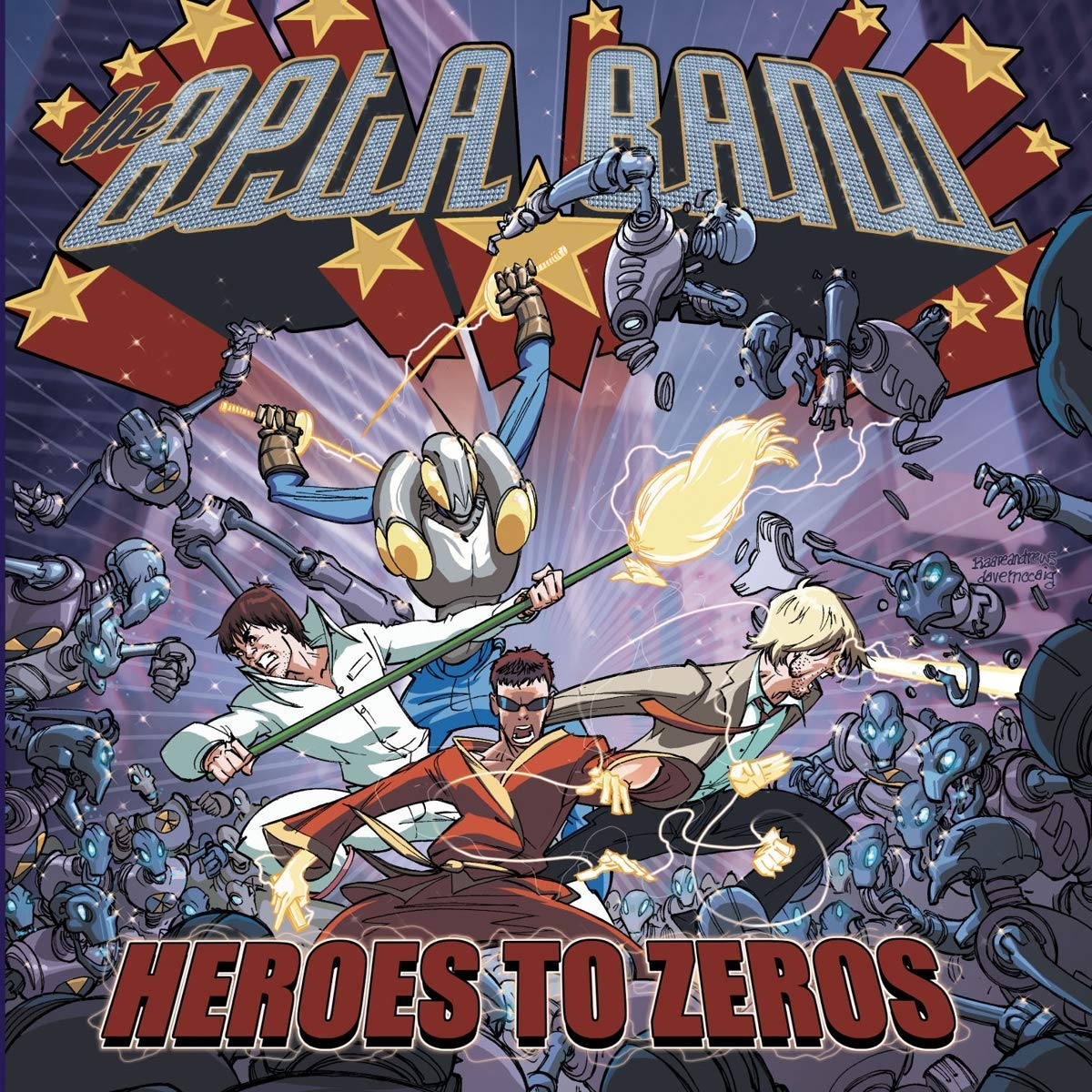
This was Heroes To Zeros which was The Beta Band’s swan-song. The Beta Band began demo sessions for what later became Heroes To Zeroes in September 2002. They then entered the studio with producer Tom Rothrock in 2003 and completed a number of tracks. There was a problem though.
Neither The Beta Band nor executives at Regal Records were happy with the recordings and producer Nigel Godrich was brought in to mix the album, which was finally finished in early 2004.
The lead single, Assessment, was released on the ’12th’ of April 2004 and reached number thirty-one in the UK. Two weeks later, the album Heroes To Zeros was released on the ‘26th’ of April 2004 and reached number eighteen in the UK. This would normally be something to celebrate.
Heroes To Zeros featured music that had a much more dense and direct sound but strikes a balance between The Beta Band’s more traditional sound and music that was way ahead of the musical curve. However, some of the music on Heroes To Zeros saw The Beta Band turn their attention to creating pop music.
It was obvious that Brian Wilson of The Beach Boys was still a huge influence on The Beta Band and especially tracks like Good Vibrations and Heroes and Villain. So were albums like 20/20 and Friends. However, The Beta Band were also forging ahead with their own sound, which was intricate and multilayered. They were best qualified to produce the album and bring their new ideas to life.
To do this, The Beta Band adopted a variety of production techniques to bring out the best in what was an idiosyncratic band. No other producer would’ve been able to achieve what The Beta Band did on Heroes To Zeros.
Many of the songs on Heroes To Zeros ended up very different from the initial ideas recorded by The Beta Band. They honed the songs on Heroes To Zeros which open with Assessment and closed with Pure For. Heroes To Zeros featured The Beta Band at the peak of their creative powers on their self-produced swan-song.
By the time The Beta Band released Liquid Bird, as their second single from Heroes To Zeros, many critics had realised that the song was based on a sample of the Siouxsie and The Banshees’ song Painted Bird. This could’ve been an expensive mistake for The Beta Band.
Despite this mistake, The Beta Band released Out-Side, their second from Heroes To Zeroes in July 2004. When it stalled at fifty-four in the UK charts, little did critics or record buyers realise that the end was neigh for The Beta Band.
They announced their breakup on their website on the ‘2nd’ of August 2004. Despite that, The Beta Band performed at the Summer Sundae festival and embarked upon a farewell tour which drew to close in Edinburg, at the Liquid Rooms on the ‘5th’ of December 2004. This was the end of the story for The Beta Band.
Their swan-song Heroes To Zeros was the only album that The Beta Band produced themselves, since signing to an imprint of a major label. They hadn’t been happy with their first two albums and often made their views known in the music press.
Usually, this was before the album was even released. As they made these comments, members of The Beta Band seemed to forget that they still had help promote their latest release. Executives at Regal Records must have been left shaking their heads in exasperation. Despite the comments of the members of The Beta Band, their three albums were all commercially successful. However, the big question is how successful could The Beta Band have been if they had played the PR game, and reigned in their outspokenness, maverick tendencies and tendency to self sabotage.
Looking back, The Beta Band weren’t suited to being signed to a big label, and would’ve been better suited to a smaller indie label or even self-releasing their albums through their own label. Maybe they would’ve enjoyed a longer career and released more that three albums, including their critically acclaimed, self-produced swan-song Heroes To Zeros?
It features the inimitable genre-melting sound of folktronica pioneers The Beta Band at the peak of their creative powers on Heroes To Zeros their self-produced swan-song where the outspoken musical mavericks realise their potential.
The Life and Times Of The Beta Band.


THE CHARLATANS-THE MUSICAL MAVERICKS AND DANDIES WHO HAD IT ALL.
The Charlatans-The Musical Mavericks and Dandies Who Had It All.
Between 1964 and 1969, The Charlatans’ star shawn brightly, and the larger than life musical mavericks dressed like ‘19th’ Century outlaws, and embraced the rock ’n’ roll lifestyle. L.S.D. and pot were part of The Charlatans’ diet. It fuelled The Charlatans as they took San Francisco by storm, and commercial success and critical acclaim looked a formality. Sadly, it wasn’t to be.
By 1969, The Charlatans were no more. They were just the latest band that should’ve enjoyed widespread critical acclaim and commercial success. However, for whatever reason, commercial success passes these bands by. That was the case with The Charlatans whose story begins in the summer 1964.
That’s when The Charlatans were formed in San Francisco, by autoharp player George Hunter, and bassist Richard Olsen. Soon, they were joined by lead guitarist Mike Wilhelm; keyboardist Mike Ferguson and drummer Sam Linde. With the lineup complete, The Charlatans began to practice. Before long the the band realised they had a problem.
The Charlatans had an achilles heel. This was drummer Sam Linde. He just wasn’t good enough for the band moving forward. So a decision was made to replace Sam Linde. His replacement was none other that Dan Hicks. With a new, improved lineup in place, The Charlatans moved forward.
When The Charlatans began to play live, they looked like a cross between 19th Century, wild west outlaws and Victorian dandies. This image wasn’t just thrown together. It was carefully cultivated. Despite this, it soon began to prove popular with the audience at their gigs. They arrived dressed in similar attire. Little did The Charlatans realise that their stage clothes would influence the a generation.
With the hippie counter culture about to blossom, The Charlatans image would go on to influence a generation. They would dress like dandies and outlaws. By then, The Charlatans a familiar face in the San Francisco music scene.
In June 1965, The Charlatans had secured a six week residency at at the Red Dog Saloon in Virginia City, Nevada.. For this residency, two members of The Charlatans had to produce a concert poster. What Mike Ferguson and George Hunter came up with, is regarded as the first psychedelic rock poster. Since then, ordinal copies of The Seed have become prized items among collectors of psychedelia. However, the Red Dog Saloon residency marked a first for The Charlatans.
During the residency, the five members of The Charlatans took L.S.D. for the first time. It wouldn’t be the last. Soon, The Charlatans had a penchant for acid, and were tripping whenever they could. Despite their penchant for acid, The Charlatans weren’t an acid rock band. They were much more than that.
Instead, The Charlatans’ music would veer between folk rock, country rock and psychedelia over the next four years. Their recording career should’ve began in September 1965.
Fresh from their residency at the Red Dog Saloon, The Charlatans had an audition Autumn Records September 1965. They didn’t sign to Tom “Big Daddy” Donahue’s label. He was a local DJ, promoter and producer. However, The Charlatans didn’t sign to Autumn. There were disputes between Tom “Big Daddy” Donahue and The Charlatans over what they would record and money. Soon, though, it became apparent that The Charlatans had had a close escape.
Autumn Records was teetering on the edge of insolvency. Financially, the cupboards were bare. Eventually, Warner Bros. bailed Autumn Records out, and The Charlatans lived to fight another day.
As 1966 dawned, The Charlatans signed to Kama Sutra Records. The Charlatans wasted no time in recording a number of songs. Once the recording sessions were complete, The Charlatans had decided that they wanted to release Codine as their lead single. That executives at Kama Sutra Records said wasn’t going to happen.
They obviously hadn’t listened to Buffy Sainte-Marie’s song about the dangers of drugs. Mistakenly, executives at Kama Sutra Records thought that Codine glorified or encouraged drug taking. So Codine wasn’t releases as a single. It features on he Limit Of The Marvellous. So does The Shadow Knows and 30-20 as The Shadow Knows E.P.
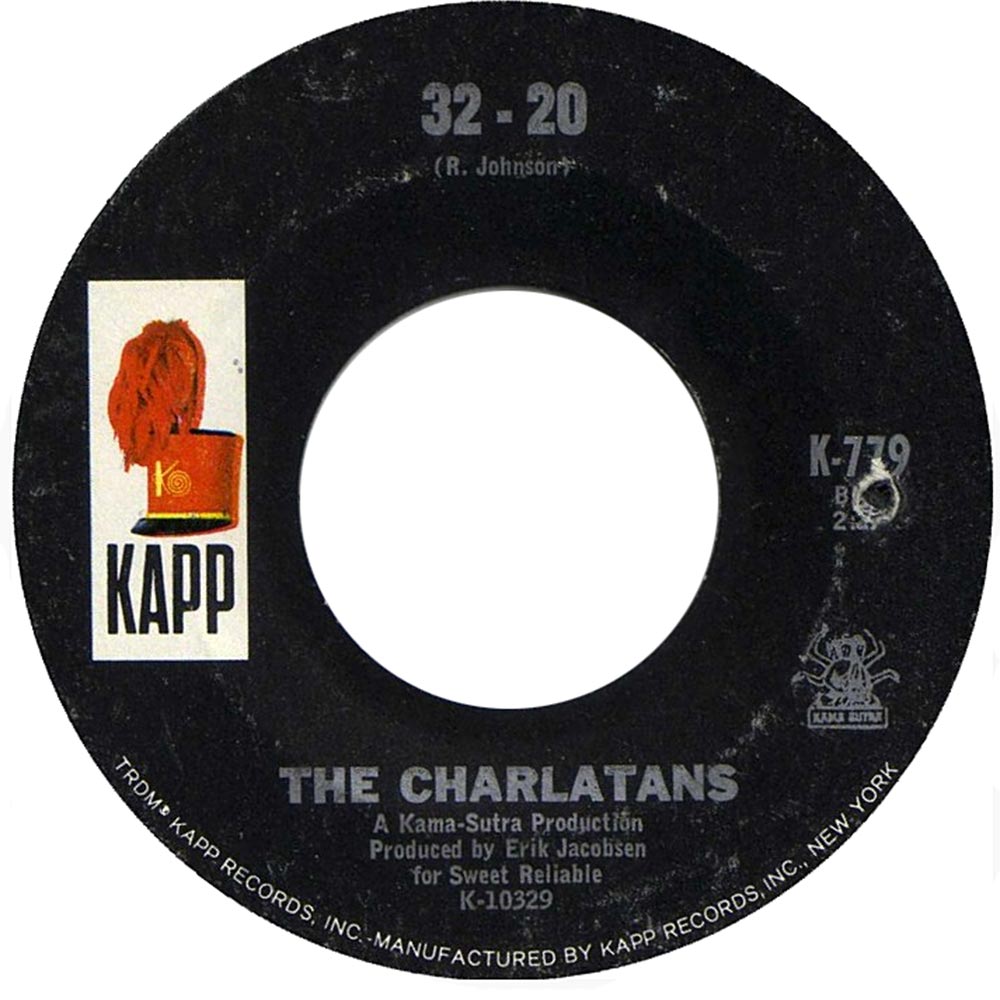
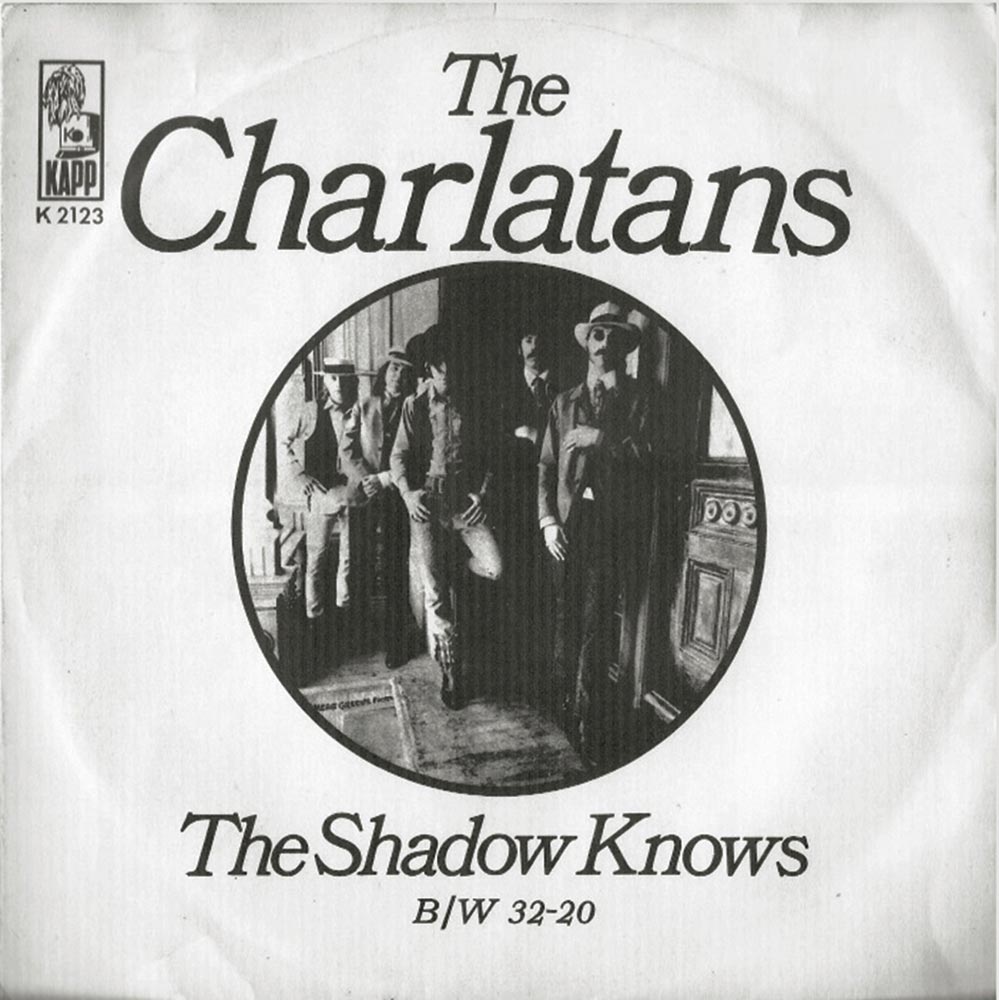
Instead of Codine, The Shadow Knows was chosen as the lead single. On the B-Side was 32-20. When The Shadow Knows was released by Kapp Records in October 1966, the label failed to adequately promote The Charlatans’ debut. Unsurprisingly, The Charlatans debut single failed. This was The Charlatans’ one and only release on Kama Sutra Records. The remainder of the songs weren’t released until 1996, when they resurfaced on the Amazing Charlatans’ album.
Following their departure from Kama Sutra Records, The Charlatans’ lineup changed. Mike Ferguson was sacked in 1967, and replaced by Patrick Gogerty. Not long after this, Dan Hicks vacated The Charlatans’ drum stool. He moved to rhythm guitar and became the lead vocalist, singing many of his own compositions. It was a time of transition for The Charlatans.
During this period, The Charlatans were mostly playing live. They didn’t have a record contract, and watched as many of their contemporaries signed with record companies and enjoyed successful careers. This was galling as The Charlatans had played at the Fillmore Auditorium, California Hall, Avalon Ballroom and Longshoreman’s Hall. They were a popular live draw, and had been since their live debut in 1965. By 1968, The Charlatans must have wondered if a record contract would elude them?
By then, The Charlatans had embraced the rock ’n’ roll lifestyle fully. Their dropped L.S.D. and smoked pot regularly. Many who enjoyed the same diet of drugs would become acid casualties. Not The Charlatans. They were still one of San Francisco’s top live bands. Then in 1968, one of The Charlatans called it a day.
In 1968, Dan Hicks decided to form his own band, Dan Hicks and The Hot Licks. This was always going to happen. It was almost written in the stars. Dan Hicks was a talented singer, songwriter and musician. He seemed destined for greater things. However, this left a huge void in The Charlatans. Filling it wouldn’t be easy.
Worse was to come. Throughout 1968, arguments were commonplace within The Charlatans’ camp. Gradually, the escalated, and reached a breaking point. However, Mike Wilhelm, Richard Olsen and Terry Wilson had a cunning plan.
To all intents and purposes, it looked as if they had decided to disband The Charlatans. However, the cunning plan was that shortly afterwards, they would reform The Charlatans without George Hunter. It was a musical coup d’état. This would ultimately backfire on The Charlatans.
At first, things looked up for The Charlatans. They drafted in a new keyboardist and vocalist, Darrell DeVor. Not long after this, The Charlatans secured a deal with Phillips, and began recording their debut album.
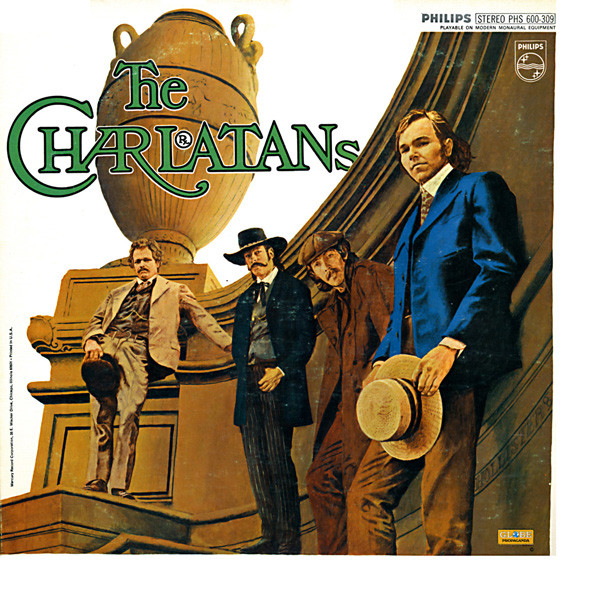
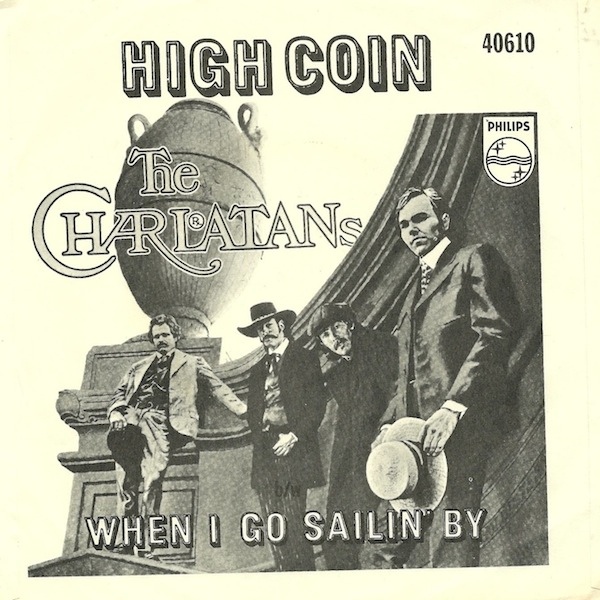
Recording of what became The Charlatans took place at Pacific High Recorders, San Francisco. Dan Healy co-produced what became The Charlatans with the band. Eleven songs were recorded. Five were cover versions and six were written by members of The Charlatans Mike Wilhelm penned Ain’t Got the Time and The Blues Ain’t Nothin’; while Richard Olsen contributed When I Go Sailin’ By. New recruit Darrell DeVore wrote Easy When I’m Dead, Time to Get Straight, Doubtful Waltz and When the Movies Are Over. However, when the album was released, The Charlatans luck changed.
By then, music had changed, and the music on The Charlatans was beginning to sound dated. As a result, The Charlatans failed commercially. So did the the Van Dyke Parks’ penned lead single High Coin. To make matters worse, one of The Charlatans had been busted on a drugs charge.
Drummer Terry Wilson had been caught in possession of marijuana. In 1969, this was a serious offence in America, where the drug laws were quite strict. So when Terry Wilson received a prison sentence he had to leave The Charlatans. This resulted in a u-turn from two members of The Charlatans.
Mike Wilhelm and Richard Olsen agreed to join a reunited lineup of The Charlatans. Mike Ferguson who had previously been sacked returned. So did George Hunter who had been ‘misled’ into thinking that The Charlatans had disbanded in 1968, even was willing to let bygones be bygones. Even Dan Hicks returned to the fold.
While The Charlatans continued as a quintet until the end of 1969, the writing was on the wall. The Charlatans’ music was regarded as outdated, and yesterday’s sound. It was almost inevitable that The Charlatans would split-up at the end of 1969. This was the end of the road for The Charlatans.
Four years earlier, the future looked bright for The Charlatans when they enjoyed their six week residency at Red Dog Saloon. When they returned to San Francisco, The Charlatans looked as if they were going to join the elite of city’s music scene. They had the talent, and their music which veered between country rock to folk rock and psychedelic rock should’ve found a wider audience.
Sadly, The Charlatans struggled to get a record deal. The time they spent at Kama Sutra Records resulted in The Charlatans recording the best music of their five year career.
Little did Kama Sutra Records realise that, they had captured The Charlatans at the peak of their powers. At that moment in time, their music was bang on trend. That was the time to release an album, not 1969.
When The Charlatans released their eponymous debut album for Phillips in 1969, their music hadn’t evolved. Instead, it sound outdated to record buyers who had moved on musically. Sadly, The Charlatans hadn’t. They came late to the party with an album that would’ve fared better if released in 1967. However, by then, the end was neigh for The Charlatans.
Despite getting the classic quintet together, The Charlatans’ story was over by late 1969. Their musical legacy amounted to one album, two singles and material they had recorded for Kama Sutra Records. It was a case of what might have been.
Fiver years earlier, ,usical mavericks The Charlatans, had taken San Francisco by storm. They should’ve found fame and fortune. Sadly, it wasn’t to be. After several breakups, makeups and changes in lineup, The Charlatans, called time on a career that promised much, but ultimately, through bad luck and misfortune, came to little.
The Charlatans-The Musical Mavericks and Dandies Who Had It All.


HALLELUJAH-THE SONGS OF LEONARD COHEN.
Hallelujah-The Songs Of Leonard Cohen.
Label: Ace Records.
On the ‘21st’ of October 2016, Canadian singer-songwriter, novelist and poet Leonard Cohen released what was to be his swan-song You Want It Darker to widespread critical acclaim. Sadly, just seventeen days later Leonard Cohen passed away on the ‘7th’ of November 2016, aged eighty-two. That day, music lost a true great, whose recording career had spanned nearly fifty years.
During that time, Leonard Cohen released fourteen studio albums and eight live albums. They’re a remainder of one of music’s most enduring and cerebral singer-songwriters. Leonard Cohen constantly asked the big questions and tackled subjects other singer-songwriters shied away from. That was the case right up until his swan-song You Want It Darker.
On You Want It Darker, Leonard Cohen revisited the subject of death and God. Maybe Leonard Cohen found this therapeutic or cathartic? After all, he knew he was dying as he recorded You Want It Darker. It may be that Leonard Cohen this was Leonard Cohen’s may of coping with death. This is similar to Dylan Thomas writing the villanelle Do Not Go Gentle Into That Good Night. However, Leonard Thomas didn’t: “rage, rage against the dying of the light.”
He was rueful, reflective, offered advice and gave thanks on If I Didn’t Have Your Love, which was one of nine songs on You Want It Darker. It was the swan-song of one of the greatest lyricists in the history of modern music, Leonard Cohen whose songs are celebrated on Hallelujah-The Songs Of Leonard Cohen, a new compilation that has just been released by Ace Records.
Hallelujah-The Songs Of Leonard Cohen is the latest instalment in Ace Records long-running and critically acclaimed Songwriters series. There’s a total of eighteen tracks from such luminaries as Jeff Buckley, KD Lang, Rufus Wainright, Marianne Faithfull, Madeleine Peyroux, Dion, Judy Collins, Ron Sexsmith, Nina Simone, Lee Hazlewood, David Blue and Joe Cocker. They’re just a few the artists that feature on Hallelujah-The Songs Of Leonard Cohen, which features two tracks that the great man never recorded. Each of the songs on Hallelujah-The Songs Of Leonard Cohen is a reminder of one of the greatest lyricists of his generation.
Jeff Buckley’s breathtakingly beautiful and cover of Hallelujah from his debut album Grace opens Hallelujah-The Songs Of Leonard Cohen, and sets the bar high for what follows.
This includes KD Lang’s cover of Bird On A Wire and Rufus Wainright’s live version of Chelsea Hotel No.2. Both artists breathe new life and meaning into two familiar songs. So does Marianne Faithfull on Tower Of Song and Madeleine Peyroux’s masterful interpretation of Dance Me To The End Of Love, which is a welcome addition as she pays homage to her musical hero.
The first artist to cover a Leonard Cohen song was Judy Collins in 1967, who was well on her way to being crowned Queen of folk. Her contribution is heartfelt, wistful and quite beautiful cover of Hey, That’s No Way To Say Goodbye.
Another highlight is Heart With No Companion by Ron Sexsmith, while Nina Simone personalises Suzanne and Lee Hazlewood takes Come Spend The Morning in a new direction. It’s a similar case with David Blue’s cover of Lover, Lover, Lover and Joe Cocker’s stunning version of First We Take Manhattan. Closing Hallelujah-The Songs Of Leonard Cohen is a reinvention ofAvalanche by Leonard Cohen aficionado Nick Cave Featuring The Bad Seeds who closes this lovingly curated and quality compilation on a resounding high as he pays homage to one of his heroes.
Hallelujah-The Songs Of Leonard Cohen is a reminder of one of the greatest lyricists of his generation, who passed away on the ‘7th’ of November 2016, aged eighty-two. That day, music lost a true great, Leonard Cohen, whose recording career had spanned nearly fifty years.
During that period, countless artists and bands covered Leonard Cohen’s songs. This included the eighteen eclectic recordings on Hallelujah-The Songs Of Leonard Cohen which features an array of talented artists who interpret the songs of one of the greatest lyricists of his generation and Canada’s poet laureate.
Hallelujah-The Songs Of Leonard Cohen.

THE THREE YEAR STORY OF SWEENEY’S MEN.
The Three Year Story Of Sweeney’s Men.
One of the bands that emerged from the mid-sixties Irish roots revival was Sweeney’s Men, who were formed in Dublin in May 1966, by Andy Irvine, “Galway Joe” Dolan and Johnny Moynihan. Sweeney’s Men were together for just three years, and released two albums which feature one of the most important and groundbreaking Irish folk bands who went on to influence a generation of electric folk groups, including Planxty, Moving Hearts, Steeleye Span, and later, groups like The Pogues and Moonshine. By then, Sweeney’s Men story was over.
Four years before Sweeney’s Men was formed, O’Donoghue’s Pub in Dublin was where many Irish folk musicians gravitated and played in the evenings. Those that drank in the pub saw The Dubliners, The Fureys, Seamus Ennis and Irvine who was born in London in 1942 to Scottish and Irish parents.
Andy Irvine was a former child actor, who as an eight year old, had featured in the film A Tale Of Two Cities. He also took to the stage in London and Dublin, which was how he first discovered the city. Later, Andy Irvine became fascinated by American folk and blues music, after discovering Woody Guthrie and Ramblin’ Jack Elliot. However, when the twenty year old moved to Dublin, and discovered O’Donoghue’s Pub he became interested in Irish folk music.
As his interest in folk music blossomed, Andy Irvine met Johnny Moynihan one night in O’Donoghue’s Pub, and the pair started traveling the length and breadth of Ireland to music festivals.
It wasn’t long before the pair began performing at various folk venues in Dublin, an sometimes, they were joined by Johnny Moynihan’s girlfriend Anne Briggs, who was also a folk singer. Regardless of whether they performed as a duo or a trio, the audience’s reaction was inconsistent. Sometimes, they were wildly enthusiastic, other times, the response bordered on indifferent. On these nights, they left the stage feeling deflated and wondering if there was something missing? Maybe they needed to change their lineup?
While Andy Irvine enjoyed playing the gigs with Johnny Moynihan, he decided to busk around Europe and play some gigs with another friend Eamon O’Doherty, Andy Irvine’s musical partner
Johnny Moynihan stayed at home, and continued to work as a draftsman in Roscommon. Music was something he did in his spare time. Meanwhile, Andy Irvine had got as far as Denmark, where he Eamon O’Doherty were playing some club gigs. That was when he received a message from another musician “Galway Joe” Dolan.
He was a former member of Irish showband Premier Aces, who had embarked upon a career as a folk musician. Galway Joe” Dolan had secured a booking for the entire summer at the Enda Hotel in Galway, and wanted Andy Irvine to join him. When Andy Irvine heard the news, he returned home and headed to Galway where they were to stay in a cottage behind the hotel.
At the weekend, Johnny Moynihan would head to Galway and stay at Andy Irvine and Galway Joe” Dolan’s rural idyll, and join them when they played live. Everything was going well for two or three weeks, until Galway Joe” Dolan had a fight with hotel owner. That was the end of their summer season at the Enda Hotel.
Despite not having any bookings, the three friends decided to travel around Ireland, playing wherever they could land a gig. The three men decided to name their group after the pagan king Suibhne, who was cursed for throwing a cleric’s bell into a lake. However, when Suibhne is anglicised it became Sweeney which lead to the trio becoming Sweeney’s Men.
The newly named Sweeney’s Men spent their first summer touring Ireland in an old red Volkswagen van. Little did the trio know that the summer the spent touring the Emerald Isle was akin to a musical apprenticeship and when they return home to Dublin in the autumn, the three members of Sweeney’s Men were well on their way to becoming professional musicians.
With the arrival of autumn, Sweeney’s Men returned to Dublin and lived in a house in North Strand Street. Not long after this, they met Des Kelly, a member of the Capitol Showband who became their manager.
By then, Sweeney’s Men had turned their back on popular, sentimental ballads that peppered the sets of the older Irish bands. Replacing these songs, were a very different type of ballad, that came from America, England, Ireland and Scotland. They featured incredibly complex arrangements that Sweeney’s Men played on a guitar, mandolin and bazouki. They provided the backdrop as the trio of unique voices complimented each other and became part of Sweeney’s Men’s trademark sound that they continued to hone in Dublin’s clubs. However, Sweeney’s Men knew they were more than ready to record their debut single.
Sweeney’s Men went into the studio and recorded several songs, including Pecker Dunne’s Sullivan’s John which was, released on Transatlantic Records in 1968. Before that, Sweeney’s Men would sign to Pye Records, and released Old Maid In The Garret as their debut single during first half of 1967. However, much would happen before then.
This included a change in Sweeney’s Men’s lineup when “Galway Joe” Dolan left the group, and later, journeyed to Israel. Fortunately, Paul Brady was able to replace “Galway Joe” Dolan and probed a more than adequate replacement when he joined Sweeney’s Men for a gig in Limerick. Unfortunately, Sweeney’s Men were unable to secure Paul Brady’s services long-term, and he joined The Johnstons.
Finding a replacement for “Galway Joe” Dolan, and someone of the calibre of Paul Brady proved problematic, and it took time for Sweeney’s Men to settle on Terry Woods. He was a tenor vocalist who played guitar, 5-string banjo and accordion. Terry Woods had grownup listening to folk, blues and country music, and was already a fan of Sweeney’s Men’s music.
With a new lineup of Andy Irvine, Johnny Moynihan and Terry Woods, Sweeney’s Men recorded their second single for Pye International, Waxie’s Dargle. It was also the final single that Sweeney’s Men released on Pye Records.
By then, Sweeney’s Men had changed managers, and were now managed by Roddy Hickson, John Mahon and Gerry McDonagh, also managed The Johnston. Changing managers was a good move for Sweeney’s Men as they were able to get bookings at some of Dublin’s top folk clubs. Their new managers also managed to get Sweeney’s Men onto the ballroom circuit, where they earned £50 a night for a thirty-minute set. Sweeney’s Men’s new management team secured a recording deal with Transatlantic Records in early 1968. This was the break Sweeney’s Men had been waiting for.
Sweeney’s Men.
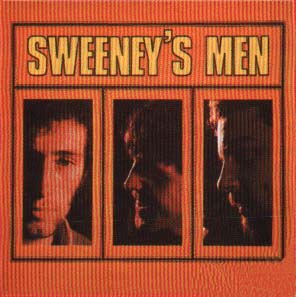
Now signed to Transatlantic Records, the three members of Sweeney’s Men began working on their eponymous debut album.
They chose thirteen songs, including Pecker Dunne’s Sullivan’s John, Peggy Seeger and Terry Woods’ My Dearest Dear, Dominic Behan’s Dicey Riley and Frank Warner’s Tom Dooley. They were joined by nine traditional songs, including Sally Brown, Exile’s Jig, The Handsome Cabin Boy, Willy O’Winsbury, Dance To Your Daddy, The House Carpenter, Johnstone, Reynard The Fox and Rattlin’ Roarin’ Willy which is believed to have been written by Scottish poet Robert Burns. Most of the traditional songs were arranged by Sweeney’s Men, except Willy O’Winsbury which Andy Irvine arranged. These songs were then recorded during a memorable session.
With the material chosen, Sweeney’s Men entered the studio with their unique mixture of disparate instruments. They all added vocals and harmonies, while Andy Irvine played guitar, mandolin, bazouki and harmonica. Johnny Moynihan played tin whistle and bazouki, and nowadays, is regarded as the first musician to incorporate the bazouki into Irish music. Terry woods played guitar, 12-string guitar, banjo and accordion. Taking charge of production was Bill Leader, who oversaw a thirty-six hour marathon recording session that was fuelled by countless pints of Guinness and a steady supply of Dexedrine. Eventually, after the marathon recording session Sweeney’s Men was completed in time.
This was fortunate, as Terry Woods was about to marry Gay Concaron in Dublin, on the ‘18th’ of May 1968. Terry Woods had asked Andy Irvine to be the best man, and the wedding was a double celebration given Sweeney’s Men had just completed their eponymous debut album.
When Sweeney’s Men was released later in 1968, critics discovered an album which featured a carefully chosen selection of American, English, Irish and Scottish folk songs. Unlike most folk bands, Sweeney’s Men didn’t have just the one, or even two vocalists. Instead, they the vocals were shared between the three musicians, with great care taken to find the right vocal for the song. They were accompanied by harmonies and a unique blend of musical instruments quite different from many Irish folk bands were using. Especially the bazouki which Sweeney’s Men pioneered, on an album where the unique and inimitable choice of instruments was imaginative and inventive as they work their way through the thirteen songs that featured on their eponymous debut album.
Sweeney’s Men was an album that divided the opinion of critics, and the reviews were mixed. It was only later that critics and musical historians would realise how important and influential a Sweeney’s Men and their debut album was.
One member of Sweeney’s Men took the mixed reviews of their eponymous debut album badly. It was the final straw for Andy Irvine, who hadn’t been happy playing the ballroom circuit, even though they were earning £50 a night. The audience didn’t sit and listen to the bands like they did in folk clubs, and Andy Irvine saw this as a disrespectful. By then, he was ready to try something different, and when he left Sweeney’s Men travelled to Eastern Europe to discover the indigenous music.
After Andy Irvine’s departure from Sweeney’s Men, the search for a replacement began. Eventually, the two remaining members settled on Henry McCullough, the Eire Apparent guitarist from Portstewart, Northern Ireland was recruited.
With Henry McCullough onboard, a new era began for what was Sweeney’s Men Mk III. Henry McCullough was part of the band when they played on the RTE television series Twenty Minutes With, and by then, there were elements of African and Eastern music to Sweeney’s Men’s sound. There was also a shift towards a more psychedelic sound.
This became apparent when Sweeney’s Men played at Liberty Hall, in Dublin. For the first half, Andy Irvine joined Johnny Moynihan and Terry Woods. Then after the break, Henry McCullough joined Sweeney’s Men as they showcased their new contemporary sound which sometimes, incorporated elements of psychedelia. Little did Sweeney’s Men realise that this was their swan-song at Liberty Hall.
Later in 1968, Sweeney’s Men played at the Cambridge Folk Festival, where they once again, showcased their new contemporary sound. By then, Henry McCullough who had introduced the electric guitar to Sweeney’s Men had started writing some new songs. Two of these would feature on Sweeney’s Men sophomore album The Tracks Of Sweeney. Much would happen before that.
Not long after their appearance at the Cambridge Folk Festival, Henry McCullough left Sweeney’s Men. He had been won over by the John Mayall’s set of electric blues at the Woodstock Festival. This he thought was the future. For the third time, Sweeney’s Men was reduced to a duo.
The two remaining members of Sweeney’s Men started looking for a replacement. Eventually, the settled on singer, guitarist and 5-string banjo player Al O’Donnell. He became third member of Sweeney’s Men Mk IV. However, Al O’Donnell left Sweeney’s Men by the winter of 1968.
This left Sweeney’s Men to tour Britain as a duo. However, when Sweeney’s Men arrived in London they met Andy Irvine and talks began about him rejoining the band. However, too much water had passed under the bridge.
Not long after this, Sweeney’s Men spilt-up for the first time. Johnny Moynihan played tin whistle on Skid Row’s debut single New Faces Old Places. Meanwhile, Terry Woods had met and started working with Phil Lynott who had founded his new band Orphanage. With the two remaining members of Sweeney’s Men working with other musicians, this looked like the of the band.
That was until early 1969, when Johnny Moynihan and Terry Woods agreed to reform Sweeney’s Men. Soon, they were working on their sophomore album The Tracks Of Sweeney.
The Tracks Of Sweeney.
Rather than try to bring onboard a third member of Sweeney’s Men, Johnny Moynihan and Terry Woods decided to record The Tracks Of Sweeney as a duo.
Eleven tracks were chosen for The Tracks Of Sweeney, including four penned by Terry Woods. He wrote Dreams For Me, Brain Jam, When You Don’t Cry and Afterthoughts, and previously had written A Mistake No Doubt Henry McCullough who also contributed Hall Of Mirrors. They were joined by Leonard Cohen’s Go By Brooks and a quartet of traditional songs. This included the instrumental The Pipe On The Hob, plus Pretty Polly, Standing On The Shore and Hiram Hubbard. These songs were recorded in early 1969.
When recording began at Livingston Recording Studios, Barnet, Sweeney’s Men used the two vocalists and a disparate selection of instruments to achieve their new Acid Folk sound on much of the album. Johnny Moynihan played bazouki and tin whistle, while Terry Woods played guitar, 12-string guitar, banjo and accordion. Once the eleven tracks that became The Tracks Of Sweeney were complete, that marked the end of Sweeney’s Men’s recording career.
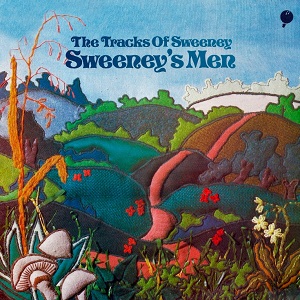
Sweeney’s Men’s sophomore album was a mixture of styles, and found them embracing the Acid Folk sound on number of songs Tracks Of Sweeney. Especially tracks like Dreams For Me, Brain Jam, A Mistake No Doubt, Go By Brooks, When You Don’t Care For Me. The only Irish jig was The Pipe On The Hob, while Pretty Polly, Standing On The Shore and Hiram Hubbard on looked towards traditional American folk music. Many critics felt that Tracks Of Sweeney was a much better album that its predecessor. Sadly, by the time it was released in late 1969, the Sweeney’s Men story was over.
After three years and what are now regarded as two important and influential albums, Sweeney’s Men split-up. The two remaining members of the group went their separate ways. In some ways, it was a case of what might have been? What direction would Sweeney’s Men have headed in the future, and were they on the cusp of a commercial breakthrough? However, Sweeney’s Men left behind a rich musical legacy that includes their two albums Sweeney’s Men and The Tracks Of Sweeney.
These two albums, Sweeney’s Men and The Tracks Of Sweeney, feature one of the most important and groundbreaking Irish folk bands of the late-sixties. Sweeney’s Men went on to influence a generation of electric folk groups, including Planxty, Moving Hearts, Steeleye Span, and later, groups like The Pogues and Moonshine. Even today, Sweeney’s Men continue to influence a new generation of folk musicians, who look to their two groundbreaking albums, Sweeney’s Men and The Tracks Of Sweeney for inspiration for the music of tomorrow.
The Three Year Story Of Sweeney’s Men.
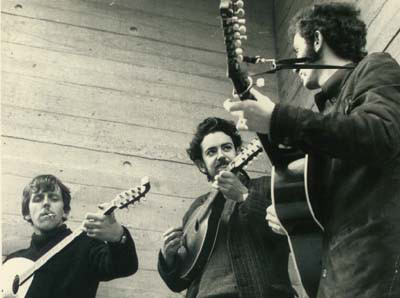
THE JOHNSTONS-A STORY OF WHAT MIGHT HAVE BEEN?
The Johnstons-A Story Of What Might Have Been?
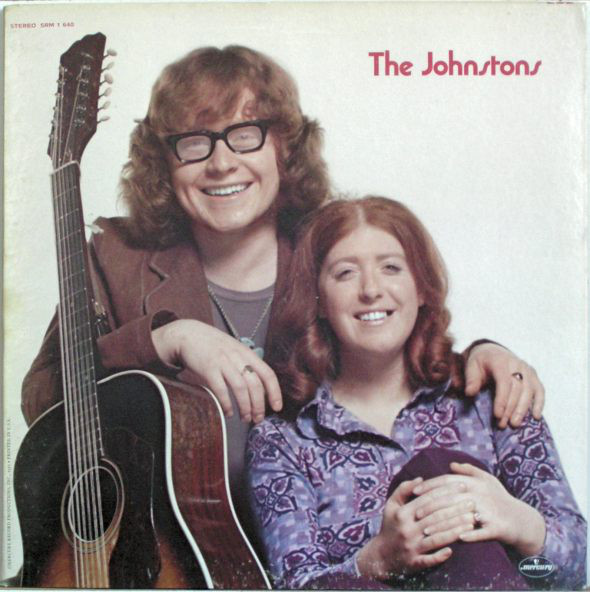
During the mid-sixties, folk music on both sides of the Atlantic was growing in popularity, in America and Britain. It was a similar case in Ireland, where a number of folk bands were founded, including The Johnstons in Slane, County Meath, whose original lineup featured Adrienne Johnston, her younger sister Lucy and brother Michael.
When The Johnstons started out in the early sixties, they had a ready-made venue on their doorstep, their father Marty’s pub in Slane. That was where they made their debut, singing Irish ballads and folk songs in their father Marty’s pub in Slane, with Michael Johnston playing a twelve-string guitar as Adrienne and Lucy sang harmonies. This went down well with the customers, and soon, people were coming to the pub to see The Johnstons sing. Before long, The Johnstons were heading further afield.
It wasn’t long before The Johnstons started to get bookings in the Dublin area, and made their to the capital of the Republic Of Ireland. By then, the group had only been together for a short time. This made what happened next a remarkable achievement.
The Johnstons decided to enter the first ever Wexford Ballad Competition in February 1966. At stake was a £100 first prize and more importantly, an appearance on the Irish television programme the Late Late Show. Despite their relative inexperience Adrienne Johnston, her sixteen year old younger sister Lucy, and brother Michael triumphed and won the inaugural Wexford Ballad Competition. They arrived home that night £100 richer and with an appearance on the Late Late Show to look forward to. The Johnstons had come a long way in a short.
Life was about to get even better for The Johnstons, who were offered a recording contract by Pye Records. One of the first songs The Johnstons recorded was a cover of Ewan McColl’s The Travelling People, which topped the Irish charts in 1966. This transformed The Johnstons career and indeed lives.
Suddenly, The Johnstons embarked upon a gruelling touring schedule and were constantly on television. They also had to find time to record a second single. Before that, Michael Johnston left the band that he had founded, and was replaced by Paul Brady who would go on to enjoy a long and successful solo career and become one of the biggest names in Irish music.
When Paul Brady from Strabane, County Donegal, joined The Johnstons, he came from a very different musical background, and had previously played in various R&B and beat groups. He was a talented musician and vocalist who would play an important part in The Johnstons’ success. However, Paul Brady wasn’t the only new name joining The Johnstons.
The other musician joining The Johnstons was Limerick born Mick Moloney, a multi-instrumentalist, who had been a member of The Emmet Folk Group. He had also worked with a number of well known Irish traditional musicians. Mick Moloney and Paul Brady made their debut on The Johnstons’ sophomore single.
For their followup to The Travelling People, The Johnstons recorded and released The Alamo later in 1966. It charted and The Johnstons’ popularity continued to grow. By then, The Johnstons were a popular draw and in Dublin and a familiar face in city’s folk scene. The addition of Paul Brady and Mick Moloney had allowed The Johnstons to expand their repertoire. This ensured that The Johnstons’ popularity continued to grow.
Especially when The Johnstons’ third single I Never Will Marry was released by the Pye Records’ imprint Target in 1967 and charted. This was the group’s third consecutive single, but still, The Johnstons hadn’t released an album. However, this would change when they signed to the London-based Transatlantic Records in early 1968.
Signing to Transatlantic Records was the start of a new chapter for The Johnstons, who many critics though were on the verge of making a breakthrough in Britain and Europe. Their music, which was a mixture of folk songs and traditional music had found an audience in Ireland, and Transatlantic Records hoped would soon, find an audience further afield.
When it came to choosing their debut single The Johnstons recorded and released They’ll Never Get Their Man on Transatlantic Records in 1968. Just like their three previous singles, it gave The Johnstons a hit single in Ireland. Later in 1968, The Johnstons released their eponymous debut album which featured a mixture of folk songs and traditional music. This proved popular in Ireland and was a commercial success.
Further cementing The Johnstons reputation was one of Ireland’s leading folk groups was the success of the Gaelic language singe Gleanntáin Ghlas Ghaoth Dobhair they released on the Gael Linn Records. By then, The Johnstons’ popularity was at an all-time high in Britain and Ireland and critics on both sides of the Irish Sea were praising the group.
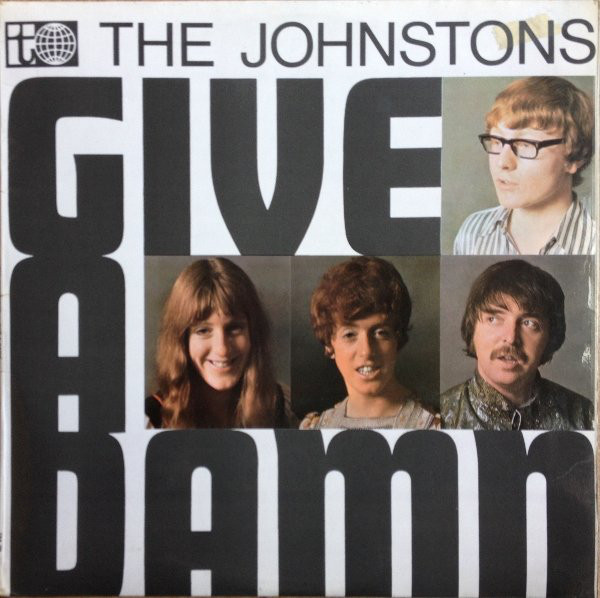
After the success of their eponymous debut album, The Johnstons returned in 1969 with not one, but two albums, Give A Damn and The Barley Corn which they released simultaneously. The two albums showcased a versatile band who were able to interpret, arrange and perform a wide range of different songs that would appeal to do different types people.
The Barley Corn saw The Johnstons return to the sound that featured on their eponymous debut album, and was a mixture of folk songs and traditional Irish and Scottish music. This proved popular, as the music chosen replicated The Johnstons’ live sound. However, The Barley Corn featured a polished performance from The Johnstons, who changed direction on Give A Damn, which was another successful album.
Give A Damn.
Part of the success of Give A Damn were the songs that were chosen by The Johnstons and the album’s much more contemporary sound. The Johnstons covered Ewan McColl’s, Sweet Thames Flow Softly and Dave Cousins of The Strawbs’ You Keep Going Your Way. Three of the songs on Give A Damn were by two up-and-coming singer-songwriters. One of these was Joni Mitchell, who wrote Urge For Going and Both Sides, while Leonard Cohen penned Hey That’s No Way To Say Goodbye. These songs were joined Julia and Walking Out On Foggy Mornings which were penned by Irish songwriter Jon Ledingham. These songs featured a slick sounding performance from The Johnstons and a contemporary sound that found favour with a wider audience.
After the success of The Barley Corn and Give A Damn, The Johnstons decided that the only way to further their career, was to make the journey across the Irish Sea to London. This was a journey many Irish artists and bands had made over the years. However, Lucy Johnston didn’t want to leave her home in Dublin, where she had married photographer Roy Esmonde. As a result, there was only one original member of The Johnstons left in the band, and even Adrienne Johnston would later come to regret making the journey to London.
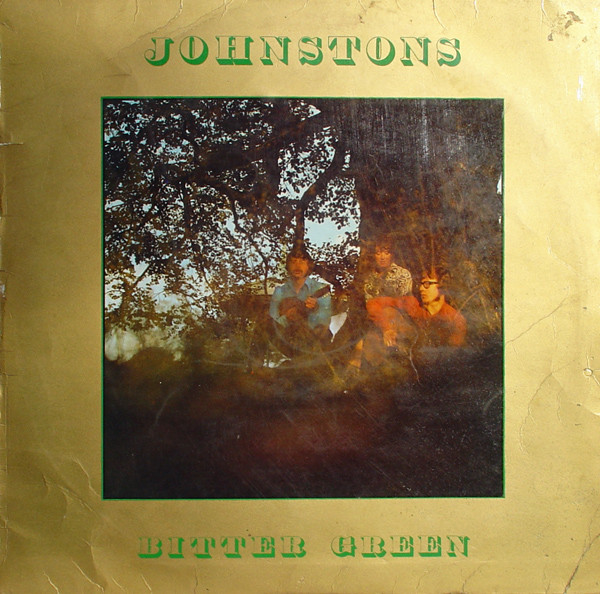
Once The Johnstons had settled in London, they began work on their fourth album Bitter Green,
Bitter Green.
By the time The Johnstons started work Bitter Green, they were regularly touring Britain, Ireland and Europe, especially Germany, Holland and Scandinavia where their popularity was growing. The Johnstons’ music often featured on radio and they were making regular appearances on television. The Johnstons had come a long way since they started singing in Marty’s pub in Slane.
For Bitter Green, The Johnstons decided to combine the music that had featured on The Barley Corn and Give A Damn. Covers of Ewan McColl’s Jesus Was A Carpenter, Gordon Lightfoot’s The Gypsy and Bitter Green joined Leonard Cohen’s The Story Of Isaac and Joni Mitchell’s Marcie. These songs were a reminder of the music on Give A Damn, while a selection of traditions songs harked back to The Barley Corn and their eponymous debut album The Johnstons. This included Lord Thomas and Fair Ellender, The Kilfenora Jig, Fiddler’s Green and The Penny Wager. They were joined by reels a medley of reels which included The Fair Haired Boy, Kiss The Maiden Behind The Barrel and The Dawn which were all arranged by Paul Brady, Adrienne Johnston and Mick Moloney.
The recording of Bitter Green took place at Sound Techniques, in London, where The Johnstons recorded their next single. It was a cover of Ralph McTell’s Streets Of London, which as apt given The Johnstons had just relocated from Dublin to London a year ago.
When Bitter Green was released later in 1969, it found favour amongst critics on both sides of the Irish Sea. Bitter Green was regarded as one the best albums of The Johnstons’ career so far. It was certainly the most eclectic of the four albums that The Johnstons had released on Transatlantic Records.
For some, critics the contemporary sound that The Johnstons revisited on Bitter Green had a much wider appeal than the traditional Irish music. This they believed in the long term, had a limited audience outside of Ireland and the Irish diaspora. Traditional music some critics felt that it would only take The Johnstons so far. However, at that time it seemed unlikely that The Johnstons would turn their back on their musical roots.
After the release of Bitter Green, which sold reasonably well, The Johnstons released their cover of The Streets Of London as a single. in 1970. This was followed by The Johnstons Sampler later in 1970, which featured tracks from their first three albums and their singles. The Johnstons Sampler bought the group time while they recorded their sixth album Colours Of The Dawn.
Colours Of The Dawn.
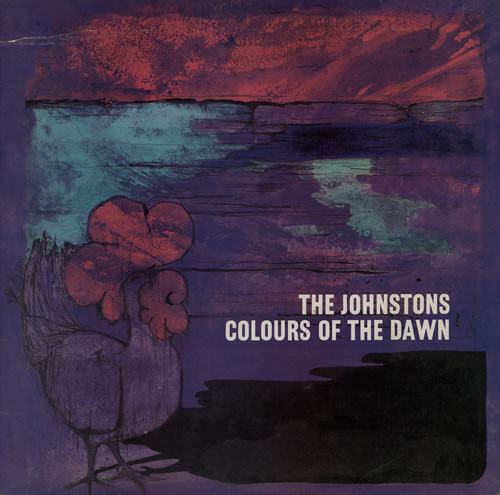
After a tour of Britain and Ireland, The Johnstons returned to Sound Techniques, in London, where they recorded their next album Colours Of The Dawn. By then, Chris McCloud was part of The Johnstons inner circle after he began a relationship with Adrienne Johnston and the pair would eventually marry. Before that, he produced Colours Of The Dawn which marked the start of a new chapter in The Johnstons’ career.
Unlike previous albums, The Johnstons dispensed with the traditional Irish music that had been a feature of their previous album and moved towards a much more contemporary sound. To do this, Paul Brady wrote Brightness, She Came and penned Colours Of The Dawn and I’ll Be Gone In The Morning with Chris McCloud. He also contributed Crazy Anne and Angela Davies. Cover versions included Gordon Lightfoot’s If I Could, Leonard Cohen’s Seems So Long Ago, Nancy, Ian Campbell’s The Old Man’s Tale and Peggy Seeger’s Hello, Friend. These nine songs would become Colours Of The Dawn which was released in January 1971.
Critics on hearing Colours Of The Dawn, heard a very different album from The Johnstons, whose songs were full of social and political comment to from The Johnstons. They commented on recent political events and even broached the subject of political subversives. The Johnstons also commented on racism and the class struggle on Hello, Friend and The Old Man’s Tale which bookended the album. On the Paul Brady compositions he ruefully remembers the illusory and fleeting nature of relationships, on Brightness, She Came and on I’ll Be Gone In The Morning. There’s a cinematic quality to Colours Of The Dawn, and beautiful, poignant covers of Gordon Lightfoot’s If I Could and Leonard Cohen’s ruminative reading of Seems So Long Ago, Nancy. They played their part in the sound and success of Colours Of The Dawn, which was The Johnstons’ finest album.
The Johnstons’ decision to release an album without any traditional Irish music had paid off. It was as if they had belatedly realised that traditional Irish music was only going to take them so far. Having realised this, The Johnstons decided to return the contemporary sound of Give A Damn. This paid off, when Colours Of The Dawn sold well and was released by Vanguard in America later in 1971.
Just when things were going well for The Johnstons, Mick Moloney decided to leave the band. For The Johnstons this was a huge blow, but they decided to continue as a duo.
Later in 1971, the two reminding members of The Johnstons toured America for the first time, and opened for Joan Baez in front of an audience of 20,000. They then appeared at Gerde’s Folk City in New York, played at the Philadelphia Folk Festival and opened for Arlo Guthrie and Bonnie Raitt. This was all good experience for The Johnstons, who when they retrained home, would begin work on their next album, If I Sang My Song.
If I Sang My Song.
By the time work began on If I Sang My Song, Adrienne Johnston and Paul Brady had made the decision to relocate, this time to America, where New York became their latest base. However, The Johnstons returned to London to record If I Sang My Song, once the material for the album was completed.
By then, the two remaining members of The Johnstons had chosen the ten songs, that became If I Sang My Song. This included December Windows and Continental Trailways Bus which were penned by Paul Brady. He and Chris McCloud wrote The Wind In My Hands, Won’t You Come With Me, Border Child, If I Sang My Song and You Ought To Know. Adrienne Johnston wrote Bread And Wine and The Morning Of Our Love with Chris McCloud, who also contributed I Get To Thinking. These songs were recorded in the now familiar environs of Sound Techniques, London.
Joining the two remaining members of The Johnstons was a band that featured drummer Phil Chesterton and Steeleye Span bassist Rick Kemp. They were joined by pianist Don Fraser, flautist Frank Nolan, fiddler Joseph Templeton and Keith Bleashv on congas. Peter Abrahamsen and Hallvard Kvale ‘played’ kazoo while Steeleye Span’s Tm Hart joined Royston Wood and Paul Brady in adding backing vocals. Paul Brady sang lead vocals and harmonies, plus played acoustic and electric guitar, electronic pain, harmonium and whistle. Adrienne Johnston sang lead vocals and harmonies, while Chris McCloud took charge of production. When If I Sang My Song was completed, it was released in 1972.
When If I Sang My Song was released, critics hailed the album the finest of The Johnstons six-year and seven album career. Many critics thought that The Johnstons had found their sound, and the combination of folk rock and orchestrated ballads was the direction they should head in. This critics and music industry insiders though that this was what The Johnstons should’ve done years ago. Their determination not to turn their back on their roots had held them back long enough. Now was their chance to shine, and realise their potential.
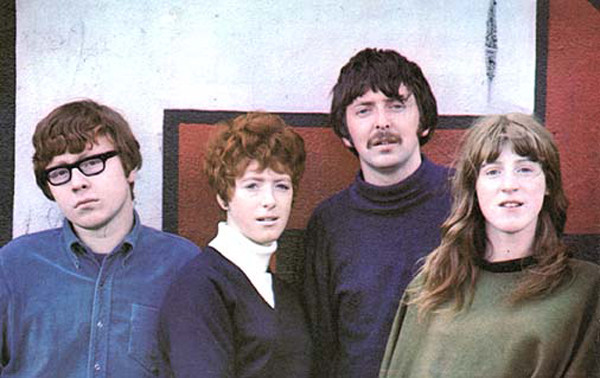
As a result, after the release of If I Sang My Song, The Johnstons added lead guitarist and bassist Gavin Spencer to their lineup, and returned to touring as a trio. They even got as far as working on new songs while The Johnstons toured the East Coast of America. However, the end was nigh for The Johnstons.
In 1973, and after seven years and seven studio albums, it was the end of the road for The Johnstons. The band split-up in 1973, and Paul Brady who remained in New York managed to survive by painting houses and playing in Irish folk clubs. However, he left New York behind when he was invited to join Planxty for the second time.
The first time Paul Brady turned down the chance to replace Donal Lunny due to his commitment to The Johnstons. That proved to be a mistake, but when Christy Moore left Planxty came calling again, and Paul Brady joined the group. By then, he was an experience singer-songwriter, who would go on to enjoy a successful solo career.
Sadly, the story of Adrienne Johnston is a tragic one. For the last few years of Adrienne Johnston’s life, even members of her family and her closest friends were unable to contact her. As a result, Adrienne Johnston never knew that her father Marty, whose pub in Slane, she first sang in, had passed away. Adrienne Johnston died in 1981, and the date on her grave states the former lead singer of The Johnstons passed away on the ’27th’ of May. However, even Adrienne Johnston’s death is shrouded in mystery and speculation.
While the coroner’s ruling was that Adrienne Johnston’s death was accidental, many believe that she was murdered. This stems from a conversation that the medical examiner is alleged to have had with a family member, and expressed: “concerns about this case.” Later, there were allegations that Adrienne Johnston was possibly the victim of a domestic abuse, and suffered at the hands of a partner who was controlling, opportunist. These are just allegations, and nothing has been proven beyond reasonable doubt.
Paul Brady and Adrienne Johnston’s lives took very different paths after The Johnstons’ spilt-up, and one can only wonder what would’ve happened if the band had stayed together?
By 1972, The Johnstons had released a trio of albums that had been released to praise and plaudits, including Bitter Green, Colours Of The Dawn and If I Sang My Song. Bitter Green with its mixture of traditional Irish music and a much more contemporary sound, hinted at what was to come for The Johnstons. They were reborn on Colours Of The Dawn which features the contemporary sound that showed a very different side to the band. The evolution of The Johnstons continued on If I Sang My Song, where The Johnstons combine orchestrated ballads and folk rock on what was their finest hour. However, it was also The Johnstons’ swan-song, who were a band who could’ve and should’ve gone on to reach even greater heights. Sadly, for The Johnstons it was a A Story Of What Might Have Been?
The Johnstons-A Story Of What Might Have Been?
COCTEAU TWINS-FOUR CALENDAR CAFE AND MILK AND KISSES VINYL.
Cocteau Twins-Four-Calendar Café and Milk and Kisses Vinyl.
Label: UMC
It was the best of times, it was the worst of times for 4AD President Ivo Watts-Russell when the Cocteau Twins released their sixth studio album Heaven Or Las Vegas on the ’17th’ of September 1990. He watched as the critically acclaimed album of dream reached number seven in the UK where it was certified silver. Across the Atlantic Heaven Or Las Vegas reached number ninety-nine in the US Billboard 200, as the album sold 250,000 copies worldwide. Heaven Or Las Vegas was one of 4AD’s best and most successful albums which was something to celebrate, but by then Ivo Watts-Russell knew the Cocteau Twins were about to sign to Fontana.
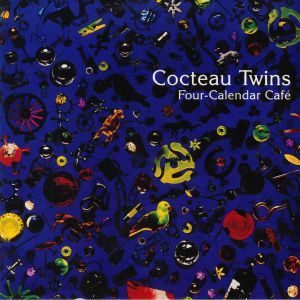
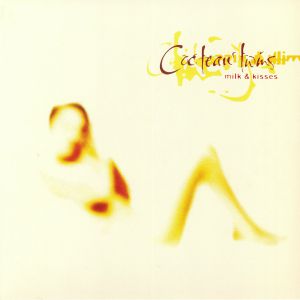
After six albums, the Cocteau Twins whose music was starting to evolved, left 4AD on a high after their most successful album Heaven Or Las Vegas. It was the start of a new era for Liz Fraser, Robin Guthrie and Simon Raymonde who released two albums on Fontana, Four Calendar Café and Milk and Kisses. They’ve been reissued by UMC and are a welcome reminder of what was a new chapter for one of Scotland’s greatest groups of the last forty years.
After the release of Heaven Or Las Vegas, all wasn’t well within the Cocteau Twins. Part of the problems was the conflict with 4AD founder Ivo Watts-Russell. It had gotten so bad that the Cocteau Twins were considering splitting up. To make matters worse, Robin Guthrie was in the throes of drug and alcohol addiction. Things were looking bleak for the Cocteau Twins.
In 1991, the Cocteau Twins left 4AD and signed to Mercury Records’ imprint Fontana in. the UK This was a new start for the Cocteau Twins.
They began recording their seventh album and Fontana debut Four-Calendar Café in early 1993. The album was a response to what the band had been through in the last few years. Robin Guthrie had entered rehab and was no longer addicted to drugs and alcohol. His partner Liz Fraser had undergone a course of psychotherapy, and the Cocteau Twins were a very different band.
Four-Calendar Café was released to critical acclaim on 18 October 1993 and saw the Cocteau Twins move away from the ambient sound of previous albums to a pop-oriented sound. There was still Liz Fraser’s ethereal vocals and dream pop sound as Four-Calendar Café which reached thirteen in the UK, but failed to chart in American. This was a disappointment for the Cocteau Twins who tried a new approach.
In December 1993 the Cocteau Twins returned with their Snow EP, and followed this up with the Bluebeard EP in January 1994. Nothing was heard of the Cocteau Twins for over a year.
In September 1995 the Cocteau Twins released Otherness which was a tantalising taste of their eighth album Milk and Kisses. So was the single Tishbite which the Cocteau Twins released in March 1996.
The same month, March 1996, the Cocteau Twins eighth album Milk and Kisses, and the reviews were mixed. Some critics hailed the album as a fitting followup Four-Calendar Café as the Cocteau Twins combined elements of dream pop with ambient and pop. It was a carefully crafted and vastly underrated album from the Cocteau Twins that stalled at seventeen in the UK and ninety-nine in the US Billboard 200. This was a huge boost to the Cocteau Twins as the Fontana years continued.
Seven months later in October 1996 the Cocteau Twins released Violaine, which was the second single to be released from Milk and Kisses. Sadly, Violaine which features on Treasure Hiding: The Fontana Years was the Cocteau Twins last ever single to be released from a non-compilation album.
Over the next two years, there was no sign of the Cocteau Twins starting work on a new album. Then in 1997 the Cocteau Twins decided to begin work on their ninth album. Their time in the studio was short-lived and the Cocteau Twins disbanded citing irreconcilable differences, which was partly due to the break-up of Robin Guthrie and Liz Fraser’s relationship. It was the end of an era and music fans were in mourning.
At least the Cocteau Twins left behind a rich, innovative and truly timeless musical legacy including Four Calendar Café and Milk and Kisses, which was recorded during their Fontana Years. The highlight was 1993s critically acclaimed Four-Calendar Café while 1996s Milk and Kisses is an underrated hidden gem. Sadly, Milk and Kisses was the final chapter in the story of one of Scotland’s greatest groups of the Cocteau Twins the dream pop pioneers whose inimitable sound was part of the soundtrack during the eighties and nineties, and is a truly timeless reminder of one of the greatest Scottish groups of the last forty years.
Cocteau Twins-Four-Calendar Café and Milk and Kisses Vinyl.
ON THE DETROIT BEAT! MOTOR CITY SOUL-UK STYLE 1963-1967.
On The Detroit Beat! Motor City Soul-UK Style 1963-67.
Label: Ace Records.
As 1959 unfolded, Detroit based songwriter, producer and future musical impresario Berry Gordy Jr had already discovered The Miracles and started to build a successful portfolio of recording artists. There was only one problem, what would Berry Gordy Jr do with these talented artists and groups? It was Smokey Robinson, the leader of The Miracles, that came up with the answer, when he suggested that Berry Gordy Jr found his own record label.
Straight away, this made sense to Berry Gordy Jr, and he borrowed $800 from his family to form his own R&B label. Originally, Berry Gordy Jr planned to call his new label Tammy Records, after a song that had been recorded and released by Debbie Reynolds. There was only one problem, someone had beaten Berry Gordy Jr to the punch, and had already registered the name Tammy Records. This was a huge blow for Berry Gordy Jr, who suddenly, had to think of a new name for his nascent record label.
After some thought, Berry Gordy Jr came up with the name Tamla Records, which was incorporated on January the ‘12th’ 1959, in Detroit, Michigan. That day musical history was made.
Nine days later, Tamla Records began trading on January the ‘21st’ 1959, and not long after that, Marv Johnson’s single Come to Me was the label’s first release. Tamla Records second release was another single by Marv Johnson, You Got What It Takes, which was released later in 1959 and reached number two in the US R&B charts. This was a huge boost to the nascent Tamla Records.
Buoyed by this success, Berry Gordy Jr was already making plans to expand his musical empire, and formed a new record label, Rayber. Its first release was Wade Jones’ single Insane, which sunk without trace and nowadays, one of the rarest singles that was released by one of Berry Gordy Jr’s labels.
Later in 1959, Berry Gordy Jr’s next label, Motown Records released The Miracles’ single Bad Girl, which was released nationally by Chess Records. Little did Berry Gordy Jr realise that his new label Motown Records would become one of the most successful and iconic soul labels.
In the spring of 1960 Berry Gordy Jr decided to merge his two small labels, and on April the ’14th’ 1960 Tamla Records and Motown Records were merged into one label new company, Motown Record Corporation.
Six months later, The Miracles released their single Shop Around nationally on the ‘15th’ of October 1960, which topped the US R&B charts late in the year, and reached number two in the US Billboard 100 in early 1961. By then, Shop Around had become Tamla Records’ first million-selling hit single, and Berry Gordy Jr’s labels were about to provide the soundtrack to America over the next decade.
Meanwhile in Britain, the Motown was releasing passed record buyers by until 1964. By then, around forty singles had been released by Motown but failed to make any impression on the charts. This changed when Mary Wells enjoyed a top ten hit with My Guy. After this, Berry Gordy’s label started to enjoy further success.
Things changed over the next three years for Motown’s top acts between 1964 and 1967, when they enjoyed a series of top ten twenty hits. What helped was when The Beatles recorded three Motown songs on their second British album. Before long, many artists started to cover of songs that had failed to make any impression on the British charts for the original artists. There was one problem though.
It wasn’t easy for artists and brands to replicate the Motown sound, which featured the considerable talents of the Funk Brothers. As a result,many who covered tracks from the Motown vaults, gave the songs their own twist. Not all of these covers were commercially successful, but a new compilation from Ace Records On The Detroit Beat! Motor City Soul-UK Style 1963-67 features twenty-four that gave the artist and bands hit singles with their Motown covers. These songs are a mixture of singles and B-Sides that gave twenty-four artists and brands a hit single.
The artists that feature On The Detroit Beat! Motor City Soul-UK Style 1963-67 include a mixture of familiar faces and what will be new names for many.
Among the familiar faces are Manchester’s very own The Hollies, cover The Miracles Mickey’s Monkey on On The Detroit Beat! Motor City Soul-UK Style 1963-67, while future Vinegar Joe vocalist Elkie Brooks reworks The Temptations’ Way You Do The Things You Do. They’re joined by Georgie Fame’s version of Sweet Thing, The Small Faces’ take on You Really Got A Hold On Me and The Spencer Davis Group’s cover of Every Little Bit Hurts. Dusty Springfield covers early Supremes classic When The Lovelight Stars Shining Through His Eyes. Helen Shapiro’s cover of You’re My Remedy is a welcome addition. So is I’ll Be Doggone by Billy J. Kramer and The Dakotas and Number One in Your Heart and Herbie Goins and The Night-Timers. These singles will be familiar to many people and bring back memories of a time and place.
Sadly, not every single enjoyed the commercial success it deserved. This included Beryl Marsden’s Let’s Go Somewhere, As Long As I Know He’s Mine by Julie Grant and John Leyton and The Leroy’s I Want a Love I Can See. That isn’t forgetting Louise Cordet’s Two Lovers, Bern Elliot and The Fenmen’s Shake Sherry Shake and Truly Smith’s My Smile Is Just a Frown (Turned Upside Down) which are welcome additions to On The Detroit Beat! Motor City Soul-UK Style 1963-67.
Closing On The Detroit Beat! Motor City Soul-UK Style 1963-67 is Cilla Black and Sounds Incorporated’s cover of Junior Walker’s Shotgun. This is a cover one of the best known tracks on the compilation.
On The Detroit Beat! Motor City Soul-UK Style 1963-67 is a lovingly curated compilation where twenty-four British artists and bands pay homage to the Motown sound on Ace Record’ new compilation. It’s sure to be of interest to anyone who loves the Motown sound, sixties music or just a great compilation packed full of memorable music from familiar faces and new names.
On The Detroit Beat! Motor City Soul-UK Style 1963-67.
GORDON JACKSON-A STORY OF WHAT MIGHT HAVE BEEN.
Gordon Jackson-A Story Of What Might Have Been,
Over the past to fifty years, there are many artists in Britain and America who could’ve and should’ve enjoyed long and successful careers. Some of these artists even recorded albums that should’ve launched or kickstarted their solo careers . Sadly, the fickle finger of fate decided otherwise and commercial success eluded them.
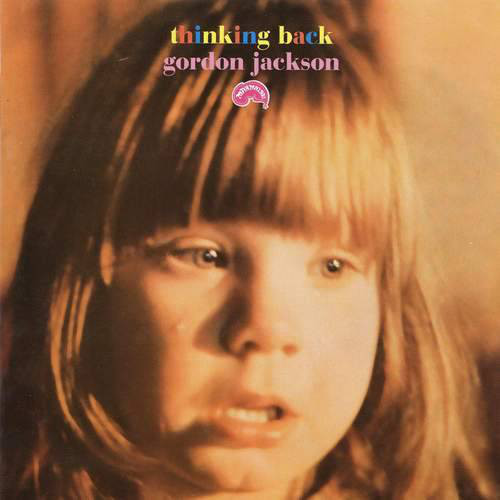
That was the case with British singer-songwriter Gordon Jackson. Despite being hugely talented, Gordon Jackson only ever released one album his lost classic Thinking Back, which is often referred to as a: “lost Traffic album.” However, that isn’t strictly true, despite Dave Mason, Jim Capaldi, Chris Wood and Steve Winwood all playing on Thinking Back which should’ve launched Gordon Jackson’s solo career in 1969. By then, he was an experienced musicians.
The Hellions.
The story began in the spa town of Worcester, England, in 1963. That was when drummer and vocalist Jim Capaldi, who previously had been a member of The Sapphires, joined forces with guitarists Gordon Jackson from Unit Five and Dave Mason who had been a member of The Jaguars formed The Hellions. However, the nascent lineup of The Hellions was still looking for a bassist and during the first few months various bassists joined and left the band.
Eventually, The Hellions were introduced to bassist Dave Meredith, who previously, had been a member of The Cherokees. Now a four piece band, The Sapphires were soon a popular draw in the Worcester area and regularly played at the Flamingo Coffee Bar. However, this was just the start for The Hellions.
By August 1964, The Hellions had turned professional, and like The Beatles before them, headed to Star Club in Hamburg, West Germany, where they became the backing band for Tanya Day a singer from Walsall. She had recently appeared on the British television show Thank Your Lucky Stars, and was regarded as something of celebrity in Britain and Germany. The next chapter in career unfolded in Hamburg, with The Hellions
Over the next few months, The Hellions discovered just how gruelling the life of a professional musician was in West Germany. This is something that The Beatles had discovered, and the gruelling schedule helped them to improve as a band. It was a similar case with The Hellions, and another band they met in Hamburg.
This was The Spencer Davis Group, who became friendly with The Hellions. Especially The Spencer Davis Group vocalist Steve Winwood, who quickly discovered that he had much in common with Jim Capaldi and Dave Mason. The friendship that was formed in Hamburg would blossom when the two groups returned home.
After returning home, The Hellions were a much tighter band and were soon backing some of the big names who visited the Midlands, including Adam Faith and Dave Berry. However, by the end of 1964, The Hellions were ready to leave the Midlands after securing a residency at the Whisky-A-Go-Go Club in London.
This brought The Hellions to the attention of the American record producer Kim Fowley and songwriter Jackie De Shannon, who helped the band secure a recording contract with Pye.
In 1964, The Hellions released their debut single Daydreaming Of You on the Pye imprint Piccadilly. It was penned by Jackie De Shannon, and produced by Kim Fowley, but sadly, the single failed to trouble the charts. History repeated itself when The Hellions released Tomorrow Never Comes and A Little Lovin’ in 1965.
Despite their lack of commercial success, The Hellions were asked to open for American vocalist PJ Proby when he toured Britain. This The Hellions hoped would introduce their music to a new and wider audience. However, still The Hellions struggled to make a commercial breakthrough.
Although the band was still to enjoy its first hit single, The Hellions added flautist and vibraphonist John “Poli” Palmer to their lineup. However, he switched to drums, which allowed Jim Capaldi to take charge of the lead vocals.Alas, this change in The Hellions didn’t result in a change in fortune for the group.
By 1966, The Hellions were struggling financially, and the expenses were mounting with each passing week. They had no option but to return to Worcester where they had started out three years earlier. However, the music scene was very different in Worcester by 1966, and things weren’t looking good for The Hellions.
As a last roll of the disc, The Hellions released one more single in 1966. This was Hallelujah, which was credited to The Revolution, but sank without trace. It was the end of the road for one of The Hellions.
Guitarist Dave Mason left The Hellions and played with various local groups, and worked as a roadie for The Spencer Davis Group. Meanwhile, Jim Capaldi brought guitarist Luther Grosvenor who had been a member of The Wavelength onboard and renamed The Hellions as Deep Feeling.
Deep Feeling.
The newly named Deep Feeling started playing in and around Birmingham, and became known for a heavier, psychedelic-tinged type of music. This they wrote themselves, and when they played live, every band member sang. When John “Poli” Palmer switched to flute or vibes, Gordon Jackson played drums. Deep Feeling was a cut above most of the bands on the Birmingham scene, and surely it was just a mater of time before they were discovered?
It was The Yardbirds manager and producer Giorgio Gomelsky that expressed an interest in Deep Feeling after seeing them play live in Cheltenham. Not long after that, Giorgio Gomelsky arranged for Deep Feeling to record their debut album. However, although the band recorded several songs, only the Jim Capaldi, Gordon Jackson and John “Poli” Palmer composition Pretty Colours was released as a single, but only in France.
Meanwhile, Deep Feeling started to travelling to London on a regular basis, and that was where they met The Animals’ manager Chas Chandler. He asked if a young, unknown American guitarist called Jimi Hendrix could join them on stage. Deep Feeling agreed and that night, three became four. Little did anyone realise that Jimi Hendrix who made his debut on a British stage with Deep Feeling would go on to become a legendary musician.
Around this time, the former Hellions guitarist Dave Mason was still drifting between bands and working as road manager for The Spencer Davis Group, who sometimes, played at The Elbow Room in Birmingham. That was there where Jim Capaldi and Dave Mason from Deep Feeling and Steve Winwood from The Spencer Davis Group would sometimes join forces with saxophonist and flautist Chris Wood who previously had been a member of Chicken Shack, and was now a member of Locomotive. However, what started out as a jam session ended up in the formation of a new band.
In early 1967,Steve Winwood announced that he was leaving The Spencer Davis Group and was about to form Traffic with Jim Capaldi, Dave Mason, and Chris Wood. This was a huge shock to the remaining members of Deep Feeling, who after careful consideration, decided to call time on the band and embark upon other musical projects.
The Solo Years.
After the demise of Deep Feeling, Gordon Jackson and John “Poli” Palmer continued to write songs together, and it looked like they had established a successful songwriting partnership. However, this changed when Georgio Gomelsky offered Gordon Jackson a recording contract with his label Marmalade Records.
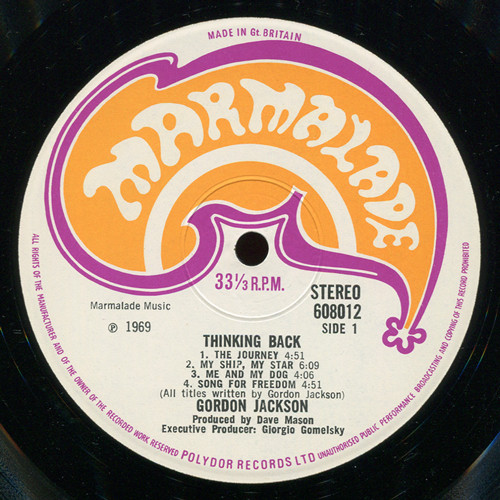
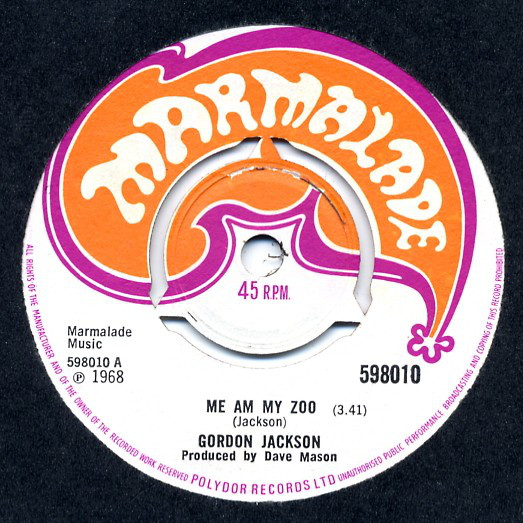
Georgio Gomelsky had formed Marmalade Records in 1966, and since then, it became home to the many artists that he managed. Marmalade Records which was distributed by Polydor Records, was about to become to Gordon Jackson when he signed his recording contract, and embarked upon a solo career.
Having signed the recording contract, Gordon Jackson was soon working on his debut solo single. He wrote two new songs, Me Am My Zoo which became the single and the B-Side A Day At The Cottage on the B-Side. Both sides were produced by Dave Mason and featured the first lineup complete of Traffic. Sadly, Me Am My Zoo failed to find an audience upon its release in May 1968 and didn’t even come close to troubling the British singles’ charts.
Despite that, Georgio Gomelsky encouraged Gordon Jackson to continue writing his debut album Thinking Back. He eventually had written seven new songs which were recorded in late 1968.
Just like the recording of his debut single,Dave Mason took charge of production on Thinking Back and brought onboard Traffic who became Gordon Jackson’s backing band. They were augmented by some top musicians.
Joining the members of Traffic were Gordon Jackson’s old friend and former songwriting partner, organist and pianist John “Poli” Palmer. He was joined by bassist Rick Grech, soprano saxophonist Jim King, conga player Rocki Dzidzornu and Remic Abacca played tabla, while Chicken Shack’s Rob Blunt switched between acoustic guitar, electric guitar and electric sitar. Adding backing vocalists Julie Driscoll, Spooky Tooth’s Luther Grosvenor and Reg King, Rob Blunt switched between acoustic guitar, electric guitar and electric sitar. Gordon Jackson played acoustic and rhythm guitar and laid down the vocals on Thinking Back. Once the album was complete, Thinking Back was scheduled for release on 1969.
Before the release of Thinking Back, which had the potential to launch Gordon Jackson’s solo career, and could’ve been a profitable release for Georgio Gomelsky’s Marmalade Records the record label failed to promote the album properly. This must have been hugely disappointing for Gordon Jackson given the quality of music on Thinking Back.
When Thinking Back was released by Marmalade Records in July 1969, and was a groundbreaking and melodic fusion of folk, pop, psychedelia, rock, soul, world music and a myriad of Eastern sounds. The supergroup that played the complex music on Thinking Back were tight and versatile, on the seven songs that feature on Thinking Back.
This includes the album opener The Journey which sounds as if belongs on Traffic’s Mr. Fantasy album, until Gordon Jackson delivers his inimitable vocal on this genre-melting track. It’s a memorable and melodic fusion of drama and Eastern sounds which features elements of folk, pop and psychedelia. The tempo drops on My Ship, My Star, which is a slow, beautiful and haunting track with a spartan arrangement where just an acoustic guitar and piano accompany Gordon Jackson’s melancholy vocal. Me and My Dog originally started life as Me Am My Dog when it was released as a single, but by the time Thinking Back was released, this catchy, melodic track had taken on a new lease of life. Despite the lyrics lacking the depth of the other tracks on Thinking Back, the song still leaves a lasting memory. Very different is Song For Freedom along, where the rhythm section drive the arrangement along as horns, percussion and backing vocalists accompany Gordon Jackson on this lost dancefloor friendly sixties anthem.
Sing To Me Woman which was released as a single, but failed to chart is an out-and-out rocker that could’ve given Gordon Jackson that elusive hit single. He’s accompanied by cooing harmonies as he delivers lyrics that are rich in imagery. The seven minute epic When You Are Small is atmospheric and full of Eastern sounds as a jazzy saxophone plays, while Gordon Jackson thinks back to his youth. Closing Thinking Back is Snakes And Ladder which, has a progressive arrangement and as Gordon Jackson’s heartfelt vocal delivers lyrics that are almost surreal on this complex and carefully crafted track. It ensures that Thinking Back which is a lost classic closes on a high.
For Gordon Jackson, his debut album Thinking Back was the one that got away. It featured seven songs that were variously beautiful, haunting, lysergic and ruminative. So much so, that some of the songs on Thinking Back encourage reflection. These songs are part of an album that should’ve launched Gordon Jackson’s solo career.
Sadly, when Thinking Back was released, Marmalade Records were experiencing distribution problems, which wasn’t a good sign for Gordon Jackson. Then after Marmalade Records had pressed around 2,000 copies of Thinking Back, the label collapsed. With Marmalade Records insolvent, this was a huge blow for Gordon Jackson who many critics felt had a big future ahead of him.
While Gordon Jackson continued to play live over the next few years, he never returned to the studio and only ever recorded one single and one album. That album, Thinking Back should’ve been the start of a long and successful career for this talented singer, songwriter and musician. Sadly, Thinking Back was Gordon Jackson’s one and only album, and after the demise of Marmalade Records he spent several years playing live, before turning his back on music and embarking upon a career restoring churches. Music’s loss was liturgical restoration’s gain and Gordon Jackson never released a followup to his lost classic Thinking Back.
Gordon Jackson-A Story Of What Might Have Been,

DR JOHN-THE ATCO YEARS 1968-1974.
Dr John-The Atco Years 1968-1974.
Gris Gris.
When a copy of Dr John’s debut album Gris Gris was sent to Atlantic Records’ founder Ahmet Ertegun he disliked the album so much, that he was reluctant to even release the album and said: “how can we market this boogaloo crap?” This wasn’t the response that Dr John had been hoping when he recorded Gris Gris which was a combination of psychedelia, blues, free jazz, R&B, soul, funk, jazz. Add to this psychedelic stew the authentic music of the melting pot that is New Orleans and the voodoo image that Dr John had carefully cultivated and Gris Gris was like no other album that Atlantic Records had released. That presented the label with a huge problem.
Atlantic Records’ PR department had idea to promote an album like Gris Gris, as they had no cultural reference points, nothing to compare the album to. Despite the best efforts of Atlantic Records PR department, when Gris Gris was released on January the ’22nd’ 1968 and introduced the world to Dr John The Night Tripper, it failed to trouble the charts and neither critics nor record buyers understood Dr John’s groundbreaking debut album. However, like so many albums that fail to find an album on their release, Gris Gris was later reappraised and belatedly, was recognised as a seminal album that was the start of a rich vein of form from Dr John.
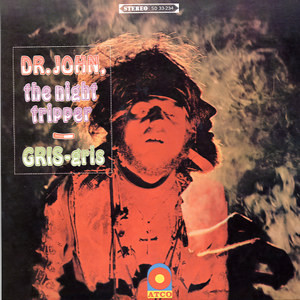
This was the start of a six-year period when Dr John could no wrong, and released seven innovative albums that are among the his finest work. These albums are the perfect introduction to Dr John, who followed up Gris Gris with Babylon.
Babylon.
This was Babylon which was recorded in late 1969, which was a turbulent time for Dr John, who was experiencing problems in his personal life. “I was being pursued by various kinds of heat across LA” and this influenced the album he was about to make. So would the assassinations of Bobby Kennedy and Martin Luther King Jr and the Vietnam War which is referenced in The Patriotic Flag-Waiver. The title-track Babylon was recorded in 3/4 and 10/4 time, and featured Dr John thoughts on the state of world in late 1968. It was a part of a powerful album that was released in early 1969.
Babylon was released on January the ’17th’ 1969 was a powerful, cerebral and innovative genre-melting album which socially had much in common with Dr John’s debut album Gris Gris. However, critics didn’t ‘get’ Babylon and the album which failed commercially. However, just like Gris Gris, Babylon was later reappraised by critics and nowadays is regarded as one of his finest albums and a minor classic.
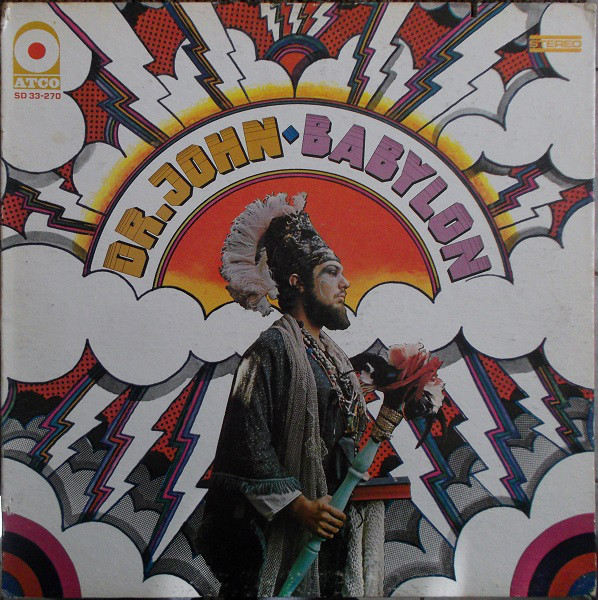
Remedies.
Following the commercial failure of Babylon, things went from bad to worse for Dr John, before he could begin work on his third album Remedies. This started when a deal went south, and he was arrested by the police and ended up in jail. It was a worrying time for Dr John who was parole, and if he ended up with a parole violation, he knew he might end up in the infamous Angola jail. That didn’t bare thinking about, and already Dr John was desperate to get out of the local jail. However, he needed someone to post bail, so contacted his managers who he remembers: “were very bad people.” This proved to be an understatement.
Not long after this, Dr John’s managers had him committed to a psychiatric ward, where he spent some time. By then, it was obvious to Dr John that his managers were no longer playing by the rules. All he wanted to do was make music, and everything that had happened recently were nothing to do with music. Instead, it was all connected to Dr John’s increasingly chaotic lifestyle, which made it all the more frustrating for those that realised just how talented the Gris Gris Man was.
Eventually, having managed to put his problems behind him, Dr John wrote the six tracks that became Remedies using his real name Mac Rebennack. Among the tracks Dr John had written was What Goes Around Comes Around which later became a favourite during his live shows and Mardi Gras Day which paints pictures of New Orleans when it comes out to play. Very different was Angola Anthem which was inspired by a friend of Dr John’s who had just been released from Angola, the Louisiana State Penitentiary after forty years. Dr John paid tribute to his friend with an eighteen minute epic that took up all of side two of Remedies. It was produced by one of the most successful producers of the day.
Although Harold Battiste had produced Gris Gris and Babylon, he was replaced by Tom Dowd and Charles Greene who were tasked with transforming Dr John’s career. However, although Tom Dowd was enjoying the most successful period of his career, he had never worked with anyone like Dr John.
When the recording of Remedies began, Dr John was joined by a small band that featured Cold Grits who played drums, bass and guitar and backing vocalists Shirley Goodman, Tami Lynn and Jessie Hill who also played percussion. Dr John played piano, added his unmistakable vocals and despite losing part of a finger during a shooting a few years previously, he played guitar on Remedies which was released in the spring of 1970.
Just like his two previous albums, critics didn’t seem to understand Remedies, which was credited to Dr John The Night Tripper. Remedies was another ambitious album of genre-melting, voodoo-influenced album where Dr John The Night Tripper through everything from psychedelia, blues, R&B, soul, funk and jazz into the musical melting pot and gave it a stir to create an album where the music was mysterious, otherworldly and haunting.
That was the case from the album opener Loop Garoo while there’s a darkness and defiance to the lyrics to the hook-laden What Comes Around (Goes Around) which showed another side to Dr John. His recent problems and experiences had influenced Wash, Mama, Wash where soaring backing vocals and horns accompany Dr John on a track that is tinged with humour. The horns return and play their part in the success of Chippy Chippy, before the darkness describes and music becomes moody and broody as chants, moans and cries emerge from this lysergic voodoo stew of Mardi Gras Day which gives way to the otherworldly eighteen minute epic Angola. It brought Remedies to a close, which was a potent and heady brew from Dr John The Night Tripper.
By the time Remedies was released on April ‘9th’ 1970, some FM radio stations had picked up on the album, and were playing it on their late shows. Despite the radio play Remedies had received, the album never troubled the charts, and it was only much later that record buyers realised that they had missed out on another important and innovative album from Dr John.
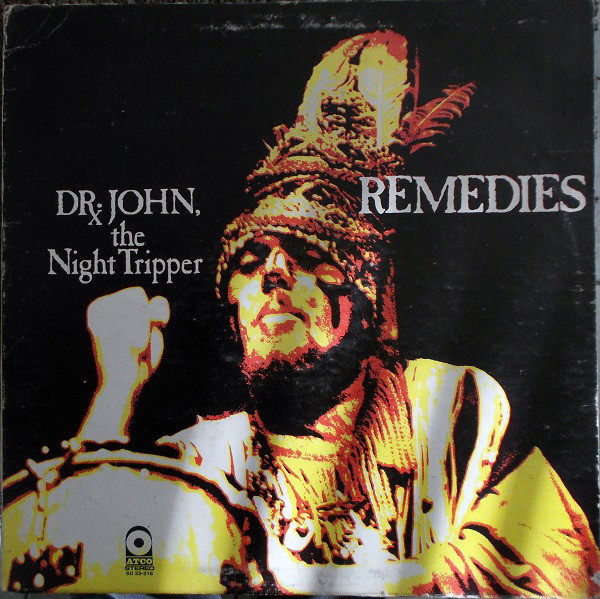
The Sun, Moon and Herbs.
Despite Dr John’s first three albums failing to find an audience, many of his fellow musicians were fans of his music, and were only too happy to feature on his fourth album The Sun, Moon and Herbs. This included Eric Clapton, Mick Jagger, Bobby Whitlock, Graham Bond, Carl Radle, Jim Gordon and Doris Troy. They were joined by The Memphis Horns as Dr John and Charles Greene took charge of production.
They were responsible for a dark and swampy sounding album that is rich in imagery and paints of New Orleans on a hot, sticky night as thunder crackles and rumbles in the distance like the drums on The Sun, Moon and Herbs. When it was released on August the ’31st’ 1971, still critics struggled to understand Dr John’s music, but this time, The Sun, Moon and Herbs which featured an all-star cast, spent five weeks in US Billboard 200 and peaked at 184. At last, Dr John’s music was starting to find a wider audience.
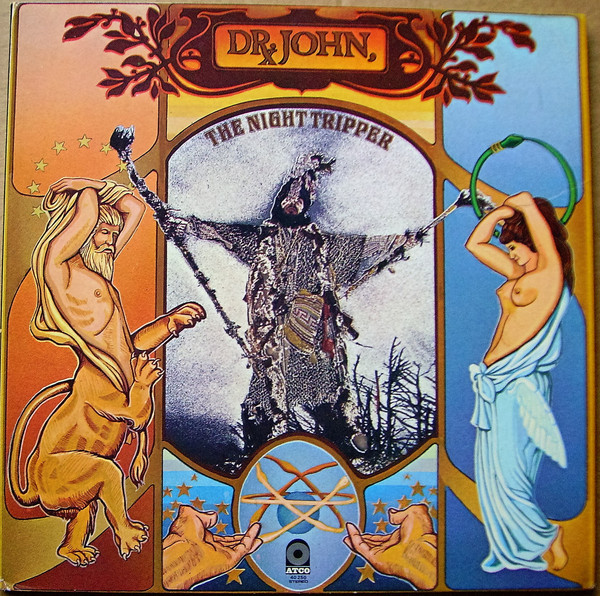
Dr. John’s Gumbo.
Buoyed by the success of The Sun, Moon and Herbs, Dr John decided to record an album of cover versions of New Orleans’ classics for his fifth album Dr. John’s Gumbo. It was produced by Harold Battiste and Jerry Wexler and ironically given Dr. John’s Gumbo featured tracks by legends some of the New Orleans’ musical legends including Professor Longhair, Huey “Piano” Smith, James “Sugar Boy” Crawford and Dr John the album was recorded in LA. However, Dr. John’s Gumbo was The Night Tripper’s most successful album.
Unlike previous albums, Dr. John’s Gumbo was a much more straightforward album of R&B, and it found favour with critics. After Dr. John’s Gumbo was released to critical acclaim, it reached entered the US Billboard 200 where it spent eleven weeks, peaking at 112. Dr John was on his way.
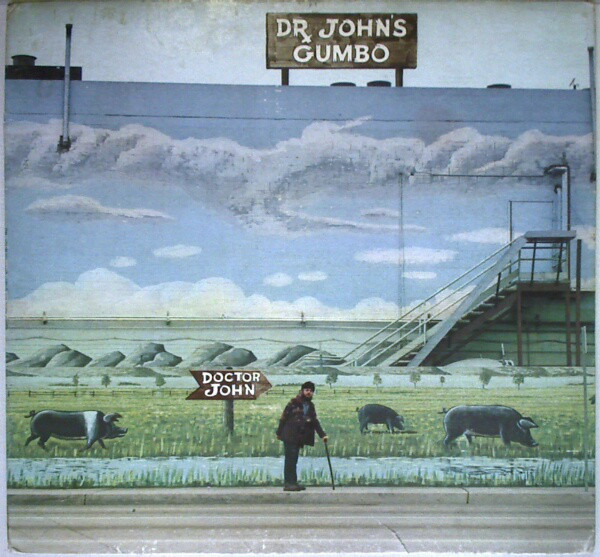
In The Right Place.
Following the success of Dr. John’s Gumbo, Dr John headed to Criteria Studios, in Miami, where he recorded In The Right Place with songwriter, musician, arranger and producer Allen Toussaint. He was one of the most influential figures in the New Orleans’ music scene, and was able to bring out the best in Dr John as he laid down songs of the quality of Right Place, Wrong Time, Same Old Same Old, Peace Brother Peace and Such A Night. Once In The Right Place was completed, the two men returned to the Big Easy and watched as Dr John’s popularity soared.
Critics on hearing In The Right Place which was a fusion of funk, blues and New Orleans R&B hailed the album was one of his finest. Record buyers agreed when In The Right Place was released on February the ’25th’ 1973 thirty-three weeks in the US Billboard 200 and peaked at twenty-four. What Ahmet Ertegun had foolishly described as: “boogaloo crap” just a few years earlier, was now proving profitable for his company. Dr John was having the last laugh.
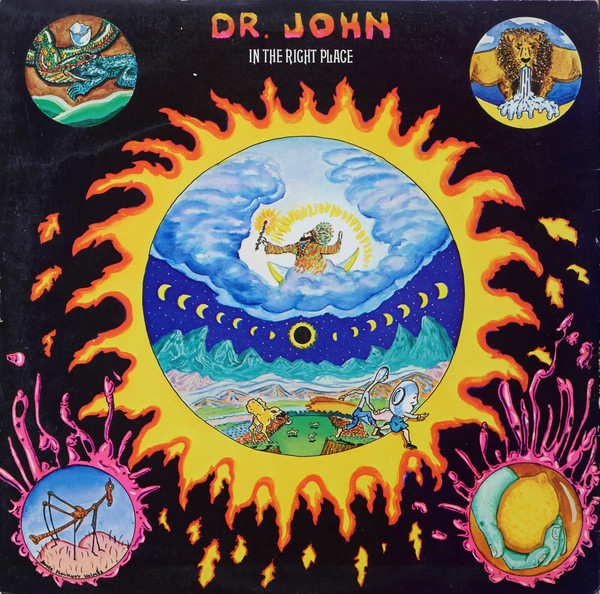
Desitively Bonnaroo.
The success of In The Right Place was a game-changer for Dr John, whose popularity soared. After six albums, he was enjoying the commercial success and critical acclaim his music deserved. However, Dr John knew that he would have to think about his seventh album, and began writing what became Desitively Bonnaroo.
Of the eleven tracks on Desitively Bonnaroo, Dr John wrote nine and penned Desitively Bonnaroo with Jessie Jill. These tracks were joined by covers of Earl King’s Let’s Make a Better World and Allen Toussaint’s Go Tell the People. These tracks were recorded at Sea-Saint Recording in New Orleans and Criteria Studios in Miami.
Just like In The Right Place, Allen Toussaint produced Desitively Bonnaroo, played piano, keyboards and added percussion and backing vocals. Accompanying Dr John was The Meters, one of New Orleans’ hottest funk band plus a horn section and backing vocalists. They played their part in an album that followed in the footsteps of In The Right Place.
When critics heard Desitively Bonnaroo they were once again won over by another carefully crafted album of funk and New Orleans R&B from Dr John. It oozed quality from the opening bars of Quitters Never Win and included another version of What Come Around (Goes Around) plus the irresistible Mos’ Scocious and songs full of social comment like Everybody Wanna Get Rich) Rite Away and Let’s Make a Better World. They were joined by the soulful and funky Sing Along Song and Can’t Git Enuff which is one of the funkiest cuts on the album. However, one of the most beautiful and poignant was the ballad Go Tell The People, which gives way to the uber funky album closer Desitively Bonnaroo. It closed Dr John’s seventh album on a high.
On the release of Desitively Bonnaroo on April the ‘8th’ 1974, it charted in the US Billboard 200 where it spent eight weeks and reached number 105. Despite the quality of Desitively Bonnaroo it had failed to replicate the commercial success of In The Right Place, which must have been a huge disappointment for Dr John.
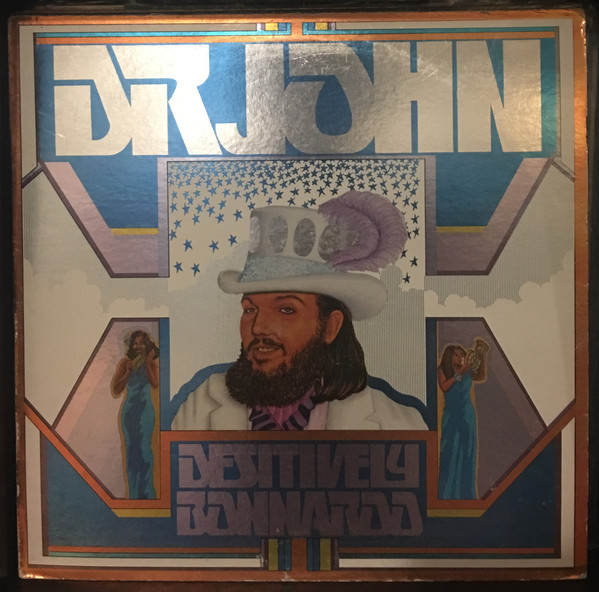
Sadly, Desitively Bonnaroo was the last album that Dr John released on the Atlantic Records imprint Atco, and was the end of a golden period for Dr John. From Gris Gris which was released on January the ’22nd’ 1968, right through to Desitively Bonnaroo which hit the shops on April the ‘8th’ 1974, musical chameleon and pioneer Dr John had been on the hottest streak of his career, releasing a string of groundbreaking albums, including several classic albums.
These albums showed different sides to Dr John’s music, as his music continued to evolve over a six-year period. By the time he released the funky New Orleans R&B of Desitively Bonnaroo in 1974, this was a long way from his classic debut album Gris Gris. It was an album the majority of critics and record buyers failed to understand. Sadly, that was the also case with Remedies which was released in 1970. It saw Dr John The Night Tripper throw psychedelia, blues, R&B, soul, funk and jazz into the musical melting pot and gave it a stir to create an album where the music was mysterious, otherworldly and haunting. However, this vastly underrated album passed record buyers, and it was only much later that record buyers appreciated and embraced this innovative album.
Nowadays, original copies of Dr John’s seven Atco albums aren’t easy to find, Between 1970s Remedies and 1974s Desitively Bonnaroo this musical pioneer had reinvented his music and was enjoying the commercial success and critical acclaim he so richly deserved. Sadly, Desitively Bonnaroo brought to an end what was a golden period where Dr John could do no wrong, as this musical legend released some of the best music of his long and illustrious career.
Dr John-The Atco Years 1968-1974.

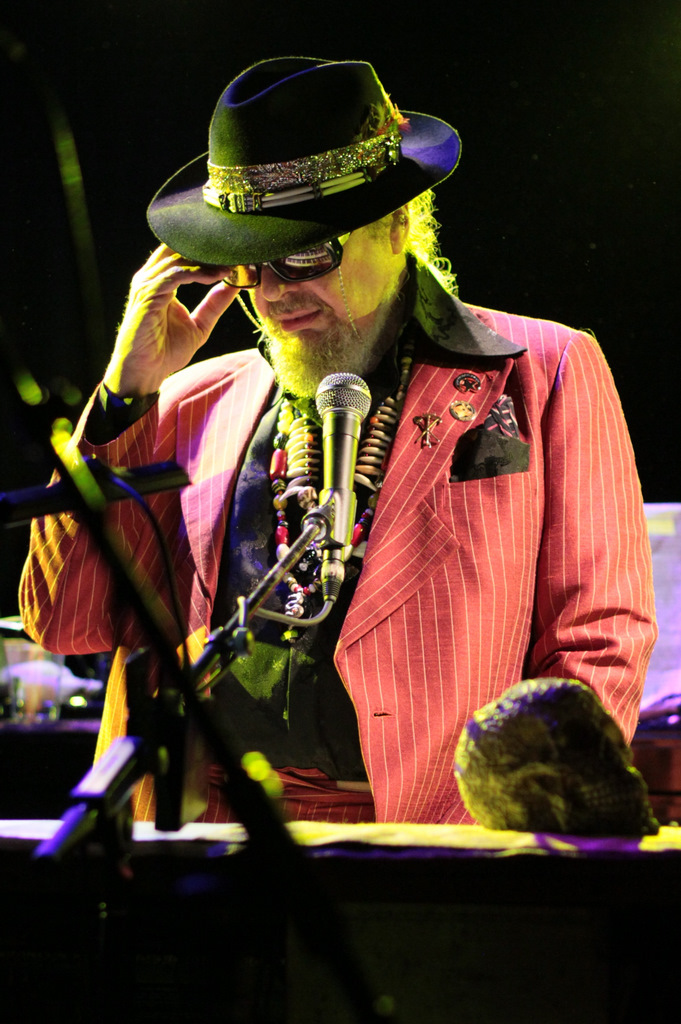
WHERE THE GIRLS ARE VOLUME 10.
Where The Girls Are Volume 10.
Ace Records.
Thirty-five years ago, in 1984, Mick Patrick and Ady Croasdell compiled the first volume of Where The Girls Are, which was released on vinyl. This was just before the emergence of the CD, which within a few years, replaced vinyl in many people’s music collection and affections.
By the nineties vinyl was a favourite find in charity shops up and down Britain, and shrewd collectors hoovered up rarities aplenty as record companies continued to release their back catalogue on compact disc. This included Ace Records, who in 1997 released the first volume of Where The Girls Are on compact disc. It was compiled by Mick Patrick and Malcolm Baumgart. For the two compilers,they had no idea just how successful the Where The Girls Are series would become.
Twenty-two years later, and Where The Girls Are Volume 10 brings the curtain down on one of Ace Records’ most successful and critically acclaimed series. However, Where The Girls Are Volume 10 is bowing out at the top, with twenty-six tracks old and new. This includes contributions from The Bronzettes, Kelly Garrett, Naomi Wilson, The Teardrops, The Avons, Jackie and Gayle, Maureen Gray, Diana King, The Sweet Things, Tari Stevens and The Darlenes. They’re just a few of the names on Where The Girls Are Volume 10, which brings the curtain down on one of Ace Records’ most popular and best-loved series.
Where The Girls Are Volume 10 spans the years between 1962 to 1968, and includes tracks recorded in Philadelphia, New York, Los Angeles, Nashville and Cincinnati. Many if these are making their first debut on compact disc. This includes the previously unissued track Top Twenty by the Delicates.
Among the familiar faces are The Shirelles’ Two Stupid Feet, He’s My Hero by The Avons and That Guy Of Mine by The Sherry’s. This is just a small part of the story of Where The Girls Are Volume 10. However, there’s highlights aplenty on compilation that marks the end of an era.
When it comes to highlights there are many, including the dancefloor friendly track Hot Spot by Philly girl group the Bronzettes, which opens the compilation and was produced by Chubby Checker. Then there’s Nothing Can Go Wrong from LA based group The Bea’s who contribute a jangling hidden gem that sounds as if it was recorded in the last thirty years. Another welcome addition is the Phil Spector inspired Big House which comes courtesy The Carolines, from New York. This however, is just one of many quality cuts chosen by Mick Patrick.
Welcome additions from girl groups include The Teardrops’ . I Will Love You Dear Forever, The Vareeations’ It’s the Loving Season, The Sweet Three’s I Would If I Could, The Tiffanys’ Happiest Girl in the World and The Darlenes’ (I’m Afraid) You’ll Hurt Me. These tracks ooze quality and so do the contributions from the solo artists.
There’s a number of solo artists on Where The Girls Are Volume 10. This includes Kelly Garrett’s This Heart Is Haunted, Just a Little Touch of Your Love by Saundra Franklin, Maureen Gray’s Summertime Is Near, Diana King’s That Kind of Love and Donna Loren’s Johnny’s Got Somethin’ which closes Where The Girls Are Volume 10 and this long-running and critically acclaimed series.
While Where The Girls Are Volume 10 marks the end of an era for Ace Records, at least it’s a case of ending on a high. Best to bring the compilation series to a close on a high, rather than following in the footsteps of other franchises who eventually lost their mojo, and after a couple of indifferent additions belatedly called time. At least, music fans will always remember Where The Girls Are as one of the finest girl group compilation series.
Where The Girls Are Volume 10 is a welcome addition to the series, and showcases an array of talented groups and solo artists. Some of them will be familiar names, while others are will be new to most people. They all have one thing in common…quality. The final instalment in this long-running and much-loved series ends on a high with Where The Girls Are Volume 10, thanks to lone compiler Mick Patrick who puts a lifetime of knowledge to good use. For that, music fans should be grateful.
Where The Girls Are Volume 10.
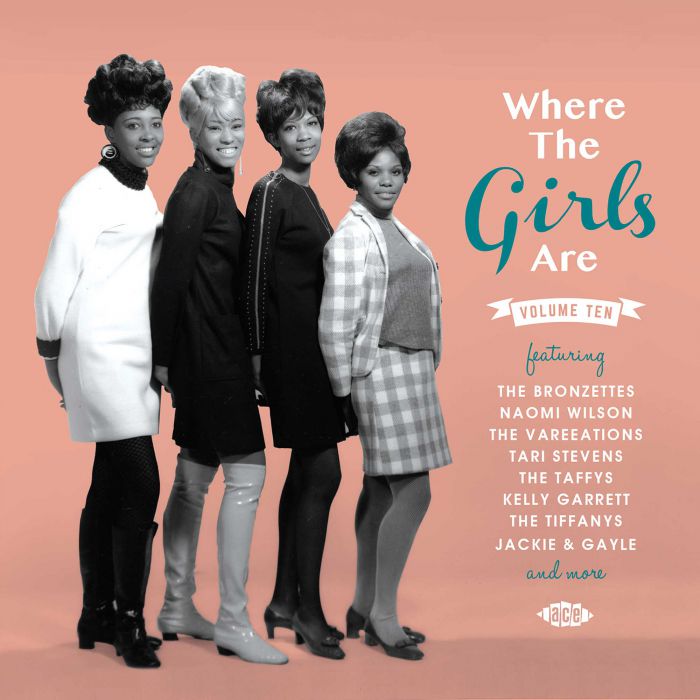
CANNED HEAT’S LIBERTY RECORDS’ YEARS.
Canned Heat’s Liberty Records Records’ Years.
‘8th’ of March 1973 marked the end of an era for Canned Heat who had just released their ninth album, The New Age. It was their swan-song for Liberty Records. After six years and nine studio albums, Canned Heat were about leave Liberty Records. They had managed to negotiate their release from their Liberty Records contract which left Canned Heat free to sign for Atlantic Records. By then, Canned Heat had come a long way since they were formed in Los Angeles in 1965.
Canned Heat’s roots can be traced to a community of blues collectors in Topanga, California. They had been meeting at Bob Hite’s house for some time. where the blues aficionados listened to music, and traded records. Then in 1965, some of the people who attended the group decided to form a band.
The initial lineup featured vocalist Bob Hite, Alan Wilson on bottleneck guitar, Mike Perlowin on lead guitar, bassist Stu Brotman and drummer Keith Sawyer. With the lineup complete, all that was needed was a name. Eventually, they named their new band Canned Heat, after Tommy Johnson’s 1928 song Canned Heat Blues. However, within a matter of days, the lineup changed.
Mike Perlowin and Keith Sawyer both dropped out. This was a huge disappointment for the nascent band. Fortunately, guitarist Kenny Edwards, a friend of Alan Wilson agreed to replace Mike Perlowin. Drummer Ron Holmes agreed to join until permanent replacements could be found.
Fortunately, a friend of Bob Hit’s was between bands. Henry Vestine had been sacked by Frank Zappa for “excessive drug use.” However, Henry Vestine was a talented and experienced lead guitarist. So he joined Canned Heat; and it was agreed that Henry Edwards could remain on a temporary basis. Soon, though, Henry Edwards left Canned Heat to form The Stone Poneys with Linda Rostadt. With the lead guitarist role filled, all that was needed was a new drummer.
Canned Heat found their new drummer in Frank Cook. His previous employers included jazzers Charlie Haden, Chet Baker and Elmo Cook. With their second lineup complete, Canned Heat set about honing their sound.
By 1966, Canned Heat were playing in the clubs of the L.A, and were a popular draw. Their sets included reinterpretations of blues numbers. Canned Heat were keen to promote blues music, which had fallen out of fashion. That was until the British Invasion groups began to promote its merits. Just like Canned Heat, they appreciated the blues and recognised its importance in modern music. It certainly played an important part in Canned Heat’s music as they played in the clubs of L.A. Later in 1966, Canned Heat recorded what should’ve been their debut album.
In the summer of 1966, Canned Heat hooked up with bandleader and producer Johnny Otis. He produced the twelve tracks that Canned Heat recorded. This included covers of Willie Dixon’s Spoonful and John Lee Hooker’s Louise. Once the album was recorded, Stu Brotman announced he was leaving Canned Heat. Worse was to come.
What should’ve been Canned Heat’s debut album lay unreleased until 1970. By then, Canned Heat were a successful band. So Janus Records decided to release the twelve tracks as Vintage Heat. It’s the only Canned Heat album to feature the lineup of Bob Hite, Alan Wilson, Frank Cook, Henry Vestine and Stu Brotman. After Stu Brotman’s departure, the search for a new bassist began.
Despite Canned Heat not having a permanent bassist, they still managed to secure a management contract with Skip Taylor and John Hartmann. Then in March 1967, Canned Heat finally found a permanent bassist in Larry Taylor. He had previously been a member of The Moondogs and had worked with Jerry Lee Lewis and Chuck Berry. Larry Taylor made his debut on the band’s eponymous debut album, Canned Heat.
Canned Heat.
Just month after the classic lineup of Canned Heat was finalised, Canned Heat began recording their debut album for Liberty Records in April 1967. Calvin Carter the former head of A&R was drafted in to produce what became Canned Heat. He was well qualified, having previously recorded albums with Jimmy Reed and John Lee Hooker.
Recording of Canned Heat took place in L.A., with twelve songs being recorded. Eleven of them were cover versions, including Muddy Waters’ Rollin’ and Tumblin’, Willie Dixon’s Evil (Is Going On) and Robert Johnson and Elmore James’ Dust My Broom. The only track penned by Canned Heat, was Bullfrog Blues. Once the twelve songs were recorded, Canned Heat would be released in July 1967.
Before that, Canned Heat were due to appear at the Monterey International Pop Music Festival, on June 17th 1967. Canned Heat pulled out all the stops, and produced one of the best performances of their two year career. Critics struggled for superlatives to describe Canned Heat’s performance. The twin guitars of Henry Vestine and Alan Wilson stole the show; while Bob Hite’s powerhouse vocals came a close second. Critics agreed, that Canned Heat had a bright future in front of them.
Following their successful appearance at the Monterey International Pop Music Festival, Canned Heat released their eponymous debut album in July 1967. Canned Heat reached seventy-six in the US Billboard 200, and in the process, launched the band’s career. Everything seemed to be going almost too well.
Already, drugs had entered the equation. Over the next few years, drugs would become a problem with Canned Heat. It earned them a degree of notoriety, and the reputation “the bad boys of rock.”
One of the first incidents was when the band were arrested and jailed in Denver, Colorado on a possession charge in October 1967. With Canned Heat in jail, their manager Skip Taylor had to sell the band’s publishing rights to Liberty Records’ to raise the bail of $10,000. It was a costly mistake, and cost Frank Cook his place in Canned Heat.
Replacing Frank Cook was Adolfo “Fito” de la Parra. He made his debut on December 1st 1967 at Long Beach Auditorium. That night, Canned Heat and The Doors shared top spot on the bill. This was the debut of the classic lineup of Canned Heat.
Boogie With Canned Heat.
Just six months after Canned Heat released their eponymous debut album, they returned with their sophomore album Boogie With Canned Heat. It was the first album to feature the classic lineup. By then, each member of Canned Heat had adopted a nickname. Canned Heat now featured Bob “The Bear” Hite, Alan “Blind Owl” Wilson, Henry “Sunflower” Vestine, Larry “The Mole” Taylor and Adolfo “Fito” de la Parra. They made their debut on Boogie With Canned Heat.
By then, Canned Heat were writing more of their own songs. They wrote four of the ten songs. Other songs were written by members of Canned Heat. Bob Hite penned Whiskey Headed Woman No. 2; Henry Vestine contributed Marie Laveau and Alan Wilson wrote An Owl Son. Alan Wilson also cowrote On The Road Again with Floyd Jones. It would play an important part in rise and rise of Canned Heat.
When Boogie With Canned Heat was released on 21st January 1968, it was to critical acclaim. The album epitomised Canned Heat’s unique sound. Loose limbed jams and Canned Heat’s trademark boogies rubbed shoulders on Boogie With Canned Heat. This found favour with record buyers when Boogie With Canned Heat reached number eighteen in the US Billboard 200. That wasn’t an end of the success.
Boogie With Canned Heat included what’s without doubt, Canned Heat’s most famous single, On The Road Again. It reached the top ten in the US Billboard 100. The success of On The Road Again further cemented Canned Heat’s reputation was one of America’s top bands.
Living The Blues.
After the success of Boogie With Canned Heat, there was no resting on their laurels for Canned Heat. They returned to the studio and recorded their part of third album Living The Blues. It was a double album with a twist.
The eight songs on sides one and two were recorded in the studio. They were a mixture cover versions and original songs. The covers included Charley Patton’s Pony Blues, Jimmy Rogers’ Walking by Myself and Blind Lemon Jefferson’s One Kind Flavour. Canned Heat penned nine part suite Parthenogenesis. Bob Hite wrote Sandy’s Blues and Alan Wilson wrote My Mistake. Alan also wrote another of Canned Heat’s best known songs, Going Up The Country. These songs were recorded between August and October 1968, at .D. Sound Studios. However, the two lengthy jams on sides three and four Refried Boogie I and II were recorded live at The Kaleidoscope, Hollywood, This mixture of studio and live songs became Living The Blues.
When Living The Blues was released in October 1968, the reviews of this sprawling double album were mixed. The experimental nature of Parthenogenesis seemed to catch critics on the hop. They didn’t seem to know what to make of this genre-melting collage. However, one track stood out on Living The Blues, Going Up The Country.
When Living The Blues was released, it reached number eighteen in the US Billboard 200 and number forty-five in the US R&B charts. The lead single Going Up The Country seemed to speak to a generation, and it reached number eleven US Billboard 100, and number one in twenty-five countries worldwide. Later, Going Up The Country became the unofficial anthem to Woodstock. That was still to come.
Before that, Canned Heat enjoyed a triumphant end to 1968, when they played at the Shrine Auditorium in L.A. To crown what had been a barnstorming performance from Canned Heat, they were joined by Bob Hope sitting a atop an elephant. It was a surreal sight, but proof that Canned Heat were now one of the biggest bands in America.
Hallelujah.
Canned Heat returned to I.D. Sound Recorders Hollywood, in May 1969. They recorded eleven tracks that became their fourth album Hallelujah. Canned Heat wrote two tracks, while individual members of the band wrote most of the tracks. Alan Wilson contributed four tracks, Change My Ways, Time Was, Do Not Enter and Get Off My Back. He was quickly becoming Canned Heat’s songwriter in chief, and played an important role in Hallelujah.
Canned Heat released their fourth album, the blues based, Hallelujah on July 8th 1969. Again, the reviews were mixed. They ranged from favourable to positive. However, again, there was no consensus on Hallelujah. Despite this, Hallelujah still reached thirty-seven on the US Billboard 200. This in part, was a result of Canned Heat taking Woodtstock by storm. Before that, the classic lineup of Canned Heat was no more.
Just after the release of Hallelujah, Canned Heat were due to play two nights at Fillmore West. On the first night, there was an onstage altercation between Larry Taylor and Henry Vestine. After the show, Henry Vestine left Canned Heat.
With Canned Heat a man down for the second show, Mike Bloomfield and Harvey Mandel filled the void left by Henry Vestine. They jammed onstage with Canned Heat. So impressive were their performances, that both men were offered a place in Canned Heat. However, it was Harvey Mandel that agreed to join Canned Heat.
Harvey Mandel made his official Canned Heat debut in August 1969. Canned Heat played two nights at the Fillmore West, in preparation for their performance at the Woodstock Music and Art Fair.
The Woodstock Music and Art Fair took place between the 15th and 18th August 1969. Canned Heat were booked to play on the 16th August 1969. Logistically, the only way for Canned Heat to arrive was in a helicopter. They flew over what was a heaving mass of humanity. Having arrived by helicopter, Canned Heat took to the stage as the sun set. Their legendary set included some of their greatest songs, including On The Road Again and Going Up The Country, which became the unofficial anthem to Woodstock. As they left the stage, it was apparent that Canned Heat were one of the stars of the Woodstock Music and Art Fair.
Future Blues.
1969 had been both an eventful and momentous year for Canned Heat. They had lost a member of the classic lineup of Canned Heat, then were one of the stars of Woodstock. By 1970, “the bad boys of rock” had been booked to tour Europe. With some time to spare, Canned Heat decided to record their fifth album, Future Blues.
Canned Heat headed to Village Recorders, where they were due to record nine songs. This included covers of Eddie Shuler’s Sugar Bee; Charley Patton’s Shake It and Break It; Arthur “Big Boy” Crudup’s That’s All Right (Mama) and Wilbert Harrison’s Let’s Stick Together. Canned Heat penned So Sad (The World’s In A Tangle) and Future Blues. Alan Wilson who was still Canned Heat’s songwriter-in-chief wrote Skat, London Blues and sadly, prophetic My Time Ain’t Long. Once the album was complete, it was scheduled for release in late summer 1970.
Future Blues was well received by critics. They praised the album, calling it Canned Heat’s best albums of recent years. With critical acclaim accompanying its release, Future Blues was released on August 3rd 1970. However, Future Blues stalled at fifty-nine on the US Billboard 200. This made Future Blues Canned Heat’s least successful album since their eponymous debut album. The only small crumb of comfort for Canned Heat and Liberty Records, was that Let’s Work Together reached twenty-six in the US Billboard 100. By then, Larry Taylor and Harvey Mandel dropped a bombshell.
The two men announced that they were leaving Canned Heat not long after the release of Future Blues. Larry Taylor joined John Mayall’s band, and Harvey Mandel followed in his footsteps. This left just drummer Adolfo de la Parra, vocalist Bob Hite and guitarist Alan Wilson.

Hooker ’N’ Heat.
After the departure of Larry Taylor and Harvey Mandel, guitarist Henry Vestine rejoined Canned Heat. Replacing bassist Larry Taylor was Antonio de la Barreda. He had previously played alongside Adolfo de la Parra in Mexico. This new lineup of Canned Heat entered the studio to record an album with veteran bluesman John Lee Hooker.
Canned Heat had met John Lee Hooker at an airport in Portland, Oregon. When they got talking, the members of Canned Heat told John Lee Hooker they were longtime fans of his music. It turned out that apparently, John Lee Hooker just happened to be a fan of Canned Heat’s music. So they decided to record an album together.
This would be no ordinary album. Instead, Hooker ’N’ Heat was a sprawling double album. It was recorded at Liberty Records, in Los Angeles, with Bob Hite and Skip Taylor taking charge of production. John Lee Hooker wrote or cowrote every song on Hooker ’N’ Heat. Some of the songs, featured just John Lee Hooker. On other tracks, Canned Hat were reduced to a backing band on Hooker ’N’ Heat. Once Hooker ’N’ Heat was completed, the album was scheduled for release in January 1970.
Between the completion and release of Hooker ’N’ Heat, tragedy touched Canned Heat in September 1970. Just after the completion of the Hooker ’N’ Heat, Alan Wilson attempted to commit suicide when he drove his van off a a cliff near Bob Hite’s home in Topanga Canyon. Fortunately, Alan Wilson survived. Sadly, not for long.
After years of bravely battling depression, Alan Wilson’s life came to an end on the 3rd of September 1970. Alan Wilson was found dead on a hillside at the rear of Bob Hite’s Topanga home. The cause of death was an overdose of barbiturates. When the other members of Canned Heat were told of Alan Wilson’s death, they believed that he had committed suicide. It was a huge blow for the rest of Canned Heat. They were grieving over the loss of a not just a bandmate, but a friend.
Despite the death of Alan Wilson, Canned Heat were due to tour America, Australia and Europe. Then they had a studio time booked to record a new album. So Joel Scott Hill, who had been a member of The Strangers and Moby Grape was drafted in to replace Alan Wilson. Then in January 1971, Hooker ’N’ Heat was released
Reviews of Hooker ’N’ Heat were mixed. However, critics agreed that Canned Heat had returned to their R&B roots. Some of the songs varied in quality. Especially some that featured only the veteran bluesman. Two of the poorest songs on Hooker ’N’ Heat were Send Me Your Pillow and Drifter. However, things improved when Canned Heat joined the fray. Together, they formed a potent partnership, and suddenly, Hooker ’N’ Heat was a very different album. Despite this, Hooker ’N’ Heat stalled at seventy-three in the US Billboard 200. Normally, this would be regarded as disappointing. However, given the death of Alan Wilson, this hardly seemed to matter. Some things mattered more than music. The loss of a friend was one of them.
Live At Topanga Corral.
Later in 1971, Canned Heat belatedly released the first live album of their career. The band had wanted to release a live album for several years. However, Liberty Records who Canned Heat were contracted to, weren’t interested in releasing a live album. Despite this, Canned Heat’s manager Skip Taylor managed to get Canned Heat’s live album released.
Skip Taylor took to Liberty Records a recording of five tracks. They he said, had been recorded at the Topanga Corral during 1966 and 1967. That wasn’t strictly true. The recording was of a concert that took place in 1969, at the Kaleidoscope. When Liberty Records heard that Live At Topanga Corral had been recorded in 1966 and 1967, they allowed Canned Heat to release the album on Wand Records.
When Live At Topanga Corral was released, the album was well received by critics. It featured the lineup of Bob Hite, Alan Wlson, Henry Vestine, Larry Taylor and Adolfo de la Parra. They open the set with Bullfrog Blues, and work their way through Sweet Sixteen, I’d Rather Be The Devil, Dust My Broom, Wish You Would and When Things Go Wrong. Sadly, despite being one of the best live recording of Canned Heat, it failed to find an audience. However, it’s a fitting farewell to Alan Wilson. Their next album, Historical Figures and Ancient Heads was the start of a new era for Canned Heat.
Historical Figures and Ancient Heads.
Having released an album in January 1971, Canned Heat closed the year with the released of their eighth album, Historical Figures and Ancient Heads. It was released in December 1971, and was the first album not to feature Alan Wilson. Joel Scott Hill was given the job of replacing Alan Wilson on guitar. His were big shoes to fill.
Alan Wilson was more than a musician. He was also a songwriter. On Historical Figures and Ancient Heads, Canned Heat penned just the one song, Utah. The other seven songs were cover versions. Among them, were Jessie Mae Robinson’s Sneakin’ Around and Jimmy Rogers’ That’s All Right. They were recorded by Canned Heat, and a few friends.
This included Little Richard on the Skip Taylor and Richard Wayne Penniman penned Rockin’ With the King. Harvey Mandel returned to add lead guitar on a cover of That’s All Right. Charles Lloyd joined Canned Heat when they covered his song I Don’t Care What You Tell Me. Producing Historical Figures and Ancient Heads were Skip and Jim Taylor. Once the album was complete, it was released in December 1971.
When Historical Figures and Ancient Heads was released, the reviews were mixed. Some critics felt Canned Heat were no longer the same group. While they still were still able to boogie with the best of them, Canned Heat seemed to have lost their bluesy roots. However, Historical Figures and Ancient Heads was not without merit.
Cherokee Dance and Utah were regarded as the highlights of the album. Both songs found their way onto FM playlists. Another highlight of Historical Figures and Ancient Heads was Rockin’ With The King, where Canned Heat joined forces with Little Richard. They proved a potent partnership. Despite this, and Cherokee Dance and Utah finding their way onto FM radio, the album stalled at a lowly eighty-seven in the US Billboard 200. Historical Figures and Ancient Heads became the least successful album of Canned Heat’s career. Surely, the only way was up?
Following Historical Figures and Ancient Heads, all wasn’t well within Canned Heat. Joel Scott-Hill and Antonio de la Barreda seemed to have developed an attitude problem. This lead to drummer Adolfo de la Parra threatening to quit the band. Fortunately, he was talked out of leaving Canned Heat, and instead, the insurgents exited stage left. This meant another change of lineup for their next album The New Age.
The New Age.
Joining Canned Heat for their ninth album The New Age, were rhythm guitarist and vocalist James Shane, keyboardist Ed Beyer on keyboards and bassist Richard Hite. Bob Hite’s brother would slot into the rhythm section alongside drummer Adolfo de la Parra and rhythm guitarist James Shane. They headed to The Record Plant in Los Angeles to record The New Age.
For The New Age, nine songs were chosen. Most of them were new songs, which were penned by members of Canned Heat. The only cover version was Lieber and Stoller’s Framed. Bob Hite penned Keep It Clean, Don’t Deceive Me and Rock and Roll Music. However, the new recruit came up trumps. Ed Bayer wrote You Can Run, But You Sure Can’t Hide and Election Blue. James Shane went one better, and wrote a trio of songs. This included Lookin’ For My Rainbow, So Long Wrong and the biker anthem Harley Davidson Blues. It would become a favourite of Canned Heat fans. That was still to come. Before that, Canned Heat had an album to record.
When recording of The New Age began at The Record Plant, Clara Ward joined Canned Heat. Her vocal features on Lookin’ For My Rainbow. Sadly, this was the last recording of one the most successful gospel singers. She joined the latest lineup of Canned Heat, as they tried to get their career back on track.
Despite the best efforts of Canned Heat and producer Skip Taylor, The New Age wasn’t the start of a new era for Canned Heat. The album wasn’t well received. One critic in particular, was less than impressed. Lester Bangs savaged The New Age. His over the top review was regarded as “disrespectful,” and Lester Bangs was sacked by Rolling Stone. However, the damage was done.
Other critics took a much more balanced approach to The New Age. They pointed out highlights like Lookin’ For My Rainbow and the biker anthem Harley Davidson Blues. However, when The New Age was released on March 9th 1973, the album failed to trouble the charts. Worse was to come for Canned Heat.
They were now heavily in debt. Skip Taylor was desperately looking for a solution to the problem. That’s when it’s alleged that Skip Taylor advised Canned Heat to sign away all their future royalties to Liberty Records and United Artists’ recordings, and in return, Canned Heat would be allowed to sign to Atlantic Records. If this was the case, it would prove to be one of the worst deals in the history of music.
Having negotiated a release from their Liberty Records’ contract, Canned Heat signed to Atlantic Records in 1973. They began work on their tenth studio album One More River To Cross. However, Canned Heat’s time at Atlantic Records got off to a bad start.
Bob Hite and Henry Vestine were about to use a vending machine at Atlantic Records. Suddenly, the pair began to argue, and brawl began. Now two members of Atlantic Records’ latest signing were fighting amongst themselves. While this didn’t present Canned Heat in a good light. Things didn’t get much better. surely things would improve?
One More River To Cross was released later in 1973. Canned Heat’s Atlantic Records’ debut, was the tenth studio album of their career. This was a remarkable feat, considering Canned Heat only released their debut in 1967. A lot had happened since then.
The lineup had changed numerous times, there had been countless drugs busts and controversies aplenty. However, only one Canned Heat album failed to chart. That was their previous album The New Age. Sadly, One More River To Cross followed in its footsteps and failed commercially. It came to be regarded as possibly, became one of the most expensive albums in music history.
Especially if the allegations that Skip Taylor advised Canned Heat to sign away all their future royalties to Liberty Records and United Artists’ recordings, so they could sign to Atlantic Records were true? After the commercial failure of One More River To Cross, Atlantic Records cut their ties with Canned Heat. Their relationship with Atlantic Records was brief and potentially ruinously expensive.
If the allegation regarding future royalties are indeed true, then Canned Heat were very badly advised. The decision to trade their future royalties, for their freedom, backfired, and backfired badly. Who knows how much this cost Canned Heat in lost royalties? Even today, the cost of One More River To Cross continues to rise. To some extent, all the success Canned Heat enjoyed early in the Liberty Records years had been for nothing, and they became just the latest ill-advised band in musical history.
Canned Heat’s Liberty Records Records’ Years.
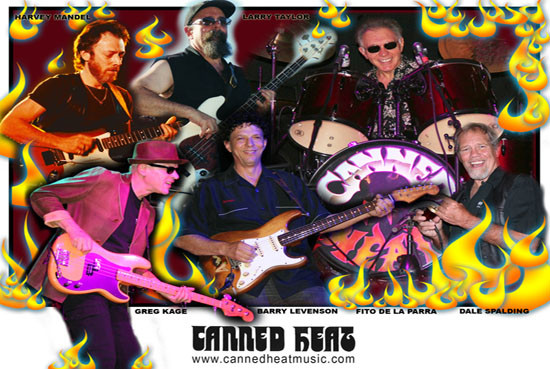
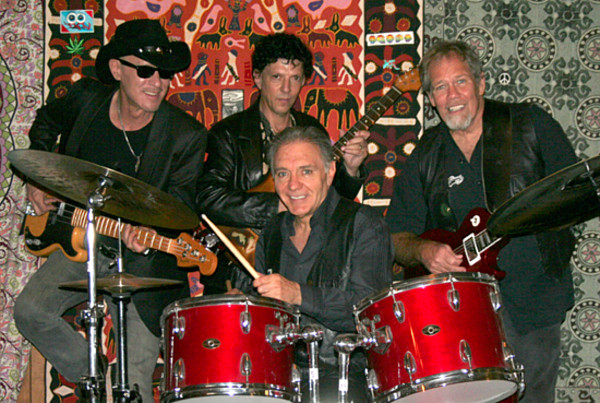
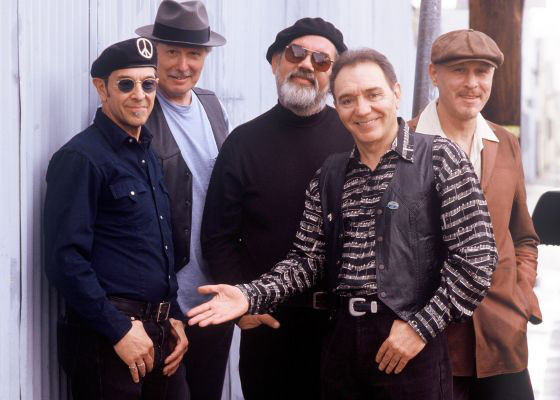

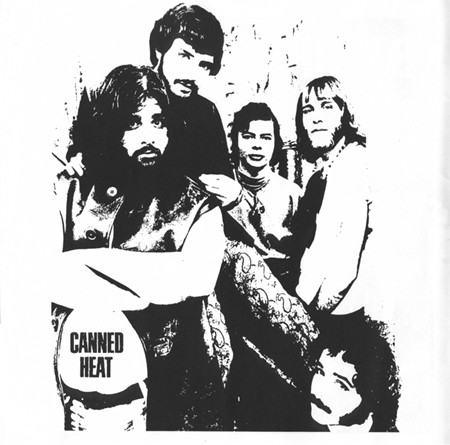
MIKE HARRISON-FROM THE V.I.P.s TO HIS SOLO YEARS.
Mike Harrison-From The V.I.P.s To His Solo Years.
For Carlisle born Mike Harrison, the period between 1963 and 1975, proved the most prolific of a six decade career. During that period, Mike Harrison was the lead singer of The V.I.P.s and Art. They would later become known as Spooky Tooth, who signed to Island Records in 1968. Three years later, and with the Spooky Tooth having split-up, Mike Harrison embarked upon a solo career, releasing a trio of solo albums between 1971 and 1975. However, by the time, Mike’s solo career got underway, he had been a member of a band who were popular on both sides of the Atlantic, Spooky Tooth. Their roots can be traced to Carlisle, in Cumbria.
That was when Mike Harrison’s career began in Carlisle in 1963, when he cofounded The V.I.P.s with bassist Greg Ridley. Over the next four years, The V.I.P.s lineup evolved. Rhythm guitarist Frank Kenyon, lead guitarist Jimmy Henshaw, drummer Mike Kellie and guitarist Luther Grosvenor were members between 1963 and 1967. Other musicians played a walk-on roll on The V.I.P.s’ story. This included Keith Emerson whose keyboards would play a starring role in The Nice and Emerson, Lake and Palmer. However, by the time The V.I.P.s decided to change direction musically, Keith Emerson had left the band.
For the four years they were together, The V.I.P.s played blues and R&B. By 1967, they decided that to change direction musically. So The V.I.P.s changed their name to Art. Then in October 1967, Gary Wright joined Art. He played on Art’s one and only album Supernatural Fairy Tales.
Art.
Supernatural Fairy Tales.
In 1967, the newly named Art found themselves signed to Chris Blackwell’s Island Records. Art were about to go into the studio with producer Guy Stevens, so began work on their debut album.
By then, Art still a quartet. However, only two original members of The V.I.P.s remained. Ironically, they were the founding members, vocalist and keyboardist Mike Harrison and bassist Greg Ridley. They were joined by drummer Mike Kellie and guitarist Luther Grosvenor. The four members of Art got to work on what became Supernatural Fairy Tales.
For their debut album Supernatural Fairy Tales, the four members of Art wrote ten tracks. They would be augmented by covers of The Young Rascals’ Come on Up and Buffalo Springfield’s For What It’s Worth. Recording took place at two studios.
Pye Studios was where the majority of Supernatural Fairy Tales was recorded. Some recording took place at Olympic Studios. At the two studios, producer Guy Stevens, whose career was in the ascendancy, took charge of production. He guided Art through the maze that’s recording a debut album. The result was Supernatural Fairy Tales, which became a cult classic.
When critics heard Supernatural Fairy Tales, the reviews of Art’s debut album were mostly positive. Its progressive, psychedelic rock sound was decidedly on trend. It tapped into a sound that was commercial. Surely, Supernatural Fairy Tales would prove a commercial success?
Sadly, when Supernatural Fairy Tales was released in the Autumn of 1967, the album wasn’t a commercial success. This was disappointing for Art and Island Records.
Shortly after the release of Supernatural Fairy Tales Art split-up. However, like a phoenix from the ashes rose a new band, Spooky Tooth.
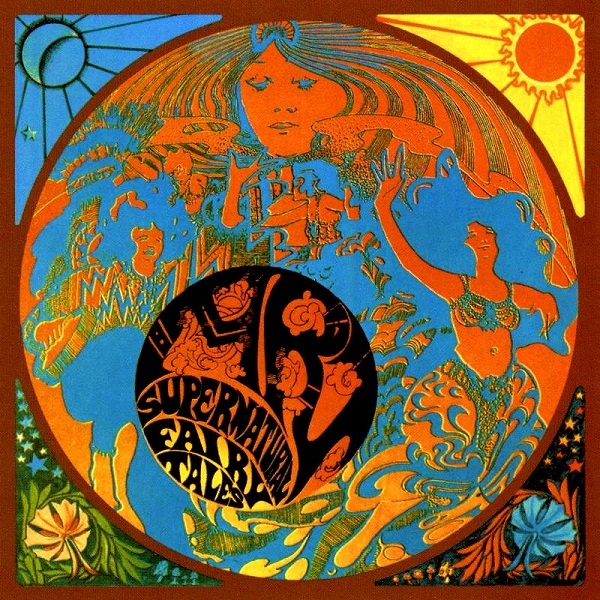
The Birth Of Spooky Tooth.
Gary Wright was also a psychology student, who had travelled to Berlin to finish his studies. That was where Gary Wright formed the band The New York Times with some American expats and a German bassist. They had opened for Traffic, and were thinking about recording an album. So Gary Wright contacted his old friend Jimmy Miller. The producer was working for Island Records, and suggested that The New York Times hotfoot it to London.
When The New York Times arrived in London, the recording sessions didn’t go to plan. The rest of the band split, leaving Gary Wright. It was then, in October 1967, that Gary Wright was introduced to the former members of Art and they formed a new band, Spooky Tooth.
Spooky-Tooth.
It’s All About.
Straight away, work began on Spooky Tooth’s debut album. The new recruit quickly made his presence felt. Whereas the four members of Art cowrote most of their debut album Supernatural Fairy Tales, that wasn’t the case with Spooky Tooth.
Gary Wright penned Sunshine Help Me and cowrote another six tracks. This included It Hurts You So and Forget It and I Got It with his old buddy Jimmy Miller. The Wright and Miller partnership weren’t finished. They penned Love Really Changed Me with Luther Grosvenor. That trio joined Mike Harrison in writing Here I Lived So We. Luther Grosvenor and Chris Wight also wrote Bubbles. Spooky Tooth was quickly becoming the Chris Wright show.
If the other members felt uncomfortable that Chris Wight was playing a leading role in Spooky Tooth. He was friends with Jimmy Miller, who was chosen to produce It’s All About. He just happened to be friends with Island Records’ owner Chris Blackwell. To onlookers, these relationships looked too cosy. After all, it was Chris Blackwell who introduced Chris Wright. He would join the rest of Spooky Tooth at Olympic Studios.
Island Records’ recording sessions were notorious for only allotting a specific amount of time to record an album. Woe betide the band and producer who went over budget. Spooky Tooth had twelve songs to record when they entered the studio in November 1967. This included covers of Janis Ian’s Society’s Child, Bob Dylan’s Too Much Of Nothing and John D. Loudermilk’s Tobacco Road. Along with the songs penned by members of Spooky Tooth, the twelve songs became It’s All About.
Before the release of It’s All About in June 1968, critics had their say on Spooky Tooth’s debut album. They were won over by It’s All About. Many critics gave the albums rave reviews. Some critics liked that Spooky Tooth had two different vocalists. This was uncommon. However, with Mike Harrison and Chris Wright sharing the lead vocals, this allowed the band to take their music in a variety of directions. On It’s All About, this included blues, rock and psychedelia. Despite winning over critics, record buyers weren’t convinced.
When It’s All About was released in June 1968, the album wasn’t the success many had forecast. This would soon change.
Spooky Tooth were about to become one of Europe’s most popular live bands. Then in August 1968, Spooky Tooth were invited to tour America. This was a game-changer. Especially when Spooky Tooth were invited to play at one of the most prestigious venues in America, the Fillmore West in San Francisco.
Promoter Bill Graham invited Spooky Tooth to play the Fillmore West. This was a rite of passage for bands touring America. It was a signal they had arrived. Spooky Tooth were going up in the world, so Island Records’ thoughts turned to their sophomore album, Spooky Two.
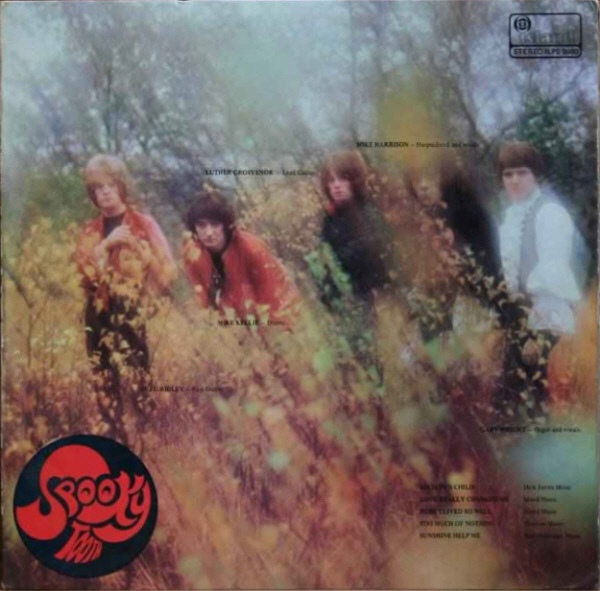
Spooky Two.
Unlike their debut album, Spooky Two only featured eight songs. Partly, this was why Spooky Too was a leaner, more focused album. Again, Gary Wright who had assumed the role of Spooky Tooth’s songwriter-in-chief.
Gary Wright penned four tracks and cowrote three others. This included Feelin’ Bad and I’ve Got Enough Heartaches with drummer Mike Kellie. Mike Harrison and Luther Grosvenor cowrote Waitin’ for the Wind with Gary Wright. Spooky Two’s other track, was a cover of Larry Weiss’ Evil Woman. These songs were recorded at Morgan Studios, London.
Just like It’s About You, Spooky Too was produced by Jimmy Miller. Recording began in November 1968, and Spooky Tooth began recording what’s now considered their greatest album, Spooky Too.
Once Spooky Too was complete, the release was scheduled for March 1969. This didn’t leave much time to promote the album. However, the reviews did a good job of this. Spooky Too was hailed a masterpiece of blues, hard rock, psychedelia and classic rock. Luther Grosvenor’s guitar playing was at the heart of the album’s success. It was loose, but fluid. Spooky Tooth’s played hard, raw and rock on Spooky Too. Critics forecast that Spooky Too was going to be Spooky Tooth’s breakthrough album.
That proved to be the case. On its release in March 1969, Spooky Too reached number forty-four in the US Billboard 200. This resulted in Spooky Tooth’s profile rising.
Suddenly, they were playing in front of bigger audiences on nearly every continent. Other musicians wanted to work with Spooky Tooth. This included French electronic musician, Pierre Henry.

Ceremony.
After the release of Spooky Too, there was a change to Spooky Tooth’s lineup. In 1970, bassist Greg Ridley was asked to join Humble Pie. He agreed, and Andy Leigh was drafted in as his replacement. This was the first, but not the last change in Spooky Tooth’s lineup.
After the commercial success and critical acclaim of Spooky Too, Spooky Tooth’s star was in the ascendancy. Suddenly, people wanted to work with Spooky Tooth. This included French electronic musician, Pierre Henry.
He described himself as a found-object” composer. Pierre Henry took everyday objects and transformed them into an instrument. This wasn’t a new concept.
Pablo Picasso had pioneered the idea in 1912, when he pasted aprinted image of chair caning onto his painting Still Life with Chair Caning. Turning everyday objects into musical instruments took the idea further. That’s what Pierre Henry, and many other moderne musicians did.
Originally, Spooky Tooth were collaborating with Pierre Henry. It was his album. The new lineup of Spooky Tooth were essentially his backing band, on Ceremony.
For Ceremony, Pierre Henry and Gary Wright wrote six tracks. He and the rest of the new lineup of Spooky Tooth made their way to France. It was agreed that Pierre Henry and Spooky Tooth would co-produce Ceremony, due to the fact the album takes the form of a church service.
Quickly, Spooky Tooth recorded their parts. This left Pierre Henry to play synths and take charge of electronics on five tracks. On Hosanna, which closed Ceremony, Spooky Tooth took centre-stage. It was Ceremony’s Magnus Opus. Once the recording was complete, Spooky Tooth headed home.
Having returned home, Spooky Tooth were sent a copy of Ceremony. Gary Wright didn’t like what he heard. He was straight on the phone to Chris Blackwell, urging him not to release Ceremony. This didn’t work.
Chris Blackwell disagreed, telling Chris Wright: “people will love this album. We have to put this out.” According to Chris Wright, the rest of Spooky Tooth didn’t want Ceremony released. He went as far as to say: “it was against our wishes.” He thinks that the “release of the album lead to the initial breakup of the band.”
With Island Records determined to release Ceremony, December 1969 was scheduled as the release date. Before that, critics had their say on Ceremony. This fusion of rock and avant-garde was billed as an album from Spooky Tooth and Pierre Henry. Reviews were mixed. It wasn’t what most critics had expected from Spooky Tooth. The problem Mike Harrison says was; “people thought it was Spooky Tooth’s third album.”
When Ceremony was released in December 1969, it reached just ninety-two in the US Billboard 200. Spooky Tooth were going backwards. That was only part of the story.
All wasn’t well within Spooky Tooth. There was disharmony within the ranks. Mike Kellie believes things would’ve been different if Spooky Tooth: “had independent management.” They could have been an arbiter in the conflicts. Without that, Spooky Tooth split-up.

Spooky Tooth Featuring Mike Harrison.
The Last Puff.
That wasn’t the end of the Spooky Tooth story. Instead, it was just the end of a chapter. Mike Harrison, Mike Kellie and Luther Grosvenor remained. Chris Wright exited stage left. So did bassist Andy Leigh. In their place, came some new faces.
Among them, were guitarist Henry McCullough, bassist Alan Spenner and Chris Stainton. He played bass, piano and organ. His versatility would be put to good use on The Last Puff, which was billed as an album from Spooky Tooth Featuring Mike Harrison.
For The Last Puff, seven cover versions were chosen. Among them were Lennon and McCartney’s I Am The Walrus; Joe Cocker and Peter Nichols’ Something to Say; David Ackles’ Down River and Elton John and Bernie Taupin’s Son of Your Father. New recruit Chris Stainton contributed The Last Puff. Ironically, The Wrong Time a song penned by Gary Wright and Hugh McCracken. Given Gary Wright had just left Spooky Tooth this seemed a strange decision.
Recording of The Last Puff took place at Island Studios, London. Producing the album was Island Records’ owner Gary Blackwell and Chris Stainton. Once the new lineup of Spooky Tooth finished recording The Last Puff, it was released in July 1970.
Critics however, received advance copies of Spooky Tooth Featuring Mike Harrison’s album The Last Puff. Critical acclaim accompanied this album of psychedelia, rock and pop. It seemed the loss of two members hadn’t derailed Spooky Tooth.
That seemed to be the case. The Last Puff proved more successful than Ceremony, reaching number eighty-four in the US Billboard 200. However, not long after the release of The Last Puff, Spooky Tooth split-up. That looked like the end of the line for Spooky Tooth. Island Records were dismayed. They had just lost one of their most popular groups.
So a year later, in 1971, Island Records repackaged and rereleased It’s All About as Tobacco Road. When the album was released, it reached number 152 in the US Billboard 200. By then, they had signed a new solo artist..Mike Harrison.

Mike Harrison-The Solo Years.
With Spooky Tooth seemingly consigned to musical history, Mike Harrison embarked upon a solo career. He signed to Island Records, and began working on his eponymous debut album.
Mike Harrison.
For his eponymous debut album, Mike Harrison returned to where it all began for him, Carlisle, in Cumbria. That’s where he found The Junkyard Angels. They would become his backing band on Mike Harrison, and would also contribute several songs.
The Junkyard Angels were a cut above the local Carlisle bands of the early seventies. They weren’t just talented musicians, but also songwriters who played a part in five of the songs on Mike Harrison.
Bassist Peter Batey wrote Mother Nature and Lonely People. Peter also cowrote Call It A Day with Lan Herbert, Kevin Iverson and Mike Harrison. Lan Herbert and Kevin Iverson then penned Pain with Frank Kenyon. The final song penned by a member of The Junkyard Angels, was Damian, which was written by Lan Herbert and Mike Harrison. By then, it was obvious that The Junkyard Angels were more than a backing band. They had written most of Mike Harrison.
The other three tracks on Mike Harrison, were Wait Until Morning, a Harrison-Griffin composition; Cat Stevens’ Hard Headed Woman and Luther Grosvenor’s Here Comes The Queen. Along with the tracks written by The Junkyard Angels, this trio of tracks would become Mike Harrison.
When recording of Mike Harrison began, four members of The Junkyard Angels were ready to accompany Mike. The rhythm section featured drummer and percussionist Kevin Iverson; bassist and percussionist Peter Batey and guitarist Frank Kenyon. Lan Herbert played guitar, piano and organ and vibes. The four members of The Junkyard Angels would also add backing vocals Meanwhile, Mike Harrison added lead vocals, and played piano, harmonica and organ. When the eight tracks were recorded, Mike Harrison was scheduled to be released later in 1971.
On the release of Mike Harrison in October 1971, reviews of the album were mostly positive. Most critics were won over by the fusion of rock, blues, folk and pop. The songs were perfect for Mike’s vocal. That was the case from the opening track Mother Nature. It’s akin to a musical amuse bouche as Mike’s lived-in vocal brings meaning to the lyrics. That’s the case throughout the eight tracks on Mike Harrison. His worldweary vocal sounds as if he’s lived the lyrics to Call It A Day, Pain and Wait Until The Morning. Similarly, Mike sounds as if he can relate to Lonely People, and somewhat ruefully seems to sing Hard Headed Woman as if he’s met her, but lived to tell the tale. However, the Ballad Damian features a soul-baring vocal. Closing the album, is a cover of Here Comes The Queen, where Mike Harrison and The Junkyard Angels takes in a new direction, to Luther Grosvenor’s original. In doing so, it leaves the listener wanting more.
With eight tracks lasting just lasting around thirty-three minutes, Mike Harrison was just a taste of what was to come from Mike Harrison. Freed from the constraints of Spooky Tooth and Gary Wright’s ‘helping hand’, Mike had come in to his own. He had just cowrote three tracks on his eponymous debut album and produced it. Mike Harrison was well received, and although it wasn’t a huge selling album, it’s a hidden gem that showed Mike that there was like after Spooky Tooth.

Smokestack Lightning.
Buoyed by the reception his eponymous debut received, Mike Harrison’s thoughts turned to his sophomore album. This time, there was no sign of The Junkyard Angels, who played such an important part in his eponymous debut album. They cowrote five of the eight tracks. Mike had only written three tracks, including two with members of The Junkyard Angels. So this presented something of a problem. However, Mike Harrison had already thought of the solution.
His sophomore album would mostly feature cover versions. The exception was Turning Over, which Mike and Luther Grosvenor cowrote. However, the other five tracks were cover versions. This included Tears and Pay My Dues, which were penned by Jimmy Stevens. Other familiar songs included Fats Domino and Maddux-Jessup’s What A Price; Joe Tex’s Wanna Be Free and Howlin’ Wolf’s Smokestack Lightning. This blues classic lent its name to Mike’s sophomore album. It was recorded stateside.
To record Smokestack Lightning, Mike Harrison followed in the footsteps of countless musicians. His destination was Muscle Shoals, in Alabama, where he would work with the legendary Muscle Shoals Rhythm Section. They featured some of America’s top musicians, who had worked with everyone from Aretha Franklin, Candy Staton and Etta James to Percy Sledge and Wilson Pickett. Now Mike Harrison was ready to make that journey, and work with the legendary studio band.
When Mike Harrison arrived at Muscle Shoals, the Muscle Shoals Rhythm Section’s lineup featured some of the top session musicians America had to offer. The rhythm section featured drummer Roger Hawkins, bassist David Hood and guitarists Jimmy Johnson and Pete Carr. They were augmented by slide guitarist Wayne Perkins, keyboardists Barry Beckett and Clayton Ivey. Along with the horn section, they recorded six tracks. When it came to record Turning Over, the cowriter Luther Grosvenor added acoustic guitar. When Smokestack Lightning was complete, it was very different album to Mike Harrison.
The soulful and heart-wrenching ballad Tears opens Smokestack Lightning. It comes complete with lush strings and later, some stunning guitar licks. Paid My Dues is best described as mid-tempo slice of string drenched, blue eyed soul. This proved to be very different from the rest of Smokestack Lightning.
It’s all change on What A Price, Wanna Be Free, Turning Over and Smokestack Lightning. These songs see Mike head in the direction of the blues. Accompanied by a smoking band, he embraces the role of bluesman as the Muscle Shoals Rhythm Section jam. Smokestack Lightning is totally reinvented, and becomes a twelve minute hypnotic, smouldering bluesy jam. Mike has kept his best blues until last, as he pays homage to Howlin’ Wolf in a fitting fashion. In an album that oozes quality, Mike Harrison kept one his best songs until last.
When critics heard Smokestack Lightning, they were impressed by Mike Harrison’s new sound. They hailed Smokestack Lightning as Mike Harrison’s best album so far. Most critics preferred Smokestack Lightning, to Mike Harrison and wondered aloud what the Cumbrian’s third album would sound like? However, Mike had a surprise in store for his fans.

The Return Of Spooky Tooth.
You Broke My Heart So I Busted Your Jaw.
In September 1972, Spooky Tooth reformed, with a new lineup. The only musician who had played on The Last Puff was Mike Harrison.
Since then, Luther Grosvenor had joined Mott The Hoople, where he dawned the alias Ariel Bender. His replacement in Spooky Tooth, was future Foreigner guitarist Mick Jones. Mike Kellie was replaced by drummer and percussionist Bryson Graham. Chris Stewart became Spooky Tooth’s fourth bassist. However, the biggest surprise, was the return of Gary Wright.
Quickly, Gary Wright resumed the role of Spooky Tooth’s songwriter-in-chief. He wrote six of the eight songs, and cowrote Times Have Changed with Mick Jones. The other song on You Broke My Heart So I Busted Your Jaw was the Bryson Graham composition This Time Around. These eight songs were recorded at three London studios.
Recording of You Broke My Heart So I Busted Your Jaw. Olympic Studios, Island Studios and Apple Studios. It seemed no expense was being spared for Spooky Tooth’s comeback album. These were some of London’s top studios. One expense that was saved was a producer. Spooky Tooth produced You Broke My Heart So I Busted Your Jaw. It was scheduled for release in ay 1973.
Many of Spooky Tooth’s fans eagerly awaited their comeback album. However, when reviews were published, they were mixed. Some critics felt that You Broke My Heart So I Busted Your Jaw wasn’t Spooky Tooth’s finest hour. It stuck to Spooky Tooth’s familiar mixture of hard rock and psychedelia. While hard rock was still popular, progressive rock dominated the charts. However, other critics were won over by Spooky Tooth’s comeback album.
Other critics liked the dual keyboard sound on You Broke My Heart So I Busted Your Jaw. This brought a new dimension to Spooky Tooth’s sound. There was no consensus. For once, a Spooky Tooth album had divided the critics’ opinion. However, record buyers were of one mind.
On the release of You Broke My Heart So I Busted Your Jaw, in November 1973, the album reached number eighty-four in the US Billboard 200. This matched the popularity of The Last Puff. Spooky Tooth were back to where they were before Ceremony. What could go wrong?

Witness.
After making their comeback with You Broke My Heart So I Busted Your Jaw, Spooky Tooth looked as if their career was back on track. Then there was a change in Spooky Tooth’s lineup.
This time, Spooky Tooth’s original drummer Mike Kellie made a comeback, and replaced recent recruit Bryson Graham. However, that wasn’t the end of Bryson Graham. He played on some of the tracks on Witness. It was a tale of two drummers.
One thing didn’t change, Gary Wright wrote most of Witness. He penned six of the nine tracks, and cowrote the other three tracks with members of Spooky Tooth. Considering the other members weren’t regarded as songwriters, they were proving a reliable source of songs. Gary Wright and Chris Stewart penned Don’t Ever Stray Away. Mick Jones collaborated with Chris Wright on All Sewn Up. Drummer Mike Kellie celebrated his return by cowriting Pyramids with Chris Stewart. It seemed the other members of Spooky Tooth had hidden talents.
They also produced Witness, which was recorded at Olympic Studios and Island Studios, in London. At two of London’s premier studios, Spooky Tooth recorded their sixth studio album. Little did anyone realise, but this would be the last time one of the band set foot in a recording studio with Spooky Tooth. It was the end of an era.
Sadly, with one of the band about to call time on their career with Spooky Tooth, the reviews of Witness were mixed. Not for the first time, a Spooky Tooth album divided opinion. Some critics enjoyed Witness mixture of hard rock and psychedelia. Others felt the sound was dated. Record buyers had the deciding vote.
They too were undecided. When Witness was released in November 1973, it stalled at ninety-nine in the US Billboard 200. Witness hadn’t matched the commercial success of You Broke My Heart So I Busted Your Jaw. That was disappointing. However, it wasn’t as disappointing as losing one of the band’s most important figures.
Mike Harrison, who founded The V.I.P.s ten years previously, called time on the band he cofounded with Greg Ridley. The group’s cofounder wanted to pursue other projects. Another departure was bassist Chris Stewart. While he was a loss, his departure didn’t leave the void that Mike Harrison’s left. It was a case of the King is dead, long live the King.

The Solo Years Part Two.
Rainbow Rider.
After Spooky Tooth split-up, Mike Harrison resumed his solo career in 1974. Two years had passed since Mike had released Smokestack Lightning It was hailed as Mike’s best album. His third album, Rainbow Rider, had a lot to live up to.
For Rainbow Rider, Mike Harrison chose a mixture of new songs and cover versions. Among the cover versions were Somewhere Over The Rainbow; The Beatles’ We Can Work It Out; Bob Dylan’s I’ll Keep It With Mine and Don Nix’s Maverick Woman Blues. Don Nix also cowrote Like A Road (Leading Home) with Dan Penn. The other cover version was the Jennings-Seal composition You and Me. Mike had cowritten the rest of Rainbow Rider.
This includes Friend a Harrison-Belcher composition; while Easy was a Aitkin, Brown and Harrisona composition. Mike Harrison and Luther Grosvenor penned Okay Lay Lady Lay. Along with the six cover versions, they became Rainbow Rider.
As recording of Rainbow Rider began, Mike had a new band. It featured some of Nashville’s top session players. The rhythm section featured drummer Kenny Buttrey, bassist Norbert Putnam and guitarists Kirk Lorange and Bob Cohen. Two familiar faces were Spooky Tooth and then Foreigner guitarist Mick Jones, and Mott The Hoople keyboardist Morgan Fisher. They were joined by The Memphis Horns and a choir from the Corana Stage School. With Mike Harrison taking charge of production, Rainbow Rider soon took shape, and was released in 1975.
When Rainbow Rider was released in 1975, the album was well received by critics. Mike Harrison they said had picked up where he left off on Smokestack Lightning.
Elements of rock, blues, folk and soul shine through on Rainbow Rider. The blues are to the fore on Maverick Woman Blues, before You And Me is a fusion of blues, funk and rock. Mike struts his way through the lyrics, before delivering a soul-baring vocal on the ballad I’ll Keep It With Mine. Accompanied by gospel-tinged harmonies, it’s one of the highlights of Rainbow Rider. So is the Dylan-esque Like A Road (Leading Home). Strings and horns play leading roles in the song’s success. Then a familiar face makes a welcome appearance.
Although The Beatles’ We Can Work It Out had been covered by many artists by 1975, Mike brings something new to the song, and reinvents it. Funky, bluesy and rocky describes Okay Lay Lady Lay. Then Easy is a beautiful ballad, where a piano, stirring strings and gospel-tinged harmonies accompany Mike’s impassioned vocal. Easy proves to be another of the highlights of Rainbow Rider. Almost as beautiful is Mike’s cover of Somewhere Over The Rainbow. Somehow, he brings something new to an oft-covered song. Friend, another heartfelt and melancholy ballad brings Rainbow Rider and the Island Records trilogy to a memorable close.

Rainbow Rider completes the Island Records trilogy in 1973, and the story of Mike Harrison’s all too brief solo career. Sadly, Mike Harrison never quite enjoyed the commercial success his music deserved.
Instead, Mike Harrison is remembered for his time as lead singer with Spooky Tooth. With Mike Harrison at the helm, they found commercial success on both sides of the Atlantic. Sadly, the original lineup of Spooky Tooth split-up after the release of Ceremony. That wasn’t the end of Spooky Tooth though. They continued as Spooky Tooth featuring Mike Harrison, and released The Last Puff. That however, proved to be the end of the road for Spooky Tooth.
After the demise of Spooky Tooth, Mike Harrison embarked upon his solo career, releasing Mike Harrison and Smokestack Lightning. Then in September 1972, Spooky Tooth reformed.
The newly reframed Spooky Tooth released just two albums during 1973, You Broke My Heart So I Busted Your Jaw and Witness. After Witness, Mike Harrison called time on the band he had confounded ten years previously, and returned to his solo career.
In 1975, Mike Harrison released his third solo album, Rainbow Rider This was the final album he released on Island Records. It brought to an end twelve prolific years for Mike Harrison.
Mike Harrison is remembered for his time with Spooky Tooth. The band enjoyed commercial success on both sides of the Atlantic during the Mike Harrison years. However, there’s much more to Mike Harrison’s career than Spooky Tooth, Escpically the period between 1963 and 1975. This is only part of the story of what was the most prolific part of Mike Harrison’s recording career
The three albums Mike Harrison released for Island Records showcase a talented singer, songwriter, musician and producer. Sadly, his music never found a wider audience. Instead, Mike Harrison’s solo albums are often overlooked, and like Michael Chapman and to some extent John Martyn, he’s another artist who is another of music’s best kept secrets.
Mike Harrison-From The V.I.P.s To His Solo Years.


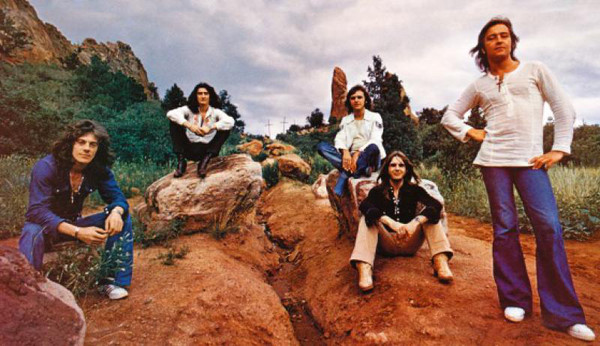

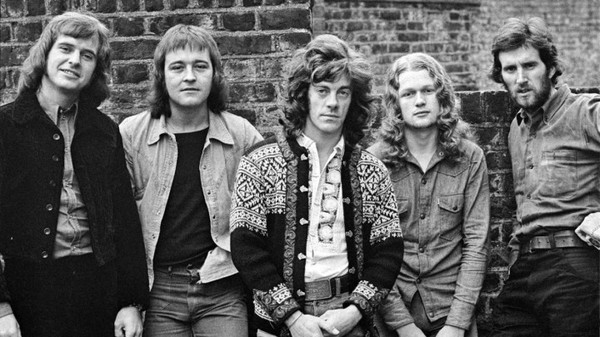
MOGOLLAR’S CAREER OF TWO PARTS.
Moğollar’s Career Of Two Parts.
By 1976, Anatolian rockers Moğollar had been together for the best part of a decade, and were now one of Turkey’s most successful bands. Everything seemed to have been going well for Moğollar until they lost their latest vocalist. This was nothing new, and was a problem that had haunted the group over the years.
Vocalists had been Moğollar’s achilles heel, and throughout the band’s career, they struggled to keep hold of a vocalist.They seemed to come and go, never staying long. However, changes to Moğollar’s lineup was nothing new as the band’s lineup had always been somewhat ‘fluid’. Still, Moğollar had carried on as normal. Something changed with the loss of their latest vocalist, and Moğollar found themselves at a crossroads.
The members of Moğollar had to decide what to do next? Many onlookers expected Moğollar to recruit a new vocalist, and then begin work on their much-anticipated third album. What these onlookers didn’t expect was for Moğollar to call time on their career. However, before Moğollar bowed out, they decided to release one more album.
Without a vocalist, this restricted the type of album that could record. Eventually, the members of Moğollar came up with a plan to record an album of instrumental progressive rock which would bring the curtain down on their career. This was Moğollar’s swan-song and ensured that one of Turkey’s greatest groups bowed out in style. Their career began in Turkey’s capital twelve years earlier.
Silüetler.
Moğollar’s story began in Istanbul, in 1964, when twenty year old guitarist, Mesut Aytunca and Erol Bilem formed Silüetler. In the early days of Silüetler, they were inspired by one of the popular British group, The Shadows. Soon, Silüetler were popular draw within the local music scene. This gave them the confidence to enter various Turkish music competition.
By 1965, Silüetler were faring well in the competitions they entered. Although they hadn’t won, they were always challenging for the top spot. One of the most prestigious competitions was the Altin Mikrofon. Entrants were encouraged to combine Turkish lyrics with Western instrumentation. When Silüetler entered the Altin Mikrofon competition in 1965, they were third. It was a case of so near, yet so far.
A year later, and Silüetler were better prepared for the Altin Mikrofon competition. They had spent much of 1966 recording and touring. The extensive touring allowed Silüetler to hone the Anatolian rock sound that they had pioneered. This fusion of Turkish folk and rock music proved popular wherever Silüetler played. It also proved popular when Silüetler took to the stage at the 1966 Altin Mikrofon. When the winner was announced, it was no surprise when Silüetler won the first prize. Their star was in the ascendancy.
The only problem was that Mesut Aytunca had a tendency to change Silüetler’s lineup to ensure the music stayed relevant. Musicians seemed to come and go. In 1967, two new arrivals were rhythm guitarist and vocalist Aziz Azmet and organist Murat Ses who were both talented musicians, and were welcome additions to Silüetler.
Within a matter of months, the two new arrivals were plotting the musical equivalent of a coup d’état. Aziz Azmet and organist Murat Ses had been planning to form a new band, Moğollar. Before the end of 1967, Aziz Azmet and Murat Ses had recruited nearly ever member of Silüetler. The only man who remainder was one of the two, founder members Mesut Aytunca. His constant changing of Silüetler’s lineup had backfired spectacularly.

Moğollar.
This was something that the members of Moğollar in 1967 should’ve have learnt from. However, that wasn’t the case, and within a matter of months, the lineup started to change. It wasn’t the occasional change in lineup. Instead, the lineup of Moğollar seemed to be constantly changing. So much so, that fourteen different musicians were members of Moğollar between 1967-1974.
Complicating matters further, was that some of the members of Moğollar were also successful solo artists. They would often head off on tour or into the studio to record an album. These were interesting times for Moğollar.
By 1968, Moğollar were already a popular live draw in Izmir, where they played in clubs and even at fairs. This the members of Moğollar knew, was all good experience for the nascent band. Moğollar wanted to hone their sound, especially with the Altin Mikrofon competition fast approaching. They had set their sights on wining it. However, Moğollar had to settle for third prize. Considering Moğollar were still a relatively new band, their Dutch manager Anton Oskamp told the band that this was a good result.
Following the Altin Mikrofon competition, Moğollar embarked on a lengthy and gruelling tour of Eastern Turkey. During the tour, Moğollar would play in towns where no rock bands had previously played. In some of the towns, the inhabitants had never heard rock music before. Moğollar were about to become musical pioneers, as they introduced their music to a new and wider audience.
As the tour of Eastern Turkey progressed, so did Moğollar’s interest in Turkish folk music. Soon, Moğollar began to expand the array of instruments they took to the stage with. This began when guitarist Cahit Berkay started buying a variety of traditional Turkish instruments including a baglama, kemence, tambura and three string violin. They would augment the instruments that Moğollar usually took to the stage with.
Gradually, Moğollar’s sound was evolving. Suddenly, the way Moğollar approached music began to change. They began using Western instruments to play parts in song that normally, a traditional instrument would play. This new sound was born during the tour of Eastern Turkey, but took shape over the next couple of years. In 1970, Taner Öngür christened, the new sound Anadolu Pop in an article in Hey magazine.
Despite Taner Öngür’s coining of the term Anadolu Pop, he isn’t regarded as the architect of Anadolu Pop. Instead, Moğollar’s organist and songwriter-in-chief, Murat Ses’ credits his wife Nihal Ses as the true architect of Anadolu Pop. It was pioneered by Moğollar, who became the most successful purveyor of the genre.
By 1970, Moğollar were a hugely successful band in Turkey and wanted to taste commercial success and critical acclaim further afield. Even if this meant leaving Turkey, and living in Europe. Members of Moğollar were sent to various European cities to try to find a new base for the band. After considering several cities, Moğollar settled on Paris.
This was purely because Barış Mango lived in Paris, and offered Taner Öngür somewhere to stay. Suddenly, Paris looked very appealing for Moğollar’s new European base. When the rest of Moğollar found accommodation elsewhere in Paris, the band began looking for a recording contract.
Not long after Moğollar arrived in Paris, they looked through the telephone book and made a list of all the record companies based in the city. They started phoning each one, in the hope that one of the record companies would offer them a contract. Eventually, CBS offered Moğollar a three-year contract, and this was the start of a new chapter for Moğollar.
Danses Et Rythmes De La Turquie D’Hier À Aujourd’hui.
Now signed to CBS, Moğollar went into the studio to heir first single for CBS, Hitchin’. Unlike the previous singles Moğollar had recorded in Turkey, it was decided that Hitchin’ should be recorded in English. This CBS and Moğollar hoped would attract a wider audience.
Hitchin’ was released in 1971, but wasn’t the success that CBS and Moğollar had hoped. Despite this, Moğollar returned to the studio and recorded d their debut album Danses Et Rythmes De La Turquie D’Hier À Aujourd’hui in France and Turkey. It featured new songs Moğollar, who got the chance to showcase their considerable skills as songwriters musicians.
Moğollar released Danses Et Rythmes De La Turquie D’Hier À Aujourd’hui later in 1971, and the album found favour with critics. Later in 1971, the nominations for the Grand Prix du Disque award were announced and one of the nominees was Moğollar’s debut album. When Danses Et Rythmes De La Turquie D’Hier À Aujourd’hui won the Grand Prix du Disque award this was further proof that Moğollar’s star was in the ascendancy.
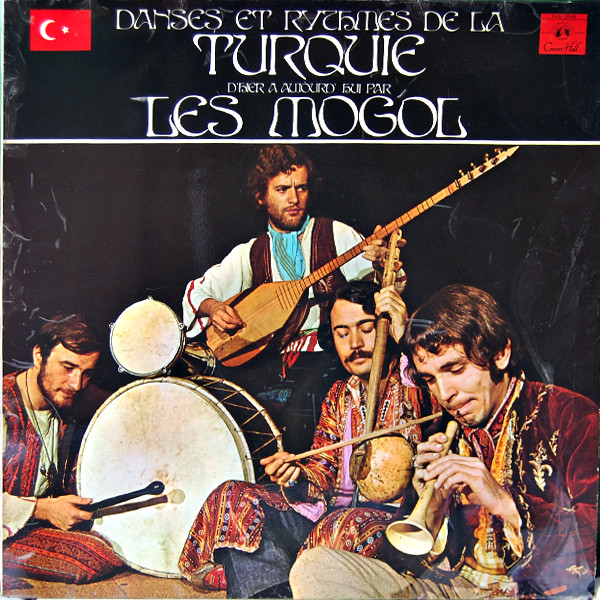
Following the release of Grand Prix du Disque, Moğollar started planning a tour. Before the tour could begin, Moğollar began looking for a new lead vocalist. After a couple of singers turned them down, Barış Mango agreed to tour with Moğollar.
It was tantalising prospect, that two of the leading lights of Turkish music were about to head out on tour. Everyone involved was similarly excited and Moğollar decided to changed the band name to Manchomongol for the tour. It got underway later in 1971.
One member of Moğollar was missing from the tour, Engin Yörükoğlu. He had returned home to Istanbul to get married, but didn’t rejoin Moğollar. Instead, he remained in Istanbul until 1972, when he joined Barış Mango and Kurtalan Ekspres. That would prove ironic.
When the tour began the two titans of Turkish music thought that it was going to be the experience of a lifetime. After four long months, that was far from the case. The tour hadn’t been as enjoyable as Moğollar and Barış Mango had hoped. A turning point came in Kütahya, when someone took offence to Barış Mango’s long hair and the tour van was blown up. Everyone was shaken by this. Not long after this, Barış Mango caught mumps and had to leave the tour. This was a huge blow and Moğollar struggled to find a replacement for at such short notice.
After the tour, Moğollar recorded with Selda and Ersen and then began touring with Cem Karaca. That tour would last two years, and sadly, one of the members of Moğollar would’ve left the band before the tour ended.
This was organist and songwriter-in-chief Murat Ses. He was looking through Hey magazine in 1972, when he noticed an article about Moğollar. As Murat Ses read the article he was in for a surprise. Guitarist Cahit Berkay had announced that Murat Ses had left Moğollar. The reason given, was he no longer wanted to play concerts in small villages in Eastern Turkey. This was all news to Murat Ses. That day, he was unceremoniously ousted from the band he cofounded.
What those who plotted Murat Ses’ removal had overlooked, was his importance within Moğollar. Not only did he write the majority of the songs, but his organ played an important part in Moğollar’s music. The loss of Murat Ses could be a turning point for Moğollar. However, some saw this as just the latest change in Moğollar’s lineup.
After Murat Ses’ departure from Moğollar, Cahit Berkay became Moğollar’s de facto leader. Before long, most of the band were working on a variety of side projects. That was apart from Cahit Berkay. As time passed by, he decided the time was right for Moğollar to try to make a breakthrough in the European market. If that was going to happen, Cahit Berkay had to convince one former member of Moğollar to return to the fold.
That was Engin Yörükoğlu, who was still living in France. Cahit Berkay journeyed from Istanbul to see his old bandmate. This was something of a mercy mission, as Moğollar seemed to be teetering on the brink. Maybe if Engin Yörükoğlu rejoined Moğollar, then it would have a future?
At the meeting in France, Engin Yörükoğlu agreed to rejoin Moğollar. Three years after the release of their debut album, Moğollar were about to begin work on their sophomore album. Before that, Cahit Berkay returned home to Istanbul with the news that Engin Yörükoğlu was rejoining Moğollar.
When the rest of Moğollar heard the news, they began packing their instruments onto a pickup truck. This included Romain Didier, who would play Fender Rhodes and Minimoog. They would then be joined by Engin Yörükoğlu in the studio.
Hittit Sun.
Before that, Cahit Berkay assumed the role of songwriter-in-chief. He penned nine of the eleven songs. Romain Didier contributed Rue De L’orient, while Moğollar covered the traditional song White Dear. These eleven songs would eventually become Moğollar’s sophomore album Hittit Sun.
As work began on Hittit Sun, Moğollar’s music moved towards progressive rock and jazz. This was very different to their usual Anadolu Pop sound. It was no surprise. Music had changed since Moğollar released their debut album in 1971. Moğollar knew they had to reinvent their music to stay relevant. However, how would their fans respond?
When Moğollar’s sophomore album was released in Turkey in 1975, it was entitled Düm-Tek. By then, four years had passed since they had released their debut album. Düm-Tek wasn’t a commercial success in Turkey. Elsewhere, the album was released as Hittit Sun. Despite what was an ambitious and accomplished album, Hittit Sun failed to find an audience. It was a disaster for Moğollar.
Moğollar.
Despite the commercial failure of Hittit Sun, Moğollar weren’t willing to give up on their dream of making a commercial breakthrough in Europe. It was looking increasingly unlikely, but Moğollar were determined to give it one more go.
When began on Moğollar’s third album in 1976, it was the most eclectic album of their career. It featured Turkish and Azerbaijani folks songs, classical pieces and B-Sides. The album opener Kâtip Arzuhalim Yaz Yare Böyle was from the days of Manchomongol in 1971. These tracks would eventually become Moğollar’s eponymous third album.
For Moğollar, the sound had been stripped back to just the rhythm section and keyboards. By then, drummer and percussionist Engin Yörükoğlu and rhythm guitarist Cahit Berkay were the longest-serving members of Moğollar. The remainder of the band featured relative newcomers, so Cahit Berkay and Engin Yörükoğlu took charge of arranging the eleven tracks that later in 1976, became Moğollar.
It’s a captivating fusion of ancient Anatolian melodies and instruments which is combined with elements of classical music, progressive rock and psychedelia. Add to that, Eastern sounds and bursts of fuzzy guitar. The result is a heady brew that comprises Turkish folk songs; Azerbaijani folk song, classical pieces and B-Sides. Sadly, Moğollar wasn’t a commercial success.
When Moğollar was released on the Diskotür label in 1976, it followed in the footsteps of Hittit Sun and failed commercially. For Moğollar the dream was over and the band decided to call it a day. Moğollar was their swan-song.
Sadly, for Moğollar their eponymous third album was the end of what had been a long, successful and sometimes eventful musical journey. However, Moğollar left behind a rich musical legacy which included was around twenty singles and three albums. The last of this trio of albums was Moğollar.
After eight years together, Moğollar the remaining members of the band went their separate ways. The Moğollar was a case of what might have been? They never really built on the commercial success and critical acclaim that their 1971 debut album Danses Et Rythmes De La Turquie D’Hier À Aujourd’hui.
The problem was, that Moğollar waited too long to release their sophomore album Hittit Sun. By 1975, music had changed. Moğollar knew they had to change direction to stay relevant. Moving away from their original sound seemed to alienate their fan-base. To make matters worse, Hittit Sun passed the wider record buying public by. They missed out on ambitious and accomplished album, that has since become a cult album.
Sadly, history was to repeat itself a year later when Moğollar was released in 1976. Like many albums that passed record buyers by first time round, it only started to find an audience long after its release. Moğollar is a reminder of one Turkey’s greatest groups, as the first chapter in their career came to an end.
When Moğollar split-up in 1976 this looked like the end of the line for one of the most successful Turkish rock groups. However, time was a indeed a great healer, and eighteen years later and Moğollar reformed and returned in 1994 with their fourth album ’94. This was the start of the most prolific period of Moğollar’s long and illustrious career. They released Dört Renk in 1996, and 30. Yıl in 1998. By then, Moğollar were as popular as ever. Not only had the released three new albums since their comeback in 1994, but Moğollar was a popular live band. Moğollar comeback was complete and set to continue.
Although six years passed before Moğollar released their seventh album Yürüdük Durmada in 2004, they were still a hugely popular band. Yürüdük Durmada was an accomplished album of folk rock from a group from musical chameleons Moğollar. They were still going strong and more popular than ever. It was a remarkable transformation in fortunes.
Five years later, and Moğollar released what looks like being their final studio album Umut Yolunu Bulur in 2009. By then, the founding fathers of Anadolu Pop had spent four decades making music, and were more popular that ever. The second chapter of the Moğollar story was the most successful and saw the group reaching new heights of popularly. This was somewhat ironic.
Of the eight albums that the Anadolu Pop pioneers released during a career that has spanned four decades, Moğollar’s first three albums are their finest. The triumvirate of Danses Et Rythmes De La Turquie D’Hier À Aujourd’hui, Hittit Sun and Moğollar are the best albums that Moğollar recorded during their long, illustrious and successful carer. This triumvirate of groundbreaking albums features a myriad of disparate music influences and instruments that were combined to create a heady, mesmeric and delicious musical brew by Anadolu Pop pioneers Moğollar.
Moğollar’s Career Of Two Parts.
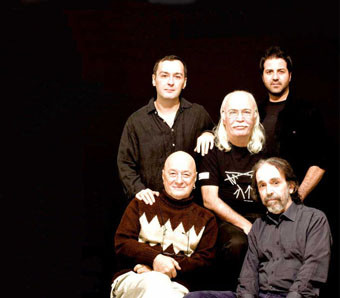
MAJA S.K. RATKJE-SULT
Maja S. K. Ratkje-Sult.
Rune Grammofon.
By the time Maja S. K. Ratkje graduated from the Norwegian Academy of Music in 2000, the twenty-seven year old had already won one of the most prestigious awards in Norwegian music, an Edvardprisen. This came in 1999, when Waves 11b won an Edvardprisen in the contemporary music minor work category. This was the perfect start to her nascent career.
Maja’s recording career had begun in 1999, when improv quartet Spunk released their debut album Det Eneste Jeg Vet Er At Det Ikke Er En Støvsuger in 1999. Back then, Maja was still studying for her diploma in composition at the Norwegian Academy of Music in Oslo. However, by the time Maja graduated, she was already thinking of her musical future.
A year later in 2001, Spunk released their next album Filtered Through Friends. Just like their debut album, Filtered Through Friends was heralded a groundbreaking album. Later in 2001, Maja won another prestigious award, the Arne Nordheims Composer Prize. Maja’s star was in the ascendancy.
And so it proved. 2002 was an important year in Maja’s career. Not only did Spunk release their third album Den Øverste Toppen På En Blåmalt Flaggstang, but Maja released her debut solo album Voice. It was released on Rune Grammofon, who recently released Maja S. K. Ratkje new album Crepuscular Hour. It’s one of the most ambitious albums of Maja’s long and illustrious career.
Later in 2002, formed noise duo Fe-Mail with Hild Sofie Tafjord. Fe-mail and eleased their debut album Syklubb Fra Hælvete. It was a low profile release, with just 500 vinyl copies of the album pressed. However, by 2004 Syklubb Fra Hælvete was released on CD in America by Important Records.
2004 would prove to be another important year in Maja’s career. Fe-Mail returned with their sophomore album All Men Are Pigs. It featured another leading light of the Norwegian experimental music scene, Lasse Marhaug. The result was a captivating collaboration. The same cane be said of another album Maja released in 2004.
Already, Maja was collaborating with other artists. She had featured on the album Sinus Seduction, which was released in 2002. Two years later, in 2004, Maja released Majaap, which was her first collaboration with Dutch composer and sound poet Jaap Blonk. By then, Maja had won the second Edvardprisen of her career, when No Title Performance and Sparkling Water won the open category. For Maja, was further recognition that she was one of Norwegian music’s most innovative composers, musicians and performers.
Buoyed by having won her second Edvardprisen in 2004, Maja’s career continued apace. She released Post-Human Identities, her second collaboration with Jaap Blonk in 2005. Then in November 2005, Spunk returned after a three year break with their fourth album En Aldeles Forferdelig Sykdom. It was a welcome return from the improv quartet. En Aldeles Forferdelig Sykdom was a reminder of an exciting and innovative group. Equally innovative was Maja’s sophomore solo album, which was released in 2006.
For Maja, 2006 proved to be one of the busiest years of her career. Fe-Mail, who released their third album Bixter Toad. Then later in 2006, Maja released Ballads, her collaboration with John Hegre. However, one of the most anticipated albums of 2006 was Maja’s sophomore albium Adventura Anatomica. It was a cerebral, challenging and groundbreaking fusion of abstract, avant-garde, experimental and noise. Adventura Anatomica proved to be worth the four year wait.
There was no four year wait for Maja’s third album. Instead, Telp was released in 2007, and was the start of a four year period where Maja released an album each year. River Mouth Echo was released in 2008, with Cyborgic following in 2009 and Danse Macabre in 2010. During this period, the only side project Maja was involved with, was Kantarell, Spunk’s fifth album. It would be another four years before Spunk returned.
Over the next few years, Maja collaborated with a variety of artists. She collaborated with the ensemble Poing on the 2011 album Watch Auf. Then as 2012 dawned, the album Treasure Hunt was released in January. It was a collaboration between Ikue Mori, Simon Balestrazzi, Sylvie Courvoisier, Alessandro Olla and Maja. However, in 2013 a project that began in 2008 came to fruition.
This was the album Janus, which Joachim Montessuis and Maja had been collaborating on since 2008. It wasn’t until 2013 that the album was complete, and released. Janus was one of the most ambitious albums Maja had been involved in. Experimental mouth music, sonic poetry and improvised electronics were combined on Janus. However, it wasn’t the only collaboration Maja released during 2013.
Her other collaboration was Scrumptious Sabotage. It was a collaboration between Maja and Ikue Mori. They had collaborated as part of a collective on the album Treasure Hunt in 2012. Following the Treasure Hunt project, Ikue Mori and Maja began work on Scrumptious Sabotage. It was released to critical acclaim in 2013. The following year, featured another collaboration, and a comeback.
Maja’s next collaboration came in 2014, when she released Maja S. K. Ratkje In Dialogue With Eugeniusz Rudnik. This album of Musique Concrète was released to critical acclaim, and further reinforced Maja’s reputation as a musical pioneer. That included the music she released with Spunk.
Five years after Spunk released their last album, they returned in 2014 with not one, but two albums. The first was their studio album Adventura Botanica. It was followed by Live In Molde, where Spunk were joined by French double bassist, vocalist, and composer Joëlle Léandre. She had involved in the European improv scene since for over thirty years, and released her debut album Taxi in 1982. Since then, Joëlle Léandre had released over one hundred albums, including countless collaboration. Live In Molde was just the latest. Maja had a long way to go before she caught up with Joëlle Léandre.
Maja made a start in July 2015, when Celadon was released. It was another collaboration. This time, Maja was joined by Jon Wesseltoft, Camille Norment and Per Gisle Galåen. Celadon was an album of avant-garde music where a quartet of sonic pioneers pushed musical boundaries to their limits. The resultant album was released to critical acclaim, and hailed as a truly ambitious album. So would an album Maja released in 2016.
As Maja prepared to release her first solo album for six years, a collaboration she had recorded in 2013 with Saka was released. Rasaka was released in February 2016, and was billed as Saka with Maja S. K. Ratkje. However, the next album Maja S. K. Ratkje released, saw her take the star billing.
That’s no surprise. Crepuscular Hour is one of the most ambitious projects that Maja S. K. Ratkje has been involved with. It was inspired by the phenomena of crepuscular rays, where rays of sunlight stream through gaps in clouds or any number of other obstacles. Having discovered and investigated the phenomena of crepuscular rays, Maja S. K. Ratkje set about writing Crepuscular Hour which would be performed by a rather unorthodox lineup of three choirs, three pairs of noise musicians, a church organ and an impressive light installation. The result was an album where the music veers between dramatic and intense to ruminative, mesmeric and hypnotic and becomes ethereal and elegiac and other times, spiritual and serene. It was a captivating, ambitious and innovative album which pushed musical boundaries and was a sonic and visual feast. However, the big question was how would Maja S. K. Ratkje followup Crepuscular Hour?
Three years after the release of Crepuscular Hour, Maja S. K. Ratkje was back with the followup Suit, a a balletic interpretation of a Knut Hamsen novel which was premiered in Oslo in spring of 2018. Sult which has just been released by the Rune Grammofon label, and is another ambitious and innovative album from a true musical maverick and pioneer.
The music on Sult was originally created for the ballet Hunger by director Jo Strømgren for the Norwegian National Ballet. This was a first for Maja S. K. Ratkje whose more used to playing live and recording albums. However, Maja S. K. Ratkje is a versatile, imaginative and inventive musician.
Proof of that was the arsenal of instruments Maja S. K. Ratkje used to record Sult. This included an out of tune pump organ which had been heavily modified. Metal and PVC tubes were joined by a wind machine in S. K. Ratkje as she sang and played the pump organ, which she only learned to play relatively recently. Despite this, S. K. Ratkje is a confident player who is able to play the pump organ with both hands and feet, while singing. This was no mean feat as an array of disparate objects are transformed into makeshift musical objects. Among them are , a bass string, a bow, guitar strings, a resin thread and metal and glass percussion. This alternative orchestra accompanied S. K. Ratkje each night as she played live during each and every performance. It was a remarkable and breathtaking performance from S. K. Ratkje that had audiences spellbound each night. They were lucky to see the performances of Sult.
Later, the music was modified and recorded with Frode Haltli co-producing with S. K. Ratkje and became Sult. It stands alone, and works without the visual stimuli of Hunger, which was Knut Hamsun, the Norwegian author’s breakthrough novel from 1890.
It’s an atmospheric and semi-autobiographical novel which takes place in the dusty city of Kristiania, which nowadays, is better known as Oslo. In Hunger and on Sult, street sounds are replicated on Sult are part of the backdrop as the story of a struggling and starving young writer takes shape. Little did Knut Hamsen know how important his breakthrough novel would be.
Nowadays, it’s said that the whole modern school of fiction starts with Hunger, with its twin themes about mental states and the irrationality of the human mind. These are subjects that writers would revisit over the next 129 years, following in Knut Hamsen’s footsteps. So would Maja S. K. Ratkje on Sult.
The best way to describe Sult is an ambitious and innovative album that is captivating and engaging. As Maja S. K. Ratkje plays the pump organ, it’s obvious that musically, it’s seen better days. This doesn’t matter because its creaky, dusty and unpredictable sound is part of its charm. It’s augmented by the alternative orchestra where chain links, curved steel sheets and metal bars all play their part in the sound of Sult.
So does Maja S. K. Ratkje’s playing style and vocal, which both dictates how Sult develops. Blurry organ chords and her improvised vocal join forces with the neo-mechanical sound of the alternative orchestra as the tracks take shape. They may not follow traditional song structures, but the music on Sult captivates, is enjoyable and isn’t short of a hook. Especially where while the organ adds a playful refrain during Sult. It’s a truly groundbreaking balletic soundtrack from musical maverick and pioneer Maja S. K. Ratkje, who continues to push musical boundaries to their limits and sometimes beyond in pursuit of musical excellence, and succeeds in doing so on Sult.
Maja S. K. Ratkje-Sult.
FIREFALL-THEIR GLORY YEARS…AND BEYOND.
Firefall-Their Glory Years and,,,Beyond.
When Gram Parsons and The Fallen Angeles headed out on tour in 1973, little did anyone realise that this tour would be God’s Own Singer’s swan-song. By then, twenty-six year old Gram Parson had embraced the rock ’n’ roll lifestyle and had an insatiable appetite for drink and drugs. Sadly, this would result in Gram Parson’s death on September 19th 1973.
A post-mortem found that the cause of Gram Parsons’ death was an overdose of morphine and alcohol. Sadly, the rock ’n’ roll lifestyle that Gram Parsons had embraced, had resulted in his death, aged just twenty-six. Gram Parsons’ friends, family and band struggled to come to terms with his death. This included Rick Roberts.
He had known Gram Parsons since they had been members of The Flying Burrito Brothers. Gram Parsons had been one of the founding members in 1968, and Rick Roberts had joined in 1970. Then when Gram Parsons embarked upon a solo career, Rick Roberts left The Flying Burrito Brothers and became a member of The Fallen Angels, Gram’s backing band. That was until that fateful night in September 1973.
Eventually, after Gram Parson death, Rick Roberts began to think of the future. By then, Rick Roberts was back home in Colorado. So too was Jock Bartley, who had replaced Tommy Bolin in Zephyr. They had first met when Gram Parsons and The Fallen Angels were playing two nights in the same venue in New York. Since then, they had kept in touch.
Now back home in Colorado, Rick Roberts and Jock Bartley were reunited. One day, Rick Roberts arrived as Jock Bartley was playing his guitar. Rick Roberts watched as Jock Bartley unleashed a virtuoso performance. This lead to Rick Roberts suggesting they practise together.
Soon, Rick Roberts and Jock Bartley were practising together regularly. Before long, they began to think about forming a band together. So they began to think of possible additions. The first name on their list was Mark Andes, a bassist and singer.
Mark Andes had previously been a member of Spirit and Jo Jo Gunne. That was until he decided to retire, albeit temporarily, and went to live in the rocky mountains outside of Boulder, Colorado. Rick Roberts and Jock Bartley were hoping to tempt Mark Andes out of retirement. They succeeded, and bassist Mark Andes joined the nascent band. This left just three possible names on the list.
The first was Larry Burnett, a singer, songwriter and guitarist, who Rick Roberts had met Larry on his travels. When Rick Roberts was putting a new band together, he decided the Larry Burnett fitted the bill.
So did keyboardist and guitarist Mark Hallman, who knew Mark Andes from the band Navarro. However, when Mark Hallman was asked to join Firefall, he rejected the opportunity, and eventually joined Carole King’s backing band. While this was a disappointment, the search for a drummer went on.
Various local drummers were auditioned, but failed to make the grade. Eventually, Rick Roberts decided to phone an old friend…Chris Hillman. He had an impressive C.V, and previously had been a member of The Byrds and The Flying Burrito Brothers. That was where he met Rick Roberts. However, since leaving The Flying Burrito Brothers, Chris Hillman had lived first in Hawaii and then in Washington. When Rick phoned Chris Hillman, he agreed to head to Colorado and joined Firefall.
For their first year together, Firefall played in the pubs and clubs around Colorado. Quickly, Firefall became a popular draw in Boulder and Aspen, where the nascent band honed and tightened their sound. After just over a year of playing live, Firefall decided to record a demo.
The three song demo Firefall recorded was produced by Chris Hillman, and shopped to the major labels. When it failed to find a taker, things weren’t looking good for Firefall.
So much so, that in 1975, Rick Roberts, Jock Bartley and Mark Andes were drafted in to Chris Hillman’s band for several performances. This included a gig at The Other End in New York, during June 1975. Not long after the band arrived in New York, Chris Hillman became ill, and couldn’t continue the tour. So Larry Burnett and The Byrds’ drummer were drafted in to play at The Other End and finish the tour.
In the audience that night at The Other End, was Atlantic Records’ A&R executive. He listened to Firefall’s demo tape, and then made his way to the front of the stage. After Firefall’s set, the Atlantic Records’ A&R executive headed backstage and signed Firefall on a multi-album contract. At last, Firefall were signed to a major label.
There was a problem though. Rick Roberts had agreed to head out on tour with Stephen Stills during the summer of 1975. This meant the recording of Firefall’s eponymous debut album had to be postponed until Rick’s return. It wasn’t until late 1975 that work on Firefall could begin.
Firefall.
After Rick Roberts returned from touring with Stephen Stills, a decision was made that David Muse should also join Firefall in the studio. He was a talented multi-instrumentalist, who could seamlessly switch between saxophone, flute, keyboards and harmonica. David Muse would add a new dimension to Firefall’s sound. So would Jim Mason, who had been chosen to produce Firefall’s debut album.
For Firefall’s eponymous debut album, Rick Roberts penned the album opener It Doesn’t Matter with Stephen Stills and Chris Hillman. He was no longer a member of Firefall, and had been replaced by Michael Clark. Rick Roberts also wrote Livin’ Ain’t Livin’, Dolphin’s Lullaby,You Are The Woman and Mexico. Larry Burnett wrote Love Isn’t All, No Way Out, Cinderella, Sad Ol’ Love Song and Do What You Want. These songs were recorded at Criteria Studios, in Miami.
When Firefall arrived at Criteria Studios, the lineup featured a rhythm section of drummer Michael Clark; bassist Mark Andes; and Larry Burnett on electric and acoustic rhythm guitar. Jock Bartley added lead, slide and pedal guitar; while Rick Roberts added acoustic guitar. New recruit David Muse played piano, clavinet, synths, flute, tenor sax and harmonica. Guest artist Joe Lala was drafted in to add a myriad of percussion. The man tasked with producing Firefall was Jim Mason. Once the album was recorded and mastered, the release of Firefall was scheduled for May 1976.
Before that, critics had their say on Firefall. They were won over by a polished and accomplished album where soft rock rub shoulders with folk rock, country and Americana. It Doesn’t Matter opened the album, and was a slice of Californian soft rock, which whetted the listener’s appetite for the rest of Firefall. This included songs like No Way Out and the ballads Dolphin’s Lullaby, Love Isn’t All and Sad Ol’ Love Song, which lead to comparisons with The Eagles. However, for many critics, one song stood head and shoulders above the rest, the soft rock classic You Are the Woman. It oozed quality, and had single written all over it. So did Livin’ Ain’t Livin’ and the wistful country rock ballad Cinderella. These songs showcased a tight, talented and versatile band who put all their years of experience to good use on Firefall. It was released to critical acclaim in May 1976.
When Firefall was released, it reached number twenty-eight on the US Billboard 200, and sold in excess of 500,00o0 copies. This resulted in Firefall being certified gold. By then, Firefall were being compared to The Eagles and Poco. This was a lot to live up to. However, more success had come Firefall’s way and they had just enjoyed their first hit single.
You Are The Woman had been released as a single, and reached number nine on the US Billboard 100 and number six on the US Billboard Adult Contemporary Charts. Livin’ Ain’t Livin’ then reached forty-two in the US Billboard 100, while Cinderella reached just thirty-four in the US Billboard 100.This wasn’t a true reflection on the song. The problem was that radio stations were unwilling to play the single, because of its controversial lyrics. Despite the lack of radio play, it gave Firefall a minor hit single. With three hit singles and an album that had just been certified gold, Firefall were one of music’s rising stars. They embarked on their first lengthy tour.
Over the next two years, Firefall were constantly touring. They shared the bill with everyone from Leon Russell to The Doobie Brothers and Tom Waits to Lynyrd Skynyrd, Roy Buchanan, the Electric Light Orchestra and The Band. However, Firefall had to fit in the recording of their sophomore album Luna Sea.
Luna Sea.
Originally, the working title for Firefall’s sophomore album was Tropical Nights. Just like their eponymous debut album, it was scheduled to be recorded at Criteria Studios, in Miami where David Muse would make his debut as a full-time member of Firefall. However, percussionist Joe Lala, who returned for the recording of Luna Sea, was still a guest artist.
So were The Memphis Horns, who join Firefall at Criteria Studios when recording of their sophomore album got underway. Firefall were also joined by Poco’s Timothy B. Schmidt and a trio of female backing vocals. They joined percussionist Joe Lala, and the newly expanded lineup of Firefall. Again, Jim Mason had been drafted in to produce the album. Everything seemed to go to plan, and within a month, Firefall’s sophomore album was completed. However, there was a problem.
Once the album was completed, it was sent to Atlantic Records. They decided after hearing the final mix, that the album would have to be recorded.
This time, Fireball headed to Los Angeles, where some of the songs on Luna Sea were rerecorded. Other songs were discarded, and replaced by new songs. By the time Luna Sea was complete, Rick Roberts had written four songs, and Larry Burnett three songs. They also cowrote Even Steven, while Just Think and Piece Of Paper were credited to Firefall. This was the first time the band had written songs together. Both made their way onto Luna Sea, which was released in 1977.
Prior to the release of Luna Sea, critics received advance copies of the album. Just like Firefall, Luna Sea was a slick, polished and accomplished album that attracted critical acclaim from critics. Again, soft rock rubbed shoulders with folk rock, country and Americana. So Long the album opener, was a guitar driven slice of soft rock. It gives way to one of Luna Sea’s highlights, Just Remember I Love You. Just like Someday Soon and Only A Fool, it’s a beautiful country-tinged ballad, that’s reminiscent of The Eagles. These ballads offer ample opportunity for Firefall to showcase their trademark close harmonies. However, other tracks find Firefall showcasing their versatility.
Someday Soon is a fusion of blues and country; while Just Think finds Firefall heading in the direction of blues rock. Getaway features The Memphis Horns, who add stabs of horns on a track that wouldn’t sound out-of-place on an Eagles album. Head On Home, a mid tempo country rocker, where the trio of female backing vocalists add the finishing touches. Very different is Piece Of Paper, which is a melancholy ballad. It features Firefall at their best. This leaves just Even Steven, another catchy country rock track, which bookends Luna Sea perfectly.
When Luna Sea was released in 1977, it reached twenty-seven in the US Billboard 200. The lead single, Just Remember I Love You reached number eleven in the US Billboard 100, and number one in the US Billboard Adult Contemporary Charts. However, the followup So Long, stalled at just forty-eight in the US Billboard 100. Despite this, Luna Sea had built on the success of Firefall. The future it seemed looked bright for Firefall
Elan.
Behind the scenes, it was a different story. All was not well within Firefall. The band had spent nearly two years touring nearly nonstop. That had been the case since the release of Firefall in May 1976, right through to 1978 when the band’s thoughts turned to recording their third album Elan. By then, Firefall had toured with the great and good of music. This included opening for Fleetwood Mac on their Rumours’ tour. For Firefall, this should’ve introduced their music to a wider audience. Instead, it almost tore Firefall apart.
During the two years of nonstop touring, some of the members of Firefall had acquired expensive habits. Rick Roberts, Larry Burnett and Michael Clarke all began to drink heavily and began to experiment with drugs. Soon, things had escalated, and drink and drugs became a problem within Firefall, as Rick Roberts, Larry Burnett and Michael Clarke all became heavy drug users. This started to affect the group dynamics. To further complicate matters, Firefall were having problems with their management. For a group who were at the peak of their popularity, and about to record their third album, this didn’t bode well.
For their third album, Firefall decided to bring a new producer onboard. This was a huge risk, as Jim Mason had played an important part in the rise and rise of Firefall. However, their minds were made up, and Tom Dowd was brought onboard to produce Elan.
By 1978, Tom Dowd had an enviable track record. His career began in 1947, and over the last thirty-one years he had produced everyone from Charlie Mingus and Cream to Dusty Springfield and Eric Clapton, to Aretha Franklin, Otis Redding, The Allman Brothers, Chicago and Lynyrd Skynyrd. Now Tom Dowd was tasked with uniting a band divided.
For Elan, ten new songs had been penned. Just like Firefall’s two previous albums, they came from the pen of Larry Burnett and Rick Roberts. This time around, Larry Burnett wrote three songs, while Rick Roberts wrote five new songs. Rick also wrote Sweet and Sour with Jock Bartley; and Anymore with Mark Andes. These tracks were recorded at Criteria Sound with Tom Dowd.
When recording began at Criteria Studios, Miami, Firefall were joined by drummer Jim Keltner, vocalist Laura Taylor and percussionist Steve Forman. They would augment Firefall as they recorded ten new tracks. However, the Firefall and Tom Dowd partnership proved not to be the dream team everyone had hoped.
While the members of Firefall got on well with Tom Dowd, the problem was he had a different ‘vision’ for the band. They were content to stick with the formula that had served them well for two albums. Rather than trying to sort out their differences, Firefall continued to record Elan. Eventually, Firefall’s new management company decided to intervene. By then, Elan was recorded, and a large amount of money had been spent. This was money wasted, in light of what happened next.
Firefall’s management company approached Mick Fleetwood, who the band had recently befriended. He was part of one of the most successful bands in the world, and listened as Firefall told him that they weren’t happy with their third album. Eventually, he agreed to speak to executives at Atlantic Records, in the hope that they would allow Firefall to rerecord Elan.
When Mick Fleetwood got in touch with Atlantic Records, they agreed to let Firefall rerecord Elan. There was a catch though, Firefall would have pay for the rerecording of their third album. While this put the band into debt, they were willing to do so.
For the rerecording of Elan, Atlantic Records brought onboard Howard and Ron Albert to coproduce the album. The sessions took place at Criteria Sound in Miami, and the Record Plant in Los Angeles. By the time the sessions were complete, Elan was transformed and was a very different album. Firefall’s decision to rerecord Elan paid off.
Before the release of Elan, critics had their say on Firefall’s third album. They hailed the album Firefall’s finest hour. That was not surprising given the quality of songs on Elan. It features the heart wrenching ballad Strange Way. It’s one of several beautiful ballads, including Baby, Goodbye, I Love You and Sweet Ann. They’re joined by the mid-tempo country rocker Sweet And Sour; the blues rock of Wrong Side Of Town; the country rock ballad Count Your Blessings and Get You Back which features Firefall at their rockiest. Coming a close second was the country rock of Anymore. Closing Elan was the bluesy rocker Winds Of Change. While Elan was different from their two previous albums, critics agreed it had one thing in common…quality.
When Elan was released in 1978, it reached number twenty-seven in the US Billboard 200, and was certified platinum. The lead single Strange Way reached number eleven in the US Billboard 100, while Goodbye, I Love You stalled at number forty-three. Despite this, Firefall had just enjoyed the most successful album of their career. It should’ve been a time to celebrate.
Sadly, it wasn’t. The three years Firefall had spent constantly touring and recording, had caught up on the band. Firefall were almost burnt out. Michael Clarke was drinking heavily, and sometimes, missed shows. Other times, Michael was ‘unfit’ to play. It got that German drummer Dan Holsten was on standby, and was ready to replace Michael Clarke. However, before long, Firefall realised there was another problem.
After three successful albums, which had sold over 1.5 million copies in America alone, the members of Firefall must have thought there was a nice nest egg awaiting them. Alas, that proved not to be the case.
Firefall’s finances weren’t in the best of health. That wasn’t surprising as they had rerecorded two of their three albums, and embraced the rock ’n’ roll lifestyle. All this was expensive, and was something that Firefall would regret in the future.
The band had just enjoyed the most successful period of they career between 1976 and 1978. They had sold nearly two million albums in America alone and resulted in seven hit singles. It looked as if Firefall was going to become one of the biggest American bands of the late-seventies. Sadly, it turned that Firefall’s glory days were behind them.
Following Elan, Firefall released Undertow in 1979 and Clouds Across The Sun in 1980. Neither album replicated the success of Firefall’s first three albums, and it looked as if Firefall’s career was on the slide. Especially when Atlantic Records dropped Firefall just a couple of years after they Elan was certified platinum. It was a case of how the mighty had fallen. For Firefall, it looked as if this was the end of the road for Firefall.
Then in early 1982, Jock Bartley began putting together a new lineup of Firefall. With the new lineup complete, Firefall signed to Atlantic Records, and released Break Of Dawn in 1982. This was followed by and a year Mirror Of The World in 1983. Commercial success eluded both albums, which never came close to replicating the the success of Firefall’s first three albums. Soon, history repeated itself again when Firefall were dropped again by Atlantic Records. It would be another eleven years before they released another studio album.
By the time Firefall released Messenger in 1994, they were a very different band. However, this didn’t stop Jim Mason returning to the produce Messenger. It featured Firefall’s usual mixture of ballads and rockier songs. When Messenger was complete, it was released on Redstone Records, and regarded as a return to form from Firefall. Some critics went as far as compare Messenger to their early albums. While this was stretching things somewhat, Firefall’s fans welcomed the release of Messenger. It was just the latest chapter in the Firefall story. Surely, another album would follow be released and build on Messenger?
It was another thirteen years before Firefall returned with Colorado to Liverpool–A Tribute To The Beatles in 2007. Two years later in 2009, Firefall Reunion Live was released some forty-three years after Firefall released their eponymous debut album. Firefall were still making music, and still continue to do so.
Seven years later, and Firefall continue to play live. The only original members of the band that remain are Jock Bartley, Mark Andes and David Muse, who featured on Firefall, but only became a permanent member on Luna Sea. They’ve not lost their appetite for music, and continue to play live and bring back memories of Firefall’s glory days.
Firefall’s glory days were between 1976 and 1978, when they released a triumvirate of critically acclaimed albums that sold the best part of two million copies in America alone. This started with Firefall in 1976, with Luna Sea following in 1977 and Elan a year later in 1978. It marked the end of Firefall’s glory years, which should’ve lasted much longer.
Three years of constant touring and recording took their toll on Firefall. So did the lifestyle problems and problems with their new management company. After three critically acclaimed albums, Firefall’s career went into decline and they never fully recovered. Sadly, Firefall would never come close to reaching the heights of Firefall, Luna Sea and Elan, which feature Firefall at their very best during their glory years, when anything seemed possible for the Colorado based band.
Firefall-Their Glory Years and,,,Beyond.
HENRY GROSS-HIS SEVENTIES SOLO YEARS.
Henry Gross-His Seventies Solo Years.
When Henry Gross took to the stage with Sha Na Na at ‘7.30pm’ on Sunday, August the ‘17th’ 1969, the eighteen year old made history, he became the the youngest person to perform at the Woodstock Music and Arts Fair. Despite his relative youth, Henry Gross took playing in front of 400,000 people in his stride during Sha Na Na’s thirty-minute set that preceded the arrival of Jimi Hendrix. This was no surprise, as Henry Gross was already an experienced musician.
Henry Gross was born on the ’1st’ of April 1951, in Brooklyn, New York. His mother was a music lover who encouraged Henry Gross’ love of music and later, nascent career.
By the time Henry Gross was thirteen, he had already played at the World’s Fair with his first band. Within a year, fourteen year old Henry Gross was a familiar face in the clubs of New York. This was a tough musical apprenticeship.
One of the clubs Henry Gross’ band played was owned by a major New York gangster who encouraged Henry to pursue his musical career. Playing the tough, rough and ready clubs of New York meant Henry Gross was ready for anything. However, when the summer came, Henry played to a very different audience.
When the school term ended, Henry Gross headed to the Catskill Mountains where he played at the resort hotels. This was other part of Henry Gross’ musical apprenticeship.
By the time Henry Gross graduated from high school in 1969, his music apprenticeship was complete and he headed to Brooklyn College. That was where Henry Gross founded Sha Na Na.
Sha Na Na.
When Sha Na Na were founded, there was one word that many critics used to describe the nascent band…unique. They realised the importance of standing out from the crowd, so Sha Na Na billed themselves as a group: “from the streets of New York.” They wore leather jackets and gold lame. Their hair styles ranged from a pompadour to slicked back ducktails. Similarly unique were their shows.
When Sha Na Na walked on stage they proceeded to combine song and dance, and the music they played was a mixture of fifties rock ’n’ roll and doo w0p. Sha Na Na managed to simultaneously revived and sent up rock ’n’ roll. This proved a popular draw, and before long, Sha Na Na were opening for some of the biggest names in music including Dr. John, Grateful Dead, B.B. King, Canned Heat, Santana, Taj Mahal and The Kinks. That was how highly Sha Na Na’s peers thought of them. For Sha Na Na, this was just the start of their rise and rise.
Later in 1969, Sha Na Na released their debut album Rock ’N’ Roll Is Here To Stay. Although it only reached number 183 in the US Billboard 200, word spread about Sha Na Na. This lead to Sha Na Na being asked to play at the 1969 Woodstock Music and Arts Fair.
The Woodstock Music and Arts Fair took place between the 15th and 17th August 1969, and was advertised as “three days of peace and music.” For Sha Na Na this would launch their career.
When the day came, Sha Na Na headed to the main stage where they played a thirty-minute set that began on ‘7.30pm’ on Sunday, August the ‘17th’ 1969. For a relatively new band, this was the opportunity of a lifetime, and was like hitting a home run in the World Series. However, Henry Gross didn’t see it like this.
Standing at the side of the stage, Henry Gross watched some of the biggest names in music play. Then as Jimi Hendrix brought the Woodstock Music and Arts Fair to a close, Henry realised Sha Na Na wasn’t what he wanted to be doing.
He thought about Sha Na Na, which featured twelve men and women dressed as if they’d stepped out of the fifties. However, psychedelia was King, and the fifties was another country. Musically, Henry Gross knew that the fifties was music’s past. Henry Gross also looked at the other members of Sha Na Na.
They were happy doing what they were doing, and Henry Gross knew They were good people. However, they weren’t taking things seriously. Henry Gross was different, and wanted to make a living out of music. He knew had was a talented singer and songwriter, so, in 1970, Henry Gross left Sha Na Na.
The Solo Years.
Having left Sha Ne Na in 1970, Henry Gross signed to ABC-Dunhill Records in 1971, and soon, was working on his eponymous debut album. When he wasn’t working on his debut album, Henry Gross did some session work. One of the albums he played on was Jim Groce’s I Got A Name. It was released in 1973, and reached number two in the US Billboard 200. By then, Henry Gross had left ABC-Dunhill Records.
Henry Gross.
Having written and recorded his eponymous debut album, Henry Gross released by ABC-Dunhill Records in 1972. Henry Gross was reasonably well received by critics with tracks like My Sunshine and Loving You-Loving Me showing what Henry Gross was capable of. However, some critics felt that Henry Gross was a couple of tracks short of being a fine album. Prayer To All and You’ll Be Mine disappointed critics.While these tracks may not have been the strongest on the album, Henry Gross certainly showed how much potential the young singer-songwriter had.
When Henry Gross was released in 1972, record buyers failed to spot that potential and Henry Gross failed to chart. As a result, Henry was dropped by ABC-Dunhill Records. He wasn’t without a record contract long and signed to A&M in 1973.
Henry Gross.
ABC-Dunhill Records seemed to have been hasty releasing Henry Gross, and he was snapped up by A&M. Henry Gross hadn’t been allowed to develop and mature as an artist by ABC-Dunhill, which takes time. Sometimes, an artist doesn’t hit his stride until his second or in some cases, third album.
Now signed to A&M, Henry Gross began work on his sophomore album, which when it was completed, somewhat confusingly, was also entitled Henry Gross. It found favour amongst record critics.
On the release of Henry Gross in 1973, it was apparent that Henry was maturing as a singer and songwriter. Accompanied by a tight, talented band, Henry Gross worked his way through ten tracks. One of the highlights was Meet Me On The Corner, which gave Lindisfarne the biggest hit of their career. Other highlights included Simone, The Ever Lovin’ Days and Lay Your Love Song Down, which all showcased Henry Gross as he evolved as a singer and songwriter. It was no surprise when Henry Gross was released, to widespread critical acclaim. Sadly, commercial success eluded Henry.
Despite the undoubted quality of Henry Gross, the album failed to chart. For Henry Gross, this must have proved frustrating. After all, singer-songwriters were in vogue, and James Taylor, Jackson Browne, Tim Buckley, Joni Mitchell and Carole King were enjoying critical acclaim and commercial success. Soon, so would Henry Gross.
Plug Me Into Something.
Although the commercial failure of Henry Gross’ sophomore album was disappointing, it made him even more determined to succeed. Henry Gross went away and began work on his third solo album, Plug Me Into Something.
When Plug Me Into Something was released in 1975, it proved to be a coming of age for Henry Gross musically. Plug Me Into Something was hailed a career defining album for Henry Gross, and saw him continue to mature as a singer and songwriter. Proof of this were songs of the quality of One More Tomorrow, I’ll Love Her, All My Love and Tomorrow’s Memory Lane, which showed how far the twenty-four year old Henry Gross had come.
When twenty-four year old Henry Gross he released Plug Me Into Something in 1975, he was still only twenty-four, and had grown and matured as a singer, songwriter and storyteller since leaving ABC three years earlier. His critically acclaimed third album Plug Me Into Something reached number twenty-six in the US Billboard 200 chart, which made it the most successful album of his career.
Over at ABC-Dunhill Records, someone had some explaining to do. They had cut Henry Gross loose too early in his career. Adding to their embarrassment was that he was about to enjoy the most fruitful period of his career, starting with Release, which featured the biggest hit single of Henry’s career, Shannon.
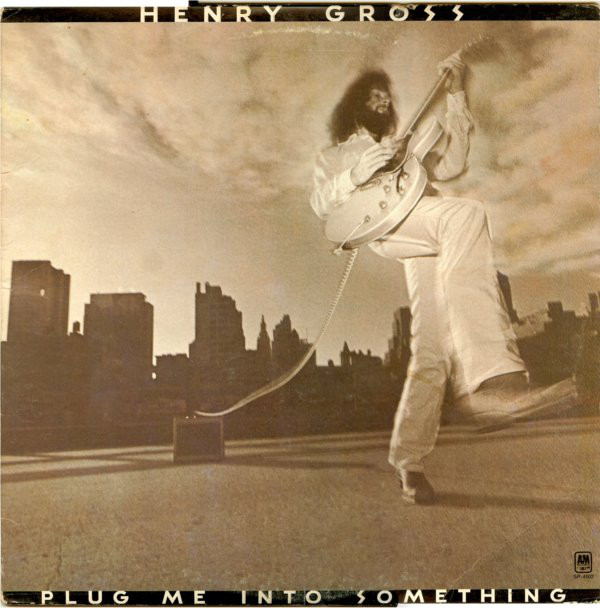
Release.
By the time Henry began work on his fourth album Release, he was in-demand as a session guitarist. Henry Gross had also left A&M Records, and signed to Terry Cashman and Tommy West’s Lifesong Records.
Signing to Lifesong Records must have been a culture shock for Henry Gross, who had previously been signed to large labels, ABC-Dunhill Records and A&M Records. At Lifesong Records, the roster was smaller and meant each artist was treated as individual.Artists were no longer part of the corporate machine, and the label’s two co-owners Terry Cashman and Tommy West would produce Release, Henry’s Lifesong Records’ debut.
For Release, Henry Gross penned a total of ten tracks, which included a song he wrote about the death of Carl Wilson’s red setter dog, Shannon. To onlookers, this seemed a strange subject for a song. Little did anyone know the effect Shannon would have. However, before Shannon was released as a single, it had to be recorded.
Recording of Release took place at The Record Plant, New York, between September and November 1975. Henry Gross was joined by a band that featured some session players. Once they had played their part, a horn and string section adding the finishing touches to Release, which was released in 1976.
When critics heard Release, they were won over by Henry’s fourth album. Release received widespread critical acclaim. Henry Gross’ blend of pop, soft rock and A&M pop found favour with critics. Dissenting voices were very much in the minority. Everything was looking good for the release of Release.
That proved to be the case when Shannon was released as a single, it reached number six in the US Billboard 100, number one in Canada and number thirty-two in the UK. Eventually, Shannon was certified gold in America alone. The sophomore album Springtime Mama, then reached number thirty-seven in the US Billboard 100. Then when Release, which was Henry Gross’ most eclectic album was was released in 1976, it reached number sixty-four in the US Billboard 200.
The only disappointment was that Release hadn’t reached the same heights as Plug Me Into Something. However, Release featured Shannon which had just been certified gold and was regarded as most eclectic and finest album. Everything in Henry Gross’ career had been building up to Release, and critics thought that this was the start of a lengthy period when critical acclaim and commercial success would come Henry Gross’ way.
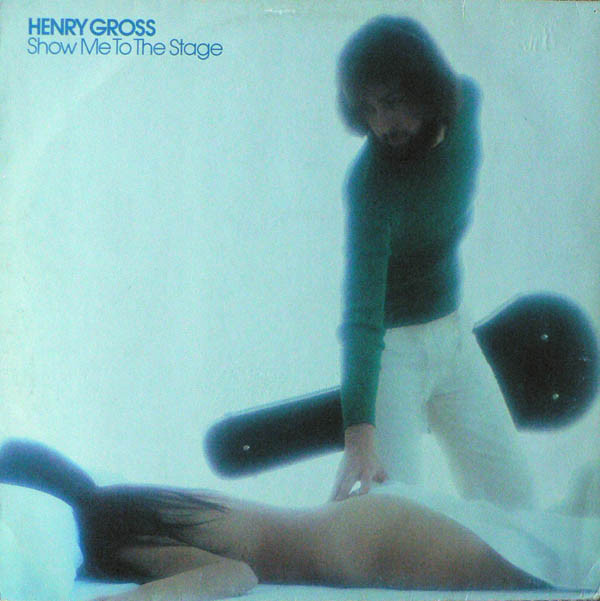
Show Me To The Stage.
After the commercial success and critical acclaim of Release, Henry started work on his fifth album. He wrote the ten tracks that became Show Me To The Stage, which was recorded at The Record Plant, New York.
Recording took place between October 1976 and January 1977, at The Record Plant. Some of the musicians who played on Release returned for Show Me To The Stage. Once again, Tommy West and Terry Cashman took charge of production, and once recording of Show Me To The Stage was completed, in was released in 1977.
Five years after releasing his eponymous debut album in 1972, Henry Gross released Show Me To The Stage. Critics regarded Show Me To The Stage as an album of two sides. Side one was something of a slow burner, cumulating in an intriguing cover of The Beatles’ Help. It showcases the not just the production skills of Cashman and West, but their harmonies. Then on side two of Show Me To The Stage Henry can do no wrong. Hooks are in plentiful supply as side two has an uplifting and joyous with a feel-good, summery vibe. Critics forecast great things for Show Me To The Stage.
Sadly, that wasn’t to be. Show Me To The Stage stalled at just number 176 in the US Billboard 200. For Henry, his career had stalled. Worse still, he was back to where he was after his sophomore album. For Henry Gross this was a huge disappointment.
Show Me To The Stage was one that got away for Henry Gross, and is an album deserved to far much better than it did. It’s without doubt the most underrated album of Henry Gross’ career. However, for Henry Gross the most worrying thing was that he was back to where he was after his eponymous sophomore album. His next album was the most important of his career.
Love Is The Stuff.
Fortunately, Henry Gross still owed Lifesong Records one album, and this offered him the chance to redeem himself. If his next album was successful, there was every possibility his contract would be extended and he could continue to rebuild his career.
Meanwhile, Tommy West and Terry Cashman had decided that Henry Gross’ next album would be a live album, This was much cheaper to record than a studio album like Show Me To The Stage. Maybe, the pair had realised that Henry Gross’ career was already on the slide, and that if they poured money into recording a studio album, it was money they were unlikely to recover. However, with Henry Gross was booked to play twice at New York’s Bottom Line for the King Biscuit Flower Hour this was the perfect opportunity to record a live album.
Tommy West and Terry Cashman arranged for both of Henry Gross’ performances to be recorded, and one of these would become Show Me To The Stage. Eventually, it was the second of Henry Gross’ two appearances at New York’s Bottom Line for the King Biscuit Flower Hour was chosen by Tommy West and Terry Cashman. chose the second, where Henry Gross plays a selection of his best known and best-loved songs. The late shows saw Henry Gross playing nine songs, including Rock ‘N’ Roll I Love You, Come Along, Juke Box Song, Southern Band and his biggest hit single Shannon. This live set of some of his finest songs, Henry Gross hoped would rejuvenate his career upon its release in 1978.
Before Lifesong Records released Love Is The Stuff, critics had their say on an album which found Henry Gross switching between pop, rock and rock ’n’ roll. While most of the critics were won over by the album, some critics weren’t convinced by Love Is The Stuff.
When Love Is The Stuff was released in 1978, the album failed to even trouble the lower reaches of the US Billboard 200. This was a huge disappointment for Henry Gross, considering it was his swan-song for Lifesong Records.
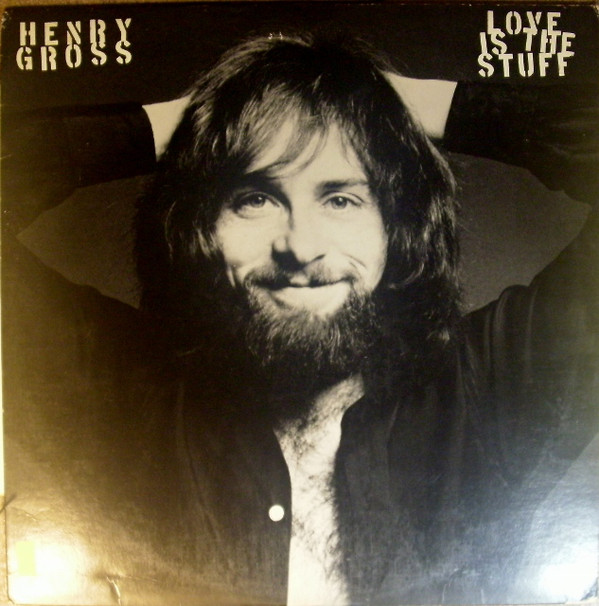
Not long after Love Is The Stuff was released, Henry Gross was signed by CBS Records, who had given a distribution deal to Cashman and West’s label. Now signed to a major, who had the budget to promote his albums, this should’ve been the start of the rise and rise of Henry Gross. Sadly, Henry Gross’ only release for CBS was What’s In A Name, which was released by Capitol Records in 1981 and failed to chart. This was the end of Henry Gross’ time at CBS.
When Henry Gross returned six years later, with his new album I Keep On Rockin’ in 1987, he was signed to the Scandinavian label Sonet Records. Just like his previous album, commercial success eluded I Keep On Rockin’. It was a similar case when Sonet Records released She’s My Baby in 1989. After that, Henry Gross left Sonet Records and in the early nineties, formed his own label Zelda Records.
By then, the success of the album Plug Me Into Something and his the single Shannon must have seemed a long time ago, However, it was only 1975, that critics were forecasting a great future for Henry Gross, who had been heralded as having the potential to become one of the great singer-singers of the seventies.
Especially after the release of Plug Me Into Something in 1975, which featured his biggest hit single Shannon. However, it was all downhill after Plug Me Into Something, with Henry Gross never reaching the same nights. When Henry Gross released his fifth Show Me To The Stage in 1977, it was his last album to chart.The rise and then demise of Henry Gross had been equally rapid.
That was a great shame, as Henry Gross had released the best music of his career during the seventies. Plug Me Into Something and Release were Henry Gross’ finest albums, while Show Me To The Stage and Love Is The Stuff are both hidden gems.. They’re a reminder of Henry Gross, whose star briefly shawn brightly during the mid-seventies, when it looked looked this truly talented troubadour was going to become one of great singer-songwriters of his generation.
Henry Gross-His Seventies Solo Years.

THE LIFE AND TIMES OF SANDY DENNY.
The Life and Times Of Sandy Denny.
In December 1969, an announcement was made that Sandy Denny had left Britain’s leading folk band, Fairport Convention. This came as a shock to many as Fairport Convention, who were Britain’s first electric folk band, popularity been rising over the past two years. Playing her part in the rise and rise of Fairport Convention was Sandy Denny who had previously been a member of The Strawbs. Sandy Denny joined Fairport Convention in 1968 when she replaced Judy Dyble.
What We Did On Our Holidays.
Sandy Denny made her Fairport Convention debut on the band’s sophomore album What We Did On Our Holidays, which was recorded at Kingsway and Olympic Studio No. 1 between June and October 1968. When What We Did On Our Holidays was released in January 1968, the album marked a moved towards folk rock. Playing an important part in the sound and success of What We Did On Our Holidays were Sandy Denny’s haunting ethereal, vocals. They would play their part in the rise and rise of Fairport Convention.
Unhalfbricking.
Just six months later, Fairport Convention returned with their third album Unhalfbricking in July 1969. It had been recorded between January and April 1969 at Sound Techniques and Olympic Studios in London. During these sessions, Fairport Convention moved away from the American folk influence to a much more traditional English folk sound on Unhalfbricking. When it was released, it was hailed as the finest album of Fairport Convention’s three album career. Just like on What We Did On Our Holiday, Sandy Denny beautiful, elegiac and emotive vocals played an important part in the albums sound and indeed success. Even after just two albums with Fairport Convention, Sandy Denny was playing an important part in the band she had joined just a year earlier.
Liege and Lief.
Five months later, in December 1969, Fairport Convention returned with their fourth album Liege and Lief, which was their third album of the year. The majority of Liege and Lief was recorded on the ‘16th,’ ‘19th,’ ‘22nd’ and ‘29th’ of October 1969. Two days later, the final session taking place on the ‘1st’ of November 1969. Just over a month later, Liege and Lief was released in December 1969,
Liege and Lief was an album of songs that had been adapted from traditional British and Celtic folk, and this future folk classic found favour with critics and fans. The album reached seventeen in the British charts. However, by then, Sandy Denny had announced her departure from Fairport Convention in later December 1969. The reason Sandy Denny gave for her departure from Fairport Convention was that she wanted to hone her songwriting skills. That was the plan.
Fotheringay.
Not long after her departure from Fairport Convention, Sandy Denny decided to form a new band, Fotheringay. So in early 1970, Sandy Denny started looking for musicians to join hew new band. One of the first musicians she brought onboard was Trevor Lucas, an Australian guitarist.
Trevor Lucas was now based in Britain, where he was a familiar face in the British folk scene. Previously, Trevor Lucas was a member of another folk-rock group Eclection. That was when Trevor Lucas first met Sandy Denny. The pair started dating in May 1969, and eventually, married in 1973. However, Trevor Lucas’s career began back in Australia, in the early sixties.
Back then, Trevor Lucas was still a solo artist. He released his debut solo album See That My Grave Is Kept Clean in 1964. Then on New Year’s Eve Trevor Lucas boarded a ship and made the journey from Australia to Britain. That was when he became a member of Eclection, and met drummer Gerry Conway.
Eclection were a folk-rock band, who were formed in 1967, and broke up two years later in 1969. However, by then, Trevor Lucas and Gerry Conway were firm friends. They renewed their musical partnership in Fotheringay.
Gradually, Sandy Denny’s new band Fotheringay was starting to take shape. The final pieces in the musical jigsaw were two former members of The Poet and The One Man Band. Guitarist Jerry Donahue had moved from Manhattan to Britain, where he quickly became stalwart of the folk scene. This wasn’t surprising as Jerry Donahue came from a musical family. His father was a Sam Donahue, the well known big band saxophonist. However, Jerry Donahue wasn’t inspired by the music his father played, and preferred, Gerry McGee, Earl Scruggs, Chet Atkins and Duane Eddy. They all inspired Jerry Donahue who joined Fotheringay in 1970 with Edinburgh born bassist Pat Donaldson.
By 1970, Pat Donaldson was a familiar face in the London music scene. He had moved to London in the early sixties, and since then, had had been a member of Bob Xavier and the Jury, Zoot Money’s Big Roll Band and the reformed Dantalian’s Chariot. Fotheringay was just the latest group the twenty-seven year old would bassist work with.
With the lineup of her new band finalised, all Sandy Denny needed was a name for the band. She decided on Fotheringay, after Fotheringay Castle where Mary Queen Of Scots was imprisoned. With its lineup complete and a name in place, Sandy Denny’s new band could begin work on their debut album.
Fotheringay.
Sandy Denny didn’t waste any time recording Fotheringay’s debut album. She wrote four tracks and cowrote Peace in the End with Trevor Lucas. He also penned The Ballad of Ned Kelly. Other tracks included covers of Gordon Lightfoot’s The Way I Feel, Bob Dylan’s Too Much Of Nothing and Banks of the Nile. These ten tracks were recorded between February and April, 1970 at Sound Techniques, in London with Joe Boyd producing what became Fotheringay.
Once Fotheringay was completed, the album was released in June 1970. It was one of the most eagerly awaited albums of the year. Critics and record buyers eagerly anticipated the release of Fotheringay.
They weren’t disappointed. Critics hailed the album a masterful debut. Sandy Denny was back, and better than ever. Her enchanting, ethereal vocal was complimented by a tight, talented band. Fotheringay won over critics and was released to critical acclaim.
Fotheringay sold well upon its release in June 1970, and reached number eighteen in Britain. Good as this was, it wasn’t good enough for Island Records. Their expectations and Fotheringay’s differed. Island Records had hoped the album would be one of the label’s biggest selling albums of 1970. That wasn’t the case, and soon, executives at Island Records’ stared pressurizing Sandy Denny to embark upon a solo career.
Sandy Denny was determined to try to make a go of her new band, and dug her heels in. She felt that Island Records expectations were unrealistic, and that would take a couple of albums before Fotheringhay’s music found a wider audience. Soon, work began on what was meant to be Fotheringay’s sophomore album.

Fotheringay 2.
A total of eleven tracks were meant to feature on Fotheringay’s sophomore album. This time, Sandy Denny only wrote two songs. Trevor Lucas and Pete Roach penned Knights of the Road and Restless. Among the other tracks were traditional songs, a cover of Bob Dylan’s I Don’t Believe You and the Dave Cousins’ composition Two Weeks Last Summer. These eleven tracks were recorded by an expanded lineup of Fotheringay.
Joining the usual lineup of Fotheringay was Linda Thompson, who was going to add backing vocals when the sessions began in November 1970. The sessions continued into December 1970. Everyone thought that things were going to plan. Sadly, that wasn’t the case.
In January 1971, it was announced that Fotheringay were no more. The band split-up and what would eventually become Fotheringay 2 was shelved. It wasn’t released until 2008. With Fotheringay now consigned to musical history, Sandy Denny embarked upon a solo career.
The Solo Years.
Sandy Denny signed to Island records, and soon, began to work on to release her debut solo album, The North Star Grassman and The Ravens. For Sandy Denny, this was the start of a new and exciting chapter in her career.
The North Star Grassman and The Ravens.
After Fotheringay split-up, Island Records were keen for the latest signing to enter the studio. Sandy Denny, Island Records believed, could become one of the company’s biggest selling artists. When Sandy Danny entered the studios in March 1971, it was with the weight of expectation on her shoulders.
By then, Sandy Denny was maturing as a songwriter. This was what she had planned to hone her songwriting skills after she left Fairport Convention in December 1969. By March 1971 she was an accomplished songwriter and had written eight of the eleven songs on The North Star Grassman and The Ravens. This included Late November and John The Gun which had been recorded for the Fotheringay 2 sessions. Among Sandy’s other compositions, were The Sea Captain, The Optimist, Next Time Around, Wretched Wilbur, The North Star Grassman and The Ravens and Crazy Lady Blues. They joined a rework of the traditional song Blackwaterside; Bob Dylan’s Down In The Flood and Charles Robins’ Let’s Jump The Broomstick. These songs were recorded over a three-month period with some familiar faces.
The recording sessions began in March 1971, at Sound Techniques, with Sandy Denny, John Wood and Fairport Convention’s Richard Thompson tanking charge of production. Just two songs were recorded there, Blackwaterside and Let’s Jump The Broomstick. Then things were moved in-house and the rest of the sessions took place at Island Studios, in London.
At Island Studios, Sandy was accompanied on some of the tracks, by the rest of Fotheringay. Other musicians were drafted in when needed. This included Buddy Emmons on pedal steel guitar; drummer Roger Powell; bassist Tony Reeves; violinist Barry Dransfield and Ian Whiteman on piano and flute organ. Royston Wood and Robin Dransfield added backing vocals on John The Gun. Richard Thompson played accordion, bass, electric and acoustic guitar. His vocal featured on Down In The Flood. Harry Robertson arranged the strings on Next Time Around and Wretched Wilbur. By May 1971, The North Star Grassman and The Ravens was complete. It would be released four months later.
Before the release of The North Star Grassman and The Ravens, critics had their say on Sandy Denny’s debut solo album. With its mixture of Sandy Denny compositions, and cover versions, it was a truly captivating album. Sandy’s vocals were compelling, as she breathed meaning and emotion into lyrics. Among the highlights were John The Gun, Late November, the wonderfully wistful Next Time Around and The North Star Grassman and The Ravens. That’s not forgetting Down In The Flood, where the interplay between Richard Thompson’s guitar and Sandy’s vocal is masterful. The only song some critics felt let the album down slightly, was Let’s Jump The Broomstick and Down In The Flood. Still, though, The North Star Grassman and The Ravens was a hailed a musical masterpiece and minor folk rock classic. Sandy Denny it seemed, could do no wrong.
When The North Star Grassman and The Ravens was released in September 1971, the album didn’t sell in the huge quantities that Island Records had hoped. They seemed to envisage Sandy Denny enjoying the commercial success that Joni Mitchell was enjoying. That wasn’t to be. However, Sandy Denny was enjoying the same critical acclaim that her American counterpart was enjoying.

Sandy.
There was no rest for Sandy Denny after she returned from a tour to promote the release of her debut album, The North Star Grassman and The Ravens. Two weeks later, in November 1971, Sandy Denny began recording his sophomore album Sandy at Sound Techniques and Island Studios.
By then, Sandy Denny had been busy, and had written eight new songs. This included It’ll Take a Long Time, Sweet Rosemary, For Nobody to Hear, Listen, Listen, The Lady, Bushes and Briars, It Suits Me Well and The Music Weaver. These songs joined covers of Bob Dylan’s Tomorrow Is A Long Time, and the traditional song The Quiet Joys Of Brotherhood, which Richard Fariña had written lyrics for. These songs were recorded by a band that featured familiar faces and new names.
The first change was that Trevor Lucas had been hired to produce Sandy. John Wood who had played such an important part in the sound and success of The North Star Grassman and The Ravens was relegated to engineer. Similarly, Richard Thompson’s only part in Sandy was playing on five songs. However, one thing hadn’t changed, where the studios that were used.
Just like with Sandy Denny’s debut album, recording took place at Sound Techniques and Island Studios. When the first sessions took place in November 1971, Sandy was joined by British folk royalty, including Fotheringay bassist Pat Donaldson. He was joined by four members of Fairport Convention, Richard Thompson on mandolin, acoustic and electric guitar, vocalist Linda Thomson, violinist Dave Swarbrick and Trevor Lucas on acoustic guitar. They were joined by some new names.
This included The Flying Burrito Brothers’ pedal steel player Sneaky Pete Kleinow. He was joined by organist and pianist John Bundrick. Both men played on It’ll Take A Long Time and Tomorrow Is A Long Time. The final member of Sandy Denny’s band was John Kirkpatrick who played concertina on It Suits Me Well. Now the recording could get underway.
With an all-star band for company, Sandy Denny recorded the ten songs over five sessions held during November 1971 and then in April and May 1972. Once the ten songs were recorded, the strings and horns were added.
Harry Robertson was brought in to arrange the strings on Listen, Listen, The Lady and The Music Weave. Allen Toussaint was drafted in to arrange the horns on For Nobody to Hear. Rather than travel to Britain, Allen Toussaint recorded the horn section at the Deep South Studio in Baton Rouge, Louisiana. Once the strings and horns were added, and Sandy was mixed and mastered, the album was ready for release.
Before that, critics received their advance copy of Sandy. The promotion of Trevor Lucas to the position of producer had paid off. He managed to combine the two sides of Sandy Denny’s music. This was the traditional folk sound, and the more modern folk rock sound. Part of this was in the choice of instruments. Traditional instruments like a mandolin and acoustic guitar harked back to folk music’s past; while the pedal steel and Hammond organ were its future. However, key to the success of Sandy were Sandy Denny’s skills as a singer and songwriter.
Some of Sandy’s finest moments were on Listen, Listen, where strings and a mandolin accompany her vocals, and on The Lady, where Sandy delivers a heartfelt vocal. Then on Quiet Joys Of Brotherhood, the lushest of strings provide the perfect backdrop for Sandy. It was a similar case with the horns on For Nobody to Hear. Bob Dylan’s oft-covered Tomorrow Is A Long Time takes on new meaning thanks on Sandy. Critics were calling Sandy a minor classic. Surely the album would bring commercial success Sandy Denny’s way?
Sadly, it wasn’t to be. When Sandy was released in September 1972, history repeated itself and Sandy was the commercial success that Island Records was hoping for. This was a huge disappointment for Sandy Denny, and it would nearly two years before she returned with her third album Like An Old Fashioned Waltz.
Like An Old Fashioned Waltz.
After returning from a tour where she was promoting her sophomore album Sandy, Island Records wanted Sandy Denny to head back into the studio. The recording then touring schedule was relentless. However, the tour gave Sandy time to think.
She decided that she wanted to make her impression musically. Sandy Denny had been rubbing shoulders with two Britain’s biggest musical exports, Led Zeppelin and The Who. She had performed with both bands, and saw how the other half lived. By the end of the tour, Sandy Denny had decided that she wanted to enjoy a taste of the commercial success both bands were enjoying. This was music to executives at Island Records’ ears. However, Sandy Denny was still disappointed by the commercial failure of her first two albums. It seemed folk rock wasn’t going to make Sandy Denny rich. That was when she realised that she would have broaden her appeal if she wanted to enjoy the commercial success she wanted.
In her heart of hearts, Sandy Denny knew her music had to change if it was to appeal to a much wider audience. So for her third album Like An Old Fashioned Waltz, Sandy decided to make some changes. Elements of pop and jazz would join her usual folk rock sound on her next album, Like An Old Fashioned Waltz. Despite deciding to change direction musically, Sandy decided to stick with Trevor Lucas who had produced Sandy.
It would’ve been awkward if Sandy Denny decided to change producer, as Trevor Lucas and Sandy Denny were married during 1973. The only change Sandy Denny made, was to bring John Wood back as co-producer. They would co-produce Like An Old Fashioned Waltz in London and Los Angeles.
For Like An Old Fashioned Waltz, Sandy Denny had written eight new sings. The only cover versions were Doris and Fred Fisher’s Whispering Grass and Sammy Cahn, Saul Chaplin and L.E. Freeman’s Until The Real Thing Comes Along. Sandy Denny remembered the two songs from her father’s record collection, and gave them a jazzy makeover. These songs were recorded in Sound Techniques and A&M Studios, Los Angeles, between May and August 1973.
Again, the great and good of folk music were present for the recording of Like An Old Fashioned Waltz. Sandy Denny was joined by former Fotheringay bassist Pat Donaldson, and six members of her former group Fairport Convention. This included Richard Thompson on mandolin, acoustic and electric guitar, guitarist Jerry Donahue, bassist Dave Pegg, drummer Dave Mattacks, violinist Dave Swarbrick and Trevor Lucas on acoustic guitar. They were joined by some old faces and new names.
The old face was John Bundrick, who played on Sandy. This time around, he played organ, piano and clavinet. New names included bassist Danny Thompson, who had previously worked with Nick Drake and John Martyn. Joining Danny Thompson was drummer Gerry Conway and saxophonist Alan Skidmore. Sandy Denny’s band was shaping up nicely. Other new names included Diz Disley on acoustic guitar; organist Jean Roussel and pianist Ian Armit. They were part of a band that spent three months recording Like An Old Fashioned Waltz in L.A. and London. The album was completed in August 1973. This meant that Like An Old Fashioned Waltz would be released in late 1973. Or it should have been.
That was if Sandy Denny hadn’t dropped a bombshell. She announced that she was rejoining Fairport Convention, and embarked upon a tour that lasted from Autumn 1973 to June 1974. Suddenly, Island Records’ plans were in disarray. Eventually, Island Records scheduled the release of An Old Fashioned Waltz for June 1974.
When critics heard An Old Fashioned Waltz, they were struck by how personal album it was. Many of the songs on An Old Fashioned Waltz dealt with things that preoccupied and worried Sandy Denny. This included everything from loss and loneliness, the changing of the season, a fear of the dark and ironically, the passing of time. An Old Fashioned Waltz was also a very different album from her two previous album with its jazz and pop stylings. On a number of tracks the lushest of strings joined a subtle piano in creating a ruminative and wistful album. Highlights included the album opener Solo, Friends, Dark The Night, At the End Of The Day and No End, which gave some insight into who Sandy Denny was as a person. However, Like An Old Fashioned Waltz divided the opinion of critics.
While some reviews were positive, the usual suspects like self-styled Dean of American Rock Critics wasn’t impressed. In his Village Voice review he called Like An Old Fashioned Waltz a “slugging album.” Other critics took a more favourable view of Like An Old Fashioned Waltz. Some felt this was the album was destined to change Sandy Denny’s fortunes.
Sadly, it wasn’t to be. When Like An Old Fashioned Waltz was released in June 1974, commercial success eluded the album. Whispering Grass was chosen as the lead single, and was released in 1973. This was a strange choice, as it wasn’t one of the stronger songs on the album. Unsurprisingly, it failed to catch the attention of record buyers. Worse was to come when the release of Like an Old Fashioned Waltz as a single was cancelled. For Sandy Denny, her dreams of becoming one of the biggest names in music had come to nothing. With her dreams in tatters, Sandy Denny rejoined Fairport Convention for the third and final time.

Sandy embarked upon a world tour with Fairport Convention. Trevor Lucas, Sandy’s husband had also rejoined Fairport Convention. For the time being, her solo career was on hold. Then as 1975 drew to a close, Sandy’s thoughts turned to her solo career, and her fourth album Rendezvous.
Rendezvous.
As 1975 gave way to 1976, Sandy Denny began writing Rendezvous. She penned Gold Dust, Take Me Away, One Way Donkey Ride, I’m A Dreamer, All Our Days and No More Sad Refrains. The other three songs on Rendezvous were cover versions. This included Richard Thompson’s I Wish I Was a Fool For You (For Shame of Doing Wrong); Elton John and Bernie Taupin’s Candle In The Wind and Jack Rhodes and Dick Reynolds’ Silver Threads and Golden Needles. Recording of these songs began in April 1976.
By then, Sandy Denny and Trevor Lucas had decided to try one more time, to move Sandy Denny’s music towards the mainstream. They had tried this on Like An Old Fashioned Waltz, which featured jazz and pop stylings. For the latest reinvention of Sandy Denny’s music, her music took on a contemporary rock sound on Rendezvous. This was very different from Sandy Denny’s previous albums.
Rendezvous was recorded between April and June 1976 at Island Studios Basing Street and Hammersmith; CBS Studios in London; Strawberry Studios in Stockport and Sound Techniques in Chelsea, London. Accompanying Sandy was a band the featured over thirty musicians and backing vocalists.
This included Sandy Denny’s former colleagues in Fairport Convention, guitarist Jerry Donahue and Richard Thompson, bassist Dave Pegg, drummer Dave Mattacks and Trevor Lucas on acoustic guitar. They were joined reggae guitarist Junior Murvin, John Bundrick on synths and piano; Steve Winwood on organ, piano and clarinet and former Fotheringay bassist Pat Donaldson. Adding backing vocals were Benny Gallagher and Graham Lyle; Kay Garner and Clare Torry, plus Sue Glover and Sunny Leslie. Even The Silver Band made a guest appearance on Silver Threads and Golden Needles. Much of Rendezvous had been recorded between 23rd of April and 7th of June 1976 at Basing Street and Island Studios.
When everyone arrived at the studio, Harry Robertson had arranged the strings on Candle In The Wind, I’m a Dreamer and All Our Days. Steve Gregory had arranged the horns on Take Me Away. Even The Silver Band’s appearance on Silver Threads and Golden Needles required the Robert Kirby to be brought onboard. John Wood again, returned to the role of engineer as Trevor Lucas produced Rendezvous. Now the sessions began. Straight away, there was a problem.
During these sessions, Sandy Denny’s voice neither the same purity nor ethereal quality. During the Fairport Convention tour, she had been drinking and smoking heavily. Sadly, this had taken its toll on Sandy Denny’s voice. Still Sandy Denny was able to unleash a powerful vocal, and was always in control. On other tracks, Sandy Denny continued to breathe life, meaning and emotion into lyrics. Sandy Denny was still a one of the most talented singer, songwriter and storyteller’s of her generation. However, once Sandy Denny had recorded her vocal parts, she left the studio. Little did anyone who was present that day realise that Sandy Denny would never, ever, enter a studio again.
Despite Sandy Denny having recorded her vocals, Rendezvous was still not complete. Another session took place between the 9th and 18th of June 1976. By then, Trevor Lucas was at the overdubbing stage. He added layers of string, and also overdubbed layer after layer of backing vocals and instruments. This would prove controversial.
With the album completed in July 1976, the original album title was Gold Dust. The release date was originally scheduled for October 1976. However, the release date kept being postponed, and six months later, when the album was eventually released in May 1977, it was entitled Rendezvous. It was an album that didn’t win over critics.
Many critics felt Rendezvous had been overproduced. This was the result of Trevor Lucas’ constant overdubbing of layers of strings, backing vocals and instruments. There were too many strings, backing vocalist and the lead guitars and they threatened to overpower Sandy Denny’s vocals. That was a great shame, given the quality of Sandy’s songwriting, and vocals. If Trevor Lucas had taken a less is more approach, Rendezvous would’ve been a much better album. However, it was not without some fine moments.
Among them, where Gold Dust took on a Caribbean influence. Take Me Away and I’m A Dreamer became soulful torch songs. All Our Days was a seven minute pastoral epic, which seemed to draw inspiration from Vaughan Williams. I’m A Dreamer, All Our Days and No More Sad Refrains all showcased Sandy Denny’s talents as a singer and songwriter. However, when Rendezvous was released in May 1977, it was to mixed reviews.
When Rendezvous was belatedly released, the album passed record buyers by. It became Sandy Denny’s least successful album. The dream was almost over.

Gold Dust.
Not long after the release of Rendezvous, Island Records quietly dropped Sandy Denny. Despite being without a record label, she went ahead with plans to record a live album, Gold Dust.
After the release of Rendezvous, Sandy Denny headed out on tour to promote the album. The last date on the tour was at the Royalty Theatre in London on 27th November 1977. That night the tapes rolled.
Sandy Denny accompanied by her band, worked their way through the seventeen songs. Closing the set was a spine-tingling version of one of Sandy’s best songs Who Knows Where the Time Goes? That proved to a poignant way to end what was Sandy’s last public performance was on Gold Dust, which was released somewhat belatedly in 1998.

After Rendezvous failed commercially, Island Records dropped Sandy. She was already drinking heavily, smoking and snorting cocaine. Soon, her behaviour became erratic. By then, Sandy Denny’s daughter Georgia was born prematurely. Despite having just become mother, Sandy Denny’s life was becoming increasingly chaotic. Richard Thompson remembers Sandy Denny: “was crashing the car and leaving the baby in the pub and all sorts of stuff.” This was a worrying time for Sandy Denny’s friends and family.
In late 1978, Sandy Denny journeyed to Cornwall, with her young daughter Georgia and her parents. During the holiday, Sandy Denny fell down a flight of stairs and hit her head on concrete. After the accident, Sandy Denny started to suffer from severe headaches. When Sandy Denny consulted a doctor, they prescribed her a strong painkiller Dextropropoxyphene which wasn’t to be taken with alcohol. Despite this warning, Sandy Denny continued to drink. This was a recipe for disaster.
Just a few weeks later, tragedy struck on the ‘17th’ of April 1978. That night, Sandy Denny was admitted to the Atkinson Morley Hospital in Wimbledon. She fell into a coma, and four days later, on the ‘21st’ of April 1978, Sandy Denny died. A post-mortem found that the cause of Sandy Denny’s death was a brain haemorrhage and blunt force trauma. It’s likely that when Sandy Denny fell, this played a contributory factor in her death. Tragically, Sandy Denny was only thirty-one when she died.
That day, the career of one of the finest British folk singers of her generation was cut tragically short. Music was in mourning at the loss of Sandy Denny who had achieved so much in a short space of time. This included a brief spell with The Strawbs, before becoming the lead singer of Fairport Convention. After her departure from Fairport Convention in December 1969, Sandy Denny founded Fotheringay and then embarked upon a solo career, releasing a quartet of albums between 1971 and 1977. Just a year later, and Sandy Denny was dead, aged just thirty-one.
Music lost a hugely talented singer and songwriter. There is no doubt about that. Sandy Denny stood head and shoulders above many of her contemporaries, including some she had shared a stage with during her short career. The loss of Sandy Denny like Nick Drake five years earlier was a tragedy, and a case of what might have been?
Despite her relatively youth, Sandy Denny played a huge part in the British folk scene. She had played a huge part in the success of Fairport Convention, and founded Fotheringay. Their music has only recently received the recognition it deserved. So to some extent have Sandy Denny’s solo albums. It’s only recently that they’ve been reevaluated and started to finds a wider audience. They are a reminder of British folk music’s greatest ever folk singer, Sandy Denny, who passed away thirty-nine years ago. As Sandy Denny sang in her finest song Who Knows Where Time Goes?
The Life and Times Of Sandy Denny.

THE LIFE AND MUSIC OF JOHN WETTON.
The Life and Music Of John Wetton.
On the ’31st’ of January 2017, John Wetton passed away in Bournemouth, Dorset aged just sixty-seven. Music had lost another of its most talented and successful sons. John Wetton had enjoyed success with seven bands and as a solo artist. His career began with Mogul Thrash, before he joined Family, King Crimson, Uriah Heep and then progressive rock supergroup UK. Next stop for John Wetton, was Wishbone Ash, before he joined another progressive rock supergroup, Asia. Their first two albums sold in excess of nine million copies. By then, John Wetton was one of the most successful musicians of his generation. This success would continued right up until John Wetton’s death, in his adopted home town of Bournemouth.
Despite spending much of his time in Bournemouth, John Wetton was born on the ’12th’ June 1949, in Willington, Derbyshire. However, during John’s childhood, the Wetton family moved to Bournemouth. That was where John discovered music and later, would serve his musical apprenticeship.
It was also in Bournemouth that John Wetton first met Richard Palmer-Jones. They were members of The Corvettes, The Palmer-James Group, Tetrad, and Ginger Man. After that, John Wetton joined Mogul Thrash. That’s where he made his breakthrough.
Mogul Thrash-Mogul Thrash.
Mogul Thrash were a progressive rock band, who had evolved out of Brotherhood. They released their debut single Sleeping in the Kitchen in 1970. Then a year later, Mogul Thrash released their eponymous debut album in 1971. It was produced by Steampacket founder Brian Auger. On its release, Mogul Thrash was well received by critics. The future looked bright for Mogul Thrash. Sadly, that wasn’t the case.
As Mogul Thrash was released, the group were locked in a legal battle with their management. It didn’t end well. Mogul Thrash had no option but to disband. So, 1971s Mogul Thrash proved to be group’s only album. For bassist John Wetton, and the rest of Mogul Thrash, this was a huge disappointment. Mogul Thrash looked like they were going places. Luckily, Family were looking for a bassist.
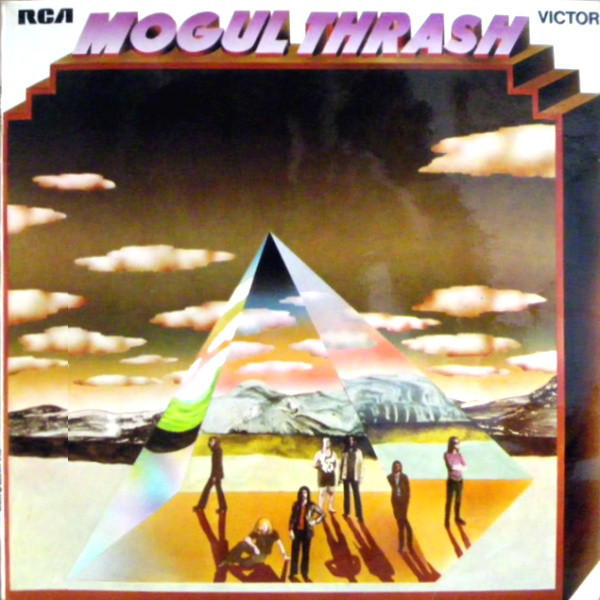
John Wetton fitted the bill. Not only could he play bass, but he was a guitarist and vocalist. So, the multitalented twenty-two year old joined Family. He played on their next two albums, starting with Fearless
Family-Fearless,
Family’s fifth album, was released on 29th October 1971. This marked John Wetton’s Family debut. He played bass, guitars, and keyboards. Family were almost getting three musicians for the price of one. He would more than play his part in Fearless’ sound and success.
On its release, Fearless was well received by critics. The new lineup of Family seemed to have gelled quickly. Fearless was littered with highlights, including Spanish Tide, Save Some for Thee and Take Your Partners. So, it’s no surprise that Fearless sold well.
After its release, Fearless climbed the British and American charts. Eventually, it reached number fourteen in Britain and number 177 in the US Billboard 200. This was a first for Family. Never before had any of their albums charted in America. John Wetton it seemed, was Family’s good luck charm.
Bandstand.
After the success of Fearless, Family returned to the studio, and recorded Bandstand at Olympic Studios, London. This was where they had recorded Fearless. Just like Fearless, Bandstand was produced by George Chkiantz and Family. However, it marked a change in style for Family.
Bandstand was released in September 1972. It marked a stylistic departure for Family. Their music moved towards the mainstream. Partly, this was because Roger Chapman and Charlie Whitney had accepted the standard method of songwriting. It made life a lot easier. However, this move towards the mainstream risked alienating Family’s fans.
Prior to Bandstand’s release, critics had their say. Critics liked Family’s more mainstream sound. The album was released to near critical acclaim. A few contrarian critics disagreed. However, the people that mattered were the record buying public.
As Bandstand hit the shops, the members of Family wondered how their new sound we he received? When the dust settled, Bandstand had reached number fifteen in Britain and number 183 in the US Billboard 200. This was almost the same as Fearless. It seemed their new sound had neither lost, nor gained, Family any new fans. However, before long, Family had lost their bassist.
By 1972, John Wetton had attracted the attention of King Crimson. They were prog rock royalty, and one of the biggest and most innovative bands of the prog rock era. So, when John was asked to join King Crimson, he couldn’t say no. He made his debut on Larks’ Tongues In Aspic.
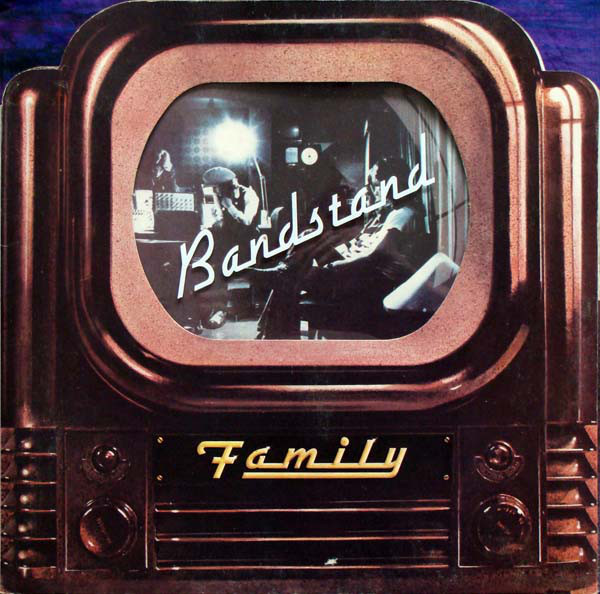
King Crimson-Larks’ Tongues In Aspic.
Larks’ Tongues In Aspic was King Crimson’s fifth album. The album marked an almost new lineup of King Crimson. This was the third lineup in the group’s history. Joining Robert Fripp were bassist John Wetton, ex-Yes drummer Bill Bruford, percussionist Jamie Muir and David Cross, who played violin, viola, Mellotron, electric piano and flute. This new lineup saw the band head in a new direction.
King Crimson incorporated different instruments, including percussion and African mbira. They moved away from their jazz sound, to a fusion of progressive rock and experimental music on what became Larks’ Tongues In Aspic.
It was released in March 1973, to critical acclaim, reaching number twenty in the UK and number sixty-one in the US Billboard 200. With a new lineup and having released their strongest album in recent years, King Crimson looked as if they were about to become one of the biggest bands of the early seventies.
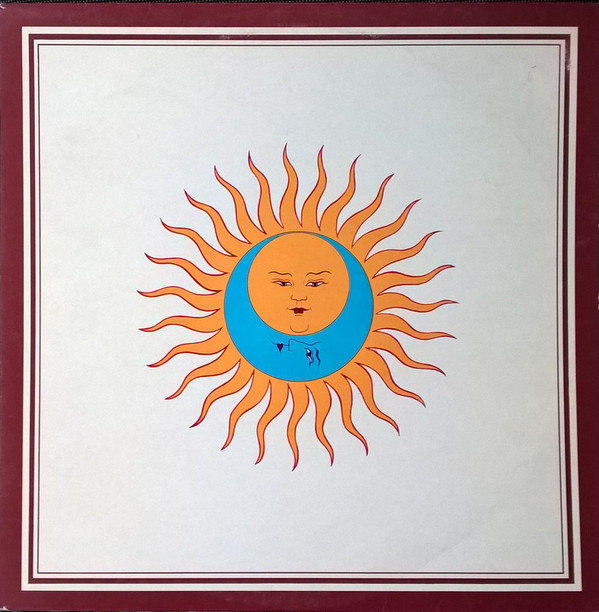
Starless and Bible Black.
Just about every prog rock band released a concept album. Starless and Bible Black, which is a quotation from the first two lines of Dylan Thomas’ Under Milk Wood, was King Crimson’s concept album. The album is a commentary on the sleaziness and materialism that was blighting society. Richard Palmer-James, a former member of Supertramp, cowrote four of the songs on Starless and Bible, which saw King Crimson take a different approach to recording.
Unlike previous albums, there’s no drums on Starless and Bible. Despite the lack of drums, drummer Bill Bruford played percussion and cowrote three tracks. While he played on Starless and Bible, Jamie Muir didn’t. He’d left the band. Another change was that only the first two tracks on Starless and Bible, The Great Deceiver and Lament recorded in the studio. The rest of the tracks were recorded live, with the applause edited out. This was a very different approach from previous King Crimson albums.
Despite this, Starless and Bible Black was well received. Some critics hailed Starless and Bible Black as King Crimson’s best album since their debut. With its fusion of prog rock and experimental music, it was an ambitious and groundbreaking album. On its release in March 1974, it reached number twenty-eight in the UK and number sixty-six in the US Billboard 200. With King Crimson having released two consecutive critically acclaimed albums, it looked as if they were about to join the royalty that included Pink Floyd and Led Zeppelin. However, that wasn’t to be.
Red.
Having just released to consecutive critically acclaimed albums, Larks’ Tongues In Aspic and then Starless and Bible Black, critics and fans wondered what direction King Crimson seventh album Red would take? Being King Crimson, fans and critics had learnt to expect the unexpected. The first change was in the lineup. After their 1974 summer tour, David Cross left King Crimson. This meant the band was now a trio consisting of Robert Fripp, bassist John Wetton and drummer Bill Bruford. They cowrote much of Red.
Red featured just five tracks. Recording of Red began on 30th June 1974 at Olympic Studios, London and finished in August 1974. Four of the songs on Red were recorded live. The exception was One More Red Nightmare, which was recorded live. In the studio, Robert Fripp played guitar and mellotron. He was joined by bassist John Wetton and drummer Bill Bruford. They were augmented by a variety of musicians who often, played on just one track. These musicians played their part in not only what’s a landmark album, but an album that marked the end of an era.
On its release in October 1974, Red reached just number forty-five in the UK and number sixty-six in the US Billboard 200. Critics hailed Red as an innovative album. There are obvious similarities with Larks’ Tongues In Aspic and Starless and Bible Black in sound and quality. One change was the lack of the acoustic guitars that featured on previous albums. With its fusion of progressive rock and classic music, Red proved to be a hugely influential and innovative album. Sadly, it was the last King Crimson studio album to feature John Wetton.
Uriah Heep-Return To Fantasy.
Having left King Crimson, John joined Uriah Heep. They had already realised seven albums since their 1970 debut …Very ‘Eavy …Very ‘Umble. John was brought in to replace Gary Thain. He joined just in time to play on their eighth album Return To Fantasy. John it seemed had the Midas touch.
Return To Fantasy was recorded at Lansdowne Studios and Morgan Studios, London. Just like previous albums, Gerry Bron took charge of production. Initially, Mick Box thought found that the chemistry he had with Gary Thain was missing. However, soon, John was making his presence felt, playing bass, mellotron and adding backing vocals. He played an important part in Return To Fantasy’s success.
When critics heard Return To Fantasy, they hailed it a vast improvement on 1974s Wonderworld. Return To Fantasy was the album critics knew Uriah Heep were capable of recording. Critical acclaim accompanied Return To Fantasy’s release.
It wasn’t just critics who loved Return To Fantasy. So did the recording buying public. On its release on 30th June 1975, Return To Fantasy reached number seven in Britain and was certified silver. Return To Fantasy reached number thirty-eight in the US Billboard 200 charts, selling 450,000 copies. The new lineup of Uriah Heep had just released their biggest selling album, Return To Fantasy. The problem was following it up.
High and Mighty.
Nearly a year later, Uriah Heep released High and Mighty on 8th June 1976. It was the last Uriah Heep album to feature vocalist David Byron. He had been battling with alcohol. Sadly, his drinking was beginning to affect the band. So, he was sacked after the release of High and Mighty.
What didn’t help, was that High and Mighty wasn’t well received by critics. Some critics slated the album. They weren’t impressed by the move towards the mainstream. Nor did the lack of lengthy tracks please critics. The longest song on High and Mighty was just under six minutes. This was quite unlike Uriah Heep. So was the chart placing.
High and Mighty stalled at number fifty-five in Britain. This was their lowest chart placing since their sophomore album, Salisbury. Across the Atlantic, American record buyers turned their back on Uriah Heep, with High and Mighty reaching number 161 in the US Billboard 200. For Uriah Heep, something had to give.
David Byron was sacked by Uriah Heep. John Wetton decided that this also was the time to part company with Uriah Heep. He had plenty of session work and collaboration to keep him busy.
For the next couple of years, John was kept busy. John played on Roxy Music’s 1976 album Viva! He also accompanied Bryan Ferry on 1976s Let’s Stick Together, 1977s In Your Mind and 1978s The Bride Stripped Bare. This wasn’t John’s only collaboration with members of Roxy Music.
Previously, John had played on Andy McKay’s 1977 album, Score. Then in 1978, Phil Manzanera asked John to play on his 1978 album K-Scope. The pair had worked together on Phil’s 1975 debut Diamond Head. So, this was no surprise. Neither was John joining a new band UK.
UK-UK.
UK were another prog rock supergroup. Their lineup included John, Yes drummer Bill Bruford, keyboardist Eddie Jobson and guitarist Allan Holdsworth. This was the lineup that recorded two critically acclaimed albums. The first was UK.
Recording of UK took place between December 1977 and January 1978. It was released in March 1978. Although critics gave UK glowing reviews, referring to the music as innovative and progressive, UK passed record buyers by. The four members of UK were going to give up.
Danger Money.
Nearly a year to the day, UK returned with their sophomore album, Danger Money. It featured a new lineup of UK. Bill Bruford and Allan Holdsworth had left the group. Replacing them was Terry Bozzio. So, with UK reduced to a trio, they returned to the studio.
The new lineup were set record six songs at Air Studios, London. These songs were penned by John and Eddie. They were recorded between November 1978 and January 1979. Once Danger Money was recorded, it was ready for release in March 1979.
History repeated itself, when Danger Money was well received by critics, but failed to chart. At least Nothing to Lose reached number sixty-seven in the British charts. Despite this modicum of success, it was a frustrating time for groups like UK. They certainly weren’t lacking in talent. Far from it. UK were a hugely talented group. Part of the problem was the changing musical landscape.
The nihilist sound of punk and post punk was polluting the airwaves. Many critics were little more than cheerleaders for the talentless punks. It truly was the great rock ’n’ roll swindle. Its victims were talented prog rock groups who punks referred to as dinosaurs. However, little did they realise that in three years time, John Wetton would have the last laugh. Before that, UK released their swan-song.
Night After Night.
Danger Money was John Wetton’s final studio album with UK. He featured on their live album Night After Night. It was recorded during UK’s tour of Japan, in early June 1979. The album was recorded at Nakano Sun Plaza and Seiken Kan, in Tokyo. It was released in September 1979.
This was perfect timing. UK were about to head out on tour, supporting Jethro Tull on their American tour. So, the release of Night After Night was timed to coincide with the American tour. Sadly, Night After Night wasn’t a commercial success. This resulted in John leaving UK.
John Wetton-The Solo Years
Caught In The Crossfire.
Following his departure from UK, John decided that now was the time to embark upon a solo career. So he began work on what became Caught In The Crossfire.
Given John Wetton is a talented multi-instrumentalist, he was able to record much of Caught In The Crossfire himself. He played bass, guitars, keyboards and added vocals. To play the drum and percussion parts, John drafted in Simon Kirke of Bad Company. Another guest artist, was saxophonist Malcolm Duncan. They played their part on Caught In The Crossfire, John Wetton’s long-awaited debut album.
On its release in 1980, Caught In The Crossfire was well received by critics. Although quite different from his work with Family, King Crimson and Uriah Heep, it showed John’s versatility and ability to create ambitious and innovative music. Although the album sold well, it wasn’t a huge success. Despite that, ecord buyers awaited John’s sophomore album. It would be a long time coming.
There was a reason for this. John was a busy man. He worked with Roger Chapman on their 1980 album Mail Order Magic and 1981s Hyenas Only Laugh for Fun. The former Family frontman had reinvented himself as a solo artist. However, later in 1981 John joined Wishbone Ash, where he replaced Martin Turner.
Wishbone Ash-No Smoke Without Fire.
With Martin Turner leaving Wishbone Ash, the English rock group found themselves with a problem. They had an album to record, but had no bassist. This was where John Wetton came in. He joined in time to record No Smoke Without Fire.
No Smoke Without Fire was a stylistic departure for Wishbone Ash. Previously, their music had taken on an American influence. Some fans didn’t take to this. What they wanted was Wishbone Ash to return to the prog rock of their past. Other fans wanted Wishbone Ash to return to their hard rocking best. With Derek Lawrence returning as producer, for the first time since 1972s Argus, they did both.
When No Smoke Without Fire was released later in 1978, the album has hailed Wishbone Ash’s heaviest album to date. Critics welcomed the inclusion of prog rock epic The Way Of The World. Wishbone Ash many thought were back.
Sadly, The Way Of The World stalled at number forty-three in Britain, and failed to chart in America. For John Wetton and the rest of Wishbone Ash, this was a huge disappointment. Especially considering The Way Of The World was John’s only album with Wishbone Ash. He left the group to join Asia.
Asia-Asia.
Asia were another British prog rock supergroup. Its lineup featured John, guitarist Steve Howe and keyboardist Geoff Downes. They were both members of Yes. The final piece of the jigsaw was Carl Palmer, or E.L.P. With Asia’s lineup complete, they began working on their eponymous debut album.
Recording of Asia took place at the Townhouse Studios, London. For the five months between June and November 1981, the four members of Asia recorded nine tracks. Eventually, the album was finished and ready for release on 18th March 1982.
After their five months of hard work, reviews of Asia were mixed. This some critics felt, didn’t bode well for the release of Asia. They were wrong.
On its release, Asia’s 1982 eponymous debut album sold eight million copies worldwide, and reached number one in the US Billboard 200 charts. This lead to Asia being certified platinum four times over. John Wetton it seemed had the Midas touch.
Alpha.
Following the commercial success of Asia, the four members of the band started work on their sophomore album Alpha. John and Geoff penned nine of the ten tracks. The other track, The Smile Has Left Your Eyes, was a John Wetton composition. These tracks were recorded between February and May 1983.
It was never going to be easy following up Asia. The album had sold eight million copies. Unsurprisingly, Alpha wasn’t as popular. Again, reviews of Alpha were mixed. Critics pointed towards the change in sound. Asia, just like Family had done a decade earlier, had moved towards the mainstream. Part of Asia’s appeal, was their progressive sound. While it was less prominent, Alpha was still a commercial success.
On its release on 26th July 1983, Alpha reached number six in the US Billboard 200 and number five in Britain. This resulted in Alpha selling two million copies worldwide. Alpha was certified platinum in America and gold in Britain. Sadly, after Alpha, Asia never reached the same heights
Astra.
There was a gap of two years between Alpha, and Asia’s third album Astra. It marked the end of an era. Astra was the last album to feature founding member John Wetton. He didn’t return until 2008s Phoenix. No wonder. All wasn’t well within Asia.
Astra had been two years in the making. Recording started in 1983. However, John left in September 1983, and was replaced temporarily by Greg Lake. He featured during some of Asia’s live shows. When John returned, Steve Howe departed. This was blamed on the tension between Steve and John. Replacing Steve, was Mandy Meyer, who brought a harder edge to Asia’s sound.
Asia’s new lineup spent much of 1984 and 1985 recording Astra. The band moved between studios. Eventually, Astra was finished, and ready for release in November 1985.
When critics heard Astra, reviews were mixed. While some critics weren’t impressed, other called Astra a solid album. The jury were well and truly out. As usual, the record buying public had the deciding vote.
On its release, Astra stalled at number sixty-seven in the US Billboard 200 and number sixty-eight in Britain. This was a far cry from Asia and Alpha.
Following Astra, John Wetton left Asia. While they enjoyed a degree of commercial success, Asia never reached the same heights. The lineup of Asia with John, Steve Howe, Geoff Downes and Carl Palmer proved to be the classic lineup of Asia. We wouldn’t see their likes again until 2008s Phoenix. By then, John Wetton was enjoying a successful solo career. Before that, John and members of rock royalty collaborated on an album.
John Wetton and Phil Manzanera decided to collaborate on an album where rock met pop. The resultant album, Wetton Manzanera was released on 1987. It was well received by critics. However, there was still no sign of John releasing his sophomore album. Eventually, it would be released in 1994.
The Solo Years-Part Two.
Battle Lines.
Fourteen years after John Wetton released his debut solo album Caught In The Crossfire, he returned with his sophomore album Battle Lines in 1994. It marked the return of a musical innovator.
Throughout his career, John was also an early adopter of technology. That was the case on Battle Lines. He made good use of the new technology that had become available. Keyboard parts were programmed and samples were used to create orchestral arrangements. With its mixture of technology and traditional instruments, Battle Lines was a captivating album.
Critics agreed. Battle Lines veered between beautiful and elegiac, to dramatic and innovative. Genres melted into one, as with elements of folk, folk rock, progressive rock and rock shine through. John and his small, talented band made a welcome return on Battle Lines.
Battle Lines, John Wetton’s long awaited sophomore album found him evolving musically and as a musician. This ensured his music continued to stay relevant in an ever-changing musical landscape. John’s fans welcomed the release of Battle Lines, but the album failed to find a wider audience. Despite this, John returned with a live album in 1995.
Chasing The Dragon.
This was Chasing The Dragon, Johhn Wetton’s first live album. It was recorded during John’s 1994 Japanese tour. During the tour, John played songs from Caught In The Crossfire and Battle Lines. When the tour arrived in Osaka and Tokyo, John ensured that the tapes were running. These shows were recorded, and later, became Chasing The Dragon.
It features fifteen tracks from the Osaka and Tokyo shows. This included Heat Of The Moment, Caught In The Crossfire, In The Dead Of Night, Only Time Will Tell, Hold Me Now and Battle Lines. John revisited the King Crimson back-catalogue on Starless and Book Of Saturday. This also made Chasing The Dragon an attractive proposition for King Crimson fans upon its release in 1995.
Upon its release, Chasing The Dragon proved popular. Alas, not enough for the album to chart. It was a similar story to John’s previous albums. Despite this, John continued to record and release live albums. This includes Live In Argentina 1996, which would become the first official bootleg that John Wetton released.
Arkangel.
Two years after the release of Chasing The Dragon, John Wetton returned with a new solo album, Arkangel. It featured twelve tracks that had been recorded between 1995 and 1996 in five studios on two continents.
Part of Arkangel was recorded in Can-Am and Convent studios in Los Angeles, while other recording sessions took place at the Xero Studio, and Intimate studios. Some of the Arkangel sessions took place at the Garage Studios, in East Grinstead, Sussex. Gradually, the album started to take shape. That was no surprise, given the personnel that worked on the album. Joining John were Robert Fripp, Steve Hackett, Richard Palmer-James and Billy Liesegang who co-produced some of Arkangel. It was released in 1997,
When Arkangel was released it was well received by critics. They were won over by a carefully crafted album of pop rock and progressive rock that oozed quality. Especially on tracks like the ethereal instrumental The Circle Of St Giles, Last Thing On My Mind, the rocky I Can’t Lie Anymore and the ballad Arkangel. These songs were part of what was, without doubt, one of John’s best solo albums. It set the bar high for future albums.
Sinister.
As the new millennia dawned, John Wetton released his fourth solo album Sinister, in August 2010. Just like Arkangel, Sinister featured an all-star lineup. Robert Fripp, Ian McDonald, John Mitchell and Gary Chandler. They play their part in what many regard as another of John Wetton’s finest solo albums.
The musicians that feature on Sinister are among some of the most talented of their generation. This includes progressive rock royalty. Gone are the samples and synths, as John returns to his rock roots. With its mixture of rock anthems and ballads, there was something for everyone on Sinister, where John Wetton and his all-star band roll back the years.
When Sinister was released, it was to praise and plaudits. Critics hailed the album as one of John Wetton’s finest solo albums. For John this was the perfect way to start begin the fifth decade of his musical career.
Following Sinister, John released two collaborations with Ken Hensley during 2002, More Than Conquerors and One Way Or Another. The next year, John made a welcome return with his next solo album Rock Of Faith.
Rock Of Faith.
Rock Of Faith was released by John Wetton in 2003. It was his first solo album since Sinister in January 200. However, Rock Of Faith was well worth the three year wait.
When critics heard Rock Of Faith, they described the album as a fusion of classic, rock, progressive rock and symphonic rock. For John, it was akin to a return to the seventies. What’s more it was a return to form for John Wetton. Seamlessly, John flits between ballads and rocky tracks on Rock Of Faith. In doing so, he combines musical genres, producing an album that’s beautiful, dramatic, soulful and wistful. John Wetton was maturing like a good wine, and would continue to do so.
After the release of Rock Of Faith, John released the first of two official bootleg albums during 2003. With John Wetton, it was a case of feast or famine
Live In Argentina 1996.
Live In Argentina 1996 was recorded on 19th of October 1996, at Broadway Theatre, Buenos Aries, during John’s South American tour. That night, John Wetton was accompanied by a small band. John plays bass, acoustic guitar and takes charge of lead vocals. He’s joined by drummer Thomas Lang, guitarist Billy Liesegang and keyboardist and vocalist Martin Orford. This small, but tight and talented band, John worked his way through seventeen tracks. They were recorded and eventually, were released as Live In Argentina 1996.
Seven years passed before the release of Live In Argentina. When it was belatedly released in June 2003, Live In Argentina was a welcome reminder of John Wetton and his tight, talented band during their 1996 South American tour. It had been a memorable tour, and Live In Argentina was a reminder of this. However, later in 2003, John Wetton released the second of his official bootleg albums, Live In Osaka 1997.
Live In Osaka 1997.
In 1997, John Wetton embarked upon his latest Japanese tour. He was, by then, a popular artist in Japan, and was a regular visitor to the country. For his 1997 tour, there had been a change to the lineup of John’s band.
Keyboardist and vocalist John Young had replaced Martin Orford. So when the tour began, keyboardist John Young joined drummer Thomas Lang, guitarist Billy Liesegan while John played bass, acoustic guitar and added lead vocals. This was the lineup of John Wetton’s band that arrived in Osaka.
John Wetton had been booked to play at the Club Quattro, in Osaka, on the 2nd of October 1997. That night, the tapes were running as John and his band worked their way through eighteen songs from his back-catalogue. They would eventually become Live In Osaka 1997.
Six years passed before Live In Osaka was released in 2003. Just like Live In Argentina 1996, Live In Osaka 1997 was a popular release among John Wetton’s fans. Soon, copies of the two official bootleg albums sold out and were highly prized among collectors. So would the third official bootleg album that John Wetton released, Live At The Sun Plaza Tokyo 1999.
Live At The Sun Plaza Tokyo 1999.
Two years after his previous tour, John Wetton made a return visit to Japan in the summer of 1999. By then, John’s popularity in Japan continued to grow. For his tour, John brought with him, the latest lineup of his band.
For John Wetton’s 1999 Japanese tour, his band featured a new drummer Steve Christey. He was joined by guitarist Billy Liesegan and keyboardist Martin Orford who had returned to the fold. They accompanied John who took charge of lead vocals and switched between acoustic guitar and bass. This was the lineup that would take to the stage at the Sun Plaza, in Tokyo on 5th August 1999. .
As John Wetton and his band took to the stage, the tapes were running. That night, the stars were aligned as John and his band worked their way nineteen tracks. Their performance was almost flawless as they showcased their talented and versatility. Later, John revealed that it was one of the favourite concerts of his solo career. It was fitting that it would be released as Live At The Sun Plaza Tokyo 1999
Live At The Sun Plaza was released a year later, in 2000. John Wetton’s fans welcomed the release of this latest live album. Before long, it was out of print. It would a similar story when Live In Argentina and Live In Osaka 1997 were released in 2003.
Raised In Captivity.
Eight years after his previous studio album Rock Of Faith, John Wetton, returned 2011 with Raised In Captivity. John Wetton was joined by some of his musical friends. This all-star cast would play their part in what would be John Wetton’s last studio album.
Joining John Wetton at CircaHQ Studios,in Woodland Hills, California in January 2011 was an all-star cast. They had been members of some of the biggest bands in the world. This included former: Genesis guitarist Steve Hackett; Asia keyboardist Geoff Downer; Deep Purple guitarist Steve Morse; Yes keyboardist Tony Kaye; Roxy Music violinist Eddie Jobson. Seamlessly, John Wetton and his and switch between musical genres throughout Raised In Captivity. There’s never a dull momen, as John draws inspiration from his musical past. Elements of progressive rock, classic rock and folk can be heard, as John and his musical friends play their part in a truly captivating album, Raised In Captivity.
When Raised In Captivity was released in 2011, it was well received by critics and hailed as a welcome addition to John Wetton’s discography. Given the quality of music on Raised In Captivity, critics and music fans awaited the released of John Wetton’s next solo album.

Over the next couple of years, John Wetton continued to play live and collaborate with other artists. Despite being a professional musician for the best part of fifty years, John seemed to have an insatiable appetite for music. He made guest appearances on several albums.
This included Ayreon’s The Theory Of Everything and Renaissance’s Grandine il Vento, which were both released during 2013. The same year, John toured with UK and took to the stage with District 97 at Reggie’s Music Joint, Chicago, on 17th October 2013, Both the UK and District 97 shows were recorded and would later, be released as a live album.
Before that, Asia released their fourteenth studio album Gravitas, which was written and produced by John Wetton and Geoff Downes. Gravitas was well received upon its released in March 2014. So was District 97’s album One More Red Night: Live In Chicago, when it was released during October 2014. John who had just turned sixty-five, seemed busier than ever.
As 2015 dawned, John Wetton would soon celebrate fifty years as a professional musician. There was no sign of him slowing down though. He was about to release four albums during the next twelve months. 2015 was going to be one of the busiest of recent years. The year started with the release of John Wetton And The Les Paul Trio’s album New York Minute in early March. Later in March, John released The Studio Recordings Anthology. Three months later, Asia released Axis XXX Live San Francisco in June 2015. John’s final album of 2016 was Live Via Satellite, which was released in October 2015. It had been one of the busiest years of John Wetton’s career.
In January 2016, UK released their live album Curtain Call, which had recorded in 2013. Just a year after the release of Curtain Call, came the news that John Wetton had passed away.
John Wetton had been suffering from colon cancer for some time. Sadly, John Wetton passed away on the ’31st’ of January 2017, in Bournemouth, in Dorset, aged just sixty-seven. Once again, music was in mourning. Music had lost another of its most talented sons. However, John Wetton left behind a rich musical legacy.
This included the music John Wetton recorded with Mogul Thrash, Family, King Crimson, Uriah Heep, UK, Wishbone Ash and Asia. That is only part of the John Wetton story. He also enjoyed a successful solo career and collaborated with some of the biggest names in music. Much of the music that John Wetton created during his fifty-two year career, was ambitious, innovative, progressive and timeless. This includes the classic albums the he recorded with Family, King Crimson, Uriah Heep and Asia. They’re part of the rich musical legacy that John Wetton created, during a life making music.
The Life and Music Of John Wetton.
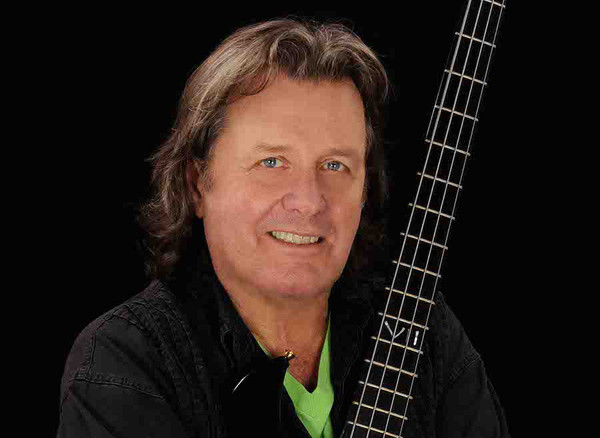
THE RISE AND FALL OF THE YOUNGBLOODS.
The Rise and Fall Of The Youngbloods
By 1965, bassist and vocalist Jesse Colin Young was twenty-four and had already enjoyed a degree of success as a folk singer. He had already released two albums The Soul Of A City Boy in 1964, and Young Blood in 1965. However, Jesse Colin Young’s solo career was in the past.
Things changed when Jesse Colin Young met twenty-two year old guitarist Jerry Corbitt, a former bluegrass musician. The pair decided to form a band, which they named The Youngbloods. Initially, The Youngbloods was a duo, with Jesse Colin Young playing bass and Jerry Corbitt switching between piano, harmonica and lead guitar. This initial lineup of The Youngbloods made their debut on the Canadian circuit. However, before long, Jerry Corbitt introduced Jesse Colin Young to Banana.
This was none other than Lowell Levinger, a bluegrass musicians who was born Lowell Levinger III. However, the nineteen year old multi-instrumentalist was known within the music community Banana. Jerry Corbitt thought that Banana could flesh out The Youngbloods’ sound. Especially since Banana could play banjo, bass, guitar, mandola, mandolin and piano. Once Jesse Colin Young met Banana, he became the third and final member of the band.
After that, things happened quickly for The Youngbloods. Having made their live debut at Gerde’s Folk City, in Greenwich Village, within a matter of The Youngbloods were the house band at the prestigious Cafe au Go Go. By then, The Youngbloods had already signed their first recording contract.
Having signed to RCA Records, The Youngbloods discovered that the record label were unsure how to market the band. At one point, RCA Records tried to market The Youngbloods as a bubblegum pop act. However, in 1966, The Youngbloods released their debut single, Rider, which failed to chart. The followup was Grizzly Bear, which reached fifty-two in the US Billboard 100. Both of these single featured on The Youngbloods’ eponymous debut album.
The Youngbloods.
Work began on The Youngbloods’ eponymous debut at RCA Victor’s Studio B in New York, in late 1966. This was the start of a new chapter in their career. By then, founder member Jesse Colin Young was regarded as the focal point of the band. He was the band’s lead singer, and later, would become the band’s songwriter-in-chief. That was still to come.
For The Youngbloods, Jesse Colin Young only penned two songs, Tears Are Falling and Foolin’ Around (The Waltz). Jerry Corbitt contributed just the one song, All Over The World. The remainder of the songs were covers of old blues and folk songs. This included Blind Willie McTell’s Statesboro Blues, Jimmy Reed’s Ain’t That Lovin’ You, Baby, Mississippi John Hurt’s C.C. Rider, Fred Neil’s The Other Side of This Life and Chet Powers’ Get Together. These songs were recorded at RCA Victor’s Studio B, with producer Felix Pappalardi.
Once the album was recorded, The Youngbloods was scheduled for release in January 1967. When critics heard The Youngbloods, they lavished praise and plaudits on what was primarily an album of folk rock, with excursions into the blues and pop. Ballads and rockers sat cheek by jowl on The Youngbloods, which allowed the band to showcase their talent and versatility. Critics forecasted a bright future for The Youngbloods..
When The Youngbloods was released later in January 1967, the album reached 131 in the US Billboard 200. This wasn’t bad for a band who were only formed in 1965. The Youngbloods showed what the band were capable of. So did one of the singles released later in 1967.
Six months after the release of their eponymous debut album, The Youngbloods released their cover of Chet Powers’ Get Together in July 1967. It was an anthem-in-waiting about universal brotherhood that had the potential to launch The Youngbloods’ career. Mercury Records had high hopes for Get Together, but the single stalled at a sixty-two in the US Billboard 100. This was disappointing. Get Together hadn’t reached the heights that executive at Mercury Records had hoped…yet.

Earth Music.
Having released their debut album earlier in 1967, The Youngbloods began work on their sophomore album Earth Music. Just like their eponymous debut album, Earth Music was a mixture of covers and original songs.
Six of the songs on Earth Music was penned by members of The Youngbloods. Jesse Colin Young wrote All My Dreams Blue, Long and Tall and Wine Song. He also cowrote Sugar Babe. Jerry Corbitt penned Don’t Play Games and cowrote Dreamer’s Dream with Lowell Levinger who also wrote Fool Me. The remainder of the songs on the album were cover versions including Robin Remaily’s Euphoria, Chuck Berry’s Too Much Monkey Business and Tim Hardin’s oft-covered classic Reason To Believe. Again, these songs were recorded with producer Felix Pappalardi at RCA Victor’s Studio B in New York, and later, became Earth Music.
Later in 1967, Earth Music was released to widespread critical acclaim. It was album that veer between folk rock to country and pop. There was even elements of jazz and psychedelia during an album of carefully crafted songs. Especially the cover of Euphoria, the mellow sounding All My Dreams Blue, Sugar Babe, Wine Song and a captivating cover of Tim Hardin’s Reason To Believe. Critics remarked on how the group were already maturing musically. Already some critics were comparing The Youngbloods to Lovin’ Spoonful. That came as no surprise, as The Youngbloods were about to release an album of carefully crafted and compelling songs that were playful and irresistibly catchy. Surely, an album of the quality of Earth Music would take The Youngbloods to the next level?
When Earth Music was released later in 1967, the unthinkable happened and the album failed to chart. Things got even worse when Fool Me was released as a single, and also failed to chart. For The Youngbloods this rubbed salt into a very painful wound.

Elephant Mountain.
Nearly two years passed before The Youngbloods returned with their third album. Jesse Colin Young wrote seven of the thirteen songs on Elephant Mountain. He also cowrote Double Sunlight, Turn It Over, Trillium and Black Mountain Breakdown with the other two members of The Youngbloods. Lowell Levinger wrote On Sir Francis Drake, while Rain Song (Don’t Let the Rain Bring You Down) was penned by Jerry Corbitt, producer Felix Pappalardi and Gail Collins. These songs would be recorded on the West Coast at RCA’s Music Center of the World in Hollywood, Los Angeles.
Joining The Youngbloods were Jerry Corbitt plus some guest artists. This included fiddle player David Lindley, vibes player Victor Feldman, trumpeter Joe Clayton and tenor saxophonist Plas Johnson. They played their part in what was another carefully crafted album, Elephant Mountain.
When Elephant Mountain was released, critics again, lavished praise on the album. Given the quality of music, this was no surprise. They ranged from jazz-tinged acoustic ballads like Sunlight and Ride The Wind to captivating and playful songs like Smug and Beautiful and the bluesy, hard rocking Sham. Two songs were very different to anything The Youngbloods had written. Darkness, Darkness dealt with subject of depression, while Quicksand was a song about suicide. However, Rain Song (Don’t Let the Rain Bring You Down) was a return to the jug band songs like Euphoria and The Wine Song. It was part of what many critics regarded as The Youngbloods’ finest album.
When Elephant Mountain was released in 1969, the album reached 118 in the US Billboard 200. This meant that Elephant Mountain was The Youngbloods’ most successful album. Despite this, the lead single Darkness, Darkness and the followup Sunlight failed to chart. However, a song from the past would transform The Youngbloods’ fortunes.
In July 1969, The Youngbloods rereleased their 1967 Get Together. It had featured on radio and television commercials by the National Conference for Christians and Jews. These adverts were a call for brotherhood. They also paved the way for The Youngbloods first million selling single. Get Together entered the chart and started climbing all the way to number five in the US Billboard 100. This was by far, the biggest hit single of The Youngbloods’ career. Despite the success of Get Together, The Youngbloods seemed to be in no hurry to release their fourth studio album.
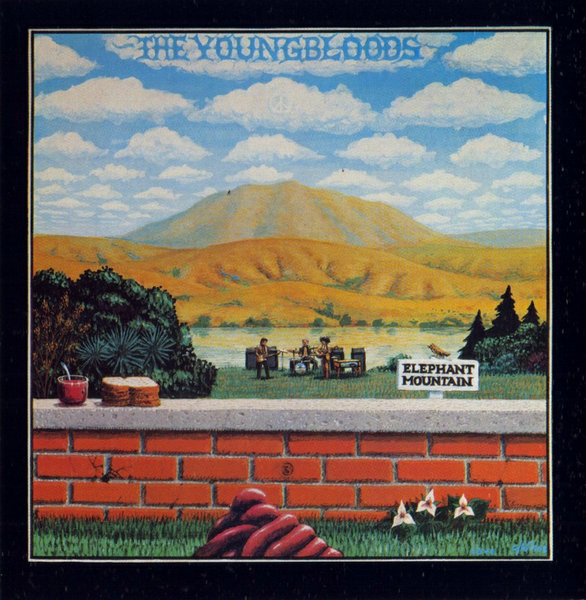
Rock Festival.
Instead, The Youngbloods embarked upon a lengthy American tour in the spring of 1970, which lasted well into the summer months. The plan was to record several dates on the tour, and release them as The Youngbloods’ first live album, Rock Festival
Between March and July 1970, the tapes were running during five concerts. The first was on March ’29th’ 1970 at The Family Dog, in San Francisco. Three weeks later, the concert at The Barn in Marshall, California on ‘16th’ April 1970 was recorded. Two nights later, on ‘18th’ April 1970, the tapes were running at the Santa Clara University. Then when The Youngbloods played at Provo Park in Berkeley, California on ‘19th’ May 1970. There was one final recording session on July ’21st’ 1970, at Pacific High Recording in San Francisco. At last, The Youngbloods’ fourth album was ready for release.
When The Youngbloods released Rock Festival later in 1967, it was to the same critical acclaim as previous albums. Rock Festival was another eclectic album, where The Youngbloods showcased their versatility. However, it’s a quite different album from their three studio albums. Rather than play to the audience, and win them over with some of their best known songs, The Youngbloods headed in new directions with covers of a traditional song including Fiddler A Dram and the free jazz workout Ice Bag.
When Rock Festival was released in 1970, it reached number eighty in the US Billboard 200. This made Rock Festival The Youngbloods’ most successful album. So much so, that a year later, The Youngbloods decided to release a second live album, Ride The Wind.

Ride The Wind.
Most bands wouldn’t have released two consecutive live albums. However, it was a case of need’s must. The Youngbloods still hadn’t completed work on their fourth studio. They had even released The Best Of The Youngbloods as a stopgap. However, this had backfired when The Best Of The Youngbloods reached just 144 in the US Billboard 200. Given the success of Rock Festival earlier in 1970, a decision was made to release a second live album, Ride The Wind as a stopgap. That would keep their fans happy while The Youngbloods completed their new studio album.
Fortunately, The Youngbloods had recorded a number of shows over the years. This included three shows that took place in New York over three nights in November 1969. The first concert took place on ‘26th’ November, with the other concerts taking place on ’28th’ and ’29th’ November 1969. Six songs from these concerts were chosen for Ride The Wind. This included Jesse Colin Young’s Ride The Wind, Sugar Babe, Sunlight and Beautiful. They joined covers of Chester Powers’ Get Together and Fred Neil’s Dolphin on Ride The Wind.
Critics on hearing Ride The Wind, lavished praise and plaudits on The Youngbloods’ second live album. It was a very different album, and found The Youngbloods improvising and taking songs in a new direction. So much so, that some, bore very little resemblance to the original version.
Ride The Wind becomes a ten minute epic, and gives way to a jaunty, playful version of Sugar Babe. Sunlight soon takes on a pastoral sound, before The Youngbloods reinvent Fred Neil’s The Dolphin, which becomes a near flawless eight minute jam. The Youngbloods stay true to the original version of their million selling anthem Get Together, before Jesse Colin Young’s vocal plays a starring role in Beautiful, which becomes a funky workout. It closes Ride The Wind, which was released later in 1970.
Despite the undoubted quality of Ride The Wind, the album stalled at 157 upon its release in 1970. This was a disappointment for The Youngbloods. However, they had just completed recording their fourth album Good and Dusty, which they hoped would get their career back on track.

Good and Dusty.
When The Youngbloods returned with Good and Dusty, it featured a new, expanded lineup of the band. Harmonica player Richard Earthquake Anderson had joined the band and made his debut on Good and Dusty.
It was an album that featured cover versions of familiar songs including Johnny Otis’ Willie and The Hand Jive, Sonny Boy Williamson II’s Pontiac Blues, When Will The Circle Be Unbroken and Lieber and Stoller’s I’m A Hog For You Baby. This time round, Jesse Colin Young had only penned two songs Drifting and Drifting and Light Shine. Recording of these songs began at Raccoon Studios B on June ‘9th’ 1971. It took just over a month for The Youngbloods to record the thirteen songs on Good and Dusty, which was completed on July ’15th’ 1971. Good and Dusty was released later in 1971.
Just like The Youngbloods’ previous albums, Good and Dusty won over critics. They were impressed by an album that looked back at America’s musical past. Covers of old blues songs and song from the fifties feature on Good and Dusty.
When The Youngbloods released Good and Dusty in 1971, the album stalled at a lowly 160 in the US Billboard 200. This was a huge disappointment. Things didn’t get any better when Light Shine was released as a single. Despite being one of The Youngbloods’ best ballads, it didn’t even trouble the charts. This rubbed salt into the wound.
High On A Ridge Top.
After the release of Good and Dusty, The Youngbloods returned with High On A Ridge Top in 1972. Just like previous albums, it featured just one new song Jesse Colin Young’s Dreamboat which rubbed shoulders with nine cover versions. Among them were Esther Navarro’s Speedo, Jimmy Reed Going By The River, Bob Dylan’s I Shall Be Released, Lennon and McCartney’s She Came In Through The Bathroom Window, Richie Valens’ Donna and Robert Johnston’s Kind Hearted Woman. These were some of the ten songs that became The Youngbloods fifth studio album High On A Ridge Top.
Prior to the release of High On A Ridge Top, critics had their say on the album. It was well received by the majority of critics. However, when High On A Ridge Top was released in 1972, it stalled at a lowly 185 in the US Billboard 200. For The Youngbloods it was a disappointing end to their career.
Not long after the release of High On A Ridge Top, The Youngbloods split-up, with each band member embarking upon a solo career. This was just three years after The Youngbloods released their million selling single Get Together.
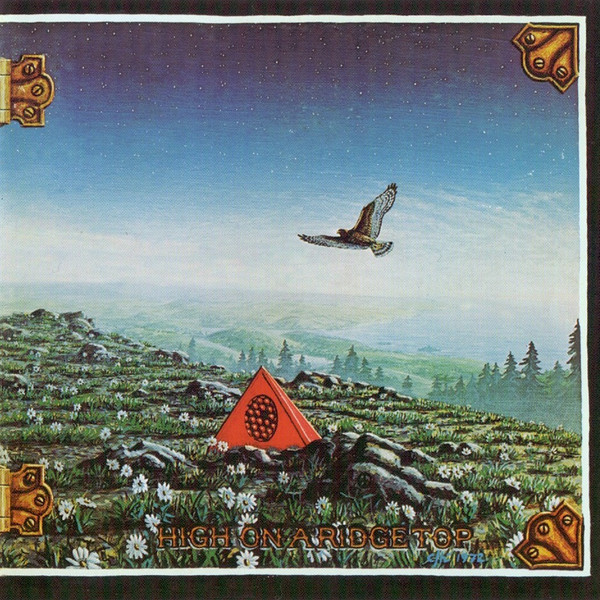
Looking back with the benefit of hindsight, that was where things started to go wrong for The Youngbloods. Most bands would’ve been keen to have built upon the momentum created by Get Together, and began work on a new studio album straight away. However, it took The Youngbloods two years to release Good and Dusty which was the followup to Elephant Mountain.
They should’ve built on the momentum created by Get Together, and released an album as soon as they could. However, by waiting two years, the momentum was lost. That was despite The Youngbloods releasing two live albums.
These two live albums Rock Festival and Ride The Wind, weren’t the stopgap albums that many bands release between studio albums. Both Rock Festival and Ride The Wind showcase just how good a live band The Youngbloods were. Especially on Ride The Wind, where The Youngbloods improvise and reinvent take the six songs in new and sometimes unexpected directions. This shows another side to The Youngbloods on what’s an oft-overlooked and hugely underrated live album.
It’s a similar case with Good and Dusty, which was The Youngbloods’ long-awaited fourth studio album. It features songs like That’s How Strong My Love Is, Circus Face, Good and Dusty and Light Shine which are hidden gems within The Youngbloods’ back-catalogue. These songs are a reminder of The Youngbloods who are an oft-overlooked group.
Most people know The Youngbloods’ million selling single Get Together. However, that’s just one chapter in the story of a band that released five studio albums and two live albums. The Youngbloods’ albums were released to widespread critical acclaim between 1967 and 1972, but sadly, never they enjoyed the commercial success that they so richly deserved. Eventually after releasing their fifth studio album Good and Dusty, The Youngbloods called time on their career, and embarked upon solo careers. This came just two years after they had enjoyed a million selling single with Get Together. By then, the rise and demise of The Youngbloods was complete just seven years after Jesse Colin Young met Jerry Corbitt.
The Rise and Fall Of The Youngbloods


MOTORHEAD-THE CLASSIC YEARS: 1977 TO 1983.
Motörhead-The Classic Years 1977-1983.
In My 1975, Hawkwind’s tour bus arrived in Windsor, Ontario, at the Canadian-American border, but before the band could cross over into America, for the next part of their tour, the band were subjected to a routine drugs search. For Hawkwind bassist Ian “Lemmy” Kilmister, this spelt disaster and resulted in his arrest on drug possession charges. For Lemmy it was the end of the road for him, and he was sacked by Hawkwind. This was the always thought, the excuse the other members of Hawkwind had been waiting for, to sack Lemmy from the band.
On his return home to England, Lemmy started putting together a new band, which he initially called Bastard. This was what he planned to call the new band which featured guitarist Larry Wallis, who previously was a member of The Pink Fairies. Steve Took’s Shagrat and UFO. He was joined by drummer Lucas Fox who joined Lemmy on bass in Bastard’s rhythm section. However, the group’s then manager Doug Smith explained that there was no way a group called Bastard would feature on prime time TV, and suggested the name Motörhead.
Not long after this, Motörhead signed to United Artists, which was also home to Lemmy’s former group Hawkwind. With the ink dry on the recording contract, Motörhead headed to Rockfield Studios in Wales to record their debut album.
During late 1975 and early 1976, Motörhead recorded what was meant to be their debut album. However, when United Artists heard the album, they refused to release it. This was a huge blow to Motörhead.
Just over a year later, and Motörhead’s lineup had changed beyond recognition by the ‘1st’ of April 1977. Drummer Phil “Philthy Animal” Taylor had replaced Lucas Fox who didn’t seem committed to the band. Guitarist “Fast” Eddie Clarke had also joined Motörhead as the second guitarist and would join up with Larry Wallis. However, not long after this, Larry Wallis left Motörhead. This was another blow to the band.
So much so, that Motörhead decided to call time on their short but eventful career. However, they were determined to bow out in style with a farewell gig at London’s Marquee Club later in 1977.
Meanwhile, Ted Carroll was running Chiswick Records, the label he formed not long after Lemmy was fired from Hawkwind. Ted Carroll also owned a record shop, where Lemmy was a regular visitor, buying rare singles. When Ted Carroll heard that United Artists weren’t willing to release Motörhead’s debut album, he decided to ride to the rescue.
Motörhead.
After negotiating Motörhead’s release from their contract with United Artists, Ted Carroll signed the bad to his label Chiswick Records. At first, Motörhead wanted to record their farewell gig at the Marquee Club. However, the owners of the Marquee Club wanted £500 to allow the recording to take place. That was out of the question, so Ted Carroll offered Motörhead the chance to record a single over two days at Escape Studios in Kent, England, with producer John “Speedy” Keen. That was the plan.
Between the ‘27th’ and ‘29th’ April 1977, Motörhead aided by some illicit substances recorded eleven tracks. When Ted Carroll heard the tracks, he paid for further studio time to complete Motörhead which features the classic lineup of drummer, Phil “Philthy Animal” Taylor, bassist Ian “Lemmy” Kilmister and guitarist “Fast” Eddie Clarke. They would write their name into musical history.
When Motörhead was released on the ’21st’ of August 1977, it reached forty-three in Britain and was later certified silver. Somewhat belatedly Motörhead’s recording career was underway.
Iron Fist and The Hordes From Hell At The Roundhouse-What’s Worth Words.
Nearly seven months after the release of Motörhead, Lemmy and Co. arrived at The Roundhouse on the ’18th’ February 1978. Parked outside was the Rolling Stones mobile recording studio. It had been hired by Chiswick Records’ owner Ted Carroll to record The Count Bishops next album. Motörhead’s then manager Tony Secunda asked if the band could use the mobile recording studio to record their set. An agreement was reached and two albums were recorded that night at The Roundhouse, which was Wilko Johnson’s fundraiser to preserve William Wordsworth’s manuscripts. However, strictly speaking Motörhead shouldn’t even be at The Roundhouse.
Contractual problems meant that Motörhead wasn’t allow to play at Wilko Johnson’s fundraiser. They had hatched a cunning plan, and decided to dawn the moniker Iron Fist and The Hordes From Hell. The audience was in for a surprise as they took to the stage later that evening.
As Iron Fist and The Hordes From Hell prepared to take to the stage, producer Duncan Cowell took his place in the Rolling Stones mobile recording studio, and prepared to record what would prove be a landmark concert.
As Motörhead took to the stage, they launched into one of Lemmy’s compositions The Watcher. It gave way to Iron Horse and Born To Lose before Motörhead revisited Larry Wallis’ On Parole, which had been a staple of the band’s early shows. By then, Motörhead’s mixture of high adrenaline heavy metal, hard rock, blues rock and rock ’n’ roll was proving a popular combination. There was no stopping Motörhead as they launched into White Line Fever, which took marked the halfway point.
They followed White Line Fever with Keep Us On The Road which was penned by Motörhead and Mick Farren. It gave way the first of four cover versions, including a cover of Holland, Dozier and Holland’s Leaving Here which was given hard rocking makeover. Motörhead then covered John Mayall’s I’m Your Witchdoctor which was a staple of their live sets. So was Train Kept A-Rollin’ had featured on Motörhead. Bringing this barnstorming performance to a close, was a cover of The Pink Fairies’ City Kids. Mick Farren then joined the band for a cover of Lost Johnny, which never made it onto the subsequent album when it was released by Ted Carroll’s record label Big Beat on the ‘5th’ March1983. By then, Motörhead, were enjoying a glittering career and everything the band touched turned to silver or gold.
Overkill,
Following the success of Motörhead, which is now regarded as a genre classic, Motörhead returned on the ‘24th’ of March 1979 with their sophomore album Overkill. It was released on the Bronze label, and reached twenty-four in Britain. Soon, Overkill which is regarded in heavy metal circles as a minor class, became Motörhead’s second album to be certified silver. Soon, two became three.
Bomber.
Seven months later, Motörhead returned on the ’27th’ October 1979 with their third album Bomber. It was a difficult album to record, with producer struggling with heroin addiction. However, the album was completed and found favour with Motörhead’s legion of fans. This included both heavy metal fans and punks who were won over by Motörhead’s hard rocking sound. They were also won over by Bomber, which reached number twelve in Britain and was again, certified silver.
Ace Of Spades.
Having released two albums within the space of seven months, it was thirteen months before Motörhead returned with their fourth album Ace Of Spades. It was produced by Vic “Chairman” Maile, and featured a fusion of heavy metal, hard rock and speed metal. This found favour with critics, who called Ace Of Spades’ one of Motörhead’s finest albums.
Prior to the release of Ace Of Spades, the title-track was released as a single, on October the ’27th’ 1980 and reached number fifteen in Britain. When the album Ace Of Space was released on the ‘8th’ of November 1980, it reached number four in Britain and was certified gold by March 1981. This was the most successful album of Motörhead’s career, and one that later, would be called a classic.
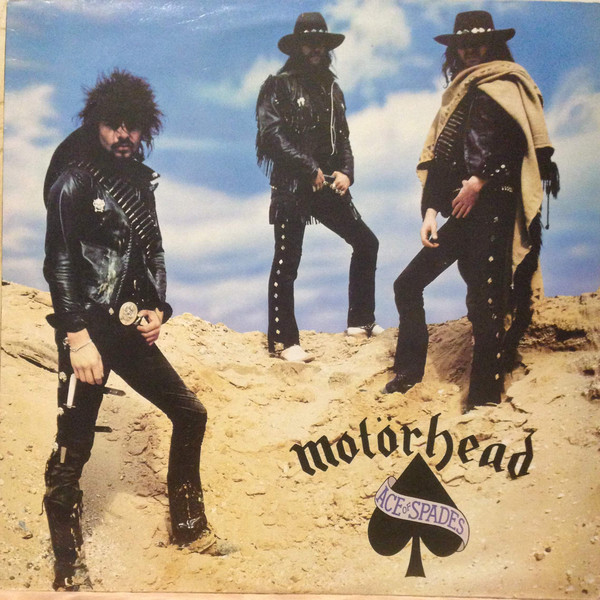
No Sleep ’til Hammersmith,
The same can be said of Motörhead’s first live album No Sleep ’til Hammersmith, which was released on the ‘27th’ of June 1981. It reached number one in Britain, and charted in everywhere from Germany to Norway and Sweden to New Zealand. No Sleep ’til Hammersmith was also the first Motörhead album to be released in America. Alas. the album failed to trouble the US Billboard 200.
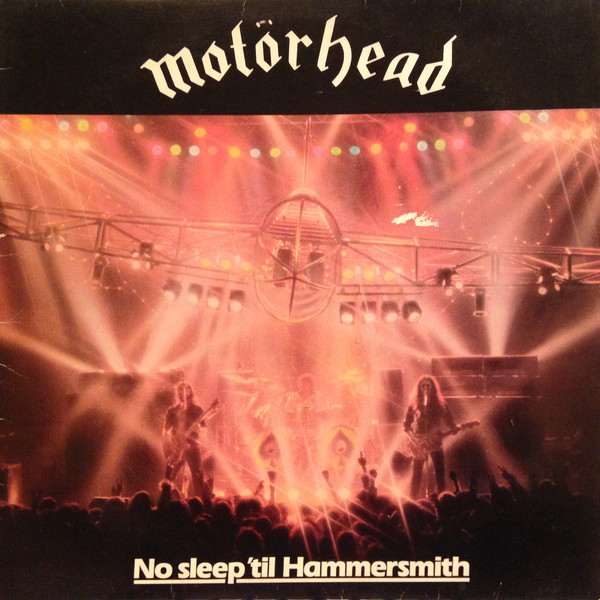
Iron Fist.
Buoyed by the success of No Sleep ’til Hammersmith, Motörhead returned ten months later, with their first studio album in nearly two years, Iron Fist. It was the much-anticipated follow-up to Ace Of Spades which was produced by Vic Maile. He started producing Iron Fist, but didn’t return to project after Motörhead played some gigs in November and December 1981 with Tank. Replacing Vic Maile were Will Reid Dick, Eddie Clarke. They played their part in the success of Iron Fist, which was released on the ’17th’ of April 1982, and reached number six on the British album charts, and was certified gold. Across the Atlantic, Iron First reached 174 in the US Billboard 200. Motörhead were making some inroads into the lucrative American market.
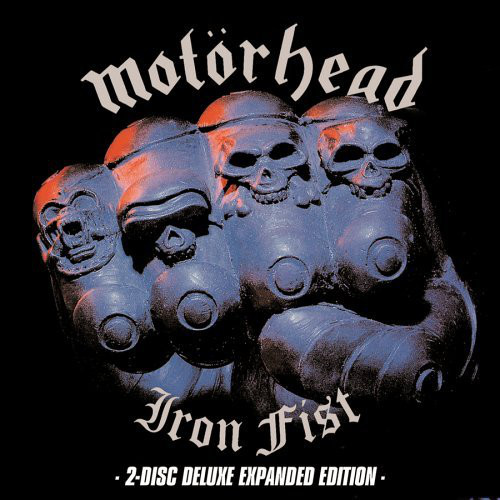
What’s Worth Words.
After the release of Iron Fist, Motörhead began work on their next studio album Another Perfect Day. Before it was released, Motörhead would release their second live album, What’s Worth Words. By 1983, Motörhead were no longer managed by Tony Secunda. After some issues, he and Motörhead parted company and Doug Smith once again, became the band’s manager. He helped negotiate the release of What’s Worth Words on Ted Carroll’s Big Beat Records.
What’s Worth Words featured Motörhead’s barnstorming, speed fuelled performance at The Roundhouse on the ’18th’ February 1978. Unlike most live albums, there was no overdubbing, and What’s Worth Words, which was a warts and all performance from Motörhead.
It’s a snapshot in time, and features the material Motörhead played during the late-seventies and early eighties. After that, these songs hardly ever featured in Motörhead’’s sets. They were in the band’s past, a reminder of which is What’s Worth Words. It features the classic lineup of Motörhead at the peak of their powers.
Many critics agreed, and called What’s Worth Words one of the best live albums ever. It was a warts and all performance from Motörhead that was released on the ‘5th’ of March 1983, and reached seventy-one on the British album charts. This was disappointing considering that it’s one of Motörhead’s best live albums, and regarded as one of best live albums ever released.
Another Perfect Day
After the release of What’s Worth Words, Motörhead released Another Perfect Day three months later, on June the ‘4th’ 1983. It reached just twenty in the British album charts, and was the Motörhead’s first studio album not to be certified silver or gold.
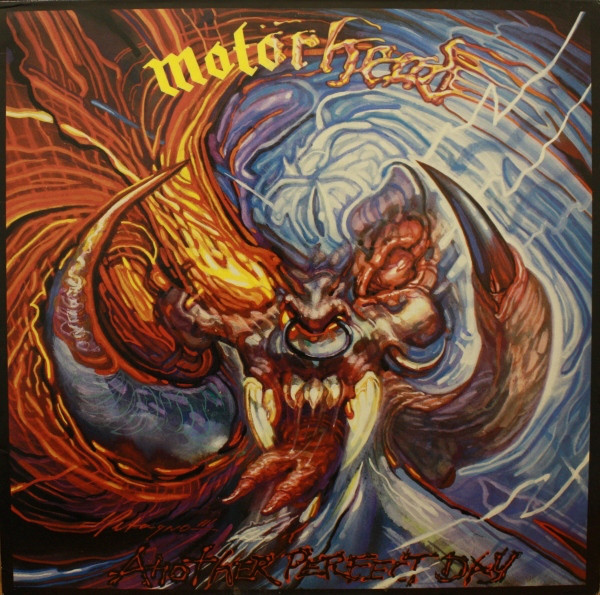
Sadly, none of the albums Motörhead released between Bastard in November 1983 and their twenty-second studio album Bad Magic in August 2015 were certified silver or gold. However, Motörhead enjoyed a glittering career between Motörhead in 1977 and Iron Fist in 1982, when they could do no wrong. It was the most successful period of their recording career.
That recording career lasted five decades and saw Motörhead twenty-two studio albums and thirteen live albums. Motörhead’s final live album was Clean Your Clock which was recorded on the ‘20th’ and ‘21st’ November 20 at Zenith, Munich as part of Motörhead’s European 40th Anniversary tour. These two concerts were last professional recordings of Motörhead. Sadly, just over a month later, then, Ian “Lemmy” Kilmister had passed away on the ‘28th’ of December 2015, just four days after his seventieth birthday.
Highlights of the two concerts in Munich were released as Clean Your Clock was released in June 2016, and was band’s first posthumous. For Motörhead who had been one of the great rock bands of the past forty years it was the end of a line. With Lemmy there was no Motörhead, the group he had founded forty years earlier, after his sacking from Hawkwind. However, Lemmy had the last laugh, and enjoyed much more success than Hawkwind between 1975 and 2015, when Motörhead were one of the hardest living and hardest rocking bands on planet rock. They released several classic albums, especially between 1978 and 1983 which was the most successful period of Motörhead’s hard rocking career.
Motörhead-The Classic Years 1977-1983.
 dereksmusicblog
