THE SEEDS: PUSHIN’ TOO HARD OST.
The Seeds: Pushin’ Too Hard OST,
Label: Ace Records.
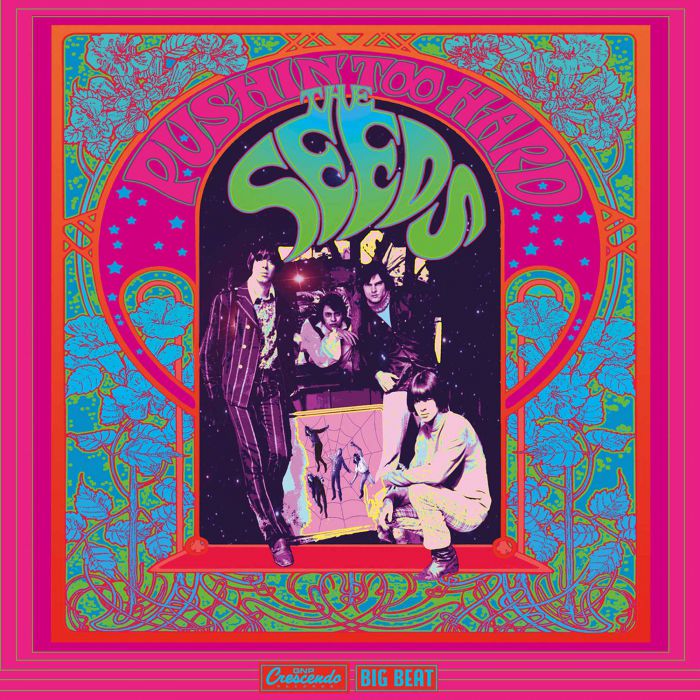
When The Seeds were formed in Los Angeles in early 1965 by Sky Saxon, Daryl Hooper, Jan Savage, Jeremy Levine and Rick Andridge nobody had any idea just how influential the nascent garage band would be. Over the next four years, The Seeds released five albums, enjoyed four hit singles and pioneered mid-sixties garage rock and acid rock. The Seeds are nowadays regarded as one of the original freakbeat bands, who also coined the term “flower power” and paved the way for punk rock a decade later. However, by 1969 The Seeds were no more, with the latest lineup of the band deciding to call time on their career. It was the end of an era for an influential and innovative band who left behind a rich musical legacy which is celebrated on the critically acclaimed rockumentary The Seeds: Pushin’ Too Hard, which is also the title of a new compilation released by Big Beat, an imprint of Ace Records.
Rather than just collect the singles and album tracks for Pushin’ Too Hard OST, the compilers have combined psychedelic classics with hidden gems, alternate cuts and live tracks from The Seeds. Their classic Pushin’ Too Hard opens the compilation and is joined by Can’t Seem To Make You Mine, Evil Hoodoo, Mr Farmer, Up In Her Dream and A Faded Picture. There’s alternate takes of No Escape, Try to Understand, Satisfy You, Night Time Girl, The Gardener, Fallin’ Off the Edge of My Mind and The Wind Blows Your Hair.Then there’s live versions of Tripmaker and Muddy Waters contributes Baby Please Don’t Go.The guest appearances continue as Neil Norman covers The Perfect Wave and Kim Fowley The Ballad of Sky Saxon. These tracks all feature on Pushin’ Too Hard OST, which is a tantalising taste of The Seeds’ all too short career.
The Seeds began their musical adventure in Los Angeles, in 1965 , when five young musicians decided to found a new band. One member of the new band was charismatic vocalist Sly Saxon who was by far the most experienced member of the band.
He had been a professional musician since the late-fifties and had been releasing singles as Richie Marsh since the early sixties. Sly Saxon who came from Salt Lake City, had moved to Los Angeles to further his musical career. However, he had been treading water until he saw an advert in 1965 looking for musicians to join a new band. This Sly Saxon hoped might be the breakthrough he had been looking for. That proved to be the case, and after an audition Sly Saxon became The Seeds vocalist.
With the lineup of The Seeds finalised, the new band spent time honing their sound. Soon, though, they made their first tentative steps onto LA’s live scene where they secured regular gigs at the Los Angeles nightclub Bido Lito’s. The Seeds were a popular draw with music fans flocking to the venue to see this new band’s high octane performance. Already The Seeds were making their mark on the LA music scene.
Not long after that, The Seeds recorded what would become their debut single Can’t Seem To Make You Mine. With the recording complete, charismatic frontman Sly Saxon started trying to interest record labels in the song. Mostly, it was a case of thanks but no thanks, until he entered the offices of GNP Crescendo Records. They listened to the song and promised Sly Saxon they would get back to him. By then, he and the rest of The Seeds knew not to get their hopes up.
This time it was different, with GNP Crescendo Records getting back to Sly Saxon and telling him how much they liked the song. Not only did they like Can’t Seem To Make You Mine, but they wanted to take The Seeds back into the studio and rerecord it with Marcus Tybalt.
The Seeds agreed and headed into the studio with Marcus Tybalt, where they rerecorded Can’t Seem To Make You Mine. It was then released by Crescendo and picked up by Santa Monica based radio station KBLA. Soon, other radio stations had picked up on Can’t Seem To Make You Mine, and this future cult classic became a regional hit in Southern California. After just a few months together, already The Seeds already had a regional hit single to their name which was a dream come true for the band.
While The Seeds celebrated the success of Can’t Seem To Make You Mine, guitarist Jeremy Levine announced that he was leaving the band for personal reasons. This was a huge blow for The Seeds who looked as if they were on the verge of making a breakthrough.
With The Seeds now a quartet, they returned Los Angeles’ vibrant live scene, where people were starting to take notice of this, new up-and-coming band who had just scored a hit with Can’t Seem To Make You Mine. By then, The Seeds’ popularity was rising and they became a firm favourite of audiences across LA. They were impressed by The Seeds’ high octane, energetic performances as they showcased the new garage rock sound that they were pioneering.
The Seeds.
Although The Seeds spent much of their time playing live, they were already working on their eponymous debut album. Frontman Sly Saxon had dawned the role of The Seeds’ songwriter-in-chief and had penned ten of the twelve tracks that featured on The Seeds. He also wrote Evil Hoodoo with Daryl Hooper and penned No Escape with Jan Savage and Jimmy Lawrence. These twelve tracks were recorded at Columbia Studios, in Hollywood.
At Columbia Studios, Sly Saxon co-produced The Seeds with Marcus Tybalt who had masterminded their debut single Can’t Seem To Make You Mine. When the recording sessions began, drummer Rick Andridge wasn’t joined in the rhythm section by vocalist Sly Saxon who it was thought played bass on The Seeds recordings. Instead, Daryl Hooper who played keyboards, organ melodica and piano, laid down the bass parts using a bass keyboard. Meanwhile, Jan Savage took charge of the bass parts on The Seeds. Eventually, The Seeds had completed their much-anticipated eponymous debut album which would be released by GNP Crescendo Records.
In April 1966, The Seeds were just about to release their eponymous debut album The Seeds. Critics on hearing The Seeds were won over by this classic-in-waiting. The Seeds featured an irresistible fusion of fuzzy guitars, bubbling Hammond organ and Sly Saxon’s vocal which seems to have been inspired by everyone from Mick Jagger to Buddy Holly and Eddie Cochran. When The Seeds was released, it was to plaudits and praise, and nowadays, the album is regarded as a garage rock classic. Indeed, many critics believe that The Seeds is the finest garage rock album ever released.
On its release, The Seeds sold well and reached 132 in the US Billboard 200. Meanwhile, a decision was made to reissue Pushin’ Too Hard which had been released in 1965. While it failed to chart first time round, this time, Pushin’ Too Hard reached thirty-six in the US Billboard 100 and forty-four in Canada. Later in 1966, Can’t Seem To Make You Mine was also reissued and reached forty-one in the US Billboard 100 and thirty-three in Canada. Things were looking good for The Seeds, as their thoughts turned to their sophomore album A Web Of Sound.
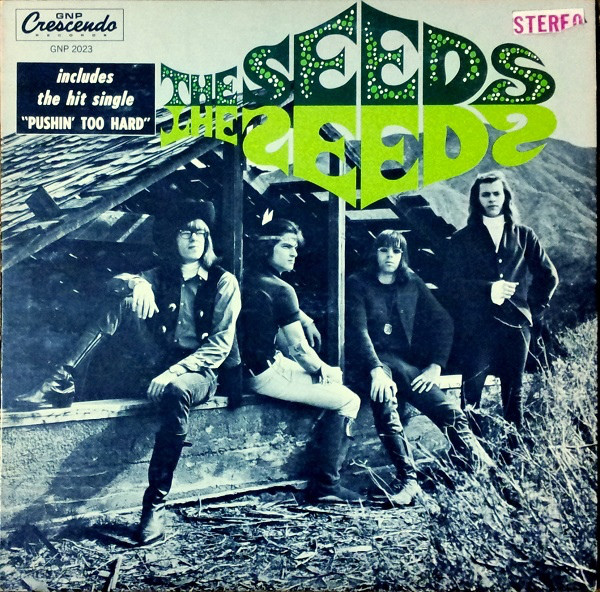
A Web Of Sound.
By the time The Seeds began work on A Web Of Sound, they had been working tirelessly since early 1965. They were now a familiar face and favourite on LA’s live scene. All The Seeds hard work was paying off and they had established a reputation as one of the most innovative bands of the mid-sixties. The Seeds were known to push musical boundaries to their limits as they created music that was best described as eclectic. Despite that, many people still referred to The Seeds as a garage band. However, The Seeds added elements of acid rock, proto-punk and psychedelia to their music. Their sophomore album A Web Of Sound was going to be a very different album to The Seeds.
Just like their debut album The Seeds, Sly Saxon was songwriter-in-chief on A Web Of Sound. On Tripmaker and Rollin’ Machine, the mysterious Marcus Tybalt was credited as one of the songwriters. However, this was just an alias of Sly Saxon who wrote Mr. Farmer, I Tell Myself, Rollin’ Machine and Up In Her Room. Sly Saxon and Darryl Hooper teamed up to write Pictures and Designs, Tripmaker and A Faded Picture. The pair then wrote Just Let Go with Jan Savage. These eight tracks were recorded during July 1966.
The Seeds recorded A Web Of Sound at RCA Victor and Columbia Studios in Hollywood. The sessions started on the ‘5th’ of July 1966 with Sly Saxon using the alias Marcus Tybalt taking charge of production. This time around, drummer Rick Andridge was joined by Harvey Sharpe who was brought onboard for the A Web Of Sound. Completing the rhythm section was Jan Savage who laid down all the guitar parts. Darryl Hooper switched between celeste, organ and piano, while vocalist Sly Saxon added percussion and played piano. After twenty-four days A Web Of Sound was completed on the ‘29th’ of July 1966. It was a very different album to their debut The Seeds.
Critics on hearing A Web Of Sound, realised just how far The Seeds had come in a relatively short space of time. In just six month, their music had progressed, and it looked as if The Seeds were going to match their LA based contemporaries like The Doors and Love every step of the way. That was the case with A Web Of Sound, which was an album of two very different sides.
A Web Of Sound marked the start of a new chapter in The Seeds career, as they broadened their musical horizon on what was a much more eclectic album. The Seeds incorporated elements of acid rock, blues, garage rock, proto punk and psychedelic rock on album that was embraced by the hippies. They were won over by A Web Of Sound which they believed was an unconventional album that featured open-ended songs which appealed to their mindset. These songs eschewed the carefully plotted thoughts and didacticism of the majority of songs on the charts, and left plenty of room for interpretation. The Seeds songwriter-in-chief Sly Saxon was an unlikely hero for the hippies.
When A Web Of Sound was released in October 1966, the album wasn’t a commercial success initially. This changed after the reissue of Pushin’ Too Hard gave The Seeds another hit single. Suddenly, record buyers started investigating The Seeds’ sophomore album A Web Of Sound which had slipped under the radar. While it sold reasonably well, A Web Of Sound was a cult album that failed to replicate The Seeds. It was only later that A Web Of Sound would be embraced by a much wider audience.
By then, critics, cultural commentators and record buyers realised that A Web Of Sound was a stepping stone for The Seeds, as their sound continued to evolve on their third album Future.
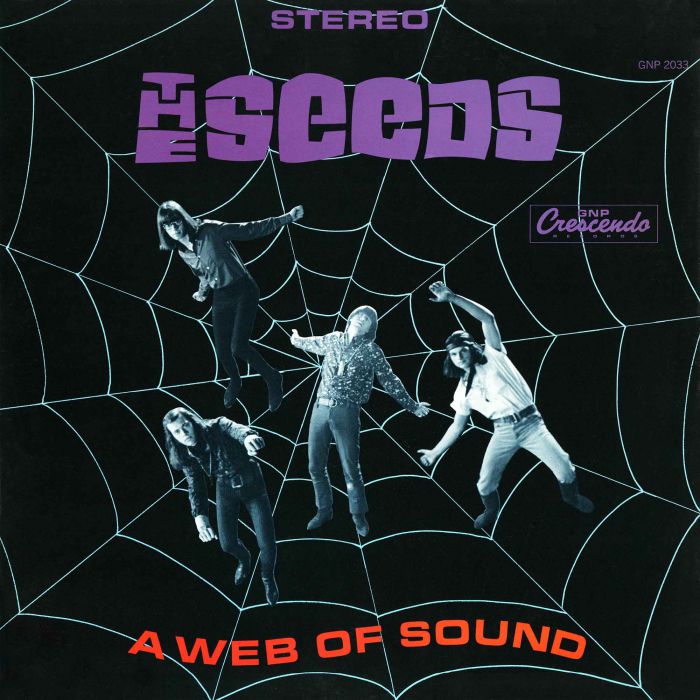
Future.
While The Seeds had pushed musical boundaries to their limits on The Seeds and A Web Of Sound, they blew these limits away on Future. The result was a mind-blowing fusion of psychedelia, garage, rock and pop that veered towards jazz and soul.Eclectic doesn’t even come close to describing Future. It’s a minor classic that is a long way from The Seeds roots as a garage band. However, listening to A Web Of Sound it’s obvious that The Seeds were in the process of changing.
When Future was released, it was to critical acclaim and the album reached the top hundred in the US Billboard 200. While this pleased The Seeds, the single A Thousand Shadows failed to match the success of previous albums. This was a disappointment for The Seeds who had produced heady and potent musical brew that showcased a truly talented and versatile band who were musical pioneers. That had been the case since they released The Seeds in April 1966.

After Future, The Seeds’ popularity slumped, and they became a victim of changing musical fashions. That wasn’t the only thing that was changing.
By mid-1968, The Seeds’ personnel began to change, and the other change was their name. The Seeds became Sky Saxon and the Seeds. In August 1968, Satisfy You was released as a single. 900 Million People Daily (All Making Love) was chosen as the B-Side and version 3 features
A fusion of psychedelia and rock, The Seeds seemed to be heading in the direction of The Doors on Satisfy You. While it failed to chart, it’s a storming reminder that for The Seeds, they had a future after Future.
Falling Off The Edge Of My Mind was the final single The Seeds released for GNP Crescendo. Wild Blood was chosen as the B-Side for The Seeds GNP Crescendo swan-song. Released in January 1969, Falling Off The Edge Of My Mind failed to chart. A fusion of country, psychedelia and rock it saw The Seeds looking for a new direction. Ironically, the B-Side Wild Blood was a better track. Rocky, with a nod to The Rolling Stones, Sly struts his way through the track, as they bid their farewell to GNP Crescendo.
In 1969, The Seeds’ lineup changed. Guitarist Bob Norsoph and Don drummer Boomer replaced Jan Savage and Rick Andridge. Despite this change in lineup, Sky Saxon continued to use the name The Seeds. They didn’t release another single until August 1970.
By then, the best way to describe The Seeds’ lineup is fluid. Various backing musicians came onboard. It was more a band entity than band. Bad Part Of Town was released as a single in August 1970, on MGM. It was rocky track with a psychedelic twist. However, it failed to chart and four months after the release of Bad Part Of Town, The Seeds released their final single.
Love In A Summer Basket was released in December 1970, and was The Seeds’ second single for MGM. Slow, moody, pensive, dramatic and trippy it’s the sunshine psychedelia that The Seeds specialised in a few years earlier. While Love In A Summer Basket failed to chart, their recording career ended on a high. On the flip side of Love In A Summer Basket, was Did He Die. A driving slice of rocky, psychedelia, it showed that The Seeds still had something to offer music. There was only one problem, music was changing. This meant The Seeds had to change.
For the next two years, The Seeds continued, with Sky Saxon keeping the group alive. However, The Seeds best days were between 1965 and 1967. During that period, they released a trio of genre-defying albums and showcased one of the most exciting and adventurous bands of the late sixties. The Seeds were, without doubt, musical pioneers and their three albums are proof of this.
From 1966s The Seeds through 1967s A Web Of Sound and their 1968 swan-song Future, The Seeds weave their magic. They combine a disparate combination of musical genres and influences. Everything from rock, garage rock, psychedelia, folk, jazz, doo-wop, free jazz, proto-punk and even prog rock. With every listen to The Seeds trio of albums, further surprises and subtleties reveal their hidden secrets. Rather than seamlessly flowing from one genre-specific track to another, The Seeds become a musical chameleon. Every track is like a surprise, with hidden depths awaiting the listener. However, The Seeds finest moment was their final album, Future.
The only way to describe Future is a genre-sprawling album. Magpie-like, The Seeds seem to collect musical genres and influences, put them into their lysergic melting pot and sprinkle some secret ingredients. What comes out of The Seeds melting pot was Future. Under appreciated upon its release, that’s no longer the case. Now Future is perceived as a mind-blowing, boundary breaking and genre-defying album, where The Seeds tore up the rule book and rewrote it. Future is essential listening for anyone interested in The Seeds’ music. So is the compilation Pushin’ Too Hard OST, which was recently released on Big Beat, an imprint of Ace Records.
Featuring twenty-one tracks, The Seeds: Pushin’ Too Hard, is the perfect introduction to The Seeds. It features psychedelic classics, hidden gems, alternate cuts and live tracks. Many of the tracks on The Seeds: Pushin’ Too Hard also feature on their trio of albums, The Seeds, A Web Of Sound and their classic album Future. For the newcomer to The Seeds: Pushin’ Too Hard is the perfect opportunity to dip your toe into the genre-defying music of The Seeds.
The Seeds: Pushin’ Too Hard,
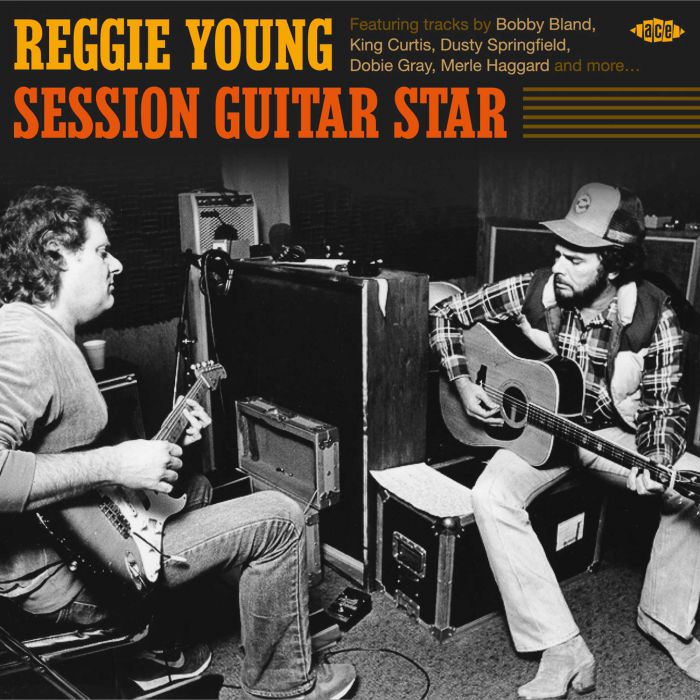
REGGIE YOUNG-SESSION GUITAR STAR.
Reggie Young-Session Guitar Star.
Ace Records.
In many ways, session musicians are the unsung heroes of the music industry, and far too often, don’t get the credit that they deserve. They’re mostly anonymous musicians, who are musical hired hands who over the course of a year, will work with countless musicians in the studio or live. However, some of these anonymous musicians have gone on to greater things
This previously includes some of the legends of music, including everyone from Jimmy Hendrix to Jimmy Page. Then there were studio groups like MFSB and the great disco orchestras like The Salsoul Orchestra and John Davis and The Monster Orchestra which showcased the considerable skills of the session musician and enjoyed commercial success and critical acclaim. However, for every session musician that went on to enjoy a successful career, there were a dozen and more who were happy to stay in the shadows and enjoy a steady and sometimes lucrative career.
Sometimes, these unsung heroes were drafted in to play the part of a musician who was unable to play their instrument. These musical gunslingers would enter the studio, lay down their parts and tip their hat before the bewildered band member can work out how to open their guitar case.
One of the great session guitarists is Reggie Young, who has spent the past seven decades working with the great and good of music. This includes Elvis Presley, JJ Cale, Johnny Cash, Willie Nelson, Waylon Jennings, Neil Diamond and Dusty Springfield. They’re just a few of the musicians that Reggie Young has worked with during his long and illustrious career. His story began in 1936.
The Reggie Young story began in Caruthersville, Missouri on December ’12th’ 1936, but he spent the first for teen years of his life in Osceola, an hour from Memphis. In his early teenage years, Reggie got a job bagging groceries. Little did he know at the time, that this would be his only job in ‘civvy’ street. The rest of his life would be spent making music.
Things changed for Reggie Young when his family moved to Memphis in 1950 when his father Reggie Sr, got a job as a bookkeeper. For his first Christmas in Memphis, fourteen year old Reggie got his very first guitar. Now there were two guitarists in the Young household.
Reggie’s father already played Hawaiian guitar, and was a talented player, who would influence Reggie. He had already taught himself how to play lead guitar, through a scratch built amplifier a neighbour had built, when he decided to take some lessons. After one lesson which Reggie spent playing Three Blind Mice, he decided guitar lessons weren’t for him. Instead, he continued to teach himself, and knew that he could always his father, who would in some ways, would influence his playing style.
By then, Chet Atkins was the main influence on Reggie as his playing style developed. Later, his father’s playing style would influence Reggie and he would incorporate some of the Hawaiian legato phrasing he had watched his father use. This would become one of Reggie’s trademarks. That would come later.
Having left high school, where Reggie was a couple of years ahead of Steve Cropper and Donald “Duck” Dunn, he embarked upon a career as a session musician. His first session was accompanying singing hairdresser Tommy Smith. That day, Reggie laid down a memorable solo on Magic Girl. This opened doors for Reggie around town.
Soon, other musicians were talking about this eighteen your old kid who had laid down the lead guitar solo during the Tommy Smith session. Reggie started accompanying Eddie Boyd at a weekly gig at the Eagle’s Nest. For Reggie, this was valuable experience as he honed his chops
In 1955, Reggie featured on a single by Barney Burcham that was released on the Rodeo label. By then, Reggie and Jack Clement had started playing a weekly gig at the Kennedy Veteran’s Hospital For Incurables. However, Jack Clement was also a partner in Fernwood Records, and recorded a session with Reggie. The single much to Reggie’s relief was never released.
Not long after this, Reggie who was then into rock ’n’ roll, cut his debut single Rockin’ Daddy, which opened with Reggie’s oft-copied guitar lick. The single gave Reggie a regional hit, and Elvis’ first manager Bob Neal booked him to appear on a package tour. Reggie headed out on tour with Johnny Cash, Carl Perkins, Roy Orbison and Johnny Horton. When the tour stopped off in Nashville, Eddie Boyd cut his sophomore single and Reggie played on his first union session. By then of the day, he was $41.25 richer. However, by the end of the tour, Reggie had a new job.
During the tour, Johnny Horton and his guitarist had a disagreement, and Reggie took over the role. At the end of the tour, Reggie moved to Shreveport, Louisiana, where Johnny Horton lived and was based. While Johnny Horton wasn’t the most successful musician that Reggie would ever work with, he gained a wealth of experience during his time with in his band. This came to an end in 1958 when Reggie was told he was about to be drafted.
After leaving Johnny Horton’s band, Reggie headed home to Memphis awaiting the letter every young man dreaded…the draft. It never arrived and Reggie joined Bill Black’s Combo.
The new group headed to a new studio Royal Recording which was owned by Hi Records. On the Bill Black Combo’s first session, Reggie’s guitar played an important part in the sound and success of the instrumental that would become their first single, Smokie Pt. 1. When it was released, it reached number seventeen on the US Billboard 100 and number one on the US R&B charts. By then, Reggie had been drafted.
Still, he managed to join the rest of the Bill Black Combo when they made two appearances on the Dick Clark Show. With the permission of his company commander, Reggie played a thirty-one date tour with the Bill Black Combo. After that, he joined up with the rest of his unit to undergo basic training.
Whilst his unit were doing their basic training in Ethiopia, the royalties for Smokie Pt. 1 were mounting up. Reggie had received a co-composer’s credit for his guitar part, instead of a session fee. This was a wise move for Reggie, and by the time his eighteen months service was over, he returned to the Bill Black Combo.
They continued to enjoy a string of hit singles right up until 1964. However, in 1964 Bill Black sold the name to the Bill Black Combo, and left the group. This meant that the founder wasn’t a member of the group that opened for The Beatles on their first American tour. By then, he was the only remaining member of the Bill Black Combo. The tour with The Beatles was an eye-opener, and Reggie met The Kinks and The Yarbirds. He hit it off with Eric Clapton, who shared Reggie’s love of the blues. However, as 1964 drew to a close, Reggie knew that the times they were a changing.
In 1965, Reggie’s tour of duty with the Bill Black Combo was over. Founder member Bill Black had been ill for eighteen months, and died on October ‘21st’ 1965, aged just thirty-nine. By then, music was changing and sadly, the Bill Black Combo were seen as part of music’s past.
Rock ’n’ roll was regarded as part of music’s past. The future was rock, which was seen as music’s future. Meanwhile, Reggie decided to return to working as a session musician.
After being part of a successful band for seven years, many musicians might have regarded this as a comedown. However, for Reggie Young it was the start of a new chapter. He started playing on Hi Records’ recording studio Royal Recording in 1965. For the next two years, Reggie’s guitar could be heard on singles bearing the Hi Records’ logo. However, in 1967 Reggie was on the move.
Next stop for Reggie Young was Chips Moman’s American Sound Studios, in Memphis. He started work at American Sound Studios in 1967, and one of his earliest sessions was on James Carr’s classic Dark End Of The Street. This was the first of many hit singles that Reggie would play on at American Sound Studios.
Before long, Chips Moman decided to put together the American Sound Studios Band a.k.a. the Memphis Boys, who were one of the best studio bands of the late-sixties and early seventies. Reggie became the lead guitarist in the lead guitarist in, the Memphis Boys who were a truly prolific band. Over the next five years, the Memphis Boys worked with the great and good of music, and played on 120 hit singles. This includes Elvis Presley’s Suspicious Minds and In The Ghetto. However, by 1970 Chips Moman and Reggie had fallen out, and their relationship was never the same. Not long after this, things started to change at American Sound Studios.
Chips Moman made a decision to leave Memphis, and start over in Atlanta. Despite the fresh start, it was almost inevitable that Reggie would leave the Memphis Boys, and move on to pastures new. What surprised some people was that it took until 1972.
Having packed his bags, Reggie left Atlanta, en route to Memphis. For some reason, he decided to stop at Nashville and catchup with two old friends from Muscle Shoals, David Briggs and Norbert Putnam, who owned Quadraphonic Studio. They listened as Reggie recalled his departure from American Sound Studios. When he was finished, David Briggs asked Reggie: “you wanna work some?” When Reggie answer yes, a new chapter in his career began.
Nashville became his home, and he has lived and worked there ever since. One of the first sessions he played on in Nashville, was on Dobie Gray’s Drift Away. When it was released in 1972 it reached number five on the US Billboard 100, forty-two in the US R&B charts and was certified gold. The song rejuvenated Dobie Gray’s ailing career, and in the process, introduced Reggie to Nashville.
For the majority of the time, Reggie was playing country music, and this required him to change his playing style. Reggie was by then a versatile and talented guitarist, and seamlessly adjusted to country music. However, in 1973, Reggie returned to Memphis for one special session.
Reggie Young became part of the band that featured on Elvis Presley’s Stax sessions. By then, the King was no longer the singer he had encountered during the American Studio Sessions. He was surrounded by yes men and hangers-on, who hadn’t the courage to tell Elvis that the songs he was about to record weren’t good enough. Despite this, Reggie and his band gave their all, while Elvis phoned in some of the songs. As a result, it would be forty years before Elvis At Stax was released in 2013.
After working with Elvis at Stax, Reggie returned to Nashville, where he was one of the top session players. That was why Chips Moman came calling in 1977. By then, Chips Moman, had a studio in Nashville, and wanted Reggie to play on the session for Waylon Jennings’ 1977 single Luckenbach, Texas (Back To The Basics Of Love). Reggie agreed and seemed to have the Midas touch. When the single was released later in 1977, it gave Waylon Jennings the biggest hit of his career so far. For Reggie, it was yet another hit he had played on.
He continued to play on sessions until things changed in the late seventies. Many of the Outlaws, including Waylon Jennings and Willie Nelson started to bring their touring bands to play on recording sessions. For many session musicians this meant a huge drop in income. However, Reggie decided that if you can’t beat them, join them. He joined Waylon Jennings and Willie Nelson’s bands when they headed out on tour.
On his first tour with an Outlaw, Reggie lost was the only person who lost money. The session work he had turned down, came to more than he received for the tour. It was an expensive lesson, and one that Reggie never made again. After that, he divided his time between touring and session work.
One of the most memorable tours came in 1990, when Reggie headed out on tour with the country supergroup The Highwaymen. With a lineup that featured Johnny Cash, Waylon Jennings, Willie Nelson and Kris Kristofferson it was one of the concert tours of 1990. So popular were The Highwaymen, that they released a studio album The Road Goes On Forever in 1994. Reggie played on the album, and five years later, became joined Waylon Jennings’ band.
Although Reggie would spent much of his time doing session work, he still found time to tour with Waylon Jennings. Reggie joined the band in 1999, and was with the band right until Waylon Jennings played his final concert in 2002. The last song they played that night, was Drift Away, which featured just Waylon Jennings and Reggie Young. Sadly, on February ’13th’ 2002, Waylon Jennings passed away aged just sixty-five. That day, Reggie lost a good friend, who he had known for a long time.
By then, Reggie was sixty-six and showing no sign of slowing down. Over the next few years, he played sessions on albums by some of the biggest names in country music. He joined Glen Campbell, Hank Williams, George Strait, Dolly Parton and Kenny Rodgers in the studio. Still, he continued to play on hit singles and successful albums. However, as the years went by, there was still one thing that Reggie Young had to do…record a debut album.
That was until Reggie Young released Forever Young in 2017, on Ace Records. Now two years later, Ace Records have released a new compilation Reggie Young-Session Guitar Star, which covers the first six decades of the guitarist’s guitarist career in Memphis and Nashville. That was where the twenty-four tracks on Reggie Young-Session Guitar Star were recorded, which feature some of the great and good of music. They all have one thing in common, they feature the guitar playing of Reggie Young a truly talented and versatile guitarist.
There aren’t many session guitarists that get to play alongside everyone from Elvis Presley, Bobby Bland and Johnny Cash to James Carr, Dusty Springfield, King Curtis, Solomon Burke, Merle Haggard and Jackie DeShannon. They’re just some of the names that feature on Session Guitar Star. There’s also Dobie Gray, JJ Cale, James and Bobby Purify, Little Milton and Waylon Jennings. Session Guitar Star features an all-star cast. There’s no doubt about that.
Session Guitar Star opens with Eddie Bond’s rockabilly classic Slip, Slip, and also features Bobby Bland’s peerless rendition of A Touch Of The Blues and then The Box Tops’ reinvention of Hank Snow’s I’m Movin’ On, which takes on new life. Very different is Joe Tex’s uber funky, leftfield version of Chicken Crazy. Hot on its heels is King Curtis’ inimitable brand of Memphis R&B on In The Pocket. However, one of the highlights of the compilation is the stunning country soul of James Carr’s More Love. That is just part of the story, and there’s many more stellar songs still to come.
This includes Dusty Springfield’s beautiful, heartfelt reading of Goffin and King’s Don’t Forget About Me. Then there’s Elvis Presley’s frolicking version of Percy Mayfield’s Stranger In My Own Home Town. However, one of the most instantly recognisable tracks is Dobie Gray’s laid back and dreamy Drift Away. It’s made all the better by Reggie Young’s guitar playing. So is James and Bobby Purify’s Morning Glory and JJ Cale’s classic Cocaine.
Keeping it country are Merle Haggard’s I Think I’ll Just Stay Here And Drink, country supergroup The Highwayman who contribute The Highwayman. Closing Session Guitar Star is the southern boogie of Waylon Jennings’ ‘Where Do We Go From Here, which closes the compilation on a memorable musical high.
Reggie Young’s has spent the last seven decades working as a professional musician. For most of his career, Reggie Young has been working with the great and good of music. That is no surprise, as he was one of the top guitarists in Memphis, Atlanta and for the last forty-seven years, Nashville. Year after year was spent touring and recording, including the twenty-four tracks on Session Guitar Star.
The tracks on Session Guitar Star feature the guitarist’s guitarist Reggie Young, at the peak of his powers, as he showcases his talent and versatility. Reggie Young is also a musical hired gun who for seven decades has helped make others sound good, as seamlessly switches between genres, including on the tracks on Session Guitar Star.
Reggie Young-Session Guitar Star.
DIETER MOEBIUS-THE POST CLUSTER YEARS
Dieter Moebius-The Post Cluster Years.
Ten years after Hans-Joachim Roedelius and Dieter Moebius formed Cluster in 1971, the first chapter in the Cluster story drew to a close 1981, after the release of their seventh studio album, Curiosum. Hans-Joachim Roedelius said: “Cluster had run its course. We decided to concentrate on other projects. There was no fall-out, Cluster just came to a natural end.”
In the post-Cluster years, Dieter Moebius divided his time with a variety of projects, including a variety of collaborations and, his solo career. Dieter Moebius’ solo career solo career had to fit round his many other musical commitments. This included the albums Dieter Moebius recorded with his friend Conny Plank.
Moebius and Plank.
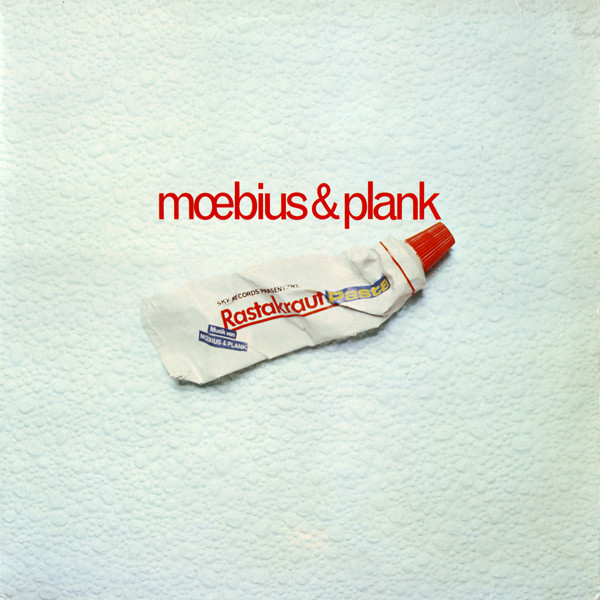
Rastakraut Pasta.
In 1980, Dieter and Conny Plank entered Conny’s Studio to record seven tracks. They were joined by another giant of German music, Can bassist Holger Czukay. He played on Feedback 66, Missi Cacadou and Two Oldtimers. When the seven tracks were completed, Rastakraut Pasta was would be released later in 1980.
Critics hailed Moebius and Plank’s debut Rastakraut Pasta a truly groundbreaking album. It was a fusion of avant-garde Kominische, industrial, electronica, experimental and dub reggae. This disparate and unlikely fusion of genres proved a potent musical pot-pourri, that proved popular with critics and record buyers. So much so, that Conny Plank and Dieter Moebius released a second album together.
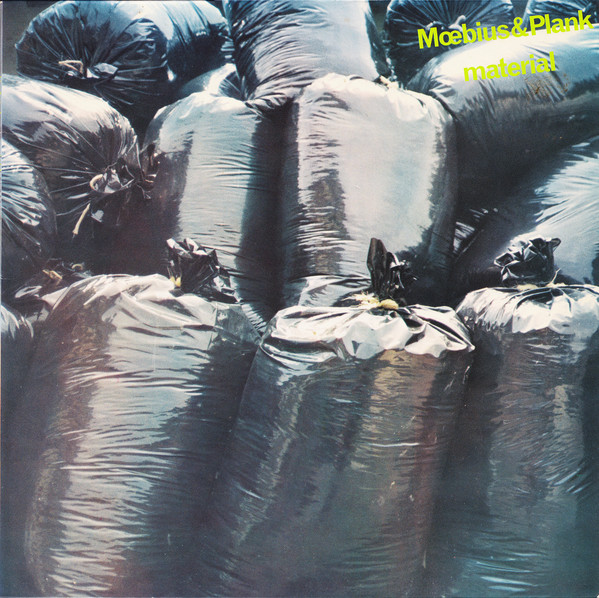
Material.
The Moebius and Plank partnership returned in 1981 with their sophomore album, Material. It featured five songs recorded at Conny’s Studio. This time, there was no sign of Holger Czukay. Instead, the two old friends and musical pioneers worked together on another album of truly groundbreaking music that became Material.
Just like Rastakraut Pasta, Material was hailed as another album of groundbreaking, genre-melting music. Elements of avant-garde Kominische, industrial, electronica, experimental and dub reggae. This resulted in music that wasn’t just innovative, but way ahead of its time. Material was also a timeless album, and one that resulted in what seemed like a queue of musicians wanting to collaborate with Dieter Moebius.
First in the queue was Gerd Beerbohm. They released their first collaboration, Strange Music in 1982. This was the first of two albums that the pair would record tougher. The followup Double Cut was released in 1983. That same year, Dieter Moebius released his debut album Tonspuren.
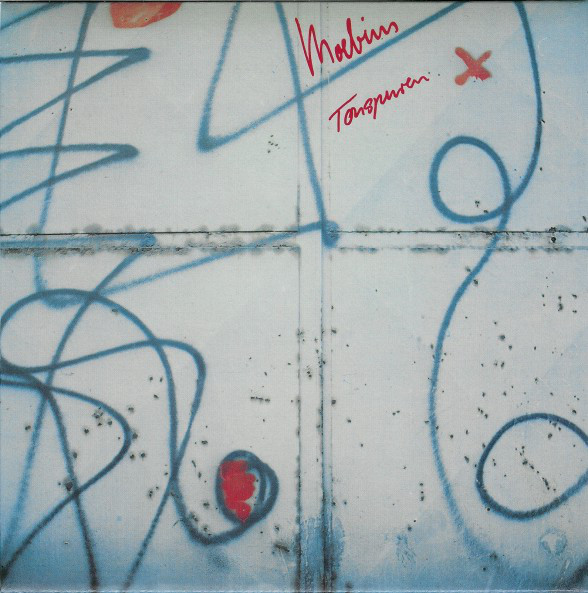
Tonspuren.
To record his debut solo album, Dieter Moebius headed for the familiar surroundings of Conny’s Studio, in Cologne. He had made this journey countless times before, and in the second half of 1982, Dieter began recording ten soundscapes. With Conny looking on approvingly, and making a few suggestions, Tonspuren began to take shape. Once the album was recorded, Conny mixed Tonspuren. It was then released in 1983.
Just like his previous collaborations with Conny Plank, Tonspuren was released on Günter Körber’s Sky Records. It was the perfect label for an album of minimalist, experimental and ambient music.
Günter Körbe had setup Sky Records in 1975, and had never been afraid to release music that many labels would’ve shied away from. Many other German labels were only interested in commercial music. However, Sky Records, just like Brain and Ohr before them, were determined to released groundbreaking music. This was how some critics described Tonspuren.
Critics had awaited the release of Tonspuren with interest. They wondered what direction Dieter Moebius’ music would head? When they heard Tonspuren, with its minimalist, ambient and sometimes experimental sound, they knew. It was a captivating debut album, and critics awaited Dieter’s sophomore album with interest. Sadly, they would have a long wait.
Sixteen years to be exact. Dieter Moebius would released several collaborations, and Cluster would’ve reunited before Dieter Moebius released his sophomore album. By then, Dieter Moebius had reinvented himself, while music, and the way it was made had changed.
Following the release of Tonspuren, Dieter Moebius continued to collaborate with other artists, This included two collaborations with Karl Renziehausen. Dieter Moebius also wrote the soundtrack to Blue Moon in 1986. However, it was Conny Plank that Dieter Moebius collaborated with most often. They recorded three further albums with Conny Plank, This included 1983s Zero Set which featured Guru Guru drummer Mani Neumeier; 1995s En Route; and Ludwig’s Law which featured Mayo Thompson. However, still, Dieter Moebius found time to reunite with Hans-Joachim Roedelius for the comeback of Cluster.
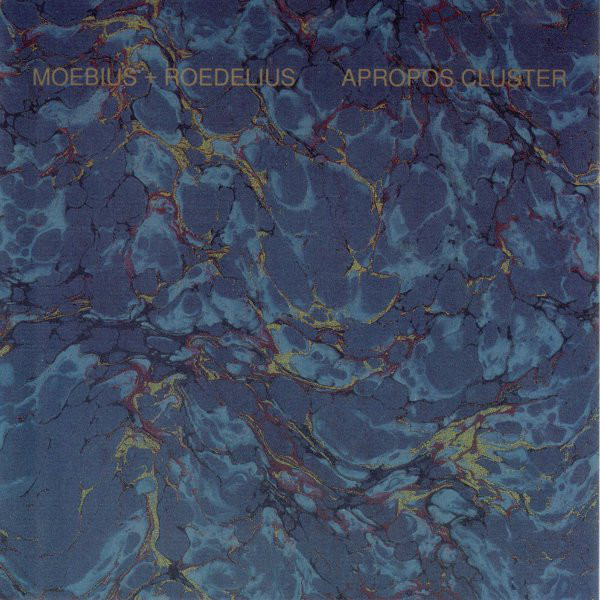
Apropos Cluster.
Recording of Cluster’s tenth album took place during 1989 and 1990. Dieter Moebius and Hans-Joachim Roedelius recorded five tracks, including the twenty-two minute epic title-track. It was part of an album that was similar to Grosses Wasser.
That is the comparisons critics drew, when Apropos Cluster was released in 1991. The only difference was, that Apropos Cluster wasn’t as rhythmic as Grosses Wasser. Instead, it was understated, ethereal and thoughtful ambient music. The followup to Apropos Cluster was the first of three live albums that Cluster would release.
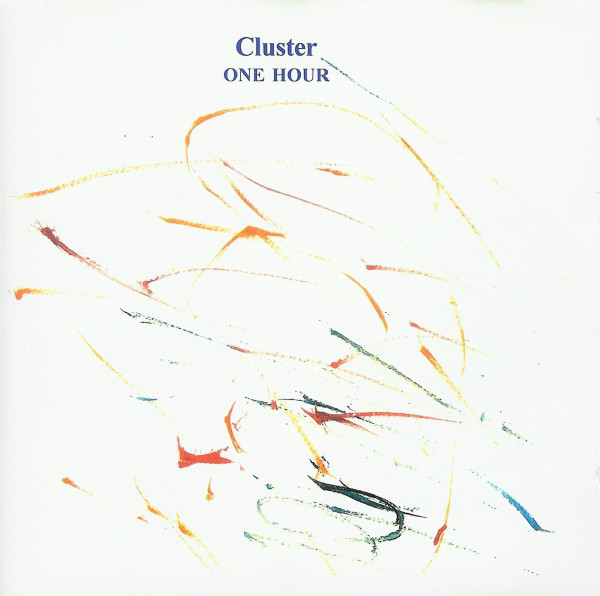
One Hour.
The first of the trio of live albums Cluster released during the nineties, was One Hour. It came about after Cluster improvised in the studio for four hours. This they edited this down to One Hour, and the result is a truly captivating album that was released in 1995.
One Hour features Cluster at their most imaginative as they take their music in the most unexpected directions. Curveballs are constantly bowled, as what sounds like the soundtrack to a surrealist film unfolds. Elements of ambient, avant-garde and modern classical music combine, resulting in one of the most intriguing albums in Cluster’s discography.
Two years later, in 1997, Cluster released the first of two live albums. The first was Japan 1996 Live. It was followed by First Encounter Tour 1996, which was their thirteen album, was the first double album Cluster had released. It would also be the last album they released for eleven years. During that period, Dieter Moebius released four further solo albums. The first of this quartet of solo albums was Blotch.
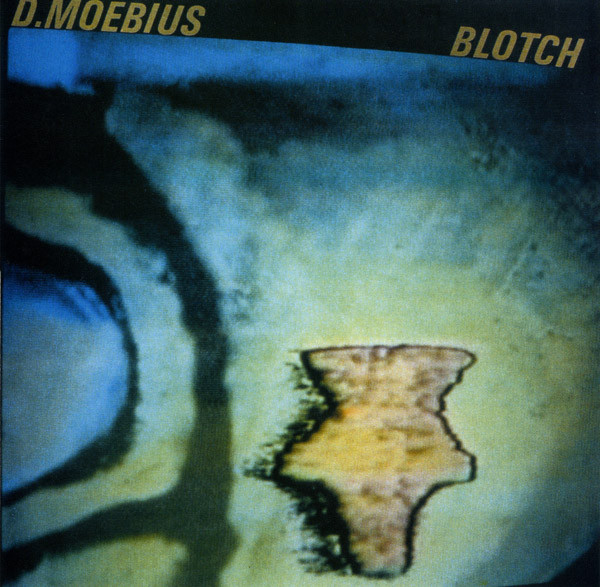
Blotch.
After a sixteen year period where he was constantly collaborating with other artists, the release of Blotch in 1999, marked the start of a period where mostly, Dieter Moebius would concentrate on his solo career. While there was the occasional excursion with Cluster, and a collaboration with Asmus Tietchens in 2012, mostly, the period between 1999 and 2014 are best described as the solo years.
One thing that never changed during the solo the solo years, was Dieter Moebius’ determination to innovate. Helping Dieter Moebius to innovate, was the technology that hadn’t been available when he recorded his debut solo album, Tonspuren in 1983. Dieter Moebius embraced this new technology when he recorded Blotch, which featured Tim Story. The result was his long-awaited comeback album, Blotch.
Blotch featured a series of playful mesmeric loop based tracks. They’re atmospheric and experimental, with Dieter Moebius adding bursts of speech and samples to the musical canvas. They were ‘painted’ by Dieter Moebius, who makes full use of musical palette, which included the new technology. Dieter Moebius’ willingness to innovate and embrace this new technology resulted in an album that was well worth the sixteen year wait.
When Blotch was released, Dieter Moebius was hailed as the comeback King. He had reinvented himself musically, and recorded a much more experimental, genre-melting album. Dieter Moebius had made good use of new technology, and added snatches of speech to the seven soundscapes. This proved a potent combination on album that fused everything from ambient and avant-garde, through to electronica and experimental to industrial, Krautrock and Musique Concrète. The result was an album of atmospheric, dramatic, futuristic and sometimes, ethereal, understated and beautiful music. These soundscapes were always cinematic and mostly, have a hypnotic quality on Blotch, the album that marked the return of Dieter Moebius.
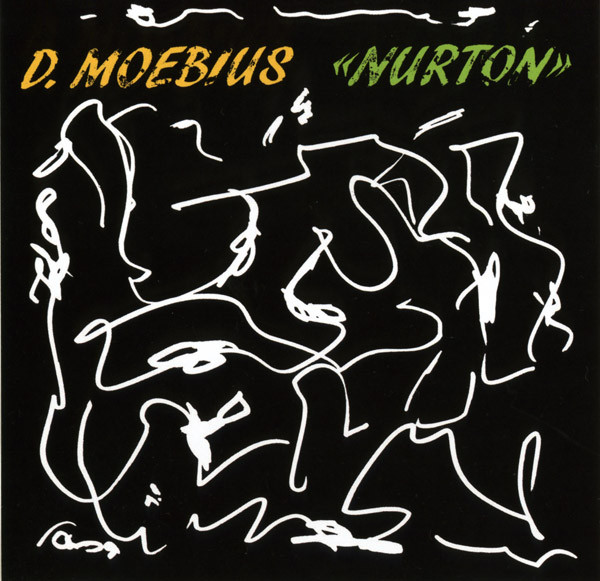
Nurton.
Seven years after Dieter Moebius’ comeback, he returned in 2006 with the third album of his solo career, Nurton. The album was recorded a year earlier in 2005, with Dieter Moebius making good use of some of the technology that he had used on Blotch. One of Dieter Moebius’ secret weapons was the Korg Prophecy which replicated a variety of analog synths. This Dieter Moebius put to good use on Nurton.
Dieter Moebius had pushed musical boundaries to their limit on Nurton. Just like he had throughout his career, he had turned his back on musical convention and structure. Instead, he let his imagination run riot, and studio became a laboratory, where Dieter Moebius experimented.
The result was Nurton, which veers between moody and broody, to dark and dramatic, to ethereal and elegiac to understated and beautiful. Always, though, the best words to describe Nurton were futuristic, cinematic and hypnotic. Dieter Moebius had pulled out the stops on Nurton, which was a captivating album that painted pictures in the mind’s eye. Much of the music on Nurton was akin to a sci-fi soundtrack. Nurton also has a timeless quality, and featured some of the most ambitious, innovative and experimental music of Dieter Moebius’ career. He had set the bar high for the followup album, which was Kram, which was released in 2009.
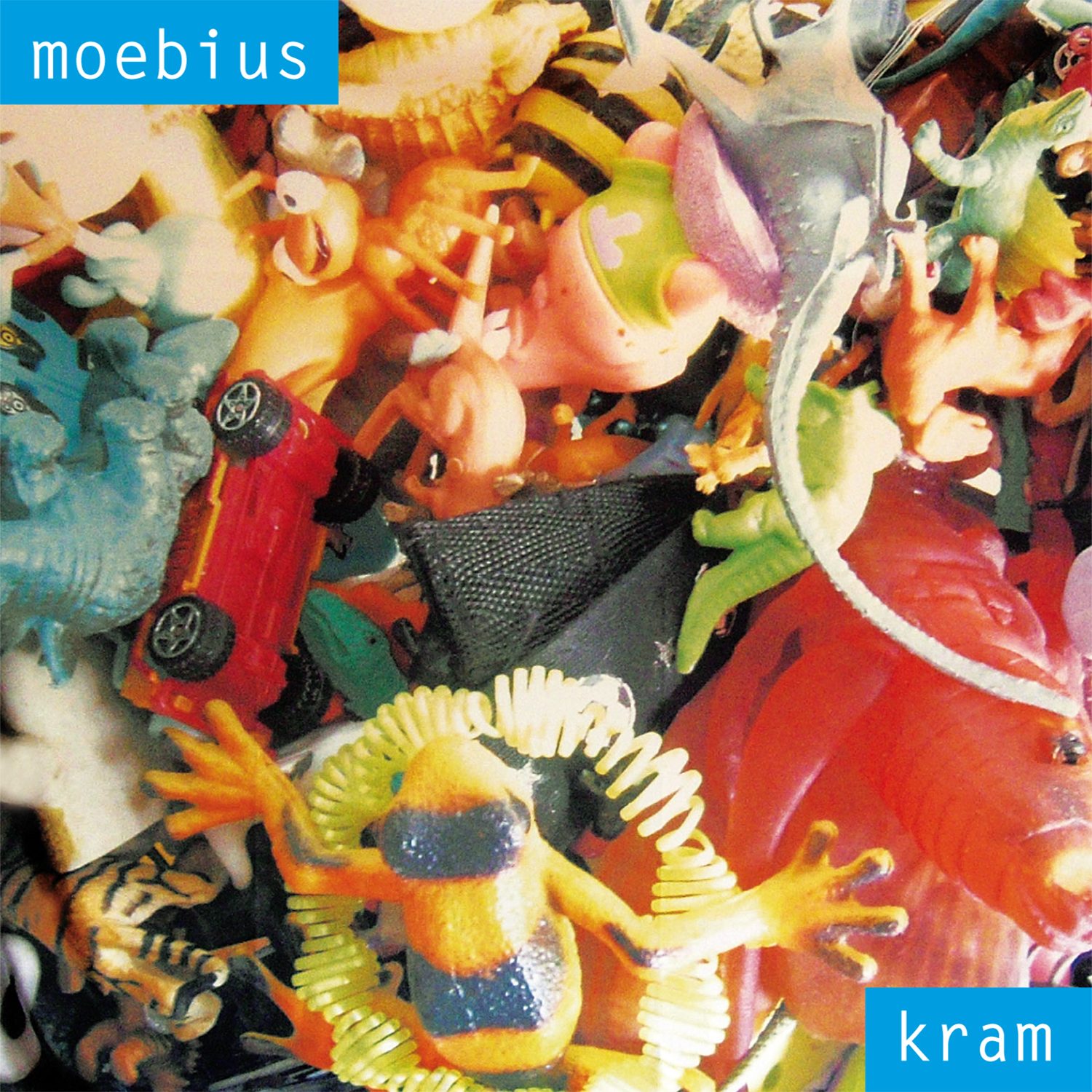
Kram.
By the time Dieter Moebius came to record Kram, life was good for one of the leading lights of the German music scene. Somewhat belatedly, the music Dieter Moebius recorded with Kluster, Cluster and Harmonia was receiving the recognition it deserved at home and abroad. German music fans realised that Dieter Moebius was one of their national treasures and had grown to appreciate his music.
Dieter Moebius was still one of the leading lights of the Berlin music scene in 2008, when his thoughts turned to recording a new studio album. By then, Dieter Moebius and his wife Irene were dividing their time between Berlin and Majorca, where they could enjoy a much more agreeable climate. However, Dieter Moebius spent some of his time in Majorca working on new music. He had a small mobile recording setup, which replicated the one he kept at him home in Berlin.
This meant that whenever he felt inspired to make music, Dieter Moebius could enter his studio, and work on music for his latest project. In 2008, the project that Dieter Moebius was working on was his fourth studio album, which would eventually become Kram, which translates as “stuff”. The time he sent in his studios in Berlin and Majorca resulted in ten soundscapes which lasted nearly fifty-two minutes. These soundscapes became Kram, which when it was released, became Dieter Moebius’ first album in three years.
With the release of Kram fast approaching in 2009, it was changed days for Dieter Moebius. In the early days of his career, when albums by Kluster, Cluster and Harmonia failed to attract the attention of critics. Sometimes, they passed almost unnoticed, or received just a few reviews. By 2009, Dieter Moebius was fifty-five and one of the elder statesmen of German music. He had been one of the pioneers in the late sixties, and forty years later, was still going strong and releasing ambitious and innovative music on Kram.
Critics upon hearing Kram, hailed the album one of Dieter Moebius’ finest hours as a solo artist. The album received praise and plaudits, with one of the founding fathers of modern German music creating a captivating album that was a musical roller coaster.
Kram is best described as veering between understated, ruminative and elegiac to playful, joyous and tinged with humour, to charming and moderne. Other times, the music is mesmeric and hypnotic, before becoming dark and dramatic. Sometimes, the music becomes experimental and ambitious, while other times, Dieter Moebius unleashes a myriad of futuristic and sci-fi sounds. They join found and throwaway sounds, samples and Dieter Moebius’ trusty synths which he uses to create another genre-melting album which is sometimes cinematic, but captivates from the opening bars of Start to the closing notes of Markt.
During Kram, Dieter Moebius combines elements of ambient, avant-garde, the Berlin School, electronica, experimental music, Krautrock and even briefly rock. The result is an album that features Dieter Moebius at most ambitious and innovative. Proof of this are some of the highlights of Kram.
After three years away, Dieter Moebius returned with one of the finest solo albums of his career. Sadly, it would prove to the penultimate album of his long and illustrious career.
Ding.
Two years after the release of Kram returned with his fifth solo album Ding in 2011. He had recorded Ding a year earlier, in Berlin studio. Now he was ready to release the much-anticipated followup to Kram. By then, the music Dieter Moebius had created with Kluster, Cluster and Harmonia had never been as popular. This resulted in an upsurge of interest in his solo career.
Just like previous solo albums, Dieter Moebius had embraced the latest technology. This included a random loop generator, which he had put to good use during the making of Ding. The loops it generated, were combined with bifurcate rhythms, impalpable and ghostly voices and a myriad of assorted audio matter which became part of the eleven soundscapes on Ding.
When critics heard Ding, they realised that it was quite different from its predecessor. It was another ambitious album, where Dieter Moebius set about reinventing his music once again. To do this, he combined elements of avant-garde with the Berlin School, electronica, experimental, industrial, Krautrock and Musique Concrète. There was also an array of hypnotic, industrial mechanical and robotic sounds on Ding, which was one of the most ambitious and experimental albums of Dieter Moebius’ solo career.
Just as he had been doing throughout his long and illustrious career, Dieter Moebius had created groundbreaking music and ambitious music on Ding. He embraced new technology, and used an array of samples, found sounds and leftfield sounds to create new and ambitious music. The music on Ding pushed musical boundaries to their limit, which amongst the most ambitious music released during 2011. That was what critics and record buyers had come to expect from sonic pioneer Dieter Moebius. Sadly, Ding was the last album that Dieter Moebius released.
Musik für Metropolis.
The following year, 2012, Dieter Moebius was invited to perform music to accompany a screening of Fritz Lang’s legendary silent film Metropolis. For the screening, Dieter Moebius began work on producing new tracks and samples. These he would play on the night and treated with a myriad of effects during Dieter Moebius’ improvised performance. His performance was planned so that it would provide the soundtrack to what was happening on the sliver screen. The Metropolis project took a lot of planning, but it was well worthwhile.
When the day of the screening of Metropolis arrived, Dieter Moebius made his way to the venue. With him, he took the equipment which he planned to put to good use that night. That was the case. It was a masterful and triumphant performance from Dieter Moebius, as he provided the perfect soundtrack for Metropolis. It had highlighted the drama and tension of Fritz Lang’s classic film. Buoyed by the success of his performance, Dieter Moebius began contemplating the next part in the Metropolis project.
All along, Dieter Moebius planned to record a full-length album featuring the music from the Metropolis project. Dieter Moebius began work on the Metropolis’ project, and continued to work on other projects. The sixty-eight year old still had an insatiable appetite for music, and immersed himself in the Metropolis’ project, which gradually started to take shape. Then tragedy stuck, when Dieter Moebius was diagnosed with cancer.
Suddenly, music didn’t matter any more, as Dieter Moebius was fighting for his life. He battled bravely against cancer, fighting for his future and very life. Sadly, Dieter Moebius died on the ‘20th’ of July 2015’ after what had been a brave and lengthy battle against cancer. He left behind a richest musical legacy.
This included the albums he released with Kluster, Cluster and Harmonia, plus his many collaborations. They feature one of the founding fathers of modern German music doing what he did best, creating ambitious and innovative music. So do the five solo albums Dieter Moebius had released during his long and illustrious career. It should’ve six solo albums. Sadly, Dieter Moebius passed away before completing Musik für Metropolis.
Musik für Metropolis.
Two of Dieter Moebius’ friends and longtime musical partners had been discussing trying to complete Musik für Metropolis. To do this, Tim Story and Jon Leidecker would require the permission of Dieter Moebius’ widow, Irene. She granted her permission, and was fully supportive of the project.
Over the next few months, Tim Story, Jon Leidecker and Berlin based musician Jonas Förster worked on the Musik für Metropolis’ project. This was their way of paying homage to a true giant of modern German music, Dieter Moebius.
Less than years after the death of Dieter Moebius, Tim Story, Jon Leidecker and Jonas Förster completed the Musik für Metropolis’ project. They had worked hard on the project and wanted to make Musik für Metropolis an album that Dieter Moebius would’ve been proud to put his name to. Once Irene Moebius had heard Musik für Metropolis and given her approval, the next step was to find a label who would were willing to release the album.
Fortunately, Hamburg-based label Bureau B had already agreed to reissue the five albums Dieter Moebius release Blotch, Nurton, Kram and Ding. They also agreed to release Musik für Metropolis which was Dieter Moebius’ swan-song.
When critics heard Musik für Metropolis it was hailed as another ambitious and genre-melting album, where Dieter Moebius, fused disparate musical genres. Elements of ambient, avant-garde and the Berlin School rub shudders with drone, electronica and experimental music. That is not forgetting industrial, Krautrock and musique concrète. They all become part of a musical tapestry, that is Musik für Metropolis. It was woven by the late, great Dieter Moebius.
He created four soundscapes that are variously atmospheric, dramatic, futuristic, melodic, menacing, mesmeric, poignant and full of tension. Always the cinematic music on Musik für Metropolis captivates and compels as Dieter Moebius paints pictures with music. This he does throughout Musik für Metropolis, which is a cinematic epic from one of the most important, innovative and influential musicians in the history of modern German music, Dieter Moebius.
He had spent six decades of his career creating ambitious and groundbreaking music. That was the case from his earliest days Kluster, Cluster and Harmonia, plus all the various collaborations that Dieter Moebius had been involved in. It was a similar case with Dieter Moebius’ solo career.
From Tonspuren in 1983 right through to Musik für Metropolis, Dieter Moebius was always a musical pioneer and someone who pushed musical boundaries to their limits and sometimes way beyond. That was the case on the six solo albums that bare Dieter Moebius’ name. They’re a reminder of one the most important, influential and innovative musicians in the history of German music. Dieter Moebius was a sonic pioneer and musical maverick, who constantly and continually sought to reinvent his music during the six albums he released during the solo years.
Dieter Moebius-The Post Cluster Years.

THE MURMAIDS-A STORY OF WHAT MIGHT HAVE BEEN.
The Murmaids-A Story Of What Might Have Been.
Sadly, musical history is littered with groups that are remembered as one-hit wonders. Their brush with commercial success may have been brief, but at least they enjoyed a tantalising taste of what some established groups take for granted. As a result, after a group has enjoyed one hit single, they want another. This comes as no surprise.
Commercial success and the fame and money it can sometimes bring, are as powerful as any drug. Once experienced, a group can spend the rest of their career trying to reach the same heights. Sadly, often, they never comes close to enjoying the same success.
Part of the problem is that a second hit single always proves to be tantalizingly just out of reach, and the group is destined to be remembered as a one-hit wonder. That was the case with The Murmaids, who had an enviable musical pedigree.
Two of The Murmaids, sisters Carol and Terry Fischer, came from a family that was steeped in music. The two previous generations of their family had been involved in the music industry all their lives. This included their grandmother and her three sisters, who had been part of a vaudeville act, The Locus Sisters. However, Carol and Terry Fischer’s parents were also steeped in music.
Carl Fischer had been a successful songwriter and arranger who had written You’ve Changed, which was recorded by Billie Holliday. Then during a ten-year period where Carl Fischer was Frankie Laine’s musical director, he wrote the jazz standard We’ll Be Together. Sadly, tragedy struck in 1954 when Carl Fischer died suddenly. With two young daughters to support, Terry Fischer Sr. returned to singing with big bands.
That was what Terry Fischer Sr. had been doing when she had first met Carl Fischer. She had sung with various big bands, and became the first female vocalist in Stan Kenton’s Orchestra. Now after the tragic death of her husband, Terry Fischer Sr. was back singing in the big bands. She was a talented vocalist and managed to pickup where she had left off.
Little did Terry Fischer Sr. know that soon, a third generation of her family would be embarking upon a musical career. However, with such a strong musical pedigree, it was almost inevitable that Carol and Terry Fischer would embark upon a career in music. Music was family business.
Terry Fischer Sr. encouraged and supported her daughters, who were proving to be talented singers. They were active in their school’s glee club, and by high school, were music majors. It was around this time, that Carol and Terry met a young songwriter and producer, Mike Postil.
The future Mike Post had just graduated from Los Angeles University High, and had written some songs. Once he had recorded these songs, he would shop them around town. There was a problem though, Mike Post had nobody to sing backing vocals on his demos.
By 1963, Carol Fischer who was fifteen, and Terry Fischer who was seventeen, were living in Los Angeles. For some time, the sisters had been singing with seventeen year old Sally Gordon, who was a friend and neighbour. With Terry Fischer Sr’s help, they were a polished and professional trio. This was what Mike Post was looking for.
When Mike Post met Carol, Terry and Sally, he knew that he had the backing vocalists that he had been looking for. They sang backing vocals on demos for producer Mike Post. Sometimes, Mike Post would bring them in to add backing vocals on some of his productions at Gold Star Studios. That was where Kim Fowley first came across the trio.
By 1963, producer and songwriter Kim Fowley, who was another alumni of Los Angeles University High, was working at Gold Star Studios as an in-house producer. He had already enjoyed hits with Nut Rocker and Alley Oop. However, the twenty-four year old was keen to forge a career as a producer. That was why he had taken the job at Gold Star Studios.
That was also where Kim Fowley first heard the trio sing. Realising that they were talented, he offered to record them. This was the break the trio had been looking for, and they jumped at what could be a once in a lifetime opportunity.
The trio’s first recording session with Kim Fowley was hardly a resounding success. He had them record a version of Alley Oop, but the song didn’t work. Despite that, Kim Fowley wasn’t going to give-up on the trio.
Fortunately, Kim Fowley encountered a talented, but as yet, unknown singer-songwriter, David Gates. The future founder of Bread was driving along one day, when he saw a hitchhiker. Curiosity got the better of David Gates. He stopped and picked up Kim Fowley.
Soon, the two men got talking, and Kim Fowley volunteered that he was a producer. David Gates told him he was a songwriter, and had written a song for a girl group. He reached into the back seat, and produced a guitar, and proceeded to play Kim Fowley Popsicles and Icicles. When Kim Fowley heard the song, he had David Gates send him a demo, as he had someone in mind for the song.
Originally, Kim Fowley felt Popsicles and Icicles would be perfect for Skip Battin, who previously, had been one half of Skip and Flip. However, Skip Battin passed on the song. It was only Kim Fowley remembered the trio he had recorded at Gold Star Studios.
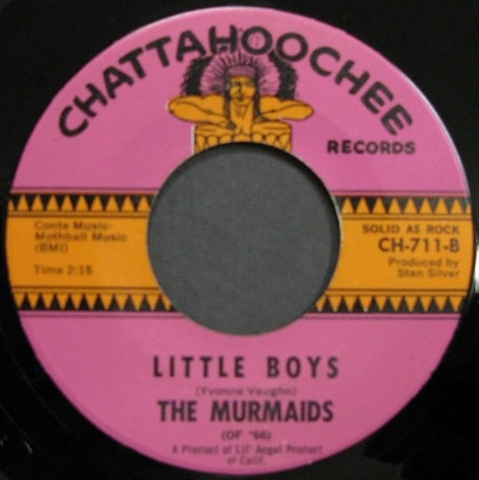
Kim Fowley even had a label lined up for the song. This was Chattahoochee Records, an imprint of Conte Records. It had been formed by Ruth Conte Yardum, with the help of Kim Fowley. Originally, it was to release singles by actor-singer John Conte. However, Conte Records had a pop imprint, Chattahoochee, which Kim Fowley owned a share in. This was the label Kim Fowley planned to release Popsicles and Icicles on. All he had to do was firstly to convince Ruth Conte Yardum about the merits of his masterplan, and then convince Terry Fischer Sr. that this was the right song for her singing trio.
Eventually, Kim Fowley managed to convince Ruth Conte Yardum that Popsicles and Icicles had the potential to be a hit, and that he could record the single for $100 using three high school students. Now Kim Fowley’s only potential obstacle was Terry Fischer Sr. He had to win her over, and her that Popsicles and Icicles had the potential to be a hit. Only then, could Kim Fowley book time at Gold Star Studios. Now he could concentrate on recording the trio’s debut single. However, the trio needed a name.
When the trio arrived at Gold Star Studios, they were now called The Murmaids. Terry Fischer was The Murmaids’ lead singer, and Carol and Sally would add harmonies. The Murmaids were shown the five tracks that Kim Fowley wanted them to record. This included Blue Dress, Bunny Stomp, Comedy and Tragedy and Huntington Flats. However, one track stood head and shoulders above the rest, the David Gates’ penned Popsicles and Icicles.
Given that funds were limited, it was always going to be touch and go whether The Murmaids could record two tracks in the time allotted. They managed to record Popsicles and Icicles but there was no time left to record a B-Side. This didn’t faze Kim Fowley.
Once Kim Fowley tallied up the costs, it came to $108. He hadn’t quite recorded the single for the $100 he had predicted. However, he was convinced he had a hit on his hands. That was despite not having recorded a B-Side. So Popsicles and Icicles was paired with a surf styled instrumental Bunny Stomp and released in late 1963.
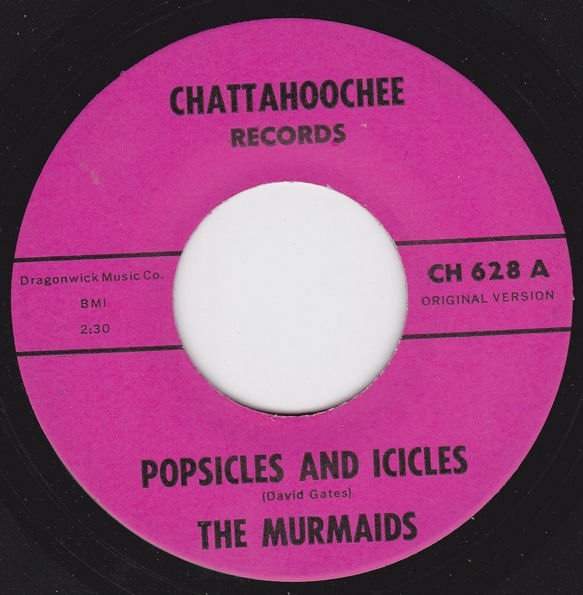
When Popsicles and Icicles was released in early November 1963, straight away, The Murmaids’ debut single was being played on the radio. From 119 in the US Billboard 100 on 9th November 1963, Popsicles and Icicles reached sixteen by the 16th November 1963. Eventually, in the charts of 11th December 1963, Popsicles and Icicles peaked at number three on the US Billboard and Cash Box charts. However, in Record World, Popsicles and Icicles reached number one. Little did The Murmaids realise that Popsicles and Icicles would become their only hit single, and they had just joined the ranks of the one-hit wonders.
For their sophomore single, another David Gates’ composition was chosen, Heartbreak Ahead. On the flip side was He’s Good To Me. Kim Fowley wasn’t going to let the record buying public forget The Murmaids, so released Heartbreak Ahead on Chattahoochee Records whilst Popsicles and Icicles was still in the top thirty. This backfired on Kim Fowley, and Heartbreak Ahead stalled at 116 in the US Billboard 100. After two weeks, at 116 in the US Billboard 100 it was a case of Heartbreak Ahead for The Murmaids.
They were on a roller coaster. Their debut single reached number three in the US Billboard 100, but the followup failed commercially. There was nothing wrong with the song. The Murmaids brought the lyrics to life. Much of the blame lay can be laid at aspiring pop impresario, Kim Fowley’s door.
Heartbreak Ahead was released far too soon, and Suddenly The Murmaids had two singles competing for radio play. Three if The Lady Bugs’ cover of How Do You Do It was counted.
Rather than concentrate his efforts on getting The Murmaids career back on track, Kim Fowley had Carol and Terry Fischer record How Do You Do It with Jackie DeShannon. How Do You Do It had given Gerry and The Pacemakers a number one single. The Lady Bugs version was released in February 1964, but failed to make an impression on the charts. This was a worrying trend.
Later in 1964, The Murmaids released their third single, Wild And Wonderful. It came from the pen of the Brill Building songwriting team of Ben Raleigh and Barkan. They had just written Lesley Gore’s She’s A Fool. For the B-Side, Sam Friedman’s Bull Talk. These two tracks were supposed to get The Murmaids’ career back on track.
On its release, Wild And Wonderful never came close to troubling the charts. Wild And Wonderful became The Murmaids’ second single that had failed to chart. Things weren’t looking good for The Murmaids.
After the success of Popsicles and Icicles, major record labels came knocking on The Murmaids’ door and wanting to buy out their contract with Chattahoochee. Terry Fischer Sr. who was managing the group’s career, decided that they should stay to Ruth Conte Yardum and her Chattahoochee Records. That proved to be a huge mistake.
As the summer of 1964 drew to a close, Terry Fischer and Sally Gordon were about to leave home, and head to college. They needed the royalties from Popsicles and Icicles to pay their way through college. However, the royalties weren’t forthcoming.
This lead to Chattahoochee Records having to circulate a memo to other record labels explaining why The Murmaids hadn’t been paid. The memo explained that the funds in a trust for each member of The Murmaids. However, Chattahoochee Records alleged that the agreement hadn’t been honoured by Terry Fischer Sr; and claimed that Sally Gordon had received her funds. The label further claimed that Terry Fischer Sr. had stipulated she had the final say over the other two members participation in the group. However, even fifty-one years later, some of Chattahooche Records claims are disputed.
Recently, Terry Fischer claimed that when The Murmaids received their first royalty statement; “it showed that we were owed nothing at all!” The expenses charged by Chattahoochee Records amounted to $10,000, exactly the sum The Murmaids were owed. Further muddying the waters, was Kim Fowley’s claim that The Murmaids were in breach of contract for recording with The Rip Chords. However, their producer Terry Melcher disputes this claim. What was clear, was that all wasn’t well with The Murmaids and Chattahoochee Records.
Despite this, Chattahoochee Record decided to reissue Bull Talk. The former B-Side was about to enjoy its moment in the sun. There was a reason for this. Shirley Ellis’ single Name Game was riding high in the charts, and just about to reach the top twenty. By then, teenagers were adding the word “bull” to sentences, so that adults wouldn’t be able to understand what they were saying. Ruth Conte Yardum and Kim Fowley thought they could jump on the “bull” bandwagon, and score a novelty hit. That wasn’t the case. Despite this, ‘aspiring pop impresario’ Kim Fowley had another plan up his sleeve.
He decided to repress Popsicles and Icicles. However, he needed a B-Side, so drafted in five new girls who recorded as The Murmaids. They got to sing on the B-Side Comedy and Tragedy, by agreeing to phone a local radio station, and request Popsicles and Icicles. The song that was chosen was played non-stop for a week. However, Comedy and Tragedy wasn’t the only B-Side to the newly reissued Popsicles and Icicles.
When Popsicles and Icicles began garnering more radio play, three other versions of the single were pressed. Each had a different B-Side. Bunny Stomp was followed by Huntington Flats and Blue Dress. As as all this unfolded, the “real” Murmaids were “baffled.” Their group had essentially been hijacked by Kim Fowley and Chattahooche Records. Despite this betrayal, incredibly, Terry Fischer and the rest of the Murmaids returned to the studio.
With Popsicles and Icicles growing in popularity once again, The Murmaids went into the studio and recorded enough music for an album. However, that album was never released until 1980. To make matters worse, The Murmaids were never paid for the session. That wasn’t the end of The Murmaids saga.
Rubbing salt in the real Murmaids’ wound, was that two singles were released baring The Murmaids’ name. Whether any of the original lineup of The Murmaids sung on the two singles is the subject of debate?
The first was Stuffed Animals, which featured Little White Lies on the flip side. On its release, Little White Lies claims to have been: “Produced and Recorded in Britain by Kim Fowley.” Who sung on the single is still disputed. However, when Stuffed Animals was released as a single, it failed commercially. So did the followup.
The Cathy Brasher penned Go Away was chosen as The Murmaids’ next single. On the flip side was Little Boys, which Yvonne Vaughan wrote. When Go Away was released in 1966, the single failed to chart. That was all that was heard of The Murmaids until 1968.
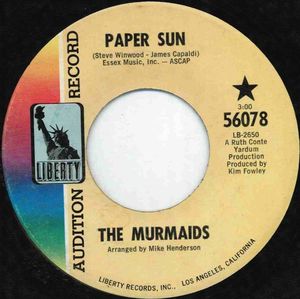
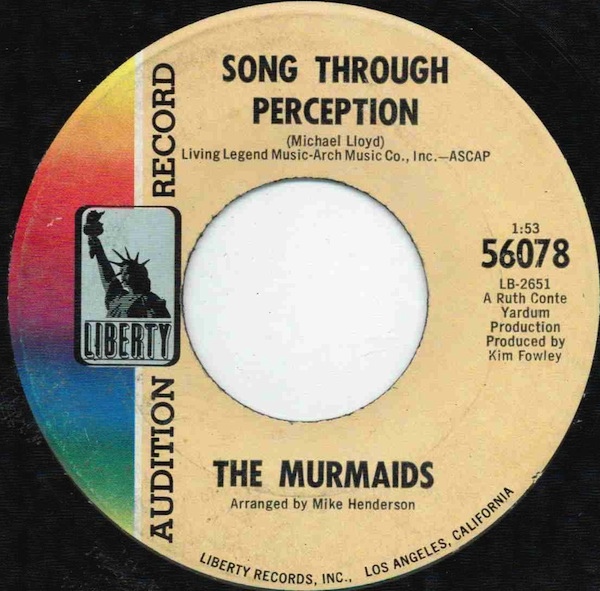
After two years away, The Murmaids returned in 1968 with their swan-song Paper Sun. It was released on Liberty, with Song Through Perception on the B-Side. The only original member of The Murmaids was Sally Gordon. Even she couldn’t revive the group’s flagging fortunes. After five eventful, off and on years, The Murmaids were history.
Fast forward to 1980, and The Murmaids Resurface was belatedly released on the Chattahoochee Records. It featured previously unreleased including Don’t Forget, Alone, Three Little Words, Mr. Sandman, Playmates, So Young and You Cheated. At last, the songs The Murmaids had recorded for the album all these years ago, had been released. It was just a pity nobody bothered to tell Terry Fischer about the release of The Murmaids Resurface.
Terry Fischer only found out about The Murmaids Resurface when a friend discovered a copy at a record fare in the Mid West. They sent Terry Fischer a copy of The Murmaids Resurface. When Terry Fischer looked at the credits to The Murmaids Resurface the producer was Ruth Conte. This was just the latest twist to The Murmaids story. Seventeen years after they first signed to Chattahooche Records, The Murmaids was proving to be the gift that kept on giving.
That wasn’t the case for Terry Fischer and the other two Murmaids. Even today, they’ve no idea of how many records they really sold. That is somewhat ironic.
After the commercial success of Popsicles And Icicles, major labels were knocking on Terry Fischer Sr’s door wanting to buy The Murmaids’ contract out, and sign them to their label. Terry Fischer Sr. decided to stay loyal to the label that gave The Murmaids’ their break. Sadly, that proved to be a huge mistake.
If The Murmaids had signed to a major, they could’ve enjoyed a much more successful career. They wouldn’t be remembered as a one-hit wonder. The Murmaids, a talented trio, deserved much better. Certainly much better than happened next.
Less than a year later after spurning the advances of major labels, The Murmaids never received the royalties they were owed. This couldn’t have come at a worse time, as Terry and Sally Gordon were about to head off to college. By then, The Murmaids’ story was almost at an end. It had lasted around six months.
During that period, The Murmaids had played live a few times, and made a couple of appearances on television. After six months, The Murmaids’ story was all but over. That’s despite singles being released for another four years.
These singles were either songs the original lineup of The Murmaids recorded, or different lineups put together by musical ‘impresario’ Kim Fowley. The only other time Terry Fischer entered a recording studio as a Murmaid, was to record The Murmaids Resurface, which was belatedly issued in 1980. By then, The Murmaids had long joined the one-hit wonder club.
While the one-hit wonder club may not be the most exclusive club in the world, at least The Murmaids enjoyed a brief, but tantalising taste of fame and commercial success. Although it didn’t last long, nor proved particularly profitable, at least The Murmaids enjoyed their moment in the spotlight, and enjoyed what every band dreams of, a hit single.
The Murmaids-A Story Of What Might Have Been.



FIVE DRUMMERS, FIVE GUITARISTS AND FOUR ALBUMS-THE STORY OF SEATRAIN.
Five Drummers, Five Guitarists and Four Albums-The Story Of Seatrain.
Although Seatrain were only together for four years and released four albums, there were five separate lineups of the band. Drummers and guitarists proved to be Seatrain’s Achille’s Heel. Seatrain featured five different drummers and guitarists between the release of their 1969 debut album Sea Train, and their 1973 swan-song. By then, Seatrain was a very different band to the one that started out in 1969.
Andy Kulberg was the only original member of Seatrain in the band. He had cofounded the band in 1968, and played on every album that Seatrain released. This included their 1973 swan-song Watch. However, by the time Watch was released by Capitol in 1973, the band’s lineup changed beyond recognition. It was the fifth and final change in Seatrain’s lineup since they were founded in August 1968.
Two of the founding members of Seatrain were drummer Roy Blumenfeld and bassist and flautist Andy Kulberg, who previously, had been members of the Blues Project. They had spilt-in after they played a starring role at the Monterey International Pop Festival in June 1967. The Blues Project went out on a high.
By then, the Blues Project was no longer the band it once had been. Some of the members of the band had left the band before the Monterey International Pop Festival, and it was only a matter of time before the remaining members of the band went their separate ways. After the Monterey International Pop Festival decided the time had come to call time on Blues Project.
With Blues Project consigned to musical history, the members of the band embarked upon new projects. However, it wasn’t until the summer of 1968 that Roy Blumenfeld and Andy Kulberg form a new band, Sea Train.
Having formed Sea Train, Roy Blumenfeld and Andy Kulberg moved to Marin County, California in August 1968. That was where they met the other members of the band. This included former Mystery Trend guitarist John Gregory, ex-Jim Kweskin Jug Band violinist Richard Greene, saxophonist Don Kretmar and lyricist and backing vocalist Jim Roberts. He was the final piece in the jigsaw of what was the newest American roots fusion band, Sea Train.
With the new band’s lineup in place, Sea Train were keen to record their debut album. There was a problem though. Blues Project still owed their former label an album. Planned Obsolescence which was meant to be Sea Train’s debut album, was released on Verve Forecast as a Blues Project album. Once Planned Obsolescence was released in 1968, Blues Project had discharged their contractual obligations to Verve Forecast. Now Seatrain could begin work on their debut album Sea Train.
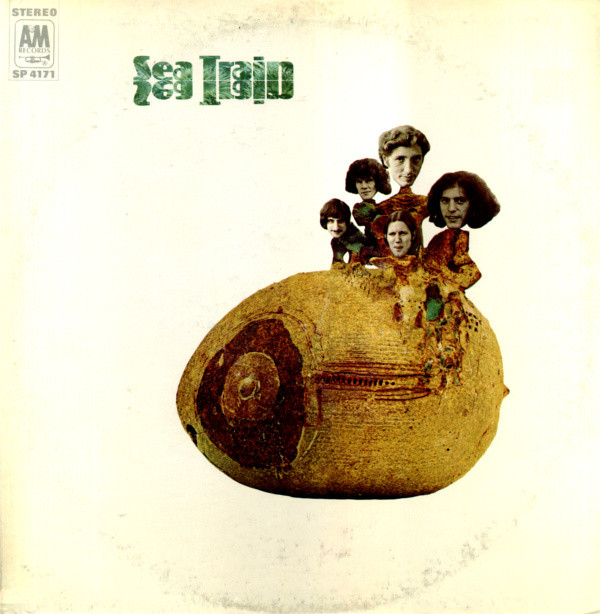
Sea Train.
By the time Sea Train began work on their eponymous debut album, the band had signed a recording contract. Not long after this, Sea Train got to work on their 1969 eponymous debut album.
For Sea Train’s eponymous debut album, Andy Kulberg and Jim Roberts formed a successful songwriting partnership, penning Sea Train, As I Lay Losing and Out Where The Hills. Meanwhile, Jim Roberts and John Gregory wrote Let the Duchess No, Portrait Of The Lady As A Young Artist and Rondo.Andy Kulberg contributed Pudding Street and Sweet’s Creek’s Suite. These songs would become Sea Train which would showcase the band’s unique brand of American roots fusion.
To create this sound, Sea Train would combine blues, bluegrass, folk and rock in the studio. They were joined by engineer and producer Henry Lewy, whose career was about to blossom. However, Sea Train decided to arrange and produce their eponymous debut album, while Henry Lewy and Robert Di Sousa took charge of engineering duties. That was no surprise, as Sea Train featured some experienced musicians.
Two members of Sea Train’s rhythm section, drummer and percussionist Roy Blumenfeld and bassist and flautist Andy Kulberg were members of Blues Project, while guitarist and vocalist John Gregory had been a member of Mystery Trend.
Violinist Richard Greene was a member of the Jim Kweskin Jug Band. The other two members of Sea Train included, saxophonist Don Kretmar and backing vocalist Jim Roberts. They recorded the eight tracks that would become Sea Train.
Once Sea Train was completed, Columbia began working towards the release of the album later in 1969. Little did they know that all wasn’t well within Sea Train. This would soon become clear.
Before that, Sea Train was released later in 1969. By then, critics had their say on Sea Train, which showcased their own unique take on American roots fusion. This was essentially a combination of blues, bluegrass, country, folk, jazz and rock. Sea Train was well received by critics, who almost inevitably, drew comparisons with The Band and the Grateful Dead. However, when Sea Train was released, the album failed to find an audience. For Sea Train that was the last straw.
Not long after the release of Sea Train, the band split-up. They had been together less than a year, and had only released the one album. It looked like the end of the road for Sea Train.
Sea Train Mk II.
Not long after the Sea Train split-up in 1969, Andy Kulberg and Richard Greene decided to reform the group. They began the search for the second lineup of Sea Train. Soon, drummer Bobby Moses, guitarist Teddy Irwin and vocalist Red Shepherd were added to the lineup. Soon, so was saxophonist and bassist Don Kretmar. This became Sea Train Mk II…for the time being.
This lineup of Sea Train wasn’t together long. Before long, Sea Train were looking for a drummer and guitarist.
Sea Train Mk III.
Later in 1969, the search began for a Sea Train’s new drummer and guitarist. Various musicians were auditioned, and soon, the remaining members of Sea Train settled on new additions.
Replacing drummer Bobby Moses was Billy Williams, while Elliot Randall became Sea Train’s new guitarist. Sea Train Mk III was complete.
Before long, Billy Williams and Elliot Randall left Sea Train. So did saxophonist and bassist Don Kretmar. Now Sea Train began the search all over again for new members.
Sea Train Mk IV.
One of the earliest recruits was guitarist Peter Rowan, who had cofounded Earth Opera in 1967. The next recruits were drummer Larry Atamanuik, and keyboardist and vocalist Lloyd Baskin. A decision was made that Jim Roberts would return to the fold, and continue to contribute lyrics. While this completed the lineup, there was still one more change to be made.
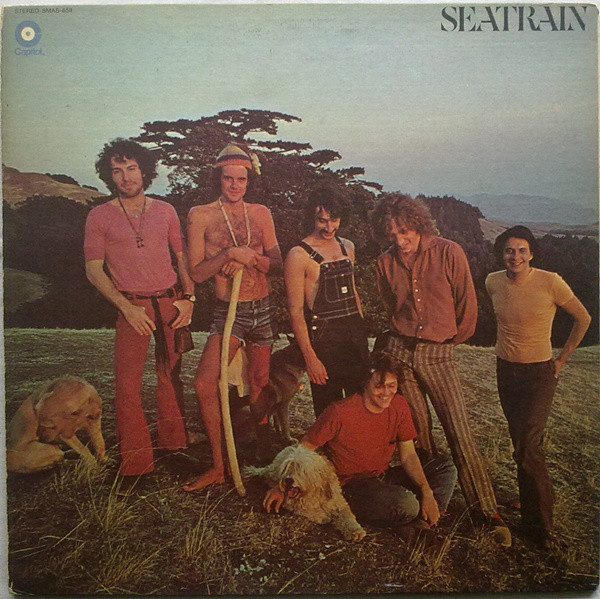
No longer was the group known as Sea Train. Instead, they were known as Seatrain, which was also the title of the group’s next album for Capitol.
Seatrain.
With a new lineup and new name, Seatrain began work on what was their eponymous sophomore album. Just like on Sea Train, the Andy Kulberg and Jim Roberts played an important part in the songwriting process. They penned four of the eight songs, including Song Of Job, Broken Morning, Out Where the Hills and 13 Question. New guitarist and vocalist Peter Rowan chipped in with two songs, Home To You and Waiting for Elijah. Bookending the album was Lowell George’s I’m Willin’ and Ervin Rouse’s Orange Blossom Special which featured Oh My Love, Sally Goodin and Creepin’ Midnight. These songs would eventually become Seatrain.
Before that, the band had to cross the Atlantic, and work with the one of the most successful producers in the history of popular music,..George Music. Home for the man who produced The Beatles, was the prestigious Air Studios. This was where Seatrain was recorded by the second lineup of the band. It featured a rhythm section of drummer Larry Atamanuik; bassist and flautist Andy Kulberg and guitarist and lead vocalist Peter Rowan. He shared the lead vocals duties with Lloyd Baskin, while Richard Greene played violin, viola and keyboards. Meanwhile, George Martin took charge of production, in played his part in what was a quite different album from their debut. Seatrain saw the group’s sound begin to evolve.
Once Seatrain was complete, critics were sent copies of the George Martin produced album. They were won over by a carefully crafted album of East Coast rock and country soul. This was a much more commercial sounding album.
And so it proved to be. When 13 Questions was released as a single in 1970, it reached forty-nine in the US Billboard 100. Despite the success of the single, Seatrain failed to trouble the charts upon its release later in 1970. This was a disappointment, given Seatrain was the best, and most accomplished album of the group’s career.
The Marblehead Messenger.
Despite the commercial failure of Seatrain, Capitol never lost faith in the band. Capitol even hired George Martin to produce Seatrain’s third album, The Marblehead Messenger. It featured ten songs penned by members of Seatrain.
Just like on the two previous albums, the Andy Kulberg and Jim Roberts songwriting partnership wrote many of the songs on the album. This time around, they contributed six songs, Gramercy, The State of Georgia’s Mind, Marblehead Messenger, London Song, Losing All The Years and Despair Tire. Peter Rowan contributed a trio of songs, Protestant Preacher, How Sweet Thy Song and Mississippi Moon. Keyboardist Lloyd Baskin made his songwriting debut with Lonely’s Not the Only Way to Go. These songs were recorded with producer George Martin.
This time around, George Martin joined Seatrain at Seaweed Studios, in Marblehead, Massachusetts. By then, Seatrain were enjoying a settled lineup. They hoped changes in the lineup were a thing of the past, and that from now on in, the same band would feature on albums. This included a rhythm section of drummer Larry Atamanuik; bassist and flautist Andy Kulberg and guitarist and lead vocalist Peter Rowan. He shared the lead vocals duties with Lloyd Baskin, and Richard Greene switched between violin, viola and keyboards. Meanwhile, George Martin took charge of production on what proved to be a career-defining album.
Once The Marblehead Messenger was complete, critics had their say on Seatrain’s third album. It was another carefully crafted and cohesive album where Seatrain came of age musically. They were maturing as musicians, singers and songwriters. Meanwhile, the music on The Marblehead Messenger was melodic and featured poetic lyrics. Critics were in agreement that The Marblehead Messenger was Seatrain’s finest hour.
Buoyed by reviews, executives at Capitol thought that The Marblehead Messenger was the album that would introduce Seatrain to the wider record buying public. They were still one of music’s best kept secrets. Sadly, Seatrain remained one of music’s best kept secrets, and nowadays, The Marblehead Messenger is regarded as a hidden gem of an album.
Despite the commercial failure of The Marblehead Messenger, Seatrain embarked upon their first British Tour. Some of the dates on their British tour found Seatrain supporting Traffic. While Seatrain were well received by British audiences, it would be the first and last time Seatrain toured Britain. The following year, 1972, there would be two departures from Seatrain
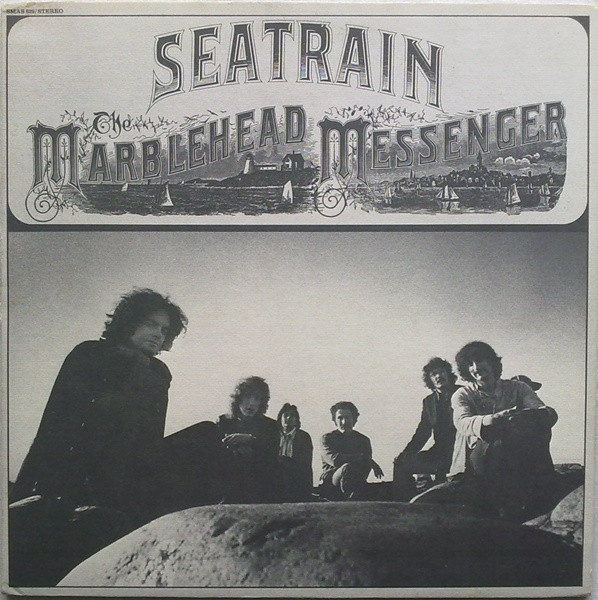
Seatrain Mk V.
In 1972, Seatrain founding member Richard Greene and Peter Rowan left join Muleskinner. For Seatrain, this was a huge loss. Richard Greene was a talented multi-instrumentalist and Andy Kulberg’s songwriting partner. Peter Rowan was Seatrain’s guitarist and lead vocalist, and had produced some of his best performances on The Marblehead Messenger. This was another huge loss. So was the loss of drummer Larry Atamanuik, who decided to leave Seatrain after two albums. Suddenly, Seatrain were looking for three new members.
The search began, and various musicians were auditioned. Eventually, Seatrain settled on drummer Julio Coronado, keyboardist Bill Elliott and guitarist and vocalist Peter Walsh. This completed what was the fifth lineup of Seatrain. They would make their recording debut on Watch, which was Seatrain’s fourth album, but their debut for Warner Bros.
Watch.
Watch marked the start of a new chapter for Seatrain, and especially Andy Kulberg. He was the last of remaining founding members of Seatrain, and had been ever-present throughout the band’s career.
Jim Roberts was another founding member of Seatrain, but hadn’t contributed to their third album The Marblehead Messenger. The last time Jim Roberts cowrote songs with Andy Kulberg was on Seatrain. However, with Richard Greene having left Seatrain, Jim Roberts and Andy Kulberg decided to renew their songwriting partnership.
The Jim Roberts and Andy Kulberg songwriting partnership contributed a trio of songs to Watch, including Pack of Fools, Freedom Is The Reason and North Coast. Andy Kulberg penned Scratch, and had written Abbeville Fair with Richard Greene, prior to his departure from Seatrain. Lloyd Baskin contributed Bloodshot Eyes and We Are Your Children Too. They were joined by covers of Bob Dylan’s Watching The River Flow and Al Kooper’s Flute Thing, and became Watch which was produced by Buell Neidlinger.
For Seatrain Mk V, Watch was the first time the band had recorded together. The rhythm section featured drummer and percussionist Julio Coronado; bassist and flautist Andy Kulberg and guitarist and vocalist Peter Walsh. They were joined by keyboardists Lloyd Baskin and Bill Elliot. Augmenting Seatrain were a number of session musicians.
This included a guitarist Paul Prestopino; banjo player Bill Keith; flautist Jill Shires; oboist Allan Vogel; tuba player Bob Stuart and a string section. They were joined by vocalists Wayne Daley, Sandra Lee and Sha Na Na. Producer Buell Neidlinger also played bass on Watch, which gradually took shape. It was a quite different album from The Marblehead Messenger.
Given how different an album Seatrain was, it was an album that surprised the critics, but still found favour with them. They excepted Seatrain to continue further down the road that began on Seatrain, and continued on The Marblehead Messenger. That wasn’t the case. The new lineup of Seatrain set about reinventing their music on Watch.
While critics were impressed with Watch, it failed find an audience amongst record buyers. Just like their three previous albums, Seatrain commercial success eluded Seatrain. It was a familiar story, and one that founding member Andy Kulberg had heard before. He knew that Watch was the end of the line for Seatrain.
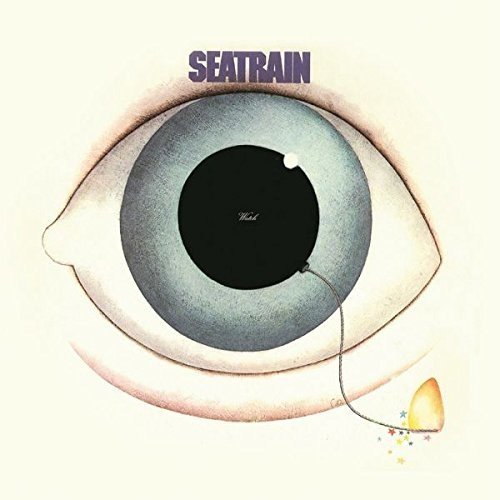
Not long after the release of Watch, Seatrain split-up, this time for good. There was no comeback this time. Instead, Andy Kulberg rejoined the Blues Project who had reformed in 1971. After four albums and five lineups, the Seatrain were no more.
Sadly, Seatrain were the latest in a long line of bands who could’ve and should’ve reached greater heights. Despite their talent, commercial success eluded then. However, what didn’t help was that Seatrain went through five different lineups. With a settled lineup, who knows what heights Seatrain lead by Andy Kulberg might have reached?
Instead, Seatrain remained a cult band, whose music was enjoyed and cherished by a small group of discerning record buyers. They remember the quartet of albums that Seatrain released between 1969 and 1973. Each of these albums were quite different.
This ranged from the American roots fusion of Sea Train in 1969; to the two carefully crafted albums that George Martin produced, Seatrain in 1970 and 1971s The Marblehead Messenger. Two years later, in 1973, Seatrain returned with Watch, which was their most eclectic album. It was a fusion of Americana, blues, country, folk, gospel, pop, progressive rock, rock and soul, where Seatrain sought inspiration from American’s musical past and present. Despite the eclecticism of Watch, which was recently remastered and reissued by BGO Records, this couldn’t transform Seatrain’s fortune. Watch which is an underrated and oft-overlooked album, proved to be the swan-song, from one of America’s great lost bands,..Seatrain.
Five Drummers, Five Guitarists and Four Albums-The Story Of Seatrain.
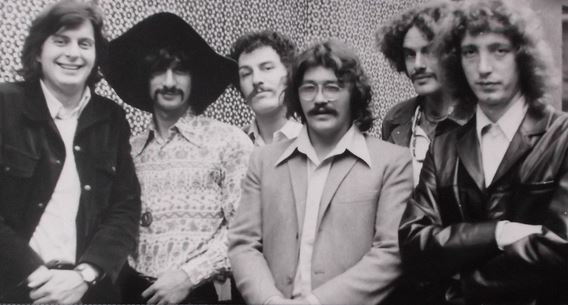
THE JUNIE STORY: FROM OHIO PLAYER TO SOLO ARTIST, FUNKADELIC AND BEYOND.
The Junie Story: From Ohio Player To Solo Artist, Funkadelic and Beyond.
In 1970, most sixteen years in Drayton, Ohio, were still at high school and were making plans for college or the world of work. Some were worrying about being drafted, and heading for Vietnam to fight in a war that America was struggling to win. Meanwhile, Walter “Junie” Morrison Jr. was living the musical dream. He had just joined The Ohio Players, who with Junie onboard, were about to become one of the most successful American funk bands of the early seventies.
Junie joined in time to play on The Ohio Players’ sophomore album Pain, which was released in February 1972. Pain proved to be The Ohio Players’ breakthrough album, and was certified gold. The success continued with Pleasure in December 1972, which featured the number one US R&B single Funky Worm. Nine months later,The Ohio Players released Ecstasy in September 1973, which was their swan-song for Westbound. They then parted company with Westbound, and with Walter “Junie” Morrison. This was a huge blow for the nineteen year old.
He hoped that The Ohio Players might have a change of heart, and that he would rejoin their ranks. When this seemed unlikely, Walter decided to embark on a career as a solo artist, and signed a recording deal with Westbound Records, Junie went on to release a trio of albums as Junie for Westbound Records, When We Do, Freeze and Suzie Supergroupie. They’re a reminder of Walter “Junie” Morrison, who was a truly talented songwriter, musician, producer and musical entrepreneur, who sadly, he passed away on January ’21st’ 2017, aged just sixty-two. His story begins in America’s funk capital, Drayton, Ohio in 1954.
The Early Years
Walter Morrison Jr was born in Drayton, Ohio in 1954, and at early age showed an aptitude for music. At school, Walter sang and played the piano, and soon, started to learn a variety of other musical instruments. Given his prodigious talent, it was no surprise that Walter eventually became the school choir director and orchestra conductor. This many thought was the start of Walter’s musical career.
While his teachers may have envisaged Walter heading to college or university to study music, they didn’t think that sixteen year old Walter would leave school and join a funk band. That was what happened when the man who would become known as Junie joined The Ohio Players in 1970.
Pain.
Two years later, and Junie featured on The Ohio Players’ 1972 sophomore album Pain. It was a slick soulful, and sometimes, jazz-tinged and funky album, and was released to widespread critical acclaim. When Pain was released in February 1972, it reached 177 in the US Billboard 200 and twenty-one on the US R&B charts. This was enough to earn The Ohio Players’ their first gold disc.
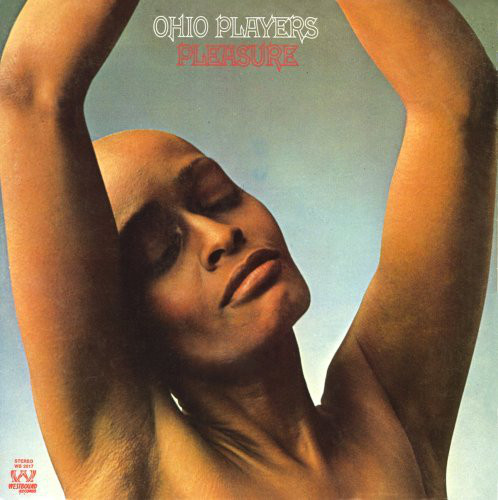
Pleasure.
Ten months later,The Ohio Players released Pleasure in December 1972. The album was still soulful and funky, and sometimes moved in the direction of jazz. However, The Ohio Players revived the vocal harmonies that had been part of their original sound. They added to the radio friendly sound of some of the songs on Pleasure. Other songs were the result of late-night jam sessions. These would play their part in the sound and success of Pleasure.
Just like Pain, critics were won over by Pleasure, and the album received plaudits and praise. It reached sixty-three on the US Billboard 200 and four on the US R&B charts. When Funky Worm was released as a single, it reached number fifteen on the US Billboard 100 and topped the US R&B charts. This gave The Ohio Players biggest hit single of their career. Junie who was still only eighteen, was part of one of the most successful funk groups of the early seventies.
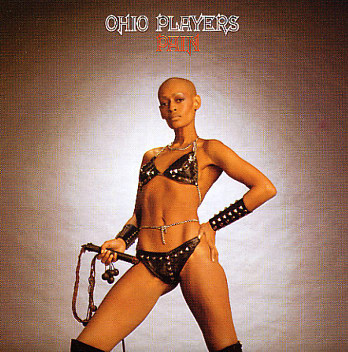
Ecstasy.
When The Ohio Players came to record their fourth album Ecstasy, Junie was asked to arrange the album, and just like the two previous albums, cowrote and co-produced the album with the rest of the band. That was apart from Not So Sad and Lonely and Food Stamps Y’all. Walter continued to voice the character of Granny, which first featured on Pain and reappeared on Pleasure. His role in The Ohio Players’ organisation seemed to be growing in importance.
When Ecstasy was released in September 1973 the album was well received by critics, who poured praise on another carefully crafted album of soul and funk. It reached seventy on the US Billboard 200 and nineteen on the US R&B charts. Although Ecstasy didn’t quite match the success of Pleasure, the rise and rise of The Ohio Players continued.
One man wouldn’t be part of The Ohio Players when they left Westbound, and signed to Mercury was Walter “Junie” Morrison. The Ohio Players and Walter parted company, and he missed out on the most successful part of The Ohio Players career. Their next four albums went on to sell over 3.5 millions copies, with three being certified platinum and one gold.
When Junie left The Ohio Players in 1973, there was no bad feeling. He continued to work on projects with members of the band. Although some of these projects were low-key, the important thing for Junie, was that he was still working with the band and maybe, he would return to The Ohio Players ranks. As time passed by, this proved began to look increasingly unlikely. However, when Junie later signed to Mercury Records, members of The Ohio Players worked with him on his solo albums. That was still to come.
Tight Rope.
Junie was keen to begin the next chapter of his career, and headed into the studio to record his debut single. The result was two new songs, the single Tight Rope, which was soulful and funky with a clavinet adding a tougher edge. This was reminiscent of the type of music Stevie Wonder was recording circa 1973. On the B-Side was Walt’s Third Trip, which was an ambitious track that incorporated elements of disparate genres. Although it was jazz-tinged, funky and soulful, it’s best described as symphonic and sounds like the type of music the disco orchestras would produce later in the decade. Not for the first time, Junie was way ahead of the musical curve.
Later in 1973, Tight Rope was released as a single, with Walt’s Third Trip consigned to the B-Side. However, the single failed to trouble the charts, and Junie’s career at Westbound got off to an inauspicious start.
Rather than begin work on his debut album, Junie decided to hold off, just in case he was asked to rejoin The Ohio Players. This didn’t happen. Instead Junie was forced to watch from the sidelines The Ohio Players fifth album Skin Tight was released in April 1974, and reached number eleven in the US Billboard 200 and number one in the US R&B charts. Skin Tight went on to sell over a million copies and was certified platinum. For Junie, this must have been a frustrating time, knowing that he had played his part in the rise and rise of The Ohio Players.
Seven months later, The Ohio Players released Fire, which reached number one on the US Billboard 200 and the US R&B charts, and again, sold over a million copies. This resulted in a second platinum disc for The Ohio Players, who were well on their way to becoming one of the biggest funk bands in world. For Junie, it was a case of what might have been.
When We Do.
Realising that he was unlikely to be reunited with The Ohio Players, Junie began work on his debut solo album When We Do. He had written eight new songs, which with Skin Tight and Walt’s Third Trip would form the basis for his debut album, When We Do.
Junie who was a talented multi-instrumentalist, was able to lay down many of the instruments himself. However, when it came to add the strings, the Detroit Symphony Orchestra were contracted. They featured on several tracks, including Junie, The Place, Anna and Walt’s Third Trip. Gradually, When We Do started to take shape, as heartfelt ballads and uptempo tracks rubbed shoulders with each other on a truly eclectic album. Junie combined elements of disco funk, jazz, P-Funk, rock, samba and soul on When We Do, which marked a return to the eclectic and playful sound that featured on the trio of albums Junie recorded with The Ohio Players.
Critics on hearing When We Do, were reminded of a playful nature of the music that was a feature of the trio of albums that Junie was a member of The Ohio Players. Although they now had two million selling albums under their belt, critics noted that The Ohio Players had lost this playfulness. That wasn’t all they The Ohio Players had lost. Critics commented that their music was no longer as eclectic as it had been with Junie onboard. However, critics noted that Junie had incorporated this playfulness and eclecticism to When We Do, which was well received upon its release.
Buoyed by the praise and plaudits the genre-melting When We Do had garnered, the album was scheduled for release later in 1975. Upon its release, Junie’s much-anticpated debut album sold reasonably well. However, despite its undeniable quality, and eclectic and playful sound, When We Do, didn’t replicate the success of the three albums he recorded with The Ohio Players. However, the executives at Westbound thought When We Do was a good start to Junie’s career, and soon, he began recording his sophomore album, Freeze.
Freeze.
When it came to record Freeze, Junie dispensed with services of sidemen, strings and backing vocalists. He became a one-man band, writing, recording and producing the eight new tracks at Ardent Studios, in Memphis. Over the days and weeks, Junie recorded an album that combined cartoon funk, soul and funky jams with a tougher and occasionally, psychedelic sound. The result was another eclectic album, albeit one that showcased a very different sound on Freeze.
Critics on hearing Freeze, noticed a stylistic change on some of the songs on Freeze. While some of the songs were similar to those on When We Do, including the ballads World Of Woe, Junie had reinvented himself on several songs. To do this, Junie deployed effects during several songs, including a vocoder on Musical Son and Super J. Junie also revisited the character Granny on Granny’s Funky Rolls Royce. This was a character from his days with The Ohio Players. Freeze with its mixture of the familiar and Junie’s new sound, found favour with critics, who hailed the album inventive and innovative.
Freeze was a stepping stone for Junie, as he started to reinvent his music. However, the big question was how would record buyers react to Freeze? Before that, an edit of Granny’s Funky Rolls Royce was released as a single, with an edit of Super J on the B-Side. When Granny’s Funky Rolls Royce was released as single, it too, failed to find an audience. Worse was to come when Freeze was released in the second half of 1975, and it didn’t come close to troubling the charts. For Junie and executives at Westbound, this was a worrying development. Despite this, Junie was allowed to begin work on his third album, Suzie Super Groupie.
Suzie Super Groupie.
For Suzie Super Groupie, Junie returned to Detroit, and Pac Three Studio where he had recorded When We Do. That was where the nine songs on Suzie Super Groupie took shape. Just like previous albums, they had been penned and produced by Junie. However, this time, Junie was joined by band that included several members of the Crowd Pleasers. Their raison d’être was to help Junie rescue his ailing career.
He realised that if Suzie Super Groupie failed commercially, there was every chance he would be dropped by Westbound Records. For the twenty-two year old, this would be a disaster, and could spell the end of his career. However, with a talented and versatile band behind him, Junie was responsible for an album that was slick, smooth and soulful, but also headed in the direction of proto-boogie, funk and jazz. He waited with bated breath to hear what critics made of Suzie Super Groupie.
When critics heard Suzie Super Groupie, they preferred the album to Freeze. It was a much more eclectic album, that eschewed many of the effects and synths that featured on Freeze. They had been replaced by a talented band that who provided the perfect backdrop to Junie on his genre-melting album. Suzie Super Groupie was hailed as a return to form, and the album that had the potential to launch Junie’s career.
Suzie Super Groupie was released in 1976, and history repeated itself once again. Sales of Suzie Super Groupie were disappointing, and Junie knew that the end of his time at Westbound Records could well be near. That was despite the quality of Suzie Super Groupie.
Not long after the release of Suzie Super Groupie, Junie left Westbound Records. This was almost inevitable. Junie knew before the release of Suzie Super Groupie that the album had to sell well. If it didn’t Westbound Records wouldn’t renew his contract. After all, no record company that wanted to stay solvent, would continue to allow an artist continue to release albums that failed to sell. It didn’t matter that they were of the quality of When We Do, Freeze and Suzie Supergroupie and showcase a truly talented musician as he tried to make a commercial breakthrough.
When Junie left Westbound Records, the musical prodigy was still only twenty-two. Despite his relative youth, Junie had a wealth of musical experience. He had featured on three of The Ohio Players’ album and had released a trio of solo albums. Junie was an experienced, talented and versatile singer, songwriter, musician, arranger and producer. It wouldn’t be long before someone came calling, wanting to hire Junie.
Funkadelic
That proved to be the case. In 1977, Junie was appointed musical director of Funkadelic, and made his debut on One Nation Under A Groove in 1978. The addition of Junie helped transform the fortunes of Funkadelic, when One Nation Under A Groove reached number sixteen on the US Billboard 200 and one on the US R&B charts. This gave Funkadelic and Junie their first platinum disc.
Uncle Jam Wants You was released a year later in September 1979, and reached number eighteen on the US Billboard 200 and two on the US R&B charts. Funkadelic received their first gold disc. However, after just two albums with Funkadelic, Junie and the band parted company.
The Solo Years Take Two.
Junie returned to his solo career in 1980, after writing playing his part in Funkadelic two million selling albums. Suddenly, Junie was hot property, with record companies fighting for his signature. Eventually, he signed to Columbia and released two albums. However, neither Bread Alone in 1980, nor Junie 5 in 1981 found an audience. Three years later, Junie returned with Evacuate Your Seats in 1984, but it was a familiar story when the album passed record buyers by. For Junie, this prompted a change of career.
A Change Of Career.
In the late eighties, Junie decided to relocate to London, where he founded the Akashic record label. Junie also worked as a songwriter, and wrote songs for Soul II Soul, Sounds Of Blackness and God’s Property. Later, Junie moved into production, and worked with a variety of artists, including James Ingram. By the mid-nineties, Junie was reunited with someone from his past.
This was none other than George Clinton, and the pair began the first of several collaborations. Then in 2004, Junie returned with what would be his final solo album When The City, which was released on his own label Juniefunk. Little did anyone realise that this was the last that would be heard of Junie.
By then, Junie’s music started to find an audience within the hip hop community. They realised that Junie’s music was ripe for sampling. On some of the songs on The Complete Westbound Recordings, Junie literally invites hip hop producers to sample his music. This was an invitation they accepted, and this has continued up until relatively recently. In 2016, songs from Kayne West’s album Life Of Pablo and Solange Knowles’ A Seat At The Table feature samples of Junie’s music. These two high-profile artists introduced Junie’s music to a new generation of record buyers.
Sadly, not long after this, Walter “Junie” Morrison passed away on January ’21st’ 2017, aged just sixty-two. Music had lost a truly talented singer, songwriter, musician, arranger and producer, who to some extent, is still one of music’s best kept secrets. Somewhat belatedly, this seems to be starting to change, since hip hop producers have started to sample Junie’s music. This has resulted in some hip hop fans going in search of Junie’s albums, and rediscovering the five solo albums that he released during his career. However, the highlights of Junie’s solo career are the trio of albums he released on Westbound Records, When We Do, Freeze and Suzie Supergroupie. They feature a musical prodigy at his innovative best, as Junie just like he did with The Ohio Players, creates music that is soulful and funky, and also eclectic and playful.
The Junie Story: From Ohio Player To Solo Artist, Funkadelic and Beyond.

FUZZY HASKINS-THE WESTBOUND YEARS.
Fuzzy Haskins- The Westbound Years.
Between 1970 and 1977, Fuzzy Haskins was a member of not one, but two of the most prolific and successful funk bands of the seventies,..Parliament and Funkadelic. Still, though, Fuzzy Haskins found time to embark upon a solo career.
Fuzzy Haskins released his debut album, A Whole Nother Thang on Westbound Records in 1976. Two years later, and Fuzzy Haskins returned with his sophomore album Radio Active in 1978. Alas, this was the end of a career that promised so much. The story begins in 1941.
That was when Clarence Eugene “Fuzzy” Haskins was born on June ‘8th’ 1941, in Elkins, West Virginia, and was was where the future Fuzzy Haskins became interested in music. Just like many future singers, the church influenced Fuzzy Haskins. Some nights, the Haskins family would join together and they would sing hymns. They would harmonise together, which would stand Fuzzy Haskins in good stead for the future. So would the music he heard on local radio.
At first, it was country music that Fuzzy Haskins heard on the local radio station. Later in the evening, there would sometimes be an hour of R&B and blues music. So much so, that Fuzzy Haskins was inspired to go out and buy a three stringed guitar for $3, which he taught himself how to play. This would stand him in good stead when the Haskins family moved to New Jersey in 1956.
By then, Fuzzy Haskins was fifteen and still at high school. When he arrived in New Jersey, Fuzzy Haskins joined a high school band The Bel-Airs. He would be a Bel-Air for four years, until he met George Clinton 1960.
George Clinton was nineteen, and working in a New Jersey barbershop when Fuzzy Haskins first met him. They both shared a love of music and were members of vocal groups. While Fuzzy Haskins was a Bel-Air, George Clinton lead his own group The Parliaments, who had already released their debut single Poor Willie, a year earlier, on the Apt label in 1959. Soon, Fuzzy Haskins would be joining The Parliaments.
The Parliaments.
When one of The Parliaments left the group, Fuzzy Haskins was chosen as his replacement. Little did Fuzzy Haskins realise when this was the first step on a journey that would see him joined The Parliaments that would see him inaugurated into the Rock and Roll Hall of Fame in 1997.
Having joined The Parliaments, Fuzzy Haskins was soon singing lead vocal. He was also regularly travelling to Detroit. The first time was to audition for Motown. While The Parliaments weren’t signed to Motown, they were soon a familiar face on the Detroit music scene
Not only were The Parliaments a familiar face on Detroit’s live circuit, they also released singles on several local labels during the sixties. This included on Jobette and then Revilot Records, which released The Parliaments’ breakthrough single (I Wanna) Testify. It reached number three on the US R&B charts and twenty on the US Billboard 100. However, for four of The Parliaments, (I Wanna) Testify was a Pyrrhic victory.
At the time The Parliaments recorded (I Wanna) Testify, the band were experiencing cash-flow problems. They didn’t have enough money for the bus fare from New Jersey to Detroit. After a group meeting, it was decided that only George Clinton would travel to Detroit to record (I Wanna) Testify. Ironically, when (I Wanna) Testify was released in May 1967, it gave The Parliaments’ the biggest hit single of their career. As a result, The Parliaments embarked upon a promotional tour.
After touring (I Wanna) Testify, The Parliaments returned to the studio to record a followup single All Your Goodies Are Gone (The Loser’s Seat). When it was released in September 1967, The Parliaments embarked upon another tour. Despite this, All Your Goodies Are Gone (The Loser’s Seat) failed to replicate the success of (I Wanna) Testify. This was the start of what was a familiar pattern.
Never again did The Parliaments come close to replicating the success of (I Wanna) Testify. However, it was during this period that things started to change for The Parliaments.
Not only did The Parliaments’ sound begin to evolve, and move towards a psychedelic soul style, the lineup changed. Joining George Clinton, Fuzzy Haskins, Calvin Simon, Grady Thomas and Ray Davies were the backing band of Eddie Hazel, Billy Nelson and Tiki Fulwood. They became known as Funkadelic, as The Parliaments were locked in a lengthy legal dispute.
This resulted in The Parliaments being unable to release any recordings for the next few years. However, George Clinton decided to transform The Parliaments’ backing band into the main event, Funkadelic.
Funkadelic.
The nascent band set about honing the P-Funk sound, which was a fusion of blues, funk and rock. This would make its debut on Funkadelic’s eponymous debut album, which featured the Fuzzy Haskins composition I Got a Thing, You Got a Thing, Everybody’s Got a Thing. Later in 1970, it was released as a single, reaching eighty in the US Billboard 100 and thirty in the US R&B charts. By then, Funkadelic had released their eponymous debut album.
Funkadelic.
When Funkadelic was released by Westbound Records on February ’24th’ 1970, what was a groundbreaking album where psychedelic soul, funk and acid rock melted into one. While Funkadelic was well received by critics at the time, it would only be much later, that critics realised and recognised the importance of the album. By then, Funkadelic had reached 126 in the US Billboard 200 and eight in the US R&B charts upon its release. For Fuzzy Haskins, Funkadelic was a game-changer.
In 1967, The Imperials couldn’t afford to pay the bus fare from New Jersey to Detroit to record a single. Three years later, and Funkadelic were basking in the success of their eponymous debut album, which had reached the top ten in the US R&B charts. Now Fuzzy Haskins knew that Funkadelic had do it all again.
Free Your Mind… and Your Ass Will Follow.
Fuzzy Haskins, George Clinton and the rest of Funkadelic entered the studio in Detroit to record their sophomore album Free Your Mind… and Your Ass Will Follow. George Clinton later described the album Funkadelic trying to: ”see if we can cut a whole album while we’re all tripping on acid.” What Funkadelic had achieved, was a critically acclaimed, genre-melting album.
When Free Your Mind… and Your Ass Will Follow was released in July 1970, reaching ninety-two in the US Billboard 200 and eleven in the US R&B charts. Five decades later, and Free Your Mind… and Your Ass Will Follow is regarded a classic. So is the followup, Maggot Brain. However, before its release, Parliament would make release their debut album.
Parliament-Osmium.
September 1970 marked the release of Parliament’s debut album Osmium. It featured the five members of The Parliaments and the three members of Funkadelic. They had created an ambitious, experimental and genre-melting album where funk, psychedelic soul and psychedelic rock melt into one. The result was an ambitious and innovative album, but alas, was one that failed to find an audience. This was a huge disappointment, and things were about to get worse.
Contractual difficulties meant that Parliament were unable to record under the name Parliament, until 1974. This meant that George Clinton, Fuzzy Haskins and Co. concentrated their efforts on Funkadelic.
Funkadelic-Maggot Brain.
A year after the release of Free Your Mind… and Your Ass Will Follow, Funkadelic released their third album Maggot Brain in July 1971. By then, Eddie Hazel, Billy Nelson, Tawl Ross and Tiki Fulwood had left Funkadelic for a variety of reasons. Funkadelic were a band divided.
They weren’t alone. Maggot Brain divided the opinion of critics. Some critics hailed the album bland and boring, others hailed it a masterful funk rock album. Nowadays, Maggot Brian is regarded as a classic album, and a truly influential psychedelic rock album that’s dance-floor friendly. Record buyers were also won over by Maggot Brian, which reached 108 in the US Billboard 200 and fourteen in the US R&B charts. While this wasn’t quite as successful as their previous album, Funkadelic’s star was still in the ascendancy.
America Eats Its Young.
Ten months after the release of Maggot Brian, Funakdelic returned in May 1972 with America Eats Its Young. It was Funkadelic’s first double album, and featured a very different lineup of the Funkadelic that had joined George Clinton and Fuzzy Haskins.
While America Eats Its Young featured contributions from Eddie Hazel, Billy Nelson, Tawl Ross and Tiki Fulwood, Funkadelic were joined by members of two other bands. This included United Soul and the funk group The House Guests They were a five piece band which had been founded in 1971 by brothers Bootsy Collins and Catfish Collins after they left The JBs. These two bands augmented Funkadelic on America Eats Its Young.
Just like Maggot Brain, America Eats Its Young divided the opinion of critics. Although it received praise and plaudits from some critics, other critics weren’t won over by what was a sprawling album. That was part of America Eats Its Young. Just like many double albums, there was more than enough material for a single album, but in truth, not enough for a double album. As a result, America Eats Its Young stalled at 123 in the US Billboard 200 and twenty-two in the US R&B charts. This was the least successful album of Funkadelic’s career. For Fuzzy Haskins, this was a disappointment. However, it was the least of his worries.
Cosmic Slop.
When it came time for Funkadelic to record their fifth album Cosmic Slop, there was no sign of Bootsy Collins nor Fuzzy Haskins. He had been a mainstay of Funkadelic on their first four albums. Not any more though, as his role in Funkadelic started to change post 1972. He would add the occasional vocal on an album or play guitar. Sometimes, he would even head out on tour with Funkadelic. However, no longer was he one of the mainstays of the group.
Upon the release of Cosmic Slop in July 1973, most of the reviews were positive. There were still a few dissenting voice who weren’t convinced by P-Funk. This included Cosmic Slop, which later, was hailed as one of Funkadelic’s most important albums. However, in July 1973, Fuzzy Haskins watched as Cosmic Slop reached 112 in the US Billboard 200 and twenty-one in the US R&B charts. Commercially the album hadn’t fared much better than America Eats Its Young.
Standing on the Verge of Getting It On.
Fuzzy Haskins returned for Standing on the Verge of Getting It On, which was released in April 1974. It was a very different album from Cosmic Slop, with the music and jamming playing a more important role than the lyrics on the album. Especially, Eddie Hazel’s guitar, which plays a starring role on Standing on the Verge of Getting It On. With a guitar masterclass from Eddie Hazel and the return of Fuzzy Haskins, would this result in a change of fortune for Funkadelic?
Despite favourable reviews, Standing on the Verge of Getting It On failed to match even the success of Cosmic Slop. It stalled at 163 in the US Billboard 200, but reached thirteen in the US R&B charts. While this was disappointment, at least Parliament were free to record a new album.
Parliament-Up For The Down Stroke.
After a four year absence, Parliament returned with their sophomore album Up For The Down Stroke. It was the first album since 1972s America Eats Its Young to feature Bootsy Collins, who cowrote two tracks on the album. Fuzzy Haskins also cowrote two tracks, Up For The Down Stroke and All Your Goodies Are Gone. This was the first time that Fuzzy Haskins’ had contributed a song for an album since Funkadelic in 1970. The members of Parliament hoped that Up For The Down Stroke would prove as successful as Funkadelic.
When Up For The Down Stroke was released in July 1974, it featured a reworking of The Parliaments’ hit (I Wanna) Testify, which became Testify. However, Up For The Down Stroke was released as the lead single, reaching sixty-three in the US Billboard 100 and ten in the US R&B charts. Testify was chosen as the followup, but stalled at just seventy-seven on the US R&B charts. By then, Up For The Down Stroke had reached seventeen on the US R&B charts. It looked as if Parliament’s was changing. Fuzzy Haskins had played his part in the success of Up For The Down Stroke.
Chocolate City.
April 1975 marked the return of Parliament with their third album. This time around, Fuzzy Haskins cowrote I Misjudged You and Bigfootin’, and was one of the vocalists used on Chocolate City. It was Parliament’s tribute to Washington DC, where the band had a large following. This became apparent when Chocolate City was released.
Most of the reviews of Chocolate City were positive. However, there were a few dissenting voices who weren’t won over by Chocolate City. They felt it wasn’t as cohesive an album as its predecessor. Despite that, Chocolate City reached ninety-one in the US Billboard 200 and twenty-two in the US R&B charts. 150,000 copies of Chocolate City were sold in Washington DC alone. This was the start of period when Parliament could do no wrong. It looked as if Fuzzy Haskins would play an important part in the Parliament story.
Funkadelic-Let’s Take It to the Stage.
Just a couple of weeks after Parliament released Chocolate City, Funkadelic returned with their seventh album Let’s Take It to the Stage in late April 1975. It featured ten tracks, including Good to Your Earhole which Fuzzy Haskins cowrote. He was one of the vocalists that featured on Let’s Take It to the Stage.
Let’s Take It to the Stage found Funkadelic at their tightest, as they lived up to their early promise. This time, there were no dissenting voices among the critics and it was critical acclaim that accompanied Let’s Take It to the Stage. It reached 102 in the US Billboard 200 and fourteen in the US R&B charts. This meant that Let’s Take It to the Stage was Funkadelic’s most successful album since Free Your Mind… and Your Ass Will Follow in July 1970. Soon, that would pale into comparison when Parliament released their next album.
Parliament-Mothership Connection.
When the latest lineup of Parliament returned with their fourth album Mothership Connection in December 1975, it featured two new additions…Fred Wesley and Maceo Parker. They joined what was fast becoming an all-star band that featured the great and good of funk. It already featured George Clinton, Bootsy Collins, Bernie Worrell and Fuzzy Haskins. The addition of Fred Wesley and Maceo Parker resulted in what critics hailed as the best album of Parliament’s career.
Mothership Connection was an innovative and influential funk rock concept album based on P-Funk mythology. It reached number thirteen in the US Billboard 200 and four in the US R&B charts. Soon, Mothership Connection had sold over 500,000 copies and was certified gold. Eventually, Mothership Connection sold a million copies and gave Parliament their first gold disc. For Parliament it was a career defining album.
A Whole Nother Thang.
Despite the success of Mothership Connection, Fuzzy Haskins was growing frustrated that his songs were no longer featuring on albums by Funkadelic and Parliament. He also watched as Bootsy Collins, a relative newcomer to the Funkadelic and Parliament family, embarked upon a solo career. This added to Fuzzy Haskins’ frustration.
Fuzzy Haskins and George Clinton went back a long way together. He had joined George Clinton in The Parliaments in 1960, fifteen years ago. Since then, Calvin Simon, Grady Thomas and Fuzzy Haskins had shared good times and had bad with George Clinton. Maybe though, Fuzzy Haskins had to think about the future. So he decided to record a solo album during the time Funkadelic and Parliament weren’t recording or touring.
For his debut solo album A Whole Nother Thang, Fuzzy Haskins wrote eight of the nine songs. He also wrote Fuz and da Boog with Funkadelic and Parliament bassist Cordell Mosson. He was one of the members of the Funkadelic and Parliament family who joined Fuzzy Haskins when he recorded A Whole Nother Thang.
Recording took place at three studios in Detroit, Artie Fields Studios, Pac Three Studios and United Sound Studios. Joining Fuzzy Haskins was rhythm section that featured drummers Tiki Fulwood; bassist Bootsy Collins and Cordell Mosson who also played drums; and guitarists Donald Austin and Ron Bykowski. Keyboardist Bernie Worrell also arranged strings and horns. Fuzzy Haskins played drums, added the lead vocals and produced A Whole Nother Thang. It was released in the first half of 1976.
When A Whole Nother Thang was released in 1976, it was released to critical acclaim. That was no surprise, as A Whole Nother Thang featured some of the backlog of songs that had built up over the last few years. At last, Fuzzy Haskins got the opportunity to showcase these songs when he entered the studio with creme de la creme of P-Funk. The result was album that oozed quality. Despite the quality of music on A Whole Nother Thang, the album didn’t sell in vast quantities, and didn’t find the audience it deserved.
After the release of A Whole Nother Thang, Fuzzy Haskins returned to the Parliament and Funkadelic family. He had to rejoin the P-Funk Live Earth Tour in late 1976. By then, Parliament and Funkadelic had both been busy.
Parliament-The Clones Of Dr. Funkenstein.
Nine months after the release of Mothership Connection, came The Clones of Dr. Funkenstein in September 1976. Parliament were keen to build upon the success of their million selling album. By then, George Clinton, Bootsy Collins and Bernie Worrell had established a successful songwriting partnership. Still, Fuzzy Haskins remained one of the vocalists on what was a critically and commercially successful album of P-Funk.
Just like Mothership Connection, The Clones Of Dr. Funkenstein was hailed as one of Parliament’s finest albums. Although it didn’t quite match Mothership Connection, The Clones Of Dr. Funkenstein sold well, reaching twenty on the US Billboard 200 and three in the US R&B charts. Fuzzy Haskins was now a member of one of the biggest selling funk bands of the seventies.
Funkadelic-Tales Of Kidd Funkadelic.
Not long after Parliament released of The Clones Of Dr. Funkenstein, Funkadelic released their eighth album Tales Of Kidd Funkadelic. It was the last album that Funkadelic were contractually obliged to release for Westbound. Already, Funkadelic had recorded their Warner Bros’ debut Hardcore Jollies. Tales Of Kidd Funkadelic was essentially an album of outtakes and unused recordings from the Hardcore Jollies. It was rushed out to cash-in on the success of Parliament’s album The Clones Of Dr. Funkenstein.
This was a risky move, and one that could’ve backfired on Funkadelic. Especially if the album didn’t find favour with critics or failed to sell. Fortunately, the album was well received by critics and upon its release in September reached 103 in the US Billboard 200 and fourteen in the US R&B charts. Now Funkadelic signed to Warner Bros and a month later, released their major label debut.
Hardcore Jollies.
In October 1976, Funkadelic released their ninth album Hardcore Jollies. It featured the best of the tracks recorded during a recording session that took place earlier in 1976. Funkadelic were at their inventive best on an album that featured inventive and genre-melting funky music.
Critics hailed Hardcore Jollies as one of Funkadelic’s best and strongest albums of recent years. It reached ninety-six in the US Billboard 200 and twelve in the US R&B charts. This was the most successful album Funkadelic had released since Free Your Mind… and Your Ass Will Follow in 1970.
After the success of Hardcore Jollies, Fuzzy Haskins joined true rest of the Parliament and Funkadelic family on the P-Funk Live Earth Tour in October 1976. The tour continued into 1977, when the Live: P-Funk Earth Tour arrived Los Angeles. At the show at the Los Angeles Forum on the ‘19th’ January the tapes were running for a live album. That was the case at the Oakland Coliseum on the ‘21st’ January 1977. Recordings from these two shows would feature on Parliament’s live double album Live: P-Funk Earth Tour, upon its release in May 1977.
By then, three of the original members of The Parliaments, Fuzzy Haskins, Calvin Simon, and Grady Thomas had left the band. Not long after the three former Parliaments left the band, Glen Goins parted company with Funkadelic. This was no surprise.
The P-Funk Live Earth Tour was a hugely expensive tour to take on the road. Given the expenses, it was imperative that the show sold out, each night. That wasn’t the case, and as throughout the tour, it lost money. By the end of the P-Funk Live Earth Tour had lost so much money, that the musicians weren’t getting paid. When they received the news, Fuzzy Haskins, Calvin Simon, and Grady Thomas left the P-Funk family.
The only small crumb of comfort came when Live: P-Funk Earth Tour was certified gold upon its release in May 1977. By then Fuzzy Haskins was looking towards the future, and his sophomore album, Radio Active.
Radio Active.
Having left the P-Funk family, Fuzzy Haskins began work on his sophomore album Radio Active. He penned six of the songs and cowrote Silent Day with Cordell Mosson. The other song on Radio Active was the Glenn Goins composition This Situation Called Love. These eight tracks were recorded with some top musicians, including some of the P-Funk family and members of the Funk Mob.
When it came to recording Radio Active, Fuzzy Haskins and his band headed into one of Detroit’s many studios. That was where he and his multitalented band laid down the eight songs. Accompanying him was drummer Jerome Brailey, bassist Cordell Mosson and guitarists Garry Shider and Michael Hampton. They were joined by keyboardist Bernie Worrell, percussionist Jerome Podgajski and Glen Goins who played drums, guitar and piano. Meanwhile, Gary Schunk played synths and piano and Bruce Nazarian played bass synth. Fuzzy Haskins switched between drums and guitar, while taking charge of the lead vocals and production. Once Radio Active was complete, it was released later in 1978.
Recording Radio Active hadn’t been easy for Fuzzy Haskins, who was finding it hard to reconcile his life as a musician to his newfound spirituality. Throughout the recording of Radio Active, Fuzzy Haskins was conflicted, and was constantly questioning what he had done and was doing. Considering he was producing the album, other musicians were looking to Fuzzy Haskins for guidance, it can’t have been an easy album to record. Fortunately, most of the musicians were experienced and were able to overcome any problems arose. However, by the time Radio Active was released Fuzzy Haskins seemed detached from the project.
So much so, that he never even embarked upon the tour Westbound Records financed to promote Radio Active. Given his detachment from the Radio Active project, it was no surprise when the album failed commercially. That was shame given the quality of some of the songs on Radio Active.
Radio Active is a reminder that there was more Fuzzy Haskins than the music he recorded with The Parliaments, Parliament and Funkadelic. That is just a part of the story of this truly talented and versatile singer, songwriter and musician. Sadly, Fuzzy Haskins never released any further solo albums.
Instead, Fuzzy Haskins turned his back on the music industry and became a preacher. It was only after a chance meeting with Armen Boladian that Fuzzy Haskins recorded a gospel album. This resulted in Fuzzy Haskins working with Calvin Simon, Ray Davis and Grady Davis of The Parliaments. They were reunited as the Original P, but never recorded together. It was just four old friends making music together, like it had once been. That was how The Parliaments started out in 1960.
As a result, the final secular songs that Fuzzy Haskins recorded were those that featured on Radio Active when it was released in 1978. They marked the secular swan-song of the truly talented Fuzzy Haskins, before he embarked upon a career as a preacher, and are a reminder of Fuzzy Haskins’ oft-overlooked solo career.
Fuzzy Haskins- The Westbound Years.
DEEP PURPLE’S JOURNEY TO ROCK TITANS.
Deep Purple’s Journey To Rock Titans.
Little did record buyers realise it,that the seventies was the golden era for rock music. That was when rock music came of age. So did true titans of rocks, like Led Zed Zeppelin, Black Sabbath and Deep Purple. As the seventies dawned, they become three of biggest bands in the world.
For the four members of Led Zeppelin, their lives were transformed when their debut album became one of the biggest selling albums of 1969. This was the start of the rise and rise of Led Zeppelin. They had released three albums that had sold over twenty-five million by the time Deep Purple made a commercial breakthrough.
It had taken four albums before 1970s Deep Purple In Rock transformed the fortunes of Deep Purple. For the next five years, commercial success and critical acclaim would be constant companions of Deep Purple. Between 1970 and 1975 Deep Purple enjoyed worldwide success. Deep Purple would also become one of hardest rocking groups of the seventies.
Vying with Deep Purple for the title of Kings of seventies rock were Led Zeppelin and Black Sabbath. Just like Deep Purple, they were hugely successful and hard rocking bands. They were also the hardest living living rock groups. This lead to them being known as the “unholy trinity of British hard rock and heavy metal.” The three groups seemed proud of their infamy, and wore it like a badge.
The “unholy trinity’s” penchant for the rock ’n’ roll lifestyle was legendary. Excess and extravagance was an everyday occurrence. Similarly, chaos and carnage was omnipresent as the “unholy trinity” toured the world. Each group seemed to determined to outdo the other. Hotel rooms were wrecked, televisions thrown out of windows and copious amounts of drink and drugs consumed. This would ultimately come at a human cost later in the seventies with the death of Led Zeppelin’s John Bonham. Until then, the party continued; and the “unholy trinity” continued to make what would be remembered as some of the best, and most memorable music of the seventies. They were living the dream. Especially Deep Purple, who had only been formed in 1968.
Deep Purple were formed in 1968 in Hertford. However, the story begins in 1967. That was when ex-Searchers drummer, Chris Curtis, contacted London based businessman, Tony Edwards, with a business proposition. Chris wanted to create a supergroup which he would name Roundabout. The idea behind the name was that the lineup was fluid. Members would come and go, on what was akin to a musical roundabout. Tony Edwards liked the idea and brought onboard Jon Coletta and Ron Hire. They named their new venture Hire-Edwards-Coletta (HEC) Enterprises. Now with financial backing, Chris Curtis started putting together Roundabout.
The first member of Roundabout was Jon Lord, a classically trained organist. He’d previously played with The Artwoods. Guitarist Richie Blackmore, who recently, had been working as a session musician is Hamburg auditioned. He too joined Roundabout. So did bassist Nick Simper, whose most recent band was The Flower Pot Men. Nick was a friend of Richie Blackmore. The two other members of Roundabout were also friends. Rod Evans was recruited as the lead vocalists. Previously, he was a member The Maze. Their drummer was Ian Paice. Nick became the final piece in the jigsaw. However, he was not the first choice drummer.
Originally, Bobby Woodman was meant to be Roundabout’s drummer. He was drummer when Rod Evans auditioned as vocalist. Richie Blackmore had seen Nick Paice playing before. Although just eighteen, Richie knew Ian Paice was a good drummer. So when Bobby headed out to buy cigarettes, Ian Paice was auctioned. Instantly, everyone realised Nick Paice was a better drummer. When Bobby returned with his cigarettes, he was no longer Roundabout’s drummer. However, at least Roundabout’s lineup was settled. Or so people thought.
Roundabout were kitted out with the finest equipment and lived at Deeves House in South Mimms, Hertfordshire. This was their home during March 1968. That was, until they headed out on a short tour of Denmark and Sweden. It was during this tour that Roundabout became Deep Purple.
It was Richie Blackmore that came up with the name Deep Purple. This was the name of his grandmother’s favourite song. That was the name he wrote on the blackboard, when everyone was asked to choose a new name for the nascent band. Deep Purple wasn’t the favourite though. That was Concrete God. However, the members of Roundabout decided against it. They felt the name was too harsh. So Roundabout became Deep Purple and began recording their debut album in May 1968.
Shades Of Deep Purple.
When Deep Purple entered Pye Studios, in Marble Arch, London Deep Purple in May 1968, they’d chosen ten songs for their debut album Shades Of Deep Purple. Seven songs were written by members of Deep Purple. The other three songs were cover versions. This included Joe South’s Hush, Lennon and McCartney’s Help! and Joe Roberts’ Hey Joe which is synonymous with Jimi Hendrix. These ten songs were recorded by the original version of Deep Purple. This included vocalist Rod Evans, drummer Ian Paice, bassists Nick Simper, organist Jon Lord and guitarist Richie Blackmore. Producing Shades Of Deep Purple was a friend of Richie’s, Derek Lawrence. Once Shades Of Deep Purple was recorded, it was released later in 1969
When critics heard Shades Of Deep Purple they weren’t impressed. Reviews were mostly negative. Since then, critics have rewritten history and most reviews of Shades Of Deep Purple are positive. Back in 1968, things were very different. Shades Of Deep Purple was perceived as unfocused. It was a mix of psychedelia, progressive rock, pop rock and thanks to Richie’s guitar riffs, hard rock. That was why many critics disliked Shades Of Deep Purple. Record buyers had different ideas about Shades Of Deep Purple,
Shades Of Deep Purple was released in July 1968 in America. It reached number twenty-four in the US Billboard 200 charts. This was no doubt helped by Hush reaching number four in the US Billboard 100 charts. Two months later, Shades Of Deep Purple reached number fourteen in Britain. For Deep Purple their debut album had been a commercial success and their lives transformed.
After the commercial success of the single Hush and Shades Of Deep Purple, Deep Purple were booked into a gruelling tour of America. Their American record company, Tetragrammaton, decided that Deep Purple should record another album. So Deep Purple headed into the recording studio in September 1968 to record The Book of Taliesyn.
The Book of Taliesyn.
Time was against Deep Purple. There wasn’t long before their American tour began. Deep Purple only had five new songs written. They had to rely upon cover versions to complete The Book of Taliesyn. Neil Diamond’s Kentucky Woman, Lennon and McCartney’s We Can Work It Out and River Deep, Mountain High completed The Book of Taliesyn. It was released in America in December 1968,
Just like Shades Of Deep Purple, The Book of Taliesyn was a mixture of psychedelia and progressive rock. The only difference was it had a harder edge. Deep Purple’s trademark sound was evolving. Critics seemed to prefer The Book of Taliesyn. It received a much more favourable reception from critics. This was also the case upon the release of The Book of Taliesyn.
Released in December 1968, The Book of Taliesyn reached number fifty-four in the US Billboard 200. Two singles were released in America. Kentucky Woman reached number thirty eight in the US Billboard 100 charts. Then River Deep, Mountain High stalled at number fifty-three in the US Billboard 100 charts. The Book of Taliesyn charted in Canada and Japan. It seemed word was spreading about Deep Purple. However, in Britain, The Book of Taliesyn failed to chart. That wasn’t the only problem Deep Purple would have.
Deep Purple.
By 1969, Deep Purple were becoming a tight, talented band. Onstage and in the studio, they were growing and evolving. This included as songwriters. Although they’d only been together just over a year, they were a much better band. They’d released two albums and toured constantly. There was a problem though. Which direction should their music take?
Some members of Deep Purple wanted their music to take on a rawer, harder sound. This didn’t please everyone. Lead vocalist Rod Evans and bassist Nick Simper were in the minority. Organist Jon Lord, guitarist Richie Blackmore and drummer Nick Paice wanted the band to change direction. With the band split, this wasn’t the best way to prepare for the recording of their third album Deep Purple.
For Deep Purple, the band were keen to turn their back on cover versions. Deep Purple only featured one cover version, Donavon’s Lalena. The eight tracks were all written by members of Deep Purple. Just like their first two albums, Deep Purple would be produced by Derek Lawrence.
Recording of Deep Purple took place during a two-month tour. Deep Purple had ensured they had some free days where they could record their third album during January and March 1969. Recording took place at the De Lane Lea Studio, London. They were familiar with the De Lane Lea Studio. Previously, Deep Purple had rerecorded The Bird Has Flown there. So, they were familiar with the room. This allowed Deep Purple to work quickly. With their reputation in America growing, Deep Purple wanted their eponymous album released as soon as possible.
As soon as Deep Purple was recorded, Deep Purple jumped on a plane and headed back to America. They rejoined the tour of the country that had claimed them as their own. There was a problem though. Tetragrammaton, Deep Purple’s American label hadn’t pressed the album. Worse than that, the label had financial problems. Within a year, they would be insolvent and filing for bankruptcy. Already, this was affecting Deep Purple. Their manager John Colleta headed home. He decided that this would save on a hotel room. Things it seemed, couldn’t get any worse for Deep Purple.
On the release of Deep Purple in June 1969, the album had a harder sound. Elements of blues, progressive rock and heavy metal combined on seven tracks. The exception was The Bird Has Flown. It veered off in the direction of classical music. Mostly, though, Deep Purple’s trademark sound was evolving. How would critics and fans respond to Deep Purple?
Given the problems with Tetragrammaton, it’s no surprise that Deep Purple wasn’t a commercial success. Tetragrammaton couldn’t afford to promote Deep Purple properly. Despite generally positive reviews from critics, Deep Purple stalled at 162 in the US Billboard 200 charts. It failed to chart in the UK on its release in November 1969. At least Deep Purple charted in Japan. Things looked up when Deep Purple was certified gold in Germany. That was the only good news Deep Purple enjoyed.
The tension that was within Deep Purple bubbled over after the release of their third album. This lead to vocalist Rod Evans and bassist Nick Simper being replaced. In came vocalist Ian Gillan and bassist Roger Glover. Little did anyone realise that this would later, be perceived as the classic lineup of Deep Purple. It was also the lineup that recorded the album that saw Deep Purple make a commercial breakthrough in Britain, Deep Purple In Rock.
Deep Purple In Rock.
With their new lineup, Deep Purple Mk II entered the studio for the second time. They made their recording debut on Concerto for Group and Orchestra which was a collaboration between Deep Purple and The Royal Philharmonic Orchestra. However, Deep Purple In Rock was the start of a new era in Deep Purple’s history.
Recording of Deep Purple In Rock took place at IBC, De Lane Lea and Abbey Road Studios. A total of seven songs were recorded. They were written by Deep Purple. These seven songs showcased the new Deep Purple. The music was heavier and more like what would be seen as their classic sound. This was essentially hard rock or heavy metal. It was after the success of Deep Purple In Rock that lead to Deep Purple being referred to as the third member of the “unholy trinity of British hard rock and heavy metal.
Deep Purple released Deep Purple In Rock on 3rd June 1970. This was Deep Purple’s first album to be released to widespread critical acclaim and commercial success. It was the first Deep Purple album to reach the top ten in Britain. Deep Purple In Rock reached number four in Britain. In America, Deep Purple In Rock only reached number 143 in the US Billboard 200 charts. Elsewhere, Deep Purple In Rock was a huge commercial success worldwide.
From Europe to Argentina, America and Japan, Deep Purple In Rock was a huge success. This resulted in gold discs for Deep Purple in America, Argentina, Britain, France and Holland. For Deep Purple, Deep Purple In Rock was a game-changer. Their decision to change direction musically was vindicated. Now, Deep Purple were one of the biggest bands in rock music. Little did Deep Purple realise that they were entering the most successful period of their career.

Fireball.
Fireball was the first of three number one albums Deep Purple would have in Britain. Belatedly, Britain had “got” Deep Purple. They were their own, and were proud of that. The hard rocking quintet’s unique brand of hard rock was winning friends and influencing people. Having toured extensively, at last Deep Purple were now part of British rock royalty. This continued with Fireball.
Given Deep Purple extensive touring schedule, albums were recorded whenever the band had downtime. Fireball was recorded during various sessions that took place between September 1970 and June 1971. Recording took place at De Lane Lea Studios and Olympic Studios, London. Other sessions took place at The Hermitage, Welcombe, North Devon. During these sessions, seven tracks were recorded. Each of the tracks were credited to the five members of Deep Purple. Unlike other bands, everyone in Deep Purple played their part in the songwriting process. That had been the case since the first album Deep Purple Mk. II had recorded, Deep Purple In Rock. Just like Deep Purple In Rock, Fireball would be a commercial success.
Most critics gave Fireball favourable reviews. There were very few dissenting voices. Apart from later, members of Deep Purple. They felt Fireball wasn’t their best album. Record buyers disagreed.
Across the world, Fireball was a huge commercial success. Fireball was released in Britain in July 1971. Record buyers in America and Europe had to wait until September 1971. By then, Fireball had reached number one in Britain and was certified gold. Two singles were released in Britain. Strange Kind of Woman reached number eight and Fireball number fifteen. This was just the start of Fireball’s success.
When Fireball was released in America it reached number thirty-two in the US Billboard 200 charts and was certified gold. In Canada Fireball reached number twenty-four. Fireball proved one of Deep Purple’s most successful albums in Japan, reaching number sixty-six. Australians were won over by Fireball, when it reached number four. Deep Purple proved popular in Israel, where they enjoyed a top ten album. However, it was in Europe that Fireball burnt brightest.
On Fireball’s release in September 1971, it reached number one in Belgium, Denmark, Germany and Sweden. Fireball reached the top ten in Finland, France, Holland, Italy Norway. Despite the widespread commercial success and critical acclaim Fireball enjoyed in Europe, the only gold disc awarded was in Holland. However, Deep Purple would make up for this with their sixth album, Machine Head.
Machine Head.
By 1972, Deep Purple had established themselves as one of the hardest working bands in music. They seemed to be constantly touring. When they weren’t touring, they were recording. As a result, Deep Purple were about release their sixth album in less than four years, Machine Head.
Unlike their five previous albums, Deep Purple didn’t head into the recording studio. Instead, they brought the recording studio to them. They were booked to stay at the Grand Hotel, in Montreux Casino, Switzerland. So that’s where they brought the Rolling Stone’s sixteen track mobile recording studio to. Between the 6th and 21st December 1971, Deep Purple were meant to record their sixth album, Machine Head. However, there was a problem.
Lead vocalist Ian Gillan had contracted hepatitis. His doctors advised him to rest. For Deep Purple, this was a disaster. The hotel rooms and mobile recording studio was booked. They’d already had to cancel their forthcoming American tour. Cancelling the recording of their sixth album would be an utter disaster. No doubt realising the gravity of the situation, and buoyed by the excitement of starting recording a new album, Deep Purple decided to head to Switzerland.
Deep Purple landed in Switzerland on 3rd December 1971. Only one further concert had to take place at Montreux Casino. That was Frank Zappa’s now infamous concert. It took place on the 4th December 1971. During Frank Zappa’s set, an over enthusiastic member of the audience fired a flare. It hit the roof, causing the Montreux Casino to go on fire. Fortunately, nobody was hurt. Unfortunately, the Montreux Casino was in no fit state to double as a makeshift studio. Luckily, the Montreux Casino’s owner Claude Nobs new a theatre nearby that could be transformed into a makeshift studio. So Deep Purple headed to the Pavilion, where they’d record a song based on the somewhat surreal experience at the Montreux Casino. This song would become a classic, Smoke On The Water.
For what became Machine Head, Deep Purple had six songs completed. They were all credited to the five members of Deep Purple. So would the unfinished song. It was provisionally titled “Title No. 1.” However, as the five members of Deep Purple spoke about the events at the Montreux Casino, bass player Roger Glover uttered the immortal words “Smoke On The Water.” A classic had been born.
During a sixteen day period between the 6th and 21st December 1971, Deep Purple recorded their sixth album, Machine Head. The conditions weren’t ideal. The mobile recording studio was parked outside and cables run through the Pavilion. They ran along corridors and under doors. It was far from the ideal conditions to record an album. Coupled with Ian Gillan’s medical condition, it’s a wonder Deep Purple were able to even record an album, never mind a career defining album.
Machine Head was released on 25th March 1972. Reviews varied between favourable to glowing. Although reviews mattered, what counted was sales. There was no problem there. On its release, Machine Head reached number one in eight countries. This included Argentina, Australia, Austria, Britain, Canada, Denmark, France and Yugoslavia. In Holland, Italy, Japan, Norway andSweden, Machine Head reached the top ten. Across the Atlantic, Machine Head became Deep Purple’s most successful album, when it reached number seven in the US Billboard 200 charts. Given the commercial success of Machine Head, it received a plethora of gold and platinum discs.
Having reached number one in their home country, Machine Head was certified gold in Britain. Across the English Channel, Machine Head was certified gold twice. In Argentina, Machine Head was certified platinum. However, Machine Head was most successful in America, where it was certified double-platinum. However, this wasn’t the end of the commercial success. Machine Head featured two singles.
Never Before was chosen as the lead single in Britain. Although it reached number twelve, this seemed a strange choice. After all, Smoke In The Water was a classic in waiting. It reached number four in the US Billboard 100 charts. It wasn’t until 1977 that belatedly, Smoke In The Water was released as a single, where it reached number twenty-one. How it wasn’t released as a single in 1972, remains a musical mystery. However, having released a career defining album, Machine Head, Deep Purple headed out on their Machine Head World Tour.
Made In Japan.
The Machine Head World Tour would be one of the most gruelling tours Deep Purple had embarked upon. It was scheduled to last the rest of 1972 and into 1973. Deep Purple were a hugely successful band. That’s why music lovers in the four corners of the globe wanted to see and hear Deep Purple. That included in Japan.
By August 1972 Deep Purple had arrived in Japan. They’d been popular in Japan for most of their career. However, Machine Head transformed Deep Purple’s fortunes. This included in Japan. On the 15th and 16th of August 1972, Deep Purple took to the stage in Osaka. Then on 17th August 1972, Deep Purple landed in Tokyo. These three concerts were recorded and became Made In Japan, which was akin to a a heavy rock masterclass from Deep Purple.
For anyone who couldn’t make the Machine Head World Tour, Made In Japan was the perfect reminder of a legendary tour. Especially the Japanese leg. Between the 15th and 17th August 1972, Deep Purple were at their hard rocking best.
This continued wherever they went. However, there were a lot of people who wanted a reminder of this legendary tour. For others, who for whatever reason, couldn’t get to see Deep Purple, a double album entitled Made In Japan was almost as good. So Made In Japan was released in Britain in December 1972 and in America in April 1973.
When critics heard Made In Japan, even the most cynical and hardbitten rock critic had to compliment Deep Purple. They were no one of the three best heavy rock bands in the word. Led Zeppelin were the best and Deep Purple and Black Sabbath fought it out for second place. So well received was Made In Japan, that it was heralded as one of the finest live albums ever. Made In Japan further reinforced Deep Purple’s reputation as one of the greatest heavy metal bands.
On its release in December 1972, Made In Japan reached number fifteen in Britain and was certified gold. Made In Japan reached number one in Austria, Germany and Canada. In Norway, Made In Japan reached number seven. Then in April 1973, Made In Japan reached number six in the US Billboard 200. For Deep Purple, this resulted in even more gold and platinum discs.
Across the word, Made In Japan was a commercial success. After being certified gold in Britain, it was then certified gold in France. Made In Japan was then certified platinum in America, Austria, Germany and Italy. In Argentina, Made In Japan was certified double platinum. Just four years after they first formed, Deep Purple were one of the most successful rock bands in the world. Their 1972 legendary live album, Made In Japan, is a reminder of Deep Purple at their very best.
Following Made In Japan, commercial success and critical acclaim continued for Deep Purple. There would also be changes in lineup, breakups and reunions. However, the classic lineup of Deep Purple features on Made In Japan. The classic line up of Deep Purple bid a farewell on 1973s Who Do We Think We Are.

When Who Do We Think We Are.
Following the critical acclaim and commercial success of Made In Japan, Deep Purple were keen to build on the momentum created by their live opus. Fortunately, Deep Purple had already recorded a new studio album. It had been recorded in Europe, during summer and autumn 1972.
The five members of Deep Purple had penned seven new songs, and they were recorded during using the Rolling Stones Mobile Studio. It made its war to Rome, Italy in July and part of When Who Do We Think We Are was recorded there. Then in October 1972, When Who Do We Think We Are was completed in Frankfurt in Germany. With their new studio album completed, this should’ve been a time for celebration. It wasn’t though.
Far from it. The group was slowly being ripped apart by disagreements within Deep Purple. Tensions had been high when When Who Do We Think We Are was being recorded. Things got so bad, that members of the Deep Purple weren’t speaking to each other. This resulted in a schedule having to be drawn up, so that warring band members could record their parts separately. Somehow, though, the five members managed to record the followup to Made In Japan. The big question was, would the internal strife affect quality of music on When Who Do We Think We Are?
When critics heard When Who Do We Think We Are, there was no consensus. Critics felt the quality of music was inconsistent. That was why reviews ranged from mixed to negative. Some critics accused Deep Purple of merely “going through the motions of making an album.” This was a far cry from previous albums.
When Who Do We Think We Are was released in January 1973, it reached number four in Britain. Across the Atlantic, the album proved successful, selling 500,000 copies within the first three months. This helped When Who Do We Think We Are reach number fifteen in the US Billboard 200. This resulted in gold discs in America and France. Compared with Deep Purple’s recent success this was seemed slightly disappointing. To make matters worse, vocalist Ian Gillan and bassist Roger Glover left the band after Who Do We Think We Are. Deep Purple’s career looked like it was at a crossroads.
With Ian Gillan and Roger Glover having left Deep Purple, this left a huge void. marked the end of an era for Deep Purple. Ian Gillan and Roger Glover were almost irreplaceable. They had played a huge part in Deep Purple’s rise to titans of rock.
From Deep Purple In Rock, right through to Made In Japan, Deep Purple enjoyed critical acclaim and commercial success. Deep Purple, and its classic lineup of Ritchie Blackmore, Ian Gillan, Jon Lord, Ian Paice and Roger Glover were one of the biggest bands in the free world. However, the departure of Ian Gillan and Roger Glover looked as if this spelt the end of Deep Purple. Maybe it would be best if Deep Purple called it a day, while they were at the top. The last thing they wanted to do was besmirch their illustrious musical legacy. However, the three remaining members of Deep Purple weren’t ready to call it a day.
Instead, the two departing members of Deep Purple were soon replaced. A then unknown David Coverdale became Deep Purple’s vocalist, while Glen Hughes of Trapeze took over as bassist. They had big shoes to fill. However, with the help of the remaining members of Deep Purple, managed to do so during 1974. It was one of the busiest years of Deep Purple’s career.
Burn.
With the two new members of Deep Purple onboard, work began on the first album of Deep Purple Mk. III’s career. When work began on what became Burn the five members of the band were involved. There was a problem though. Glenn Hughes had unexpired contractual obligations. This meant he couldn’t be credited on the album. Despite this, Glenn Hughes and the rest of Deep Purple cowrote five songs. The exceptions were Sail Away and Mistreated, which Richie Blackmore and David Coverdale cowrote. A200 which closed Burn, was written by Richie Blackmore, Jon Lord and Ian Paice. These songs were recorded in Montreux, in Switzerland.
Recording of Burn took place during November 1973. The Rolling Stones Mobile Studio had been hired, and made its way to Montreux. This was where the new lineup of Deep Purple made its debut. Deep Purple Mk. III featured a rhythm section of drummer Ian Paice, bassist Glenn Hughes and guitarist Richie Blackmore. Augmenting the rhythm section, was keyboardist Jon Lord. They provided the backdrop for new vocalist David Coverdale. He was part of a group that moved Deep Purple’s traditional sound forward. There was more of a boogie influence on Burn, which even featured elements of funk and soul. Once Burn was completed, Deep Purple would shortly showcase their new sound.
With Burn recorded, and the release scheduled for 15th February 1974. Before that, critics had their say on Deep Purple’s eighth studio album. Most of the critics were impressed with Deep Purple Mk. III’s ‘debut’ album. The hard rocking Burn set the bar high, as a hard rocking Deep Purple kicked loose. There was no stopping them, as they incorporated elements of boogie, blues, funk and soul. Burn was an album where Deep Purple’s music began to evolve. However, how would their fans respond?
On the release of Burn on 15th February 1974, it reached number three in Britain and number nine in the US Billboard 200. This resulted in gold discs in America, Argentina, Britain, France, Germany and Sweden. Richie Blackmore, Jon Lord and Ian Paice’s decision to continue continue with Deep Purple had been vindicated. Now their thoughts turned to Deep Purple’s second album of 1974, Stormbringer.
Stormbringer.
Following the success of Burn, Deep Purple began work on a new album, Stormbringer. It was a case of building on the momentum of Burn. So Deep Purple began work, writing and recording Stormbringer.
Soon, though, it became apparent that Stormbringer was quite different from Deep Purple’s previous albums. The first difference was that only Love Don’t Mean a Thing, High Ball Shooter and The Gypsy were credited to Deep Purple. Previously, entire albums were written by, and credited to, the entire band. This had worked well. However, things had changed on Burn. Maybe by then, musicians were realising who lucrative songwriting was, and why various songwriting partnerships sprung up within Deep Purple?
For Burn, the new members played a part in writing Stormbringer. Richie Blackmore wrote Stormbringer, Lady Double Dealer and Soldier Of Fortune with David Coverdale. He and Richie Blackmore cowrote You Can’t Do It Right with Glenn Hughes. Hold On was written by David Coverdale, Jon Lord and Ian Paice. These nine songs were recorded in Germany,
Deep Purple returned to the studio in August 1974. This time though, they made the trip to Giorgio Moroder’s Musicland Studios, in Munich. It was becoming a popular recording studio, and would continue to be throughout the seventies. Many rock bands, including Led Zeppelin and Queen would record albums at Musicland Studios. Deep Purple were just the latest band to make the journey to Munich. That was where they recorded a rock album with a difference. Before that, David Coverdale had made a discovery.
One of the songs Deep Purple cowrote, was the title-track Stormbringer. When David Coverdale cowrote the song, he claimed that he had no knowledge that Stormbringer was the name of a magical sword in Michael Moorcock’s books. This was a somewhat embarrassing discovery. For Michael Moorcock, this was neither the first, nor last time Stormbringer would inspirer a musician. Hawkwind had been inspired, and later, so would Blue Öyster Cult, That was in the future. Before that, critics received advance copies Stormbringer.
Critics were in for a surprise when they received a copy of Deep Purple’s ninth studio album, Stormbringer. When they played the album, they discovered that the funk and soul influences that had been glimpsed on Burn, were now much more prominent on Stormbringer. This came as a shock to critics. They had never envisaged one of the hardest rocking bands on planet rock, incorporating funk and soul into their music? Deep Purple’s stylistic change was about to backfire on them.
None of the critics were impressed by Stormbringer. Reviews of Stormbringer called the album Deep Purple’s most disappointing album. There were few saving graces apart from Lady Double Dealer, which became goth metal favourite; the uber rocky High Ball Shooter and wistful balladry of Soldier of Fortune. Deep Purple had failed to reach their usual high standards…by a long chalk. How would their faithful fans react?
When Stormbringer was released in November 1974, it reached number six in Britain and number twenty in the US Billboard 200. Stormbringer was certified gold in America, Britain, France and Sweden. Record buyers continued to buy Deep Purple’s albums, albeit not in the same quantities as during their classic era. Despite this, the two albums Deep Purple had released during 1074, meant it was one of the most successful years of band’s career. Sadly, 1975 was the beginning of the end.
Come Taste The Band.
After releasing two albums that were certified gold on both sides of the Atlantic during 1974, successes gave way to uncertainty in early 1975. Guitarist Richie Blackmore decided to leave Deep Purple. Another member of the classic lineup had left. With just two remaining, and Deep Purple having just released the worst album of their career, surely now was the time for one of the titans of rock to call time on their career? If they didn’t, they risked harming their reputation even further. Despite this risk, Deep Purple Mk. III soon became Deep Purple IV.
David Coverdale, one of the new recruits had approached Jon Lord to ask him to keep Deep Purple together. Jon Lord agree, and the search for a new guitarist began. It just so happened that David Coverdale new someone who suited the bill, Tommy Bolin. He was drafted in and work began on Come Taste The Band which was written in Los Angeles.
For the first time ever, not one song on a Deep Purple album was credited to the entire band. Songwriting partnerships were formed, and only two of the nine songs were was written by the two remaining members of the classic lineup of Deep Purple. Ian Paice cowrote the album opener Comin’ Home with David Coverdale and Tommy Bollin. Jon Lord cowrote This Time Around/Owed to ‘G’ with Glenn Hughes and Tommy Bollin. The rest of the album, was the work of the new members of Deep Purple.
Tommy Bollin and David Coverdale penned Dealer, I Need Love, Drifter and Love Child. David Coverdale and Glenn Hughes closed the album closer You Keep On Moving. The other song on Come Taste The Band, was Lady Luck, which was written by David Coverdale and Jeff Cook, who was Tommy Bollin’s usual songwriting partner. Just like at least one other track, this wasn’t a new song.
At least two songs on Come Taste The Band weren’t new songs. Jon Lord later said that he thought that You Keep on Moving had been written in 1973 by David Coverdale and Glenn Hughes, and had been rejected for the Burn album. Lady Luck was another old song. It was going to make its debut on Come Taste The Band. However, there was a major problem. Incredibly, Tommy Bolin couldn’t remember the lyrics, and couldn’t get in touch with Jeff Cook. So David Coverdale rewrote some of the lyrics and Deep Purple recorded. the song. Fortunately, Jeff Cook approved the new lyrics and the pair shared the songwriting credits on Come Taste The Band.
With Come Taste The Band written, Deep Purple began to rehearse the album at Robert Simon’s Pirate Sound Studios. Robert Simon was meant to be engineering Come Taste The Band. That was the plan. After problems about scheduling, Deep Purple left Pirate Sound Studios, and headed to Musicland Studios.
No longer was Robert Simon going to engineer Come Taste The Band. Co-producing Come Taste The Band with Deep Purple was Martin Birch. Recording began on the 3rd of August 1975, and continued right through to the 1st of September 1975. By then, Deep Purple’s tenth album was complete.
With Come Taste The Band recorded, EMI and Warner Bros, decided to release the album on Deep Purple’s Purple Records on 10th October 1975. Purple Records had released every Deep Purple album since 1971. Back then, though, Deep Purple were a musical goliath. Things were very different four years later.
Although Come Taste The Band saw Deep Purple return to a much more traditional hard rocking sound, the album was much more commercial sounding. However, Come Taste The Band lacked one thing that most Deep Purple albums had, consistency and quality. Critics described Come Taste The Band as a weak album. Given the reviews of Come Taste The Band, this didn’t auger well for Deep Purple.
And so it proved to be. In Britain, Come Taste The Band reached number nineteen and was certified silver. This equated to just 60,000 sales. Meanwhile, Come Taste The Band stalled at forty-three in the the US Billboard 200. There was no glittering prize this time around. This was disappointing. However, things got worse when two members of Deep Purple spent time in jail.
After the release of Come Taste The Band, Deep Purple headed out on tour, to support their tenth studio album. All was going well until the band reached Jakarta, in Indonesia. Patsy Collins who was one of the team who looked security for Deep Purple was found dead. An inquiry found that Patsy Collins that there were “suspicious circumstances” surrounding the death. The Indonesian police arrested Glenn Hughes and two others. They were taken to a local jail. To the rest of the band as if the four men were being framed. However, the promoter was determined that show must go on.
Meanwhile, the Indonesian promoter had arranged a second concert. There was a problem though; he was only willing to pay for one night. The Indonesian police seemed only to willing to ensure the show went ahead. They brought Glenn Hughes to the venue at gunpoint. The show went ahead, and then Glenn Hughes was returned to jail. Meanwhile, Tommy Bolin was given some morphine by the promoter. This would have consequences on the Japanese leg of the tour.
By then, a satisfactory solution had been found to the problem of the “charges.” Deep Purple’s management had to not only forego their fee, but pay add a further sum of money to the pot. This it was alleged was given the Indonesian police and army, who made sure Glenn Hughes was able to leave Indonesia. A relieved Deep Purple left Indonesia, en route to Japan.
On the flight to Japan, Tommy Bolin took the morphine the Indonesian promoter had given him. He promptly fell asleep for over eight hours. Unfortunately, he had fallen asleep on his arm, and when he woke up was unable to play guitar properly. With Tommy Bolin indisposed, Jon Lord had to play many of the guitar parts on his keyboards and organ. This was just the latest problem that had beset Deep Purple. They seemed to be fated. So it was no surprise that when the tour ended, Deep Purple split-up until 1984.
Deep Purple Mk. IV called time on their career in the spring of 1976. Only Jon Lord and Ian Paice remained from the lineup of Deep Purple that released Shades Of Deep Purple in 1968. Two years later, Deep Purple In Rock transformed the fortunes of Deep Purple.
For the next five years, commercial success and critical acclaim would be constant companions of Deep Purple. Between 1970 and 1975 Deep Purple enjoyed worldwide success. Deep Purple would also become one of hardest rocking groups of the seventies.
Vying with Deep Purple for the title of Kings of seventies rock were Led Zeppelin and Black Sabbath. Just like Deep Purple, they were hugely successful and hard rocking bands. They were also the hardest living living rock groups. This lead to them being known as the “unholy trinity of British hard rock and heavy metal.” The three groups seemed proud of their infamy, and wore it like a badge.
The “unholy trinity’s” penchant for the rock ’n’ roll lifestyle was legendary. Excess and extravagance was an everyday occurrence. Similarly, chaos and carnage was omnipresent as the “unholy trinity” toured the world. Each group seemed to determined to outdo the other. Hotel rooms were wrecked, televisions thrown out of windows and copious amounts of drink and drugs consumed. They were living the dream. That dream appeared to continue until Who Do We Think We Are.
By the time Deep Purple began work on Who Do We Think We Are, all wasn’t well within the band. Things had gotten so bad, that a schedule was drawn up that allowed band members to record on their own. Somehow, Deep Purple managed to complete Who Do We Think We Are, which was well received by critics and a commercial success. After that, Ian Gillan and Roger Glover left Deep Purple.
The departure of Ian Gillan and Roger Glover looked as if this spelt the end of Deep Purple. Maybe it would be best if Deep Purple called it a day, while they were at the top. Instead, Deep Purple continued but were never quite the same band.
Deep Purple released three albums after Ian Gillan and Roger Glover left. Burn was the best of the trio, but still didn’t come close to matching the quality of the albums Deep Purple released during their classic era. The other two albums, Stormbringer and Come Taste The Band were disappointing albums. By Come Taste The Band, Deep Purple knew their time was up, and called it a day in the spring of 1976. It was the end of era, but not the end of Deep Purple.
Eight years later, the original lineup of Deep Purple eventually made a comeback, and released Perfect Strangers in 1984. During the eight year period Deep Purple were away, Led Zeppelin called it a day after the death of drummer John Bonham. This left a huge void. When Deep Purple returned in 1984, this went some way to filling it. Good as the reunited Deep Purple were, they never released albums of the quality that they released between Deep Purple In Rock and Who Do We Think We Are. These albums were classics, and featured Deep Purple at their hard rocking best. These albums have stood the test of time.
Over forty years later, and many of Deep Purple Mk.II’s are now regarded as classic albums; while Deep Purple are now regraded as rock royalty. The same can be said of Led Zeppelin and Black Sabbath, the other members of the “unholy trinity of British hard rock and heavy metal.” Their music is a reminder of the golden age of rock. Especially the music Deep Purple released between Deep Purple In Rock Who Do We Think We Are.
These albums feature the finest music of Deep Purple’s long career. During the period Deep Purple recorded these classic albums, their penchant for the rock ’n’ roll lifestyle was legendary. It came with the territory. This was after all, rock ’n’ roll. Chaos and carnage was omnipresent and expected as Deep Purple toured the world. This never seemed to affect Deep Purple’s music. Just like Led Zeppelin and Black Sabbath, Deep Purple were the hard rocking, hard living, good time band, for whom commercial success and crucial acclaim were constant companions.
Deep Purple’s Journey To Rock Titans.
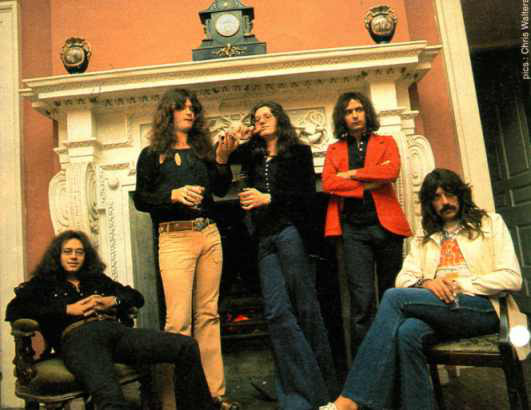
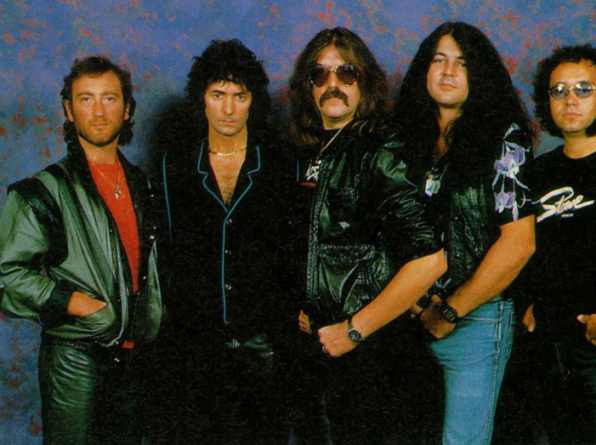
MOTORPSYCHO-THE CRUCIBLE.
Motorpsycho-The Crucible.
Label: Rune Grammofon and Stickman Records.
Nowadays, not many bands stay together thirty years, but Motorpsycho who are one of Norway’s top bands have. They’re proof that longevity isn’t a thing of the past in the music business. Nor is releasing an album a year. That was common in the sixties and seventies, which for many people was the golden age of rock.
Sadly, nowadays, very few bands come close to releasing an album a year. Instead, many bands spend several years working on an album. However, there is one band still that average almost an album a year, Motorpsycho, who have just released their new album The Crucible on Rune Grammofon. It’s their twenty-second album and marks the welcome return of Motorpsycho and is the much-anticipated followup to The Tower. The Crucible Is the perfect way for Motorpsycho to celebrate thirty years of making music.
Motorpsycho were formed in Trondheim, central Norway in 1989. Since then, Motorpsycho have become a musical institution. They’re now veterans of the Norwegian music scene, and continue to influence a new generation of musicians. These new bands aspire to follow in the footsteps of Motorpsycho.
They’ve come a long way since releasing their debut album Lobotomizer in 1991. Since then, Motorpsycho have been a prolific band, averaging nearly an album a year. This includes studio albums, live albums, mini albums and collaborations. These albums have been released to critical acclaim and commercial success.
That is almost an understatement. Since the release of their fourth full length album Timothy’s Monster in 1994, Motorspycho’s last sixteen albums have reached the top ten in the Norwegian charts. Motorspycho’s music has also found an audience across Europe, with their albums regularly charting in Belgium, Germany and Holland. They’re also a hugely popular live band, and are familiar faces across Europe and further afield. Motorpsycho it seems, are one of Norwegian most successful musical exports.
Meanwhile, back at home in their native Norway, Motorpsycho have scooped some of the most prestigious musical prizes. This includes an Edvardprisen and four Spellemannprisen Awards. These are the Norwegian equivalent of a Grammy Awards. Winning a Spellemannprisen is a huge honour. Most groups are lucky to be nominated for one award. So far, Motorpsycho have won four. It would be no surprise if Motorpsycho added to that number. Especially when they continue to release albums of the quality of The Crucible, which Is the perfect way for Motorpsycho to celebrate thirty years of making music.
The Crucible was recorded at Monnow Valley Studios in Wales, during August 2018 and saw drummer Tomas Järmyr, bassist and vocalist Bent Sæther and guitarist and vocalist Hans Magnus Ryan co-produce the along with Andrew Scheps and Deathprod. With five co-producers working on The Crucible, it could’ve been a case of too many cooks.
Thankfully it wasn’t, and when Motorpsycho heard The Crucible they were satisfied with what’s another ambitious and carefully crafted genre-melting album. While to some extent The Crucible picks up where The Tower left off, the music is much more ambitious, innovative and focused. The music is much wider lyrically speaking band Motorpsycho eschew traditional rock and pop song structures on what’s a much more dense and distinctive album where Motorpsycho combine elements of free jazz, Nordic Wave, progressive rock, psychedelia and rock on three tracks.
This includes Psychotzar a near ten minute track, Lux Aeterna which come in at just under eleven majestic minutes and the album’s twenty-one minute epic, The Crucible. It’s a mind altering and otherworldly musical trip which is unlike the music that most groups are releasing just now. However, this is what critics and record buyers have come to expect of musical pioneers like Motorpsycho who never make the same album twice.
That takes some doing for a band like Motorpsycho, as The Crucible is their twenty-second album. Many bands who have been around as long as Motorpsycho would have resorted to remaking the same album, but not the veteran Norwegian rockers. They’re constantly coming up with new ideas and continually create innovative albums including The Crucible. It features much more ambitious compositions than previous albums, and is another landmark release from Motorpsycho.
The Crucible is an album that packs a punch, and Motorpsycho’s hard rocking sound is reminiscent of Black Sabbath in their prime. That is only part of the story, and Motorpsycho’s progressive rock sound has ben inspired by King Crimson and Yes. However, unlike Yes, Motorpsycho don’t do sprawling epic albums, and don’t outstay their welcome, exiting stage left after three tracks lasting just over forty minutes where blistering rocky riffs and polytonal solos rub shoulders on The Crucible which shows the different sides to one of Norway’s leading bands who celebrate thirty years of making music in 2019.
Motorpsycho-The Crucible.
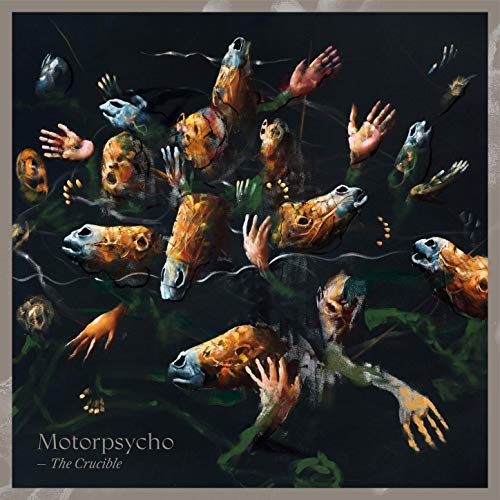
THE RISE OF JUDY COLLINS THE FIRST LADY OF FOLK 1961-1970.
The Rise Of Judy Collins The First Lady of Folk 1961-1970.
Judy Collins was never meant to become a folk singer. Originally, she had studied classical music and made her public debut when she was just thirteen. That night in Denver, Judy Collins played Mozart’s Concerto For Two Pianos. All Antonia Brico’s tuition and encouragement had been worthwhile. Her pupil she believed, was destined for greatness. There was a problem though.
Lately, Judy Collins had started to show an interest in folk music. This troubled Antonia Brico. She didn’t approve of her pupil’s growing interest in folk music. Antonia Brico didn’t want Judy Collins to stray from her path, which she hoped, could lead her to becoming one of the top classical pianists . After all, she was an outstanding and prodigious pupil. Judy Collins despite her youth and talent, was also determined; determined to pursue her interest in folk music. So she made the toughest decision of her young life, and discontinued her piano lessons with Antonia Brico.
Soon, Judy Collins had switched to guitar and was further embraced folk music. Previously, she had just dipped her toe in water. Now she dived in head-first, and discovered that the water was lovely. Initially, Judy Collins had discovered the music of Woodie Guthrie, Pete Seeger and traditional folk songs . This was just the start of Judy Collins’ love affair with folk music.
At home, music was almost omnipresent. Her father was a singer and disc jockey. He had moved to Denver, Colorado from Seattle, Washington when Judy Collins was ten. She was born on 1st of May 1939, and was the eldest of five children. However, the Collins’ family move to Denver worked in Judy Collins’ favour.
Musicians were always around the Collins’ household. They encouraged Judy Collins’ burgeoning interest in folk music. By the time she graduated high school, Judy was ready to make her debut as a folk singer.
Her debut took place at Michael’s Pub in Boulder, Colorado. Soon, though, Judy Collins was regular on the local folk scene. She played at Exodus folk club Exodus and at the University Of Connecticut. This resulted in Judy playing at campus parties and making appearances on college radio. That was where she met musicians like David Grisman and Tom Azarian. Soon, though, Judy was ready to head make the next step in her, and headed to the capital of American folk music, Greenwich Village.
Now settled in Greenwich Village, Judy Collins began to play in some of the best known folk clubs, including Gerde’s Folk City. Judy’s timing was perfect, the sixties folk boom began.
Suddenly, folk music was de rigueur. Record companies began to sign up some of the leading lights of the Greenwich Village folk scene. This included Judy Collins, who signed to Jac Holzman’s Elektra Records in early 1961.
Little did Judy Collins realise that this was the start of a thirty-five year relationship she would have with Elektra. During that period, Judy released In My Life, Wildflowers and Whales and Nightingales. They’ve recently been remastered and reissued by BGO Records as a two disc set. These three albums were released between 1966 and 1970. By then, Judy was an experienced and successful recording artist. Judy’s recording career began later in 1961, when she released her debut album A Maid Of Constant Sorrow.
A Maid Of Constant Sorrow.
Having signed to Elektra Records in early 1961, Judy Collins’ thoughts turned to her debut album. Elektra Records’ founder Jac Holzman was keen to record his latest signing’s debut album. So Judy began choosing suiting material for her debut album.
Eventually, Judy Collins had settled on twelve songs. Most were traditional songs, including the Scottish anthem Wild Mountain Thyme, the Irish standard The Prickilie Bush and a remake of Man Of Constant Sorrow, which became A Maid Of Constant Sorrow. They were familiar songs on the folk scene, unlike Wars Of Germany, John Riley and Tim Evans. However, Tim Evans was penned by English folk singer and songwriter Ewan McColl. He was a familiar face on the folk scene, and later, would write one of Judy’s biggest hit singles. That was all in the future.
Before that, Judy Collins entered the studio with Jac Holzman who would produce her debut album. Accompanying Judy, was former Weavers’ guitarist Fred Hellerman and Erik Darling on banjo. They provided a sparse and understated accompaniment to Judy’s vocals on the twelve songs, which became A Maid Of Constant Sorrow.
With A Maid Of Constant Sorrow completed, Elektra Records scheduled the release of Judy Collins’ debut album in November 1961. Before that, critics had their say on A Maid Of Constant Sorrow.
For many critics, Judy Collins was a new name. They immediately drew comparisons with Bob Dylan, given that many of the songs on A Maid Of Constant Sorrow were protest songs. Judy became a storyteller as she painted pictures with her voice. However, Judy was also an educator, introducing critics and record buyers to not just familiar songs and others which were much more obscure. Each of the songs showcased a talented vocalist, especially on A Maid Of Constant Sorrow, Wild Mountain Thyme, Know Where I’m Going and The Rising Of The Moon. Critics were won over by Judy Collins’ debut album, and A Maid Of Constant Sorrow was released to mostly positive reviews.
This augured well for the release of A Maid Of Constant Sorrow in November 1961. Despite winning the approval of critics, A Maid Of Constant Sorrow wasn’t a commercial success. The album failed to trouble the US Billboard 200. However, Judy Collins’ debut album found favour within the burgeoning folk community. Given folk music’s popularity was rising, so should Judy’s. It might take a couple of albums though.
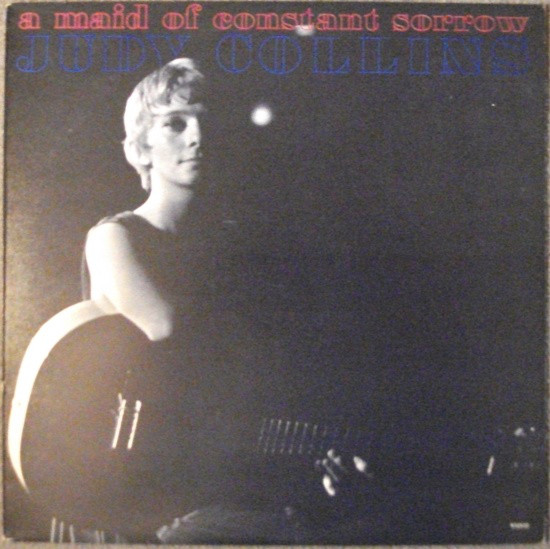
Golden Apples Of The Sun.
Despite the disappointing sales of Judy Collins’ debut album, Jac Holzman wasn’t giving up on his latest signing. He was playing the long game, and sent Judy back into the studio to record her sophomore album, Golden Apples Of The Sun.
It followed a similar pattern to A Maid Of Constant Sorrow. Nine of the twelve songs on Golden Apples Of The Sun were traditional songs. This included Bonnie Ship the Diamond, which Judy arranged. The other songs Judy decided to cover were Reverend Gary Davis’ Twelve Gates to the City, Sydney Carter’s Crow On The Cradle and Mike Settle’s Sing Hallelujah. These twelve tracks were recorded with producer Jac Holzman and a small band.
Just like the sessions for A Maid Of Constant Sorrow, the band of bassist Bill Lee and Walter Raim on guitar and banjo. Judy played guitar and piano and while laying down the vocals. Once the twelve songs were recorded, Golden Apples Of The Sun was scheduled for release in July 1962.
Before that, critics received their advance copies of Golden Apples Of The Sun. By then, folk music’s popularity was rising, and critics were paying more attention to the Greenwich Village folk scene. Already Judy Collins was one of the leading lights of the Greenwich Village folk scene. Most of the critics cast an approving eye over Golden Apples Of The Sun, and its mixture of traditional and new songs. They showcased a talented and versatile singer, who had the uncanny ability to bring a song to life. A great future was forecast for Judy Collins.
Alas, lightning struck twice for Judy Collins. When Golden Apples Of The Sun was released in July 1962, the album failed to chart. A small crumb of comfort was that Golden Apples Of The Sun was a popular album within the folk community. However, gradually, Judy was making inroads into the wider record buying public. It would be a case of third time luckily for Judy Collins.
Judy Collins 3.
After two albums which failed to chart, a few changes were made for Judy Collins’ third album. The first change was the type of songs Judy was covering.
She covered two Bob Dylan songs, Farewell and Masters Of War. This was a shrewd move, given the popularity of Bob Dylan. Just like on her debut album, Judy again covered songs by Ewan McColl and Mike Settle. This time round, Judy covered Ewan McColl’s The Dove and Mike Settle’s Settle Down. They joined Pete Seeger’s Turn! Turn! Turn! (To Everything There Is A Season); Jim Friedman and Shel Silverstein’s Hey, Nelly Nelly and Come Away Melinda and covers of two traditional songs, Bullgine Run and Ten O’Clock and All Is Well. These songs would become part of Judy Collins 3, which featured a new face.
When Judy Collins arrived at the studio in March 1963, Mark Abramson had been chosen to produce Judy Collins 3. He would go on to play an important part in the rise and rise of Elektra Records. Another new face was guitarist and banjo player Roger McGuinn. He would go on to enjoy commercial success and critical acclaim with The Byrds. However, in 1963, he was a session player, who joined bassist Bill Takas and Walter Raim. He also played guitar and banjo. Judy laid down guitar parts and played the piano, while adding the vocals on Judy Collins 3. It was completed by April 1963, but wasn’t released until later that year.
By the time that Judy Collins 3 was released later in 1963, Judy Collins’ star was in the ascendancy. She was already regarded as one of the best at interpreting traditional songs. Despite this, Judy had decided to cover many new contemporary songs on Judy Collins 3. She was equally at home covering new and contemporary songs. Critics were won over by Judy Collins 3’s mixture of traditional songs and covers of songs by Bob Dylan, Pete Seeger and Ewan MacColl. Part of the success of Judy Collins 3, was Judy’s decision to stay true to the originals. This pleased critics and record buyers.
When Judy Collins 3 was released, it reached 126 in the US Billboard 200. It was a case of third time lucky for Judy Collins, whose music was belatedly reaching a wider audience. However, it would be another two years before Judy returned with her fourth studio album.
The Judy Collins Concert.
Although Judy Collins didn’t release a studio album during 1964, she released her first live album The Judy Collins Concert. It was recorded on March 21st 1964, at Town Hall in New York City. That night, Judy worked her way through fourteen songs from some of her favourite songwriters.
Judy opened her set with Billy Edd Wheeler’s Winter Sky, and covered several two more of his compositions Red-Winged Blackbird and Coal Tattoo. Tom Paxton’s The Last Thing On My Mind, My Ramblin’ Boy and Bottle Of Wine joined Fred Neil’s Tear Down the Walls, John Phillips’ Me and My Uncle, Bob Dylan’s The Lonesome Death of Hattie Carroll and Ewan McColl’s Cruel Mother. These songs were joined by Jim Friedman and Shel Silverstein’s Hey, Nelly Nelly and covers of traditional songs like Bonnie Boy Is Young and Wild Rippling Water. Accompanying Judy were bassist and cellist Chuck Israel and Steve Mandell on banjo and guitar. Judy switched between piano and guitar as she delivered a captivating set. It was being recorded by Elektra Records, and was produced by Mark Abramson. It became The Judy Collins Concert.
When The Judy Collins Concert was released in July 1964, the reviews of the album were mostly positive. Critics who hadn’t yet heard Judy live, had the opportunity to do so, without even leaving the comfort of their favourite armchair. They praised what was an enchanting set which featured Judy Collins as she breathed life, meaning and emotion into familiar and traditional songs. Surely, The Judy Collins Concert would build on the success of Judy Collins 3?
Sadly, that wasn’t the case. The Judy Collins Concert failed to chart, which was a huge disappointment. After it seemed as if Judy had made a breakthrough with Judy Collins 3. However, it wasn’t just The Judy Collins Concert that didn’t sell well.
For much of the sixties, live albums didn’t sell in vast quantities. That would change in the seventies. By then, music had changed beyond recognition. Even in July 1964, music was changing in America, with the British Invasion bands arriving on American shores. How would Judy Collins react?
Fifth Album.
Judy Collins didn’t return with her Fifth Album until November 1965. The only difference was that the album featured a bigger band, and a much more eclectic selection of instruments. Strings, a dulcimer and harmonica would augment Judy on Fifth Album.
Just like Judy Collins 3, Fifth Album featured mainly cover versions by some of her favourite songwriters. By 1965, Bob Dylan was still one of Judy’s favourite singer-songwriters. So much so, that she covered three of his songs, Mr. Tambourine Man, Tomorrow Is A Long Time and Mama, You Been on My Mind which became Daddy, You Been on My Mind. They were joined by Phil Ochs’ In the Heat of the Summer, Gordon Lightfoot’s Early Morning Rain, Gil Turner’s Carry It On and a live version of Malvina Reynolds’ It Isn’t Nice. Other songs included Billy Edd Wheeler’s The Coming of the Roads and two traditional songs, So Early, Early In The Spring and Lord Gregory. These songs, and the rest of Fifth Album were recorded with producer Mark Abramson.
When recording began, Judy was joined by a bigger band. Strings were added to some of the tracks. A familiar face was bassist Bill Takas, who had played on previous albums. He was joined by two other bassists, Bill Lee and Chuck Israels, who also played cello.
They were joined by Richard Fariña on dulcimer and Lovin Spoonful founder John Sebastian on harmonica. Two guitarists featured on Fifth Album, Danny Kalb and Eric Weissberg who added harmonies. Judy as usual, accompanied herself on piano and guitar. Once her first studio album in two years was complete, Elektra Records announced its release in November 1965.
A lot had happened since Judy Collins had been away. The British Invasion bands dominated the American charts, the psychedelic era had begun. However, resolutely, Judy Collins stuck to her trademark acoustic sound. Fifth Album won the approval of critics, who complemented Judy on her choice of song and delivery. It was hailed as her finest albums. Fifth Album had the potential to be a career defining album.
When Fifth Album was released in November 1965, it climbed the charts all the way to forty-six in the US Billboard 200. This was by far, the most successful album of Judy Collins’ career. That was until her next album.
In My Life.
Buoyed by the commercial success of her Fifth Album, Judy Collins’ thoughts soon turned to the followup. This time though, her sixth album, In My Life. It marked a turning point in Judy Collins’ career, in more way than one.
The first was that In My Life was Judy Collins’ first album not to feature any traditional songs. Instead, she covered songs by some of the biggest names in music. This included Lennon and McCartney’s In My Life, Bob Dylan’s Just Like Tom Thumb’s Blues, Randy Newman’s I Think It’s Going To Rain Today, Donavon’s Sunny Goodge Street and Richard Fariña’s Hard Lovin’ Loser. Two Leonard Cohen songs featured on In My Life, Suzanne and Dress Rehearsal Rag. Another first, was the inclusion of a song penned by Jacques Brel. He was another of Judy’s favourite songwriters, and his composition with Alasdair Clayre La Colombe was included. These songs, and the rest of In My Life were recorded in London.
Sound Techniques studio was chosen to record In My Life. Judy Collins’ usual producer Mark Abramson was present, and directing operations. Joshua Rifkin arranged and conducted the orchestra. This was a first, Judy being accompanied by an orchestra who produced dramatic, widescreen backdrops for her vocals. They became In My Life, which was released in November 1967.
By the time that In My Life was released, Suzanne had already been released as a single. It was released in 1966, but failed to chart. Hard Lovin’ Loser didn’t do much better, when it crept into the US Billboard 100 at number ninety-seven. However, by then, the reviews of In My Life had been published.
In My Life received the best reviews of any album Judy Collins had released. Critics were won over by the change in style, and big, dramatic, orchestral arrangements. They framed Judy’s vocal, as she interpreted the twelve songs, and in many cases, brought something new to the songs. This just added to Judy’s reputation as one of the best interpretative singers of her generation. Songs came to life, and took on new meaning. Especially Suzanne, I Think It’s Going To Rain Today, Dress Rehearsal Rag, Sunny Goodge Street and even In My Life. However, throughout In My Life, Judy delivered a series of spellbinding and masterful performances. With critical acclaim accompanying the release of In My Life, this augured well for Judy Collins’ new album.
And so it proved to be. When In My Life was released in November 1966, the album reached forty-six in the US Billboard 200. In My Life surpassed the success of Fifth Album. Less than four years later, and In My Life was certified gold in 1970 after selling over 500,000 copies. However, after basking in the success of In My Life, Judy Collins began work on the followup, Wildflowers.
Wildflowers.
Following the commercial success and critical acclaim of In My Life, Judy Collins began work on a new album, Wildflowers. She was determined to build on the success of In My Life. However, Wildflowers was unlike any of Judy’s previous albums.
Wildflowers was a turning point in Judy Collins’ career. It was the first album to feature songs penned by Judy. She wrote three of the ten songs on Wildflowers, including Since You Asked, Sky Fell and Albatross. These three songs were augmented by two covers of Joni Mitchell’s Michael from Mountain and Both Sides Now. Judy also covered a trio of Leonard Cohen songs, Sisters Of Mercy, Priests and Hey, That’s No Way To Say Goodbye. Again, Judy covered a Jaques Brel song, La Chanson Des Vieux Amants (The Song of Old Lovers). The other song on Wildflowers was a cover of the fourteenth century composition, A Ballata Of Francesco Landini. These songs were recorded in New York with producer Mark Abramson.
Just like In My Life, Joshua Rifkin was drafted in, and arranged nine the ten songs. The exception was Priests, which arranged by Robert Silvester and Robert Dennis. However, when it came to conducting Wildflowers, Joshua Rifkin took charge, hoping for a repeat of the commercial success and critical acclaim of In My Life.
Before Wildflowers was released in October 1967, critics had their say on Judy Collins’ new album. Wildflowers featured Judy’s songwriting debut on Since You Asked, Sky Fell and Albatross. She proved to be a talented songwriter and storyteller. Judy brought these songs to life with the aid of Joshua Rifkin’s widescreen arrangements. That was the case as Judy covered songs penned by Leonard Cohen and Joni Mitchell. They were tailor-made for Judy’s interpretative vocal style. Her delivery was heartfelt, impassioned and emotive. Similarly, whether it was drama, hope, heartache or happiness that was required, Judy Collins was capable of providing it on Wildflowers. Critics hailed Wildflowers a fitting followup to In My Life.
They weren’t wrong. When Wildflowers was released in October 1967, it reached number five in the US Billboard 200. This was the highest chart placing of any Judy Collins. What had helped sales of Wildflowers was the success of the single Both Sides Now. It was released in early 1968, and reached number eight in the US Billboard 100, number six in Canada and thirty-seven in the Australian charts. The followup Since You Asked, failed to repeat the success of Both Sides Now when it failed to chart. However, this wasn’t the end of the Wildflowers’ success.
When the Grammy Awards’ nominations were announced in 1969, Both Sides Now was nominated for the Best Folk Performance Or Best Folk Recording. This was a first for Judy Collins, and showed how far she had come in the last two years. Things got even better for Judy Collins, when Both Sides Now won Judy Collins her first Grammy Award. Then in 1969, Wildflowers was certified gold, and became Judy’s second album to sell over 500,000 copies. Life was good for Judy Collins, who was one of the biggest names in folk music. By then, Judy had released a new album, Who Knows Where the Time Goes.
Who Knows Where the Time Goes?
Despite the success of Wildflowers, Judy Collins decided to change direction on Who Knows Where the Time Goes? It featured elements of country rock and folk rock.Who Knows Where the Time Goes? was a much more eclectic album than previous Judy Collins’ albums, and featured covers of songs by some of the great and good of music.
This included Bob Dylan’s I Pity the Poor Immigrant, Leonard Cohen’s Story Of Isaac and Bird On The Wire, Robin Williamson’s First Boy I Loved and Sandy Denny’s Who Knows Where the Time Goes? They joined Ian Tyson’s Someday Soon, Rolf Kempf’s Hello Hooray and the traditional murder ballad, Pretty Ballad. The only Judy Collins’ composition was My Father. These nine songs were recorded with a new band and new producer.
Recording began at Elektra Sound Recorders, Los Angeles, in 1968. This was a first for Judy Collins. She had never recorded an album in L.A. Nor had she worked with David Anderle replaced Judy Collins’ longterm producer Mark Abramson on Who Knows Where the Time Goes? Joining the new producer was a new band. It included a rhythm section of drummer and percussionist Jim Gordon, bassist Chris Ethridge and James Burton on electric guitar and dobro. Augmenting the rhythm section were Buddy Emmons on pedal steel guitar, pianist Mike Melvoin and Van Dyke Parks on piano and electric piano. Michael Sahl switched between organ, piano and harpsichord, keyboard, while Stephen Stills played bass and guitar. This new band plugged in, and took Judy’s music in a totally new direction. For a singer who had just enjoyed the biggest album of her career, this was a huge risk.
Judy Collins needn’t have worried. When critics heard Who Knows Where the Time Goes? they were immediately won over. Critics hailed the album a mini masterpiece. They welcomed an album that showcased a much more eclectic selection of songs. Hello Hooray was headed in the direction of rock, while Poor Immigrant was a move towards country rock. My Father was a masterful example of balladry, something Judy had excelled at throughout her career. However, among the album’s highlights were the Story Of Isaac, which was cinematic and full of imagery. Along with a peerless cover Leonard Cohen’s Bird On A Wire and the wistful, ethereal beauty of the title-track, these three tracks were among the highlights of Who Knows Where the Time Goes? It was described as one of the finest albums of Judy’s career, and was an album that introduced her music to a much wider audience.
The answer to that was yes and no. When Who Knows Where the Time Goes? was released in November 1968, and reached twenty-six in the US Billboard 200. However, by 1969, Who Knows Where the Time Goes? had been certified gold. This gave Judy Collins’ the third gold disc of her career. Her last album of the sixties had been a success. The only disappointment was the performance of the singles.
My Father was released as the lead single in 1968, but failed to chart. Someday Soon fared better, reaching fifty-five in the US Billboard 100 in 1969. This time, around there had been no top ten singles, but still Judy Collins was one of the most successful folk singers of her generation.
Recollections.
The only album that Judy Collins released during 1969, was the first compilation of her career, Recollections. It featured a selection of songs from Judy’s career so far. This included Tomorrow Is A Long Time, Early Morning Rain, Turn! Turn! Turn! (To Everything There Is A Season), Listen Now! Daddy You’ve Been On My Mind, Mr. Tambourine Man, The Last Thing On My Mind and Farewell. One of these songs was released as a single, and gave Judy a hit single.
Judy Collins’ cover Turn! Turn! Turn! (To Everything There Is A Season) was released as a single in 1969, and reached sixty-nine in the US Billboard 100. Although it wasn’t the biggest hit of Judy’s career, it kept her in the public eye, while she pondered her next move. She wouldn’t release a new album until 1970.
Whales and Nightingales.
Essentially, the sixties ended for Judy Collins in October 1968, when she released Who Knows Where the Time Goes? Since then, she hadn’t released a studio album. It wasn’t until August 1970 when Judy returned with Whales and Nightingales, album that owed more to Wildflowers than Who Knows Where the Time Goes?
Whales and Nightingales saw a return to shorter songs, and Judy’s tradition folk sound. She had written Nightingale and cowrote Nightingale II with Joshua Rifkin. The rest of Whales and Nightingales comprised cover versions.
Among the cover versions, were songs by some of Judy Collins’ favourite singers and songwriters. This included Bob Dylan’s Time Passes Slowly, Joan Baez’s A Song For David and Pete Seeger’s Oh, Had I A Golden Thread. Other songs included a cover of Dominic Behan’s The Patriot Game, John Newton’s Christian hymn Amazing Grace and Prothalamium which Michael Sahl and Aaron Krame wrote. Judy chose two Jaques Brel compositions, including Marieke which he penned with Gerard Jouannest. The two men also wrote Son Of with Eric Blau and Mort Shuman. Augmenting these covers were a trio of traditional songs, Gene’s Song, Farewell to Tarwathie and Simple Gifts. These thirteen songs were recorded during 1970 with a familiar face.
Given Judy Collins was returning to her familiar folk sound, it made sense to reunite with her former producer, Mark Abramson. He had produced most Judy’s commercially successful and critically acclaimed albums. The exception was Who Knows Where the Time Goes? That was the past. Whales and Nightingales was the future.
Another familiar face was Joshua Rifkin, who arranged and conducted Sons Of, Prothalamium and Marieke. Judy also arranged a trio of tracks, Farewell To Tarwathie, Simple Gifts and Amazing Grace. One of these songs would become one of Judy Collins’ best known songs.
Once Whales and Nightingales was complete, Elektra Records scheduled the release for August 1970. The song that was chosen as the lead single, was a surprising one, Judy Collins’ cover of the Christian hymn Amazing Grace. When it was released in 1970, it reached number fifteen in the US Billboard 100 and number ten in the Australian singles’ charts. This augured well for the release of Whales and Nightingales.
Especially when Whales and Nightingales was well received by critics. Again they complemented Judy Collins on her judicious choice of songs, which she interpreted in her own unique way. This included Bob Dylan’s Time Passes Slowly, Joan Baez’s A Song For David and Pete Seeger’s Oh, Had I A Golden Thread. They were perfect for Judy, and brought out the best in her.
So did Farewell To Tarwathie, which featured one of the most imaginative arrangements on Whales and Nightingales. Judy was accompanied by a chorus of humpback whales, who provided a sparse, but almost haunting arrangement. These understated arrangements had always provided the perfect backdrop for Judy Collins’ vocals.
Whales and Nightingales featured two songs Judy Collins had written. The first was Nightingales, a beautiful song,which delivered against sparse, understated arrangements. So was and Nightingales II, which featured a lush, string-drenched, widescreen arrangement. However, one of the most powerful songs was Judy’s cover of Amazing Grace. It was akin to a soul-baring confessional. Critics agreed that Amazing Grace was one of the finest moments on Whales and Nightingales, which was a return to form from Judy,
When Whales and Nightingales was released in July 1970, the album reached number seventeen in the US Billboard 100. By 1971, the album had sold over 500,000 copies and had been certified gold. Judy Collins’ first album of the seventies, saw her pickup where she left off in 1968.
After eight studio albums and one live album, Judy Collins was one of the most successful folk singers of her generations. Judy Blue Eyes’ last four album had been certified gold. This remarkable run began with 1966s In My Life, and included 1967s Wildflowers, 1968s Who Knows Where the Time Goes? and ended with 1970s Whales and Nightingales. During this period, it seemed Judy Collins could do wrong. She enjoyed several hit singles, including her cover of Joni Mitchell’s Both Sides Now. It won Judy her first Grammy Award in 1969. Judy Collins had come a long way since her debut album A Maid of Constant Sorrow in 1961.
While A Maid Of Constant Sorrow and its followup Golden Apples Of The Sun failed commercially, Jac Holzman and Elektra Records stuck with Judy Collins. They knew it would take two or three albums before Judy made a breakthrough. Their faith in Judy was richly rewarded, and by 1970, she was one of the most successful female singers of her generation.
Judy Collins was also a pioneer of folk music. She had been around from the earliest days of the folk boom, and rode this musical elevator through the sixties. Throughout the decade, Judy flew the flag for folk music. That was despite the onslaught of pop, rock and psychedelia. Still, Judy stood firm. The only time she wavered, was in 1968s when she released Who Knows Where the Time Goes? It saw Judy enjoy a dalliance with country rock and folk rock. However, folk music was her true love, and she returned to the fold for Whales and Nightingales in 1970. Judy’s first album of the seventies was a triumphant returned, for the First Lady of Folk.
She had released some of the best music of her career between 1966 and 1970. This includes three of Judy Collins’ most successful albums were In My Life, Wildflowers and Whales and Nightingales. These three albums were released between 1966 and 1970 and feature Judy Collins’ trademark folk sound. By then, Judy was one of the best interpretative singers of her generation. Seamlessly she brought songs to life, and they took on new meaning. That’s the case on In My Life, Wildflowers and Whales and Nightingales, which are the perfect introduction to Judy Collins, who is, without doubt, one of the greatest singer-songwriters of her generation.
The Rise Of Judy Collins-The First Lady of Folk 1961-1970.

DOLORES VARGAS-“LA TERREMOTO”-THE EARTHQUAKE.
Dolores Vargas-“La Terremoto” The Earthquake.
Ask anyone who saw Dolores Vargas at the peak of the powers in the early seventies and they almost go misty eyed as they describe a flamboyant performer who combined a unique and inimitable mixture of flamenco funk, gypsy funk and rumba pop with a wild, energetic and frenzied dancing style. Dolores Vargas’ performances had audiences spellbound, but it was her powerhouse of a vocal that resulted in her earning the nickname “La Terremoto” (“The Earthquake.”) At one point, in the early seventies, Dolores Vargas was being compared to Tina Turner and some critics believed she was a far superior performer to Lola Flores. This was high praise, and it looked as if Dolores Vargas was going to become one of the biggest names in Spanish music. Sadly, Dolores Vargas didn’t enjoy the commercial success that her undoubted talented deserved.
Recently, though, there has been a resurgence of interest in Dolores Vargas’ music, with a new generation of record buyers discovering the delights of The Earthquake’s music. They were in good company and joined a small coterie of musical connoisseurs who hold “The Earthquake” in the highest regard.
Her story began in Barcelona, Spain, when María de los Dolores Castellón Vargas was born on the ’16th’ May 1936 in Barcelona, Spain. Growing up, music played in important part in Dolores Vargas life. By the time Dolores Vargas was sixteen, she had already married her cousin José Castellón, a.k.a. Pepe who was a guitarist and composer. He wrote many of the songs Dolores Vargas recorded during her career. However, two more years passed before Dolores Vargas made her professional debut.
Eighteen year old Dolores Vargas made her debut in her brother’s show Brindis al cielo at the Theatre de Vega, in Madrid. Each night, patrons saw Dolores Vargas perform the rhumba Tiquaitan. This was the start of Dolores Vargas’ long career.
Two years later, in 1956, Dolores Vargas made her acting debut in the first of several folkloric films she appeared in, Veraneo en España in 1956. This was followed by Un Torero para la Historia in 1957. By then, it looked as if Dolores Vargas was set for a career on the silver screen. This changed in 1958.
Dolores Vargas and Pepe had travelled to Cannes in 1958, where she found herself sharing the stage with none other than Edith Piaf. She was so impressed with Dolores Vargas’ performance that the legendary French singer invited her new friend to America, where she arranged for her to appear on Ed Sullivan’s television show.
On the ‘19th’ of October 1958, Americans who tuned into Ed Sullivan’s television show on CBS saw Dolores Vargas make her debut on American television. So successful was Dolores Vargas’ appearance on the Ed Sullivan show that she spent the next two years living in America.
During the time Dolores Vargas spent living in America, her recording career began. Her career began at Brunswick where she recorded her 1959 EP Dolores Vargas Vol. 2 on Brunswick. It’s one of the finest recording of Dolores Vargas’ American years. The same can be said of Dolores Vargas’ 1960 album for Decca “El Terremoto Gitano” (The Gypsy Earthquake). It was a tantalising taste of what was to come from The Earthquake.
After returning to Spain, Dolores Vargas signed to Barcelona based Belter Records in 1962. This was the start of the next chapter in her career, and for the next three years, Belter was home to one of the rising stars of Spanish music.
Especially with Pepe supplying Dolores Vargas with new songs which she recorded during her first two years at Belter. Some of Pepe’s songs were released as singles between 1962 and 1964, while others found their way onto the album Dolores Vargas “La Terremoto.” Alas, neither the singles, nor The Earthquake’s debut album for Belter were a commercial success, which was a disappointment for her.
Especially, as Dolores Vargas was about to become a mother for the first time in 1964. That year, her daughter Dolores “Lores” Castellón Vargas was born. Now that she was a mother, Dolores Vargas hoped that commercial success wasn’t far away.
As 1964 gave way to 1954, still commercial success continued to elude Dolores Vargas. This was hugely disappointing for Dolores Vargas who decided to leave Belter in 1965, and sign to Polydor.
This turned out tone a wise move, as executives at Polydor began the process of modernising Dolores Vargas’ music. They realised that Dolores Vargas’ music had to evolve to stay relevant. However, they also realised that this change had to be gradual, so as not to alienate her fans.
Gradually, elements of rock, pop and soul were incorporated into Dolores Vargas’ music transforming this traditional form of music into something moderne and innovative. A new chapter in The Earthquake’s career began to unfold during Dolores Vargas’ three years stay at Polydor.
During that period, Dolores Vargas’ released a string of singles for Polydor, which documented how her music evolved. These changes had just begun when Dolores Vargas’ first album for her new label came in 1965. This was the prophetically titled Spain’s Most Exciting Singer. Two years later, in 1967, Viva Flamenco! Una Antologia Del Baíle Flamenco was released by Polydor, but was Dolores Vargas’ swan-song for the label.
When Dolores Vargas left Polydor in 1968, still a hit single continued to elude her. She was no nearer to making a breakthrough than she had been when she made her recording debut in 1959. This was a huge blow for Dolores Vargas. Despite that, she returned to Belter, and continued her search for a hit single.
The three years away from Belter had allowed Dolores Vargas to modernise her sound. Whether she would’ve been able to do this if she had remained at Belter is debatable. However, they signed a very different singer to the one that left the label three years earlier. Proof of this was Dolores Vargas “La Terremoto” which was released in 1969, and saw the reinvention of The Earthquake continue.
As the seventies dawned, little did anyone realise that a golden period in Dolores Vargas’ career was about to begin. For the next five years she released what is regarded as some of the best music of her career.
By 1970, the reinvention of Dolores Vargas “La Terremoto” as she was billed, recorded a new EP. One of the songs on the EP was the cumbia La Piragua,which was written by the famous Colombian composer José Barros. In Dolores Vargas’ hands it’s transformed into an irresistible and mesmeric gypsy-tinged rumba which was totally different to everything that has gone before. Surely this was a game changer for Dolores Vargas?
When the EP was released in 1970, La Piragua which quite rightly received top billing. It was also released as a single during 1970 in the hope that it would transform Dolores Vargas’ flagging fortunes. Sadly that wasn’t the case when the EP and single failed to find an audience. For Dolores Vargas this was a huge blow.
Despite the disappointment, Dolores Vargas returned later in 1970 with the single Urtain, El K.O. Y Ole. Again, executives at Belter and Dolores Vargas had high hopes for the single. It was a hook laden ye-ye rumba that benefited from a big, bold arrangement. This it was hoped would provide Dolores Vargas with that elusive hit single. Sadly, despite the quality of the arrangement and lyrics dedicated to Spanish boxer Jose Manuel Ibar Azpiazu who was the European heavyweight champion, the single failed commercially. This was just the latest disappointment for Dolores Vargas.
When Dolores Vargas released A-Chi-Li-Pu as a single later in 1970, this just happened to coincide with the dawn of Catalan rumba and flamenco pop era. Dolores Vargas’ single A-Chi-Li-Pu charted, and started climbing charts and even outsells Encarnita Polo’s dance track Paco, Paco, Paco. At last, Dolores Vargas had enjoyed that elusive hit single, eleven years after making her recording debut in 1959. However, A-Chi-Li-Pu which has become an oft-covered song amongst Spanish artists doesn’t feature on the compilation.
Both A-Chi-Li-Pu and Urtain, El K.O. Y Ole featured on the album Dolores Vargas La Terremoto, which was released in 1970. This was the first album Dolores Vargas had released since enjoying her first hit single. However, it didn’t feature Dolores Vargas’ second hit single.
Buoyed by her first hit single, Belter got behind Dolores Vargas’ next single, which was a cover of Middle Of The Road’s hit single Chirpy Chirpy Cheep Cheep. It’s almost unrecognisable during what’s a captivating and sometime anarchic reinvention of what was originally a throwaway pop single. In Dolores Vargas’ hands, it’s transformed and takes on new life and meaning. Dolores Vargas’ cover of Chirpy Chirpy Cheep Cheep topped the Spanish charts, giving the thirty-five year old her second hit single.
For the followup, Dolores Vargas’ husband José Castellón wrote Anana Hip with Spanish singer, songwriter and composer, conductor, arranger and producer Juan Carlos Calderón. When Dolores Vargas recorded Anana Hip, it African rhythms were added the arrangement as the song headed in the direction of funk rock. It features a vocal powerhouse from Dolores Vargas as this memorable and mesmeric slice of funk rock shows yet another side to a truly versatile singer.
After enjoying the most successful year of a career that had spanned three decades, Dolores Vargas was looking forward to 1972, and hoping that she would enjoy further success. Dolores Vargas released a trio of singles and an EP. One of her finest moments was the explosive and hook-laden El Ma-Ta-Ri-Le which features another vocal powerhouse from Dolores Vargas. Alas, it failed to find the audience it deserved and 1972 was proving to be a disappointing year for Dolores Vargas.
Later in 1972, Dolores Vargas released El Toro De La Vida as a single. When Dolores Vargas “La Terremoto” was released later in 1972, El Desgrasiao featured alongside El Ma-Ta-Ri-Le, La Hawaiana, Anana Hip, Chirpy Chirpy Cheep Cheep and La Piragua. Dolores Vargas would return to the album Dolores Vargas “La Terremoto” in 1973, when she was looking for a new single.
During 1973, Dolores Vargas released three singles. This included Oh, La, La, which featured the Juan Erasmo Mochi composition El Despertador on the B-Side. Both songs were taken from the 1972 album Dolores Vargas “La Terremoto” and oozed quality. Indeed, Oh, La, La which was written by her husband José Castellón is a truly joyous and irresistible song with a feel-good sound. Despite that, the single failed commercially and Oh, La, La was the one that got away for Dolores Vargas.
1973 wasn’t a particularly successful year for Dolores Vargas, with none of her three singles charting. Two years had passed since her last single. Ironically, Dolores Vargas was releasing some of the best and most progressive music of her career. Maybe though, it was to progressive and innovative, and the record buying public didn’t understand or approve of what Dolores Vargas was doing to what they saw as Spain’s traditional music?
While Dolores Vargas had only released two singles during 1973, that number fell to two during 1974. This included Maria Lisi, where elements of flamenco and rhumba melted into one during a joyous and uplifting song. Despite its quality and a strong hook, it failed to trouble the charts. However, the next single Dolores Vargas released lifted her profile.
This was Macarrones which had been inspired by a type of sauce that accompanies macaroni. Although Macarrones was essentially a novelty song, it was one of two songs shortlisted to represent Spain in the 1974 Eurovision Song Contest. However, it was Peret who triumphed and won the day with Canta y sé feliz. While this was disappointing for Dolores Vargas who was now thirty-eight, being on the shortlist lifted her profile. Sadly, though, Macarrones wasn’t a commercial success, and it was now three years since her last hit.
When 1974 gave way to 1975, Dolores Vargas continued her search for a hit single. However, still commercial success eluded the two singles she released during 1975. However, one of the finest songs Dolores Vargas recorded during 1975 was the funky cinematic Gitana Real which sounded as if it belonged on the soundtrack to a Spanish thriller. Gitana Real which lent its name to Dolores Vargas 1975 album, also marked the end of the rhumba funk period. Sadly, Dolores Vargas’ album Gitana Real failed commercially which was leased a golden period for Dolores Vargas, and saw her release some of the best music of a career. By 1975, Dolores Vargas’ career had already spanned three decades and she was a vastly experienced singer. Despite her experience and considerable talent and versatility , Dolores Vargas had only enjoyed two hit singles between 1959 and 1975. This wasn’t much to show for an artist who had spent the last ten years reinventing herself musically.
The reinvention of Dolores Vargas began at Polydor in 1965, and continued when she returned to Belter in 1968. All her hard work paid off between 1970 and 1975, during what was a golden period for Dolores Vargas. She released ambitious and innovative music that included flamenco funk, gypsy funk and rumba pop. Dolores Vargas was on of the first artists to incorporate elements of pop, rock and soul into flamenco and rumba.
It took a while before the record buying public understood, appreciated and embraced this new genre-melting sound. Some shortsighted traditionalists probably saw this as sacrilege, but failed to realise that if flamenco and rumba failed to evolve they risked becoming irrelevant. Musical pioneers like Dolores Vargas were determined that this wouldn’t happen, began to reinvent the music that meant so much to her.
While Dolores Vargas who played her part in ensuring that flamenco and rumba remain relevant, the commercial success she enjoyed was only fleeting. After two hits in 1971, Dolores Vargas failed to reach the same heights during the period that Pharaway Sounds new compilation “La Terremoto” Anana Funk Hip 1970-75 covers.
During that period, Dolores Vargas “The Earthquake” was a flamboyant performer who combined a unique and inimitable mixture of flamenco funk, gypsy funk and rumba pop. At one point, Dolores Vargas was compared to Tina Turner in her sixties prime. By then, many critics thought that Dolores Vargas was about to become one the biggest names in Spanish music. Sadly, Dolores Vargas enjoyed the commercial success that her undoubted talented deserved, and retired in 1987 after the death of her husband José Castellón.
Following Dolores Vargas’ retirement, there was a resurgence of interest in The Earthquake’s music. This came after new generation of record buyers discovered some of Dolores Vargas’ old albums in record shops and second-hand shops. Straight away, they were won over by the delights of Dolores Vargas music, and joined an exclusive club that features a small coterie of musical connoisseurs with an educated musical palette who held The Earthquake’s music in the highest regard.
Dolores Vargas watched on with interest as her music was discovered by a new and appreciative audience. They embraced the ambitious and innovative music Dolores Vargas recorded during her golden era when she combined a unique and inimitable mixture of flamenco funk, gypsy funk and rumba pop.
Dolores Vargas-“La Terremoto” The Earthquake.
LIGHTHOUSE-THE RISE OF LIGHTHOUSE-1969-1974
Lighthouse-The Rise Of Lighthouse 1969 1974.
In 1968, Skip Prokop the former drummer and vocalist with the Canadian psychedelic rock band The Paupers, met Brooklyn born keyboardist Paul Hoffert in a New York nightclub. The men bonded over their mutual love of music. However, when they parted company at the end of the evening, they never thought that their paths would cross again.
That was until Skip Prokop boarded a flight from New York to head home to Toronto, and recognised one of his fellow passengers. It was none other than Paul Hoffert, who was studying at the University of Toronto. The two men started talking, and soon, were discussing the possibility of forming a band based around a rock rhythm section, jazz horn section, and classical string section. It this was an ambitious plan, but one that Skip Prokop and Paul Hoffert were determined to bring to fruition.
Fortunately, Skip Prokop was a familiar face within Toronto’s music scene, and knew plenty of musicians who would be interested in joining the band he planned to form with Paul Hoffert. Skip Prokop brought onboard some of his musical friends, several session musicians and members of the Toronto Symphony Orchestra. Gradually, Skip Prokop and Paul Hoffert’s group was taking shape.
Eventually, the nascent group featured thirteen musicians. The next step for the as yet unnamed band was to record a demo. Once the demo was complete, Skip Prokop sought the advice of one of his musical friends, Richie Havens. He suggested that Skip Prokop and Paul Hoffert take the tape to MGM Records, who Richie Havens was currently signed to.
On hearing the demo, executives at MGM Records were hugely impressed with what they heard. So much so, that they offered the band an advance of $30,000. Skip Prokop and Paul Hoffert signed on the dotted line. The band was now signed to MGM Records.
Having signed to MGM Records, the band acquired a manager within the space of two days. It was just a pity they hadn’t a manager when they signed to MGM Records.
Their new manager was Vinnie Fusco, who was an associate of Albert Grossman, who managed Bob Dylan. Vinnie Fusco was an experienced manager, who was well versed in the how the music industry worked. He decided that the MGM Records’ deal wasn’t good enough for his new client.
Vinnie Fusco decided to pay the executives at MGM Records a visit to discuss the contract his new client had signed. By the end of the meeting they were prepared to free the band from their contractual obligations. This left them free to sign to RCA Victor.
Not before Vinnie Fusco had negotiated a lucrative recording contract for the band. This time, it wasn’t $30,000 that the band would receive, Instead, they would receive hundreds of thousands of dollars over the course of the contract. During that morning, Vinnie Fusco had more than proved his worth.
Now that the band had a recording contract in place, the next step was to finalise the band’s lineup. Although the band had recorded a demo, this wasn’t the version that would make their live debut at Toronto’s Rock Pile on May ’14th’ 1969.
With the lineup of the band finalised, and having honed their sound, they were ready take to the stage at the Rick Pile. As the band prepared to take to the stage, a seventy year old man-made his way to the microphone to introduce the band. Some members of the audience thought his face was familiar. It was none other that Duke Ellington who uttered the immortal words “I’m beginning to see the Light…house.” With that, the thirteen members of the band that would become Lighthouse took to the stage and delivered a barnstorming set. By the end of the night, very few people were taking about Duke Ellington. Instead, they were taking about Lighthouse’s live debut.
After the success of Lighthouse’s live debut, Vinnie Fusco knew that he had signed a band with a big future ahead of them. He wasted no time in taking Lighthouse into the studio to record their eponymous debut album which was written and recorded during 1969.
Lighthouse.
For Lighthouse, members of the band had written eight new songs, and covered The Byrds’ Eight Miles High and Richie Havens’ No Opportunity. Lighthouse’s songwriter-in-chief was Skip Prokop who cowrote three songs and wrote four more. This included If There Ever Was A Time, Follow The Stars, Marsha, Marsha and Ah I Can Feel It. He and Paul Hoffert wrote Whatever Forever, while Skip Prokop Peggy Devereux wrote Life Can Be So Simple. They also wrote Mountain Man with guitarist Ralph Cole. Brenda and Paul Hoffert Never Say Goodbye contributed. These ten tracks were to be recorded at Electric Ladyland Studios, New York.
At Electric Ladyland Studios, the thirteen members of Lighthouse prepared to record their eponymous debut album.Taking charge of production was Skip Prokop and Paul Hoffert who was Lighthouse’s musical director. After the sessions got up and running, it soon became apparent things weren’t going to plan. Rather than waste time and money, they should head home to Toronto and record the album there.
When Lighthouse returned to Toronto, they deduced to record at Eastern Sound Studios. Suddenly, the band were in a groove and before long, had recorded the ten songs that became Lighthouse. Once it was completed, it was released later in 1969.
Before that, critics had their say on Lighthouse. It received plaudits and praise from critics who were won over by Lighthouse’s innovative genre-melting sound. Lighthouse was a mixture of jazz, rock, classical and fusion. There’s even avant-garde, blues, chamber pop, funk, pop and psychedelia, in an album that was designed to grab the listener’s attention.
Alas, when Lighthouse was released, the album failed to find the audience it deserved. Lighthouse failed to trouble the charts. It was a similar case when If There Ever Was A Time was released as a single. Despite the disappointment caused by the failure of their debut album and single, Lighthouse began work on their sophomore album, Suite Feeling.
Suite Feeling.
By then, Lighthouse were regarded as one of the top live acts in Canada. The band was hoping that their sophomore album would introduce the band to a much wider audience.
When Lighthouse began work on what became Suite Feeling, Skip Prokop and Paul Hoffert were starting to forge a successful songwriting partnership. They wrote Could You Be Concerned, Presents Of Presence, Taking A Walk, Eight Loaves Of Bread and What Sense. The pair also penned Feel So Good with Grant Fullerton, and the trio proceeded to write Places On Faces Four Blue Carpet Traces with Ralph Cole. Just like Lighthouse, there were two cover versions on Suite Feeling, Robbie Robertson’s Chest Fever and Lennon and McCartney’s Day In The Life. These nine songs were recorded in two studios.
Some recording sessions took place at Eastern Sound Studios, in Toronto. Other sessions took place in Los Angeles, at RCA’s Music Centre Of The World. This time around, Lighthouse’s lineup numbered fourteen. This new and expanded lineup of Lighthouse recorded Suite Feeling, which was produced by Skip Prokop and Paul Hoffert.
Once Suite Feeling was completed, RCA Victor scheduled the release for late 1969. Before that, critics got the opportunity to review Suite Feeling. Just like Lighthouse, it received praise and plaudits from critics, who going by Suite Feeling were forecasting a big future for Lighthouse.
With critics won over by Suite Feeling, it looked like their sophomore album was destined for the charts. Before that, Feel So Good was released as single but stalled at fifty-five on the Canadian RPM charts. This was a disappointment for Lighthouse. There was another disappointment in late 1969, when Suite Feeling failed to chart. It was another disappointment for Lighthouse. Despite the disappointment, Lighthouse’s thoughts soon turned to their third album Peacing It All Together.
Peacing It All Together.
Just like Suite Feeling, the Skip Prokop and Paul Hoffert songwriting partnership wrote the majority of Peacing It All Together. Their songwriting partnership was flourishing. They wrote Nam Myoho Renge’ Kyo, The Country Song, Sausalito, The Fiction Of Twenty-Six Million, The Chant (Nam Myoho Renge’ Kyo), Mr. Candleman, On My Way To L.A., Just A Little More Time, Little People and am Myoho Renge’ Kyo. Skip Prokop and Paul Hoffert also wrote Let The Happiness Begin with Ralph Cole, and Every Day I Am Reminded where Beethoven receives a credit. The only song not written Skip Prokop and Paul Hoffert, was Daughters And Sons which Grant Fullerton contributed. These songs became Peacing It All Together which was recorded in the Big Apple.
Recording took place at RCA’s Studio C, in New York, where Lighthouse Mk. III recorded Peacing It All Together. There had been further changes to the band’s lineup and Lighthouse were back to being to a thirteen piece band. However, it wasn’t unlucky thirteen for Lighthouse.
Peacing It All Together was a much more eclectic album, with tracks ranging from folk and pop, to jazz and orchestral rock. This won the approval of critics, who hailed Peacing It All Together as Lighthouse’s finest hour.
When Peacing It All Together was released to critical acclaim in 1970, the album charted and reached 133 in the US Billboard 200. It was third time lucky for Lighthouse, who at last, had a hit album on their hands. That was no surprise given the quality of music on the album.
Peacing It All Together marked the start of the rise and rise of Lighthouse. However, this wouldn’t be at RCA Victor. After the release of Peacing It All Together, Lighthouse signed to GRT, where they enjoyed the most successful period of their career.
By then, Lighthouse had appeared at Canada’s Strawberry Fields festival in August 1970 and later that summer, stared at the Isle Of Wight Festival in Britain. The rise and rise of Lighthouse continued.
Sadly, it was without lead singer Pinky Dauvin, who left the group after the release of Peacing It All Together. By then, Lighthouse were touring 300 days a year, and when they weren’t touring they were recording. It was a gruelling schedule, and one that was taking its toll on Lighthouse.
Thoughts of Movin’ On.
When Lighthouse returned in 1971 with their fourth album Thoughts of Movin’ On, it featured a very different lineup of the band. Bob McBride made his debut as lead singer, and was one of four new members of Lighthouse, who were now an eleven piece band. The new lineup of Lighthouse hit the ground running, with the most successful album of the band’s four album career.
When it came to the choose the lead single, Lighthouse chose One Fine Morning and it reached number twenty-four in the US Billboard 100 in 1971. Meanwhile, in Canada, One Fine Morning reached number two and was certified gold. One Fine Morning also gave Lighthouse an international hit single. At last, Lighthouse’s music was reaching the audience it deserved. However, this wasn’t the end of the success for Lighthouse.
Buoyed by the success of One Fine Morning, Take It Slow (Out In The Country) was released as a single. Although it reached just sixty-four in the US Billboard 100, it reached number twelve in the Canadian charts. Lighthouse were making progress at last.
What Lighthouse released Thoughts of Movin’ On stalled at 157 in the US Billboard 200. That was a disappointment for the band. However, back home in Canada, Thoughts of Movin’ On but was certified gold. Still, things would get better for Lighthouse.
Lighthouse Live! at the Carnegie Hall.
In February 1972, Lighthouse recorded Lighthouse Live! at the Carnegie Hall, in New York. Before its release Lighthouse Live! won the approval of critics. That came as no surprise, as the album featured a barnstorming performance from Lighthouse.
When Lighthouse Live was released later in 1972, the album stalled at 178 in the US Billboard 200. Across the border in Canada, Lighthouse Live! became the first Canadian album to be certified platinum. Lighthouse were now one of the biggest bands in their native Canada.
Sunny Days.
Later in 1972, Lighthouse returned with their sixth studio album Sunny Days. The band had high hopes for the album, especially after the success of Lighthouse Live! They were eventually reaping the rewards of years of hard work.
While critics heard Sunny Days, it received praise and plaudits. Lighthouse seemed to maturing with each album they released. Their popularity continued to grow in Canada, with Sunny Days reaching number four. However, when Sunny Days was released in American, it reached just thirty-four in the US Billboard 100. America was proving a tough market to crack for Lighthouse. The other single from Sunny Days was You Girl which reached seventeen in Canada, but failed to trouble the US Billboard 100. This was a disappointment for Lighthouse.
So was Sunny Days stalling at just 190 in the US Billboard 200 in 1972. Despite that, Sunny Days was certified gold in Canada and the Lighthouse success story continued apace.
Despite being at the peak of their popularity, Paul Hoffert who was still only thirty was tiring of life on the road. He left Lighthouse, but continued in the role of executive producer. This lead to the latest change in Lighthouse’s lineup.
Can You Feel It,
When Lighthouse returned to the studio to record their seventh studio album Can You Feel It, lead vocalist Bob McBride failed to turn up. Skip Prokop and Ralph Cole wanted to cancel the sessions. However, producer Jimmy Ienner was determined the session continue, and even introduced a new rule that who wrote the song, sang it. This meant that Skip Prokop and Ralph Cole sung most of the songs, apart from No More Searching, which was penned by new saxophonist Dale Hillary. Eventually, Can You Feel It was completed and became the first Lighthouse album to feature multiple vocalists, was completed.
The decision to use multiple vocalists was one that could’ve backfired badly on Lighthouse. However, Can You Feel It was well received and the album was scheduled for released later in 1973.
Before that, Pretty Lady reached number nine in Canada and fifty-three in the US Billboard 100. For the followup Can You Feel It was released, and reached number nineteen in Canada. When Can You Feel It was released in 1973, the failed to chart in America. It looked as if Lighthouse were never going to crack the American market. In Canada, Can You Feel It sold well, but this time, there was no gold disc for Lighthouse. Still, though, the rise and rise of Lighthouse continued. They were one of Canada’s most successful bands by 1974. The last four years had been a roller coaster ride for Lighthouse.
Good Day,
A year later, in 1974, Lighthouse returned with their eighth studio album Good Day in 1974. By then, the lineup had changed. Skip Prokop had switched to guitar on a permanent basis, and Billy King was drafted in as the new drummer. Still, though, Skip Prokop and Ralph Cole shared lead vocal duties in an attempt to ensure there was a degree of continuity.
This was important for Lighthouse, given their previous album Can You Feel hadn’t replicated the success of previous albums. That had even been the case in their native Canada, where Lighthouse were a hugely popular band. They needed Good Day to be a big success
When Good Day was released as a single in 1974, it stalled at a lowly sixty-eight in Canada. Things didn’t improve when the album Good Day was released. It failed to match the sales of previous albums it featured the song Wide-Eyed Lady, which quickly would become a favourite when Lighthouse played live.
Despite the disappointing sales of Good Day, Lighthouse returned to Thunder Sounds Recording Studios to begin work on their ninth album. However, by then all wasn’t well within Lighthouse. Founder member Skip Prokop quit the band, and the album was never completed.
While Lighthouse continued to tour without Skip Prokop, the band never returned to the studio. The only album GRT released was The Best of Lighthouse in 1976. By then, Lighthouse were on their last legs, and disbanded later that year. After seven years, eight studio albums and a live album, Lighthouse called time on their career.
In 1992, Skip Prokop, Paul Hoffert and Ralph Cole reformed Lighthouse and twenty-five years later they’re still going strong. The reformed band released a new album Song of the Ages in 1996. Thirteen years later, and Lighthouse released 40 Years of Sunny Days a CD/DVD release in 2009. The following year, Lighthouse released the Best of Lighthouse-20th Century Masters in 2010. This was the perfect introduction to newcomers to one of Canada’s best bands, Lighthouse.
In 2014, founder member Skip Prokop retired from Lighthouse. Waiting in the wings was son Jamie, who is a chip of the old block. He ensures Lighthouse keep on rocking as they tour Canada. Then in January 2018, Lighthouse will perform for the second time on the Moody Blues Cruise. That is nearly fifty years since the Lighthouse story began.
They had released the best music of their career between 1969 and 1974. During that five-year period, Lighthouse were one of Canada’s most talented band and successful bands.They were led by Skip Prokop and Paul Hoffert who were Lighthouse’s songwriters-in-chief and producers. They were responsible for yen eight studio albums and one live album Lighthouse released between 1969 and 1974. These albums oozed quality as Lighthouse switched seamlessly between and combined disparate musical genres.
Lighthouse were musical master craftsmen, who deserved to reach greater heights during the RCA Victor years. They went on to enjoy further critical acclaim and the commercial success they deserved during the GRT years, when Lighthouse became one of Canada’s most successful bands.
Lighthouse-The Rise Of Lighthouse 1969 1974.


JIMI HENDRIX-THE MUSICAL GENIUS WHO CHANGED MUSIC.
Jimi Hendrix-The Musical Genius Who Changed Music.
On the 4th of July 1970, Jimi Hendrix journeyed 100 miles south of Atlanta. His destination was the second Atlanta International Pop Festival, which was being billed as the second Woodstock. That was where The Jimi Hendrix Experience were about play a starring role.
When The Jimi Hendrix Experience arrived at the Atlanta International Pop Festival, they were greeted by a crowd estimated to be between 300,000-400,000. What is now remembered as the “last great rock festival” was an unlikely event for Jimi Hendrix to appear at.
Byron, in Atlanta was in the heart of old the Deep South. This was Klan country. Racial tensions were always threatening to bubble over. The organisers of the 1970 Atlanta Pop Festival were well aware of this. So they made the conscious decision that the star of the show should be someone who appealed to everyone. This wasn’t going to be easy.
So the organisers set about thinking of an artist or band who would appeal to both sides of the racial, cultural and socio political divide. This wasn’t going be easy.
The organisers had to think how the audience would respond to certain artists, bands or situations. How would a rural audience in the Deep South feel about the so called long haired, hippie bands? Or how would they respond to black and white artists on the same bill? That could inflame an already volatile situation. While some promoters would’ve avoided this situation, the organisers of the Atlanta Pop Festival wanted to challenge the beliefs held by many of their potential audience. So, they booked a man who would unite the audience with the his music and his message of universal love, Jimi Hendrix.
It wasn’t just Jimi Hendrix that would star at the second Atlanta Pop Festival. No. On 4th of July 1970, the Jimi Hendrix Experience had reformed, and would playing a supporting role as Jimi Hendrix delivered a musical masterclass.
Accompanied by bassist Billy Cox and drummer Mitch Mitchell, Jimi Hendrix showman extraordinaire and guitar virtuoso had the huge audience spellbound as he worked his way through classics like Foxy Lady, Hey Joe and Purple Haze, plus a cover version of Bob Dylan’s All Along The Watchtower. Jimi even showcased songs from his next album, which was going to feature Room Full Of Mirrors, Freedom, Hear My Train A-Comin’ and Hey Baby (New Rising Sun) were heard by many for the first time. Then as fireworks exploded, Jimi launched into a rendition of The Star Spangled Banner. He wasn’t finished yet, and returned for an encore of Straight Ahead. When he left the stage that night, nobody realised that the second Atlanta Pop Festival would be the last major American concert Jimi Hendrix would play at. Ten weeks later on 18th September 1970, Jimi Hendrix was pronounced dead. He was just twenty-seven.
For Jimi Hendrix the last three years had been a whirlwind. He took music by storm when The Jimi Hendrix released their debut album Are You Experienced? in 1967. Music was never the same after the release of Are You Experienced?
Are You Experienced?
That was apparent from The Jimi Hendrix’s 1967 explosive debut album Are You Experienced. It featured the debut of the legendary power trio of drummer Mitch Mitchell, bassist Noel Redding and guitarist Jimi Hendrix. They fused rock and psychedelia on eleven tracks penned by Jimi Hendrix.
The eleven tracks that became Are You Experienced, were recorded between October and April 1966. Three London studios were used, De Lane Lea Studios, CBS, and Olympic Studios. That’s where The Jimi Hendrix Experience recorded their debut album Are You Experienced, which was produced by Chas Chandler. Once it was completed, it was released in Britain in May 1967.
When Are You Experienced was released, it was hailed as one of the greatest debut rock albums. It showcased an innovative fusion of rock and psychedelia. At the heart of the Are You Experienced’s sound was the freewheeling sound of Jimi Hendrix’s guitar. He could do things other guitarists could only dream of. Add to the equation Jimi’s languid, charismatic vocal and it’s no surprise that Are You Experienced was such a huge commercial success.
When Are You Experienced was released in Britain, in May 1967, it reached number two. This resulted in a gold disc for the Jimi Hendrix Experience. No wonder. Are You Experienced featured future Jimi Hendrix classics like Foxy Lady, Third Stone from the Sun and Are You Experienced? Three months later, in August 1967, Are You Experienced was released in the US. It reached number five, and was certified platinum five times over. For Jimi, this was the start of a three year period where he could do no wrong.

Axis: Bold As Love.
Seven months later, on 1st December 1967, the Jimi Hendrix Experience returned with their sophomore album Axis: Bold As Love in the UK. It featured thirteen tracks. Twelve were penned by Jimi. These tracks showed Jimi evolving as a songwriter. He may have just been twenty-five, but he was a talented songwriter. Proof of this were tracks like Spanish Castle Magic, Wait Until Tomorrow, Castles Made of Sand and Bold As Love. They featured Jimi coming of age as a songwriter. These songs were recorded at Olympic Studios, London.
Recording of Axis: Bold As Love took place at Olympic Studios, London. The sessions took place during May, June and October 1967. Axis: Bold As Love had to be released during 1967. The contract that the Jimi Hendrix Experience had signed stipulated this. Ironically, the album was nearly lost. However, Axis: Bold As Love was only released in Britain in December 1967.
One night, Jimi Hendrix took the master tapes to side one home. Unfortunately, he left them in a taxi. The master tapes were never found and this resulted in side one being mixed again. This didn’t delay the release of Axis: Bold As Love.
Axis: Bold As Love, was released in Britain, on 1st December 1967. It was released to the same critical acclaim as Are You Experienced. Critics ran out of superlatives in an attempt to describe Axis: Bold As Love. Jimi Hendrix was described as some sort of musical messiah, who had music’s future in his hands. Record buyers agreed with the critics description of Axis: Bold As Love.
When Axis: Bold As Love was released in Britain, it reached number five and was certified silver. Then on January 15th 1968, Axis: Bold As Love was released in America. However, Axis: Bold As Love hadn’t been released in America during 1967.
There was a reason for this. The Jimi Hendrix Experience’s record company were scared this would affect sales of Are You Experienced. So Axis: Bold As Love wasn’t released in America until January 1968. When it was released, it reached number three in the US Billboard 200 and was certified platinum. Although not as successful as Are You Experienced, Jimi Hendrix was riding the crest of a musical wave.
Electric Ladyland.
By October 1968, when The Jimi Hendrix Experience released Electric Ladyland, Jimi Hendrix was one of the most successful musicians in the world. His albums sold by the million, and when The Jimi Hendrix Experience played live, they were one of the hottest live acts. This showed when Electric Ladyland was released.
Unlike The Jimi Hendrix Experience’s two previous albums, Electric Ladyland was an ambitious double album. It featured sixteen songs. Thirteen songs were penned by Jimi. Two of the covers were Bob Dylan’s All Around The Watchtower and Earl King’s Come On (Let the Good Times Roll. These tracks, and the rest of Electric Ladyland were recorded at three recording studios.
Recording sessions took place between July and December 1967, then between January and April 1968. Three different studios in London and New York were used. This included Olympic Studios in London and Record Plant Studios and Mayfair Studios, New York. Once the sixteen tracks were recorded, Electric Ladyland was released in October 1968.
As soon as critics heard Electric Ladyland, they realised that this was The Jimi Hendrix Experience’s. It oozed quality. Tracks like Crosstown Traffic, Voodoo Chile, Voodoo Child (Slight Return), All Along the Watchtower and Gypsy resulted in what was the greatest album of The Jimi Hendrix Experience’s career. Critics hailed Electric Ladyland a career high for The Jimi Hendrix Experience. Record buyers agreed.
When Electric Ladyland was released in Britain, on 16th October 1968, it reached number six and was certified gold. Nine days, later, on 25th October 1968 Electric Ladyland was released in America. It reached number one on the US Billboard 200 and was certified double platinum. The rise and rise of The Jimi Hendrix Experience continued.
Just like their previous two albums, their third album Electric Ladyland became a classic. Electric Ladyland was the album that The Jimi Hendrix Experience were always capable of making. It was a coming of age for The Jimi Hendrix Experience. They’d released the finest album of their three album career. Sadly, there was a twist in the tale. Electric Ladyland would be The Jimi Hendrix Experience’s final album. However, it was a fitting swan-song from a legendary power trio.
Eight months after the release of Electric Ladyland, The Jimi Hendrix Experience played their last concert on June 29th 1969. This took place at Barry Fey’s Denver Pop Festival. This was a three day event. Little did anyone know The Jimi Hendrix Experience would only play one further concert. They reunited in 1970, to allow Jimi to spread his message of universal love. However, before that, Jimi’s new trio, Band Of Gypsys, recorded their only album.
Band of Gypsys.
After The Jimi Hendrix Experience split-up, Jimi formed another trio, The Band Of Gypsys. The lineup featured drummer Buddy Miles, bassist Billy Cox and Jimi on guitar. The Band of Gypsys recorded their only live album on 1st January 1970.
When the Band Of Gypsys took to the stage at Filmore East, in New York, on 1st January 1970, they had been busy. They’d written six new songs. Jimi penned four tracks, including Who Knows and the funky, anti Vietnam War song Machine Gun. These two tracks comprise side one of Band Of Gypsys, He also wrote Power To Love and Message Of Love. Jazz drummer Buddy Miles, wrote Changes and We Gotta Live Together. These six tracks found the Band Of Gypsys moving in a different direction from The Jimi Hendrix Experience.
Elements of funk, R&B and soul shine through on Band Of Gypsys. This isn’t surprising, given Jimi’s bandmates’ past. However, Jimi’s trademark fusion rock and psychedelia is still present. What’s obvious, is that Jimi was keen to explore different musical directions. He wasn’t going to be tied to the one musical genre. Instead, he was willing to experiment musically. Band Of Gypsys was just the start.
When critics heard Band Of Gypsys, they were won over by the genre melting album. They realised that Band Of Gypsys was an ambitious album. Machine Gun, they felt, was the best track on Band Of Gypsys. It was the album’s centrepiece, and showed what Jimi Hendrix, musical maverick was capable of, even without The Jimi Hendrix Experience. Just like The Jimi Hendrix Experience, the Band Of Gypsys was the perfect vehicle for Jimi.
Band Of Gypsys was released in Britain on 25th March 1970. It reached number six. Nearly three months later, on June 12th 1970, Band Of Gypsys was released in America, reaching number five in the US Billboard 200. This resulted in Band Of Gypsys being certified double platinum. Jimi Hendrix it seemed could do no wrong. Everyone waited with baited breath to see what direction his career headed.

After the release of Band Of Gypsys, Jimi returned the studio, where he began work on his next album. Jimi was a prolific artist, and recorded many tracks over a relatively short space of time. So much so, that by the time he headed to the second Atlanta Pop Festival, which was held on the 4th of July 1970, there were many tracks in various states of completion. This was more than enough for several album’s worth of material. Some of the new songs newly reformed lineup of The Jimi Hendrix Experience planned to showcase at the Atlanta Pop Festival, which sadly would prove to be Jimi Hendrix’s swan-song.
Lesser musicians than Jimi Hendrix would’ve been nervous about playing at the heart of the Deep South. Not Jimi Hendrix. He relished the challenge of uniting a region divided. He planned to do so with the newly reformed lineup of The Jimi Hendrix Experience.
Sadly, bassist Noel Redding wasn’t going to take to the stage. Taking his place would be Band Of Gypsys bassist Billy Cox. At least Noel Redding The Jimi Hendrix Experience’s original drummer was by Jimi’s side as they took to the stage. What had been a legendary power trio were about to try to unite a region divided.
That’s what The Jimi Hendrix Experience went on to do. In the process, they wrote their place into music history by playing a starring role in what’s now remembered as the “last great rock festival.” Jimi Hendrix had united a region that had been divided. His message of unity, universal love and Freedom had him friends on both sides of the racial divide. Now Jimi Hendrix could concentrate on completing his next album. However, that never happened
On 18th September 1970, music was in mourning. Jimi Hendrix, it was announced, was dead.
Jimi Hendrix had been found around 11a.m. on the 18th September 1970, that Jimi Hendrix was found unresponsive at an apartment in the Samarkand Hotel, in Notting Hill, London. He was rushed to the St. Mary’s Abbot’s Hospital, but pronounced dead at 12.45p.m. Jimi Hendrix was just twenty-seven. However, music had lost one of the most influential and innovative guitarists of his generation.
That’s despite Jimi’s solo career beginning just four years earlier. Since then, Jimi had released a trio of studio album and one live album. During that period, Jimi Hendrix took music by storm, and vied for the title of rock’s greatest guitarist. Throughout his solo career, Jimi was a flamboyant showman, who growing up, modelled himself on T-Bone Walker.
It was T-Bone who Jimi saw playing his guitar with his teeth. When Jimi saw this, he took it as a challenge. This became part of Jimi’s routine. In years to come, Jimi played his guitar as if his life depended upon it. Jimi, on form, was like a man possessed. Some nights, Jimi played his guitar behind his back, played it with his teeth and as if trying to exercise some inner demons, set his guitar on fire. All this made Jimi one of the most exiting guitarists ever. However, Jimi was also a technically brilliant guitarists of his generation. That’s apparent on the trio of studio albums and live album that The Jimi Hendrix Experience released between 1967-1970. These albums feature musical maverick Jimi Hendrix at the peak of his powers, as he pushes musical boundaries to their limits, and sometimes, way beyond; and in the process, produces groundbreaking and timeless music that changed music forevermore.
Jimi Hendrix-The Musical Genius Who Changed Music.


ATOMIC-PET VARIATIONS.
Atomic-Pet Variations.
Label: Odin Records.
Release Date: ‘22nd’ March 2019.
Eighteen years ago, Scandinavian supergroup Atomic was founded by Swedish trumpeter Magnus Broo and his fellow countryman and reed player Fredrik Ljungkvist who joined forces with Norwegian pianist Håvard Wiik, bassist Ingebrigt Håker Flaten and drummer Paal Nilssen-Love. By then, each musician was a familiar face in their own country, but hoped that with their new group Atomic their music would find a wider audience.
That proved to be the case for the next fourteen years, as commercial success and critical acclaim came the way of Atomic. However, in 2014, drummer Nilssen-Love left the band, and was replaced by fellow Norwegian Hans Hulbækmo. Despite the change in the lineup, the Atomic success story continued.
Part of Atomic’s success was based upon rejecting the traditional Scandinavian sound which was what was expected of Norwegian and Swedish bands as the new millennium dawned. This style had emerged in the late-eighties, and its architect was ECM label founder Manfred Eicher. He saw the Scandinavian sound as an alternate to the tradition American jazz sound, and especially the African-American jazz. The Scandinavian sound favoured the ascetic approach, and the new music often borrowed harmolodic motifs from Scandinavian folk music. Initially, the Scandinavian sound was regarded as fresh and innovative, but as the new millennia dawned that was no longer the case, and was starting to sound jaded and predictable. Atomic decided to reject the Scandinavian sound.
Instead, they embraced the American tradition which had inspired them, and used it as an important part of their sound. This was apparent on their 2001 debut album Feet Music which was released to plaudits and praise. So was their eagerly anticipated sophomore album Boom Boom, which was released in 2003, and by then, Atomic had taken Scandinavian jazz by storm and their music had found an audience much further afield. This was the start of the rise and rise of Atomic, who musically were free spirits who were determined to plough their own furrow.
To do this, Atomic rejected the idea that hot jazz and conservatoire sensibilities were incompatible. They’re clearly not, and play a part in Atomic’s genre-melting sound which has been clearly been influenced by modernist composers like Edgard Varese who has influenced and inspired Fredrik Ljungkvist and Håvard Wiik, who write the majority of the band’s material. Not on Pet Variations
Since the release of Feet Music in 2001, Atomic have been a prolific group whose fourteen album Pet Variations will be released by Odin Records on the ‘22nd’ March 2019. It’s Atomic’s first cover’s album and unlike similar offerings by lesser bands, here the Scandinavian supergroup make every track their own. This is quite remarkable given how different each track is.
Pet Variations features an eclectic selection of tracks and Håvard Wiik says:“We didn’t think about genre when we made the choices. We just brought in music that we felt would fit the group’s sound. But I thought it would be good to have broad variety in the repertoire so that it naturally went in different directions.” This Atomic do on each and every track.
This ranges from Håvard Wiik’s Pet Variations which gives way yo
Pet Sounds which was written by Brian Wilson of the Beach Boys during the most creative and inspired period of his career. After that, Atomic cover tracks from composers who range from jazz to contemporary classical. Still though, Atomic cope with Messiaen’s Louange à l’Éternité de Jésus. Varese Un Grand Sommeil Noi, Then there’s Steve Lacy’s Art, Alexander von Schlippenbach’s Inri, Jimmy Giuffre’s Cry Want, Carla Bley’s Walking Woman and Jan Garbarek’s Karin’s Mode which closes the album on a resounding high. Other highlights includes the lyrical Art, Varese’s mystical and ethereal Un Grand Sommeil Noir and a stunning rendition of Walking Woman. Add to this the twin delights of Pet Variations and Inri and Every track is a delight and part of a majestic musical adventure and a celebration of Atomic at the peak of their powers.
Atomic-Pet Variations.

LONNIE LISTON SMITH AND THE COSMIC ECHOES-THEIR FINEST HOUR: THE FLYING DUTCHMAN YEARS.
Lonnie Liston Smith and The Cosmic Echoes-Their Finest Hour: The Flying Dutchman Years.
Innovative, influential and way ahead of the musical curve, describes the music of Lonnie Liston Smith, and specially the music he recorded with The Cosmic Echoes at Bob Thiele’s Flying Dutchman Productions. It was home to some of the most innovative jazz musicians of the late-sixties and seventies including Lonnie Liston Smith.
For Lonnie Liston Smith and The Cosmic Echoes, Flying Dutchman Productions was home between 1973 and 1976. During that three year period, Lonnie Liston Smith and The Cosmic Echoes recorded five groundbreaking albums.
This started with Astral Travelling in 1973. Cosmic Funk followed in 1974, before Lonnie Liston Smith and The Cosmic Echoes released Expansions in early 1975. Later in 1975, Lonnie Liston Smith and The Cosmic Echoes released Visions Of A New World. Lonnie Liston and The Cosmic Echoes’ swan-song for Flying Dutchman Productions was Reflections Of A Golden Dream. Just like the four previous albums, Visions Of A New World, found musical visionary Lonnie Liston Smith pushing musical boundaries to their limits, and sometimes, beyond. That’s had been the story of Lonnie Liston Smith’s musical career. It began a decade earlier. Since then, Lonnie Liston Smith a man who had been born to make music had been establishing himself as a musician.
For Lonnie Liston Smith, it was almost written in the stars that he’d become a musicians. Lonnie was born in 1940, into a musical family. His father was a member of Richmond Gospel music group the Harmonising Four. Growing up, members of gospel groups The Soul Stirrers and Swan Silvertones were regular visitors to the Smith household. With all this music surrounding him, Lonnie learned piano, tuba and trumpet in High School and college. After college, he headed to Morgan State University.
Inspired by Trane, Bird and Miles Davis, Lonnie embarked upon a degree in musical education. Throughout his time at University, Lonnie continued playing the pianist in local clubs and singing backing vocals. He played with alto saxophonist Gary Bartz and trombonist Graham Moncur. This was all part of Lonnie’s musical eduction. Having completed his BSc in musical education at Morgan State University, Lonnie walked straight into a job.
On leaving Morgan State University, Lonnie got a job with the Royal Theatre’s house band. For a young musician, this was would help turn them into a musical all-rounder. After all, they had to be able to accompany a wide range of artists. For Lonnie, this was the next stage in his musical education. The next part of his musical education took place in New York.
Having moved to New York, Lonnie was luck enough to get a gig playing piano in Betty Carter’s band. This helped Lonnie get his name known in the Big Apple. Then in early 1965, Lonnie caught a break. He joined Roland Kirk’s band and made his recording debut on March 14th 1965. That was when Here Comes The Whistleman was recorded live in New York Lonnie only played on the title-track, Making Love After Hours, Yesterdays and Step Right Up. Then Lonnie featured on Roland andAl Hibbler’s 1965 live album A Meeting Of The Times. After this Lonnie, joined one of jazz’s top bands.
Over the last few years, The Jazz Messengers had established a reputation for young musicians looking to make a name for themselves. Lonnie joined in 1965. He shared the role with Mick Nock and Keith Jarrett. However, with The Jazz Messengers ever evolving lineup, Lonnie only played three in concerts. These three concerts just so happened to be at the legendary Village Vanguard. For Lonnie, despite the prestigious venue, this must have been a disappointing time. Luckily, he was rehired by Roland Kirk.
Lonnie rejoined Roland Kirk’s band in time to play on his 1968 album Now Please Don’t You Cry, Beautiful Edith. This established Lonnie’s reputation as the go-to-guy for a pianist. It was the start of period where Lonnie worked with some of the most innovative and inventive jazz players. Musical boundaries were about to be pushed to their limits as Lonnie joined Pharaoh Saunders’ legendary free jazz band.
Pharaoh Saunders had worked closely with John Coltrane right up to his death in 1967. The following year, Pharaoh formed a new band. Their music is best described as free jazz. Musical boundaries were pushed to their limits and beyond. Recognising a fellow believer in free jazz, Pharaoh asked Lonnie to join his band. Lonnie went on to play on three of Pharaoh’s best albums. The first of this trio was 1969s Karma. It was followed in 1970 with Jewels of Thought and 1971s Thembi. The other Pharaoh Saunders album Lonnie played on was 1970s Summun Bukmun Umyun. which was released on Impulse. Just like the three albums Pharaoh recorded for Flying Dutchman Productions, it was a groundbreaking album.
During this period, Pharaoh and his band were constantly pushing boundaries and rewriting the musical rulebook. Their music was truly groundbreaking. Even Lonnie was challenged. On Thembi, Pharaoh asked Lonnie to play the Fender Rhodes. This was the first time that Lonnie came across an electric piano. However, he rose to challenge and wrote Thembi’s opening track Astral Travelling. Later, Astral Travelling would become synonymous with Lonnie Liston Smith and The Echoes. Before that, Lonnie would play with some of jazz’s maverick.
One of these mavericks was Gato Barbieri. He’d just signed to Bob Thiele’s nascent label Flying Dutchman Productions. It was establishing a reputation for providing musicians with an environment where innovative and creative musicians could thrive. Bob believed musical mavericks didn’t thrive within such an orthodox environment. Their creativity is restricted, meaning they’re unable to experiment and innovate like they’d like. So, Bob signed Gato to Flying Dutchman. Lonnie played on his 1969 debut album The Third World. Bob’s next signing was Leon Thomas and played on his debut album Spirits Known and Unknown. Soon, Lonnie was a regular at Flying Dutchman sessions.
When the time came for Gato to record his 1971 sophomore album Fenix, Lonnie was called upon. He played on Fenix and joined Gato’s band. Lonnie played on Gato’s 1972 album El Pampero. He also toured throughout Europe with Gato. Then came the opportunity of a lifetime. After El Pampero, Lonnie got the chance to work with another jazz legend.
Lonnie was a member of Gato Barbieri’s band when Miles Davis got in touch. He wanted Lonnie to join his band. At this time, Miles’ music was changing direction. The direction it was heading in was funk. Electronic instruments were the flavour of the month for Miles and he was exploring their possibilities. However, Miles was doing this outside the studio environment. That’s why there are very few recordings of Lonnie playing alongside Miles at that time. That came later, when Lonnie would later work with Miles. Meanwhile, Lonnie decided to move on with his solo career and his debut album Astral Travelling.
Astral Travelling.
When recording of Astral Travelling began, Lonnie had put together some of the most talented and innovative musicians. The Cosmic Echoes’ rhythm section included bassist Cecil McBee, drummer David Lee and guitarist Joe Beck. Sonrily Morgan and James Mtume played percussion and conga, Gee Vashi tamboura and Badal Roy tabla. George Barron played tenor and soprano saxophone and Lonnie played piano and electric piano on Astral Travelling. Bob Theile produced Astral Travelling, which was released in 1973.
On its release in 1973, Astral Travelling was critically acclaimed. Critics were won over by Astral Travelling’s fusion of avant garde, experimental, free jazz and orthodox jazz. The music was variously beautiful, dramatic, explosive, ethereal, flamboyant languid, mellow, serene spiritual and urgent. It was as if Lonnie had drawn upon all his experience working as a sideman. He had worked with Pharaoh Saunders, Gato Barbieri, The Jazz Messengers, Leon Thomas, Stanley Turrentine and Miles Davis.
The result was Lonnie Liston Smith’s unique brand of cosmic jazz. It went on to influence several generations of musicians and music lovers, and show that Lonnie Liston Smith was no ordinary musician. Instead, he was an innovator, who was determined to push musical boundaries to their limits and beyond. This was apparent on Astral Travelling, and its followup Cosmic Funk.

Cosmic Funk.
Cosmic Funk featured six tracks, three of which Lonnie wrote. They were the title-track Cosmic Funk, Beautiful Woman and Peaceful Ones. The other tracks were Wayne Shorter’s Footprints, James Mtume’s and John Coltrane’s Naima. These six tracks were recorded by an all-star band.
For the recording of Cosmic Funk, Lonnie had put together some of the most talented and innovative musicians. The Cosmic Echoes’ rhythm section included bassist Al Anderson, drummer Art Gore. Lawrence Killian played percussion and conga, while Doug Hammond, Ron Bridgewater and Andrew Cyrille played percussion. George Barron soprano saxophone, flute and percussion, while Donald Smith played piano, flute and added vocals. Lonnie played acoustic and electric piano plus persuasion on Cosmic Funk. Bob Theile produced Cosmic Funk, which was released in 1974.
Cosmic Funk was released in 1974. Critics heard a different side to Lonnie Liston Smith on Cosmic Funk. It was a much more orthodox album. One thing remained the same, the reaction of critics. Just like Astral Travelling, plaudits and critical acclaim followed the release of Cosmic Funk. It turned out to be a a transitionary album Lonnie Liston Smith, which sadly, wasn’t a huge commercial success.
Cosmic Funk proved to be a much more orthodox jazz album from Lonnie Liston Smith and The Cosmic Echoes. Elements of jazz, funk, Latin and soul were combined on Cosmic Funk. The music veered between anthemic, beautiful, ethereal, experimental, flamboyant, funky, futuristic and wistful. Lonnie Liston Smith and The Cosmic Echoes was a stepping stone for Lonnie Liston Smith.
Despite its much more orthodox jazz sound, Cosmic Funk found Lonnie Liston Smith and and The Cosmic Echoes one step nearer finding his trademark sound. They found his trademark sound on his third album, Expansions, which was released in 1975. For Lonnie, the first two albums of his career were part of a musical voyage of discovery.
Expansions.
By the time Lonnie Liston Smith and The Cosmic Echoes released Expansions in early 1975, Bob Thiele had take Flying Dutchman Productions’ releases to RCA. While this safeguarded Flying Dutchman Productions’ future, RCA weren’t a charity. They wanted sales. Sales was what they got. Expansions reached eight-five in the US Billboard 200, twenty-seven in the US R&B charts and number two in the US Jazz charts. This made Expansions one of Flying Dutchman Productions’ most successful albums.
Meanwhile, club and radio DJs were spinning tracks from Expansions. Belatedly, Lonnie Liston Smith and The Cosmic Echoes were the flavour of the month among DJs, dancers and discerning record buyers. So, it’s no surprise that Bob Thiele sent Lonnie Liston Smith and The Cosmic Echoes into the studio again, where they recorded Visions Of A New World.

Visions Of A New World.
For Lonnie Liston Smith and The Cosmic Echoes’ fourth album, Visions Of A New World, Lonnie penned seven tracks, including Lonnie’s hopeful anthem, A Chance For Peace. The other track, Devika (Goddess) was written by Dave Hubbard and Sarina Grant. These eight tracks were recorded at Electric Ladyland Studios, New York.
At Electric Ladyland Studios, Bob Thiele and Lonnie Liston produced the eight tracks that eventually became Visions Of A New World. Accompanying Lonnie were The Cosmic Echoes. Their rhythm section featured bassist Greg Maker, drummer Art Gore and Wilby Fletcher and guitarist Reggie Lucas. Percussionists included Michael Carvin, Ray Armando, Angel Allende who added bongos and Lawrence Killian who also played congas. Flautist Donald Smith also added vocals on three tracks. The horn section included soprano saxophonist Dave Hubert, trombonist Clifford Adams and trumpeter Cecil Bridgewater. This was a very different lineup of The Cosmic Echoes that featured on Astral Travelling. Lonnie Liston Smith on keyboards was the only constant. This constantly evolving lineup didn’t affect the reception of Visions Of A New World.
Just like previous albums, critics hailed Visions Of A New World was hailed an album of ambitious and groundbreaking music. Lonnie Liston Smith was seen as a musical pioneer, capable of creating music that was dreamy, elegiac funky, hopeful, ruminative, sensual, smooth and sultry. It was also ambitious and innovative, and soon, was hailed a minor classic where elements of free jazz, funk, fusion, rock, smooth jazz and soul. The result was another album that was way ahead of the musical curve. Visions Of A New World was also Lonnie Liston Smith and The Cosmic Echoes’ most successful album.
When Visions Of A New World was released in the summer of 1975, it reached number seventy-four in the US Billboard 200, fourteen in the US R&B charts and number four in the US Jazz charts. Visions Of A New World was Lonnie Liston and The Cosmic Echoes’ most successful album. After four albums, Lonnie Liston and The Cosmic Echoes’ music was reaching a much wider audience. Now Lonnie Liston and The Cosmic Echoes had to do it all again on Visions Of A New World.

Reflections Of A Golden Dream.
For his fifth solo album, Reflections Of A Golden Dream, Lonnie Liston Smith penned nine tracks, and cowrote Peace and Love with Leopoldo Fleming. The ten tracks were recorded by Lonnie Liston Smith and The Cosmic Echoes, which featured some top musicians.
Just like with previous albums, the lineup of The Cosmic Echoes seemed in a constant state of flux. The Cosmic Echoes’ rhythm section featured bassist Al Anderson and drummer Art Gore and Wilby Fletcher. Percussionists included Guilherme Franco and Leopoldo Fleming who also added congas and guaitar. Flautist Donald Smith also added vocals on three tracks; while Dave Hubert switched between flute and soprano saxophonist. The horn section also included tenor saxophonist George Opalisky; plus Joe Shepley and Jon Faddis who played trumpet and flugelhorn. Backing vocalists included Maeretha Stewart, Patti Austin and Vivian Cherry. They augmented this latest version of The Cosmic Echoes on Visions Of A New World Astral Travelling.
Lonnie Liston Smith, played keyboards, piano and added vocals. He also co-produced Reflections Of A Golden Dream with Bob Thiele. However, it later became apparent that Lonnie Liston Smith more or less took charge of production on Reflections Of A Golden Dream. Bob Thiele’s role, was more of an executive producer. That didn’t seem to affect the reviews of Reflections Of A Golden Dream.
Critics, when they received their advance copies of Reflections Of A Golden Dream, found Lonnie Liston Smith and The Cosmic Echoes combining dance-floor friendly music with social comment on Get Down Everybody (It’s Time For World Peace) and Peace and Love. Meditations featured a much more pensive, spiritual sound; while Journey Into Space saw Lonnie Liston Smith became a musical voyager. Just like previous albums, Reflections Of A Golden Dream received plaudits and critical acclaim. That was all very well. However, would Reflections Of A Golden Dream ensure that Lonnie Liston Smith and The Cosmic Echoes run of commercial success continued?
When Reflections Of A Golden Dream was released in 1976, the album sold well, but didn’t match the commercial success of Visions Of A New World. It remained the most successful album of Lonnie Liston Smith and The Cosmic Echoes’ time at Flying Dutchman Productions. Reflections Of A Golden Dream closed the door on that chapter of Lonnie Liston Smith and The Cosmic Echoes career. It was a fitting swan-song for Lonnie Liston Smith and The Cosmic Echoes.

After five albums released between 1973 and 1976, Reflections Of A Golden Dream was the last album Lonnie Liston Smith and The Cosmic Echoes released for Bob Thiele’s Flying Dutchman Productions. It proved the perfect label for Lonnie Liston Smith and The Cosmic Echoes.
Flying Dutchman Productions was no ordinary label though. It was a company where innovators, pioneers and mavericks were welcome. Bob Thiele knew, that within the right environment, innovative and maverick musicians could thrive, creating music that’s influential and forward-thinking. So, Bob Thiele went in search of innovators, pioneers and mavericks. This included Lonnie Liston Smith and The Cosmic Echoes.
From 1973 to 1976, cosmic jazz visionary, Lonnie Liston Smith, embarked upon what was a three year journey of discovery. During that period, Lonnie Liston Smith flitted between, and combined disparate musical genres. This allowed Lonnie Liston Smith’s to explore new musical possibilities.
Lonnie Liston Smith and The Cosmic Echoes combined elements of avant-garde, experimental, free jazz, funk, fusion, jazz, rock and soul. These albums feature music that was innovative and guaranteed to influence other musicians. Lonnie Liston Smith was a leader, not a follower. The five albums Lonnie Liston Smith and The Cosmic Echoes released on Bob Thiele’s Flying Dutchman Productions are proof of theism and feature a musical visionary at the peak of his creative powers.
Lonnie Liston Smith and The Cosmic Echoes-Their Finest Hour: The Flying Dutchman Years.
AMERICA’S WARNER BROS. YEARS.
America’s Warner Bros. Years.
Somewhat confusingly, the America story began in London in 1971 where high school students Dewey Bunnell, Dan Peek, and Gerry Beckley first met. Their fathers were all members of the US Air Force, and at that time, were stationed in London. Far from home, and strangers in a foreign country Dewey, Dan and Gerry soon became close friends. They had a lot common. Especially music.
It wasn’t long until Dewey, Dan and Gerry formed a group. They sung close vocal harmonies and quickly, honed their own sound. Early on, it was described as acoustic folk. This became popular around the London area, where they performed live. For the trio of high school students, things were happening fast.
By the time that Dewey, Dan and Gerry had graduated high school, Warner Bros. offered them a record band. For the nascent group, this was the stuff that dreams were made of. However, for America this was just the start of a roller coaster ride.
Between 1971 and 1976, America became one of the most popular bands on both sides of the Atlantic. They released six albums during this period. This included their eponymous debut album in December 1971.
America.
Having signed to Warner Bros., the label didn’t waste time getting their latest signing into the studio. America had written twelve tracks for their eponymous debut album. Each member contributed to the America. Dewey Bunnell penned six tracks, Dan Peek three and Gerry Beckley three. These songs were recorded at two London studios.
Trident Studios and Morgan Studios were chosen for the recording of America. Producing America, was Ian Samwell, who already established a reputation as a talented producer. Keeping a close eye on proceeding was former dancer Jeff Dexter. He was America’s manager, and was credited as the executive producer of America. His clients were a talented trio.
This became apparent when recording of America began. The three members of America were all multi-instrumentalists. They played many of the instruments on America. Dewey Bunnell played acoustic guitar. Gerry Beckley played bass, six and twelve string acoustic guitar, electric guitar, piano and chimes. Dan Peek bass, six and twelve string acoustic guitar, electric guitar and piano, When it came to the lead vocals, they were shared around. Usually, one member of America took the lead, while the other two added harmonies. However, on Riverside which opened America, the three members of America shared lead vocals. Augmenting America, were some session players including guitarist David Lindley and percussionist Ray Cooper. Once America was recorded, it was scheduled for release in December 1971.
Before the release of America, critics received an advance copy. When critics heard this new group’s debut album, they were quickly won over. While critical acclaim accompanied the release of America, some critics went as far as to call the album a “folk pop classic.” This was a huge call, but proved to be prescient.
When America was released on 29th December 1971, the album began climbing the charts on both sides of the Atlantic. In Britain, America’s adopted home, the album reached number five and was certified silver. However, in their home country, America reached number one in the US Billboard 200, and was certified platinum. Helping sales of the album were a classic single.
A Horse With No Name was chosen as the lead single from America. It was released on January 12th 1972, and reached number three in Britain and number one on the US Billboard 100. Elsewhere, A Horse With No Name was a huge hit single. However, it was in America where it was most successful. Having sold over a million copies, A Horse With No Name was certified platinum. For America, this wasn’t the end of the success.
I Need You was released on 26th April 1971, and reached number nine in the US Billboard 100. This was just the icing on the cake for America. They had just enjoyed a million selling single and album, both of which were being referred to as classics. Could things get any better?
Homecoming.
After the success of America, the band returned to the studio in 1972. The pressure was on for America to prove that their debut album hadn’t been a fluke. Musical history was littered with bands who enjoyed one successful album, then faded away. America were determined not to join their ranks.
For their sophomore album Homecoming, the three members of America penned nine of the ten tracks. Each member contributed three tracks each. America the band, were a democracy. The other track on Homecoming was a cover of John Martyn’s Head and Heart. With the help of some top session players, these tracks became America’s sophomore album.
Among the session players, were Wrecking Crew drummer Hal Blaine. He provided the heartbeat to nine of the tracks on Homecoming, which was being produced by America. For such a young group, this was seen as a brave or foolish decision.
Ironically, when critics heard Homecoming there was no criticism of the production. America’s decision to dispense with a producer had been vindicated. The only criticism of Homecoming was that some of the lyrics lacked depth. They veer towards banal, and can hardly be described as cerebral. Despite this, Homecoming received glowing reviews, and nowadays, is seen as one of their finest albums. Record buyers heard a sneak preview of Homecoming on September 19th 1972.
That’s when Ventura Highway was released as a single. It reached number forty-three in Britain and number eight in the US Billboard 100. This augured well for the release of Homecoming.
November 15th 1972 was the date that America had been waiting for. That was when their sophomore album was released. It was their production debut. They wondered how listeners would react to the change in sound. Although still based around the acoustic guitar, both the electric guitar and keyboards were more prominent. America hoped this stylistic departure wouldn’t alienate listeners.
It didn’t. Homecoming reached number twenty-one in Britain and number nine in the US Billboard 200. While Homecoming wasn’t as successful as America, the album was certified platinum in America. This was America’s second album that sold over a million copies. Elsewhere, America’s popularity was spreading. Homecoming was certified platinum in Australia and gold in Canada. Spurred on by this success, America released another single from Homecoming.
Don’t Cross the River was released on the 3rd January 1973, and reached number thirty-five in the US Billboard 100. This was disappointing for America. It was the least successful single of their career. Until America released Only in Your Heart. When it was released on April 14th 1973, it stalled at a lowly sixty-two in the US Billboard 100. Were there problems ahead for America?

Hat Trick.
Although Homecoming had been certified platinum, the commercial failure Don’t Cross the River and Only in Your Heart rankled with America. This made them doubly determined to return with another successful album. So they began work on their third album.
Eventually, Dewey Bunnell had penned four tracks, Gerry Beckley three and Dan Peek two. The three members of America penned Hat Trick, which lent its title to the album. Muskrat Love was the other song on Hat Trick. It had been penned by Willis Alan Ramsey. Originally, the song had been entitled Muskrat Candlelight, and featured on Willis Alan Ramsey’s 1972 eponymous debut album. However, when America recorded the song, they changed the title to Muskrat Love. Along with the other ten tracks, it was record at the Record Plant, Los Angeles.
Just like Homecoming, Hat Trick was produced by America. They brought onboard some high profile musicians to augment them. Drummer Hal Blaine, guitarist Joe Walsh and Beach Boys Bruce Johnston and Carl Wilson. They joined America as they recorded Hat Trick between 29th May and 12th July 1973. Once Hat Trick was recorded, the release was scheduled for October 19th 1973.
Before the release of Hat Trick, critics had their say. They weren’t impressed. The songwriting wasn’t on Hat Trick wasn’t the standard. Letting Hat Trick down were Green Monkey, Molten Love and Willow Tree Lullaby. These three tracks weren’t up to the standard critics expected of America. Nor were some of the tracks as melodic as America and Hat Trick. America seemed to have lost their folk rock mojo. Would this be reflected in sales of Hat Trick?
Muskrat Love had been released as a single on June 28th 1973, while America were still recording Hat Trick. It stalled at a disappointing sixty-seven in the US Billboard 100. When Hat Trick was released on October 19th 1973, it reached just forty-one in Britain and twenty-eight in the US Billboard 200. There was no third platinum disc for America. A small crumb of comfort was that Hat Trick was certified silver in Britain. That was as good as Hat Trick got for America.
When Rainbow Song was released later in 1973, it failed to chart. Green Monkey also failed to chart upon its release in 1974. For America, these were worrying times.
Holiday.
Following the relative failure of Hat Trick in America, America decided to bring onboard a producer. With technology playing an increasingly important part in the recording process, many thought that America would employ someone used to the latest technological advancements. Instead, they brought onboard someone who many regarded as an old school producer. However, forty-eight year old George Martin had an enviable track record.
He was the man who transformed the fortunes of The Beatles, taking them from relative unknowns to the biggest selling band in the world. If he could work his magic again, America’s career would be back on track.
For the first album in America’s George Martin era, America had written twelve tracks. Gerry Beckley had penned five tracks, Dewey Bunnell three and Dan Peek three. Dan also penned Lonely People with his wife Catherine Peek. These twelve tracks would accompany America to AIR Studios, London.
Recording of what became Holiday, began on April 17th and was completed on May 7th 1974. America played every instrument, apart from the drums. Willie Leacox was drafted in to add drums. Geoff Emerick engineered Holidays and George Martin arranged and produced the album. George Martin even added some keyboard tracks. Everything went smoothly, and in three weeks America’s fourth album Holiday was complete. Would it be their comeback album?
Critics decided that it was. America’s decision to bring George Martin onboard was a masterstroke. He brought out the group’s potential. For much of Hat Trick, it seemed to have lain dormant. Not any more. George Martin brought out the best in America, and the result was Holiday, an album that would appeal to a wide spectrum of record buyers.
Whether AOR, folk rock, pop or rock was their bag, record record buyers were won over by Holiday. It reached number three in the US Billboard 200 and number one on the Adult Contemporary charts. Holiday was certified gold in America and silver in Britain. America’s comeback was almost complete.
Tin Man was chosen as the lead single from Holidays. It was released on July 10th 1974, and reached number four in the US Billboard 100 and number one on the Adult Contemporary charts. Lonely People was released as a single on November 27th 1974, and reached number five in the US Billboard 100 and number one on the Adult Contemporary charts. Now America’s comeback was complete.

Hearts.
Following the success of Holiday, America were under pressure to record their fifth studio album. Less than two months after the release of Holiday, America were back in the studio with George Martin.
For Hearts, America had written twelve new tracks. Garry Beckley wrote just three tracks and Dewey Bunnell three. However, Dewey cowrote Dan Peek penned Midnight and The Story Of A Teenager. Dan Peek contributed three tracks, and cowrote Old Virginia with Catherine Peek. These twelve tracks wouldn’t be recorded in America with George Martin.
This time, George Martin decided to forsake his beloved AIR Studios for the sun of Sausalito, in California. That’s where The Record Plant was situated. It had quickly established a reputation as one of the top studios on the West Coast. The sessions began on January 6th 1975. George Martin arranged and produced Hearts. He even added piano. Engineer Geoff Emerick accompanied George Martin. Another familiar face was drummer and percussionist Willie Leacox. He had featured on Holiday. A newcomer was bassist David Dickey. Hearts was his first session with America and George Martin. Just like the last time, everything ran smoothly, and Hearts was completed on January 30th 1975. Less than two months later, Hearts was released on March 19th 1975.
When critics heard the George Martin produced Hearts, it didn’t elicit the same response as Holiday. Although reviews of Hearts were mostly positive, they weren’t as gushing as Holiday. Still, though, Hearts received the seal of approval from most critics. They saw Hearts as a B+ rather than an A.
Record buyers had a different view. When Hearts and the single were released on 19th March 1975, both proved a commercial success. Hearts reached number four on the US Billboard 200, and was certified gold. Sister Golden Hair reached number one in the US Billboard 100 and number five on the Adult Contemporary charts. It seemed the critics had been wrong.
Nearly four months later, Daisy Jane was released on 2nd July 1975, reached number twenty in the US Billboard 100 and number four on the Adult Contemporary charts. Woman Tonight then reached number forty-four in the US Billboard 100 and number forty-one on the Adult Contemporary charts. Although these two singles were only minor hits, FM radio latched onto several album tracks. Old Virginia, Bell Tree and Midnight were regularly played by FM DJs. The America success story continued apace.

History: America’s Greatest Hits.
Having released five studio album, and enjoyed eleven hit singles, Warner Bros. decided the time was right for America to release a Greatest Hits album. The release was scheduled for October 24th 1975.
When the twelve compilation hit the shops, History: America’s Greatest Hits became America’s biggest selling album. It reached number three in the US Billboard 200 and number sixty in Britain. This resulted in the album being certified silver in Britain. However, History: America’s Greatest Hits sold four million copies in America, and was certified platinum four times over. In Australian, History: America’s Greatest Hits was certified platinum six times over. Over the border, Canada’s love affair with America’s music continued, and the album was certified platinum. There was no sign of America’s popularity declining. Far from it.
Hideaway.
So just three months after the release of History: America’s Greatest Hits, America began work on their sixth album. They had written thirteen new tracks for what would become Hideaway.
Gerry Beckley had written four tracks, Dewey Bunnell five and Dan Peek three tracks. Jet Boy Blue, the other song on Hideaway was a Dan and Catherine Peek composition. These twelve tracks were recorded in Colorado.
America and producer George Martin made the journey to Caribou Ranch, in Nederland, Colorado. It housed the studio built by James William Guercio in 1972. He had produced Chicago’s early albums. His other credits included sunshine pop group The Buckinghams and Blood, Sweat and Tears. However, one of James William Guercio’s finest hours was Blood, Sweat and Tears’ 1969 eponymous sophomore album. It won a Grammy Award. Seven years later, the thirty-one year old producer owned his own studio, and had been joined by America and George Martin.
Recording began on February 16th 1976, and followed a similar pattern to Holiday and Hearts. America played most of the instruments, apart from bass and drums. So drummer and percussionist Willie Leacox and bassist David Dickey were brought onboard. By February 28th 1976, Hideaway was complete. Its release was scheduled for the 9th April 1976.
That left less than two months to promote and release Hideaway. It wasn’t a lot of time, but wasn’t unusual in the seventies. Somehow, the record was mastered, the sleeve designed, promoted and copies sent out to critics.
When critics received their copy of Hideaway, most of them gave the album positive reviews. Some critics felt Hideaway wasn’t America’s strongest album. They weren’t shy about saying so. However, the critics had been proved wrong before. Hearts was a case in point.
So was Hideaway. It was released on 9th April 1976, and reached number eleven in the US Billboard 200. Having sold 500,000 copies, it was certified gold. This success continued when Today’s The Day was released on April 28th 1976. While it only reached number twenty-three on the US Billboard 100, it topped the Adult Contemporary charts. Four months later, She’s A Liar stalled at seventy-five in the US Billboard 100 and number seventeen in the Adult Contemporary charts. While this was a disappointing end to 1976, America were still a favourite of FM radio, with Jet Boy Blue and Don’t Let It Get You Down favourites of DJs. Commercially, 1976 had been a relatively good year for America.
The only cloud on the horizon was that Hideaway had sold less copies than Hearts. It had sold less copies than Holiday. However, Holiday sold more copies of Hat Trick. As America headed out on tour that wasn’t the only thing worrying them.
America were finding it hard to replicate George Martin’s arrangements live. So America decided to augment their live lineup. Percussionist Tom Walsh and keyboardist and saxophonist Jim Calire joined America on tour. Hopefully, their 1976 tour would improved sales of Hideaway.
Although America’s 1976 tour proved reasonably successful, as the tour ended, still the sales of Hideaway were less than Hearts. This was disappointing. Little did America know that things were going to get a lot worse.
Harbor.
From their 1971 eponymous debut, right through to 1976s Hideaway, it had been mostly smooth sailing for America. The only disappointment was Hat Trick. However, when George Martin was brought onboard, America never looked back. Commercial success and critical acclaim accompanied them. America had sold over 5.5 million albums in America alone since George Martin’s arrival. He had been a godsend for America. Without him, their career could’ve hit the buffers. He produced three consecutive gold albums. Could he make it four?
America had been writing their seventh album Harbor, before heading to the Ka Lae Kiki Studios, Kauai, Hawaii. Just like their six previous studio albums, each member of America contributed tracks. Gerry Beckley penned five tracks, Dewey Bunnell three and Dan Peek four. With Harbor written, America made the short journey to Hawaii.
Recording began in late 1977 at Ka Lae Kiki Studios. Harbor was the fourth America album George Martin had produced. They had all been certified gold. He was joined by some familiar faces. Drummer Willie Leacox and bassist David Dickey had played on previous America albums. Percussionist Tom Walsh had been part of America’s touring band. Larry Carlton, although an experienced musician, had never worked with America. He was a guitarist, but on Harbor, played electric sitar. This was new, and added an experimental sound. Maybe this should’ve been a warning of what was about to happen.
Once Harbor was completed, Warner Bros. scheduled the release for 15th February 1977. Harbor, with its mixture of pop, rock and soft rock wasn’t well received by critics. They recognised that Harbor was easily, the worst album of America’s career.
Despite the reviews of Harbor, when the album was released on 15th February 1977, it reached number twenty-one on the US Billboard 200. Sales were way down, and there was no gold disc for America. To make matters worse, the singles flopped.
God of the Sun was chosen as the lead single. When it was released in April 1977, it failed to chart. Two months later, Don’t Cry Baby also failed to chart. Then later in 1977, Slow Down became America’s third consecutive single not to chart. By then, three had become two.
Dan Peek had had a crisis of conscience. After years of enjoying the rock ’n’ roll lifestyle, Dan became a Christian. This was nothing new. He had been a Christian before finding fame and fortune with America. However, his faith had lapsed and Dan dabbled in drugs. Not any more. Now he had returned to the Christian fold, Dan was determined not to put temptation his way. So he left America.
When Dan left America, it was with Dewey and Gerry’s blessing. However, this presented a problem for Dewey and Gerry. Did they remain a duo or recruit a new member of America. After some careful consideration, they decided to remain a duo. The first many people heard of the “new” America, was when they heard America Live.
America Live.
Just a couple of months after America were reduced to a duo, Gerry and Dewey journeyed to Los Angeles on July 24th 1977. Their destination was the Greek Theatre, where America were due to record a live album.
For America Live, fourteen tracks were chosen. Seven were penned by Dewey Bunnell and six by Gerry Beckley. The other was Willis Alan Ramsey’s Muskrat Love. Accompanied by their touring band, the “new” America recorded their first live album. It would be released in October 1977.
America Live wasn’t well received by critics. The loss of Dan Peek had proved costly. Now that America were a duo, gone were their trademark close vocal harmonies. While backing vocalists could try and make up for Dan’s loss, they didn’t come close. America weren’t the same band.
Record buyers turned their back on America. America Live reached just a lowly 129 in the US Billboard 200. Even in Australia, where America were popular, America Live stalled at just seventy-four. America’s career was at a crossroads. Could George Martin come to America’s rescue?

Silent Letter.
Silent Letter was the last album produced by George Martin, It was recorded at AIR Studios, Montserrat during March and April of 1979. Over eleven tracks, America embraced disco and power ballads. It was a last gasp attempt to get their career back on track.
Ultimately, this desperate throw of the dice failed. Critics were far from impressed by Silent Letter. They realised it was a far cry from America’s first two albums. 1971s America and its 1972 followup Homecoming, were the finest albums of America’s career. Silent Letter was the low point.
As the reviews forecast, when Silent Letter was released on June 15th 1979, it reached a lowly 110 in the US Billboard 200. To make matters worse, the lead single Only Game in Town failed to chart. So did All My Life and All Around. However, All My Life reached forty-eight in the Adult Contemporary charts. Then in 1980, All Around reached forty-five in the Adult Contemporary charts. That was the end of America’s Warner Bros. years.
The Warner Bros. years were the best years of America’s career. For much of that time, America’s albums were released to commercial success and critical acclaim. Their first seven studio albums sold over 4.5 million albums. That’s no surprise.
During their time Warner Bros., America released the best music of their career. Their first seven studio albums and Live America are documented on America-The Warner Bros. Years 1971-1977. 1971s America begins the America story, and was the most successful album of America’s career. However, their 1972 sophomore album Homecoming is regarded by many as their finest hour. Unlike 1973s Hat Trick, which saw America’s career briefly derailed. It took producer George Martin to get America’s career back on track.
From 1974s Holiday through 1975s Hearts to 1976s Hideaway, George Martin seemed to be working his magic. All seemed to be going well. Holiday, Hearts and Hideaway were all certified gold. However, Hearts sold less that Holiday. Then Hideaway sold less than Holiday. Executives at Warner Bros. looked on with concern. Then Harbor became America’s least successful album since 1973s Hat Trick. Just as things couldn’t get any worse, Dan Peek left.
With America reduced to a duo, it was the end of an era. Their first live album, America Live failed commercially. That was a sign of what was to come from America.
Fortunately, America only owed Warner Bros. one album. Silent Letter proved a disappointing end to a relationship that lasted eight studio albums, a live album and a greatest hits album. After over 8.5 million record sales, two platinum and three gold discs, America left Warner Bros. It had been an incredible journey that lasted eight years.
Little did America realise when they left Warner Bros. and signed to Capitol, that they would never experience the same commercial success and critical acclaim. Incredibly, Gerry Beckley and Dewey Bunnell were only twenty-seven. They had their whole life in front of them. While they persevered with America for another four decades, America’s best years were behind them. They took place at Warner Bros. between 1971-1977.
America’s Warner Bros. Years..

THE ENIGMATIC WILLIAM ONYEAEBOR
The Enigmatic William Onyeabor.
Enigmatic. That was the perfect word to describe synth funk pioneer, William Onyeabor who died on January 16th 2017 aged just seventy. Nigerian music lost a musical pioneer. However, William Onyeabor was, without doubt, one of the most mysterious and elusive musicians in musical history. There’s a good reason for this, Much of William Onyeabor’s life was shrouded in mystery. After releasing eight albums between 1978 and 1985, William Onyeabor became a born-again Christian. He turned his back on music and refused to talk about his life or music. In some ways, this helped perpetuate the myths surrounding William Onyeabor.
With William Onyeabor refusing to discuss his past, numerous rumours surrounded his life after music. Rumours were rife about what happened next. Some believe William studied cinematography in the Soviet Union, then returned to Nigeria, where he founded his own film company, Wilfilms. Then there’s the rumour that William studied law in England, then became a lawyer in his native Nigeria. Others believe William became a businessman in Nigeria. According to other people, William worked for the Nigerian government. No-one can say with any degree of certainty. The only person who knew what happened next, was William Onyeabor.
William Onyeabor however, wasn’t for telling. Thirty-nine after William Onyeabor found religion, and turned his back on music, he’s still refusing to discuss his past. This means still, little is known about Nigerian music’s most enigmatic musicians, William Onyeabor. The effect this has, is to perpetuate the myth of William Onyeabor. He was a a musical riddle, wrapped in a mystery, inside an enigma. Sadly, the death of William Onyeabor means that this riddle will never be solved. There’s no clues in William Onyeabor’s biography.
Trying to write an accurate biography of William Onyeabor is almost impossible. Especially when William Onyeabor refused to talk about his past. There are some things we can say with a degree of certainty. The first is that growing up, William Onyeabor was a talented musician.
Prior to his death, nobody even knew William Onyeabor’s date of birth. Only William Onyeabor and he won’t say. It was speculated that he was born in 1944 However, it turned out that William Onyeabor was born on March 26th 1946. He was brought up Enugu, in the Nigerian provinces. Growing up, William Onyeabor showed an interest in music.
Soon, William was hooked. Music began to play a bigger part in his life. Before long, he realised listening to music was one thing. He wanted to make music. So he decided it was tine to learn how to play an instrument. It’s thought that the first instrument William learnt to play were keyboards. That was his musical weapon of choice. Before long, it became apparent that William Onyeabor was a talented musicians. Some people thought that when William Onyeabor left school, he would make a living out of music. They were in for a surprise.
When William was a teenager and ready to leave high school, it’s thought he was awarded a scholarship to study cinematography in the old Soviet Union. That may, however, be one of the myths surrounding William Onyeabor.
Anyone who has a copy of William Onyeabor’s 1977 debut album, Crashes in Love, will see he is described as an American and French trained filmmaker on the back cover. Crashes In Love is allegedly the soundtrack to the film of the same name. It’s meant to have been made by William’s own film company Winfilms. That however, is another of the controversies surrounding William Onyeabor.
On his return to his native Nigeria, William Onyeabor founded his own film company, Winfilms. Between 1977 and 1985, when William’s career was at its height, people speculated whether Winfilms released any films? It was known if Winfilms had even released a film? Since then, efforts have been made to trace whether Winfilms released any films. There has been no trace of Winfilms releasing any films. That includes Crashes in Love. It’s billed as “a tragedy of how an African princess rejects the love that money buys.” However, another company William Onyeabor founded was more active and successful.
Winfilms wasn’t the only company William Onyeabor founded. No. A subsidiary of Winfilms, Wilfims Records released William Onyeabor’s eight albums. They were recorded at Winfilms Recording Studio in Enugu, Nigeria. William Onyeabor’s debut album was 1978s Crashes In Love.
Crashes In Love.
Crashes In Love was released in 1978 on Wilfims Records. This was supposedly a soundtrack album. However, no trace of the film Crashes In Love has ever been traced. That’s not the only mystery surrounding William Onyeabor’s debut album Crashes In Love.
Seemingly, there are two versions of Crashes In Love in existence. There’s what’s known as the electronic version. It’s essentially a remix album. The four songs have added drumbeats. Then there’s the original version.
The original version of Crashes In Love has just five tracks. It opens with the ten minute spic Something You’ll Never Forget. After that, the music continues to be funky, soulful and dance-floor friendly. Especially Ride On Baby and Crashes In Love would showcase William Onyeabor’s trademark sound. However, with two version of Crashes In Love being released, it seems even mystery surrounds William Onyeabor’s debut album.

Atomic Bomb.
Following his debut album, William Onyeabor released his sophomore album Atomic Bomb in 1978. Featuring the Winfilms Resident Band, Atomic Bomb was groundbreaking, genre-sprawling album. Released on his own label, Wilfilms Records, William Onyeabor Atomic Bomb was a career defining album further established William’s reputation as a pioneering musician.
Atomic Bomb is one of those albums where there’s no weak tracks. It just oozes quality. From Beautiful Baby to the defiant, social comment of Better Change Your Mind and Atomic Bomb, William Onyeabor unleashes a series of musical tour de forces. They’re just three reasons why William Onyeabor would be hailed as one of the most innovative musicians with Nigeria in the late seventies. So is the understated, spacey lo-fi funk of Shame and I Need You All Life.
Tomorrow.
For the recording of his third album Tomorrow, William Onyeabor headed to the familiar surroundings of Wilfilms Studios Limited, Awakunanaw, Enugu. William had written another five tracks. They would feature what was his trademark sound.
Essentially, this was funk and soul fused with a pulsating Afro-beat beat. Sometimes, the female backing vocal took the music in the direction of gospel music. Especially when they sung call and response with William. The music was joyous and irresistible. What made William Onyeabor’s music stand out, were the banks of synthesisers. This was very different from most of the music coming out of Nigeria.
William it seemed, was determined to stand out musically. Tomorrow and Fantastic Man are proof of this. This is Why Go To War, one of many ant-war songs William recorded. His music had a social conscience. It was also evolving with each album. There was no chance of William Onyeabor standing still. That wasn’t his style. He was determined his music would continue to evolve. That would be the case as a new decade dawned.
Body and Soul.
For the cover of Body and Soul, William Onyeabor dawns a while suit and bow tie. This makes him resemble Lou Rawls. So when you drop the needle on The Way To Win Your Love, you’re expecting a slice of the smoothest soul. You’re in for a shock. It’s all beeps, squeaks from the music and sound-effects department of Wilfilms Ltd. Add to this stabs of horns and hissing hi-hats. After that, soul, funk and Afro-beat melt into one. This is the case right Poor Boy, Body and Soul and Believe In God, which provides a clue to William Onyeabor’s future.
Five years after the release of Body and Soul, William Onyeabor would become a born-again Christian. Was the release of Believe In God a hint of the direction William Onyeabor’s life was leading? He was certainly known for his anti-war songs and social conscience, but religion was apparently a new thing. Believe In God was just a hint that William Onyeabor was changing.
Great Lover.
Just like Body and Soul, the cover of Great Lover is akin to a homage to the album covers of giants of American soul. William Onyeabor dawns a tuxedo and top hat on Great Lover. Wearing a watch that’s the size of a dinner plate, William Onyeabor looks urban and debonair. This is very different to the younger version of William Onyeabor that headed to the former Soviet Union to study cinematography. The image William Onyeabor is also very different to the reality of his life.
By 1981, when he released Great Lover, William Onyeabor wasn’t exactly a giant of Nigerian music. He was enjoying a modicum of success. However, he wasn’t one of Nigerian’s most successful musical exports. So it’s no wonder rumours continued to surround this mystery man. However, one thing wasn’t in doubt, William Onyeabor’s talent.
That’s apparent on the genre-hopping Great Lover. Elements of Afro-beat, Afro-Cuban, funk and soul melt into one during this concept album. Just like his previous albums, William Onyeabor is determined to innovate. He manages to do that on an album that’s soulful, funky and tinged with the influences of three continents.
Hypertension.
In 1982, William Onyeabor was ready to release his sixth album, Hypertension. It marked a change of direction from the man they called a musical chameleon, William Onyeabor. He fused Afro-beat, funk, psychedelia, rock and even a hint of soul. This musical melange also so songs of praise and protest songs sit side-by-side. Hypertension was William Onyeabor his eclectic best.
From the opening bars of The Moon And The Sun, what was probably William Onyeabor’s most eclectic and ambitious album proved a musical mystery tour. After The Moon And The Sun gave way to Papa Na Mama and Hypertension, William’s social conscience shines through on Politicians. They’re far from William Onyeabor’s people. They’re to blame for Nigeria and the wider world’s problems. This impassioned track closes William Onyeabor’s most eclectic and innovative album Hypertension.

Good Name.
Little did anyone realise it, but 1983s Good Name would be the penultimate album William Onyeabor released. Good Name is a truly compelling album. Although it only features two tracks, where elements of Afro-beat, electronica and funk are fuses, these two tracks speak volumes.
On side one, William almost dawns the role of a preacher. The message he preaches is about Love. That he believes leads to peace, harmony and happiness. Then on side two, Williams sings about the importance of good name. It he believes is better than silver and gold. William reinforces this message by singing: “no money, no money, no money, Nn money can buy good Name.” Looking back, this could be seen as the beginning of a change in William Onyeabor. Maybe this was the start of William Onyeabor turning his back on music?
Anything You Sow.
If Good Name gave a hint of what was about to happen, Anything You Sow spelt it out in large letters. Given the title, Anything You Sow, it looks as if William was changing. Maybe he was on the verge of a spiritual awakening and was questioning the world around him? This would explain songs like When The Going Is Smooth and Good, This Kind Of World, Anything You Sow and Everyday?
A fusion of Afro-beat, funk and soul, the changes in William’s life didn’t affect the quality of music on Anything You Sow. William was continuing to push musical boundaries. He was determined, maybe even fearful of releasing music that didn’t evolve. There was no chance of that. Similarly, there was no hint of what was about to happen next.
Looking at the back cover to Anything You Sow, William Onyeabor continued to give an impression that Wilfilms Limited was an important, thriving company. It wasn’t a case of what Wilfilms Limited did, it was case of what they didn’t do.
Their services were listed as “recording and record manufacturing industry. Music, video and film producers.” They also had within their portfolio of business interests an office, factory and recording studios within the Wilfilms Complex. To the onlooker, it looked like William Onyeabor was on his way to building a business empire on the back of his recording career.
That’s what it’s claimed William Onyeabor had been doing. During the first half of the eighties, William Onyeabor opened a flour mill and food processing business. Both it’s claimed became flourishing businesses. Maybe the success of William Onyeabor’s business interests resulted in what happened next.
After the release of Anything You Sow in 1985, William Onyeabor turned his back on music. He became a born-again Christian. Since then, he has refused to discuss his music or his past. Both his musical career and his past are another country. Since then, rumours, myths and speculation have surrounded William Onyeabor.
After his death, it has been claimed that William Onyeabor being awarded West African Industrialist of the Year in 1987. It’s also been claimed that at that when William Onyeabor was at peak of his popularity, he was given the honorary title of Justice Of The Peace. Further claims include that he was president of Enugu’s branch of the Musician’s Union, and the chairman of Enugu Rangers his local football team. However, like other parts of William Onyeabor’s life it’s hard to substantiate fact from fiction.
Indeed, there were even rumours that William Onyeabor didn’t even exist and the music had been made by other people. William Onyeabor and all the myths and mystery were just part of a marketing strategy to sell records. This was just one of a myriad of rumours that surrounded William Onyeabor.
One of the most controversial parts of his life was where he studied.Which side of the Iron Curtain did William Onyeabor study? Originally, he claimed to have won a scholarship to study cinematography in the former Soviet Union. Then on his 1977 debut album Chains Of Love, which was the alleged soundtrack album, William Onyeabor claims to have studied cinematography in France and America. Just like the rest of his life, William Onyeabor refused to speak about this period of his life. So tight lipped was William Onyeabor, that he wouldn’t even confirm if he had ever made a film. As a result, allegations of the Russian connection in William Onyeabor’s life refuse to go away.
This is all part of the rumour, mystery and speculation that surrounds Nigerian synth funk pioneer, William Onyeabor who sadly, passed away on the 16th January 2017. Since then a few more details about William Onyeabor’s career have emerged since his death. Ironically, they have further fuelled the speculation surrounding William Onyeabor’s life after music. Alas, nobody will ever know exactly what happened to William Onyeabor after his sad and sudden retirement from music. Doubtless the speculation will continue. However, one thing that’s not in doubt is that William Onyeabor was a musical pioneer.
Over a seven-year period, William Onyeabor released eight innovative and inventive, groundbreaking, genre-melting albums. On each of these albums, was music that was way ahead of the musical curve. Everything from Afro-beat, cosmic funk, gospel, jazz, post-disco, proto-house, psychedelia, reggae, rock and soul was thrown into the melting pot by William Onyeabor. The music was the work of a musical visionary. That’s no exaggeration.
After all, how many people could successfully mix sci-fi synths with soul and jazz? William Onyeabor could, and does on Let’s Fall In Love. Then on Fantastic Man, William like a mystic, foresaw the changing of the musical guard. The ghost of disco passes the musical baton to Chicago house. This fusion of post-disco and proto-house demonstrates the versatility of William Onyeabor.
Indeed, William Onyeabor’s music evolves throughout the period between William released his 1978 debut album Crash In Love and 1983s Good Name. Whilst other artists were churning out albums of similar music, William was pushing musical boundaries. He wasn’t content to stand still. His nine albums are proof of this.
From 1980 onwards, his music evolved. It became much more reliant on synths, keyboards and drum machines. Sometimes, it’s best described as futuristic, with a sci-fi sound. An example of this is Let’s Fall In Love, from his 1983 album Good Name. Buzzing, sci-fi synths are key to the track’s futuristic sound. To this inventive track, somehow, William welds soul and jazz. It’s a combination that shouldn’t work, but does. In a way, it’s just one example of the genius of William Onyeabor, which was lost to music after his 1985 album Anything You Sow.
That William Onyeabor turned his back on music, is music’s loss. Who knows what heights of innovation and inventiveness William Onyeabor might have reached? Alas, we will never know. Sadly, William Onyeabor who was elusive and enigmatic musical visionary passed away on the 16th of January 2017. The death of William Onyeabor means that music has lost another pioneer. However, William Onyeabor leaves behind a rich a rich musical legacy for everyone to enjoy.
The Enigmatic William Onyeabor.



THE DOOBIE BROTHERS’ WARNER BROS. YEARS 1970-1983.
The Doobie Borther’ Warner Bros.Years’ 1970-1983.
Between 1972 and 1980, The Doobie Brothers could do no wrong when they released eight albums, which sold in excess of ten million copies. It was a roller coaster ride for The Doobie Brothers, whose recording career got off to an inauspicious start in 1971.
By then The Doobie Brothers had been a familiar face on the North California live scene. That had been the case since 1970. However, The Doobie Brothers’ roots can be traced to 1969.
That’s when drummer John Hartman made his way from Falls Church, Virginia, to Los Angeles. He was a man with a mission. John Hartman was determined to meet Skip Spence, Moby Grape’s legendary frontman.
John Hartman met Skip Spence, and was invited to join a newly reunited Moby Grape. That however, didn’t happen, At least Skiip Spence introduced John Hartman to a singer, songwriter and guitarist Tom Johnson. Little did anyone realise, that The Doobie Brothers had just been born,
John Hartman and Tom Johnson began experimenting musically, and were soon playing live around the San Jose area as Pud. That’s where the two members of Pud singer, songwriter and guitarist Patrick Simmons and bassist Dave Shogren.
Patrick Simmons had played in a number of groups, including Scratch, which coincidentally, featured future Doobie Brothers’ bassist, Tiran Porter. Meanwhile, Dave Shogren was The Doobie Brothers bassist, as they began to make a name for themselves around North California.
Whenever and wherever The Doobie Brothers played live, the venues sold out. The Doobie Brothers were particularly popular amongst the local Hell’s Angel’s chapters. That’s not surprising.
At this time, The Doobie Brothers’s were no different from the Hell’s Angels who came to see them play live. They wore leather jackets and rode motorbikes. This would change quite quickly, when The Doobie Brothers signed to Warner Bros. and released their eponymous debut album.
The Doobie Brothers.
Having established themselves on the North California live circuit, The Doobie Brothers quickly came to the attention of several record companies. Eventually, it was Warner Bros. who signed The Doobie Brothers in the second half of 1970. They didn’t waste time, and sent The Doobie Brothers into the studio on October 1970.
The four members of The Doobie Brothers were ready to begin work on what would be their debut album, The Doobie Brothers. Unlike many groups, The Doobie Brothers had two songwriters, Tom Johnston and Patrick Simmons. However, for their debut album The Doobie Brothers, Tom Johnston penned seven of the ten tracks and Patrick Simmons just one. The other two songs were a cover Randy Newman’s Beehive State, and the traditional song Chicago. These ten tracks were recorded at Pacific Recording Studios, San Mateo, California.
Recording of The Doobie Brothers took place during October and Novmber of 1970. Warner Bros. had high hopes for their latest signing, so brought onboard Lenny Waronker and Ted Templeman to coproduce The Doobie Brothers. They would guide the four members of The Doobie Brothers through the recording of their eponymous debut album. This was unchartered territory for them.
Tom Johnston took charge of lead vocals, and played guitar, piano, harp and harmonica. Guitarist Patrick Simmons joined drummer John Hartman and bassist Dave Shogren in the rhythm section. However, Dave Shogren was more than a bassist. He played keyboards, organ and like the rest of The Doobie Brothers added backing vocals on The Doobie Brothers. It was released in April 1974.
Before that, critics had their say on The Doobie Brothers.With its country tinged sound and chugging guitars, The Doobie Brothers was described as country boogie, albeit with a hint of laid-back A.O.R. and rock. Reviews were mixed, ranging from disappointing to approving. Some critics felt that The Doobie Brothers were on the right lines with their fusion of country and rock, but that it would take two or three albums to hone and polish their sound. That proved to be the case.
Nobody was chosen as the lead single from The Doobie Brothers, but failed to chart in 1971. Neither did Travelin’ Man nor Beehive State. However, when Nobody was reissued in 1974, it reached number fifty-eight in the US Billboard 100. After the disappointment of Nobody, The Doobie Brothers, was released in April 1971. It stalled at 208 in the US Billboard 200. This was doubly disappointing for The Doobie Brothers. However, things would get better.

Toulhouse Street.
After the release of The Doobie Brothers, bassist Dave Shogren left the band. His replacement was Tiran Porter, who had been a member of Scratch with Patrick Simmons. This wasn’t the only new addition to The Doobie Brothers’ lineup.
For some time, The Doobie Brothers had been considering adding a second drummer to the lineup. Eventually, former Vietnam veteran Michael Hossack was chosen to augment John Hartman. And now, there were five, as work began on Toulouse Street.
Just like their eponymous debut album, Toulouse Street Tom Johnson wrote and Patrick Simmons penned the majority of the ten tracks. Tom Johnson wrote five songs, and Patrick Simmons two. The other three tracks were cover versions, including Seals and Croft’s Cotton Mouth, Arthur Reid Reynold’s Jesus Is Just Alright and Sonny Boy Willaimson’s Don’t Start Me Talkin’. These tracks were recorded in two top studios during 1972.
Warner Brothers Studios, North Hollywood and Wally Heider Studios, in San Francisco were where The Doobie Brothers new lineup recorded Toulhouse Street. Augmenting the five Doobie Brothers were a horn section, while producer Rod Templeman added percussion. Gradually, a very different album to The Doobie Brothers took shape. It was scheduled for release on July 1st 1972.
Prior to the release of Toulouse Street, critics received their advance copies of the album. When they dropped the needle on Toulouse Street, they heard a slice of classic rock. Tracks like Listen To The Music, Rockin’ Down The Highway and Jesus Is Just Alright convinced the doubters.
Those who were critical of The Doobie Brothers were won over. Even the Rolling Stone, which didn’t dish out praise lightly, gave Toulouse Street a favourable review. Unsurprisingly, the self-appointed dean of American critics, Robert Christgau, wasn’t particularly impressed. However, he very rarely was. He should’ve been.
When Toulouse Street was released on 1st July 1972, it eventually reached twenty-one on the US Billboard 200, and was certified platinum. Helping sales of Toulouse Street was the lead single Listen To The Music. It was released on 17th July 1972, and reached number eleven on the US Billboard 100. Jesus Is Just Alright was released in November 1972, but reached thirty-five in the US Billboard 100. The only disappointment was when Rockin’ Down The Highway failed to chart. By then, The Doobie Brothers were enjoying their first million selling album. This was the first of many.
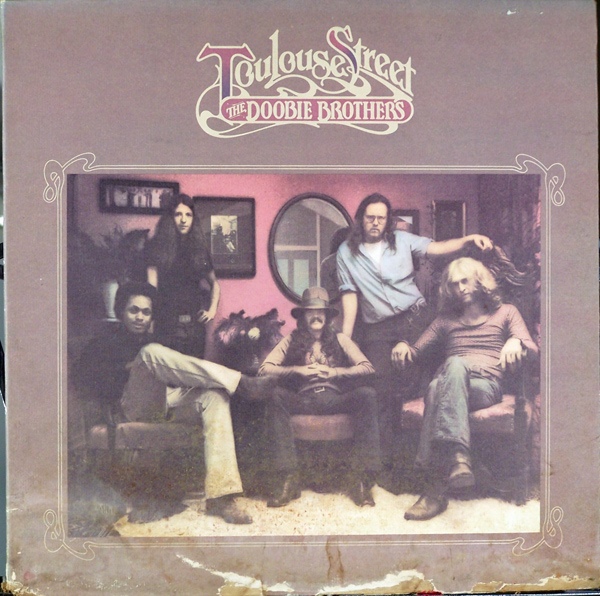
The Captain And Me.
Following the success of Toulouse Street, The Doobie Brothers headed out on tour. They were about to settle into the routine where they record an album, promote the album and then tour it. So, when they weren’t touring Toulouse Street, the Warner Brothers Studios, North Hollywood was a second home for The Doobie Brothers.
Time was of the essence. The pressure was on The Doobie Brothers to record their third album quickly. Having just released a million selling album, Warner Bros. wanted to strike while the iron was hot. So when The Doobie Brothers arrived a the Warner Brothers Studios, North Hollywood they began looking to the past for inspiration.
The Doobie Brothers were just the latest band to look to the blues for inspiration. That’s how one of the six tracks that Tom Johnston wrote came about. He started improvising, and then producer Ted Templeman suggested that Tom Johnston make the lyrics about a train. Gradually, Long Train Runnin’ took shape. That was the first future Doobie Brothers’ classic Tom Johnson penned for The Captain And Me. The other was China Grove. Not to be outdone, Patrick Simmons contributed three songs or The Captain And Me.
They were Clear as the Driven Snow, South City Midnight Lady, and Evil Woman. Without You was credited to The Doobie Brothers. The other track on The Captain And Me was Busted Down Around O’Connelly Corner, a James Earl Luft composition. These eleven tracks were recorded at Warner Brothers Studios, North Hollywood with a few session players augmenting The Doobie Brothers.
This time around, there was no horn section. Instead, Jeff Baxter played pedal steel and steel guitar, while Bill Payne played keyboards,organ and piano. A first was the use of synths strings, which were arranged by Nick DeCaro. Producer Ted Templeman added percussion, on what would be The Doobie Brothers’ third album in three years, The Captain And Me. It was due for release on March 2nd 1973.
Just before the release of The Captain And Me, the reviews of the album were published. Most of the reviews were favourable, and were impressed by what was essentially classic rock with a bluesy twist. However, not everyone was won over by The Captain And Me. One of the exceptions was Rolling Stone magazine. However, most critics realised that The Doobie Brothers were maturing into one of the biggest names in music.
When The Doobie Brothers was released two years earlier, some critics had forecast that it would take The Doobie Brothers two to three albums to hone and polish their sound. This proved to be the case. Tom Johnson and Patrick Simmons were maturing into talented songwriters. Meanwhile, The Doobie Brothers were a tight, talented band who wrote music that appealed to a wide range of record buyers.
Over two million copies of The Captain And Me were eventually sold. The album reached number seven in the US Billboard 200, and was certified double-platinum. Long Train Runnin’ was the lead single from The Captain And Me. It reached number nine in the US Billboard 100, and became The Doobie Brothers’ biggest single. China Grove then reached number fifteen in the US Billboard 100. For The Doobie Brothers, The Captain And Me had been the most successful album of their career. Now it was a case of doing it all over again.
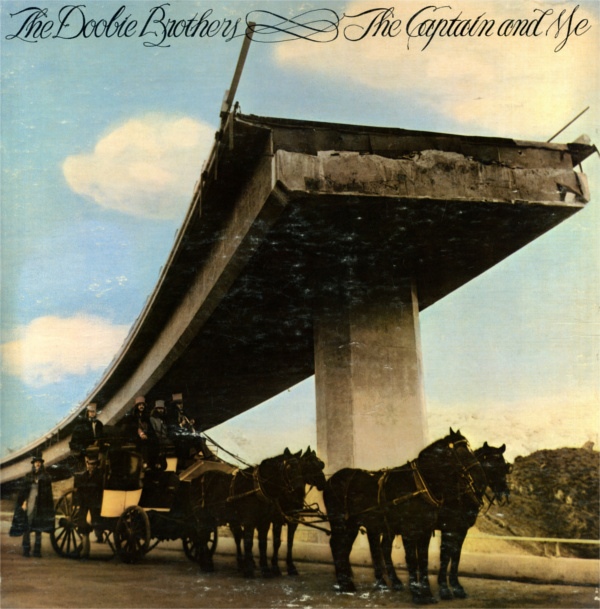
What Were Once Vices Are Now Habits.
There was no rest for The Doobie Brothers. Having released The Captain And Me, they embarked upon another tour. Then when they weren’t on tour, they were writing and recording their fourth album, What Were Once Vices Are Now Habits.
Given their gruelling schedule, The Doobie Brothers hadn’t the time they would have liked to hone songs. Instead, some of the songs were written or completed in the studio. Principal songwriter Tom Johnston penned six tracks, and cowrote Road Angel with John Hartman, Michael Hossack and Tiran Porter. He also contributed Flying Cloud. Patrick Simmons wrote Black Water, You Just Can’t Stop It, Tell Me What You Want (And I’ll Give You What You Need) and Daughters Of The Sea. These twelve tracks were recorded at three studios.
Recording took place not just at Warner Bros. Studios, North Hollywood, but at Wally Helder Studios, San Francisco and Burbank Studios, in Burbank. Augmenting The Doobie Brothers were The Mempis Horns and backing vocals. Familiar faces included Jeff Baxter on pedal steel and steel guitar, while Bill Payne played keyboards, organ and piano. As usual, Ted Templeman added percussion and more importantly produced What Were Once Vices Are Now Habits. It was scheduled for release on 1st February 1974.
This meant that The Doobie Brothers were about to release two albums in eleven months. When critics heard What Were Once Vices Are Now Habits, reviews were mixed. Classic rock, bluegrass, country, soft rock and A.O.R. shawn through on What Were Once Vices Are Now Habits. There was a but though.
Gone was the overwhelming critical acclaim that accompanied their last two albums. Although some reviews were positive, some critics felt What Were Once Vices Are Now Habits lacked the quality of Toulhouse Street and The Captain And Me. Rolling Stone magazine and Robert Christgau were among the fiercest critics. This time, though, they were alone. A few critics wondered aloud of The Doobie Brothers were releasing too many albums in too short a space of time? Only time, and album sales would tell.
When What Were Once Vices Are Now Habits, was released, the AOR boom was about to begin. Especially amongst the generation who had just graduated university and had entered the workplace for the first time. With their disposable income, they bought albums by groups like The Doobie Brothers. As a result, What Were Once Vices Are Now Habits reached number four in the US Billboard 200, and was certified double-platinum. Across the Atlantic, What Were Once Vices Are Now Habits reached nineteen in Britain. This resulted in a silver disc for The Doobie Brothers. However, this wasn’t the end of the commercial success.
Another Park, Another Sunday reached number thirty-two in the US Billboard 100 in 1974. Eyes of Silver stalled at number fifty-two in the US Billboard 100. If The Doobie Brothers or executives at Warner Bros. were worried, they needn’t have been. Black Water, with its bluegrass influence gave The Doobie their first number one on the US Billboard 100. Despite the disappointing reviews, 1974 had been the most successful year of their four album career. All they had to do, was do it again.

Stampede.
Just seven months after the release of What Were Once Vices Are Now Habits, The Doobie Brothers returned to the studio on 9th September 1974. When they arrived, they had a new recruit, Jeff Baxter. He had played played pedal steel and steel guitar on the last couple of Doobie Brothers’ albums. Now he was a permanent fixture. Five Doobie Brothers become six.
Right through to October the 6th 1974, it seemed that The Doobie Brothers were on a tour of some of America’s top recording studios. Warner Bros. Studios, North Hollywood, Wally Helder Studios, San Francisco and Burbank Studios, in Burbank were all used. So was The Record Plant in Sausalito, California and Creative Workshop in Nashville. These five studios were where The Doobie Brothers released the most eclectic album of their career so far, Stampede.
This became apparent when The Doobie Brothers covered Holland, Dozier, Holland’s Take Me in Your Arms (Rock Me a Little While). Their other cover was the instrumental Précis. The rest of Stampede came courtesy of The Doobie Brothers’ two main songwriters. Tom Johnson only penned four tracks for Stampede, and cowrote Sweet Maxime with Patrick Simmons. He wrote four tracks, and was beginning to rival Tom Johnson as The Doobie Brothers’ principal songwriters. This was just as well.
Things were about to change for The Doobie Brothers. Onlookers who watched the recording of Stampede weren’t surprised. The Doobie Brothers took excursions via country rock, folk and sadly, funk. Guest artists included guitar virtuosos Ry Cooder, singer Maria Muldaur, pianist and marimba player Victor Feldman, percussionist Bobbye Hall and backing vocalists Sherlie Matthews and Venetta Fields. Horns and strings were over-dubbed onto what was an ambitious album from The Doobie Brothers.
Once The Doobie Brothers had finished recording Stampede with producer Ted Templeman, the release date was confirmed as April 25th 1975. However, there was a problem though.
As 1974 drew to a close, Tom Johnson’s health was suffering. Years spent on the road, carousing and enjoying the rock ’n’ roll lifestyle had taken its toll. He was absent when The Doobie Brothers played on Dick Clark’s New Year’s Rockin’ Eve. The other members of The Doobie Brothers, and executives at Warner Bros. were worried. Tom Johnson played a huge role in the rise and rise of The Doobie Brothers.
By the spring of 1975, things had taken a turn for the worst. Tom Johnston had been hospitalised with a bleeding ulcer. This left a huge void. Jeff Baxter however, had a solution.
Jeff Baxter had first met Michael McDonald when the pair were playing with Steely Dan. Michael McDonald was a keyboardist and vocalist. His whose style is best described as ‘blue-eyed soul’. This was who Jeff Baxter suggested should replace Tom Johnston on the Stampede promotional tour.
Eventually, it was agreed that Michael McDonald join The Doobie Brothers, and Tom Johnston’s vocal and guitar duties be shared out. Patrick Simmons, Michael McDonald, Tiran Porter andKeith Knudsen would share vocals. Jeff Baxter and Patrick Simmons would play Tom Johnston’s guitar parts. It wasn’t ideal, but it was the only alternative to postponing the tour. That wasn’t going to happen. Warner Bros. had Stampede scheduled for release on April 25th 1975.
When critics heard Stampede, they were won over by what was the most eclectic album of The Doobie Brothers’ five album career. Critically acclaimed reviews preceded the release of Stampede.
On Stampede’s release, it reached number four on the US Billboard 200. This was The Doobie Brothers’ highest chart placing. Despite this, Stampede was only certified gold. In Britain, Stampede reached fourteen and was certified silver. Stampede hadn’t proved as commercially successful in America as The Doobie Brothers’ last two albums. Maybe the singles could save the day?
Take Me in Your Arms (Rock Me a Little While), which featured Tom Johnson reinventing Holland, Dozier, Holland’s reached number eleven in the US Billboard 100. Sweet Maxine reached just number forty in the US Billboard 100. That was disappointing. So was I Cheat the Hangman stalling at number sixty in the US Billboard 100. Although Stampede had been certified gold, 1975 was proving a disappointing and worrying year for The Doobie Brothers.
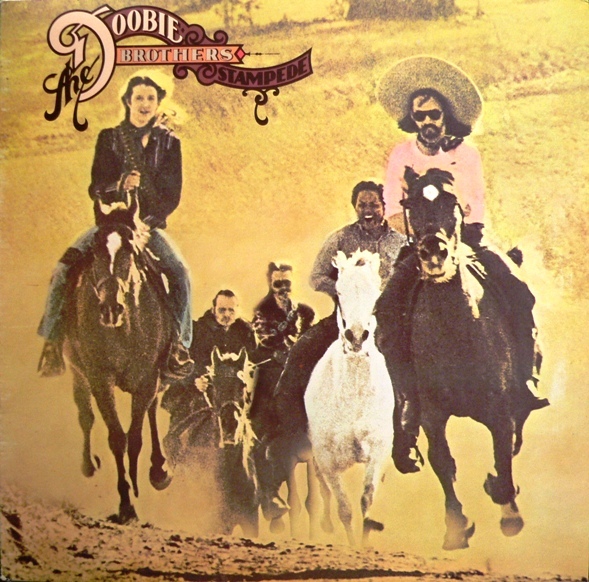
Takin’ It to the Streets.
After the release of Stampede, The Doobie Brothers’ thoughts turned to their sixth album. Tom Johnston was still unwell, suffering from stomach ulcers. Things had got so bad, that shows were cancelled, and Tom Johnston’s involvement was reduced. At one point, the rest of The Doobie Brothers considered calling time on the band. They were only contracted to Warner Bros. until 1976. Michael McDonald, Tom Johnston’s temporary replacement, was merely a stopgap.
Michael McDonald was between bands when The Doobie Brothers came calling. He was living in a garage apartment. The vocalist wasn’t really the accomplished keyboardist The Doobie Brothers wanted. They wanted someone that could seamlessly switch between Hammond organ and various other keyboards. That didn’t describe Michael McDonald. However, Michael McDonald had one thing going for him, he was a singer.
The Doobie Brothers met Michael McDonald at Le Pavillon Hotel in New Orleans. They spoke with him, and then took him to a warehouse to rehearse for two days. To all intents and purposes, he was auditioning for The Doobie Brothers’ sixth album Takin’ It to the Streets.
Eventually, The Doobie Brothers decided to bring Michael McDonald onboard for the recording of Takin’ It to the Streets. This worried Warner Bros. After all, Michael McDonald was an unknown singer, who was about to become the lead singer of one of the biggest selling American bands. Now there were seven.
With The Doobie Brothers’ number swelling to seven, and their principal songwriter sidelined, it was all hands on deck. Tom Johnston only wrote Turn It Loose, which he played the guitar on. Patrick Simmons wrote 8th Avenue Shuffle and cowrote two tracks, including Wheels of Fortune, which Tom Johnston added the lead vocal to. However, Michael McDonald contributed Takin’ It To The Streets, Losin’ End, It Keeps You Runnin’ and cowrote Carry Me Away. Quickly, the unknown singer was making his presence felt, as recording began at Warner Brothers Studios, in North Hollywood.
As the recording began, producer Ted Templeman was faced with recording an album without the most talented member of The Doobie Brothers. While Tom Johnston featured on two tracks, he was a huge loss. Michael McDonald had a hard act to follow. He tried his best, adding vocals on seven songs. Tiran Porter featured on For Someone Special. Vocalist Maria Muldaur featured on Rio. Just like previous albums, The Memphis Horns add their inimitable sound. However, Takin’ It To The Streets was a very different The Doobie Brothers album.
Critics realised this straight away. Reviews of Takin’ It To The Streets varied. Some were mixed, a few favourable and some positive. However, one thing became clear, Michael McDonald was a very different type of vocalist. He interpreted the songs in a different way. His blue-eyed soul was very different to Tom Johnston, who was key to the success of The Doobie Brothers. His loss was felt on Takin’ It To The Streets, an album of classic rock, blue-eyed soul and A.O.R.
Despite the loss of Tom Johnston, when Takin’ It To The Streets was released in March 1976, it reached number eight in the US Billboard 200. This resulted in a platinum disc for The Doobie Brothers. Takin’ It To The Streets reached just forty-two in Britain, but was certified silver. However, only line of singles reached the upper reaches of the US Billboard 100.
Takin’ It To The Streets reached number thirteen in the US Billboard 100. Then Wheels of Fortune stalled at number eighty-seven. It Keeps You Runnin’ reached just number thirty-seven. However, despite this, 1976, which was the last year of The Doobie Brothers; Warner Bros.’ contract had been a successful one. However, what did the future hold for them?
The Best Of The Doobies.
Warner Bros. must have wondered this? So later in 1979, Warner Bros. decided to release a compilation of The Doobie Brothers hit singles. The Best Of The Doobie Brothers covered the period between their sophomore album Toulouse Street through their sixth album Takin’ It to the Streets. A total of eleven songs were chosen, which covered the Tom Johnston and Michael McDonald years. Among the songs chosen, were China Grove, Long Train Runnin’, Listen To The Music, South City Midnight Lady and Take Me In Your Arms. These eleven songs became The Best Of The Doobie Brothers.
Critical acclaim accompanied the release of The Best Of The Doobie Brothers. It was released on October 29th 1976 and reached number five in the US Billboard 200 and number three in Canada.This resulted in The Best Of The Doobie Brothers was certified double platinum in Canada. Meanwhile, in Britain The Best Of The Doobie Brothers was certified silver. However, in America The Best Of The Doobie Brothers sold ten million copies and was certified diamond. By then, The Doobie Brothers had resigned to Warner Bros.
Livin’ On The Fault Line.
Having resigned to Warner Bros., The Doobie Brothers began working on their seventh album, Livin’ On The Fault Line. Tom Johnston was newly restored to The Doobie Brothers’ lineup…for the time being.
Tom Johnston had written five songs for Livin’ On The Fault Line. He was restored to his rightful role as The Doobie Brothers’ principal songwriter. The Doobie Brothers had recorded these five tracks, which should’ve become half of their seventh album, Livin’ On The Fault Line. However, all wasn’t well.
During the Livin’ On The Fault Line sessions, Tom Johnston left The Doobie Brothers. His songs were removed from the album. However, his guitar lines and some vocals can be heard. Without Tom Johnston’s songs, The Doobie Brothers were almost starting again.
Eventually, when Livin’ On The Fault Line was ready for release, one name loomed large, Michael McDonald. He wrote two songs and cowrote another two. Patrick Simmons only cowrote three songs, and cowrote Echoes of Love which Willie Mitchell and Earl Randle cowrote for Al Green. The song was never quite finished though, until Patrick Simmons intervened. Along with Holland, Dozier, Holland’s Little Darling (I Need You) and Tiran Porter’s Need A Lady, these ten tracks became Livin’ On The Fault Line.
Again, it was recorded in various studios, including Sunset Sound Recorders and Western Recorders in Hollywood. Other sessions took place in Warner Bros. Recording Studios, North Hollywood. Overseeing the sessions, was producer Ted Templeman. He ensured that Livin’ On The Fault Line was ready for release on August 19th 1977.
Livin’ On The Fault Line wasn’t as well received as many Doobie Brothers’ albums. Reviews were mixed, varying between mixed to favourable and positive. Some critics however, weren’t won over by Livin’ On The Fault Line’s jazzy hue. What would record buyers think?
When Livin’ On The Fault Line was released, it reached number ten on the US Billboard 200. This was enough for the album to be certified gold. That was as good as it got.
The lead single, Little Darlin’ I Need You reached just forty-eight in the US Billboard 100. Then Echoes of Love stalled at a lowly sixty-six in the US Billboard 100. Some critics felt Tom Johnson, who cofounded The Doobie Brothers, was a big loss.

Minute By Minute.
This forecast by some critics would prove ironic. On December 1st 1978, The Doobie Brothers would release the most successful album of their career, Minute By Minute.
For the first album of the post Tom Johnson era, Michael McDonald played a big part in writing Minute By Minute. He penned Here To Love You, and penned What A Fool Believes with Kenny Loggins. He wasn’t finished. Michael McDonald and Lester Abrams cowrote Minute By Minute. The pair also cowrote Open Your Eyes with Patrick Henderson. How Do the Fools Survive? was a Michael McDonald composition with Carole Bayer Sager. Then Michael McDonlad cowrote Dependin’ On You with Patrick Simmons. However, he wasn’t being sidelined.
Patrick Simmons wrote Steamer Lane and You Never Change. He also cowrote Sweet Feelin’ with producer Ted Templeman. These songs became part of Minute By Minute, which was recorded at Warner Bros. Recording Studios, North Hollywood.
For the recording of Minute By Minute, The Doobie Brothers were joined by season players and backing vocalists. This includes backing vocalist Nicolette Larson. Michael Jackson also claimed to have added backing vocals on What a Fool Believes, Here to Love You and Minute by Minute. However, he wasn’t credited on the album when it was released on December 1st 1978.
Before the release of Minute By Minute, the reviews were mixed. Critics were divided by the mixture of A.O.R., blue-eyed soul and soft rock. However, record buyers loved Minute By Minute.
When Minute By Minute was released, it reached number one on the US Billboard 200 charts. Three million copies of Minute By Minute were sold, and the album was certified platinum three times over. Across the border, Minute By Minute was certified platinum in Canada. This was just the start of the success.
The lead single from Minute By Minute, What A Fool Believes reached number one on the US Billboard 100 charts in 1980. Minute By Minute reached number fourteen on the US Billboard 100 charts. Then Depending On You reached number twenty-five on the US Billboard 100 charts. That hardly mattered. One of the most prestigious awards in music was tantalisingly close…The Grammy Awards.
When the Grammy Awards’ nominations were released, The Doobie Brothers and Minute by Minute were were nominated four times. Michael McDonald and Kenning Loggins had penned What A Fool Believes. This won them a Grammy Award for the Record of the Year. Minute By Minute then won a Grammy Award for Album Of The Year. Both Minute By Minute and What A Fool Believes were nominated for the Song of the Year. Ultimately, What A Fool Believes won a Grammy Award for Song of the Year. That took The Doobie Brothers toll of Grammy Awards to three. 1980 had been the most successful year of The Doobie Brothers’ ten year career. However, there was a twist in the tale.
One Step Closer,
After the success of Minute By Minute, The Doobie Brothers literally fell apart. The near dissolution of The Doobie Brothers was spun by P.R. men as the constant years of touring and recording catching up on the band. However, another explanation was the addition of Michael McDonald.
Since Michael McDonald had been rescued from the penury of his garage flat, the band had changed, and not necessary for the better. One of founder members, Tim Johnston had left The Doobie Brothers. Next to leave was guitarist Jeff Baxter. He clashed with Michael McDonald, who didn’t approve of his avant garde guitar parts. This Michael McDonald felt didn’t suit The Doobie Brothers. It seemed the one time session player was now dictating The Doobie Brothers’ musical direction. Soon, other members of The Doobie Brothers decided to leave.
Drummer John Hartman, another founding member of The Doobie Brothers left the band. So did longtime guitarist Jeff Baxter and percussionist Bobby LaKind. However, Michael McDonald remained.
Patrick Simmons watched as another of the second of the founding members of The Doobie Brothers left. It seemed ten years playing together counted for little. This meant Patrick Simmons and Tiran Porter were the last original member of The Doobie Brothers left. It was a sad day.
Despite this, The Doobie Brothers continued. They were scheduled to embark on a lucrative tour. So the remaining members of The Doobie Brothers headed out on tour.
This included Patrick Simmons, Tiran Porter and Michael McDonald. They were joined by Keith Knudsen. Augmenting them quwere drummer Chet McCracken, guitarist and violinist John Mc Fee and one-time Moby Grape saxophonist and flautist Cornelius Bumpus. They headed out on the lucrative tour, then in 1980, began recording One Step Closer.
When The Doobie Brothers regrouped, to record One Step Closer, producer Ted Templeman was greeted by a very different group to the one that recorded a triple-platinum album that won a trio of Grammy Awards. The Doobie Brothers were a pale shadow of its former self. It wasn’t going to be easy to record an album as successful as Minute By Minute.
For One Step Closer, Michael McDonald wrote Keep This Train A-Rollin’ and cowrote another four tracks. This included “No Stoppin’ Us Now, which Chris Thompson and Patrick Simmons cowrote. Patrick Simmons also wrote Just in Time. Other members of The Doobie Brothers contributed tracks. Cornelius Bumpus penned Thank You Love. Chester McCracken cowrote with John McFee. He cowrote One Step Closer with Keith Knudson and Carlene Carter. These ten tracks would become The Doobie Brothers ninth studio album, One Step Closer.
Again, various studios were used from L.A. to New York and Detroit. Sessions took place at Sunset Sound Recorders in Hollywood. Nearby, Warner Brothers Studio in North Hollywood was a favourite place for The Doobie Brothers. Other sessions were recorded at United Sound Recorders in Detroit, and A & R Recorders in New York. At the four studios, ten tracks took shape. They were recorded by The Doobie Brothers, a horn section and backing vocalists, including Nicolette Larson. Once the ironically titled One Step Closer was finished, so was the first chapter in The Doobie Brothers’ career.
Before that, One Step Closer was reviewed by critics. They weren’t impressed with what was the worst album of The Doobie Brothers’ nine album career. Reviews were far from positive. One Step Closer didn’t sound a cohesive album. That wasn’t surprising as The Doobie Brothers were now augmented by session musicians. Good as they were, they weren’t as invested in the project. For them, it was another project. However, despite the disappointing reviews, One Step Closer proved a popular album.
On its release on September 17th 1980, One Step Closer surprisingly reached number three on the US Billboard 200, and number thirty-one on the US R&B charts. This resulted in another platinum album for The Doobie Brothers. However, maybe a lot of record buyers bought One Step Closer looking for another album like Minute By Minute. They would be disappointed. There were no singles like What A Fool Believes.
The closest thing was Real Love, which reached number five in the US Billboard 100. One Step Closer then reached twenty-four in the US Billboard 100. Keep This Train A-Rollin’ proved an ironic title, when it reached a lowly sixty-two in the US Billboard 100. The end was nigh for The Doobie Brothers.
After the release of One Step Closer, The Doobie Brothers continued to tour during the rest of 1980 and 1981. However, gradually, the band fell apart.
Towards the end of 1981, Patrick Simmons left the band. This meant that there were no original members of The Doobie Brothers left in the lineup. Calling the band The Doobie Brothers would’ve been farcical. By then, Michael McDonald had one eye on a solo career. So the remaining ‘members’ of The Doobie Brothers called tine on the once proud band. In the end it was a mercy killing. Maybe it should’ve happened much sooner?
Back in 1975, when Tom Johnston was having medical problems, maybe that was the time to call time on The Doobie Brothers? However, the band was at the peak of their powers, and were signed to Warner Bros. for one more year. They were caught between a rock and hard place. If they had called time on The Doobie Brothers in 1975, the band’s identity would’ve remained intact. Instead, The Doobie Brothers with Michael McDonald became a very different type of band, and one that even today, divides the opinion of critics. They were penning The Doobie Brothers‘ epitaphs. Meanwhile, Warner Bros. were preparing to release the Best Of The Doobie Brothers Volume II.
Best Of The Doobie Brothers Volume II.
For the Best Of The Doobie Brothers Volume II, ten tracks were chosen. They covered the period between Livin’ On The Fault Line and One Step Closer were chosen. Among the singles chosen, were Little Darling I Need You, You Belong To Me, What A Fool Believes, Here to Love You and Minute By Minute. These ten tracks became the Best Of The Doobie Brothers Volume II, and were released in November 1981.
The second compilation of The Doobie Brothers didn’t sell ten million coupes. However, when the Best Of The Doobie Brothers Volume II was released in November 1981, it reached thirty-nine in the US R&B charts. This was enough for the Best Of The Doobie Brothers Volume II to be certified. Having released a second successful Best Of album, there was still something missing from The Doobie Brothers’ back-catalogue, their first live album Farewell Tour.
Farewell Tour.
When the seventeen track Farewell Tour was released in June 1983, it was the case for the prosecution. Farewell Tour showed what The Doobie Brothers had become. They were a blue-eyed soul band, which was a long way from the guitar driven boogie of the Tom Johnston years. Fittingly, Tom Johnston has the final say on Farewell Tour.
He closes Farewell Tour with Long Train Runnin’ and China Grove. Tom Johnston also features on Slippery St. Paul, from The Doobie Brothers. It’s a tantalising taste of The Doobie Brothers before their rough edges were smoothed away. It was a reminder of what The Doobie Brothers had once been.
On the release of Farewell Tour, it reached a lowly seventy-nine on the US Billboard 200. The single You Belong To Me reached just seventy-nine on the US Billboard 100. It looked like The Doobie Brothers’ time was up.
They had had a good run. Between 1971s The Doobie Brothers and 1983s Farewell Tour, the group had sold 21.5 million albums in America alone. This was the most successful period of The Doobie Brothers’ career.
Since then, The Doobie Brothers have reformed and hit the comeback trail several times, releasing five albums between 1989 and 2014. However, commercial success only visited them once more. That was their tenth studio album Cycles, reached seventeen in the US Billboard 200, and was certified gold. This was as good as it got for The Doobie Brothers.
1991s Brotherhood failed to match the commercial success of Cycles, reaching a lowly eighty-two on US Billboard 200. Sibling Rivalry released in 2000, failed to chart. Ten years later, The Doobie Brothers released World Gone Crazy, which reached thirty-nine in the US Billboard 200. Then Southbound, which was released in 2014, saw The Doobie Brothers reach eighteen in the US Billboard 200. However, by then, no longer did a group need to sell 500,000 copies to reach the top twenty. In a way, it was a Pyrrhic victory.
By 2014, the best and most successful years of The Doobie Brothers were long behind them. By then, the best and and most successful years of The Doobie Brothers career was a generation ago, when they were signed to Warner Bros. The twelve years The Doobie Brothers spent at Warner Bros. was the most successful of their career. That period of The Doobie Brothers’ career will mean different things to different people. Some remember and prefer the guitar driven boogie of the Tom Johnston years; while other enjoyed the blue-eyed soul of the Michael McDonald years. These two different sides of of The Doobie Brothers made them one of the biggest selling bands between 1971-1983.
During that period, The Doobie Brothers sold 21.5 million albums in America alone, They received three gold discs, three platinum discs; had two albums certified double platinum; one certified triple-platinum and one certified diamond. Glittering describes The Doobie Brothers’ career, especially the Warner. Bros’ years.
The Doobie Borther’ Warner Bros.Years’ 1970-1983.

ZAKARY THAKS-KINGS OF TEXAS’ GARAGE ROCK.
Zakary Thaks-Kings Of Texas’ Garage Rock.
During the sixties, garage bands sprung up all over Texas, and some recorded a handful of singles, before disappearing. Others never got that far. Many recorded just the one single, and played a handful of gigs, before calling it a day. Nowadays, they’re long forgotten. They however, played just a walk-on part in the history of Texan garage rock. However, fifty years later, one name looms large in the history of Texan garage rock, Zakary Thaks. They’re now regarded as the Kings of Texan garage rock. Their story began in the early sixties, in Corpus Christi, Texas.
That’s where, one summer, a group of school friends decided to form a band. This wasn’t unusual. Groups sprung up on a regular basis in the port of Corpus Christi. Nobody took any notice when a new band was formed. After all, groups came and went. The Riptides were just the latest rock ’n’ roll group to be formed in Corpus Christi.
It was at the home of guitarist Pete Stinson, that The Riptides were formed. The initial lineup featured vocalist Chris Gerniottis, drummer Rex Gregory, bassist Wayne Harrison and guitarists Pete Stinson, Shelby Jordan and Glenn Jauer. This was the lineup of The Riptides that played at local parties.
Not long after The Riptides formed, they changed their name. There was, a well known surf rock band with the same name. So, The Riptides became The Marauders, who were soon, establishing a reputation as one of Corpus Christi’s best up-and-coming band.
When The Marauders played live, their music was influenced by the recent British Invasion. Initially, it was just The Beatles that influenced The Marauders. Soon, they discovered The Kinks and The Yarbirds. Their driving rock sound appealed to The Marauders. It played a huge part in shaping The Marauders’ sound. So did blues, rock and surf rock. That’s not surprising. Corpus Christi was a popular surf resort, and The Marauders were on their way to becoming one of its most popular bands. Especially with a new guitarist, John Lopez, onboard.
John Lopez had no formal guitar lessons. A self-taught guitarist, his playing style is remembered as fiery. It was a case of John taming the tiger that was his guitar. With the flamboyant guitarist onboard, The Marauders dispensed with instrumentals and instead, relied more upon Chris Gerniottis’ vocals.
This proved a minor masterstroke. With each performance Chris’ confidence grew. He was inspired by the the Rolling Stones’ Mick Jagger and Eric Burdon of The Animals. However, it was Keith Yelf of The Yarbirds that Chris modelled himself on. Things it seemed, were looking up for The Marauders. Then Rex Gregory had to leave the band.
Rex hadn’t been doing well at school. So, his father took him out of school, and sent him to Houston. This left The Marauders without a drummer. His replacement was David Fore. He was a better fit. While Rex was essentially a jazz drummer, David was more suited to garage rock. David was what The Marauders had been looking for. Maybe he was the final piece in the jigsaw?
That looked like being the case. Then a few months later, Rex returned. This presented The Marauders with a dilemma. David was a better drummer. They couldn’t get rid of him. So, they offered Rex the chance to become The Marauders’ bassist. Rex agreed. However, nobody thought to tell Wayne Harrison. The first he knew, was when he arrived at their concert at The Carousel. Wayne wasn’t pleased, and decided to leave The Marauders, who were about to change their name again.
Having been first The Riptides and then The Marauders, at last, the group were going to settle on a name. This came about when Chris Gerniottis was reading a teen magazine. In the letters page, he came across the name Zakary Thaks. It sounded much better than The Marauders. There was an air mystery and intrigue to Zakary Thaks. This change of name coincided with a change in fortune for Zakary Thaks.
With their new name, things started to look up for Zakary Thaks. The Carousel, where Rex made his debut on bass, became their new headquarters. Zakary Thaks became ostensibly the house band, playing at dances. Quickly, their popularity grew, with Zakary Thaks appearing on a local television show, Teen Time. It was at Teen Time that Zakary Thaks discovered what was definitely, the final piece of the musical jigsaw.
That was Stan Moore. He was the drummer for a rival group The Last Fyve, when Zakary Thaks first heard him play. Straight away, they realised he was what Zakary Thaks had been looking for. Although David Fore was a good drummer, Stan Moore was better. Chris and the rest of Zakary Thaks knew the importance of a good drummer. The rhythm section was central to the future success of Zakary Thaks. Stan Moore could improve Zakary Thaks’ rhythm section. So, an approach was made to Stan Moore, and he became Zakary Thaks’ new drummer. At last, the final piece in the jigsaw was in place. Now, Zakary Thaks were set to become Kings of Texan garage rock.
With their new drummer in place, Zakary Thaks style continued to evolve. Folk-rock and blue-eyed soul influenced Zakary Thaks. Among the groups influencing Zakary Thaks, were The Byrds and The Young Rascals. With their constantly evolving set list, Zakary Thaks took part in a battle of bands at The Carousel.
Given The Carousel was Zakary Thaks unofficial headquarters, they didn’t want to loose face on their home turf. They didn’t. Instead, Zakary Thaks were approached by Carl Becker, who worked with a small airline. Carl and his brother-in-law Jack Salyers had setup J-Beck Records and wanted tor to manage Zakary Thaks. Part of the deal included Zakary Thaks making their debut recording. An added bonus was that Carl and Jack promoted concerts, and would be able to get Zakary Thaks regular gigs. After consulting their parents, Zakary Thaks agreed, and the next step in the rise of Zakary Thaks began.
Realising that Zakary Thaks were bristling with energy and enthusiasm, Carl and Jack soon got the band regular bookings. Zakary Thaks were well received by the audience. They were obviously a talented band. So, soon, Carl and Jack suggested Zakary Thaks write their debut single.
After some time, Zakary Thaks returned with what would become their debut single, Bad Girl. Fittingly, given Zakary Thaks’ love of the British music, the B-Side was a cover of The Kinks’ I Need You. Bad Girl marked the beginning of Zakary Thaks’ recording career began in mid-1966.
Bad Girl was released on J-Beck Records in mid-1966. Bad Girl, an explosion of teenage angst, that’s influenced by the British Invasion, struck a nerve. It became a local hit in Texas. It hit the top of the charts just at the right time.
By then, Zakary Thaks had just supported The Seeds. The Seeds were in disarray, and were blown away by Zakary Thaks. Despite this, The Seeds’ lead singer, Mike Taylor, would later write Zakary Thaks’ sophomore single Please Me. Before that, Zakary Thaks played at a battle of the bands at the Aqua Festival, in Austin, Texas. By then, Zakary Thaks’ star in the ascendancy. Now was the time to record the followup to Bad Girl.
Carl Becker took Zakary Thaks to Gold Star studios, Houston. That’s where recording of Zakary Thaks’ sophomore single Please took place. With its folk rock sound, Please was a stylistic departure for Zakary Thaks. This change of style didn’t please the members of Zakary Thaks. Mike Taylor, who was now working alongside Carl, convinced Chris this was the way to go. He acquiesced and Please, with Won’t Come Back on the B-Side became Zakary Thaks’ sophomore single.
Please didn’t quite replicate the success of Bad Girl. Inwardly, Zakary Thaks thought they’d released the wrong song. At the same session, they had recorded two rocky tracks, She’s Got You and It’s The End. Both were penned by members of Zakary Thaks. Again, there’s a strong British Invasion influence, as Chris oozing attitude, and accompanied by a moody, rocky backdrop, struts his way though the track. Despite these blistering performances, both tracks were rejected by Carl Becker, who was currently negotiating with Mercury Records.
After the success of Bad Girl locally, Chris decided to lease the single to a major label. Eventually, after some contractual problems, he struck a deal with Mercury. Bad Girl was released by Mercury in October 1966. Due to the nationwide release of Bad Girl, Carl put a followup single on hold. By then, Zakary Thaks had met one of their musical heroes.
The Yarbirds were on what became their last American tour, before Jeff Beck quit the group. On 30th October 1966, The Yarbirds played at Corpus Christi, at the Memorial Coliseum. Somehow, Carl had convinced the promoter to let Zakary Thaks open the bill. The next day, at the airport Zakary Thaks, who were en route to Houston, to a recording session, met Jeck Beck. Having met their hero, Zakary Thaks boarded a flight to Houston.
At Gold Star studios, Houston, Zakary Thaks recorded Passage To India, which was very different to their previous recordings. Its modal, Eastern influenced riffs were almost a homage to The Seeds. Other tracks recorded at the Gold Star sessions, included Won’t Come Back and Face To Face. Once the recording sessions were over, Zakary Thaks returned home.
With three new tracks to show for their trip to Houston, Zakary Thaks hoped one would be their third single. That wasn’t to be. Carl Becker rejected the songs. However, after Face To Face was reworked in late December 1966, and then January 1967. With Carl’s help, Zakary Thaks nailed Face To Face. It would give Zakary Thaks’ another hit single.
Released in February 1967, Zakary Thaks’ long awaited third single, Face To Face, which had Weekday Blues on the flip side, caught the attention of DJs. Across the Gulf Coast, Face To Face received heavy airplay. However, during this period, members of Zakary Thaks’ rhythm section were working overtime.
Following his departure from The Seeds, Mike Taylor was touring as Michael. There was a problem. He was without a band. So, when he needed a rhythm section, who did he call? Zakary Thaks. They accompanied him live, and played on I’d Only Laugh, People Sec IV and Gotta Make My Heart Turn Away. Of this trio of tracks, the Dylan tonged People Sec IV, was released as a single. Meanwhile, Face To Face, Zakary Thaks’ was riding high in the charts.
With another hit single in Face To Face, featuring on television, constantly playing live and working with Mike Taylor, things were looking good for Zakary Thaks during the first half of 1967. To onlookers, this was pretty good going, considering Zakary Thaks were still in their final year at high school. However, Zakary Thaks’ next single marked a change in the group’s fortunes.
By June 1967, Zakary Thaks released their next single. This wasn’t a new song. Won’t Come Back had been recorded at Gold Star Studios, in December 1966. It was paired with a rerecorded version of their debut hit single, Please. However, it failed to match the commercial success of Face To Face. This was a huge disappointment. Still, Zakary Thaks were busy playing live, appeared on television and even had a documentary made about them. Then in the spring 1967, Carl Becker announced he was leaving J-Beck Records.
For Zakary Thaks this was a worrying time. Lofton Kline, formerly of The Poco-Seco Singers took over A&R duties for Zakary Thaks. This resulted in a change of sound. Zakary Thaks’ releases took on a more polished sound. Instruments were layered, and the production style was much more noticeable. This is apparent on Zakary Thaks’ final single for J-Beck Records.
Recording of the Mike Taylor penned, Can You Hear Your Daddy’s Footsteps began in April 1967. Then when Lofton took charge of A&R, he decided that overdubbing should take place. It was well worth the extra effort. The vocal arrangement, where harmonies interact with the lead vocal, is much more complex. Then there’s the blistering guitars, and driving rhythm section. On the B-Side was the reflective, baroque influenced Mirror Of Yesterday. With its heavily orchestrated arrangement, this marked a change in style from Zakary Thaks. This wasn’t the only change about to happen. Little did one of their number realise, that Can You Hear Your Daddy’s Footsteps was Zakary Thaks’ swansong.
Eventually, Can You Hear Your Daddy’s footsteps was released in November 1967. It failed to replicate the commercial succes of earlier singles. Zakary Thaks’ recording career seemed to have stalled. Maybe, the loss of Chris Becker had affected Zakary Thaks more than they realised? Lofton, although well intentioned, maybe, seemed to be taking Zakary Thaks in the wrong direction? Then there was a problem with Chris Gerniottis.
For some time, there had been tension within Zakary Thaks. Eventually, it came to a head in January 1967. John Lopez, Stan Moore and Pete Stinson decided the time had come to fire Chris Gerniottis. Chris seemingly a believer in the maxim get your retaliation in first, joined Zakary Thaks’ fiercest rivals Liberty Bell. Zakary Thaks. Replacing Chris in Zakary Thaks was Maxine Sands. However, her time as Zakary Thaks lead singer was short-lived. Pete Stinson joined the U.S. Army and Zakary Thaks split-up. Can You Hear Your Daddy’s Footsteps proved to be Zachary Thaks’ final single for J-Beck Records.
There was subsequent talk of the remaining members of Zakary Thaks forming a new band. However, John Lopez joined The Farm. He played with The Farm until Zakary Thaks reformed in May 1968 as a trio. This being the age of the power trio, drummer Stan Moore, bassist Rex Gregory and guitarist John Lopez became the latest incarnation of Zakary Thaks.
Not long after reforming, Zakary Thaks released a new single, Green Crystal Ties, which featured My Door on the B-Side. Both sides were psychedelic rockers, and despite their indisputable quality, failed commercially. For the newly reformed Zakary Thaks, this was a disappointment. Maybe their luck would change when they became a quartet?
Liberty Bell disbanded in January 1969. This left Chris Gerniottis without a group. Differences were put to one side, and Chris Gerniottis rejoined Zakary Thaks. With three becoming four, Zakary Thaks signed to Carl Becker’s new label Cee Bee Records.
In March 1969, Zakary Thaks recorded what would prove to be the final single of their career. Originally, Everybody Wants To Be Somebody was destined to be the single. However, the B-Side Outprint had more of the original Zakary Thaks’ sound. Sadly, that proved to be wishful thinking. Zakary Thaks sunk without trace. The group that had been, Kings of Texan garage rock split up in June 1969. The dream may have been over for Zakary Thaks, but they had written their way into garage rock history.
Thirty-six years after Zakary Thaks split-up, they’re still remembered as Kings of Texan garage rock. That’s despite releasing six singles. Three of these singles, Bad Girl, Face To Face and Won’t You Come Back are remembered as Texan garage rock classics. They’re a tantalising reminder of Zakary Thaks, the Kings of Texan garage rock,
Zakary Thaks-Kings Of Texas’ Garage Rock.


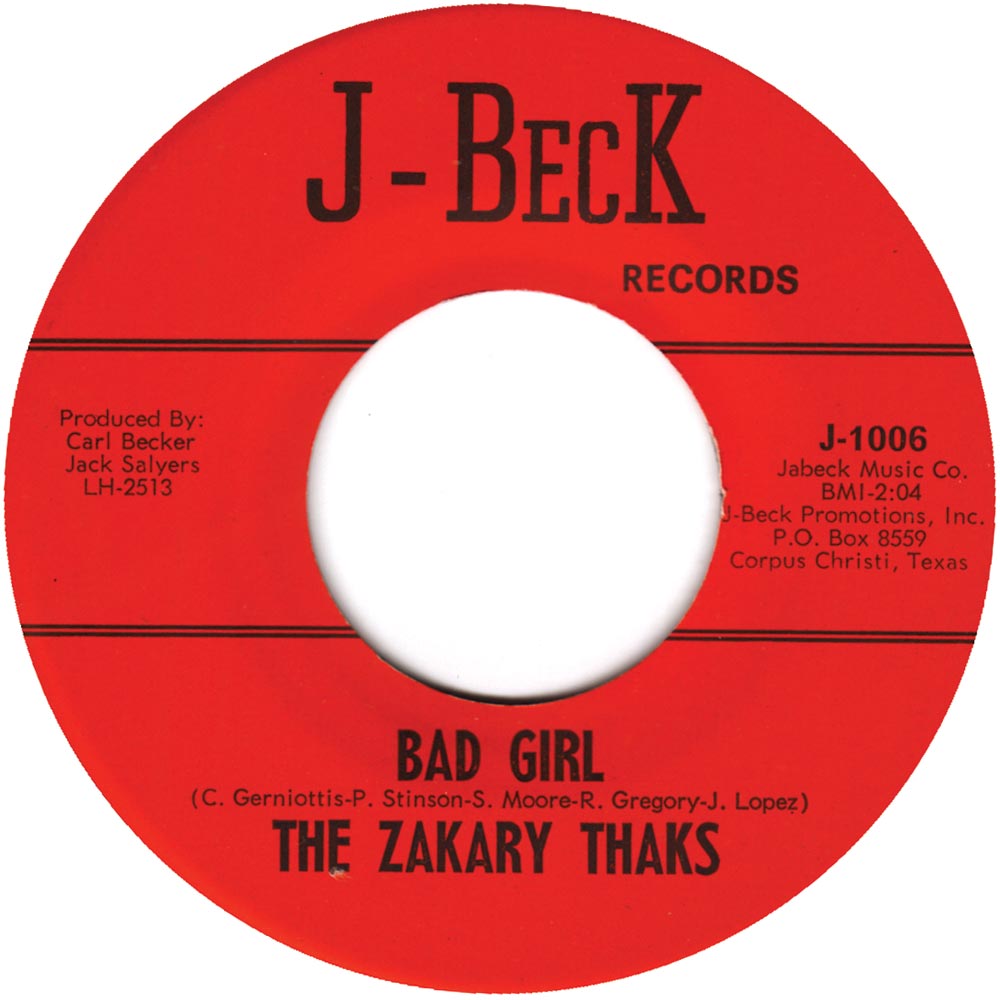


BUDGIE-A CASE OF WHAT MIGHT HAVE BEEN.
Budgie-A Case Of What Might Have Been.
The roots of hard rocking Welsh trio Budgie, can be traced to Cardiff, in 1967. That was where the band were formed. Originally, Budgie were known as Hills Contemporary Grass. However, after playing several gigs in 1968, Burke Shelley, Tony Bourge and Ray Phillips decided to changed the band’s name to Six Ton Budgie. Before long, this was shortened to Budgie. Little did anyone know that one of the most influential British heavy rock bands had just been christened.
The newly christened Budgie would go on to influence a new generation rock bands. They became known as the New Wave of British Heavy Metal. Bands like Judas Priest, Saxon, Iron Maiden, Raven and Def Leppard were among the bands that were inspired by Budgie’s music. This includes the five albums Budgie recorded between 1970 and 1975. These albums had the potential to turn Budgie into one of the biggest British rock bands of the early seventies. They should’ve launched band’s career as the capture Budgie at their hard rocking best. Budgie wouldn’t have looked out of place alongside Led Zeppelin, Black Sabbath and Deep Purple. Their story began in 1968.
Having changed their name to Budgie in 1968, the band began honing their sound by playing live. This was the tried and tested way that bands had honed their sound. There were no short cuts. Instead, it was just hard work and persistence.
Night after night, Budgie like many bands before them, pubs and clubs. Early on, Budgie played locally. Before long, Budgie began to play further afield. Gradually, Budgie began to attract a following. Their hard work and persistence was beginning to pay off. After nearly two years of playing live, decided to Budgie record their first demo.
Bassist and vocalist Burke Shelley, guitarist Tony Bourge and drummer Ray Phillips entered the studio and recorded what became their first demo in 1971. It was used to try and attract interest from record companies.
The first demo didn’t result in record companies rushing to Cardiff to sign Budgie. They were prepared to be patient, and play the long game. Eventually, Budgie’s patience paid off, and they were signed by MCA.
Budgie.
Once they had signed to MCA, the label began looking for the right producer for Budgie. Meanwhile, they were putting the finishing touches to the album they were writing. Eventually, Budgie were paired with Black Sabbath’s producer Roger Bain.
He had an enviable track record. Roger Bain had produced Black Sabbath’s first two albums. When Black Sabbath was released in February 1970, it was certified gold in the UK and platinum in America. Seven months later, Black Sabbath released Paranoid in September 1970. It was certified gold in the UK and four times platinum in America. Black Sabbath’s first two albums had sold five million copies in America along, and the man that produced the albums was about to work with Budgie.
For a band about to record their debut album, this was beyond their wildest dreams. Secretly, the three members of Budgie must have been dreaming that Roger Bain could do the same for Budgie.
They had finished writing the eight tracks that became debut album. Each of the tracks were credited to Burke Shelley, Tony Bourge and Ray Phillips. To record their debut album, Budgie were about to head to one of the prestigious studios, Rockfield Studios, in Monmouth, in Wales.
At Rockfield Studios, Budgie began recording the eight tracks with Roger Bain. Budgie decided to augment their core sound. Most things stayed the same though. Ray Phillips played drums and percussion and Tony Bourge guitar. Bassist and vocalist Burke Shelley played a mellotron on what became Budgie. It was completed during the first half of 1971.
The release of Budgie was scheduled for June 1971. Before that, the critics had their say. Mostly, the reviews of Budgie were positive. Alas, some critics weren’t convinced by Budgie. They were in a minority. Most were won over by heavy, hard rocking, blues rock sound and lightning fast, blistering guitar solos. Especially on Homicidal Suicidal and Nude Disintegrating Parachutist Woman, which were two of the highlights of Budgie, and why most of the reviews forecast that Budgie would be a success.
Upon the release of Budgie in 1971, the album failed to chart in the UK. Neither did the non-album single Crash Course In Brain Surgery. This was a huge disappointment for Budgie, Roger Bain and MCA. Later, like Metallica covered Crash Course In Brain Surgery. Thrush Hermit and Soundgarden would all cover songs from Budgie. However, back in 1971, it was back to the drawing board for Budgie.

Squawk.
After the commercial failure of their eponymous debut album, Budgie returned to the live circuit. They were starting to build a following. Eventually, though, Budgie began work on their sophomore album.
Just like their debut album, the three members of Budgie wrote a total of nine tracks. They would later become Squawk. Just like Budgie, recording took place at Rockfield Studios with producer Roger Bain.
Work began at Rockfield Studios, Budgie during the first half of 1972. Drummer and percussionist Ray Phillips was joined in the rhythm section by bassist and vocalist Burke Shelley. He also played mellotron piano. Completing Budgie’s lineup, was guitarist Tony Bourge guitar. The album was recorded live. Budgie it seemed, were trying to capture the essence of one of their live performances. When the album was completed it became Squawk.
For Squawk’s album cover, MCA commissioned Roger Dean. By 1972, he was already regarded as one of the top album designers. He produced a truly memorable and thought provoking album cover. The first people to see it were the critics.
Just like Budgie, the majority of the reviews of Squawk were positive. There were still a few critics who were yet to be convinced. Mostly, Budgie’s hard rocking sound found favour with critics. Tracks like Rocking Man, The Beatles’ inspired Rolling Home Again, folk-tinged Make Me Happy and anthemic Drugstore Woman were among the highlights of Squawk. It was released in September 1972.
When Squawk was released, the album failed to much of an impression on the charts. This was another disappointment for Budgie. They returned to the live circuit and considered their options.

Never Turn Your Back On A Friend.
By the time Budgie thoughts turned to their third album, they had decided to make some changes. They quickly became apparent as work began on what would become Never Turn Your Back On A Friend.
For Never Turn Your Back On A Friend, Budgie penned six tracks. The other track was a cover version. This was a first. Usually, Budgie wrote their own material. However, Big Joe Williams’ Baby, Please Don’t Go was a blues classic. This was fitting for a group who had started life as a blues rock band.
Although Budgie were originally a blues rock band, their music was beginning to change on Never Turn Your Back On A Friend. Progressive rock was King in 1973, and Budgie moved towards progressive rock on Never Turn Your Back On A Friend. Still, though, Budgie were primarily a hard rocking band. They combined the hard rock and progressive rock on Never Turn Your Back On A Friend.
When recording begn at Rockfield Studios, there was no sign of Roger Bain. Budgie had decided to produce Never Turn Your Back On A Friend themselves. They had learnt from Roger Bain, and were ready to make their production debut on Never Turn Your Back On A Friend. It had a much leaner sound.
There was neither a piano nor mellotron on . Instead, it was just drummer Ray Phillips, bassist and vocalist Burke Shelley and guitarist Tony Bourge. They worked their way through seven tracks. where Budgie switched between blues rock, hard rock, progressive rock and proto-speed metal. These tracks eventually became Never Turn Your Back On A Friend.
Once Never Turn Your Back On A Friend was complete, MCA sent copies of the album to critics. They hailed the album Budgie’s finest yet. One of the highlights was Breadfan, which Metallica later covered. Parents a ten minute epic, is regarded as one the track that launched the speed metal genre. However, Never Turn Your Back On A Friend was the album that had most influence on the new wave of British heavy metal. It would inspire a new generation of bands. Despite doing so, Never Turn Your Back On A Friend wasn’t a huge commercial success.
Far from it. When Never Turn Your Back On A Friend was released in June 1973, the album failed to chart. That was Budgie’s third album that had failed to trouble the charts. For one member of Budgie, that was enough for him to call time on career with the band.
In late 1973, Ray Phillips left Budgie. He was replaced by Pete Boot. His timing was impeccable. Budgie’s fortunes were about to improve.

In For The Kill.
After the departure of Ray Phillips, a new chapter began in Budgie’s career. For the first few weeks, Burke Shelley and Tony Bourge gave the new recruit a crash course in Budgie’s back-catalogue. The new drummer, Pete Boot, had three albums to learn. Budgie were also in the process of working on their fourth album, In For The Kill.
Unlike Ray Phillips, Pete Boot took no part in writing In For The Kill. Instead, Burke Shelley and Tony Bourge wrote six of the seven songs on In For The Kill. The other track was Crash Course In Brain Surgery, which had been released as a single in 1971. It had been penned by the original lineup of Budgie, Ray Phillips, Burke Shelley and Tony Bourge. However, rather than use the original track, Budgie decided to remix the track.
There was a reason for this. This would allow the guitars to play a more prominent role in the track. It was a track used effectively and successfully by Black Sabbath’s Tony Iommi. If had been good enough for Black Sabbath, then it was good enough for Budgie. They began work on remixing Crash Course In Brain Surgery, and recording In For The Kill.
This took place at the familiar surroundings of Rockfield Studios in Monmouth. It was where Budgie’s three previous albums had been recorded. Three was about to become four, when the new lineup pressed play. The new lineup of drummer Pete Book, bassist and vocalist Burke Shelley and guitarist Tony Bourge worked their way though the seven songs. Just like Never Turn Your Back On A Friend, In For The Kill was produced by Budgie. Once the sessions at Rockfield Studios were complete, some further recording took place at Lee Sound, in Birmingham. Only then, was In For The Kill complete.
With In For The Kill complete, MCA scheduled the release of the album for May 1974. They wanted to build in the increasing popularity of Budgie. Their star was in the ascendancy. They had continued to increase their fan-base over the last few years. It had taken time, patience and persistence. Maybe In For The Kill would be a game-changer? That would depend on what the critics said.
Critics on hearing In For The Kill, hailed the album Budgie’s finest hour. However, they had said the same thing about Never Turn Your Back On A Friend. There were plenty of reasons to justify the critics conclusions.
This included In For The Kill, which featured a blistering guitar solo from Tony Bourge. Hot on its heels came the remixed version of Crash Course In Brain Surgery. With the power chords playing a prominent role in the track, it was regarded as one of the album’s highlights. So was the thoughtful Wondering What Everyone Knows, which seemed to have been inspired by The Beatles. Hammer and Tongs found Budgie at their hard rocking best, while Burke Shelley’s vocal adding an element of drama. Closing In For The Kill was the nine minute epic Living On Your Own. In For The Kill was indeed Budgie’s finest hour.
When it was released in May 1974, record buyers agreed. In For The Kill reached twenty-nine in the UK charts. After four albums, and seven years hard work and persistence, Budgie had made a breakthrough.
The sad thing was that the original drummer had Ray Phillips left Budgie just before the band made their breakthrough. His replacement Pete Boot was enjoying the fruits of his labours. He hadn’t spent six years crisscrossing Britain playing in pubs in clubs. However, Ray Phillips would later form his own band Ray Phillips Woman in the mid-seventies. By then, Budgie had lost their second drummer.
In late 1974, Budgie’s ‘new’ drummer Pete Boot left the band. This left Budgie in the lurch. Luckily, Steve Williams filled the void when Budge toured In For The Kill. Steve Williams later became a permanent member, and played on Budgie’s fifth album, Bandolier.

Bandolier.
Despite the success of In For The Kill, it was over a year before Budgie returned with the followup album, Bandolier. They had spent much of 1974 and part of 1975 touring. Budgie’s popularity was continuing to grow and this meant spending more time on the road. However, the time came to return to the recording studio.
By then, Burke Shelley and Tony Bourge had written five of the six songs on Bandolier. They were joined by a cover of Andy Fairweather Low’s Ain’t No Mountain. These six tracks were recorded at what had become Budgie’s studio of choice, Rockfield Studios.
Drummer Steve Williams, bassist and vocalist Burke Shelley and guitarist Tony Bourge began work on Bandolier at Rockfield Studios. Much of the album was recorded there. However, some recording took place at Mayfair Sound, in London. Eventually, Budgie had recorded six songs. They would become their fifth album, Bandolier.
With Bandolier completed, it was delivered to MCA. They scheduled the release of Bandolier for September 1975. This left plenty of time to promote Bandolier. Meanwhile, the critics had their say on the album.
They were won over by Bandolier, which found Budgie at their hard rocking best. Critics pointed out that Budgie were maturing and improving with each album. After five albums, Budgie had the potential to become one of the biggest British rock bands.
This was helped by Budgie’s new drummer Steve Williams quickly settling into his new role. He playing was powerful and punchy as he played with a newfound freedom. His drums helped propelled the arrangements along. Meanwhile, some critics were comparing Burke Shelley to Led Zeppelin frontman Robert Man. The similarity is noticeable on Who Do You Want For Your Love ?/Never Turn Your Back On A Friend and See My Feelings/Rock Climbing. As usual, Tony Bourge’s scorching, blistering, soaring guitar solos were playing a leading role in the sound and success of Bandolier. Especially on tracks like Breaking All The House Rules and I Can’t See My Feelings/Rock Climbing and I Ain’t No Mountain. Everything was coming together for Budgie on Bandolier.
They were still working hard and continued to reassess and reinvent their music. Constantly, they tweaked their sound adding or changing it. Over the past five albums, Budgie had moved from their early blues rock towards hard rock. Later, they incorporated folk, drew inspiration from The Beatles and moved in the direction of progressive rock. However, for much of the time, Budgie were an inventive, hard rocking band that always featured talented musicians. Proof of this was their four previous albums, and their fifth album Bandolier.
When Bandolier was released in September 1975, the album reached thirty-six in the UK. Alas, Bandolier hadn’t quite matched the success of In For The Kill. It had reached twenty-nine in 1974. However, Bandolier was certified gold. This was a first for Budgie.
A gold disc was the perfect way for Budgie to end their time at MCA. After five albums, where Budgie’s sound continued to evolve, the inventive Welsh trio’s popularity blossomed. By the time Bandolier was released in 1975, they had reached new levels of popularity. It was ironic that Budgie were about to leave MCA and sign for A&M Records.
The A&M Years.
Budgie’s hard work and persistence seemed to be beginning to pay off. They were signed by A&M Records, who Budgie hoped would be album to take them them to the next level. Critics agreed. Many critics thought that within a year or two, Budgie would be rubbing shoulders with Black Sabbath and Led Zeppelin.
Having signed to A&M Records, Budgie returned with If I Were Brittania I’d Waive The Rules in April 1976. Reviews of the album were mixed. This didn’t auger well for the release of If I Were Britannia I’d Waive The Rules. It failed to chart. For Budgie, this wasn’t the best way to begin the A&M years.
It was nearly two years before Budgie returned in February 1978, with the band’s seventh album Impeckable. Just like If I Were Britannia I’d Waive The Rules, reviews of the album were mixed. When the album was released, it failed to chart. For Budgie, this was a disaster for more reason than one.
In late 1979, Budgie were dropped by A&M Records. For the first time since 1970, Budgie had no recording contract. Surely, things couldn’t get any worse?
It did. Founder member and guitarist Tony Bourge left Budgie in 1980. He was replaced by John Thomas, who would make his recording debut with Budgie
weren’t ‘t For The Kill reached twenty-nine in the UK and Bandolier thirty-six. That looked like it was the start of the rise and rise of Budgie. Many critics thought that within a year or two, Budgie would be rubbing shoulders with Black Sabbath and Led Zeppelin. Sadly, Budgie never built on the success in 1980.
The Active Records Years.
Kingsley Wards’ Active Records was a relatively new record company. It had only been founded in 1980, but already the label had signed a distribution deal with RCA. Even with this distribution deal in place, it was still something of a coup for Active Records to sign Budgie.
They released their eighth studio album Power Supply in October 1980. This was the first new album from the new lineup of the band. One thing didn’t change, was that the reviews were mixed. Budgie’s last three albums seemed to polarise the opinion of critics and fans. Power Supply became Budgie’s third consecutive album that had failed to chart. It was another disappointment for the hard rocking trio.
Despite the disappointing sales of Power Supply, Budgie returned to the studio and a year later, returned with their ninth album Nightflight. While there were still some dissenting voices amongst critics, mostly the album was well received. Things were looking up for Budgie. Especially when Nightflight charted and reached sixty-eight in the UK. Nightflight was Budgie first album to chart since Bandolier in 1975. Then when Keeping a Rendezvous was released as a single, it reached number seventy-one in the UK. It looked as if Budgie’s fortunes were improving.
The RCA Years.
RCA who distributed Active Records’ releases signed Budgie after Nightflight. This looked like perfect timing as Budgie were still a popular live draw. They had supported Ozzy Osbourne during his Blizzard of Ozz Tour in 1980 and 1981. Budgie a had a huge following in Poland, where they became the first band play behind the Iron Curtain. However, in Britain, Budgie popularity had been on the rise since the New Wave of British Heavy Metal began. This cumulated with Budgie headlining the Reading Festival in the summer 1982. It looked their star was once again in the ascendancy, For a band who were about to release a new album, it was perfect timing.
Budgie released their tenth album Deliver Us From Evil in October 1982. Deliver Us From marked the debut of keyboardist Duncan MacKay as a full member of Budgie. He was an experienced musician who previously, had been a member Steve Harley and Cockney Rebel and 10CC. However, Duncan MacKay didn’t play a part in the writing of Deliver Us From Evil.
It was written by the other three members of Budgie and was their first concept album. Given the political climate, Deliver Us From Evil was particularly relevant. Burke Shelley described the album as one that “attacks the power structures of East and West and the balance of terror…and…refers to all kinds of evil, not just The Bomb and war, but the main theme calls for world peace.” When Deliver Us From Evil was released in October 1982, critics heard a much more commercial sounding album. However, the reviews of Deliver Us From Evil were mixed. It reached sixty-two in the UK and became Budgie’s most successful album since Bandolier in 1976.
Despite the relative success of Deliver Us From Evil, Budgie never released another album for RCA. Their time at RCA was brief, and it would be twenty-four years before Budgie released another album.
Budgie continued to play live until 1988. However, Budgie stopped playing live in 1988 and the members of the band embarked on careers in production. After twenty-years, it looked as if the Budgie story was over.
Twenty-four years later, and Budgie were back. They were about to embark upon a thirty-five date tour of Poland. To coincide with the tour, Budgie released their eleventh album You’re All Living In Cuckooland. Only Burke Shelley and Steve Williams remained from the previous incarnation of Budgie. Despite touring You’re All Living In Cuckooland., it failed to chart. Budgie’s eleventh album was their swan-song.
For Budgie, it was a case of what might have been. Budgie were one of the hardest rocking bands of the early seventies. They had the potential to become one of the biggest names in British rock, and could’ve and should’ve gone on to become one of biggest names in British rock. Sadly, Budgie never reached the heights that their music deserved. It was a case of what might have been?
Maybe things would’ve been different if Budgie had stayed at MCA? That was where Budgie released the best music of their career. Their move to A&M Records coincided with the decline in Budgie’s fortunes. Never again did the band enjoy the same commercial success and critical acclaim. That was despite signing to A&M Records and RCA. However, the spells with both labels proved brief and unsuccessful. As a result, Budgie never built on the success In For The Kill and Bandolier. These two albums were the most successful of Budgie’s eleven album career.
When Budgie released In For The Kill and Bandolier, it looked as if they were destined for greatness, and soon, would be rubbing shoulders with Led Zeppelin, Black Sabbath and Deep Purple. However, while the unholy trinity released million selling albums and toured the world, commercial success started to elude Budgie.
What didn’t help was that Budgie’s lineup changed several times. Ray Phillips was the first to leave. He left after the release of Never Turn Your Back On A Friend and missed out on the success of In For The Kill and Bandolier. However, this was just the first of several changes in Budgie’s lineup. By1980, Burke Shelley was the last man standing. The other two original members of Budgie had left the band. Despite recruiting talented musicians, Budgie and releasing six further studio albums, they never came close to reaching the heights of In For The Kill and Bandolier.
Eleven years after Budgie released their swan-song You’re All Living In Cuckooland in 2006, the hard rocking trio are now regarded as one of the greatest hard rock groups of the early seventies. The music Budgie released on MCA is regarded as the best music of their long career. Especially, the trio released between 1973 and 1975. This began with Never Turn Your Back On A Friend, then In For The Kill and Bandolier. These three albums feature Budgie at their hard rocking best. Just like the other two albums Budgie released for MCA, they’re a reminder of an oft-overlooked and underrated band. However, Budgie had the talent to become one of the most successful, hard rocking bands of the seventies. Sadly, Lady Luck didn’t smile on Budgie. Instead, it’s a case of what might have been for Budgie.
Budgie-A Case Of What Might Have Been.


 dereksmusicblog
