THE SEVENTIES: THE HEYDAY OF THE ELECTRIC LIGHT ORCHESTRA.
The Seventies: The Heyday of The Electric Light Orchestra.
In 1970, Birmingham based songwriters and multi-instrumentalists Jeff Lynne and Roy Wood decided to form a new band with drummer Bev Bevan. This new group they christened the Electric Light Orchestra.
At first, the Electric Light Orchestra was regarded as an offshoot of The Move, which Jeff Lynne, Roy Wood and Bev Bevan were all members of. However, over the years The Move’s lineup had been fluent.
By the time The Move recorded Message From The Country during 1970 and 1971, this was the fourth lineup of the band. When Message From The Country was released on 8th October 1971, there had been another change to the lineup. Bassist Rick Price deported and was replaced by Richard Tandy. This was his second spell with The Move. The other new addition Bill Hunt, who played horns and woodwind. His addition was a strategic move.
Message From The Country proved to be The Move’s swan-song. It was their way of saying goodbye to their fans after five years. By 1972, The Move were no more.
Electric Light Orchestra.
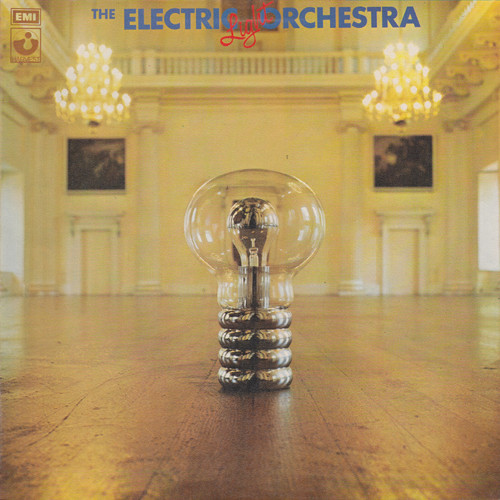
Seamlessly, the fifth and final lineup of The Move became the Electric Light Orchestra. They were joined by violinist Steve Woolam. The first lineup of the Electric Light Orchestra recorded an album that had ben written by Roy Wood and Jeff Lynne.
He wrote 10538 Overture, Nellie Takes Her, Mr. Radio, Manhattan Rumble (49th Street Massacre) and Queen Of The Hours. Roy Wood penned Look At Me Now, The Battle Of Marston Moor (July 2nd 1644), First Movement (Jumping Biz) and Whisper In The Night. These tracks would eventually become Electric Light Orchestra.
Recording of Electric Light Orchestra began in July 1970 at Philips Studios, London, and was completed in June 1971. During that eleven month period, Electric Light Orchestra fused pop, rock, progressive rock, and classical music. Woodwind, strings and horns were favoured instead of guitars. This resulted in a very different,and much more experimental symphonic sounding album from what other bands were doing. Critics remarked upon this.
With Electric Light Orchestra, complete the album was scheduled for release in December 1970. Before that, critics had their say on Electric Light Orchestra. With its experimental and symphonic fusion of pop, rock and classical music, Electric Light Orchestra’s innovative Baroque-and-roll sound won the approval of critics.
When Electric Light Orchestra was released on Harvest in December 1971, it reached thirty-two in the UK. 10538 Overture was released as the lead single and reached number nine in the UK. Meanwhile, Electric Light Orchestra reached fifty-four in Australia. However, Electric Light Orchestra wasn’t in America until early 1972.
Three months later, Electric Light Orchestra was released in March 1972 America as No Answer. This supposedly came about after someone from United Artists tried to contact Electric Light Orchestra about the album. When they couldn’t contact the person, they wrote down “no answer.” This was mistaken as the album the title. However, No Answer just reached 196 in the US Billboard 200. While this wasn’t a huge success, it was something to build on.
ELO 2.
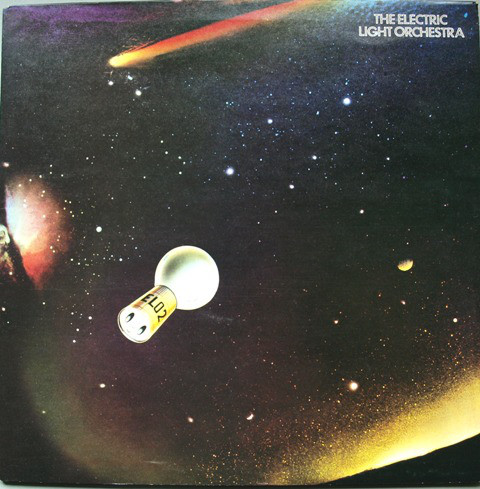
Just two months after the release of No Answer, work began on Electric Light Orchestra’s sophomore album ELO 2. However, during the early recording sessions, Roy Wood announced he was leaving Electric Light Orchestra to join Wizard.
This meant that Jeff Lynne became Electric Light Orchestra’s leader and songwriter-in-chief. He wrote four of the five tracks. The other track was a cover of Chuck Berry’s Roll Over Beethoven. These songs were recorded at AIR Studios, in London.
For the recording sessions, the original members of Electric Light Orchestra, multi-instrumentalist Jeff Lynne, drummer and percussionist Bev Bevan and keyboardist and guitarist Richard Tandy were joined by some new faces. This included bassist Mike de Albuquerque, violinist Wilfred Gibson and cellists Mike Edwards and Colin Walker. Roy Wood had played bass and cello on In Old England Town (Boogie No. 2) and From the Sun to the World (Boogie No. 1). Taking sold charge of production on ELO 2was Jeff Lynne. He oversaw the recording of ELO 2 from May 1972 until late 1972.
Once ELO 2 was complete, Harvest decided to release the album in UK in January 1973. The album would be released in February 1973 as Electric Light Orchestra II. This would be the final time an Electric Light Orchestra would be given a different title on both sides of the Atlantic.
Before the release of ELO 2, critics had their say on the album. Once again, they were won over by the slick, polished progressive and symphonic sound of the Electric Light Orchestra in full flight. They continued to combine elements of rock and pop with progressive rock and classical music. To this, they added the what was being described as symphonic rock. ELO 2 seemed to catch the imagination of critics. Especially, the Electric Light Orchestra’s cover of Chuck Berry’s Roll Over Beethoven. It was totally transformed and become something Chuck Berry could never have envisaged. Critics too marvelled at Roll Over Beethoven, which part of truly ambitious album.
When ELO 2 was released in January 1973, it reached just thirty-five in the UK. A month later, ELO 2 was released in February 1973 and eventually reached number sixty-two. Just like many British bands in the early seventies, it looked as if the Electric Light Orchestra were going to be more popular in the US than UK
That was until Roll Over Beethoven was released as the lead single. It reached number six in the UK, fifty-three in Australia and forty-two in the US Billboard 100. Things were looking up for the Electric Light Orchestra in UK.
So much so, that after the Electric Light Orchestra’s two album deal with Harvest ran out, they signed to Warner Bros. This was the start of a new chapter in the Electric Light Orchestra story. Part of this story is documented on a recently released box set Electric Light Orchestra The Studio Albums 1973-1977 released by Sony Music Group. It features five albums On the Third Day, Eldorado, Face The Music, A New World Record and Out Of The Blue. However, this new chapter in the Electric Light Orchestra story began with On the Third Day.
On the Third Day.
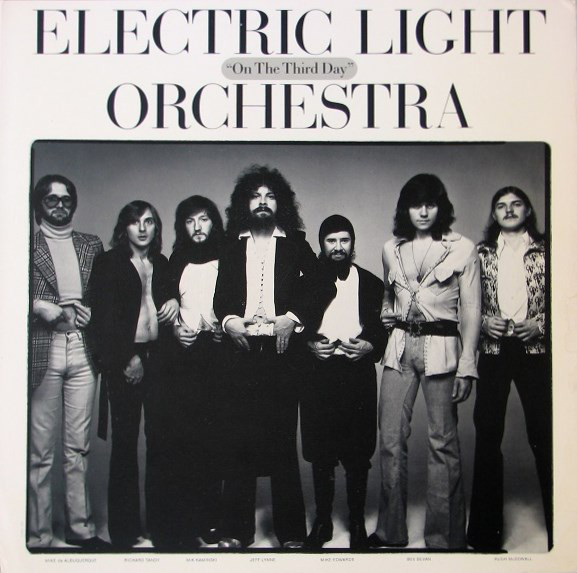
Having signed to Warner Bros, the Electric Light Orchestra wanted no time getting to work on their third album On The Third Day. This was the first album that Roy Wood would play no part in. He had played a minor part on ELO 2. However, this time, it was Jeff Lynne who took charge of the Electric Light Orchestra.
Jeff Lynne wrote seven of the eight tracks on On The Third Day. The exception was a cover of Edvard Grieg’s In The Hall Of The Mountain King. It was reinvented by Jeff Lynne and became a memorable example of symphonic rock.
Recording of On The Third took place during April and May of 1973 at De Lane Lea Studios, London and AIR Studios, London. Never before had the Electric Light Orchestra recorded an album so quickly. Their first two albums had taken much longer to record.
This time, the Electric Light Orchestra worked quickly. Multi-instrumentalist Jeff Lynne produced On the Third Day. He was joined by a rhythm section drummer and percussionist Bev Bevan, bassist Mike de Albuquerque and guitarist and keyboardist Richard Tandy. They were augmented by cellists Mike Edwards and Colin Walker plus violinists Wilfred Gibson and Mik Kaminski, who was the latest new recruit. Marc Bolan added guitar on Dreaming of 4000 and In The Hall Of The Mountain King. After two months of recording at two separate studios, On The Third Day was complete.
Warner Bros. scheduled the release for November 1973. This left plenty of time to promote On The Third Day. Later, critics received their copies of On The Third Day. Again, the music was a fusion of rock and pop with progressive rock and symphonic rock. What was different, was who the album was structured.
The four songs on side one of On The Third Day became a continuous suite. However, side two featured shorter songs. They had been recorded not long after the ELO 2 sessions. On The Third Day was the original album of two sides. It found the Electric Light Orchestra’s music evolving On The Third Day.
Alas, On The Third Day didn’t find favour with all the critics. The reviews were mixed. One publication took a real dislike to On The Third Day…the contrarian Rolling Stone magazine. The
Electric Light Orchestra were just the latest group British group that Rolling Stone disliked. Mostly,the reviews were mixed. That was despite tracks of the quality of Bluebird Is Dead, Oh No Not Susan, Ma-Ma-Ma Belle and In The Hall Of The Mountain King. For the Electric Light Orchestra the reviews of On The Third Day were disappointing.
Six months after the completion of On The Third Day, the album was released in the UK in November 1973. Incredibly, the album failed to chart. Eventually though, On The Third Day sold enough copies to be certified silver in the UK. Before that, Ma-Ma-Ma Belle was released as a single, it reached number twenty-two in the UK. However, Daybreaker failed to chart. For the Electric Light Orchestra, the performance of On The Third Day had been disappointing.
Meanwhile, On The Third Day reached number ten in Australia. Across the Atlantic, On The Third Day reached fifty-two in the US Billboard and became the Electric Light Orchestra’s most successful album. Things were looking good for the Electric Light Orchestra stateside.
Eldorado.
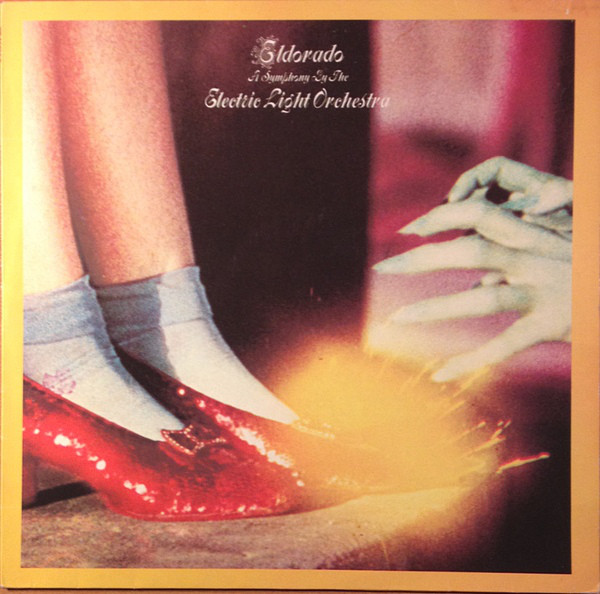
Work began on the Electric Light Orchestra’s fourth album, Eldorado in February 1974. Eldorado was the first complete concept album that Electric Light Orchestra would release.
Eldorado was a project that Jeff Lynne had been working on for some time. He came up with the storyline first. It documents a Walter Mitty character whose disillusioned, so travels into fantasy worlds in his daydreams. This allows him to escape from his mundane and boring life. Having come up with the storyline, Jeff Lynne penned ten tracks. They would become Eldorado.
Recording of Eldorado took place at De Lane Lea Studios, in London. Unlike On The Third Day which was recorded in two months, the Electric Light Orchestra took their time recording the album. The recording began in February 1974, with multi-instrumentalist Jeff Lynne producing Eldorado.
Jeff Lynne was joined by a rhythm section of drummer and percussionist Bev Bevan, bassist Mike de Albuquerque and guitarist and keyboardist Richard Tandy. He had just been made a permanent member of the Electric Light Orchestra. However, he had additional responsibilities on Eldorado. This included arranging the backing vocals, orchestral and choral arrangements. Meanwhile, the other members of the band were playing an increasingly important role.
The strings were more prominent on Eldorado. Some of the strings were provided by the Electric Light Orchestra’s string players: cellists Mike Edwards and Colin Walker plus violinists Wilfred Gibson and Mik Kaminski. They were augmented by an orchestra.
This came about after Jeff Lynne’s father remarked that the Electric Light Orchestra’s back-catalogue were tuneless. So rather that over-dubbing strings, Jeff Lynne brought onboard an orchestra to sweeten Eldorado. The strings were arranged by Jeff Lynne and Richard Tandy with Louis Clark. Eventually, after seven months of recording, Eldorado was completed in August 1974.
Just over a month later, Eldorado was released. Before that, critics had their say on Eldorado. It found the Electric Light Orchestra companioning art rock and pop with progressive rock and symphonic rock on what was the band’s most melodic album. What many critics were quick to notice, was The Beatles’ influence on Eldorado. Especially on Mister Kingdom, which seems to owe a debt of gratitude Across The Universe. Critics hailed Eldorado the Electric Light Orchestra’s album. Even the usually contrarian Rolling Stone gave Eldorado a favourable. That was progress.
When Eldorado was released in September 1974, the album failed to chart in the UK. Neither Can’t Get It Out of My Head nor Boy Blue charted when released as a single. However, Eldorado fared better elsewhere.
Eldorado reached number four in Holland and thirty in New Zealand. In America, Eldorado reached number sixteen in the US Billboard 200, and was certified gold not long after the album’s release. Across the border in Canada Eldorado was certified platinum. However, when Can’t Get It Out of My Head was released as a single, it reached number nine in the US Billboard 100. The rise and rise of the Electric Light Orchestra continued in America.
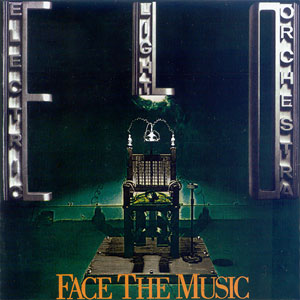
Face The Music.
Buoyed by the success of Eldorado in North America, the Electric Light Orchestra headed out to tour the album. It was a lengthy tour, and featured the debut of bassist and cellist Kelly Groucutt. He replaced Mike de Albuquerque who left during the recording of Eldorado. Once the tour was over, the Electric Light Orchestra’s thoughts turned to their fifth album.
This would eventually become Face The Music. Just like previous albums, Jeff Lynne penned the eight tracks. He would also produce Face The Music, which found the Electric Light Orchestra heading to Munich, in Germany.
The Electric Light Orchestra’s destination was Musicland Studios, which was owned by the Italian musician, songwriter and producer Giorgio Moroder. Musicland Studios was where Deep Purple, Led Zeppelin, the Rolling Stones and Marc Bolan and T Rex had recorded albums. Now the Electric Light Orchestra were about to make the journey to Musicland Studios.
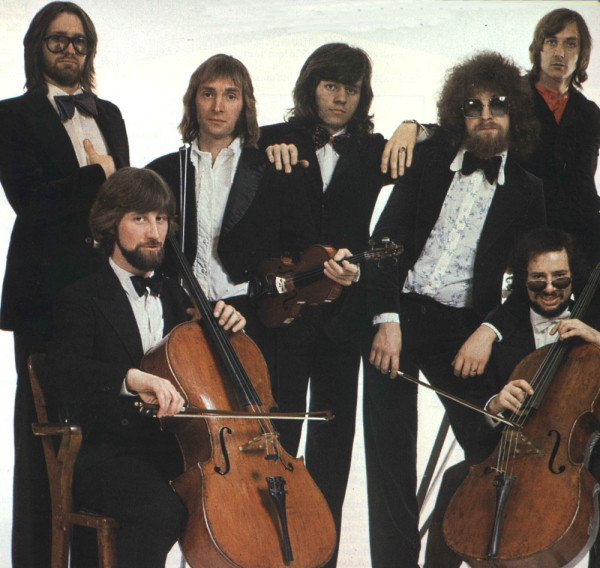
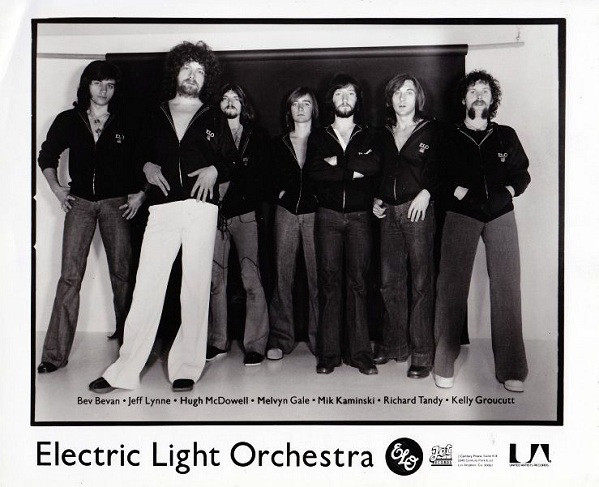
When the Electric Light Orchestra arrived at Musicland Studios, in May 1975, there had been a couple of changes in the band’s lineup. Joining multi-instrumentalist and producer Jeff Lynne was a rhythm section of drummer and percussionist Bev Bevan and new bassist and cellist Kelly Groucutt. They were joined by keyboardist Richard Tandy, violinist Mik Kaminski and new cellists Hugh McDowell and Melvyn Gale. The three new additions joined the backing vocals and orchestra which was conducted by Louis Clark. He arranged the orchestral and choral arrangements with Jeff Lynne and Richard Tandy. By June 1975, Face The Music was complete. For the second time in their career, the Electric Light Orchestra had recorded an album in just two months.
They were hoping that Face The Music would fare better than On The Third Day. It had received mixed reviews from critics. However, Face The Music was a very different album. The Electric Light Orchestra’s classic sound was starting to take shape. It was slick, polished and melodic. Two songs stood out,
Evil Woman and Strange Magic, as they had a commercial, radio friendly sound. Art rock combined with pop and symphonic rock on Face The Music. Evil Woman even a disco influence. This was a first. However, Face The Music won the approval of critics who regarded it as a worthy successor to Eldorado. It surely would enjoy the same success?
Alas, not in the UK, where Face The Music failed to trouble the charts on its release in September 1975. This was disappointing, as Face The Music was the Electric Light Orchestra’s debut album for Don Arden’s Jet Records. However, the lead single Evil Woman reached number ten in the UK. The followup Nightrider failed to chart, while Strange Magic stalled at a lowly thirty-eight. Elsewhere, Face The Music proved popular.
Face The Music reached thirty in Australia, eleven in Holland and forty-one in Sweden. However, it was in Australia where Face The Music was most popular. It reached number eight in the US Billboard 200. This resulted in Electric Light Orchestra’s second gold disc in America and a gold disc in Canada. That however, wasn’t the end of the success in America.
Evil Woman reached number ten in the US Billboard 100. The followup Nightrider failed to chart, while Strange Magic reached fourteen in the US Billboard 100. The Electric Light Orchestra’s new sound looked as if it was a game-changer.
A New World Record.
After the release of Face The Music, the Electric Light Orchestra headed out on another lengthy tour. They had now settled into the routine of recording an album, and then touring it. However, the Face The Music tour was one of the Electric Light Orchestra most important tours.
They had changed direction on Face The Music, and were moving towards what would become known as their classic sound. When Face The Music was released, the new sound had proved popular in three continents. So the Electric Light Orchestra headed out on tour to showcased their new sound. When they returned they were determined to build on the success of Face The Music.
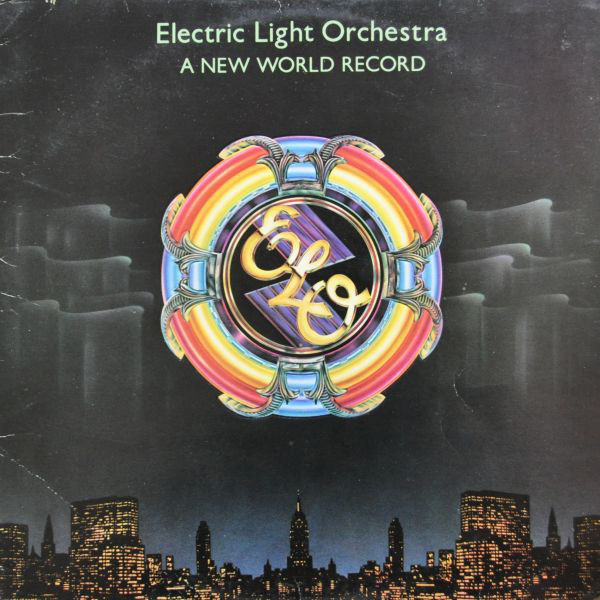
Jeff Lynne, who had settled into the role of songwriter-in-chief and producer wrote the eight tracks that would become A New World Record. Just like Face The Music, A New World Record was recorded at Musicland Studios in Munich.
The Electric Light Orchestra arrived at Musicland Studios in July 1976 to record A New World Record. It was the same lineup that had recorded Face The Music. Multi-instrumentalist and producer Jeff Lynne was joined by a rhythm section of drummer and percussionist Bev Bevan and bassist and cellist Kelly Groucutt. They were joined by keyboardist Richard Tandy, violinist Mik Kaminski and cellists Hugh McDowell and Melvyn Gale. Backing vocals and an orchestra which was arranged and conducted by Louis Clark augmented the Electric Light Orchestra
By late July 1976, A New World Record was complete. Having recorded A New World Record in the space of a month, the album was scheduled for release in September 1976. This was exactly a year after Face The Music. That was what the Electric Light Orchestra were about to do.
Critics had received their promotional copy of A New World Record, and were about to have their say. On A New World Record, the Electric Light Orchestra continued to combine art rock with pop, progressive rock and symphonic rock. Again, the album was slick, polished and melodic. Many of the songs were shorter and sweeter, and didn’t lack hooks. Just like Face The Music, they had a much more commercial and radio friendly sound. Especially songs like Telephone Line, Rockaria and Livin’ Thing. They had single written all over them. Jeff Lynne was coming into his own as songwriter. He had also produced what many critics called Electric Light Orchestra’s finest hour.
Even the forever contrarian and hard to please Rolling Stone magazine gave A New World Record a positive review. So did Robert Christgau, the self-styled dean of American rock critics. This was high praise indeed. Mostly, it was critical acclaim that accompanied the release of A New World Record.
When A New World Record was released in September 1976, it reached number six in the UK and was certified platinum. Belatedly, the Electric Light Orchestra had made a breakthrough in their home country. Elsewhere, A New World Record reached number one in Australia and Sweden. A New World Record reached number nine in Austria and Norway; seven in Germany; two in Holland and four in New Zealand. Across the Atlantic, A New World Record reached number five and was certified platinum. Meanwhile, A New World Record was certified double platinum in Canada and gold in Holland. For the Electric Light Orchestra, A New World Record had transformed their fortunes. However, the success continued.
In October 1976 Livin’ Thing was released as a single, reaching four in the UK and thirteen in the US Billboard 100. Rockaria! was released as the followup in February 1977, and released number nine in the UK. Meanwhile, Do Ya was released as a single in America, and reached number thirteen in the US Billboard 100. The final single from A New World Record was Telephone Line. It reached number eight in the UK and seven in the US Billboard 100. For the Electric Light Orchestra, A New World Record had been a game-changer. Their music found an audience in Britain, Europe, Australia, New Zealand and North America. How were they going to surpass A New World Record, which has sold over five-million copies?
Out Of The Blue.
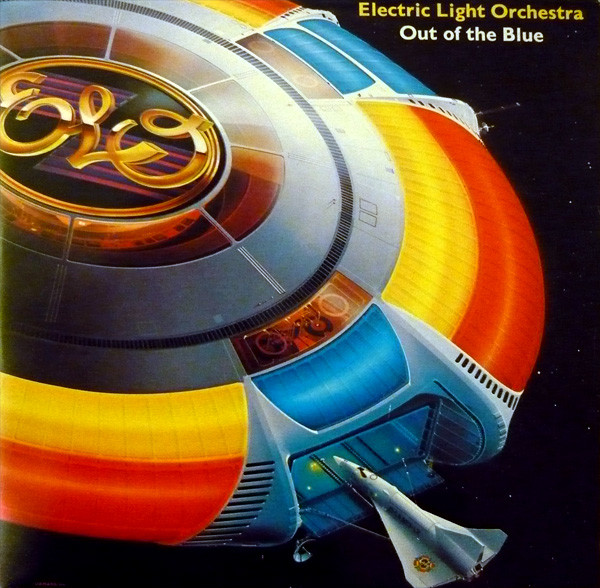
The answer to that, was with their seventh studio album Out Of The Blue. This was the most ambitious album of the Electric Light Orchestra’s career. It was a seventeen song double album penned by Jeff Lynne. This Jeff Lynne wrote over a three-and-a-half week period he spent in the Swiss Alps. Recording Out Of The Blue took slightly longer.
To record Out Of The Blue, the Electric Light Orchestra returned to Musicland Studios, in Munich for a third time. Between May and August 1977, Electric Light Orchestra recorded the seventeen songs. By then, the band’s lineup had changed.
Multi-instrumentalist and producer Jeff Lynne was joined by a rhythm section of drummer and percussionist Bev Bevan and bassist and cellist Kelly Groucutt. They were joined by keyboardist and guitar Richard Tandy and violinist Mik Kaminski.
Cellist Hugh McDowell is credited but didn’t appear. Melvyn Gale is also credited, but his only role was a playing the jangling, tack piano on Wild West Hero. Augmenting the Electric Light Orchestra, were an orchestra conducted by Louis Clark. He joined with Jeff Lynne and Richard Tandy to arranged the orchestral and choral arrangements. After two months, Out Of The Blue was completed in August 1977.
When critics heard Out Of The Blue, they hailed the album the Electric Light Orchestra’s Magnus Opus. It was a glorious fusion of art rock, pop, progressive rock and symphonic rock. Just like the Electric Light Orchestra two previous albums, the music was slick, polished, melodic and hook-laden. The Electric Light Orchestra seemed to have been inspired by The Beatles and Beach Boys on this critically acclaimed and almost flawless album. Somehow, the Electric Light Orchestra had managed to fill four sides with a major musical faux pas. Songs like Turn Ti Stone, It’s Over, Sweet Talkin’ Woman, Steppin’ Out and Sweet Is The Night were among Out Of The Blue’s finest moments. So was side three.
For many critics, side three was captivating. It was subtitled Concerto For A Rainy Day, and was a four track musical suite based on the weather and how it affects people’s mood. Jeff Lynne deployed recordings of rain and thunder as the suite moved melodically along from Standin’ In The Rain to Big Wheel and Summer and Lightning. However, Electric Light Orchestra’s had saved the best to last, the joyous and hook-laden Mr. Blue Sky, which was a single-in-waiting.
Out Of The Blue was released on October 3rd 1977. By then, four million copies had been ordered before the release. When Out Of The Blue was released, it reached number four in the UK and was certified platinum. Elsewhere, Out Of The Blue reached number three in Australia, six in Germany and New Zealand; three in Holland and Norway and two in Sweden. Across the Atlantic, Out Of The Blue reached number five in the US Billboard 200 and was certified gold. Meanwhile, Out Of The Blue was certified platinum in Canada and gold in Germany and Holland. This wasn’t the end of the success.
Five singles were released from Out Of The Blue. Turn To Stone was released in October 1977, reaching eighteen in the UK and thirteen in the US Billboard 100. Mr. Blue Sky followed in January 1978, reaching number six in the UK and thirty-five in the US Billboard 100. Sweet Talkin’ Woman was then released in February 1978. It reached number six in the UK and seventeen in the US Billboard 100. Wild West Hero followed in May 1978, and also, reached number six. The final single fittingly, was It’s Over in October 1978. Alas, it only reached thirty-four in the UK. However, Out Of The Blue had been a the most successful album of Electric Light Orchestra’s career.
Eventually, when all the sales were counted, Out Of The Blue had sold over ten million albums worldwide. For the Electric Light Orchestra, Out Of The Blue was by far, their most successful album. Now they were preparing to tour Out Of The Blue.
After the releases Out Of The Blue, the Electric Light Orchestra embarked upon a gruelling ninety-two date world tour. This was very different to previous tours. Electric Light Orchestra’s Out Of The Blue tour featured an enormous and spectacular set. It featured lasers, fog machines and a giant replica of the spaceship that featured on the gatefold cover of Out Of The Blue. In the arena shows, it would hover above the stage. Although spectacular is a hugely expensive set. However, it impressed concert goers and industry insiders.
In August 1977, veteran American DJ, Casey Kassem had christened the Electric Light Orchestra: the “World’s first touring rock ’n’ roll chamber group.” The Out Of The Blue tour was hugely successful. Especially when it reached America for The Big Night Tour in 1978.
During The Big Night tour, the Electric Light Orchestra played some of the biggest arenas. This resulted in The Big Night tour becoming the highest-grossing live concert tour in music history. That was no surprise, as American concert goers had witnessed the Electric Light Orchestra at the peak of their powers.
On their return to Britain, the Electric Light Orchestra played eight consecutive sold-out nights at Wembley Stadium. This was another record for The Electric Light Orchestra. However, once the Out Of The Blue tour was over, the Electric Light Orchestra’s thoughts could turn to their next album, Discovery.
Discovery.
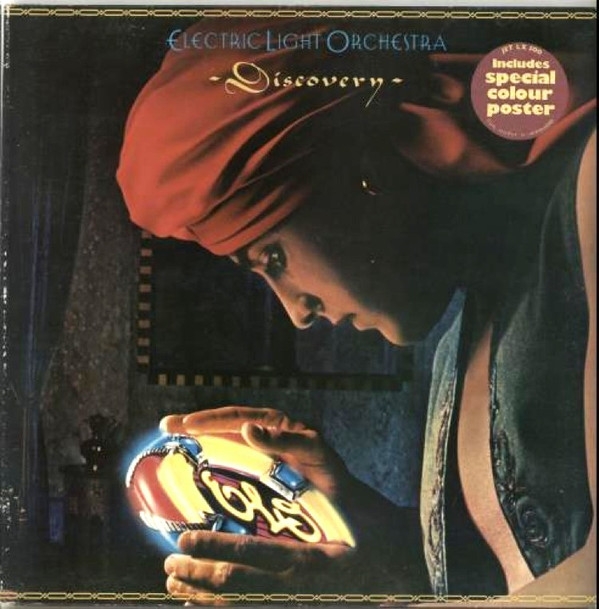
Following the Out Of The Blue tour, the Electric Light Orchestra’s songwriter-in-chief Jeff Lynne, began writing what became Discovery. He wrote eight of the nine tracks. The exception was Little Town Flirt which was written by Maron McKenzie and Den Shannon. These nine tracks would become Discovery, which featured a different lineup of the Electric Light Orchestra.
When the Electric Light Orchestra arrived at Musicland Studios, in Munich, in March 1979, there had been changes to the lineup. The string section of Mik Kaminski, Hugh McDowell and Melvyn Gale didn’t feature on Discovery. The Electric Light Orchestra were now a quartet.
Multi-instrumentalist and producer Jeff Lynne was joined by a rhythm section of drummer and percussionist Bev Bevan and bassist and cellist Kelly Groucutt. They were joined by keyboardist and guitar Richard Tandy and bassist Kelly Groucutt. The orchestra was conducted by Louis Clark, who arranged the orchestral parts with Jeff Lynne and Richard Tandy. After two months of recording, Discovery was competed. Critics were in for a surprise.
While Discovery still featured the Electric Light Orchestra’s symphonic rock sound, the band moved towards a disco inspired sound. It seemed that the Electric Light Orchestra were keen to cash-in on the popularity of disco. That was ironic, as the disco bubble would burst in July 1979. By then, Discovery had been released to critical acclaim, and was hailed to perfect way to followup their classic album Out Of The Blue.
The Electric Light Orchestra released Discovery in the UK on 31st May 1970. It became the Electric Light Orchestra’s first number one album and was certified platinum. In America, Discovery was released in America on 8th, and reached number five. Having sold over two million copies, Discovery was certified double-platinum. Elsewhere, Discovery reached number one in Australia and Norway, and reached the top ten in Austria, Canada, France, Holland, New Zealand, Sweden and West Germany. This resulted in an array of gold and platinum discs. In France, Germany and Holland, Discovery was certified gold. However, in Australia, Discovery was certified double-platinum and triple-platinum in Canada. Incredibly, Discovery had outsold Out Of The Blue. That wasn’t the end of the success though.
A total of five singles were released from Discovery. Shine A Little Love reached number six in the UK and number eight in the US Billboard 100. The Diary Of Horace Wimp the reached number eight in the UK. When Don’t Bring Me Down then reached number three in the UK and number four in the US Billboard 100, this was their biggest hit in Britain and America. Confusion reached number eight in UK and thirty-seven in the US Billboard 100. The final single from Discovery was Last Train To London, which reached number eight in UK and thirty-nine in the US Billboard 100. This brought to an end what was the most successful period in the Electric Light Orchestra’s career.
This lineup of the Electric Light Orchestra released three more albums together, Time in 1981, 1983s Secret Messages and 1986s Balance Of Power. While each album enjoyed some success, they never came close to reaching the same commercial success of the Electric Light Orchestra’s Magnus Opus Out Of The Blue nor its followup Discovery.
Only two further albums were released bearing the Electric Light Orchestra name. However, Zoom in 2001 was an Electric Light Orchestra album in name only. Only Richard Tandy joined what was essentially Jeff Lynne and friends. Commercial success eluded the album which was for completists only.
By the time Alone In The Universe was released in 2015, the Electric Light Orchestra were now know as Jeff Lynne’s ELO. No other members of the original of Electric Light Orchestra featured on the album. It was essentially a Jeff Lynne solo album that sounded similar to the Electric Light Orchestra. Still, Alone In The Universe managed to sell over 300,000 copes and was certified platinum. This was a far cry from the Electric Light Orchestra in their seventies heyday, when their albums sold by the million.
The seventies were the Electric Light Orchestra’s most productive, prolific and successful years. Especially between 1973 and 1979, when everything the Electric Light Orchestra released turned to silver, gold or platinum. This resulted in the Electric Light Orchestra becoming one of true most successful bands in the world.
This success began in November 1973, when the Electric Light Orchestra released Face The Music. From Face The Music through A New World Record to Out Of The Blue, Electric Light Orchestra’s classic sound emerged. It was slick, polished, melodic and hook-laden. This was quite different to the first two albums that Electric Light Orchestra released.
Electric Light Orchestra and ELO 2 featured a very different band, whose roots were in progressive rock. This soon changed.The Electric Light Orchestra their next five albums saw their trademark symphonic rock sound developing. It headed in the direction of disco with the release of Discovery in May 1979. This alienated many of their loyal fans, but introduced the Electric Light Orchestra’s to a new audience. As the seventies ended, the Electric Light Orchestra were one of the biggest bands in the world.
Four decades later, and the Electric Light Orchestra are belatedly receiving the recognition their music deserves. They were belatedly inducted into the Rock ’N’ Roll Hall Of Fame. This honour has been bestowed on Electric Light Orchestra as a group, not just one individual.
The success of the Electric Light Orchestra was a collective effort, where a group of multitalented musicians came together and became one of greatest and most successful British bands of the seventies. That was The Electric Light Orchestra’s heyday, and when they were at their creative zenith. Especially between Face The Music in 1973 and 1977s Out Of The Blue which was the Electric Light Orchestra’s Magnus Opus.
The Seventies: The Heyday of The Electric Light Orchestra.
BIG STAR-PIONEERS OF POWER POP.
Big Star-Pioneers Of Power Pop.
Sadly, in music, talent doesn’t guarantee commercial success. If it did, Big Star would’ve been one of the biggest bands in musical history. Alas, that wasn’t the case. Lady luck failed to smile on Big Star when they released a trio of albums between 1972 and 1978. Despite this, Big Star are nowadays regarded as one of the most important and influential bands in musical history. That is why Big Star have gone to influence several generations of bands. Their story began in 1971, in Memphis, Tennessee.
Memphis was twenty-one year old Alex Chilton’s hometown. It’s where his career began five years earlier in 1966, when he recorded his debut solo album. Just a year later, seventeen year old Alex Chilton became the lead singer with The Box Tops.
Alex Chilton was The Box Top’s lead singer between 1967 and 1970. During that period, The Box Tops enjoyed a number one single with The Letter. However, by 1970, Alex’s time with The Box Tops was over. Soon, though the twenty year old was offered the chance to join one of the biggest bands of that time.
This was none other than Blood, Sweat and Tears. They approached Alex, asking if he would consider joining as their lead singer. That wasn’t going to happen. Incredibly Alex rejected the idea out of hand, saying Blood, Sweat and Tears were “too commercial.” Not long after this, Alex Chilton met Chris Bell.
Alex Chilton and Chris Bell had known each other for a while. Both men spent time at Ardent Recording Studios, Memphis. That was where Alex Chilton first asked Chris Bell to collaborate with him. Originally, Alex Chilton’s idea was that he and Chris Bell would become a duo like Simon and Garfunkel. Chris Bell however, rejected the idea out of hand, and instead, asked Alex Chilton to join his band IceWater.
IceWater’s lineup featured guitarist Chris Bell, drummer Jody Stephens and bassist Andy Hummel. Alex having heard the group’s music, liked it. However, he felt he that ge could improve IceWater’s music. When Alex arrived at the next Icewater session, he brought along a new song that he had written, Watch The Sunrise. The other members of IceWater liked what they heard, and soon, IceWater had a new addition, Alex Chilton.
Compared to the rest of the members of Icewater, Alex seemed a musical veteran. He already had a wealth of previous musical experience, and before long, Alex was making his presence felt. This included suggesting that Icewater changed their name to Big Star.
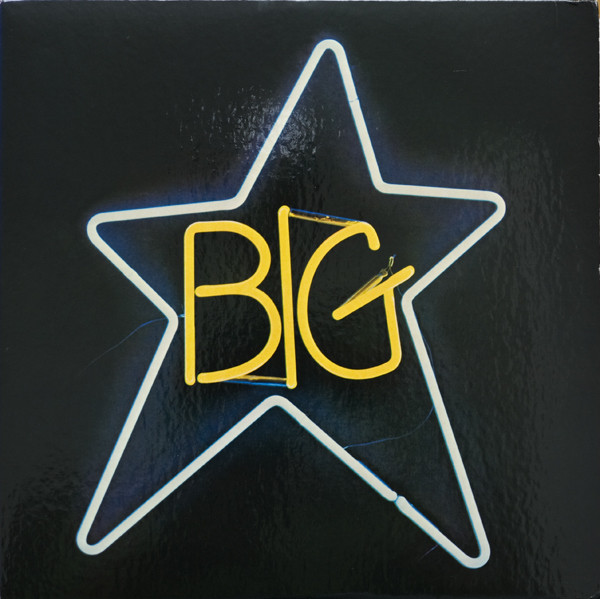
This came about during a recording session, when Alex headed out to the local Big Star Markets for some food. He ended up in the Big Star Markets were a chain of stores across Memphis. Their logo was a five-pointed star. Within the five-pointed star was Big Star Markets. Seeing this logo was a eureka moment for Alex Chilton.
Once in the store, he realised that Big Star was a name that matched his ambitions for his new band. The five-pointed star would make the perfect logo for the band. That was, as long as he didn’t infringe the copyright. They wouldn’t, as long as they didn’t put Big Star within the five pointed star. With these ideas flying around his head, Alex returned to the studio to convince the rest of IceWater to change their name to Big Star.
Not long after this, IceWater changed their name to Big Star. By then, the band had already written several new songs, including Thirteen and Watch The Sunrise, would appear on their debut album, Number One Record.
Number One Record.
By April 1972, Big Star were ready to release their debut album, Number One Record. Big Star had signed a recording contract with Ardent Records, and the company founder John Fry was keen record the band’s debut album Number One Record.
Initially, all four band members of Big Star were going to contribute songs for Number One Record. It didn’t pan out that way, and instead, Alex and Chris wrote eleven of the twelve tracks. The exception was The India Song, penned by Andy Hummel. These twelve tracks would become Number One Record.
Recording of Number One Record took place at Ardent Studios Memphis. The rhythm section of drummer Jody Stephens and bassist Andy Hummel were joined by the twin guitars of Alex and Chris. Augmented by Terry Manning’s piano, Number One Record, which was produced by Jon Fry began to take shape.
During the Number One Record sessions at Ardent Studios, Big Star became one of the first groups to use a sixteen track tape recorder. This allowed Big Star to experiment and learn how best to best use the new technology to their advantage. The result was a polished album of power pop, featuring elegiac harmonies.
By the time Number One Record was due for release in June 1972, critics already loved Big Star’s music. The release of Number One Record further cemented critics love affair with Big Star. Released to critical acclaim, many, critics including Billboard and Cash Box thought that Big Star were on their way to becoming music’s next big thing. Record World Magazine went as far to say that Number One Record “was one of the albums of 1972.” Surely, Big Star were on the verge of greatness when they released Number One Record?
Sadly, when Number One Record was released in June 1972, there were problems with distribution. Stax Records couldn’t get copies of Number One Record into record shops. For Big Star, this was hugely frustrating. Especially, after such critically acclaimed reviews. This resulted in plenty of demand for Number One Record. Big Star watched on feeling helpless, as Number One Record sold less than ten thousand copies. For Big Star, this was a disaster. Things would get even worse.
Eventually, Stax signed a deal with Columbia Records to distribute their whole catalogue. However, Columbia didn’t seem interested is using the independent distributors previously used by Stax. This resulted in Number One Record being removed from the stores who previously sold Stax releases. After this tensions arose within Big Star.
Following the problems regarding the distribution of Number One Record, tensions arose within the band. Fights erupted between band members, instruments were destroyed and Chris Bell left the group, to record his own solo album. Not long after this, Big Star split-up, for the first time.
After a few months, Big Star decided that it was time to reform the band. However, all wasn’t well within Big Star. Onlookers watched on as a myriad of problems threatened to destroy Big Star. There was drug abuse, instruments destroyed, band members became ill and even a master tape went missing. Again the band spilt up.
Radio City.
Eventually, Big Star reconvened and Alex Chilton, Jody Stephens and Andy Hummel decided to record an album as a three-piece band. This would become Radio City.
For Radio City, Alex Chilton wrote six tracks and cowrote four others, including three with Andy Hummel, who contributed Way Out West. Alex and Andy wrote Daisy Glaze with Jody Stephens. One name was missing though, Chris Bell. It later emerged that Chris Bell did help write some songs on Radio City, but wasn’t credited. This includes O My Soul, and the Big Star classic Back of a Car. Chris’ omission would prove an expensive one. However, during the period Radio City was written and recorded, Chris was no longer a member of Big Star.
Recording of Radio City took place at Ardent Studios, Memphis in the autumn of 1973. John Fry and Big Star co-producer Radio City, which was Big Star’s first album as a trio. This being Big Star, things didn’t go to plan.
Alex, Jody and Andy only recorded part of Radio City. With nine tracks completed, Alex was left without a rhythm section. So, to complete Radio City, Alex brought in the rhythm section of drummer Richard Rosebrough and occasionally, bassist Danny Jones. Together, they finished recording Mod Lang, She’s A Mover and What’s Going Ahn. Eventually, Radio City was released in February 1974.
Just like Number One Record, Radio City was released to widespread critical acclaim. Radio City was seen as Big Star’s breakthrough album. It was described as commercial, polished and even brilliant and addictive. Surely, Big Star were about to make a breakthrough with Radio City?
Sadly, not. History repeated itself when Stax Records failed to get Radio City into record shops. Stax Records’ disagreement with Columbia Records made a bad situation worse. What many regarded as a future classic, and the definitive power pop album was stuck in a distributor’s warehouse. Eventually, when Stax Records counted sales of Radio City, the sales amounted to just twenty thousand. For Alex Chilton and Co. this was a huge body blow.

Third/Sister Lovers.
When Big Star returned to the recording studios in September 1974 to record what would eventually become Third/Sister Lovers, Big Star’s numbers were reduced. Andy Hummel had left the band. It was a case of and then there were two.
For Third/Sister Lovers, Alex contributed twelve of the fourteen tracks. Jody Stephens penned For You, and the other track was a cover of The Velvet Underground classic Femme Fatale, penned by Lou Reed. These tracks would become Third/Sister Lovers, which was produced by Jim Dickinson.
With just Alex Chilton and Jody Stephens remaining, Big Star entered the recording studio for what would proved to be the last time. Given their numbers were reduced, the two members of Big Star had to bring onboard various session musicians and a few friends.
This included drummer Richard Rosebrough, Alex’s girlfriend, vocalist Lesa Aldridge and guitarist Steve Cropper. With Jim Dickinson producing Third/Sister Lovers, Big Star proceeded to produce music that was variously beautiful, ethereal, experimental, haunting and innovative. That’s not surprising. Many of the songs were Alex had written were deeply personal. Many onlookers thought that Third/Sister Lovers wasn’t going to be a Big Star album.
At the time, Third/Sister Lovers looked more like an Alex Chilton solo album. Other onlookers remember seeing the session sheets naming the band as Sister Lovers. However, this was a reference to Alex and Jody dating sisters Lesa and Holliday Aldridge. Eventually, however, Third/Sister Lovers was completed on 13th February 1975, when Larry Nix completed the mastering. However, it would be another three years before Third/Sister Lovers was released.
Following the completion of Third/Sister Lovers, producer Jim Dickinson and John Fry headed to New York looking for a record label willing to release Big Star’s third album. By then, Big Star were history. Despite this, 250 copies had been pressed for promotional purpose. Sadly, nobody expressed an interest in releasing Third/Sister Lovers. Record company executives didn’t understand Third/Sister Lovers. The music seemed too stark, emotive and occasionally, disturbing. In a way, that’s not surprising.
Alex Chilton wasn’t in a good place during the recording of Third/Sister Lovers. Third/Sister Lovers was a cathartic album, where he unburdened himself. This made Third/Sister Lovers a very personal album. However, within Third/Sister Lovers there was beauty. It wasn’t until 1978, that Third/Sister Lovers’ beauty was heard.
Eventually, three years after Third/Sister Lovers was completed, the album was released. Previously, Third/Sister Lovers was perceived as uncommercial by record companies. Neither Alex nor Jody had shown any interest in releasing Third/Sister Lovers. Then there were the continuing financial problems. That’s why three years passed before the release of Third/Sister Lovers.
Prior to the release of Third/Sister Lovers, the critics had their say. Critics recognised the Third/Sister Lovers’ potential when the group were promoting it. Many wrote paeans exalting the Third/Sister Lovers’ beauty. However, it was only in later years that many critics realised the importance of Third/Sister Lovers. By then, it was being hailed as a minor classic. So were Number One Record and Radio City. Big Star were by then, one of the most influential bands in musical history. Not in 1978.
On the release of Third/Sister Lovers commercial success eluded what became Big Star’s third album. While many saw this a disaster for Big Star, much worse was around the corner.

Not long after Third/Sister Lovers was eventually released, tragedy struck, and Chris Bell died in a car crash. It was a tragedy for music and Big Star. They lost one of their creative forces and music lost one of its most talented sons. Sadly, after the tragic death of Chris Bell, that was the last anyone heard of them for fifteen years.
Over the next fifteen years, interest in Big Star started to grow. A new generation had discovered their trio of albums, including many young musicians. Suddenly, bands were citing Big Star as a major influence on their music. Somewhat belatedly, Big Star’s music was finding the audience it so richly deserved. Given the recent resurgence in interest in Big Star’s music, it was no surprise that the group reformed in 1993.
Two of Big Star’s original members, Alex Chilton and Jody Stephens, were joined by guitarist Jon Auer and bassist Ken Stringfellow. Big Star made a welcome comeback at the University of Missouri Music Festival. To celebrate the return of the comeback Kings, Big Star, the tapes were running and the concert was recorded. It was released later in 1993 as Columbia: Live At Missouri.
After their initial comeback, the new line up began to tour extensively. Big Star were back and were more popular than ever. It was tragic that Chris Bell wasn’t alive to see the group that he had cofounded receive the recognition they were receiving. However, for Big Star life went on and they returned with a new album in 2005.
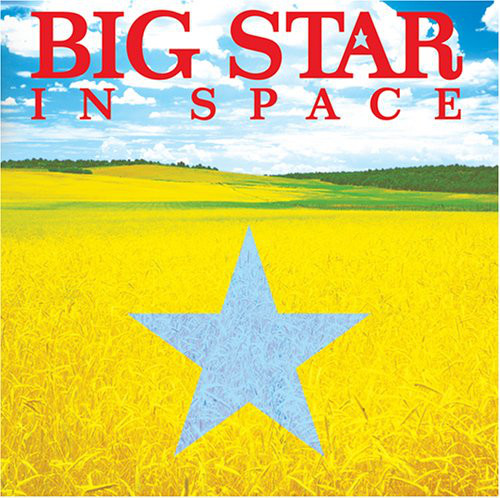
In Space.
In Space consisted mostly of new songs, songs written by Alex Chilton, Jody Stephens, Jon Auer and Ken Stringfellow. When In Space was released, critics awaited an album of power pop perfection. However, critics were expecting too much. While the first album since the death of Chris Bell was well received by critics, who welcomed the return of Big Star it didn’t quite match their expectations. At least Big Star were back and making music.
Sadly after over ten years of belated success and recognition, Alex Chilton died of a heart attack on 19 July 2010. That day, music lost one of its most creative and greatest musicians. His genius can be heard on Big Star’s first three albums Number One Record, Radio City and Third/Sister Lovers.
Seven years after the death of Alex Chilton, the rresurgence in interest in Big Star continues. Nowadays, Big Star’s trio of albums were considered minor classics, which feature in Rolling Stone magazine’s list of the 500 greatest albums of all time. Meanwhile, Big Star were being hailed as one of the most influential, innovative and inventive bands in musical history.
Belatedly Big Star’s trio of albums have been recognised as the classics they were. One listen to Number One Record, Radio City and Third/Sister Lovers and it’s apparent that they’re classic albums from power pop pioneers Big Star at the peak of their powers.
Big Star-Pioneers Of Power Pop.


THE LIFE AND TIME OF BRITISH BLUESMAN MICK CLARKE.
The Life and Time Of British Bluesman Mick Clarke.
Mick Clarke can remember the day that his life was changed was forevermore. He was fifteen years old, and living in London, England. That was when he heard Eric Clapton for the first time. It was a life changing experience for Mick Clarke. Since that day, he has dedicated himself to the blues, and nowadays, Mick Clarke is, without doubt, one of Britain’s top blues guitarists. His career began back in the late sixties.
Killing Floor.
That was when Mick Clarke first came to prominence as part of the British blues explosion. Mick Clarke was a member of the blues rock band, Killing Floor, who were formed in 1968. Before long, the band were a familiar face on the London music scene.
So much so, that by 1969, Killing Floor had released their eponymous debut album. It was well received by the music press. By then, Killing Floor were rubbing shoulders with some of the great and good of the blues.
This included blues guitarists Freddie King, Howlin’ Wolf and piano player Otis Spann. Although they were no longer as popular as they had once been in their home country, they were still popular draws in Britain. So opening for these artists was a prized booking. Killing Floor were chosen to open for Freddie King, Howlin’ Wolf and Otis Spann when they toured Britain. This boosted their profile as the British blues explosion continued.
In 1970, Killing Floor returned with their sophomore album Out Of Uranus. It proved to the last album Killing Floor released for thirty-four years. The band split-up in the early seventies.
2004 marked the return of Killing Floor with a new album Zero Tolerance. Then in 2012, the four original members of the band get back together and released a new album Rock’n’Roll Gone Mad. Killing Floor also returned to playing live when they played at the Sweden Rock Festival 2012. However, much had happened to Mick Clarke in the intervening years.
Salt.
By the mid-seventies, Mick Clarke had cofounded a new band, Salt. Just like Killing Floor, Salt was an impressive and powerful blues rock band. They quickly became popular on the London music scene. Soon, Salt were familiar faces at some of the city’s top venues. This included the Marquee, where some of the biggest bands of seventies took to stage. Salt looked like they were one of the rising stars of the London music scene.
Especially when Salt played at the Reading Festival. They also opened for Muddy Waters when the veteran bluesman played at two major London concerts. Sadly, Salt never got round to recording an album, and by the late-seventies went their separate ways.
Since then, Salt there’s been several reunions, with the band heading out on tour. To celebrate their reunion in 2011, Salt released The Cobra’s Melody And Other Refrains as a limited edition CD. Sadly, that was the only album Salt released. However, it wasn’t long until the Mick Clark Band was born.
Mick Clarke Band.
His career continued apace in the early eighties, when Mick Clark decided to form a new band. This time, he was would lend his name to the band that he would lead, the Mick Clarke Band. It featured Mick Clarke, Ian Ellis and Ron Berg. Soon, the blues rockers were ready to release their debut album.
This was Looking For Trouble, which was released in 1984. It was well received by critics and marked the start of a new chapter in Mick Clarke’s career.
A year later, the Mick Clarke Band returned with their sophomore album Rock Me in 1985. Mick Clarke seemed to be enjoying the new trio. They were a popular live draw and transferred their live sound onto their first two albums. This continued with All These Blues in 1987, a blistering album of electric blues that received praise and plaudits. It seemed that the Mick Clarke Band could do no wrong. The Mick Clarke Band were on a roll.
This continued with the release of Steel And Fire in 1989. Twenty years after Mick Clarke made recording debut on Killing Floor’s eponymous debut album, he was one of the elder statesman of the British blues. He was still playing the music that changed his life as a nine-year old. That would never change. It was Mick Clarke’s raison d’être.
Two years later, the Mick Clarke Band returned with their fifth album Tell The Truth in 1991. Connoisseurs of British blues considered Tell The Truth one of the Mick Clarke Band’s finest hours. The band was maturing like a fine wine.
Another two years passed and the Mick Clarke Band returned with No Compromise in 1993. By now, the Mick Clarke Band were regarded as one of the finest purveyors of blues rock. The Mick Clarke Band’s albums sold well and they were still a popular draw on the live circuit. Life was good for the members of The Mick Clarke Band.
In 1997, the Mick Clarke Band returned with their seventh album Roll Again. Despite winning over critics and music fans, the Mick Clarke Band didn’t Roll Again. The album proved to be their swan-song.
Mick Clarke and Lou Martin.
Later in 1997, Mick Clarke and Lou Martin released an album they had been collaborating on, Happy Home. The two musicians were lifelong friends, and first played together in Killing Floor. After the demise of Killing Floor, Lou Martin hooked up with legendary Irish guitarist Rory Gallagher.
Through the seventies, eighties and into the early nineties, Lou Martin was part of Rory Gallagher’s band. He played on some of Rory Gallagher’s greatest album including Tattoo, Blue Print and Calling Card. However, when the Mick Clarke Band were looking for a pianist, Lou Martin was the go-to-guy. If his schedule permitted, he joined his old friend in the studio. Lou Martin played on Looking For Trouble, Rock Me, Tell The Truth and Roll Again. However, the two friends had never recorded an album as a duo.
That was until Mick Clarke and Lou Martin recorded Happy Hours. It was released in 1997 and saw the two friends showcase their considerable skills on twelve tracks. Alas, it was a one-off collaboration. However, the two men would later be reunited when Killing Floor returned to the studio in 2004.
Killing Floor released a new album Zero Tolerance in 2004. Then in 2012, the four original members of the band got back together and released a new album Rock’n’Roll Gone Mad. Sadly, Lou Martin passed away on 17th of August 2012 in Bournemouth, England. Mick Clarke had known Lou Martin over forty years. He lost an old and dear friend, while music lost a truly talented musician.
Mick Clarke-The Solo Years.
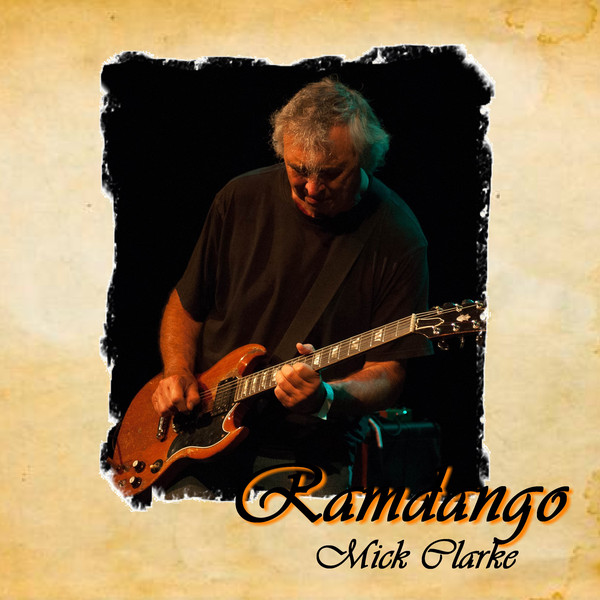
By the time of Lou Martin’s death in 2012, Mick Clarke was also enjoying a solo career. He had recorded Solid Ground at The Moat, in London during 2007. During the sessions, Mick Clarke lead a tight, talented quartet as they recorded an album of blistering blues rock. It was released later in 2007 as Solid Ground. Six years later, Mick Clarke returned with Ramdango.
Ramdango.
Unlike Solid Ground, Mick Clarke wasn’t accompanied by a band on Ramdango. Having written the thirteen songs on Ramdango, Mick Clarke headed into his Fabulous Rockford Studio, deep in the leafy Surrey countryside.
As he walked through the door to the Fabulous Rockford Studio, Mick Clarke was transformed. It was akin to Clark Kent becoming Superman. In the studio, Mick Clarke revealed his hidden talents. He wasn’t just one of Britain’s top blues’ guitarists. Instead, Mick Clarke was a talented multi-instrumentalist, who was about to engineer and produce Ramdango.
Mick Clark was determined to use real instruments. He wasn’t going to resort to programming drum parts. Nor was he willing to use pre-recorded sounds. Instead, Mick Clarke became a one man rhythm section, playing bass and drums, plus guitars, keyboards and percussion. Gradually, the album began to take shape. Eventually, had succeeded in his mission to record Ramdango using real instruments. Only very occasionally did Mick Clarke have to trigger a snare drum or cymbal crash. It was a remarkable achievement.
Mind you, Mick Clarke was a vastly experienced musician. He made his recording debut in 1969, so had forty-four years experience behind him. This critics said he had put to good use on Ramdango, which is a Scottish word for a party. Mick Clarke’s soundtrack to Ramdango was released to critical acclaim.
Mick Clarke set the bar high on Ramdango with the hard rocking instrumental Baked Potatoes. What followed was an album where blues rock, boogie and rock rubbed shoulders. There were highlights aplenty on the album. This included Who’s Educating Who, which was a favourite of XM Satellite Radio. However, there’s much more on Ramdango. Especially, the bluesy sounding Helping Hand, Curry Night, Behave Christine Behave, False Information, The Snarl, Talk and the wistful What I, which closes Ramdango. It found Mick Clarke rolling back the years on an album one critics called: “the album of the year.”
Crazy Blues.
A year later, and Mick Clarke was back with the followup to Ramdango, Crazy Blues. Just like his previous album, it was all his own work. Mick Clarke had written ten of the twelve tracks, and recorded Crazy Blues at his Fabulous Rockfold Studio, in Surrey, England.
Carrying his newly purchased Epiphone 335 guitar, Mick Clarke returned to his Fabulous Rockfold Studio. That was where the twelve tracks that became Crazy Blues were recorded. Despite the credits showing the album as being recorded by Mick Clarke and the Rockfold Rhythm Section, that isn’t the case. Again, Mick Clarke plays all the instruments on the album. The only other musician who played on Crazy Blues was Linda Cooper, who played maracas. Apart from that, Crazy Blues was the work of just Mick Clarke.
Again, critical acclaim accompanied the release of Crazy Blues. It was another album of blues rock where Mick Clarke makes presence felt from the get-go on what’s a memorable album of blues rock. Just like on Ramdango, one Britain’s greatest bluesman Mick Clarke, he continues to roll back the years.
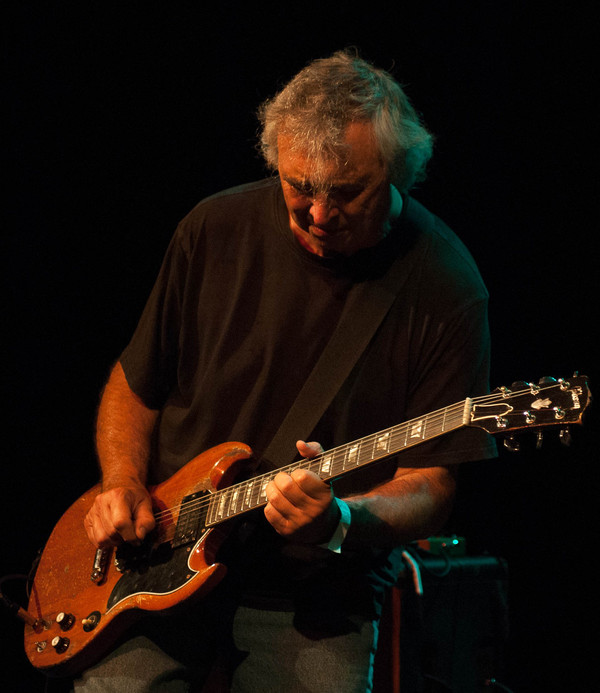
Crazy Blues was the second critically acclaimed album Mick Clarke had released in two years. Both won over critics and blues aficionados. However, for the third album in this trilogy of Mick Clarke’s recent self-produced solo albums, he decides to stray from the road marked blues rock.
Shake It Up!
Just like his two previous albums, Mick Clarke wrote the thirteen songs on Shake It Up! He would take charge of engineering and production when he returned to his Fabulous Rockfold Studio.
Multi-instrumentalist Mick Clarke played all the instruments on Shake It Up! Essentially, the album picked up where left off on Crazy Blues. However, Mick Clarke decided to change direction on a couple of tracks, and even paid homage to two veteran American bluesmen. Shake It Up! was Mick Clarke’s most eclectic album.
That was apparent throughout Shake It Up! When it was released in 2015, critics hailed the album as one of the best albums Mick Clarke had recorded in recent years. It was also critics agreed, Mick’s most eclectic album. He heads in the direction of funk rock and draws inspiration from Robert Cray and Albert King as he seeks to reinvent his music. However, for much of Shake It Up! it’s akin to listening to a musical master craftsman at work. Mick Clarke, whose one of the best British blues guitarist of his generation, puts all of his years of experience to good use on Shake It Up! In doing so, he creates his own inimitable brand of blues rock which Mick Clarke has spent a lifetime perfecting.

After six decades, Mick Clarke was the musical equivalent of a master craftsman. He had dedicated himself to the blues. This had paid off, and by the time Shake It Up! was released in 2015, Mick Clarke was without doubt, one of the greatest blues guitarists of his generation. He’s also a talented multi-instrumentalist, who engineered and produced Ramdango, Crazy Blues and Shake It Up! This trilogy of albums is the perfect introduction to Mick Clarke’s solo years, and showcases one of the most talented British bluesmen of his generation. However, Mick Clarke is also one of the most underrated British bluesmen.
Sadly, Mick Clarke has never enjoyed the high-profile that many of his contemporaries. He and his music have gone under the radar of many music fans. Just like JJ Cale was, Mick Clarke is a musician’s musician. That is why may high-profile artists, including Doris Troy, Jeff Beck, Deep Purple’s Jon Lord and Jon Entwistle have brought Mick Clarke onboard to work on projects. However, it’s not just musicians who appreciate Mick Clarke’s music.
Mick Clarke has also a loyal fan-base in Britain, Europe and America. His albums sell well and he’s a popular live draw wherever he’s played. Recently, Mick Clarke had played live in India and Bosnia where a new audience discovered the British bluesman’s music.
Still, though, there many people who haven’t discovered Mick Clarke’s music. He’s still one of British blues’ best kept secret but maybe for not longer if he continues to release albums of the quality Ramdango, Crazy Blues, Shake It Up! and his latest album Diggin’ Down.
The Life and Time Of British Bluesman Mick Clarke.
THE STORY OF ZEPHYR: ONE OF THE BEST BANDS YOU’VE NEVER HEARD.
The Story Of Zephyr: One Of The Best Bands You’ve Never Heard.
Like many bands who don’t reach the heights that their music deserves, the story of Zephyr is one of what might have been. They released a trio of albums between 1969 and 1972, which nowadays, have a cult following including Zephyr, Back To Colorado and Sunset Ride. These two albums feature one of the best bands you’ve never heard. Their story began in 1969.
That was when Zephyr formed in Boulder, Colorado by eighteen year old guitarist Tommy Bolin, keyboardist John Faris, drummer Robbie Chamberlin, bassist David Givens and his wife Candy Givens, who became the lead vocalist and harmonica player. They were all talented musicians who shared a love of music. Their talent and love of music shawn through as they began to play live.
By then, the nascent band, had been named Zephyr, purely because the it “sounded ethereal.” Soon, the newly named Zephyr were honing their sound on the Boulder music scene. It was a mixture of blues, jazz and rock. This proved popular, and soon, Zephyr were playing all around Colorado. They had quickly built up loyal following and were already working on their eponymous debut album.
Zephyr.
Zephyr began work on their debut album not long after the band were formed. It was as if the five members of Zephyr were making up for lost time. They were determined that Zephyr should fulfil its potential.
Each member of the band was a talented musician. Although each member of the band came from different musical backgrounds, they had played blues and rock ’n’ roll. That was the commonality that they shared. Some of the members of Zephyr were also budding songwriters.
Especially Tommy Bolin, David Givens and his wife Candy Givens, who wrote six of the nine tracks on Zephyr. Tommy Bolin and Candy Givens wrote Sail On and Huna Buna. David Givens penned Boom-Ba-Boom and wrote Cross The River with his wife Candy Givens. They wrote Somebody Listen with John Faris while Hard Chargin’ Woman was credited the five members of Zephyr. The other two tracks on Zephyr were cover versions. This included Dee Clark’s Raindrops and Joe Primrose a.k.a. Irving Mills’ St. James Infirmary Blues. To record their eponymous debut album, Zephyr headed to Los Angeles.
Their destination Wally Helder Studios, which was one of L.A.’s top recording studios. It was a far cry from the basement of Cindy Givens’ parent’s house, where some of the songs had been arranged. Zephyr were going up in the world. Especially since Bill Halverson was about to produce Zephyr.
This was a big deal for the Zephyr who were still a relatively new band. They had come a long way in a short space of time. However, they were already a tight band. The rhythm section featured drummer Robbie Chamberlin, bassist David Givens and guitarist Tommy Bolin. John Faris switched between organ, piano and flute, while lead vocalist Candy Givens also played harmonica. Producer Bill Halverson was tasked with capturing the energy of Zephyr who were a charismatic and versatile band. It wasn’t going to be easy, but Bill Halverson succeeded in doing so.
Later in 1969, Zephyr was released on the Probe label, which was an imprint of ABC Records. The album received plaudits and praise upon its release. Praise was heaped on lead vocalist Candy Givens and virtuosos guitarist Tommy Bolin. They were regarded as key to the sound and success of Zephyr as they switched between musical genres.
Almost seamlessly, Zephyr switched from blues to rock ’n’ roll and sometimes, became a jam band. Regardless of which style Zephyr played, their energy, enthusiasm and charisma shawn through. It seemed that Zephyr had been influenced by MC5, Ram Jam, Iron Butterly and even Cream, Led Zeppelin, Janis Joplin and John Mayall and The Blues Breakers. All these influences shown through on Zephyr, which should’ve found a much wider audience.
Upon its release later in 1969, Zephyr wasn’t a hugely successful album. It sold reasonably well in Boulder and across Colorado. However, it failed to find an audience further afield. Considering Zephyr had only been together less than a year, and it was only their debut album, they were well ahead of the musical curve.
Back To Colorado.
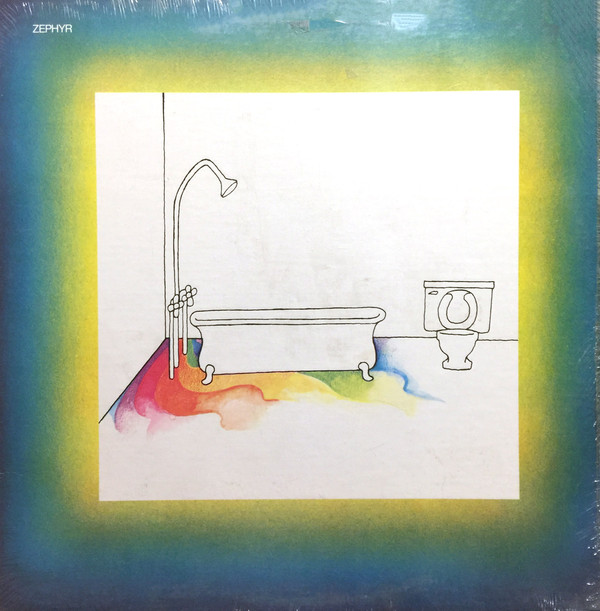
It wasn’t until late 1970 that Zephyr began work on their sophomore album Back To Colorado. By then, Zephyr had moved from Probe to Warner Bros. Zephyr it seemed, were going up in the world. However, this wasn’t the only thing that had changed.
Zephyr’s lineup had changed. Robbie Chamberlin, Zephyr’s original drummer had left and been replaced by Bobby Berge. This was the first of several changes in Zephyr’s lineup. What hadn’t changed, was that most of the songs on Back To Colorado had been written by members of Zephyr.
This included David and Candy Givens. They wrote Miss Libertine; while David Givens penned Night Fades Softly and The Radio Song and Candy Givens contributed At This Very Moment. She also wrote Going Back To Colorado with John Tesar and Tommy Bolin. The John Tesar and Tommy Bolin songwriting partnership wrote Keep Me and I’ll Be Right There. Tommy Bolin who seemed to be blossoming as a songwriter, also penned and Showbizzy. These ten tracks would become Back To Colorado, which was recorded in late 1970.
For the recording of Zephyr’s Warner Bros debut, Electric Ladyland Studios, in New York was booked. It was one of the Big Apple’s top studios, and where many classic albums had been recorded. Producing Zephyr’s sophomore album Back To Colorado was Edward H. Kramer, who took a hands on approach to recording an album.
When recording of Back To Colorado began, the rhythm section now featured new drummer Bobby Berge, bassist David Givens and Tommy Bolin who played all the guitar parts and vibraphone. Zephyr’s multi-instrumentalist John Faris, played organ, piano, flute, soprano saxophone and sung the lead vocal on Take Me Love. Candy Givens took charge of eight of the nine remaining lead vocals and played harmonica. Augmenting Zephyr were backing vocalists; Buzzy Linhart who added the lead vocal on The Radio Song and Paul Conley who played a Moog synth. Producer Edward H. Kramer played piano, clarinet and percussion on Back To Colorado, where he helped Zephyr reinvent themselves musically. Eventually, Back To Colorado was completed, and was released in 1971.
Before the release of Back To Colorado, critics received a copy of the album. They discovered a quite different album from Zephyr. Back To Colorado had a much more experimental sound, and found Zephyr move away from the blues rock and jams that peppered their eponymous debut album. The only time the blues rock sound featured, was on the title-track and Showbizzy. For the rest of Back To Colorado, Zephyr move towards a Southern Californian sound.
Most of music has a much more mellow and laid back folk-rock sound. Occasionally jazz and psychedelia can be heard Back To Colorado. Mostly, though, there’s a late-sixties influence throughout Back To Colorado. This harks back to the hippy era, when peace, love, understanding and revolution were the order of the day. That is still the case on Back To Colorado, as Zephyr rekindle the spirit of the sixties. Especially on Miss Libertine and See My People Come Together where Tommy Bolin unleashes one of his finest solos. Despite his guitar not featuring as prominently on Back To Colorado, he still plays a starring role throughout Back To Colorado.
So does vocalist Candy Givens, despite some of her vocals attracting criticism back in 1971. Forty-six years later, and some of the criticism seems somewhat unjust. On Back To Colorado, Candy Givens showcases her talent and versatility. Sometimes, she draws inspiration from, and seems determined to channel the spirit of Janis Joplin. Other times, she eschews power and different side of Candy Givens can be heard. Proof of that is Candy’s vocals on Keep Me, I’ll Be Right Here and At This Very Moment. They range from tender, sultry, powerful, soulful, impassioned and earnest. Cindy Givens had the ability to breath left, meaning and emotion into lyrics. This she did a number of times on Back To Colorado, which was released later in 1971.
When Back To Colorado was released in 1971, the reviews were mixed. There was no consensus amongst critics. Some liked Zephyr’s new sound, while others preferred the their eponymous debut album. It was a similar case with record buyers, with some embracing their new sound and others preferring their debut album. As a result, Back To Colorado failed to chart, which was a huge disappointment for Zephyr.
One member of Zephyr decided to call time on his career with Zephyr. Twenty year old Tommy Bolin left Zephyr, leaving the band without a guitarist. David Givens found his replacement in Jock Bartley, who was a member The Children, who often supported Zephyr. He would make his debut Sunset Rise.

Sunset Ride.
When work began on Zephyr’s third album, Sunset Ride, there had further changes to the band’s lineup. Drummer Bobby Berge left after just one album, and was replaced by P.M. Wooten. John Alfonse was brought onboard to play congas. However, the biggest loss was multi-instrumentalist John Faris. He played keyboards, flute and saxophone and had played a part in the songwriting process. Replacing John Faris, was Dan Smyth who played organ and piano. It was a very different lineup of Zephyr that began work on Sunset Ride.
Only Candy and David Givens remained from the original five members of Zephyr. The changes in the lineup left a void when it came to writing Sunset Ride. Especially the departure of Tommy Bolin, who was one of Zephyr’s principal songwriters. For Sunset Ride, Candy and David Givens wrote the most of the album. They wrote I’m Not Surprised and Someone To Chew Together. David Givens penned No Time Lonesome, Moving Too Fast and wrote Sold My Heart with Jock Bartley. Cindy Givens contributed Sierra Cowgirl and Sunset Ride and joined with A. Armstrong and Jock Bartley to write Winter Always Finds Me. New recruit Dan Smyth made his songwriting debut when he wrote Chasing Clouds. The other track on Sunset Ride was a cover of Billy Edd Wheeler’s High Flying Bird. These ten tracks would become Sunset Ride.
When Zephyr began recording Sunset Ride, there was no sign of Edward H. Kramer. Instead, David Givens and Zephyr produced Sunset Ride. It marked the debut on the third lineup of Zephyr. The rhythm section was changed beyond recognition, with drummer P.M. Wooten joined bassist David Givens who played acoustic guitar on Someone To Chew and sung on No Time Lonesome. The third member of the rhythm section was guitarist Jock Bartley, whose vocals feature on Sold My Heart and Winter Always Finds Me. The other two newcomers were organist and pianist Dan Smyth and conga player John Alfonse congas. Candy Givens took charge of the lead vocals, played harmonica and piano on I’m Not Surprised, Sierra Cowgirl and Sunset Ride. Augmenting Zephyr was violinist Bobby Notkoff, who featured on No Time Lonesome. This new lineup of Zephyr decided to combined the old and new on Sunset Ride.
Once Sunset Ride was completed, Warner Bros. sent copies of Zephyr’s third album to music critics. They discovered a very different album Back To Colorado. Zephyr returned to the sound of their eponymous debut album. There were two difference though. The first was that Tommy Bolin’s flashy guitar licks were missing. As a result, Candy Givens wasn’t tempted to compete with them. She reigned in the power and delivers much more restrained vocals than featured on Zephyr. Candy also seems to relish the opportunity to showcase her versatility which began to blossom on Back To Colorado. Sunset Ride was a new start for Zephyr.
So good was Sunset Ride, that some critics felt it rivalled Zephyr’s eponymous debut album. It was also a more eclectic, but cohesive album. Whether it was blues rock, country, folk rock, pop or rock there was something for most tastes. Alas, when Sunset Ride was released in 1972, the album failed to trouble the charts. History had repeated itself for Zephyr. It was the last straw.
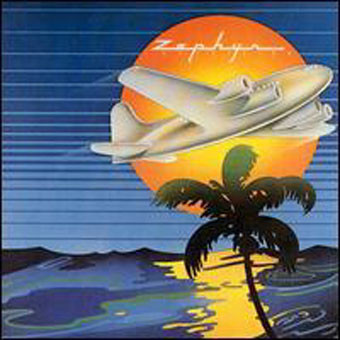
Not long after the release of Sunset Ride, Zephyr split-up. They had been together just three years, had three different lineups and released three albums. This includes Zephyr, Back To Colorado and their swan-song Sunset Ride, which sees Zephyr’s music develop over the three-year period they were together.
Back To Colorado was a much more experimental album, that had been influenced by South Californian music and the hippy ideals of the late sixties. It’s an underrated album that marked the swan-song of guitar virtuoso Tommy Bolin. He and lead vocalist Candy Givens were key to the sound and success of Zephyr. The only problem was Tommy Bolin’s guitar sometimes dominated the arrangements, forcing Candy Givens to complete with the guitars. That wasn’t the case on Back To Colorado, where Tommy Bolin’s guitar was reigned in. After Back To Colorado, he left Zephyr and formed the jazz-rock group Energy. Ironically, Candy Givens continued to blossom.
Although many critics remember Candy Givens as someone who unleashed a series of vocal powerhouses, that wasn’t always the case. She was a talented and versatile vocalist, who was capable of switching between different musical genres. She proved this to some extent on Back To Colorado, and blossomed on Sunset Ride. It was the album that could’ve and should’ve transformed the career of Zephyr. Sadly, it wasn’t to be and they spilt-up not long after the release of Sunset Ride. That looked like the end of the road for Zephyr.
Ten years later, and Zephyr hit the comeback trail, and released their fourth album Heartbeat in 1982. Sadly, by then one of the founding members of Zephyr had been dead for nearly six years. Virtuoso guitarist Tommy Bolin has died of a drugs on ‘4th’ December 1976, aged just twenty-five. He had played an important part in the Zephyr story. So had Candy Givens, who passed away in 1984. After the death of Candy Givens, Zephyr called it a day for good.
Zephyr’s legacy was the four albums they released between 1969 and 1982. This includes Back To Colorado and Sunset Ride, which feature one of the best bands you’ve never heard, Zephyr.
The Story Of Zephyr: One Of The Best Bands You’ve Never Heard.
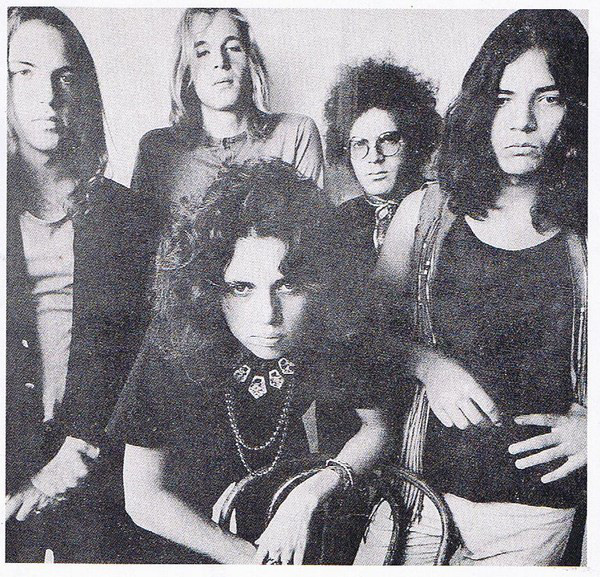
LIGHTHOUSE-THE RISE OF LIGHTHOUSE 1969-1974.
Lighthouse-The Rise Of Lighthouse-1969 1974.
In 1968, Skip Prokop the former drummer and vocalist with the Canadian psychedelic rock band The Paupers, met Brooklyn born keyboardist Paul Hoffert in a New York nightclub. The men bonded over their mutual love of music. However, when they parted company at the end of the evening, they never thought that their paths would cross again.
That was until Skip Prokop boarded a flight from New York to head home to Toronto, and recognised one of his fellow passengers. It was none other than Paul Hoffert, who was studying at the University of Toronto. The two men started talking, and soon, were discussing the possibility of forming a band based around a rock rhythm section, jazz horn section, and classical string section. It this was an ambitious plan, but one that Skip Prokop and Paul Hoffert were determined to bring to fruition.
Fortunately, Skip Prokop was a familiar face within Toronto’s music scene, and knew plenty of musicians who would be interested in joining the band he planned to form with Paul Hoffert. Skip Prokop brought onboard some of his musical friends, several session musicians and members of the Toronto Symphony Orchestra. Gradually, Skip Prokop and Paul Hoffert’s group was taking shape.
Eventually, the nascent group featured thirteen musicians. The next step for the as yet unnamed band was to record a demo. Once the demo was complete, Skip Prokop sought the advice of one of his musical friends, Richie Havens. He suggested that Skip Prokop and Paul Hoffert take the tape to MGM Records, who Richie Havens was currently signed to.
On hearing the demo, executives at MGM Records were hugely impressed with what they heard. So much so, that they offered the band an advance of $30,000. Skip Prokop and Paul Hoffert signed on the dotted line. The band was now signed to MGM Records.
Having signed to MGM Records, the band acquired a manager within the space of two days. It was just a pity they hadn’t a manager when they signed to MGM Records.
Their new manager was Vinnie Fusco, who was an associate of Albert Grossman, who managed Bob Dylan. Vinnie Fusco was an experienced manager, who was well versed in the how the music industry worked. He decided that the MGM Records’ deal wasn’t good enough for his new client.
Vinnie Fusco decided to pay the executives at MGM Records a visit to discuss the contract his new client had signed. By the end of the meeting they were prepared to free the band from their contractual obligations. This left them free to sign to RCA Victor.
Not before Vinnie Fusco had negotiated a lucrative recording contract for the band. This time, it wasn’t $30,000 that the band would receive, Instead, they would receive hundreds of thousands of dollars over the course of the contract. During that morning, Vinnie Fusco had more than proved his worth.
Now that the band had a recording contract in place, the next step was to finalise the band’s lineup. Although the band had recorded a demo, this wasn’t the version that would make their live debut at Toronto’s Rock Pile on May ’14th’ 1969.
With the lineup of the band finalised, and having honed their sound, they were ready take to the stage at the Rick Pile. As the band prepared to take to the stage, a seventy year old man-made his way to the microphone to introduce the band. Some members of the audience thought his face was familiar. It was none other that Duke Ellington who uttered the immortal words “I’m beginning to see the Light…house.” With that, the thirteen members of the band that would become Lighthouse took to the stage and delivered a barnstorming set. By the end of the night, very few people were taking about Duke Ellington. Instead, they were taking about Lighthouse’s live debut.
After the success of Lighthouse’s live debut, Vinnie Fusco knew that he had signed a band with a big future ahead of them. He wasted no time in taking Lighthouse into the studio to record their eponymous debut album which was written and recorded during 1969.
Lighthouse.
For Lighthouse, members of the band had written eight new songs, and covered The Byrds’ Eight Miles High and Richie Havens’ No Opportunity. Lighthouse’s songwriter-in-chief was Skip Prokop who cowrote three songs and wrote four more. This included If There Ever Was A Time, Follow The Stars, Marsha, Marsha and Ah I Can Feel It. He and Paul Hoffert wrote Whatever Forever, while Skip Prokop Peggy Devereux wrote Life Can Be So Simple. They also wrote Mountain Man with guitarist Ralph Cole. Brenda and Paul Hoffert Never Say Goodbye contributed. These ten tracks were to be recorded at Electric Ladyland Studios, New York.
At Electric Ladyland Studios, the thirteen members of Lighthouse prepared to record their eponymous debut album.Taking charge of production was Skip Prokop and Paul Hoffert who was Lighthouse’s musical director. After the sessions got up and running, it soon became apparent things weren’t going to plan. Rather than waste time and money, they should head home to Toronto and record the album there.
When Lighthouse returned to Toronto, they deduced to record at Eastern Sound Studios. Suddenly, the band were in a groove and before long, had recorded the ten songs that became Lighthouse. Once it was completed, it was released later in 1969.
Before that, critics had their say on Lighthouse. It received plaudits and praise from critics who were won over by Lighthouse’s innovative genre-melting sound. Lighthouse was a mixture of jazz, rock, classical and fusion. There’s even avant-garde, blues, chamber pop, funk, pop and psychedelia, in an album that was designed to grab the listener’s attention.
Alas, when Lighthouse was released, the album failed to find the audience it deserved. Lighthouse failed to trouble the charts. It was a similar case when If There Ever Was A Time was released as a single. Despite the disappointment caused by the failure of their debut album and single, Lighthouse began work on their sophomore album, Suite Feeling.
Suite Feeling.
By then, Lighthouse were regarded as one of the top live acts in Canada. The band was hoping that their sophomore album would introduce the band to a much wider audience.
When Lighthouse began work on what became Suite Feeling, Skip Prokop and Paul Hoffert were starting to forge a successful songwriting partnership. They wrote Could You Be Concerned, Presents Of Presence, Taking A Walk, Eight Loaves Of Bread and What Sense. The pair also penned Feel So Good with Grant Fullerton, and the trio proceeded to write Places On Faces Four Blue Carpet Traces with Ralph Cole. Just like Lighthouse, there were two cover versions on Suite Feeling, Robbie Robertson’s Chest Fever and Lennon and McCartney’s Day In The Life. These nine songs were recorded in two studios.
Some recording sessions took place at Eastern Sound Studios, in Toronto. Other sessions took place in Los Angeles, at RCA’s Music Centre Of The World. This time around, Lighthouse’s lineup numbered fourteen. This new and expanded lineup of Lighthouse recorded Suite Feeling, which was produced by Skip Prokop and Paul Hoffert.
Once Suite Feeling was completed, RCA Victor scheduled the release for late 1969. Before that, critics got the opportunity to review Suite Feeling. Just like Lighthouse, it received praise and plaudits from critics, who going by Suite Feeling were forecasting a big future for Lighthouse.
With critics won over by Suite Feeling, it looked like their sophomore album was destined for the charts. Before that, Feel So Good was released as single but stalled at fifty-five on the Canadian RPM charts. This was a disappointment for Lighthouse. There was another disappointment in late 1969, when Suite Feeling failed to chart. It was another disappointment for Lighthouse. Despite the disappointment, Lighthouse’s thoughts soon turned to their third album Peacing It All Together.
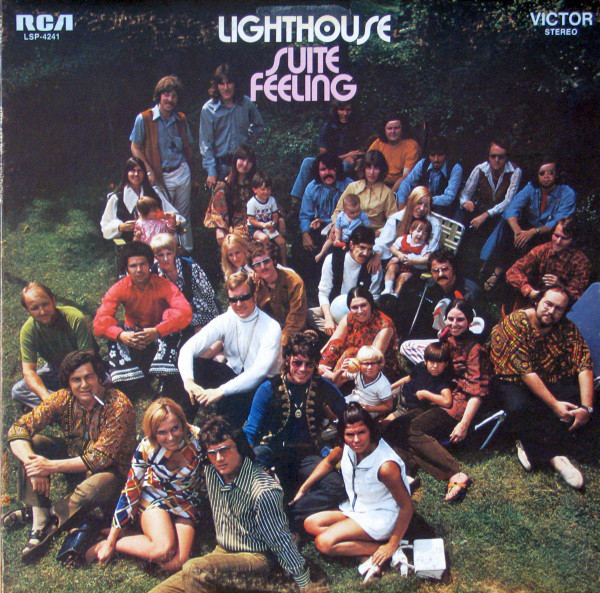
Peacing It All Together.
Just like Suite Feeling, the Skip Prokop and Paul Hoffert songwriting partnership wrote the majority of Peacing It All Together. Their songwriting partnership was flourishing. They wrote Nam Myoho Renge’ Kyo, The Country Song, Sausalito, The Fiction Of Twenty-Six Million, The Chant (Nam Myoho Renge’ Kyo), Mr. Candleman, On My Way To L.A., Just A Little More Time, Little People and am Myoho Renge’ Kyo. Skip Prokop and Paul Hoffert also wrote Let The Happiness Begin with Ralph Cole, and Every Day I Am Reminded where Beethoven receives a credit. The only song not written Skip Prokop and Paul Hoffert, was Daughters And Sons which Grant Fullerton contributed. These songs became Peacing It All Together which was recorded in the Big Apple.
Recording took place at RCA’s Studio C, in New York, where Lighthouse Mk. III recorded Peacing It All Together. There had been further changes to the band’s lineup and Lighthouse were back to being to a thirteen piece band. However, it wasn’t unlucky thirteen for Lighthouse.
Peacing It All Together was a much more eclectic album, with tracks ranging from folk and pop, to jazz and orchestral rock. This won the approval of critics, who hailed Peacing It All Together as Lighthouse’s finest hour.
When Peacing It All Together was released to critical acclaim in 1970, the album charted and reached 133 in the US Billboard 200. It was third time lucky for Lighthouse, who at last, had a hit album on their hands. That was no surprise given the quality of music on the album.
Peacing It All Together marked the start of the rise and rise of Lighthouse. However, this wouldn’t be at RCA Victor. After the release of Peacing It All Together, Lighthouse signed to GRT, where they enjoyed the most successful period of their career.
By then, Lighthouse had appeared at Canada’s Strawberry Fields festival in August 1970 and later that summer, stared at the Isle Of Wight Festival in Britain. The rise and rise of Lighthouse continued.
Sadly, it was without lead singer Pinky Dauvin, who left the group after the release of Peacing It All Together. By then, Lighthouse were touring 300 days a year, and when they weren’t touring they were recording. It was a gruelling schedule, and one that was taking its toll on Lighthouse.
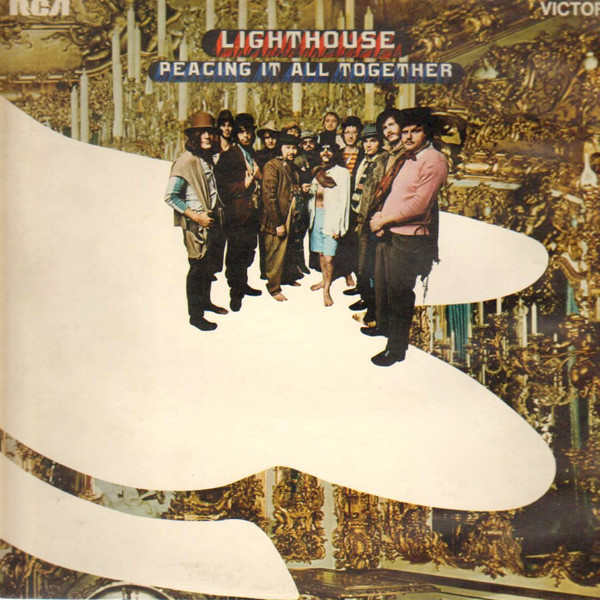
Thoughts of Movin’ On.
When Lighthouse returned in 1971 with their fourth album Thoughts of Movin’ On, it featured a very different lineup of the band. Bob McBride made his debut as lead singer, and was one of four new members of Lighthouse, who were now an eleven piece band. The new lineup of Lighthouse hit the ground running, with the most successful album of the band’s four album career.
When it came to the choose the lead single, Lighthouse chose One Fine Morning and it reached number twenty-four in the US Billboard 100 in 1971. Meanwhile, in Canada, One Fine Morning reached number two and was certified gold. One Fine Morning also gave Lighthouse an international hit single. At last, Lighthouse’s music was reaching the audience it deserved. However, this wasn’t the end of the success for Lighthouse.
Buoyed by the success of One Fine Morning, Take It Slow (Out In The Country) was released as a single. Although it reached just sixty-four in the US Billboard 100, it reached number twelve in the Canadian charts. Lighthouse were making progress at last.
What Lighthouse released Thoughts of Movin’ On stalled at 157 in the US Billboard 200. That was a disappointment for the band. However, back home in Canada, Thoughts of Movin’ On but was certified gold. Still, things would get better for Lighthouse.
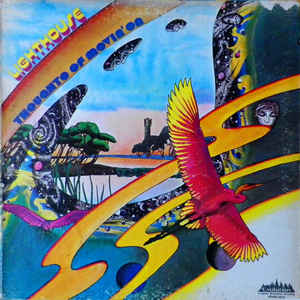
Lighthouse Live! at the Carnegie Hall.
In February 1972, Lighthouse recorded Lighthouse Live! at the Carnegie Hall, in New York. Before its release Lighthouse Live! won the approval of critics. That came as no surprise, as the album featured a barnstorming performance from Lighthouse.
When Lighthouse Live was released later in 1972, the album stalled at 178 in the US Billboard 200. Across the border in Canada, Lighthouse Live! became the first Canadian album to be certified platinum. Lighthouse were now one of the biggest bands in their native Canada.
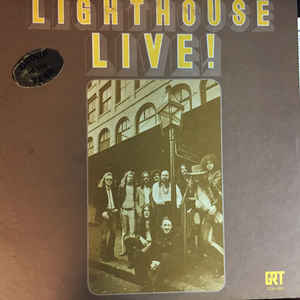
Sunny Days.
Later in 1972, Lighthouse returned with their sixth studio album Sunny Days. The band had high hopes for the album, especially after the success of Lighthouse Live! They were eventually reaping the rewards of years of hard work.
While critics heard Sunny Days, it received praise and plaudits. Lighthouse seemed to maturing with each album they released. Their popularity continued to grow in Canada, with Sunny Days reaching number four. However, when Sunny Days was released in American, it reached just thirty-four in the US Billboard 100. America was proving a tough market to crack for Lighthouse. The other single from Sunny Days was You Girl which reached seventeen in Canada, but failed to trouble the US Billboard 100. This was a disappointment for Lighthouse.
So was Sunny Days stalling at just 190 in the US Billboard 200 in 1972. Despite that, Sunny Days was certified gold in Canada and the Lighthouse success story continued apace.
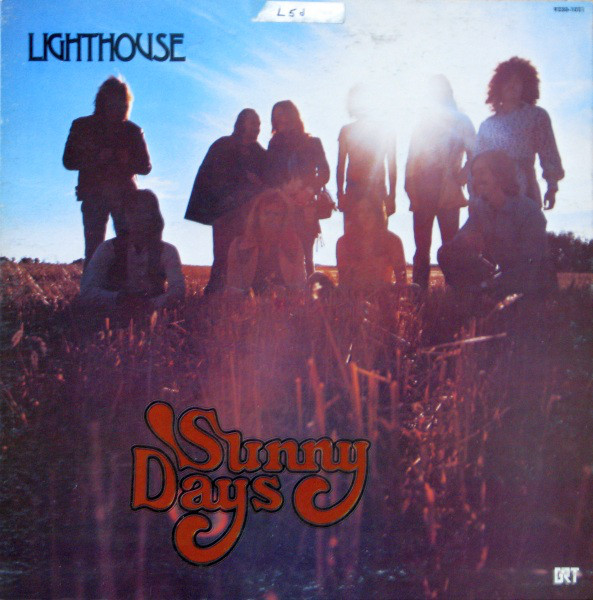
Despite being at the peak of their popularity, Paul Hoffert who was still only thirty was tiring of life on the road. He left Lighthouse, but continued in the role of executive producer. This lead to the latest change in Lighthouse’s lineup.
Can You Feel It,
When Lighthouse returned to the studio to record their seventh studio album Can You Feel It, lead vocalist Bob McBride failed to turn up. Skip Prokop and Ralph Cole wanted to cancel the sessions. However, producer Jimmy Ienner was determined the session continue, and even introduced a new rule that who wrote the song, sang it. This meant that Skip Prokop and Ralph Cole sung most of the songs, apart from No More Searching, which was penned by new saxophonist Dale Hillary. Eventually, Can You Feel It was completed and became the first Lighthouse album to feature multiple vocalists, was completed.
The decision to use multiple vocalists was one that could’ve backfired badly on Lighthouse. However, Can You Feel It was well received and the album was scheduled for released later in 1973.
Before that, Pretty Lady reached number nine in Canada and fifty-three in the US Billboard 100. For the followup Can You Feel It was released, and reached number nineteen in Canada. When Can You Feel It was released in 1973, the failed to chart in America. It looked as if Lighthouse were never going to crack the American market. In Canada, Can You Feel It sold well, but this time, there was no gold disc for Lighthouse. Still, though, the rise and rise of Lighthouse continued. They were one of Canada’s most successful bands by 1974. The last four years had been a roller coaster ride for Lighthouse.
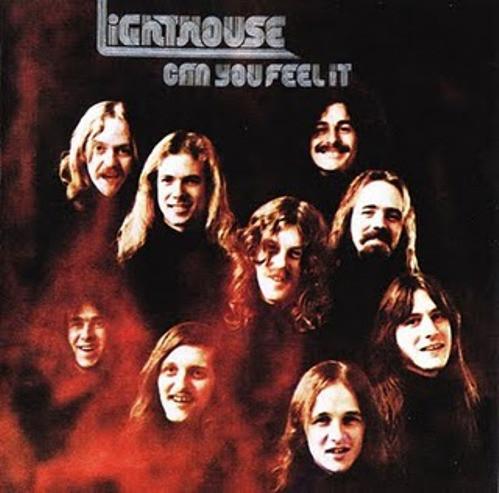
Good Day,
A year later, in 1974, Lighthouse returned with their eighth studio album Good Day in 1974. By then, the lineup had changed. Skip Prokop had switched to guitar on a permanent basis, and Billy King was drafted in as the new drummer. Still, though, Skip Prokop and Ralph Cole shared lead vocal duties in an attempt to ensure there was a degree of continuity.
This was important for Lighthouse, given their previous album Can You Feel hadn’t replicated the success of previous albums. That had even been the case in their native Canada, where Lighthouse were a hugely popular band. They needed Good Day to be a big success
When Good Day was released as a single in 1974, it stalled at a lowly sixty-eight in Canada. Things didn’t improve when the album Good Day was released. It failed to match the sales of previous albums it featured the song Wide-Eyed Lady, which quickly would become a favourite when Lighthouse played live.
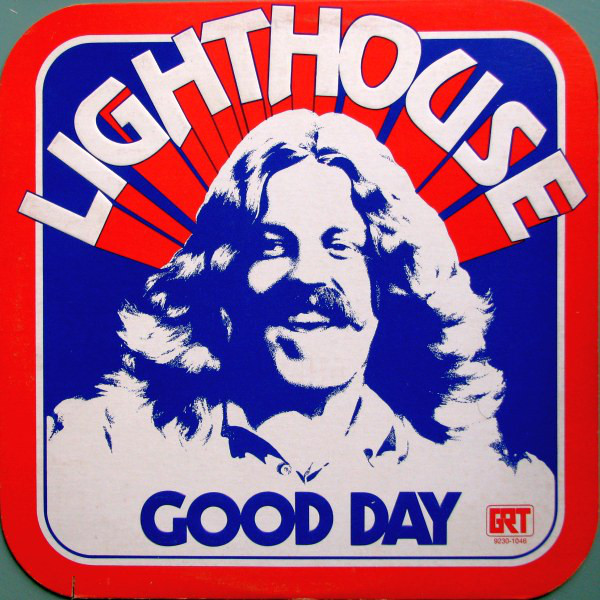
Despite the disappointing sales of Good Day, Lighthouse returned to Thunder Sounds Recording Studios to begin work on their ninth album. However, by then all wasn’t well within Lighthouse. Founder member Skip Prokop quit the band, and the album was never completed.
While Lighthouse continued to tour without Skip Prokop, the band never returned to the studio. The only album GRT released was The Best of Lighthouse in 1976. By then, Lighthouse were on their last legs, and disbanded later that year. After seven years, eight studio albums and a live album, Lighthouse called time on their career.
In 1992, Skip Prokop, Paul Hoffert and Ralph Cole reformed Lighthouse and twenty-five years later they’re still going strong. The reformed band released a new album Song of the Ages in 1996. Thirteen years later, and Lighthouse released 40 Years of Sunny Days a CD/DVD release in 2009. The following year, Lighthouse released the Best of Lighthouse-20th Century Masters in 2010. This was the perfect introduction to newcomers to one of Canada’s best bands, Lighthouse.
In 2014, founder member Skip Prokop retired from Lighthouse. Waiting in the wings was son Jamie, who is a chip of the old block. He ensures Lighthouse keep on rocking as they tour Canada. Then in January 2018, Lighthouse will perform for the second time on the Moody Blues Cruise. That is nearly fifty years since the Lighthouse story began.
They had released the best music of their career between 1969 and 1974. During that five-year period, Lighthouse were one of Canada’s most talented band and successful bands.They were led by Skip Prokop and Paul Hoffert who were Lighthouse’s songwriters-in-chief and producers. They were responsible for yen eight studio albums and one live album Lighthouse released between 1969 and 1974. These albums oozed quality as Lighthouse switched seamlessly between and combined disparate musical genres.
Lighthouse were musical master craftsmen, who deserved to reach greater heights during the RCA Victor years. They went on to enjoy further critical acclaim and the commercial success they deserved during the GRT years, when Lighthouse became one of Canada’s most successful bands.
Lighthouse-The Rise Of Lighthouse-1969 1974.


THE RISE AND DEMISE OF STEVE AND THE BOARD.
The Rise and Demise Of Steve and The Board.
Although Steve and The Board were formed in Brisbane, Australia, in 1965, the story began 9,000 miles away in 1950. That was when Steve Kipner, the founder of Steve and The Board was born in Cincinnati, Ohio. However, Steve Kipner didn’t spend much of his young life in Cincinnati.
His father Nat Kipner, who was a songwriter and producer, who wanted a better life for his family, and started looking for a future beyond Ohio. Eventually, Nat Kipner decided that his family would move to Brisbane, in the state of Queensland. It was situated on Australia’s gold coast, which seemed the perfect place to start a new life, and bring up a young family.
Fifteen years later, in 1965, Steve Kipner found himself studying at Brisbane Art and Technical College. By then, Steve Kipner had caught the music bug from his father who was now a songwriter, producer and promoter. Steve Kipner’s love of music began at an early age, and he had already penned She Used To Be Mine which featured on Normie Rowe’s debut album So Much Love From Normie Rowe. Already it looked as if Steve Kipner had a big future ahead of him after he left Brisbane Art and Technical College. However, it was at that venerable institution that Steve Kipner met two of his future band mates.
This was drummer Colin Petersen and guitarist Carl Groszman. They were both students at Brisbane Art and Technical College and it was purely by chance that the three aspiring musicians met. Soon, the three students had formed a friendship and Carl Groszman was introducing Steve Kipner to new music, including bluesmen like Lightnin’ Hoplkins and Muddy Waters and the R&B of Ike and Tina Turner.
All this was new to Steve Kipner, and he enjoyed discovering the new music. The third member of the trio Colin Petersen, had taken to picking Steve Kipner up in Mini Cooper and they would work out the harmonies to Beatles’ songs on the journey to and from college. On one of these journeys, they Steve Kipner and Colin Petersen came up with the idea of forming a band. That band would become Steve and The Board, who became of one Australia’s top sixties’ garage rock bands.
Having made the decision to form a band, the three members of what later became Steve and The Board, began the search for a bassist. That was how they met Dennis Neville, who previously, had been the drummer for The Tempests. However, since leaving The Tempests, Dennis Neville had started to learn the guitar. When the three members of Steve and The Board met they Dennis Neville they managed to persuade him to learn to play the bass.
Using a borrowed bass and amplifier, Dennis Neville taught himself to play the bass, and before long had mastered it. Dennis Neville became Steve and The Board’s bassist, and when they started to play live, drove the band’s van.
Despite the band lineup still evolving, the nascent began playing the live scene around Brisbane. At first, they drew inspiration from The Beatles and British Invasion groups like The Hollies. Harmonies played an important part in the band’s nascent sound. That was until they met two musicians from Sydney.
Terry Hanagan and Chris Grey, who had previously, been a member of the Missing Links had just arrived in Brisbane from Sydney when they first met Steve and The Board. The two Sydney-based musicians started telling the members of the band about City Blues, which was the urban take on R&B that the Rolling Stones had made their name playing. Having heard about City Blues, the band changed direction musically and even adopted a new name.
By then, the band had still to adopt the name Steve and The Board. However, they weren’t far away, and renamed the band Board Of City Blues. Their set lists featured a mixture of R&B and songs by The Animals, The Yarbirds, the Rolling Stones, Them and The Pretty Things. Sometimes, they dipped into The Kinks, The Who and The Beatles’ back-catalogue during their sets. Board Of City Blues also started to include some of the songs that two members of the band had written.
Despite Steve Kipner’s track record, he wasn’t one of the two songwriters in Board Of City Blues. That would come later. Instead, Colin Petersen and Carl Groszman, who had adopted the stage name Carl Keats, had started writing songs. Some of these songs would feature in Board Of City Blues’ set lists. This included the gigs the Board Of City Blues in a Nat Kipner’s club.
Board Of City Blues were in the fortunate position that Steve Kipner’s father Nat owned a small club. He allowed the band to practise there, and to play live. This was perfect for the group to hone their sound.
Having honed their sound, the Board Of City Blues were ready to make their tentative steps on the Brisbane live scene for the second time. However, this time they were a different band not just in name, but musically. One of the first gigs that the Board Of City Blues played was at a club called the Prim in the Piccadilly Arcade. After that, it looked as if the future was bright for the Board Of City Blues. That was until Nat Kipner sprung a surprise.
He announced that the Kipner family were moving to Sydney, where he felt there were better business opportunities for him. A reluctant Steve Kipner made the move.
With Steve Kipner moving to Sydney, it looked as if this spelt the end for the Board Of City Blues. That was until bassist Dennis Neville received a phone call from Steve Kipner asking him to bring the band to Sydney. Steve Kipner’s father had managed to get the Board Of City Blues some gigs, and there was even talk of a recording contract. This was too good an opportunity to turn down.
The first to arrive in Sydney was Dennis Neville, who had resigned from his job the Monday. Given what he had sacrificed, Steve Kipner’s parents allowed Dennis Neville to move into the family home. Over the next two months, the rest of the Board Of City Blues arrived in Sydney. Carl Keats was last to arrived, and in the interim, a local guitarist had deputized for him. By the time the rest of Board Of City Blues had arrived in Sydney, they began the search for a lead guitarist.
Auditions were held, and several guitarists tried out. This included ‘Long’ Tom Cowburn mentioned his friend Alex Hill. He had arrived with his family from Croatia, and as a child, studied classical violin. Eventually, he turned his back on classical music and the violin, and learnt to play the guitar. That was how Alex Hill found himself auditioning for the Board Of City Blues. It didn’t take long for the rest of the Board Of City Blues to realise that they had found their lead guitarist.
At last, the Board Of City Blues’ lineup was complete, and they went in search of their first gig. The new lineup of the Board Of City Blues took place at a surf club in Wollongong. That night, the Board Of City Blues were well received by the audience, and this proved to be the start of something for the Board Of City Blues.
Suddenly, the Board Of City Blues were playing nearly every night. Soon, the Board Of City Blues had more gigs that they could cope with. They were a hugely popular draw on the local scene. So much so, that some night, the Board Of City Blues played three gigs a night and sometimes, more. The move to Sydney had paid off for the Board Of City Blues.
Especially when Nat Kipner secured the Board Of City Blues an audition with Everybody’s, a Sydney-based record company. Although Nat Kipner had secured the audition, it wasn’t a done deal. Instead, the Board Of City Blues had to audition with Maggie Makeig, the pop music editor at Everybody’s. Everything went well, but the record label weren’t sure of the band’s name. It was then that the Board Of City Blues became Steve and The Board.
This was a much more acceptable and marketable name for the record label, and having signed on the dotted line, Everybody’s, sent Steve and The Board into the studio to record their debut single. The song that Steve and The Board had chosen, was a cover of The Pretty Things’ Rosalyn, with The Giggle-Eyed Goo! on the B-Side. This was a song that Nat Kipner had already written. However, Carl Keats made a few changes to the lyrics and wrote the music. Little did Steve and The Board know when they recorded The Giggle-Eyed Goo! in mid-1965 that it would launch their career.
Steve and The Board released their debut single Rosalyn in October 1965. It found Steve and The Board stay true to The Pretty Things’ original version. Steve and The Board’s reading of Rosalyn showcased a talented young band. However, it wasn’t Rosalyn that caught the attention of the record buying public, and their children.
Nat Kipner was able to secure Steve and The Board priceless publicity. He was involved with the children’s television show Saturday Date, and ran a competition that had children send in a drawing of what The Giggle-Eyed Goo! looked like. This was invaluable promotion, and propelled The Giggle-Eyed Goo! to number four in the Melbourne charts and thirty-four in the Brisbane charts. While the song gave Steve and The Board their first hit single, it proved to be a double-edged sword.
While Steve and The Board received a lot of publicity due to the success of The Giggle-Eyed Goo!, it was regarded as a novelty song. The problem with novelty songs, was that very few people take them seriously. There was always the risk that promoters and other bands might not take Steve and The Board seriously. However, when Steve and The Board played live in Adelaide, it was like Beatlemania all over again. Having played two songs, Steve and The Board were mobbed by young girls. Nat Kipner’s novelty song had transformed Steve and The Board’s career.
Soon, they were sharing the stage with some of the biggest names in Australian music. They also shared top billing with Herman’s Hermits. By them, Steve and The Board even had their own fan club. They had come a long way in a short time.
Despite the success, Steve and The Board weren’t making any money. This wasn’t helped by a number of disreputable promoters refusing to pay Steve and The Board. As a result, they were left living a hand to mouth existence. Suddenly, the music business wasn’t such a glamorous way to make a living.
By March 1966, plans were in place for Steve and The Board to release their sophomore single Margot, which featured I’ve Just Realised on the B-Side. While the single was given a catalogue number, it was never released.
This changed when Steve and The Board released The Giggle-Eyed Goo! EP, which featured four tracks. They were The Giggle-Eyed Goo!, Rosalyn, Margot and Rosemarie, which were all produced by Nat Kipner. When The Giggle-Eyed Goo! EP was released in 1965, Steve and The Board had been promoted to the main Spin label. With plenty of hype, The Giggle-Eyed Goo! EP was released on the record buying public. However, it never replicated the success of their debut single.
Later, The Giggle-Eyed Goo! EP would featured on Steve and The Board’s debut album The Giggle-Eyed Goo! However, by then, the writing was on the wall for the band. That was still to come.
A month after the aborted release of Margot, Steve and The Board decided to leave Sydney, as things were starting to cool down for the band. They packed their bags and headed to Melbourne, and soon, had secured a residency at the 10th Avenue Discotheque. It was run by Eddie Floyd, who soon, became the band’s manager.
While Eddie Floyd ensured the band didn’t go hungry and secured them plenty of gigs, still Steve and The Board weren’t making much money. Each week, Steve and The Board played over forty-five hours, but only made £16 each. To make matters worse, Melbourne was notorious for promoters failing to pay bands, and Steve and The Board fell victim to this several times. It was a frustrating experience.
Steve and The Board had some good times in Melbourne, and featured on ATV’s music show Go!! several times. This was invaluable publicity for the band. So was appearing on Kommotion, another popular music program that was presented by Ken Sparkes. Appearing on these shows would stand Steve and The Board in good stead when they released their next single.
This was I Call My Woman Hinges (Cause She’s Something To Adore). On the B-Side was I Want. When the singles was released, it reached the top five in the Australian charts. It was a hook-laden, R&B stomper that caught the imagination of the record buying public. I Call My Woman Hinges (Cause She’s Something To Adore) was very different to The Giggle-Eyed Goo!, and showed Steve and The Board in their true colours.
Not long after the release of I Call My Woman Hinges (Cause She’s Something To Adore), Steve and The Board released their sophomore EP in 1966. It was entitled I Call My Woman Hinges (Cause She’s Something To Adore), and also featured Farmer John, Little Miss Rhythm And Blues and Love’s Made A Fool Of You. Producing the new tracks was Nat Kipner, who had produced all of Steve and The Board’s releases. This would soon include their debut album.
By the time executives at Spin started talking about Steve and The Board releasing their debut album, the band had nearly enough material for an album. They were sent into the studio to record three more tracks, including I’m To Blame, Love’s Made A Fool Of You and Lonely Winter which Carl Groszman had written. When these three new songs were added to songs from their two EPs and singles, Steve and The Board had more than enough for their debut album.
Originally, Steve and The Board had considered the Board Meeting for album title. That would’ve been the perfect title for the album, given Steve and The Board were trying to establish a reputation as a serious R&B band. However, instead of common sense prevailing, it was decided to call the album The Giggle-Eyed Goo! It seemed that what had originally been a novelty song for a B-Side was going to haunt the band.
Worse was to come though. After Steve and The Board completed The Giggle-Eyed Goo!, drummer Colin Petersen announced that he was leaving the band. This was a huge blow for the band, as Colin Petersen had been a member from day one and was a talented drummer. Replacing him wasn’t going to be easy.
The loss of Colin Petersen couldn’t have come at a worse time, with Steve and The Board about to release their debut album The Giggle-Eyed Goo! It showcased a talented and versatile band that should’ve had a big future ahead of them.
By the time Steve and The Board’s debut album The Giggle-Eyed Goo! was released, the band had a new drummer, Geoff Bridgeford. He gave up a job with an advertising agency to join Steve and The Board. This was a decision he might later rue.
Once Geoff Bridgeford settled into the role of Steve and The Board’s drummer, the band continued their gruelling touring schedule. This found Steve and The Board crisscrossing Australia, as they played in towns and cities. Some nights, the band played four, even five gigs. This was a relentless schedule, and one the band continued day after day, week after week. Somehow, Steve and The Board found some time to record some new songs.
Steve and The Board went into the studio and recorded So Why Pretend, Now I’m Older and Sally Was A Good Old Girl. After recording the new songs, it was back to the live circuit.
Despite the constant touring, Steve and The Board managed to squeeze in a couple of appearances on television. Somehow the members of Steve and The Board were managing to cope with a schedule that even older, more experienced bands would’ve struggled with. By then, Steve and The Board’s popularity was at all-time high. They were mobbed after gigs, and literally, had run to their cars. Sometimes, they were accosted by jealous boyfriends. It got to the stage that Steve and The Board had a police officer living with the group, who were experiencing Beatlemania. The members of Steve and The Board should be wealthy young men.
As Steve and The Board returned to Sydney, the group realised that their finances needed some attention. New recruit Geoff Bridgeford was given the job of looking their finances. For a group who had literally lived on the road, playing four and five gigs each night, Geoff Bridgeford worked out that all Steve and The Board were owed was just $600. This must have come as a huge blow. To make matters worse, collecting what they were owed was easier said than done.
During September 1966, Steve and The Board released their next single, Now I’m Older which featured So Why Pretend on the B-Side. Later that month, Steve and The Board were one of the bands booked to support PJ Proby at Melbourne’s Festival Hall.
On the ‘30th’ September 1966, Steve and The Board took to the stage at the Festival Hall. For a group that had played hundreds of gigs, this was the one that went wrong. They weren’t alone though.
It was a disastrous gig for everyone involved, with technical problems sabotaging Steve and The Board’s performance. Despite this, the press turned on Steve and The Board. Just like many other bands, the press had built them up to knock them down.
Steve and The Board headed out on another tour, which was billed as The Steve and The Board Spectacular. It began on the ‘5th’ October 1966, and concluded six days later on the ‘11th’ October. Despite its brevity, it had been another gruelling tour. There was no rest for the band though.
They had to film a promotion film for their next single, which was the Alex Hill composition Good For Nothing Sue. It’s one of the four bonus tracks on The Complete Steve and The Board. So is the B-Side Sally Was A Good Old Girl. After the film was complete, Steve and The Board headed out on the first of two tours. Then on ‘1st’ December 1966 featured on the Go!! television show for what would be the last time.
In January 1967 Good For Nothing Sue was released by Spin. By then, music was starting to change, and the psychedelic era was in full swing. Steve and The Board was just one of many bands who suddenly were no longer as popular.
By the spring of 1967, gigs were starting to dry up for Steve and The Board. They were only playing two, maybe three nights a week. Steve and The Board continued for a couple of months, and on ‘17th’ May 1967 the band split up. After two years, the dream was over.
Despite all their hard work, and the gruelling tours, Steve and The Board didn’t end up rich men. Just like many other groups before them, much of the money ended up in other people’s pockets. Sadly, that still happens today. For Steve and The Board, there was no gold at the end of the rainbow.
Later, Colin Petersen enjoyed a brief spell as the Bee Gees’ drummer. Later Colin Petersen joined the band Humpy Bong who released the single Don’t You Be Too Long in 1970. However, another former member of Steve and The Board went on to enjoy fame and fortune.
After a brief solo career, Steve Kipner became an award-winning songwriter and producer. He penned songs for everyone from America, Diana Ross, George Benson and Olivia Newton John, to Heart, Joe Cocker, Neil Diamond and Rod Stewart. The songs that Steve Kipner have written have solid by the million, and he has a string of gold and platinum discs to his name. Steve Kipner has also won the prestige Ivor Novello Award. For Steve Kipner, there was life after Steve and The Board, who are still remembered some city years after they split-up.
Although they were only together for two years, they were a whirlwind for the members of Steve and The Board. During that period, Steve and The Board toured relentlessly and but recorded just sixteen songs. Still they’re remembered fondly in Australia as one of the country’s greatest garage bands.
Sadly, outside of Australia, Steve and The Board are largely unknown. That is a great shame, given they were a talented and versatile band. Within Australia, Steve and The Board are remembered by many people, who remember that two-year period when they enjoyed their own version of Beatlemania. Ironically, many people remember Steve and The Board for their first hit single The Giggle-Eyed Goo! However, the followup single I Call My Woman Hinges (Cause She’s Something To Adore) is much more representative of Steve and The Board’s music, who were one of Australia’s greatest garage bands of the sixties.
The Rise and Demise Of Steve and The Board.

THE LIFE AND TIMES OF JUDY HENSKE.
The Life and Times Of Judy Henske.
It was in 1962, when Judy Henske was living in Los Angeles, that the Queen of the Beatniks first came to the attention of Elektra Records’ founder Jac Holzman. He had just setup A&R and marketing operation in LA and was on looking for new artists to add to Elektra Records’ roster. The first night he saw Judy Henske sing, he knew that he had to sign her. It wasn’t just her powerful voice, it was also her presence onstage and bawdy humour. Jac Holzman was sure that this was a winning combination, and set about signing Judy Henske.
Eventually, it cost Jac Holzman $2,000 to sign Judy Henske to Elektra Records. His initial offer was $1,000, which Jac Holzman was hoped would secure the signature of Judy Henske. However, he was so keen to sign Judy Henske that he was willing to double his initial offer, to $2,000. That was enough to secure the signature of Judy Henske.
Not long after this, Judy Henske recorded her eponymous debut album in front of studio audience. Judy Henske was released on Elektra Records in 1962, with High Flying Bird following in 1963. By the time High Flying Bird was released in 1963, twenty-seven year old Judy Henske had come a long way since embarking upon a solo carer four years earlier.
The Judy Henske story began in Chippewa Falls, Wisconsin where Judith A. Henske was born on December ’20th’ 1936. She attended Notre Dame Grade School and then Notre Dame-McDonell Memorial High School, before heading to Rosary College, River Forest, Illinois. After that, Judy Henske enrolled at the University of Wisconsin, in Madison, and when she graduated moved to Ohio.
Judy Henske began working in the office of Oberlin College, Ohio. That was where Judy Henske’s first starting making music. Her boyfriend left Judy and moved to India. However, he left behind his banjo, and soon, Judy Henske had taught herself to play it. This was the start of a musical voyage of discovery. Soon, she was playing Dixieland jazz and murder ballads. Not long after this, Judy Henske relocated.
This time, Judy Henske moved to Philadelphia, Pennsylvania, where she worked for a while as a cook in a Quaker co-operative. During this period, Judy was able to find herself and grow as a person. After that, Judy Henske was on the move again.
In 1959, Judy Henske relocated to San Diego where she lived in a sloop in a yacht basin. Not long after her arrival in San Diego, Judy Henske started singing in the coffee houses in Pacific Beach and soon, in Los Angeles. That was where she first encountered comedian Lenny Bruce. The pair often worked together, during the time Judy Henske spent in San Diego. However, after spending the best part of two years in San Diego, Judy Henske was ready for a change of scenery.
Judy Henske headed to New York, where she was asked to contribute four songs live, that would appear on a compilation. The Coffee House was released on the Dorian label in 1959, and marked the debut of Judy Henske. Soon, she was moving from East Coast to the West Coast.
1960 saw Judy Henske arrive in Los Angeles. She was a stranger in town, and the only person she knew of, was Herb Cohen who was one of the leading lights of Sunset Strip folk scene. For a new folk singer who had arrived in LA, Herb Cohen was a good man to know.
On her first night in Los Angeles, Judy Henske went looking for Herb Cohen. She met him outside of Cosmo Alley, one of two coffee shops Herb Cohen owned. When he saw Judy clutching her banjo, he asked if she could play it? This lead to an impromptu audition and before he had hired Judy Henske and become her manager. She would receive $90 for playing at his other coffee shop, the Unicorn.
At the Unicorn, Judy soon became the warmup act for Lenny Bruce. By then, she had acquired a strong stage presence, where in-between songs, Judy Henske’s bawdy humour entertained patrons. They were a tough crowd, but Judy Henske’s put downs and her incredible powerful voice that captivated the patrons at Herb Cohen’s coffee shops. Before long, Judy Henske had developed an act which was a combination humorous monologues and music, which made her a popular draw.
Dave Guard and The Whiskeyhill Singers.
So much so, that Herb Cohen decided to send Judy Henske to one of the biggest coffee shops in Oklahoma City. That was where she was spotted in early 1961 by Dave Guard, who previously, had been a member of the Kingston Trio. Dave Guard was about to form a new group The Whiskeyhill Singers and he asked Judy Henske to join his new folk group and sing the female lead vocal. Before she could agree, Judy Henske had to ask her manager Herb Cohen. When he agreed, Judy Henske joined The Whiskeyhill Singers.
Compared to her gigs at the Unicorn, and warming up for Lenny Bruce, The Whiskeyhill Singers were somewhat staid by comparison. Dave Guard brought to Judy Henske onboard The Whiskeyhill Singers to provide balance to the group. She was going to be yin to his yang, on their debut album.
This was Dave Guard and The Whiskeyhill Singers which was released on Capitol in 1962. By then, the group had honed their own, unique sound and style. It was hailed as often innovative by critics. However, Dave Guard and the Whiskeyhill Singers failed to find an audience upon its release. Nether did the singles Ride On Railroad Bill nor Plane Wreck At Los Gatos when they were released in 1962. Despite this, The Whiskeyhill Singers began work on their sophomore album.
Before that, The Whiskeyhill Singers were asked to provide some songs to the How The West Was Won soundtrack. Originally, the producers of this MGM wanted to the Kingston Trio to feature on the soundtrack. However, when they heard that Dave Guard had a new group, The Whiskeyhill Singers they felt their sound was much more suited to the soundtrack. This resulted in the The Whiskeyhill Singer being asked to feature on the How the West Was Won soundtrack. For Judy Henske, and the rest of The Whiskeyhill Singers this was the break they were looking for.
The Whiskeyhill Singers began work on their sophomore album, which was completed later in 1962. However, The Whiskeyhill Singers 2nd Album was never released by Capitol Records. Nor long after that, Dave Guard called time on The Whiskeyhill Singers. It had been a short-lived, unfortunately, unsuccessful project that lasted just over six months. However, they had managed to record a lot of music during this period.
After the demise of The Whiskeyhill Singers, Judy Henske decided to return to Los Angeles, where the folk boom was continuing. She was able to pickup where she left off, singing at the Unicorn and at the Troubadour which was well on its way to coming one of LA’s top music venues. It was where many of the biggest names in music hung out, including some of the leading lights of the folk scene.
As the folk boom continued, many within the music industry were keen to profit from the genre’s popularity. Many music industry veterans were aware that folk music, like previous genres, was a bubble, that could burst at any minute. The trick was to make hay while the sun shined. This included compiling and releasing a slew of folk compilations. With Judy Henske’s star in the ascendancy, it was no surprise that she was asked to feature on a couple of these compilations.
This included featuring on folk compilations like and Folk At The Troubadour. These compilations would introduce Judy Henske and the other artists to a much wider audience when they were eventually released. By then, twenty-six year old Judy Henske had made a big breakthrough.
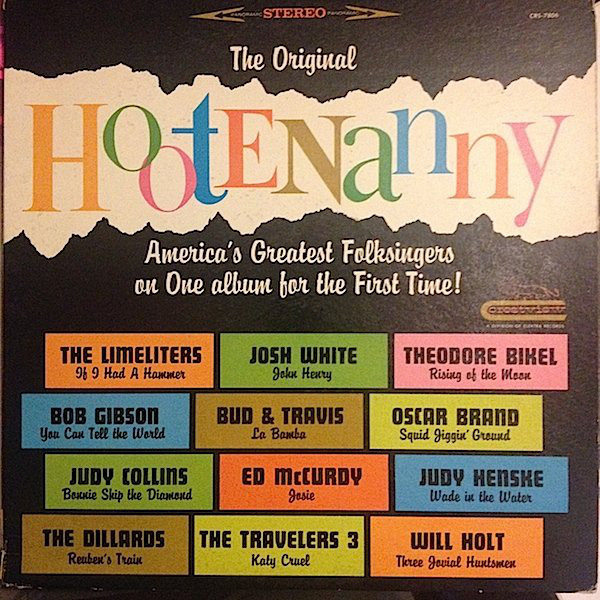
It was just another night when Judy Henske took to the stage at an LA club. She had honed her stagecraft and had onstage presence that was the envy of many less talented singers. Judy Henske made it look unleashes her incredible powerful voice. She brought meaning and emotion to lyrics, and seamlessly, switched between folk and blues. Then in-between songs, she embarked on a long, but carefully cultivated monologue. The patrons were won over by Judy Henske. So was Elektra Records’ founder Jac Holzman.
He had just setup A&R and marketing operation in LA and was on looking for new artists to add to Elektra Records’ roster. That was why he was sitting in the club, as Judy Henske started to sing. Straight away, he knew that he had to sign her. Her combination of music, monologues and bawdy humour Jac Holzman was sure, was a winning combination. Jac Holzman set about signing Judy Henske, and adding her to Elektra Records’ burgeoning roster.
Eventually, it cost Jac Holzman $2,000 to sign Judy Henske to Elektra Records. His initial offer was $1,000 which Jac Holzman was hoping would secure Judy Henske’s signature. When she hesitated, Jac Holzman reached over and scored out $1,000 and replaced it with $2,000. That was enough to secure the signature of Judy Henske, who joined Elektra Records’ roster of folk singers.
Not long after this, Judy Henske recorded her eponymous debut album in front of studio audience. This was what Judy Henske had been working towards for three years.
Judy Henske.
When Judy Henske joined Elektra Records, she joined Phil Ochs and Fred Neil, Judy Collins and soon, Tim Buckley. Jac Holzman was well on his way to securing the signatures of the creme de la creme of young American folk singers.
Not long after signing to Elektra Records, Judy Henske began preparing to record her debut album. Jac Holzman had decided to record the album in front of a large studio, with an invited audience. At first, Jac Holzman thought of recording just Judy Henske and her guitar. However, he wanted a bigger sound, so decided to hire an orchestra.
Jac Holzman secured the services of Onzy Matthews, an experienced LA based bandleader. Meanwhile, guitarist John Forsha would trombonist John ‘Streamline” Ewing would lead the orchestra. They would accompany Judy Henske on eleven tracks.
For her debut album, Judy Henske chose two of her own songs, Hooka Tooka and Lily Langtree. Judy Henske arranged Low Down Alligator, Ballad Of Little Romy, Wade In The Water, I Know You Rider, Love Henry, Every Night When The Sun Goes In and wrote new lyrics to Salvation Army Song. They were joined by JC Johnston’s Empty Bed Blues and James Shelton’s Lilac Wine. These songs would be recorded in LA, and become Judy Henske’s eponymous debut album.
Once Judy Henske had recorded her much-anticipated eponymous debut album, it was released on Elektra Records in 1962. Critics on hearing Judy Henske, realised she was a very special and versatile singer, and the album received praise and plaudits.
While Judy Henske was well received by critics, who were appreciative of the album and a very special young singer who was making her debut, the album failed to find an audience outside of the folk community. While this was disappointing, Judy Henske and Elektra Records’ founder Jac Holzman were playing the long game.

High Flying Bird.
By the time it came time for Judy Henske to record her sophomore album High Flying Bird, she was a popular draw in Los Angeles and New York. It looked as if her star was in the ascendancy. This was the perfect time for Jac Holzman to send Judy Henske back into the studio.
When it came to recording High Flying Bird, Judy Henske penned Oh, You Engineer with Shel Silverstein. She also added new lyrics to a number of traditional songs, including Buckeye Jim, Columbus Stockade, Lonely Train, Duncan and Brady, Good Old Wagon and Charlotte Town. Judy Henske also arranged Blues Chase Up A Rabbit. The other songs included Billy Ed Wheeler’s High Flying Bird which was joined by Till The Real Thing Comes Along, Hoagy Carmichael’s Baltimore Oriole, Arthur Herzog Jr and Billie Holliday’s God Bless The Child and Bart Howard and John Peter Windsor’s You Are Not My First Love. These thirteen songs became Judy Henske’s sophomore album High Flying Bird.
This time around, Jac Holzman who oversaw production, decided to take a different approach. There was no orchestra on Flying Bird, just a small band that featured a rhythm section of drummer Earl Palmer, bassist Bill Montgomery and guitarist Jack Marshall. They were augmented by two familiar faces, trombonist John ‘Streamline’ Ewing and Jack Forsha who would play the twelve string guitar. This quintet accompanied Judy Henske who switched between banjo and guitar on the thirteen tracks. They were recorded in small studio in Los Angeles and became High Flying Bird.
When critics heard High Flying Bird, they were greeted by a very different side of Judy Henske. Gone is the orchestra that accompanied Judy Henske on her eponymous debut album. High Flying Bird featured a much pared back sound, where the arrangements play second fiddle to Judy Henske as she moves between tear jerking ballads and rousing, uptempo tracks where she kicks loose. High Flying Bird was a potent and heady brew, and one that won over critics.
Just like Judy Henske, High Flying Bird proved popular within the folk community upon its release in 1963. The problem was, that Judy Henske’s music wasn’t finding a wider audience beyond the folk community. When Jac Holzman ran the numbers, he realised that High Flying Bird hadn’t sold enough copies to warrant offering Judy Henske another contract. For Judy Henske, it was the end of the for her at Elektra Records.
After just two album, Judy Henske and High Flying Bird, one of the rising stars of the American folk scene found herself without a label. For Judy Henske her recording career was already at a crossroads.
It was ironic that she had released to accomplished albums, Judy Henske and High Flying Bird, which later, was credited as one of the albums that led to the folk rock genre. However, in 1963, nobody realised that Judy Henske had provided what was essentially the blueprint to folk rock. It was only much later, when music historians were tracing folk rock’s roots that they realised the importance and relevance of Judy Henske’s sophomore album High Flying Bird.
After leaving Elektra Records, Judy Henske released Little Bit of Sunshine…Little Bit of Rain on Mercury Records in 1965. Just like her two Elektra Records albums, Little Bit of Sunshine…Little Bit of Rain failed to find a wider audience. Sadly, it was a similar case with The Death Defying Judy Henske, which was released on Reprise in 1966.
Three years later, in 1969, and Judy Henske and her husband Jerry Yester, who was also a musician, released their cult classic Farewell Aldebaran in 1969. There was no followup, as the couple were about to embark upon a new musical venture.
By 1971, Judy Henske and Jerry Yester had founded Rosebud with Craig Doerge, John Seiter, and David Vaught. Rosebud released their eponymous debut album in 1971. However, following Rosebud’s release, the band played a couple of live shows, and split up. Judy Henske and Jerry Yester divorced, and Judy went on to marry and Craig Doerge in 1973. Not long after this, Judy Henske retired from performing and recording.
Judy Henske was only thirty-even when she announced that she was retiring from music. She continued to write songs, and eventually, after over twenty years away from music, Judy Henske was ready to make a comeback in the nineties.
Her comeback went so well, that Judy Henske released two studio albums 1999s Loose In the World and 2004s She Sang California. By then, Judy Henske’s music was finding a wider audience receiving the recognition it deserved. Especially her first two albums Judy Henske and High Flying Bird. They’re a reminder on Judy Henske at the peak of her powers, when it looked like she was destined to become one of the biggest names in folk music. Sadly, that wasn’t the case, and Judy Henske whose now eighty, and has been blind for the past ten years, didn’t enjoy the success her talent warranted. A reminder of Judy Henske’s talent can be found on the two albums she released Elektra Records Judy Henske and High Flying Bird.
The Life and Times Of Judy Henske.


THE LIFE AND TIMES OF MUSICAL MAVERICK HOLGER CZUKAY.
The Life and Times Of Musical Maverick Holger Czukay.
Although the word innovator is one of the most overused words in the English language nowadays, it perfectly describes Holger Czukay who cofounded Can in 1968. This was the start of a near fifty year career where Holger Czukay continued to make groundbreaking music, and push musical boundaries to their limits, and sometimes way beyond. That had was the case throughout his long and illustrious career.
Sadly, on the ‘5th’ of September 2017, one of the cofounders of Can and the founding fathers of Krautrock passed away at Can Studio aged seventy-nine. This came just a fortnight after the death of his wife Ursula Schüring aged fifty-five. Holger was devastated and since then, hadn’t returned to the flat they had shared. Instead, he spent final days at Can Studio in Cologne, which was where he died. This marked the end a six decade career, where one of music’s mavericks produced several classic albums with Can and a string of critically acclaimed solo albums. That was all still to come.
The future Holger Czukay was born in March 1938, as Holger Schüring. Holger’s home was what was then called the Free City of Danzig. Nowadays, it’s known as Gdansk. In January 1945, Holger and his family were forced to flee their home.
“When I was a child I had to leave my hometown Danzig in Poland. My mother had already bought the tickets for the ship, the Wilhelm Gustlof, when my grandmother warned us that the ‘water hasn’t got any planks.’ I never forgot this sentence, because it saved our lives. We didn’t go onboard the ship, but went to the main station on January 13th 1945. It was a freezing night We were extremely lucky that a train with wounded soldiers picked us up, and they gave us a little bit of room on their mattresses to sleep, and we headed to Berlin. When we arrived I looked out of the window and all I could see were stones and a free field and I asked myself if this can be a capital city?” Having arrived in Berlin, Holger and his family became refugees.
Just like so many children, the war had an impact upon Holger’s education. Like so many displaced children, Holger’s education suffered. Despite this, Holger managed to get a job in a radio repair shop. Not only did he learn how to repair electrical equipment, but became fascinated by radio and the opportunities it offered. This would prove crucial to Holger Czukay’s later career. Before that, Holger served his musical apprenticeship.
For a three-year period between 1963 and 1966, Holger Czukay was privileged to study music under the legendary Karlheinz Stockhausen. He was: “a true pioneer, Karlheinz was way ahead of time.” It was during his time studying with Karlheinz Stockhausen that Holger met Conny Plank and Irmin Schmidt.
Holger remembers “Conny sitting behind him, writing out a score by hand.” At first “Conny was quiet, be we soon became close friends.”As their nascent friendship blossomed, they continued to study with Karlheinz Stockhausen and enjoy what was a truly comprehensive musical education. Karlheinz Stockhausen’s pupils listened as he taught his pupils about aleatoric music, serial composition and musical spatialisation.
Karlheinz Stockhausen wasn’t just a “visionary” in terms of electronic music, but was fascinated by aleatoric music. Essentially, aleatory is controlled chance. With aleatoric music, some element of a piece are left to chance. Granted there will only be a certain number of outcomes, but the musician has to choose the outcome they believe is correct. Serialism was another subject Karlheinz Stockhausen was interested in. With serialism, a series of values are used to manipulate musical elements. This form of composition fascinated Karlheinz Stockhausen. So did musical spatialisation, which would influence Can. Karlheinz was an evangelist, encouraging his pupils, including Holger Czukay, Irmin Schmidt and Conny Plank to investigate, examine and scrutinise each of these subjects between 1963 and 1966.
For Holger, he could have asked for a better musical education. He admits “Karlheinz taught me so much, including importantly to: ‘find your own sound.'” Holger never forget those words of advice. They became his musical mantra when eventually, he decided to make a career as a musician. However, when Holger finished studying with Karlheinz Stockhausen in 1966, he became a musical teacher.
Having graduated, Holger was enjoying life as a music teacher. Holger was enjoying his newfound career as an educator. He wasn’t a fan of pop or rock music. That was about to change in 1967.
That’s when Holger heard The Beatles’ I Am A Walrus in 1967, he was captivated by this psychedelic rock single. Holger describes this “as a life-changing moment…the music of the past and present came together.” At last; “here was music that made the connection between what I’d studied and I was striving towards” With the innovative use of bursts of radio and the experimental sound and structure, “I went in search of similar music.”
For Holger this was a case of trial and error. “Frank Zappa I didn’t really get. Velvet Underground they were different, they really influenced me and my music. They influenced the music I made…I remember the first time I heard Velvet Underground and where I was when I heard it.”
Much of the music that went on to influenced Holger was heard whilst spending time with his friends. He remembers: “sitting in a friend’s flat looking through piles of albums. We’d study the sleeve-notes and then spread the album covers all over the floor. We scrutinised them, then immersed ourselves in the music. It was a shared experience. We listened and discussed the music. I can remember these times well.” Listening to Holger speak, it’s obvious that he genuinely loves music and is still a real music fan. His enthusiasm is infectious. So much so, that it’s as if you’re sitting in the flat with Holger and his friends, looking at the album covers, listening to the music and discussing it.
Holger remembering those times fondly and still loves vinyl, which he calls: “the perfect medium, you hear the music as you’re meant to.” Listening to Holger, he’s almost evangelic about vinyl. Not compact discs though. “Compact discs reduce music to background music. No longer do you have to immerse yourself in the music. Instead, it becomes background noise.” The last thing Holger wants in music to become an accidental soundtrack to daily life. Music is much more important than that. Especially for someone who founded one of the most influential and innovative groups in musical history, Can.
Inspired by the music he had been listening to, Holger decided to form his own band in 1968…Can. However, Can’s he roots can be traced back to the previous year. That was when Holger first encountered future Can drummer Irmin Schmidt. The pair was both studying under Karlheinz Stockhausen. In 1968, the two former pupils of Karlheinz Stockhausen, Irmin Schmidt and Holger would eventually form Can. Before that they went their separate ways,
After graduating, Irmin Schmidt headed to New York, where he spent time with avant-garde musicians like Steve Reich, Terry Riley and La Monte Young. Soon, Irmin Schmidt was aware of Andy Warhol and Velvet Underground. This inspired him to form his own band when he returned home to Cologne.
In Cologne, pianist and organist Irmin Schmidt and bassist Holger Czukay formed Can with the American avant-garde flautist David C. Johnson and bassist Holger Czukay. Up until then, the trio had exclusively played avant-garde classical music. Now their ambitions lay beyond that. Their influences included garage, rock, psychedelia, soul and funk. So they brought onboard three new members of the group, which started life as Inner Space, and then became The Can. Eventually, they settled on Can, an acronym of communism, anarchy, nihilism
The first two new additions were guitarist Michael Karoli and drummer Jaki Liebezeit. Vocalist and New York-based sculptor Malcolm Mooney joined the band midway through 1968. By then, they were recording material for an album Prepare To Meet Thy Pnoom. Two tracks, Father Cannot Yell and “Outside My Door were already recorded. Unfortunately, record companies weren’t interested in Prepare To Meet Thy Pnoom. As a result, it wasn’t released until 1981, when it was released as Delay 1968. Undeterred, Can continued to record what became their debut album, Monster Movie.
Despite not being able to interest a record company in Prepare To Meet Thy Pnoom, Can were confident in their own ability. So Can continued recording what would become their debut album Monster Movies. That’s despite being what Holger referred to as: “a poor man’s band.” They didn’t have the equipment that other groups did. What Can had was: “an ambition to create innovative music.” However, before long, there was a problem.
David C. Johnson left Can at the end of 1968. He was disappointed at the change in musical direction. Little did he realise that he’d lost the chance to be part of one of the most groundbreaking band’s in musical history, Can.
Monster Movie.
Monster Movie had been recorded in Schloss Nörvenich, a 14th-century castle in North Rhine-Westphalia. Can recorded Monster Movie between 1968 and 1969. It was the released in August 1969. This marked the debut of Can. Their career started as they meant to go on, creating a groundbreaking, genre-melting fusion of blues, free jazz, psychedelia, rock and world music. Monster Movies has a Velvet Underground influence. It’s as if Can have been inspired by Velvet Underground, but pushed musical boundaries to their limits.
Throughout Monster Movie, Can improvised, innovated and experimented. Multilayering and editing played an important part in Monster Movie’s avant-garde sound. So did spontaneous composition, which Can pioneered.
Spontaneous composition was hugely important in Can’s success. Holger remembers “that the members of Can were always ready to record. They didn’t take time to think. It was spontaneous. The music flowed through them and out of them.” Holger remembers that he was always “given the job of pressing the record button. This was a big responsibility as the fear was failing to record something we could never recreate.” In some ways, Can were an outlet for this outpouring of creativity, which gave birth to a new musical genre…Krautrock.
This new musical genre was dubbed Krautrock by the British music press. So not only was Monster Movie the album that launched Can’s career, but saw a new musical genre, Krautrock coined. The founding father’s of Krautrock was Can, lead by Holger Czukay.

Canaxis 5.
1969 saw the release of Holger Czukay’s debut album. Credited to the Technical Space Composer’s Crew, Canaxis 5 was a collaboration between Holger and Ralf Dammers. Canaxis 5 is an often overlooked album, which features two lengthy tracks. It shows two innovative musicians pushing the musical envelope, as Can would continue to do.
Soundtracks.
Released in 1970, Soundtracks, was Can’s sophomore album. Essentially, Soundtracks is a compilation of tracks Can wrote for the soundtracks to various films. It’s the album that marked the departure of vocalist Malcolm Mooney. Replacing him, was Japanese busker, Kenji Damo Suzuki. He features on five of the tracks, contributing percussion and vocals. The addition of Damo wasn’t the only change Can were making.
Soundtracks was a coming of age for Can. It marked a move away from the psychedelic jams of Monster Movie and a move towards their classic sound. That saw the music becoming much more experimental and avant-garde. The music took an ambient, meditative, mesmeric and thoughtful sound. This marked the beginning of what became known as Can’s classic years, when albums like Tago Mago, Ege Bamyasi and Future Days were released.

Tago Mago.
The first instalment in the golden quartet was Tago Mago. This was the first album where Kenji Damo Suzuki was a permanent member of Can. He and the rest of Can spent a year in the castle in Schloss Nörvenich. It was owned by an art collector named Mr. Vohwinkel. He allowed Can to stay at Schloss Nörvenich rent free. For what Holger described as “a poor man’s band,” this was perfect.
Holger remembers Can during this year as “just jamming and seeing what took shape. Songs started as lengthy jams and improvised pieces.” This Holger remembers is “how Can always worked” After that, Holger worked his magic. He edited them and these mini masterpieces featured on Tago Mago, which was four months in the making.
For four months between November 1970 and February 1971, Can recorded what would become one of their most innovative and influential albums, Tago Mago.
A double album, Tago Mago featured seven groundbreaking tracks. Tago Mago was released in February 1971. Straight away, critics realised the importance of Tago Mago. Here was a game-changer of an album. It has an intensity that other albums released in 1971 lacked. Jazzier with an experimental sound, the music is mysterious, mesmeric and multilayered. It’s innovative, with genres and influences melting into one. Nuances, subtleties and surprises reveal themselves. No wonder. Can deliver an avant-garde masterclass.
This comes courtesy of jazz-tinged drumming, improvised guitar playing and showboating keyboard solos. Then there was Kenji Damo Suzuki’s unique vocal style. All this, resulted in an album that was critically acclaimed, influential and innovative.
Released to widespread critical acclaim in 1971, Tago Mago was the start of a golden period for Can. Their reputation as one of the most innovative groups of the seventies started to take shape. Can had released one of the most innovative albums, Tago Mago. Holger remembers the reaction to Tago Mago. “I knew Tago Mago was an innovative album, but I never realised just how innovative an album it would become?
On Tago Mago’s release, it was hailed as Can’s best album yet. However, not in Holger’s opinion. “Tago Mago is a classic album, but I much prefer Future Days.” Despite Holger’s preference, several generations of musicians have been inspired by Tago Mago, a true Magnus Opus, that belongs in every record collection. So does the followup Ege Bamyasi.

Ege Bamyasi.
Can were on a roll. It seemed they could do no wrong. They released Spoon as a single in 1972. It reached number six in Germany, selling over 300,000 copies. That was helped no end, by the single being used as the theme to a German thriller Das Messer. It seemed nothing could go wrong for Can. The money the made from Spoon, allowed Can to hire disused cinema to record what became Ege Bamyasi.
Can advertised for a space to record their next album, Ege Bamyasi. Recording began in a disused cinema, which doubled as a recording studio and living space. The sessions at Inner Space Studio, in Weilerswist, near Cologne didn’t go well. Irmin Schmidt and Kenji Damo Suzuki took to playing marathon chess sessions. As a result, Can hadn’t enough material for an album. This resulted in Can having to work frantically to complete Ege Bamyasi. Despite this, Can were still short of material. So Spoon was added and Ege Bamyasi was completed.
Ege Bamyasi was a fusion of musical genres. Everything from jazz, ambient, world music, psychedelia, rock and electronica melted into one. When it was Ege Bamyasi released in November 1972, it was to the same critical acclaim as previous albums. Critics were won over by Can’s fourth album which was perceived as a more accessible album than its predecessors. Just like Can’s previous albums, the quality of music was consistent.
Critics hailed Can as one of the few bands capable of creating consistent and pioneering albums. They were one of the most exciting bands of the early seventies. Can were continuing to innovate and influence musicians and music lovers alike. Just like its predecessor, Tago Mago, Ege Bamyasi is an essential part of any self-respecting record collection. Having released two consecutive classic albums and their first single, it seemed nothing could go wrong for Can.

Future Days.
Despite Tago Mago and Ege Bamyasi being referred to as two of the most influential albums ever released, Holger Czukay prefers Future Days. This is the album he calls “my favourite Can album.” It was the third in Can’s golden quartet, and marked a change in direction from Can.
Future Days saw Can’s music head in the direction of ambient music. The music is atmospheric, dreamy, ethereal, melancholy, expansive and full of captivating, mesmeric rhythms. It’s also pioneering and progressive, with elements of avant-garde, experimental, psychedelia and rock melting into one. Rather than songs, soundscapes describes the four tracks. Future Days and Bel Air showcase Can’s new sound. Bel Air was the Future Day’s epic. It lasted just over nineteen minutes, and sees can take you on an enthralling musical journey. Just like the rest of Future Days, critics hailed the album a classic.
On its release in August 1973, Future Days was hailed a classic by music critics. The move towards ambient music may have surprised some Can fans. However, Brian Eno was just one artist pioneering ambient music. This move towards ambient music must have pleased Holger’s guru Karlheinz Stockhausen. He must have looked on proudly as Can released the third of a quartet of classic albums. The final album in this quartet, Soon Over Babaluma was released in 1974.
Soon Over Babaluma.
Soon Over Babaluma marked the end of Can’s golden period. It was the end of a period where they were releasing some of their most innovative and groundbreaking music. There was a change of direction on Soon Over Babaluma. Can were without a vocalist. Kenji Damo Suzuki left Can and married his German girlfriend. He then became a Jehovah’s Witness. Despite the lack of a vocalist, Can continued as a quartet. They released Soon Over Babaluma in November 1974.
When Can released Soon Over Babaluma in November 1974, it received praise from critics. With a myriad of beeps, squeaks and sci-fi sounds, Soon Over Babaluma is like musical journey into another, 21st Century dimension. A musical tapestry where layers of music are intertwined during five tracks on Soon Over Babaluma. It followed in the ambient footsteps of Future Days and brought to a close the most fruitful period of Can’s career. Following the “golden quartet,” Can didn’t go into decline. Instead, Can continued to reinvent themselves and their music.
Landed.
Landed was released in September 1975. It had been recorded between February and April 1975 at Inner Space Studios. Just like previous albums, Can produced Landed. Holger and Tony Robinson mixed the first four tracks at Studio Dierks, Stommeln. The other two tracks were mixed by Holger at Inner Space Studios. These six tracks marked a change of direction from Can.
As well as a change in direction musically, Landed was the first Can album to be released on Virgin Records. Gone is the ambient sound of Soon Over Babaluma. Only Unfinished on Landed has an ambient influence. Instead, Landed has a poppy, sometimes glam influence. With uptempo, shorter songs, Landed was a much more traditional album. How would the critics react?
Critics were divided about Landed. Some critics saw Landed as the next chapter in the Can story, while others praised the album as adventurous, eclectic and innovative. Others thought Can were conforming. Surely not?
Flow Motion.
Flow Motion was Can’s eight album. As usual, it was recorded at Inner Space Studios. Produced by Can, Flow Motion was an album that drew inspiration from everything from funk, reggae, rock and jazz. It was an eclectic, genre-melting album. It’s also one of Holger Czukay’s favourite Can albums.
Holger remembers Flow Motion as an “Innovative and eclectic” album. He calls it “one of Can’s underrated albums.” Flow Motion also marked a another change in Can’s way of working.
Released in October 1976, Flow Motion featured lyrics written by Peter Gilmour. This was a first. Never before, had anyone outside the band had written for Can. It worked. Can enjoyed their first UK single I Want More. It would later be recorded Fini Tribe and then Italo disco group Galaxis. With what was just their second hit single in seven years, maybe Can were about to make a commercial breakthrough?
Saw Delight.
Sadly, that wasn’t to be. Saw Delight which was released in March 1977, wasn’t the commercial success many people forecast. That’s despite the new lineup of Can embracing world music.
Joining Can were bassist Rosko Gee and percussionist and vocalist Rebop Kwaku Baah. They’d previously been members of British rock band Traffic. Rosko Gee replaced Holger on bass. Holger decided to add a percussive element, Holger added a myriad of sound-effects. This was Holger at his groundbreaking best. Experimental sounds including a wave receiver was used. The result was one of the most ambitious albums can had released.
Despite the all-star lineup and a bold, progressive and experimental album, Saw Delight wasn’t a commercial success. It was well received by critics. The problem was, Saw Delight was way ahead of its time. If it had been released in the eighties, like albums by Paul Simon or Peter Gabriel, it would’ve been a bigger commercial success. Sadly, by then Can would be no more. That was still to come. However, things weren’t well within the Can camp.
Out Of Reach.
Nine years after Can had released their debut album Monster Movie, they released their tenth album, Out Of Reach. It was released in July 1978. The title proved to be a prophetic. After all, commercial success always seemed to elude Can. Not only did Out Of Reach fail commercially, but the Out Of Reach proved to be Can’s most controversial album.
So much so, that they disowned Out Of Reach. On Out Of Reach Holger was left to add myriad of sound-effects. Bassist Rosko Gee and percussionist Rebop Kwaku Baah of Traffic returned. They were part of the problem. Holger confirms this.
“During the recording of Out Of Reach, I felt an outsider in my own group. I was on the outside looking in. I was on the margins. All I was doing was add sound-effects.” For Holger, he felt” his group had been hijacked by Rosko Gee and Rebop Kwaku Baah.” Things got so bad, that Holger quit Can.
Rosko Gee and Rebop Kwaku Baah dominated Out Of Reach. Gone was the loose, free-flowing style of previous albums. Even Jaki Liebezeit’s play second fiddle to Baah’s overpowering percussive sounds. The only positive thing was a guitar masterclass from Michael Karoli. Apart from this, things weren’t looking good for Can. It was about to get worse though.
The critics rounded on Out Of Reach. They found very little merit in Out Of Reach. Rosko Gee and Rebop Kwaku Baah were rightly blamed for the album’s failure. Even Can disliked Out Of Reach. They later disowned Out Of Reach. Despite this, Rosko Gee and Rebop Kwaku Baah remained members of Can.
Unable to play with the necessary freedom Can were famed for, the two ex-members of Traffic stifled Can. Rebop’s percussion overpowers Jaki’s drums, which have always been part of Can’s trademark sound. At least Michael’s virtuoso guitar solos are a reminder of classic Can. A nod towards Carlos Santana, they showed Can were still capable of moments of genius. There wouldn’t be many more of these. Can would breakup after their next album.
Can.
Following the failure of Out Of Reach, the members of Can began recording what became Can. Remarkably, Rosko Gee and Rebop Kwaku Baah were still part of Can. Sadly, Holger was not longer a member of Can. He’d left during the making of Out Of Reach. His only involvement was editing Can.
Can, which is sometimes referred to as Inner Space, was released in July 1979. Again, critics weren’t impressed by Can. It received mixed reviews. No longer were Can the critic’s darlings. The music on Can was a fusion of avant-garde, electronica, experimental, psychedelia and rock. Add to that, a myriad of effects including distortion and feedback, and here was an album that divided the opinion of critics. The critics agreed, it was better than Out Of Reach. They agreed that Holger was sadly missed.
Even Holger’s renowned editing skills couldn’t save Can. Try as he may, he could only work with what he was given. He did his best with Can, which the eleventh album from the group he co-founded. By the time Can was released, Holger “had come to a realisation, that it was time to go his own way.” Holger describes this as “necessary.”
Can decided to split-up after the release of Can. Sadly, Can was their swan-song. However, even before that, Holger “felt marginalised, this had been the case since he Rosko Gee and Rebop Kwaku Baah became part of Can. They’d hijacked Can.” Now, Holger would embark upon his solo career.
The Solo Years Part 1.
Movie!
Holger hadn’t really been making music since 1976. The last two Can albums saw Holger editing the music. So, Holger set about finding “his own sound again.” He’d “been through this with Can,” Now he’d have to do so again. It would be worth it though, when he released his first solo album since 1969s Canaxis 5, Movies.
Recording of Movie! took place at Inner Space Studio, Cologne. This was where Can had recorded the best music of their career. It was like a Can reunion. Jaki Liebezeit played drums on Movie! Irmin Schmidt and Michael Karoli played on Oh Lord, Give Us More Money. Even Baah was drafted in to play organ on Cool In The Pool. Holger threw himself into the project. He recorded Movie! and played guitars, bass, keyboards and synths. Then when the four songs that became Movie! were completed, Holger mixed and produced the album. Movie! saw Holger hailed the comeback King.
Released to critical acclaim, Movies! was hailed as one of the best albums of 1979. It was an eclectic album. Described as variously psychedelic, cinematic, melodic, moody, understated and progressive, here was the next chapter in Holger’s musical career. The one track that everyone agreed was a minor masterpiece was Cool In The Pool. It was Movies’ Magnus Opus. Holger’s decision to embark upon a solo career had been vindicated. He was back doing what he did best, creating ambitious, groundbreaking and pioneering music. That would continue in 1981, when Holger released On The Way To The Peak Of Normal.
On The Way To The Peak Of Normal.
For Holger, 1981s’ On The Way To The Peak Of Normal was “one of the albums I’m most proud of. It was also Holger’s first collaboration with Conny Plank.
Working with Conny Plank Holger remembers, was a revelation. Holger felt Conny was a consummate professional. “Here was someone who understood what I was trying to achieve.” He ensured that I never made music people neither understood, nor wanted to buy. The sessions were organised and disciplined, very difference from the indiscipline of late Can albums.”
Recording took place in the familiar surroundings of Inner Space Studios, Cologne. The only member of Can were present was Jaki Liebezeit. Other members of the band included Conny Plank and Jah Wobble, who Holger and would collaborate with on the 1982 E.P. Full Circle and the 1983 Snake Charmer E.P. They’re two of many collaborations Holger would be involved with. That was still to come.
Before that, Holger released On The Way To The Peak Of Normal in 1981. Just like the early days of Can, Holger was once again, the critic’s darling.
Critics were won over by On The Way To The Peak Of Normal. The album was a fusion of ambient, avant-garde, electronic, experimental, funk, industrial, jazz, psychedelia and rock. Genre-melting describes an album of bold, challenging, innovative, inventive and influential music. It was a case of expect the unexpected on On The Way To The Peak Of Normal, which saw Holger continue to create groundbreaking music. Here, was one of the most inventive albums Holger had recorded.
Although Holger had been making music for three decades, he still had plenty to say musically. That would continue throughout the rest of the eighties, with his various collaborations and his 1984 album Der Osten ist Rot.
Der Osten ist Rot.
There was a three-year gap between On The Way To The Peak Of Normal and Der Osten ist Rot. During that period, Holger was busy collaborating with other artists. A new generation of artists discovering his music, and Holger was discovering their music.
He remembers spending time with Conny Plank in Cologne. Devo and the Eurythmics had been working with Conny. Holger was able to spend time in their company. One night, Holger remembers “Devo jamming, and they asked me to join them. I was impressed by their discipline and stability. It was a pleasure to play with them. Compared to Can in the end, it was totally different and a great experience. Especially with the Eurythmics watching.” Conny Plank, Holger remembers, was a hugely important influence on him and his music.
When recording of Der Osten ist Rot began at Inner Space Studios, Cologne, there was still a Can influence. Holger had written six songs and cowrote three with Jaki Liebezeit of Can. Jaki also played drums, piano, trumpet and organ. Conny played synths and Michy took charge of vocal duties. Together, they played their part in another groundbreaking album from Holger Czukay.
Released in 1984, critics welcomed another ambitious and groundbreaking album. The combination of Holger, Conny Plank and Jaki Liebezeit had proved a powerful partnership. This is apparent when you listen to Der Osten Ist Rot, which remarkably, was released thirty years ago. Ambitious, progressive and eclectic, Holger and his band weave musical genres. They become something other artists will never have envisaged. These artists however, aren’t a visionary like Holger Czukay. That’s obvious on Der Osten Ist Rot, and its followup.
Rome Remains Rome.
The followup to Der Osten Ist Rot, Rome Remains Rome it would feature a tantalising taste of a musical pioneer who at that time, was at the peak of his powers. That’s apparent on Rome Remains Rome.
Rome Remains Rome saw Holger joined by some familiar faces. This included two of Holger’s old friends from Can, guitarist Michael Karoli and drummer Jaki Liebezeit. Bassist Jah Wobble completed what was a fearsome rhythm section. They provided the heartbeat to Rome Remains Rome, which was released in 1987.
On its release in 1987, Rome Remains Rome saw the continued reinvention of Holger Czukay. Rome Remains Rome was a fusion of art rock, avant-garde, electronica, experimental and rock. Determined not to stand still, Holger takes you on a mesmeric, genre-melting musical adventure.
Veering between musical genres, the album is like a musical tapestry. Layers of music go into the making of Rome Remains Rome. Again, it’s a case of expect the unexpected. No wonder. Holger as always, was a musical chameleon. That’s why no two Holger Czukay albums are the same. Far from it. Holger’s music continued to evolve. That is what one would expect from Holger Czukay, who was by then, one of the most innovative musicians of his generation, Holger Czukay had been rejuvenated since leaving Can and found a new lease of live musically. Despite that, Can were about to hit the comeback trail.
After the release of Rome Remains Rome, former Japan frontman David Sylvian joined forces with Holger Czukay. The pair released two albums together, Plight and Premonition in 1988, and then Flux + Mutability in 1989. Both albums were ambitious albums and saw the two musical pioneers combine abstract, ambient and experimental music. This received praise and plaudits from critics. However, the release of Flux + Mutability was somewhat overshadowed by The Return Of Can in 1989.
The Return Of Can.
Rite Time.
In December 1986, Can were reunited, and began work on their comeback album Rite Time in the South of France. Many within the music industry thought that Can would never record another album. However, time seemed to heal the wounds and the five members of Can decided to record their twelfth album.
For the recording sessions, normal service was restored. Can’s lineup featured Jaki Liebezeit, Holger Czukay, Michael Karoli and Irmin Schmidt, who had written eight new songs. They were joined in the studio by the vocalist Malcolm Mooney. However, Rosko Gee and Rebop Kwaku Baah were nowhere to be seen. They were’t part of the reunion that marked the return of Can.
Once the eight songs that would eventually become Rite Time were recorded, three years passed before the album was released. During this period, Can undertook extensive editing of Rite Time. As a result, when the album was eventually released, it was a different album to the one Can had originally envisaged.
Critics on hearing Rite Time, discovered that Can hadn’t tried to replicate their classic sound. That remained firmly in the past. Instead, Can continued to reinvent their music. Especially on songs like Give The Drummer Some, which showcased Can’s funky side, while the single Hoolah Hoolah was tinged with humour. Only the album closer In The Distance Lies The Future, hints at Can’s previous abstract, ambient sound. While Rite Time wasn’t the finest album of Can’s career, critics thought it was an improvement on Can and Out Of Reach.
When Rite Time was eventually released in October 1989, the album sold reasonably well. Despite the resurgence of interest in Can’s music and Krautrock in general, the album wasn’t a huge seller. Nor was the single Hoolah Hoolah, which was the last single that Can would release.
The Solo Years Part 2.
Nearly two-year after Can’s brief comeback, Holger returned with a new solo album in Radio Wave Surfer in 1991. It was much more experimental electronic album, and received mixed reviews from critics. This was a disappointment for Holger, who was concentrating on his solo career now that Can were consigned to the past.
When Holger returned with Moving Pictures in 1993, it was released to widespread critical acclaim. This marked a return to form from Holger Czukay. So did Holger’s seventh album Good Morning Story which was released in 1999. Critics hailed Good Morning Story as one of Holger’s finest albums of recent years. By then, a new generation of musicians and record buyers had discovered Can’s music and Holger Czukay’s earlier solo albums. For Holger, an exciting period of his career has about to begin.
In 2001, Holger returned with a new album La Luna. It featured one extended work, La Luna, an electronic gamelan piece. This was another stylistic departure for Holger, who continued on his mission to innovate.
This mission continued in 2001, when Holger and U-She released the first of two albums together. U-She was the alias of Ursula Schüring née Kloss who was by then, Holger’s wife. They released two critically acclaimed albums together, Time and Tide in 2001 and The New Millennium in 2003. The two albums were very different to Holger’s previous albums, and ranged from the ambient, experimental , new age sound and pop on Time and Tide to the dance-floor friendly sound of The New Millennium. It introduced Holger Czukay and Can’s music to a new and wider audience.
Over the next few years, Holger continued to collaborate with a variety of artists. However, in 2007 Holger and his wife Ursula Schüring released a new album together. This time they were billed as Holger Czukay and Ursa Major when they released 21st Century a marriage of synth pop and experimental music. This was a new departure for Holger who was sixty-nine, and hadn’t lost any of his enthusiasm for music.
Especially when discussing Can,who nowadays, are regarded as one of the founding father’s of Krautrock. Holger playing and edited Can’s golden quartet of Tago Mago, Ege Bamyasi, Future Days and Soon Over Babaluma. Despite playing such an important part in Can’s golden quartet of classic albums, Holger almost plays down what he has achieved. Later, when Holger enthuses about his solo career, it’s obvious that he feels his solo albums have been overlooked. That was certainly the case for a while.
Not any more. More recently, Holger’s solo albums have been reevaluated and have started to find a new audience. This is very different to when Holger released his solo album. Back then, Holger had been a member of Can, who were one of the biggest and most innovative bands in musical history. As a result, Holger solo albums were always going be compared against Can’s albums, and especially golden quartet. Now though, a new generation of record buyers and bands have discovers Holger’s solo albums and of course, Can’s music.
Nowadays, Can’s music and Holger’s solo albums still influence and inspired this lasted generation of band. They’re the latest generation who reference Can as one of their main influences. Holger on hearing this, quietly and modestly said “nice.” “We never expected that. We were just a poor man’s band making music.” He admits that: “when we made albums like Tago Mago and Ege Bamyasi, we knew these albums were good, special even. However, we never knew the effect they would have. It’s incredible. I’m proud to have been a part of that.” Holger was part of a wider musical movement, and one that even today, continues to influence musicians worldwide…Krautrock.
Can were one of the founding fathers of the nascent Krautrock movement in the late-sixties and were pioneers of the new genre through the seventies. Nowadays, Can are regarded as one of the holy trinity of Krautrock during the seventies. Holger remembers “spending time with the members of Neu! Sadly, we never got the opportunity to play together. That’s a regret. We didn’t even share a bill.” There’s a sense of sadness in Holger’s voice at the thought of two giants of German music sharing the same stage.
“Now back then, Kraftwerk were a very different band. They were just an ordinary band, not the art band they’ve become. Their music was very different, especially when you listen to their first two albums.” Holger isn’t envious of Kraftwerk’s success. He seems proud to have known them, and seen them play, before they changed direction. Looking back, the Holy Trinity of German music are all success stories. They’ve all played an important part in modern music. Can, Neu and Kraftwerk were all innovators, who influenced several generations of musicians and music lovers. They’ll continue to do so. However, what if Can were a new band nowadays ?
Holger says: “would I like be to starting Can today?. No. I’m happy we founded our poor man’s band when we did. We achieved more than we ever expected.” I mentioned the technology available to bands nowadays? He seems happy that Can had to “make do, mend and innovate.” Holger is also a huge fan of “analogue equipment and vinyl.” He recommends that “people should listen to Can on vinyl. That’s how the music was meant to be heard back then. We recorded our music with vinyl in mind, not eight-track, cassettes or compact discs.” Holger is disparaging about compact discs and is far from a fan of their sound. Instead, Holger is an advocate of vinyl’s superior sound. “You must buy the albums on vinyl. The music comes alive.”
That was the case in 2016, when Holger Czukay’s 1979 sophomore album Movies was reissued and renamed Movie. It’s without doubt Holger Czukay’s finest solo album, and features musical maverick and innovator Holger Czukay pushing boundaries to their limits as he ensures his music stays relevant. This was what Holger Czukay spent a lifetime doing, and why he enjoyed such a long and successful career.
Many young and up-and-coming musicians and bands could learn a lot from Holger Czukay and Can the band he cofounded in 1968. Holger Czukay’s advice to new bands was: “find your own sound.” That what Karlheinz Stockhausen told Holger to do. “It’s what Can did, and I then had do so as a solo artist.” This advice set stood Holger Czukay in good stead during a career that spanned six decades and forty-nine years.
During his long and illustrious career, Holger Czukay created groundbreaking music. That was the case with Can, and then when Holger Czukay embarked upon a career a solo artist and collaborated with a new generation of artists. This resulted in Holger Czukay’s music finding a new and wider audience. So much so, that by 2017, Holger Czukay’s music was more popular than ever. Sadly, on the ‘5th’ of September 2017, Holger Czukay one of the cofounders of Can and the founding fathers of Krautrock passed away at Can Studio aged seventy-nine. That day music lost one of its true pioneers.
The late, great Holger Czukay will be much missed by everyone who ever came into contact with him. This includes his fans, fellow musicians and everyone who was fortunate enough to meet and interview this charming and engaging man. Unlike many musicians Holger Czukay was also a humble man who played down his achievements, rather than talking them. Holger Czukay had achieved more than most, and leaves behind a rich musical legacy.
That musical legacy includes Can’s sophomore album Soundtracks and their golden quartet of of Tago Mago, Ege Bamyasi, Future Days and Soon Over Babaluma, plus solo albums like Movies, On The Way To The Peak Of Normal and Rome Remains Rome. They’re a reminder of an innovative and pioneering musician Holger Czukay, at the peak of his musical powers. Whether it was with Can, or as a solo artist, Holger Czukay wasn’t afraid to push musical boundaries to their limits, and sometimes, way beyond. That is what one expects from a maverick musician like Holger Czukay.
Throughout his long and successful career, he released some of the most ambitious, innovative, inspiring and influential music of the past fifty years. Right up until his death, Holger Czukay was a true musical visionary who was way ahead of his time. That is why in the future, the music of Holger Czukay and Can will continue to stand the test of time and influence a new generation of musicians. They’ll continue to be inspired and influenced by a true mmusical maverick and innovator Holger Czukay, who was one of the founding fathers of Krautrock and released several classic albums with Can and a string of critically acclaimed solo albums.
The Life and Times Of Musical Maverick Holger Czukay.

THE RISE AND FALL OF SLY AND THE FAMILY STONE.
The Rise and Fall Of Sly and the Family Stone.
Between 1966 and 1976, psychedelic soul pioneers Sly and The Family Stone released eight studio albums and their first Greatest Hits album. These albums showcased Sly and the Family Stone’s genre-melting music, which took as a starting point psychedelic soul and added funk and rock to this heady musical brew. This proved an irresistible for many record buyers. However, that was only part of the story of Sly and the Family Stone whose message was one of peace, brotherly love, and anti-racism
There’s much more to the story of Sly and the Family Stone. It’s also a story that features gangsters, death threats, drugs and the thugs that infiltrated one of the greatest bands of the late-sixties and early seventies. All of this played a part in the rise and demise of Sly and the Family Stone.
Their story began in 1966, when Sly Stone formed Sly Stone and The Stoners which featured his friend Cynthia Robinson on trumpet. Meanwhile, Sly Stone’s brother Freddie Stone was also founding a new group Freddie and The Stone Souls. Its lineup included drummer Gregg Errico and saxophonist Ronnie Crawford. Saxophonist Jerry Martini who was a friend of Sly Stone’s, suggested that the Sly and Freddie Stone should combine the two bands. This made sense, and Sly Brothers and Sisters was born. However, in October 1966 Sly Brothers and Sisters became Sly and the Family Stone.
Soon, Vanetta Stewart, Mary McCreary and Elva Mouton who had their own gospel group The Heavenly Tones approached Sly Stone about joining the nascent group. He agreed and they became Little Sister, who became Sly and the Family Stone’s backing vocalists.
It wasn’t long before Sly and the Family Stone came to the attention of record companies. This happened after a gig at the Winchester Cathedral, which was a night club in Redwood City, California. After the show, CBS Records David Kapralik executive approached Sly and the Family Stone. He had heard the group’s set and wanted to sign them to CBS’s Epic Records label. Soon, a deal was concluded and Sly and The Family Stone began work on their debut album A Whole New Thing.
A Whole New Thing.
In October 1967, Sly and the Family Stone prepared to release their debut album A Whole New Thing. It had been recorded live in the studio and found Sly and The Family Stone fusing soul and funk. Although reviews of the album were mixed, a number of musicians, including Mose Allison and Tony Bennett were won over by the album. Alas, when A Whole New Thing was released, it failed to chart. This was a disappointing start to Sly and the Family Stone’s recording career.

Dance To The Music.
After the commercial failure of A Whole New Thing, CBS executive Clive Davis asked Sly Stone to make his music more poppy. This he hoped would find favour with DJs and record buyers. Sly Stone decided to write music that would please his employer, and come up with what was essentially a musical formula. Still, though, it allowed Sly and the Family Stone to spread their message of peace, brotherly love, and anti-racism and reach a much wider audience.
The song that Sly Stone wrote was the anthemic Dance To The Music. When it was recorded, new vocalist and keyboardist Rose Stone made her debut. On it release, Dance To The Music reached number eight in the US Billboard 100 and US R&B charts. This was Sly and The Family Stone’s psychedelic soul debut, which was copied by many within the music industry.
In April 1968, Sly and the Family Stone returned with their sophomore album Dance To The Music. This album of psychedelic soul was released to critical acclaimed and is now regarded as an influential and innovative album. Dance To The Music reached 142 in the US Billboard 200 and eleven in the US R&B charts. Sly and The Family Stone’s career was underway.
Life.
Sly and The Family Stone was keen to build on the success of Dance To The Music, and four five months later returned with their third album Life. While it was well received by critics and featured songs of the quality of Fun, Love City and M’Lady, Life failed to replicate the success of Dance To The Music. Instead, it stalled at a lowly 195 on the US Billboard 200. It was a case of one step forward and two back for Sly and The Family Stone.
Stand.
After the disappointing sales of Life, Sly and The Family Stone began work on the band’s fourth album Stand. It was written and produced by lead singer and multi-instrumentalist Sly Stone. He and the rest of Sly and The Family Stone had surpassed their previous efforts.
When critics heard Stand the hailed the album Sly and The Family Stone’s finest hour, pointing at the quality of songs like Sing A Simple Song, I Want To Take You Higher, Stand and Everyday People. Stand was a classic in-waiting and would transform Sly and The Family Stone’s career.
Everyday People was released as the lead single from Stand in 1969, and topped the US Billboard 100 and US R&B charts. This augured well for the release of Stand. When it was released in May 1969, Stand reached number thirteen in the US Billboard 200 and three in the US R&B charts. By November 1969 Stand had sold over 500,000 copies, was certified gold. Seventeen years later, and Stand was certified platinum. Now Stand was sold over three million copies and is one Sly and The Family Stone’s most successful albums.
Woodstock.
Following Stand, Sly and The Family Stone were one of the stars of Woodstock.Their early morning set on ‘17th’ August 1969, was one of the highlights of Woodstock. This further cemented their huge popularity.
After Woodstock, Sly and The Family Stone’s profile was at an all time high. Their record company CBS was desperate for a new album.Deadlines for a new album were set, and deadlines were missed. For CBS, this was frustrating as Sly and The Family Stone had never been as popular. If the band had completed their album on time, it could’ve been their biggest selling album. When CBS realised that a new album wasn’t going to be imminent, a Greatest Hits album was released in 1970.
Greatest Hits.
Sly and The Family Stone’s first Greatest Hits album was released in November 1970, and featured the five singles from Dance To The Music, Life and Stand. They were augmented B-Sides and trio of new tracks. This included Hot Fun In The Summertime, Everybody Is A Star and Thank You (Falettinme Be Mice Elf Agin). These twelve tracks became Sly and The Family Stone’s Greatest Hits album which was released to satisfy consumer demand.
On its release, Greatest Hits reached number two in the US Billboard 200 and reached number one on the US R&B charts. Sly and The Family Stone’s first Greatest Hits album went on to sell five million copies, and was certified platinum five times over. This surpassed the success of Stand, and reinforced that fact that Sly and The Family Stone was one of the most popular American bands. However, all wasn’t well within Stand, Sly and The Family Stone.
At this time, relationships within the band were at an all time low, especially among Sly and Freddie Stone and bassist Larry Graham. Tense doesn’t come close to describe their relationship. Ironically, Larry’s bass playing would be crucial to the success of what became There’s A Riot Goin’ On. It provided the heartbeat to the album. Sadly, the tension between the band members wasn’t the only problem surrounding Sly and The Family Stone.
Drug use was rife within Sly and The Family Stone, and allegations were made that that Sly Stone spent most of his waking hours taking drugs. When the band were touring, Sly Stone carried a violin case full of drugs everywhere the band went. The drug use had worsened ever since Sly and The Family Stone had relocated to California. Since then, PCP and cocaine were the drugs of choice for the band. This started to affect the recording schedule and tours.
Sly Stone’s moods started to change, and he swing between upbeat and happy, to suddenly moody and broody. Onlookers noted that his behaviour started to become erratic. Between concerts, it was reported that he spent much of his time taking drugs. For a band who’d just enjoyed two hugely successful albums, Sly and The Family Stone were shooting themselves in their foot at every turn.
Controversy then arose when Sly Stone became friendly with The Black Panthers. Soon, this was said to be affecting Sly and The Family Stone’s music. They wanted the band’s music to be more militant, both lyrically and musically. The Black Panthers also felt that Sly and The Family Stone should reflect the movement’s beliefs. Even more controversial was that The Panthers demands that Sly Stone fire the two white instrumentalists Greg Errico and Jerry Martini. Their replacements, The Panthers said, should be black musicians. Their final request, was that manager David Kapralik be sacked. Replacing him, should be a black manager who would represent the group. Soon, politics were the least of Sly Stone’s problems, when he became involved with gangsters.
This came about when Sly Stone was looking for someone to manage his affairs. To do this, he could’ve hired any of the Los Angeles’ top music managers. Instead, Sly Stone hired two of his streetwise acquaintances Hamp “Bubba” Banks and J.B. Brown, as his personal managers; However, it was alleged that their was more to the role of Sly Stone’s manager than looking after his affairs. They would also have to source his drugs and protect him from his supposed ‘enemies’. This included members of The Family and some of his staff. The perfect people to do this were the gangsters that Hamp “Bubba” Banks and J.B. Brown were alleged to have hired.
With the problems Sly Stone’s problems with drugs, The Black Panthers and gangsters it was a tumultuous time for the band. Especially when drummer Greg Errico decided to leave Sly and The Family Stone. By then, a rift had developed between Sly Stone and members of The Family, who were disappointed with the loss of Greg Errico.
This was a huge disappointment given how important his role within the band. However, it also meant that The Black Panthers had gotten their wish and removed one of the two white musicians from the band. It was a sad for Sly and The Family Stone, whose music was meant to be about peace, brotherly love, and anti-racism. Ironically, Sly Stone had let The Black Panthers which was a virulently racist and anti-semitic organisation infiltrate the band, and intimidate the two white members of the band. So much so, that Greg Errico left Sly and The Family Stone. This was the backdrop for the recording of new album in 1970 and 1971. Sly and The Family Stone were up against it when recording of There’s A Riot Goin’ On began.
There’s A Riot Goin’ On.
When recording of There’s A Riot Goin’ On began at the Record Plant, in Sausalito, in 1970 Sly and The Family Stone’s popularity was at an all-time high. CBS wanted a new album from Sly and The Family Stone. However, it soon became apparent that was easier said than done.
Tensions were high within Sly and The Family Stone as they began recording There’s A Riot Goin’ On. There were also the various problems within Sly Stone’s life. Gangster and The Black Panthers were regular visitors to the studio as Sly and The Family Stone began recording the twelve songs penned by Sly Stone. Just like previous albums Sly Stone was also arranging and producing There’s A Riot Goin’ On. However, there was a distinct lack of progress, the sessions continued into 1971.
By then, deadlines had been set, but were constantly missed. The executives at CBS were frustrated at the lack of progress. Adding to their woes was the departure of drummer Greg Errico. He was replaced for the rest of the sessions by Gerry Gibson. Eventually, amidst rancour, tension and a haze of drugs, the genre-melting opus There’s A Riot Goin’ On was completed in 1971.
When executives at CBS heard There’s A Riot Goin’ On, it was a delicious fusion of funk, soul, rock, psychedelia and jazz. They scheduled the release of There’s A Riot Goin’ On for November 1971. Ironically, There’s A Riot Goin’ On wasn’t immediately recognised as a classic album.
Initially, There’s A Riot Goin’ On divided the opinion of critics. Some hailed the album a masterpiece, while others weren’t won over by the change of sound and style. There’s A Riot Goin’ On was the result of the long sessions where Sly Stone honed the album’s sound. This involved lengthy overdubbing sessions, which gave the album its multilayered sound. The music had a darker, harder edge than the soulful sounding Stand. Gone also was the optimism of previous albums. In its place was music that was pessimistic, even nihilistic as it describes a world that’s gone wrong. In reality, this was more a description of Sly and The Family Stone by 1971. However, with critics opinions divided over There’s A Riot Goin’ On, record buyers had a casting vote.
On There’s A Riot Goin’ On release in November 1971, it topped the US Billboard 200 and US R&B Charts. By November 1972 the album was certified gold in and later was certified platinum. Meanwhile, Family Affair was released as the lead single from There’s A Riot Goin’ in November 1971. It reached number one in the US Billboard 100 and number three in the US R&B Charts, and was certified gold. There’s A Riot Goin’ On may have taken the best part of two years to record in far from idea circumstance, but it transformed the career of Sly and The Family Stone.
While There’s A Riot Goin’ On transformed Sly and The Family Stone’s career all wasn’t well behind the scenes. Jerry Martini approached Sly Stone and his managers about money that he believed was owed to him. This didn’t go down with Sly Stone’s ‘managers’ and Pat Rizzo was lined up as a potential replacement for Jerry Martini. He had made the fatal mistake of questioning the ‘Family’s business practices. Despite that, Jerry Martini remained part of the band. However, if he ever asked the same question then Pat Rizzo would replacement.
Meanwhile. the relationship between Sly Stone and Larry Graham was an all-time low. Things came to a head after a concert when a huge fight broke out between Sly Stone and Larry Graham’s entourages. The cause of this was allegations being made by Bubba Banks and Eddie Chin. They alleged that they heard that Larry Graham had hired a hit man to kill Sly Stone. This was a laughable allegation, and more likely invented by the ‘business managers’ to drive a wedge between the two musicians. It worked, and later that night, Larry Graham and his wife had to climb out of a hotel window, and were driven to safety by Pat Rizzo. Larry Graham knew his time with Sly and The Family Stone was over, and went on to found his own successful group, Grand Central Station. Meanwhile, Sly and The Family Stone began work on a new album.
Fresh.
Given the success of On There’s A Riot Goin’ On, executives at CBS were keen for Sly and The Family Stone to record a followup quickly. However, it took nineteen month before Sly and The Family Stone returned with their sixth studio album Fresh in June 1973.
By then, Sly and The Family Stone were beset by more problems. Sly Stone’s drug use had escalated, and his drug of choice for the recording of Fresh was cocaine. Sly and The Family Stone’s other problem was the loss of their original rhythm section. As a result, session drummer Andy Newmark was drafted in and joined Sly Stone in the rhythm section. Replacing Greg Errico wasn’t going to be easy, and several drummers would enjoy brief spell in Sly and The Family Stone’s rhythm section. Sly Stone laid down the bass and guitar parts plus piano, organ, harmonica and vocals. Together, Sly and The Family Stone’s new rhythm section recorded the syncopated and complex rhythms. They were part of quite different album, and one showcased a much more stripped down sound.
Once the album was recorded, Sly Stone constantly remixed the tracks on Fresh. It became the second consecutive album to be delayed by Sly Stone’s constant remixing.
Even after Sly Stone handed over the master tapes he continued to remix Fresh. As a result, several versions of each track on Fresh exist.
When critics heard Fresh it as well received by the majority of critics. They were won over by tracks of the quality of If You Want Me To Stay, Frisky, Que Sera, Sera (Whatever Will Be, Will Be) and Babies Makin’ Babies. Fresh was a much more upbeat album, and had the same funkiness as There’s A Riot Goin’ On. It was no surprise that a number of high-profile musicians had been won over by Fresh.
Jazz legend Miles Davis was so impressed In Time which opened Fresh, that he made his band spend thirty minutes listening to the song. Brian Eno thought that Fresh signalled a change in recording history saying it was an album: “where the rhythm instruments, particularly the bass drum and bass, suddenly [became] the important instruments in the mix.”. Later, P-Funk pioneer George Clinton called Fresh one of his favourite albums. However, when Fresh was released in the summer of 1973, it was receiving praise from critics and musicians alike. It was against this backdrop that Fresh was released.
When Fresh was released on June the ‘30th’ 1973, the album reached number seven in the US Billboard 200 and topped the US R&B charts. This resulted in a gold disc for Sly and the Family Stone who were now one of the most successful soul and funk bands of the seventies.

Small Talk.
In 1974, Sly and The Family Stone headed to the Record Plant in Los Angeles to record their seventh studio album Small Talk. By then, Sly Stone had penned ten tracks and cowrote Small Talk with W. Silva. Just like previous albums, Sly Stone arranged and produced Small Talk, which was a stylistic departure from Sly and the Family Stone.
The release of Small Talk was scheduled for July 1974. Before that, critics had their say on album. They discovered another album of soulful and funky music. What was different was a much more laid-back and mellow sound. Strings were used effectively and softened the sound and changed the mood of the music. Sometimes they replaced the horns which had been a feature of Sly and the Family Stone’s music. Gone also was the fuller arrangements on a number of tracks, to be replaced by a much sparser sound. Another change was the use studio chatter on around half the songs on Small Talk. This added a degree of spontaneity to the album. Its highlights included the ballad Mother Beautiful, Can’t Strain My Brain, Time For Livin’ and Wishful Thinkin’ plus the funky Loose Booty and Livin’ While I’m Livin’. Small Talk was another album of quality music from Sly and the Family Stone. However, the big question was what would record buyers think of Sly and the Family Stone’s new sound?
When Small Talk was released in July 1974, it reached number fifteen in the US Billboard 200, but never troubled the US R&B charts. Despite that, Small Talk was certified gold. By then, Frisky had been released as the lead single and reached thirty-two in the US Billboard 100 and thirty-nine in US R&B charts. Loose Booty then stalled at eighty in the US Billboard 100 and ninety in US R&B charts. However, this was the least of Sly Stone’s worries.
Ever since the dawn of the seventies, Sly Stone or other band members would often fail to turn up to play at gigs. Other times, they refused to play or passed out after taking a cocktail of drugs. After a while, this started to affect Sly and the Family Stone’s bookings. No longer was the band able to command the same sums of money they once had. When promoters were willing to book Sly and the Family Stone, they were only willing to pay smaller sums of money. This was no surprise.
Often when Sly and the Family Stone played live, the audience rioted if the band failed to turn up for the gig. It was a similar case if Sly Stone walked off the stage or the band failed to finish their set. Suddenly, chaos reigned and There’s A Riot Goin’ On. This made life difficult for Ken Roberts who was Sly and The Family Stone’s promoter and later general manager. Many promoters wouldn’t hire Sly and The Family Stone due to the problems they brought with them.
Despite the package they brought with them, Sly and The Family Stone hired the Radio City Music Hall, in New York. This was one of the Big Apple’s most prestigious venues. When Sly and The Family Stone took to the stage on the ‘15th’ of January 1975, the venue was only one-eighth occupied. For Sly and The Family Stone this was a disaster and the band had to scrape together the money to get home.
On their return to California, a decision was made to dissolve Sly and The Family Stone. After eight years, and eight million albums Sly and The Family Stone was no more. However, Sly Stone continued as a solo artist.
High On You.
Ten months after that fateful nights at Radio City Music Hall, Sly Stone released his debut solo album High On You on November the ‘8th’ 1975. It featured ten new songs penned by Sly Stone, and featured most of the former members of The Family Stone.
This included Freddie Stone, Cynthia Robinson, Jerry Martini, Dennis Marcello and Little Sister. They were augmented by various session musicians and guest artists as work began at Columbia Studios and the Record Plant in Los Angeles. Sly Stone played many instruments and again, used multi tracking to record multilayered songs. This time, Sly Stone worked quickly and the album was ready for release in late 1975.
When High On You was released on November the ‘8th’ 1975 this was the start of new chapter for Sly Stone. It was his debut solo album and he was eager that the album would be well received by critics. They were impressed by High On You, which was a funkier album than Small Talk.
Especially songs like I Get High On You where which was a fusion of funk proto-boogie, the sinuous Crossword Puzzle and the accusing Who Do You Love? There was a departure into soul on the string drenched ballad That’s Loving’ You. It’s a reminder of Sly Stone’s versatility as he’s transformed into a soul man. Green Eyed Monster Girl is an organ driven jam that shows Sly Stone hadn’t lost his touch. Organize sounded like vintage Sly and The Family Stone, while Le Lo Li and My World are a return to the soulful side. So Good To Me finds Sly Stone fusing soul and funk before he takes a bow on Greed. Given the quality of music on High On You surely it would launch Sly Stone’s solo career?
On the release of High On You, it reached forty-five on the US Billboard 200 and eleven in the US R&B chart. This time there was no gold disc for Sly Stone. When I Get High On You was released as a single in 1975, it stalled at fifty-two on the US Billboard 100 and fifty-eight in the US R&B chart. Alas, that was as good as it got for Sly Stone. Le Lo Li was released later in 1975, but failed to chart. It was a similar case when Crossword Puzzle was released in 1976. However, on the whole, High On You was a successful start to Sly Stone’s solo career.
Heard Ya Missed Me, Well I’m Back.
Just over a year after the release of High On You, Heard Ya Missed Me, Well I’m Back was released on December the ’18th’ 1976 and heralded the return of Sly and The Family Stone. It was very different lineup of the group that sold eight million album between 1969 and 1973.
There was only remaining member of The Family Stone left, trumpeter Cynthia Robinson. She was joined by Vet Stone and Elva Mouton who previously, were members of Little Sister who were Sly and The Family Stone’s backing vocalists. They were going up in the world and were now members of The Family Stone. Joining them in The Family Stone were a number of new faces, plus guest artist Peter Frampton who plays guitar on Let’s Be Together. He joined Sly and The Family Stone at Columbia Recording Studio in San Francisco.
By then, Sly Stone had penned new songs. They were recorded by what was essentially a new lineup of Sly and The Family Stone. What didn’t change was that Sly Stone took charge of production at Columbia Recording Studio. However, when Heard Ya Missed Me, Well I’m Back was recorded, it wasn’t Sly Stone who mixed the album. Instead, the tapes were sent to Joe Tarsia at Sigma Sound Studios in Philly. He was mixing many of the successful Philly Soul albums for Gamble and Huff and Thom Bell. Executives at CBS must have been hoping that some of this success would rub off on Sly and The Family Stone.
Before Heard Ya Missed Me, Well I’m Back had their say on Sly and The Family Stone’s comeback album. It featured their usual fusion of soul and funk, which was joined by Latin, proto-boogie. Mostly, Heard Ya Missed Me, Well I’m Back was well received by critics. However, what would record buyers make of Heard Ya Missed Me, Well I’m Back?
When Heard Ya Missed Me, Well I’m Back was released by Epic, it failed to chart in the US Billboard 200, The last time this had happened was in 1967, Sly and The Family Stone released their debut album A Whole New Thing. Heard Ya Missed Me, Well I’m Back wasn’t triumphant return that Sly Stone or executives at Epic had hoped. To make matters worse, the only single released from Heard Ya Missed Me, Well I’m Back, Family Again failed to chart. Sly Stone must have known what was about to happen next.
In 1977, Epic released Sly Stone from his recording contract. He had spent ten years at Epic, and released eight studio albums and the 1970 Greatest Hits’ album. These nine albums sold in excess of eight million copies. However, that was the past. There was no sentiment in music and Sly and The Family Stone left Epic in 1977.
The most successful period of Sly and The Family Stone’s career was between 1969 and 1974. This golden period started with the release of Stand in 1969, with Sly and The Family Stone’s first Greatest Hits album following in 1970. A year later, Sly and The Family Stone release their Magnus Opus There’s A Riot Goin’ On which is a classic album. So was the followup Fresh which was released in 1973. The final album from a period where Sly and The Family Stone could do no wrong was 1974s Small Talk, and are a reminder of the band’s golden period.
Sadly, many people concentrate on Sly and The Family Stone most successful albums, especially those released between 1969 and 1974. In doing so, they’re overlooking albums like A Whole New Thing, Dance To The Music and Life which were released between 1967 and 1968. These three albums find Sly and The Family Stone pioneering and honing their trademark psychedelic soul sound. By then, Sly and The Family Stone were ready to embark upon a five-year period where they could do wrong. That period ends with 1974s Small Talk, which was certified gold. This was the end of a five-year period where commercial success and critical acclaim had been constant companions to Sly and The Family Stone.
Lead by the inimitable musical maverick Sly Stone, Sly and The Family Stone were musical trailblazers who pioneered the psychedelic soul sound. Soon, many other musicians and bands were following in their footsteps, including The Temptations and The Undisputed Truth. However, neither group came close to replicating Sly and The Family Stone’s unique, genre-melting sound. It found favour with critics and record buyers and even today, fifty years after Sly and The Family Stone released their debut album A Whole New Thing in 1967, they continue to inspire and influence a new generation of musicians.
By 1976, the dream was over and Sly and The Family Stone’s comeback album Heard Ya Missed Me, Well I’m Back had failed to chart. By then, much had happened to Sly and The Fly Stone, including much that made a mockery of their message of message peace, brotherly love, and anti-racism
During the ten-year period Sy and The Family Stone had been together, there had been stories of involvement with gangsters, brawls and bickering and backstabbing between members of Sly and The Family Stone. This resulted in Greg Errico and Larry Graham leaving Sy and The Family Stone. There were also death threats, while drug taking was rife. The involvement of The Black Panthers was just another bad decision that Sly Stone that hindered the progress of Sly and The Family Stone. Bad decisions were being made at every turn within Sly and The Family Stone and may have hampered the band’s progress.
While Sly and The Family Stone are regarded as one of the most successful soul and funk bands of the late-sixties and early seventies, maybe they underachieved? Of the eight million albums Sly and The Family Stone sold, five million albums were copies of their 1970 Greatest Hits’ album. This meant that the eight studio albums that Sly and The Family Stone released sold just three million copies. The psychedelic soul pioneers 1971 Magnus Opus There’s a Riot Goin’ On sold a million copies and was certified platinum. Sadly, Sly and The Family Stone never again reached the same heights.
Sometimes, Sly and The Family Stone’s problems with gangsters, death threats, drugs and The Black Panthers got in the way of making music. This meant that they sometimes never reached the heights that they should’ve. They had shown what they were capable of with their platinum certified albums Stand! and There’s a Riot Goin’ On. Sadly, five years after the release of There’s a Riot Goin’ On in 1971, Sly and The Family Stone released Heard Ya Missed Me, Well I’m Back in 1976. When it failed to chart, this was the end of the road for Sly and The Family Stone. After ten years together and classic albums like Stand!, There’s A Riot Goin’ On and Fresh it was the end of the road for the psychedelic soul pioneers.
A year later, in 1977, Epic dropped Sly and The Family Stone, who had released eight studio albums and their first Greatest Hits album since signing to the label in 1967. The following ten years were a roller coaster ride with Sly and The Family Stone releasing classic and often, being embroiled in controversy. This controversy hampered Sly and The Family Stone and to some extent, stopped them from fulfilling their potential, and enjoying a longer and more successful career. Some of the controversy also made of mockery of Sly and The Family Stone’s ‘message’ of peace, brotherly love, and anti-racism. This has been forgotten in the mists of time.
Forty years after Sly and The Family Stone were released from their contract by Epic, and Sly Stone is now seventy-four. Just like Icarus, Sly Stone flew too close to the sun, and nowadays, is a pale shadow of his former self. The years of hard living and drug taking have taken their toll on this former musical pioneer. Incredibly, his best days were behind him by 1976, when he was just thirty-three. Never again would Sly Stone reach the same heights as he had with Sly and The Family Stone. Their finest moments were their triumvirate of classic albums Stand!, There’s A Riot Goin’ On and Fresh, which show what Sly and The Family Stone were capable of in their prime.
The Rise and Fall Of Sly and the Family Stone.
DIETER MOEBIUS-LIFE AFTER CLUSTER: THE SOLO YEARS.
Dieter Moebius-Life After Cluster: The Solo Years.
Ten years after Hans-Joachim Roedelius and Dieter Moebius formed Cluster in 1971, the first chapter in the Cluster story drew to a close 1981, after the release of their seventh studio album, Curiosum. Hans-Joachim Roedelius said: “Cluster had run its course. We decided to concentrate on other projects. There was no fall-out, Cluster just came to a natural end.”
In the post-Cluster years, Dieter Moebius divided his time with a variety of projects, including a variety of collaborations and, his solo career. Dieter Moebius’ solo career solo career had to fit round his many other musical commitments. This included the albums Dieter Moebius recorded with his friend Conny Plank.
Moebius and Plank.
Rastakraut Pasta.
In 1980, Dieter and Conny Plank entered Conny’s Studio to record seven tracks. They were joined by another giant of German music, Can bassist Holger Czukay. He played on Feedback 66, Missi Cacadou and Two Oldtimers. When the seven tracks were completed, Rastakraut Pasta was would be released later in 1980.
Critics hailed Moebius and Plank’s debut Rastakraut Pasta a truly groundbreaking album. It was a fusion of avant-garde Kominische, industrial, electronica, experimental and dub reggae. This disparate and unlikely fusion of genres proved a potent musical pot-pourri, that proved popular with critics and record buyers. So much so, that Conny Plank and Dieter Moebius released a second album together.
Material.
The Moebius and Plank partnership returned in 1981 with their sophomore album, Material. It featured five songs recorded at Conny’s Studio. This time, there was no sign of Holger Czukay. Instead, the two old friends and musical pioneers worked together on another album of truly groundbreaking music that became Material.
Just like Rastakraut Pasta, Material was hailed as another album of groundbreaking, genre-melting music. Elements of avant-garde Kominische, industrial, electronica, experimental and dub reggae. This resulted in music that wasn’t just innovative, but way ahead of its time. Material was also a timeless album, and one that resulted in what seemed like a queue of musicians wanting to collaborate with Dieter Moebius.
First in the queue was Gerd Beerbohm. They released their first collaboration, Strange Music in 1982. This was the first of two albums that the pair would record tougher. The followup Double Cut was released in 1983. That same year, Dieter Moebius released his debut album Tonspuren.
Tonspuren.
To record his debut solo album, Dieter Moebius headed for the familiar surroundings of Conny’s Studio, in Cologne. He had made this journey countless times before, and in the second half of 1982, Dieter began recording ten soundscapes. With Conny looking on approvingly, and making a few suggestions, Tonspuren began to take shape. Once the album was recorded, Conny mixed Tonspuren. It was then released in 1983.
Just like his previous collaborations with Conny Plank, Tonspuren was released on Günter Körber’s Sky Records. It was the perfect label for an album of minimalist, experimental and ambient music.
Günter Körbe had setup Sky Records in 1975, and had never been afraid to release music that many labels would’ve shied away from. Many other German labels were only interested in commercial music. However, Sky Records, just like Brain and Ohr before them, were determined to released groundbreaking music. This was how some critics described Tonspuren.
Critics had awaited the release of Tonspuren with interest. They wondered what direction Dieter Moebius’ music would head? When they heard Tonspuren, with its minimalist, ambient and sometimes experimental sound, they knew. It was a captivating debut album, and critics awaited Dieter’s sophomore album with interest. Sadly, they would have a long wait.
Sixteen years to be exact. Dieter Moebius would released several collaborations, and Cluster would’ve reunited before Dieter Moebius released his sophomore album. By then, Dieter Moebius had reinvented himself, while music, and the way it was made had changed.
Following the release of Tonspuren, Dieter Moebius continued to collaborate with other artists, This included two collaborations with Karl Renziehausen. Dieter Moebius also wrote the soundtrack to Blue Moon in 1986. However, it was Conny Plank that Dieter Moebius collaborated with most often. They recorded three further albums with Conny Plank, This included 1983s Zero Set which featured Guru Guru drummer Mani Neumeier; 1995s En Route; and Ludwig’s Law which featured Mayo Thompson. However, still, Dieter Moebius found time to reunite with Hans-Joachim Roedelius for the comeback of Cluster.
Apropos Cluster.
Recording of Cluster’s tenth album took place during 1989 and 1990. Dieter Moebius and Hans-Joachim Roedelius recorded five tracks, including the twenty-two minute epic title-track. It was part of an album that was similar to Grosses Wasser.
That is the comparisons critics drew, when Apropos Cluster was released in 1991. The only difference was, that Apropos Cluster wasn’t as rhythmic as Grosses Wasser. Instead, it was understated, ethereal and thoughtful ambient music. The followup to Apropos Cluster was the first of three live albums that Cluster would release.
One Hour.
The first of the trio of live albums Cluster released during the nineties, was One Hour. It came about after Cluster improvised in the studio for four hours. This they edited this down to One Hour, and the result is a truly captivating album that was released in 1995.
One Hour features Cluster at their most imaginative as they take their music in the most unexpected directions. Curveballs are constantly bowled, as what sounds like the soundtrack to a surrealist film unfolds. Elements of ambient, avant-garde and modern classical music combine, resulting in one of the most intriguing albums in Cluster’s discography.
Two years later, in 1997, Cluster released the first of two live albums. The first was Japan 1996 Live. It was followed by First Encounter Tour 1996, which was their thirteen album, was the first double album Cluster had released. It would also be the last album they released for eleven years. During that period, Dieter Moebius released four further solo albums. The first of this quartet of solo albums was Blotch.
Blotch.
After a sixteen year period where he was constantly collaborating with other artists, the release of Blotch in 1999, marked the start of a period where mostly, Dieter Moebius would concentrate on his solo career. While there was the occasional excursion with Cluster, and a collaboration with Asmus Tietchens in 2012, mostly, the period between 1999 and 2014 are best described as the solo years.
One thing that never changed during the solo the solo years, was Dieter Moebius’ determination to innovate. Helping Dieter Moebius to innovate, was the technology that hadn’t been available when he recorded his debut solo album, Tonspuren in 1983. Dieter Moebius embraced this new technology when he recorded Blotch, which featured Tim Story. The result was his long-awaited comeback album, Blotch.
Blotch featured a series of playful mesmeric loop based tracks. They’re atmospheric and experimental, with Dieter Moebius adding bursts of speech and samples to the musical canvas. They were ‘painted’ by Dieter Moebius, who makes full use of musical palette, which included the new technology. Dieter Moebius’ willingness to innovate and embrace this new technology resulted in an album that was well worth the sixteen year wait.
When Blotch was released, Dieter Moebius was hailed as the comeback King. He had reinvented himself musically, and recorded a much more experimental, genre-melting album. Dieter Moebius had made good use of new technology, and added snatches of speech to the seven soundscapes. This proved a potent combination on album that fused everything from ambient and avant-garde, through to electronica and experimental to industrial, Krautrock and Musique Concrète. The result was an album of atmospheric, dramatic, futuristic and sometimes, ethereal, understated and beautiful music. These soundscapes were always cinematic and mostly, have a hypnotic quality on Blotch, the album that marked the return of Dieter Moebius.
Nurton.
Seven years after Dieter Moebius’ comeback, he returned in 2006 with the third album of his solo career, Nurton. The album was recorded a year earlier in 2005, with Dieter Moebius making good use of some of the technology that he had used on Blotch. One of Dieter Moebius’ secret weapons was the Korg Prophecy which replicated a variety of analog synths. This Dieter Moebius put to good use on Nurton.
Dieter Moebius had pushed musical boundaries to their limit on Nurton. Just like he had throughout his career, he had turned his back on musical convention and structure. Instead, he let his imagination run riot, and studio became a laboratory, where Dieter Moebius experimented.
The result was Nurton, which veers between moody and broody, to dark and dramatic, to ethereal and elegiac to understated and beautiful. Always, though, the best words to describe Nurton were futuristic, cinematic and hypnotic. Dieter Moebius had pulled out the stops on Nurton, which was a captivating album that painted pictures in the mind’s eye. Much of the music on Nurton was akin to a sci-fi soundtrack. Nurton also has a timeless quality, and featured some of the most ambitious, innovative and experimental music of Dieter Moebius’ career. He had set the bar high for the followup album, which was Kram, which was released in 2009.
Kram.
By the time Dieter Moebius came to record Kram, life was good for one of the leading lights of the German music scene. Somewhat belatedly, the music Dieter Moebius recorded with Kluster, Cluster and Harmonia was receiving the recognition it deserved at home and abroad. German music fans realised that Dieter Moebius was one of their national treasures and had grown to appreciate his music.
Dieter Moebius was still one of the leading lights of the Berlin music scene in 2008, when his thoughts turned to recording a new studio album. By then, Dieter Moebius and his wife Irene were dividing their time between Berlin and Majorca, where they could enjoy a much more agreeable climate. However, Dieter Moebius spent some of his time in Majorca working on new music. He had a small mobile recording setup, which replicated the one he kept at him home in Berlin.
This meant that whenever he felt inspired to make music, Dieter Moebius could enter his studio, and work on music for his latest project. In 2008, the project that Dieter Moebius was working on was his fourth studio album, which would eventually become Kram, which translates as “stuff”. The time he sent in his studios in Berlin and Majorca resulted in ten soundscapes which lasted nearly fifty-two minutes. These soundscapes became Kram, which when it was released, became Dieter Moebius’ first album in three years.
With the release of Kram fast approaching in 2009, it was changed days for Dieter Moebius. In the early days of his career, when albums by Kluster, Cluster and Harmonia failed to attract the attention of critics. Sometimes, they passed almost unnoticed, or received just a few reviews. By 2009, Dieter Moebius was fifty-five and one of the elder statesmen of German music. He had been one of the pioneers in the late sixties, and forty years later, was still going strong and releasing ambitious and innovative music on Kram.
Critics upon hearing Kram, hailed the album one of Dieter Moebius’ finest hours as a solo artist. The album received praise and plaudits, with one of the founding fathers of modern German music creating a captivating album that was a musical roller coaster.
Kram is best described as veering between understated, ruminative and elegiac to playful, joyous and tinged with humour, to charming and moderne. Other times, the music is mesmeric and hypnotic, before becoming dark and dramatic. Sometimes, the music becomes experimental and ambitious, while other times, Dieter Moebius unleashes a myriad of futuristic and sci-fi sounds. They join found and throwaway sounds, samples and Dieter Moebius’ trusty synths which he uses to create another genre-melting album which is sometimes cinematic, but captivates from the opening bars of Start to the closing notes of Markt.
During Kram, Dieter Moebius combines elements of ambient, avant-garde, the Berlin School, electronica, experimental music, Krautrock and even briefly rock. The result is an album that features Dieter Moebius at most ambitious and innovative. Proof of this are some of the highlights of Kram.
After three years away, Dieter Moebius returned with one of the finest solo albums of his career. Sadly, it would prove to the penultimate album of his long and illustrious career.
Ding.
Two years after the release of Kram returned with his fifth solo album Ding in 2011. He had recorded Ding a year earlier, in Berlin studio. Now he was ready to release the much-anticipated followup to Kram. By then, the music Dieter Moebius had created with Kluster, Cluster and Harmonia had never been as popular. This resulted in an upsurge of interest in his solo career.
Just like previous solo albums, Dieter Moebius had embraced the latest technology. This included a random loop generator, which he had put to good use during the making of Ding. The loops it generated, were combined with bifurcate rhythms, impalpable and ghostly voices and a myriad of assorted audio matter which became part of the eleven soundscapes on Ding.
When critics heard Ding, they realised that it was quite different from its predecessor. It was another ambitious album, where Dieter Moebius set about reinventing his music once again. To do this, he combined elements of avant-garde with the Berlin School, electronica, experimental, industrial, Krautrock and Musique Concrète. There was also an array of hypnotic, industrial mechanical and robotic sounds on Ding, which was one of the most ambitious and experimental albums of Dieter Moebius’ solo career.
Just as he had been doing throughout his long and illustrious career, Dieter Moebius had created groundbreaking music and ambitious music on Ding. He embraced new technology, and used an array of samples, found sounds and leftfield sounds to create new and ambitious music. The music on Ding pushed musical boundaries to their limit, which amongst the most ambitious music released during 2011. That was what critics and record buyers had come to expect from sonic pioneer Dieter Moebius. Sadly, Ding was the last album that Dieter Moebius released.
Musik für Metropolis.
The following year, 2012, Dieter Moebius was invited to perform music to accompany a screening of Fritz Lang’s legendary silent film Metropolis. For the screening, Dieter Moebius began work on producing new tracks and samples. These he would play on the night and treated with a myriad of effects during Dieter Moebius’ improvised performance. His performance was planned so that it would provide the soundtrack to what was happening on the sliver screen. The Metropolis project took a lot of planning, but it was well worthwhile.
When the day of the screening of Metropolis arrived, Dieter Moebius made his way to the venue. With him, he took the equipment which he planned to put to good use that night. That was the case. It was a masterful and triumphant performance from Dieter Moebius, as he provided the perfect soundtrack for Metropolis. It had highlighted the drama and tension of Fritz Lang’s classic film. Buoyed by the success of his performance, Dieter Moebius began contemplating the next part in the Metropolis project.
All along, Dieter Moebius planned to record a full-length album featuring the music from the Metropolis project. Dieter Moebius began work on the Metropolis’ project, and continued to work on other projects. The sixty-eight year old still had an insatiable appetite for music, and immersed himself in the Metropolis’ project, which gradually started to take shape. Then tragedy stuck, when Dieter Moebius was diagnosed with cancer.
Suddenly, music didn’t matter any more, as Dieter Moebius was fighting for his life. He battled bravely against cancer, fighting for his future and very life. Sadly, Dieter Moebius died on the ‘20th’ of July 2015’ after what had been a brave and lengthy battle against cancer. He left behind a richest musical legacy.
This included the albums he released with Kluster, Cluster and Harmonia, plus his many collaborations. They feature one of the founding fathers of modern German music doing what he did best, creating ambitious and innovative music. So do the five solo albums Dieter Moebius had released during his long and illustrious career. It should’ve six solo albums. Sadly, Dieter Moebius passed away before completing Musik für Metropolis.
Musik für Metropolis.
Two of Dieter Moebius’ friends and longtime musical partners had been discussing trying to complete Musik für Metropolis. To do this, Tim Story and Jon Leidecker would require the permission of Dieter Moebius’ widow, Irene. She granted her permission, and was fully supportive of the project.
Over the next few months, Tim Story, Jon Leidecker and Berlin based musician Jonas Förster worked on the Musik für Metropolis’ project. This was their way of paying homage to a true giant of modern German music, Dieter Moebius.
Less than years after the death of Dieter Moebius, Tim Story, Jon Leidecker and Jonas Förster completed the Musik für Metropolis’ project. They had worked hard on the project and wanted to make Musik für Metropolis an album that Dieter Moebius would’ve been proud to put his name to. Once Irene Moebius had heard Musik für Metropolis and given her approval, the next step was to find a label who would were willing to release the album.
Fortunately, Hamburg-based label Bureau B had already agreed to reissue the five albums Dieter Moebius release Blotch, Nurton, Kram and Ding. They also agreed to release Musik für Metropolis which was Dieter Moebius’ swan-song.
When critics heard Musik für Metropolis it was hailed as another ambitious and genre-melting album, where Dieter Moebius, fused disparate musical genres. Elements of ambient, avant-garde and the Berlin School rub shudders with drone, electronica and experimental music. That is not forgetting industrial, Krautrock and musique concrète. They all become part of a musical tapestry, that is Musik für Metropolis. It was woven by the late, great Dieter Moebius.
He created four soundscapes that are variously atmospheric, dramatic, futuristic, melodic, menacing, mesmeric, poignant and full of tension. Always the cinematic music on Musik für Metropolis captivates and compels as Dieter Moebius paints pictures with music. This he does throughout Musik für Metropolis, which is a cinematic epic from one of the most important, innovative and influential musicians in the history of modern German music, Dieter Moebius.
He had spent six decades of his career creating ambitious and groundbreaking music. That was the case from his earliest days Kluster, Cluster and Harmonia, plus all the various collaborations that Dieter Moebius had been involved in. It was a similar case with Dieter Moebius’ solo career.
From Tonspuren in 1983 right through to Musik für Metropolis, Dieter Moebius was always a musical pioneer and someone who pushed musical boundaries to their limits and sometimes way beyond. That was the case on the six solo albums that bare Dieter Moebius’ name. They’re a reminder of one the most important, influential and innovative musicians in the history of German music. Dieter Moebius was a sonic pioneer and musical maverick, who constantly and continually sought to reinvent his music during the six albums he released during the solo years.
Dieter Moebius-Life After Cluster: The Solo Years.
ERIC GALE-9 IN 10, THE SOLO YEARS 1973-1983.
Eric Gale-9 In 10, The Solo Years 1973-1983
Jazz guitarist Eric Gale was born in Brooklyn, New York on September the ‘20th’ 1938, and by the time he was eleven, had already discovered music. Fittingly, it was guitarist Les Paul that piqued Eric Gale’s interest in music. When he heard Les Paul and his wife Mary Ford on the radio they were on their way to becoming one of the biggest stars of early fifties. Hearing Les Paul inspired Eric Gale to pickup a guitar for the first time.
Initially, Eric Gale had a few guitar lessons, and this was enough for him to learn the basics. Mostly, though, Eric Gale was a self-taught guitarist. However, by the time Eric Gale was twelve, he briefly turned his back on the guitar.
This came after Eric Gale’s father introduced him to Charlie Parker and Dizzie Gillespie. Suddenly, twelve-year-old Eric Gale was captivated by bebop. Especially how quickly Bird and Dizzy Gillespie could play. Suddenly, Eric Gale wanted to try the saxophone.
Eric Gale’s father arranged for his son to start weekly saxophone lessons. However, after a month, Eric Gale decided that the saxophone wasn’t for him. He returned to the guitar, and spent the next few years honing his sound. This would pay off in the long run.
Having graduated high school, Eric Gale headed to Niagara University, where he studied chemistry. It was there that Eric Gale realised he didn’t want to pursue a career in science. So Eric Gale left academia behind, and decided to pursue a career as session musician.
By then, Eric was in his early twenties, and was a novice in terms of session work. Despite this, he caught a break. Bobby Lewis was looking for a guitarist for the session when Tossin’ and Turnin’ was recorded. Eric Gale got the job, and played alongside saxophonist King Curtis. He was so impressed by Eric Gale that he asked the young guitarist to play on his Old Gold album. By then, Bobby Lewis’ Tossin’ and Turnin’ had reached number one on the US R&B charts in 1961. Eric Gale’s career was underway.
After playing on a number one single and King Curtis’ Old Gold album, Eric Gale became a familiar face in New York Studios. He played on sessions by The Drifters, Maxime Brown, Aretha Franklin, Red Holloway, Clark Terry, Jimmy McGriff and Oliver Nelson. By 1967, Eric Gale was accompanying a young Van Morrison, drummer Bernard “Pretty” Purdie, Bobby Timmons and Herbie Mann. Unlike many session musicians, Eric Gale didn’t specialise in one type of music and could pay everything from jazz and soul to rock. That would be the case throughout his career as a session musician.
As the seventies dawned, there was no sating Eric Gale’s insatiable appetite for session work. He would have happily spend day and night in the studio. That had been the case in the sixties, and wasn’t going to change in the early seventies. Eric played on a number of sessions for Creed Taylor’s CTi and Kudu label. This included on albums by Quincy Jones, Johnny Hammond, Stanley Turrnetine, Hank Crawford and Esther Phillips. This gave Creed Taylor the opportunity to see and hear Eric Gale at close quarters. He liked what he heard, and in 1973, Creed Taylor signed Eric Gale to his Kudu imprint.
No longer was Eric Gale “just” a session musician, now he could add solo artist to his already impressive C.V. His debut solo album was Forecast, which was released later in 1973.
Forecast.
Forecast saw Eric Gale joined by some of the Big Apple’s top session players. They stepped up to the plate on an album where cover versions sit side-by-side with Eric Gale compositions. With his all-star band for company, Eric showcased his versatility, veering between jazz, funk, blues and soul-jazz. Prior to its release, reviews of Forecast were positive. Alas, after Forecast only reached twenty-two in the US Jazz charts, it proved to the only album Eric released on Kudu.
Negril.
It was another two years before Eric Gale released his sophomore album, Negril. By then, Eric Gale was living in Jamaica, where he was enjoying a well-earned sabbatical. Despite being on sabbatical, Eric Gale couldn’t stay away from music. and decided to record his sophomore album. He wrote, arranged and produced Negril at Harry J’s Studio in Kingston, in Jamaica. The album was an homage to the beautiful village of Negril and its unspoilt beaches. Once the album was complete, it was released in 1975.
When Negril was released in 1975, listeners discovered an album of laid-back, instrumental reggae. It was a very different album from Forecast, and one that showcased Eric’s versatility. This would be put to good use over the next couple of years.
Stuff
After a three-year sabbatical, Eric Gale returned to New York. When he arrived home, the money had run dry and he was without a job. Fortunately, one of the jazz supergroups were looking for a guitarist, and Eric Gale fitted the bill. Soon, he was member of Stuff.
With a lineup that featured bassist drummers Chris Parker Steve Gadd, bassist Gordon Edwards, guitarist Cornell Dupree and pianist Richard Tee, Stuff was worthy of being called a supergroup. Eric Gale played on Stuff’s 1976 eponymous album, and the 1977 followup More Stuff. Still thought, Eric Gale continued to work as a session musician, divided his time between Stuff and session work.
Still, he was literally happy to work around the clock, recording studios were like a second home to Eric Gale. During 1976, Eric Gale played on albums by Ashford and Simpson, Stanley Turrentine, Blood, Sweat and Tears, Bob James, Grover Washington, Paul Butterfield, Joe Coker, Patti Austin and Randy Crawford.
1977 was just as busy, with Eric Gale accompanying everyone from Ashford and Simpson, to Tom Scott, Bob James, Esther Phillips, Jun Fukamachi, Idris Muhammad, Yuseef Lateef and Kenny Loggins. However, 1977 was also the year Eric Gale was offered a solo deal by Columbia.
Ginseng Woman.
For Eric Gale, signing to Columbia meant he could rekindle his solo career which had been on hold for the past couple of years. Since then, Eric Gale’s music had changed his Columbia debut saw him debut a new sound.
When Ginseng Woman which was released in 1977, Eric Gale’s album of smooth jazz was reasonably well received by critics. Eric Gale was already one of the finest practitioners of the genre, and it was no surprise when Ginseng Woman reached 148 in the US Billboard 200, fifty-six in the US R&B charts and number seven in the US Jazz charts. This was a good start to Eric Gale’s career at Columbia considering disco was at the peak of its popularity.
Multiplication.
Buoyed by the success of Ginseng Woman, Eric Gale returned in 1978 with his second album for Columbia, Multiplication. Unfortunately for Eric Gale, Multiplication wasn’t as well received as Ginseng Woman. However, as usual, record buyers had the final say.
When Multiplication was released, it reached just number six in the US Jazz charts. Multiplication failed to trouble the US Billboard 200 and US R&B charts. For Eric Gale, this was disappointing.
Following the release of Multiplication, Eric Gale continued to juggle his various roles. In 1978, he worked with everyone from Carly Simon, to Billy Joel and Thijs van Leer. Eric Gale also worked on albums by Loleatta Holloway, Ashford and Simpson and his old friend Bob James. Still, Eric Gale found time to play and record with Stuff. Then there was the small matter of his third solo album for Columbia.
Part Of You.
Despite the disappointing performance of Multiplication, Eric Gale returned in 1979 with a new album, Part Of You. Before it was released, this album of smooth jazz garnered positive reviews from critics. Part Of You critics said was a return to form from Eric Gale.
Record buyers agreed, and Part Of You reached 154 in the US Billboard 200 and eleven in the US Jazz charts. Part Of You had almost replicated the success of Ginseng Woman, which was Eric Gale’s Columbia debut. Things were looking up for Eric Gale.
Touch Of Silk.
As a new decade dawned, Eric Gale returned in 1980 with his fourth album for Columbia Touch Of Silk. Despite the commercial success Part Of You enjoyed, Eric decided to change a winning formula on Touch Of Silk. He moved away from the smooth jazz of Part Of You, and Touch Of Silk showcases a sound that veered between funky to dark and bluesy. Eric Gale’s decision to change direction was a risky one, and he must have been hoping that it wouldn’t backfire.
While Touch Of Silk was well received by critics, record buyers turned their back on the album. The only success Touch Of Silk enjoyed was in the US Jazz charts, where it reached number twelve. For Eric Gale, this was the end of the road at Columbia.
Blue Horizon.
With Eric Gale’s time at Columbia at an end, he signed to Elektra/Musician. For Eric Gale this was a new start and he hoped that things were going to be different. He was going to dispense with the big name session players, and bring in an entirely new band. The other change Eric wanted to make, was to produce his albums at Elektra/Musician. First he had to get Bruce Lundvall to agree.
The question arose when Bruce Lundvall,who oversaw Elektra/Musician, asked who Eric Gale wanted to produce Blue Horizon. Immediately, and hopefully, Eric Gale through his name into the hat. To Eric’s delight, Bruce Lundvall agreed. Now Eric could and would explore various different musical genres.
For what became Blue Horizon, Eric Gale wrote Blue Horizon, Mako D’Amour and 97th and Columbus. Wait Until The City Sleeps was penned by Gene Ritchings and Mark Mazur while When Tokyo? was a Clive Phillips and Nasser Nasser composition. Peter Schott of Kid Creole and The Coconuts wrote Clock-A-Pa and cowrote Call Me At The Same Number with Winston Grennan. These seven songs were recorded by Eric’s new, hand-picked band.
Recording of Blue Horizon took place at House Of Music, New Jersey. The new band’s rhythm section featured drummers Freddie Waits and Winston Grennan, bassist Neddy Smith and rhythm guitarist Mark Mazur. They were joined by keyboardist Peter Schott, percussionist Nasser Nasser and Hugh Masakela on flugelhorn. Eric Gale took charge of lead guitar and produced Blue Horizon. Once recording of the album was complete, Blue Horizon was released in 1982.
Before that, critics had their say on Blue Horizon. They were surprised, but welcomed such an eclectic album. It was as if Eric had been reenergised by the move to Elektra/Musician. Despite this, Blue Horizon only reached twenty-nine on the US Jazz charts. This was a disappointment for Eric Gale and everyone involved.
Record buyers had missed out on an album that featured Eric Gale with a new-found musical freedom. He was allowed to explore new musical genres on Blue Horizon, a truly electric album that featured elements of blues, Caribbean, disco, dub, funk, jazz, pop and reggae. Elektra/Musician had afforded Eric Gale the freedom he longed for. With his new band, Eric Gale explored a variety of disparate new musical genres on Blue Horizon. He sounds as if he’s been reinvigorated, and as a result, delivers a series of almost flawless performances. Sadly, very few people heard Blue Horizon, which became one of the hidden gems of Eric Gale’s back-catalogue. However, later in 1982, Eric Gale returned with another solo album.
In The Shade Of A Tree
After releasing Blue Horizon, Eric Gale released In The Shade Of A Tree in Japan later in 1982. Stylistically, the album was similar to Blue Horizon, and was well received in Japan. In The Shade Of A Tree also sold well in Japan, where Eric was a popular artist. It was ironic that Eric Gale’s music was more popular halfway around the world than in his home country. Maybe his next album for Elektra/Musician would see Eric Gale’s fortunes improve in America?
Island Breeze.
Having released In The Shade Of A Tree, Eric Gale was constantly busy with various projects. He was a member of the NY-LA Dream Band, and had toured Japan with them. Then on his return, he had only a few days before he headed out to Montreux to record a live album. On his return, Eric Gale’s thoughts turned to his next album for Elektra/Musician.
For what became Island Breeze, Eric chose four cover versions. This included Bob James’ Boardwalk and Dark Romance. The other covers were Joe Sample’s My Momma Told Me So and Jeff Medina’s Island Breeze. Eric Gale’s new musical director Jimmy Kachulis penned We’ll Make It, Sooner Or Later and I Know That’s Right. These songs were recorded by a new lineup of Eric Gale’s band.
Since the recording of Blue Horizon, the lineup of Eric’s band had changed quite dramatically. The rhythm section now featured drummers Webb Thomas and Joey DeFrancesco bassist Neddy Smith and rhythm guitarists Mark Mazur and Jimmy Kachulis. They were joined by keyboardists Ted Lo and Andy Schwartz. This new lineup headed to Rosebud Recording Studio, New York, where Eric Gale took charge of production and played lead guitar. Once Island Breeze was complete, the album was released in 1983.
Before the release of Island Breeze, critics had their say on the followup to Blue Horizon. The reviews were positive, with critics enjoying an album of music that ranged from beautiful ballads to smooth fusion to reggae, funk, jazz and soul. For many, the uber funky, dancefloor friendly I Know That’s Right which closed Island Breeze was the highlight of the album.
When Island Breeze was released, it reached just thirty-five on the US Jazz charts. This was a huge blow for Eric Gale, especially considering the quality of music on Island Breeze, which brought Eric Gale’s career at Elektra/Musician to an end.
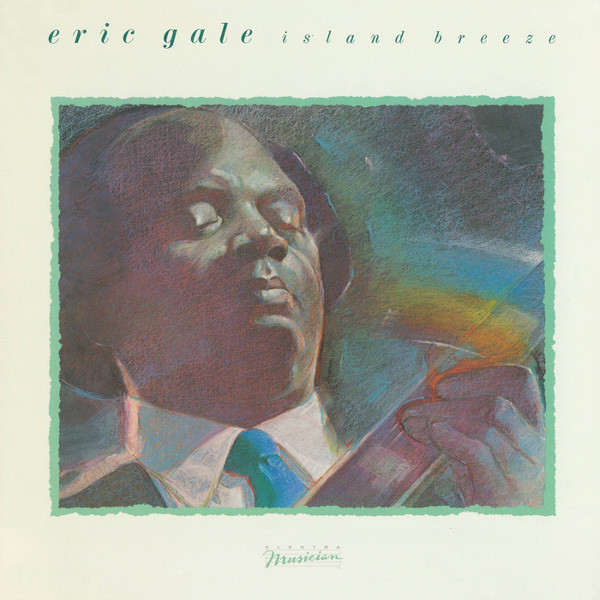
For Eric Gale, Island Breeze marked the end of the most productive period of his solo career. Between 1973 and 1983 Eric Gale, who is regarded as one of the greatest jazz guitarists of his generation, released nine albums. These albums contain the best music of Eric Gale’s solo career, and are the perfect starting place to newcomers to his music. Sadly, many of these albums failed to find the audience that they deserved, and Eric Gale remains one of jazz’s best kept secrets.
Many people will know the name Eric Gale through his work as a session musician. During his career Eric Gale played on over 500 albums, accompanying the great and good of music. From 1967 to 1994 Eric Gale was the go-to guitarist for many musicians. Eric Gale was a truly talented and versatile guitarist who could switch seamlessly between genres, even in mid-song. This he often did on the eleven albums he released during his recording career.
Sadly, Eric Gale’s career was cut tragically short when he passed away on May the ‘25th’ 1994, in Baja California, Mexico, asked just fifty-five. That day, music was robed of one of its most talented sons, Eric Gale, who left behind a rich musical legacy, including the nine albums he released between 1973 and 1983, which was the most prolific and successful period of his solo career.
Eric Gale-9 In 10, The Solo Years 1973-1983
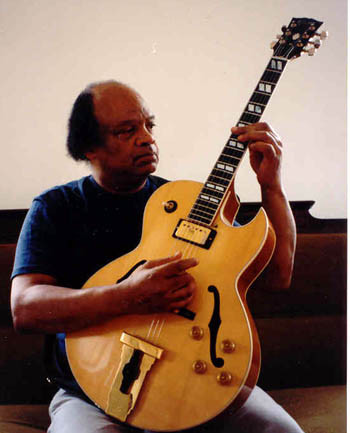
STEVE YOUNG-THE STORY OF A MUSICAL PIONEER AND FREE SPIRIT.
Steve Young-The Story Of A Musical Pioneer and Free Spirit.
Ever since the birth of rock ’n’ roll, there have been countless examples of truly talented and gifted artists music whose music failed to find the audience it deserved during their lifetime. This ranges from Nick Drake and Gram Parsons and to some extent, Tim Buckley. It’s only in death that their music started to received the attention and critical acclaim it so richly deserves. Sadly, that is also the case with Steve Young, who passed away just over a year ago, on ‘17th’ March 2016, aged just seventy-three. Sadly, very few people outside of a small coterie of musical connoisseurs were aware of Steve Young’s music.
Despite that, most people withe even a passing interest in music would instantly recognise one of Steve Young’s best known songs.This was Seven Bridges Road, which had been covered by everyone from Rita Coolidge, Joan Baez and Dolly Parton to The Eagles, Ian Matthews. The royalties Steve Young received from other artists covering Seven Bridges Road, allowed Steve Young to live his life on his own terms. While that is something many people would welcome, deep down Steve Young must have felt disappointed that his music didn’t find a wider audience. However, Steve Young was grateful that the steady stream of money the royalties from Seven Bridges Road brought him made his life more comfortable than it had been growing up.
Steve Young was born in Newnan, Georgia on the ‘12th’ of July 1942, into a family of sharecroppers. His father who was a Native Indian, and had been a sharecropper since the age of thirteen. Life as a sharecropper was tough, and money was tight. To make matters worse, Steve’s father was often getting into trouble. As a result, the family were often on the move. Eventually, they settled in Gadsden, Alabama. By then, Steve knew how he wanted to make a living.
Ever since he had been a young boy, Steve had listened to music, and it made life that bit more bearable. He could see the beauty in music, especially, the Southern music, which Steve listened to. However, from an early age, Steve Young wasn’t content to listen to music. When people asked him what he wanted to do, he told them he wanted to be a singer, songwriter and musicians. To most people, this was a pipe dream.
Things changed when Steve’s grandfather took him to a swap meet, where he saw a warp necked Silvertone guitar. It was love at first sight. Steve tried to talk his grandfather into getting him the guitar. However, the answer was no, and a disappointed Steve returned home.
Still, he was determined to get a guitar of his own, and when he was fourteen, his mother relented and agreed to buy Steve his first guitar. She bought Steve a Gibson ES 125 thin body electric guitar. This was enough to make his dreams come true, and he hoped, follow in the footsteps of Carl Perkins and Elvis Presley at Sun Records.
By the time Steve had mastered his guitar, the folk boom had hit Birmingham, Alabama. Despite his love of Southern music, Steve started playing folk music. By his early twenties, Steve was a regular face on Birmingham music scene, and was regarded as one of the city’s rising stars.
During gigs he played a mixture of his own songs and covers of Bob Dylan songs. Sometimes, he took to the mic and started voicing his support for the nascent civil rights movement. While this was admirable, such talk was dangerous in Birmingham, Alabama, which was Klan country.
Some folks around Birmingham, Alabama didn’t take kindly to folk singers talking about equality and civil rights. Especially, ones like Steve, who after gigs, headed out on the town and enjoyed carousing. Sometimes, this lead to trouble, but Steve didn’t seem to care. He was determined to live life on his own terms. This included voicing his support for the civil rights movement. Fortunately, he never came to any harm, and in 1963, left Birmingham, Alabama.
This came about after Steve met Richard Lockmiller and Jim Miller, who were both folk musicians. They had signed to Capitol Records as a folk duo Richard and Jim, and were heading to Los Angeles to record their debut album. Steve joined the pair on their road trip, and in LA, played on Richard and Jim’s 1963 debut album Folk Songs and Other Songs.
Steve’s guitar playing on Folk Songs and Other Songs, brought him to the attention of other musicians. It was a similar case when Richard and Jim played live, Steve’s playing brought him to the attention of other musicians and record buyers. One of the first musicians to discover Steve Young was Van Dyke Parks.
From the first time he saw Steve play live, he realised that he was a cut above most musicians. Here was a versatile and talented singer and guitarist who seamlessly could switch between disparate musical genres. His live act saw Steve playing folk, blues and even a hint of Celtic music. The audience was enthralled by Steve’s vocal and virtuoso performance on guitar. Despite this, Steve spent time busking on Sunset Strip. This was only temporary.
Soon, Steve was about to go up in the world when he joined the ranks of LA’s session musicians. He also became the lead guitarist for the Steve Battin Band. After shows, Steve partied with some of the biggest names in the LA scene, including Mama Cass, Tim Hardin and Van Dyke Parks. At these parties, Steve partied hard, drinking and taking drugs in ever-increasing greater qualities. Still, though, Steve turning up for sessions the next day and even formed a new band with two well-known names.
The Gas Company included Van Dyke Parks and a young Stephen Stills, who played rhythm guitar. However, The Gas Company was just a stepping stone for Stephen Stills en route to greater things. Meanwhile, Steve’s life was professional and personal life was changing.
He met and married Terry Newkirk, who with Roger Tillison performed as The Gypsy Trips. Now a married man, Steve decided to take a job as a postman to make ends meet. However, he hadn’t given up on his dream.
It was only a matter of time before Steve caught a break, and was approached by Stone Country’s manager. They were looking for a guitarist, and Steve fitted the bill. He played on their debut album. Not long after this, Steve’s dream came true when he was signed by A&M.
This was the break he had been waiting for, and the twenty-six year old began work with producer Tommy LiPuma. Backed by a band that featured some top LA session players, plus Gram Parsons and Gene Clark. Gradually, Rock, Salt and Nails took shape, and was released in 1969. Sadly, the album passed an indifferent record buying public by. They had overlooked what’s now regarded as one of the hidden gems of the late-sixties, Rock, Salt and Nails.
After the commercial failure of Rock, Salt and Nails, Steve did a lot of soul-searching, and with a heavy heart announced that he was turning his back on music. This was something that he had never envisaged would happen. However, there was only so long anyone could struggle to make ends meet, with the hope that one day, he might make a breakthrough. Steve decided to make a fresh start and he and his wife left LA, and headed to San Francisco, where they settled in the Bay Area.
This was a new start for Steve, and was the first day of his life after music. However, by then, all Steve knew was music. He and Terry Newkirk setup a guitar shop in San Anselmo in 1970. It was the new start Steve had been looking for. That was until Andy Wickham of Reprise Records came calling.
When Steve turned his back on music, he was still under contract to A&M. Andy Wickham who had followed Steve’s career approached A&M to ask if they would be willing to release him from the contract. They agreed, and now all Andy Wickham had to do was convince Steve to sign on the dotted line.
Given Steve was disillusioned with life as a professional musician, this was going to be easier said than done. Especially with the new guitar shop up and running. However, for Andy Wickham it was a case of nothing ventured, nothing gained. He approached Steve about signing to Reprise, and eventually, he agreed to make a comeback.
Once Steve had signed to Reprise, he was paired with Ry Cooder, who would produce his first single for the label. The song chosen for the single was Bob Dylan’s Down In The Flood, which was retitled as Crash On the Levee. On the B-Side was The White Trash Song. Once the single was recorded, it was released in 1970. Despite featuring a barnstorming performance from Steve Young, and a guest appearance from guitarist Ry Cooder, the single failed to trouble the charts. History was repeating itself.
After the failure of Crash On the Levee, a decision was made to pair Steve with a new producer. After just one single, the Steve Young and Ry Cooder partnership was over. Replacing Ry Cooder was Nashville based Paul Tannen. This was a strange decision, given Nashville in 1970 was, and to some extent, still is, a conservative town. Steve Young with liberal politics, wasn’t going to be well received in some quarters. That proved to be the case.
Steve Young journeyed to Nashville, to meet his new producer and record his sophomore album. He was aware that Paul Tannen had penned twenty songs and had around forty production credits to his name. This experience Steve hoped would be put to good use when he recorded his sophomore album. However, Steve was in for a surprise.
When Steve met Paul Tannen, he quickly came to the conclusion that his new producer was more of interested in music publishing than songwriting. This didn’t bode well for the future. However, Nashville had some of the best session musicians in America, and Steve hoped some of them would join him in the studio.
Before recording got underway, Steve was joined by Paul Tannen and some top session players. When they ran through the songs, some of the musicians took umbrage to the lyrics. To make matters worse, Steve’s liberal politics and outlook on life didn’t going down well with some of the band. As the session got underway, it soon became apparent that the band weren’t all on the same page. Some of the musicians couldn’t understand how to play the songs. It wasn’t the type of music they were used to playing. By then, the decision to record in Nashville and the choice of Paul Tannen as producer wasn’t looking like the right one. Steve later, would claim that he ended up producing what later became Seven Bridges Road himself. However, it wasn’t an easy album to record.
For parts of the session, there was an undercurrent and a degree of tension. Partly, this was because of the difficulties had understanding how to play their parts, but also because some members of some the band and Steve Young were polar opposites. Steve was a sixties child with liberal politics and views, while the band were older, and much more conservative. With his long hair, and liberal views, some of the band most likely saw Steve as a hippy from California. He saw some of the band as rednecks, and the type of people who he had spent his life avoiding. It was the case of never the two shall meet. However, in Nashville session musicians were professionals, and the album was eventually recorded. Steve hotfooted it home to San Francisco.
When Steve Young arrived home, he brought with him what would eventually become Seven Bridges Road. He took the tapes which featured twelve songs to Andy Wickham at Reprise. They listened to the tapes, and before long, everyone in the room realised that despite the difficulties Steve had experienced recording Seven Bridges Road, it was a very special album.
That was the case from the opening song, Seven Bridges Road, which is a beautiful, haunting paean to Terry Newkirk who Steve had to leave behind in San Francisco when he travelled to Nashville to record the album. Steve who was obviously homesick and missing his wife, lays bare his soul, and sets the bar high for the rest of the album.
While everyone at Reprise Records realised that they had heard a very special album, they had no idea how to market the album that showcased Steve’s new Southern country sound which was now fully formed. There was even a diversion via the blues on Ragtime Blue Guitar where a defiant Steve sings: “I’ve a right to sing these blues as he records in Nashville. Seven Bridges Road was very different from the country music that was being released at that time. Reprise Records were faced with the same problems as A&M when realising Steve Young’s debut album, what to do with it? The problem was, the album was way ahead of its time.
Steve Young was a musical visionary who was the architect of a new Southern country sound. This was a forerunner of the outlaw sound, which Waylon Jennings and Willie Nelson later went on to pioneer. Sadly, very few record buyers would know of the part Steve Young played in musical history.
On its release in 1972, Seven Bridges Road failed to find an audience, and before long the album couldn’t be found record shop shelves. Steve who watched his dream destroyed for the second time, for the second time, turned his back and music.
He and Terry Newkirk sold their guitar shop and bought some land in Nashville. They built a log cabin and raised their son Jubal. The couple went on what Steve later called: “your basic vegetarian-mystical trip.” This lasted for a while, until Steve started drinking heavily. That was when Terry Newkirk packed her bags and left. Quickly, Steve’s life was unravelling. That was until Jim Terr entered the picture.
Jim Terr owned Blue Canyon Records, and thought that Seven Bridges Road was the best record ever committed to vinyl. When Steve told him the album wasn’t even in circulation, the pair started hatching a plan.
The first part of the plan was to get Steve playing live again. He started playing around Albuquerque and then rerecorded The White Trash Song with The Last Mile Ramblers. After that, Jim Terr discussed with Steve buying the master to Seven Bridges Road from Warners, with a view to reissuing the album. Jim Terr hit Warners with a lowball offer, and they accepted.
Before reissuing Seven Bridges Road, two changes to the track-listing were made. The newly rerecorded version of The White Trash Song replacing the Nashville version. A cover of Merle Haggard’s I Can’t Hold Myself In Line replaced One Car Funeral Procession. Both of these songs that featured on Blue Canyon Records’ 1973 reissue of Seven Bridges Road. However, although Blue Canyon Records was a small company, that didn’t have a distribution network like Warners, the reissue of Seven Bridges Road introduced Steve Young to more record buyers. Still, though, he was one of music’s best kept secrets.
Sadly, that continued to be the case with Steve Young’s next three albums finding a limited audience. His third album was Honky-Tonk Man, which was released on Mountain Railroad Records in 1975. Despite its quality, again, the album failed to find the wider audience it deserved. Despite that, the following year, RCA Victor took a chance on Steve Young, and the original outlaw released Renegade Picker in 1976. It was the same old story, with the Renegade Picker showcasing a talented singer, songwriter and musician, whose music was enjoyed by a small coterie of discerning record buyers. There was no improvement in record sales after No Place To Fall in 1978, and RCA and Steve Young parted company.
After that, Steve Young’s spiralled out of control. He seems hellbent on destruction, and nearly drank himself to death. Eventually, he entered a clinic for homeless alcoholics in Nashville. It was during his stay in the clinic, that Steve realised that his lifestyle had come close to destroying him. He made the decision to embrace his Native Indian heritage and became a Buddhist. His new approach to life worked, and Steve managed to rebuild his life. It took time but paid off.
It wasn’t until 1981 that Steve Young returned with a new album. It was a remixed version of Seven Bridges Road, with a different track-listing. There’s a remixed version Seven Bridges Road plus new songs like Down in the Flood, Ballad of William Sycamore, My Oklahoma, Wild Goose and Days Of 49. The reissue of Seven Bridges Road meant that the album was available for a new generation of record buyers to discover.
By then, Steve Young had released another new album To Satisfy You, which was released on Mill Records in 1981. This marked the next start in the reinvention of Steve Young. Another five years passed before Steve returned with a much more experimental album, while Look Homeward Angel in 1986 which showcased a much more contemporary sound. That was the last album Steve released during the eighties.
He returned in 1990 with Long Time Rider, with Switchblades Of Love following three years later in 1993. Still, interest in Steve’s music and his landmark album Seven Bridges Road continued to grow. Despite that, Steve didn’t release another album until Primal Young in 1999. The sixty year old had released his best album in recent. However, after that albums continued to be sporadic.
It wasn’t until 2005 that Steve released Songlines Revisited Volume One, where he revisited many of his best known songs. The White Trash Song, Montgomery In The Rain, Rock Salt and Nails and of course Seven Bridges Road were all rerecorded. Steve sold the album at his gigs when he played live. Two years later in 2007, Steve Young released the live album Stories Round The Horseshoe Bend. Sadly, it was his swan-song.
Although Steve Young continued to play until 2010, he never released another album. That was despite having around a 100 songs that he had yet to record. Sadly hey never saw the light of day, because on the ‘17th’ March 2016, aged just seventy-three, Steve Young passed away. That day, music lost one of its most talented sons. His greatest album is Seven Bridges Road which nowadays, is regarded as a true cult classic and the perfect introduction to Steve Young.
Nowadays Steve Young is regarded as a pioneer of the Southern country sound which was a foreigner of the outlaw sound. With his maverick ways and a defiant attitude to authority Steve Young was also a musical outlaw. In music and live, Steve Young was a free spirit who did things his way.
Sadly, despite enjoying a lengthy career, Steve Young’s music never enjoyed the success it deserved. That was despite Steve Young being one of the finest purveyors of what Gram Parson called Cosmic American Music. It’s only relatively recently that Steve Young’s music is starting to find a wider audience, and maybe he will no longer be one of music’s best kept secrets?
Steve Young-The Story Of A Musical Pioneer and Free Spirit.
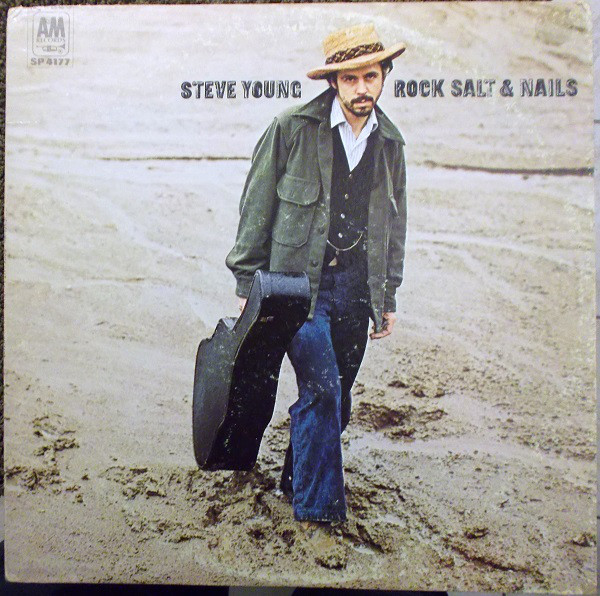


SPAIN’S FIRST LADY OF MUSIC-SUSANA ESTRADA.
Spain’s First Lady Of Music-Susana Estrada.
Ever since 1939, the brutal Francoist regime had ruled Spain with an iron fist. This came to an end with the death of dictator Francisco Franco on ’20th’ November 1975. After Franco’s death, control of Spain passed to King Juan Carlos. By then, Spain was in a state of paralysis, and had been, during the last few months of Franco’s reign. The Spanish people hoped that things were about to change.
They hoped that after the death of Franco, that Spain’s transition to a liberal democratic state could begin. The transition began on ’20th’ November 1975 with the passing of Franco, and took nearly seven years until the electoral victory of the socialist PSOE party on the ‘28th’ October 1982. That seven-year period is nowadays remembered in Spain as the ‘transition’, and marked a new beginning for the Spanish people.
The transition to democracy saw a liberalisation of values and social mores. Suddenly, the Spanish people were enjoying their newfound freedom. This was something that hadn’t previously existed under the Francoist regime. Life, the Spanish people were realising, was for living and this coincided with a sexual revolution that began during the transition.
During the transition and sexual revolution, singer, model and actress and Susana Estrada represented the new Spain. She was independent and modern women, who lived her life on her terms. Susana Estrada wanted to bring about change, and was an advocate for women’s rights, sexual liberation and freedom. One of the ways she sought to bring about change was through her music, and Susana Estrada was at the vanguard of change that took place during the transition in Spain.
Susana Estrada was born in the city of Gijón, in 1949. By then, Franco had ruled Spain since 1936. Growing up, Susana Estrada she watched as the Francoist regime crushed their opponents mercilessly. Many of Franco’s opponents were imprisoned, others disappeared in mysterious circumstances and some were murdered. For anyone who grew up in Spain the forties and fifties, life was tough. It certainly was for Susana Estrada.
By the time she was twenty-one, Susana Estrada had been married, had two children and was now divorced. She was left to bring up two children on her own. This she managed to do on the salary she received working as a librarian. However, Susana Estrada had dreams beyond working in a library. What she really wanted to do, was work as a fashion model.
Eventually, Susana Estrada left her job as a librarian, to embark upon a career as a fashion model. Initially, she worked for small, local companies, but within a year had been accepted into Madrid’s official model school. It looked like Susana Estrada’s dream was about to come true. However, it turned out that Susana Estrada wasn’t tall enough. Even when she took to wearing fifteen centimetre heels, she wasn’t tall enough. For Susana Estrada, it looked as if her career as a model was over before it began.
It looked unlikely that Susana Estrada would ever model for magazines like Vogue or luxury clothing brands, she found her own niche within the fashion world. Susana Estrada modelled the ready-made, pret-à-porter fashion lines. Sometimes, though, she was recruited by overseas model agencies, and occasionally found herself featuring on album cover. By 1971, Susana Estrada had gone up in the world.
She made her acting debut in El Zorro de Monterrey in 1971, which was the start of Susana Estrada’s acting career. During the second half of the seventies, Susana Estrada began to feature in a new genre of film, Destape which were erotic comedies. However, before long, Susana Estrada realised that to make a career in the movie industry: “you had to pay a high price and do some things I didn’t want to do.” However, by then, Susana Estrada had embarked on a new chapter in her career.
This began in 1976, when she started acting in erotic musicals. Her debut came in 1976, in Historias del Strip-Tease which was roundly panned by critics. Despite the terrible reviews, it was a huge commercial success and turned Susana Estrada into a star. However, this came at a cost: “in the beginning, women hated me. They thought that I was lacking decorum, that I was shameless, lecherous, rude…Not all of them but the vast majority. People were not ready for this.”
After featuring in several erotic musicals, Susana Estrada became a sex counsellor in the magazine Play-Lady. At one point, she was receiving 7,000 letters a week. By then, Susana Estrada’s new role was attracting the attention of Franco’s regime. She was accused of public scandal, fined, had her passport cancelled and banned from voting for ten years. This was just the latest controversy for Susana Estrada, who was skating on thin ice. Any further controversy could see her receive further sanctions from the Franco regime. Most people would’ve kept a low profile.
Susana Estrada wasn’t most people, and was about to embark on a career as a singer. Her debut single Ya Me Voy De Tu Vida was released on Odeon in 1978. It was written by Alejandro Jaén, who co-produced the single with Marion Bronley. They were responsible for a single that had been heavily influenced by both classic disco, and the Munich Sound, which was pioneered by Giorgio Moroder. The release of Ya Me Voy De Tu Vida marked the start of a new chapter in Susana Estrada’s career. Despite this, she continued her career in musicals.
Between 1978 and 1980, the musicals that Susana Estrada appeared in grew in popularity. However, they became increasingly explicit. By then, Spain was undergoing a period of transition, and Susana Estrada was campaigning for women’s rights, sexual liberation and freedom. Still, though, some women didn’t approve of what she was doing, and felt it was demeaning. However, Susana Estrada remembers: “I fought very hard for women’s rights. I knew that through sexual liberation you obtain total freedom. This was something which men knew at first and women discovered it late.” Susana Estrada was determined to bring about change, and didn’t seem to care if she caused controversy. Her sophomore single would certainly prove controversial.
Two years after releasing her debut single, Susana Estrada returned in 1980 with her sophomore single Acaríciame, which was released on the Barcelona based Belter label. Acaríciame was written by Carlos Moncada, Félix Lapardi and Óscar Rubio, with Josep Llobell Oliver taking charge of the production. They played their part in the success of Acaríciame, which resulted in Susana Estrada recording and releasing her debut album, Machos.
Susana Estrada entered the studio in 1980, and recorded eight tracks which featured in Machos, which was the musical that she was appearing in. This included the robotic funk of Espacial and the space cosmic disco of Hagamos El Amor which were both written by the songwriting partnership of C. De Las Eras and Manuel Gas. When the album was recorded, Belter scheduled the release for later in 1980. However, Susana Estrada and her legion of fans were in for a surprise when Machos was released by Belter as a cassette album in 1980. Nowadays, Susana Estrada’s Machos is a much coveted collector’s item that changes hands for upwards of £100. That is despite Amor Y Libertad, rather than Machos as being regarded as Susana Estrada’s official debut album.
When Susana Estrada came to record Amor Y Libertad, it featured ten songs penned by Carlos De Las Heras. They were recorded at the Belter Studio, in Barcelona, with producer by Josep Llobell Oliver. To accompany Susana Estrada, he had brought onboard Atlanta a talented and experienced funk group who were familiar faces on the local music scene. The combination of Susana Estrada, Atlanta and Josep Llobell Oliver resulted in what would eventually be regarded as a Euro Disco and cosmic disc classic, Amor Y Libertad.
Initially, Amor Y Libertad was underrated and didn’t receive the recognition many thought it deserved. Critics didn’t seem to ‘get’ Amor Y Libertad, despite its innovative fusion of boogie, cosmic disco, funk, Italo Disco, modern soul and the Munich Sound. Maybe critics were shocked by what many regarded as provocative lyrics, sensual vocals and moans and groans? If that was the case, then songs about sexual liberation and freedom were definitely going to get critics hot under the collar. The reception that Amor Y Libertad received was hugely disappointing for everyone involved in the project.
It was only later that Amor Y Libertad began to receive the recognition it deserved. Nowadays, though, Amor Y Libertad is regarded as a Euro Disco and cosmic disco classic, That comes as no surprise, given the quality of music on the album, and somewhat belatedly, Amor Y Libertad received the recognition it deserved.
After the release of Amor Y Libertad, Susana Estrada released Mi Chico Favorito as a single later in 1981. This was Susana Estrada’s penultimate release during the eighties.
Susana Estrada’s eighties swan-song was the cassette mini album Historias Inconfesables. It was released by Star Grabaciones Originals later in 1981 and was billed by those within conservative Spain as a: “porno-cassette.” Nowadays, Historias Inconfesables is a real rarity which is almost impossible to find.
It’s a similar case with Susana Estrada’s most recent album Tócame, which was recorded in 2007, and is best described as Hi-Energy meets Euro Disco. It was a low-key, self-released album by one of the most controversial figures in Spanish music, Susana Estrada.
She was the one time model who went on to enjoy a career as an actress, agony aunt and singer. Susana Estrada also fought for women’s rights, sexual liberation and freedom. Sadly, her campaigning is often overshadowed by parts of her career that caused controversy. This may not have been the case in America, Britain or other parts of Europe. However, Spain which was a conservative catholic country, which was in a period of transition from a dictatorship to democracy.
Many people were unprepared for Susana Estrada, who was regarded and perceived as an outspoken, and sometimes, outrageous and controversial figure even in the eighties. By then, her campaigning and much of her music meant that the establishment and press in Spain portrayed Susana Estrada as a controversial figure. That was somewhat ironic.
What Susana Estrada was campaigning for was women’s rights, sexual liberation and freedom, which were things that women in other parts of Europe, Britain and America took for granted. Alas, in the newly democratic Spain, Susana Estrada’s campaigns caused controversy in the corridors of power. Maybe Spain’s patriarchy were scared or intimated by a strong and independent woman who was willing to make a stand for what she believed in?
Despite being fined, having her passport cancelled and losing her vote for ten years, Susana Estrada wasn’t going to be silenced. She continued to speak for all the Spanish women who had no way of making their views heard. They had been treated as second class citizens during the Francoist regime, and early in Susana Estrada’s career she became the voice of all Spanish women. In doing so, she risked the wrath of the brutal Francoist regime and could’ve lost her liberty. However, Susana Estrada was willing to stand up for what she believed and continued to do so, throughout a career that lasted four decades.
Throughout her musical career, Susana Estrada became the voice of all Spanish women, and the Spanish Euro Disco diva used her music to reach a wider audience. Susana Estrada who was and is a confinement and modern woman spoke for and to Spanish women, and advised, counselled and campaigned for women’s rights, sexual liberation and the freedom that women in other parts of Europe took for granted. Spain’s first lady of music was determined to make a difference and the grey men in the corridors of power called in favours from their friends in the press and media to blacken Susana Estrada’s name and portray her as a controversial and outrageous figure. However, while nobody remembers the mendacious politicians who were part of a patriarchal political system, they remember Susana Estrada, Spain’s first lady of music not just for the music she made, but for her campaigning and counselling which is part of her legacy.
Spain’s First Lady Of Music-Susana Estrada.
THE LIFE AND TIMES OF BETTYE SWANN.
The Life and Times Of Bettye Swann.
The Bettye Swann story is a case of what might have been. She could’ve and should’ve been one of the biggest names in soul music. That looked like being the case when Bettye Swann released her debut single Don’t Wait To Long in 1964. Three years later, in 1967, Betty Swann was topping the US R&B charts with Make Me Yours. The future looked bright for Bettye Swann and critics forecast she was about to enjoy a long and successful career.
Sadly, that wasn’t to be and Bettye Swann never scaled the same heights. Apart from a couple of minor hit singles, commercial success eluded Bettye Swann. Her recording career was over by 1976, and in 1980, Bettye Swann gave her last concert. Later that year, Betty’s husband and manager George Barton died in 1980,
Following the death of her husband and manager, Bettye Swann retired from the music industry aged thirty-six. It was then that Bettye decided upon a change of name and career. In a sense Bettye Swann died and Bettye Barton was born. The “newly born” Bettye Swan embarked on a career in education in Las Vegas and became a Jehovah’s Witness. Never again, did Bettye return to soul music.
Thirty-six years after Bettye Swann turned her back on music, her music is more popular than ever. Six compilations of Bettye Swann’s music has been released, and her songs regularly feature on compilations. That’s how a new generation of record buyers have discovered one of the finest voices in soul music, Bettye Swann. Her story began in Shreveport, Louisiana, on October 24th 1944.
That’s the date that Betty Jean Champion was born. She was one of fourteen children. Betty grew up in Arcadia, Louisiana. It wasn’t until Bettye was in her teens that she starting singing secular music. She became part of The Fawns, a vocal group who sung locally. However, in 1963, when Bettye Swann was nineteen, she decided to move to Los Angeles, where she would stay with her sister.
Once she had settled in Los Angeles, Betty was spotted by songwriter Huey Harris. Realising that Bettye Swann had potential, Huey Harris told Betty about a friend of his, Al Scott who ran Money Records.
Just like Huey Harris, Al Scott spotted Bettye Swann’s potential and wanted to sign her to Money Records. However, he didn’t like her name. So he advised Bettye Swann to change her name. She needed something that rolled off the tongue. He had a think, and came up with Bettye Swann. That was more showbiz. With a new name, she signed to Money Records.
Soon, Bettye Swann’s life was transformed. Not only had she a new name, but a manager. She had began writing what she hoped would become her first hit. After a few false starts, Bettye Swann had penned Make Me Yours, which would become her first single.
Recording of Make Me Yours, took place at Gold Star Records, In L.A. Al Scott put together a tight, talented band. For the flip side, Huey Harris’ What Is The World Coming To was chosen? This was Al Scott’s way of thanking Huey Harris for bringing Bettye Swann to Money Records. With Doc Siegel engineering the sessions, Make Me Yours and What Is The World Coming To were recorded at the foot of the Hollywood hills in late 1964. Now that Bettye’s debut single was recorded, all that was left, was to release it.
The release was scheduled for late December 1964. Before that, Money Records began promoting their latest singing’s debut single. Money Records didn’t skimp on promotion, and this paid off. By February 1965, Don’t Wait Too Long had reached number twenty-seven in the US R&B charts. For Bettye Swann, this was the stuff dreams were made of. However, the tricky thing was coming up with another hit single.
For the followup The Man That Said No was chosen. Bettye Swann and Huey Harris cowrote The Man That Said No. The single was released later in June 1965. Everything was looking good for Bettye Swann. She had booked to appear on television, where she would sing her new single. Accompanying her, were The Blossoms, who would add backing vocals. This was great publicity. Al Scott must have thought this would boost sales. Ultimately, it didn’t. Bettye’s sophomore single was a commercial failure. For Bettye Swann, it was back to the drawing board.
The song chosen for Bettye’s third single was The Heartache Is Gone. It showcased the new soul sound which was seen as the future of soul. Tucked away on the B-Side was a heart wrenching ballad Our Love. It’s another Bettye Swann composition, and could’ve been released as a single. Sadly, that wasn’t to be. Our Love was destined to be just a flip side. When The Heartache Is Gone was released in 1966, it failed commercially. By then, Al Scott had started to work on Bettye Swann’s debut album.
When work began of Bettye Swann’s debut album, the plan was to used her first three singles and some of the flip sides. New songs would be recorded at Gold Star. They would become Bettye Swann’s debut album. That never happened.
With Bettye’s last two singles failed commercially, the proposed album was shelved. For Bettye this was a huge disappointment. However, Al Scott hadn’t lost faith in Bettye Swann.
He sent her back into the studio. At Arts Studio Bettye recorded a song she had penned, Make Me Yours. For the flip side, I Will Not Cry was chosen. After Bettye had cut Make Me Yours, her career was transformed.
Make Me Your was released in April 1967. Straight away, the track began to climb the charts. Eventually, it reached number one on the US R&B charts and number twenty-one on the US Billboard 100. After three long and frustrating years, Bettye Swann had made a breakthrough. Now came the hard bit, following up Make Me Yours.
For the followup Fall In Love With Me was chosen. This was another song penned by Bettye. When it was released in August 1967, it charted, but stalled at just thirty-six in the US R&B charts. While this was disappointing compared to Make Me Yours, it took Bettye Swann’s tally of hits to three in three years. She was hot property. So Al Scott’s thoughts turned to Bettye Swann’s debut album.
Rather than rush out Bettye’s debut album, Al Scott decided to rerecord some of the tracks. This included two B-Sides, I Will Not Cry and Lonely Love. New tracks were recorded, including The Temptations’ Don’t Look Back, Ray Charles’ I Can’t Stop Loving You and Sam Cooke’s A Change Is Gonna Cone. With the album completed, it was released in 1967 as Make Me Yours.
Despite the effort of everyone at Money Records put into the release of Make Me Yours, the album wasn’t a commercial success. The album passed records by. This was hugely disappointing for Al Scott, whose thoughts turned to Bettye Swann’s next single.
The song chosen was a track from Make Me Yours, Don’t Look Back. Hidden away on the B-Side You Gave Me Love. It falls into the category of hidden gem. Don’t Look Back was released in 1968, but failed commercially. Things weren’t going well for Bettye Swann. Her time at Money Records was almost at an end.
Bettye Swann would only released one more single on Money Records. Don’t Take My Mind was another track from Make Me Yours. It was paired with the soul-baring I Think I’m Falling In Love. History repeated itself when Don’t Take My Mind failed to chart. That proved to be the end of two chapters in Bettye Swann’s career.
The money spent on promoting Bettye’s Make Me Yours album had taken its toll on Money Records’ finances. This wasn’t helped by the failure of her last two singles. Something had to give. So, Bettye Swann left Money Records.
Just a year after enjoying a number one single, Bettye Swann parted company with Al Scott. Not only did Al Scott produce and manage Bettye Swann, but they had been a couple. Their relationship faltered, and by 1968, Bettye Swann had a new manager George Barton.
Following her departure from Money Records, Bettye and George Barton moved to Athens, Georgia. George Barton who was twenty years older than Bettye, was a veteran of the music industry. He knew his way around the music business, and in mid-1968 Bettye Swann signed to what was one of the biggest, and most prestigious labels in music, Capitol Records. So far, so good.
Now Capitol Records had to pair Bettye Swann with a producer. They decided to pair Bettye Swann with Wayne Shuler. He was a relative newcomer to Capitol Records. Most people would’ve called Wayne Shuler a rookie, but that wasn’t the case. Wayne’s father was Eddie Shuler, the producer and owner of Goldband Records. From an early age, he had taught Wayne tricks of the trade. So when he began work at Capitol Records, he had an edge on the real “rookies.” He was well versed not just in soul and R&B. All of a sudden, the pairing of Wayne and Bettye Swann made sense. Maybe Wayne could get Bettye’s career back on track?
Unlike Money Records, Capitol Records’ priority was albums. That was where the money was to be made. Singles were a bonus. Despite this, Bettye Swann’s Capitol Records debut was a single,
I’m Lonely For You. It’s another of Bettye’s compositions. So was the B-Side was (My Heart Is) Closed For The Season. It had a much more grownup sound, and featured Bettye singing about the travails of life. This was the polar opposite of the pop soul of I’m Lonely For You. However, (My Heart Is) Closed For The Season was the direction Bettye’s music would take in the future. Maybe that was as well.
When I’m Lonely For You was released in August 1968, the single failed to chart. This wasn’t a good start to Bettye’s time at Capitol Records. However, better times weren’t far away.
For Bettye’s second single for Capitol Records, Bettye covered Hank Cochran’s Don’t Touch Me. When it was released in January 1969, it reached number fourteen in the US R&B charts. Now all thoughts turned to Bettye Bettye Swann’s first album for Capitol Records.
Ten tracks had been chosen for what became The Soul View Now! Only two of the tracks were penned by Betty. The rests were cover versions. This included Otis Redding’s These Arms of Mine, Chip Taylor’s Angel Of The Morning, Don Gibson’s Sweet Dreams. So do John D. Loudermilk’s Then You Can Tell Me Goodbye and Aaron Neville’s Tell It Like It Is. They both feature on The Very Best Of Bettye Swann. However, back in 1969, some of the top session players accompanied Bettye on The Soul View Now! Once the album was soon recorded, it was ready for release.
Bettye Swann’s first album for Capitol Records, The Soul View Now! was released in the first half of 1969. It reached number forty-eight in the US R&B Charts. Bettye’s luck seemed to be changing.
For her next single, the Chip Taylor penned Angel Of The Morning was chosen and was released in May 1969, but failed to chart. This was another disappointment for Bettye Swann and executives at Capitol Records. However, still Capitol Records had faith in Bettye Swann and sent her back into the studio.
Capitol Records didn’t spare any expense. Some top session musicians were drafted in to record the ten tracks. They accompanied Bettye, while Wayne Shuler produced Don’t You Ever Get Tired Of Hurting Me? Among the songs Bettye and her band recorded were Don’t You Ever Get Tired Of Hurting Me?, Little Things Mean A Lot, You’re Up To Your Same Old Tricks Again, Just Because You Can’t Be Mine, Stand By Your Man, Traces, Today I Started Loving You Again and Willie and Laura Mae Jones. On these tracks, Bettye breathed life and meaning into the lyrics. Sometimes, it sounds as if she had lived and survived them as she delivers a vocal tour de force. Once Don’t You Ever Get Tired Of Hurting Me? was completed it was released later in 1969.
When Don’t You Ever Get Tired Of Hurting Me? was released, it failed to chart. Little did Bettye Swann realise, that sadly, thing were going to get a whole lot worse.
Bettye Swann released just two more singles on Capitol Records. The first was Don’t You Ever Get Tired (Of Hurting Me)? It was released in September 1969, and failed to chart. When Little Things Mean A Lot was released in 1970, it also failed to chart. Mean A Lot was the last single she released on Capitol Records.
This left Bettye Swann looking for a new label. She found it in 1971, when she signed to Fame Records. It was enjoying the most successful period in its history. Candi Staton was its most successful artist. However, Fame Records were alway looking to add to their roster. So with Bettye Swann without a label, Fame Records swooped. Sadly, Bettye’s time at Fame Records was short-lived.
Mickey Buckins had been trying to get an in at Fame Records. His patience was eventually recorded, when he was given a job as staff songwriter and technician. Although Mickey was mainly based at Fame Records’ demo studio, this didn’t matter to him. He was just happy to be working at such a prestigious studio. He eventually formed a fruitful songwriting partnership with George Jackson. One of their songs was I’m Just Living A Lie. It seemed like the perfect song for Bettye Swann.
Bettye Swann went into the Fame studios and cut I’m Just Living A Lie. It was released in March 1971, but failed to chart. For Bettye, history was repeating itself. There was no followup to I’m Just Living A Lie, and Bettye’s time at Fame Records was over.
It was nearly another year before Bettye Swann released another single. However, it was well worth the wait when Victim Of A Foolish Heart was released on Atlantic Records. However, it wasn’t written or produced in-house.
Instead, it had been written and recorded at Fame Records. Just like I’m Just Living A Lie, it was penned by Mickey Buckins and George Jackson. The song was produced by Mickey and Rick Hall. When executives at Atlantic Records heard the song, they knew they had a hit on their hands.
When Victim of A Foolish Heart was released on 30th March 1972, it reached number fourteen in the US R&B Charts and sixty-one in the US Billboard 100. After six singles that failed to chart, Bettye was back. Could she make it two in a row?
For the followup to Victim of A Foolish Heart, the song chosen was Merle Haggard’s Today I Started Loving You Again. Again, recording took place at Fame Studios. This time though, the producers were Phil Hurtt, Tony Bell and LeBaron Taylor. They reinvented Today I Started Loving You Again. When it was released in November 1972, it reached number twenty-four in the US R&B charts and number forty-six in the US Billboard 100. Bettye’s career had been rejuvenated at Fame.
Sadly, Bettye wouldn’t return to Fame to record the follow-up to Today I Started Loving You Again. Instead, Bettye was Philly bound. Executives at Atlantic Records seeing the success of Philly Soul. So they sent Bettye to Philly. However, Bettye wasn’t working with Gamble and Huff or Thom Bell. The Big Three were too busy, so Bettye was paired with The Young Professionals.
Their first single with Bettye was The Boy Next Door. On its release in August 1974. it stalled at a disappointing seventy-four in the US R&B charts. On the flip side was Kiss My Love Goodbye an uptempo track that epitomises the Philly Soul sound. Although quite different from much of the music Bettye Swann had recorded, it showcased her versatility. So did her next single.
For the followup to The Boy Next Door, Time To Say Goodbye and When The Game Is Played On You were chosen. They were released as a double-A-side. Neither track caught the imagination of the record buying public. They missed one of the best tracks from Bettye’s Philly Soul era, When The Game Is Played On You. After the commercial failure of Bettye’s latest single, executives at Atlantic Records were watching events in Philly closely.
Time To Say Goodbye was the last single produced by The Young Professionals. When it was released in September 1974, the single never troubled the charts. This spelt the end of Bettye Swann’s Philly Soul era.
There was no sentimentality at Atlantic Records. When The Young Professionals failed twice to deliver a hit, they brought onboard a new producer, Dave Shapiro.
He chose Red Lane and Curly Putnam’s All The Way In Or All The Way Out. The Dave Shapiro produced All The Way In Or All The Way Out was released in 1975, but reached just eighty-three in the US R&B charts. Then in 1976, Bettye released Heading In The Right Direction. When it failed to chart, this spelt the end of Bettye Swann’s time at Atlantic Records.
Four years later, in 1980, Bettye Swann made what was the final appearance of her career. Betty’s husband and manager George Barton died in 1980,
Following the death of her husband and manager, Bettye Swann retired from the music industry aged thirty-six. It was then that Bettye decided upon a change of name and career. In a sense Bettye Swann died and Bettye Barton was born. The “newly born” Bettye Swan embarked on a career in education in Las Vegas and became a Jehovah’s Witness. Never again, did Bettye return to soul music.
That was a great shame. Bettye Swann was one of the most talented singers of her generation. She could breath life, meaning and emotion into lyrics. They were transformed, and the song took on new meaning. Sometimes, it seemed as if Bettye Swann had lived and survived the lyrics. However, despite her undoubtable talent, Bettye Swann didn’t scale the heights that Aretha Franklin, Diana Ross and Gladys Knight did. Nor did Bettye Swann make a fortune from music.
Far from it. Bettye Swann made very little money from music. It’s only relatively recently that Bettye Swann has received a small income from the music she recorded during a career which promised much. Bettye Swann could’ve and should’ve been one of the biggest names in soul music and was of the finest soul singers of her generation. Sadly, that wasn’t to do be and Bettye Swann turned her back on music.
Nowadays, Bettye Swann is retired, and lives quietly in Las Vegas, Bettye Swann is a modest and humble woman, who doesn’t court publicity. Instead, Bettye Swann has spent so much of her life helping others. Very few of these people will even be aware of Bettye Swann’s past, or her rich musical legacy.
This includes over twenty singles and the three albums that Bettye Swann released. They’re a tantalising reminder of one of the most talented soul singers of her generation, and tell the first part of the Bettye Swann story.
The second part of the Bettye Swann story began in 1980, when after the death of her husband George Barton, thirty-six year Bettye Swann turned her back on music. She became a Jehovah’s Witness, and embarked upon a career in education in Las Vegas. The Bettye Swann story had taken an unexpected twist. Music’s loss was education’s gain. Since then, Bettye Swann has dedicated her life to helping others.
Recently, there’s been a resurgence in interest in Bettye Swann’s music which is starting to receive the recognition it so richly deserved. That is no surprise, as Bettye Swann was one of the finest, and most talented soul singers of her generation,
The Life and Times Of Bettye Swann.


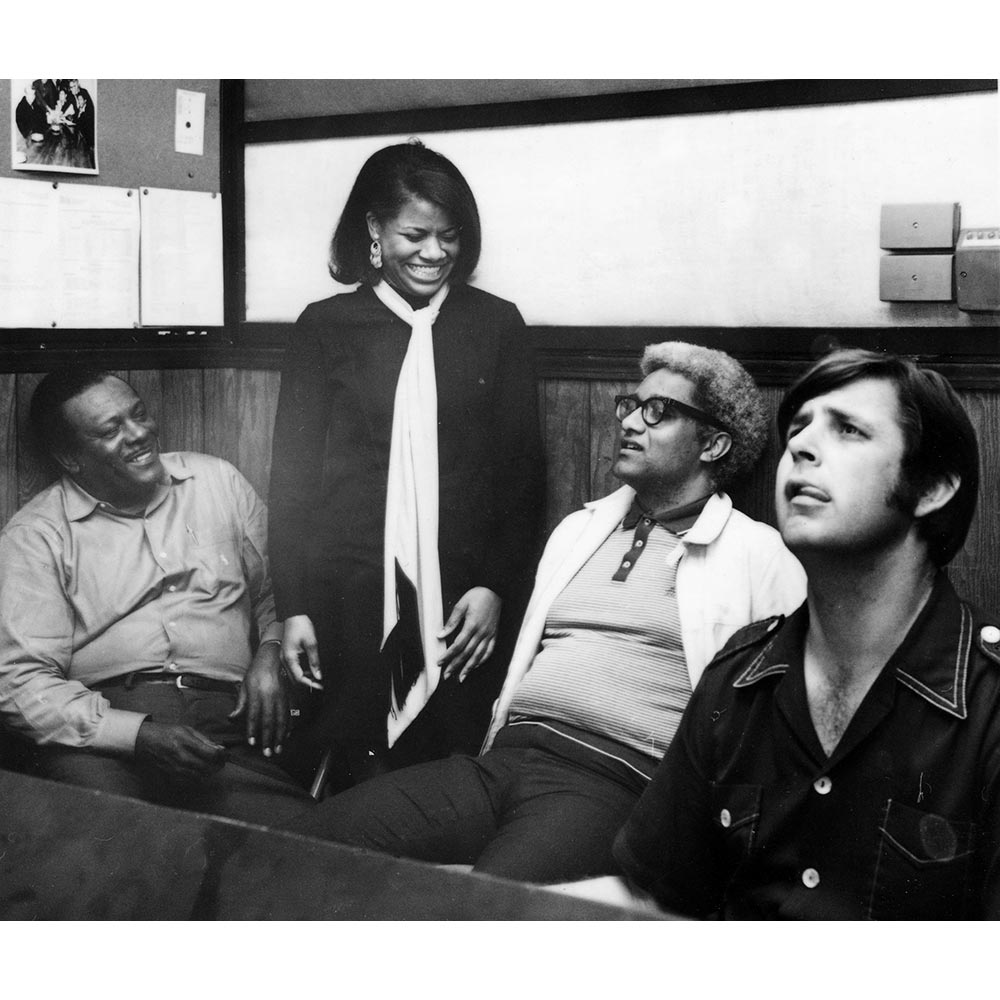
BETTY HARRIS-NEW ORLEANS’ LOST SOUL QUEEN.
Betty Harris-New Orleans’ Lost Soul Queen.
Not every artist is fortunate enough to enjoy a long and illustrious career where they enjoyed commercial success and critical acclaim. For many artists, it’s quite the opposite and their career is cut short, and is over before it has even began. That was the case with Florida born singer Betty Harris, whose career lasted just eight years.
It began in 1962 with the release of Taking Care of Business, and was over by 1970. By then, Bettye Harris had three minor hit singles to her name, and hadn’t enjoyed the success that her talent warranted. Many music industry insiders were surprised that Betty Harris hadn’t enjoyed more success during the past eight years. However, commercial success continued to elude Betty Harris, who given her talent had underachieved. It was a case of what might have been? Especially when out of the blue, Betty Harris announced that she was calling time on her musical career. The thirty-one year old had decided to retire and raise a family in her native Florida.
That was where the future Betty Harris was born, and where she still called home when she retired from music in 1970. Betty Crews was born in Orlando, Florida, in 1939. Both of her parents, Rufus C. Crews and Winifred Crews, were ministers in the Pentecostal Church. As a result, religion played an important part in the Crews’ home. It was also a house where music played an important part in everyday life.
The Rev. Rufus C. Crews was a multi-instrumentalist and singer, who sported a powerful tenor voice. He was also a part-time booking agent for a variety of gospel groups and artists. This was a role Rev. Rufus C. Crews would continue, when the family moved to Alabama.
When the Crews moved Alabama, Betty was just four. It would be her home for the next thirteen years, and where her father introduced Betty to Rosetta Sharp, Sam Cooke, The Soul Stirrers, Johnny Taylor and The Blind Boys Of Alabama. Soon, young Betty Crews would be following in their footsteps.
By the age of twelve, Betty Crews had already singing lead vocal in a choir which had supported Brother Joe May. Already, people were taking notice of Betty Crews.
Over the next few years, Betty Crews continued to sing gospel, and during that period, she spoke to and learnt from, all the gospel singers who stayed over in the Crews’ household. Despite meeting and learning from some of the biggest names in gospel music, Betty Crews soon came to realise that she didn’t want to make a career out of gospel music.
Realising that there was little money to be made in gospel music, Betty Crews wanted to crossover and sing secular music. She was listening to the music coming out of Nashville, Tennessee. This was when Betty Crews realised there was more to music than gospel. Around her seventeenth birthday, Betty Crews began plotting how she could escape from Alabama.
It was around this time that Betty Crews saw an advert in the local paper, advertising jobs for maids in a New Jersey hotel. Betty Crews packed her bags and headed to New Jersey. Once there, Betty Crews and her future colleagues decided to head out to a local nightclub. That was when Betty Crews made her debut as a singer, and was spotted by producer Zell Sanders.
He recruited Betty Harris to become the lead singer of The Hearts, who released their debut single Like Later Baby later in 1958. It failed commercially, and The Hearts’ recording career came to nothing. Betty Harris’ nascent musical career had hit the buffers.
In 1960, Betty Harris decided to move to New York, and before long, was singing in some of the Big Apple’s smaller clubs. When she was finished her set, Betty Harris would head to venues like the Apollo, where she would study the technique of some of the top singers. One night, when Betty Harris arrived at the Apollo, Mabel Louise Smith. a.k.a. the R&B singer Big Maybelle was about to go on stage. Betty watched and was captivated as Big Maybelle unleashed a vocal powerhouse on Candy. Betty Harris was so impressed that later, she headed backstage to introduce herself to Big Maybelle.
Having introduced herself to Big Maybelle, Betty Harris asked if she could study her technique. Big Maybelle agreed, and took Betty Harris out on the road where she became the young singer’s mentor. It wasn’t just technique and stagecraft that Big Maybelle taught Betty Harris, it was how to conduct herself.
Over the next few weeks, Big Maybelle coached Betty Harris. She also had a powerful vocal, and Big Maybelle helped Betty Harris harness her powerful vocal, and improve her technique. This they continued to do on a two-week tour. It began in Chicago and headed to Tennessee, before ending in Chicago. That was where Betty Harris landed a job, and would record her debut single.
The time Betty Harris had spent with Big Maybelle had been time well spent. Big Maybelle made Betty promise that she would continue to sing each day. It was as if the older woman wanted her protegé to fulfil the potential she saw in her. Even in what was a relatively short space of time, Betty Harris had improved as a vocalist, and was ready to make the next step in her career
This included recording her debut single. Now living in Chicago, Betty Harris got her break when she recorded Taking Care Of Business for Douglas Records. Taking Care Of Business was released in 1962, and failed to make any impression commercially. Betty Harris’ time at Douglas Records was over after just one single.
Fortunately, Betty Harris met Solomon Burke’s manager, Marvin Leonard ‘Babe’ Chivian. He introduced Betty Harris to Bert Berns, who had produced Solomon Burke’s hit single Cry To Me.
Bert Berns was a songwriter and producer, who was housed within the famous Brill Building, and had already written a string of classic songs, including Under The Boardwalk and Piece Of My Heart. Among Bert Berns’ various songwriting partners, were none other than Leiber and Stoller. However, Bert Berns wasn’t just a songwriter; he was also a producer, who would transform Betty Harris’ fortunes.
For Betty Harris’ debut for Jubilee Records, Cry To Me was chosen. It gave Solomon Burke a hit single a year earlier. The man who had produced Solomon Burke hit single was none other than Bert Berns. He took a different approach to Cry To Me this time around. By dropping the tempo, Cry To Me became a heart wrenching ballad, which later, would become a deep soul classic. Before that, Cry To Me was released in 1963 on Jubilee Records.
Cry To Me reached twenty-three in the US Billboard 100 and number ten in the US R&B charts. Considering this was merely Betty Harris’ sophomore single, this was a good start to her nascent recording career. For the followup, His Kiss was released on the 4th of January 1964. Although it was another deep soul ballad, His Kiss stalled at the lower reaches of the charts. This was a disappointment for Betty Harris.
Although His Kiss hadn’t come close to matching the success of Cry To Me, Betty Harris was a popular live draw, and even had topped the bill at Apollo Theatre, in New York. Betty who had shared the bill with Sam Cooke, Aretha Franklin and James Brown seemed to be going up in the world.
For Betty Harris’ next single, the oft-covered Mojo Hannah was chosen and released later in 1964. It became Betty Harris’ third single for Jubilee Records and gave Betty Harris a minor hit single. Mojo Hannah proved to be Betty Harris’ swan-song for Jubilee Records. That was despite Betty Harris being still under contract to Jubilee Records.
After the release of Mojo Hannah, Betty Harris met New Orleans based singer, songwriter, arranger and producer Allen Toussaint. He was about to launch a new record label with his business partner Marshall Sehorn. This new label Sansu Records, was based in New Orleans, and Allen Toussaint wanted to Betty Harris to sign to the Sansu. So did Marshall Sehorn. There was only one problem, what was Betty Harris contractual status?
Later, allegations and counter allegations were made regarding Betty Harris’ contractual status. Jubilee Records believed that Betty Harris was still their artist. Betty Harris later alleged that Allen Toussaint told her that he had bought her out of her Jubilee Records’ contract. If that was the case, Betty Harris was free to sign to Jubilee Records, and record and release her debut single for Sansu Records. However, Betty Harris later stated that Allen Toussaint hadn’t bought her out of her Jubilee Records’ contract when he stated he had.This meant that she was still under contract to Jubilee Records when she recorded her Sansu Records’ debut.
To record her Sansu Records’ debut, Betty Harris flew from her home in Florida to New Orleans, where she spent a month living in the city’s Mason’s motel. Much of the time was spent recording with producer Allen Toussaint. He put together a band that featured some of the Big Easy’s top session musicians. The initial sessions didn’t go well. Betty Harris didn’t like recording the songs live, and preferred working with backing tapes. This was a lesson learnt for future sessions. Backing tracks would be recorded and then Betty Harris would add her vocals. However, during the first recording sessions the tracks were recorded live, including What A Sad Feeling which became Betty Harris’ debut single for Sansu Records.
What A Sad Feeling, a soul-baring ballad would be the first of just ten singles Betty Harris released on Sansu Records. On the B-Side I’m Evil Tonight, which features a vocal powerhouse from Betty Harris. Alas, when What A Sad Feeling was released in 1965, it failed commercially. While the single found an audience within New Orleans, elsewhere it was a different story. . Sansu Records was just a small independent label, with neither the financial muscle nor marketing expertise to give Betty Harris another hit single. This would be a familiar story.
It wasn’t until 1966, that I Don’t Wanna Hear It was released as Betty Harris’ second single for Sansu Records. Tucked away on the B-Side was the ballad Sometime, where Betty Harris’ vocal veers between tender to hurt filled and powerful. Just like What A Sad Feeling, I Don’t Wanna Hear It failed to find an audience outside of the Big Easy. Later, I Don’t Wanna Hear It became a favourite with the UK’s Northern Soul scene.
Later in 1966, Betty Harris returned with the Allen Toussaint penned 12 Red Roses. On the flip side was another Allen Toussaint composition, What’d I Do Wrong. This future deep soul classic, was, without doubt, a much stronger track. and maybe if Sansu Records had released it as a single, it would’ve given Betty Harris that elusive hit single? 12 Red Roses certainly didn’t, and it was now two years since a Betty Harris single had even troubled the lower reaches of the chart. Betty Harris’ career had stalled.
During 1967, Allen Toussaint saw Art Neville and The Neville Sounds playing on Basin Street. Straight away, he realised that here was the band he wanted to play on the Sansu Records’ releases. By then, Sansu Records were recording at Cosimo Matassa’s state of the art eight-track studio. This was where the Neville Sound was born, and soon, Betty Harris would be accompanied by Art Neville and The Neville Sounds.
It wasn’t until later in 1967 that Betty Harris released her fourth single for Sansu Records. The song chosen was the ballad Lonely Hearts, which could only have been recorded in New Orleans. Horns and harmonies accompany Betty, as she delivers an impassioned, heartfelt vocal. On the flip side was Bad Luck, a mid tempo slice of R&B. Just like her previous singles, Lonely Hearts made no impression on the charts. However, Betty Harris’ luck was about to change.
For her second single of 1967, the ballad Nearer To You was chosen. It features an atmospheric, Southern Soul arrangement. It’s one of Betty Harris’ finest moments, is helped no end by Allen Toussaint’s arrangement. On the flip side, I’m Evil Tonight made a reappearance. When Nearer To You was released, it entered the US Billboard 100 but stalled at a lowly eighty-five. Nearer To You deserved to fare better, and was a case of what might have been?
After Nearer To You had given Betty Harris a minor hit single, Sansu Records was keen to build on the relative success of the single. By then, Betty Harris had embarked upon a gruelling tour of America, which lasted much of 1967. The tour it was hoped, would raise Betty Harris’ profile and introduce her to a much wider audience. This Betty Harris and everyone at Sansu Records hoped would translate into an increase in record sales. Sansu Records tested the market by releasing Can’t Last Much Longer as a single, with I’m Gonna Git Ya on the B-Side. When the single was released later in 1967, it never even came close to troubling the US Billboard 100. This was another blow for Betty Harris.
During 1967, Betty Harris had toured with Otis Redding, Carla Thomas and Bettye Swann. They played tour fifty-three dates, before Otis Redding was killed in a plane crash. For Betty Harris this was a tragedy for several reasons.
She had become friendly with many of the artists on the tour, including Otis Redding. He had recently cofounded a new management company with Phil Walden, Redwal Enterprises. The new company was going to manage some of the biggest names in soul, including Percy Sledge, Sam and Dave and Wilson Pickett. Betty Harris who was about to embark upon a European tour with Otis Redding, had also signed a management contract with Redwal Enterprises. After the death of Otis Redding, this came to nothing.
Despite this, Betty Harris’ recording career continued, and she released Love Lots Of Lovin’, a duet with Lee Dorsey in 1968. Just like previous singles, it failed to make any impression on the charts.
Neither did the former B-Side What’d I Do Wrong, which was belatedly released as a single with later in 1968. This time around, the B-Side was Mean Man, another Allen Toussaint composition. Just like his other songs, Betty Harris brought the lyrics to life. The singer and songwriter had formed a formidable partnership. There was only one thing missing…commercial success which continued to elude Betty Harris.
Despite this, Betty Harris released the ballad Hook, Line ’N’ Sinker as a single later in 1969. On the B-Side was the uptempo dancer Show It, which later, found favour with DJs and dancers on the UK Northern Soul scene. However, when Line ’N’ Sinker was released it sunk without trace. This was another disappointment for Betty Harris, whose time at Sansu Records was almost at an end.
In 1969, Betty Harris released Ride Your Pony as a single. It sounded like novelty dance track and wasn’t Betty Harris’ finest hour. Ironically, the B-Side Trouble With My Lover was a slightly stronger track. When Betty Harris release Ride Your Pony it never came close to troubling the charts. Ride Your Pony was the tenth and final single Betty Harris released on Sansu Records.
Only one of the ten singles had charted, and even then, Nearer To You struggled into the lower reaches of the US Billboard 100. The Sansu Records’ years hadn’t been the most successful period of Betty Harris’ career. Maybe Sansu Records’ was the wrong label for Betty Harris, and she might have enjoyed more success if she had signed to a bigger label? Allen Toussaint belatedly came to the same conclusion, after he convinced Betty Harris to record one more single, There’s A Break in The Road.
It was their last roll of the dice for Betty Harris and Allen Toussaint. When it came time to record There’s A Break in The Road, Allen Toussaint brought onboard The Meters. They unleashed their trademark heavy-duty funk which was the perfect backdrop for Betty Harris as she delivered a vocal that was a mixture of power, frustration and sass. When Allen Toussaint listened to the song, he realised that it had the potential to transform Betty Harris’ ailing career.
Originally here’s A Break in The Road meant to be released on Sansu Records, but after some thought, Allen Toussaint decided to license the single to Shelby Singleton’s SSS International label. It was a larger label, and it might result in a change of fortune for Betty Harris.
There’s A Break in The Road was released in 1969. It was without doubt, one of the best singles of Betty Harris’ career. Despite the undoubted quality, and the decision to release There’s A Break in The Road on SSS International, the single failed to find an audience. It was all too familiar a story for Betty Harris, and marked the end of her recording career for thirty-six years.
In 1970, Betty Harris decided to retire from music, and concentrate on bringing up her family. By then, she was thirty-one, had been making music since the late-fifties. Apart from four minor hit singles, Betty Harris’ career had been a case of what might have been?
Through no fault of her own, Betty Harris had underachieved. Sansu Records was just a small independent label, with neither the financial muscle nor marketing expertise to promote Betty Harris singles. While each of the ten singles Betty Harris released for Sansu Records sold reasonably well within New Orleans, they never found an audience further afield. That was the case between 1965 and 1969, when Betty Harris released ten singles on Sansu Records. Only Nearer To You charted, but only reached a lowly eighty-five in the US Billboard 100. This must have been hugely frustrating for Betty Harris.Maybe it was no surprise when Betty Harris decided to turn her back on music in 1970?
That was the last that was heard of this Betty Harris until 2005, when she decided to hit the comeback trail. By then, several of Betty Harris’ singles had found a new audience. I Don’t Want to Hear It and I’m Evil Tonight were favourites within the UK Northern Soul circles, while ballads like What’d I Do Wrong and Can’t Last Much Longer were favourites within the Deep Soul community. Somewhat belatedly, Betty Harris whose a talented and versatile vocalist, and one of New Orleans’ soul music’s best kept secrets, was receiving the recognition her music deserved, and enjoying the success that had eluded her for so long.
Betty Harris-New Orleans’ Soul’s Best Kept Secrets.
L.A. EXPRESS: TOM SCOTT’S SHORT-LIVED JAZZ SUPERGROUP.
L.A. Express: Tom Scott’s Short-Lived Supergroup.
Musical history is littered with artists and groups that never enjoyed the commercial success that their music deserved. That was the case with L.A. Express an oft-0verlooked fusion supergroup who released a quartet of albums between 1973 and 1976. Sadly, these albums never found the audience they deserved and it was only later, that L.A. Express’ music started to be appreciated by jazz and fusion aficionados. By then, the group’s founder Tom Scott had moved onto other things.
This included founding The Blues Brother Band, providing the theme tune to Starsky and Hutch and receiving thirteen nominations for a Grammy Award. By then, Tom Scott had enjoyed a long and illustrious career which began as a fifteen year old, when t featured on Jan and Dean’s 1963 album Surf City And Other Swingin’ Cities. However, the one that got away for the jazz saxophonist, composer and producer, Tom Scott was L.A. Express. His career began in earnest in 1967.
By 1967, seventeen year old Tom Scott, L.A. based jazz saxophonist had already decided to embark upon a career as a professional musician, and became the leader of the jazz ensemble Neoteric Trio. This came as no surprise to those that knew Tom Scott and his family.
Especially his father Nathan Scott, who was a prolific and well-respected composer, conductor and orchestrator, who was well on his becoming one of the most prolific composers in the history of American film and television. He had started out in the music industry in 1939, after graduating from the University of California, Berkeley with a degree in music. Since then, Nathan Scott had lived in L.A. where his son Tom Scott was born on May the ‘19th’ 1948. Now that Tom Scott was making his own way in the musical world and it was a proud day for Nathan Scott.
He had watched as his son made his recording debut on Jan and Dean’s 1963 album Surf City And Other Swingin’ Cities four years previously. Now just years later, in 1965, and Tom Scott was the leader of the Neoteric Trio. This was just the start of the rise and rise of Tom Scott, who soon, would be playing alongside the great and good of jazz.
This included joining the Don Ellis Orchestra when they recorded Live At Monterey! which was released in 1966. The next album Tom Scott played on was Live In 3⅔/4 Time which tested his skills as a musician. However, Tom Scott rose to the challenge and played an important part in the album’s sound and success. Live In 3⅔/4 Time was released in 1967, and was one of number of albums that featured Tom Scott.
He also collaborated with Roger Kellaway on the album Spirit Feel. When it was released on Pacific Jazz, they were billed as Roger Kellaway Featuring Tom Scott on Spirit Feel. Tom Scott also featured on Gábor Szabó’s Light My Fire With Bob Thiele, Oliver Nelson’s Live From Los Angeles and Bob Thiele And His New Happy Times Orchestra’s Light My Fire, which were all released in 1967 on Impulse! This was the label that the nineteen year old Tom Scott had signed to, and was preparing to record his debut alum.
It was Bob Thiele who ran Impulse! for ABC, that had signed Tom Scott to Impulse!, which by 1967, was one of jazz’s top labels. Bob Thiele would also produced many of the albums released by Impulse!, including a number of classic albums. This made Bob Thiele the perfect person to produce Tom Scott’s debut album. It featured nine cover versions and the Tom Scott composition Blues For Hari. Later in 1967, Impulse! released Tom Scott’s debut album The Honeysuckle Breeze where the saxophonist was billed as Tom Scott With The California Dreamers. Despite marketing the album towards a younger generation of jazz fans, The Honeysuckle Breeze wasn’t the commercial success that Impulse had hoped.
By 1968, Tom Scott was already a familiar face in the West Coast session scene, and was always in demand. Partly this was because of his versatility, but mostly because he was already regarded as one of the top young saxophonists. As result, he played on Ravi Shankar’s Charly soundtrack, Sergio Mendes’ Favorite Things, The Mason Williams Phonograph Record, Gábor Szabó’s Macho, Richard “Groove” Holmes’ album Welcome Home, Plummer’s Cosmic Brotherhood, Monk Higgins’ Extra Soul Perception and Oliver Nelson and Steve Allen’s Soulful Brass. Tom Scott was also drafted in to play saxophone on two albums by psychedelic rockers Carnival, Carnival and Gypsy Carnival Caravan. This was all good experience for twenty years old Tom Scott.
1969 saw Tom Scott successfully juggle his career as a sideman with his solo career, and soon, his nascent career as a bandleader. However, Tom Scott’s career as a sideman was flourishing, and in 1969 he found himself playing on a number of albums, including Lalo Schifrin’s soundtrack to Che!, Howard Roberts’ Spinning Wheel, Joe Byrd and The Field Hippies’ The American Metaphysical Circus. Some of the other albums Tom Scott played were produced by Bob Thiele, including Jimmy Gordon And His Jazznpops Band’s Hog Fat, T-Bone Walker’s Every Day I Have The Blues, Otis Spann’s Sweet Giant Of The Blue and Bob Thiele Emergency’s album Head Start. Still, though, Tom Scott found time to record his sophomore album.
This was Rural Still Life which featured three of Tom Scott’s own compositions and marked the twenty-one year old’s production debut. However, just like The Honeysuckle Breeze, Rural Still Life failed commercially and Tom Scott left Impulse!
Fortunately, Bob Thiele had just founded his new label Flying Dutchman Productions, and one of his signings later in 1969 was the Tom Scott Quartet. They released Hair To Jazz in 1969, and followed this up with Paint Your Wagon in 1970. While the albums were well received, they never found a wider audience. This was a disappointment for Tom Scott, who had come a long way in a short space of time.
Five years after making his professional debut, Tom Scott had already released two solo albums and two albums with his new Quartet. By 1970 Tom Scott was also one of Los Angeles’ top session players, and a familiar face on the West Coast music scene and that year, accompanied some of the biggest names in music, including Neil Diamond, Jimmy Webb, Phil Ochs, The 5th Dimension, Dave Antrell, Sergio Mendes and Freddy Robinson.
Over the next two years, Tom Scott continued to work with some of the top names in music. In 1971, albums were released by Nillson, Lalo Schifrin, Sérgio Mendes and Brasil, Jimmy Webb and The Fifth Dimension that featured Tom Scott’s saxophone. So did albums by Joni Mitchell, Albert Hammond, Gerry Mulligan and Claudine Longet in 1972. While Tom Scott was still enjoying session work, he still wanted to release another solo album,
Later in 1972, twenty-four year old Tom Scott had just signed to A&M and was preparing to record his third album Great Scott. When it was released in 1972, it was well received by critics. However, it was three years before Tom Scott returned with his fourth album, as he was about to found a new supergroup L.A. Express.
The Birth Of Tom Scott and The L.A. Express.
By 1973, Tom Scott was looking for a backing band within the West Coast music scene. The contacts that he had established over the last few years served him well, and he was able to secure the services of four talented, versatile and vastly experienced musicians who had worked as session musicians and bandleaders. This included drummer and percussionist John Guerin, bassist Max Bennett, guitarist Larry Carlton and keyboardist Joe Sample. They would become L.A. Express which was formed in 1973.
Tom Scott and The L.A. Express.
Not long after Tom Scott recruited the four members of The L.A. Express, they headed into the studio to record an album together. That album was Tom Scott and L.A. Express, which was an accessible album of fusion which was released by Old in August 1973. By then, fusion was at a crossroads.
The West and East Coast sounds were quite different, and jazz-funk was growing in popularity. All this affected sales of Tom Scott and L.A. Express, which is a vastly underrated album from the all-star band. This was a disappointing start to the partnership between Tom Scott and L.A. Express.
Joni Mitchell -Court and Spark.
The second album that Tom Scott and The L.A. Express worked on together, was Joni Mitchell’s sixth album Court and Spark. Tom Scott and John Guerin featured on all eleven tracks, while Max Bennett and Larry Carlton featured on eight songs. Joe Sample only featured on Raised on Robbery, but in doing so, played his part in what was Joni Mitchell’s most successful album.
When Court and Spark was released in January 1974, it reached number one in Canada, where Joni Mitchell was born. Across the border, Court and Spark reached number two in the US Billboard 200, and was certified gold in America and Britain. Later Court and Spark was nominated for four Grammy Awards in 1975, with Joni Mitchell and Tom Scott winning the Grammy Award for Best Arrangement, Instrumental and Vocals. By then, things had changed for L.A. Express.
Joni Mitchell and The L.A. Express-Miles of Aisles.
Two months after the release of Court and Spark, work began on what would become Joni Mitchell’s seventh album Miles of Aisles. Joni Mitchell decided that The L.A. Express should accompany her on Miles of Aisles. This time, The L.A. Express received equal billing with Joni Mitchell.
Recording took place between the ‘2nd’ and ‘4th’ of March 1974, and was completed between August the ’14th’ and ‘17th’ of 1974. Not long after this, two members of L.A. Express dropped a bombshell.
Larry Carlton and Joe Sample left L.A. Express, and decided to concentrate their efforts on their ‘other’ group The Crusaders. However, the original members of L.A. Express would later be reunited. Before that, Tom Scott and the remaining members of L.A. Express started looking for replacements for Larry Carlton and Joe Sample.
Tom Cat.
This wasn’t easy, given that Larry Carlton and Joe Sample were talented, versatile and vastly experienced musicians. Eventually, though, L.A. Express settled on guitarist Robben Ford and keyboardist Larry Nash. They would make their debut on the Tom Scott and L.A. Express album Tom Cat, which was recorded in late 1974.
Early in 1975, Tom Scott and L.A. Express’ sophomore album Tom Cat was released. Just like their eponymous debut album, it was a carefully crafted and memorable album of fusion. With fusion no longer as popular as it had been in the late-sixties and early seventies, Tom Cat failed to find the audience it deserved. It was only later that Tom Cat which is an underrated album, became popular album amongst fusion and jazz aficionados. However, in 1975 the commercial failure of Tom Cat resulted in Tom Scott parting company with L.A. Express and returned to his solo career.
Tom Scott-New York Connection.
Ode Records signed Tom Scott, who soon, began recording his first album in three years, New York Connection. It featured six new compositions from Tom Scott and three cover versions. They were recorded at the Hit Factory, in New York, between the ‘25th’ and ‘29th’ August 1975, and featured a band included some top musicians.
Among the names that joined Tom Scott were Bob James, Steve Gadd, Eric Gale, Hugh McCracken and Ralph MacDonald. When it came to record Appolonia (Foxtrata), a slide guitarist was needed and George Harrison agreed to make a guest appearance. When the album was completed, it was scheduled for release in late 1975.
Four months later, New York Connection was released and found favour with critics, and reached forty-two in the US Billboard 200. This vindicated Tom Scott’s decision to leave L.A. Express who were hard at work recording L.A. Express,

L.A. Express.
After Tom Scott’s departure from the band, the rest of L.A. Express had to think about the future. For the remaining member of L.A. Express the loss of Tom Scott was a huge disappointment. He had founded the band, recruited some of the musicians and been its driving force. However, the loss of Tom Scott was also an opportunity for the remaining members of L.A. Express to strike out on their own. This would mean a few changes though, and before long, there were two changes to the lineup.
The first thing L.A. Express needed to do, was recruit a new saxophonist. They set their sights on securing the services of David Luell, a talented and experienced saxophonist, who was equally comfortable playing baritone, soprano and tenor sax. While David Luell agreed to join L.A. Express, there was still one more change to make, replace the keyboardist Larry Nash.
Replacing Larry Nash, was none other than Victor Feldman. He was born into a musical family in London, England, but was now resident in Los Angeles. Victor Feldman was perfect fit for L.A. Express, given he could play keyboards, synths, percussion and vibes. Now the final piece of the L.A. Express jigsaw was in place.
Now L.A. Express began to think about recording their debut album. However, there was a problem. It was Tom Scott and L.A. Express who were signed to Ode Records. This was essentially a partnership, where Tom Scott was perceived as the senior partner, and it no longer existed. For L.A. Express this was a problem, but also was an opportunity for what was essentially L.A. Express Mk.III.
When L.A. Express got the chance to sign for Caribou Records, which was founded by James William Guercio, who produced Chicago and Blood, Sweat and Tears, Ode Records didn’t stand in their way. It was a new start for third line-up of L.A. Express.
L.A. Express.
Now that L.A. Express were signed to James William Guercio’s Caribou Records, they began work on their eponymous debut album. Bassist Max Bennett penned a trio of tracks, Midnite Flite, Suavemente (Gently) and Cry Of The Eagle and cowrote It’s Happening Right Now with Victor Feldman. He contributed The Shrug and Western Horizon, while John Guerin write Down The Middle. Guitarist Robben Ford chipped in with two songs, Stairs and Transylvania Choo Choo. The nine songs that became L.A. Express had all been written by the band.
Recording of L.A. Express took place at A&M Studios, in Los Angeles during early 1975. By then, L.A. Express’ rhythm section featured drummer and percussionist John Guerin, bassist Max Bennett and guitarist Robben Ford. They were joined by saxophonist David Luell and Victor Feldman, who switched between keyboards, percussion, synths and vibes. Rather than employ a producer, The L.A. Express decided to take charge of production. Once the album was recorded, it was ready for release in 1976. Before that the original members of L.A. Express were reunited their former band mates and some new names.
Joni Mitchell who was then engaged to L.A. Express drummer John Guerin, was about to record her seventh album, The Hissing Of Summer Lawns. L.A. Express were invited to play on the album. This included the two former members of L.A. Express, Larry Carlton and Joe Sample. They would meet L.A. Express’ new guitarist Robben Ford. However, neither David Luell nor Victor Feldman played on The Hissing Of Summer Lawns. It would be released to critical acclaim in November 1975, and become one of Joni Mitchell’s most successful classic albums. The following year, L.A. Express released their eponymous debut album.
When L.A. Express was released early in 1976, it was to critical acclaim. Inevitably, comparisons were drawn with the two albums Tom Scott and L.A. Express had released. While L.A. Express was another fusion album, it was a much more accessible and pop-oriented take on fusion. Still, though, the emphasis was on quality for fusion’s latest supergroup.
When L.A. Express was released in early 1976, the album failed to trouble even the lower reaches of the charts. By then, music was changing, and fusion was no longer as popular as it had been. Record buyers missed out on the critically acclaimed L.A. Express. Its commercial failure was a huge disappointment for fusion’s latest supergroup.
For Tom Scott who must have been watching with interest, this further vindicated his decision to leave L.A. Express to record a solo album and pursue other musical interests. Meanwhile, the band he had founded was about to receive another bitter blow.
Not long after the release of L.A. Express, guitarist Robben Ford left the band. This was a big loss, as he contributed two tracks to L.A. Express and wasn’t just a talented, versatile guitarist, but one who was expressive and inventive. His guitar played an important part in L.A. Express’ sound on their eponymous debut album. Replacing Robben Ford wasn’t going to be easy.
Eventually, the other members of L.A. Express settled on guitarist Peter Maunu as Robben Ford’s replacement. Now work could begin on L.A. Express’ sophomore album, Shadow Play.
Shadow Play.
With Peter Maunu onboard, L.A. Express Mk. IV headed out of Los Angeles to work on their sophomore album Shadow Play. Their destination was James William Guercio’s Caribou Ranch, in Colorado which sat high above the mountains. It was an atmospheric and inspiring place, and perfect for writing and recording an album.
Founder member of L.A. Express, John Guerin, wrote Velvet Lady and Mad Drums And Englishman (Mavro). New recruit Peter Maunu contributed Nordic Winds, Double Your Pleasure and Virtex. Victor Feldman penned Chariot Race, Dance The Night Away and Silhouette. Shadow Play was written by David .Luell and R.Philipe. These songs were recorded by L.A. Express at the Caribou Ranch, with a little help from their friends.
This time around, when recording Shadow Play began, L.A. Express’ rhythm section featured drummer and percussionist John Guerin, bassist Max Bennett and guitarist Peter Maunu. They were joined by saxophonist David Luell and Victor Feldman, who played piano, Fender Rhodes, Arp Odyssey, Hammond organ and congas. Joining L.A. Express were two vocalists Paulette McWilliams and Joni Mitchell, who featured on three tracks. Again rather than employ a producer, The L.A. Express decided to take produce the Shadow Play themselves. It was ready for release during the second half of 1976.
Before that, critics had their say on Shadow Play, which would be the second album L.A. Express had released. Shadow Play was well received by critics, who noticed that L.A. Express had moved from fusion towards a rockier sound on Shadow Play. The addition of the two guest vocalists was welcomed, which showed another side to L.A. Express They were a chameleon-like and versatile band.
While critics were won over by Shadow Play, the album failed to attract the attention of record buyers. Just like L.A. Express, Shadow Play didn’t trouble the charts. For L.A. Express it was the end of the road.
By then, the members of L.A. Express were involved in a number of different projects, which would prove more successful and lucrative. It wasn’t going to be as easy to find time for L.A. Express to record together any more. So a decision was made that Shadow Play would be L.A. Express’ swan-song.
Meanwhile, Tom Scott’s fortunes had improved since his departure from L.A. Express. He continued to work with the great and good of music, and accompanied everyone from Minnie Riperton, Carole King, Aretha Franklin to Merry Clayton to Wings, Melvin Van Peebles, George Harrison, The Carpenters, Glen Campbell, Joni Mitchell to Boz Scaggs and Hall and Oates. Still, millions of viewers heard one of Tom Scott’s most successful compositions when they tuned in to The Streets of San Francisco between 1972 and 1977. However, in 1975, another Tom Scott composition, Gotcha, became the theme to Starsky & Hutch. This would prove lucrative for Tom Scott, who recorded Gotcha for his 1977 a bum Blow It Up. By then, L.A. Express called time on their career, and like Tom Scott had moved on to other projects.
When L.A. Express called time on their career in 1976, they had only been together for just three years, but had accomplished a lot. They had recorded two albums as Tom Scott and L.A. Express, featured on a trio of Joni Mitchell albums and released two albums for Caribou Records, L.A. Express and Shadow Play. The albums they recorded as Tom Scott and L.A. Express and then Tom Scott is a reminder of one fusion’s oft-overlooked, but multitalented and versatile supergroups which was founded by Tom Scott and should’ve reached greater heights.
L.A. Express: Tom Scott’s Short-Lived Supergroup.
CREAM BRITAIN’S FIRST AND BEST SUPERGROUP?
Cream-Britain’s First and Best Supergroup.
It was in July 1966, when Britain’s first supergroup, Cream was born. Eric Clapton who was regarded as the greatest British blues guitarist of his generation, was looking beyond life with John Mayall and The Bluesbreakers. That was the group Eric Clapton had joined after his departure from The Yarbirds.
By July 1966, Eric Clapton was in his second spell with John Mayall and The Bluesbreakers. He originally joined in April 1965 and was a Bluesbreaker until August 1965. Three months later, Eric Clapton returned to the fold in November 1965. For the next eight months, Eric Clapton was a Bluesbreaker. During this period, John Mayall and The Bluesbreakers recorded their classic album Blues Breakers With Eric Clapton in April 1966.
Three months later, and Blues Breakers With Eric Clapton was released by Decca on the 22nd July 1966. Critical acclaim accompanied what’s regarded as a British blues classic. It reached number six in the UK charts. This should’ve been a reason to celebrate. However, Eric Clapton was neither happy nor feeling fulfilled musically.
Instead, he felt constrained musically. Eric Clapton was unable to stretch his legs within John Mayall and The Bluesbreakers. There was certainly no room for invention. This was frustrating for Eric Clapton. So much so, that he was even considering forming his own band. However, Blues Breakers With Eric Clapton had just been released and looked like being the band’s most successful album. For Eric Clapton, his nascent career was at a crossroads.
To take his mind off his problems, Eric Clapton decided to go and see blues guitarist Buddy Guy in concert. That night, Buddy Guy took to the stage with a trio. When Eric Clapton saw the trio live, he was so impressed that he decided to form a new band. They would also be a trio, Cream.
Having made the decision to leave John Mayall and The Bluesbreakers, Eric Clapton began looking for musicians to join his band. He knew drummer Ginger Baker, who was a member The Graham Bond Organisation. Ginger Baker was tiring of Graham Bond’s drug addiction and bouts of instability. So much so, that he was considering his future.
When Eric Clapton approached Ginger Baker about joining his trio, the answer was yes. However, there was a catch. Eric Clapton had to agree to hire The Graham Bond Organisation’s bassist Jack Bruce.
Eric Clapton already knew Jack Bruce and played alongside him on two occasions. The first came in November 1965 when Jack Bruce sat in with John Mayall and The Bluesbreakers during November 1965. More recently, Eric Clapton and Jack Bruce were part of Steve Winwood’s band Powerhouse, which also featured Paul Jones. During the two sessions, Eric Clapton had been impressed by Jack Bruce proficiency and prowess as a bassist. Jack Bruce who had previously enjoyed working with Eric Clapton, agreed to join the band. However, he was surprised that Ginger Baker had recommended him to Eric Clapton.
During their time with The Graham Bond Organisation, Ginger Baker and Jack Bruce had a volatile relationship. The two members of the rhythm section were known to argue onstage. Sometimes, things got so bad that they traded blows. However, that was the past. Ginger Baker and Jack Bruce agreed to put their differences aside. A musical truce was declared. Suddenly, there was peace in our time. All for the good of the new group.
With the lineup complete, the nascent band set about establishing the ground rules. They envisaged that songs would be collaborations, with each member playing a part in writing the lyrics and music. Next on the agenda was a name for the group. It didn’t take long for them to come up with the name Cream. The music press had been describing the new band as the: “cream of the crop” of British musicians. Cream was essentially the first British supergroup. They were about to make what was their unofficial debut.
This took place on the 29th of July 1966, at the Twisted Wheel nightclub in Manchester. That night, it was hosting the Sixth Annual Windsor Jazz & Blues Festival. Cream were special guests, and in absence of new material, ran through a set of blues covers. Little did those in the audience realise that they had just witnessed history being made.
Just three months later, in October 1966, Cream took to the stage with another legend of sixties music, Jimi Hendrix. He was a fan of Eric Clapton’s was keen to jam with his new band on his arrival of London. Little did anyone realise that by the end of the sixties, both Cream and Jimi Hendrix would’ve become two of the biggest names of the late-sixties music scene.
Later in 1966, Cream were still experimenting musically. They had yet to decide who would be the group’s lead vocalist. Eric Clapton’s shyness meant he was reluctant to take charge of the lead vocals. Instead, Jack Bruce became Cream’s lead vocalist. However, during Cream’s lifetime, Eric Clapton would add harmonies and the lead vocal on a number of tracks.This included a track on Cream’s debut album Fresh Cream.
Fresh Cream.
Almost straight away, work began on Cream’s debut album, which later became Fresh Cream. It featured ten songs. They were a mixture of new songs and cover versions.
The new songs included Jack Bruce’s N.S.U. and Dreaming. He cowrote Sleepy Time Time with his first wife and songwriting partner Janet Godfrey. She cowrote Sweet Wine with Ginger Baker, who wrote the instrumental Toad. Other songs included a cover of song Cat’s Squirrel, which was arranged by Cream and a quartet of blues classics.
This included Willie Dixon’s Spoonful. Cream decided to cover Robert Johnson’s From Four Until Late which Eric Clapton arranged. It was joined by Rollin’ and Tumblin’ which Muddy Waters penned using his real name, McKinley Morganfield. The final blues classic was Skip James’ I’m So Glad. These songs were recorded over a three month period.
Recording of Fresh Cream took place between July and October 1966 at two separate studios in London. Some sessions took at Rayrik Studios, while others took place at Ryemuse Studios. Drummer Ginger Baker joined bassist Jack Bruce in the rhythm section. He also played harmonica, piano and took charge of seven of the eight lead vocals. Guitarist Eric Clapton added the lead vocal on Four Until Late. Meanwhile, Robert Stigwood produced what would later became Fresh Cream. It was completed by October 1966.
The release of Fresh Cream was scheduled for the 9th of December 1966. Before that, Cream released their debut single Wrapping Paper in October 1966 . It was penned by Jack Bruce and Pete Brown, but didn’t feature on Fresh Cream. Wrapping Paper showcased a psychedelic pop sound that Cream returned to. This proved popular and reached thirty-four in the UK charts. Things were looking good for Cream.
Nearer the release of Fresh Cream, critics had their say on the nascent supergroup’s debut album. Nearly every critic lavished praise and plaudits on Fresh Cream. They were won over by an album that ranged from blues rock to psychedelia and a much more hard rocking sound. Cream’s debut was an eclectic and accomplished album. Especially the psychedelic sound of N.S.U, the bluesy Sleepy Time and the Jack Bruce penned ballad Dreaming. Four Until Late shakes off his shyness and makes his debut on lead vocal on the cover Robert Johnson’s Four Till Late. However, one of Cream’s finest moments on Fresh Cream was their reinvention of I’m So Glad. It’s transformed into something that Skip James could never have envisaged. Given the critical reaction to Fresh Cream, it seemed that the future looked bright for Cream.
They prepared to release Fresh Cream on the 9th of December 1966 on Robert Stigwood’s new independent record label, Reaction Records. The same day, Cream released their sophomore single, I Feel Free. Just like their debut single, it didn’t feature on Fresh Cream. Despite that, I Feel Free reached number eleven in the UK and fifty-three in Australia. Meanwhile, Fresh Cream reached number six in the UK, ten in Australia and twenty in France. This resulted in Fresh Cream being certified gold in Britain and France. The success continued when Fresh Cream was released in America.
The American version of Fresh Cream was released by Atco. It featured a slightly different track listing. I Feel Free opened the album, with the British version of Fresh Cream following. This proved popular among American record buyers. Fresh Cream eventually reached thirty-nine in the US Billboard 200 and was certified gold. For Cream, this meant that their debut album Fresh Cream had been certified gold in three different continents. Critics wondered how they could they followup such a successful album? Cream returned with a classic album, Disraeli Gears.
Disraeli Gears.
Following the success of Fresh Cream, Cream headed out on tour. In March they landed in America, to play their first American tour. They were part of a package tour, and were booked to play nine dates at the Brooklyn Fox Theater in New York.
Each day, Cream played three times. However, the early concerts weren’t well received. DJ turned promoter Murray the K wasn’t impressed. He placed Cream at the bottom of the bill. Towards the end of the run, they were reduced to playing just one song during each set. The New York part of their American tour had been a disaster. They wouldn’t forget Murray the K in a hurry.
Having returned home from their American tour, Cream’s thoughts turned to their sophomore album. They had been writing what later became Disraeli Gears for some time.
When Cream was formed, the plan had been for the band to collaborate on songs. Alas, none of the eleven tracks on Disraeli Gears were written by the three members of Cream. They arranged the traditional song, Mother’s Lament. Sometimes, the members of Cream wrote alone. Jack Bruce wrote We’re Going Wrong and Ginger Baker penned We’re Going Wrong. Mostly, the members of Cream wrote alone or formed songwriting partnerships with other musicians and songwriters.
Jack Bruce and Eric Clapton cowrote Sunshine Of Your Love with Pete Brown. It would become one of their known songs. So would Strange Brew, which Eric Clapton wrote with Felix Pappalardi Gail Collins penned. Meanwhile,Jack Bruce wrote Dance the Night Away, SWLABR and Take It Back with Pete Brown. Eric Clapton wrote just the one song. This was Tales of Brave Ulysses with Martin Sharp. However, Eric Clapton arranged Arthur Reynolds’ Outside Woman Blues. It was one of just three covers on Disraeli Gears. Another was World Of Pain, which the Felix Pappalardi and Gail Collins songwriting partnership wrote. Just like the rest of Disraeli Gears, it was recorded in New York, during May 1967.
The prestigious surroundings of Atlantic Studios, New York were where Cream began work on Disraeli Gears. This time around, Felix Pappalardi had replaced ‘musical impresario’ Robert Stigwood. Twenty-seven year old was a classically trained musician who having turned his back on classical music, became a successful singer, songwriter, bassist and producer. One of his biggest projects was producing Disraeli Gears. It was a much more complex album than Fresh Cream.
Ginger Baker played drums and percussionist and joined his cohort, bassist Jack Bruce in the rhythm section. Jack Bruce also played harmonica, piano and took charge of seven of the eight lead vocals. Eric Clapton switched between lead guitar, rhythm guitar and twelve-string guitar. He also added the lead vocal on Strange Brew, World of Pain and Outside Woman Blues. It seemed that Eric Clapton was well on his way to overcoming his shyness, as Cream changed direction musically.
Critics realised this when they received their promotional copies of Disraeli Gears. It took its name from a malapropism which alluded to the former British Prime Minister Benjamin Disraeli. Eric Clapton had been taking about buying a racing bike during a car journey. Mick Turner who was driving the car responded that it should have: “Disraeli Gears” when he meant derailleur gears. That malapropism gave birth to tittle of the album critics were holding. When they listened to Disraeli Gears, they soon realised that Cream were moving away from the blues’ roots.
That was apart from on the cover of Blind Boy Reynolds’ Outside Woman Blues and Take it Back. It had been inspired by American students burning their draft cards. These were the only bluesy tracks on Disraeli Gears. Mostly, Cream moved towards psychedelia on Disraeli Gears. Tracks like Strange Brew, Sunshine Of Your Love, Dance The Night Away, Tales Of Brave Ulysses and We’re Going Wrong found Cream embracing psychedelia on an album that stood head and shoulders above the competition. Critic acclaim accompanied the release of Disraeli Gears.
On 2nd November 1967, Cream released their sophomore album Disraeli Gears. In Britain, Disraeli Gears reached number six and was certified platinum. Meanwhile, Disraeli Gears reached number two in France and twenty in Norway. Halfway round the world, Disraeli Gears reached number one in Australia and was certified platinum. However, Disraeli Gears was a huge success across North America. It reached number ten in Canada and number four in America. By then, Disraeli Gears had sold over a million copies. This resulted in Cream receiving their first platinum disc in America. However, that wasn’t the end of the success for Cream.
They released Sunshine Of Your Love as a single in January 1968. It reached seventeen in the UK, eighteen in Australia, three in Canada and five in the US Billboard 100. This resulted in Sunshine Of Your Love being certified gold in Britain, Australia and America. After just two albums, Cream were one of the biggest bands in the world. They were keen to build on this success, and began work on their third album, Wheels Of Fire.
Wheels Of Fire.
For their third album Wheels Of Fire, Cream decided to release a double album. This was no ordinary album. The first album was recorded in the studio, while the second disc was entitled Live At The Fillmore. Wheels Of Fire was an ambitious project for one of the most successful bands in the world.
Some of the tracks that became part of disc one of Wheels Of Fire had already been recorded. Others were still to be recorded. A total of nine tracks were chosen.
This included White Room, As You Said, Politician and Deserted Cities of the Heart which were penned by the Jack Bruce and Pete Brown songwriting partnership. Ginger Baker formed a songwriting partnership with Mike Taylor, and cowrote Passing The Time, Pressed Rat and Warthog and Those Were The Days. They were joined by two cover versions, Walter Vinson and Lonnie Chatmon’s Sitting on Top of the World and Booker T. Jones and William Bell’s Born Under A Bad Sign. These nine songs were recorded between July 1967 and June 1968.
The Wheels Of Fire sessions took place at a variety of studios. This included the IBC Studios during July and August 1967. From there, Cream headed Atlantic Studios, New York. They spent January and February of 1968 recording at the famous studios. Later in 1968, Cream returned to Atlantic Studios, New York during June 1968. During the various sessions, Cream used a myriad of instruments.
Each member of Cream had expanded their musical arsenal. Ginger Baker played drums and percussionist. He also added bells, glockenspiel, timpani and add the spoken word part on Pressed Rat and Warthog. Bassist Jack Bruce played acoustic guitar, calliope, cello, harmonic and recorder. Jack Bruce took charge of the lead vocals. Meanwhile, Eric Clapton laid down the guitar parts. Augmenting Cream, was Felix Pappalard, who played organ pedals, Swiss hand bells, tonette, trumpet and the viola. This left just Live At The Fillmore to be recorded.
Despite being entitled Live At The Fillmore, only Toad was recorded at the Filmore in San Francisco on 7th March 1968. However, Toad is transformed and becomes a sixteen minute epic where Cream stretch their legs and improvise. At last, Eric Clapton had the freedom he missed so much during his last spell with John Mayall and The Bluesbreakers. After the show at the Filmore, Cream headed to another venue in San Francisco, Winterland.
Just like at the Filmore, Cream were due to play two shows each night. On first show of 8th of March 1968, Cream’s set included Traintime a Jack Bruce composition. It made it onto Live At The Fillmore. Two nights later, Cream played two more shows at Winterland. During the first show, Cream covered Robert Johnson’s Crossroad and Willie Dixon’s Spoonful. Eric Clapton’s takes charge of the vocal on Crossroads. Later in the set, Cream cover and transform Willie Dixon’s Spoonful. Cream enjoy the opportunity to improvise and take the song in new directions over a sixteen minute period. This was a tantalising taste of Cream live.
Critics agreed when they received their copies of Wheels Of Fire. They were won over by what was an ambitious double album of studio and live recordings. Cream seemed to be maturing as a band. Especially live, where they enjoyed deconstructing and reconstructing songs. That was the case with Spoonful and Toad, which featured Cream at their best live. Critical acclaim preceded the release of Wheels Of Fire
Wheels Of Fire was released during July 1968, and quickly became Cream’s most successful album. It reached number three in the UK, two in France, fifteen in Germany and sixteen in Norway. In Australia, Canada and America, Wheels Of Fire reached number one. This resulted in Wheels Of Fire being certified platinum in Australia, America and British. For Cream this should’ve been a reason to celebrate.
Sadly, all wasn’t well within Cream. It hadn’t been for some time. Musically, the three members of Cream were no longer on the same page. Eric Clapton was now interested in the music that Bob Dylan was producing. He also cast envious glances at Bob Dylan’s former backing band, The Band. He was interested in their music, and the way that it was heading. Meanwhile, the truce Eric Clapton had been brokered between Jack Bruce and Ginger Baker was over. Their arguing was putting pressure on the very future of Cream. It was almost inevitable that the three members of Cream would decide to call it a day.
What had hastened the demise of Cream was when Eric Clapton read a review of Cream in the contrarian publication, Rolling Stone. The reviewer in what was nothing more than a hatchet job of review, resorted to name calling. Cream the reviewer said were a: “master of the blues cliché.” When Eric Clapton read the review, he decided that it was the end of road for Cream.
They embarked upon a Farewell Tour that began in Oakland on 4th October 1968. The tour ended fifteen days later at the Forum, Los Angeles, on the 19th of October 1969. That show was recorded, and became part of of Cream’s final album, Goodbye Cream.
Goodbye.
For their fourth and final album, the three members of Cream returned to London to record three tracks at IBC Studios in London. This included Badge, which Eric Clapton wrote with Beatle George Harrison. Doing That Scrapyard Thing was penned by the Jack Bruce and Pete Brown songwriting partnership. It had been a source of successful song’s during Cream’s lifetime. Ginger Baker contributed What a Bringdown. This meant that each of the members of of Cream wrote new song on their swan-song.
Joining Cream at IBC Studios, was producer Felix Pappalardi. When recording Badge, Doing That Scrapyard Thing and What a Bringdown at IBC Studios, keyboards were used extensively. This was a first. Cream were innovating to the end. Cream also used a Leslie speaker on Badge and Doing That Scrapyard Thing. This added to the psychedelic sound of both tracks. The three tracks that were recorded at IBC Studios became half of Goodbye.
The rest of Cream consisted of a trio of live tracks. They had been recorded at the Forum, in Los Angeles, on the 19th of October 1969. Skip James’ I’m So Glad, Jack Bruce and Pete Brown’s Politician and Walter Vinson and and Lonnie Chatmon’s Sitting on Top of the World featured Cream at their very best.
So much so, that when critics heard Goodbye, they hailed the live tracks as better as those on Wheels Of Fire. This was a glimpse of what Cream were capable of producing live. Similarly, the three songs recorded at IBC Studios were regarded as groundbreaking, and saw Cream reinventing their music. Badge critics said, was the standout track, and without doubt one Cream’s finest hours. It looked as if Cream were about to bow out at the top.
By the time Goodbye was released in March 1969, Cream had been dissolved. They played a farewell concert at the Royal Albert Hall, in London. Despite this, Goodbye reached number one in the UK, three in France, nine in Germany and seven in Norway. In Australia, Goodbye reached number six. Meanwhile, Goodbye reached number five in Canada and number two in America. This resulted in Goodbye being certified platinum in the UK and gold in America and Australia. Cream bowed out at the top, with their fourth albums in just under three years.
Each of these albums were released to critical acclaim and went on to sell in vast quantities. Cream’s four albums were certified gold and platinum on three continents. Britain’s first supergroup became one of the country’s most successful bands. Cream sold over fifteen million copies of Fresh Cream, Disraeli Gears and Wheels Of Fire and Goodbye. That’s why, nowadays, Cream are regarded as rock royalty.
They were also the first British supergroup. Other followed in Cream’s wake. However, Cream achieved more than most in just under three years. Each of their albums found Cream’s music evolving as they continued to create groundbreaking music. This ranged from blues rock to hard rock and psychedelia. The quartet of albums Cream’s released between December 1966 and March 1969 are a reminder of the first, and many say best British supergroup, Cream.
Cream-Britain’s First and Best Supergroup.
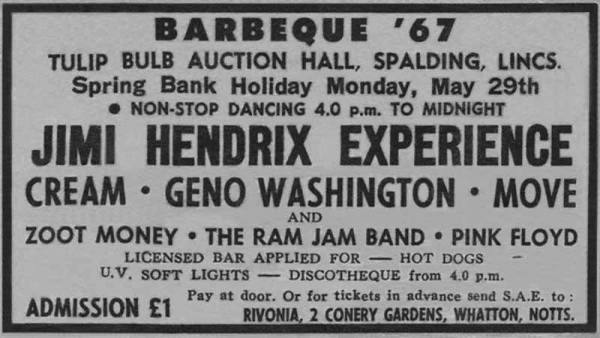
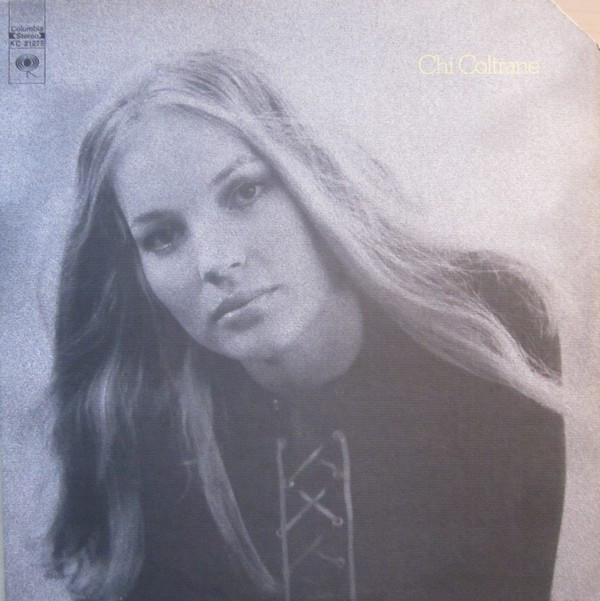
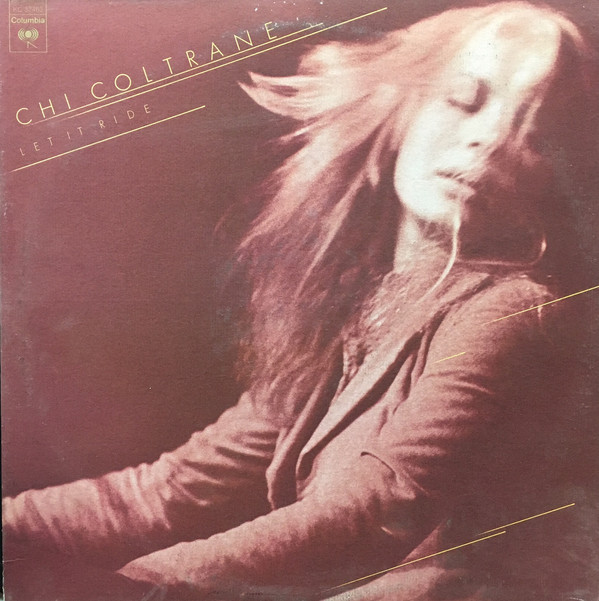

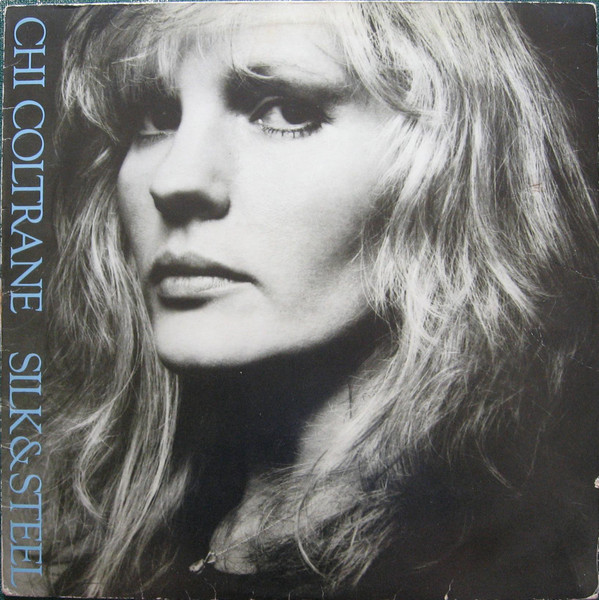
THE RISE, DEMISE AND RETURN OF SKID ROW.
The Rise, Demise and Return Of Skid Row.
By late 1967, Dublin’s vibrant rock scene was thriving with many newly founded bands playing in universities and clubs around the city. Some were already spreading their wings, and heading further afield taking their music to other parts of the Republic of Ireland. Its music scene had come a long way since the mid-sixties, when it started to take shape.
Since then, two recent graduates of the Dublin music scene had gone on to greater things, and were well on their way to becoming international stars. This included Ian Whitcomb and Bluesville and Van Morrison, the former lead singer of Them who had just embarked upon a solo career and released his debut album Blowin’ Your Mind! in September 1967. It charted on both sides of the Atlantic and gave Van Morrison a tantalising taste of the commercial success and critical acclaim that he would enjoy over the next fifty years. Meanwhile, a new group was already making waves on the Dublin music scene, and looked like it would be the next to graduate from the Irish music scene…Skid Row.
Skid Row had only been formed in August 1967 by formed The Uptown Band]s former bassist Brendan ‘Brush’ Shiels, drummer Noel ‘Nollaig’ Bridgeman, guitarist Ben Cheevers and vocalist Phil Lynott. They were all experienced musicians, and were veterans of numerous groups. Two members of Skid Row had been in a number of bands together, Brendan ‘Brush’ Shiels and Ben Cheevers. Skid Row they hoped was the band that would transform their fortunes.
Given Skid Row comprised experienced musicians, it wasn’t long before the newly founded Skid Row made their debut in September 1967. This took place at basement club in Lower Abbey Street in the centre of Dublin. Little did those that were present that night, realise that they had witnessed history being made and that Skid Row were in the process of writing their way into rock history.
By September 1968, Skid Row’s lineup started to change. First to leave was guitarist Ben Cheevers, who decided to continue working full-time in the electrical industry. There was a problem though. Skid Row didn’t have a suitable guitarist lined up to replace him. However, waiting in the wings was sixteen year old virtuoso guitarist Gary Moore who stylistically, modelled himself on his hero Peter Green.
Before Ben Cheevers’ departure, Gary Moore joined Skid Row and briefly, they became a five piece band. The two guitarists played together during what was hand over period. When Ben Cheevers left the band in September 1968, Gary Moore stepped out of the shadows and a star was born.
Meanwhile, Robbie Brennan temporarily replaced original drummer Noel ‘Nollaig’ Bridgeman until June 1969. Robbie Brennan featured on Skid Row’s debut single New Places, Old Faces which featured Misdemeanour Dream Felicity on the B-Side. The single was released on Song Records, an Irish label in mid-1968 and featured Gary Moore’s recording debut. Skid Row’s debut single was the only recording to feature vocalist Phil Lynott.
Later in 1968, Phil Lynott was dropped from Skid Row’s lineup after a bout of tonsillitis. During his absence, Brendan ‘Brush’ Shiels took charge of lead vocals. This spelt the end of end of the Phil Lynott. During his absence, Phil Lynott spent his time learning to play the bass. This was just as well, as his days with Skid Row were numbered.
When Phil Lynott returned from his illness, he was told that Skid Row were about to become a power trio. To compensate the disappointed Phil Lynott, Brendan ‘Brush’ Shiels gave him a bass that he had purchased from former musician Robert Ballagh for £49. Brendan ‘Brush’ Shiels also taught Phil Lynott how to play the bass, which he would put to good use when he formed Orphanage and then Thin Lizzy. However, little did Phil Lynott realise that his sacking from Skid Row was the best thing that happened to him.
Not long after this, Skid Row released their sophomore single Saturday Morning Man, which featured Mervyn Aldridge on the B-Side. Saturday Morning Man was released on Song Records. This was the last recording before Skid Row’s classic era began.
There was just one more change to Skid Row’s lineup before their classic era began. This was the return of Noel ‘Nollaig’ Bridgeman in June 1969. With drummer Noel ‘Nollaig’ Bridgeman, bassist Brendan ‘Brush’ Shiels and guitarist Gary Moore, the classic lineup of Skid Row would soon emerge as one Ireland’s leading bands.
During the remaining of the sixties, and into 1970, Skid Row’ emerged as one of Ireland’s best unsigned bands. They opened for the great and good of rock, including Fleetwood Mac. Peter Green was so impressed by Gary Moore’s guitar playing that he introduced him to Fleetwood Mac’s manager Clifford Davis and executives at the Columbia/CBS Records. This was the break that Skid Row had been looking for.
Skid.
Not long after this, Skid Row signed to CBS, and began working on their debut album Skid with producer Mike Smith. Nine songs were recorded during the session, including a new version of New Places, Old Faces. However, the session wasn’t the most fruitful of Skid Row’s career. Only two tracks were released by CBS, when Sandie’s Gone (Part 1)and Sandie’s Gone (Part 2) became Skid Row’s third single in April 1970.
By then, a decision had been made by Clifford Davis that Skid Row should re-record their debut album, and change some of the songs. The other change was the producer.
While some of the Mike Smith sessions were well recorded, he had failed to capture what was an innovative and vivacious band at the peak of their powers. They had honed their sound during their US tour, and in the process, changed rock critics’ perception of what a power trio was capable of. Skid Row’s music had been inspired and influenced by a fusion of country rock and angular progressive rock that headed in the direction of jazz. These songs featured complex arrangements, but Skid Row were a versatile and talented band who were capable of producing virtuoso performances and making it sound easy. To capture Skid Row’s sound would take a special producer, and one who understood what the band were about. Clifford Davis’ suggestion was that Peter Green of Fleetwood Mac produced Skid Row.
Skid Row added four new songs to their debut album Skid. By then, Brendan ‘Brush’ Shiels had emerged as the band’s songwriter-in-chief writing Mad Dog Woman, Virgo’s Daughter, Heading Home Again, An Awful Lot Of Woman and After Im Gone. Gary Moore contributed Felicity and the three members of Skid Row penned Unco-Up Showband Blues, For Those Who Do and The Man Who Never Was. These songs were produced by Peter Green.
As the sessions for Skid began, Gary Moore arrived with his favourite guitar, a maple Les Paul Standard which Peter Green had sold him not long after the pair first met. While it had been well used, it quickly became Gary Moore’s favourite guitar. He put it to good use on Skid Row, which was just another recording session for the band. They took recording Skid in their stride. For Skid Row it was another day at the office.
Skid Row had already recorded a number of live sessions for the BBC Radio and a number of studio sessions. This was all good experience for the band. Especially, when Skid Row went into the BBC studios, which was home to some of the best engineers in London. They took pride in getting the best performance out of the bands that they were recording, including Skid Row.
With Skid recorded, Skid Row prepared for the release of their debut album in October 1970. Skid was hailed as a groundbreaking debut album and was quite unlike the majority of albums produced by power trios. It was a cerebral album, that married disparate and unlikely musical genres, while drawing inspiration from all manner of sources during what was akin to a musical roller coaster.
Skid Row flit between and combine elements of various musical genres. This includes blues rock and hard rock, which were important components in their sound. That was only part of the story, as Skid Row were very different to the many blues rock and hard rock bands that were around in 1970. Their sound was much more sophisticated and cerebral as Skid Row take occasional diversions via blues, country, fusion, jazz and skiffle on their genre-melting debut album. It finds Skid Row playing with as one, as they combine speed, accuracy and power on what’s a breathtaking debut album. The music is complex and urgent, as musical butterflies Skid Row flit seamlessly between musical genres.
When Skid was released in October 1970, the album reached number thirty in the British charts. Considering this was Skid Row’s debut album, this was a good start to their recording career.
By then, Skid Row had moved to London, where they lived in two houses in Belsize Park. However, much of Skid Row’s time was spent touring, and opening for groups like The Allman Brothers, Santana, Ten Years After, Jethro Tull and Frank Zappa and The Mothers of Invention. The constant touring helped to spread the word about Skid Row, whose star was definitely in the ascendancy. However, after tours of America, Britain and Germany, Skid Row returned home to record their sophomore album 34 Hours.
34 Hours.
For 34 Hours, Skid Row penned Night Of The Warm Witch, First Thing In The Morning, Lonesome Still and Love Story, Pt. 1. Songwriter-in-chief Brendan ‘Brush’ Shiels wrote Mar and Go, I’m Never Gonna Let You, Parts 1 to 4. These songs became 34 Hours.
When recording of 34 Hours began, Clifford Davis took charge of production. Watching and learning, was nineteen year old Gary Moore. He and the rest of Skid Row spent just 34 Hours recording the band’s debut album.
Critics on hearing 34 Hours realised that it was a much tighter album. It received the same plaudits and praise as Skid, and a great future was forecast for Skid Row.
This was proof that the weeks and months spent touring was time well spent. Skid Row had honed their sound through constantly playing live, and on 34 Hours showcased a much heavier, progressive rock sound. It featured two nine minute epics, Night Of The Warm Witch and Go, I’m Never Gonna Let You, Parts 1 to 4. They allowed Skid Row to stretch their legs musically. By then, Skid Row had matured into a much tighter, accomplished and assured band. Still, the music on 34 Hours was groundbreaking, complex and cerebral. There was still a spontaneity to Skid Row’s playing as they continued to combine speed, accuracy, power on 34 Hours
The result was 34 Hours, an album of music that veered between, caustic, cerebral, challenging and complex to energetic and explosive to forceful, urgent and vigorous. Still, Skid Row combined elements of blues rock, country, fusion and progressive rock on 34 Hours. Apart from the country sound of Lonesome Still, 34 Hours is hard rocking album of progressive album that incorporates elements of fusion. This is a potent and heady brew, and should’ve found favour with record buyers in 1971.
Sadly, when 34 Hours was released by CBS in early 1971 the critically acclaimed album failed to find the audience it deserved. For Skid Row, this was a huge disappointment.

Throughout the rest of 1971, Skid Row continued to tour. However, in December 1971, Gary Moore left Skid Row. Thin Lizzy’s Eric Bell briefly filed the void on a temporary basis. Ironically, Gary Moore would later replace Eric Bell in Thin Lizzy.
Paul Chapman then became Skid Row’s new full-time guitarist. However, his time with Skid Row proved brief, and the band split-up in August 1972.
While Skid Row reformed in 1973, the original lineup never took to the stage again. Over the next three years, Skid Row’s lineup continued to change, until they split-up for a second time in 2012.
That was the end of the Skid Row story until 2012, when the band reformed and released their first new album in forty-one years Bon Jovi Never Rang Me. By then, the only original member of Skid Row was Brendan ‘Brush’ Shiels. While many welcomed the Skid Row’s new album, many couldn’t help but compare them to the two cult classics they released between 1970 and 1971. Skid and 34 Hours and feature Skid Row at the peak of their considerable powers.
On Skid and 34 Hours, Skid Row rewrite the rules for future power trios. They created music that was cerebral, complex, hard rocking, innovative and progressive. Skid Row also fused and flitted between disparate and unlikely musical genres during Skid and 34 Hours, which are a reminder of one Ireland’s greatest musical exports during their sadly short but memorable musical career.
The Rise, Demise and Return Of Skid Row.
THE STORY OF THOS. RAPP AND PEARLS BEFORE SWINE.
The Story Of Thos. Rapp and Pearls Before Swine.
When Pearls Before Swine released their fifth album City Of Gold in April 1969. it was the first album credited to Tom Rapp and Pearls Before Swine. This seemed only fair, as Tom Rapp was the only original member of Pearls Before Swine left. The rest of the band left en masse in 1969, before Pearls Before Swine signed to Reprise Records. Since then, Pearls Before Swine consisted of Tom Rapp, his wife Elisabeth and session musicians that were brought onboard for recording sessions and tours. It was no surprise that Tom Rapp wanted equal billing with Pearls Before Swine. However, that hadn’t always been the case.
Pearls Before Swine was founded by Tom Rapp in Melbourne, Florida in 1965. The nascent band featured Tom Rapp and his high school friends Wayne Harley, Lane Lederer and Roger Crissinger. Tom Rapp quickly became the band’s songwriter-in-chief, and wrote the material that would feature on the demo that Pearls Before Swine sent to the avant-garde label ESP-Disk. By then, the band were sporting the name Pearls Before Swine, which they took from a quotation in The Bible (Matthew. 7:6).
Not long after sending their demo to ESP-Disk, Pearls Before Swine were offered a recording contract by the label. This was what every new band dreamt of, and Pearls Before Swine signed on the dotted line. Soon, they began work recording their debut album, One Nation Underground with producer Richard L. Alderson.
One Nation Underground.
While Pearls Before Swine were a four piece band, they didn’t have a drummer. So session drummer and percussionist Warren Smith was drafted in before work began on One Nation Underground at Impact Sound, in New York.
The sessions began on the ‘6th’ of May 1967, and were scheduled to last just four days. The band planned to record ten songs, including the six penned by Tom Rapp. He had written Another Time, (Oh Dear) Miss Morse, Drop Out, Morning Song, Regions Of May and Uncle John. Lead vocalist and guitarist Tom Rapp also two songs cowrote Ballad To An Amber Lady and I Shall Not Care. It took just four days for Pearls Before Swine to record One Nation Underground, and the session was completed on ‘9th’ May 1967.
Five months later, and Pearls Before Swine released their debut album One Nation Underground. Critical acclaim accompanied the release of this minor psychedelic folk classic. When One Nation Underground was released, it was soon, well on its way to becoming ESP-Disk’s most successful recording. It’s thought that One Nation Underground sold anywhere between 100,000 to 250,000 copies. This should’ve proven profile for Pearls Before Swine.
Alas, contractual problems meant that Pearls Before Swine received very little in the way of royalties. Later, a rueful Tom Rapp alleged: “we never got any money from ESP. Never, not even like a hundred dollars or something.” For Pearls Before Swine this must have been disheartening, especially as they were still under contract to ESP-Disk.
Balaklava.
In early 1968, Pearls Before Swine’s begun work on their sophomore album, Balaklava. By then, there had been a change in the band’s lineup. Jim Bohannon had replaced Roger Crissinger. Meanwhile, Tom Rapp continued in his role as Pearls Before Swine’s songwriter-in-chief.
For Balaklava, Tom Rapp wrote eight of the ten songs on the album and cowrote Translucent Carriages. The other song on the album was a cover of Leonard Cohen’s Suzanne. These songs were recorded with producer Richard L. Alderson[ at Impact Sound in New York.
When the recording sessions began, Pearls Before Swine were augmented by session musicians. They added flute, English horn, piano, organ, guitar and strings. Overdubbing was used extensively, with recordings of Florence Nightingale and the original buglers from the Battle of Balaclava in 1854 added to Balaklava. They played their part in an album of evocative, cerebral and complex music which was full of allegorical classical references.
Just over a year after the release of One Nation Underground, Balaklava was released to the same critical acclaim as its predecessor in November 1968. Critics marvelled at the innovative way songs were arranged and the eclectic nature of instruments deployed on Balaklava. It was an album that the band were extremely proud of, and which critics hailed as more than a fitting followup to One Nation Underground. However, despite the critical acclaim Balaklava received, all wasn’t well within Pearls Before Swine.
Not long after the release of Balaklava, Tom Rapp managed to negotiate his way out of the contract with ESP-Disk. This left him free to sign with Reprise Records, which was home to many folk and folk rock artist. However, the rest of Pearls Before Swine didn’t follow Tom Rapp to Reprise Records and called time on their career with the band.
The rest of Pearls Before Swine had never played live during their time together. This wasn’t ideal for a band trying to make a breakthrough. After that, Pearls Before Swine consisted of Tom Rapp his wife Elisabeth and session musicians that were brought onboard for recording sessions and tours. The first album that this new lineup would feature on was, These Things Too.
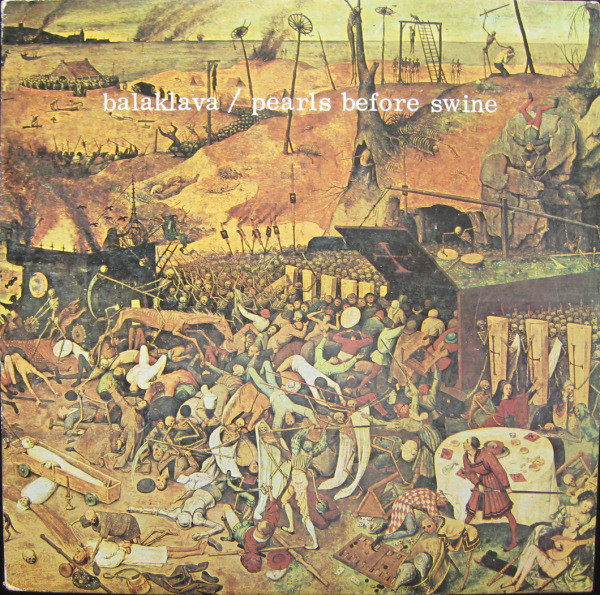
These Things Too.
Having signed to Reprise Records, Tom Rapp was keen to get to work on the next Pearls Before Swine album. This would eventually become These Things Too, which marked the start of the Reprise Records’ years.
For These Things Too, Tom Rapp wrote ten new songs. He also wrote Green And Blue and Mon Amour with his wife Elisabeth and added music to W. H. Auden’s poem Footnote. The only cover version on the album was Bob Dylan’s folk anthem I Shall Be Released. It was covered in the familiar surroundings of Impact Sound, in New York.
This was the same studio where Pearls Before Swine recorded their first two albums. They were produced by Richard L. Alderson, who returned to produce These Things Too. He helped put together the session musicians who would feature on the album. One of the musicians Richard L. Alderson brought onboard was Jim Fairs who previously, had been a member of the garage band The Cryin’ Shame. Jim Fairs played on These Things Too and co-produced the album. It featured jazz drummer Grady Tate, bassist Bill Salter, electric violinist Richard Greene, who later would join Seatrain. This small, but tight and talented band recorded the fourteen songs that became These Things Too.
The release of These Things Too was scheduled for September 1969. Before that, critics had their say on Pearls Before Swine’s Reprise Records’ debut. While the album was well received by critics, it didn’t receive the same critical acclaim as previous albums. Critics described These Things Too as a mystical and “dreamy” sounding album. Later, it turned out a reason for the album’s dreamy sound. Tom Rapp later admitted that These Things Too was the first Pearls Before Swine album that: “reflected drug use in the writing of the songs.” This was a first for Pearls Before Swine.
Nowadays, These Things Too has been reappraised by critics, and is regarded as one of Pearls Before Swine’s most underrated albums.
It was also one of the Pearls Before Swine’s least successful albums. These Things Too didn’t sell in vast quantities, and was a disappointing start to Pearls Before Swine’s time at Reprise Records.
The Use of Ashes.
By the time that Tom Rapp began writing Pearls Before Swine fourth album, The Use of Ashes he and his wife Elisabeth were living in the Netherlands. That was where Elisabeth was born and brought up. Tom and Elisabeth Rapp had sailed from New York to the Netherlands on the maiden voyage of the QE2. This was idyllic journey and one that was sure to provide inspiration for Tom Rapp.
On their arrival in the Netherlands, Tom and Elisabeth Rapp spent several months living in a house near Utrecht. That was where Tom Rapp began writing The Use of Ashes.
Most of the ten songs that feature on The Use of Ashes were written by Tom Rapp in Utrecht. It was the first album he had written entirely himself. Elisabeth is credited as having helped pen God Save The Child, while Rocket Man was based on a short story by Ray Bradbury. Rocket Man was heard by Bernie Taupin, and would inspire him to write Rocket Man for Elton John. That was still to come.
Before that, a decision was made to record The Use of Ashes in Nashville. Peter H. Edmiston was brought onboard to produce the album, and some of Nashville’s top sessions musicians would feature on The Use of Ashes. This included many of the members of the country rock band Area Code 615. They made their way to Woodland Studios, in Nashville where they spent much of March 1970 was spent recording material for The Use of Ashes. By the time the sessions were over, Pearls Before Swine had more than enough music for one album. However, the albums wasn’t complete and some sessions took place at Impact Sound, in New York. After that, The Use of Ashes was ready for release.
In August 1970, The Use of Ashes was released to widespread critical acclaim. Critics hailed the album a return to form from Pearls Before Swine. They had reached the same heights as One Nation Underground and Balaklava. However, some critics preferred The Use of Ashes which featured country rock, folk rock and psychedelic folk. It was a much more eclectic album, which featured some of Tom Rapp’s finest songs. Especially The Jeweller, which was later recorded by This Mortal Coil, the cinematic Rocket Man and the jazz-tinged, playful Tell Me Why? One of the highlights was Riegal, a sobering song that was inspired by a newspaper article that told how 4,000 prisoners of war died after the prison ship MS Rigel was sunk. It’s a poignant song, that shows just how Tom Rapp was maturing as a songwriter. The Use of Ashes featured some of Tom Rapp’s finest songs. He seemed to have come of age as a songwriter, on what was Pearls Before Swine’s most successful album for Reprise Records. Things were looking up for Pearls Before Swine.
City Of Gold.
When it came time for Pearls Before Swine to begin work on their third album, and fifth album overall, Tom Rapp announced that he wanted equal billing with the band he had founded six years earlier in 1965. From City Of Gold, onwards the band would be billed as Thos. Rapp and Pearls Before Swine.
Much of what would become City Of Gold had already been recorded in Nashville, during the sessions for The Use of Ashes’ album. Further sessions would take place at Impact Sound, in New York with Tom Rapp taking charge of production. Eventually, eleven tracks featured on City Of Gold.
This included seven Tom Rapp compositions, including Once Upon A Time, Raindrops, City Of Gold, The Man, Casablanca Wedding and Did You Dream Of? Tom Rapp also added music to William Shakespear’s Sonnet #65. They were joined by cover versions Leonard Cohen’s Nancy, Jacques Brel and Rod McKuen’s Seasons In The Sun and Judy Collins My Father. These tracks became City Of Gold, which was Pearls Before Swine’s fifth album.
Once Upon A Time was scheduled for release in April 1971, and was a mixture of country folk, country rock and folk rock. The album was well received by critics, who noticed that Tom Rapp was continuing to mature as a singer and songwriter. He had come of age as a songwriter on The Use Of Ashes, and this continued on Once Upon A Time, much of which was recorded at the same time.
Just like his two previous albums for Reprise Records, Once Upon A Time didn’t sell in vast quantities. Pearls Before Swine had a loyal fan-base, but their music deserved to reach a much wider audience. That hadn’t happened so far. Tom Rapp was hoping that things would change when …Beautiful Lies That You Could Live In was released.
…Beautiful Lies That You Could Live In.
Recording of …Beautiful Lies That You Could Live In had taken place in early 1971, so that Pearls Before Swine could embark on their first tour. That was highly unusual for a band that was formed in 1965. Most bands spent much of their time on the road. However, Pearls Before Swine weren’t most bands.
They were one of music’s best kept secrets, despite releasing five albums. Pearls Before Swine had still to make a breakthrough. Taking the band on the road it was hoped, would introduce Pearls Before Swine to a new audience. So with an all-star band that featured drummer Billy Mundi , guitarist Amos Garrett and pianist Bob Dorough, Tom and Elisabeth Rapp headed out on their first ever tour.
In November 1971, Pearls Before Swine were preparing to release their sixth album …Beautiful Lies That You Could Live In. It featured eleven songs, including nine from the pen of Tom Rapp. Elisabeth Rapp wrote music to A. E. Housman’s Epitaph On An Army Of Mercenaries. The other song on …Beautiful Lies That You Could Live In was a cover of Leonard Cohen’s Bird On A Wire. These songs were recorded at three studios with producer Peter H. Edmiston.
Recording of …Beautiful Lies That You Could Live In took place at A&R Studios and Aura Sound, New York, and at Bearsville Studios in Woodstock. This was where Tom Rapp and Pearls Before Swine recorded an album that moved towards what was a much more orthodox folk rock sound.
When critics heard …Beautiful Lies That You Could Live In, they hailed the album as one of Pearls Before Swine’s best albums. No wonder, as the music was beautiful, enchanting, evocative and captivating. The album opener Snow Queen, Butterflies, Simple Things, Island Lady and Freedom were among the album’s highlight of …Beautiful Lies That You Could Live In. It was a cohesive album that showcased Tom Rapp’s skills as a singer, songwriter and storyteller. Just like on previous albums, he had the ability to breath meaning and emotion into the lyrics and make the songs come to life. This he did on throughout …Beautiful Lies That You Could Live In, which surely, would introduce Tom Rapp and Pearls Before Swine to a much wider audience?
Sadly, that wasn’t to be, and when …Beautiful Lies That You Could Live In was released was a familiar story. The album didn’t reach the wider audience that it so richly deserved. That was despite the popularity of folk rock. It seemed that Tom Rapp and Pearls Before Swine were destined to remain one of music’s best kept secrets.
Especially after Tom Rapp decided to embark upon a career as a solo artist. This came not long after the release of …Beautiful Lies That You Could Live In, Tom Rapp decided to embark upon career as a solo career. This marked the end of the road for Thos. Rapp and Pearls Before Swine.
Tom Rapp’s debut solo album Familiar Songs, was released on Reprise Records in 1972. Despite what was another album of carefully crafted songs, it was a familiar story for Tom Rapp, when the album failed to find an audience. For Tom Rapp, Familiar Songs marked the end of era.
Not long after Reprise Records released Familiar Songs, they parted company with Tom Rapp. He signed to Blue Thumb Records, and released Stardancer later in 1972. Stardancer featured the impassioned underground anti-war anthem Fourth Day Of July. It played its part in an album that won the approval of critics and cultural commentators. Despite this, still, commercial success continued to elude him.
Tom Rapp returned in 1973 with Sunforest, which featured a mixture of folk rock, art rock and jazz. Although Sunforest wasn’t as strong an album Stardancer it showcased a talented a singer-songwriter. When the album was released in 1973, it failed commercially and Tom Rapp’s talents were no nearer to finding a wider audience. For Tom Rapp this was hugely frustrating.
So much so, that after his contract with Blue Thumb Records expired, Tom Rapp turned his back on music. He enrolled at Brandeis University and graduated in 1981. Tom Rapp then enrolled at University of Pennsylvania Law School and three years later, in 1984, embarked upon a career as a civil rights lawyer. This was the start of a successful legal career for Tom Rapp.
It wasn’t until 1997 that Tom Rapp returned to music, when he made a guest appearance at the Terrastock music festival. Although his comeback was successful, still Tom Rapp continued his career as a civil rights lawyer. However, two years later in 1999, Tom Rapp returned with a new album A Journal Of The Plague Year. This was the first album that Tom Rapp had released since Sunforest in 1973. Since then, Tom Rapp hasn’t released a followup to A Journal Of The Plague Year. Instead, he’s concentrated on his successful legal career. Law’s gain is music’s loss.
Twenty years have passed since Tom Rapp released A Journal Of The Plague Year. Since then, his quartet of solo albums and the six albums he released with Pearls Of Swine are starting to find a wider audience. This hopefully, will continue to be the case, as music lovers young and old discover the musical delights ofThos. Rapp and Pearls Before Swine who are one of the folk rock’s best kept secrets.
The Story Of Thos. Rapp and Pearls Before Swine.
 dereksmusicblog
