PHIL SEYMOUR-THE PRINCE OF POWER POP.
Phil Seymour-The Prince Of Power Pop-
Sadly, not every artist goes on to enjoy a long and successful musical career, and their star shines only briefly. That was the case with Nick Drake and Gram Parsons, whose tragic and untimely deaths cut short what could’ve and should’ve been a long and successful career. Neither of these talented singer songwriters got the chance to fulfil their potential, and it was only later that their music found the wider audience that it so richly deserved.
It was a similar case with Phil Seymour, the Prince Of Power Pop, who had the potential and talent to become one of the biggest artists of the eighties. Sadly, Phil Seymour’s star shawn briefly and he released just two albums and half-a-dozen carefully crafted singles between 1980 and 1982. Eleven years later, on August the ’17th’ 1993, forty-one year old Phil Seymour succumbed to lymphoma, a disease he had bravely battled for eight years. The Prince Of Power Pop’s death left his friends, family and fans distraught at the loss of one so young, and indeed talented.
Phillip Warren Seymour was born in Oklahoma City, on May the ‘15th’ 1952, and growing up, discovered music. Soon, his life revolved around listening to and playing music. By then, Phil Seymour could play the drums, bass and guitar. He was a one man rhythm section, who live and breathed music.
By the age of fifteen, it was apparent that Phil Seymour would eventually embark upon a musical career. However, his career began sooner rather than later, when Phil Seymour met Dwight Twilley met by chance in 1967.
This chance meeting took place at the Bowman Twin Cinema, in Tulsa, which was showing The Beatles’ 1965 film A Hard Day’s Night. Despite being two years old, Phil Seymour decided to take in the film. So did Dwight Twilley, another local musician, who lived just a couple of blocks from Phil Seymour, and who also a pupil at Charles Edison High School, in Tulsa. The two young musicians shared much in common, and realised this when they met at the Bowman Twin Cinema.By the time they parted that night, the two young musicians had already decided to write and record together.
Having decided to write and record together, Phil Seymour and Dwight Twilley using the name Oister. For the next few years, they spent much of their free time honing their skills as musicians, playing piano, drums, bass and guitar, and also learning to harmonise.
This took time, practise, patience and persistence. Eventually, their two voices became one, as they seamlessly harmonised. This had taken time and many hours of practise, but they realised was worth it. The next thing that Phil Seymour and Dwight Twilley started to do, was write songs.
After a couple of years, two became three, when Phil Seymour and Dwight Twilley were joined by guitarist Bill Pitcock IV, who had started life as a drummer. He had been taught the drums by his father, who had his own band. However, the drums wasn’t for Bill Pitcock IV and he switched to guitar. This worked out well for Bill Pitcock IV, and soon, he was playing with his father’s band. The young guitarist was a talented player, and soon was ready to spread his wings.
Bill Pitcock IV started to join Phil Seymour and Dwight Twilley as they practised and played, in an attempt to hone their skills. He joined them during these practise sessions, and as they started to write songs. The next step was to form a band together, Oister.
Oister.
The nascent Oister started to practise in a room above Pitcock Electrical, which was run by Bill Pitcock IV’s grandfather. He spent his days installing recording equipment and running his own recording studio he called The Shop. It was where Oister spent much of their time, recording their new songs. Later, Oister recorded a session at B.J. Recordings in Arkansas. What they didn’t do much of, was playing live.
On the occasions that played live, they proved a popular draw on the local live scene. Instead, Oister concentrated on recording demos, in the hope that they would be signed by a record company.
While The Shop was a good place for Oister to record demos in the early days of the band, by the late-sixties they had started to outgrow the small studio. However, they didn’t have the funds to hire a studio in L.A., New York or Nashville. Despite that, the three members of Oister found themselves in Tupelo, Mississippi where they met Ray Harris.
He had been sent a tape by Judd Phillips, who was Sam Phillips’ brother, and was running Sun Records. Judd Phillips had been impressed by Oister and decided to send the band Ray Harris’ way. Maybe his old friend could help Oister, and in doing so, help himself. While Oister never recorded with Ray Harris, he introduce the band to rockabilly, but encourage Oister to toughen up their vocals.
These two pieces of advice proved invaluable for Oister, who when they returned home to Tulsa, changed their musical approach slightly. Soon, it had taken on a roots sound that added a much-needed character and depth to Oister’s music. They were on the right track now.
Back home in Tulsa, Oister continued to hone and refine their sound. Sometimes, at sessions the three members of Oister were joined by bassist Johnny Johnston and pianist Jim Barth, who augmented the core trio’s sound. When they played live this proved popular. However, before long, the members of Oister had decided to leave town.
By 1974 Oister decided that the time had come to try to make the breakthrough that they had been working towards. This they realised wasn’t going to happen if they stayed in Tulsa, so Oister decided to head to Los Angeles, which was one of America’s musical capitals.
Dwight Twilley Band.
Within just two weeks of arriving in Los Angeles, Oister was signed by Shelter Records, which was owned and run by Leon Russell and Denny Cordell. Oister decided to change their name, and it was the Dwight Twilley Band that signed to Shelter Records. The newly named band was told by executives at Shelter Records that they had to get used to working in a sixteen track studio.
That was how the members of the Dwight Twilley Band found themselves in Church Studio, Tulsa, in November 1974. With a sixteen track desk, it was very different to anything they had studio they had worked in. Despite that, Phil Seymour took charge of the situation, and told Dwight Twilley: “let’s make a hit record right now.”
Incredibly, the song that the Dwight Twilley Band recorded, I’m On Fire, gave the band their first hit single. When I’m On Fire was released in 1975, the single with very little promotion, peaked at number sixteen in the US Billboard 100. This was just the start for the Dwight Twilley Band.
The initial lineup of the Dwight Twilley Band saw bassist and drummer sharing lead vocal and harmonising with guitarist Dwight Twilley, while Bill Pitcock IV played guitar. This was the lineup that featured on the Dwight Twilley Band’s 1976 debut album Sincerely. It saw the band fused power pop with classic pop and rock influences on a carefully crafted and effervescent album that found favour with critics. On its release, Sincerely reached 138 in the US Billboard 200, and built on the success of the single I’m On Fire.
Before long, the Dwight Twilley Band’s started thinking about a sophomore single, and chose Shark (In The Dark). However, it was pulled by Shelter Records who feared that the single would be seen as a cash-in on the film Jaws, and that the Dwight Twilley Band would be regarded as a novelty act. While this made sense, it was a disappointing for the band. However, there was worse to come.
At the end of 1976, Shelter Records was in the process if changing distributors, from ABC to Arista. This the two owners hoped would steer the label into calmer waters. However, after an argument between Leon Russell and Denny Cordell, Leon Russell quit Shelter Records. This was a disaster for the Dwight Twilley Band, who were caught in the crossfire, and had no idea where they stood contractually.
It wasn’t until 1977 that the Dwight Twilley Band returned with Twilley Don’t Mind, which was released on Arista. Just like their debut album Sincerely, critical acclaim accompanied the release of Twilley Don’t Mind. Although it featured power pop at its best, some songs, including Rock And Roll 47 showcased a tougher, R&B sound. This combination of power pop and R&B proved popular and Twilley Don’t Mind reached seventy on the US Billboard 200. The Dwight Twilley Band’s popularity was growing, and it looked as if the band had a bright future.
After touring Twilley Don’t Mind during 1977 and 1978, Phil Seymour decided to call time on his career with the Dwight Twilley Band. A solo career beckoned for twenty-six year old Phil Seymour, who was managed by Denny Cordell.
The Solo Years.
With Denny Cordell’s help and guidance, Phil Seymour embarked upon a solo career. By then, Denny Cordell who was born in England, and was a successful producer who had worked with The Moody Blues, Joe Cocker and Leon Russell, had decided not to produce Phil Seymour. He knew someone who he believed would bring out the best in Phil Seymour, Chris Spedding.
Once again, Phil Seymour journeyed to London, and Olympic Studios, where he worked with guitarist Chris Spedding and some top session musicians. Phil Seymour was no stranger to London, as the Dwight Twilley Band had regularly recorded in the city. While it wasn’t exactly a second home for Phil Seymour, he enjoyed his time in London, which he hoped had been fruitful. Sadly, the tracks recorded in London weren’t released until 2016.
Following the London sessions, Phil Seymour continued to work as a session musician, and added backing vocals on Darlin’ a track from Dwight Twilley’s debut solo album. After that, Phil Seymour then met another Tulsa musician, Scott Musick of the L.A. based band Airtight, which also featured songwriter and bassists Michael Been and keyboardist Dale Ockerman. This looked like the perfect fit for Phil Seymour, until However, Scott Musick and Michael Been went onto form Call. For Phil Seymour it was a case of what might have been?
It was a similar case when producer Phil Spector spotted Phil Seymour’s potential, and wrote to Denny Cordell. The two men tried to work out a deal, but couldn’t come to an agreement. It was another case of what might have been for Phil Seymour.
Live On Detroit Street.
In 1980, Phil Seymour put together a band that featured drummer Lee Kix, bassist Michael Anderson and guitarist Jeff Rollings. They recorded a session in a house on Detroit Street, which is just off Sunset Strip. That day, this tight band unleashed a nine track set of high energy rock ’n’ roll. Just before the band started to play, someone pressed play as Phil Seymour and his band launch into Baby It’s You.
Later in 1980, producer Richard Podolor and engineer Bill Cooper heard a cassette that featured Phil Seymour’s music, and within thirty-seconds had spotted his potential. They asked the other passenger in the car Mark Levy, a talent agent, what he knew about Phil Seymour? He hadn’t heard of Phil Seymour, but soon would be hearing more about him.
Richard Podolor and Bill Cooper were the most successful team at American Recording Company, and had already enjoyed success with Three Dog Night, Iron Butterfly and Steppenwolf, decided to see Phil Seymour live. They went to a show at the Starwood, where Phil Seymour was opening for 707. That night, after Phil Seymour had blown the headliners away, he headed backstage which was where he met Richard Podolor and Bill Cooper. Their message was simple, that they wanted to record him.
Phil Seymour.
It didn’t take Phil Seymour long to agree to work with producer Richard Podolor and engineer Bill Cooper, who had an enviable track record of success. This Phil Seymour helped would transform his fortunes when he joined them at the American Recording Company, where they would soon, begin work on his long-awaited eponymous debut solo album.
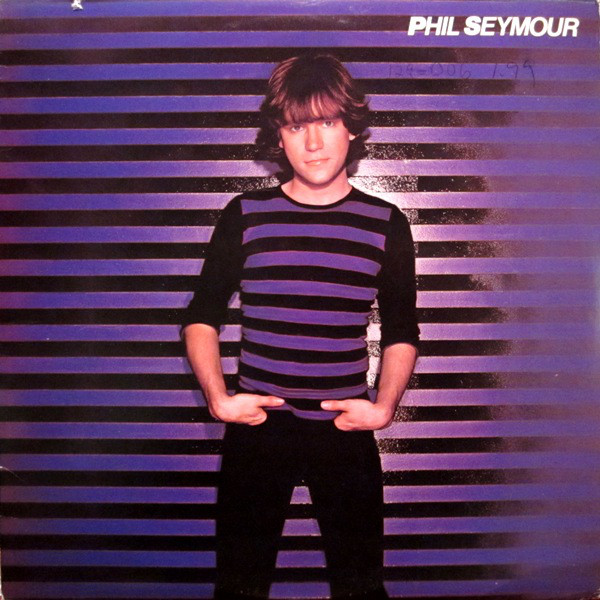
Of the ten tracks on his eponymous debut solo album, only Precious To Me, baby It’s You and I Really Love You were penned by Phil Seymour. They were joined by three songs from two of old friends and bandmates. This included Dwight Twilley’s Love You So Much and Then We Go Up, and Bill Pitcock IV’s Won’t Finish Here. These were tracks that Phil Seymour had been playing for years, and were part of his live shows. Phil Seymour also decided to include four cover versions on his eponymous debut album.
Phil Seymour was recorded at Recording Company with band that featured some top session players. Adding lead and rhythm guitar was Phil Seymour’s old friend and former bandmate Bill Pitcock IV. He played his part on Phil Seymour, which was produced by Richard Podolor and engineered by Bill Cooper.
Before the release of Phil Seymour, it found favour amongst critics, who were won over by this near flawless album of slick, polished power pop which showcased a talented singer, songwriter and musician. It was no surprise that when Neil Bogart’s new label The Boardwalk Entertainment Co released Phil Seymour later in 1980 the album reached sixty-four on the US Billboard 200. This was no surprise.
By 1980, Phil Seymour was able to craft melodic songs with poppy hooks that also packed a punch. These songs were also slick, polished and featured Phil Seymour’s trademark harmonies that had been honed over many years. They featured on songs like It’s You, Precious To Me, I Really Love You, Then We Go Up, Don’t Blow Your Life Away and Love You So Much, which ooze quality. With their slick, melodic, memorable and often radio friendly sound, they played their part in the sound and success of Phil Seymour, which showed what Phil Seymour was capable of.
When it came to choose a single from Phil Seymour, Precious To Me was chosen and released later in 1980. Tucked away on the B-Side of later version of the single was the melodic ballad Suzie Glider. The single Precious To Me went on to reach twenty-two in the US Billboard, and built on the success of Phil Seymour. Meanwhile, Precious To Me was so successful when it was released as a single, that it gave Phil Seymour his first gold disc. For Phil Seymour this was the icing on what was a delicious cake.
Phil Seymour 2.
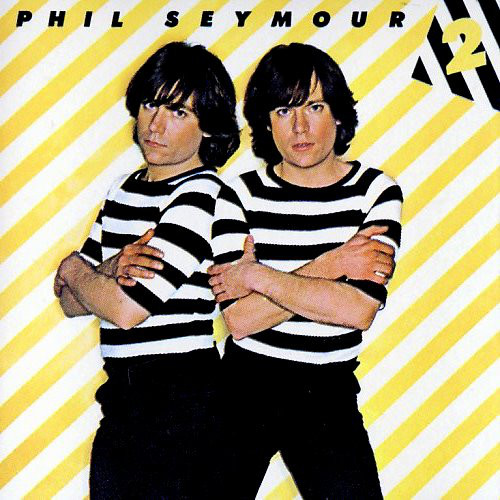
Despite the success of Phil Seymour, the Prince Of Power Pop continued to work as a session musician and backing vocalist. By then, he had made many friends within the L.A. scene, and was a familiar and popular draw when he played at the city’s top clubs. Before long, it was time for Prince Of Power Pop to record his sophomore album Phil Seymour 2.
This time around, Phil Seymour had only written Better To Me Than You, and cowrote Suffering with Jimmie Podlor. Just like his eponymous debut album, Phil Seymour featured a Dwight Twilley composition, Looking For The Magic. These and the rest of the ten tracks were recorded by a tight, talented band at Recording Company by producer by Richard Podolor and engineer Bill Cooper.
Critics on hearing Phil Seymour 2, were impressed by the Prince Of Power Pop’s sophomore album. Just like its predecessor, the songs on Phil Seymour 2 were slick, polished and packed a power pop punch.
This was quite remarkable, as Phil Seymour seemed to be struggling to cope with his newfound fame. On several occasions Phil Seymour failed to turn up to shows, and other times seemed confused as he took to the stage. Some music industry insiders feared that Phil Seymour couldn’t cope with the fame, and worried about his future.
When Phil Seymour 2 was released in 1982, but didn’t stand a chance of making an impression on the charts. The Boardwalk Entertainment Co which was struggling financially, failed to promote the album, and many record buyers never even knew the album was out. This was a huge disappointment given the success of Phil Seymour.
With Phil Seymour 2 failed to even trouble the lower reaches of the US Billboard 200, record buyers missed out on hearing songs of the quality of Dancing A Dream and Better To Me Than You. Little did anyone know that Phil Seymour 2 was the last album the thirty year old would release.
After the commercial failure of Phil Seymour 2, Phil Seymour found himself at a crossroads. The death of Neil Bogart spelt the end for his record company The Boardwalk Entertainment Co, and Phil Seymour found himself without a recording contract.
Even though he had no recording contract, Phil Seymour recorded the anthem-in-waiting Now and Teaching Me. They showcase the Prince Of Power Pop’s considerable talents. Despite his talent, no recording contract was forthcoming and Phil Seymour continued to work as a session musician.
In 1984, Phil Seymour became the drummer in Carla Olson’s band The Textones. They were a familiar face on the LA live scene, and Phil Seymour transformed The Textones’ sound and played on their debut album Midnight Mission. However, Carla Olson knew that Phil Seymour was too good to be playing drums in her band, and made it her mission to help her drummer secure a new recording contract.
That was admirable, as The Textones had been booked to tour America, Britain and Europe, and Phil Seymour played an important part in the band’s sound. Replacing Phil Seymour wasn’t going to be easy. However, the solo deal wasn’t forthcoming, and Phil Seymour played on The Textones’ albums Through The Canyon and Back In Time. Three songs by The Textones that featured Phil Seymour would also feature on the 1985 movie Sylvester. By then, Phil Seymour’s life had been turned upside down.
During a tour in 1985, Phil Seymour discovered a lump on the back of his neck, which later, was diagnosed as a lymphoma. Phil Seymour left The Textones and returned to Tulsa for chemotherapy treatment. Suddenly, music wasn’t as important as it had once been.
Just a year later, and Phil Seymour was back in the studio in 1986, and covered Michael Anderson’s Maybe It Was Memphis. Sadly, it lay unreleased until 2011, when it was released alongside Teaching Me.
Despite making a comeback in 1986, Phil Seymour never again released another album. Eight years after he was diagnosed with lymphoma, forty-one year old Phil Seymour passed away on August the ’17th’ 1993. Forty-one year old Phil Seymour succumbed to lymphoma, a disease he had bravely battled for eight years. The Prince Of Power Pop’s death left his friends, family and fans distraught at the loss of one so young and talented.
Phil Seymour was oa truly talented singer, songwriter, musician and producer, who had the potential and talent to become one of the biggest artists of the eighties. Sadly, Phil Seymour’s the Prince Of Power Pop’s star shawn briefly, when he released just two albums and half-a-dozen carefully crafted singles between 1980 and 1982. During that period, it looked like Phil Seymour was going to become one of the biggest stars of the eighties. That way well have been the case, if Phil Seymour hadn’t been diagnosed with lymphoma in 1985, which was the illness that robbed music of one of its most talented sons in 1993, and the man many still refer to as the Prince Of Power Pop.
Phil Seymour-The Prince Of Power Pop.
SUE BARKER-AUSTRALIA’S BEST KEPT MUSIAL SECRET-A CASE OF WHAT MIGHT HAVE BEEN.
Sue Barker-Australia’s Best Kept Musical Secret-A Case Of What Might Have Been.
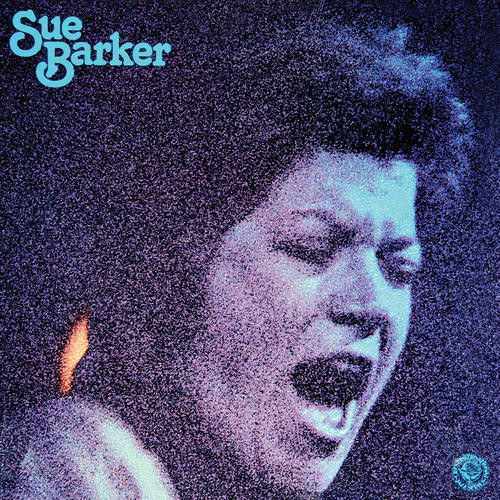
Forty-two years ago, in 1977, Adelaide-based singer Sue Barker released what’s without doubt, one of the greatest soul-jazz albums in the history of Australian music. That album was Sue Barker, which was released on Marcus Herman’s label Crest International.
The release of Sue Barker should’ve been the start of a long and glittering career. Sadly, that wasn’t the case, and nine years later, Barker turned her back on music in 1986. That day, Australian music lost one of its most talented singers in the history of modern music.
The Sue Barker story began in Sydney, when she started singing along with Guy Mitchell songs when was just two. Little did her parents realise that this would be the start of a lifelong love affair with music.
By the time she was in primary school, Barker was a regular in the school choir. When she was nine, Barker decided to join a local church choir so she could join their choir. However, by then, Barker was already taking an interest in spiritual matters.
In the local church, Barker joined the choir and started taking trying to understand and explore the meaning of life. This was something that was a lifelong commitment and something that at time, would offer solace to Barker in time of trouble.
When Barker completed primary school, her family decided to move back to Adelaide. When she returned to Adelaide, Barker was initially at a loss. That was until her uncle found her a suitable church. Soon, she was playing an active role in and a church member. It was at that church, where Barker’s potential was first discovered.
A church member spotted Barker’s potential, and offered to give her free singing lessons. Not long after this, Sue’s father sent his daughter to the prestigious Adelaide College Of Music for extra tuition.
Attending Adelaide College Of Music was an eye-opener for Barker, and she blossomed. She was introduced to classical music by her tutors in her early teens. By then, Barker had discovered The Beatles and other Liverpool-based singers and bands. This lead to her looking for a band needing a singer.
Each day, Barker looked through the small adverts in the local papers, looking for a suitable band. One day, she found a band without a singer, and decided to audition for The Cumberlands. This lead to her first gig, where she joined The Cumberlands on-stage for one song. That song marked the start of her career. Already, she knew that she wanted to embark on a career as a singer.
Not long after her first gig with The Cumberlands, she embarked upon a short tour of south Australian towns. This was good experience for Barker. So was singing in a television talent contest, where she was the runner-up. Her appearance on the talent contest lead to further television appearances. All this was good experience for her future career.
This included when Barker joined her first band. By then, her parents had returned to Sydney, and seventeen year old Barker had remained in Adelaide. That was where she heard a band rehearsing on a Sunday afternoon. Upon hearing the music, she decided to investigate. Having made her way up the stairs, Sue asked if she could sing with the band. They agreed, and before long, Barker and the guitarist began a relationship.
Two days after her eighteenth birthday, Barker and the guitarist were married. Within a year, her first child was born. She stayed at home whilst her husband played with the band. By the time Sue was twenty, she had moved to Sydney and was the mother of two children. Motherhood rather than music was what kept her busy. However, she missed music, and decided to return to Adelaide.
Back in Adelaide, Barker, her husband and two children were living close to her parents. With a support network around her, Sue Barker and her husband started putting a band together. They were helped by a booking agent, who hit on the idea of making Barker the focus of the band. This didn’t go down well with her husband, who was in her shadow. However, this was just the start of Barker’s comeback.
Before long, Barker was being asked to sing with some of Adelaide’s established bands. That was when she started to take on a new stage persona, that she had modelled on Janis Joplin. She had it off pat, right down to some serious on-stage drinking. By then, Barker was rubbing shoulders with top musicians, and her star was in the ascendancy. There was even talk of international record deals. Barker was one of Australia’s musical rising stars.
Not long after this, Barker met her future backing band, The Onions. By then, Barker was constantly busy playing live, doing session work and even testing recording equipment at various local recording studios. That wasn’t all.
Barker also decided to hire an old ballroom, where she would put on her own gigs. She would charge $2 to get in, and patrons would watch local musicians jamming after they had finished in the studio. While the nights became extremely popular, but it became clear they weren’t going to make her rich. However, it was one of these gigs where Sue Barker was discovered.
After one of the gigs, Barker was approached her and asked if she had ever thought of recording an album? By then, there were a few recording of Barker and her band testing new equipment at the various local studios. However, they hadn’t recorded any singles, never mind an album. Barker gave the stranger who was from Melbourne, one of her recordings, and never expected to hear anything.
She was wrong. One of the tapes ended up in the hands of Marcus Herman who ran the label Crest International. When he heard the recording he was impressed by Barker’s feel, understanding and command of jazz, which was way beyond her years. Herman realised that Barker was a special talent, and contacted her and asked if she would like to travel to Melbourne to discuss business.
When Barker set out on her journey to Melbourne, to discuss her future with Herman, she wasn’t alone. She took along her two children and one of her musician friends, Graham Conlon. When they arrived in Melbourne, Barker went to the meeting with Herman.
He offered Barker a three album deal, and after some discussion, she put the pen to paper. Later, Barker, like many singers and musicians claims she was naive when she signed the contract. For Barker it was never about money, and was always about the music. She just wanted to release an album that featured her own music. Having signed a three album deal in March 1976, she began work on her debut album.
After signing the contact, Barker discovered that the contract only covered her, and not her backing band The Onions. This must have been a disappointment for the band, but reluctantly, they agreed to play on Barker’s eponymous debut album. The Onions weren’t on points, but instead, would be paid as session musicians when recording began.
Before that, Barker started choosing songs for her debut album. She eventually, settled on the songs that would feature on the album. Or so she hoped. The songs were sent to Herman, who had to give his final approval. It wasn’t easy for Sue to get her choice of songs approved, but eventually, the ten songs that became Sue Barker were approved.
This included Eddie Holland, Brian Holland, Lamont Dozier’s How Sweet It Is, Gus Kahn and Nacio Herb Brown’s You Stepped Out Of A Dream, Duke Ellington and Sidney Keith Russell’s Do Nothing Till You Hear From Me, Curtis Mayfield’s Love To The People and Eddie Brigati and Felix Cavaliere’s Groovin’ featured on side one. Barrett Strong and Norman Whitfield’s I Heard It Through The Grapevine joined Eddie Floyd and Steve Cropper’s 6345789, Jimmy Davis, Jimmy Sherman and Roger Ramirez’s Lover Man, Al Cleveland, Marvin Gaye and Renaldo Benson’s What Goin’ On and Aretha Franklin and Ted White’s Think made-up side two of Sue Barker. It was recorded in Adelaide with The Onions.
Before the recording sessions began, Graham Conlon arranged the songs that Barker had chosen. Some were given a makeover, to ensure that they would suit Barker who discovered she had only three days to record the album.
Herman was covering the costs of the recording sessions, and was only willing to pay for three days at Pepper Studios, in Adelaide. This was going to be cutting it tight, but Herman adamant that Barker should be able to record the album in just three days.
She entered the studio with The Onions in a cold day in July 1976. The Onions lineup featured a rhythm section of drummer Dean Birbeck, bassist Geoff Kluke, guitarist Graham Conlon and keyboardist Phil Cunneen. They were augmented by a horn section that featured trumpeter Fred Payne and saxophonists Bob Jeffrey and Sylvan Elhay. They accompanied Barker as she laid down her eponymous debut album.
Somehow, Barker and The Onions managed to complete the album in the three days that Herman had paid for. This left just the album to mixed and mastered. However, before that, Barker was in for a surprise.
Not longer after recording Sue Barker, she discovered that she was pregnant and expecting her third child. While she continued to play live, she knew that motherhood beckoned. Meanwhile, Barker was experiencing a spiritual awakening.
This was partly inspired by the birth of her third child. Soon, after the birth, Barker’s thoughts turned to spirituality. Meanwhile, Crest Records were preparing for the release of Sue Barker.
Marketing manager Donald Fraser sent out press releases to the press, magazines, radio and television. He was determined that Sue Barker had every chance of being a success. It didn’t matter that the album would be Crest’s final release. He saw the potential in Barker.
So did Channel 9, who booked Sue Barker to appear on the Tonight Show. This was a huge break forBarker, who unfortunately, had to cancel the appearance. Despite that, Barker’s concert at the Dallas Brook Hall in Melbourne was a sell-out.
When the reviews were published, Sue Barker received praise and plaudits from critics and cultural commentators. The album had also sold well at the concert at the Dallas Brook Hall. Things were looking good for Barker.
After the success of the Dallas Brook Hall concert, Crest began planning a promotional tour to coincide with the release of Sue Barker. However, her priority was her new daughter, which frustrated Herman at Crest Records. Their relationship became difficult, and Barker prioritised motherhood over the release of her eponymous debut album on Crest International. While this was admirable it would prove costly.
When Sue Barker was released by Crest International, the album received praise, plaudits and critical acclaim. Sadly, Sue Barker received little promotion which was frustrating for everyone at Crest International who had worked hard on the release. They realised that Barker was on the verge of a breakthrough. Had she had promoted the album, it’s very likely that it would’ve sold well and introduced her to a much wider, and possibly, international audience. However, Barker’s decision not to promote the album resulted in poor album sales.
Very few copies of Sue Barker sold, and her relationship with Marcus Herman at Crest Records broke down completely. As a result, Barker never made any money from her future Australian soul-jazz classic. After the release of Sue Barker, eventually, the Adelaide-based singer returned to the local circuit.
This time, Barker wasn’t going to spend all her time playing live. While she continued to sing in local venues she didn’t mind if weeks or months passed without a gig. She who was a free spirit at heart and did things her way. Sometimes, when gigs dried up, promoted concerts. Barker wasn’t the type of person to wait for opportunities to arise. Instead, she would go out and make things happen. As long as these promotions covered their costs, Sue was happy. It had never been about the music for Barker.
Not long after this, came the news that Crest International had folded. Barker still owed the label two albums when it folded. Barker, though, realised that chance of releasing any more albums was gone. Especially given how fraught relationship with Herman was latterly. The likelihood of Barker releasing two more albums seemed unlikely. Her dream of releasing any more albums was over.
Following the demise of Crest International, Barker spent a year teaching music at the Centre For Aboriginal Studies In Music. Her time spent teaching the Centre For Aboriginal Studies In Music resulted in Barker becoming interested in reggae. Barker’s interest in reggae inspired a further spiritual awakening. However, as her spirituality began to blossom, Barker’s newfound faith was severely tested.
Tragedy struck when Barker was out walking down the street with her third child. A car mounted the pavement, and struck her daughter Billie, who was so seriously injured that she spent three months in hospital. During that time, Barker started to ask herself some of life’s big questions. Her search for the meaning of lifewould prove to an ongoing spiritual quest.
Once her daughter had recovered, Barker continued to pursue her interest in reggae music. She even decided to form a reggae band, which disappointed some of those who had followed her career as a jazz singer. Some of the musicians in her band were disappointed with this volte-face and left her employ.
As a result, Barker had to put together a new group of musicians. They would accompany Sue who had been booked to play at the Adelaide Jazz Club. When the patrons at the Adelaide Jazz Club heard about Barker’s Damascene conversion to reggae, and were unsure about this. However, Sue decided to continue down this new road.
Barker’s career continued until 1986, when sadly, tragedy struck again. Eight months after the birth of her fifth child, her eldest child died on Thursday October 30th 1986.
Despite this tragedy, Barker decided to sing at a gig she had been booked to play two nights later on the Saturday evening. That night, she said that when she sang: “she felt closer to God than I had ever before.” As she watched the patrons party that night she realised that this was the end of road for her.
After a lifetime spent in and around the music industry, after the gig Barker called time on her career. She suddenly felt that the entire music business was a “sham,” and didn’t want to be part of it anymore.
When she had recorded her soul-jazz classic Barker, never received any payment. Ironically, The Onions who had originally been disappointed not to be included in the recording contract with Herman’s label Crest International, were paid as session musicians and made more out of Sue Barker than the star of the show did. It was no wonder that Barker regarded the music industry as a sham.
Nowadays, her one and only album Sue Barker, is regarded as a soul-jazz classic, and copies of the album are now extremely rare. When they do change hands, it’s for hundreds of Dollars. That comes as no surprise, given the quality of music on Sue Barker. It features one of music’s best kept secrets, Sue Barker, who if things had been different, would’ve gone to enjoy a long and successful career. Sadly, Lady Luck didn’t smile on her and it was a case of what might have been.
Barker only released one album during a career that spanned three decades. Her career began in the late-sixties, and it wasn’t until 1977 that Sue Barker was released on Crest International. By then, Sue Barker looked destined for greatness. However, when Sue Barker was released, her third child had just been born. Barker was reluctant to leave the child to embark upon a promotion tour. Her failure to tour Sue Barker was a costly one, and the album was commercial failure.
Barker never regretted this decision as she was enjoying being a mother. She found this rewarding and loved spending time with her children.
Herman who owned Crest International certainly regretted Barker’s failure to tour her album. It resulted in the breakdown in their business relationship, and not long after this, Crest International folded. However, Barker’s decision not to promote the album was not the reason the label folded. It’s thought that the label has financial problem’s before signing Barker.
Barker may have only recorded one album, but Sue Barker is a soul-jazz classic. It’s an album that definitely deserved to find a much wider audience.
In 2017, Barker rereleased Sue Barker on CD with extra songs and a collector booklet along. There was also a remastered vinyl reissue. It was a welcome reissue of a long-lost soul-jazz classic that should’ve transformed the career of Australian songstress Sue Barker, who sadly, instead, remained Australia’s best kept musical secret.
Sadly, in December 2022 Sue Barker passed away. She was a truly talented and versatile vocalist whose one and only album is a soul-jazz classic that’s loved and appreciated by her fans new and old, worldwide.
Sue Barker-Australia’s Best Kept Musical Secret-A Case Of What Might Have Been.
GIL SCOTT-HERON-AMERICA’S SOCIAL CONSCIENCE: 1970-1980.
Gil Scott-Heron-America’s Social Conscience: 1970-1980.
After releasing a trio of studio albums on Bob Thiele’s Flying Dutchman Productions between 1970 and 1972, Gil Scott-Heron signed to Charles Tolliver and Stanley Cowell’s Strata-East Records. By then, Gil Scott-Heron was well on his way to becoming America’s social conscience.
Gil Scott-Heron was a poet, musician, and author who highlighted the social and political problems affecting and blighting American society. He was, to all intents and purposes, America’s social conscience, highlighting the problems of racism, poverty, corruption, inequality and drug addiction on 1970s Small Talk At ‘125th’ and Lenox which was released, 1971s Pieces Of A Man and 1972s Free Will. This was the trio of studio albums that Gil Scott-Heron released for Bob Thiele’s Flying Dutchman Records. The lyrics were cerebral, witty, scathing and most importantly, honest as Gil Scott-Heron speaks up for the downtrodden and disenfranchised. Fearlessly, Gil Scott-Heron highlighted the social and political problems that blighted America. This what he continued to do throughout his long and illustrious career as he released album after album of powerful music. However, when Gil Scott-Heron first met Bob Thiele he was an author and poet. He had made an appointment with Bob Thiele, to see if he any of his artists could use his poetry.
During the meeting, Gil Scott-Heron recounted how he was born on April Fool’s Day in 1949, which later, he joked become an important day in Chicago’s musical history. That will always be the remembered as the day poet, author, musician and political activist Gil Scott-Heron was born.
His mother Bobbie Scott-Heron, was an opera singer, who sang with New York’s Oratorio Society. Gil Scott-Heron’s father was Gil Heron, a Jamaican footballer, who at one time, played for Glasgow Celtic Football Club. Sadly, though, Bobbie and Gil’s marriage ended when Gil Scott-Heron was young.
After this, Gil Scott-Heron was sent to live with his maternal grandmother, Lillie Scott, who lived in Jackson, Tennessee. Then when Gil Scott-Heron was just twelve, Lillie Scott died.
Gil Scott-Heron returned to New York to live with his mother, who was now living in the Bronx. Originally, Gil Scott-Heron enrolled at the DeWitt Clinton High School, but later, moved to the Fieldston High School.
This came after impressing the head of the English department read one of Gil Scott-Heron’s essays, and recommended that he received a full scholarship. This proved a poisoned chalice. While the education he was receiving was far superior, Gil Scott-Heron was one of only five black students. He felt alienated and alone. That wasn’t the only problem. There was also a socioeconomic gap, with the other students coming from a much more affluent background. Gil Scott-Heron by comparison, was the son of a single mother and was from a very different background. It was during this time that Gil Scott-Heron became socially and politically aware. His eyes were opened to inequality, injustice and racism. This would shape his music in later years. Before that, Gil Scott-Heron headed to Lincoln University,
When Gil Scott-Heron was considering which university to enrol at, Langston Hughes recommended Lincoln University, which where he was staying. Gil Scott-Heron took his friend’s advice, and enrolled at Lincoln University. This was where Gil Scott-Heron’s musical career began.
At Lincoln University, Gil Scott-Heron formed his first band, the Black and Blues. Joining Gil Scott-Heron in the band was Langston Hughes. Little did Gil Scott-Heron know that this was the start of a long and illustrious career. However, after two years at Lincoln University, Gil Scott-Heron decided to take time out Lincoln University to write a novel.
During this period, Gil Scott-Heron wrote two novels. His first novel was a thriller entitled The Vulture, which was published in 1970. Whilst writing The Vulture, Gil Scott-Heron saw The Last Poets in Lincoln in 1969. This had a huge effect on him.
After watching The Last Poets, Gil Scott-Heron approached the band and asked: “can I form a band like you guys?” The seed had already been sown. Maybe, making music rather than writing books was the direction that Gil Scott-Heron’s career headed?
Having been impressed and inspired by The Last Poets and now considering a career in music, Gil Scott-Heron had a lot on his mind as he headed back to New York, where he found a new home in Chelsea, Manhattan. This concluded with the publication of Gil Scott-Heron’s book of poetry, Small Talk At ‘125th’ and Lenox by World Publishing. Now Gil Scott-Heron could add poet to his burgeoning CV. Soon, he hoped to add singer and songwriter.
Once he’d settled in to his new apartment in Manhattan, Gil Scott-Heron decided to make his dream a reality and started looking for a record company. Gil Scott-Heron just so happened to approach a label tailor-made for his music, Flying Dutchman Productions.
The Birth Of Flying Dutchman Productions.
Following his departure from ABC/Impulse Bob Thiele had decided to found his own label. He was perfectly qualified to do so, having worked with some of the most innovative and creative musicians in the history of jazz over the last few years. During that period, Bob came to the conclusion that often, large record companies aren’t the best environment for innovative and creative musicians. Often, these musical mavericks didn’t thrive within such an orthodox environment. Instead, their creativity is restricted, and they’re unable to experiment and innovate. For many a musical maverick who had signed to a large record label, the experienced had proved frustrating and unsatisfactory. So when Bob Thiele parted company with Impulse, who he had transformed into one of jazz’s pioneering labels, he founded Flying Dutchman Productions. This was the label that Gil Scott-Heron approached. However, there was a problem.
While Bob wanted to sign Gil Scott-Heron, there was a problem,… funding. The funding that Phillips, the Dutch record label had given Bob Thiele wasn’t going as far as he had hoped. Despite this, when he met Gil Scott-Heron he was impressed by the poet, musician, and author. So much so, that Bob Thiele decided to fund an album that was a fusion of poetry accompanied by understated, percussive arrangements.
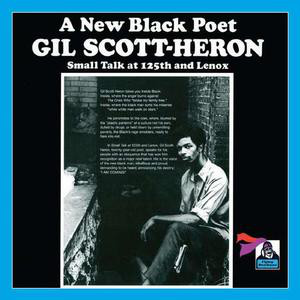
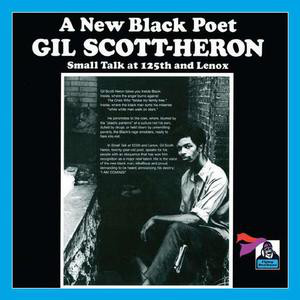
Small Talk At 125 and Lenox.
This was Small Talk At 125 and Lenox, which featured fourteen songs from the pen of Gil Scott-Heron. Initially, it was claimed that Gil Scott-Heron and two percussionists, David Barnes, Eddie Knowles and Charlie Saunders, recorded the album live at a night club on the corner of 125 and Lenox. That wasn’t strictly true.
Forty-two years later, one of the best kept secrets in music was no more. It transpired that Small Talk At 125 and Lenox was recorded live in the studio in front of a few invited guests. Taking charge of production was Bob Thiele, who was an experienced producer.
With Bob Thiele at the controls, Gil Scott-Heron recorded an accomplished album that is a mixture of jazz, proto-rap, spoken word poetry and soul. It was released later in 1970, and immediately, comparisons were drawn with the group who had inspired Gil Scott-Heron, The Last Poets. This was a fair comment to some extent.
When one listen to tracks like the original version The Revolution Will Not Be Televised, plus Brother, Whitey On The Moon, Paint It Black and Who’ll Pay Reparations On My Soul? critics realised that Gil Scott-Heron had taken what The Last Poets had been doing to the next level. This he managed to do with just a trop percussionists accompanying him, on Small Talk At 125th and Lenox, which was a potent and explosive mix of scathing political and social comment.
Although Small Talk At ‘125th’ and Lenox was a groundbreaking and powerful debut album, it didn’t sell in vast quantities. Instead, it sold steadily, and shouldn’t have lost Flying Dutchman Productions money, as they had managed to keep their overheads low. However, Small Talk At ‘125th’ and Lenox slipped under the musical radar, and many record buyers only discovered the album when Gil Scott-Heron released Winter In America and The Bottle in 1975. By then, Gil Scott-Heron had released a trio of albums for Bob Thiele’s Flying Dutchman Productions.
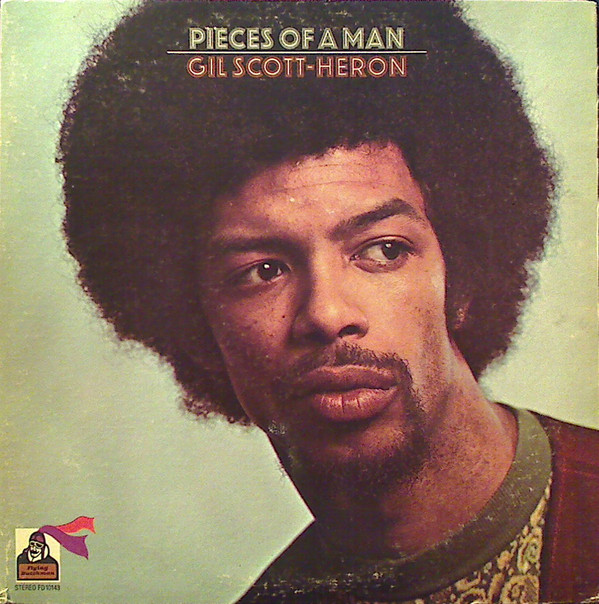
Pieces Of A Man.
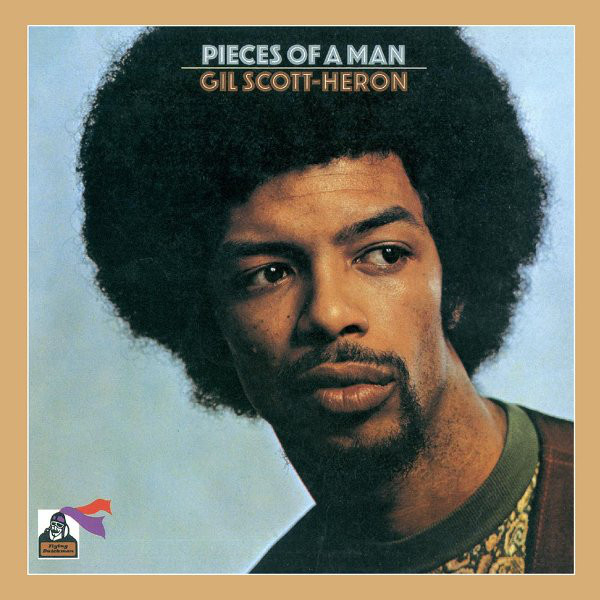
The second of the Flying Dutchman Productions’ trio was Pieces Of A Man, which featured eleven songs, including four written by Gil Scott-Heron. This included The Revolution Will Not Be Televised, which made its debut on Small Talk at ‘125th. and Lenox. The other seven songs were penned by Gil Scott-Heron and Brian Jackson, who would forge a successful songwriting partnership.
Recording of Pieces Of A Man took place on the ‘19th’ and ‘20th’ April 1971, RCA Studios, in New York. This time, Gil Scott-Heron was accompanied by a full band which featured a few well-known names.
When Bob Thiele asked Gil who he’d like to accompany him, jokingly, Gil Scott-Heron said flautist and saxophonist Hubert Laws and bassist Ron Carter. Bob Thiele who know everyone who was everyone in jazz, got them onboard for the recording of Pieces Of A Man. This was Bob Thiele’s way of making Gil Scott-Heron feel at home. Bob Thiele knew that putting together a top class bands was the way to get the best performance possible from an artist.
With a crack band in tow, Gil Scott Heron set about recording his sophomore album Pieces Of A Man. The crack band included a rhythm section of drummer Bernard “Pretty” Purdie and guitarist Burt Jones. Brian Jackson played piano and Gil Scott Heron played guitar, piano and sang lead vocals. Producing Pieces Of A Man was Bob Thiele. After a recording season that lasted just two days, Pieces Of A Man was completed. Now it was ready for release.
When Pieces Of A Man was released in 1971, only Rolling Stone magazine realised the cultural importance of the album. Pieces Of A Man passed the rest of the music press by. This is a sad indictment on music journalism at what was one of the most important periods in musical, social and political history.
By 1971, America was struggling with a variety of social problems, ranging from the Vietnam War, poverty and racism. Gil Scott Heron was using his music to speak for the poor, downtrodden and disenfranchised. Pieces Of A Man was an important album, and one that had the potential to make Americans think about the status quo, and consider change. Sadly, just like Pieces Of A Man passed the mainstream music by, it was a similar case with record buyers. Pieces Of A Man failed to find the audience it deserved.
Apart from spending six weeks in the US Jazz Charts, where it peaked at a lowly number twenty-five, commercial success passed Pieces Of A Man by. That was as good as it got for Pieces Of A Man. This was somewhat ironic, given the later reappraisal of the album.
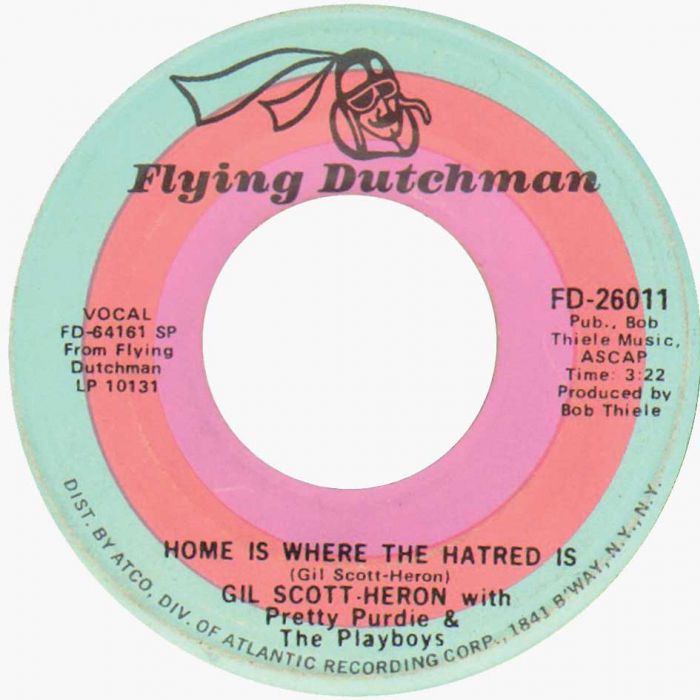
When critics reappraised Pieces Of A Man at a later date, they hailed it a classic album. The music was intense, politically charged, innovative and influential. That comes as no surprise, as Pieces Of A Man features some of the best and most powerful songs Gil Scott-Heron wrote during his time at Flying Dutchman Productions. This included The Revolution Will Not Be Televised, Save the Children, Lady Day and John Coltrane, Home Is Where The Hatred Is, When You Are Who You Are, I Think I’ll Call It Morning, Pieces Of A Man and Or Down You Fall. They’re part of what was the first classic album of Gil Scott-Heron’s career. Alas, the critics has still to rewrite musical history.
Gil Scott-Heron had released two innovative and influential albums, Small Talk At ‘125th’ and Lenox and Pieces Of A Man, they had passed music lovers by. This was disappointing for Gil Scott-Heron, who would only release one more album for Bob Thiele’s Flying Dutchman Productions, Free Will. However, would it be a case of third time lucky?
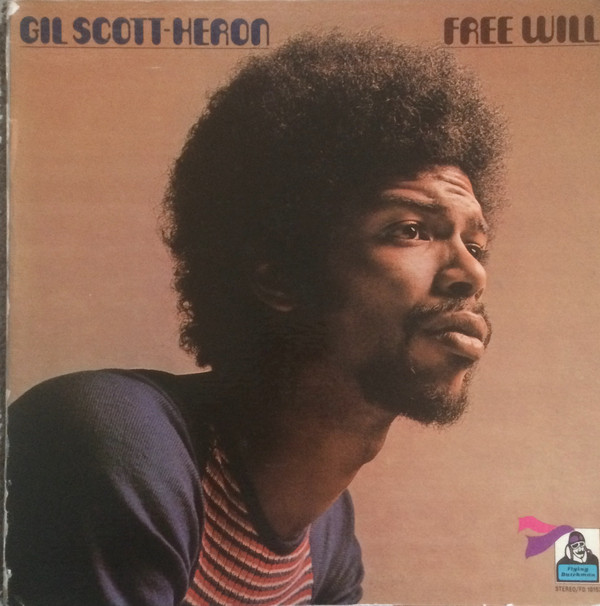
Free Will.
For the followup to Pieces Of A Man, Free Will, Gil Scott-Heron had written seven new songs. The other five songs, Free Will, The Middle Of Your Day, The Get Out Of The Ghetto Blues, Speed Kills and Did You Hear What They Said? were collaborations between Gil Scott-Heron and Brian Jackson. He played a huge part in the rise and rise of Gil Scott-Heron over the next few years.
Brian Jackson and Gil Scott-Heron had already formed a successful songwriting partnership. However, Brian Jackson was more than a songwriter. He was also a talented multi-instrumentalist who played piano, keyboards flute and bells on Free Will.
The Free Will sessions took place at RCA Studios, in New York, between the ‘2nd’ and ‘3rd’ March 1972. Just like on Pieces Of A Man, an all-star lineup accompanied Gil Scott-Heron. The rhythm section included drummer Bernard ‘Pretty’ Purdie, bassist Jerry Jemmott, drummer Pretty Purdie and guitarist David Spinozza. Flautist and saxophonist Hubert Laws, who’d played on Pieces Of A Man, returned, while Brian Jackson played electric piano, flute and bells. Gil Scott-Heron took charge of the lead vocals on Free Will. Arranging and conducting Free Will was Horace Ott, while Bob Thiele took charge of production. After just two days of lengthy recording sessions, Free Will was completed. It was released later in 1972.
On Free Will’s release later in 1972, it was well received by critics. Rolling Stone flew the flag for Free Will and Gil Scott-Heron. Despite this, Free Will failed to chart in the US Billboard 200 and US R&B charts However, Free Will sold between 20,000 to 30,000 copies, and reached the US Jazz charts. Despite this, this was a huge disappointment Gil Scott-Heron.
With keyboardist Brian Jackson at his side, Gil Scott-Heron had fused elements of jazz, blues, funk, proto-rap and soul on Free Will. Fearlessly, he continued to highlight the social and political problems of the early seventies, and tackle controversial subjects and scenarios head on. Gil Scott-Heron delivered the lyrics with his unique and inimitable proto-rap style on Free Will. Among its highlights were Free Will, The Middle Of Your Day, The Get Out Of The Ghetto Blues, Speed Kills and Did You Hear What They Said? That took care of side one, which was one of the most cohesive sides of Gil Scott-Heron’s nascent career. It was almost flawless. Then on side, Gil Scott-Heron picks up where he left off on two No Knock and Sex Education: Ghetto Style. It was the third album from musical pioneer Gil Scott-Heron, who would become one of the most important artists of his generation.
Sadly, Free will was his final album for Bob Thiele’s Flying Dutchman Productions. Not long after the release of Free Will, Gil Scott-Heron left Flying Dutchman Productions.

By then, Gil Scott-Heron’s thoughts were said to have turned to academia, and his unfinished degree. Gil Scott-Heron and his band returned to Washington D.C. which became their home. However, Gil Scott-Heron never came close to enrolling at his former alma mater Lincoln University.
Winter In America.
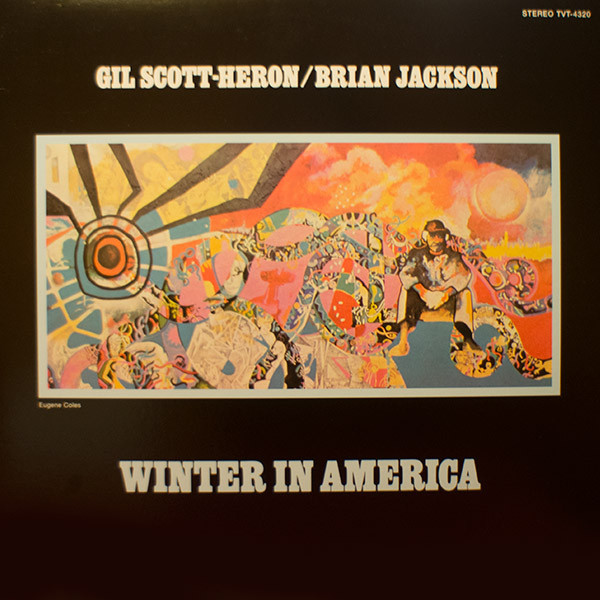
Not when Charles Tolliver and Stanley Cowell of Strata-East Records offered Gil Scott-Heron a new recording contract. Having signed to Strata-East Records, Gil Scott-Heron began work on his fourth studio album Winter In America with Brian Jackson who co-produced the album at D&B Sound, in Silver Spring, Maryland. The sessions began on the ‘4th’ and ‘5th’ September and were completed on the ‘15th’ of October of 1973. By then, Gil Scott-Heron had recorded the nine tracks that became Winter In America.
Seven months later, on the ‘5th’ of October 1975, Winter In America was released with Gil Scott-Heron and Brian Jackson receiving equal billing for the first time. Winter In America was released to widespread critical acclaim with some critics stating that Winter In America was Gil Scott-Heron’s finest album. So much so, that some critics wondered if this was going to be Gil Scott-Heron’s breakthrough album?
At first, this was looking doubtful. Initially, copies of Winter In America were in short supply, as a result of Strata-East Records independent distribution policy. This meant that many record shops struggled to secure the copies of Winter In America that they needed. Eventually, this problem was resolved and on June ’29th’ 1974, Winter In America entered the US Top Jazz Albums charts.
Little did Gil Scott-Heron realise that this as the start of a forty week run in the US Top Jazz Albums charts, which saw Winter In America eventually reach number six. This was helped by the success of only single released from Winter In America, The Bottle. Helped by an underground following, The Bottle gave Gil Scott-Heron the biggest hit of his career, when it reached number fifteen in the US R&B charts. The success of The Bottle resulted in Winter In America selling 300,000 copies. Incredibly, this wasn’t enough to even reach the lower reaches of the US Billboard 200. However, Winter In America was the only album Gil Scott-Heron released for Strata-East Records. Clive Davis of Arista came calling, and offered Gil Scott-Heron the opportunity to sign to a major label.
The Revolution Will Not Be Televised.
In the space of just a few short years, Gil Scott-Heron’s life had been transformed. The former poet, author and ‘academic’ had come a long way. Gil Scott-Heron had Bob Thiele to thank for his success. He had believed in him and given him first recording contract. Then when Gil Scott-Heron was considering returning to academia, and decided to move back to Washington with the rest of his band, Bob Thiele didn’t stand in his way. What Bob Thiele never foresaw was Strata-East Records offering Gil Scott-Heron a recording contract. This was enough for Gil Scott-Heron to turn his back on academia and release the most successful album of his career. This must have been frustrating for Bob Thiele.
Although the three albums that Gil Scott-Heron released on Bob Thiele’s Flying Dutchman Productions weren’t hugely successful they had sold reasonably well. Bob Thiele wanted to record more albums with Gil Scott-Heron. For Bob Thiele, Gil Scott-Heron was the one that got away.
By 1974, Bob Thiele had just signed a new deal with RCA. Part of the deal was that Flying Dutchman Productions released a compilation of tracks from Gil Scott-Heron’s first three albums, 1970s Small Talk At ‘125th’ and Lenox, 1971s Pieces of a Man and 1972s Free Will. This was perfect timing, as Gil Scott-Heron was now officially one of music’s rising stars.
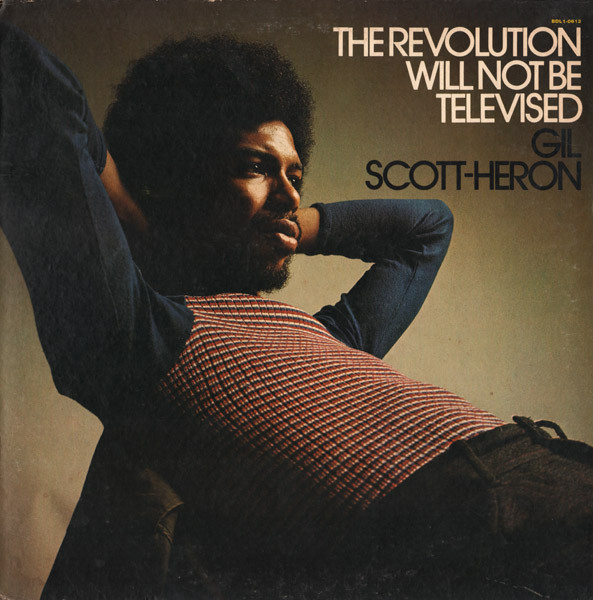
For the Gil Scott-Heron compilation, Bob Thiele spent time choosing eleven tracks from 1970s Small Talk At ‘125th’ and Lenox, 1971s Pieces of a Man and 1972s Free Will, that would eventually become The Revolution Will Not Be Televised. There was no way that Bob Thiele was going to be accused of throwing together a compilation that cashed-in on Gil Scott-Heron’s newfound popularity. Instead, The Revolution Will Not Be Televised was a lovingly curated compilation that was compiled by the man who discovered him…Bob Thiele. When he had finalised the track-listing, The Revolution Will Not Be Televised was released in late 1974, and for forty-three years has been the perfect introduction to Gil Scott-Heron’s Flying Dutchman Productions’ years.
When The Revolution Will Not Be Televised was released in 1974, it was to widespread critical acclaim and indeed commercial success. The Revolution Will Not Be Televised reached number twenty-one on October the ’12th’ 1974 and spending five weeks on the US Billboard Jazz charts. This meant that Gil Scott-Heron’s Flying Dutchman Records’ years closed with a successful album. By then, Gil Scott-Heron was preparing to start life at a major label.
The Start Of The Arista Years.
The First Minute Of A New Day.
Clive Davis of Arista came calling, and offered Gil Scott-Heron the opportunity to sign to a major label. This was the start of a relationship that produced nine albums and lasted until 1985.
Gil Scott-Heron’s debut for Arista was The First Minute Of A New Day featured nine new songs. This included Offering, The Liberation Song (Red, Black and Green), Pardon Our Analysis (We Beg Your Pardon) and Alluswe which were written by Gil Scott-Heron and Brian Jackson. They also wrote Must Be Something with Danny Bowens and Bob Adams. Gil Scott-Heron penned Ain’t No Such Thing As Superman, Guerrilla and Winter In America. The other song was Bilal Sunni Ali’s Western Sunrise which were recorded at two studios.
Recording of The First Minute Of A New Day began on June 1975 at New York University and DB Sound Studios, Silverspring, Maryland. Gil Scott-Heron and Brian Jackson took charge of production while The Midnight Band accompanied them on The First Minute Of A New Day. When the recording was completed in July 1974, The First Minute Of A New Day was scheduled for release in January 1975.
Prior to the release of The First Minute Of A New Day, Arista embarked upon a marketing campaign to promoted their latest signings album label debut. When critics heard the album, they were impressed by a carefully crafted album where the production was much slicker than Winter In America, and benefited from the addition of The Midnight Band. The songs were full of social and political comment and focused on the theme was struggle. Especially social, geographical and environmental oppression. They played their part in The First Minute Of A New Day, which was a powerful album that was released to critical acclaim.
When The First Minute Of A New Day was released in January 1975, it reached number five in the US Top Jazz Albums charts, eight in the US R&B charts and thirty in the US Billboard 200. Gil Scott-Heron’s music had crossed over and reached the wider audience that Bob Thiele knew it always would.
Just like Winter In America, The First Minute Of A New Day was credited to Gil Scott-Heron and Brian Jackson. Ironically, The First Minute Of A New Day was the most successful album of Gil Scott-Heron’s recording career. It was a proud moment for the poet, musician, and author who was still America’s social conscience. However, hat Gil Scott-Heron’ didn’t know, was that The First Minute Of A New Day was the most successful album of Gil Scott-Heron’s forty-one year recording career. He would spend the rest of his career trying to replicate the success of The First Minute Of A New Day.
From South Africa To South Carolina.
Having released the most successful album of his career, the pressure was on Gil Scott-Heron to record a followup that replicated the success of The First Minute Of A New Day. That was easier said than done.
For From South Africa To South Carolina, Gil Scott-Heron wrote Johannesburg, Beginnings (The First Minute Of A New Day), South Carolina (Barnwell) and A Lovely Day, while writing A Toast To The People, The Summer Of ’42. They were joined by Bilal Sunni-Ali of The Midnight Band’s Essex.
Recording of From South Africa To South Carolina took place at D & B Sound, in Silver Spring, Maryland, with many of the same musicians that featured on The First Minute Of A New Day joining Gil Scott-Heron. Work began in June 1975, with Gil Scott-Heron taking charge of the production. It took two months to record Gil Scott-Heron From South Africa To South Carolina, which was finished in July 1975. Gil Scott-Heron that From South Africa To South Carolina would replicate the success of The First Minute Of A New Day.
Four months later, From South Africa To South Carolina was released accompanied by mixed reviews. While some critics felt that it was another powerful album full of insightful political and social comment, the contrarian Rolling Stone magazine wasn’t convinced. Neither was the “self-styled” dean of rock critics Robert Christgau. This was disappointing for Gil Scott-Heron.
Especially when From South Africa To South Carolina failed to chart, and didn’t even come close to replicating the success of The First Minute Of A New Day. However, that was never going to be easy as The First Minute Of A New Day was one of Gil Scott-Heron’s finest albums. However, things were about to improved for Gil Scott-Heron.
He was invited to appear on the comedy sketch show Saturday Night Live in December 1975. He sang two songs from his new album From South Africa To South Carolina, Johannesburg and A Lovely Day, which introduced his music to a new audience nationwide. Sadly, this didn’t make an impact on album sales, and Gil Scott-Heron began making plans for his next album.
It’s Your World.
This was It’s Your World which was a double album which was recorded over a four-day period between the ‘1st’ and ‘4th’ of July 1976. Some of the sessions took place in various recording sessions, including Electric Lady Studios in New York and American Star Studios in Merrifield, Virginia. Other sessions took place at St. Paul’s Mall in Boston, Massachusetts, with Gil Scott-Heron’s backing band The Midnight Band accompanying them. They played their part in what was a remarkable album.
The four sides of It’s Your World were a showcase for the considerable talents of America’s social conscience Gil Scott-Heron. His music was cerebral, thoughtful and incisive music as he dealt the social and political problems affecting America as it bicentennial approached. Gil Scott-Heron delivered ballads gave readings of his poetry while he and his talented band switched between and combined elements of jazz, funk, Latin and proto-rap during what was an impassioned and powerful performance that was uplifting, inspirational and also full of anger, compassion, indignation and wisdom that seemed almost obvious. Even forty-one years later, It’s Your World is just as relevant.
It’s Your World was scheduled for release in November 1976, and found favour with the majority of critics. They hailed the album a powerful and potent album that was a return to form from Gil Scott-Heron. However, other critics were still to be convinced by Gil Scott-Heron and their reviews ranged from favourable to mixed. Some of these critics still seemed unwilling to give Gil Scott-Heron’s music a chance. This was a great shame.
When It’s Your World was released in November 1976, it was more successful than From South Africa To South Carolina but still failed to chart. Still, Gil Scott-Heron hadn’t come close to replicating the success of The First Minute Of A New Day.
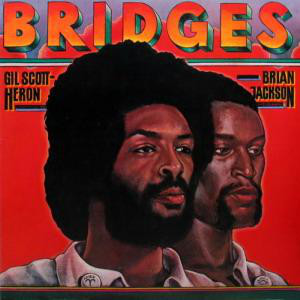
Bridges.
Seven years after releasing his debut album Small Talk At 125th and Lenox in 1970, Gil Scott-Heron working on what was the eighth album of his career, Bridges. Just like his two previous albums, Gil Scott-Heron and Brian Jackson received equal billing, on an album they hoped would reach the charts.
Gil Scott-Heron and Brian Jackson’s two previous albums had failed to chart, and they were under pressure to come up with a successful album. This time around, Gil Scott-Heron wrote seven of the nine tracks, including Hello Sunday! Hello Road!, Song Of The Wind, Under The Hammer, We Almost Lost Detroit, Tuskeegee #626, Delta Man (Where I’m Coming From) and 95 South (All Of The Places We’ve Been). Gil Scott-Heron also wrote Racetrack In France and Vildgolia (Deaf, Dumb and Blind) with Brian Jackson. These tracks were recorded during the first half of 1977, and featured nine new songs.
Taking charge of production on Bridges were Gil Scott-Heron and Brian Jackson. They were joined in the studio by members of The Midnight Band, on another powerful album of music that was full of social and political comment.
Prior to the release of Bridges, critics hailed the album as one of Gil Scott-Heron and Brian Jackson’s finest hours. Especially We Almost Lost Detroit which documented the story of the nuclear meltdown at the Enrico Fermi Nuclear Generating Station near Michigan, in 1966. Little did Gil Scott-Heron realise that We Almost Lost Detroit would become one of his most popular songs.
When Bridges was released in September 1977, it reached 130 in the US Billboard 200 and sixteen in the US Jazz albums charts. After two albums that had failed to chart, Gil Scott-Heron and Brian Jackson were back in the charts. This was a relief for the pair as their thoughts turned to their next album, and the last of the seventies, Secrets.
Secrets.
In April 1978, Gil Scott-Heron and Brian Jackson entered the TONTO studio in Santa Monica, California, with an all-star band that included Harvey Mason, Greg Phillinganes, Leon Williams and vocalists Julia Waters, Maxine Waters Waddell and Marti McCall. They joined Gil Scott-Heron and Brian Jackson who written nine new tracks.
Gil Scott-Heron wrote Angel Dust, Cane, Better Days Ahead, Angola, Louisiana and Show Bizness. The Gil Scott-Heron and Brian Jackson songwriting partnership wrote Third World Revolution and Three Miles Down, and also wrote Madison Avenue with Brenda Morocco. Brian Jackson contributed A Prayer For Everybody/To Be Free. These songs were recorded between April and June 1978 and became Secrets.
With Secrets complete, the album was released in September 1978. Before that, critics had their say on the album. While there weren’t as many hooks on Secrets as there had been on Bridges, the music was just as powerful and focused on the social and political problems on Angola, Louisiana and Third World Revolution. However, on Show Bizness Gil Scott-Heron reflected on the trials and tribulations of his newfound fame. Other songs dealt with injustice and drug addiction on Angel Dust. Secrets closed with the hopeful A Prayer For Everybody/To Be Free. It was well received by critics, with some calling it a fitting followup to Bridges.
On the release of Secrets in September 1978, it reached sixty-one on the US Billboard 200, forty-five on the US R&B charts and eleven on the US Jazz charts. Secrets was the second consecutive Gil Scott-Heron and Brian Jackson album to chart since they had signed to Arista. Could they make it three in a row?

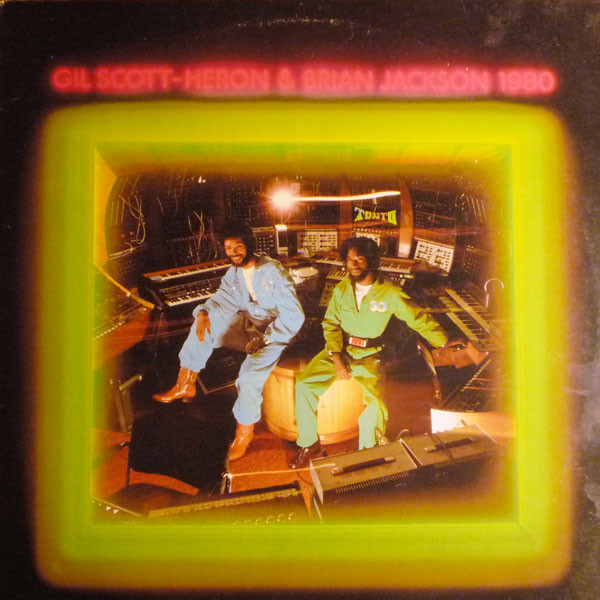
1980.
Despite the success of Bridges, Gil Scott-Heron and Brian Jackson didn’t return with a new album until 1980 in…1980. It was well worth the wait, but unlike Bridges and Secrets, was written mostly by Gil Scott-Heron.
For 1980, Gil Scott-Heron wrote seven of the eight songs on his tenth album. That was apart from Corners which Gil Scott-Heron and Brian Jackson wrote. They also co-produced 1980 with Malcolm Cecil.
Recording of 1980 took place at TONTO studio in Santa Monica, California between August and October 1979. Joining Gil Scott-Heron and Brian Jackson were drummer Harvey Mason, guitarist Ed Brady and Mario Henderson, flautist Carl Cornwell and trombonist Bill Watrous. Just like Bridges, backing vocalists Julia Waters, Maxine Waters Waddell and Marti McCall returned. They would play their part in an album that featured elements of funk, jazz, jazz-funk and proto-rap which would prove popular with critics and record buyers.
Just like Bridges, 1980 was well received by critics who welcomed another carefully crafted album. It featured the anti-nuclear song Shut ‘Um and Alien where Gil Scott-Heron documented the plight of the illegal Mexican immigrants in California. On Push Comes To Shove and Willing Gil Scott-Heron describes how he dealt with the pressure of life. 1980 featured a thoughtful Gil Scott-Heron who seemed to be feeling alienated disillusioned, as he looked back to his past. Closing 1980 was Late Last Night, a song that Gil Scott-Heron wrote when he woke up one nights with an idea for a song, and had to convince members of the hotel staff to let him use the piano in hotel’s lounge. Meanwhile, Gil Scott-Heron was worried he would lose melody to the song that became Late Last Night which was inspired by Gil Scott-Heron’s experience of touring and writing music. This closed what was another successful album for Gil Scott-Heron and Brian Jackson.
Upon the release of 1980 in late 1980, the album reached eighty-two in the US Billboard 200, twenty-two in the US R&B charts and seven in the US Jazz charts. This was the third consecutive Gil Scott-Heron and Brian Jackson album that had charted. They were enjoying the most successful period of their career.
Although Gil-Scott Heron was far from an overnight success, ever since his early days Bob Thiele’s Flying Dutchman Productions he had release album after album of carefully crafted music full of social and political comment. This continued after his departure from Flying Dutchman Productions with the release of Winter In America on Strata-East, and at Arista with The First Minute Of A New Day, which became the most successful album of Gil Scott-Heron’s career. However, replicating the success of The First Minute Of A New Day wasn’t going to be easy.
Neither From South Africa To South Carolina nor It’s Your Day charted, which was disappointing for Gil Scott-Heron and Brian Jackson. Just like the previous albums he had released since Flying Dutchman Productions, From South Africa To South Carolina and It’s Your Day were powerful albums as Gil Scott-Heron continued in his role of America’s social conscience. However, despite the quality of the music, neither album sold in great quantities.
Gil Scott-Heron and Brian Jackson’s fortunes improved on Bridges, Secrets and 1980, which brought to an end a ten-year period where America’s social conscience released the best music of his forty-one year career. He wrote, sang and produced powerful songs that often, were full of social and political comment, and other times, found in a reflective mood. Sometimes, he was reflecting on his newfound fame, other times he spoke of the problems that everyone had to deal with. As a result, many people could relate to the music Gil Scott-Heron had released since he left Flying Dutchman Productions. That had been the case throughout his ten-year recording career, which saw Gil Scott-Heron release ten albums between 1970 and 1980.
Looking back at Gil Scott-Heron’s forty-one year career with the benefit of hindsight, he released his best music between 1970 and 1980. During this golden period, Gil Scott-Heron could do no wrong. Having signed for Bob Thiele’s Flying Dutchman Productions, he released his debut album Small Talk At ‘125th’ and Lenox in 1970, and followed this up with Pieces of a Man in 1971 and Free Will in 1972. This triumvirate of albums feature some of the best music of Gil Scott-Heron’s career. However, for Gil Scott-Heron there was life after Flying Dutchman Productions.
After leaving Flying Dutchman Productions, Gil Scott-Heron signed to Strata-East, and released Winter In America It was the first album to be credited to Gil Scott-Heron and Brian Jackson, and is one of their finest albums. Winter In America has more in common with the albums Gil Scott-Heron released on Flying Dutchman Productions. After signing to Arista, Gil Scott-Heron’s music changed stylistically.
While his lyrics were just as hard-hitting, powerful and poignant, the production became much slicker with bigger bands and backing vocalists accompanying Gil Scott-Heron and Brian Jackson. This found favour with record buyers, especially on The First Minute Of A New Day, which is the finest albums Gil Scott-Heron and Brian Jackson released at Arista. Other notable albums were Bridges and Secrets, which feature the best of Gil Scott-Heron’s Arista years.
The triumvirate of albums Gil Scott-Heron released for Flying Dutchman Production, Winter In America and The First Minute Of A New Day, Bridges and Secrets showcases one of the most talented singer and songwriters of his generation as he blossoms and flourishes during what was a golden period for Gil Scott-Heron.
He blossomed at Flying Dutchman Production, when Bob Thiele gave Gil Scott-Heron a platform and the freedom to record and release music that he believed in. This was the start of the rise and rise of Gil Scott-Heron.
Soon, was well on his way to becoming America’s social conscience, as he provided a voice for those who had none. Hs lyrics were cerebral, witty, scathing and most importantly, honest as Gil Scott-Heron spoke up for the poor, downtrodden and disenfranchised. Fearlessly, Gil Scott-Heron highlighted the social and political problems that blighted America between 1970 and 1980 using his unique, imitable and emotive proto-rap and soulful styles on the albums he recorded at Flying Dutchman Records, Strata-East and Arista. This includes Small Talk At ‘125th’ and Lenox , Pieces Of A Man, Free Will and and later, Winter In America, The First Minute Of A New Day, Bridges and Secrets. These albums contain some of the most important, powerful, poignant and cerebral music of Gil Scott-Heron’s career. Over forty years later, and Gil Scott-Heron’s music is timeless and is still relevant today, as the man who was once America’s social conscience continues to influence and inspire a new generation of musicians.
Gil Scott-Heron-America’s Social Conscience: 1970-1980.

WHATEVER HAPPENED TO JEANETTE JONES?
Whatever Happened To Jeanette Jones?
The history of soul music is littered with artists who could’ve and should’ve gone on to greater things, but for whatever reason, commercial success and critical acclaim passed them by. That, sadly, was the case with Jeanette Jones.
She had talent in abundance, and a voice that was a mixture of power, passion, emotion and sheer soulfulness. Sadly, Jeanette Jones’ recording career was all too brief, and amounts to just one single, Darling, I’m Standing By You which was released on the Golden Soul label in 1969, and the two years later, was reissued by Kent Records in 1971. Sadly, nothing came of the single.
Jeanette Jones’ last recording session was in 1974, when she recorded a publishing demo for Barry Goldberg. Sadly, that was the last time she entered a recording studio. It was also the end of Jeanette Jones’ musical career. For Jeanette Jones, the dream was over.
Since then, Jeanette Jones has remained an enigmatic and mysterious figure. Very little is known of her life pre and post music. Nowadays, it is thought that Jeanette Jones lives quietly in San Francisco,
Details of Jeanette Jones’ early life are somewhat sketchy. It’s thought that she was born and brought up in San Francisco. That was certainly where Jeanette Jones first discovered music.
Just like many future soul singers, Jeanette Jones first started singing in church. That proved to be Jeanette Jones’ gateway into music. However, it was with the Voices Of Victory gospel choir that Jeanette Jones’ first came to prominence.
Cora Wilson had formed The Voices Of Victory gospel choir in 1962. Hers was no ordinary choir though. The Voices of Victory gospel choir featured sixty singers, who travelled the West Coast in their own bus. They sang in churches and at gospel conventions and The Voices of Victory in full flight was an impressive sight and sound. Especially when the soloists enjoyed their moment in the spotlight. By 1965, one of the soloists was Jeanette Jones.
She was the owner of an impressive and powerful voice. When Jeanette Jones stepped into the spotlight, she combined, power, passion and emotion. Given the her vocal prowess, it was no surprise that Jeanette Jones was one of the stars of The Voices Of Victory gospel choir. Everyone who heard them realised this, including Leo Kulka at Golden State Recorders.
Leo Kulka first encountered Jeanette Jones in November 1965. Cara Wilson had booked Golden State Recorders to record an album by The Voices Of Victory gospel choir. Given the size of the choir, Leo Kulka decided to use Golden State Recorders’ larger studio in Harrison Street. After the recording session, Cara Wilson planned to have a limited number of albums pressed which would be sold after concerts. In a way, Cara Wilson was just testing the water, to see if there was a market for albums featuring her choir. Soon, Leo Kulka realised that Cara Wilson was underselling her choir.
As the recording session got underway, Leo Kulka immediately realised just how good The Voices Of Victory gospel choir were. Cara Wilson’s choir wasn’t just one of the best in San Francisco or even California, but one of the best on the West Coast. Leo Kulka realised this as the session progressed, and Jeanette Jones prepared to record the lead vocal on Why.
When Leo Kulka heard Jeanette Jones’ lead vocal on Why, her voice stopped Leo Kulka in his tracks. It was a cut above the rest of the soloists as Jeanette Jones was capable of singing with power, but was always in control as she delivered the lyrics with emotion and sincerity. From the moment Leo Kulka heard Jeanette Jones sing, he promised himself he was going to sign her. As soon as the recording session was over, Leo Kulka approached Jeanette Jones, with a view to signing her.
Jeanette Jones wasn’t interested in signing a recording contract. She had no intention in crossing over, and instead, wanted to continue to do what she saw as the “Lord’s work” with The Voices Of Victory gospel choir. This must have come as a surprise to Leo Kulka.
Back in 1965, the majority of singers, including gospel singers, dreamt of signing a recording contract. Even if this meant crossing over from gospel to secular music. Jeanette Jones it appeared was the exception. That was until late 1967.
It wasn’t until late 1967 that Leo Kulka next encountered Jeanette Jones. By then, things had changed for Jeanette Jones. Not only had she crossed over, and was singing secular music, but she also had acquired a manager, Jay Barrett.
Jay Barrett explained to Leo Kulka that he wasn’t from a musical background, and instead, was a banker who was based in Palo Alto. He was a relative newcomer to the music industry, and hope that as well as managing artists, that he could forge a career as a songwriter.Jeanette Jones he hoped, would go on to record some of the songs he had written in the future. With that, Jay Barrett went away to work on a proposal for Jeanette Jones and Leo Kulka.
By then, Jeanette Jones had signed to Leo Kulka’s Golden Soul label. This was a smart move by Jeanette Jones, as Leo Kulka had a lifetime of experience within the music industry, and the knowledge and skill-set to guide the talented singer through the early stages of her recording career.
Soon, Jay Barrett came up with a proposal which stated that if Jeanette Jones was willing to record his songs, then he was willing to part-finance the recording of a demo. This would be recorded Leo Kulka’s Golden State Recorders. Leo Kulka agreed to this, and began preparing for his first session with Jeanette Jones.
The recording session was scheduled to take place in the February of 1968. No expense was spared, and Leo Kulka began to put together an extensive backing band. There was a problem though. The songs that Jay Barrett had written were totally unsuited to Jeanette Jones in their present form.
They were poppy and sounded like a remnant from earlier in the sixties. This was the wrong type of songs for Jeanette Jones and Leo Kulka was faced with a problem. Jay Barrett had agreed to part-finance the demo on the condition that Jeanette Jones recorded some of his songs. It was time for Leo Kulka to put his years of experience to good use and come up with a solution. After some thought, Leo Kulka had worked out a solution,..backing vocalist and put in a call to Ramona King and her brother Cleo.
Ramona King’s career began in 1962, when she signed to Eden Records. Since then, she had spent time at Warner Bros. Records, Amy and most recently, Action Records. Leo Kulka explained that he needed backing vocalists to accompany Jeanette Jones and help her add some much-needed soulfulness to Jay Barrett’s songs. The Kings agreed and when they arrived at Golden State Recorders the recording sessions began.
At that first recording session, Jeanette Jones recorded a couple of Jay Barrett songs, Jealous Moon and Quittin’ The Blues. With the large ensemble accompanying her, the two songs were soon recorded with Leo Kulka taking charge of production, Despite that, Jay Barrett received a co-production credit. The next step, was to try to interest another label in the songs.
Leo Kulka began shopping Jealous Moon and Quittin’ The Blues to various labels where he had a contact in the hope that they would release them as a single. However, none of the labels expressed an interest in releasing the songs. For Leo Kulka, this was a huge disappointment. He believed that Jeanette Jones had the potential to forge a career as a singer, and decided to dig deep into his contact book.
The man he decided to consult was Larry Goldberg, an independent producer who was based in Los Angeles. Although Larry Goldberg was a producer, he was also a talent scout, and spent much of his time finding and developing artists. Sometimes, after discovering and developing these artists, Larry Goldberg shopped them to major labels, where they embarked upon the next stage of their career. Larry Goldberg had set a number of artists on the road to stardom and just like Leo Kulka, Larry Goldberg had a wealth of experience. He also thought he might have the answer to Leo Kulka’s problem.
The answer Larry Goldberg thought were three backing tracks that he wanted to play Leo Kulka.This included the Ben Raleigh composition Break Someone Else’s Heart. Another possibility was Andy Badale and Albert Elias’ I Want Action, which had recently given Ruby Winters a hit. The third and final song was Sam Russell’s Cut Loose, which had been arranged by H.B. Barnum. Having listened to the three pop soul cuts, Leo Kulka agreed that they had the potential to solve his problem and gave Jeanette Jones a call. She agreed to make her way to Golden State Recorders.
Although Jeanette Jones was signed to Leo Kulka’s Golden Soul label, she had continued to sing with the Voices Of Victory gospel choir. Maybe she was keeping her options open, given the life of a professional singer could sometimes, be perilous? The ccareers of soul singers were often short, and could be unpredictable and unprofitable. Jeanette Jones must have realised this after her first recording session. Despite that, she was prepared to return to the studio to record the triumvirate of tracks with Leo Kulka.
Having listened to the trio of backing tracks, Jeanette Jones set about laying down vocals. She combined power and emotion, delivering an almost defiant vocal on Break Someone Else’s Heart. Then on Cut Loose, Jeanette Jones delivers a vocal tour de force, as horns and harmonies accompany her vocal. On the final song, I Want Action Jeanette Jones again combines power and emotion as she delivers a needy, hopeful vocal. With the vocals recorded, Jeanette Jones had done her part and now it was over to Leo Kulka.
His job was to shop the songs to various labels. Given the quality of the songs, Leo Kulka must have been confident of securing a deal for Jeanette Jones. Despite his best efforts, none of the labels he approached were interested in releasing the songs, and llightning had struck twice for Jeanette Jones.This must have been a huge disappointment for Jeanette Jones who returned to the Voices Of Victory gospel choir.
By the spring of 1969, Jeanette Jones was now fronting the Voices Of Victory gospel choir who were still one of the biggest and most successful gospel choirs on the West Coast. Despite this, Jeanette Jones returned to Golden State Recorder for an another recording session.
Still Jeanette Jones hadn’t given up on her dream of making a career out soul music and again, made the journey to Golden State Recorders. That was where she first encountered singer-songwriter Wally Cox. Leo Kulka had asked him to write a song that would showcase Jeanette Jones’ conferable vocal talents. He delivered a trio of songs, including Darling, I’m Standing By You which was tailor-made for Jeanette Jones.
At Golden State Recorders, Jeanette Jones prepared to record Darling, I’m Standing By You. With Leo Kulka producing, Jeanette Jones delivered a spine-tingling, soul-baring, testifying vocal. Backing vocalists accompany her every step of the way, as Jeanette Jones combines gospel and soul, on what was a career defining moment.
Meanwhile, Wally Cox went away and wrote two new songs including the beautiful mid-tempo ballad The Thought Of You which. Just like Darling, I’m Standing By You it seemed tailor-made for Jeanette Jones. She was in a reflective mood on The Thought Of You, as she gives thanks for the love she’s found. Unlike some of the soul being released in 1969, it had a much more modern, contemporary sound. It was a similar case with the recording of Wally Cox’s other composition was I’m Glad I Got Over You, which features a defiant Jeanette Jones as she delivers another vocal powerhouse against an urgent, driving arrangement. It’s another song that could’ve and should’ve transformed Jeanette Jones’ career. Leo Kulka realised this and decided to back Jeanette Jones with his own money.
Realising the potential of Darling, I’m Standing By You and The Thought Of You Leo Kulka decided to release the single on his own Golden Soul record label. Leo Kulka hoped that the local R&B and gospel and radio stations would pickup on the single. This Leo Kulka hoped, would result in him being able to cut a distribution deal with a major label. That was the plan.
Leo Kulka had 1,000 copies of Darling, I’m Standing By You and The Thought Of You pressed. These copies he hoped would sell out, and the single would be picked up radio stations in the San Francisco area. However, the 1,000 copies of Darling, I’m Standing By You failed to sell, and Leo Kulka was back to square one.
While many people would’ve called it a day, Leo Kulka decided to use the single to shop Darling, I’m Standing By You to major labels. He took the single to Atlantic, but they turned the song down. When Motown then passed on Darling, I’m Standing By You, things weren’t looking good for Darling, I’m Standing By You, and Jeanette Jones’ career.
She had been trying to make a breakthrough since 1967, and was no nearer to doing so. Things however changed in 1971, when the Bihari brother agreed to release some of Leo Kulka’s releases on their Kent Records and Modern Records’ labels. One of the singles they chose to release was Jeanette Jones’ Darling, I’m Standing By You. Maybe, Jeanette Jones’ luck was changing?
Alas it wasn’t to be and when Darling, I’m Standing By You was released in 1971, the single failed to find an audience, and soon it had disappeared without trace. For Leo Kulka and Jeanette Jones this was hugely frustrating and disappointing. Leo Kulka felt the single hadn’t received sufficient promotion by Modern Records. It was no surprise when it failed for commercially and Leo Kulka and Jeanette Jones were left to rue the Bihari brothers’ short-sightedness. However, by then, Jeanette Jones was beginning to rethink her future.
Following the commercial failure of Darling, I’m Standing By You, Jeanette Jones started to work as a session singer. She also began working with Mike Bloomfield on his Mill Valley Bunch project. Jeanette Jones sung the lead vocal What Would I Do Without My Baby and Ooh Ooh Ooh, La, La, La which featured on the Mill Valley Bunch’s one and only album, Casting Pearls, which was released by Verve Records in 1972. Soon, though, Jeanette Jones began to look beyond music.
Jeanette Jones began to do some voiceover work, and was chosen as the voice of the Swiss Colony Wine radio campaign. It was also around this time, that Jeanette Jones began to do some modelling. This kept her busy, and gradually, Jeanette Jones seemed to lose interest in music. Indeed, she only returned to Golden State Recorders one more time.
This was in 1974, when Jeanette Jones headed to Golden State Recorders to record a publishing demo for Barry Goldberg, who was a friend of both Mike Bloomfield and Leo Kulka. During that last session, Jeanette Jones cut two tracks penned by Gerry Goffin and Barry Goldberg. The first was You’d Be Good For Me, which was followed by the beautiful, heart wrenching ballad What Have You Got To Gain By Losing Me? Sadly, after recording the publishing demo for Barry Goldberg, Jeanette Jones turned her back on music.
Since then, nothing has been heard of Jeanette Jones, and her story is a case of what might have been? That is a great shame as Jeanette Jones’ could’ve and should’ve enjoyed commercial success and critical acclaim. Jeanette Jones was a hugely talented singer, who had the ability to breath life, meaning and emotion into lyrics. She could combine power and passion, and seamlessly switch between ballads and uptempo tracks. Despite her undoubted talent, sadly, Jeanette Jones never made a breakthrough.
That was despite Leo Kulka championing Jeanette Jones throughout her short career. He produced her, and then shopped the songs to bigger labels. Sadly, only once did a single get picked up by a bigger record, Darling, I’m Standing By You. Even when that happened in 1971, Modern Records didn’t promote the single sufficiently. Maybe this led to Jones considering her future?
After four years struggling to make a breakthrough, maybe reality kicked in and Jeanette Jones realised that not all dreams come true? It was certainly around this time that Jeanette Jones began to work as a session singer which. Sadly, after this, the only time Jeanette Jones returned to a recording studio was to record a publishing demo for Barry Goldberg, Ironically, during that session, Jeanette Jones recorded one of her finest songs What Have You Got To Gain By Losing Me? It’s a poignant reminder of Jeanette Jones, whose career is a case of what ifs?
What if Jeanette Jones has signed to Leo Kulka’s Golden State in 1965, when he recorded The Voices Of Victory gospel choir? Maybe she would’ve gone on to enjoy a successful career as a soul singer? However, Jeanette Jones wanted to continue doing the “Lord’s work.”
Maybe by the time she changed her mind in 1967, it was too late? Music was changing, and changing fast. Suddenly the musical landscape was totally different. By 1967, pop and rock dominated the musical landscape, and the psychedelic revolution was well underway. While soul was still popular, it was nowhere near as popular as pop or rock which dominated the charts and the radio airwaves. Some soul labels, including Stax and Motown were still releasing hit singles by 1967 and would continue to do so over the next four years. Meanwhile, Atlantic Records’ soul years had finished in 1967, but the label had just released Aretha Franklin’s Atlantic Records’ debut I Never Loved a Man the Way I Love You in 1967. This was the start of Aretha Franklin’s Atlantic Records years, which was the most successful period of her career. Sadly, many other talented soul singers struggled to make a breakthrough during this period. This included Jeanette Jones.
Despite her undeniable talent, and her ability to breath life and meaning into a song, commercial success eluded Jeanette Jones.The question is why? Maybe if Leo Kulka had managed to interest a major label in Jeanette Jones, things would’ve been very different? However, there is also the possibility that Jeanette Jones was neither driven nor determined enough to make a career out of music. It could be that Jeanette Jones wasn’t comfortable singing secular music, given her background in gospel music? There’s any number of reasons why commercial success eluded Jeanette Jones.
Deep down, maybe Jeanette Jones knew that enjoying a successful career as a soul singer was a long shot, and very few succeeded? That is doubtful, and if it that was the case, it would be ironic, as Jeanette Jones had what the talent and voice to enjoy a long and successful career in music. The music she recorded with Leo Kulka at Golden State Records is proof of that. Sadly, commercial success and critical acclaim passed Jeanette Jones by who is proof that not All Dreams All Come True.
Over forty years later, and Jeanette Jones still remains an enigmatic and mysterious figure. Very little is known about her life before she embarked upon a musical career, and similarly, very little known about Jeanette Jones career after music. It’s thought that she lives quietly in San Francisco, where her career began over fifty years ago.
Since then, Jeanette Jones has never been tempted to make a comeback, despite her music somewhat belatedly finding the audience it deserves. Both Ace Records and Playback Records have released compilations of Jeanette Jones’ music which showcases a truly talented soul singer who should’ve enjoyed a long and illustrious career. Sadly, Jeanette Jones’ career amounts to just one single, and it’s a case of what might have been for this truly talented singer.
Jeanette Jones-What Might Have Been.

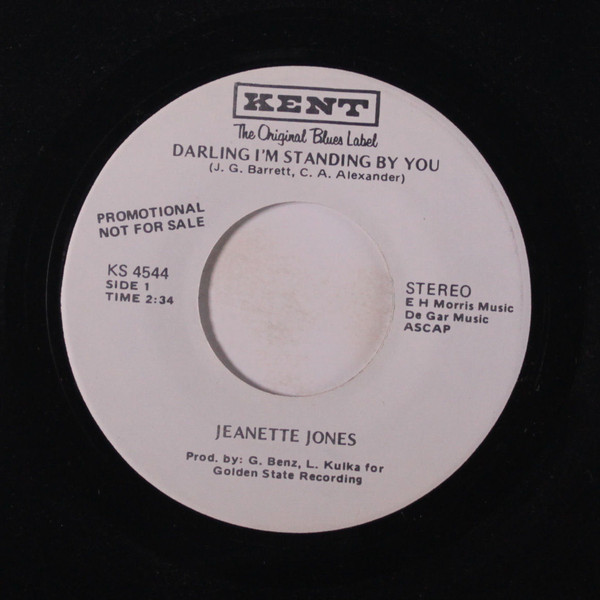 Q
Q
MELVIN SPARKS-FIVE FRUITFUL YEARS 1970-1975.
Melvin Sparks-Five Fruitful Years 1970-1975.
Although American jazz and blues guitarist Melvin Sparks enjoyed a career that spanned five decades, the most fruitful period of his career was the seventies, when he released five albums between 1970 and 1975. Melvin Sparks’ career began at Prestige Records, where he released a triumvirate of albums between 1970 and 1972. However, after leaving Prestige, Melvin Sparks signed to Armen Boladian’s Eastbound Records in Detroit. This was the latest chapter in a story that began in Houston, Texas, where Melvin Sparks discovered music.
Melvin Sparks was born in Houston, Texas, on March the ‘22nd’ 1946, into what was a musical family. His two brothers both played guitar, and his mother ran a cafe which was a favourite hangout for local musicians. This included Don Wilkerson, Stix Hooper and Cal Green, who would prove supportive of Melvin Sparks and influenced him later in his career.
At the age of eleven, Melvin Sparks received his first ever guitar, and by the time he was in high school, was playing in his first band alongside organist Leon Spencer. Within a few years, seventeen year old Melvin Sparks had left school and embarked upon a career as a processional musician.
Initially, Melvin Sparks went out on the road with The Upsetters, who had been Little Richard’s backing band, and then went on to back some of the biggest names in R&B. For the next three years, Melvin Sparks served what was akin to a musical apprenticeship with The Upsetters, as they crisscrossed America. In 1966, The Upsetters arrived in New York which was where Melvin Sparks met the man who would transform his career.
In New York, Melvin Sparks met bandleader and jazz organist Brother Jack McDuff, who just happened to be looking for a guitarist. Melvin Sparks fitted the bill and in 1966, he joined Brother Jack McDuff’s band. Over the next few years, Melvin Sparks played on several albums that featured Brother Jack McDuff. This included his 1967 album Do It Now, and the same year, Melvin Sparks played on Do It Now, Jimmy Witherspoon with Jack McDuff’s The Blues Is Now. The following year, Melvin Sparks played on Brother Jack McDuff and David Newman’s 1968 collaboration Double Barrelled Soul. That was just part of the story.
Soon, Melvin Sparks was the go-to-guitarist for anyone who was looking for a jazz guitarist, and played alongside Lonnie Smith on his 1967 album Finger Lickin’ Good. After that, Melvin Sparks played alongside several top boogaloo artists signed to Blue Note between 1968 and 1970, including Lou Donaldson, Reuben Wilson and Lonnie Smith. However, in 1970 Melvin Sparks made the transition from sideman to solo artist.
By 1970, Melvin Sparks signed to Prestige, where he was reunited with his old friend and former high school bandmate Leon Spencer Jr, who was also signed to the label. The pair would play on each other’s albums over the next couple of years.
Sparks!
Having signed to Prestige Records, twenty-seven year old Melvin Sparks soon, began work on his much-anticipated debut album, Sparks! He was paired with producer Bob Porter who by 1970, had already established the Prestige soul-jazz sound. Now they had to choose the songs that suited this sound.
Just like many albums of soul jazz, cover versions were often the order of the day. That was the case with Melvin Sparks’ first album of Prestige soul-jazz, which featured Sly Stone’s Thank You For Being Myself, Rogers and Hart’s I Didn’t Know What Time It Was and Leiber and Stoller’s Charlie Brown. However, Melvin Sparks had decided to record The Stinker which was written by his old friend and now label mate Leon Spencer Jr, who was also part of all-star band that recorded Sparks!
When recording of Melvin Sparks debut album Sparks! began, Bob Porter took charge of production and Rudy Van Gelder was the recordist. Backing guitarist Melvin Sparks was a tight and talented band that featured drummer Idris Muhammad, organist Leon Spencer Jr, trumpeter Virgil Jones and tenor saxophonists Houston Person and John Manning. Once the album was recorded, Sparks! was scheduled for release later in 1970.
Before the release of Sparks!, critics had their say on Melvin Sparks debut album, which was an album of soul-jazz that headed in the direction of pop. Sparks! was well received by critics, and when it was released in later 1970, it was hoped that it would launch Melvin Sparks’ solo career. However, despite the favourable reviews, Sparks! failed to find a wider audience which was a disappointing start to Melvin Sparks’ career at Prestige.
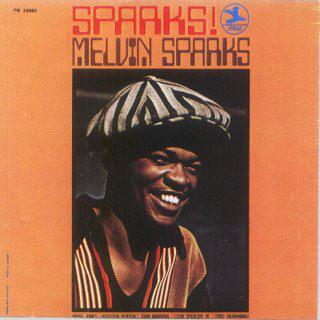
Spark Plug.
After the commercial failure of his debut album Sparks!, Melvin Sparks went away and wrote Spark Plug, Conjunction Mars and Dig Dis which would featured on his sophomore album Spark Plug. These three tracks were joined by covers of Gene Redd’s Who’s Gonna Take The Weight? and Schwartz and Dietz’s Alone Together. The songs that became Spark Plug were recorded by many of the musicians that featured on Sparks!
Drummer Idris Muhammad, organists Leon Spencer Jr and Reggie Roberts, trumpeter Virgil Jones and tenor saxophonists Grover Washington Jr join guitarist Melvin Sparks. Taking charge of production on Spark Plug was Bob Porter, as a much more laid back, but funky album of soul-jazz took shape. This was similar to the Prestige “sound” that had evolved over the last few years under Bob Porter. Melvin Sparks was the latest purveyor of the Prestige sound.
Just like his debut album Sparks!, Sparks Plug, was well received by critics, and many thought that Melvin Sparks was one of Prestige’s rising stars. However, when Melvin Sparks released Sparks Plug later in 1971, the album wasn’t the commercial success that Prestige nor Melvin Sparks had hoped. For both parties, this was hugely disappointing.
Akilah!
With neither Sparks! nor Spark Plug proving particularly popular, Melvin Sparks was well aware that his third album Akilah!, was make or break for him at Prestige. Melvin Sparks was still regarded as one of Prestige’s rising stars, but he had still to make a breakthrough. It was a case of now or never as Melvin Sparks began work on Akilah!
For his third album, Melvin Sparks had written four new tracks, On The Up, All Wrapped Up, Akilah and Blues For JB. They were joined by Leon Spencer Jr’s The Image Of Love and Gene Redd and Kool and The Gang’s Love The Life You Live.
By the time Melvin Sparks recording his third album, producer Bob Porter had left Prestige, and this time, he was joined in the studio by Ozzie Cadena who supervised the recording of Akilah! This wasn’t the only change, as a very different band accompanied Melvin Sparks during the Akilah! sessions.
Familiar faces included Idris Muhammad, organist and pianist Leon Spencer Jr and trumpeter Virgil Jones. They were joined by some new names including alto saxophonists George Coleman and Sonny Fortune, flautist Hubert Laws, percussionist Buddy Caldwell, trumpeter Ernie Royal and tenor saxophonists Frank Wess and Dave Hubbard who also played flute on Akilah! It built on Melvin Sparks’ two previous albums, Sparks! and Sparks Plug, and was the most important album of his solo career.
With Akilah! completed, Melvin Sparks’ third album was scheduled for release later in 1972, and again, just like his two previous well received by critics upon its release. However, history repeated itself, and Akilah! failed to find the audience that it deserved. This was a huge blow for Melvin Sparks, who left Prestige later in 1972.
Fortunately, by the time Akilah! was released, Bob Porter who had left Prestige Records, had joined Armen Boladian’s Detroit-based label Eastbound Records. With Melvin Sparks without a label, Bob Porter recommended that Eastbound Records sign his old friend and protégé. This was the start of a new era for Melvin Sparks.
Texas Twister.
After signing to Eastbound Records, began work on his fourth album Texas Twister with his old mentor and producer Bob Porter. Melvin Sparks hoped that renewing his partnership with Bob Porter might kickstart his career.
For Texas Twister, Melvin Sparks wrote four new compositions Whip! Whop!, Judy’s Groove, Texas Twister and Star In The Crescent. They were joined by Bobby Graham’s Gathering Together, Billy Eckstine’s Want To Talk About You and Brian Potter and Denise Lambert’s Ain’t No Woman (Like The One I Got). These seven tracks became Melvin Sparks’ Eastbound Records’ debut Texas Twister.
No expense was spared for the recording of Texas Twister which was produced by Bob Porter and was recorded by band that featured some top musicians. The rhythm section of drummer Idris Muhammad, bassist Wilbur Bascomb and guitarists Ron Miller. They were joined by organist Caesar Frazier, Sonny Phillips on Fender Rhodes and Buddy Caldwell on bongos. A horn section that featured baritone saxophonist Ed Xiques, tenor saxophonist Ron Bridgewater and trumpeters Cecil Bridgewater and Jon Faddis was the final piece of the jigsaw. Melvin Sparks played his trusty Guild guitar on Texas Twister which was meant to be the start of a new era for him.
Texas Twister was released to plaudits and praise, and hailed as Melvin Sparks’ finest album. Although it was a much funkier album than his previous offerings, Melvin Sparks hadn’t turned his back on soul jazz as he led three different lineups of his band on Texas Twister. Sometimes, Melvin Sparks’ all-star band are reduced to a trio, while other times he leads an impressive ten piece combo on Texas Twister. One of Melvin Sparks’ secret weapons on Texas Twister were the bongos which added a Latin sound as he flitted between funk and soul-jazz on his comeback album.
Despite being well received by critics, who thought Texas Twister Melvin Sparks’ finest album, it failed to find an audience when it was released later in 1973. History had repeated itself again, and Melvin Sparks who had just released his fourth album Texas Twister was still looking to make a commercial breakthrough.

Melvin Sparks ’75.
After the release of Texas Twister, Melvin Sparks’ friend and ally Bob Porter left Eastbound Records, and just when it looked as if things couldn’t get any worse, they did. Armen Boladian decided to close Eastbound Records, and Melvin Sparks became part of Westbound Records’ roster, which included Funkadelic and Parliament. Both were enjoying the most successful periods of their career, while jazz was in the doldrums.
By 1975, jazz albums were becoming a hard sell, but Melvin Sparks entered the studio with his band and vocalist Jimmy Scott who featured on two tracks on Melvin Sparks ’75. It was co-produced by Melvin Sparks and Bernie Mendelson and when it was completed, scheduled for release in later in 1975.
When Melvin Sparks ’75 was released by Westbound Records in 1975, interest in jazz was at an all-time low. Despite that, critics were impressed by an album that featured some of Melvin Sparks’ finest performances and two deeply soulful vocals from Jimmy Scott. Sadly, when Melvin Sparks ’75 was released, just like Texas Twister the album failed commercially. The big question was what did the future hold for Melvin Sparks?
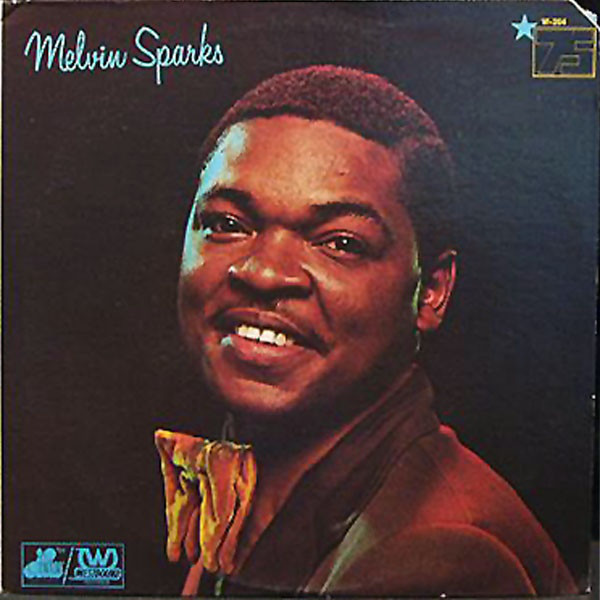
Westbound Records allowed Melvin Sparks to record what would’ve been his sixth album I’m Funky Now, which should’ve been released later in 1976. However, Westbound Records decided not to release the album, and this spelt the end of Melvin Sparks’ career Westbound Records.
After recording six albums in six years, Melvin Sparks was left without a recording contract. Westbound Records had decided to cut their loses, as Melvin Sparks had still to make a commercial breakthrough.
That was despite Melvin Sparks being a talented and versatile composer and musician, who had released five albums which were well received by critics. However, he was out of luck as the most fruitful period of his career coincided with jazz being in the doldrums.
Record buyers turned their attention to other genres and many jazz musicians no longer released albums on a regular basis. That was the case with Melvin Sparks who released albums sporadically. This began with Sparkling in 1981, which was followed sixteen years later in 1997 with I’m A ‘Gittar’ Player. After that, Melvin Sparks didn’t release a new album until the new millennium.
What You Hear Is What You Get was released in 2001 and was the start of another fruitful period for Melvin Sparks. It Is What It Is followed in 2004 with This Is It! in 2005. However, when Groove On Up was released in 2006, it proved to be his swan-song.
Five years later, Melvin Sparks, who was one of the great jazz guitarists of his generation, passed away in on March the ’15th’ 2011, just before his sixty-fifth birthday. Jazz music was in mourning at the loss of a talented and versatile guitarist, whose career had spanned five decades. However, looking back at Melvin Sparks long career, the five fruitful years he enjoyed between 1970 and 1975 was when he released the finest albums of his career at Prestige, Eastbound Records and Westbound Records
Melvin Sparks-Five Fruitful Years 1970-1975.

CYMBELINE-SWEDEN’S LOST GROUP.
Cymbeline-Sweden’s Lost Group.
Nowadays, Norway and Sweden both have vibrant and thriving music scenes, where pioneering musicians record and release some of the most ambitious, important and innovative music that is currently being released in Europe. This is nothing new, and both countries have a long and illustrious musical history stretching back to the early sixties.
Back then, Norrköping, an industrial town in Sweden, the town had a thriving music scene, with local bands playing covers of both instrumental and pop music. This ranged from Bobby Darin, Elvis Presley and Neil Sedaka, to The Shadows and The Ventures. Among the most popular local bands in Norrköping, were The Tigers and The Mixers, who initially enjoyed local success before finding success behind the Iron Curtain. By then, music had changed beyond all recognition.
The song that changed Swedish musical history was The Beatles’ I Want To Hold Your Hand which was entered the Swedish charts in late 1963, and reached number one in early 1964. This was The Beatles’ first number one single in Sweden, after Please Please Me spent just two weeks in the charts in March 1963. Just like America, Sweden didn’t ‘get’ The Beatles’ brand of three chord pop until 1964, but now that they had, the effects of Beatlemanina transformed could be felt across the country.
Suddenly, new bands were being formed across Sweden, including in Norrköping. These new groups were keen to copy the Mersey Sound bands musically and stylistically. The new bands wanted to sound and look like the Mersey Sound bands, and even copied the way their hairstyles and dress sense.
Soon, new bands joined existing bands on Norrköping’s vibrant music scene. By then, the Mersey Sound had transformed the local scene, with band vying to become the Swedish Beatles.
By 1965, The Scarlet Ribbons which featured lead guitarist Anders Weyde, was a popular beat group on the Norrköping music scene. So was The Rovers, who featured lead guitarist Michael Journath. Their paths would cross when The Rovers was booked to play a gig in a local venue. That night, Anders Weyde just happened to be the audience, and was invited to join the band on stage. After the concert, the two lead guitarists got talking, and realised that they had much in common. This was the start of a friendship between Michael Journath and Anders Weyde.
Before long, the two musicians were spending time recording music in Anders Weyde’s small home studio, which was where another new band was born, Cymbeline. The new band was together between 1965 and 1971, and featured Anders Weyde and Michael Journath who were augmented by a few of their musical friends. This includes Ulf Ryberg, who features on Cymbeline’s best known song New York, which was released as their debut single in 1971, with Sixth Image on the B-Side. Later in 1971, Cymbeline split-up, and never recorded any more music.
By then, Cymbeline’s music had veered between garage-psych, experimental, progressive, psychedelia and psych-prog. Cymbeline was a cut above the average sixties beat group, created ambitious, exciting and innovative music. Sadly, the majority of that music has never been released, and Cymbeline 1965-1971 is a tantalising taste of what lies within the group’s vaults.
The music within Cymbeline’s vaults was recorded using what was relatively basic equipment, two Tanberg tape reel-to-reel tape recorders and a four channel mixer. However, what Cymbeline lacked in equipment, they made up for in skill and imagination. That became apparent when Anders Weyde and Michael Journath recorded their first two songs together.
At Anders Weyde’s small recording studio, the two musicians planned to record two teen beat songs with a psych influence, Imagination and Look At The Stars. Anders Weyde became a one man rhythm section playing drums and bass. He also played acoustic guitar and shared the lead vocal duties as they laid down the two songs. Sadly, the two songs were never released, and Anders Weyde and Michael Journath’s respective careers continued.
As 1965 gave way to 1966, Anders Weyde and Michael Journath continued to play with the other groups they were involved with. Cymbeline as the nascent band became known during 1966, was a side project that they worked on when they had time. However, like many imaginative and innovative musicians, Anders Weyde and Michael Journath were tiring of playing cover versions of popular songs. They had ambitions beyond being in a covers band, and started to realise their ambitions by unleashing their creativity.
It was around this time, that Cymbeline recorded the triumvirate of Image songs. During the recording of Third Image, Fifth Image and Sixth Image, usually, the session started with a bass line being laid down. To this, guitars were added, with chord progressions being joined by either an electric guitar or piano. Sometimes, drums were added, before Cymbeline embarked upon a science experiment. This would see the two members of Cymbeline adding recordings of everyday items, ranging from the sound of a refuse chute or an electric cocktail mixture. Sometimes, the sounds of birds were recorded, and added to the mix. Other times, pieces of furniture, including an armchair was transformed into a makeshift musical instrument. Usually, everything was improvised with no melody in place. That came later, and was based upon the chord progressions. The result was the triumvirate of Image songs, which are among the most ambitious, innovative tracks Cymbeline ever recorded. They fused elements of avant-garde, experimental, garage rock, pop, psychedelia and rock on the trio of Image tracks that were far removed from the covers they had been playing with their other bands.
Despite enjoying the freedom to experiment with Cymbeline, Anders Weyde hadn’t given up on making a breakthrough and enjoying a successful musical career. He wrote the lyrics to the single he released in 1966, which Anders Weyde sung in Swedish. However, commercial success eluded Anders Weyde, and it was a case of as you were.
By 1967, Anders Weyde had decided the time had come to upgrade his home studio. After the building work was complete, he had a professional recording studio which rivalled anything in the local area. This wasn’t the only change that Anders Weyde had made.
As 1967 downed, Anders Weyde and Michael Journath decided to turn their back on the experimental music that they had been making. This was a great shame, as the Image triumvirate was a tantalising taste of the type of music Cymbeline was capable of making. In its place, the two members of Cymbeline decided to make more traditional music, and music that they could replicate live. This wasn’t possible with their much more experimental sound.
In the upgraded recording studio, the quality of music that Cymbeline started to improve. The music they wrote was full of social and political comment, and showcased a talented, versatile and imaginative band with a social conscience.
This was apparent on the ballads Stolta Vingar which combines elements of folk on this blissful examples of fuzzed out Scandinavian psych-prog. Ur Asfalt Ropar Rösterna incorporates the sound of birds and running water before a much more traditional folk-tinged song unfolds and includes elements of experimental and psychedelia
Another song that took shape during this period was the piano lead Motala Ström, which was also the band’s name for a while. It’s a carefully crafted fusion of garage-psych and rock. Cymbeline showcase their considerable musical skills during Mittuppslag, as a funky wah wah guitar sits above the rhythm section until it’s replaced by the vocal. When it returns it continues to play a starring role on what’s one of Cymbeline’s finest examples of fuzzy Swedish psych-prog. However, Flicka was one of Cymbeline’s finest songs as they combine elements of psychedelia, jazz and progressive rock. This more than hinted at the direction Cymbeline’s music was heading.
Having moved away from experimental music, and embraced a much more commercial sound, Cymbeline would occasionally play live. Augmenting Anders Weyde and Michael Journath were a few of their musical friends, as Cymbeline showcased their latest songs. When they played live, Cymbeline was a popular draw. Despite this, Cymbeline continued to spend the majority of their time in studio.
During this period, Cymbeline proved to a prolific band and continued to write and record new music. This continued as the sixties gave way to the seventies, and two became three, when Ulf Ryberg joined Cymbeline.
The addition of Ulf Ryberg coincided with Cymbeline recording and releasing the Ulf Ryberg composition New York as a single. The addition of Ulf Ryberg’s distinctive vocal played an important part in transformation of Cymbeline, as they combined elements of progressive rock, psychedelia and rock on his this long-lost hidden gem. Tucked away on the B-Side was a rerecorded and rearranged version of Sixth Image with Ulf Ryberg taking charge of the lead vocal. Cymbeline’s long-awaited debut single New York was released on the Greenlight label in 1971. Sadly, the single failed to make any impression on the Swedish charts.
Despite the failure of the single, Cymbeline headed to Europafilm Studios, in Stockholm where they began recording demos for their debut album. During the sessions, they recorded several tracks, including Stolta Vingar II. It finds Cymbeline fusing elements of folk and blistering, rocky guitar licks on this glorious examples of fuzzed out Scandinavian psych-prog. Strax Nedanför Tornen is another song that shows a very different side to Cymbeline’s music as they combine psychedelia, progressive rock and some funky wah wah guitar. It’s another of Cymbeline’s finest hours, and shows that the band was on the right road.
Sadly, Cymbeline never finished recording the demos for their debut album. There was no fall out, and Cymbeline certainly didn’t take a wrong turning. Instead, the three members of Cymbeline decided to turn their back on music, and focus on their education and careers.
Later, Anders Weyde founded his own video production company, while Ulf Ryberg became a writer for Swedish television. Michael Journath turned his attention to science, and became the editor of a Swedish scientific magazine. However, they never forgot about the time they spent writing, recording and performing as Cymbeline. Sadly, Cymbeline’s music never found the audience it deserved, and they’re regarded as one of Sweden’s great lost bands.
Although Cymbeline were only together for the six-year period between 1965-1971, they were a prolific band who recorded an eclectic selection of music. Cymbeline was a talented and versatile group that had the potential to enjoy a long and successful career. Ironically, Cymbeline’s music was tailor-made for the seventies, and they could’ve gone on to enjoy commercial success and critical acclaim. Sadly, that that wasn’t to be and three members of Cymbeline decided to concentrate on their education and careers. As a result, the Cymbeline’s story is a case of what might have been?
Just like Terry Malloy in On The Waterfront, Cymbeline: “could’ve been a contender, could’ve been someone.” However, the three members of Cymbeline all went on to enjoy successful career in other fields, and didn’t seem to miss music. To quote Tom Rush’s song No Regrets it was a case of: “there’s no regrets, no tears goodbye. Don’t want you back.” Cymbeline’s decision to split-up in 1971, and concentrate on their education and careers was music’s loss.
There were no reunions nor comeback from Cymbeline, who had enjoyed the six years they had spent making music. That music veered between garage-psych, progressive, psychedelia and fuzzed out Scandinavian psych-prog. Cymbeline’s music also incorporated elements of avant-garde, experimental, folk and rock during the six years they were together. In doing so, they continually recorded music that was ambitious, exciting and innovative, and as is befitting of one of Sweden’s great lost groups.
Cymbeline-Sweden’s Lost Group.
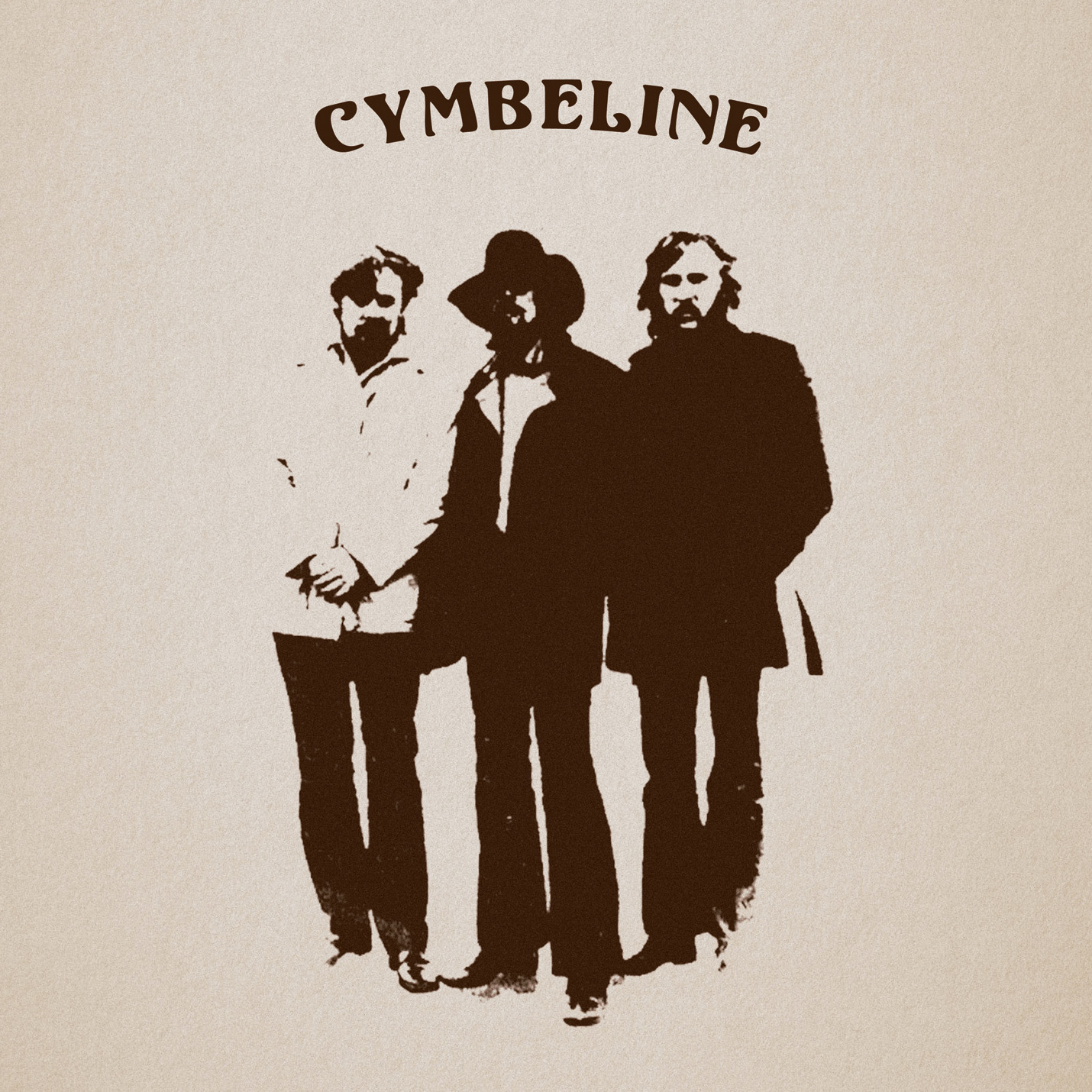
LLOYD COLE AND THE COMMOTIONS-PURVEYORS OF PERFECT AND CEREBRAL POP.
Lloyd Cole and The Commotions-Purveyors Of Perfect and Cerebral Pop.
With Lloyd Cole about to hit these shores on the latest leg of his 2016 tour, this seems a perfect time to look back at the band he made his name with, Lloyd Cole and The Commotions. They were one of the finest purveyors of perfect pop during the eighties. Lloyd Cole and The Commotions released a trio of albums during a six year period, and became one of the most successful Scottish bands of the eighties. The Lloyd Cole and The Commotions story began in 1982, in Glasgow’s musical capita,l Glashow.
In 1982, Derby born Lloyd Cole was studying at the University of Glasgow. Twenty-one year old Lloyd Cole had moved to Glasgow to study philosophy and English. Previously, Lloyd had studied a year of law at University College London. Law wasn’t for Lloyd Cole, so he decided to head to Glasgow to restart his educational career. That’s where Lloyd Cole met The Commotions.
By 1982, Glasgow was like a second home to Lloyd Cole. He had embraced the city’s vibrant musical scene. However, in 1982, he decided to make the move from onlooker to participant. So, Lloyd decided to form his own band. That band became Lloyd Cole and The Commotions.
Having made the decision to form his own band, gradually, Lloyd Cole and The Commotions’ lineup took shape. Lloyd who would sing lead vocals and play guitar, brought onboard four musicians. They became his Commotions. This included the rhythm section of drummer Stephen Irvine, bassist Lawrence Donegan and guitarist Neil Clark. They were joined by keyboardist Blair Cowan. At last the lineup of Lloyd Cole and The Commotions was compete.
With the lineup complete, Lloyd Cole and The Commotions embarked upon their musical journey. This began when Lloyd Cole and The Commotions signed to Polydor Records, and began work on their debut single.
The Lloyd Cole and The Commotions’ story started in earnest when the band released their debut single Perfect Skin in the spring of 1984. The single sold well, reaching number twenty-six in the UK charts. The follow up, Forest Fire, didn’t fare so well, only reaching a disappointing forty-one in the UK charts. That was only a minor blip. When Lloyd Cole and The Commotions released their debut album Rattlesnakes later in 1984, it was a huge success.
Rattlesnakes.
When Rattlesnakes was released later on 12th October 1984, it was to widespread critical acclaim and commercial success. Rattlesnakes reached number thirteen in the UK album charts, selling in over one-hundred thousand copies. For Lloyd Cole and The Commotions, this meant the first gold disc of their career. No wonder. Lloyd Cole and The Commotions were unique and caught the attention of critics and cerebral record buyers.
Critics and discerning music lovers were quick to release that Lloyd Cole and The Commotions were very different from most bands. Similarly, the songs on Rattlesnakes were unlike much of the music released in 1984. Lloyd Cole’s lyrics were influenced by Bob Dylan and his studies of English and philosophy. So it was no surprise that Lloyd Cole and The Commotions’ songs referenced
Renata Adler, Simone de Beauvoir and Norman Mailer in their lyrics. This was articulate, catchy and cerebral pop. Not only did it win over critics and cultural commentators, but provided the soundtrack to thousands of student bedsits.
A generation of students eavesdropped on Lloyd’s anguished, quirky and cinematic lyrics. He brought songs like Perfect Skin, Rattlesnakes, Forest Fire, 2cv, Patience and Are You Ready To Be Heartbroken to life. With vocals that were a mixture of anguish, emotion and passion, Lloyd Cole lived the songs on Rattlesnakes. Behind him, The Commotions’ trademark jangling, perfect pop caught the imagination of generation of music lovers. Lloyd Cole and The Commotions’ star was in the ascendancy.
After the commercial success and critical acclaim of Rattlesnakes, Lloyd Cole and The Commotions headed out on tour. Basking in the success of Rattlesnakes, Lloyd Cole and The Commotions played to sold out audiences. They were flavour of the month with critics and cultural commentators. Lloyd Cole and The Commotions had a reputation for producing music for the “thinking” music lover. It was the polar opposite of vacuous new romantic movement. At least, here was a group of substance, capable of making compelling cinematic songs. This would be the case with their sophomore album Easy Pieces.
Easy Pieces.
When Lloyd Cole and The Commotions began work on Easy Pieces, they wanted the album to be much more “accessible.” Rattlesnakes had passed many people by. It was, onlookers, remarked too cerebral. Lloyd also wanted Easy Pieces’ “sound to be warmer, more luscious.” With this in mind, Lloyd Cole and The Commotions began work on Easy Pieces.
Just like Rattlesnakes, Lloyd penned five of Easy Pieces ten tracks. He cowrote the other tracks with other members of The Commotions. The title had been inspired by the film Five Easy Pieces. Lloyd later said that five of the tracks were inspired by Five Easy Pieces. When the songs were completed, Lloyd Cole and The Commotions eschewed Glasgow for London.
Westside Studios, Shepherds Bush, London were where Easy Pieces was recorded. This wasn’t exactly the most glamorous setting to record an album. However, that was the studio that was chosen. When the sessions began, gone was the laid-back sessions of Rattlesnakes. The pressure was on Lloyd Cole and The Commotions to replicate the success of Rattlesnakes. Polydor didn’t exactly help things when they dismissed producer Paul Hardiman. He hadn’t been given a chance. Maybe Polydor were just waiting to parachute their producer of choice in?
Replacing Paul Hardiman was the production team of Clive Langer and Alan Winstanley. Considering the sound and success of Rattlesnakes this was a risky move. If Polydor had just been patient, Paul Hardiman would’ve got the sessions back on track. However, that wasn’t to be. Now Lloyd Cole and The Commotions were working with a producer they hadn’t chosen. Especially as the new production team had their own sound; and weren’t shy about voicing their opinions and suggestions. The new production team even tried to tell Lloyd how to sing. This had the effect of making Lloyd self-conscious when he sang. So much for producers putting bands at ease. However, stuck with a production team they hadn’t chosen, Lloyd Cole and The Commotions had to make the best of what was a bad situation. Eventually, Easy Pieces was completed and ready for release. However, the band weren’t happy.
For Lloyd Cole and The Commotions the Easy Pieces wasn’t a satisfactory experience. They felt they were forced to record Easy Pieces too soon. Lloyd also felt two songs on Easy Pieces shouldn’t have made the cut. He felt neither Grace nor Minor Character were good enough to make the album. The production team should’ve spotted this. However, they had been hired by the record company, with the job of getting the album finished and ready for release. Time was of the essence. Maybe this meant that there wasn’t time to write and record two more tracks? However, if this was the case, it could come back to bite them. The critics would spot two weak tracks.
Whilst Rattlesnakes was released to critical acclaim, Easy Pieces wasn’t as well received. The reviews were mixed. Critics felt some of the lyrics fell short of the quality of those on Rattlesnakes. The production didn’t impress some critics. They felt Easy Pieces was over produced. Another criticism was that there was no space for the music to breath. The major criticism was that the new production team took Lloyd Cole and The Commotions in the wrong direction. Easy Pieces was, some critics felt, a lengthy detour into country pop. That wasn’t what made Lloyd Cole and The Commotions such a special and unique band. With this criticism ringing in their ears, Lloyd Cole and The Commotions awaited the release of Easy Pieces with baited breath.
On 22nd November 1985, Easy Pieces was released, and reached number five in Britain. While Easy Pieces had a better chart position that Rattlesnakes, it sold less copies. There was no gold disc this time around. At least the singles faired reasonably well.
Three singles were released from Easy Pieces. Brand New Friend reached number nineteen in Britain. Then Lost Weekend surpassed Brand New Friend, reaching number seventeen in Britain. The only disappointment was Cut Me Down, which stalled at number thirty-eight in Britain. For Lloyd Cole and The Commotions this was a disappointment. That was the case with Easy Pieces.
Easy Pieces wasn’t the album they wanted to make. If they hadn’t been rushed into the studio to record Easy Pieces maybe, just maybe, Lloyd Cole and The Commotions would’ve been able to record an album that they would’ve been proud of. Lloyd Cole certainly wasn’t. He disowned some of the songs on Easy Pieces. That was the fault of Lloyd Cole and The Commotions. The blame lay at the door of Polydor, who had sacked Paul Hardiman and parachuted a production team who tried to transform Lloyd Cole and The Commotions into something they weren’t. Next time round would get it right…eventually. And there would be no sign of Clive Langer and Alan Winstanley.
Mainstream.
Work began on Lloyd Cole and The Commotions’ third album not long after the release of Easy Pieces. This time, Lloyd wrote eight of the ten tracks, and cowrote the other two. That was the easy bit. The hard bit was recording Mainstream.
Recording of Mainstream took the best part of two years. Lloyd Cole and The Commotions’ first choice for producer was Chris Thomas. The sessions began, but after a while the band realised that things weren’t working out. Remembering what happened with Easy Pieces, Lloyd Cole and The Commotions decided to bring onboard a new producer.
The replacement for Chris Thomas, was Stewart Copeland, the former Police drummer. Things started out well, when Hey Rusty was recorded. That however, was as good as it got. It was downhill after that. Lloyd Cole and The Commotions knew that they needed to replace Stewart Copeland.
Lloyd Cole and The Commotions wanted to make amends for Easy Pieces. They felt they had failed to make the pop album they set out to make. That wasn’t the case. Easy Pieces to the band sounded rushed and not the album they wanted to make. There was no way they were going to let history repeat itself. So out went Stewart Copeland and in came Ian Stanley. Maybe, it was a case of third time lucky?
With Ian Stanley onboard, Mainstream began to take shape. Eventually, nearly two years since recording of Mainstream began, the album was completed. Lloyd Cole and The Commotions spent five months in the studio with Ian Stanley. This came at a cost. Not only did Mainstream cost £300,000, ten times that Rattlesnakes cost, but cost the band their keyboard player.
By the time Mainstream was released on 26th October 1987, keyboardist Blair Cowan had left Lloyd Cole and The Commotions. The cracks were beginning to show. That’s not surprising given the difficulties surrounding the recording of Easy Pieces and Mainstream. However, hopefully, the time and money spent on Mainstream would be worthwhile.
Critics felt that wasn’t the case. Reviews of Mainstream were mixed. Some critics loved Mainstream, calling it intelligent pop music and the band’s most accomplished album. This wasn’t surprising, given the quality of songs like From The Hip, My Bag, Jennifer She Said and Mr. Malcontent. Other critics however, felt that Lloyd Cole and The Commotions hadn’t fulfilled their potential on Mainstream. The casting vote went to the record buying public.
On the release of Mainstream, it reached number nine in Britain. In America, Mainstream didn’t sell as well as Rattlesnakes and Easy Pieces. Both albums had sold over 100,000 copies. Not Mainstream. American critics weren’t as impressed with Mainstream. For Lloyd Cole and The Commotions, this was disappointing. However, some solace was the success of the singles.
Again, three singles were released from Mainstream. My Bag reached a lowly forty-six in Britain. In America, My Bag reached number thirteen in the Billboard Modern Rock chart and number forty-eight in the Billboard Dance chart. Jennifer She Said the reached number thirty-one in Britain. The final single from Mainstrea, was From The Hip. It reached a disappointing number fifty-nine in Britain. Little did anyone realise that From The Hip would be Lloyd Cole and The Commotions’ final single, from their final album.
1948-1989.
Already the cracks were showing when keyboardist Blair Cowan left. Nearly two years later, Lloyd Cole and The Commotions and were no more. They split-up in 1989. The last album Lloyd Cole and The Commotions released was a greatest hits album, entitled 1948-1989. Lloyd Cole and The Commotions had been together for seven years and enjoyed a recording career that lasted six years.
It’s twenty-six years since the four remaining members of Lloyd Cole and The Commotions went their separate ways. Looking back, Lloyd Cole and The Commotions’ debut album, Rattlesnakes, was the finest album of their career. They set the bar high, and never came close to surpassing the quality of Rattlesnakes.
Good as Easy Pieces and Mainstream are, neither are regarded as one of classic Scottish albums. Rattlesnakes was recorded when Lloyd Cole and The Commotions were unknown, and only cost £30,000. It’s not known how much Easy Pieces cost. However, Mainstream cost £300,000 and doesn’t come close to Rattlesnakes. Much of the reaspn for this, is the various problems with producers.
This problem began when Polydor sent Lloyd Cole and The Commotions into the studio too quickly. They then compounded this by sacking Paul Hardiman. If Paul had been given more time, he could’ve turned the situation around. Instead, Polydor brought in their own producers, Clive Langer and Alan Winstanley. For Lloyd Cole and The Commotions, working with a producer they hadn’t chosen wasn’t going to work. They took Lloyd Cole and The Commotions’ music in the wrong direction. As a result, Easy Pieces was nothing like the album Lloyd Cole and The Commotions had wanted to release. With these producer problems in mind, Lloyd Cole and The Commotions had to act decisively when recording Mainstream.
Having initially hired Chris Thomas, when this working relationship didn’t work out, he was replaced by Stewart Copeland. After only one song, Lloyd Cole and The Commotions realised that Stewart Copeland was the wrong producer. It was only when Ian Stanley came onboard that Mainstream was completed. However, by then, Lloyd Cole and The Commotions had lost sight of the album they wanted to make. Just like Easy Pieces, Mainstream wasn’t the album Lloyd Cole and The Commotions set out to make.
It seemed that after the potential Lloyd Cole and The Commotions showed on Rattlesnakes, they never truly fulfilled it on neither Easy Pieces nor Mainstream. Lloyd Cole and The Commotions had the potential to be one of the biggest and best groups of the eighties and beyond. However, looking back, some critics feel that Lloyd Cole and The Commotions never quite fulfilled their potential. Maybe that’s being hard on Lloyd Cole and The Commotions?
Instead, Lloyd Cole and The Commotions are another group whose debut album was a pop classic. Surpassing it was never going to be easy. Lloyd Cole and The Commotions set the bar high, and were forever chasing pop perfection. They came close on many occasions, That’s apparent on the three studio albums Lloyd Cole and The Commotions released. They’re a reminder of one of the greatest Scottish bands of their generation, Lloyd Cole and The Commotions and their all too brief recording career.
Lloyd Cole and The Commotions-Purveyors Of Perfect and Cerebral Pop.

SAM DEES-“A PROLIFIC SONGWRITER AND OCCASIONAL PERFORMER.”
Sam Dees-“A Prolific Songwriter and Occasional Performer.”
For many artists their career is a case of what might have been, and sadly, that has been the case with Sam Dees. He had the talent and potential to become one of the biggest names in soul music. Sadly, Sam Dees didn’t enjoy the commercial success and critical acclaim that his music deserved. Instead, his music is only enjoyed by a discerning circle of music lovers who cherish each of the three albums Sam Dees has released. That’s why Sam Dees is described as: “a prolific songwriter and occasional performer.”
That is certainly true. While Sam Dee has written nearly four-hundred songs, he’s only released three albums during a fifty year recording career. Sam Dees’ debut album was The Show Must Go On which was released in 1975. After a gap of fourteen years, Sam Dees returned in 1989 with Secret Admirer which was released on his own label, Pen Pad Records. Another nine years passed, before Sam Dees released 1998s Lovers Do. Since then, nothing has been heard of Sam Dees.
As a result, it looks as if Sam Dees will never fulfil his huge potential as a singer, and his it’s a case of what might have been for the Southern Soul man. Things looked very different when Sam Dees was growing up.
Sam Dees was born in Birmingham, Alabama, in December 1945. He was born into a large family, but stood out from his siblings. The reason for that was his voice.
From an early age, it was obvious that Sam Dees was a talented singer. When he was just nine, Sam Dees was already a veteran of talent contests. Having won numerous talent shows, so decided to form his own group The Bossanovians. By the time Sam Dees was ten, it became apparent he had a way with words.
Unlike most ten-year olds, Sam Des was writing poetry and songs. Looking back, Sam Dees was something of a musical prodigy, and it’s no surprise that he would make a career as a songwriter. Before that, he had dreams of becoming a singer.
Although Sam was a still teenager, he was already travelling from his Birmingham home to perform. This was the equivalent of Sam Dees serving his musical apprenticeship. Then in 1968, Sam Dees caught a break when got the chance to record his debut single.
Given Sam Dees was an aspiring soul singer, it sees strange that he made his recording debut in Nashville, and I Need You Girl was released on SSS International. Sadly, it wasn’t a commercial success. Neither were Easier To Say Than Do nor It’s All Right (It’s All Right), which Sam Dees released on Lo Lo Records in 1969. Then as a new decade dawned, Sam Dees’ luck changed.
Since 1968, Clarence Carter had been signed to Atlantic Records, and had released a trio of albums, to varying degrees of success. His fourth album, Patches, was released in 1970. and was produced by Rick Hall, and featured some of Memphis’ top musicians and backing vocalists, including Chalmers, Rhodes, Chalmers. Patches also featured songs from some top songwriters. This included Sam Dees.
He wrote Changes, a heartbreakingly beautiful slice of Southern Soul. For Sam Dees, an up-and-coming singer and songwriter, writing a song for Clarence Carter was something of a coup. Sam Dees was, after all, signed to Atlantic Records, one of the biggest soul labels. Little did realise that in a few years, he would be signed to Atlantic Records. Before that, Sam Dees signed to another famous label, Chess Records.
1971 proved to be an important year for Sam Dees. He signed to Chess Records, and released two singles, including the Larry Weiss penned Maryanna and Can You Be A One Man Woman. Despite the quality of music, Sam Dees wasn’t making that important commercial breakthrough. However, at least other artists were covering his songs.
Rozetta Johnson covered A Woman’s Way, which was the B-Side to her single Mine Was Real. Sam wrote both songs with his wife Lillian Dees. He co-produced the songs with Clinton Moon. Released on Clintone Records, it reached number ninety-four in the US Billboard 100 and thirty-nine in the US R&B Charts. This was the first hit single Sam Dees had written. Despite this, Sam Dees saw himself as a singer first, and then a songwriter.
Having written and produced his first hit single,Sam Dees hadn’t given up hope of forging a successful career as a songwriter. After leaving Chess, he signed to Clintone Records as a solo artist in 1972.
By then, Sam Dees was no stranger to Clintone Records. Using the alias Black Haze Express, he had released Won’t Nobody Listen as a single in 1971. A year later, Sam Dees’ solo career began at Clintone Records.
Just like his time at SSS International, Lo Lo Records and Chess Records, Sam Dees wasn’t exactly prolific at Clintone Records. Far from it. He only released one single on Clintone Records, Claim Jumping Man, which was released in 1972. Sadly, Claim Jumping Man didn’t replicate the commercial success of Rozetta Johnson’s Mine Was Real. However, despite this, Sam Dees’ career was on the up.
After his brief spell at Clintone Records, Sam Dees signed to Atlantic Records later in 1973. Sam Dees released just two singles for Atlantic Records, So Tied Up and I’m So Very Glad. Despite their undoubted quality, they weren’t the commercial success they deserved to be. At least a song Sam cowrote proved much more successful.
Stop This Merry-Go-Round was a song Sam, Albert Gardner and Clinton Moon had written. Originally, Bill Brandon took the song to number thirty-three in the US R&B Charts. Now, John Edwards a future Detroit Spinner would record the track. His Johnny Taylor styled cover was released on Aware in 1973, reaching number forty-five in the US R&B Charts. Again, Sam Dees was enjoying more success writing songs than singing them. Despite this, he wasn’t for turning his back on his solo career,
Sam Dees returned to his solo career in 1974, and released two singles, Worn Out Broken Heart and Come Back Strong. Neither were a commercial success, but Come Back Strong proved to be prophetic.
With the last couple of years proving unsuccessful for Sam Dees, 1975 was a big year for him. Sam Dees was about to release his debut album The Show Must Go On. It featured ten tracks. Four were penned by Sam, including The Show Must Go On, Come Back Strong, What’s It Gonna Be and Good Guys. Sam cowrote Claim Jumpin’ and So Tied Up with William Brandon. He also cowrote Just Out Of Reach with James Lewis and Worn Out Broken Heart with Sandra Drayton. Child Of The Streets was a collaboration between Sam and David Camon. The pair cowrote Troubled Child with Al Gardner. These ten tracks became The Show Must Go On, and were recorded at two studios in Birmingham, Alabama.
To record his debut album The Show Must Go On, Sam headed home to Birmingham, Alabama. He recorded The Show Must Go On at two studios, New London Studios and Sound Of Birmingham. For the recording sessions, Sam drafted in a small, tight band. The rhythm section featured drummer Sherman “Fats” Carson. bassist David Camon and guitarist Glen Woods. Arrangers included Randy Richards, Ronnie Harris, Skip Lane and Sam. Aaron Varnell arranged the horns on Claim Jumpin.’ Sam played piano and produced The Show Must Go On, which was released in 1975.
Sadly, when The Show Must Go On was released, musical tastes had changed. Disco was now King. Soul albums weren’t selling well. The Show Must Go On wasn’t a commercial success. Neither were the singles The Show Must Go On, nor Fragile, Handle With Care. For Sam Dees, this must have been a huge disappointment. Here he was signed to one of soul’s most prestigious labels, but at the wrong time. Belatedly, however, The Show Must Go On has come to be regarded as a Southern Soul classic. That was all in the future, and it wasn’t until 1989 that Sam Dees returned.
After a gap of fourteen years, Sam Dees returned in 1989 with Secret Admirer which was released on his own label, Pen Pad Records. Still commercial success eluded Sam Dees.
Another nine years passed, before Sam Dees returned and released Lovers Do in 1998. Since then, nothing has been heard of Sam Dees. As a result, it looks as if Sam Dees will the commercial success and critical acclaim he deserved.
This was nothing to do with a lack of talent. Far from it. Sam Dees is, without doubt, one of the most talented soul singers of his generation. Especially when it came to ballads. Sam Dees breathes life, meaning and emotion into ballads. Other times the betrayal, hurt and loneliness come to life. Sam Dees sings the lyrics as if he’s lived, loved and survived the lyrics. Other times, he sounds as if he’s experienced the hope and joy that love brings. However, other times, it looked like Sam Dees was going to be seventies soul social conscience. Sadly, commercial success and critical acclaim eluded him. That’s why nowadays, Sam Dees is better known as a songwriter.
Realising he was never going to become one of soul’s superstars, Sam Dees decided to concentrate on writing songs. He has enjoyed a long and successful career, writing songs for the great and good of soul music. Nowadays, Sam Dees is described as: “a prolific songwriter and occasional performer, ” but a better of description is the man who could’ve and should’ve been King of seventies soul.
Sam Dees-“A Prolific Songwriter and Occasional Performer.”





THE LIFE AND TIMES OF PAUL BRADY.
The Life and Times Of Paul Brady.
When Irish singer-songwriter Paul Brady celebrates his seventy-second birthday on the ‘19th’ of May 2019, one of the elder statesmen of Irish music will have spent fifty-four years as a professional musician, first with The Kull, then The Johnstons and Planxty. Then in 1976, Paul Brady and Andy Irvine formed a duet and released one influential album Andy Irvine/Paul Brady. Two years later, the pair went their separate ways, in 1978, and Paul Brady decided to embark upon a solo career.
Later in 1978, Paul Brady released his debut solo album Welcome Here Kind Stranger. It was his final foray into the world of folk music. When Paul Brady returned in 1981 with Hard Station, his music had moved towards a much more mainstream rock sound. That has been the case ever since.
Since the release of Hard Station, Paul Brady has released nine further studio albums, including his eleventh album Unfinished Business which was released earlier in 2017. It marked the welcome return of one of Ireland’s finest musical exports, who has spent a lifetime making music.
The Early Years.
The Paul Brady story began in Belfast, the capital of Northern Ireland on the ‘19th’ of May 1947. That was where Paul Joseph Brady was born. However, he grew up in Strabane, County Tyrone, where his father Seán Brady was a music teacher who taught the flute. By the age of six, Paul Brady was following in his father’s footsteps.
Paul Brady who was by then, a pupil at Sion Mills Primary School, started to take piano lessons. This would stand him in good stead for the future.
By the age of eleven, Paul Brady began to play the guitar and spent every spare minute of the school holidays practising and learning every song that The Shadows and The Ventures had committed to vinyl. This he eventually managed to do. Despite this, one of Paul Brady’s biggest influences was Chuck Berry. Already, music was dominating Paul Brady’s life
Not longer after starting to play the guitar, Paul Brady enrolled at St Columb’s College in Londonderry. This was where he spent the five years. However, by the time he was sixteen, Paul Brady had already dipped his toe into the musical waters.
In 1963, Paul Brady managed began playing the piano in a hotel in Bundoran, Donegal. For Paul Brady this was good experience and gave him a taste of life as a professional musician. He would taste that in the not too distant future. Before that, he was heading to University College Dublin.
The Dublin Years.
Despite enrolling at Dublin’s most prestigious university, Paul Brady was soon a familiar face on the city’s music scene. He joined the first of a string of Dublin-based R&B bands.
Paul Brady made his debut with The Inmates towards the end of 1964. However, The Inmates was a short-lived band and in April 1965, they split-up and became The Kult. They were together late-1965 when Paul Brady joined The Rootzgroup, who lasted until May 1996. While none of the bands enjoyed any sort of longevity, it was good experience for Paul Brady.
After leaving The Rootzgroup, Paul Brady joined one more band, Rockhouse. He joined the band in May 1966 and spent the best part of seven months playing with Rockhouse. Paul Brady parted company with Rockhouse in December 1966. This brought to an a two-year spell was invaluable, for Paul Brady. It was the equivalent to a musical apprenticeship, who was about to climb the musical ladder.
While Paul Brady had been at University College Dublin, there had been a resurgence of interest in traditional Irish music. As a result, many bands were formed and were cashing in on the sudden interest in traditional Irish music. One of the most successful of these bands were The Johnstons.
The Johnstons.
When Michael Johnston left The Johnstons. in May 1967, they approached Paul Brady about replacing him. He agreed and two years later, The Johnstons like many Irish bands made the journey across the water to London in 1969. Then three years later, in 1972, The Johnstons decided to move across the Atlantic and settle in New York where they hoped to expand their audience. While they enjoyed a degree of success, The Johnstons didn’t enjoy the commercial success that they had hoped. By 1974, Paul Brady was back in Ireland and was ready to join a another band.
Planxty.
This was the Irish folk band Planxty, which Paul Brady joined in September 1974. Planxty wasn’t a new band, and had been around since January 1972. Its initial lineup featured Andy Irvine, Christy Moore, Liam O’Flynn and Dónal Lunny. Since then, Planxty had released three albums and seemed to be touring constantly. By the time Paul Brady joined, Planxty were popular in Ireland, Britain, France, Germany, Italy, Spain and Northern Europe. The only problem was the lineup was somewhat “fluid.”
Dónal Lunny had left Planxty a year earlier, in September 1973. He was tired of the constant touring. Despite this, he returned to play on Planxty’s third album Cold Blow and The Rainy Night in August 1974, which also featured temporary member Johnny Moynihan. By August 1974, the rest of Planxty knew that Christy Moore was leaving the band, to resume his solo career. Paul Brady joined in September 1974, and Christy Moore left a month later in October 1975.
Paul Brady spent much of the next fourteen months touring with Planxty, whose popularity continued to grow. However, in December 1975, Planxty split-up for the first time, and Paul Brady embarked upon a new chapter in his career.
Paul Brady and Andy Irvine.
With Planxty seemingly consigned to Ireland’s musical past, Paul Brady decided to form a folk duo with former bandmate Andy Irvine in 1976. The pair continued to sing the same Irish folk music that had proved so popular when they were members of Planxty. This looked like a winning formula for duo.
By December 1976, Paul Brady and Andy Irvine were ready to release their debut album. Paul Brady/Andy Irvine was released to critical acclaim in December 1976 and saw the duo work their way through ten traditional Irish folk songs. While the album proved popular, it was the only album they released.
Paul Brady and Andy Irvine continued to tour until 1978, when they decided to go their separate ways. They had been together for the best part of three years, and their partnership was popular. Now though, Paul Brady was ready to embark upon a solo career.
The Solo Years.
Welcome Here Kind Stranger.
Later in 1978, Paul Brady returned with his debut solo album Welcome Here Kind Stranger. This was another album of traditional folk music, and featured the ballad The Lakes of Pontchartrain. It was one of Paul Brady’s finest moments on Welcome Here Kind Stranger, which was released to critical acclaim. In late 1978, Melody Maker magazine named Welcome Here Kind Stranger their Folk Album of the Year. This was fitting as Welcome Here Kind Stranger was the final folk album Paul Brady would release.

Hard Station.
Three years later, in 1981, and Paul Brady returned with his sophomore album Hard Station. By then, he was signed to Polygram Records and his music had moved towards mainstream rock. Gone also were cover versions.
By 1981, Paul Brady had also developed into a talented songwriter, and had written the eight songs that became Hard Station. This included future favourites like Crazy Dreams, The Road To The Promised Land, Hard Story and Nothing But The Same Old Story. They were part of a strong, cohesive album where one quality song followed hard on the heels of another on Hard Station, which was co-produced by Paul Brady and Hugh Murphy,
When critics heard Hard Station, they were won over by what was essentially Paul Brady’s mainstream rock debut, which received praise and plaudits. The future looked bright for Paul Brady.
True For You.
The Irish troubadour returned in 1983 with his third album True For You, which was produced by Paul Brady and Grammy Award winning sound engineer Neil Dorfsman. They produced an album that featured eight songs penned by Paul Brady, including the ballad Helpless Heart and Take Me Away, plus Steel Claw which was later covered by Tina Turner on her 1984 album Private Dancer. That was still to
True For You was well received by critics, but sonically was quite different album. Partly, this was because of the reliance on synths and eighties electronic drums. However, Paul Brady continued to mature as a songwriter on an album that was a mixture of rock and AOR.
Back To The Centre.
Paul Brady returned in 1985 with his fourth album Back To The Centre. It was produced by Ian Maidman and featured some familiar faces, including Eric Clapton, Loudon Wainwright and Larry Mullen of U2. They accompanied Paul Brady who had written eight new songs and covered The Homes Of Donegal on Back To The Centre.
The Paul Brady compositions saw the Irish troubadour continue his journey towards a more mainstream rock sound. That was apart from The Homes Of Donegal where Paul Brady enjoyed a brief dalliance with folk. The result was another accomplished album which found favour with critics. Especially songs like Walk The White Line, Deep In Your Heart, Soulbeat and The Island which were among the highlights of Back To The Centre. Despite the quality of Back To The Centre and his previous solo albums, Paul Brady was still one of music’s best kept secrets. That was until November 1985, when one of music’s biggest gave Paul Brady a helping hand.
In November 1985, Bob Dylan released his box set Biograph, and in the liner notes mentioned his admiration for Paul Brady’s music. This resulted in some of Bob Dylan’s fans investigating Paul Brady’s back-catalogue and his fan-base increasing.
Full Moon.
The following year, 1986, Paul Brady released his first live album Full Moon. It was recorded live at The Half Moon, Putney, in London, on Friday the ‘6th’ April 1984 and found Paul Brady work his way through some of his best tracks. He opened his set with Hard Station, which had already been acknowledged as one of his finest songs. This he followed with favourites like Not The Only One, Busted Loose, Crazy Dreams and the Steel Claw which closed Full Moon. For those who hadn’t seen Paul Brady live, Full Moon featured eight reasons why they should.
Primitive Dance.
Paul Brady returned with his fifth studio album Primitive Dance, in 1987. Again, it was produced by Ian Maidman and found Paul Brady maturing as a singer and songwriter.
Primitive Dance featured nine new songs penned by Paul Brady and was, without doubt, one of the strongest albums of Paul Brady’s career. It featured a mixture of soul-baring ballads like Steal Your Heart Away, Paradise Is Here, Just in Case of Accidents and The Game of Love, and uptempo tracks that included The Soul Commotion and It’s Gonna Work Out Fine. With its mixture of AOR, rock and folk, Primitive Dance was an almost flawless album with one quality song gave way to the next. Critics hailed Primitive Dance as one of Paul Brady’s finest albums.

Trick Or Treat.
Surpassing the quality of Primitive Dance wasn’t going to be easy, but when Paul Brady returned in 1991 with Trick Or Treat, it was another carefully crafted and critically acclaimed album. Paul Brady had continued to mature as songwriter and had penned a collection of ten tracks that oozed quality.
These he brought to life when he entered the studio with Gary Katz, who had worked with The Mamas and the Papas, Steppenwolf, Three Dog Night, Jim Croce and Steely Dan. With such an impressive CV, Gary Katz was seen as the producer who could help Paul Brady make a commercial breakthrough. Everything was in place. Paul Brady had the talent, and had written ten new songs, that once again, oozed quality. Joining Paul Brady was a tight talented band and Bonnie Raitt who duets on the title-track Trick Or Treat. Surely, this was the album that introduced Paul Brady to a wider audience?
Trick Or Treat was one of the strongest and most accomplished albums of Paul Brady’s career. From the opening bars of Soul Child, through Blue World, Nobody Knows, You and I, Trick Or Treat to Don’t Keep Pretending, Solid Love and the album closer Dreams Will Come Paul Brady with the help of Gary Katz reached new heights as he combined AOR, folk and rock.
Some critics called Trick Or Treat a career defining album, while others thought Primitive Dance was still his finest hour. However, Trick Or Treat was released to critical acclaim in 1991, and became Paul Brady’s most successful album. While Trick Or Treat sold well, it wasn’t a huge selling album. However, it was a case of building on Trick Or Treat.
Spirits Colliding.
Despite having just enjoyed the most successful album of his career, Paul Brady seemed in no hurry to release the followup to Trick Or Treat. Eventually, four years later in 1995 he returned with Spirits Colliding. By then, Paul Brady had left Fontana and was now signed to Nashville based Compass Records. This was the start of a new chapter for him.
Spirits Colliding featured eleven new songs, including I Want You To Want Me, World Is What You Make It, Help Me To Believe, You’re the One and Beautiful World. They were among the highlights of Spirits Colliding which was produced by Paul Brady and Arty McGlynn. When the album was released in 1995, it was well received by critics. However, Paul Brady was no nearer to joining music’s top division. He was still to some extent, one of music’s best kept secrets.
Oh What A World.
It was another five years before Paul Brady returned with his eight album Oh What A World in 2000. It featured eleven songs, including two songs penned by Paul Brady. He wrote the other nine songs with a variety of different songwriting partners. This included Carole King who cowrote Believe In Me. These songs were produced by Paul Brady and Alastair McMillan and became Oh What A World.
When Oh What A World was released in 2000, Paul Brady’s eighth studio album was well received by critics. They were won over by songs of the quality of Sea Of Love, Love Hurts and Believe In Me. Oh What A World was a powerful and poignant album from one of Ireland’s leading troubadours. While his music was popular in Britain, America and Europe, it looked like Paul Brady was never going to reach the height of his fellow countryman Van Morrison.
Say What You Feel.
In February 2005, Paul Brady returned with his first album in nearly five years. Gone were the days when Paul Brady released an album every other year. Now albums were released every four or five years.
There was a reason for this. Many artists had discovered that albums were no longer selling in the same quantities that they once had. That had been the case for a number of years, and gone were the days when albums were seen as cash cows. Now artists were looking for alternative revenue streams, and many were selling their albums through their own websites and after gigs. Still, though, Paul Brady continued to record and release albums, including Say What You Feel in 2005.
Say What You Feel featured twelve new songs that showcased Paul Brady’s skills as singer and songwriter. Among the albums highlights were Try To Please Me, I Only Want You, Say What You Feel and the poignant The Man I Used To Be. It closed Say What You Feel, which was well received by critics. It marked the welcome return of Paul Brady.
Hooba Dooba.
Just over five years later, Paul Brady returned in March 2010 with his long-awaited tenth album, Hooba Dooba. It was the first album that Paul Brady had released since he signed to Proper Records.
Just like Say What You Feel, Hooba Dooba was another accomplished album, and found Paul Brady switching between and combining rock, folk and country on Hooba Dooba. It featured twelve new tracks, including Cry It Out, Luck Of The Draw, Money To Burn and Over The Border. They were recorded at Kinine, Sandyford, Dublin, and were a reminder of one of Irish music’s best kept secrets.
Paul Brady had matured as a singer and songwriter since he released his debut album Welcome Here Kind Stranger thirty-two years earlier in 1978. Since then, much had changed, including music and the music industry. What hadn’t changed was critics appreciation of Paul Brady’s music as he celebrated the release of his tenth album, Hooba Dooba. It was by some critics hailed as one of Paul Brady’s best albums. However, the question on many lips was when would Paul Brady return with a new album?
Unfinished Business.
Seven-and-a-half years later and Paul Brady, who had recently turned seventy, returned with his eleventh album Unfinished Business. This was a fitting title, as Paul Brady more than most singer-songwriters has Unfinished Business to attend to.
Ever since he changed direction musically and released Hard Station in 1981, many critics and music fans felt it was only a matter of time before Paul Brady made a breakthrough. Comparisons were drawn to Chris Rea, whose music slipped under the radar until he eventually made a breakthrough. Sadly, Paul Brady never made a breakthrough. The nearest he came was with Trick Or Treat in 1991. Even then, the album never sold in vast quantities. For Paul Brady, it was a case of what might have been?
With Unfinished Business on his mind, Paul Brady decided the time was right to return with a new album. He had written nine new songs with a variety of songwriting partners over the last few years. This Paul Brady augmented them covers of two traditional songs The Cocks Are Crowing and Lord Thomas And Fair Ellender. The majority of these songs were recorded by Paul Brady at Kinine, Sandyford, Dublin.
For the recording of Unfinished Business at Kinine, Sandyford, Dublin, Paul Brady played many of the instruments himself. He played drums, bass, guitars, keyboards, tin whistle and programmed the percussion that features on the album. Occasionally, Paul Brady drafted in musicians when it came to record a song. This included his old friend Andy Irvine who played harmonica and mandolin on a couple of songs. This small, tight and talented band accompanied Paul Brady on his comeback album Unfinished Business.
After seven years away, Irish troubadour Paul Brady made a welcome return with Unfinished Business. It finds Paul Brady combing his classic sound that he honed between 1981 and 1991 with blues, country, folk and pop roc on a mixture of ballads and uptempo tracks. It’s potent and heady brew and sometimes, is a reminder of the ten-year period between Paul Brady releasing Hard Station in 1981 and Trick Or Treat in 1991. That was when Paul Brady released the best music of a career that has spanned seven decades.
Paul Brady has spent a lifetime making music, and is regarded by some as one of best British songwriters of his generation. That is why some of the biggest names have recorded songs penned by Paul Brady. This includes Tina Turner, Bonnie Riatt, Joe Cocker, Eric Clapton, Roger Chapman and Dan Seals. They all recognise Paul Brady’s skills as a songwriter, while luminaries like Bob Dylan hold Paul Brady in the highest esteem. He’s come a long way since he got his first break playing the piano in a hotel in Bundoran, Donegal. Since then, he’s never looked back and has spent the last fifty-four years touring and recording eleven studio albums.
Unlike some of his contemporaries, whose best days are behind them, Paul Brady is still capable of writing poignant, emotive and beautiful ballads. These he brings to life with a voice that sounds as if it’s lived, loved and survived the lyrics. That is no surprise, as balladry is what Paul Brady has always done best since he reinvented himself on Hard Station in 1981. Thirty-six years and ten albums later, and Paul Brady is still one Ireland’s top troubadours.
The Life and Times Of Paul Brady.


THE RISE AND DEMISE OF FREE.
The Rise and Demise Of Free
It’s not often that someone get the opportunity to witness history being made. Those that happened to be in the Nag’s Head pub, in Battersea, London on 19 April 1968 saw history being made. They watched as four young men took to the stage for the first time. What some members of the audience noticed was how young the band were.
Two of the band didn’t look old enough to buy a round in the Nag’s Head. Especially the bassist. Andy Fraser was just fifteen. His partner in the rhythm section, drummer Simon Kirke, was eighteen. Lead guitarist Paul Kossoff was just seventeen, while the vocalist Paul Rodgers was just eighteen. Many of the regulars were veterans gig goers, and weren’t expecting much of the young band. They were in for a pleasant surprise as the young blues rock made their debut. However, nobody present that night what would happen over the next five years.
By November 1968, Alexis Korner had christened the nascent band Free. They would sign to Island Records in 1969, and later that year, recorded their debut album Tons Of Sobs. It would be released in 1970, and the first of six studio albums and one live album Free released between 1969 and 1973. During that period, the band broke up, the lineup changed several times and Free sold twenty-million albums. Sadly, Free split-up in 1973, and that was the end of the road for the hard rock pioneers.
Tons Of Sobs.
Having recently signed to Chris Blackwell’s Island Records, London-based blues rockers Free entered the Morgan Studios, in London with producer Guy Stevens. He had been allocated a budget of just £800 to produce what became Tons Of Sobs. This was going to be a challenge.
Free were one of the youngest bands Guy Stevens had worked with. Despite their youth, Free had spent the last few months playing live. This allowed them to hone their sound and set. That set Free would replicate at Morgan Studio.
Free’s set included a number of tracks by lead vocalist Paul Rodgers. He wrote Over the Green Hills (Pt. 1), Worry, Walk in My Shadow, Sweet Toot and Over The Green Hills. Paul Rodgers also cowrote three other tracks. This included Wild Indian Woman and I’m A Mover with Andy Fraser plus Moonshine with Paul Kossoff. The other two tracks were cover versions. They were St. Louis Jimmy Oden’s Goin’ Down Slow and The Hunter which was penned by the Stax Records’ house band by Booker T. and The MGs. This combination of cover versions and new songs would become Free’s debut album Tons Of Sobs.
With such a limited budget, Guy Stevens decided to take a minimalist approach to recording Tons Of Sobs. This he hoped, would allow him to replicate how Free sounded live. Their sets showcased the blues rock sound that was then popular in late-1968.
When Free arrived in the studio, drummer and percussionist Simon Kirke joined bassist and pianist in the rhythm section. Meanwhile, Paul Kossoff switched between lead and rhythm guitar. Paul Rodgers took charge of the lead vocals. As Free played, they were loud, raw and far from polished. That was no surprise given Free’s youthfulness and inexperience. Given time and a bigger budget, Guy Stevens could’ve overcome this.There was a problem though.
Island Records expected all producers to complete an album on time and within budget. It didn’t matter who the artists was, whether they were making their debut or were veterans. Guy Stevens succeeded, and Tons Of Sobs was completed in December 1968. However, given more time and money, Guy Stevens could’ve produced a much slicker, polished album. In a way, this was just as well, as Tons Of Sobs was representative of Free in the early part of their career.
Just three months after the completion of Tons Of Sobs, Island Records were preparing for the release of Free’s debut album. It was scheduled for release on 14th March 1969. The reviews had been mixed.
In Britain, Tons Of Sobs had been well received by critics. They were won over by Free’s raw and raucous blues rock sound. However, across the Atlantic, Rolling Stone magazine weren’t impressed by Tons Of Sobs. This was no surprise. The magazine seemed to dislike any British blues rock band. Free were just the latest to incur the wrath of Rolling Stone. This was disappointing, as it was an influential publication in America, and could affect sales of Tons Of Sobs.
Ironically, when Tons Of Sobs was released on 14th March 1969, the album fared better in America than Britain. Tons Of Sobs failed to chart in Britain, but crept into the US Billboard 200 at a lowly 197. For Free and Island Records, the commercial failure of Tons Of Sobs must have been a huge disappointment. Despite this, Free continued to record their eponymous sophomore album.
Free.
Work began on Fee in January 1969, and the band spent the next six months recording their eponymous sophomore album. This time, Paul Rodgers cowrote most of Free with Andy Fraser.
Their songwriting partnership began on Tons Of Sobs and began to blossom on Free. They penned eight tracks and cowrote Trouble on Double Time with drummer Simon Kirke. These songs were recorded with a new producer.
This time around, Island Records’ owner Chris Blackwell decided to produce Free. He joined Free at Morgan Studio and Trident Studio, London. Drummer and percussionist Simon Kirke was joined in the rhythm section by bassist Andy Fraser who also played piano and rhythm guitar. Paul Kossoff played lead and rhythm guitar, and Paul Rodgers added the lead vocals. When it came to recording Mourning, Sad Mourning, flautist Chris Wood was drafted in. Gradually, the album began to take shape. Eventually, after six months of recording in two studios, Free was complete.
Four months after the completion of Free, the album was released in October 1969. By then, the album had been well received by most critics. They noticed the Free’s music was evolving from their blues rock roots. There’s a move towards classic rock and hard rock. However, on Lying In The Sunshine and Mourning Sad Morning there’s a folk rock influence. Free’s music was changing, and changing fast. Their sophomore album was a much more polished and mature album.
Partly, this was because of the new role that Andy Fraser’s bass played on Free. It was fulfilling the role of a rhythm guitar, helping to drive the arrangements along, before the lead guitar takes over. However, another of Andy Fraser’s actions didn’t go down well with Paul Kossoff.
He had played all the guitar parts on Tons Of Sobs. On Free, Andy Fraser played some of the rhythm guitar parts. He cowrote each of the nine songs on Free, and decided to teach Paul Kossoff the rhythm guitar parts that he had written for him. This didn’t go down well, and the relationship between the two men. Before they released their sophomore album, all wasn’t well within Free.
When Free was released in October 1969, the album reached twenty-two in the UK. Across the Atlantic, Free failed to trouble the charts. While this was a disappointment, at least Free had made inroads into the British charts. Maybe things would improve when they released their third album Fire and Water?

Fire and Water.
Having released Free in October 1969, Free spent much of the remainder of the year touring. They were spending more and more of their time on the road. Indeed, when Free weren’t in the studio, they were on the road. However, by January 1970 the time came for Free to record their third album Fire and Water.
Just like on Free, the Paul Rodgers and Andy Fraser songwriting partnership cowrote the majority of the album. They five of the seven tracks, including Fire and Water, Remember, Heavy Load, Don’t Say You Love Me and All Right Now. Mr. Big became the first Free song to be written by the four band members. Oh How I Wept was penned by Paul Rodgers and Pau Kossoff. It became part of Free’s third album, Fire and Water.
For Fire and Water, the changes had been rung. There was no sign of producer Chris Blackwell. Instead, Free co-produced Fire and Water with John Kelly and Roy Thomas Baker. This time around, Free went back to basics. Andy Fraser let Paul Kossoff lay down the rhythm guitar parts. It was back to how it had been on Tons Of Sobs.
Recording took place at Trident Studios and Island Studios. Drummer and percussionist Simon Kirke joined bassist and pianist Andy Fraser in the rhythm section. Meanwhile, Paul Kossoff switched between lead and rhythm guitar. Paul Rodgers took charge of the lead vocals on Fire and Water. Recording of the album took six months, and Fire and Water was completed in June 1970.
Fire and Water was released on 26th June 1970. Critical acclaim accompanied an album that was a mixture of blues rock, classic rock and hard rock. This was Free’s most cohesive album. That was the case from the opening bars of Fire and Water to the closing notes of All Right Now. A number of tracks on Fire and Water stood out. This included the rocky album opener Fire And Water and the ballads Oh I Wept, Heavy Load and Don’t Say You Love Me. However, the song that had hit written large all over it, was the album closer All Right Now. That proved to be the case.
When Fire and Water was released on 26th June 1970, the album reached number two in the UK and seventeen on the US Billboard 200. When All Right Now was released as a single, it reached number two in the UK and four on the US Billboard 100. The promoters of one of the major British music festivals were taking note.
After the success of All Right Now, Free were asked to appear at five-day Isle of Wight Festival between Wednesday the 26th of August to Sunday the 30th of August 1970. Given their recent success, Free played on the Sunday.
Free opened their set with Ride On A Pony. It gave way to Mr. Big, Woman, The Stealer and Be My Friend. As 600,000 people watched on expectantly, Free played Fire and Water and then I’m A Mover, a cover of The Hunter and their recent hit single All Right Now. However, closing their set at the 1970 Isle of Wight Festival was a cover of Robert Johnson’s Crossroads. It allowed Free to pay tribute to one of the artists who had inspired them to form a band. This band Free, was on its way to becoming one of the biggest in the world.
Highway.
After the Isle of Wight Festival, Free began work on their fourth album Highway. Again, Paul Rodgers and Andy Fraser wrote seven of the nine songs on Highway. They penned The Highway Song, On My Way, Be My Friend, Sunny Day, Ride On A Pony, Brodie and Soon I Will Be Gone. Paul Rodgers and Andy Fraser also cowrote The Stealer with Paul Kossoff, while Paul Rodgers and Simon Kirke wrote Love You So. These songs were recorded at Island Studios, in London.
When work began on Highway, there someone missing, a producer. For the first time, Free were producing an album. They had co-produced Fire and Water. This was the next natural step. However, there was a problem.
All of sudden the spotlight was shawn on Free. They were finding it hard to cope with the newfound success. Especially guitarist Paul Kossoff, whose drug addiction was worsening. He had taken the death of Jimi Hendrix badly. Paul Kossoff idolised Jimi Hendrix, and his death just added to the pressure he was feeling. He wasn’t alone.
Although they were financially secure, the members of Free felt under pressure to produce another hit single that followed in the footsteps of All Right Now. Similarly, it wasn’t going to be easy to replicate the success of Fire and Water. However, Free were determined to try to do so.
Free stuck to the same formula as on Fire and Water. Highway was a mixture of blues rock, classic rock and the hard rock style that Free had been pioneering. To do this, drummer and percussionist Simon Kirke joined bassist and pianist Andy Fraser in the rhythm section. Paul Kossoff played lead and rhythm guitar, while Paul Rodgers took charge of the lead vocals on Highway. The album was recorded during September 1970 at Island Studios.
Three months later, later and Highway released by December 1970. The reviews of the album had been disappointing. To make matter worse, Island Records’ owner Chris Blackwell wasn’t convinced by Free’s choice for the lead single, The Stealer. He preferred Ride On A Pony and felt it had more chance of giving Free another hit single. However, Chris Blackwell allowed Free to have the last word, and The Stealer would be released as a single.
When The Stealer was released as a single, it failed to chart in the UK, but reached number forty-nine in the UK. For the followup, Ride A Pony was chosen. However, it failed to chart on both sides of the Atlantic. This was a huge disappointment.
So was the performance of Highway, when it was released in December 1970. It stalled at forty-one in the UK and 190 in the US Billboard 200. Free weren’t so much disappointed, as shocked at how badly Highway had been received by critics and record buyers. Everyone had a theory on the failure of Highway.
Engineer Andy Johns placed the blame on Highway’s album cover. It didn’t display Free’s name prominently enough he believed. That’s not so far-fetched. Nowhere on Highway’s album cover is the word Free. This may have cost Free dearly.
Soon, the post-mortem into the failure of Highway began. By then, the relationship between Paul Rodgers and Andy Fraser reached an all-time low. Paul Kossoff’s drug addiction continued to spiral out of control. It was alleged that he had become addicted to Mandrax. Meanwhile, drummer Simon Kirke tried to keep Free from tearing itself apart. This wasn’t easy.
In early 1971, Free returned to the studio, and recorded four more songs. This included My Brother Jake. However, the relationships and problems within the band had worsened. After recording four songs, Free decided to split-up.
Before that, Free had to fulfil the live dates that had been booked. If they hadn’t, the various promoters would’ve sued Free. So they decided to play the remaining live dates, before calling time on Free in April 1971.
Free Live!
By the time Free split-up, My Brother Jake had reached number four in the UK. Record buyers it seemed, hadn’t lost interest in Free. Far from it. Instead, there was a resurgence in interest in Free. Partly, this was because of the success of My Brother Jake and the publicity caused by Free splitting-up. Island Records decided to rush release a live album, Free Live!
Island Records had obviously been planning on releasing a live album. They had sent a mobile recording studio and engineer Andy Johns to two of the towns where Free were especially popular, Sunderland and Croydon. The recordings took place in Sunderland in January 1970 and in Croydon in September 1970.
Eventually, only two tracks from the concert in Sunderland were used, All Right Now and The Hunter. The other four songs, I’m A Mover, Be My Friend, Fire and Water, Ride On Pony and Mr. Big were recorded in Croydon. Tagged on at the end of Free Live! was an acoustic rendition of Get Where I Belong. This was a Paul Rodgers and Andy Fraser song that had been recorded during the recording sessions before Free split-up. It was added as a bonus track to Free Live!, on its release.
Five months after Free had split-up, Free Live! was scheduled to be released in September 1971. Before that, critics had their say on the album. It was well received by critics, who were won over by what was an unusual setlist.Apart from All Right Now, the rest of the songs were album tracks. Free had eschewed the familiar, and dug deeper into their back-catalogue. Free Live! featured spirited performances by a tight, talented and versatile band. They seemed to put their problems aside when they stepped onto the stage. That had been, and would be the case throughout Free’s career. Free seemed happiest as they constantly toured and played live in front of huge, adoring audiences.
When Free Live! wash released in September 1971, it reached number four in the UK. Despite splitting up five months earlier, Free were still a hugely popular band. Across the Atlantic, Free Live! reached just eighty-nine in the US Billboard 200. That seemed like a disappointing way for Free to end their career.
Free At Last.
Although Free had split-up in April 1971, the band decided to reform in early 1972. Unlike many bands, monetary gain wasn’t the reason behind the reunion.
Instead, Andy Fraser, Paul Rodgers and Simon Kirke were determined to save their comrade in arms Paul Kossoff from himself. His drug usage was worsening, and spiralling out of control. Mandrax was Paul Kossoff’s drug of choice, and his addiction had worsened since the demise of Free. When the other three members of Free realised that, they decided to reunite in a last gasp attempt to save Paul Kossoff from himself.
Before work began on Free At Last, the members of Free decided that when it came to songwriting credits, every member of the band would be credited. For Paul Rodgers and Andy Fraser, Free’s principal songwriters, this was a generous and potentially, costly gesture. This however, was part of their attempt to help Paul Kossoff turn his life around.
His drug addiction was proving costly, and he was burning through the money he had made. Paul Kossoff didn’t write many songs, so didn’t have the same income from royalties as Paul Rodgers and Andy Fraser. If the album they were about to record proved successful, this could be lucrative for Paul Kossoff and afford him some financial security.
Recording of Free At Last took place at Island Studios, in London in February 1972. Again, Free decided to produce Free At Last. This was a big risk, as the first album Free produced had been their least successful. However, they were older and more experienced. They had learned from their mistakes as they began work on the nine songs Free had penned.
At Island Studios, drummer and percussionist Simon Kirke joined bassist and pianist in the rhythm section. Meanwhile, Paul Kossoff switched between lead and rhythm guitar. Paul Rodgers took charge of the lead vocals and played piano. The recording sessions went well. Paul Rodgers, Andy Fraser and Simon Kirke were determined that the sessions would run smoothly for the sake of their friend, Paul Kossoff. That proved to be the case, and Free At Last was completed by March 1972.
Once Free At Last was completed, the album was delivered to Chris Blackwell at Island Records. He scheduled the release of Free At Last for June 1972. Before that, critics were sent a copy of Free’s comeback album, Free At Last.
The critics discovered a very different album to Free’s previous albums. The songs were slower, but gradually quickly. Mostly, the songs had a wistful quality. They also had an introspective quality that invited reflection. Given the wistful sound and the lyrics, many critics immediately concluded that that they were about troubled Free guitarist Paul Kossoff? His problems were worsening as the release date approached.
Island Records wanted Free to tour Free At Last. However, Paul Kossoff’s drug addiction continued to worsen. He was struggling to cope and function as a musician. This didn’t auger well for Free At Last tour.
Before that, Free At Last was released in June 1972, and reached number nine in the UK. In America, Free At Last reached sixty-nine. This was Free’s most successful album since Fire and Water. The success continued when Little Bit Of Love was released as a single, and reached number thirteen in the UK. However, the success of Free At Last was overshadowed by the Free At Last tour.
During the Free At Last tour, Paul Kossoff started to miss concerts. Other times, he turned up and was unable to play his guitar. He was struggling to function as a person, never mind a musician. Members of the audience were distraught at the sight of Paul Kossoff. Some openly wept, distressed at what they saw unfolding in front of their eyes. The person who was affected most was Andy Fraser.
He couldn’t bear to watch the events continue to unfold before his eyes. His friend was slowly destroying himself. Andy Fraser decided to leave Free permanently. He was only twenty.
Following in the footsteps of Andy Fraser was Paul Kossoff. The press and public were told he was seeking treatment for his drug addition, and would return to the Free fold.
Meanwhile, the departure of Andy Fraser left a huge void within Free. The search began for a replacement. This was found in the band that Paul Kossoff and Simon Kirke had cofounded after Free split-up in April 1971, Kossoff, Kirke, Tetsu and Rabbit.
Bassist Tetsu Yamauchi joined Free. So did keyboardist John “Rabbit” Bundrick. They made their Free debut during the Free At Last tour. After the tour, the pair would join an extended lineup of Free.
Heartbreaker.
Following the Free At Last tour, the newly expanded lineup of Free began work on their sixth studio album. It was a very different band that headed to Island Studios, in London.
Free had brought bassist Tetsu Yamauchi in to replace Andy Fraser. He was now a full-time member of Free. So was keyboardist John “Rabbit” Burdock. Many fans were puzzled by the decision to bring him onboard.
John “Rabbit” Burdock had been brought to compensate for, and augment Paul Rodgers. He had played keyboards on Free At Last. Since then, he was becoming unreliable. Fearing a repeat of the situation with Paul Kossoff, a replacement was brought onboard for the recording of Heartbreaker. This wasn’t the only change.
Although it was alleged that Paul Rodgers was becoming unreliable, he still played a huge part in the writing of Heartbreaker. In total, Paul Rodgers wrote four of the eight tracks and cowrote two more songs. It seemed that Paul Rodgers was Free’s songwriter-in-chief. Come Together In The Morning, Heartbreaker, Easy On My Soul and Seven Angels were all penned by Paul Rodgers. He wrote Wishing Well and Travellin’ in Style with Paul Kossoff, Simon Kirke, Tetsu Yamauchi and John “Rabbit” Burdock. The new keyboardist contributed Muddy Waters and Common Mortal Man. These two songs, like the rest of Heartbreaker were recorded in the familiar surroundings of Island Studios.
The sessions for Heartbreaker began in October 1972. Just like their two previous albums, Free produced Heartbreaker with Andy Johns. Free whose lineup now numbered five, were joined by a few friends.
As the session began, drummer and percussionist Simon Kirke played rhythm guitar on Muddy Water. He was joined in the rhythm section by bassist Tetsu Yamauchi and Snuffy Walden, who made a guest appearance on three tracks. Meanwhile, vocalist Paul Rodgers played rhythm guitar on four tracks, played lead guitar on two tracks and played piano on Easy On My Soul. Paul Kossoff played lead guitar on just four tracks. The other guest artist was percussionist Rebop Kwaku Baah. He made a brief appearance on Wishing Well. That was his only contribution to Heartbreaker, which took two months to record. By November 1972, Heartbreaker was complete.
There was a problem though. Chris Blackwell didn’t like Free’s mix of Heartbreaker. So much so, that he drafted in Andy Johns to remix Heartbreaker. This resulted in him receiving a credit as co-producer. Now somewhat belatedly, Heartbreaker was ready for release.
With Heartbreaker complete, Island Records scheduled the release for January 1972. This left little time to promote Heartbreaker. Copies were sent out to critics, who hailed Free’s sixth studio album, Heartbreaker as one of their finest. The newly expanded lineup was responsible for what was Free’s finest album since Fire and Water. One track stood out, Wishing Well and was released as a single.
Wishing Well was released as the lead single from Heartbreaker, and reached number seven in the UK. Then in January 1973, Heartbreaker was released to widespread critical acclaim. It reached number nine in the UK, and became Free’s third top ten album in their home country. Across the Atlantic, in the lucrative American market, Heartbreaker reached forty-seven in the US Billboard 200. This was an improvement on Free At Last, and became Free’s most successful album since Fire and Water. However, all this meant nothing to one member of Free.
Two words on the album cover of Heartbreaker resulted in Paul Kossoff reaching his lowest ebb. He was listed as an additional musician. After six studio albums and one live albums, one of the founding members of Free was reduced to the status of sideman. Paul Kossoff was distraught. This was the ultimate betrayal. The question that has to be asked, is who was responsible for this betrayal?
Someone within Free’s camp must have known that Paul Kossoff was going to be listed as an additional musician. The band’s management would’ve been aware of who was being credited for what on Heartbreaker? Indeed, bands are usually asked about credits. Whoever was responsible for this ultimate betrayal sent Paul Kossoff’s life on a downward spiral.
Paul Kossoff was so badly affected that he was unable to travel to America for the forthcoming tour. Free found a replacement in Wendell Richardson from Osibisa. He was nowhere as good a guitarist as Paul Kossoff. Paul Rodgers wasn’t sure Free had recruited the right guitarist.
They hadn’t. Wendell Richardson was the wrong choice. He wasn’t suited to the role. Osibisa were an Afro-pop band. Free were a rock band, whose music ranged from blues rock, to classic rock and heavy rock. Free’s newest recruit was in the wrong movie. Once the American tour was over, Free called time on their career.
This time, it was for good. They had released six studios albums and one live album during the five years they were together. During that period, there had been highs and lows. There had also been bust ups and betrayals, and triumph and tragedy. Free had split-up once before, and the lineup had changed. However, the one constant had been the music.
Free’s music evolved throughout the five years they were together. They began as a blues rock band, before the music began to evolve. Briefly, Free’s music moved towards folk rock. Mostly, though, their albums showcased classic rock, folk rock or hard rock. However, Free never quite turned their back on their early blues rock sound. Sometimes, Free eschewed their hard rocking sound for heartfelt balladry. This showed another side to one of the pioneers of hard rock, Free. Their music found a wide and appreciative audience.
Over the five years Free were together, they hardly stopped touring. That was apart to record six studio albums. Free seemed happiest as they toured the world, playing live. They played 700 arena concerts and festivals. The classic lineup of Free, drummer Simon Kirke, bassist, guitarist Paul Kossoff and vocalist Paul Rodgers were one of the hardest working bands. They’re also one of the most successful.
By the time Free called time on their career, they sold twenty million copies of Tons Of Sobs, Free, Fire and Water, Highway, Free Live!, Free At Last and Heartbreaker. Sadly, though, sometimes, Free are overlooked in favour of Led Zeppelin, Black Sabbath or Deep Purple. However, they enjoyed much longer careers than Free. They seem to have slipped under the radar, and nowadays, most people remember only two of their biggest hits, All Right Now and Wishing Well. That however, is just a tantalising taste of the music Free released between 1969 and 1973.
During that four-year period, Free achieved more than most. After all, how many bands sell twenty-million albums during a four-year period? Free managed to do so during a period where the competition was fierce. They were up against some of the biggest names in rock. Despite this, Free become one of the biggest and most successful British rock bands, and left behind a rich musical legacy that has stood the test of time.
The Rise and Demise Of Free.
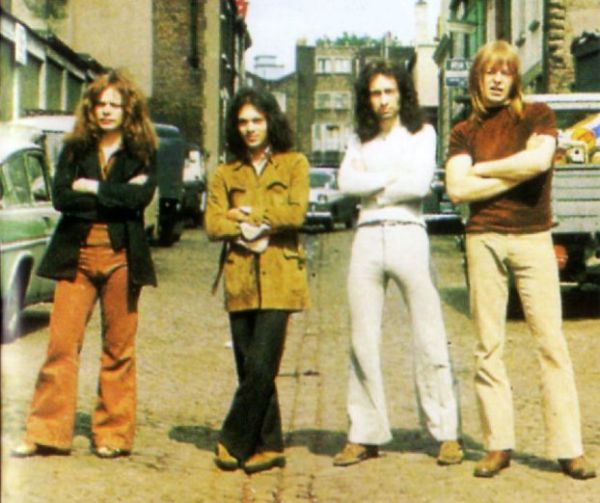
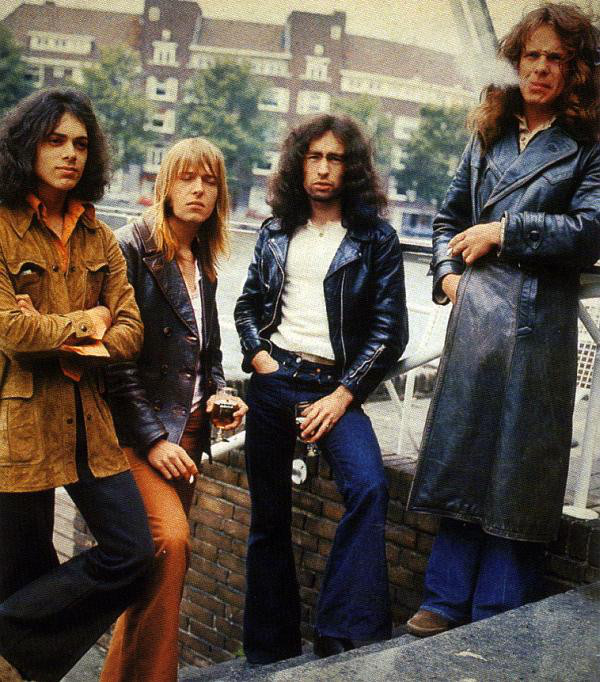
THE LIFE AND TIMES OF CAN.
The Life and Times Of Can.
Having released eleven albums in eleven years, Can called time on their career in 1979. By then, Can were rightly regarded by critics as one of the most important, influential and innovative bands of the Krautrock era. However, like many of the Krautrock bands, Can hadn’t enjoyed the commercial success that their music had deserved. While their music found an a small, but discerning audience in Britain and France, Can, like many of the other Krautrock bands had failed to find audience in Germany. Eventually, though, things would change.
Forty years later, there has been a resurgence of interest in Krautrock, and especially some of the genre’s leading lights. This includes Can, who are now regarded Krautrock royalty. At last, groups like Can are receiving the recognition their music deserves. Their career began in 1968.
Can were formed in 1968, by Holger Czukay and Irmin Schmidt. Both had been students of Karlheinz Stockhausen and graduated in 1966. By then, Irmin Schmidt was twenty-nine. He was born in Berlin on ‘29th’ May 1937, and grew up playing piano and organ. Soon, it was apparent that he was a talented musician, and came as no surprise that Irmin headed to the conservatorium in Dortmund, to study music. This was just the start of Irmin’s studies.
From there, Irmin moved to Folkwang University of the Arts in Essen, before moving to Austria, and the Mozarteum University of Salzburg. The final part of Irmin’s musical education took place in Cologne, where Irmin met Holger.
The two future founding members of Can were studying composition under Karlheinz Stockhausen at the Cologne Courses For New Music. Between 1962 and 1966, Irmin and Holger studied composition. However, after they graduated, their lives headed in different directions.
Holger Czukay became a music teacher, and began a career educating a new generation of young Germans. Meanwhile, Irmin headed to New York.
During his time in New York, Irmin spent time with avant-garde musicians like Steve Reich, Terry Riley and La Monte Young. Soon, Irmin Scmidt was aware of Andy Warhol and Velvet Underground. This inspired him to form his own band when he returned home to Cologne.
By the time Irmin Scmidt returned home, Holger Czukay what he described to me “as a life-changing moment…the music of the past and present came together.” At last; “here was music that made the connection between what I’d studied and I was striving towards.” With the innovative use of bursts of radio and the experimental sound and structure, “I went in search of similar music.”
He found Velvet Underground, who made a huge impact on Holger. So much so, that he still remembers hearing Velvet Underground for the first time. “They were different…and really influential. They influenced the music I made.” This would include the music Holger Czukay made with Can.
When Irmin Scmidt returned home, he decided to form a band with his old friend Holger Czukay. So in Cologne in 1968, Can was born.
Pianist and organist Irmin Schmidt formed Can with American avant-garde flautist David C. Johnson and bassist Holger Czukay. Up until then, the trio had exclusively played avant-garde classical music. Now their ambitions lay beyond that. Their influences included garage, rock, psychedelia, soul and funk. So they brought onboard three new members of the group, which started life as Inner Space, and then became The Can. Eventually, they settled on Can, an acronym of communism, anarchy, nihilism
The first two new additions were guitarist Michael Karoli and drummer Jaki Liebezeit. Vocalist and New York-based sculptor Malcolm Mooney joined the band midway through 1968. By then, they were recording material for an album Prepare To Meet Thy Pnoom. Two tracks, Father Cannot Yell and Outside My Door were already recorded. Unfortunately, record companies weren’t interested in Prepare To Meet Thy Pnoom. As a result, it wasn’t released until 1981, when it was released as Delay 1968. Undeterred, Can continued to record what became their debut album, Monster Movie.
Despite not being able to interest a record company in Prepare To Meet Thy Pnoom, Can were confident in their own ability. So Can continued recording what would become their debut album Monster Movies. However, soon, there was a problem.
David C. Johnson left Can at the end of 1968. He was disappointed at the change in musical direction. Little did he realise that he’d lost the chance to be part of one of the most groundbreaking band’s in musical history, Can and one of their most influential albums…Monster Movie.
Monster Movie.
Monster Movie had been recorded in Schloss Nörvenich, which is a 14th Century castle in North Rhine-Westphalia. Can recorded Monster Movie between 1968 and 1969. Gradually, it took shape and eventually, and the album was ready for released.
When Monster Movie was released August 1969, Can were still billed as The Can. This would soon change. So would music with the release of their debut album Monster Movie.
Can’s career started as they meant to go on, when they released what was a groundbreaking, genre-melting opus. Monster Movie was a fusion of blues, free jazz, psychedelia, rock and world music. There was one influence that shown through, the music of the Velvet Underground influence. It’s as if Can have been inspired by Velvet Underground and pushed musical boundaries to their limits.
Throughout Monster Movie, Can improvised, innovated and experimented. Multilayering and editing played an important part in Monster Movie’s avant-garde sound. So did spontaneous composition, which Can pioneered.
Spontaneous composition was hugely important in Can’s success. Holger Czukay remembers: “that the members of Can were always ready to record. They didn’t take time to think. It was spontaneous. The music flowed through them and out of them.” Holger remembers that he was always: “given the job of pressing the record button. This was a big responsibility as the fear was failing to record something we could never recreate.” In some ways, Can were an outlet for this outpouring of creativity, which gave birth to a new musical genre.
This new musical genre was dubbed Krautrock by the British music press. Not only was Monster Movie the album that launched Can’s career, but marked the birth of a new musical genre, Krautrock. The founding father’s of Krautrock was Can.
Soundtracks.
Having released their debut album Monster Movie in August 1969, Can returned with their sophomore album in 1970, Soundtracks. Essentially, Soundtracks was a compilation of tracks Can wrote for the soundtracks to various films. It’s the album that marked the departure of vocalist Malcolm Mooney. Replacing him, was Japanese busker, Kenji Damo Suzuki. He features on five of the tracks, contributing percussion and vocals. The addition of Damo wasn’t the only change Can were making.
Soundtracks was a coming of age for Can. It marked a move away from the psychedelic jams of Monster Movie and a move towards their classic sound. That saw the music becoming much more experimental and avant-garde. The music took an ambient, meditative, mesmeric and thoughtful sound. This had already featured on 1969 Can’s debut single Soul Desert, which featured She Brings The Rain the B-Side. Alas, the single didn’t even trouble the charts, and nowadays, is a prized item among collectors. However, for Can an important period of their career had begun.
The release of Soundtracks marked the beginning of what became known as Can’s classic years, when albums like Tago Mago, Ege Bamyasi and Future Days were released. During this period, Can released the golden quartet and it seemed, could do no wrong.
Tago Mago.
The first instalment in the golden quartet was Tago Mago, which was the first album where Kenji Damo Suzuki was a permanent member of Can. He and the rest of Can spent a year in the castle in Schloss Nörvenich. It was owned by an art collector named Mr. Vohwinkel who allowed Can to stay at Schloss Nörvenich rent free. For what Holger described as: “a poor man’s band,” this was perfect.
Holger remembers Can during this year as: “just jamming and seeing what took shape. Songs started as lengthy jams and improvised pieces.” This Holger says: “how Can always worked” After that, Holger edited the songs which became and the mini masterpieces featured on Tago Mago, which was four months in the making.
For four months between November 1970 and February 1971, Can recorded what would become one of their most innovative and influential albums, Tago Mago.
It was a double album that featured seven groundbreaking tracks. Tago Mago was released in February 1971. and straight away, critics realised the importance of Tago Mago. Here was a game-changer of an album. It has an intensity that other albums released in 1971 lacked. Jazzier with an experimental sound, the music is mysterious, mesmeric and multilayered. It’s innovative, with genres and influences melting into one. Nuances, subtleties and surprises reveal themselves. No wonder, Can were at the peak of their creative powers as they deliver what was regarded as an avant-garde masterclass.
This comes courtesy of jazz-tinged drumming, improvised guitar playing and showboating keyboard solos. Then there was Kenji Damo Suzuki’s unique vocal style. All this, resulted in an album that was critically acclaimed, influential and innovative.
Released to widespread critical acclaim in 1971, Tago Mago was the start of a golden period for Can. Their reputation as one of the most innovative groups of the seventies started to take shape. Can had released one of the most innovative albums, Tago Mago. Holger remembers the reaction to Tago Mago. “I knew Tago Mago was an innovative album, but I never realised just how innovative an album it would become?
On Tago Mago’s release, it was hailed as their best album yet. Although they didn’t regard themselves as a singles band, Can still released singles to promote Tago Mago. In Britain, Spoon was released as a single, with I’m So Green on the B-Side. Meanwhile, in Germany Turtles Have Short Legs a non-album track had been released as a single with Halleluwah on the B-Side. The other single was I’m So Green, which featured Mushroom on the flip-side. While none of the singles made any impact on the charts, Tago Mago had already left its mark on music.
Since then, several generations of musicians have been inspired by Tago Mago, a true Magnus Opus, that belongs in every record collection. So does the followup Ege Bamyasi.
Ege Bamyasi.
Before Can began even began to think of their next album, they enjoyed their first hit single. They had released Spoon as a single in 1972, with Shikaku Maru Ten on the B-Side. It reached number six in Germany, selling over 300,000 copies. That was helped no end, by the single being used as the theme to a German thriller Das Messer. It seemed nothing could go wrong for Can. Can were on a roll.
With the money they had made from Spoon, they started to think about recording their next album. The only problem was they hadn’t anywhere they could record an album. This was a huge problem. While most bands would’ve hired a recording studio, it had taken many months for Can to complete previous albums and hiring a studio for such a lengthy period would prove prohibitively expansive It made more sense to hire a space that could be turned into a makeshift studio. A decision was made to advertise to see if anyone had a suitable space to record Can’s next album. Their luck was in, when Can were offered the opportunity to hired a disused cinema to record their fourth album, which became Ege Bamyasi.
Recording began in the disused cinema, which doubled as a recording studio and living space. The sessions at Inner Space Studio, in Weilerswist, near Cologne didn’t go well. Irmin Schmidt and Kenji Damo Suzuki took to playing marathon chess sessions. As a result, Can hadn’t enough material for an album. This resulted in Can having to work frantically to complete Ege Bamyasi. Despite this, Can were still short of material. It was then that a decision was made to add their hit single Spoon, which meant that Ege Bamyasi was, at last, completed.
Ege Bamyasi was a fusion of musical genres. Everything from jazz, ambient, world music, psychedelia, rock and electronica melted into one. When it was Ege Bamyasi released in November 1972, it was to the same critical acclaim as previous albums. Critics were won over by Can’s fourth album. It was perceived as a more accessible album than its predecessors. Just like Can’s previous albums, the quality of music was consistent.
Critics hailed Can as one of the few bands capable of creating consistent and pioneering albums. They were one of the most exciting bands of the early seventies. Can were continuing to innovate and influence musicians and music lovers alike. Just like its predecessor, Tago Mago, Ege Bamyasi is an essential part of any self-respecting record collection. Having released two consecutive classic albums and their first single, it seemed nothing could go wrong for Can.
Future Days.
Despite Tago Mago and Ege Bamyasi being referred to as two of the most influential albums ever released, Holger Czukay prefers Future Days. This is the album he calls: “my favourite Can album.” It was the third in Can’s golden quartet, and marked a change in direction from Can.
Future Days saw Can’s music head in the direction of ambient music. The music is atmospheric, dreamy, ethereal, melancholy, expansive and full of captivating, mesmeric rhythms. It’s also pioneering and progressive, with elements of avant-garde, experimental, psychedelia and rock melting into one. Rather than songs, soundscapes describes the four tracks. Future Days and Bel Air showcase Can’s new sound. Bel Air was the Future Day’s epic. It lasted just over nineteen minutes, and takes the listeners on an enthralling musical journey. Bell Air was the final part of Future Days, which was another opus from Can.
When Future Days was released in August 1973, it was immediately hailed a classic by music critics. The move towards ambient music may have surprised some Can fans. However, Can, just like Brian Eno were one of the early pioneers ambient music in the seventies. This move towards ambient music must have pleased Holger’s guru Karlheinz Stockhausen. He must have looked on proudly as Can released the third of a quartet of classic albums. Two months the release of Future Days, Moonshake was released as a single in October 1973, with Future Days on the B-Side. Alas, it didn’t replicate the success of Spoon. Despite that, Can would continued to enjoy critical acclaim when they released the final album in the golden quartet, Soon Over Babaluma in 1974.
Soon Over Babaluma.
Soon Over Babaluma marked the end of Can’s golden period. It was the end of a period where they were releasing some of their most innovative and groundbreaking music. There was a change of direction on Soon Over Babaluma. Can were without a vocalist.
Kenji Damo Suzuki had left Can and married his German girlfriend. He then decided to become a Jehovah’s Witness. Despite the lack of a vocalist, Can continued as a quartet, and released Soon Over Babaluma in November 1974.
When Soon Over Babaluma was released in November 1974, the album quite rightly received praise and plaudits from both critics and cultural commentators.With a myriad of beeps, squeaks and sci-fi sounds, Soon Over Babaluma is like musical journey into another, ‘21st’ Century dimension. A musical tapestry where layers of music are intertwined during five tracks on Soon Over Babaluma. A month later, Dizzy Dizzy was released as a single with Come Sta La Luna on the B-Side. This was the final single Can released from the golden quartet.
The golden quartet ended with another album classic album from Can. Soon Over Babaluma followed in the ambient footsteps of Future Days and brought to a close the most fruitful period of Can’s career. Following the “golden quartet,” Can didn’t go into decline. Instead, Can continued to reinvent themselves and their music.
Landed.
Can’s next album, Landed, was released in September 1975. It had been recorded between February and April 1972 at Inner Space Studios. Just like previous albums, Can produced Landed. Holger and Tony Robinson mixed the first four tracks at Studio Dierks, Stommeln. The other two tracks were mixed by Holger at Inner Space Studios. These six tracks marked a change of direction from Can.
As well as a change in direction musically, Landed was the first Can album to be released on Virgin Records. Gone was the ambient sound of Soon Over Babaluma. Only Unfinished on Landed has an ambient influence. Instead, Landed showcased a poppy, sometimes glam influence. This was apparent on the singles Hunters and Collectors, and Silent Night Cascade Waltz which featured Vernal Equinox on the B-Side. Both songs showcased Can’s new sound. With uptempo, shorter songs, Landed was a much more traditional album. How would the critics react?
Critics were divided about Landed. Some critics saw Landed as the next chapter in the Can story, while others praised the album as adventurous, eclectic and innovative. Others thought Can were conforming. Surely not?

Flow Motion.
Just over a year after the release pot Landed, Can returned with Flow Motion, which was their eight album. As usual, it was recorded at Inner Space Studios and was produced by Can, Flow Motion was an album that drew inspiration from everything from funk, reggae, rock and jazz. It was a truly eclectic, genre-melting album. It’s also one of Holger Czukay’s favourite Can albums.
Holger remembers Flow Motion as an: “innovative and eclectic” album. He calls it: “one of Can’s underrated albums.” Flow Motion marked a another change in Can’s way of working.
Released in October 1976, Flow Motion featured lyrics written by Peter Gilmour. This was a first. Never before, had anyone outside the band had written for Can. It worked. Can enjoyed their first UK single I Want More which I Want More which featured…And More on the B-Side. I Want More would later be recorded Fini Tribe and then Italo disco group Galaxis. With what was just their second hit single in seven years, maybe Can were about to make a commercial breakthrough?
Saw Delight.
Sadly, that wasn’t to be. Saw Delight which was released in March 1977, wasn’t the commercial success many people forecast. That was despite the new lineup of Can embracing world music.
Joining Can were bassist Rosko Gee and percussionist and vocalist Rebop Kwaku Baah. They’d previously been members of British rock band Traffic. Rosko Gee replaced Holger on bass. Holger decided to add a percussive element, Holger added a myriad of sound-effects. This was Holger at his groundbreaking best. Experimental sounds including a wave receiver was used. The result was one of the most ambitious albums Can had released.
The new lineup of Can was responsible for a bold, progressive and experimental album. While Saw Delight was well received by critics, it wasn’t a commercial success. The problem was, Saw Delight was way ahead of its time. If it had been released in the eighties, like albums by Paul Simon or Peter Gabriel, it would’ve been a bigger commercial success. Sadly, by then Can would be no more. That was still to come.
Later in 1977, Can released Don’t Say No as a single. It featured Return on the B-Side. Alas, Can didn’t enjoy the third hit single of their career. When Can returned with their next album Out Of Reach, all wasn’t well within the Can camp.
Out Of Reach.
Nine years after Can had released their debut album, Monster Movie, they released their tenth album, Out Of Reach. It was released in July 1978. The title proved to be a prophetic. After all, commercial success always seemed to elude Can. Not only did Out Of Reach fail commercially, but the Out Of Reach proved to be Can’s most controversial album.
So much so, that they disowned Out Of Reach. On Out Of Reach Holger was left to add a myriad of sound-effects. Bassist Rosko Gee and percussionist Rebop Kwaku Baah of Traffic returned. They were part of the problem. Holger confirms this. “During the recording of Out Of Reach, I felt an outsider in my own group. I was on the outside looking in. I was on the margins. All I was doing was add sound-effects.” For Holger, he felt his group had been hijacked by Rosko Gee and Rebop Kwaku Baah. Things got so bad, that Holger quit Can.
Sadly, Rosko Gee and Rebop Kwaku Baah dominated Out Of Reach. Gone was the loose, free-flowing style of previous albums. Even Jaki Liebezeit’s play second fiddle to Baah’s overpowering percussive sounds. The only positive thing was a guitar masterclass from Michael Karoli. Apart from this, things weren’t looking good for Can. It was about to get worse though.
The critics rounded on Out Of Reach. They found very little merit in Out Of Reach. Gee and Baah were rightly blamed for the album’s failure. Even Can disliked Out Of Reach. They later disowned Out Of Reach. Despite this, Rosko Gee and Rebop Kwaku Baah remained members of Can.
Unable to play with the necessary freedom Can were famed for, the two ex-members of Traffic stifled Can. Rebop’s percussion overpowers Jaki’s drums, which have always been part of Can’s trademark sound. At least Michael’s virtuoso guitar solos are a reminder of classic Can. A nod towards Carlos Santana, they showed Can were still capable of moments of genius. Sadly, there wouldn’t be many more of these.
Some time after the release of Out Of Reach, Can decided to release a new single. However, it wasn’t one of the songs from Out Of Reach. Instead, it was reworked version of Jacques Offenbach’s Can Can. This was somewhat surreal, and far removed from the music critics and record buyers expected from Can. They had moved far away from the music that featured on their golden quartet. Can’s loyal fans wondered what the future held for Can. Sadly, Can would breakup after their next album.
Can.
Following the commercial failure of Out Of Reach, the members of Can began recording what became their tenth album, Can. Remarkably, Rosko Gee and Rebop Kwaku Baah were still part of Can. Sadly, Holger was not longer a member of Can. He had left during the making of Out Of Reach. His only involvement was editing Can. This was a travesty.
Allowing Rosko Gee and Rebop Kwaku Baah to remain members of Can while Holger left the band he cofounded was a massive mistake. Faced with the choice or losing Holger or keeping Rosko Gee and Rebop Kwaku Baah in Can, should’ve been a no-brainer. Incredibly, Holger was marginalised further.
Neither Rosko Gee nor Rebop Kwaku Baah were suited to a band like Can. Both came from a very different musical background, and as a result the decision to hire them initially was flawed and questionable. Their playing on Out Of Reach was odds with the way Can played. They had spent their career playing with freedom that resulted in inventive and innovative music. The much more rigid style of Rosko Gee and Rebop Kwaku Baah stifled the other members of Can. To make matters worse, their playing overpowered the rest of Can, and was one of the reason’s for the album’s failure. Yet when recording of Can began, Rosko Gee and Rebop Kwaku Baah remained.
Can, which is sometimes referred to as Inner Space, was released in July 1979. Again, critics weren’t impressed by Can, and the album received mixed reviews. No longer was Can the critic’s darlings.
The music on Can was a fusion of avant-garde, electronica, experimental, psychedelia and rock. Add to that, a myriad of effects including distortion and feedback, and here was an album that divided the opinion of critics. While the critics agreed, it was better than Out Of Reach. They also agreed that Holger was sadly missed.
Even Holger’s renowned editing skills couldn’t save Can. Try as he may, he could only work with what he was given. He did his best with Can, which the eleventh album from the group he co-founded. By the time Can was released, Holger: “had come to a realisation, that it was time to go his own way.” Holger describes this as “necessary.”
Can had split-up after the release of Can. That was their swan-song. However, even before that, Holger: “felt marginalised, this had been the case since Rosko Gee and Rebop Kwaku Baah became part of Can. They had hijacked Can,” and ultimately, this lead to the death of a great and innovative band.
With Can now part of musical history, Irmin Schmidt, Holger Czukay, Michael Karoli and Jaki Liebezeit set about reinventing themselves. Music critics wondered whether they would form new bands or embark upon solo careers? Irmin Schmidt, Holger Czukay and Michael Karoli all embarked upon solo careers. However, Can left behind a rich musical legacy that included the eleven albums they released between 1969 and 1980.
During that period, Can had enjoyed widespread critical acclaim and commercial success. They were musical pioneers, who pushed musical boundaries and continued to release most ambitious and innovative music. This included their golden quartet of classic albums,Tago Mago, Ege Bamyasi, Future Days and Soon Over Babaluma. Each of these albums were regarded by critics as classics, and were a reminder of what Can had been capable of in their prime. Sadly, that was in the past.
Delay 1968.
Just a year after the release of Can, and the death of the group, Delay 1968 was belatedly released. This was the album that Can tried to release in 1968 as Prepare To Meet Thy Pnoom. Despite approaching several record companies, they rejected opportunity to release an album that was way ahead of its time. Sadly, this meant that Prepare To Meet Thy Pnoom languished unreleased in Can’s vaults.
Thirteen years later, and belatedly Prepare To Meet Thy Pnoom was released as Delay 1968. It was a reminder of Can as they prepared to embark upon their career. Delay 1968 was an ambitious and progressive album, where elements of avant-garde, psychedelia, rock, experimental and what became known as Krautrock. At long last, critics and record buyers were able to understand just how Can’s career took shape.
Delay 1968 was the missing piece of the jigsaw, and was the album that should’ve launched Can’s career. It showcased Can as their career began, and was a stepping-stone that lead to Monster Movie. Very few record buyers realised this, and thought that Monster Movie was the first album Can recorded and released.
Obviously that wasn’t the case, because Can had already recorded Prepare To Meet Thy Pnoom, which just like much of Can’s music, was way ahead of the musical curve. This became apparent when Delay 1968 was released in 1981. It was an important album, which may have changed musical history?
Suddenly, there were lots of unanswered questions. The first was if Can hadn’t recorded Prepare To Meet Thy Pnoom, would their career have progressed in the way it had? One can speculate whether Can would’ve gone on to release their golden quartet of classic albums if they hadn’t released Prepare To Meet Thy Pnoom? It was only when Delay 1968 was belatedly released in 1981 that critics realised the importance of the album.However, by then, it seemed that Can’s career was over. Or was it?
Rite Time.
Five years later, in December 1986, Can were reunited, and began work on their comeback album Rite Time in the South of France. Many within the music industry thought that Can would never record another album. However, time seemed to heal the wounds and the five members of Can decided to record their twelfth album.
For the recording sessions, normal service was restored. Can’s lineup featured Jaki Liebezeit, Holger Czukay, Michael Karoli and Irmin Schmidt, who had written eight new songs. They were joined in the studio by the vocalist Malcolm Mooney. However, Rosko Gee and Rebop Kwaku Baah were nowhere to be seen. They were’t part of the reunion that marked the return of Can.
Once the eight songs that would eventually become Rite Time were recorded, three years passed before the album was released. During this period, Can undertook extensive editing of Rite Time. As a result, when the album was eventually released, it was a different album to the one Can had originally envisaged.
Critics on hearing Rite Time, discovered that Can hadn’t tried to replicate their classic sound. That remained firmly in the past. Instead, Can continued to reinvent their music. Especially on songs like Give The Drummer Some, which showcased Can’s funky side, while the single Hoolah Hoolah was tinged with humour. Only the album closer In The Distance Lies The Future, hints at Can’s previous abstract, ambient sound. While Rite Time wasn’t the finest album of Can’s career, critics thought it was an improvement on Can and Out Of Reach.
When Rite Time was eventually released in October 1989, the album sold reasonably well. Despite the resurgence of interest in Can’s music and Krautrock in general, the album wasn’t a huge seller. Nor was the single Hoolah Hoolah, which was the last single that Can would release.
Can would never again return to the studio, and Rite Time in 1989 was their swan-song. It was thirteenth studio album, and was released twenty-one years after Can was formed in 1968. Much happened during the next twenty-one years.
Can went on to release albums ambitious, progressive and innovative music. That is why nowadays, Can is considered Krautrock royalty, and sit proudly at Krautrock’s top table, alongside Neu!, Cluster, Harmonia and Kraftwerk. That is where they belong.
After all, the Krautrock Kings Can’s influence on music can’t be underestimated. They’ve influenced and inspired several generations of musicians, and that is still the case today. Even today, a new generation of musicians regularly cite Can as a major influence on their music. That will be the case in the future, and especially with Can’s golden quartet of classic albums including Tago Mago, Ege Bamyasi, Future Days and Soon Over Babaluma. Then I would suggest Monster Movie and Soundtracks. These are Can’s best albums, and belong in every record collection and feature groundbreaking music from one of the giants of Krautrock, whose music is important, influential and innovative.
The Life and Times Of Can.

TEENAGE FANCLUB- BIG STARS AND KINGS OF JANGLE POP.
Teenage Fanclub-Big Stars and Kings Of Jangle Pop.
Not many Scottish bands have enjoyed the longevity and commercial success that Teenage Fanclub have. Scotland’s Kings of jangle pop have been together four decades, have released ten albums and toured the world several times. Still though, Teenage Fanclub still going strong, and must be contenders for the 2017 Scottish Album of The Year Award with their tenth album Here. It was released in 2016, twenty-eight years after the Teenage Fanclub story began.
It was in Bellshill, Lanarkshire, a small town twelve miles from Glasgow, that Teenage Fanclub were born in 1989. The nascent band emerged out of Glasgow’s C86 scene, and had been inspired by West Coast bands like The Beach Boys and The Byrds. Another major influence on Teenage Fanclub were Big Star, who Teenage Fanclub would be later be compared to.
Unlike Big Star, Teenage Fanclub were a five piece band. The original lineup featured guitarist Norman Blake, lead guitarist Raymond McGinley, bassist Gerard Love, drummer and Francis MacDonald. Teenage Fanclub’s three principal songwriters shared lead vocal duties. That was the case on their debut album.
A Catholic Education.
Just a year after the band was founded, Teenage Fanclub released their debut album in 1990. A Catholic Education would later be described as a quite un-Teenage Fanclub album. The music was dark, harsh and peppered with cynicism and controversy.
Most of the controversy stemmed from Teenage Fanclub’s decision to turn their sights on Catholic church. For a band from a city divided by religion, that was a controversial move, and one that could alienate people. What made the decision to “attack” the Catholic church, was that Teenage Fanclub prided themselves on being apolitical band. The other surprise for a band who admired The Byrds, The Beach Boys and Big Star was the sound of A Catholic Education.
For much of A Catholic Education, Teenage Fanclub unleashed a mixture of grunge and heavy metal. The only hint of what was to come from Teenage Fanclub was the Norman Blake penned Everything Flows. It was a glorious slice of power pop. This was something that Teenage Fanclub would return to later. Before that, A Catholic Education was released on June 11th 1991.
Before that, critics reviewed A Catholic Education. Reviews of the album were mixed, and very few critics forecast the critical acclaim and commercial success that came Teenage Fanclub’s way. When A Catholic Education was released by Matador, the album failed to even trouble the British or American charts. It was an inauspicious debut from Teenage Fanclub.
The King.
Just two months later, and Teenage Fanclub released their sophomore album, The King. However, in reality, The King was a quickly assembled collection of tracks.
The tracks that became The King had been recorded once Teenage Fanclub had completed what would be their third album, Bandwagonesque. Quickly, Teenage Fanclub recorded nine tracks, including covers of Madonna’s Like A Virgin and Pink Floyd’s Interstellar Overdrive. Once The King was recorded, Teenage Fanclub were hoping this would allow them to escape their contractual liability to Matador. This could have backfired.
Teenage Fanclub owed Matador an album. If they accepted The King, then they had fulfilled their contractual obligations. There was the possibility that the album could be rejected, if Matador didn’t believe the album was of a certain commercial standard.
Fortunately, they didn’t. That’s despite covers of Madonna’s Like A Virgin and Pink Floyd’s Interstellar Overdrive. The King wasn’t exactly Teenage Fanclub’s finest hour. Despite this, Matador released in August 1991.
Reviews of The King hadn’t been favourable. Despite this, The King reached fifty-three in the UK charts. It was almost ironic. Very few critics thought that The King would even trouble the charts. Teenage Fanclub had the last laugh. Free from all encumbrances, the Teenage Fanclub signed to Creation Records.

Bandwagonesque.
Now signed to Alan McGhee’s Creation Records, Teenage Fanclub like a magician pulling a rabbit from a hat, delivered the completed version of Bandwagonesque. It had been recorded at Amazon Studios, Liverpool, between 9th April to 12th May 1991. It featured twelve songs, were Teenage Fanclub came of age musically.
Just like previous albums, songwriting duties were split between the band members. Raymond McGinley wrote I Don’t Know; Norman Blake penned four songs; Gerard Love wrote five and cowrote Sidewinder with Brendan O’Hare. The only track credited to Teenage Fanclub was Satan. Teenage Fanclub were maturing as songwriters and musicians.
When it came to choosing a producer for Bandwagonesque, the partnership of Paul Chisholm, Don Fleming and Teenage Fanclub returned. They were responsible for an album that stood head and shoulders above Teenage Fanclub’s two previous albums, Bandwagonesque.
On Bandwagonesque Teenage Fanclub’s trademark ‘sound’ began to take shape. It had been influenced by The Byrds and Big Star. Byrdsian, jangling guitars were joined by close, cooing, harmonies and a melodic fusion of indie rock and hook-laden power pop. Seamlessly, though, Teenage Fanclub could switch between laid back and melodic to a much more powerful, rocky sound. This would find favour with critics and record buyers.
Before Bandwagonesque was released, critics had their say on the album. For once, critics were in agreement, and there were no dissenting voices. Bandwagonesque critics agreed, was one of the finest albums of 1991. No wonder, with songs of the quality of The Concept, What You Do To Me, Star Sign, Alcoholiday and s This Music? For Teenage Fanclub, Bandwagonesque was a career defining album. Spin Magazine went further, and named Bandwagonesque its best album of 1991. Things were looking good for Teenage Fanclub.
Especially when Star Sign was released in August 1991, and reached number four on the US Modern Rock charts. Meanwhile, Star Sign stalled at just forty-four in the UK. The followup The Concept, a rocky anthem, reached a disappointing fifty-one in the UK, but reached number twelve on the US Modern Rock charts. Teenage Fanclub’s music was finding an audience in America for the first time. Maybe Teenage Fanclub’s third album would find them cracking America for the first time?
That was the case. When Bandwagonesque was released on 19 November 1991, it reached number twenty-two in the UK, and 137 on the US Billboard 200. Teenage Fanclub it seemed, were going places.
Having toured Bandwagonesque, and enjoyed their newfound fame, eventually, Teenage Fanclub’s thoughts turned to their fourth album. This they would name after an album by one of their favourite bands.
Thirteen.
Unlike most bands, Teenage Fanclub wasn’t reliant on one or two songwriters. Everyone contributed songs. That was the case with their fourth album, Thirteen, which was named after a song by Big Star.
The four members of Teenage Fanclub had all contributed songs for Thirteen. Gerard Love had penned five, Norman Blake four, Raymond McGinley two and Brendan O’Hare one. These thirteen songs would be recorded in Glasgow’s CaVa Studios.
When work began in October 1992, Teenage Fanclub had decided to produce Thirteen themselves. They had co-produced their first three albums, so felt ready to make the step up. The only problem was, it took six months to record Thirteen. This was quite unlike Teenage Fanclub. They usually recorded albums quickly. Maybe they were missing a co-producer?
If Teenage Fanclub had employed a co-producer, they would’ve been a sounding board for the band. They would’ve also ensured they didn’t spent too long on tracks, honing, polishing and perfecting them. That’s what seemed to have happened. Eventually, Thirteen was finished by April 1993. This left six months before the album was released.
Prior to the release of Thirteen, critics received their advance copies of the album. They didn’t like the album. That’s an understatement. Critics seemed to loathe the album. Reviews of Thirteen were scathing. That’s despite songs of the quality of Hang On, Norman 3, Radio and Song to the Cynic. For Teenage Fanclub this was a huge blow.
At least when the lead single from Thirteen, Radio was released in August 1993, it reached number thirty-one in UK. The followup Norman 3, was released in September 1993, but stalled at just fifty in the UK single’s charts. This was another disappointment for Teenage Fanclub.
Despite the disappointing reviews and failure of the single Norman 3, Teenage Fanclub’s fortunes were set to improve. When Thirteen was released in October 1993, it reached number number fourteen in Britain. This meant Thirteen was Teenage Fanclub’s most successful British album. The only disappointment was that Thirteen failed to trouble the US Billboard 200. This wasn’t the only disappointment for Teenage Fanclub.
After the release of Thirteen, drummer Brendan O’Hare announced he was leaving Teenage Fanclub. The usual “musical differences” were cited, and Paul Quinn, the former Soup Dragons’ drummer was drafted in to replace Brendan O’Hare. For Teenage Fanclub, this was a worrying time. There was one small crumb of comfort though.
In February 1994, Hang On was released as the third and final single from Thirteen. It reached number nineteen on the US Modern Rock charts. Little did Teenage Fanclub realise that it was the last hit single they would enjoy in America.
Grand Prix.
Although Thirteen had been the most successful album of Teenage Fanclub’s career, the scathing reviews hurt. They had spent six months recording, honing and perfecting Thirteen. To make matters worse, Brendan O’Hare had left the band. This was a testing time for Teenage Fanclub, as they began work on their fifth album.
For the new album, thirteen songs were written. Norman Blake wrote five songs, while Gerard Love and Raymond McGinley penned four each. These songs would become Grand Prix.
Recording of Grand Prix began on 5th September 1994. By then, Teenage Fanclub had decided to employ a co-producer, David Bianco. He became their sounding board over the next month spent recording at The Manor, Shipton-On-Cherwell. Just over a month later, on the 9th October 1994, Grand Prix was complete. Little did they realise they had recorded one of their finest albums.
When critics heard Grand Prix, they were in no doubt, the album was a minor classic. It veered between melodic and melancholy, became ruminative and rocky. Grand Prix literally oozed quality, with About You, Sparky’s Dream, Don’t Look Back, Neil Jung and I’ll Make It Clear showcasing Teenage Fanclub’s considerable musical skills. They seemed to have been stung by the criticism of Thirteen, and returned with the best album of their career.
When Grand Prix was released on May 29th 1995, it was a hit on three continents. In the UK Grand Prix reached number seven, becoming the most successful album of their career. Elsewhere Grand Prix reached sixty-eight in Japan and fifty-seven in Australia. Teenage Fanclub were now one of the biggest indie bands in Britain.
Songs From Northern Britain.
What made the rise and rise of Teenage Fanclub all the more incredible was that they had only been formed in 1989. Since then, they had released five albums, and were popular across the globe. By 1996 Teenage Fanclub were ready to record a new album.
Just like previous albums, the band’s songwriters got to work. Norman Blake wrote three songs and cowrote Planets with former band member Francis MacDonald. Gerard Love and Raymond McGinley both wrote four songs. These songs were recorded at some of London’s top studios with co-producer David Bianco.
Some of Songs From Northern Britain was recorded at Abbey Road Studios, while other sessions took place at AIR Studios. Other sessions saw Teenage Fanclub head to leafy Surrey, and Rich Farm Studios. Eventually, Teenage Fanclub had recorded their sixth album, which was released in summer 1997.
Songs From Northern Britain which was a tongue-in-cheek reference to the Britpop movement, saw Teenage Fanclub pickup where they left off on Grand Prix. It was another album of carefully crafted songs, including Start Again, Can’t Feel My Soul, Don’t Want Control of You and I Don’t Care. Despite an album that was variously cerebral, defiant, hook-laden, joyous, melodic, mellow, playful and reflective critics were undecided. Some loved the album, other loathed it. Rolling Stone which had been supportive of Teenage Fanclub, set their sights on the band. Not for the first time, were Rolling Stone left with egg on their face.
On 29th July 1997, Songs From Northern Britain was released. It reached number three in Britain, and became Teenage Fanclub’s most successful album. In Australia, Songs From Northern Britain reached number seventy. Elsewhere, including America, Teenage Fanclub continued to be a popular live draw. However, they sold more albums in Britain, than anywhere else.
Howdy!
Buoyed by the success of Songs From Northern Britain, Teenage Fanclub were keen to begin work on the followup, Howdy! It was the first album of Teenage Fanclub’s post Creation years.
After Songs From Northern Britain, Teenage Fanclub signed to Columbia, which was owned by Sony. At last, Teenage Fanclub were signed to a major label. They would’ve had the financial muscle and expertise to help Teenage Fanclub make a breakthrough in new musical markets. This included America, which had embraced Bandwagonesque. Since then, commercial success eluded Teenage Fanclub stateside. Howdy! was a new beginning for Teenage Fanclub.
For their Columbia debut,Gerard Love, Norman Blake and Raymond McGinley had written four tracks each. They became Howdy! which was produced by Teenage Fanclub.
After two albums co-produced by David Bianco, Teenage Fanclub decided to produce the album themselves. They were now an experienced group, who were about to record their seventh album. Howdy! was recorded at Rockfield Studios between November 1998 and March 1999. In the midst of the Rockfield sessions, Teenage Fanclub adjourned to the London Astoria for some overdubbing. Once that was completed, Teenage Fanclub returned to Wales, to complete Howdy! After five months Howdy! was ready for release.
Now Columbia’s marketing machine sprung into action, preparing for an October 2000 release date. Before that, reviews of Howdy! were published. The reviews were mixed, with some critics writing scathing reviews, while others praised Howdy! Especially, songs like I Need Direction, I Can’t Find My Way Home, Near You and The Town and The City. On the back of the mixed reviews, Teenage Fanclub made their major label debut.
Howdy! was released in October 2000, but disappointingly, stalled at a lowly thirty-three in Britain. Elsewhere, things weren’t much better. Teenage Fanclub failed to make an impact in America, where they were still popular. However, Howdy! failed to make any impression in America. Things hadn’t gone to plan for Teenage Fanclub.
Following the commercial failure of Howdy!, it came as no surprise when Columbia and Teenage Fanclub parted company. Teenage Fanclub were without a record label. However, it would five years before they released the followup to Howdy! Before that, they released a collaboration with Jad Fair.
Words Of Wisdom and Hope.
Following the release of Howdy!, Teenage Fanclub began work on a collaboration with Jad Fair, the former Half Japanese lead singer. They cowrote twelve songs which became Words Of Wisdom and Hope.
Most of Words Of Wisdom and Hope were recorded at Riverside Studios, Glasgow. Three songs were recorded in Finnieston, in Glasgow. By then, Teenage Fanclub and Jad Fair decided to co-produce the album. This could prove to be a case of too many cooks. The proof would be in the eating…by the critics.
Reviews of Words Of Wisdom and Hope were mixed. Some critics really disliked the album, and penned scathing reviews. Other reviews were mixed, with there seemingly no middle ground. Words Of Wisdom and Hope seemed to be an album critics loved or loathed. Record buyers had the casting vote.
Geographic Records release Words Of Wisdom and Hope in March 2002. The album wasn’t a commercial success, and both parties came away licking their wounds. It was unlikely that the project would be repeated. There was no appetite for a followup. A new Teenage Fanclub album was a whole new ball game.
Man-Made.
It wasn’t until 2004 that Teenage Fanclub began work on their eighth album, Man-Made. Again, the album featured twelve songs with Norman Blake, Gerard Love and Raymond McGinley contributing three songs each. Teenage Fanclub it seemed, was a bastion of musical democracy where each of the band’s songwriters got the opportunity to showcase their songwriting skills. With each album, Norman, Gerard and Raymond matured as songwriters. Given it had been four years since Howdy!, they had plenty of time to work on new songs. These new songs became Man-Made, which featured a new band member.
Ever since drummer Brendan O’Hare left after the release of Thirteen, Paul Quinn had been his replacement. However, Paul Quinn had left Teenage Fanclub, and was replaced by Francis MacDonald. He made his recording debut on Man-Made.
Recording of Man-Made took place at Soma Electronic Music Studios, Raymond’s House and Riverside Studios. This time around, Teenage Fanclub decided to draft in Portland based producer John McEntire. For the first time in eight albums,
Teenage Fanclub played no part in the production. Maybe this would result in a change of fortune for Teenage Fanclub?
Man-Made was well received by most critics. They were impressed by the quality of songs like It’s All in My Mind, Nowhere, Only With You and Born Under A Good Sign. Still, there were a few critics that weren’t convinced by Teenage Fanclub’s comeback album. However, things were looking good for Teenage Fanclub, who had decided to found their own label.
Rather than look for a new label in Britain, Teenage Fanclub decided to found their own label, PeMa. It would released Man-Made in Britain, while Merge Records would release the album in North America. Teenage Fanclub’s eighth album Man-Made, was released in Britain in May 2005, and reached number thirty-three in Britain. This was a slight improvement on Howdy! The only downside was the album’s failure to make an impression in America. Maybe things would be different next time around?
Shadows.
Five years passed before Teenage Fanclub returned with the followup to Man-Made. Gone were the days when Teenage Fanclub released an album every two years. These days were long gone. Albums no longer were selling in the same quantities. Teenage Fanclub had discovered that when they released Man-Made. Despite that, Teenage Fanclub headed back into the studio in August 2008.
When Teenage Fanclub entered the studio, they had a new member. David McGowan who had played on several Teenage Fanclub albums, was promoted, and became a full member of the band. Teenage Fanclub were now five.
The five members of Teenage Fanclub entered the studio to record twelve songs. For Shadows, Norman Blake, Gerard Love and Raymond McGinley had written three songs each. Recording took place at Leeders Farm, Norfolk. Raymond’s Place, Glasgow and Rockfield Studios, Monmouthshire. With Shadows complete, it would be another two years before the album was released.
It was announced by PeMa that Shadows would released on 31st May 2010. Before that, critics had their say on Teenage Fanclub’s ninth album. The reviews of the album were mixed, ranging from favourable to critically acclaimed. Mostly, critics agreed that Shadows was a return to form from Teenage Fanclub. They had released an album that was variously beautiful, melodic and timeless.
On the release of Shadows, it reached number thirty in Britain. This meant that Shadows was the most successful album Teenage Fanclub had released since 1997s Songs From Northern Britain. Maybe Teenage Fanclub’s luck was changing?
Here.
It seemed that Teenage Fanclub were in hurry to record their tenth album. The five members of the band went away and worked on various side projects. However, they knew that eventually, they would reunite to record Teenage Fanclub’s tenth album.
When the call came, Norman Blake, Gerard Love and Raymond McGinley had written three songs each. They became Here, which was recorded at Vega Studio, near Carpentras, Provence and at Raymond’s place in Pollokshields, Glasgow. That was where Teenage Fanclub and friends recorded Here.
As recording began, Teenage Fanclub’s rhythm section included drummer Francis MacDonald, bassist Gerard Love and guitarists David McGowan and Norman Blake. Raymond McGinley took charge of lead guitar. Teenage Fanclub’s friends included harpist Helen Thompson and trumpeters Nigel Baillie and Robert Henderson. Strings came courtesy of cellist Elspeth Mackay and violinist and violist John McCusker. Producing Here, were Teenage Fanclub. Gradually, Here began to take shape. Songs were honed and eventually, Teenage Fanclub’s much anticipated tenth album was completed.
With Here completed, PeMa Records announced the release of Teenage Fanclub’s tenth album. It was due to be released in September 2016. Critics hailed the album Teenage Fanclub’s best album since Songs From Northern Britain 1997. So it was no surprise when the album reached number ten in Britain. Teenage Fanclub were back, with their most successful and best album in nineteen years.
Six years after the release of their previous album Shadows, Teenage Fanclub return with what’s without doubt, there best album since 1997s Songs From Northern Britain. Now officially a five piece, Teenage Fanbclub return with a carefully crafted album where rocky anthems sit side-by-side with beautiful ballads. These two sides to Teenage Fanclub, combine to create with an album that stands head and shoulders above Shadows, Man-Made and Howdy! Teenage Fanclub are back, and back to their best.
This is fitting. Here was the tenth album of Teenage Fanclub’s career. 2016 was also the twenty-fifth album of Bandwagonesque, Teenage Fanclub’s genre classic. However, Here was a welcome return to form from Teenage Fanclub with their long-awaited and much-anticipated tenth album, Here. It’s an album that oozes quality.
From the opening bars of I’m In Love, right through to the closing notes of Connected To Life, Teenage Fanclub never put a foot wrong. The songs are anthemic, beautiful, joyous, melodic and sometimes, even have a melancholy quality. Other times, the songs on Here, are dreamy, rocky and ruminative. Always, though, the songs on Here are memorable as Teenage Fanclub roll back the years on an album that surely, must be among the favourites to win the 2017 Scottish Album of The Year Award?
After all, Here marks a return to Teenage Fanclub’s golden years. These glory years were between 1991 and 1997. Back then, Teenage Fanclub could do no wrong. Albums like Bandwagonesque, Thirteen, Grand Prix and Songs From Northern Britain featured Teenage Fanclub at their very best, as they combined balladry, jangle pop, power pop and rock. This turned Teenage Fanclub into one of the biggest names in Scottish music. Suddenly, the boys from Bellshill were touring the world on the back of critically acclaimed and commercially successful albums. Sadly, nothing lasts forever.
While Howdy! which was released in 2000, didn’t match didn’t match the commercial success of previous albums, it’s a hidden gem in Teenage Fanclub’s discography. Similarly, Man-Made, which was released in 2004, didn’t match the success of previous albums it’s one of Teenage Fanclub’s most underrated albums. However, when Teenage Fanclub returned six years later with Shadows in 2010, it marked a return to form from the boys from Bellshill. By then, Teenage Fanclub were no longer releasing an album every other year.
Far from it. Ever since Man-Made, the gaps between Teenage Fanclub albums were getting longer. The members of Teenage Fanclub were spending much of their time working on various side projects. However, eventually, though, the call came, and everyone returned to the mothership, Teenage Fanclub. Their most recent album was Here, which found Teenage Fanclub’s Scotland’s big stars and Kings of jangle pop rolling back the years to the glory years of Bandwagonesque, Thirteen, Grand Prix and Songs From Northern Britain.
Teenage Fanclub-Big Stars and Kings Of Jangle Pop.


THE INIMITABLE SUN RA, INNOVATOR AND MUSICAL PIONEER.
The Inimitable Sun Ra, Innovator and Musical Pioneer.
Nowadays, music journalists are guilty of using the words innovator and musical pioneer all too freely, but that is the perfect description of the inimitable Sun Ra. He’s now regarded as one of the true pioneers of free jazz and a truly innovative and influential musician who pushed musical boundaries to their limit, and sometimes, way beyond.
Sun Ra was also a prolific artists who released around 125 albums during a career that spanned six decades. These albums are all part of Sun Ra’s fascinating life story.
Before dawning the moniker Sun Ra, Herman Poole Blount was born on the ‘22nd’ of May 1914, in Birmingham, Alabama, but very little is known about his early life. So much so, that for many years, nobody knew what age he was. However, at an early age Herman immersed himself in music.
He learnt to play the piano at an early age and soon, was a talented pianist. By the age of eleven, Herman was to able read and write music. However, it wasn’t just playing music that Herman enjoyed. When the leading musicians of the day swung through Birmingham, Herman want to see them play and saw everyone from Duke Ellington to Fats Waller live. Seeing the great and good of music play live only made Herman all the more determined to one day become a professional musician.
By his mid teens, Herman was a high school student, but even by then, music was his first love. His music teacher John T. “Fess” Whatley realised this, and helped Herman Poole Blount’s nascent musical career.
John T. “Fess” Whatley was a strict disciplinarian, and this rubbed off on Herman who would layer acquire a reputation as a relentless taskmaster when he formed his Arkestra. The future Sun Ra was determined that the musicians in his Arkestra to reach his high and exacting standards and fulfil the potential that he saw in them. At rehearsals, musicians were pushed to their limits, but this paid off when they took to the stage. Led by Sun Ra, the Arkestra in full flow were peerless. However, that was way in the future. Before that, Herman’s career began to take shape.
In his spare time, Herman was playing semi-professionally in various jazz and R&B groups, and other times, he worked as a solo artist. Before long, Herman was a popular draw. This was helped by his ability to memorise popular songs and play them on demand. Strangely, away from music, the young Herman was very different.
He’s remembered as studious, kindly and something of a loner and a deeply religious young man despite not being a member of a particular church. One organisation that Herman joined was the Black Masonic Lodge which allowed him access to one of the largest collection of books in Birmingham. For a studious young man like Herman this allowed him to broaden his knowledge of various subjects. However, still music was Herman Poole Blount,’s first love.
In 1934, twenty-year-old Herman was asked to join a band that was led by Ethel Harper. She was no stranger to Herman Poole Blount, and just a few years earlier, had been his high school biology teacher. Just a few years later, and he was accepting Ethel Harper’s invitation to join her band.
Before he could head out on tour with Ethel Harper’s band, Herman joined the local Musicians’s Union. After that, he embarked on a tour of the Southeast and Mid-West and this was the start of Herman’s life as a professional musician. However, when Ethel Harper left her band to join The Ginger Snaps, Herman took over the band.
With Ethel Harper gone, the band was renamed The Sonny Blount Orchestra, and it headed out on the road and toured for several months. Sadly, The Sonny Blount Orchestra wasn’t making money, and eventually, the band split up. However, other musicians and music lovers were impressed by The Sonny Blount Orchestra.
This resulted in Herman always being in demand as a session musician. He was highly regarded within the Birmingham musical community, so much so, that he was awarded a music scholarship to Alabama Agricultural and Mechanical University in 1937. Sadly, he dropped out after a year when his life changed forever.
In 1937, Herman experienced what was a life-changing experience, and it was a story that he told many times throughout his life. He describes a bright light appearing around him and his body changing. “I could see through myself. And I went up … I wasn’t in human form … I landed on a planet that I identified as Saturn. They teleported me. I was down on a stage with them. They wanted to talk with me. They had one little antenna on each ear. A little antenna over each eye. They talked to me. They told me to stop attending college because there was going to be great trouble in schools … the world was going into complete chaos … I would speak through music, and the world would listen. That’s what they told me.” For a deeply religious young man, this was disturbing and exciting. It certainly inspired the young Herman Poole Blount.
After his: “trip to Saturn,” Herman Poole Blount decided to devote all his time and energy to music. So much so, that he hardly found time to sleep. Day in, day out, Herman spent his time practising and composing new songs in his first floor home which he had transformed into a musical workshop. That was where also where he rehearsed with the musicians in his band. Away from music, Herman took to discussing religious matters. However, mostly, though, music dominated his life.
It was no surprise to when Herman announced that he had decided to form a new band. However, his new band was essentially a new lineup of The Sonny Blount Orchestra. It showcased the new Herman Poole Blount, who was a dedicated bandleader, and like his mentor John T. “Fess” Whatley, a strict disciplinarian. Herman was determined his band would be the best in Birmingham. This proved to be the case as seamlessly, The Sonny Blount Orchestra were able to change direction, as they played an eclectic selection of music. Before long, The Sonny Blount Orchestra were one of most in-demand bands in Birmingham, and things were looking good for Herman. Then in 1942, The Sonny Blount Orchestra were no more when Herman was drafted.
On receiving his draft papers, Herman declared himself a conscientious objector. He cited not just religious objections to war and killing, but that he had to financially support his great-aunt Ida. Herman even cited the chronic hernia that had blighted his life as a reason he shouldn’t be drafted. Despite his objections the draft board rejected his appeal, and things got worse for Herman.
His family was embarrassed by his refusal to fight and some turned their back on him. Eventually, Herman was offered the opportunity to do Civilian Public Service but failed to appear at the camp in Pennsylvania on the December ‘8th’ 1942.
This resulted in Herman being arrested, and when he was brought before the court, Herman Poole Blount debated points of law and the meaning of excerpts from the Bible. When this didn’t convince the judge Herman Poole Blount said he would use a military weapon to kill the first high-ranking military officer possible. This resulted in Herman being jailed and led to one of the most disturbing periods in his life.
Herman’s experience in military prison were so terrifying and disturbing that he felt he no option but to write to the US Marshals Service in January 1943. By then, Herman felt he was on the verge of a nervous breakdown. He was suffering from stress and feeling suicidal. There was also the constant fear that he would be attacked by others within the military prison. Fortunately, the US Marshals Service looked favourably on his letter.
By February 1943, Herman was allowed out during the day to work in the forests around Pennsylvania, and at nights, he was able to play the piano. A month later, Herman was reclassified and released from military prison which brought to an end what had been a harrowing period of his life.
Having left prison, Herman formed a new band that played around the Birmingham area for the next two years. Then in 1945, when his Aunt Ida died, Herman left Birmingham, and headed to the Windy City of Chicago.
Phase One-Chicago.
Now based in Chicago, Herman quickly found work within the city’s vibrant music scene. This included working with Wynonie Harris and playing on his two 1946 singles, Dig This Boogie and My Baby’s Barrelhouse. After that, Herman Poole Blount worked with Lil Green in some of Chicago’s strip clubs. Then in August 1946, Herman Poole Blount started working with Fletcher Henderson but by then, the bandleader’s fortunes were fading.
By then, Fletcher Henderson’s band was full of mediocre musicians, and to make matters worse, the bandleader was often missed gigs. This couldn’t be helped as Fletcher Henderson, was still recovering after a car accident. What Fletcher Henderson needed was someone to transform his band’s failing fortunes and this was where Herman came in. His role was arranger and pianist, but realising the band needed to change direction, he decided to infuse Fletcher Henderson’s trademark sound with bebop. However, the band were resistant to change and in 1948, Herman left Fletcher Henderson’s employ.
Following his departure from Fletcher Henderson’s band, Herman formed a trio with saxophonist Coleman Hawkins and violinist Stuff Smith. Alas, the trio was somewhat short-lived and didn’t release any recordings.
Not long after this, Herman made his final appearance as a sideman on violinist’s Billy Bang’s Tribute to Stuff Smith. After this, Herman Poole Blount became Sun Ra.
By then, Chicago was changing, and was home to a number of African-American political activists. Soon, a number of fringe movements sprung up who were seeking political and religious change. When Herman became involved he was already immersing himself in history, especially, Egyptology. He was also fascinated with Chicago’s many ancient Egyptian-styled buildings and monuments. This resulted in Herman Poole Blount discovering George GM James’ book The Stolen Legacy which turned out to be a life-changing experience.
In The Stolen Legacy, George GM James argues that classical Greek philosophy actually has its roots in Ancient Egypt. This resulted in Herman concluding that the history and accomplishments of Africans had been deliberately denied and suppressed by various European cultures. It was as if Herman’s eyes had been opened and was just the start of a number of changes in his life.
As 1952 dawned, Herman had formed a new band, The Space Trio. It featured saxophonist Pat Patrick and Tommy Hunter. At the time, they were two of the most talented musicians Herman knew. This allowed him to write even more complicated and complex compositions. However, in October 1952 the author of these tracks was no longer Herman Poole Blount was Sun Ra had just been born.
Just like Malcolm X and Muhammad Ali, adopting the name Sun Ra was perceived by some as Herman choosing to dispense with his slave name. This was a kind of spiritual rebirth for Sun Ra, and was certainly was a musical rebirth.
After Pat Patrick got married, and moved to Florida, this left The Space Trio with a vacancy for a saxophonist. Tenor saxophonist, John Gilmore was hired and filled the void. He would become an important part of Sun Ra’s band in the future.
So would the next new recruit alto saxophonist Marshall Allen. They were then joined by saxophonist James Spaulding, trombonist Julian Priester and briefly, tenor saxophonist Von Freeman. Another newcomer was Alton Abraham, who would become Sun Ra’s manager. He made up for Sun Ra’s shortcomings when it came to business matters.
While he was a hugely talented bandleader, who demanded the highest standards, Sun Ra, like many other musicians, was no businessman. With Alton Abraham onboard, Sun Ra could concentrate on music while his new manager took care of business. This included setting up El Saturn Records, an independent record label, which would release many of Sun Ra’s records. However, El Saturn Records didn’t released Sun Ra and His Arkestra’s debut album, Jazz By Sun Ra.
Instead, Jazz By Sun Ra was released in 1956, on the short-lived Transition Records. However, Sun Ra and His Arkestra’s sophomore album Super Sonic Jazz was released in March 1956, on El Saturn Records. Sound Of Joy was released on Delmark in November 1956. However, it was El Saturn Records that would release the majority of Sun Ra and His Arkestra’s albums.
In 1961, Sun Ra deeded to leave Chicago and move to New York where he would begin a new chapter in his career. Much had happened to Sun Ra since he first arrived in Chicago 1945 as the World War II drew to a close. Back then, he was still called Herman Poole Blount and was trying to forge a career as a musician. By the time he left Chicago he was a pioneer of free jazz
Phase Two-New York.
Sun Ra and His Arkestra journeyed to New York in the autumn of 1961, where they lived communally. This allowed Sun Ra to call rehearsals at short notice, and during the rehearsals, he was a relentless taskmaster who was seeking perfection. However, this paid off and Sun Ra and His Arkestra recorded a string of groundbreaking albums. This included Secrets of the Sun in 1962 which was the most accessible recording from their solar period. However, Sun Ra and his music continued to evolve in the Big Apple
The Heliocentric Worlds of Sun Ra Volume 1 was released by Sun Ra and his Solar Arkestra in 1965. Sun Ra had dispensed was the idea of harmony and melody, and also decided there should be no continuous beat. Instead, the music revolved around improvisation and incorporated programmatic effects. This was the case The Heliocentric Worlds of Sun Ra Volume 2 which was released later in 1965.
As Sun Ra and His Arkestra came to the end of their time in New York, their music was often described as “avant-garde jazz” or “free jazz.” However, Sun Ra started to reject the free jazz label that was attached to his music. He pointed out that his music had been influenced by different types of ethnic music and he often used percussion, synths and in one case strings.
A case in point was Strange Strings which was released in 1967 and found Sun Ra and His Arkestra playing an array of stringed instruments while he adds vast quantities of reverb. Strange Strings was just the latest innovative album Sun Ra released during his New York period, which came to an end in 1968. By then, the cost of living was proving prohibitive and Sun Ra decided to move his band again.
Phase Three-Philadelphia.
Sun Ra wasn’t moving his Arkestra far, just to Philadelphia where it was much cheaper to live. Again, Sun Ra and His Arkestra lived communally in Philadelphia which was their “third period.”
During this period, Sun Ra’s music became much more conventional and often incorporated swing standards when they played live. However, still Sun Ra’s concerts featured performances where his sets were eclectic and the music full of energy as they veered between standards and always at least, one lengthy, semi-improvised percussive jam.
In the studio, Sun Ra and His Arkestra continued to innovate, releasing albums of the quality of 1970s My Brother The Wind Volume 1, The Night Of The Purple Moon and 1972s Astro Place. However, Sun Ra in 1973 released two classic albums like Space Is The Place and Discipline 27-II. Sun Ra was at the peak of his powers and seemed to have been reinvigorated creatively after moving to Philly.
The Next Phase.
Buoyed by the critical acclaim and commercial success of Space Is The Place and Discipline 27-II had enjoyed during 1973, Sun Ra knew that 1974 was going to be yet another busy year. He was used to this, as Sun Ra and His Arkestra had been working non stop since 1972. They embarked upon lengthy tours and recorded several albums in Chicago, California and Philly. It was more of the same in 1974, with Sun Ra and His Arkestra embarking upon yet another lengthy and gruelling tour of America. Still, Sun Ra found time to prepare a couple of live albums for his label El Saturn Records including 1975s Pathways To Unknown Worlds; 1976s What’s New and Live At Montreux, and 1977s Somewhere Over The Rainbow and Taking A Chance On Chances and Some Blues But Not The Kind That’s Blue. However, in 1978 Sun Ra and His Arkestra began work on another new album, The Other Side Of The Sun which was released in 1979 but was an oft-overlooked and vastly underrated album.
As the seventies gave way to the eighties, Sun Ra continued to release new albums on a regular basis, and was still one of the most innovative, inventive imaginative and prolific jazz musicians of his generation. That was the case right up until his death on the ‘30th’ of May 1993, aged seventy-nine. That day jazz music was in mourning after losing an. innovator and musical pioneer
For nearly forty years, Sun Ra pushed musical boundaries to their limits, and sometimes, way beyond. He was a pioneer and innovator, but also a perfectionist and relentless taskmaster. With some of most talented, inventive and adventurous musicians of their generation, Sun Ra set about honing his Arkestra’s sound.
Sun Ra was never content to stand still musically, throughout his career was always trying to reinvent his music. Similarly, he was always looking to reinvent familiar tracks and the original version was merely the starting point. What it became, was anyone’s guess? Sun Ra was forever determined to innovate, and when he reinvented a track.
That was the case whenever Sun Ra and His Arkestra combined Egyptian history and space-age cosmic philosophy with free jazz, avant-garde, avant-jazz, free jazz, improv and even jazz funk. This groundbreaking, genre-melting sound was way ahead of the musical curve, and as is a reminder of the inimitable Sun Ra, innovator and musical pioneer who passed away twenty-five years ago, but left behind an rich musical legacy.
The Inimitable Sun Ra, Innovator and Musical Pioneer.
NAT BIRCHALL-COSMIC LANGUAGE-VINYL
Nat Birchall-Cosmic Language-Vinyl.
Label: Jazzman Records.
Manchester-based jazz saxophonist Nat Birchall has come a long way since releasing his debut album The Sixth Sense in January 1999, and nowadays, is regarded as one of the leading lights of the vibrant British jazz scene. Nat Birchall is also one of the most talented and inventive British jazz saxophonists of his generation, whose playing is always soulful and spiritual. That has been the case on the nine albums that he’s released over the past three decades. This includes Nat Birchall’s most recent album Cosmic Language which was released by Jazzman Records. It’s the next chapter in the Nat Birchall story.
The Nat Birchall story began in 1957 when he was born in a secluded rural idyll high in the hills above North-West England. This was where he was first heard music playing on his parents radio. By 1971, fourteen year old Nat Birchall bought his first single, which was Isaac Hayes’ Shaft. This wasn’t the start of a lifelong love affair with soul, and instead, Nat Birchall embraced reggae, especially roots and dub. Gradually, he amassed an enviable record collection, which although it mostly featured reggae, also included one jazz album.
This was John Cotrane’s 1957 album Blue Train, which Nat Birchall rediscovered in a corner of his collection one day in 1979, and which inspired him to learn to play the saxophone. Fortunately, a record shop that Nat Birchall that was a regular visitor to, had an alto saxophone for sale, and he managed to persuade the shop owner to sell it for £20. Little did Nat Birchall that it was the best £20 he would ever spend.
Although Nat Birchall was a late starter when it came to the saxophone, the twenty-two year old started taking lessons with local saxophonist Harold Salisbury who also had a passion for modern jazz. After each lesson, Harold Salisbury would hand his pupil a pile of albums and he would listen to in between practise sessions. After just a dozen lessons, Nat Birchall could already play the saxophone by ear and didn’t bother with another lesson until 1994.
By the mid-eighties he was already a member of various fusion, jazz-funk and Turkish fusion bands. This was the equivalent to a musical apprenticeship for Nat Birchall, who by 1992, was ready to form his own band.
This was Corner Crew, an innovative group who were formed in 1992 and incorporated a rapper and sampling as they played their own unique style of jazz-tinged hip hop. The new band proved popular and their live shows were well received. However, but after two years with Corner Crew Nat Birchall was ready to complete his musical education.
In 1994, Nat Birchall enrolled onto a Higher National Diploma course in jazz studies, which allowed him to learn musical theory. Nat Birchall knew that he could only go so far in jazz playing by ear, so knuckled down and completed his musical education. This would prove important when Nat Birchall embarked upon the next chapter in his career.
After six years leading Corner Crew, Nat Birchall was ready to try something different. He had taken Corner Crew as far as he could, and in 1998 the band split-up and later that year, Nat Birchall formed a new band whose roots were the hard bop…Sixth Sense.
Later in 1998, the nascent Sixth Sense began recording a demo, and when Nat Birchall and those around him listened to the demo, they realised that it was good enough to release as an album. Rather than try to interest a record company in the album that became Sixth Sense, Nat Birchall decided to self-release his debut album.
Only a small amount of Sixth Sense were pressed and released on Nat Birchall’s new label Sixth Sense on January the ‘9th’ 1999. However, Sixth Sense was released to critical acclaim and was one Jazzwise Magazine’s albums of 1999. By then, looked as if Nat Birchall had a bright future in front of him.
Sadly, Nat Birchall’s band Sixth Sense only lasted a few years, and before long, he found himself looking for likeminded musicians. There was a problem though, the type of musicians Nat Birchall was looking for tended to gravitate towards London. Meanwhile, Nat Birchall was still living high in the hills of rural North West England which was, and still is, his spiritual home. Nat Birchall had not intention of leaving his home, so decided to wait until he connected with the right musicians.
Eventually, Nat Birchall’s patience was rewarded when he met Matthew Halsall in early 2007. Here was the likeminded musician he had been looking for, and who would produce Nat Birchall’s 2009 sophomore Akhenaten which was released to plaudits and praise on Gondwana Records.
A year later, and Nat Birchall returned in 2010 with his much-anticipated third album Guiding Spirit which was produced by Matthew Halsall and released by Gondwana Records. Just like his first two albums, Guiding Spirit was released to widespread critical acclaim. Nat Birchall’s star was in the ascendancy and he was regarded as one of British jazz’s rising stars.
On the ‘22nd’ and ‘23rd’ of January 2011, Nat Birchall returned to the studio with his band and over a two-day period recorded his fourth studio album Sacred Dimension. Later, in 2011, Sacred Dimension was released by Gondwana Records and enjoyed the same critical acclaim as previous albums. By then, Nat Birchall’s music was already starting to find an international audience who embraced and enjoyed the saxophonist’s soulful, spiritual sound.
Eighteen month later, Nat Birchall and Nat Birchall and a talented band of likeminded musicians headed to Peel Hall, in Salford on the ‘3rd’ and ‘4th’ of July 2012 where they recorded the seven tracks that became their first live album World Without Form. It was released on Nat Birchall’s Sound Soul and Spirit Records, and was a tantalising taste of Nat Birchall live.
Ten months after the release of his first solo live album, the Nat Birchall Quintet headed to Larissa, in Greece, where they recorded their debut album Live In Larissa on the ‘11th’ and ’12th’ of May 2013. The following year, Live In Larissa was released as a two LP set by Sound Soul and Spirit Records and showcased the Nat Birchall Quintet in full flight.
In October 2015, Nat Birchall returned with his fifth studio album Invocations, which was his sixth overall. Invocations which was an album of spiritual modal jazz, was the first album that Nat Birchall released on Jazzman Records. Critics hailed Invocations as one of Nat Birchall’s finest albums and noted the influence of jazz greats, John Coltrane, Pharoah Sanders and Albert Ayler. They had definitely influenced and inspired Nat Birchall as a new chapter in his career began.
Just nine months later, Nat Birchall released his seventh solo album Creation on the ‘22nd’ July 2016. Creation was Nat Birchall’s second album for Jazzman Records and featured a much freer, but still soulful and spiritual sound. This found favour with critics who continued to lavish praise on the Manchester based jazz man, Nat Birchall.
After the release of Creation, Nat Birchall continued to play live and was invited to play a concert at the Maharishi Golden Dome in Skelmersdale, which was a Transcendental Meditation centre in his native Lancashire. This was very different to the usual venues that Nat Birchall played.
Nat Birchall realised this, and decided that when he played at the Maharishi Golden Dome he would need to take a band that was sympathetic to such a quiet-minded setting. That was when Nat Birchall remembered the harmonium that he had owned for many years. The small pump organ would be a perfect replacement for the piano when played at the Maharishi Golden Dome.
That night, at the Maharishi Golden Dome, Nat Birchall and his usual band took a cross-cultural approach combining elements of jazz with Indian ragas. In doing so, he was following in the footsteps of two jazz greats Alice Coltrane and Yusef Lateef. The wistful harmonium was the perfect foil for the soulful, spiritual sound of Nat Birchall’s saxophone during a memorable performance and one that inspired Nat Birchall’s next album, Cosmic Language.
On the ‘16th’ of December 2016, Nat Birchall and his band headed to Limefield Studio, in Manchester, where they would record the four tracks that became Cosmic Language. That day, the rhythm section of drummer and percussionist Andy Day and bassist Michael Bardon were joined by Adam Fairhall who played harmonium while Nat Birchall played tenor saxophone and percussion on spiritually cleansing album.
Cosmic Language opens with Man From Varanasi where Nat Birchall pays homage to one of his favourite Indian musicians, Bismillah Khan. He hails from then Northern Indian city that is named in the opening track which is an eleven minute epic that has been inspired by the Indian raga tradition. This was also a basis for much of Bismillah Khan’s music. Here, Nat Birchall’s slow, sultry and soulful sounding saxophone soars above the understated and initially percussive arrangement and soon, it veers between melodic, memorable and spiritual to a much freer sound as the tempo increases. Meanwhile, just a melancholy, droning harmonium, shimmering cymbals, standup bass and drums augment the saxophone. Later, when the saxophone drops out, the rest of the band take centre-stage as this clearly defined musical journey continues. Then when Nat Birchall’s saxophone returns, his playing is still soulful and has the spiritual sound that has been omnipresent throughout this beautiful meditative track.
Initially, Nat Birchall and his band plays slowly and within himself as Humility gradually unfolds. What follows is akin to a spiritual experience as waves and washes of soul-baring music unfold. At one point when the saxophone drops out, the arrangement is almost stripped bare, allowing time to ruminate and reflect on humility. When Nat Birchall returns, his playing is even more soulful and spiritual as if he’s in the midst experienced some sort of spiritual awakening.
This spiritual quality continues on A Prayer For which is a captivating combination of Indian ragas and jazz which is a step further along the road to musical enlightenment.
Cosmic Language closes with Dervish where a wheezing harmonium, percussion and rhythm section provide the backdrop for Nat Birchall’s tenor saxophone. Soon, he’s variously playing with speed, power, passion, fluidity and freedom as if he’s reached musical enlightenment on this spiritual during this epic album.
Although Nat Birchall never released his debut album The Sixth Sense until he was forty-two, he’s come a long way since then. Nowadays, Nat Birchall is one of Britain’s top jazz musicians, whose album have received critical acclaim in different parts of the world. However, Cosmic Language which was recently released by Jazzman Records, and is Nat Birchall’s eighth solo album is the best of his career.
Cosmic Language features Nat Birchall at his most soulful and spiritual as this inventive and innovative musician embarks upon a spiritual voyage of discovery. The starting point for this was the concert at the Maharishi Golden Dome which is a Transcendental Meditation centre in his native Lancashire. That was where this spiritual journey began, and lead to Cosmic Language which was akin to spiritual awakening for Nat Birchall.
Over four tracks lasting thirty-six minutes Nat Birchall combines Indian ragas and jazz on cross-cultural, genre-melting album. Nat Birchall gives something of himself on each of the four tracks on Cosmic Language which is his most personal album yet. It’s as if he was seeking enlightenment as he delivers soul-baring and heartfelt performances where Nat Birchall seamlessly combines Indian ragas and jazz on album that features Nat Birchall at his most soulful and spiritual. However, that is only part of the story of Cosmic Language.
Unlike many musicians, Nat Birchall is a quiet and unassuming man, who shies away from the limelight and prefers to let his music take centre-stage. That is the case on Cosmic Language as he journeys towards spiritual communion. This is something relatively few musicians ever achieve, but Nat Birchall follows in the footsteps of Alice and John Coltrane, Pharaoh Sanders and Yusef Lateef on Cosmic Language. It features beautiful, powerful, poignant, meditative and ruminative music that allows and encourages the listener to reflect during Cosmic Language, as Nat Birchall takes the listener on a soulful and spiritual journey on during this career-defining opus.
Nat Birchall-Cosmic Language-Vinyl.
A NEW LIFE VOLUME II-VINYL.
A New Life Volume II-Vinyl.
Label: Jazzman Records
Three years ago in 2015, Jazzman Records released A New Life, their critically acclaimed compilation of British jazz. This is no ordinary jazz compilation though. Instead, A New Life featured tracks from private pressings and hidden gems released by independent labels. So successful was A New Life that compilers Francis Gooding and Duncan Brooker began work on a second instalment in this occasional series.
The pair decided to dig deeper than other compilers I’m their search for hidden gems, obscurities and rarities from the seventies and eighties for A New Life Volume II which was released as a two LP set Eventually, they had settled on twelve tracks which have been overlooked by previous compilers. These tracks are from hugely talented artists who come from all over Britain, and sadly, didn’t enjoy the commercial success and critical acclaim that their considerable talent deserved.
Part of the problem that during the seventies and eighties major labels in Britain had very little interest in jazz music. This meant that the artists that feature on A New Life Volume II were left to release music on small independent labels or as private presses.
Many of these labels were small and run by either jazz enthusiasts or jazz musicians who wanted to release their own music. Independent labels and private presses were the only way for many British jazz musicians and bands to have their music heard, That was the case the length and breach of Britain.
Everyone from established artists who had released several albums right through to experimental groups to up-and-coming local groups to youth bands began to release private pressings. This they realised was the only way to document their music and start to create and build a scene in their local area.
That was the case from London to Leicester to Belfast as familiar faces and new names released albums as private presses or on small independent labels. Proof of that are the thirteen artists and groups on A New Life Volume II.
This includes Belfast born Gerry McClelland’s Come, Listen To Me which sets the standard high with a stunning example of swinging vocal jazz. It’s joined by the theatrical modal jazz of Don Rendell Five’s Unicorn and Billy Jenkins spiritual jazz homage to the jazz great Pharoah Sanders.
Welcome additions are Frank Evans’ Pipe Of Peace and Inner Ear’s Dunkelfunk which are hidden gems that will gladden the heart of all true jazz fans. Another hidden gem is the Midland Youth Jazz Orchestra’s Down In The Hollow very few jazz fans will have heard until now. The same can be said of Big Baffle’s Bikini Atoll and even Pat Crumly Sextet’s Senufo Chant which closes A New Life Volume II.
The thirteen tracks on A New Life Volume II are a reminder of a time when major labels were no longer interested in British jazz, and artists and groups were left to their own devices, Across Britain small independent labels were founded and some artists, groups and orchestras had no option to release their albums as private presses. Sadly, many of these albums are oft-overlooked or long forgotten by even many British jazz fans.
That was until Francis Gooding and Duncan Brooker began work on A New Life Volume II, which has just been released by Jazzman Records. A New Life Volume II is a fitting followup to A New Life and features thirteen hidden gems, obscurities and rarities that are a reminder that there were still many talented jazz artists, bands and orchestras recording and releasing esoteric, groundbreaking and unorthodox music that deserved to find a wider audience and hopefully will, albeit somewhat belatedly.
A New Life Volume II-Vinyl.
ABSTRACT ORCHESTRA-MADVILLAIN VOLUME 1-VINYL.
Abstract Orchestra-Madvillain Volume 1-Vinyl.
Label: ATA.
On the ‘30th’ of June 2017, the Abstract Orchestra, who are led by saxophonist Rob Mitchell, released their debut album Dilla to plaudits and praise. Buoyed the response to Dilla, the Abstract Orchestra headed out on a lengthy tour of Britain where the all-star hip hop band’s music found a new and wider audience.
Just eight months later in February 2018 the Abstract Orchestra released their new single New Day which featured Illa J. By then, critics, cultural commentators and tastemakers had been won over by one of the hardest working bands on the live scene.
Now, nine months later, the Abstract Orchestra have just released their much-anticipated sophomore album Madvillain Volume 1 on the ATA label. It’s sure to be welcomed by the Abstract Orchestra’s large and loyal fanbase who will embrace Madvillain Volume 1 which builds on their debut album and features some of the top musicians on the north of England’s jazz scene. T
Since the release of Dilla in June 2017, the Abstract Orchestra have been familiar faces in concert halls across Britain where they showcase their unique sound. Abstract Orchestra is based on the classic big band sound, and features some of the top musicians from the north of England’s jazz scene. Their saxophones, trombones and trumpets have accompanied everyone from Jamiroquai, Mark Ronson and Roots Manuva to Amy Winehouse, Corinne Bailey Rae and Martha Reeves right through to John Legend and The Roots. Now though, they play together as the Abstract Orchestra, who have been inspired by various artists.
This includes live performances of The Roots with Jay-Z, Miguel-Atwood Ferguson’s forty piece orchestral arrangements the work of J Dilla. The combination of classic arranging techniques are combined with modern loop-based structures which breathing new life and meaning into familiar tracks on Madvillain Volume 1.
Here, the Abstract Orchestra pickup where they left of on Dilla, and take a similar approach. This is the same approach that MF Doom and Madlib aka Madvillain took when they collaborated on the albums Madvillainy and Madvillain. Part of this approach was sampling.
On Madvillain Volume 1, Abstract Orchestra samples everyone from Sun Ra and Stevie Wonder to Bill Evans, Dr Lonnie Smith, Freddie Hubbard, George Duke and Quincy Jones. These samples are woven into the rich musical tapestry that is Madvillain Volume 1, which has a jazz-tinged sound and ethos. It features eight tracks which were deconstructed and reimagined by the Abstract Orchestra and recorded live in the studio, with hardly any overdubs. That is quite remarkable given the complexity of Madvillain Volume 1 which is a multilayered genre-melting album.
On Madvillain Volume 1 the Abstract Orchestra explore the jazz TV soundtrack and film score aspect of the original work. This they combine with classic big band writing whilst focusing on improvisation. Listen carefully and the influence of Quincy Jones, Lalo Schifrin and David Shire who wrote the soundtrack to The Taking of Pelham 123 can be heard. However, bandleader and saxophonist Rob Mitchell makes sure to create his own unique and inimitable sound that sits somewhere between jazz and hip hop.
The best way to describe the music on Madvillain Volume 1 is somewhere between Madlib’s production and Quincy Jones’ writing. This results in an album that combines the cinematic sound of library music with jazz, hip hop and funk. There’s even a nod to many a seventies cop show soundtrack on Madvillain Volume 1.
It features music which veers between beautiful and lush to broody, moody and menacing and other times angular and dissonant. Always though the music on Madvillain Volume 1 continues to captivate and will appeal to anyone who likes hip hop, jazz, library music or soundtrack albums.
Sometimes during Madvillain Volume 1 the influence of both Quincy Jones and Lalo Schifrin can be heard,and it seems both men have influenced and inspired bandleader and arranger Rob Mitchell on Madvillain Volume 1. He surpasses himself on the Abstract Orchestra’s much anticipated sophomore album Madvillain Volume 1, which is a career defining album from Britain’s all-star hip hop big band whose music deserves to find an even wider audience.
Abstract Orchestra-Madvillain Volume 1-Vinyl.
ALAN HAWKSHAW AND BRIAN BENNETT-SYNTHESIS.
Alan Hawkshaw and Brian Bennett-Synthesis.
Label: Be With Records.
During the last few years, many record labels have issued compilations of library music, which has been growing in popularity. The rise and rise in popularity of library music continued during 2018, and hardly a week seemed to go by without a new library music compilation being released. However, Be With Records have gone one step further.
They have been digging deep into the vaults of KPM Records during 2018 and have reissued ten albums from across the KPM 1000 Series and the Themes International Music catalogue. This includes Synthesis which was released Alan Hawkshaw and Brian Bennett, who nowadays are regarded as among leading lights of the British library music scene. They were responsible for some of the best library music that KPM Records released during its golden era. However, the KPM Records story began nearly two hundred years earlier.
The Rise and Rise Of KPM
Robert Keith founded a comp[any in 1780, to make of musical instruments, and fifty years later, in 1830, entered into a partnership with William Prowse, a music publisher. The newly formed partnership was named Keith Prowse Music (KPM), and over the next hundred years, the company grew and expanded into other areas,
By the early twentieth century, Keith Prowse Music was selling sheet music and concert tickets, but it was the invention of the gramophone proved to be a game-changer. Demand for sheet music and concert tickets grew, and in 1955, Keith Prowse Music was decided to diversify, into one of the most profitable areas of music, music publishing.
One of the reasons behind the decision to diversify into music publishing, was to feed the demand for soundtracks for radio, television and film. Previously, music libraries supplied classical music, which was what was required. By the mid-fifties, and the birth of television, the world and music were changing, and changing fast.
Four years later, in 1959, Associated Rediffusion bought another music publisher Peter Maurice and merged it with Keith Prowse Music. The newly merged company became Keith Prowse Maurice, which became known as KPM Music. The newly named KPM Music was a much bigger player in the world music publishing. However, in the mid-sixties, a new name took the helm at KPM Music, and transformed the company into one of the biggest names in library music.
When Robin Phillips joined KPM Music in the mid-sixties, he proved to be an astute and visionary businessman. Two decisions Robin Phillips made demonstrate why. His first decision was that KPM Music should switch from the old 78 records to the LP, which made sense, as LPs were what people were buying. They were less prone to breakage, which meant less returns and more profit. LPs could contain more music, and could be released in limited editions of 1,000. The other decision he made was to hire the best young British composers and arrangers.
Among the composers Robin Phillips hired were Keith Mansfield and Johnny Pearson, whose talent and potential as composers he recognised. Robin Phillips managed to hired them before they’ had established a reputation, although they were known within music publishing circles.
Later, Robin Phillips managed to hire some of jazz musicians of the calibre of John Cameron, Syd Clark, Alan Hawkshaw and Alan Parker. Their remit was to provide him with new music, which was referred to as production music. Many of their remits was to write music which matched themes or moods, which initially, wasn’t isn’t easy, but soon, the composers were able to do so. Almost seamlessly, the composers created themes for many well known television shows and films.
For the composers and musicians involved in writing and recording library music, they were part of what was one of the most lucrative areas of music. When EMI realised that KPM Music had one of the best and most profitable music libraries and decided to buy the company. Executives at EMI had spotted the profitability of library music and the consistency, quality and depth of KPM Music’s back catalogue. However, not everyone within the music industry approved of library music.
Other songwriters looked down on writers of library music, and the British Musician’s Union wasn’t fan of library music. They banned their members from working on recording sessions of library music. Somewhat shortsightedly, the Musician’s Union thought that eventually, there would come a time when there was no need for any further recordings. Their fear was that the sheer quantity of back-catalogue would mean no new recordings would be made, and their members would be without work. Fortunately, KPM Records thought of a way to subvert the ban.
KPM Records would fly out composers, arrangers and musicians to Holland and Belgium, where local musicians would join them for recording sessions. This meant that often, the same musicians would play on tracks that were penned by several composers. For the musicians involved, this proved lucrative and some were reluctant to turn their back on session work for companies like KPM Records.
Still the Musician’s Union’s ban continued, and it wasn’t until the late seventies that the Musician’s Union lifted their ban on new recordings of library music. By then, the Musician’s Union realised that they were fighting a losing battle and had no option but to concede defeat.
Meanwhile, the music that was being recorded in Europe and once the ban was lifted in Britain, found its way onto albums of library music released by KPM Music. Again, KPM Music were innovators, and released limited editions of library music. Sometimes, only 1,000 albums were released, and they were sent out to film studios, television and radio stations and advertising agencies. However, by then, interest in library music had grown.
Although the albums of library music were never meant to be commercially available, a coterie of musical connoisseurs had discovered KPM Music’s albums of library music and were determined to add each release to their collection. They weren’t alone.
Later, DJs and sample hungry hip hop and house producers discovered the world of library music. This was a boon for many of these producers who were musically illiterate, and could neither read music nor play an instrument. However, with some lots of practise the musically challenged ‘producers’ were eventually able to sample albums of library music for their latest ‘production’ and very occasionally, this resulted in a hit single for the musical pirates. However, most of the credit should’ve gone to those who made the music that had been sampled.
This included pianist and Hammond organist Alan Hawkshaw and former Shadows drummer Brian Bennett. When Brian Hawkshaw and Brian Bennett teamed up they laid down some of the slickest and funkiest library music was ever recorded in the UK. Especially the music they recorded for KPM which ‘inspired’ several generations of ‘musicians.’
Brian Hawkshaw and Brian Bennett’s KPM recordings have been sampled by artists like Dilla, Nas, Kanye West and Drake. That is no surprise as Brian Hawkshaw and Brian Bennett’s beat driven tracks are among the best library music tracks recorded during the seventies. This includes the tracks on Synthesis which was released in 1974.
When Synthesis was released back in 1974, Alan Hawkshaw and Brian Bennett’s latest collaboration was described as: “vivid contemporary sounds for a fresh visual image.” The album featured twelve tracks composed by the pair, which were part of what could at the time have been described as synth concept album. Little did anyone know at the tine that Synthesis would become one of most important and innovative library music albums KPM Music released during the seventies.
Nowadays, Synthesis is a library music classic, remembered for its uber funky sound on an accessible album of what was described as “weird electronic music.” Part of the success Synthesis was the ARP Odyssey synth, which plays a leading role in the album’s sound and success.
Opening Synthesis is Collision Course, which soon reveals an urgent sound, while The Executive which sounds as if it belongs on the soundtrack to a UK television show circa 1974 or 1975. Hovercraft continues the funky sound, while, Big Black Cadillac is urgent sounding and features a flawless fleet fingered synth solo. Deadline with its dramatic, cinematic sound soon bursts into life as synths play a leading role on this tough, funky sounding track. It later featured in several video game soundtrack. Hit Me, Hit Me finds the library music masters at work on the track that closes side one of Synthesis.
Alan Hawkshaw and Brian Bennett continue with their trademark funky sound on the dramatic Forum, while Where The Action is one of Synthesis’ highlights with its tough fast and funky sound. It gives way to Hit Me, Hit Me and Where The Action Is, Getting It Together and Helter Skelter as the funk factor is still in the ascendancy.
It’s all change on the icy laid back Alto Glide with its funky sound. It has Alan Hawkshaw and Brian Bennett’s names written all over it. Closing Synthesis is Mermaid, which floats and glides along as piano, percussion and synths combine perfectly. This chilled out soundscape is the perfect way to close Synthesis, and leaves the listener with happy memories of a library music classic.
Just like all ten reissues, the music on Synthesis comes from the original analog tapes and has been remastered for vinyl by Simon Francis. The sleeve for Synthesis was reproduced by Richard Robinson and houses a quality pressing of 180 gram vinyl.
Given the recent resurgence in interest in library music there’s been a number of compilations of library music released over the last few years. However, the reissue of Synthesis from the KPM 100 series is a welcome one by Be With Records. Synthesis is a library music classic and a reminder of Alan Hawkshaw and Brian Bennett, who were giants of British library music at the peak of their creative powers in 1974, the year they also released their Synthesizer and Percussion album, which is another musical tour de force.
Alan Hawkshaw and Brian Bennett-Synthesis.
MAXINE BROWN-THE BEST OF THE WAND YEARS-VINYL.
Maxine Brown-The Best Of The Wand Years-Vinyl.
Label: Kent.
In 1960, twenty-one year old Maxine Brown signed to the small, New York-based Nomar label who released her All in My Mind. The deep soul ballad which was written by Maxine Brown and reached nineteen in the US Billboard 100 and number two on the US R&B charts. Buoyed by this success, Maxine Brown released Funny which reached twenty-five on the US Billboard 100 and number three on the US R&B charts. By them, critics and industry insiders had high hopes for the former member of The Angelairs and The Royaltone.
Sadly, that wasn’t the case, and by the time Maxine Brown signed to Swan Records in 1963, she had only enjoyed one further minor hit single. This was My Time For Cryin’, which stalled at a lowly ninety-eight on the US Billboard 100.
Despite this Swan Records were keen to sign Maxine Brown, and soon, she was in the studio recording her debut single for her new label. This was Ask Me, which was released in March 1963 and reached seventy-five on the US Billboard 100. Tucked away on the B-Side was the soulful ballad Yesterday’s Kisses. where strings and growling horns accompany Maxine Brown’s impassioned vocal. Ask Me which features on The Best Of The Wand Years, which has been released by Kent on vinyl. This is a welcome reissue .
Seven months later, in October 1963, Maxine Brown released the soulful dancer Little Girl Lost, which failed to chart. Despite that it’s a welcome addition to The Best Of The Wand Years.
Coming Back To You was released as a single in early 1964, and stalled at ninety-nine on the US Billboard 100. On the B-Side was the hidden gem Since I Found,which features a defiant vocal from Maxine Brown.
In April 1964, Maxine Brown returned with I Cry Alone, which also failed to chart. However, Maxine Brown’s next single On No Not My Baby reached twenty-four in the US Billboard 100 and became synonymous with her in years to come.
The followup It’s Gonna Be Alright, was released in January 1965, but stalled at fifty-six, while reaching twenty-four in the US R&B charts. Maxine Brown was back with another hit single One Step At A Time a slick slice of poppy soul was released in May 1965 and reached fifty-five in the US Billboard 100.
Maxine Brown released the album Spotlight On Maxine Brown during 1965. It featured familiar songs like Ask Me, I Cry Alone and Oh No Not My Baby. Another song that featured on Spotlight On Maxine Brown was the Van McCoy penned soulful dancer I Wonder What My Baby’s Doing Tonight and Gotta Find A Way
Sox months later, If You Gotta Make a Fool Of Somebody, which was released in November 1965 but reached just sixty-three in the US Billboard 100.
Seven months later, I Don’t Need Anything was released in June 1966, but failed to chart. Hidden away on the B-Side was Let Me Give You My Lovin’ which nowadays, is a favourite on the rare soul scene. Another single from 1966 was One In A Million, which was penned by Rudy Clark and is one of finest singles Maxine Brown released on Wand Records.
Not everything Maxine Brown recorded was released and when The Best Of The Wand Years was being compiled a trio of dance tracks were found. This includes a version of I Want A Guarantee with an alternative vocal), the Otis Redding produced stomper It’s Torture and Baby Cakes. These hidden gems are a reminder of Maxine Brown, during her Wand Records’ years when she released the best music of her career.
For vinyl lovers, The Best Of The Wand Years which has just been released on Kent, is the perfect introduction to some of Maxine Brown. It features hits, hidden gems, B-Sides, album tracks and unreleased dance tracks from Maxine Brown, who was at the peak of her powers as a recording artist at Wand Records. Proof of that can be found on The Best Of The Wand Years which features fourteen slices of soulful music from Maxine Brown whose enjoyed a six decade career and is still going strong.
Maxine Brown-The Best Of The Wand Years-Vinyl.
MOGWAI-THE STORY SO FAR.
Mogwai-The Story So Far.
The Mogwai story which began in 1991, when Stuart Braithwaite and Dominic Aitchison met in Scotland’s musical capital, Glasgow. Four years later, they met drummer Martin Bulloch and formed Mogwai, which film buffs will remember, is a character from the movie Gremlins. Mogwai was always meant as a temporary name, until they came up with something better.
Later in 1995, three become four when guitarist John Cummings joined Mogwai. Since then, John Cummings’ role in Mogwai has changed, and he’s now described as playing “guitar and laptop,” and is regarded as the maestro when it comes to all things technical. However, not long after John Cummings joined Mogwai in 1995, the nascent band started honing their sound and making plans for the future.
In 1996, Mogwai founded their own record label Rock Action Records. It would play an important part in the rise and rise of Mogwai over the next twenty-one years. So would Mogwai’s Castle Of Doom Studios, which was cofounded by Mogwai and Tony Doogan in 2005. It’s situated in the West End of Glasgow, and is a home from home for Mogwai, when they record a new album. That was still to come.
Before that, Mogwai released their debut single Tuner on their newly founded label Rock Action Records. Tuner was released to critical acclaim and the NME awarded it their single of the week award. Later in 1996, Mogwai released two further singles. Angels v. Aliens and Summer. By then, Mogwai were well on their way to becoming one of the hottest bands of the late nineties.
Mogwai’s career continued apace in 1997, when they released two more singles.The first of these, was New Paths To Helicon Pt. 1, which showed Mogwai growing and maturing as a band. NME agreed, and just like their debut single Tuner, New Paths To Helicon Pt. 1 won NME’s single of the week award. The followup Club Beatroot was also well received by critics. This was the perfect time for Mogwai to record their debut album, Mogwai Young Team.
Mogwai Young Team.
For Mogwai Young Team, Mogwai brought onboard Brendan O’Hare the Teenage Fanclub’s drummer. Another guest artist was Aidan Moffat of Falkirk based band Arab Strap. He added the vocal to R U Still In 2 It, while the rest of Mogwai Young Team consisted of instrumentals. Mogwai Young Team was recorded at Chem 19 studios and produced by two of Scotland’s top producers, ex-Delgado Paul Savage and Andy Miller. Once Mogwai Young Team was completed, it was then released on Scotland’s biggest record label, Chemikal Underground Records.
Before its release, Mogwai Young Team was a hailed as a groundbreaking album of post-rock by critics. They were won over by Mogwai Young Team, and Mogwai were hailed as a band with a big future.
That proved to be a perceptive forecast. When Mogwai Young Team was released on 21st October 1997, sold over 30,000 copies and reached number seventy-five in the UK. The Mogwai Young Team were on their way. However, a few changes were about to take place.
Come On Die Young.
A year later, Mogwai were back in the studio recording their sophomore album Come On Die Young. Much had changed. A new member had joined the band, Barry Buns a flautist and sometimes pianist, who had already played a few gigs with the band. He was invited to become the fifth member of Mogwai. Not long after this, violinist Luke Sutherland joined Mogwai, but not on a full-time basis. This wasn’t the only change.
Recording of what became Come On Die Young was split between New York and Glasgow. This time, they’d forsaken Chem 19 in Blantyre and recorded parts of the album in Rarbox Road Studios, New York. Some sessions took place in Glasgow’s Cava Studios. Producing Come On Die Young was Dave Fridman. For some critics, his addition changed Mogwai’s sound.
Some critics felt his production style resulted in a much more orthodox sounding album. However, others felt that Come On Die You was part of Mogwai discovering their “sound” and direction. Come On Die Young is a much more understated, but also ambient, experimental, multi-textured and melodic. There’s a fusion of ambient, grunge and post rock on Come On Die Young, which was released in 29th March 1999.
On its release, Come On Die Young reached number twenty-nine in the UK. Mogwai it seemed were now on their way to finding their sound and fulfilling the potential that was evident on their debut album. This was apparent with tracks of the quality of CODY and Hugh Dallas s. However, like all innovative bands, Mogwai continued to reinvent their music.
This proved to the case on their eponymous E.P, which includes Stanley Kubrick, which was recorded in the exotic surroundings of Cowdenbeath in Fife. Burn Girl Prom Queen was recorded at Cava Studios, in Mogwai’s hometown of Glasgow. These two tracks were part of E.P., which further enhanced Mogwai’s reputation as post rock pioneers. So did their third album Rock Action.
Rock Action.
Mogwai’s music continued to evolve on their third album 2001s Rock Action. More use was made of electronics on Rock Action. This was part of a process that would continue over the next few albums. There were even more layers and textures on Rock Action, as Mogwai continued to expand their sonic palette. Seven of the songs were instrumentals, while Dial Revenge featured Gruff Rhys of Super Furry Animals. Again, Rock Action was produced by Dave Fridman, while recording took place in New York and at Glasgow’s Cava Studios. Once Rock Action was completed, it became Mogwai’s first album to be released on Play It Again Sam.
Rock Action was released in April 2001, and proved to be Mogwai’s most successful album. It reached number twenty-three in the UK. Critics remarked upon how Rock Action wasn’t as dark an album as its predecessors. That didn’t mean that Mogwai’s view of the world had changed. They were still worldweary which would become a Mogwai trademark.
Six months after the release of Rock Action, Mogwai returned with another single, The My Father My King. It was released in October 2001, and was described “as the companion piece to Rock Action.” A sticker on the cover bore Mogwai’s description of the single as: “two parts serenity and one part death metal.” That was about to change. Soon, they’d be happy people writing happy songs and making a breakthrough into the American market.
Happy Songs For Happy People.
Happy Songs For Happy People was released in 2003, and Mogwai’s evolution continued. Their music continued further down the electronic road. While Mogwai still deployed electric guitars and a drummer, synths were playing a more important role in Mogwai’s music. So were the addition of strings and a piano. They played their part in what was a much more understated album. Part of this change in style was a change of producer.
Tony Doogan was brought onboard as producer, and replaced Dave Fridman. Gone were transatlantic recording sessions. Happy Songs For Happy People was recorded at Cava Sound Studios, Glasgow. On its release in June 2003, Happy Songs For Happy People was well received by critics. Critics drew attention to I Know You Are But What Am I? and Hunted By A Freak, two of the album’s highlights. The critics also welcomed Mogwai’s latest change in style. So did record buyers.
While Happy Songs For Happy People only reached number forty-seven in the UK, it spent a week in the American charts, reaching number 182 in the US Billboard 200. After four albums, Mogwai had broken into the American market. Happy Songs For Happy People it seemed, was a landmark album.
Having made inroads into the lucrative American market, Mogwai didn’t rush their fifth album. It was released three years after Happy Songs For Happy People. There’s a reason for this. They were working on tree separate projects.
The first was their fifth album Mr. Beast. Then there was the first soundtrack they’d written and recorded. This was for the 2006 movie Zidane: A 21st Century Soundtrack. Mogwai also collaborated with Clint Mansell on the soundtrack to The Fountain. Although soundtracks were a nice sideline for Mogwai, their fifth album Mr. Beast was of huge importance. Especially, if it was a commercial success in America.
Mr. Beast.
Recording of Mr. Beast took place at Mogwai’s new studio, Castle Of Doom Studios in Glasgow. Co-producing Mr.Beast with Mogwai, was Tony Doogan. Between April and October 2005, Mogwai honed their fifth album, and after six months, Mr. Beast was complete. It was Mogwai’s most important album.
Everyone realised the importance of Mr. Beast. Mogwai were on a verge of breaking into the American market. Happy Songs for Happy People had got Mogwai’s foot in the door of the American market. Now was the time for the Mogwai Young Team to kick the door of its hinged, and make their presence felt. That was what Mogwai intended to do with tracks like Travel Is Dangerous, Friend Of The Night and We’re No Here. They featured Mogwai at their innovative and creative best. This trio of tracks were part of an album that would please critics, Mr. Beast.
On its release, it was mostly, to critical acclaim. Critics were fascinated at how Mogwai’s music continued to evolve. For Mogwai, standing still was going backwards. Record buyers agreed and expected Mogwai to continually release groundbreaking and innovative. That was what Mogwai delivered.
When Mr. Beast was released on 5th March 2006, record buyers found an album of groundbreaking and innovative music. It climbed thirty-one in the UK. Across the Atlantic, Mr. Beast reached number 128 in the US Billboard 200. Mogwai were now one of Scotland’s most successful musical exports. They were certainly well on their way to becoming Scotland’s most innovative band. This was a title they weren’t going to give up without a fight.
Zidane: A 21st Century Portrait.
Following the release of Mr. Beast, the other two projects that Mogwai had been working on, were released. The first was Zidane: A 21st Century Portrait. This was project that came about in late 2005, when artist Douglas Gordon asked Mogwai to write and record a soundtrack to a film he was making about footballer Zinedine Zidane. This was Zidane: A 21st Century Portrait. Having heard the details of the project, it didn’t take Mogwai long agree to provide the soundtrack to Zidane: A 21st Century Portrait, which gave them their entry into the world of soundtracks.
Mogwai grasped this opportunity, and recorded Zidane: A 21st Century Portrait at their Castle Of Doom Studios. During the sessions, Mogwai recorded ten tracks, which were produced by Tony Doogan. However, when the soundtrack was released, it came baring a secret.
This was the hidden track Untitled, which was a twenty-three minute epic, that featured Mogwai at their most inventive. That was the case throughout Zidane: A 21st Century Portrait. Most critics realised this. However, a few didn’t seem to ‘get’ Zidane: A 21st Century Portrait. Despite the slings and arrows of the critics that didn’t get Mogwai’s introduction into the world of soundtracks, the critics that mattered gave Mogwai the recognition they deserved when Zidane: A 21st Century Portrait was released on 30th October 2006. Then less than a month later, the soundtrack to The Fountain was released on 27th November 2006.
The Fountain.
The Fountain was a collaboration between contemporary classic composer Clint Mansell, string quartet the Kronos Quartet and Mogwai. To some onlookers, it looked like an unlikely collaboration. That wasn’t the case though.
Mogwai had spent December 2005 locked away in their Castle Of Doom Studios with producer Tony Doogan. Other parts of The Fountain project were recorded in New York and Los Angeles. Then once the project was complete, The Fountain was released on 27th November 2006.
When The Fountain soundtrack was released, the reviews were positive. Mogwai’s contribution to the soundtrack had proved vital, while the Kronos Quartet proved a perfect foil the Mogwai Young Team. Mogwai’s lasted soundtrack had enhanced their reputation as the go-to guys for a soundtrack. That would their sideline in the future. However, before they released another soundtrack, Mogwai would release another two albums.
The Hawk Is Howling.
The first of these was The Hawk Is Howling. To ensure they kept their title of Scotland’s most innovative bands, Mogwai returned to the studio where it all began, Chem 19 in Blantyre.
Andy Miller who had co-produced Mogwai Young Team, Mogwai’s debut album was chosen to produce what became The Hawk Is Howling. This was Mogwai’s sixth album and marked a first. It was Mogwai’s first album to consist of just instrumentals. Among them were I’m Jim Morrison, I’m Dead, The Sun Smells Too Loud, Batcat and Scotland’s Shame. They feature the post rock pioneers pushing musical boundaries to their limits, and sometimes, beyond. Once The Hawk Is Howling was recorded, Garth Jones mixed the album at Castle Of Doom Studios in Glasgow. After that, The Hawk Is Howling was ready for release.
The Hawk Is Howling was released on 22nd September 2008. Critics were won over by The Hawk Is Howling. There were no dissenting voices. This was one of Mogwai’s best albums, and it was no surprise it sold well in the UK and America.
On its release, The Hawk Is Howling reached number thirty-five in the UK and number ninety-seven in the US Billboard 200. It seemed with each album, Mogwai’s music evolved and matured. This resulted in even more success coming their way. Would this continue with Hardcore Will Never Die?
Hardcore Will Never Die, But You Will.
For their seventh album, Mogwai returned to Chem 19 Studios in Blantyre, where they hooked up with ex-Delgado Paul Savage. Since he had produced Mogwai’s debut album, Mogwai Young Team Paul had established a reputation as one of Scotland’s best producers.
By then, Paul Savage had worked with everyone from Franz Ferdinand to R.M. Hubbert. However, it was a very different Mogwai Paul encountered. They were very different to the band who recorded Mogwai Young Team Paul. Their music had evolved and was continuing to do so. They’d matured as musicians and embraced the new technology. Hardcore Will Never Die, But You Will was proof of this.
Here was an album of groundbreaking, genre-melting post-rock with attitude. Hardcore Will Never Die, But You Will was also an album not short on humour. Poppy soulster Lionel Ritchie provided the inspiration for You’re Lionel Ritchine. There was also a celebratory sound to Hardcore Will Never Die, But You Will.
The death of Scotland’s nemesis, Margaret Thatcher sparked celebration in Glasgow’s George Square. Hardcore Will Never Die, But You Will, celebrated provided the soundtrack to the celebrations. It was just one track on an album of pioneering, post rock music crammed full of hooks, humour and attitude. Others highlights Mexican Grand Prix, Rano Pano and How To Be A Werewolf . With music of this quality, surely Hardcore Will Never Die, But You Will couldn’t fail?
Before the release of Hardcore Will Never Die, But You Will, Rano Pano was released as a single. On the flip side was Hasenheide, which didn’t feature on Hardcore Will Never Die. . Things it seemed were looking good for Mogwai.
Yet again, Mogwai won over the majority of critics with Hardcore Will Never Die, But You Will. A couple of contrarian critics proved to be mere dissenting voices in the wilderness. Most critics realised that Hardcore Will Never Die, But You Will was one of Mogwai’s finest hours. Record buyers would agree.
Hardcore Will Never Die, But You Will reached number thirty-five in the UK and number ninety-seven in the US Billboard 200. For Mogwai, they were now into their third decade as band and had just enjoyed their biggest album to date. The question was, what would Mogwai do next?
Les Revenants.
The answer to that was Les Revenants, a soundtrack to a French television series. Les Revenants or The Returned, is essentially a television program about zombies, albeit with a twist. Just like similar films, Les Revenants, finds the “undead” returning to the town they lived in. However, the zombies in Les Revenants weren’t how most films portray zombies. Another difference was the way Mogwai were commissioned.
Usually, someone writing a soundtrack can watch the film they’re writing music to. Not Mogwai. They were just shown a few scripts, which gave them an overview of what the series was about. From there, Mogwai wrote thirteen of the fourteen tracks including Wizard Motor and Hungry Face. They’re two of the album’s highlights. The other track on Les Revenants was What Are They Doing In Heaven Today, which was written by Charles Elbert Tilney. These fourteen tracks were recorded by Mogwai, who produced Les Revenants with Neil MacMenamin. Once Les Revenants was finished, it was released in February 2013.
Before Les Revenants was released an E.P. was released. It featured four tracks. That was a tantalising taster of what was to come. After all, Mogwai would approach a soundtrack like Les Revenants in a different manner. They wouldn’t do anything predictable. Les Revenants was a case of expect the unexpected. Critics loved Les Revenants and hailed the album as one of the best albums Mogwai had released. However, Mogwai had other ideas.
Rave Tapes.
Rave Tapes features ten tracks which were written by Mogwai. These tracks were recorded at Mogwai’s Castle Of Doom Studios, in Glasgow. Producing Rave Tapes was ex-Delgado Paul Savage, who had produced previous Mogwai albums and knew how the band worked. This was important, given Mogwai were at last, enjoying the critical acclaim and commercial success their music deserved. Work began on Rave Tapes on the 28th August 2013.
This was like the first day back at school for Mogwai, as they began recording what was their eighth studio album. The lineup of Mogwai has been settled for a few years. This included a rhythm section of bassist and guitarist Dominic Aitchison, drummer Martin Bulloch and guitarists Stuart Braithwaite and John Cummings who also played piano. Barry Burns plays organ, piano and guitar. at Castle Of Doom Studios, Glasgow, Mogwai recorded the ten tracks that became Rave Tapes, which was released on 20th January 2014.
Rave Tapes was one of the most anticipated albums of 2014. The big question was, what direction Mogwai’s music would head? After all, Mogwai’s music never stands still. It’s in a constant state of evolution. That’s no bad thing. Standing still is akin to going backwards in Mogwai’s book. On Rave Tapes, Mogwai’s music continues to evolve. Musical genres and influences melt into one on tracks like Remurdered, The Lord Is Out Of Control and Tell Everyone I Love Them. However, one of the most prominent influences on Rave was Krautrock. Add to this ambient, avant-garde, electronica, experimental, indie rock and rock. We hear different sides to Mogwai on Rave Tapes. Whether it’s fuzzy soundscapes or kicking out the jams, Mogwai didn’t disappoint with Rave Tapes.
Critics agreed. Rave Tapes was released to widespread critical acclaim. Superlatives were exhausted in search of a fitting description of what many felt was Mogwai’s finest hour. Some critics wondered aloud whether Mogwai’s music was mellowing. Others felt that Mogwai were improving with age. Record buyers agreed.
When Rave Tapes was released on 14th January 2014, the album reached number ten in Britain and fifty-five in the US Billboard 200 charts. Rave Tapes became Mogwai’s most successful album in Britain and America. Elsewhere, Rave Tapes sold well across Europe. Mogwai were enjoying the most album of their three decade career. However, it would be two years before Mogwai released a new album. Before that, Mogwai decided to celebrate their twentieth anniversary in style.
Central Belters.
In 2015, Mogwai were celebrating their twentieth anniversary. By then Mogwai were Scottish music’s elder statesmen, A lot had happened to them during the first twenty years of their career. Mogwai have released eight studio albums and three soundtracks. That’s not forgetting there’s countless singles, E.P.s and two remix albums. It was official, Mogwai had been one of the hardest working bands in music between 1995 and 2015. They were also one of the most innovative.
It was no surprise that critical acclaim and commercial success accompanied the release of each Mogwai album. Suddenly, the Glasgow-based were enjoying success not just in Britain, but in Europe and in America. Now was the perfect time for Mogwai to release Central Belters, a three disc career retrospective box set. Central Belters tells the story of the first twenty years of Mogwai.
With Mogwai not planning to release a studio album or soundtrack during 2015, Central Belters was a perfect stopgap. It was released on 23rd October 2015, and reached number forty in Britain, Central Belters sold reasonably well across the Europe, and was a perfect primer to the first twenty years of Mogwai’s career. The next chapter of Mogwai’s career began with a soundtrack album, Atomic.
Atomic.
Having enjoyed celebrating their twentieth anniversary during 2015, Mogwai got back down to business on 1st April 2016. That was when they released Atomic, their first new album in over two years. Atomic was Mogwai’s fourth soundtrack album,
During the summer of 2015, Mogwai had provided the soundtrack Mark Cousins documentary Atomic: Living In Dread and Promise. It was aired on BBC Four, and was a very personal memoir of growing up in the nuclear age. Using archive film, Mark Cousins constructed an impressionistic cinematic memoir of what was a harrowing time.
Post rock pioneers Mogwai were commissioned to write the soundtrack to Atomic: Living In Dread and Promise. It was hailed as the perfect backdrop to Atomic: Living In Dread and Promise, which was a personal and poignant cinematic memoir. However, after the documentary was aired in the summer of 2015, Mogwai decided to re-record Atomic.
At their Castle Of Doom Studios in Glasgow, Mogwai were joined be an old friend, occasional band member Luke Sutherland. Mogwai were also joined by Sophie, Robin Proper-Sheppard formerly of The God Machine and Glasgow composer Robert Newth. Together, they got to work on Atomic, which was Mogwai’s twelfth album since they formed back in 1995.
Once Atomic was completed, it was scheduled for release on 1st April 2016. Before that, Atomic was hailed as Mogwai’s finest soundtrack album, and a welcome addition to their discography.
On Atomic, Mogwai combine disparate and eclectic musical genres. Elements of avant-garde, Berlin School, electronica and experimental music are combined with indie-rock, Krautrock, post-rock and psychedelia. This results in a genre-melting, cinematic album. Atomic captivates and compels, and takes the listener on a musical journey. It veers between dramatic and dreamy, to surreal and lysergic, to beautiful, pensive and understated to melancholy and melodic. Other times the music is dramatic, moody and broody. One thing the music never is, is boring. That is one thing that can never be levelled against Mogwai. Instead, it was another case of always expect the unexpected.
That’s been the case since Mogwai were formed in 1995, and released their debut album Mogwai Young Team. Since then, it’s always been a case of expect the unexpected from the Mogwai, who continue to release albums of ambitious and innovative music. There was no way that Mogwai would contemplate recording the same album twice. Instead, they leave that to lesser bands who specialise in albums of twee or pseudo-intellectual music. That isn’t Mogwai’s bag. They’re constantly moving forward musically and making music that pushes boundaries to their limits, and sometimes, way beyond. Proof of that is Every Country’s Sun, which is their ninth studio album and thirteenth overall.
Every Country’s Sun.
Every Country’s Sun is Mogwai’s first studio album since they released Rave Tapes in January 2014. However, Mogwai haven’t been resting on their laurels and enjoying the fruits of the rock star lifestyle. That isn’t Mogwai’s style. Since the release of the Rave Tapes, Mogwai have released the three CD best compilation Central Belters in October 2015, and the soundtrack album Atomic in April 2016. There’s also the small matter of running their own record label Rock Action Records and their Castle Of Doom studio in Glasgow’s West End. Still, the four members of Mogwai found the time to return to the studio and record their ninth studio album Every Country’s Sun, which showcases their new sound.
When the time came for Mogwai to record Every Country’s Sun, they didn’t renew their successful partnership with Tony Doogan, who had produced their most recent album Atomic. Tony Doogan had also produced Mr. Beast and Zidane-A 21st Century Portrait, and is part of Mogwai’s inner circle. He knows Mogwai better than most, and knows that they often work with different producers. That was the case on Every Country’s Sun, where Mogwai renewed their partnership with experienced American producer Dave Fridmann.
The last time Mogwai had worked with Dave Fridmann was on Come On Die Young, which was released in 1999. Since then, much had happened for Mogwai and Dave Fridmann. Mogwai have released twelve albums and Dave Fridmann now has over 200 production credits to his name. He’s worked with some of the biggest names in indie music, including Flaming Lips, Mercury Rev, Jane’s Addiction, The Delgados, MGMT and The Vaccines. Dave Fridmann had beefed up his CV since the last time he worked with Mogwai.
Having made the decision to work with Dave Fridmann, Mogwai decided to record Every Country’s Sun at their own Castle Of Doom Studios in Glasgow. The alternative was for Mogwai to travel to New York to work with Dave Fridmann at Tarbox Road Studios in New York. That was unnecessary expense, considering that Mogwai had their own studio. They could always send the tracks over to Dave Fridmann in New York. This was very different to when Mogwai recorded their debut album Mogwai Young Team in 1996,
Each day, drummer Martin Bulloch, bassist Dominic Aitchison, guitarist and vocalist Stuart Braithwaite plus multi-instrumentalist Barry Burns entered Castle Of Doom Studios and began laying down the eleven tracks. These tracks were sent to Dave Fridmann in New York, who took charge of production. Gradually, Every Country’s Sun started to take shape and Mogwai were well on their way to completing what would be their first studio album in over three years. Eventually, Mogwai completed recording Every Country and Dave Fridmann mixed the album at Tarbox Road Studios. All that remained was for the album to be mastered by Frank Arkwright at Abbey Road Studios, in London. Now Mogwai were ready to embark upon a new chapter in a career that began twenty-two years ago in 1995.
Since then, post rock pioneers Mogwai have enjoyed an unrivalled longevity, and are now one of the most successful Scottish bands of their generation. Remarkably, the three original members of the band, Stuart Braithwaite, Dominic Aitchison and Martin Bulloch still remain are still part of Mogwai’s and played their part in latest album ambitious and innovative album, Every Country’s Sun.
There was an air of excitement when Mogwai announced the arrival of Every Country’s Sun earlier in 2017. The big question among critics and cultural commentators was what direction would Mogwai’s music head in? Most agreed that Every Country’s Sun would mark another stylistic departure for Mogwai.
The music on Every Country’s Su is sometimes, elegiac and ethereal, other times, the music is dark, dramatic, eerie, moody, ominous and otherworldly. Often, there’s a cinematic sound to Mogwai’s music, as they switched seamlessly between and combine musical genres and influences.
Mogwai combine elements of numerous disparate musical genres, ranging from classic rock, grunge, pop, post rock, psychedelia and space rock, to ambient, avant-garde, the Berlin School, electronica, experimental music and Krautrock. These are all part of the rich and vibrant musical tapestry that is Mogwai’s ninth studio album Every Country’s Sun, which was recently released by their own Rock Action Records. Every Country’s Sun and is Mogwai’s finest hour. The big question was what was next from Mogwai.
Kin.
Following the success of Every Country’s Sun, Mogwai were asked by film directors Jonathan and Josh Baker to write the soundtrack to the American sci-fi film Kin, which was written Daniel Casey. This was something that Mogwai had wanted to do since they began working on soundtracks for documentaries and films.
While Mogwai had written the score to three documentaries and contributed to tracks to 2006s The Fountain and Before The Flood in 2016 writing the soundtrack to a film was a challenge that they welcomed.
Not long after this, Stuart Braithwaite, Dominic Aitchison and Barry Burns began writing soundtrack to Kin. Eventually, they had written the nine tracks, including Eli’s Theme, Scrap, Flee, Funeral Pyre, Donuts, Miscreants, Guns Down, Kin and We’re Not Done (End Title). These tracks became Kin, which was recorded in familiar surroundings.
This was Mogwai’s own Castle Of Doom Studios, which is situated in Glasgow, Scotland. While Kin was recorded and produced by Mogwai, Paul Savage took charge of engineering duties. He watched on has Mogwai deployed an array of synths, traditional instruments and effects as Kin started to take shape. Eventually, Mogwai’s first post rock soundtrack was ready for Tony Doogan to mix.
Once Kin was mixed, the album was mastered at Abbey Road Studios, in London, by Frank Arkwright. Now Kin was ready to released on Mogwai’s Rock Action Records.
The release of Kin was scheduled for the ‘31st’ of August 2018. Before that, critics had their say on Kin which was the first soundtrack Mogwai written and recorded.
Straight away, Kin brings back memories of another of Mogwai’s soundtrack albums Les Revenants. Both albums feature the minor key piano where reverb is deployed to give Mogwai’s trademark sound. This has become a feature of many Mogwai albums, and Kin is no different.
The grand old men of Scottish music put their twenty-three years of experience to good use on their latest carefully crafted album Kin. It’s the first film soundtrack that Mogwai have released. Kin showcases a cinematic sound which features drama, tension, sci-fi sound and poppy hooks on a melodic and memorable soundtrack album. It also finds Mogwai fusing disparate musical genres on Kin.
Mogwai were inspired by ambient, avant-garde, Berlin School, electronica, experimental music, indie rock, Krautrock, pop, post rock, psychedelia and space rock on Kin. Sometimes, these genres can be heard only briefly on Kin. It’s Mogwai’s first ever film soundtrack and marks a new chapter in a story that is into its third decade.
Twenty-three years after Mogwai were founded in 1995, the post rock pioneers return with their cinematic epic Kin, which is which is their first ever film soundtrack and a reminder why they’re still one of Scotland’s too bands
Hopefully, it won’t be long before Mogwai begin thinking about their next musical adventure. This isn’t the type of adventure Enid Blyton’s Famous Five once enjoyed. Far from it. There’s no picnics, lemonade and bicycle trips. Instead, it’s Mogwai’s musical adventures are a bit more edgy and gritty. That has been the case throughout Mogwai’s career, where the post rock pioneers i have continued to created groundbreaking and innovative music.
Mogwai-The Story So Far.
JIMI HENDRIX-BOTH SIDES OF THE SKY-VINYL.
Jimi Hendrix-Both Sides Of The Sky-Vinyl.
Label: Sony Music.
From the moment that Jimi Hendrix saw T-Bone Walker playing his guitar with his teeth he took it as a challenge, and was determined that one day, he would be able to replicate what he had just witnessed the veteran bluesman do.
In years to come, this became part of Jimi Hendrix’s routine as he took the stage with The Jim Hendrix Experience and later with The Band Of Gypsy’s and played his guitar as if his life depended upon it. Although Jimi Hendrix was a technically brilliant guitarist he was also a showman, and some nights, Jimi played his guitar behind his back, other times played it with his teeth and even set on one occasion even set his guitar on fire. It was as if Jimi Hendrix was trying to exercise some inner demons through the medium of music during a career that spanned just four years.
Between 1967-1970, Jimi Hendrix released just three studio albums and one live album before his career was cut tragically short. Music was robbed of one of its most talented sons when Jimi Hendrix passed away on September the ’18th’ 1970 aged just twenty-seven. However, he left behind a rich musical legacy, which included the musical holy trinity of Are You Experienced, Axis: Bold As Love and Electric Ladyland plus The Band Of Gypsy’s eponymous live debut album. These albums however, only tell part of the story.
Since Jimi Hendrix’s death, there’s been a number of posthumous releases, including twenty-two live albums and twelve studio albums. That number just rose to thirteen with the release of Both Sides Of The Sky which was released by Sony Music as a two LP set. It’s the third instalment in a trilogy of compilations of posthumously released archival recordings that were meant to feature on the followup to Electric Lady. This began with 2010s Valleys Of Neptune and continued with 2013s People, Hell and Angels. Now Both Sides Of The Sky is the final instalment and transports the listener back to the late-sixties when Jimi Hendrix was at the peak of his powers and it looked as if he was about to enjoy a long and illustrious career. This began in 1967, when the charismatic musical maverick released his debut album, which was a gamechanger.
Are You Experienced.
That was apparent from the moment critics heard The Jimi Hendrix Experience’s 1967 explosive debut album Are You Experienced. It showcased the considerable talents and chemistry of the now legendary power trio, which featured a rhythm section of drummer Mitch Mitchell, bassist Noel Redding and guitarist Jimi Hendrix. They had recorded eleven tracks penned by Jimi Hendrix which fused rock and psychedelia.
These eleven tracks became Are You Experienced, which was recorded between October 1966 and April 1967 at three of London’s top studios. Joining The Jimi Hendrix Experience in De Lane Lea At Studios, CBS, and Olympic Studios, in London was Chas Chandler who took charge of production. The former Animals’ bassist had a wealth of experience and guided The Jimi Hendrix Experience through the recording of Are You Experienced. Once it was completed, Are You Experienced was released in Britain in May 1967.
Prior to the release of Are You Experienced, critics hailed the album as one of the greatest debut rock albums ever recorded. This was no exaggeration as Are You Experienced was a groundbreaking fusion of rock and psychedelia that was way ahead of the musical curve. It featured future Jimi Hendrix classics like Foxy Lady, Third Stone from the Sun and Are You Experienced. At the heart of the album’s sound was the freewheeling sound of Jimi Hendrix’s guitar. He could do things other guitarists could only dream of, and unleashed a series of breathtaking performances on Are You Experienced? Add to the equation Jimi Hendrix’s languid, charismatic vocal and it’s no surprise that Are You Experienced was such a huge commercial success.
When Are You Experienced was released in Britain, on the ‘12th’ of May 1967, it reached number two, and this resulted in a gold disc for The Jimi Hendrix Experience. However, soon, things would get even better for The Jimi Hendrix Experience.
Three months later, in August 1967, Are You Experienced was released in America and it reached number five on the US Billboard 200, and went on to sell over five million copies. This resulted in Are You Experienced certified platinum five times, and was the start of a three-year period where Jimi Hendrix could do no wrong.
Axis: Bold As Love.
Seven months later, on the ‘1st’ of December 1967, The Jimi Hendrix Experience returned with their sophomore album Axis: Bold As Love in the UK. It featured thirteen tracks, including twelve penned by Jimi Hendrix. These tracks showed that Jimi Hendrix was already maturing and evolving as a songwriter. He may have just been twenty-five, but he was a talented songwriter. Proof of this were tracks like Spanish Castle Magic, Wait Until Tomorrow, Castles Made of Sand and Bold As Love. They featured Jimi Hendrix coming of age as a songwriter, and were recorded at one of London’s top studios.
Recording of Axis: Bold As Love took place at Olympic Studios, London and began in May 1967 and continued into June. However, when the album wasn’t completed, The Jimi Hendrix Experience returned to the studio in October to complete the recording of Axis: Bold As Love, which was scheduled for release later in 1967.
The contract that the Jimi Hendrix Experience had signed stipulated that the band had to release two albums during 1967. They had completed the album just in time for Track Records to release the album at the start of December 1967. However, before that, disaster struck for Jimi Hendrix.
One night, Jimi Hendrix took the master tapes to side one of Axis: Bold As Love to listen to at home. Unfortunately, he left them in a taxi, and despite a frantic search for the master tapes they were never found. This resulted in side one having to be mixed again, which was a delay that everyone could do without. Fortunately, this didn’t delay the release of Axis: Bold As Love.
Axis: Bold As Love, was released in Britain, on the ‘1st’ of December 1967, and was released to the same critical acclaim as Are You Experienced. Critics ran out of superlatives in an attempt to describe Axis: Bold As Love where The Jimi Hendrix Experience flitted between and sometimes combined blues rock, psychedelia and rock. It was a heady and irresistible brew that once tasted was unforgettable. In the reviews, Jimi Hendrix was described as some sort of musical messiah, who had music’s future in his hands. Record buyers agreed with the critics description of Axis: Bold As Love when they heard the album.
When Axis: Bold As Love was released in Britain, it reached number five and was certified silver. This must have been slightly disappointing as Axis: Bold As Love hadn’t replicated the success of Are You Experienced. However, The Jimi Hendrix Experience knew that Axis: Bold As Love was still to be released in America, where their debut had sold five million copies.
A decision was made not to release Axis: Bold As Love during 1967, in case it affected sales of Are You Experienced. It wasn’t until January the ‘15th’ 1968, that Axis: Bold As Love was released in America and reached number three in the US Billboard 200 and was certified platinum. Just like in Britain, Axis: Bold As Love had failed to replicate the success of Are You Experienced, which was disappointing. However, by then, Jimi Hendrix was riding the crest of a musical wave.
Electric Ladyland.
By October 1968, when The Jimi Hendrix Experience were preparing to release their third album Electric Ladyland, Jimi Hendrix was one of the most successful musicians in the world. His albums sold by the million, and when The Jimi Hendrix Experience played live, they were one of the hottest live acts. Proof of that was Electric Ladyland which was the most ambitious album of the Jimi Hendrix Experience.
Unlike The Jimi Hendrix Experience’s two previous albums, Electric Ladyland was a double album that featured sixteen songs. Thirteen of these songs were penned by Jimi Hendrix while Noel Redding contributed Little Miss Strange. The other tracks were covers of Bob Dylan’s All Around The Watchtower and Earl King’s Come On (Let the Good Times Roll. These tracks, and the rest of Electric Ladyland were recorded at three recording studios.
Recording sessions for Electric Ladyland took place at Olympic Studios in London and the Record Plant Studios and Mayfair Studios, in New York and began in July 1967 and continued right through until December 1967. After the festive season, The Jimi Hendrix Experience reconvened in January 1968 and spent four months completing their third album Electric Ladyland. It was completed in April 1968, and the release of Electric Ladyland was scheduled for release in October 1968.
As soon as critics heard Electric Ladyland, they realised that this was The Jimi Hendrix Experience’s finest hour as they flitted between and sometimes combined blues rock, hard rock, psychedelia and rock on an album that oozed quality. Proof of that were tracks of the quality of Crosstown Traffic, Voodoo Chile, Voodoo Child (Slight Return), All Along the Watchtower and Gypsy. Electric Ladyland which featured future classics was hailed as the greatest album of The Jimi Hendrix Experience’s career and a future classic. Record buyers agreed.
When Electric Ladyland was released in Britain, on the ‘16th’ of October 1968, it reached number six and was certified gold. Electric Ladyland had outsold Axis: Bold As Love and replicated the success of The Jimi Hendrix Experience’s debut album Are You Experienced.
Nine days, later, on the ‘25th’ of October 1968 Electric Ladyland was released in America, and reached number one on the US Billboard 200. Having sold two million copies, Electric Ladyland was certified double platinum and the rise and rise of The Jimi Hendrix Experience continued.
Just like their previous two albums, Electric Ladyland would later become a classic album. Electric Ladyland was the album that the Jimi Hendrix Experience were always capable of making and they had now fulfilled the potential that on an album that marked the coming of age for The Jimi Hendrix Experience. However, having just released the finest album of their three album career there was a twist in the tale for the Jimi Hendrix Experience.
Electric Ladyland would be the Jimi Hendrix Experience’s final album and a fitting swan-song from a legendary power trio. Sadly, the Jimi Hendrix Experience would only ever take to the stage on two more occasions.
Eight months after the release of Electric Ladyland, the Jimi Hendrix Experience played their last concert on June the ‘29th’ 1969 at Barry Fey’s Denver Pop Festival which was a three-day event held at Mile High Stadium. Little did anyone in the audience realised that they had witnessed last performance by the original lineup of the Jimi Hendrix Experience.
While the Jimi Hendrix Experience played one further concert in 1970, to allow Jimi Hendrix to spread his message of universal love, it was without Noel Redding who had quite the band, and embarked upon a solo career. As far as he was concerned, it was the end of the road for The Jimi Hendrix Experience.
Woodstock
By the time of the demise of The Jimi Hendrix Experience, its leader was the highest paid musician in the world. Promoters were desperate to add Jimi Hendrix to festival bills and the promoter of The Woodstock Music and Art Fair was no different. It was another three-day festival that was scheduled for took place between the ’15th’ and ‘17th’ of August 1969 on a dairy farm in the Catskill Mountains of southern New York State. Jimi Hendrix invited the invitation and would close the Woodstock Music and Art Fair.
By the time Jimi Hendrix arrived at the three-day Woodstock Music and Art Fair, which had been eventful and sometimes chaotic, he was keen to showcase the new lineup of his band. It featured drummer Mitch Mitchell, replacement bassist Billy Cox and recent additions rhythm guitarist Larry Lee and conga players Juma Sultan and Jerry Velez. As the band took the stage it was 9am on the ‘17th’ of August 1969 ‘only’ 200,000 people watched on as MC Chip Monk introduced the group as the Jimi Hendrix Experience, but the bandleader was quick to clarify: “we decided to change the whole thing around and call it Gypsy Sun and Rainbows. For short, it’s nothin’ but a Band of Gypsys.
With that, Jimi Hendrix unleashed what was a spellbinding performance that made musical history. At one point, the former paratrooper unleashed a breathtaking performance of The Star-Spangled Banner, and incorporated a myriad of feedback, distortion, and sustain to replicate the sounds made by rockets and bombs exploding during this incredible and spellbinding rendition of the American national anthem. Once again, Jimi Hendrix was able to make his guitar do things other guitars could only dream about as closed his set at 11:10 am having made musical history.
Band of Gypsys.
After his triumphant appearance at Woodstock, Jimi Hendrix was keen to embark upon the next chapter of his career. By then, he knew that the Jimi Hendrix Experience were now part of musical history, and the time had come for him to form a new band.
Those that attended Woodstock had heard Jimi Hendrix christen his new band the Band Of Gypsys. Just like the Jimi Hendrix Experience, the Band Of Gypsys was a trio, but Jimi Hendrix had firmed up the lineup which featured drummer Buddy Miles, bassist Billy Cox and Jimi Hendrix on guitar. The Band of Gypsys were already planning to record their debut live album on the ‘1st’ of January 1970.
When the Band Of Gypsys took to the stage at Filmore East, in New York, on the ‘1st’ of January 1970, they had been busy rehearsing and writing six new songs. Jimi Hendrix had penned four tracks, including Who Knows and the funky, anti-Vietnam War song Machine Gun which featured on side one of Band Of Gypsys, He also wrote Power To Love and Message Of Love. Meanwhile, jazz drummer Buddy Miles, had written Changes and We Gotta Live Together. These six tracks found the Band Of Gypsys moving in a different direction from The Jimi Hendrix Experience.
Elements of funk, R&B and soul shine through on Band Of Gypsys which wasn’t surprising, given Jimi Hendrix’s bandmates’ past. However, Jimi Hendrix’s trademark fusion rock and psychedelia is still present on Band Of Gypsys. What’s obvious, is that Band Of Gypsys was keen to take his music in new and different musical directions. He wasn’t going to be tied to the one musical genre, and instead, he was willing to experiment musically. Band Of Gypsys was just the start.
When critics heard Band Of Gypsys, they were won over by this captivating genre melting album. They realised that Band Of Gypsys was an ambitious album and believed that Machine Gun was the album’s highlight and centrepiece. It showed what musical maverick and pioneer Jimi Hendrix was capable of, even without The Jimi Hendrix Experience. Even after one album, it was obvious that like just the Jimi Hendrix Experience, the Band Of Gypsys was the perfect musical vehicle for Jimi Hendrix.
Band Of Gypsys was released in Britain on the ‘25th’ of March 1970 and reached number six. Nearly three months later, on June the ‘12th’ 1970, Band Of Gypsys was released in America, and reached number five in the US Billboard 200. This resulted in Band Of Gypsys being certified double platinum after selling two million copies. Still it seemed that Jimi Hendrix could do no wrong, and critics and record buyers waited with bated breath to see what direction his career headed.

After the release of Band Of Gypsys, Jimi Hendrix returned the studio, where he began work on his next album. Jimi Hendrix was a prolific artist, and recorded many tracks over a relatively short space of time. So much so, that by the time Jimi Hendrix headed to the second Atlanta Pop Festival on the ‘4th’ of July 1970, there were many tracks in various states of completion. This was more than enough for several album’s worth of material. Some of the new songs would be showcased by the newly reformed lineup of The Jimi Hendrix Experience at the Atlanta Pop Festival, which sadly would prove to be Jimi Hendrix’s swan-song.
Atlanta Pop Festival.
Lesser musicians than Jimi Hendrix would’ve been nervous about playing at the Atlanta Pop Festival, which took place in the heart of the Deep South. Not Jimi Hendrix, who relished the challenge of uniting a region divided. He planned to do this with the help of the newly reformed lineup of The Jimi Hendrix Experience.
Sadly, bassist Noel Redding wasn’t going to take to the stage at Atlanta Pop Festival and Of Gypsys bassist Billy Cox would take his place. At least Noel Redding The Jimi Hendrix Experience’s original drummer was by Jimi’s side as they took to the stage. What had been a legendary power trio were about to try to unite a region divided.
That’s what The Jimi Hendrix Experience went on to do. In the process, they wrote their place into music history by playing a starring role in what’s now remembered as the “last great rock festival.” Jimi Hendrix had united a region that had been divided. His message of unity, universal love and Freedom had him friends on both sides of the racial divide. Now Jimi Hendrix could concentrate on completing his next album. However, that never sadly happened.
On the ‘18th’ of September 1970, music was in mourning. Jimi Hendrix, it was announced, was dead. The reports started that he had been found unresponsive around 11a.m. on the ‘18th’ of September 1970, at an apartment in the Samarkand Hotel, in Notting Hill, London. He was rushed to the St. Mary’s Abbot’s Hospital, but pronounced dead at 12.45p.m. Jimi Hendrix was just twenty-seven. However, music had lost one of the most influential and innovative guitarists of his generation.
That was despite Jimi Hendrix’s career beginning just four years earlier. Since then, Jimi Hendrix had released a trio of studio album and one live album, and taken music by storm. By the time of his death, Jimi Hendrix was the highest paid musician and was vying for the title of rock’s greatest guitarist. Jimi Hendrix the flamboyant showman who had initially modelled himself on T-Bone Walker, had written his name into the musical history and would inspirer several generations of guitarists.
That is still the case today, as a new generation discover Jimi Hendrix’s music. It’s not just the music that the Jimi Hendrix Experience and the Band Of Gypsys that this new generation are discovering. Just like Jimi Hendrix’s old fans, they’ve embraced the myriad of posthumous releases that have been released since The Cry Of Love was released on March the ‘5th’ 1971 and featured material that was meant to feature on Jimi Hendrix’s fourth studio albums. Since then, twenty-two live albums and twelve studio albums have been released, including Both Sides Of The Sky which was recently released by Sony Music
Both Sides Of The Sky.
Both Sides Of The Sky is the third instalment in a trilogy of compilations of posthumously released archival recordings that were meant to feature on the followup to Electric Lady. This began with 2010s Valleys Of Neptune and continued with 2013s People, Hell and Angels. Now Both Sides Of The Sky is the final instalment and transports the listener back to the late-sixties when Jimi Hendrix was at the peak of his powers.
There’s thirteen tracks on Both Sides Of The Sky, including nine penned by Jimi Hendrix. They join covers of Muddy Waters’ Mannish Boy, Stephen Stills’ $20 Fine, Guitar Slim’s Things That I Used To Do and Joni Mitchell’s Woodstock. Fittingly, Jimi Hendrix recorded these tracks with members of the Jimi Hendrix Experience and the Band Of Gypsys.
For the recordings, the Jimi Hendrix Experience’s lineup featured the classic drummer Mitch Mitchell, bassist Noel Redding and Jimi Hendrix on guitar and vocals. On the tracks that feature the Band Of Gypsys, drummer Buddy Miles and bassist Billy Cox join Jimi Hendrix on guitar and vocals. They’re joined by Stephen Stills who plays keyboards and adds vocals on $20 Fine and Woodstock, while guitarist Johnny Winters features on Things That I Used To Do. Saxophonist and vocalist Lonnie Youngblood features on Georgia Blues. Mostly, though, it’s just Jimi Hendrix joined by the two bands he made his name with… the Jimi Hendrix Experience and the Band Of Gypsys.
Opening Both Sides Of The Sky is a genre-melting cover Muddy Waters where funk, rock and blues are combined to reinvent this blues classic. It gives way to Lover Man which bursts into life and Jimi Hendrix unleashes a fleet-fingered solo that is a reminder of why he was regarded as one of the greatest guitarists of his generation. The addition of this alternate take of Hear My Train A Comin’ is a welcome one, as Jimi Hendrix slows the track down and deploys effects and in doing so, shows another side to one of his finest hours. There’s an urgency to Stepping Stone where Jimi Hendrix plays with speed, fluidity and invention as he unleashes a powerful vocal.
Stephen Stills plays keyboards which fills out the sound on $20 Fine, and delivers a soulful vocal. Later, Jimi Hendrix unleashes another blistering guitar solo and plays his part in the success of this hidden gem. There’s no stopping Jimi Hendrix now. He veers between blues, funk and rock on the first part of Power Of Soul which is a showcase for his guitar masterclass. After that, he adds a vocal that is a mixture soulfulness and emotion, as backing vocalists accompany him on what’s one of the album’s highlights.
The tempo drops on the understated, spacious and ruminative instrumental, Jungle, where Jimi Hendrix seamlessly switches between funk and blues. The bluesy sound continues on Things I Used To Do, which features guitarist Johnny Winters. It’s proof if any was needed that two guitarists are always better than one. Slow, moody and bluesy describes Georgia Blues as washes of swirling Hammond organ accompany Jimi Hendrix’s searing guitar. Meanwhile, Lonnie Youngblood adds gravelly vocal and later adds blistering saxophone solo that adds the finishing touch.
Straight away, Sweet Angel which was recorded in 1968 sounds like an instrumental version of another song Jimi Hendrix wrote, Angel. Here, he plays rhythm and lead guitar, and also plays vibes as he shows his versatility. Stephen Stills returns and adds a vocal and plays Hammond organ on an anthemic version of Woodstock. Send My Love To Linda was recorded with the Band Of Gypsys in January 1970 and finds Jimi Hendrix’s guitar and vocal taking centre-stage. Later, he unleashes another flawless blistering guitar solo that is one of the best on Both Sides Of The Sky. It closes with the atmospheric and cinematic instrumental Cherokee Mist where Jimi Hendrix’s replicates an array of sounds that is reminiscent of his version of The Star-Spangled Banner. This is a real find and the perfect way to close Both Sides Of The Sky and the trilogy.
Both Sides Of The Sky is just the latest lovingly curated release from the Jimi Hendrix archives, and is a tantalising taste of a true musical legend at what was the peak of his powers. Between 1967 and 1970, Jimi Hendrix could do no wrong, whether it was with the Jimi Hendrix Experience or the Band Of Gypsys.
Sadly, the Jimi Hendrix Experience only released three studio albums between 1967 and 1969 and the Band Of Gypsys one live album in 1970. However, each of these albums are regarded as classics and featured one of the greatest guitarists at the peak of his powers. These albums only document part of the story of Jimi Hendrix’s career in the studio.
Jimi Hendrix was a truly prolific artist and at the time of his death, he had been working on the followup to Electric Ladyland. While many musicians struggle to record an album, there was nearly enough for four studio album. Then there was all the other songs that Jimi Hendrix recorded between 1967 and 1970 which has been released on twelve previous studio albums. Both Sides Of The Sky is the thirteenth album featuring unreleased tracks, and still the material is of the highest quality. Indeed Both Sides Of The Sky is a veritable treasure trove which features the different sides to Jimi Hendrix as he flits between and combines blues rock, funk, psychedelia and rock with the help of the Jimi Hendrix Experience and the Band Of Gypsys. They’re joined by a few friends on an album that is a poignant reminder of one of the true musical greats.
During his short but successful career the Jimi Hendrix Experience and the Band Of Gypsys were the perfect showcase for Jimi Hendrix who always played his guitar as if his life depended upon it. Especially when they played live and Jimi Hendrix became a flamboyant whose raison d’être was to entertain. This technically brilliant guitarist was a true showman, playing his guitar behind his back, other times with his teeth and was known to set his guitar on fire. It was as if Jimi Hendrix was trying to exercise some inner demons through the medium of music during a career that spanned the four-year period between 1967 and his death in 1970.
Sadly, on September the ’18th’ 2018 it will be forty-eighth anniversary of Jimi Hendrix’s death. This year, if he had lived, Jimi Hendrix would’ve been celebrating his seventy-fifth birthday. This makes the release of Both Sides Of The Sky all the more poignant as one can’t help wonder what heights he would’ve reached had he lived? Would Jimi Hendrix gone on to enjoy the long and illustrious career as many people be believed he would? Maybe he would’ve become a musical chameleon constantly reinventing his music in an attempt to stay relevant. There’s always the possibility that Jimi Hendrix best years were behind him and that this otherworldly musical visionary had expounded all his creativity by the time of his death. That is highly unlikely, Jimi Hendrix was a truly prolific, versatile and talented artist who recorded more music in four years than many artists record in a lifetime. This includes the thirteen recordings on Both Sides Of The Sky, which are part of Jimi Hendrix’s musical legacy, and a reminder of the boy who dared dream after seeing T-Bone Walker playing the guitar with his teeth.
Jimi Hendrix-Both Sides Of The Sky-Vinyl.
 dereksmusicblog
