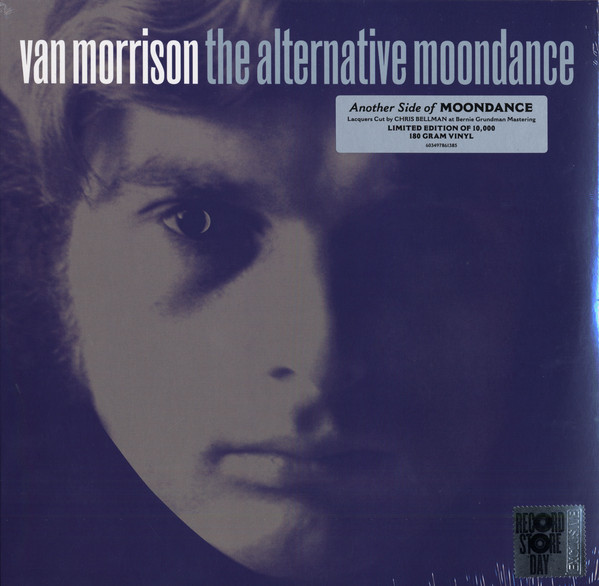
VAN MORRISON-THE ALTERNATIVE MOONDANCE-RECORD STORE DAY 2018 RELEASE.
Van Morrison-The Alternative Moondance-Record Store Day 2018 Release.
Label: Warner Bros Records.
Many critics and record buyers believe that it’s sacrilege to change a classic album in any way, and held their hands up in horror when it was announced that Giles Martin was remixing Sgt. Pepper’s Lonely Hearts Club Band. Steven Wilson must have smiled when he heard this reaction, as he had received the same response when he started remixing parts of the Jethro Tull back-catalogue. The reason for this is that many critics and music fans claim to be “purists,” who “want to hear albums as the band intended.”
These purists even eschew newly remastered versions version of classic albums, and seem suspicious of new technology. Even if the new technology can transform the sound quality of albums that were recorded half a century ago on what’s now regarded as basic equipment. Sadly, these traditionalists aren’t even willing to listen to the newly remixed albums and are missing out on the chance to hear much-loved classic albums in a new way.
If that is the case, they’re never going to embrace and enjoy The Alternative Moondance which was released for Record Store Day 2018 on 180 gram vinyl. It features alternate takes of the songs on Moondance, and shows a new side to Van Morrison’s second classic album.
When Van Morrison began work on his third album Moondance, he had no idea that it would be a career defining Magnus Opus that he would never better. However, he had just released his first classic album Astral Weeks in February 1968, which was a groundbreaking release and a game-changer for Van Morrison.
Astral Weeks.
Having released his 1967 debut album Blowin’ Your Mind, Van Morrison returned in February 1968 with his sophomore album Astral Weeks. It was initially described by some critics as a concept album, but Astral Weeks was more like a song cycle full of symbolism, and was akin to a stream of consciousness that was an exploration of earthy love and heaven. The music was impressionistic, mesmeric and moderne as Van Morrison seamlessly fused jazz, blues, poetry and classical music upon this future classic album.
Although Astral Weeks was released to critical acclaim, the album stalled at fifty-five in Britain and failed to trouble the charts upon its release February 1968. However, much later, Van Morrison’s groundbreaking album Astral Weeks was certified gold in America, and its author was hailed as a part-poet, part-musical visionary. By then, Van Morrison had released his career-defining classic Moondance.
Moondance.
It took Van Morrison the best part of two years to write and record Moondance, which was his first ever album of Caledonian soul. It had taken Van Morrison ten months to write the lyrics to Moondance at his mountaintop home, not far from Woodstock village, in upstate New York. This had been home to Van Morrison and his wife for some time, and he had quickly discovered that it was the perfect place to write his future classic album, Moondance.
Inspired by his surroundings, family and memories, Van Morrison set about writing the lyrics to Moondance that were poetic, evocative, mystical and rich in imagery. Just like an artist used his palette to create pictures, twenty-four year old Van Morrison’s lyrics painted pictures that takes the listener on a series of journeys. Two examples were And It Stoned Me where Van Morrison takes the listener back to the Belfast of his youth, while Caravan conjures up images of living life as a gypsy. These songs and the rest of Moondance were recorded at A&R Studios, in New York.
For the recording of Moondance, Van Morrison recruited his band from musicians based in Woodstock, and they headed along to A&R Studios, in New York. When they got there, they were in for a surprise when they discovered that Van Morrison hadn’t written the music to Moondance. He explained to his band that the music and the arrangements existed in his head. While this could’ve presented a high stumbling block to lesser musicians, somehow, Van Morrison was able to explain to his band what he was hearing in his head as the sessions began in August 1969.
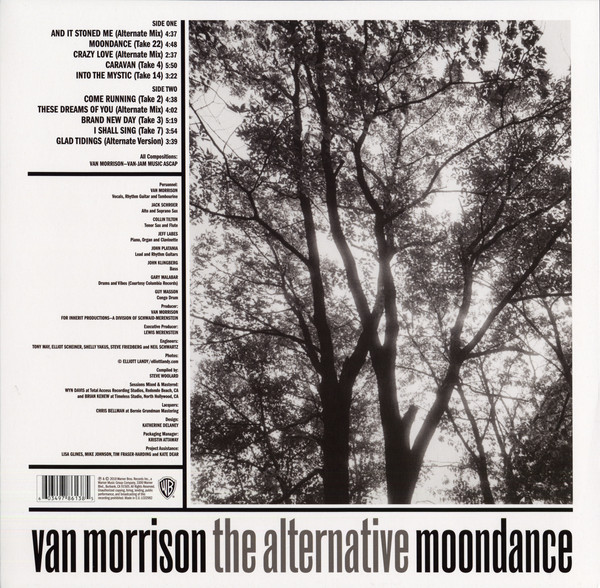
Joining Van Morrison for the Moondance sessions was a rhythm section of drummer, percussionist and vibes player Gary Mallaber, bassist John Kingberg and guitarist John Platania. They were augmented by Jef Labes who played clavinet, organ and piano while Guy Masson played congas. Horns came courtesy of Jack Schroer on alto and soprano saxophone, while Colin Tilton played tenor saxophone and flute. Adding harmonies were The Sweet Inspirations, Doris Troy, Cissy Houston and Jackie Verdell. Van Morrison played acoustic and rhythm guitar, harmonica, tambourine and added the all important vocals on Moondance, which marked his debut as producer. By the time Moondance was completed in September 1969, Van Morrison was on the verge of making history.
When critics and cultural commentators heard Moondance, they hailed it an instant classic, and for once there were no dissenting voices. Moondance was perceived as a coming of age for Van Morrison, who had set the bar high with Astral Weeks, but surpassed it with his much-anticipated followup. Critics called Moondance an ambitious, sprawling, genre-melting epic album where Van Morrison fused elements of blues, country, jazz, rock and soul with were combined with his Celtic roots. The result was a cerebral, challenging and thought-provoking Magnus Opus which showcased the poetic of Van Morrison at the peak of his powers. However, the big question was would Moondance find favour with record buyers?
When Moondance was release, in February 1970, Moondance reached number twenty-nine in the US Billboard 200 and was certified triple-platinum. Across the Atlantic in Britain, Moondance stalled at just thirty-two in the album charts. Already, Van Morrison was more successful in his adopted home country.
Come Running was released as the lead single, but reached just number thirty-nine in the US Billboard 100. Then when Crazy Love was released as a single, it failed to chart. Maybe the problem was, that the singles released from Moondance didn’t work in isolation and were part of something much bigger, which nowadays is regarded as a classic album,…Moondance.
Forty-eight years after the original release Moondance, it was decided that Warner Bros Records would release The Alternative Moondance for Record Store Day 2018. This meant listening to all of all the takes of the ten tracks that were recorded during August and September 1969. In some cases, there in excess of twenty takes of tracks on Moondance and choosing which version to include on The Alternative Moondance wasn’t easy. Eventually, the ten alternate tracks were chosen and became The Alternative Moondance
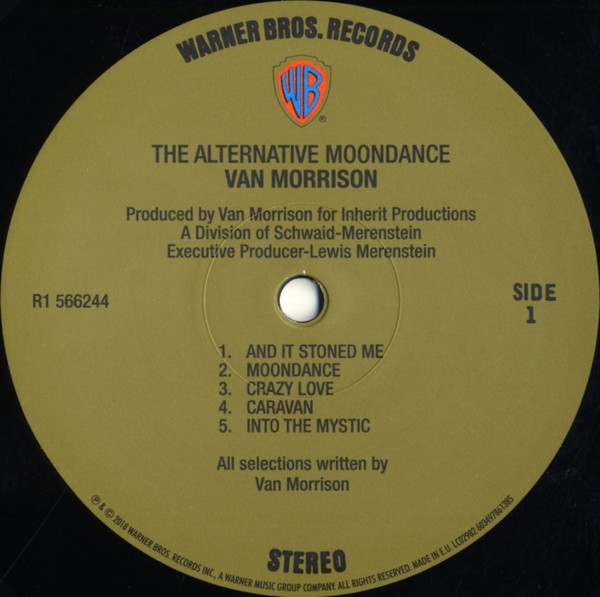
Side One.
Opening Moondance is the Alternate Mix of And It Stoned Me, which is a song about an experience Van Morrison had as a child. He was on his way fishing, when he asked an old man for a glass of water. Van Morrison was given some water that the old man got from a stream, and when he drank it, he remembers time standing still and heading into another dimension. With its mystical, almost surreal lyrics, Van Morrison paints potent pictures. There’s references to rural Ireland, where there’s county fairs and mountain streams and there’s even references veteran jazzer Jelly Roll Morton. It’s as if when Van’s delivering the lyrics, he’s transported back in time. He’s right there, the scene unfolding before him. Behind him, a jazz-tinged piano, rasping horns and the rhythm section provide the perfect backdrop to this outpouring of surreal memories. Later, Van Morrison adds an acoustic guitar that is the perfect foil for the piano which sets the scene for his impassioned vocal, on this stunning fusion of blues, Celtic soul, country and jazz.
Very few songs are as recognisable as Moondance, however Take 22 that has been used for The Alternative Moondance. There’s still the familiar jaunty arrangement, that skips and swings along. It’s driven along by an electric bass, the jazz-tinged arrangement that is played by a band that use mostly acoustic instruments. A guitar, flute, piano, saxophone and drums combine to create a small jazz band. Over-dubbing the flute was a masterstroke, and transforms the tracks. So does the piano solo, before the blazing saxophone panned left takes centre-stage. Together, the band ensures the song swings, as Van Morrison unleashes a vocal masterclass, where he feeds off the band, as he delivers the lyrics about autumn. Suddenly, Van Morrison the poet is painting pictures as evocative, images of Woodstock village where Van wrote Moondance come to mind. Later, as Van Morrison scats and the song reaches its dramatic crescendo.
Crazy Love (Alternate Mix) shows another side of Van Morrison and is an understated ballad, where Van Morrison’s tender, heartfelt and needy vocal is joined by The Sweet Inspirations. They’re the perfect foil to Van Morrison and their tender harmonies soar high above the arrangement. Meanwhile, the band play thoughtfully, taking care not to overpower Van Morrison’s vocal, and the result is an ethereal and beautiful paean, which shows his romantic side.
Flourishes of piano open Caravan (Take 4), which is a song about gypsy life. Straight away, Van unleashes a vocal powerhouse, and Soon, he’s delivering lyrics which are full of imagery. So much so, you can imagine life on the open road, no worries, just days stretching in front of you. There’s a romanticism in the lyrics, which seems idealistic. There’s a melancholy, romantic sound to the song as the band provide the backdrop for the vocal. One minute Van Morrison’s vocal is wistful, the next minute it’s a scat, as he trills. Later, the guitar and Van’s vocal feed off each other and they’re crucial to the song’s success. Meanwhile, the arrangement veers between understated to dramatic as dramatic, blazing join with the piano to add a jazz-tinged sound to this evocative, Joycean track.
Just an acoustic guitar, then meandering, thoughtful bass open Into The Mystic (Take 14). As Van Morrison’s vocal emerges, it’s pensive and thoughtful, while there’s a mysterious sound, as gradually, the understated arrangement unfolds. It’s as if the band are deferring to Van Morrison’s vocal as piano, bass and acoustic guitars and growling, jazzy horns play an important part in the song. Again, imagery and romanticism are omnipresent as Van Morrison describes the sea, and the foghorn blowing as he makes his way home. Just on cue, a saxophone replicates the foghorn, before his vocal grows in power and passion, as he unleashes another of his trademark vocal powerhouses. Along with his band, the lyrics come to life as Van Morrison paints pictures on another of Moondance’s highlights.
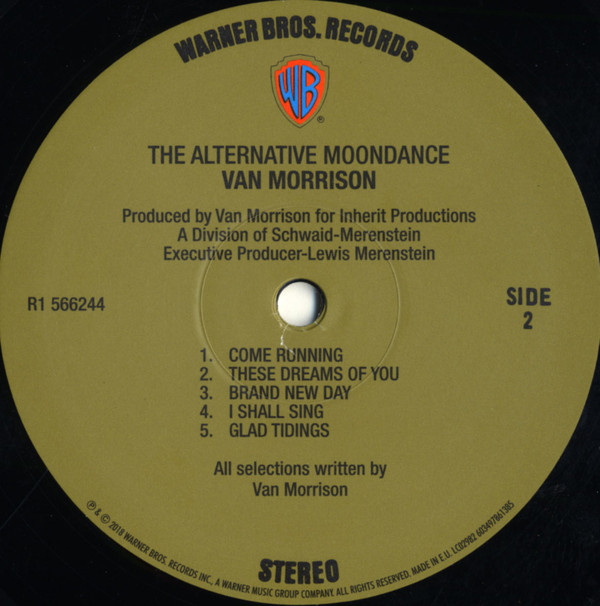
Side Two.
Come Running (Take 2) has a country influence that is apparent from the opening bars. Just the rhythm section, driven along by the bass, and the piano join forces and accompany Van Morrison as he sets the scene with lyrics rich in imagery. So much so, that it’s possible to imagine the train running down the track in the wind in rain carrying Van Morrison’s lover. He’s so sure of that he delivers the line: “you’ll Come Running to me.” There’s a certainty and confidence that almost borders on arrogance, as Van Morrison delivers a feisty vocal and singles of their turbulent relationship that he brings to life during this fusion of blues, country, jazz and rock.
These Dreams Of You (Alternate Mix) is driven along by a bluesy harmonica and the rhythm section, while chiming guitars accompany Van Morrison’s grizzled, heartbroken vocal. There’s a reason for this heartache as he dreamt his idol Ray Charles had been assassinated. Soon the song becomes a mini soap opera as growling horns and Hammond organ are dropped in and ensure the song swings as Van Morrison lays bare his soul and dreams for all to hear.
Brand New Day (Take 3) has a melancholy sound as piano and country guitars combine, while Van Morrison’s vocal is slow and full of hope, hope for the future. He wrote the song when he was having problems spiritually, and what follows is a cathartic outpouring of doubt. Cleansed of this doubt, it’s as if he’s been spiritually reborn as his life begins again. His masterstroke on Brand New Day was having The Sweet Inspirations add gospel-tinged harmonies, which are dramatic and spiritual, and the perfect accompaniment to Van Morrison during this song about his spiritual awakening.
Replacing Everyone on The Alternative Moondance is I Shall Sing (Take 7). Many fans of Van Morrison’s music will see this as a controversial omission as the track is part of this classic album. Having said that, Everyone was always regarded as very different from the rest of Moondance and it could be argued that the uptempo and celebratory I Shall Sing which features Van Morrison and his band in full flight may be a better fit. Personally, I would’ve preferred to see alternate take of Everyone which would’ve made the album The Alternative Moondance.
Closing The Alternative Moondance is the Alternate Version of Glad Tidings. Inspiration from the song came from a letter Van Morrison received that said: “Glad Tidings” from London. With its R&B and soul influence, it’s as if Van Morrison’s been inspired by labels like Fame and Stax as a joyous, celebratory sounding track unfolds. Later, Van Morrison’s vocal becomes a scat and vamp, as horns blaze, growl and rasp, punctuating the arrangement while the rhythm section provide the heartbeat and a Hammond organ adds its atmospheric sound. Meanwhile, Van Morrison seems determined to close Moondance on a high and encourages his band, he vamps his way through this joyful, celebratory track which is a fitting way to end what’s a alternative version of a classic album.
For fans of Van Morrison’s music The Alternative Moondance is an album that shows another side to his second classic album. It’s an interesting take on what was a groundbreaking, career-defining album that Van Morrison would never surpass. Meanwhile, The Alternative Moondance is best described as a companion to Moondance and certainly isn’t meant as a replacement for this classic album.
The Alternative Moondance is just the latest reissue of Van Morrison’s classic album, and these tracks have been released before on a five CD deluxe edition of Moondance. However, nobody has tried to program The Alternative Moondance until Record Store Day 2018 when Warner Bros Records released as a limited edition of 10,000.
Just like similar types of albums, where alternative versions of classic albums are released, The Alternative Moondance is sure to provoke debate amongst Van Morrison’s fans. Some will enjoy hearing this different version of Moondance, while purists will dismiss it out of hand as a gimmick. Others will regard The Alternative Moondance as a controversial album given the omission of Everyone. That was a brave call and one that may well result in criticism from those who would rather have heard the alternative version of Moondance featuring the same songs as the original album. Despite that, The Alternative Moondance is an interesting concept and is a new way to discover Van Morrison’s finest album.
Following up Astral Weeks was never going to be easy for Van Morrison, despite the fact that he had only released two albums. However, just his sophomore album Astral Weeks, Moondance was a classic album that showcased one of the most talented singer-songwriters of his generation.
Van Morrison’s lyrics are on Moondance are poetic, evocative, mystical and are full of imagery, Pictures unfold before the listener’s eyes as he takes them on a series of journeys. Some of these songs were inspired by everyday life, while other introduce the listener to a cast of characters and variety of scenarios. Other tracks feature lyrics that are almost mystical and surreal, while Crazy Love and Come Running find Van Morrison singing about love, and love gone wrong. Brand New Day is powerful and poignant track about Van Morrison’s spiritual awakening. However, the best known song on Moondance is the classic title-track, Moondance, which since 1970, has been a staple of radio stations everywhere. It’s one of the best known songs Van Morrison wrote, while Moondance is perceived as Van Morrison’s finest album.
Incredibly, Van Morrison began writing Moondance when he was twenty-three, and completed the album and the tracks that feature on The Alternative Moondance before he was twenty-five. Forty-eight years and thirty-six albums later and Van Morrison has yet to surpass his career-defining classic Moondance, which belongs in every record collection. Many Van Morrison fans will also be keen to add The Alternative Moondance to their collection and compare and contrast the two albums.
While The Alternative Moondance is a welcome release and is one of the best ‘alternative’ albums that has been released over the last couple of years, the original version of Moondance was Van Morrison’s Magnus Opus, and is the definitive version of this classic album.
Van Morrison-The Alternative Moondance-Record Store Day 2018 Release.
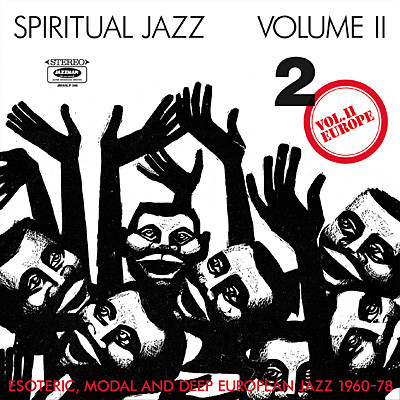
SPIRITUAL JAZZ VOLUME 2: EUROPE (ESOTERIC MODAL AND DEEP EUROPEAN JAZZ 1960-1978.
Spiritual Jazz Volume 2: Europe (Esoteric Modal and Deep European Jazz 1960-1978).
Label: Jazzman Records.
Twenty years ago, in 1998, Jazzman Gerald was one of a number of people who noticed that the demand for old jazz, funk and soul albums and singles was outstripping the supply, which meant that many record buyers were being priced out of the market. That was unless they were willing to purchase a bootleg copy of the album. However, many record buyers weren’t willing to buy bootlegs as the artist didn’t receive any royalties, and often the sound quality was extremely poor. Jazzman Gerald realising all this, knew that there had to be another way, and one day, decided to found his own record label, Jazzman Records.
Jazzman Gerald’s plan was to reissue his favourite rarities legally on vinyl and whenever possible, involve the artist in the reissue, by having them tell their story of the album. Over the next ten years, Jazzman Records released many lovingly curated releases which allowed a new audience to discover jazz, funk and soul rarities. This continued in 2008 as Jazzman Records prepared to release the first instalment in a new compilation series Spiritual Jazz.
This was Spiritual Jazz-Esoteric, Modal And Deep Jazz From The Underground 1968-77 which was released to critical acclaim in 2008. Little did anyone realise, and maybe not even Jazzman Gerald that this was the start of successful series that would still be going strong a decade later.
Four years after the first instalment in the series, Spiritual Jazz Volume II-Europe (Esoteric Modal and Deep European Jazz 1960-1978) was released in 2012 and features tracks by the Erich Kleinschuster Sextett, Michael Garrick Sextet, Raphael, Barney Wilen, Nicolai Gromin, Wroblewski Jazz Quintet, Pedro Iturralde and Hans Dulfer and Ritmo-Natural. Unsurprisingly, critical acclaim accompanied this lovingly curated compilation which was released on vinyl and CD.
Six years later, and original copies of Spiritual Jazz Volume II-Europe (Esoteric Modal and Deep European Jazz 1960-1978) are extremely desirable and nowadays, are regarded as collector’s items. Fortunately, Jazzman has just repressed the two LP set of Spiritual Jazz Volume II-Europe (Esoteric Modal and Deep European Jazz 1960-1978), which will please many jazz fans.
Side One.
Erich Kleinschuster Sextett’s Communion opens side one of Spiritual Jazz Volume II-Europe (Esoteric Modal and Deep European Jazz 1960-1978). It’s taken from the 1970 album Oberwarter Messe, which was released in Austria by Columbia. It’s soulful, spiritual, cinematic and sometimes is ruminative encouraging the listener to reflect during this musical Communion.
In 1963, the Albert Mangelsdorff Quintet released their debut album Tension on CBS. One of the highlights of the album was Varié, which was an eight minutes of rueful, dramatic music that married elements of avant-garde with post bop to create a timeless track.
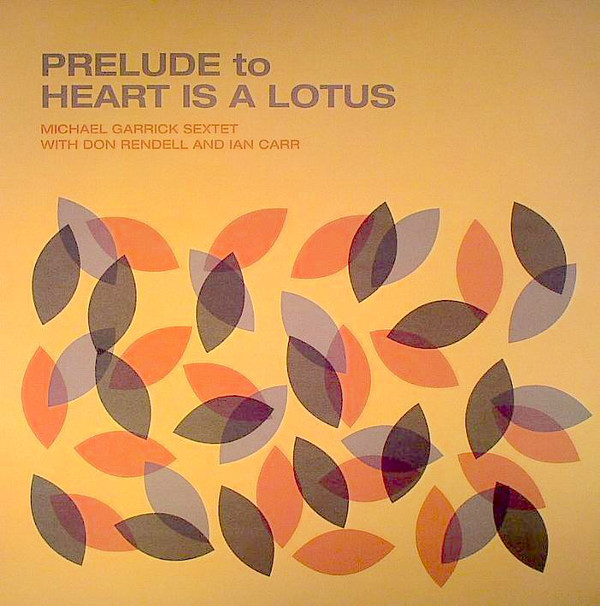
Nearly seven years after his death on the ‘11th’ of November 2011, pianist, band leader, and composer Michael Garrick is regarded as one of the legends of British jazz. When he led the Michael Garrick Sextet, which released four albums between 1965 and 1970, the lineup featured the great and good of British jazz, including Don Rendell and Ian Carr. The Michael Garrick Sextet had recorded a fifth album at the BBC Maida Vale Studios 1968, with Don Rendell and Ian Carr. This was Prelude To Heart Is A Lotus, which lay unreleased for forty-five years. The first many jazz fans heard of the album was when Temple Dance featured on Spiritual Jazz Volume 2: Europe (Esoteric Modal and Deep European Jazz 1960-1978). However, a year later Temple Dancer featured on Prelude To Heart Is A Lotus which released by Gearbox Records and credited to Michael Garrick Sextet With Don Rendell and Ian Carr. One of the highlights of this hidden gem was Temple Dancer which features a flawless piano solo by Michael Garrick during an evocative track that is rich in imagery.
Side 2.
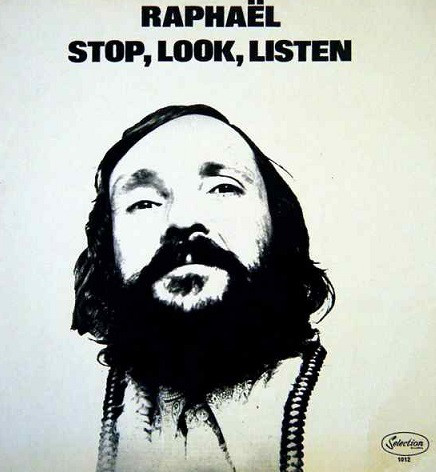
Phil Raphael only ever released the one album as Raphael, which was Stop, Look, Listen, which was released by Selection Records who were a library music label. Archangelo which featured on Stop, Look, Listen features an ethereal vocal which plays a starring role in the sound and success of this filmic track.
Barney Wilen was born in Nice, France and played alongside many giants of jazz, and at one time was a member of Art Blakey and The Jazz Messengers, The Miles Davis Quintet and Roy Haynes Sextet. However, Barney Wilen was also a bandleader and solo artist and in 1972, released the album Moshi on the French label Saravah. It featured Africa Freakout, which is a much more experimental sounding track as Barney Wilen plays with freedom and an inventiveness during this fine example of free jazz.
Side Three.
One of the obscurities on the compilation come courtesy of Russian Jazz guitarist Nicolai Gromin, who recorded Corrida for 1965 Young Moscow Jazz Ensembles LP. Nicolai Gromin was joined by drummer Valery Bulanov, bassist Andrey Yegorov and alto saxophonist Georgy Garanyan who plays an important role in this beautiful, but melancholy, mournful emotive example of Soviet jazz.
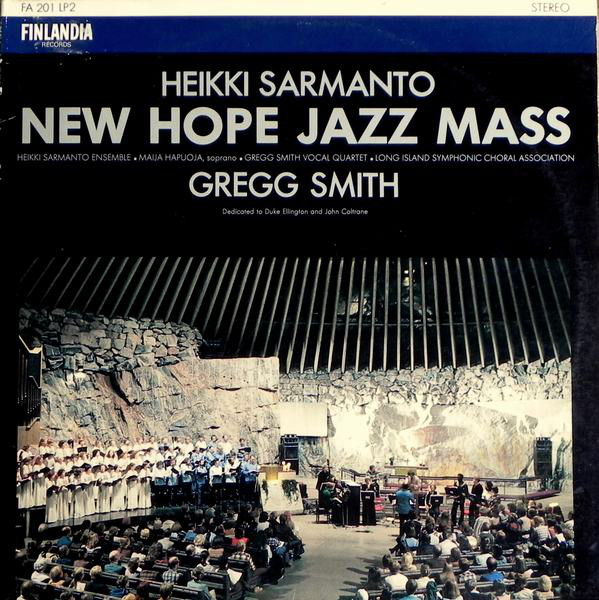
Heikki Sarmanto manages to pay homage to two legends of jazz on Duke and Trane, which is taken from his 1979 album New Hope Jazz Mass. It was recorded during a concert that took place on September the ‘7th’ 1978, at the Temppeliaukio Church, in Helsinki. Joining Heikki Sarmanto was the Long Island Symphonic Choral Association who add a soulfulness that borders on the spiritual during this ten minute fusion of modal and free jazz.
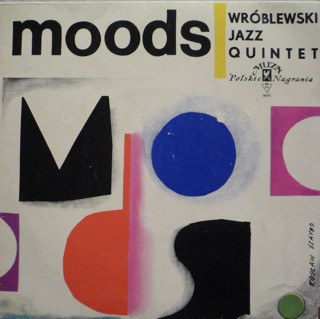
In 1960, the Wroblewski Jazz Quintet released their Moods Jazz Jamboree 1960 Nr 3 EP on the Polskie Nagrania Muza label. Languishing on the B-Side was Nana Imbroro, which breezes along, thanks to Jerzy Milian’s vibes and Jan Ptaszyn Wróblewski’s tenor saxophone. This hidden gem in another welcome addition to Spiritual Jazz Volume 2: Europe (Esoteric Modal and Deep European Jazz 1960-1978).
Side Four.
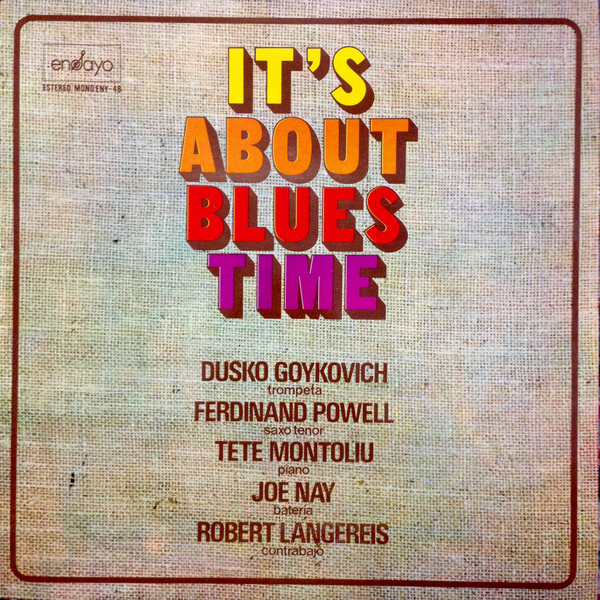
Trumpeter and flugelhorn player Dusko Goykovic was born in Jajce, Yugoslavia, which later became Bosnia, in 1931. By the time he released It’s About Blues Time, on the Spanish label Ensayo, in 1972, he was an experienced and versatile musician. Proof of that was Bosna Calling, which was one of the highlights of It’s About Blues Time which is an underrated album of European modal jazz.
In 1967, Spanish saxophonist Pedro Iturralde released his debut album Jazz Flamenco! It was released on the Hispavox label, and featured Las Morillas De Jaen where Pedro Iturralde seamlessly marries modal jazz and flamenco.
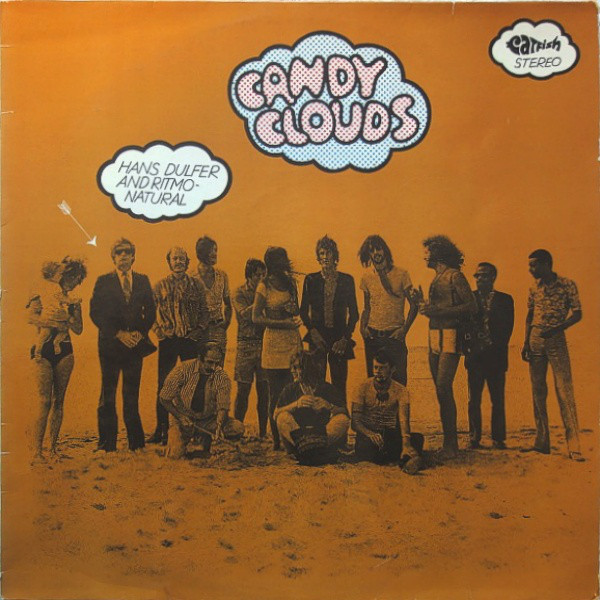
Closing Spiritual Jazz Volume 2: Europe (Esoteric Modal and Deep European Jazz 1960-1978) is Hans Dulfer and Ritmo-Natural’s Candy Clouds (Part 2) which is taken from their 1970 genre-melting album Candy Clouds. It was released on the Catfish label, and Candy Clouds (Part 2) which is an example of a freer style of fusion on this melodic and memorable track. It’s the perfect way to close any compilation of European jazz.
Especially one as good as Spiritual Jazz Volume 2: Europe (Esoteric Modal and Deep European Jazz 1960-1978), which was originally released by Jazzman Records in 2012 on CD and as a two LP set. Recently, Jazzman Records decided to repress the vinyl version of Spiritual Jazz Volume 2: Europe (Esoteric Modal and Deep European Jazz 1960-1978), which is one of the finest instalments in this long-running series.
Six years after Spiritual Jazz Volume 2: Europe (Esoteric Modal and Deep European Jazz 1960-1978) was released, Jazzman released Spiritual Jazz Volume 8 Japan: Parts I and II, is another of the highlights of this lovingly curated compilation series which focuses on the spiritual side of jazz. It’s been neglected for too long, but over the past few years, labels like BGP and BBE have joined Jazzman Records in turning the spotlight on spiritual jazz from the four corners of the world.
For anyone yet to discover the delights of spiritual jazz, then there’s the eight vocals of Jazzman’s long-running and carefully curated compilation series. Two of the highlights of the series are Spiritual Jazz Volume 8 Japan: Parts I and II and Spiritual Jazz Volume 2: Europe (Esoteric Modal and Deep European Jazz 1960-1978), which both feature contributions from familiar faces and hidden gems a plenty that are a tantalising taste of the oft-overlooked world of spiritual jazz. However, the recently repressed copies Spiritual Jazz Volume 2: Europe (Esoteric Modal and Deep European Jazz 1960-1978) are sure to sell out quickly, so it’s a case of get the compilation while you can, and discover the delights of some deeply esoteric modal and deep European jazz from what is regarded as a golden era for this underrated genre.
Spiritual Jazz Volume 2: Europe (Esoteric Modal and Deep European Jazz 1960-1978).


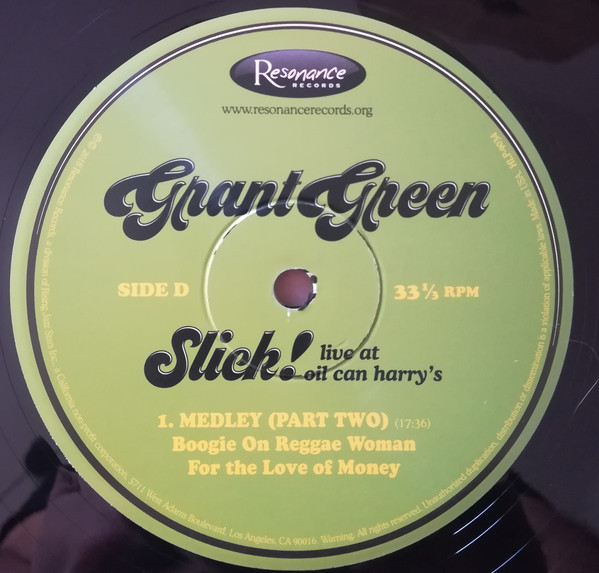
GRANT GREEN-SLICK! LIVE AT OIL CAN HARRY’S-RECORD STORD DAY 2018 EDITION.
Grant Green-Slick! Live At Oil Can Harry’s-Record Store Day 2018 Edition.
Label: Resonance Records.
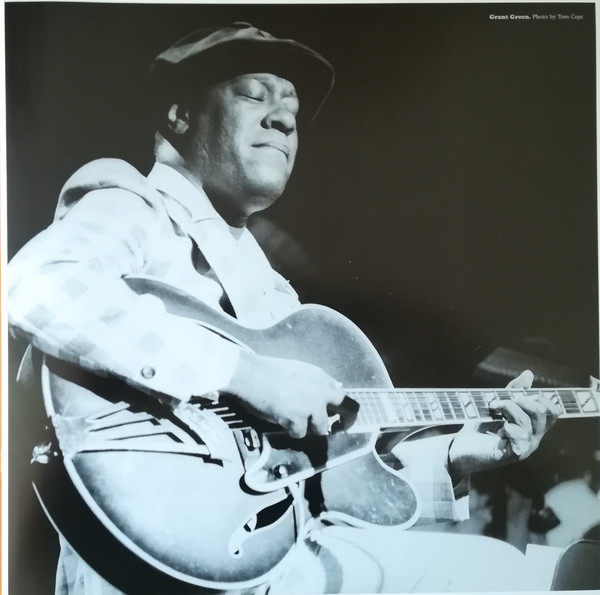
Nowadays, guitarist Grant Green is best known for the jazz and soul-jazz albums that he recorded for Blue Note Records during the sixties. However, that was only part of the Grant Green story, and by 1969, he had changed direction and was playing jazz-funk.
This came as a surprise to many of his fans, but Grant Green knew that if he didn’t reinvent his music, he risked becoming musically irrelevant. This was something that Grant Green wasn’t going to risk, and when he resigned to Blue Note Records in 1969 after spending two long years battling heroin addiction, this was the start of his jazz-funk years.
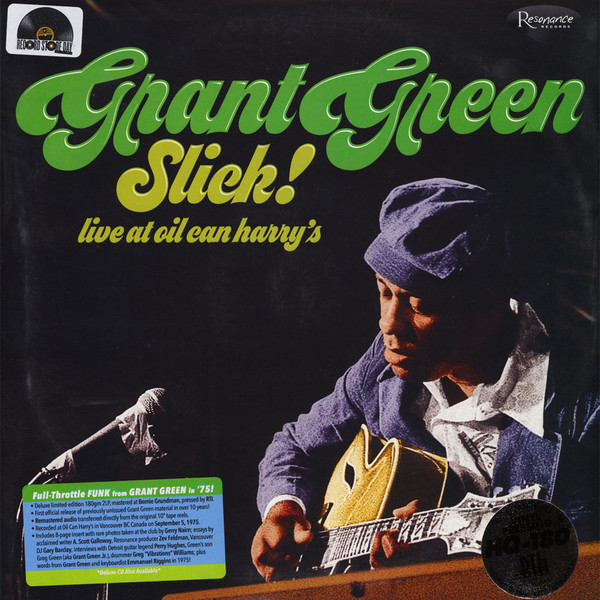
Grant Green spent the remainder of his career playing and recording albums jazz-funk with various bands. This included the quintet that accompanied him on Slick! Live At Oil Can Harry’s, which was released by Resonance Records for Record Store Day 2018 as a double album. Just like Funk In France From Paris To Antibes 1969-1970 which was also released Record Store Day 2018, Slick! Live At Oil Can Harry’s none of the tracks have been released before and are a reminder of Grant Green later career.
Grant Green was born on the ‘6th’ of July 1931, in St. Louis, Missouri, and the man who would later became one of jazz’s unsung heroes and most underrated guitarists became a professional musician when he was still a teenager. For the early part of his career, Grant Green was content to play in his home town of St Louis and around East St Louis. Initially, he had no inclination to move to New York until Lionel Hampton persuaded him to make the move in 1959.
A year later, in 1960, Grant Green was introduced to Alfred Lion the cofounder of Blue Note Records, who signed the twenty-nine tear old guitarist to one of jazz’s premier labels.
The Blue Note Records Years.
Between 1960 and 1965, Grant Green recorded a total of twenty-two albums for Blue Note Records as bandleader leading trios, quartets, quintets and sextets. Fourteen of these albums were released between 1960 and 1965, with the remainder released by Blue Note Records during the seventies and eighties. However, by 1965 Grant Green was already one of jazz music’s rising stars and had come a long way in five years.
Although Grant Green was a prolific recording artist between 1960 and 1965, he also found time to work with many of the other artists signed to Blue Note Records. This was akin to the great and good of jazz, and before long, Grant Green was the go-to-guitarist for many artists signed to Blue Note Records. However, within the space of two years Grant Green’s life had been transformed.
Detox In Detroit.
As 1967 dawned, Grant Green was in throes of heroin addiction which was threatening to derail his burgeoning career. Just like so many jazz musicians before him, Grant Green had succumbed to heroin, not knowing how addictive the drug was. By 1967, heroin had sunk its claws into Grant Green and was desperate to free himself from its grasp. That was why in 1967, Grant Green made the decision to move to Detroit where he would turn his back on the local music scene while he tackled his heroin addiction.
Grant Green moved his family to Detroit which became his home for the next two years as he set about beating his addiction to heroin. During 1967 and 1968, Grant Green deliberately avoided the local music scene, where he knew drugs would be freely available. He wasn’t willing to put temptation in his way having come so far, and beaten his addiction to heroin. Now he was ready to return to the Big Apple, and rebuild his career.
The Return To Blue Note Records.
After two years away, Alfred Lion resigned a newly reinvigorated Grant Green to Blue Note Records in 1969. By then, Grant Green was a changed man, and although he looked older, and his hair was starting to thin, he looked much healthier than he had two years previously.
Grant Green had also put together a new band and was moving in a new direction musically. Rather than jazz, Grant Green’s new band were playing a much funkier type of music. This new music was showcased by Grant Green during a European tour.
Having re-signed to Blue Note Records, Grant Green joined Larry Ridley and Don Lamond on a European tour, where each of the three guitarists took to the stage with the band that travelled with them, and played a short set. After the three sets, the three guitarists joined forces, and played together showcasing their considerable skills. Grant Green would return to France in October 1969, but before that, had his comeback album to record.
On the ‘3rd’ of October 1969, Grant Green and his band headed to Van Gelder Studio, Englewood Cliffs, New Jersey, to record his comeback album Carryin’ On. It found Grant Green leading a sextet on an album which marked a stylistic change for the thirty-eight year old guitarist. Carryin’ On was the first album of jazz-funk that Grant Green recorded and was the sound he embraced for the rest of his career.
Having recorded Carryin’ On, which was released in the spring of 1970, Grant Green started preparing to return to Paris, France, later that month. This was something of a surprise for Grant Green.
In the October 1969 edition of Jazz Magazine, an announcement that ORTF’s Guitar Night was due to take place at the headquarters of French National Radio with a ‘dream lineup’ of Barney Kessel, Kenny Burrell and Tal Farlow all featuring on the ‘26th’ of October. As soon as the event was announced, French jazz fans were looking forward to three of their favourite guitarists. That was until one was forced to withdraw from the event.
This was Tal Farlow, who had been suffering from asthma attacks and was unable to make the journey to France. For the organisers this was a disaster, but by the time next edition of Jazz Magazine was published, a replacement had been found…Grant Green.
While Grant Green was one of the biggest names in American jazz, French jazz fans didn’t appreciate the talented St Louis born guitarist. When Jazz Hot ran its reader’s poll, Grant Green ended up in eighth place in the list of guitarists. As a result, the announcement of Grant Green as Tal Farlow’s replacement was greeted with a lack of enthusiasm. It was going to take a lot for Grant Green to win over the French jazz fans.
When Grant Green arrived in Paris to play at the ORTF’s Guitar Night on the ‘26th’ of October 1969, he was joined by a slightly different, and slimmed down lineup of his band. Grant Green was about to lead a trio, which didn’t feature his usual drummer Idris Muhammad, who was unable to make the trip. Instead, drummer Don Lanond, bassist Larry Ridley and Grant Green would take to the stage at Studio 104, La Maison De Le Radio. That night, Grant Green took to the stage first, and initially, the audience weren’t exactly enthusiastic. However, by the time he left the stage, Grant Green had won over the audience, who realised they had underestimated the guitarist. Forty-nine years later, Grant Green’s performance featured on Funk In France From Paris To Antibes 1969-1970.
Buoyed by the reception at Studio 104, La Maison De Le Radio, on the ‘26th’ October 1969, Grant Green headed home, and this new chapter in his career continued apace. This included recording a new album.
Green Is Beautiful was recorded at Rudy Van Gelder Studio, Englewood Cliffs, New Jersey, on January the ’30th’ 1970, and featured a very different lineup of Grant Green’s band. This time around, Grant Green led an octet that featured drummer Idris Muhammad, bassist Jimmy Lewis and conga player Cándido. The expanded lineup of Grant Green’s band worked their way five cover versions as the bandleader continued his journey into jazz-funk.
In the spring of 1970, Carryin’ On was released and showcased Grant Green’s new jazz-funk sound. Carryin’ On was well received, although some of Grant Green’s older fans weren’t won over by the album. They preferred his earlier albums, although a new audience embraced Grant Green’s newly updated sound. Later, Carryin’ On proved popular amongst collectors of acid jazz and rare groove.
By July 1970, Green Is Beautiful was released and found Grant Green growing into his new sound on an album that featured a tougher, funkier, brand of R&B. This new sound Grant Green was about to showcase at the Festival Mondial du Jazz Antibes, in 1970.
Grant Green’s appearance at the Festival Mondial du Jazz Antibes is also documented in Funk In France From Paris To Antibes 1969-1970, and documents his transition from jazz to jazz-funk. This became Grant Green’s trademark sound for the rest of his career.
Following his return from the Festival Mondial du Jazz Antibes, his new album Visions was released by Blue Note Records in late summer of 1971 and was reasonably well received. It wasn’t regarded as a Grant Green classic, and nor was Shades Of Green, which was released by Blue Note Records to mixed reviews in late 1971. Not every critic was convinced by Grant Green’s decision to reinvent himself and move in the direction of jazz funk.
The following year, 1972, Grant Green made history when he released The Final Comedown on Blue Note Records. It was the first soundtrack album the label had released, and what was Grant Green’s first venture into the world of soundtracks was well received by critics and later, and a cult following amongst fans of Blaxploitation soundtracks.
On April the ’21st’ 1972, Grant Green arrived at the Lighthouse Café, Hermosa Beach, California, to record another live album. This became Live At The Lighthouse, which was released later in 1972 and features one of his best performances of the jazz-funk era. He rolls back the years on Live At The Lighthouse which features some virtuoso performances by the bandleader and some peerless interplay. This was fitting as Live At The Lighthouse was the last album Grant Green recorded for Blue Note Records.
When Grant Green left Blue Note Records in 1974, it marked the end of an era, as he had spent his entire career signed to the label. He had signed to the label in 1960 and left for the first time in 1967. After spending two years detoxing in Detroit, Grant Green re-signed to Blue Note Records in 1969. That was the start of his jazz-funk years, which would continue even after Grant Green left Blue Note Records.
By 1975, Grant Green’s career had stalled and he found himself at a crossroads. He was living in Detroit and found himself without a record label for the first time in his career, and record labels weren’t exactly fighting for his signature. That wasn’t a surprise, as the albums he had released for Blue Note Records during the seventies varied in quality. His albums lacked the consistency that he had enjoyed earlier in his career. This meant that some record companies may have been reluctant to sign the forty-year old guitarist. However, Grant Green was determined to get his career back on track.
The problem was that Grant Green’s music wasn’t finding a younger audience. Mostly, his music was popular amongst older jazz fans who had discovered his music during his first spell with Blue Note Records. However, even some of his long-term fans had turned their back on Grant Green during his jazz-funk years, and the audience for his music was becoming smaller. Grant Green knew that he needed to do was attract a younger audience.
This was easier said than done, and Grant Green vowed to make himself fan friendly. He wanted to be seen as approachable and connect with his fans when he played live. The last thing he wanted to do was alienate his fans, and he vowed to take care not to be seen as aloof, and was always approachable when he arrived at a venue to play live. Now that he had no record contract, playing live was putting food on the table. This included the gig that Grant Green pencilled into his diary on September the ‘5th’ at Oil Can Harry’s, in Vancouver, Canada.
Slick! Live At Oil Can Harry’s.
By the time Grant Green was booked to play the gig at Oil Can Harry’s, the forty-year old bandleader and guitarist in the middle of his pop-funk period, and at home, was listening to what can only be described as an eclectic selection of music. This included everything from The Beatles, and Bobby Womack right through to the self-styled godfather of funk James Brown, Stanley Clarke, Stevie Wonder, The Ohio Players and The O’Jays. These artists and bands would influence and inspire Grant Green when he led his band on September the ‘5th’ at Oil Can Harry’s, which was being recorded for posterity.
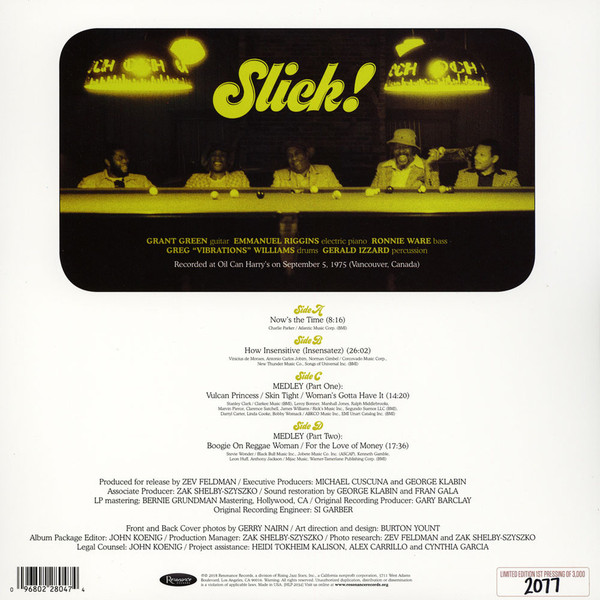
By the time the gig at Oil Can Harry’s arrived, Grant Green’s band featured a number of familiar faces who had worked with him when he was signed to Blue Note Records in the early seventies. The rhythm section featured drummer Greg Williams and bassist Ronnie Ware while Emmanuel Riggins on Fender Rhodes and percussionist Gerald Izzard joined guitar Grant Green.
When Grant Green took to the stage at Oil Can Harry’s, he was introduced by Vancouver based DJ Garry Barclay, who explains that the show was going to be played live a week later on CHQM-FM radio station. As soon as the applause died down, Grant Green’s jazz-tinged guitar rings out, and he plays the first few notes of a brisk cover Charlie Parker’s Now’s The Time. It had a been a favourite of Grant Green when he played live during the early seventies. He’s accompanied by a walking bass, the soulful chitchat of the drums and congas while the Fender Rhodes fills out the arrangement and adds a warmth. Meanwhile, Grant Green rolls back the years playing with speed and fluidly as the track is extended to nine majestic and almost flawless minutes. However, just a couple of times, Grant Green fluffs a line, during what’s a glorious example of bop blues.
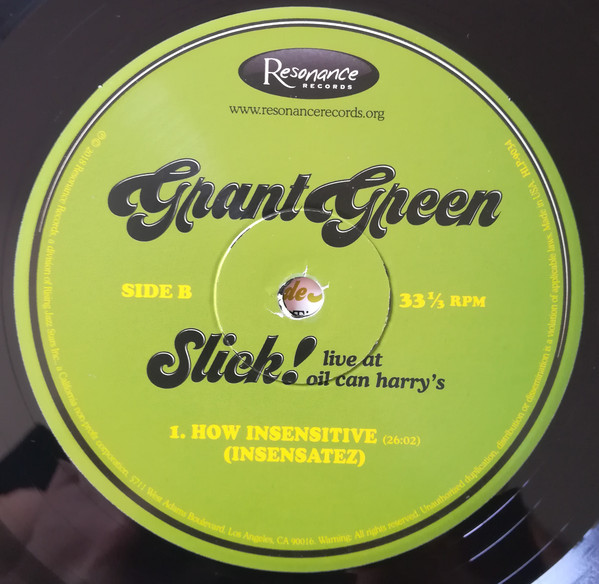
Very different is the cover of Antonio Carlos Jobim’s How Insensitive (Insensatez), which seems an unlikely track for Grant Green to cover. Unlike many other jazz guitarists, Grant Green hadn’t embraced samba, but with the help of his band delivers a sympathetic cover of this familiar track which allows the guitarist and bandleader to showcase his talent and versatility during this twenty-eight minute epic.
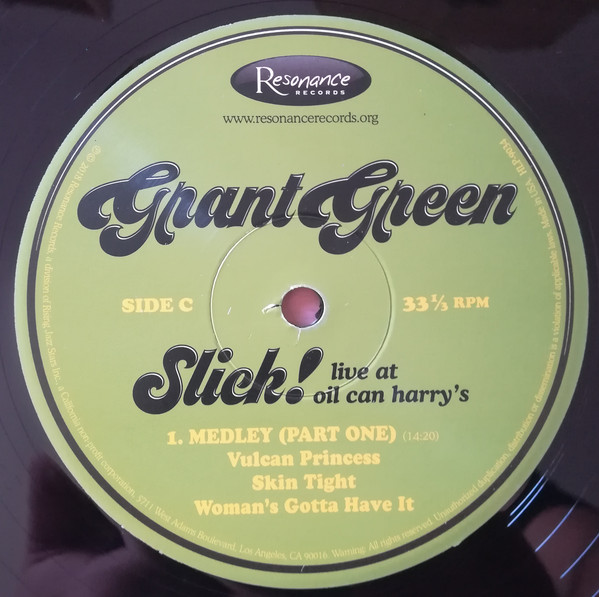
Slick! Live At Oil Can Harry’s closes with a medley that opens with Stanley Clarke’s Vulcan Princess which is initially haunting and otherworldly before veering between funk and fusion, while the Ohio Players’ Skin Tight is sensual and funky. After that, a brief burst of Marvin Gaye’s Trouble segues into soul man Bobby Womack’s Woman’s Gotta Have It. Here, Grant Green rolls back the years during a musical masterclass on this uber funky track where a bluesy bridge brings in a verse of the sunshine funk of Stevie Wonder’s Boogie On Reggae Woman. Closing the medley is a The O’Jays’ Philly Soul favourite For The Love of Money, which is reinvented and becomes funky and soulful as this thirty-two minute, five song medley draws to a close. It’s no ordinary medley and this genre-melting opus is spread across sides three and four of Slick! Live At Oil Can Harry’s. During this genre-melting medley that takes a series of twists and turns, as Grant Green and his band seamlessly switch between musical genres and showcase their talent and versatility, before taking a well deserved bow.
Sadly, after concert that recently became Slick! Live At Oil Can Harry’s, which was recorded on September the ‘5th’ 1975, very few of Grant Green’s concerts were recorded. At the time, Grant Green and his band most likely thought that there was plenty of time to record live albums in the future. Sadly, that wasn’t to be.
In 1976, Grant Green recorded The Main Attraction for Creed Taylor’s Kudu imprint, and when this album of funky soul-jazz was released critics weren’t impressed. After that, Grant Green left Kudu and didn’t record another album until 1978.
This was Easy, which was recorded between the ‘17th’ and ‘20th’ April 1978, for the Versatile label. However, when the album which is also known as Last Session was released later in 1978, tragedy had struck.
Grant Green’s health had deteriorated during 1978, and he was forced to spend much of that year in hospital. During this period, Grant Green wasn’t earning money, and before long the guitarist’s finances were in a perilous state.
Against doctor’s advice, Grant Green headed back out on the road to try to make some much-needed money. His final gig was at his fiend George Benson’s Breezin’ Lounge in New York, but sadly, Grant Green collapsed in his car of a heart attack and died on January the ’31st’ 1979 aged just forty-three. That day, jazz music lost one of its great guitarists.
His recording career belatedly began in 1960 when twenty-nine year old Grant Green signed to Blue Note Records for the first time. This was the label that Grant Green called home for the majority of his career, and where he recorded the best music of his career. This included the start of Grant Green’s jazz-funk years, which continued after he left Blue Note Records.
By the time he left Blue Note Records in 1974, Grant Green’s best years were behind him, and neither The Main Attraction nor Easy matched the quality of albums he had released during the Blue Note Records’ years. Despite that, Grant Green and his band gave an almost flawless performance when they took to the stage at Oil Can Harry’s on the ‘5th’ of September 1975 and flitted between blues bop, funk, fusion, jazz and jazz-funk. Fortunately, the CHQM-FM radio station had the tapes running at Oil Can Harry’s, but sadly, they weren’t unearthed by Resonance Record until 2017.
These tapes became Live At Oil Can Harry’s which Resonance Record released as a double album for Record Store Day 2018. Live At Oil Can Harry’s which is a hidden gem, is a welcome release, and a reminder of one of jazz’s unsung heroes and most underrated guitarists, as he rolled back the years one final time, during what sadly, proved to be the twilight of his career
Live At Oil Can Harry’s Record Store Day 2018 Edition.

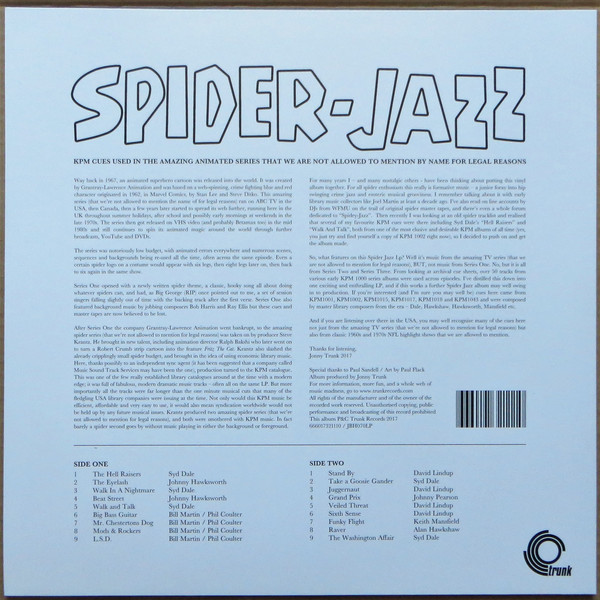
SPIDER-JAZZ.
Spider-Jazz.
Label: Trunk Records.
Anyone who grew up in the late-sixties will have fond memories of the original series of Spiderman cartoon series, which was created by Grantray-Lawrence Animation, and made its television debut on ABC-TV in 1967, just five years after the crime fighting superhero made his debut in Marvel Comics. Spiderman was created by Stan Lee and Steve Ditko, who watched as their web-spinning superhero became a favourite of a generation of American then Canadian children.
Sadly, it was a few years later, before Spiderman made his debut on British televisions, and quickly became a favourite of children and adults, who were brought reading this classic comic book during the early sixties. By the late-seventies, Spiderman was a familiar face on weekend television, but by then, many older children who had grown up watching the original series, saw it with new eyes.
The original version of Spiderman had been made on a low-budget, and there were numerous errors, and many background, sequences and scenes had been re-used, often within the same episode. Many teenagers took great delight in pointing out mistakes, including in one episode where the spider logo on Spiderman’s costume initially had six legs, then eight legs and back to six later in the show. Cue howls of laughter from teenagers across Britain.
Despite the errors in the original series of Spiderman, many people of a certain age still have fond memories of this memorable cartoon series. Especially the music, which by the series one featured a new theme tune, where session singers sung the praises of Spiderman and background music penned by composers Bob Harris and Ray Ellis. Sadly, it’s believed that the master-tapes to the music no longer exist.
Following series one of Spiderman, Grantray-Lawrence Animation became insolvent and later, were declared bankrupt. This was the start of a new chapter for Spiderman, and producer Steve Krantz decided to bring in new personnel to work on the next series, including animation director Ralph Bakshi. The only problem was that Steve Krantz decided to cut the budget to Spiderman, and what was already a low-budget production became an extremely low-budget production. However, Steve Krantz’s other idea was something of a masterstroke, when he decided to use one of the many library companies that were providing the music for commercials, film, radio and television.
The library company that Steve Krantz chose was KPM, which by then, was one of the top providers of library music. It had a vast library of music that had been recorded on spec, but also had access to the talented and versatile songwriters, arrangers, producers and musicians who were capable of writing and recording music to match themes or moods for a film or television show. This was just what Steve Krantz needed as KPM had already established a reputation for producing modern dramatic music that was miles ahead of the library music produced by the nascent American companies. Proof of this is the music on Spider-Jazz which has just been released on vinyl by Trunk Records and is a reminder of what was a golden era for KPM Music, which was one of the elder statesman of British library music.
While American library music companies were relatively new, the origins of KPM Music can be traced back over two centuries.
KPM Music.
Robert Keith founded a comp[any in 1780, to make of musical instruments, and fifty years later, in 1830, entered into a partnership with William Prowse, a music publisher. The newly formed partnership was named Keith Prowse Music (KPM), and over the next hundred years, the company grew and expanded into other areas,
By the early twentieth century, Keith Prowse Music was selling sheet music and concert tickets, but it was the invention of the gramophone proved to be a game-changer. Demand for sheet music and concert tickets grew, and in 1955, Keith Prowse Music was decided to diversify, into one of the most profitable areas of music, music publishing.
One of the reasons behind the decision to diversify into music publishing, was to feed the demand for soundtracks for radio, television and film. Previously, music libraries supplied classical music, which was what was required. By the mid-fifties, and the birth of television, the world and music were changing, and changing fast.
Four years later, in 1959, Associated Rediffusion bought another music publisher Peter Maurice and merged it with Keith Prowse Music. The newly merged company became Keith Prowse Maurice, which became known as KPM Music. The newly named KPM Music was a much bigger player in the world music publishing. However, in the mid-sixties, a new name took the helm at KPM Music, and transformed the company into one of the biggest names in library music.
When Robin Phillips joined KPM Music in the mid-sixties, he proved to be an astute and visionary businessman. Two decisions Robin Phillips made demonstrate why. His first decision was that KPM Music should switch from the old 78 records to the LP, which made sense, as LPs were what people were buying. They were less prone to breakage, which meant less returns and more profit. LPs could contain more music, and could be released in limited editions of 1,000. The other decision he made was to hire the best young British composers and arrangers.
Among the composers Robin Phillips hired were Keith Mansfield and Johnny Pearson, whose talent and potential as composers he recognised. Robin Phillips managed to hired them before they’ had established a reputation, although they were known within music publishing circles.
Later, Robin Phillips managed to hire some of jazz musicians of the calibre of John Cameron, Syd Clark, Alan Hawkshaw and Alan Parker. Their remit was to provide him with new music, which was referred to as production music. Many of their remits was to write music which matched themes or moods, which initially, wasn’t isn’t easy, but soon, the composers were able to do so. Almost seamlessly, the composers created themes for many well known television shows and films.
For the composers and musicians involved in writing and recording library music, they were part of what was one of the most lucrative areas of music. When EMI realised that KPM Music had one of the best and most profitable music libraries and decided to buy the company. Executives at EMI had spotted the profitability of library music and the consistency, quality and depth of KPM Music’s back catalogue. However, not everyone within the music industry approved of library music.
Other songwriters looked down on writers of library music, and the British Musician’s Union wasn’t fan of library music. They banned their members from working on recording sessions of library music. Somewhat shortsightedly, the Musician’s Union thought that eventually, there would come a time when there was no need for any further recordings. Their fear was that the sheer quantity of back-catalogue would mean no new recordings would be made, and their members would be without work. Fortunately, KPM Records thought of a way to subvert the ban.
KPM Records would fly out composers, arrangers and musicians to Holland and Belgium, where local musicians would join them for recording sessions. This meant that often, the same musicians would play on tracks that were penned by several composers. For the musicians involved, this proved lucrative and some were reluctant to turn their back on session work for companies like KPM Records.
Still the Musician’s Union’s ban continued, and it wasn’t until the late seventies that the Musician’s Union lifted their ban on new recordings of library music. By then, the Musician’s Union realised that they were fighting a losing battle and had no option but to concede defeat.
Meanwhile, the music that was being recorded in Europe and once the ban was lifted in Britain, found its way onto albums of library music released by KPM Music. Again, KPM Music were innovators, and released limited editions of library music. Sometimes, only 1,000 albums were released, and they were sent out to film studios, television and radio stations and advertising agencies. However, by then, interest in library music had grown.
Although the albums of library music were never meant to be commercially available, a coterie of musical connoisseurs had discovered KPM Music’s albums of library music and were determined to add each release to their collection. They weren’t alone.
Later, DJs and sample hungry hip hop and house producers discovered the world of library music. This was a boon for many of these producers who were musically illiterate, and certainly couldn’t play an instrument. However, with some practise they were eventually able to sample albums of library music for their latest production, and occasionally, this resulted in a hit single for the musical pirates. Meanwhile, the original superhero was just as popular as ever.
The Return Of Spiderman.
Way after KPM Music provided the soundtrack Steve Krantz’s second series of Spiderman, the web-spinning superhero was still a favourite of another generation of children in North America, Europe and Britain. They watched reruns of the show in the early to mid eighties, and later, the series found its way first onto video, and later DVD.
By then, many of those who grew up watching the first and second series of Spiderman, had fond memories of the eclectic music that provided a backdrop to the first two series’. Especially in series two, where Spiderman was a groovy, hep cat who spun his web to a soundtrack the veered between jazz-tinged to funky, lysergic and often dramatic. It was just a pity that nobody had compiled a compilation of the music from series two.
Spider-Jazz.
That changed when Trunk Records recently released Spider-Jazz which features eighteen traces from series two of Spiderman. It features music penned by the best composers who worked for KPM Music. This includes Syd Dale, Johnny Hawksworth, David Lindup, Johnny Pearson, Keith Mansfield and Alan Hawkshaw. There’s also four tracks from the successful songwriting team of Bill Martin and Phil Coulter. They all played their part in the success of Spiderman and the Spider-Jazz compilation.
It’s a compilation that many people of a certain age will want to add to their record collection, especially collectors of library music. Sadly, because of legal reasons Trunk Records are unable to mention the star of the compilation…Spider Man. Nor were they allowed to include a picture of the web spinning superhero, which is why on the words “Spider-Jazz: KPM Cues Used In The Amazing Animated Series That We Are Not Allowed To Mention For Legal Reasons” It feature on the album. Despite that, Spider-Jazz is guaranteed to bring memories flooding back and get the listener’s spidey senses tingling.
Side One.
Syd Dale’s The Hell Raisers from his 1966 album The Sounds Of Syd Dale opens Spider-Jazz, and is an irresistible slice of cinematic Latin jazz. Thankfully, it’s only the first visit to this compilation.
Johnny Hawksworth’s groovy sounding The Eyelash is taken from the 1966 compilation The Mood Modern, and is a reminder of swinging London in the sixties that is also perfect for a web spinning superhero.
There’s a return to The Sounds Of Syd Dale for the dramatic, futuristic and lysergic Walk In A Nightmare. It gives way to Johnny Hawksworth’s Hammond organ driven Beat Street which featured on The Mood Modern. It’s the perfect backdrop for a sixties superhero fighting evil on the streets of New York. Syd Dale’s Walk and Talk which is an almost Gallic slice of cinematic jazz, and is another track taken from The Sounds Of Syd Dale.
The four tracks from Bill Martin and Phil Coulter are all taken from the 1967 compilation The Sound Of Pop. This includes Big Bass Guitar which was tailor-made for a Spiderman cartoon. There’s even some jazz guitar which reinforces Spiderman’s credentials as a hep cat, before the Hammond organ takes the track in the direction of soul-jazz. By contrast, Mr. Chestertons Dog sounds as if it was penned for a sixties comedy, and has an almost ironic sound. However, one can imagine Spiderman slinking along in these early animated cartoons to do battle with his latest nemesis. Mods and Rockers is a rocky, jazzy and dramatic and is another track that is perfect for the crime fighting superhero. He nearly meets his maker on the lysergic LSD which closes side one.
Side Two.
The David Lindup composition Stand By which is slinky, cinematic and jazz-tinged opens side two, and is taken from The European Sound Stage Orchestra’s 1967 album Impact and Action. It’s the first of several tracks from this compilation.
Take A Goosie Gander is another track from the 1966 album The Sounds Of Syd Dale. It’s slow, moody and full of tension as elements of classical and jazz are combined to create this cinematic track.
Juggernaut was penned by David Lindup and is taken from The European Sound Stage Orchestra’s 1967 album Impact and Action. It’s a track that sounds as if it was tailor-made for the Spiderman cartoon. Johnny Pearson’s Grand Prix which has a dramatic filmic sound is also taken from Impact and Action and is a reminder if any was needed of the golden age of library music.
The European Sound Stage Orchestra also released the album Tension And Suspense in 1967, and it featured David Lindup’s composition Veiled Threat which was perfect soundtrack to either Spiderman or a sixties police drama or thriller. Sixth Sense is another David Lindup composition and builds up the tension and drama beautifully.
Keith Mansfield’s Funky Flight featured on several KPM Music compilations during the late-sixties and seventies. However, originally this fusion of funk and soul-jazz featured on Beat Incidental which was an album that featured music Alan Hawkshaw and Keith Mansfield’s music.
The dramatic, cinematic jazz of Alan Hawkshaw’s Raver made its debut on the 1967 compilation The Sound Of Pop, which features compositions by the great and good of British library music.
Syd Dale’s The Washington Affair closes Spider-Jazz, and is another track from The European Sound Stage Orchestra’s 1967 album Impact and Action. It features a wonderful big band arrangement that closes the album on a high and gets the spidey senses tingling.
For fans of web spinning superhero Spiderman, and anyone whose yet to discover the delights of British library music, Trunk Records’ new compilation Spider-Jazz, which has just been released on vinyl is the perfect place to start. It’s just the latest lovingly curated compilation of library music from what was the genre’s golden age.
During that golden age, KPM Music was one of the leading lights of library music, and produced some of the most memorable music of the mid to late-sixties. It was written by Syd Dale, Johnny Hawksworth, David Lindup, Johnny Pearson, Keith Mansfield, Alan Hawkshaw and the songwriting team of Bill Martin and Phil Coulter who were all working for KPM Music. They often arranged and produced their compositions, which were played by some of the best up-and-coming musicians of the time. Sometimes, they were joined by experienced musicians who realised that library music was a lucrative business, and offered a steady income. That was the case from the sixties right through the seventies and into the eighties, which was the golden age of library music. This was when the music on Spider-Jazz was recorded.
During the second half of the sixties, the eighteen tracks on Spider-Jazz were recorded for KPM Music, and provided the soundtrack to the second series of the Spiderman cartoon. Nearly fifty years later, and some of the music that featured on that second series of Spiderman features on Spider-Jazz. The music on Spider-Jazz is groovy, jazz-tinged, funky, dramatic and cinematic, and is also guaranteed to set the spidey senses tingling and of course, bring back memories of a classic cartoon.
Spider-Jazz.


DUENDE LIBRE-DRIFT.
Duende Libre-Drift.
Label: Self-Released.
In May 2017, Seattle-based Duende Libre who are led by bandleader, composer and keyboardist Alex Chadsey, self-released their genre-melting eponymous debut album. Buoyed by the response and reception to Duende Libre, the trio began work on the followup, Drift, which has just been self-released, and is the latest chapter in the story of Duende Libre.
Duende Libre was founded by keyboardist Alex Chadsey, who graduated from the University of Michigan with a degree in Jazz Studies in 2003. Like many new graduates, Alex Chadsey found himself wondering what the future held for him? He was a talented and versatile musician who was fluent in jazz and classical music, and was one of the beneficiaries and success stories of the conservatory-style music education. This was meant to stand graduates in good stead as they embarked upon his music career. That was the theory. The only problem was Alex Chadsey was still undecided about his future. Eventually, he decided to move to Seattle, the birthplace of Jimi Hendrix, Ray Charles and grunge,
After arriving in Seattle, Alex Chadsey’s career took an expected twist when he turned his back on jazz and classical music, and joined a salsa band. Before long, he was a familiar face within Seattle’s salsa scene, playing in various bands. It was through playing in the salsa bands that Alex Chadsey saw firsthand how music creates a sense of community. By then, Alex Chadsey had been accepted into Seattle’s vibrant Latin music community, and his love of Latin music blossomed.
Salsa was merely a starting point for Alex Chadsey, ands soon, he was digging deeper and deeper into the various sub-genres of Latin music. This was a turning point for Alex Chadsey who now had a sense of purpose musically.
He had arrived in Seattle looking for musical direction, and found it within the Latin music community.That was also where he met two likeminded musicians, Farko Dosumov and Jeff Busch, who both shared Alex’s love of Afro-Caribbean music. This was the start of a friendship and musical partnership.
Over the next few years, the three friends would often play and collaborate together.When Alex Chadsey founded Duende Libre, he brought Farko Dosumov and Jeff Busch onboard. Before that, his career took an unexpected twist when got involved in the Seattle Fandango Project.
It was originally founded by members of the Chicano rock band Quetzal, who are regarded as one of the most innovative bands of all the Chicano bands. Through his work with the Seattle Fandango Project, Alex Chadsey got to know the members of Quetzal, who invited him to share a stage with them. This lead to him contributing to Quetzal’s 2012 album Imaginaries which won the Grammy Award for the Best Latin Rock, Urban or Alternative Album in 2013. For Alex Chadsey, the opportunity to work with Quetzal was in important part in his musical development.
Up until he played with Quetzal, Alex Chadsey had relied upon his formal musical education. Soon, this began to change and his approach to music making moved away from his formal musical training, towards tradition, community and collective expression. This would influence Alex Chadsey’s musical future and especially, his latest project Duende Libre.
Alex Chadsey founded Duende Libre when he decided that he wanted to play more of his own compositions. Some of these compositions had been inspired and influenced by the Afro-Cuban and Latin music that he had studied and had grown to love over the last few years. All these traditional types of music would play their part in the musical tapestry that he would weave with Duende Libre over the next few weeks and month
Joining Alex, who would play piano and keyboards in Duende Libre, were two of two of his closest friends from the Seattle music scene, bassist and vocalist Farko Dosumov and drummer and percussionist Jeff Busch. Initially, the new band took a different approach to music making, using a digital audio workstation and loops. This allowed the three musicians to create the framework for the songs that they were composing. Gradually, these songs started to take shape and Duende Libre began to demo them.
Eventually, the time had come for Duende Libre to record their eponymous debut album debut album, which was completed on schedule in May 2016. Another year passed before Duende Libre self-released the genre-melting debut Duende Libre in May 2017. The album was well received by critics, and to promote the album, Duende Libre embarked upon a lengthy tour.
After leaving their hometown of Seattle, the three members of Duende Libre crisscrossed America, and got as far as Alaska on the tour. Many bands have struggled to survive such a gruelling tour, it brought the three members of Duende Libre closer, as they spent time with each other, which meant they became a tighter band. Alex Chadsey remembers: “It’s osmosis.You’re just hanging out together more than you’re actually playing. You’re sitting in the bus, hanging out with the people you meet. Time spent together on the road impacts the music in interesting and surprising ways.”
When Duende Libre returned home to Seattle from the tour, they were keen to build on the momentum created by the tour and began work on their sophomore album Drift.
On Drift, Duende Libre takes the listener back in time to when there were no continents to divide this huge mass of land which was assembled from earlier continental units 335 million years ago. Instead, there was one supercontinent Pangaea, that existed during the late Paleozoic and early Mesozoic eras. Duende Libre set out explore this concept, while charting and imagining the music of the supercontinent Pangaea.
To do this, Duende Libre tale elements of the music of The Puget Sound the Bosphorus, Cuba and Jamaica and combine this jazz and pop pleasures on Drift. Alex Chadsey explains:“We draw influences from many different cultures and countries and parts of the world, and the album’s title is a tribute and invocation of these influences. We explored using different rhythmic feels and styles as a way to meld those sensibilities. That’s what I was going for: a musical pangea where borders become less rigid, and where surprising new sounds emerge in the grey areas between traditions.”
Alex Chadsey decision to combine music from different parts of the world comes as no surprise to those that know him. Growing up, he was always interested in music from different parts of the world. However, his first love was Western classical and jazz music, and a favourite piece was Chick Corea’s Spain which is covered on Drift. It’s one of many things that influence Alex Chadsey musically.
This includes his musical education, lifelong love of jazz and music from all over the world and his experience playing with Quetzal and roots reggae musician Clinton Fearon’s Boogie Brown Band. All this has been part of Alex Chadsey’s wider musical education, which would help him when he came to write and record Drift.
For Duende Libre’s sophomore album Drift, Alex Chadsey wrote six of the seven tracks and decided that his band should cover Chick Corea’s Spain. This meant a new addition to Duende Libre when the recording of Drift began.
Just like on Duende Libre, the core lineup of the band was keyboardist Alex Chadsey, who was joined by drummer Jeff “Bongo” Busch and bassist Farko Dosumov. The new addition to Duende Libre’s lineup for the Drift sessions was singer and songwriter Chava Mirel who Alex Chadsey knew from Clinton Fearon’s Boogie Brown Band. Chava Mirel featured on several tracks including the cover of Spain and the elegiac Zephyr. They’re just two of the seven tracks that Duende Libre recorded and made their way onto Drift.
The poignant piano led Zephyr opens Drift and initially,is a showcase for the talents of Alex Chadsey as the rhythm section play a supporting role as the arrangement ebbs and flows. Later, Chava Mirel’s ethereal, elegiac vocal enters and plays a starring role in the sound and success of the album opener.
Drummer Jeff “Bongo” Busch and keyboardist Alex Chadsey play leading roles from the opening bars of Drift, which it soon become apparent is a carefully crafted and complex instrumental. Later, bassist Farko Dosumov enjoys his moment in the sun, and after that, the three members of Duende Libre raise their game and reach new heights. Especially Alex Chadsey as he unleashes a flawless, fleet-fingered keyboard solo before the group jam, and as this genre-melting, progressive and percussive track reaches a crescendo.
The problems with covering such a well known track as Chick Corea’s Spain, is that the cover will always be compared to the original which is the definitive version. With the help of Chava Mirel’s soulful vocal, and an arrangement that fuses elements of jazz, fusion, funk and Latin percussion, to create joyous, melodic sounding track that paints pictures of summer nights as the sun sets in Spain.
Very different is Subway which has a tough and gritty sound as Duende Libre combine funk, fusion and jazz to create a memorable what’s initially a cinematic track, but later is transformed into a soulful slice of slinky jazz as Chava Mirel adds her trademark vocal. Later, the tempo increases as Duende Libre enjoy the opportunity to showcase their skills, before returning to the earlier, tough and funky sound, which briefly becomes percussive, before becoming dramatic as the trio jam for the remainder of this eventful journey on the Subway.
Choro, which is a fusion of jazz and Brazilian music, finds Duende Libre paying tribute to composer and pianist Jovino Santos Neto, whose work inspired Alex Chadsey. Fittingly, his piano plays a starring for much of the track.
Duende Libre lock into a groove on Kiki and tip their hat to the son of Cuban cuatro musician Kiki Valera Alarcon and his family’s band La Familia Valera Miranda during the track. It’s a fusion of Afro-Cuban and jazz and finds Duende Libre playing with a freedom and fluidity.
Closing Drift is Bosphorus, which starts off slowly, with just the piano taking centre-stage before Jeff “Bongo” Busch enters and together, the pair play their part in a track that sometimes is ruminative, tinged with sadness and tugs at the heartstrings. This changes, and later, the music becomes hopeful and is full of imagery, as it conjures up pictures of the narrow continental boundary that has separated Europe and Asia after the demise of Pangaea. Later, bassist and vocalist Farko Dosumov plays a leading role as the music is transformed, and there’s a sense of expectation and an anticipation of something new in Bosphorus.
Just seven months after Duende Libre completed Drift in December 2017, the Seattle-based trio self-released their sophomore album Drift, which is the followup to their eponymous debut album. Drift is another album where Duende Libre combine elements of different musical genres, including African, Afro-Cuban, funk, fusion, jazz, Latin and soul.
The soulfulness comes courtesy of vocalist Chava Mirel’s trademark style who joins Duende Libre on several tracks. Her vocals are a welcome addition, and add the finishing touches to several tracks. They wouldn’t have worked without the addition of a vocal.
Other tracks work well as instrumentals, and showcase a talented and versatile trio who are capable of switching between and fusing musical genres. This they do seamlessly on Drift as they recreate the classic jazz trio. However, it’s given a modern-day makeover with an electric bass and keyboards featuring on some tracks. Maybe deep down, Alex Chadsey and Co. are traditionalists and jazz purists?
That would certainly explain the lack of a guitar in Duende Libre. On a couple of occasions, the addition of an electric guitar would totally transform what is already carefully a crafted track. Given that Duende Libre brought Chava Mirel onboard for a several tracks on Drift, maybe guitar parts could be written for some of the tracks on the band’s third album? That would be an interesting addition to a group who are open to experimenting
The members of Duende Libre experimented musically on their eponymous debut album, and continued to do that on Drift. Unlike many groups, Duende Libre realise their music has to evolve in an attempt to stay relevant. Drift finds Duende Libre’s music evolving and heading in new directions, partly thanks to the addition of vocalist Chava Mirel, and features Alex Chadsey, Jeff “Bongo” Busch and Farko Dosumov as they continue to push musical boundaries on an ambitious and genre-melting album which certainly isn’t lacking in hooks.
Duende Libre-Drift.

MIMAN-ULME.
Miman-Ulme.
Label: Motvind Records.
Over the last few years, Norway’s eclectic music scene has been thriving, as familiar faces and new bands release albums of ambitious, exciting and innovative music. This includes the improv trio Miman, who recently released their much-anticipated debut album Ulme, on Motvind Records.
Having released Ulme, Miman embarked upon a European tour, and spent a month playing in ten countries where audiences embraced the trio’s distinctive genre-melting sound. By the time Miman returned home from their latest tour, the rising stars of the Scandinavian jazz and improv scene had won many new friends. For Miman, this brought to an end the latest chapter in a story that began a few years ago.
That was when fiddler Hans Kjorstad, guitarist and clarinetist Andreas Røysum and bassist and synth player Egil Kalman decided to form a group together, which they decided to call Miman. This was seen as an exciting development, as the three members of Miman were already active members of the vibrant Scandinavian jazz and improv scene, and many critics and commentators thought that they had a big future ahead of them. Especially when the three young musicians joined forces, and embarked upon a career together as Miman.
As the nascent band began honing its sound, it soon became apparent that three members of Miman came from very different backgrounds, and had been shaped by disparate musical influences. This worked in their favour, as they each brought something new to the table, including Norwegian, English and Indian folk which the members of Miman fused with free jazz and modern music. However, at the centre of Miman’s new and exciting genre-melting sound was improvisation.
Improvisation has always been hugely important in music, and in a way, separates the great musicians from those that are merely good. There are many talented musicians who are capable of reading music and playing what’s expected of them. However, ask them to improvise and they’re unable to do so. It seems that they’re unable to think on their feet, and take the music in a new direction. This seems to be beyond many good musicians, but for many top blues, folk and jazz musicians, this is something they’re able to do with ease. It’s something that has come naturally to many musicians, including the three members of Miman.
That has been the case since Miman took their first tentative steps onto the live scene. Since then, the three members of Miman’s distinctive voices have combined to create an organic sound where the textural and tonal combines with the acoustic and electric, as disparate musical genres melt seamlessly into one. This found favour initially with local audiences, but before long, further afield.
Soon, Miman were touring Europe, and their unique brand of improv was being embraced by a much wider and appreciative audience. By then, Miman were already regarded as one of the rising stars of the Scandinavian improv scene. However, there was one thing missing from their CV…their debut album.
The three members of Miman realised this, and decided that having spent several years playing live, they were more than ready to record their debut album. Miman planned to record their debut album Ulme in a cabin in the woods to the north of Oslo over a three-day period in the spring of 2017.
On Thursday the ‘9th’ of March 2017, the members of Miman were in the log cabin in Farmasihytta, where they would spend the next three days recording their debut album Ulme with recordist Magnus Skavhaug Nergaard. Violinist Hans P. Kjorstad was joined by guitarist and clarinetist Andreas Røysum and double bassist Egil Kalman who also played synths on two tracks. Miman succeeded in recording their debut album in just three days, and by Saturday the ‘11th’ of March 2017, they had recorded Ulme. This just left Ulme to be mixed and mastered.
Ulme was mixed at Flerbruket by recordist Magnus Skavhaug Nergaard, and then mastered at Strype Audio by Audun Strype. This meant that Ulme was almost ready for release. All that was required was an album cover.
Fortunately, Miman had the perfect idea for the cover of Ulme. They wanted to use Morten Juvet’s distinctive painting Reverus, which was guaranteed to make Ulme standout from the crowd. Having received permission to use Reverus for the cover of Ulme, now Miman could prepare to release their much-anticipated debut album.
To promote Ulme, Miman organised a pan European tour that would see them play venues in Denmark, Sweden, Norway, Russia, Poland, Germany, Slovakia, Austria, Italy and finally Norway. Each night, of their European Tour, a new audience embraced Miman’s distinctive genre-melting sound which features on Ulme.
Opening Ulme is Omkring Ilden, which straight away, has a joyous, melodic sound before a scratchy, scrubbed violin is added. Soon, the guitar becomes louder and is played with conviction and confidence. By then, the flourishes of guitar provide a contrast to the heart-wrenching sound of the violin which could be a feature of many a Nordic or Celtic folk album. Meanwhile, the rest of the arrangement unfolds in waves, as the double bass augments the guitar and violin which play leading roles in this beautiful, poignant, genre-melting track.
Andreas Røysum switches from guitar to clarinet which adds a rueful and ruminative sound on Vagen Ut, and is accompanied by a firmly plucked double bass and violin. It’s played in an inventive pizzicato style, as Hans P. Kjorstad plucks and picks the strings. Later, Andreas Røysum seems to overblow which is a technique free jazz musicians have been using since the late-fifties. This is effective, especially when the rasping, wailing clarinet is accompanied by the double bass which provides the heartbeat as Hans continues to improvise and transform the violin into a very different instrument that adds an array of disparate sounds to this captivating, dark, ruminative, improvised soundscape.
As the arrangement to Det Vises Club scampers along, the guitar and violin play leading roles. Meanwhile, an assortment of squeaks, wails and leftfield sounds escape from the arrangement as Miman improvise and play as if their very life depends upon it. The guitar and violin are scratched and scrubbed urgently, and plink plonk, seesaw and wailing sounds join sci-fi synths as Miman play with an inventiveness. Occasionally a stray melodic crystalline guitar or melancholy violin escapes from the arrangement, but mostly, this is improv Miman style as they fuse elements of avant-garde, drone, electronica and folk. Especially during the last four minutes of this twelve-minute epic where the music is transformed and becomes melodic as avant-garde, drone and Nordic folk combine and bring to a close this ambitious musical roller coaster.
On Torre, a slow and deliberate plucked violin combines with a wailing, bubbling, whistling, banshee-like clarinet that is played with urgency. Soon, the standup bass enters, and falls in line with the bass. At first they seem to have no intention of trying to keep up with the runaway clarinet. Soon, they decide to try to catchup with the clarinet, soon realise it would be impossible and return to playing at their own pedestrian pace. After that, the violin veers between haunting to melodic and latterly and otherworldly and latterly urgent, during what sounds like Miman’s modern day improvised adaptation of The Tortoise and The Hare.
Skarvor opens with a sweeping, scratchy violin, before a guitar is plucked and an array of leftfield sounds are added and gallop along. By then, the violin is played with an urgency and an inventiveness, and sometimes it’s scratched and scraped, while a chirping, crystalline guitar adds a contrast. So do the galloping leftfield sounds and occasional sci-fi synths that are added to the soundscape. It features rising of stars of improv Miman, at their innovative best as they continue to push musical boundaries to their limits, and sometimes, beyond on Skarvor.
Melodic, dramatic and hypnotic describes the introduction to Walden. The crystalline chiming guitar is melodic, while the violin adds a degree of drama and the bass adds a hypnotic backdrop. However, the guitar plays a starring role adding musical sunshine, before the scratchy, filmic violin adds a contrast as Hans improvises. Soon, the guitar returns and the two combine and the contrasting sounds combine successfully to create the most accessible and melodic track on Ulme.
Cinematic describes the first few bars of Kartan Som Konstverk, where it sounds as if Miman are trying to replicate the sound of steam train. They then proceed to create the alternative soundtrack to the golden age of steam. Pizzicato strings combine with a firmly plucked and deliberate standup bass is played almost hesitantly. So too is the acoustic guitar, although the pizzicato string fill the void. Soon, the chirping guitar and bass combine and meander along before almost grinding to halt. After this happens again, the bass plays a starring role, and is joined by the violin for the remainder of this cinematic track that is full of imagery.
Plaums Draum closes Ulme, and opens with a guitar that conjures up Spanish beaches as the sun sets. Meanwhile, the bass plays and soon, the plaintive cry of the violin enters and plays a heart-wrenching lambent. Suddenly, beaches and sunsets are far from the listener’s mind as once again Miman tug at the heartstrings, which seems fitting as this was how they opened their debut album Ulme.
For anyone with even a passing interest in improv, Miman’s debut album Ulme is definitely an album to add to their collection. It’s the perfect opportunity to hear one of the rising stars of the Scandinavian free jazz and improv scene as they embark upon what’s hopefully a long and successful recording career.
Miman is a group with a bright future ahead of them, and Ulme which has just been released on the newly established Motvind Records is proof of that. It features eight genre-melting tracks from Miman. They combine elements of avant-garde, electronica, experimental, folk, free jazz and musique concrète during Ulme, which features ambitious and innovative music from a pioneering group. Miman push musical boundaries to their limit, and sometimes, way beyond on Ulme, which is a tantalising taste of what this talented trio are capable of.
Miman-Ulme.
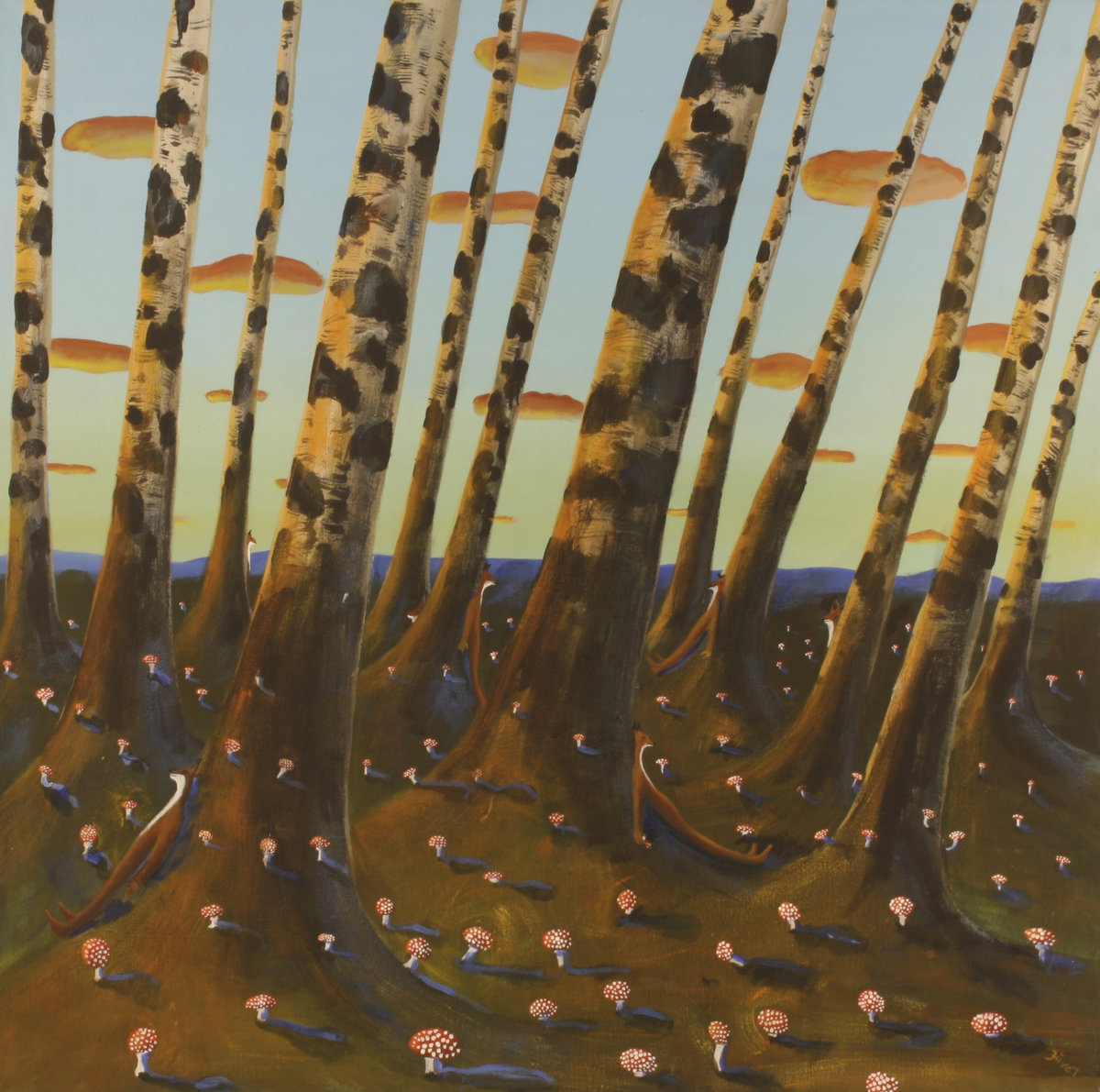
SPLASHGIRL-SIXTH SENSE.
Splashgirl-Sixth Sense.
Label: Hubro Music.
When Splashgirl released their fifth album Hibernation, in February 2016, their star was already in the ascendancy and the Norwegian doom jazz trio had already released a quartet of ambitious and innovative albums. Four became five when Hibernation was released to critical acclaim, and was hailed as Splashgirl’s finest hour and as the musical alchemists continued to combine and experiment with traditional instruments and technology. The big question was, what was next for Splashgirl when they returned with their much-anticipated sixth album?
Just over two years later, and Splashgirl recently returned with their sixth album Sixth Sense which was released by Hubro Music. It’s the latest chapter in the Splashgirl story which began fifteen years ago in 2003.
The Splashgirl story began in Oslo, Norway in 2003, when Andreas Lønmo Knudsrød, Jo Berger Myhre and Andreas Stensland Løwe decided to form a new group together. This group they called Splashgirl, which was a doom jazz group who took a new approach to music combining traditional instruments and technology to make new, exciting and innovative music.
During the first few years, the three members of Splashgirl spent much of their time experimenting in practice rooms and recording studios with their arsenal of musical instruments and technology. Sometimes, the recording studio resembled a laboratory as the musical alchemists deployed drum machines, synths and a tone generator which they combined with traditional instruments to create new, ambitious and innovative music. Eventually, Splashgirl decided to step out of the practice rooms and recording studios that had been their home for so long, and made their live debut.
Having their live debut in Oslo,Splashgirl was a popular live draw and were familiar faces on the local live scene. By then, Splashgirl had just completed their debut album Doors. Keys.
Doors. Keys.
It featured nine new compositions by Splashgirl which were recorded at Bugge Wesseltoft’s studio Bugge’s Room, in Oslo. Splashgirl had also decided to produce their debut album, and enlisted the help of their musical friends to record what became Doors. Keys. This included bass clarinetist Lars Holmen Kurverud, tenor saxophonist Joel Wästberg and violinist Sebastian Gruchot who all played their part in the sound and success of Doors. Keys.
When Doors. Keys. was released in March 2007, Splashgirl’s debut album was well received by critics, who forecast a bright future for one of the newest names in Norwegian jazz.
Arbor.
For their sophomore album Arbor, Splashgirl penned nine new tracks which were recorded at Biermannsgården, Oslo, between the ‘1st’ and ‘4th’ of May 2008. Joining Splashgirl who took charge of production were multi-instrumentalist Lasse Passage and Anders Hofstad Sørås on pedal steel. The two guest artists augmented Splashgirl’s considerable skills on this sonic adventure on Arbor, which was released eighteen months later on a new label Hubro Music.
When Arbor was released by Hubro Music in November 2009, the album caught the imagination of critics and marked the coming of age for Splashgirl. They had released an album of ambitious, groundbreaking and innovative music which was the perfect way to launch a new label. However, little did anyone know this was the start of the rise and rise of Splashgirl and Hubro Music.

Pressure.
Buoyed by the success of Arbor, Splashgirl headed to Pressure at Malabar Studios, Oslo, in September 2010. Joining Splashgirl were some of the leading lights of the Norwegian music scene including Lasse Passage, who would experiment with tape and field recordings, guitarist Juhani Silvola, tubaist Martin Taxt, trombonist Erik Johannessen and vocalist Mari Kvien Brunvoll. Together, they helped Splashgirl create what was the best album of their career, Pressure.
When Pressure was released on Hubro Music in August 2011, Splashgirl’s third album was a much more experimental album, and was released to widespread critical acclaim. Critics called Pressure the most ambitious, inventive and innovative album of Splashgirl’s three album and eight year career. Pressure was also their finest hour, and the album that saw Splashgirl and Hubro Music move into the limelight.
Soon, Splashgirl was touring Europe, where their music was embraced by a much wider audience. Meanwhile, Hubro Music were now regarded as a record label that was synonymous with groundbreaking music. Everyone it seemed was a winner, and that would continue to be the case.
Field Day Rituals.
When it came time to record their fourth album Field Day Rituals, Splashgirl crossed the Atlantic and made their way to the Avast!Recording Co, in Seattle. Between the ‘13th’ and ’26th’ of August 2012 Splashgirl recorded nine new compositions with producer Randall Dunn. He had an impressive CV, having previously worked with Earth, Sunn O))), Marissa Nadler, Black Mountain and The Cave Singers. However, Randall Dunn wasn’t the only new recruit for the Field Day Rituals’ sessions.
Joining Splashgirl were Timothy Mason on synths and violist Eyvind Kang. They augmented Splashgirl as they recorded their fourth album Field Day Rituals, which was the eagerly awaited followup to the their finest album Pressure. After thirteen days recording with Randall Dunn, the three members Splashgirl returned home and began planning to release Field Day Rituals as the band celebrated its tenth anniversary.
Field Day Rituals was released to critical acclaim in February 2013, with the album being called Splashgirl’s finest hour. This wasn’t the first time critics had said this about one of Splashgirl’s album, but it was something that band would never tire of. Critical acclaim was sweet music to their ears.
Critics described Field Day Rituals as an album that featured Splashgirl at their most adventurous and ambitious, where they continued to push musical boundaries to their limits, and sometimes, it seemed way beyond. It was no surprise that Splashgirl were now regarded as one of leading lights of the Norwegian jazz scene. The rise and rise of Splashgirl, had mimicked that of Hubro Music.
No longer was Hubro Music the small label it had been in 2009, and by 2013, it was one of the most respected and forward thinking European labels. It released an eclectic selection of groundbreaking music. That wasn’t surprising. Hubro Music’s roster was like a who’s who of Norwegian music. One of the “crown jewels” were doom jazz trio Splashgirl.
Hibernation.
After the release of Field Day Rituals, Splashgirl began what was one of the busiest periods of their career and toured Europe, America and Japan. This didn’t leave much time to record an album, but somehow, Splashgirl found time to record their fifth album Hibernation with producer Randall Dunn.
Hibernation was recorded at the HIjóðriti Studio in Iceland between January the ‘5th’ and the ‘11th’ 2015. Splashgirl brought with them, their ever-expanding musical arsenal and Seattle-based saxophonist Eric Walton a.k.a. Skerik. His tenor and baritone saxophones were the missing pieces of this musical jigsaw as Splashgirl reinvented their music.
When Hibernation was released in February 2016, critics realised that musical mavericks Splashgirl had changed direction sonically. Synths, electronics and processing was used much more than on previous albums, and this transformed Splashgirl’s music on their fifth album Hibernation. It was hailed as an ambitious and groundbreaking release from the doom jazz pioneers Splashgirl who had succeeded in reinventing their music on a cinematic Magnus Opus.
Sixth Sense.
After the success of Hibernation, Splashgirl began work on their with album Sixth Sense. It would eventually feature seven tracks, including six written by the three members of Splashgirl. The other track Monsoon, was written by Jo Berger Myhre. The seven tracks that later became Sixth Sense were recorded in two studios.
Splashgirl had recorded their previous album Hibernation at Hljoðriti, Hafnarfjörður, in Iceland, in January 2015, and also recorded part of Sixth Sense. However, the majority of the music on Sixth Sense was recorded at the Kennel Collective, Oslo, during January 2017 and this time, was produced by Splashgirl.
At the Kennel Collective, in Oslo, the three members of Splashgirl began setting up their ever-expanding musical arsenal, which they would put to good use on Sixth Sense. Drummer and percussionist Andreas Lønmo Knudsrød brought with him various drum machines, while Jo Berger Myhre unpacked a double bass, electric bass, electric guitar and Grendel Drone Commander synth. Meanwhile, Andreas Stensland Løwe prepared to play a Clavinet, grand piano, Wurlitzer 200A electric piano and Arp Solina, Korg Delta and Prophet 5 synths on Sixth Sense.
When the recording of Sixth Sense was complete, it was mixed by Johnny Skalleberg at Amper Tone, Oslo, March 2017. Seven months later, Espen Høydalsvik mastered Sixth Sense at Tinnitus Mastering, Oslo, in October 2017. Now Splashgirl’s much-anticipated sixth album Sixth Sense was ready for release by Hubro Music in early summer of 2018.
Critics were in for a surprise when they heard Sixth Sense, which marked a change of direction from Splashgirl. They took a different approach to composition and recording during the Sixth Sense sessions and played with a freedom and invention as they honed, sculpted and manipulated the new and exciting music on this carefully crafted album. It saw Splashgirl attempt to record an album that had something that many modern albums lack…a wide dynamic range.
Splashgirl wanted the widest possible dynamic range as possible on Sixth Sense, so that listeners could hear the extremes of the audio spectrum. This Splashgirl succeeded in doing, and thanks to talented a mixer and mastering engineer Sixth Sense is a stunning sounding album that documents the next chapter in their story.
A piano probes and is played slowly and deliberately on Carrier creating a moody, dramatic and cinematic backdrop. Soon, it’s joined by a standup bass which proves to be the perfect addition. It’s augmented by bursts of drama before the drums enter and are played with urgency as ethereal synths appear, only to disappear and be replaced by the type of synths that were a feature of many Berlin School albums. They sit atop the driving rhythm section as the drama and tension builds, and briefly, the bass joins forces with the synth and plays a leading role. Later, when the arrangement is later stripped bare, the moody, ruminative piano takes centre-stage and is augmented by percussion and leftfield sounds as this carefully sculpted, genre-melting cinematic track reaches a crescendo.
As a standup bass and piano combine and play slowly on Broken as drums click in the background. This isn’t a traditional jazz trio. Instead, this is post jazz and Splashgirl are keen to experiment as they combine jazz’s past and present to make the music of the future. Meanwhile, the piano is played hesitantly and tugs at the heartstrings, as the standup bass is played with the utmost care and compliments its sound. Sometimes, a synth reverberates and buzzing sound is introduced. Later, the piano is played with an urgency as what gusts of wind blow and a bass synth provides the heartbeat. This adds to the drama which continues to build as sound sculptors Splashgirl continue to paint pictures with their music which is rich in imagery.
Sixth Sense opens with siren call of a synth, that sounds as if it’s replicating a foghorn warning ships of impending danger. Meanwhile, drums are played slowly and subtly, but soon, are played firmly and more of the kit is used. Then at 1.16 it’s all change, and it’s as if Splashgirl have been asked to write the score to a blockbuster movie as the arrangement scampers along. Retro synths join forces with the rhythm section who drive and power the arrangement along. Midway through the track the arrangement becomes understated and just flourishes of piano, synths strings, a drone and later drums are added. Still the music has a cinematic sound and later, the music become melancholy and ruminative as the arrangement dissipates leaving just a memory of Splashgirl at the peak of their powers.
The introduction to Monsoon is big and bold, with a dramatic, filmic sound that is omnipresent throughout a track that lasts 4.24. It’s without doubt one of the highlights of Sixth Sense and is further proof that Splashgirl could forge a career writing soundtracks.
Plink plonk keyboards opens Half Self before it’s joined by a buzzing droning synth and drums that add a degree of drama. This time though, there’s more of lo-fi sound, but this proves just as effective as Splashgirl draw inspiration from avant-garde, electronica, experimental and library music and combine this was Nordic Wave and post rock. Synths are used heavily throughout this carefully honed track, and are augmented by processed drums and a guitar.
Sometimes, it sounds as if the guitar has been played with a bow and this produces a dark, eerie sound. Other times, effects are added to the guitar and it reverberates and glistens. Later, the effects-laden arrangement shimmers as musical alchemists and sonic sculptors Splashgirl continue to reinvent their music.
Washes of droning Berlin School era synths open the filmic sounding Taal Caldera as explosions punctuate the arrangement. Meanwhile, synths add a ruminative backdrop as if reflecting on the folly of war. Soon, shimmering synths seem to offer hope, while the bass probes and is joined by percussion, a thoughtful sounding piano and sci-fi sounds. Later, the arrangement becomes understated and just the ruminative piano is joined by a synth which provides a contrast as this thought-provoking filmic soundscape draws to a close.
Just a lone piano opens Sedna which closes Sixth Sense. It’s played slowly and deliberately with space being left which adds a degree of drama. Soon, buzzing and siren synths join with the drums and splashy cymbals as the arrangement builds. Still, the piano is played slowly as the arrangement chugs along and eerie ‘strings’ add a degree of darkness. Not for the first time, the piano sounds as if it’s been inspired by Kraftwerk. When it drops out an acoustic guitar is played tenderly as synth strings sweep and after the darkness and drama a beautiful, understated soundscape takes shape. It closes Sixth Sense on a high and is a reminder of Splashgirl’s talent, versatility and ability to innovate and reinvent their music.
It was never going to be easy for Splashgirl to followup Hibernation, which is regarded as the finest album of their career. However, after a recording sessions in Iceland and in their home city of Oslo, Splashgirl had completed their sixth album Sixth Sense. It’s a stunning sounding album with wide dynamic range that is lacking in many modern albums. However, Sixth Sense is best described as a genre-melting, cinematic album from one pf the leading lights of Norwegian music…Splashgirl.
During Sixth Sense, Splashgirl combine elements of ambient, avant-garde, Berlin School, electronica, experimental, improv, jazz, Krautrock, musique concrete and post-rock, while drawing inspiration from the Kraftwerk, Tangerine Dream’s synth driven music and Weather Report circa Black Market. There’s even a nod to the soundtrack to Ridley Scott’s classic film Bladerunner on Sixth Sense which is a cinematic album that is rich in imagery.
To create a cinematic album like Sixth Sense, Splashgirl deploy combine acoustic, and electric instruments with technology and deploy a variety of effects. However, unlike some groups who have turned their back on acoustic instruments, Splashgirl continue to use them throughout Sixth Sense. Especially on Sixth Sense’s opening track Carrier, which is the start of the start of Splashgirl’s captivating and innovative adventure in sound. It continues over the next four soundscapes with the music veering between understated and minimalistic to dramatic, multilayered and full of sonic surprises before Sedna which bookends Sixth Sense.
It’s a carefully crafted cinematic album, which features musical alchemists Splashgirl at the peak of their powers, as they continue their mission to reinvent their music on Sixth Sense, which is a career-defining epic that is thought-provoking and rich in imagery
Splashgirl-Sixth Sense.
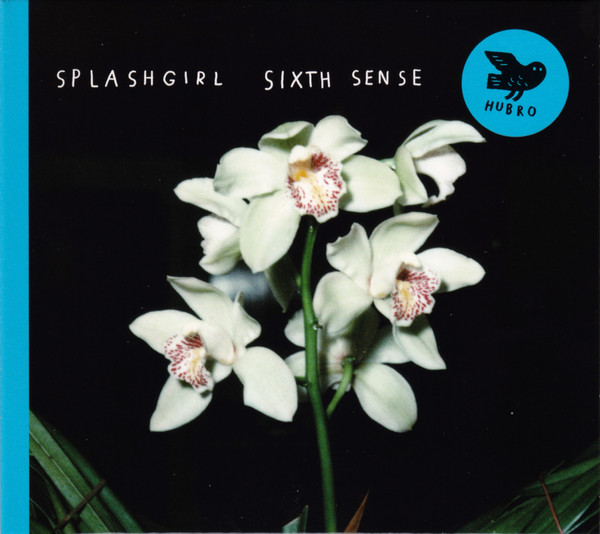

RANDY MEISNER-ONE MORE SONG AND RANDY MEISNER.
Randy Meisner-One More Song and Randy Meisner.
Label: BGO Records.
Musical history was made in September 1971, when Don Henley, Glenn Frey, Bernie Leadon and twenty-five year old Randy Meisner formed The Eagles and signed with David Geffen’s new label Asylum Records. Little did David Geffen realise that he had signed one of the biggest bands of the seventies, and The Eagles would transform the fortunes of new label.
Over the next six years, Randy Meisner was the bassist and adding backing vocals on The Eagles’ first five albums which sold twenty-five million copies in America alone. The most successful album The Eagles released was Hotel California in December 1976 which sold sixteen million copies, was certified diamond and won two Grammy Awards. The success of the album was beyond The Eagles’ wildest dreams, but despite that, all wasn’t well behind the scenes.
In September 1977, Randy Meisner announced he was leaving The Eagles, citing exhaustion, which was no surprise given the band’s gruelling recording and touring schedule over the past six years. However, part of the reason behind Randy Meisner’s departure was the constant arguments among the group. While the departure of Randy Meisner marked the end of an era for The Eagles, but the start of a new chapter for thirty-one year old singer, songwriter and bassist.
Randy Meisner.
Randy Meisner had decided to embark upon a career as a solo artist, and signed to Asylum Records in 1978. Later that year, the thirty-two year old released his debut album Randy Meisner in June 1978. While this album of country rock, AOR and rock was well received by the majority of critics, it wasn’t the success that Randy Meisner had hoped and the album failed to trouble the charts. For Randy Meisner who wasn’t used to failure, this was a huge disappointment, and to make maters worse, he was dropped by the label. This made him doubly determined that his sophomore album would be a success.
Two years later, and Randy Meisner returned in 1982 with One More Song which was released on Epic and was the start of a new chapter for the singer-songwriter. One More Song which has been paired with his third album Randy Meisner, and released by BGO Records, is a reminder of his Epic years.
One More Song.
Following the commercial failure of Randy Meisner, the former Eagle eventually began work on his sophomore album which later, became One More Song. It was a quite different album from Randy Meisner, which was essentially an album of cover versions. The only Randy Meisner composition on the album had been a reworking of Take It To The Limit which he cowrote with Don Henley and Glen Frey. This was proof, if any was needed, that Randy Meisner was a talented songwriter. All he needed was the right songwriting partner.
Fortunately, Randy Meisner discovered singer-songwriter Eric Kaz, and the pair cowrote Hearts On Fire and Deep Inside My Heart. They the joined forces with Wendy Waldman and penned Gotta Get Away, Come on Back to Me, I Need You Bad and Trouble Ahead. Jack Tempchin who wrote The Eagles classic Peaceful Easy Feeling contributed One More Song and White Shoes. To close One More Song, Randy Meisner decided to cover Richie Furay’s Anyway Bye Bye.
The recording of One More Song began on May the ’26th’ 1980 and continued to August the ’20th’ 1980. Joining Randy Meisner who took charge of lead vocals and played guitar was a rhythm section of drummer Craig Krampf, bassist Bryan Garofalo and guitarist Craig Hull who also played steel guitar and pedal steel. The other members of the band included keyboardist Sterling Smith and percussionist and backing vocalist Don Francisco. Other musicians were brought onboard to record one or two songs.
This included Kim Carnes who added background vocals on Deep Inside My Heart. When it came time to record One More Song, Eagles Glen Frey added backing vocals and Bill Cuomo played synths and returned when it came to record I Need You Bad, which featured saxophonist Michael Jacobs. Wendy Waldman joined the band during the recording of Come On Back To Me, and played acoustic guitar, backing vocals and guitar. Meanwhile, Val Garay took charge of production on One More Song which was hoped would kickstart Randy Meisner’s solo career.
With One More Song completed in late August 1980, the album was scheduled for release by Epic in October 1980. This was a quick turnaround and only left two months to promote what was now the most important album of Randy Meisner’s solo career.
When critics heard One More Song, they were won over by a carefully crafted album of country rock, AOR and rock that was a much better album than his 1978 eponymous debut album. Partly, that was because of the songs that featured One More Song, and especially the songs he wrote with his new songwriting partners.
There was also an honesty and innocence to a number of the songs while others had a rootsy sound that were perfectly suited to Randy Meisner. However, among the highlights of the album was the heartfelt paean I Need You, and beautiful ballads about love and love lost like Gotta Get Away, One More Song and Trouble Ahead. They’re a showcased Randy Meisner’s skills as a singer and songwriter. Meanwhile, the songs that had been earmarked as singles Hearts On Fire and Deep Inside My Heart were languid AOR tracks were radio friendly. Very different was the lively and exuberant Anyway Bye Bye, which closed the album on a memorable high.
When Deep Inside My Heart was released the lead single from One More Song, it reached twenty-two in the US Billboard 100. This augured well for the release of One More Song in October 1980, which released fifty in the US Billboard 200 and forty-four in Canada. Hearts On Fire was released as a single in 1981, and reached nineteen in the US Billboard 100 and fourteen in the Mainstream Rock charts. One More Song which had charted and featured two hit singles and had transformed Randy Meisner’s fortunes and he was keen to build on this success.
Randy Meisner.
Buoyed by the success of One More Song, Randy Meisner began work on his third album later in 1981. He had received plaudits and praise for the songs he cowrote for One More Song, including the love songs. Many critics thought that Randy Meisner would renew his songwriting partnership with Eric Kaz and Wendy Waldman. However, that wasn’t the case.
Instead, Randy Meisner only wrote four new songs for his third album, with new songwriting partners. Randy Meisner wrote Layin’ In The Deep End and Nothing Is Said (‘Til the Artist Is Dead with Dixon House, then joined forces with Howard Leese to write Still Runnin’. Then Randy Meisner, Dixon House and Howard Leese wrote Jealousy together. These four songs were augmented by five cover versions.
This included Craig Bickhardt’s Never Been In Love, David Palmer’s Darkness Of The Heart, Bryan Adams and Jim Vallance’s Tonight. They were joined by Elton John and Gary Osborne’s Strangers and John Corey’s Doin’ It For Delila which would close Randy Meisner.
Recording of Randy Meisner began on December the ’18th’ 1981 and continued right though to February the ’22nd’ 1982. This time Mike Flicker and Randy Meisner who played bass, guitar and added vocals, co-produced the album.
They were joined by an expanded band that featured a rhythm section of drummer Denny Carmassi, bassist and guitarists Brian Smith and John Corey who played piano and added backing vocals. They were augmented by backing vocalists Ann Wilson, Nancy Wilson and Marcy Levy, saxophonist Phil Kenzie, synth player Mitchell Froom, Tower Of Power who added horns and Sterling Smith who played organ, synths and piano. This all-star band was joined by Randy Meisner’s two songwriting partners, with Dixon House playing organ, piano, background vocals and Howard Leese played acoustic and electric guitar, synths and added backing vocals. After three months, Randy Meisner was completed and ready for release.
This time around, Epic decided to release Randy Meisner in August 1982, which allowed more to promote the album. They were hoping to build on the success of One More Song, which featured two hit singles.
Critics on hearing Randy Meisner, realised that it was a beautiful, melodic album of country rock, AOR and rock that sometimes packed a punch. During this latest carefully crafted album, Randy Meisner incorporated hooks aplenty, soaring melodies, Tower Of Power’s horns, backing vocals from Nancy Wilson, clever lyrics and sometimes, raw power. Randy Meisner was another carefully crafted album from a talented singer, songwriter, musician and now producer.
It opened with the hook-laden rocker Never Been In Love, and continued to rock on Darkness Of The Heart that sounds not unlike Meat Loaf. Jealousy was a melodic and memorable track that featured raw power, while Tonight features soaring harmony and Playin’ In The Deep End was an anthem-in-waiting. Strangers was a beautiful, elegiac duet with Heart’s Ann Wilson duets while Still Runnin’ was a hook-laden, anthem that featured one of Randy Meisner’s best vocals. Nothing Is Said (‘Til the Artist Is Dead) was a slice of good time country rock before Randy Meisner closed the album on a high with the radio friendly Doin’ It for Delilah.
Buoyed by reviews which hailed Randy Meisner as a fitting followup to One More Song, executives at Epic and Randy Meisner must have been feeling positive about the album’s release in August 1982. Sadly, Randy Meisner stalled at a lowly ninety-four in the US Billboard 200. The only small crumb of comfort was that Never Been In Love reached twenty-eight in the US Billboard 100 and thirty in Canada. However, Randy Meisner was an album that deserved to fare much better than it did.
After the release of Randy Meisner, its author left Epic and never again released a solo album that featured new original songs. That was a great shame as Randy Meisner was a talented songwriter who could breathe life, meaning and emotion into the songs that he wrote. That was the case on One More Song and Randy Meisner which have been remastered and recently reissued by BGO Records. These two albums feature Randy Meisner at the peak of his powers during the early years of what should’ve been a long and successful solo career.
Sadly, Randy Meisner never reached the heights that he should’ve during his solo career, and nowadays is remembered as a member of Poco, but mostly as The Eagles bassist and backing vocalist. That was where he enjoyed the most successful period of his career. However, like many musicians who become part of a hugely successful band, Randy Meisner struggled with his newfound fame.
Throughout his career, Randy Meisner has bravely battled his demons and has struggled with alcohol dependency. That was the case during the six years he was a member of The Eagles, and during his solo career. Maybe his battle with alcohol dependency stopped Randy Meisner fulfilling his potential as a solo artist?
Despite a turbulent life marred by addiction, health problems and tragedy, Randy Meisner has been a member of two successful bands Poco and The Eagles who sold twenty-five million albums while he was a member of the band. After that, Randy Meisner embarked upon a solo career, and in 1980 and 1982 recorded his two finest solo albums One More Song and Randy Meisner.
Randy Meisner-One More Song and Randy Meisner.
TOM WAITS-HEARTATTACK AND VINE.
Tom Waits-Heartattack and Vine.
Label: Anti.
In June 1980, thirty year old Tom Waits began work on his sixth studio album, Heartattack and Vine, which was the last album he released on David Geffen’s Asylum Records. The Asylum Records’ years had been frustrating for Tom Waits, who had released his debut album Closing Time in September 1973 and followed this up with The Heart of Saturday Night in October 1974. Although both albums were future classics, they never came close to troubling the American charts. However, across the Atlantic, where Tom Waits had a cult following, both album were eventually certified gold.
Nighthawks At The Diner.
After releasing two studio albums, Tom Waits returned in October 1975 with Nighthawks At The Diner, which had been recorded in front of an invited audience. This genre-melting live album was released to critical acclaim and reached 164 in the US Billboard 200. Nighthawks At The Diner was Tom Waits first album to chart in America, and in Britain, was certified sliver. By then, Tom Waits’ popularity was growing in Britain.
Small Change.
Just under years later, Tom Waits returned with his much-anticipated third studio album, Small Change, in September 1976, which was produced by Bones Howe. By then, Tom Waits had been worn down by his gruelling touring schedule, which was taking its toll on his health and to make matters worse, he was now drinking heavily. It was a tough time for Tom Waits, but he managed to write and record another powerful album, albeit one that was quite different to its predecessors.
His new album Small Change featured a much more cynical Tom Waits and a pessimistic mood pervaded the album. That was no surprise, because before writing the album, he had headed to Skid Row, in LA, where he hung around whilst looking for inspiration. This worked and he wrote The Piano Has Been Drinking and Bad Liver and A Broken Heart which were accurate portrayals of alcoholism. These two songs were part of an album that was released to critical acclaim, but failed commercially in America. Meanwhile, Small Change sold well in Britain and was certified silver, while the album was certified gold in Australia. Buoyed by the success of Small Change Tom Waits began working on the followup.
Foreign Affairs.
Just a year later, Tom Waits released Foreign Affairs in September 1977, which featured his duet with Bette Middler I Never Talk to Strangers. It was part of an album that Tom Waits wanted to sound like a film-noir soundtrack, and even the photo George Hurrell shot album cover had to fit the filmic image. Critics on hearing the cinematic sounding Foreign Affairs were won over by Tom Waits’ fourth studio album. However, just like his previous albums, Foreign Affairs passed American record buyers by. It was a similar case in Britain and Australia where Tom Waits was a popular draw. This was a huge disappointment for the thirty-two year old singer-songwriter.
Blue Valentine.
Despite the failure of Small Change, Tam Waits soon began writing his fifth album Blue Valentine, which was recorded over six sessions that took place between July and August 1978.
Just a month later in September 1978, Blue Valentine was released and was well received by the majority of critics. Blue Valentine featured Tom Waits’ trademark lived-in, worldweary vocal and saw him combine blues and jazz. Straight away, he bowled a curveball by opening the album with a cover of Somewhere from West Side Story. After that, Tom Waits documented the dark underbelly of life on the wrong side of town on Christmas Card from A Hooker In Minneapolis, Romeo Is Bleeding, Wrong Side Of The Road, Whistlin’ Past the Graveyard and A Sweet Little Bullet From A Pretty Blue Gun. Blue Valentine was a compelling album and although it made no impression on the American charts, was certified gold in Britain. This was a relief for Tam Waits, who only had one album left on his contract with Asylum Records.
Heartattack and Vine.
With his contract with Asylum Records about to expire, Tom Waits realised that his next album Heartattack and Vine, which was recently released by Anti, was one of the most important of his career. If Heartattack and Vine was a success, David Geffen might renew his contract, or another record label would offer him a recording a contract. With that in mind, Tam Waits began work on Heartattack and Vine.
Over the next few weeks and months, thirty-four year old Tom Waits wrote eight new songs and the instrumental In Shades. These nine tracks he planned to record with engineer and producer Bones Howe who had produced most of his previous albums.
The recording sessions began on June the ’16th’ and continued until July the ’15th 1980 at Filmways/Heider Studio B, Hollywood, California, with Bones Howe taking charge of engineering and production, while Jerry Yester returned to look after some of the orchestral arrangements. Bob Alcivar was responsible for the rest of the orchestral arrangements as well as the string arrangements on Heartattack and Vine.
Meanwhile, Tom Waits played piano, electric guitar and added vocals on what was his sixth album Heartattack and Vine. During the sessions, different musicians were used for different tracks which meant drummer Big John Thomassie was joined by bassists Greg Cohen, Jim Hughart and Larry Taylor and Roland Bautista who played guitar and 12-string guitar. They were augmented by pianists Michael Lang and Ronnie Barron who also played Hammond organ. Completing the band was percussionist Victor Feldman and Plas Johnson who played baritone and tenor saxophonist. After a nearly a month, Tom Waits and his band had recorded his all important sixth studio album Heartattack and Vine.
Asylum Records scheduled the release of Heartattack and Vine for September 1980. It found Tom Waits turning his back on the jazzier style that was a feature of previous albums for bluesy vampish vocals. Meanwhile, some of the lush, orchestrated arrangements hinted at fifties soundtracks and are very much a reminder of another era. The same can be said of Tom Waits, who is part poet, part lyricist and social commentator as he continues to dig deep into the dark underbelly of American society. In doing so, he documents the life of dreamers, schemers, chancers and romancers who live their life on the wrong side of the railroad tracks.
Just like previous albums, Heartattack and Vine is rich in imagery as Tom Waits paints pictures of America that many of citizens or tourist don’t or won’t want to see. Meanwhile, hipster hobo deploys rhythms during the album that are best described as off kilter, while sometimes, the guitars often have a nastier, gnarled sound. Similarly, Tom Waits vocals are quite different from his first couple of albums maybe his carousing and nocturnal, hard-living lifestyle was affecting his delivery? Sometimes it sounds as gargles with kerosene in the morning before existing on a daily diet Marlboro and Jack Daniels. Gravelly, lived-in and worldweary describes Tom Waits’ vocal by the time Heartattack and Vine was recorded. It was an album that looked like it marked the end of an era, because maybe, Tom Waits was about to leave Asylum Records. However, would he leave on a high?
The title-track opens Heartattack and Vine with bursts of gnarled, searing guitars, rhythm section, percussion and saxophone accompany Tom Waits as he delivers a menacing vocal. Very different is the instrumental In Shades, which is a slow blues. There’s then a sense of melancholy as Tom Waits lays bare his soul and delivers a worldweary vocal during the tear jerker Saving All My Love For You. Washes of Hammond organ open Downtown, which is a rich in imagery as Tom Waits delivers a vocal powerhouse whilst painting pictures as his band fuse blues and jazz. Jersey Girl is a wistful sounding, orchestrated ballad that has a confessional quality and finds Tom Waits paying tribute to The Drifters. However, Jersey Girl sounds as if it’s been inspired by Bruce Springsteen, who played the song in his sets during the early eighties.
Tom Waits drivers a gnarled vocal on ‘Til The Money Runs Out which finds hipster hobo at his poetic best. He then delivers a boastful vocal full of machismo and bravado on Mr. Siegal against a jangling tack piano. It’s all change on Ruby’s Arms which closes Heartattack and Vine, with horns then strings providing a backdrop for a pessimistic Tom Waits, who delivers a lived-in vocal that is full sadness and despair. It seems that he’s saved the best until last on Heartattack and Vine.
Before the release of Heartattack and Vine, critics had their say on Tom Waits sixth album, and the majority were won over by an album that quite rightly received plaudits and praise. This augured well for the release of Heartattack and Vine in early September 1980.
Upon the release of Heartattack and Vine on the ‘6th’ of September 1980, the album spent three months on the US Billboard 200 and peaked at ninety-six. Meanwhile, Heartattack and Vine broke into the top forty in Australia, and reached thirty in the album charts. In Britain where Tom Waits was popular, Heartattack and Vine failed to trouble the charts and was the one that got away.
After the release of Heartattack and Vine, Tom Waits decided to leave Asylum Records and signed to Chris Blackwell’s Island Records. This was a new chapter in his career and began with the release of Swordfishtrombones in 1983. This was followed by 1985s Rain Dogs, 1987s Frank’s Wild Years, the live album Big Time and 1992s Bone Machine which won Tom Waits a Grammy Award for the Best Alternative Album. The following year, Tom Waits released The Black Rider in 1993, which was his swan-song for Island Records.
Next stop was Anti, where Tom Waits released the million selling album Mule Variations in 1999. After a gap of three years, Tom Waits returned with two albums in May 2002 Blood Money and Alice. Two years later, Tom Waits returned in 2004 with Real Gone, and after a five-year wait released Glitter and Doom Live in 2009. However, it wasn’t until 2011 that Tom Waits returned with his sixteenth studio album Bad As Me. Sadly, that was the last that was heard of Tom Waits.
That was until he started remastering and reissuing the six albums he released for Asylum Records, including Heartattack and Vine, which marked the end of an era. Just Closing Time and The Heart Of Saturday Night, Heartattack and Vine is one of the best albums that Tom Waits released for David Geffen’s Asylum Records. During the seven-year period between 1973 and 1980, Tom Waits released six studio albums and the live album Nighthawks At The Diner. These albums include some of the best music that Tom Waits has released during a five decade career.
On Heartattack and Vine which closes the Asylum Records’ years, Tom Waits continues to document the dark underbelly of American life, and the dreamers, schemers, chancers and romancers who live on wrong side of the railroad tracks, as only he can do.
Tom Waits-Heartattack and Vine.
CZECH UP! VOLUME 2: WE’D BE HAPPY.
Czech Up! Volume 2: We’d Be Happy.
Label: Vampi Soul.
Nowadays, competition within the compilation market is fierce, and each week hundreds of compilations are released by record companies across the world and are competing for the compilation pound, dollar or Euro. However, not all compilations are equal, and some of these compilations are more equal than others. There’s a perfectly good reason for this and that is some record companies take great care when compiling a new compilation and when they release a lovingly curated compilation it sells well and receives critical acclaim. Sadly, not all record companies act in this way.
Other record companies only have dollar signs in front of their eyes, and are only interested in making some quick money. As a result, very little time is take compiling the compilation, and instead they recycle the same tired and predictable the same tracks. A favourite for this type of label is disco and Northern Soul, and usually, they release compilations like Disco Floorfillers Volume 22 and Twenty Norther Soul Stompers That Were Heard At The Wheel. They’re the type of compilation to avoid at all costs, and instead take some time looking for a lovingly curated compilation.
The Spanish label Vampi Soul have just released the lovingly curated compilation Czech Up! Volume 2: We’d Be Happy., which is the eagerly awaited followup to Czech Up! Volume 1: Chain of Fools. It features twenty-two tracks, including contributions from Olympic, Mahagon, Famous Five, Apollobeat, Beatings, The Blue Effect, SHQ, Metronom, Jazz Q, Vulkan, Flamengo, The Soulmen, Hana Zagorova and Karel Cernoch that were released between in communist Czechoslovakia between 1968 and 1979. Czech Up Happy Volume 2: We’d Be Happy is an eclectic compilation that features everything form baroque pop to progressive funk to party soul and psych-jazz. Eclectic doesn’t even come close to describing Czech Up Happy Volume 2: We’d Be Happy.
Opening Czech Up! Volume 2: We’d Be Happy. is Olympic’s Blaznivej Kiki. This is fitting as Olympic, who were formed in 1963, and in 1968 made history in 1968 when they released their debut album Želva. This meant Olympic was the first Czech rock band to release an album. Three years later they released Jedeme Jedeme 3 which featured the melodic driving rocker Blaznivej Kiki which tells the story of a guitar playing tramp.
Mahagon were formed in Prague in 1973, and during their career, their music veered between fusion and jazz funk. By the time they released their third album Slunečnice Pro Vincenta Van Gogha on Supraphon in 1980, Mahagon’s music uber funky. Proof of that is Prameny Poznani which is a stunning jazz-funk instrumental that showcases a truly talented group.
Hold On, I’m Coming is an oft-covered song, and in 1968 the Framus Five featuring Michal Prokop released a barnstorming and soulful version on Supraphon that features a vocal powerhouse. A year later in 1968, Hold On, I’m Coming featured on the Framus Five’s eponymous debut album of R&B and soul was released complete with overdubbed audience applause. Given the quality of the cover of Hold On, I’m Coming, that applause was richly deserved.
When Apollobeat released Nikdo Netuší (Lovers Concerto) as a single on Supraphon in 1968, tucked away on the B-Side was Nocni Modlitba. It features a vocal from Yvonne Prenosilov who plays a huge part in the sound and success of this haunting psychedelic paean. It’s a hidden gem and a very welcome addition to Czech Up! Volume 2: We’d Be Happy.
Czech pop-rock group Beatings were formed in 1968 and during their career, were sometimes regarded as a hard rocking band. Proof of this is the urgent psychedelic rock of We’d Be Happy which featured on their 1970 EP Silence Is Golden, which was released on the Panton label. Sadly, Beatings never got round to releasing an album and only recorded singles and EPs between 1968 and 1976, when the band called time on their career.
In 1975, singer and actress Valerie Cizmarov released her eponymous debut album on the Supraphon label. One of the highlights of the album was Byls Ma Boj which features an impressive orchestrated arrangement that incorporates elements of pop and funk. However, it’s Valerie Cizmarov’s vocal which veers between tender to powerful and always is full of emotion that steals the show.
Czech jazz group SHQ was founded in 1961 and by the time they released the classic jazz album The Jazz Nebyeki (Jazz Non-Fables) in 1973 on Panton. By then, SHQ’s music was evolving and V Obore finds the combo fusing elements of jazz-funk, modal jazz and soul-jazz on this funky cinematic instrumental. It’s one of the highlights of Czech Up! Volume 2: We’d Be Happy..
Synkopy 61 was a rock group from Brno, that was formed in December 1960 by songwriter, guitarist and vocalist Petr Směja. Twelve years after Synkopy 61 was founded, the group released its debut album Festival on the Panton label in 1972. It featured one of the highlights of Festival, Bytost Podivna, which features elements of garage rock and psychedelia, whilst hinting at progressive rock. That was the direction that Synkopy 61 took on their next two albums.
Between 1969 and 1971, George and Beatovens recorded and released three albums with popular vocalist Petr Novak. The third and final album was Modlitba Za Lásku which was released on the Panton label. One of the singles released from the album was Jarní Den. However, hidden away on the B-Side was Zahrada Za Domem which is a hidden gem with heavy guitar riffs, harmonies and Petr Novak’s soulful vocal proving a potent combination on this genre-melting story about love.
When vocalist and actress Eva Pilarová released Vlny as a single on Supraphon in 1970, she decided to cover a song that was instantly recognisable for the B-Side. After just a couple of bars of Eva Pilarová’s cover of Padni Na Kolena, Piece Of My Heart is instantly recognisable. The song start off slowly and the orchestrated arrangement builds as Eva Pilarová vocal veers between tender and heartfelt to powerful and full of emotion. This results in a truly memorable cover of Padni Na Kolena.
Flamingo was formed in Ostrava in 1968, and led by Richard Kovalčík until his death in 1975. During that seven-year period, Flamingo’s continued to evolve and by the time they recorded 75 with vocalist Marie Rottrova their music was a mixture of funk, fusion, jazz-funk and rock. Proof of that is Tvuj Pritel Vitr where all these genres combine and Marie Rottrova delivers a vocal powerhouse on what’s one of highlights of ’75.
Barnodaj was founded in Brno and in 1978, released their debut album Mauglí on the Supraphon label. It featured Dzungle which is a carefully crafted fusion of art rock, Eastern and sci-fi sounds, symphonic rock and progressive rock. Quite simply, Dzungle is one of the highlights of Czech Up! Volume 2: We’d Be Happy.
Hana Zagorova’s musical career began in 1968 and in 1969 she released Bludička Julie as a single on the Supraphon label. On the B-Side was Rokle a baroque psych pop track that was one of Hana Zagorova’s finest songs.
Closing Czech Up! Volume 2: We’d Be Happy.is Karel Cernoch’s Trznice Sveta which featured on his 1975 album Letiště which was released on Panton. It’s a genre-melting track which starts off as a ballad before the arrangement builds and the vocal becomes urgent and impassioned as a Latin groove accompanies Karel Cernoch and closes the compilation on a high.
Buoyed by the success of followup to Czech Up! Volume 1: Chain of Fools which was released in February 2016, Vampi Soul began work on the followup, and just over two years later return with the lovingly curated compilation Czech Up! Volume 2: We’d Be Happy. It’s even better than its predecessor and brings a new meaning to the word eclectic with a compilation that features everything baroque pop, funk, fusion, garage rock, jazz-funk, party soul, progressive funk, progressive rock, psych-jazz and rock. Eclectic doesn’t even come close to describing Czech Up! Volume 2: We’d Be Happy which is an extraordinary compilation.
There’s songs about dreams, eccentric characters, faunal fables, love and love lost, otherworldly beings and preternatural gardens on Czech Up! Volume 2: We’d Be Happy. Meanwhile, other songs are variously anthemic, beautiful, eerie, joyous, melancholy and uplifting. They were recorded by truly talent artists and bands who sadly, very few people outside of Czechoslovakia were aware of. That is a great shame, as many of these artists and bands could’ve enjoyed successful careers in Western Europe and North America. However, that wasn’t possible between 1968 and 1979 when the music on Czech Up! Happy Volume 2: We’d Be Happy was released.
It’s only recently and somewhat belatedly that compilations like Czech Up! Happy Volume 2: We’d Be Happy are introducing Western music lovers to the music that Olympic, Mahagon, Apollobeat, Beatings, The Blue Effect, SHQ, Metronom, Jazz Q, Vulkan, Flamengo, Hana Zagorova and Karel Cernoch recorded between 1968 and 1979. That was a golden period for Czech music, which was truly eclectic during this period which is documented on the lovingly curated compilationCzech Up! Volume 2: We’d Be Happy.
Czech Up! Volume 2: We’d Be Happy.

FRODE HALTLI-AVANT FOLK.
Frode Haltli-Avant Folk.
Label: Hubro Music.
Release Date: ‘15th’ June 2018.
Album Of The Week.
Frode Haltli was born in Levanger, in the municipality of Trøndelag, on the ’15th’ of May 1975, and by the time he was seven, had already started to play the accordion. The young Frode Haltli proved to be a prodigious talent, and within a few years, was entering and winning talent competitions. This included Norwegian television’s Talentiaden 1991 which brought sixteen year old Frode Haltli to the attention of a wider audience. By then, the young accordionist seemed destined to make a career out of music, and twenty-seven years later, Frode Haltli has just released his new album Avant Folk on Hubro Music which is the latest chapter in Frode Haltli’s career.
Back in 1994, nineteen year old Frode Haltli travelled to Copenhagen, where he enrolled at the prestigious Royal Danish Academy of Music. This was where he completed his musical education and in 2000, returned to his alma mater to play a concert. By then, great things were being forecast of Frode Haltli.
In 2001, Frode Haltli was awarded the Young Soloist of the Year prize by the Norwegian Concert Institute and was runner-up in the Gaudeamus Interpreters Competition in the Netherlands. Buoyed by this success, it wasn’t long before Frode Haltli signed his first recording contract with ECM.
The following year, 2002, Frode Haltli released his debut album Looking On Darkness with the Vertavo String Quartet. It was released to critical acclaim and won a Spellemannprisen, which is the Norwegian equivalent of a Grammy Award for the best contemporary music album. In France in 2004, Looking On Darkness won the prestigious Prix Gus Viseur award. By then, Frode Haltli had recorded two more albums with two different bands.
This included Rusk, who were a traditional Norwegian folk trio that featured Frode Haltli, singer Unni Løvlid and fiddler Vegar Vårdal. Rusk released their eponymous debut album in 2002, which was well received by critics. However, it was four more years before Rusk returned with the followup. By then, Frode Haltli’s other was busy with his other band, Poing.
Frode Haltli had cofounded Poing in 1999 with double bassist Håkon Thelin and saxophonist Rolf Erik Nystrøm, and initially, played music by young Norwegian composers in clubs and at festivals. Four years later, in 2003, Poing released its debut album Giants Of Jazz to plaudits and praise. Two years later, in 2005, Poing returned with their much-anticipated sophomore album Giants Of Poing which was lauded by critics. Poing and Frode Haltli’s career was going for strength-to-strength.
In 2006, Frode Haltli’s folk trio Rusk returned with their sophomore album Rusk II. Although the album was well received by critics, Rusk II was the last album that Rusk released.
After the release of Rusk II, Frode Haltli turned his attention to his much-anticipated sophomore album, Passing Images which would be the followup to the critically acclaimed and award-winning debut album Looking On Darkness. Passing Images which featured Frode Haltli’s interpretations of Norwegian folk music had a lot to live up to, but when it was released in 2007, it was to widespread critical acclaim.
The following year 2008, was a busy year for Frode Haltli, with Poing contributed a track to Maja S. K. Ratkje’s album River Mouth Echoes. Frode Haltli also played on Norwegian jazz saxophonist’s Trygve Seim’s album Yeraz which was released on ECM in 2008. By then, Frode Haltli’s star was in the ascendancy, although it was only six years since he had released his debut album Looking On Darkness. He had come a long way short time.
During the next couple of years, Frode Haltli worked with a variety of artists , but also found time to record Poing’s new album, Wach Auf! This time, it was a collaboration between Poing and Maja S. K. Ratkje. The genre-melting Wach Auf!, which was released in 2011, was an ambitious album, and was Poing’s first release in six years.
After a five-year wait, Frode Haltli returned with a new solo album Arne Nordheim Complete Accordion Works in 2012, and two years later in 2014 released the critically acclaimed Vagabonde Blu on Hubro Music. Vagabonde Blu was one of the finest albums of the Frode Haltli’s career.
Over the next two years, Frode Haltli found himself working on several albums, and was asked to play on Trygve Seim’s 2016 album Rumi Songs. He also recorded two albums with Poing, including Sur Poing and Kapital and Moral were released in 2016. So was StaiStua which was a critically acclaimed collaboration between Andreas Ulvo, Sigurd Hole and Frode Haltli. However, Frode Haltli released one more album during 2016.
This was Frode Haltli’s eagerly awaited solo album Air, which featured The Trondheim Soloists and The Arditti Quartet. When Air was released in 2016, it was hailed as a fitting followup to Vagabonde Blu and a welcome addition to Frode Haltli’s discography. The big question was what was next for Frode Haltli?
Avant Folk.
Buoyed by the commercial success and critically acclaimed Air, Frode Haltli was keen to begin work on the followup album Avant Folk, which would eventually feature five compositions. Frode Haltli composed two new compositions Hug and Neid. Of the other three compositions, Trio was based upon two traditional Norwegian songs; King was based upon a traditional Faroese Kingo hymn; and Gråtar’n was a traditional waltz from Finnskogen. The five compositions that later became Avant Folk were recorded in Oslo, Norway, in February 2017 by an all-star band.
Frode Haltli had decided to record Avant Folk at the Riksscenen studio, in Oslo, where he would co-produce the album with his friend Maja S.K.Ratkje. Joining accordionist Frode Haltli was a rhythm section that featured Trondheim Jazz Orchestra’s drummer and vocalist Siv Øyunn Kjenstad, Moskus and Skadedyr double bassist Fredrik Luhr Dietrichson and Moksha’s guitarist and vocalist Oddrun Lilja Jonsdottir. They were joined by The Island Band’s guitarist and electronic guru Juhani Silvola; Supersilent and Motorpsycho keyboardist Stale Storlokken who plays harmonium and synths; Hardanger fiddle players Erlend Apneseth; violinist Hans P. Kjorstad; saxophonist Rolf-Erik Nystrøm and Hildegunn Øiseth who played trumpet, bukkehorn (goat horn) and adds vocal. This talented and versatile band spent part of February 2017 recording Avant Folk with recordist Fridtjof A. Lindeman, and over the days and weeks, the album started to shape.
Once the recording was complete, Maja S.K.Ratkje edited and mixed Avant Folk, before the album was mastered at Audiovirus Lab by Helge Sten a.k.a. Deathprod. With the album mastered, Avant Folk was ready for release and on ‘15th’ June 2018 Frode Haltli’s much-anticipated album was released.
Hug which opens Avant Folk, is best described as a dreamlike fusion of contemporary experimental folk, jazz and chamber-music. The galloping, off-kilter rhythm adds a cinematic quality as the unmistakable sound of Frode Haltli’s wheezing accordion is augmented by a violin, Hardanger fiddle and samples, as an array of sounds assail the listener. Later, this includes a guitar, horns and standup bass as the arrangement floats and meanders dreamily along, sometimes growing in power and drama, before latterly becoming understated. Briefly, the galumphing cartoon rhythm returns before the arrangement dissipates after seven magical minutes.
Pizzicato strings open Trio and create an understated backdrop, and eventually grows in power before the arrangement becomes wistful as the Hardanger fiddle and violin combine and tug at the listener’s heartstrings. Meanwhile, beauty is omnipresent throughout this melodic example of Nordic folk music.
Initially, Kingo features mesmeric drums that sounds as if they’ve been inspired by traditional African music that combine with an accordion and later, a melancholy fiddle. By then, it sounds as if the accordion is playing fragments of sea shanty as the drums never miss a beat and add an element of drama. Soon, the tempo increases and ethereal harmonies and handclaps and searing guitar are added and transform the arrangement. Later, the accordion takes centre-stage as drums pound and instruments flit in and out of the carefully crafted arrangement. This includes the harmonium before Hildegunn Øiseth adds an improvised trumpet solo and scratchy strings played with freedom add a degree of urgency to this genre-melting track. It features elements of African music, avant-garde, folk, free jazz and rock. However, it’s a gypsy violin, accordion, drums, harmonies and handclaps that join forces latterly with a free jazz horn during this eleven minute epic.
A myriad of disparate sound combine before Gråtar’n reveals its secrets. This includes pizzicato strings, an eerie rasping horn and haunting strings that sound as if they belong in a horror film. Even the wheezing accordion has an eerie, otherworldly sound that is matched by the violin. Later, the Hardanger fiddle plays what sounds like a lament as the arrangement becomes dark, dramatic and haunting. Always, though, it’s rich in imagery and guaranteed to paint pictures.
Neid closes Avant Folk, and initially, Frode Haltli’s wheezing accordion plays its part in a haunting, otherworldly arrangement. Soon, this changes, although there’s still a sense of melancholy as the accordion takes centre-stage. It’s joined by the Hardanger fiddle as the arrangement starts to waltz along against a shuffling beat. Meanwhile, the standup bass accompanies the accordion and gradually, other instruments are introduced including a chiming guitar which combines with the double bass and later accordion as Frode Haltli and his band paint pictures. At 7.42 the tempo increases and music becomes dramatic as the violin and horns are introduced and improvise playing with an urgency and sometimes with a freedom. Later, Frode Haltli and his band drop the tempo and return to earlier sound as the arrangement takes on a beautiful, cinematic sound and this fourteen minute opus closes Avant Folk on a high.
Avant Folk is a truly groundbreaking album that doesn’t fall neatly within any of the existing musical genres, and instead, is a genre-melting album that features elements of avant-garde, classical music, experimental, folk, free jazz, improv, jazz, rock and traditional African music. This is a potent and heady brew that results in a truly ambitious and captivating album that is best described as Avant Folk, and it looks like forty-three year old Frode Haltli is going to be one a small number of musicians who has invented a new musical genre.
Doubtless many other musicians will be keen to follow in the footsteps of Frode Haltli whose the founding father of Avant Folk and record a similar type of album. However, very few of these musicians will be able to record an album as good as Avant Folk which surpasses the quality of Frode Haltli’s previous album Air.
That is no surprise as Avant Folk features music that veers between beautiful, dreamy and ethereal, to cinematic and rich in imagery, to dramatic, eerie, haunting and otherworldly, to melancholy and wistful. Sometimes the music is hypnotic and mesmeric, while much of the music on Avant Folk has a timeless quality. Other times, Frode Haltli throws a curveball and the multilayered, genre-melting music on Avant Folk heads in a totally unexpected direction as a myriad of disparate sounds assail the listener. They come courtesy of Frode Haltli’s all-star band and an array instruments, electronics and samples. They play their in the musical tapestry that is Avant Folk, which is without doubt, one of the finest albums of Frode Haltli’s sixteen year recording career, and is the album that looks like launching, and lending its name to a new musical genre.
Frode Haltli-Avant Folk.
UNDER THE INFLUENCE VOLUME 6: A COLLECTION OF RARE SOUL AND DISCO COMPILED BY FAZE ACTION.
Under The Influence Volume 6: A Collection Of Rare Soul and Disco Compiled By Faze Action.
Label: Z Records.
Every time an independent record label releases a new compilation there’s always the hope that this will be the first instalment in a long running and successful series. Sadly, that hardly ever happens, and the majority compilations that are release prove to be one-offs. That is no surprise as the compilation market is hugely competitive, with many record companies vying for a slice of the lucrative compilation pie. This isn’t easy though.
It takes a compiler with impeccable musical taste whose able to choose a mixture of familiar tracks and hidden gems that will appeal to the widest possible audience. Other record labels will pay a DJ or tastemaker to compile the compilation hoping this will give it some much-needed kudos. Both of these approaches have worked in the past, but only if the record label ponies up for a marketing budget.
This is something that even some of the larger independent labels are reluctant to do, and they seem unaware of the maxim speculate to accumulate. Some labels think that spending £500 to £1,500 promoting a compilation is guaranteed to bring success their way. Alas, they’re mistaken, as competition within the compilation market is fierce, and a failure to promote a compilation can have disastrous consequences, that affect the label’s bottom line.
Some record labels release a critically acclaimed compilation that proves to be bang on trend, and it’s a commercial success. This brings much-needed revenue to the label, who are keen to begin work on a second instalment in the series.
If the second instalment in a compilation series proves successful, this can be a game-changer for an independent record label who now have an additional revenue stream. That is as long as they continue to release compilations of the same quality as the first two instalments.
Many record labels have managed to do this, and soon, are releasing their third, fourth and in some cases, the fifth instalment in their new compilation series. The extra revenue a commercially successful compilation series can bring can transform the fortunes of a previously struggling independent record label. It’s akin to a lottery win that allows them to payoff debt and subsidise worthy, but loss making releases. Not every release is profitable and a successful compilation series is a godsend for many a record label.
That has been the case for many record labels who have released long-running, critically acclaimed and commercially successful compilation series. This includes Z Records who released the first instalment in the Under The Influence compilation series in October 2011, and have just released Under The Influence Volume 6: A Collection Of Rare Soul and Disco Compiled By Faze Action. Nearly seven years later, and Under The Influence is one of the most successful compilation series, despite bringing a new curator onboard for each instalment.
This time around, it’s British brothers Simon and Robin Lee a.k.a. Faze Action, who have dug deep into their record collections for the twenty tracks that feature on Under The Influence Volume 6: A Collection Of Rare Soul and Disco Compiled By Faze Action. These tracks are a mixture boogie, disco, funk and soul from Carol Dionne, Stylus, Midway, Delight and Disco Circus. That isn’t forgetting Galaxy, Mikki, Oscar Perry, Space, Spats and Banzai who are responsible for a veritable feast of floorfillers. Choosing the highlights isn’t going to be easy.
Disc One.
Opening disc one of Under The Influence Volume 6: A Collection Of Rare Soul and Disco Compiled By Faze Action is Carol Dionne’s I’m In Love With You which was released on St Louis based Gateway Records in 1981. It’s a funky, soulful and sensual dancefloor filler that sets the bar high for the rest of the compilation.
After leaving Ultimate who were signed to Casablanca, Barbara Hernandez embarked upon a solo career. The onetime Eurodisco diva released All Nite Tonight on the Barbados based Bah Bah Records. It was produced by Leston Paul and Meekaaeel Muhammad who deploy percussion, blazing horns and harmonies as elements of disco, funk and soul are combined as Barbara Hernandez delivers a vocal powerhouse.
Cameroon born Bébé Manga became one of the most popular makossa singers of the eighties. Her debut album Ami-Oyomiya was released on the French label SIIS and featured Lokognolo. It’s a glorious fusion of Afrobeat, disco and funk which marked the debut of future makossa Queen Bébé Manga.
Australian funk and soul group Stylus were formed in Melbourne in 1975, and a year later, released their sophomore album For The Love Of Music on Atlantic Records. It featured the smooth and soulful dancefloor filler We All Need One Another which was one of the highlights of For The Love Of Music. Later, Stylus became the first Australian group to be released by Motown Records, and went on to tour with George Benson, the Average White Band and Little River Band.
After disco there was boogie, and in 1984 Midway released Set It Out as their debut single. It epitomises the boogie sound circa 1984 as a drum machine and synths accompany the vocal. This is the antithesis to disco where lush strings and horns were often part of orchestrated arrangements. However, that was all in the past by 1984 as dance music continued to reinvent itself. Thirty-four years later, and Faze Action reinvent Set It Out by editing this reminder of the boogie sound.
In 1978, German disco group Disco Circus released their eponymous debut album on Lollipop Records. The album was produced by Jürgen S. Korduletsch and features Dig It which is a catchy combination of disco, Eurodisco, funk, pop and soul.
Disc Two.
Opening disc two is Galaxy’s Let Love Begin which is a track from their eponymous debut album. It was recorded in England, but later released on the Nigerian label Tabansi label in the early eighties. One of the highlights of this disco boogie album was Let Love Begin which was written and multi-instrumentalist Jake Sollo who produced Galaxy. He plays an important part in the sound and success of Galaxy, which was this short-lived group’s only release.
PFO Pilgrim Fathers Orchestra was an Italian studio band who released Touch Me Don’t Stop on their own label Pilgrim Fathers Records in 1981. This was two years after the supposed demise of disco. However, there’s still a strong disco influence which is combined with boogie on funk on this slick, soulful and dancefloor filler that later, hints at piano house.
Blues and soul singer Oscar Perry was born in Texas in 1943, but by 1979 was signed to Gamma Records and had just released Body Movements. It was written, arranged and produced by Oscar Perry who had reinvented himself as a disco singer. The highlight of the album was the title-track Body Movements which was a soulful slice of disco that has stood the test of time.
In Italy, in 1979, the Ariston label released Ruba Ruba which marked the comeback of Italian-American-born dancer, choreographer, TV present and singer Don Lurio. Ruba Ruba was Don Lurio’s first single in over a decade and was a lavishly orchestrated disco single. Strings, horns, harmonies and a funky rhythm section accompanied Don Lurio’s vocal, which ironically although full of enthusiasm, was the weakest part of the single.
Spats released their eponymous debut album on the American label Good Sounds in 1978. One of the highlights of the album was Hot Summer Madness where Spats combine elements of disco and funk, with a soulful vocal the final piece of the jigsaw. Sadly, Spats never released another album, but Hot Summer Madness forty years later, Hot Summer Madness returns for a well deserved encore.
Closing Under The Influence Volume 6: A Collection Of Rare Soul and Disco Compiled By Faze Action is Banzai’s Runaway, which featured on their eponymous album, when it was released by EMI in Spain, in 1980. Runaway features elements of boogie, electronic music, jazz and Latin, and is a reminder of where music was at in 1980. Music had changed since the demise of disco and this was a new chapter in the history of dance music.
The music on Under The Influence Volume 6: A Collection Of Rare Soul and Disco Compiled By Faze Action was released during the seventies and eighties, when disco and boogie provided the soundtrack to clubs on both sides of the Atlantic. Many DJs spun tracks from Under The Influence Volume 6: A Collection Of Rare Soul and Disco Compiled By Faze Action which enticed and encouraged even the most reluctant dancers onto the dancefloor and they enjoyed music that was released not just in America but also in Africa, Barbados and Europe.
Over thirty years later, that music features on Under The Influence Volume 6: A Collection Of Rare Soul and Disco Compiled By Faze Action is a cosmopolitan and eclectic selection of music where mostly, the emphasis is on quality music. Having said that, there’s the very occasional track that doesn’t quite work. Mostly, though the music on Under The Influence Volume 6: A Collection Of Rare Soul and Disco Compiled By Faze Action is quality we’ve come to expect from this long-running and successful compilation series.
Z Records who released the Under The Influence series, have always taken great care choosing a curator for the annual compilation. This year, it’s Simon and Robin Lee a.k.a. Faze Action, who have dug deep into their collections, and chose a mixture of a familiar dancefloor fillers and oft-overlooked hidden gems that feature on Under The Influence Volume 6: A Collection Of Rare Soul and Disco Compiled By Faze Action which is the latest instalment in this long-running and successful compilation series that seems to go from strength-to-strength.
Under The Influence Volume 6: A Collection Of Rare Soul and Disco Compiled By Faze Action.
CHUCK JACKSON-THE BEST OF THE WAND YEARS (VINYL).
Chuck Jackson-The Best Of The Wand Years (Vinyl).
Label: Kent Soul.
By the time Pittsburg-born Chuck Jackson signed to Wand Records in 1961, he was just twenty-four, and was already an experienced singer, who many within the music industry thought had a great future ahead of him. Chuck Jackson’s career began four years earlier in 1957, when he joined the second lineup of The Del-Vikings.
Later in 1957, Chuck Jackson sung the lead vocal on The Del-Vikings’ 1957 single Willette, which when it was released, failed to trouble the charts. Sadly, commercial success continued to elude the singles
The Del-Vikings released between 1957 and 1959. By then, Chuck Jackson had come to the conclusion that although The Del-Vikings were a popular draw locally, they were never going to enjoy chart success and decided to embark upon a solo career.
Before long, Chuck Jackson had signed to the Petite label, and released Willette as single in 1959. However, when the single failed to find an audience, Chuck Jackson was on the move.
Next stop was the Clock label, where Chuck Jackson would release a trio of singles. His clock debut was Come On and Love Me, which was released later in 1959, but failed to find an audience. However, by then time, Chuck Jackson had been ‘discovered.’
This came about when Chuck Jackson was opening for Jackie Wilson at the Apollo Theatre in Harlem, and i the audience that night, was Luther Dixon. He immediately spotted the potential in Chuck Jackson, which was the break the twenty-two year old soul man had been waiting for.
After being discovered by Luther Dixon, Chuck Jackson released two more singles for Clock, including I’m Yours in April 1960, which stalled at ninety-one on the US Billboard 100. This was the first of Chuck Jackson’s singles that had charted, and although it was only a minor hit, he hoped that his luck was changing. Sadly, when This Is It was released later in 1960, it failed to trouble the charts and Chuck Jackson was back to square one.
Once his contract with Clock expired, Chuck Jackson released a Peeping Tom for Belltone using the moniker Chuck Flamingo. Just like previous solo singles, it sunk without trace. History repeated itself when Chuck Jackson released Mr. Pride as a single for Belltone in March 1961. Two years after embarking upon a solo career, and Chuck Jackson was struggling to make a breakthrough. Fortunately, his luck was about to change.
Later in 1961 Chuck Jackson signed to Wand Records, which was an imprint of the New York label Scepter Records. Little did Chuck Jackson know that this would be his home for the next six years. Between 1961 and 1966 Chuck Jackson enjoyed a successful solo career and formed a partnership with Maxine Brown at Wand. This was the most prolific and successful period of Chuck Jackson’s long career.
Chuck Jackson released a total of ten albums and thirty singles between 1961 and 1966, and enjoyed seventeen hit singles in the US R&B charts and nineteen in the US Billboard 100. This was the most successful period of Chuck Jackson’s long career, and it’s been documented and celebrated by Kent Soul, an imprint of Ace Records over the past three decades, including on the newly released The Best Of The Wand Years which was released on vinyl by Kent Soul.
There’s a total of fourteen tracks on The Best Of The Wand Years, including eleven that were released between 1961 and 1966. The other three tracks were released by Kent between 1987 and 1990 and return for an encore on The Best Of The Wand Years.
The earliest track from Chuck Jackson’s tracks on The Best Of The Wand Years is the hurt filled I Don’t Want To Cry which was released as a single in 1961. It reached thirty-six in the US Billboard 100 and five in the US R&B charts, but failed to trouble the UK charts. I Don’t Want To Cry which later lent its name to Chuck Jackson’s debut album was a tantalising taste of what was to come from the Pittsburg-born soul man
In April 1962, Chuck Jackson released a cover of Any Day Now which reached twenty-three in the US Billboard 100 and five in the US R&B charts. Any Day Now finds Chuck Jackson’s voice is full of dread at the thought of losing the woman he loved. This was one of the finest recordings of Chuck Jackson’s career and became the title of Chuck Jackson’s sophomore album.
Two months later in June 1962, Chuck Jackson released I Keep Forgetting as a single which also features on the album Any Day Now. It featured an unusual percussive arrangement that was very different to much of the music being released, while Chuck Jackson released a vocal powerhouse. Sadly, I Keep Forgetting stalled at just fifty-five in the US Billboard 100, but became a favourite of British mods .
January 1963 saw Chuck Jackson release Tell Him I’m Not Home which featured on the album 1963 Encore! Chuck Jackson lives the lyrics as he delivers a soul-baring vocal, that is full of hurt and betrayal. Despite oozing quality, the single only reached forty-two in the US Billboard 100 and twelve in the US R&B charts.
Two Stupid Feet was another track from Chuck Jackson’s 1963 album Encore! It was penned by Cara Browne and Luther Dixon and had been originally released as a single by The Tabs. The same backing track was used for Chuck Jackson’s version, as he breathes life, meaning and emotion into the lyrics and makes the song his own.
In May 1964, Chuck Jackson covered Rudy Clark’s Beg Me, where he testifies, while singing call and responses with the backing vocalists. They play their part in a truly irresistible dancefloor filler that reached forty-five in the US Billboard 100 and five in the US R&B charts.
Although Chuck Jackson was a successful artist, executives at Wand had already decided to update his sound in later 1964. However, they decided to use the B-Side to experiment with the new sound. As a single it was decided that Chuck Jackson should release a cover Jeffrey David Hooven and Hal Winn’s Since I Don’t Have You October 1964. Chuck Jackson’s beautiful heartfelt cover reached forty-seven in the US Billboard 100 and five in the US R&B charts. On the B-Side was, a cover of Robert Mosley’s Hand It Over where Chuck Jackson’s experimented with the “discotheque sound“ and shows a new side to his music.
Five months later, Chuck Jackson released the ballad I Need You in March 1965, which features a rueful vocal full sadness and regret. I Need You stalled at seventy-five in the US Billboard 100 , but reached a respectable twenty-two in the US R&B charts.
In October 1965, Chuck Jackson released Good Things Come to Those Who Wait as a single, but it failed to trouble the charts. However, this dancer became a favourite on the British Northern Soul scene, especially at the Twisted Wheel in Manchester.
When Chuck Jackson released These Chains of Love (Are Breaking Me Down) as a single in July 1966, it became his latest single that failed to trouble the charts. However, later, Chuck Jackson’s soul stomper These Chains of Love (Are Breaking Me Down) was discovered by DJs on the British Northern Soul scene and was heard by a new audience. Sadly, that was too late for Chuck Jackson who had left Wand by then.
In 1987, Kent Records released A Powerful Soul which was a new compilation of Chuck Jackson songs that included (I’d Be A) Millionaire and Van McCoy’s I Can’t Stand to See You Cry. Both songs seemed to tailor-made for Chuck Jackson who brought the lyrics to life on these two hidden gems.
Three years later in 1990, Kent Records released another new Chuck Jackson compilation Good Things. It featured What’s With This Loneliness which was penned by Chuck Jackson and made its welcome debut on Good Things. Twenty-eight years later it returns for an encore on The Best Of The Wand Years which was recently released on vinyl by Kent Soul, an imprint of Ace Records.
For newcomers to career Chuck Jackson’s at Wand Records who want to experience his music on vinyl, then The Best Of The Wand Years is the perfect place to start. It features fourteen tracks from Chuck Jackson’s Wand Years which was the most prolific and successful part of what was a long career. However, The Best Of The Wand is just an amuse bouche and there’s much more to enjoy.
After discovering the delights of The Best Of The Wand Years, there’s the eight albums that Chuck Jackson released for Wand Records. They’ve been released on four albums by Kent Soul, and document the most successful period of Chuck Jackson’s career. During this period, Chuck Jackson enjoyed seventeen hit singles in the US R&B charts and nineteen in the US Billboard 100. He was one of the most successful soul singers signed to Wand Records, and had a huge following on both sides of the Atlantic.
That is still the case today, and Chuck Jackson’s legion of loyal fans will enjoy the hits, B-Side, rarities and unreleased tracks on The Best Of The Wand Years, which celebrates the career of a veteran soul man.
Chuck Jackson-The Best Of The Wand Years (Vinyl).

ANTONIO CARLOS JOBIM-TIDE AND STONE FLOWER.
Antonio Carlos Jobim-Tide and Stone Flower.
Label: BGO Records.
Nowadays, Brazilian pianist, singer and songwriter Antonio Carlos Jobim is regarded as one of the founding fathers of the Bossa Nova in fifties, which he internationalised in the sixties with the help of some American jazz musicians. They fused Bossa Nova and jazz to create a new and successful sound which featured on the groundbreaking and award-winning 1965 album Getz/Gilberto which won three Grammy Awards including Best Album Of The Year and Best Jazz Instrumental Album. This was a game-changer for Antonio Carlos Jobim who had enjoyed a meteoric rise since the early sixties. There was no stopping Antonio Carlos Jobim.
By 1970, Antonio Carlos Jobim was already regarded as one of the finest purveyors of Brazilian music and was signed to Creed Taylor’s CTi Records which was an imprint of A&M Records. This was fitting as Creed Taylor had produced the award-winning Getz/Gilberto, and whenever they worked together seemed to bring out the best out of Antonio Carlos Jobim.
Creed Taylor and Antonio Carlos Jobim were planning to work together in the spring and summer of 1970, and that would result in two albums Tide and Stone Flower which have just been reissued by BGO Records as a two CD set.
Tide.
When Antonio Carlos Jobim began work on Tide, over two years had passed since he released his previous solo album, Wave in October 1967. It had reached 114 on the US Billboard 200 and number five in the US Jazz charts making Wave his most successful album. While this was a lot to live up to, music had changed since October 1967 and it was a very different musical landscape as he began work on Tide.
For Tide, Antonio Carlos Jobim wrote seven new tracks and covered The Girl from Ipanema which he had written with Vinicius de Moraes and Norman Gimbel. The other song Antonio Carlos Jobim decided to record for Tide was Pedro Berrios, João de Barro and Pixinguinha’s Carinhoso. These nine tracks became Tide, which were arranged by Deodato and produced by Creed Taylor, at Van Gelder Studio, Englewood Cliffs, New Jersey during May 1970.
Joining producer Creed Taylor and Antonio Carlos Jobim who played guitar, electric piano, piano and added vocals were some of the top session players of the early seventies. The rhythm section featured drummer João Palma, double bassist Ron Carter and pianist Deodato. They were joined by percussionist Airto Moreira, conga player, Joseph DeAngelis, Ray Alonge on French horn and flautists Everaldo Ferreira, flautists Hubert Laws, Romeo Penque, Hermeto Pascoal and Joe Farrell who also played soprano saxophone. He was joined in the horn section by alto saxophonist Jerry Dodgion, trumpeters Marvin Stamm and Burt Collins plus trombonists Garnett Brown and Urbie Green. Sweetening the sound of Tide was a string section which added the final piece of the jigsaw.
Six months passed before Tide was released by A&M Records in November 1970. By then, Antonio Carlos Jobim had returned to the studio in June 1970 to record his next album Stone Flower. It had a lot to live up to.
When Tide was released, it was to plaudits and praise with critics hailing Antonio Carlos Jobim’s latest album of jazz-tinged Bossa Nova as a fitting followup to Wave, which had been released three years earlier in October 1967. Sadly, Tide didn’t replicate the success of Wave which was Antonio Carlos Jobim’s most successful solo album upon its release on November 1970. By then, music had changed and maybe Antonio Carlos Jobim’s fans had moved onto other types of music. They missed out on what’s an underrated album from Antonio Carlos Jobim, Tide.
Tide opens with the familiar strains of the classic The Girl from Ipanema which was revisited and reinvented by Antonio Carlos Jobim and takes on a much more dramatic sound thanks to Deodato’s structured arrangement. This sets the bar high for the rest of Tide, which includes an understated but graceful cover of Carinhoso, which gives way to the brisk and breezy Tema Jazz which is one of Tide’s highlights, partly thanks to the contribution of maverick flautist Hermeto Pascoal. The tempo drops on the memorable ballad Sue Ann, before Antonio Carlos Jobim switches between piano and Fender Rhodes on Remember where the track veers between an irresistible Bossa Nova to a samba beat.
Melodic, orchestrated and full of contrasts describes Tide where Antonio Carlos Jobim plays piano and acoustic guitar on a song that owes much to the title-track to his previous album Wave. There’s a return to Bossa Nova on Takatanga where Urbie Green’s rasping trombone plays a leading role in the sound and success of the track. The tempo drops on the romantic sounding Caribe, where Urbie Green and flautist Joe Farrell join forces and play starring roles. Later, the meandering melody becomes fragmented as Antonio Carlos Jobim’s piano punctuates Deodato’s arrangement on another masterful addition to Tide. Closing Tide is Rockanalia, which is built around Ron Carter’s standup bass line while Antonio Carlos Jobim’s plays as a starring role before horns add the final piece of this musical jigsaw. In doing so, they ensure Tide ends on a high.

Stone Flower.
While Antonio Carlos Jobim wrote and recorded Tide during the first half of 1970, he was also working on his next album Stone Flower. He had written eight new songs and decided to cover Ary Barroso’s Brasil for Stone Flower. Just like Tide, Stone Flower was arranged by Deodato and produced by Creed Taylor, at Van Gelder Studio, Englewood Cliffs, New Jersey during June 1970.
This time around, it was a much smaller band that accompanied Antonio Carlos Jobim who played guitar, electric piano, piano and added vocals. The rhythm section included drummer João Palma, double bassist Ron Carter and guitarist Deodato. They were joined by percussionist Airto Moreira and Everaldo Ferreira, flautist Hubert Laws, soprano saxophone, trombonist Urbie Green and violinist Harry Lookofsky. Antonio Carlos Jobim and his band spent much of June 1970 recording Stone Flower which was released by CTi Records in July 1971.
When Antonio Carlos Jobim’s sixth album Stone Flower was released in July 1970, the album stalled at a disappointing 196 in the US Billboard 200. However, when Stone Flower reached eighteen in the US Jazz albums chart this pleased Antonio Carlos Jobim and producer Creed Taylor.
Stone Flower opens with Tereza My Love which was a paean to Antonio Carlos Jobim’s wife, that initially is intimate but as the arrangement floats and meanders along, but ultimately becomes sensuous. Initially, the enchanting Children’s Games is airy and intricate as the arrangement waltzes along as Antonio Carlos Jobim’s piano locks into a groove with the guitar before becoming intense and almost dramatic. Against a backdrop of syncopated rhythms, Antonio Carlos Jobim’s piano take centre-stage on Choro where his fingers fly across the keyboard. He then turns his attention to Brasil which is the unofficial Brazilian anthem. The arrangement’s drive along by a samba beat while Antonio Carlos Jobim delivers a lived-in, worldweary vocal.
Very different is the progressive sounding Stone Flower, which opened the second side of the original album and veers between dramatic, rueful and urgent, but later, becomes intense and cinematic. It’s a similar case on Amparo, which sometimes sounds as if it’s been influenced by classical music, before veering between dark, dramatic and romantic as Antonio Carlos Jobim toys with the listener’s emissions during an emotive, cinematic track full of tension. The ballad Andorinha soon takes on a late-night sound as Antonio Carlos Jobim plays Fender Rhodes and delivers a tender vocal against an understated arrangement that gradually builds and provides the perfect accompaniment to the founding father of Bossa Nova. God And The Devil In The Land Of The Sun lasts just over two minutes, and is an innovative track where Antonio Carlos Jobim turns his back on Bossa Nova with the help of Joe Farrell’s blazing jazz saxophone and pulsating rhythm section as the arrangement dances joyously along. Closing Stone Flower is Sabia which is captivating, laid-back but also hypnotic and sometimes is otherworldly and allegorical that is one of the album’s highlights.
Sadly, Stone Flower was the last album that Antonio Carlos Jobim ever released on Creed Taylor’s CTi Records and he recorded one album for MCA Records before resigning with Warner Bros. However, during his short spell with CTi Records Antonio Carlos Jobim released two albums, including Stone Flower which is one of the finest albums that Antonio Carlos Jobim released during the late-sixties and seventies.
For anyone yet to discover Antonio Carlos Jobim’s solo career, Tide and Stone Flower which have just been remastered and reissued by BGO Records as a two CD set is the perfect opportunity to don so. Tide is a hugely underrated album which failed to find the audience it deserved when it was released on the main A&M Records label. It’s also a reminder of Antonio Carlos Jobim’s trademark jazz-tinged Bossa Nova sound, which started to evolve on the followup album Stone Flower.
When Stone Flower was released on Creed Taylor’s CTi Records imprint it marked the new chapter in Antonio Carlos Jobim’s career. Some of the music had been influenced by new his life in America, and saw him move away from his trademark jazz-tinged Bossa Nova sound. Especially on God And The Devil In The Land Of The Sun which was far removed from the Bossa Nova that made Antonio Carlos Jobim one of the most successful Brazilian musicians of his generation. However, for much of Stone Flower Antonio Carlos Jobim stays true to his jazz-tinged Bossa Nova sound, adding samba and worldweary vocals that have a soulful quality. This was a potent and memorable combination that resulted in critics calling Stone Flower one of Antonio Carlos Jobim’s finest albums.
Tide and Stone Flower are a reminder of Antonio Carlos Jobim as he continued to introduce his unique brand of jazz-tinged Bossa Nova to an international audience. This he had been doing since the fifties. Antonio Carlos Jobim was one of the founding fathers of the Bossa Nova in fifties, and in the sixties internationalised the genre when he introduced the music to a worldwide audience. By the time he released Tide and Stone Flower in 1970 and 1971 Antonio Carlos Jobim was at the peak of his powers and one of finest exponents of Brazilian music.
Antonio Carlos Jobim-Tide and Stone Flower.
BOB STANLEY AND PETE WIGGS PRESENT PARIS IN THE SPRING.
Bob Stanley and Pete Wiggs Present Paris In The Spring.
Label: Ace Records.
People across Europe were shocked when they saw the pictures in newspapers and reports on television of the civil unrest in May 1968, and couldn’t believe that Paris was burning and at one point, it looked as if the French government was about to fall. The police had lost control of the situation and were powerless as anarchy reigned in the French capital. Political commentators shook their head in disbelief that this had started with students occupation protests.
The students were protesting about everything from capitalism and consumerism right though to American imperialism. They all rallied against traditional institutions as well as values and order. French students were angry frustrated and had decided to make their presence felt as they raged against the machine.
Before long, an unlikely alliance was formed when the student’s strike spread to French factories and suddenly, eleven million people had withdrawn their labour for two weeks. This amounted to 22% of the population and had a disastrous and crippling effect on the French economy.
With the students, factory workers and high school students were now brothers in arms, and wildcat strikes taking place across France, the government knew they had to take actions. Especially as the students and factory workers took to the streets to protest and make their demands.
The students had a list of three things that they wanted to the government to agree to. They wanted all criminal charges against arrested students to be dropped; the police leave the university and the Nanterre and Sorbonne to be reopened. Prime Minister Georges Pompidou and his government considered these demands.
Meanwhile, President De Gaulle decided to mobilise the French police, who were told to quell the strikes. This had the opposite effect, and soon, there was a confrontation between the two sides on the ‘10th’ of May 1968. Pitched battles took place on the streets of Paris’ Latin Quarter, and before long, it was obvious that the police who were heavily outnumbered, were fighting a losing battle. Try as they may, the police couldn’t control the situation, and watched on, as Paris burnt and looting took place in parts of the capital.
After the riots, and what was perceived as a heavy-handed approach by the government, there was a huge wave of sympathy for the strikers. This lead to many French poets and singers joining forces with the strikers in a show of solidarity. and layer, a number of American musicians voiced their support for the protesters.
Three days later, on May the ‘13th’ 1968 a million people marched through Paris, while the police kept a low profile. Meanwhile, Prime Minister Georges Pompidou announced the release of the prisoners and the reopening of the Sorbonne. This it was hoped would stabilise a situation that was rapidly getting out of control.
When the Sorbonne reopened, it was occupied by students who referred to the famous institution as an autonomous “people’s university.” By then, public were supportive of the students, but this soon changed as the students started to speak of their plans to destroy the consumer society. This lead to public opinion turning against the utopianist students.
By the ‘17th’ of May 1968, there had been an increase in militancy and 200,000 people were on strike and this grew to two million on the ‘18th’ and ten million on the ‘19th’ of May. With the country at a standstill, the trade unions demanded a 35% increase in the minimum wage and 7% increase for other workers. However, within the protest movement the trade unionists weren’t popular, and were jeered.
Over the next twelve days, negotiations took place between the various sides, and eventually, on the ‘28th’ of May 1968, François Mitterrand of the Federation of the Democratic and Socialist Left announced that he was ready to form a new government. Just a day later, on the ‘29th’ of May 1968 Pierre Mendès France also announced that he was willing to form a government, and was wiling to include the communist party that had in excess of 20% of the vote. However, by then, there was a complicating factor.
On the ‘29th’ of May 1968 President De Gaulle had postponed his meeting of the Council Of Ministers, and fled France. This shocked the French nation, who watched as their country ground to a halt.
It turned out that President De Gaulle had travelled to Baden Baden in Germany to visit General Jacques Massu. He managed to persuade President De Gaulle to returned to France on the ‘30th’ of May 1968, as 500,000 people marched through Paris chanting “adieu, De Gaulle.”
Upon President De Gaulle’s return to France, the meeting of the Council Of Ministers took place, and he met Prime Minister Georges Pompidou. He persuaded President De Gaulle to dissolve the National Assembly, and call a new election by threatening to resign. This worked, and although President De Gaulle refused to resign during a broadcast on the ‘30th’ of May 1968, he announced an election for the ‘23rd’ of June 1968. When the communists agreed to the election, this was enough to stop a revolution in France.
May 1968 was one of the most turbulent in France’s modern history, and although there wasn’t a political revolution, a cultural revolution took place. Music in France was transformed after May 1968, and some of the music from this cultural revolution features on Bob Stanley and Pete Wiggs Present Paris In The Spring, which has just been released by Ace Records.
Bob Stanley and Pete Wiggs Present Paris In The Spring features twenty-three tracks, that range from chanson and jazz, to pop and tracks from film soundtracks. There’s contributions from Karl Heinz Schäfer, Bernard Lavilliers, Ilous and Decuyper, Brigitte Fontaine, Nino Ferrer, Françoise Hardy, William Sheller, Triangle, Jane Birkin, Serge Gainsbourg and Léonie on Bob Stanley and Pete Wiggs Present Paris In The Spring which was the start of a new chapter in French music. This new music was dark, broody, moody and ruminative and seemed to match the mood of the French people. In a way, the new music was the polar opposite to yé-yé music that provided to soundtrack to France earlier in the sixties.
Opening Bob Stanley and Pete Wiggs Present Paris In The Spring is Karl Heinz Schäfer’s composition La Victime which is taken from his soundtrack to the film Les Gants Blancs Du Diable, which was released by Eden Roc in 1973. It’s a moody cinematic track with a Gallic seventies sound. Having said that it’s a timeless track that has stood the test of time and sounds just as good forty-five years later.
Four years after Janko Nilovic released his debut album Psych Impressions in 1969, the Montenegrin-French arranger, composer, conductor, musician, producer and vocalist returned in 1973 with his fifth album Supra Pop Impression on the Editions Montparnasse 2000 label. It featured Roses And Revolvers which was a genre-melting track where Janko Nilovic and his band combined funk, jazz, psychedelia and rock during a quintessentially French sounding track that could only have been recorded in the seventies.
In 1972, Ilous and Decuyper released their debut single L’Elu on the nascent Flamophone label. Later in 1972, Ilous and Decuyper returned with their much-anticipated eponymous debut album and one of the highlights was the pastoral sounding L’Elu. It featured a carefully crafted keyboard led arrangement and featured harmonies that suggested a Simon and Garfunkel and Crosby, Stills, Nash and Young. Despite the English and American inferences L’Elu was an undeniably French sounding release. Sadly, Ilous and Decuyper never released another album and their eponymous debut album and single L’Elu are to be cherished.
After releasing two highly regarded albums, Brigitte Fontaine returned with Brigitte Fontaine Est…Folle in 1968. It was released on the Saravah label, and was Brigitte Fontaine’s first album after turning her back on ye-ye. Brigitte Fontaine Est…Folle which featured Dommage Que Tu Sois Mort was a very different album, that included ambitious and innovative music which saw Brigitte Fontaine successfully embrace avant-garde.
Having worked on two soundtracks with Serge Gainsbourg, Jean-Claude Vannier decided the time had come for him to embark upon a solo career. Just a year later in 1972, Jean-Claude Vannier released his debit solo album L’Enfant Assassin Des Mouches on the Suzelle label. Critical acclaim accompanied this groundbreaking album which featured Les Gardes Volent Au Secours Du Roi. However, it’s an alternate version of this moody disconcerting track that is included, and is a reminder of Jean-Claude Vannier’s seminal genre-melting album which belongs in any self-respecting record collection.
When Nino Ferrer released Nino And Radiah on CBS in 1974, it featured many of his own compositions including Looking For You. It also featured ‘actress’ and vocalist Radiah Frye who would later forge a career as a disco singer. However, in 1974, one of the finest songs on Nino And Radiah was Looking For You where effects were deployed effectively to create a sensuous and soulful song.
By 1971, Françoise Hardy’s recording career was nearly a decade old, when she released her eponymous debut album on the Sonopresse label. Her career began in 1962, and nine years later the twenty-seven year old multilingual singer was a vastly experienced singer. Françoise Hardy was her eleventh album and featured the beautifully orchestrated song Viens where the chanteuse delivers a breathy sensual vocal.
William Sheller was born in Paris, but grew up in Ohio which was home to his father. Later, William Sheller returned to France where he studied music at the Paris Conservatoire. This training he put to good use when he wrote and released several baroque psych singles including Leslie Simone in 1969 which was one of William Sheller’s finest hours.
In 1973, English actress and singer Jane Birkin released her debut album Di Doo Dah on Fontana, which was produced by Alain Hortu. Much of the album was written by Serge Gainsbourg who collaborated with Jean-Claude Vannier to write Encore Lui. It features a breathy, sensual vocal from English rose turned femme fatale Jane Birkin.
During a lengthy career, Serge Gainsbourg was no stranger to the world of soundtracks, and in 1969 he was asked to write the soundtrack to the comedy Slogan. In June 1969, Serge Gainsbourg et Jane Birkin released the single La Chanson De Slogan which was billed as Bande Originale Du Film “Slogan.” On the B-Side was the instrumental ruminative instrumental Evelyne which has Serge Gainsbourg’s name written all over it.
Two years after winning the Eurovision Song Contest in 1965 with Poupée de cire, poupée de son, former ye-ye singer France Gall released the Teenie-Weenie-Boppie EP in late 1967. It featured Pour Que Tu M’aimes Un Peu which the following year, featured on Frances Gall’s new album 1968. By 1968, the twenty-one year old had turned her back on ye-ye and was in the process of reinventing herself musically. Frances Gall was hoping that her music would attract a more mature audience and this would help prolong her career. Sadly, after the May uprising, France Gall’s record sales and popularity fell and the former ye-ye singer was no longer as popular as she once was. That was despite releasing songs of the quality of Pour Que Tu M’aimes Un Peu which are a reminder of truly talented singer, France Gall.
Romy Schneider and Michel Piccoli released La Canzone D’Helene as a single on Phillips in 1970. It’s taken from the soundtrack to La Choses De La Vie which was also released in 1970. It finds Romy Schneider singing the beautiful, heart-rending love song La Canzone D’Helene to Michel Piccoli, and this is the perfect way to close Bob Stanley and Pete Wiggs Present Paris In The Spring.
The events of May 1968 transformed France politically, and also resulted in a cultural revolution. After that, French music was never the same again, and seemed to have been shaken to its very foundations. It seemed that the uprising in May 1968 acted as a catalyst, and was also a force for good that brought about much-needed change.
Over the next few years, French music became much more eclectic, as artists and groups released albums of ambitious and innovative music. Proof of that can be found on Ace Records new compilation Bob Stanley and Pete Wiggs Present Paris In The Spring which features everything from avant-garde, baroque psych, chanson, funk, jazz, pop, psychedelia, rock, soul and even a couple of tracks from soundtracks. Bob Stanley and Pete Wiggs Present Paris In The Spring features a tantalising taste of what was a brave new world for French music.
Suddenly, French artists, arrangers, composers and producers realised that they had been left behind and their British and American counterparts had stolen a march on them. Not any more, as albums of groundbreaking music were released by artists and groups who seemed to be reinvigorated after the events of May 1968 shook up the old order and nearly resulted in a political revolution.
While French protesters stopped short of a revolution, there was a cultural revolution which meant that music was never the same again. It was the start of a brave new world when anything seemed possible for French musicians who are celebrated on Bob Stanley and Pete Wiggs Present Paris In The Spring, which is another lovingly curated compilation from Ace Records, where the emphasis is on quality.
Bob Stanley and Pete Wiggs Present Paris In The Spring.
ON THE SOUL SIDE.
On The Soul Side.
Label: Kent Soul.
Thirty-five years ago in 1983, Kent Records, which had been founded a year earlier in 1982, released their sixth release, On The Soul Side on vinyl. It was the fourth compilation that Ady Croasdell had compiled for Kent Records. The previous compilations had all been well received and commercially successful, so Ady Croasdell and the staff at the nascent Kent Records had high hopes for their latest release.
On The Soul Side surpassed everyone’s expectations and went on to become of one of Kent Records iconic releases. That was no surprise, as On The Soul Side struck a nerve with soul fans across Britain, and especially in the capital London.
Some soul fans in the capital noticed smiled knowingly when they noticed that the 6T’S logo featured on the newly released On The Soul Side. These soul fans knew that 6T’S club was one of the most fashionable soul clubs in London. However, the 6T’S club was much more than a place for the soul fan about town to be seen, and was also a club where DJs with impeccable musical taste played the best in soul music. That was the attraction of 6T’S to soul fans, who were passionate about the music that they loved.
So much so, that many soul fans spent much of their time and money looking for and buying soul music, and were willing go to great lengths to find new music. Some collectors and DJs had even used cheap flights to travel to America on crate-digging trips. However, for many soul fans that wasn’t an option and they had to make do with the latest releases in 1983.
The only problem was that there wasn’t the same amount of reissues and compilations being released by record companies thirty-five years ago. That came much later, when record companies realised just how lucrative the reissue and compilation market was.
One of the first companies to realise the potential of the compilation market was Kent Records, which was founded and was being run by soul fans who knew that their was a market for lovingly curated compilations like On The Soul Side. This was just the start for the label, and now several hundred compilations and thirty-five years later Kent Soul as the label is still going strong.
Kent Soul’s latest release is reissue of On The Soul Side, which has been released on CD and features twenty-six tracks. That is twelve more than the vinyl version released back in 1983. The newly released CD version of On The Soul Side features Patrice Holloway, Bobby Sheen, Homer Banks, The O’Jays, Garnet Mimms, The Showmen, Ginger Thompson, Ellie Greenwich, Timi Yuro, Bobby Womack, Lou Rawls and Merry Clayton. These are just a few of the names that feature on the CD version of On The Soul Side.
Opening On The Soul Side is the first of two tracks from Patrice Holloway, Love And Desire. It was written by Billy Page who produced the track with his brother Gene Page. Love And Desire was released by Capitol Records in November 1966, and is guaranteed to entice even the most reluctant dancers onto the dancefloor. Once there, they can enjoy Patrice Holloway’s impassioned and emotive vocal. Later, Patrice Holloway returns with the previously unreleased The Thrill Of Romance which is stomping dance track that is a reminder of a truly talented vocalist.
When Bobby Sheen released Sweet Sweet Love as a single on Capitol Records, in June 1966, hidden away on the B-Side was a cover of Nicholas Caldwell’s Dr Love. It was arranged by Gene Page and produced by Al De Lory, while Bobby Sheen delivers joyous and almost sassy vocal on this hidden gem of a dancer.
In May 1968, Homer Banks released 60 Minutes Of Your Love as a single on the Minit label. On the B-Side was A Lot Of Love which was written by David Porter and Isaac Hayes who unleashes a powerhouse of a vocal against Gene “Bowlegs” Miller’s arrangement which features harmonies and horns.
Way before The O’Jays signed to Philadelphia International Records they released Naomi Neville’s Lipstick Traces (On A Cigarette) as a single on the Liberty label in June 1965. It was arranged by Harold Battiste and produced by Tom Lipuma and Joe Saraceno, who are responsible for a very different sounding single to the slick Philly Soul that made them famous. However, Lipstick Traces (On A Cigarette) reached number twenty-eight in the US R&B charts and showcases a truly talented band who later, would write their names into the history of soul music.
Garnet Mimms released the ballad It Was Easier To Hurt Her as a single on United Artists in June 1965. It was arranged by Garry Sherman and produced by Jerry Ragovoy and features a rueful vocal that is full of regret.
When Benny Spellman released Lipstick Traces on the London label in June 1962, it featured the uptempo track Fortune Teller on the B-Side. It was written by Naomi Neville, which was a moniker Aaron Neville often used. Fortune Teller became a favourite nit just soul fans, but also mods who embraced a song that is a reminder of another era.
Ginger Thompson released Boy Watcher as a single on the 123 label in September 1968, and this was her reply to The O’Kaysions’ Girl Watcher. It’s a catchy, uptempo dance track where horns playing a leading role as Ginger Thompson delivers lyrics that were regarded as quite racy at the time.
Ellie Greenwich wrote I Want You To Be My Baby with Jeff Barry and released the song as a single on United Artists in April 1967. It was arranged by Hutch Davie and produced by Bob Crewe and is a quite irresistible slice of carefully crafted uptempo soulful pop.
In October 1968, Jimmy Holiday released his composition Baby I Love You as a single in Britain on the Liberty label. Cal Carter and Hal Picken took charge of production on this soul-baring ballad where heartache and regret gives way to hope on what’s one of the highlights of On The Soul Side.
Jerry Riopelle wrote and produced If You Were A Man What You Gonna Do (When Your Love Is Gone) for Clydie King. He released If You Were A Man What You Gonna Do (When Your Love Is Gone) as a single on Imperial in May 1965. Sadly, this hidden gem of a ballad with a vocal full of emotion and sadness failed to trouble the charts.
Bobby Womack was signed to Minit in February 1968 when he released What Is This. Tucked away on the B-Side was What You Gonna Do (When Your Love Is Gone) which was also produced by and features some of Memphis’ top session musicians. They provide the perfect backdrop Bobby Womack, one of the legends of soul as he delivers a vocal tinged with emotion and regret.
As September 1966 dawned, Lou Rawls released Love Is A Hurtin’ Thing as a single in the UK on Capitol Records. It was penned by Ben Raleigh and Dave Linden, while David Axlerod took charge of production as a rueful Lou Rawls lays bare his soul for all to hear.
Closing On The Soul Side is Merry Clayton’s Nothing Left To Do But Cry which was released as a single on Capitol Records in the UK in 1964. It’s a beautiful ballad featuring a tender vocal full sadness and emotion as realises that her relationship is over and that she’s been betrayed. Just five years later, Merry Clayton would add backing vocals to the Rolling Stones’ Gimme Shelter which is the song that brought her to the attention of a wider audience. However, Nothing Left To Do But Cry is a reminder that Merry Clayton’s career began long before Gimme Shelter.
Thirty-five years after Kent Records as the label was then known, released On The Soul Side on vinyl, the compilation has been issued by Kent Soul, an imprint of Ace Records. This time round, ten new songs have been added to On The Soul Side, taking the total to twenty-six.
Expanding what was one of the best of Kent Records’ early releases could’ve been risky. However, original compiler Ady Croasdell returned and chose the new tracks and to quote The Beatles “takes a good thing and makes it better.” That is something of an understatement as the version of On The Soul Side is one of the best soul compilations of recent months.
On The Soul Side finds familiar songs and hits singles rubbing shoulders with hits and hidden gems that come courtesy of well known names, superstars of soul and artists and groups that didn’t enjoy the success their talent deserved. However, these artists play their part in the success of On The Soul Side which is a lovingly curated compilation that was compiled by the hardest working man in soul music Ady Croasdell, and released by Kent Soul which continues to release top quality compilations thirty-six years after releasing their first release in 1982.
On The Soul Side.

CHANCHA-VIA CIRCUITO-BIENAVENTURANZA.
Chancha Via Circuito-Bienaventuranza.
Label: Wonderwheel Records.
Four years after Chancha Via Circuito released his critically acclaimed third album Amansara which introduced his genre-melting music to a new and wider international audience, one of music’s mavericks returns with the eagerly awaited followup Bienaventuranza which has just been released by Brooklyn based Wonderwheel Records. Bienaventuranza marks the welcome return of Chancha Via Circuito whose recording career began thirteen years ago in 2005.
That was when Pedro Canale, who was then living in Southern Buenos Aires, began his production career. Initially, he recorded instrumental tracks where he combined electronics with acoustic instruments. Soon, he began adding vocals to these tracks as he continued to hone his production skills and in by 2007, was ready to release a mini album.
By then, producer Pedro Canale came to prominence as part of Buenos Aries’ famous digital cumbia scene and dawned the moniker Chancha Via Circuito, who was already gaining a reputation for pushing musical boundaries.
Soon, Chancha Via Circuito was gaining a reputation as a musical alchemist who fused the unlikeliest of musical genres. Brazilian rhythms were combined the music of the Andean mysticism, Argentinean folklore and the Paraguayan harp. To this mix Chancha Via Circuito added elements of avant-garde, electronica and post dub-step. The result was music that’s futuristic and innovative music for ‘21st’ Century dancefloors. It was also music that caught the imagination of other artists and music lovers.
In 2007, Chancha Via Circuito released the mini album Kumbia$ Gauchito which showcased the skills of one of the rising stars of the Buenos Aires’ digital cumbia scene. Buoyed by the response to Kumbia$ Gauchito, Chancha Via Circuito began work on his debut album Rodante, which was released a year later in 2008.
Rodante.
When Chancha Via Circuito released his debut album Rodante in 2008, it featured a cast of guest artists. This included Khumba Keta, Jahdan and Rancho MC and with their help, Chancha Via Circuito who created an ambitious and innovative album where they reinvented cumbia on Rodante.
Rodante was a genre-melting album, and saw Chancha Via Circuito and his friends take cumbia in new directions on what was akin to a magical mystery tour. It was a case of expect the unexpected during what was a truly refreshing and innovative album, which caught the imagination of other artists.
Cumbia, other artists realised, was only the starting point for Chancha Via Circuito, and was just one of many musical building blocks on the album. What he added to cumbia made all the difference. This inspired other artists to follow in Chancha Via Circuito’s footsteps of the young musical alchemist, whose futuristic sounding music would fill dancefloors. It was a similar case with Chancha Via Circuito’s sophomore album Rio Arriba.
Rio Arriba.
Tree years later, in 2011, Chancha Via Circuito returned with his much-anticipated sophomore album, Rio Arriba. By then, other artists and music fans were keen to hear what direction Chancha Via Circuito’s would head on Rio Arriba.
Pedro Canale had also been releasing music as Universildo, and in 2009, had released the album Luces del Aire. After that, Pedro Canale concentrated on Chancha Via Circuito’s sophomore album Rio Arriba which saw his music continue to evolve. Standing still wasn’t an option for Chancha Via Circuito
He created what was a remarkable album by taking obscure Latin rhythms, chopping them up, and combining them with native drum beats and South American folklore. All these ingredients were given a contemporary twist by Chancha Via Circuito on Rio Arriba, which was an ambitious album.
Rio Arriba was released to critical acclaim and hailed as a groundbreaking album from Chancha Via Circuito. His star was in the ascendancy, and critics believe Chancha Via Circuito had a big future in front of him. That proved to be the case.

Following the commercial success and critical acclaim of Rio Arriba, Chancha Via Circuito was asked to remix several high profile tracks. This included tracks from The Ruby Suns, The Gotan Project and a track for Giles Peterson’s Havana Remixed project. Still Chancha Via Circuito found time to release new music, and in 2012, the Semillas EP was released. The following year, 2013, Chancha Via Circuito contributed the track Lacandona to the Sub Pop 1000 compilation. It seemed that the success of Rio Arriba had transformed Chancha Via Circuito’s career. He returned in 2014 with his third album
Amansara.
Amansara was worth the three-year wait and saw Chancha Via Circuito return with an album that fuses a myriad of disparate musical influences. As a starting point, Chancha Via Circuito uses cumbia, and adds to that avant-garde, electronica, experimental, hip hop, industrial, Latin and soul. The soul comes courtesy of Lido Pimienta and Miriam García who add deeply soulful. They provide a contrast to Chancha Via Circuito’s arrangements which are all different.
That was also the case with Rio Arriba and on which was released to plaudits and praise, musical maverick continued to reinvent his music. He succeeds in doing so on Amansara which is a genre-melting, musical journey that features ambitious and innovative music that is captivating and found Chancha Via Circuito reaching new heights. However, the big question was what was next from Chancha Via Circuito?

Bienaventuranza.
During the four years since Chancha Via Circuito released Amansara, critics and music fans were wondering what direction the digital cumbia pioneer’s music would head on his fourth album. Meanwhile, Chancha Via Circuito was writing the twelve tracks that would eventually feature on his new album Bienaventuranza. It was recorded with the help of a Chancha Via Circuito’s friends.
This includes Mateo Kingman, Miriam Garcia, Gianluz, Lido Pimienta and Kaleema. Just like Chancha Via Circuito, they’re among the leading lights of the digital cumbia scene. Other musicians who joined Chancha Via Circuito in the studio are percussionist Federico Estevez and Manu Ranks whose one of the finest purveyors of Colombian dancehall. He just happened to be in Buenos Aries and had some free time, and headed into the studio to record La Victoria which also features Lido Pimienta’s radiant voice. Just like all the collaborations on Bienaventuranza, they were recorded quickly and before long all the pieces of the jigsaw started to fall into place.
The vocals were part of Chancha Via Circuito’s carefully crafted musical tapestry which includes a myriad of samples, dancefloor friendly drum beats and the Andean instruments which have become part of his trademark sound. Chancha Via Circuito adds an Andean flute and charango as he continues to combine Latin folk music, cumbia, dancehall, electronica and house. Gradually, Bienaventuranza started to take shape, but it was a couple of years before it was complete. If Bienaventuranza was a meal, it would’ve been cooked in a slow cooker. However, Bienaventuranza was a delicious dish that is guaranteed to tantalise the music lover.
That was the case from the enchanting multilayered instrumental Los Pastores which opens Bienaventuranza and showcases Chancha Via Circuito’s trademark sound. Mateo Kingman, a kingpin of the digital cumbia scene steals the show on Ilaló as his vocal veers between heartfelt, impassioned, tender and emotive. It’s delivered against an arrangement that features a myriad of acoustic instruments, percussion, samples and crispy drumbeats.
It’s all change on Barú where Chancha Via Circuito deploys samples, Andean instruments and beats as digital cumbia, folk, hip hop and cinematic sounds are combined. Just like previous tracks, Chancha Via Circuito throws the occasional curveball during one of the highlights of Bienaventuranza. Nadie Lo Riega features Miriam Garcia’s vocal which provides the perfect contrast to the lo-fi and percussive arrangement as digital cumbia, electronica and folk are combined. Just like on Barú, eerie, haunting samples and Andean instruments are combined before marching to the beat of pied piper Chancha Via Circuito’s drum on this joyous track.
Very different is Niño Hermoso where a buzzing bass synth sets the scene for Gianluz’s vocal as another of the leading lights of the digital cumbia scene takes a bow. Here, Chancha Via Circuito takes a less is more approach to the arrangement allowing Gianluz’s vocal to play a starring role. This is followed by the short keyboard led interlude El Señor Del Flautín, which breaks the album up nicely, and sets the scene for La Victoria which features one of the biggest names on the Colombian dancehall scene, Manu Ranks. He’s joined by Lido Pimienta a star of the digital cumbia scene who delivers a radiant, soulful that is the perfect foil for Manu Ranks. This she does against a carefully crafted and distinctive multilayered arrangement that makes La Victoria one of the highlights Bienaventuranza.
Kawa Kawa roots can be traced to an improvised jam that took place during a rehearsal when Chancha Via Circuito was joined by vocalist Kaleema and percussionist Federico Estevez. Little did they realise that this would end up in beautiful, haunting, percussive track with a contemporary sound where Kaleema’s ethereal spiritual vocal takes centre-stage.
Alegría is a mixture of the ancient and modern, where Chancha Vía Circuito deploys hypnotic beats, eerie cinematic samples, synths and traditional percussion. They play their part in the sound and success of this irresistible genre-melting track. Indios Tilcara has much in common with the previous track as traditional folkloric instruments and percussion joins forces with Andean instruments and cinematic samples on this dubby, filmic track that is full of surprises. Closing Bienaventuranza is Gira Gira which veers between dramatic to spiritual as a drum accompanies the vocals during this ruminative and meditative track that closes the album on high.
Four years is a long time to wait for any album, but Chancha Vía Circuito’s fourth album Bienaventuranza has been well worth the wait. Just like his last couple of albums, Bienaventuranza is another carefully crafted, genre-melting album from musical alchemist Chancha Vía Circuito as he continues to create ambitious, innovative and interesting music. This is what critics and music fans have come to expect of Chancha Vía Circuito since he released his sophomore album Rio Arriba in 2008.
Since then, Chancha Vía Circuito’s career has been on an upward trajectory as one of the leading lights of the digital cumbia scene continues to reinvent himself with each album he releases. That is the case with Bienaventuranza which has just been released by Wonderwheel Records and finds the Buenos Aries producer returning with what may well be his finest hour.
Chancha Via Circuito-Bienaventuranza.

WESTBOUND DISCO.
Westbound Disco.
Label: Westbound Records.
By 1969, Armen Boladian was a familiar face within the Detroit music scene, and the musical impresario was about to launch a new label Westbound Records. This came as no surprise to those that knew Armen Boladian who previously, had founded and run the Fascination label and the Record Distribution Corporation. However, when Armen Boladian’s latest venture Westbound Records opened its doors in 1969, he had no idea that it would become a musical institution.
In a way, that was no surprise, as Armen Boladian brought onboard talented arrangers, musicians, producers and songwriters to work with the artists he would sign to Westbound Records over the next few years. This included CJ and Company, Denis LaSalle, Dennis Coffey, Funkadelic, The Detroit Emerald and The Ohio Players. These artists would bring commercial success and critical acclaim the way of Westbound Records.
When Denise LaSalle released Trapped By A Thing Called Love in 1971, it reached number thirteen in the US Billboard 100, topped the US R&B charts and was certified gold. Denise LaSalle then enjoyed hits with Now Run and Tell That which reached number three in the US R&B charts, while Man Sized Job reached number four in the US R&B charts. Having just enjoyed three consecutive top ten hits in the US R&B charts, Denise LaSalle was one Westbound Records most successful signings.
Not to be outdone, The Detroit Emeralds also enjoyed three consecutive top ten hits in the US R&B charts between 1971 and 1972. This began with Do Me Right which reached forty-three in the US Billboard 100 and seven in the US R&B charts. Baby Let Me Take You (In My Arms) reached thirty-six in the US Billboard 100 and five in the US R&B charts, before You Want It, You Got It reached twenty-four in the US Billboard 100 and four in the US R&B charts. Armen Boladian’s Westbound Records was going from strength to strength.
Another of Westbound Records’ signings The Ohio Players, had released their sophomore album Pain in 1972, which was certified gold. Then in 1973 Funky Worm reached fifteen in the US Billboard 100 and topped the US R&B charts. Despite this success, The Ohio Players weren’t Westbound Records most successful signing.
That honour fell to Funkadelic, who released eight albums on Westbound Records. This began with Funkadelic in May 1970 and six years later, Tales of Kidd Funkadelic was released in September 1976 just before the P-Funk pioneers signed to Warner Bros. By then, music and Westbound Records was changing.
Armen Boladian had already launched Eastbound Records, which started life as a jazz label and signed artists of the calibre of Bill Mason, Caesar Frazier, Houston Person and Melvin Sparks. Later, Catfish Hodge, Fantastic, Pleasure Web, Robert Lowe and The Houston Outlaws would all sign to Eastbound Records. However, by 1975 Eastbound Records was no more and all the artists on the label’s roster became part of Westbound Records.
As 1975 gave way to 1976, disco was growing in popularity, and like many record labels, Westbound Records were keen to embrace disco. This was a perfect opportunity for artists and groups to reinvent themselves, especially any artists whose career was at a crossroads and needed kick-started. Disco had the potential to kick-start ailing and failing careers, while new stars were born and embarked upon musical careers.
This includes the artists and groups that feature on Westbound Disco, which was recently released by Westbound Records, an imprint of Ace Records. Westbound Records features ten tracks including contributions from C&J and Co, Fantastic Four, Dennis Coffey, The Detroit Emeralds, The Clark Sisters, The Crowd Pleasers, Eramus Hall and Caesar Frazier. These artists and groups are a reminder of the Westbound Disco era.
Opening Westbound Disco is C&J and Co’s Devil’s Gun which was released as a single in 1977, and reached thirty-six in the US Billboard 100 and two in the US R&B charts. Later, in 1977, C&J and Co released their debut album which reached sixty in the US Billboard 200 and twelve in the US R&B charts. Devil’s Gun was produced by Dennis Coffey and Mike Theodore, and mixed by Tom Moulton. This was the latest trend in music, with the remixer seen as the man who could sprinkle magic dust on the music. A single of the quality of Devil’s Gun that was soulful, funky, tough and dancefloor friendly didn’t need magic dust or snake oil as it oozed quality and forty-one years later has stood the test of time.
By 1978, the Fantastic Four had jumped on the disco bandwagon and released B.Y.O.F. (Bring Your Own Funk). This was also the title of The Fantastic Four’s fourth album which was released in 1978. It was produced by Dennis Coffey and one of the highlights of the album B.Y.O.F. (Bring Your Own Funk). Although it has a tougher sound that many disco songs released in 1978, it’s funky, soulful and guaranteed to tempt even the most reluctant dancer onto the dancefloor.
Although Dennis Coffey was busy producing other artists and groups signed to Westbound Records, he still found time to record the single Wings Of Fire which was released in 1977, and later that year, featured on his fourth album Back Home which was mixed by Tom Moulton. The standout track on Back Home was Wings Of Fire, a carefully crafted combination of disco, funk, jazz and proto-boogie where Dennis Coffey’s guitar plays a leading role in the sound and success of the track which reached number ten in the US Disco charts.
During the disco era, many disco orchestras were founded in cities across America, and followed in the footsteps of Vince Montana Jr’s Salsoul Orchestra. This included The Mike Theodore Orchestra who released their sophomore album High On Mad Mountain in 1979. It featured the eight minute epic High On Mad Mountain, which epitomises everything that is good about the disco orchestra including rasping horns, harmonies and sweeping strings who march to the beat of Jerry Jones and Lee Marcus’ drums.
In 1977, Westbound Records released King Errisson’s single Manhattan Love Song, which later that year, featured on his LA Bound album. It was produced by Dennis Coffey and Mike Theodore, and mixed by Tom Moulton. Manhattan Love Song is a reminder of the soulful side of disco, although stabs of horns interject as strings sweep and swirl. Together, they play their part in one of the highlights of Westbound Disco.
The Detroit Emeralds had originally released Feel The Need In Me as a single in 1972, which released twenty-two in the US R&B charts and number four in the UK. By 1977, the hits had dried up for The Detroit Emeralds, and they needed to kickstart their ailing career. To do this, it was suggested that they record Feel The Need In Me which became Feel The Need and was released in 1977, reaching ninety in the US Billboard 100 and seventy-three in the US R&B charts. Across the Atlantic, Feel The Need reached number twelve. When The Detroit Emeralds released their new album Feel The Need, which was produced by Abrim Tilmon and mixed by Tom Moulton, it failed to even trouble the charts. However, Feel The Need which is a mixture of soul and disco is without doubt the highlight of the album.
The Clark Sisters were an American gospel group whose recording career began in 1973, when they released their debut album Jesus Has A Lot To Give. Eight years later, The Clark Sisters recorded You Brought The Sunshine which was the title-track to their 1981 album on Sound Of Gospel Records. By then, disco had been consigned to musical history and boogie was flavour of the month amongst DJ and dancers. Despite that, when Westbound Records licensed You Brought The Sunshine (Into My Life) in 1983 and had the track remixed for the post disco dancefloor, the result was fusion of disco, gospel and soul where The Clark Sisters who are unlikely disco divas testify and then some.
By 1979, disco was on its last legs, but still record labels continued to release singles and albums hoping that the bubble wouldn’t burst. Disco had been a cash cow for many record labels, and Westbound Records had enjoyed its fair share of hits. In 1979, The Crowd Pleasers released Freaky People on Westbound Records, which was a track from their eponymous debut album. One of the highlights of Crowd Pleasers, which was produced by Leroy Emmanuel and Bernie Mendelson was Freaky People which was fusion of disco and P-Funk that sounds as if it has been inspired by Funkadelic and Parliament.
Chicago-based Eramus Hall were founded in the late-seventies, but only released two albums during their career, including their 1981 debut Your Love Is My Desire. It featured Beat My Feet which was produced by Joel Martin and Rudy Robinson, and is a fusion of smooth soul, jazz-funk and a post P-Funk sound that hints at boogie. This is a potent combination and one reason to investigate Eramus Hall’s debut album Your Love Is My Desire.
Closing Westbound Disco is the instrumental Song Of The Wild from an unlikely and most possibly reluctant disco star Caesar Frazier. He released a trio of albums for Eastbound Records and Westbound Records, including his 1978 swan-song Another Life. However, Song Of The Wild didn’t feature on Caesar Frazier’s triumvirate of albums and was released as a single in 1978 and finds the funky soul-jazz organist from Indianapolis reinventing himself as a disco star. In doing so, the hugely talented Caesar Frazier shows another side to his music which is well worth investigating.
Westbound Disco which was recently released by Westbound Records, which is an imprint of Ace Records, features ten tracks that are a reminder of the disco and post disco era. During this period, the artists and groups on Westbound Records’ roster embraced disco fully.
For some it was a case of necessity as they attempted to kickstart their career, while other artists were just beginning their career, and keen to secure that all important hit single. Some of the artists signed to Westbound Records, and brought further success to Armen Boladian’s Detroit-based label. That was no surprise.
Some of the artists signed to Westbound Records stuck with a winning formula, with strings, horns and harmonies playing their part in the sound and success of the single. However, other artists knew that this sound would eventually sound dated, and were keen to reinvent the disco sound. They knew that if disco didn’t evolve, it risked becoming irrelevant, and artists and groups started incorporating elements of gospel, P-Funk, proto-boogie and post-P-Funk into the music they were releasing. While the music wasn’t always commercially successful, just like the rest of the music on Westbound Disco it’s stood the test of time, and even today would tempt the most reluctant dancer on to the dancefloor.
Westbound Disco.


KRONIKI FILMOWE: POLISH LIBRARY MUSIC 1963-1978.
Kroniki Filmowe: Polish Library Music 1963-78
Label: GAD Records.
Over the last few years, there’s been a resurgence of interest in library music, with British and European independent record labels releasing lovingly curated compilations that are welcomed by a coterie of musical connoisseurs who have a passion for library music. This includes DJs, producers and record collectors who are willing to pay large sums of money to add rare releases to their collections of library music.
Many of the British collectors of library music started off collecting releases by labels like KPM, De Woife, Amphonic, Conroy and Sonoton from the sixties, seventies early eighties, which is regarded by many collectors as a golden age for library music. This is ironic as albums of library music were never meant to fall into the hands of collectors.
Originally, library music was meant to be used by film studios or television and radio stations, and was never meant to be commercially available. The music was recorded on spec by music libraries who often hired young unknown composers, musicians and producers. This ranged from musicians who were known within publishing circles, to up-and-coming musicians who later, went onto greater things, and look back fondly at their time writing, recording and producing library music. This they now regard as part of their musical apprenticeship.
For the musicians hired to record library music, their remit was to music libraries with a steady stream of new music, which was originality referred to as production music. During some sessions, the musicians’ remit was write and record music to match themes or moods. This wasn’t easy, but after a while they were able to this seamlessly. Soon, the musicians were able to enter the studio and write and record a piece of music that matched a theme or mood for a film or television show.
Once the library music was recorded, record libraries sent out demonstration copies of their music to advertising agencies, film studios, production companies, radio stations and television channels. If they liked what they heard, they would license a track or several tracks from the music libraries. That was how it was meant to work.
Sometimes, copies of these albums fell into the hands of record collectors, who realising the quality of music recorded by these unknown musicians, started collecting library music. However, it always wasn’t easy to find copies of the latest albums of library music. That was until the arrival of the CD.
Suddenly, record collectors and companies across Britain were disposing of LPs, and replacing them with CDs. It didn’t matter that the prices of LPs were at all-time low, some record collectors just wanted rid of their collection they were replacing with CDs. With people literally dumping LPs, all sorts of musical treasure was available to record collectors who didn’t believe the hype about CD. This included everything from rare psych and progressive rock right through to albums of library music. These albums were often found in car boot sales, second-hand shops and charity for less than a skinny latte macchiato.
This was the case throughout the period that vinyl fell from grace, and suddenly, it was possible for collectors of British library music to add to their burgeoning collections. Gradually, longtime collectors of library music had huge and enviable collections and were almost running out of new music to collect. Some of them decided that the time had come to see what European library music had to offer.
Now these collectors had a whole continent’s worth of library music to discover. Some collectors were like magpies buying albums from all over Europe, while others decided to concentrate on just one country or company. Although it was more expensive to collect European library music, gradually, enviable new collections started to take shape. However, despite a continent’s worth of library music to collect, some collectors bemoaned the availability of what they regarded as the holy grail of European library music.
This was Eastern European library music that had been recorded during the sixties and seventies, which for collectors is the golden age of library music. For many collectors, the Eastern European library music of the sixties and seventies is their holy grail and what they dreamt of discovering. That dream has just come true with the record release of Kroniki Filmowe: Polish Library Music 1963-78 by GAD Record on vinyl.
Originally, Kroniki Filmowe: Polish Library Music 1963-78 was released as a CD in 2017, and a year later, has just been released on vinyl as a limited edition release. There’s only 500 copies available, including 300 on black vinyl and 200 on multicoloured vinyl. Kroniki Filmowe: Polish Library Music 1963-78 which was compiled by the Soul Service DJ Team, features a total of twelve tracks. There’s contributions from Grupa Organowa Krzysztofa Sadowskiego, Klan, Czterech, Polish Jazz Quartet, Augustyn Bloch, High Water Mark, Zespół Instrumentalny Mateusza Święcickiego and SBB. These artists offer a fascinating insight into the world of Polish library music between 1963 and 1978.
Side A.
Opening side one of Kroniki Filmowe: Polish Library Music 1963-78 is Grupa Organowa Krzysztofa Sadowskiego’s Niebo Z Blachy Fałdowanej which was written by composer, pianist and organist Krzysztof Sadowski. It’s a joyous soul jazz jam with a hint of lounge that was recorded in April 1971 and released later that year.
Polish rock band Klan were fronted by singer and songwriter Marek Alaszewski, who wrote Nie Stało Się Nic. This slow burner was recorded in March 1971, and was licensed later that year. It’s slow and moody cinematic track where elements of funk, soul-jazz progressive rock are combined. Sadly, Nie Stało Się Nic doesn’t feature on Klan’s 1971 debut album Mrowisko, which was the only album they recorded before splitting up. Since then, Klan has reformed on a couple of occasions and released a number of albums.
Having released their debut single in 1967, Czterech recorded Trzecia Katarakta, which was penned by Polish composer and guitarist Marek Bliziński during January and February of 1968. Later that year, this guitar lead hidden gem was licensed and heard by a wider audience for the first time. It makes a welcome return on Kroniki Filmowe: Polish Library Music 1963-78 and allows a new audience to hear some incredible guitar licks.
The first of Kwintet Bogusława Rudzińskiego’s two contributions is a cover of Rahat Łukum, which was written by composer, pianist and organist Krzysztof Sadowski. Kwintet Bogusława Rudzińskiego recorded Rahat Łukum in February 1962, and a year later this urgent, and evocative slice of cinematic jazz made its debut.
After releasing their eponymous debut album in 1965, the Polish Jazz Quartet entered the world of library music in 1966. They recorded Jan Ptaszyn Wróblewski’s Złośnica, which made its debut later that year. It bursts into life as the Polish Jazz Quartet play with speed, fluidity and invention as they showcase their considerable skills.
Very little is known about Zespół Instrumentalny Waldemara Parzyńskiego who recorded Waldemar Parzyński’s in 1974. It was released later in 1974, and is a roller coaster of a track. Initially, the tracks takes on a liturgical and gothic sound before heading in the direction of jazz which is a totally unexpected a welcome surprise.
Side B.
Composer and organist Augustyn Bloch wrote and recorded Kosmos in March 1964, but it wasn’t released until 1966. Now fifty-two years later, the futuristic, otherworldly and cinematic sounding Kosmos is a reminder of musical pioneer Augustyn Bloch, who sadly passed away in 2006 aged seventy-six.
Zespół Instrumentalny Waldemara Parzyńskiego recorded Halo Wenus which was written by MateuszŚwięcicki, Ryszard Szumlicz in March 1974 and released later that year. It sounds as if it belongs on the soundtrack to a little known seventies sci-fi film.
High Water Mark entered the studio in May 1975 and recorded the Janusz Bogacki composition Wysoki Poziom Wody. It’s a slower track where a violin, keyboards, guitar and saxophone all plays a starring role in this captivating jazz-tinged jam that was released later in 1975.
Ryszard Siwy wrote Złota Czerń which was recorded by Zespół Instrumentalny Mateusza Święcickiego in February 1976. It’s a genre-melting, percussive track where elements of rock and jazz are combined to create a memorable and melodic offering to the musical gods.
Despite being behind the Iron Curtain in 1977, Poznańska Orkiestra Rozrywkowa Polskiego Radia I Telewizji’s cover of Aleksander Maliszewski’s Chcę Być Taki, Jaki Jestem sounds as if it was recorded in Philly or New York. It’s a carefully crafted fusion of disco, funk, jazz and soul that sounds as if it’s been inspired by Salsoul Records and Philadelphia International Records.
Closing is SBB’s genre-melting cover of Fortepian Na Jednej Nodze which was written by composer and multi-instrumentalist. The track which was recorded and licensed in 1978 bursts into life, and SBB play at breakneck speed as they switch between and combine elements of funk, jazz and rock during this innovative track that closes the album on a high.
For anyone with even a passing interest in library music, Kroniki Filmowe: Polish Library Music 1963-78 which has just been released on vinyl by GAD Records as a limited edition of 500, will be welcome addition to their collection. This is one of the first compilations of Polish library music that has been released, and offers a tantalising taste of the type of music largely unknown composers, musicians and producers were writing, recording and producing between 1963 and 1978.
Just like their British counterparts, these composers, musicians and producers were talented and capable of writing, recording and producing an eclectic selection of music. Proof of this is Kroniki Filmowe: Polish Library Music 1963-78, which showcases the skills of those writing, recording and producing library music during this fifteen year period. Many of these composers, musicians and producers were capable of going on to bigger and better things, but that wasn’t possible between 1963 and 1978.
During that period, Poland was a communist country, and there was very little money to be made writing and recording music behind the Iron Curtain. Indeed, musicians just like writers, poets and artists were viewed with a degree of suspicion by the secret police who saw them as potential subversives. Like as a musician in Poland and in other parts of Eastern Europe was very to different to the life of musician in Britain.
In Britain, many British composers and musicians made a comfortable living recording library music, and enjoyed working as session musicians. Some of these composers and musicians who began their career writing and recording library music went on to enjoy long and successful careers, while their Polish counterparts were struggling to make ends meet. These musicians neither enjoyed the recognition nor financial reward they deserved between 1963 and 1978. Sadly, that was the case right up until the fall of communism, when belatedly composers, musicians and producers were properly rewarded and received the recognition that they deserved.
Despite not being properly rewarded for the music they wrote, recorded and produced, the Polish musicians still took the utmost pride in the library music that the recorded behind the Iron Curtain. The library music that they recorded was of the highest quality, and was eclectic, genre-melting, innovative and often is timeless. A tantalising reminder of Polish library music recorded during the sixties and seventies, can be found on Kroniki Filmowe: Polish Library Music 1963-78 which for many collectors of is akin to the holy grail of library music.
Kroniki Filmowe: Polish Library Music 1963-78.
OLA KVENBERG-STEAMDOME.
Ola Kvernberg-Steamdome.
Label: Grappa.
Release Date: June ‘8th’ 2018.
Three years after award-winning Norwegian fiddler Ola Kvernberg released his critically acclaimed album The Mechanical Fair, he will return with the much-anticipated followup Steamdome, which will be released by Grappa on June the ‘8th’ 2018. Steamdome is another album of innovative and imaginative music from Ola Kvernberg, which he recorded with a handpicked band that features the great and good of Norwegian music. They play their part in what’s one of the most ambitious albums of Ola Kvernberg’s musical career, which began when he was a teenager.
Ola Kvernberg was born in Fræna, in the region of Romsdal, on the ’16th’ of June 1981, and was introduced to music at an early age. Before long, Ola Kvernberg was playing folk music, although he was classically trained when he attended the local municipal music school. This stood him in good stead when he embarked upon a musical career as a teenager.
By the time he was fourteen, Ola Kvernberg was a member of the group Fear Of Flying, who released their debut album in 1995. Just two years later, in 1997, Ola Kvernberg changed direction musically and started playing jazz.
The Early Years.
Just three years later, in 2000, Ola Kvernberg came to prominence after he met and jammed with the Belgian-American jazz musician Toots Thielemans at the annual Django festival in Oslo. That was also where Ola Kvernberg met the Norwegian string jazz quartet Hot Club de Norvège which resulted in him collaborating on the album Hot Club De Norvege Featuring Ola Kvernberg and Jimmy Rosenberg which was released later in 2000.By then, nineteen year old Ola Kvernberg had come a long way in a short space of time.
The following year, 2001, Ola Kvernberg enrolled on the prestigious two-year jazz program at the Trondheim musikkonservatorium, which has produced many top Norwegian musicians. However, Ola Kvernberg wasn’t willing to put his musical career on hold during his studies.
Just like many previous graduates of the jazz program, Ola Kvernberg was able to juggle his studies with his musical career, and later in 2001, released his debut album Violin to plaudits and praise. Little did anyone realise that it would be another thirteen years before he returned with the followup to Violin.
Ola Kvernberg Trio.
Having just released his debut album, Ola Kvernberg decided to form his own trio and brought onboard was bassist Steinar Raknes and American guitarist Doug Raney. They were soon recording their debut album, and in 2002 the Ola Kvernberg Trio released Cats and Doug. Sadly, this was the only album that this lineup of the Ola Kvernberg Trio released.
In 2003, twenty-two year old Ola Kvernberg graduated from the Trondheim musikkonservatorium and continued his musical career. The composer, bandleader and sometime solo artist was often asked to play with other artists and had already worked with Hot Club de Norvège and Angelo Debarre. This was all good experience for Ola Kvernberg and helped him to mature as a musician.
By 2005, Doug Raney had left the Ola Kvernberg Trio and was replaced by drummer Erik Nylander, who made his debut during a production of Eboue Seck’s Wolof Experience at Moldejazz 2005. In 2006, the new lineup of the Ola Kvernberg Trio played with guitarist Vidar Busk and accompanied drummer Håkon Mjåset Johansen during the Vossajazz festival. The Ola Kvernberg Trio also released their much-anticipated sophomore album Night Driver in 2006. This was the first recording to feature the new lineup of the Ola Kvernberg Trio.
Three years later, and the Ola Kvernberg Trio returned with their third album Folk, which found favour with critics. Just like Night Driver it was written and produced by Ola Kvernberg, who was about to embark upon a new chapter in his career.
A New Chapter.
This was writing film music, and in 2010 Ola Kvernberg was nominated for an Amanda Award for the soundtrack to movie Nord. While Ola Kvernberg didn’t win the Amanda Award, his career writing soundtracks was about to blossom.
Before that, Ola Kvernberg released his new jazz album Liarbird in September 2011. Critical acclaim accompanied the release of Liarbird, which later in 2011, won a Spellemannprisen Award, the Norwegian equivalent of a Grammy Award for the best jazz album. This was first of several awards that Ola Kvernberg received over the next couple of years.
In 2012, Ola Kvernberg won the prestigious Kongsberg Jazz Award, and in 2013, won the Kanon Award and Amanda Award for his soundtrack the movie Jag etter vind. Ola Kvernberg’s career as a film composer was blossoming, but be still he found time to record and release a new album with his trio.
Four years after the release of Folk, the Ola Kvernberg Trio returned with their eagerly awaited fourth album Northern Tapes. It was released to critical acclaim in 2013, and is regarded as one the Ola Kvernberg Trio’s finest albums. Buoyed by the success of Northern Tapes, Ola Kvernberg decided that the time was right to record a new solo album.
The Mechanical Fair,
This was The Mechanical Fair which was credited to Ola Kvernberg and The Trondheim Soloists. It was a groundbreaking album that had been recorded during April and August 2014. When it was released, The Mechanical Fair was described as a masterful album from Ola Kvernberg that was innovative and imaginative. It wasn’t going to be easy to surpass The Mechanical Fair, but if anyone was capable of doing so it was Ola Kvernberg.
Steamdome.
Buoyed by the commercial success and critical acclaim that The Mechanical Fair received, Ola Kvernberg began work on a new solo album. This would eventually become Steamdome which was written by Ola Kvernberg, who then began putting together an all-star band who would record the followup to The Mechanical Fair.
Ola Kvernberg took great care choosing the musicians that would accompany him on Steamdome, and eventually, had put together a band that featured some of Norway’s top musicians. However, playing a leading role in the sound and success of Steamdome was a triumvirate of innovative drummers.
The drummers that Ola Kvernberg chose were Hans Hulbækmo, Børge Fjordheim and Erik Nylander, who were brought in to add the rhythmical patterns, beat and groove that are the dominant elements on Steamdome. To do this, the three drummers also used deployed bongos, pandeiro, percussion and tambourine which ensured that the arrangements barrelled, charged and galloped along before changing tack and heading in a different direction.
Joining the three drummers in the rhythm section were bassist Nikolai Hængsle Eilertsen and guitarist Øyvind Blomstrøm who also plays pedal steel and baritone guitar. They were joined by Daniel Buner Formo who plays Hammond organ. This was a much smaller band than featured on The Mechanical Fair. That was no surprise as bandleader, composer and producer Ola Kvernberg was about to become a one man band as he switched between violin and viola to drums, guitar, Hammond organ, harmonium, percussion, synth and theremin as Steamdome sessions began at Ocean Sound Studio, Giske, on January the ’29th’ 2017.
By the ‘31st’ of January 2017 Ola Kvernberg and his small but talented band had completed Steamdome. This left Ola Kvernberg to take care of some post production which was completed in March and May 2017. After that, Mattias Glavå mixed Steamdome, which was mastered by Morten Stendahl.
Once the mastering was complete, Ola Kvernberg could begin working towards the release of Steamdome in Norway, and then internationally. Now just over a year after Steamdome was completed, Ola Kvernberg’s much anticipated followup to The Mechanical Fair is about to be released. Steamdome has been worth every minute of the three-year wait.
Opening Steamdome is Prologue, a slow, moody and cinematic soundscape that sounds as if it’s been inspired to one of Sergio Leone’s spaghetti westerns. Ola Kvernberg’s experience writing movie soundtracks is apparent as this ruminative filmic track unfolds and reveals its secrets.
A lone organ is panned on And Now before the drums enter and scamper along, before the track heads in the direction of fusion. By then, the arrangement is being powered along by the three drummers, who play with urgency as a searing guitar soars above washes of swirling organ. Meanwhile, Ola Kvernberg’s haunting violin drifts in and out and sometimes, is accompanies by a shimmering guitar. Still there’s urgency as drums drive the arrangement along, while the guitar and organ frame the hauntingly beautiful violin solo as folk meets fusion. When it drops out, sci-fi sounds and the guitar are added as the track heads in the direction of hard rock and progressive rock. Soon, Ola Kvernberg returns as the track heads towards a crescendo after seven magical minutes of genre-melting music.
Rocky guitar licks open Caterpillar as the rhythm section complete with three drummers, join forces with the organ which adds a lo-fi sound. By then, the rhythm section have locked into the tightest of grooves, and when the organ drops out, a guitar and percussion join the frae. The effects laden guitar solo is inventive, and seems to inspire the band as they reach new heights. Cymbals crash and the bass enjoys a brief moment in the sun before keyboards and percussion are added. However, it’s Ola Kvernberg’s emotive, soul-baring violin solo that plays a starring role. Meanwhile, the band play as if their very life depended upon it, combining power, urgency and a degree of drama, whilst fusing folk, fusion and progressive rock on what’s one of the highlights of Steamdome.
The tempo drops on Black Lemon, which initially, features an arrangement that is dubby, mesmeric and lysergic.This is very different from the previous track, as effects are used effectively while a guitar weaves its way across the arrangement adding a hypnotic backdrop. Meanwhile,a Hammond organ synths, drums and later, Ola Kvernberg’s haunting violin are added and play its part as the arrangement eventually, builds and evolves. Soon, band is enjoying the opportunity to stretch their legs as washes of Hammond organ combine with the mesmeric guitar as the trio of drummers power the rocky arrangement to this carefully crafted and captivating metamorphic track along.
There’s a Baroque influence to Go Up which also features a cinematic sound as Ola Kvernberg and his band combine elements of folk, funk, fusion, jazz and progressive rock over six minutes. To do this, a guitar, Hammond organ and the triumvirate of drummers join forces, before Ola Kvernberg pays homage to Sergio Leone’s spaghetti westerns. Later, the arrangement is stripped bare, and the rhythm section take centre-stage before fragments of guitars, washes of Hammond organ and synths are added and charge along. After being stripped bare one more time, the arrangement rebuilds, and before long, the band is in full flight. Sci-fi sounds and percussion are added to the genre-melting arrangement as it gallops along, as Ola Kvernberg continues to paint pictures music that is rich in imagery.
Although there’s ten tracks on the Steamdome, Interlude and Above The Dance Part I feature on the sixth track. Bubbling futuristic synths and an organ combine while Ola Kvernberg’s saws and plucks his violin during what sounds like the soundtrack to a merry-go-round. The result is a dreamy, dramatic, lysergic and otherworldly soundscape.
Above The Dance Part I gallops along, and its filmic sound sounds as if it’s been inspired by Sergio Leone’s spaghetti westerns. As the trio of drummers provide a galloping backdrop, a Hammond organ joins forces with a weeping pedal steel and Ola Kvernberg’s violin. The pedal steel and violin proves to be a potent and hauntingly beautiful combination, and tugs at the heartstrings. That is the case when the tempo drops, and the bass provides the heartbeat to this beautiful and haunting cinematic soundscape where Ola Kvernberg and his band ride into the sunset.
Just an organ Ola Kvernberg’s wistful violin opens Through The Mantle which initially has an understated sound, but gradually, builds as an effects laden guitar threatens to cut through the arrangement as the drama builds. Eventually, having toyed with the listener, a swirling Hammond organ joined forces with percussion and a fleet fingered guitar solo during a track that seems to have been influenced by classic rock from the seventies. Having reached a crescendo, just the organ remains as the tempo drops and the music becomes ruminative and liturgical.
Closing Steamdome is Credits, where the triumvirate of drummers take centre-stage and soon, are joined by a Hammond organ as the arrangement gallops along. Soon, a freewheeling guitar is added to the mix, and by then, the band is in full flight. Later, sci-fi synths join the blistering guitar as thunderous drums power the arrangement along as Ola Kvernberg and his band take their final bow.
After Ola Kvernberg released The Mechanical Fair three years ago, many critics hailed the album a masterpiece as his finest solo album. It wasn’t going to be easy to followup an album of the quality of The Mechanical Fair. However, Ola Kvernberg is no ordinary musician, and has been releasing albums for twenty-three years. He put all of his experience to good use when he recorded Steamdome which will be released by Grappa on June the ‘8th’ 2018. This is a new chapter in the Ola Kvernberg story.
Steamdome is a very different album to Ola Kvernberg’s previous album The Mechanical Fair where strings featured heavily. Not this time around though. However, just like on The Mechanical Fair, Ola Kvernberg was backed by a talented band that features a triumvirate of drummers who helped him record a truly ambitious, imaginative and innovative genre-melting album.
To record Steamdome Ola Kvernberg and his band fused elements of ambient, avant-garde, dub, electronic, folk, funk, fusion, jazz, progressive rock, psychedelia and rock. Ola Kvernberg also draws inspiration from Sergio Leone’s spaghetti westerns during an album that veers between cinematic to hard rocking. Other times, the music on Steamdome is beautiful, lysergic, melancholy, ruminative and rich in imagery as Norwegian bandleader, composer and multi-instrumentalist Ola Kvernberg paints pictures with music that is rich in imagery on his much-anticipated followup to The Mechanical Fair.
Ola Kvernberg’s fans have been waiting a long time for Steamdome, and it’s an album that has been well worth the three-year wait. Steamdome is a career defining opus from Ola Kvernberg, who reaches new heights on what’s without doubt the finest album of a solo career that has already spanned two decades.
Ola Kvernberg-Steamdome.
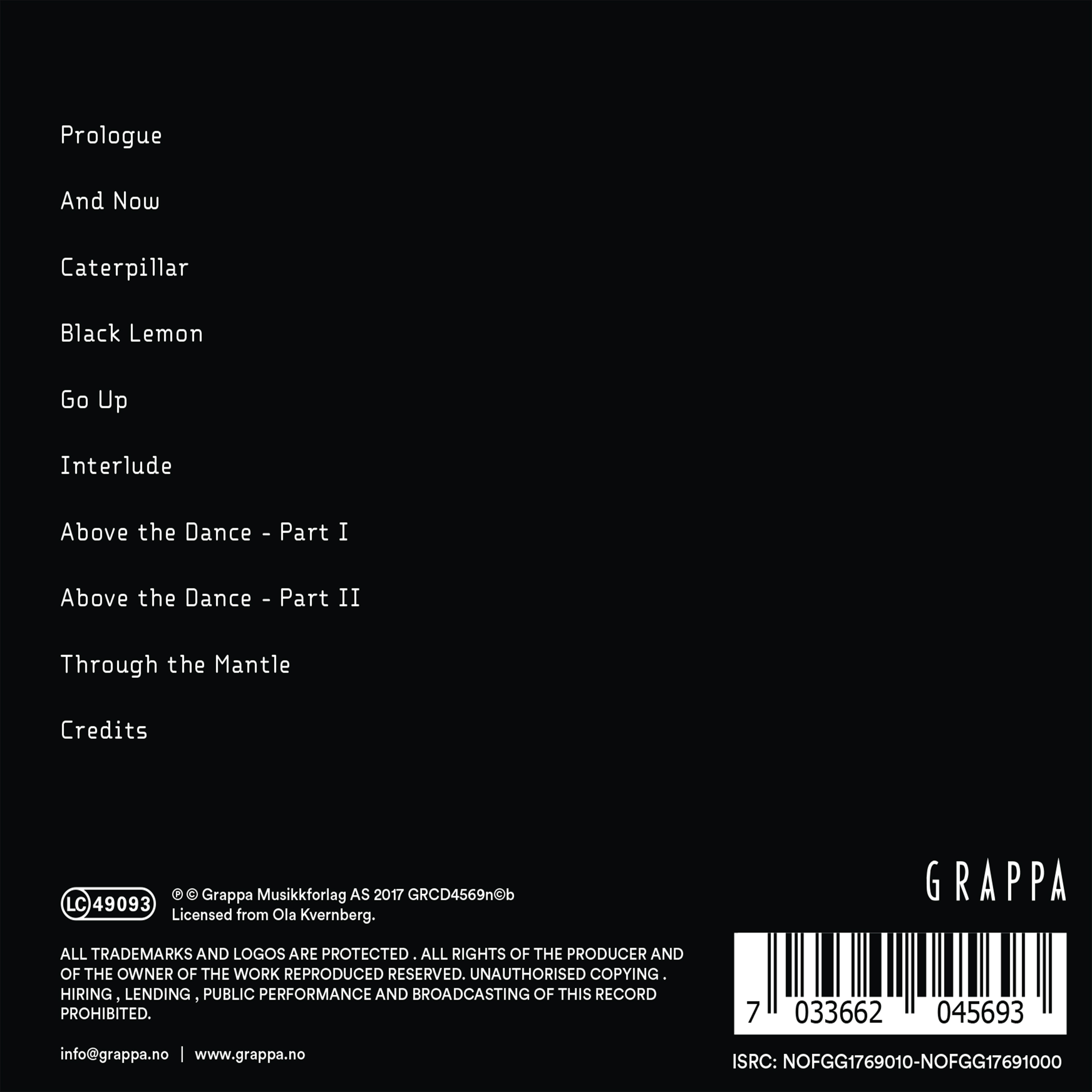
 dereksmusicblog
 dereksmusicblog