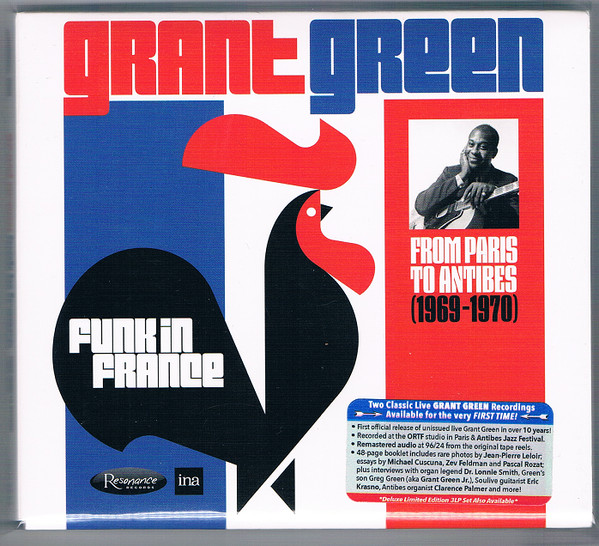
GRANT GREEN-FUNK IN FRANCE FROM PARIS TO ANTIBES 1969-1970.
Grant Green-Funk In France From Paris To Antibes 1969-1970.
Label: Resonance Records.
In 1967, thirty-five year old guitarist Grant Green was in the throes of heroin addiction, and it looked as if he was fighting a battle he had no chance of winning. Grant Green was a shadow of the man who had arrived in New York in 1960, to meet Alfred Lion of Blue Note Records.
By then, Grant Green who was born on the ‘6th’ of July 1931, was twenty-nine, had been a professional musician since he was a teenager and for the early part of his career had played in his home town of St Louis and around East St Louis. Initially, he had no inclination to move to New York until Lionel Hampton persuaded him to make the move in 1959.
A year later, in 1960, Grant Green was introduced to Alfred Lion the cofounder of Blue Note Records, who signed the twenty-nine tear old guitarist to one of jazz’s premier labels.
Between 1960 and 1965, Grant Green recorded a total of twenty-two albums for Blue Note Records as bandleader leading trios, quartets, quintets and sextets. Fourteen of these albums were released between 1960 and 1965, with the remainder released by Blue Note Records during the seventies and eighties. However, by 1965 Grant Green was already one of jazz music’s rising stars and had come a long way in five years.
Although Grant Green was a prolific recording artist between 1960 and 1965, he also found time to work with many of the other artists signed to Blue Note Records. This was akin to the great and good of jazz, and before long, Grant Green was the go-to-guitarist for many artists signed to Blue Note Records. However, within the space of two years Grant Green’s life had been transformed.
As 1967 dawned, Grant Green was in throes of heroin addiction which was threatening to derail his burgeoning career. Just like so many jazz musicians before him, Grant Green had succumbed to heroin, not knowing how addictive the drug was. By 1967, heroin had sunk its claws into Grant Green who was desperate to free himself from its grasp. That was why in 1967, Grant Green made the decision to move to Detroit where he would turn his back on the local music scene while he tackled his heroin addiction.
Grant Green moved his family to Detroit which became his home for the next two years as he set about beating his addiction to heroin. During 1967 and 1968, Grant Green deliberately avoided the local music scene, where he knew drugs would be freely available. He wasn’t willing to put temptation in his way having come so far, and beaten his addiction to heroin. By 1969, he was ready to return to the Big Apple, and rebuild his career.
After two years away, Alfred Lion resigned a newly reinvigorated Grant Green to Blue Note Records in 1969. By then, Grant Green was a changed man, and although he looked older, and his hair was starting to thin, he looked much healthier than he had two years previously.
Grant Green had also put together a new band and was moving in a new direction musically. Rather than jazz, Grant Green’s new band were playing a much funkier type of music. This new music would be showcased by Grant Green and his band over the new year or so, and features on Funk In France From Paris To Antibes 1969-1970 which was recently released as a two-CD set by Resonance Records.
Having resigned to Blue Note Records, Grant Green joined Larry Ridley and Don Lamond on a European tour, where each of the three guitarists took to the stage with the band that travelled with them, and played a short set. After the three sets, the three guitarists joined forces, and played together showcasing their considerable skills. Grant Green enjoyed the tour and when he left Europe, had no idea that he would return to France in October 1969. However, before that, Grant Green had his comeback album to record.
On the ‘3rd’ of October 1969, Grant Green and his band headed to Van Gelder Studio, Englewood Cliffs, New Jersey, to record his comeback album Carryin’ On. It found Grant Green leading a sextet on an album which marked a stylistic change for the thirty-eight year old guitarist. Carryin’ On was the first album of jazz-funk that Grant Green recorded, and this was the sound he embraced for the remainder of his career.
Having recorded Carryin’ On, which was released in the spring of 1970, Grant Green started preparing to return to Paris, France, later that month. This latest journey came as something of a surprise for Grant Green.
In the October 1969 edition of Jazz Magazine, an announcement that ORTF’s Guitar Night was due to take place at the headquarters of French National Radio with a ‘dream lineup’ of Barney Kessel, Kenny Burrell and Tal Farlow all featuring on the ‘26th’ of October. As soon as the event was announced, French jazz fans were looking forward to three of their favourite guitarists. That was until one was forced to withdraw from the event.
This was Tal Farlow, who had been suffering from asthma attacks and was unable to make the journey to France. For the organisers this was a disaster, but by the time next edition of Jazz Magazine was published, a replacement had been found…Grant Green.
While Grant Green was one of the biggest names in American jazz, French jazz fans didn’t appreciate the talented St Louis born guitarist. When Jazz Hot ran its reader’s poll, Grant Green ended up in eighth place in the list of guitarists. As a result, the announcement of Grant Green as Tal Farlow’s replacement was greeted with a lack of enthusiasm. It was going to take a lot for Grant Green to win over the French jazz fans.
When Grant Green arrived in Paris to play at the ORTF’s Guitar Night on the ‘26th’ of October 1969, he was joined by a slightly different, and slimmed down lineup of his band. Grant Green was about to lead a trio, which didn’t feature his usual drummer Idris Muhammad, who was unable to make the trip. Instead, drummer Don Lanond, bassist Larry Ridley and Grant Green would take to the stage at Studio 104, La Maison De Le Radio.
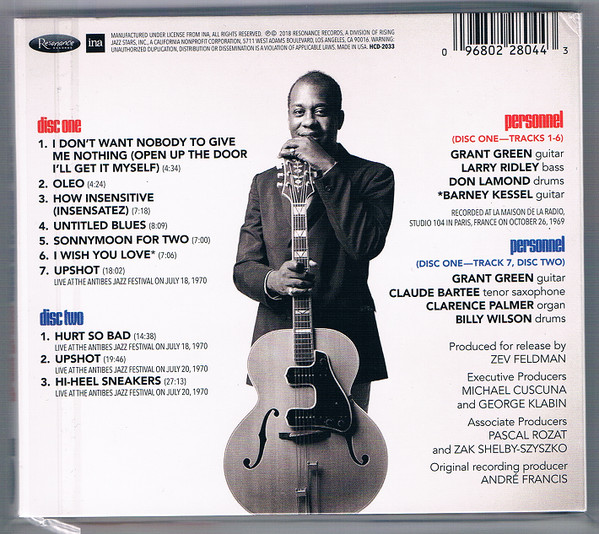
Disc One-Live At La Maison De Le Radio.
Only 852 patrons could be seated in Studio 104, La Maison De Le Radio, which was situated on the banks of the Seine. On the night of the ‘26th’ October 1969, it was decided that Grant Green who was perceived as the least popular of the three guitarists by the French promoters should take to the stage first. Grant Green was relegated to the warmup act, but was determined to win over the audience.
Thirty-eight year old Grant Green opened his set with a cover of James Brown’s I Don’t Want Nobody To Give Me Nothing (Open Up The Door I’ll Get It Myself), which he had recorded for his new album Carryin’ On. Straight away, the emphasis is on funk as the rhythm section lock into a groove, before Grant Green showcases his majestic rhythmic skills, before covering Oleo which was written by Sonny Rollins. He was one of Grant Green’s favourite composers, and Oleo allowed the guitarist to experiment and improvise, unleashing his trademark spitfire single sound during this journey into jazz funk.
Very different is Antonio Carlos Jobim’s How Insensitive (Insensatez), which seems an unlikely track for Grant Green to cover. Unlike many other jazz guitarists, Grant Green hadn’t embraced samba, but with the help of his band delivers a sympathetic cover of a familiar track which allows the guitarist and bandleader to showcase his talent and versatility.
Grant Green is back on familiar territory on the improvised Untitled Blues, before covering another Sonny Rollins’ composition Sonnymoon For Two. It’s reinvented with the help of the rhythm section, who showcase their skills during the solos and when they join forces with Grant Green, help him reach new heights. After that, Grant closes the set with the oft-covered I Wish You Love, where guitarist Barney Kessel joins the trio. This sparking cover was the perfect way for Grant Green to close his set and by the time he left the stage, he had won over the audience.
This was ironic, because the Paris audience weren’t exactly enthusiastic when they heard that Grant Green was Tal Farlow’s replacement. However, what the audience didn’t realise was that Grant Green’s music was changing, and he had embraced funk and jazz-funk, which would become his new trademark sound. The audience in Studio 104, La Maison De Le Radio, were privileged to hear Grant Green’s new sound, albeit he was accompanied by what slimmed down lineup of his band. However, this was enough to give French jazz fan’s a tantalising taste of Grant Green’s new sound.
Buoyed by the reception at Studio 104, La Maison De Le Radio, on the ‘26th’ October 1969, Grant Green headed home, and this new chapter in his career continued apace. This included recording a new album.
Green Is Beautiful was recorded at Rudy Van Gelder Studio, Englewood Cliffs, New Jersey, on January the ’30th’ 1970, and featured a very different lineup of Grant Green’s band. This time around, Grant Green led an octet that featured drummer Idris Muhammad, bassist Jimmy Lewis and conga player Cándido. The expanded lineup of Grant Green’s band worked their way five cover versions as the bandleader continued his journey into jazz-funk.
In the spring of 1970, Carryin’ On was released and showcased Grant Green’s new jazz-funk sound. Carryin’ On was well received, although some of Grant Green’s older fans weren’t won over by the album. They preferred his earlier albums, although a new audience embraced Grant Green’s newly updated sound. Later, Carryin’ On proved popular amongst collectors of acid jazz and rare groove.
By July 1970, Green Is Beautiful was released and found Grant Green growing into his new sound on an album that featured a tougher, funkier, brand of R&B. This new sound Grant Green was about to showcase at the Festival Mondial du Jazz Antibes, in 1970.
Disc Two-Haute Funk.
Grant Green had been invited to the prestigious Festival Mondial du Jazz Antibes, which took place between the ‘18th’ and ‘20th’ of July 1970. By then, Grant Green had fully embraced jazz-funk which was growing in popularity. However, he hadn’t turned his back on his jazz roots as the four lengthy workouts on Funk In France From Paris To Antibes 1969-1970 show.
When Grant Green arrived at the Festival Mondial du Jazz Antibes, the bandleader and guitarist was forty, and was due to appear on the ‘18th’ and ‘20th’ of July 1970. Joining him was a band that featured drummer Billy Wilson, organist Clarence Palmer and tenor saxophonist Claude Bartee. They joined musical chameleon, bandleader and guitarist Grant Green who by July 1970 was at the peak of his powers.
Grant Green’s performances of at the Festival Mondial du Jazz Antibes on the ‘18th’ and ‘20th’ July 1970 opened with sizzling versions of one of his own compositions Upshot. The first version closes disc one and lasts eighteen majestic minutes, while the second version that features on disc two is extended to nearly twenty minutes. Just like the first version, Grant Green and his band ensure that Upshot sizzles and swings during this latest journey into jazz-funk. Hurt So Bad which had given Little Anthony and The Imperials a hit in 1965 was a favourite of Grant Green’s and was often included in his live sets. He stays true to the original, and unleashes a breathtaking solo during this melodic cover of a familiar song. Closing disc two is a twenty-seven minute epic version of Hi-Heel Sneakers, that veers between joyous, uplifting and celebratory to explosive when Grant Green unleashes his solo during a track that fuses elements of funk, gospel, jazz and jazz funk. In doing so, Grant Green and his band reinvent a familiar and oft-covered track.
For fans of Grant Green, Funk In France From Paris To Antibes 1969-1970 which was originally released by Resonance Records as a three LP set for Record Store Day 2018 and recently released as a two CD set is a welcome reminder of one of the great jazz guitarists of his generation. By July 1970, when four of the tracks on Funk In France From Paris To Antibes 1969-1970 were recorded, Grant Green was enjoying a new chapter in his career after reinventing himself as a jazz-funk guitarist in 1969. This became his trademark sound for the rest of his career.
Sadly, following Grant Green’s performance at the Festival Mondial du Jazz Antibes he only recorded another eight albums between August 1971 and April 1978. After that, his health deteriorated in 1978, and Grant Green was forced to spend much of that year in hospital. During this period, Grant Green wasn’t earning money, and before long the guitarist’s finances were in a perilous state.
Against doctor’s advice, Grant Green headed back out on the road to try to make some much-needed money. His final gig was at his fiend George Benson’s Breezin’ Lounge in New York, but sadly, Grant Green collapsed in his car of a heart attack and died on January the ’31st’ 1979 aged just forty-three. That day, jazz music lost one of its great guitarists.
His recording career belatedly began in 1960 when twenty-nine year old Grant Green signed to Blue Note Records for the first time. This was the label that Grant Green called home for the majority of his career, and where he recorded the best music of his career. Grant Green was signed to Blue Note Records when he recorded the music on Funk In France From Paris To Antibes 1969-1970, which is a reminder of the early part of his jazz-funk years, which was a new chapter in the career of this talented and versatile guitarist, bandleader and composer.
Grant Green-Funk In France From Paris To Antibes 1969-1970.
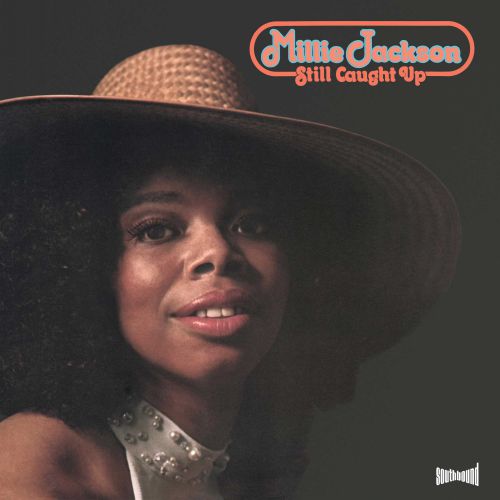
MILLIE JACKSON-STILL CAUGHT UP.
Millie Jackson-Still Caught Up.
Label: Southbound Records.
There’s nothing worse than not hearing how a story ends, and that was how many record buyers felt after hearing Millie Jackson’s critically acclaimed fourth album Caught Up, which was released in 1974. Caught Up was essentially a concept album, but in truth was like a musical soap opera about a love triangle, where Millie Jackson played the leading roles.
On side one, Millie Jackson plays the role of “the other woman,” before assuming the role of the woman whose husband has cheated on her on the second side. Although Millie Jackson breathes life, meaning and emotion into both roles, when Caught Up drew to a close, there was seemed no conclusion, no real ending. It was one of these cliffhangers where the listener wondered what happened next? Did the husband leave his wife, or did they stay together, and if so, what became of them? In modern parlance, there was no there was no ‘closure,’ and over half-a-million record buyers were left hanging, wondering what became of Mille Jackson’s two characters?
Little did anyone realise that the story that began on Caught Up was about to conclude on Millie Jackson’s fifth album Still Caught Up, which has just been reissued on vinyl by Southbound Records, an imprint of Ace Records. Still Caught Up was a much-anticipated album, that was released in 1975. That was all in the future.
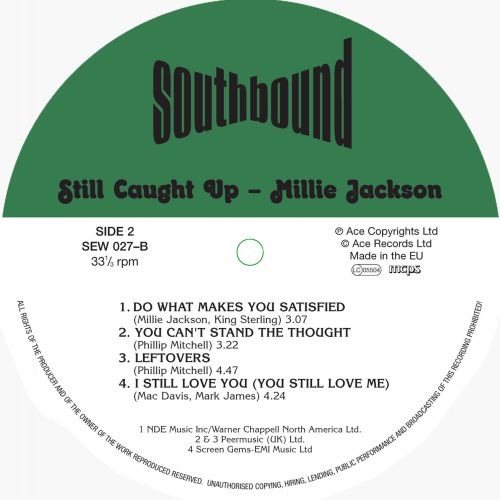
Buoyed by the success of Caught Up, which had just been certified gold after selling in excess of 500,000 copies, Millie Jackson began work on her much-anticipated fifth album Still Caught Up. Millie Jackson and her songwriting partner King Sterling penned The Memory Of A Wife, Tell Her It’s Over and Do What Makes You Satisfied which were joined by five cover versions that concluded the story that began on Caught Up.
This included You Can’t Stand The Thought Of Another Me and Leftovers which were written by singer, songwriter and producer Phillip Mitchell. They were joined by Tom Jans’ Loving Arms, Richard Kerr and Gary Osborne’s Making The Best Of A Bad Situation and Mac Davis and Mark Davis’ I Still Love You (You Still Love Me). These songs would complete the story of Still Caught Up, which was recorded at Muscle Shoals Sound Studio and Criteria Studios, Miami, Florida.
Fortunately, for Millie Jackson and Brad Shapiro who had produced Caught Up, they were once again able to secure the services of the original Muscle Shoals Rhythm Section for the recording of Still Caught Up. This included drummer Roger Hawkins, bassist Barry Hood and guitarist Jimmy Johnson. They were augmented by keyboardist Barry Beckett, guitarist Pete Carr and percussionist Tom Roady. Adding backing vocals were Charles and Sandra Chalmers, Sandy and Donna Rhodes and Janie Fricke. This was the band that accompanied Millie Jackson as she played the wronged wife and the other woman on Still Caught Up.
Once Still Caught Up was completed, Spring scheduled the release for 1975, hoping that it would replicate the success of Caught Up. That wasn’t going to be easy as Caught Up has reached twenty-one in the US Billboard 200 and four in the US R&B charts, which resulted in Millie Jackson’s first gold disc. However, with over 500,000 record buyers waiting to hear how the story that began on Caught Up ended on Still Caught Up, Spring had high hopes for Millie Jackson’s fifth album.
Especially, when critics hailed Still Caught Up as a fitting followup to Caught Up. Even the self-styled dean of rock critics gave Still Caught Up a B+, which was high praise indeed. However, it was the record buyers who would have the final say when Still Caught Up was released later in 1975.
Despite having won over critics, when Still Caught Up was released in 1975, it stalled at a lowly 112 in the US Billboard 200 and twenty-seven in the US R&B charts. This was a far cry from the success of Caught Up a year earlier. For Millie Jackson the commercial failure of Still Caught Up came as a huge blow, as Caught Up had transformed her fortunes, and had launched her career.
Things didn’t improve when Loving Arms was released as a single, and it failed to trouble the charts. Loving Arms was the one that got away for Millie Jackson. When Leftovers was released as a single, it struggled to eighty-seven in the US Billboard 100, which was another disappointment for Millie Jackson who had hoped to build on the success of Caught Up. In a way, Still Caught Up was the one that got away for Millie Jackson.
Still Caught Up opens with Making the Best of A Bad Situation, where Millie Jackson’s ex-husband knocks on the door and delivers a short monologue reminding her it’s their anniversary. Millie Jackson then delivers a worldweary vocal against a slow backdrop of lush strings, piano, rhythm section and guitars. By then, there’s a degree of drama and sense of sadness, as the arrangement sweeps along and Millie Jackson reflects upon how she feels, admitting that she misses her husband, and although free, she is at a loss without him to share her life. Later, strings, chiming guitars, piano and soaring backing vocalists combine as Millie Jackson’s vocal is full of emotion and sadness as she continue to lay bare her soul.
A short monologue opens The Memory of A Wife, before the arrangement grows in power and drama as the rhythm section, rasping horns, swirling strings, guitars and a piano combine to produce a punchy, dramatic arrangement as Millie’ Jackson delivers an angry, vocal. Midway through the track, calmness descends, and just twinkling keyboards, rhythm section and slow strings accompanying Millie Jackson’s monologue. It’s almost a warning shot fired across the bows of her husbands new lady, warning her about the pitfalls of their relationship. She even dispenses marital advice, on how to spot a straying husband, and the pitfalls of being the “other woman” against a meanders arrangement. After a second monologue, the song heads towards a dramatic conclusion, with blazing horns, piano, rhythm section and guitars accompanying Millie Jackson as she unleashes a vocal that is a mixture of power, anger and frustration as this emotional roller coaster draws to a close.
The rhythm section and acoustic guitar accompany Millie’ Jackson’s monologue on Tell Her It’s Over, and quickly, she tells her ex-husband to tell his new girlfriend that their relationship is over. Meanwhile, her vocal grows both in power and emotion, while rapid-fire bursts of backing vocalists combine with guitars, keyboards as the rhythm section provide the heartbeat. Later, rasping horns and a Hammond organ accompany Millie Jackson’s confident and assured vocals as she lets her husband know just who is in charge. By now it seems, Millie has gained the upper hand in the relationship, during this emotionally charged track, but how long will this last?
Just chiming guitars and slow, sweeping strings combine with the rhythm section and piano as What Makes You Satisfied meanders melodically along. Soon, it’s all change as Millie Jackson unleashes a swaggering vocal as soulful backing vocalists accompany her, as a piano, slow, moody bass and melancholy strings are key to the arrangement’s success. Meanwhile, rasping horns and crystalline guitars provide backdrop as Millie Jackson tells her husband to do what makes him satisfied, and if that means leaving her, so be it. She knows that it won’t last, because his new lover isn’t the faithful kind, and that will hurt his ego. As Millie sings this, it’s with a mixture of bravado and resignation, as deep down, she’s worried, that she might be wrong, and he won’t come back. It’s a powerful portrayal and one of the highlights of Still Caught Up.
After the bravado of the previous track, it’s a much more confident Millie Jackson that opens You Can’t Stand The Thought Of Another Me as it bursts into life. The tempo is quicker with the rhythm section, piano, wah-wah guitars and cooing backing vocalists accompany a defiant Millie Jackson. She sings that her husband can’t stand the thought of another man now loving her. Later, a punchy rhythm section, sweeping string and braying horns add to the emotion, drama and defiance as Mille Jackson proves takes revenge on her husband who betrayed her.
Just when it seems Millie Jackson seems to have the upper hand in the situation, things take a turn for the worse on Leftovers, when her new man announces he’s leaving, and going back to his wife. He’s not for changing his mind, and Millie Jackson reveals that she knows that he’s been cheating on her with his wife. This monologue between Millie and her lover is set against a backdrop of keyboards, chiming guitars and blazing horns as the rhythm section provide the heartbeat. Later, the doorbell rings, and when Millie opens the door is greeted by her lover’s wife. Millie’s response is to throw everyone out, before she asks her love rival how she could stand being second best to her? By now Millie’s vocal is powerful, full of emotion and anger as the arrangement grows in power, during this mixture of music and theatre, where tension and drama are omnipresent.
I Still Love You (You Still Love Me) closes the love triangle that is Still Caught Up. By then, Millie Jackson’s husband has left her, and it seems she’s slowly unravelling. After a monologue, there’s a sense of sadness and even melancholy as the arrangement meanders along, the rhythm section, guitars, keyboards and backing vocalists accompanying Millie who is sad, lonely and lost as flute flutters above her. By then, her voice is full of sadness and regret, with almost a sense of grief in her voice caused by the loss of her husband. Towards the end of the track, Millie unravels, and sadly, becomes unstable and mentally ill. Millie Jackson portrayal of mental illness is far from sympathetic and is in poor taste. So much so, that this spoils the ending of what was a compelling and intriguing love triangle.
Unfortunately, Millie Jackson didn’t live happily ever after on Still Caught Up, which completes the story that began on her previous album Caught Up. This was the album that launched Millie Jackson’s career in 1974, and forty-four years later, is still one of the finest albums of her career.
A year later, Millie Jackson’s much-anticipated fifth album Still Caught Up was released by Spring Records, and it was hoped would replicate the success of Caught Up. Although that wasn’t the case, Still Caught Up is a powerful and moving album where Millie Jackson’s plays every part in this love triangle.
The drama that is played out in front of the listener on Still Caught Up is so realistic, that the listener is bound to end up feeling sorry for the characters and taking sides in the various scenarios. Millie Jackson breathes life, meaning and emotion into each and every part on Still Caught Up, regardless of what part she’s playing during an album that is a mixture of music and theatre.
Still Caught Up which was released in 1975, features a mixture of monologues and music, which works well and proves a powerful and captivating combination as Millie Jackson plays every role in the second part of this love triangle. It’s an emotional roller coaster, where Millie Jackson veers between heartbroken and hopeful to defiant and confident, to angry and frustrated. Millie Jackson plays each character perfectly, whether it be the wronged woman, to the defiant and newly in love, to the other woman and latterly, the woman who is unravelling emotionally.
Sadly, there was to be no happy ending on Still Caught Up, which is a captivating and emotionally charged concept album which is a mixture of music and drama which brought to an end Millie Jackson’s two part love triangle that began with the classic soul concept album Caught Up in 1974
Millie Jackson-Still Caught Up.


KETIL BJORNSTAD AND ANNELI DRECKER-A SUITE OF POEMS.
Ketil Bjørnstad and Anneli Drecker-A Suite Of Poems.
Label: ECM Records.
Nowadays, part of the modern music industry is populated by third-rate wannabes, who in truth, have no right whatsoever to call themselves musicians. Many of this new breed of musicians, are DJs who also laughingly refer to themselves as a ‘producer’ despite having absolutely no musical training, and being unable play an instrument. Instead, these musical illiterates make music on a digital audio workstation and use samples to make music on their laptop. This gets round the producer’s lack of musical knowledge and inability to play a musical instrument. However, eventually, their lack of talent and musical knowledge is bound to catchup with them.
Sometimes, the ‘producer’ has to bring onboard someone in to lay down a vocal on their latest Magnus Opus, but given their lack of talent and knowledge, no vocalist with an ounce of talent will be willing to work with them. As a result, the producer is left to bring onboard a third-rate vocalist who lays down a vocal that is hopelessly out of tune. Not that the ‘producer’ notices this, until someone points this out. The now desperate ‘producer’ then tries to rescue the situation with Melodyne, and failing that, a myriad of effects that disguise the vocal. With the track now complete, the ‘producer’ then mixes and masters their masterpiece which is a hook free zone.
Once the mastering is complete, the ‘producer’ has destroyed what little dynamic range the track had, and it’s fallen victim to the loudness wars. Not that there’s any chance of the track being played in a club, never mind radio. However, the ‘producer’ is the ultimate optimist.
They even pay a little known hipster PR company to write a puff piece, which is circulated before the track is released online as a digital download. This proves to be its final resting place, as the online shop is the musical equivalent of the elephant’s graveyard, where bad music goes to die.
Meanwhile, week after week, talented musicians and vocalists release much-anticipated and critically acclaimed albums of ambitious and innovative music. This includes Ketil Bjørnstad and Anneli Drecker’s album A Suite Of Poems which was recently released on ECM Records. It’s a collaboration two of the leading lights of the Nordic music scene Ketil Bjørnstad and Anneli Drecker.
Ketil Bjørnstad.
Sixty-six year old pianist, composer and author Ketil Bjørnstad, was born in Oslo, Norway, on the ’25th’ of April 1952, and growing up, was a prodigiously talented musician. He initially trained as a classical pianist in London and Paris, in and in 1966 and 1968 won the prestigious title Youth Piano Master. Later in 1968, Ketil Bjørnstad made his debut as a concert pianist, and this looked like the start of a long and successful career.
That was until Ketil Bjørnstad discovered and embraced European jazz and which by then, was growing in popularity and then jazz. Soon, Ketil Bjørnstad was working with the Norwegian rhythm section of drummer Jon Christensen, bassist Arild Andersen, guitarist Terje Rypdal, bassist Arild Andersen and drummer Jon Christensen who were joined by the American cellist David Darli. This was the start of Ketil Bjørnstad’s musical career.
Ketil Bjørnstad wasn’t just a talented composer and pianist, he was also a poet writer, and in 1972, published his first volume of poetry Alene Out, which was followed by a second volume, Closer in 1973. The following year, Ketil Bjørnstad’s first novel Nattsvermere was published in 1974. By then, his recording career was well underway.
In 1973, Ketil Bjørnstad released his debut album Åpning on Phillips, with Berget Det Blå following in 1974 and Tredje Dag in 1975. This was the start of a prolific recording career, with Ketil Bjørnstad often releasing two albums a year.
When Ketil Bjørnstad released Finnes du noensteds i kveld in 1976, it reached number nine in the Norwegian charts and was his album that charted. This was the start a of successful period for the Oslo based pianist and author.
By the time that Ketil Bjørnstad signed to ECM Records, and released Water Stories in 1993, seven of his albums had charted, and he was regarded as a musical pioneer who released ambitious and innovative albums. Some of these albums that were released on ECM Records would feature his old friends Jon Christensen, Arild Andersen, Terje Rypdal and David Darli. They formed a formidable partnership during the nineties and into the noughties.
In 2003, Ketil Bjørnstad released The Nest, which was his first collaboration with thirty-four year old Anneli Drecker, who had started her career as the lead vocalist for the dream pop band Bel Canto in 1985. The Nest was released to critical acclaim and was just the latest successful album to bare Ketil Bjørnstad’s name.
Fifteen years later, and sixty-six year old Ketil Bjørnstad is a prolific author and recording artist, who has released in excess of fifty albums, and countless collaborations with the great and good of music. This includes A Suite Of Poems which is his second collaboration with Anneli Drecker.
Anneli Drecker.
Anneli Drecker was born 12 February 1969, and in 1985, the sixteen year old became the lead vocalist of Bel Canto in 1985. By the time Anneli Drecker was seventeen, she had left her Arctic hometown of Tromsø and was to embark upon a successful musical career.
In 1987, Bel Canto released their debut album White-Out Conditions, with their sophomore album Birds Of Passage following in 1989. It was released to critical acclaim and won Bel Canto the prestigious Spellemannprisen award, which is the equivalent of a Grammy Award.
History repeated itself when Bel Canto released their third album Shimmering, Warm and Bright to critical acclaim in 1992 and again, it won a Spellemannprisen award. By then, critics were comparing Anneli Drecker’s ethereal vocal to Liz Fraser’s which was high praise indeed.
Having released three albums on indie label Crammed Discs, Bel Canto were signed to Atlantic Records, and in 1995 released their fourth album Magic Box on the Lava imprint Lava which won another Spellemannprisen award. The rise and rise of Bel Canto continued, and in 1998 they released their firth album Rush to plaudits and praise. After that, Anneli Drecker decided to take a sabbatical from Bel Canto and embark upon a solo career.
In March 2001, Anneli Drecker released her critically acclaimed and genre-melting debut album Tundra. Critics were forecasting a bright future for Anneli Drecker as a solo artist, but she decided to put her solo career on hold.
Anneli Drecker was asked to join Röyksopp, and wrote and performed Sparks which featured on their debut album Melody A.M. which was released in September 2001. Melody A.M. was certified platinum in Norway, Britain and Holland, and later in 2001, was nominated for, and won, the Spellemannprisen for the best electronic album.
Following the success of Melody A.M, Anneli Drecker toured with Röyksopp, before recording Bel Canto’s sixth album Dorothy’s Victory which was released in 2002. This proved to be Bel Canto’s swan-song as far as studio albums were concerned.
Three years later, and Anneli Drecker released her sophomore album Frolic in April 2005,which marked a change in direction. Frolic was a much more downtempo album and this appealed to many critics, who lauded Anneli Drecker’s decision to reinvent herself
Another ten years passed before Anneli Drecker’s thoughts turned to her third album, and during that period she had embarked on two world tours with A-Ha and worked with toured and recorded with Röyksopp. However, in 2015 Anneli Drecker returned with her long-awaited third album, Rocks and Straws, which was a career defining album. It was followed by her critically acclaimed fourth album Revelation For Personal Use in May 2017. By then, Ketil Bjørnstad and Anneli Drecker had collaborated on a new project.
A Suite Of Poems.
This was A Suite Of Poems written by Norwegian-Danish author Lars Saabye Christensen, who is one of Scandinavia’s top contemporary writers. He’s also been a friend of Ketil Bjørnstad since the pair were teenagers, and nowadays, when Lars Saabye Christensen travels the world, he always sends his old friend what he calls “hotel poems” which explore a range of moods. Lars Saabye Christensen invites Ketil Bjørnstad to make music out of these “hotel poems.”
Ketil Bjørnstad remembers that: “I started writing music to his poems more than 20 years ago” and say that Lars Saabye Christensen’s: “ability to expose the inner conflicts we all bring with us in our suitcases is striking.”
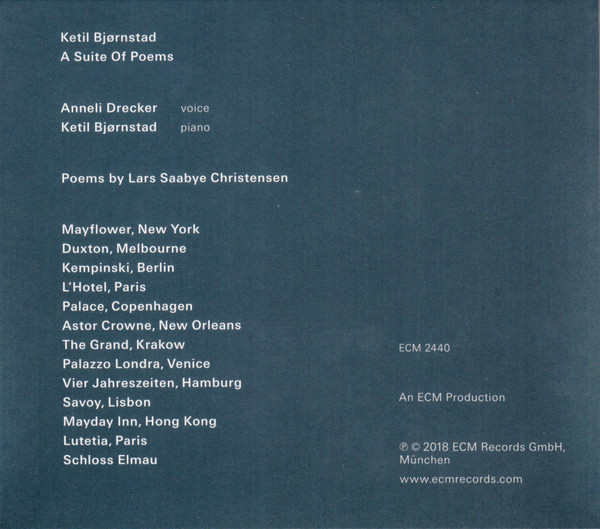
That is apparent on the thirteen songs on A Suite Of Poems, which was recorded by pianist Ketil Bjørnstad and vocalist Anneli Drecker in Oslo’s Rainbow Studio in June 2016. It’s a powerful, poignant and thought-provoking song cycle that deserves to be compared to Ketil Bjørnstad’s critically acclaimed projects like 2013s Sunlight and 2014s A Passion For John in Donne.
The thirteen songs that feature on A Suite Of Poems document Lars Saabye Christensen’s travels including a stay at the Mayflower, New York, then the Duxton, Melbourne, Kempinski, Berlin, L’Hotel, Paris and Palace, Copenhagen. By then, it’s apparent that there’s a connection between composer and pianist Ketil Bjørnstad who admits: “I feel very connected to the lonely, existential perspective of these poems, made in different hotel rooms.”
They’re brought to life by Anneli Drecker’s ethereal vocal which breathes life, meaning, emotion and existential angst into the songs which explore a range of moods. Ketil Bjørnstad’s choice of Anneli Drecker to interpret songs on A Suite Of Poems was inspired, and proof of that is the rueful Astor Crowne, New Orleans which threatens to swing.
Soon, Anneli Drecker is delivering a ruminative, heartfelt vocal on The Grand, Krakow, which is tinged with sadness and loneliness.There’s a similar sense of sadness on the cinematic Palazzo Londra, Venice and Vier Jahreszeiten, Hamburg which is rich in imagery. One of the most poignant songs is Savoy, Lisbon which features one of Anneli Drecker finest vocals. She then lays bare her soul and secrets on Mayday Inn, Hong Kong as she admits: “big rooms make me nervous” in a song that tells the story the lonely globetrotting traveller. They arrive in Lutetia, Paris where Anneli Drecker delivers a vocal that is a mixture of sadness and hope, before Schloss Elmau which is a poignant and wistful showcase for Ketil Bjørnstad’s piano completes the song cycle A Suite Of Poems.
Although A Suite Of Poems features just Ketil Bjørnstad’s piano and the ethereal vocal of Anneli Drecker, this proves hugely effective and is further proof that sometimes, less is more. It would’ve been easy to add strings which would add to the emotional impact of the song cycle, but this may have distracted the listener. The focus of their attention is Anneli Drecker’s vocal, as she tells the story of the lonely globetrotting traveller who spends their life living in a suitcase far from home. She’s accompanied by Ketil Bjørnstad’s piano and the pair are like yin and yang, on A Suite Of Poems which is one of the finest albums released on ECM Records during 2018.
A Suite Of Poems features thirteen tracks that between beautiful and confessionals to poignant and powerful to rueful and ruminative to thought-provoking and sometimes are full loneliness and existential angst. Together, the music on A Suite Of Poems is spartan and understated, but also breathtakingly beautiful as Anneli Drecker plays a starring role and breathes life, meaning and emotion into Lars Saabye Christensen’s “hotel poems” which were turned into songs by composer and pianist Ketil Bjørnstad on this captivating and enchanting album.
Ketil Bjørnstad and Anneli Drecker-A Suite Of Poems.

RYO FUKUI-SCENERY AND MELLOW DREAM.
Ryo Fukui-Scenery and Mellow Dream.
Label: We Release Jazz Switzerland.
Ryo Fukui, who was born in Biratori, Hokkaido, in Japan, on the ‘1st’ of June 1948, was a late starter when it came to the piano and unlike most of the musicians he encountered during a career that spanned five decades, had never learnt to play the instrument as a child. Instead, Ryo Fukui had just turned twenty-two in 1970, when he announced that he wanted to learn to play the piano, and was going to teach himself.
If Ryo Fukui’s friends thought that his decision to teach himself to play the piano was bound to end in tears, they were soon proved wrong as he turned out to be a talented pianist. So much so, that the self-taught pianist was good enough to embark upon a career as a professional musician, playing the music that he loved…jazz.
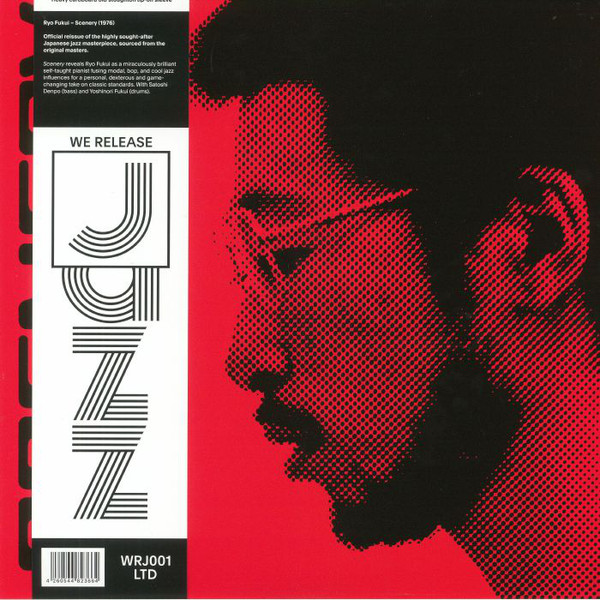
As September 1976 dawned, twenty-eight year old Ryo Fukui was living in Sapporo, where he led his own trio who were a familiar sight in local jazz clubs. Ryo Fukui had also just signed to Trio Records, and was preparing to record his debut album Scenery, which like the followup Mellow Dream, have just been reissued by We Release Jazz Switzerland. These albums are a welcome reminder of a remarkable musician.
Scenery.
For his debut album Ryo Fukui had written the title-track Scenery, and the rest of the album comprised cover versions. This included Jimmy Van Heusen and Johnny Burke’s It Could Happen To You, Billy Eckstine’s I Want To Talk About You, Hideo Ichikawa’s Early Summer, Ann Ronell’s Willow Weep For Me and Joseph Kosma and Jacques Prévert’s Autumn Leaves. These tracks became Scenery, which Ryo Fukui planned to record at Yamaha Hall, Sapporo.
The recording of Scenery took place at Yamaha Hall, Sapporo, on the ‘7th’ of September 1976, pianist Ryo Fukui leading a trio that featured drummer Yoshinori Fukui and bassist Satoshi Denpo. Taking charge of production were Masataka Ito and Ryo Fukui who worked well together, and Scenery like many jazz albums was recorded quickly, with just a day spent laying down the tracks. This was how countless classic albums had been recorded during the fifties and sixties.
Scenery was released in late 1976, and was regarded as an important album by Japanese jazz critics, who called the album a game-changing release that was one of the finest of the seventies. Despite receiving widespread critical acclaim in Japan, Scenery passed American jazz fans by, and they missed out on hearing what was a remarkable debut album.
Ryo Fukui opens his 1976 debut album Scenery with It Could Happen To You, which was the first of four oft-covered classics that he set about reinventing. It was a similar case on I Want To Talk About You, Willow Weep For Me and Autumn Leaves where with the help of drummer Yoshinori Fukui and bassist Satoshi Denpo, pianist Ryo Fukui ensures that these classics take on new life and meaning. This isn’t easy given who often these tracks had been recorded by 1976. However, the twenty-eight year old pianist who had only been playing for six years by the time he recorded Scenery, plays with maturity that belies his relative inexperience.
For much of the time, his playing is smooth, subtle and effortless as his fingers glide and flit across the piano keyboard as he plays with fluidity ensuring the songs swing. Other times, he plays with speed and energy, and isn’t afraid to improvise and innovate. Stylistically, Ryo Fukui sometimes sounds like Bill Evans, and especially during the energetic modal rework of Early Summer. By then, Ryo Fukui and his trio play with a newfound urgency, before closing the album with the title-track Scenery. It was Ryo Fukui’s only original composition on Scenery and is a reminder of a talented bandleader, composer and pianist as he began his career with game-changing album which is a glorious fusion of bop, cool jazz and modal jazz.
Buoyed by the critical reaction and success of Scenery, Ryo Fukui continued to hone his skills as a pianist, and before long, he was already beginning work on his sophomore album Mellow Dream.
Mellow Dream.
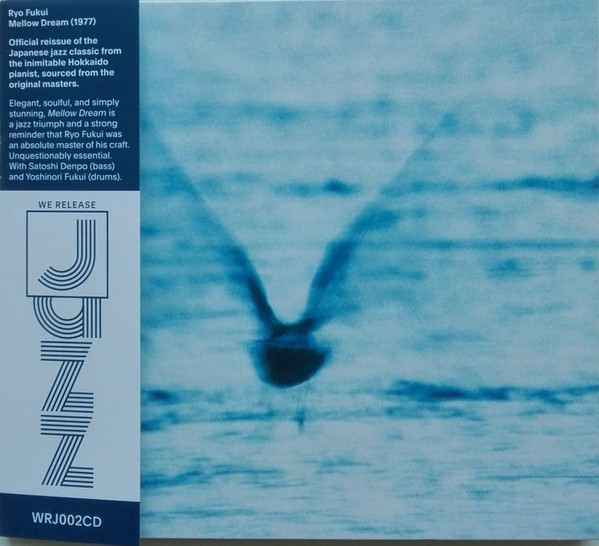
While Scenery only featured one Ryo Fukui composition, he wrote half of the tracks on his much-anticipated sophomore album Mellow Dream. This included the title-track Mellow Dream, Baron Potato Blues and Horizon, which were joined by covers of Victor Young’s My Foolish Heart, Johnny Burke’s What’s New and Richard Rodgers’ My Funny Valentine. Mellow Dream was a mixture of the new music and much-loved classics and just like Scenery, was recorded at Yamaha Hall, in Sapporo.
This time, Masataka Ito took charge of production when Mellow Dream was recorded on August the ’17th’ and ’18th’ 1977. Joining pianist Ryo Fukui was drummer Yoshinori Fukui and bassist Satoshi Denpo, which was the same lineup of the trio that featured on Scenery. They took just two days to record Mellow Dream, which was mixed during two days in September 1977 and was ready for release.
Mellow Dream was released in late 1977, to plaudits and praise, with critics calling the album a fitting followup to Scenery. By then, Ryo Fukui had a matured not just as a pianist and bandleader, but as a composer.
The twenty-seven year old’s pianist sophomore album Mellow Dream, found Ryo Fukui continuing to combine and explore bop, cool jazz, modal jazz, post bop and even a hint of blues on what was a much mellower, soulful and ruminative album that allowed time to reflect, especially on Mellow Dream and the reinvention of My Foolish Heart. Other times, the music on Mellow Dream packs a punch and swings as Ryo Fukui grabs Baron Potato Blues and Horizon by the scruff of the neck. His fingers fly across the piano keyboard as he plays with speed and fluidity as the rest of the trio match him every step of the way. Meanwhile, the music on Mellow Dream is an emotional roller coaster as it veers between vibrant to joyous and melancholy and rueful. Ryo Fukui it seems is a man for all seasons on his sophomore album Mellow Dream.
Following the success of his sophomore album Mellow Dream, Ryo Fukui continued to hone his skills and mature and improve as a musician, but made the decision to concentrate playing live. This included in the Slowboat jazz club in Sapporo, which Ryo Fukui owned and ran with his wife Yasuko. With Ryo Fukui concentrating on playing live, it was eighteen years before he returned with a new album.
Ryo Fukui returned with My Favorite Tune in 1995, and followed this up with Ryo Fukui In New York in 1999. It was another sixteen years before Ryo Fukui released A Letter From Slowboat in 2015, which proved to be his swan-song.
Sadly, Ryo Fukui passed away on March the ‘15th’ 2016, aged just sixty-seven. That day Japanese jazz was in mourning at the loss of one of its great pianists, who although self-taught was a masterful performer who played with grace, fluidity and invention during a career that spanned five decades.
Although Ryo Fukui enjoyed a long career, he only released five albums, including Scenery and Mellow Dream which are his finest outings, and have just been released by We Release Jazz Switzerland. Scenery and Mellow Dream are reminder of bandleader, composer and pianist Ryo Fukui who sadly, was and still is one of jazz’s best kept secrets outside of his native Japan. Hopefully, that will change with the release of Scenery and Mellow Dream and Ryo Fukui’s music will be discovered by a new audience.
Ryo Fukui-Scenery and Mellow Dream.
CUASARES-AFRO-PROGRESIVO.
Cuasares-Afro-Progresivo.
Label: Pharaway Sounds.
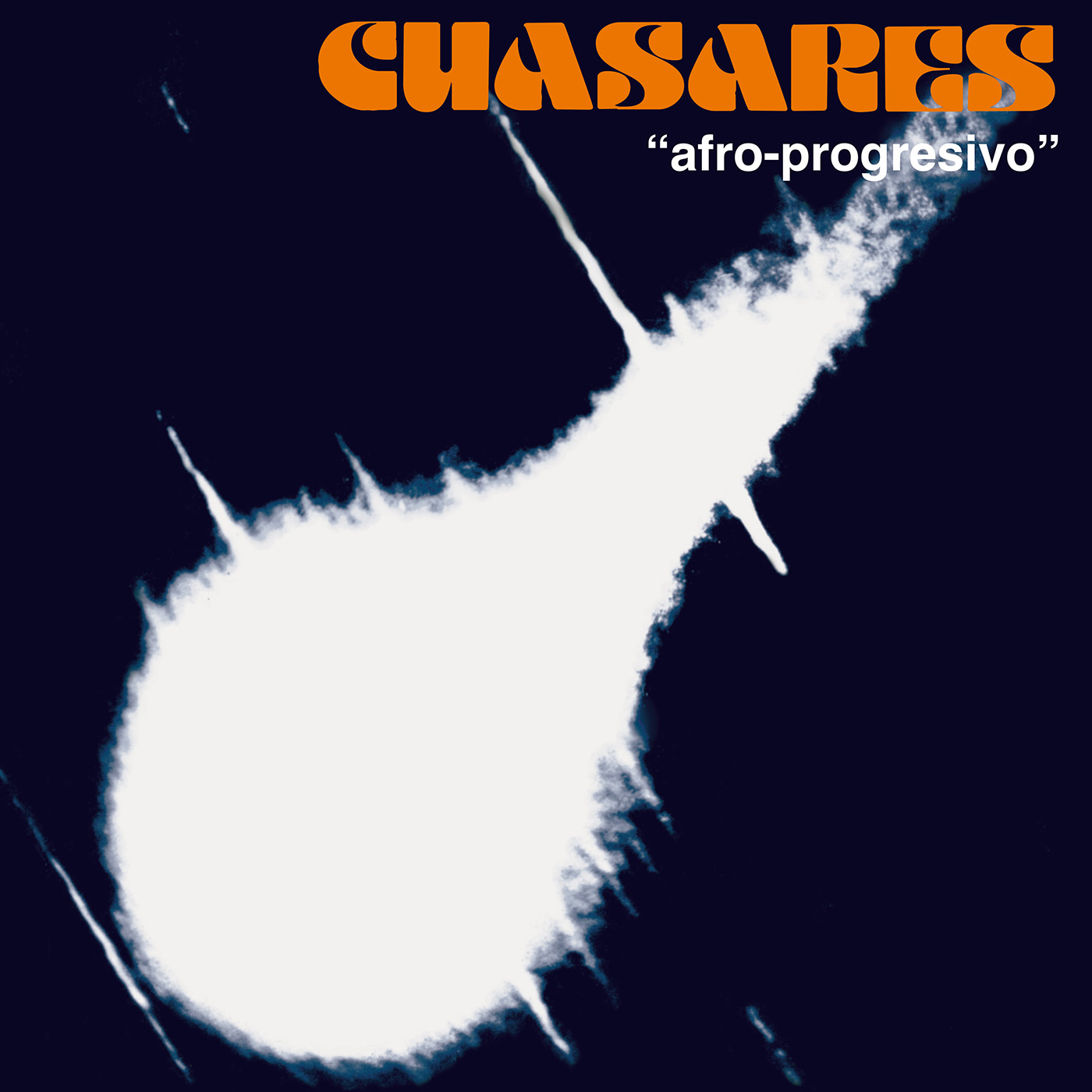
In 1972, a new Argentinian band Cuasares, entered the recording studio and began work on what became their debut album Afro-Progresivo. This was the latest project that was masterminded by arranger, composer and pianist Waldo Belloso who previously, had been a member of Los Abrodo Brothers and recorded a sexploitation soundtrack in 1969. However, Afro-Progresivo was totally different from anything that Waldo Belloso had previously worked on and was a truly ambitious project.
That was why Waldo Belloso took great care selecting the musicians that would become members of Cuasares. They had to be able to carry out Waldo Belloso’s instructions to the letter, as he guided them through the recording of Afro-Progresivo, teasing nine performances out of the nascent lineup of Cuasares. This took time, it wasn’t until 1973 that Waldo Belloso had managed to coax an album’s worth of music out of Cuasares.
With Cuasares’ debut album complete, Waldo Belloso called this groundbreaking and genre-melting release Afro-Progresivo, which was released on the short-lived Pais label later in 1973. Sadly, when Cuasares released Afro-Progresivo the album failed to find the audience it deserved. It didn’t help that Pais was a small label, and didn’t have the marketing expertise or financial muscle to promote Afro-Progresivo. However, the main problem was that Argentinian record buyers neither understood nor appreciate such an innovative album.
Following the commercial failure of Afro-Progresivo in 1973, copies of Cuasares’ debut album became almost IMpossible to find in record shops. Very occasionally a lucky record collector would stumble across a copy of Afro-Progresivo in the racks of a second-hand record shop. However, as the years passed, Afro-Progresivo became one of the rarest Argentinian rock albums which copies changing hands for excess of £600. Sadly, that meant that a copy of Cuasares’ groundbreaking album Afro-Progresivo was beyond the budget of most record collectors. That was until recently.
Pharaway Sounds, an imprint of Guerssen Records recently reissued Cuasares’ debut album Afro-Progresivo, for the first time since its release in 1973. Somewhat belatedly, record buyers across the world are album to discover this groundbreaking rarity for the first time.
The man who masterminded Cuasares was Waldo Belloso, who was born in the Argentinian capital Buenos Aires, on April the ‘4th’ 1933. By the age of six started studying the piano, which was the instrument that Waldo Belloso would later make his name playing.
Soon, Waldo Belloso was studying the roots of Argentinian folklore music, which before long became his passion. Over the next few years he spent much of his studying the studying and practising Argentinian folklore music, and by the time he was a teenager, was regarded as an expert in the subject. Later, Waldo Belloso would become a professor at Alberto Williams Conservatory, and later, became the chair at the National Dance School. By then, Waldo Belloso’s musical career was starting to take shape.
Waldo Belloso became a member Los Abrodo Brothers, and before long, became an important figure within the band. This was all part of his musical apprenticeship.
By then, Waldo Belloso wasn’t content to work as a musician, and was also an aspiring composer, who would spend years honing his craft. This would eventually payoff in the future, as would Waldo Belloso’s academic studies.
Although Waldo Belloso’s life seemed to revolve around music, he qualified as an ophthalmologist during the second half of the sixties. After that, Waldo Belloso’s twin careers in medicine and music continued apace.
In 1969, Waldo Belloso completed the soundtrack to one of the most controversial projects he worked on, the sexploitation movie Juegos De Verano. When it was rated by Argentinian film board, it received a triple-X rating and it four years passed before the premiere of Juegos De Verano took place in 1973. By then, Waldo Belloso had just completed his latest project.
This was Cuasares’ debut album Afro-Progresivo which Waldo Belloso began working on in 1972. By then, the thirty-nine year old arranger, composer and pianist had already written the album Waldo Belloso had written eight of the ten tracks himself, including Transmigración, Colisión, Mutación, Ancestral, Evanescente, Amalgama, Pentatonik and Simbiosis. The other two tracks Cuasares and Vertical were penned by Waldo Belloso and Hector Quattromana a talented and versatile multi-instrumentalist who dawned the moniker Mingo. These ten tracks were recorded by a carefully selected group of musicians, and later, became Cuasares’ debut album Afro-Progresivo.
After carefully choosing the musicians that would become Cuasares, just drummer and percussionist Enrique “Zurdo” Roizner and sixteen year old guitarist Tomás Gubitsch joined Waldo Belloso in the studio. They began recording Afro-Progresivo in 1972, and eventually, the album was completed in 1973. By then, Waldo Belloso had coaxed and encouraged performances out of his small band and now, Afro-Progresivo was ready for release.
Having spent so long recording Afro-Progresivo, Waldo Belloso made a decision he would surely live to regret when he decided to release Cuasares’ debut album on the Pais label. It was a new label and unlike the major labels, didn’t have the marketing expertise or financial muscle to promote Afro-Progresivo, and it was no surprise when upon the release of Afro-Progresivo later in 1973, the album sunk without trace. Part of the problem was that Argentinian record buyers neither understood nor appreciated such an innovative album. For Waldo Belloso this was a huge disappointment.
Just when it looked like things couldn’t get any worse for Waldo Belloso it did, when the Pais label closed its doors after releasing just two albums in less than three months. This included Cuasares’ debut album Afro-Progresivo.
Now forty-five years after Cuasares released Afro-Progresivo, the reissue by Pharaway Sounds allows record buyers to discover what was a groundbreaking and genre-melting album that was masterminded by Waldo Belloso who combined elements of Afro-Latin, jazz, psychedelic funk and European library music. Especially, French and Italian library music, and sometimes, fusion, which was growing in popularity in America, Britain and Europe. As Cuasares flitted between and fused disparate musical genres, they deployed an eclectic musical arsenal.
This included a lysergic fuzzy guitar, futuristic sci-fi synths, an effects laden Hammond organ, flute, vibraphone and a myriad of disparate effects that added a psychedelic vibe to an album that drew inspiration from Africa, America, Europe and Latin America as musical alchemist Waldo Belloso and his band of brothers recorded an album that was way of its time.
That was the case from Cuasares which opens Afro-Progresivo and elements of psychedelic funk, fusion and instrumentation usually found on a progressive rock album are combined to create an ambitious and otherworldly track. The tempo drops on Transmigración which initially, seems an understated track, but that soon changes as lo-fi synths, a marimba and urgent Carlos Santana inspired guitar solo are unleashed. Effects are added to the guitar which joins forces with the marimba on this urgent, hypnotic and funky track. After percussion opens Cuasares head in the direction of fusion during this mesmeric, percussive rocky and urgent genre-melting track that incorporates elements of Latin and psychedelia. Cuasares slow things down on Mutación, which sounds as if it’s been inspired by Santana, as the guitar organ and percussion play starring roles in this beautiful, melodic and memorable offering. Ancestral is a genre-straggling workout with Cuasares play with speed and fluidity and seamlessly combine elements of Latin, psychedelia, fusion and rock on what’s one of their finest moments.
Vertical features Cuasares at their most innovative as they fuse elements of Latin, progressive rock, psychedelia, fusion and library music. Effects are sometimes deployed adding to the lysergic sound while the track veers between dramatic, hypnotic and repetitive. Vibes set scene for another Santana-inspired guitar solo on Evanescente, while the dusty organ solo hints at late-sixties R&B. Later, the searing guitar solo take on a more contemporary sound as Cuasares play with a fluidity, with guitarist Tomás Gubitsch stealing the show. Amalgama finds Cuasares combining an Afro-Latin groove with rocky guitar licks during this breathtaking jam. It’s a similar case on Pentatonik as Cuasares combine vibes, organ, percussion, a rocky guitar, and sometimes deploy effects on a track that sounds as if it was recorded far from Argentina. Simbiosis which closes Afro-Progresivo is an ambitious, genre-melting track where everything Afro-Latin, fusion, jazz and psychedelic rock on one of the highlights of the album.
Forty-five years after Cuasares released their debut album Afro-Progresivo in 1973, this oft-overlooked hidden receives a welcome reissue by Pharaway Sounds, who are an imprint of Guerssen Records. This is the first ever reissue of Afro-Progresivo which nowadays, is an extremely rare album that is a prized possession amongst record collectors who appreciate this groundbreaking, genre-melting album.
Sadly, that wasn’t the case when Afro-Progresivo was released in 1973, and failed to find an audience, as record buyers didn’t understand an album that was way ahead of its time. Waldo Belloso who founded Cuasares, had his handpicked band of musical brothers combine elements of Afro-Latin, European library music, fusion, jazz, psychedelic funk and rock on this innovative album. Afro-Progresivo found Cuasares pushing musical boundaries to their limits as they fused music genres and influences and sometimes beyond in an attempt to create a groundbreaking album, that somewhat belatedly, is receiving the recognition and is finding the audience it deserves.
Cuasares-Afro-Progresivo.
GEORGE JONES AND THE JONES BOYS-LIVE IN TEXAS 1965.
George Jones and The Jones Boys-Live In Texas 1965.
Label: Ace Records.
By 1985, singer-songwriter George Jones was approaching his fifty-fourth birthday and was once again, one of the giants of country music, and had thirteen number one country hits to his name. This included the four he had released since he made his comeback in 1980. The first of these was the seminal country single He Stopped Loving Her Today. For George Jones this was a game-changer and relaunched a career that not long ago seemed in terminal decline.
The problem began in 1964, when George Jones began a fifteen year battle with the bottle. By 1967, things had gotten so bad, that George Jones’ binge drinking and use of amphetamines had caught up with him, and he had no option but to enter a neurological hospital for treatment for his addictions.
Sadly, the treatment wasn’t a success and after he left the hospital, George Jones’ second wife Shirley Corley would go to great lengths to stop him drinking. She even tried hiding his car keys, but George Jones drove his lawnmower eight miles to Beaumont, Texas, where he was able to buy liquor. Shirley Corley was fighting a losing battle in her attempt to save George Jones from himself.
Two years later, in 1969, George Jones was married Tammy Wynette who was eleven years his junior, and had grown up listening to her future husband’s records. It was a case of love at first sight on George Jones’ part, and he even bought himself out of his contract with Musicor Records so he could tour with Tammy Wynette. However, by 1970 George Jones was once again fighting his demons.
In October 1970, Tammy Wynette and George Jones’ daughter had just become parents for the first time, which was something to celebrate. However, George Jones embarked on a drunken bender, which resulted in him being committed to the Watson Clinic in Lakeland, Florida, for ten days. When he was released, George Jones had been prescribed Librium, and although he enjoyed periods of sobriety, as the seventies progressed, his drinking worsened and his behaviour became erratic. By 1976, Tammy Wynette had divorced George Jones and country music first couple were no more.
They still toured for the rest of the seventies, and in 1980 released the album Together Again, but by then, George Jones had given up any hope that he would be reconciled with Tammy Wynette. However, in 1980 George Jones embarked upon a comeback after fifteen turbulent years when he had battled his demons.
Having signed to Epic, George Jones’ comeback began and in 1980 he released the classic He Stopped Loving Her Today, which gave his first number one country hit in three years. There was no stopping George Jones who in 1981 released Still Doin’ Time which topped the US Country charts. At last, George Jones luck was changing.
By 1981, George Jones had met a new partner, Nancy Sepulvado who helped transform his life. She helped him sort out his finances and kept George Jones away from the drug dealers, who took revenge on Nancy Sepulvado by kidnapping her daughter. Despite this she continued to help her new partner transform his life.
In 1982, George Jones and Merle Haggard joined forces and duetted on Yesterday’s Wine, which topped the US Country charts. George Jones then enjoyed his thirteenth US Country number one with I Always Get Lucky with You in 1983. By then, it looked as if George Jones’ had turned his life around.
Sadly, George Jones was still drinking and was addicted to cocaine, and when he tried to quit the drug in the autumn of 1983, went on a drunken rampage, in Alabama. This resulted in the police being called and George Jones being committed to Hillcrest Psychiatric Hospital, where he was diagnosed as delusional and suffering from malnutrition. For a man who was one of the giants of country music, his career was once again at a crossroads.
This must have been a wakeup call to George Jones, who managed to quit drinking and in Alabama in March 1984, the fifty-two year old played his show sober since the early seventies.
Meanwhile, George Jones and producer Billy Sherrill had formed a formidable and successful partnership at Epic that resulted in number one country singles and successful albums, including 1980s I Am What I Am which was certified platinum and 1981s Still The Same Ole Me which was certified gold. Billy Sherrill had helped transform George Jones’ career, as he released six albums between 1980 and 1984. However, executives at Epic noticed an omission from George Jones’ musical CV…a live album.
For one of the most prolific artists in the history of country music, the lack of a live album was a glaring omission from George Jones’ CV and Epic were keen that he rectified this. First Time Live which was produced by Billy Sherrill was released in 1985 and reached forty-five in the US Country charts. However, after the release of First Time Live, it turned out that it was actually a case of Second Time Live for George Jones.
Twenty years previously, George Jones’ manager and producer was Houston-based HW Daily, who was a well known within country music circles. He had cofounded the Texas-based record label Starday Records and during the fifties and sixties, worked with some of the top country singers. This included George Jones who Pappy Daily had mentored since he recorded his debut single No Money In This Deal which was released in February 1954. For George Jones and Pappy Daily this was the start of a fruitful partnership.
Eleven years later, in 1965, and George Jones had spent the best part of ten years touring and recording non stop and this had paid off. Now George Jones was a successful recording artist, and had already enjoyed number one country singles with 1959s White Lightning, 1961s Tender Years and 1962s She Thinks I Still Care in 1962. George Jones who was a prolific recording artist had already released over twenty album. However, he still had to release a live album, and Pappy Daily had decided that the time had come for George Jones and The Jones Boys to record a live album the next time they were in town.
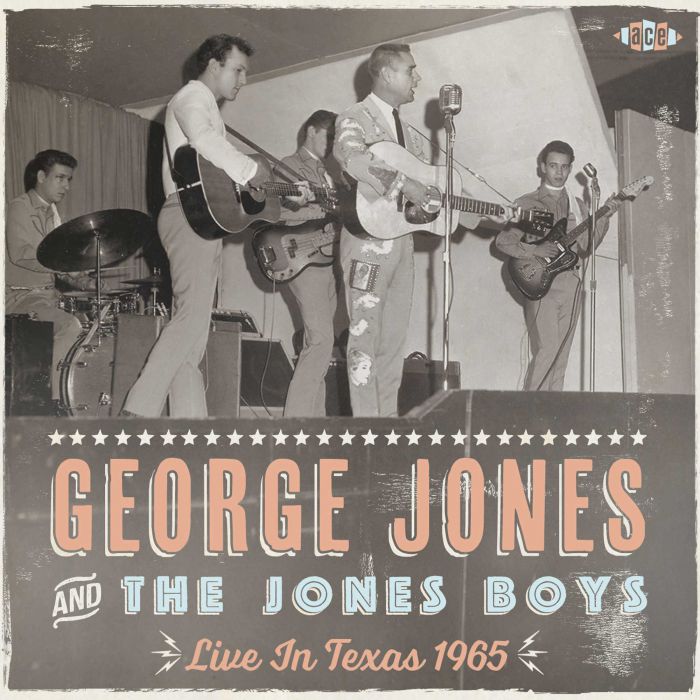
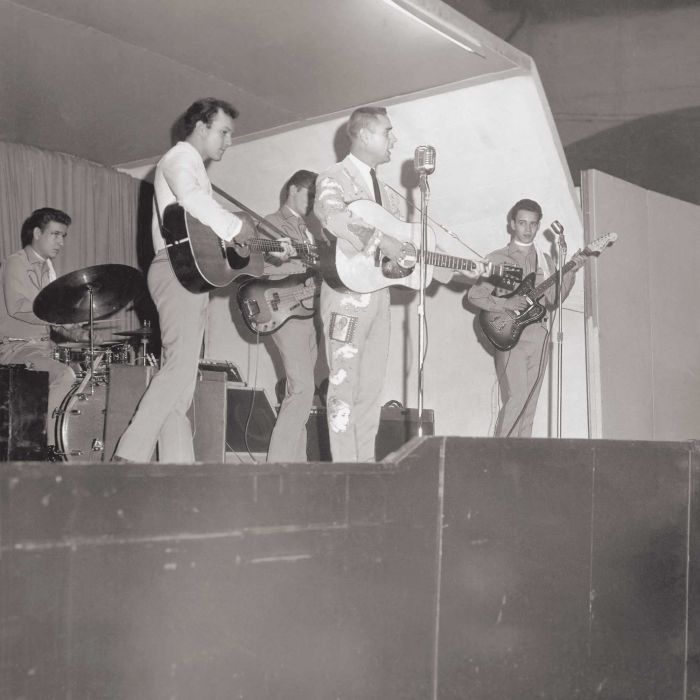
Pappy Daily hired the Houston venue Dancetown USA, which was where George Jones and The Jones Boys would record their first ever live album. This wasn’t going to be the usual type of live album where applause was later overdubbed onto a studio recording. Instead, Pappy Daily future generations to hear George Jones and The Jones Boys at the peak of their powers, on what he belied was a musical equivalent of a historical document. It features on George Jones and The Jones Boys’ Live In Texas 1965 which was originally released by Ace Records in 1992, and was recently remastered and reissued in 2018. Live In Texas 1965 is an important reminder of George Jones and The Jones Boys during what was an important period for the legendary bandleader.
As 1965 dawned, George Jones had twenty-five top twenty hits to his name, including nineteen top ten hits and three number ones in the country charts. He signed to Musicor Records in February 1965, and began what was a new chapter in his career. Little did he know that while he would continue to enjoy commercial success, the next fifteen years would be turbulent and troubled. However, that was all in the future, and in 1965, George Jones was preparing to record his first live album.
The exact date of the concert at Dancetown USA is unknown, and it’s speculated that the recording took place in either late February or March of 1965. Joining George Jones was his usual backing band The Jones Boys which is thought included drummer Glen Davis, bassist and backing vocalist Donald Lyle, guitarist Jerry Starr, fiddler Charlie Justice and Sonny Curtis on steel guitar. However, it wasn’t just The Jones Boys that would take to the stage with George Jones.
To augment The Jones Boys, George Jones and Pappy Daily bought pedal steel player Buddy Emmons and fiddlers’ Rufus Thibodeaux and Red Hayes. This begs the question were Sonny Curtis and Charlie Justice given the night off or were they even part of the band when the live album was recorded at Dancetown USA? Sadly, that isn’t clear, and speculation surrounds the lineup of the band.
When the night came for George Jones and The Jones Boys to record their first live album, Pappy Daily had wisely decided that two sets should be recorded. This meant that they would be able to choose the best songs when they came to release the album. However, despite spending a considerable sum on hiring the venue and bringing guest artists onboard, one of Pappy Daily’s stipulations was to keep things tight and lay off the chatter between songs which would save tape. This was all part of George Jones’ act, especially by 1965 when many of his performances were alcohol fuelled. However, Pappy Daily was protective of George Jones, and want his friend on his best behaviour.
For most of the performance, that was the case, but during the two sets, there were several false starts and the sometimes, George Jones and his band stumbled through announcements. To make matters worse, there were problems with the PA system picking up the sound of the audience which could be heard on the tape. As Pappy Daily watched on, he must have wondered how much tape George Jones and The Jones Boys were going to use by the end of the night and what it would cost him?
By the end of the night, Pappy Daily packed up the pile of tapes that had been used to record George Jones and The Jones Boys and took them back to his office, where they were stored in his vaults. When he took time to listen back to what later became Live In Texas 1965, he eventually came to the conclusion that he wasn’t going to release George Jones and The Jones Boys first live album.
When George Jones and The Jones Boys heard this, it was a huge disappointment, as they knew that within the tapes of the two shows, there was plenty of quality material for a live album that would be a reminder of the group at the peak of their powers. George Jones and The Jones Boys were disappointed in Pappy Daily’s decision, and couldn’t quite work out why he decided not to release the album.
This seemed strange to George Jones and The Jones Boys as Pappy Daily wasn’t in the habit of wasting money, and he had spent a lot of money recording their two sets at Dancetown USA, in Houston. By not releasing what became Live In Texas 1965, he had no chance of recouping any of the money he had spent.
Pappy Daily never made any attempt to release George Jones and The Jones Boys’ first live album, and in 1985 Epic released First Time Live. By then, Pappy Daily was eighty-three, and his sons and grandson were now working in the music business. However, they had made no attempt to release what was George Jones and The Jones Boys’ 1965 live album.
Sadly, two years later, Pappy Daily passed away on December the ‘5th’ 1987, aged eighty-five, and by then George Jones’ comeback was continuing apace. George Jones was a giant of country music, thanks in part to Pappy Daily who had discovered him and guided him during the early years of his career.
Five years after Pappy Daily’s death, Ace Records released a compilation that featured twenty-five of the tracks George Jones and The Jones Boys had recorded during the two sessions at Dancetown USA, in Houston in 1965. They became as Live In Texas 1965, which was released in 1992, and rather belatedly, the songs that had lain in the vaults for twenty-seven years were available for everyone to hear.
Since then, Live In Texas 1965 has been long out of print, and a new generation of music fans have been unable to discover what should’ve been George Jones and The Jones Boys’ first live album. However, twenty-six years after the original release of Live In Texas 1965, Ace Records decided to remaster and reissue this compilation which is a remarkable musical document that is a reminder of George Jones and The Jones Boys at the peak of their powers.
Despite his hard living lifestyle, George Jones is in remarkably good voice on Live In Texas 1965 as he works his way through twenty-five tracks that he originally recorded at Starday Records between 1954-1958, then Mercury Records between 1959 and 1961, and finally, for United Artists between 1962 and 1965. These tracks featured George Jones and The Jones Boys plus some special guests.
After the introduction to Live In Texas 1965, George Jones and The Jones Boys revisit his first number one singe White Lightning, which was released in 1959, which is followed by Something I Dreamed from 1964 and two singles from 1961 Achin’, Breakin’ Heart and She Thinks I Still Care. By then, George Jones is breathing life and meaning into the lyrics and continues to do so on Accidentally On Purpose from 1960 before changing this around on Who Shot Son? which closes the first set on a resounding high.
Following the intermission and C Jam Blues, an introduction gives way to Please Talk To My Heart and Sing A Sad Song which are played by Don Adams and The Jones Boys. They join forces with Gene Emmons on Pan Handle Rag, before Don Adams and The Jones Boys are reunited on Pan Handle Rag. After that, George Jones makes a welcome returns, and takes centre-stage.
George Jones opens this part of the set with I’m Ragged But I’m Right which was originally recorded in 1958, and follows this with A Poor Man’s Riches, Your Tender Years and Where Does A Little Tear Come From? Then like any good bandleader, George Jones lets his backing band The Jones Boys enjoy another moment in the sun.
The Jones Boys are joined by Buddy Emmons on pedal steel and fiddlers Rufus Thibodeaux and Red Hayes on an immersive rework of the Cajun national anthem Jole Blon. After this, George Jones returns and closes the second set on a high with Big Harlan Taylor from his 1960 album Singing The Blues, She’s Lonely Again and a medley of The Race Is and Hold It.
Little did George Jones and The Jones Boys realise that it would be twenty-seven years before the two live sets they had recorded at Dancetown USA in 1965 would eventually be released by Ace Records as Live In Texas 1965. This was a popular release, and a reminder of George Jones and The Jones Boys at the peak of their powers in 1965.
This was quite a feat, as the period between 1964 and 1979, saw George Jones go into what looked like a terminal decline. However, he was still holding things together during early 1965 when Live In Texas was recorded. However, after that, George Jones was still a successful artist, and regarded as one of the giants of country music, but he was a troubled soul who was continually battling his demons. He tried to dousing the flames with alcohol and when this didn’t work resorted to drugs, having originally taken amphetamine to cope with a gruelling touring and recording schedule. This was a huge mistake and one he would regret.
Despite his hard living lifestyle, George Jones continued to enjoy a successful recording career, and became the comeback King in 1980 when he joined forces with producer Billy Sherrill. This was the start of ten-year period where man who is nowadays regarded as the greatest living country singer enjoyed an Indian Summer that lasted until 1990. That wasn’t the end of George Jones by a long shot.
George Jones recording career drew to a close in 2005, when he released his fifty-ninth studio album Hits I Missed…And One I Didn’t. By then, he had amassed nearly 160 hit singles and was one of the most successful country singers, who was known for his distinctive voice and phrasing which can be heard on Live In Texas 1965.
Sadly, George Jones, a true giant of country music passed away on April the ’26th’ 2013, aged eighty-two. He was a prolific recording artist who left behind a rich musical legacy, including his fifty-nine studio albums, collaborations and live albums like Live In Texas 1965 which features the greatest living country singer at the peak of his powers.
George Jones and The Jones Boys-Live In Texas 1965.
DON ELLIS-SHOCK TREATMENT AND DON ELLIS AND HIS ORCHESTRA AUTUMN.
Don Ellis-Shock Treatment and Don Ellis and His Orchestra-Autumn.
Label: BGO Records.
Bandleader, composer and trumpeter Don Ellis’ life was changed forevermore in 1974, when he was diagnosed with an abnormal heart condition, and a year later, in 1975, suffered his first heart attack which very nearly cost him his life. Fortunately, Don Ellis recovered and by 1977 signed to Atlantic Records.
Later in 1977, Don Ellis released his Atlantic Records’ debut Music From Other Galaxies and Planets, which was his first album in three years. Don Ellis was back, and his comeback was complete after playing at the Montreux Jazz Festival, in Switzerland on July the ‘8th’ 1977. That concert was recorded and was released in 1978 as Don Ellis Live At Montreux and was a poignant release.
By 1978, all the years of touring were taking a toll on Don Ellis. After what was his final concert on April the ’21st’ 1978, Don Ellis’ doctor advised him to stop touring and playing the trumpet, as the strain on his heart was proving too great.
Sadly, just under eight month later, on December the ’17th’ 1978, Don Ellis returned from a Jon Hendricks concert and suffered what proved to be a fatal heart attack at his North Hollywood home. Don Ellis was just forty-four and that day, jazz lost one of its great trumpeters.
Nearly forty years after his death, Don Ellis’ music is often overlooked by the majority of jazz fans, and sadly only a small but appreciative audience remember a man who was one of the great jazz trumpeters. A reminder of this talented and innovative bandleader, composer and trumpeter can be found on BGO Records’ new two disc set, which features remastered versions of Don Ellis’ 1968 album Shock Treatment and Don Ellis and His Orchestra’s album Autumn, which was released in 1969. That was all in the future.
As 1968 dawned, Don Ellis was already regarded as an innovative bandleader, composer and trumpeter within jazz circles due to his use of willingness to experiment, and particularly due to his use of different time signatures. That had been the case since he released his debut album How Time Passes in 1960. Eight years later, and Don Ellis was preparing to record Shock Treatment which was his ninth album and second for Columbia Records.
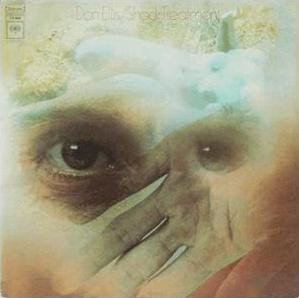
Shock Treatment.
Don Ellis had signed to Columbia after leaving Pacific Jazz, and in 1967, released the critically acclaimed album Electric Bath, which was nominated for a Grammy Award and won the Down Beat Reader’s Poll. Electric Bath was produced by John Hammond and saw Don Ellis’ band incorporate the use of electronics and was influenced by rock music. This was a first for Don Ellis, and the perfect way to start his career at Columbia.
Just like many artists before him, the problem that Don Ellis was faced with after releasing such a groundbreaking album as Electric Bath, was following it up. While Don Ellis knew that wasn’t going to be easy, he was keen to build on the success of Electric Bath, and began work on his ninth album Shock Treatment.
Don Ellis wrote five new tracks Homecoming, Star Children, Beat Me Daddy, Seven To The Bar, Milo’s Theme and The Tihai. He also joined forces with Kelly MacFadden to write Night City. John Magruder a member of Don Ellis’ band wrote Zim, which was joined by four cover versions. This included Hank Levy’s A New Kind Of Country and Mercy Maybe Mercy and Howlett Smith’s Opus 5 and Seven Up. These eleven tracks would eventually become Shock Treatment, which was produced by John Hammond.
It took just two days to record Shock Treatment, with Don Ellis and his twenty-four piece orchestra recording the eleven tracks on the album on February the ’14th’ and ’15th’ 1968. It was an impressive sight and sound with the rhythm and horn sections combining with keyboards, percussion and Eastern instruments as bandleader Don Ellis played a starring role and unleashed a series of trumpet solos. Once again, John Hammond took charge of production on Shock Treatment, which was the much-anticipated followup to Electric Bath.
Shock Treatment opens with A New Kind Of Country, which becomes funky, energetic and vibrant in the hands of Don Ellis and his orchestra who play part of a composition in 7/4 time. Briefly, the tempo drops on Night City, but soon builds and reveals its secrets as lysergic soulful harmonies combine with Don Ellis and his orchestra, and play their part in the sound and success of this genre-melting track. Straight away, the soulful blues Homecoming takes on a late-night sound, and is played in 3/4 time, before bandleader Don Ellis seamlessly changes to 7/4 time on Mercy Maybe Mercy, where drummer Steve Bohannon provides the heartbeat as horns and Hammond organ play leading roles. Very different is Zim, which is a more ruminative piece, while Opus 5 finds Don Ellis and his orchestra showcase their versatility and talent by switching to 5/4 time during this nine minute modal jazz epic.
Star Children could only have been recorded during the late-sixties, with its captivating mixture of cosmic sounds, Eastern influences, drama and the Don Ellis’ Hispanic-tinged trumpet interjections. Don Ellis then switches to 7/4 time on Beat Me Daddy, Seven To The Bar and takes centre-stage for the first thirty-seconds, before he and his orchestra combine jazz and Latin influences during this six-minute propulsive opus which eventually reaches an explosive crescendo. Milo’s Theme offers the opportunity for experimentation as Don Ellis plays electric trumpet and effects are deployed during this ambitious and innovative piece. Seven Up finds Don Ellis returning to 7/4 time during this dazzling, jaunty and lively composition. Closing Shock Treatment is The Tihai which is played in 9/4 time and initially is mellow before becoming exuberant and ultimately a complex rhythmic piece that allows Don Ellis and orchestra to showcase their considerable skills while combining elements of jazz and Latin.
When critics heard Shock Treatment, they realised that it was an ambitious and innovative album, where Don Ellis incorporated elements of blues, experimental, funk, Indian Latin, psychedelia and rock into his ninth album of jazz. Shock Treatment which was Don Ellis’ much-anticipated followup to Electric Bath, was the album that he hoped would transform his fortunes.
While Don Ellis was a popular live draw by the time Shock Treatment, was released in 1968, his albums never sold in huge quantities. Sadly, that was the case with Shock Treatment which failed to trouble the US Billboard 200. That was despite Shock Treatment being another ambitious and innovative album. After nine albums, Don Ellis had still to make a commercial breakthrough. Maybe Don Ellis’ next album would result in a change in fortune for the thirty-four year old?
Autumn.
In August 1968, Don Ellis and His Orchestra were preparing to enter the studio to record their next album Autumn. This time, there was no sign of producer John Hammond, who had been replaced by Al Kooper, of Blood, Sweat and Tears and it was hoped that he would transform the fortune of Don Ellis and His Orchestra.
Autumn featured five pieces penned by bandleader Don Ellis, including Variations For Trumpet, Scratt and Fluggs, Pussy Wiggle Stomp, Child Of Ecstasy and Indian Lady which like the cover of Charlie Parker’s K.C. Blues, had been recorded live at Stanford University. The rest of Autumn was recorded by Don Ellis and His Orchestra in the studio with producer Al Kooper.
The mind-blowing Magnus Opus Variations For Trumpet opens Autumn, and is a six-piece movement that is essentially a showcase for Don Ellis’ trumpet. He delivers a musical masterclass as his playing veers between to dark and wistful to explosive, powerful, urgent and always inventive as he plays with a freedom. Meanwhile, his orchestra switch seamlessly between 9/4 to 7/4 and incorporate elements of fusion, avant-garde and Latin music as bandleader Don Ellis continually throws curveballs during what’s now regarded as one of his finest hours. Very different is Scratt and Fluggs which bursts into life with Don Ellis and His Orchestra playing with urgency and in 5/4 time while an enthusiastic studio audience whoop and holler and encourage them to create what sounds like a coke-fuelled soundtrack to an old-time barn dance. The swinging and joyous Pussy Wiggle Stomp is played in 7/4 time and incorporates elements of gospel and jazz, and when the solos arrive, Don Ellis allows his members of his band to take centre-stage and showcase their considerable skills.
It’s a similar case on the live version of Charlie Parker’s KC Blues, which was recorded by a big band and reaches a dramatic ending. Trumpeter Glenn Stuart plays a starring role on Child Of Ecstasy, and unleashes a breathtaking performance and latterly, plays with power and control. This is a performance that bandleader Don Ellis would be proud of. Closing Autumn is the second live track Indian Lady, which originally featured on the 1967 album Electric Lady. Here it’s extended to eighteen minutes during what’s an urgent, frenetic and innovative reworking that closes a future genre classic.
What at the time must have seemed like a gamble replacing John Hammond with Al Kooper as producer turned out to be a masterstroke, when critics haled Autumn as a genre classic. However, the big question was would Don Ellis and His Orchestra’s genre classic Autumn be a commercial success and transform their fortunes?
When Autumn was released in 1969, Don Ellis and His Orchestra’s latest album wasn’t the commercial success that they had hoped. Just like many jazz artists before him, Don Ellis had released a cult classic that slipped under the musical radar and never came close to troubling the charts.
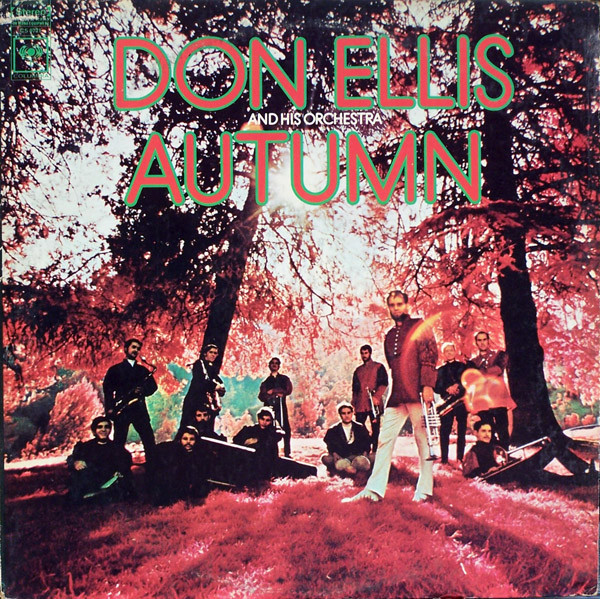
Just nine years after the release of his cult classic Autumn, Don Ellis passed away on December the ’17th’ 1978 aged just forty-four. That day, jazz lost one of its great bandleader, composer and trumpeter.
Sadly, nearly forty years after Don Ellis’ tragic death, his music is almost forgotten amongst jazz fans. His recording career began in 1960 and continued right up until his death in December 1978. During that period, Don Ellis released eighteen albums and composed nine soundtracks, including his Grammy Award-winning soundtrack to The French Connection in 1971. It’s a reminder of a truly talented bandleader, composer and musician.
So are Don Ellis’ 1968 album Shock Treatment and the Don Ellis and His Orchestra’s 1969 genre classic Autumn which were recently remastered and reissued as a two CD set by BGO Records. These two albums feature Don Ellis at the peak of his powers as a bandleader, composer and trumpeter, and are the perfect introduced to this oft-overlooked jazz musician whose music sadly never reached the wider audience that it so richly deserved, and is still one of jazz music’s best kept secrets.
That is a great shame as Don Ellis was a talented, imaginative, inventive and innovative compeer and musician, but never enjoyed the success his talent deserved. Incredibly, even winning a Grammy Award didn’t transform Don Ellis’ fortunes, and although he was a popular live draw, his albums weren’t huge sellers and sadly slipped under the radar. Maybe that will change, and a new generation of music fans will discover Don Ellis’ music after BGO Records’ latest reissue of Shock Treatment and his cult classic Autumn?
Don Ellis-Shock Treatment and Don Ellis and His Orchestra-Autumn.

NUKE THE SOUP-DEEPER.
Nuke The Soup-Deeper.
Label: Meteor Records.
Released Date: ‘30th’ of May 2018.
Singer, songwriter and musician Mark Davison founded Cubic Feet in the eighties, and his new band released their debut single Across The River in 1989, which was the start of a recording career that spanned three decades and saw the band enjoy a degree of mainstream commercial success.
Two years later, Cubic Feet returned with their debut album Across The River, with their sophomore album Passenger in Time following in 1995. Cubic Feet returned with their third albums Inside Rail in 1997 and four years later, returned with their fourth album Superconnector, which was also their swan-song.
After a gap of eight years, Mark Davison returned in 2009 with a new band Nuke The Soup, who released their debut album Make Waves Not War on Meteor Records. The album was well received and was a new chapter in Mark Davison’s career. However, he still had unfinished business with Cubic Feet.
In 2011, Cubic Feet returned with the retrospective The Living End-Then And Now, which featured a mixture of their best known songs and previously unreleased material. This brought the curtain down on the Cubic Feet story, and meant that Mark Davison could concentrate on his new project Nuke The Soup.
Despite that, the best part of seven years will have passed before Nuke The Soup, return with their sophomore album Deeper, on the ‘30th’ of May 2018. Joining Mark Davison is an experienced band of musicians, who play their part in what’s a carefully crafted album that reflects on the subject of mortality, and its anguish and exultation. However, Deeper which is a very personal album from Mark Davison doesn’t descend into darkness and despair, and there’s a degree of hope on Nuke The Soup’s sophomore album.
Just like all songwriters, Mark Davison has his own approach to songwriting, and he admits that: “I never sit down and write a song. I have to be distracted and let the creativity come. Surfing worked great for that. I had a leftover song from the first Nuke The Soup record. I started to sense a theme there, and decided to write the whole record around the song and theme ‘Deeper.’”
“I did not set out to write an album with a recurring theme as dark as mortality, but that’s where the muse led.” That come as no surprise as life hasn’t been easy for Mark Davison him over the last few years.
He’s been forced to think about the big issues in life and indeed, his own morality “After a big number birthday, in the middle of a bunch of family stuff and stressing over mixes, I started having serious anxiety, to the point of almost panic. I never experienced anything like that. A couple of good friends had died suddenly, and I had this feeling of impending doom. It felt like a rite of passage, coming to grips with my mortality…Fortunately, there was a minor health issue I addressed and that was it. I read about anxiety and learned to understand it, and I kept writing and recording to push through it.”
Having overcome these issues, Mark Davison was able to get back to what he’s been doing for four decades, writing and recording songs. This he’s been doing with songwriting partner Woody Lissauer, and the pair penned Oceans and Mountains, which was inspired by Feel Of The Ocean which is another song on Deeper. Oceans and Mountains was completed in the mountains of Colorado and became part of an album that has been inspired by a variety of sources.
Joining Oceans and Mountains and Feel Of The Ocean are the occasional orphan song from Mark Davison’s time with Cubic Feet. When these songs were written, they weren’t suited to previous albums, but were perfectly suited to Deeper. Other songs, were inspired by a variety of subjects, including mortality and political figures right through to Mark Davison’s love of water, outdoor sports, including surfing and his joie de vivre. These songs would become Nuke The Soup’s long-awaited sophomore album Deeper, which was recorded over a two-year period.
Recording of Deeper took place at Mark Davison analog studio, which is situated in his basement, and is stocked with vintage equipment. This was put to good use by the group of talented and experienced musicians who were part of Nuke The Soup. This included drummer Chester Thompson who has previously worked with Frank Zappa and Genesis, while guitarist Gerry Leonard was once part of David Bowie’s band. Taking charge of production of Deeper was Fugazi drummer Brendan Canty and Kevin Killen whose worked with Kate Bush, Peter Gabriel and David Bowie. They play their part in what’s a carefully crafted album that features elements of rock, reggae pop and blues which took shape over a period of two years.
During that two-year period, the world became a different place, and Mark Davison comments on these changes during Deeper. It featured eleven songs by the time Nuke The Soup’s sophomore album Deeper was completed.
Deeper opens with Network, which comments on how the media has managed to commercialise human tragedy over the last few years. This is something that musicians like Gil Scott Heron forecasted forty years ago, and sadly, has come true. Nuke The Soup pick up the story, and against a skanking and rocky arrangement Mark encourages viewer to turn off television and engage more fully with life itself.
Very different in the cinematic sounding Feel Of The Ocean has been inspired by Mark Davison’s love of surfing. There’s a degree of urgency to I’m Not In Love as drums crack and power the arrangement along, as washes of organ accompany Mark Davison’s defiant vocal on this anthem. Island is rocky and full of social comment as Mark Davison comments on the problems facing an ever-changing world. Deeper finds Mark Davison reflecting on his life, and indeed mortality, as he delivers an emotive vocal against another rocky arrangement. It’s all change on the ska-tinged Bugs, which deals with subject of addiction, while Mark Davison sings about ageing on the poppy Better Than I Was. Caught Inside is rich in imagery as elements of rock, pop and funk are combined by Nuke The Soup who don’t spare the hooks.
Hilary is proof that Nuke The Soup don’t always take themselves seriously, as they fuse pop rock, blues and satire. Feed The Fire finds Nuke The Soup heading in the direction of ska, while Oceans and Mountains which closes Deeper is another song full of imagery inspired by Mark Davison’s love of the outdoor life.
After a nine-year absence, Nuke The Soup return with their sophomore album Deeper, which will be released on Meteor Records, on the ‘30th’ of May 2018. To some extent, Deeper is a very personal album from Nuke The Soup founder Mark Davison.
Having said that, Mark Davison doesn’t descend into darkness, despair or self-pity on Deeper, and instead reflects and ruminates as he realises that middle-age has crept up on him. This is a sobering realisation and can be hard for some people to come terms with. However, there’s a degree of hope and sometimes joy on Deeper as Mark Davison reflecting on life and his own morality, while other times he addresses the problems facing the world. Other songs offer light relief and have been inspired by Mark Davison’s love of the outdoor life, and hobbies like surfing.
Indeed, some of the songs on Deeper were written whilst surfing in the Dominican Republic. In between catching waves, Mark Davison wrote the lyrics, and this was the start of a two years musical journey. The next part of that journey took place in Mark Davison’s basement studio which was filled with vintage equipment, and was where he wad joined by an experienced, talented and versatile band who recorded Deeper, which is a carefully crafted genre-melting album.
Nuke The Soup fuse elements of rock, reggae, blues, funk, pop and ska on eleven new tracks on what’s their first album in nine years, Deeper. It’s an album of carefully crafted songs that are variously melodic, thought-provoking and full of social comment, where Nuke The Soup don’t spare the hooks on their long-awaited followup to Make Waves Not War.
Nuke The Soup-Deeper.
THE BEGINNING OF THE END: THE EXISTENTIAL PSYCHODRAMA IN COUNTRY MUSIC (1956-1974)-RECORD STORE DAY 2018.
The Beginning Of The End: The Existential Psychodrama In Country Music (1956-1974)-Record Store Day 2018.
Label: The Iron Mountain Analogue Research.
For Records Store Day 2018, staff at record labels all over the world had been working hard for many months on nearly 500 reissues and lovingly curated compilations, which were due to be released on the ‘21st’ of April 2018. For many record buyers, this is one of the highlights of the year, and some are willing to camp outside their favourite record shop in the hope that they can secure their lengthy wish-list of reissues and compilations. This has become something of a tradition in recent years, and there’s a degree of community spirit as they queue during the wee small hours of the morning. However, as the time comes for record shops to open, suddenly, the atmosphere changes, and it’s a case of every man or woman for themselves.
Suddenly, as the doors open, the once orderly queue lurches forward, and people try gain an advantage over the person next to them, as they attempt to find every reissue and compilation on their wish-list. For many this included the two compilations of country music released by the Australian label, The Iron Mountain Analogue Research Facility, including The Beginning Of The End: The Existential Psychodrama In Country Music (1956-1974). It was billed as” “sixteen tales of existential angst wrought from backwoods outsiders and Nashville Misfits,” and was a compilation many people were keen to add to their collection. There was only one problem, finding a copy, as only 500 albums had been pressed.
Sadly, many people struggled to find a copy of The Beginning Of The End: The Existential Psychodrama In Country Music (1956-1974), which features sixteen songs from the likes of Whitey Gallagher, Bobby Grove, Jimmy Griggs, Ed Bruce, Ray Sanders, Billy Rufus, George Kent, Johnny Dollar, Lonnie Holt, Tex Wayne and Bob Fry. They’re just some of the names on The Beginning Of The End: The Existential Psychodrama In Country Music (1956-1974), and are a reminder of what was a golden age for country music.
Side One.
Tennessee born Whitey Gallagher opens The Beginning Of The End: The Existential Psychodrama In Country Music (1956-1974) with Searching (I’m Always Looking, which was the B-Side of his 1967 single for Republic, Gotta Roam. Searching (I’m Always Looking) features a jaunty arrangement and a vocal that is a mixture of frustration, sadness and angst. So much so, it’s as if Whitey Gallagher has lived the lyrics he’s singing, during this powerful example of existential psychodrama in country music.
Another is Bobby Grove’s Whistle At The End Of The Gravy Train, which was the B-Side of his single To Protect The Innocent which was released on King in January 1957. Louise Webb penned which Whistle At The End Of The Gravy Train which features a soul-baring vocal that that bristles with emotion from the man from Worley, Kentucky.
When RCA Victor, which was home to many of the biggest names in country music, signed Jim Ed Brown in 1965, they had had high hopes for their newest signing. Three years later, Jim Ed Brown was paired with producer Felton Jarvis when he recorded The Enemy. It was released April 1968, and reached number thirteen in the US Billboard 100. That is no surprise given the quality of the single. It’s a mixture of drama and emotion as Jim Ed Brown paints pictures of The Enemy that taunts and haunts him.
Ed Bruce was born in Keiser, Arkansas, in 1929, and by the time he released Song For Ginny as a single in December 1968, was signed to the Monument label. Tucked away on the B-Side was the Sandy Neese composition Puzzles, which was produced by Fred Foster. When Ed Bruce of his album Shades Of Ed Bruce in 1969, it also featured Puzzles which features an angst ridden vocal
Eight years after releasing his debut single in 1958, Ray Sanders released My World Is Upside Down in May 1966. It was penned by Ron Mason and is a Bettye Jean Production that was released on Tower. It’s a poignant track that features a hurt filled vocal full where the heartbreak seems very real.
Closing the first side of The Beginning Of The End: The Existential Psychodrama In Country Music (1956-1974) is Billy Rufus’ 1967 Low Down Blues, which was produced by John Capps and released on K-Ark Records. It’s a hard luck story from the honky-tonk where everything that could go wrong for Billy Rufus does.
Side Two.
Sammi Smith from Oklahoma City, opens side two with the ballad Saunders Ferry Lane, which produced by Jim Malloy and was released as a single on Mega Records in August 1971. Sadly, Saunders Ferry Lane which was taken from Sammi Smith’s 1971 album Help Me Make It Through The Night failed to trouble the charts. Saunders Ferry Lane which is a beautiful poignant ballad was the one that got away for Sammi Smith.
In 1969, Johnny Dollar released a cover Liz Anderson’s Meeting Of The Bored as a single on Chart Records. This was a song from his album Big Rig Rollin’ Man which was also released in 1969. During Johnny Dollar’s almost raucous version of Meeting Of The Bored, it sounds as if he’s enjoyed a drop of something golden to wash away the angst and heartbreak.
Singer-songwriter Curly Putman was born in Princeton, Alabama, and by 1969 was signed to ABC Record and released his sophomore album World Of Country Music. It featured Talking To The Grass where angst is omnipresent as he delivers a vocal that is akin to a confessional.
Lonnie Holt released a cover of Paul Bowman’s Water Under The Bridge as a single on the Tennessee-based Breeze Records in 1970. Sadly, this rueful sounding single was one of a trio of singles Lonnie Holt released.
Tex Wayne was born Guy Costello in Duncan, Oklahoma, 1933, and in February 1960, released I’d Climb The Highest Mountain as a single. Tucked away on the B-Side was Deep Deep Blue, which is a hidden gem that features a ruminative sounding vocal.
When Bob Fry released What A Pity on the Maryland based Rebel label in 1965, I’m Gonna Be Gone was on the B-Side. He’s accompanied by a fiddle and steel guitar, as he warns his partner: “you can’t have your cake and eat it.”Having fired this warning shot, he tells her: “I’m Gonna Be Gone” during what’s one of the highlights of The Beginning Of The End: The Existential Psychodrama In Country Music (1956-1974).
These twelve tracks are just part of the story of The Beginning Of The End: The Existential Psychodrama In Country Music (1956-1974), which was released for Record Store Day 2018 as a limited edition of 500 by The Iron Mountain Analogue Research. Sadly, finding a copy of The Beginning Of The End: The Existential Psychodrama In Country Music (1956-1974) won’t be easy, as it was a hugely popular release, with supply exceeding demand. Fortunately, there’s another way to discover the delights of one of the best compilations released during Record Store Day 2018.
Soon, The Iron Mountain Analogue Research will release a CD version of The Beginning Of The End: The Existential Psychodrama In Country Music (1956-1974) that features thirty tracks. This is fourteen more than on the LP released for Record Store Day 2018 and given the quality of the music on the compilation, many music fans will also want to add a copy of the CD version of The Beginning Of The End: The Existential Psychodrama In Country Music (1956-1974) to their collection.
Especially if it’s as good as the LP version of The Beginning Of The End: The Existential Psychodrama In Country Music (1956-1974), which is lovingly curated compilation that features a mixture of singles, B-Sides and hidden gems that were recorded by: “backwoods outsiders and Nashville Misfits” and are a reminder of the golden era of country music.
The Beginning Of The End: The Existential Psychodrama In Country Music (1956-1974).
THELONIOUS MONK-MONK RECORD STORE DAY 2018 EDITION.
Thelonious Monk-Monk.
Label: Music On Vinyl.
By the time Thelonious Monk began recording Monk, which was his seventh album for Columbia Records, the forty-seven year old pianist was a vastly experienced musician who had already released over twenty albums on Blue Note, Prestige and Riverside Records. However, since Thelonious Monk signed to Columbia, he had recorded and released some of the finest music of his career, including Monk’s Dream and Criss-Cross in 1963, and It’s Monks Time earlier in 1964. Thelonious Monk was keen to continue this hot streak when he entered the studio with his quartet and producer Teo Macero and began recording Monk which was released by Music On Vinyl for Record Store Day 2018. Monk is a welcome reminder of one of the greats of jazz.
Although Thelonious Monk is now regarded as one of the great jazz pianists, he wasn’t without his critics with poet and jazz critic Phillip Larkin dismissing him as: “the elephant on the keyboard.” Sadly, it seemed not everyone appreciated Thelonious Monk’s innovative approach to jazz music.
That is despite Thelonious Monk as now being the second-most covered jazz composer of all time. That is pretty good going as Thelonious Monk composed only seventy pieces. These compositions and improvisations featured dissonances and what are best described as angular melodic twists, which are an accurate representation of his unique approach to the piano. Initially, it was described as hard swinging, but evolved over the next twenty years.
Those that had followed Thelonious Monk career watched his style evolve, and his extremely percussive attack which featured abrupt and dramatic use of switched key releases, silences, pauses and hesitations, which divided the opinion of jazz critics and fans. What they forgot, was that Thelonious Monk was a relative latecomer to jazz, and had started his career accompanying a touring evangelist on an old church organ. In some ways, Thelonious Monk was making up for lost time, as he was already twenty-four before he first started playing jazz.
Despite arriving to the party late, Thelonious Monk was soon making up for lost time, and from the early fifties, was working as bandleader, sideman and collaborating with other future giants of jazz. He had started off at Blue Note Records between 1948 and 1952, before moving to Prestige Records where he spent two years between 1952 and 1954. After that, Thelonious Monk moved to Riverside Records which was his home between 1955 and 1961, and by then, his star was in the ascendancy.
This was quite remarkable given everything that Thelonious Monk had been through since the early fifties. He had his New York cabaret card revoked in 1951, when he became the latest victim of a trumped narcotics charge. This meant that Thelonious Monk was unable to play in New York’s club’s for six long years. During that time, Thelonious Monk signed to Riverside Records in 1955, which was his home until 1961.
Although Thelonious Monk was held in high regard by critics and commentators, sadly, for someone so talented, his records weren’t selling well. In 1955, he agreed to release an albums of jazz standards, Thelonious Monk Plays Duke Ellington in the hope that this would increase his profile and record sales. However, later in 1955 tragedy struck for Thelonious Monk.
Towards the end of 1955, Thelonious Monk’s mother passed away, and the following year, 1956, a fire destroyed the pianist’s apartment in West ‘63rd’ Street, New York. Thelonious Monk and family were left destitute, and his family of five had no option but to stay with friends for several months, with fifteen people shoehorned into a three room apartment. Meanwhile, Thelonious Monk continued to live with an undiagnosed bipolar disorder, which nobody was aware at the time. Despite this, he released Brilliant Corners an album of hard bop in late 1956, which was one of the finest albums he released for Riverside Records.
In 1957, Thelonious Monk’s run of bad luck continued when he was involved in a car accident, and when the police discovered him unresponsive, took him to Bellevue Psychiatric Hospital, where he spent three weeks. By then, Thelonious Monk was unaware that his father had been living in a psychiatric hospital for the past fifteen years.
Things got worse for Thelonious Monk in May 1957, when his wife Nellie became ill, and required a thyroidectomy. After the operation, she became frail and depressed, which affected Thelonious Monk’s wellbeing. The last two years had been hard on the couple, but at least Thelonious Monk was about to get his New York cabaret card back, and could start playing live in the Big Apple.
By then, Thelonious Monk had a manager, and started a six-month residency at the Five Spot Café, and had formed a friendship with John Coltrane. This was a coincidence as many of John Coltrane’s band had served their music apprenticeship Five Spot Café.
During Thelonious Monk’s residency at the Five Spot Café during 1957 and 1958, the sharp dressed and sartorially elegant pianist took to the stage with his carefully cultivated look. Thelonious Monk wore suits, hats and had taken to wearing sunglasses which hid the window to his troubled and weary soul. Still, he dazzled patrons with his unique playing style as he switched between standards and his own compositions. Thelonious Monk was back in the Big Apple, after a six-year absence.
With Thelonious Monk’s albums still not selling well by 1958, he was asked to release a second album of jazz standards. It was hoped that The Unique Thelonious Monk would increase his profile and record sales. Ironically, later, in 1958, Thelonious Monk’s face was all over American newspapers, after his latest brush with the law.
Thelonious Monk had been hired to play for a week at the Comedy Club, in Maryland, and on his way to the gig, he and Nica De Koenigswarter were stopped by the police in Wilmington, Delaware. When Thelonious Monk refused to answer or cooperate with the police officer, who beat him with a blackjack. During an authorised search the car drugs were found, and suddenly Thelonious Monk was looking at some serious jail time. Fortunately, Judge Christie of the Delaware Superior Court ruled that the pair had been unlawfully detained, and that the beating of Thelonious Monk meant that the consent to the search void as given under duress. Forty-one year old Thelonious Monk survived to fight another day.
As the fifties gave way to the sixties, Thelonious Monk’s relationship with Riverside Records had gone south, after a disagreement over royalty payments. While Riverside Records released two live albums recorded in Europe, Thelonious Monk hadn’t recorded a studio album since 5 By Monk By 5 in June 1959. Fortunately, Columbia Records one of the four major labels were keen to sign Thelonious Monk.
The negations between Thelonious Monk and Columbia Records, were protracted, and it wasn’t until 1962 that a contract was signed. At last, Thelonious Monk could get back into the studio and do what he did best…make music.
In 1963, Thelonious Monk released Monk’s Dream, which was his Columbia Records debut. Critical acclaim greeted the release of Monk’s Dream, and it was a similar case with the classic Criss-Cross. By then, Thelonious Monk was on a roll, and recorded Monk In Tokyo which was relaxed in 1973. Miles and Monk At Newport and Big Band and Quartet In Concert were both released during 1963 and released in 1964. So was one the finest albums Thelonious Monk recorded for Columbia Records, It’s Monk’s Time which was released to widespread critical acclaim in 1964. It wasn’t going to be easy to surpass It’s Monk’s Time, but Thelonious Monk was determined to do so when he began work on Monk later in 1964.
Monk.
For Thelonious Monk’s seventh recording for Columbia Records, he wrote two new compositions, Pannonica and Teo which was a tribute to producer Teo Macero. They were joined by the traditional song Children’s Song (That Old Man), and four standards. This included Irving Berlin’s Just One Way To Say) I Love You, Vernon Duke and Yip Harburg’s April In Paris and Liza (All the Clouds’ll Roll Away) which George and Ira Gershwin wrote with lyricist Gus Kahn. These tracks were recorded by Thelonious Monk with what’s regarded as a classic quartet.
The quartet featured a rhythm section of drummer Ben Riley, bassist Larry Gales and pianist Thelonious Monk. Tenor saxophonist Charlie Rouse was the final piece of the jigsaw, and he would be part of Thelonious Monk’s band for over ten years. Producing this classic quartet which stayed together for the remainder of Thelonious Monk’s time at Columbia Records was Teo Macero.
Side A.
He watched on as Thelonious Monk opened Monk with a brisk version of Liza (All the Clouds’ll Roll Away) during what was a future classic album of hard bop. A walking bass and hissing hi-hats accompanied Thelonious Monk’s fleet fingered and almost flawless piano solo as he reinvents this familiar standard. Latterly, though, the tempo drops and the music becomes wistful and briefly dramatic, before Thelonious Monk ends with a flamboyant flourish. Thelonious Monk and saxophonist Charlie Rouse’s had already formed a formidable partnership and play leading role in the sound and success of April In Paris which is one of the highlights of Monk. Children’s Song (That Old Man) was an obscure traditional song that benefited from a reworking by this talented quartet who breath new life and meaning into it. Closing the first side was a Just One Way To Say) I Love You, which features a piano solo that could only have been played by the inimitable Thelonious Monk. Initially, his playing isn’t fluid, and sometimes, he seems to hesitate as he picks out notes. This is deliberate and calculated, and gradually, his playing is confident and assured as he delivers a breathtaking performance.
Side B.
There’s no stopping Thelonious Monk as he leads his quartet during Just You, Just Me, and soon, they’re moving through the gears. Saxophonist Charlie Rouse’s saxophonist soars above Thelonious Monk’s piano while the rhythm section, complete with walking bass, provide the heartbeat during this joyous and swinging standard. This leaves just the two Thelonious Monk compositions, including the beautiful mid-tempo Pannonica, where the piano and saxophone play leading roles. Teo which closes Monk, was Thelonious Monk’s tribute to Teo Macero, and offers further opportunities for invention and innovation from this classic quartet. They close Monk on a resounding high, and Thelonious Monk’s career at Columbia Records continued to go from strength to strength.
After signing to Columbia Records, Thelonious Monk embarked upon what was one of the most productive and fruitful periods of his career, where everything he recorded was released to critical acclaim. What made all this all the more remarkable was that very few people, even within the jazz community were aware that tragedy had touched Thelonious Monk’s life and he was constantly battling his own personal demons.
Somehow, Thelonious Monk was able to dig deep, and in 1964, continued to write and record several albums a year. This included Monk, which would later be considered a classic album, and one of the finest albums Thelonious Monk recorded for Columbia Records. Monk features Thelonious Monk at the peak of his powers as he leads his classic quartet, which stayed together throughout the rest of his time at Columbia Records.
Sadly, after leaving Columbia Records in 1968, Thelonious Monk’s recording career was almost over. He had brief stays at Far East Records and Black Lion Records, releasing an album on each label. After that,Thelonious Monk never recorded another solo album, and by the mid-seventies he had turned his back on jazz and living in obscurity.
During what was the final decade of his life, Thelonious Monk remainder a private man, and sadly, the mental health problems that had suffered throughout his life resulted in him being hospitalised on several occasions and belatedly, he received the medication he required. Latterly, his health declined and he spent the last six years of his life in Weehawken, New Jersey, where he was cared for by his long-standing patron and friend, Pannonica de Koenigswarter, right up until his death on February the ‘17th’ 1982, aged just sixty-four. That day, jazz lost one of its greats, who let behind a rich musical legacy.
This includes the albums Thelonious Monk and classic quartet released on Columbia Records between 1964 and 1968. Thelonious Monk’s classic quartet wrote their way into jazz history after releasing a series of outstanding albums. Crucial to the success of the classic quartet was the interaction between Thelonious Monk and Charlie Rouse, with the two men constantly on the same wavelength, and anticipating their every move. That was the case on parts of Monk, which along with Monk’s Dream, Criss-Cross and It’s Monks Time are the perfect introduction to the early years of Thelonious Monk’s time at Columbia Records, where this unique and inimitable jazz stylist showcases his considerable talents as the man once dismissed as: “the elephant on the keyboard” matures and becomes one the top jazz pianists of the sixties.
Thelonious Monk-Monk.
SHIRLEY DAVIS AND THE SILVERBACKS-WISHES AND WANTS.
Shirley Davis and The Sliverbacks-Wishes and Wants.
Label: Tucxone Records.
Two years after Shirley Davis and The Sliverbacks released their critically acclaimed debut album Black Rose in March 2016, the London-born soul diva her backing band return with their much-anticipated sophomore album Wishes and Wants which has just been released by Tucxone Records. The release of Wishes and Wants marks the welcome return of one of Europe’s top soul singers, Shirley Davis who has a remarkable story to tell.
Shirley Davis was born in 1974, to Jamaican parents, and grew up in North West London, not far from Wembley Stadium. By the age of twelve, Shirley Davis got her first job, which was selling programs and tee-shirts at concerts Wembley Stadium. This was her “best job ever” and allowed her to hear some of the giants music including Pink Floyd, Prince, the Rolling Stones, Michael Jackson and his sister Janet Jackson. However, it was Stevie Wonder that inspired Shirley Davis, who was already dreaming of stardom and taking to the stage at Wembley Stadium. However, things didn’t work out that way.
When Shirley Davis was fifteen she met and fell in love with her future husband, and what can only be described as a whirlwind romance ensued. Within a year, the young couple were married, and sixteen year old Shirley Davis and her new husband decided to emigrate to Australia.
Rather than settle in one Australia’s major city’s where there were vibrant multicultural communities, Shirley Davis and her new husband moved to the Outback. For a young black woman who up until then had spent her entire life in London, this was a culture shock. However, Shirley Davis was determined to make go of her new life, and wasn’t going to head home where people would doubtless say: “ I told you so.”
Shirley Davis tried her best to overcome the difficulties that she had experienced, and got used to her new home. Four years later, she was twenty and still living in the Australian Outback when her daughter was born. However, by the time she was twenty-three, Shirley Davis was divorced and had moved to Melbourne to start over.
Despite the fresh start in Melbourne, Shirley Davis who was now a single mother, felt like a stranger in a foreign land and was unsure of what the future held for her. Fortunately, one of her friends suggested that she tried singing, and within a matter of a few weeks, she was the lead singer of a soul and funk band. This was the start of a new chapter in Shirley Davis’ life.
Before long, Shirley Davis was encouraged to start studying music, and began taking classes in blues, jazz and various other styles of black music. Shirley Davis benefited from her musical studies, and it wasn’t long before she was a familiar face on the Melbourne music scene singing with two of the city’s top soul and funk groups as Deep Street Soul and Grand Wazoo. This was just the start for Shirley Davis, who was soon be rubbing shoulders with the great and good of soul.
Soon, word was spreading about Shirley Davis, and when artists and groups were playing or recording in Melbourne and needed a backing vocalist, she was their first port of call. Shirley Davis was asked to accompany soul giants like Wilson Pickett and Marva Whitney, and also worked with Lee Fields and the soul band Osaka Monaurail when they toured Australia. By then, Shirley Davis’ life had been totally transformed, and would get even better.
In 2005, the Australian pop-dance group Deepface invited Shirley Davis to become their vocalist, and soon, the band were enjoying chart success. Buoyed by several hit singles, Deepface was soon playing in front of crowds in excess of 30,000, which was a dream come true. However, what happened next was like something out of a dream.
When Sharon Jones played in Melbourne in 2007, Shirley Davis who was a fan of the American soul singer went along to one of her favourite singers in concert. During her show, Sharon Jones often chose a member of the audience to join her on stage and sing with her. That night, Sharon Jones picked Shirley Davis to join her on the stage. For once, Sharon Jones had invited onto the stage who could sing, and the two divas sung together. This was the start of a friendship that lasted right up until Sharon Jones’ death on the ’18th’ of October 2016. During that nine-year period, Shirley Davis admits: She was a mentor to me. She told me I could sing…she encouraged me. She had the biggest impact on my life.”
In 2011, Shirley Davis’ daughter decided to emigrate to London, which impacted on her life, and left her feeling lonely and directionless. When Shirley Davis saw an advert for a singer on a cruise ship she decided to apply, and got the job. What had been a spur of the moment decision saw Shirley Davis leave her life in Melbourne behind, and start a new adventure that lasted three years.
Three years later, in 2014, Shirley Davis was vacationing in Madrid, Spain, when saw that her mentor Sharon Jones was playing. Shirley Davis decided to go along, and when Sharon Jones saw her friend in the audience, invited her onto the stage to sing with her. Little did Shirley Davis know that Alberto “Tuco” Peces and Genesis Candela from Tucxone Records were watching and were blown away by her performance.
After her vacation, Shirley Davis returned home to Melbourne, after three years sailing the high seas. Meanwhile, Alberto “Tuco” Peces and Genesis Candela from Tucxone Records were trying to track Shirley Davis down, to ask her if she would like to return to Madrid and record an album. Eventually they found Shirley Davis, who didn’t take long to make her mind up, and was soon, flying back to Madrid where the hard work began.
Once Shirley Davis met with Alberto “Tuco” Peces and Genesis Candela from Tucxone Records, they introduced the soul diva to her new backing band The Silverbacks. Straight away, they hit it off and from the get-go, and during the rehearsals, Shirley Davis and The Sliverbacks formed a formidable partnership. This augured well for Shirley Davis and The Sliverbacks, and just a few short weeks later, they began recording their debut album Black Rose in late-2015.
When Shirley Davis and The Sliverbacks released Black Rose in March 2016, it was to critical acclaim, with critics and commentators bowled over by an album of contemporary soul and funk. Many critics were forecasting a bright future for Shirley Davis and The Sliverbacks.
Buoyed by the success of Black Rose, soon, Shirley Davis and The Sliverbacks’ thoughts turned to their sophomore album. This is regarded as the most difficult album of a band’s career, and many artists and groups have laboured long and hard with their “difficult second album.” However, that wasn’t the case with Shirley Davis and The Silverbacks, when they began writing what eventually became Wishes and Wants.
It was written by Shirley Davis with The Sliverbacks’ bandleader and lead guitarist Eduardo Martínez and songwriter Marc Ibarz. Shirley Davis explains that: “we write together-they understand my life story and all I’ve been through.” The result was a captivating album that documents the struggle of a black woman in life, love and loss. Wishes and Wants tells Shirley Davis’ story in ten songs which she recorded with her backing band The Sliverbacks.
When Shirley Davis with The Sliverbacks entered the studio to record Wishes and Wants, they combined sweet soul music with funk and Afrobeat. Shirley Davis delivered a series of impassioned, emotive and soul-baring vocals that channel the spirit of everyone from Gladys Night, Marva Whitney and her mentor Sharon Jones. The result is a truly powerful and autobiographical album Wishes and Wants, which tells the story of soul diva Shirley Davis with the help of her backing band The Sliverbacks.
Wishes and Wants bursts into life with the tough, funky horn lead, title-track where The Silverbacks’ rhythm section and organ provide the perfect backdrop for soul diva Shirley Davis, as she unleashes a powerhouse of a virtuous vocal.
The Silverbacks then drop the tempo as funk meets Southern Soul and later rock on Like Fire. It’s something of a slow burner, where Shirley Davis’ vocal veers between soulful to sassy and needy before the track reaches a crescendo and becomes dramatic, explosive and truly memorable.
Chiming guitars and washes of organ open the soulful stomper as a searing guitar is unleashed and Shirley Davis fires a warning shot across the bows of her man on Treat Me Better. She issues the ultimatum Treat Me Better as The Silverbacks fuse funk and soul while drawing inspiration from The Isley Brothers. By then, horns soar above the arrangement and Shirley Davis plays a starring role, breathing life and meaning into the lyrics.
Stabs of horns combine with thunderous drums and washes of organ as the funky dancer Kisses unfolds. Soon, Shirley Davis describes her new beau as: “ugly but he kisses so good!” Meanwhile, a stomping beat, funky guitar and blazing horns are provide the perfect backdrop to Shirley Davis as she unleashes a needy, soulful and sassy vocal.
During Silverbacks Theme, Shirley Davis lets her backing band take centre-stage as they create a funky and cinematic instrumental, that is a tantalising taste of this uber funky combo in full flight.
It’s all change on Nightlife where Shirley Davis and The Silverbacks unleash a glorious slice of Afro-funk, that sounds as if it was recorded in Lagos, rather than Madrid.
Shirley Davis and The Silverbacks change tack, and head in the direction of Southern Soul on All About Music. It comes complete with stabs of horns and washes of swirling organ as Shirley Davis delivers one of her finest vocals on what’s one of the finest tracks on Wishes and Wants.
Horns combine with the rhythm section on Smile, before Shirley Davis issues another ultimatum to her partner, as the arrangement swings. Meanwhile, washes of organ and the bass play leading roles, as the horns occasionally punctuate the arrangement. Later, backing vocalists accompany Shirley Davis as she delivers a soulful and emotive vocal during this irresistible track.
From the get-go, Shirley Davis combines power, emotion and hurt on Troubles and Trials as horns accompany and the rhythm section provide the heartbeat. They combine with the organ and occasional rasping horns as Shirley Davis unleashes a soul-baring vocal that is full of emotion. The Silverbacks realising that something special is unfolding, and raise their game as the drama builds during this soul soap opera.
Soul diva Shirley Davis and The Silverbacks close Wishes and Wants with Woman Dignity. It’s an uptempo track with some of the best and most powerful lyrics on the album. Shirley Davis unleashes a vocal powerhouse as The Silverbacks’ rhythm and horns sections combine with a swirling organ and searing guitar. Later, it’s all change as the tempo drops and becomes understated, jazz-tinged and sultry which allows the listener to ruminate on Woman Dignity, and the rest of Wishes and Wants.
Two years after Shirley Davis and The Silverbacks released their debut album Black Rose, they return with the much-anticipated followup Wishes and Wants, which has just been released on Tucxone Records. Wishes and Wants marks the welcome return of a truly talented soul diva Shirley Davis, whose accompanied every step of the way by The Silverbacks who provide the perfect backdrop on what’s a very special album.
It’s also a very personal album, with Wishes and Wants documenting the struggle of a black woman in life, love and loss, and essentially, tells Shirley Davis’ story in ten songs. Meanwhile, The Silverbacks seamlessly switch between and sometimes combine Afrobeat, funk, rock and soul. The result is an album that veers between deeply soulful to funky and dancefloor friendly. Other times, the music is thought-provoking, tugs at the heartstrings or is uplifting or tinged with humour. Wishes and Wants is an emotional roller coaster where Shirley Davis and The Silverbacks don’t spare the hooks on this carefully crafted album of contemporary funk and soul, which showcases a truly talented soul diva.
Shirley Davis and The Sliverbacks-Wishes and Wants.

STEVE TIBBETTS-LIFE OF.
Steve Tibbettss-Life Of.
Label: ECM Records.
Although Minnesota born composer and guitarist Steve Tibbetts signed to ECM Records in 1981, the pioneer of sound-forming has only released nine albums for Manfred Eicher’s Munich-based label. This includes Life Of which has just been released by ECM Records, and is the much-anticipated followup to Natural Causes, which was released in 2010, and was a collaboration between Steve Tibbetts and Marc Anderson. Eight years later, and Steve Tibbetts makes a welcome return with Life Of which is the latest chapter in the career of a musical innovator.
Steve Tibbetts was born in Madison, Wisconsin, in 1954, and growing up, was introduced to the music of the Kingston Trio, Pete Seeger and Johnny Winter by his father, who worked at the University of Wisconsin School for Workers and also taught labour law around the state. Sometimes, Steve Tibbetts’ father invited anything up to twenty union workers and organisers to the family home, where they would eat, and later, would enjoy an impromptu jam session. Initially, Steve Tibbetts would watch as his father and his friends played an assortment of instruments, including autoharps, banjos, flutes, guitars, psalteries and recorders. Before long, Steve Tibbetts found the confidence to standup and take part in the musical evenings, which were good practise for the future.
By 1975, Steve Tibbetts was a student at Macalester College, and spent much of his time listening to music with friends in his dorm. Days were whiled away smoking and listening to everything from John Coltrane and Pharaoh Sanders, to Mountain, and sometimes, Paul McCartney and Todd Rundgren. When Steve Tibbetts heard an album that was recorded solely by Todd Rundgren, he believed that he could record a similar type of album. Usually, that would’ve been easier said than done.
Fortunately, Steve Tibbetts was offered a work-study placement at Macalester College’s recording studio, and this allowed him to learn how a studio operated. It was akin to a musical apprenticeship and would prove invaluable as Steve Tibbetts learnt how to operate the equipment, splice and join tape and between 1975 and 1976 record his debut album. By then, the recording studio had become a second home for Steve Tibbetts, and although latterly, he was no longer officially a student, he completed his eponymous debut album in Macalester College’s recording studio.
Steve Tibbetts.
Having completed his eponymous debut album, Steve Tibbetts was released in 1977 on the Cuneiform label. By then, one of the tracks on Steve Tibbetts, Jungle Rhythm, was being used by the ice hockey team the Bay Area Bombers. There was even a rumour that Clive Davis at Arista was interested in signing Steve Tibbetts, and he spent the best part of two weeks waiting for the phone to ring. Despite that disappointment, Steve Tibbetts sold enough copies of his debut album that he was able to but an eight-track tape recorder and set up his own recording studio.

Yr.
In his new recording studio, Steve Tibbetts recorded his sophomore album Yr on his new eight-track tape recorder, and once the album was completed, he began shopping the album to record labels. This proved a thankless task, as Steve Tibbetts the rejection letters dropped through his letterbox. Eventually, they numbered 200, and it wasn’t until 1980 that Frammis released Yr, which was heard by one of the most influential men in European jazz and experimental music.
This was Manfred Eicher, the founder of the Munich-based label ECM Records, who spotted Steve Tibbetts’ potential and signed him in 1981. Since then, ECM Records has been home to Steve Tibbetts, who continued to pioneer sound-forming on his major label debut.
Already, Steve Tibbetts had realised that it was possible to use the recording studio itself as a tool for creating sounds, and this was something that he would pioneer during his career. However, having signed to ECM Records in 1981, he was soon in the studio with Manfred Eicher, who took charge of production.
Northern Song.
Previously, Steve Tibbetts had spent a great deal of time recording his first two albums, but that wasn’t the way that ECM Records’ founder and in-house producer worked. He was used to working quickly, and recording albums over a two or three days. This way of recording worked for most of the artists signed to ECM Records and the label had released many critically acclaimed albums. However, when Steve Tibbetts’ third album and ECM Records’ debut Northern Song was released in 1982, the reviews of what was an adventurous, ambitious and thoughtful album were scathing and critics were far from impressed by the album. For Steve Tibbetts and Manfred Eicher who produced Northern Song, this was a huge blow.
Safe Journey.
Two years later, in 1984, multi-instrumentalist Steve Tibbetts returned with his fourth album Safe Journey. By then, he had returned to his tried and tested way of recording an album, and had spent months recording Safe Journey, which was released to critical acclaim and was the most eclectic album of his career. It featured elements of folk, jazz, modern classical, psychedelia, rock and world music which were combined to create an ambitious and innovative album. Safe Journey was the album that launched Steve Tibbetts’ career at ECM Records.
Exploded View.
When Steve Tibbetts recorded his fifth album Exploded View, he was once again joined by percussionist Marc Anderson, who had played on every album since Northern Song. Marc Anderson’s percussion played an important role in the sound and success of Exploded View, which was released in 1986, and was another eclectic and melodic album, which has been inspired by African, Indian and Moroccan rhythms, and to some extent, the psychedelic and progressive music of the late-sixties and seventies. However, stealing the show was Steve Tibbetts delivers a series of explosive and inventive performances on guitar during this carefully crafted album of soundscapes. It was released to critical acclaim and further enhanced Steve Tibbetts’ reputation.
So did the reissue of Steve Tibbetts’ ECM Records’ debut Northern Song in 1988, which resulted in the album being reappraised by critics. Not for the first time, critics rewrote history, after realising that Northern Song was an ambitious and groundbreaking release that showcased a pioneering musician as he embarked upon his career. Seven years later, and Steve Tibbetts was about to release his sixth album, and fourth for ECM Records, Big Map Idea.
Big Map Idea.
Despite his star being in the ascendancy, Steve Tibbetts seemed in no hurry to release a new album, and his sixth album Big Map Idea wasn’t released until 1989. It was worth the wait and featured a myriad of exotic and ethnic instruments that play their part in an intriguing, mysterious and to some extent, mystical album that is full of twists and turns, as the music on Big Map Idea ebbs and flows, and gradually reveals its secrets. Critics hailed the album as a welcome addition to Steve Tibbetts’ burgeoning discography
The Fall Of Us All .
The next addition to Steve Tibbetts’ discography was The Fall Of Us All, which was released in 1994, five years after Big Map Idea. By then, Steve Tibbetts continued to explore and pioneer sound forming and used the recording studio as an instrument as he continued to create ambitious and innovative music.
Proof of that was The Fall Of Us All, which was another eclectic album that veered between explosive, urgent, uplifting and spiritual as Steve Tibbetts fused elements of Arabian music, art-pop, Eastern sounds, modal jazz, psychedelia, rock and even rock ’n’ roll. The Fall Of Us All was released to widespread critical acclaim and hailed as one of Steve Tibbetts’ finest hours.
Following the success of The Fall Of Us, Steve Tibbetts wasn’t tempted to rush release a new solo album and decided to spend the next few years collaborating with other artists. This included recording a new album with Nepalese Buddhist nun Ani Choying Drolma. In 1997, Steve Tibbetts and Ani Choying Drolma they released their first collaboration Chö, which was well received by critics.
After completing Chö, Steve Tibbetts began recording a new album with Norwegian Hardanger fiddle player, Knut Hamre. Eventually, Steve Tibbetts and Knut Hamre completed the album Å, which was released to plaudits and praise in 1999.
A Man About A Horse.
Eight years after the release of his last solo album Steve Tibbetts returned with A Man About A Horse, which was his sixth release for ECM Records and his eighth solo album. A Man About A Horse was another album with an Eastern influence, and finds Steve Tibbetts eschewing Western scales as the he carves fluid, jagged, rocky and experimental soundscapes. Joining Steve Tibbetts on what was another groundbreaking offering, were percussionists Marc Anderson and Marcus Wise, who play a part in the sound and success of A Man About A Horse. It seemed that Steve Tibbetts’ music was maturing like a fine wine.
Two years after releasing his eighth solo album, Steve Tibbetts and Nepalese Buddhist nun Ani Choying Drolma returned in 2004 with their sophomore album Selwa, which was the followup to their 1997 album Chö. Selwa was an almost flawless collaboration where Eastern and Western music combines seamlessly. It was without doubt, the finest collaboration of Steve Tibbetts’ twenty-seven year career.
After the release of Selwa, Steve Tibbetts didn’t seem in a hurry to release a new album, and preferred to work slowly, as he honed and perfected another ambitious and innovative album. Steve Tibbetts remembered recording Northern Song, which had been in a matter of days, and the scathing reviews were a reminder of the album. That taught him an important lesson, and since then, he worked at his own speed and did things his own way.
Natural Causes.
That was the case when he recorded Natural Causes with his friend Marc Anderson during 2008. In 2010, Steve Tibbetts released his ninth album Natural Causes, which was his first solo album in eight years, and was very different from previous albums. Steve Tibbetts had switched to his father’s Martin D-12-20 12-string acoustic guitar on Natural Causes, which was recorded when he was rethinking his approach to music. This resulted in him studying Bach, Bartók and music theory on a daily basis as he tried to improve himself as a musician.
This paid off, and Natural Causes was released to widespread critical acclaim. Just like his previous albums for ECM Records, Steve Tibbetts was joined by Marc Anderson and they deployed an eclectic array of exotic instruments that accompanied the Martin D-12-20 12-string acoustic guitar. The resulting album, Natural Causes, featured enchanting and captivating multilayered soundscapes that were full of Eastern sounds and was another welcome addition to his discography.
Life Of.
Following the release of Natural Causes, Steve Tibbetts’ fans were already looking forward to his tenth solo album, but deep down, they knew that they were in for a long wait. Steve Tibbetts seems to only release a new solo album every eight years. He had released The Fall Of Us All in 1994, with A Man About A Horse following in 2002 and Natural Causes in 2010. The smart money was on Steve Tibbetts returning with his tenth solo album in 2018. That was the case, with Life Of, being released by ECM Records in May 2018, which marks the octennial appearance of musical pioneer Steve Tibbetts.
For his tenth solo album Life Of, Steve Tibbetts composed thirteen new soundscapes which he decided to record in St. Paul, which was where he had recorded so many of his previous albums. This time, though, it was just a small band that would accompany as he recorded Life Of.
Although Steve Tibbetts is a talented multi-instrumentalist, he decided that he would only play piano and his father’s fifty year old Martin D-12-20 12-string acoustic guitar, that had served him so well on Natural Causes during the recording of Life Of. Joining Steve Tibbetts, was his old friend and percussionist Marc Anderson, who had played on every solo album he had released for ECM Records. The only other musician that joined Steve Tibbetts and Marc Anderson was cellist Michelle Kinney also adds the drones that feature on Life Of. Together, the three musicians began recording what was Steve Tibbetts’ tenth solo album, Life Of which was then mixed at his old alma mater Macalester College. Gradually, Life Of took shape, and was released in May 2018.
The music on Life Of is a quite different from some of Steve Tibbetts’ earlier albums, and features a much more understated and minimalist sound. Life Of features elements of ambient, avant-garde, experimental music, jazz and world music as Steve Tibbetts and his band carefully craft what’s best described as an album of dreamscapes.
Most of these dreamscapes are relatively short, and last under six minutes, and veer between melancholy to meditative and ruminative as the music invites reflection. That is the case on Bloodwork, while other dreamscapes showcase a cinematic sound, including the moody, multilayered and airy Life Of Emily. It’s the first piece of music that was named after friends, relatives or even a complete stranger that Steve Tibbetts met while he was writing and recording Life Of. These people inspired these tracks, including Life Of Mir, which is an enchanting and melodic feel-good dreamscape.
Very different is Life Of Lowell where there’s a sense of sadness and darkness during this beautiful dreamscape. Life Of Joel is spacious, ruminative and moody, while Life Of Alice soon takes on a cinematic sound and reveals its breathtaking beauty and a degree of drama. There’s then a sense of sadness to the slow, minimalist Life Of Dot which meanders along, tugging at the heartstrings. So does Life Of Carol, where Steve Tibbetts’ weeping guitar takes centrestage during this ruminative dreamscape.
The filmic Life Of Joan and Life Of El sound as if they belong on the soundtrack to a spaghetti western. However, both dreamscapes offer the opportunity to reflect, while End Again has a fuller, and more hopeful and latterly, dramatic sound. Closing Life Of is Start Again, another cinematic dreamscape where beauty and hope seem omnipresent during what’s the perfect track to close the album.
Although Steve Tibbetts seems to only release a new solo album every eight years, Life Of which has just been released by ECM Records is well worth the wait. It features thirteen understated and minimalist dreamscapes, most of which are relatively short, and are best described as part of an album of mood music where less is more.
These carefully crafted dreamscapes veer between melancholy to meditative and ruminative as the music invites reflection. Other times, the music is broody and moody, or dark and dramatic, while other dreamscapes are cinematic, hopeful, melodic and rich in imagery as Steve Tibbetts and his band paint pictures during Life Of which is a powerful and poignant album that is almost flawless. Life Of is a captivating and rewarding album that is well worth discovering, and features musical pioneer Steve Tibbetts, as he reaches new heights on what is one of the finest albums of a long and illustrious recording career that has lasted five decades.
Steve Tibbettss-Life Of.
MOTOWN FUNK 2-RECORD STORE DAY 2018 EDITION.
Motown Funk 2-Record Store Day 2018 Edition.
Label: UMC.
By 1959, Detroit based songwriter, producer and future musical impresario Berry Gordy Jr had already discovered The Miracles and started to build a successful portfolio of recording artists. There was only one problem, what would Berry Gordy Jr do with these talented artists and groups? It was Smokey Robinson, the leader of The Miracles, that came up with the answer, when he suggested that Berry Gordy Jr found his own record label.
Straight away, this made sense to Berry Gordy Jr, and he borrowed $800 from his family to form his own R&B label. Originally, Berry Gordy Jr planned to call his new label Tammy Records, after a song that had been recorded and released by Debbie Reynolds. There was only one problem, someone had beaten Berry Gordy Jr to the punch, and had already registered the name Tammy Records. This was a huge blow for Berry Gordy Jr, who suddenly, had to think of a new name for his nascent record label.
After some thought, Berry Gordy Jr came up with the name Tamla Records, which was incorporated on January the ‘12th’ 1959, in Detroit, Michigan. That day musical history was made.
Nine days later, Tamla Records began trading on January the ‘21st’ 1959, and not long after that, Marv Johnson’s single Come to Me was the label’s first release. Tamla Records second release was another single by Marv Johnson, You Got What It Takes, which was released later in 1959 and reached number two in the US R&B charts. This was a huge boost to the nascent Tamla Records.
Buoyed by this success, Berry Gordy Jr was already making plans to expand his musical empire, and formed a new record label, Rayber. Its first release was Wade Jones’ single Insane, which sunk without trace and nowadays, one of the rarest singles that was released by one of Berry Gordy Jr’s labels.
Later in 1959, Berry Gordy Jr’s next label, Motown Records released The Miracles’ single Bad Girl, which was released nationally by Chess Records. Little did Berry Gordy Jr realise that his new label Motown Records would become one of the most successful and iconic soul labels.
In the spring of 1960 Berry Gordy Jr decided to merge his two small labels, and on April the ’14th’ 1960 Tamla Records and Motown Records were merged into one label new company, Motown Record Corporation.
Six months later, The Miracles released their single Shop Around nationally on the ‘15th’ of October 1960, which topped the US R&B charts late in the year, and reached number two in the US Billboard 100 in early 1961. By then, Shop Around had become Tamla Records’ first million-selling hit single, and Berry Gordy Jr’s labels were about to provide the soundtrack to America over the next decade.
During the next ten years, Motown played an important role in the racial integration of popular music, and became one of the most successful soul labels in America. Between 1961 and 1971, Motown Records enjoyed 110 top ten singles, and twenty-eight singles released on Berry Gordy’s labels topped the US Billboard 100. Berry Gordy Jr was regarded as the man with the Midas touch.
One of Berry Gordy Jr’s greatest gifts was the ability to surround himself with talented people, including A&R men, arrangers, musicians, producers and songwriters who ensured that Motown Records continued to thrive while other labels faltered. They also ensured that Motown Records remainder relevant as music started to change, and funk grew in popularity.
Realising that funk was here to stay, Motown Records embraced the new genre, which provided the label with further success during the seventies and early eighties. This includes Eddie Kendrick, Commodores, Stevie Wonder, Rare Earth, Marvin Gaye, Edwin Starr, Puzzle, Grover Washington Jr and Dazz Band who all feature on Motown Funk 2, which was released as a double album on transparent yellow vinyl, by UMC for Record Store Day 2018.
Side A.
Opening Motown Funk 2, is Valerie Simpson’s Drink The Wine which featured on her 1972 eponymous sophomore album on Tamla. Just like the rest of the songs on Valerie Simpson, Drink The Wine was penned and produced by Nick Ashford and Valerie Simpson. They’re responsible for a carefully crafted slice of sultry soulful funk which is very different to the music that Motown Records had been releasing just a few years earlier.
In 1973, former Temptation Eddie Kendricks released his third album Eddie Kendricks, which featured Keep On Truckin’ which was written by Anita Poree with Frank Wilson and Leonard Caston. Keep On Truckin’ which became synonymous with Eddie Kendricks was co-produced by Frank Wilson and Leonard Caston, and went on to become a favourite of DJs and compilers. That is no surprise as the album version of Keep On Tuckin’ that features on Motown Funk 2 is an eight minutes epic that is tough, funky, jazz-tinged and soulful sounding.
When Earl Van Dyke released his debut solo album Earl Of Funk, on Berry Gordy Jr’s Soul label, one of the tracks he covered was Sly Stone’s Thank You Falettinme Be Mice Elf Agin. This tempo rises and there’s an urgency as Earl Van Dyke and the Funk Brothers reinvent this familiar song and take it in a new direction.
Side B.
When American funk rock band Rare Earth released their fourth album Ecology, on the Motown imprint Rare Earth in 1970, it featured a cover of (I Know) I’m Losing You, which was written Eddie Holland, Cornelius Grant and Norman Whitfield, who took charge of production. The result was an eleven minute opus where Rare Earth fuse funk and psychedelic rock during what’s one of their finest hours.
The Jerry Ross Symposium only released two albums for Motown, during the early seventies. This included The Jerry Ross Symposium Volume II which was released in 1972 and features It’s The Same Old Love. It features swathes of lush strings and backing vocals which play their part in this enchanting marriage slice of soulful easy listening.
When the Blaxploitation movie Trouble Man was released in 1972, it featured a soundtrack that was written by Marvin Gaye. This included Closing Jimmy’s which is a tantalising taste of the uber funky music that features on Marvin Gaye’s Blaxploitation soundtrack Trouble Man.
Side C.
Although Syreeta had signed to Motown in the mid-sixties, she never made her recording debut until 1972, when she released her debut album Syreeta on the Mowest imprint. By then, Syreeta was married to Stevie Wonder who produced her eponymous debut album. Just like so many of the tracks from the early seventies, the Motown sound has received a much-needed makeover, and proof of this To Know You Is To Love Her. Gone is the stomping beat which for too long had been a feature of many Motown releases. In its place, was a slicker and much polished sound with dancing strings playing their part in this beautiful and memorable marriage of soul and funk which features a vocal powerhouse from Syreeta.
Just like Marvin Gaye, Edwin Starr dipped his toe into the world of Blaxploitation soundtracks when he wrote the Original Motion Picture Soundtrack to Hell Up In Harlem. It was released on Motown in 1974, and features Runnin’, which is one of the funkiest tracks on Motown Funk 2, and epitomises everything that is good about Blaxploitation soundtracks.
While many music fans of a certain age remember the Commodores for the soulful ballad Easy, aficionados of funk remember them for tracks like Brick House. It was written by the Commodores, who arranged and produced Brick House with James Carmichael. Brick House then featured on the Commodores’ debut album Machine Gun, which was released on Motown in 1974, and reached 138 in the US Billboard 200 and thirty-six in the US R&B charts. One of the highlights of Machine Gun was Brick House with its tough, funky, soulful sound. Even today, it’s still a favourite of DJs and compilers, and can be found on many compilations.
Side D.
Chicago-based Puzzle signed to Motown in 1972, and released two albums between 1973 and 1974. This included their sophomore album, The Second Album which was released in 1974 and included Haiku. It’s a captivating combination of funk, fusion and soul that is a reminder of this oft-overlooked, talented and versatile band. Sadly, The Second Album was Puzzle’s swan-song, as their album How Do We Get Out Of This Business Alive which was scheduled for release in late 1974 was cancelled.
By 1975, saxophonist Grover Washington Jr was signed to Creed Taylor’s Kudu label in North America when he released the album Mister Magic. However, the album was released in Britain and Europe by Motown. One of Grover Washington Jr’s finest moments on Mister Magic was the title-track where the Reed Man plays with speed, fluidity, power and control as he and his all-star band seamlessly combine elements of fusion and jazz funk. After leaving Kudu, Grover Washington Jr signed to Motown and released a triumvirate of albums.
Closing Motown Funk 2 is the single version of the Cleveland-based Dazz Band’s Let It Whip, which featured on their fourth album Keep It Live. It was released on Motown in 1982, and by then, music was changing, and boogie was flavour of the month amongst dancers and DJs. There’s a boogie influence to Let It Whip, which is also funky, soulful and dancefloor friendly.
For anyone yet to discover the funky side of Motown Records, then Motown Funk 2 which was released for Record Store Day 2018, is the perfect starting place. Motown Funk 2 features a tantalising taste of the funky music that Berry Gordy Jr’s label was releasing during the seventies and early eighties.
By then, Motown Records was based in LA, and had come a long way from the early days in Detroit. Despite moving across the country in 1972, some of the artists that had played an important part in the rise and rise of Motown Records, including Marvin Gaye, Stevie Wonder and Eddie Kendricks who was now a solo artist, were still signed to Berry Gordy Jr’s label. What had changed was the music that they were making.
Marvin Gaye and Stevie Wonder had matured and were making much more grownup music, that was slicker and had a much more polished sound. Although the music was still soulful, much of it was funky and some of it was dancefloor friendly. That was the case with much of the music that features on Motown Funk 2, which includes contributions from familiar faces and what will be new names to many record buyers. Some of these artists were only passing through Motown Records, and only released a couple of albums. However, often these albums are oft-overlooked hidden gems and are a reminder of what might have been? These groups also played their part in reinventing the formulaic Motown sound.
Berry Gordy Jr must have realised that if the Motown sound didn’t change, it risked becoming irrelevant. By signing new artists and groups to Motown Records and its various imprints, Berry Gordy Jr ensured that his musical empire not only survived but thrived as it released funky, soulful and dancefloor friendly music during the seventies and early eighties, including the nineteen tracks on Motown Funk 2
Motown Funk 2-Record Store Day 2018 Edition.
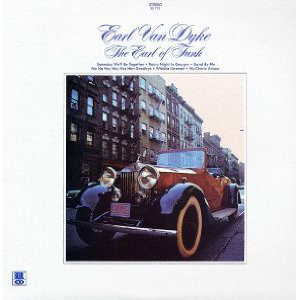
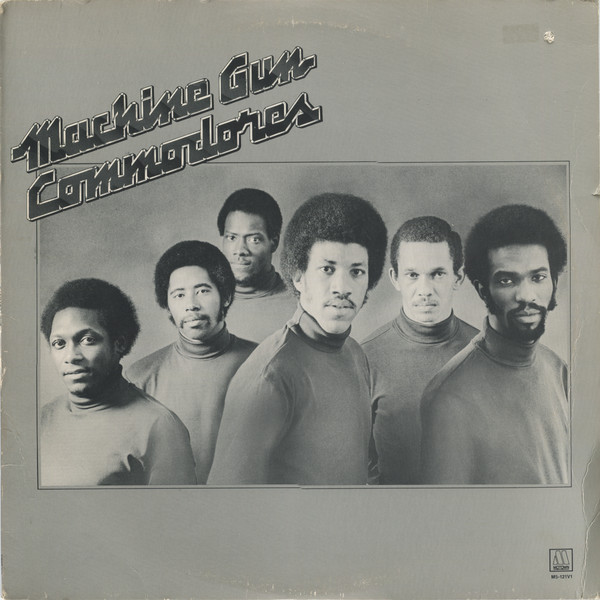

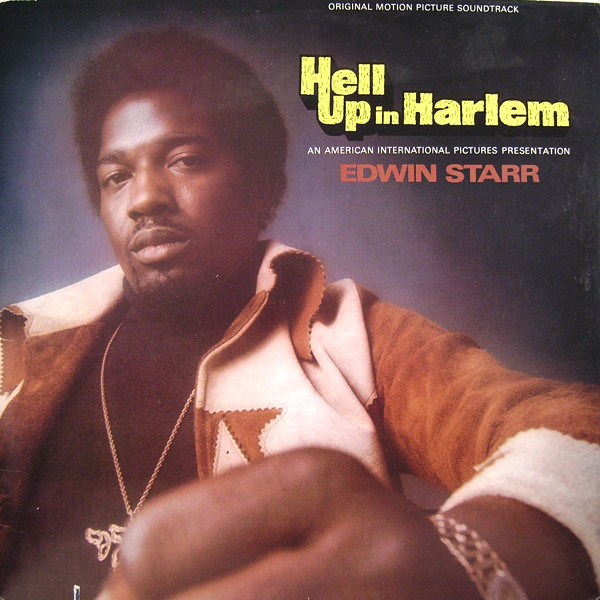
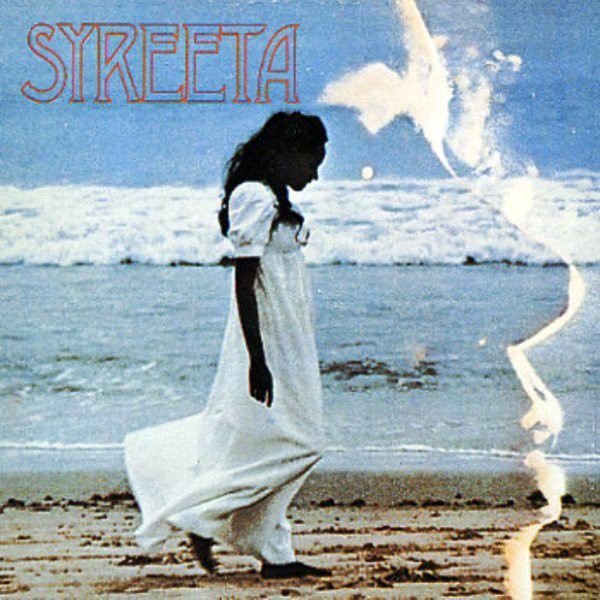
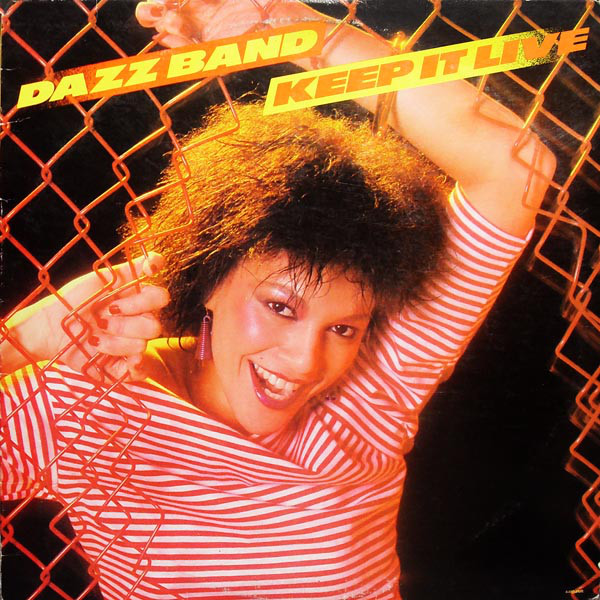
DATASHOCK-KRAUTER DER PROVINZ.
Datashock-Kräuter der Provinz.
Label: Bureau B.
Release Date: ‘25th’ of May 2018.
Ever since Datashock was founded in the city Saarlouis, in Southwestern Germany in 2003, the neo-hippie-spook-folk collective’s lineup has been fluid, with members leaving and joining the group over the last fifteen years. By the time Datashock entered the studio to record the followup to 2014s Keine Oase In Sicht, there were now eight members of the collective, as they began recording Kräuter der Provinz, which will be released by Bureau B on the ‘25th’ of May 2018. The release of Kräuter der Provinz is a new chapter in the story of Datashock, who have been making music in their own way for fifteen years.
After Pascal Hector founded Datashock in 2003, the nascent musical collective began to hone and establish their own unique and inimitable sound. This was heavily influenced by psychedelia as Datashock improvised and fused Krautrock, modern electronic music and dronescapes as they created multilayered soundscapes by deploying a myriad of electronics, effects pedals and DIY tape experiments. All this played a part in Datashock establishing their sound during the early years of their career.
By September 2004, Datashock had already released their debut single Die Frage Ist Wann Es Absurd Wird on the Meudiademorte label which was owned and operated by Pascal Hector. This was the start of a Datashock’s recording career, and during 2006 and 2007 they released collaborations with Shivers, Wether and also Aidan Baker and Leah Buckareff. These were ambitious, genre-melting releases where Datashock’s sound started to take shape.
In March 2008, Datashock released their debut LP Untitled Symbol, which was followed five months later with their cassette album Rambo Wikinger in August 2008. By then, Datashock’s music was already starting to find a wider audience.
Buoyed by the success of the previous year, Datashock released another two albums during 2009, which were both collaborations. This included Datashock and Pretty Lighting’s album Collaboration, which was released in January 2009. Two months later, Datashock and Time Life’s Alle In Einem Bus was released in March 2009. The two albums featured Datashock’s unique, genre-melting sound as they continued to push musical boundaries to their limits.
Following the release of the two collaborations in 2009, Datashock returned in 2010 with two limited edition cassette albums, Taramöpskäsefuss and Para Dieswärts Dull. While both albums showcased an exacting and innovative group, when Datashock returned with the double album Pyramiden Von Gießen in April 2011, it was one of their finest offerings. It was as if Datashock had been working towards Pyramiden Von Gießen.
Despite releasing what many critics regarded as their finest hour, nearly two years passed before Datashock returned with a new release. This was LiveLoveData$, which was released in January 2013, and was another limited edition cassette album. The two tracks had been recorded live in late 2009, and were a snapshot in time and where Datashock were musically nearly four years ago. Much had changed since then, and Datashock’s star was in the ascendancy.
Proof of that was Datashock’s double album Keine Oase In Sicht, which was released in May 2014. It was a carefully crafted fusion of psychedelia, Krautrock, drone, electronica and experimental music was a fitting followup to Pyramiden Von Gießen, and was also one of the finest albums of Datashock’s career. The followup to Keine Oase In Sicht was eagerly awaited by Datashock’s growing fanbase.
Kräuter der Provinz.
Little did they realise that it would be four years before Datashock returned with the much-anticipated follow to Keine Oase In Sicht, Kräuter der Provinz. It will be released by Hamburg based label Bureau B and features a slightly different lineup of Datashock.
By the time Datashock entered the studio to record Kräuter der Provinz, they were now an eight piece band. The lineup featured Christian Berghoff, Jan Stütz, Jan Werner, Pascal Hector, Ronnie Oliveras, Ruth-Maria Adam, Sebastian Haas and Ulf Schütte. They’re constantly busy with various projects and life in general, so trying to get an eight piece band in the studio together could’ve been a logistical nightmare.
Fortunately, it wasn’t, and when a date was agreed for the recording of Kräuter der Provinz, the eight members of Datashock made themselves available and arrived from all over Germany. Before long, there was a carnival atmosphere in the studio as beers were cracked open and the band shared takeaway pizza, while they caught up with each other. However, having exchanged pleasantries, it was time for Datashock to get their game head on, and get down to the important thing, making music.
To make this music, a myriad of electronics and effects were setup alongside the array of instruments that ranged from the rhythm section and guitars to a violin and clarinet. Datashock were about to put these instruments to good use as they recorded nine new improvised soundscapes.
This includes the album opener Hullu Gullu, wir liefern Shizz, which is an almost flawless fusion of psychedelic Krautrock, neo-folk and electronica where Datashock delay effects and sci-fi sound to create a hard rocking, mesmeric and memorable track. It sets the bar high for the rest of Kräuter der Provinz.
Very different is Wenn alle wollen, will uch auch! where Datashock improvise and experiment, creating a dreamy, lysergic and genre-melting meditative soundscape. By comparison, Im Zuchtstall der Existenzhengste has a much more understated cinematic sound, which veers between dark and dramatic to menacing and atmospheric as Datashock paint pictures with music. The cinematic sound continues on Spirituelle Enthaltsamkeit im Sandwichverfahren which is eerie and otherworldly and sounds as if it belongs in a modern-day horror film. Datashock’s cinematic sound continues on Schönster Gurkenschwan which is rich in imagery, dubby and full of darkness and drama. It’s a captivating fusion of avant-garde, dub, electronic, experimental music and improv, where Datashock deploy effects and futuristic sounds effectively.
There’s no let-up in the drama during Marodierende Sachbearbeiter aus Teilzeit, where sci-fi and celestial sounds are added to this carefully crafted soundscape. Sometimes it’s sonically reminiscent to some of the music on Leftfield’s genre classic Leftism. Straight away, Datashock send out a hypnotic warning that there’s danger ahead, as the thirteen minute epic Halb-Halb, wie ein guter Kloß gradually reveals its secrets. The music is understated, and veers between ethereal to experimental as Datashock continue to improvise, and in doing so, create futuristic, otherworldly and lysergic music that is also mesmeric and later, dramatic. It seems that Datashock have kept one of the best until last on Kräuter der Provinz.
For Datashock’s many fans who have waited four years for the release of Kräuter der Provinz, it’s been worth the wait and is a career defining album. Every album and collaboration that Datashock have released since 2003 has been working towards Kräuter der Provinz, which will be released by Bureau B on ‘25th’ of May 2018. Kräuter der Provinz is a groundbreaking and genre-melting album from musical pioneers Datashock.
The neo-hippie-spook-folk collective Datashock improvised and combined elements of psychedelia, Krautrock, modern electronic music and dronescapes with avant-garde, dub and experimental music on Kräuter der Provinz. Datashock also deployed a myriad of electronics, effects pedals and sci-fi sounds on Kräuter der Provinz, and briefly reference Ennio Morricone and Leftfield during a carefully crafted cinematic album that is finest of their career.
Kräuter der Provinz is a cinematic album that is rich in imagery, and sometimes, it sounds like the soundtrack to a film that has yet to be made. Datashock leave the listener to supply the script as the music veers between atmospheric, dreamy, lysergic and meditative to dark, dramatic, eerie and menacing to dubby, futuristic and otherworldly during what’s without doubt the finest album of the neo-hippie-spook-folk collective’s fifteen year career.
Datashock-Kräuter der Provinz.
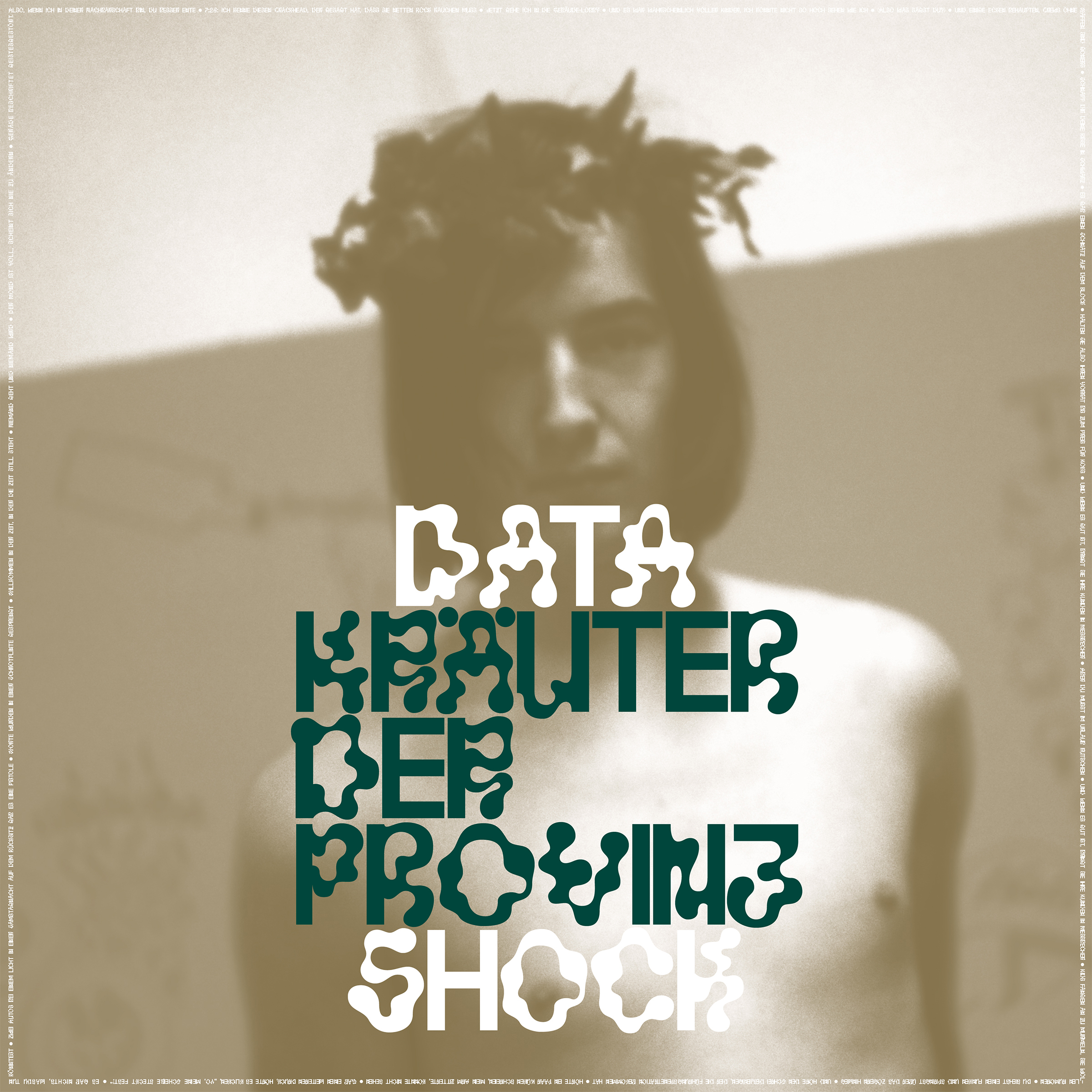


JOHNNY RIVERS-NO THROUGH STREET.
Johnny Rivers-No Through Street.
Label: BGO Records.
As 1983 dawned, Louisiana born singer, songwriter, guitarist and producer Johnny Rivers had just turned forty, and had been a professional musicians since 1956. Back then, he was still known Johnny Ramistella when formed he his own band The Spades, who later that year, released their debut single. Less than two years later, and fifteen year old Johnny Ramistella from Baton Rouge, embarked upon a solo career when he released his debut single Little Girl in February 1958. Later in 1958, DJ Alan Freed who advised Johnny Ramistella to change his name to Johnny Rivers after Mississippi River that flows through Baton Rouge. Little did, Alan Freed realise that the name Johnny Rivers would go on to feature on thirty-million records.
Twenty-five years later, and Johnny Rivers was a successful recording artist who had twenty-nine hits to his name and had released twenty-one studio albums and five live albums between 1964 and 1980. This included his last album Borrowed Time, which was released by RSO Records in 1980, but failed to trouble the charts. After the commercial failure of Borrowed Time, Johnny Rivers left RSO Records, and was without a recording contract. For Johnny Rivers who had enjoyed such a long and successful career, this came as a huge blow.
Nearly three years passed before Johnny Rivers returned in 1983 with a new album, which was released on Priority Records, which was one of the many specialist imprint owned by CBS Records. However, this particular imprint, Priority Records, specialised in gospel music, and release Johnny Rivers one and only gospel album No Through Street, which was recently remastered and reissued by BGO Records. The release of No Through Street was a new chapter in Johnny Rivers’ career, and surprised many people.
Some within the music industry were surprised that Johnny Rivers had signed to Priority Records, and was about to start work on a modern gospel album. However, Johnny Rivers was now a man of faith, who had occasionally included devotional songs on his albums. He decided to take things further on No Through Street, which saw Johnny Rivers reinvent himself yet again on a gospel album with a twist.
For his first ever gospel album, No Through Street, Johnny Rivers penned Nowhere Else To Go and arranged the traditional song The Uncloudy Day. These songs were joined by covers of familiar and soulful songs including Sam Cooke’s A Change Is Gonna Come; Ben E King, Leiber and Stoller’s Stand By Me; Holland, Dozier Holland’s Reach Out, I’ll Be There and How Sweet It Is (To Be Loved By You) and Carl Hampton, Homer Banks and Raymond Jackson’s Shelter In Time Of Storm. They were joined by Leo Graham’s Turning Point; David Miner and Larry Knechtel’s Believe In Me; Jim and Ginger’s Hendrick’s New Meaning; Bob Cotton and Hadley Hockensmith’s Live It From Day To Day and Bill Tuohy Dion DiMucci’s Golden Sun, Silver Moon. These twelve songs became No Through Street, which Johnny Rivers recorded in Hollywood, LA,
Johnny Rivers headed to Weddington Studios, in Los Angeles which was home to the best session musicians on the West Coast. He knew many of these musicians, and some had played on his previous albums. As a result, it was a mixture of familiar faces and new names that joined Johnny Rivers who took charge of production on No Through Street.
Joining vocalist and rhythm Johnny Rivers in the rhythm section were drummers Jim Keltner, Ron Tutt, Bill Maxwell and percussionist Alex Acuña and bassists Darrel Cook, Jerry Scheff, Larry Prentiss and Hadley Hockensmith who laid down some of the lead guitar parts on No Through Street. The rest of the lead guitar parts were recorded Dean Parks.They were augmented by keyboardist and pianist Larry Knechtel, keyboardist and organist Harlan Rogers, saxophonist Jim Horn and trumpeter Chuck Findley. Adding the final piece of the jigsaw were backing vocalists were The Walters Family, Julia, Maxine, Luther and Dren who added a soulfulness and spiritual sound to No Through Street, which was scheduled for release later in 1983.
No Through Street was the album that was hoped would transform Johnny Rivers’ fortunes. He had released nine albums in the last ten years, and one two had charted. Even then, 1975s New Lovers and Old Friends reached just 147 in the US Billboard 200, while 1978s Outside Help fared slightly better when it reached 142. That was as good as it got for Johnny Rivers since 1973. He desperately needed a successful album to kickstart his ailing career. However, the big question was what would the critics make of Johnny Rivers’ first gospel album No Through Street?
Throughout his long career, Johnny Rivers’ albums had always been well received by critics, including many who were fans of music. Some were surprised by Johnny Rivers’ decision to release a gospel album, but those that reviewed No Through Street were won over by an album that brought new life to many familiar songs.
Opening No Through Street lis the Johnny Rivers’ composition Nowhere Else To Go opens the album where he paints pictures with the lyrics and a vocal that is full disappointment and despair, as the character in the song reflects on the direction his life has taken and the friends and lover he’s lost. Realising there’s Nowhere Else To Go, and nobody left to turn to, he turns to God, and undergoes a spiritual awakening. Johnny Rivers then delivers a rueful, languid, but powerful cover of Sam Cooke’s A Change Is Gonna Come, before the tempo rises on a joyous version of Turing Point. The Waters Family then add soulful and gospel-tinged backing vocals as Johnny Rivers breathes new life and meaning into this uplifting and spiritual rewrite of Reach Out (I’ll Be There). It’s a similar case on the oft-covered Stand By Me, before The Waters Family add soulful vocals during Johnny Rivers’ heartfelt, impassioned and beautiful cover of the ballad Believe In Me. This is one of the highlights of the album, and was the perfect way to close side one of the album in 1983.
Shelter In Time Of Storm is a reminder of eighties soulful, pop rock, before Johnny Rivers heads in the direction of gospel on An Uncloudy Day. Johnny Rivers then gives thanks on a bluesy, soulful reinvention of How Sweet It Is (To Be Loved By You), where The Waters Family’s backing vocals ensure the song swings. Johnny Rivers then shares the details of his spiritual awakening on New Meaning, and follows this one of the album’s hidden gems Live It From Day To Day. It’s a catchy and memorable song that sounds as if it’s been influenced by the West Coast sound. A freewheeling country rock cover of Golden Sun, Silver Moon closes No Through Road and is reinvented by Johnny Rivers and close the album on a high.
Buoyed by the reviews of No Through Road, was released by Priority Records in 1983, but just like Borrowed Time in 1980, failed to find an audience. Johnny Rivers’ decision to release a gospel album had backfired, and he never released another album for Priority Records.
Thirty-five years later, and Johnny Rivers is seventy-five and has sold in excess of thirty-million records. One of the oft-overlooked albums from Johnny Rivers’ back-catalogue is No Through Road, which was recently remastered and reissued by BGO Records. However, when Johnny Rivers released his one and only gospel album No Through Road, he had enjoyed a spiritual awakening, and like many people who had experienced the same thing, wanted to share the ‘news.’ The only problem was, the majority of Johnny Rivers fans weren’t interested in an album of gospel from their hero.
When an emboldened Johnny Rivers released No Through Road in 1983, neither he nor his advisers seemed to have thought of this. A gospel album seemed the wrong album for Johnny Rivers to release in 1983, when his career was at a crossroads.
It didn’t matter that No Through Road was a polished album that featured elements of AOR, blues, country, gospel, pop, rock and soul where Johnny Rivers breathed new life and meaning into a number of familiar songs. The lyrics to some of these songs were tweaked to reflect Johnny Rivers’ recent spiritual awakening. However, very few people heard No Through Road, which was a very personal album from Johnny Rivers.
After No Through Road, it was another eight years before Johnny Rivers released The Memphis Sun Recordings in 1991. Just like No Through Road, The Memphis Sun Recordings failed to trouble the charts, and neither have any of Johnny Rivers’ subsequent albums. He still continued to release the occasional album right up until 2009, but never released another gospel album. No Through Road was a one-off, from Johnny Rivers who with the help of a crack band and The Waters Family, breathes new life and meaning into covers of familiar songs that are thoughtful, uplifting and joyous on this oft-overlooked hidden gem of an album.
Johnny Rivers-No Through Street.
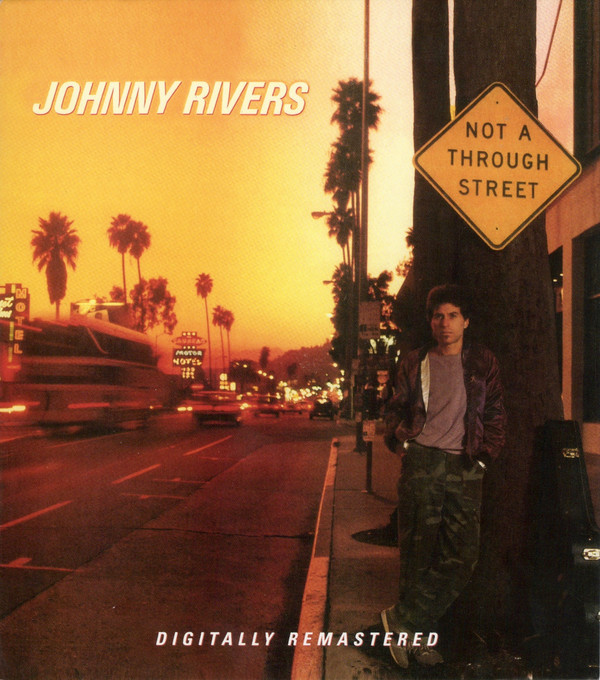

TOO SLOW TO DISCO BRAZIL COMPILED BY ED MOTTA.
Too Slow To Disco Brazil Compiled By Ed Motta.
Label: How Do You Are.
It was back in 2014 when the German label How Do You Are released the first instalment in the Too Slow To Disco compilation series, which was one of the first compilation series to revisit West Coast sound, which provided the soundtrack to much of the decade. That was no surprise as the West Coast sound was slick and full of hooks. Trademarks of the West Coast were clever chord progressions and lush harmonies. This proved to be a truly irresistible combination, and why across America, radio station playlists were dominated by the West Coast sound. Sadly, like all good things, the success story that was the West Coast sound had to come to an end. However, since 2014, the West Coast sound has been on the comeback trail.
A number of record companies have released compilations of the West Coast sound, which all of a sudden is back in fashion. That is partly thanks to the How Do You Are label, who have released three volumes of the Too Slow To Disco and The Ladies Of Too Slow To Disco compilation since 2014. These compilations have featured songs from familiar faces and new names, plus a number of hidden gems, and are among the best and most successful compilations of the West Coast sound released in recent years. Despite that, the How Do You Are label have decided to change things around for this year’s instalment in the Too Slow To Disco series.
The West Coast has been left behind, and this year, the How Do You Are label are releasing Too Slow To Disco Brazil Compiled By Ed Motta. It’s a welcome addition to the series, thanks to compiler Ed Motta, who has dug deep and chosen some oft-overlooked Brazilian soul, funk and AOR.
It was a bit a of coup for How Do You Are when Ed Motta agreed to compile the new instalment in the Too Slow To Disco series. Ed Motta who is the nephew of the late, great Tim Maia, first came to prominence in the late-eighties as a member of the band Conexão Japeri, who were a popular draw on the Carioca show circuit. This was just the start of the rise and rise of Conexão Japeri.
In 1988, Conexão Japeri released their debut Ed Motta and Conexão Japeri, which showcased a talented band and featured several hit singles. These singles featured elements of soul, jazz and funk, and soon became favourites within Brazil’s pop-rock scene. However, this was the start for Ed Motta.
Thirty years later, and Ed Motta has released fifteen albums and is a versatile musician who is equally comfortable playing Latin, jazz, funk, soul and AOR. Ed Motta has also worked with many top musicians, including Roy Ayers, Patrice Rushen, Greg Phillinganes, Ryuichi Sakamoto and Seu Jorge, and also 4Hero and Incognito. However, Ed Motta has also a wide knowledge of Brazilian music, so when Too Slow To Disco’s usual compiler was looking for someone to compile a compilation of Brazilian funk, soul and AOR, he seemed the perfect person.
All it took was a brief phone call, and Ed Motta had agreed to compile the Too Slow To Disco Brazil Compiled By Ed Motta. It features nineteen tracks, including contributions from Filó MacHado, Sandra De Sá, Junior Mendes, Don Beto, Lucinha Turnbull, Carlos Bivar, Santa Cruz, Cassiano, Zeca Do Trombone, Roupa Nova and Brylho. They’re just some of the artists and bands that feature on Too Slow To Disco Brazil Compiled By Ed Motta.
Opening Too Slow To Disco Brazil Compiled By Ed Motta is Filó MacHado’s Quero Pouco, Quero Muito which is taken from the 1983 album Origens, which was released on the Pointer label. It’s a funky and soulful track with an impassioned vocal, and is very much typical of the type of music that has featured on the Too Slow To Disco series over the past four years.
Sandra Sá recorded the Ton Saga composition Guarde Minha Voz for her 1983 album Vale Tudo which was released on the São Paulo based RGE. This was Sandra Sá’s third album, and Guarde Minha Voz was one of the highlight’s. It features a soulful vocal from Sandra Sá that is delivered against a carefully crafted arrangement where elements of funk and boogie are combined by a talented band. They’re responsible for what’s a melodic and memorable track.
In 1982, Junior Mendes released his debut album Copacabana Sadie on RCA Victor. It opens with the irresistible and hook-laden title-track Copacabana Sadie that was penned by Castão Lamounier, Luiz Mendes Jr and Paulo Imperial. Horns and strings play their part in Lincoln Olivetti’s arrangement as Junior Mendes delivers a tender and heartfelt vocal. Sadly, there was no followup to Copacabana Sadie, which wasn’t a commercial success and nowadays original copies of this hidden gem of an album changed hands for £300.
Lúcia Turnbull was born in São Paulo in 1953, and is the daughter of a Scottish father and Brazilian mother. When she was sixteen she moved to London, and joined the folk group Solid British Hat Band. Having returned to Brazil in 1972, Lúcia Turnbull formed the duo As Cilibrinas do Éden with Rita Lee, and later that year the pair joined the Tutti Frutti band. Three years later Lúcia Turnbull formed her own group Bandolim 1976, and in 1979 released her debut solo album Aroma on EMI. One of the highlights of Aroma is the beautiful MPB ballad Toda Manhã Brilha O Sol which features Lúcia Turnbull at her very best.
When Santa Cruz released their debut album Flor Incendiária on the Barclay label in 1984, it featured Mais Uma Chance. It epitomises the eighties sound as Santa Cruz combine elements of jazz, Latin and pop on this carefully crafted ballad. Sadly, there was no followup to Flor Incendiária and Santa Cruz like several artists and bands on Too Slow To Disco Brazil Compiled By Ed Motta released just one album.
Jane Duboc’s recording career began in the seventies, and has spanned five decades. Nowadays, she’s one of the most successful Brazilian female vocalists. However, in 1982, Jane Duboc had just released her sophomore album Jane Duboc on the Som Da Gente label. It features the Se Eu Te Pego De Jeito where Jane Duboc delivers a vocal that is jazz-tinged and soulful. Meanwhile her band combine elements of funk, jazz and MPB on what’s one of the highlights of Too Slow To Disco Brazil Compiled By Ed Motta.
In 1991 composer, singer and guitar player Cassiano released his fourth album Cedo Ou Tarde on Columbia. It was the first album Cassiano has released since 1976s Cuban Soul-18 Kilates. Sadly, Cedo Ou Tarde wasn’t the success that Cassiano had hoped, despite songs of the quality of Rio Best-Seller. There’s hooks aplenty during this memorable and catchy fusion of funk, soul and MPB.
By 1983, Zeca Do Trombone was an experienced musician who had spent over a decade working as session musician and had played on albums by Tim Maia, Ivan Lins, Taxi and Joyce. Zeca Do Trombone had collaborated with Roberto Sax on the album Zé Do Trombone E Roberto Sax which was released in 1976. Seven years later, and Zeca Do Trombone was back in the studio recording his debut album Rota-Mar which was released on the Timbre label in 1983. It opens with the MPB ballad Rota-Mar where horns accompany and later replace Zeca Do Trombone’s vocal on this beautiful hidden gem.
Comparisons have often been drawn between the Brazilian pop band Roupa Nova, and their American counterparts Toto. Both groups were also hugely successful with Roupa Nova selling eight million singles and albums, and enjoying twenty-five hit singles, including ten which topped the Brazilian charts. Roupa Nova’s career began in 1981, when they released their eponymous debut album. A year later, in 1982 they released their sophomore album Roupa Nova which featured Clearer which is a slick and irresistible fusion of pop rock and MPB.
Brylho is another band that only released the one album during their career. This was Brylho which was released on Elektra-WEA in 1983 and features the hook-laden Jóia Rara that is smooth, soulful and funky.
Closing Too Slow To Disco Brazil Compiled By Ed Motta is Rita Lee and Roberto’s Atlântida, which is taken from their 1981 debut album Saúde, which was released on the Som Livre label. Atlântida is very much of its time, with early eighties pop-rock, synth pop and MPB combining to create a track that is very different from the West Coast sound a decade earlier that feature on previous instalments of the Too Close To Disco series. However, Rita Lee’s breathy vocal plays a starring role in Atlântida which closes Too Slow To Disco Brazil Compiled By Ed Motta.
After four volumes of Too Slow To Disco that featured the West Coast sound, it’s all change as the series heads to Brazil where Ed Motta compiles a compilation that features nineteen slices of oft-overlooked Brazilian soul, funk and AOR. Many of the artists and bands on Too Slow To Disco Brazil Compiled By Ed Motta will be new to many record buyers, while veteran of other compilations of Brazilian music may be familiar with some of the names. However, Too Slow To Disco Brazil Compiled By Ed Motta is a musical voyage of discovery and the perfect way to discover new music.
While some of the artists and bands on Too Slow To Disco Brazil Compiled By Ed Motta enjoyed long and successful careers, others only released the one album which failed to find an audience. Many of these albums are now extremely rare and change hands for large sums of money, and the only way for most people to hear the music on these albums is on compilations like Too Slow To Disco Brazil Compiled By Ed Motta. It’s a welcome addition to Too Slow To Disco series, and hopefully, there will be a followup in years to come.
Too Slow To Disco Brazil Compiled By Ed Motta.

LINDA PERHACS-I’M A HARMONY RECORD STORE DAY 2018 EDITION.
Linda Perhacs-I’m A Harmony Record Store Day 2018 Edition.
The Linda Perhacs story is a case of what might have been for the seventy-five year old singer-songwriter who nowadays, is regarded as the true Queen of psychedelic folk. Linda Perhacs career began in 1970, when she released her debut album Parallelograms on Kapp Records. Sadly, Parallelograms which nowadays, is regarded as a psychedelic folk classic, failed to find the audience it deserved and Linda Perhacs turned her back on music, and nothing more was heard of her until 2014.
That was when Linda Perhacs returned with her much-anticipated sophomore album The Soul Of All Natural Things in March 2014. By then, Linda Perhacs music had started to find a wider audience amongst a new generation of musicians and record buyers. This audience grew over the next three years when Linda Perhacs returned with her third album I’m A Harmony which was release in September 2017.
Eight months later, and Linda Perhacs third album I’m A Harmony has just been reissued for Record Store Day 2018 as a limited edition 2-LP set by LA-based Omnivore Recordings and features four previously unreleased tracks from Linda Perhacs. This reissue of I’m A Harmony is the latest chapter in the story of Linda Perhacs, the Queen Of Psychedelic Folk.
Linda Long was born in Mill Valley, which lies just north of San Francisco’s Golden Gate Bridge in 1943, and by the time she was six or seven, she was a gifted and prodigious child who was able to write quite complicated compositions. Sadly, as is often the case with gifted children, Linda Long’s teachers didn’t realise she was a gifted child, but this didn’t stop Linda Long from enrolling in the University of Southern California.
At the University of Southern California, in San Francisco, Linda Long decided to major in dental hygiene, which allowed her to combine work and study. Her course also allowed Linda to explore the new world that was taking shape around her.
By then, a rainbow nation were flocking to San Francisco to be become part of the new counterculture that promised a different future. Linda Long was able to witness this firsthand and embraced the art and music that was part of the new counterculture. For Linda Long, this was creatively stimulating and would change the course of her life.
Having graduated from University of Southern California, Linda Perhacs began working with a periodontist, but also immersed herself in the various philosophies that were growing in popularity. Essentially, she taught her to mediate and rid herself of negative energy, which not only helped her, but her patients. It may also have helped Linda Perhacs develop as songwriter.
Away from work, Linda Perhacs and her sculptor husband used to enjoy walking in the city’s public parks. It was during these walks that Linda Perhacs was first inspired to write songs, which was something she hadn’t done since she and her husband moved to Topanga Canyon.
By then, Linda Perhacs hadn’t written songs for a while. Throughout her University days, Linda hadn’t been involved in making music despite her love of music. Things changed when she moved to Topanga Canyon, which was full of artists and musicians, and was the perfect place for an aspiring singer-songwriter. With an environment that inspired her, and the sense of hope that was prevalent during the second half of the sixties, this marked the cultural blossoming of Linda Perhacs.
What also inspired Linda Perhacs was her travels. She spent much of her time travelling up the Big Sur coastline, right through Mendocino, the Pacific Northwest and to Alaska. This was her road trip. So was a trip to Chimacum, on the Olympic Peninsula and these journeys were what inspired Linda Perhacs to write songs. Linda Perhacs stresses that her journeys inspired her, and drugs played absolutely no part in stimulating her creativity. Her songs come from her experiences in life.
This includes the colours, patterns and shapes that she’s seen ever since she was a child. They’re a phenomenon that many people experience, and these colours, patterns and shapes inspired Linda Perhacs who soon, would be one step nearer releasing her first album.
Linda Perhacs was, by now, working in the office of a Beverley Hills’ periodontist, where she first met film soundtrack composer Leonard Rosenman and his wife Kay. When they arrived in the office, Linda Perhacs would ask them about their forthcoming projects. Then one day Leonard said to Linda Perhacs: “I can’t believe that clinical work is all you do?” That was when Linda Perhacs told them about her music and played a tape of one of her songs. These were songs she’d recorded during her travels. Leonard Rosenman took the songs home to listen to them, and the next day, Linda Perhacs was offered a record contract.
This came as a shock to Linda Perhacs. When she handed Leonard Rosenman the tape she thought that he was wanting to hear a glimpse of the type of music younger people were making. Linda Perhacs never expected him to offer her a recording contract, never mind offer to produce her debut album. However, Leonard Rosenman knew that Parallelograms was a very special track which he referred to as “visual music composition.”
Leonard Rosenman who had been a composer all his life, had never been able to write “visual music composition,” but Linda Perhacs a new and up-and-coming singer had managed to achieve this. He explained that Parallelograms was different from the other songs she had had written. Each of the component parts of Parallelograms were interactive to the composer as three-dimensional sound. It’s akin to sculpting with ice, where the result is essentially a type of light and dance. For Linda Perhacs, this was the way that she had always written. However, now Linda Perhacs was going to take this one step further and record what became Parallelograms.
Parallelograms.
Parallelograms would eventually featured eleven tracks, including ten written by Linda Perhacs, who joined forces with Oliver Nelson to write Hey, Who Really Cares? For the recording of her debut album Parallelograms, Leonard Rosenman took charge of production.
When recording of Parallelograms began, Leonard Rosenman and Linda Perhacs were aiming to sculpt a series of soundscapes full of textures, colours and shapes. The music Linda Perhacs wanted to record would be “softer and ethereal.” To help Linda Perhacs achieve this, Leonard Rosenman puts together a band that featured some top musicians.
This included Shelley Mann and Milt Jackson on percussion. The rhythm section included Reinie Press on electric bass and Fender guitar and Steve Cohn on lead and 12-string guitar. John Neufield played flute and saxophone, Leonard Rosenman electronic effects and Tommy harmonica. Brian Ingoldsby was tasked with using an electrified shower hose to create horn effects on Parallelograms, which was no ordinary album. Instead, it proved to be a truly groundbreaking album.
Before the release of Parallelograms, it was hoped that the critics would realise the importance of Linda Perhacs’ debut album. She was a truly talented singer, songwriter and musician who had discovered her musical soul-mate in producer Leonard Rosenman. He was an ambitious, innovator who wanted to push musical boundaries to their limits on album that Leonard Rosenman described as “visual music composition.” Intrigued, critics investigated Parallelograms.
They discovered a beautiful, understated and enchanting album. From the opening bars of Chimacum Rain, right through to the closing notes of Delicious, Linda Perhacs breathed life, meaning, beauty and emotion into Parallelograms which was an absolutely captivating album that left the listener spellbound. That wasn’t surprising, as Parallelograms featured hopeful, captivating, ethereal and dreamy music which was also ambitious and innovative as genres melted into one.
Parallelograms was a flawless fusion of Americana, country, folk, pop, psychedelia and rock. There’s even a twist of ambient, drone pop, experimental music and jazz during this was potent and heady brew that should’ve launched Linda Perhacs’ career.
Sadly, when Parallelograms was released, Linda Perhacs’ psychedelic folk classic wasn’t the huge commercial success it should’ve been. This wasn’t helped by the record company’s failure to promote Parallelograms, an Linda Perhacs like so many other hugely talented artists, failed to enjoy the commercial success and critical acclaim her undoubted talent deserved. This was a huge blow for Linda Perhacs who after the commercial failure of her debut album Parallelograms returned to her job as a periodontist.
Meanwhile, music industry insiders and the those that had bought Parallelograms awaited Linda Perhacs’ sophomore album. A year passed, and there was no sign of the followup to Parallelograms. By then, Linda Perhacs had returned to her job as a dental nurse, and had settled back into her life pre-Parallelograms. Two, then three years passed, and still, there was no sign of another album from Linda Perhacs. Three years became five, and five became ten, and by then, fans of Linda Perhacs had all but given up hope that she would release another album.
Nothing was heard of Parallelograms until the nineties, and by then, a new generation of record buyers discovered the album which was regarded as a cult classic. With each passing year, iinterest in Parallelograms grew and somewhat belatedly, critics reappraised Linda Perhacs’ debut album, realising that it was a seminal, lost classic. Parallelograms was the album that should’ve been the start of a long and successful career for Linda Perhacs.
She was still working as a dental hygienist, but by then, Linda Perhacs had admitted that much as she loved music, she didn’t seem to have the drive required to make a career as a musician. That was a great shame as Linda Perhacs was blessed with an abundance of talent. That had been apparent on Parallelograms, and Linda Perhacs’ long-awaited comeback album.
Having spent her career working as a dental hygienist, Linda Perhacs decided to make her musical comeback. She had spent a lifetime observing people and the world, which meant that she had a wealth of material for her not just her sophomore album, but a series of albums. However, first things first, Linda Perhacs had to get round to releasing the follow to Parallelograms, which became The Soul Of All Natural Things.
The Soul Of All Natural Things.
Forty-two years after the release of her seminal debut album Parallelograms, Linda Perhacs was working on her long-awaited and much-anticipated sophomore album The Soul Of All Natural Things. She had already written four new songs, The Soul Of All Natural Things, Intensity, Prisms of Glass and Song Of The Planets. Linda Perhacs was also writing new songs with a new generation of musicians who were fans of her music. This included Chris Price who she wrote Children with. They also cowrote River of God, Freely, Immunity and Song of the Planets with Fernando Perdomo, who wrote Daybreak with Linda Perhacs. These ten songs would later become Linda Perhacs sophomore album The Soul Of All Natural Things.
It was recorded at the Reseda Ranch Studios, Reseda in California. between September 2012 and April 2013, with Chris Price, Fernando Perdomo and Linda Perhacs taking charge of production. When the recording began, they were joined by various guest artists, including Julia Holter and Ramona Gonzales. Once The Soul Of All Natural Things was completed, Linda’s long-awaited sophomore album was scheduled for release in March 2014. After a forty-four year absence, Linda Perhacs was back.
By then, a new generation of critics were already familiar with the story of Linda Perhacs ‘ debut album Parallelograms, These critics penned critically acclaimed reviews, and hailed Linda Perhacs the comeback Queen.
Although forty-four years have passed since Linda Perhacs released her debut album Parallelograms, she’s picked up where she left off on The Soul of All Natural Things. Accompanied by some of the best young musicians Los Angeles has to offer, they played their part in a flawless fusion of classic rock, folk, pop and psychedelia. There’s even diversions via ambient, experimental, jazz and drone pop during what’s another captivating and innovative album from Linda Perhacs.
Just like on Parallelograms, Linda Perhacs proves to be a versatile vocalist as her vocal veers between tender and breathy to elegiac, ethereal and emotive. Sometimes, there’s a fragility and sense of confusion, frustration and melancholia in Linda Perhacs’ voice, while other times, her vocal becomes impassioned, hopeful and hurt-filled. Then on Immunity, Linda’s vocal is louder, stronger and full of sincerity. Just like on other tracks this allows her to breathe meaning into the lyrics. Meanwhile, Linda Perhacs is accompanied by a choir of lysergic angels who add cascading harmonies, while crystalline guitars and lush strings join with the rest of her band who play their part in the sound and success of The Soul Of All Natural Things.
The music on The Soul Of All Natural Things veers from bewitching to beautiful, to cinematic and cerebral. Other times, the music is powerful and spacious, but has an intensity. However, for much of The Soul Of All Natural Things the music is dreamy, ethereal and lysergic. That’s not unlike the album that started Linda Perhacs’ career, Parallelograms.
After the release of The Soul Of All Natural Things critics and record buyers wondered what the future held for Linda Perhacs? Would she return with a third album, and if so, when would it be ready for released? All would soon become clear this time, as Linda Perhacs kept her fans informed about the progress of her eagerly awaited third album I’m A Harmony.
I’m A Harmony.
Three-and-half years after the release of long-awaited and comeback album The Soul Of All Natural Things, Linda Perhacs was on the comeback trail again when she released album I’m A Harmony in September 2017. Recording of I’m A Harmony had been slow going, and some of Linda Perhacs’ were wondering when she and even if she was going to return with a new album?
What many of her fans didn’t realise, was that seventy-four year old Linda was still working as a dental hygienist and in her spare time, was writing and recording I’m A Harmony. This was the reality of life as a musician in 2017.
When Linda began work on I’m A Harmony, she was joined by some familiar faces and also, a number of new names. Among the familiar faces were a number of well known songwriters, vocalists and producers including Fernando Perdomo, Julia Holter and Chris Price. They were joined by Pat Sansone of Wilco and The Autumn Defense who would co-produce I’m A Harmony with Fernando Perdomo and Linda Perhacs. They were joined by other songwriters, vocalists and producers who were all new names.
Among the new names who joined Linda Perhacs when work began on I’m A Harmony were Pat Sansone and John Stirratt of The Autumn Defense and Wilco; Nels Cline and Glenn Kotche of Wilco and Devendra Banhart who adds a soliloquy on We Will Live. They’re joined by John Pirrucello, James Haggerty, Leddie Garcia, Greg Wiezorek and vocalists Michelle Vidal and Durga McBroom. This all-star band would record the eleven songs that became I’m A Harmony.
Unlike her two previous albums, where Linda Perhacs wrote of the songs on her own, she cowrote the eleven songs with various songwriting partners. This included Crazy Love with Pat Sansone and Wash My Soul In Sound with Mark Pritchard. Linda Perhacs wrote I’m A Harmony, Take Your Love To A Higher Level and One Full Circle Around The Sun with Fernando Perdomo, and the pair cowrote Winds Of The Sky, We Will Live and Eclipse Of All Love with Chris Price. He and Linda penned The Dancer with Julia Holter who cowrote Beautiful Play and Visions with Linda Perhacs. These eleven songs would form the basis for I’m A Harmony.
Recording took place at Reseda Ranch Studios, Reseda in California and Tiny Door Studios in Nashville, with additional recording taking place at Julia Holter’s studio and The Session Rooms. This was where Linda Perhacs was joined by her band and guest artists as they began recording I’m A Harmony. It was co-produced by Linda Perhacs, Fernando Perdomo and Chris Price. They were augmented by Julia Holter on Beautiful Play, and she was joined on I’m A Harmony by was Chris Price who also does additional production work on Eclipse Of All Love. Mark Pritchard was also drafted in and did additional production on You Wash My Soul In Sound. Each of these producers played their part on I’m A Harmony, which was eventually completed and scheduled for release in autumn 2017.
When I’m A Harmony was released, it received the same critical acclaim the greeted the release of The Soul of All Natural Things in March 2014. I’m A Harmony which received plaudits and praise from critics on both sides of the Atlantic saw the Queen of psychedelic folk make a welcome comeback.
Opening I’m A Harmony is Winds Of The Sky, which features guitarist Nels Cline. His plucked guitar and washes of synths accompany Linda’s whispery vocal, before the rhythm section, cooing harmonies and percussion enter, as the dreamy arrangement floats along. Soon, reverb has been added to Linda Perhacs’ tender vocal adding to the atmospheric, lysergic sound. Later, it’s all change as the arrangement builds as the rhythm section power the arrangement along, and are joined by cascading harmonies and an acoustic guitar. They’re joined by a searing guitar which cuts through the arrangement and provide the backdrop for Linda Perhacs’ elegiac vocal as the Queen of psychedelic folk picks up where she left off on The Soul of All Natural Things.
A plucked guitar sets the scene for elegiac harmonies on We Will Live that set the scene for Linda Perhacs’ hopeful vocal on this beautiful ballad which meanders along with Julia Holter adding cooing and cascading harmonies. They join the acoustic guitar and provide the perfect accompaniment for Linda Perhacs’ heartfelt, hopeful vocal, Later, Devendra Banhart adds a soliloquy which provides the final piece of this beautiful, melodic and memorable musical jigsaw.
Julia Holter joins Linda Perhacs on I’m A Harmony and adds keyboards, backing vocal and shares the lead vocal, and together they create a dreamy choral vocal. Adding a contrast is the dark ominous sound of the keyboards, galloping drums and later, almost eerie harmonies while a jazz-tinged saxophone is sprayed across the arrangement as the arrangement becomes busy, urgent and almost chaotic as it veers in direction of free jazz. Later, it becomes understated as the ethereal vocals take centre-stage. Still, there’s one more surprise as Linda Perhacs adds an emotive and tender vocal to this eight minute opus.
From the opening bars of The Dancer, Linda Perhacs’ delivers a slow, tender vocal on this cinematic song. Soon, she is painting pictures against an understated arrangement that features an acoustic guitar, percussion and washes of synths. The band take care not to overpower Linda Perhacs’ vocal as she tells the story of mysterious and enigmatic character The Dancer, which is one of the highlights of I’m A Harmony, and features one of the best vocals on the album.
As Crazy Love unfolds, an acoustic guitar sets the scene for Linda Perhacs’ breathy vocal, and soon, a weeping slide pedal steel has joined the shuffling, understated arrangement. They provide the perfect accompaniment for Linda Perhacs with the less is more approach proving successful. Midway through the song, the arrangement builds and Linda Perhacs’ vocal soars above the arrangement as she breathes life and meaning into the lyrics. When her vocal drops out, it’s briefly replaced by an acoustic guitar, then when she returns her vocal veers between understated and occasionally powerful and deliberate. By then, the rhythm section, acoustic guitar and weeping pedal steel have joined Linda Perhacs as the song heads towards its crescendo. As it does, Linda combines emotion and enthusiasm on this hook-laden song which is another of the finest moments on I’m A Harmony.
Drums and keyboards combine with Linda’s ethereal scatted vocal on Take Your Love To A Higher Level, which soon becomes a soliloquy, before she’s joined by an acoustic guitar and delivers an emotive, impassioned vocal. Soon, the rest of the band enter and the arrangement builds. By then, it’s obvious that something special is unfolding as the arrangement becomes understated with drums, keyboards and guitar accompanying as Linda Perhacs almost pleas “Take Your Love To A Higher Level” in this beautiful emotional roller coaster.
Multi-instrumentalist Pat Sansone joins Linda on Eclipse Of All Love. Not only does he play drums, keyboards, guitar, percussion, adds backing vocals and shares the lead vocal. Before that, he plays the keyboards and becomes a one man rhythm section. This provides the accompaniment for the two cascading vocals that sit well together. Later, a chirping and crystalline guitar takes centre-stage, before Linda Perhacs’ and Pat and deliver a slow, deliberate and rueful hurt-filled vocal.
With just an acoustic guitar for company as One Full Circle Around The Sun unfolds, Linda Perhacs delivers a vocal that veers between tender and emotive. Later, Linda’s vocal is full of hope as she sings: “life can be a prayer of love, a prayer you leave behind, to give the hope that we need, to help the world to survive.” As this beautiful, thought-provoking ballad draws to a close there’s joy in Linda’s voice as she sings: “with One Full Circle Around The Sun, how amazing you’ve become.” This is a reminder if any was needed Linda Perhacs’ talents as a singer and songwriter.
There’s a dreamy sound to Beautiful Play as Julia Holter adds harmonies and an acoustic guitar accompanies Linda Perhacs’ tender, elegiac vocal. Meanwhile, the arrangement literally floats along,as keyboards and guitars combine with harmonies. They frame what’s another vocal masterclass from the Queen of psychedelic folk, Linda Perhacs.
Visions is another of the longer tracks, and lasts just over seven minutes. Straight away, there’s a lysergic sound as breathy, cooing and elegiac vocal floats above a spartan arrangement. It gives way to a picked guitar and drums played with hand. They’re joined by shimmering keyboards and Linda Perhacs’ vocal. Reverb has been added, and sometimes, the vocal becomes dubby. Soon, cooing harmonies join the glistening keyboards as the arrangement meanders along and gradually reveals its secrets and surprises. This ranges from percussion, a weeping guitar, a dubby vocal, drums and chirping acoustic guitar. They’re all part of a carefully crafted psychedelic folk epic.
A lone acoustic guitar opens You Wash My Soul In Sound closes I’m A Harmony, and sets the scene for Linda’s vocal during this filmic song. So do the harmonies that join the acoustic guitars and provide the understated backdrop for Linda Perhacs’ tender, heartfelt vocal. The spartan but beautiful and effect arrangement allows Linda’s vocal to take centre-stage, where it belongs. It’s one of Linda’s finest moments on I’m A Harmony, and ensures the album ends on a high.
When Omnivore Recordings reissued I’m A Harmony for Record Store Day 2018 as a limited edition 2-LP set, the eleven songs were spread across three sides of this double alum. This presented a problem, what to put on side four? Fortunately, Linda Perhacs had the solutions to this problem. previously unreleased tracks and demos.
Side four opens with Smile (I’ve Come To You) which features Fernando Perdomo, which gives way toUgly Girl which was recorded by Augustin and features Linda Perhacs. She Was Like A Bird is an unfinished demo that features Chris Price, while the phone demo of Once More Round The Sun offers a fascinating insight into this early version of the song the closed I’m A Harmony. The unreleased tracks and demos make the Record Store Day 2018 reissue of I’m A Harmony a must have for fans of Linda Perhacs. It’s also the perfect way to discover a truly talented singer-songwriter, Linda Perhacs who is enjoying something of Indian Summer.
Three years after the release of her long-awaited and much-anticipated sophomore album The Soul of All Natural Things in March 2014, Linda Perhacs picked up where she left off on I’m A Harmony which was originally released in September 2017, but was reissued for Record Store Day 2018. I’m A Harmony finds the Queen of psychedelic folk joined by a talented band who play their part in what can only be described as flawless genre-melting album where Linda Perhacs and her band combine elements of folk, pop and psychedelia. There’s also elements of ambient, avant-garde, experimental, free jazz and jazz on I’m A Harmony which Linda Perhacs co-produced with Chris Price and Fernando Perdomo.
They’ve played their part in Linda Perhacs’ much-anticpated third album I’m A Harmony veers between ambient and atmospheric to bewitching to beautiful, to cinematic and cerebral, right through to elegiac and ethereal. Other times, the music on I’m A Harmony is melodic and memorable and other times, poignant and powerful. I’m A Harmony marks the return of the Queen of psychedelic folk with a genre classic in-waiting I’m A Harmony, which is a fitting follow to Linda Perhacs’ two previous flawless cult classics, Parallelogram and The Soul Of All Natural Things.
The three albums that Linda Perhacs has released showcase a truly prodigious singer, songwriter and musician, Linda Perhacs, who could’ve and should’ve enjoyed a long and successful career. Alas, fate conspired against Linda Perhacs, when her debut album Parallelograms wasn’t promoted didn’t received sufficient promotion. As a result, Parallelograms failed commercially and Linda returned to her work as a dental nurse. The dream it seemed was over.
It was later in her career that Linda Perhacs reflected that maybe, she hadn’t been the most driven musician, which was a great shame, as she was a and is still a hugely talented singer-songwriter. That was apparent on her debut album Parallelograms and the long-awaited and much-anticipated followup The Soul Of All Natural Things, which was released forty-four years after Parallelograms, in 2014. Three years later, and the Queen of psychedelic folk returned with her third album I’m A Harmony.
By then, a lot of water had passed under the bridge since 1970 and the release of Parallelograms, but Linda hadn’t lost her mojo. That was far from the case. Just like Parallelograms and The Soul of All Natural Things, I’m A Harmony is anther flawless album of timeless music from Linda Perhacs which is a reminder, if any was needed that Linda Perhacs had the talent to become one of the leading lights of the Laurel Canyon scene. Especially if Parallelograms had been released on a major label. Maybe then Linda Perhacs’ career might have been very different? However, Linda Perhacs seems to be content with her life, and it’s a case of no regrets for the Queen of psychedelic folk.
Linda Perhacs whose now seventy-five and still continues to combine her life as a dental hygienist with her music career. Despite that, Linda Perhacs has managed to release a triumvirate of flawless, cult classics during what was a truncated career, including I’m A Harmony which is a reminder of the Queen of psychedelic folk as she continued to enjoy a musical renaissance.
Linda Perhacs-I’m A Harmony Record Store Day 2018 Edition.



TEMPLE-TEMPLE.
Temple-Temple.
Label: Mental Experience.
Ever since the birth of rock ’n’ roll, there’s been many short-lived record labels, including small, obscure local labels founded to release privately pressed albums, to regional labels that released just a handful of singles before closing their doors for the last time. Other labels lasted slightly longer, but were hardly prolific, including Robin Page’s controversial Cologne-based label Pyramid Records which recorded just eleven albums between 1972 and 1976.
This included Temple’s eponymous debut album Temple which has just been reissued by Mental Experience, an imprint of Guerssen Records. However, just like any Pyramid Records’ reissue, the rerelease of Temple is sure to provoke debate and speculation, with the doubters wondering whether the album really recorded in the seventies, or at a later date?
Building The Pyramid.
The Pyramid Records’ story began in Cologne in 1972, when the label was founded by forty-year old British expat Robin Page, who was one of the leading lights in the burgeoning Fluxus arts movement. He had moved from London, England to Cologne, in West Germany in 1969, which had been his home ever since. However, it turned out that Robin Page wasn’t the only expat who was living in Cologne during that period.
Cologne was also home to Tony Robinson, a South African, who had travelled from his home in Cape Town, to West Germany to work with the legendary Karlheinz Stockhausen, the Godfather of modern German electronic music at the WDR Studio. This was where akin to a musical apprenticeship for Tony Robinson, and served him well in the future. After he left Karlheinz Stockhausen’s employ, Tony Robinson started working at Dierks Studio, near Cologne, and it was around this time that he met Robin Page.
By then, Robin Page was a successful and established artist whose work within the Fluxus movement was regarded as ambitious, daring and groundbreaking. One of the trademarks of Robin Page’s work was humour, which he used to challenge what was regarded as good taste within the art establishment. Before long, Robin Page’s paintings started to find an audience, and became particularly sought after, which was what Robin Page had dreamt of, and worked towards ever since ‘he had left’ art college in Vancouver. His new-found success and financial security allowed Robin Page to work towards fulfilling another of his dreams, making music.
Robin Page was so serious about making music, that he decided to invest some of his newfound fortune in building a recording studio. This wasn’t a luxurious state-of-the-art recording studio that was situated within a fashionable area of Cologne. Instead, the studio was situated in the basement of what looked like a derelict building. It was an unlikely place for Cologne’s newest recording studio, and where the nascent Pyramid Records first album was recorded.
It was then pressed by a Turkish entrepreneur, who just happened to keep his cutting lathe within the same building as the studio was situated. The lathe which it’s been alleged was used to produced bootleg albums, was used to cut what became PYR 001, Pyramid Records’ first ever release. Robin Page then commissioned a local student to design the album cover to PYR 001, which was released later in 1972. Robin Page had just made with the release of Pyramid Records’ first album.
Just like many private presses released in 1972, Robin Page had only a small number of copies of PYR 001 pressed. He decided to press between 50 and 100 albums, which became the norm for future Pyramid Records’ releases. It’s claimed that some of the albums were sold in Cologne’s art galleries and clubs, while Robin Page gave some of his closest friends copies of PYR 001. This included one of his one newest friends, Toby Robinson.
Robin Page had first encountered Tony Robinson in Cologne, in 1972. It turned out that the engineer shared the same circle of friends as Robin Page, which included a number of local artists and musicians. Some of these musicians would join Tony Robinson at Dierks Studio for after hours’ jam sessions, which would allow the engineer to experiment with effects as he sculpted sonic soundscapes. It’s claimed that some of these musicians would later feature on Pyramid Records’ recordings. That was all in the future.
Not long after Robin Page met Toby Robinson, the artists managed to persuade his new friend to provide the material for Pyramid Records’ second release. Toby Robinson’s recordings featured sounds that were bounced from one reel-to-reel tape recorder to another. After he had an album’s worth of material, a master was cut, and between 50-100 copies of PYR 002 were either given away to Robin Page’s friends, or sold in Cologne’s art galleries and clubs. However, there was a problem with the label’s first two releases.
Over the next few years, the master tapes and the last remaining copies of PYR 001 and PYR 002 were mislaid, and it was as if the two albums had never existed. This was something that those who were keen to disprove the existence of Pyramid Records seized upon at a later date. So would what happened next.
During 1973, Robin Page’s Pyramid Records released two further albums, PYR 003 and PYR 004, with between 50 and 100 copies of each album being pressed. Again, some albums were sold in Cologne’s art galleries and clubs, while Robin Page gave copies to some of his closest friends. However, over the next couple of years, incredibly the master tapes and remaining copies of PYR 003 and PYR 004, were mislaid.
History had repeated itself, again, it was as if PYR 003 and PYR 004 had never existed. The master tapes seemed to have vanished into thin air, and forty-five years later, it’s as if Pyramid Records first four releases never existed. This would later provide more ammunition to those trying to disprove the very existence of Pyramid Records.
The first Pyramid Records release to survive is believed to be PYR 005, which is the Cozmic Corridors’ eponymous debut album. It’s one of just eleven recordings that remain in the Pyramid Records’ vaults. These recordings were made between 1974 and 1976 and include Temple’s eponymous debut album Temple.
Temple.
Just like Pyramid’s eponymous debut album, there’s a degree of confusion surrounding the recording of Temple. The exact date of the recording sessions are unknown, and the best guess is that Temple was recorded during 1975 or 1976 at Dierks Studio.
It’s thought that Temple was the result of a number of late night, after hours recording sessions where musicians joined Tony Robinson in the studio. Some of these musicians are thought to have been recording at Dierks Studio before joining the Temple Sessions. A couple of the musicians, including lyricist and vocalist Pauline Fund is thought to have featured on Cozmic Corridors, another Pyramid Records’ release. Other musicians that featured on Temple are though to be well known names, and include Zeus B. Held who was a member of Birth Control between 1973 and 1978. However, speculation sounds the identity of those who played on Temple as pseudonyms were used and there’s discrepancies between the original album cover and the 1997 reissue.
The lineup of Temple feature a rhythm section of drummer Otto Bretnacher, bassist Joachim Weiss and guitarists Heinz Kramer and Rolf Foeller. They were joined by Zeus B. Held on Hammond organ, Mini Moog and Mellotron, while vocalist included Poseidon and Pauline Fund plays Tambourine. Interestingly, Tony Robinson’s name is written large all over Temple, and he wrote parts of Temple with Rolf Foeller and Pauline Fund. However, Tony Robinson is also credited as “performer/multi-instrumentalist” under his Mad Twiddler moniker and the recordist F.B. Nosnibor looks like another of his many pseudonyms. He’s part of the group that is thought to have recorded Temple during 1975 and 1976.
Temple must have been one of the last albums that Pyramid Records released, as Robin Page’s label closed its door for the final time in 1976, when he decided to emigrate to Canada. He took with him the master tapes to the Pyramid Records’ releases and the albums that he hadn’t sold or given away to friends. This is why after Robin Page emigrated to Canada, it looked like Pyramid Records had never existed.
Twenty years later, and Tony Robinson approached Virgin Records with some of Pyramid Records’ master tapes. This resulted in the release of Unknown Deutschland-The Krautrock Archive Volume 1 in 1996. Later that year, two further volumes followed, and Temple’s eponymous debut album was reissued for the first time in 1997. Given its rarity, collectors of Krautrock were keen to add a copy Temple album to their collection, and the album soon sold out. Listeners were in for a surprise.
Having listened to Temple, many listeners realised that it sounded as if two different bands had played on the album. This added to the rumour and speculation that was already rife about the mysterious Pyramid Records, and has continued to build up ever since.
Twenty-one years later, and Mental Experience’s reissue of Temple will result is bound to result in further speculation about Temple. While it sounds as if two bands played on Temple, that comes as no surprise as the lineup of Temple was fluid, with different musicians playing on the sessions. This included multi-instrumentalist Tony Robinson. However, one thing that caused much of the speculation was the use of two different vocalists on Temple.
Three of the tracks sounded as if they had been recorded by a hard rocking, heavy psychedelic rock band that was led by a vocalist that sounded as if he had been inspired by The Damned’s Dave Vanian. This includes the album opener Heathen, Ship On Fire and Crazy Hat/Kingdom Of Gabriel which closes Temple. However, the identity of the vocalist that features on these three tracks, and dawned the moniker of Poseidon as he sung the lyrics in English is unknown? Could this have been Tony Robinson who played such an important part in the record of album? His influence can be heard on these three tracks as he unleashes a myriad of effects throughput this genre-melting album where Temple unleashed a fusion of hard rocking, heavy psychedelic rock with Krautrock, and space rock. Then it’s all change.
The remainder of the songs on Temple, including Leaves Are Falling/Black Light, Age Of Ages, sounded as if they had been recorded by an otherworldly gothic folk band fronted by French female vocalist Pauline Fund. Her vocal veers between dramatic, dubby, eerie, ethereal and mysterious as the music becomes dreamy, lysergic and theatrical. Especially as Pauline Fund delivers a soliloquy on Age Of Age. These two tracks show a very different side to Tempe and features elements of art rock, avant-garde, dub, folk-rock and a proto-gothic sound. That is as long as Temple was recorded before the gothic style of music became popular.
Ever since Tony Robinson approached Virgin Records with some of Pyramid Records’ master tapes, which resulted in the release of Unknown Deutschland-The Krautrock Archive Volume 1 in 1996, rumour and speculation has surrounded Robin Page’s short-lived label. The doubters have tried to disprove the very existence of Pyramid Records, and some believe that it’s nothing more than a musical hoax, akin a to modern-day great rock ’n’ roll swindle. To prove their case, the doubters have left no stone unturned.
One of the main thrusts of the doubters arguments is if Robin Page took the master tapes and remaining copies of the Pyramid Records’ albums to Canada, where did the master tapes Tony Robinson took to Virgin Records’ come from? It may be that these tapes were duplicates that were only discovered at a later date?
Some of the doubters believe that at least some of the albums, especially the unreleased ones may have been recorded at a later date, either in the eighties or nineties. Despite examining everything from the recording techniques and instruments used, they’ve been unable to prove beyond all reasonable doubt these albums were recorded post 1976. This hasn’t stopped the doubters saying that some of the albums sound as if they were recorded at a later date.
Sadly, all the debate and speculation surrounding Pyramid Records gets in the way of what are important and exciting reissues of albums by groundbreaking groups like Temple. This short-lived studio band that features mostly anonymous musicians sounds as if it was inspired by Amon Düül II, Ash Ra Tempel, Birth Control, Hawkwind and Popol Vuh as they recorded what was their one and only album Temple. Just like so many of Pyramid Records’ releases, Temple features music that is ambitious, innovative and way ahead of its time, and would never have been recorded and released if it wasn’t for Robin Page and his short-lived label which championed esoteric music including Temple’s.
Temple-Temple.
MELVIN SPARKS-TEXAS TWISTER-RECORD STORE DAY EDITION.
Melvin Sparks-Texas Twister-Record Store Day Edition.
Label: Tidal Waves Music.
Although American jazz and blues guitarist Melvin Sparks enjoyed a career that spanned five decades, the most fruitful period of his career was the seventies, when he released five albums between 1970 and 1975. Melvin Sparks’ career began at Prestige Records, where he released a triumvirate of albums between 1970 and 1972. However, after leaving Prestige, Melvin Sparks signed to Armen Boladian’s Eastbound Records in Detroit.
In 1973, Melvin Sparks entered the studio with producer Bob Porter, and an all-star band and recorded his fourth album Texas Twister, which was released later that year. Since then, Texas Twister, which is one of Melvin Sparks’ rarest albums, has never been reissued on vinyl. That was until Tidal Waves Music released Texas Twister for Record Store Day 2018 as a limited edition of 1,500. It’s a welcome reissue of this oft-overlooked album which is a reminder of the late, great jazz guitarist Melvin Sparks, who sadly passed away in on March the ’15th’ 2011, just before his sixty-fifth birthday.
Melvin Sparks was born in Houston, Texas, on March the ‘22nd’ 1946, into what was a musical family. His two brothers both played guitar, and his mother ran a cafe which was a favourite hangout for local musicians. This included Don Wilkerson, Stix Hooper and Cal Green, who would prove supportive of Melvin Sparks and influenced him later in his career.
At the age of eleven, Melvin Sparks received his first ever guitar, and by the time he was in high school, was playing in his first band alongside organist Leon Spencer. Within a few years, seventeen year old Melvin Sparks had left school and embarked upon a career as a processional musician.
Initially, Melvin Sparks went out on the road with The Upsetters, who had been Little Richard’s backing band, and then went on to back some of the biggest names in R&B. For the next three years, Melvin Sparks served what was akin to a musical apprenticeship with The Upsetters, as they crisscrossed America. In 1966, The Upsetters arrived in New York which was where Melvin Sparks met the man who would transform his career.
In New York, Melvin Sparks met bandleader and jazz organist Brother Jack McDuff, who just happened to be looking for a guitarist. Melvin Sparks fitted the bill and in 1966, he joined Brother Jack McDuff’s band. Over the next few years, Melvin Sparks played on several albums that featured Brother Jack McDuff. This included his 1967 album Do It Now, and the same year, Melvin Sparks played on Do It Now, Jimmy Witherspoon with Jack McDuff’s The Blues Is Now. The following year, Melvin Sparks played on Brother Jack McDuff and David Newman’s 1968 collaboration Double Barrelled Soul. That was just part of the story.
Soon, Melvin Sparks was the go-to-guitarist for anyone who was looking for a jazz guitarist, and played alongside Lonnie Smith on his 1967 album Finger Lickin’ Good. After that, Melvin Sparks played alongside several top boogaloo artists signed to Blue Note between 1968 and 1970, including Lou Donaldson, Reuben Wilson and Lonnie Smith. However, in 1970 Melvin Sparks made the transition from sideman to solo artist.
By 1970, Melvin Sparks signed to Prestige, where he was reunited with his old friend and former high school bandmate Leon Spencer Jr, who was also signed to the label. The pair would play on each other’s albums over the next couple of years.
Sparks!
Having signed to Prestige Records, twenty-seven year old Melvin Sparks soon, began work on his much-anticipated debut album, Sparks! He was paired with producer Bob Porter who by 1970, had already established the Prestige soul-jazz sound. Now they had to choose the songs that suited this sound.
Just like many albums of soul jazz, cover versions were often the order of the day. That was the case with Melvin Sparks’ first album of Prestige soul-jazz, which featured Sly Stone’s Thank You For Being Myself, Rogers and Hart’s I Didn’t Know What Time It Was and Leiber and Stoller’s Charlie Brown. However, Melvin Sparks had decided to record The Stinker which was written by his old friend and now label mate Leon Spencer Jr, who was also part of all-star band that recorded Sparks!
When recording of Melvin Sparks debut album Sparks! began, Bob Porter took charge of production and Rudy Van Gelder was the recordist. Backing guitarist Melvin Sparks was a tight and talented band that featured drummer Idris Muhammad, organist Leon Spencer Jr, trumpeter Virgil Jones and tenor saxophonists Houston Person and John Manning. Once the album was recorded, Sparks! was scheduled for release later in 1970.
Before the release of Sparks!, critics had their say on Melvin Sparks debut album, which was an album of soul-jazz that headed in the direction of pop. Sparks! was well received by critics, and when it was released in later 1970, it was hoped that it would launch Melvin Sparks’ solo career. However, despite the favourable reviews, Sparks! failed to find a wider audience which was a disappointing start to Melvin Sparks’ career at Prestige.
Spark Plug.
After the commercial failure of his debut album Sparks!, Melvin Sparks went away and wrote Spark Plug, Conjunction Mars and Dig Dis which would featured on his sophomore album Spark Plug. These three tracks were joined by covers of Gene Redd’s Who’s Gonna Take The Weight? and Schwartz and Dietz’s Alone Together. The songs that became Spark Plug were recorded by many of the musicians that featured on Sparks!
Drummer Idris Muhammad, organists Leon Spencer Jr and Reggie Roberts, trumpeter Virgil Jones and tenor saxophonists Grover Washington Jr join guitarist Melvin Sparks. Taking charge of production on Spark Plug was Bob Porter, as a much more laid back, but funky album of soul-jazz took shape. This was similar to the Prestige “sound” that had evolved over the last few years under Bob Porter. Melvin Sparks was the latest purveyor of the Prestige sound.
Just like his debut album Sparks!, Sparks Plug, was well received by critics, and many thought that Melvin Sparks was one of Prestige’s rising stars. However, when Melvin Sparks released Sparks Plug later in 1971, the album wasn’t the commercial success that Prestige nor Melvin Sparks had hoped. For both parties, this was hugely disappointing.
Akilah!
With neither Sparks! nor Spark Plug proving particularly popular, Melvin Sparks was well aware that his third album Akilah!, was make or break for him at Prestige. Melvin Sparks was still regarded as one of Prestige’s rising stars, but he had still to make a breakthrough. It was a case of now or never as Melvin Sparks began work on Akilah!
For his third album, Melvin Sparks had written four new tracks, On The Up, All Wrapped Up, Akilah and Blues For JB. They were joined by Leon Spencer Jr’s The Image Of Love and Gene Redd and Kool and The Gang’s Love The Life You Live.
By the time Melvin Sparks recording his third album, producer Bob Porter had left Prestige, and this time, he was joined in the studio by Ozzie Cadena who supervised the recording of Akilah! This wasn’t the only change, as a very different band accompanied Melvin Sparks during the Akilah! sessions.
Familiar faces included Idris Muhammad, organist and pianist Leon Spencer Jr and trumpeter Virgil Jones. They were joined by some new names including alto saxophonists George Coleman and Sonny Fortune, flautist Hubert Laws, percussionist Buddy Caldwell, trumpeter Ernie Royal and tenor saxophonists Frank Wess and Dave Hubbard who also played flute on Akilah! It built on Melvin Sparks’ two previous albums, Sparks! and Sparks Plug, and was the most important album of his solo career.
With Akilah! completed, Melvin Sparks’ third album was scheduled for release later in 1972, and again, just like his two previous well received by critics upon its release. However, history repeated itself, and Akilah! failed to find the audience that it deserved. This was a huge blow for Melvin Sparks, who left Prestige later in 1972.
Fortunately, by the time Akilah! was released, Bob Porter who had left Prestige Records, had joined Armen Boladian’s Detroit-based label Eastbound Records. With Melvin Sparks without a label, Bob Porter recommended that Eastbound Records sign his old friend and protégé. This was the start of a new era for Melvin Sparks.
Texas Twister.
After signing to Eastbound Records, began work on his fourth album Texas Twister with his old mentor and producer Bob Porter. Melvin Sparks hoped that renewing his partnership with Bob Porter might kickstart his career.
For Texas Twister, Melvin Sparks wrote four new compositions Whip! Whop!, Judy’s Groove, Texas Twister and Star In The Crescent. They were joined by Bobby Graham’s Gathering Together, Billy Eckstine’s Want To Talk About You and Brian Potter and Denise Lambert’s Ain’t No Woman (Like The One I Got). These seven tracks became Melvin Sparks’ Eastbound Records’ debut Texas Twister.
No expense was spared for the recording of Texas Twister which was produced by Bob Porter and was recorded by band that featured some top musicians. The rhythm section of drummer Idris Muhammad, bassist Wilbur Bascomb and guitarists Ron Miller. They were joined by organist Caesar Frazier, Sonny Phillips on Fender Rhodes and Buddy Caldwell on bongos. A horn section that featured baritone saxophonist Ed Xiques, tenor saxophonist Ron Bridgewater and trumpeters Cecil Bridgewater and Jon Faddis was the final piece of the jigsaw. Melvin Sparks played his trusty Guild guitar on Texas Twister which was meant to be the start of a new era for him.
Texas Twister was released to plaudits and praise, and hailed as Melvin Sparks’ finest album. Although it was a much funkier album than his previous offerings, Melvin Sparks hadn’t turned his back on soul jazz as he led three different lineups of his band on Texas Twister. Sometimes, Melvin Sparks’ all-star band are reduced to a trio, while other times he leads an impressive ten piece combo on Texas Twister. One of Melvin Sparks’ secret weapons on Texas Twister were the bongos which added a Latin sound as he flitted between funk and soul-jazz on his comeback album.
Side One.
Whip! Whop! which opens Texas Twister is a much funkier track, and it’s as if Melvin Sparks with the help of producer Bob Porter, was in the process of reinventing himself, as funk was growing in popularity by 1973. Gathering Together features a guitar masterclass from Melvin Sparks who plays with speed and fluidity and is accompanied by tight, rasping horns as the rhythm section drive the arrangement along. Judy’s Groove is a slice of swinging soul jazz where drummer Idris Muhammad is responsible for the ambling beat as Melvin Sparks and his band showcase their skills and versatility.
Side Two.
Melvin Sparks unleashes a breathtaking and fluid solo on Texas Twister, before blazing horns and the Hammond organ enjoy their moment in the sun, and play their part in the sound and success of the title-track. The tempo drops on Ain’t No Woman (Like The One I Got), and the horns take centre-stage and are augmented by a subtle Fender Rhodes before Melvin Sparks delivers another spellbinding solo. It takes centre-stage, and sometimes, he’s joined by the horns who provide the perfect accompaniment on the track that was released as a single. I Want To Talk About You continues with the soul-jazz sound, albeit with a Latin twist, while the album closer Star In The Crescent marks a return to the bop-driven sixties soul-jazz style. It ensures Texas Twister ends on a memorable high.
Despite being well received by critics, who thought Texas Twister Melvin Sparks’ finest album, it failed to find an audience when it was released later in 1973. History had repeated itself again, and Melvin Sparks who had just released his fourth album Texas Twister was still looking to make a commercial breakthrough.

Melvin Sparks ’75.
After the release of Texas Twister, Melvin Sparks’ friend and ally Bob Porter left Eastbound Records, and just when it looked as if things couldn’t get any worse, they did. Armen Boladian decided to close Eastbound Records, and Melvin Sparks became part of Westbound Records’ roster, which included Funkadelic and Parliament. Both were enjoying the most successful periods of their career, while jazz was in the doldrums.
By 1975, jazz albums were becoming a hard sell, but Melvin Sparks entered the studio with his band and vocalist Jimmy Scott who featured on two tracks on Melvin Sparks ’75. It was co-produced by Melvin Sparks and Bernie Mendelson and when it was completed, scheduled for release in later in 1975.
When Melvin Sparks ’75 was released by Westbound Records in 1975, interest in jazz was at an all-time low. Despite that, critics were impressed by an album that featured some of Melvin Sparks’ finest performances and two deeply soulful vocals from Jimmy Scott. Sadly, when Melvin Sparks ’75 was released, just like Texas Twister the album failed commercially. The big question was what did the future hold for Melvin Sparks?
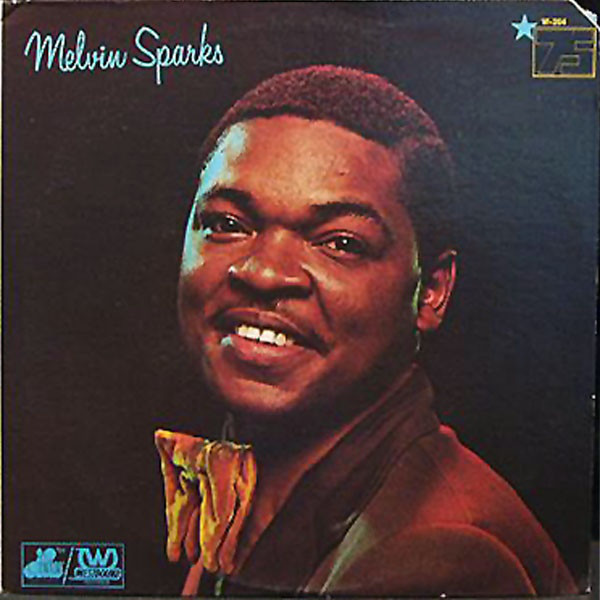
Westbound Records allowed Melvin Sparks to record what would’ve been his sixth album I’m Funky Now, which should’ve been released later in 1976. However, Westbound Records decided not to release the album, and this spelt the end of Melvin Sparks’ career Westbound Records.
After recording six albums in six years, Melvin Sparks was left without a recording contract. Westbound Records had decided to cut their loses, as Melvin Sparks had still to make a commercial breakthrough.
That was despite being a talented and versatile composer and musician, who had released five albums which were well received by critics. This included Texas Twister, which was released by Eastbound Records in 1973 and nowadays, is regarded as Melvin Sparks’ finest hour. Sadly, this Latin-tinged album of funky soul-jazz wasn’t a commercial success and nowadays, copies of Texas Twister are extremely rare. Fortunately, Tidal Waves Music recently released Texas Twister for Record Store Day 2018 as a limited edition of 1,500. This is a welcome reissue of Texas Twister, which is an oft-overlooked hidden, and is a reminder of the late, great jazz guitarist Melvin Sparks at the peak of his powers, as he leads a crack band of that features the great and good of seventies jazz.
Melvin Sparks-Texas Twister-Record Store Day Edition.
BLACK MOON CIRCLE-PSYCHEDELIC SPACELORD.
Black Moon Circle-Psychedelic Spacelord.
Label: Crispin Glover Records.
New Album Of The Week.
Six years ago, brothers Øyvin and Vemund Engan founded the psychedelic space rock band Black Moon Circle, and since then, this talented band from Trondheim, in Norway, have released five albums. Soon, five will become six when the newly expanded lineup of Black Moon Circle return with Psychedelic Spacelord, which will be released on vinyl complete with CD by Crispin Glover Records on the ‘25th’ of May 2018. Psychedelic Spacelord marks the start of a new chapter for Black Moon Circle, who are also about to embark upon a ten date European tour.
The Black Moon Circle story began in the city of Trondheim, in Norway, in 2012, when brothers Øyvin and Vemund Engan decided to form their own band. It was a case of needs must, after the demise of their previous band, the Trondheim-based punk rock group The Reilly Express, where the Engan brothers served their musical apprenticeship. With The Reilly Express now consigned to musical history, the Engan brothers decided to form a new band, which would allow them to head in a new direction musically.
In The Beginning.
Having made the decision to form a new group, which the Engan brothers named it Black Moon Circle, which was going to play psychedelic space rock. Øyvin would play bass, guitar and take charge of vocals, while his brother Vemund would also play guitar. All that the nascent Black Moon Circle needed was a drummer, and this would be the start of a new and exciting chapter in the Engan brothers musical career.
Before long, Black Moon Circle’s lineup was complete when drummer Per Andreas Gulbrandsen joined the band. He was the final piece of the musical jigsaw, and now Black Moon Circle could begin to hone their sound.
After spending time honing their sound, gradually, Black Moon Circle’s trademark sound started to evolve. Initially, it was a combination of lengthy jams, searing guitar riffs and a myriad of effects added to the bass and guitar. This was Black Moon Circle’s now unique brand of described as psychedelic space rock, which soon found an appreciative audience.
Now that they had honed and tightened their sound, Black Moon Circle made their first tentative steps onto the local live scene. While they were the newest addition to Norway’s thriving and vibrant and thriving psychedelic space rock scene, their music soon started to find a receptive and appreciative audience. That came as no surprise.
It wasn’t just that that Black Moon Circle was a talented band whose popularity was growing, but by then, space rock’s popularity was growing all over Europe. Flying the flag for Norwegian space rock was Black Moon Circle, whose music was about to find a wider audience in 2013.
Black Moon Circle.
Although Black Moon Circle had been together less than a year, they had already decided to record a mini album at Nautilus Studios. Black Moon Circle recorded three tracks Plains, American Eagle and Enigmatic Superbandit, which would mark the debut of the Trondheim-based psychedelic space rockers.
The mini album Black Moon Circle was released as a limited edition of 300 in February 2014 by Space Rock Productions, the label run by the Øresund Space Collective from Copenhagen, Denmark. Black Moon Circle introduced the band’s music to a new and wider audience, and launched their career.
After the release of their mini-album, Black Moon Circle were already making plans for the future, and this included recording their much-anticipated debut album. Black Moon Circle weren’t the type of band to let the grass grow under their feet, and the recording began in the spring of 2014.
Andromeda.
When Psychedelic space rockers Black Moon Circle returned to the studio in April 2014, they had been together the best part of two years, and were already a tight band who were capable of seamlessly creating genre-melting music. Black Moon Circle worked quickly and efficiently, recording the five songs on Andromeda in just one day. Six months later, and Andromeda was ready to be released.
Black Moon Circle’s debut album, Andromeda which showcased their psychedelic space rock sound was released to plaudits and praise by Crispin Clover Records in October 2014. Critics forecast a great future for the Trondheim-based trio, who were already hatching a plan that sounded like something from the seventies, the golden age of rock.

The Studio Jams Volume I: Yellow Nebula in the Sky.
Black Moon Circle had decided to release a trilogy of albums featuring studio jams, which was something that harked back to the seventies, when rock was King. It seemed that this was Black Moon Circle’s way of paying homage to the golden age of rock which had influenced their music. In mid-2015, Black Circle announced their intention to release a trilogy of studio jams, which was by far, the most ambitious project of their career.
The first of the trilogy was The Studio Jams Volume I: Yellow Nebula in the Sky, where Black Moon Circle were joined in the studio by Scott Heller a.k.a. Dr. Space who played synths on the album. It was released in August 2015, and was the start of a new era for Black Moon Circle.
Critics hailed The Studio Jams Volume I: Yellow Nebula in the Sky as Black Moon Circle’s as finest hour as they fused psychedelic space rock with elements of electronica, experimental music and free jazz. Seamlessly, these disparate musical genres and influences merge into something new and innovative that was cinematic, dramatic, futuristic, moody, rocky and as Øyvin Engan says: “intense.” However, for their third album, Sea Of Clouds, Black Moon Circle added two new ingredients to their successful musical formula.
Sea Of Clouds.
With The Studio Jams Volume I: Yellow Nebula In The Sky recorded, but not yet released, Black Moon Circle’s thoughts turned to their next album, which wasn’t going to be another instalment in the Studio Jams’ series. Instead, Black Moon Circle changed direction slightly on Sea Of Clouds.
When Black Moon Circle recorded Sea Of Clouds in June 2015, they were again joined by Scott Heller who played synths, while new guest artist Magnus Kofoed played keyboards. During the course of just one day, Black Moon Circle recorded the four lengthy jams that became Sea Of Clouds.
When Sea Of Clouds was released, critics were won over by another album of hard rocking, psychedelic space rock that was futuristic, moody, otherworldly and featured Black Moon Circle’s trademark intensity. Sea Of Clouds was a carefully crafted fusion of avant-garde, free jazz, heavy metal, Krautrock and post rock which had been inspired by Black Sabbath, Can, Deep Purple, Emerson, Lake and Palmer, Hawkwind, Iron Maiden, Led Zeppelin, Hawkwind, Moster, Motorpsycho, Radiohead and Yes. All these bands had influenced Sea Of Clouds, which was another ambitious and innovative offering from the expanded lineup of Black Moon Circle, who were about to record the most accessible album of their career.
The Studio Jams Volume 2.
Seven months after the release of Sea Of Clouds, Black Moon Circle returned with their eagerly awaited fourth album, The Studio Jams Volume 2. It had been recorded in June 2015 by Black Moon Circle who were joined by Scott Heller a.k.a. Dr. Space on synths
Just like previous albums, critical acclaim accompanied the release of The Studio Jams Volume 2, which found Black Moon Circle fusing the classic rock of the sixties and seventies with psychedelia and space rock. To this, Black Moon Circle add elements of avant-garde, electronica, experimental music, free jazz, Krautrock and post rock. Seamlessly, these disparate musical genres and influences merge into one on another album of ambitious, exciting and innovative music. It’s also cinematic, dramatic, futuristic, moody, rocky and features Black Moon Circle’s trademark intensity. However, The Studio Jams Volume 2 was also Black Moon Circle’s most accessible album, and was the perfect introduction to the Trondheim based musical pioneers, who were about to square the circle.
The Studio Jams Volume III: Flowing Into The 3rd Dimension.
This came when the four members of Black Moon Circle entered the studio early in 2017, to record the last instalment in their trilogy of Studio Jams, which featured two epic jams. When the time came to record the album closer Waves, Black Moon Circle were joined by Hans Magnus Ryan a.k.a Motorpsycho’s guitarist Snah.
With Snah onboard, the expanded lineup of Black Moon Circle ensured that the Studio Jams’ trilogy ended on a high with a genre-melting opus. Black Moon Circle took psychedelic space rock as a starting point, and added elements of avant-garde, Berlin School, blues rock, classic rock, electronica and experimental music, improv, Krautrock, post rock and progressive rock to the two epic jams on The Studio Jams Volume III: Flowing Into The 3rd Dimension. Black Moon Circle had saved the best until last instalment until last on their Studio Jams’ trilogy
Psychedelic Spacelord.
By the time Black Moon Circle released The Studio Jams Volume III: Flowing Into The 3rd Dimension, the band had already recorded their next album Psychedelic Spacelord. It had been recorded during what Øyvin Engan described as “a spaced out session in March 2017” by an expanded lineup of Black Moon Circle.
Joining the core lineup of Black Moon Circle was keyboardist Magnus Kofoed, who had previously featured on Sea Of Clouds. Magnus Kofoed returned and played Fender Rhodes, Mellotron, Hammond organ on Psychedelic Spacelord. Øresund Space Collective violinist Jonathan Segel was the other guest artist who joined Black Moon Circle when they were recording their sixth full-length album. Later, vocals were overdubbed onto Psychedelic Spacelord, and added what was finishing touch to this much-anticipated album.
Psychedelic Spacelord is a much-anticipated album, with critics and record buyers wondering what the future holds for Black Moon Circle in the post Studio Jams era? However, what nobody expected was for Black Moon Circle to return with an album that features one epic track that lasts forty-six magical minutes, and is spread over two sides of vinyl and the CD that accompanies the LP. Quite simply, Psychedelic Spacelord is the most ambitious album of Black Moon Circle’s career and is the perfect way to begin the post Studio Jams era.
Futuristic, minimalist and otherworldly describes the introduction to Psychedelic Spacelord, where a haunting violin plays as a rueful guitar plays and squeal as gradually Black Moon Circle awaken from their slumbers. A blistering, searing guitar cuts through the arrangement which features just Fender Rhodes and violin play. However, the hard rocking psychedelic space rockers are pacing themselves as they’re about to embark upon an epic journey.
Sci-fi synths sound are unleashed and accompany the violin guitar and Øyvin’s vocal which is a mixture of confusion and despair. Around him, a wall of futuristic rocky and lysergic music takes shape which soon, becomes anthemic as Black Moon Circle don’t spare the hooks. As usual, guitars play a leading role and they soar above the arrangement as thunderous drums pound as the violin adds a new dimension to Black Moon Circle who move through the gears and soon are in full flight. This is a joy to behold, as a freewheeling Black Moon Circle play with speed, power and fluidity while futuristic synths provide the perfect foil for the guitars as this trippy, futuristic and über rocky epic track reveals its secrets.
This includes the vocal from Psychedelic Spacelord, Øyvin Engan, which just like the violin, adds a new dimension, as what sounds like part of a psychedelic rock opera takes shape. That changes when the vocal drops out, and Black Moon Circle to embark upon another lengthy jam where blistering guitars take centre-stage while keyboards and synths play a supporting role as the rhythm section power the rocky arrangement along. Black Moon Circle have never sounded as good. At the midway point the track fades out, and it’s as if the Psychedelic Spacelord is exiting planet earth.
Soon the arrangement to Psychedelic Spacelord rebuilds and Black Moon Circle are playing with speed, power, ferocity and an accuracy as they continue to unleash their trademark “heavy riffage.” By then, Black Moon Circle has never sounded as heavy as the guitars and bass play a leading role as they pay homage to the Unholy Trinity of Hard Rock and the new wave of British Heavy Metal during this flawless performance.
Later, the tempo drops and guitars and synths combine as the Psychedelic Spacelord adds a lysergic vocal as the arrangement starts to rebuild as Black Moon Circle continue to showcase their unique brand of psychedelic space rock. Meanwhile, the rhythm section, keyboards and synths combine with the vocal as Black Moon Circle continue to rock harder than they’ve ever rocked before, before the tempo increases and they end this forty-six minute epic on a dramatic high.
Psychedelic Spacelord which will be released on vinyl complete with CD by Crispin Glover Records on the ‘25th’ of May 2018, is Black Moon Circle’s much-anticipated first album of the post Studio Jams era. It finds the expanded lineup of Black Moon Circle sounding better than they’ve ever sound, and rocking harder than ever on Psychedelic Spacelord which is a very different album to everything that has gone before.
There’s only one track on Psychedelic Spacelord, albeit last forty-six incredible minutes where psychedelic space rockers take the listeners on a magical mystery tour as this genre-melting track reveals its secrets. Although psychedelic space rock is the basis for Black Moon Circle’s music, they also combine elements of avant-garde, blues rock, classic rock, electronica, experimental music, heavy metal, improv, Krautrock and post rock on Psychedelic Spacelord, which is a musical roller coaster.
During the forty-six minutes the music veers between dark and dramatic, to atmospheric, cinematic and futuristic as sci-fi sounds assail the listener before the music becomes anthemic and uplifting and other times, lysergic, trippy and for much of the time hard rocking. Indeed, Psychedelic Spacelord features Black Moon Circle at their hard rocking best .
So much so, that Psychedelic Spacelord is a reminder of the golden age of rock, when hard rocking groups like Black Sabbath, Deep Purple and Led Zeppelin were among the most successful bands in the world. They’ve obviously influenced Black Moon Circle, as have Krautrock giants Can, space rockers Hawkwind and fellow countryman Motorpsycho who are still one of most successful Norwegian bands of the last twenty years. Iron Maiden and Judas Priest who were part of the new wave of British heavy metal movement, have also influenced Black Moon Circle on Psychedelic Spacelord, especially when the guitars are played with speed and power. These guitars play an important part in the sound and success of Psychedelic Spacelord where Black Moon Circle reach new heights.
Psychedelic Spacelord is Black Moon Circle’s finest hour and is a career defining Magnus Opus from the Trondheim based psychedelic rock pioneers who unleash their trademark “heavy riffage” on this career-defining album that is the first of the post Studio Jams era.
Black Moon Circle-Psychedelic Spacelord.





 dereksmusicblog
 dereksmusicblog