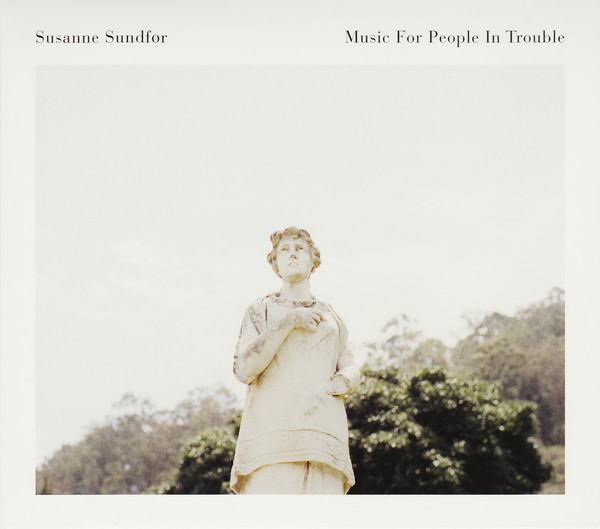
SUSANNE SUNDFOR-MUSIC FOR PEOPLE IN TROUBLE.
Susanne Sundfør-Music For People In Trouble.
Label: Bella Union.
Although Susanne Sundfør only embarked upon a musical career in 2005, the thirty-one year old is already one of Norway’s most successful singer, songwriter and producers. Her last four studio albums have topped the Norwegian charts, including her recently released fifth album Music For People In Trouble which was released by Bella Union. Music For People In Trouble sees the rise and rise of Susanne Sundfør continue.
Susanne Aartun Sundfør was born on the ’19th of March 1986, in Haugesund, in Norway. Her grandfather is the academic, theologian and linguist Kjell Aartun. However, it was neither religion nor languages that Susanne Sundfør became interested in growing up. Instead, it was music.
By the age of six, Susanne Sundfør was already taking music lessons.Initially, Susanne Sundfør played the tambourine and sang. This however, piqued her interest and by the age of eight, she started to play the violin. A year later, nine-year old Susanne Sundfør started to take piano lessons. When she was twelve Susanne Sundfør started to take singing lessons. While music was playing an important part in Susanne Sundfør’s life it was still a hobby. She wasn’t spending every waking minute practising.
Things would change when Susanne Sundfør attended a music high school, and the next part of her musical education began. Despite her musical background, when Susanne Sundfør left high school, she didn’t study music at university. Instead, she studied English and Art at the prestigious University of Bergen. However, by 2005, nineteen year old Susanne Sundfør’s musical career began.
English singer-songwriter Tom McRae was about to embark upon a tour of Norway in 2005, and was looking for a support act. Susanne Sundfør was chosen, and each night his Norwegian tour, she opened for Tom McRae. This was the break that Susanne Sundfør had been looking for, and launched her nascent career.
In 2006, Susanne Sundfør headed out on tour with the Norwegian alternative rock band Madrugada. Each night, she joined the band when they sung their 2005 single Lift Me. It started life as a duet with singer Ane Brun, but was transformed with the addition of Susanne Sundfør. The experience she gained touring with Madrugada was vital, as Susanne Sundfør’s thoughts turned to her solo career.
Later in 2005, Susanne Sundfør released her debut single Walls in November. It reached number three in the Norwegian charts and in the process, launched Susanne Sundfør’s solo career.
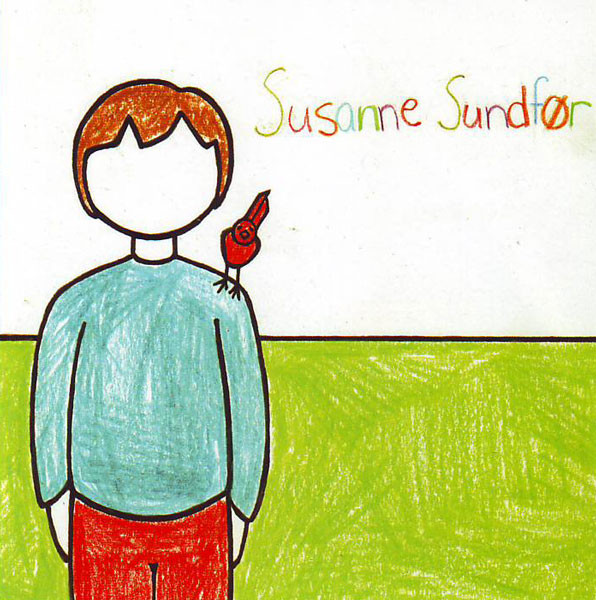
Susanne Sundfør.
Sixteen months later, and Susanne Sundfør was signed to Warner Norway, and was preparing to release her eponymous debut album. It featured eleven songs penned by Susanne Sundfør. These songs were produced by Geir Luedy, and featured a band that included some top Norwegian musicians including Morten Qvenild, who played synths and autoharp on Susanne Sundfør album of folk pop.
When Susanne Sundfør was released on the ‘19th’ of March 2007 to praise and plaudits. It entered the Norwegian charts and climbed all the way to number three. The album which Susanne Sundfør described as: “folk inspired” alum showcased a truly talented singer-songwriter who had a great future ahead of her.
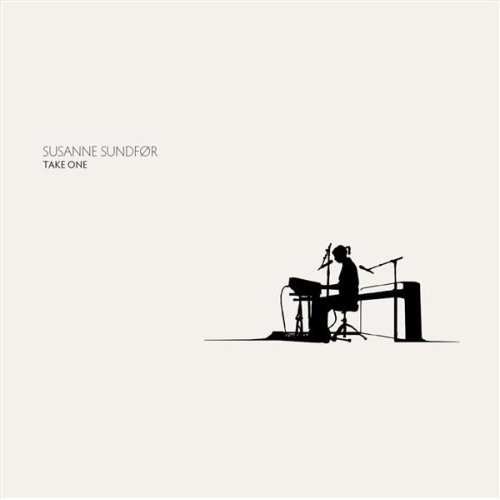
Take One.
Just under two years later, Susanne Sundfør returned with her first live album Take One on the ‘10th’ of March 2008. Susanne Sundfør hadn’t been planning to release an acoustic album, but her legion of fans wanted to hear the songs on her eponymous debut album in their original form. They remembered Susanne Sundfør playing the songs live, with just a piano for company and wanted a reminder of these days.
Susanne Sundfør decided that seen there was demand for a live album, that she would record and then release an album of acoustic versions from her eponymous debut album. The only change that was made was Morocco was omitted, and replaced by an Interlude which knitted the album together. With just a piano or guitar for company, Susanne Sundfør worked her way through the eleven tracks on Take One.
Take One was produced by Susanne Sundfør and Geir Luedy, and was released by the Bergen based label Your Favorite Music. On the ‘10th’ of March 2008, Take One was released and reached thirty-two in the Norwegian charts. It gave Susanne Sundfør’s fans a reminder of her early days when she was starting out as a singer. By then, she was already thinking about her sophomore album.
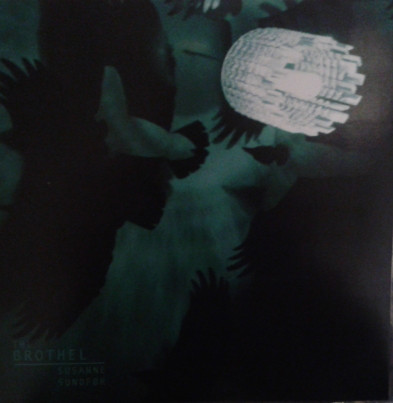
The Brothel.
Another two years passed before Susanne Sundfør returned with her much-anticipated sophomore studio album The Brothel on the ‘15th’ of March 2010. It featured ten new songs, with Susanne Sundfør writing nine and writing As I Walked Out One Evening Lars Horntveth. These ten songs became The Brothel, were Susanne Sundfør changed direction musically.
With a band that featured many of Norway’s leading musicians, including Jørgen Træen, Gard Nilssen, Morten Qvenild and Helge Sten whose vocal features on six tracks. He and the rest of this multitalented and versatile band and producer Lars Horntveth help Susanne Sundfør reinvent her music. Gone was the piano driven folk pop, to be replaced by a much ambitious fusion of art-folk and electronic music. This new sound marked the start of new era for Susanne Sundfør.
Critical acclaim accompanied the release of The Brothel, which was hailed as an ambitious and innovative album. When it was released by EMI Norway, it reached number one and was certified platinum. This wasn’t the end of the success for Susanne Sundfør.
Later when the nominations for Spellemannprisen, which are seen as the Norwegian Grammy Awards were announced, Susanne Sundfør had been nominated for two categories. Susanne Sundfør was nominated for the Best Lyrics and Best Composer. When the winners were announced, Susanne Sundfør won a Spellemannprisen for the Best Composer. This was a huge honour, and rounded off the most successful year of Susanne Sundfør’s career.
A Night At Salle Pleyel.
Having enjoyed the most successful year of her career, Susanne Sundfør was kept busy during 2011. She was the guest vocalist on the title-track to Nils Petter Molvær’s 2011 album Baboon Moon. Susanne Sundfør was also commissioned to record a live instrumental album for the twenty-fifth anniversary of the Oslo Jazzfestival.
The remit for what became A Night At Salle Pleyel was that Susanne Sundfør had to write forty-four minutes of music. Apart from that, Susanne Sundfør was free to use whatever instruments she wanted. Initially, she decided to write a piece for a string quartet. However, midway through writing the piece, Susanne Sundfør changed her mind and it became a piece for five synths.
When the commissioned piece was written, it was recorded at Sentrum Scene, in Oslo, Norway on the ‘18th’ August 2008. Joining Susanne Sundfør on stage were four other synth players, including Ådne Meisfjord, Morten Qvenild, Øystein Moen and Christian Wallumrød. They stood behind banks of synths and played six Movements that lasted forty-seven minutes.
Three months later, and A Night At Salle Pleyel was released on EMI Norway on the ‘18th’ November 2008. A Night At Salle Pleyel was Susanne Sundfør’s second live album, and hailed as ambitious fusion of electronic, experimental and classical music. It also showed another side of Susanne Sundfør, who was a versatile and talented musician. However, this side of Susanne Sundfør’s music was one she has decided to keep separate from her solo career which resumed in 2012.

The Silicone Veil.
Two years after the release of her number one, platinum certified and award-winning album The Brothel, Susanne Sundfør returned with The Silicone Veil, which was her third studio album, and fifth album overall. It featured ten songs penned by Susanne Sundfør which showcased her talent and versatility as a singer, songwriter and producer.
When Susanne Sundfør recorded The Silicone Veil at the Pooka Studio and Kikitépe Tearoom Studio, once again, she co-produced the album with Lars Horntveth. It was her most eclectic album that took as a starting point electro-folk and incorporated elements of art pop, baroque, dream pop, Scandinavian electronica, synth pop and even a hint of baroque pop. Given the eclecticism of The Silicone Veil, Susanne Sundfør got the opportunity to showcase her full and impressive vocal range. Whether it was on orchestrated arrangements, or against an electronic backdrop Susanne Sundfør breathed life, meaning and emotion to life the lyrics to her ten compositions. They looked at a wide range of subjects which Susanne Sundfør described as: “apocalypse, death, love and snow.” They found favour with critics when The Silicone Veil was released.
The Silicone Veil was scheduled for release on the ’23rd’ of March 2012. It was Susanne Sundfør’s first album to be released in Britain, where it was hoped her music would find a new and wider audience. Before that, critics had their say on The Silicone Veil. They were won over by The Silicone Veil, which was regarded as her finest hour.
That was no surprise, given the carefully crafted, genre-melting arrangements, and lyrics that approached and challenged such a wide range of subjects. Susanne Sundfør wasn’t afraid to deal with subjects that lesser artists would’ve shied away from. That wasn’t Susanne Sundfør’s style. She was made of sterner stuff and wrote cerebral, engaging and thought-provoking lyrics that she delivered with a mixture of confidence, boldness and emotion. The music on The Silicone Veil veered between melancholy and wistful, but was beautiful, imaginative and playful. Sometimes, Susanne Sundfør sung of romance and intrigue during cinematic songs that painted pictures. Without doubt, The Silicone Veil was one of Susanne Sundfør’s finest albums.
It was no surprise that when The Silicone Veil was released on the ’23rd’ of March 2012 the album reached number one in the Norwegian charts. This was Susanne Sundfør’s second consecutive number one album. She hoped that two would become three when she returned with her third album Ten Love Songs.
Ten Love Songs.
Not long after the release of The Silicone Veil, Susanne Sundfør began writing her fourth studio album which later, became Ten Love Songs. Originally, Susanne Sundfør intended to write an album that dealt with the subject of violence. However, just like when Susanne Sundfør was writing the common A Night At Salle Pleyel, the album became something very different.
After spending some time in New York where she tried to write songs for what became Ten Love Songs, Susanne Sundfør returned home. It hadn’t been a successful trip, and she had little to show for her time spent in the Big Apple.
Now at home in Oslo, Susanne Sundfør began to write the songs that would feature on Ten Love Songs. Before long, she noticed two themes developing…love and relationships. By then, Susanne Sundfør had decided to head in a different direction musically. This was only part of the story as Susanne Sundfør changed direction again.
Ten Love Songs would be a much more pop orientated album. This required Susanne Sundfør to write in a different way. She knew the songs would have to be much more repetitive and have a different and more direct musical and lyrical structure. This was very different to her previous studio albums. This however, wasn’t the only change Susanne Sundfør was about to make.
Having written Ten Love Songs, Susanne Sundfør was determined to involve herself in every aspect of making an album. She wanted to involved not just in the production, but the recording, orchestration, editing and mixing Ten Love Songs. This was a huge amount of work. However, Susanne Sundfør knew this and wanted to know more about how the album was recorded.
Recording of Ten Love Songs took place between 2012 and 2014, and just like previous albums, Susanne Sundfør was joined by some of Norway’s top musicians. Two of the recordists that worked on the album were Jørgen Træen and Morten Qvenild, who were both talented musicians who had worked with Susanne Sundfør on previous albums. Co-producing the album was Susanne Sundfør was Lars Horntveth. However, Susanne Sundfør bought different producers onboard to work on different tracks, including Anthony Gonzalez, Jonathan Bates and Röyksopp. As a result, other sessions took place in America and France. By late 2014, Ten Love Songs was completed and Susanne Sundfør had been involved with every part of the music making process. She was exhausted, but it had been a rewarding learning experience.
With Ten Love Songs completed, Warner Music Norway scheduled the release of the album for the ’16th’ of February 2015. By then, nearly three years had passed since 16 February 2015 Susanne Sundfør had released an album. Her legion of fans eagerly awaited Susanne Sundfør’s fourth solo album Ten Love Songs. So did critics.
Critics were greeted with an album that had two main themes. However, there was more to Ten Love Songs than love and relationships. Instead, the album death with extremes of love and violent hatred. That hadn’t always been Susanne Sundfør’s concept for the album.
Two of the songs, Accelerate and Trust Me had been written before the release of The Silicone Valley in March 2012. These two songs were meant to be the focus of the album, which was meant to revolve around scenarios that included statues, buildings and weaponry. However, when Susanne Sundfør wrote Fade Away that was the turning point.
After that the album’s central themes were said to be love and relationships. This Susanne Sundfør clarified: “the lyrics are never really about the topic of “love” that was “corny” at the time of its release, but rather the extreme topics about sex and violence that was discussed in the media.” Ten Love Songs was in reality an album about extremes of love and violent hatred. As a result, there’s a darkness to the music as Susanne Sundfør deals with loss, grief and even the compulsive nature of love. These were subjects many songwriters were afraid to deal with and many of Susanne Sundfør’s fans had experienced. These lyrics were delivered against another eclectic album.
While Ten Love Songs was described as a pop oriented album, it featured a myriad of different musical genres and influences. Everything from art pop, baroque pop, EDM, electro pop, electronica, Europop, industrial, Italo disco, synth pop and a much more experimental pop sound was incorporated on Ten Love Songs. Given the subject matter of Ten Love Songs, there’s a cold, almost bleak sound to some songs. This works and bring a sense of reality to the cinematic lyrics. On some songs, there’s an eighties influence partly because of the synths and drum machines used. Other songs are irresistibly catchy including the Europop of Kamikaze and the EDM of Silencer. These tracks grab the listener’s attention straight away, and like Fade Away, Delirious and Accelerate were radio friendly. Susanne Sundfør had also written an album that critics received critical acclaim and was called one best albums of 2015. It also found favour with Susanne Sundfør’s many fans.
When Ten Love Songs was released, it topped the Norwegian charts, and was certified gold. Ten Love Songs was Susanne Sundfør’s third consecutive studio album that had reached number one in Norway. In Sweden, Ten Love Songs reached number forty-seven and seventy-eight in Britain. Susanne Sundfør’s music was starting to find a much wider and appreciative audience. They would welcome Susanne Sundfør’s fifth studio album Music For People In Trouble when it was released.

Music For People In Trouble.
Buoyed by three consecutive number one albums in Norway and a gold disc for Ten Love Songs, Susanne Sundfør decided to begin work on her fifth studio album, and seventh album overall, Music For People In Trouble. It marked another stylistic departure for musical chameleon Susanne Sundfør.
By the time work began on Music For People In Trouble, she had recovered from the making of Ten Love Songs. After the album was completed, Susanne Sundfør was exhausted, anxious, suffering from flu and depressed. However, after some rest and recuperation, and some time travelling the world and had experienced life everywhere from North Korea to the Amazon jungle. After her adventures,
Susanne Sundfør was ready to write and record her fifth album Music For People In Trouble. It was going to be a very different album to its predecessor Ten Love Songs.
Music For People In Trouble was a much easier album for Susanne Sundfør to write. She later said it was the easiest album to write since her 2007 eponymous debut album. Inspiration for the album came from Part of the inspiration for Music For People In Trouble
was Susanne Sundfør’s travels and two books she read during the time she spent writing the album. This included Lawrence M. Krauss’ A Universe From Nothing and Robert Bly’s anthology of poetry News Of The Universe, which was food for thought for Susanne Sundfør.
Some of the songs were written as Susanne Sundfør sat in bed, in her home in Dalston, East London. These were what Susanne Sundfør later called “guitar songs.” After this, Susanne Sundfør headed to Los Angeles where she wrote another two more songs, Good Luck Bad Luck and No One Believes In Love Anymore. Just like the songs that she had written in London, the songs came easy to Susanne Sundfør. They seemed to flow through and out of her as she surveyed the world around her. With two new songs written, Susanne Sundfør returned to London, where she penned Mountaineers. However, Susanne Sundfør’s travels weren’t at an end and she headed to Woodstock, in the outskirts of New York where she wrote Bedtime Stories in a log cabin. The final song that Susanne Sundfør wrote for Music For People In Trouble was The Golden Age, which she recorded with the help of her longterm collaborator Jørgen Træen.
They set out to record a very different album to Ten Love Songs. it saw Susanne Sundfør return to her roots, on album that married art pop and folk. Music For People In Trouble featured stripped back, understated and spartan arrangements, that eschewed the synths and technology of previous albums. By then, Susanne Sundfør admitted she was: “tired of technology”: I wanted to feel like I was a musician again. But also, what I wanted to say needed something organic to convey it.” To create that organic sound, a piano, flute, clarinet and acoustic guitar joined a rhythm section that featured a double bass. Susanne Sundfør was going on an odyssey back to her roots.
Recording of Music For People In Trouble, which was co-produced by Susanne Sundfør and Jørgen Træen, took place at a number of studios. This included Duper Studio, Bergen; NRS Recording Studio in Catskill, New York; Tropical Hi-Fi Studio; Bella Union Studios; Amper Tone Studio and Propeller Music Division, in Oslo. Joining Susanne Sundfør were some talented and versatile musicians. They were occasionally augmented by samples, found sounds and electronic textures. Susanne Sundfør said they: ”take the songs into experimental territory,” such as “trickling water sounds, wiry bleeps and animal peeps.” Some of these were inspired by, and reminded Susanne Sundfør of her recent travels. Other sounds ranged from dry and industrial, to innocent and romantic and played their part in what was a personal, poignant and powerful album from Susanne Sundfør.
Susanne Sundfør’s fifth studio album saw her marry art-pop and folk with avant-garde, country, electronica, experimental, folk, industrial, jazz, musique concrète on Music For People In Trouble. It was a very different album from Ten Love Songs, and another album of grownup music. This was what Susanne Sundfør excelled at. She was a storyteller par excellence who neither shied away from uncomfortable subjects nor controversy on her albums of cerebral and thought-provoking music. That was the case with Music For People In Trouble.
It opened with the acoustic sound of Mantra, which Susanne Sundfør describes as a song where: “all the objects in the song often have ominous or negative connotations in history” and she “wanted to give them a more positive meaning.” This she does against a spartan arrangement while she delivers an ethereal, soul-baring vocal that sets the bar high for the rest of the album.
A slide guitar adds an atmospheric backdrop to Reincarnation where Susanne Sundfør questions and ponders the mortality and the nature of love. It’s a moving and thought-provoking song. Good Luck Bad Luck is a song about and relationship at end and love lost. Fittingly, Susanne Sundfør delivers the lyrics against an understated, smokey late night arrangement. The way Susanne Sundfør delivers the lyrics it’s as if she’s lived and survived the heartbreak.
Very different is the eight minute opus The Sound Of War, which is a powerful folk song where Susanne Sundfør paints pictures of the destruction and chaos caused by war. Having sung of “the buzzing of the drones,” drones replicate the destruction and chaos that Susanne Sundfør’s had been singing about. Gone is the birdsong and mountain stream that could be heard earlier in the song, which resonates and proves poignant with the war pigs ready to unleash The Sound Of War.
Music For People In Trouble is an experimental sounding, It’s glitchy, with beeps, squeaks, sound effects and then samples of Karlheinz Stockhausen’s Gesang der Jünglinge and naturist Andres Roberts give way to a pastoral plucked acoustic guitar as this lysergic experiment reveals the rest of its secrets. With its marriage of avant-garde, electronica, experimental folk, jazz and musique concrète, this is one of the most ambitious and challenging genre-melting tracks on Music For People In Trouble.
Bedtime Story starts off a beautiful piano lead track where a soft, swirling clarinet, samples and found sounds accompany Susanne Sundfør as she sings of the boredom and frustration caused by insomnia. Later the song becomes almost eerie and ruminative, although there’s still an elegiac quality in Susanne Sundfør’s vocal.
Undercover was inspired by Dolly Parton, and unsurprisingly, has a country influence. Susanne Sundfør’s hurt-filled vocal is delivered against a piano, as the song takes on a cinematic quality. Later, as the arrangement builds, her voice soars high above the arrangement as Susanne Sundfør combines emotion, hurt and power. This proves a poignant and powerful combination. Equally powerful is the melancholy piano lead ballad No One Believes In Love Anymore, where Susanne Sundfør almost cynically and sadly mourns the loss of romance.
The Golden Age is another genre-melting track where avant-garde, electronica, folk and jazz are combined over the course of four minutes. A thoughtful reading of poetry gives way to Susanne Sundfør’s vocal, which is delivered against an arpeggio played on a keyboard. It ebbs and flows as Susanne Sundfør delivers a heartfelt, ethereal vocal. Closing Music For People In Trouble is Mountaineers, which features John Grant. It’s Susanne Sundfør plays the leading role, as she delivers an emotive powerhouse, as the arrangement reaches a dramatic crescendo as synths and drones accompany the pair. It ensures Music For People In Trouble ends on a high.
When Music For People In Trouble was released, it went straight to number one in Norway. This was Susanne Sundfør’s fourth consecutive number one album. After a few weeks, Music For People In Trouble had reached 124 in Belgium and ninety-three in Britain. However, an album of the quality of Music For People In Trouble was destined to climb the charts.
Just like Susanne Sundfør’s previous albums, Music For People In Trouble was a carefully crafted album of genre-melting music that featured cerebral and thought-provoking music. It asks a series of questions, and deals with a variety of scenarios and subjects. Some of them will ring true with those that buy the album. They’ll have suffered the same hurt and heartbreak, or feel the same way about love or romance. Similarly, The Sound Of War brings home the seriousness of the current situation, where two megalomaniacs could bring about World War III and oblivion for large parts of the world. Elsewhere on Music For People In Trouble, Susanne Sundfør embarks upon musical experiments, as she embraces avant-garde. This is all part of a genre-melting album.
Seamlessly, Susanne Sundfør flits between and fuses musical genres and influences as she creates another album of ambitious, atmospheric, beautiful and cinematic music. Piano led ballads sit side-by-side with more epics and more experimental songs, as Susanne Sundfør, who is one of Norway’s most successful artists, showcases his skills as a singer, songwriter and producer. The result was Music For People In Trouble a very personal, poignant and powerful album which features Susanne Sundfør at the peak of her powers musically.
Susanne Sundfør-Music For People In Trouble.
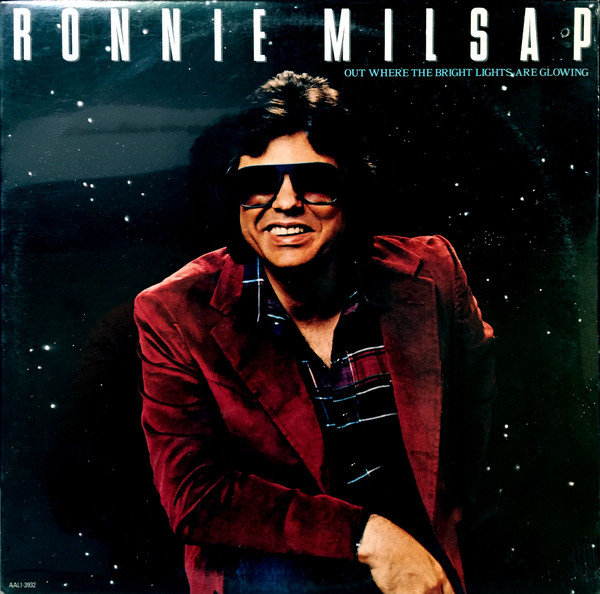
RONNIE MILSAP-OUT WHERE THE BRIGHT LIGHTS ARE GLOWING, THERE’S NO GETTIN’ OVER ME, KEYED UP AND ONE MORE TRY FOR LOVE.
Ronnie Milsap-Out Where The Bright Lights Are Glowing, There’s No Gettin’ Over Me, Keyed Up and One More Try For Love.
Label: BGO Records.
As Ronnie Milsap celebrated his thirty-eighth birthday on January the ’16th’ 1981, he was well on his way to becoming one of the most successful country singers of his generation. Life had been tough for Ronnie Milsap, who had over overcome everything that life had thrown him.
Ronnie Milsap was born in Robbinsville, North Carolina in 1943, and congenital disorder meant that he was almost blind from birth. When he was just an infant, Ronnie Milsap’s mother abandoned her young song. He was brought up by his grandparents in the Smoky Mountains. They were poor, and life was tough for Ronnie Milsap. When he was five, Ronnie Milsap was sent to the Governor Morehead School For The Blind in Raleigh, North Carolina.
That was where Ronnie Milsap developed a love of music, and he used to sit and listen to late night broadcasts of gospel, R&B and the country music which later, transformed his life. By the age of seven, his teachers noticed that Ronnie Milsap’s musical talent, and soon, he started to study classical music at Governor Morehead and learned several instruments, including the piano which would later become a feature on his albums.
Before that, music was transformed with the arrival of Elvis Presley. Just like many teenagers, Ronnie Milsap who was a high school student, formed his own band The Apparitions. This gave Ronnie Milsap a tantalising taste of life as a musician.
After high school, Ronnie Milsap won a full scholarship to Young Harris College in Georgia, where he planned to study to become a lawyer. However, music intervened and he joined a local R&B band The Dimensions. This meant that Ronnie Milsap was juggling his studies and his nascent musical career.
The Dimensions were a popular band and before long, Ronnie Milsap was playing in venus all over the Atlanta area. By the autumn of 1964, Ronnie Milsap could no longer juggle college and his burgeoning music career. He had been offered a scholarship to law school, but declined and pursue a full-time career in music.
Not long after this, Ronnie Milsap met his future wife Joyce Reeves at a dinner party. The pair married in 1965 and by then, Ronnie Milsap’s solo career was well underway.
In 1965, Ronnie Milsap had signed for the New York based label Scepter Records. Ronnie Milsap released a number of singles for the label over the next couple of years. Most failed to find an audience, apart from Never Had It So Good which reached nineteen in the US R&B charts, and gave Ronnie Milsap his first hit single. Little did he know that it was the first of many over the next fifteen years.
By 1980, Ronnie Milsap had enjoyed twenty-two hit singles in the US Country charts between 1973 and 1980. Twenty-one of these had reached the top ten and sixteen had topped the US Country charts. Ronnie Milsap had also released twelve albums between 1971 and 1980, and nine of these albums had reached the top ten on the US Country charts, while 1975s Night Things was certified gold in Canada and 1976s Ronnie Milsap Live, 1977s Was Almost Like A Song and 1978s Only One Love In My Life were all certified gold in America having sold over 500,000 copies. Ronnie Milsap’s Greatest Hits album was released in 1980, and was certified platinum in Canada and double-platinum in American after selling two million copies. By then, Ronnie Milsap’s sound had started to change, and his albums featured string drenched pop ballads, which would bring him crossover success over the next few years.
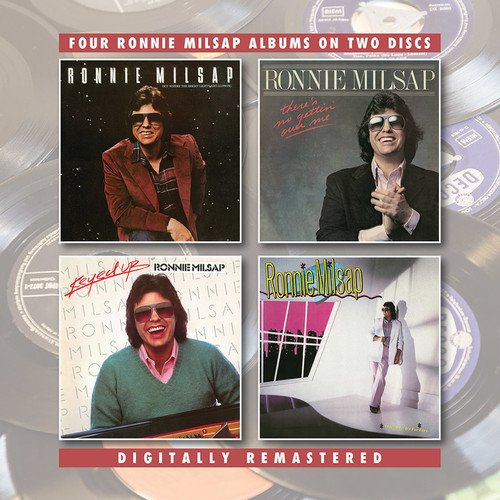
During the period between 1981 and 1984, Ronnie Milsap released five albums. Four of these albums, Out Where The Bright Lights Are Glowing, There’s No Gettin’ Over Me, Keyed Up and One More Try For Love feature on a two CD set recently released by BGO Records. It sees the rise and rise of Ronnie Milsap continue.
Out Where The Bright Lights Are Glowing.
Sixteen years after his career began in 1965, Ronnie Milsap was one of the biggest names in country music. Despite the success he was enjoying, Ronnie Milsap was keen to pay homage to one of the giants of country music, Jim Reeves on twelfth album, Out Where The Bright Lights Are Glowing.
Jim Reeves had died the year before Ronnie Milsap’s recording career began. He died on ‘31st’ July 1964, when his private plane crashed. However, during his lifetime, Gentleman Jim Reeves was a prolific artist and recorded a huge amount of music. So much so, that his albums were released and charting during the seventies and eighties. As a result, he was one of biggest selling country artists.
For Out Where The Bright Lights Are Glowing, Ronnie Milsap decided to record ten songs that Jim Reeves had recorded during his career. Among them, were Marvin Moore and George Campbell’s Four Walls, Leon Payne’s Pride Goes Before A Fall, Joe Allison and Audrey Allison’s He’ll Have To Go, Harlan Howard’s I Won’t Forget You, Werly Fairburn I Guess I’m Crazy (For Loving You), Roger Miller and Bill Anderson’s When Two Worlds Collide and Red Sovine and Dale Noe’s Missing You. These songs were joined by two Jim Reeves’ compositions I’m Gettin’ Better and Am I Losing You? Two new compositions Out Where The Bright Lights Are Glowing and Dear Friend found their way onto Ronnie Milsap’s homage to Jim Reeves.
Recording of Out Where The Bright Lights Are Glowing took place at Woodland Sound Studio, in Nashville, Tennessee. Co-producing the album were Ronnie Milsap and Tom Collins, who were joined by some of Nashville’s top session players. This included Bobby Gene Emmons and Bobby Ogdin who played Fender Rhodes, vibes players Charlie McCoy and Farrell Morris and Richard Ripani who like Ronnie Milsap played synths. They were joined by backing singers and strings as Ronnie Milsap began recording a thoroughly modern country record with crossover appeal.
When Out Where The Bright Lights Are Glowing was released in 1981, Ronnie Milsap’s carefully crafted tribute to Gentleman Jim Reeves was well received by critics. It was a mixture of country and pop, which meant that Out Where The Bright Lights Are Glowing was sure to have crossover appeal. Especially when the album featured many string-drenched ballads, which were augmented by a couple of uptempo tracks. On the ballads, Ronnie Milsap breathed life, meaning and emotion into the lyrics on what was a poignant tribute to a giant of country music. However, one song stood head and shoulders above the rest…Am I Losing You?
When it came to release a single from Out Where The Bright Lights Are Glowing in early 1981, the song that was chosen was Am I Losing You? It reached number one in the American and Canadian Country charts. For Ronnie Milsap this was his seventeenth number one in the US Country charts. That wasn’t the end of the success for Ronnie Milsap. Out Where The Bright Lights Are Glowing reached number six in the US Country charts and eighty-nine in the US Billboard 200. This was Ronnie Milsap’s most successful album in the US Billboard 200. He was now enjoying the crossover success he worked so hard towards.
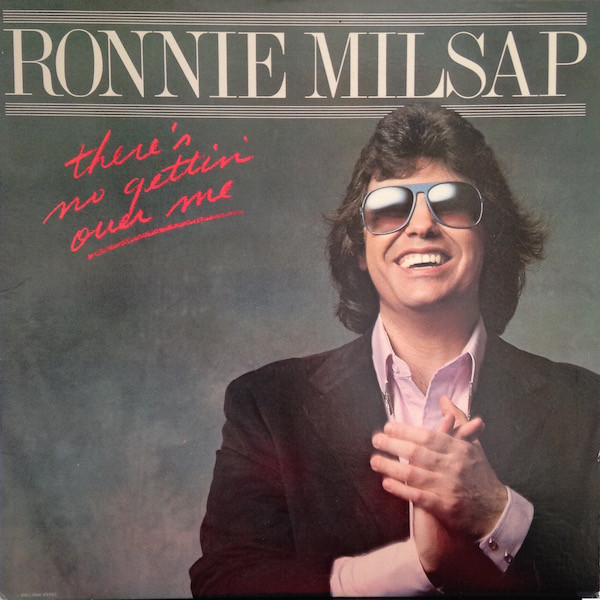
There’s No Gettin’ Over Me.
Later in 1981, Ronnie Milsap returned with his thirteenth album There’s No Gettin’ Over Me, which was co-produced by Ronnie Milsap and Tom Collins. They were joined by some of Nashville’s top musicians in the city’s Woodland Sound Studio. That was where they recorded the ten songs that became Ronnie Milsap’s thirteenth album There’s No Gettin’ Over Me.
When recording of There’s No Gettin’ Over Me began, Ronnie Milsap had carefully chosen ten songs that he hoped wouldn’t just appeal to fans of country music, but would also have crossover appeal. This included Everywhere I Turn (There’s Your Memory which was penned by Naomi Martin and Archie Jordan, who wrote It’s All I Can Do with Richard Leigh. Archie Jordan also wrote Jesus Is Your Ticket To Heaven and It Happens Every Time (I Think of You). They were joined by (There’s) No Gettin’ Over Me which was penned by Walt Aldridge and Tom Brasfield, who also cowrote It’s Written All Over Your Face with Robert Byrne. It was joined by I Wouldn’t Have Missed It For The World which was written by Kye Fleming, Dennis Morgan and Charles Quillen, who cowrote I Live My Whole Life At Night with John Schweers. Other tracks included Suzy Storm and Barbara Wyrick’s Too Big for Words, which would become There’s No Gettin’ Over Me, which was a landmark album for Ronnie Milsap.
Critics on hearing There’s No Gettin’ Over Me hailed the album as one of Ronnie Milsap’s finest hours. By then, he was in his middle period, and was extend his appeal beyond country music fans. Ronnie Milsap was trying to appeal to a wider audience with his pop stylings on There’s No Gettin’ Over Me. It was an album of the highest quality, and was sure to do so win over a new legion of fans for Ronnie Milsap. There’s No Gettin’ Over Me featured slick, carefully crafted arrangements and songs where Ronnie Milsap’s voice exudes humility, confidence and sometimes, empathy and emotion. It was a powerful, poignant, beautiful and sometimes, uplifting album of crossover country music and pop. Among its many highlights were (There’s) No Gettin’ Over Me, It’s All I Can Do and I Wouldn’t Have Missed It For The World. Record buyers agreed.
When (There’s) No Gettin’ Over Me was released as the lead single, it topped the US and Canadian Country charts and reached number five in the US Billboard 100. This made (There’s) No Gettin’ Over Me Ronnie Milsap’s most successful single. Then when the album (There’s) No Gettin’ Over Me was released later in 1981, it reached thirty-one in the US Billboard 200 and topped the US and Canadian Country charts. (There’s) No Gettin’ Over Me went on to sell over 500,000 copies and was certified gold, and became Ronnie Milsap’s most successful album. The second single released from the album was I Wouldn’t Have Missed It For The World, which reached number twenty in the US Billboard 100, but again, topped the US and Canadian Country charts. It seemed that Ronnie Milsap could do no wrong.
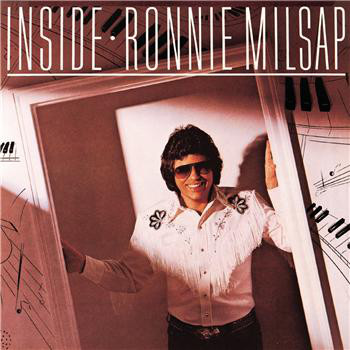
Inside.
Replicating the success of Out Where The Bright Lights Are Glowing and There’s No Gettin’ Over Me wasn’t going to be easy as Ronnie Milsap released his fourteenth studio album in 1982. It featured ten cover versions which were co-produced by Ronnie Milsap and Tom Collins.
When critics heard Inside, they were won over by another album of crossover country and pop. Among the album’s highlights, were Burt Bacharach and Bob Hilliard’s Any Day Now, Mike Reid’s Inside and Ralph Murphy and Bobby Wood’s He Got You. Again, strings played an important part in the arrangements and gave the album crossover appeal. Ronnie Milsap hoped that Inside would find favour beyond fans of country music.
The lead single from Inside was Any Day Now, which reached number fourteen in the US Billboard 100 and topped the US and Canadian Country charts. Inside reached number sixty-six on the US Billboard 200 and four on the US Country charts. He Got You was then released as a single and stalled at fifty-nine on the US Billboard 100 and number one on the US Country charts. Across the border in Canada, He Got You reached two in the Country charts. Normal service was resumed when the single Inside topped the US and Canadian Country charts. By then, Ronnie Milsap was one of the biggest names in country music.
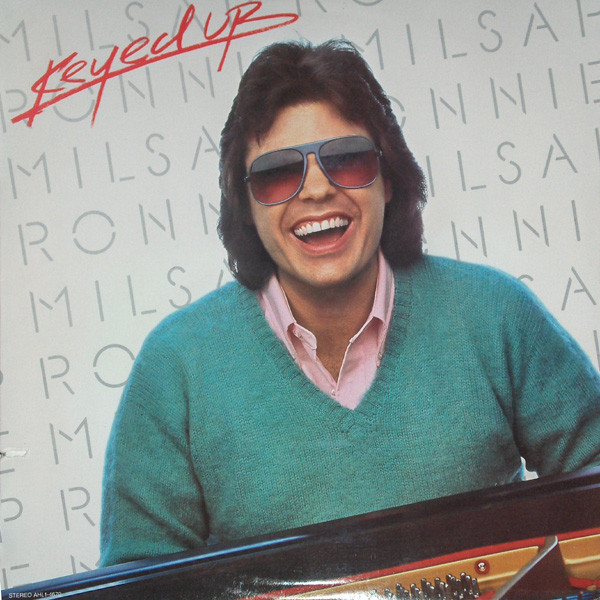
Keyed Up.
Buoyed by the success of Inside, Ronnie Milsap’s thoughts turned to his fifteenth studio album Keyed Up. He was keen to build on the success of Out Where The Bright Lights Are Glowing, There’s No Gettin’ Over Me and Inside. He was now one of most popular country artists, but unlike many of his contemporaries, had that all important crossover appeal. This he hoped would continue with his next album.
For Keyed Up, Ronnie Milsap chose ten songs. This including four from the pen of Mike Reid who wrote Stranger In My House and Show Me. He cowrote Is It Over with Charles Quillen and We’re Here To Love with Troy Seals. The Kyle Fleming and Dennis Morgan songwriting partnership contributed Redneck At Heart and Feelings Change, while Michael Stewart and Dan Williams wrote Don’t You Know How Much I Love You. These were some of the songs that featured on Keyed Up, which was co-produced by Ronnie Milsap and Tom Collins.
They were responsible for another slick, carefully crafted album of crossover country, pop and rock. Just like previous albums, ballads and uptempo tracks rubbed shoulders on an album that was long on quality. It was no surprise that Keyed Up found favour with critics. Especially with songs of the quality of the string-drenched ballad Show Me, and the hurt-filled ballads Stranger In My House and Don’t You Know How Much I Love You. They were a tantalising taste of the quality of music on Keyed Up.
Stranger In The House was released as the lead single in 1983, reaching twenty-three in the US Billboard 100, five in the US Country charts and number one in the Canadian Country charts. Keyed Up reached thirty-six in the US Billboard 200 and two n the US Country charts. The single Don’t You Know How Much I Love You the stalled at fifty-eight in the US Billboard 100, but topped the US and Canadian Country charts. So did Show Her, the third single released from Keyed Up. It was one of Ronnie Milsap’s most successful albums, and had featured two number ones in the US and Canadian Country charts. The rise and rise of Ronnie Milsap continued.
One More Try For Love.
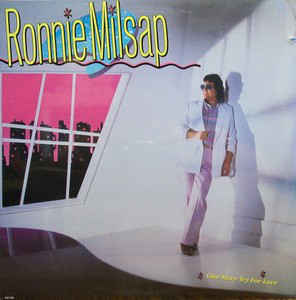
Having found a successful formula, most artists would’ve been reluctant to change anything. However, Ronnie Milsap wasn’t most artists and was keen to keep up to date with an ever-changing musical world.
For One More Try For Love, Ronnie Milsap chose ten songs written by some of the songwriters who had played a part in his success. This included Mike Reid who contributed Still Losing You, Prisoner Of The Highway and I Might Have Said. He also cowrote She’s Always In Love with Michael D. Stewart and Dan E. Williams who wrote Suburbia. Archie Jordan wrote I’ll Take Care Of You, while Quentin Powers, Susan Longacre and Gary Prim cowrote Night By Night where Ronnie Milsap duetted with Lisa Silver. Robert Byrne cowrote the title-track One More Try For Love with Brandon Barnes. These songs became One More Try For Love where the changes were rung.
This included a change in Ronnie Milsap’s production partner. Rob Galbraith was brought in and replaced Tom Collins. For many within the music industry in Nashville this case as a surprise.
Over the years, Ronnie Milsap and Tom Collins had forged a successful production partnership. The pair was responsible for many of Ronnie Milsap’s best, and most successful albums. The pair had worked together for the best part of a decade.
Ronnie Milsap first met Tom Collins when he and Jack D. Johnson co-produced Ronnie Milsap’s 1973 sophomore album Where My Heart Is. This was the start of a long-lasting working relationship and friendship. Tom Collins and Jack D. Johnson returned to coproduce 1974s Pure Love and 1975s A Legend in My Time.
The pair was usurped by Dan Penn and Chips Moman for Ronnie Milsap’s fifth studio album. Ironically, it wasn’t Ronnie Milsap’s finest hour, and Tom Collins and Jack D. Johnson were back behind the control desk for Night Things later in 1975. However, David Nives was brought in to produce 20/20 Vision album in 1976 which featured two US Country number ones in the US Country charts.
Despite this success, Ronnie Milsap and Tom Collins embarked on what would be a successful production partnership. They made their debut on 1977s It Was Almost Like a Song, and continued on 1978s Only One Love In My Life and 1979s Images. There was a change in production partner for Milsap Magic, when Ronnie Milsap was joined by Rob Galbraith.
The Ronnie Milsap and Tom Collins return in time to record 1981s Out Where the Bright Lights Are Glowing. This was the start of a run of four albums where Ronnie Milsap commercial success and critical acclaim. Despite that Ronnie Milsap and Rob Galbraith co-produced One More Try For Love.
When work began on Ronnie Milsap’s sixteenth studio album his production partner Rob Galbraith decided to use the latest equipment to electronic alter the vocals on several tracks. It seemed even that last bastion of musical tradition Nashville, wasn’t immune to eighties technology. Among the tracks Rob Galbraith used the effects on, were She Loves My Car and Suburbia. This seemed a strange decision, as Ronnie Milsap was one of country music’s top vocalists. It seemed an ill-conceived idea, but fortunately, Rob Galbraith used the effect sparingly, and critics would later deem its use a success.
When critics heard One More Try For Love, they discovered a quite different album. Still, the album was well received by critics who noticed that many of the lush strings of previous albums were gone. They made brief appearances on an album that showed the different sides of Ronnie Milsap.
Some songs moved in the direction of AOR including One More Try For Love, Still Losing You, Suburbia and I Might Have Said. I Missed You, I’ll Take Care Of You and Night By Night combined pop stylings with elements of country music. However, other songs including She Loves My Car, She’s Always In Love featured the ubiquitous eighties drums, synths and effects. It seemed that Rob Galbraith was trying to reinvent Ronnie Milsap’s sound. This was a strange decision, as Ronnie Milsap was enjoying the most successful period of his career. He didn’t need to follow passing musical trends, in pursuit of further commercial success.
The lead single Still Losing You was released, but failed to chart on the US Billboard 100. However, it topped the US and Canadian Country charts in 1984. When One More Try For Love was released in 1984, it stalled at a lowly 180 in the US Billboard 200 and ten on the US Country charts. For Ronnie Milsap this was a huge disappointment. So was Prisoner Of The Highway failing to trouble the US Billboard 100. It still reached number six on the US Country charts and nine on the Canadian Country chart. She Loves My Car then reached eighty-four in the US Billboard 100, and was the first country single to feature on MTV. One More Try For Love wasn’t the success that everyone at RCA Records had hoped, and the decision to reinvent Ronnie Milsap had backfired, despite the quality of music on the album.
Ironically, right up until One More Try For Love, Ronnie Milsap had been enjoying the most successful period of his career. He had been an almost permanent feature in the top ten of the US Country album charts since his 1973 sophomore album Where My Heart Is. The only album that failed to reach the top ten was the Dan Penn and Chips Moman produced A Rose By Any Other Name. Apart from that, Ronnie Milsap could do no wrong.
Before the release of One More Try for Love, Ronnie Milsap had enjoyed twenty-three number ones in the US Country charts and eighteen in Canada. Ronnie Milsap had released fifteen studio albums and one live album between his 1971 eponymous debut album and 1983s Keyed Up. Thirteen of these albums had reached the top ten on the US Country charts, while 1975s Night Things was certified gold in Canada and 1976s Ronnie Milsap Live, 1977s Was Almost Like a Song and 1978s Only One Love in My Life and 1981s There’s No Gettin’ Over Me were all certified gold in America. In 1980, Ronnie Milsap’s Greatest Hits was certified platinum in Canada and double-platinum in American after selling two million copies. It was no wonder many people wondered why Ronnie Milsap changed direction on One More Try For Love.
Many people saw Ronnie Milsap’s to change direction on One More Try For Love as a huge mistake. Although it was a mixture of his old and new sounds, the change in direction alienated many of his fans who had enjoyed his mixture of pop, AOR and country. While this was still present on One More Try for Love, so were eighties drums, synths and effects. This was something that many of Ronnie Milsap’s fans thought didn’t belong on One More Try For Love, which was the end of an era.
Never again would Ronnie Milsap enjoy the same success has he had enjoyed up until Keyed Up. Sadly, the Ronnie Milsap and Tom Collins partnership were never reunited. Granted Tom Collins, Ronnie Milsap and Rob Galbraith co-produced 1985s Lost In The Fifties Tonight and 1989s Stranger Things Have Happened. However, three is often a crowd when it came to production, and Ronnie Milsap and Tom Collins never worked together again as a partnership.
Ronnie Milsap and Tom Collins co-produced three of the four albums that feature on BGO Records two CD set, including Out Where The Bright Lights Are Glowing, There’s No Gettin’ Over Me and Keyed Up. These three albums are joined by One More Try For Love which was co-produced by Ronnie Milsap and Rob Galbraith. Although some of the tracks on One More Try For Love show Ronnie Milsap receiving an eighties makeover as elements of electronica and rock combine, most of the music is a mixture of AOR, country and pop. This was the same type of music that featured on Out Where The Bright Lights Are Glowing, There’s No Gettin’ Over Me and Keyed Up. They feature music that is slick, carefully crafted, melodic and memorable. It’s also the perfect introduction to Ronnie Milsap.
By the time One More Try For Love was released in 1984, Ronnie Milsap was forty-three and one of the biggest names in country music. To do that, Ronnie Milsap had overcome a serious disability, and went on to enjoy commercial success and critical acclaim during the seventies and early eighties where he became a giant of modern country music.
Ronnie Milsap-Out Where The Bright Lights Are Glowing, There’s No Gettin’ Over Me, Keyed Up and One More Try For Love.
ERLEND APNESETH TRIO-ARA.
Erlend Apneseth Trio-Åra.
Label: Hubro Music.
Just a year after the Erlend Apneseth Trio released their critically acclaimed debut album Det Andre Rommet, they recently returned with their sophomore album Åra, which was released on Hubro Music. Åra finds the talented triumvirate return with another album of original music that is regarded as an almost perfect improvised update of the post modern string trio.
It’s led by twenty-seven year old Erlend Apneseth who is already regarded as one of Norway’s top young Hardanger fiddlers. Joining Erlend Apneseth in his Trio are drummer Øyvind Hegg-Lunde and guitarist Stephan Meidell. Together, the become the Erlend Apneseth Trio who switch seamlessly between musical genres and push musical boundaries to their limits, and sometimes, beyond on Åra. The result is another ambitious album of genre-melting music from the Erlend Apneseth Trio who are led by one of the pioneers of Norwegian music.
Erlend Apneseth was born on the ’11th’ of August 1990, in Jølster, in Sogn og Fjordan, a county in Western Norway. It’s a small town with a population of just over 3,000 that is a popular destination for skiers. It was also where Erlend Apneseth first picked up the Hardanger fiddle and began a journey that would see him become an award-winning musician. That was still to come.
Before that, Erlend Apneseth enrolled at the prestigious Ole Bull Akademiet in Voss, Norway, where he studied traditional Norwegian folk music. Erlend Apneseth’s turbo at the Ole Bull Akademiet was none other than Håkon Høgemo, another Hardanger fiddler who had already released a quartet of solo albums and featured on many other albums. He mentored Erlend Apneseth during his time at the Ole Bull Akademiet. By the time Erlend Apneseth graduated, he was ready to embark upon a musical career.
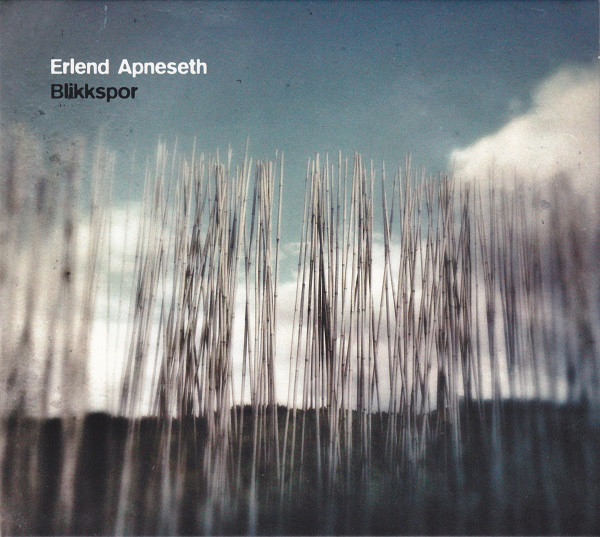
The first many people heard of Erlend Apneseth was when he won Grappa’s New Artist Award in 2012. Buoyed by winning such a prestigious award, Erlend Apneseth began work on his debut album Blikkspor.
Prior to the release of Erlend Apneseth’s debut album Blikkspor, he was one of five folk musicians under the age of twenty-five nominated for the Fureprisen award. This was one of the most prestigious prizes in Norwegian music, and one that came with a first prize of 50,000 Norwegian Kroner.
At the award ceremony in June 2013, the five young, up-and-coming musicians waited to hear who had won the Fureprisen award. When the announcement came, Erlend Apneseth won the Fureprisen award and the first prize of 50,000 Norwegian Kroner. This augured well for the release of his debut album Blikkspor in October 2013.
Blikkspor.
Blikkspor had been recorded at and mixed at Rainbow Studio during April and August 2013. The album was recorded with the help of a few of his musical friends, including trumpeter Arve Henriksen who also produced Blikkspor. When it came to record Sommarflukt, which closed Blikkspor, Erlend Apneseth brought onboard drummer Øyvind Hegg-Lunde and guitarist Stephan Meidell. They worked well together, but little did the three musicians realise that they would become part of one of the most exciting and innovative trios in the Norwegian music scene.
Before that, Blikkspor was released by Hubro Music, in October 2013. Critical acclaimed accompanied the release of Blikkspor, which was described as an ambitious album of groundbreaking and genre-melting music that announced the arrival of innovative musician. It was also a tantalising taste of what Erlend Apneseth was capable of. Critics awaited his sophomore album with interest.
Critics and record buyers had to be patient, as Erlend Apneseth was busy over the next couple of years. He found himself collaborating with musicians from a variety of different backgrounds, including folk, improv, jazz and rock. Groups big and small were joined by the Jølster born fiddler. So were folk singer Torgeir Vassvik and poet Erlend O. Nødtvedt. For Erlend Apneseth it was a case of have fiddle will travel, as he worked with a variety of different artists and bands. Erlend Apneseth even enjoyed a spell as a soloist with the Bergen Philharmonic Orchestra.
Meanwhile, Erlend Apneseth was winning further awards that boosted his burgeoning CV. This included the Øivind Bergh Memorial Award and the Music Scholarship from Sparebanken Vest in 2014. The third award that Erlend Apneseth won in 2014 was the Ingerid, Synnøve and Elias Fegerstens Foundation For The Norwegian composers and Performing Musicians. Winning these three awards boosted Erlend Apneseth’s as his thoughts turned to recording a new album.
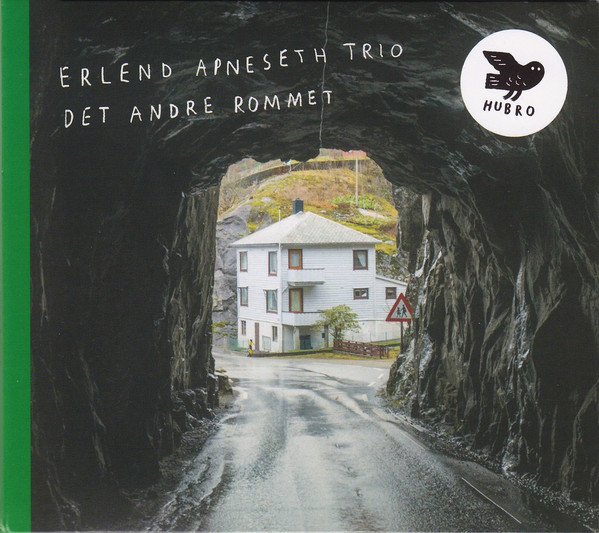
Det Andre Rommet.
While Blikkspor was credited to Erlend Apneseth, his next album was credited to the Erlend Apneseth Trio. Its origins can be traced to the recording of Blikkspor, and when Erlend Apneseth brought drummer Øyvind Hegg-Lunde and guitarist Stephan Meidell onboard to feature on the album closer Sommarflukt. Erlend Apneseth hit it off with the two musicians, and asked them if they wanted to join him in a trio? They agreed, and that day, the Erlend Apneseth Trio was born.
Since then, the Erlend Apneseth Trio had been playing live, and the supergroup was honing their sound. Having played together for the best part of two years, the Erlend Apneseth Trio still hadn’t recorded their debut album. That would soon change.
For Det Andre Rommet, a total of ten tracks were written. Erlend Apneseth wrote Trollsuiten, Dialog, Sapporo, St Thomas-klokkene, Hugskot and Draum Om Regn. The other four tracks, Under Isen, Det Andre Rommet, Nattkatt and Magma St. Thomas-klokkene, were written by the Erlend Apneseth Trio. These tracks would become their debut album Det Andre Rommet
The Erlend Apneseth Trio recorded their debut album Det Andre Rommet at Hallibakken Lydproduksjon between the ‘9th’ and ‘12th’ if March 2015. A total of ten tracks were recorded and would become Det Andre Rommet.
When Det Andre Rommet was released by Hubro Music in early July 2016, it was to widespread critical acclaim. The three musical mavericks had created an a groundbreaking and innovative album where they fused elements of avant-garde, improv, jazz, Musique Concrète and even rock. This resulted in an album that has the capacity to captivate as the Erlend Apneseth Trio spring surprises, as they take the listener in new and unexpected directions. Often, it’s Erlend Apneseth’s Hardanger fiddle that takes the listener on the emotional roller coaster that is Det Andre Rommet was. It was hailed one of the finest Norwegian albums at the end of 2016. By then, Erlend Apneseth’s thoughts had turned to his sophomore solo album.
Nattsongar.
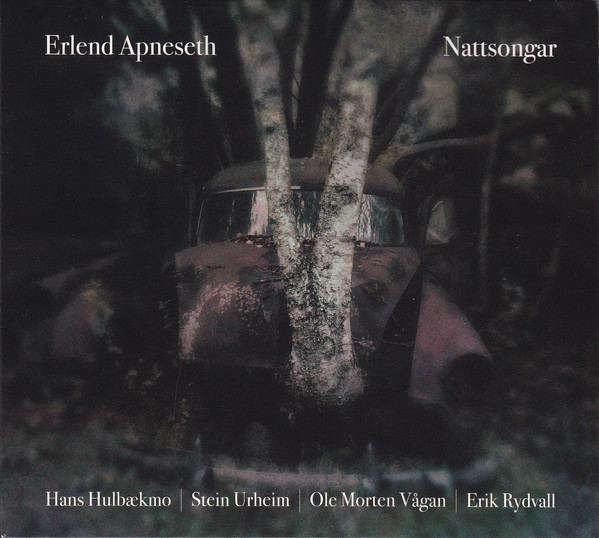
As 2017 dawned, Erlend Apneseth entered the Engfelt Forsgren Studio on the ‘5th’ of January 2017 to record his sophomore album Nattsongar. Just like his debut album Blikkspor, Erlend Apneseth brought onboard some of his musical friends. This included Stein Urheim, Ole Morten Vågan and Hans Hulbækmo. They were part of the band that spent the next three days recording eight of the nine tracks on Nattsongar, which was completed on the ‘7th’ of January 2017.
Three months later, Erlend Apneseth’s sophomore album Nattsongar was released to the same critical acclaim as his debut album Blikkspor. Just like Blikkspor, Nattsongar was hailed as an ambitious and innovative album from Erlend Apneseth when it was released on the Heilo label, an imprint of Grappa Musikkforlag AS which also owns Hubro Music. It would release the Erlend Apneseth Trio’s sophomore album Åra later in 2017.
Åra.
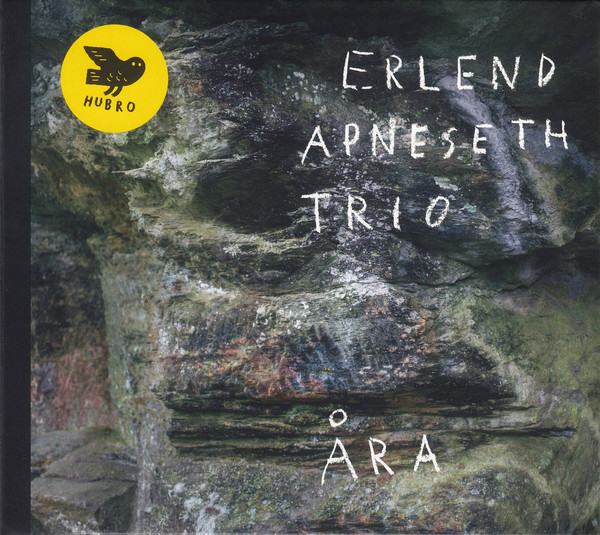
Just over a year after the release of their critically acclaimed debut album Det Andre Rommet, the Erlend Apneseth Trio make a welcome return with their sophomore album Åra. It features ten new tracks from the Erlend Apneseth Trio.
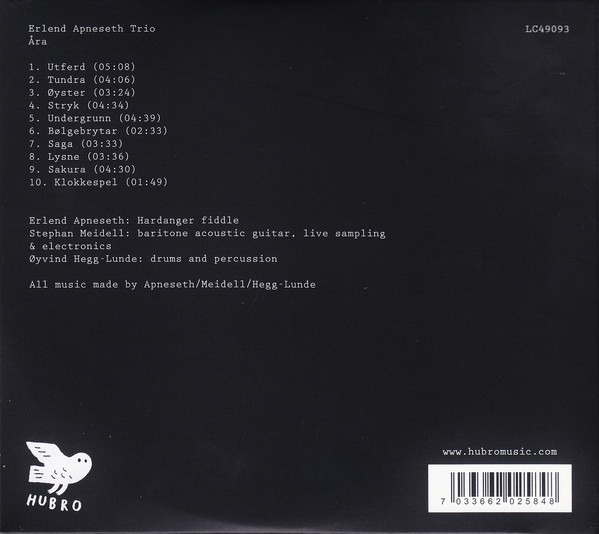
For Åra, Erlend Apneseth wrote five of the tracks on Åra, including Utferd, Tundra, Undergrunn, Sakura and Klokkespel. Guitarist Stephan Meidell contributed Øyster, while Stryk and Bølgebrytar were written by the Erlend Apneseth Trio. Lysne was written by poet Erlend O. Nødtvedt, who also adds the vocal. The other track on the album is Saga which began life when the Erlend Apneseth Trio found an archive recording of an unknown musician playing a saw. This the Erlend Apneseth Trio decided to use as the basis for the track that became Saga. These ten tracks were recorded by the Erlend Apneseth Trio in early January 2017.
Recording of Åra took place at Jørgen Træen’s Duper Studio in Bergen during January 2017. Drummer and percussionist Øyvind Hegg-Lunde provided the heartbeat while guitarist Stephan Meidell also took charge of sampling. Erlend Apneseth played Hardanger Fiddle and co-produced Åra with the Norwegian musician Andreas Meland whose responsible for the Hubro Music. When Åra was completed, all that remained was for the album to be mixed and mastered.
Jørgen Træen mixed Åra at Lydgrotten Studio, Bergen, during May 2017. Then Helge Sten a.k.a. Deathprod mastered Åra at Audio Virus Lab, June 2017. Now Åra was ready for release.
Four months later, and Åra was released by Hubro Music, and finds the Erlend Apneseth Trio. It’s an almost flawless improvised album, where the Erlend Apneseth Trio modernise the contemporary format of the post-modern string trio. It takes on new meaning on Åra, which has been compared to a Nordic retort to Tin Hat or Trio Taksim where the Erlend Apneseth Trio seamlessly switch between disparate musical genres on their second album of groundbreaking music.
Opening Åra is Utferd, which gradually reveals its secrets. Initially, the soundscape is reminiscent of an orchestra as it tunes up. Soon, though,the unmistakable sound of the Hardanger Fiddle emerges from the soundscape and adds a rueful, wistful sound. It’s joined by urgent percussion and pitter patter drums. They become urgent as they propel the improvised arrangement along. By then, the Hardanger Fiddle wheeze and whines while distant percussion can be heard. Later, the soundscape becomes understated and melodic as calmness descends, after the captivating musical storm.
Straight away, there’s an understated, minimalist and even an Eastern sound to Tundra as a plucked fiddle and washes of guitar combine with the rhythm section. It takes care not to overpower other instruments, as the Erlend Apneseth Trio carefully craft a ruminative, cinematic soundscape that meanders along, all the time painting pictures in the mind’s eye.
The guitar on Øyster sounds as if it belongs on the soundtrack to a Wim Wenders’ film. It shimmers and glistens, while the Hardanger Fiddle quivers and then plays with a degree of urgency. Sometimes, it plays second fiddle to the guitar, while other times, they combine and create a moving and poignant backdrop. Meanwhile, drums and percussion are used sparingly, allowing the Hardanger Fiddle and guitar to take centre-stage. They create a track that sounds as if it belongs in the remake of a Spaghetti Western. Later, this moody, moving and poignant soundscape dissipates allowing time for reflection.
Stryk features the Erlend Apneseth Trio at their inventive and innovative best. To create this soundscape they combine a droning fiddle and washes of guitar. Sometimes, the guitar threatens to feedback, but this never happens. Instead, it’s part of the Erlend Apneseth Trio’s carefully sculpted soundscape that veers between dark, eerie and chilling to moody and broody. Always though, the soundscape is cinematic and would be perfect soundtrack for a short film.
Erlend Apneseth’s Hardanger Fiddle sets the scene on Undergrunn. Straight away, there’s a sense of sadness as it takes centre-stage and tugs at the heartstrings. Midway though the track, it’s all change as the drums create a raga backdrop. It locks down a groove and provides a contrast to the fiddle. Soon, washes of jagged, angular, improvised guitar are added. Later, it’s just subtle drums and a scratchy guitar that combine to create mesmeric backdrop, to what’s been a magical musical mystery tour.
Bølgebrytar finds the Erlend Apneseth Trio let their imagination run riot as they combine instruments, found sounds and samples. They flit in and out this soundscape. This ranges from a plucked, chirping fiddle and jangling, shimmering guitar to the samples of traffic and lorry. These became part of another carefully constructed and imaginative soundtrack that seamlessly combines avant-garde, free jazz and Musique Concrète in such a way that it makes perfect musical sense.
Saga features the sound of someone playing a saw. It produces an eerie, haunting sound. Adding to the sense of unease is the jangling bells and the jarring, screeching fiddle. As various instruments and found sounds are added, a dark, ominous sound emerges from the soundscape. Especially when the otherworldly haunting sound of the saw reappears. Adding the earlier sense of unease is the sound of something being sawn, and falling to the floor. This gives way to the muffled sound of bells ringing, against a crackly analogue backdrop. It’s part of the most chilling and atmospheric soundscape on Åra.
In the distance, fingers fly up and down the fretboards on Lysne, and gradually, the music draws neared and starts to reveal its secrets. Reverb has been added as the guitar and plucked fiddle combine with drums. They usher in poet Erlend O. Nødtvedt’s impassioned soliloquy. Just like the rest of the arrangement, it gradually grows in power. Meanwhile, drums and percussion provide the heartbeat to this powerful and moving multicultural soundscape from the Erlend Apneseth Trio.
Sakura has an understated introduction as the Erlend Apneseth Trio play within themselves. Pizzicato strings combine with drums and percussion while electronics crackles. Gradually, the soundscape starts to reveal its secrets. This includes drums and percussion which are played softly and join with an Eastern inspired fiddle, chirping, chiming guitar and the crackling electronics create musical fireworks Later, the fiddle becomes wistful as its plaintive cry provides what sounds like the soundtrack to a battle as the bell tolls, but for whom?
Klokkespel closes the Erlend Apneseth Trio’s sophomore album Åra. As a guitar chimes, the wistful sound of Erlend Apneseth’s fiddle takes centre-stage. It plays a leading role in the sound and success of this beautiful heart-wrenching track that closes Åra.
Just over a year after Erlend Apneseth’s modest supergroup released their critically acclaimed debut album Det Andre Rommet, the supremely talented and versatile Erlend Apneseth Trio return with their sophomore album Åra. It’s ambitious, innovative and genre-melting opus that surpasses the quality of Det Andre Rommet. That was never going to be easy, but the Erlend Apneseth Trio features three of Norway’s top musicians Erlend Apneseth, Øyvind Hegg-Lunde and Stephan Meidell. They continue to push musical boundaries to their limits and beyond by combining disparate musical genres.
This includes elements of ambient, avant-garde, drone, experimental, free jazz, improv, jazz, Musique Concrète, Nordic Wave and rock. To this, the Erlend Apneseth Trio add found sounds, samples and Eastern sounds and guest artist Erlend O. Nødtvedt. When all this is combined the result is album of ten soundscapes that veer between abstract to atmospheric to broody and moody, to chilling, dark, eerie and otherworldly. Sometimes the music is beautiful, emotive and heart-wrenching, while other times it’s poignant and powerful. Sometimes, the music is thoughtful and ruminative and invites reflection. Often it’s cinematic as the Erlend Apneseth Trio paints pictures with their carefully crafted soundscapes. They’ve been created by master musicians who have dedicated their lives to the pursuit of musical perfection.
The Erlend Apneseth Trio come tantalizingly close on Åra, which is another groundbreaking album of inventive and imaginative music from a pioneering group of like-minded musicians who reach new heights in their continuing pursuit of musical perfection. So much so, that in years to come Åra is will be remembered as a career-defining album from the Erlend Apneseth Trio and the album that future albums will be compared to.
Erlend Apneseth Trio-Åra.
EL TURRONERO-NEW HONDO.
El Turronero-New Hondo.
Label: Pharaway Sounds.
All to often, music that was way ahead of its time failed to find the audience it deserves. It’s only much later when the music is reevaluated by a new generation of record buyers who realise and recognise the importance of the music. That has been the case time after time, during the last twenty years with obscure and overlooked albums being rediscovered.
Belatedly, these albums are reissued and embraced by a much more knowledgeable and appreciative audience. They’ve a much more educated musical palette, and a far more eclectic taste in music than the record buyers who overlooked these lost genre classics and hidden gems first time around. As a result, many albums that failed to find the audience they deserved first time around, are being rediscovered by a new generation of record buyers. That is the case with El Turronero’s album New Hondo which was recently reissued by Pharaway Sounds, an imprint of Guerssen Records.
When El Turronero released New Hondo on Belter Records in 1980, Manuel Mancheño Peña it was the seventh album of the thirty-three year old flamenco singer’s career. It began two decades earlier, when Manuel Mancheño Peña was just seventeen.
Manuel Mancheño Peña ‘Turronero’ was born in Vejer de la Frontera, Cádiz, on August the ‘15th’ 1947. However, Manuel Mancheño Peña ‘Turronero’ was brought up in Ultrera. He was brought up in the ways of flamenco, and eventually, eventually would become a cantaor, a flamenco singer.
That was no surprise as Manuel Mancheño Peña ‘Turronero’ was singing from an early age. His parents sold nougats at fairs, and when Manuel Mancheño Peña ‘Turronero’ accompanied them, his mother would ask her son to sing? This he would do, and this was good practise for when Manuel Mancheño Peña ‘Turronero’ embarked upon a career as a flamenco singer.
Growing up, Manuel Mancheño Peña ‘Turronero’ immersed himself in flamenco music, and began listening to three of the most popular singers of that time, El Perrate Fernanda, Bernarda and Manuel de Angustias. Soon, Manuel Mancheño Peña ‘Turronero’ decided to emulate the three cantaor singers.
That was when Manuel Mancheño Peña ‘Turronero’ first met the guitarist Diego del Gastor. He would accompany the aspiring cantaor, and when he moved to Madrid in 1963. The two months Manuel Mancheño Peña ‘Turronero’ spent in Madrid were tough.
The first person the young cantaor auditioned for told him he was “useless,” which would’ve knocked many young singer’s confidence. However, Manuel Mancheño Peña ‘Turronero’ was made of stronger stuff, and this made him even more determined to make it as a cantaor. Fortunately, Gitanillo de Triana saw Manuel Mancheño Peña ‘Turronero’s potential, and hired the young cantaor for two months. He sang each day until the club closed down. This was good experience for Manuel Mancheño Peña ‘Turronero.’
After this, Manuel Mancheño Peña ‘Turronero’ returned to Seville, where he spent a month at Las Cavas de Nemesio. This was good experience for Manuel Mancheño Peña ‘Turronero.’ However, it wasn’t particularly profitable and he was almost penniless. It was around that time that Manuel Mancheño Peña ‘Turronero’ met flamenco dancer Antonia Gades, and the pair would later travel the world. Before that, Manuel Mancheño Peña ‘Turronero’ was called up for military service.
Having completed his military service, Manuel Mancheño Peña ‘Turronero’ and Antonia Gades spent four-and-half years travelling the world. By the time, he returned to Madrid Manuel Mancheño Peña ‘Turronero’ had established himself as a flamenco singer. In Madrid he befriends Camaron de la Isla and also, flamenco dancer Carmen Montiel, and soon, the pair become a couple.
By the seventies, Manuel Mancheño Peña ‘Turronero’ had met guitarist and composer Paco Cepero and embarked upon a recording career as El Turronero. His debut album Y Primero El Compás-Canta El Turrón was released in 1970, with Cantes Viejos Temas Nuevos following in 1973 and Huele A Romero in 1975.
El Turronero was already a hugely popular singer and a familiar face at festivals across Spain. Audiences watched as the versatile El Turronero switched between flamenco palos, Bulerias, Debla, Fandangos, Romera, Seguiriyas, Sevillanos, Soleares, Tarantos and Tentos. El Turronero with the help of Paco Cepero, started to update theme of cantes bringing the lyrics up-to-date and adding a progressive sound. Sometimes, the lyrics were full of social comment, and spoke for those that had no voice. This was dangerous in a dictatorship.
Spain started to change after the death of dictator Francisco Franco on the ’20th’ of November 1975, and gradually, the country became a parliamentary monarchy. As Spain started to change, its music industry moved from Barcelona to Madrid, which was also home to El Turronero.
In 1976, El Turronero released his fourth album Vente Conmigo, Niña which was an eclectic album that featured a mixture of Bulerías, Fandangos, Romera, Siguiriyas, Tangos and Tarantos. This was what El Turronero’s fans expected from him. He was a versatile and talented singer, whose progressive lyrics provided a voice for the Spanish people. To many the twenty-nine year old El Turronero was a hero who spoke for and to them.
By 1978, El Turronero was signed to Belter Records, which was Spain’s biggest record company. Belter Records and its imprint Olivo would be home to El Turronero for the next three years. In 1978, El Turronero released two albums, including Asi Lo Siento which was released on the Olivo label, which specialised in flamenco music. The other album El Turronero released was El Cante Del Turronero which was released on Belter Records. Just like previous albums, both albums were eclectic and showcased the versatile cantaor who it seemed, could do no wrong.
The following year, 1979, was a landmark year for Spanish music, which was evolving. Camaron had just released La Leyenda Del Tiempo, which nowadays, is regarded as the album that started the New Flamenco movement. Ironically, La Leyenda Del Tiempo was pilloried by critics who failed to see the importance of what was an important and innovative album where Camaron fused jazz, rock and flamenco. This was a game-changer for Spanish music.
Meanwhile, El Turronero released his sixth album Mi Sangre on the Olivo label in 1979. Just like previous albums, Mi Sangre saw El Turronero flit between Bulerías, Fandangos, Romera, Siguiriyas, Tangos and Tarantos. This was the type of music that El Turronero had been making with Paco Cepero’s help since 1970. However, when El Turronero returned in 1980 with New Hondo, it marked the start of a new era for one of Spain’s leading cantaor singers.
As the eighties dawned, El Turronero was also ready to change direction musically. These albums features songs penned by flamenco guitarist Paco Cepero who played on the album. He played his part in the albums that El Turronero released between 1970 and 1979. Although each album was eclectic, and showcased a variety of different styles, by 1980 El Turronero had come to the conclusion that his music couldn’t stand still, and it had to evolve.
Camaron had realised that a year earlier when he released La Leyenda Del Tiempo on 1979. Now El Turronero was about to follow in Camaron’s footsteps. However, this wasn’t a decision that El Turronero took lightly. He remembered what had happened to his friend when he released La Leyenda Del Tiempo. His innovative fusion of jazz, rock and flamenco incurred the wrath of critics who failed to understand the album.Neither did record buyers, and La Leyenda Del Tiempo failed commercially. Despite this, El Turronero made the decision to change direction musically on New Hondo.
This wasn’t the only change that El Turronero would make on New Hondo. On previous album, his friend guitarist and composer Paco Cepero had contributed a number of songs. However, on New Hondo Paco Cepero’s only contribution was Sufrimiento which he cowrote with José Carrasco Domínguez. The rest of the songs on New Hondo were written by two songwriters. Juan Barcons Moreno penned Las Penas, Si Yo Volviera A Nace, Tiene Bigotes, Yo Soy Nube Pasajera, Navegan Mis Pensamientos and A Nadie Se Le Ha “Ocurrio.” They were joined by Eres Lava De Un Volcan, Y La Razón and Mis Venas which were written by José Carrasco Domínguez. These song became New Hondo, which was recorded in Madrid.
Recording of New Hondo took place at Estudios Belter, which was founded in 1965, and was one of Spain’s top studios. Taking charge of production was Juan Barcons who also played keyboards and added backing vocalists. The rest of El Turronero’s band featured some of city’s top musicians, including a rhythm section of drummer G. Martínez, Fernando Cubedo on contrabass and Max Sunyer on electric guitar. They were joined by percussionist Coco and acoustic guitarist Josep Maria Bardagí. One man was missing when New Hondo was released … Paco Cepero. He didn’t feature on his friend El Turronero’s most ambitious album.
Prior to the release of New Hondo later in 1980, critics had their say on the album that marked the reinvention of El Turronero. Just like Camaron’s 1979 album La Leyenda Del Tiempo, critics didn’t understand New Hondo. It saw producer Juan Barcons and El Turronero set out to modernise traditional flamenco music. This was a controversial decision, and one that didn’t find favour with critics who failed to understand New Hondo nor its importance.
When Juan Barcons and El Turronero set out to record New Hondo, their plan was to record album that modernised traditional flamenco music. It had changed very little until relatively recently. This included Camaron’s album La Leyenda Del Tiempo in 1979. However, New Hondo wasn’t going to be fusion of flamenco, jazz and rock. Instead, it was an ambitious genre-melting album that drew inspiration from a variety of musical genres.
For El Turronero his starting point on New Hondo was flamenco. Just like on his previous albums, he switched between different types of flamenco, some of which came from different parts of Spain. Among them, were Bamberas, Bulerías, Jaberas, La Caña, Malagueña, Seguiríyas and Tangos. These types of flamenco were combined with a variety of musical genres from the sixties, seventies and early eighties. This included funk, psychedelia, rock and Philly Soul, which had provided the soundtrack to much of the seventies. So had disco, especially between 1976 and 1979. A feature of both genres were swathes of lush strings. They can be heard on several tracks on New Hondo. Disco also inspired some of the drums tones that featured on New Hondo. The other influence is boogie, which following disco’s demise in the summer of 1979, became a favourite of dancers and DJs. All these genres can be heard on El Turronero’s pioneering album New Hondo, which features lyrics full of social comment.
El Turronero sets the bar high with the album opener Las Penas, which would later become a cosmic disco classic. It’s one of several tracks that feature lush sweeping, swirling strings. They’re combined with La Caña style of flamenco, funk and soulful harmonies as El Turronero delivers a soul-baring vocal. This is followed by the psychedelic funk of Si Volviera A Nacer which is another of New Hondo’s highlights. It features an electric sitar and an impassioned vocal from El Turronero as he transforms flamenco and takes it in a totally new direction.
The tempo drops on Tiene Bigotes which features sweeping disco strings. What doesn’t change is the emotion and passion in El Turronero’s vocal on this Tanguillos.
Dancing disco strings return on Yo Soy Nube Pasajera, where a funky bass helps propel the arrangement along and harmonies accompany El Turronero as he seamlessly switches to the Bamberas style of flamenco. Still he breathes life, meaning and emotion into this hook-laden dance-floor filler.
There’s another change of style on Navegan Mis Pensamientos, where soulful harmonies set the scene on this example of the Alegrías style of flamenco. El Turronero copes admirably with one of the most complex arrangements on New Hondo. It features a slapped bass and rock inspired guitar as El Turronero complies power and passion. In doing so, he demonstrates his versatility and talent. The tempo drops on A Nadie Se Le Ha “Ocurrio,” as El Turronero tackles a Bulerías on this hip shaking fusion of funk and boogie. El Turronero then delivers one of his most heartfelt, emotive and soulful vocal on Eres Lava De Un Volcan which is an example of the Jaberas style of flamenco. Then on Sufrimientos, which features a laid-back and lushly orchestrated arrangement, El Turronero accompanied by harmonies adds the finishing touch to a beautiful ballad.
It’s all change on Y La Razón a Seguiríyas, where the bass adds a tough, funky sound as El Turronero combines power and emotion. Meanwhile, disco strings sweep and swirl as El Turronero continues in his mission to reinvent flamenco. Closing New Hondo was the ballad Mis Venas Malagueña which is a Malagueña, a type of flamenco from the Andalusia region. Just like on so many other tracks on new Hondo, it features a vocal masterclass from El Turronero, who showcases his versatility and as he copes with another change of style and closes this genre classic on a high.
Sadly, when New Hondo was released in 1980 by Belter Records, the album wasn’t well received by critics. To make matters worse, the album failed to find an audience and sold badly. It a similar case when the future cosmic disco classic Las Penas was released as a single in 1980. The single failed commercially and soon, found its way into bargain bins.
Now thirty-seven years later, and New Hondo has been rediscovered by a new generation of record buyer and is regarded as a genre classic. Similarly, Las Penas is a cosmic disco classic and favourite of DJs and dancers. Original copies of New Hondo and Las Penas are rarities and change hands for large sums of money. Fortunately, New Hondo was recently reissued by Pharaway Sounds, an imprint of Guerssen Records. This is the perfect chance to discover or rediscover the most ambitious album of El Turronero’s career.
By then, El Turronero was an experienced cantaor singer with a legion of fans across Spain. They travelled to see him in concert and at festivals, and bought his albums. That was until his ambitious, groundbreaking and genre-melting album New Hondo, where El Turronero set about reinventing flamenco. As a starting point, he took a number of different styles of flamenco and combined this with boogie, disco, funk Philly Soul, psychedelia, rock and social comment. Then when El Turronero fused several genres, the result was the cosmic disco classic of Las Penas and the psychedelic funk of Si Volviera A Nacer. They’re among the highlights of New Hondo, which marked the reinvention of El Turronero and flamenco.
Not everyone welcome the reinvention of El Turronero, who was one of the most popular cantaor singers of his generation. His fans didn’t want him to change direction, and liked his music the way it was. El Turronero could’ve continued to churn out similar albums year after year. This would’ve been a popular and decision amongst El Turronero’s legion of fans, but would’ve been soul-destroying for a singer of his calibre. Just like Camaron who had he released La Leyenda Del Tiempo a year earlier in 1979,El Turronero style was ready to reinvent his music and indeed flamenco.
At the back of El Turronero’s mind was that changing direction risked alienating his fans. Sadly, that was the case, and New Hondo was his least successful album El Turronero had released. However, El Turronero was willing to take that risk, as he determined to change direction musically and hopefully reinvent flamenco. Sadly, it was a decision that didn’t payoff in the short-term.
Eleven years after the death of El Turronero in 2006, his groundbreaking and genre-melting album New Hondo is receiving the critical recognition it so richly deserves. New Hondo was a landmark album from El Turronero and had the potential to transform the future of flamenco music. New Hondo followed in the footsteps of Camaron’s 1979 album La Leyenda Del Tiempo and both albums are regarded as game-changing albums. Especially El Turronero’s New Hondo, which is regarded as important, innovative and timeless genre-melting album from a true musical pioneer who was willing to risk his popularity to transform flamenco music.
El Turronero-New Hondo.
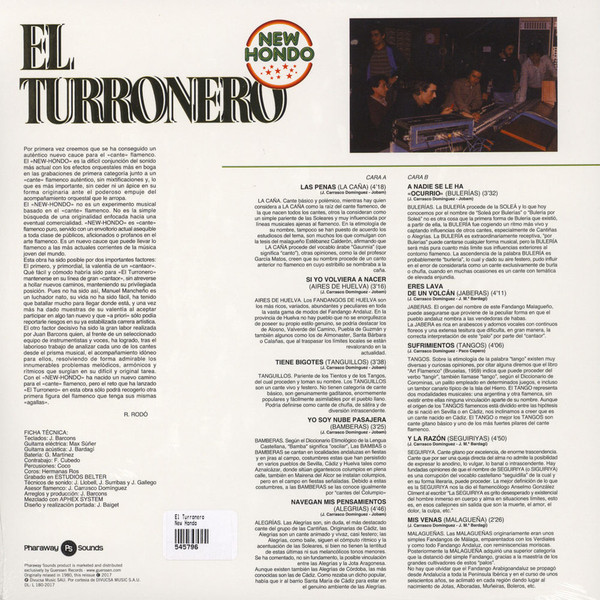
THE RISE AND DEMISE OF THE YOUNGBLOODS.
The Rise and Demise Of The Youngbloods
By 1965, bassist and vocalist Jesse Colin Young was twenty-four and had already enjoyed a degree of success as a folk singer. He had already released two albums The Soul Of A City Boy in 1964, and Young Blood in 1965. However, Jesse Colin Young’s solo career was in the past.
Things changed when Jesse Colin Young met twenty-two year old guitarist Jerry Corbitt, a former bluegrass musician. The pair decided to form a band, which they named The Youngbloods. Initially, The Youngbloods was a duo, with Jesse Colin Young playing bass and Jerry Corbitt switching between piano, harmonica and lead guitar. This initial lineup of The Youngbloods made their debut on the Canadian circuit. However, before long, Jerry Corbitt introduced Jesse Colin Young to Banana.
This was none other than Lowell Levinger, a bluegrass musicians who was born Lowell Levinger III. However, the nineteen year old multi-instrumentalist was known within the music community Banana. Jerry Corbitt thought that Banana could flesh out The Youngbloods’ sound. Especially since Banana could play banjo, bass, guitar, mandola, mandolin and piano. Once Jesse Colin Young met Banana, he became the third and final member of the band.
After that, things happened quickly for The Youngbloods. Having made their live debut at Gerde’s Folk City, in Greenwich Village, within a matter of The Youngbloods were the house band at the prestigious Cafe au Go Go. By then, The Youngbloods had already signed their first recording contract.
Having signed to RCA Records, The Youngbloods discovered that the record label were unsure how to market the band. At one point, RCA Records tried to market The Youngbloods as a bubblegum pop act. However, in 1966, The Youngbloods released their debut single, Rider, which failed to chart. The followup was Grizzly Bear, which reached fifty-two in the US Billboard 100. Both of these single featured on The Youngbloods’ eponymous debut album.
The Youngbloods.
Work began on The Youngbloods’ eponymous debut at RCA Victor’s Studio B in New York, in late 1966. This was the start of a new chapter in their career. By then, founder member Jesse Colin Young was regarded as the focal point of the band. He was the band’s lead singer, and later, would become the band’s songwriter-in-chief. That was still to come.
For The Youngbloods, Jesse Colin Young only penned two songs, Tears Are Falling and Foolin’ Around (The Waltz). Jerry Corbitt contributed just the one song, All Over The World. The remainder of the songs were covers of old blues and folk songs. This included Blind Willie McTell’s Statesboro Blues, Jimmy Reed’s Ain’t That Lovin’ You, Baby, Mississippi John Hurt’s C.C. Rider, Fred Neil’s The Other Side of This Life and Chet Powers’ Get Together. These songs were recorded at RCA Victor’s Studio B, with producer Felix Pappalardi.
Once the album was recorded, The Youngbloods was scheduled for release in January 1967. When critics heard The Youngbloods, they lavished praise and plaudits on what was primarily an album of folk rock, with excursions into the blues and pop. Ballads and rockers sat cheek by jowl on The Youngbloods, which allowed the band to showcase their talent and versatility. Critics forecasted a bright future for The Youngbloods..
When The Youngbloods was released later in January 1967, the album reached 131 in the US Billboard 200. This wasn’t bad for a band who were only formed in 1965. The Youngbloods showed what the band were capable of. So did one of the singles released later in 1967.
Six months after the release of their eponymous debut album, The Youngbloods released their cover of Chet Powers’ Get Together in July 1967. It was an anthem-in-waiting about universal brotherhood that had the potential to launch The Youngbloods’ career. Mercury Records had high hopes for Get Together, but the single stalled at a sixty-two in the US Billboard 100. This was disappointing. Get Together hadn’t reached the heights that executive at Mercury Records had hoped…yet.

Earth Music.
Having released their debut album earlier in 1967, The Youngbloods began work on their sophomore album Earth Music. Just like their eponymous debut album, Earth Music was a mixture of covers and original songs.
Six of the songs on Earth Music was penned by members of The Youngbloods. Jesse Colin Young wrote All My Dreams Blue, Long and Tall and Wine Song. He also cowrote Sugar Babe. Jerry Corbitt penned Don’t Play Games and cowrote Dreamer’s Dream with Lowell Levinger who also wrote Fool Me. The remainder of the songs on the album were cover versions including Robin Remaily’s Euphoria, Chuck Berry’s Too Much Monkey Business and Tim Hardin’s oft-covered classic Reason To Believe. Again, these songs were recorded with producer Felix Pappalardi at RCA Victor’s Studio B in New York, and later, became Earth Music.
Later in 1967, Earth Music was released to widespread critical acclaim. It was album that veer between folk rock to country and pop. There was even elements of jazz and psychedelia during an album of carefully crafted songs. Especially the cover of Euphoria, the mellow sounding All My Dreams Blue, Sugar Babe, Wine Song and a captivating cover of Tim Hardin’s Reason To Believe. Critics remarked on how the group were already maturing musically. Already some critics were comparing The Youngbloods to Lovin’ Spoonful. That came as no surprise, as The Youngbloods were about to release an album of carefully crafted and compelling songs that were playful and irresistibly catchy. Surely, an album of the quality of Earth Music would take The Youngbloods to the next level?
When Earth Music was released later in 1967, the unthinkable happened and the album failed to chart. Things got even worse when Fool Me was released as a single, and also failed to chart. For The Youngbloods this rubbed salt into a very painful wound.

Elephant Mountain.
Nearly two years passed before The Youngbloods returned with their third album. Jesse Colin Young wrote seven of the thirteen songs on Elephant Mountain. He also cowrote Double Sunlight, Turn It Over, Trillium and Black Mountain Breakdown with the other two members of The Youngbloods. Lowell Levinger wrote On Sir Francis Drake, while Rain Song (Don’t Let the Rain Bring You Down) was penned by Jerry Corbitt, producer Felix Pappalardi and Gail Collins. These songs would be recorded on the West Coast at RCA’s Music Center of the World in Hollywood, Los Angeles.
Joining The Youngbloods were Jerry Corbitt plus some guest artists. This included fiddle player David Lindley, vibes player Victor Feldman, trumpeter Joe Clayton and tenor saxophonist Plas Johnson. They played their part in what was another carefully crafted album, Elephant Mountain.
When Elephant Mountain was released, critics again, lavished praise on the album. Given the quality of music, this was no surprise. They ranged from jazz-tinged acoustic ballads like Sunlight and Ride The Wind to captivating and playful songs like Smug and Beautiful and the bluesy, hard rocking Sham. Two songs were very different to anything The Youngbloods had written. Darkness, Darkness dealt with subject of depression, while Quicksand was a song about suicide. However, Rain Song (Don’t Let the Rain Bring You Down) was a return to the jug band songs like Euphoria and The Wine Song. It was part of what many critics regarded as The Youngbloods’ finest album.
When Elephant Mountain was released in 1969, the album reached 118 in the US Billboard 200. This meant that Elephant Mountain was The Youngbloods’ most successful album. Despite this, the lead single Darkness, Darkness and the followup Sunlight failed to chart. However, a song from the past would transform The Youngbloods’ fortunes.
In July 1969, The Youngbloods rereleased their 1967 Get Together. It had featured on radio and television commercials by the National Conference for Christians and Jews. These adverts were a call for brotherhood. They also paved the way for The Youngbloods first million selling single. Get Together entered the chart and started climbing all the way to number five in the US Billboard 100. This was by far, the biggest hit single of The Youngbloods’ career. Despite the success of Get Together, The Youngbloods seemed to be in no hurry to release their fourth studio album.
Rock Festival.
Instead, The Youngbloods embarked upon a lengthy American tour in the spring of 1970, which lasted well into the summer months. The plan was to record several dates on the tour, and release them as The Youngbloods’ first live album, Rock Festival
Between March and July 1970, the tapes were running during five concerts. The first was on March ’29th’ 1970 at The Family Dog, in San Francisco. Three weeks later, the concert at The Barn in Marshall, California on ‘16th’ April 1970 was recorded. Two nights later, on ‘18th’ April 1970, the tapes were running at the Santa Clara University. Then when The Youngbloods played at Provo Park in Berkeley, California on ‘19th’ May 1970. There was one final recording session on July ’21st’ 1970, at Pacific High Recording in San Francisco. At last, The Youngbloods’ fourth album was ready for release.
When The Youngbloods released Rock Festival later in 1967, it was to the same critical acclaim as previous albums. Rock Festival was another eclectic album, where The Youngbloods showcased their versatility. However, it’s a quite different album from their three studio albums. Rather than play to the audience, and win them over with some of their best known songs, The Youngbloods headed in new directions with covers of a traditional song including Fiddler A Dram and the free jazz workout Ice Bag.
When Rock Festival was released in 1970, it reached number eighty in the US Billboard 200. This made Rock Festival The Youngbloods’ most successful album. So much so, that a year later, The Youngbloods decided to release a second live album, Ride The Wind.

Ride The Wind.
Most bands wouldn’t have released two consecutive live albums. However, it was a case of need’s must. The Youngbloods still hadn’t completed work on their fourth studio. They had even released The Best Of The Youngbloods as a stopgap. However, this had backfired when The Best Of The Youngbloods reached just 144 in the US Billboard 200. Given the success of Rock Festival earlier in 1970, a decision was made to release a second live album, Ride The Wind as a stopgap. That would keep their fans happy while The Youngbloods completed their new studio album.
Fortunately, The Youngbloods had recorded a number of shows over the years. This included three shows that took place in New York over three nights in November 1969. The first concert took place on ‘26th’ November, with the other concerts taking place on ’28th’ and ’29th’ November 1969. Six songs from these concerts were chosen for Ride The Wind. This included Jesse Colin Young’s Ride The Wind, Sugar Babe, Sunlight and Beautiful. They joined covers of Chester Powers’ Get Together and Fred Neil’s Dolphin on Ride The Wind.
Critics on hearing Ride The Wind, lavished praise and plaudits on The Youngbloods’ second live album. It was a very different album, and found The Youngbloods improvising and taking songs in a new direction. So much so, that some, bore very little resemblance to the original version.
Ride The Wind becomes a ten minute epic, and gives way to a jaunty, playful version of Sugar Babe. Sunlight soon takes on a pastoral sound, before The Youngbloods reinvent Fred Neil’s The Dolphin, which becomes a near flawless eight minute jam. The Youngbloods stay true to the original version of their million selling anthem Get Together, before Jesse Colin Young’s vocal plays a starring role in Beautiful, which becomes a funky workout. It closes Ride The Wind, which was released later in 1970.
Despite the undoubted quality of Ride The Wind, the album stalled at 157 upon its release in 1970. This was a disappointment for The Youngbloods. However, they had just completed recording their fourth album Good and Dusty, which they hoped would get their career back on track.

Good and Dusty.
When The Youngbloods returned with Good and Dusty, it featured a new, expanded lineup of the band. Harmonica player Richard Earthquake Anderson had joined the band and made his debut on Good and Dusty.
It was an album that featured cover versions of familiar songs including Johnny Otis’ Willie and The Hand Jive, Sonny Boy Williamson II’s Pontiac Blues, When Will The Circle Be Unbroken and Lieber and Stoller’s I’m A Hog For You Baby. This time round, Jesse Colin Young had only penned two songs Drifting and Drifting and Light Shine. Recording of these songs began at Raccoon Studios B on June ‘9th’ 1971. It took just over a month for The Youngbloods to record the thirteen songs on Good and Dusty, which was completed on July ’15th’ 1971. Good and Dusty was released later in 1971.
Just like The Youngbloods’ previous albums, Good and Dusty won over critics. They were impressed by an album that looked back at America’s musical past. Covers of old blues songs and song from the fifties feature on Good and Dusty.
When The Youngbloods released Good and Dusty in 1971, the album stalled at a lowly 160 in the US Billboard 200. This was a huge disappointment. Things didn’t get any better when Light Shine was released as a single. Despite being one of The Youngbloods’ best ballads, it didn’t even trouble the charts. This rubbed salt into the wound.
High On A Ridge Top.
After the release of Good and Dusty, The Youngbloods returned with High On A Ridge Top in 1972. Just like previous albums, it featured just one new song Jesse Colin Young’s Dreamboat which rubbed shoulders with nine cover versions. Among them were Esther Navarro’s Speedo, Jimmy Reed Going By The River, Bob Dylan’s I Shall Be Released, Lennon and McCartney’s She Came In Through The Bathroom Window, Richie Valens’ Donna and Robert Johnston’s Kind Hearted Woman. These were some of the ten songs that became The Youngbloods fifth studio album High On A Ridge Top.
Prior to the release of High On A Ridge Top, critics had their say on the album. It was well received by the majority of critics. However, when High On A Ridge Top was released in 1972, it stalled at a lowly 185 in the US Billboard 200. For The Youngbloods it was a disappointing end to their career.
Not long after the release of High On A Ridge Top, The Youngbloods split-up, with each band member embarking upon a solo career. This was just three years after The Youngbloods released their million selling single Get Together.
Looking back with the benefit of hindsight, that was where things started to go wrong for The Youngbloods. Most bands would’ve been keen to have built upon the momentum created by Get Together, and began work on a new studio album straight away. However, it took The Youngbloods two years to release Good and Dusty which was the followup to Elephant Mountain.
They should’ve built on the momentum created by Get Together, and released an album as soon as they could. However, by waiting two years, the momentum was lost. That was despite The Youngbloods releasing two live albums.
These two live albums Rock Festival and Ride The Wind, weren’t the stopgap albums that many bands release between studio albums. Both Rock Festival and Ride The Wind showcase just how good a live band The Youngbloods were. Especially on Ride The Wind, where The Youngbloods improvise and reinvent take the six songs in new and sometimes unexpected directions. This shows another side to The Youngbloods on what’s an oft-overlooked and hugely underrated live album.
It’s a similar case with Good and Dusty, which was The Youngbloods’ long-awaited fourth studio album. It features songs like That’s How Strong My Love Is, Circus Face, Good and Dusty and Light Shine which are hidden gems within The Youngbloods’ back-catalogue. These songs are a reminder of The Youngbloods who are an oft-overlooked group.
Most people know The Youngbloods’ million selling single Get Together. However, that’s just one chapter in the story of a band that released five studio albums and two live albums. The Youngbloods’ albums were released to widespread critical acclaim between 1967 and 1972, but sadly, never they enjoyed the commercial success that they so richly deserved. Eventually after releasing their fifth studio album Good and Dusty, The Youngbloods called time on their career, and embarked upon solo careers. This came just two years after they had enjoyed a million selling single with Get Together. By then, the rise and demise of The Youngbloods was complete just seven years after Jesse Colin Young met Jerry Corbitt.
The Rise and Demise Of The Youngbloods


PAUL BUCHANAN-FROM THE BLUE NILE TO THE SOLO YEARS.
Paul Buchanan-From The Blue Nile To The Solo Years.
Enigmatic, reluctant and contrarian are words that best describe The Blue Nile, who were the complete opposite to most bands. To say that tThe Blue Nile were publicity shy is something of an understatement. Ever since Paul Buchanan, Robert Bell and P.J. Moore formed the Blue Nile in 1981, they’ve been one of the most low-profile bands in musical history. It seems that when they were formed they ticked the “no publicity” box. This has proved a double-edged sword, and resulted in The Blue Nile becoming one of the most enigmatic groups ever. Their story began at the prestigious Glasgow University.
Paul Buchanan was born on ‘16th’ of April 1956 in Edinburgh, Scotland but his family moved to Glasgow when the future Blue Nile frontman was still a child. That was where he met his lifelong friend Robert Bell. The pair grew up together, and when it came to head to university, they both enrolled at Glasgow University.
That was where Paul Buchanan studied literature and medieval history, while Robert Bell was a mathematics undergraduate. Glasgow University was also where Paul Buchanan and Robert Bell first encountered Paul Joseph Moore, who was studying electronics. P.J. Moore had also grown up in the same part of Glasgow as Paul Buchanan and Robert Bell, but their paths didn’t cross until they were all undergraduates. By then, Paul Buchanan and Robert Bell’s musical careers were well underway.
Prior to forming The Blue Nile, Paul Buchanan, Robert Bell and P.J. Moore were previously members of another short-lived Glasgow based band, Night By Night. It was originally name McIntyre, in homage to the John McIntyre Building, which was the name of Glasgow University’s administrative offices. Soon, McIntyre became Night By Night and the nascent band made its first tentative steps in the Glasgow music scene.
Later, Paul Buchanan admitted that Night By Night only played live on two or three occasions. The band was never a familiar face on the Glasgow music scene. Nor did Night By Night secure that elusive recording contract. They were told that their music wasn’t seen as commercial enough. That wasn’t the Night On Night’s only problem.
Part of the problem was Night By Night’s fluid lineup. Members joined and left the band, and by 1981 the last men standing were Paul Buchanan, Robert Bell and P.J. Moore. They decided not to bother recruiting another band member, and swapped a guitar for an effect pedal. Their next move was to borrow a drum machine, which was only able to play Hispanic American music. With these new additions to their lineup, a new band was born.
For the nascent band, necessity was the mother of invention, and they began to play live. They had no option as they badly needed the money. Soon, they were playing cover versions around the city. Part of their lineup was the drum machine which provided Hispanic American rhythms. Despite this, people recognised the songs the band played and they escaped relatively unscathed. It had been a learning experience as their new band was christened The Blue Nile.
Once The Blue Nile were formed, they setup their own record label Peppermint Records. It was on Peppermint Records that The Blue Nile released their debut single, I Love This Life. This single was then picked up and rereleased on the RSO label. Unfortunately for the Blue Nile, RSO became part of the Polygram label and I Love This Life disappeared without trace. Despite this setback, The Blue Nile persisted.
Still, The Blue Nile kept writing and recording material after the merger of RSO with Polygram. Some of that material would later be found on A Walk Across the Rooftops. That was in the future.
Recording of The Blue Nile’s demos took place at Castlesound studio near Edinburgh. That’s home to the man whose often referred to as the fourth member of The Blue Nile, recording engineer Callum Malcolm. He was listening to recently recorded demos through the studio’s Linn Electronics system. It had recently had a new set of speakers fitted. Around that time, Linn’s founder, Ivor Tiefenbrun, decided to visit Calum Malcolm to hear his thoughts on the speakers. That was when Ivor Tiefenbrun first heard The Blue Nile.
Calum Malcolm played Ivor Tiefenbrun a demo of Tinseltown In The Rain. Straight away, the founder of Linn was hooked. He decided to offer The Blue Nile a record contract to the label he was in the process of founding. Most bands would’ve jumped at the opportunity. Not The Blue Nile.
It took The Blue Nile nine months before they replied to Ivor Tiefenbrun’s offer. When they did, the answer was yes. The Blue Nile’s debut album A Walk Across The Rooftops would be released on Ivor Tiefenbrun’s newly formed label Linn Records.
A Walk Across the Rooftops.
Linn Records and The Blue Nile seemed a marriage made in musical heaven. They weren’t like a major label who would be pressurizing The Blue Nile into making a decision and delivering an album within a certain timeframe. Instead, Linn Records allowed The Blue Nile to do what they did best, make music. From the outside, this looked as if it was working, and working well.
Years later, Paul Buchanan commented that during Linn Records didn’t operate like a record label. Mind you, he conceded that, during this period, The Blue Nile didn’t operate as a band. However, eventually, in May 1984 The Blue Nile’s debut album was released on Linn Records.
On the release of A Walk Across the Rooftops, it was released to critical acclaim. Critics described the album as a minor classic. A Walk Across the Rooftops was described as atmospheric, ethereal, evocative, soulful and soul-baring. It also featured the vocals of troubled troubadour Paul Buchanan. Despite the critical acclaim A Walk Across the Rooftops enjoyed, it wasn’t a huge commercial success, reaching just number eighty in the UK. However, since the A Walk Across the Rooftops has been recognised as a classic album. So has the followup Hats.

Hats.
Unlike most bands, The Blue Nile weren’t in any rush to release their sophomore album Hats. There was a five-year gap between A Walk Across the Rooftops and Hats. It was well worth the wait as The Blue Nile had done it again, and released a classic album.
Hats featured seven tracks which were written by Paul Buchanan, Glasgow’s answer to Frank Sinatra He’s a tortured troubadour, whose voice sounds as if he’s lived a thousand lives. Producing Hats was a group effort, with Paul Buchanan, Robert Bell and P.J. Moore taking charge of production duties. Guiding them, was Callum Malcolm. On the release of Hats, British and American audiences proved more discerning and appreciative of the Blue Nile’s sophomore album Hats.
On the release of Hats in the UK in 1989, it was critically acclaimed and commercial success, reaching number twelve in the UK. Then when it was released in America in 1990, audiences seemed to “get” Hats. Not only did it reach number 108 in the US Billboard 200 Charts, but The Downtown Lights reached number ten in the US Modern Rock Tracks charts. It seemed that The Blue Nile were more popular in America, than in Britain. Gradually, The Blue Nile’s music was beginning to find a wider and more appreciative album. Especially when The Blue Nile decided to embark upon their debut tour later in 1989.

Although The Blue Nile were formed in 1981, and Hats was The Blue Nile’s sophomore album, the band had never toured. Partly, The Blue Nile seemed worried about replicating the sound of their first two albums. They needn’t have worried, with The Blue Nile seamlessly replicating the sonic perfection of A Walk Across The Rooftops and Hats on the sold out tour. The Blue Nile’s star was definitely in the ascendancy.
Their first ever tour had been a huge success and The Blue Nile had conquered Britain. However, The Blue Nile had also made a breakthrough in America. Hats had sold well, and their American tour had been successful. Most bands would’ve been keen to build on this and released another album before long. Not The Blue Nile.
Seven long years passed, where Blue Nile fans wondered what had become of Glasgow’s most enigmatic trio. However, they’d been busy. After Hats found its way onto American radio stations, The Blue Nile, who previously, had been one of music’s best kept secrets, were heard by a number of prestigious musicians. Among them were Robbie Robertson and Annie Lennox, Michael McDonald. After a decade struggling to get their music heard, The Blue Nile were big news. During this period, America would become like a second home to The Blue Nile, especially Paul Buchanan.
Paul took to life in America, and in 1991, decided to make it his home. This just so happened to coincide with Paul Buchanan’s relationship with actress Rosanna Arquette between 1991 and 1993. Hollywood starlets and Sunset Boulevard was a long way from Glasgow’s West End. In the midst of Paul Buchanan’s relationship, disaster struck for The Blue Nile, when they were dropped by their label.
Linn Records and Virgin decided to drop The Blue Nile. For some groups this would’ve been a disaster. Not for The Blue Nile.
They signed a million Dollar deal with Warner Bros. While this sounded like the ideal solution for The Blue Nile, Paul Buchanan made the deal without telling P.J. Moore and Robert Bell. He later explained that “none of the others were in town at the time.” With a new contract signed, The Blue Nile began thinking about their third album, Peace At Last.
Peace At Last.
Witt work about to start on their third album, The Blue Nile started looking for the perfect location to record their third album. They travelled across Europe looking for the right location. This location had to be private and suit their portable recording studio. Cities were suggested, considered and rejected. Among them, were Amsterdam, Copenhagen and Venice. Being The Blue Nile, things were never simple. Eventually, and after much contemplation The Blue Nile ended up recording what became Peace At Last in three locations, Paris, Dublin and Los Angeles. For the first time, The Blue Nile recorded an album outside of their native Scotland.
For their major label debut, things began to change for The Blue Nile. They brought onboard drummer Nigel Thomas, a string section and a gospel choir. Peace At Last was going to be a quite different album to A Walk Across The Rooftops and Hats. However, one things stayed the same, The Blue Nile continued to work with Calum Malcolm. With his help, Peace At Last was ready for release in June 1996. Before that, critics had their say.
Critics remarked upon the change of sound on Peace At Last. It had a much more understated, restrained sound. Acoustic guitars and piano play important parts. Still, The Blue Nile’s beloved synths remain. Occasionally, The Blue Nile add strings. There’s even a gospel choir on Happiness. Gone was the sound of A Walk Across the Rooftops and Hats. Peace At Last showed a different side to The Blue Nile and their music, one that divided the opinion of critics and fans. Paul, Robert and P.J. were back, but it was a different sound. One constant was Paul Buchanan’s worldweary vocal. Glasgow’s very own Frank Sinatra, Paul Buchanan plays the role of the troubled troubadour, to a tee on songs about love, love lost, betrayal, heartbreak, growing up and growling old. Paul Buchanan was still the tortured soul, who wore his heart on his sleeve on Peace At Last.
On the release of Peace At Last, in June 1996, it reached just number thirteen and sold poorly. For The Blue Nile this was disappointing, given it was their major label debut. Worse was to come when the lead single Happiness failed to chart. The Blue Nile’s major label debut hadn’t gone to plan. Sadly, Peace At Last was the only album The Blue Nile released on a major label.

High.
Following Peace At Last, it was eight years before The Blue Nile released another album. High was released in 2004. During the last eight years, the three members of The Blue Nile had been leading separate lives. While P.J. Moore and Robert Bell were content with their lives in the West End of Glasgow, while Paul Buchanan had been spending his time between Glasgow and Hollywood. Now they were back and ready to record their fourth album, High.
Once High was recorded, all that was left was for The Blue Nile to find a label to release the album. The Blue Nile had been dropped by Warner Bros. So with High completed album, The Blue Nile shopped High to various labels. Eventually, they settled on Sanctuary, which would release High in August 2004. However, before that, critics welcomed back The Blue Nile.
Eight years after the release of Peace At Last, critics remarked that High was a much more grownup album. Songs of family life and heartbreak sat side-by-side. Paul Buchanan who had been suffering with illness and fatigue, seemed to have found a new lease of life. His lyrics are emotional, observational, cinematic and rich in imagery. They’re also poignant, and full hope, hurt and anguish. Meanwhile, Paul Buchanan’s vocals were worldweary and knowing, while the music is emotive, ethereal and evocative. Critics love High. So did music lovers.
When High in August 2004, the album reached number ten in the UK. High proved to be The Blue Nile most successful album. This proved to be fitting.
High was The Blue Nile’s swan-song. Nobody realised this when the album was released. It was only as years passed without a followup to High, that the reality sunk in. There would be no more music from The Blue Nile, and one of the greatest bands of their generation was now part of musical history.
Following High, critics thought that The Blue Nile would return, possibly after another lengthy break. Sadly, that wasn’t to be, and The Blue Nile were no more. At least they did things their way. Right up until the release of High, The Blue Nile were enigmatic, almost reclusive and publicity shy. Mind you, The Blue Nile weren’t exactly your normal band.
The rock ’n’ roll lifestyle favoured by other bands wasn’t for The Blue Nile. Their music was much more cerebral, and had a substance that much of the music recorded between 1984 and 2004 lacked. During that twenty year period, The Blue Nile only recorded four albums. These albums are unique. Musical fashions and fads didn’t affect The Blue Nile. Their attitude was almost contrarian and albums were recorded slowly and methodically as the Blue Nile strived for musical perfection.
Many have tried to achieve perfection. However, very few have come as close as The Blue Nile. Their debut album A Walk Across The Rooftops and the followup Hats, are nowadays both regarded as classic albums where The Blue Nile came close to achieving perfection. Peace At Last and High show another side to The Blue Nile. There’s a much more grownup sound, to the albums. However, just like A Walk Across The Rooftops and Hats, both albums showcase one of the most talented bands in Scottish musical history, The Blue Nile.
While The Blue Nile never enjoyed the commercial success their music deserved, they stayed true to themselves. They never jumped onto a musical bandwagon in pursuit of fame, fortune or starlets. Quite the opposite. For The Blue Nile it was their way or no way. If an album took years to record, so be it. It was always worth the wait. After all, not many bands pursue perfection, and achieve that perfection four times. The Blue Nile did, and ended their career on a High
The Solo Years.
Eight years after the release of 2004s The Blue Nile’s swan-song High, Paul Buchanan returned in May 2012 with his long-awaited and much-anticipated debut solo album, Mid Air. It was a very different sounding album from Paul Buchanan, who had changed in the eight intervening years.
Mid Air featured an older and wiser Paul Buchanan who was now fifty-six. From and from the music on Mid Air, Paul Buchanan had spent much of his time reflecting on life and everything it has thrown him. Whether it was love or loss or pain and death, it has affected Paul Buchanan and influenced the music on Mid Air.
This included the death of one of Paul Buchanan’s closest friends, which has caused him pain and hurt. It also made Paul Buchanan reflect on mortality and the breakup of The Blue Nile which had caused him pain and hurt. The Blue Nile were more than just a band, they were members had been three close friends for over thirty years. Paul Buchanan thought that The Blue Nile would last forever and its breakup was yet another loss that scarred him emotionally. The demise of The Blue Nile and everything that’s happened to Paul Buchanan between 2004 and 2013 shaped the music on Mid Air.
Mid Air featured fourteen songs written by Paul Buchanan in his flat in Glasgow’s West End. With just a piano in his kitchen for company, Paul Buchanan spent the early hours of many a night writing the songs on Mid Air Rather than write the songs on his trusty guitar, he preferred the immediacy of the piano. He could just sit down whenever he wanted, working on an idea for a song. Eventually, Paul Buchanan had fourteen songs written, and the recording took place mostly in his Glasgow flat, but also at a studio in Glasgow.
Recording of Mid Air took place over a period of two years and was recorded by Cameron Malcolm, son of Calum Malcolm The Blue Nile’s former producer. Joining Paul Buchanan was his oldest friend Robert Bell, The Blue Nile’s bassist. Two of the three members of The Blue Nile were back in the studio and working on Mid Air. Eventually, after two long years, Mid Air was released on 21st May 2012.
Just like The Blue Nile’s debut album twenty-eight years previously, Mid Air was released to critical acclaim. Critics welcomed the return of the former Blue Nile frontman, as he embarked upon a solo career.
On the release of Mid Air, the album reached number fourteen in the UK. This meant that Mid Air had almost matched the success of The Blue Nile’s most successful album High, which had reached number ten in the UK. In his native Scotland, Mid Air reached number one, while it reached number four in Ireland. It seems that fans loved the older, wiser and more pensive Paul Buchanan that features on Mid Air.
Mid Air was without doubt, a very personal album from Paul Buchanan. Sometimes Glashow’s own troubled troubadour lays bare his soul, while other times he’s searching for answers to what life had thrown him since The Blue Nile released their swan-song High in 2004. Other times, it was as if Paul Buchanan was searching for the meaning of life itself as he delivers a series of worldweary vocals on Mid Air. It’s a really mature, grown-up album from Paul Buchanan,
He was fifty-six when Mid Air was released, and his world-weary voice has matured with age. So have his talents as a songwriter. In many ways, Paul Buchanan has become Scotland’s answer to Tom Waits and Leonard Cohen. Not only has age resulted in wisdom, but fourteen tales of life, love and loss. To put this into perspective, it took The Blue Nile eight years and two albums to produce fourteen tracks, whereas Mid Air took but two years from start to finish.
Many critics hoped that Paul Buchanan would return with his sophomore solo album before he turned sixty. Sadly, that wasn’t to be and Paul Buchanan turned sixty on 16 April 2016. That day, the former Blue Nile was eligible for free travel around Glasgow’s West End where he still lives. Later in 2016, it was the thirty-fifth anniversary of the founding of The Blue Nile in 1981. Still there was no sign of the reissue of The Blue Nile’s 2004 swan-song High.
Just over a year later, and still there’s no sign of the reissue of High. Nor is there any sign of Paul Buchanan returning with his long-awaited sophomore album. By now, critics and record buyers know that things take time in the world of The Blue Nile. Maybe Paul Buchanan will return with the followup to Mid Air by the time he’s sixty-five? Let’s hope so, as Glasgow’s troubled troubadour has traveled the same roads as many of the people who bought The Blue Nile’s four albums and Mid Air.
They want to hear more of Paul Buchanan’s engaging and emotive music which speaks to and for them. Especially as Paul Buchanan explores subjects that are relevant to their lives nowadays. This ranges from love and loss, to heartbreak, hurt and hope right through to regret and sadness. These are the subjects and emotions that Paul Buchanan’s older, more mature audiences are experiencing and thinking about in 2017. While The Blue Nile’s music still strikes a chord with them, and always will, they need someone to put into words what they’re now feeling and experiencing. One man capable of doing that is Paul Buchanan, who has similar experiences and has travelled the same roads and can articulates their experiences and emotions. That is what Paul Buchanan has spent a lifetime doing, and hopefully what Glasgow’s troubled troubadour will continue to do on his long-awaited and much-anticipated sophomore album.
Paul Buchanan-From The Blue Nile To The Solo Years.
THE JAMES L’ESTRAUNGE ORCHESTRA-EVENTUAL REALITY.
The James L’Estraunge Orchestra-Eventual Reality.
Label: BBE.
For the best part of six decades, Scotland has enjoyed a thriving and vibrant music scene, and produced many artist and bands that went on to enjoy commercial success and critical acclaim. This started back in the sixties, when Sunshine Soldier Donavon enjoyed a string of successful singles and albums. He was just one of a number of Scottish artists and bands who forged a successful musical career during the sixties. However, as the sixties gave way to the seventies, a new wave of Scottish artists and bands were about to enjoy commercial success at home and abroad.
This included the Average White Band, Maggie Bell, Nazareth and the Sensational Alex Harvey Band, who were among Scotland’s most successful musical exports.
As the eighties dawned, the Scottish music scene was thriving in the post punk years. There was also an air of optimism, with new labels being founded, including Postcard Records which was founded by Alan Horne in 1979. By 1980, the nascent label was releasing singles by Josef K and Orange Juice, who would become one of the most successful Scottish groups of the eighties. So were Aztec Camera, Cocteau Twins, Deacon Blue, Del Amitri, Lloyd Cole and The Commotions, Love and Money, Simple Minds, The Blue Nile and The Jesus and Mary Chain. They were, without doubt, among the biggest names in Scottish music, and their career continued into the nineties and in some cases, way beyond.
During the nineties, groups like Belle and Sebastian, Primal Scream, Teenage Fanclub, The Pearlfishers and The Trashcan Sinatras were all releasing critically acclaimed and successful albums. Meanwhile, the Beta Band, King Creosote and Mogwai were embarking upon what would be successful careers.
Over the next few years, the Beta Band, King Creosote and Mogwai careers blossomed, while the next generation of Scottish bands embarked upon what would ultimately be successful careers. Among them, were Frightened Rabbit, The Phantom Band and The Twilight Sad. Each of these bands were hoping that they would be the one the made the big breakthrough.
Sadly, by 2017 none of these bands have hit the heights that they had hoped. Neither have some of the newer bands including Admiral Fallow, Errors, Miaoux Miaoux and The Unwinding Hours. The only one new band that might go on to great things are swaggering rockers The Temperance Movement. They’re seems as Scottish’s rock’s great hope during what’s been an extremely disappointing couple of years for Scottish music.
The only new names that are enjoying commercial success are Chvrches, plus former shelf stacker, turned DJ and ‘producer’ Calvin Harris. Saving the day for Scottish music over the last couple of years have been Mogwai, King Creosote and comeback Kings and musical veterans Teenage Fanclub and Trashcan Sinatras. Maybe though things are improving for Scottish music, and the days of third-rate, twee music could be over?
The first hint that things were improving was the release of Mogwai’s critically acclaimed ninth studio album Every Country’s Sun. Now just a couple of weeks later, and Scottish music’s latest great hope The James L’Estraunge Orchestra have released their much-anticipated debut album Eventual Reality on BBE. It’s an album with a fascinating backstory.
This story began three years ago in 2014, when producer and musician Ricky Reid and his partner decided to leave the city behind and make a new life: “away from the constant, incoherent noise of the world.” By then, Ricky Reid was a veteran of the Edinburgh music scene, and had spent twenty years in various bands.
Among them was The Soul Renegades, which featured Ricky Reid and Craig Smith. They released a number of singles between 1998 and 2013 for labels like Restless Soul, Local Talk and Rainy City Records. Ricky Reid was also vocalist and keyboardist in the 6th Borough Project, and featured on their 2014 album Borough 2 Borough. He’s also worked as a vocalist, songwriter and producer. However, by 2014 twenty years of city life was taking its toll on Ricky Reid.
By then, Ricky Reid was dreaming of making a new start in the beautiful Scottish countryside far from Edinburgh. Soon, Ricky Reid and his partner had decided to make this dream a reality. For Ricky Reid, the day he left the city behind couldn’t come quickly enough.
Eventually, the day came, and Ricky Reid was pleased and relived to be leaving city life behind, and heading to the tranquil and beautiful countryside in the highlands of Scotland. This was the new start that he had been dreaming of. It was where Ricky Reid and his partner were about to call home, and where he was about to setup his studio.
As he unpacked the array of equipment he had gathered over the years, he realised how different country life was going to be. Ricky Reid realised that the views were spectacular and the air clean and fresh. Country life was going to be different to his old life in Edinburgh.
Especially living in a log cabin that had neither a television nor internet access. The log cabin was a distraction free zone, which Ricky Reid hoped would allow him to hone his skills as a producer. Soon, Ricky Reid was joined by some of his old friends. Little did he know that his new surroundings would prove inspirational for Ricky Reid and his friends.
Over the next few months, curiosity got the better of some of Ricky Reid’s musician friends. They wanted to see where their old friend was living, and decided to visit him. When they arrived they must have been dismayed to find that there was neither a television nor internet. Fortunately, they brought with them their instruments. It was going to be like the old days when Ricky Reid lived in the city and his friends arrived round for a late night jam sessions. The only difference was there were no neighbours to complain about the noise and the view surroundings were very different.
In the evenings, Ricky Reid and his musician friends headed into the log cabin that had been converted into a recording studio. The equipment was setup and Ricky Reid decided to record the sessions, just in case they produced anything special. As Ricky Reid pressed play and the makeshift band played, it was as if they were inspired by their surroundings. Something special started to happen and the music flowed through and out of the musicians. Fortunately, the tapes kept running and Ricky Reid managed to capture these performances for posterity.
There were several similar jam sessions which took place over the next few weeks and months. Just like the very first jam session that took place in his log cabin, they were taped by Ricky Reid. Once the series of jam sessions were at end, Ricky Reid began to piece together the tapes.
This he realised would allow him to hone his skills as a producer. While Ricky Reid had a few production credits to his name, he lacked the experience of some of the big hitters in Scottish music scene, including Paul Savage and Tony Doogan. They had been honing their skills as a producer for several decades. Working on the tapes of the jam sessions would be good experience for Ricky Reid.
With no distractions, Ricky Reid was able to concentrate all his efforts on producing what eventually became The James L’Estraunge Orchestra’s debut album Eventual Reality. This was something that Ricky Reid had never been able to do before. For Ricky Reid this was a creative awakening, where: “I’ve become a conduit for something different” and this was something different to what: “I’ve ever experienced before.”
Over the next weeks and months, Ricky Reid spent much of his time piecing together the various jam sessions that had taken place in his home studio. Gradually, Ricky Reid started to see the wood from the trees, and the album started to take shape. During that period, Ricky Reid matured as a producer and learnt a lot, not just about production, but about himself. He came to realise what he was capable of as he was putting the finishing touches to The James L’Estraunge Orchestra’s debut album Eventual Reality.
When Eventual Reality was complete, all that Ricky Reid needed to do was find a record company willing to release the album. That was easier said than done in the current economic climate. However, BBE who celebrate their twenty-first birthday this year, agreed to release Eventual Reality.
Rather than release the album using his own name, Ricky Reid decided it was only fair to credit the various musicians involved in the project. As a result, The James L’Estraunge Orchestra was born. They sound like a seventies disco orchestra from Philly or New York rather than from Edinburgh in Scotland. James L’Estraunge certainly doesn’t sound as if he’s from Edinburgh, especially Leith, Pilton, Broomhouse and Wester Hailes. He’s even bit too exotic even for Morningside or Corstorphine. Indeed, the music on The James L’Estraunge Orchestra’s album Eventual Reality certainly sounds quite unlike music anything else coming out of Scotland. It showcases a talented group of musicians as they make the nine genre-melting tracks that became Eventual Reality.
Eventual Reality opens with the title-track a seven minute epic where chugging, buzzing and ethereal synths meander along and create a thoughtful sounding backdrop. This is fitting as the track tells the story of a musician trying to make sense of life, and attempting to reconcile his past and present from his newfound rural idyll. At 1.00 filters are added and soon, drums pound as the arrangement chugs along. Before long, futuristic sounds, crashing drum rolls, guitars and swathes of strings are added as the arrangement builds. Eventually, the Orchestra is in full flight as stabs of keyboards, braying horns and layers of dancing strings combine to create a stirring, sometimes dramatic and impressive sound. Later, a fleet fingered piano solo combines with strings, drums and synths. Having reached a crescendo, this stirring, melodic and cinematic track starts to dissipate leaving just the memory of this impressive, multilayered genre-melting soundscape.
Shimmering, twinkling keyboards, hesitant drums and percussion opens Me and The Bear. They’re joined by the bass as the Orchestra play with a fluidity. Then at just the right moment strings and lone horn are added. Meanwhile, the a mesmeric piano plays a leading role as the bass bound across the arrangement. By then sci-fi and bubbling synths have been added as the drums and later stabs of horns join the flowing, mesmeric and elegiac multilayered arrangement as it reveals its many secrets.
Found sounds recorded on the streets of Melbourne open Closer, and give way to the rhythm section and keyboards. Soon, drums power the arrangement along, and strings are added as Ricky Reid adds a vocal. He’s accompanied by backing vocals as he unleashes a vocal powerhouse. Behind him, strings dance and the deliberate keyboards combine with drums which sensibly have been pushed back in the mix. This allows the keyboards and vocals to take centre-stage. So do the drums, horns and keyboards as the solos come round. They’re joined by lush sweeping strings as the Orchestra jam, and showcase their considerable skills on this anthemic and empowering song that quite rightly, was chosen as the lead single.
Atmospheric describes the introduction to We Rise as the sound of waves breaking on a beach can be heard, against a percussive backdrop. Meanwhile, a distant bass and keyboards play. Soon, the keyboards enters, and flourish signals it’s time for the rhythm section to enter. They’re soon joined by sweeping, swirling and dancing strings and later a scorching, blazing horn. The final piece of the jigsaw is Ricky Reid’s vocal, and he’s again joined by backing vocalist Emerald Anne Jade. Reverb is added to Ricky Reid’s vocal, which becomes dubby as the arrangement becomes dream as it dissipates and the sound of waves breaking on a beach return. This bookends this carefully crafted track that veers between atmospheric to lush and slick and is melodic and memorable.
The tempo drops on See You Tonight which many people of a will be able to relate to, as it deals with the loss of youth. As the rhythm section combine with keyboards and guitar they create a thoughtful backdrop that sets the scene for Ricky Reid’s vocal. He sounds uncannily like a young Chris Rea as he delivers a tender, soul-baring vocal. Harmonies, horns, lush strings, chirping guitar join with glistening keyboards as drums create a slow, steady beat. Care has been taken that they don’t overpower the best vocal on the album. Later, when the vocal drops out keyboards join with a lone, melancholy horn add to the late night sound, When the vocal returns they add the final touch to this beautiful, heart-wrenching paean.
There’s a degree of urgency to the drums that open Autumn Falls. Soon, they’re joined by shimmering keyboards, rhythm section and glistening guitar. Strings are added to the mix as the arrangement builds and the Orchestra jam. They play as one and then when the solos come round, some members enjoy their moment in the sun. This includes the drums and fusion influenced keyboards, as strings dance. Subtle chirping, cheeping guitar and bass interact and are like yin and yang during a track this captivating track. Sadly, after nearly seven minutes this impressive combination of timbres is over as The James L’Estraunge Orchestra seamlessly combine jazz, fusion, electronica and disco strings.
Thunderous and urgent drum rolls propel the arrangement to It’s Happened Before along before a dark, dramatic and ominous piano is joined by glistening keyboards and sweeping string. This results in a cinematic sound. Especially as horns interject and the combine with the strings. By then, it’s as if The James L’Estraunge Orchestra have been asked to provide a track to a thriller. Later, synths and guitar are added as the arrangement continues to build. Keyboards then inject an urgency as strings sweep and horns add a dark, rueful sound. They’re part of what can only be described as a cinematic epic from The James L’Estraunge Orchestra.
There’s a tragic story behind The Call came from an incident that happened near Ricky Reid’s home: “ it was written after a local car accident ended in tragedy for a young girl visiting the area. She was trapped underwater after driving off the road, which shocked the village and provoked this emotive, free form track” Just a lone piano plays slowly and deliberately before found sounds are fused with elements of what John Cage called small music. They create a minimalist backdrop to the piano until the midway point. Then a jarring drone cuts and angular creaking sounds are added and add an avant-garde sound. Later, strings sweep and swirl and a melancholy horn brays as The James L’Estraunge Orchestra paint pictures with their music.
Ricky Reid’s decision to cover Harvey Mason Jr.’s Groovin’ You is a brave one, as it’s a jazz-funk classic. It’s also the definitive version. There’s no way this track can be bettered. However, it can be reworked and reinvented. That is what The James L’Estraunge Orchestra do. Drums click and crack as a deliberate piano combines with a plucked bass that replaces the bounding bass in the original. Soon, braying horns are added as the track takes on a looser jazzier sound. Later, strings sweep, swirl and dance, horns blaze and bray and a jazzy guitar solo gives way to drums that are slapped. All the time the arrangement is building, and bandleader Ricky Reid encourages his Orchestra to reach greater heights. There’s even a pregnant pause before the band kick loose and head for home. By then, they’re in full flight and sound determined to close Eventual Reality on a high. In doing so, they pay homage to a legendary drummer, composer and producer Harvey Mason Jr.
Although Groovin’ is the last of the original tracks, there’s also an Instrumental and Radio Edit of Closer. These eleven tracks feature on The James L’Estraunge Orchestra’s critically acclaimed debut album Eventual Reality, which has just been released on BBE.
Eventual Reality showcases is the first album since Ricky Reid has recorded and produced since he left Edinburgh behind and headed to a rural idyll in the highlands of Scotland. The album was born in a log cabin, when Ricky Reid and some of his friends started jamming. Just three years later, and these tracks were released as Eventual Reality. It’s a carefully crafted, genre-melting album where Ricky Reid and friends combine elements of avant-garde, electronica, funk, fusion and jazz, with disco, jazz-funk and small music. The result is a potent and heady brew from The James L’Estraunge Orchestra.
It finds beautiful ballads siting side-by-side with anthems and atmospheric and cinematic soundscapes. There’s also irresistible instrumentals and songs where the hooks certainly haven’t been spared. Each and every song on Eventual Reality is different, and they veer between anthemic, joyous and uplifting to beautiful and heart-wrenching to poignant, ruminative and thoughtful. Often there’s a message or story to the song, and The James L’Estraunge Orchestra breathe life and meaning into these cinematic soundscapes and songs.
These songs are part of The James L’Estraunge Orchestra’s long-awaited and much-anticipated debut album Eventual Reality which is full inventive, melodic and memorable music. It’s also a reminder that there are still talented and musicians in Scotland, like those in The James L’Estraunge Orchestra Maybe things are looking up for the Scottish music scene which has been in the doldrums for a couple of years? Let’s hope so. Meanwhile, The James L’Estraunge Orchestra’s debut album Eventual Reality must be an early contender for the Scottish Album of The Year Award in 2018?
The James L’Estraunge Orchestra-Eventual Reality.

KEV BEADLE PRESENTS PRIVATE COLLECTION VOLUME 3.
Kev Beadle Presents Private Collection Volume 3.
Label: BBE.
Just over three years have passed since BBE released Kev Beadle Presents Private Collection Volume 2 to plaudits and praise in July 2014. Since then, much has changed in the life of DJ, club promoter, compiler and inveterate crate-digger Kev Beadle.
The unthinkable happened in 2016 when the veteran DJ decided that the time had come to hang up his headphones. This came as a shock to many, who thought that this day would never come. After all, Kev Beadle’s life had revolve around music for four decades. It was what he knew and loved. Right up until the day he announced his retirement, Kev Beadle was a familiar face on the jazz-dance scene. However, after a life spent behind the wheels of steel, Kev Beadle had decided the time had come pass the baton on to the next generation of DJs. Before he bowed out, the veteran DJ decided to compile one last compilation for BBE, Kev Beadle Presents Private Collection Volume 3 which was released today. It’s Kev Beadle’s swan-song, and finds him bowing out with another compilation of the private presses he’s so passionate about.
Kev Beadle like many DJs, record collectors and music lovers have dedicated themselves to discovering the best of these private pressings. He’s dedicated his life to the pursuit of these long-lost and oft-overlooked hidden musical gem. There are many private presses in Kev Beadle’s enviable record collection, and some of these have feature on the first two volumes of Kev Beadle Private Collection.
For Kev Beadle Private Collection Volume 3 the veteran DJ has dug deep into his collection and chosen twelve jazz-dance private presses from the seventies and eighties. This includes tracks from Roy Haynes, Banda Metalurgia, Belair, Francisco Mora Catlett, Louis Hayes, Lee Willhite, Finn Savery Trio, Ira Sullivan and Webster Lewis. These tracks feature on Kev Beadle Private Collection Volume 3 which sees one of London’s top DJs and compilers take his last bow. He’s enjoyed a long and successful career.
Ever since the eighties, Kev Beadle’s life has revolved around music, especially jazz and soul. For Kev Beadle, some of his earliest musical memories are heading to London clubs like The Horseshoe, on Tottenham Court Road where Paul Murphy DJ-ed. After that, Kev Beadle was hooked, and embarked upon a voyage of discovery, scouring record shops, dusty basements and thrift stores for hard-to-find tracks. His burgeoning record collection would stand him in good stead for the future.
Soon, Kev Beadle was on the other side wheels of steel playing tracks from his rapidly expounding record collection. Before long, Kev Beadle had graduated to playing at London’s legendary Wag Club. This was where he met Giles Peterson, Bob Jones and Chris Bangs. For Kev Beadle, this was the next step in his musical education. They introduced Kev Beadle to new music and helped him on DJ-ing journey.The DJs also enjoyed a good-natured rivalry, seeing who could break a track first. Not long after this, three of the DJs made musical history.
This came about when Giles Peterson, Bob Jones and Kev Beadle started the Talkin’ Loud sessions at Dingwalls, on Sunday afternoons. Before long, the word was out that the Talkin’ Loud sessions were the place to go to hear soul and jazz rarities. New tracks were discovered and soon, the Acid Jazz scene exploded.
Out of this came the Acid Jazz label, which in 2012, celebrated its twenty-fifth anniversary. These Sunday afternoons at Dingwalls would become legendary. Open-minded, music hungry music fans, heard and enjoyed, old soul and jazz tracks being unearthed almost on a weekly basis. Out of these afternoons, a whole scene was born, with Kev Beadle at its heart.
Before long, Kev Beadle had embarked upon a career within the mainstream music industry. Over the years, he worked in many roles within the music industry, including A&R and promotion. He’s also managed labels and run his own, sadly missed label Clean Up. Like many DJs, Kev Beadle has also added production to his ever-expanding CV, under the pseudonym Messengers. Then there’s the myriad of compilations that Kev Beadle has compiled.
During Kev Beadle’s career, he’s compiled compilations for a variety of different labels including Blue Note, Cadet and of course BBE. For Cadet, Kev compiled The Best of Terry Callier On Cadet which introduced many people to one of music’s best kept secrets. Kev Beadle was also responsible for the five volumes of Cadet Grooves and three volumes of Blue Note’s Capitol Rare. Then there was Kev Beadle’s BBE debut.
This was Nu Jazz Generation II, which was released on BBE back in 2000. Thirteen years later, Kev made his BBE comeback with Kev Beadle Presents Private Collection in March 2013. Just over a year later, Kev Beadle Presents Private Collection Volume 2 followed in July 2014. By then, Kev Beadle was one of London’s top DJs and had been for many years.
DJ-ing, which has been a mainstay of Kev Beadle’s career for four decades and although he was approaching veteran status he prided himself as having his finger on the pulse when it came to music. He was equally comfortable playing in clubs or DJ-ing on radio. However, it’s club DJ-ing that many people will know the name Kev Beadle.
Ever since he made his debut in the eighties, Kev Beadle has been spinning soul and jazz. Despite his love of jazz and soul, he’s never afraid to investigate other musical genres, and Kev Beadle’ has will happily spin music from a variety of disparate genres. Sometimes, he digs deep into his collection and spins an eclectic set where the music of the past and present rub shoulders. However, for Kev Beadle Presents Private Collection Volume 3, the veteran DJ chooses twelve private presses from the seventies and eighties.
These über rare tracks on Kev Beadle Presents Private Collection Volume 3 are considered classics within the jazz-dance community. Sadly, given their rarity, they’re only available to DJs, dancers and crate-diggers with deep pockets or a sympathetic bank manager. For those who can’t afford the original tracks a copy of Kev Beadle Presents Private Collection Volume 3 features these twelve rarities. This includes a number of energetic, syncopated musical workouts that have previously tested the stamina of dancers in clubs the length of breadth of Britain. Sometimes, the calm descends and Kev Beadle drops some of the smoothest Latin grooves. Quite simply, there’s something for everyone on Kev Beadle Presents Private Collection Volume 3.
Opening Kev Beadle Presents Private Collection Volume 3 is Quiet Fire, which featured on drummer Roy Haynes’ 1977 album Thank You Thank You which was released on the Galaxy label. Quiet Fire was penned by George Cables and is the perfect way to open the compilation. It’s something of a slow burner with a minute of Kenneth Nash’s percussion then giving way to a masterclass from veteran drummer Roy Haynes. Augmented by pianist George Cables and bassist Cecil Bee they lock into a groove as this track unfolds. Once this tight, talented band is in full flight, they’re sure to push even dedicated dancers to their limit on a track that sets the bar high for the rest of the compilation.
Maryke is a track from Devil Dance, which was a collaboration between Chicago born bandleader, composer and producer John Thomas and Lifeforce. Devil Dance was released on the German label Nabel in 1980 and was the firs of two albums John Thomas and Lifeforce. One of the highlights of their debut album was Maryke, an urgent, percussive and melodic fusion workout.
There’s no drop in tempo on Lá Em Guayaquil a track from Banda Metalurgia’s 1982 eponymous self-released album. Instead the tempo rises on this joyous genre-melting track. It’s propelled along by the rhythm section and a myriad of percussion while stabs of urgent horns soar above the arrangement. Meanwhile, Banda Metalurgia combine Bossa Nova, fusion and jazz on this energetic, syncopated musical workout that is guaranteed to tempt even the most reluctant dancer onto the dance-floor.
Belair’s Samba for a Cold Warrior is taken from their 1980 album Relax, You’re Soaking In It, which was released on the Belby Wetterman label. This private pressing is one of the most expensive on the compilation, with copies changing hands between £125 and £225. Samba for a Cold Warrior which was penned by Eddie Guthman, is one of the highlights of the this hard-to-find album. Seamlessly, Belair marry elements of jazz, fusion and Latin music on this tantalising taste of the delights that feature on Relax, You’re Soaking In It.
In 1986, drummer and composer Francisco Mora Catlett released his debut album Mora! on his own AACE label. One of the highlights of this oft-overlooked hidden gem is Samba De Amor. It’s an uplifting, joyous, energetic and dance-floor friendly Latin-jazz workout where Francisco Mora Catlett and his band also test the stamina of dancers. They’re pushed to their limits on what’s without doubt one of the highlights of Kev Beadle Presents Private Collection Volume 3.
The Louis Hayes Group recorded Little Sunflower for their 1979 album Variety Is The Spice. It was released on the Gryphon Productions label and featured an all-star band. Joining drummer Louis Hayes was bassist Cecil McBee, flautist Frank Strozier and vocalist Leon Thomas who features on two tracks. This includes Little Sunflower where Frank Strozier’s flute for company he delivers a tender, impassioned vocal that plays its part in the sound and success of this percussive soul-jazz hidden gem.
It was in 1981 when Lee Willhite released his debut album First Venture on Big Tampa Records. It opened with a cover of The World Is a Ghetto, where Lee Willhite’s soulful, thoughtful and despairing vocal is accompanied by a tight and talented band. They complement Lee Willhite’s vocal and are yin to his yang on this thought-provoking cover of a familiar song.
When Clarice Labbe and Charlie Hampton were recording their debut album Clarice Swings With Charlie Hampton, one of the songs they chose was No Other Love But You. It’s one of the album’s highlight which was released on J.M.T. in 1980. Thirty-seven years later, and Clarice Swings With Charlie Hampton is real rarity that changes hands for upwards of £75. It’s no wonder, given the quality of the music on No Other Love But You. Clarice Labbe’s vocal and Charlie Hampton piano prove to be the perfect and potent partnership, playing their part in the sound success of No Other Love But You which is three memorable minutes of soul-jazz that swings, and them some.
Just like many private presses, Ronald Snijders released his third album Black Straight Music in 1981, it was on his own label. This was Black Straight Music which released each and every album he released during a career spanned four decades. By 1981, the Dutch flutist, composer and producer had just turned thirty. He was born in Paramaribo, Suriname and aged seven followed in his father’s footsteps when started to play the flute. Soon, he could play guitar, saxophone, piano and percussion. That was a quite a feat for a self-taught musician. Later, Ronald Snijders is credited as inventing African Surinam kawinajazz. Sadly, the man whose regarded by Jazz Nu as: “most swinging flutist in the Netherlands” never enjoyed the success his music deserved. A reminder of this hugely talented musician is Latinetta a track from Black Straight Music which shows features Ronald Snijders in full flight and swinging.
Three years after released their debut album New York Series in 1976, the Finn Savery Trio returned with their sophomore album Waveform. It was released on the Metronome label and features the Danish fusion group showcasing their considerable skills. One of the highlights of this hugely underrated album is Misturada, which is reminder of just what the Finn Savery Trio were capable of.
It’s no exaggeration to call American musician and composer Ira Sullivan a multi-instrumentalist. He’s equally comfortable playing flugelhorn, trumpet and alto, soprano, and tenor saxophone. Ira Sullivan also played percussion during a lengthy and illustrious career. By 1983, Ira Sullivan was fifty-two and had already released a number of albums. However, Strings Attached which was released in 1983 was his first album for the Strings Attached label. It features The Kingdom Within You, which features a vocal from violinist Nicole Yarling. Her vocal and violin combines with Ira Sullivan’s horn and together they play an important part in this beautiful, dreamy soul-jazz track that floats effortlessly along.
On the ‘30th’ and ‘31st’ of July 1971 Webster Lewis and The Post-Pop, Space Rock, Be-Bop, Gospel Tabernackle Chorus and Orchestra BABY! took to the stage at the Club 7 Oslo, Norway. That night, they recorded seven tracks that became their Live At Club 7 double album. This includes Do You Believe, a twenty-two minute Magus Opus which opened the original album, which nowadays is worth £750. However, it’s an alternative version that closes Kev Beadle Presents Private Collection Volume 3. Still, Do You Believe, is an ambitious and innovative track where soul-jazz and free jazz combine during this genre-melting epic. It closes the compilation in style.
After twelve tracks that are regarded as classics to regulars on London’s jazz dance scene, Kev Beadle Presents Private Collection Volume 3 comes to a close. Maybe this third instalment in this popular and critically acclaimed series is at end, given club promoter, crate-digger, DJ and compiler Kev Beadle has decided to hang up his headphones and retire. That is a great shame, as Kev Beadle Presents Private Collection Volume 3 is the best volume in the series.
Most people won’t be familiar with many of the private presses on Kev Beadle Presents Private Collection Volume 3. However, after a couple of listens, they’ll sound like old friends. This includes the energetic, syncopated musical workouts that have previously tested the stamina of dancers in clubs the length of breadth of Britain. They’re joined by some of the smoothest Latin grooves. The result is a delicious musical potpourri which sees Kev Beadle bow out in style. However, what will come of the veteran DJ?
Like many newly retired people, Kev Beadle has much to look forward to. There’s trips to B&Q, decorating his house from top to bottom and outings in the car with his nearest and dearest. Then as Kev Beadle sits down to his lunch he will start to take an interest in antiques programs presented by permatanned presenters, and maybe even start taking an interest in the contents of the SAGA magazine? This is what the future holds for newly retired DJs, including Kev Beadle. However, there’s an alternative to this.
After recharging his batteries, Kev Beadle could start putting together Kev Beadle Presents Private Collection Volume 4. Doubtless he would still have plenty of time for B&Q and Bargain Hunt. Meanwhile, music fans can enjoy the delights of Kev Beadle Presents Private Collection Volume 3 with its smooth Latin grooves and energetic, syncopated musical workouts.
Kev Beadle Presents Private Collection Volume 3.
RON KADISH-TALES FROM UNDER.
Ron Kadish-Tales From Under.
Label: Kadishtunes.
Twenty-four years ago, in 1993, bassist Ron Kadish dropped out of graduate school and embarked upon a career as a freelance musician. This could’ve been the biggest mistake of his life, and a decision he lived to regret. Fortunately, this throw of the dice paid off, and Ron Kadish’s life has revolved around music ever since.
Since the bassist, bandleader, composer and educator left graduate school in 1993, Ron Kadish has based himself in the college town of Bloomington, Indiana. It’s where he calls home, and where he returned to, from tours with the great and good of music. This included The Moody Blues, John Mellencamp, John Denver, Mary Chapin Carpenter, Sarah Mc Lachlan, and Paula Cole. These are just a few of the many bands and artists that Ron Kadish has shared a stage with over the past three decades.
Nowadays, much of Ron Kadish’s time is spent in Bloomington, where he’s a familiar face in the city’s vibrant music scene, and teaches a new generation of musicians. Bloomington is also where Ron Kadish’s recently released debut album Tales From Under was born. It sees Ron Kadish take centre-stage and showcase his talent and versatility on Tales From Under. It’s an album that has been a lifetime in the making.
Like most musicians, Ron Kadish’s love affair with music began when he was growing up in New Jersey. That was where Ron Kadish started to play the electric bass. By then, he was a high school student and thinking about music school. However, after a conversation with the man he credits as his inspiration, Ron Kadish realised that he would have to expand his skill set.
Ron Kadish remembers that day: “My private lesson teacher when I was in high school in New Jersey, was journeyman bassist Ron Naspo, who said to me. “If you want to go to music school and make a living playing music, it won’t be enough to just play electric bass, you’ll have to play double bass too.” Realising that Ron Naspo was right, Ron Kadish started to learn to play the double bass.
This would stand him in good stead when he headed off to music school, and later, when Ron Kadish embarked as a career as freelance musician. Later in his career Ron Kadish remembers meeting Ron Naspo, whose advice had transformed his career: “A few years ago my parents hired Ron’s jazz trio to play at their anniversary and I sat in on his double bass. He told me I turned out pretty well, which was really great to hear.” That was still to come.
As Ron Kadish started to hone his playing style, he sought inspiration from a variety of musicians. A true music lover, he lists the many musicians that have influenced him: “There are so many…..Mingus, Ron Carter, Avashai Cohen, Jaco, Bruce Bransby, Edgar Meyer… that’s just the obvious bass players….Wayne Shorter, Miles, Jimi, Malian desert blues musicians, Nigerian Afrobeat like Fela, Weather Report is a huge influence, the street musicians I used to see in Jerusalem and New York….everybody who sounds good is influential if you take the time to listen to them.” That is good advice for any aspiring musicians and has stood Ron Kadish in good stead.
After high school, Ron Kadish headed to music school as planned. By 1993, he was in graduate school, and had cofounded the educational Middle Eastern ensemble Salaam. However, Ron Kadish was becoming restless. He wanted to experience life as a working musician. With a heavy heart, he made the decision to leave graduate school and embark upon a career as a freelance musician.
This could’ve ended in tears for Ron Kadish. Fortunately, he was a talented and versatile musician who was capable of working with a wide variety of musicians. Over the next few years, Ron Kadish worked with everyone from touring string sections right through to John Denver and The Moody Blues. Other times, Ron Kadish also found himself part of the rhythm sections backing Mark Robinson, Merrie Sloan, and even the stalwarts Bloomington’s local music scene. Ron Kadish was a man for all musical seasons.
His versatility has allowed Ron Kadish to jam with musicians from all over the world. He’s jammed in hotel rooms with the Master Musicians of Jajouka and in 1997, jammed onstage at the Lillith Fair Festival tour with holy trinity of Mary Chapin Carpenter, Sarah McLachlan, and Paula Cole. Ron Kadish has also slotted into the rhythm section of the Jerusalem Symphony Orchestra and even recorded demos with John Mellencamp. As CVs go, Ron Kadish’s CV is a particularly impressive one.
That is no surprise, as Ron Kadish has spent twenty-four years touring America and Europe. During that period, Ron Kadish has played venues of all shapes and sizes. In the early days, the venus were small, but later, he played in concert halls and auditoriums as he took to the stage with musical legends. Then when Ron Kadish returned home to Bloomington, he worked with the next generation of musicians.
This is something Ron Kadish has been doing since 1992. That was when he started his own studio and began teaching students. By 1993, he was hired by Indiana State University and taught double bass there until 1999. Many of Ron Kadish’s students went on to some of America’s most prestigious music schools, while others went on to become professional musicians.
Having left Indiana State University in 1998, Ron Kadish and the rest of the educational Middle Eastern ensemble Salaam, started touring elementary and junior high schools in Indiana. This they continued to do right up until 2004.
It was no surprise that Ron Kadish spent six years helping to educate the young people in Indiana. Ron Kadish knew the importance of education, and was well a qualified and talented musician. By then, he held a BM in Double Bass Performance and a MM in Jazz Studies from the Indiana University Jacobs School of Music. He had also studied at the prestigious Berklee School of Music and the Steans Institute at Ravinia. These were important additions to his burgeoning CV.
In 2013, Ron Kadish gave up his studio after twenty-one years. By then, he was busier than ever. He was touring with Lonely Street Production, who are based in Tucson, Arizona and with various jazz and world fusion artists. Ron Kadish also works with a variety of nostalgia acts and is the principal bass chair in the Danville Symphony Orchestra. Still, Ron Kadish works as a composer and finds time to lead and participate in many musical projects, ranging from composer workshops to jam sessions and Broadway-bound musicals. It seems that Ron Kadish is one of the hardest working men in music. It’s no surprise that he’s never got round to releasing a debut album.
It was something that Ron Kadish had never quite got round to. He’s spent most of career working with other people and teaching a new generation of musicians. One of the people who have influenced and inspired Ron Kadish’s career was the late, David Baker.
He was a jazz musician and educator, and is the man who Ron Kadish calls his mentor. Prior to his passing, the two men often spoke at length about music. David Baker had also helped to guide Ron Kadish’s burgeoning career. That was despite Ron Kadish being an experienced and talented musician, who could seamlessly switch between musical genres, including jazz and rock. However, since the passing of David Baker, Ron Kadish has spent much time thinking about stepping out of the shadows and taking centre-stage.
Embarking on a solo career wasn’t something to take lightly, but by then, Ron Kadish was using his spare time to write music. When Ron Kadish sat down to write a new piece of music, he used the techniques he the learnt from David Baker. This is quite different to the way most jazz musicians write. Ron Kadish unsurprisingly starts from starts from under by writing the bass parts. He explains: “I write a lot of my melodies on the bass. Most of the time when I’m working on a melody, I’ll sit down with the bass and the bow and work it out. It’s practical for me. I can edit myself without thinking. Piano distracts me with the mechanics of the process. With the bass, I just play it.” That was the case with the tracks on Ron Kadish’s new debut album Tales From Under.
Ron Kadish has been working on a number of the tracks on Tales From Under for a number of years, and has workshopped them at various places. This includes Ravinia’s Steans Music Institute, where David Baker encouraged Ron Kadish to bring along the track that eventually became A Rose for Viola. Even today, Ron Kadish is a familiar face at local music workshops, where he plays, hones and refines his compositions. Eventually, with a number of compositions complete, and with some time on his hands, Ron Kadish decided the time had come to enter the studio.
At last, the time was right for Ron Kadish to record his debut album, which later, became Tales From Under. To record his long-awaited debut album, Tales From Under called some of his friends from the Bloomington music scene. Ron remembers: I wanted to work exclusively with Bloomington musicians. It’s not widely known, but there is a wide variety of talent in this town, and a sizeable portion of that talent is truly excellent. I wanted this to be a collaborative project, where everyone has a musical say, where I know everyone. I had to trust them.”
One of the musicians involved in the project was Janice Jaffe, who Ron Kadish knew really well, after spending years improvising together. The two musicians seem to bring out the best in each other, and when they play together reach new musical heights. During an exchange of musical ideas Ron Kadish and Janice Jaffe came up with the five Interludes on Tales From Under and Original Numbers. Janice Jaffe also wrote the lyrics to A Rose For Viola. These were among the nine tracks that Ron Kadish and his band recorded in the studio.
Joining Ron Kadish and Janice Jaffe were some talented local musicians. This included the Indianapolis-based oud player Victor Santoro. He joined Bloomington’s one and only nai guy, Joe Donnelly. They were part of Ron Kadish’s tight, talented and versatile band when Tales From Under was recorded. The pair is responsible for the graceful sound and timbral variety on Edge Of Calm. Meanwhile, bandleader Ron Kadish and his band were showcasing their considerable talent and ability to seamlessly change direction and switch between musical genres.
This they were able to do seamlessly, as they moved between avant adventures to down-and-dirty vamps. However, it’s the ethereal Up From The Deep Down From The Sky that opens Tales From Under, and gives way to one of the album’s highlights Tutto Boogaloo. This allows the band to showcase their talent during the solos. By the end of the track, the Bloomington-based has shown what they’re capable of. So has bandleader Ron Kadish.
Tales From Under features music from the last century, and features everything from boogaloo to Middle Eastern classical music. Often, it’s a case of opposites attracting. Especially, when Janice Jaffe’s vocal provides a counterpoint to Ron Kadish’s bass. He has honed his own unique style, where his bow delves deep into the lower depths of the double bass’ register. The combination of the bass and vocal is a powerful and poignant one. That is deliberate: “I wanted to let the extremes come together. I wanted a snapshot to capture all the different pieces and directions I’ve explored over the years, without jolting the listener.” The result is a truly eclectic and captivating album from a master musician.
Proof of that is A Rose For Viola a beautiful ballad where Janice Jaffe’s vocal takes centre-stage, and the rest of the band provide a Latin tinged backdrop. It’s followed by Interlude One, an understated track where Ron Kadish’s bass provides the counterpoint to Janice Jaffe’s ethereal, cooing vocal. Victor Santoro and Joe Donnelly then play leading roles in the graceful sound and timbral variety of The Edge Of Calm. On Second Interlude Janice Jaffe scats as Ron Kadish plucks his bass. It gives way to the ten minute epic Groovi Sandi, where some Bloomington’s finest stretch their legs during this genre-melting jam. When the solos come round, each musician enjoys their moment in the sun, and play their part in the sound and success of this funky, jazz-tinged opus.
Very different is Interlude III where the wistful sound of Ron Kadish’s bass provides the backdrop to Janice Jaffe’s vocal which has an Eastern influence. All too soon, Interlude III is over leaving just the memory of this intriguing Interlude. Light For The Lost ebbs and flows, with the tempo rises and falls as a saxophone soars above the arrangement. Soon, Ron Kadish’s double bass is playing a leading role as his fingers flit up and down the fretboard and plucks quickly, confidently and sometimes deliberately. By then, here’s a much more experimental, avant and mesmeric sound that is combined with the jazzy horn on this truly ambitious musical adventure. It’s followed by the ethereal sounding Interlude 4, before the joyous and irresistible The Fun Never Stops! bursts into life. After that, the jazzy Last Interlude features another scatted vocal from the talented Janice Jaffe.
The Dream Of The Double Bass has a much more experimental sound, with Ron Kadish’s mournful, melancholy and otherworldly bass. Later, Ron switches to electric bass and adds a pulsating heartbeat as the Dream continues. It’s another of the highlights of Tales From Under. Original Numbers is another short track where of Janice Jaffe and Ron Kadish improved. Ron’s bass provides a counterpoint to Janice’s urgent, scared and improvised vocal. Closing Tales From Under is Skunitological Conclusions. Here, Ron Kadish’s jaggy, angular and avant bass line takes centre-stage during this engaging, hypnotic and innovative track. It ensures that Tales From Under closes on a high.
Twenty-four years after embarking upon a career as a freelance musician, Ron Kadish has released his long-awaited and much-anticipated debut album, Tales From Under. This he did with a little help from his friends. These friends are some of the leading lights of Bloomington’s vibrant music scene. They provide the backdrop for Ron Kadish on his genre-melting debut album.
Seamlessly, Ron Kadish and his band switch between, and combine, elements of avant-garde, boogaloo, experimental, funk, jazz, Latin and Middle Eastern classical music. Meanwhile, Ron Kadish and his band, which includes the talented vocalist Janice Jaffe, create music that is variously beautiful, bewitching, captivating, ethereal, joyous and uplifting. Other times, the music is enchanting, hypnotic, thoughtful and wistful. Always, the music on Tales From Under is ambitious, innovative and is guaranteed to engage the listener as they embark on a bewitching musical adventure that lasts fifteen tracks and fifty-one magical minutes. During that time, bassist, bandleader, composer Ron Kadish showcases his talents and versatility on his long-awaited and much-anticipated debut album Tales From Under.
Ron Kadish-Tales From Under.


SLY AND THE FAMILY STONE-SMALL TALK, HIGH ON YOU AND HEARD YA MISSED ME, WELL I’M BACK.
Sly and the Family Stone-Small Talk, High On You and Heard Ya Missed Me, Well I’m Back.
Label: BGO Records.
As Sly and the Family Stone prepared to release their seventh studio album Small Talk in July 1974, they were enjoying the most successful period of their career.They had been enjoying commercial success and critical acclaim since 1969, and the band’s founder Sly Stone hoped that this would continue with Small Talk, which is one three albums released as a two CD set by BGO Records. Small Talk is joined by High On You and Heard Ya Missed Me, Well I’m Back which documents the later years of Sly and the Family Stone’s career.
By the time that Small Talk was released, Sly and the Family Stone was regarded a groundbreaking group with their genre-melting music. It took as a starting point psychedelic soul and added funk and rock to this heady musical brew. This proved an irresistible for many record buyers. However, that wasn’t always the case.
The Sly and The Family Stone story began in 1966, when Sly Stone formed Sly Stone and The Stoners which featured his friend Cynthia Robinson on trumpet. Meanwhile, Sly Stone’s brother Freddie Stone was also founding a new group Freddie and The Stone Souls. Its lineup included drummer Gregg Errico and saxophonist Ronnie Crawford. Saxophonist Jerry Martini who was a friend of Sly Stone’s, suggested that the Sly and Freddie Stone should combine the two bands. This made sense, and Sly Brothers and Sisters was born. However, in October 1966 Sly Brothers and Sisters became Sly and the Family Stone.
Soon, Vanetta Stewart, Mary McCreary and Elva Mouton who had their own gospel group The Heavenly Tones approached Sly Stone about joining the nascent group. He agreed and they became Little Sister, who became Sly and the Family Stone’s backing vocalists.
It wasn’t long before Sly and the Family Stone came to the attention of record companies. This happened after a gig at the Winchester Cathedral, which was a night club in Redwood City, California. After the show, CBS Records David Kapralik executive approached Sly and the Family Stone. He had heard the group’s set and wanted to sign them to CBS’s Epic Records label. Soon, a deal was concluded and Sly and The Family Stone began work on their debut album A Whole New Thing.
A Whole New Thing.
In October 1967, Sly and the Family Stone prepared to release their debut album A Whole New Thing. It had been recorded live in the studio and found Sly and The Family Stone fusing soul and funk. Although reviews of the album were mixed, a number of musicians, including Mose Allison and Tony Bennett were won over by the album. Alas, when A Whole New Thing was released, it failed to chart. This was a disappointing start to Sly and the Family Stone’s recording career.

Dance To The Music ,
After the commercial failure of A Whole New Thing, CBS executive Clive Davis asked Sly Stone to make his music more poppy. This he hoped would find favour with DJs and record buyers. Sly Stone decided to write music that would please his employer, and come up with what was essentially a musical formula. Still, though, it allowed Sly and the Family Stone to spread their message of peace, brotherly love, and anti-racism and reach a much wider audience.
The song that Sly Stone wrote was the anthemic Dance To The Music. When it was recorded, new vocalist and keyboardist Rose Stone made her debut. On it release, Dance To The Music reached number eight in the US Billboard 100 and US R&B charts. This was Sly and The Family Stone’s psychedelic soul debut, which was copied by many within the music industry.
In April 1968, Sly and the Family Stone returned with their sophomore album Dance To The Music. This album of psychedelic soul was released to critical acclaimed and is now regarded as an influential and innovative album. Dance To The Music reached 142 in the US Billboard 200 and eleven in the US R&B charts. Sly and The Family Stone’s career was underway.
Life.
Sly and The Family Stone was keen to build on the success of Dance To The Music, and four five months later returned with their third album Life. While it was well received by critics and featured songs of the quality of Fun, Love City and M’Lady, Life failed to replicate the success of Dance To The Music. Instead, it stalled at a lowly 195 on the US Billboard 200. It was a case of one step forward and two back for Sly and The Family Stone.
Stand.
After the disappointing sales of Life, Sly and The Family Stone began work on the band’s fourth album Stand. It was written and produced by lead singer and multi-instrumentalist Sly Stone. He and the rest of Sly and The Family Stone had surpassed their previous efforts.
When critics heard Stand the hailed the album Sly and The Family Stone’s finest hour, pointing at the quality of songs like Sing A Simple Song, I Want To Take You Higher, Stand and Everyday People. Stand was a classic in-waiting and would transform Sly and The Family Stone’s career.
Everyday People was released as the lead single from Stand in 1969, and topped the US Billboard 100 and US R&B charts. This augured well for the release of Stand. When it was released in May 1969, Stand reached number thirteen in the US Billboard 200 and three in the US R&B charts. By November 1969 Stand had sold over 500,000 copies, was certified gold. Seventeen years later, and Stand was certified platinum. Now Stand was sold over three million copies and is one Sly and The Family Stone’s most successful albums.
Woodstock.
Following Stand, Sly and The Family Stone were one of the stars of Woodstock.Their early morning set on ‘17th’ August 1969, was one of the highlights of Woodstock. This further cemented their huge popularity.
After Woodstock, Sly and The Family Stone’s profile was at an all time high. Their record company CBS was desperate for a new album.Deadlines for a new album were set, and deadlines were missed. For CBS, this was frustrating as Sly and The Family Stone had never been as popular. If the band had completed their album on time, it could’ve been their biggest selling album. When CBS realised that a new album wasn’t going to be imminent, a Greatest Hits album was released in 1970.
Greatest Hits.
Sly and The Family Stone’s first Greatest Hits album was released in November 1970, and featured the five singles from Dance To The Music, Life and Stand. They were augmented B-Sides and trio of new tracks. This included Hot Fun In The Summertime, Everybody Is A Star and Thank You (Falettinme Be Mice Elf Agin). These twelve tracks became Sly and The Family Stone’s Greatest Hits album which was released to satisfy consumer demand.
On its release, Greatest Hits reached number two in the US Billboard 200 and reached number one on the US R&B charts. Sly and The Family Stone’s first Greatest Hits album went on to sell five million copies, and was certified platinum five times over. This surpassed the success of Stand, and reinforced that fact that Sly and The Family Stone was one of the most popular American bands. However, all wasn’t well within Stand, Sly and The Family Stone.
At this time, relationships within the band were at an all time low, especially among Sly and Freddie Stone and bassist Larry Graham. Tense doesn’t come close to describe their relationship. Ironically, Larry’s bass playing would be crucial to the success of what became There’s A Riot Goin’ On. It provided the heartbeat to the album. Sadly, the tension between the band members wasn’t the only problem surrounding Sly and The Family Stone.
Drug use was rife within Sly and The Family Stone, and allegations were made that that Sly Stone carried a violin case full of drugs everywhere the band went. The drug use had worsened ever since Sly and The Family Stone had relocated to California. Since then, PCP and cocaine were the drugs of choice for the band. This started to affect the recording schedule and tours.
Sly Stone’s moods started to change, and he swing between upbeat and happy, to suddenly moody and broody. Onlookers noted that his behaviour started to become erratic. Between concerts, it was reported that he spent much of his time taking drugs. For a band who’d just enjoyed two hugely successful albums, Sly and The Family Stone were shooting themselves in their foot at every turn.
Controversy then arose when Sly Stone became friendly with The Black Panthers. Soon, this was said to be affecting Sly and The Family Stone’s music. They wanted the band’s music to be more militant, both lyrically and musically. The Black Panthers also felt that Sly and The Family Stone should reflect the movement’s beliefs. Even more controversial was that The Panthers demands that Sly Stone fire the two white instrumentalists Greg Errico and Jerry Martini. Their replacements, The Panthers said, should be black musicians. Their final request, was that manager David Kapralik be sacked. Replacing him, should be a black manager who would represent the group. Soon, politics were the least of Sly Stone’s problems, when he became involved with gangsters.
This came about when Sly Stone was looking for someone to manage his affairs. To do this, he could’ve hired any of the Los Angeles’ top music managers. However, it was alleged that their was more to the role of Sly Stone’s manager than looking after his affairs. They would also have to protect him and source him drugs. The perfect people to do this were the gangsters that Sly Stone hired.
With the problems Sly Stone’s problems with drugs, The Black Panthers and gangsters it was a tumultuous time for the band. Especially when drummer Greg Errico decided to leave Sly and The Family Stone. This was a huge disappointment given how important his role within the band. However, it also meant that The Black Panthers had gotten their wish and removed one of the two white musicians from the band. It was a sad for Sly and The Family Stone, whose music was meant to be about peace, brotherly love, and anti-racism. Ironically, Sly Stone had let The Black Panthers which was a virulently racist and anti-semitic organisation infiltrate the band, and intimidate the two white members of the band. So much so, that Greg Errico left Sly and The Family Stone. This was the backdrop for the recording of new album in 1970 and 1971. Sly and The Family Stone were up against it when recording of There’s A Riot Goin’ On began.
There’s A Riot Goin’ On.
When recording of There’s A Riot Goin’ On began at the Record Plant, in Sausalito, in 1970 Sly and The Family Stone’s popularity was at an all-time high. CBS wanted a new album from Sly and The Family Stone. However, it soon became apparent that was easier said than done.
Tensions were high within Sly and The Family Stone as they began recording There’s A Riot Goin’ On. There were also the various problems within Sly Stone’s life. Gangster and The Black Panthers were regular visitors to the studio as Sly and The Family Stone began recording the twelve songs penned by Sly Stone. Just like previous albums Sly Stone was also arranging and producing There’s A Riot Goin’ On. However, there was a distinct lack of progress, the sessions continued into 1971.
By then, deadlines had been set, but were constantly missed. The executives at CBS were frustrated at the lack of progress. Adding to their woes was the departure of drummer Greg Errico. He was replaced for the rest of the sessions by Gerry Gibson. Eventually, amidst rancour, tension and a haze of drugs, the genre-melting opus There’s A Riot Goin’ On was completed in 1971.
When executives at CBS heard There’s A Riot Goin’ On, it was a delicious fusion of funk, soul, rock, psychedelia and jazz. They scheduled the release of There’s A Riot Goin’ On for November 1971. Ironically, There’s A Riot Goin’ On wasn’t immediately recognised as a classic album.
Initially, There’s A Riot Goin’ On divided the opinion of critics. Some hailed the album a masterpiece, while others weren’t won over by the change of sound and style. There’s A Riot Goin’ On was the result of the long sessions where Sly Stone honed the album’s sound. This involved lengthy overdubbing sessions, which gave the album its multilayered sound. The music had a darker, harder edge than the soulful sounding Stand. Gone also was the optimism of previous albums. In its place was music that was pessimistic, even nihilistic as it describes a world that’s gone wrong. In reality, this was more a description of Sly and The Family Stone by 1971. However, with critics opinions divided over There’s A Riot Goin’ On, record buyers had a casting vote.
On There’s A Riot Goin’ On release in November 1971, it topped the US Billboard 200 and US R&B Charts. By November 1972 the album was certified gold in and later was certified platinum. Meanwhile, Family Affair was released as the lead single from There’s A Riot Goin’ in November 1971. It reached number one in the US Billboard 100 and number three in the US R&B Charts, and was certified gold. There’s A Riot Goin’ On may have taken the best part of two years to record in far from idea circumstance, but it transformed the career of Sly and The Family Stone.
Fresh.
Given the success of On There’s A Riot Goin’ On, executives at CBS were keen for Sly and The Family Stone to record a followup quickly. However, it took nineteen month before Sly and The Family Stone returned with their sixth studio album Fresh in June 1973.
By then, Sly and The Family Stone were beset by more problems. Sly Stone’s drug use had escalated, and his drug of choice for the recording of Fresh was cocaine. Sly and The Family Stone’s other problem was the loss of their original rhythm section. As a result, session drummer Andy Newmark was drafted in and joined Sly Stone in the rhythm section. He laid down the bass and guitar parts plus piano, organ, harmonica and vocals. Together, Sly and The Family Stone’s new rhythm section recorded the syncopated and complex rhythms. They were part of quite different album, and one showcased a much more stripped down sound.
Once the album was recorded, Sly Stone constantly remixed the tracks on Fresh. It became the second consecutive album to be delayed by Sly Stone’s constant remixing.
Even after Sly Stone handed over the master tapes he continued to remix Fresh. As a result, several versions of each track on Fresh exist.
When critics heard Fresh it as well received by the majority of critics. They were won over by tracks of the quality of If You Want Me To Stay, Frisky, Que Sera, Sera (Whatever Will Be, Will Be) and Babies Makin’ Babies. Fresh was a much more upbeat album, and had the same funkiness as There’s A Riot Goin’ On. It was no surprise that a number of high-profile musicians had been won over by Fresh.
Jazz legend Miles Davis was so impressed In Time which opened Fresh, that he made his band spend thirty minutes listening to the song. Brian Eno thought that Fresh signalled a change in recording history saying it was an album: “where the rhythm instruments, particularly the bass drum and bass, suddenly [became] the important instruments in the mix.”. Later, P-Funk pioneer George Clinton called Fresh one of his favourite albums. However, when Fresh was released in the summer of 1973, it was receiving praise from critics and musicians alike. It was against this backdrop that Fresh was released.
When Fresh was released on June the ‘30th’ 1973, the album reached number seven in the US Billboard 200 and topped the US R&B charts. This resulted in a gold disc for Sly and the Family Stone who were now one of the most successful soul and funk bands of the seventies.

Small Talk.
In 1974, Sly and The Family Stone headed to the Record Plant in Los Angeles to record their seventh studio album Small Talk. By then, Sly Stone had penned ten tracks and cowrote Small Talk with W. Silva. Just like previous albums, Sly Stone arranged and produced Small Talk, which was a stylistic departure from Sly and the Family Stone.
The release of Small Talk was scheduled for July 1974. Before that, critics had their say on album. They discovered another album of soulful and funky music. What was different was a much more laid-back and mellow sound. Strings were used effectively and softened the sound and changed the mood of the music. Sometimes they replaced the horns which had been a feature of Sly and the Family Stone’s music. Gone also was the fuller arrangements on a number of tracks, to be replaced by a much sparser sound. Another change was the use studio chatter on around half the songs on Small Talk. This added a degree of spontaneity to the album. Its highlights included the ballad Mother Beautiful, Can’t Strain My Brain, Time For Livin’ and Wishful Thinkin’ plus the funky Loose Booty and Livin’ While I’m Livin’. Small Talk was another album of quality music from Sly and the Family Stone. However, the big question was what would record buyers think of Sly and the Family Stone’s new sound?
When Small Talk was released in July 1974, it reached number fifteen in the US Billboard 200, but never troubled the US R&B charts. Despite that, Small Talk was certified gold. By then, Frisky had been released as the lead single and reached thirty-two in the US Billboard 100 and thirty-nine in US R&B charts. Loose Booty then stalled at eighty in the US Billboard 100 and ninety in US R&B charts. However, this was the least of Sly Stone’s worries.
Ever since the dawn of the seventies, Sly Stone or other band members would often fail to turn up to play at gigs. Other times, they refused to play or passed out after taking a cocktail of drugs. After a while, this started to affect Sly and the Family Stone’s bookings. No longer was the band able to command the same sums of money they once had. When promoters were willing to book Sly and the Family Stone, they were only willing to pay smaller sums of money. This was no surprise.
Often when Sly and the Family Stone played live, the audience rioted if the band failed to turn up for the gig. It was a similar case if Sly Stone walked off the stage or the band failed to finish their set. Suddenly, chaos reigned and There’s A Riot Goin’ On. This made life difficult for Ken Roberts who was Sly and The Family Stone’s promoter and later general manager. Many promoters wouldn’t hire Sly and The Family Stone due to the problems they brought with them.
Despite the package they brought with them, Sly and The Family Stone hired the Radio City Music Hall, in New York. This was one of the Big Apple’s most prestigious venues. When Sly and The Family Stone took to the stage on the ‘15th’ of January 1975, the venue was only one-eighth occupied. For Sly and The Family Stone this was a disaster and the band had to scrape together the money to get home.
On their return to California, a decision was made to dissolve Sly and The Family Stone. After eight years, and eight million albums Sly and The Family Stone was no more. However, Sly Stone continued as a solo artist.
High On You.
Ten months after that fateful nights at Radio City Music Hall, Sly Stone released his debut solo album High On You on November the ‘8th’ 1975. It featured ten new songs penned by Sly Stone, and featured most of the former members of The Family Stone.
This included Freddie Stone, Cynthia Robinson, Jerry Martini, Dennis Marcello and Little Sister. They were augmented by various session musicians and guest artists as work began at Columbia Studios and the Record Plant in Los Angeles. Sly Stone played many instruments and again, used multi tracking to record multilayered songs. This time, Sly Stone worked quickly and the album was ready for release in late 1975.
When High On You was released on November the ‘8th’ 1975 this was the start of new chapter for Sly Stone. It was his debut solo album and he was eager that the album would be well received by critics. They were impressed by High On You, which was a funkier album than Small Talk.
Especially songs like I Get High On You where which was a fusion of funk proto-boogie, the sinuous Crossword Puzzle and the accusing Who Do You Love? There was a departure into soul on the string drenched ballad That’s Loving’ You. It’s a reminder of Sly Stone’s versatility as he’s transformed into a soul man. Green Eyed Monster Girl is an organ driven jam that shows Sly Stone hadn’t lost his touch. Organize sounded like vintage Sly and The Family Stone, while Le Lo Li and My World are a return to the soulful side. So Good To Me finds Sly Stone fusing soul and funk before he takes a bow on Greed. Given the quality of music on High On You surely it would launch Sly Stone’s solo career?
On the release of High On You, it reached forty-five on the US Billboard 200 and eleven in the US R&B chart. This time there was no gold disc for Sly Stone. When I Get High On You was released as a single in 1975, it stalled at fifty-two on the US Billboard 100 and fifty-eight in the US R&B chart. Alas, that was as good as it got for Sly Stone. Le Lo Li was released later in 1975, but failed to chart. It was a similar case when Crossword Puzzle was released in 1976. However, on the whole, High On You was a successful start to Sly Stone’s solo career.
Heard Ya Missed Me, Well I’m Back.
Just over a year after the release of High On You, Heard Ya Missed Me, Well I’m Back was released on December the ’18th’ 1976 and heralded the return of Sly and The Family Stone. It was very different lineup of the group that sold eight million album between 1969 and 1973.
There was only remaining member of The Family Stone left, trumpeter Cynthia Robinson. She was joined by Vet Stone and Elva Mouton who previously, were members of Little Sister who were Sly and The Family Stone’s backing vocalists. They were going up in the world and were now members of The Family Stone. Joining them in The Family Stone were a number of new faces, plus guest artist Peter Frampton who plays guitar on Let’s Be Together. He joined Sly and The Family Stone at Columbia Recording Studio in San Francisco.
By then, Sly Stone had penned new songs. They were recorded by what was essentially a new lineup of Sly and The Family Stone. What didn’t change was that Sly Stone took charge of production at Columbia Recording Studio. However, when Heard Ya Missed Me, Well I’m Back was recorded, it wasn’t Sly Stone who mixed the album. Instead, the tapes were sent to Joe Tarsia at Sigma Sound Studios in Philly. He was mixing many of the successful Philly Soul albums for Gamble and Huff and Thom Bell. Executives at CBS must have been hoping that some of this success would rub off on Sly and The Family Stone.
Before Heard Ya Missed Me, Well I’m Back had their say on Sly and The Family Stone’s comeback album. It featured their usual fusion of soul and funk that had been successful since 1969. However, this time around, the reviews were mixed. The jury was out on Heard Ya Missed Me, Well I’m Back.
Opening Heard Ya Missed Me, Well I’m Back was the title-track where Sly and The Family Stone combine elements of soul, jazz and Latin music with tougher, funkier sound. It gives way What Was I Thinkin’ In My Head where Sly and The Family Stone revisit their trademark fusion of funk and soul. Then on Nothing Less Than Happiness, Blessing In Disguise and the string drenched Everything In You Sly and The Family Stone return to their soulful side. Sometimes, the harmonies add a gospel influence. Very different is Mother Is A Hippie, which features proto-boogie synths. They play their part on song that sounds if it belongs on a Blaxploitation soundtrack. Let’s Be Together and The Thing could only have been written and produced by Sly Stone as he and his Family continue to combine soul and funk. Fittingly, the über funky Family Again closes Heard Ya Missed Me, Well I’m Back. It’s something a hidden gem in Sly and The Family Stone’s back-catalogue. However, in 1976 the jury were out on Heard Ya Missed Me, Well I’m Back, and record buyers had the final say.
When Heard Ya Missed Me, Well I’m Back was released by Epic, it failed to chart in the US Billboard 200, The last time this had happened was in 1967, Sly and The Family Stone released their debut album A Whole New Thing. Heard Ya Missed Me, Well I’m Back wasn’t triumphant return that Sly Stone or executives at Epic had hoped. To make matters worse, the only single released from Heard Ya Missed Me, Well I’m Back, Family Again failed to chart. Sly Stone must have known what was about to happen next.
In 1977, Epic released Sly Stone from his recording contract. He had spent ten years at Epic, and released eight studio albums and the 1970 Greatest Hits’ album. These nine album had sold in excess of eight million copies. However, that was the past. There was no sentiment in music and Sly and The Family Stone left Epic in 1977.
The most successful period of Sly and The Family Stone’s career was between 1969 and 1974. This golden period started with the release of Stand in 1969, with Sly and The Family Stone’s first Greatest Hits album following in 1970. A year later, Sly and The Family Stone release their Magnus Opus There’s A Riot Goin’ On which is a classic album. So was the followup Fresh which was released in 1973. The final album from a period where Sly and The Family Stone could do no wrong was 1974s Small Talk, which is one three albums released as a two CD set by BGO Records.
Small Talk is joined by 1975s High On You which was Sly Stone’s debut solo album. It’s an oft-overlooked and underrated album from one music’s pioneers and innovators. However, his solo career was brief and a year later, Sly and The Family Stone were back in 1976 with their eighth album Heard Ya Missed Me, Well I’m Back. It’s one of the hidden gems on in Sly and the Family Stone’s back-catalogue, and features several songs that are a reminder of the band’s golden period.
Sadly, many people concentrate on Sly and The Family Stone most successful albums, especially those released between 1969 and 1974. In doing so, they’re overlooking albums like A Whole New Thing, Dance To The Music and Life which were released between 1967 and 1968. These three albums find Sly and The Family Stone pioneering and honing their trademark psychedelic soul sound. By then, Sly and The Family Stone were ready to embark upon a five-year period where they could do wrong. That period ends with 1974s Small Talk, which was certified gold. This was the end of a five-year period where commercial success and critical acclaim had been constant companions to Sly and The Family Stone. While High On You and Sly and The Family Stone’s Epic swan-song their Heard Ya Missed Me, Well I’m Back didn’t enjoy the same commercial success they’re an important part in the story of Sly and The Family Stone.
Lead by the inimitable musical maverick Sly Stone, Sly and The Family Stone were musical trailblazers who pioneered the psychedelic soul sound. Soon, many other musicians and bands were following in their footsteps, including The Temptations and The Undisputed Truth. However, neither group came close to replicating Sly and The Family Stone’s unique, genre-melting sound. It found favour with critics and record buyers and even today, fifty years after Sly and The Family Stone released their debut album A Whole New Thing in 1967, they continue to inspire and influence a new generation of musicians.
Sadly, just like Icarus, Sly Stone flew too close to the sun, and nowadays, is a pale shadow of his former self. The years of hard living and drug taking have taken their toll on this musical pioneer. He’s now seventy-four and is remembered for classic albums like There’s A Riot Goin’ On and Fresh. However, there’s much more to Sly and The Family Stone’s Epic years than these two albums, including Small Talk, High On You and Heard Ya Missed Me, Well I’m Back.
Sly and the Family Stone-Small Talk, High On You and Heard Ya Missed Me, Well I’m Back.
THE UNDISPUTED TRUTH-NOTHING BUT THE TRUTH.
The Undisputed Truth-Nothing But The Truth.
Label: Kent Soul.
By the time The Undisputed Truth released their eponymous debut album in July 1971, Norman Whitfield had spent the best part of nine years at Motown. He was one of the company’s top producers, and was the man who brought psychedelic soul to Motown in 1968.
Norman Whitfield experiment with psychedelic soul began in 1968, when The Temptations was recording their ninth studio album Cloud Nine. By then, Otis Williams of The Temptations had realised that the time had come for the group to update their sound. This came about after he had watched the progress of Sly and The Family Stone, and discussed the changes in soul music with his friend Kenneth Gamble. The two friends were won over by the funkier sound and multi-lead vocals. This was the future of soul and Otis Williams knew it was a case of The Temptations adapting their sound to stay relevant.
Cloud Nine.
When The Temptations released their ninth album Cloud Nine on, February the ’17th’ 1969, it featured fusion of funk, soul and psychedelia. This had found favour with critics and record buyers. Cloud Nine reached number four on the US Billboard 200 and number one on the US R&B charts. The second single from Cloud Nine was Runaway Child, Running Wild, which reached number six on the US Billboard 100 and number one on the US R&B charts. To top it off, Cloud Nine won The Temptations a Grammy Award. The Temptations’ decision to reinvent their sound was vindicated, and their psychedelic era began.
Puzzle People.
Seven months later, on September the ’23rd’ 1969, The Temptations returned with another album of psychedelic soul when they released their eleventh album Puzzle People. It was the followup to The Temptations Show which was released on July the ’10th’ 1969. Puzzle People was released to critical acclaim and reached number five on the US Billboard 200 and number one on the US R&B charts. When I Can’t Get Next to You was released as the second single from Puzzle People, it topped both the US Billboard 100 and US R&B charts. The Temptations’ decision to embrace psychedelia was continuing to pay off.
Psychedelic Shack.
On March the ‘6th’ 1970, The Temptations released their twelfth album Psychedelic Shack, where they fully embraced psychedelia. The Temptations also turned their back on the traditional Motown sound on what was their most psychedelic album. Psychedelic Shack was released to widespread critical acclaim and reached number nine on the US Billboard 200 and number one on the US R&B charts. This was the third consecutive number one album in the US R&B charts since The Temptations embraced psychedelia. Despite this, not everyone was happy.
Some of The Temptations’ fans weren’t impressed by the band’s new psychedelic soul sound. One man in particular felt the backlash…producer Normal Whitfield. Some of The Temptations’ fans felt that Normal Whitfield was using the band, as his own personal plaything, and that the band was taking part in what was essentially a musical experiment. These were ridiculous accusations, as Otis Williams had wanted to explore the new psychedelic soul sound. This didn’t matter to the complainants, who didn’t understand the new psychedelic soul sound. They preferred The Temptations older music and didn’t want the group to change their sound. Normal Whitfield was stung by the accusation and criticism from the vociferous fans of The Temptations.
So much so, that he decided to put together a new group which would allow him to continue to experiment with psychedelic soul.This new group was The Undisputed Truth, which featured lead singer Joe “Pep” Harris, while Billie Rae Calvin and Brenda Joyce Evans contributed additional lead vocals and background vocals. The Undisputed Truth would release their eponymous debut album in July 1971, which is one of three albums that features on Kent Soul’s two CD set Nothing But The Truth. The Undisputed Truth is joined by Law Of The Land and Down To Earth on Nothing But The Truth. They were released between 1971 and 1973.
Sky’s The Limit.
Before The Undisputed Truth released their eponymous debut album, The Temptations released a new album of psychedelic soul Sky’s The Limit. It was a difficult album to record, with Paul Williams spending part of 1970 in hospital. Meanwhile, there were numerous arguments during the sessions with Eddie Kendricks arguing with Otis William or Melvin Franklin. By the autumn of 1970, Eddie Kendricks had left The Temptations.
His parting gift was Just My Imagination (Running Away with Me), which topped the US Billboard 100 and US R&B charts. Sky’s The Limit was released to plaudits and praise on April the ‘22nd’ 1971, reaching number sixteen on the US Billboard 200 and number two on the US R&B charts. Three months later, Norman Whitfield’s new group The Undisputed Truth was about to release their eponymous debut album.
Before The Undisputed Truth.
Norman Whitfield had carefully chosen the three members of The Undisputed Truth, when he was putting together the new group. Each member of The Undisputed Truth was an experienced singer and had been part the Detroit music scene for many years.
Lead singer Joe “Pep” Harris’ career began in 1962, when he joined the newly formed Detroit soul trio The Fabulous Peps. For the next six years, The Fabulous Peps was a familiar face on the Detroit live scene, and are remembered for their energetic stage performances. The Fabulous Peps also recorded six singles for various labels between 1964 and 1967. However, none of the singles were successful and in 1968, The Fabulous Pep called time on their career.
After this, Joe “Pep” Harris embarked on a solo career, but soon, had joined another new band The Ohio Untouchables. They would later enjoy commercial success and critical acclaim as The Ohio Players. By then, Joe “Pep” Harris had joined Billie Rae Calvin and Brenda Joyce Evans in The Undisputed Truth.
Just like Joe “Pep” Harris, Billie Rae Calvin and Brenda Joyce Evans were familiar faces on the Detroit music scene. They had been part of The Delicates during the sixties. However, in 1970, The Delicates split-up. Fortunately, singer Bobby Taylor was able to introduce Billie Rae Calvin and Brenda Joyce Evans to Motown insiders.
Soon, the pair were adding backing vocals to various Motown recordings. This included Diana Ross’ number one single of Ain’t No Mountain High Enough in 1970. The same year, Billie Rae Calvin and Brenda Joyce Evans accompanied The Four Tops on their top ten hit single Still Water (Love). By then, people were starting to take notice of the two backing singers.
This included Norman Whitfield who had decided to put together a new group that would continue his psychedelic soul experiment. Billie Rae Calvin and Brenda Joyce Evans joined Joe “Pep” Harris in The Undisputed Truth.
The Undisputed Truth.
With the lineup of his new group in place, work began on The Undisputed Truth’s eponymous debut album. Eventually, Norman Whitfield settled on eleven songs that were a mixture of cover versions and new songs. Among the familiar songs were California Soul, Aquarius, Holland-Dozier-Holland’s We’ve Got a Way Out Love and Bob Dylan’s Like A Rolling Stone. The rest of the songs were cowritten by Norman Whitfield.
Five of the songs were Norman Whitfield and Barrett Strong compositions, including You Got The Love I Need, Ball Of Confusion (That’s What The World Is Today), Smiling Faces Sometimes, Since I’ve Lost You and I Heard It Through The Grapevine. The other two tracks were the Norman Whitfield and Rodger Penzabene composition Save My Love For A Rainy Day, and Ain’t No Sunshine Since You’ve Been Gone which was written by Norman Whitfield, Cornelius Grant and Simon May. These songs were recorded by The Undisputed Truth in Detroit with Motown’s house band.
Norman Whitfield took charge of production as the sessions began in September 1970. Over the next two months, The Undisputed Truth, fused elements of soul, funk and psychedelia. The result was an album where The Undisputed Truth married psychedelic soul with Motown’s traditional sound. Given Norman Whitfield’s fondness for psychedelic soul, this might seem a strange decision. However, Norman Whitfield was a realist.
He had watched The Temptations’ single Ungena Za Ulimwengu (Unite The World) fail to trouble the top thirty in the US Billboard 100. This was the first time The Temptation had released a single that didn’t reach the top thirty in the US Billboard 100. While the Sky’s The Limit sold well, it didn’t sell in the same quantities as their three previous psychedelic albums. Maybe psychedelic soul was no longer as popular? If that was the case, it made sense that The Undisputed Truth’s eponymous debut album wasn’t purely an album of psychedelic soul.
When The Undisputed Truth was released in July 1971, it was to critical acclaim. Critics were won over by an album that successfully fused Motown’s old and new sounds. The result was music that was funky, soulful and lysergic as The Undisputed Truth successfully combined the traditional Motown sound was psychedelic soul. One of the best examples of this was You Got The Love I Need, where Norman Whitfield had The Undisputed Truth add their vocal to a backing track recorded by The Funk Brothers in 1965. One of the highlights of The Undisputed Truth was Smiling Faces Sometimes which features one of Norman Whitfield’s best productions on the album. It was a future psychedelic soul classic.
By then, The Undisputed Truth had already released their debut single Save My Love For A Rainy Day. It entered the US R&B charts as The Undisputed Truth began recording the followup single Smiling Faces Sometimes. Sadly, Save My Love For A Rainy Day stalled at forty-three on the US R&B charts. This was a disappointing start forThe Undisputed Truth’s recording career.
When The Undisputed Truth released Smiling Faces Sometimes on May ‘13th’ 1971 it reached number three on the US Billboard 100 and number two on the US R&B charts. This more than made up for the disappointing chart performance of Save My Love For A Rainy Day.
Buoyed by the success of Smiling Faces Sometimes The Undisputed Truth released their eponymous debut album two months later in July 1971. It reached forty-three on the US Billboard 200 and number seven on the US R&B charts. This to some extent vindicated Norman Whitfield’s decision to combine the traditional Motown sound with psychedelic soul. However, what if Norman Whitfield had allowed The Undisputed Truth to fully embrace psychedelia and record their equivalent to Psychedelic Shack? Would they have enjoyed a much more successful album?
Face To Face With The Truth.
Just six months after releasing their eponymous debut album, The Undisputed Truth returned with their sophomore album Face To Face With The Truth in January 1972. It featured seven songs produced by Norman Whitfield.
For Face To Face With The Truth the Norman Whitfield and Barrett Strong songwriting partnership provided four of the seven songs. This included You Make Your Own Heaven and Hell Right Here On Earth, What Is It?, the Medley: Ungena Za Ulimwengu (Unite The World)/Friendship Train, plus Superstar (Remember How You Got Where You Are) and Don’t Let Him Take Your Love From Me. They were joined by Take Me In Your Arms and Love Me and Marvin Gaye, Al Cleveland and Renaldo Benson’s soul classic What’s Going On? These songs were recorded in Detroit and became Face To Face With The Truth.
Just like on their eponymous debut album, Norman Whitfield took charge of production on Face To Face With The Truth. With his guidance, The Undisputed Truth continued to fuse soul, funk and psychedelia on what was a quite different album to their debut. The songs were much longer than on The Undisputed Truth, and allowed familiar songs were reinvented and headed in new directions.
That was the case throughout Face To Face With The Truth where the music was deeply soulful, funky and lysergic as The Undisputed Truth completed another ambitious album of psychedelic soul. It was scheduled for release in January 1972
Little did The Undisputed Truth know that Face To Face With The Truth wasn’t the only album of psychedelic soul produced by Norman Whitfield that was due to be released during January 1972. The Undisputed Truth were going up against The Temptations, who would release Solid Rock on the ‘11th’ of January 1972, It was well received by critics, and reached twenty-four in the US Billboard 200 and number one in the US R&B charts. This set the bar high for the
Before that, You Make Your Own Heaven and Hell Right Here On Earth was released as the lead single in December 1971. It stalled at seventy-two in the US Billboard 200 and twenty-four in the US R&B charts. This was disappointing for The Undisputed Truth.
Face To Face With The Truth was released to plaudits and praise in January 1972. Critics were impressed by the longer tracks that offered an opportunity for The Undisputed Truth to reinvent the what were mostly familiar songs. However, Face To Face With The Truth reached just 116 in the US Billboard 200 and sixteen in the US R&B charts. Adding to The Undisputed Truth’s woes and disappointment was the commercial failure of the second single What It Is? It reached seventy-one in the US Billboard 200 and thirty-five in the US R&B charts. Despite the quality of music on Face To Face With The Truth, it had failed to find an audience.

Law Of The Land.
After the disappointment of Face To Face With The Truth, Norman Whitfield decided to change tack for The Undisputed Truth’s third album Law Of The Land. Gone were the longer tracks that featured on Face To Face With The Truth. They were replaced by shorter songs, which were a mixture of cover versions and songs penned by Norman Whitfield.
Among the songs Norman Whitfield chose, were his own compositions Law of the Land and Mama I Gotta Brand New Thing (Don’t Say No). They were joined by the Norman Whitfield and Barrett Strong compositions Papa Was A Rollin’ Stone and Just My Imagination. There were eight other cover versions, including Killing Me Softly With His Song, Dave Mason’s Feelin’ Alright, Al Green and Mabon Hodges’ Love and Happiness, Lennon and McCartney’s With A Little Help From My Friends and Hal Davis and Burt Bacharach’s Walk On Die. These were some of the tracks that The Undisputed Truth recorded for Law Of The Land.
When recording of Law Of The Land began, producer Norman Whitfield and The Undisputed Truth were joined by Motown’s house band The Funk Brothers. By then, Norman Whitfield must have known that this was the most important session of The Undisputed Truth’s career. They were desperately in need of a successful album. This was make or break for the band.
Prior to the release of Law Of The Land was released in 1973, the critics had their say on The Undisputed Truth’s third album. It was another album where funk, soul and psychedelic soul were combined by The Undisputed Truth.
Law Of The Land opened with the title-track where psychedelic soul was fused with funk and disco to create a dance-floor friendly hidden gem. It set the bar high, before The Undisputed Truth switch between ballads and uptempo tracks. Among the best of the uptempo song were the funky, soulful takes on Mama I Gotta Brand New Thing (Don’t Say No) and Feelin’ Alright? The oft-covered With A Little Help From My Friends then head sin the direction of psychedelic soul. Some of the best songs were ballads, including beautiful, heartfelt covers of Killing Me Softly With His Song and Just My Imagination (Running Away With Me). Love And Happiness saw Joe “Pep” Harris take charge of the lead vocal as harmonies and horns accompany him as he delivers an impassioned vocal. It’s a similar case on If I Die, where Joe “Pep” Harris delivers a soul-baring vocal. Closing the album was a rueful cover of Walk On By. This would prove somewhat ironic.
Girl, You’re Alright was chosen as the lead single from and released in the second half of 1972. It stalled at forty-three in the US R&B charts. Later in 1972, Papa Was A Rollin’ Stone was released as a single and reached sixty-three in the US Billboard 100 and twenty-four in the US R&B charts. Maybe things were looking up for The Undisputed Truth as 1973 dawned?
Sadly, it wasn’t to be. When Law Of The Land was released in 1973 it stalled at forty-three in the US R&B charts. When the album was released Law Of The Land reached just 191 in the US Billboard 200 and fifty-two in the US R&B charts. The fourth and final album released from Law Of The Land was Mama I Gotta Brand New Thing (Don’t Say No) which reached just forty-six in the US R&B charts. For two members of The Undisputed Truth this was the end of the road.
Founding members Billie Rae Calvin and Brenda Joyce Evans left The Undisputed Truth shortly after the release of Law Of The Land. This left just Joe “Pep” Harris. Soon, he was joined by Virginia “V” McDonald, Tyrone “Big Ty” Douglas, Tyrone “Lil Ty” Barkeley and Calvin “Dhaak” Stephenson who had all been members of The Magictones, who were a Detroit soul group. This was the start of a new era for The Undisputed Truth.
Down To Earth.
With their new lineup in place, The Undisputed Truth began honing their sound. Norman Whitfield’s psychedelic soul group was now a quintet, rather than a trio. This wasn’t the only change that became apparent when The Undisputed Truth recorded their fourth album Down To Earth.
For Down To Earth seven new songs were chosen by Norman Whitfield. This included the Norman Whitfield compositions Help Yourself, Big John Is My Name and I’m A Fool For You. They were joined by covers of Errol Brown and Tony Wilson’s Brother Louie, Bob Hilliard and Mort Garson’s Our Day Will Come and James Pankow’s Just You ‘n’ Me which had been written for AOR group Chicago’s 1973 album Chicago VI. The lead vocals on five of these tracks were sung by Joe “Pep” Harris and Virginia “V” McDonald. Tyrone Barkley makes his Undisputed Truth debut on Just You ‘N’ Me which was penned by Eddie Kendricks, Eddie Holland and Norman Whitfield. These seven tracks were augmented by three songs from The Undisputed Truth’s past.
For the three remaining tracks on Down To Earth, Norman Whitfield decided to add three songs from The Undisputed Truth’s first three album. This included Love and Happiness, Law Of The Land and Save My Love For A Rainy Day. This mixture of the new and old became The Undisputed Truth’s fourth album Down To Earth.
Just like their three previous albums, Down To Earth saw The Undisputed Truth switching between, and fusing soul, funk and psychedelic soul. There’s even a move towards disco on a couple of tracks, while some of the harmonies are best described as gospel-tinged.
Help Yourself opens the album and is a funky, soulful song that sometimes sounds as if it’s been inspired by The Jacksons. Big John Is My Name is and funky and soulful song is and occasionally references The Temptations. Norman Whitfield then deploys strings and horns on the ballad Brother Louie. It gives way to I’m A Fool For You which marries funk, soul and disco on this dance-floor friendly song. It’s followed by two ballads, Our Day Will Come which features a heartfelt vocal. Just You ‘N’ Me is the second ballad and is one of the finest moments from The Undisputed Truth Mk II. The last of the new songs was The Girl’s Alright With Me which features Tyrone Barkley’s soulful lead on this catchy track. This left just the trio of songs from the original lineup of The Undisputed Truth. By the closing notes of Save My Love For A Rainy Day, which closed Down To Earth critics were comparing the original and new lineup of The Undisputed Truth.
While Billie Rae Calvin and Brenda Joyce Evans were a huge loss, their replacements were all experienced vocalists. The Undisputed Truth had reinvented themselves as a quintet on Down To Earth, which was found favour with critics. The big question was what would record buyers think of Down To Earth?
When Down To Earth was released in 1974, it failed to chart in the US Billboard 200 and reached just thirty-five in the US R&B charts. The lead single Help Yourself reached a lowly sixty-three in the US Billboard 100 , but reached nineteen in the US R&B charts. I’m A Fool For You then reached just thirty-five in the US R&B charts later in 1974. For thew new lineup of The Undisputed Truth this wasn’t the best start to their career.
For some it was too early to judge whether the new lineup of The Undisputed Truth could transform the group’s fortunes. Their debut album was their most successful, and since then, they had struggled to recapture that form. That was despite Face To Face With The Truth and Law Of The Land featuring some the best music that The Undisputed Truth would record.
Their finest album was their eponymous debut album, which featured Save My Love For A Rainy Day and Smiling Faces Sometimes. It’s the first of the three albums that featured on Nothing But The Truth which is a two CD set released by Kent Soul, an imprint of Ace Records. However, Face To Face With The Truth doesn’t feature on Nothing But The Truth. The Undisputed Truth’s third album, Law Of The Land is a welcome addition to Nothing But The Truth. It’s one of The Undisputed Truth’s most underrated albums. One can only wonder what would’ve happened if the original lineup had stayed together? Would they have reached the same heights as their debut album?
The new lineup of The Undisputed Truth made their debut on seven of the ten songs on Down To Earth. By then, The Undisputed Truth were starting to toy with disco. However, it was too early for many critics to judge the new lineup of The Undisputed Truth. They wanted to hear a complete album from The Undisputed Truth Mk II. Then they would make their mind up. However, by then, record buyers had spoken.
Going by sales, it seemed that they preferred the original lineup of Normal Whitfield’s The Undisputed Truth. However, Motown stood by The Undisputed Truth who would release another two albums for their Gordy imprint including 1975s Cosmic Truth which reached 186 in the US Billboard 200 and forty-two in the US R&B charts. It was followed by The Undisputed Truth’s sixth album Higher Than High, which reached 173 in the US Billboard 200 and fifty-two in the US R&B charts. Higher Than High was the last album he Undisputed Truth released for Gordy Records.
After this, The Undisputed Truth signed to Norman Whitfield’s Whitfield Records, and they release two more albums. Method To the Madness reached sixty-six in the US Billboard 200 and nineteen in the US R&B charts. It looked as if The Undisputed Truth’s fortunes were changing. Alas, it was a false dawn, and when The Undisputed Truth released Smokin’ in 1979 it never came close to troubling the charts. This was end of the line for The Undisputed Truth. They called time on their career after eight albums.
These albums were all produced by Norman Whitfield who pioneered the psychedelic soul with The Temptations. He tried to do this again with The Undisputed Truth, but never reached the same heights. However, he recorded the psychedelic soul classic Smiling Faces Sometimes and a number of hidden gems including Save My Love For A Rainy Day which showcases the considerable talents of The Undisputed Truth. So do the three albums and bonus tracks on Nothing But The Truth, which is a reminder of Norman Whitfield’s other psychedelic soul group…The Undisputed Truth.
The Undisputed Truth-Nothing But The Truth.
ARTHUR BLYTHE’S COLUMBIA YEARS.
Arthur Blythe’s Columbia Years.
Prodigy is one of the most overused words in the English language. Time after time it’s used to describe young children who show a modicum of talent in sport and music. Sadly, and all too often, those that were described as a prodigy never fulfil their supposed potential. The young ball player ends up parking cars, and the prodigious violinist ends his days pumping gas. However, there are some prodigies who fulfil their potential, including alto saxophonist Arthur Blythe.
He was born in Los Angeles on July 5th 1940, and when he was nine, Arthur Blythe discovered the alto saxophone. Soon, he was taking lessons with a family friend and saxophonist Junior Foster. He taught Arthur Blythe, and watched as he progressed from elementary school orchestra to the marching band. Within a few years, Arthur Blythe’s life would change when he discovered jazz in his mid-teens. This was a game-changer for Arthur Blythe.
Up until then, Arthur Blythe loved R&B music. That had been his music. This changed when Arthur Blythe discovered jazz. By then, Arthur Blythe was being taught by Kirkland Bradford, who had played in Jimmie Lunceford’s swing band. However, it wasn’t swing that Arthur Blythe gravitated towards.
Instead, it was the music of Thelonius Monk and then John Coltrane. It was only later, that Arthur Blythe discovered one of the greatest jazz saxophonists…Charlie Parker. By then, Arthur Blythe lived and breathed jazz. At last, he had discovered his purpose in life, playing jazz saxophone.
The Early Years.
By the mid-sixties, Arthur Blythe went in search of like-minded musicians. He found them at The Underground Musicians and Artists Association, which had been founded by pianist and composer Horace Tapscott. This was the perfect environment for an up-and-coming musician like Arthur Blythe. Each day, he was surrounded by innovative and influential musicians, and this led to him making his recording debut.
Horace Tapscott was looking for someone to play alto saxophone on his 1969 debut album and first album as bandleader, The Giant Is Awakened.Having gotten to know Arthur Blythe over the last few years, his friend from the Underground Musicians and Artists Association got the call. He was officially a member of the Horace Tapscott Quintet.
The Giant Is Awakened.
With Arthur Blythe onboard, the Horace Tapscott Quintet headed to the studio to meet producer Bob Thiele. He also owned Flying Dutchman Productions, the label the Quintet were signed to. This was an exciting time for everyone involved. Especially Arthur Blythe, who was making his recording debut; and Horace Tapscott who thought he was going to allowed to help mix the album. Before that, the album had to be recorded.
Recording took place between the 1st and 3rd of April 1969. Over the three days, the Quintet recorded four Horace Tapscott compositions with producer Bob Thiele. The veteran producer had worked with some of the biggest names in jazz, and was the perfect person to coax and cajole the best performance from the nascent Quintet. He certainly brought out the best in Arthur Blythe, whose performances were being committed to tape for the first time. Once the sessions were over, it should’ve been a time to celebrate.
Alas, the celebrations were cut short, when it became clear that Horace Tapscott wasn’t going to be involved in mixing of The Giant Is Awakened. Horace Tapscott wasn’t best pleased, and for a musician that had always been suspicious of the music industry this was the last straw. He turned his back on the recording industry for ten years. This was ironic.
When The Giant Is Awakened was released later in 1969, it was to widespread critical acclaim. Sadly the Horace Tapscott Quintet would never released another album. However, Arthur Blythe had enjoyed recording The Giant Is Awakened, and was keen to repeat the experience.
Three years later, in 1972, Arthur Blythe returned to the studio. This time, it was with Julius Hemphill on his album Coon Bid’ness. It was an ambitious and innovative album where avant-garde and jazz combine. When it was released later in 1972, it was to critical acclaim. For the second time, Arthur Blythe had played an important part in the success of an album.
In 1974, two became three when Arthur Blythe joined Azar Lawrence for the recording of what was, a truly groundbreaking album of spiritual jazz, Bridge Into The New Age. Arthur Blythe didn’t seem of place alongside Azar Lawrence, Woody Shaw and Hadley Caliman. Despite this, Arthur Blythe’s career took an unexpected twist.
Just like many jazz musicians, Arthur Blythe had headed to New York, which was then, regarded as the American jazz capital.By the mix-seventies, was struggling to make a career out of music. Competition was fierce, and Arthur Blythe had no option but to take a job as a security guard. This was only temporary. Fortunately, he was soon hired by avant-garde vocalist Lean Thomas.
He was establishing a reputation as a leading light of avant-garde scene. Leon Thomas had also recently worked with a man from Arthur Blythe’s past, Bob Thiele. Their paths would cross again in the future. Meanwhile, Arthur Blythe and joined Leon Thomas’ band, and that was where he was ‘spotted’ by one of the biggest names in jazz,..Chico Hamilton.
He played on Chico Hamilton’s 1975 album for Blue Note, Peregrinations, and the 1976 followup Chico Hamilton and The Players. Right through to 1977, Arthur Blythe played alongside Chico Hamilton. Right up until Arthur Blythe’s solo career began in 1977, his talents were constantly in demand and saw
Before that, Gil Evans Orchestra were looking for an alto saxophonist in 1976. Arthur Blythe answered the call, and would spend several years working with the Gil Evans Orchestra. When he was neither working with Chico Hamilton nor the Gil Evans Orchestra, worked with a variety of jazz musicians.
This included recording an album with Woody Shaw in 1977, This was The Iron Men, which featured Anthony Braxton. However, The Iron Men wasn’t released until 1980. By then, Arthur Blythe had embarked upon a solo career.
The Grip.
Arthur Blythe solo career began in early 1977, when having signed to the indie label India Navigation, he recorded his debut album The Grip on February 26, 1977. Unlike most debut albums, The Grip was a live album which was recorded at the Brook, in New York.
The Grip was an ambitious and adventurous album of free jazz. That was no surprise, as Arthur Blythe had put together a band that featured some of the most creative, free spirits on the New York jazz scene. Drummer Steve Reid provided the heartbeat, while Bob Stewart on tuba, trumpeter Ahmed Abdullah, cellist Abdul Wadud and percussionist Muhamad Abdullah joined Arthur Blythe. They were responsible for a debut album that won over critics.
When The Grip was released later in 1977, praise and plaudits accompanied the release of a truly groundbreaking album. Arthur Blythe’s band went further than any of his contemporaries. Critics were enthralled by such ambitious and adventurous album. What was all the more remarkable was that it was a live album. There were no second chances. That was the case with the other live album recorded on 26th February 1977.
Metamorphosis.
The same night that The Grip was recorded at The Brook, the tapes were left running and a second live album was recorded, Metamorphosis. It was also released later in 1977, and just like The Grip, Metamorphosis, was another album that found favour with critics. They were impressed by Arthur Blythe’s distinctive and unique sound, as he and his band of musical free spirits took the listener on an another musical adventure. For critics and the record buyers who discovered Metamorphosis, it was a tantalising taste of what was to come from Arthur Blythe.
Bush Baby.
Despite having recorded and released two live albums early in 1977, Arthur Blythe wasn’t willing to rest on his laurels. Instead, he featured on Synthesis’ debut album Six By Six. Then he signed a contract with the Adelphi label, and headed into the studio in December 1977.
For his first studio album, Arthur Blythe four new compositions, They would be recorded by a trio. This featured Bob Stewart on tuba and Ahkmed Abdullah on congas. Sitting atop the arrangement was the unmistakable sound of Arthur Blythe’s alto saxophone. With the four compositions recorded, Bush Baby was released in 1978.
Before the release of Bush Baby, critics had their say on the album. Just like his two live albums, critics remarked upon Arthur Blythe’s adventurous spirit. They also remarked that already, Arthur Blythe was a versatile musician. He could seamlessly switch between playing soulfully, to playing with an unbridled intensity. Critics were won over by Bush Baby which was released in early 1978. Equally impressed by Arthur Blythe, were Columbia Records, who signed him in 1987. This was the start of a new era.
In The Tradition.
Having signed to Columbia Records, Arthur Blythe got the opportunity to renew his acquaintance with producer Bob Thiele. He was drafted in to produce Arthur Blythe’s Columbia Records’ debut, In The Tradition.
For In The Tradition, Arthur Blythe composed Break Tune and Hip Dripper. The rest of the tracks were cover versions, which took Arthur Blythe back to his teenage years. This included Fats Wallers’ Jitterbug Waltz which had been a favourite when R&B was Arthur Blythe’s passion. The other songs included a cover of Duke Ellington’s In A Sentimental Mood, and Caravan, which the Duke penned with Irving Mills and Juan Tizol. Fittingly, the album closer was Naima, which was written by John Coltrane who was one of the artists who inspired Arthur Blythe. These six tracks were recorded at Mediasound Studios, in New York.
At Mediasound Studios, the free spirits that played on Arthur Blythe’s first three albums were absent. Replacing them, were a rhythm section of drummer Steve McCall and bassist Fred Hopkins. Completing Arthur Blythe’s quartet were pianist Stanley Cowell. Once In The Tradition was complete, Bob Thiele didn’t make the same mistake twice.
Not only did Bob Thiele co-produce In The Tradition with Arthur Blythe, but he allowed him play a part in the mixing of the album. He must have remembered the confusion surrounding the Horace Tapscott Qunintet’s The Giant Is Awakened. So, Arthur Blythe mixed In The Tradition with Doug Epstein. Then later in 1978, Arthur Blythe’s Columbia debut was released.
Critics were in for a surprise when they heard In The Tradition. This time, there were neither sonic experiments, nor musical adventures from Arthur Blythe. Instead, as the title suggested, the album had a much more traditional sound. The quartet embraced and enjoyed this return to a more traditional sound. It allowed the quartet to showcase their considerable skills. This was something critics remarked upon, praising and lauding the standard of musicianship on display on In The Tradition.It was to critical acclaim later in 1977.
The only disappointment was that In The Tradition didn’t chart in the US Billboard 200. However, it found an audience within the jazz community, who wondered what direction Arthur Blythe was heading next?
Lenox Avenue Breakdown.
Arthur Blythe returned to Mediasound Studios later in 1978, with four new compositions. They would become Lenox Avenue Breakdown, which featured an expanded lineup of Arthur Blythe’s band.
This time around, Arthur Blythe was working with a septet, which featured some top jazz musicians. The rhythm section alone featured drummer Jack DeJohnette, bassist Cecil McBee and guitarist James Blood Ulmer. They were augmented by the familiar face of Bob Stewart on tuba, flautist James Newton and percussionist Guilherme Franco. Producing this all-star lineup, was a man used to big occasions, Bob Thiele. He coaxed and cajoled a masterful performance out of the septet. It was worth every ounce of effort and energy that had been expounded. After this, it was over to Arthur Blythe to mix Lenox Avenue Breakdown. Then Arthur Blythe’s Magus Opus was almost ready for release.
Before that, critics had their say on Lenox Avenue Breakdown. Critics thought the band had been together for years. However, they were a new band, and had been together just a week when Bob Thiele pressed play. He watched as the septet delivered a masterful performance on an album of innovative and influential contemporary jazz.
Bob Stewart the longest-serving member of Arthur Blythe’s band, played an important part on Lenox Avenue Breakdown. Especially on the title-track, a thirteen minute epic, where he delivered what’s considered one of the finest tuba solos in modern jazz. That’s just one reason why Lenox Avenue Breakdown is the album’s centrepiece. However, the new band all play their part on album that critics exhausted superlatives on.
It was variously hailed a masterpiece and a modern classic. In a later review, The Penguin Guide To Jazz said: “one of the lost masterpieces of modern jazz.” Sadly, that was the case.
When Lenox Avenue Breakdown was released in 1979, the album never troubled the US Billboard 200. Even in the US Billboard Jazz Albums Charts, Lenox Avenue Breakdown reached just thirty-five. Arthur Blythe’s Magnus Opus, was indeed: “one of the lost masterpieces of modern jazz.”

Illusions.
Having spent 1979 and early 1980 working as a sideman, this allowed Arthur Blythe to get over the commercial failure of Lenox Avenue Breakdown. Arthur Blythe must have known it was the best album of his career. Critics had called it a masterpiece and a classic. Now he had it all to do again, in the hope that commercial success wouldn’t continue to elude him. So Arthur Blythe returned to the studio in April 1980.
When recording Illusions began, the changes had been rung, Rather than Mediasound Studios, Illusions was being recorded at CBS Recording Studios, New York. Producing the album, was Arthur Blythe and Jim Fishel. There was no sign of Bob Thiele, nor the septet that featured on Lenox Avenue Breakdown.
While it was still a septet that featured on Illusions, this time there were several new faces. Even two different drummer were used on the album, each playing on three tracks. This meant the rhythm section featured drummers Steve McCall and Bobby Battle, bassist Fred Hopkins and guitarist James Blood Ulmer. Tubaist Bob Stewart returned, and was joined by cellist Abdul Wadud who had featured on Arthur Blythe’s first two albums. Completing the lineup was pianist John Hicks. They spent much of April and May recording Illusions. Once it was complete, critics were in for a surprise.
On Illusions, critics realised, that Arthur Blythe had used two different quartets. Musicians were swapped in and out, depending on the track. The result was an album of innovative and inventive jazz, where Arthur Blythe are at the peak of their powers. Arthur Blythe as a composer, bandleader and musician, was at his creative zenith, as he pushed musical boundaries to their limits, and sometimes, way beyond. It was a fitting followup to Lennox Avenue Meltdown, Arthur Blythe’s Magnus Opus. However, while the music on Illusions was innovative and inventive, Columbia would’ve preferred an album that appealed to a much wider audience.
When Illusions was released, just like Arthur Blythe’s two previous albums, it failed to trouble the US Billboard 200. To make matters worse, Illusions didn’t even match the success of Lennox Avenue Meltdown, which reached thirty-five in the US Billboard Jazz Album Charts. For Arthur Blythe, this was a huge disappointment.
Blythe Spirit.
Arthur Blythe returned to CBS Recording Studios, in New York in 1981. This time around, Arthur Blythe had four new compositions, Contemplation, Faceless Woman, Reverence and Spirits in the Field. The other three tracks included George and Ira Gershwin’s Strike Up the Band; Johnny Burke and Erroll Garner’s Misty and a rework of the traditional gospel song Just a Closer Walk With Thee. These songs were recorded by a band that featured familiar faces and new names.
The rhythm section featured drummers Steve McCall and Bobby Battle, bassist Fred Hopkins and guitarist Kelvyn Bell. Tubaist Bob Stewart returned, and was joined by cellist Abdul Wadud and pianist John Hicks. Just like on Illusions, different musicians featured on the seven tracks. They would become Blythe Spirit, which produced by Jim Fishel and Arthur Blythe. It was a quite different album, from Arthur Blythe.
Critics realised this, when they received their advance copy of Blythe Spirit. Elements of avant-garde were combined with hard bop and R&B on Blythe Spirit Arthur Blythe. Some of the tracks featured a trio, while others featured quartet or quintet. They were responsible for tracks the veered between conventional like Misty, and a much more adventurous approach. Especially on the swinging take of Just A Closer Walk With Thee. Strike Up The Band was given an unlikely makeover, while the Arthur Blythe compositions are best described as genre-melting, and innovative. This resulted in an album that was well received by critics, but failed to find a wider audience.
Just like Illusions, Blythe Spirit failed to trouble the US Billboard 200. Illusions never even reached the US Billboard Jazz Album Charts. It was another disappointment for Arthur Blythe, and of course, Columbia.
They had placed their faith in Arthur Blythe, and gave him the freedom to release albums that featured ambitious, inventive and innovative. Sometimes it was almost experimental, as Arthur Blythe became a sonic explorer and took his music in unlikely directions on his first four albums for Columbia. However, Columbia weren’t about to give up on Arthur Blythe.
Elaborations.
When Arthur Blythe began work on Elaborations he was at his creative peak, and full of new ideas. Arthur Blythe was constantly looking to reinvent his music and take in new directions. He was truly one of jazz’s pioneers, and the music he recorded at Columbia is a reminder of that. This includes Elaborations.
For Elaborations, Arthur Blythe composed five of the six tracks. This included Elaborations, Metamorphosis, Shadows and The Lower Nile. The only cover version on Elaborations was One Mint Julep which was written by Rudolph Toombs. These six tracks were recorded at CBS Recording Studios, in New York.
When the sessions for Elaborations began at CBS Recording Studios, in New York, Arthur Blythe was joined by co-produced by Jim Fishel. Elaborations would be the third Arthur Blythe album he had co-produced. He came onboard for the recording of Illusions in 1980 and returned for the recording of Blythe Spirit in 1981. The pair worked well together, and they reconvened for the recording of Elaborations. Joining them were some top session musicians.
Arthur Blythe’s band featured a rhythm section of drummer Bobby Battle and bassist Wilber Morris who played on Sister Daisy and guitarist Kelvyn Bell. They were joined by cellist Abdul Bob , Bob Stewart on tuba and Muhammad Abdullah who played congas on Sister Daisy. This talented and experienced band accompanied Arthur Blythe’s alto saxophone on Elaborations. When the sessions were over, the release was scheduled for later in 1982.
Before that, critics had their say on Elaborations, which was Arthur Blythe’s fifth album for Columbia. Critics were won over by Elaborations which was another ambitious and criticality album from one of the few remaining jazz pioneers.
Despite that, and the praise and plaudits Elaborations received, it wasn’t a commercial success upon its release in 1982. By then, Arthur Blythe had built up a loyal fan-base that followed his career with interest. They also bought all of the album he had released since 1977. The problem was, there wasn’t enough of them. Deep down though, forty-three year old Arthur Blythe knew his music had to find a wider audience.
Light Blue: Arthur Blythe Plays Thelonious Monk.
For his sixth album for Columbia, Arthur Blythe decided to pay homage to one of the true legends of jazz Thelonious Monk. He had passed away in 1982, and Arthur Blythe wanted to pay his own tribute to one of the greatest jazz musicians on Light Blue: Arthur Blythe Plays Thelonious Monk. This was fitting in more ways than one.
Just like Thelonious Monk, many critics and cultural commentators regarded Arthur Blythe as an avant-garde musician rather than a jazz musician. This wasn’t the only similarity between Monk and Arthur Blythe. The two men had signed to Columbia, in the hope that their music would find a wider audience. So far, this hadn’t happened for Arthur Blythe. Maybe Light Blue: Arthur Blythe Plays Thelonious Monk would be a game-changer?
Prior to recording Light Blue: Arthur Blythe Plays Thelonious Monk, Arthur Blythe had spent some time going through Monk’s compositions. He wanted to find songs that would translate from Monk’s piano to Arthur Blythe’s alto saxophone. Eventually, he settled on We See, Light Blue, Off Minor, Epistrophy which Monk wrote with Kenny Clarke, Coming On The Hudson and Nutty. These songs would become Light Blue: Arthur Blythe Plays Thelonious Monk, which Arthur Blythe produced himself.
This time around, there was no sign of Jim Fishel who had co-produced three albums with Arthur Blythe. Instead, Arthur Blythe took charge of production, and guided his band through the six songs on Light Blue: Arthur Blythe Plays Thelonious Monk. However, Arthur Blythe’s band featured many familiar faces.
Arthur Blythe’s core band featured the musicians that had featured on Elaborations. The rhythm section of drummer Bobby Battle and guitarist Kelvyn Bell. They were joined by cellist Abdul Wadud, Bob Stewart on tuba and Muhammad Abdullah who played congas. This was a talented, experienced and versatile band who would play their part on what was a fitting homage to Thelonious Monk.
The time that Arthur Blythe had spent choosing the right songs for his homage to Monk had been time well spent. Critics hailed the album a fitting tribute to one of the true legends of jazz. However, this wasn’t a slavish copy of the Monk’s originals. Instead, each composition was given a twist on Light Blue: Arthur Blythe Plays Thelonious Monk, which found favour among critics. They hailed it one of Arthur Blythe’s finest moments.
After receiving critically acclaimed reviews, Light Blue: Arthur Blythe Plays Thelonious Monk was released by Columbia in 1983. Sadly, it followed in the footsteps of his previous albums, and failed to find the audience it so richly deserved. By then, Arthur Blythe and executives at Columbia knew something had change.
Put Sunshine In It.
By the early eighties, jazz was no longer as possible as it had once been. It had been overtaken by other musical genres, and jazz was heading in the same direction as the blues some fifteen years earlier. Something had to change to save jazz from irrelevancy.
Fortunately, Dr. George Butler Columbia’s head of jazz was a man with a plan. He had been looking at who synths, sequencers, samplers, and drum machines could be used in jazz. This could be the start of a brave new world for the genre. However, moving in this direction could backfire for an artist, and could result in an album that lacked authenticity, tradition and soul. It could also proved to be a musical white elephant, and a blot on an artist’s CV. As a result, there weren’t going to be many people willing to record a jazz album using the new technology. That was until Dr. George Butler persuaded Arthur Blythe to be a guinea pig, and record the most experimental album of his career Put Sunshine In It.
For Put Sunshine In It, Arthur Blythe penned six new tracks for the most experimental album of his career. There must have been a degree of trepidation as he began work on an album that was totally different from anything he had released before. Despite that, the bandleader, composer and alto-saxophonist came up with six new songs including Tumalumah, Put Sunshine In It, Uptown Strut, Silhouette, # 5 and Sentimental Walk (Theme-Diva). These songs would feature on Put Sunshine In It.
A familiar face returned for the recording of Put Sunshine In It, co-producer Jim Fishel. He hadn’t worked on Light Blue: Arthur Blythe Plays Plays Thelonious Monk, which Arthur Blythe produced himself. However, with the addition of the new technology this was uncharted territory for Arthur Blythe. He was joined by his usual band which included a rhythm section of drummer Bobby Battle and bassist Wilber Morris who played on Uptown Strut and guitarist Kelvyn Bell. They were joined by cellist Abdul Wadud, Bob Stewart on tuba and Muhammad Abdullah who played congas on Uptown Strut. This talented and experienced band accompanied Arthur Blythe’s alto saxophone on what was an ambitious and experimental album.
When the recording of Put Sunshine In It took place, tuba player Bob Stewart felt that Arthur Blythe’s heart wasn’t in the album. The band recorded their parts over a backing track that had already been programmed and recorded. This wasn’t the way album Arthur Blythe recorded an album and it wasn’t the album he had wanted to record. Instead, he would’ve rather stuck with the acoustic sound of previous albums. This offered Arthur Blythe the freedom to experiment and reinvent his music on each album. However, Dr. George Butler had persuaded Arthur Blythe to record an album where his band was augmented by a myriad of technology.
It was as if Dr. George Butler was planning to market Arthur Blythe as Columbia’s r answer to David Sanborn. What Dr. George Butler failed to grasp was that Arthur Blythe had no wish to be a David Sanborn clone. He would rather have left this to lesser musicians, lacking in pride and self-worth. However, after releasing six album that hadn’t reached a wider audience, Arthur Blythe delivered the album Columbia wanted.
Deep down, he must have known that if the album wasn’t a success, he could return to recording albums with his acoustic band. That was the music that Arthur Blythe enjoyed making and believed in. Despite the technology, Arthur Blythe’s acoustic band featured on Put Sunshine In It. It was a learning experience for the musicians involved. They were introduced to new technology that would soon play a major part in recording albums. Maybe not for alto saxophonist Arthur Blythe though?
Critics were surprised by the direction that Arthur Blythe’s music had headed in on Put Sunshine In It. Some welcomed the stylistic change, but many critics and commentators recognised that Arthur Blythe’s playing was still of the same high standard on an album that was a marriage of his acoustic band and the latest musical technology. Arthur Blythe had been encouraged to make use of technical tracery and overdubbing, which was a first for him. The result was a jazz album that was obviously recorded in the eighties. That is because of the technology used in the making of the album. It has an unmistakable eighties sound. Having said that, Put Sunshine In It has aged well, unlike much of the music released in the eighties.
When Put Sunshine In It was released in 1984, the album wasn’t a success. Even some of’s most loyal fans weren’t won over by the album. It had been an idea that was doomed to failure from the very start. The only person who failed to realise this, was Dr. George Butler, who was Columbia’s head of jazz.
In some record companies the failure of Put Sunshine In It would’ve cost Dr. George Butler his job. His idea to reinvent Arthur Blythe had backfired. He had press-ganged Arthur Blythe into recording an album he didn’t want to record. The result was the Put Sunshine In It, which was the least successful album of the alto saxophonist’s career. Despite this Dr. George Butler held onto his position as Columbia’s head of jazz. For Arthur Blythe this was a worrying time.
With Dr. George Butler continuing as Columbia’s head of jazz, Arthur Blythe no longer had the same artistic freedom that he had enjoyed up when Bruce Landvall was in charge. He had left Columbia in 1982. Gone were the days when Arthur Blythe could record ambitious and innovative albums, and could continue to reinvent his music on each album.
It was another two years before Arthur Blythe returned in 1986 with his eighth album for Columbia, Da-Da. While it was well received by critics, it failed to find a wider audience. It was a same case with Arthur Blythe’s Columbia swan-song Basic Blythe in 1987. That was the ninth album that Arthur Blythe had recorded for Columbia in nine years.
After the release of Basic Blythe in 1987, Arthur Blythe left Columbia. Although Arthur Blythe’s career continue and he released another nine more albums between 1991 and 2003. While Arthur Blythe continued to release albums of ambitious music, his most productive years were spent at Columbia. That was where Arthur Blythe recorded and released the best music of his four decade career. This includes the seven albums he released between 1978s In The Tradition and 1983s Light Blue: Arthur Blythe Plays Thelonious Monk. They feature the finest music Arthur Blythe’s career and are reminder of the legendary alto saxophonist at the peak of creative powers.
Sadly, legendary bandleader, composer and alto saxophonist Arthur Blythe passed away earlier this year on March the ’27th’ 2017, aged seventy-six. By then, Arthur Blythe was largely unknown outside of a small coterie of jazz aficionados who appreciated the music of this true jazz great. For newcomers to Arthur Blythe’s music, the perfect place to start is the music he released during his Columbia years and especially between 1978s In The Tradition and Light Blue: Arthur Blythe Plays Thelonious Monk in 1983.
Arthur Blythe’s Columbia Years.
IRELAND’S TOP TROUBADOUR PAUL BRADY.
Ireland’s Top Troubadour Paul Brady.
When singer-songwriter Paul Brady celebrated his seventieth birthday on the ‘19th’ of May 2017, he was officially one of the elder statesmen of Irish music. He had spent fifty-two years as a professional musician, first with The Kull, then The Johnstons and Planxty. Then in 1976, Paul Brady and Andy Irvine formed a duet and released one influential album Andy Irvine/Paul Brady. Two years later, the pair went their separate ways, in 1978, Paul Brady decided to embark upon a solo career.
Later in 1978, Paul Brady released his debut solo album Welcome Here Kind Stranger. It was his final foray into the world of folk music. When Paul Brady returned in 1981 with Hard Station, his music had moved towards a much more mainstream rock sound. That has the case ever since.
Since the release of Hard Station, Paul Brady has released nine further studio albums, including his eleventh album Unfinished Business which was released earlier in 2017. It marked the welcome return of one of Ireland’s finest musical exports, who has spent a lifetime making music.
The Early Years.
The Paul Brady story began in Belfast, the capital of Northern Ireland on the ‘19th’ of May 1947. That was where Paul Joseph Brady was born. However, he grew up in Strabane, County Tyrone, where his father Seán Brady was a music teacher who taught the flute. By the age of six, Paul Brady was following in his father’s footsteps.
Paul Brady who was by then, a pupil at Sion Mills Primary School, started to take piano lessons. This would stand him in good stead for the future.
By the age of eleven, Paul Brady began to play the guitar and spent every spare minute of the school holidays practising and learning every song that The Shadows and The Ventures had committed to vinyl. This he eventually managed to do. Despite this, one of Paul Brady’s biggest influences was Chuck Berry. Already, music was dominating Paul Brady’s life
Not longer after starting to play the guitar, Paul Brady enrolled at St Columb’s College in Londonderry. This was where he spent the five years. However, by the time he was sixteen, Paul Brady had already dipped his toe into the musical waters.
In 1963, Paul Brady managed began playing the piano in a hotel in Bundoran, Donegal. For Paul Brady this was good experience and gave him a taste of life as a professional musician. He would taste that in the not too distant future. Before that, he was heading to University College Dublin.
The Dublin Years.
Despite enrolling at Dublin’s most prestigious university, Paul Brady was soon a familiar face on the city’s music scene. He joined the first of a string of Dublin-based R&B bands.
Paul Brady made his debut with The Inmates towards the end of 1964. However, The Inmates was a short-lived band and in April 1965, they split-up and became The Kult. They were together late-1965 when Paul Brady joined The Rootzgroup, who lasted until May 1996. While none of the bands enjoyed any sort of longevity, it was good experience for Paul Brady.
After leaving The Rootzgroup, Paul Brady joined one more band, Rockhouse. He joined the band in May 1966 and spent the best part of seven months playing with Rockhouse. Paul Brady parted company with Rockhouse in December 1966. This brought to an a two-year spell was invaluable, for Paul Brady. It was the equivalent to a musical apprenticeship, who was about to climb the musical ladder.
While Paul Brady had been at University College Dublin, there had been a resurgence of interest in traditional Irish music. As a result, many bands were formed and were cashing in on the sudden interest in traditional Irish music. One of the most successful of these bands were The Johnstons.
The Johnstons.
When Michael Johnston left The Johnstons. in May 1967, they approached Paul Brady about replacing him. He agreed and two years later, The Johnstons like many Irish bands made the journey across the water to London in 1969. Then three years later, in 1972, The Johnstons decided to move across the Atlantic and settle in New York where they hoped to expand their audience. While they enjoyed a degree of success, The Johnstons didn’t enjoy the commercial success that they had hoped. By 1974, Paul Brady was back in Ireland and was ready to join a another band.
Planxty.
This was the Irish folk band Planxty, which Paul Brady joined in September 1974. Planxty wasn’t a new band, and had been around since January 1972. Its initial lineup featured Andy Irvine, Christy Moore, Liam O’Flynn and Dónal Lunny. Since then, Planxty had released three albums and seemed to be touring constantly. By the time Paul Brady joined, Planxty were popular in Ireland, Britain, France, Germany, Italy, Spain and Northern Europe. The only problem was the lineup was somewhat “fluid.”
Dónal Lunny had left Planxty a year earlier, in September 1973. He was tired of the constant touring. Despite this, he returned to play on Planxty’s third album Cold Blow and The Rainy Night in August 1974, which also featured temporary member Johnny Moynihan. By August 1974, the rest of Planxty knew that Christy Moore was leaving the band, to resume his solo career. Paul Brady joined in September 1974, and Christy Moore left a month later in October 1975.
Paul Brady spent much of the next fourteen months touring with Planxty, whose popularity continued to grow. However, in December 1975, Planxty split-up for the first time, and Paul Brady embarked upon a new chapter in his career.
Paul Brady and Andy Irvine.
With Planxty seemingly consigned to Ireland’s musical past, Paul Brady decided to form a folk duo with former bandmate Andy Irvine in 1976. The pair continued to sing the same Irish folk music that had proved so popular when they were members of Planxty. This looked like a winning formula for duo.
By December 1976, Paul Brady and Andy Irvine were ready to release their debut album. Paul Brady/Andy Irvine was released to critical acclaim in December 1976 and saw the duo work their way through ten traditional Irish folk songs. While the album proved popular, it was the only album they released.
Paul Brady and Andy Irvine continued to tour until 1978, when they decided to go their separate ways. They had been together for the best part of three years, and their partnership was popular. Now though, Paul Brady was ready to embark upon a solo career.
The Solo Years.
Welcome Here Kind Stranger.
Later in 1978, Paul Brady returned with his debut solo album Welcome Here Kind Stranger. This was another album of traditional folk music, and featured the ballad The Lakes of Pontchartrain. It was one of Paul Brady’s finest moments on Welcome Here Kind Stranger, which was released to critical acclaim. In late 1978, Melody Maker magazine named Welcome Here Kind Stranger their Folk Album of the Year. This was fitting as Welcome Here Kind Stranger was the final folk album Paul Brady would release.

Hard Station.
Three years later, in 1981, and Paul Brady returned with his sophomore album Hard Station. By then, he was signed to Polygram Records and his music had moved towards mainstream rock. Gone also were cover versions.
By 1981, Paul Brady had also developed into a talented songwriter, and had written the eight songs that became Hard Station. This included future favourites like Crazy Dreams, The Road To The Promised Land, Hard Story and Nothing But The Same Old Story. They were part of a strong, cohesive album where one quality song followed hard on the heels of another on Hard Station, which was co-produced by Paul Brady and Hugh Murphy,
When critics heard Hard Station, they were won over by what was essentially Paul Brady’s mainstream rock debut, which received praise and plaudits. The future looked bright for Paul Brady.
True For You.
The Irish troubadour returned in 1983 with his third album True For You, which was produced by Paul Brady and Grammy Award winning sound engineer Neil Dorfsman. They produced an album that featured eight songs penned by Paul Brady, including the ballad Helpless Heart and Take Me Away, plus Steel Claw which was later covered by Tina Turner on her 1984 album Private Dancer. That was still to
True For You was well received by critics, but sonically was quite different album. Partly, this was because of the reliance on synths and eighties electronic drums. However, Paul Brady continued to mature as a songwriter on an album that was a mixture of rock and AOR.
Back To The Centre.
Paul Brady returned in 1985 with his fourth album Back To The Centre. It was produced by Ian Maidman and featured some familiar faces, including Eric Clapton, Loudon Wainwright and Larry Mullen of U2. They accompanied Paul Brady who had written eight new songs and covered The Homes Of Donegal on Back To The Centre.
The Paul Brady compositions saw the Irish troubadour continue his journey towards a more mainstream rock sound. That was apart from The Homes Of Donegal where Paul Brady enjoyed a brief dalliance with folk. The result was another accomplished album which found favour with critics. Especially songs like Walk The White Line, Deep In Your Heart, Soulbeat and The Island which were among the highlights of Back To The Centre. Despite the quality of Back To The Centre and his previous solo albums, Paul Brady was still one of music’s best kept secrets. That was until November 1985, when one of music’s biggest gave Paul Brady a helping hand.
In November 1985, Bob Dylan released his box set Biograph, and in the liner notes mentioned his admiration for Paul Brady’s music. This resulted in some of Bob Dylan’s fans investigating Paul Brady’s back-catalogue and his fan-base increasing.
Full Moon.
The following year, 1986, Paul Brady released his first live album Full Moon. It was recorded live at The Half Moon, Putney, in London, on Friday the ‘6th’ April 1984 and found Paul Brady work his way through some of his best tracks. He opened his set with Hard Station, which had already been acknowledged as one of his finest songs. This he followed with favourites like Not The Only One, Busted Loose, Crazy Dreams and the Steel Claw which closed Full Moon. For those who hadn’t seen Paul Brady live, Full Moon featured eight reasons why they should.
Primitive Dance.
Paul Brady returned with his fifth studio album Primitive Dance, in 1987. Again, it was produced by Ian Maidman and found Paul Brady maturing as a singer and songwriter.
Primitive Dance featured nine new songs penned by Paul Brady and was, without doubt, one of the strongest albums of Paul Brady’s career. It featured a mixture of soul-baring ballads like Steal Your Heart Away, Paradise Is Here, Just in Case of Accidents and The Game of Love, and uptempo tracks that included The Soul Commotion and It’s Gonna Work Out Fine. With its mixture of AOR, rock and folk, Primitive Dance was an almost flawless album with one quality song gave way to the next. Critics hailed Primitive Dance as one of Paul Brady’s finest albums.

Trick Or Treat.
Surpassing the quality of Primitive Dance wasn’t going to be easy, but when Paul Brady returned in 1991 with Trick Or Treat, it was another carefully crafted and critically acclaimed album. Paul Brady had continued to mature as songwriter and had penned a collection of ten tracks that oozed quality.
These he brought to life when he entered the studio with Gary Katz, who had worked with The Mamas and the Papas, Steppenwolf, Three Dog Night, Jim Croce and Steely Dan. With such an impressive CV, Gary Katz was seen as the producer who could help Paul Brady make a commercial breakthrough. Everything was in place. Paul Brady had the talent, and had written ten new songs, that once again, oozed quality. Joining Paul Brady was a tight talented band and Bonnie Raitt who duets on the title-track Trick Or Treat. Surely, this was the album that introduced Paul Brady to a wider audience?
Trick Or Treat was one of the strongest and most accomplished albums of Paul Brady’s career. From the opening bars of Soul Child, through Blue World, Nobody Knows, You and I, Trick Or Treat to Don’t Keep Pretending, Solid Love and the album closer Dreams Will Come Paul Brady with the help of Gary Katz reached new heights as he combined AOR, folk and rock.
Some critics called Trick Or Treat a career defining album, while others thought Primitive Dance was still his finest hour. However, Trick Or Treat was released to critical acclaim in 1991, and became Paul Brady’s most successful album. While Trick Or Treat sold well, it wasn’t a huge selling album. However, it was a case of building on Trick Or Treat.
Spirits Colliding.
Despite having just enjoyed the most successful album of his career, Paul Brady seemed in no hurry to release the followup to Trick Or Treat. Eventually, four years later in 1995 he returned with Spirits Colliding. By then, Paul Brady had left Fontana and was now signed to Nashville based Compass Records. This was the start of a new chapter for him.
Spirits Colliding featured eleven new songs, including I Want You To Want Me, World Is What You Make It, Help Me To Believe, You’re the One and Beautiful World. They were among the highlights of Spirits Colliding which was produced by Paul Brady and Arty McGlynn. When the album was released in 1995, it was well received by critics. However, Paul Brady was no nearer to joining music’s top division. He was still to some extent, one of music’s best kept secrets.
Oh What A World.
It was another five years before Paul Brady returned with his eight album Oh What A World in 2000. It featured eleven songs, including two songs penned by Paul Brady. He wrote the other nine songs with a variety of different songwriting partners. This included Carole King who cowrote Believe In Me. These songs were produced by Paul Brady and Alastair McMillan and became Oh What A World.
When Oh What A World was released in 2000, Paul Brady’s eighth studio album was well received by critics. They were won over by songs of the quality of Sea Of Love, Love Hurts and Believe In Me. Oh What A World was a powerful and poignant album from one of Ireland’s leading troubadours. While his music was popular in Britain, America and Europe, it looked like Paul Brady was never going to reach the height of his fellow countryman Van Morrison.
Say What You Feel.
In February 2005, Paul Brady returned with his first album in nearly five years. Gone were the days when Paul Brady released an album every other year. Now albums were released every four or five years.
There was a reason for this. Many artists had discovered that albums were no longer selling in the same quantities that they once had. That had been the case for a number of years, and gone were the days when albums were seen as cash cows. Now artists were looking for alternative revenue streams, and many were selling their albums through their own websites and after gigs. Still, though, Paul Brady continued to record and release albums, including Say What You Feel in 2005.
Say What You Feel featured twelve new songs that showcased Paul Brady’s skills as singer and songwriter. Among the albums highlights were Try To Please Me, I Only Want You, Say What You Feel and the poignant The Man I Used To Be. It closed Say What You Feel, which was well received by critics. It marked the welcome return of Paul Brady.
Hooba Dooba.
Just over five years later, Paul Brady returned in March 2010 with his long-awaited tenth album, Hooba Dooba. It was the first album that Paul Brady had released since he signed to Proper Records.
Just like Say What You Feel, Hooba Dooba was another accomplished album, and found Paul Brady switching between and combining rock, folk and country on Hooba Dooba. It featured twelve new tracks, including Cry It Out, Luck Of The Draw, Money To Burn and Over The Border. They were recorded at Kinine, Sandyford, Dublin, and were a reminder of one of Irish music’s best kept secrets.
Paul Brady had matured as a singer and songwriter since he released his debut album Welcome Here Kind Stranger thirty-two years earlier in 1978. Since then, much had changed, including music and the music industry. What hadn’t changed was critics appreciation of Paul Brady’s music as he celebrated the release of his tenth album, Hooba Dooba. It was by some critics hailed as one of Paul Brady’s best albums. However, the question on many lips was when would Paul Brady return with a new album?
Unfinished Business.
Seven-and-a-half years later and Paul Brady, who had recently turned seventy, returned with his eleventh album Unfinished Business. This was a fitting title, as Paul Brady more than most singer-songwriters has Unfinished Business to attend to.
Ever since he changed direction musically and released Hard Station in 1981, many critics and music fans felt it was only a matter of time before Paul Brady made a breakthrough. Comparisons were drawn to Chris Rea, whose music slipped under the radar until he eventually made a breakthrough. Sadly, Paul Brady never made a breakthrough. The nearest he came was with Trick Or Treat in 1991. Even then, the album never sold in vast quantities. For Paul Brady, it was a case of what might have been?
With Unfinished Business on his mind, Paul Brady decided the time was right to return with a new album. He had written nine new songs with a variety of songwriting partners over the last few years. This Paul Brady augmented them covers of two traditional songs The Cocks Are Crowing and Lord Thomas And Fair Ellender. The majority of these songs were recorded by Paul Brady at Kinine, Sandyford, Dublin.
For the recording of Unfinished Business at Kinine, Sandyford, Dublin, Paul Brady played many of the instruments himself. He played drums, bass, guitars, keyboards, tin whistle and programmed the percussion that features on the album. Occasionally, Paul Brady drafted in musicians when it came to record a song. This included his old friend Andy Irvine who played harmonica and mandolin on a couple of songs. This small, tight and talented band accompanied Paul Brady on his comeback album Unfinished Business.
After seven years away, Irish troubadour Paul Brady made a welcome return with Unfinished Business. It finds Paul Brady combing his classic sound that he honed between 1981 and 1991 with blues, country, folk and pop roc on a mixture of ballads and uptempo tracks. It’s potent and heady brew and sometimes, is a reminder of the ten-year period between Paul Brady releasing Hard Station in 1981 and Trick Or Treat in 1991. That was when Paul Brady released the best music of a career that has spanned seven decades.
Paul Brady has spent a lifetime making music, and is regarded by some as one of best British songwriters of his generation. That is why some of the biggest names have recorded songs penned by Paul Brady. This includes Tina Turner, Bonnie Riatt, Joe Cocker, Eric Clapton, Roger Chapman and Dan Seals. They all recognise Paul Brady’s skills as a songwriter, while luminaries like Bob Dylan hold Paul Brady in the highest esteem. He’s come a long way since he got his first break playing the piano in a hotel in Bundoran, Donegal. Since then, he’s never looked back and has spent the last fifty-four years touring and recording eleven studio albums.
Unlike some of his contemporaries, whose best days are behind them, Paul Brady is still capable of writing poignant, emotive and beautiful ballads. These he brings to life with a voice that sounds as if it’s lived, loved and survived the lyrics. That is no surprise, as balladry is what Paul Brady has always done best since he reinvented himself on Hard Station in 1981. Thirty-six years and ten albums later, and Paul Brady is still one Ireland’s top troubadours.
Ireland’s Top Troubadour Paul Brady.


WARFARING STRANGERS: ACID NIGHTMARES.
Warfaring Strangers: Acid Nightmares.
Label: Numero Group.
Numero Group’s most recent release Warfaring Strangers: Acid Nightmares, documents an oft-overlooked and intriguing part of the psychedelic era. This came after the optimism of the hippie movement came to a sudden end. Gone was the hopeful, positive and sunshine psychedelia. In its place, was a darker and much more abrasive and lysergic style of music. Sometimes, there was a paranoia to the music, as if the hippie dream was now a nightmare.
Sadly, it was for some. There were many who were ill-suited to L.S.D. and other hallucinogenic drugs. Many who had decided to turn in tune in drop out were now acid casualties, and were a shadow of their former selves. This would include Roky Erickson of The ‘13th’ Floor Elevators and Sid Barrett of Pink Floyd. Just like Icarus, they had flown to close to the sun, and never recovered from their ill-judged dalliance with hallucinogenic drugs.
By the time the psychedelic era was over, and music have moved on, a huge amount of singles and albums had been released that were labelled as psychedelia. However, as is so often the case, not all that glittered was gold. Indeed, some of the music released during the psychedelic era bore only a passing resemblance to psychedelia. If George Orwell had been around and writing about music, he would surely remarked: “all psychedelia is equal, but some is more equal than others.”
Many singles and albums released during the psychedelic era were only vaguely psychedelic. That was no surprise, as there had been a lot bandwagon jumping going on during the psychedelic era. Especially groups trying to revive flagging and failing careers. Their last hope was to reinvent themselves as a psychedelic group and enjoy one last payday.
Meanwhile, many unknown groups were releasing some of the most psychedelic music that was released during the sixties and early seventies. These singles and albums were often released in small numbers as private presses. Nowadays, these singles and albums are incredibly rare, and exchange hands for ever-increasing sums of money.
This includes the eighteen tracks on Warfaring Strangers: Acid Nightmare, which includes some of the darkest, most abrasive and lysergic music during the psychedelic era. They were proof that that the hippie dream was well and truly over. The music on Warfaring Strangers: Acid Nightmare also hints at the music that would follow in psychedelia’s footsteps over the next few decades. There’s a nod towards heavy metal, grunge and stoner rock on Warfaring Strangers: Acid Nightmare, which are akin to a template for these genres. Each of these genres roots can be traced to some of the tracks on Warfaring Strangers: Acid Nightmare. They’re a reminder of true psychedelia, not the sanitised version peddled by bands on their last legs or record labels trying to make a quick buck.
Opening Warfaring Strangers: Acid Nightmare is Xarhanga’s 1973 single Acid Nightmare. It was released on the Portuguese label Zip Zip, which was named after a well known television show. On Acid Nightmare, Xarhanga showcase their unique brand of lysergic, hard rocking sound. Sadly, Xarhanga only released a couple of singles and never got as far as releasing an album.
In 1968, the Vienna based band Novak’s Kapelle released Doing That Rhythm Thing as their debut single on the Austrian label Amadeo. Tucked away on the B-Side was Hypodermic Needle a blistering and raucous fusion of garage rock and psychedelia that is impossible not to like. This was the start of a recording career that lasted eleven years and saw Novak’s Kapelle released one album and four singles.
As the seventies dawned, and the hippie dream was over, a new breed of psychedelic bands emerged. This included Whistlers Mother, who were a tight and talented band. They released Dark Dawn as a single on Multi Records, in 1970. It features a dark, abrasive and lysergic sound that is antithesis to the hippie dream of a few years earlier. There’s also more than a hint of the stoner rock sound that would find favour with music fans further down the line.
To publicise the 1971 Hartlepool Rock Festival, the short-lived Abreaction label released an EP that featured four of the bands on the bill. Opening the EP, was Brass Alley, who contributed Pink Pills. It was penned by Ken Mountain,who produced the songs with Ken McKenzie. From the opening bars, it’s apparent Brass Alley is another talented band, and one who should’ve gone on to greater things. Although lysergic and hard rocking,Pink Pills is melodic a reminder of all that is good about early seventies hard rock.
Gift were a West German group who started life as Phallus Dei, which was also the title of Amon Düül II’s 1969 album. However, Phallus Dei decided to change their name to Gift around 1969. This was a less controversial name for the band who released their eponymous debut album three years later on Telefunken in 1972. Opening the album was Drugs a blistering and progressive hard rocking track from one of the early Krautrock bands.
Acid was a German heavy rock band from Heidelberg. They were formed around 1975 and four years later, released their one and only single Acid. It was released in 1979 on the Frankfurt-based Stall-Studio which was owned by engineer Michael Unger. Straight away, Acid has a slow, dark and moody sound. Soon, the tempo builds and there’s a slight progressive sound to this long-lost heavy rock single.
During the early seventies, Sardonicus was regarded as South-East London’s top rock band. The four piece band cut Nymph as a single for John Martin’s County Recording Service label in Binfield, Berkshire in 1973. Hidden away on the B-Side was Evaporated Brain, which is an intriguing genre-melting song. As guitarist Valentine Pascal lays down some chiming guitar licks, while Chris Rance’s vocal is part garage rock part proto-punk. Three years later, and this vocal style would de rigueur. Chris Rance was ahead of his time on this genre-defying track.
When Mass Temper entered the studio to record a demo in 1968, one of the tracks they recorded was Grave Digger. Since then, this demo has featured on several compilations. It’s best described as proto-metal and was a taste of the music that was to come in the late-sixties and early seventies.
Bulbous Creation was an acid rock band from Prairie Village, Kansas. They recorded their debut album You Won’t Remember Dying in 1971. Sadly, the album wasn’t released until 1994 when it eventually made its debut on the Dallas based psychedelic label Rockadelic Records. One of the highlights of You Won’t Remember Dying was the dramatic and moody sounding Hooked, which features the acid rockers at their very best.
The Ritual were an American band who released a couple of singles in the late sixties and early seventies. Speed Freak was The Ritual’s debut single and was released on the Hastle label in 1969. Although The Ritual were essentially a psychedelic band there’s a progressive sound to Speed Freak. Despite their undeniable talent, The Ritual only released one more single, and never enjoyed the success they deserved.
Purple Sun is one of the many bands who only ever release one single. Their single was Doomsday which was released on the short-lived Rampart Street label in 1970. Doomsday finds Purple Sun fusing psychedelia and hard rock. Later, there’s even a hint of grunge as Purple Sun continue to strut their way through the track.
Sunn Cycle’s Acid Raga closes Warfaring Strangers: Acid Nightmares in style. It’s no exaggeration to say that the compilers have saved the best until last. Acid Raga epitomises the late-sixties psychedelic rock sound. It finds Sunn Cycle fusing psychedelic rock and Eastern influences on Acid Raga. Playing a leading role in the sound and success of this long-lost psychedelic rock hidden gem is a Hendrix inspired virtuoso guitar solo. Sadly, when this Chuck Taylor production was released in 1969 by Spectrum Records who were based in North Carolina, it failed to find the audience it deserved. Now forty-seven years later, and Sunn Cycle’s Acid Raga ensures that closes on a high.
Warfaring Strangers: Acid Nightmares is the latest lovingly curated compilation from Numero Group. It’s another compilation that is all killer and no filler. That takes some doing on a compilation that features eighteen tracks. However, Numero Group dig deeper than many of their competitors and have unearthed a myriad of a long-lost hidden gems. They’re a reminder of an oft-overlooked period in the psychedelic rock era.
During the period Warfaring Strangers: Acid Nightmares documents the hippie dream was but a distant memory. Gone was the hope and optimism of a few years earlier. The flower children had grown up, and moved on. So had music.
Gone was the hopeful, positive and sunshine psychedelia. In its place, was a darker and much more abrasive and lysergic style of music. Sometimes, there was a paranoia to the music, as if the hippie dream was now a nightmare. Sadly, that was a case for many who had become acid casualties. This was one of the realities that became clear when the psychedelic party came to sudden end.
The music on Warfaring Strangers: Acid Nightmares is a reminder of this period. This is a part of the psychedelic era that many writers and compilers have conveniently overlooked. Partly, because it doesn’t fit their idealistic portrayal of the hippie dream and psychedelic era. They’ve convinced themselves and others that the second half of the sixties was a musical nirvana, where peace, love and spiritually mattered and neither consumerism nor capitalism were important. Somehow they’ve managed to overlook the bad music and bad drugs that resulted in many acid casualties. They’ve also managed to forget that most of the yogis and gurus were charlatans, only in it for the money. So were many of the musicians who jumped onboard the psychedelic bandwagon looking for a quick buck.
By the early seventies, which Warfaring Strangers: Acid Nightmares covers, many of the hippies were different people. They were now well on their way to becoming the people they once despised…breadheads. No longer had they any interest in psychedelia, despite the genre being alive and kicking.
Psychedelia by the early seventies was evolving. It had to. If it stood still it risked becoming irrelevant. As a result, many of the new breed of psychedelic bands were taking psychedelia in different direction. That is apparent on Warfaring Strangers: Acid Nightmares which shows a very different side to psychedelia. It’s not just dark and abrasive, but moody, broody, dramatic and always lysergic. The psychedelia on Warfaring Strangers: Acid Nightmares is far removed from the vaguely psychedelic music that the bandwagon jumpers looking for one last payday produced. Instead, the music on Warfaring Strangers: Acid Nightmares is authentic and is always lysergic, and is the perfect addition to any collection of psychedelia.
Warfaring Strangers: Acid Nightmares.


TRIGAL-BAILA MI RUMBA.
Trigal-Baila Mi Rumba.
Label: Pharaway Sounds.
When Trigal signed to Belter Records in 1975, this was the start of a musical adventure that would last five years and see the band release two albums and four singles. They featured Trigal’s unique and inimitable fusion of gypsy rumba-funk and flamenco pop, which found favour with audiences the length and breadth of Spain. Especially between 1976 and 1977, which was Trigal’s “classic period.” Sadly, though, nothing lasts forever.
By 1980,Trigal decided to call time on their career, as their popularity was declining. The Trigal story may have been over but the trio had made their mark on Spanish music. Now thirty-seven years later a new Trigal compilation Baila Mi Rumba has been released by Pharaway Sounds, an imprint of Guerssen Records. It’s a reminder of Trigal at the peak of their powers during the second half of the seventies.
Although Trigal signed to Belter Records in 1975, the bands roots can be traced to 1961. That was when seventeen year old Antonio ‘Tony’ Carmona Martínez started work as a technician for Radio de Nacional Espana, in Malaga. When he wasn’t working at the radio station, Antonio ‘Tony’ Carmona Martínez became involved with various local bands. For the teenager, he was doing what he loved.
Antonio ‘Tony’ Carmona Martínez had learnt to play the guitar when he was eight, and since then, had been passionate about music. Even then, there was an inevitability that Antonio ‘Tony’ Carmona Martínez would embark upon a career as a musician.
When he did, it was with Los Tres Del Sur, a trio that featured Maria Victoria ‘Vicky’ Cabrera and Rafael Romero. Los Tres Del Sur were influenced by Los Guacamayos, Los Panhcos and Los 3 Sudamericanos, and their set list usually featured a variety of Latin classics. This proved popular when Los Tres Del Sur took to the stage at venues on the Costa Del Sol during the summer holidays. This was where Los Tres Del Sur spent the first few years of their career, gaining experience and honing their sound. By the late-sixties, Los Tres Del Sur decided to leave the Costa Del Sol behind.
They were one of a number of acts who were hired to play on US military airbases. For the next three years, Los Tres Del Sur travelled the length and breadth of America, and played wherever American troops were stationed. This resulted in Los Tres Del Sur performing in Cuba and Jamaica. For Los Tres Del Sur this was valuable experience and they became a better band.
In 1972, Los Tres Del Sur returned home having completed their three-year contact. When they returned to Malaga, Antonio ‘Tony’ Carmona Martínez and Maria Victoria ‘Vicky’ Cabrera who were by then a couple, decided to marry. Not long after this, Rafael Romero left Los Tres Del Sur.
This could’ve been a potential disaster for Los Tres Del Sur, who were by then an experienced band. Fortunately, Los Tres Del Sur found a more than suitable and experienced replacement for Rafael Romero. Guitarist Manuel Gallego Carretero Carter was only twenty-four, but had a wealth of musical experience in the Spanish music scene. He was also regarded as a virtuoso guitarist and would add a new dimension to Los Tres Del Sur.
Los Tres Del Sur’s new lineup now featured Antonio ‘Tony’ Carmona Martínez, Maria Victoria ‘Vicky’ Cabrera and Manuel Gallego Carretero Carter. They spent the next three years playing live and building their fan-base. This paid off, and in 1975 Juan Barcons ‘Jaobim’ the founder of Belter Records offered the trio a recording contract. There was one caveat though, and that was that the group change their name. The three members of Los Tres Del Sur agreed, and Trigal was born in 1975.
Having signed to Belter Records, Trigal were now rubbing shoulders with some of the biggest names in Spanish music. This included Rhumba Tres, and would later, cover some of their songs. That was still to come.
Before long, Trigal was introduced to the man who would play an important part in their sound and success, Ramon Farran. He was thirty-six and vastly experienced, having spent twenty years working in the Spanish music industry.
Ramon Farran’s career began at an early age when he played drums in his father’s big band. Since then, Ramon Farran had worked as a session musician, arranger, producer and was a successful and experienced composer. That was why Belter Records’ Juan Barcons ‘Jaobim’ entrusted Ramon Farran to modernise Trigal’s music.
To do this, Ramon Farran would introduce fashionable, moderne arrangements, and braying, blazing, jazzy horns that more than hinted at his love of Miles Davis and Sonny Rollins. Ramon Farran also incorporated elements of hook-laden rumba pop. This was something that Ramon Farran was familiar with, as he had previously written and produced a number of rumba pop singles. He knew that the secret of a hit single was a catchy chorus. However, there was also an experimental side to Trigal’s music, which would emerge over the next five years.
Trigal.
Having signed to Belter Records and introduced to Ramon Farran, Trigal began work on their eponymous debut album. Ten tracks were chosen and would feature on Trigal. This included Gol, Tamara, Toma Que Dale, Recuerdos and Por Culpita De Mi Mal Pensa which feature on the compilation Baila Mi Rumba.
Gol was penned by C.A. Diaz and Antonio ‘Tony’ Carmona Martínez, who wrote Tamara J.L. Carretero. The other three tracks,Toma Que Dale, Recuerdos and Por Culpita De Mi Mal Pensa were penned by Antonio ‘Tony’ Carmona Martínez and Manuel Gallego Carretero Carter. He had been a member of Trigal for three years, and the two men were forging a successful songwriting partnership. These songs would become part of Trigal which was recorded with Maria Victoria ‘Vicky’ Cabrera in Barcelona, which was home to Belter Records.
Later, in 1976,Trigal released their eponymous debut album. Trigal was released on Belter Records and was an ambitious genre-melting album. Trigal married a variety of different musical genres and influences including flamenco pop and gypsy rumba-funk which were combined with jazz, rock and soul. There’s even a nod towards the Blaxploitation movies that had a cult following during the first half of the seventies.
Trigal unleashed thunderous drums which joined forces with the bass in the rhythm section. They were joined by searing guitars, a myriad of percussion and dancing strings. Meanwhile, stabs and bursts of blazing, braying horns which flit between jazz and funk and are and sometimes joined by wah wah guitars. The final piece of the jigsaw were the gypsy female vocal which veered between heartfelt and hopeful, to sassy and soulful. From the opening bars of Gol to the closing notes of Si Te Quiero, Trigal’s debut album was an irresistible combination of musical genres and influences.
Soon, Belter Records’ Juan Barcons ‘Jaobim’ decision to sign Trigal was vindicated as they became a popular band. Trigal’s debut single Gol was released in 1976, and featured Por Culpita De Mi Mal Pensá on the B-Side. The followup was Toma Que Dale was incredibly catchy and had a radio friendly sound. Tucked away on the B-Side was the hidden gem Recuerdos which fused funk, pop and stabs of brassy horns. Recuerdos was too good to languish on the B-Side of a single. Toma Que Dale was released by Belter Records later in 1976 and saw the Trigal success story continue.
Baila La Rumba.
After the success of their debut album, Trigal began work on what became their sophomore album Baila La Rumba. It featured another ten new songs, including Baila La Rumba, El Gitano Andrés,Temporal, Déjame, Sacromonte, Vente Conmigo and Si Te Quiero. They were all penned by the songwriting team of Antonio ‘Tony’ Carmona Martínez and Manuel Gallego Carretero Carter, and feature on the Baila Mi Rumba compilation.
The ten tracks that became Baila La Rumba were recorded in Barcelona with the third member of Trigal, Maria Victoria ‘Vicky’ Cabrera. When Baila La Rumba was completed, it was scheduled for release in 1977.
Just like Trigal, Baila La Rumba was released to praise and plaudits. Baila La Rumba was another musical potpourri, where musical genres and influences are combined by Trigal. This included flamenco pop, funk, and gypsy rumba-funk, jazz, rock and soul. There were elements of Blaxploitation and disco on Baila La Rumba which was Trigal’s most eclectic album.
Baila La Rumba was also another album of irresistible music where the hooks hadn’t been spared. The majority of the tracks were uptempo and dance-floor friendly. Some featured disco strings, while others featured a funkier sound. Occasionally, a rocky sound emerged from the carefully crafted arrangements. Other times, including on Vente Conmigo, Maria Victoria ‘Vicky’ Cabrera delivers an impassioned, soulful vocal. The role she played in Trigal’s can’t be underestimated.
After the release of Baila La Rumba, Trigal’s popularity continued to grow. They released Baila La Rumba as a single later in 1977, with Vente Conmigo on the B-Side. However, Baila La Rumba was the last single that Trigal released during what was their classic period.
Between 1976 and 1977, Trigal enjoyed the most successful period of their five-year career. By 1978, Maria Victoria ‘Vicky’ Cabrera was expecting her first child. Little Tony was born later in 1978.
In 1979, Manuel Gallego Carretero Carter announced that he was leaving Trigal. His replacement was Enrique García González who had been a member of Fresa y Nata and Group 69. This was the third and final lineup of Trigal. They entered the studio with arranger and producer Joan Barcons ‘Jobim,’ and recorded
Trigal’s fourth single A Los Mundiales, which featured Toca Las Palmas on the B-Side. Alas, the single failed to replicate the success Trigal’s previous releases. Little did the three members of Trigal know that this would their final single.
With Trigal’s popularity declining, it was no surprise that in 1980 the band decided to call time on their career. Making the announcement was Antonio ‘Tony’ Carmona Martínez. He and his wife had been with Trigal since the sixties, when they were still called Los Tres Del Sur. They had been about to enter their third decade as a group.
Antonio ‘Tony’ Carmona Martínez had another announcement to make that day in 1980. He had decided to retire, and would never again take to stage.
Instead, he spent the next nine years selling sound equipment. However, in 1989 Antonio ‘Tony’ Carmona Martínez decided to open his own recording studio ACM Records in Malaga. This was the start of Antonio ‘Tony’ Carmona Martínez’s long career as a producer.Later he began to write songs with his old songwriting partner Manuel Gallego Carretero Carter. They picked up where they left off in 1979.
Antonio ‘Tony’ Carmona Martínez and Manuel Gallego Carretero Carter played their part in the sound and success of Trigal’s two albums. They also collaborated on another project Los Percheleros, who released a trio of albums. This began with 1974s Las Mejores Rumbas Del Año, 1976s Nuevos Aires De Rumba and the band’s swan-song Los Percheleros in 1977.
Many people will remember Antonio ‘Tony’ Carmona Martínez, Manuel Gallego Carretero Carter and Maria Victoria ‘Vicky’ Cabrera for the two albums they released as Trigal between 1976 and 1977. Sadly, neither Trigal nor Baila La Rumba have been reissued since their release forty years ago. That means a new generation of record buyers have been unable to discover the delights of Trigal. That is until recently, when Pharaway Sounds, an imprint of Guerssen Records, released Baila Mi Rumba. It features thirteen of the twenty-two songs that Trigal released during their five-year career.
The songs on Baila Mi Rumba feature Trigal’s unique and inimitable fusion of flamenco pop, funk, and gypsy rumba-funk, jazz, rock and soul, which sometimes incorporates Blaxploitation and disco. This musical potpourri found favour with audiences the length and breadth of Spain, and transformed the career of Antonio ‘Tony’ Carmona Martínez and Maria Victoria ‘Vicky’ Cabrera.
By the time they signed to Belter Records, they had spent the best part of a decade playing in holiday resorts and army camps as part of Los Tres Del Sur. The addition of Manuel Gallego Carretero Carter in 1972 was the final piece of the jigsaw, and when Trigal signed to Belter Records in 1975, they were ready to make the next step. Between 1976 and 1977, Trigal’s music was part of the soundtrack to daily life in Spain. A reminder of that music can be found on Baila Mi Rumba, which features Trigal’s finest songs and the Malaga based trio at the peak of their musical powers.
Trigal-Baila Mi Rumba.
THE SOULJAZZ ORCHESTRA-UNDER BURNING SKIES.
The Souljazz Orchestra-Under Burning Skies.
Label: Strut Records
When The Souljazz Orchestra was founded in Ottawa, Canada, in 2002 none of its members had any idea where they would or what they would be doing in fifteen years time. They didn’t even know if The Souljazz Orchestra would still be together? The Souljazz Orchestra could’ve been consigned to musical history by 2017.
Fast forward fifteen years, and The Souljazz Orchestra are still together and are one of the leading lights of the Canadian music scene. They’ve been nominated for three Juno Awards in their native Canada, and have just released their seventh album Under Burning Skies on Strut Records and have just embarked on their 2017 Autumn Tour.
Music fans in Britain, Belgium, Denmark, France, Germany, Greece, Sweden, Switzerland and later Canada will witness The Souljazz Orchestra taking to the stage, and unleashing their inimitable sound. It comes courtesy of blazing horns, vintage keyboards, a myriad of percussion and a pulsating rhythm section that provides The Souljazz Orchestra’s heartbeat. In full flow, The Souljazz Orchestra is an irresistible and impressive sound that has won over music fans across the globe. That has been the case since 2002.
That was when The Souljazz Orchestra was founded in Ottawa, Canada. They spent the next three years honing their and playing live. Then in 2005, The Souljazz Orchestra released their debut album Uprooted on Funk Manchu Records. It featured nine tracks that showcased The Souljazz Orchestra unique potpourri of musical genres and influences.
By 2007, The Souljazz Orchestra had been together five years and were a familiar face on the live scene. They had started playing locally in and around Ottawa, but gradually spread their wings and were playing venues further afield. Soon, The Souljazz Orchestra’s popularity was growing. This was perfect timing, as The Souljazz Orchestra returned with their sophomore album Freedom Must Die in 2007. It was the first of two albums The Souljazz Orchestra would release the Toronto based indie record label Do Right! Music. Freedom Must Die was well received by critics.
So was their genre-melting third album Manifesto, which was released by Do Right! Music in 2008. Manifesto was captivating and powerful album full of social comment. Critics called Manifesto the finest album of The Souljazz Orchestra’s career. It was also their swan-song for Do Right! Music.
When The Souljazz Orchestra returned with their fourth album Rising Sun in 2010, they had signed to Strut Records, which has been their home ever since.
Rising Sun featured a different side of The Souljazz Orchestra. It was an acoustic album, which was something of a stylistic departure for The Souljazz Orchestra. Despite that, Rising Sun found favour with critics who were won over by The Souljazz Orchestra’s new sound. So were the judges of Canada’s most prestigious musical award…the Juno’s. The Souljazz Orchestra were nominated for Instrumental Album of the Year. Alas, it was a case of so close yet so far.
Two years later, The Souljazz Orchestra returned with their fifth album Solidarity in 2012. It marked another change of direction from The Souljazz Orchestra. Gone was the acoustic style of Rising Sun. Replacing it, was an electric, vocal driven style. Joining The Souljazz Orchestra were a number of guest artists. They played their part in what was The Souljazz Orchestra’s most eclectic album. Solidarity was a journey through African, Caribbean and Latin music with detours via jazz and soul. The result was an album that had raw lo-fi, analogue sound. It was released to widespread critical acclaim and was a perfect way for The Souljazz Orchestra to celebrate their tenth anniversary.
There were further celebrations when Solidarity was nominated for a Juno Award for the World Music Album of the Year. This was the second time The Souljazz Orchestra had been nominated for a Juno. Sadly, it was another disappointment for the Ottawa based musical collective.
Despite the disappointment of failing to win their first Juno Award, The Souljazz Orchestra continued their musical voyage of discovery. Some of the members of The Souljazz Orchestra went away and worked with some of the most talented musicians in Cuba, Haiti, Nigeria and Rwanda. These master musicians would influence The Souljazz Orchestra’s sixth album Inner Fire.
When Inner Fire was released in 2014, it was a compelling fusion of musical influences and genres. Inner Fire had been clearly influenced by the master musicians the members of The Souljazz Orchestra worked with. They absorbed musical influences like a sponge, and they played their part in what was a musical melting pot. It was given a stir by The Souljazz Orchestra, and the result was a tantalising and tasty dish that was one of the finest the Ottawa based collective had cooked.
Although The Souljazz Orchestra had just released one of the finest albums in 2014, they were determined not to make the same album twice. Instead, the members of The Souljazz Orchestra were determined to introduce new musical genres and influences as work began on Resistance, Pierre Chrétien explained: “we approached this album with a fresh ear. We were keen to build on the band’s sound and message, so I brought in some of the French Caribbean and Francophone West African influences that I’ve loved since my youth.”
To do this, Pierre and the rest of The Souljazz Orchestra fused elements Coupé-Décalé, Zouk, and Ndombolo to their usual mixture of Afro-beat, funk, jazz and soul. The result was Resistance, which one minute was full of social comment, the next dance-floor friendly and joyous as The Souljazz Orchestra showcase their impressive and irresistible sound. When Resistance was released in 2015, it was to widespread critical acclaim. Critics hailed Resistance as The Souljazz Orchestra’s finest hour.
When the nominations for the Juno Awards were released in 2016, The Souljazz Orchestra had been nominated for the World Music Album of the Year. Surely, this was The Souljazz Orchestra’s year, as they had released what was regarded as their finest album? Sadly, it was a case of close but no cigar for The Souljazz Orchestra.
Just over a year after The Souljazz Orchestra lost out on their first ever Juno Award, the Ottawa based collective is back with the much-anticipated seventh album of their fifteen year career, Under Burning Skies. It finds The Souljazz Orchestra continuing to reinvent their sound.
On Under Burning Skies, The Souljazz Orchestra introduce some tropical influences to their music. There’s also the introduction of soul and jazz on Under Burning Skies, as The Souljazz Orchestra continue to push musical boundaries.
To do this, The Souljazz Orchestra unleash their unique and inimitable musical arsenal. As usual, this features braying blazing horns. To this, The Souljazz Orchestra add vintage synths and early eighties drum machines. They add lo-fi disco, boogie and electro influences to Under Burning Skies which has an organic analogue sound. Just like previous album The Souljazz Orchestra’s lyrics are full of social comment. They seem to come into their own and shine during turbulent times. The Souljazz Orchestra’s lyrics on Under Burning Skies certainly pack a lyrical punch. That has been the case throughout their career, and is the case throughout Under Burning Skies.
Opening Under Burning Skies is Dog Eat Dog where The Souljazz Orchestra set their sights on the powerful and corrupt. This they do against a backdrop of hissing hi-hats, shimmering keyboards and soon, blazing horns. Meanwhile, the rhythm section provide the heartbeat to this infectious Afro-disco groove. By now, the song is building and revealing its secrets. When the horns drop out at 2.45, the keyboards briefly set the scene for a rueful vocal. It’s sung in a catchy call and response style, reflecting that: “it’s a Dog Eat Dog world out there.” Joining the soulful vocal and harmonies are a chiming guitar, percussion and keyboards, as the rhythm section drive this seven minute Afro-disco opus along. They play their part in the sound and success of this hook-laden and dance-floor filler.
It’s all change on Lufunki where The Souljazz Orchestra revisit their B-Boy roots. To do this, they combine the unmistakable sound of an early drum machine, futuristic eighties synths, braying horns and the rhythm section. The final piece of the jigsaw is a B-Boy vocal. From there, The Souljazz Orchestra combine electronica, funk, and their B-Boy roots. The combination of the early drum machines and synths with blazing horns proves a potent one. By then, The Souljazz Orchestra is fusing elements of Afrobeat and jazz. Briefly, the horns head in the direction of free jazz, before they continue to combine electronica, funk, and their B-Boy roots. It’s a potent combination that features The Souljazz Orchestra at their most inventive and imaginative.
Is Yeelyel was written and recorded by the Somalian group Dur-Dur Band. Straight away, The Souljazz Orchestra’s horn and rhythm section inject a degree of urgency before vintage synths and sweet harmonies are added to the mix. Then at 1.26 a blazing saxophone steps forward and takes centre-stage. The rest of The Souljazz Orchestra is reduced to a supporting role, during this virtuoso performance. Before long, The Souljazz Orchestra is reunited and are soon in full flight. Later, squelchy synths are sprayed across the arrangement during a solo. They’re augmented by harmonies, as The Souljazz Orchestra combine electronica, funk and soul. They create a joyous and irresistible call to dance.
Although understated describes the introduction to Oublier Pour Un Jour, it’s soon starts to build and reveal its secrets. What follows is a mid-tempo track where The Souljazz Orchestra’s rhythm and horn sections combine with percussion, banks of keyboard, soulful harmonies and an accordion. It adds to the French Caribbean influence and plays a leading role in parts of the arrangement. Fingers fly up and down the keyboard as another virtuoso performance takes shape. Meanwhile, elements of soul, jazz and funk can be heard as The Souljazz Orchestra hone another carefully crafted and beautiful genre-melting track.
As Under Burning Skies unfolds, the rhythm section and chirping guitar are joined by braying horns on another mid-tempo track. It’s almost languid before the arrangement builds, and a pouring drum signals it’s all change. The tempo rises and takes a few twists and turns before a sultry saxophone emerges from the arrangement. It’s played with power and passion as it scorching sound soars above the arrangement. Soon, the arrangement becomes understated before rebuilding and before long, The Souljazz Orchestra is in full flight. This is an impressive and memorable sound during this ruminative sounding track that invites reflection.
Drums pound and are joined by a vampish vocal as Holla Holla bursts into life. Soon, the bass, scorching horns and vintage synths join keyboards and that vampish vocal. It’s joined by harmonies, as the horns play leading role as the arrangement builds. Percussion interjects before the baton passes to the searing, braying horns and harmonies. Later, squelchy eighties synths add a boogie influence to this irresistible track where the hooks haven’t been spared.
Synths rasp, while and buzz on Adawe Boogie and join percussion, horns and the rhythm section. By then, eighties boogie and funk are combining with jazz. Soon, the horns are playing a lead role in another incredibly catchy and dance-floor friendly instrumental. Later, the synths and the funky rhythm section play their part in the sound and success of Adawe Boogie. It features The Souljazz Orchestra in full flight and putting fifteen years of experience to good use.
There’s a party atmosphere as Sorrow Fly Away unfolds. It sounds as if the party is happening in the studio as the rhythm section and synth unite. Meanwhile, a vampish vocal interjects as boogie synths join the rhythm section, blazing and keyboards. They provide the accompaniment for a rueful, soulful female vocal. A hint of reverb has been added to the vocal, while squelchy synths join growling horns and the rhythm section who anchor the arrangement. Later, a flute replaces the vocal and briefly enjoys its moment in the sun as the arrangement sashays along. This continues when the vocal returns, and this joyous, uplifting song reveals the rest of its secrets.
The Souljazz Orchestra revisits French Caribbean music on Tambou À Deux Peaux. Blazing horns enter before the rhythm section interject, and the arrangement pauses. This happens twice before the mid-tempo arrangement unfolds. Meanwhile, the vocal is sung in a call and response style, while horns bray and blaze as the arrangement swings. Providing the heartbeat is drums which are augmented by percussion and a drum machine that clicks and cracks. It has a dubby sound, as if reverb has been added. However, it’s true horns that again, play a leading role in The Souljazz Orchestra’s inimitable and chameleon like sound. Not content to reinvent themselves from album to album, they reinvent themselves from track to track and show another side to their music.
Closing Under Burning Skies is Aduna Jarul Naawo which features vocalist Élage Mbaye. Their vocal is joined by bursts of quivering guitar, thunderous bass drum and percussion. Meanwhile, a guitar meanders across the arrangement as horns bray and blaze. When they drop out, this leave room for an impassioned vocal and harmonies. Soon, the horns return and later, a sultry saxophone accompanies a heartfelt vocal. Briefly the saxophone drops out, but returns and joins with the harmonies, drum, percussion and guitar. Together, they create a beautiful, soulful and soul-baring ballad then ensures the Under Burning Skies closes on a high.
The Souljazz Orchestra is like a fine wine and improves with age. They celebrate their fifteenth anniversary with the release of their seventh album Under Burning Skies on Strut Records, It’s without doubt the finest album of The Souljazz Orchestra’s career. This is something that has been said before. However, with every album the Ottawa based musical collective reach new heights.
What makes the rise and rise of The Souljazz Orchestra even more remarkable is their decision to eschew the latest musical equipment, and instead, use an eclectic selection of instruments. Many of these are instruments are long-lost, sometimes unloved junk shop finds. This doesn’t matter, as The Souljazz Orchestra is capable of creating incredible music with these instruments. That is the case on Under Burning Skies.
Hooks haven’t been spared during Under Burning Skies, where the music veers between beautiful, joyous and uplifting to ruminative and thoughtful right through to funky, soulful and dance-floor friendly. Many of the tracks are irresistible, and the listener is hooked from the opening bars. That is the case throughout The Souljazz Orchestra’s latest musical adventure.
On Under Burning Skies, The Souljazz Orchestra combine elements of Afrobeat, boogie, French Caribbean, disco, electronica, funk and jazz. This is a potent, heady and irresistible brew that the listener will drink deep, and enjoy the tantalising taste of, when they discover the delights of The Souljazz Orchestra’s latest musical tour de force…Under Burning Skies.
The Souljazz Orchestra-Under Burning Skies.
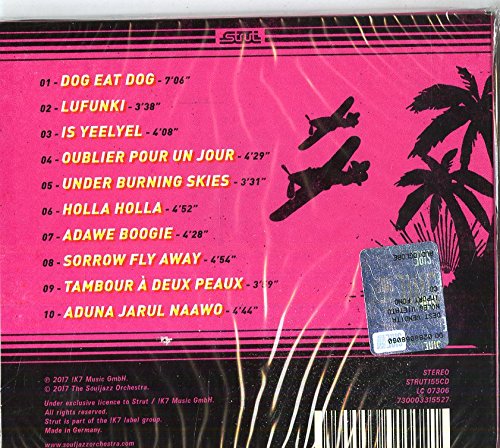
BRUTTER-REVEAL AND RISE.
Brutter-Reveal And Rise.
Label: Bureau B.
Ever since the birth of popular music, there’s been many examples of brother forming bands and enjoying successful musical careers. Two of the earliest examples were The Everly Brothers and the Beach Boys. Before long, they were joined by The Kinks, Creedence Clearwater Revival, Sly and The Family Stone, The Stooges, The Allman Brothers Band, AC/DC, Van Halen and Devo. Each and every one of these bands enjoyed successful careers. However, it wasn’t all brotherly love. Sometimes, sibling rivalry resulted in infighting and backbiting, That was certainly the case with the next generation of brothers who decided to embark upon musical careers together.
Especially Jim and William Reid, who founded the Jesus and Mary Chain in East Kilbride, Scotland in 1983. Over the next three decades, there was many a time when brotherly love was lacking. So much so, that on several occasions, the Reid brothers came to blows. It was no surprise that eventually, in 1999, the Jesus and Mary Chain spilt-up.
Jim and William Reid weren’t the only brothers in high-profile bands that didn’t get along. At one point, Chris and Rich Robinson of The Black Crowes couldn’t even stand to be in the same room as each other. Fortunately, the Reid and Robinson brothers are in the minority.
Over the last fifty years, many successful bands have featured brothers. Recently, this includes post rock pioneers Radiohead, Kings of Leon and The National which features two sets of brothers. Each of these bands have enjoyed successful careers. However, it’s not just in Britain and America that brothers form bands together.
It’s a similar case in Norway, where there’s been several instances of brothers forming bands together. This includes Black Moon Circle and more recently, Brutter, which was formed by two members of Norway’s most musical family…the Wallumrød’s.
The Wallumrød family is from Kongsberg in Norway. That was where Christian Wallumrød was born on the ’26th of April 1971. Just over two years later, and Fredrik Wallumrød was born on the ’21st’ of September 1973. Nearly six years later and Susanna Wallumrød the third and final member of the Wallumrød musical dynasty was born on the ’23rd of June 1979. Little did Mr. and Mrs Wallumrød know that each of their three children would go on to enjoy successful musical careers.
Both pianist Christian Wallumrød and his younger brother Fredrik Wallumrød who is a drummer, were educated on the Jazz Program at Trondheim Musikkonservatorium. This stood the brothers in good stead as they embarked upon musical careers.
As 2015 dawned Christian Wallumrød and Fredrik Wallumrød were both established and successful musicians. Although both were from a jazz background, the two brothers had worked on a variety of different projects over the past three decades. Both brothers were comfortable switching between musical genres as they embarked upon new projects. They had plenty of experience over the years.
Especially Christian Wallumrød who had over 100 credits to his name. Over the past three decades, Christian Wallumrød had worked as sideman and collaborated on numerous albums. He had also led the Christian Wallumrød Trio, the Christian Wallumrød Ensemble and more recently, embarked upon a solo career when he released his debut album Pianokammer on Hubro Music in January 2015. Christian Wallumrød had an impressive CV.
So did his younger brother Fredrik Wallumrød. Having graduated from Trondheim Musikkonservatorium Fredrik Wallumrød and bassist Vemund Stavnes started the jazz electronica band Squid together. Later, the pair joined the rock band Span and featured on their debut album Mass Distraction in 2003. It reached number five in the Norwegian charts. Two years later, Span released Vs. Time in 2005 and it reached number four in the Norwegian charts. Alas, Vs. Time was Span’s swan-song and the start of a new chapter for Fredrik Wallumrød.
Since then, Fredrik Wallumrød has collaborating with a number of different musicians including Karl Seglem, Trygve Seim, Solveig Slettahjell, Jarle Bernhoft, Lene Marlin and Maria Mena. In 2009, Fredrik Wallumrød worked with his sister Susanna Wallumrød on her new album Susanna and The Magical Orchestra-3.
After that, Fredrik Wallumrød was a member of Container and El Caco when they released new albums. More recently, Fredrik Wallumrød has been a member of the metal band Dog Almighty. They’ve still to release their debut album, unlike another band Fredrik Wallumrød is a member of…Brutter.
Brutter is a collaboration between brothers Christian Wallumrød and Fredrik Wallumrød. This was a high-profile collaboration between two of the leading lights of the Norwegian music scene. Despite the personnel involved, Brutter was a relatively low-key release. When Brutter was released by Hubro Music on the ‘14th’ August 2015, it was a limited edition vinyl release. The album was available digitally, but this critically acclaimed album wasn’t released on CD. That has changed for Brutter’s sophomore album.
Nearly two years later, and Brutter return with their sophomore album Reveal and Rise on Hubro Music. Just like Brutter, it’s been released on vinyl. However, included within the vinyl version of Reveal and Rise is a CD version of Brutter’s sophomore album. This is the best of both worlds for music fans, as not everyone owns a turntable. What music fans will discover is an ambitious, playful, witty and engaging album from Brutter, who pose several questions on Reveal and Rise.
This includes when is a beat not a beat, and can arrhythmia be rhythmic too? These are just two questions posed by Brutter during the course of Reveal and Rise. They also wonder how some sounds are regarded as music, while others are disregarded as mere noise? Brutter even go as far as to pose questions about how people listen to music nowadays? These are just a few of the far-reaching and fascinating questions that Brutter pose Reveal and Rise, which is album anti-techno which challenges accepted musical norms.
Reveal and Rise finds Brutter challenging the accepted wisdom of German philosopher, sociologist, and composer Theodor W. Adorno. He was a leading member of the Frankfurt School of critical theory, and is best known for his critical theory of society. As a composer, Theodor W. Adorno also wrote widely about music. When Theodor W. Adorno referenced the commercial swing or dance music he took for jazz he spoke about: “the undisputed predominance of the beat.” This is something Brutter challenge on their album of anti-techno, Reveal and Rise.
On Reveal and Rise, Brutter set about to liberate the organisation and repetition of sounds from traditional musical measures. They also extend the range of permissible instruments or noises, and can include a range of new instruments or myriad of disparate noises. In doing this, Brutter created what’s essentially their unique and inimitable version of avant-garde electronica.
In Brutter’s brave new world of avant-garde electronica, all notes are regarded as equal. Brutter added to this musical utopia a variety of effects-laden distressed electronic drumbeats, disco handclaps and bursts of air pressure. The final piece of this musical jigsaw are a myriad of found and industrial sounds. All that is left is for Brutter to put these final pieces of this musical jigsaw in place. It then become Reveal and Rise, which is essentially Brutter’s unique take on industrial funk.
Reveal and Rise is no ordinary album of industrial funk. Instead, it’s been deconstructed and reconstructed. That is not all. Brutter’s take on industrial funk is much slower. They drop the tempo as strange, unconnected and unconventional rhythms invite disjunctive movement. The result is music that has a cinematic sound, but could just as easily, be the soundtrack contemporary dance piece.
Brutter’s Reveal and Rise could be a fitting followup to the Dadaist post-Cubist art film Ballet Mecanique. It was released in 1924 and was directed by Fernand Leger, and featured a soundtrack written by George Antheil. Ballet Mecanique is remembered for its machine-like rhythms, which were way ahead of its time. Nearly a century later, and Brutter have released an album that picks up where the soundtrack to Ballet Mecanique left off.
That is quite an achievement, as Brutter only spent three days recording Reveal and Rise. Three tracks were recorded at MIR, on September ’26th’ 2016. The other five tracks were recorded at Amper Tone Studio, between October ’24th’ and ’25th’ 2016. Reveal and Rise was then mixed at Amper Tone Studio, between January ‘2nd’ and ‘3rd’ 2017. Later in January 2017, Reveal and Rise was mastered by Helge Sten at Audio Virus Lab. All that remained was for Brutter to release their sophomore album Reveal and Rise later in 2017.
When Reveal and Rise was released, it was to plaudits and praise. Critics discovered an ambitious and cerebral album of anti-techno that featured playful, witty and engaging music. Reveal and Rise was also a captivating fusion of avant-garde electronica and industrial funk. These were the main ingredients on Reveal and Rise. However, Brutter also incorporate elements of dub, experimental music, free jazz, industrial, Musique Concrète and Nordic Wave on Reveal and Rise. There’s even a move towards a reggae groove on the album opener Easier Listening. After that, it’s a case of expect the unexpected.
That is the case throughout Reveal and Rise, as Brutter unleash an array of drum machines, synths and electronics. They also add to their musical arsenal a myriad of found and industrial sounds. These become part of the eight multilayered soundscapes on Reveal and Rise. Within each of these multilayered soundscapes are many secrets, aplenty, awaiting discovery. This takes time and patience. With each listen these innovative soundscapes reveal more of their secrets.
Eventually after several listens, Reveal and Rise has revealed its many secrets. By then, it’s apparent that the Wallumrød brothers have created a truly ambitious, engaging and genre-melting album of inventive and innovative soundscapes. They feature music that veers between dubby and spacious to eerie, futuristic and otherworldly. However, two words describe many of the tracks industrial and cinematic.
That is the case on several tracks on Reveal and Rise, including Mi Tek No, Stand To Downfalls, Hide and Sink and Fallfinish there’s an industrial sound. There’s also a cinematic sound to several of the soundscapes on Reveal and Rise. Other times, the soundscapes sound as if they would be perfect for contemporary dance, and it sounds as if Brutter have been asked to compose the followup Ballet Mecanique to.
Sometimes, these soundscapes lumber along, like a man machine lacking in co-ordination. Partly, that is because the tracks have been slowed down. This results in their lack of conventional rhythm. Instead, it’s as if there’s a randomness during these soundscapes. Especially on Push Push where an array of disparate sounds emerge seemingly at random from the soundscape. This would be perfect for contemporary dance, and would allow the dancer to follow in Brutter’s footsteps as they push musical boundaries to their limits. That is what Brutter do throughout Reveal and Rise.
They also throw curveballs and spring surprises that catch the unsuspecting listener unaware. That is the case on Haydnsikh which closes Reveal and Rise. Again, a variety of found and industrial sounds are unleashed seemingly at random. Later, the randomness dissipates and is replaced by a much more regular and almost mesmeric sound. This shows another side to Brutter’s music on Reveal and Rise which is over after just 34.34.
Straight away, the temptation is to reach over and press play and immerse oneself in the delights of Reveal and Rise which is by far, Brutter’s most ambitious, cerebral and innovative, genre-melting musical adventure. Soon, Reveal and Rise is once again revealing its secrets, and the music is playful, witty and engaging. The music is on Reveal and Rise also inventive as brothers Christian Wallumrød and Fredrik Wallumrød manipulate an array of sounds unsung sonic trickery and sleight of hand. Reveal and Rise is a truly ambitious and groundbreaking album from Christian Wallumrød and Fredrik Wallumrød.
They’re among the leading lights of the Norwegian music scene, and enjoyed long and successful careers. Christian Wallumrød and Fredrik Wallumrød pose a series of questions on Reveal and Rise, and challenge accepted musical norms. That is what one would expect of the Wallumrød brothers who were trained at one of Norway’s most prestigious musical institutions. They also imagination run riot, on Reveal and Rise which is the much-anticipated and innovative sophomore album from Brutter, where brothers Christian Wallumrød and Fredrik Wallumrød create an album of anti-techno that is ambitious, cerebral, playful, witty and engaging.
Brutter-Reveal And Rise.
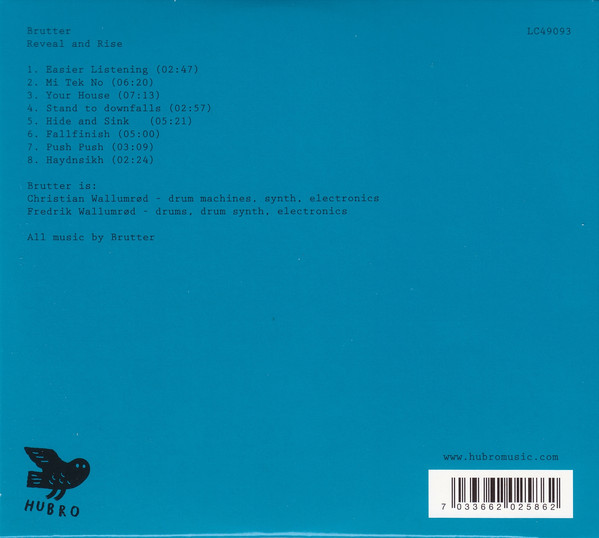
BROCKMANN//BARGMANN-LICHT.
Brockmann//Bargmann-Licht.
Label: Bureau B:
Right up until 2013, guitarist Franz Bargmann and keyboardist Timm Brockmann were two-thirds of Berlin based Camera, who were by then, one of the leading lights of the Neo Krautrock scene. They had already released two albums in 2012, Live At HBC and their criticality acclaimed studio album Radiate. Critics were forecasting a great future for Camera, who were clearly band that were going places. That was until Franz Bargmann was asked to work with one of the true legends of German music…Michael Rother.
The former Kraftwerk, Neu! and Harmonia guitarist was looking for a guitarist to join his touring band. Michael Rother had identified Franz Bargmann as the guitarist he wanted to add to his touring band. He knew Franz Bargmann and watched him play many times when Camera they opened for him. Franz Bargmann had made an impression on Michael Rother.
For Franz Bargmann this was the opportunity of a lifetime, as Michael Rother’s music was more popular and he was constantly touring and playing sellout shows across the globe. However, Franz Bargmann was a member of a successful band who had a bright future ahead of him. It was a difficult decision, and one he would take with a heavy heart.
Eventually, and after much thought, Franz Bargmann made the decision to join Michael Rother’s band where he would play alongside La Düsseldorf drummer Hans Lampe. For Franz Bargmann this was the start of a new and exciting chapter in his career.
Losing Franz Bargmann was a huge setback for the two remaining members of Camera. Still Camera continued to play live and recorded their second studio album Remember I Was Carbon Dioxide in 2014. It was released to critical acclaim in September 2014, with Remember I Was Carbon Dioxide being hailed as Camera’s finest hour.
Camera was by then, one of the top bands in the Neo Krautrock scene. They were also a band that stood out from the crowd. This was partly down to Camera’s ability to improvise around a Motorik beat. The result was innovative, inventive and imaginative music that was starting to find a wider audience. Despite that keyboardist Timm Brockmann decided to leave Camera.
Having left Camera, Timm Brockmann decided that have wanted to concentrate on studio work. That was how Timm Brockmann came across Boris Wilsdorf, who has been Einstürzenden Neubauten’s engineer and in-house producer ever since. Soon, Timm Brockmann would be following in Boris Wilsdorf’s footsteps.
An opportunity arose for Timm Brockmann to become the personal engineer for cult British musical trio and underground icons Tiger Lillies. They had previously toured with Einstürzenden Neubauten in 2007 and had honed a unique sound that combined pre-war music Berlin with the ferocity of British punk. Timm Brockmann embraced this new role, but in 2015, rejoined the group he left a year earlier, Camera.
During sessions recorded during 2015 and early 2016, Camera’s third studio album Phantom Of Liberty started to take shape. It was released to widespread plaudits and praise in August 2016. Camera was back and back with what many critics regarded as their best album.
By then, Franz Bargmann and Timm Brockmann were already working on their first album together at Boris Wilsdorf’s studio. The first session took place in January 2016, with Franz Bargmann arriving with s guitars, e-bows and the magic ingredients to what the atmosphere he adds to Licht. Meanwhile, Timm Brockmann’s brought along synths, keyboards and machines. This included a drum computer. However, when it came to record Schatten, a decision was made to dispense with the drum computer and bring onboard Achim Färber of Automat and Project Pitchfork. He added imposing, soaring, tribal drum patters which combined with the sub bass and washes of guitar. This was a potent combination and added a degree of drama and tension to this cinematic soundscape. Achim Färber’s addition was a masterstroke and transformed the track.
As the recording sessions continued in Boris Wilsdorf’s studio, some of the time was spent experimenting. Franz Bargmann and Timm Brockmann pushed musical limits to their limit, and sometimes way beyond. Other times, songs were recorded then rearranged. Sometimes they were layered vertically, other times they were sat side by side. This almost random approach to recording and arranging sometimes worked, and tracks were transformed.
These transformations were embraced, especially on one track that found its way onto Licht, Prisma. It features different mixes of the track which essentially, comprised different layers of music. They were structured as overlays, on Prisma which is one of twelve inventive instrumental soundscapes on Licht which was completed in April 2017.
Six months after the recording of Licht was completed, Hamburg based Bureau B will release the first album from the Brockmann//Bargmann on ‘20th’ October 2017. Licht is another ambitious album from the two musical pioneers Brockmann//Bargmann. They follow in the footsteps of another pioneering German duo,…Cluster.
Kluster, Cluster and Qluster have obviously influenced Brockmann//Bargmann. That can be heard on Licht. So can the influence of So Harmonia, Neu! and Kraftwerk. Other influences include Brockmann//Bargmann’s contemporaries Ulrich Schnauss and Rival Consoles. However, on other tracks, Camera’s influence shines through. That is no surprise. Nor is the fact that Licht is an album innovative, inventive and imaginative music.
That becomes apparent from the opening track, Aura. It’s slow, spacious and understated. A keyboard wheezes before crystalline, guitars chirp, cheep and sometimes, shimmer. They take centre-stage and create a beautiful, dreamy and captivating soundscape. Although it only lasts 1.26, it;s more than enough to whet the listener’s appetite for the rest of this musical feast.
From the opening bars of Deepmind effects laden keyboards add a degree of urgency. Meanwhile, drums pound and mesmeric synths sweep and swirl. Soon, a dance-floor friendly sound has emerged. This is partly due to the swathes of synths that dance above the pounding beat, They play their part in an anthemic sounding dance-floor filler.
Softarps marks a return to a much more understated sound. Again, it’s slow and spacious with instruments flitting in and out of this minimalist ambient soundscape. This includes a bursts of piano, a droning organ and chirping cheeping guitar. Later, washes of guitar shimmer and glisten, and are joined by strings. They add a melancholy and ruminative sound to this beautiful, emotive, ambient soundscape.
The tempo rises on Horizont as a Motorik beat powers the soundscape along. Meanwhile, washes of guitar and soon, synths are added to this carefully crafted soundscape. This includes a bass synth, while a searing guitar join washes of synths and swathes of strings as the genre-melting soundscape reveals its secrets. As it does, the music veers between ethereal, elegiac and rocky, to melodic and memorable. It’s a track the listener won’t forget in a hurry.
Prisma shimmers and shivers as it meanders along, before taking twists and turns over nearly six minutes. For part of that time, it shimmers and glistens and takes on an ethereal sound. Later, the soundscape swells and then drones before becoming dramatic, moody and broody. However, the best way to describe Prisma is cinematic, and guaranteed to paint pictures in the mind’s eye.
Keyboards wheeze as a piano in pounded on Sylvester. Meanwhile, drums gallop along, as if in a race to reach the finishing line. Before that, the rest of the soundscape veers between ethereal to discordant, dark and dramatic to eerie and otherworldly as Sometimes, effects are unleashed and transform the soundscape. Later, a bass synths replicates the sound of small plane as it soars high above the soundscape. It’s powered along by a mesmeric Motorik beat, and is joined by jagged synths and later, a scorching guitar. It cuts through the arrangement and combines with futuristic synths as Brockmann//Bargmann make good use of their sonic palette and create another evocative cinematic soundscape.
Straight away, Spektrum has a ruminative sound as guitars chirp and cheep as the soundscape meanders along. The guitars are layered and effects have been added as this ambient soundscape continues to reveal its secrets and beauty. This it continues to do right up until the closing notes.
Very different is Muezzin, which has a much busier and urgent genre-melting sound. The drums provide a thunderous 4/4 beat, while layers of synths as a distant vocal barks out instructions. They’re joined stringed instruments. Then 2.12 the drums drop out, and the bass and stringed instruments, enjoy their moment in the sun. Still there’s an element of drama and urgency. Especially when Brockmann//Bargmann briefly drop the drums back in and toy with this listener. They tease and tantalise the listener and show another side to their music.
Schatten features Achim Färber of Automat and Project Pitchfork, who adds imposing, soaring, tribal drum patters. They also add a degree of drama as they combine with the sub bass and washes of guitar. This proves to be a potent combination, and adds to the degree of drama and tension as this ten minute epic cinematic soundscape unfolds and reveals its sonic secrets.
A crystalline guitar shimmers and glistens on Meer, as a piano plays slowly and deliberately. Meanwhile, reverb is added to the guitar as the piano combines drama and darkness as Brockmann//Bargmann carve out a poignant, powerful and ethereal soundscape.
Dramatic and cinematic describes Puls, which is without doubt, one of the most evocative tracks on Licht. It paints pictures as it unfolds. For the first 2.20 it’s as if Brockmann//Bargmann are replicating the sound of a battle in a distant land. Explosions can be heard as synths add a degree of tension. Then as a bass synth enters, a calmness starts to descend. Soon, it’s as if a plane climbs high into the night sky and beats a hasty retreat as swathes of synths provide a backdrop. They play their part in the sound and success of one of the most cinematic soundscapes on Licht.
Hyper which closes Licht lasts over twenty minutes. For the first 2.44 the music is light, airy, ethereal and hopeful as it meanders melodically along. There’s even a hint of drama as Brockmann//Bargmann experiment with a variety of effects and sounds assail the listener as panning is used effectively. Then at 2.45 there’s silence, and this lasts until 17.36. After nearly fifteen minutes of silence Brockmann//Bargmann return. By then swells of dramatic music are unleashed and assail the listener. It’s an impressive and breathtaking sound as it reaches a crescendo. Meanwhile, the listener is meant to wonder what they’ve missed in the intervening fifteen minutes? The answer to that is nothing, with fifteen minutes of silence Brockmann//Bargmann’s homage to John Cage’s 4′33. That fifteen minutes of silence can be played by musicians of all ages, regardless of their experience and talent. However, the rest of this captivating soundscape takes years of experience to replicate.
Licht is Brockmann//Bargmann’s debut album, which will be released by Bureau B on the ‘20th’ of October 2017. It finds the two friends and pioneering musicians create a carefully crafted album of genre-meting soundscapes. Brockmann//Bargmann flit between and combine elements of ambient, avant-garde, Berlin School, classical, electronica, experimental, Krautrock, post rock, psychedelia and rock. Seamlessly, disparate musical genres melt into one, on an Licht, which is a captivating musical journey.
The twelve tracks on Licht veer between broody and moody to dark and dramatic, to elegiac and ethereal, to eerie and otherworldly. Other times, the music is atmospheric and evocative, before becoming emotive and uplifting. Sometimes, the music is dance-floor friendly, melodic and memorable as Brockmann//Bargmann show another side to their music. Then other times, the music on Licht becomes ruminative, thoughtful and thought-provoking. Especially on some of the more dramatic and cinematic tracks, including Prisma, Sylvester, Schatten and Puls. They paint pictures and set the listeners imagination racing. These tracks sound as if they belong on soundtracks. Maybe that is what the future holds for Brockmann//Bargmann?
Licht is the debut album from Brockmann//Bargmann, and marks the start of a new chapter for the duo. They’ve previously recorded together as Camera. Their influence can be heard on Licht. So can the influence of Brockmann//Bargmann’s contemporaries Ulrich Schnauss and Rival Consoles. Other influences include Kluster, Cluster, Qluster, Harmonia, Neu! and Kraftwerk. However, for much of Licht, Brockmann//Bargmann set about forging their own unique and inimitable sound on Licht’s twelve genre-melting soundscapes.
Musical mavericks Brockmann//Bargmann took sixteen months to write, record, mix and master Licht. It marks a new beginning for two Berlin based musicians. Now six months after they completed Licht in April 2017, Brockmann//Bargmann will release Licht, which is their first album of carefully crafted soundscapes. They feature sonic pioneers Brockmann//Bargmann pushing musical boundaries on Licht, which is ambitious album of inventive, innovative and imaginative soundscapes. The soundscapes are also evocative and cinematic, as Brockmann//Bargmann showcase their versatility and considerable talents on their much-anticipated debut album Licht.
Brockmann//Bargmann-Licht.

THOS. RAPP AND PEARLS BEFORE SWINE-ONE OF FOLK MUSIC’S BEST KEPT SECRETS.
Thos. Rapp and Pearls Before Swine-One Of Folk Music’s Best Kept Secrets.
When Pearls Before Swine released their fifth album City Of Gold in April 1969. it was the first album credited to Tom Rapp and Pearls Before Swine. This seemed only fair, as Tom Rapp was the only original member of Pearls Before Swine left. The rest of the band left en masse in 1969, before Pearls Before Swine signed to Reprise Records. Since then, Pearls Before Swine consisted of Tom Rapp, his wife Elisabeth and session musicians that were brought onboard for recording sessions and tours. It was no surprise that Tom Rapp wanted equal billing with Pearls Before Swine. However, that hadn’t always been the case.
Pearls Before Swine was founded by Tom Rapp in Melbourne, Florida in 1965. The nascent band featured Tom Rapp and his high school friends Wayne Harley, Lane Lederer and Roger Crissinger. Tom Rapp quickly became the band’s songwriter-in-chief, and wrote the material that would feature on the demo that Pearls Before Swine sent to the avant-garde label ESP-Disk. By then, the band were sporting the name Pearls Before Swine, which they took from a quotation in The Bible (Matthew. 7:6).
Not long after sending their demo to ESP-Disk, Pearls Before Swine were offered a recording contract by the label. This was what every new band dreamt of, and Pearls Before Swine signed on the dotted line. Soon, they began work recording their debut album, One Nation Underground with producer Richard L. Alderson.
One Nation Underground.
While Pearls Before Swine were a four piece band, they didn’t have a drummer. So session drummer and percussionist Warren Smith was drafted in before work began on One Nation Underground at Impact Sound, in New York.
The sessions began on the ‘6th’ of May 1967, and were scheduled to last just four days. The band planned to record ten songs, including the six penned by Tom Rapp. He had written Another Time, (Oh Dear) Miss Morse, Drop Out, Morning Song, Regions Of May and Uncle John. Lead vocalist and guitarist Tom Rapp also two songs cowrote Ballad To An Amber Lady and I Shall Not Care. It took just four days for Pearls Before Swine to record One Nation Underground, and the session was completed on ‘9th’ May 1967.
Five months later, and Pearls Before Swine released their debut album One Nation Underground. Critical acclaim accompanied the release of this minor psychedelic folk classic. When One Nation Underground was released, it was soon, well on its way to becoming ESP-Disk’s most successful recording. It’s thought that One Nation Underground sold anywhere between 100,000 to 250,000 copies. This should’ve proven profile for Pearls Before Swine.
Alas, contractual problems meant that Pearls Before Swine received very little in the way of royalties. Later, a rueful Tom Rapp alleged: “we never got any money from ESP. Never, not even like a hundred dollars or something.” For Pearls Before Swine this must have been disheartening, especially as they were still under contract to ESP-Disk.
Balaklava.
In early 1968, Pearls Before Swine’s begun work on their sophomore album, Balaklava. By then, there had been a change in the band’s lineup. Jim Bohannon had replaced Roger Crissinger. Meanwhile, Tom Rapp continued in his role as Pearls Before Swine’s songwriter-in-chief.
For Balaklava, Tom Rapp wrote eight of the ten songs on the album and cowrote Translucent Carriages. The other song on the album was a cover of Leonard Cohen’s Suzanne. These songs were recorded with producer Richard L. Alderson[ at Impact Sound in New York.
When the recording sessions began, Pearls Before Swine were augmented by session musicians. They added flute, English horn, piano, organ, guitar and strings. Overdubbing was used extensively, with recordings of Florence Nightingale and the original buglers from the Battle of Balaclava in 1854 added to Balaklava. They played their part in an album of evocative, cerebral and complex music which was full of allegorical classical references.
Just over a year after the release of One Nation Underground, Balaklava was released to the same critical acclaim as its predecessor in November 1968. Critics marvelled at the innovative way songs were arranged and the eclectic nature of instruments deployed on Balaklava. It was an album that the band were extremely proud of, and which critics hailed as more than a fitting followup to One Nation Underground. However, despite the critical acclaim Balaklava received, all wasn’t well within Pearls Before Swine.
Not long after the release of Balaklava, Tom Rapp managed to negotiate his way out of the contract with ESP-Disk. This left him free to sign with Reprise Records, which was home to many folk and folk rock artist. However, the rest of Pearls Before Swine didn’t follow Tom Rapp to Reprise Records and called time on their career with the band.
The rest of Pearls Before Swine had never played live during their time together. This wasn’t ideal for a band trying to make a breakthrough. After that, Pearls Before Swine consisted of Tom Rapp his wife Elisabeth and session musicians that were brought onboard for recording sessions and tours. The first album that this new lineup would feature on was, These Things Too.
These Things Too.
Having signed to Reprise Records, Tom Rapp was keen to get to work on the next Pearls Before Swine album. This would eventually become These Things Too, which marked the start of the Reprise Records’ years.
For These Things Too, Tom Rapp wrote ten new songs. He also wrote Green And Blue and Mon Amour with his wife Elisabeth and added music to W. H. Auden’s poem Footnote. The only cover version on the album was Bob Dylan’s folk anthem I Shall Be Released. It was covered in the familiar surroundings of Impact Sound, in New York.
This was the same studio where Pearls Before Swine recorded their first two albums. They were produced by Richard L. Alderson, who returned to produce These Things Too. He helped put together the session musicians who would feature on the album. One of the musicians Richard L. Alderson brought onboard was Jim Fairs who previously, had been a member of the garage band The Cryin’ Shame. Jim Fairs played on These Things Too and co-produced the album. It featured jazz drummer Grady Tate, bassist Bill Salter, electric violinist Richard Greene, who later would join Seatrain. This small, but tight and talented band recorded the fourteen songs that became These Things Too.
The release of These Things Too was scheduled for September 1969. Before that, critics had their say on Pearls Before Swine’s Reprise Records’ debut. While the album was well received by critics, it didn’t receive the same critical acclaim as previous albums. Critics described These Things Too as a mystical and “dreamy” sounding album. Later, it turned out a reason for the album’s dreamy sound. Tom Rapp later admitted that These Things Too was the first Pearls Before Swine album that: “reflected drug use in the writing of the songs.” This was a first for Pearls Before Swine.
Nowadays, These Things Too has been reappraised by critics, and is regarded as one of Pearls Before Swine’s most underrated albums.
It was also one of the Pearls Before Swine’s least successful albums. These Things Too didn’t sell in vast quantities, and was a disappointing start to Pearls Before Swine’s time at Reprise Records.
The Use of Ashes.
By the time that Tom Rapp began writing Pearls Before Swine fourth album, The Use of Ashes he and his wife Elisabeth were living in the Netherlands. That was where Elisabeth was born and brought up. Tom and Elisabeth Rapp had sailed from New York to the Netherlands on the maiden voyage of the QE2. This was idyllic journey and one that was sure to provide inspiration for Tom Rapp.
On their arrival in the Netherlands, Tom and Elisabeth Rapp spent several months living in a house near Utrecht. That was where Tom Rapp began writing The Use of Ashes.
Most of the ten songs that feature on The Use of Ashes were written by Tom Rapp in Utrecht. It was the first album he had written entirely himself. Elisabeth is credited as having helped pen God Save The Child, while Rocket Man was based on a short story by Ray Bradbury. Rocket Man was heard by Bernie Taupin, and would inspire him to write Rocket Man for Elton John. That was still to come.
Before that, a decision was made to record The Use of Ashes in Nashville. Peter H. Edmiston was brought onboard to produce the album, and some of Nashville’s top sessions musicians would feature on The Use of Ashes. This included many of the members of the country rock band Area Code 615. They made their way to Woodland Studios, in Nashville where they spent much of March 1970 was spent recording material for The Use of Ashes. By the time the sessions were over, Pearls Before Swine had more than enough music for one album. However, the albums wasn’t complete and some sessions took place at Impact Sound, in New York. After that, The Use of Ashes was ready for release.
In August 1970, The Use of Ashes was released to widespread critical acclaim. Critics hailed the album a return to form from Pearls Before Swine. They had reached the same heights as One Nation Underground and Balaklava. However, some critics preferred The Use of Ashes which featured country rock, folk rock and psychedelic folk. It was a much more eclectic album, which featured some of Tom Rapp’s finest songs. Especially The Jeweller, which was later recorded by This Mortal Coil, the cinematic Rocket Man and the jazz-tinged, playful Tell Me Why? One of the highlights was Riegal, a sobering song that was inspired by a newspaper article that told how 4,000 prisoners of war died after the prison ship MS Rigel was sunk. It’s a poignant song, that shows just how Tom Rapp was maturing as a songwriter. The Use of Ashes featured some of Tom Rapp’s finest songs. He seemed to have come of age as a songwriter, on what was Pearls Before Swine’s most successful album for Reprise Records. Things were looking up for Pearls Before Swine.
City Of Gold.
When it came time for Pearls Before Swine to begin work on their third album, and fifth album overall, Tom Rapp announced that he wanted equal billing with the band he had founded six years earlier in 1965. From City Of Gold, onwards the band would be billed as Thos. Rapp and Pearls Before Swine.
Much of what would become City Of Gold had already been recorded in Nashville, during the sessions for The Use of Ashes’ album. Further sessions would take place at Impact Sound, in New York with Tom Rapp taking charge of production. Eventually, eleven tracks featured on City Of Gold.
This included seven Tom Rapp compositions, including Once Upon A Time, Raindrops, City Of Gold, The Man, Casablanca Wedding and Did You Dream Of? Tom Rapp also added music to William Shakespear’s Sonnet #65. They were joined by cover versions Leonard Cohen’s Nancy, Jacques Brel and Rod McKuen’s Seasons In The Sun and Judy Collins My Father. These tracks became City Of Gold, which was Pearls Before Swine’s fifth album.
Once Upon A Time was scheduled for release in April 1971, and was a mixture of country folk, country rock and folk rock. The album was well received by critics, who noticed that Tom Rapp was continuing to mature as a singer and songwriter. He had come of age as a songwriter on The Use Of Ashes, and this continued on Once Upon A Time, much of which was recorded at the same time.
Just like his two previous albums for Reprise Records, Once Upon A Time didn’t sell in vast quantities. Pearls Before Swine had a loyal fan-base, but their music deserved to reach a much wider audience. That hadn’t happened so far. Tom Rapp was hoping that things would change when …Beautiful Lies That You Could Live In was released.
…Beautiful Lies That You Could Live In.
Recording of …Beautiful Lies That You Could Live In had taken place in early 1971, so that Pearls Before Swine could embark on their first tour. That was highly unusual for a band that was formed in 1965. Most bands spent much of their time on the road. However, Pearls Before Swine weren’t most bands.
They were one of music’s best kept secrets, despite releasing five albums. Pearls Before Swine had still to make a breakthrough. Taking the band on the road it was hoped, would introduce Pearls Before Swine to a new audience. So with an all-star band that featured drummer Billy Mundi , guitarist Amos Garrett and pianist Bob Dorough, Tom and Elisabeth Rapp headed out on their first ever tour.
In November 1971, Pearls Before Swine were preparing to release their sixth album …Beautiful Lies That You Could Live In. It featured eleven songs, including nine from the pen of Tom Rapp. Elisabeth Rapp wrote music to A. E. Housman’s Epitaph On An Army Of Mercenaries. The other song on …Beautiful Lies That You Could Live In was a cover of Leonard Cohen’s Bird On A Wire. These songs were recorded at three studios with producer Peter H. Edmiston.
Recording of …Beautiful Lies That You Could Live In took place at A&R Studios and Aura Sound, New York, and at Bearsville Studios in Woodstock. This was where Tom Rapp and Pearls Before Swine recorded an album that moved towards what was a much more orthodox folk rock sound.
When critics heard …Beautiful Lies That You Could Live In, they hailed the album as one of Pearls Before Swine’s best albums. No wonder, as the music was beautiful, enchanting, evocative and captivating. The album opener Snow Queen, Butterflies, Simple Things, Island Lady and Freedom were among the album’s highlight of …Beautiful Lies That You Could Live In. It was a cohesive album that showcased Tom Rapp’s skills as a singer, songwriter and storyteller. Just like on previous albums, he had the ability to breath meaning and emotion into the lyrics and make the songs come to life. This he did on throughout …Beautiful Lies That You Could Live In, which surely, would introduce Tom Rapp and Pearls Before Swine to a much wider audience?
Sadly, that wasn’t to be, and when …Beautiful Lies That You Could Live In was released was a familiar story. The album didn’t reach the wider audience that it so richly deserved. That was despite the popularity of folk rock. It seemed that Tom Rapp and Pearls Before Swine were destined to remain one of music’s best kept secrets.
Especially after Tom Rapp decided to embark upon a career as a solo artist. This came not long after the release of …Beautiful Lies That You Could Live In, Tom Rapp decided to embark upon career as a solo career. This marked the end of the road for Thos. Rapp and Pearls Before Swine.
Tom Rapp’s debut solo album Familiar Songs, was released on Reprise Records in 1972. Despite what was another album of carefully crafted songs, it was a familiar story for Tom Rapp, when the album failed to find an audience. For Tom Rapp, Familiar Songs marked the end of era.
Not long after Reprise Records released Familiar Songs, they parted company with Tom Rapp. He signed to Blue Thumb Records, and released Stardancer later in 1972. Stardancer featured the impassioned underground anti-war anthem Fourth Day Of July. It played its part in an album that won the approval of critics and cultural commentators. Despite this, still, commercial success continued to elude him.
Tom Rapp returned in 1973 with Sunforest, which featured a mixture of folk rock, art rock and jazz. Although Sunforest wasn’t as strong an album Stardancer it showcased a talented a singer-songwriter. When the album was released in 1973, it failed commercially and Tom Rapp’s talents were no nearer to finding a wider audience. For Tom Rapp this was hugely frustrating.
So much so, that after his contract with Blue Thumb Records expired, Tom Rapp turned his back on music. He enrolled at Brandeis University and graduated in 1981. Tom Rapp then enrolled at University of Pennsylvania Law School and three years later, in 1984, embarked upon a career as a civil rights lawyer. This was the start of a successful legal career for Tom Rapp.
It wasn’t until 1997 that Tom Rapp returned to music, when he made a guest appearance at the Terrastock music festival. Although his comeback was successful, still Tom Rapp continued his career as a civil rights lawyer. However, two years later in 1999, Tom Rapp returned with a new album A Journal Of The Plague Year. This was the first album that Tom Rapp had released since Sunforest in 1973. Since then, Tom Rapp hasn’t released a followup to A Journal Of The Plague Year. Instead, he’s concentrated on his successful legal career. Law’s gain is music’s loss.
Twenty years have passed since Tom Rapp released A Journal Of The Plague Year. Since then, his quartet of solo albums and the six albums he released with Pearls Of Swine are starting to find a wider audience. This hopefully, will continue to be the case, as music lovers young and old discover the musical delights ofThos. Rapp and Pearls Before Swine who are one of the folk rock’s best kept secrets.
Thos. Rapp and Pearls Before Swine-One Of Folk Music’s Best Kept Secrets
MOGWAI-EVERY COUNTRY’S SUN-BOX SET.
Mogwai-Every Country’s Sun-Box Set.
Label:Rock Action Records.
Over the last fifty years, the music industry has been transformed beyond all recognition. One of the biggest changes is how the music buyers purchase and listen to music. Back in the late-sixties and early seventies, most people listened to music on vinyl. Usually, younger record buyers started off buying singles, and eventually graduated to albums when their budget permitted. Buying their first album was bit like a rite of passage, and everyone remembers where and when they bought their first album and what it was.
Soon, though, not everyone was buying vinyl. By the early seventies, some cars had were fitted with an eight-track which allowed music lovers to enjoy music on the move. While it enjoyed a degree of popularity, the eight-track never captured the imagination of music lovers in the way the cassette did. It’s something that many people still have fond memories of. Especially after the introduction of the Sony Walkman. This allowed people to enjoy music on the move and even record their own mix tapes. For many people this was a game-changer.
So was the introduction of the compact disc in the early eighties. They offered music lovers perfect sound and were said to be indestructible. Many people were won over by this brave new world and soon, record collectors were offloading their vast collections that they had put together over a many years. These they replaced with compact discs and their promise of perfect sound. This was the start of a new era where perfect sound was within the budget of everyone. It was what everyone wanted. Now they were able to hear music as the artist intended.
Meanwhile, hi-fi fans were celebrating the introduction of a new way to listen to music, the mini disc. Again it offered perfect sound quality, and soon became part of many hi-fi systems. Many people also bought portable mini disc players which allowed them to listen to music on the go. However, the mini disc player was short-lived, and was soon consigned to musical history.
Despite the introduction of the compact disc and mini disc, which meant music fans were able to enjoy perfect sound quality, scientists were working away on a new way for people to listen to music…the MP3. It was far removed from the perfect sound quality of the compact disc. Despite that, a new generation of music fans like the idea of being able to carry vast quantities of music on an iPod of MP3 player. They didn’t care about the inferior quality of the music. Instead, they were more interested in how many songs their iPod or MP3 player held. It was a sad day for music. Suddenly, sound quality no longer mattered for many.
That was the least of many people’s worries as a revolution was underway within the musical industry. It would result in many casualties and the musical landscape was transformed forevermore. By the time the revolution was over, and the music industry took shape how people listened to and purchased music had changed considerably.
Sadly, there are still many so-called ‘music fans’ that listen to MP3s on iPods and phones using cheap ear buds, while other listen through their tinny laptop speakers. For them, music is mere background noise. Thankfully, there are still many people who care about music and indeed sound quality. They’re not satisfied with the MP3s and care about sound quality.
This is reflected in how they buy music. Over the last few years, vinyl has made a comeback and sales are at their highest for twenty years. Many older record buyers are regretting selling their original vinyl collections. There’s even been a resurgence of popularity in the cassette. While CDs sales are nothing like they once were, they’re still one of the most popular ways to listen to music.
Nowadays, when an artist or band releases a new album they take into account the different formats that people prefer and give them a choice of various difference formats.That was the case with Mogwai’s ninth studio album,Every Country’s Sun, which was the thirteenth album of their career. Every Country’s Sun was a multi format release, and was released CD, MP3 and as a two LP set on heavyweight white vinyl. There was also a indies only vinyl edition pressed on clear vinyl, and finally, the limited edition box set of Every Country’s Sun. It’s the latest chapter in the Mogwai story, which began in 1991.
That was when Stuart Braithwaite and Dominic Aitchison first met in Scotland’s musical capital, Glasgow.Four years later, they met drummer Martin Bulloch and formed Mogwai, which film buffs will remember, is a character from the movie Gremlins. Mogwai was always meant as a temporary name, until they came up with something better.
Later in 1995, three become four when guitarist John Cummings joined Mogwai. Since then, John’s role in Mogwai has changed, and he’s now described as playing “guitar and laptop,” as is regarded as the maestro when it comes to all things technical. However, not long after John Cummings joined Mogwai in 1995, the nascent band started honing their sound and making plans for the future.
In 1996, Mogwai founded their own record label Rock Action Records. It would play an important part in the rise and rise of Mogwai over the next twenty-one years. So would Mogwai’s Castle Of Doom Studios, which was cofounded by Mogwai and Tony Doogan in 2005. It’s situated in the West End of Glasgow, and is a home from home for Mogwai, when they record a new album. That was still to come.
Before that, Mogwai released their debut single Tuner on their newly founded label Rock Action Records. Tuner was released to critical acclaim and the NME awarded it their single of the week award. Later in 1996, Mogwai released two further singles. Angels v. Aliens and Summer. By then, Mogwai were well on their way to becoming one of the hottest bands of the late nineties.
Mogwai’s career continued apace in 1997, when they released two more singles.The first of these was New Paths To Helicon Pt. 1, which showed Mogwai growing and maturing as a band. NME agreed, and just like their debut single Tuner, New Paths To Helicon Pt. 1 won NME’s single of the week award. The followup Club Beatroot was also well received by critics. This was the perfect time for Mogwai to record their debut album, Mogwai Young Team.
Mogwai Young Team.
For Mogwai Young Team, Mogwai brought onboard Brendan O’Hare the Teenage Fanclub’s drummer. Another guest artist was Aidan Moffat of Falkirk based band Arab Strap. He added the vocal to R U Still In 2 It, while the rest of Mogwai Young Team consisted of instrumentals. Mogwai Young Team was recorded at Chem 19 studios and produced by two of Scotland’s top producers, ex-Delgado Paul Savage and Andy Miller. Once Mogwai Young Team was completed, it was then released on Scotland’s biggest record label, Chemikal Underground Records.
Before its release, Mogwai Young Team was a hailed as a groundbreaking album of post-rock by critics. They were won over by Mogwai Young Team, and Mogwai were hailed as a band with a big future.
That proved to be a perceptive forecast. When Mogwai Young Team was released on 21st October 1997, sold over 30,000 copies and reached number seventy-five in the UK. The Mogwai Young Team were on their way. However, a few changes were about to take place.
Come On Die Young.
A year later, Mogwai were back in the studio recording their sophomore album Come On Die Young. Much had changed. A new member had joined the band, Barry Buns a flautist and sometimes pianist, who had already played a few gigs with the band. He was invited to become the fifth member of Mogwai. Not long after this, violinist Luke Sutherland joined Mogwai, but not on a full-time basis. This wasn’t the only change.
Recording of what became Come On Die Young was split between New York and Glasgow. This time, they’d forsaken Chem 19 in Blantyre and recorded parts of the album in Rarbox Road Studios, New York. Some sessions took place in Glasgow’s Cava Studios. Producing Come On Die Young was Dave Fridman. For some critics, his addition changed Mogwai’s sound.
Some critics felt his production style resulted in a much more orthodox sounding album. However, others felt that Come On Die You was part of Mogwai discovering their “sound” and direction. Come On Die Young is a much more understated, but also ambient, experimental, multi-textured and melodic. There’s a fusion of ambient, grunge and post rock on Come On Die Young, which was released in 29th March 1999.
On its release, Come On Die Young reached number twenty-nine in the UK. Mogwai it seemed were now on their way to finding their sound and fulfilling the potential that was evident on their debut album. This was apparent with tracks of the quality of CODY and Hugh Dallas s. However, like all innovative bands, Mogwai continued to reinvent their music.
This proved to the case on their eponymous E.P, which includes Stanley Kubrick, which was recorded in the exotic surroundings of Cowdenbeath in Fife. Burn Girl Prom Queen was recorded at Cava Studios, in Mogwai’s hometown of Glasgow. These two tracks were part of E.P., which further enhanced Mogwai’s reputation as post rock pioneers. So did their third album Rock Action.
Rock Action.
Mogwai’s music continued to evolve on their third album 2001s Rock Action. More use was made of electronics on Rock Action. This was part of a process that would continue over the next few albums. There were even more layers and textures on Rock Action, as Mogwai continued to expand their sonic palette. Seven of the songs were instrumentals, while Dial Revenge featured Gruff Rhys of Super Furry Animals. Again, Rock Action was produced by Dave Fridman, while recording took place in New York and at Glasgow’s Cava Studios. Once Rock Action was completed, it became Mogwai’s first album to be released on Play It Again Sam.
Rock Action was released in April 2001, and proved to be Mogwai’s most successful album. It reached number twenty-three in the UK. Critics remarked upon how Rock Action wasn’t as dark an album as its predecessors. That didn’t mean that Mogwai’s view of the world had changed. They were still worldweary which would become a Mogwai trademark.
Six months after the release of Rock Action, Mogwai returned with another single, The My Father My King. It was released in October 2001, and was described “as the companion piece to Rock Action.” A sticker on the cover bore Mogwai’s description of the single as: “two parts serenity and one part death metal.” That was about to change. Soon, they’d be happy people writing happy songs and making a breakthrough into the American market.
Happy Songs For Happy People.
Happy Songs For Happy People was released in 2003, and Mogwai’s evolution continued. Their music continued further down the electronic road. While Mogwai still deployed electric guitars and a drummer, synths were playing a more important role in Mogwai’s music. So were the addition of strings and a piano. They played their part in what was a much more understated album. Part of this change in style was a change of producer.
Tony Doogan was brought onboard as producer, and replaced Dave Fridman. Gone were transatlantic recording sessions. Happy Songs For Happy People was recorded at Cava Sound Studios, Glasgow. On its release in June 2003, Happy Songs For Happy People was well received by critics. Critics drew attention to I Know You Are But What Am I? and Hunted By A Freak, two of the album’s highlights. The critics also welcomed Mogwai’s latest change in style. So did record buyers.
While Happy Songs For Happy People only reached number forty-seven in the UK, it spent a week in the American charts, reaching number 182 in the US Billboard 200. After four albums, Mogwai had broken into the American market. Happy Songs For Happy People it seemed, was a landmark album.
Having made inroads into the lucrative American market, Mogwai didn’t rush their fifth album. It was released three years after Happy Songs For Happy People. There’s a reason for this. They were working on tree separate projects.
The first was their fifth album Mr. Beast. Then there was the first soundtrack they’d written and recorded. This was for the 2006 movie Zidane: A 21st Century Soundtrack. Mogwai also collaborated with Clint Mansell on the soundtrack to The Fountain. Although soundtracks were a nice sideline for Mogwai, their fifth album Mr. Beast was of huge importance. Especially, if it was a commercial success in America.
Mr. Beast.
Recording of Mr. Beast took place at Mogwai’s new studio, Castle Of Doom Studios in Glasgow. Co-producing Mr.Beast with Mogwai, was Tony Doogan. Between April and October 2005, Mogwai honed their fifth album, and after six months, Mr. Beast was complete. It was Mogwai’s most important album.
Everyone realised the importance of Mr. Beast. Mogwai were on a verge of breaking into the American market. Happy Songs for Happy People had got Mogwai’s foot in the door of the American market. Now was the time for the Mogwai Young Team to kick the door of its hinged, and make their presence felt. That was what Mogwai intended to do with tracks like Travel Is Dangerous, Friend Of The Night and We’re No Here. They featured Mogwai at their innovative and creative best. This trio of tracks were part of an album that would please critics, Mr. Beast.
On its release, it was mostly, to critical acclaim. Critics were fascinated at how Mogwai’s music continued to evolve. For Mogwai, standing still was going backwards. Record buyers agreed and expected Mogwai to continually release groundbreaking and innovative. That was what Mogwai delivered.
When Mr. Beast was released on 5th March 2006, record buyers found an album of groundbreaking and innovative music. It climbed thirty-one in the UK. Across the Atlantic, Mr. Beast reached number 128 in the US Billboard 200. Mogwai were now one of Scotland’s most successful musical exports. They were certainly well on their way to becoming Scotland’s most innovative band. This was a title they weren’t going to give up without a fight.
Zidane: A 21st Century Portrait.
Following the release of Mr. Beast, the other two projects that Mogwai had been working on, were released. The first was Zidane: A 21st Century Portrait. This was project that came about in late 2005, when artist Douglas Gordon asked Mogwai to write and record a soundtrack to a film he was making about footballer Zinedine Zidane. This was Zidane: A 21st Century Portrait. Having heard the details of the project, it didn’t take Mogwai long agree to provide the soundtrack to Zidane: A 21st Century Portrait, which gave them their entry into the world of soundtracks.
Mogwai grasped this opportunity, and recorded Zidane: A 21st Century Portrait at their Castle Of Doom Studios. During the sessions, Mogwai recorded ten tracks, which were produced by Tony Doogan. However, when the soundtrack was released, it came baring a secret.
This was the hidden track Untitled, which was a twenty-three minute epic, that featured Mogwai at their most inventive. That was the case throughout Zidane: A 21st Century Portrait. Most critics realised this. However, a few didn’t seem to ‘get’ Zidane: A 21st Century Portrait. Despite the slings and arrows of the critics that didn’t get Mogwai’s introduction into the world of soundtracks, the critics that mattered gave Mogwai the recognition they deserved when Zidane: A 21st Century Portrait was released on 30th October 2006. Then less than a month later, the soundtrack to The Fountain was released on 27th November 2006.
The Fountain.
The Fountain was a collaboration between contemporary classic composer Clint Mansell, string quartet the Kronos Quartet and Mogwai. To some onlookers, it looked like an unlikely collaboration. That wasn’t the case though.
Mogwai had spent December 2005 locked away in their Castle Of Doom Studios with producer Tony Doogan. Other parts of The Fountain project were recorded in New York and Los Angeles. Then once the project was complete, The Fountain was released on 27th November 2006.
When The Fountain soundtrack was released, the reviews were positive. Mogwai’s contribution to the soundtrack had proved vital, while the Kronos Quartet proved a perfect foil the Mogwai Young Team. Mogwai’s lasted soundtrack had enhanced their reputation as the go-to guys for a soundtrack. That would their sideline in the future. However, before they released another soundtrack, Mogwai would release another two albums.
The Hawk Is Howling.
The first of these was The Hawk Is Howling. To ensure they kept their title of Scotland’s most innovative bands, Mogwai returned to the studio where it all began, Chem 19 in Blantyre.
Andy Miller who had co-produced Mogwai Young Team, Mogwai’s debut album was chosen to produce what became The Hawk Is Howling. This was Mogwai’s sixth album and marked a first. It was Mogwai’s first album to consist of just instrumentals. Among them were I’m Jim Morrison, I’m Dead, The Sun Smells Too Loud, Batcat and Scotland’s Shame. They feature the post rock pioneers pushing musical boundaries to their limits, and sometimes, beyond. Once The Hawk Is Howling was recorded, Garth Jones mixed the album at Castle Of Doom Studios in Glasgow. After that, The Hawk Is Howling was ready for release.
The Hawk Is Howling was released on 22nd September 2008. Critics were won over by The Hawk Is Howling. There were no dissenting voices. This was one of Mogwai’s best albums, and it was no surprise it sold well in the UK and America.
On its release, The Hawk Is Howling reached number thirty-five in the UK and number ninety-seven in the US Billboard 200. It seemed with each album, Mogwai’s music evolved and matured. This resulted in even more success coming their way. Would this continue with Hardcore Will Never Die?
Hardcore Will Never Die, But You Will.
For their seventh album, Mogwai returned to Chem 19 Studios in Blantyre, where they hooked up with ex-Delgado Paul Savage. Since he had produced Mogwai’s debut album, Mogwai Young Team Paul had established a reputation as one of Scotland’s best producers.
By then, Paul Savage had worked with everyone from Franz Ferdinand to R.M. Hubbert. However, it was a very different Mogwai Paul encountered. They were very different to the band who recorded Mogwai Young Team Paul. Their music had evolved and was continuing to do so. They’d matured as musicians and embraced the new technology. Hardcore Will Never Die, But You Will was proof of this.
Here was an album of groundbreaking, genre-melting post-rock with attitude. Hardcore Will Never Die, But You Will was also an album not short on humour. Poppy soulster Lionel Ritchie provided the inspiration for You’re Lionel Ritchine. There was also a celebratory sound to Hardcore Will Never Die, But You Will.
The death of Scotland’s nemesis, Margaret Thatcher sparked celebration in Glasgow’s George Square. Hardcore Will Never Die, But You Will, celebrated provided the soundtrack to the celebrations. It was just one track on an album of pioneering, post rock music crammed full of hooks, humour and attitude. Others highlights Mexican Grand Prix, Rano Pano and How To Be A Werewolf . With music of this quality, surely Hardcore Will Never Die, But You Will couldn’t fail?
Before the release of Hardcore Will Never Die, But You Will, Rano Pano was released as a single. On the flip side was Hasenheide, which didn’t feature on Hardcore Will Never Die. . Things it seemed were looking good for Mogwai.
Yet again, Mogwai won over the majority of critics with Hardcore Will Never Die, But You Will. A couple of contrarian critics proved to be mere dissenting voices in the wilderness. Most critics realised that Hardcore Will Never Die, But You Will was one of Mogwai’s finest hours. Record buyers would agree.
Hardcore Will Never Die, But You Will reached number thirty-five in the UK and number ninety-seven in the US Billboard 200. For Mogwai, they were now into their third decade as band and had just enjoyed their biggest album to date. The question was, what would Mogwai do next?
Les Revenants.
The answer to that was Les Revenants, a soundtrack to a French television series. Les Revenants or The Returned, is essentially a television program about zombies, albeit with a twist. Just like similar films, Les Revenants, finds the “undead” returning to the town they lived in. However, the zombies in Les Revenants weren’t how most films portray zombies. Another difference was the way Mogwai were commissioned.
Usually, someone writing a soundtrack can watch the film they’re writing music to. Not Mogwai. They were just shown a few scripts, which gave them an overview of what the series was about. From there, Mogwai wrote thirteen of the fourteen tracks including Wizard Motor and Hungry Face. They’re two of the album’s highlights. The other track on Les Revenants was What Are They Doing In Heaven Today, which was written by Charles Elbert Tilney. These fourteen tracks were recorded by Mogwai, who produced Les Revenants with Neil MacMenamin. Once Les Revenants was finished, it was released in February 2013.
Before Les Revenants was released an E.P. was released. It featured four tracks. That was a tantalising taster of what was to come. After all, Mogwai would approach a soundtrack like Les Revenants in a different manner. They wouldn’t do anything predictable. Les Revenants was a case of expect the unexpected. Critics loved Les Revenants and hailed the album as one of the best albums Mogwai had released. However, Mogwai had other ideas.
Rave Tapes.
Rave Tapes features ten tracks which were written by Mogwai. These tracks were recorded at Mogwai’s Castle Of Doom Studios, in Glasgow. Producing Rave Tapes was ex-Delgado Paul Savage, who had produced previous Mogwai albums and knew how the band worked. This was important, given Mogwai were at last, enjoying the critical acclaim and commercial success their music deserved. Work began on Rave Tapes on the 28th August 2013.
This was like the first day back at school for Mogwai, as they began recording what was their eighth studio album. The lineup of Mogwai has been settled for a few years. This included a rhythm section of bassist and guitarist Dominic Aitchison, drummer Martin Bulloch and guitarists Stuart Braithwaite and John Cummings who also played piano. Barry Burns plays organ, piano and guitar. at Castle Of Doom Studios, Glasgow, Mogwai recorded the ten tracks that became Rave Tapes, which was released on 20th January 2014.
Rave Tapes was one of the most anticipated albums of 2014. The big question was, what direction Mogwai’s music would head? After all, Mogwai’s music never stands still. It’s in a constant state of evolution. That’s no bad thing. Standing still is akin to going backwards in Mogwai’s book. On Rave Tapes, Mogwai’s music continues to evolve. Musical genres and influences melt into one on tracks like Remurdered, The Lord Is Out Of Control and Tell Everyone I Love Them. However, one of the most prominent influences on Rave was Krautrock. Add to this ambient, avant-garde, electronica, experimental, indie rock and rock. We hear different sides to Mogwai on Rave Tapes. Whether it’s fuzzy soundscapes or kicking out the jams, Mogwai didn’t disappoint with Rave Tapes.
Critics agreed. Rave Tapes was released to widespread critical acclaim. Superlatives were exhausted in search of a fitting description of what many felt was Mogwai’s finest hour. Some critics wondered aloud whether Mogwai’s music was mellowing. Others felt that Mogwai were improving with age. Record buyers agreed.
When Rave Tapes was released on 14th January 2014, the album reached number ten in Britain and fifty-five in the US Billboard 200 charts. Rave Tapes became Mogwai’s most successful album in Britain and America. Elsewhere, Rave Tapes sold well across Europe. Mogwai were enjoying the most album of their three decade career. However, it would be two years before Mogwai released a new album. Before that, Mogwai decided to celebrate their twentieth anniversary in style.
Central Belters.
In 2015, Mogwai were celebrating their twentieth anniversary. By then Mogwai were Scottish music’s elder statesmen, A lot had happened to them during the first twenty years of their career. Mogwai have released eight studio albums and three soundtracks. That’s not forgetting there’s countless singles, E.P.s and two remix albums. It was official, Mogwai had been one of the hardest working bands in music between 1995 and 2015. They were also one of the most innovative.
It was no surprise that critical acclaim and commercial success accompanied the release of each Mogwai album. Suddenly, the Glasgow-based were enjoying success not just in Britain, but in Europe and in America. Now was the perfect time for Mogwai to release Central Belters, a three disc career retrospective box set. Central Belters tells the story of the first twenty years of Mogwai.
With Mogwai not planning to release a studio album or soundtrack during 2015, Central Belters was a perfect stopgap. It was released on 23rd October 2015, and reached number forty in Britain, Central Belters sold reasonably well across the Europe, and was a perfect primer to the first twenty years of Mogwai’s career. The next chapter of Mogwai’s career began with a soundtrack album, Atomic.
Atomic.
Having enjoyed celebrating their twentieth anniversary during 2015, Mogwai got back down to business on 1st April 2016. That was when they released Atomic, their first new album in over two years. Atomic was Mogwai’s fourth soundtrack album,
During the summer of 2015, Mogwai had provided the soundtrack Mark Cousins documentary Atomic: Living In Dread and Promise. It was aired on BBC Four, and was a very personal memoir of growing up in the nuclear age. Using archive film, Mark Cousins constructed an impressionistic cinematic memoir of what was a harrowing time.
Post rock pioneers Mogwai were commissioned to write the soundtrack to Atomic: Living In Dread and Promise. It was hailed as the perfect backdrop to Atomic: Living In Dread and Promise, which was a personal and poignant cinematic memoir. However, after the documentary was aired in the summer of 2015, Mogwai decided to re-record Atomic.
At their Castle Of Doom Studios in Glasgow, Mogwai were joined be an old friend, occasional band member Luke Sutherland. Mogwai were also joined by Sophie, Robin Proper-Sheppard formerly of The God Machine and Glasgow composer Robert Newth. Together, they got to work on Atomic, which was Mogwai’s twelfth album since they formed back in 1995.
Once Atomic was completed, it was scheduled for release on 1st April 2016. Before that, Atomic was hailed as Mogwai’s finest soundtrack album, and a welcome addition to their discography.
On Atomic, Mogwai combine disparate and eclectic musical genres. Elements of avant-garde, Berlin School, electronica and experimental music are combined with indie-rock, Krautrock, post-rock and psychedelia. This results in a genre-melting, cinematic album. Atomic captivates and compels, and takes the listener on a musical journey. It veers between dramatic and dreamy, to surreal and lysergic, to beautiful, pensive and understated to melancholy and melodic. Other times the music is dramatic, moody and broody. One thing the music never is, is boring. That is one thing that can never be levelled against Mogwai. Instead, it was another case of always expect the unexpected.
That’s been the case since Mogwai were formed in 1995, and released their debut album Mogwai Young Team. Since then, it’s always been a case of expect the unexpected from the Mogwai, who continue to release albums of ambitious and innovative music. There was no way that Mogwai would contemplate recording the same album twice. Instead, they leave that to lesser bands who specialise in albums of twee or pseudo-intellectual music. That isn’t Mogwai’s bag. They’re constantly moving forward musically and making music that pushes boundaries to their limits, and sometimes, way beyond. Proof of that is Every Country’s Sun, which is their ninth studio album and thirteenth overall.
Every Country’s Sun.
Every Country’s Sun is Mogwai’s first studio album since they released Rave Tapes in January 2014. However, Mogwai haven’t been resting on their laurels and enjoying the fruits of the rock star lifestyle. That isn’t Mogwai’s style. Since the release of the Rave Tapes, Mogwai have released the three CD best compilation Central Belters in October 2015, and the soundtrack album Atomic in April 2016. There’s also the small matter of running their own record label Rock Action Records and their Castle Of Doom studio in Glasgow’s West End. Still, the four members of Mogwai found the time to return to the studio and record their ninth studio album Every Country’s Sun, which showcases their new sound.
When the time came for Mogwai to record Every Country’s Sun, they didn’t renew their successful partnership with Tony Doogan, who had produced their most recent album Atomic. Tony Doogan had also produced Mr. Beast and Zidane-A 21st Century Portrait, and is part of Mogwai’s inner circle. He knows Mogwai better than most, and knows that they often work with different producers. That was the case on Every Country’s Sun, where Mogwai renewed their partnership with experienced American producer Dave Fridmann.
The last time Mogwai had worked with Dave Fridmann was on Come On Die Young, which was released in 1999. Since then, much had happened for Mogwai and Dave Fridmann. Mogwai have released twelve albums and Dave Fridmann now has over 200 production credits to his name. He’s worked with some of the biggest names in indie music, including Flaming Lips, Mercury Rev, Jane’s Addiction, The Delgados, MGMT and The Vaccines. Dave Fridmann had beefed up his CV since the last time he worked with Mogwai.
Having made the decision to work with Dave Fridmann, Mogwai decided to record Every Country’s Sun at their own Castle Of Doom Studios in Glasgow. The alternative was for Mogwai to travel to New York to work with Dave Fridmann at Tarbox Road Studios in New York. That was unnecessary expense, considering that Mogwai had their own studio. They could always send the tracks over to Dave Fridmann in New York. This was very different to when Mogwai recorded their debut album Mogwai Young Team in 1996,
Each day, drummer Martin Bulloch, bassist Dominic Aitchison, guitarist and vocalist Stuart Braithwaite plus multi-instrumentalist Barry Burns entered Castle Of Doom Studios and began laying down the eleven tracks. These tracks were sent to Dave Fridmann in New York, who took charge of production. Gradually, Every Country’s Sun started to take shape and Mogwai were well on their way to completing what would be their first studio album in over three years. Eventually, Mogwai completed recording Every Country and Dave Fridmann mixed the album at Tarbox Road Studios. All that remained was for the album to be mastered by Frank Arkwright at Abbey Road Studios, in London. Now Mogwai were ready to embark upon a new chapter in a career that began twenty-two years ago in 1995.
Since then, post rock pioneers Mogwai have enjoyed an unrivalled longevity, and are now one of the most successful Scottish bands of their generation. Remarkably, the three original members of the band, Stuart Braithwaite, Dominic Aitchison and Martin Bulloch still remain are still part of Mogwai’s and played their part in latest album ambitious and innovative album, Every Country’s Sun.
There was an air of excitement when Mogwai announced the arrival of Every Country’s Sun earlier in 2017. The big question among critics and cultural commentators was what direction would Mogwai’s music head in? Most agreed that Every Country’s Sun would mark another stylistic departure for Mogwai.
Side One.
As Coolverine opens Every Country’s Sun, there’s a degree of urgency as synths tremble and shiver almost nervously. They meander along, before a drum cracks and powers the melodic arrangement along. Meanwhile, a subtle bass joins a shimmering crystalline guitar while a vortex of synths swirl. Soon, there’s a mesmeric quality to the carefully crafted arrangement as it flows, twists, turns and swirls all the time revealing its secrets. Later, there’s a lysergic sound as drums crack and join the bass and fuzzy synths. By then, the arrangement is building, and sweeps the listener off their feet, as it veers from dreamy, euphoric and dramatic to anthemic as Mogwai seamlessly combine Balearic, electronica, post rock and space rock. In doing so, they create an elegant, cinematic, hymnal that sets the bar high for the rest of the album.
Mogwai throw a curveball as a buzzing sound makes its presence felt on Party In The Dark. Soon, it’s all change Mogwai’s rhythm section provide a 4/4 backdrop to one of the most poppy sounding songs they’ve ever committed to vinyl. It’s also one of the few tracks to feature Stuart Braithwaite’s vocal. Effects have been added to the vocal which sits back in the mix, and is surrounded by the pounding, driving rhythm section, jangling guitars and banks of synths. They play their part in uplifting and joyous anthem where perfect pop meets psychedelia and electronica.
Tribal drums open Brain Sweeties and provide an ominous backdrop before a tender, chiming guitar adds a contrast as the arrangement flows along. Soon, an electric piano plays and is joined by the rhythm section. Together, they create a dreamy, hypnotic track that floats along. Especially when the arrangement is stripped bare, leaving just the piano. Even when the arrangement rebuilds, there’s still a dreamy, hypnotic and cinematic quality to this slice of musical sunshine.
Side Two.
Straight away, there’s a moody, ruminative post rock sound to Crossing The Road Material. A chirping guitar is joined by a distant searing guitar and the rhythm section. The drums have a ratty indie rock sound and crack as the arrangement swirls and builds as Mogwai jam. By then, Mogwai deploy one of their secret weapons…distortion. Despite its use, a melodic and memorable sounding post rock track is unfolding. As Mogwai lock into a tight groove, they put twenty-years of experience to good use. Having reached a crescendo, the track becomes understated and elegiac as it meanders memorably and melodically to a close.
Lysergic describes the thick, lush synth sounds that open Aka 47. Soon, they’re joined by a dark, menacing bass synth. Adding to the dark, cinematic sound are gnarled guitar and eerie synths. Deep in the multilayered mix are a myriad of otherworldly and sinister sounds. They play their part in a chilling and sombre cinematic sounding track, that has been inspired by Mogwai’s recent soundtrack work.
20 Size starts of slowly, with instruments flitting in and out of the mix. Soon, a searing guitar, pounding drums is joined by synths that beep and squeak. At the heart of the action is Mogwai’s rhythm section guitars. They play slowly and deliberately, referencing classic rock, but moving the arrangement in the direction of grunge and post rock. Playing a supporting role are the synths who fill out and fatten the arrangement. Playing a starring role, are Mogwai’s rhythm section and guitars who find their inner rocker during another explosive track that is akin to the sonic equivalent of a firework’s display.
20 Size starts of slowly, with instruments flitting in and out of the mix. Soon, a searing guitar, pounding drums is joined by synths that beep and squeak. At the heart of the action is Mogwai’s rhythm section guitars. They play slowly and deliberately, referencing classic rock, but moving the arrangement in the direction of grunge and post rock. Playing a supporting role are the synths who fill out and fatten the arrangement. Playing a starring role, are Mogwai’s rhythm section and guitars who find their inner rocker on what’s akin to a sonic equivalent of a firework’s display.
20 Size starts of slowly, with instruments flitting in and out of the mix. Soon, a searing guitar, pounding drums is joined by synths that beep and squeak. At the heart of the action is Mogwai’s rhythm section guitars. They play slowly and deliberately, referencing classic rock, but moving the arrangement in the direction of grunge and post rock. Playing a supporting role are the synths who fill out and fatten the arrangement. Playing a starring role, are Mogwai’s rhythm section and guitars who find their inner rocker on what’s akin to a sonic equivalent of a firework’s display.
Side Three.
A chirping guitar is panned hard right on 1000 Foot Face, while a lo-fi synth is panned hard left. In the middle are the tender, ethereal harmonies while drums pitter, patter. At one point, the tape quivers as the elegiac vocals deliver what sounds like a mantra. This they do, against an understated, but carefully crafted arrangement. It shows another side of Mogwai on a track that is beautiful, dreamy, meditative, mesmeric and melodic.
Mogwai pay homage to Public Enemy on Don’t Believe The Fife, which is a take off of Don’t Believe The Hype. It’s one of the longer tracks on the album, and straight away, has a dark, moody and cinematic sound. Drums pound and crack, with the double tapped sound providing the arrangement’s heartbeat. Meanwhile synths meander, shimmer and quiver, veering between dark, to hopeful and rueful. Meanwhile, the bass probes its way through the arrangement, as synths reverberate adding to the ruminative and sound. Up until then, the arrangement is almost spartan and spacious. This changes when keyboards emerge from the arrangement, which is underpinned by the drums. The final piece of the jigsaw are the blistering, rocky guitars that cut through the track. By the end of this captivating two-part opus, Mogwai have provided more excitement and enjoyment than a weekend in the Kingdom of Fife.
Side Four.
The guitar that opens Battered At A Scramble is heavily distorted as it cuts its way across the arrangement. It’s all change at 1.29. Gone is the distortion as arrangement explodes. The rhythm section and searing guitar combine as Mogwai work their way through the gears. Again, they’re in touch with their inner rocker as blistering, scorching, and fuzzy guitars take centre-stage as the rhythm section power the arrangement along. By then, it’s as if Mogwai is channelling the spirit of Led Zeppelin, Deep Purple and even Big Country as a glorious wall of sound assails the listener. It features chameleon like Mogwai at their hard rocking best, as they show yet another side to their music.
Mogwai keep on rocking on Old Poisons, where they carve out a melodic slice of hard rock that later, heads in the direction of psychedelia, grunge, space rock and latterly space rock. From the get-go, the rhythm section lock into a groove with scorching fleet-fingered guitar solos. Seamlessly, they unleash washes of rocky guitar licks and riffs, that soar high above the rest of the arrangement. Inspiration seems to include the classic hard rocking and psychedelic sounds of late-sixties and early seventies; Neil Young’s grunge era and the recent space revival. Midway through this blistering wall of sound, the volume drops but the intensity doesn’t. Still Mogwai play with speed, power and ferocity as they keep on rocking in the free world. Soon, Mogwai kick out the jams and play with power and intensity during another uber rocky anthem.
Closing Every Country’s Sun is the title-track, which is a musical dichotomy. That is apparent from the moment shimmering, crystalline, angular sounds emerge from the dark, ominous arrangement. It hints at what’s to come over the next 5.38. Playing a leading role are the searing, scorching, blistering and distorted guitars while rhythm section anchor the frenetic arrangement. This includes thunderous drums, crashing cymbals, while synths create a vortex of darkness and drama. Each member of Mogwai plays their part as they ensure that Every Country’s Sun closes the album on a memorable and dramatic high, with another cinematic epic. This is just part of the story of Every Country’s Sun.
There’s still a lot more to discover within the depths of the luxurious Every Country’s Sun Box Set. This includes a CD, a two LP set pressed on heavyweight white vinyl and a download code. Then there’s a limited edition six track 12″ of album demos which are a every welcome addition and featured Mogwai at their inventive best. In the box set there’s also a set of art prints and a signed 12×12 screen print. Just like the indies only pressing on clear vinyl, the pressing on heavyweight white vinyl is of the highest quality. Don’t expect to hear any snap, crackle on pop, as this is a quality product from Mogwai’s Rock Action Records. However, the Every Country’s Sun box set is a limited edition, so it’s a case of grab a copy while you and can and enjoy Mogwai’s comeback.
Every Country’s Sun marks the triumphant, rocky and explosive return of the Mogwai Young Team. Three years have passed since they released their eighth studio album Rave Tapes in January 2014. Over three years later, and Mogwai return with Every Country’s Sun a carefully crafted epic album. It’s also poppy, joyous and uplifting and sometimes, elegiac and ethereal. Other times, the music is dark, dramatic, eerie, moody, ominous and otherworldly. Often, there’s a cinematic sound to Mogwai’s music, as they switched seamlessly between and combine musical genres and influences.
Mogwai combine elements of numerous disparate musical genres, ranging from classic rock, grunge, pop, post rock, psychedelia and space rock, to ambient, avant-garde, the Berlin School, electronica, experimental music and Krautrock. These are all part of the rich and vibrant musical tapestry that is Mogwai’s ninth studio album Every Country’s Sun, which was recently released by their own Rock Action Records. Every Country’s Sun and is Mogwai’s finest hour.
The grand old men of Scottish music put their twenty-two years of experience to good use on their latest carefully crafted opus Every Country’s Sun. It finds Mogwai reaching new musical heights, on this latest album of ambitious and groundbreaking music. Continually, Mogwai push musical boundaries to their limits, and sometimes way beyond, on Every Country’s Sun. It’s the thirteenth album that Mogwai have released since 1996.
Mogwai have come a long way since then, and are now by far one of the most successful Scottish bands of their generation. Many of the bands that started out alongside Mogwai have called time on their career. It’s a similar case with bands that were formed long after Mogwai started out. Long gone are the days when Scotland produced many a successful band. Sadly, gone are the days when groups like The Blue Nile, Lloyd Cole and The Commotions, Teenage Fanclub and the Trashcan Sinatras enjoyed commercial success and critical acclaim.
Nowadays, it seems that Scottish music is largely populated by third-rate bands who create albums that are mediocre at best. Occasionally a new band makes a breakthrough, with an album that excites even the most cynical critic. Unfortunately, many bands and artists fail to build on that album, and never live up to their breakthrough album. Sadly, it seems, Scotland is no longer blessed with a plethora of talented up-and-coming bands. The only saving grace for Scottish music is that some of its bigger and more established bands are still around and making groundbreaking music.
This includes Mogwai, who rode to the rescue of the damsel in distress that is the Scottish music industry. Mogwai have returned with the Magnus Opus that is Every Country’s Sun, which is a career-defining album. Every Country’s Sun stands head and shoulders above the rest of albums released during 2017, and in most countries, Every Country’s Sun would be a certainty for its most prestigious musical award. After all, Mogwai’s cinematic epic and career-defining album Every Country’s Sun has been the glittering prize during what has been another annus horribilis for Scottish music.
Mogwai-Every Country’s Sun-Box Set.





 dereksmusicblog
