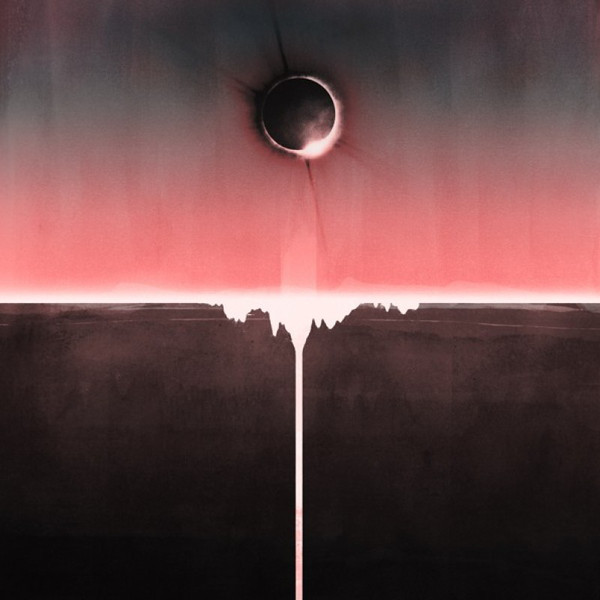
MOGWAI-EVERY COUNTRY’S SUN-INDIES ONLY VINYL EDITION.
Mogwai-Every Country’s Sun-Indies Only Vinyl Edition.
Label:Rock Action Records.
It’s safe to say that 2017 hasn’t been a vintage year for Scottish music. Instead, much of the music released during the first nine months of the year has been mediocre at best. That comes as no surprise, as there was a similar problem last year. The only saving grace was that during 2016, some of Scottish music’s big hitters returned with new albums. This included the Teenage Fanclub, Trashcan Sinatras and Mogwai. A year later, and one of the aforementioned triumvirate ride to the rescue of an ailing Scottish music industry with a much-anticipated new album.
Scottish music’s very own knight in shining armour is Mogwai, who ride to the rescue of the damsel in distress that is Scottish music. Mogwai returned on the ‘1st’ of September with their new album Every Country’s Sun which is their ninth studio album. It’s the much-anticipated followup to Rave Tapes, which was released in January 2014. Since then, Mogwai have released the best of compilation Central Belters in October 2015 and the soundtrack album Atomic in April 2016. Now seventeen months later, and Mogwai return with the thirteenth album of their career… Every Country’s Sun.
The Mogwai story began in 1991, when Stuart Braithwaite and Dominic Aitchison first met in Scotland’s musical capital, Glasgow.Four years later, they met drummer Martin Bulloch and formed Mogwai, which film buffs will remember, is a character from the movie Gremlins. Mogwai was always meant as a temporary name, until they came up with something better.
Later in 1995, three become four when guitarist John Cummings joined Mogwai. Since then, John’s role in Mogwai has changed, and he’s now described as playing “guitar and laptop,” as is regarded as the maestro when it comes to all things technical. However, not long after John Cummings joined Mogwai in 1995, the nascent band started honing their sound and making plans for the future.
In 1996, Mogwai founded their own record label Rock Action Records. It would play an important part in the rise and rise of Mogwai over the next twenty-one years. So would Mogwai’s Castle Of Doom Studios, which was cofounded by Mogwai and Tony Doogan in 2005. It’s situated in the West End of Glasgow, and is a home from home for Mogwai, when they record a new album. That was still to come.
Before that, Mogwai released their debut single Tuner on their newly founded label Rock Action Records. Tuner was released to critical acclaim and the NME awarded it their single of the week award. Later in 1996, Mogwai released two further singles. Angels v. Aliens and Summer. By then, Mogwai were well on their way to becoming one of the hottest bands of the late nineties.
Mogwai’s career continued apace in 1997, when they released two more singles.The first of these was New Paths To Helicon Pt. 1, which showed Mogwai growing and maturing as a band. NME agreed, and just like their debut single Tuner, New Paths To Helicon Pt. 1 won NME’s single of the week award. The followup Club Beatroot was also well received by critics. This was the perfect time for Mogwai to record their debut album, Mogwai Young Team.
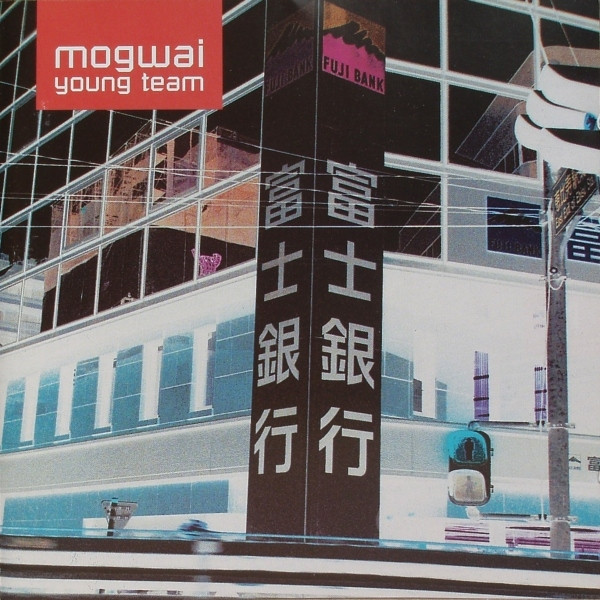
Mogwai Young Team.
For Mogwai Young Team, Mogwai brought onboard Brendan O’Hare the Teenage Fanclub’s drummer. Another guest artist was Aidan Moffat of Falkirk based band Arab Strap. He added the vocal to R U Still In 2 It, while the rest of Mogwai Young Team consisted of instrumentals. Mogwai Young Team was recorded at Chem 19 studios and produced by two of Scotland’s top producers, ex-Delgado Paul Savage and Andy Miller. Once Mogwai Young Team was completed, it was then released on Scotland’s biggest record label, Chemikal Underground Records.
Before its release, Mogwai Young Team was a hailed as a groundbreaking album of post-rock by critics. They were won over by Mogwai Young Team, and Mogwai were hailed as a band with a big future.
That proved to be a perceptive forecast. When Mogwai Young Team was released on 21st October 1997, sold over 30,000 copies and reached number seventy-five in the UK. The Mogwai Young Team were on their way. However, a few changes were about to take place.
Come On Die Young.
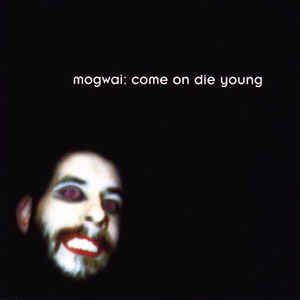
A year later, Mogwai were back in the studio recording their sophomore album Come On Die Young. Much had changed. A new member had joined the band, Barry Buns a flautist and sometimes pianist, who had already played a few gigs with the band. He was invited to become the fifth member of Mogwai. Not long after this, violinist Luke Sutherland joined Mogwai, but not on a full-time basis. This wasn’t the only change.
Recording of what became Come On Die Young was split between New York and Glasgow. This time, they’d forsaken Chem 19 in Blantyre and recorded parts of the album in Rarbox Road Studios, New York. Some sessions took place in Glasgow’s Cava Studios. Producing Come On Die Young was Dave Fridman. For some critics, his addition changed Mogwai’s sound.
Some critics felt his production style resulted in a much more orthodox sounding album. However, others felt that Come On Die You was part of Mogwai discovering their “sound” and direction. Come On Die Young is a much more understated, but also ambient, experimental, multi-textured and melodic. There’s a fusion of ambient, grunge and post rock on Come On Die Young, which was released in 29th March 1999.
On its release, Come On Die Young reached number twenty-nine in the UK. Mogwai it seemed were now on their way to finding their sound and fulfilling the potential that was evident on their debut album. This was apparent with tracks of the quality of CODY and Hugh Dallas s. However, like all innovative bands, Mogwai continued to reinvent their music.
This proved to the case on their eponymous E.P, which includes Stanley Kubrick, which was recorded in the exotic surroundings of Cowdenbeath in Fife. Burn Girl Prom Queen was recorded at Cava Studios, in Mogwai’s hometown of Glasgow. These two tracks were part of E.P., which further enhanced Mogwai’s reputation as post rock pioneers. So did their third album Rock Action.
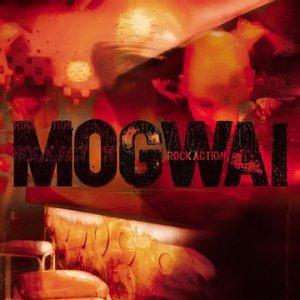
Rock Action.
Mogwai’s music continued to evolve on their third album 2001s Rock Action. More use was made of electronics on Rock Action. This was part of a process that would continue over the next few albums. There were even more layers and textures on Rock Action, as Mogwai continued to expand their sonic palette. Seven of the songs were instrumentals, while Dial Revenge featured Gruff Rhys of Super Furry Animals. Again, Rock Action was produced by Dave Fridman, while recording took place in New York and at Glasgow’s Cava Studios. Once Rock Action was completed, it became Mogwai’s first album to be released on Play It Again Sam.
Rock Action was released in April 2001, and proved to be Mogwai’s most successful album. It reached number twenty-three in the UK. Critics remarked upon how Rock Action wasn’t as dark an album as its predecessors. That didn’t mean that Mogwai’s view of the world had changed. They were still worldweary which would become a Mogwai trademark.
Six months after the release of Rock Action, Mogwai returned with another single, The My Father My King. It was released in October 2001, and was described “as the companion piece to Rock Action.” A sticker on the cover bore Mogwai’s description of the single as: “two parts serenity and one part death metal.” That was about to change. Soon, they’d be happy people writing happy songs and making a breakthrough into the American market.
Happy Songs For Happy People.
Happy Songs For Happy People was released in 2003, and Mogwai’s evolution continued. Their music continued further down the electronic road. While Mogwai still deployed electric guitars and a drummer, synths were playing a more important role in Mogwai’s music. So were the addition of strings and a piano. They played their part in what was a much more understated album. Part of this change in style was a change of producer.
Tony Doogan was brought onboard as producer, and replaced Dave Fridman. Gone were transatlantic recording sessions. Happy Songs For Happy People was recorded at Cava Sound Studios, Glasgow. On its release in June 2003, Happy Songs For Happy People was well received by critics. Critics drew attention to I Know You Are But What Am I? and Hunted By A Freak, two of the album’s highlights. The critics also welcomed Mogwai’s latest change in style. So did record buyers.
While Happy Songs For Happy People only reached number forty-seven in the UK, it spent a week in the American charts, reaching number 182 in the US Billboard 200. After four albums, Mogwai had broken into the American market. Happy Songs For Happy People it seemed, was a landmark album.
Having made inroads into the lucrative American market, Mogwai didn’t rush their fifth album. It was released three years after Happy Songs For Happy People. There’s a reason for this. They were working on tree separate projects.
The first was their fifth album Mr. Beast. Then there was the first soundtrack they’d written and recorded. This was for the 2006 movie Zidane: A 21st Century Soundtrack. Mogwai also collaborated with Clint Mansell on the soundtrack to The Fountain. Although soundtracks were a nice sideline for Mogwai, their fifth album Mr. Beast was of huge importance. Especially, if it was a commercial success in America.
Mr. Beast.
Recording of Mr. Beast took place at Mogwai’s new studio, Castle Of Doom Studios in Glasgow. Co-producing Mr.Beast with Mogwai, was Tony Doogan. Between April and October 2005, Mogwai honed their fifth album, and after six months, Mr. Beast was complete. It was Mogwai’s most important album.
Everyone realised the importance of Mr. Beast. Mogwai were on a verge of breaking into the American market. Happy Songs for Happy People had got Mogwai’s foot in the door of the American market. Now was the time for the Mogwai Young Team to kick the door of its hinged, and make their presence felt. That was what Mogwai intended to do with tracks like Travel Is Dangerous, Friend Of The Night and We’re No Here. They featured Mogwai at their innovative and creative best. This trio of tracks were part of an album that would please critics, Mr. Beast.
On its release, it was mostly, to critical acclaim. Critics were fascinated at how Mogwai’s music continued to evolve. For Mogwai, standing still was going backwards. Record buyers agreed and expected Mogwai to continually release groundbreaking and innovative. That was what Mogwai delivered.
When Mr. Beast was released on 5th March 2006, record buyers found an album of groundbreaking and innovative music. It climbed thirty-one in the UK. Across the Atlantic, Mr. Beast reached number 128 in the US Billboard 200. Mogwai were now one of Scotland’s most successful musical exports. They were certainly well on their way to becoming Scotland’s most innovative band. This was a title they weren’t going to give up without a fight.
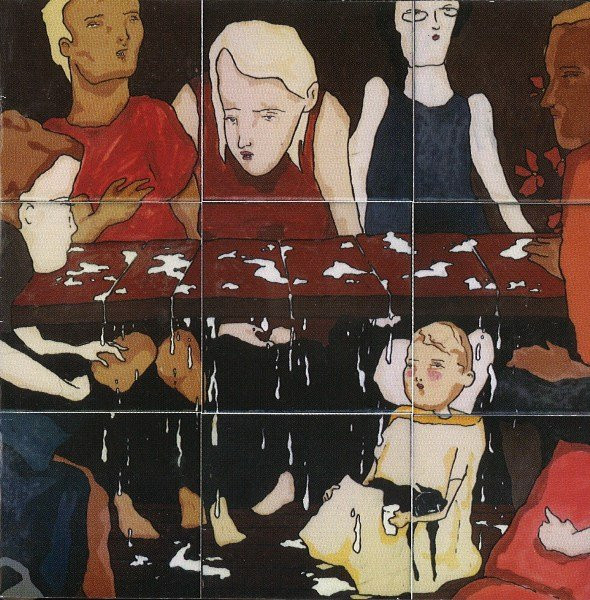
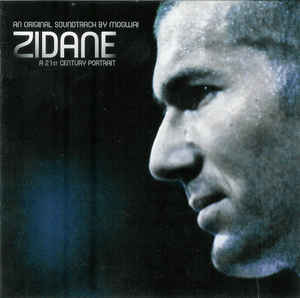
Zidane: A 21st Century Portrait.
Following the release of Mr. Beast, the other two projects that Mogwai had been working on, were released. The first was Zidane: A 21st Century Portrait. This was project that came about in late 2005, when artist Douglas Gordon asked Mogwai to write and record a soundtrack to a film he was making about footballer Zinedine Zidane. This was Zidane: A 21st Century Portrait. Having heard the details of the project, it didn’t take Mogwai long agree to provide the soundtrack to Zidane: A 21st Century Portrait, which gave them their entry into the world of soundtracks.
Mogwai grasped this opportunity, and recorded Zidane: A 21st Century Portrait at their Castle Of Doom Studios. During the sessions, Mogwai recorded ten tracks, which were produced by Tony Doogan. However, when the soundtrack was released, it came baring a secret.
This was the hidden track Untitled, which was a twenty-three minute epic, that featured Mogwai at their most inventive. That was the case throughout Zidane: A 21st Century Portrait. Most critics realised this. However, a few didn’t seem to ‘get’ Zidane: A 21st Century Portrait. Despite the slings and arrows of the critics that didn’t get Mogwai’s introduction into the world of soundtracks, the critics that mattered gave Mogwai the recognition they deserved when Zidane: A 21st Century Portrait was released on 30th October 2006. Then less than a month later, the soundtrack to The Fountain was released on 27th November 2006.
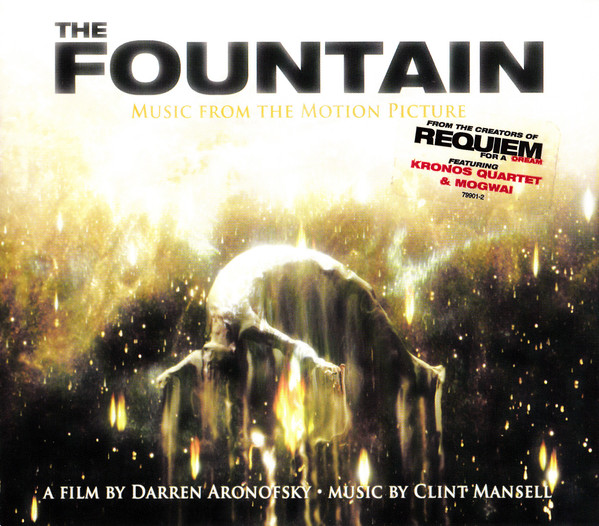
The Fountain.
The Fountain was a collaboration between contemporary classic composer Clint Mansell, string quartet the Kronos Quartet and Mogwai. To some onlookers, it looked like an unlikely collaboration. That wasn’t the case though.
Mogwai had spent December 2005 locked away in their Castle Of Doom Studios with producer Tony Doogan. Other parts of The Fountain project were recorded in New York and Los Angeles. Then once the project was complete, The Fountain was released on 27th November 2006.
When The Fountain soundtrack was released, the reviews were positive. Mogwai’s contribution to the soundtrack had proved vital, while the Kronos Quartet proved a perfect foil the Mogwai Young Team. Mogwai’s lasted soundtrack had enhanced their reputation as the go-to guys for a soundtrack. That would their sideline in the future. However, before they released another soundtrack, Mogwai would release another two albums.
The Hawk Is Howling.
The first of these was The Hawk Is Howling. To ensure they kept their title of Scotland’s most innovative bands, Mogwai returned to the studio where it all began, Chem 19 in Blantyre.
Andy Miller who had co-produced Mogwai Young Team, Mogwai’s debut album was chosen to produce what became The Hawk Is Howling. This was Mogwai’s sixth album and marked a first. It was Mogwai’s first album to consist of just instrumentals. Among them were I’m Jim Morrison, I’m Dead, The Sun Smells Too Loud, Batcat and Scotland’s Shame. They feature the post rock pioneers pushing musical boundaries to their limits, and sometimes, beyond. Once The Hawk Is Howling was recorded, Garth Jones mixed the album at Castle Of Doom Studios in Glasgow. After that, The Hawk Is Howling was ready for release.
The Hawk Is Howling was released on 22nd September 2008. Critics were won over by The Hawk Is Howling. There were no dissenting voices. This was one of Mogwai’s best albums, and it was no surprise it sold well in the UK and America.
On its release, The Hawk Is Howling reached number thirty-five in the UK and number ninety-seven in the US Billboard 200. It seemed with each album, Mogwai’s music evolved and matured. This resulted in even more success coming their way. Would this continue with Hardcore Will Never Die?
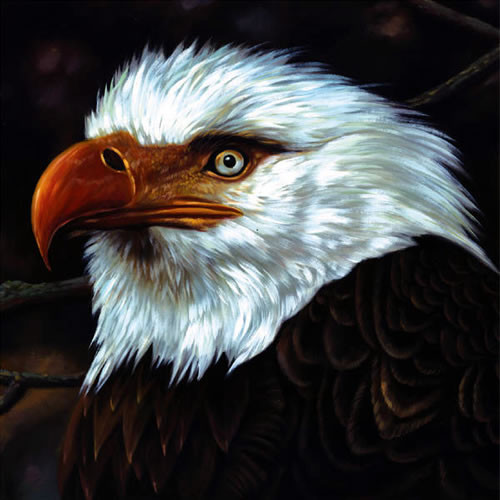
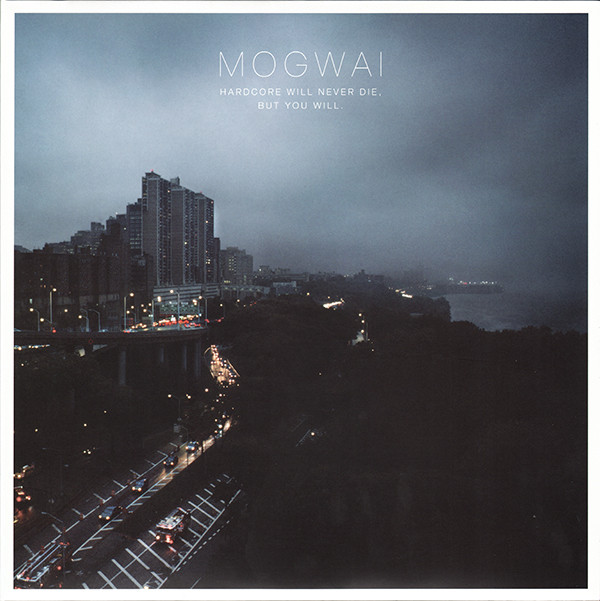
Hardcore Will Never Die, But You Will.
For their seventh album, Mogwai returned to Chem 19 Studios in Blantyre, where they hooked up with ex-Delgado Paul Savage. Since he had produced Mogwai’s debut album, Mogwai Young Team Paul had established a reputation as one of Scotland’s best producers.
By then, Paul Savage had worked with everyone from Franz Ferdinand to R.M. Hubbert. However, it was a very different Mogwai Paul encountered. They were very different to the band who recorded Mogwai Young Team Paul. Their music had evolved and was continuing to do so. They’d matured as musicians and embraced the new technology. Hardcore Will Never Die, But You Will was proof of this.
Here was an album of groundbreaking, genre-melting post-rock with attitude. Hardcore Will Never Die, But You Will was also an album not short on humour. Poppy soulster Lionel Ritchie provided the inspiration for You’re Lionel Ritchine. There was also a celebratory sound to Hardcore Will Never Die, But You Will.
The death of Scotland’s nemesis, Margaret Thatcher sparked celebration in Glasgow’s George Square. Hardcore Will Never Die, But You Will, celebrated provided the soundtrack to the celebrations. It was just one track on an album of pioneering, post rock music crammed full of hooks, humour and attitude. Others highlights Mexican Grand Prix, Rano Pano and How To Be A Werewolf . With music of this quality, surely Hardcore Will Never Die, But You Will couldn’t fail?
Before the release of Hardcore Will Never Die, But You Will, Rano Pano was released as a single. On the flip side was Hasenheide, which didn’t feature on Hardcore Will Never Die. . Things it seemed were looking good for Mogwai.
Yet again, Mogwai won over the majority of critics with Hardcore Will Never Die, But You Will. A couple of contrarian critics proved to be mere dissenting voices in the wilderness. Most critics realised that Hardcore Will Never Die, But You Will was one of Mogwai’s finest hours. Record buyers would agree.
Hardcore Will Never Die, But You Will reached number thirty-five in the UK and number ninety-seven in the US Billboard 200. For Mogwai, they were now into their third decade as band and had just enjoyed their biggest album to date. The question was, what would Mogwai do next?
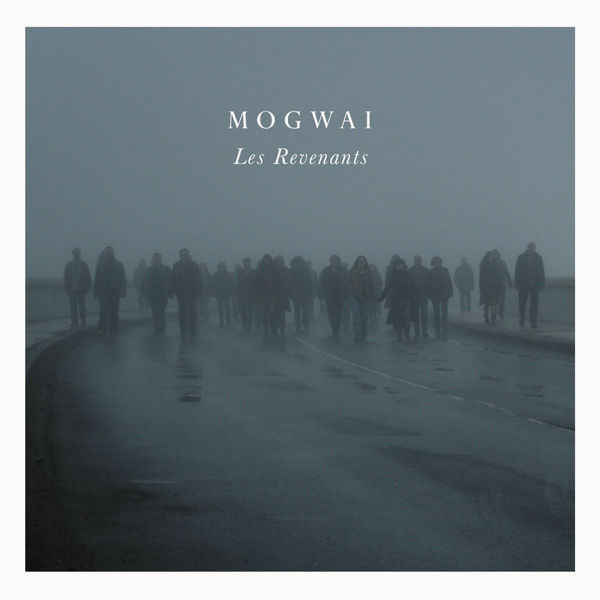
Les Revenants.
The answer to that was Les Revenants, a soundtrack to a French television series. Les Revenants or The Returned, is essentially a television program about zombies, albeit with a twist. Just like similar films, Les Revenants, finds the “undead” returning to the town they lived in. However, the zombies in Les Revenants weren’t how most films portray zombies. Another difference was the way Mogwai were commissioned.
Usually, someone writing a soundtrack can watch the film they’re writing music to. Not Mogwai. They were just shown a few scripts, which gave them an overview of what the series was about. From there, Mogwai wrote thirteen of the fourteen tracks including Wizard Motor and Hungry Face. They’re two of the album’s highlights. The other track on Les Revenants was What Are They Doing In Heaven Today, which was written by Charles Elbert Tilney. These fourteen tracks were recorded by Mogwai, who produced Les Revenants with Neil MacMenamin. Once Les Revenants was finished, it was released in February 2013.
Before Les Revenants was released an E.P. was released. It featured four tracks. That was a tantalising taster of what was to come. After all, Mogwai would approach a soundtrack like Les Revenants in a different manner. They wouldn’t do anything predictable. Les Revenants was a case of expect the unexpected. Critics loved Les Revenants and hailed the album as one of the best albums Mogwai had released. However, Mogwai had other ideas.
Rave Tapes.
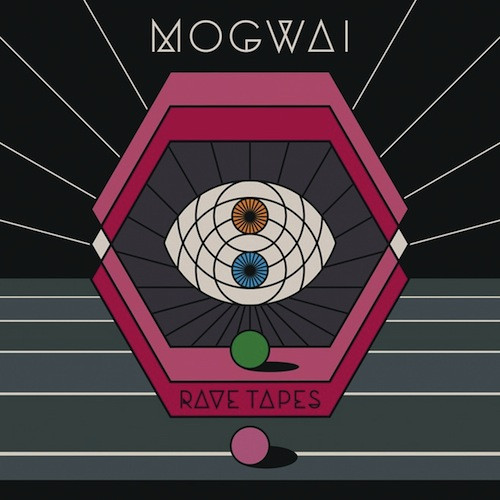
Rave Tapes features ten tracks which were written by Mogwai. These tracks were recorded at Mogwai’s Castle Of Doom Studios, in Glasgow. Producing Rave Tapes was ex-Delgado Paul Savage, who had produced previous Mogwai albums and knew how the band worked. This was important, given Mogwai were at last, enjoying the critical acclaim and commercial success their music deserved. Work began on Rave Tapes on the 28th August 2013.
This was like the first day back at school for Mogwai, as they began recording what was their eighth studio album. The lineup of Mogwai has been settled for a few years. This included a rhythm section of bassist and guitarist Dominic Aitchison, drummer Martin Bulloch and guitarists Stuart Braithwaite and John Cummings who also played piano. Barry Burns plays organ, piano and guitar. at Castle Of Doom Studios, Glasgow, Mogwai recorded the ten tracks that became Rave Tapes, which was released on 20th January 2014.
Rave Tapes was one of the most anticipated albums of 2014. The big question was, what direction Mogwai’s music would head? After all, Mogwai’s music never stands still. It’s in a constant state of evolution. That’s no bad thing. Standing still is akin to going backwards in Mogwai’s book. On Rave Tapes, Mogwai’s music continues to evolve. Musical genres and influences melt into one on tracks like Remurdered, The Lord Is Out Of Control and Tell Everyone I Love Them. However, one of the most prominent influences on Rave was Krautrock. Add to this ambient, avant-garde, electronica, experimental, indie rock and rock. We hear different sides to Mogwai on Rave Tapes. Whether it’s fuzzy soundscapes or kicking out the jams, Mogwai didn’t disappoint with Rave Tapes.
Critics agreed. Rave Tapes was released to widespread critical acclaim. Superlatives were exhausted in search of a fitting description of what many felt was Mogwai’s finest hour. Some critics wondered aloud whether Mogwai’s music was mellowing. Others felt that Mogwai were improving with age. Record buyers agreed.
When Rave Tapes was released on 14th January 2014, the album reached number ten in Britain and fifty-five in the US Billboard 200 charts. Rave Tapes became Mogwai’s most successful album in Britain and America. Elsewhere, Rave Tapes sold well across Europe. Mogwai were enjoying the most album of their three decade career. However, it would be two years before Mogwai released a new album. Before that, Mogwai decided to celebrate their twentieth anniversary in style.
Central Belters.
In 2015, Mogwai were celebrating their twentieth anniversary. By then Mogwai were Scottish music’s elder statesmen, A lot had happened to them during the first twenty years of their career. Mogwai have released eight studio albums and three soundtracks. That’s not forgetting there’s countless singles, E.P.s and two remix albums. It was official, Mogwai had been one of the hardest working bands in music between 1995 and 2015. They were also one of the most innovative.
It was no surprise that critical acclaim and commercial success accompanied the release of each Mogwai album. Suddenly, the Glasgow-based were enjoying success not just in Britain, but in Europe and in America. Now was the perfect time for Mogwai to release Central Belters, a three disc career retrospective box set. Central Belters tells the story of the first twenty years of Mogwai.
With Mogwai not planning to release a studio album or soundtrack during 2015, Central Belters was a perfect stopgap. It was released on 23rd October 2015, and reached number forty in Britain, Central Belters sold reasonably well across the Europe, and was a perfect primer to the first twenty years of Mogwai’s career. The next chapter of Mogwai’s career began with a soundtrack album, Atomic.
Atomic.
Having enjoyed celebrating their twentieth anniversary during 2015, Mogwai got back down to business on 1st April 2016. That was when they released Atomic, their first new album in over two years. Atomic was Mogwai’s fourth soundtrack album,
During the summer of 2015, Mogwai had provided the soundtrack Mark Cousins documentary Atomic: Living In Dread and Promise. It was aired on BBC Four, and was a very personal memoir of growing up in the nuclear age. Using archive film, Mark Cousins constructed an impressionistic cinematic memoir of what was a harrowing time.
Post rock pioneers Mogwai were commissioned to write the soundtrack to Atomic: Living In Dread and Promise. It was hailed as the perfect backdrop to Atomic: Living In Dread and Promise, which was a personal and poignant cinematic memoir. However, after the documentary was aired in the summer of 2015, Mogwai decided to re-record Atomic.
At their Castle Of Doom Studios in Glasgow, Mogwai were joined be an old friend, occasional band member Luke Sutherland. Mogwai were also joined by Sophie, Robin Proper-Sheppard formerly of The God Machine and Glasgow composer Robert Newth. Together, they got to work on Atomic, which was Mogwai’s twelfth album since they formed back in 1995.
Once Atomic was completed, it was scheduled for release on 1st April 2016. Before that, Atomic was hailed as Mogwai’s finest soundtrack album, and a welcome addition to their discography.
On Atomic, Mogwai combine disparate and eclectic musical genres. Elements of avant-garde, Berlin School, electronica and experimental music are combined with indie-rock, Krautrock, post-rock and psychedelia. This results in a genre-melting, cinematic album. Atomic captivates and compels, and takes the listener on a musical journey. It veers between dramatic and dreamy, to surreal and lysergic, to beautiful, pensive and understated to melancholy and melodic. Other times the music is dramatic, moody and broody. One thing the music never is, is boring. That is one thing that can never be levelled against Mogwai. Instead, it was another case of always expect the unexpected.
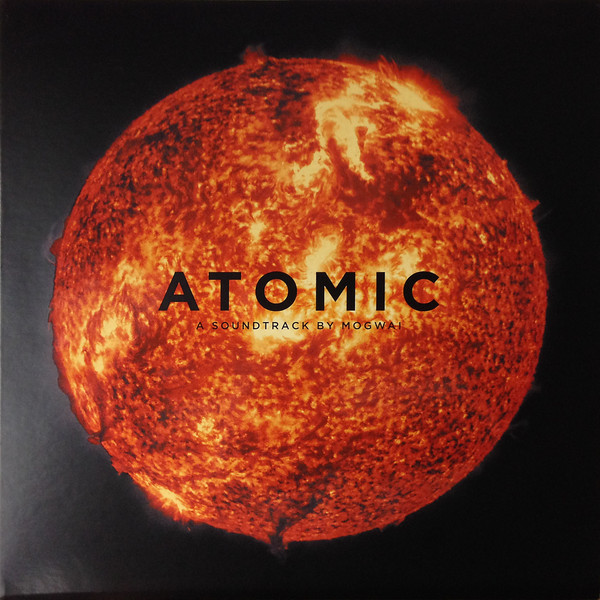
That’s been the case since Mogwai were formed in 1995, and released their debut album Mogwai Young Team. Since then, it’s always been a case of expect the unexpected from the Mogwai, who continue to release albums of ambitious and innovative music. There was no way that Mogwai would contemplate recording the same album twice. Instead, they leave that to lesser bands who specialise in albums of twee or pseudo-intellectual music. That isn’t Mogwai’s bag. They’re constantly moving forward musically and making music that pushes boundaries to their limits, and sometimes, way beyond. Proof of that is Every Country’s Sun, which is their ninth studio album and thirteenth overall.
Every Country’s Sun.
Every Country’s Sun is Mogwai’s first studio album since they released Rave Tapes in January 2014. However, Mogwai haven’t been resting on their laurels and enjoying the fruits of the rock star lifestyle. That isn’t Mogwai’s style. Since the release of the Rave Tapes, Mogwai have released the three CD best compilation Central Belters in October 2015, and the soundtrack album Atomic in April 2016. There’s also the small matter of running their own record label Rock Action Records and their Castle Of Doom studio in Glasgow’s West End. Still, the four members of Mogwai found the time to return to the studio and record their ninth studio album Every Country’s Sun, which showcases their new sound.
When the time came for Mogwai to record Every Country’s Sun, they didn’t renew their successful partnership with Tony Doogan, who had produced their most recent album Atomic. Tony Doogan had also produced Mr. Beast and Zidane-A 21st Century Portrait, and is part of Mogwai’s inner circle. He knows Mogwai better than most, and knows that they often work with different producers. That was the case on Every Country’s Sun, where Mogwai renewed their partnership with experienced American producer Dave Fridmann.
The last time Mogwai had worked with Dave Fridmann was on Come On Die Young, which was released in 1999. Since then, much had happened for Mogwai and Dave Fridmann. Mogwai have released twelve albums and Dave Fridmann now has over 200 production credits to his name. He’s worked with some of the biggest names in indie music, including Flaming Lips, Mercury Rev, Jane’s Addiction, The Delgados, MGMT and The Vaccines. Dave Fridmann had beefed up his CV since the last time he worked with Mogwai.
Having made the decision to work with Dave Fridmann, Mogwai decided to record Every Country’s Sun at their own Castle Of Doom Studios in Glasgow. The alternative was for Mogwai to travel to New York to work with Dave Fridmann at Tarbox Road Studios in New York. That was unnecessary expense, considering that Mogwai had their own studio. They could always send the tracks over to Dave Fridmann in New York. This was very different to when Mogwai recorded their debut album Mogwai Young Team in 1996,
Each day, drummer Martin Bulloch, bassist Dominic Aitchison, guitarist and vocalist Stuart Braithwaite plus multi-instrumentalist Barry Burns entered Castle Of Doom Studios and began laying down the eleven tracks. These tracks were sent to Dave Fridmann in New York, who took charge of production. Gradually, Every Country’s Sun started to take shape and Mogwai were well on their way to completing what would be their first studio album in over three years. Eventually, Mogwai completed recording Every Country and Dave Fridmann mixed the album at Tarbox Road Studios. All that remained was for the album to be mastered by Frank Arkwright at Abbey Road Studios, in London. Now Mogwai were ready to embark upon a new chapter in a career that began twenty-two years ago in 1995.
Since then, post rock pioneers Mogwai have enjoyed an unrivalled longevity, and are now one of the most successful Scottish bands of their generation. Remarkably, the three original members of the band, Stuart Braithwaite, Dominic Aitchison and Martin Bulloch still remain are still part of Mogwai’s and played their part in latest album ambitious and innovative album, Every Country’s Sun.
There was an air of excitement when Mogwai announced the arrival of Every Country’s Sun earlier in 2017. The big question among critics and cultural commentators was what direction would Mogwai’s music head in? Most agreed that Every Country’s Sun would mark another stylistic departure for Mogwai.
Side One.
As Coolverine opens Every Country’s Sun, there’s a degree of urgency as synths tremble and shiver almost nervously. They meander along, before a drum cracks and powers the melodic arrangement along. Meanwhile, a subtle bass joins a shimmering crystalline guitar while a vortex of synths swirl. Soon, there’s a mesmeric quality to the carefully crafted arrangement as it flows, twists, turns and swirls all the time revealing its secrets. Later, there’s a lysergic sound as drums crack and join the bass and fuzzy synths. By then, the arrangement is building, and sweeps the listener off their feet, as it veers from dreamy, euphoric and dramatic to anthemic as Mogwai seamlessly combine Balearic, electronica, post rock and space rock. In doing so, they create an elegant, cinematic, hymnal that sets the bar high for the rest of the album.
Mogwai throw a curveball as a buzzing sound makes its presence felt on Party In The Dark. Soon, it’s all change Mogwai’s rhythm section provide a 4/4 backdrop to one of the most poppy sounding songs they’ve ever committed to vinyl. It’s also one of the few tracks to feature Stuart Braithwaite’s vocal. Effects have been added to the vocal which sits back in the mix, and is surrounded by the pounding, driving rhythm section, jangling guitars and banks of synths. They play their part in uplifting and joyous anthem where perfect pop meets psychedelia and electronica.
Tribal drums open Brain Sweeties and provide an ominous backdrop before a tender, chiming guitar adds a contrast as the arrangement flows along. Soon, an electric piano plays and is joined by the rhythm section. Together, they create a dreamy, hypnotic track that floats along. Especially when the arrangement is stripped bare, leaving just the piano. Even when the arrangement rebuilds, there’s still a dreamy, hypnotic and cinematic quality to this slice of musical sunshine.
Side Two.
Straight away, there’s a moody, ruminative post rock sound to Crossing The Road Material. A chirping guitar is joined by a distant searing guitar and the rhythm section. The drums have a ratty indie rock sound and crack as the arrangement swirls and builds as Mogwai jam. By then, Mogwai deploy one of their secret weapons…distortion. Despite its use, a melodic and memorable sounding post rock track is unfolding. As Mogwai lock into a tight groove, they put twenty-years of experience to good use. Having reached a crescendo, the track becomes understated and elegiac as it meanders memorably and melodically to a close.
Lysergic describes the thick, lush synth sounds that open Aka 47. Soon, they’re joined by a dark, menacing bass synth. Adding to the dark, cinematic sound are gnarled guitar and eerie synths. Deep in the multilayered mix are a myriad of otherworldly and sinister sounds. They play their part in a chilling and sombre cinematic sounding track, that has been inspired by Mogwai’s recent soundtrack work.
20 Size starts of slowly, with instruments flitting in and out of the mix. Soon, a searing guitar, pounding drums is joined by synths that beep and squeak. At the heart of the action is Mogwai’s rhythm section guitars. They play slowly and deliberately, referencing classic rock, but moving the arrangement in the direction of grunge and post rock. Playing a supporting role are the synths who fill out and fatten the arrangement. Playing a starring role, are Mogwai’s rhythm section and guitars who find their inner rocker during another explosive track that is akin to the sonic equivalent of a firework’s display.
20 Size starts of slowly, with instruments flitting in and out of the mix. Soon, a searing guitar, pounding drums is joined by synths that beep and squeak. At the heart of the action is Mogwai’s rhythm section guitars. They play slowly and deliberately, referencing classic rock, but moving the arrangement in the direction of grunge and post rock. Playing a supporting role are the synths who fill out and fatten the arrangement. Playing a starring role, are Mogwai’s rhythm section and guitars who find their inner rocker on what’s akin to a sonic equivalent of a firework’s display.
20 Size starts of slowly, with instruments flitting in and out of the mix. Soon, a searing guitar, pounding drums is joined by synths that beep and squeak. At the heart of the action is Mogwai’s rhythm section guitars. They play slowly and deliberately, referencing classic rock, but moving the arrangement in the direction of grunge and post rock. Playing a supporting role are the synths who fill out and fatten the arrangement. Playing a starring role, are Mogwai’s rhythm section and guitars who find their inner rocker on what’s akin to a sonic equivalent of a firework’s display.
Side Three.
A chirping guitar is panned hard right on 1000 Foot Face, while a lo-fi synth is panned hard left. In the middle are the tender, ethereal harmonies while drums pitter, patter. At one point, the tape quivers as the elegiac vocals deliver what sounds like a mantra. This they do, against an understated, but carefully crafted arrangement. It shows another side of Mogwai on a track that is beautiful, dreamy, meditative, mesmeric and melodic.
Mogwai pay homage to Public Enemy on Don’t Believe The Fife, which is a take off of Don’t Believe The Hype. It’s one of the longer tracks on the album, and straight away, has a dark, moody and cinematic sound. Drums pound and crack, with the double tapped sound providing the arrangement’s heartbeat. Meanwhile synths meander, shimmer and quiver, veering between dark, to hopeful and rueful. Meanwhile, the bass probes its way through the arrangement, as synths reverberate adding to the ruminative and sound. Up until then, the arrangement is almost spartan and spacious. This changes when keyboards emerge from the arrangement, which is underpinned by the drums. The final piece of the jigsaw are the blistering, rocky guitars that cut through the track. By the end of this captivating two-part opus, Mogwai have provided more excitement and enjoyment than a weekend in the Kingdom of Fife.
Side Four.
The guitar that opens Battered At A Scramble is heavily distorted as it cuts its way across the arrangement. It’s all change at 1.29. Gone is the distortion as arrangement explodes. The rhythm section and searing guitar combine as Mogwai work their way through the gears. Again, they’re in touch with their inner rocker as blistering, scorching, and fuzzy guitars take centre-stage as the rhythm section power the arrangement along. By then, it’s as if Mogwai is channelling the spirit of Led Zeppelin, Deep Purple and even Big Country as a glorious wall of sound assails the listener. It features chameleon like Mogwai at their hard rocking best, as they show yet another side to their music.
Mogwai keep on rocking on Old Poisons, where they carve out a melodic slice of hard rock that later, heads in the direction of psychedelia, grunge, space rock and latterly space rock. From the get-go, the rhythm section lock into a groove with scorching fleet-fingered guitar solos. Seamlessly, they unleash washes of rocky guitar licks and riffs, that soar high above the rest of the arrangement. Inspiration seems to include the classic hard rocking and psychedelic sounds of late-sixties and early seventies; Neil Young’s grunge era and the recent space revival. Midway through this blistering wall of sound, the volume drops but the intensity doesn’t. Still Mogwai play with speed, power and ferocity as they keep on rocking in the free world. Soon, Mogwai kick out the jams and play with power and intensity during another uber rocky anthem.
Closing Every Country’s Sun is the title-track, which is a musical dichotomy. That is apparent from the moment shimmering, crystalline, angular sounds emerge from the dark, ominous arrangement. It hints at what’s to come over the next 5.38. Playing a leading role are the searing, scorching, blistering and distorted guitars while rhythm section anchor the frenetic arrangement. This includes thunderous drums, crashing cymbals, while synths create a vortex of darkness and drama. Each member of Mogwai plays their part as they ensure that Every Country’s Sun closes on a memorable and dramatic high, with another cinematic epic.
Every Country’s Sun marks the triumphant, rocky and explosive return of the Mogwai Young Team. Three years have passed since they released their eighth studio album Rave Tapes in January 2014. Over three years later, and Mogwai return with Every Country’s Sun a carefully crafted epic album. It’s also poppy, joyous and uplifting and sometimes, elegiac and ethereal. Other times, the music is dark, dramatic, eerie, moody, ominous and otherworldly. Often, there’s a cinematic sound to Mogwai’s music, as they switched seamlessly between and combine musical genres and influences.
Mogwai combine elements of numerous disparate musical genres, ranging from classic rock, grunge, pop, post rock, psychedelia and space rock, to ambient, avant-garde, the Berlin School, electronica, experimental music and Krautrock. These are all part of the rich and vibrant musical tapestry that is Mogwai’s ninth studio album Every Country’s Sun, which was recently released by their own Rock Action Records. Every Country’s Sun and is Mogwai’s finest hour.
The grand old men of Scottish music put their twenty-two years of experience to good use on their latest carefully crafted opus Every Country’s Sun. It finds Mogwai reaching new musical heights, on this latest album of ambitious and groundbreaking music. Continually, Mogwai push musical boundaries to their limits, and sometimes way beyond, on Every Country’s Sun. It’s the thirteenth album that Mogwai have released since 1996.
Mogwai have come a long way since then, and are now by far one of the most successful Scottish bands of their generation. Many of the bands that started out alongside Mogwai have called time on their career. It’s a similar case with bands that were formed long after Mogwai started out. Long gone are the days when Scotland produced many a successful band. Sadly, gone are the days when groups like The Blue Nile, Lloyd Cole and The Commotions, Teenage Fanclub and the Trashcan Sinatras enjoyed commercial success and critical acclaim.
Nowadays, it seems that Scottish music is largely populated by third-rate bands who create albums that are mediocre at best. Occasionally a new band makes a breakthrough, with an album that excites even the most cynical critic. Unfortunately, many bands and artists fail to build on that album, and never live up to their breakthrough album. Sadly, it seems, Scotland is no longer blessed with a plethora of talented up-and-coming bands. The only saving grace for Scottish music is that some of its bigger and more established bands are still around and making groundbreaking music.
This includes Mogwai, who rode to the rescue of the damsel in distress that is the Scottish music industry. Mogwai have returned with the Magnus Opus that is Every Country’s Sun, which is a career-defining album. Every Country’s Sun stands head and shoulders above the rest of albums released during 2017, and in most countries, Every Country’s Sun would be a certainty for its most prestigious musical award. After all, Mogwai’s cinematic epic and career-defining album Every Country’s Sun has been the glittering prize during what has been another annus horribilis for Scottish music.
Mogwai-Every Country’s Sun-Indies Only Vinyl Edition.
NON GROUP AND BEYOND.
Non Band and Beyond.
During the summer of 1978, a musical revolution took place in Japan, which changed music forevermore,..punk. The Japanese punk rockers were christened Tokyo Rockers, and initially were disregarded by the mainstream music industry. Record company executives made the mistake of thinking that the Japanese punk movement was just a passing fad, and that before long, it would be replaced by another musical movement. How wrong they were.
Left to their own devices, a vibrant and thriving underground music scene was born. Over the next few years, the Tokyo Rockers headed to underground clubs, which were similar to the ones frequented by British punks just a couple of years earlier. The Tokyo Rockers saw an eclectic selection of bands ranging from the new punk groups through to avant-garde bands and even on occasions, indie rockers. It was a fascinating scene populated by of independent and individualistic musicians who were keen to make an impression on the audiences. Some bands however, stood out from the crowd, including Maria 023, a male-female duo.
Maria 023 were just one of many bands who had caught the imagination of the Tokyo Rockers. Their lineup featured Genet and the bassist Non. She and Genet released the EP, Maria 023, which was released on Gozira Records in 1978, featured Theme and Human Being with Machine Sex and Face To Face on the B-Side. This was their one and only release, because Maria 023 proved to be a short-lived band.
During the short time that Maria 023 were together, they made a lasting impression on the Tokyo Rockers. Especially Maria 023’s bassist Non, who had come close to becoming a cult figure. However, when Maria 023 split-up, nothing was heard of Non until August 1979.
Non made her comeback at a legendary concert, Drive To 80s. Nobody was aware that Non was about to make her comeback that night, until she took to the stage. Accompanied by just her bass, she stood centre-stage, and sung several new songs during an intense, emotive and highly charged performance. When Non left the stage that night, little did she know that this was the start of a new chapter in her career.
Over the next few months, Non played a series of solo gigs. Non would pitch up at the venue with just her bass, and sing her new songs. By then, she was a talisman figure and role model amongst the female Tokyo Rockers. They admired and were inspired by Non, who they saw as a strong, independent young woman. For many female Tokyo Rockers, Non was everything they wanted to be, if they had been able to cast off their inhibitions. As a solo artist, she was already one of the leading lights of the Japanese punk movement. Soon, though, Non would form a band that would write their way into Japanese musical history…Non Band.
It was almost inevitable that Non would make the move from solo artist to founding her own, new band. Just like many new bands, it took several changes in lineup before they arrived at a settled lineup. By then, the Non Band’s lineup featured drummer Mitsuru Tamagak, bassist Non and Kinosuke Yamagishi who switched between clarinet and violin. This was the classic lineup of the Non Band, and the one that found the group at the peak of their musical powers. However, music was changing within Japan.
By then, the Japanese punk and new wave rock scene was evolving, and moving in a new direction. Many new bands were also being formed, including the second generation of bands. This was similar to what had happened in Britain. Just like in Britain, many new independent labels were also being formed and offered bands, old and new, an outlet for their music. This included Telegraph Records, which had been formed by Jibiky Yuichi in 1981. He then started putting together a distribution network for the records he planed to release.
Ever since forming Telegraph Records, Jibiky Yuichi had been watching the progress of Non Band. He was a fan of their music, and deep down, had always hoped that one day, he would be able to release a Non Band album. However, with so many new independent labels being founded, the best bands could have their pick of labels. The Non Band were one of the best bands, and convincing the Non Band to sign to a relatively new label wasn’t going to be easy.
Jibiky Yuichi proved persuasive and the Non Band eventually signed to Telegraph Records. Having signed a recording contract, the next step was for the Non Band to record their debut album.
Recording began at the Mod Studio, in Tokyo, in October 1981. The Non Band’s lineup featured drummer and percussionist Mitsuru Tamagak, Non who played bass, guitar and added vocals, plus Kinosuke Yamagishi who played clarinet, violin and mandolin. They were augmented by Chiko Hige who played mini keyboards plus Kummy and Mitsuwa who added the chorus. Producing the album was the Non Band, who completed their eponymous debut album in November 1981.
Three months later, and the Non Band and Telegraph Records were preparing to released their eponymous debut album in February 1982. This was step into the unknown for Non Band, while Telegraph Records the album was the label’s fifth release. Unlike most albums being released in 1982, a decision had been made to release Non Band as a ten inch album. It featured six songs from the Non Band, which it was hoped would introduce their music to a wider audience.
Jibiky Yuichi who owned Telegraph Records, knew that at best, a release like Non Band would sell around 1,000 copies. If Non Band sold anything like 1,000 copies the album would be deemed a success. When Non Band was released, the album surpassed even Jibiky Yuichi’s expectations. After repressing Non Band several times, the numbers were added up, and Jibiky Yuichi announced that the album had sold 2,000 copies. Non Band had a hit album on their hands. Soon, their popularity soared and Non Band was receiving critically acclaimed reviews. The success of Non Band marked the start of rise and the Non Band.
That was no surprise. Although Non Band were primarily a punk group, their eponymous debut album was much more than a punk album. There were elements of the post punk and new wave sounds, and occasional diversions into funk, free jazz, traditional Japanese music and even some poppy hooks. Very occasionally, Non Band took on a jazz and experimental sound and headed in the direction of avant-garde. Mostly, Non Band evokes the spirit of ’78, the year that punk arrived in Japan. However, music had changed by late 1981 when Non Band was recorded, and that was why it was such a genre-melting album.
Non Band was much more than a punk album. It was the album that launched the career of punk pioneers Non Group. Following the success of Non Band, it was a case of hail the conquering heroes when the group took to the stage. By then, Non Band’s lineup had been expanded when two female rockers joined the group. Guitarist Kummy and keyboardist Mitsuwa joined Non Band at what proved to be the peak of their powers.
Everyone within the Tokyo Rockers’ scene expected the Non Band to go on to even greater success. Non Band was surely, the first of many critically acclaimed albums. Sadly, that wasn’t to be. Six months after the release of the Non Band, the Non Band was no more.
When members of the band departed, Non struggled to find suitable replacements. Eventually, she realised that it was an uphill struggle, and the Non Band disbanded. It was the end of the line for a truly innovative band. They went out at the peak of their powers, unlike some of their British counterparts who in similar circumstances, struggled on and became a parody of their former selves. Not the Non Band. They weren’t going to fade away, and went out at the top.
Non drifted away from the Tokyo Rockers’ scene, and returned home to Hirosaki in the south-west Aomori Prefecture, of Japan. This was the start of another new chapter in Non’s life. She settled down and raised two children, and eventually, took over the running of the family business. The former Tokyo Rocker now found herself running an arts supplies business. While she was happy in her new life, it was almost inevitable that Non would one day, contemplate a comeback.
It wasn’t until 1999 that Non started to think about her former life as a musician. She realised that she missed music, and began putting plans in place for the second coming of Non.
Twenty years after her triumphant comeback at Drive To 80s in August 1979, Non went in search of like-minded musicians. She found Keiji Haino and Tatsuya Yoshida, who Non invited to her home in Hirosaki. They began playing live together, and sometimes, Non played solo gigs. The second coming of Non was well underway.
For Non it was a new chapter in a story that started over twenty years earlier. However, it was a story that would run and run.
Non returned to Tokyo, where she had made her name in the late-seventies, but this time as a solo artist. Fans of the Non Band awaited her first appearance in Tokyo in two decades. As Non took to the stage, she was welcomed by fans old and new. It was a triumphant return, and Non’s comeback was almost complete.
The only thing that Non still had to do was release her debut solo album. That came in 2002, when Non released her much-anticipated debut album Ie. It received praise and plaudits, thanks to songs like Vagabond, Love Song and OK Song. Non’s comeback was complete. However, now that Non was back, she was here to stay, she was about to hatch a new plan.
Despite establishing herself as a successful solo artist, Non had unfinished business from twenty years ago. She decided it was time to make two phone calls. However, she didn’t know what response she would receive when she called Mitsuru Tamagak and Kinosuke Yamagishi. They were pleased to hear from Non, and agreed to reform the Non Band.
Just like their final performances in 1982, the original trio was expanded, with accordionist Emi Sasaki joining the Non Band. The newly expanded lineup of the Non Band booked a few comeback gigs, after twenty years away.
When the Non Band played their comeback gigs after twenty years away, it was to a wider fan-base. Since the Non Band had been away, a new generation had discovered their eponymous debut album. It was now a genre classic, that had won over two generations of music fans. These fans flocked to see the Non Band when they hit the comeback trail. They noticed that the Non Band had matured as musicians and as a group. The Non Band played with the same power, passion and intensity, and dazzled fans old and new during their comeback gigs. For the Non Band, their comeback had been a huge success.
After the comeback gigs, the Non Band decided that they were back for good. There was a caveat though. They weren’t going to embark on gruelling tours each year, and instead, would play just a few gigs each years. This was what the Non Band have been doing ever since, and in 2012, a live album Non Band Liven’ 2009-2012 was issued on Jibiky Yuichi’s Telegraph Records which had also made a comeback. The release of Non Band Liven’ 2009-2012 was a reminder of just how good a live band the Non Band were.
While the Non Band continued to play a few gigs each year, Non continued to work as a solo artist, and in 2014, self-released her long-awaited sophomore album Non Solo Song Book. It featured seventeen new songs, including Earth Song, ほいかん and 善でも悪でもない精霊 which featured the All Aomori Survivors, who had all survived the 2011 tsunami. They played their part in the sound and success of the Non’s sophomore album. When Non Solo Song Book was released in 204, it was welcomed by Non’s fans who eagerly awaited each new album.
Many of these fans had been remember when Non was one of the original Tokyo Rockers in 1978. The Japanese punk scene seas dismissed by and initially disregarded by the mainstream music industry. The Japanese punk scene was dismissed as a short-lived musical fad by music executives at the major labels. They didn’t believe that any of the artists would enjoy any degree of longevity or would be remembered in the future. After all, Japanese punk was just a passing fad; wasn’t it?
Nearly forty years after a musical revolution took place in Japan, and the Japanese punk scene became a thriving underground music scene, some of the leading lights of that vibrant scene are still remembered by the Tokyo Rockers. Especially Non and the group she formed the Non Group. They would become one of the most important bands to emerge out of the Japanese punk scene was Non emerged from what was a thriving underground music scene. However, by the time Non Group release their eponymous debut album in 1981, music was changing.
As a result, Non Group which was released in February 1982 was an ambitious and innovative genre-melting album that is nowadays is a regarded as a cult classic. Non Group is a reminder of one of the Non Group in their prime, who had been one of the pioneers and leading lights of the Japanese punk movement. By the time Non Group was released, it was the post punk era in Japan and Non Group could’ve gone on to reinvent themselves and their music. Sadly, the band split-up, and Non was unable to secure to suitable replacements. Rather than limp on with musicians who were unsuited to Non Band’s music, Non called time on the band. She ensured that the Non Group went out at the top with their cult classic Non Group. However, what many critics have wondered, is what heights would Non Group have reached and what type of music would they have made if the group had stayed together, or Non found suitable replacements for the musicians who had left the band?
Non Band and Beyond.


STEVE YOUNG-THE STORY OF A MUSICAL FREE SPIRIT AND PIONEER.
Steve Young-The Story Of A Musical Free Spirit and Pioneer.
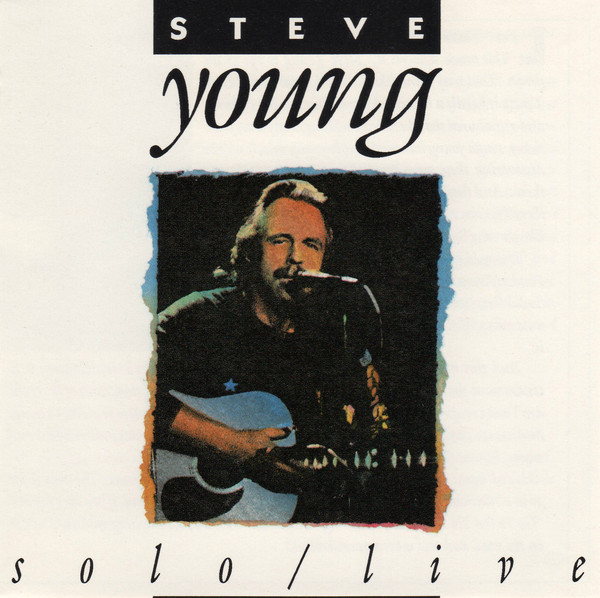
Ever since the birth of rock ’n’ roll, there have been countless examples of truly talented and gifted artists music whose music failed to find the audience it deserved during their lifetime. This ranges from Nick Drake and Gram Parsons and to some extent, Tim Buckley. It’s only in death that their music started to received the attention and critical acclaim it so richly deserves. Sadly, that is also the case with Steve Young, who passed away just over a year ago, on ‘17th’ March 2016, aged just seventy-three. Sadly, very few people outside of a small coterie of musical connoisseurs were aware of Steve Young’s music.
Despite that, most people withe even a passing interest in music would instantly recognise one of Steve Young’s best known songs.This was Seven Bridges Road, which had been covered by everyone from Rita Coolidge, Joan Baez and Dolly Parton to The Eagles, Ian Matthews. The royalties Steve Young received from other artists covering Seven Bridges Road, allowed Steve Young to live his life on his own terms. While that is something many people would welcome, deep down Steve Young must have felt disappointed that his music didn’t find a wider audience. However, Steve Young was grateful that the steady stream of money the royalties from Seven Bridges Road brought him made his life more comfortable than it had been growing up.
Steve Young was born in Newnan, Georgia on the ‘12th’ of July 1942, into a family of sharecroppers. His father who was a Native Indian, and had been a sharecropper since the age of thirteen. Life as a sharecropper was tough, and money was tight. To make matters worse, Steve’s father was often getting into trouble. As a result, the family were often on the move. Eventually, they settled in Gadsden, Alabama. By then, Steve knew how he wanted to make a living.
Ever since he had been a young boy, Steve had listened to music, and it made life that bit more bearable. He could see the beauty in music, especially, the Southern music, which Steve listened to. However, from an early age, Steve Young wasn’t content to listen to music. When people asked him what he wanted to do, he told them he wanted to be a singer, songwriter and musicians. To most people, this was a pipe dream.
Things changed when Steve’s grandfather took him to a swap meet, where he saw a warp necked Silvertone guitar. It was love at first sight. Steve tried to talk his grandfather into getting him the guitar. However, the answer was no, and a disappointed Steve returned home.
Still, he was determined to get a guitar of his own, and when he was fourteen, his mother relented and agreed to buy Steve his first guitar. She bought Steve a Gibson ES 125 thin body electric guitar. This was enough to make his dreams come true, and he hoped, follow in the footsteps of Carl Perkins and Elvis Presley at Sun Records.
By the time Steve had mastered his guitar, the folk boom had hit Birmingham, Alabama. Despite his love of Southern music, Steve started playing folk music. By his early twenties, Steve was a regular face on Birmingham music scene, and was regarded as one of the city’s rising stars.
During gigs he played a mixture of his own songs and covers of Bob Dylan songs. Sometimes, he took to the mic and started voicing his support for the nascent civil rights movement. While this was admirable, such talk was dangerous in Birmingham, Alabama, which was Klan country.
Some folks around Birmingham, Alabama didn’t take kindly to folk singers talking about equality and civil rights. Especially, ones like Steve, who after gigs, headed out on the town and enjoyed carousing. Sometimes, this lead to trouble, but Steve didn’t seem to care. He was determined to live life on his own terms. This included voicing his support for the civil rights movement. Fortunately, he never came to any harm, and in 1963, left Birmingham, Alabama.
This came about after Steve met Richard Lockmiller and Jim Miller, who were both folk musicians. They had signed to Capitol Records as a folk duo Richard and Jim, and were heading to Los Angeles to record their debut album. Steve joined the pair on their road trip, and in LA, played on Richard and Jim’s 1963 debut album Folk Songs and Other Songs.
Steve’s guitar playing on Folk Songs and Other Songs, brought him to the attention of other musicians. It was a similar case when Richard and Jim played live, Steve’s playing brought him to the attention of other musicians and record buyers. One of the first musicians to discover Steve Young was Van Dyke Parks.
From the first time he saw Steve play live, he realised that he was a cut above most musicians. Here was a versatile and talented singer and guitarist who seamlessly could switch between disparate musical genres. His live act saw Steve playing folk, blues and even a hint of Celtic music. The audience was enthralled by Steve’s vocal and virtuoso performance on guitar. Despite this, Steve spent time busking on Sunset Strip. This was only temporary.
Soon, Steve was about to go up in the world when he joined the ranks of LA’s session musicians. He also became the lead guitarist for the Steve Battin Band. After shows, Steve partied with some of the biggest names in the LA scene, including Mama Cass, Tim Hardin and Van Dyke Parks. At these parties, Steve partied hard, drinking and taking drugs in ever-increasing greater qualities. Still, though, Steve turning up for sessions the next day and even formed a new band with two well-known names.
The Gas Company included Van Dyke Parks and a young Stephen Stills, who played rhythm guitar. However, The Gas Company was just a stepping stone for Stephen Stills en route to greater things. Meanwhile, Steve’s life was professional and personal life was changing.
He met and married Terry Newkirk, who with Roger Tillison performed as The Gypsy Trips. Now a married man, Steve decided to take a job as a postman to make ends meet. However, he hadn’t given up on his dream.
It was only a matter of time before Steve caught a break, and was approached by Stone Country’s manager. They were looking for a guitarist, and Steve fitted the bill. He played on their debut album. Not long after this, Steve’s dream came true when he was signed by A&M.
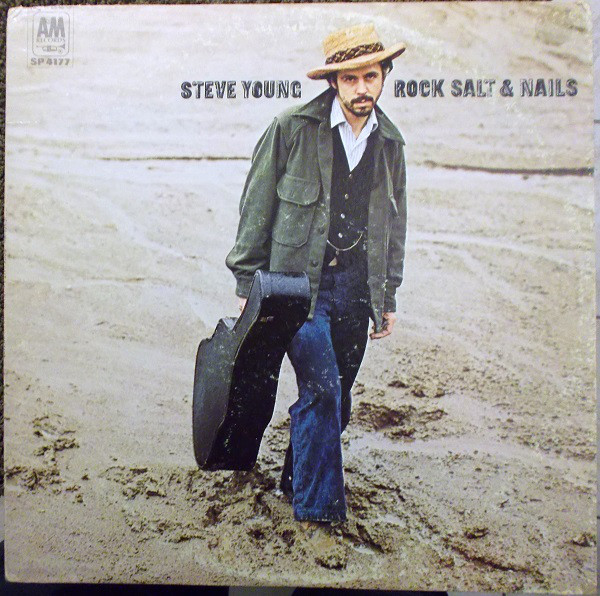
This was the break he had been waiting for, and the twenty-six year old began work with producer Tommy LiPuma. Backed by a band that featured some top LA session players, plus Gram Parsons and Gene Clark. Gradually, Rock, Salt and Nails took shape, and was released in 1969. Sadly, the album passed an indifferent record buying public by. They had overlooked what’s now regarded as one of the hidden gems of the late-sixties, Rock, Salt and Nails.
After the commercial failure of Rock, Salt and Nails, Steve did a lot of soul-searching, and with a heavy heart announced that he was turning his back on music. This was something that he had never envisaged would happen. However, there was only so long anyone could struggle to make ends meet, with the hope that one day, he might make a breakthrough. Steve decided to make a fresh start and he and his wife left LA, and headed to San Francisco, where they settled in the Bay Area.
This was a new start for Steve, and was the first day of his life after music. However, by then, all Steve knew was music. He and Terry Newkirk setup a guitar shop in San Anselmo in 1970. It was the new start Steve had been looking for. That was until Andy Wickham of Reprise Records came calling.
When Steve turned his back on music, he was still under contract to A&M. Andy Wickham who had followed Steve’s career approached A&M to ask if they would be willing to release him from the contract. They agreed, and now all Andy Wickham had to do was convince Steve to sign on the dotted line.
Given Steve was disillusioned with life as a professional musician, this was going to be easier said than done. Especially with the new guitar shop up and running. However, for Andy Wickham it was a case of nothing ventured, nothing gained. He approached Steve about signing to Reprise, and eventually, he agreed to make a comeback.
Once Steve had signed to Reprise, he was paired with Ry Cooder, who would produce his first single for the label. The song chosen for the single was Bob Dylan’s Down In The Flood, which was retitled as Crash On the Levee. On the B-Side was The White Trash Song. Once the single was recorded, it was released in 1970. Despite featuring a barnstorming performance from Steve Young, and a guest appearance from guitarist Ry Cooder, the single failed to trouble the charts. History was repeating itself.
After the failure of Crash On the Levee, a decision was made to pair Steve with a new producer. After just one single, the Steve Young and Ry Cooder partnership was over. Replacing Ry Cooder was Nashville based Paul Tannen. This was a strange decision, given Nashville in 1970 was, and to some extent, still is, a conservative town. Steve Young with liberal politics, wasn’t going to be well received in some quarters. That proved to be the case.
Steve Young journeyed to Nashville, to meet his new producer and record his sophomore album. He was aware that Paul Tannen had penned twenty songs and had around forty production credits to his name. This experience Steve hoped would be put to good use when he recorded his sophomore album. However, Steve was in for a surprise.
When Steve met Paul Tannen, he quickly came to the conclusion that his new producer was more of interested in music publishing than songwriting. This didn’t bode well for the future. However, Nashville had some of the best session musicians in America, and Steve hoped some of them would join him in the studio.
Before recording got underway, Steve was joined by Paul Tannen and some top session players. When they ran through the songs, some of the musicians took umbrage to the lyrics. To make matters worse, Steve’s liberal politics and outlook on life didn’t going down well with some of the band. As the session got underway, it soon became apparent that the band weren’t all on the same page. Some of the musicians couldn’t understand how to play the songs. It wasn’t the type of music they were used to playing. By then, the decision to record in Nashville and the choice of Paul Tannen as producer wasn’t looking like the right one. Steve later, would claim that he ended up producing what later became Seven Bridges Road himself. However, it wasn’t an easy album to record.
For parts of the session, there was an undercurrent and a degree of tension. Partly, this was because of the difficulties had understanding how to play their parts, but also because some members of some the band and Steve Young were polar opposites. Steve was a sixties child with liberal politics and views, while the band were older, and much more conservative. With his long hair, and liberal views, some of the band most likely saw Steve as a hippy from California. He saw some of the band as rednecks, and the type of people who he had spent his life avoiding. It was the case of never the two shall meet. However, in Nashville session musicians were professionals, and the album was eventually recorded. Steve hotfooted it home to San Francisco.
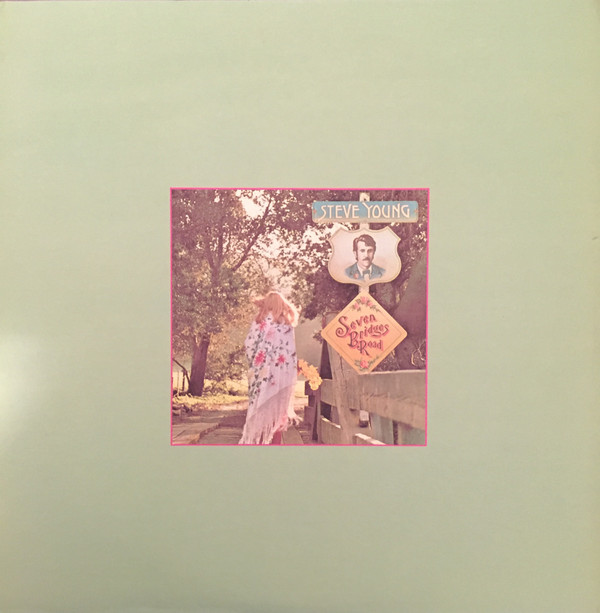
When Steve Young arrived home, he brought with him what would eventually become Seven Bridges Road. He took the tapes which featured twelve songs to Andy Wickham at Reprise. They listened to the tapes, and before long, everyone in the room realised that despite the difficulties Steve had experienced recording Seven Bridges Road, it was a very special album.
That was the case from the opening song, Seven Bridges Road, which is a beautiful, haunting paean to Terry Newkirk who Steve had to leave behind in San Francisco when he travelled to Nashville to record the album. Steve who was obviously homesick and missing his wife, lays bare his soul, and sets the bar high for the rest of the album.
While everyone at Reprise Records realised that they had heard a very special album, they had no idea how to market the album that showcased Steve’s new Southern country sound which was now fully formed. There was even a diversion via the blues on Ragtime Blue Guitar where a defiant Steve sings: “I’ve a right to sing these blues as he records in Nashville. Seven Bridges Road was very different from the country music that was being released at that time. Reprise Records were faced with the same problems as A&M when realising Steve Young’s debut album, what to do with it? The problem was, the album was way ahead of its time.
Steve Young was a musical visionary who was the architect of a new Southern country sound. This was a forerunner of the outlaw sound, which Waylon Jennings and Willie Nelson later went on to pioneer. Sadly, very few record buyers would know of the part Steve Young played in musical history.
On its release in 1972, Seven Bridges Road failed to find an audience, and before long the album couldn’t be found record shop shelves. Steve who watched his dream destroyed for the second time, for the second time, turned his back and music.
He and Terry Newkirk sold their guitar shop and bought some land in Nashville. They built a log cabin and raised their son Jubal. The couple went on what Steve later called: “your basic vegetarian-mystical trip.” This lasted for a while, until Steve started drinking heavily. That was when Terry Newkirk packed her bags and left. Quickly, Steve’s life was unravelling. That was until Jim Terr entered the picture.
Jim Terr owned Blue Canyon Records, and thought that Seven Bridges Road was the best record ever committed to vinyl. When Steve told him the album wasn’t even in circulation, the pair started hatching a plan.
The first part of the plan was to get Steve playing live again. He started playing around Albuquerque and then rerecorded The White Trash Song with The Last Mile Ramblers. After that, Jim Terr discussed with Steve buying the master to Seven Bridges Road from Warners, with a view to reissuing the album. Jim Terr hit Warners with a lowball offer, and they accepted.
Before reissuing Seven Bridges Road, two changes to the track-listing were made. The newly rerecorded version of The White Trash Song replacing the Nashville version. A cover of Merle Haggard’s I Can’t Hold Myself In Line replaced One Car Funeral Procession. Both of these songs that featured on Blue Canyon Records’ 1973 reissue of Seven Bridges Road. However, although Blue Canyon Records was a small company, that didn’t have a distribution network like Warners, the reissue of Seven Bridges Road introduced Steve Young to more record buyers. Still, though, he was one of music’s best kept secrets.
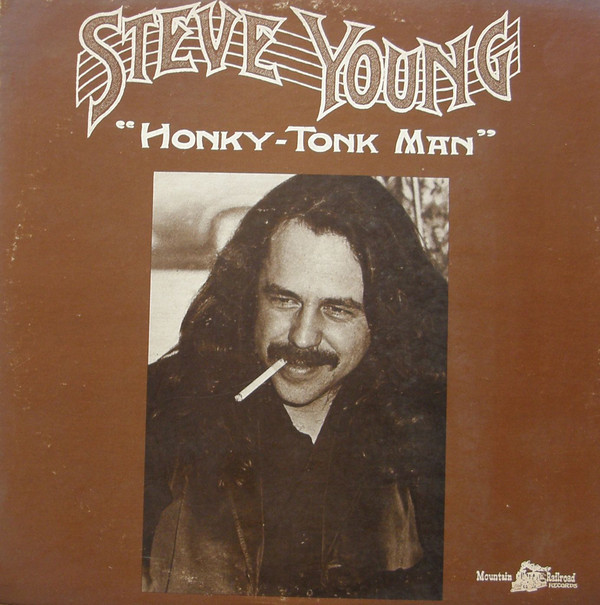
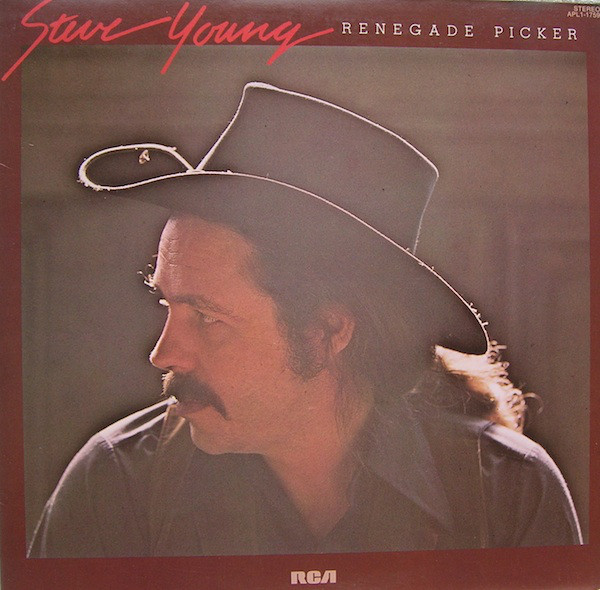
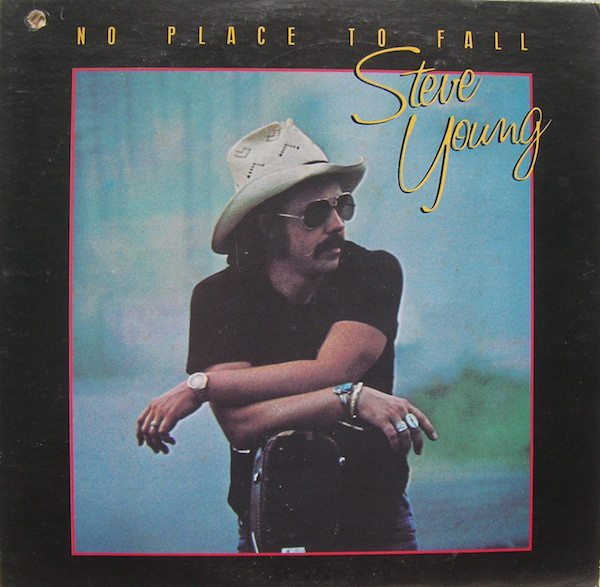
Sadly, that continued to be the case with Steve Young’s next three albums finding a limited audience. His third album was Honky-Tonk Man, which was released on Mountain Railroad Records in 1975. Despite its quality, again, the album failed to find the wider audience it deserved. Despite that, the following year, RCA Victor took a chance on Steve Young, and the original outlaw released Renegade Picker in 1976. It was the same old story, with the Renegade Picker showcasing a talented singer, songwriter and musician, whose music was enjoyed by a small coterie of discerning record buyers. There was no improvement in record sales after No Place To Fall in 1978, and RCA and Steve Young parted company.
After that, Steve Young’s spiralled out of control. He seems hellbent on destruction, and nearly drank himself to death. Eventually, he entered a clinic for homeless alcoholics in Nashville. It was during his stay in the clinic, that Steve realised that his lifestyle had come close to destroying him. He made the decision to embrace his Native Indian heritage and became a Buddhist. His new approach to life worked, and Steve managed to rebuild his life. It took time but paid off.
It wasn’t until 1981 that Steve Young returned with a new album. It was a remixed version of Seven Bridges Road, with a different track-listing. There’s a remixed version Seven Bridges Road plus new songs like Down in the Flood, Ballad of William Sycamore, My Oklahoma, Wild Goose and Days Of 49. The reissue of Seven Bridges Road meant that the album was available for a new generation of record buyers to discover.
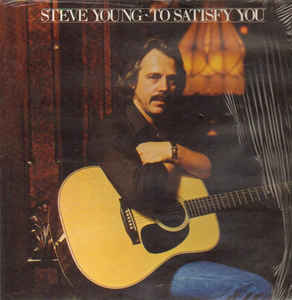
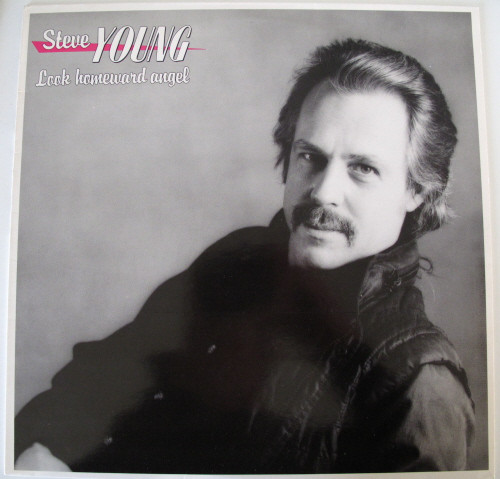
By then, Steve Young had released another new album To Satisfy You, which was released on Mill Records in 1981. This marked the next start in the reinvention of Steve Young. Another five years passed before Steve returned with a much more experimental album, while Look Homeward Angel in 1986 which showcased a much more contemporary sound. That was the last album Steve released during the eighties.
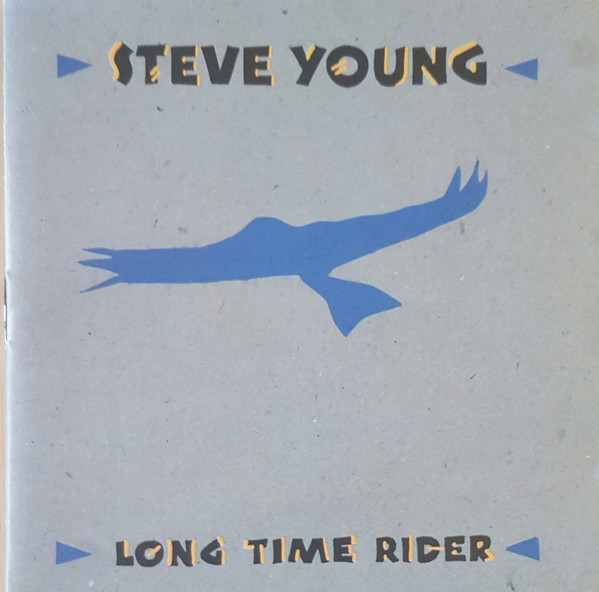
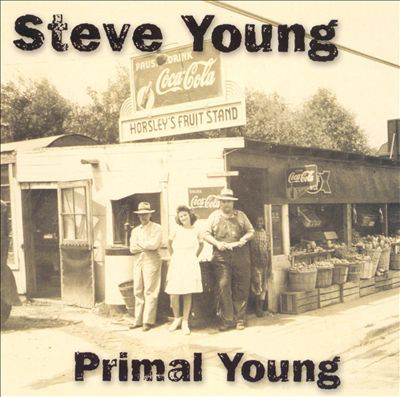
He returned in 1990 with Long Time Rider, with Switchblades Of Love following three years later in 1993. Still, interest in Steve’s music and his landmark album Seven Bridges Road continued to grow. Despite that, Steve didn’t release another album until Primal Young in 1999. The sixty year old had released his best album in recent. However, after that albums continued to be sporadic.
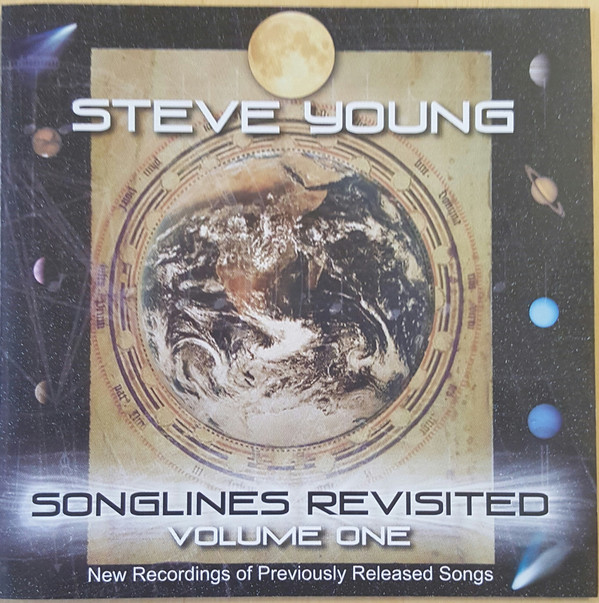
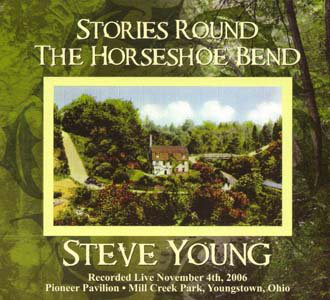
It wasn’t until 2005 that Steve released Songlines Revisited Volume One, where he revisited many of his best known songs. The White Trash Song, Montgomery In The Rain, Rock Salt and Nails and of course Seven Bridges Road were all rerecorded. Steve sold the album at his gigs when he played live. Two years later in 2007, Steve Young released the live album Stories Round The Horseshoe Bend. Sadly, it was his swan-song.
Although Steve Young continued to play until 2010, he never released another album. That was despite having around a 100 songs that he had yet to record. Sadly hey never saw the light of day, because on the ‘17th’ March 2016, aged just seventy-three, Steve Young passed away. That day, music lost one of its most talented sons. His greatest album is Seven Bridges Road which nowadays, is regarded as a true cult classic and the perfect introduction to Steve Young.
Nowadays Steve Young is regarded as a pioneer of the Southern country sound which was a foreigner of the outlaw sound. With his maverick ways and a defiant attitude to authority Steve Young was also a musical outlaw. In music and live, Steve Young was a free spirit who did things his way.
Sadly, despite enjoying a lengthy career, Steve Young’s music never enjoyed the success it deserved. That was despite Steve Young being one of the finest purveyors of what Gram Parson called Cosmic American Music. It’s only relatively recently that Steve Young’s music is starting to find a wider audience, and maybe he will no longer be one of music’s best kept secrets?
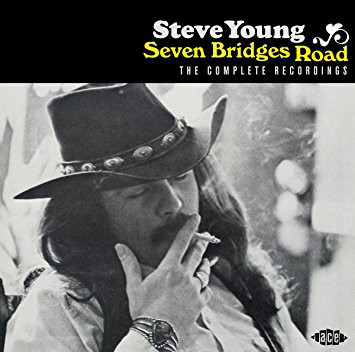
Steve Young-Seven Bridges Road: The Complete Recordings.


ARTHUR BLYTHE-ELABORATIONS, LIGHT BLUE ARTHUR BLYTHE PLAYS THELONIUS MONK AND PUT SUNSHINE IN IT.
Arthur Blythe-Elaborations, Light Blue: Arthur Blythe Plays Thelonious Monk and Put Sunshine In It.
Label: BGO Records.
By 1982, alto jazz saxophonist Arthur Blythe was forty-two and had been signed to Columbia since 1978. Since then, he had already released a quartet of albums for his new label. This began with two critically acclaimed albums in the late-seventies, In The Tradition in 1978 and Lenox Avenue Breakdown in 1979. Sadly, neither album found the audience they deserved and Lenox Avenue Breakdown was hailed as “one of the lost masterpieces of modern jazz.” Arthur Blythe was disappointed that his music wasn’t finding the audience it so richly deserved and hoped his luck would change as a new decade dawned
After spending the rest of 1979 and all of 1980 working as a sideman, this allowed Arthur Blythe to get over the commercial failure of Lenox Avenue Breakdown. He returned in 1981 with Illusions, an album of innovative and inventive jazz that featured a composer, bandleader and musician at his creative zenith. Sadly, just like his two previous albums for Columbia,Illusions failed to find an audience. This was another disappointment for Arthur Blythe.
Despite that, Arthur Blythe headed back into the studio with some top session players. The result was Blythe Spirit which was released in 1981 to the same plaudits and praise as its three predecessors. So much so, that many critics regarded it as one of the finest albums of his time at Columbia. Arthur Blythe had hit a rich vein of form musically, and he hoped that this would continue. He also hoped that his music would start to find the audience it deserved.
Buoyed by releasing a quartet of critically acclaimed albums, Arthur Blythe’s thoughts turned to the future, and what would be the seventh album of his career,… Elaborations. It’s one of a trio albums that featured on BGO Records’ recently released and remaster two CD set. It features Elaborations, Light Blue: Arthur Blythe Plays Thelonious Monk and Put Sunshine In It which continues Arthur Blythe’s Columbia years.
Elaborations.
Arthur Blythe’s recording career only began in 1977, and since then, he had been making up for lost time. Before joining Chico Hamilton’s band in 1975, Arthur Blythe was working part-time as a security guard in New York. Now just seven years later in 1982, and Arthur Blythe was about to record the eighth album of his career. It was an incredible change in fortune, and Arthur Blythe was determined to make the most of every opportunity that came his way.
When Arthur Blythe began work on Elaborations he was at his creative peak, and full of new ideas. Arthur Blythe was constantly looking to reinvent his music and take in new directions. He was truly one of jazz’s pioneers, and the music he recorded at Columbia is a reminder of that. This includes Elaborations.
For Elaborations, Arthur Blythe composed five of the six tracks. This included Elaborations, Metamorphosis, Shadows and The Lower Nile. The only cover version on Elaborations was One Mint Julep which was written by Rudolph Toombs. These six tracks were recorded at CBS Recording Studios, in New York.
When the sessions for Elaborations began at CBS Recording Studios, in New York, Arthur Blythe was joined by co-produced by Jim Fishel. Elaborations would be the third Arthur Blythe album he had co-produced. He came onboard for the recording of Illusions in 1980 and returned for the recording of Blythe Spirit in 1981. The pair worked well together, and they reconvened for the recording of Elaborations. Joining them were some top session musicians.
Arthur Blythe’s band featured a rhythm section of drummer Bobby Battle and bassist Wilber Morris who played on Sister Daisy and guitarist Kelvyn Bell. They were joined by cellist Abdul Bob , Bob Stewart on tuba and Muhammad Abdullah who played congas on Sister Daisy. This talented and experienced band accompanied Arthur Blythe’s alto saxophone on Elaborations. When the sessions were over, the release was scheduled for later in 1982.
Before that, critics had their say on Elaborations, which was Arthur Blythe’s fifth album for Columbia. Critics were won over by Elaborations which was another ambitious and criticality album from one of the few remaining jazz pioneers.
Arthur Blythe stayed true to his musical philosophy on an album that not only referenced hard bop and avant-garde, but R&B. It’s a captivating musical journey from the opening bars of Elaborations, where Arthur Blythe’s blazing saxophone soars powerfully above the arrangement. Later, the rest of the arrangement becomes fluid, meditative and laid-back. Still, Arthur Blythe plays with power and passion, but later leaves space for the solos before his sultry saxophone returns as this masterclass takes shape. This sets the bar high for the rest of Elaborations. Metamorphosis is a reworking of a track from his trio live album Metamorphosis. It’s transformed by the quintet, taking twists and turns as Arthur Blythe unleashes impressive sheets of sound as he plays with speed, power and precision. Sister Daisy is a catchy with the band playing as one while Arthur Blythe’s craggy, jaggy and melodic.
Arthur Blythe’s love of R&B is especially apparent on One Mint Julep where he throws a curveball on this irresistible and memorable track. Very different is the dark, moody and broody Shadows where there’s a sense of foreboding as this cinematic track moves from jazz in the direction of avant-garde. It’s one of then highlights of Elaborations. The Lower Nile closes Elaborations, and features a myriad of Middle Eastern sounds that add to this powerful and poignant track that is rich in imagery. Elaborations was an impressive addition to Arthur Blythe’s CV.
Despite that, and the praise and plaudits Elaborations received, it wasn’t a commercial success upon its release in 1982. By then, Arthur Blythe had built up a loyal fan-base that followed his career with interest. They also bought all of the album he had released since 1977. The problem was, there wasn’t enough of them. Deep down though, forty-three year old Arthur Blythe knew his music had to find a wider audience.
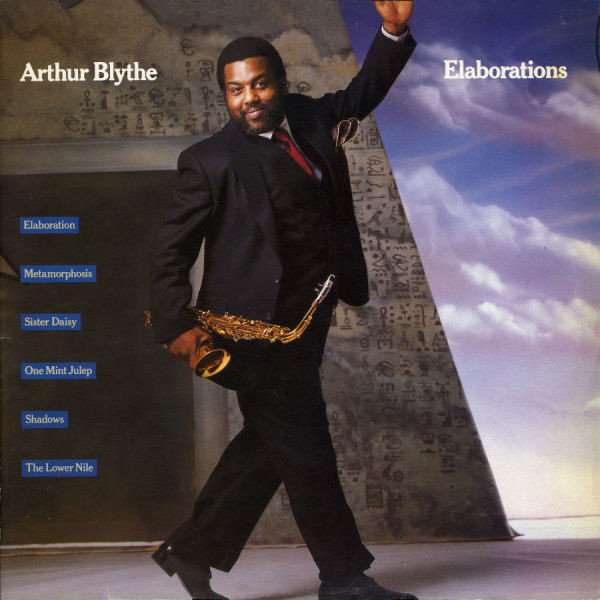
Light Blue: Arthur Blythe Plays Thelonious Monk.
For his sixth album for Columbia, Arthur Blythe decided to pay homage to one of the true legends of jazz Thelonious Monk. He had passed away in 1982, and Arthur Blythe wanted to pay his own tribute to one of the greatest jazz musicians on Light Blue: Arthur Blythe Plays Thelonious Monk. This was fitting in more ways than one.
Just like Thelonious Monk, many critics and cultural commentators regarded Arthur Blythe as an avant-garde musician rather than a jazz musician. This wasn’t the only similarity between Monk and Arthur Blythe. The two men had signed to Columbia, in the hope that their music would find a wider audience. So far, this hadn’t happened for Arthur Blythe. Maybe Light Blue: Arthur Blythe Plays Thelonious Monk would be a game-changer?
Prior to recording Light Blue: Arthur Blythe Plays Thelonious Monk, Arthur Blythe had spent some time going through Monk’s compositions. He wanted to find songs that would translate from Monk’s piano to Arthur Blythe’s alto saxophone. Eventually, he settled on We See, Light Blue, Off Minor, Epistrophy which Monk wrote with Kenny Clarke, Coming On The Hudson and Nutty. These songs would become Light Blue: Arthur Blythe Plays Thelonious Monk, which Arthur Blythe produced himself.
This time around, there was no sign of Jim Fishel who had co-produced three albums with Arthur Blythe. Instead, Arthur Blythe took charge of production, and guided his band through the six songs on Light Blue: Arthur Blythe Plays Thelonious Monk. However, Arthur Blythe’s band featured many familiar faces.
Arthur Blythe’s core band featured the musicians that had featured on Elaborations. The rhythm section of drummer Bobby Battle and guitarist Kelvyn Bell. They were joined by cellist Abdul Wadud, Bob Stewart on tuba and Muhammad Abdullah who played congas. This was a talented, experienced and versatile band who would play their part on what was a fitting homage to Thelonious Monk.
The time that Arthur Blythe had spent choosing the right songs for his homage to Monk had been time well spent. Critics hailed the album a fitting tribute to one of the true legends of jazz. However, this wasn’t a slavish copy of the Monk’s originals. Instead, each composition was given a twist on Light Blue: Arthur Blythe Plays Thelonious Monk, which found favour among critics. They hailed it one of Arthur Blythe’s finest moments.
Light Blue: Arthur Blythe Plays Thelonious Monk opens with We See, which is one of Monk’s best known and best-loved songs. Jazz meets Latin as Arthur Blythe’s sultry sax twists, turns and soars while a cha-cha rhythm provides the heartbeat to the liquid arrangement. The result is a joyous and melodic jazz standard. Light Blue is a late-night, ruminative ballad that will strike a chord with the newly heartbroken. Off Minor might be one of Monk’s oldest compositions, but this irresistible bop influenced track sure packs a punch and swings.
Off Minor is another of Monk’s older pieces which he penned with drummer Kenny Clarke. In Arthur Blythe’s hands, this melodic track takes on a lively, self-confident, Latin-tinged sound that almost heads in the direction of funk. It also features Monk’s trademark jaunty chromic melody. Coming On The Hudson is a quite beautiful track Monk wrote whilst looking out of a window at the Hudson River. It features loose, laid-back and relaxed performance on what’s one of the album’s highlights. Nutty is an upbeat track where Arthur Blythe’s playing is quick and confident as the shuffle beat ensures the songs swings and then some. In doing so, Light Blue: Arthur Blythe Plays Thelonious Monk closes as it began on a high.
After critically acclaimed reviews that had preceded Light Blue: Arthur Blythe Plays Thelonious Monk, the album was released by Columbia in 1983. Sadly, it followed in the footsteps of his previous albums, and failed to find the audience it so richly deserved. By then, Arthur Blythe and executives at Columbia knew something had change.
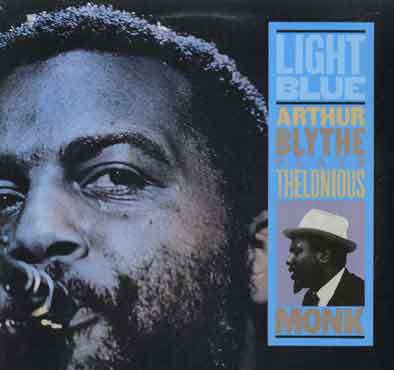
Put Sunshine In It.
By the early eighties, jazz was no longer as possible as it had once been. It had been overtaken by other musical genres, and jazz was heading in the same direction as the blues some fifteen years earlier. Something had to change to save jazz from irrelevancy.
Fortunately, Dr. George Butler Columbia’s head of jazz was a man with a plan. He had been looking at who synths, sequencers, samplers, and drum machines could be used in jazz. This could be the start of a brave new world for the genre. However, moving in this direction could backfire for an artist, and could result in an album that lacked authenticity, tradition and soul. It could also proved to be a musical white elephant, and a blot on an artist’s CV. As a result, there weren’t going to be many people willing to record a jazz album using the new technology. That was until Dr. George Butler persuaded Arthur Blythe to be a guinea pig, and record the most experimental album of his career Put Sunshine In It.
For Put Sunshine In It, Arthur Blythe penned six new tracks for the most experimental album of his career. There must have been a degree of trepidation as he began work on an album that was totally different from anything he had released before. Despite that, the bandleader, composer and alto-saxophonist came up with six new songs including Tumalumah, Put Sunshine In It, Uptown Strut, Silhouette, # 5 and Sentimental Walk (Theme-Diva). These songs would feature on Put Sunshine In It.
A familiar face returned for the recording of Put Sunshine In It, co-producer Jim Fishel. He hadn’t worked on Light Blue: Arthur Blythe Plays Plays Thelonious Monk, which Arthur Blythe produced himself. However, with the addition of the new technology this was uncharted territory for Arthur Blythe. He was joined by his usual band which included a rhythm section of drummer Bobby Battle and bassist Wilber Morris who played on Uptown Strut and guitarist Kelvyn Bell. They were joined by cellist Abdul Wadud, Bob Stewart on tuba and Muhammad Abdullah who played congas on Uptown Strut. This talented and experienced band accompanied Arthur Blythe’s alto saxophone on what was an ambitious and experimental album.
When the recording of Put Sunshine In It took place, tuba player Bob Stewart felt that Arthur Blythe’s heart wasn’t in the album. The band recorded their parts over a backing track that had already been programmed and recorded. This wasn’t the way album Arthur Blythe recorded an album and it wasn’t the album he had wanted to record. Instead, he would’ve rather stuck with the acoustic sound of previous albums. This offered Arthur Blythe the freedom to experiment and reinvent his music on each album. However, Dr. George Butler had persuaded Arthur Blythe to record an album where his band was augmented by a myriad of technology.
It was as if Dr. George Butler was planning to market Arthur Blythe as Columbia’s equivalent or answer David Sanborn. What Dr. George Butler failed to grasp was that Arthur Blythe had no wish to be a David Sanborn clone. He would rather have left this to lesser musicians, lacking in pride and self-worth. However, after releasing six album that hadn’t reached a wider audience, Arthur Blythe delivered the album Columbia wanted.
Deep down, he must have known that if the album wasn’t a success, he could return to recording albums with his acoustic band. That was the music that Arthur Blythe enjoyed making and believed in. Despite the technology, Arthur Blythe’s acoustic band featured on Put Sunshine In It. It was a learning experience for the musicians involved. They were introduced to new technology that would soon play a major part in recording albums. Maybe not for alto saxophonist Arthur Blythe though?
Critics were surprised by the direction that Arthur Blythe’s music had headed in on Put Sunshine In It. Some welcomed the stylistic change, but many critics and commentators recognised that Arthur Blythe’s playing was still of the same high standard on an album that was a marriage of his acoustic band and the latest musical technology. Arthur Blythe had been encouraged to make use of technical tracery and overdubbing, which was a first for him. The result was a jazz album that was obviously recorded in the eighties. That is because of the technology used in the making of the album. It has an unmistakable eighties sound. Having said that, Put Sunshine In It has aged well, unlike much of the music released in the eighties. There’s a reason for that, Arthur Blythe and his band.
Arthur Blythe’s saxophone plays a leading role in the sound and success of Tumalumah. Meanwhile, drummer Bobby Battle puts the eighties’ electronic drums to good effect as Arthur Blythe unleashes a blistering saxophone solo. Put Sunshine In It may not have been the album he wanted to record, but puts his heart and soul into the music. It’s a similar case on Put Sunshine In It, where glistening keyboards provide the backdrop to a sultry saxophone solo that later, soars above the arrangement to this beautiful song. Uptown Strut marries elements of boogie, funk and jazz, which is supplied by Arthur Blythe and his band. Despite this being a stylistic departure for Arthur Blythe and the rest of his band. However, Arthur copes well and his playing is fluid and a mixture of power and control. At the halfway stage, Arthur Blythe was coping well on this adventure in sound.
This continued on Silhouette, which relies heavily upon eighties technology, which many critics found soulless when used in any genre. However, it’s put to good use on Silhouette, where Arthur Blythe’s playing fluid, soulful and sometimes funky on one of the album’s highlights. # 5 relies heavily on drums machines and synths, which add a jazzy backdrop as Arthur Blythe’s alto saxophone soars above what’s the most experimental arrangement on the album. Sentimental Walk (Theme-Diva) closes Put Sunshine In It, and shows that not ever song that was made using eighties technology is soulless. Quite the opposite, as Arthur Blythe’s soulful side shines through. In doing so, it’s a case of keeping the best until last on Put Sunshine In It which was Arthur Blythe’s venture into electronic jazz-funk.
When Put Sunshine In It was released in 1984, the album wasn’t a success. Even some of’s most loyal fans weren’t won over by the album. It had been an idea that was doomed to failure from the very start. The only person who failed to realise this, was Dr. George Butler, who was Columbia’s head of jazz.
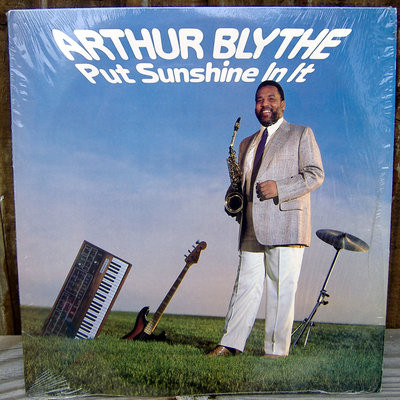
In some companies this would’ve cost him his job, but Dr. George Butler held onto his position as Columbia’s head of jazz. He had press-ganged Arthur Blythe into recording an album he didn’t want to record. No longer had Arthur Blythe the same artistic freedom that he had enjoyed when Bruce Landvall left Columbia in 1982. Gone were the days when Arthur Blythe could record ambitious and innovative albums where he could reinvent his music on each album.
It was another two years before Arthur Blythe returned in 1986 with his eighth album for Columbia, Da-Da. While it was well received by critics, it failed to find a wider audience. It was a same case with Arthur Blythe’s Columbia swan-song Basic Blythe in 1987. That was the ninth album that Arthur Blythe had recorded for Columbia in nine years.
The first four albums Arthur Blythe released on Columbia, 1978s In The Tradition, Lenox Avenue Breakdown, Illusions and Blythe Spirit were released to critical acclaim and were released by BGO Records in 2016 as a two CD set. It was the perfect addition to one of the great jazz alto saxophonists. For many people, this was their introduction to Arthur Blythe.
Now a year later, and BGO Records recently release the digitally remastered versions of the next three albums that Arthur Blythe released for Columbia as a two CD set. This set begins with 1982s Elaborations and 1983s Light Blue: Arthur Blythe Plays Thelonious Monk, which were both released to critical acclaim. Put Sunshine In It is a much more experimental album due to the use of the technology. However, it’s stood the test of time and shows another side to Arthur Blythe.
Elaborations, Light Blue: Arthur Blythe Plays Thelonious Monk and Put Sunshine In It which feature on BGO Records’ two CD set is the perfect accompaniment to the 2016 set that covered the period between 1978 and 1981. These seven album feature the best music that Arthur Blythe released for Columbia. They’re also a reminder of a legendary alto saxophonist at the peak of creative powers.
Sadly, legendary bandleader, composer and alto saxophonist Arthur Blythe passed away earlier this year on March the ’27th’ 2017, aged seventy-six. By then, Arthur Blythe was largely unknown outside of a small coterie of jazz aficionados who appreciated the music of this true jazz great. Hopefully, BGO Records’ recent release of Elaborations, Light Blue: Arthur Blythe Plays Thelonious Monk and Put Sunshine In It as a two CD set will introduce the Arthur Blythe’s rich musical heritage to a much wider audience.
Arthur Blythe-Elaborations, Light Blue: Arthur Blythe Plays Thelonious Monk and Put Sunshine In It.

RANKY TANKY-RANKY TANKY.
Ranky Tanky-Ranky Tanky.
Label: Self-Released.
When South Carolina natives Quentin Baxter, Kevin Hamilton, Charlton Singleton and Clay Ross first met in 1998, they had just left university, and were wondering what the future held for them? The meeting proved to be a game-changer for the four musicians, and soon, they had formed what’s still remembered as seminal Charleston jazz quartet. However, eventually the four friends went their separate ways and got on with their lives.
Throughout the years apart, the four friends kept in touch with each other, and as the years passed, them came to understand each other better. Eventually, after the best part of two decades apart the four friends decided it was time to reform a new band together.
By then, Quentin Baxter, Kevin Hamilton, Charlton Singleton, and Clay Ross had all matured as musicians and were accomplished, versatile and talented players. They had come a long way since they first met in 1998. All their new group needed was a vocalist, and they knew the very person, Quiana Parler who is one of the country’s most celebrated vocalists. Together, the new quintet became Ranky Tanky, which translates from the Gullah language as work it or get funky! That is fitting as Ranky Tanky certainly get funky on their forthcoming album Ranky Tanky which they’ll self release their eponymous debut album on October the ‘6th’ 2017. It’s the next part in a story that began nineteen years ago.
Back then, bassist Kevin Hamilton, guitarist Clay Ross, and future two times Grammy-nominated drummer and producer Quentin E. Baxter were all just about to finish composition degrees. Meanwhile, trumpeter and vocalist Charlton Singleton had just returned home after graduating from South Carolina State University. Not long after that, the four future bandmates paths crossed for the first time?
When the four musicians met for the first time, they hit it off and it wasn’t long before they started talking about forming a jazz quartet together. This would allow the four composition graduates to put what they had learnt into practise and hone their musical skills.
For the next few years the jazz quartet played at venues throughout South Carolina. Playing in the jazz quartet with their friends was good experience for the young musicians, and soon, they were a popular draw locally. However, nothing lasts forever and after a few years gigging locally guitarist Clay Ross decided to move to New York. That marked the end of the jazz quartet in its current form.
It didn’t mark the end of the friendship though. The four friends kept in touch as the years passed by. When their busy schedules allowed, they got the old band together and rolled back the years. By then, the four old friends had embarked upon successful musical careers.
Drummer Quentin E. Baxter, bassist Kevin Hamilton and trumpeter and vocalists Charlton Singleton had all embarked upon successful musical careers. They were now jazz musicians, bandleaders, composers, educators, and producers who were based in Charleston and much further afield. The three friends had come a long way since their days giving around South Carolina.
So had guitarist Clay Ross who was exploring music from different parts of the world. This included Brazilian music which Clay Ross was especially interested in. His interest in Brazilian music resulted in Clay Ross embarking upon a musical journey, where he would trace his musical roots and investigate the music of his home state of South Carolina. Before doing this, Clay Ross decided to tell his bandmates of his plays, and there was a degree of scepticism.
Kevin Hamilton remembers that time; “I thought everyone knew about this stuff.” That may have been the case to a degree, but Clay Ross was determined to dig deeper and get a greater understanding of his roots and the music of South Carolina.
That was how Clay Ross discovered the Gullah language, which is an English-based creole dialect spoken primarily by African-Americans living on the seaboard of South Carolina and Georgia and even in Northeast Florida. The roots of the language can be traced to the rice fields and plantations in South Carolina and Georgia, where it developed during the eighteenth Century. Gullah came about through contact between colonial types of English and the languages of African slaves that had arrived in America. Many languages influenced the development and evolution of the Gullah dialect as it took shape.
Over two hundred years later, and the Gullah dialect continues to influence American life and popular culture. Everything from Brer Rabbit to children’s hand games to the song Kumbayah has been influenced by the Gullah dialect. Many people who have sung and heard Kumbayah won’t know that it’s Gullah for come by here. It’s just one of many songs whose roots can be traced back to the Gullah dialect.
Charlton Singleton explains how these songs evolved: “these are songs often created on the spot, at play, or in church. They sometimes become part of a person’s contribution to worship, to be passed down to a family member with time. This direct transmission kept the music alive and ever shifting.” That is the case today, with Ranky Tanky including several traditional Gullah songs on their eponymous debut album.
This includes O Death and Go to Sleep which have been reworked by and given a twist by the members of Ranky Tanky. It was a similar case with Watch That Star, a song that trumpeter and vocalist Charlton Singleton knew as soon as he heard it. The song shared a few verses with his grandfather’s song, a song the elder had received after “seeking,” which is a key moment in a young Gullah person’s spiritual development. Charlton Singleton explains: “the method of seeking when he was growing up was to go out into the woods and seek the Lord while trying to be with the creator, be one with the heavens. The process often ended with a person finding a song that became their own. A song they would go on to “raise up” at every Sunday service, and a song that the entire community would associate with that person alone.“ Now that Watch That Star has been given a makeover by South Carolina based Ranky Tanky, they make it their own. That was still to come.
Not long after Clay Ross started studying the Gullah dialect, the jazz quartet started to work on some Gullah songs. They were arranged in such a way that they kept the spirit but sounded had an original sound. This can’t have been easy, but with four talented musicians and composers in the band the songs soon took shape. Now all the band needed was a vocalist.
The problem was finding the right vocalist. That wouldn’t be easy. Fortunately, the quartet had someone in mind. This was Quiana Parler, who was blessed with a powerhouse of a vocal. She had featured on American Idol, and this had resulted in Clay Aiken asking her to join his touring ensemble. However, before inviting Quiana Parler to join the band, all the members of the band had to be in agreement. However, they voted unanimously to bring Quiana Parler onboard and that day, Ranky Tanky was born.
Three decades after forming their first band, the four friends had formed their second band Ranky Tanky. Now the hard work began, and the five members of Ranky Tanky began working on the thirteen songs that feature on their eponymous debut album.
Trumpeter and vocalist Charlton Singleton explains his approach to songwriting.“When I write songs for jazz gigs, I’ll have a melody and the chords in my mind, but I also know that I want Quentin to play, so I’ll leave it to him to come up with a rhythmic foundation. I might suggest some bass line ideas for Kevin, but I leave it up to him. That’s how we collaborate. We start with the songs and games, but it’s our personalities that help drive these arrangements.”
Playing an important part in Ranky Tanky’s arrangements is improvisation. This is something many non-musicians fail to grasp and understand. What they don’t understand is how the arrangement unfolds according to a unique set of rules and understandings. Kevin Baxter explains: “Improvisation is a tool, not a departure. It’s entrenched. It depends on what we need to get across,” “And it’s not just instrumental; Quiana will sing a phrase over and over. When there’s a message being communicated, a spirit being conveyed, that’s key to cultural trance music like this music. These are rhythms for people to shout and praise on. It’s about how deep you want to get into it. It’s not about novelty or harmonic substitutions. You stay with the folk of it, and that gets you back into earlier improvisational skill sets.”
Another thing that plays an important part in the sound and success of Ranky Tanky is the dialogue between voice and drum in some of the songs on the album. A case in point is Been In The Storm. Then on Knee Bone, there’s a vocal call and response with an instrumental reprise. Knee Bone was an opportunity for many of the band members to use techniques that they had learned growing up in South Carolina.
These techniques are put to good use on Ranky Tanky, which draws inspiration from a myriad of influences. Among them are Zydeco, traditional gospel music and the guitar based music of popular music of Ghana, Mali and Senegal. Ranky Tanky is an album where the five members of the band have drunk deeply at the musical well and created a captivating and deeply eclectic, joyous, moving and spiritual album. This isn’t bad for a “leaderless band.”
Clay Ross reflects: “we are a leaderless group and a musical family. There is a constant give and a take, giving each other shit, and knowing it’s all in love. At the core is something real, and a process that filters truth. Most members of this band were born Gullah, and I’m an adopted son, digging deeper with a book. Our different perspectives give us an opportunity to find mutual understanding. We just laugh through the process.” Those who have seen Ranky Tanky live, remark upon the laughter and joy, and how close the band is. They really are like a “musical family” when the lights are dimmed and they take to the stage.
The newest addition to Ranky Tanky Quiana Parler talks about when the band play live.“My approach to these songs when I perform live, it’s all about what I’m feeling at the moment in collaboration with what the band is playing. I’m from the country and was introduced to Gullah language and culture about sixteen years ago through my son’s father. I had no idea what he was saying or speaking when I first met him. Our connection to the songs’ spiritual aspect is through church. So when I approach these songs, I take a spiritual approach. It’s all about feeling for me.” This is working well for Ranky Tanky as the release of their eponymous debut album approaches.
Ranky Tanky features thirteen traditional songs which have been arranged by the band. These songs range from spiritual songs, to songs about childhood games, human experiences and nature tales. Essentially they’re observations about Gullah life that are still relevant today. These songs are sure to strike a nerve with listeners. They’ll be captivated as these traditional songs take on new life as Ranky Tank unleash their well honed jazz chops on songs like Knee Bone.
Other times, Ranky Tank get funky before Quiana Parler switches between her soulful and spiritual side. That is the case on That’s Alright and Turtle Dove, where the trumpet provides the perfect to the vocal. Then on Been In The Storm Quiana Parler delivers a vocal powerhouse whose roots are in the church. Quiana Parler is truly versatile vocalist and has the ability to breath, life and meaning into the lyrics.
Sometimes, the music draws inspiration from Zydeco and of course gospel music. Add to the equation two talented vocalists in Charlton Singleton and the result is a potent and heady brew. Especially when Ranky Ranky improvise and showcase three decades of musical experience. This they put to good throughout Ranky Ranky which is a full of highlights galore. Especially songs like Ranky Ranky, which is an irresistible sounding track that features some blistering guitar licks. Very different is O Death a ruminative sounding song, that a soulful and spiritual quality.
You Gotta Move is another song that combines the soulful and spiritual with some well honed jazz licks. Watch That Star features a beautiful, impassioned vocal from Quiana Parler. She then combines power and passion on her gospel-tinged, soulful vocal on Sink Em Low. Join The Band has a joyous and melodic quality, while Go To Sleep is a beautiful Gullah lullaby. You Better Mind is an uplifting and memorable spiritual song. Ranky Tanky keep the best to last with the joyous Goodbye Song where they combine their vocal talents and jazz licks ensuring the album ends on a high.
Ranky Tanky is an album to cherish where the music is variously beautiful, enchanting, irresistible, joyous and uplifting. Other times the music veers between cerebral and thought-provoking to thoughtful and ruminative. The music is also rich in imagery and has a cinematic quality as Ranky Tanky retell Gullah tales from South Carolina’s past. These songs were reworked by Ranky Tanky, who make them their own and will introduce them to a new generation of music fans.
Hopefully, they too will be inspired to retrace South Carolina’s musical roots, and discover how it’s influenced the music of today. That is what Ranky Tanky have done, and in doing so, ensure that the music continues to survive.
Not only will Gullah music survive, but it’s sure to thrive. Especially now that Ranky Tanky is flying the flag for Gullah music. They’ve reworked thirteen traditional songs on their eponymous debut album Ranky Tanky. It showcases Ranky Tanky’s impressive jazz chops as they draw inspiration from gospel, soul and Zydeco on their carefully crafted and accomplished eponymous debut album. It’s a beautiful, melodic, memorable, poignant and powerful album from Ranky Tanky. They ensure that Gullah music’s future is in safe hands. Thanks to Ranky Tanky, Gullah music will survive and thrive and find a wider audience way beyond South Carolina, where the story began.
Ranky Tanky-Ranky Tanky.


SUBHI-SHAITAAN DIL (NAUGHTY HEART).
Subhi-Shaitaan Dil (Naughty Heart).
On September the ‘15th’ 2017, Chicago-based singer-songwriter Subhi will release her much-anticipated, accidental debut album Shaitaan Dil (Naughty Heart). For Subhi, this is something she has dreamed about all her life. Even when she was working in finance on Wall Street. However, a career in finance wasn’t for Subhi, who remembers: “I would research artists online, reading their Wikipedia pages over and over.” Eventually, Subhi made the decision turn her back on Wall Street, and embark upon a career in arts journalism.
Soon, Subhi was working for a couple of India’s biggest television channels as their arts correspondent. That was why Subhi was riding through Mumbai on a rickshaw with a leading Bollywood producer during a hot summer day in 2106. As Subhi took in the scenes in Mumbai’s streets, memories of her own childhood in the city came back and she suddenly, she started to sing a melody and soon, the lyrics to the song Bachpan (Childhood) started to take shape. This was the first step in Subhi’s accidental album Shaitaan Dil.
Just over a year later, and Subhi will be spending the next two weeks promoting her Hindi pop jazz album Shaitaan Dil. It’s an autobiographical album, and one that documents Subhi’s experiences with people in the places that she’s lived and cultures she’s embraced. Subhi also deals with the choices Subhi has made, and highlights the struggles that she’s faced during her life. The result is a powerful, captivating and enchanting album from one of the rising stars of the Chicago music scene. However, Subhi’s story began far from Chicago in Mumbai.
That was where Subhi grew up and where her love of words began. She can remember her grandfather reciting poetry to her. Subhi remembers: “I had a little notebook and I would write down my favourite Urdu poems.” These poems would later influence her music.
Despite not being from a musical family, Subhi took singing lessons, and learnt Hindustani music. By middle school, Subhi had formed a pop band with some of her school friends. This was something teenagers had been doing since the birth of rock ’n’ roll. Some of these bands went on to enjoy successful careers. However, a career in pop music wasn’t regarded as a viable career option for Subhi.
Instead, Subhi travelled to America to study at one of country’s prestigious universities. Having traveling half way around the world, Subhi’s love of music continued to grow during her student years and beyond.
After graduating, Subhi landed a job in finance in Wall Street. This is the financial capital of America, and where anyone working in American finance dreams of working. That was apart from Subhi. It quickly became apparent that she wasn’t suited to life on Wall Street. Subhi remembers: “I would research artists online, reading their Wikipedia pages over and over. I would write songs in my spare time. Eventually, after I got a company award for excellence, I knew I had to do something else.”
Having left her job on Wall Street, Subhi worked for a couple of India’s biggest television channels as their arts correspondent. Her new job resulted in Subhi travelling to Bollywood, Hollywood and Broadway where she interviewed some of the leading lights of the arts’ world. This included Mira Nair, the director of Oscar-winning film Salaam Bombay. The two soon became friends, and Subhi was soon helping with the music for a new project. Subhi recalls: “Mira Ji was staging Monsoon Wedding, the film on Broadway and needed someone to help write a medley of Punjabi folk songs. I started doing that, and it hit me, this is what I love the most. While working with her, I learnt if you want to do something in life, you have to give it your 100%. I had to devote myself to music.” For Subhi, this was a eureka moment. At last, she knew what she wanted to do with her life.
Next stop for Subhi was Mumbai, which is India’s commercial capital and also home to the Bollywood film industry. The only problem was that Subhi was leaving her friends and family behind for the next few years. It was a huge sacrifice, but one that she was willing to make. Subhi was willing forsake the comfort of home for several years where she attended numerous meetings with producers and arrangers and was involved with countless pitches to film directors. During that period, Subhi lived a nomadic existence, moving from place to place, always moving on and never calling anywhere home. Soon, it looked as if the sacrifices she was making had started to pay off.
“While in Mumbai, I composed for various films and projects including the prestigious Yash Raj Films and the popular digital platform The Viral Fever. I did this for four years and never got the artistic satisfaction that I was looking for. All I wanted was to create music and I found myself spending most of my time networking with Bollywood’s who’s who, away from home.” For Subhi the success she had enjoyed was a Pyrrhic victory.
Despite never feeling the “artistic satisfaction” that she craved, one Subhi’s trips to Mumbai during the summer of 2016 proved fruitful musically. That day, the sun was splitting Mumbai’s sky as Subhi rode through the streets on a rickshaw with a leading Bollywood producer. As Subhi took in the scenes in Mumbai’s streets, memories of her own childhood in the city came flooding back. Suddenly, she started to sing a melody and soon, the lyrics to the song Bachpan (Childhood) started to take shape. This was the first step in Subhi’s accidental album Shaitaan Dil.
Eventually, Subhi decided to that something had to change. She couldn’t continue to spend time away from home and not derive any satisfaction from the work she was doing. After wondering what the future held for her, Subhi decided to settle in the Windy City of Chicago with her husband, and look for musical opportunities with the city’s vibrant music scene. Suddenly, this looked like a masterstroke and Subhi discovered a myriad of new sounds and a multitude of musical collaborators. Subhi had hit the musical jackpot.
By then, Subhi recounts: “I had lots of songs written by that time, I asked myself, ‘What if I can blend Chicago’s music culture into my songs?’” Not long after this, Subhi found herself working with Chicago-based jazz pianist Joaquin Garcia. The pair rearranged the songs, and made music videos. They were nothing fancy, just something to accompany the newly arranged songs which Joaquin Garcia had tweaked. “Joaquin brought the jazz influences and I realised immediately they worked really well” remembers Subhi.
The partnership between Subhi and Joaquin Garcia proved a successful one, and soon, local audiences and journalists heard Subhi’s music. The song also found favour with many South Asians who remembered the childhood games that Subhi mentions during the song. Subhi had struck a nerve with the song, and won many friends in Chicago, and further afield.
This was just the start for Subhi. Soon, she was featuring on radio shows, playing at festivals and in venues around Chicago. This lead to Subhi putting a band together. For Subhi it was a dream come true.
“Finally, I was doing what I have always wanted to do; creating music and sharing it with the world. I was loving it. Things were happening organically. One of the session musicians during a recording at the Studio asked if I was making an album. I had six songs. I thought, maybe I should.”
Having made the decision to record an album, Subhi was joined in the studio with some of Chicago’s top jazz musicians. The rhythm section featured drummer Gustavo Cortinas, Ivan Taylor on double bass and pianist Joaquin Garcia. They were augment by saxophonist Rajiv Halim. This quartet accompanied Subhi as she worked her way through the ten albums on Shaitaan Dil (Naughty Heart). By the end of the sessions, there was a feeling that they had accompanied Subhi on a debut album that was something special.
They weren’t wrong. Shaitaan Dil (Naughty Heart) is a captivating and enchanting debut album from Subhi. Belatedly, one of Chicago’s best kept musical secrets showcases her considerable talents on Shaitaan Dil. It features ten songs, which were written by Subhi. Reflecting on the music on her debut album, Subhi says: “there have been Hindi songs with jazz influences, of course, when jazz was a popular style. But there aren’t many jazz singers who write songs in Hindi.” Subhi is a pioneer, and has been inspired by a myriad of disparate musical genres.
Shaitaan Dil was inspired by everything from Chicago jazz, Hindi and Urdu poetry, to contemporary jazz, Dixieland, traditional Hindi music, pop and soul. Subhi who is a versatile and talented singer, is like a musical butterfly as she seamlessly flits between musical genres.
That is the case from the bright, breezy jazz of Bachpan (Childhood), which opens Shaitaan Dil. Memories come flooding back for Subhi as she and her band take the listener on a captivating musical journey that lasts three magical minutes. It gives way to the contemporary vocal jazz on Ud Jaa (Fly Away), before Lovely reveals its secrets. It’s a truly enchanting song with a feel-good sound that washes over the listener. Very different is the playful sounding Shaitaan Dil (Naughty Heart) where Subhi delivers an impassioned vocal against an arrangement that references old-school Dixieland. Then there’s a sadness and frustration in Subhi’s voice on Fizool (Meaningless). Maybe she’s remembering the years she spent away from home doing jobs where she wasn’t fulfilled artistically?
Quite different is Tu Kaun Hai (Who Are You), where drums rap, and a piano adds to the urgency as Subhi asks Who Are You? Hum Hain Kahan is one of the highlights of the album and features Subhi and her band playing as one. A saxophone accompanies Subhi as she combines power, emotion, and sometimes, it seems, frustration and sadness as if she’s wondering Where Am I? Maybe this is another song written during the years where she was living far from home and wasn’t fulfilled artistically? Despite that, it’s poignant, melodic and memorable hook-laden song.
On Aagosh (Embrace) Subhi remembers the poetry her grandfather read to her, and was inspired to write the lyrics to this beautiful, poignant and heartfelt ballad. Straight away, there’s an urgency on Idea where Subhi delivers a vocal that is a mixture of power, speed and beauty. The band match Subhi every step of the way as she scats, and in doing so, pays homage to Chicago’s jazz heritage. Closing the album is the soul-baring ballad Malham (Cure), which is a poignant and moving song, where just the piano and harmonies accompany Subhi. She’s kept the best until last on Shaitaan Dil.
Throughout Shaitaan Dil, Subhi breathes life, meaning and emotion into the lyrics on the ten songs. It’s an album that to some extent, is autobiographical. As a result it’a deeply personal album that is guaranteed to toy with the listener’s emotions. However, Shaitaan Dil also features music that is variously melodic and playful, and other times poignant and powerful.
Especially, as Subhi remembers the choices she’s made throughout her life and the struggles she’s faced. Subhi also remembers the cultures she embraced and encountered in her formative years and as an adult. Other times, Subhi remembers the people she’s met and the places she’s been. This adds an autobiographical quality to the album. Sometimes, though, there’s a a confessional quality to the music, and it’s as if Subhi is laying bare her very soul. Occasionally there’s a sadness in her voice, as she reflects and remembers years that could’ve been better spent. Other times, there’s playfulness and vivacious quality to Subhi’s vocal, which other times, is heartfelt, hopeful and soulful. Seamlessly, Subhi can bring lyrics to life and take the listener on a musical journey.
That is what Subhi does from the opening bars of Bachpan to the closing notes of Malham, which bookend her much-anticipated debut album Shaitaan Dil. It will be released on September the ‘15th’ 2017, and will introduce the music fans to Subhi, who up until now has been one of music’s best kept secrets. However, she’s starting to make waves outside of the Windy City of Chicago, and recently, played a sold out show in New York as part of the Brooklyn Raga Massive Series. Having conquered two of America’s musical capitals, Subhi is ready to embark upon the next step of her musical career, and an adventure that began when she first arrived in America as a young student.
Since then, Subhi’s life has taken a few twists and turns. She’s enjoyed successful careers on Wall Street, then in journalism and then worked on Broadway, Bollywood and Hollywood. Now Subhi is well on her way to becoming a successful singer-songwriter, and will soon release her debut album Shaitaan Dil. Hopefully, the release of Shaitaan Dil will inspired other Asian women to follow in Subhi’s footsteps and become singer-songwriters.
Sadly, very few Asian women become singer-songwriters. Subhi is a role model and inspiration for a new generation of aspiring Asian singers Her advice is: “the heart does what it wants. This wasn’t what I planned, but at times, you have to follow your instinct and your heart. All through this journey, I had no idea where I was going. Logically, it made no sense. But my heart would not let go. It has its own agenda.” Subhi’s decision to follow her heart paid off, and has resulted in her much-anticipated and captivating, enchanting, poignant and powerful accidental debut album Shaitaan Dil.
Subhi-Shaitaan Dil (Naughty Heart).



SKID ROW-SKID AND 34 HOURS.
Skid Row-Skid and 34 Hours.
Label: BGO Records.
By late 1967, Dublin’s vibrant rock scene was thriving with many newly founded bands playing in universities and clubs around the city. Some were already spreading their wings, and heading further afield taking their music to other parts of the Republic of Ireland. Its music scene had come a long way since the mid-sixties, when it started to take shape.
Since then, two recent graduates of the Dublin music scene had gone on to greater things, and were well on their way to becoming international stars. This included Ian Whitcomb and Bluesville and Van Morrison, the former lead singer of Them who had just embarked upon a solo career and released his debut album Blowin’ Your Mind! in September 1967. It charted on both sides of the Atlantic and gave Van Morrison a tantalising taste of the commercial success and critical acclaim that he would enjoy over the next fifty years. Meanwhile, a new group was already making waves on the Dublin music scene, and looked like it would be the next to graduate from the Irish music scene…Skid Row.
Skid Row had only been formed in August 1967 by formed The Uptown Band]s former bassist Brendan ‘Brush’ Shiels, drummer Noel ‘Nollaig’ Bridgeman, guitarist Ben Cheevers and vocalist Phil Lynott. They were all experienced musicians, and were veterans of numerous groups. Two members of Skid Row had been in a number of bands together, Brendan ‘Brush’ Shiels and Ben Cheevers. Skid Row they hoped was the band that would transform their fortunes.
Given Skid Row comprised experienced musicians, it wasn’t long before the newly founded Skid Row made their debut in September 1967. This took place at basement club in Lower Abbey Street in the centre of Dublin. Little d those that were present that night, realise that they had witnessed history being made and that Skid Row were in the process of writing their way into rock history. This included recording two albums Skid and 34 Hours, which were recently remastered and reissued on one CD by BGO Records. That was still to come.
By September 1968, Skid Row’s lineup started to change. First to leave was guitarist Ben Cheevers, who decided to continue working full-time in the electrical industry. There was a problem though. Skid Row didn’t have a suitable guitarist lined up to replace him. However, waiting in the wings was sixteen year old virtuoso guitarist Gary Moore who stylistically, modelled himself on his hero Peter Green.
Before Ben Cheevers’ departure, Gary Moore joined Skid Row and briefly, they became a five piece band. The two guitarists played together during what was hand over period. When Ben Cheevers left the band in September 1968, Gary Moore stepped out of the shadows and a star was born.
Meanwhile, Robbie Brennan temporarily replaced original drummer Noel ‘Nollaig’ Bridgeman until June 1969. Robbie Brennan featured on Skid Row’s debut single New Places, Old Faces which featured Misdemeanour Dream Felicity on the B-Side. The single was released on Song Records, an Irish label in mid-1968 and featured Gary Moore’s recording debut. Skid Row’s debut single was the only recording to feature vocalist Phil Lynott.
Later in 1968, Phil Lynott was dropped from Skid Row’s lineup after a bout of tonsillitis. During his absence, Brendan ‘Brush’ Shiels took charge of lead vocals. This spelt the end of end of the Phil Lynott. During his absence, Phil Lynott spent his time learning to play the bass. This was just as well, as his days with Skid Row were at an end.
When Phil Lynott returned from his illness, he was told that Skid Row were about to become a power trio. To compensate the disappointed Phil Lynott, Brendan ‘Brush’ Shiels gave him a bass that he had purchased from former musician Robert Ballagh for £49. Brendan ‘Brush’ Shiels also taught Phil Lynott how to play the bass, which he would put to good use when he formed Orphanage and then Thin Lizzy. However, little did Phil Lynott realise that his sacking from Skid Row was the best thing that happened to him.
Not long after this, Skid Row released their sophomore single Saturday Morning Man, which featured Mervyn Aldridge on the B-Side. Saturday Morning Man was released on Song Records. This was the last recording before Skid Row’s classic era began.
There was just one more change to Skid Row’s lineup before their classic era began. This was the return of Noel ‘Nollaig’ Bridgeman in June 1969. With drummer Noel ‘Nollaig’ Bridgeman, bassist Brendan ‘Brush’ Shiels and guitarist Gary Moore, the classic lineup of Skid Row would soon emerge as one Ireland’s leading bands.
During the remaining of the sixties, and into 1970, Skid Row’ emerged as one of Ireland’s best unsigned bands. They opened for the great and good of rock, including Fleetwood Mac. Peter Green was so impressed by Gary Moore’s guitar playing that he introduced him to Fleetwood Mac’s manager Clifford Davis and executives at the Columbia/CBS Records. This was the break that Skid Row had been looking for.
Skid.
Not long after this, Skid Row signed to CBS, and began working on their debut album Skid with producer Mike Smith. Nine songs were recorded during the session, including a new version of New Places, Old Faces. However, the session wasn’t the most fruitful of Skid Row’s career. Only two tracks were released by CBS, when Sandie’s Gone (Part 1)and Sandie’s Gone (Part 2) became Skid Row’s third single in April 1970.
By then, a decision had been made by Clifford Davis that Skid Row should re-record their debut album, and change some of the songs. The other change was the producer.
While some of the Mike Smith sessions were well recorded, he had failed to capture what was an innovative and vivacious band at the peak of their powers. They had honed their sound during their US tour, and in the process, changed rock critics’ perception of what a power trio was capable of. Skid Row’s music had been inspired and influenced by a fusion of country rock and angular progressive rock that headed in the direction of jazz. These songs featured complex arrangements, but Skid Row were a versatile and talented band who were capable of producing virtuoso performances and making it sound easy. To capture Skid Row’s sound would take a special producer, and one who understood what the band were about. Clifford Davis’ suggestion was that Peter Green of Fleetwood Mac produced Skid Row.
Skid Row added four new songs to their debut album Skid. By then, Brendan ‘Brush’ Shiels had emerged as the band’s songwriter-in-chief writing Mad Dog Woman, Virgo’s Daughter, Heading Home Again, An Awful Lot Of Woman and After Im Gone. Gary Moore contributed Felicity and the three members of Skid Row penned Unco-Up Showband Blues, For Those Who Do and The Man Who Never Was. These songs were produced by Peter Green.
As the sessions for Skid began, Gary Moore arrived with his favourite guitar, a maple Les Paul Standard which Peter Green had sold him not long after the pair first met. While it had been well used, it quickly became Gary Moore’s favourite guitar. He put it to good use on Skid Row, which was just another recording session for the band. They took recording Skid in their stride. For Skid Row it was another day at the office.
Skid Row had already recorded a number of live sessions for the BBC Radio and a number of studio sessions. This was all good experience for the band. Especially, when Skid Row went into the BBC studios, which was home to some of the best engineers in London. They took pride in getting the best performance out of the bands that they were recording, including Skid Row.
With Skid recorded, Skid Row prepared for the release of their debut album in October 1970. Skid was hailed as a groundbreaking debut album and was quite unlike the majority of albums produced by power trios. It was a cerebral album, that married disparate and unlikely musical genres, while drawing inspiration from all manner of sources during what was akin to a musical roller coaster.
Skid Row flit between and combine elements of various musical genres. This includes blues rock and hard rock, which were important components in their sound. That was only part of the story, as Skid Row were very different to the many blues rock and hard rock bands that were around in 1970. Their sound was much more sophisticated and cerebral as Skid Row take occasional diversions via blues, country, fusion, jazz and skiffle on their genre-melting debut album. It finds Skid Row playing with as one, as they combine speed, accuracy and power on what’s a breathtaking debut album. The music is complex and urgent, as musical butterflies Skid Row flit seamlessly between musical genres.
Skid opens with Mad Dog Woman, which is the fist of several tracks that can be described as progressive. On these tracks, Skid Row produce a sound that very few power trios would be capable of producing. Only the creme de la creme of power trios were capable of unleashing music that was cerebral, complex, dense, dislocating and explosive. It’s played with power, precision and urgency. There’s an urgency to An Awful Lot Of Women where Skid Row combine speed and precision as they deliver a virtuoso performance. Then on Unco-Up Showband Blues Skid Row fuse blues and hard rock as Gary Moore unleashes an array of blistering guitar licks. For Those Who Do hints at what was to come from eighteen year old Gary Moore, who plays with a maturity and assuredness on what’s one of the most melodic and urgent tracks on Skid.
It’s a similar case on Virgo´s Daughter where Gary Moore unleashes machine gun guitar licks, while the drums and vocal have been inspired by Redbone, the Native American rock band. Then on Heading Home Again the album heads in the direction of country, as Skid Row continue to combine their versatility. Explosive describes After I Am Gone, where Skid Row’s rhythm section power the arrangement along, and accompany Gary Moore’s blistering, machine gun guitar. He plays with speed, accuracy and again, an assuredness. That is also the case on The Man Who Never Was, where Skid Row play has one and create a hypnotic backdrop, before injecting a degree of urgency as jazz meets rock. Each of the members of Skid Row enjoy the opportunity to showcase their skills, and continue to do so on the album closer Felicity. It finds Skid Row combining psychedelia, jazz, rock and avant-garde to create a track that manages to be spacey, lysergic, understated, ambient and latterly explosive as it reaches a rocky crescendo after nine magical minutes. This was the perfect way to close Skid.
When Skid was released in October 1970, the album reached number thirty in the British charts. Considering this was Skid Row’s debut album, this was a good start to their recording career.
By then, Skid Row had moved to London, where they lived in two houses in Belsize Park. However, much of Skid Row’s time was spent touring, and opening for groups like The Allman Brothers, Santana, Ten Years After, Jethro Tull and Frank Zappa and The Mothers of Invention. The constant touring helped to spread the word about Skid Row, whose star was definitely in the ascendancy. However, after tours of America, Britain and Germany, Skid Row returned home to record their sophomore album 34 Hours.
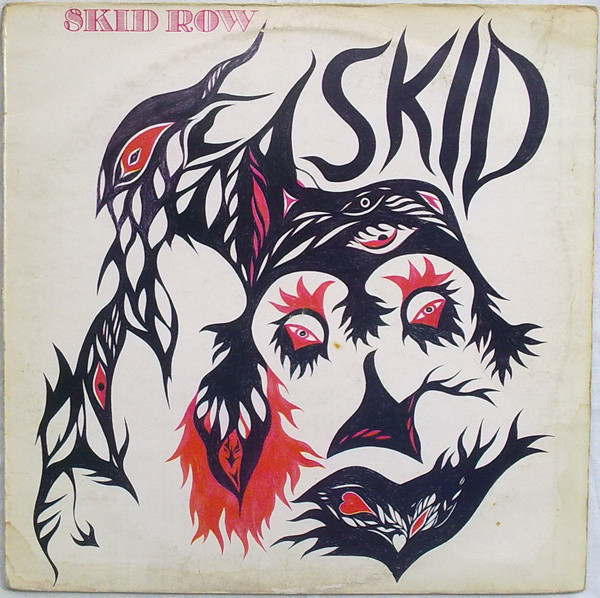
34 Hours.
For 34 Hours, Skid Row penned Night Of The Warm Witch, First Thing In The Morning, Lonesome Still and Love Story, Pt. 1. Songwriter-in-chief Brendan ‘Brush’ Shiels wrote Mar and Go, I’m Never Gonna Let You, Parts 1 to 4. These songs became 34 Hours.
When recording of 34 Hours began, Clifford Davis took charge of production. Watching and learning, was nineteen year old Gary Moore. He and the rest of Skid Row spent just 34 Hours recording the band’s debut album.
Critics on hearing 34 Hours realised that it was a much tighter album. It received the same plaudits and praise as Skid, and a great future was forecast for Skid Row.
This was proof that the weeks and months spent touring was time well spent. Skid Row had honed their sound through constantly playing live, and on 34 Hours showcased a much heavier, progressive rock sound. It featured two nine minute epics, Night Of The Warm Witch and Go, I’m Never Gonna Let You, Parts 1 to 4. They allowed Skid Row to stretch their legs musically. By then, Skid Row had matured into a much tighter, accomplished and assured band. Still, the music on 34 Hours was groundbreaking, complex and cerebral. There was still a spontaneity to Skid Row’s playing as they continued to combine speed, accuracy, power on 34 Hours
The result was 34 Hours, an album of music that veered between, caustic, cerebral, challenging and complex to energetic and explosive to forceful, urgent and vigorous. Still, Skid Row combined elements of blues rock, country fusion and progressive rock on 34 Hours. Apart from the country sound of Lonesome Still, 34 Hours is hard rocking album of progressive album that incorporates elements of fusion. This is a potent and heady brew, and should’ve found favour with record buyers in 1971.
Sadly, when 34 Hours was released by CBS in early 1971 the critically acclaimed album failed to find the audience it deserved. For Skid Row, this was a huge disappointment.

Throughout the rest of 1971, Skid Row continued to tour. However, in December 1971, Gary Moore left Skid Row. Thin Lizzy’s Eric Bell briefly filed the void on a temporary basis. Ironically, Gary Moore would later replace Eric Bell in Thin Lizzy.
Paul Chapman then became Skid Row’s new full-time guitarist. However, his time with Skid Row proved brief, and the band split-up in August 1972.
While Skid Row reformed in 1973, the original lineup never took to the stage again. Over the next three years, Skid Row’s lineup continued to change, until they split-up for a second time in 2012.
That was the end of the Skid Row story until 2012, when the band reformed and released their first new album in forty-one years Bon Jovi Never Rang Me. By then, the only original member of Skid Row was Brendan ‘Brush’ Shiels. While many welcomed the Skid Row’s new album, many couldn’t help but compare them to the two cult classics they released between 1970 and 1971. Skid and 34 Hours which were recently remastered and reissued on one CD by BGO Records feature Skid Row at the peak of their considerable powers.
On Skid and 34 Hours, Skid Row rewrite the rules for future power trios. They created music that was cerebral, complex, hard rocking, innovative and progressive. Skid Row also fused and flitted between disparate and unlikely musical genres during Skid and 34 Hours, which are a reminder of one Ireland’s greatest musical exports during their sadly short but memorable musical career.
Skid Row-Skid and 34 Hours.

NORMAN JAY MBE PRESENTS MISTER GOOD TIMES.
Norman Jay Presents MBE Mister Good Times.
Label: Sunday Best Recordings.
At this time of year, a countless compilations are reissued by hopeful record companies looking for what could well be the start of a long and successful compilation series. This could be the cash cow that provides them with a steady income stream for many years to come. For the majority of record companies, their dreams are dashed and it’s a case of back to the drawing board. That is apart from the lucky few who have hit the jackpot in the compilation stakes. This includes Norman Jay who has just released Mister Good Times via Sunday Best Recordings. It’s the eleventh instalment in the Good Times compilation series, and is another reminder of the music that Norman Jay’s Good Times’ sound system will playing at this year’s Notting Hill Carnival.
Norman Jay has been DJ-ing at the Notting Hill Carnival since 1981, and thirty-six years later, his Good Times’ sound system continues to provide the soundtrack to what’s one of London’s most eagerly awaited events. Each year, Norman Jay entertains the crowds with an eclectic mix of the music that he loves, including disco, Philly Soul, reggae, nineties hip hop and funk. This is also the music that has been featuring on the Good Times’ compilations since 2000.
That was when Good Times With Joey and Norman Jay was released on the Nuphonic label. So successful was the compilation, that a second instalment was commissioned. Good Times 2 With Joey and Norman Jay was released by Nuphonic in 2001 and replicated the success of the first instalment in the series. It looked as if the Joey and Norman Jay had struck gold in the crowded and competitive compilation market.
When Joey and Norman Jay Present Good Times 3 was released in 2003, it was on the React label. Sadly, the Nuphonic label had ceased trading in 2002 leaving the Jays to find a new home for their Good Times compilation. When Joey and Norman Jay Present Good Times 3 was released in August 2003, it was another success story in what was an increasingly competitive compilation market.
After the release of the third instalment in the Good Times series, again disaster struck for Joey and Norman Jay. React went into voluntary administration and the Jays were looking for a new label for the Good Times series.
The Jays decided to sign to Resist, which was the replacement company for React Music Limited. This became home for the Good Times’ series for the next three years. Joey and Norman Jay MBE Presents Good Times 4 was released in August 2004, with Joey and Norman Jay MBE Presents Good Times 5 (Silver Jubilee Edition) following in August 2005. Still the compilations featured an eclectic selection of music that reflected what the Jay brothers were about to spin at the forthcoming Notting Hill Carnival.
When the sixth instalment in the Good Times series was announced in 2006, there was no sign of Joey Jay. Instead, the newest addition to the series had been compiled by Norman Jay. This was a risky, as Good Times was a successful and long-funning compilation series. Was it a case of two heads are better than one?
Norman Jay MBE Presents Good Times 6 was released on React in August 2006, and was the start of a new era for this long-running series. This latest addition to the series was the most eclectic so far, with Norman Jay took listeners on a musical adventure that was spread across two discs and three slabs of vinyl. Despite his best efforts, some critics wondered if Norman Jay MBE Presents Good Times 6 lived up to the previous instalments in the series? Maybe it was a step to far for the Good Times’ series?
Despite this, Norman Jay MBE Presents Good Times 7 (Let The Good Times Roll) was released in August 2007, and announced the forthcoming arrival of the Notting Hill Carnival in London. It was the most eclectic of the series so far, and featured everything from soul, folk and funk to disco and Philly Soul plus easy listening, jazz, punk, reggae, hip hop and house. Critics thought that Norman Jay MBE Presents Good Times 7 (Let The Good Times Roll) was an improvement on its predecessor, and brought to an end the Resist years.
By 2008, Good Times which was the one of the longest running British compilation series, and had found a new home at British house label Azuli. Just like previous volumes, Norman Jay MBE Presents Good Times London would be a two CD set. Compiling a two CD set each year isn’t easy for one person. It was easier when Joey and Norman Jay had compiled the first five Good Times series. Since then, the series seemed to have lost its sheen. Maybe this would change with the release of the eighth instalment in the series?
Azuli released Norman Jay MBE Presents Good Times London in August 2008, which was another uber eclectic two CD compilation. It was the most eclectic compilation in the series, and featured funk, jazz, jazz-funk, joined hip hop, house,Afrobeat, easy listening, reggae and soul. Norman Jay continued to eschew the obvious, and continued to combine deeper album cuts and hidden gems on the eighth instalment in the Good Times series since 2008. Sadly, it was a good, but not great addition to the Good Times series, which had become an annual event.
The following year, 2009, Norman Jay didn’t return with the ninth instalment in the series. The last three instalments in the series hadn’t quite matched quality of the first five instalments in the Good Times series. This could be traced to the loss of Joey Jay. Since then, it was as if Norman Jay was trying too hard to create an eclectic mix of music. Maybe it was time to back to basics, and combine old favourites with hidden gems?
That was what Joey and Norman Jay had done so successfully on the first couple of volumes of the Good Times’ series. Maybe if Norman Jay looked to the past, he would find the answer to his problems?
Three years passed before Norman Jay MBE Presents Good Times (30th Anniversary Edition) was released on Strut in August 2011. Unlike previous instalments in the series, volume nine featured eighteen tracks spread across one CD. This was something that he should’ve done a couple of years ago. With just eighty minutes available Norman Jay had to separate the wheat from the chaff as he returned to his trademark sound. For much of Norman Jay MBE Presents Good Times (30th Anniversary Edition) the emphasis was on quality on a compilation that focused on funk, soul, disco, reggae, hip hop and soul. It was an improvement on the last couple of volumes in the Good Times’ series.
Another four years passed before Norman Jay MBE Presents Skank and Boogie (Good Times) was released in August 2015. This was the tenth volume in the Good Times’ series. It was no longer an annual event, and instead, was an occasional series. This time around, the focus was on boogie, disco, funk, reggae and soul, which was a much narrower and focused selection of music than had appeared on volumes six to eight. Norman Jay’s decision to stick to his trademark sound paid off, and Norman Jay MBE Presents Skank and Boogie (Good Times) was well received by critics.
Two years later, and Norman Jay MBE Presents Mister Good Times was released just in time for this year’s Notting Hill Carnival. Just like the last two instalments in the series, the eighteen tracks are spread across just one disc. There’s contributions from Vicki Sue Robinson, Esther Phillips, Loleatta Holloway, The Whispers, Barry White, The Ides Of March, Young Disciples and Aretha Franklin on Norman Jay MBE Presents Mister Good Times.
In 1976, American actress and disco diva Vicki Sue Robinson released her eponymous debut album on RCA Victor. By then, she was thirty-two and was better known as an actress than a singer. She was a star of stage and film, but was one of a number of actors who jumping onboard the disco bandwagon. Many were trying to revive failing or flagging careers and would later regret their dalliance with disco. However, Vicki Sue Robinson was a talented singer who embraced her new role as disco diva. She was helped by producer Warren Schatz, who put together a talented band, plugs horns, strings and backing vocalists. They accompany Vicki Sue Robinson on her cover of Bobby Womack’s Daylight. It becomes a soulful and hook-laden slice of disco and sets the bar high on Norman Jay MBE Presents Mister Good Times.
By 1976, the hits were starting to dry up for The Main Ingredient who were led by Bert DeCoteaux. To make matters worse, The Main Ingredient’s most recent album were no longer selling in the same quantities. Their eighth album, Shame on the World was released in 1975, but failed to replicate the success of Rolling Down A Mountainside. The problem for groups like The Main Ingredient was disco. Suddenly, many record buyers who previously bought soul and funk albums, were turning their attention to disco. That was why when Instant Love was released in 1976, it stalled at ninety-six in the US R&B charts. It was penned by Jacqueline Hilliard and Leon Ware, with Cuba Gooding and Luther Simmons taking charge of production. They’re responsible for a smooth, soulful and funky hidden gem that is a welcome addition to the compilation.
In 1979, Esther Phillips became the latest artist to jump onboard the disco bandwagon when she released Our Day Will Come on Mercury Records. It was a track from Here’s Esther…Are You Ready which was also released on Mercury Records. Drummer Harvey Mason produced the album and adds horns, harmonies and strings to Our Day Will Come, which is a soulful, funky slice of disco Esther Phillips.
Although Loleatta Holloway’s career began in the early seventies, she first came to prominence at Aware Records between 1973 and 1975. That was when many people first heard Loleatta Holloway singing Southern Soul. By 1980, she was still signed to Norman Harris’ Philly-based Gold Mind Records. Love Sensation was the fourth label Loleatta Holloway released for Gold Mind Records, and was her sixth and final album. One of the highlights of Love Sensation was the Bobby and Cecil Womack composition Short End of the Stick. It was arranged and produced by Bobby Womack and Patrick Moten, and finds Loleatta Holloway combining power, passion and emotion on a song that marries disco and soul seamlessly.
When The Whispers released Whisper In Your Ear on Solar, in 1979, it was the eight album of their career. One of the album’s highlights was Homemade Lovin’ which was penned by Leon Sylvers. It’s a glorious and memorable fusion of soul, funk, disco and even proto-boogie as The Whispers roll back the years.
Between 1973 and 1979, Barry White could do wrong, and enjoyed a glittering career. His albums were certified silver, gold and platinum on both sides of the Atlantic. However, after 1979, the hits dried up for Barry Whites and his albums were no longer selling in vast quantities. As a result, Barry White decided to enlist the help of a number of producers for his 1994 album The Icon Is Love, including Jimmy Jam and Terry Lewis. They wrote I Only Want to Be With You with Barry White, and then Jimmy Jam and Terry Lewis took charge of production on this sensual bedroom ballad. It’s one of the highlights of The Icon Is Love which was released in October 1994. It reached number twenty on the US Billboard 200, topped the US R&B charts and was certified double platinum. With his first number one album in sixteen years and the biggest selling album of his career, Barry White was back after two decades away.
In 1969, Swedish jazz guitarist and composer Rune Gustafsson released his sophomore album Rune At The Top on the Metronome label. It featured a selection of well known songs, including California Soul. It’s given a twist by Rune Gustafsson who became one of Sweden’s leading jazz guitarists and composers. Sadly, he passed away in 2012 aged seventy-nine.
The Young Disciples were a short-lived acid jazz group who were together in the early nineties. Their music was inspired by funk, soul, hip hop, R&B, gospel, and dub. Proof of this Get Yourself Together which the Young Disciples released as a single on Talkin’ Loud in 1990. A year later, Get Yourself Together featured on the Young Disciples’ debut album Road To Freedom. It’s one of the finest moments of Carleen Anderson and Company’s career.
After leaving The Temptations, singer and songwriter Eddie Kendricks embarked upon a solo career at Tamla. His debut album All By Myself was released in 1971, and five years later, Eddie Kendricks was still signed to Tamla. He went into Sigma Sound Studio in Philly, hoping that producer Norman Harris could revive his career. Joining Norman Harris and Eddie Kendricks were many former members of MFSB and the Sweethearts Of Sigma, who were now playing an important part in the rise and rise of The Salsoul Orchestra. The resultant album He’s A Friend reached thirty-eight in the US Billboard 200 and three on the US R&B charts. It also featured four hits singles and one was one Eddie Kendricks’ most successful albums on Tamla. One of the hidden gems on He’s A Friend is the penultimate track On My Way Home which is a reminder of the late, great Eddie Kendricks as he reinvents himself with the help of Norman Harris and a few friends.
Reggae has always played a part on the Good Times’ series since the early days. So it’s no surprise that Slim Smith and The Uniques’ Build My World Around You features on Norman Jay Presents MBE Mister Good Times. It was released on the Lee’s label in 1968, and a soulful slice of rocksteady from Slim Smith and The Uniques.
Closing Norman Jay Presents MBE Mister Good Times is what should be an anthemic track, I’m Every Woman. Sadly, Norman Jay hasn’t chosen the original, and instead, has included Aretha Franklin’s cover of I’m Every Woman. It’s taken from the album Sings The Great Diva Classics which was released on RCA in 2014. Sadly, it’s a long way from classic Aretha Franklin. The gospel tinged backing vocals can only carry her so far. After that, one of the worst versions of I’m Every Woman that has been ever recorded unfolds. Throughout the song, Aretha Franklin tries and fails desperately to ‘get down with the kids’ by hollering pump up the groove. This is tedious in the extreme, and adds to a woeful cover of what should be a soul classic. Unfortunately, not the way Aretha Franklin sings it. This is a disappointing way to close Norman Jay Presents MBE Mister Good Times.
Having said that, Norman Jay Presents MBE Mister Good Times is much better than some of the previous instalments in this long-running series. It seems things are improving for the Good Times’ series.
The series seemed to lose its way after Joey Jay’s departure from the partnership. Left to his own devices, Norman Jay seemed to try too hard to create a trio uber eclectic compilations. If they had been condensed onto one disc, then they would’ve been among the best in the Good Times’ series. Sadly, that wasn’t the case and this trio of sprawling compilations weren’t o the standard of the first five volumes in the series.
Things improved when the Good Times’ series found a new home at Strut. No longer was the Good Times’ series a two CD set, and eighteen tracks featured on Norman Jay MBE Presents Good Times (30th Anniversary Edition). With its mixture of disco, funk, hip hop, reggae and soul, it showcased Norman Jay’s trademark sound. So did the followup Norman Jay MBE Presents Skank and Boogie (Good Times) in August 2015. Now two years later, and Norman Jay Presents MBE Mister Good Times was released via Sunday Best Recordings. It’s the eleventh volume in the series, and is just three tracks short of being an excellent compilation.
Without the occasional predictable track and a couple of tracks that just don’t make the grade, Norman Jay Presents MBE Mister Good Times would be one of the best compilations of the summer. Sadly, that isn’t the case. However, there’s plenty of soulful, funky and dance-floor friendly music on Norman Jay Presents MBE Mister Good Times which is a taste of the type of music Norman Jay will be playing early in the day at the Notting Hill Carnival as he gets the party started.
Norman Jay Presents MBE Mister Good Times.
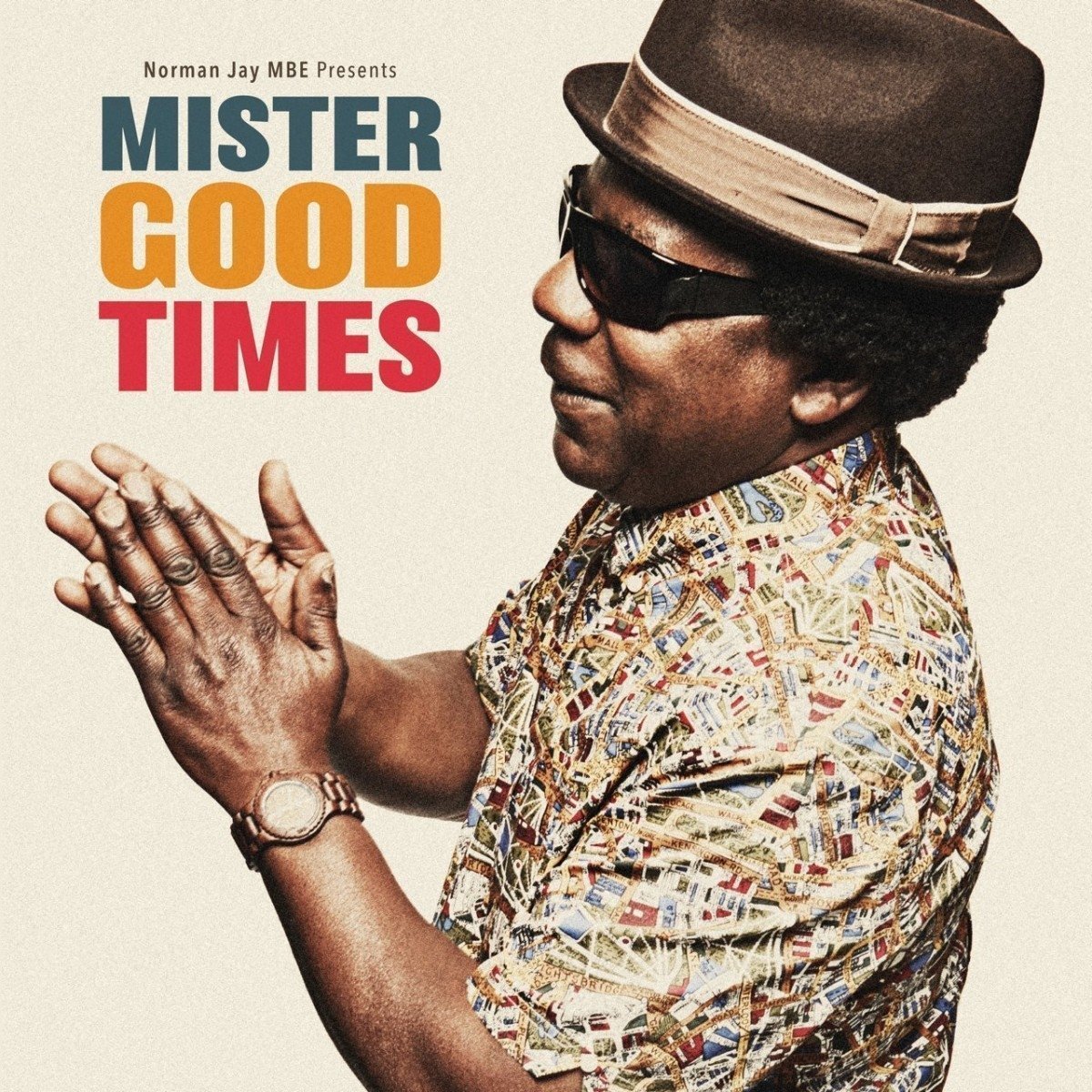
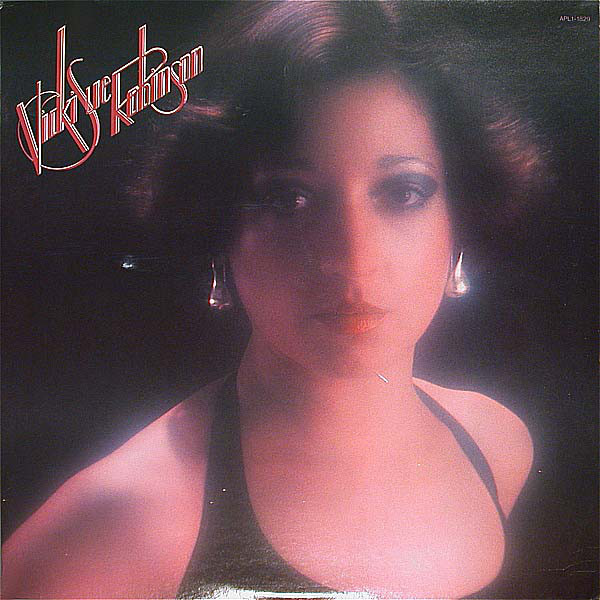

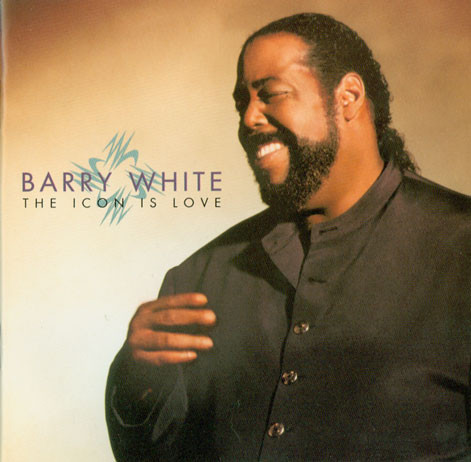
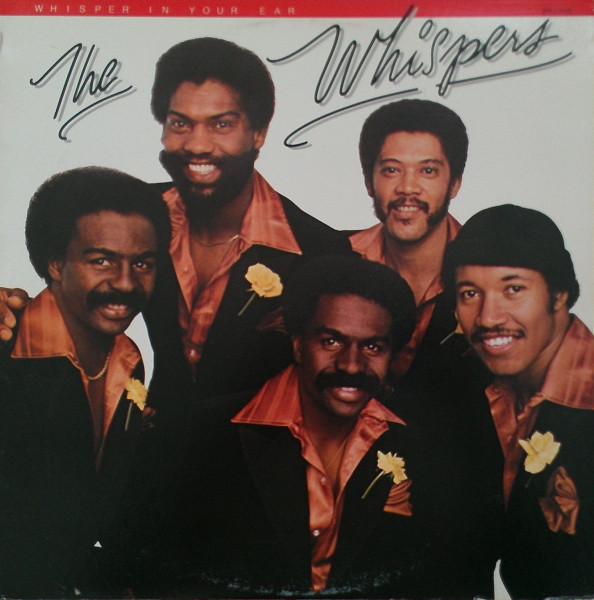
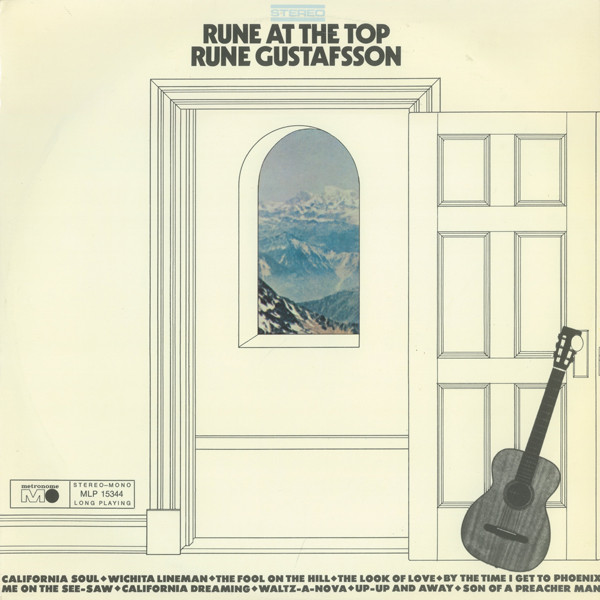
GIL SCOTT-HERON-THE FLYING DUTCHMAN YEARS.
Gil Scott-Heron-The Flying Dutchman Years.
After releasing a trio of studio albums on Bob Thiele’s Flying Dutchman Productions between 1970 and 1972, Gil Scott-Heron signed to Charles Tolliver and Stanley Cowell’s Strata-East Records. By then, Gil Scott-Heron was well on his way to becoming America’s social conscience.
Gil Scott-Heron was a poet, musician, and author who highlighted the social and political problems affecting and blighting American society. He was, to all intents and purposes, America’s social conscience, highlighting the problems of racism, poverty, corruption, inequality and drug addiction on 1970s Small Talk At ‘125th’ and Lenox which was released, 1971s Pieces Of A Man and 1972s Free Will. This was the trio of studio albums that Gil Scott-Heron released for Bob Thiele’s Flying Dutchman Records. The lyrics were cerebral, witty, scathing and most importantly, honest as Gil Scott-Heron speaks up for the downtrodden and disenfranchised. Fearlessly, Gil Scott-Heron highlighted the social and political problems that blighted America. This what he continued to do throughout his long and illustrious career as he released album after album of powerful music. However, when Gil Scott-Heron first met Bob Thiele he was an author and poet. He had made an appointment with Bob Thiele, to see if he any of his artists could use his poetry.
During the meeting, Gil Scott-Heron recounted how he was born on April Fool’s Day in 1949, which later, he joked become an important day in Chicago’s musical history. That will always be the remembered as the day poet, author, musician and political activist Gil Scott-Heron was born.
His mother Bobbie Scott-Heron, was an opera singer, who sang with New York’s Oratorio Society. Gil Scott-Heron’s father was Gil Heron, a Jamaican footballer, who at one time, played for Glasgow Celtic Football Club. Sadly, though, Bobbie and Gil’s marriage ended when Gil Scott-Heron was young.
After this, Gil Scott-Heron was sent to live with his maternal grandmother, Lillie Scott, who lived in Jackson, Tennessee. Then when Gil Scott-Heron was just twelve, Lillie Scott died.
Gil Scott-Heron returned to New York to live with his mother, who was now living in the Bronx. Originally, Gil Scott-Heron enrolled at the DeWitt Clinton High School, but later, moved to the Fieldston High School.
This came after impressing the head of the English department read one of Gil Scott-Heron’s essays, and recommended that he received a full scholarship. This proved a poisoned chalice. While the education he was receiving was far superior, Gil Scott-Heron was one of only five black students. He felt alienated and alone. That wasn’t the only problem. There was also a socioeconomic gap, with the other students coming from a much more affluent background. Gil Scott-Heron by comparison, was the son of a single mother and was from a very different background. It was during this time that Gil Scott-Heron became socially and politically aware. His eyes were opened to inequality, injustice and racism. This would shape his music in later years. Before that, Gil Scott-Heron headed to Lincoln University,
When Gil Scott-Heron was considering which university to enrol at, Langston Hughes recommended Lincoln University, which where he was staying. Gil Scott-Heron took his friend’s advice, and enrolled at Lincoln University. This was where Gil Scott-Heron’s musical career began.
At Lincoln University, Gil Scott-Heron formed his first band, the Black and Blues. Joining Gil Scott-Heron in the band was Langston Hughes. Little did Gil Scott-Heron know that this was the start of a long and illustrious career. However, after two years at Lincoln University, Gil Scott-Heron decided to take time out Lincoln University to write a novel.
During this period, Gil Scott-Heron wrote two novels. His first novel was a thriller entitled The Vulture, which was published in 1970. Whilst writing The Vulture, Gil Scott-Heron saw The Last Poets in Lincoln in 1969. This had a huge effect on him.
After watching The Last Poets, Gil Scott-Heron approached the band and asked: “can I form a band like you guys?” The seed had already been sown. Maybe, making music rather than writing books was the direction that Gil Scott-Heron’s career headed?
Having been impressed and inspired by The Last Poets and now considering a career in music, Gil Scott-Heron had a lot on his mind as he headed back to New York, where he found a new home in Chelsea, Manhattan. This concluded with the publication of Gil Scott-Heron’s book of poetry, Small Talk At ‘125th’ and Lenox by World Publishing. Now Gil Scott-Heron could add poet to his burgeoning CV. Soon, he hoped to add singer and songwriter.
Once he’d settled in to his new apartment in Manhattan, Gil Scott-Heron decided to make his dream a reality and started looking for a record company. Gil Scott-Heron just so happened to approach a label tailor-made for his music, Flying Dutchman Productions.
The Birth Of Flying Dutchman Productions.
Following his departure from ABC/Impulse Bob Thiele had decided to found his own label. He was perfectly qualified to do so, having worked with some of the most innovative and creative musicians in the history of jazz over the last few years. During that period, Bob came to the conclusion that often, large record companies aren’t the best environment for innovative and creative musicians. Often, these musical mavericks didn’t thrive within such an orthodox environment. Instead, their creativity is restricted, and they’re unable to experiment and innovate. For many a musical maverick who had signed to a large record label, the experienced had proved frustrating and unsatisfactory. So when Bob Thiele parted company with Impulse, who he had transformed into one of jazz’s pioneering labels, he founded Flying Dutchman Productions. This was the label that Gil Scott-Heron approached. There was a problem though.
While Bob wanted to sign Gil Scott-Heron, there was a problem,… funding. The funding that Phillips, the Dutch record label had given Bob Thiele wasn’t going as far as he had hoped. Despite this, when he met Gil Scott-Heron he was impressed by the poet, musician, and author. So much so, that Bob Thiele decided to fund an album that was a fusion of poetry accompanied by understated, percussive arrangements.
Small Talk At 125 and Lenox.
This was Small Talk At 125 and Lenox, which featured fourteen songs from the pen of Gil Scott-Heron. Initially, it was claimed that Gil Scott-Heron and two percussionists, David Barnes, Eddie Knowles and Charlie Saunders, recorded the album live at a night club on the corner of 125 and Lenox. That wasn’t strictly true.
Forty-two years later, one of the best kept secrets in music was no more. It transpired that Small Talk At 125 and Lenox was recorded live in the studio in front of a few invited guests. Taking charge of production was Bob Thiele, who was an experienced producer.
With Bob Thiele at the controls, Gil Scott-Heron recorded an accomplished album that is a mixture of jazz, proto-rap, spoken word poetry and soul. It was released later in 1970, and immediately, comparisons were drawn with the group who had inspired Gil Scott-Heron, The Last Poets. This was a fair comment to some extent.
When one listen to tracks like the original version The Revolution Will Not Be Televised, plus Brother, Whitey On The Moon, Paint It Black and Who’ll Pay Reparations On My Soul? critics realised that Gil Scott-Heron had taken what The Last Poets had been doing to the next level. This he managed to do with just a trop percussionists accompanying him, on Small Talk At 125th and Lenox, which was a potent and explosive mix of scathing political and social comment.
Although Small Talk At ‘125th’ and Lenox was a groundbreaking and powerful debut album, it didn’t sell in vast quantities. Instead, it sold steadily, and shouldn’t have lost Flying Dutchman Productions money, as they had managed to keep their overheads low. However, Small Talk At ‘125th’ and Lenox slipped under the musical radar, and many record buyers only discovered the album when Gil Scott-Heron released Winter In America and The Bottle in 1975. By then, Gil Scott-Heron had released a trio of albums for Bob Thiele’s Flying Dutchman Productions.
Pieces Of A Man.
The second of the Flying Dutchman Productions’ trio was Pieces Of A Man, which featured eleven songs, including four written by Gil Scott-Heron. This included The Revolution Will Not Be Televised, which made its debut on Small Talk at ‘125th. and Lenox. The other seven songs were penned by Gil Scott-Heron and Brian Jackson, who would forge a successful songwriting partnership.
Recording of Pieces Of A Man took place on the ‘19th’ and ‘20th’ April 1971, RCA Studios, in New York. This time, Gil Scott-Heron was accompanied by a full band which featured a few well-known names.
When Bob Thiele asked Gil who he’d like to accompany him, jokingly, Gil Scott-Heron said flautist and saxophonist Hubert Laws and bassist Ron Carter. Bob Thiele who know everyone who was everyone in jazz, got them onboard for the recording of Pieces Of A Man. This was Bob Thiele’s way of making Gil Scott-Heron feel at home. Bob Thiele knew that putting together a top class bands was the way to get the best performance possible from an artist.
With a crack band in tow, Gil Scott Heron set about recording his sophomore album Pieces Of A Man. The crack band included a rhythm section of drummer Bernard “Pretty” Purdie and guitarist Burt Jones. Brian Jackson played piano and Gil Scott Heron played guitar, piano and sang lead vocals. Producing Pieces Of A Man was Bob Thiele. After a recording season that lasted just two days, Pieces Of A Man was completed. Now it was ready for release.
When Pieces Of A Man was released in 1971, only Rolling Stone magazine realised the cultural importance of the album. Pieces Of A Man passed the rest of the music press by. This is a sad indictment on music journalism at what was one of the most important periods in musical, social and political history.
By 1971, America was struggling with a variety of social problems, ranging from the Vietnam War, poverty and racism. Gil Scott Heron was using his music to speak for the poor, downtrodden and disenfranchised. Pieces Of A Man was an important album, and one that had the potential to make Americans think about the status quo, and consider change. Sadly, just like Pieces Of A Man passed the mainstream music by, it was a similar case with record buyers. Pieces Of A Man failed to find the audience it deserved.
Apart from spending six weeks in the US Jazz Charts, where it peaked at a lowly number twenty-five, commercial success passed Pieces Of A Man by. That was as good as it got for Pieces Of A Man. This was somewhat ironic, given the later reappraisal of the album.
When critics reappraised Pieces Of A Man at a later date, they hailed it a classic album. The music was intense, politically charged, innovative and influential. That comes as no surprise, as Pieces Of A Man features some of the best and most powerful songs Gil Scott-Heron wrote during his time at Flying Dutchman Productions. This included The Revolution Will Not Be Televised, Save the Children, Lady Day and John Coltrane, Home Is Where The Hatred Is, When You Are Who You Are, I Think I’ll Call It Morning, Pieces Of A Man and Or Down You Fall. They’re part of what was the first classic album of Gil Scott-Heron’s career. Alas, the critics has still to rewrite musical history. was
Gil Scott-Heron had released two innovative and influential albums, Small Talk At ‘125th’ and Lenox and Pieces Of A Man, they had passed music lovers by. This was disappointing for Gil Scott-Heron, who would only release one more album for Bob Thiele’s Flying Dutchman Productions, Free Will. However, would it be a case of third time lucky?
Free Will.
For the followup to Pieces Of A Man, Free Will, Gil Scott-Heron had written seven new songs. The other five songs, Free Will, The Middle Of Your Day, The Get Out Of The Ghetto Blues, Speed Kills and Did You Hear What They Said? were collaborations between Gil Scott-Heron and Brian Jackson. He played a huge part in the rise and rise of Gil Scott-Heron over the next few years.
Brian Jackson and Gil Scott-Heron had already formed a successful songwriting partnership. However, Brian Jackson was more than a songwriter. He was also a talented multi-instrumentalist who played piano, keyboards flute and bells on Free Will.
The Free Will sessions took place at RCA Studios, in New York, between the ‘2nd’ and ‘3rd’ March 1972. Just like on Pieces Of A Man, an all-star lineup accompanied Gil Scott-Heron. The rhythm section included drummer Bernard ‘Pretty’ Purdie, bassist Jerry Jemmott, drummer Pretty Purdie and guitarist David Spinozza. Flautist and saxophonist Hubert Laws, who’d played on Pieces Of A Man, returned, while Brian Jackson played electric piano, flute and bells. Gil Scott-Heron took charge of the lead vocals on Free Will. Arranging and conducting Free Will was Horace Ott, while Bob Thiele took charge of production. After just two days of lengthy recording sessions, Free Will was completed. It was released later in 1972.
On Free Will’s release later in 1972, it was well received by critics. Rolling Stone flew the flag for Free Will and Gil Scott-Heron. Despite this, Free Will failed to chart in the US Billboard 200 and US R&B charts However, Free Will sold between 20,000 to 30,000 copies, and reached the US Jazz charts. Despite this, this was a huge disappointment Gil Scott-Heron.
With keyboardist Brian Jackson at his side, Gil Scott-Heron had fused elements of jazz, blues, funk, proto-rap and soul on Free Will. Fearlessly, he continued to highlight the social and political problems of the early seventies, and tackle controversial subjects and scenarios head on. Gil Scott-Heron delivered the lyrics with his unique and inimitable proto-rap style on Free Will. Among its highlights were Free Will, The Middle Of Your Day, The Get Out Of The Ghetto Blues, Speed Kills and Did You Hear What They Said? That took care of side one, which was one of the most cohesive sides of Gil Scott-Heron’s nascent career. It was almost flawless. Then on side, Gil Scott-Heron picks up where he left off on two No Knock and Sex Education: Ghetto Style. It was the third album from musical pioneer Gil Scott-Heron, who would become one of the most important artists of his generation.
Sadly, Free will was his final album for Bob Thiele’s Flying Dutchman Productions. Not long after the release of Free Will, Gil Scott-Heron left Flying Dutchman Productions.

By then, Gil Scott-Heron’s thoughts were said to have turned to academia, and his unfinished degree. Gil Scott-Heron and his band returned to Washington D.C. which became their home. However, Gil Scott-Heron never came close to enrolling at his former alma mater Lincoln University.
Winter In America.
Not when Charles Tolliver and Stanley Cowell of Strata-East Records offered Gil Scott-Heron a new recording contract. Having signed to Strata-East Records, Gil Scott-Heron began work on his fourth studio album Winter In America with Brian Jackson who co-produced the album at D&B Sound, in Silver Spring, Maryland. The sessions began on the ‘4th’ and ‘5th’ September and were completed on the ‘15th’ of October of 1973. By then, Gil Scott-Heron had recorded the nine tracks that became Winter In America.
Seven months later, on the ‘5th’ of October 1975, Winter In America was released to widespread critical acclaim. Some critics believed it that Winter In America was finest album. Some critics wondered if this was going to be Gil Scott-Heron’s breakthrough album?
At first, this was looking doubtful. Initially, copies of Winter In America were in short supply, as a result of Strata-East Records independent distribution policy. This meant that many record shops struggled to secure the copies of Winter In America that they needed. Eventually, this problem was resolved and on June ’29th’ 1974, Winter In America entered the US Top Jazz Albums charts.
Little did Gil Scott-Heron realise that this as the start of a forty week run in the US Top Jazz Albums charts, which saw Winter In America eventually reach number six. This was helped by the success of only single released from Winter In America, The Bottle. Helped by an underground following, The Bottle gave Gil Scott-Heron the biggest hit of his career, when it reached number fifteen in the US R&B charts. The success of The Bottle resulted in Winter In America selling 300,000 copies. Incredibly, this wasn’t enough to even reach the lower reaches of the US Billboard 200. However, Winter In America was the only album Gil Scott-Heron released for Strata-East Records. Clive Davis of Arista came calling, and offered Gil Scott-Heron the opportunity to sign to a major label.
The Revolution Will Not Be Televised.
In the space of just a few short years, Gil Scott-Heron’s life had been transformed. The former poet, author and ‘academic’ had come a long way. Gil Scott-Heron had Bob Thiele to thank for his success. He had believed in him and given him first recording contract. Then when Gil Scott-Heron was considering returning to academia, and decided to move back to Washington with the rest of his band, Bob Thiele didn’t stand in his way. What Bob Thiele never foresaw was Strata-East Records offering Gil Scott-Heron a recording contract. This was enough for Gil Scott-Heron to turn his back on academia and release the most successful album of his career. This must have been frustrating for Bob Thiele.
Although the three albums that Gil Scott-Heron released on Bob Thiele’s Flying Dutchman Productions weren’t hugely successful they had sold reasonably well. Bob Thiele wanted to record more albums with Gil Scott-Heron. For Bob Thiele, Gil Scott-Heron was the one that got away.
By 1974, Bob Thiele had just signed a new deal with RCA. Part of the deal was that Flying Dutchman Productions released a compilation of tracks from Gil Scott-Heron’s first three albums, 1970s Small Talk At ‘125th’ and Lenox, 1971s Pieces of a Man and 1972s Free Will. This was perfect timing, as Gil Scott-Heron was now officially one of music’s rising stars.
For the Gil Scott-Heron compilation, Bob Thiele spent time choosing eleven tracks from 1970s Small Talk At ‘125th’ and Lenox, 1971s Pieces of a Man and 1972s Free Will, that would eventually become The Revolution Will Not Be Televised. There was no way that Bob Thiele was going to be accused of throwing together a compilation that cashed-in on Gil Scott-Heron’s newfound popularity. Instead, The Revolution Will Not Be Televised was a lovingly curated compilation that was compiled by the man who discovered him…Bob Thiele. When he had finalised the track-listing, The Revolution Will Not Be Televised was released in late 1974, and for forty-three years has been the perfect introduction to Gil Scott-Heron’s Flying Dutchman Productions’ years.
When The Revolution Will Not Be Televised was released in 1974, it was to widespread critical acclaim and indeed commercial success. The Revolution Will Not Be Televised reached number twenty-one on October the ’12th’ 1974 and spending five weeks on the US Billboard Jazz charts. This meant that Gil Scott-Heron’s Flying Dutchman Records’ years closed with a successful album. By then, Gil Scott-Heron was preparing to start life at a major label.
The Start Of The Arista Years.
The First Minute Of A New Day.
Clive Davis of Arista came calling, and offered Gil Scott-Heron the opportunity to sign to a major label. This was the start of a relationship that produced nine albums and lasted until 1985. Gil Scott-Heron’s debut for Arista was The First Minute Of A New Day, which was the most successful of his career so far. Not only did it reach number five in the US Top Jazz Albums charts and number eight in the US R&B charts, The First Minute Of A New Day also reached number thirty in the US Billboard 200. Gil Scott-Heron’s music had crossed over and reached the wider audience that Bob Thiele knew it always would.
The First Minute Of A New Day proved to the most successful album of Gil Scott-Heron’s forty-one year recording career. While many of his albums charted, they never reached the same heights as The First Minute Of A New Day. It was one of the finest albums of Gil Scott-Heron’s career at Arista.
Despite the quality of albums like Winter In America and The First Minute Of A New Day, Gil Scott-Heron recorded some of the best music of his career long before he signed to Arista. This was at Bob Thiele’s Flying Dutchman Productions where he released three studio albums, 1970s Small Talk At ‘125th’ and Lenox, 1971s Pieces of a Man and 1972s Free Will. This trio of albums includes some of the best music of Gil Scott-Heron’s long career. It showcases one of the most talented singer and songwriters of his generation as he blossoms and flourishes. Bob Thiele had given Gil Scott-Heron a platform, and the freedom to record and release music that he believed in.
Soon, was well on his way to becoming America’s social conscience, as he provided a voice for those who had none. Gil Scott-Heron was their voice on 1970s Small Talk At ‘125th’ and Lenox, 1971s Pieces of a Man and 1972s Free Will, which feature lyrics that cerebral, witty, scathing and most importantly, honest as Gil Scott-Heron spoke up for the poor, downtrodden and disenfranchised. Fearlessly, Gil Scott-Heron highlighted the social and political problems that blighted America in the early seventies using his unique and imitable proto-rap style on the trio of albums he recorded during the during the Flying Dutchman Records. These three album contain some of the most important, powerful, cerebral and music of Gil Scott-Heron’s career. Over forty years later, and Gil Scott-Heron’s music is timeless and is still relevant today, and continues to influence and inspire a new generation of musicians.
Gil Scott-Heron-The Flying Dutchman Years.
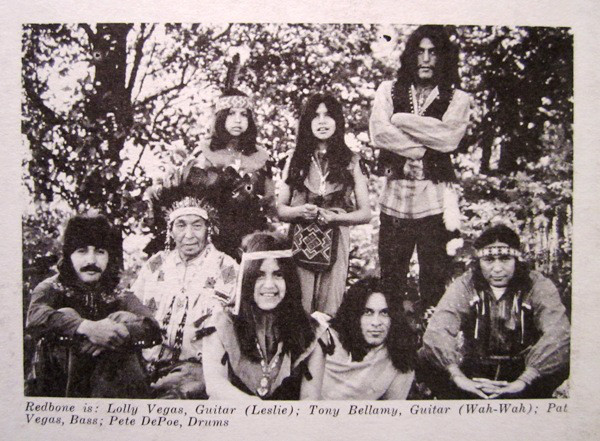
JOEY NEGRO + SEAN P PRESENT THE BEST OF DISCO SPECTRUM.
Joey Negro + Sean P Present The Best Of Disco Spectrum.
Label: BBE.
Nearly eighteen years ago, BBE released the first volume in their critically acclaimed Disco Spectrum series. It was compiled by DJ, remixer and crate digger extraordinaire Joey Negro. He was responsible for a compilation that stood head and shoulders above the competition in the crowded compilation market. The question on many people’s lips was what about a followup?
Just over five months later, and their wish was granted when Disco Spectrum 2: Real Disco For Real People;Compiled By Joey Negro was released in April 2000. Again, it was quality all the way on a compilation crammed full of classics that had inspired house. It looked as if BBE had a successful compilation series on their hands.
That proved to be the case when Disco Spectrum Volume 3 was released in May 2002. It was well worth the two-year wait and featured a mixture of classics and hidden gems. Joey Negro and Sean P had chosen well. The two top DJs were responsible for what many felt was the best instalment in the Disco Spectrum series, which seemed to be maturing like a fine wine. Music fans awaited the next instalment in the Disco Spectrum.
Sadly, there was no fourth instalment in the Disco Spectrum series. This was a brave decision, as BBE could’ve continued to release an instalment of the Disco Spectrum series every years or two. Instead, BBE moved on to other series, which went on to enjoy the same success as the Disco Spectrum series.
Meanwhile, the tracks on the Disco Spectrum series were being remixed and sampled by producers and DJs. They also found their way onto a plethora of other compilations. However, it was Joey Negro and Sean P that got their first and introduced the tracks to a new audience. This was part of their musical education.
Since then, eighteen years have passed since the last instalment in Disco Spectrum Volume 3 was released. Even now, many people still miss the Disco Spectrum series. Some optimists thought there would be a fourth instalment in the series. However, they also think that Glen Miller is just running late. It looked as if the Disco Spectrum series was gone for good.
That was until recently, when BBE announced that the Disco Spectrum series was dusting of its white suit one last time, and heading for the dance-floor. This isn’t a fourth instalment in the series though. Instead, it’s Joey Negro + Sean P Present The Best Of Disco Spectrum, a two CD set released by BBE. Joey Negro take and Sean P choose their twenty-one favourite tracks from the Disco Spectrum series. This is fitting, as 2017 is the twenty-first anniversary of BBE.
Much has changed since the release of Disco Spectrum Volume 3 in 2002. Nowadays, Joey Negro is DJ, remixer, producer and label head hone. He’s also approaching the veteran stage in terms of compilations. If he was a footballer, Joey Negro would be about to receive a testimonial and would be thinking about opening a sport’s shop or pub near the group. However, Joey Negro is a globetrotting DJ and is much in demand when it comes to curating compilations. Joey Negro knows what’s called in modern parlance “a good tune.” It’s a similar case with Sean P.
Just like Joey Negro, Sean P has many strings to his bow. London-based Sean Pennycook is an audio engineer, DJ, remixer and record collector. He’s also a veteran compiler, and has curated many a compilation, including two volumes of The Soul Of Disco for BBE and Under The Influence Volume Five for Joey Negro’s ZR Records. Recently, though, Sean P and Joey Negro travelled back in time to their Disco Spectrum days and chose twenty-one tracks from the three volumes in the series. They became Joey Negro + Sean P Present The Best Of Disco Spectrum.
Disc One.
For disc one of Joey Negro + Sean P Present The Best Of Disco Spectrum, the two veteran DJs dig deep, and combine classics aplenty with the occasional hidden gem. This includes Al Hudson and The Soul Partners, The Love Symphony Orchestra, Rare Pleasure, The Brothers, Exodus, Alfredo De La Fe, Cloud One, Blair and George Duke.
Straight away, Joey Negro + Sean P make an impression by dropping Al Hudson and The Soul Partners’ disco classic Spread Love. It was written and produced by Gary Glenn and released on ABC Records. Spread Love which also incorporates elements of proto-boogie and soul, featured on Al Hudson and The Soul Partners’ third album Spreading Love. This disco classic is the perfect way to open disc one and indeed, Joey Negro + Sean P Present The Best Of Disco Spectrum.
Anthemic and instantly recognisable describes Rare Pleasure’s Let Me Down Easy, which was released as a single on Cheri Records in 1976. It was penned by the Andrew Louis Smith and David Jordan songwriting partnership. David Jordan also takes charge of production on this soulful, funky dance-floor filler that is a reminder of the glory days of disco.
By 1976, The Brothers were signed to RCA and released a 12” single Brothers Theme, which featured a trio of tracks that also featured on their album Don’t Stop Now. The highlight of Brothers Theme was the instrumental Under The Skin, where dancing strings, braying horns and myriad of percussion are part of an irresistible call to dance.
By 1981, disco was dead, and many DJs were now playing boogie in clubs. As a result, some disco groups were forced to reinvent their music. That was the case with Cloud One whose music moved in the direction of boogie. They were joined by Margo Williams on Don’t Let My Rainbow Pass Me By. It was penned and produced by Patrick Adam and Peter Brown, and was released on Golden Flamingo Records in 1981. Don’t Let My Rainbow Pass Me By was a memorable fusion of boogie, disco and soul, and showed DJs and dancers that there was life after disco. Later, tracks like Don’t Let My Rainbow Pass Me By would influence and influence a generation of house producers.
Much had changed for fusion pioneer George Duke by 1979. His music had evolved throughout the seventies, and fusion gave way to jazz-funk. However, it wasn’t as popular as it had been and disco was at the peak of its popularity. Everyone was jumping on the disco bandwagon before the wheels came off. This included George Duke George Duke who joined forces with Lynn Davis on I Want You for Myself. It was written and produced by George Duke and combined elements of jazz-funk and disco with Lynn Davis soulful and sultry vocal. This was a winning combination and is the perfect way to close disc one of Joey Negro + Sean P Present The Best Of Disco Spectrum.
Disc Two.
Disc Two opens with Idris Muhammad’s dance-floor filler Could Heaven Ever Be Like This which was written by David Matthews and Tony Sarafino. It’s a track from his 1977 album Turn This Mutha Out, which was arranged and produced by David Matthews. When it came time to choose a single on the Kudu label. one track stood head and shoulders above the Could Heaven Ever Be Like, a near nine minute Magnus Opus, which forty years later, is one of the highlights of Joey Negro + Sean P Present The Best Of Disco Spectrum.
So is John Davis and the Monster Orchestra’s cover of Ashford and Simpson’s Bourgie Bourgie, which was released as a single on SAM Records in 1979. It’s a track from The Monster Strikes Again which was released in 1979 and was John Davis and the Monster Orchestra’s swan-song. For the Philly based bandleader, producer, songwriter and musician, Bourgie Bourgie was one of John Davis and the Monster Orchestra’s finest moments of the disco era.
In 1979, Chantal Curtis released Get Another Love on Key Records. It was also the title-track to the Tunisian born singer’s one and only album Get Another Love which was released in 1979. Sadly, there was no followup to Get Another Love and six years later, Chantal Curtis passed away in Israel. She will always be remembered for Get Another Love, which eventually features a sultry vocal. Get Another Love may be something of a slow burner, but once it starts to reveal its secrets, it’s guaranteed to fill any dance-floor.
Fresh Band only ever released the one single, Come Back Lover in 1984, on the New York based Are ‘n Be Records. It was a short-lived label, and it’s finest release is Come Back Lover where the Fresh Band fuse funk and soul with boogie and disco to create a memorable dance-floor filler.
Jo.Boyer’s best known song is Isabelle and the Rain, which was released on Job Records in 1978. It was written and arranged by Jo.Boyer, while Mike Lang takes charge of the keyboards and synths on this carefully crafted dance track. It’s a fusion of disco, funk, jazz-funk and proto-boogie that has stood the test of time and sounds just as good in 2017, as it did in 1978.
Closing disc two of Joey Negro + Sean P Present The Best Of Disco Spectrum is the disco funk of Universe City’s Can You Get Down which was released in 1976 on Bob Reno’s Midland International. It was taken from the album Universe City which produced by John Davis and was also released in 1976. Backing Universe City were many Philly based musicians including producer John Davis, Craig Snyder and the legendary Don Renaldo. They play their part on the type of slick, soulful, funky and dance-floor friendly single that has made in Philly written all over it.
After twenty-one tracks Joey Negro + Sean P Present The Best Of Disco Spectrum is over. That marks an end of the long-awaited and much-anticipated Disco Spectrum comeback. It’s been a long tine coming. Fifteen years, but hey whose counting when the music is as good as that on Joey Negro + Sean P Present The Best Of Disco Spectrum. Quite simply, this is the creme de la creme of the Disco Spectrum series.
The two veteran DJs have cherry picked the best of the three instalments in the Disco Spectrum series. Fittingly, this new compilation is entitled Joey Negro + Sean P Present The Best Of Disco Spectrum. It finds classics aplenty rubbing shoulders with oft-overlooked dance-floor fillers. They were discovered by compilers Joey Negro and Sean P between 1999 and 2002, when they were compiling the much missed Disco Spectrum series. It makes a welcome return on the ‘8th’ of September 2017, when Joey Negro + Sean P Present The Best Of Disco Spectrum will be released.
Now that the Disco Spectrum series is about to make a welcome comeback with Joey Negro + Sean P Present The Best Of Disco Spectrum, it seems that anything is possible. Maybe even Glen Miller is still out there, and is just running late?
Joey Negro + Sean P Present The Best Of Disco Spectrum.
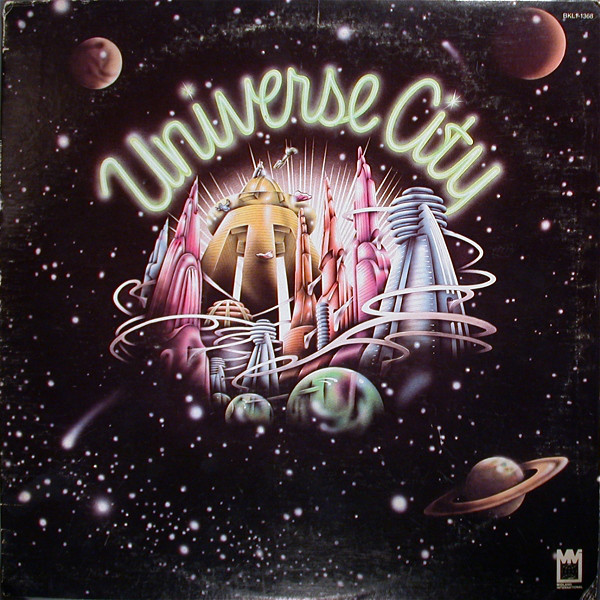
THE RADIATORS FROM SPACE-TV TUBE HEART 40TH ANNIVERSARY VERSION.
The Radiators From Space-TV Tube Heart-40th Anniversary Version.
Label: Ace Records.
When The Ramones played at the Roundhouse in London on the ‘4th’ of July 1976, this was a catalyst for punk movement. Many of the future leading lights of the punk movement have since claimed to have been present that night. In the audience were apparently future members of Generation X, Siouxsie and the Banshees, The Adverts, The Slits and X-Ray Spex. They watched the as the support act The Stranglers worked their way through their set. Little did they know how important a band The Stranglers, would be or the longevity they would go on to enjoy.
As The Stranglers, left the stage, there was a sense of anticipation in the air about The Ramones. Very few people had seen them live, but some had read about them in the music press. Others had only heard third hand about The Ramones and speculated about what was about to unfold. The speculation was nothing compared to the reality of The Ramones live at the Roundhouse on the ‘4th’ of July 1976. This was a seminal moment for the nascent British punk scene. After seeing The Ramones legendary concert, many of the future leading lights of the punk scene went on to form bands.
They weren’t alone. Up and down Britain, new bands were formed on an almost daily basis and the punk rock movement exploded. It was the musical movement British youths had been waiting for, as it allowed them to vent their frustration at life in battered Britain in 1976. Soon, it was a similar situation elsewhere.
This included across the Irish Sea in Dublin, where the punk movement was also born in July 1976. Just like Britain, the Republic of Ireland’s economy was far from healthy. Less that fifty percent of school leavers were fortunate enough to find a job. The rest was known as the “unemployed generation.” Adding to their woes, and that of the rest of the Irish youth was the lack of recreational facilities. They had been overlooked and failed by their government.
Some fell into a life of crime, while others made the journey “across the water,” to British cities where many Irish people had settled. This they hoped would lead to a better life. However, the prospects were no better there, and often, the natives were far from friendly. As a result, many young Dubliners decided to stay were they were. It was a case of “better the devil you know.”
Some of the young Dubliners that stayed in the city of their birth would become involved in the city’s nascent punk scene after July 1976. This was ground zero for Irish punk and many young Dubliners would form bands, found independent record labels and publish or write for fanzines. A thriving and vibrant scene was about to take shape over the next year or so. All this was partly due to Ireland’s first punk band The Radiators From Space. They issued a call to arms, and asked the Irish youth to unleash their creativity.
That is what the Irish youth proceeded to do, over the next few months and years. They discovered hidden talents that had passed unnoticed at schools across the country. This wouldn’t have happened if it hadn’t been for the band who are credited as Ireland’s very first punk band,
The Radiators From Space, whose debut album TV Tube Heart was recently reissued by Ace Records. This is the 40th Anniversary Version of TV Tube Heart and features the thirteen songs on the album and twenty bonus tracks. This in the perfect entrée for newcomers to The Radiators From Space who were formed in 1976, and were unlike most punk bands.
It’s safe to say that The Radiators From Space were a much more cerebral and literate band that the majority of punk bands. They were intelligent and didn’t indulge in the clichéd, vacuous posturing of many of the British punk groups who used controversy as a means of self promotion. That wasn’t the way that The Radiators From Space operated.
The Radiators From Space were formed in Dublin in 1976, and their early lineup included Philip Chevron, Pete Holidai, Steve Rapid (Steve Averill), Jimmy Crashe and Mark Megaray. From their early days, it was obvious that were different from other Irish and indeed, British punk bands.
Not only were The Radiators From Space cerebral and literate, they also had an almost encyclopaedic knowledge of music and musical history. Partly, this was because Steve Rapid’s father brought back music and American music magazines from his regular trips to New York. These magazines Steve Rapid and the rest of the band poured over, developing and honing their knowledge of music. Meanwhile, The Radiators From Space listened to groups like Hawkwind, MC5, The Deviants and The Stooges, right through to pop, rock, subversive German cabaret and traditional Irish music. This The Radiators From Space regarded as their musical education, and unlike many other punk bands, they didn’t reject this music when punk arrived. Instead, it was part of The Radiators From Space’s musical DNA as they moved forward.
Having formed The Radiators From Space, the band announced that they had developed their own manifesto. This had all been thought out and carefully considered as The Radiators From Space announced that they wanted to transform the Irish youth from consumers to producers. The Radiators From Space knew that the Irish youth were capable of forming bands and record labels, founding fanzines and putting on club nights. They would issue a rallying call, and this encouraged the Irish youth to become producers not just of music, but create a fledgling music and entertainment industry. Part of this inspirational rallying call was also about enjoyment and pleasure.
This wasn’t easy in Ireland in 1976, where poverty and unemployment were rife. Many youths were from broken homes and there was a massive problem with illiteracy. There was also ‘The Troubles’, which blighted both sides of the Irish border. Many Irish youths didn’t want to get involved in the conflict, as they had watched as friends and acquaintances got caught up in it. Some ended up in prison, while others were injured or even killed. That was a road they weren’t going down, and the only rallying call they listened to was The Radiators From Space.
They were at the heart of the nascent punk movement, with The Radiators From Space playing live and ran and published their own fanzine Raw Power. This was an outlet for the band’s manifesto and allowed them to discuss their plans for an Alternative Ireland. This wasn’t a political movement. Instead, it was about making a better life for young Irish people. The Radiators From Space, wasted to inspire and foster a feeling of solidarity. Readers were encouraged to try to find pleasure during each day. Sometimes, readers found love, and a few even found love across the religious divide. This was controversial and indeed dangerous in Ireland in 1976.
Before long, The Radiators From Space and their fanzine was coming in for criticism from the Catholic Church. When Father Brian D’Arcy, a spokesperson for the Catholic church wrote about out The Radiators From Space and their fanzine Raw Power, he didn’t encourage their endeavours or creativity. Instead, Father Brian D’Arcy sneered contemptuously of The Radiators From Space and their fanzine Raw Power. It seemed that The Radiators From Space had the Catholic church rattled with their call to arms as a largely secular generation look for an alternative to organised religion. However, The Radiators From Space had another means of reaching an even wider audience…their music.
Although The Radiators From Space were activists and creatives, they were also musicians. That was what they hoped would offer them an escape from the grinding poverty and unemployment that besmirched Ireland, and indeed Britain. Music just like football and boxing was still an escape for working class youths in 1976.
It was a similar case in Britain, where punk bands were being formed almost daily. Many of them lacked talent and charisma, and were ill-suited to what was still the entertainment industry. By comparison, those that encountered The Radiators From Space found them engaging and intelligent. They were also talented, and a cut above the average punk band.
After a while, The Radiators From Space wanted to embark upon a recording career. They were no different from punk bands in Britain, America and Australia. For punk bands, releasing a single was a rite of passage, and for others, would be a reminder of their brief brush with the music industry. Most didn’t get any further than that, and disappeared without trace. However, releasing a record in Britain was much easier than in Ireland.
Unlike many capital cities, Dublin didn’t have a music industry by 1976. There were neither major labels nor recording studios. Some bands travelled across the border to Belfast to record singles prior to the punk era. That was the past; and given the DIY spirit of punk, bands in Britain had recorded singles without going near a recording studio. They used basic equipment and transformed garages or basements into makeshift studios.
One option for all Irish bands had been to pack their bags and travel to London, where they would try to forge a career. The lucky ones like Rory Gallagher and Thin Lizzy went on to sign recording contracts, and became Ireland’s most successful musical exports. However, not all bands wanted to move to London, and that included The Radiators From Space during the early part of their career.
They were at the centre of Dublin’s scene and realised that something special was starting to take shape. Across Ireland, a new wave of bands, writers, fanzine publishers, promoters, record label owners and DJs were becoming part of the country’s burgeoning music scene. This included Eamon Carr and Jackie Hayden, who had founded the independent label Midnite Records.
The pair was also friendly with a trio of Irish expats living in London, where they were part of the music industry. Ted Caroll was from the Republic of Ireland, while his friend and colleague Roger Armstrong was from Northern Ireland. Both lived and breathed music and were cut from the same cloth as Eamon Carr and Jackie Hayden. Both Ted Caroll and Roger Armstrong were musical entrepreneurs who had embraced the DIY principal and owned Chiswick Records. They kept in touch with booking agent Paul Charles, another Irish expat who still kept his finger on the pulse in the Irish music scene. He booked many of the top Irish bands and was part of The Radiators From Space inner circle.
Of all the Irish bands, Paul Charles was especially taken with The Radiators From Space. They were the only punk band who managed their own affairs. This was just a continuation of the DIY spirit The Radiators From Space had tried so hard to foster. It’s also likely given The Radiators From Space encyclopaedic knowledge of music that they were wary of music managers and would rather manage their own affairs. This was about to work in their favour.
In 1977, The Radiators From Space signed to Chiswick Records. Unlike many labels, Chiswick Records didn’t require the band to move to London. Instead, The Radiators From Space could continue to live in Dublin.
Television Screen.
With the deal signed and sealed, The Radiators From Space began work on their debut album TV Tube Heart. Before the album was recorded, The Radiators From Space their debut single in May 1977. The song they chose was Television Screen with Love Detective on the B-Side of their debut single. It was Sounds magazine record of the week, and was a memorable way for The Radiators From Space to announce their arrival. Both songs are among the twenty bonus tracks on the 40th Anniversary reissue of TV Tube Heart.

It was a mixture of original songs and Party Line’s version of the traditional song The Radiators From Space. TV Tube Heart was very much a group effort with the five members of the band having penned the twelve original songs.
Guitarist Phil Chevron penned Television Screen, Prison Bars and Enemies, while Pete Holidai wrote Roxy Girl and Steve Rapid wrote Party Line. Press Gang and Ripped and Torn were credited to the band. Great Expectations was written by Mark Megaray, Steve Rapid and Phil Chevron. He was one of the one of the most productive band members when it came to songwriting. Phil Chevron and Pete Holidai wrote Electric Shares, and the pair then joined forces with Steve Rapid to write Contact, Sunday World and Not Too Late. Phil Chevron’s other contribution was Blitzin’ At the Ritz which he wrote with Jimmy Crashe. Along with Party Line, those songs became TV Tube Heart.
When recording began of TV Tube Heart began on ‘22nd’ June 1977, with Roger Armstrong took charge of production. The Radiators From Space’s rhythm section featured drummer Jimmy Crashe, bassist Mark Megaray and guitarists Phil Chevron and Pete Holidai. Adding the lead vocal was Steve Rapid. Eventually, TV Tube Heart was completed by August 1977.
On the ‘9th’ of September 1977, The Radiators From Space played a showcase gig at The Vortex. During a blistering set, they played Prison Bars, Contact, Party Line, Press Gang and Enemies, which feature on the newly released 40th Anniversary Version of TV Tube Heart. These tracks feature The Radiators From Space at the peak of their powers.
A month later, TV Tube Heart was released by Chiswick Records on October the ‘7th’ 1977. Critics were won over by The Radiators From Space’s debut album TV Tube Heart. Critics spoke as one, praising TV Tube Heart. That came as no surprise given the reception their debut single had received.
The Radiators From Space had followed this up with an accomplished album of pop punk that wasn’t short of anthems and social comment. From the howling feedback that opens Television Screen, it’s a case of sit back and enjoy the ride. It’s a memorable way to open the album, as The Radiators From Space combined elements of garage rock, pop, punk, rock and even rock ’n’ roll. Unlike many punk bands, The Radiators From Space prove to be talented songwriters and musicians on album which features many highlights.
Among them, are the anthem Prison Bars and driving Great Expectations which features some blistering guitar licks. Roxy Girl unfolds at breakneck speed and is a mixture of energy and raw power. There’s a defiance to Press Gang as The Radiators From Space reference The New York Dolls and Ramones which is another The Radiators From Space’s finest moments. Contact is a mixture defiance, despair and social comment, while Sunday World which closed side one of the album is a melodic mixture of energy and raw power.
It’s a similar case on Electric Shares, where The Radiators From Space showcase their skills as musicians. Thunderous drum fills and searing guitars are part of a potent and heady brew. Machine gun guitars are unleaded on Enemies and ratty drums add join the vocal on this melodic fusion of garage rock and punk. Ripped and Torn epitomises the spirit of ’76, while Not Too Late sounds like an anthemic hybrid of The Undertones and Sex Pistols. Blitzin At the Ritz finds The Radiators From Space with their feet to their floor on another memorable and anthemic song. Closing the album is The Radiators From Space’s rework of Party Line which is raw and rocky and features vocal that is a mixture of frustration and defiance. It closed TV Tube Heart on high.
Forty years later, and TV Tube Heart is punk classic, and a cut above many of the third-rate albums that were being released. The Radiators From Space had made their mark on the punk scene on both sides of the Irish Sea. Surely, it was only a matter of time before one of the majors came calling?
Two months later, and The Radiators From Space released their sophomore single Enemies in on Chiswick Records in December 1977. Just like its predecessor Television Screen, it won the approval of critics. Things were looking good for The Radiators From Space, who critics said had a bright future in front of them.

Nearly two years later, and The Radiators From Space were still signed to Chiswick Records. However, they had moved to London earlier in 1979. This was a big step for the band, leaving their home city behind. Some said it paid off when they released their critically acclaimed sophomore album Ghostown on August ’10th’ 1979. For some critics, the album was The Radiators From Space finest hour. Others sill believed that TV Tube was their best album. What was clear, was that The Radiators From Space had released two genre classics.
Sadly, two years later in 1981, The Radiators From Space split-up. It was the end of an era for what many regard as Dublin and indeed Ireland’s first punk band.
The Radiators From Space were reunited in 1987 and were together until they spilt for the second time in 1989. They were reunited in 2004, and are still together thirteen years later. During that period, they’ve released two albums 2006s Trouble Pilgrim and Sound City Beat in 2012. It was another five years before The Radiators From Space returned to the studio.
Earlier in 2017, The Radiators From Space made a welcome return to the studio and rerecorded some of their songs. Ten of the songs they rerecorded feature on TV Tube Heart-40th Anniversary Version. They’re billed as Live In The Studio. This includes old favourites like Television Screen, Electric Shares, Ripped and Torn, Roxy Girl and Love Detective. The Radiators From Space roll back the years to 1977, when they were embarking upon their music adventure. These old favourites are joined by Psychotic Reaction, Teenage Head and Try and Stop Me as The Radiators From Space continue to take listeners down memory lane. However, the story of TV Tube Heart-40th Anniversary Version isn’t over yet.
There’s also versions of Blitzin At the Ritz and Not Too Late that featured on the cassette versions of the compilation Buying Gold In Heaven The Best Of The Radiators (From Space)-1977/1980. It was released by the Hotwire label in Ireland, in 1985. These tracks complete TV Tube Heart-40th Anniversary Version which was recently released by Ace Records,
This recently released version of TV Tube Heart-40th Anniversary Version has been expanded and features thirty-three tracks. Fourteen of these songs, including those recorded Live At The Vortex in September 1977 and Live In The Studio 2017. Just like the rest of the bonus tracks, they’re a welcome addition to this lovingly curated release. It’s the perfect way to celebrate The Radiators From Space’s landmark debut album TV Tube Heart.
The Radiators From Space were punk pioneers, who are regarded by many as Ireland’s first ever punk band. Their debut album TV Tube Heart is a true genre classic, and is their finest album. TV Tube Heart showcases one of the best and most accomplished punk bands, who were a cut above the competition. By comparison, many of the British punk bands, who were a rag-bag of chancers, charlatans, publicity seekers and talentless no-hopers. Meanwhile, across the Irish Sea, The Radiators From Space were cerebral, literate, inspirational and had a social conscience. They were also one of the leading lights of the Irish punk scene and recorded a true genre classic TV Tube Heart-40th Anniversary Version.
The Radiators From Space-TV Tube Heart-40th Anniversary Version.

JUDY HENSKE-THE ELEKTRA ALBUMS.
Judy Henske-The Elektra Albums.
Label: Ace Records.
It was in 1962, when Judy Henske was living in Los Angeles, that the Queen of the Beatniks first came to the attention of Elektra Records’ founder Jac Holzman. He had just setup A&R and marketing operation in LA and was on looking for new artists to add to Elektra Records’ roster. The first night he saw Judy Henske sing, he knew that he had to sign her. It wasn’t just her powerful voice, it was also her presence onstage and bawdy humour. Jac Holzman was sure that this was a winning combination, and set about signing Judy Henske.
Eventually, it cost Jac Holzman $2,000 to sign Judy Henske to Elektra Records. His initial offer was $1,000, which Jac Holzman was hoped would secure the signature of Judy Henske. However, he was so keen to sign Judy Henske that he was willing to double his initial offer, to $2,000. That was enough to secure the signature of Judy Henske.
Not long after this, Judy Henske recorded her eponymous debut album in front of studio audience. Judy Henske was released on Elektra Records in 1962, with High Flying Bird following in 1963. These two albums feature on The Elektra Albums, which was recently released by Ace Records. By the time High Flying Bird was released in 1963, twenty-seven year old Judy Henske had come a long way since embarking upon a solo carer four years earlier.
The Judy Henske story began in Chippewa Falls, Wisconsin where Judith A. Henske was born on December ’20th’ 1936. She attended Notre Dame Grade School and then Notre Dame-McDonell Memorial High School, before heading to Rosary College, River Forest, Illinois. After that, Judy Henske enrolled at the University of Wisconsin, in Madison, and when she graduated moved to Ohio.
Judy Henske began working in the office of Oberlin College, Ohio. That was where Judy Henske’s first starting making music. Her boyfriend left Judy and moved to India. However, he left behind his banjo, and soon, Judy Henske had taught herself to play it. This was the start of a musical voyage of discovery. Soon, she was playing Dixieland jazz and murder ballads. Not long after this, Judy Henske relocated.
This time, Judy Henske moved to Philadelphia, Pennsylvania, where she worked for a while as a cook in a Quaker co-operative. During this period, Judy was able to find herself and grow as a person. After that, Judy Henske was on the move again.
In 1959, Judy Henske relocated to San Diego where she lived in a sloop in a yacht basin. Not long after her arrival in San Diego, Judy Henske started singing in the coffee houses in Pacific Beach and soon, in Los Angeles. That was where she first encountered comedian Lenny Bruce. The pair often worked together, during the time Judy Henske spent in San Diego. However, after spending the best part of two years in San Diego, Judy Henske was ready for a change of scenery.
Judy Henske headed to New York, where she was asked to contribute four songs live, that would appear on a compilation. The Coffee House was released on the Dorian label in 1959, and marked the debut of Judy Henske. Soon, she was moving from East Coast to the West Coast.
1960 saw Judy Henske arrive in Los Angeles. She was a stranger in town, and the only person she knew of, was Herb Cohen who was one of the leading lights of Sunset Strip folk scene. For a new folk singer who had arrived in LA, Herb Cohen was a good man to know.
On her first night in Los Angeles, Judy Henske went looking for Herb Cohen. She met him outside of Cosmo Alley, one of two coffee shops Herb Cohen owned. When he saw Judy clutching her banjo, he asked if she could play it? This lead to an impromptu audition and before he had hired Judy Henske and become her manager. She would receive $90 for playing at his other coffee shop, the Unicorn.
At the Unicorn, Judy soon became the warmup act for Lenny Bruce. By then, she had acquired a strong stage presence, where in-between songs, Judy Henske’s bawdy humour entertained patrons. They were a tough crowd, but Judy Henske’s put downs and her incredible powerful voice that captivated the patrons at Herb Cohen’s coffee shops. Before long, Judy Henske had developed an act which was a combination humorous monologues and music, which made her a popular draw.
Dave Guard and The Whiskeyhill Singers.
So much so, that Herb Cohen decided to send Judy Henske to one of the biggest coffee shops in Oklahoma City. That was where she was spotted in early 1961 by Dave Guard, who previously, had been a member of the Kingston Trio. Dave Guard was about to form a new group The Whiskeyhill Singers and he asked Judy Henske to join his new folk group and sing the female lead vocal. Before she could agree, Judy Henske had to ask her manager Herb Cohen. When he agreed, Judy Henske joined The Whiskeyhill Singers.
Compared to her gigs at the Unicorn, and warming up for Lenny Bruce, The Whiskeyhill Singers were somewhat staid by comparison. Dave Guard brought to Judy Henske onboard The Whiskeyhill Singers to provide balance to the group. She was going to be yin to his yang, on their debut album.
This was Dave Guard and The Whiskeyhill Singers which was released on Capitol in 1962. By then, the group had honed their own, unique sound and style. It was hailed as often innovative by critics. However, Dave Guard and the Whiskeyhill Singers failed to find an audience upon its release. Nether did the singles Ride On Railroad Bill nor Plane Wreck At Los Gatos when they were released in 1962. Despite this, The Whiskeyhill Singers began work on their sophomore album.
Before that, The Whiskeyhill Singers were asked to provide some songs to the How The West Was Won soundtrack. Originally, the producers of this MGM wanted to the Kingston Trio to feature on the soundtrack. However, when they heard that Dave Guard had a new group, The Whiskeyhill Singers they felt their sound was much more suited to the soundtrack. This resulted in the The Whiskeyhill Singer being asked to feature on the How the West Was Won soundtrack. For Judy Henske, and the rest of The Whiskeyhill Singers this was the break they were looking for.
The Whiskeyhill Singers began work on their sophomore album, which was completed later in 1962. However, The Whiskeyhill Singers 2nd Album was never released by Capitol Records. Nor long after that, Dave Guard called time on The Whiskeyhill Singers. It had been a short-lived, unfortunately, unsuccessful project that lasted just over six months. However, they had managed to record a lot of music during this period.
After the demise of The Whiskeyhill Singers, Judy Henske decided to return to Los Angeles, where the folk boom was continuing. She was able to pickup where she left off, singing at the Unicorn and at the Troubadour which was well on its way to coming one of LA’s top music venues. It was where many of the biggest names in music hung out, including some of the leading lights of the folk scene.
As the folk boom continued, many within the music industry were keen to profit from the genre’s popularity. Many music industry veterans were aware that folk music, like previous genres, was a bubble, that could burst at any minute. The trick was to make hay while the sun shined. This included compiling and releasing a slew of folk compilations. With Judy Henske’s star in the ascendancy, it was no surprise that she was asked to feature on a couple of these compilations.
This included featuring on folk compilations like The Original Hootenanny and Folk At The Troubadour. These compilations would introduce Judy Henske and the other artists to a much wider audience when they were eventually released. By then, twenty-six year old Judy Henske had made a big breakthrough.
It was just another night when Judy Henske took to the stage at an LA club. She had honed her stagecraft and had onstage presence that was the envy of many less talented singers. Judy Henske made it look unleashes her incredible powerful voice. She brought meaning and emotion to lyrics, and seamlessly, switched between folk and blues. Then in-between songs, she embarked on a long, but carefully cultivated monologue. The patrons were won over by Judy Henske. So was Elektra Records’ founder Jac Holzman.
He had just setup A&R and marketing operation in LA and was on looking for new artists to add to Elektra Records’ roster. That was why he was sitting in the club, as Judy Henske started to sing. Straight away, he knew that he had to sign her. Her combination of music, monologues and bawdy humour Jac Holzman was sure, was a winning combination. Jac Holzman set about signing Judy Henske, and adding her to Elektra Records’ burgeoning roster.
Eventually, it cost Jac Holzman $2,000 to sign Judy Henske to Elektra Records. His initial offer was $1,000 which Jac Holzman was hoping would secure Judy Henske’s signature. When she hesitated, Jac Holzman reached over and scored out $1,000 and replaced it with $2,000. That was enough to secure the signature of Judy Henske, who joined Elektra Records’ roster of folk singers.
Not long after this, Judy Henske recorded her eponymous debut album in front of studio audience. This was what Judy Henske had been working towards for three years.
Judy Henske.
When Judy Henske joined Elektra Records, she joined Phil Ochs and Fred Neil, Judy Collins and soon, Tim Buckley. Jac Holzman was well on his way to securing the signatures of the creme de la creme of young American folk singers.
Not long after signing to Elektra Records, Judy Henske began preparing to record her debut album. Jac Holzman had decided to record the album in front of a large studio, with an invited audience. At first, Jac Holzman thought of recording just Judy Henske and her guitar. However, he wanted a bigger sound, so decided to hire an orchestra.
Jac Holzman secured the services of Onzy Matthews, an experienced LA based bandleader. Meanwhile, guitarist John Forsha would trombonist John ‘Streamline” Ewing would lead the orchestra. They would accompany Judy Henske on eleven tracks.
For her debut album, Judy Henske chose two of her own songs, Hooka Tooka and Lily Langtree. Judy Henske arranged Low Down Alligator, Ballad Of Little Romy, Wade In The Water, I Know You Rider, Love Henry, Every Night When The Sun Goes In and wrote new lyrics to Salvation Army Song. They were joined by JC Johnston’s Empty Bed Blues and James Shelton’s Lilac Wine. These songs would be recorded in LA, and become Judy Henske’s eponymous debut album.
Once Judy Henske had recorded her much-anticipated eponymous debut album, it was released on Elektra Records in 1962. Critics on hearing Judy Henske, realised she was a very special and versatile singer, and the album received praise and plaudits.
The album burst into life with Judy Henske accompanied by the orchestra, who ensured that Low Down Alligator swung as she unleashed a vocal powerhouse. It’s a similar case on Empty Bed Blues begins, where the audience are treated to a brief glimpse of Judy Henske’s dry humour. Then on Ballad Of Little Romy, Judy mixes her trademark humour and with folk music. This proves a potent combination.
Judy Henske eschews her humour on Wade In The Water, which features one of her best vocals on the album as she combines power and emotion. This gives way to lazy bluesy sound of Hooka Tooka, before there’s a defiance in Judy Henske’s feisty vocal on I Know You Rider. Then the horns set the scene for Judy Henske on Lily Langtree where jazz and blues unite as unleashes another stunning vocal, which is power personified. By contrast, Lilac Wine is an emotive and impassioned soul-baring ballad. Jazzy horns are scene setters on Every Night When The Sun Goes In where Judy delivers a despairing vocal. She then takes her bow on a rousing take of Salvation Army Song. It was the final song on Judy Henske, who could seamlessly switch between folk and blues. She was just as comfortable singing tender, heartfelt ballads as unleashing vocal power. Proof of this was her eponymous debut album Judy Henske.
While Judy Henske was well received by critics, who were appreciative of the album and a very special young singer who was making her debut, the album failed to find an audience outside of the folk community. While this was disappointing, Judy Henske and Elektra Records’ founder Jac Holzman were playing the long game.

High Flying Bird.
By the time it came time for Judy Henske to record her sophomore album High Flying Bird, she was a popular draw in Los Angeles and New York. It looked as if her star was in the ascendancy. This was the perfect time for Jac Holzman to send Judy Henske back into the studio.
When it came to recording High Flying Bird, Judy Henske penned Oh, You Engineer with Shel Silverstein. She also added new lyrics to a number of traditional songs, including Buckeye Jim, Columbus Stockade, Lonely Train, Duncan and Brady, Good Old Wagon and Charlotte Town. Judy Henske also arranged Blues Chase Up A Rabbit. The other songs included Billy Ed Wheeler’s High Flying Bird which was joined by Till The Real Thing Comes Along, Hoagy Carmichael’s Baltimore Oriole, Arthur Herzog Jr and Billie Holliday’s God Bless The Child and Bart Howard and John Peter Windsor’s You Are Not My First Love. These thirteen songs became Judy Henske’s sophomore album High Flying Bird.
This time around, Jac Holzman who oversaw production, decided to take a different approach. There was no orchestra on Flying Bird, just a small band that featured a rhythm section of drummer Earl Palmer, bassist Bill Montgomery and guitarist Jack Marshall. They were augmented by two familiar faces, trombonist John ‘Streamline’ Ewing and Jack Forsha who would play the twelve string guitar. This quintet accompanied Judy Henske who switched between banjo and guitar on the thirteen tracks. They were recorded in small studio in Los Angeles and became High Flying Bird.
When critics heard High Flying Bird, they were greeted by a very different side of Judy Henske. Gone is the orchestra that accompanied Judy Henske on her eponymous debut album. High Flying Bird featured a much pared back sound, where the arrangements play second fiddle to Judy Henske as she moves between tear jerking ballads and rousing, uptempo tracks where she kicks loose. High Flying Bird was a potent and heady brew, and one that won over critics.
High Flying Bird finds Judy Henske toying with the lyres on the title-track, as she draws inspiration from folk, blues and jazz. as Meanwhile searing guitar licks soar above the arrangement, and join Judy’s impassioned vocal. Buckeye Jim is a moving folk-tinged ballad, while Till The Real Thing Comes Along features a needy, hurt-filled ballad. The tempo rises on Oh, You Engineer, with the trombone accompanying Judy’s sassy vocal. It gives way to Baltimore Oriole where Judy combines power and emotion as she unleashes another needy vocal. Judy delivers another powerful on the folk ballad Columbus Stockade which closed side o ne of the original album.
Blues Chase Up A Rabbit is a poignant ballad, with an understated, spartan arrangement. So has Lonely Train, which allows Judy Henske’s emotive vocal to take centre-stage. It’s a similar case on the murder ballad Duncan and Brady, where Judy unleashes an impressive and expressive vocal powerhouse. It gives way to one of her finest moments on the album, God Bless The Child. Judy Henske delivers a soul-baring vocal and is accompanied by a subtle, jazz-tinged guitar. Very different is Judy’s barnstorming version of Good Old Wagon where Judy almost roars her way through the song, but always, remains in control. She then delivers a rueful jazz-tinged vocal on Good Old Wagon. Closing the album is rousing, singalong version of Charlotte Town, where Judy sings: “goodbye, bye-bye.” That was somewhat ironic.
Just like Judy Henske, High Flying Bird proved popular within the folk community upon its release in 1963. The problem was, that Judy Henske’s music wasn’t finding a wider audience beyond the folk community. When Jac Holzman ran the numbers, he realised that High Flying Bird hadn’t sold enough copies to warrant offering Judy Henske another contract. For Judy Henske, it was the end of the for her at Elektra Records.
After just two album, Judy Henske and High Flying Bird, one of the rising stars of the American folk scene found herself without a label. For Judy Henske her recording career was already at a crossroads.
It was ironic that she had released to accomplished albums, Judy Henske and High Flying Bird, which later, was credited as one of the albums that led to the folk rock genre. However, in 1963, nobody realised that Judy Henske had provided what was essentially the blueprint to folk rock. It was only much later, when music historians were tracing folk rock’s roots that they realised the importance and relevance of Judy Henske’s sophomore album High Flying Bird.
After leaving Elektra Records, Judy Henske released Little Bit of Sunshine…Little Bit of Rain on Mercury Records in 1965. Just like her two Elektra Records albums, Little Bit of Sunshine…Little Bit of Rain failed to find a wider audience. Sadly, it was a similar case with y The Death Defying Judy Henske, which was released on Reprise in 1966.
Three years later, in 1969, and Judy Henske and her husband Jerry Yester, who was also a musician, released their cult classic Farewell Aldebaran in 1969. There was no followup, as the couple were about to embark upon a new musical venture.
By 1971, Judy Henske and Jerry Yester had founded Rosebud with Craig Doerge, John Seiter, and David Vaught. Rosebud released their eponymous debut album in 1971. However, following Rosebud’s release, the band played a couple of live shows, and split up. Judy Henske and Jerry Yester divorced, and Judy went on to marry and Craig Doerge in 1973. Not long after this, Judy Henske retired from performing and recording.
Judy Henske was only thirty-even when she announced that she was retiring from music. She continued to write songs, and eventually, after over twenty years away from music, Judy Henske was ready to make a comeback in the nineties.
Her comeback went so well, that Judy Henske released two studio albums 1999s Loose In the World and 2004s She Sang California. By then, Judy Henske’s music was finding a wider audience receiving the recognition it deserved. Especially her first two albums Judy Henske and High Flying Bird, which feature on Ace Records’ recently released The Elektra Albums. They’re a reminder on Judy Henske at the peak of her powers, when it looked like she was destined to become one of the biggest names in folk music. Sadly, that wasn’t the case, and Judy Henske whose now eighty, and has been blind for the past ten years, didn’t enjoy the success her talent warranted. A reminder of Judy Henske’s talent can be found on The Elektra Albums.
The Elektra Albums.


JOHNNY RIVERS-HELP ME RHONDA.
Johnny Rivers-Help Me Rhonda.
Label: BGO Records.
By 1975, Johnny Rivers was approaching his thirty-third birthday, and had already spent nearly twenty years as a musician. His career began while he was still a student at Baton Rouge Magnet High School. That was where John Henry Ramistell had formed his first band, The Spades. They made their recording debut when John Henry Ramistell was just fourteen, and a year later, some of the music The Spades recorded was released on the Suede label in 1958. This was the start of what would be a prolific recording career.
Later in 1958, John Henry Ramistell was visiting New York, where he met DJ Alan Freed. He advised John Henry Ramistell to change his name to Johnny Rivers, after the Mississippi river which flowed through his how town of Baton Rouge. John Henry Ramistell took the DJ’s advice, and that marked the birth of a future musical legend.
Just ten years after Johnny Rivers was born, he came to the end of what would be the most successful period of his career. He had enjoyed a string of huge hits between 1964 and 1967.
This started in 1964, when Memphis reached number two in the US Billboard 100 and number one in Canada. Later that year, Maybellene reached number twelve, and then Mountain Of Love reached number nine. The success continued in 1965, when Seventh Son reached number seven in America and number one in Canada. For Johnny Rivers, this was his second Canadian number one. His star was in the ascendancy.
As 1966 dawned, Secret Agent Man reached number three. The followup, I Washed My Hands in Muddy Water then reached number nineteen. Johnny Rivers then enjoyed the biggest hit of his career, when Poor Side Of Town, number one in America and Canada. For Johnny Rivers, this was his third Canadian number one and his eighth top thirty hit in America since 1964.
Soon, eight became nine when Baby I Need Your Lovin’ reached three. This was followed by The Tracks of My Tears which reached number ten. Then when Summer Rain reached fourteen, it gave Johnny Rivers his twelfth top thirty hit in America.
The following year, 1968, was a strange year for twenty-five year old Johnny Rivers. His fifth album Realization reached number five, and sold over 500,000 copies. This resulted in Johnny Rivers’ first gold disc for what was the most successful album of his career. However, after three years where he could do no wrong, the hits had started to dry up for Johnny Rivers during 1968. Given how successful his fifth album Realization had been, he hoped that this was just a blip.
Sadly, it wasn’t, and over the next three years, Johnny Rivers’ singles stalled at in the lower reaches of the US Billboard 100. His most successful single was Muddy Water, which reached forty-one. This was changed days for Johnny Rivers. Even his albums weren’t selling in the same quantities. For Johnny Rivers and executives at United Artists Records, this was a worrying time.
It looked as if Johnny Rivers’ luck was changing when he released Rockin’ Pneumonia and the Boogie Woogie Flu in 1972. It reached number six on the US Billboard 100 and number three in Canada. Buoyed by the success of Rockin’ Pneumonia and the Boogie Woogie Flu, Johnny Rivers’ went into the studio to record his eighth album L.A. Reggae.
Accompanying Johnny Rivers were some of L.A.’s top session players including drummer Jim Gordon and bassist Jay Osborn. They were joined by a glittering array of guest artists, including guitarist Larry Carlton, keyboardist Jimmy Webb and the original Crickets’ drummer Jerry Allison. This all-star band played their part in what was one of Johnny Rivers’ best albums, L.A. Reggae.
It was also one of his more successful albums of recent years. When L.A. Reggae was released in 1972, it reached seventy-eight in the US Billboard 200. This was his highest chart placing since Realization in 1968.
Alas, L.A. Reggae was a false dawn for Johnny Rivers. He enjoyed a minor hit with his cover of Blue Suede Shoes in 1973. It reached number thirty-eight in the US Billboard 100. However, when Johnny Rivers released his 1973 album Blue Suede Shoes, it failed to chart. So did the followup Rockin’ Rivers, which was Johnny Rivers’ United Artists Records’ swan-song.
Later in 1974, signed to Atlantic Records and released his tenth album The Road. It became Johnny Rivers’ third consecutive album to fail to chart. Johnny Rivers time at Atlantic Records was short, and he was soon son the move again.
Next stop for Johnny Rivers was Epic, where he would release his eleventh album New Lovers and Old Friends in 1975. When the album was released in the UK, it was entitled Help Me Rhonda, which recently reissued and remastered by BGO Records. For Johnny Rivers, Help Me Rhonda was a chance for redemption and to rescue his ailing career.
For his new album, Johnny Rivers chose ten cover versions. This included Holland-Dozier-Holland’s Same Old Song, Brian Wilson’s Help Me Rhonda, Christine McVie’s Spare Me A Little, Barry Despenza and Carl Wolfolk’s Can I Change My Mind and Ned Doherty’s Postcards From Hollywood. They were joined by Tay Uhler’s New Lovers And Old Friends, Sherman Kelly’s Dancin’ In The Moonlight, Arthur Alexander’s You Better Move On, Jimmy Cliff’s You Can Get It If You Really Want and Michael Georgiades’ U.F.O. completed Help Me Rhonda. It was recorded at four of Los Angeles’ top studios.
Johnny Rivers took charge of production on Help Me Rhonda, which was recorded at Western Studio 2 and 3, while other sessions took place at Sound Labs and Wally Helder’s in Hollywood. Joining Johnny Rivers, were some of the top sessions musicians of the seventies. On each song, Johnny Rivers was joined by an all-star band Western Studio. Their lineup changed from song to song, which meant three bassists, four drummers, and five guitarists joined Johnny Rivers who played guitar and harmonica. He was also joined by a horn section, strings, backing vocalists, three pianists, a percussionist, Michael Georgiades on harmonica, saxophonist Plas Johnson and tenor saxophonist Tom Scott. Joining them were the great and good of West Coast session players.
This included drummers Jim Gordon, Ed Green, David Kemper, Jim Helmer and James Raines who were joined by bassists Scott Edwards, James Hughart and Joe Osborn. The guitarists included David T. Walker, Dean Parks, Larry Carlton, Tay Uhler and Ben Benay. Among the backing vocalists were Julia Tillman Waters, Maxine Willard and Ginger Blake. When it came to record Help Me Rhonda, Brian Wilson and Herb Pedersen were among the five backing vocalists. Their addition added to what was already an all-star band that featured on Help Me Rhonda. It was a slick, polished album that had the potential to transform Johnny Rivers’ fortunes.
Prior to the release of Help Me Rhonda in 1975, the album received praise and plaudits from critics. That was no surprise, given the quality of music on Help Me Rhonda.
It opened with a joyous take of The Four Tops’ It’s The Same Old Song, Horns, backing vocalists and his all-star band accompany Johnny Rivers on this irresistible cover of It’s The Same Old Song. Equally irresistible is Johnny’s cover Help Me Rhonda. Brian Wilson joins the band and adds harmonies as mostly, Johnny stays true to the Beach Boys original. That is apart from the addition of a bluesy harmonica, which adds a new twist to a familiar song.Spare Me A Little is a soul-baring ballad, where occasional cooing harmonies provide the perfect foil for Johnny’s vocal. It’s a similar case on Can I Change My Mind where a Johnny delivers a hopeful, needy and heartfelt vocal against funky, uptempo and hook-laden arrangement. Closing which d side one of the original version of Help Me Rhonda, was the beautiful ballad Postcards From Hollywood. It finds Johnny delivering a tender, rueful vocal against an arrangement that marries lush strings, cooing harmonies and a weeping guitars.
Opening what was the second side of Help Me Rhonda was another ballad. Again, lush strings, weeping guitars and cooing harmonies provide the backdrop for this beautiful West Coast ballad. It’s all change as Johnny covers King Harvest’s classic Dancin’ In The Moonlight. He’s responsible for a joyous and uplifting cover of this hook-laden classic. Johnny then reinvents Arthur Alexander’s You Better Move On. The piano leads the way before the rhythm section and guitar join Johnny. Adding the finishing touch are the backing vocalists as Johnny delivers an impassioned and soulful vocal. On Jimmy Cliff’s You Can Get It If You Really Want, Johnny stays true to the original as he fuses elements of pop, rock and soul. Closing side two of Help Me Rhonda was U.F.O., a memorable and cinematic fusion of pop and rock from the pen of Michael Georgiades.
Given the reviews of Help Me Rhonda, Johnny Rivers and executives at Epic had high hopes for the album. Its release was scheduled for later in 1975. Complicating matters was the decision to give the album different titles on both sides of the Atlantic. In North America, Australasia and mainland Europe, Epic released album as New Lovers and Old Friends. However, in Britain, Epic released the album as Help Me Rhonda. This was to build on the success of the lead single.
When it came to choose a lead single, Help Me Rhonda was chosen. This proved to be a good decision. Help Me Rhonda reached twenty-two in the US Billboard 100; thirty-five in Canada; thirty-four in New Zealand and fifty-two in Australia. This was the most successful single Johnny Rivers had enjoyed since Rockin’ Pneumonia and The Boogie Woogie Flu in 1972. When New Lovers and Old Friends was released in 1975, it reached 147 in the US Billboard 200. While this was somewhat disappointing chart position, it was the first Johnny Rivers album to chart since L.A. Reggae in 1972. Maybe this marked the start of Johnny Rivers’ comeback?
Sadly, that wasn’t to be. When Wild Night was released by United Artists Records in November 1976, it failed to chart. However, the followup Outside Help reached number 142 in the US Billboard 200 in 1978. This was helped by the success of Swayin’ To The Music (Slow Dancing), which reached number ten in the US Billboard 200 and number three in Canada. That was as good as it got for Johnny Rivers.
After Outside Help in 1978, none of Johnny Rivers’ albums troubled the charts. For three decades his singles and albums slipped under the radar. Still, though, Johnny Rivers was a popular live draw, and his loyal fans continued to buy his albums. Sadly, the days of hit singles, number ones and gold discs were long gone.
A reminder of these days is Help Me Rhonda, which was recently remastered and reissued by BGO Records. It’s one of the best albums Johnny Rivers released during the seventies. He’s responsible for slick, polished sounding album where Johnny Rivers and his all-star band work their way through ten familiar songs. Mostly, he stays true to the originals, which are a mixture of hook-laden, uptempo tracks and beautiful ballads. These tracks show two different sides of Johnny Rivers.
When he turns his attention to ballads, Johnny Rivers becomes a troubadour, as he delivers soul-baring and heart-wrenching vocals. Then when the tempo rises on It’s The Same Old Song, Help Me Rhonda and Dancin’ In The Moonlight Johnny Rivers doesn’t spare the hooks on this trio truly irresistible songs. They’re a reminder of two sides of Johnny Rivers.
The two sides of Johnny Rivers can be heard on his eleventh studio album Help Me Rhonda, which was released in 1975. Help Me Rhonda literally oozes quality from the opening bars of It’s The Same Old Song to the closing notes of U.F.O. Sadly, Help Me Rhonda failed to find the audience it so richly deserved and nowadays, is one of the hidden gems of Johnny Rivers’ back-catalogue. Help Me Rhonda is also, without doubt, one of his finest albums of the seventies, and is a reminder of a true musical legend Johnny Rivers at the peak of his powers.
Johnny Rivers-Help Me Rhonda.
DER PLAN-UNKAPITULIERBAR!
Der Plan-Uncapitulable!
Label: Bureau B.
When Der Plan eventually split-up in 1992, the writing had been on the wall for several years. Part of the problem was that by 1992, Der Plan found themselves spending more time working for their record label Ata Tak, and its record distribution business.By 1992, the three members of Der Plan found that the business was taking up so much of their time, that it was overshadowing their music.
It had been three years since Der Plan released Die Peitsche Des Lebens in 1989. Since then, Der Plan seemed to be spending less time making or playing music. This was hugely frustrating for Moritz R®, who was one of the three founding members of Der Plan. Eventually, things came to a head and Moritz R® left and indeed Der Plan in 1992.
Moritz R® left Düsseldorf and moved to Hamburg, which became his new home. That was where Moritz R® began to make plans for the future. Der Plan was now part of his past, after what had been a somewhat acrimonious split. It looked as if Moritz R®, Kurt Dahlke aka Pyrolator and Frank Fenstermacher would ever be reunited and record another album together.
Twenty-five years passed before Moritz R®, Pyrolator and Frank Fenstermacher before were reunited in the studio and recorded a new album together. That album, Uncapitulable!, was recently released by Bureau B and marks the comeback of the original members of Der Plan after a quarter of a century apart.
Der Plan’s roots can be traced to Düsseldorf in 1979, when Moritz Reichelt aka Moritz R®, Frank Fenstermacher and Kai Horn formed a new group together, Weltaufstandsplan (World Rebellion Plan). Before long, the nascent group decided to record their debut single. However, just before the recording took place Kai Horn suddenly left the band. This was a huge blow for the two remaining band members.
Despite being reduced to a duo, the two members of Weltaufstandsplan were determined to record their debut single. Fortunately, Chrislo Haas and Robert Görl, who at the time, were then both members of DAF, augmented Weltaufstandsplan during a jam session that was recorded with a Dictaphone in an underground session. Now Weltaufstandsplan set about releasing their debut single.
In keeping with the DIY spirit of punk and post punk, the two members of Weltaufstandsplan decided to release their debut single on their own label, Warning Records, which later, became Ata Tak. Warning Records had 1,500 copies of Weltaufstandsplan’s debut single pressed.
When Weltaufstandsplan’s debut single was released on Warning Records, it showcased an industrial sound. There was a similar sound emerging in America, which bands like Chrome were pioneering. In West Germany, Weltaufstandsplan were hailed as pioneers, and the founders of Neue Deutsche Welle (New German Wave) movement. This wouldn’t be the last time that Moritz R® and Frank Fenstermacher were hailed as pioneers.
Not long after Weltaufstandsplan released their debut single, two became three when Kurt Dahlke aka Pyrolator joined the band. His addition transformed the band’s sound and the tracks took on a much more experimental sound. Gone was the extreme noise of their earlier music. This new sound made its debut on the band’s debut album.
By the time Geri Reig was released on Warning Records, in 1980, the band was known as Der Plan, and their music was a fusion of experimental pop and electronics. Geri Reig found favour with the critics, and this was the start of the most productive period of Der Plan’s recording career.
After the release of Geri Reig, major labels started showing interest in Der Plan. Despite the offer of lucrative recording contracts, Der Plan was determined to remain on their own independent label. The only compromise they made was to allow Teldec to rerelease their debut single Da Vorne Steht ‘Ne Ampe.
Apart from that one single, Der Plan were remained on their own label.
When Der Plan returned with their sophomore album Normalette Surprise in 1981, it featured their unique and inimitable new sound, electronic schlager. This was essentially a form of synth pop, or Der Plan had taken to calling it “Synthi Pop”. The new “Synthi Pop” sound that made its debut on Normalette Surprise would become Der Plan’s trademark sound.
In 1982, film director Rainer Kirberg asked Der Plan to record the soundtrack to the film Die letzte Rache (The Last Revenge). This was a first for Der Plan, who also were responsible for the surrealistic scenography. Frank Fenstermacher even played a part in the film, which when it was shown by ZDF, received critical acclaim. Der Plan’s soundtrack featured a fusion experimental sounds and imaginative melodies that was quite different from previous albums.
Nearly two years passed before Der Plan released two singles during 1984. Der Plan had high hopes for Gummitwist, which stalled in the lower reaches of the chart. Despite this, WEA were willing to take a chance on the single. This lead to Der Plan featuring on ARP’s music program Formel Eins. Not long after this, Der Plan released their second single of 1984, Golden Cheapos Volume 1 and 2, which featured a trio of instrumentals. However, the single wasn’t the success that Der Plan had hoped, and 1984 wasn’t proving to be the success that they had hoped.
Later in 1984, Der Plan released a video Japlan, and then embarked upon a successful Japanese tour. The tour was so successful, that Der Plan decided to release an album in Japan. This was Japlan, which wasn’t released in Der Plan’s native West Germany.
The next album that Der Plan released was a compilation album Fette Jahre in 1985. It features a mixture of singles, remixes and outtakes, which Der Plan hoped would keep their fans happy until they returned with a new album.
Two years later, and Der Plan released Es Ist Eine Fremde Und Seltsame Welt. This translates as It Is A Strange World, which is a quotation from film director David Lynch’s cult classic Blue Velvet. Es Ist Eine Fremde Und Seltsame Welt was Der Plan’s first studio in six years, and received praise and plaudits from critics. Buoyed by the success of the album, Der Plan returned to the studio.
They returned in 1988 with Perlen, which was Der Plan’s first album of the CD age. Perlen was also their finest hour, and was released to critical acclaim. However, behind the scenes all wasn’t well within Der Plan.
The problems could be traced back to 1983, when their was a disagreement within Der Plan about what their priorities were. There were two options available to the members of Der Plan. They could concentrate their efforts on music full-time, or divide their time between Der Plan and their Ata Tak label. The band decided to divide their time between the band and the label. This wasn’t a unanimous decision, and by 1988 it had come back to haunt Der Plan.
Despite this, they returned with a new album Die Peitsche Des Lebens in 1989. It was well received by critics who didn’t realise that this was the last album the original lineup of the band would release for twenty-eight years.
Three years later, in 1992, and the three members of Der Plan were spending most of their time on the Ata Tak record label and the record distribution business. It had gotten that the business was taking up so much of their time, that it had started to overshadow their music. Der Plan hadn’t released an album since Die Peitsche Des Lebens in 1989. Since then, Der Plan seemed to be spending less time making or playing music. This was hugely frustrating for the band and especially, for Moritz R®. Eventually, things came to a head and he left Ata Tak and Der Plan in 1992.
The departure of Moritz R® spelt the end of Der Plan. The band split-up in 1992, and as is often the case when things have been left to fester in a band, it was an acrimonious split. Der Plan divided into two factions.
Moritz R® settled in Hamburg where he embarked upon a career as a painter. For Moritz R®, this was a new start and the chance to do something he was passionate about.
Back in Düsseldorf, the two remaining members of Der Plan decided that the band would become an occasional side project. Later, Kurt Dahlke aka Pyrolator and Frank Fenstermacher went on to form the trance project, A Certain Frank. Before that, Der Plan released their swan-song.
In 1993, Der Plan released Live At The Tiki Ballroom Of The Senior Maoris Recreation Center In Maketu, Bay Of Plenty, New Zealand. This was Der Plan’s infamous fake live album, which was released on Ata Tak as Der Plan’s belated swan-song. The album was well received, and brought to an end the Der Plan story.
Over the next few years, the three former members of were all working on different projects. Moritz Reichelt aka Moritz R® designed album covers for a variety of artists and bands, including Depeche Mode. He was also responsible for the Tiki revival of the early nineties.
Meanwhile, Frank Fenstermacher and Kurt Dahlke concentrated their efforts on their trance project, A Certain Frank. Frank Fenstermacher also embarked upon a solo career and released several solo albums. Then in 2002, Frank Fenstermacher and Kurt Dahlke decided to join a new band, Fehlfarben.
By then, Kurt Dahlke had reinvented himself as a programmer and producer. He had continued working with Frank Fenstermacher in A Certain Frank, and in 2002 as part of Fehlfarben. Later, he would work with former Tangerine Dream founder Edgar Froese. That was still to come. Meanwhile, Kurt Dahlke and Frank Fenstermacher were in for a surprise.
Moritz R® decided to reform Der Plan in Berlin as Der Plan v4.0. The newly named Der Plan v4.0 featured a new lineup, with Achim Treu and JJ Jones joining in 2003. They recorded what would the first new Der Plan album in eleven years Die Verschwörung (The Conspiracy). It was released by Marina Records in 2004. However, Der Plan’s comeback was short-lived and the members of Der Plan v4.0 went their separate ways.
Four years after the release of Die Verschwörung, Der Plan v5.0 were formed and existed only in the virtual world Second World. This was fitting as Kurt Dahlke later described the original lineup of Der Plan always wanting to: “work with the current state of technology and express ourselves… and if the current state of technology wasn’t sufficient, they simply plugged in the soldering iron.” What Kurt Dahlke thought of Der Plan v5.0’s use of the latest technology is unknown.
Back in 2008, the virtual lineup of Der Plan v5.0 played two gigs in the virtual world Second World. These shows featured scans of the Der Plan’s original stage designs and the masks from their real life the early 1980s. This was new and totally unheard of. Just like the original lineup of Der Plan, Der Plan v5.0 were pioneers. However, Der Plan v5.0 was a short-lived affair and never got as far as recording an album together.
Following the demise of Der Plan v5.0, that looked like the end of the Der Plan story. That was until the original members of Der Plan were asked to play a fiftieth birthday party for Andreas Dorau. Der Plan were the very special guests, and provided the soundtrack to the evening. As Der Plan played, they realised that they were enjoying making music together. The guests at the party enjoyed Der Plan’s comeback which was billed as one night only. Or was it?
In the days and weeks after their comeback at the party, the members of Der Plan started thinking about the band’s future. They had been apart for quarter of a century. Surely, it was the time to let bygones be bygones and return to the studio?
Before long, the members of Der Plan were collecting sketches, fragments of songs and ideas that they had gathered over the years. They took these to Pyrolator’s Ata Tak Studio Berlin, where Uncapitulable! was recorded.Moritz R® remembers the three weeks Der Plan spent recording what became Uncapitulable! “It worked incredibly well. This time the music was created on the basis of ideas and lyrics. Earlier, we often played improvised sessions and later added lyrics to it. One could say that in the meantime we have become something like songwriters.” That isn’t all that has changed. So has Der Plan’s music. Moritz R® explains: “Der Plan 2017 is no longer so angular and swings better.” It seems that Der Plan have been reborn, and no longer have the weight of the world on their shoulders. Instead, Der Plan are back doing what they best…making music.
Recently, Hamburg based label Bureau B released Uncapitulable! which signifies continuity. That is somewhat ironic, given it’s the first album the original three members of Der Plan have released since 1992. After quarter of a century away, Der Plan make a welcome return with their comeback album Uncapitulable!
Just like the previous albums featuring the three original members of Der Plan, there’s a sense of playfulness to the music on Uncapitulable! Der Plan don’t shy away from trying something new, as they switch between and combine disparate musical genres during Uncapitulable!’s fifteen tracks. They’re almost fearless as curiosity gets the better of them and they try something new and moderne. That comes as no surprise, as Der Plan have always been a cerebral band. Their motto was “more art in music, more music in art.” That is still the case today, on Uncapitulable! which is an ambitious and innovative genre-melting album. There’s also a timeless quality to the music on Uncapitulable!
That is the case from the opening bars of Wie der Wind, which sounds as if it’s been inspired by Kraftwerk’s later music. Der Plan then bowl their first curveball of the album, as a memorable and melodic electronic shanty unfolds. In doing so, it references Der Plan’s trademark “Synthi Pop” sound. This gives way Lass die Katze stehn which like Der Rabe, is a carefully crafted, modernè electronic pop song. After this, it’s all change.
On the ballad Man leidet herrlich Der Plan fuse elements of reggae and dub. This is something they used to do on a regular basis prior to their split in 1992. By returning to this sound, Der Plan create of the most mellow tracks on Uncapitulable! Then on Grundrecht elements of electronica and dub combine to create dark, dramatic track.
Very different is Es heisst die Sonne, Come Fly with Me and Was kostet der Austritt which showcase the psychedelic side to Der Plan’s music. It’s also dreamy and features a tender, feel-good sound. These trio of tracks are among the highlights of Uncapitulable! The changes keep on coming on Es heisst die Sonne, which is a melodic reminder of Der Plan’s electronic schlager sound.
Dark, moody, sinister and cinematic describes Gesicht ohne Buch and Ich kann die Stille hören. Equally cinematic and dark is Stille hören. There’s a slight cinematic sound on the mesmeric sounding Flohmarkt der Gefühle. It’s an understated sounding track where crackling electronica, jazz and melodic pop combine to create another of Uncapitulable!’s highlights. Musical chameleons Der Plan continue their mission to reinvent themselves on Der Herbst which showcases an electronic cabaret sound. Futuristic describes Körperlos im Cyberspace, which another genre-melting track. Zu Besuch bei N. Senada combines small music with Musique concrète as jangling piano provides a backdrop to birdsong. Closing Uncapitulable! which veers between understated to otherworldly and melodic. Always though, it’s memorable, especially with the occasional addition of Beach Boys’ inspired harmonies. This ensures the album ends on a high.
After twenty-five years apart, Der Plan make a welcome return with Uncapitulable! It’s marks the second coming of one of the important German bands of the past forty years. They put their differences in the past and recorded an album of groundbreaking and genre-melting music. That music is also melodic and memorable as musical chameleons Der Plan combine elements of avant-garde, electronica, experimental, indie pop, Musique concrète and psychedelia with their own trademark “Synthi Pop” and electronic schlager sounds. Der Plan also combine elements of jazz and small music, while drawing inspiration from the pioneers of the Berlin School and Krautrock on their fifteen track comeback album Uncapitulable! All these musical genres play their part in the majestic musical tapestry that is Uncapitulable!
It’s akin to a magical mystery tour, with Der Plan taking the listener on musical adventure where the music veers between melodic and memorable to dark and dramatic to dreamy and lysergic. Other times, it’s dubby, otherworldly and cinematic. Always though, the music is ambitious, and after a few tracks, the listener realises it’s impossible to second guess Der Plan. They throw curveball and spring surprises during Uncapitulable! as Der Plan continue on their mission that began in 1979.
Thirty-eight years later, and Der Plan are the comeback Kings having recently released Uncapitulable! which is one of the finest albums of their long and eventful career. Let’s hope that it’s not another twenty-five years before Der Plan return with followup to Uncapitulable!
Der Plan-Uncapitulable!




SUE BARKER-AUSTRALIA’S BEST KEPT MUSIAL SECRET.
Sue Barker-Australia’s Best Kept Musical Secret.
Forty-two years ago, in 1977, Adelaide-based singer Sue Barker released what’s without doubt, one of the greatest soul-jazz albums in the history of Australian music. That album was Sue Barker, which was released on Marcus Herman’s label Crest International.
The release of Sue Barker should’ve been the start of a long and glittering career. Sadly, that wasn’t the case, and nine years later, Barker turned her back on music in 1986. That day, Australian music lost one of its most talented singers in the history of modern music.
The Sue Barker story began in Sydney, when she started singing along with Guy Mitchell songs when was just two. Little did her parents realise that this would be the start of a lifelong love affair with music.
By the time she was in primary school, Barker was a regular in the school choir. When she was nine, Barker decided to join a local church choir so she could join their choir. However, by then, Barker was already taking an interest in spiritual matters.
In the local church, Barker joined the choir and started taking trying to understand and explore the meaning of life. This was something that was a lifelong commitment and something that at time, would offer solace to Barker in time of trouble.
When Barker completed primary school, her family decided to move back to Adelaide. When she returned to Adelaide, Barker was initially at a loss. That was until her uncle found her a suitable church. Soon, she was playing an active role in and a church member. It was at that church, where Barker’s potential was first discovered.
A church member spotted Barker’s potential, and offered to give her free singing lessons. Not long after this, Sue’s father sent his daughter to the prestigious Adelaide College Of Music for extra tuition.
Attending Adelaide College Of Music was an eye-opener for Barker, and she blossomed. She was introduced to classical music by her tutors in her early teens. By then, Barker had discovered The Beatles and other Liverpool-based singers and bands. This lead to her looking for a band needing a singer.
Each day, Barker looked through the small adverts in the local papers, looking for a suitable band. One day, she found a band without a singer, and decided to audition for The Cumberlands. This lead to her first gig, where she joined The Cumberlands on-stage for one song. That song marked the start of her career. Already, she knew that she wanted to embark on a career as a singer.
Not long after her first gig with The Cumberlands, she embarked upon a short tour of south Australian towns. This was good experience for Barker. So was singing in a television talent contest, where she was the runner-up. Her appearance on the talent contest lead to further television appearances. All this was good experience for her future career.
This included when Barker joined her first band. By then, her parents had returned to Sydney, and seventeen year old Barker had remained in Adelaide. That was where she heard a band rehearsing on a Sunday afternoon. Upon hearing the music, she decided to investigate. Having made her way up the stairs, Sue asked if she could sing with the band. They agreed, and before long, Barker and the guitarist began a relationship.
Two days after her eighteenth birthday, Barker and the guitarist were married. Within a year, her first child was born. She stayed at home whilst her husband played with the band. By the time Sue was twenty, she had moved to Sydney and was the mother of two children. Motherhood rather than music was what kept her busy. However, she missed music, and decided to return to Adelaide.
Back in Adelaide, Barker, her husband and two children were living close to her parents. With a support network around her, Sue Barker and her husband started putting a band together. They were helped by a booking agent, who hit on the idea of making Barker the focus of the band. This didn’t go down well with her husband, who was in her shadow. However, this was just the start of Barker’s comeback.
Before long, Barker was being asked to sing with some of Adelaide’s established bands. That was when she started to take on a new stage persona, that she had modelled on Janis Joplin. She had it off pat, right down to some serious on-stage drinking. By then, Barker was rubbing shoulders with top musicians, and her star was in the ascendancy. There was even talk of international record deals. Barker was one of Australia’s musical rising stars.
Not long after this, Barker met her future backing band, The Onions. By then, Barker was constantly busy playing live, doing session work and even testing recording equipment at various local recording studios. That wasn’t all.
Barker also decided to hire an old ballroom, where she would put on her own gigs. She would charge $2 to get in, and patrons would watch local musicians jamming after they had finished in the studio. While the nights became extremely popular, but it became clear they weren’t going to make her rich. However, it was one of these gigs where Sue Barker was discovered.
After one of the gigs, Barker was approached her and asked if she had ever thought of recording an album? By then, there were a few recording of Barker and her band testing new equipment at the various local studios. However, they hadn’t recorded any singles, never mind an album. Barker gave the stranger who was from Melbourne, one of her recordings, and never expected to hear anything.
She was wrong. One of the tapes ended up in the hands of Marcus Herman who ran the label Crest International. When he heard the recording he was impressed by Barker’s feel, understanding and command of jazz, which was way beyond her years. Herman realised that Barker was a special talent, and contacted her and asked if she would like to travel to Melbourne to discuss business.
When Barker set out on her journey to Melbourne, to discuss her future with Herman, she wasn’t alone. She took along her two children and one of her musician friends, Graham Conlon. When they arrived in Melbourne, Barker went to the meeting with Herman.
He offered Barker a three album deal, and after some discussion, she put the pen to paper. Later, Barker, like many singers and musicians claims she was naive when she signed the contract. For Barker it was never about money, and was always about the music. She just wanted to release an album that featured her own music. Having signed a three album deal in March 1976, she began work on her debut album.
After signing the contact, Barker discovered that the contract only covered her, and not her backing band The Onions. This must have been a disappointment for the band, but reluctantly, they agreed to play on Barker’s eponymous debut album. The Onions weren’t on points, but instead, would be paid as session musicians when recording began.
Before that, Barker started choosing songs for her debut album. She eventually, settled on the songs that would feature on the album. Or so she hoped. The songs were sent to Herman, who had to give his final approval. It wasn’t easy for Sue to get her choice of songs approved, but eventually, the ten songs that became Sue Barker were approved.
This included Eddie Holland, Brian Holland, Lamont Dozier’s How Sweet It Is, Gus Kahn and Nacio Herb Brown’s You Stepped Out Of A Dream, Duke Ellington and Sidney Keith Russell’s Do Nothing Till You Hear From Me, Curtis Mayfield’s Love To The People and Eddie Brigati and Felix Cavaliere’s Groovin’ featured on side one. Barrett Strong and Norman Whitfield’s I Heard It Through The Grapevine joined Eddie Floyd and Steve Cropper’s 6345789, Jimmy Davis, Jimmy Sherman and Roger Ramirez’s Lover Man, Al Cleveland, Marvin Gaye and Renaldo Benson’s What Goin’ On and Aretha Franklin and Ted White’s Think made-up side two of Sue Barker. It was recorded in Adelaide with The Onions.
Before the recording sessions began, Graham Conlon arranged the songs that Barker had chosen. Some were given a makeover, to ensure that they would suit Barker who discovered she had only three days to record the album.
Herman was covering the costs of the recording sessions, and was only willing to pay for three days at Pepper Studios, in Adelaide. This was going to be cutting it tight, but Herman adamant that Barker should be able to record the album in just three days.
She entered the studio with The Onions in a cold day in July 1976. The Onions lineup featured a rhythm section of drummer Dean Birbeck, bassist Geoff Kluke, guitarist Graham Conlon and keyboardist Phil Cunneen. They were augmented by a horn section that featured trumpeter Fred Payne and saxophonists Bob Jeffrey and Sylvan Elhay. They accompanied Barker as she laid down her eponymous debut album.
Somehow, Barker and The Onions managed to complete the album in the three days that Herman had paid for. This left just the album to mixed and mastered. However, before that, Barker was in for a surprise.
Not longer after recording Sue Barker, she discovered that she was pregnant and expecting her third child. While she continued to play live, she knew that motherhood beckoned. Meanwhile, Barker was experiencing a spiritual awakening.
This was partly inspired by the birth of her third child. Soon, after the birth, Barker’s thoughts turned to spirituality. Meanwhile, Crest Records were preparing for the release of Sue Barker.
Marketing manager Donald Fraser sent out press releases to the press, magazines, radio and television. He was determined that Sue Barker had every chance of being a success. It didn’t matter that the album would be Crest’s final release. He saw the potential in Barker.
So did Channel 9, who booked Sue Barker to appear on the Tonight Show. This was a huge break forBarker, who unfortunately, had to cancel the appearance. Despite that, Barker’s concert at the Dallas Brook Hall in Melbourne was a sell-out.
When the reviews were published, Sue Barker received praise and plaudits from critics and cultural commentators. The album had also sold well at the concert at the Dallas Brook Hall. Things were looking good for Barker.
After the success of the Dallas Brook Hall concert, Crest began planning a promotional tour to coincide with the release of Sue Barker. However, her priority was her new daughter, which frustrated Herman at Crest Records. Their relationship became difficult, and Barker prioritised motherhood over the release of her eponymous debut album on Crest International. While this was admirable it would prove costly.
When Sue Barker was released by Crest International, the album received praise, plaudits and critical acclaim. Sadly, Sue Barker received little promotion which was frustrating for everyone at Crest International who had worked hard on the release. They realised that Barker was on the verge of a breakthrough. Had she had promoted the album, it’s very likely that it would’ve sold well and introduced her to a much wider, and possibly, international audience. However, Barker’s decision not to promote the album resulted in poor album sales.
Very few copies of Sue Barker sold, and her relationship with Marcus Herman at Crest Records broke down completely. As a result, Barker never made any money from her future Australian soul-jazz classic. After the release of Sue Barker, eventually, the Adelaide-based singer returned to the local circuit.
This time, Barker wasn’t going to spend all her time playing live. While she continued to sing in local venues she didn’t mind if weeks or months passed without a gig. She who was a free spirit at heart and did things her way. Sometimes, when gigs dried up, promoted concerts. Barker wasn’t the type of person to wait for opportunities to arise. Instead, she would go out and make things happen. As long as these promotions covered their costs, Sue was happy. It had never been about the music for Barker.
Not long after this, came the news that Crest International had folded. Barker still owed the label two albums when it folded. Barker, though, realised that chance of releasing any more albums was gone. Especially given how fraught relationship with Herman was latterly. The likelihood of Barker releasing two more albums seemed unlikely. Her dream of releasing any more albums was over.
Following the demise of Crest International, Barker spent a year teaching music at the Centre For Aboriginal Studies In Music. Her time spent teaching the Centre For Aboriginal Studies In Music resulted in Barker becoming interested in reggae. Barker’s interest in reggae inspired a further spiritual awakening. However, as her spirituality began to blossom, Barker’s newfound faith was severely tested.
Tragedy struck when Barker was out walking down the street with her third child. A car mounted the pavement, and struck her daughter Billie, who was so seriously injured that she spent three months in hospital. During that time, Barker started to ask herself some of life’s big questions. Her search for the meaning of lifewould prove to an ongoing spiritual quest.
Once her daughter had recovered, Barker continued to pursue her interest in reggae music. She even decided to form a reggae band, which disappointed some of those who had followed her career as a jazz singer. Some of the musicians in her band were disappointed with this volte-face and left her employ.
As a result, Barker had to put together a new group of musicians. They would accompany Sue who had been booked to play at the Adelaide Jazz Club. When the patrons at the Adelaide Jazz Club heard about Barker’s Damascene conversion to reggae, and were unsure about this. However, Sue decided to continue down this new road.
Barker’s career continued until 1986, when sadly, tragedy struck again. Eight months after the birth of her fifth child, her eldest child died on Thursday October 30th 1986.
Despite this tragedy, Barker decided to sing at a gig she had been booked to play two nights later on the Saturday evening. That night, she said that when she sang: “she felt closer to God than I had ever before.” As she watched the patrons party that night she realised that this was the end of road for her.
After a lifetime spent in and around the music industry, after the gig Barker called time on her career. She suddenly felt that the entire music business was a “sham,” and didn’t want to be part of it anymore.
When she had recorded her soul-jazz classic Barker, never received any payment. Ironically, The Onions who had originally been disappointed not to be included in the recording contract with Herman’s label Crest International, were paid as session musicians and made more out of Sue Barker than the star of the show did. It was no wonder that Barker regarded the music industry as a sham.
Nowadays, her one and only album Sue Barker, is regarded as a soul-jazz classic, and copies of the album are now extremely rare. When they do change hands, it’s for hundreds of Dollars. That comes as no surprise, given the quality of music on Sue Barker. It features one of music’s best kept secrets, Sue Barker, who if things had been different, would’ve gone to enjoy a long and successful career. Sadly, Lady Luck didn’t smile on her and it was a case of what might have been.
Barker only released one album during a career that spanned three decades. Her career began in the late-sixties, and it wasn’t until 1977 that Sue Barker was released on Crest International. By then, Sue Barker looked destined for greatness. However, when Sue Barker was released, her third child had just been born. Barker was reluctant to leave the child to embark upon a promotion tour. Her failure to tour Sue Barker was a costly one, and the album was commercial failure.
Barker never regretted this decision as she was enjoying being a mother. She found this rewarding and loved spending time with her children.
Herman who owned Crest International certainly regretted Barker’s failure to tour her album. It resulted in the breakdown in their business relationship, and not long after this, Crest International folded. However, Barker’s decision not to promote the album was not the reason the label folded. It’s thought that the label has financial problem’s before signing Barker.
Barker may have only recorded one album, but Sue Barker is a soul-jazz classic. It’s an album that definitely deserved to find a much wider audience.
In 2017, Barker rereleased Sue Barker on CD with extra songs and a collector booklet along. There was also a remastered vinyl reissue. It was a welcome reissue of a long-lost soul-jazz classic that should’ve transformed the career of Australian songstress Sue Barker, who sadly, instead, remained Australia’s best kept musical secret.
Sadly, in December 2022 Sue Barker passed away. She was a truly talented and versatile vocalist whose one and only album is a soul-jazz classic that’s loved and appreciated by her fans new and old, worldwide.
Sue Barker-Australia’s Best Kept Musical Secret.
LIGHTHOUSE-1969-1974 THE RISE OF LIGHTHOUSE.
Lighthouse-1969 1974 The Rise Of Lighthouse.
In 1968, Skip Prokop the former drummer and vocalist with the Canadian psychedelic rock band The Paupers, met Brooklyn born keyboardist Paul Hoffert in a New York nightclub. The men bonded over their mutual love of music. However, when they parted company at the end of the evening, they never thought that their paths would cross again.
That was until Skip Prokop boarded a flight from New York to head home to Toronto, and recognised one of his fellow passengers. It was none other than Paul Hoffert, who was studying at the University of Toronto. The two men started talking, and soon, were discussing the possibility of forming a band based around a rock rhythm section, jazz horn section, and classical string section. It this was an ambitious plan, but one that Skip Prokop and Paul Hoffert were determined to bring to fruition.
Fortunately, Skip Prokop was a familiar face within Toronto’s music scene, and knew plenty of musicians who would be interested in joining the band he planned to form with Paul Hoffert. Skip Prokop brought onboard some of his musical friends, several session musicians and members of the Toronto Symphony Orchestra. Gradually, Skip Prokop and Paul Hoffert’s group was taking shape.
Eventually, the nascent group featured thirteen musicians. The next step for the as yet unnamed band was to record a demo. Once the demo was complete, Skip Prokop sought the advice of one of his musical friends, Richie Havens. He suggested that Skip Prokop and Paul Hoffert take the tape to MGM Records, who Richie Havens was currently signed to.
On hearing the demo, executives at MGM Records were hugely impressed with what they heard. So much so, that they offered the band an advance of $30,000. Skip Prokop and Paul Hoffert signed on the dotted line. The band was now signed to MGM Records.
Having signed to MGM Records, the band acquired a manager within the space of two days. It was just a pity they hadn’t a manager when they signed to MGM Records.
Their new manager was Vinnie Fusco, who was an associate of Albert Grossman, who managed Bob Dylan. Vinnie Fusco was an experienced manager, who was well versed in the how the music industry worked. He decided that the MGM Records’ deal wasn’t good enough for his new client.
Vinnie Fusco decided to pay the executives at MGM Records a visit to discuss the contract his new client had signed. By the end of the meeting they were prepared to free the band from their contractual obligations. This left them free to sign to RCA Victor.
Not before Vinnie Fusco had negotiated a lucrative recording contract for the band. This time, it wasn’t $30,000 that the band would receive, Instead, they would receive hundreds of thousands of dollars over the course of the contract. During that morning, Vinnie Fusco had more than proved his worth.
Now that the band had a recording contract in place, the next step was to finalise the band’s lineup. Although the band had recorded a demo, this wasn’t the version that would make their live debut at Toronto’s Rock Pile on May ’14th’ 1969.
With the lineup of the band finalised, and having honed their sound, they were ready take to the stage at the Rick Pile. As the band prepared to take to the stage, a seventy year old man-made his way to the microphone to introduce the band. Some members of the audience thought his face was familiar. It was none other that Duke Ellington who uttered the immortal words “I’m beginning to see the Light…house.” With that, the thirteen members of the band that would become Lighthouse took to the stage and delivered a barnstorming set. By the end of the night, very few people were taking about Duke Ellington. Instead, they were taking about Lighthouse’s live debut.
After the success of Lighthouse’s live debut, Vinnie Fusco knew that he had signed a band with a big future ahead of them. He wasted no time in taking Lighthouse into the studio to record their eponymous debut album which was written and recorded during 1969.
Lighthouse.
For Lighthouse, members of the band had written eight new songs, and covered The Byrds’ Eight Miles High and Richie Havens’ No Opportunity. Lighthouse’s songwriter-in-chief was Skip Prokop who cowrote three songs and wrote four more. This included If There Ever Was A Time, Follow The Stars, Marsha, Marsha and Ah I Can Feel It. He and Paul Hoffert wrote Whatever Forever, while Skip Prokop Peggy Devereux wrote Life Can Be So Simple. They also wrote Mountain Man with guitarist Ralph Cole. Brenda and Paul Hoffert Never Say Goodbye contributed. These ten tracks were to be recorded at Electric Ladyland Studios, New York.
At Electric Ladyland Studios, the thirteen members of Lighthouse prepared to record their eponymous debut album.Taking charge of production was Skip Prokop and Paul Hoffert who was Lighthouse’s musical director. After the sessions got up and running, it soon became apparent things weren’t going to plan. Rather than waste time and money, they should head home to Toronto and record the album there.
When Lighthouse returned to Toronto, they deduced to record at Eastern Sound Studios. Suddenly, the band were in a groove and before long, had recorded the ten songs that became Lighthouse. Once it was completed, it was released later in 1969.
Before that, critics had their say on Lighthouse. It received plaudits and praise from critics who were won over by Lighthouse’s innovative genre-melting sound. Lighthouse was a mixture of jazz, rock, classical and fusion. There’s even avant-garde, blues, chamber pop, funk, pop and psychedelia, in an album that was designed to grab the listener’s attention.
Alas, when Lighthouse was released, the album failed to find the audience it deserved. Lighthouse failed to trouble the charts. It was a similar case when If There Ever Was A Time was released as a single. Despite the disappointment caused by the failure of their debut album and single, Lighthouse began work on their sophomore album, Suite Feeling.
Suite Feeling.
By then, Lighthouse were regarded as one of the top live acts in Canada. The band was hoping that their sophomore album would introduce the band to a much wider audience.
When Lighthouse began work on what became Suite Feeling, Skip Prokop and Paul Hoffert were starting to forge a successful songwriting partnership. They wrote Could You Be Concerned, Presents Of Presence, Taking A Walk, Eight Loaves Of Bread and What Sense. The pair also penned Feel So Good with Grant Fullerton, and the trio proceeded to write Places On Faces Four Blue Carpet Traces with Ralph Cole. Just like Lighthouse, there were two cover versions on Suite Feeling, Robbie Robertson’s Chest Fever and Lennon and McCartney’s Day In The Life. These nine songs were recorded in two studios.
Some recording sessions took place at Eastern Sound Studios, in Toronto. Other sessions took place in Los Angeles, at RCA’s Music Centre Of The World. This time around, Lighthouse’s lineup numbered fourteen. This new and expanded lineup of Lighthouse recorded Suite Feeling, which was produced by Skip Prokop and Paul Hoffert.
Once Suite Feeling was completed, RCA Victor scheduled the release for late 1969. Before that, critics got the opportunity to review Suite Feeling. Just like Lighthouse, it received praise and plaudits from critics, who going by Suite Feeling were forecasting a big future for Lighthouse.
With critics won over by Suite Feeling, it looked like their sophomore album was destined for the charts. Before that, Feel So Good was released as single but stalled at fifty-five on the Canadian RPM charts. This was a disappointment for Lighthouse. There was another disappointment in late 1969, when Suite Feeling failed to chart. It was another disappointment for Lighthouse. Despite the disappointment, Lighthouse’s thoughts soon turned to their third album Peacing It All Together.
Peacing It All Together.
Just like Suite Feeling, the Skip Prokop and Paul Hoffert songwriting partnership wrote the majority of Peacing It All Together. Their songwriting partnership was flourishing. They wrote Nam Myoho Renge’ Kyo, The Country Song, Sausalito, The Fiction Of Twenty-Six Million, The Chant (Nam Myoho Renge’ Kyo), Mr. Candleman, On My Way To L.A., Just A Little More Time, Little People and am Myoho Renge’ Kyo. Skip Prokop and Paul Hoffert also wrote Let The Happiness Begin with Ralph Cole, and Every Day I Am Reminded where Beethoven receives a credit. The only song not written Skip Prokop and Paul Hoffert, was Daughters And Sons which Grant Fullerton contributed. These songs became Peacing It All Together which was recorded in the Big Apple.
Recording took place at RCA’s Studio C, in New York, where Lighthouse Mk. III recorded Peacing It All Together. There had been further changes to the band’s lineup and Lighthouse were back to being to a thirteen piece band. However, it wasn’t unlucky thirteen for Lighthouse.
Peacing It All Together was a much more eclectic album, with tracks ranging from folk and pop, to jazz and orchestral rock. This won the approval of critics, who hailed Peacing It All Together as Lighthouse’s finest hour.
When Peacing It All Together was released to critical acclaim in 1970, the album charted and reached 133 in the US Billboard 200. It was third time lucky for Lighthouse, who at last, had a hit album on their hands. That was no surprise given the quality of music on the album.
Peacing It All Together marked the start of the rise and rise of Lighthouse. However, this wouldn’t be at RCA Victor. After the release of Peacing It All Together, Lighthouse signed to GRT, where they enjoyed the most successful period of their career.
By then, Lighthouse had appeared at Canada’s Strawberry Fields festival in August 1970 and later that summer, stared at the Isle Of Wight Festival in Britain. The rise and rise of Lighthouse continued.
Sadly, it was without lead singer Pinky Dauvin, who left the group after the release of Peacing It All Together. By then, Lighthouse were touring 300 days a year, and when they weren’t touring they were recording. It was a gruelling schedule, and one that was taking its toll on Lighthouse.
Thoughts of Movin’ On.
When Lighthouse returned in 1971 with their fourth album Thoughts of Movin’ On, it featured a very different lineup of the band. Bob McBride made his debut as lead singer, and was one of four new members of Lighthouse, who were now an eleven piece band. The new lineup of Lighthouse hit the ground running, with the most successful album of the band’s four album career.
When it came to the choose the lead single, Lighthouse chose One Fine Morning and it reached number twenty-four in the US Billboard 100 in 1971. Meanwhile, in Canada, One Fine Morning reached number two and was certified gold. One Fine Morning also gave Lighthouse an international hit single. At last, Lighthouse’s music was reaching the audience it deserved. However, this wasn’t the end of the success for Lighthouse.
Buoyed by the success of One Fine Morning, Take It Slow (Out In The Country) was released as a single. Although it reached just sixty-four in the US Billboard 100, it reached number twelve in the Canadian charts. Lighthouse were making progress at last.
What Lighthouse released Thoughts of Movin’ On stalled at 157 in the US Billboard 200. That was a disappointment for the band. However, back home in Canada, Thoughts of Movin’ On but was certified gold. Still, things would get better for Lighthouse.
Lighthouse Live! at the Carnegie Hall.
In February 1972, Lighthouse recorded Lighthouse Live! at the Carnegie Hall, in New York. Before its release Lighthouse Live! won the approval of critics. That came as no surprise, as the album featured a barnstorming performance from Lighthouse.
When Lighthouse Live was released later in 1972, the album stalled at 178 in the US Billboard 200. Across the border in Canada, Lighthouse Live! became the first Canadian album to be certified platinum. Lighthouse were now one of the biggest bands in their native Canada.
Sunny Days.
Later in 1972, Lighthouse returned with their sixth studio album Sunny Days. The band had high hopes for the album, especially after the success of Lighthouse Live! They were eventually reaping the rewards of years of hard work.
While critics heard Sunny Days, it received praise and plaudits. Lighthouse seemed to maturing with each album they released. Their popularity continued to grow in Canada, with Sunny Days reaching number four. However, when Sunny Days was released in American, it reached just thirty-four in the US Billboard 100. America was proving a tough market to crack for Lighthouse. The other single from Sunny Days was You Girl which reached seventeen in Canada, but failed to trouble the US Billboard 100. This was a disappointment for Lighthouse.
So was Sunny Days stalling at just 190 in the US Billboard 200 in 1972. Despite that, Sunny Days was certified gold in Canada and the Lighthouse success story continued apace.
Despite being at the peak of their popularity, Paul Hoffert who was still only thirty was tiring of life on the road. He left Lighthouse, but continued in the role of executive producer. This lead to the latest change in Lighthouse’s lineup.
Can You Feel It,
When Lighthouse returned to the studio to record their seventh studio album Can You Feel It, lead vocalist Bob McBride failed to turn up. Skip Prokop and Ralph Cole wanted to cancel the sessions. However, producer Jimmy Ienner was determined the session continue, and even introduced a new rule that who wrote the song, sang it. This meant that Skip Prokop and Ralph Cole sung most of the songs, apart from No More Searching, which was penned by new saxophonist Dale Hillary. Eventually, Can You Feel It was completed and became the first Lighthouse album to feature multiple vocalists, was completed.
The decision to use multiple vocalists was one that could’ve backfired badly on Lighthouse. However, Can You Feel It was well received and the album was scheduled for released later in 1973.
Before that, Pretty Lady reached number nine in Canada and fifty-three in the US Billboard 100. For the followup Can You Feel It was released, and reached number nineteen in Canada. When Can You Feel It was released in 1973, the failed to chart in America. It looked as if Lighthouse were never going to crack the American market. In Canada, Can You Feel It sold well, but this time, there was no gold disc for Lighthouse. Still, though, the rise and rise of Lighthouse continued. They were one of Canada’s most successful bands by 1974. The last four years had been a roller coaster ride for Lighthouse.
Good Day,
A year later, in 1974, Lighthouse returned with their eighth studio album Good Day in 1974. By then, the lineup had changed. Skip Prokop had switched to guitar on a permanent basis, and Billy King was drafted in as the new drummer. Still, though, Skip Prokop and Ralph Cole shared lead vocal duties in an attempt to ensure there was a degree of continuity.
This was important for Lighthouse, given their previous album Can You Feel hadn’t replicated the success of previous albums. That had even been the case in their native Canada, where Lighthouse were a hugely popular band. They needed Good Day to be a big success
When Good Day was released as a single in 1974, it stalled at a lowly sixty-eight in Canada. Things didn’t improve when the album Good Day was released. It failed to match the sales of previous albums it featured the song Wide-Eyed Lady, which quickly would become a favourite when Lighthouse played live.
Despite the disappointing sales of Good Day, Lighthouse returned to Thunder Sounds Recording Studios to begin work on their ninth album. However, by then all wasn’t well within Lighthouse. Founder member Skip Prokop quit the band, and the album was never completed.
While Lighthouse continued to tour without Skip Prokop, the band never returned to the studio. The only album GRT released was The Best of Lighthouse in 1976. By then, Lighthouse were on their last legs, and disbanded later that year. After seven years, eight studio albums and a live album, Lighthouse called time on their career.
In 1992, Skip Prokop, Paul Hoffert and Ralph Cole reformed Lighthouse and twenty-five years later they’re still going strong. The reformed band released a new album Song of the Ages in 1996. Thirteen years later, and Lighthouse released 40 Years of Sunny Days a CD/DVD release in 2009. The following year, Lighthouse released the Best of Lighthouse-20th Century Masters in 2010. This was the perfect introduction to newcomers to one of Canada’s best bands, Lighthouse.
In 2014, founder member Skip Prokop retired from Lighthouse. Waiting in the wings was son Jamie, who is a chip of the old block. He ensures Lighthouse keep on rocking as they tour Canada. Then in January 2018, Lighthouse will perform for the second time on the Moody Blues Cruise. That is nearly fifty years since the Lighthouse story began.
They had released the best music of their career between 1969 and 1974. During that five-year period, Lighthouse were one of Canada’s most talented band and successful bands.They were led by Skip Prokop and Paul Hoffert who were Lighthouse’s songwriters-in-chief and producers. They were responsible for yen eight studio albums and one live album Lighthouse released between 1969 and 1974. These albums oozed quality as Lighthouse switched seamlessly between and combined disparate musical genres.
Lighthouse were musical master craftsmen, who deserved to reach greater heights during the RCA Victor years. They went on to enjoy further critical acclaim and the commercial success they deserved during the GRT years, when Lighthouse became one of Canada’s most successful bands.
Lighthouse-1969 1974 The Rise Of Lighthouse.


WILSON PICKETT SINGS BOBBY WOMACK.
Wilson Pickett Sings Bobby Womack.
Label: Kent Soul.
Nowadays, Wilson Pickett and Bobby Womack are remembered as two of the legends of soul music. Both men enjoyed long and illustrious careers, which saw them write their names into musical history. The two men also shared much in common, with Wilson Pickett and Bobby Womack both coming from a gospel background. That was where they learned to express themselves, before crossing over and embarking upon a career as soul singers.
The first to do so, was Wilson Pickett, who was born in 1941 and was three years older than Bobby Womack. Wilson Pickett’s solo career began in 1962 and continued right up until his death in 2006.
Bobby Womack also solo enjoyed a long and successful solo career that spanned six decades. He released his debut single in 1965, and forty-seven years later, Bobby Womack released his twenty-seventh and final studio album The Bravest Man In The Universe in June 2012. Sadly, not long after that, Bobby Womack who had already survived colon cancer, was diagnosed with the early stages of Alzheimer’s Disease. Just two years later soul survivor Bobby Womack passed away on June ’27th’ 2014. That day music lost one of its true legends.
While Wilson Pickett and Bobby Womack share much in common, the two soul men were inextricably linked between 1966 and September 1969. During that period, Wilson Pickett recorded seventeen songs penned by Bobby Womack. These songs feature on Wilson Pickett Sings Bobby Womack, which was recently released by Kent Soul, an imprint of Ace Records. As an added bonus, there are also two songs from Bobby Womack on Wilson Pickett Sings Bobby Womack between 1967 and 1968. However, Wilson Pickett’s career began twelve years before he recorded a Bobby Womack composition.
In 1955, fourteen years old Wilson Pickett from Prattville, Alabama, started singing gospel with The Violinaires and spent the next four years touring America. By 1959, Wilson Pickett was ready to crossover and joined the vocal group The Falcons.
Their lineup already included Mack Rice and Eddie Floyd, and the addition of Wilson Pickett should’ve made The Falcons a formidable force. However, it was three years before they enjoyed a minor hit with I Found Love. It featured a heart-wrenching lead vocal from Wilson Pickett who was already contemplating a solo career.
By 1962, Wilson Pickett had written It’s Too Late, and with the help of Don Convay, went into the studio to record a demo. This demo he sent to Jerry Wexler at Atlantic Records, hoping that he would be interested in signing him. This backfired when Jerry Wexler gave the song to one of his artists Solomon Burke. He enjoyed a huge hit with It’s Too Late, which reached number thirty-seven in the US Billboard and two in the US R&B charts. While Wilson Pickett was pleased to have written a successful single for Solomon Burke, Atlantic Records weren’t interested in signing him. This was a huge disappointment for the twenty-two year old singer.
So was the commercial failure of his debut single. Let Me Be Your Boy was released on the Correc-Tone label in April 1962, but never came close to troubling the charts. It was an inauspicious start to Wilson Pickett’s solo career.
Wilson Pickett’s luck changed in early 1963 when he signed to Harold Logan and Lloyd Price’s Double-L Records. This proved to be the perfect label for Wilson Pickett at this stage of his career and Harold Logan and Lloyd Price would help transform his career.
The first single Wilson Pickett released for Double-L Records was If You Need Me in March 1963. It reached sixty-four in the US Billboard 100 and thirty in the US R&B chart. Things were looking up for Wilson Pickett.
Three months later, Wilson Pickett when released It’s Too Late in June 1963, it reached forty-nine in the US Billboard 100 and seven in the US R&B chart. With two consecutive hits to his name, Double-L Records looked like the perfect label for Wilson Pickett.
In October 1963, Wilson Pickett released his third single for Double-L Records, I’m Down to My Last Heartbreak. Although it stalled at ninety-five in the US Billboard 100, reached twenty-seven in the US R&B charts. This gave Wilson Pickett his third top thirty US R&B hits. By then, he had released his debut album It’s Too Late. Wilson Pickett was one of Double-L Records’ most successful signings. However, I’m Down to My Last Heartbreak was the last single Wilson Pickett released on Double-L Records.
Two years after sending his demo of It’s Too Late to Atlantic Records, Wilson Pickett he signed on the dotted line in 1964. By then, Atlantic Records was one of the most successful soul & R&B labels. Wilson Pickett was now rubbing shoulders with the great and good of soul.
The first year that Wilson Pickett spent at Atlantic Records didn’t produce any hits. I’m Gonna Cry reached 124 in the US Billboard 100, while Come Home Baby didn’t even come close to troubling the charts. Compared to 1963, 1964 was a disaster for Wilson Pickett. Things were about to improve though.
In May of 1965, Wilson Pickett travelled to Memphis to record a session at Stax. The first session produced a number of songs including In the Midnight Hour a Wilson Pickett and Steve Cropper song, and Don’t Fight It. This was the first of two trips to Stax Studios Wilson Pickett made. He returned in 1965 and joining the band for the sessions was Isaac Hayes. The Stax sessions transformed Wilson Pickett’s career at Atlantic Records.
The first song from the Stax sessions that Wilson Pickett released as a s single was In the Midnight Hour. It was released in June 1965, and reached twenty-one on the US Billboard 100 and number one on the US R&B charts. In the Midnight Hour was the biggest hit of Wilson Pickett’s career and nowadays, is regarded as soul classic.
For the followup to In the Midnight Hour, Wilson Pickett released Don’t Fight It in October 1965 which reached fifty-three in the US Billboard 100 and number four on the US R&B charts. This was the third top ten US R&B single of Wilson Pickett’s career. Both Don’t Fight It and In the Midnight Hour found their way onto Wilson Pickett’s 1965 sophomore album In the Midnight Hour. This rounded off what had been the most successful year of Wilson Pickett’s career.
The success continued when Wilson Pickett released 634-5789 (Soulsville USA) in January 1966. It reached thirteen in the US Billboard 100 and number one on the US R&B charts. This was the second US R&B number one of Wilson Pickett’s career. He was well on his way to becoming one of soul’s biggest stars.
When it came to record his next single, Wilson Pickett headed to Fame Studios, in Muscle Shoals where he worked with producer Rick Hall and his legendary house band. They recorded Land Of A Thousand Dances and Ninety-Nine and A Half (Won’t Do) which soon would be released as singles and featured on his 1966 album The Exciting Wilson Picket.
Ninety-Nine and A Half (Won’t Do) was released in May 1966, but it stalled at fifty-three in the US Billboard 100 and number thirteen on the US R&B charts. This was a disappointing for Wilson Pickett.
When he released Land Of A Thousand Dances in June 1966, it reached number six in the US Billboard 100 and number one on the US R&B charts. This was the third US R&B number one of Wilson Pickett’s career, but his first million selling single. Wilson Pickett’s star was definitely in the ascendancy.
Following Land Of A Thousand Dances, Wilson Pickett released Mustang Sally in November 1966. It which reached twenty-three in the US Billboard 100 and number eight on the US R&B charts. This brought to a close the most successful year of Wilson Pickett’s career. He had enjoyed two US R&B number one hits and released two albums The Exciting Wilson Pickett.
As 1967 dawned, Wilson Pickett returned hoping to pickup where he left off in 1966. Everybody Needs Somebody To Love was released in January 1967 and reached twenty-nine in the US Billboard 100 and number nineteen on the US R&B charts. This was a disappointment, considering the success Wilson Pickett had enjoyed during 1966.
Two months later, and Wilson Pickett returned with a cover of a Bobby Womack and Reggie Young composition, I Found A Love-Part I. This was the first of seventeen Bobby Womack songs Wilson Pickett would release over a two-year period. When I Found A Love-Part I was released in March 1967 it reached thirty-two in the US Billboard 100 and six in the US R&B charts. This was the sixth top ten US R&B hit Wilson Pickett enjoyed in five years.
The next single Wilson Pickett released was Soul Dance Number Three in May 1967. It stalled at fifty-five in the US Billboard 100, but reached ten in the US R&B charts. This was followed up by Funky Broadway in July 1967, which reached number eight in the US Billboard 100, but reached one the US R&B charts. For Wilson Pickett, this was his third number US R&B single.
For the followup to Funky Broadway, Wilson Pickett a beautiful Bobby Womack penned ballad I’m In Love. It was tailor-made for Wilson Pickett and was released in October 1967. The song dealt with the criticism that Bobby Womack had been receiving for marrying Sam Cooke’s widow. As Wilson Pickett sings “I’m In Love” it’s as if he can relate to Bobby Womack’s sentiments. It was no surprise that this powerful and poignant rendition of I’m In Love reached number forty-five in US Billboard and four the US R&B charts. This was the ninth top ten single of Wilson Pickett’s career.
During 1967, Wilson Pickett found time to record two albums, including The Sound Of Wilson Pickett, which featured a trio of Bobby Womack songs. This included the soul-baring ballad I’m Sorry About That and I Found The One which is a beautiful ballad with gospel-tinged harmonies. They were joined by Something Within Me a bluesy, soulful ballad. The addition of these three on The Sound Of Wilson Pickett helped the album to fifty-four on the US R&B charts. This was disappointing given the quality of music on The Sound Of Wilson Pickett.
The other album Wilson Pickett released during 1967 was The Wicked Pickett. Bobby Womack contributed the uptempo Nothing You Can Do to the album The Wicked Pickett. Sadly, the album never charted and 1967 was a year of mixed fortunes for Wilson Pickett. He was hoping that 1968 would be a better year.
By 1968, Bobby Womack and Wilson Pickett were good friends, and this friendship strengthened over the next couple of years. Both men were enjoying successful solo careers. Bobby Womack’s song were also being covered by some of the biggest names in music, including the Rolling Stones and of course Wilson Pickett.
He released two albums during 1968, including I’m In Love, which featured five Bobby Womack compositions, This included I’m In Love and the string-drenched, dramatic ballad Jealous Love. It joins the stomping Let’s Get An Understanding, which features Wilson Pickett in full flight. It’s a similar case on We’ve Got To Have Love where backing vocalists accompany Wilson Pickett. The final song is I’ve Come A Long Way, which is a beautiful ballad. The four Bobby Womack songs helped the album to seventy in the US Billboard 200. Things were looking good for Wilson Pickett.
They were about to get even better when the Bobby Womack composition I’m A Midnight Mover gave Wilson Pickett his biggest hit of 1968. When it was released as a single in June 1968, it reached twenty-four in the US Billboard 100 and six in the US R&B charts. This was the eleventh and final top ten US R&B single of Wilson Pickett’s career. While I’m A Midnight Mover is one of his finest singles, it’s Bobby Womack who recorded the definitive version of the song.
When Wilson Pickett came to record his next album, The Midnight Mover it features four Bobby Womack songs. This included the hit single I’m A Midnight Mover, the tender, heartfelt ballad It’s A Groove and the hopeful ballad Trust Me. The final song was Remember, I Been Good To You a song about love lost, which features an emotive and impassioned vocal from Wilson Pickett. Bobby Womack’s four songs played an important part on The Midnight Mover which reached ninety-one in the US Billboard 200. 1968 had been a good year for Bobby Womack.
After the success of 1968, Wilson Pickett was keen to build on it as 1969 dawned. Ultimately, it proved a frustrating year, with Wilson Pickett choosing to cover songs like Born To Wild, Hey Joe and You Keep Me Hanging On. Needless to say, none of the singles he released proved particularly successful. They certainly never troubled the top ten. However, the two Bobby Womack songs he covered on his album Hey Joe were much more suited to the soul man.
For the Hey Joe album, Wilson Pickett covered the Bobby Womack ballad People Make The World (What It Is) and the uptempo track Sit Down And Talk This Over. It allowed Wilson Pickett to unleash a vocal powerhouse. These two songs were among the highlights of Hey Joe, which was released in 1969 and reached ninety-seven in the US Billboard 200. This brought to an end Wilson Pickett’s Bobby Womack Years.
Adding the finishing touch to Wilson Pickett Sings Bobby Womack is Wilson Pickett’s cover of Sam Cooke’s Bring It On Home To Me plus two songs from Bobby Womack. They’re Find Me Someone and How Does It Feel, which are a welcome reminder of true soul legend in his prime. It’s a fitting way to close Wilson Pickett Sings Bobby Womack.
The release of Wilson Pickett Sings Bobby Womack by Kent Soul, an imprint of Ace Records is the first time the seventeen Bobby Womack compositions have ever been released on a compilation. There’s been a previous attempt to release the songs on Wilson Pickett Sings Bobby Womack in 1999. Sadly, it never came to fruition and it was another eighteen years before the project came to fruition.
As a result, the Wilson Pickett Sings Bobby Womack compilation is one that many soul fans will have been looking forward to for many a year. It finds one soul great Wilson Pickett, singing the seventeen songs from the pen of the legendary Bobby Womack. These songs which were recorded and released between 1969 and 1969 feature Wilson Pickett in his prime.
By 1969, Wilson Pickett had enjoyed three US R&B number ones and eleven top US R&B top ten hits. As a result Wilson Pickett was one of the biggest names in soul. Partly, this was because of the material he was covering. That was the case from 1966 right up until his Hey Joe album in 1969. While it wasn’t Wilson Pickett’s finest album, two covers of Bobby Womack songs were among the album’s highlights.
Between 1966 and 1969 Wilson Pickett seemed to have an uncanny knack of choosing the right songs to cover. This included the songs written by his friend Bobby Womack. Wilson Pickett breathed life, meaning and emotion into the songs, as he switched between ballads and uptempo tracks. He comes into his own on the ballads on Wilson Pickett Sings Bobby Womack. Just like the rest of the songs on Wilson Pickett Sings Bobby Womack, these songs seemed to be tailor-made for Wilson Pickett, as he enjoyed the most successful period of his career.
Playing their part in this success is the seventeen songs on Wilson Pickett Sings Bobby Womack which are a reminder of Wilson Pickett at peak of his powers, during his five decade career. The ideal companion to Wilson Pickett Sings Bobby Womack would be compilation featuring the late, great Bobby Womack singing the same songs. That would be a fitting tribute to another legendary soul man. Meanwhile, soul fans can enjoy the his old friend and fellow soul man at his soulful best on Wilson Pickett Sings Bobby Womack.
Wilson Pickett Sings Bobby Womack.


CLAUDE LOMBARD-CHANTE.
Claude Lombard-Chante.
Label: Sommor Records.
By 1969, twenty-four year old Belgian chanteuse Claude Lombard had been involved in the music industry for seven years, and had already written several scores and appeared as a session singer on numerous singles. Claude Lombard had also represented Belgium at Eurovision Song Contest and released a number of singles during the rises and rise of yé-yé music. Somehow, Claude Lombard still found time to study for a degree and postgraduate degree. The twenty-four year old had achieved a lot in a relatively short space of time. There was however, one thing she had still to do,…release an album. That changed when she released Chante, which was an album of groundbreaking chanson psychedelia. Chante which was recently released by Sommor Records, an imprint of Guerssen Records, was the latest chapter in the Claude Lombard story.
Claude Lombard was born in Brussels in 1945, and brought up in a musical family. Her mother was actress Claude Alix, who later went on to sing rock ’n’ roll as Rita Roque, while Claude Lombard’s father was a jazz pianist and singer. He introduced his daughter to music at an early, and Claude Lombard caught the music bug.
By the time Claude Lombard was a teenager, she was taking music lessons. She studied the guitar, music, harmony, counterpoint and composition. This would stand Claude Lombard in good stead for the future. However, as she prepared to leave high school, Claude Lombard was unsure what the future held for.
As a result, Claude Lombard decided to study law at university. It looked as if Claude Lombard was about to turn her back on music. That wasn’t the case. When she arrived at university, Claude Lombard decided enrol in some dramatic arts courses. However, it wasn’t long before Claude Lombard decided to change direction academically. Law wasn’t for Claude Lombard.
Instead, Claude Lombard decided to enrol at the Superior Institute of Arts and Choreography (ISAC). It soon became apparent that this was Claude Lombard had found her calling. She immersed herself in the new course and studied all aspects of music, dance and theatre. Some of the classes would prove useful when Claude Lombard embarked upon a musical career. Especially the classes in interpretation and the music lessons that Claude Lombard took. By the time she left ISAC, she had honed her skills as a pianist and guitarist. This would stand her in good stead when she graduated from ISAC.
Having left ISAC, one of Claude Lombard’s first jobs was writing the score to the musical adaptation of Boris Vian’s The Foam Of The Daze. Not long after that, she joined forces with her mother and wrote the score to Flower Power. Meanwhile, Claude Lombard was working as a session singer, and featured on countless singles and the occasional album. Claude Lombard’s career had taken off.
Still, Claude Lombard found time to write and record her debut single L’Amour De Toi, which was released by Decca in 1965. By then, yé-yé music had swept much of mainland Europe and was hugely popular. Claude Lombard was keen to add yé-yé singer to her burgeoning CV.
By then, Claude Lombard was spending much of her time writing and recording. Although she was constantly busy, Claude Lombard was determined to improve herself musically. She had an insatiable thirst for knowledge and self-improvement, and decided to enrol on a doctorate course.
Despite returning to the world of academia, Claude Lombard continued to embark on new musical challenges. She became part of the contemporary music group Music Nouvelles and the Jazz Orchestra of Belgian Radio Television. This resulted in Claude Lombard meeting Peter Bartholome, who was one of the leading lights of Belgian music.
He offered Claude Lombard a role in the Luciano Berio’s opera Laborintus, which was being staged at the Theatre Royal in Brussels. At first, Claude Lombard was unsure about accepting the role as she still unsure about her talent and ability. Eventually, she accepted the role and Claude Lombard’s role in Laborintus received praise and plaudits. This helped Claude Lombard’s confidence.
After her appearance in Laborintus, Claude Lombard was due to make an appearance at the Festival Mundial de la Cancion Latina. The competition was fierce, with forty participants vying for this prestigious prize. Claude Lombard sung Petit Frère, which featured lyrics by Freddy Zegers. While Claude Lombard finishes in a respectable tenth place, Freddy Zegers won the gold medal for his lyrics to Petit Frère, which later opened Chante.
After returning from the Festival Mundial de la Cancion Latina, Claude Lombard and Freddy Zegers formed a formidable songwriting partnership. Claude Lombard and Freddy Zegers also released the Profond EP Palette in October 1967. Alas, the EP failed to find an audience and it was back to the drawing board for Claude Lombard.
Later in 1967, Claude Lombard released a solo EP which featured four of her own compositions. Stylistically, Bains De Mousse, Tendresse De Chevet, Aux Quatre Coins and Jupon Vole were all very different and ranged from bossanova to chanson and pop. Alas, when the EP was released on Polydor it also failed to find an audience. However, Claude Lombard wasn’t about to give up.
Her persistence paid off when Claude Lombard was chosen to represent Belgium at the 1968 Eurovision Song Contest, which was being held at the Royal Albert Hall, in London, England. That night, Claude Lombard sang Quand Tu Reviendras and finished in a very respectable seventh place.
Quand Tu Reviendras was released as a single by Palette in April 1968. On the B-Side was Claude Lombard and Freddy Zegers composition Les Petits Couteaux. It found Claude Lombard and Freddy Zegers reunited as they duetted once again. Despite the relative success of Quand Tu Reviendras at the Eurovision Song Contest, widespread commercial success continued to elude Claude Lombard.
Despite her lack of success in Belgium, Claude Lombard’s singles were released all over Europe, including in France, Germany, the Netherlands and Spain. Yé-yé music was still popular across mainland Europe, and Claude Lombard was marketed as a yé-yé singer. This would change when Claude Lombard released her debut album Chante in 1969.
For her debut album Chante, the Claude Lombard wrote the music to eleven new songs while Freddy Zegers penned the lyrics. They joined Petit Frere, which Claude Lombard had sung at the Festival Mundial de la Cancion Latina just a few years previously. It made a welcome return on Chante, which was recorded at Studio Madeleine, in Brussels, with producer Roland Kluger. With Chante complete, all that was left was to release Claude Lombard’s debut album.
The label that Claude Lombard chose to release Chante, was Disques Jacques Canetti. When it was founded in 1962, by Jacques Canetti, it became the first ever French independent record label. Disques Jacques Canetti released Chante in 1969, but sadly, it failed to find the audience it so richly deserved. This was a great shame, as Chante was an album of beautiful, groundbreaking and influential album of chanson psychedelia that sometimes, headed in the direction of avant-garde and sci-fi pop. Sadly, Chante was way ahead of its time and record buyers neither understood nor grasped the importance of this future cult classic.
As Petit Frère opens Chante, plucked plink plonk strings, a strummed guitar and bass combine, while the drummer marks time on the ride as Claude Lombard delivers a rueful and emotive vocal. Soon, the tempo rises, adding to the drama and emotion. Meanwhile, the rhythm section is joined by washes of organ, occasional Arabian sounds and later, swathes of wistful strings. They sweep and swell, adding to the to the sense of melancholia as the arrangement floats along. All the time, the strings provide the perfect accompaniment to Claude’s heartfelt vocal. Still, instruments flit in and out, including a guitar, piano and sci-fi sounds. They all play their part in the sound and success of this beautiful, wistful example of “canonical chanson.”
Straight away, drums pound and power the arrangement to Polychromés along. Meanwhile, horns bray as Claude delivers a brisk and urgent vocal. Adding to the urgency is the drums, while futuristic keyboards add a lysergic sound to this genre-melting, cinematic track. Already, elements of avant-garde, experimental, jazz, pop, and psychedelia are being combined by Claude and her band. They create an ambitious, dreamy, hypnotic and lysergic backdrop that dance along, and sets the scene for Claude’s urgent and sometimes, ethereal vocal.
Chimes and bells ring as Les Enfants Perle unfolds. Soon, the rhythm section and brisk guitar join shimmering, glistening keyboards and otherworldly, futuristic sounds. They provide an accompaniment to Claude Lombard’s tender, heartfelt vocal. Later, the chimes and bells flit in and out, playing their part in this beautiful, dreamy reminder of the Queen of chanson psychedelia at her best.
Stabs of piano quicken, creating an urgent backdrop on Midi. It’s joined by the bass, before the rest of the band join the frae. They create a backdrop the flits seamlessly between jazz, soul jazz and incorporates psychedelia. Meanwhile, Claude’s vocal veers between urgent, sultry, soulful and when the arrangement becomes understated, tender and lysergic. Especially, when reverb is added to her vocal. Adding to the psychedelic backdrop is washes of Hammond organ, before the arrangement takes on jazzy cinematic sound. Claude embraces this new sound, before the tempo rises and she joins her band, who power this cinematic song along until it reaches a memorable crescendo.
It’s all change on Mais, where a piano sets the scene for Claude on this jazz-tinged song. The twenty-four year old chanteuse delivers one of her most tender, heartfelt vocals and shows maturity beyond her years. It’s as if the band realise that this one of Claude’s finest moments and take care not to overpower her vocal. Instead, an organ and joins the piano, which plays a leading role in the sound and success of the song. It features one of the finest vocals on Chante from chanteuse Claude Lombard who delivers expressive vocal as she breathe meaning and emotion into the lyrics.
As La Coupe starts to reveal its secrets sci-fi sounds combine with the rhythm section, piano and guitar. Claude delivers a slow, thoughtful and tender vocal. Sometimes, her vocal soars above the arrangement as it skips along, with a piano combining with the rhythm section and guitar. They’re joined by shimmering keyboards and futuristic, otherworldly sounds. This is the final piece of the jigsaw. Later, effects transform Claude’s vocal, which becomes ghostly as she scats during this genre-melting, cinematic, chanson psychedelic opus.
A clock chimes as Claude singe “Sleep Well” tenderly. Meanwhile, chanson psychedelic sound starts to unfold. Sci-fi sounds combine with the rhythm section and guitar. who play slowly and deliberately. Meanwhile Claude’s vocal rises and falls, cascading across the arrangement during what sounds like a modern lullaby. That is apart from when sci-fi sounds are added and briefly, effects are added to Claude’s vocal. They add a twist to this modern lullaby before it reaches a crescendo. By then, Sleep Well sounds as if it belongs in a short gothic film.
A shrill sound drones briefly, before giving way to a funky guitar, rhythm section and tough keyboards that combine on L’Usine to create an urgent backdrop for Claude. Her vocal is equally urgent, but also powerful, ethereal and impassioned. Meanwhile, otherworldly and futuristic sound are added. Later, they become more prominent and create a cinematic backdrop for Claude’s vocal. Adding to the cinematic sound is Claude’s effect-laden vocal which soars high above the arrangement. Latterly, otherworldly sounds dominate the arrangement adding to the cinematic sounds on a track that fuses drama with avant-garde, experimental, funk, Musique Concrète and chanson psychedelia.
Lush strings sweep and combine with flourishes of piano on Les Vieux Comptoirs. Soon, washes of a swirling Hammond organ and guitar combine as Claude delivers one of her most tender and elegiac vocals. It sits atop the arrangement as it flows along constantly tugging at one’s heartstrings. By the end of this beautiful, orchestrated track it’s apparent that this is chanteuse Claude Lombard’s finest moment on Chante.
Drums pound ominously on Les Musiciens, and join stabs of piano and otherworldly sounds that provide the backdrop for Claude’s heartfelt vocal. They’re joined by a funky guitar and swirling Hammond organ. Soon, Eastern, experimental and lysergic sounds are added to this musical tapestry, as Claude delivers her vocal with urgency and emotion. It soars high above the arrangement, with sci-fi sounds and rat-a-tat drums providing a contrast to the funky guitar and the dusty swirling Hammond organ. They accompany Claude as she continues to combine drama, emotion and urgency during this poignant and truly memorable song.
From the opening bars, L’Arbre et L’Oiseau has an unmistakable sixties sound. That is the case from the moment the song bursts into life, with Claude’s band playing as one. The rhythm section and funky guitar combine with the Hammond organ as Claude grabs the song by the scruff of the neck and makes it her own. She combines power and emotion, while her band combine funk, with pop, psychedelia and rock. With just over thirty-seconds left, Claude passes the baton to her multitalented band, who ensure this irresistible song ends on a high.
La Camarde, which closes Chante, is akin to a journey on an old steam train. Drums replicate the sound a steam train makes as it heads across the tracks. Meanwhile, a whistle blows, Hammond swirls and the bass marches the arrangement along and is later, joined by a piano. Adding the finishing touch is Claude’s vocal, which veers between tender to ethereal, dramatic and sultry. While Claude’s vocal plays a leading role during this last part of the musical journey, her talented and versatile band play their part in the sound and success of La Camarde. There’s an element of theatre to this melodic and memorable song that closes Belgian chanteuse Claude Lombard’s debut album Chante.
Seven years after she embarked upon a musical career, Claude Lombard finally got found to recording her debut album Chante. By then, Claude Lombard sung opera, appeared at the Eurovision Song Contest in 1968 and had even been a yé-yé singer. When Claude Lombard released Chante in 1969, it was important, innovative and influential album of.
That was despite Chante failing to find an audience upon its release in 1969. Back then, people failed to understand an album that was way ahead of the musical curve. While Chante was ostensibly an album of chanson psychedelia and sci-fi pop, there’s much more to this genre-melting album. It finds Claude Lombard fusing and flitting between avant-garde, chanson electronica, experimental, funk, Musique Concrète, pop, psychedelia and rock. The result was an album of music that was variously beautiful, dramatic, dreamy, lysergic, melancholy, orchestral and wistful. Sometimes, the addition of futuristic and sci-fi sounds transformed the music, and it became otherworldly and cinematic. Given this cinematic sound, it’s as if Claude Lombard’s carefully sculpted songs were meant to be part of the soundtrack to a short films. These songs were also very different from much of music being released in Belgium in 1969.
Twenty-four year old chanteuse Claude Lombard pioneered the chanson psychedelia and sci-fi pop on Chante 1969. Somewhat belatedly Chante found the audience it so richly deserved and went on to influence and inspire several generations of musicians. Especially, it seems, groups like Broadcast and Stereolab. Their music has obviously been influenced and inspired by Chante which nowadays, is regarded as a cult classic.
Sadly, copies of Chante were almost impossible to find, unless record collectors were willing to spend upwards of £250. Fortunately, Chante was recently reissued on CD and LP by Sommor Records, an imprint of Guerssen Records. The recent reissue of Chante by Sommor Records is the perfect opportunity to discover or rediscover the delights of a truly groundbreaking album. It features twenty-four year old Belgian chanteuse Claude Lombard, who pioneered chanson psychedelia and sci-fi pop on her 1969 debut album Chante, which went on to influence and inspire several generations of musicians, and will continue to do so.
Claude Lombard-Chante.
MAD MATS DIGGING BEYOND THE CRATES VOLUME 1.
Mad Mats Digging Beyond The Crates Volume 1.
Label: BBE.
Mats Karlsson’s life changed forevermore when hip hop arrived in Europe in 1983. Back then, he was living in northern Stockholm, which was an ethnically diverse neighbourhood, and had no interest in music. That soon changed when he discovered hip hop.
Soon, Mats Karlsson threw himself into the b-boy culture and began collecting hip hop and electro records that he would use for his b-boy routines. Before long, Mats Karlsson was the Swedish b-boy champion. He had come a long way in a relatively short time. By then, he had well and truly caught the music bug.
After a couple of years, Mats Karlsson was already a familiar face within Stockholm’s DJ scene. Just like many DJs within the hip hop scene, he started searching for original breaks he could use in his routines. For Mats Karlsson, this was the start of his crate digging career. Before long, he was spending much of his time in Stockholm’s record shops.
This was where Mats Karlsson first met Damon Frost a.k.a. D-Frost, who was a dancer from Los Angeles, who had recently relocated to Stockholm. The two men became friends and bonded over their love of music. Damon Frost began introducing Mats Karlsson to disco, funk, reggae and soul, and helped him understand the music from a dancer’s point of view. This was something that later, would help Mats Karlsson as a DJ.
By the late-eighties, Mats Karlsson was spending most of the daylight hours crate digging in Stockholm’s record shops and record fairs. Just like many DJs, Mats Karlsson had an insatiable appetite for new music, which he hoped would give him an edge during his b-boy routines and when he stepped behind the wheels of steel. Other DJs thought Mats Karlsson had taken leave of his senses, as his whole life revolved around crate digging and searching for that elusive break. That was how Mats Karlsson became known Mad Mats.
As the eighties gave way to the nineties, Mad Mats was contemplating a change of his career, and in the early nineties, hung up his dancing shoes. Up until then, Mad Mats had juggled parallel careers as a dancer and DJ. However, with his DJ career starting to take off, Mad Mats decided to concentrate on his DJ-ing career.
This was just as well, as he was DJ-ing all over Stockholm and further afield. There was no way he could continue to dance and DJ. Especially when Mad Mats found himself travelling further afield to DJ. Some weekends he was booked to DJ in London, where he discovered the vibrant jazz dance and rare groove scenes, and DJs Giles Peterson and Norman Jay. Both DJs would influence Mad Mats DJ-ing style. So would Jazzy Jeff, who Mad Mats heard spinning soulful house at the Sound Factory during his first visit to New York. All of the music that Mad Mats was hearing would provide inspiration when Mad Mats was asked to curate a compilation.
By then, Mad Mats’ sets were eclectic and had been since the mid-nineties. Then in 1996, he founded the Fusion club in his native Stockholm, which proved to be a successful business venture. A year later in 1997, and Mad Mats was asked to compile and mix a compilation for Supersounds Volume 1. Disc one featured Tony Zoulias, with Mat Mats working his way through eighteen tracks on his mix. This was the first of several compilations that Mad Mats would compile.
As the new millennia dawned, Mad Mats was ready to embark upon a new venture, his own record label, Raw Fusion Recordings. It was based in Stockholm with Mad Mats taking charge of A&R. Still he continued his career as a globe-trotting DJ, playing across Europe and in America and Australia. Mad Mats was by then, one of Europe’s top DJs, and unlike many top DJs continued to spin vinyl right up until 2005.
That was when Mad Mats switched to Serato and began using control vinyl to manipulate digital files. By then, Mad Mats needing space in Stockholm sold off the majority of the 10,000 records in his collection. Despite doing so, Mad Mats was still passionate about music.
In 2005, Mad Mats compiled two new compilations for his label Raw Fusion Recordings. This included Raw Fusion Bass-Ment Classics and Raw Fusion Recordings Presents Inside Scandinavia Volume 2. These two compilation were an introduction to the music that Mad Mats’ label had been releasing over the past few years.
Four years later, and Jazztronic and Mad Mats were asked to compile and mix compilation. The Rawest Fusion was released in 2009, and showcased Mad Mats track selection and mixing skills. It was an eclectic mix, but nowhere near as eclectic as his Mad Mats’ next compilation.
After the release of The Rawest Fusion, Mad Mats continued to juggle different parts of his career. While his DJ-ing career continued apace, Mad Mats also founded two record labels in 2011. This included Local Talk which specialised in house music, and Basic Fingers which releases edits and reworks of disco and house releases. Having founded two new labels, Mad Mats added musical impresario to his CV.
Over the next six years, Mad Mats’ Local Talk and Basic Fingers’ labels have gone from strength-to-strength. So too, has Mad Mats’ DJ career. His sets are eclectic as he takes the listener on a musical journey that can include everything from soul, funk and disco to boogie and reggae to electronic, hip and house. Equally eclectic is Mad Mats latest compilation Digging Beyond The Crates Volume 1 which was recently released by BBE. It’s a captivating and eclectic musical journey, with highlights a plenty.
By 1969, trumpeter Johnny Moore divided his time between The Skalites, who he founded in 1964, and his solo career. In 1969, Johnny Moore recorded the instrumental Big Big Boss, which was released on the Doctor Bird label in the UK. With its sunshine sound, Johnny Moore’s reggae instrumental Big Big Boss is guaranteed to brighter up even the darkest day, and is the perfect way to open Digging Beyond The Crates Volume 1.
Gappy Ranks’ recording career began just after the new millennia, and since then, he’s released five albums between 2006 and 2016. None of them feature Sherriff which has been remixed by Murio. He combines elements of dancehall, dub and even grime on a track that shows another side to reggae.
Ensemble Entendu is a collaboration between Astro Nautico co-founder and co-owner Sam O.B. who previously and label artist Photay. The collaboration began in July 2014, and since then, they’ve been DJ-ing in New York and recording music in various Brooklyn studios. This includes Selected Rhythm Works Volume 1. One of the album’s highlights is Jah I See You, a hypnotic, genre-melting, leftfield track where everything from hip hop, dub, electronic, experimental and industrial are combined to create a moody, cinematic track.
DJ Robert Arnold dawned the Cuthead moniker when he and his Kunst:stoff Breakz crew held hedonistic parties in disused building across Dresden. This upset the authorities, and soon, he throwing a party was akin to a game of cat and mouse. By 2006, Cuthead embarked upon a recording career, and has released six albums between 2008 and 2016. However, in February 2015 Cuthead released the Presets Of Your Mind EP on Sampling As An Art Records. It features Badly which is another moody, futuristic and cinematic track where musical genres unite.
Prolific is the best way to describe Intimate Disco, who released fifteen albums on the Ebonite label. Animations is a Jim Tullio composition that featured on Intimate Disco Album 9, which was released in 1977. At first, Animations is dramatic before a jazz funk jam starts to unfold. Soon, Intimate Disco combine disco and proto-boogie with jazz funk as this memorable jam shows its secrets.
In 1984, Psalms released their debut album Take A Stand on Sprinkle Records. Nowadays, the album is a real rarity, and copies change hands for upwards of $100. One of the highlights of the album is Take A Stand, where gospel and soul combine with boogie and funk to create an irresistible track.
Yvonne Gray wrote Keep The Music Alive which was released on the Trac label in 1975. This is a welcome addition to the compilation, and features a vocal powerhouse on a track that is funky and soulful.
By September 1974, soul man Bobby Hebb was signed to the Crystal Ball Records, which was based in Salem, Massachusetts. Bobby Hebb wrote and produced Evil Woman, and delivers the lyrics with power and passion. It’s as if he means every word of this oft-overlooked hidden gem.
Between August the ‘31st’ and September ‘5th’ Bill Laurance and his band recorded nine tracks at Parlor Studios, New Orleans. These tracks became Aftersun, which was released on GroundUP Music in 2016. One of the highlights of the album is The Pines which features a jazz masterclass from pianist Bill Laurance. It’s one of nine good reasons to buy Aftersun, and discover the delights of Bill Laurance’s fourth album.
Twenty-five years ago, Antonio Puntillo, Claudio Coccoluto and Kipper collaborated together as Uni (You and I). The fruits of their labour was the single Don’t Hold Back The Feeling. It was released on the Italian house label Heartbeat, and featured four tracks. This included the Key Trip Dub of Don’t Hold Back The Feeling which is a reminder of the golden age of house music.
BSTC released Jazz In Outer Space as a single in 2006 on the Chicago-based All Natural Inc label. It was a dance-floor friendly fusion of jazz, funk, house and Latin. Two years later, BSTC returned with a new album Music For A Saturday Evening, the floor filler Jazz In Outer Space returned for a well deserved encore. It takes another bow on Digging Beyond The Crates Volume 1.
Eight years after house producer Ezel released his debut single in 2008, he released Get Down on Mad Mats’ Local Talk label in 2016. Joining Ezel on Get Down was vocalist Tumelo. They provide a potent partnership on the Ezel Funk Mix of Get Down. It’s a reminder that there’s still producers created quality soulful, funky house
Again, it’s 4/4 the floor all the way on Ossie’s I Hurt Yoo, where filters are deployed effectively during this melodic track. Partly that is due to a sample of Gilbert O’Sullivan’s Clair, which plays it’s part in I Hurt Yoo’s dreamy, Balearic, feel-good vibe.
Deft is the moniker of producer Yip Wong, who wrote and produced The Traveller. It features on the 12” single Supreme Sound From London, which was released on Skullcandy Supreme Sound in December 2012. The Traveller is a journey in sound that veers between a dubby electronic, to tougher, tech house sound to minimalist, Balearic and uplifting.
Matthew Puffett dawned the Mode-M moniker in the mid-nineties and in 1996, released Space Based as a single on Justin Winks’ new Oxford based label. Space Based was the first single the nascent label released and is dubby, lysergic and futuristic slice of techno. Twenty-one years later, and Space Based has stood the test of time and could still fill dance-floor.
Closing Digging Beyond The Crates Volume 1 is Turbojazz and Ct-Hi Ensemble’s Strings Of Life which was released on Mad Mats’ Local Talk Records. It’s full of surprises as elements of disparate musical genres melt into one, as the arrangement ebbs and flows. Everything from downtempo and electronica, to Nu Jazz and house are combined with proto-boogie and disco. The result is an intriguing adventure in sound from Turbojazz and Ct-Hi Ensemble. They ensure that Digging Beyond The Crates Volume 1 closes on a high.
The sixteen tracks on the CD version of Digging Beyond The Crates Volume 1, which was recently released by BBE. Vinyl lovers have also been catered for, and BBE have released Digging Beyond The Crates Volume 1 as a two LP set. However, only twelve of the sixteen tracks make their way onto the vinyl version of Digging Beyond The Crates Volume 1. However, regardless of which version of Digging Beyond The Crates Volume 1 music lovers decide to buy, they’re in for a musical feast.
Digging Beyond The Crates Volume 1 is reminiscent of one of Mad Mats’ DJ sets. It’s equally eclectic and finds Mad Mats switching seamlessly between disparate genres during this musical journey. Mad Mats switches between boogie, disco, electronica, funk, gospel, house, jazz funk and techno. There’s also diversions via Balearic, experimental, industrial, proto-boogie and tech house as the journey unfolds.
Meanwhile, Mad Mats introduces the listener to a variety of artists, bands and producers. Some of these will be familiar faces, while others will be new names to many music fans. They’re in for a pleasant surprise as they discover the delights of Mad Mats’ Digging Beyond The Crates Volume 1.
Mad Mats Digging Beyond The Crates Volume 1.
 dereksmusicblog
