SING IT HIGH, SING IT LOW: TUMBLEWOOD RECORDS 1971-1973.
Sing It High, Sing It Low: Tumbleweed Records 1971-1973.
Nowadays, it can be a risky business founding a new record label, and many hopeful music moguls are left licking their wounds. However, founding and running a record label has always been a risky business. It’s not a licence to print money, and never has been.
Even back in the seventies, which was a golden age for music. Back then some albums sold in their millions, during an era when vinyl was King. During the seventies, some labels prospered, while sadly, many new labels folded after just a couple of years. That was happened to Denver based Tumbleweed Records, who were founded in 1971, and shut their doors two years later in 1973. By then, Tumbleweed Records had spent five million dollars and released just nine albums and a couple of singles, which sadly, failed to find an audience. Problems with distribution and marketing proved costly for Tumbleweed Records. It was the end of the road for Larry Ray and Bill Szymczyk’s label that had produced some fantastic music. A reminder of that music can be found on Light In The Attic Records’ new compilation Sing It High, Sing It Low: Tumbleweed Records 1971-1973. It’s a reminder of two incredible years in Denver, where Larry Ray and Bill Szymczyk followed their dream of becoming music mogul.
If it hadn’t been for the San Fernando Earthquake on February ‘9th’ 1971, Larry Ray and Bill Szymczyk might never have founded Tumbleweed Records. The events of February ‘9th’ had been devastating and terrifying. Suddenly, Larry Ray and Bill Szymczyk began to have second thoughts about living and in Los Angeles. Maybe it wasn’t the best place to bring up a family? However, LA was where the music industry was situated on the West Coast, and Larry Ray and Bill Szymczyk were music men.
Both Larry Ray and Bill Szymczyk had worked for the ABC-Dunhill label in Los Angeles. However, after the San Fernando Earthquake the pair began to hatch a plan, that would see them leave LA behind.
Larry Ray and Bill Szymczyk wanted to found their own record label, but this they realised, was going to cost money, and a lot of it. They calculated that it would take five million US Dollars to found their own independent label in Denver, Colorado. The label they planned to call Tumbleweed Records, if they could convince the Gulf + Western Corporation to give them five million US Dollars.
Having pitched their idea to executives at the Gulf + Western Corporation, they agreed to give Larry Ray and Bill Szymczyk the five million US Dollars they needed to found Tumbleweed Records. This seed capital would allow Larry Ray and Bill Szymczyk to found Tumbleweed Records and get it up and running. This was something to celebrate.
With Tumbleweed Records up and running, the nascent label announced its arrived by buying a full page advert in Billboard Magazine. However, the magazine didn’t show Tumbleweed Records’ first signings. Instead, it featured a picture of Larry Ray and Bill Szymczyk and their respective families. While this was unusual way for a new label to announce their arrival, Tumbleweed Records was no ordinary label.
Larry Ray and Bill Szymczyk and their families left LA and headed to Denver, Colorado. That was where a residential house became the headquarters for Tumbleweed Records. This was a very different environment to the major labels.
Both Larry and Bill were determined that Tumbleweed Records would be an artist friendly label. They fostered a communal atmosphere, which in some ways, harked back to the hippie era. Drugs were commonplace at Tumbleweed Records’ headquarters, including pot which was smoked openly. It was a firm favourite at Tumbleweed Records HQ. So much so, that roach clips were given out as promotional items when the label got up and running in 1971.
This was the start of a two year roller coaster ride for Larry Ray and Bill Szymczyk. With five million US Dollars in the bank, they began looking for talented artists who had slipped under the radar, and who they could turn into stars. Ten tracks from these artists feature on Sing It High, Sing It Low: Tumbleweed Records 1971-1973.
For Tumbleweed Records’ first release Canadian singer-songwriter Arthur Gee’s eponymous debut album was chosen. He was allegedly had a penchant for LSD, and as a result, the two albums he released on Tumbleweed Records have a mellow, lysergic sound. This includes his eponymous debut album, which featured Plain Talk. It showcases Arthur Gee’s trademark Acid Folk sound and truly talented singer-songwriter. Sadly, the album failed to find the audience it deserved.
Part of the reason for Arthur Gee’s lack of success was Tumbleweed Records’ poor promotion and distribution problems. This seemed like teething problems given Arthur Gee was Tumbleweed Records first release. However, these problems would persist over the two years.
Tumbleweed Records’ second release was from another singer-songwriter, Danny Holien whose music ranged from folk rock to psychedelic rock. He too, was a talented troubadour and his eponymous debut album was proof of that. Danny Holien was released later in 1971, and featured Hick and Colorado, a poignant folk-rock ballad that was later released as a single in 1972. Alas, neither Danny Holien nor Colorado sold in vast quantities, and Tumbleweed Records were still looking for their first success story.
For Tumbleweed Records’ third album, they signed an already established artist Albert Collins. The only problems was, that the blues was no longer as popular as it had once been. So much so, that many saw the blues as yesterday’s music and no longer relevant. However, some blues men had started adding some funky licks, in an attempt to move away from the more traditional blues sound. Even this failed to attract a new generation of record buyers to the blues in great numbers. This indued Albert Collins’ 1971 album of Texas blues There’s Gotta Be A Change. Alas, there wasn’t a change when Albert Collins’ There’s Gotta Be A Change failed commercially.
After releasing three albums, commercial success continued to elude Tumbleweed Records. That was despite critically acclaimed reviews of the albums, which featured truly talented musicians. Each album, was beautifully presented and featured packaging that would put most labels to shame. Despite all this, many record buyers still hadn’t heard of Arthur Gee, Danny Holien or Albert Collins’ albums for Tumbleweed Records. Nor could these albums couldn’t be found in many local record shops. Still, promotion and distribution were proving problematic for Tumbleweed Records.
For Tumbleweed Records’ next release, the label turned to Dewey Terry, who in the fifties was one of half of the duo Don and Dewey. By 1972, Dewey Terry was a solo artist, but had still to release his debut album. Tumbleweed Records released Chief later in 1972, and came complete with a cover that flipped open like flipped open like notebook. This resulted in Chief being nominated for a Grammy Award for Best Recording Package. It contained an album that featured blues, funk and soul. One of the most soulful songs, was the wistful sounding Sweet As Sherry, while Do on My Feet (What I Did on the Street) was the funkiest.However, when Chief was released in 1972, it was a familiar story when the album failed to trouble the charts.
The next release bearing the Tumbleweed Records’ logo was Arthur Gee-Whizz Band’s album City Cowboy. It was released later in 1972, and featured elements of country, folk and rock. One of the highlights was dreamy, melancholy sound of Sunday Sherry, which showcased the considerable talents of Arthur Gee. He became the only artist to have two albums released on Tumbleweed Records. Unfortunately, neither were a commercial success, which was another blow to Arthur Gee, and Tumbleweed Records’ founders Larry Ray and Bill Szymczyk.
To boost sales, Tumbleweed Records released their first sampler, Tumbleweed Sampler in late 1972. It featured ten tracks from Tumbleweed Records’ artists, which Larry Ray and Bill Szymczyk would introduce record buyers to the label. That would’ve worked, if record buyers could find copies of Tumbleweed Sampler. As a result, Tumbleweed Records’ search for a successful album continued into 1973.
By then, Tumbleweed Records had signed Rudy Romero, and he had recorded his debut album To The World. At the time, it was rumoured that former Beatle George Harrison had featured on four tracks on To The World. However, that has never been proved, and may have been hype.
Tumbleweed Records certainly had high hopes for Rudy Romero, and pushed the boat out for To The World. They pressed the album on white vinyl, which was another example of Tumbleweed Records were concentrating on presentation. Pressing an album on white vinyl was almost unheard of, as most albums were released on black vinyl. Sadly, this didn’t make any difference in sales, which again, were disappointing.
Especially as Tumbleweed Records was making substantial inroads into the five million US dollars Gulf + Western Corporation had invested in the company. Larry Ray and Bill Szymczyk badly needed an album or even a single to give the label a hit. This would inspire confidence in their major investor. Luckily, Tumbleweed Records had signed some talented artists who they hoped would transform the label’s fortunes.
This included Pete McCabe, whose music ranged from country rock to folk rock. He had recorded his debut album The Man Who Ate The Plant at the Record Plant, in Los Angeles. No expense it seemed, was spared when it came to Tumbleweed Records’ signings recording their albums. They were recorded at op studios. Similarly, no expense was spared on album covers. Presentation was of the utmost importance for Larry Ray and Bill Szymczyk. Pete McCabe’s The Man Who Ate The Plant featured a lavish gatefold cover, when it was released in 1973. One of the highlights was Late Letter, which features a soul-baring vocal from Pete McCabe. Sadly, The Man Who Ate The Plant didn’t find the audience it deserved. Time was running out for Tumbleweed Records.
Gulf + Western Corporation were beginning to get nervous by 1973. They had invested five million US dollars, and received no return. It wasn’t the best investment the company had made. Executives at Gulf + Western Corporation were watching the Tumbleweed Records’ situation closely.
Michael Stanley’s eponymous debut album was the next release on Tumbleweed Records. It was released in 1973, and featured an all-star backing band. Joe Walsh, Todd Rundgren and Rick Derringer accompanied Michael Stanley at the Record Plant in LA. One of their finest moments was Rosewood Bitters, which opened the album and was a tantalising taste of what Michael Stanley was capable of. Given the quality of the album, everyone at Tumbleweed Records had high hopes for Michael Stanley. Alas, commercial success eluded the album and soon, Tumbleweed Records were staring into the Abyss.
Little did anyone realise that Robb Kunkel’s Abyss would be the final album that Tumbleweed Records would release. It had been recorded by a talented band that included vocalist Danny Holien and percussionist Victor Feldman. They recorded ten tracks, including the piano lead ballad Turn Of The Century, which showcased a truly talented singer-songwriter. Unfortunately, Tumbleweed Records was on its last legs, and the problems with promotion and distribution persisted. Abyss like so many Tumbleweed Records’ releases didn’t find the audience it deserved.
Soon, though, things would get a lot worse for Tumbleweed Records. After nine albums and several singles, they had spent five million US dollars. With nothing left in their bank accounts, and Gulf + Western pulled the plug on Tumbleweed Records. With no income, Tumbleweed had no option but to close their doors. It had been an admirable musical experiment that failed badly.
Tumbleweed Records had tried to foster an environment that was on artist friendly, and was a place that would encourage creativity. That was why Tumbleweed Records eschewed a traditional office for a residential house. They wanted their artists to drop by, and do what musicians did in the early seventies. This seemed to involve smoking a lot of dope. However, this didn’t seem to affect the quality of music.
Most of the artist that Tumbleweed Records signed were talented, up-and-coming musicians. Especially, singer-songwriters like Arthur Gee, Danny Holien, Rudy Romero, Pete McCabe and Robb Kunkel. They released albums that deserved to find a much wider audience. Sadly, the problems that Tumbleweed Records with promotion and distribution impacted on sales.
The lack of promotion meant many people hadn’t heard of the Tumbleweed Records’ releases. Some of those that had heard of the albums, were unable to find them in their local record shops due to distribution problems. These problems with promotion and distribution persisted throughout Tumbleweed Records’ lifetime.
Tumbleweed Records was an ambitious label, but one that only lasted two years. During that period, they released nine albums which were beautifully packaged and presented. Larry Ray and Bill Szymczyk both knew the important of packaging, presentation and production values. Tumbleweed Records looked and sound great. They should’ve stood out in record shops across America. Especially given the quality of music that features on most of the albums. This includes the ten tracks from these albums music can be found on Light In The Attic’s new compilation Sing It High, Sing It Low: Tumbleweed Records 1971-1973. It’s a reminder that founding and running a record label has always been a risky business, and certainly isn’t and never has been, a licence to print money.
Sing It High, Sing It Low: Tumbleweed Records 1971-1973.
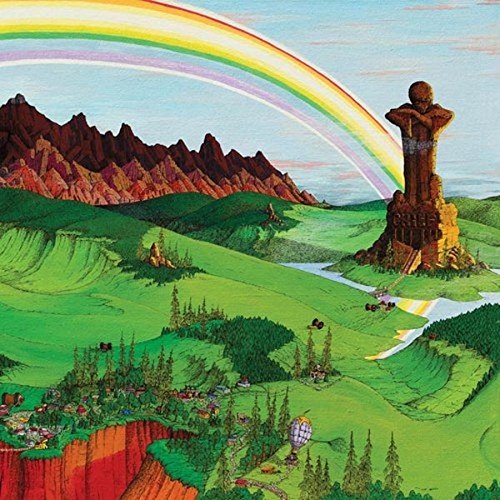

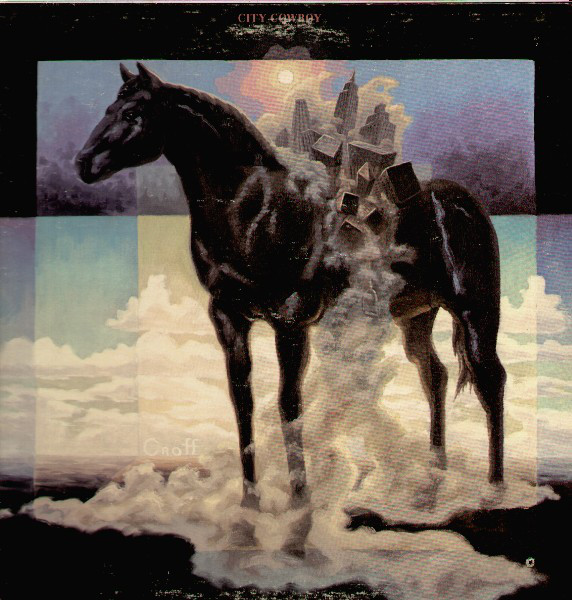
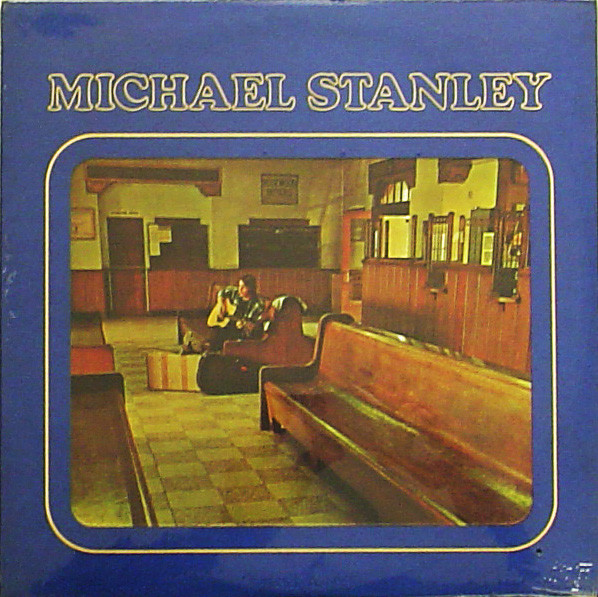





NINA MIRANDA-FREEDOM OF MOVEMENT.
Nina Miranda-Freedom Of Movement.
Not many singers wait twenty-six years before releasing their debut album. Nina Miranda has. She made her debut in 1991 on Sweatmouth’s Read My Hips EP, and since then Nina Miranda has been a familiar face on the London music scene.
Since 1997, Nina Miranda has been the lead singer of four London based bands, including Smoke City, Arkestra One, Shrift and Zeep. These bands have released six critically acclaimed albums. However, there’s more to Nina Miranda than six albums.
She has featured on releases by many well known artists and producers over the past twenty years. This includes Nitin Sawhney, Bebel Gilberto, Jah Wobble, Baaba Maal, Femi Kuti, Faze Action, Azymuth, Basement Jaxx, Gilles Peterson and Kari Bannerman. They’re just a few of the artists that Nina Miranda has collaborated with over the past twenty years. Some of these artists would collaborate with Nina Miranda on her long-awaited, debut album, Freedom Of Movement which will be released on Six Degrees Records on ‘5th’ May 2017.
Joining Nina Miranda on her debut album Freedom Of Movement are Ibibio Sound Machine’s guitarist Alfred Bannerman and percussionist Anselmo Netto and Smoke City’s multi-instrumentalist Chris Franck. They’re joined by a vast cast of multinational musicians that Nina’s met over the past twenty years. There’s also guest appearances from Brazilian artist Chico Cesar; professional surfer Fred d’Orey and Nina’s former lodger Felipe Couto, who taught himself how to play the guitar while Freedom Of Movement was being recorded. He adds a guitar riff on Feminist Man. Berimbau player Rilene de Souza is an indigenous Amazonian Brazilian, who Nina spotted from the top deck of a London bus, adds a spoken word vocal to Amazonia Amor. In doing so, Rilene de Souza plays a part in an album that’s been long-awaited.
Despite being an experienced vocalist, whose also a songwriter and producer, the one thing missing for Nina Miranda’s musical CV, were the words debut album. The forthcoming release of Freedom Of Movement, where Nina’s joined by a vast cast of musicians fills this gap in her CV. However, when work began on the album, Nina was casting around for inspiration.Things changed when Nina returned to Rio De Janeiro.
That where she was born, and spent part of her childhood. Nina’s father Luiz Aquila is Brazilian, while her mother Liz Miranda is English. They’re both painters and teachers, who moved to London when Nina was eight. The rest of Nina’s childhood was spent moving between Britain, France and Brazil. Since then, Nina has travelled extensively during her career.
One of her most important journeys recently was when she boarded a plane to Rio De Janeiro, before work began on Freedom Of Movement. Nina recalls: “for a while, I felt l’d lost my musical anchor in London,…I returned to Rio to record some new ideas with my friends Kassin and Domenico (of Rio band Orquestra Imperial). After an incredible recording session and with regained confidence and inspiration, I started to find magical people to create with back in the UK.”
With her confidence restored, Nina returned to Britain to begin work on Freedom Of Movement. It was going to be an album that represented and reflected Nina’s musical philosophy, background, influences and inspirations. To do that, Nina began looking for musicians who were capable of doing this. They would collaborate with Nina, who had regained her creative spark.
Part of the inspiration from Freedom Of Movement came from the Bahia region of Brazil, which is Nina’s favourite part of the country. “I feel like everyone has their own Brazilian fantasy and I have mine,..For me, it’s the northeast of Brazil. It’s much less segregated and there’s always music in the streets.” Whether this a realistic or idealistic portrayal of Bahia it’s enough to inspire Nina: “I want a certain type of Brazil, so if I can’t find it I’m going to make it in a song.” However, it’s not just Brazil that’s influence Nina.
While Nina was born in Brazil, and has lived in London for much of her life, she views the recent political machinations in Britain with an outsider’s perspective. This is part of Nina’s global outlook towards life, and has played part in the album and its Freedom Of Movement. “As the rhetoric being hoisted upon us is about closing borders and putting up walls. I’m reminded of the shocking racism prevalent in the UK when we arrived. I want to keep opening doors and finding connections and similarities between us whilst also celebrating the differences. That’s what Freedom of Movement represents, along with the freedom to move between musical genres. This record carves out a space for boundless dreams and infinite landscapes.” With that in mind, Nina began work on Freedom Of Movement.
Recording of Freedom Of Movement took place mainly in London, with some field recordings taking place in Lisbon and Paris. Meanwhile in London, Nina’s vast network of musical friends. They helped her record an album that features fifteen tracks, including fourteen that Nina cowrote with various collaborators. The only cover version on Freedom Of Movement, is Lennon and McCartney’s Julia. This Beatles’ song is reworked by Nina Miranda on Freedom Of Movement.
Opening Freedom Of Movement is Capoeira 2020, which fittingly opens with Karl Bannerman theatrically announcing: “you’re a child of the universe.” This seems the perfect description of Nina, growing up and even now. Meanwhile, she delivers a soulful, sultry vocal against a backdrop that features a sinuous bass line, percussion, keyboards and backing vocals. Midway through the song, Nina delivers the vocal in Portuguese. Still, her vocal is soulful and sultry, as she delivers against a carefully crafted arrangement on a song thats showcases Nina’s skills as singer, songwriter and producer.
As the dance-floor friendly Play unfolds, it seems that Nina has been inspired by Santana and Earth, Wind and Fire. This is a starting point for Nina, on a song where the hooks haven’t been spared. It’s an irresistible fusion of soul, funk, pop and Latin influences. There’s even a rocky guitar and spoken word vocal, while pounding drums, percussion and keyboards provide a backdrop for Nina on this look-laden anthem.
Very different is Marshmellow Dreams, a much more laid-back sounding track. Just an acoustic guitar accompanies Nina’s thoughtful as the track heads in the direction of Nu Folk. That’s until various beeps and squeaks add an electronic influence. They play their part on what’s a beautiful, dreamy track that shows another side to Nina’s music.
Megalopolis Skit lasts just fifty seconds and features field recordings made in Paris, London and Lisbon. It’s akin to an intermission, and breaks the album up.
Whole Of London was penned by Nina and Antony Elvin, who share the lead vocal on what’s another poppy sounding track. Again, hooks haven’t been rationed on what’s not just the most commercial sounding song, but one of the highlights of the album.
It’s all change on The Cage, where thunderous drums accompany Nina’s soliloquy, and power the big, bold arrangement along. They’re joined by a myriad of instruments, including a violin, horns, percussion and backing vocals. They accompany Nina’s vocal, which like the arrangement, has grown in power. By then, the song sounds as if it belongs on the soundtrack to a blockbuster movie.
Buzzing, beeping synths open The Garden, but before long it’s all change as the song becomes melodic as the arrangement floats along. Backing vocals accompany Nina’s tender vocal, while the arrangement features rhythm section, percussion, tyre-drum and guitars. Later a dreamy flute gives way to sci-fi synths, rattling percussion and sweeping harmonies as Nina throws a curveball during a dreamy and melodic sounding song with surprises in store.
I Am has been influenced by the dub she heard her brother play in the family home, and later played by the London sound systems. The dub influence is combined with rhythms that are tailor made for clubs. Atop the stomping, dubby arrangement is Nina’s ethereal vocal. Add to this various effects and it’s a potent and heady brew that’s dance-floor friendly.
Atmospheric describes the introduction to Feminist Man, before a picked acoustic guitar accompanies Nina’s tender, thoughtful vocal. Later, a wistful violin and subtle percussion are added. However, it’s Nina and the guitar that play leading roles in the sound and success of the song.
There’s an urgency to Silken Horse, which is very different to the previous track. There’s an experimental sound, on what’s akin to a mixture of theatre and music. Then as the song quickens, the Brazilian influence shines through. Irresistible rhythms unfold, and come courtesy of the bass, drums and percussion. Backing vocals accompany Nina’s soulful, dreamy vocal, while the arrangement becomes atmospheric before the irresistible rhythms return. Instruments flit in and out as the arrangement builds, and the drama grows before the journey on the Silken Horse is over.
The Beatles’ Julia, which is reworked by Nina, and given a musical makeover. Against a shuffling backdrop, which features guitar, percussion and flute, Julia delivers a tender, breathy vocal. Seamlessly she delivers lyrics in English and Portuguese, during this beautiful reinvention of Julia.
Just a lone guitar accompanies Nina as Amazonia Amor unfolds. Soon, a drum pounds, before the arrangement becomes atmospheric. It’s as if Nina is trying to transport the listener to the Amazon, as they’re introduced to its sounds. Birds cheep, guitars chime, thunder claps, a bass probes and Rilene de Souza adds a spoken word vocal. Meanwhile, Nina’s vocal is elegiac as guitars accompany and the sound of a thunderstorm can be heard. Then it’s as if the sun has come out and beauty is omnipresent for the remainder of the song.
Surfer Fred d’Orey opens The Surfer saying: “I miss surfing so much.” Soon, Nina’s vocal sits atop the arrangement, which features the rhythm section, percussion, guitars and Fred d’Orey’s spoken word vocal. They join Nina’s breathy vocal and play their part in a melodic arrangement that flows, memorably along.
Realistic describes the introduction to Soundtrack To “Venus’ Night Boat.” From the get-go, there’s a cinematic sound that becomes dramatic, dark and moody. This comes courtesy of shakers, a pounding drum and the sound of water flowing along. Nina sings, while birds squawk and scream before keyboards and hissing hi-hats are added to this cinematic magical mystery tour.
Lost in Manchester closes Freedom Of Movement. It finds Nina delivering her vocal against a fusion of funk, electronica and Latin percussion. Add to this phat beats, an uber funky bass, chirping guitar, special effects and synths. They accompany Nina in a catchy, genre-melting song that closes her long awaited debut album Freedom Of Movement.
Twenty-six years after making her recording debut, Nina Miranda will release her debut album Freedom Of Movement on Six Degrees Records. Freedom Of Movement is a showcase for Nina Miranda not just as a singer, but as a songwriter and producer. She cowrote fourteen of the fifteen songs on Freedom Of Movement, and produced the album. It’s an eclectic album, that showcases a versatile singer.
Freedom Of Movement features everything from funk, soul, Latin to dub, electronica and folk and even indie rock and pop. Ballads and dance-floor friendly songs sit side-by-side on Freedom Of Movement on this an inventive album.
Nina incorporates spoken word vocals, samples of dialogue, field recordings and special effects throughout Freedom Of Movement. They’re part of Nina Miranda’s rich and vibrant musical tapestry Freedom Of Movement, which is her long-awaited and much-anticipated debut album as a solo artist. It finds Nina Miranda effortlessly flitting between disparate musical genres, and in the process enjoys Freedom Of Movement.
Nina Miranda-Freedom Of Movement.
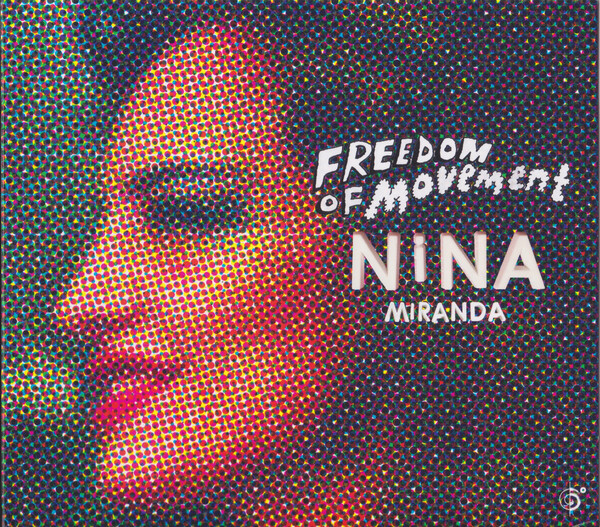
THE JERRY CANS-INUUSIQ.
The Jerry Cans-Inuusiq.
Over the last few years, The Jerry Cans have been one of the rising stars of the Canadian music scene. Recently, though, The Jerry Cans’ music has won them friends much further afield than the of Arctic reaches of Iqaluit, Nunavut, their hometown in the far North of Canada.
This includes in Scotland, where The Jerry Cans played at the prestigious Celtic Connections’ festival in early 2017. The Jerry Cans then won friends in Cuba, before embarking upon a lengthy and successful tour of Australia, where audiences discovered the delights of their two previous albums Nunavuttitut and Aakuluk, plus their forthcoming third album Inuusiq, which will be released on the ‘5th’ of May 2017, on Aakuluk Music. Inuusiq is a very personal album for The Jerry Cans, as it had been influenced and inspired by their life in Iqaluitt, and the sounds of the environment around them.
Nancy Mike singer, songwriter and cofounder of The Jerry Cans reflects on the band’s music: “We wanted to reflect the sounds of the North. “Our neighbours’ dogs, the ravens at the dump, the wind in a blizzard. We wanted to pay homage to the natural sounds of our life. But we also want it to be clear that we listen to Bob Marley and stream pop tracks. We have opinions about popular music. Sometimes, that’s challenging for people to hear.” Hopefully, not for much longer as The Jerry Cans have been providing a voice for the people of Iqaluit, Nunavut since the band was formed in 2008.
Unlike many bands, The Jerry Cans haven’t turned their back on their hometown and moved to the city in the furtherance of their career. Iqaluit, Nunavut in Canada’s Arctic reaches is where The Jerry Cans were formed in 2008, and is where the five members of the band still live.
This includes The Jerry Cans’ rhythm section of drummer Steve Rigby, bassist Brendan Doherty and guitarist and vocalist Andrew Morrison. Adding to The Jerry Cans’ unique and inimitable sound is violinist Gina Burgess and accordionist and throat singer Nancy Mike. The five members of The Jerry Cans are proud of their hometown and their roots. So much so, that they sing many of their songs in Inuktitut, a language that the band are passionate about preserving, despite their community continuing to evolve. However, the members of The Jerry Cans know that if Inuktitut language isn’t preserved, it will quickly become obsolete. That won’t happen on their watch,
It’s not just the Inuktitut language that The Jerry Cans are determined to preserve. They’re also determined to challenge existing misperceptions and stereotypes they’ve encountered about life and living in the Arctic. That is admirable, because if these misconceptions aren’t challenged they’ll continue to perpetuated. Not if The Jerry Cans can help it. They provide a voice for their community; are a force for change and are a band that bring the local community together during what’s been.
Just like many rural communities, life can be tough in Iqaluit, which has been shaped and influence over several centuries by Inuk culture. However,over the past twenty or thirty years, life in Iqaluit has started to change and in some cases, change drastically. One of the major changes has been the people of Iqaluit becoming reconnected to the South of the Canada. While many regard this as a positive development, not everyone wanted to embraced such dramatic and drastic changes. Many people preferred their previous life. Not everyone though, as this has sometimes led to isolation, despair, and tragically epidemic of suicide among Iqaluit residents. These have been challenging times for some of the people of Nunavut. Trying to provide a voice for them are The Jerry Cans.
Some of The Jerry Cans’ songs deal with what are challenging and difficult topics. They deal with these challenges head on, provide a voice to the struggles of the people of Iqaluit. Other times, The Jerry Cans bring to life the joys of life in far North of Canada.
Especially when The Jerry Cans play live in their beloved hometown of Nunavut. All of a sudden people of all ages head to the dance-floor. However, some of The Jerry Cans’ songs provoke a very different reaction.
Sometimes, The Jerry Cans have received letters from younger members of the community. They feel they’re speaking for them, while others reach out to the band with impassioned pleas for help and understanding. Nancy Mike muses: “I think the ability to express and understand what’s happening in your world is important. Isolation is a very big contributor to mental health issues like suicide. When we sing about going through tough times in the North, it fights that. When young people speak up and take pride and find balance, that can be a powerful weapon.” The Jerry Cans can also take pride, because their music has encouraged people to give voice to their worries and concerns.
Recently, The Jerry Cans have also been investing their own time and money in the local community. They founded what was the first very record label in Iqaluit, Aakuluk Music. It allows The Jerry Cans to combine three of their passions the Inuktitut language, music and the local community. Andrew Morrison reflects on the decision to found a label locally: “We had thrown around the idea to start a label to support Inuktitut music. We have four young artists singing in Inuktitut.” That is a good start for the nascent label. Especially considering what Andrew used to hear: “We’ve often heard as we were pitching our work, that if you want to succeed, you have to sing in English. We don’t accept that. We wanted to create a business entity to support it.” This they’ve succeed in doing, and it seems that The Jerry Cans’ timing is perfect.
Recently, there’s been a cultural shift within Canada, and hopefully, this will allow Inuk culture and music to find a much wider audience. This cultural shift came when the indigenous communities’ struggle for recognition received recognition by the Canadian government. Hopefully, this is the start of further meaningful dialogue. The Jerry Cans certainly welcome any further dialogue, with Andrew Morrison saying: “we are very happy to talk about what’s happening between indigenous and non-indigenous communities. There’s a big historical shift that’s underway. We’re trying to insert those politics in an appropriate way. The music can be hard to understand, but it gives an access point to a really brilliant beautiful culture.”
This “beautiful culture” has inspired and influenced The Jerry Cans’ forthcoming third album, Inuusiq. It’s best described as a fusion of indie rock, reggae, and country noir which tries and succeed in attempting to reframe Inuktitut insights and traditional throat singing. The inspiration for Inuusiq was The Jerry Cans’ life and sounds around them in Iqaluit. This includes Inuk throat singing which features on Inuusiq.
Singer and songwriter Nancy Mike is a talented practitioner of throat singing. It’s something that she’s been doing all her life. Nancy was born into a large family in what was a small, but culturally vibrant town. She grew up speaking Inuktitut and throat singing. This is usually performed by pairs of young women who use the resonance of each other’s mouths to amplify throaty, rhythmic sounds. Throat singing and Inuktitut play an important part in The Jerry Cans’ music, and in Nancy’s life.
This Andrew Morrison who grew up in Nunavut was to discover. Later, he got a job as producer for the Canadian Broadcasting Company, and met Nancy Mike. The pair fell in love, and eventually he asked Nancy’s father for her hand in marriage. While the answer was yes, there was a caveat, he had to learn to speak Inuktitut fluently. Having mastered Inuktitut, Andrew set about putting his newly gained language skills to good use.
Soon, he was writing songs in Inuktitut, which allowed him to perfect his newly gained language skills. For The Jerry Cans’ forthcoming album Inuusiq Andrew Morrison and Nancy Mike combined to create the framework for the songs that drew upon local issues. This included a deeply moving and poignant song Arnalukaq, which was inspired by the Missing Women Inquiry. It’s a national enquiry setup to deal with the disappearance of Native women across Canada. Arnalukaq is an impassioned piano lead song where counter this terrible tragedy with a reminder that all women are beautiful and worthy of respect. This is just one of the eleven songs on Inuusiq.
Intro may only last twenty-three seconds, but during this time the listener is introduced to the sounds of Iqaluit’s landscape in the Arctic reaches.
Ukiuq opens with Nancy’s throat singing, in what was The Jerry Cans’ attempt to an Inuktitut answer Bob Dylan’s North Country Girl. Meanwhile, the rhythm section, shimmering guitar and violin accompany Andrew’s powerful and impassioned vocal. Nancy’s throat singing is a feature of the arrangement. So too is the wistful strain of the violin, which late helps power the arrangement along as the tempo rises. By then, a joyous and irresistible fusion of folk, country and indie rock is unfolding, and would be guaranteed to fill any dance-floor.
Equally catchy is Isumagivappinnga (Do You Think of Me?), which explodes into life as Andrew unleashes a vocal that’s an outpouring of emotion. Equally emotive is Nancy’s vocal, as they sing of their life on the tundra, which they prefer to the tedium of pushing paper in office. This bittersweet punk-country love song is one many people will be able to relate to.
Initially, Nirliit is a showcase for Nancy’s throat singing, while the rest of The Jerry Cans power the arrangement along. That is until Andrew delivers a heartfelt vocal as he encourages young Canadian’s to focus on the beauty in their life. Especially in Nunavut which has the highest suicide rate in Canada. Later, Gina’s fiddle proves the perfect foil to Nancy’s throat singing. It more than makes up for the lack of a second throat singer, during a song that features an important message and features The Jerry Cans in full flight.
Makiliqta is another song with an important message, where Andrew delivers another impassioned vocal. This time, he’s singing to the young Canadian women trapped in abusive relationships. He reminds them of what they are, and that they will always be beautiful. Later, Nancy adds an emotive vocal, before throat singing against a multilayered arrangement. Meanwhile, layers of instruments intertwine, just like people in Nunavut clothes in an attempt to keep warm. However, the combination of the vocals and multilayered arrangement result in melodic and memorable song with an important social message.
Paniarjuk is a poignant song, as it’s based on a song Nancy’s late father created for the couple’s daughter and left on a message on their answering machine. This message gives way to an uptempo country arrangement. The fiddle combines with the rhythm section, while Andrew’s vocal is a mixture of power and passion. Later, it’s augmented by Nancy’s throating singing, before the probing bass and fiddle combine as the arrangement rebuilds. Soon, The Jerry Cans are in full flight. It’s a joy to behold, as the listener hears what they sound like live.
Tusaavit (Can You Hear Me?) is without doubt, one of the most moving and beautiful songs on Inuusiq. It features an underrated arrangement, where Andrew delivers an example of a song that adults create to sing to their own children. This is something that many people wouldn’t do nowadays. Thankfully, they still do in Iqaluit.
Just a lone giutar accompanies Andrew’s vocal on Isumagivappinnga a song about new love. Soon, though, the song bursts into life. The rhythm section provide the heartbeat,and with the accordion power the arrangement along. Meanwhile, the
the fiddle is the final piece of this musical jigsaw. It plays a starring in creating an irresistible backdrop for the vocal. Harmonies accompany the vocal, while the drums never miss a beat. Along with the accordion and fiddle, they play their part in the sound and success of a song that’s one of the highlights of Inuusiq.
As the drums and bass underpin the arrangement to Anaanaga, the fiddle and accordion combine to create a multilayered arrangement before Andrew’s vocal enters. He delivers the lyrics to a song that’s dedicated to mothers everywhere. For most f the track, it’s an uptempo, rousing anthem. With a minute remaining, the song changes and the vocal gives way to the sounds of everyday life in Iqaluit.
Northern Lights closes Inuusiq, and the rhythm section combine with Nancy’s throat singing. Soon, Andrew’s vocal enters, and the rest of they band accompany him. This includes Nancy’s throat singing, before the song heads into anthem territory. By then, The Jerry Cans are fusing folk, country and indie rock. Still, the rhythm section power the arrangement along, while the fiddle adds a country influence. Spirited, singalong harmonies add the finishing touch to this moving, genre-melting anthem. The Jerry Cans it seems, have saved the best until last.
After eleven songs lasting nearly thirty-seven minutes, The Jerry Cans’ much-anticipated third album, Inuusiq is at end. Inuusiq will be released on the ‘5th’ of May 2017, on Aakuluk Music. Inuusiq is a very personal album, as it has been influenced and inspired by their life in Iqaluit, and the sounds of the environment around them. It gives voice to the struggle and joys of life in Iqaluit. However, Inuusiq is also an album that’s full of social comment.
This includes songs about the recent Missing Women Inquiry and abusive relationships. There’s also a song reminding young people to focus on the beauty in their life, and a beautiful love song. Sometimes there’s an element of humour, on this genre-melting album.
Inuusiq finds The Jerry Cans combining elements of Celtic, country, folk and indie rock on what’s a musical potpourri. The music on Inuusiq ranges from beautiful, irresistible, joyous and uplifting, to ruminative and thought-provoking. When the tempo rises, hooks certainly haven’t been spared. The Jerry Cans combine a Celtic fiddle and accordion with their rhythm section. They provide the backdrop to Andrew Morrison’s vocals and Nancy Mike’s throat singing. It’s a potent and powerful combination, from The Jerry Cans and one that must be experienced firsthand. The way to do that is by buying The Jerry Cans’ forthcoming album Inuusiq, which isn’t just a guaranteed to get any party started, but is also a poignant, powerful and thought-provoking album.
The Jerry Cans-Inuusiq.


ROY BUCHANAN-LOADING ZONE AND YOU’RE NOT ALONE.
Roy Buchanan-Loading Zone and You’re Not Alone.
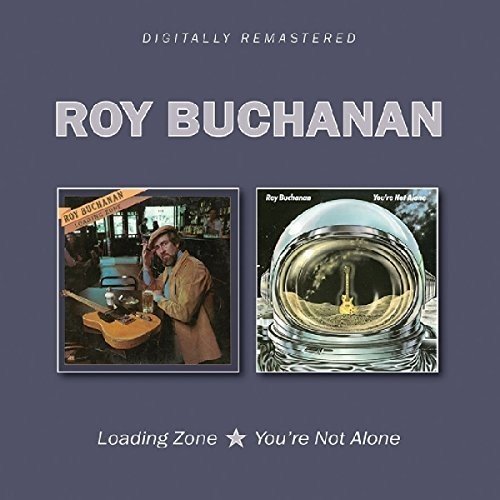
In 1977, Roy Buchanan was thirty-eight, and about to record his second album for Atlantic Records, Loading Zone. Roy Buchanan had been paired with Stanley Clarke, the classically trained pioneer of fusion. Roy Buchanan and Stanley Clarke looked like an unlikely partnership, but one that ultimately got results. Proof of that Loading Zone, which was recently paired with You’re Not Alone by BGO Records, who have remastered and reissued both albums as a two CD set. They’re the perfect introduction to the late, great Roy Buchanan whose career started when he just fifteen.
That was when he joined Johnny Otis Rhythm and Blues’ review in 1954. For Roy Buchanan, that was the equivalent of a musical apprenticeship, and set him in good stead for the rest of his of career.
Four years after turning professional, Roy Buchanan made his recording debut on Dale Hawkins’ 1958 single My Babe. For the next couple of years, Roy Buchanan was in Dale Hawkins’ band. That was until Dale’s cousin Ronnie Hawkins came calling.
Dale Hawkins was in the Toronto, in middle of a tour when call came through his cousin Ronnie Hawkins. He was looking for a guitarist for his band, and Roy Buchanan fitted the bill. With Dale’s blessing, Roy Buchanan joined the band. Ronnie wanted Roy to take his existing guitarist under his wing. With Roy’s guidance, the young Robbie Robertson came on leaps and bounds. After a spell with Ronnie Hawkins’ band, Roy left and headed home to America. Later, Ronnie Hawkins’ band became The Band, one of the most important and influential bands of the late-sixties and early seventies.
Meanwhile, Roy Buchanan had released his debut single Mule Train Stomp on Swan in 1961. After this, Roy spent the first half of the sixties playing in various bands, including Danny Denver’s band. By then, Roy had put down roots in the Washington DC area, where he had acquired a reputation as one of the great rock guitarists.
This lead to guitarists travelling from far and wide to challenge Roy Buchanan to what he call a “pick-off.” Guitarists came Roy conquered them, with this superior, virtuoso skills. That was until Roy changed direction musically.
In March 1968, John Gossage a photographer who was a friend of Roy’s gave him tickets to see Jimi Hendrix. That night, Roy watched as Jimi Hendrix recreated what he saw as his own unique sound. The difference was that Roy used his hands to create the wah-wah sound, while Jimi Hendrix used a pedal. Despite having carefully crafted his own sound, Roy decided to turn his back on it, and concentrated on a American roots style guitar picking. In doing so, this left the field clear for Jimi Hendrix, who Roy always had the utmost respect for. So much so, that he would later cover some of his songs. Before that, Roy’s decided to change career.
During the second half of the sixties, Roy was dividing his time between playing in various rock bands and working as a session musician. By then, Roy was married with a family. The life of a professional musician wasn’t the most stable, so Roy decided to retrain as a men’s hairdresser. Roy Buchanan was very nearly lost to music forever.
As the seventies dawned, Roy joined the Danny Denver Band, who had a following around the Washington DC, Virginia and Maryland tristate area. However, when he wasn’t playing with the Danny Denver Band, Roy was playing solo gigs. It seemed he hadn’t given up on his dream of making a career out of music.
The dream became reality in 1971, when Public Service Broadcasting filmed and aired a one hour documentary entitled Introducing Roy Buchanan. Someone from Polydor Records saw the documentary, and soon, they had signed Roy Buchanan to a recording contract. Roy would go on to release five albums on Polydor.
A year after signing to Polydor Records, Roy Buchanan released his critically acclaimed eponymous debut album. It was an understated and sparse album of genre-melting music, where Roy switches between blues, country and rock ’n’ roll. Despite its undoubted quality, commercial success eluded the album. However, this was about to change.
When Roy returned with Second Album in 1973, it was the album that almost wasn’t recorded. Roy asked Polydor if for his sophomore album, he could record and release a live album? Polydor didn’t want a live album. However, Roy secretly recorded and self-released a live album using the alias Buch and the Snakestretchers. With the same that band that recorded the live album, Roy went in to the studio and recorded Second Album, which stylistically was similar to his eponymous debut album. However, there was a shift more towards the blues, which is Roy now regarded as a pioneer of.
Second Album was released in 1973, to the same critical acclaim as his eponymous debut album. However, Second Album caught the attention of the record buying public and sold over 500,000 copies. This was enough to earn Roy his first gold disc. By then, John Lennon and Merle Haggard were among Roy’s admirers. So to were the Rolling Stones.
They were so impressed by Roy Buchanan’s guitar playing, that they asked him to join the Rolling Stones. Roy turned the Stones down, and cemented his place in rock history as the man that turned down the Rolling Stones.
Buoyed by the success of Second Album, Roy returned with That’s What I’m Here For, which was produced by Jay Reich, Jr. It was a much heavier, fiery album which featured a blistering version of Hey Joe. It was a showcase for Roy’s lightning fast blues licks, while the album featured moments of spontaneity and genus from one of the finest guitarists of the seventies.
Proof of that was That’s What I’m Here For, which was a mixture of blues, blues rock and Southern Rock. Although it won favour with some critics, others thought it wasn’t an consistent album as Second Album. Granted there were moments of genius, but sometimes Roy failed to reach the same high standards he had set earlier in the album. As a result, That’s What I’m Here For didn’t replicate the success of Second Album. Despite that, Roy returned with his fourth album.
During the first half of 1974, Roy had assembled what he regarded as his finest band. They would accompany him into the studio in the summer of 1974 to record In the Beginning. It was produced by Ed Freeman, and was released later in 1974.
When In the Beginning was released, it critics discovered a much more consistent album. Roy’s playing was fluid and at the heart of everything that was good on In the Beginning. It was a much more laid back album which featured mostly R&B, including Fontella Bass’ Rescue Me, Al Green’s I’m A Ram, CC Rider and Mike Bloomfield’s You’re Killing My Love. There was even a cover of Joe Zawinul’s Country Preacher, on an album that featured the debut of vocalist Billy Sheffield. His addition was seen by some as an attempt by Polydor to shift units. Ironically, this backfired when the album wasn’t the success that Polydor had hoped. For Roy this was a huge disappointment.
Roy owed Polydor just one more album, and looking for a way to discharge his contractual obligations, he decided to record a live album. It was decided to record two shows at New York’s Town Hall on the evening of November ’27th; 1974. The result was Live Stock, which was released by Polydor in 1975. It features seven songs, that prove the perfect showcase for the considerable talents of Roy Buchanan. He unleashes a virtuoso performance on what’s regarded as one of the best live albums by a guitarist. While it wasn’t the most successful album of Roy’s career, it was enough to convince a major label to sign him after his departure from Polydor.
Next stop for Roy was Atlantic Records. He approached Ahmet Ertegun, who had witnessed Roy perform at the Carnegie Hall in 1972. Remembering that performance, and knowing what Roy Buchanan was capable of when he brought his A-Game, Ahmet Ertegun gave Roy a large advance and he signed on the dotted line.
Not long after this, Roy began work on what was a very personal, autobiographical album, A Street Called Straight. It was Roy’s musings on his battle to stay sober and clean. The album was produced by and featured a cover of Jimi Hendrix’s If Six Was Nine, and Good God Have Mercy, which was penned by Billy Roberts who also wrote Hey Joe. There was also an instrumental My Friend, Jeff, which was a homage to Roy’s friend and fellow guitarist Jeff Beck. These tracks became part of Roy’s Atlantic Records’ debut A Street Called Straight.
When A Street Called Straight was released later in 1975, the album wasn’t the success that the Roy and Atlantic Records had hoped. While it received praise and plaudits from some critics, others felt it was a slightly inconsistent album. There were moments of greatness, but a couple songs didn’t reach the same heights. However, Roy was heading in the right direction.
Loading Zone.
For the followup to A Street Called Straight, Roy Buchanan was paired with twenty-six year old Stanley Clarke, the classically trained pioneer of fusion. He would produce what became Loading Zone. This seemed an unlikely partnership, given how different backgrounds the two musicians came from. However, just like Roy, Stanley Clarke was a talented musician, and the pair bonded over their mutual love of music.
Despite his relative youth, Stanley Clarke was already an experienced and successful musician with a proven track record. That was apart from when it came to production. However, Stanley Clarke was also a talented songwriter would also play a small part in writing Loading Zone.
When it came to writing Loading Zone, Stanley Clarke penned Heat Of The Battle. Meanwhile, Roy penned Hidden, Adventures Of Brer Rabbit and Tar Baby Ramon’s Blues and Done Your Daddy Dirty. Roy also wrote The Circle with Ron “Byrd” Foster and Scott Musmanno. The rest of the album consisted of cover versions, Booker T and The MGs’ Green Onions and Michael Narada Walden’s Judy and Your Love. These nine tracks were recorded at Clover Studios in New York and Electric Ladyland in Los Angeles, by Roy and the band.
The recording sessions were quite different to previous Roy Buchanan albums, with different musicians were drafted in to play on different tracks. Producer Stanley Clarke played bass on three tracks and brought onboard several musicians he had worked before. This included guitarist Roy Gomez, drummer Michael Narada Walden and pianist Jam Hammer. They were augmented by various musicians, backing singers and vocalist Scott Musmanno who featured on The Circle. When it came to recording the cover of Booker T and The MGs’ Green Onions, two MGs made a guest appearance, Donald “Duck” Dunn and Steve Cropper, who also featured on The Circle, Ramon’s Blues and Done Your Daddy Dirty. They were part of what was a talent cast of musicians and vocalists, that played their part in the sound and success of Loading Zone.
Once Loading Zone was completed, critics had their say on the album. It was released to critical acclaim in May 1977, and sold in excess of 500,000 copies. This was enough to for Roy’s second gold disc. No wonder, given the quality of music on Loading Zone.
It finds Roy Buchanan and his talented band work their way through nine tracks. They’re the perfect showcase for Roy, who unleashes a blistering, fiery solo on The Heat Of The Battle, which has an unmatched intensity. Hidden is a much more underrated thoughtful track, which shows another side to Roy and his playing. So does The Circle, a mid-tempo soulful song with commercial pop rock sound. After this it’s all change.
Adventures Of Brer Rabbit And Tar Baby feature Roy and Stanley Clarke enjoying a “pick-off,” with the guitar and bass intertwining to create a fusion of country blues and ragtime. Ramon’s Blues is a smouldering blues which features a guitar masterclass from Roy. He reaches new heights. Green Onions is then taken in a new direction, with Roy unleashing a scorching guitar solo that steals the show and transforms this classic. Although Judy is a ruminative track, Roy still enjoys the opportunity to showcase his virtuoso skills. Then on Done Your Daddy Dirty, Roy is encouraged by the band to kick loose as he unleashes blues rock solo. He’s got his mojo working. Your Love is a soul-baring, melodic and radio friendly ballad that closed Loading Zone, which was by far, Roy’s most successful album for Atlantic Records.
They were delighted by their latest signing, who had already released two albums. Soon, two would be three when Roy began work on You’re Not Alone. This time, Stanley Clarke had been replaced as producer by Raymond Silva.

You’re Not Alone.
Given the success of Loading Zone, Roy and Atlantic Records were keen to release a followup sooner, rather than later. So Roy got to work recording what would be the seventh album of his career.
For You’re Not Alone Roy penned Supernova and cowrote Fly… Night Bird and 1841 Shuffle with Andy Newmark, Willie Weeks and Jean Roussel. They also wrote You’re Not Alone. Jean Roussel also penned the album opener, The Opening… Miles From Earth. The two other songs, were covers of Joe Walsh and Terry Trabandt’s Turn To Stone and Neil Young’s Down By The River. These songs would become You’re Not Alone.
Recording took place at Atlantic Studios, in New York, with producer Raymond Silva. This time, Roy’s band featured a rhythm section of drummer Andy Newmark, bassist Willie Weeks and rhythm and acoustic guitarist Ray Gomez. They were joined by keyboardist Jean Roussel and Roy who played lead guitar on what was a very different album from Loading Zone.
You’re Not Alone opened with The Opening… Miles From Earth, beautiful mini symphony which a showcase for keyboardist Jean Roussel. Joe Walsh’s Turn To Stone is reworked, with Roy’s searing guitar sitting atop an arrangement that veers between smooth to funky.Fly…Night Bird is an atmospheric and laid-back sounding track that’s reminiscent of Pink Floyd circa Dark Side Of The Moon. Roy’s guitar playing is understated, but effective on this mellow track. After this, Roy bowls a curveball.
1841 Shuffle starts off as showcase for Roy’s guitar, before he and his band launch into a jam. Still, though, Roy’s guitar plays a starring, despite being surrounded by a truly talented and versatile band. Neil Young’s Down By The River is reinvented, with Roy’s scorching guitar ushering in Gary St Clair’s worldweary lead vocal. Mostly, Roy and the band are staying true to the original, apart from when Roy unleashes another solo. In doing so, they breath new life into what’s a classic song. Supernova is the heaviest song on the album. Roy and band explode out of the traps, and power their way through fiery fluid slice of blues rock. You’re Not Alone is a ruminative ballad, where sci-fi synths accompany a reflective Roy during this eight minute innovative epic. It seems Roy’s kept one of the best until last.
Critics on hearing You’re Not Alone, hailed it a much more ambitious, complex and sophisticated album from Roy Buchanan. However, it received the same critical acclaim as Loading Zone. Sadly, You’re Not Alone didn’t match the sales of Loading Zone. When the cover of Down By The River was released as a single, it failed to trouble the charts. For Roy Buchanan, You’re Not Alone was the one that got away.
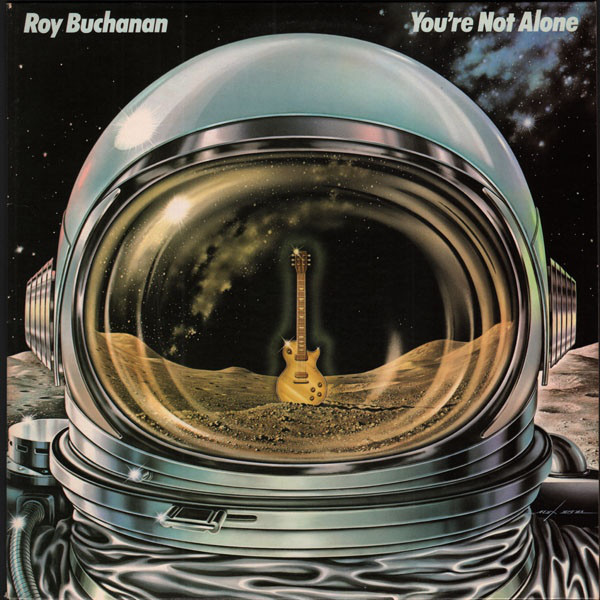
Since then, You’re Not Alone is an album that’s for too long, been overlooked by record buyers. That is a great shame, as it shows another side to Roy Buchanan. He’s a versatile musician, who seemed to enjoy being taken out of his comfort zone.
Stanley Clarke certainly took Roy Buchanan out of his comfort zone on Loading Zone, which was one of the most successful albums of his career. Sadly, You’re Not Alone never sold in the same quantities, it too shows the different sides of Roy Buchanan.
He’s best known as a blues rock guitarist, but since he released his debut was able to seamlessly switch between genres. Roy Buchanan does that with aplomb on Loading Zone and You’re Not Alone which were recently remastered and reissued by BGO Records as a two CD set. Loading Zone and You’re Not Alone showcase the considerable skills and versatility of Roy Buchanan, who nowadays, is recognised as one of the greatest guitarists in the history of music.
Roy Buchanan-Loading Zone and You’re Not Alone.
COME TO THE SUNSHINE: SOFT POP NUGGETS FROM THE WEA VAULTS.
Come To The Sunshine: Soft Pop Nuggets From The WEA Vaults .
There aren’t many compilation series that last twenty-five years. That’s apart from Rhino’s much loved Nuggets compilation series. It began in 1984 when Nuggets, Volume 1: The Hits was released. Little did anyone know that the Nuggets series would last twenty-five years, and include fifteen LP, five box sets and two CD compilations. Like all good things, the Nuggets series had to come to an end. The final chapter in the story was Where the Action Is! Los Angeles Nuggets: 1965–1968, which was released in 2009. For record collectors it was the end of era.
Since the release of Where the Action Is! Los Angeles Nuggets: 1965–1968, it was all quiet on the Nuggets’ front. As the years passed by, it seemed highly unlikely that another instalment in the Nuggets series would be released. That was until the list of Record Store Day 2016 releases was announced, and eagle-eyed spotted the release of Nuggets Hallucinations: Psychedelic Pop Nuggets From The WEA Vaults. This should’ve been a reason to rejoice.
That was until some of the connoisseurs of the Nuggets released that Nuggets Hallucinations: Psychedelic Pop Nuggets From The WEA Vaults this was a reissue of a compilation from originally released on CD by Rhino Handmade in 2004. A year later in 2005, the compilation was released in the UK on CD and LP. Fast forward eleven years, and Nuggets Hallucinations: Psychedelic Pop Nuggets From The WEA Vaults had been repackaged for Record Store Day. The compilation sported a new album cover, and was pressed on purple vinyl. This marketing consultants must have figured was what the new breed of record buyers wanted.
When Record Store Day 2016 came round, there was problem finding a copy of Nuggets Hallucinations: Psychedelic Pop Nuggets From The WEA Vaults. That was despite it being a ‘limited edition.’ However, limited edition in the case, meant 7,000 copies. Many of these ended up on the aftermarket, shortly after release, and a year later, are still awaiting a new home. Doubtless though, Rhino Handmade were happy with the success of Nuggets Hallucinations: Psychedelic Pop Nuggets From The WEA Vaults. They had sold 7,000 copies to record shops who retailed them at £27. It was a profitable exercise for everyone involved. So much so, that Rhino Handmade decided to repeat the exercise for Record Store Day 2017.
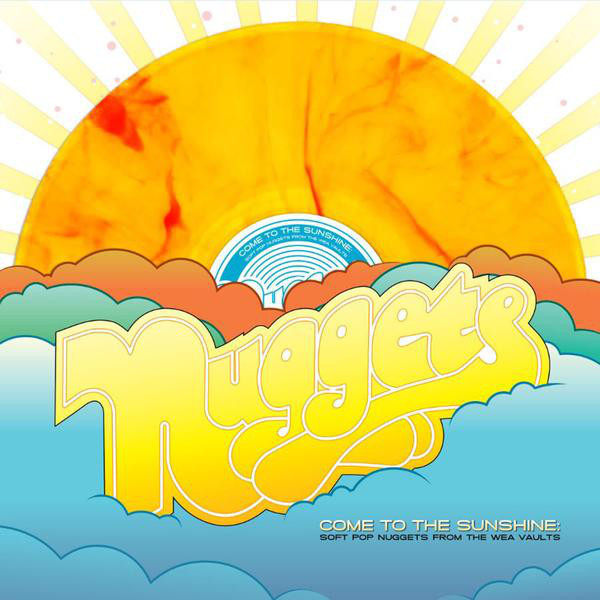
This time around, it as announced that Come To The Sunshine: Soft Pop Nuggets From The WEA Vaults was being released for Record Store Day 2017. Again, eagle-eyed record buyers realised that Come To The Sunshine: Soft Pop Nuggets From The WEA Vaults had also been released on CD 2004, as a limited edition of 7,500. However, Come To The Sunshine: Soft Pop Nuggets From The WEA Vaults was given a makeover by Rhino Handmade for Record Store Day 2017. It now sports a new cover, which is a vast improvement on the previous one, and is pressed on orange and yellow sunshine vinyl. The other change is ‘only’ 5.500 copies of Come To The Sunshine: Soft Pop Nuggets From The WEA Vaults were released for Record Store Day 2017. That is a decrease of 1,500 from Record Store Day 2016. Maybe last year’s Nuggets reissue wasn’t as popular as Rhino Handmade had hoped? Hopefully, that’s not the case, as the Nuggets’ compilations are a welcome addition to Record Store Day.
One look at the track listing to Come To The Sunshine: Soft Pop Nuggets From The WEA Vaults is proof of that. Straight, away there’s familiar faces and old friends, who are joined by some new names. This included Harper’s Bizarre, The Salt, Lee Mallory, The Association, The Gas Company, The Bonniwell Music Machine, The Holy Mackerel and The Gates of Eden. There’s even contributions from The Everly Brothers and The Monkees, on Come To The Sunshine: Soft Pop Nuggets which is a double album that features twenty-four tracks.
Side One.
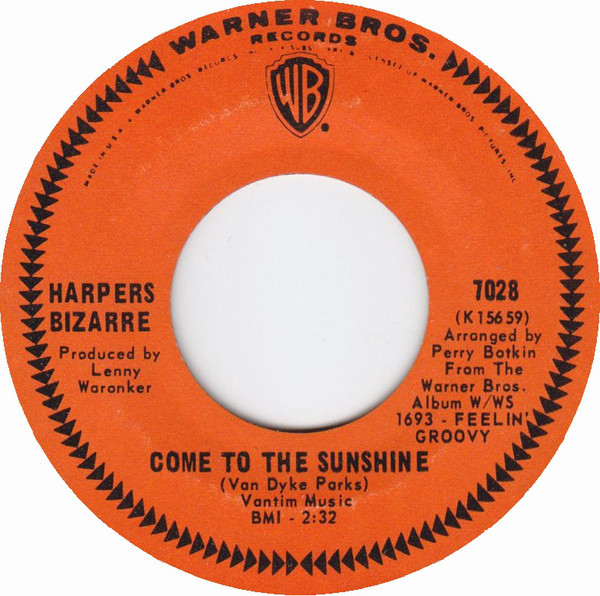
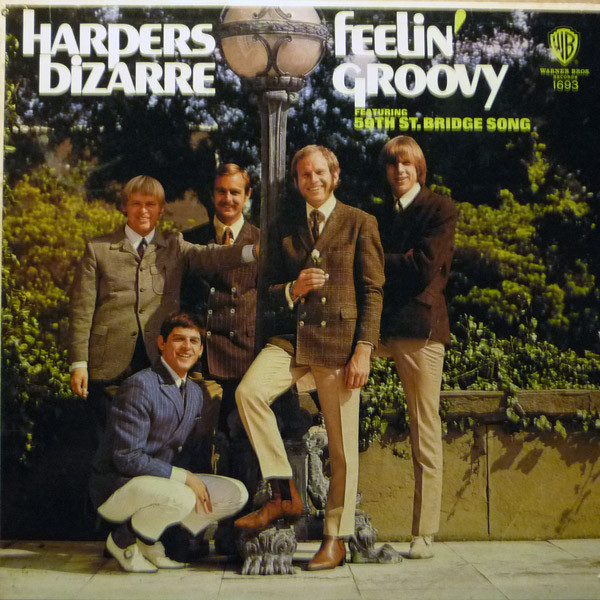
Opening side one of Come To The Sunshine: Soft Pop Nuggets From The WEA Vault is Harper’s Bizarre Come To The Sunshine, Van Dyke Parks’ composition, produced by Lenny Waronker. It was released as a single on Warner Bros in 1967. Later that year, Come To The Sunshine opened Harper’s Bizarre’s debut album Feelin’ Groovy. Fifty years later, Come To The Sunshine is a timeless track and an irresistible example of psychedelic sunshine pop.
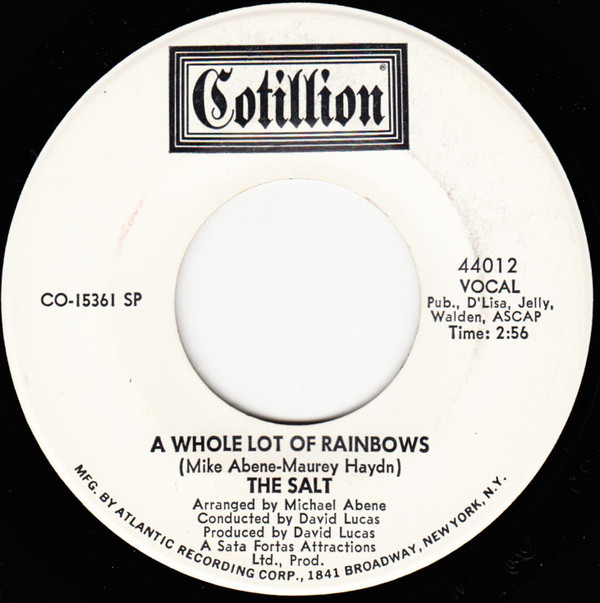
In December 1968, The Salt released their one and only single, Lucifer on the Cotillion label. Tucked away on the B-Side was Whole Lot Of Rainbows, which was penned by Mike Abene and Maury Haydn, and produced by David Lucas. It’s a sunshine pop hidden gem, that’s a welcome addition to the compilation and a reminder to alway see what’s lurking on the B-Side of a single. It may be there’s a surprise in-store, like Whole Lot Of Rainbows.
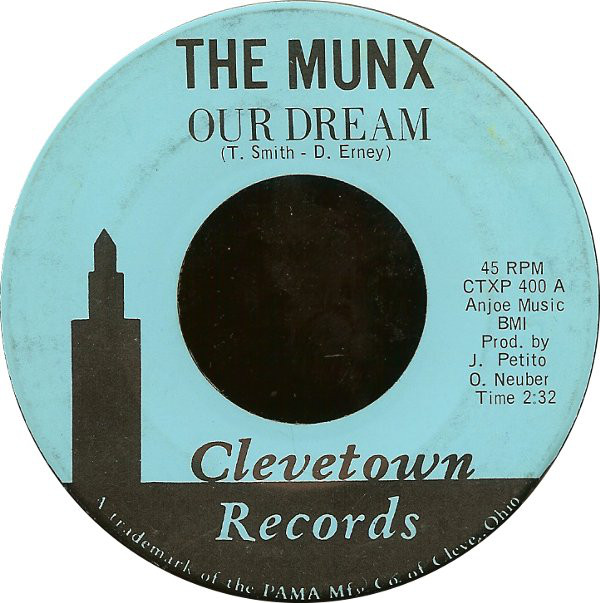
Four years after The Munx were formed in Sandusky, Ohio they released their sophomore second Our Dream on the Clevetown label in 1968. Our Dream was then picked up by Jubilee, a subsidiary of Atlantic Records. Sadly, the lysergic sunshine pop of Our Dream wasn’t the success Atlantic Records had hoped, The Munx only released one further single. However, their finest hour was without doubt, Our Dream, which is a melodic reminder of The Munx and sixties psychedelic sunshine pop.
Side Two.
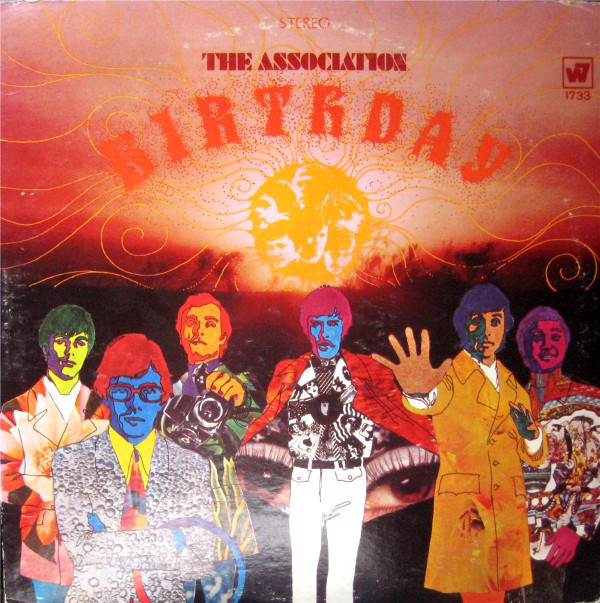
The Association were one of the finest purveyors of sunshine pop during the sixties. Their trademark was the tight vocal harmonies that featured on a string of hit singles and albums. Come On In, which was penned by Jo Mapes and produced by Bones Howe, featured on The Association’s 1968 album Birthday. It reached twenty-three on the US Billboard 200 in 1968, when it was released by Warner Bros. The hook-laden, psychedelic sunshine pop of Come On In, shows just why The Association were inducted into the Vocal Group Hall of Fame in September 2003.
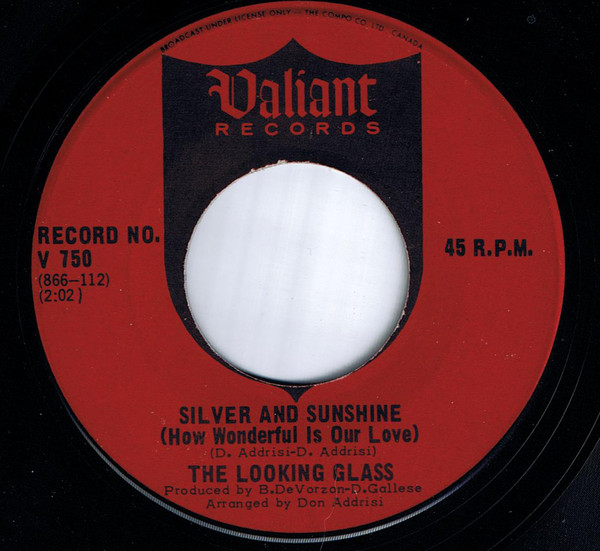
September 1966 saw The Looking Glass release their debut single Silver And Sunshine (How Wonderful Is Our Love) on the Valiant Records. It was penned by Dick and Don Addrisi, with Barry DeVorzon, Don Gallese taking care of production. This was the first a trio of singles that The Looking Glass released between 1966 and 1967. Hooks certainly haven’t been spared on a single that features an uplifting arrangement and some wonderful tight harmonies.
For those who are unfamiliar with The Gas Company, they were a psychedelic pop band from Spokane, Washington. Their discography amounts to just a handful of singles, including First Night Flight, which was released on Reprise in 1967. Hidden away on the B-Side was If You Know What I Mean, which was penned by Greg Dempsey and produced by Dave Hassinger. He plays his part in an oft-overlooked hidden gem from The Gas Company, which is a welcome addition and a reminder of a talented band.
Side Three.
The Cookies had been around since the early fifties, and in 1954, released their debut single Don’t Let Go. Over the next thirteen years, The Cookies continued to release singles, but never quite made a commercial breakthrough. They hoped their luck would change in May 1967, when The Cookies released Wounded. It was a slick slice of psychedelic soul. Despite the undeniable quality of this Bright Tunes Production, commercial success continued to elude The Cookies.
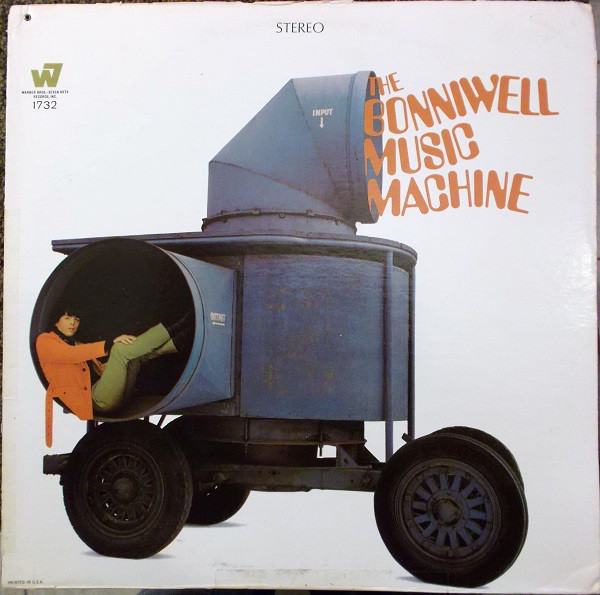
Nowadays, The Bonniwell Music Machine are regarded as one of the founding fathers of garage rock, proto-punk and psychedelia. They were formed in Los Angeles in 1965, and cultivated a sound that was dark, raw and a fusion proto-punk and psychedelia. That can be heard on Discrepency, which features on The Bonniwell Music Machine, which was released on Warner Bros in 1968. Although this was The Bonniwell Music Machine’s swan-song, it’s the perfect introduction to a truly influential group.
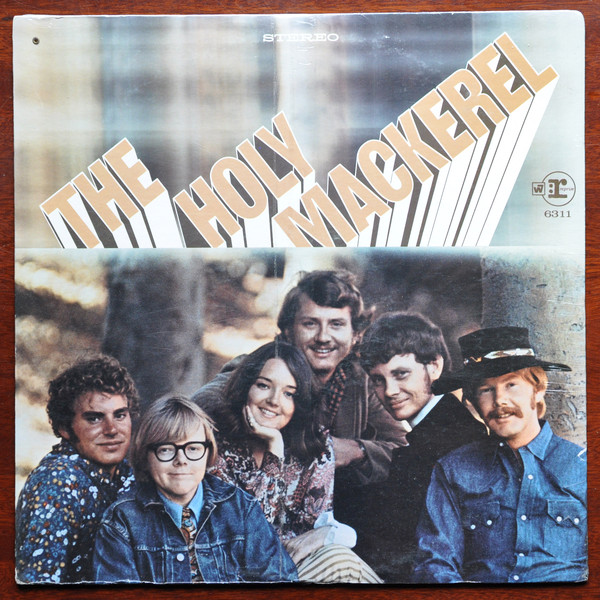
Another influential group from the late—sixties were The Holy Mackerel. Their recording career amounts to just a trio of singles and the album The Holy Mackerel. It was released by Reprise Records in 1968, and featured Scorpio Red, which epitomises everything that’s good about psychedelic sunshine pop.
Side Four.
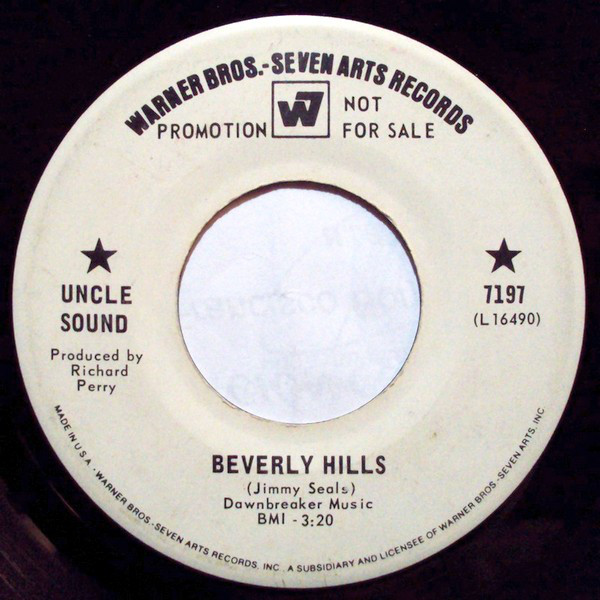
Uncle Sound only released the one single, Beverly Hills on Warner Bros in April 1968. It was written by Jimmy Seals, who would find fame as one half of Seals and Croft, and produced by Richard Perry. He plays a part in the sound and success ofBeverly Hills, which is irresistible example of sunshine pop that’s sure to brighten up even the darkest day.
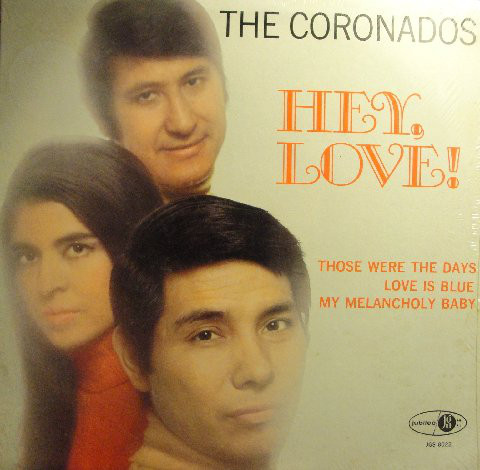
The Coronados featured three brothers, Steve, Reuben and Ginger Ortiz. Their recording career began in 1956, when they released Let’s Get Acquainted. Thirteen years later, and The Coronados released Trip To Loveland on Jubilee in March 1969. It’s regarded as The Coronado’s finest example of sunshine pop, and the highlights of their 1969 album Hey, Love.
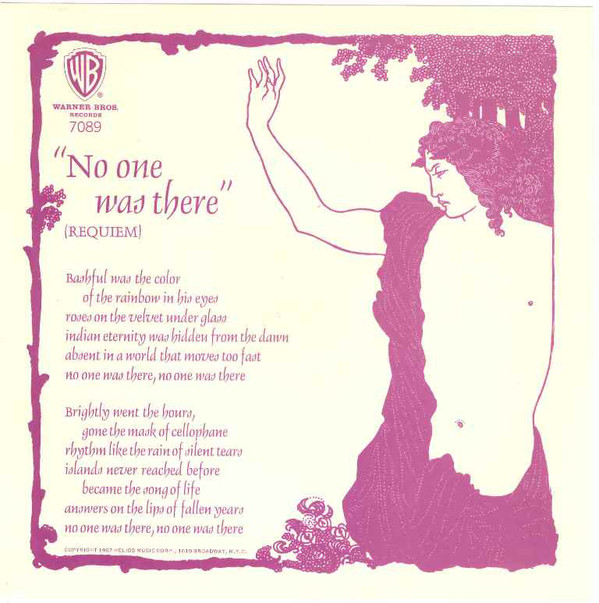
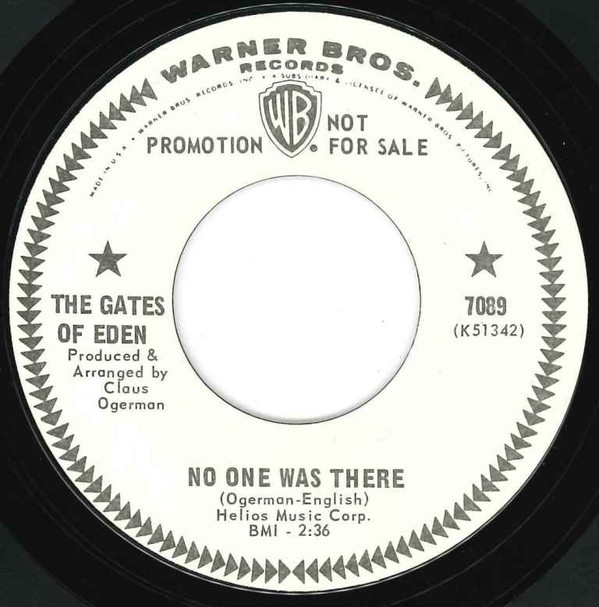
Closing Come To The Sunshine: Soft Pop Nuggets From The WEA Vaults is The Gates Of Eden’s No One Was There (Requiem). It was released as a single in 1967, on Warner Bros. No One Was There (Requiem) is a Scott English composition produced by Claus Ogerman. It’s variously ethereal, ruminative, trippy and wistful, as harmonies, strings and Eastern influence combine to create a five minute epic. This is the perfect way to close Come To The Sunshine: Soft Pop Nuggets From The WEA Vaults.
A couple of years ago, not even the most optimistic record buyer would ever have thought that the Nuggets’ series would ever return. Now Very few people thought that the Rhino’s Nuggets’ series would ever return. Thankfully, The Nuggets series returned in 2016, and for Record Store Day 2017 saw the reissue of Come To The Sunshine: Soft Pop Nuggets From The WEA Vaults as a double album on 180 gram heavyweight vinyl. This isn’t just vinyl though. Instead, it was released on orange and yellow sunshine vinyl, as is befitting of a carefully curated compilation of sunshine pop that was first released in 2004.
Thirteen years later, and Come To The Sunshine: Soft Pop Nuggets From The WEA Vaults is still a compilation that oozes quality. It features old friends, familiar faces, new names and hidden gems. Come To The Sunshine: Soft Pop Nuggets From The WEA Vaults was a welcome release for Record Store Day 2017. It’s crammed full of quality sunshine pop and psychedelia, and is one of the best reissued released for Record Store Day 2017. However, anyone wanting a copy should get one sooner than later. Come To The Sunshine: Soft Pop Nuggets From The WEA Vaults is a limited edition, with ‘only’ 5.500 copies available. Once they’re gone, they’re gone for good.
Although Come To The Sunshine: Soft Pop Nuggets From The WEA Vaults is a limited edition of 5,500, 7,000 copies of Nuggets Hallucinations: Psychedelic Pop Nuggets From The WEA Vaults were pressed for Record Store Day 2016. This decrease of 1,500 suggests that last year’s Nuggets reissue wasn’t as popular as Rhino Handmade had hoped? If that is the case, the history seems to be repeating itself this year. Many record shops still having unsold copies of Come To The Sunshine: Soft Pop Nuggets From The WEA. Similarly, there’s plenty of copies if Come To The Sunshine: Soft Pop Nuggets From The WEA Vaults available on the aftermarket. However, Soft Pop Nuggets From The WEA Vaults isn’t alone.
There are many other Record Store Day releases that haven’t sold out. It may be that record buyers are tiring of Record Store Day, and having to pay inflated prices for releases? Having said that, many releases were keenly priced, including Come To The Sunshine: Soft Pop Nuggets From The WEA Vaults.
Ten days after the dust has settled on Record Store Day 2017, supply outstrips demand when it comes to Come To The Sunshine: Soft Pop Nuggets From The WEA Vaults. Some vendors are selling copies for less than the compilation was available for on Record Store Day. The oversupply of Come To The Sunshine: Soft Pop Nuggets From The WEA Vaults is the perfect chance to grab a bargain, and discover the delights of sunshine pop, and the critically acclaimed Nuggets’ series that began thirty-three years ago in 1984.
Come To The Sunshine: Soft Pop Nuggets From The WEA Vaults.
L.A. EXPRESS-L.A. EXPRESS AND SHADOW PLAY.
L.A. Express-L.A. Express and Shadow Play,
Jazz saxophonist Tom Scott’s career began in 1965, when he was just seventeen, and the leader of the jazz ensemble Neoteric Trio. After that he became one of Los Angeles’ top session players, and a familiar face on the West Coast music scene. This would stand in him in good stead in the future.
By 1973, Tom Scott was looking for a backing band within the West Coast music scene. The contacts that he had established over the last few years served him well, and he was able to secure the services of four talented, versatile and vastly experienced musicians who had worked as session musicians and bandleaders. This included drummer and percussionist John Guerin; bassist Max Bennett; guitarist Larry Carlton and keyboardist Joe Sample. They would become L.A. Express were formed in 1973, who would accompany Tom Scott for two years.
After Tom Scott parted company with L.A. Express in 1975, they signed to Caribou Records later that year. Caribou Records’ newest signing release two albums during 1976, L.A. Express and Shadow Play, which were recently remastered and reissued by BGO Records. However, much had happened to L.A. Express since they joined forces with Tom Scott in 1973.
Not long after Tom Scott recruited the four members of The L.A. Express, they headed into the studio to record an album together. That album was Tom Scott and L.A. Express, which was an accessible album of fusion which was released August 1973. By then, fusion was at a crossroads. The West and East Coast sounds were quite different, and jazz-funk was growing in popularity. All this affected sales of Tom Scott and L.A. Express, which is a vastly underrated album from the all-star band. This was a disappointing start to the partnership between Tom Scott and L.A. Express.
The second album that Tom Scott and L.A. Express worked on together, was Joni Mitchell’s sixth album Court and Spark. Tom Scott and John Guerin featured on all eleven tracks, while Max Bennett and Larry Carlton featured on eight songs. Joe Sample only featured on Raised on Robbery, but in doing so, played his part in what was Joni Mitchell’s most successful album.
When Court and Spark was released in January 1974, it reached number one in Canada, where Joni Mitchell was born. Across the border, Court and Spark reached number two in the US Billboard 200, and was certified gold in America and Britain. Later Court and Spark was nominated for four Grammy Awards in 1975, with Joni Mitchell and Tom Scott winning the Grammy Award for Best Arrangement, Instrumental and Vocals. By then, things had changed for L.A. Express.
Two months after the release of Court and Spark, work began on what would become Joni Mitchell’s seventh album Miles of Aisles. Joni Mitchell decided that L.A. Express should accompany her on L.A. Express. Recording between the ‘2nd-4th’ March, and was completed between August 14th–17th 1974. Not long after this, two members of L.A. Express dropped a bombshell.
Larry Carlton and Joe Sample left L.A. Express, and decided to concentrate their efforts on their ‘other’ group The Crusaders. However, the original members of L.A. Express would later be reunited. Before that, Tom Scott and the remaining members of L.A. Express started looking for replacements for Larry Carlton and Joe Sample.
This wasn’t easy, given that Larry Carlton and Joe Sample were talented, versatile and vastly experienced musicians. Eventually, though, L.A. Express settled on guitarist Robben Ford and keyboardist Larry Nash. They would make their debut on the Tom Scott and L.A. Express album Tom Cat, which was recorded in late 1974.
Early in 1975, Tom Scott and L.A. Express’ sophomore album Tom Cat was released. Just like their eponymous debut album, it was a carefully crafted and memorable album of fusion. With fusion no longer as popular as it had been in the late-sixties and early seventies, Tom Cat failed to find the audience it deserved. Since then, Tom Cat which is an underrated album, has become a popular album amongst fusion and jazz aficionados. However, in 1975 the commercial failure of Tom Cat resulted in Tom Scott parting company with L.A. Express.
For L.A. Express this was a disappointment, but also an opportunity to strike out on their own. This would mean a few changes though.
The first thing L.A. Express needed to do, was recruit a new saxophonist. They set their sights on securing the services of David Luell, a talented and experienced saxophonist, who was equally comfortable playing baritone, soprano and tenor sax. David Luell agreed to join L.A. Express. There was still one more change to make, replace keyboardist Larry Nash.
Replacing Larry Nash, was none other than Victor Feldman. He was born into a musical family in London, England, but was now resident in Los Angeles. Victor Feldman was perfect fit for L.A. Express, given he could play keyboards, synths, percussion and vibes. Now the final piece of the L.A. Express jigsaw was in place.
Now L.A. Express began to think about recording their debut album. However, there was a problem. It was Tom Scott and L.A. Express who were signed to Ode Records. This partnership, where Tom Scott was perceived as the senior partner no longer existed. When L.A. Express got the chance to sign for Caribou Records, which was founded by James William Guercio, who produced Chicago and Blood, Sweat and Tears, Ode Records didn’t stand in their way. It was a new start for third line-up of L.A. Express.
L.A. Express.
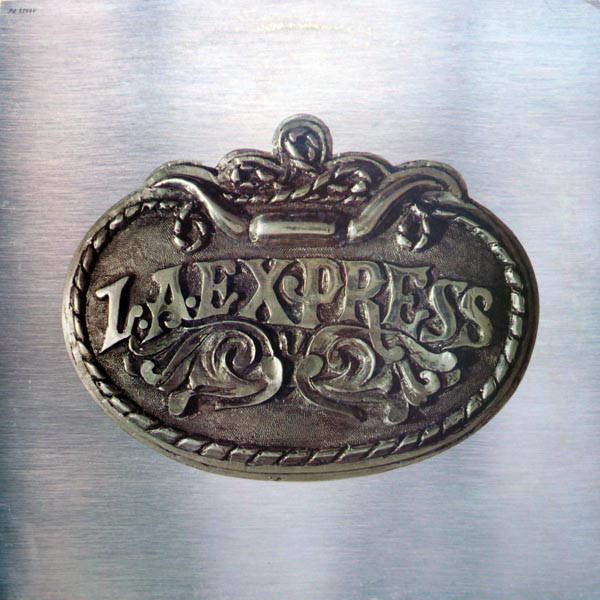
Now that L.A. Express were signed to James William Guercio’s Caribou Records, they began work on their eponymous debut album. Bassist Max Bennett penned a trio of tracks, Midnite Flite, Suavemente (Gently) and Cry Of The Eagle and cowrote It’s Happening Right Now with Victor Feldman. He contributed The Shrug and Western Horizon, while John Guerin write Down The Middle. Guitarist Robben Ford chipped in with two songs, Stairs and Transylvania Choo Choo. The nine songs that became L.A. Express had all been written by the band.
Recording of L.A. Express took place at A&M Studios, in Los Angeles during early 1975. By then, L.A. Express’ rhythm section featured drummer and percussionist John Guerin, bassist Max Bennett and guitarist Robben Ford. They were joined by saxophonist David Luell and Victor Feldman, who switched between keyboards, percussion, synths and vibes. Rather than employ a producer, The L.A. Express decided to take charge of production. Once the album was recorded, it was ready for release in 1976. Before that the original members of L.A. Express were reunited their former band mates and some new names.
Joni Mitchell who was then engaged to L.A. Express drummer John Guerin, was about to record her seventh album, The Hissing Of Summer Lawns. L.A. Express were invited to play on the album. This included the two former members of L.A. Express, Larry Carlton and Joe Sample. They would meet L.A. Express’ new guitarist Robben Ford. However, neither David Luell nor Victor Feldman played on The Hissing Of Summer Lawns. It would be released to critical acclaim in November 1975, and become one of Joni Mitchell’s most successful, classic albums. The following year, L.A. Express released their eponymous debut album.
When L.A. Express was released early in 1976, it was to critical acclaim. Inevitably, comparisons were drawn with the two albums Tom Scott and L.A. Express released. While L.A. Express was another fusion album, it was a much more accessible and pop-oriented take on fusion. Still, though, the emphasis was on quality for fusion’s latest supergroup.
L.A. Express work their way through nine carefully crafted tracks on L.A. Express. The blistering Midnite Flite sets the bar high, as fusion meets jazz funk. There’s even some bluesy guitar licks thrown in for good measure on this cinematic opus. The Shrug is the perfect showcase for drummer John Guerin and saxophonist David Luell. Both play starring roles in the sound and success The Shrug. Soon, they change direction.
Dreamy, elegiac and elegant describes the meandering Suavemente (Gently), which shows a different side of L.A. Express. So does the spirited sounding Cry Of The Eagle which veers between disparate genres, including funk, jazz funk and jazz. In doing so, L.A. Express showcases their versatility and talent. It’s a similar case on Stairs, which is a complex and compelling track which sound as if it’s been inspired by Miles Davis’ late-sixties fusion albums. Down The Middle is a rockier sounding track, that heads in the direction bar room boogie. This shows yet another side to L.A. Express. Then on It’s Happening Right Now, L.A. Express play in 7/8 time, on this dreamy, ethereal and pensive sounding track which is imbued with an elegance. That’s about to change.
There’s not holding L.A. Express back on Transylvania Choo-Choo, as they vamp, jam and improvise on this blistering slice of fusion. Closing L.A. Express is the ruminative Western Horizon, which is a quite a beautiful track. It brought to an album that was released in in early 1976.
When L.A. Express was released, the album failed to trouble even the lower reaches of the charts. By then, music was changing, and fusion was no longer as popular as it had been. Record buyers missed out on the critically acclaimed L.A. Express. Its commercial failure was a huge disappointment for fusion’s latest supergroup.
Not long after the release of L.A. Express, guitarist Robben Ford left the band. This was a big loss, as he contributed two tracks to L.A. Express and wasn’t just a talented, versatile guitarist, but one who was expressive and inventive. His guitar played an important part in L.A. Express’ sound on their eponymous debut album. Replacing Robben Ford wasn’t going to be easy.
Eventually, the other members of L.A. Express settled on guitarist Peter Maunu as Robben Ford’s replacement. Now work could begin on L.A. Express’ sophomore album, Shadow Play.
Shadow Play.
With Peter Maunu onboard, L.A. Express headed out of Los Angeles to work on their sophomore album Shadow Play. Their destination was James William Guercio’s Caribou Ranch, in Colorado which sat high above the mountains. It was an atmospheric and inspiring place, and perfect for writing and recording an album.
Founder member of L.A. Express, John Guerin, wrote Velvet Lady and Mad Drums And Englishman (Mavro). New recruit Peter Maunu contributed Nordic Winds, Double Your Pleasure and Virtex. Victor Feldman penned Chariot Race, Dance The Night Away and Silhouette. Shadow Play was written by David .Luell and R.Philipe. These songs were recorded by L.A. Expres at the Caribou Ranch, with a little help from their friends.
This time around, when recording Shadow Play began, L.A. Express’ rhythm section featured drummer and percussionist John Guerin, bassist Max Bennett and guitarist Peter Maunu. They were joined by saxophonist David Luell and Victor Feldman, who played piano, Fender Rhodes, Arp Odyssey, Hammond organ and congas. Joining L.A. Express were two vocalists Paulette McWilliams and Joni Mitchell, who featured on three tracks. Again rather than employ a producer, The L.A. Express decided to take produce the Shadow Play themselves. It was ready for release during the second half of 1976.
Before that, critics had their say on Shadow Play, which would be the second album L.A. Express had released. Shadow Play was well received by critics, who noticed that L.A. Express had moved from fusion towards a rockier sound on Shadow Play. The addition of the two guest vocalists was welcomed, which showed another side to L.A. Express’ music. They were a chameleon-like band.
Nordic Winds opens Shadow Play, and features Joni Mitchell, who contributes her unique, ethereal vocals before L.A. Express embark upon a fusion workout. Sometimes, though, it’s more for rock than fusion. This provides a showcase for new guitarist Peter Maunu, while Victor Feldman on Fender Rhodes and saxophonist David Luell play starring roles in this six minute epic. Uber funky describes Double Your Pleases, which features a much tougher sound. This comes courtesy of a clavinet and blazing saxophone. Later, Paulette McWilliams makes a walk-on appearance, but by then victory is assured for L.A. Express. From there, there’s twists and turns aplenty.
The tempo is dropped on the ballad Shadow Play, which is played in 5/4 time. It’s something of a slow burner, where L.A. Express continue to move towards a rockier sound, but don’t forget their jazz roots. Chariot Races sees the tempo rise on what’s an extremely complex piece, where each member of L.A. Express are pushed to the limits. This includes guitarist Peter Maunu, who unleashes a blistering, fleet-fingered solo that plays its part in the sound and success of the track. Paulette McWilliams is enlisted to add vocal on Dance The Night Away, where L.A. Express head in the direction of disco. Very different is Velvet Lady, a much slower, smoother sounding track that flows along effortlessly. Then L.A. Express return to their roots.
There’s a return to fusion on Virtex, which ebbs and flows as L.A. Express explore a smouldering groove. Mad Drums And Englishman is showcase for L.A. Express’ virtuosity, as they switch between 4/4 and 7/8 and between fusion, jazz-funk, Latin and rock during five frantic and magical minutes. Silhouette which is a slow, ruminative sounding track proved a fitting way to close Shadow Play.
While critics were won over by Shadow Play, it failed to attract the attention of record buyers. Just like L.A. Express, Shadow Play didn’t trouble the charts. For L.A. Express it was the end of the road.
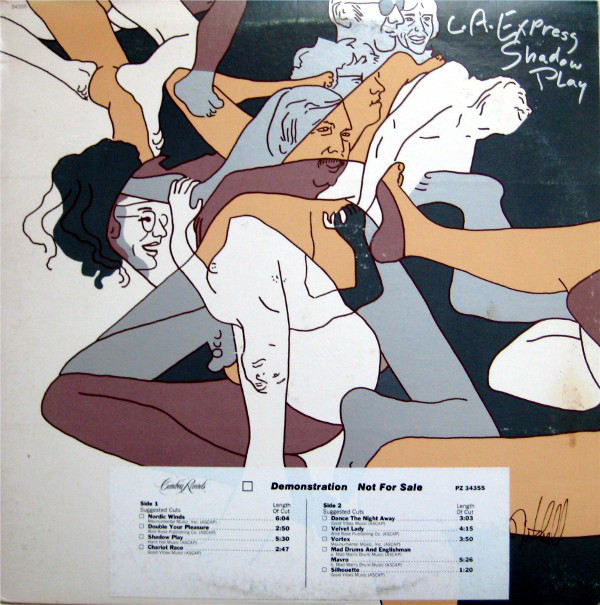
By then, the members of L.A. Express were involved in a number of different projects, which would prove more successful and lucrative. It wasn’t going to be as easy to find time for L.A. Express to record together any more. So a decision was made that Shadow Play would be L.A. Express’ swan-song.
By the time L.A. Express called time on their career in 1976, they had been together for just three years, but had accomplished a lot. They had recorded two albums with Tom Scott; featured on three Joni Mitchell albums and released two albums for Caribou Records, L.A. Express and Shadow Play. Both albums have recently been remastered and reissued on one disc by BGO Records. L.A. Express and Shadow Play are a reminder of one fusion’s oft-overlooked, but multitalented and versatile supergroups, L.A. Express, who released two underrated albums during 1976.
L.A. Express-L.A. Express and Shadow Play.
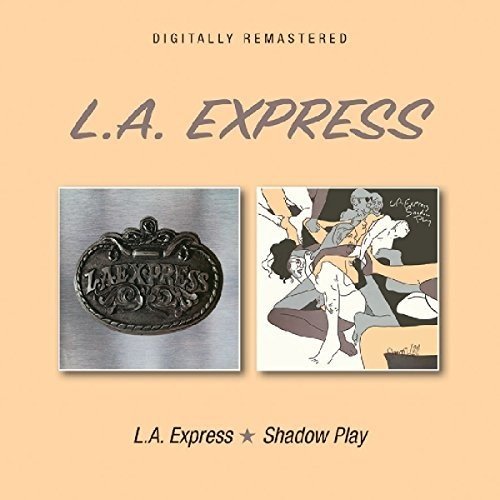
OZARK MOUNTAIN DAREDEVILS-THE MAJOR LABEL YEARS.
Ozark Mountain Daredevils-The Major Label Years.
Ozark Mountain Daredevils roots can be traced back to 1971, when a group of friends in Springfield, Missouri began playing as Family Tree. By 1972, the band had changed its name to Ozark Mountain Daredevils and were being managed by folk rock duo Brewer and Shipley.
This came about after Ozark Mountain Daredevils sent Brewer and Shipley a copy of their second demo tape. They listened to the tape, and liked it so much they agreed to manage the band. Brewer and Shipley began formulating a plan for Ozark Mountain Daredevils’ future.
Part of this plan involved Ozark Mountain Daredevils heading out to play on the live circuit. One of Ozark Mountain Daredevils earliest concerts was at the Cowtown Ballroom in Kansas City on February 8th 1973. Over the few months, Ozark Mountain Daredevils became familiar faces on the live circuit. Soon, Ozark Mountain Daredevils were a popular draw on the local live circuit. Throughout the rest of 1972 and into 1973, Ozark Mountain Daredevils’ popularity grew. Then fate intervened.
A copt of Ozark Mountain Daredevils demo found its way to A&M Records staff producer David Anderle. He liked what he heard, and was in the market for a country rock band similar to The Eagles. So David Anderle and Glyn Johns flew to Missouri to see the Ozark Mountain Daredevils play at the at Cowtown Ballroom on March 10th 1973. However, when Ozark Mountain Daredevils heard that the two men from A&M would be in audience, they became nervous and didn’t give their best performance. Fortunately, Paul Peterson rescued the situation.
He invited David Anderle and Glyn Johns to his house, where Ozark Mountain Daredevils gave unplugged performance by candlelight. It may have been an unorthodox audition but it worked, and Ozark Mountain Daredevils signed A&M Records on May 1st 1973.
Ozark Mountain Daredevils.
Straight away, A&M Records sent Ozark Mountain Daredevils to England, where they recorded their eponymous debut album with David Anderle and Glyn Johns. During June and July 1973, Ozark Mountain Daredevils recorded ten tracks where they fused country rock and Southern rock. Ozark Mountain Daredevils’ unique brand of Southern fried country rock proved popular.
When Ozark Mountain Daredevils was released in December 1973, it was well received by critics and reached twenty-six in the US Billboard 200. The lead single If You Wanna Get To Heaven the reached twenty-five in the US Billboard 100, and twenty-three in Canada. Ozark Mountain Daredevils were on their way.
It’ll Shine When It Shines.
Buoyed by the success of their debut album, Ozark Mountain Daredevils began work on their sophomore album It’ll Shine When It Shines in early 1974. This time, Ozark Mountain Daredevils had managed to convince A&M Records to record the album locally.
So David Anderle and Glyn Johns made the journey to Missouri where Ozark Mountain Daredevils were rehearsing in a pre-American Civil War farmhouse. That was where the album would be recorded by a mobile recording studio. Ozark Mountain Daredevils seemed to relax in their home environment, and the two producers managed to capture some of the best songs of their band’s career. This would include the swamp rocker E.E. Lawson and Jackie Blue, which was released as a single later in 1974.
It’ll Shine When It Shines was released to widespread critical acclaim in October 1974. When the album was released, it reached number nineteen in the US Billboard 200. Jackie Blue which was sung by drummer Larry Lee, was chosen as the lead single. On its release, it reached number three in the US Billboard 200 and number two in Canada. Elsewhere, Jackie Blue was a hit in Australia, New Zealand and South Africa. The success of Jackie Blue had transformed the fortunes of Ozark Mountain Daredevils. Now they had to build on this success.
The Car Over The Lake Album.
Having just enjoyed the most successful album of their career, A&M Records were keen that Ozark Mountain Daredevils should enter the studio as soon as possible. This time though, there were several changes.
The first was that David Anderle took charge of production. Glyn Johns who had co-produced Ozark Mountain Daredevils’ first two albums, was nowhere to be seen. Another change was that Bill Jones who rejoined Ozark Mountain Daredevils. He would also arranged the songs on The Car Over The Lake Album. It was recorded in the country music capital Nashville. This was a bone of contention,
A&M Records’ executive wanted Ozark Mountain Daredevils to move to Southern California, where much of then music industry was based. However, Ozark Mountain Daredevils weren’t willing to move. This was just one sticking point. A&M Records wanted Ozark Mountain Daredevils to tour more. The band weren’t willing to embark on the lengthy tours like other bands. Nor were Ozark Mountain Daredevils willing to try and replicate Jackie Blue on The Car Over The Lake Album. All this didn’t please executives at A&M Records. Ozark Mountain Daredevils weren’t exactly winning friends and influencing people.
When The Car Over The Lake Album was completed, the album was released in September 1975 to praise and plaudits. However, the album stalled at fifty-seven in the US Billboard 200. This was disappointing after the success of It’ll Shine When It Shines. Then when If I Only Knew was released as a single, it reached just seventy-four in the US Billboard 100 and sixty-five in Canada. Already, executives at A&M were beginning to lose interest in Ozark Mountain Daredevils.
Men From Earth.
Following the release of The Car Over The Lake Album, Ozark Mountain Daredevils headed out on a European tour during April and May 1976. By then, the band was exhausted with the schedule of recording and touring.
Tension was high during a concert in Copenhagen. The engineer was struggling with the mix, and a frustrated Randle Chowning decided to turn his amplifier up to eleven. This resulted in him getting involved in a slanging match with other band members. When Ozark Mountain Daredevils returned home, Randle Chowning decided to embark upon a solo career. This was the start of personnel changes within Ozark Mountain Daredevils.
Replacing Randle Chowning in Ozark Mountain Daredevils was Rune Walle, who the band met on tour. He lead his own band, The Flying Norwegians. Now he was about to become a member of Ozark Mountain Daredevils and would make his debut on Men From Earth
Recording of Men From Earth began before the European tour. Now it was a matter of completing the album. Just like The Car Over The Lake Album, it was produced by David Anderle. Men Form Earth was recorded in Quadrofonic Sound Studios, in Nashville, American Artist Studio, in Springfield, Missouri and at Caribou Ranch, in Colorado. Once Men From Earth was complete, it was released in autumn of 1976.
Men From Earth marked the end of an era. It was founder member Randle Chowning’s swan-song. However, when the album was released in September 1976, he was no longer listed as a member of the band. Instead, he was named as one of the “Sidemen From Earth.” They played their part in an album that won over critics. Especially two of the songs penned by Larry Lee, You Know Like I Know and the Homemade Wine. Given the critics response to Men From Earth, maybe Ozark Mountain Daredevils’ luck was changing?
Despite winning favour with critics, Men From Earth reached just seventy-four in the US Billboard 200. Then when You Know Like I Know was released, it reached seventy-four in the US Billboard 100 and sixty-two in Canada. For Ozark Mountain Daredevils, Men From Earth was the least successful album of their career. It was a worrying time for the band.
Don’t Look Down.
For their fifth album Don’t Look Down, it was all change for Ozark Mountain Daredevils. There had been another departure from the band. Buddy Brayfield was next to leave. He had decided to head to medical school. This was a big loss.
Ozark Mountain Daredevils decided to add three new musicians. This included their longtime friend, singer and guitarist Steve Canaday. He was joined by mandolin player Jerry Mills, and keyboardist and vocalist Ruell Chappell. The new additions made their debut on Don’t Look Down, where Ozark Mountain Daredevils were joined by a new producer.
David Kershenbaum was chosen to produce Ozark Mountain Daredevils’ fifth album Don’t Look Down. Part of his remit was to transform Ozark Mountain Daredevils’ along fortunes. Ever since the release of It’ll Shine When It Shines in 1974, Ozark Mountain Daredevils’ albums had failed to sell in the same quantities. When Men From Earth reached seventy-four in the US Billboard 200, this was the lowest chart placing of any Ozark Mountain Daredevils’ album. Surely, the only way was up?
Recording of Don’t Look Down took place at Caribou Ranch, Colorado. A mobile studio was brought in to record the album. Still it seemed that Ozark Mountain Daredevils were determined to do things their way. They recorded eleven new songs which they hoped would transform the fortunes of Ozark Mountain Daredevils.
Once Don’t Look Down was completed, the album was scheduled for release in October 1977. Don’t Look Down which featured the latest lineup of Ozark Mountain Daredevils was well received by critics. However, when Don’t Look Down was released, it stalled at a lowly 130 in the US Billboard 200. This was the lowest chart placing of any of the Ozark Mountain Daredevils’ albums.
There were several explanations for this. Country rock and Southern rock had been hugely popular when Ozark Mountain Daredevils released their first two albums. Alas, that was no longer the case. Now there was a disco boom, which was affecting all types of musicians. From soul to country rock and Southern rock, the disco boom was impacting on record sales. The slick, formulaic sound of disco seemed to filled the American charts. That was what American record buyers wanted to hear. So many artists from other genres sold their soul to the disco devil, and did what many thought was unthinkable, and released a disco record. Not Ozark Mountain Daredevils though; they had other plans.
I’m Alive.
Back in the seventies, most rock bands released a live album. That was something Ozark Mountain Daredevils had still to do. So they decided to record a live album in April 1978.
To record I’m Alive, Ozark Mountain Daredevils decided to tape concerts that they were due to play in Missouri and Kansas during April 1978. This would allow Ozark Mountain Daredevils to cherry pick the best recordings for their forthcoming double live album.
So Ozark Mountain Daredevils hired a mobile recording studio for the live dates in April 1978. Ozark Mountain Daredevils had picked the perfect concerts to record. They were playing in front of their hometown crowd. Joining them each night Buddy Brayfield who made a guest appearance. Each night, Ozark Mountain Daredevils seemed to lift their game each night. There was plenty of material to choose for the forthcoming live album.
Eventually, Ozark Mountain Daredevils who produced I’m Alive, chose sixteen tracks. This included singles and some of their most popular album tracks. They featured on the double live album I’m Alive, which was due to be released in the autumn of 1978. It was a hugely important album for Ozark Mountain Daredevils.
So much so, that I’m Alive was the most important album Ozark Mountain Daredevils had released in many a year. Ozark Mountain Daredevils only owed A&M Records one more album. After I’m Alive, Ozark Mountain Daredevils’ contract was up. However, A&M Records held an option to give Ozark Mountain Daredevils a new contract. They seemed to be undecided about Ozark Mountain Daredevils’ future. If I’m Alive sold well, then this might result in A&M Records taking up the option.
I’m Alive was well received by critics. It found Ozark Mountain Daredevils rolling back the years. The critical response to the album bode well for the release of I’m Alive in September 1978. However, when I’m Alive was released, it reached a lowly 178 in the US Billboard 200. Suddenly, Ozark Mountain Daredevils’ future at A&M Records’ looked in doubt.
That was apart from those who had witnessed Ozark Mountain Daredevils’ performance on The Midnight Special. They had been booked as the special guest, and were to play a set. This was the perfect showcase for Ozark Mountain Daredevils, and could help rejuvenate their career.
The disco years hadn’t been kind to country rock bands like the Ozark Mountain Daredevils. Their record sales had fallen between 1976 and 1978. The last album Ozark Mountain Daredevils released was It’s Alive in 1978, which stalled at 176 in the US Billboard 200.
This couldn’t have come at worse time, as the band’s contract with A&M was coming to an end. At least A&M still held an option to give Ozark Mountain Daredevils a new contract. A good performance on The Midnight Show would maybe convince A&M to renew Ozark Mountain Daredevils’ contract?
Fortunately, Ozark Mountain Daredevils caught a break. The band were invited to appear on a forthcoming appearance on The Midnight Show later in September 1978.
Ozark Mountain Daredevils’ managers contacted executives at A&M know about the band’s forthcoming appearance on The Midnight Show. A&M were still undecided about picking up the option on Ozark Mountain Daredevils’ contract. So it was decided that Jerry Moss would head to Los Angeles to see Ozark Mountain Daredevils play live on The Midnight Show.
The Ozark Mountain Daredevils had flown to Los Angeles to play on The Midnight Show. This was a prestigious television show, and had the potential to introduce Ozark Mountain Daredevils’ music to a new and much wider audience. All Ozark Mountain Daredevils had to do was play a short set. There was a problem though.
Before going onstage, some members of Ozark Mountain Daredevils had been alleged that the band had been some enjoying backstage hospitality. As they took to the stage, it was obvious that some of the band were under the inebriated. They flew through their set and then took their leave. A&M Records’ Jerry Moss who was watching on, wasn’t amused.
Jerry Moss had the final say on Ozark Mountain Daredevils’ future. He decided not to pickup the option on their contract. Ozark Mountain Daredevils were dropped by A&M Records in 1979.
After six years at A&M Records, Ozark Mountain Daredevils were without a recording contract. The band faced an uncertain future. Things had changed quickly for the band. Less than a year earlier, they were opening for Fleetwood Mac. Now they were without a recording contract. That was until Columbia Records approached Ozark Mountain Daredevils.
Ozark Mountain Daredevils.
They signed to Columbia Records in 1979. For Ozark Mountain Daredevils, it was a new start for one of the finest purveyors of Southern fried country rock. Being dropped by A&M Records had been a wakeup call. Now Ozark Mountain Daredevils were ready to begin work on their seventh studio album, which became Ozark Mountain Daredevils.
It was a very different lineup of the Ozark Mountain Daredevils that began work on what was their second eponymous album. Only four members of the band remained. Steve Cash, John Dillon, Michael Granda and Larry Lee had been with Ozark Mountain Daredevils since the group was formed. They were the last men standing in Ozark Mountain Daredevils. The rest of the band had left to pursue other projects.
The four members of Ozark Mountain Daredevils that remained, went away and began writing their next album. John Dillon, Larry Lee and Steve Cash penned Take You Tonight, Jump At The Chance, Empty Cup, Rosalie, Runnin’ Out and Fool’s Gold. John Dillon and Steve Cash wrote Tuff Luck and cowrote two other songs. He cowrote Sailin’ Around The World with Steve Cash, and then penned Lovin’ You with former Flying Norwegian frontman Rune Walle. Larry Lee contributed Oh, Darlin’ to Ozark Mountain Daredevils. It was recorded in Los Angeles.
Given Ozark Mountain Daredevils had newly signed to Columbia Records, them weren’t really in a position to call the shots about where the album was recorded. So Ozark Mountain Daredevils made the journey to Los Angeles, where two of the city’s top studios were used. Recording sessions took place at Westlake Studios and The Record Plant with producer John Boylan. Harmonica player and vocalist Steve Cash joined guitarist and vocalist John Dillon; bassist Michael Granda and Larry Lee Michael who played keyboards, guitar, percussion and added vocals. Augmenting Ozark Mountain Daredevils were backing vocalists and some top session players.
Over the next weeks and months, Ozark Mountain Daredevils’ seventh studio album began to take shape. Eventually, the four members of the band Ozark Mountain Daredevils guided by producer John Boylan completed what was a very different album from their last couple of albums.
After Ozark Mountain Daredevils’ last two studio album failed commercially, the band decided to change tack. This was a big decision, and one they didn’t take lightly. The last thing they wanted to do was alienate their existing fans. However, if Ozark Mountain Daredevils didn’t reinvent their music, the future looked bleak. They couldn’t continue to release albums that reached the lower reaches of the US Billboard 200. So Ozark Mountain Daredevils marked the start of a brave new world.
Ozark Mountain Daredevils had recorded an album which featured everything from AOR, country rock, FM rock, pop, rock, Southern rock and the West Coast sound. Stylistically, it sounded as if Ozark Mountain Daredevils were following in the footsteps of The Eagles and the Little River Band by recording an album of carefully crafted, melodic and radio friendly songs. They were bang on trend, and should attract the attention of radio programers. If that was the case, then Ozark Mountain Daredevils would be the comeback Kings.
All Ozark Mountain Daredevils had to do was convince critics and record buyers. Ozark Mountain Daredevils were halfway their when critics hailed their eponymous album their finest album of recent years. That was no surprise, given the quality of songs on Ozark Mountain Daredevils.
Sadly, it wasn’t to be. When Ozark Mountain Daredevils was released, the album reached just 170 in the US Billboard 200. This was slightly better than I’m Alive. However, it wasn’t good enough for Columbia Records, and for the second time in two years they were dropped by a record label. For Ozark Mountain Daredevils it was the last album they released on a major label.
That wasn’t the end of The Ozark Mountain Daredevils’ story. They continued to play live over the next three decades. Alas, they no longer were as popular as they once were. It was changed days for The Ozark Mountain Daredevils.
What was also very different was The Ozark Mountain Daredevils’ lineup. It was very different from the band’s glory days. During this period, the band’s lineup was fluid, with members of the band leaving, being replaced and sometimes, returning. However, what the different lineups of The Ozark Mountain Daredevils didn’t do, was release another studio album until 1997.
Seventeen years after the release of The Ozark Mountain Daredevils, they released 13, which failed to trouble the charts. That proved to be The Ozark Mountain Daredevils’ swan-song. Never again would they release another studio album. After seven studio albums, The Ozark Mountain Daredevils recording career was over.
While The Ozark Mountain Daredevils continued to play live, they never ever returned to the studio. After releasing seven albums between 1973 and 1997, was the end of era for The Ozark Mountain Daredevils. They’re regarded as one of the finest purveyors of Southern fried country rock, and a group who left behind a rich musical legacy, especially the music The Ozark Mountain Daredevils released during The Major Label Years.
Ozark Mountain Daredevils-The Major Label Years.

SEATRAIN-WATCH
Seatrain-Watch.
Although Seatrain were only together for four years and released four albums, there were five separate lineups of the band. Drummers and guitarists proved to be Seatrain’s Achille’s Heel. Seatrain featured five different drummers and guitarists between the release of their 1969 debut album Sea Train, and their 1973 swan-song, Watch which was recently remastered and reissued by BGO Records. By then, Seatrain was a very different band to the one that started out in 1969.
Andy Kulberg was the only original member of Seatrain in the band. He had cofounded the band in 1968, and played on every album that Seatrain released. This included their 1973 swan-song Watch. However, by the time Watch was released by Capitol in 1973, the band’s lineup changed beyond recognition. It was the fifth and final change in Seatrain’s lineup since they were founded in August 1968.
Two of the founding members of Seatrain were drummer Roy Blumenfeld and bassist and flautist Andy Kulberg, who previously, had been members of the Blues Project. They had spilt-in after they played a starring role at the Monterey International Pop Festival in June 1967. The Blues Project went out on a high.
By then, the Blues Project was no longer the band it once had been. Some of the members of the band had left the band before the Monterey International Pop Festival, and it was only a matter of time before the remaining members of the band went their separate ways. After the Monterey International Pop Festival decided the time had come to call time on Blues Project.
With Blues Project consigned to musical history, the members of the band embarked upon new projects. However, it wasn’t until the summer of 1968 that Roy Blumenfeld and Andy Kulberg form a new band, Sea Train.
Having formed Sea Train, Roy Blumenfeld and Andy Kulberg moved to Marin County, California in August 1968. That was where they met the other members of the band. This included former Mystery Trend guitarist John Gregory, ex-Jim Kweskin Jug Band violinist Richard Greene, saxophonist Don Kretmar and lyricist and backing vocalist Jim Roberts. He was the final piece in the jigsaw of what was the newest American roots fusion band, Sea Train.
With the new band’s lineup in place, Sea Train were keen to record their debut album. There was a problem though. Blues Project still owed their former label an album. Planned Obsolescence which was meant to be Sea Train’s debut album, was released on Verve Forecast as a Blues Project album. Once Planned Obsolescence was released in 1968, Blues Project had discharged their contractual obligations to Verve Forecast. Now Seatrain could begin work on their debut album Sea Train.
Sea Train.
By the time Sea Train began work on their eponymous debut album, the band had signed a recording contract. Not long after this, Sea Train got to work on their 1969 eponymous debut album.
For Sea Train’s eponymous debut album, Andy Kulberg and Jim Roberts formed a successful songwriting partnership, penning Sea Train, As I Lay Losing and Out Where The Hills. Meanwhile, Jim Roberts and John Gregory wrote Let the Duchess No, Portrait Of The Lady As A Young Artist and Rondo.Andy Kulberg contributed Pudding Street and Sweet’s Creek’s Suite. These songs would become Sea Train which would showcase the band’s unique brand of American roots fusion.
To create this sound, Sea Train would combine blues, bluegrass, folk and rock in the studio. They were joined by engineer and producer Henry Lewy, whose career was about to blossom. However, Sea Train decided to arrange and produce their eponymous debut album, while Henry Lewy and Robert Di Sousa took charge of engineering duties. That was no surprise, as Sea Train featured some experienced musicians.
Two members of Sea Train’s rhythm section, drummer and percussionist Roy Blumenfeld and bassist and flautist Andy Kulberg were members of Blues Project, while guitarist and vocalist John Gregory had been a member of Mystery Trend.
Violinist Richard Greene was a member of the Jim Kweskin Jug Band. The other two members of Sea Train included, saxophonist Don Kretmar and backing vocalist Jim Roberts. They recorded the eight tracks that would become Sea Train.
Once Sea Train was completed, Columbia began working towards the release of the album later in 1969. Little did they know that all wasn’t well within Sea Train. This would soon become clear.
Before that, Sea Train was released later in 1969. By then, critics had had their say on Sea Train, which showcased their own unique take on American roots fusion. This was essentially a combination of blues, bluegrass, country, folk, jazz and rock. Sea Train was well received by critics, who almost inevitably, drew comparisons with The Band and the Grateful Dead. However, when Sea Train was released, the album failed to find an audience. For Sea Train that was the last straw.
Not long after the release of Sea Train, the band split-up. They had been together less than a year, and had only released the one album. It looked like the end of the road for Sea Train.
Sea Train Mk II.
Not long after the Sea Train split-up in 1969, Andy Kulberg and Richard Greene decided to reform the group. They began the search for the second lineup of Sea Train. Soon, drummer Bobby Moses, guitarist Teddy Irwin and vocalist Red Shepherd were added to the lineup. Soon, so was saxophonist and bassist Don Kretmar. This became Sea Train Mk II…for the time being.
This lineup of Sea Train wasn’t together long. Before long, Sea Train were looking for a drummer and guitarist.
Sea Train Mk III.
Later in 1969, the search began for a Sea Train’s new drummer and guitarist. Various musicians were auditioned, and soon, the remaining members of Sea Train settled on new additions.
Replacing drummer Bobby Moses was Billy Williams, while Elliot Randall became Sea Train’s new guitarist. Sea Train Mk III was complete.
Before long, Billy Williams and Elliot Randall left Sea Train. So did saxophonist and bassist Don Kretmar. Now Sea Train began the search all over again for new members.
Sea Train Mk IV.
One of the earliest recruits was guitarist Peter Rowan, who had cofounded Earth Opera in 1967. The next recruits were drummer Larry Atamanuik, and keyboardist and vocalist Lloyd Baskin. A decision was made that Jim Roberts would return to the fold, and continue to contribute lyrics. While this completed the lineup, there was still one more change to be made.
No longer was the group known as Sea Train. Instead, they were known as Seatrain, which was also the title of the group’s next album for Capitol.
Seatrain.
With a new lineup and new name, Seatrain began work on what was their eponymous sophomore album. Just like on Sea Train, the Andy Kulberg and Jim Roberts played an important part in the songwriting process. They penned four of the eight songs, including Song Of Job, Broken Morning, Out Where the Hills and 13 Question. New guitarist and vocalist Peter Rowan chipped in with two songs, Home To You and Waiting for Elijah. Bookending the album was Lowell George’s I’m Willin’ and Ervin Rouse’s Orange Blossom Special which featured Oh My Love, Sally Goodin and Creepin’ Midnight. These songs would eventually become Seatrain.
Before that, the band had to cross the Atlantic, and work with the one of the most successful producers in the history of popular music,..George Music. Home for the man who produced The Beatles, was the prestigious Air Studios. This was where Seatrain was recorded by the second lineup of the band. It featured a rhythm section of drummer Larry Atamanuik; bassist and flautist Andy Kulberg and guitarist and lead vocalist Peter Rowan. He shared the lead vocals duties with Lloyd Baskin, while Richard Greene played violin, viola and keyboards. Meanwhile, George Martin took charge of production, in played his part in what was a quite different album from their debut. Seatrain saw the group’s sound begin to evolve.
Once Seatrain was complete, critics were sent copies of the Geroge Martin produced album. They were won over by a carefully crafted album of East Coast rock and country soul. This was a much more commercial sounding album.
And so it proved to be. When 13 Questions was released as a single in 1970, it reached forty-nine in the US Billboard 100. Despite the success of the single, Seatrain failed to trouble the charts upon its release later in 1970. This was a disappointment, given Seatrain was the best, and most accomplished album of the group’s career.
The Marblehead Messenger.
Despite the commercial failure of Seatrain, Capitol never lost faith in the band. Capitol even hired George Martin to produce Seatrain’s third album, The Marblehead Messenger. It featured ten songs penned by members of Seatrain.
Just like on the two previous albums, the Andy Kulberg and Jim Roberts songwriting partnership wrote many of the songs on the album. This time around, they contributed six songs, Gramercy, The State of Georgia’s Mind, Marblehead Messenger, London Song, Losing All The Years and Despair Tire. Peter Rowan contributed a trio of songs, Protestant Preacher, How Sweet Thy Song and Mississippi Moon. Keyboardist Lloyd Baskin made his songwriting debut with Lonely’s Not the Only Way to Go. These songs were recorded with producer George Martin.
This time around, George Martin joined Seatrain at Seaweed Studios, in Marblehead, Massachusetts. By then, Seatrain were enjoying a settled lineup. They hoped changes in the lineup were a thing of the past, and that from now on in, the same band would feature on albums. This included a rhythm section of drummer Larry Atamanuik; bassist and flautist Andy Kulberg and guitarist and lead vocalist Peter Rowan. He shared the lead vocals duties with Lloyd Baskin, and Richard Greene switched between violin, viola and keyboards. Meanwhile, George Martin took charge of production on what proved to be a career-defining album.
Once The Marblehead Messenger was complete, critics had their say on Seatrain’s third album. It was another carefully crafted and cohesive album where Seatrain came of age musically. They were maturing as musicians, singers and songwriters. Meanwhile, the music on The Marblehead Messenger was melodic an featured poetic lyrics. Critics were in agreement that The Marblehead Messenger was Seatrain’s finest hour.
Buoyed by reviews, executives at Capitol thought that The Marblehead Messenger was the album that would introduce Seatrain to the wider record buying public. They were still one of music’s best kept secrets. Sadly, Seatrain remained one of music’s best kept secrets, and nowadays, The Marblehead Messenger is regarded as a hidden gem of an album.
Despite the commercial failure of The Marblehead Messenger, Seatrain embarked upon their first British Tour. Some of the dates on their British tour found Seatrain supporting Traffic. While Seatrain were well received by British audiences, it would be the first and last time Seatrain toured Britain. The following year, 1972, there would be two departures from Seatrain
Seatrain Mk V.
In 1972, Seatrain founding member Richard Greene and Peter Rowan left join Muleskinner. For Seatrain, this was a huge loss. Richard Greene was a talented multi-instrumentalist and Andy Kulberg’s songwriting partner. Peter Rowan was Seatrain’s guitarist and lead vocalist, and had produced some of his best performances on The Marblehead Messenger. This was another huge loss. So was the loss of drummer Larry Atamanuik, who decided to leave Seatrain after two albums. Suddenly, Seatrain were looking for three new members.
The search began, and various musicians were auditioned. Eventually, Seatrain settled on drummer Julio Coronado, keyboardist Bill Elliott and guitarist and vocalist Peter Walsh. This completed what was the fifth lineup of Seatrain. They would make their recording debut on Watch, which was Seatrain’s fourth album, but their debut for Warner Bros.
Watch.
Watch marked the start of a new chapter for Seatrain, and especially Andy Kulberg. He was the last of remaining founding members of Seatrain, and had been ever-present throughout the band’s career.
Jim Roberts was another founding member of Seatrain, but hadn’t contributed to their third album The Marblehead Messenger. The last time Jim Roberts cowrote songs with Andy Kulberg was on Seatrain. However, with Richard Greene having left Seatrain, Jim Roberts and Andy Kulberg decided to renew their songwriting partnership.
The Jim Roberts and Andy Kulberg songwriting partnership contributed a trio of songs to Watch, including Pack of Fools, Freedom Is The Reason and North Coast. Andy Kulberg penned Scratch, and had written Abbeville Fair with Richard Greene, prior to his departure from Seatrain. Lloyd Baskin contributed Bloodshot Eyes and We Are Your Children Too. They were joined by covers of Bob Dylan’s Watching The River Flow and Al Kooper’s Flute Thing, and became Watch which was produced by Buell Neidlinger.
For Seatrain Mk V, Watch was the first time the band had recorded together. The rhythm section featured drummer and percussionist Julio Coronado; bassist and flautist Andy Kulberg and guitarist and vocalist Peter Walsh. They were joined by keyboardists Lloyd Baskin and Bill Elliot. Augmenting Seatrain were a number of session musicians.
This included a guitarist Paul Prestopino; banjo player Bill Keith; flautist Jill Shires; oboist Allan Vogel; tuba player Bob Stuart and a string section. They were joined by vocalists Wayne Daley, Sandra Lee and Sha Na Na. Producer Buell Neidlinger also played bass on Watch, which gradually took shape. It was a quite different album from The Marblehead Messenger.
Given how different an album Seatrain was, it was an album that surprised the critics, but still found favour with them. They excepted Seatrain to continue further down the road that began on Seatrain, and continued on The Marblehead Messenger. That wasn’t the case. The new lineup of Seatrain set about reinventing their music on Watch.
That was the case from the album opener Pack Of Fools, an uptempo track driven along by Julio Coronado’s drums. Meanwhile, Seatrain combine rock, Americana and some funky guitar licks on this memorable and melodic track. This gives way to the soulful rock of Freedom Is The Reason, which features an impassioned vocal from Peter Walsh. It’s complimented by gospel-tinged harmonies, before Seatrain embark on a jam, on is what’s without doubt, one of the highlights of Watch. Then it’s all change.
Bloodshot Eyes finds Seatrain seeking inspiration from vaudeville, which was part of America’s musical past. It’s followed by We Are Your Children Too, a quite beautiful ballad with moving and spiritual lyrics. Very different is Abbeville Fair, which opens with the strains of the bagpipes. Soon, Seatrain are fusing a myriad of musical genres influences, including Celtic, folk, pop, progressive rock and rock. At one point, it’s akin to a ride on musical merry-go-round, as Seatrain spring surprises and poppy hooks. Hooks certainly haven’t been spared on North Coast, where Seatrain seamlessly and successfully combine elements of blues, country and rock. After this, Seatrain ring the changes again.
Scratch is a wistful country-tinged ballad with cinematic lyrics. This gives way to a cover Bob Dylan’s Watching The River Flow. It features one of Peter Walsh’s best guitar solos, as Seatrain rework and reinvent a familiar song. Closing Watch, is a cover of Al Kooper’s instrumental, which is the perfect showcase for the combined and considerable skills of Seatrain. They combine folk, funk, rock and soul during this eight minute genre-melting workout. This showed yet another side to the multitalented Seatrain.
While critics were impressed with Watch, it failed find an audience amongst record buyers. Just like their three previous albums, Seatrain commercial success eluded Seatrain. It was a familiar story, and one that founding member Andy Kulberg had heard before. He knew that Watch was the end of the line for Seatrain.
Not long after the release of Watch, Seatrain split-up, this time for good. There was no comeback this time. Instead, Andy Kulberg rejoined the Blues Project who had reformed in 1971. After four albums and five lineups, the Seatrain were no more.
Sadly, Seatrain were the latest in a long line of bands who could’ve and should’ve reached greater heights. Despite their talent, commercial success eluded then. However, what didn’t help was that Seatrain went through five different lineups. With a settled lineup, who knows what heights Seatrain lead by Andy Kulberg might have reached?
Instead, Seatrain remained a cult band, whose music was enjoyed and cherished by a small group of discerning record buyers. They remember the quartet of albums that Seatrain released between 1969 and 1973. Each of these albums were quite different.
This ranged from the American roots fusion of Sea Train in 1969; to the two carefully crafted albums that George Martin produced, Seatrain in 1970 and 1971s The Marblehead Messenger. Two years later, in 1973, Seatrain returned with Watch, which was their most eclectic album. It was a fusion of Americana, blues, country, folk, gospel, pop, progressive rock, rock and soul, where Seatrain sought inspiration from American’s musical past and present. Despite the eclecticism of Watch, which was recently remastered and reissued by BGO Records, this couldn’t transform Seatrain’s fortune. Watch which is an underrated and oft-overlooked album, proved to be the swan-song, from one of America’s great lost bands,..Seatrain.
Seatrain-Watch.
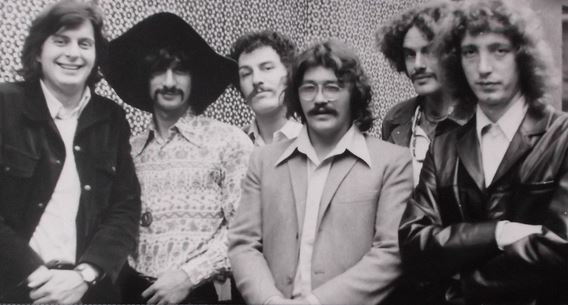
ENSEMBLE NOVO-LOOK TO THE SKY AND WHO SAW YOU THEN, WHO SEES YOU NOW.
Ensemble Novo-Look To The Sky and Who Saw You Then, Who Sees You Now.
Some cities are synonymous with music, and always have been. That was the case with Berlin, Chicago, Detroit, London, Los Angeles, Memphis and New York. It’s also the case with the City of Brotherly Love, Philadelphia, which has to be one of the most musical cities in America.
For many people, Philadelphia is synonymous with Philly Soul, which provided a smooth and soulful soundtrack to much of the seventies. This included Billy Paul, Blue Magic, Harold Melvin and The Bluenotes, Major Harris, Teddy Pendergras, The Delfonics, The Detroit Spinners, The O’Jays and The Stylistics. However, there’s more to Philadelphia than Philly Soul.
Jazz greats Jimmy Smith, Lee Morgan, McCoy Tyner and Stan Getz, plus blues man Otis Rush, singer-songwriter Jim Croce, blue-eyed soul stars Hall and Oates and Nu-Soul singers Jill Scott and Erykah Badu. So too are hip hopper The Roots and avant-garde musician Laraaji. They’re among the great and good of music that hail from Philly. Some of these artists even have their own star on Philly’s Musical Walk of Fame. That is the ultimate accolade for a Philly musician or band. This includes Ensemble Novo, who recently released their mini-album Look To The Sky on Frosty Cordial Music, and in three weeks time, will release Who Saw You Then, Who Sees You Now on May ’19th’ 2017. Both albums find Ensemble Novo giving Brazilian popular sounds of the sixties and seventies a playful spin. Sambas, Bossa Novas and Música Popular Brasileira (MPB), are reworked by Ensemble Novo, who are lead by saxophonist and music critic Tom Moon.
While Tom Moon has spent much of working life critiquing music, at one time, he made a living playing music. For Tom Moon, this was a dream come true. Growing up, music had been a passion. He had a voracious appetite for music, and hungrily devoured albums. Meanwhile, Tom was learning the saxophone, and was proving to be no slouch. Gradually, Tom like many young musicians had dreams of making a living out of music. For the majority of aspiring young musicians, this proves to be the impossible dream. However, Tom Moon’s dream came true.
After graduating from the University of Miami’s School of Music, Tom Moon began work as a professional musician. This was a dream come true from the young saxophonist. There was no better way of making a living, than being a member of a band. This ranged from Latin and circus bands to the orchestras that supported Tony Bennett, Ben Vereen and The Fifth Dimension. Tom Moon spent a year with the Maynard Ferguson Orchestra; was a member of cruise ship orchestras and toured with a number of different rock bands. Variety is the spice of life for a working musician.
Just like many professional musicians, Tom headed where the next takes them. It was a case of have sax will travel. Sometimes, though, the phone failed to ring. It made sense to have another source of income, and in Tom’s case this was journalism.
While most of his time was spent working as a musician, sometimes Tom was a freelance writer for the Miami Herald. They hired Tom as their music critic in 1986, and a new chapter in his career began.
Suddenly, Tom had a foot in both camps. Now he was a musician and critic. He combined these two roles for three years. That was until one day, somewhat unexpectedly, Tom received a job offer from The Philadelphia Inquirer.
When they saw Tom Moon’s CV, they were intrigued. Here was a professional musician who also happened to be a writer. This meant he could offer an insight that many other music writers couldn’t. A meeting was arranged between Tom Moon and The Philadelphia Inquirer, who upon meeting the writer-musician, were keen to add him to their payroll. However, there was a caveat to the job offer. Tom was no longer allowed to work was a professional musician. It ensured that there was no potential conflict of interests. So did Tom agreeing not to write about musicians he had previously worked with. With the ground rules in place, Tom Moon’s career at The Philadelphia Inquirer began.
Tom Moon dedicated himself to his new job as The Philadelphia Inquirer’s music critic. He immersed himself in music, writing reviews, interviews and articles. At weekends, Tom still made music, and occasionally played out. Now though, it was just a hobby and not how he made a living.
Instead, Tom Moon was now making a living as a music writer. He was a gifted wordsmith, with an inside knowledge of life as a professional musician. This was a formidable combination. Before long, Tom Moon was well on his way to becoming one of America’s top music critics. However, in 2005 decided to leave The Philadelphia Inquirer.
By then, the maxim everyone’s a critic had become a reality. The advent of the internet saw music criticism become a popular pastime for many music fans. Suddenly, competition was fierce, with an army of amateur critics competing with professionals like Tom Moon. Realising that the world of the music critic was changing, and changing beyond recognition, Tom decided to write a book he had spent his life researching.
This was 1,001 Recordings To Hear Before You Die, which soon, became essential reading for music journalists and fans alike. It was a book that could only have been written by someone who had listened to analysed and scrutinised thousands upon thousands of albums. For Tim this was a labour of love, and resulted in what’s become an invaluable tombé about music. However, once 1,001 Recordings To Hear Before You Die published, was published, a new chapter in Tom Moon’s career began purely by chance.
During the three years Tom had spent writing 1,001 Recordings To Hear Before You Die, suddenly, the competition was fierce when it came to music journalism. No longer was Tom competing against his peers, but a new breed of music writer. Many of them started life on blogs and websites, and quickly found an audience. Suddenly, Tom, who had over twenty years experience as a journalist, was struggling to find work.
The problem was, old media like newspapers, were no longer as popular as they once were. A new generation of writers relied more on new media, which to a generation of newspaper journalists, was something they had no experience of. As a result, the new breed of music writers had the upper hand over journalists like Tom. Despite that, Tom wasn’t giving up on life as a journalist.
Day after day, he made pitches, and knocked on doors. Alas, the pitches came to nothing and doors remained unanswered. It must have been a soul destroying time for such a well respected writer. After over twenty years as a journalist, Tom wasn’t used to having time on his hands during the working day. One day, having made a couple of pitches and phone calls, Tom realised he had nothing else to do for the day. Having wondered how he could fill the rest of the day, Tom decided to look for his saxophone.
Twenty years had passed since Tom had lasted played his tenor saxophone. Having dusted down his trusty tenor saxophone, Tom started to practise. This became a daily routine, and offered salvation during what was a tough time professionally. Work was hard to come by for Tom, who through himself into his music.
By then, Tom had taken a few lessons to refresh his rusty skills. Soon, Tom started writing new pieces of music during what would prove to be an outpouring of creativity. The next step for Tom was forming the Moon Hotel Lounge Jazz Project, which later, would receive rave reviews for its late night sophisticated sound. This was just the start of Jim’s journey into Philly’s music community.
Soon he was a familiar face at jam sessions that took place around Philly. That was where Tom first met young guitarist Ryan McNeely, who shared Tom’s passion for mid-20th Century
Brazilian Bossa Nova, samba and jazz. Tom remembers: “Ryan McNeely called a Antonio Carlos Jobim tune…“I was stunned. I thought, ‘This guy understands the nylon patterns, even though he’s playing it on the electric guitar.” Straight away, Tom realised that Ryan had a maturity beyond his relative youth. Ryan: “invited me back next week. We started playing. That was a lifeline for me.”
After the initial meeting with Ryan McNeely, Tom became a fixture of a Philly’s friendly and eclectic music scene. Tom was rubbing shoulders with musicians from different backgrounds, including the future members of Ensemble Novo. This included vibraphonist Behn Gillece and percussionist Jim Hamilton, who like Tom and Ryan has a passion for Brazilian music. Jim however, had a very different musical background, having played everything from progressive rock to R&B with BoyzIIMen. Each of the future members of Ensemble Novo would bring something new to Ensemble Novo, which in a way, typified Philly’s music scene.
Tom reflecting on the period that the members of Ensemble Novo first met, and started playing together, remembers: “the vibe among musicians here is very welcoming. People are open minded,..There’s a sense that since no one is going to make a killing in the industry, let’s at least have fun and play together.” That was what Ensemble Novo would do.
In the early days of Ensemble Novo, the group concentrated on playing what music from the mid-20th Century, which was the golden age of Brazilian popular music. This included Antonio Carlos Jobim’s Vento Bravo and Milton Nascimento’s Cravo e Canela, which were the perfect showcase for the combined and considerable talents of Ensemble Novo. However, gradually, Ensemble Novo began to add to their setlist.
This was Tom explains after “Ryan spent time in Brazil and took some pandero lessons. He brought back all these records. He convinced me there was a way to do samba that wasn’t super traditional, open enough to blow over.” For Ensemble Novo this was a game-changer. New songs were added to the groups repertoire, including Egberto Gismonti’s O Sonho, an uptempo samba. It would later feature on the mini-album Look To The Sky. So would a song by Tom Moon.
Not long after Tom picked up his tenor saxophone after a twenty year absence, he began to write new material. With Ensemble Novo now making their tentative steps onto Philly’s music scene, Tom continued to write and hone new material. By then, Ensemble Novo was a familiar face on the Philly music scene. However, they were in no rush to record an album. Instead, they would only record their debut album when they were ready.
Tom Moon in his previous life as a music critic, would’ve heard more than his fare share of albums recorded by bands before they were ready. Musical history has shown that this is a big mistake, and often results in the band never recording another album. The maxim “you never get a second chance to make a first impression” is more like a truism. When Ensemble Novo recorded their debut album, they were determined to make a good impression.
Blue Night.
Eventually, Ensemble Novo decided they were ready to record their debut album, Blue Night. It featured eleven songs which were recorded at Philly’s Turtle Studios. The songs included a a number of Brazilians standards which Ensemble Novo reworked. They were originally written with a vocalist in mind, but in Ensemble Novo’s hands became instruments. They were joined by two tracks from the pen of Tom Moon. These eleven songs would become Blue Night.
For the recording of Blue Night, a decision had been made to play quietly. Tom Moon especially was tired of obtrusive music, and decided that Ensemble Novo’s playing should be understated on Blue Night. They stuck to their game plan as they switched between Bossa Novas, sambas, MPB and jazz.This understated, less is more approach proved effective. Especially on songs like Berimbau, Antonio Carlos Jobim’s And Orinha, Egberto Gismonti’s Pr’um Samba and Edu Lobo’s Boranda. They were the perfect showcase for the talented and versatile musicians that comprise Ensemble Novo. Their debut album Blue Night was released on Frosty Cordial Records later in 2013.
After the release of Blue Night, Ensemble Novo seemed in no hurry to record a followup album. Three more years passed, and Ensemble Novo continued to play live. They were by then, stalwarts of the Philly music scene. However, on the ‘14th’ and ‘15th’ May 2016 Ensemble Novo recorded not one, but two mini-albums.
Over the course of the two days, Ensemble Novo recorded thirteen tracks. The majority of them, were from the sixties and seventies, which was a golden period in Brazilian music. Tom Moon had written two songs which would be recorded during the sessions at Ritterhouse Soundworks, in Philly. These tracks would be recorded by the five members of Ensemble Novo.
This time around, Ensemble Novo featured guitarist Ryan McNeely; vibraphonist Behn Gillece; percussionist Jim Hamilton; bassist Mark Przblowski and tenor saxophonist and flautist Tom Moon who took charge of production. They had all featured on Blue Night. Joining Ensemble Novo was percussionist Tom Lowery. These six musicians managed to record the thirteen songs in just two days, which would become the mini-albums Look To The Sky and Who Saw You Then, Who Sees You Now.
Look To The Sky.
Six of the thirteen songs recorded in May 2016, featured on Look To The Sky. Five of these songs, Tom Cook regards as Brazilian classics. They’re he believes akin to musical perfection.
That comes as no surprise, given the songs that Ensemble Novo have chosen. They were written by some of the greatest songwriters in the history of Brazilian popular music. That describes Antonio Carlos Jobin, who penned the beautiful, emotive sounding Vento Bravo. Ronaldo Boscoli’s Se E’ Tarde Me Perdoa is a showcase for Tom’s sultry saxophone, while the rest of Ensemble Novo play in a similar understated way. In doing so, Ensemble Novo transport the listener back to Rio De Janeiro in the sixties. Egberto Gismonti’s uptempo samba O Sonho is without doubt, one of the finest moments on Look To The Sky. It’s light, airy and propulsive as Ensemble Novo showcase their considerable talents. This they continue to do.
Columbia Waltz is a quite beautiful, wistful composition by Tom Moon. His saxophone and Ryan’s guitar play leading roles in the track’s success. Look To The Sky is the second song from Antonio Carlos Jobin. Again, Ensemble Novo’s playing is understated, with Tom’s gently rasping saxophone playing a leading role in what’s an exquisite interpretation of a classic. However, Milton Nascimento’s Cravo E Canela is a joyous and uplifting musical journey, that’s the perfect way to close Look To The Sky, which was recently released.
Who Saw You Then, Who Sees You Now.
Having recently released the Look To The Sky mini-album, soon, Ensemble Novo will be preparing for the release of their second mini-album in as many months. Just like on Look To The Sky, Ensemble Novo rework Brazilian classics. They enjoy the chance to explore and improvise, taking familiar songs in new and expected directions. That is despite Tom Moon describing the six Brazilian songs as perfection. However, he doesn’t take a reverential approach to the music though. After all, they’re not ancient artefacts in a museum, they’re mini works of art which Ensemble Novo imbue with the joie de vivre.
Chico Buarque’s Quem Te Viu, Quem Te Ve which opens has an understated and ruminative, late night sound that invites reflection. Upa Neguinho is a much more upbeat song, that breezes along conjuring up golden sandy beaches, blue skies and everything right with the world. Soon, it’s all change.
Quite different is The Sand This Time, a vamp that’s played in 6/8 time. Ensemble Novo stretch their legs as they improvise, before they come to middle of the song what was composed by Tom Cook. After this they continue to improvise and showcase their imagination and inventiveness before the song reaches a crescendo. Bossa Nova singer, guitarist and composer Edu Lobo wrote Casa Forte which breezes joyously along, allowing each member of Ensemble Novo to enjoy their moment in the sun. This includes Tom, whose switched to flute. However, this is only temporarily.
Tom’s jazzy tenor saxophone plays a leading role on the maudlin sounding Estate. Meanwhile, the rest of Ensemble Novo play a supporting role on this beautiful sounding song that suggests hurt and heartbreak. There’s still an underlying sense of sadness on E Luxo So’ as Tom’s saxophone takes charge. Gradually, though, there’s a change in mood as Tom saxophone dances, before the baton passes to the vibes during what’s an emotional roller coaster. Reza closes Who Saw You Then, Who Sees You Now, and finds Tom’s flute playing a leading role on a track the veers between wistful to thoughtful and later, beatific. It’s a quite beautiful and satisfying way to close Who Saw You Then, Who Sees You Now. which will be released by Frosty Cordial Music on the ‘19th’ of May 2017.
For fans of Ensemble Novo, it’s been a case of feast or famine. Recently, this musical famine came to an end with the release of their first mini-album Look To The Sky on Cordial Music. Then in three weeks time, Ensemble Novo will release Who Saw You Then, Who Sees You Now on May ’19th’ 2017. Both albums are akin to a love letter to Brazilian popular music from the sixties and seventies.
This is something the members of Ensemble Novo cherish, and share a love of. However, Ensemble Novo aren’t willing to record faithful covers of these classic songs. Instead, Ensemble Novo give these Brazilian popular songs of the sixties and seventies a new twist. Sambas, Bossa Novas and Música Popular Brasileira (MPB), are reworked by Ensemble Nova and head in new and unexpected directions. However, given Ensemble Novo’s love of, and respect for Brazilian music, this might seem unexpected.
Ensemble Novo have absolutely no qualms about taking the songs in new directions, as they improvise and combine different genres. Some of the songs take on new meaning, while others however are instantly recognisable. They’re part of two mini-albums that showcase the considerable talents and versatility of Ensemble Novo, which is lead by former journalist turned bandleader Tom Moon.
He’s back making music, which was what he was doing after graduating from University of Miami’s School of Music. Tom Moon the one time music critic proves that not only can he walk the walk, but talk the talk on the two mini-albums he and other four members of Ensemble Novo, Look To The Sky and Who Saw You Then, Who Sees You Now. They were made in Philly, the City of Brotherly Love, a city that’s better known for soul than Brazilian music. Maybe that is about to change when the denizens of Philly hear the delights of Look To The Sky and Who Saw You Then, Who Sees You Now which feature the Ensemble Novo, at their creative zenith.
Ensemble Novo-Look To The Sky and Who Saw You Then, Who Sees You Now.
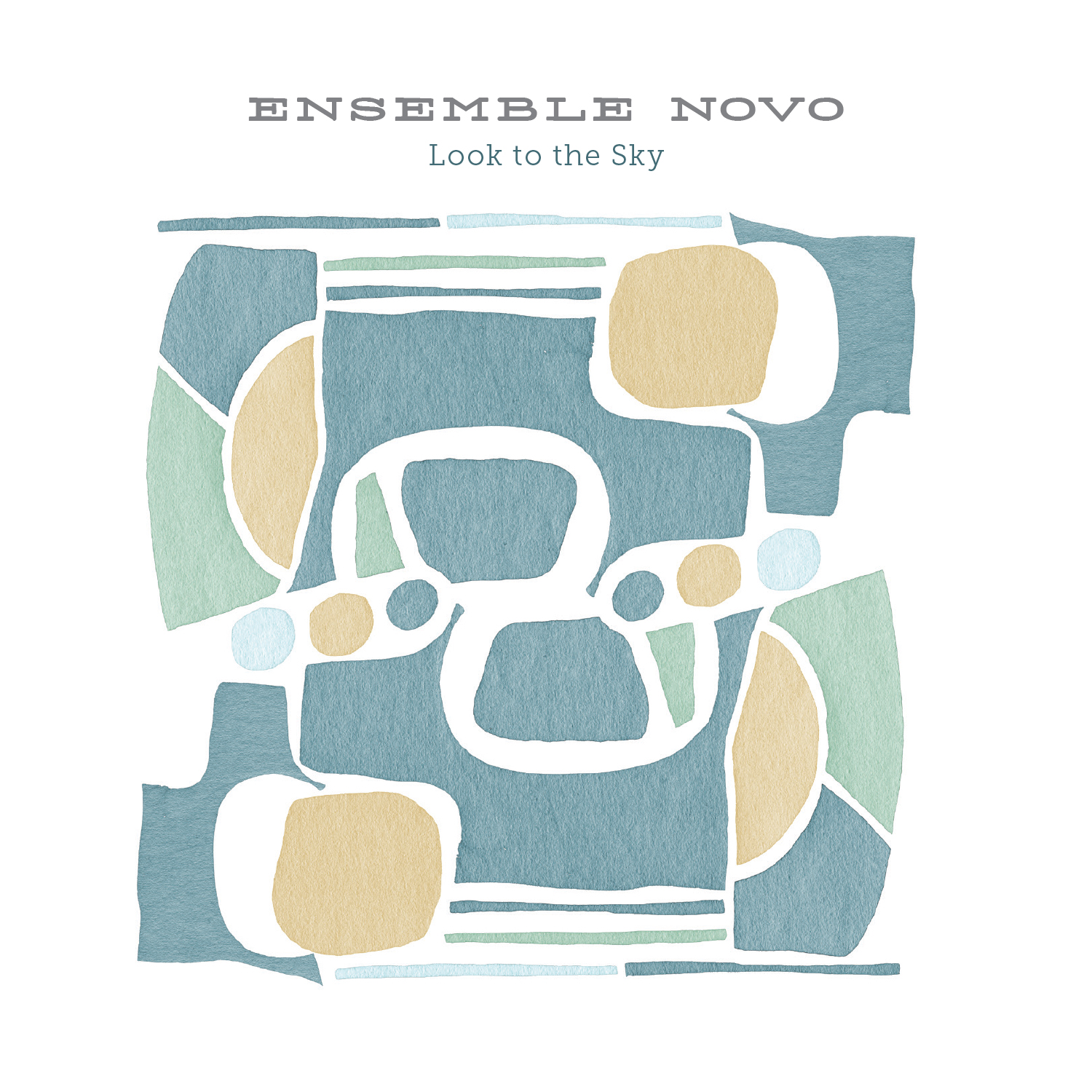
CAKEWALK-ISHIHARA.
Cakewalk-Ishihara.
Three years after the release of Cakewalk’s sophomore album Transfixed, the Norwegian supergroup recently released their much-anticipated, third album, Ishihara, on Hubro Music. It finds Cakewalk at their innovative best, on what’s without doubt, the most ambitious album of their career so far. Ishihara is another album carefully sculpted soundscapes from sonic adventurers Cakewalk, who continue on their journey to make groundbreaking and genre-melting music.
That has been the case since Stepan Meidell, Oystein Skar and Ivar Loe Bjornstad decided to form a new group together, Cakewalk. In an instant, a new Norwegian supergroup was born. Cakewalk featured three leading lights of the Norwegian music scene. They were all vastly experienced musicians but came from from very different different musical backgrounds.
Øystein Skar.
Keyboardist Øystein Skar was born and brought up in Vinstra, in Norway. Originally, his background was originally in classical music. Later, Øystein Skar began to expand his musical horizons, and was soom playing pop, jazz and improv. All this would stand Øystein Skar in good stead for the future.
As Øystein Skar’s career progressed, he began working as a composer, and has written everything from pieces for a solo piano to a large ensemble. Many of these pieces have been performed in public. However, composition is just one string to Øystein Skar’s bow.
Apart from playing synths in Cakewalk, Øystein Skar is a member of two Norwegian groups, Highasakite and Sacred Harp. He played on Sacred Harp’s 2009 eponymous E.P, and three years later, played on Highasakite’s 2012 debut album All That Floats Will Rain. Since then, they’ve released Silent Treatment in 2014 and Camp Echo in 2016. Øystein Skar has also played on albums by Jessica Slighter, the Loud Jazz Band, Glow and Aurora. Still, though, Øystein Skar finds time to record and play with Cakewalk.
Ivar Loe Bjornstad.
Drummer Ivar Loe Bjornstad was born in Surnadal, and nowadays, is based in Oslo. Ivar Loe Bjornstad who is an experienced musician, who comes from a rock background. Away from Cakewalk, he’s a member of two bands.
This includes The Hedvig Mollestad Trio. Ivar Loe Bjornstad has played on the five albums they’ve released between 2011 and 2016. Their debut album was 2011s Shoot, with All Of Them Witches, following in 2013 and Enfant Terrible in 2014. Last year, 2016, The Hedvig Mollestad Trio released two critically acclaimed albums, Black Stabat Mater and Evil In Oslo. They were the latest additions to Ivar Loe Bjornstad’s burgeoning discography.
Ivar Loe Bjornstad is also a member of Friensemblet, and has played on their last two albums, Undergroove in 2012 and El Aaiun-Across The Border in 2014. Still, though, Ivar Loe Bjornstad found time to feature on two albums by Anja. However, the busiest member of Cakewalk is Stepan Meidell.
Stepan Meidell.
He was born in Kristiansand, and for several years, lived in Amsterdam. Nowadays though, Stepan Meidell based in Bergen which has a vibrant music scene. That is where his impressive CV has taken shape over the last decade.
Stepan Meidell was a member of jazz group Mr. Eart, and played on their 2007 album Facts In The Case Of The Mysterious Pop Machine. Two years later, in 2009, Stepan was a member of Vanilla Riot, when they released their only album Stitch in 2009. Since then, Stepan has been a member of The Velkro, Sweetest Thrill, Krachmacher and recently released his sophomore album Metrics. It was released just a week before Cakewalk released their third album Ishihara.
Wired.
Cakewalk released their critically acclaimed debut Wired in February 2012. This was the album that established Cakewalk’s reputation as a group why released ambitious, groundbreaking music. Wired was a melting pot of seventies psychedelia, Krautrock, industrial, experimental, electronica and noise rock. This was a musical representation of the three members of Cakewalk’s very different musical backgrounds. However, the result was an album that launched Cakewalk’s career.

Transfixed.
Two years later, and Cakewalk returned with their sophomore album. It found Cakewalk continuing to combine musical genres and influences. Elements of ambient, experimental, electronica, free jazz, funk, jazz, Krautrock, progressive rock, psychedelia and rock combine, while Cakewalk draw inspiration from Brian Eno, Can, Jimi Hendrix, Kraftwerk, Led Zeppelin, Neu and Pink Floyd. Some of the time, Cakewalk improvise, before honing and sculpting songs into the mini modernist works of art that became Transfixed. Cakewalk had set the bar high for the followup, Ishihara.
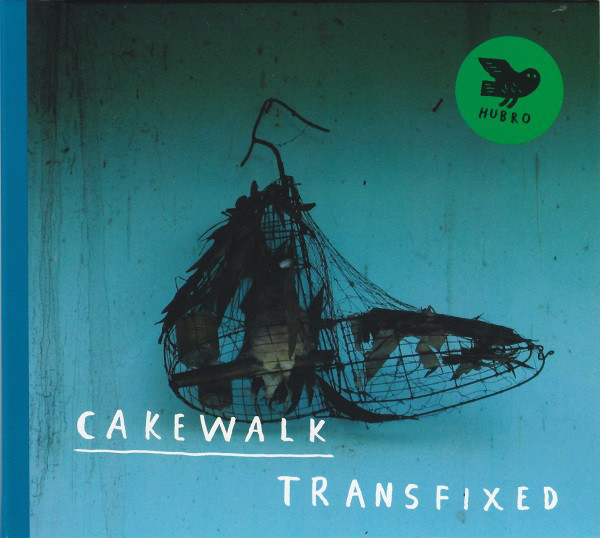
Ishihara.
Just over a year after the release of Transfixed, Cakewalk entered the Duper Studio, in Bergen in the summer 2015, to record their third album Ishihara. It would eventually feature six soundscapes that were composed by the three members of Cakewalk. These would be sculpted by Cakewalk in the familiar surroundings of Duper Studio.
As recording got underway, drummer Ivar Loe Bjørnstad as joined by bassist, guitarist and synth player Stephan Meidell. The third and final member of Cakewalk was sonic scientist Øystein Skar, who would play synths. They were part of Cakewalk’s vast musical palette that they would put to good use.
During Ishihara a myriad of beeps, squeaks, drips, hip hop scratches, special effects and what sounds like samples from early computer games are deployed. So are futuristic, sci-fi synths, pounding, driving drums and the sounds of everyday life that Cakewalk have sampled. This becomes part of a musical tapestry that reflects each members of Cakewalk’s musical backgrounds. This ranges from avant-garde and avant-jazz to classical music, electronica, improv, pop and rock. They’re among the disparate threads that were woven as gradually, the multi-layered Ishihara took shape.
Once Ishihara was complete, Stephan Meidell mixed the album. All that was left was for Jørgen Træen to master Ishihara. All that was needed was a title.
After some though, Cakewalk decided to call the album Ishihara, after the Ishihara colour test which was used to detect colour blindness. It was developed by Shinobu Ishihara, a Japanese ophthalmologist. Ishihara proved to be a fitting title for Cakewalk’s long-awaited third album.
It’s possible to focus on different levels of the music on Ishihara. Some people will to focus on front, others the middle or back of the soundscapes. Each part of the soundscape has something different for the listener to perceive. While some will turn their attention to the slow, pulsating heartbeat in the deep in the music, while others will be happy to concentrate on the outside of the music. Regardless of which level of music the listener concentrates on, the important thing is how they perceive it. Ishihara was a fascinating musical concept. Despite that, they seemed in no hurry to release Ishihara.
Having completed Ishihara in 2015, Cakewalk decided to lay the album down like a fine wine. After just over a year in Cakewalk’s vaults, Ishihara was ready to be tasted by the record buying public. They were in for a musical feast.
Hip hop scratches replicate the sound of Monkeys which opens Ishihara. Soon, sirens sound, before thunderous, pounding drums add an element of drama. What sounds like a fighter jet soars above the arrangement, adding to the dramatic cinematic sound. Sometimes, filters are applied to parts of the arrangement, before drums pound and dominate the soundscape. Then the baton passes to sci-fi and haunting sounds, while the drums send out a warning. Meanwhile, a thoughtful sound sits atop the multilayered arrangement. It’s an aural feast, as sounds assail the listener. By then, the music is dramatic, futuristic, wistful and ruminative. Partly, that’s because of the sweeping classical strings, while drums pound and sirens wail as an apocalyptic sound emerges. Later, sci-fi sounds combine with roars and growls, before what sounds like a plane taking off can be heard. So can the beeps, squeaks and bubbling, dripping sounds. Latterly, mechanical sounds pervade this captivating, multilayered cinematic soundscape that’s guaranteed to set the listener’s imagination racing.
Metallic, sci-fi, beeping and robotic sounds combine to create an alternative, mesmeric symphony that marches to the beat of the drum on Shrooms. That’s until the bass dominates the soundscape, while percussion rattles and a melodic cooing sound emerges and shimmers. It adds a contrast, while banks of synths beep, squeak and squawk as if providing the soundtrack to a futuristic merry-go-round. Still the bass propels the soundscape, while percussion rattles. Meanwhile, this dreamy, melodic soundscape ebbs and flows, and sounds like the soundtrack to a lysergic and surreal cartoon.
Elegiac describes Dome as it cascades and shimmers. Meanwhile, a buzzing drone emerges out of the midst of hypnotic drums, glistening guitar and shimmering cymbals. Soon, synths buzz and beep adding to the dubby, sci-fi soundtrack. It sounds as if it would be the perfect accompaniment to a documentary about an Apollo space mission. Later, the arrangement meanders, as post rock guitars are honed and sculpted and add to the drama before the ethereal soundscape floats along. Still, the post rock guitars play their part in this deliberate, melodic and cinematic soundscape which soon, reaches it destination.
Just one note chirps before space is left on State. This is equivalent to a dramatic pause. Eventually, another chirp emerges from the soundscape. Soon, they become more regular and there’s less space between the notes. Meanwhile, a subtle synths prowls, while drums are played carefully. Cakewalk are playing within themselves, and taking a less is more approach. This proves effective as the arrangement builds, and drums add dramatic backdrop. It builds and grows in power, as robotic synths emerge melodically from the midst of the arrangement. It’s grown in power as the thunderous, powerhouse of a rhythm section combine with washes of swirling synths, sirens and bubbling sounds. They create a melodic cacophony of sound that’s truly irresistible. Cakewalk in full flight at their inventive best is a joy to behold, in this genre-melting epic which is the highlight of Ishihara.
Washes of mesmeric swirling synths combine with the rhythm section on Apostrophe. Soon, they’re carefully crafting another melodic and genre-melting soundscape. It features fleet fingered bass playing while drums power the arrangement along. Synths intertwine, adding further layers to what’s another melodic and cinematic soundscape which features Cakewalk at their most accessible.
In the distance, the arrangement to Rebound, which closes Ishihara, crackles, buzzes and shivers intermittently. Soon, a dark synth buzzes ominously, while a post rock guitar cuts through the arrangement. In the background, hammering and metallic sounds can be heard, before synths strings, shrieks and sirens sound. All the time, an array of disparate synths assail the lucky listener. They’re advised to shut their eyes and wallow in the delights of Cakewalk at their most innovative. Sometimes, beeps, squeaks, sci-fi and futuristic sounds emerge, while the rhythm section power the arrangement along. Meanwhile, post rock guitars and synths play leading roles as the arrangement takes on a softer, more melodic sound. Still, the arrangement marches to the beat of the drum, before the bass plays as jarring, grinding sounds are emitted from the soundscape. So two are squeaks and squeals that signal the end of Rebound, and indeed Ishihara.
It’s without doubt the best album of Cakewalk’s three album career. Cakewalk reaches new heights on Ishihara, which is a career-defining album from the Norwegian supergroup. Ishihara finds Cakewalk at their most inventive and innovative as they push musical boundaries to their limits, and sometimes, beyond to create six genre-melting, cinematic soundscapes.
The soundscapes find Cakewalk combining and switching between musical genres. Everything from avant-garde and avant-jazz, to Berlin School, classical, electronica and experimental, can be heard on Ishihara. So can improv and industrial, to Krautrock, post rock, psychedelia and rock. Similarly, Cakewalk combine an array of disparate musical instruments. This ranges from traditional instruments to synths, special effects and samples. They become part of Cakewalk’s carefully crafted tapestry, Ishihara. It’s without doubt, the finest album of Cakewalk’s career.
So much so, that Ishihara is career defining album from Cakewalk. They have set the bar high for future albums with Ishihara. It’s a genre-sprawling, vibrant, cinematic epic from sonic explorers Cakewalk, who reach new heights on their much-anticipated third album Ishihara.
Cakewalk-Ishihara.

INSANE TIMES-21 BRITISH PSYCHEDELIC ARTYFACTS FROM THE EMI VAULTS.
Insane Times-21 British Psychedelic Artyfacts From The EMI Vaults.
With 2017 the tenth anniversary of Record Store Day, it was no surprise that there were a record number of releases available. This ranged from luxurious limited edition box sets to reissues of classic albums, singles soundtracks and compilations. One of the compilations that was released was Insane Times-21 British Psychedelic Artyfacts From The EMI Vaults. It was released by Rhino Records as two LP set, and is a reminder of Britain’s psychedelic past.
Insane Times-21 British Psychedelic Artyfacts From The EMI Vaults feature contributions from old friends, familiar faces and new names. This includes Kevin Ayers, July, The Idle Race, Orange Bicycle, Bonzo Dog Doo-Dah Band, The Hollies, The Lemon Tree, The Parking Lot, The Koobas and The Yarbirds. There’s also more than a few hidden gems on 21 British Psychedelic Artyfacts From The EMI Vaults. It’s guaranteed to bring back memories for connoisseurs of psychedelia…in more ways than one.
For collectors of psychedelic compilations, the title might bring back memories. That is no surprise. Back in 2007, EMI released a similar compilation on CD, Insane Times-25 British Psychedelic Artyfacts From The EMI Vaults. Thos compilation it seems was the inspiration for Insane Times-21 British Psychedelic Artyfacts From The EMI Vaults. However, only twenty-one sides make their way onto this two LP set. The omissions included Ipsissimus’ Hold On, Paul Jones’ The Dog Presides, Mike Proctor’s Mr. Commuter and Syd Barrett’s No Good Trying. These omissions will disappoint some people, especially fans of Syd Barrett. Despite these omissions, there’s plenty more to discover on Insane Times-21 British Psychedelic Artyfacts From The EMI Vaults.
Opening 21 British Psychedelic Artyfacts From The EMI Vaults is Kevin Ayers’ Songs For Insane Times. This Kevin Ayers composition was taken from his 1969 debut album Joy Of A Toy, which was released on Harvest Records. Songs For Insane Times is best described as a carefully crafted ruminative ballad, that’s a fusion of psychedelia, progressive rock and jazz. It showcases the considerable skills of the late, great great Kevin Ayers.
In 1968, Tomorrow released their eponymous debut album on Parlophone. One of the songs the featured on Permanent Dream was written by Keith Hopkins, who had shot to fame thanks to the infamous Teenage Opera. It had been created by Mark Wirtz, who arranged and produced Permanent Dream. It’s an oft-overlooked psychedelic hidden gem, that although is slightly reminiscent of The Kinks, is a progressive and oft-overlooked hidden gem.
When The Gods were formed in 1965, their lineup included Greg Lake, Mick Taylor, John Glascock and Ken Hensley. Given The Gods featured such an impressive line-up, it was no surprise that they signed to Columbia, and released two albums during the late sixties. This included Genesis, which featured the Joe Konas’ composition Towards The Skies. It’s regarded as one of the finest British psychedelic songs of the late sixties, and is a tantalising taste of The Gods debut album Genesis.
Just like The Gods, The Idle Race featured another giant of British music,..Jeff Lynne. The Idle releases a trio of albums, including two for Liberty. Their swan-song for Liberty was The Idle Race, which featured Hurry Up John a melodic, dreamy and lysergic song.
Orange Bicycle is another band that will be familiar to connoisseurs of sixties psychedelia. On the ‘18th’ of July 1969, Orange Bicycle released a cover of Bob Dylan’s Tonight I’ll Be Staying Here With You as a single. Hidden away on the B-Side was the John Dove’s Last Cloud Home, which is one of the psychedelic hidden gems in Orange Bicycle’s back-catalogue.
The Brain only every released the one single, Kick the Donkey, which was released on Parlophone in mid-1967. On the B-Side was Nightmares in Red, an ambitious and lysergic release that was very different to the music that most British psychedelic groups were making. That was no surprise, as The Brain featured Peter Giles, his brother Michael Giles and Robert Fripp. After recording as The Brain, they recorded as Giles, Giles and Fripp, which later, became the basis for King Crimson.
Another short-lived band was Rainbow Ffolly, who were signed to Parlophone. They released their debut album Sallies Fforth in 1968, which featured their one and only single Drive My Car. When the single failed to find an audience the band split-up. However, Sallies Fforth is a underrated and overlooked album, which features Sun Sing which is a reminder of short-lived but talented psychedelic band.
Tales Of Justine were a London based band led by David Daltrey. Their recording career amounts to just one single and their 1967 album for Tenth Planet, Petals From A Sunflow. It featured Monday Morning, which is a carefully crafted and orchestrated song that’s a memorable and melodic reminder of Tales Of Justine, who sadly, never fulfilled their potential.
By 1968, The Hollies had been around since the early sixties, and were one of the British Invasion groups that enjoyed commercial success in America. In 1967, The Hollies released On A Carousel as a single, and on the B-Side was All The World Is Love. Its psychedelic sound is very different to the pop and rock that The Hollies released earlier in the sixties. However, the reinvention of The Hollies and songs like All The World Is Love ensured that their music stayed relevant.
Keith Smart and Mike Hopkins recorded two singles for Parlophone as The Lemon Tree during 1968. This included William Chalker’s Time Machine which was written by Christopher Kefford, and produced by Andy Fairweather-Low and Trevor Burton. Alas, neither William Chalker’s Time Machine nor It’s So Nice To Come Home troubled the UK charts. Despite that William Chalker’s Time Machine became a favourite of compilers and epitomises everything that is good about British psychedelia.
Herbal Mixture is another band that only released two singles during 1966. Their debut was A Loves That’s Died, with Machines following later in 1966. Hidden away on the B-Side was Please Leave My Mind, which had been written by Herbal Mixture’s guitarist and vocalist Tony McPhee. He plays an important part in this psychedelic hidden gem, that deserved that was too good to be relegated to a B-Side.
The Yarbirds’ Think About It closes Insane Times-21 British Psychedelic Artyfacts From The EMI Vaults. Think About it was penned by Jimmy Page and produced by Mickie Most, and featured on the B-Side of Goodnight Sweet Josephine which was released on Epic in 1968. This was one of the final singles The Yarbirds released. Later in 1968 year, Jimmy Page founded Led Zeppelin who went on to make musical history. However, Goodnight Sweet Josephine and the ruminative sounding Think About It are a reminder of the music Jimmy Page produced before Led Zeppelin.
These twelve tracks are just a few of the highlights of Insane Times-21 British Psychedelic Artyfacts From The EMI Vaults, which was released as a two LP set by Rhino Records for Record Store Day 2017. It’s also one of the best compilations that were released for Record Store Day. Especially for anyone that is interested in British psychedelia.
American bands weren’t the only ones creating groundbreaking psychedelia. British bands old and new had embraced psychedelia, and were pushing musical boundaries as they created lysergic music. Sadly, some of this music failed to find the audience it deserved. It was only much later that they were heard by a wider audience. Partly, this was because of compilations like Insane Times-21 British Psychedelic Artyfacts From The EMI Vaults, and the compilation that inspired it.
That is Insane Times-25 British Psychedelic Artyfacts From The EMI Vaults, which was released in 2007, and seems to have provided the inspiration for Insane Times-21 British Psychedelic Artyfacts From The EMI Vaults. Due to the time constraints of vinyl, four songs werre omitted, including Ipsissimus’ Hold On, Paul Jones’ The Dog Presides, Mike Proctor’s Mr. Commuter and Syd Barrett’s No Good Trying. However, there’s much more to discover and enjoy on Insane Times-21 British Psychedelic Artyfacts From The EMI Vaults.
There’s contributions from old friends, familiar faces and what will be new names to many newcomers to psychedelia. Insane Times-21 British Psychedelic Artyfacts From The EMI Vaults is the perfect introduction to the delights of British psychedelia.
For connoisseurs of psychedelic compilations, Insane Times-21 British Psychedelic Artyfacts From The EMI Vaults will be worthy addition to their collection and a a reminder of Britain’s psychedelic past.
Insane Times-21 British Psychedelic Artyfacts From The EMI Vaults.
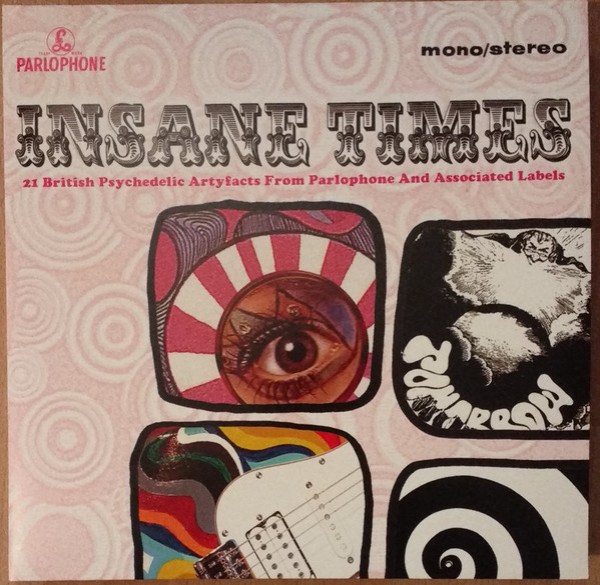
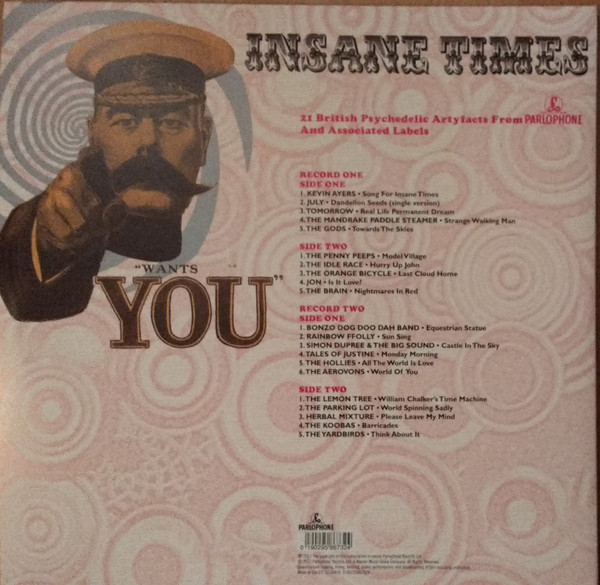

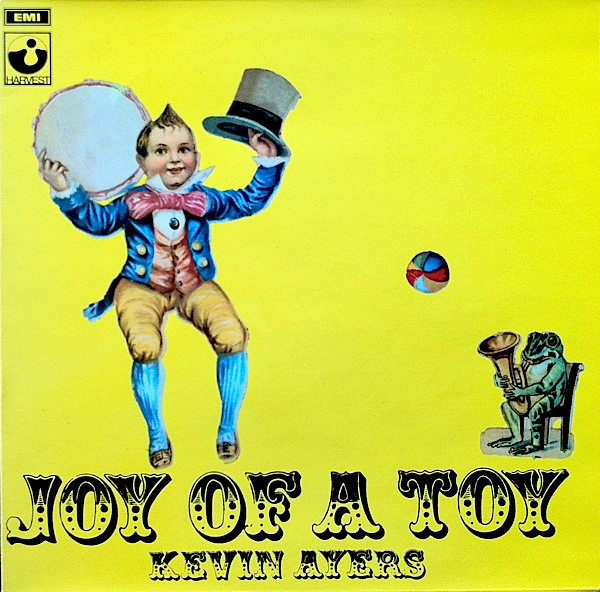
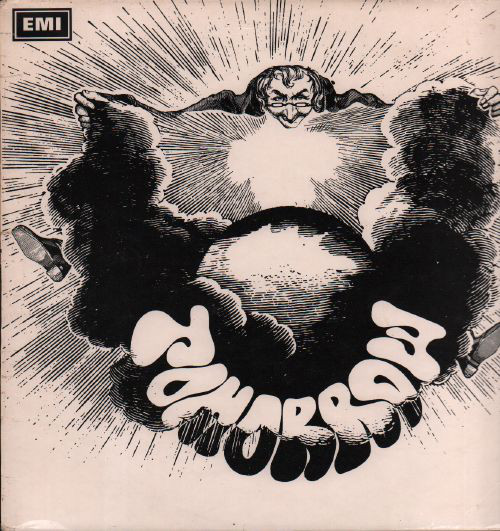
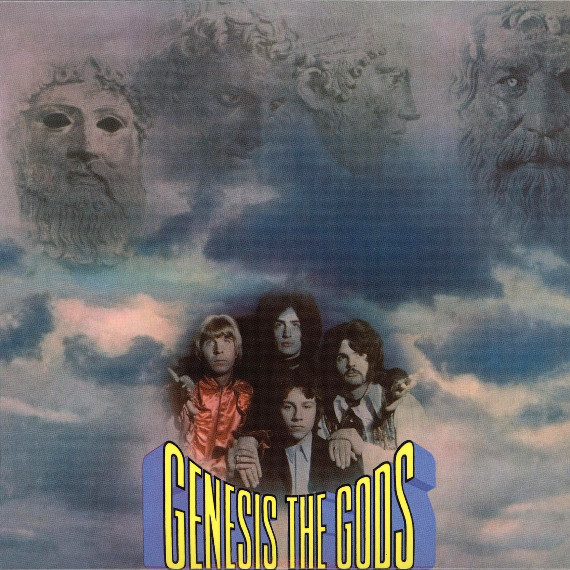
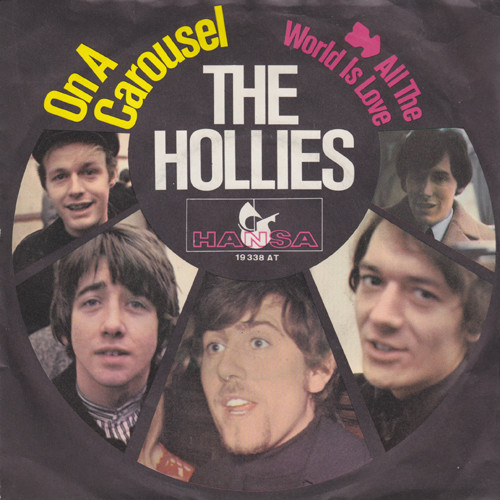

NEOTOLIA-NEOTOLIAN SONG.
Neotolia-Neotolian Song.
Over the last couple of weeks, many people within the music industry have had only one thing in their mind…Record Store Day. It seems to take on greater importance with each passing year. 2017 was no exception, with the majors especially, releasing a myriad of releases. They varied in quality from the good, the bad to the ironic and dreadful. A new low came with the release of Aqua’s Barbie Girl in pink vinyl. Incredibly, some critics waste valuable column inches on these pointless releases. In doing so, they overlook albums that are much more deserving of their attention. A case in point in is Neotolia’s new album Neotolian Song, which was released by Interrobang Records on April ‘23rd’ 2017.
Sadly, Neotolian Song failed to attract the attention of critics, who instead, would rather write fawning, puff pieces about third rate Record Store Day releases. In doing so, they’re missing out on a captivating album that was recorded by multinational band led by singer-songwriter Nazan Nihal and pianist and composer Utar Artun. They met several years ago, when Utar Artun was visiting Turkey.
By then, Utar Artun was a professor at the prestigious Berklee College of Music. When it came to the holiday season, Utar Artun decided to travel home to Turkey. That was where he first heard Nazan Nihal sing some traditional songs that she had arranged. When Utar Artun heard Nazan Nihal sing, it stopped him in his tracks. He remembers saying: “we have to record those songs.” This was the start of collaboration and friendship.
Over the next weeks and months, Nazan Nihal and Utar Artun continued to collaborate on a variety of songs. These songs were arranged by Utar Artun, and sometimes, headed in unexpected directions. Suddenly, the traditional songs began to taking on new life and meaning.
Meanwhile, romance blossomed between Nazan Nihal and Utar Artun, which eventually led to the pair marrying. This resulted in Nazan Nihal leaving her in home in Turkey, to make a new life in Boston.
While Nazan Nihal was enjoying her new life Boston, she experience occasional bouts of homesickness. To overcome her homesickness, she began to listen to Turkish music. Meanwhile, Utar Artun was still wanted to record some of the songs that Nazan Nihal had arranged.
This lead to Nazan Nihal and Utar Artun collaborating together. They wrote new songs together, while Utar Artun arranged traditional Turkish songs. Often, he took them in new and unexpected directions. Nazan Nihal remembers: “Utar can transform music in any direction imaginable,.. I come with a musical idea, discuss it with him and then we find a groove or rhythm. After that point we improve that idea together. Utar adds the final touch. He scores the music. Then the band plays it, and it becomes real.” These arrangements are then played by Nazan Nihal and Utar Artun and a band that features musicians from the four corners of the world.
The band are responsible for what Utar Artun describes as: “a kaleidoscope of different colours..We use African and Indian elements, jazz and American grooves, Eastern European scales and Turkish maqams.” This was no ordinarily project. Instead, Utar Artun describes it as: “an ambitious concept.” So much so, that: “some of the songs called for us to invite guest artists who could bring these ideas to life with their unique voices.”
This resulted in Nazan Nihal and Utar Artun putting together a multitalented band of musicians from as far afield as China, Finland, Iraq, the Lebanon and Turkey. This included a a pan-European rhythm section of Italian drummer Giuseppe Paradiso; Swedish bassist Bruno Råberg and Finnish guitarist Jussi Reijonen. They comprise the core band. However, they were augmented on individual songs by the great and good of world music.
This includes Turkish-Armenian Grammy Award winning avant-garde vocalist and percussionist Arto Tunçboyacıyan and legendary jazz drummer Dave Weckl, who play starring roles on Thrill of the Chase. Another familiar face is vocalist Joey Blake, whose a member of Bobby McFerrin’s Voicestra, and an associate professor at Berklee college of music. He features on Rondo Afro Turca and Guggenheim Fellow. Meanwhile, Bir Varmis Bir Yokmus Hayat features Bassam Saba who plays flute and oud and master qanun (Turkish zither) player Tahir Aydogdu. American microtonal guitarist David Fiuczynski makes a welcome appearance on Degmen Benim Yasli Gonlume. The final special guest was Yazhi Guo, is regarded as one of: “Chinese music’s national treasures,” and plays the Chinese flute (dizi). This was just one strand in the rich tapestry that’s Neotolian Song.
It features a myriad of different instruments and influences. This includes traditional Turkish instruments like the qanun, ney and oud, which join Western and Eastern strings including the violin, cello and erhu. They join a core quintet which is lead by vocalist Nazan Nihal and pianist Utar Artun. They were augmented by the various guest artists as recording of Neotolian Song got underway.
By the time the album was complete, Neotolia had bridged the music of the East and West, on an album which was a mixture of old and new songs. While several traditional Turkish folk songs feature on Neotolian Song, there’s also new songs. Some of these have been inspired by traditional Turkish folk songs, but head in a new direction as Neotolia switch between and sometimes, combine elements of improv, World Music and jazz. These disparate genres sit side-by-side on Neotolian Song, and play their part in what’s a truly captivating album.
Neotolian Song was the work of a multitalented, multicultural ensemble who showcase their experience and versatility. They pooled their resources, and exchanged ideas to create what was an ambitious and innovative album. This was something that Nazan Nihal and Utar Artun had dreamt of and been working towards for a while. Now “with a little help from their friends” Neotolia embarked upon a musical voyage of discovery, and in the process made what had previously been a dream, become a reality.
Nazan Nihal rememberers the record as we were: “feeling our roots, but we want to keep our music in the present. We put our own stamp on it, drawing on the influences from different cultures. We have one foot in Anatolia and one foot all around the world.” That becomes apparent as Neotolian Song unfolds.
Fittingly, it’s a a new song, Bir Varmis Bir Yokmus Hayat (Once Upon A Life) opens Neotolian Song. It features lyrics by Nazan Nihal, who delivers a heartfelt and emotive vocal. Straight away, it’s apparent she’s a gifted vocalist who can breath life and meaning to the lyrics. Providing the perfect foil is Utar Artun’s piano is omnipresent. However, the rest of the band, they play their part in the sound and success of this song. Stealing the show, is Utar Artun’s piano and Nazan’s vocal which starring roles in the sound and success of this beautiful, poignant song.
The genre-melting Thrill Of The Chase is a voyage of discovery, full of twists and turns. It features elements of African, traditional Turkish improv and jazz, and proves the perfect showcase for the considerable talents of this all-star and. Especially vocalist and avant-garde percussionist Arto Tunçboyacıyan and drummer Dave Weckl, who play starring roles in what’s ambitious and inventive track.
Degismek Cesaret Ister (Change Takes Courage) is a thought-provoking and poignant song where Nazan Nihal mourn the victims of terrorism. The arrangement ebbs and flows, as she delivers the lyrics to what’s a melodic and memorable song where Nazan Nihal’s emotive vocal leaves a lasting impression. It’s a similar case on Neotolian Song, Nazan Nihal and Utar Artun imagined lost ancient languages. The result was Neotolian Song, which features a vocal that’s a mixture of emotive, ethereal, heartfelt and powerful. It’s one of Nazan Nihal’s finest moments on Neotolian Song.
There’s a trio of traditional Turkish folk songs on Neotolian Song. This includes Manastir Turkusu (Song Of The Monastery) which features just the piano and a heartfelt vocal from Nazan Nihal. Gul Kuruttum (I Dried Roses) is a quite the beautiful, poignant reworking of a traditional folk song. Degmen Benim Gamli Yasli Gonlume (Don’t Touch My Sorrowful, Mournful Heart) has been reimagined and reinvented and totally transformed as traditional Turkish music gives way to a jazz masterclass. It’s the perfect showcase for the band’s versatility, while Nazan Nihal copes admirably with the change in style, and is perfectly suited to singing jazz.
Rondo Afro Turca features the Joey Blake, whose best known as a member of Bobby McFerrin’s Voicestra. His expressive scatted vocal takes centre-stage during this jazz workout.
Iraqi violinist Layth Sidiq joins the band on Pendulum, and provides a haunting backdrop to Nazan Nihal’s impassioned and soulful vocal. Later, as arrangement ebbs and flows, Layth Sidiq’s violin plays a starring role, before then baton passes to Nazan Nihal. Together they’re responsible for another the highlights of Neotolian Song,
Joining the quintet on Lydianic were Bruno Raberg, Jussi Reijonen and Giuseppe Paradiso. Without doubt, Lydianic is one of the most moving songs on Neotolian Song. It features what’s thought to be the lyrics of an ancient Lydian song. Lydia was the language of what’s nowadays known as Western Turkey. Sadly, the language has become obsolete, and the correct way to pronounce has been lost in the mists of time. Despite that, Nazan Nihal’s delivery is incredibly moving as she takes the utmost care with her delivery of a truly beautiful, heart-wrenching song. So much so, that Nazan Nihal remembers: “when we played this tune in concert, people started crying. We were shocked..Meaning may not be as important as the message you’re sending from the heart.” That is certainly the case on Lydianic, which is Neotolia finest hour on Neotolian Song.
Next time you’re in a record store, rather than head to where the remaining Record Store Day releases are, look for a copy of extraordinary album, Neotolia’s new album Neotolian Song, which was released by Interrobang Records on April ‘23rd’ 2017. It’s a truly ambitious album.
Neotolia combine a myriad of disparate musical genres, influences and instruments on Neotolian Song and influences. This includes African and Indian elements, Eastern European scales and Turkish maqams. Add to this elements of avant-garde, improv, traditional Turkish music and jazz and that’s part of the story of Neotolian Song.
A wide range of instruments were used throughout Neotolian Song. They augment the core band, and range from percussion and Turkish zither, to a flute, various guitars, strings and Chinese flute. These instruments are played by multitalented musicians, who provide the perfect accompaniment to Nazan Nihal’s vocals.
She breathes life, meaning and emotion into the lyrics, and plays a big part in the sound and success of Neotolian Song. Without Nazan Nihal, Neotolian Song wouldn’t be the same album. Quite simply, she’s irreplaceable. That becomes apparent after just a couple of songs, where Nazan Nihal showcases her talent and versatility. She’s equally comfortable singing a variety of different songs. Whether it’s traditional Turkish folk or jazz, Nazan Nihal is equally at home and plays a starring role on Neotolian Song.
So does composer and pianist Utar Artun, who like Nazan Nihal has been working towards the release of Neotolian Song. “With a little help from their friends,” Neotolia have created songs that are variously beautiful, emotive, joyous, poignant, powerful and through-provoking. They’re also melodic and memorable, Some of the songs feature subtleties, surprises and nuances. All of a sudden, Neotolia throw a curveball, and the songs head in an unexpected direction. However, this keeps the listener on their toes during Neotolian Song, which is an ambitious captivating and extraordinary album from Neotolia.
They’ve been working towards the release of Neotolian Song for some time, and now what was once a dream, has become a reality from a band who: “have one foot in Anatolia and one foot all around the world,”…Neotolia.
Neotolia-Neotolian Song.

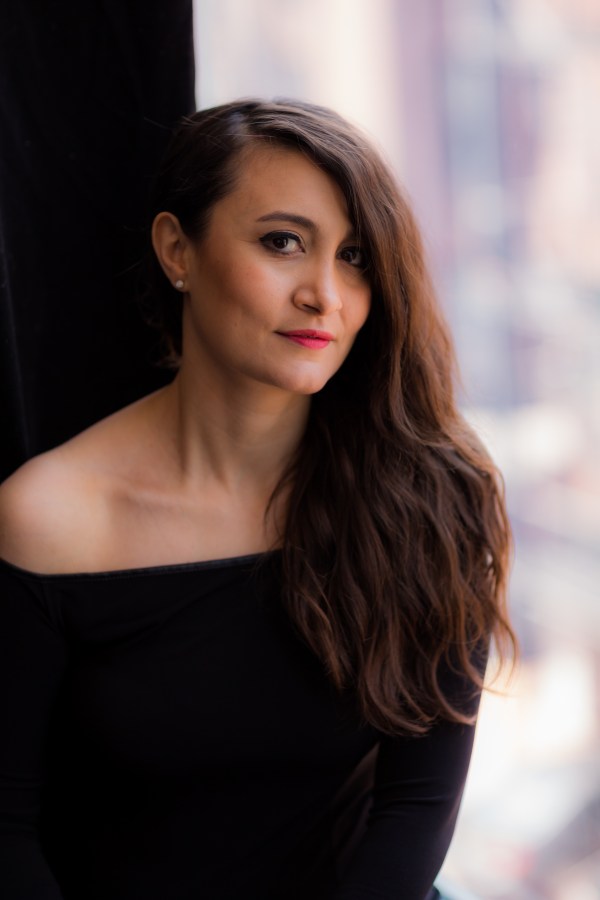


SAMMLUNG-ELEKTRONISCHE KASSETTENMUSIK, DÜSSELDORF 1982-1989.
Sammlung-Elektronische Kassettenmusik, Düsseldorf 1982-1989.
As the seventies gave way to the eighties, a new chapter in Düsseldorf’s musical history began. Music like Düsseldorf’s landscape, was changing and changing fast. Düsseldorf’s city centre was undergoing a period of regeneration, with familiar buildings being given a makeover. Suddenly, it seemed that many of the buildings that had been considered Düsseldorf’s landmarks were being modernised. Even the Old Town, which was a bohemian area, full of students and people who were interested in art, literature and music.
Ever since the late sixties, many young musicians had gravitated towards the Old Town, looking for likeminded people. Given the influx of advertising and marketing companies, the Old Town was no longer the place it had been during the late-sixties and seventies. That was a golden period for in Düsseldorf’s musical history, when the Old Town had a vibrant and thriving music scene.
Especially,during the Krautrock era, when Kraftwerk, Neu! and La Düsseldorf would go on to release groundbreaking albums of innovative and influential music. These albums would go on to influence several generations of musicians. So would a new breed of groups that were formed late in the seventies.
In 1976, disenchanted and disenfranchised youths in cities across Western Europe, embraced punk. This included in Düsseldorf. Suddenly, the Ratinger Straße area became known as the area where the punk community congregated. However, by the time the seventies gave way to the eighties, punk was a remnant of music’s past, and the baton had passed to post punk.
Despite that, punk, just like Krautrock, would continue to influence the latest generation of musicians in Düsseldorf. Especially, the electronic instruments that many Krautrock bands had deployed so effectively on albums. They were also being put to good use by musicians from the Berlin School of Electronic music, who had released ambitious and groundbreaking albums. Even some of the post punk musicians were using electronic instruments, albeit with decidedly mixed results. Everyone it seemed was using electronic instruments by the early eighties.
That was no surprise, as the price of drum machines, samplers, sequencers and synths were no longer prohibitively expensive. Instead, they were well within the reach of even hobbyist musicians. This was a game-changer, and would make it easier for a new breed of musicians in Düsseldorf to record and release albums.
They were part of a new musical community that was taking shape within Düsseldorf. Many of these musicians shared flats, drank in the same bars and shared a similar taste in music. They listened to Cabaret Voltaire, Eric Random, Human League and Throbbing Gristle. However, one of the favourite releases of the time was a compilation entitled The Elephant Table Album. It would influence many aspiring musician as they embarked upon a career as a professional musician in Düsseldorf.
Inspired by D.I.Y. philosophy of punk, many of these young, aspiring musicians in Düsseldorf decided to eschew record companies, and self release the music that they had made. Rather than release their music on vinyl, which was prohibitively expensive, many within the Düsseldorf music community released their music on cassette. This includes the thirteen artists on Sammlung-Elektronische Kassettenmusik, Düsseldorf 1982-1989, which was recently released by Bureau B.
Konrad Kraft opens Sammlung-Elektronische Kassettenmusik, Düsseldorf 1982-1989. It’s was released in 1985, and finds Konrad Kraft continuing to develop polyrhythmic structures on a captivating and mesmeric track.
In 1986, Deux Balaines Blanches released their debut album Singende Dräht. It featured nine short tracks, that featured on a C20 cassette album. This incdued Draht 8, an understated, bubbling and hypnotic sounding track that marries elements of abstract and ambient with avant-garde.
One of the earliest tracks on the compilation is Bzw, which comes courtesy of Ettlinger. Its lo-fi sound is reminiscent of the soundtrack to early computer games. Having said that, there’s a cinematic sound to this melodic and member track.
Although Mentocome sounds like it was one of a new generation of eighties groups, it was the moniker of Axel Grube. He recorded fourteen tracks which were released in 1986 on Mentocome’s eponymous album. It wasn’t released on cassette. Instead, it was released as an LP on Giraffe Rec., and nowadays is a much prized rarity among record collectors. That is no surprise, given the quality of on B6 a truly ambitious and experimental track.
Frigorex featured the combined talents of Dino Oon and Konrad Kraft, who wrote and produced The Beginning. It’s taken from the 1982 cassette compilation Im Namen Des Volkes. It features contributions from Goldfinger, Konrad Kraft and Frigorex. Their finest moment, is The Beginning is a minimalist sounding track that sounds as if it’s been inspired by one of Düsseldorf’s most successful bands, Kraftwerk.
Frigorex featured the combined talents of Dino Oon (Birgit Gasser) and Konrad Kraft (Detlef Funder), who wrote and produced The Beginning. It’s taken from the 1982 cassette compilation Im Namen Des Volkes. It features contributions from Goldfinger, Konrad Kraft and Frigorex. Their finest moment, is The Beginning is a minimalist sounding track that sounds as if it’s been inspired by one of Düsseldorf’s most successful bands, Kraftwerk.
One of the highlights of Sammlung-Elektronische Kassettenmusik, Düsseldorf 1982-1989 is Dino Oon’s contribution, Nr. 6. It’s a carefully crafted soundscape from 1989, that has a much more sophisticate sound. Nr. 6 is also dark, dramatic, cinematic and timeless.
Thirty years ago, in April 1987, the Wstretscha compilation was released. Although it featured sixteen tracks, it was a showcase for four up-and-coming Düsseldorf bands. This included Deux Baleines Blanche, Eiterschlangen, Wooden Barrows and Pfad Der Tugend, who contributed a trio genre-melting tracks. Einklang found Pfad Der Tugen fusing electronica, avant-garde and Krautrock to create a moody, spooky and cinematic track. It’s without doubt, the finest of Pfad Der Tugend’s three contribution to Wstretscha.
Catherine Ledit masterminded Kurzschluss, who contributed L’Inconnu to the Phase Pervers Kompilation in 1987. Stylistically L’Inconnu is quite different from the previous tracks on the compilation. Rolls of rocky drums combine with synths to create what’s best described as a dramatic, filmic soundscape.
Andrea Bearch and Andreas Bongartz wrote and produced the Wooden Barrows’ 1987 track Zyklus VI. It featured on the Wstretscha compilation, which was released in April 1987. Zyklus VI is a really accomplished and atmospheric, cinematic soundscape that even today, would be perfect for a short film.
Catherine Ledit masterminded Kurzschluss, who contributed L’Inconnu to the Phase Pervers Kompilation in 1987. Stylistically L’Inconnu is quite different from the previous tracks on the compilation. Rolls of rocky drums combine with synths to create what’s best described as a dramatic, filmic soundscape.
To release the music being released by the new bands that sprung up in Düsseldorf during the eighties, many small independent labels were founded. This included Turnabout Tapes, who signed Le Petit Mort, which was a collaboration between Catherine Ledit and Dirk Grützmann. Le Petit Mort released their debut album Inconsequence in 1986, and contributed to tracks several compilations. Geheimes Wissen is an eerie, rhythmic and hypnotic track from 1987, which showcases the talents of Le Petit Mort.
Originally, Strafe Für Rebellion released Boston in 1985, but four years later, it featured on their compilation Vögel. It was released by the British label Touch, and showcased sixteen tracks recorded between 1981 and 1989. This included Boston, an experimental track that’s haunting and otherworldly.
Maria Zerfall was at the heart of the Düsseldorf during the eighties, and was involved in a variety of projects. She also released a series of solo albums. However, Wohin featured on Turnabout Records’ Phase Pervers Kompilation in 1987. Wohin is an ambitious track, where Maria Zerfall combines elements of experimental and industrial music
Closing Sammlung-Elektronische Kassettenmusik, Düsseldorf 1982-1989, is Dörper’s Dream a track from Add. This was a one of several monikers Bernd Zimmermann has used during his career. Dörper’s Dream is a genre-melting track from 1983, where elements of dub, electronica, experimental and industrial music combine to create an ambitious and moody soundacape.
Sammlung-Elektronische Kassettenmusik, Düsseldorf 1982-1989 features thirteen tracks lasting forty minutes. Back in the eighties, these tracks would’ve fitted onto one side of the C45 cassette tape. This was a notoriously unreliable musical format, which is why so few of the albums and compilations that these tracks were taken from exist today. Playing a cassette was, and still is, like the musical equivalent of Russian roulette. Every time play was pressed, there was every chance the cassette would unravel. However, for new artists in the Düsseldorf music scene during the eighties, the cassette allowed them to have their music heard by a wider audience.
For artists and bands on a budget, it was possible to buy a quantity of blank tapes and record copies of the album at home. Some artists even designed their own cassette cover. It was a D.I.Y. scene, much like the punk era. Other artists and bands signed to one of the cassette labels, that sprung Düsseldorf. They’re well represented on Sammlung-Elektronische Kassettenmusik, Düsseldorf 1982-1989. For many people, this will remind them of their local music scene during the eighties.
Every large town and city had a similar scene, where tapes circulated of new and up-and-coming artists and bands. Along with the burgeoning fanzine movement, it was an exciting time for everyone involved. Sadly, in many cities and towns, there’s very left to remind people of these musical scenes. Not every town or city will have a record company like Bureau B compiling a musical document Sammlung-Elektronische Kassettenmusik, Düsseldorf 1982-1989.
Not every town or city had such a vibrant music scene as Düsseldorf. That has been the case since the late-sixties. Since then, bands like Kraftwerk, Neu!, La Düsseldorf, DAF, Der Plan and Die Krupps have all started life in Düsseldorf, and gone on to creat important, innovative and influential music. While none of the artists or bands that featured on Sammlung-Elektronische Kassettenmusik, Düsseldorf 1982-1989 reached the same heights, they recorded and released ambitious, innovative and genre-melting music.
The music on Sammlung-Elektronische Kassettenmusik, Düsseldorf 1982-1989 features elements of ambient, avant-garde, Berlin School, dub, electronica, experimental, industrial and Krautrock. It’s a potent musical mixture, that’s variously broody and moody, to dark and dramatic to melodic and memorable. Other times, it’s haunting and otherworldly. However, one word describes much of the music on Sammlung-Elektronische Kassettenmusik, Düsseldorf 1982-1989…cinematic.
Throughout Sammlung-Elektronische Kassettenmusik, Düsseldorf 1982-1989 the word cinematic is the perfect way to describe the soundscapes. This cinematic sound has stood the ravages of time.That is the case with the majority of the music on Sammlung-Elektronische Kassettenmusik, Düsseldorf 1982-1989. This is testament to the artists and bands who recorded the music. All too often, electronic music doesn’t age well, and quickly sounds dated. Not the music on Sammlung-Elektronische Kassettenmusik, Düsseldorf 1982-1989, which features thirteen tracks from some of leading lights of Düsseldorf’s electronic underground scene.
Sammlung-Elektronische Kassettenmusik, Düsseldorf 1982-1989.
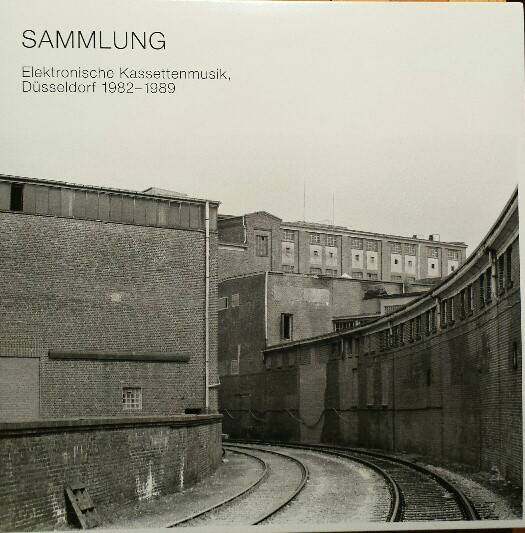


SANDY DENNY-WHO KNOWS WHERE TIME GOES?
Sandy Denny-Who Knows Where Time Goes?
On the 21st of April 1978, Sandy Denny passed away aged just thirty-one. That day, the career of one of the finest British folk singers of her generation was cut tragically short. Music lost a hugely talented singer and songwriter. There was no doubt about that. Sandy Denny stood head and shoulders above many of her contemporaries, including some she had shared a stage with. The loss of Sandy Denny was a tragedy
Music was in mourning at the loss of Sandy Denny. She had achieved so much in a short space of time. This included a brief spell with The Strawbs, before becoming the lead singer of Fairport Convention. However, Sandy left Fairport Convention in December 1969 to hone her songwriting skills. That was the plan.
Not long after her departure from Fairport Convention, Sandy decided to form a new band, Fotheringay. So in the early 1970, Sandy began putting together a new band. One of the first musicians she brought onboard was guitarist Trveor Lucas.
He had been born in Australia, but was now based in Britain. Trevor was now a familiar face in the British folk scene. Previously, Trevor was a member of Eclection. That’s when Trevor met Sandy Denny. The pair started dating in May 1969, and eventually, married in 1973. However, Trevor’s career began back in Australia, in the early sixties.
Back then, Trevor Lucas was a solo artist. He released his debut solo album See That My Grave Is Kept Clean in 1964. Then on New Year’s Eve Trevor boarded a ship and made the journey from Australia to Britain. That’s when he became a member of Eclection, and met drummer Gerry Conway.
Eclection were a folk-rock band, who were formed in 1967, and broke up two years later in 1969. However, by then, Trevor Lucas and Gerry Conway were firm friends. They renewed their musical partnership in Fotheringay.
Gradually, Sandy’s new band was taking shape. The final pieces in the musical jigsaw were two former members of The Poet and The One Man Band. Guitarist Jerry Donahue had moved from Manhattan to Britain, where he quickly became stalwart of the folk scene. This wasn’t surprising. Jerry’s father was big band saxophonist Sam Donohue. However, Jerry wasn’t inspired by his father. Instead, Gerry McGee, Earl Scruggs, Chet Atkins and Duane Eddy inspired Jerry, who in 1970, joined Fotheringay with Edinburgh born bassist Pat Donaldson.
By 1970, Pat Donaldson was a familiar face in the London music scene. He had moved to London in the early sixties. Since then, he had been a member of Bob Xavier and the Jury, Zoot Money’s Big Roll Band and the reformed Dantalian’s Chariot. Fotheringay was just the latest group the twenty-seven year old bassist work with.
With the lineup of her new band finalised, all Sandy Denny needed was a name for the band. She decided on Fotheringay, after Fotheringay Castle where Mary Queen Of Scots was imprisoned. With its lineup complete and a name in place, Sandy Denny’s new band could begin work on their debut album.
Fotheringay.
Sandy Denny didn’t waste any time recording Fotheringay’s debut album. She wrote four tracks and cowrote Peace in the End with Trevor Lucas. He also penned The Ballad of Ned Kelly. Other tracks included covers of Gordon Lightfoot’s The Way I Feel, Bob Dylan’s Too Much Of Nothing and Banks of the Nile. These ten tracks were recorded between February and April, 1970 at Sound Techniques, in London with Joe Boyd producing what became Fotheringay.
Once Fotheringay was completed, the album was released in June 1970. It was one of the most eagerly awaited albums of the year. Critics and record buyers eagerly anticipated the release of Fotheringay.
They weren’t disappointed. Critics hailed the album a masterful debut. Sandy Denny was back, and better than ever. Her enchanting, ethereal vocal was complimented by a tight, talented band. They won not just the critics, but record buyers.
Fotheringay sold well upon its release in June 1970, and reached number eighteen in Britain. Good as this was, it wasn’t good enough for Island Records. Their expectations and Fotheringay’s differed. Island Records hoped the album would be one of the label’s biggest selling albums. That wasn’t the case. This resulted in Island Records’ pressurising Sandy to embark upon a solo career.
Sandy Denny dug her heels in. She was determined to continue with Fotheringay. So work began on what was meant to be Fotheringay’s sophomore album.

Fotheringay 2.
A total of eleven tracks were meant to feature on Fotheringay’s sophomore album. This time, Sandy Denny only wrote two songs. Trevor Lucas and Pete Roach penned Knights of the Road and Restless.Among the other tracks were traditional songs, a cover of Bob Dylan’s I Don’t Believe You and the Dave Cousins’ composition Two Weeks Last Summer. These eleven tracks were recorded by an expanded lineup of Fotheringay.
Joining the usual lineup of Fotheringay was Linda Thompson. She was going to add backing vocals when the sessions began in November 1970. The sessions continued into December 1970. Everyone thought that things were going to plan. Sadly, that wasn’t the case.
In January 1971, it was announced that Fotheringay were no more. The band split-up and what would eventually become Fotheringay 2 was shelved. It wasn’t released until 2008. With Fortheringay now consigned to musical history, Sandy Denny embarked upon a solo career.
Sandy Denny signed to Island records, and soon, began to work on to release her debut solo album,The North Star Grassman and The Ravens. For Sandy Denny, this was the start of a new and exciting chapter in her career.
The North Star Grassman and The Ravens.
After Fotheringay split-up, Island Records were keen for the latest signing to enter the studio. Sandy Denny, Island Records believed, could become one of the company’s biggest selling artists. So Sandy entered the studios in March 1971.
By then, Sandy Denny was maturing as a songwriter. That was what she set out to do, when she left Fairport Convention. For The North Star Grassman and The Ravens, Sandy wrote eight of the eleven songs, including Late November and John The Gun which had been recorded for the Fortheringay 2 sessions. Among Sandy’s other compositions, were The Sea Captain, The Optimist, Next Time Around, Wretched Wilbur, The North Star Grassman and The Ravens and Crazy Lady Blues. They joined a rework of the traditional song Blackwaterside, Bob Dylan’s Down In The Flood and Charles Robins’ Let’s Jump The Broomstick. These songs were recorded over a three month period, with some familiar faces.
The recording sessions began in March 1971, at Sound Techniques, with Sandy Denny, John Wood and Fairport Convention’s Richard Thompson tanking charge of production. Just two songs were recorded there Blackwaterside and Let’s Jump The Broomstick. Then things were moved in-house and the rest of the sessions took place at Island Studios, in London.
At Island Studios, Sandy was accompanied on some of the tracks, by the rest of Fotheringay. Other musicians were drafted in when needed. This included Buddy Emmons on pedal steel guitar; drummer Roger Powell; bassist Tony Reeves; violinist Barry Dransfield and Ian Whiteman on piano and flute organ. Royston Wood and Robin Dransfield added backing vocals on John The Gun. Richard Thompson played accordion, bass, electric and acoustic guitar. His vocal featured on Down In The Flood. Harry Robertson arranged the strings on Next Time Around and Wretched Wilbur. By May 1971, The North Star Grassman and The Ravens was complete. It would be released four months later.
Before the release of The North Star Grassman and The Ravens, critics had their say on Sandy Denny’s debut solo album. With its mixture of Sandy Denny compositions, and cover versions, it was a truly captivating album. Sandy’s vocals were compelling, as she breathed meaning and emotion into lyrics. Among the highlights were John The Gun, Late November, the wonderfully wistful Next Time Around and The North Star Grassman and The Ravens. That’s not forgetting Down In The Flood, where the interplay between Richard Thompson’s guitar and Sandy’s vocal is masterful. The only song some critics felt let the album down slightly, was Let’s Jump The Broomstick and Down In The Flood. Still, though, The North Star Grassman and The Ravens was a hailed a musical masterpiece and minor folk rock classic. Sandy Denny it seemed, could do no wrong.
When The North Star Grassman and The Ravens was released in September 1971, the album didn’t sell in the huge quantities that Island Records had hoped. They seemed to envisage Sandy Denny enjoying the commercial success that Joni Mitchell was enjoying. That wasn’t to be. However, Sandy Denny enjoyed the same critical acclaim that her American counterpart was enjoying.

Sandy.
There was no rest for Sandy Denny, after she returned from a tour to promote the release of her debut album, The North Star Grassman and The Ravens. Two weeks later, in November 1971, Sandy began recording his sophomore album Sandy at Sound Techniques and Island Studios.
Sandy had been busy, and written eight new songs. This included It’ll Take a Long Time, Sweet Rosemary, For Nobody to Hear, Listen, Listen, The Lady, Bushes and Briars, It Suits Me Well and The Music Weaver. These songs joined covers of Bob Dylan’s Tomorrow Is A Long Time, and the traditional song The Quiet Joys Of Brotherhood, which Richard Fariña had written lyrics for. These songs were recorded by a familiar faces and new names.
The first change was that Trveor Lucas had been hired to produce Sandy. John Wood who had played such an important part in the sound and success of The North Star Grassman and The Ravens was relegated to engineer. Similarly, Richard Thompson’s only part in Sandy was playing on five songs. However, one thing hadn’t changed, where the studios that were used.
Just like with Sandy Denny’s debut album, recording took place at Sound Techniques and Island Studios. The first sessions took place in November 1971 Sandy was joined by British folk royalty, including Fotheringay bassist Pat Donaldson. He was joined by four members of Fairport Convention, Richard Thompson on mandolin, acoustic and electric guitar, vocalist Linda Thomson, violinist Dave Swarbrick and Trevor Lucas on acoustic guitar. They were joined by some new names.
This included The Flying Burrito Brothers’ pedal steel player Sneaky Pete Kleinow. He was joined by organist and pianist John Bundrick. Both men played on It’ll Take A Long Time and Tomorrow Is A Long Time. The final member of Sandy’s band was John Kirkpatrick who played concertina on It Suits Me Well. Now the recording could get underway.
With her all-star band for company, Sandy recorded the ten songs over five sessions help during November 1971 and then in April and May 1972. Once the ten songs were recorded, the strings and horns were added.
Harry Robertson was brought in to arrange the strings on Listen, Listen, The Lady and The Music Weave. One change was the addition of on one of the tracks on Sandy. So, Allen Toussaint was drafted in to arrange the horns on For Nobody to Hear. Rather than travel to Britain, Allen Toussaint recorded the horn section at the Deep South Studio in Baton Rouge, Louisiana. Once the strings and horns were added, and Sandy was mixed and mastered, the album was ready for release.
Before that, critics received their advance copy of Sandy. The promotion of Trevor Lucas to the position of producer had paid off. He managed to combine the two sides of Sandy Denny’s music. This was the traditional folk sound, and the more modern folk rock sound. Part of this was in the choice of instruments. Traditional instruments like a mandolin and acoustic guitar harked back to folk music’s past; while the pedal steel and Hammond organ were its future. However, key to the success of Sandy were Sandy’s skills as a singer and songwriter.
Some of Sandy’s finest moments were on Listen, Listen, where strings and a mandolin accompany her vocals, and on The Lady, where Sandy delivers a heartfelt vocal. Then on Quiet Joys Of Brotherhood, the lushest of strings provide the perfect backdrop for Sandy. It was a similar case with the horns on For Nobody to Hear. Bob Dylan’s oft-covered Tomorrow Is A Long Time takes on new meaning thanks on Sandy. Critics were calling Sandy a minor classic. Surely the album would bring commercial success Sandy Denny’s way?
Sadly, it wasn’t to be. When Sandy was released in September 1972, history repeated itself. Sandy was the commercial success that Island Records were hoping for. Again, Sandy Denny had failed to find mainstream success. It was a huge disappointment for Sandy, and it would nearly two years before she returned with her third album Like An Old Fashioned Waltz.
Like An Old Fashioned Waltz.
After returning from a tour where she was promoting her sophomore album Sandy, Island Records wanted Sandy Denny to head back into the studio. The recording then touring schedule was relentless. However, the tour gave Sandy time to think.
She decided that she wanted to make her impression musically. Sandy Denny had been rubbing shoulders with two Britain’s biggest musical exports, Led Zeppelin and The Who. She had performed with both bands, and seeing how the other half lived, decided that she wanted to enjoy a taste of the commercial success both bands were enjoying. This was music to executives at Island Records’ ears. However, Sandy was disappointed by the commercial failure of her first two albums. It seemed folk rock wasn’t going to make Sandy rich. So Sandy had decided to broaden her appeal.
In her heart of hearts, Sandy Denny knew her music had to change if it was to appeal to a much wider audience. So for her third album Like An Old Fashioned Waltz, Sandy decided to make some changes. Elements of pop and jazz would join her usual folk rock sound on her next album, Like An Old Fashioned Waltz. Despite deciding to change direction musically, Sandy decided to stick with Trevor Lucas who had produced Sandy.
It would’ve been awkward if Sandy Denny decided to change producer, as Trevor Lucas and Sandy were married during 1973. The only change Sandy made, was to bring John Wood back as co-producer. They would co-produce Like An Old Fashioned Waltz in London and Los Angeles.
For Like An Old Fashioned Waltz, Sandy Denny had written eight new sings. The only cover versions were Doris and Fred Fisher’s Whispering Grass and Until The Real Thing Comes Along Sammy Cahn, Saul Chaplin and L.E. Freeman. Sandy remembered them from her father’s record collection, and gave them a jazzy makeover. These songs were recorded in Sound Techniques and A&M Studios, Los Angeles, between May and August 1973. Again, the great and good folk were present. Sandy Denny was joined by former Fotheringay bassist Pat Donaldson, and six members of her former group Fairport Convention. This included Richard Thompson on mandolin, acoustic and electric guitar, guitarist Jerry Donahue, bassist Dave Pegg, drummer Dave Mattacks, violinist Dave Swarbrick and Trevor Lucas on acoustic guitar. They were joined by some old faces and new names.
The old face was John Bundrick, who played on Sandy. This time around, he played organ, piano and clavinet. New names included bassist Danny Thompson, who had previously worked with Nick Drake and John Martyn. Joining Danny Thompson was drummer Gerry Conway and saxophonist Alan Skidmore. Sandy’s band was shaping up nicely. Other new names included Diz Disley on acoustic guitar; organist Jean Roussel and pianist Ian Armit. They were part of a band that spent three months recording Like An Old Fashioned Waltz in L.A. and London. The album was completed in August 1973. This meant that Like An Old Fashioned Waltz would be released in late 1973. Or it should have been.
That was if Sandy Denny hadn’t dropped a bombshell. She was rejoining Fairport Convention. From Autumn 1973 to June 1974, Sandy toured with Fairport Convention. Eventually, Island Records scheduled the release of An Old Fashioned Waltz for June 1974.
When critics heard An Old Fashioned Waltz, they were struck by what was a very personal album. Many of the songs dealt with things that preoccupied and worried Sandy Denny. This included everything from loss and loneliness, the changing of the season, a fear of the dark and ironically, the passing of time. Like An Old Fashioned Waltz was a very different album from her two previous albums. Jazz and pop stylings featured on an album where the lushest of strings joined a subtle piano in creating a ruminative and wistful album. Highlights included the album opener Solo, Friends, Dark The Night, At the End Of The Day and No End, which gave some insight into who Sandy Denny was as a person. However, Like An Old Fashioned Waltz divided the opinion of critics.
While some reviews were positive, the usual suspects like self-styled Dean of American Rock Critics wasn’t impressed. In his Village Voice review he called Like An Old Fashioned Waltz a “slugging album.” Other critics took a more favourable view of Like An Old Fashioned Waltz. Some felt this was the album was destined to change Sandy Denny’s fortunes.
It wasn’t to be. When Like An Old Fashioned Waltz was released in June 1974, commercial success eluded the album. Whispering Grass was chosen as the lead single, and was released in 1973. This was a strange choice, as it wasn’t one of the stronger songs on the album. Unsurprisingly, it failed to catch the attention of record buyers. Worse was to come when the release of Like an Old Fashioned Waltz as a single was cancelled. For Sandy Denny, her dreams of becoming one of the biggest names in music had come to nothing. So, Sandy rejoined Fairport Convention for the third and final time.

Sandy embarked upon a world tour with Fairport Convention. Trevor Lucas, Sandy’s husband had also rejoined Fairport Convention. For the time being, her solo career was on hold. Then as 1975 drew to a close, Sandy’s thoughts turned to her solo career, and her fourth album Rendezvous.
Rendezvous.
As 1975 gave way to 1976, Sandy began writing Rendezvous. She penned Gold Dust, Take Me Away, One Way Donkey Ride, I’m A Dreamer, All Our Days and No More Sad Refrains. The other three songs on Rendezvous were cover versions. This included Richard Thompson’s I Wish I Was a Fool For You (For Shame of Doing Wrong); Elton John and Bernie Taupin’s Candle In The Wind and Jack Rhodes and Dick Reynolds’ Silver Threads and Golden Needles. Recording of these songs began in April 1976.
By then, Sandy Denny and Trevor Lucas had decided to try one more time, to move Sandy’s music towards the mainstream. This would mean Rendezvous would feature a contemporary rock sound. Rendezvous was recorded between April and June 1976 at Island Studios Basing Street and Hammersmith; CBS Studios in London; Strawberry Studios in Stockport and Sound Techniques in Chelsea, London. Accompanying Sandy was a band the featured over thirty musicians and backing vocalists.
This included Sandy Denny’s former colleagues in Fairport Convention, guitarist Jerry Donahue and Richard Thompson, bassist Dave Pegg, drummer Dave Mattacks and Trevor Lucas on acoustic guitar. They were joined reggae guitarist Junior Murvin, John Bundrick on synths and piano; Steve Winwood on organ, piano and clarinet and former Fotheringay bassist Pat Donaldson. Adding backing vocals were Benny Gallagher and Graham Lyle; Kay Garner and Clare Torry; Sue Glover and Sunny Leslie. Even The Silver Band made a guest appearance on Silver Threads and Golden Needles. Much of Rendezvous had been recorded between 23rd of April and 7th of June 1976 at Basing Street and Island Studios.
When the everyone arrived at the studio, Harry Robertson had arranged the strings on Candle In The Wind, I’m a Dreamer and All Our Days. Steve Gregory had arranged the horns on Take Me Away. Even The Silver Band’s appearance on Silver Threads and Golden Needles required the Robert Kirby to be brought onboard. John Wood again, returned to the role of engineer as Trevor Lucas produced Rendezvous. Now the sessions began. Straight away, there was a problem.
During these sessions, Sandy Denny’s voice no longer had neither the same purity nor ethereal quality. During the Fairport Convention tour, she had been drinking and smoking heavily. Eventually, this took its toll. However, still Sandy could still unleash a powerful vocal whilst always in control, and could breath life, meaning and emotion into lyrics. Sandy was still a great singer and storyteller. She recorded her parts, and took her leave. Little did Sandy know she would never enter a studio again.
Despite Sandy Denny having recorded her vocals, Rendezvous was still not complete. Another session took place between the 9th and 18th of June 1976. By then,Trveor Lucas was at the overdubbing stage. He added layers of string, and also overdubbed layer after layer of backing vocals and instruments. This would prove controversial.
With the album completed in July 1976, the original album title was Gold Dust. The release date was scheduled for October 1976. However, the release date kept being postponed. When the album was eventually released in May 1977, the album was called Rendezvous. It was an album that didn’t win over critics.
Many critics felt Rendezvous had been overproduced. This was a result of Trevor Lucas overdubbing of layers of strings, backing vocals and instruments. There were too many strings, backing vocalist and the lead guitars threatened to overpower Sandy’s vocals. That was a great shame, given the quality of Sandy’s songwriting, and vocals. If Trevor Lucas had taken a less is more approach, Rendezvous would’ve been a much better album. However, it was not without some fine moments.
Among them, where Gold Dust took on a Caribbean influence. Take Me Away and I’m A Dreamer became soulful torch songs. All Our Days was a seven minute pastoral epic, which seemed to draw inspiration from Vaughan Williams. I’m A Dreamer, All Our Days and No More Sad Refrains all showcased Sandy Denny’s talents as a singer and songwriter. However, when Rendezvous was released in May 1977, it was to mixed reviews.
When Rendezvous was belatedly released, the album passed record buyers by. It became Sandy Denny’s least successful album. The dream was almost over.

Gold Dust.
Not long after the release of Rendezvous, Island Records quietly dropped Sandy Denny. Despite being without a record label, she went ahead with plans to record a live album, Gold Dust.
After the release of Rendezvous, Sandy Denny headed out on tour to promote the album. The last date on the tour was at the Royalty Theatre in London on 27th November 1977. That night the tapes rolled.
Sandy Denny accompanied by her band, worked their way through the seventeen songs. Closing the set was a spine-tingling version of one of Sandy’s best songs Who Knows Where the Time Goes? That proved to a poignant way to end what was Sandy’s last public performance was on Gold Dust, which was released somewhat belatedly in 1998.

After Rendezvous failed commercially, Island Records dropped Sandy. She was already drinking heavily, smoking and snorting cocaine. Her behaviour became erratic. Sandy was also suffering from severe headaches. So a doctor prescribed a distalgesic. However, Sandy continued to drink. Whether this played a part in a fall she had in late March 1978 is unknown. What we know, is that tragedy struck on 17th April 1978.
That night, Sandy Denny was admitted to the Atkinson Morley Hospital in Wimbledon. She fell into a coma, and four days later, on 21st April 1978, Sandy Denny died. The cause of Sandy’s death was a brain haemorrhage and blunt force trauma. It’s likely that when Sandy Denny fell, this played a contributory factor in her death. Tragically, Sandy Denny was only thirty-one.
Despite her relatively youth, Sandy Denny had platted a huge part in the British folk scene. She had played a huge part in the success of Fairport Convention, and founded Fotheringay. Their music has only recently received the recognition it deserved. So to some extent have Sandy Denny’s solo albums. It’s only recently that they’ve been reevaluated and started to finds a wider audience. They’re a a reminder of British folk music’s greatest ever folk singer, Sandy Denny, who passed away thirty-nine years ago. As Sandy Denny sang in her finest song Who Knows Where Time Goes?
SANDY DENNY-WHO KNOWS WHERE TIME GOES?

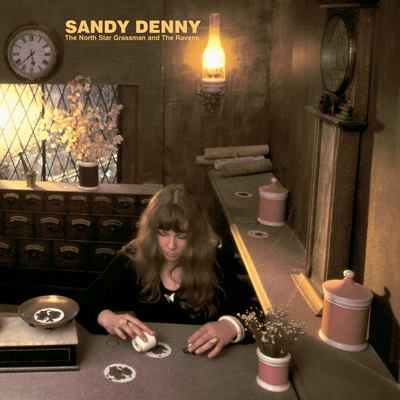
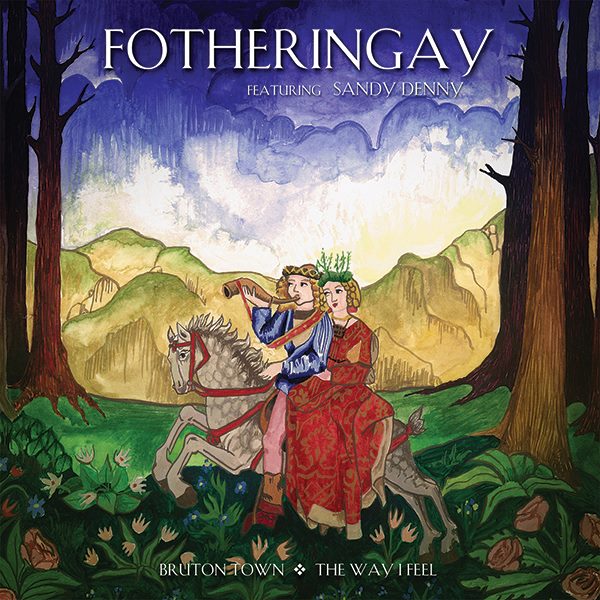
DAYME AROCENA-CUBAFONIA.
Daymé Arocena-Cubafonía.
When it comes to music, nowadays, the world is a much smaller place that it used to. Especially when compared to the sixties, seventies or even the eighties. Back then, it was almost impossible to discover music from anywhere other than North America, parts of Europe or Britain. It was impossible to discover the delights of African, Eastern European, Latin American or Cuban music. Eventually, this began to change, after the birth of the internet.
This was a game-changer for record buyers worldwide. So was the changing political climate. Eastern Europe was now open for business, while many countries were now regarded as tourist destinations. People were exposed to different types of music when they holidayed in South America, the Caribbean, parts of Africa and in Cuba. However, for most people, the internet was the start of a musical voyage of discovery.
Suddenly, they were able to discover music from all over the world. Soon, online marketplaces meant that record buyers were able to buy music from all over the world. Record buyers were regularly buying LPs from Asia, South America, Africa and Eastern Europe. This new generation of record buyers had truly eclectic taste.
Soon, new independent record labels were being founded to specifically cater for the eclectic taste of this new breed of discerning record buyers. They took a different approach to compilations and reissues. Suddenly, record shops were stocking compilations of African, Latin American and Cuban music. For many artists that featured on these compilations, this the big break that they had been waiting for. It certainly was the case for Daymé Arocena, who first came to prominence in 2014 on Havana Cultura Mix-The Soundclash!, which was released on Gilles Peterson’s Brownswood Recordings.
Three years later, and Daymé Arocena recently released her sophomore album Cubafonía on Brownswood Recordings. It’s the followup to Nueva Era, which was released in 2015. Cubafonía is a carefully crafted and accomplished album from Daymé Arocena, who was destined to become a singer.
The Daymé Arocena story is one of triumphing over adversity. She was born in Havana in 1994, and grew up in a two bedroom house with twenty-one other people. It was far from an ideal start in life. However, it was where Daymé Arocena first heard and experienced the countless different and disparate rumba rhythms. They regularly filled the house, and were akin to a joyous call to dance. From an early age, Daymé Arocena was immersed in the different types of Cuban music. This was the start of her lifelong love affair with music.
By the age of nine, Daymé Arocena had entered one of Havana’s most prestigious, state-funded classical conservatoires. Already, Daymé Arocena had come a long way from her humble beginnings.
As classical training progressed, Daymé Arocena was encouraged to try and learn to play the piano, violin and guitar. Soon, though, she discovered that her voice was the instrument she could make the best use of. Already Daymé Arocena was showing signs of becoming one of the future stars of Cuban music.
Despite this, Daymé Arocena turned her attention to choir directing whilst at the prestigious classical conservatoire. That was also where she joined several children’s bands. Later, this included the fusion jazz quintet Sumsum Corda, which Daymé Arocena joined in 2010. It embarked upon tours of Nicaragua and Norway. However, despite playing fusion, Daymé Arocena never forgot her musical roots. That would be the case throughout Daymé Arocena’s career, which would blossom over the next few years.
Having enjoyed being a member of Joaquin Betancourt’s big band, Daymé Arocena decided that the time was right to form her own band. This lead to Daymé Arocena founding Alami, an all-girl band.
In 2013, Alami were invited to play at the Jazz Plaza Festival by Canadian saxophonist Jane Bunnet. They must have made an impression on Jane Bunnet, who later, asked Alami to join her new project Maqueque.
For Alami, this was the start of a new and exciting chapter in their career. Jane Bunnet and Maqueque collaborated on what became eponymous debut album. It was released in 2014, and won the 2015 Juno Award, in Best Album Jazz category. By then, a new chapter in Daymé Arocena’s career was well underway.
Over the last couple of years, Daymé Arocena’s music came to the attention of a Havana Cultura, which helps to promote contemporary Cuban culture. Through Havana Cultura, Daymé Arocena came to the attention of broadcaster, DJ, promoter and record label founder Gilles Peterson in 2014. By then Daymé Arocena was one of Cuban music’s rising stars.
Gilles Peterson met Daymé Arocena and was so impressed by the twenty year old that he invited her to become part of his latest project. Havana Cultura Mix-The Soundclash! was the first album from what was billed as Gilles Peterson Presents Havana Cultura. Daymé Arocena played a starring role on the compilation, contributing vocals to U Knew Before, Me Lleva La Habana and Sandunga. One of the highlights of the compilation was U Knew Before, which featured a vocal masterclass from Daymé Arocena.
After her performance on Havana Cultura Mix-The Soundclash!, Gilles Peterson was keen to sign Daymé Arocena to his Brownswood Records. By then, other record labels had heard about the considerable talents of Daymé Arocena. However, there was never any doubt that Daymé Arocena was going to sign for Brownswood Records.
Having signed to Brownswood Records, Gilles Peterson became Daymé Arocena’s musical mentor. He would lead his latest signing through what can be a maze, where pitfalls lurk round every corner. Soon, Daymé Arocena would make her debut for Brownswood Records.
As 2015 dawned, Daymé Arocena released The Havana Cultura Sessions EP, which was her debut for her new album. It featured four songs, including a compelling cover of Cry Me A River. The Havana Cultura Sessions EP was enough for record buyers and those within the music industry to sit up and take notice.
This was the start of what was the busiest year of Daymé Arocena’s career so far. She spent much of 2015 recording her debut album and playing live. It was a whirlwind, that ended with the release of Daymé Arocena’s debut album Nueva Era in late 2015. Nueva Era was released to widespread critical acclaim, and was an important album culturally.
Nueva Era found Daymé Arocena attempting to redefine Nueva Era what Cuban music stood for. Daymé Arocena was determined move Cuban music beyond what she saw as its stereotypical sound. This was a big ask, especially from an artist who was just releasing their debut album. However, Daymé Arocena had put a great deal of thought into what she was doing.
Daymé Arocena had a vision for the future of Cuban music. Her classical training has played its part in forming Daymé Arocena’s interconnected vision of Cuban music. It takes its inspiration from the different rhythms and styles that are unique to each Caribbean island.
These are all very different, but played an important part in the musical development of Daymé Arocena. This includes Changüí, which originated in the Guantánamo Province in the nineteenth Century. It’s an ancestor of modern salsa, which was popular in Cuba during the twentieth Century. Then there’s Guaguancó, which is a sub-genre of the rhumba, and combines percussion, voices and dance. There’s two types of Guaguancó, Havana and Matanzas, which Daymé Arocena was introduced to growing up. It was a similar case with the ballada style that was popular in Cuba during the seventies. Each style of music had influenced Daymé Arocena growing up, and as she embarked upon a career as a singer.
By 2015, Daymé Arocena was already a talented and versatile singer. Seamlessly, she could switch between musical styles, as she revisits Cuba’s musical past and marries them with a much more contemporary Nu-Soul and jazz-tinged sound. Mostly, Daymé Arocena sings in Spanish, but sometimes, she switches to English and even French. This depends upon what the mood and spirit dictates for one of the rising stars of Cuban music.
Buoyed by the success of her debut album, career continued apace. During 2016, Daymé Arocena released an E.P. of cover versions One Takes. It was another showcase for the vocal prowess of Daymé Arocena. So was the second collaboration with Jane Bunnet.
A year after their eponymous debut album won a Juno Award, in Best Album Jazz category Jane Bunnet and Maqueque returned with their much-anticipated sophomore album Oddara. It was released to plaudits and praise in 2016, and the rise and rise of Daymé Arocena continued apace.
The last few years had been a whirlwind of activity for Daymé Arocena. She had played at some of the most prestigious events, including the Jazz Na Fabrica Festival, in Brazil; Les Voix Humaines Festival, in Cuba; the Duc des Lombards and Worldwide Festival, in France. There’s also been appearances in London, Los Angeles and Tokyo. The name Daymé Arocena is already known far and wide.
This comes as no surprise. Already Daymé Arocena has shared a stage with the legendary Roy Ayers, and with Brazilian superstar Ed Motta. That was one of the proudest moments of her career. So much so, that she left the tears in tears of joy. Other highlights of Daymé Arocena included collaborating with jazz musicians Roberto Fonseca and Yasek Manzano, and with Russian DJ Raumskaya. All these collaborations shape Daymé Arocena’s approach to music, and how she continues to redefine Cuban music.
Although Daymé Arocena continues to redefine Cuban music, she’s extremely proud and protective of her musical heritage and roots. It’s something to be taken seriously, as it’s part of Cuban culture and history. Daymé Arocena is determined to help keep Cuba’s distinct and disparate musical dialects alive. This includes through her own music, including Daymé Arocen much-anticipated sophomore album Cubafonía, which was recently released by Brownswood Recordings.
Cubafonia is a truly ambitious from the newly crowned Queen of Cuban music. It features eleven new songs that showcase the versatility and vocal prowess of a singer who in the future, has the potential to crossover. That wouldn’t come as a surprise, as there’s a soulfulness to Daymé Arocen’s voice, which is equally comfortable singing jazz and pop. Meanwhile, though, Daymé Arocen remains loyal to her roots.
So much so, that she fuses irresistible Cuban rhythms with chants that are a reminder of Daymé Arocen’s Afro-Cuban Santería faith on the album opener Eleggua. Elsewhere, Daymé Arocen seamlessly switches between and incorporates elements of disparate musical genres during the eleven songs on Cubafonia. They’re guaranteed to toy with the listener’s emotions.
Other songs have a strong narrative, including La Rumba Me Llamo Yo, an energetic rumba guaguancó workout. It tells the story of a woman who embarked upon a relationship her mother warned her about. Later, it takes on a joyous sound, as what sounds like a musical party unfolds. Lo Que Fue is the perfect showcase for Daymé Arocen as she unleashes a soul-baring vocal. Maybe Tomorrow is another soulful confessional, where Daymé Arocen combines emotion and power against a carefully crafted arrangement that features lush strings. Soon, though, Daymé Arocen takes Cubafonía in a different direction.
Very different is Negra Caridad, which references Cuba’s musical past. Especially, Benny More’s big band and the one time Queen of Cuban music Lupe. However, a new Queen has been crowned, and continues to showcase her versatility as her vocal veers between soulful vocal and a scat on Mambo Na’ Mà, while the band fuse soul, jazz, and mambo that sounds as if it was recorded in downtown New Orleans. Soon, Daymé Arocen drops the tempo.
Cómo is the first of a trio of ballads. Sonically and stylistically it’s reminiscent of Sade in her prime. That sound is given a makeover, and definitely has widespread appeal. It could be the direction for Daymé Aroce to head in, if she wants to enjoy mainstream success. Todo Por Amor picks up where Cómo left off, and is another beautiful ballad. Completing the trio of ballads is the jazz-tinged and soulful Ángel, which features another soul-baring vocal. After this, the voice of an Ángel changes direction once again.
Genre-melting describes It’s Not Gonna Be Forever, as Cuban rhythms combine with funk and jazz on this carefully crafted song. Daymé Aroce’s vocal veers between soulful to a scat, as one of the best arrangement on Cubafonía unfolds. This leaves just the understated, folk-tinged strains of Valentine, which comes from Cuba with love.
Cubafonía marks the musical coming age of Daymé Aroce, whose a truly talented and versatile vocalist. Seamlessly, she switches between musical genres, as Daymé Aroce breathes life, meaning and emotion into the lyrics. She’s equally at home on the energetic rumba guaguancó workout La Rumba Me Llamo Yo, as she is on the ballads like Cómo, Todo Por Amo and Ángel. These tracks feature both Cuban music’s past and present.
Daymé Aroce is immensely proud of her Cuban musical roots, and continues to embrace and incorporate them throughout Cubafonía. That is admirable, as it would be all too easy to change direction musically in pursuit of fame and fortune. After all, Daymé Aroce is blessed with a deeply soulful and velvety voice. It’s perfectly suited to the ballads and more soulful sides on Cubafonía. When it comes to the jazzier cuts, Daymé Aroce is equally at home. She’s one of the most versatile singers of recent years, and proves that throughout Cubafonía. She’s also a singer who has crossover appeal.
It would be an interesting experiment if Daymé Aroce were to record a crossover album of that featured soulful ballads and jazzier songs. Would this be the album that transformed the fortunes of Daymé Aroce and turn her into the next Queen of Nu-Soul? There’s every chance, as Daymé Aroce certainly has the vocal prowess and versatility.
For the time being, though, it’s highly unlikely that Daymé Aroce would even consider turning her back on her musical roots. Especially considering how popular her unique of music is proving. It’s won Daymé Aroce fans all over the world. She’s come a long way since she left Joaquin Betancourt’s big band.
Since then, the rise and rise of Daymé Aroce has continued apace. What she’s already achieved must be beyond her wildest dreams. It’s certainly a long way from that two bedroom house that Daymé Aroce shared with twenty-one other people as a child. These days are long behind Daymé Aroce, who has used her talent to overcome adversity, and what must have been a difficult start in life. However, what Daymé Aroce is only the the start of what should be a long and successful career.
While Cubafonía may only Daymé Aroce’s sophomore album, it’s a career defining album from a truly talented and versatile vocalist. It marks the coming of age musically of Daymé Aroce who has already been crowned the new Queen of Cuban music. No wonder, given the given the quality of music that Daymé Aroce has already released. Her finest moment is Cubafonía, which is a musical Valentine from the new Queen of Cuban music Daymé Aroce, who has the voice of an Angel.
Daymé Arocena-Cubafonía.
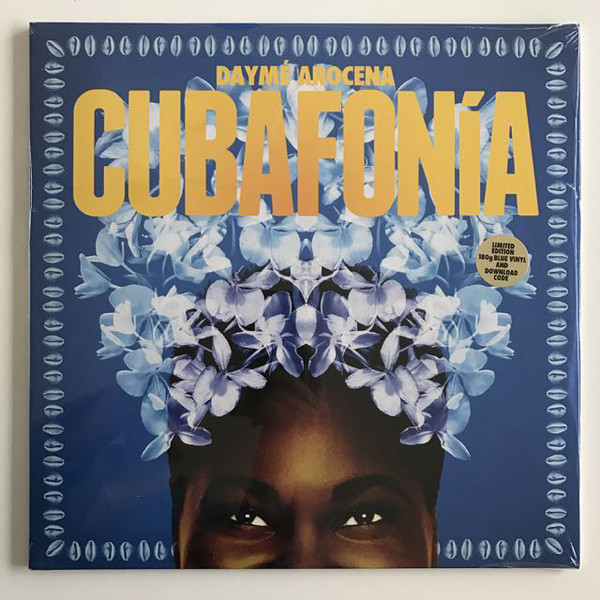

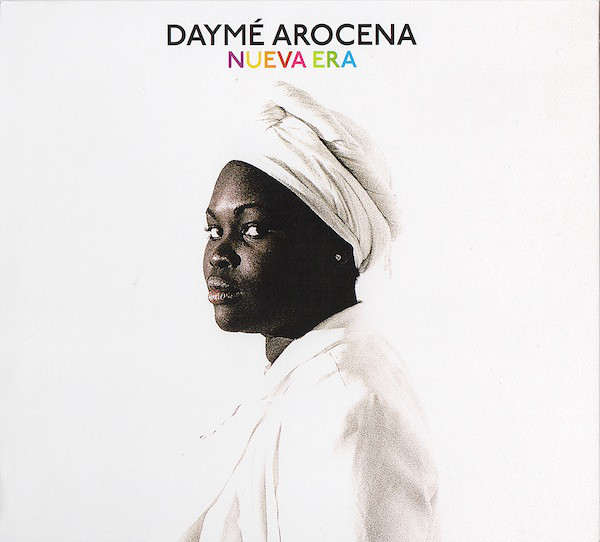

TAPIMAN-HARD DRIVE.
Tapiman-Hard Drive.
During the seventies, the hard rocking Spanish power trio Tapiman, released a trio of albums between 1972 and 1979. This includes Tapiman, which is a cult classic, that nowadays, changes hands for over £800. It was, without doubt Tapiman’s finest hour. Sadly, these three albums amount to everything that Tapiman recorded during their seventies heyday. Recently, it became apparent that that wasn’t strictly true.
The three albums released by Tapiman during the seventies, were recorded by what was the second lineup of the band. Recently, it transpired that the original lineup of Tapiman had recorded ten tracks in 1971. Very few people were aware of these homemade recordings, which include a cover of Black Sabbath’s Planet Caravan. That is why they’ve lain unreleased for nearly forty-six years
Recently, the recordings by the original lineup of Tapiman made their debut on Hard Drive, which was released by Guerssen Records on ’28th’ April 2017. It features Tapiman at their hard rocking best, as they switch between, and combine, hard rock, proto-metal and even a hint of psychedelia and the Canterbury Scene. These eleven tracks on Hard Drive are reminder of the original lineup of Tapiman in 1971, as their career began,
Tapiman were formed in Barcelona, Spain in early 1971 by drummer Joseph María Vilaseca “Tapioles” and guitar virtuoso Miguel Angel Núñez. The pair struggled for a while to find the right bassist. They auditioned a few different bassists, but the chemistry just wasn’t right. Things changed when Pepe Fernández auditioned. Suddenly, the nascent band had found its bassist. Now the power trio had an enviable lineup of experienced musicians.
By then, Joseph María Vilaseca “Tapioles” was regarded as one of the best drummers at the time. He had previously been a member of Máquina, and played on their legendary 1970 debut album Why? Máquina looked as if they were destined to become one of the biggest rock groups in Spain. That was until lead singer Jordi Batiste left Máquina.
This was essentially the end of the road for Máquina. While different line-ups of the band were tried out, it was never the same band. The end came for Joseph María Vilaseca “Tapioles” when three other members of the Máquina formed a new band. This Joseph decided the time for him to found his own band.
Not long after this, Joseph María Vilaseca “Tapioles” met Miguel Angel Núñez. The pair soon formed a friendship, and realising that they worked well together, decided to form a new band. This was the basis for a successful band, as they were both experienced and talented musicians.
Previously, Miguel Angel Núñez had been already been a member of several different bands. At first he was the singer, but gradually, he began to play guitar in the some of the bands. Soon, Miguel Angel Núñez was well on his way to becoming one of Spain’s most exciting and flamboyant guitarists. He found the perfect home for his talents in the new group.
This new group didn’t as yet, have a name. Soon, the two friends hit on an idea that would provide the name for their band. They decided to take the first letters of their names and combine them. Joseph María Vilaseca “Tapioles” took the first four letters from surname (Tapi), while Miguel Angel Núñez took the initials from each name (man) and Tapiman was born. All that remained was finding a bassist.
After trying a few bassists, Tapiman discovered Pepe Fernández, who was the final piece in the jigsaw. Not only did his playing style suit the new band’s, but he well known with Barcelona’s progressive rock scene. Pepe had also previously been a member of the psychedelic blues band Vértice who recorded the single Take Me Away in 1970. Given his experience and track record, Pepe was the perfect addition to the nascent power trio. Sadly, Tapiman would only be together less than a year.
Despite only being together such a short time, Tapiman certainly made their mark on Spanish music. The rise and rise of Tapiman was certainly rapid. After Tapiman had honed their sound, Barcelona’s newest power trio started playing on live. Soon, Tapiman were a familiar face on the local music scene. Unlike most new bands, Tapiman soon became a popular draw. However, it wasn’t just music lovers that arrived at their gigs.
Three months after Tapiman were formed, an A&R representative from a local record label, Edigsa arrived at one of their concerts. They wanted to sign Tapiman, and for the group to record and release their debut single on Edigsa.
This wasn’t going to be just any single though. No, Claudi Marti who owned Edgisa, had very specific ideas about the single. It had to last a certain time, and have a “unique” sound so that record stations would play the single.
Having signed a contract with Edgisa, the three members of Tapiman got to work, and penned Hey You, where Miguel Angel Núñez’s vocal and Pepe Fernández’s play lead roles in the sound and success of the song. For the B-Side, Miguel Angel Núñez penned Sugar Stone. These two songs became Tapiman’s debut single, when it was released in 1971. For Tapiman, this was the next part of a musical adventure.
Not long after the release of their debut Hey You, Tapiman entered the First Trocadero Music Festival. While Tapiman were one of the favourites, the competition was fierce. Two Barcelona based prog-psych bands, Máquina! and Pan and Regaliz were regarded as the favourites. Both were experienced campaigners. Despite their experience, it was Tapiman that triumphed. They proved to be the favourites of what was an enthusiastic audience.
This was just one of many enthusiastic audiences Tapiman played in front of. Others included their morning shows at the Iris and at the Barbarella club in Mallorca. This was just one of the many top clubs that Tapiman played at during what was one of the busiest periods of their short career. However, one of the highlights came when they played at the Granollers First Festival of Progressive Rock.
Tapiman who were one of the newest groups on the bill at the First Festival of Progressive Rock. Despite this, they stole the show with their acid rock sound. Suddenly, the Spanish music press were heaping praise on Tapiman. They were hailed as one of the rising stars of Spanish underground rock, who had a bright future in front of them.
It certainly looked that way. Suddenly, Tapiman were receiving offers from far and wide. This included from Jim Inman, who managed American bands. He wanted to take Tapiman to America, where they would spend a month touring San Francisco and the West Coast of America with major bands like Jefferson Airplane. This Jim Inman hoped, would Tapiman to the lucrative American market. That never happened though.
Instead, Tapiman were meant to start recording their debut album. It was hoped that the album would capture Tapiman’s live sound. Tapiman live shows were raw and energetic. To capture this sound, a decision was made to record the album live. After Tapiman encountered technical difficulties, they had to rethink their approach to recording the album.
Eventually, Tapiman decided to record the album at Gema Studios, in Barcelona. Rather than a closed session, Tapiman decided to record the album with members of the public present. This method had been used in America, but never before in Spain. The lucky members of the public that arrived at the studio got to hear Tapiman in full flight, on what was a musical first in Spain. Once again, Tapiman were breaking new ground. Things were looking good for Tapiman.
They were regarded as one of the rising stars of Spanish underground rock. Tapiman were a popular live draw, who were starting to play further afield. This included a concert in Andorra, that took place not long after Tapiman had recorded their debut album. For Tapiman, this should’ve been a time to celebrate, as soon, their debut album would be completed and ready for release. Sadly, that wasn’t the case.
By the time of the concert in Andorra, there had been was some arguments between members of the band. This isn’t unusual in bands. Especially one like Tapiman, which featured three talented and creative people, who over the last few months had spent much of their time together. It was only natural that there will be the occasional disagreement. What nobody was prepared for, was Miguel Angel Núñez’s announcement that he was leaving Tapiman. For the other two members of the band this was a huge body blow.
Tapiman had just recorded their debut album. All that remained was to do some overdubbing, and then the album would be ready for release. That wouldn’t be possible without Miguel Angel Núñez, whose guitar playing was a crucial part of the album. Without him, the album wouldn’t be finished. It was imperative that Miguel Angel Núñez changed his mind, and the album was completed. After all, this album was what Tapiman had spent the last few months working towards. Now it looked like it would all be for nothing.
Despite the best efforts of Joseph María Vilaseca “Tapioles” and Pepe Fernández, Miguel Angel Núñez wasn’t willing to change his mind. Even Claudi Marti who owned the Edgisa label, couldn’t convince Miguel Angel Núñez to change his mind about leaving Tapiman. It was the end of an era.
The ten tracks that were recently released as Hard Drive were never released, and since 1971, have lain in the Tapiman vaults. That was a great shame, as they showcase they combined and considerable talents of the original lineup of Tapiman.
Opening Hard Drive is the title-track, which is one of the songs recorded at Tapiman’s rehearsal space. Drum rolls and Miguel’s searing guitar riffs give way to Pepe’s bounding bass and soon, Tapiman are in full flight. As the drums provide the heartbeat, the bass and searing, scorching guitar play leading roles in this hard rocking track. They’re soon joined by Miguel’s urgent rocky vocal, which sounds as if it’s been inspirited by Black Sabbath, Deep Purple or Led Zeppelin. When the vocal drops out, Tapiman unleash a raw, rocky jam. Their playing is tight, inventive and briefly, pays homage to The Who, before reaching a glorious rocky crescendo.
No Control was meant to feature on the B-Side of Tapiman’s sophomore album No Control, which was never unreleased. As is often the case, B-Sides prove to be hidden gems. A searing, psychedelic guitar sets the scene for a vocal powerhouse. Meanwhile, Tapiman’s rhythm section lock down a groove as Miguel struts and swaggers his way through the lyrics. Behind him, drums pound, the bass bounds and cymbals crash. Miguel unleashes a fleet fingered, bristling guitar solo, before spraying machine gun riffs across the arrangement as hard rock meets psychedelia. If ever a song deserved to fare better than a B-Side, it’s No Control, which is a tantalising reminder of what the ordinal lineup of Tapiman were capable of.
Eight is the third of five tracks Tapiman recorded in their rehearsal rooms. This instrumental is like hearing the original lineup of Tapiman live. As the rhythm section lay down a groove, the bass bounds and snakes around the drumbeats. Soon, Miguel steps up, and delivers an effects laden solo. Behind him, Joseph continues to works his way round the kit, sometimes relying upon the ride, before pounding the drums enthusiastically. It’s a much more restrained performance, which results in much more mellow and melodic track. Latterly, the arrangement is stripped bare, when a drum roll, gives way to wailing feedback. Miguel’s searing guitar ensures the psychedelic rock of Eight reaches an impressive crescendo.
Time On Space is another instrumental, and is a showcase for a guitar masterclass from Miguel. He unleashes a blistering solo, while the bass cuts through the arrangement and drums power the arrangement along. Although Tapiman are a talented power trio, it’s Miguel that steals the show with another scorching, fleet fingered solo from a musical wizard.
Joseph’s drums take centre-stage on No Title as he powers his way round the kit. Soon, Pepe’s bass and Miguel’s Hendrix inspired guitar join and the tempo rises. The rhythm section power the arrangement along, with the bass matching the guitar every step of the way. Meanwhile, Miguel’s playing is fast, fluid and flamboyant, as the bass provides the heartbeat. Soon, the drums enjoy their moment in the sun, with flamboyant flourishes of guitar adding the final touch as Tapiman reach new heights. As astounded studio audience gasp in disbelief, before a walking bass and effects laden guitar power the arrangement along as No Title reaches a dramatic ending. It’s one of the highlights of Hard Drive.
Having counted the band in a tack piano plays on Before Last Minute. Soon, it’s joined by quivering effects laden guitar as the rhythm section provide the heartbeat. Meanwhile, the music of two decades melts into one. Elements of sixties psychedelia and seventies rock melt combine to create a punchy, driving dramatic instrumental
Straight away, lysergic and dreamy describes Miguel’s vocal on Long Sea Journey. Again, there’s a sixties psychedelic sound to the understated and spacious arrangement. Here, less is more as guitars and swirling, droning organ are deployed. Along with the vocal, they play leading roles in this cinematic psychedelic song.
Just a lone acoustic guitar accompanies a wistful vocal as Tapiman cover Black Sabbath’s Planet Caravan. Soon, rhythm section enter, and Tapiman march to the beat of Joseph’s drum. Meanwhile, a prowling bass works its way across the arrangement, before a scorching, psychedelic guitar soars high above the arrangement. When it drops out, a military beat, prowling bass and acoustic guitar accompany the emotive, wistful vocal on this poignant cover of Black Sabbath’s Planet Caravan.
Closing Hard Drive is an acoustic demo version of Eight, which features the shimmering, glistening guitars that intertwine. They’re at the heart of this short instrumental, that lasts just over a minute. That is enough to hear how the track evolved, and became the version that featured earlier on Hard Drive. However, it’s the demo of Eight that closes this chapter in the Tapiman story.
The chapter in the Tapiman story that Hard Drive covers, is one that very few people were aware of. Some people were aware that it was the second lineup of Tapiman that recorded three albums between 1972 and 1979, Tapiman, Rock ’n’ Roll Music and En Ruta. However, very few knew that the original lineup of Tapiman began work on an album before they split-up. They certainly weren’t aware that the album wasn’t almost complete. Sadly, it was never completed.
Instead, Max Sunyer joined the band and they embarked upon a new chapter in their career. This was the most successful period in their career. However, if Miguel Angel Núñez hadn’t decided to leave the band in 1971, there’s every chance that the original lineup of Tapiman would’ve gone on to reach even greater heights.
The ten tracks on Hard Drive are a tantalising reminder of what the original lineup of Tapiman sounded like. How would the songs have sounded if they had been completed, and album released? Maybe that would’ve been the first step in a musical journey that saw Tapiman become not just one of the biggest Spanish bands of the seventies, but a giant of European music. Tapiman certainly had the talent. Sadly, their differences got in the way of a successful career.
Maybe if they a manager who could’ve helped the three members of Tapiman resolve their differences, then things would’ve been very different? Certainly Tapiman’s debut album wouldn’t have lain unreleased for forty-six years. Sadly, that was what happened.
Recently,ten homemade recordings by the original lineup of Tapiman made their debut on Drive, which was released by Guerssen Records. It features Tapiman at their hard rocking best, as they switch between and combine hard rock, proto-metal and even a hint of psychedelia. There’s even a nod to the Canterbury Scene, on Hard Drive. It features the hard rocking sound of Tapiman in full flight on Hard Drive, which is a tantalising reminder of what the original lineup of Tapiman were capable of, and the heights they could’ve and should’ve achieved.
Tapiman-Hard Drive.


BOO HEWERDINE-SWIMMING IN MERCURY.
Boo Hewerdine-Swimming In Mercury.
There aren’t many people who have spent the past four decades doing something they love. Nowadays, they’re in the minority, and are the lucky ones. Award winning singer-songwriter Boo Hewerdine is one of the lucky ones, and has been fortunate enough to spend the last four decades fulfilling what was once a dream.
This dream began as a seven year old, when Boo Hewerdine was given a handful of singles and a Dansette record player. He remembers: “I would study the labels. The title, the singer, the numbers, Columbia, HMV, the stuff about rights written around the edge and most intriguing–the names in the brackets. It turned out that these people had “written” these songs. Songs could be made up. Conjured out of thin air. I decided then, at the age of seven, that’s what I would do. I couldn’t sing or play an instrument but I had an internal jukebox going on the whole time.” This Boo Hewerdine would put to good use in the future.
By the time Boo Hewerdine left school a decade later, he had mastered the guitar and was an aspiring singer-songwriter. Despite his ambition and aspirations, Boo Hewerdine ended up working in the warehouse of Andy Records’ in Bury. St. Edmunds. However, Boo Hewerdine always had ambition beyond working in a record shop.
This first materialised when he formed his first band with a friend. Placebo Thing may have been a short-lived band, but it gave Boo a tantalising taste of life as a musician. Suddenly, he wanted to be making records rather than selling them.
Boo Hewerdine made his recording debut thirty-five years ago with The Great Divide. Four decades later, and Boo Hewerdine is regarded as one Britain’s leading singer-songwriters. He will release his much anticipated solo album Swimming In Mercury, on Reveal Records on ‘28th’ 2017. It’s a very personal, insightful and autobiographical album, with Boo Hewerdine reflecting on the past on Swimming In Mercury. There’s been much for Boo Hewerdine to reflect on during a career that’s spanned four decades.
The Great Divide.
Fortunately, he didn’t have long wait. Boo Hewerdine joined The Great Divide in the early eighties. They were another local band, but one that looked as if they were going places.
By 1982, The Great Divide had signed to a local Cambridge label, Wimp Records. Twenty-one year old Boo Hewerdine made his debut on the single Who Broke the Love Bank. Not long after this, The Great Divide caught a break, when Mike Scott of The Waterboys heard the band.
He thought that The Great Divide had potential, so recommended them Ensign Records. Executives at Ensign Records agreed, and signed The Great Divide. They went on to release a trio of singles on Ensign Records. Alas, commercial success eluded these singles. By 1985, Boo Hewerdine was back where it all started for him.
With The Great Divide consigned to musical history, Boo Hewerdine was back working in a record shop in 1985. This time, Boo Hewerdine was behind the counter of the Beat Goes On record shop in Cambridge. While this allowed Boo to be around music, he hadn’t given up on his dream of making a living as a musician. So when Boo met jazz drummer Tony Shepherd, it looked like his time behind the counter could be coming to an end.
The Bible.
Originally, Tony Shepherd was a jazz drummer when he met Boo Hewerdine. While Tony sat in with other bands, he was like Boo, between bands. So the pair decided to form a new band, and The Bible were born. They drafted in Kevin Flanagan another former member of The Great Divide. Before long, The Bible began to make an impression locally.
Soon, The Bible were a popular band locally. They had quickly acquired a cult following. Word began to spread further afield about this new band from Cambridge. This was through word-of-mouth. So it was no surprise that a record company decided to sign The Bible.
The label that signed The Bible was Black Records, a Norwich based independent label. They released The Great Divide’s 1986 debut album Walking The Ghost Back Home. It reached number ten in the UK Indie Charts, and featured two hit singles. Graceland reached number eighty-seven in UK charts, before Mahalia reached number fifteen in the UK Indie Charts. Given the success of Walking The Ghost Back Home, it was no surprise that bigger record labels started to take an interest The Bible.
Eventually, The Bible decided to sign to Chrysalis. They began work on their sophomore album Eureka. The Great Divide had decided to produce the album with Pete Smith and Owen Morris. However, the initial sessions proved unsatisfactory for the band. It was then that their management suggested bringing country rocker Steve Earle onboard to produce Eureka. This worked, and the album was scheduled for release in 1988.
Prior to the release, the reviews of Eureka were positive. Despite this, the album stalled at just seven-one in the UK. For everyone involved, this was disappointing, considering how popular The Bible were. Surely this was a blip?
Just a year later, The Bible enjoyed the most successful single of their career. A rerecorded version of Graceland reached fifty-one in the UK. It looked like things were improving for them. Then Honey Be Good reached fifty-four in the UK. However, when The Bible released their third album Dodo, it failed to chart. Things were set to get even worse.
A year later, and The Bible split-up in 1990. After five years together, and a lineup that’s best described as fluid, it looked like the end of the road for The Bible. It wasn’t.
Since then, The Bible have reformed twice. The first time came in 1994, and the second in 2011. However, then Boo Hewerdine was a successful solo artist.
Boo Hewerdine and Darden Smith-Evidence.
Once The Bible split-up, Boo Hewerdine decided to concentrate on his solo career. He knew the direction his career was heading. A meeting a year earlier had influenced the direction his music was about to head in.
This meeting took place in 1989, while The Bible were still together. That was when an A&R executive introduced him to New Country singer Darden Smith. The two realising they had much in common, decided to write and record an album together. Time was short though.
Somehow, Darden Smith and Boo Hewerdine managed to write and record an album in just nine days. This album became Evidence, which was released to critical acclaim in 1989. This was the first, but not the last time Boo would collaborate with other artists. By then, he would be a solo.
The Solo Years.
Now that The Bible had split-up, Boo Hewerdine embarked upon a solo career. This solo career began in 1990. Since then, Boo has released a string of E.P.s. and will soon release his ninth album Swimming In Mercury.
Two years after the demise of The Bible, Boo Hewerdine released his debut album Ignorance in 1992. Critical acclaim accompanied the release Ignorance. It was a much anticipated and highly accomplished album of carefully crafted songs. However, three years would pass before the followup was released.
The reason for the delay, was that by then, Boo Hewerdine was writing for other artists. This included writing for Eddi Reader and Clive Gregson’s 1993 album Wonderful Lie. Since then, Boo has written songs for many successful artists, including KD Lang, Kris Drever, David McAlmont, Natalie Imbruglia and Alex Parks. However, this sometimes curtailed his ability to release albums quickly.
It wasn’t until 1995 that Boo Hewerdine returned with his sophomore album Worlds End. Just like Ignorance, praise and plaudits accompanied the release of World’s End. Buoyed by the response and success of World’s End, Boo released Baptist Hospital in 1996. Some critics felt that was the best album of Boo’s career. With album he seemed to be maturing and growing as a singer and songwriter. Like a fine wine, Boo was maturing with age.
So when Nick Hornby was looking for someone to write the soundtrack to the film adaptation of his book Fever Pitch, Boo got the call. The film was released in 1997, the same year that the film Twenty Four Seven was released. Boo and Neil MacColl had written the soundtrack. The other soundtrack that Boo penned for the television film Our Boy. For Boo, writing for film and television was a whole new world, and one he would return to later. Before that, Boo released a new solo album.
Three years had passed since Boo Hewerdine had released Baptist Hospital in 1996. He returned in 1999 with his fourth album Thanksgiving. It featured a guest appearance by Martha Wainwright. By then, Boo’s music was reaching a wider audience. That wasn’t surprising given the quality of songs on Thanksgiving. The Birds Are Leaving, Hope Is A Name, Our Boy, Homesick Son and A Long Winter showcased a talented singer, songwriter and storyteller. However, in 2002, Boo added another string to his bow.
This came about when Boo Hewerdine was asked to co-produce Eddie Reader’s album Angels and Electricity. Boo had written a number of songs for Eddi, but was now co-producing her albums. Soon, Boo was producing The Corrs, Heidi Talbot and Chris Difford. Along with his work as a songwriter, Boo was constantly busy. Sometimes, his solo career seemed to take a backseat. However, in 2001, Boo’s contribution to music was recognised.
In 2001, Boo Hewerdine was named as the Performing Rights Society’s songwriter in residence at The Song’s The Thing concert series in London. Boo had come a long way from when he was working in a record shop warehouse and about to form his first band. Now he was regarded as one of Britain’s top songwriters. He took to the stage during one of The Song’s The Thing concerts, and got the opportunity to showcase his skills as a singer and a songwriter. However, another opportunity for Boo to showcase his songwriting skills arose during 2001.
This came when Boo returned to the world of soundtracks. One of his songs featured in Christine Lahti‘s My First Mister. For Boo, this meant a whole new audience would hear his music. This couldn’t have happened at a better time, as Boo would released a new album in 2002.
Anon, which was released in 2002, was Boo Hewerdine’s first album of the new millennia. By then, Boo’s star was in the ascendancy. It seemed that every album he released was welcomed with open arms by admiring critics. His new album Anon was no different. Boo was consistently releasing albums of carefully crafted, thought provoking songs. That continued to be the case.
When Eddi Reader entered the studio to record her critically acclaimed album Sings The Songs Of Robert Burns, Boo Hewerdine was drafted in to co-produce the album. The result was one of the most successful albums of Eddi Reader’s career. It found favour with Burns aficionados across the world. Buoyed by the success of Sings The Songs Of Robert Burns. 2003 had been a good year for Boo.
It got even better when Boo’s song Different God was chosen to feature on the soundtrack to the film Intermission. After such a successful year, Boo’s thoughts began to turn to his solo career.
Two years later, and Boo Hewerdine returned with a new album in 2005. This was his sixth album, Harmonograph. Boo it seemed had the Midas touch, and critics heaped praise on Harmonograph. However, Boo it seemed, was in no rush to release a followup.
That wasn’t surprising. Boo Hewerdine now spending more time writing songs for other artists. He was also in demand as a producer. He also recorded a comeback album with The Bible. Money and Time was released in 2007. However, Boo hadn’t turned his back on his solo career.
Still, though, he found time to play live, and when he had the time, headed into the studio. The fruits of his most recent sessions were his seventh album God Bless The Pretty Things. It was released in 2009, and just like the albums the had preceded it, was well received by the critics. They lavished praise on God Bless the Pretty Things, which was a welcome, and some felt overdue addition to Boo’s back-catalogue.
Little did they realise it would be six years before Boo Hewerdine released another album. During that period featured on State Of The Union’s two albums. He wrote much of their eponymous debut album and shared the lead vocals with Brook Williams. This was the case when State Of The Union released their 2012 sophomore album Snake Oil. These albums weren’t the only albums Boo worked on.
When Kris Drever was recording his solo album Last Man Standing, Boo featured on the album. Last Man Standing was released in 2015, the same year that Boo released his long-awaited comeback album.
Open was released in 2015, and found Boo Hewerdine crowned the comeback King. He may have been six years since his last solo album, but the fifty-three year old’s comeback album had been well worth the wait. Critical acclaim accompanied the release of Open. However, Boo’s fans wondered when they would hear from Boo again?
Born E.P.
Little did they realise it would be so soon. Just a year later, in 2016, Boo Hewerdine returned with The Born E.P. This the first E.P. that Boo has released since Toy Box No. 2 in 2008. However, the Born E.P. was a very personal collection of songs. It was a collaboration between Boo Hewerdine and his son Ben. They penned five songs, including The Year I Was Born and Swimming In Mercury. They were a tantalising taste of what was in store on Boo Hewerdine’s ninth album Swimming In Mercury.
Swimming In Mercury.
Boo Hewerdine made his recording debut thirty-five years ago with The Great Divide. Four decades later, and Boo Hewerdine is regarded as one Britain’s leading singer-songwriters. He will release his much anticipated solo album Swimming In Mercury on Reveal Records on ‘28th’ 2017. It’s a very personal, insightful and autobiographical album, with Boo Hewerdine reflecting on the past on Swimming In Mercury. There’s been much for Boo Hewerdine to reflect on during the past four decades.
While The Born E.P. was a akin to a musical amuse bouche, Swimming In Mercury was the entree. It featured twelve new songs. Most of these songs were penned by Boo Hewerdine. That is apart from Swimming in Mercury which Boo and Ben Hewerdine cowrote. These twelve songs would eventually become Swimming in Mercury, which was recorded at Chris Pepper’s studio in Cambridge.
Given Swimming in Mercury was an album of autobiographical music and memories, Boo Hewerdine decided to record the album in a very different way to recent albums. He recalls: “the new album was recorded in the spirit of the first four track recording I ever did… but instead of a chunky cassette deck we were able to use Chris Pepper’s Cambridge studio. It was an incredibly enjoyable and creative way to work. Often I would write a song in the morning and by the end of the day we would have another track done”. This was a very different approach to how most albums are recorded nowadays.
In most studios, a Digital Audio Workstation (DAW), like Pro Tools or Logic is at the heart of most studios. They allow artists to use an unlimited amount of tracks. As a result, often 100-200 tracks are used to record a track. Not when Boo Hewerdine recorded Swimming in Mercury. He restricted himself to just four tracks. Still though, he was able to get his message across on Swimming in Mercury as he reflects on this past on what’s a very personal and autobiographical album.
Satellite Town opens Swimming In Mercury. Stabs of a buzzing synth and organ usher in Boo’s vocal as memories come flooding back, of the life he once knew and lived. As he remembers his younger self, he sings “I live in a Satellite Town and I don’t mind,” harmonies, drums and synths are part of the carefully crafted arrangement. Soon, it floats dreamily along a bass and braying saxophone combining with a shimmering guitar. After a refrain of the introduction as Boo remembers: “and on the morning I said goodbye, nobody asked me why?” By then the arrangement is melodic, full of poppy hooks and has a narrative that paints pictures like The Beatles’ A Day In The Life. Later, the understated arrangement skips along, the rhythm section and glistening guitars accompanying Boo’s tender, thoughtful vocal, before a wash of feedback brings this irresistible and radio friendly track to crescendo.
Drums reverberate on A Letter To My Younger Self as lo-fi keyboards usher in Boo’s vocal. Meanwhile, the bass and guitar join the arrangement as Boo reflects on what he would tell his younger self? “Let somebody love you” is the answer. Soon, a saxophone and punchy harmonies joins the carefully which continues to build. Later, when the vocal drops out, an ascending keyboard line adds to the energy of this melodic and hook laden song.
My First Band is another song where Boo reflects on the past. A tack piano is played urgently before the rhythm section and guitar set the scene for Boo’s vocal. He remembers” :broken strings and cheap guitars, rehearsal rooms and beat-up cars.” Despite this: “nothing beats My First Band.” Meanwhile, cooing, Beatles-esque harmonies, and later scorching guitar solo are added as Boo remembers and pays homage to “My First Band.”
Boo replicates the sound of an American TV show during the introduction. It gives way to oo’s vocal on this ballad, and soon, he’s reminiscing about “monochrome” Britain of the sixties, and California; “the American dream where the colours are so much brighter.” Meanwhile, a piano, rhythm section, acoustic guitar and Beach Boys influenced harmonies accompany, and compliment, Boo’s vocal as the memories come flooding back. He remembers how: “the colours were much brighter, California was a dream, a place I saw on American TV, back when I was a boy.” When Boo’s vocal drops out, wistful harmonies provide a backdrop before his vocal returns and the arrangement builds and reaches memorable and melodic crescendo.
A clock chimes on Sleep, which Boo sings along to. Soon, the rhythm section and guitar play slowly and accompany Boo’s tender vocal as the arrangement flows along. Tender harmonies, keyboards and guitar accompany as Boo reflects: “life is a dream, and we dream our lives away” Later, Boo from the moment we are all born we’re marathon dancers who sway until dawn, until the music is done, everyone has to sleep.” By then, the arrangement waltzes thoughtfully along, as a ruminative Boo continues to reflect on life.
A horn plays while drums pound urgently and a guitar glistens on Gemini. Soon, the arrangement builds and takes on a celebratory sound. It provides the backdrop for a joyous Boo whose found the ‘one’ he’s spent a lifetime searching for. “Gemini I know you think I’m mad, you were once in a dream I once had.” Bells ring, a horns sound and the drums march the arrangement along. Later, a searing guitar and lush strings are added to the celebratory sounding arrangement. They’re part of a hook-laden and joyous song from a musical master craftsman.
The Boy Who Never Cried Wolf finds Boo remembering his school days, against a backdrop where a bubbling synth combines with percussion. This allows Boo’s vocal to take centre-stage, as he sings about doing what it took to fit it in. In Boo’s case; “I knew how to make them laugh, I was a holy fool. Ruefully, Boo reflects: “ I never told them the truth, I was The Boy Who Never Cried Wolf.” Meanwhile, the arrangement builds and frames Boo’s vocal. When his vocal drops out, a guitar replaces it. Still the bubbling synth provides the heartbeat to another autobiographical song.
A drum pounds, as if replicating a heartbeat. It sets the scene for Boo’s piano. Soon, he’s delivering a tender, thoughtful vocal, as he reflects upon 1962, “The Year That I Was Born.” He sings of the Cold War, the Berlin Wall, President “Kennedy’s first State Of The Union Speech” and an uncertain future. Briefly, a bass synth pulsates, adding an element of drama. By then, Boo reflects upon “the trial in Jerusalem” and later, “the death of (Ernest) Hemingway.” Uncertainty and sadness it seems, are omnipresent as Boo’s vocal takes centre-stage. Meanwhile, the piano and synth play supporting roles. Later, Boo sings of “The Beatles in The Cavern, the cellar full of noise, all the post war girls and boys, in a world that might that explode.” Boo’s vocal is impassioned and heartfelt, before a vortex of ethereal, celestial sounds sit above the arrangement. Later, wonderment and hope join the uncertainty in what’s a beautiful, reflective song.
Just like several songs on Swimming In Mercury, there’s a Beatles influence to Drinking Alone. It’s the choice of instruments used, the way they’re combined and the cinematic lyrics and vocal. Before that, the bass and guitars combine to provide the perfect backdrop for Boo, who delivers a weary vocal: “it’s only now and then that you head for oblivion, shipwrecked in a bottle again, Drinking Alone”. Later, when the vocal drops out, the strolling arrangement becomes wistful when trad jazz clarinets joins the guitars, bass and piano. Soon, a rueful Boo sings: “it makes you want to laugh out loud, as you think of that old crowd.” They’re just one of the costs of “Drinking Alone,” in this poignant and powerful song about someone who climbed into a bottle and sadly, can’t escape.
Just a piano accompanies Boo on An Atheist In A Foxhole. It’s another poignant and ironic song. Like many people who call themselves an atheist, when they face a crisis in their life, they’re on their knees praying. They become hypocrites who through fear and desperation, embrace religion. Literally, it’s any port in a storm. This becomes apparent with the line: “if I had a rosary, I would turn it in my hand.” Meanwhile, strings sit above the piano before a guitar shimmers and glisten. Deep down, though Boo knows that there’s no one there to hear my call.”
Voice Behind The Curtain is a reminder that for a singer like Boo, the show must go on. It doesn’t matter if “his heart is hurting, hear you go again, stand in the spotlight taking what is yours.” They may receive applause, but deep down, their life can be a mess. However, onstage it’s a case of business as usual. Meanwhile, a guita, piano and later wistful strings accompany Boo on a song where he reflects on life as a modern day troubadour, in another carefully crafted song.
The introduction to Swimming in Mercury, which closes the album is almost jaunty. Just a piano accompanies Boo’s vocal as he sings: “I was a boy growing in up in suburbia, you showed the future to me, skinny and pale, Swimming in Mercury.” By then, Boo has been transported back in time, as he delivers a tender, wistful vocal. He remembers: “we didn’t care, we went everywhere, Swimming in Mercury.” When Boo’s vocal drops out, the piano ensures the spartan arrangement seems to waltz along, all the time, painting pictures.
Two years after the release of his last album Open, one of Britain’s finest troubadours Boo Hewerdine, makes a welcome return with the ninth album of his career Swimming In Mercury. It will be released on Reveal Records on ‘28th’ April 2017. It’s without doubt the finest albums of Boo Hewerdine’s long and illustrious career.
Swimming In Mercury finds Boo Hewerdine in a reflective mood, as he looks back on his life and career so far on this carefully crafted autobiographical album. It features twelve songs, which range from ballads to uptempo tracks. The hooks certainly haven’t been spared by Boo Hewerdine on Swimming In Mercury.
Some of the songs on Swimming In Mercury are beautiful, joyous, melodic, memorable poignant, powerful and thought-provoking. Others are melancholy and ruminative, and invite reflection about the subject matter. Many of the songs on Swimming In Mercury are cinematic, as Boo paints pictures with the lyrics on what’s an autobiographical album from one of Britain’s greatest singer-songwriter.
For newcomers to Boo Hewerdine’s music, Swimming In Mercury is the perfect introduction to his burgeoning back-catalogue. Veterans of Boo Hewerdine’s music will embrace what is without doubt his finest album. Incredibly, it was recorded using just a four channels. Despite this self-imposed restriction, Swimming In Mercury is the work of a true musical master craftsman at the peak of his powers as Boo Hewerdine reflects upon his life and career on this autobiographical opus.
Boo Hewerdine-Swimming In Mercury.

IAN MATTHEWS-VALLEY HI AND SOME DAYS YOU EAT THE BEAR AND SOME DAYS THE BEAR EATS YOU.
Ian Matthews-Valley Hi and Some Days You Eat The Bear and Some Days The Bear Eats You.
Having completed recording of Journeys From Gospel Oak, Ian Matthews had discharged his contractual obligations to Vertigo. Journeys From Gospel Oak was the third and final album he owed Vertigo. This left Ian Matthews free to sign a two album deal with Elektra Records. For Ian Matthews this was the start of a new chapter in his career.
Not only was Ian Matthews signing to a new record label, but he and his family had decided to move to Los Angeles. That was where Ian Matthews would record his next album Valley Hi, with producer Michael Nesmith. Valley Hi and the followup Some Days You Eat The Bear. and Some Days The Bear Eats You, were recently remastered and reissued by BGO Records, and are a reminder of Ian Matthews’ Elektra Records’ years.
Valley Hi.
Once Ian Matthews had settled in Los Angeles, work began on his Elektra Records debut, Valley Hi. This was a dream come true for the twenty-four year old singer, songwriter and musician. He was about to record an album in LA, which was something Ian Matthews had dreamt about. Now that dream was about to become a reality. It had been a long time coming
The discussions about the album, and who was going to produce it, began before Journeys From Gospel Oak was recorded. When it came to choosing a producer, Electra Records’ founder Jac Holzman had suggested that Ian Matthews talk to Michael Nesmith.
He had embarked upon a solo career after leaving The Monkees, but was also a successful songwriter and budding producer. At Jac Holzman’s suggestion, Ian Matthews flew from Britain to LA to meet Michael Nesmith, and talk about recording an album together. The talks lasted two weeks, with Michael Nesmith agreeing to produce Ian Matthews’ Elektra Records’ debut Valley Hi.
For Valley Hi, Ian Matthews decided to record an album of new songs and cover versions. This included three songs that Ian Matthews had penned, Keep On Sailing, Leaving Alone and Save Your Sorrows. Ian Matthews decided to cover one of Michael Nesmith’s songs Propinquity. The other six songs included the traditional song Old Man At The Mill, Richard Thompson’s Shady Lies, Jackson Browne’s These Days, Steve Young’s Seven Bridges Road, Randy Newman’s What Are You Waiting For and Don Gibson’s Blue Blue Day. These ten tracks would become Valley, which was recorded in LA with some top musicians.
Recording of Valley Hi took place at The Countryside Studio, in Los Angeles. Producer Michael Nesmith was assisted by engineer Fritz Richmond. They were joined by a band that had been hand picked to record an album of country rock. This included a rhythm section that featured drummer Danny Lane, bassist and fiddler Billy Graham and guitarists Jay Lacy, Bobby Warford and Michael Nesmith. They were augmented by keyboardist David Barry and O.J. Red Rhodes on pedal steel and dobro. This all-star band accompanied Ian Matthews, who played guitar and laid down the vocals on Valley Hi. Once it was completed, Ian Matthews’ Elektra Records’ debut was released in the summer of 1973.
Before the release of Valley Hi, critics had their say on the album. It found favour with critics, who hailed the album a country rock masterpiece.
That was no exaggeration. Valley Hi was a strong and cohesive album that showcased Ian Matthews’ talents as a songwriter and showcased his versatility as a singer. That’s the case from the opening bars of the Ian Matthews’ composition Keep On Sailin’ right through to the closing notes of Don Gibson’s Nashville classic Blue Blue Day. They’re just two of the highlights of Valley Hi and feature two sides to Ian Matthews.
He’s equally comfortable interpreting urban and rural songs. Sometimes he stays true to the original, like on his rueful cover of Jackson Browne’s These Days, while he takes Randy Newman’s What Are You Waiting For in a new direction. Always though, he breathes life, meaning and emotion into each and every song. Especially on Shady Lies and Leaving Alone which are perfect for Ian Matthews’ interpretative style. It’s as if Ian Matthews has lived and survived the lyrics. However, one of the most melodic and beautiful songs on Valley Hi was Seven Bridges Road. Valley Hi was a country rock classic in waiting, that oozed quality, and had the potential to transform Ian Matthews’ fortunes in America.
When Valley Hi was released in the summer of 1973, the album failed to find an audience. For Ian Matthews, producer Michael Nesmith and everyone at Elektra Records, this was a huge disappointment. Especially given the quality of music on Valley Hi, which nowadays, is regarded as one of the hidden gems on Ian Matthews back-catalogue.
Despite the disappointment, Ian Matthews returned to the studio in late 1973 to record his second album for Elektra Records, Some Days You Eat The Bear and Some Days The Bear Eats You.
Some Days You Eat The Bear and Some Days The Bear Eats You.
Not long after the release of Valley Hi, Ian Matthews began work on the followup albumSome Days You Eat The Bear and Some Days The Bear Eats You. Ian Matthews wrote four new songs, A Wailing Goodbye, Keep On Saying, Home and The Fault. They were augmented by six cover versions. This included Tom Waits’ Ol’ ’55, Danny Whitten’s I Don’t Wanna Talk About It and Gene Clark’s Tried So Hard. They were joined by Donald Fagen and Walter Becker’s Dirty Work, Pete Dello’s Do I Still Figure in Your Life and Jesse Winchester’s Biloxi. These songs were recorded at one of LA’s top studios in late 1973.
Elektra Sound Recorders was booked for the recordingSome Days You Eat The Bear and Some Days The Bear Eats You. The session began on the ‘3rd’ December 1973, but there was no sign of producer Michael Nesmith. This time around, Ian Matthews decided to produce the album himself. Still though, he was joined by some top musicians.
It was essentially an all-star band that joined Ian Matthews at Elektra Sound Recorders. The rhythm section included drummer Willie Leacox, bassist David Dicke and guitarist Jeff ‘Skunk’ Baxter who played electric, acoustic and pedal steel. David Lindley played lap steel guitar, while Danny Weis and Steve Gillette acoustic guitar. They were joined by pedal steel guitarist B.J. Coles, saxophonist Lyn Dobson pianist Michael Fonfars, pianist and organist David Barry, fiddler Richard Green and Richard Curtis on mandolin. Ian Matthews played guitar, added lead vocals and took charge of production. By the ‘10th’ of January 1974, Some Days You Eat The Bear and Some Days The Bear Eats You was complete. Now it was ready for release.
Before that, critics had their say on Some Days You Eat The Bear and Some Days The Bear Eats You. They were greeted by carefully crafted album that was quite different from Valley Hi.
Ian Matthews moved away from country rock on Some Days You Eat The Bear and Some Days The Bear Eats You, and switched between the LA country sound, the West Coast Sound and soft rock. The music was slick, polished and radio friendly. That was no surprise, given the personnel that played on the album. They provided the perfect accompaniment for Ian Matthews. Especially on his rueful cover of Tom Waits’ Ol’ 55, and soul-baring covers of I Don’t Wanna Talk About It and Tried So Hard. There was also a cover of Steely Dan’s Dirty Work, where Ian Matthews and his all-star band stay true to the carefully crafted original. Then on Wailing Goodbye, Keep On Sailing and Home Ian Matthews’ showcased his talents as a singer and songwriter. However, he had kept one of his finest songs until last. The melodic and memorable strains of The Fault closed Days You Eat The Bear…Some Days The Bear Eats Some Days You Eat The Bear and Some Days The Bear Eats You.
When Some Days You Eat The Bear and Some Days The Bear Eats You was released in 1974, the album was bang on trend. However, just like Valley Hi, the album failed to trouble the charts. Given the quality of music on Some Days You Eat The Bear and Some Days The Bear Eats You this was a huge disappointment for everyone involved.

For Ian Matthews, this was the end of the Elektra Records’ years. When his two album deal expired, it wasn’t renewed. So Ian Matthews signed to Columbia Records. While the Elektra Records’ years weren’t the most successful years of Ian Matthews recording career, he released two albums that ooze quality.
The first of these albums was Ian Matthews’ oft-overlooked 1973 country rock masterpiece, Valley Hi. It was followed up by Some Days You Eat The Bear and Some Days The Bear Eats You where Ian Matthews reinvents himself and switches between the LA country sound, soft rock and the West Coast Sound. It was a carefully crafted album that featured slick, radio-friendly music. Despite its undoubted quality, Some Days You Eat The Bear and Some Days The Bear Eats You failed to find an audience. For Ian Matthews, these two albums were the ones that got away.
Forty-three years after Ian Matthews left Elektra Records, BGO Records have remastered and reissued Valley Hi and Some Days You Eat The Bear and Some Days The Bear Eats You. Both album ooze quality and are a reminder of what was an oft-overlooked period in Ian Matthews’ career, the Elektra Records’ years.
Ian Matthews-Valley Hi and Some Days You Eat The Bear and Some Days The Bear Eats You.

FUZZY HASKINS-GOT MY THANG TOGETHER: THE WESTBOUND YEARS.
Fuzzy Haskins-Got My Thang Together: The Westbound Years.
Between 1970 and 1977, Fuzzy Haskins was a member of not one, but two of the most prolific and successful funk bands of the seventies,..Parliament and Funkadelic. They released a total of fourteen albums, which sold in excess of 2.5 million copies. Still, though, Fuzzy Haskins found time to embark upon a solo career.
Fuzzy Haskins released his debut album, A Whole Nother Thang on Westbound Records in 1976. Two years later, and Fuzzy Haskins returned with his sophomore album Radio Active in 1978. Tracks from both albums feature on a recently released Fuzzy Haskins’ retrospective, Got My Thang Together: The Westbound Years, which was released by Westbound Records, an imprint of Ace Records. This new compilation is a comprehensive overview of Fuzzy Haskins’ solo career looks beyond the two albums he released for Westbound Records.
Clarence Eugene “Fuzzy” Haskins was born on June ‘8th’ 1941, in Elkins, West Virginia. That was where the future Fuzzy Haskins became interested in music. Just like many future singers, the church influenced Fuzzy Haskins. Some nights, the Haskins family would join together and they would sing hymns. They would harmonise together, which would stand Fuzzy Haskins in good stead for the future. So would the music he heard on local radio.
At first, it was country music that Fuzzy Haskins heard on the local radio station. Later in the evening, there would sometimes be an hour of R&B and blues music. So much so, that Fuzzy Haskins was inspired to go out and buy a three stringed guitar for $3, which he taught himself how to play. This would stand him in good stead when the Haskins family moved to New Jersey in 1956.
By then, Fuzzy Haskins was fifteen and still at high school. When he arrived in New Jersey, Fuzzy Haskins joined a high school band The Bel-Airs. He would be a Bel-Air for four years, until he met George Clinton 1960.
George Clinton was nineteen, and working in a New Jersey barbershop when Fuzzy Haskins first met him. They both shared a love of music and were members of vocal groups. While Fuzzy Haskins was a Bel-Air, George Clinton lead his own group The Parliaments, who had already released their debut single Poor Willie, a year earlier, on the Apt label in 1959. Soon, Fuzzy Haskins would be joining The Parliaments.
The Parliaments.
When one of The Parliaments left the group, Fuzzy Haskins was chosen as his replacement. Little did Fuzzy Haskins realise when this was the first step on a journey that would see him joined The Parliaments that would see him inaugurated into the Rock and Roll Hall of Fame in 1997.
Having joined The Parliaments, Fuzzy Haskins was soon singing lead vocal. He was also regularly travelling to Detroit. The first time was to audition for Motown. While The Parliaments weren’t signed to Motown, they were soon a familiar face on the Detroit music scene
Not only were The Parliaments a familiar face on Detroit’s live circuit, they also released singles on several local labels during the sixties. This included on Jobette and then Revilot Records, which released The Parliaments’ breakthrough single (I Wanna) Testify. It reached number three on the US R&B charts and twenty on the US Billboard 100. However, for four of The Parliaments, (I Wanna) Testify was a Pyrrhic victory.
At the time The Parliaments recorded (I Wanna) Testify, the band were experiencing cash-flow problems. They didn’t have enough money for the bus fare from New Jersey to Detroit. After a group meeting, it was decided that only George Clinton would travel to Detroit to record (I Wanna) Testify. Ironically, when (I Wanna) Testify was released in May 1967, it gave The Parliaments’ the biggest hit single of their career. As a result, The Parliaments embarked upon a promotional tour.
After touring (I Wanna) Testify, The Parliaments returned to the studio to record a followup single All Your Goodies Are Gone (The Loser’s Seat). When it was released in September 1967, The Parliaments embarked upon another tour. Despite this, All Your Goodies Are Gone (The Loser’s Seat) failed to replicate the success of (I Wanna) Testify. This was the start of what was a familiar pattern.
Never again did The Parliaments come close to replicating the success of (I Wanna) Testify. However, it was during this period that things started to change for The Parliaments.
Not only did The Parliaments’ sound begin to evolve, and move towards a psychedelic soul style, the lineup changed. Joining George Clinton, Fuzzy Haskins, Calvin Simon, Grady Thomas and Ray Davies were the backing band of Eddie Hazel, Billy Nelson and Tiki Fulwood. They became known as Funkadelic, as The Parliaments were locked in a lengthy legal dispute.
This resulted in The Parliaments being unable to release any recordings for the next few years. However, George Clinton decided to transform The Parliaments’ backing band into the main event, Funkadelic.
Funkadelic.
The nascent band set about honing the P-Funk sound, which was a fusion of blues, funk and rock. This would make its debut on Funkadelic’s eponymous debut album, which featured the Fuzzy Haskins composition I Got a Thing, You Got a Thing, Everybody’s Got a Thing. Later in 1970, it was released as a single, reaching eighty in the US Billboard 100 and thirty in the US R&B charts. By then, Funkadelic had released their eponymous debut album.
Funkadelic.
When Funkadelic was released by Westbound Records on February ’24th’ 1970, what was a groundbreaking album where psychedelic soul, funk and acid rock melted into one. While Funkadelic was well received by critics at the time, it would only be much later, that critics realised and recognised the importance of the album. By then, Funkadelic had reached 126 in the US Billboard 200 and eight in the US R&B charts upon its release. For Fuzzy Haskins, Funkadelic was a game-changer.
In 1967, The Imperials couldn’t afford to pay the bus fare from New Jersey to Detroit to record a single. Three years later, and Funkadelic were basking in the success of their eponymous debut album, which had reached the top ten in the US R&B charts. Now Fuzzy Haskins knew that Funkadelic had do it all again.
Free Your Mind… and Your Ass Will Follow.
Fuzzy Haskins, George Clinton and the rest of Funkadelic entered the studio in Detroit to record their sophomore album Free Your Mind… and Your Ass Will Follow. George Clinton later described the album Funkadelic trying to: ”see if we can cut a whole album while we’re all tripping on acid.” What Funkadelic had achieved, was a critically acclaimed, genre-melting album.
When Free Your Mind… and Your Ass Will Follow was released in July 1970, reaching ninety-two in the US Billboard 200 and eleven in the US R&B charts. Five decades later, and Free Your Mind… and Your Ass Will Follow is regarded a classic. So is the followup, Maggot Brain. However, before its release, Parliament would make release their debut album.
Parliament-Osmium.
September 1970 marked the release of Parliament’s debut album Osmium. It featured the five members of The Parliaments and the three members of Funkadelic. They had created an ambitious, experimental and genre-melting album where funk, psychedelic soul and psychedelic rock melt into one. The result was an ambitious and innovative album, but alas, was one that failed to find an audience. This was a huge disappointment, and things were about to get worse.
Contractual difficulties meant that Parliament were unable to record under the name Parliament, until 1974. This meant that George Clinton, Fuzzy Haskins and Co. concentrated their efforts on Funkadelic.
Funkadelic-Maggot Brain.
A year after the release of Free Your Mind… and Your Ass Will Follow, Funkadelic released their third album Maggot Brain in July 1971. By then, Eddie Hazel, Billy Nelson, Tawl Ross and Tiki Fulwood had left Funkadelic for a variety of reasons. Funkadelic were a band divided.
They weren’t alone. Maggot Brain divided the opinion of critics. Some critics hailed the album bland and boring, others hailed it a masterful funk rock album. Nowadays, Maggot Brian is regarded as a classic album, and a truly influential psychedelic rock album that’s dance-floor friendly. Record buyers were also won over by Maggot Brian, which reached 108 in the US Billboard 200 and fourteen in the US R&B charts. While this wasn’t quite as successful as their previous album, Funkadelic’s star was still in the ascendancy.
America Eats Its Young.
Ten months after the release of Maggot Brian, Funakdelic returned in May 1972 with America Eats Its Young. It was Funkadelic’s first double album, and featured a very different lineup of the Funkadelic that had joined George Clinton and Fuzzy Haskins.
While America Eats Its Young featured contributions from Eddie Hazel, Billy Nelson, Tawl Ross and Tiki Fulwood, Funkadelic were joined by members of two other bands. This included United Soul and the funk group The House Guests They were a five piece band which had been founded in 1971 by brothers Bootsy Collins and Catfish Collins after they left The JBs. These two bands augmented Funkadelic on America Eats Its Young.
Just like Maggot Brain, America Eats Its Young divided the opinion of critics. Although it received praise and plaudits from some critics, other critics weren’t won over by what was a sprawling album. That was part of America Eats Its Young. Just like many double albums, there was more than enough material for a single album, but in truth, not enough for a double album. As a result, America Eats Its Young stalled at 123 in the US Billboard 200 and twenty-two in the US R&B charts. This was the least successful album of Funkadelic’s career. For Fuzzy Haskins, this was a disappointment. However, it was the least of his worries.
Cosmic Slop.
When it came time for Funkadelic to record their fifth album Cosmic Slop, there was no sign of Bootsy Collins nor Fuzzy Haskins. He had been a mainstay of Funkadelic on their first four albums. Not any more though, as his role in Funkadelic started to change post 1972. He would add the occasional vocal on an album or play guitar. Sometimes, he would even head out on tour with Funkadelic. However, no longer was he one of the mainstays of the group.
Upon the release of Cosmic Slop in July 1973, most of the reviews were positive. There were still a few dissenting voice who weren’t convinced by P-Funk. This included Cosmic Slop, which later, was hailed as one of Funkadelic’s most important albums. However, in July 1973, Fuzzy Haskins watched as Cosmic Slop reached 112 in the US Billboard 200 and twenty-one in the US R&B charts. Commercially the album hadn’t fared much better than America Eats Its Young.
Standing on the Verge of Getting It On.
Fuzzy Haskins returned for Standing on the Verge of Getting It On, which was released in April 1974. It was a very different album from Cosmic Slop, with the music and jamming playing a more important role than the lyrics on the album. Especially, Eddie Hazel’s guitar, which plays a starring role on Standing on the Verge of Getting It On. With a guitar masterclass from Eddie Hazel and the return of Fuzzy Haskins, would this result in a change of fortune for Funkadelic?
Despite favourable reviews, Standing on the Verge of Getting It On failed to match even the success of Cosmic Slop. It stalled at 163 in the US Billboard 200, but reached thirteen in the US R&B charts. While this was disappointment, at least Parliament were free to record a new album.
Parliament-Up For The Down Stroke.
After a four year absence, Parliament returned with their sophomore album Up For The Down Stroke. It was the first album since 1972s America Eats Its Young to feature Bootsy Collins, who cowrote two tracks on the album. Fuzzy Haskins also cowrote two tracks, Up For The Down Stroke and All Your Goodies Are Gone. This was the first time that Fuzzy Haskins’ had contributed a song for an album since Funkadelic in 1970. The members of Parliament hoped that Up For The Down Stroke would prove as successful as Funkadelic.
When Up For The Down Stroke was released in July 1974, it featured a reworking of The Parliaments’ hit (I Wanna) Testify, which became Testify. However, Up For The Down Stroke was released as the lead single, reaching sixty-three in the US Billboard 100 and ten in the US R&B charts. Testify was chosen as the followup, but stalled at just seventy-seven on the US R&B charts. By then, Up For The Down Stroke had reached seventeen on the US R&B charts. It looked as if Parliament’s was changing. Fuzzy Haskins had played his part in the success of Up For The Down Stroke.
Chocolate City.
April 1975 marked the return of Parliament with their third album. This time around, Fuzzy Haskins cowrote I Misjudged You and Bigfootin’, and was one of the vocalists used on Chocolate City. It was Parliament’s tribute to Washington DC, where the band had a large following. This became apparent when Chocolate City was released.
Most of the reviews of Chocolate City were positive. However, there were a few dissenting voices who weren’t won over by Chocolate City. They felt it wasn’t as cohesive an album as its predecessor. Despite that, Chocolate City reached ninety-one in the US Billboard 200 and twenty-two in the US R&B charts. 150,000 copies of Chocolate City were sold in Washington DC alone. This was the start of period when Parliament could do no wrong. It looked as if Fuzzy Haskins would play an important part in the Parliament story.
Funkadelic-Let’s Take It to the Stage.
Just a couple of weeks after Parliament released Chocolate City, Funkadelic returned with their seventh album Let’s Take It to the Stage in late April 1975. It featured ten tracks, including Good to Your Earhole which Fuzzy Haskins cowrote. He was one of the vocalists that featured on Let’s Take It to the Stage.
Let’s Take It to the Stage found Funkadelic at their tightest, as they lived up to their early promise. This time, there were no dissenting voices among the critics and it was critical acclaim that accompanied Let’s Take It to the Stage. It reached 102 in the US Billboard 200 and fourteen in the US R&B charts. This meant that Let’s Take It to the Stage was Funkadelic’s most successful album since Free Your Mind… and Your Ass Will Follow in July 1970. Soon, that would pale into comparison when Parliament released their next album.
Parliament-Mothership Connection.
When the latest lineup of Parliament returned with their fourth album Mothership Connection in December 1975, it featured two new additions…Fred Wesley and Maceo Parker. They joined what was fast becoming an all-star band that featured the great and good of funk. It already featured George Clinton, Bootsy Collins, Bernie Worrell and Fuzzy Haskins. The addition of Fred Wesley and Maceo Parker resulted in what critics hailed as the best album of Parliament’s career.
Mothership Connection was an innovative and influential funk rock concept album based on P-Funk mythology. It reached number thirteen in the US Billboard 200 and four in the US R&B charts. Soon, Mothership Connection had sold over 500,000 copies and was certified gold. Eventually, Mothership Connection sold a million copies and gave Parliament their first gold disc. For Parliament it was a career defining album.
A Whole Nother Thang.
Despite the success of Mothership Connection, Fuzzy Haskins was growing frustrated that his songs were no longer featuring on albums by Funkadelic and Parliament. He also watched as Bootsy Collins, a relative newcomer to the Funkadelic and Parliament family, embarked upon a solo career. This added to Fuzzy Haskins’ frustration.
Fuzzy Haskins and George Clinton went back a long way together. He had joined George Clinton in The Parliaments in 1960, fifteen years ago. Since then, Calvin Simon, Grady Thomas and Fuzzy Haskins had shared good times and had bad with George Clinton. Maybe though, Fuzzy Haskins had to think about the future. So he decided to record a solo album during the time Funkadelic and Parliament weren’t recording or touring.
For his debut solo album A Whole Nother Thang, Fuzzy Haskins wrote eight of the nine songs. He also wrote Fuz and da Boog with Funkadelic and Parliament bassist Cordell Mosson. He was one of the members of the Funkadelic and Parliament family who joined Fuzzy Haskins when he recorded A Whole Nother Thang.
Recording took place at three studios in Detroit, Artie Fields Studios, Pac Three Studios and United Sound Studios. Joining Fuzzy Haskins was rhythm section that featured drummers Tiki Fulwood; bassist Bootsy Collins and Cordell Mosson who also played drums; and guitarists Donald Austin and Ron Bykowski. Keyboardist Bernie Worrell also arranged strings and horns. Fuzzy Haskins played drums, added the lead vocals and produced A Whole Nother Thang. It was released in the first half of 1976.
When A Whole Nother Thang was released in 1976, it was released to critical acclaim. That was no surprise, as A Whole Nother Thang featured some of the backlog of songs that had built up over the last few years. At last, Fuzzy Haskins got the opportunity to showcase these songs when he entered the studio with creme de la creme of P-Funk. The result was album that oozed quality. Despite the quality of music on A Whole Nother Thang, the album didn’t sell in vast quantities, and didn’t find the audience it deserved.
Forty-one years later, and seven of the nine tracks feature on Got My Thang Together: The Westbound Years. This includes Mr Junk Man, Which Way Do I Disco, Sometimes I Rock And Roll, I Can See Myself In You, the much-sampled instrumental The Fuz And Da Boog. However, the standout track on A Whole Nother Thang was I’ll Be Loving You, a beautiful soul-rock ballad. It showcases another side of Fuzzy Haskins, who was a versatile and talented singer and songwriter.
After the release of A Whole Nother Thang, Fuzzy Haskins returned to the Parliament and Funkadelic family. He had to rejoin the P-Funk Live Earth Tour in late 1976. By then, Parliament and Funkadelic had both been busy.
Parliament-The Clones Of Dr. Funkenstein.
Nine months after the release of Mothership Connection, came The Clones of Dr. Funkenstein in September 1976. Parliament were keen to build upon the success of their million selling album. By then, George Clinton, Bootsy Collins and Bernie Worrell had established a successful songwriting partnership. Still, Fuzzy Haskins remained one of the vocalists on what was a critically and commercially successful album of P-Funk.
Just like Mothership Connection, The Clones Of Dr. Funkenstein was hailed as one of Parliament’s finest albums. Although it didn’t quite match Mothership Connection, The Clones Of Dr. Funkenstein sold well, reaching twenty on the US Billboard 200 and three in the US R&B charts. Fuzzy Haskins was now a member of one of the biggest selling funk bands of the seventies.
Funkadelic-Tales Of Kidd Funkadelic.
Not long after Parliament released of The Clones Of Dr. Funkenstein, Funkadelic released their eighth album Tales Of Kidd Funkadelic. It was the last album that Funkadelic were contractually obliged to release for Westbound. Already, Funkadelic had recorded their Warner Bros’ debut Hardcore Jollies. Tales Of Kidd Funkadelic was essentially an album of outtakes and unused recordings from the Hardcore Jollies. It was rushed out to cash-in on the success of Parliament’s album The Clones Of Dr. Funkenstein.
This was a risky move, and one that could’ve backfired on Funkadelic. Especially if the album didn’t find favour with critics or failed to sell. Fortunately, the album was well received by critics and upon its release in September reached 103 in the US Billboard 200 and fourteen in the US R&B charts. Now Funkadelic signed to Warner Bros and a month later, released their major label debut.
Hardcore Jollies.
In October 1976, Funkadelic released their ninth album Hardcore Jollies. It featured the best of the tracks recorded during a recording session that took place earlier in 1976. Funkadelic were at their inventive best on an album that featured inventive and genre-melting funky music.
Critics hailed Hardcore Jollies as one of Funkadelic’s best and strongest albums of recent years. It reached ninety-six in the US Billboard 200 and twelve in the US R&B charts. This was the most successful album Funkadelic had released since Free Your Mind… and Your Ass Will Follow in 1970.
After the success of Hardcore Jollies, Fuzzy Haskins joined true rest of the Parliament and Funkadelic family on the P-Funk Live Earth Tour in October 1976. The tour continued into 1977, when the Live: P-Funk Earth Tour arrived Los Angeles. At the show at the Los Angeles Forum on the ‘19th’ January the tapes were running for a live album. That was the case at the Oakland Coliseum on the ‘21st’ January 1977. Recordings from these two shows would feature on Parliament’s live double album Live: P-Funk Earth Tour, upon its release in May 1977.
By then, three of the original members of The Parliaments, Fuzzy Haskins, Calvin Simon, and Grady Thomas had left the band. Not long after the three former Parliaments left the band, Glen Goins parted company with Funkadelic. This was no surprise.
The P-Funk Live Earth Tour was a hugely expensive tour to take on the road. Given the expenses, it was imperative that the show sold out, each night. That wasn’t the case, and as throughout the tour, it lost money. By the end of the P-Funk Live Earth Tour had lost so much money, that the musicians weren’t getting paid. When they received the news, Fuzzy Haskins, Calvin Simon, and Grady Thomas left the P-Funk family.
The only small crumb of comfort came when Live: P-Funk Earth Tour was certified gold upon its release in May 1977. By then Fuzzy Haskins was looking towards the future, and his sophomore album, Radio Active.
Radio Active.
Having left the P-Funk family, Fuzzy Haskins began work on his sophomore album Radio Active. He penned six of the songs and cowrote Silent Day with Cordell Mosson. The other song on Radio Active was the Glenn Goins composition This Situation Called Love. These eight tracks were recorded with some top musicians, including some of the P-Funk family and members of the Funk Mob.
When it came to recording Radio Active, Fuzzy Haskins and his band headed into one of Detroit’s many studios. That was where he and his multitalented band laid down the eight songs. Accompanying him was drummer Jerome Brailey, bassist Cordell Mosson and guitarists Garry Shider and Michael Hampton. They were joined by keyboardist Bernie Worrell, percussionist Jerome Podgajski and Glen Goins who played drums, guitar and piano. Meanwhile, Gary Schunk played synths and piano and Bruce Nazarian played bass synth. Fuzzy Haskins switched between drums and guitar, while taking charge of the lead vocals and production. Once Radio Active was complete, it was released later in 1978.
Recording Radio Active hadn’t been easy for Fuzzy Haskins, who was finding it hard to reconcile his life as a musician to his newfound spirituality. Throughout the recording of Radio Active, Fuzzy Haskins was conflicted, and was constantly questioning what he had done and was doing. Considering he was producing the album, other musicians were looking to Fuzzy Haskins for guidance, it can’t have been an easy album to record. Fortunately, most of the musicians were experienced and were able to overcome any problems arose. However, by the time Radio Active was released Fuzzy Haskins seemed detached from the project.
So much so, that he never even embarked upon the tour Westbound Records financed to promote Radio Active. Given his detachment from the Radio Active project, it was no surprise when the album failed commercially. That was shame given the quality of some of the songs on Radio Active.
Especially the hook-laden and soulful This Situation Called Love and Thangs We Use To Do. It’s a soulful slice of funk. These two tracks feature on Got My Thang Together: The Westbound Years alongside twelve inch versions of I Think I Got My Thang Together, Not Yet and Gimme Back (Some Of The Love You Got From Me). Sinderella and Silent Day are two of the other highlights of Radio Active that feature on Got My Thang Together: The Westbound Years. These tracks are joined by two other tracks, including an alternate version of Cookie Jar that first featured on A Sweet Taste Of Westbound Records in 1996. The other track is Right Back Where I Started From, which made its debut on the Fuzzy Haskins’ compilation A Whole Nother Radio Active Thang in 1994. For those who bought that compilation twenty-three years ago, Got My Thang Together: The Westbound Years is the perfect companion.
Got My Thang Together: The Westbound Years is a reminder that there was more Fuzzy Haskins than the music he recorded with The Parliaments, Parliament and Funkadelic. That is just a part of the story of this truly talented and versatile singer, songwriter and musician. Sadly, Fuzzy Haskins never released any further solo albums.
Instead, Fuzzy Haskins turned his back on the music industry and became a preacher. It was only after a chance meeting with Armen Boladian that Fuzzy Haskins recorded a gospel album. This resulted in Fuzzy Haskins working with Calvin Simon, Ray Davis and Grady Davis of The Parliaments. They were reunited as the Original P, but never recorded together. It was just four old friends making music together, like it had once been. That was how The Parliaments started out in 1960.
As a result, the final secular songs that Fuzzy Haskins recorded were those that featured on Radio Active when it was released in 1978. They marked the secular swan-song of the truly talented Fuzzy Haskins, before he embarked upon a career as a preacher. Seven songs from Radio Active feature Got My Thang Together: The Westbound Years, which was released by Westbound Records, an imprint of Ace Records, and is a reminder of Fuzzy Haskins’ solo career.
Fuzzy Haskins-Got My Thang Together: The Westbound Years.
JÓHANN JÓHANNSSON-30 YEARS MAKING MUSIC
Jóhann Jóhannsson-30 Years Making Music.
It was whilst studying languages and literature at university in Reykjavík, that Jóhann Jóhannsson’s musical career began. He was just eighteen when he joined his first indie rock band in 1987. Over the next few years, Jóhann Jóhannsson played with several indie rock bands in Reykjavík’s vibrant and thriving music scene. Little did Jóhann Jóhannsson realise that this was the start of a long and successful musical career.
Eventually, Jóhann Jóhannsson would become known worldwide as a composer, multi-instrumentalist and producer. This didn’t happen overnight.
Jóhann Jóhannsson was twenty-seven when he wrote the music to Kristín Ómarsdóttir’s play Margrét Mikla. This was a breakthrough for Jóhann Jóhannsson. He would go on to write the music for film, television, theatre and dance. This included the television program Corpus Camera in 1999. The same year, Jóhann Jóhannsson cofounded a think tank in 1999.
Thirty year old Jóhann Jóhannsson was one of the cofounders of the Kitchen Motors think tank. It was a both an arts organisation and record label. Kitchen Motors also encouraged artists from different disciplines to collaborate. This meant jazz and classical musicians could collaborate with electronic and even punk musicians. For Jóhann Jóhannsson these musical experiments would influence his future career.
As the new millennia dawned, Jóhann Jóhannsson’s career began to take. Between 2000 and 2002, he wrote eleven soundtracks. This included everything from feature films to television programs and plays to contemporary dance. It was one of the busiest periods of Jóhann Jóhannsson’s career. Despite this, he found time to release his debut album Englabörn in 2002.
This was the start of another chapter of Jóhann Jóhannsson’s career. He was working on a variety of different projects. One of the them, was writing and recording the soundtrack to Tim Shore’s short film Keepsake. It was released in Britain in 2003, and was the first project Jóhann Jóhannsson worked on outside of his native Iceland. For Jóhann Jóhannsson this was an important project.
Following Keepsake, Jóhann Jóhannsson managed to juggle his solo career while writing for film, television, theatre and dance. He released his sophomore album Virðulegu Forsetar in 2004. After this, Jóhann Jóhannsson began working on what was another first for him.
He had never before written and recorded a soundtrack album. Dís which was released in May 2005 was a first. This may have been the first, but wasn’t the last soundtrack album Jóhann Jóhannsson would write and record. Not when his star was in the ascendancy.
That was the case with Jóhann Jóhannsson’s solo career. After just two solo albums, he was signed to British independent label, 4AD. They released Jóhann Jóhannsson third album BM 1401, A User’s Manual in September 2006. It was lauded as an innovative album from what critics were calling a rising star of Icelandic music. Little did the critics realise that Jóhann Jóhannsson had spent seven years working long and hard to establish himself in his native Iceland. This was beginning to pay off as his music found an audience outside of Iceland.
Still though, the majority of the music Jóhann Jóhannsson was composing for film, television, theatre and dance was for being used within Iceland. That would change during 2008.
Jóhann Jóhannsson had written the score to Marc Craste’s short film Varmints. It was released in 2008, and was well received by critics and cultural commentators. So much so, that later in 2008, Varmints won the award for the Best Original Score at the Rhode International Film Festival and Sapporo Short Film International Film Festival. Buoyed by this success, Jóhann Jóhannsson scheduled the release of his new album for the autumn 2008.
On 31st October 2008, Jóhann Jóhannsson released Fordlandia. This was meant to be the second part in a trilogy about he technology and industrial archeology. Just like the first instalment, A User’s Manual, Fordlandia was released to critical acclaim. For Jóhann Jóhannsson this was the perfect way to round off what had been one of the most successful years of his career.
After the success of Fordlandia, Jóhann Jóhannsson decided to release an album of music that featured on the award winning short film Varmints. This became And In The Endless Pause There Came The Sound Of Bees. It was released on the 11th December 2009, and is captivating, beautiful and haunting fusion of electronics and orchestral music. For Jóhann Jóhannsson the Varmints would open doors to other soundtrack work.
Before that, Jóhann Jóhannsson returned with a new solo album, The Miners’ Hymns on the 15th September 2011. The album had been recorded in Durham Cathedral, England and accompanied American filmmaker Bill Morrison’s film The Miners’ Hymns. This wasn’t the only film Jóhann Jóhannsson was working on.
Jóhann Jóhannsson had been busy on a variety of projects. He continued to juggle a myriad of disparate projects. Many of them came to fruition during 2012, with one bringing another award the way of Jóhann Jóhannsson.
During 2012, several films featuring a soundtrack that was written, recorded and produced by Jóhann Jóhannsson were released. This included Free The Mind and Copenhagen Dreams. Jóhann Jóhannsson was responsible for the soundtrack to a quartet of feature films, including So Yong Kim’s For Ellen, Phie Ambo’s Free The Mind, Camilla Magid’s White Black Bo and Lou Ye’s Mystery. It was Mystery that won Jóhann Jóhannsson the award for the Best Original Score at Taipei Golden Horse Film Festival Awards. 2012 had been one of the most productive and successful years of Jóhann Jóhannsson’s career.
It wasn’t going to be easy to surpass the success of 2012. That was despite Jóhann Jóhannsson’s soundtrack to Prisoners receiving praise and plaudits during 2013. However, when Jóhann Jóhannsson was asked to write, record and produce the soundtrack to The Theory of Everything, that proved to be a game-changer.
Jóhann Jóhannsson’s soundtrack to The Theory of Everything was nominated for some of the most prestigious awards. This included an Academy Award for Best Original Score, BAFTA Award for Best Film Music and Grammy Award for Best Score Soundtrack for Visual Media. The other award The Theory of Everything was nominated for during 2014 was the Golden Globe Award for Best Original Score. Suddenly, his name was all over the televisions and press. Everyone seemed to know the name Jóhann Jóhannsson. It was a far cry from when he was playing in indie rock bands during his university days in Reykjavík.
After his success with the soundtrack to The Theory of Everything, Jóhann Jóhannsson returned in 2015 with another soundtrack. Sicario was released on the 18th September 2015 and soon, was being nominated for some of the most prestigious awards. This included the Academy Award for Best Original Score and the BAFTA Award for Best Film Music. Alas, this time, Jóhann Jóhannsson was out of luck. Despite this he released a new album later in 2015.
Jóhann Jóhannsson released his new album End of Summer in December 2015. It was a collaboration with Hildur Guðnadóttir and Robert Aiki Aubrey Lowe that documented Jóhann Jóhannsson’s journey to the Antarctic Peninsula. During that journey, he discovered tranquil scenery and watched how the landscape changed with the seasons. On his return home, Jóhann Jóhannsson sculpted an album of soundscapes that documented what had been a truly memorable and life affirming journey and experience. They became End Of Summer, the latest addition to his burgeoning discography.
The next addition was the soundtrack to the psychological science fiction film Arrival. It was premiered at the Vienna Film Festival on September the 1st 2016. Just over two months later, Arrival was released on the 11th of November 2016. Since then, it’s been nominated for a Golden Globe Award for Best Original Score. By then, Jóhann Jóhannsson had released a new solo album Orphée, on Deutsche Grammophon.
On Orphée, Jóhann Jóhannsson’s attention turns to the beauty and the process of creation. Orphée features Jóhann Jóhannsson tracing a path from darkness into light. Inspiration for Orphée comes from the opéra bouffe Orphée aux enfers (Orpheus in the Underworld). It was written by Ludovic Halévy, and later, revised by Hector-Jonathan Crémieux. The score was written by Jacques Offenbach and became the first full length operetta. Its first performance came in 1858. Since then, this ancient and famous tale has been retold countess times.
Orphée found Jóhann Jóhannsson at his most inventive as he constantly pushes musical boundaries to their limits, and sometimes way beyond. The result was an ambitious, genre-melting and career defining album from a true musical innovator. He was following in the footsteps of many illustrious names by retelling the story of Orpheus. That was fitting.
Everyone from Ovid to Jean Cocteau have told the story of the legendary Greek musician, poet and prophet Orpheus. His story is one of death, rebirth, change and the transient nature of memory. For some, the story of Orpheus is also one about artistic creation, and the elusive nature of beauty. Especially beauty’s relationship with an artist. Another part of the story of Orpheus is when he’s about to leave the underworld, he turns back to rescue his wife Eurydice. This lead to the theory, that art is created through transgression. That has been the case with many artists, including Jóhann Jóhannsson.
Throughout his long and illustrious career, Jóhann Jóhannsson has not been afraid to transgress musical rules and norms. This is something many musicians are afraid to do. Especially those without a formal musical education. They’re unsure when it’s possible to break musical rules. Jóhann Jóhannsson, who is a talented multi-instrumentalist does, and has been since releasing his debut album.
Ever since, Jóhann Jóhannsson has transgressed musical rules. This includes combining disparate musical genres, including some that aren’t natural bedfellows. A good example of this was BM 1401, A User’s Manual where Jóhann Jóhannsson combined a sixty-piece string quartet with electronics alongside the original tape recordings of IBM’s singing computer. The result was what was without doubt, a truly ambitious and groundbreaking album. Since then, Jóhann Jóhannsson has continued to release ambitious albums. That was the case on his most recent album, Orphée.
It’s just the latest chapter in Jóhann Jóhannsson’s long and illustrious musical career, which began thirty years ago, when he was a student in Reykjavík. Little did he realise when he joined his first indie band that this was the start of a musical journey that would last thirty years. Since then, Jóhann Jóhannsson has became one of Icelandic music’s most successful composers, musicians and producers, and has spent thirty years making music that’s ambitious, inventive and innovative.
Jóhann Jóhannsson-30 Years Making Music.

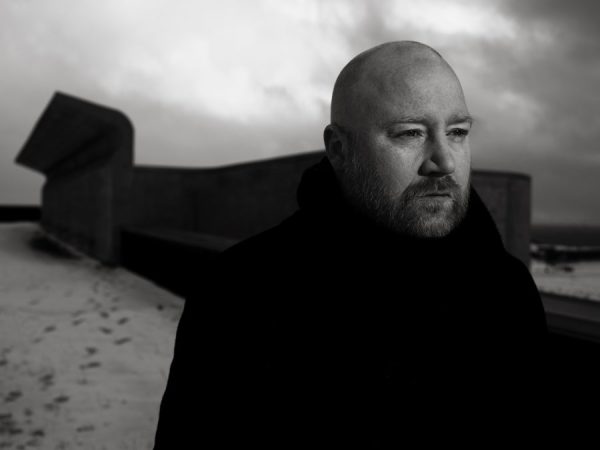
 dereksmusicblog
 dereksmusicblog