LEE HAZLEWOOD-COWBOY IN SWEDEN.
LEE HAZLEWOOD-COWBOY IN SWEDEN.
By 1969, Lee Hazlewood’s career was no longer going to plan. The man who had been around since the birth of rock ‘n’ roll was suddenly regarded as yesterday’s man. Suddenly, he was no longer in demand as a producer. Especially by a new generation of up-and-coming musicians. A few that had worked with Lee Hazlewood, including Gram Parsons, but weren’t willing to repeat the experience. This made matters worse for Lee Hazlewood’s ailing record company LHI Records.
Five years had passed since LHI Records last enjoyed a hit single. Since then, commercial success eluded LHI Records, which couldn’t buy a hit single. To make matters worse, Lee Hazlewood had alienated the president of Bell Records, who used to distribute LHR Records’ releases. Lee Hazlewood was fast running out of friends in the music industry.
To make matters worse, Lee Hazlewood’s successful partnership with Nancy Sinatra ended in 1968. Lee Hazlewood tried to replicate his formula with Anne-Margaret. However, Lee but to no avail. This left Lee Hazlewood looking to forge new musical partnerships.
Some musical partners had only a short and unhappy experience with Lee Hazlewood. This included Gram Parsons, when he was a member of The International Submarine Band. Other up-and-coming musicians were put off working with Lee Hazlewood because of his jealousy, temper and possessiveness. Especically when it came to his partner Suzi Jane Hokom.
In 1968, Suzi Jane Hokom received an invitation to meet The Beatles while they were in New York. Lee Hazlewood was extremely possessive and controlling when it came to Suzi Jane Hokom. He decided to accompany her to the meeting with The Beatles, whose music he disliked. This didn’t stop Lee Hazlewood asking The Beatles to producing artists for their Apple label. When the answer was a firm no, Lee Hazlewood stormed out of the meeting.
A year later, music’s one-time golden boy was running out of friends in the American music industry. Lee Hazlewood’s record company was on its last legs. It seemed that Lee Hazlewood’s career had stalled in America. However, he still had a few friends overseas.
Although Lee Hazlewood’s star no longer shawn as bright in America, he was still a regarded as a celebrity elsewhere. This included in Russia, where Nancy Sinatra’s These Boots Are Made for Walkin’ had proved popular. So much so, that later in 1969, a Russian official contacted Lee Hazlewood to tell him that they wanted to present him with a wood cabin in honour of These Boots Are Made for Walkin’. Lee Hazlewood decided to head behind the Iron Curtain to receive his honour.
Meanwhile, Swedish film director Torbjörn Axelman contacted Lee Hazlewood about a possible project. This meant that en route to Russia, he would have to take a detour via Sweden.
Lee Hazlewood had been invited to appear as a guest on In Town Tonight. It was filmed in the Swedish capital Stockholm. That was where Lee Hazlewood met Torbjörn Axelman. The two men were introduced by Gunilla Nilars, who worked with Torbjörn Axelman. When the two men began talking, it soon became apparent that they had much in common. This was the start of a long friendship and working relationship.
One of the projects that Lee Hazlewood and Torbjörn Axelman worked on, was Cowboy In Sweden. Lee Hazlewood would provide the soundtrack for Cowboy In Sweden, which was recently reissued by Light In The Attic. Cowboy In Sweden marked the start of a new chapter in Lee Hazlewood. He decided to move to Sweden with Suzi Jane Hokom.
Moving to Sweden suited Lee Hazlewood for a number of reasons. His record company, LHI Records, was on its last legs, and would fold in 1970, after 305 releases. Lee Hazlewood also had unresolved tax problems. The other reason was his son who was a teenager, was almost old enough to be drafted to fight in the Vietnam War. For Lee Hazlewood this brought back memories. He had fought in the Korean War, and was keen that his son wouldn’t have to follow in his footsteps. Moving to Sweden ensured that his son avoided being drafted. This made the move to Sweden all the more appealing. So the Hazelwood family headed to Sweden.
Once his family had settled in Sweden, Lee Hazlewood began work on the film Cowboy In Sweden. He would costar with Swedish actress, Nina Lizell in what proved to a somewhat surreal film.
Just so the viewer doesn’t forget that he is the Cowboy In Sweden, Lee Hazlewood sports a black stetson and cowboy boots. He wanders through a series of dreamscape. They’re akin to a series of individual videos rather than part of a cohesive film. However, this adds to the surreal, lysergic nature of the film. So do the absurdist skits, and the sight of Lee Hazlewood sitting discussing both Swedish culture and weather between songs. Critics wondered if this was an ill-fated attempt at comedy? They also wondered why the music seemed to bear no relation to the scenes in Cowboy In Sweden?
Cowboy In Sweden.
There was a reason for this. Unlike most soundtracks, Lee Hazlewood didn’t record the music especially for Cowboy In Sweden. Instead, Lee Hazlewood chose ten tracks he had recorded the music over the past couple of years. During this period, Lee Hazlewood had travelled extensively and recorded songs in different European European and American cities.
Paris.
Lee Hazlewood’s musical adventure began in Paris, France in 1968. This was one of the country’s where Lee Hazlewood’s star still shawn bright. It was also where he recorded the hurt-filled ballad Forget Marie, at CBS Studios. Later in 1968, Forget Marie made its debut on Lee Hazlewood’s 1968 album Love and Other Crimes. Alas, when the album was released on LHI Records, commercial success eluded the album.
Two years later, in 1970, Lee Hazlewood decided to include Forget Marie on the soundtrack to Cowboy In Sweden. It joined songs that he had recorded in London in 1969.
London.
The following year, 1969, Lee Hazlewood travelled to London to work with American producer Mel Talmy. Both men shared the same lawyer and musically, had much in common. They both wrote and produced. Recently though, Mel Talmy was way ahead in the success stakes. He had produced hits for The Kinks and The Who. However, by 1969, was turning his attention to the new wave of British folk music.
Recently, Mel Talmy had been working with many of the British folk groups and artists, including Pentangle and Bert Jansch. However, despite concentrating on folk music, Mel Talmy was keen to produce an album with Lee Hazlewood.
The two men album began work on a new album for Lee Hazlewood’s LHI Records. Ten tracks were recorded, and became Forty, an album of pop, rock and balladry. It was released on LHI Records later in 1969, but failed commercially. Two of Forty’s highlights were the ballads, The Night Before and the string-drenched What’s More I Don’t Need Her. They would find their way onto Cowboy In Sweden. So would a number of songs recorded in Los Angeles.
Los Angeles.
Despite commercial success continuing to elude LHI Records’ releases, Lee Hazlewood was still in demand as a producer. He was hired to produce Waylon Jenning’s Singer Of Sad Songs and then Eddy Arnold’s Standing Alone. It was arranged by Clark Gassman, who would collaborate with Lee Hazlewood on his next round of recordings.
The songs that Lee Hazlewood recorded with Clark Gassman were Pray Them Bars Away, Cold Hard Times and Easy and Me. Although this trio of songs didn’t bring commercial success to Lee Hazlewood’s door, their inimitable wistful, orchestrated country sound would prove perfect for the soundtrack to Cowboy In Sweden.
So would two tracks Lee Hazlewood had recorded with two of the female singers he had worked with. This included Ann Margaret. Lee Hazlewood and Ann Margaret had recorded an album together, The Cowboy and The Lady. It was released on LHI Records in 1969, but failed to commercially. The other song Lee Hazlewood decided to include on Cowboy In Sweden, was by his partner Suzi Jane Hokom, For A Day Like Today. This proved to be the last song Lee Hazlewood and Suzi Jane Hokom recorded together. It was released as a single June 1970 and featured on Cowboy In Sweden. By then, Suzi Jane Hokom and Lee Hazlewood’s relationship was over.
She had agreed to star in Cowboy In Sweden. However, rather than travel to Sweden, it was decided that Suzi Jane Hokom should shoot her part in California. She dawned a long white dress as her part was filmed during a gloomy, smoggy day in San Bernardino. This was apt. Suzi Jane Hokom and Lee Hazlewood’s relationship was almost over. They had been through so much personally and professionally.
Whilst together, the pair had founded and run LHI Records. Suzi Jane Hokom and Lee Hazlewood both enjoyed solo careers and recorded together. Then in 1969, they both featured in Cowboy In Sweden. By the time it was released, their relationship was at an end. Before that, Lee Hazlewood had to complete the soundtrack to Cowboy In Sweden.
Stockholm.
Having chosen much of the soundtrack for Cowboy In Sweden, Lee Hazlewood for Cowboy In Sweden still required three tracks. He wrote and recorded these songs during his stay n Stockholm.
The first of these songs was the anti war protest song, No Train To Stockholm. During the same session, Lee Hazlewood recorded Hey Cowboy, with his costar Nina Lizell. The final song, was the traditional song Vem Kan Segla (I Can Sail Without The Wind). Lee Hazlewood wrote English lyrics to the song that would close Cowboy In Sweden. For songwriter Joe Cannon this was a disappointment,
Joe Cannon had written Me and The Wine and The City Lights. Lee Hazlewood had covered the song during a session at T.T.G. Studios, L.A. on the 16th of April 1970. It’s another ballad, which is produced by Lee Hazlewood and Larry Marks. It has a much more contemporary cinematic sound that shows a very different side to Lee Hazlewood. Alas, the song missed the cut and for Lee Hazlewood it was an opportunity lost. Thankfully, Me and The Wine and The City Lights features on Light In The Attic’s reissue of Cowboy In Sweden. So do alternate versions of Easy and Me and Pray Them Bars Away. However, back in 1970 the film and soundtrack to Cowboy In Sweden were about to be released.
Upon the release of Cowboy In Sweden, the film flopped. It found a small audience in Sweden, thanks to the popularity of Lee Hazlewood. The few reviews of Cowboy In Sweden that were published weren’t exactly complimentary. Words like surreal and trippy were used. Critics accused Cowboy In Sweden of lacking cohesion and narrative. Lee Hazlewood’s latest venture into film hadn’t been a success. Nor was the soundtrack to Cowboy In Sweden.
When Cowboy In Sweden was released in 1970, it was through Lee Hazlewood’s ailing LHI Records. The company was dying a death, and would fold later in 1970. Lacking the budget to promote Cowboy In Sweden properly, the album never stood a chance. Just like the film, the soundtrack to Cowboy In Sweden flopped. However, that wasn’t the end of the story.
Much later, there was a resurgence in popularity in Lee Hazlewood’s music. This included the soundtrack to Cowboy In Sweden. The only problem was that the album was something of a rarity. Copies of the original album were extremely difficult to find. If they became available, the prices were usually prohibitive to most record buyers. That was a great shame.
Cowboy In Sweden, which is essentially a compilation of Lee Hazlewood’s solo material and collaboration showcases a talented singer, songwriter and producer. Especially on the ballads, where Lee Hazlewood comes into his own. His voice is perfect for singing country, especially the melancholy string-drenched What’s More I Don’t Need Her and the hurt-filled Forget Marie. They part of what’s a truly underrated, hidden gem of an album. Sadly, it failed to find the audience it deserved.
By then, Lee Hazlewood’s career had stalled, and he was viewed by many as yesterday’s man. Many thought that his best years were behind him. He certainly didn’t replicate the success of the early part of his career. Music was changing, and changing fast. The problem was, Lee Hazlewood had kept up with the changes.
Many of the new generation of musicians wanted to write and produce their own music. The ones that musicians who wanted to work with a producer, chose not to work with Lee Hazlewood. They had heard the stories, about how he wasn’t the easiest person to work with. Sometimes, his temper of jealousy got the better of him. Especially when working with the new generation of up-and-coming artists. That was a great shame, as Lee Hazlewood had so much musical experience, and could’ve mentored these artists.
Later, though, the next generation of artists found inspiration in Lee Hazlewood’s music. By then, there had been a resurgence in popularity of his music. Lee Hazlewood’s music was starting to find a new audience. They appreciated the music that he wrote, recorded and produced during a forty-eight year career. This includes the music on Cowboy In Sweden.
The music on Cowboy In Sweden was recorded in four countries on two continents during a two year period. They’re a reminder of, and introduction to, Lee Hazlewood a truly talented singer, songwriter and producer who for a year, was a Cowboy In Sweden.
LEE HAZLEWOOD-COWBOY IN SWEDEN.


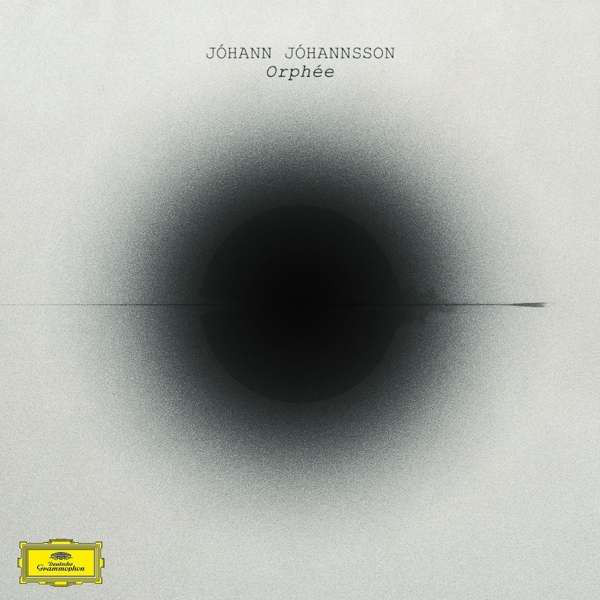
JÓHANN JÓHANNSSON-ORPHEE.
JÓHANN JÓHANNSSON-ORPHEE.
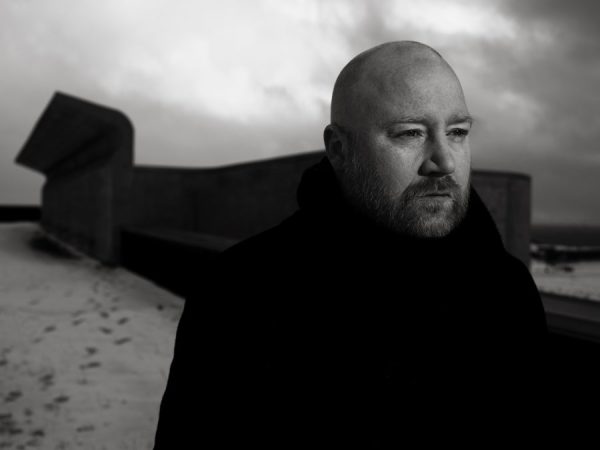
It was whilst studying languages and literature at university in Reykjavík, that Jóhann Jóhannsson’s musical career began. He was just eighteen when he joined his first indie rock band in 1987. Over the next few years, Jóhann Jóhannsson played with several indie rock bands in Reykjavík’s vibrant and thriving music scene. Little did Jóhann Jóhannsson realise that this was the start of a long and successful musical career.
Eventually, Jóhann Jóhannsson would become known worldwide as a composer, multi-instrumentalist and producer. This didn’t happen overnight.
Jóhann Jóhannsson was twenty-seven when he wrote the music to Kristín Ómarsdóttir’s play Margrét Mikla. This was a breakthrough for Jóhann Jóhannsson. He would go on to write the music for film, television, theatre and dance. This included the television program Corpus Camera in 1999. The same year, Jóhann Jóhannsson cofounded a think tank in 1999.
Thirty year old Jóhann Jóhannsson was one of the cofounders of the Kitchen Motors think tank. It was a both an arts organisation and record label. Kitchen Motors also encouraged artists from different disciplines to collaborate. This meant jazz and classical musicians could collaborate with electronic and even punk musicians. For Jóhann Jóhannsson these musical experiments would influence his future career.
As the new millennia dawned, Jóhann Jóhannsson’s career began to take. Between 2000 and 2002, he wrote eleven soundtracks. This included everything from feature films to television programs and plays to contemporary dance. It was one of the busiest periods of Jóhann Jóhannsson’s career. Despite this, he found time to release his debut album Englabörn in 2002.
This was the start of another chapter of Jóhann Jóhannsson’s career. He was working on a variety of different projects. One of the them, was writing and recording the soundtrack to Tim Shore’s short film Keepsake. It was released in Britain in 2003, and was the first project Jóhann Jóhannsson worked on outside of his native Iceland. For Jóhann Jóhannsson this was an important project.
Following Keepsake, Jóhann Jóhannsson managed to juggle his solo career while writing for film, television, theatre and dance. He released his sophomore album Virðulegu Forsetar in 2004. After this, Jóhann Jóhannsson began working on what was another first for him.
He had never before written and recorded a soundtrack album. Dís which was released in May 2005 was a first. This may have been the first, but wasn’t the last soundtrack album Jóhann Jóhannsson would write and record. Not when his star was in the ascendancy.
That was the case with Jóhann Jóhannsson’s solo career. After just two solo albums, he was signed to British independent label, 4AD. They released Jóhann Jóhannsson third album BM 1401, A User’s Manual in September 2006. It was lauded as an innovative album from what critics were calling a rising star of Icelandic music. Little did the critics realise that Jóhann Jóhannsson had spent seven years working long and hard to establish himself in his native Iceland. This was beginning to pay off as his music found an audience outside of Iceland.
Still though, the majority of the music Jóhann Jóhannsson was composing for film, television, theatre and dance was for being used within Iceland. That would change during 2008.
Jóhann Jóhannsson had written the score to Marc Craste’s short film Varmints. It was released in 2008, and was well received by critics and cultural commentators. So much so, that later in 2008, Varmints won the award for the Best Original Score at the Rhode International Film Festival and Sapporo Short Film International Film Festival. Buoyed by this success, Jóhann Jóhannsson scheduled the release of his new album for the autumn 2008.
On 31st October 2008, Jóhann Jóhannsson released Fordlandia. This was meant to be the second part in a trilogy about he technology and industrial archeology. Just like the first instalment, A User’s Manual, Fordlandia was released to critical acclaim. For Jóhann Jóhannsson this was the perfect way to round off what had been one of the most successful years of his career.
After the success of Fordlandia, Jóhann Jóhannsson decided to release an album of music that featured on the award winning short film Varmints. This became And In The Endless Pause There Came The Sound Of Bees. It was released on the 11th December 2009, and is captivating, beautiful and haunting fusion of electronics and orchestral music. For Jóhann Jóhannsson the Varmints would open doors to other soundtrack work.
Before that, Jóhann Jóhannsson returned with a new solo album, The Miners’ Hymns on the 15th September 2011. The album had been recorded in Durham Cathedral, England and accompanied American filmmaker Bill Morrison’s film The Miners’ Hymns. This wasn’t the only film Jóhann Jóhannsson was working on.
Jóhann Jóhannsson had been busy on a variety of projects. He continued to juggle a myriad of disparate projects. Many of them came to fruition during 2012, with one bringing another award the way of Jóhann Jóhannsson.
During 2012, several films featuring a soundtrack that was written, recorded and produced by Jóhann Jóhannsson were released. This included Free The Mind and Copenhagen Dreams. Jóhann Jóhannsson was responsible for the soundtrack to a quartet of feature films, including So Yong Kim’s For Ellen, Phie Ambo’s Free The Mind, Camilla Magid’s White Black Bo and Lou Ye’s Mystery. It was Mystery that won Jóhann Jóhannsson the award for the Best Original Score at Taipei Golden Horse Film Festival Awards. 2012 had been one of the most productive and successful years of Jóhann Jóhannsson’s career.
It wasn’t going to be easy to surpass the success of 2012. That was despite Jóhann Jóhannsson’s soundtrack to Prisoners receiving praise and plaudits during 2013. However, when Jóhann Jóhannsson was asked to write, record and produce the soundtrack to The Theory of Everything, that proved to be a game-changer.
Jóhann Jóhannsson’s soundtrack to The Theory of Everything was nominated for some of the most prestigious awards. This included an Academy Award for Best Original Score, BAFTA Award for Best Film Music and Grammy Award for Best Score Soundtrack for Visual Media. The other award The Theory of Everything was nominated for during 2014 was the Golden Globe Award for Best Original Score. That was the award that Jóhann Jóhannsson won. Suddenly, he his name was all over the televisions and press. Everyone seemed to know the name Jóhann Jóhannsson. It was a far cry from when he was playing in indie rock bands during his university days in Reykjavík.
After his success with the soundtrack to The Theory of Everything,Jóhann Jóhannsson returned in 2015 with another soundtrack. Sicario was released on the 18th September 2015 and soon, was being nominated for some of the most prestigious awards. This included the Academy Award for Best Original Score and the BAFTA Award for Best Film Music. Alas, this time, Jóhann Jóhannsson was out of luck. Despite this he released a new album later in 2015.
Jóhann Jóhannsson released his new album End of Summer in December 2015. It was a collaboration with Hildur Guðnadóttir and Robert Aiki Aubrey Lowe that documented Jóhann Jóhannsson’s journey to the Antarctic Peninsula. During that journey, he discovered tranquil scenery and watched how the landscape changed with the seasons. On his return home, Jóhann Jóhannsson sculpted an album of soundscapes that documented what had been a truly memorable and life affirming journey and experience. They became End Of Summer, the latest addition to his burgeoning discography.
The next addition was the soundtrack to the psychological science fiction film Arrival. It was premiered at the Vienna Film Festival on September the 1st 2016. Just over two months later, Arrival was released on the 11th of November 2016. Since then, it’s been nominated for a Golden Globe Award for Best Original Score. By then, Jóhann Jóhannsson had released a new solo album Orphée on Deutsche Grammophon.
On Orphée, Jóhann Jóhannsson’s attention turns to the beauty and the process of creation. Orphée features Jóhann Jóhannsson tracing a path from darkness into light. Inspiration for Orphée comes from the opéra bouffe Orphée aux enfers (Orpheus in the Underworld). It was written by Ludovic Halévy, and later, revised by Hector-Jonathan Crémieux. The score was written by Jacques Offenbach and became the first full length operetta. Its first performance came in 1858. Since then, this ancient and famous tale has been retold countess times.
Everyone from Ovid’s to Jean Cocteau have told the story of the legendary Greek musician, poet and prophet Orpheus. His story is one of death, rebirth, change and the transient nature of memory. For some, the story of Orpheus is also one about artistic creation, and the elusive nature of beauty. Especially beauty’s relationship with an artist. Another part of the story of Orpheus is when he’s about to leave the underworld, he turns back to rescue his wife Eurydice. This lead to the theory that art is created through transgression. That has been the case with many artists, including Jóhann Jóhannsson.
Throughout his long and illustrious career, Jóhann Jóhannsson has not been afraid to transgress musical rules and norms. This is something many musicians are afraid to do. Especially those without a formal musical education. They’re unsure when it’s possible to break musical rules. Jóhann Jóhannsson, who is a talented multi-instrumentalist does, and has been since releasing his debut album.
Ever since, Jóhann Jóhannsson has transgressed musical rules. This includes combining disparate musical genres, including some that aren’t natural bedfellows. A good example of this was BM 1401, A User’s Manual where Jóhann Jóhannsson combined a sixty-piece string quartet with electronics alongside the original tape recordings of IBM’s singing computer. The result was what was without doubt, a truly ambitious and groundbreaking album. Since then, Jóhann Jóhannsson has contemned to release ambitious albums. Orphée is no different.
Indeed, Jóhann Jóhannsson’s decision to put the story of Orpheus to music was an ambitious one. He was starting from square one, and had to compose the fifteen tracks that covered all the subjects examined within the story of Orpheus. Then Jóhann Jóhannsson had to find the right musicians to help him tell the story that became Orphée.
To do that, Jóhann Jóhannsson brought onboard the Theatre Of Voices choir, the American Contemporary Music Ensemble, The Lyndhurst Orchestra and cellist Hildur Guðnadóttir. Jóhann Jóhannsson played electric organ, piano, pipe organ and electronics. With the personnel in place, work began on Orphée.
Recording took place at several places. The Lyndhurst Orchestra recorded their parts at the Air Lyndhurst Hall in London. Other sessions took place at the Sct. Lukas Kirke, Copenhagen and Danmarks Radio Studios, where Jóhann Jóhannsson had recorded Arrival. Eventually, Orphée was completed and became the latest addition to Jóhann Jóhannsson’s burgeoning discography.
It was also one of the highlights of Orphée discography. The Icelandic composer had surpassed previous solo albums. It found Jóhann Jóhannsson at his most creative. Just like an artist, dug deep into his pallet. However, Jóhann Jóhannsson pallet includes an array of disparate sounds. Throughout Orphée, he deployed everything from a cello and choir to an array of strings. This ranged from a quartet to an orchestra. However, where Jóhann Jóhannsson differed from many of his contemporaries, is he used effectively a myriad of a electronics. They become part of a truly captivating album.
Throughout Orphée, Jóhann Jóhannsson showcases his inventiveness and ability to innovate. He constantly pushes musical boundaries, and occasionally moves beyond these boundaries. The result is an ambitious genre-melting album. Partly, that’s because of the way the album is structured. Harmonic and melodic elements appear, disappear and reappear. That is the case throughout Orphée. Despite this, each of the fifteen tracks has a timeless quality. They’re also all very different
Throughout Orphée, the music constantly changes. On Flight From The City, the music is thoughtful and ruminative, inviting introspection. It’s a similar case on Song For Europe, where Jóhann Jóhannsson’s inventiveness shines through. Buried amidst the swathes of mournful strings is a sample of speech. They work well together as the stings combine drama, sadness and beauty. This isn’t the last time that Jóhann Jóhannsson uses samples of sound effects.
A sample of water is effectively on The Drowned World. It’s just one of numerous layers of music that are combined to creature a mesmeric, melodic and cinematic soundscape. Then on A Deal With Chaos, a speech sample is combined with a cello and electronics. Remembering Miles Davis’ famous maxim, Jóhann Jóhannsson neither fears space nor silence. When all that’s left is a crackling electronics, it’s adds an element of drama. This less is more approach has been used effectively throughout Jóhann Jóhannsson’s solo career.
A Pile Of Dust has a dark, dramatic and cinematic sound as the arrangement builds and becomes ethereal and elegiac. Suddenly, the track is transformed and beauty shines through. There’s a similar beauty and sense of hope on A Sparrow Alighted Upon Our Shoulder as the strings sweep. This soon changes.
Fragment I which features a pipe organ, has a much more thoughtful and reflective sound on Fragment I. The mood changes again On By The Roes, And By The Hinds Of The Field. Strings and a piano combine, before Jóhann Jóhannsson deploys effects and electronics. Suddenly, it sounds as if the rain is tumbling down. Soon, the pastoral sound and ethereal beauty returns. However, things change.
The Radiant City is an emotional roller coaster. There’s a sense of sadness and melancholy as Jóhann Jóhannsson plays the piano. He adds to this what sounds like washes of synths and a couple of samples. Together, they add an atmospheric hue. It’s a similar case with Fragment II as the arrangement builds. So does the drama, as the track reaches a crescendo. Similarly, the arrangement to The Burning Mountain drones and builds before meandering melodically along. Sometimes, there’s a futuristic sound, which provides a contrast to the traditional sound of the pipe organ. Again, this is another example of Jóhann Jóhannsson’s inventiveness which is omnipresent throughout Orphée.
De Luce Et Umbra has a wonderfully wistful, string-drenched. They tug at the heartstrings add a sense of sadness. Despite this, beauty also shines through. Strings are to the fore on Good Morning, Midnight, which has a thoughtful, melancholy and slightly futuristic sound. This is a result of Jóhann Jóhannsson electronics. He never overuses them, Instead, they’re used sparingly which proves effective. The strings have been put to good use throughout Orphée. That’s the case on Good Night, Day where swathes of strings probe and create a wistful, ruminative backdrop. Not for the first time, it has a cinematic sound and invites reflection. However, Orphic Hymn which close Orphée, is very different to everything that’s gone before. Its ethereal sound is truly beautiful, and would be difficult to surpass.
Jóhann Jóhannsson ensures that Orphée ends on a high. However, it’s been an almost flawless album, where Jóhann Jóhannsson combines elements of classical and electronic music with ambient, avant-garde, Baroque and minimalism. Other influences includes the music of Bernard Hermann, Ennio Morricone and Michael Nyman. Then there’s the music of classical composers like Shostakovich and Prokofiev. All these influences can be heard throughout Orphée.
The music on Orphée ranges from melodic and mesmeric, to atmospheric, beautiful, ethereal and elegiac. Other times, there’s a degree of darkness and drama. Sometimes, there’s a sense of melancholia and sadness on Orphée. It’s an emotional roller coaster to cherish and treasure. That’s even for people with no interest in classical music. There’s much more to Orphée than classical music. Orphée is a genre-melting album that’s the finest album of his fourteen year solo career.
Indeed, Orphée is a career defining album from Jóhann Jóhannsson, as he makes his debut on Deutsche Grammophon. Maybe this is the start of a new and exciting chapter in Jóhann Jóhannsson’s career. He’s now one of Icelandic music’s most successful composers, musicians and producers. Jóhann Jóhannsson also creates music that’s ambitious, inventive and innovative. That’s the case throughout Orphée, which is a career defining album from Jóhann Jóhannsson.
JÓHANN JÓHANNSSON-ORPHEE.


GANDALF-TO ANOTHER HORIZON AND MAGIC THEATRE.
GANDALF-TO ANOTHER HORIZON AND MAGIC THEATRE.
Nowadays, Gandalf is regarded as one of Austria’s most accomplished, innovative and successful musicians. Gandalf who is a talented multi-instrumentalist, is also one of Austria’s most prolific artists. He has released over thirty albums between 1981 and 2016. That’s despite not releasing his debut album until he was twenty-nine.
Before that, Gandalf had travelled extensively. His travels took him all over the world, including to India. The constant travelling certainly broadened the mind of Gandalf. He also realised that music was a universal language. It was something that people in different countries and continents shared a love of. Gandalf experienced this firsthand.
As he traversed the globe, Gandalf made a living making music. He was the twenty-first Century equivalent of a travelling minstrel. It was during his travels that Gandalf realised that he wanted to make a living as a musician.
This came as no surprise to many that knew Gandalf. He had grownup in the small town of Pressbaum, in Lower Austria. That was where Heinz Strobl was born on the 4th of December 1952. It would be much later when Heinz adopted the Gandalf moniker. Before that, Heinz proved to be a gifted and natural musician as he grew up.
That was despite having no formal musical education. Heinz could pickup an instrument and soon, was playing along to a song on the radio or a record that was playing. Soon, he could play the piano and guitar. By the time he headed off on his travels, Heinz had mastered a number of different instruments.
On his return from what was the modern equivalent of a Grand Tour, Heinz had mastered a myriad of instruments that he had discovered on his travels. This included a sitar, saz, charango, bouzuki and balaphon. They would play an important part in Heinz’s future musical career.
Initially, Heinz began playing with various rock bands during the seventies. During the seventies, progressive rock was at the peak of its popularity. Heinz was a member of a couple of progressive rock bands. This however, was all part of his musical apprenticeship.
As the seventies gave way to the eighties, Heinz decided to reinvent himself, and adopted the moniker Gandalf. This stemmed from Heinz’s love of J. R. R. Tolkien’s Lord Of The Rings. Little did he realise that his new moniker would feature on over thirty albums. This included the albums Gandalf would release for WEA. Two of these albums were To The Horizon and Magic Theatre, which were recently rereleased by Esoteric Recordings. These albums would showcase Gandalf’s unique and inimitable style.
Journey To An Imaginary Land.
It began to take shape on Gandalf’s debut album Journey To An Imaginary Land. It was released on WEA in 1981, and marked the debut of Gandalf who later described himself as a “painter of musical landscapes.”
This is quite fitting, Having written the six tracks that became Journey To An Imaginary Land, Gandalf began painting these “musical landscapes” using his has extensive musical palette. It included everything from acoustic and electric instruments to the traditional, ethnic instruments that Gandalf had discovered and collected on his travels. Included in Gandalf’s palette, were various synths and samplers. They would play an important part in not just Journey To An Imaginary Land, but Gandalf’s future albums.
With his impressive array of instruments, Gandalf began recording and Journey To An Imaginary Land at Beginning Soundstudio. He arranged, recorded and produced the album. Gandalf played each and every instrument, including the synths that play such an important part in Journey To An Imaginary Land. Once the album was recorded, Gandalf mixed his debut album. It was then delivered to WEA, who Gandalf was signed to.
WEA scheduled the release of Journey To An Imaginary Land later in 1981. Before that, critics received a copy of Gandalf’s debut album.
Journey To An Imaginary Land was well received by critics, who were won over by what was hailed an innovative and progressive album. It was a fusion of eclectic musical instruments, influences and genres. When they’re combined by Gandalf, the result is a groundbreaking and genre-melting album, Journey To An Imaginary Land. It features elements of ambient, avant-garde, Berlin School, electronica and folk. When they are combined, they become part of what’s a captivating, mythical and symphonic musical journey that gradually unfolds over forty-five minutes. It’s an ambitious and accomplished album. Especially considering it was Gandalf’s debut album.
Buoyed by the reviews of Journey To An Imaginary Land, Gandalf eagerly awaited the release of his debut album. When Journey To An Imaginary Land was released later in 1981, the album failed to find an audience. Suddenly, Gandalf’s dream of making a living as a professional musician were dashed. However, after the initial disappointment, Gandalf was determined that his sophomore album would be his breakthrough album.

Visions.
Following the commercial failure of Journey To An Imaginary Land, it was a case of back to the drawing board for Gandalf. He wrote fifteen new tracks that would eventually become Visions. They would be recorded at Beginning Soundstudio, later in 1981.
As recording began, Gandalf again showcased his versatility. He played six and twelve string acoustic guitar, bass, mandolin, organ, percussion, six and twelve string electric guitar, sitar and played synths. Gandalf also deployed a vocoder and sequenced Visions. The only instruments he didn’t play, were the flute and tabla. So he drafted in flautist Robert Julian Horky and Jatinder Thakur to play the tabla. Meanwhile, Gandalf took charge of arranging and producing Visions. When the album was complete, Gandalf mixed Visions, which would be released later in 1982.
Before that, the critics had their say on Gandalf’s much anticipated sophomore album. Visions met with their approval. It was another progressive album where the music had mystical and mythical sound. There was also a cinematic sound, with Visions sounding like the soundtrack to a movie. Just like on Journey To An Imaginary Land, musical genres melted into one on Visions.
Especially, elements of ambient and acoustic music which were combined with electronica. Other influences included The Berlin School of electronic music and the music Gandalf discovered during his travels continued to influenced him. On Visions, this included the music he heard in India. So much so, that Gandalf used traditional Indian instruments, including a sitar and tabla. They became part of what was another ambitious album from Gandalf.
Later in 1982, WEA released Visions. It marked a change in fortune for Gandalf. Visions was a commercial success and transformed the fortunes and career of Gandalf. No longer was he struggling to make a living out of music. Instead, Gandalf’s star was in the ascendancy as his thoughts turned to his third album, To Another Horizon.

To Another Horizon.
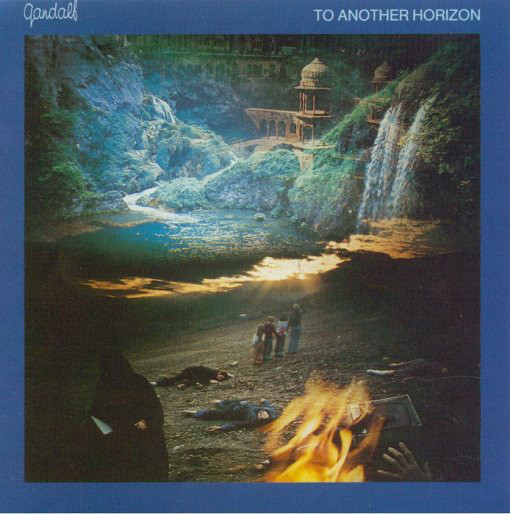
Despite having just enjoyed a successful album, Gandalf wasn’t about to rest on his laurels. He headed back into Beginning Soundstudio to record seven tracks that would become his third album, To Another Horizon. It was a cerebral concept album.
On To Another Horizon, Gandalf who was the father of three young children, looked at the threat posed to the world by nuclear weapons. Gandalf looked at how who the planet was being slowly eroded. The other things subject that inspired Gandalf on To Another Planet was science fiction. These three subjects were part of what was a very different album from Gandalf.
Although Visions had been a commercial success, Gandalf decided to change direction musically. On To Another Horizon, Gandalf’s music headed in the direction of progressive rock and space rock. This was a stylistic departure for Gandalf as he began work on To Another Horizon.
Another departure was that Gandalf brought onboard additional musicians. Drummer Egon Gröger and bassist Heinz Hummer became Gandalf’s rhythm section. They were joined by pianist and organist Peter Aschenbrenner, flautist Robert Julian Horky and vocalist Helmut Kappel a.k.a. N.A.O. Meanwhile, Gandalf played guitar, mellotron, organ, percussion, synths and wind chimes. He also programmed the drum machine, arranged, recorded, produced and later, mixed To Another Horizon. This marked a new chapter in Gandalf’s career.
It would’ve been easy for Gandalf to stick to a winning formula, and record Visions II. However, that wasn’t the way Gandalf operated. He was a pioneer, who recorded ambitious and innovative music. This had been the case since he recorded Journey To An Imaginary Land, and continued on Visions. To Another Horizon was no different.
Prior to the release of To Another Horizon, WEA sent critics copies of the album. Although some critics were surprised by Gandalf’s stylistic departure, they welcomed his decision to reinvent his music. That was a brave and bold move. There was no chance that Gandalf’s music would become stale. Not when he had produced an ambitious concept album that straddled various themes and genres.
While To Another Horizon marked a move towards progressive rock and space rock, Gandalf also incorporated elements of Krautrock and classical music and folk. Just like his first two albums, Gandalf combined elements of ambient, Berlin School, eighties electronica and experimental music were combined on To Another Horizon. It was a cerebral concept album featuring progressive music that thematically, was captivating.
That was no surprise. The music on To Another Horizon featured some of the best of Gandalf’s carer. It ranged from dramatic and cinematic to progressive on March Of No Reason. Then as Natural Forces Getting Out Of Control glides along, the music becomes futuristic urgent and dramatic. It’s as if Gandalf is desperate to get his message across and plays with urgency and passion. However, Requiem For A Planet has a pastoral, wistful sound. It’s as if Gandalf is mourning for a world troubled by conflict and that’s being eroded and polluted. Flight Of The Crystal Ships showcases Gandalf’s new progressive rock sound. He unleashes scorching, crystalline guitars before the track takes a sci-fi sound and the Flight Of The Crystal Ships continues on its journey. So does Gandalf, as he prepares to deliver a message.
To Another Horizon: The Divine Message has an understated, thoughtful sound, before a futuristic vocoded vocal delivers Gandalf’s message. This gives way To Another Horizon: Change Of Consciousness. It features an understated, Eastern sound that’s mesmeric and later, rocky. This continues on To Another Horizon: Creation Of A New World. As it ebbs and flows, synths and guitars play leading roles. Cosmic Balance has an dreamy, ethereal quality. It’s best described as a progressive fusion of ambient and electronica. Peace Without End closes To Another Horizon and has a pastoral quality before a guitar is added and the track takes on a progressive rock sound. Just like on previous tracks, Gandalf combines different musical genres during what’s without doubt, the most progressive and eclectic album of his career.
It won over critics, who called To Another Horizon Gandalf’s finest hour. His decision to change direction could’ve backfired. This wasn’t the case. Instead, To Another Horizon more progressive sound introduce Gandalf’s music to a much wider audience. This resulted in the most successful album of Gandalf’s three album career. However, he was about the ring the changes again on Magic Theatre
 .
.
Magic Theatre.
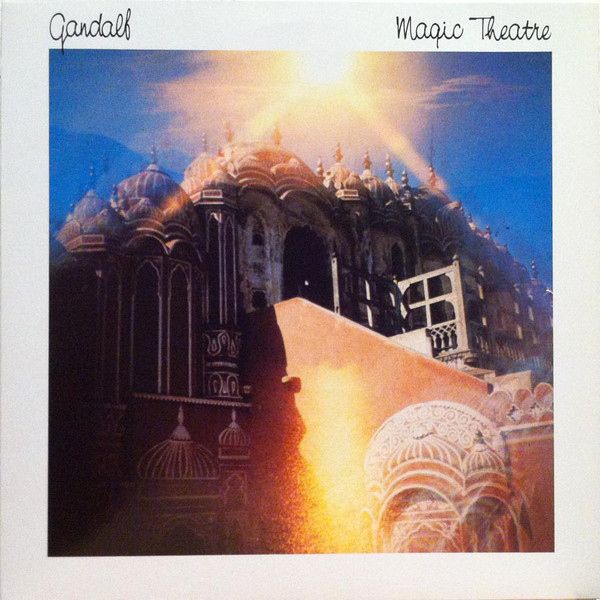
Buoyed by the success of To Another Horizon, Gandalf began work on his fourth album, Magic Theatre. Gandalf composed the nine tracks that eventually became Magic Theatre. It saw Gandalf’s music head further in the direction of progressive rock and take and showcased a symphonic rock sound.
Just like on To Another Horizon, Gandalf brought onboard sone session musicians. Drummer Egon Gröger joined bassist and flautist Robert Julian Horky in the rhythm section. Pianist and saxophonist Peter Aschenbrenner was also drafted in as work began at Beginning Soundstudio during July 1983.
As usual, Gandalf juggled a variety of roles. He arranged, recorded and produced Magic Theatre, and played bass, guitar, keyboards and synths. Gandalf also added a variety of effects to Magic Theatre. The sessions lasted two months, and by August 1983, Gandalf’s fourth album Magic Theatre was complete.
It wasn’t until 1984 that Gandalf’s concept album Magic Theatre would be released. Magic Theatre had been inspired by Hermann Hesse’s 1927 novel Steppenwolf. It featured a Magic Theatre.
Within the Magic Theatre, there’s a corridor that features several doors. They all lead to different chambers of the subconscious. Each of these seven chambers are represented by a track on Magic Theatre. The book’s protagonist, Harry Haller visits five of these chambers seeking redemption. In each chamber, he has to conquer his concerns and fears. This Gandalf sets out to do between the opening track Entrance-The Corridor Of The Seven Doors and the closing track exit. Just like previous Gandalf albums, it’s an ambitious, cerebral album where he combines disparate musical genres.
On Magic Theatre, Gandalf moves further down the road marked progressive rock. There’s also a symphonic rock sound on several tracks. Elsewhere, Gandalf combines elements of acoustic and ambient music with classical, Eastern and electronica combining. Meanwhile, the book’s protagonist confronts fears and concerns. His emotional responses are replicated on Magic Theatre. It’s akin to an emotional roller coaster.
Having made his way down The Corridor Of The Seven Doors in the Magic Theatre, Harry Haller enters Door 1-Reflections From Childhood. Once through the door, the music veers between elegiac, ethereal and pastoral. After this, Harry passes through Door 2 to the Castles Of Sand and the music becomes rueful and ruminative, and later, melancholy and wistful. However, when Harry makes his way through Door 3 he suffers from a Loss Of Identity In The Labyrinth Of Delusions. As a result, there’s an element of darkness and drama. Suddenly, it sounds as if Harry is struggling to overcome his fears and concerns. Meanwhile, elements of free jazz, progressive rock and experimental music combine to replicate Harry’s state of mind on this powerful track.
Things change though, as Harry heads through Door Four and encounters The Magic Mirror. Suddenly, the darkness and drama of the previous track disappears, and is replaced by a much more melodic progressive rock track. It glides along, with synths and guitars playing leading roles. Now there’s hope, where previously there was none. Suddenly, as Harry heads through Door Five, he’s Beyond The Wall Of Ignorance. The music ebbs and flow, beatifically and blissfully showcases ethereal and Eastern sounds. That is not the end of the story.
Beyond The Wall If Ignorance is the sixth door. Behind it, is what Harry’s come in search of, Peace Of Mind. He achieves this, and it’s reflected in what’s without doubt, the most beautiful track on Magic Theatre. Flourishes of piano, a flute and Spanish guitar reflect Harry’s newfound Peace Of Mind. Then when Harry makes his way through the seventh door, he drinks deep from The Fountain Of Real Joy. It’s genre-melting tracks where ambient, acoustic, jazz, progressive rock and fusion combine. To this, Gandalf adds samples and effects. Soon, with his Peace Of Mind restored, Harry heads for the Exit. This is another genre-melting track that gradually builds, and reaches a crescendo. By then, Exit takes on a joyous, celebratory sound, as if Harry has been reborn and is ready to begin his life again.
For Gandalf, Magic Theatre was a powerful, poignant and realistic portrayal of Hermann Hesse’s 1927 novel Steppenwolf. Through the medium of music, Gandalf hoped to introduce the book to a new audience.
Critics hailed the Magic Theatre a musical triumph. It was an ambitious album that was full of pitfalls. However, Gandalf brought Steppenwolf over just forty-five minutes. During that period, the chameleon like Gandalf continued to reinvent his music.
That had been the case throughout his career. Magic Theatre was no different. It was as if Gandalf was scared that if he stood still musically, his music would cease to be relevant. There was no chance of that happening. He was musical pioneer, who combined a disparate selection of musical genres, instruments and influences. Gandalf also drew inspiration from many sources, including his travels and literature. Both played their part the sound and success of Magic Theatre.
Upon the release of Magic Theatre, the Gandalf success story continued apace. The album sold well, and found an audience not just in Austria, Italy and Germany, but across Europe and into Britain. Gandalf was making up for lost time.
He was twenty-nine when he released Journey To An Imaginary Land. It was the only album that failed to find an audience. Since then, Visions, To Another Horizon and Magic Theatre all brought success to Gandalf’s door. This was just the start of a long and successful career for a true musical pioneer, who would release over thirty albums. However, many music fans regard Gandalf’s early as some of the best of his forty-five year recording career. This includes To The Horizon and Magic Theatre, which are the perfect introduction to Gandalf, a music pioneer and “painter of musical landscapes.”
GANDALF-TO ANOTHER HORIZON AND MAGIC THEATRE.
SUSANNA-TRIANGLE.
SUSANNA-TRIANGLE.
Four years after the release of her previous solo album Wild Dog, Susanna recently returned with her much-anticipated, eleventh album Triangle. It was released on Susanna’s own SusannaSonata label, and is no ordinary album. Not by a long chalk.
Instead, Triangle is a twenty-two song cerebral epic, where Susanna muses and meditates on mortality and religion. The result is what Susanna describes as: “music for lost souls,” where “nothing is holy, nothing is sacred.” It’s a powerful album, that invites reflection and introspection. Triangle is also an introduction to a multitalented and versatile artist.
Susanna and The Magical Orchestra.
That has been the case since Susanna came to prominence with Susanna and The Magical Orchestra, which she cofounded with Morten Qvenild in 2000. Since then, Susanna and The Magical Orchestra’s unique fusion of indie pop, jazz and electronica has grown in popularity.
The song that introduced many music falls to Susanna and The Magical Orchestra was a captivating cover Dolly Parton’s Jolene. It was released as a promo single in 2004. This was a tantalising taste of what Susanna and The Magical Orchestra were capable of.
List Of Lights and Buoys.
Later in 2004, Susanna and The Magical Orchestra returned with their much-anticipated debut album List Of Lights and Buoys. It featured a mixture of cover versions, including Who Am I, Jolene and Distance Blues And Theory and new songs. Most of the new songs were penned by Morten Qvenild and Susanna. These songs became Susanna and The Magical Orchestra’ debut album, List Of Lights and Buoys. It was released to critically acclaim on Rune Grammofon.
Melody Maker,
Two years later, and Susanna and The Magical Orchestra returned with their sophomore album Melody Maker. Just like their debut album, new songs rubbed shoulders with cover versions. This time though, there were only two new songs. The rest were cover versions, including some old favourites and classic songs. They were given a makeover by Susanna and The Magical Orchestra.
This included Leonard Cohen’s Hallelujah, AC/DC’s It’s A Long Way To The Top, Scott Walker’s Don’t Think Twice, It’s All Right, Bob Dylan’s Don’t Think Twice, It’s All Right and Sandy Denny’s Fotheringay. They all featured on Susanna and The Magical Orchestra’s 2006 sophomore album Melody Maker. So did a cover Joy Division’s Love Will Tear Us Apart. It helped introduce Susanna and The Magical Orchestra’s music to a wider audience.
The understated reinterpretations of familiar and classic songs on Melody Maker, won over critics and music fans alike. Many of these familiar songs took on a new meaning, that caught the imagination not just of critics and record buyers, but program makers too.
Especially, Susanna and The Magical Orchestra’s cover of Love Will Tear Us Apart, It came to the attention of the makers of the American drama series, Grey’s Anatomy. The song featured in the third series of Grey’s Anatomy in 2007 and also featured in the third series of British drama Skins in 2009. Suddenly, Susanna and The Magical Orchestra’s music was being introduced to a much wider audience. By then, Susanna’s solo career was well underway.
The Solo Years Part One.
Sonata Mix Dwarf Cosmo.
Susanna’s solo career began in 2007 when she released her critically acclaimed debut album Sonata Mix Dwarf Cosmos on Rune Grammofon. It was an album of original songs which Susanna wrote or cowrote. This showcased not just a talented singer, but an equally talented songwriter. However, for her sophomore album Flower Of Evil, Susanna took a very different approach.
Flower Of Evil.
Rather than writing another album of new songs, Susanna decided to release an album that featured just two new compositions and twelve cover versions. Susanna thought songs like Thin Lizzy’s Jailbreak. Sandy Denny’s Who Knows Where the Time Goes? Lou Reed’s Vicious, Harry Nilsson’s Without You, Black Sabbath’s Changes and Tom Petty and The Heartbreakers’ Don’t Come Around Here No More were all ripe for reinvention.
And so it proved to be. Susanna’s understated covers of these familiar, and in some cases, classic songs won over critics and music fans upon the release of Flower Of Evil in 2008. The same critical acclaim that accompanied the release of Sonata Mix Dwarf Cosmos accompanied the release of Flower Of Evil. Just two albums into her solo career, and Susanna was being hailed by critics as one of music’s rising stars.
Susanna and The Magical Orchestra-Part Two-3
Despite the response to Flower Of Evil, Susanna put her solo career on hold, and began work on Susanna and The Magical Orchestra’s third album, 3. It was released in June 2009, and featured mostly songs penned by Susanna and Morten Qvenild. Their less is more approach proved successful once again. The understated arrangements allowed the ethereal beauty of Susanna’s impasioned vocals to centre-stage on what was a captivating and alluring album from Susanna and The Magical Orchestra. Since then, Susanna and The Magical Orchestra have yet to release the followup to 3. However, Susanna has been busy with a variety of other projects.
Susanna and Giovanna Pessi-If Grief Could Wait.
Two years later, Susanna returned in 2011 with two new project. This included If Grief Could Wait, Susanna’s collaboration with Swiss harpist Giovanna Pessi.
For If Grief Could Wait, Susanna had penned two new songs. They joined eleven songs from the pen of Nick Drake, Leonard Cohen and Henry Purcell. These songs were reinterpreted by Susanna and Giovanna Pessi, The result was a quite beautiful fusion of baroque, balladry and jazz. It was released on ECM, and released to plaudits and praise during in 2011. So was Susanna’s other project Jeg Vil Hjem Til Menneskene.
Susanna Wallumrød-Jeg Vil Hjem Til Menneskene.
For Jeg Vil Hjem Til Menneskene, Susanna was billed as Susanna Wallumrød as she reinterpreted the poems of Norwegian modernist poet Gunvor Hofmo. To do this, Susanna was joined by some of the great and the good of Norwegian music. This included her husband, Helge Sten, who produced Jeg Vil Hjem Til Menneskene. It was ambitious mixture of folk, rock and Nordic music that brought new life and meaning to Gunvor Hofmo’s poems. This won the approval of critics and cultural commentators. 2011 had been a successful year Susanna. So she hoped would 2012, as she resumed her solo career.
The Solo Years Part Two-Wild Dog.
Four years after the release for her critically acclaimed sophomore album Flower Of Evil, Susanna returned with her third album Wild Dog in 2012. It marked the coming of age of Susanna as a songwriter. Everything she had previously written seemed to have been working towards this.
On Wild Dog, Susanna was at her most introspective as she reflected not just on the themes of hurt and heartbreak, but loneliness and longing. Occasionally, the lyrics are almost otherworldly and prove to be intriguing. Mostly, though, Wild Dog was a poignant and powerful album emotively where Susanna combined indie pop and jazz. When Wild Dog was released in March 2012, it was to critical acclaim. This was becoming a habit, and one that continued.
Later in 2012, Susanna won one of the most prestigious awards in Norwegian music, a Gammleng Award. Susanna’s award came on one of the toughest categories, the Open Category. She was up against some of Norway’s most talented musicians. Despite this, Susanna triumphed for the first, but not the last time.
Susanna and Ensemble Neon-The Forester.
A year later, and Susanna was back with not just a new album, but a new band, Susanna and Ensemble neoN. Their debut album was The Forester. It was another album of songs written by Susanna.
Again, Susanna was in a reflective mood, as she pondered the human condition. This she did in her own unique way. One minute she was strong and seemingly invincible, the next an element of vulnerability seems to creep in. Despite this, there’s poetic quality and profoundness to the music on The Forester. Critics agreed when The Forester was released in September 2013. Later that year, Susanna was crowned one of Norway’s most talented singer-songwriters.
When the list of nominees for the most prestigious Norwegian musical award the Spellemannprisens were published later in 2013, Susanna’s name was on the list. She had again, been nominated for the Open Category. Despite being up against an impressive array of talented musicians, Susanna won her second award in two years. Now she had a Spellemannprisen to sit alongside her Gammleng Award.
Jenny Hval and Susanna-Meshes Of Voice.
Although Susanna’s recording career only began in 2004, ten years later, she was about to release the eighth album of her career. This was Meshes Of Voices, a collaboration with Jenny Hval. It began with the two singer-songwriters exchanging letters, and eventually, resulted in them writing fifteen songs. They became Meshes Of Voices.
It was recorded in 2009, but lay unreleased until 2014. That was when Susanna decided to release Meshes Of Voices on vinyl, By then, she had founded her own label SusannaSonata in 2011, Since then, the label had released her two award winning albums, Wild Dog and The Forester on SusannaSonata. Meshes Of Voices was the latest album to be released by SusannaSonata.
Initially, Meshes Of Voices was a vinyl only release. Susanna it seemed was testing the market, to gauge the response to Meshes Of Voices. Critics and cultural commentators spoke as one, calling Meshes Of Voices one of the finest Norwegian albums of 2013. Jenny and Susanna were like yin and yang on Meshes Of Voice. Their voices are made for each other. They bring out the best in each other, driving each other to greater musical heights. That’s apparent throughout Meshes Of Voice, which was one of the finest albums of Susanna’s ten year career.
After the success and critical response to Meshes Of Voices, Susanna decided to release the album on CD and as a double LP. This resulted in a much wider audience hearing Meshes Of Voices. It also resulted in Susanna receiving another prestigious award.
This was the Radka Toneff Memorial Award. It’s awarded to singers who act in the spirit of the famous Norwegian jazz singer Radka Toneff. In 2015, Susanna was recipient of this prestigious award and 25,000 Norwegian kroner. For Susanna, this was another highlight of her career. So would her next solo album, Triangle.
The Solo Years Part Three-Triangle.
Four years had passed since Susanna released her last solo album Wild Dog. She decided to release the followup during 2016, so began work on what would become an epic album, Triangle.
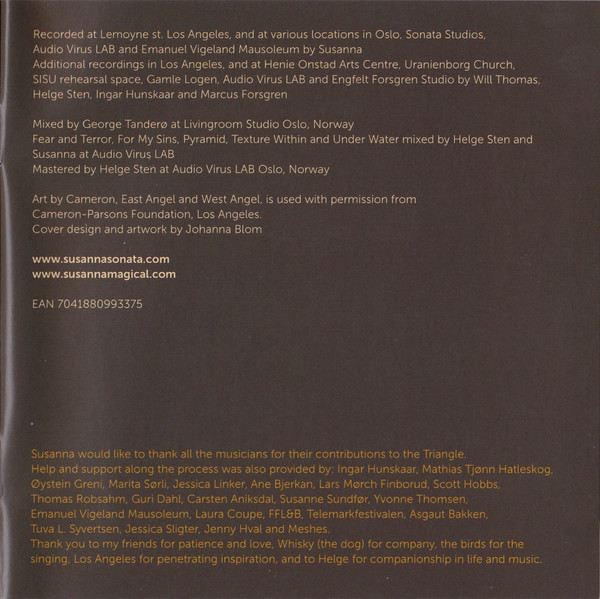
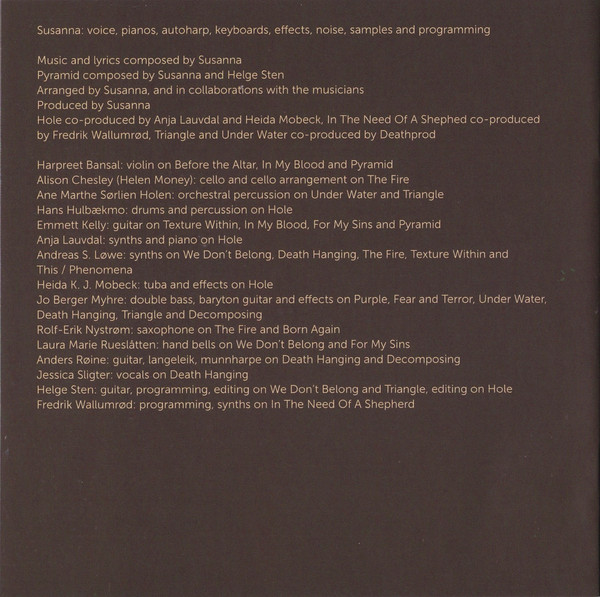
For what would eventually become Triangle, Susanna wrote twenty-one of the twenty songs. The other she cowrote with her husband Helge Sten. He would later coproduce Triangle with Fredrik Wallumrød, Anja Lauvdal, Heiða Karine Jóhannesdóttir Mobeck and Susanna. The recording of Triangle took place at a variety of studios and locations.
This included during a trip to L.A. Other sessions took place at the Uranienborg Church, Henie Onstad Arts Centre and a mausoleum. This isn’t the first time Emanuel Vigeland Mausoleumat has been used as a makeshift studio. Its atmospheric, double-barrelled room was used by Huntsville when they recorded their 2013 album Past Increasing, Future Receding album. However, for Susanna recording in a mausoleum was a first.
She was used to working at her Sonatta Studios and at Audio Virus Lab where much of Helge Sten’s work takes place. Indeed, he mixed part of Triangle and mastered the album at Audio Virus Lab. Further recording sessions took place at Sisu Sound and Engfelt and Forsgren Studio. At these various locations, Susanna was joined by a vast cast of musicians. Their raison d’être was to provide a backdrop for Susanna on the twenty-two tracks. Meanwhile, Susanna deployed a myriad of instruments, effects and electronics.
Throughout her career, Susanna has combined traditional instruments with technology. On Triangle, Susanna played keyboards, synths, autoharp and a piano. She also used a sampler, samples, effects, electronics and noises. They would provide the backdrops to her vocals throughout Triangle.
Despite the vast cast of musicians and instruments used on Triangle, the songs have understated backdrops. This is a continuation of Susanna’s less is more musical philosophy. It’s served her well throughout her career, and has aways proved successful. Triangle was no different.
Where Triangle is different is Thematically. It finds Susanna musing and meditating on mortality and religion. They’re the threads that run through this cerebral album. It’s been described by Susanna as: “music for lost souls,” where “nothing is holy, nothing is sacred.”
On this album of “music for lost souls,” Triangle’s arrangements benefit from a understated and spartan quality. This comes courtesy of a myriad of eclectic musical instruments. That’s not forgetting Susanna’s arsenal of electronics, effects, samples and instruments. They help hone and cultivate the understated backdrops for Susanna’s vocals. However, for much of the time, it’s just the piano that accompanies Susanna as she captivates with some of her most cerebral and ruminative music.
Throughout Triangle, Susanna’ vocals range from emotive, expressive and heartfelt to cathartic and confessional. Often there’s a tenderness to the vocals. Other times, beauty is omnipresent. Sometimes though, there’s an elegiac or ethereal quality to Susanne’s vocals. Occasionally, there’s vulnerability in her voice. Especially on the ballads, which are among Triangle’s finest moments. This includes We Don’t Belong, Texture Within, For My Sins, Triangle and Ebb And Flow. There’s a darkness to a couple of the ballads Decomposing and Sacred Revolution. Away from the ballads, Pyramid is a hauntingly beautiful instrumental. It benefits from a dreamy cinematic quality. However, throughout Triangle, Susanne reminds the listener that she’s a truly talented and versatile vocalist. She seamlessly switches between a wide range of subject matters, including morality and different aspects of religion.
Constantly, Suzanne probes and questions throughout Triangle. Much of the time, there’s a spiritual quality as she probes and ponders the subjects of mortality and religion. The subject of religious is examined throughout Triangle. That is the case from Holy/Sacred to the meditative We Don’t Belong, where the lack of permanence seems to strike fear into the heart of Susanna. Shepherd has a pastoral and elegiac sound. For My Sins, a stark piano lead track is akin to a confessional, while Burning Sea is one of the most experimental sounding tracks. It has a cinematic Old Testament sound to it. It’s akin to a 21st telling of one of the scriptures. This experimental sound continues on In The Need Of A Shepherd. Very different is Born Again, with its joyous, celebratory sound. Its call and response style has been inspired by gospel music. This is all part of Susanna examination of the subject of religion. To do this, she takes a different approach to others that have walked down this road before.
As Susanna digs deeper in search of answers to her questions, she explores the subject magick on Triangle. Throughout Triangle, she make references to the four elements, earth, water, air and fire. Indeed, in ten of the tracks on Triangle, Susanna references water. She reference fire on Burning Sea and The Fire. Other references to the occult can be found on Pyramid, Before The Altar and Hole. During Hole, Susanna sings of the “gods of violets” and “there’s a hole underground… something that pulls me back down.” However, this examination of magick on Triangle is part of part of what Susanne calls “music for lost souls.”
Life is full of lost souls searching for meaning in life. Many of these lost souls turn to religion. This they believe will bring meaning to their meaningless and empty lives. A few however, turn to magick, in their search for meaning. It’s a similar case for this looking to fill a void in their lives.
Again, many people fed up of that empty void in their lives, turn to religion. Meanwhile, a few are drawn to magick. This is just one of many ways lost souls try to fill a void. These two subjects, religion and magic are examined by Susanna during her critically acclaimed, genre-melting solo album Triangle. It’s one of the reasons why Susanna won the Kongsberg Jazz Award.
It’s the eleventh album Susanna has released since 2004. Triangle is also one of her finest. It features understated, spartan arrangements. They come courtesy of Susanna’s arsenal of electronics, effects, samples and instruments. When they’re combined, they help hone the stark, understated and beautiful backdrops. Often, they’re a mixture of different musical genres and influences. This includes elements of ambient, avant-garde, chamber folk, drone, electronica, experimental, gospel and indie pop. The result is music that’s cerebral as Susanna muses and meditates on mortality and religion.
As she does, the music on Triangle is variously beautiful, cinematic, emotive, expressive, heartfelt and hopeful. Especially as Susanna’s vocals take centre-stage. She breathes life, meaning and emotion into the songs on Triangle. Susanne is at her best on the ballads. This is where she comes into her own, as she delivers a series of vocal masterclasses. Other times, the music on Triangle changes and becomes dark, melancholy and wistful. It’s part of what’s a captivating and cerebral album, Triangle.
That’s not all. Triangle is ruminative and invites reflection and introspection on Susanna musing on mortality and religion.The result of Susanna’s musings can be found on Triangle, and are what she describes as: “music for lost souls,” where “nothing is holy, nothing is sacred.”
SUSANNA-TRIANGLE.
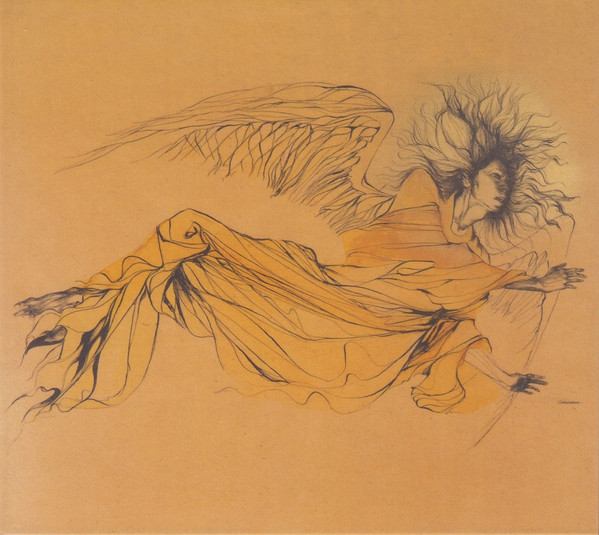
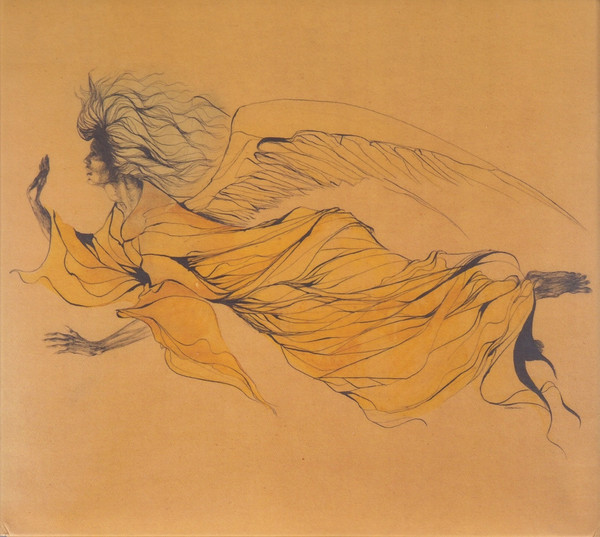
SVEN GRUNBERG-HINGUS.
SVEN GRUNBERG-HINGUS.
From the sixties, right through to the Berlin Wall fell in 1989, Eastern Europe was a musical hotbed. The problem was, very few in the West realised this. That, to some extent, this still the case. Most music lovers have yet to discover the music that came out of Eastern Europe during this period. This music came courtesy of a myriad of talented artists and groups. Sadly, they were in the wrong place at the wrong time.
Across Eastern Europe, the Communist Party ruled with an iron fist. Musicians like writers, poets and artists were scene as a threat to the status quo. Musicians had to be on their guard. They never knew when the state censors would arrive at concerts. Some bands became experts at avoiding the state censors, who were known to chastise a group for singing: “yeah, yeah, yeah.” This wasn’t exactly the best environment for creating music. Nor making money.
In many parts of Eastern Europe, releasing albums was neither possible nor profitable. Estonian prog rock band Mess realised this in the seventies.
Sven Grünberg and Härmo Härm formed Mess in 1974. By then, Sven was eighteen, and studying in the Tallinn music school, where he was studying composition. Sven would Mess’ songwriter, keyboardist and lead vocalist. Härmo, who was twenty five, invented a variety of devices that Mess used to make music.
Gradually, Mess’ lineup took shape. Their lineup would eventually include Andrus Vaht, Elmu Värk, Ivar Sipra, Matti Timmermann and Sven Grünberg. Messa were soon a popular and prolific live band. They toured the country, but in doing so, attracted the ire of the state.
Messa were an outspoken group. Their music Messa contradicted Soviet ideology. This was a dangerous road to go down, and impacted on Mess’ career.
While Mess were a prolific live band, they never released a studio album. That’s not to say they didn’t enter the recording studio. They did. The problem was, they couldn’t release their music. It wasn’t until well after the Berlin Wall fell, that Messa finally released an album.
That came in 1995. That’s when German label, Bella Musica released an album of Mess’ recordings entitled Sven Grünberg’s Proge Rock Group Mess. At last, progressive rock fans were able to hear Estonia’s legendary prog rock Mess. This however, wasn’t the end of the Mess story.
No. Another nine years and then another album of Mess’ music was released. This was Küsi Eneselt, which was released on Strangiato Records. It featured seven tracks originally recorded between 1975 and 1976, at Eesti Raadio, by Lepo Sumera and Sven Grünberg. Küsi Eneselt was like being transported back to another time and place. Mess like so many bands across Eastern Europe during this period, were articulating what the ordinary people were feeling and thinking.
Back in 1976, Sven Grünberg must have becoming frustrated by Mess’ situation. With Mess not being able to release an album, people were unable to hear who Mess had grown and evolved as a group. They had come a long way since 1974. So had Sven.
His course at Tallinn music school helped him improve as a musician and composer. He had come a long way in the last two years. What he needed though, was a showcase for his talents. It looked like Mess wasn’t going to showcase his skills.
That proved to be the case. By 1977, Sven Grünberg decided to embark upon a career as a composer. This would prove to be a stylistic departure for Sven.
In 1978, Sven Grünberg wrote his first film scores. They weren’t for blockbuster films though. Instead, Linalakk ja Rosalind and Klaabu were short animated films. That didn’t matter. Sven had a foothold in the Estonian film industry.
A year later, Sven’s big breakthrough came. He was asked to penned the score to Hukkunud Alpinisti’ hotell. It was directed by Grigori Kromano, and released in August 1970. Hukkunud Alpinisti’ Hotell was well received by critics. Sven’s career as a composer was going places.
As a new decade dawned, Sven was back writing the score for short, animated films. This included Nike Kutse and Karsumm. They were released during 1980 and provided a showcase for Sven’s musical talents. However, by now, Sven was looking to broaden his horizons.
Still Sven was composing the scores for films. In 1981, he provided the score to Avo Paistik’s short, animated film, Klaabu kosmoses. However, now, Sven felt was the time to release his debut album, Hingus on the U.S.S.R. state label Мелодия.
For Hingus, Sven Grünberg had written and recorded three tracks. Breath (1979-1980) is an epic track featuring four movements; I, II, III and IV. These four movements last twenty-three minutes. Following Breath is Journey (1980). That’s a fitting title to what’s a captivating musical journey. Closing Hingus, is Flower Of Light (1978), another epic. It lasts nearly eighteen minutes. These tracks were recorded in Estonia’s capital, Tallinn.
In Tallinn, Sven Grünberg played every internment on Hingus. Literally, Sven becomes a one-man band, playing keyboards, synths, harpsichord, hand-bells, tambourines and castanets. Sven also engineered the Hingus sessions. Seven years after forming Mess, Sven Grünberg was about to release an album, Hingus which was recently reissued by Bureau B.
When Hingus was released in 1981, the album was popular is some quarters. A new generation knew Sven from his film scores. However, still Sven Grünberg was remembered as a member of Mess. They were still remembered as one of the best progressive rock bands in not just Estonia, but the rest of the U.S.S.R. Unsurprisingly, former fans of Mess embraced Sven’s debut album Hingus. While it was very different from Mess’ music, it proved popular. So much so, that Hingus was repressed in 1982, 1984 and 1985. No wonder.
The main theme on Breath (1979-1980), is a man and the world around him. Over Breath’s four movements, a variety of sounds emerge. There’s the sound of a waterfall, a brook and the earth breathing. Sven examines how we face the universe in Breath. It’s cerebral and pensive piece of music in four movements.
As Part I opens, washes of dramatic, bubbling, sci-fi synths can be heard. Underpinning the arrangement is an acoustic organ. This brings to mind the sound of a cathedral. The sound is big and bold. Hovering in the middle of the arrangement is a buzzing sound. It’s as if a U.F.O. has landed. Especially as the arrangement takes on a sci-fi sound. From there, it becomes mellow and laid-back. However, there’s still an ominous sound lurking in the shadows. As sounds flit in and out, the acoustic organ dominates. These sounds might be in its shadow, but it provides as cinematic sound. So do a myriad of bubbling,shimmering and pulsating sounds. Later, the arrangement veers between ethereal and dramatic. By then, it’s apparent that for the four years before releasing Hingus, Sven was composing soundtracks. He’s capable of creating cerebral and cinematic music.
Part II of Breath opens with the sound of the organ playing in the distance. Gradually, it grows in power and drama. Sven stabs of the organ, and gushing gasps of music emerge. Soon, this begins to dissipate, and the music becomes crystalline and elegiac. Later, it becomes mellow and pensive, before reaching an explosive crescendo.
Flourishes of harpsichord open Breath Part III. Its elegiac sound is a contrast to the sheer power of the acoustic organ. It bellows out washes of music, before giving way to the harpsichord. Gradually, the arrangement takes on an Eastern sound. Synths are shimmer, before rumbling ominously. That’s the signal for the acoustic organ to make its entrance. Just like previous tracks, there’s a prog rock influence. That’s the case when the glacial synths, harpsichord and bells unite. However, you’re always aware that the raw power of the acoustic organ will roar in. It does. As it dominates the arrangement, the other instruments are unable to Breath. It’s as if the organ represents the state in the U.S.SR., as it crushes the hopes and dreams of musicians like Sven.
As the fourth and final part of Breath unfolds, the sound of the acoustic organ dominates the arrangement. That’s until a cymbal crashes. From there, an ethereal wash of music descends. So does what sounds like a helicopter. It hovers above the arrangement, as the organ makes a comeback. By now, the listener is expecting it roar back to life. That’s not the case. Sven seems to be toying with the listener. Elements of ambient, avant garde and experimental music play their part in the understated, genre-melting arrangement. By the end of Part IV, nature is merging with the human soul. So not only is this is Part IV mellow and understated, but cerebral.
Journey (1980) ibuilds on the Part IV of Breath. It’s no ordinary Journey. Instead, it’s a Journey to the most remote part of infinity, where a journey can begin again. With the backstory in mind, the listener is captivated as another understated, meandering arrangement unfolds. Washes of synths shimmer and glisten. A drum pulsates and lo-fi synth glides across the arrangement. It’s your guide on this captivating Journey. The synths are elegiac, ethereal and glacial. They’re mellow, understated and ambient sound cocoons the listener. It’s also a meandering,mellow and understated arrangement that’s sure to captivate. Without doubt its ethereal beauty is the highlight of Hingus.
Whereas Breath was an epic in four parts, Flower Of Light is a near eighteen minute epic, consisting of six parts. Again, the music is cerebral and cinematic. A droning, futuristic, sci-fi sound beeps and squeaks. The first of a trio of melodies unfolds. They merge into one, creating an otherworldly soundtrack. From there, Sven creates an understated moody but still futuristic sound in part two. Space is left within the arrangement as the synths are like yin and yang. By the third movement, the arrangement becomes more complicated. Gradually, a dramatic, space-age five-part polyphony emerges. It’s hard to believe this track is thirty-four years old. If The Orb or Underworld created it today, they would be hailed conquering heroes. Sven it seems, was ahead of his time, creating music that was innovative and timeless. As part four unfolds, a change occurs. A buzzing, bubbling, pulsating sound emerges. Washes of synths shimmer. Then part five takes on an understated sound. Musically, Sven creates the sound of flower blossoming. In the background, birds cheep, creating a hopeful, even joyous sound. There’s a similar sense of hope and joy in part six. Here, Sven reflects on the past and the future. New opportunities arise as the door is firmly open. All the listener has to do is go through the door to the future. Flower Of Light an innovative and enthralling musical journey, brings to an end Hungus, Sven Grünberg’s debut album.
Sadly, when Hingus Sven Grünberg released Hingus in 1981, very few people in the West were aware of the album. That’s still the case. It was only when the Berlin Wall fell on 1989, that Eastern Europe opened up to Westerners. While those from the West of Europe have embraced much of Eastern culture, Eastern popular music seems to have been eschewed. That’s a great shame.
Back when Sven Grünberg released Hingus in 1981, Eastern Europe was a musical hotbed. Very few people in the West realised this. That, to some extent, this still the case. Most music lovers have yet to discover the music that came out of Eastern Europe during this period. Ironically, Eastern Europe had an equally eclectic and vibrant music scene. Much of it was underground, given the supposed anti-establishment nature of some of the music. This had been the case with Sven’s previous group Mess. However, after Mess disbanded, Sven reinvented himself as a composer for films, television and theatre.
That’s what Sven had been doing since graduating from Tallinn music school. He was already establishing himself as an up-and-coming composer. However, still he wanted try and establish a career as a solo artist. Hingus was the first step in Sven Grünberg’s solo career.
With its fusion of ambient, avant grade, electronic, progressive rock and cinematic sounds, Hingus was a groundbreaking album. Sven Grünberg took the music from his past and present, and created music that could’ve been created in the future. Flower Of Light sounds like a lost track from The Orb or Underworld. It’s not. It was created by Sven thirty-four years ago and is a truly timeless and innovative track. That’s the case throughout Hingus.
From Part I of Breath, right through to Flower Of Light, Sven Grünberg pushes musical boundaries. In doing so, he creates music that’s variously cerebral, elegiac, ethereal, futuristic, hopeful, melodic and otherworldly. Other times, the music on Hingus is ambitious, bold and dramatic. Always, the music on Hingus is captivating and enthralling. That’s why Sven Grünberg’s debut Hingus deserves to be heard by a much wider audience. Bureau B’s recent reissue of Hingus will introduce Sven Grünberg’s debut album to a whole new audience.
When Sven Grünberg released Hingus in 1981, it was on the U.S.S.R. state label Мелодия. While it found an audience within the U.S.S.R., very few people in the West heard Hingus. If they had, Sven Grünberg might have enjoyed a much more successful solo career. While he released three further albums, 1988s OM, 1993s Milarepa and 1995s Prana Symphony, it was as a composer for film, television and theatre that Sven Grünberg became famous for. However, at least belatedly, Mess, the group Sven Grünberg formed in 1974, and his debut album Hingus, are beginning to receive the recognition and audience they deserve.
SVEN GRUNBERG-HINGUS.
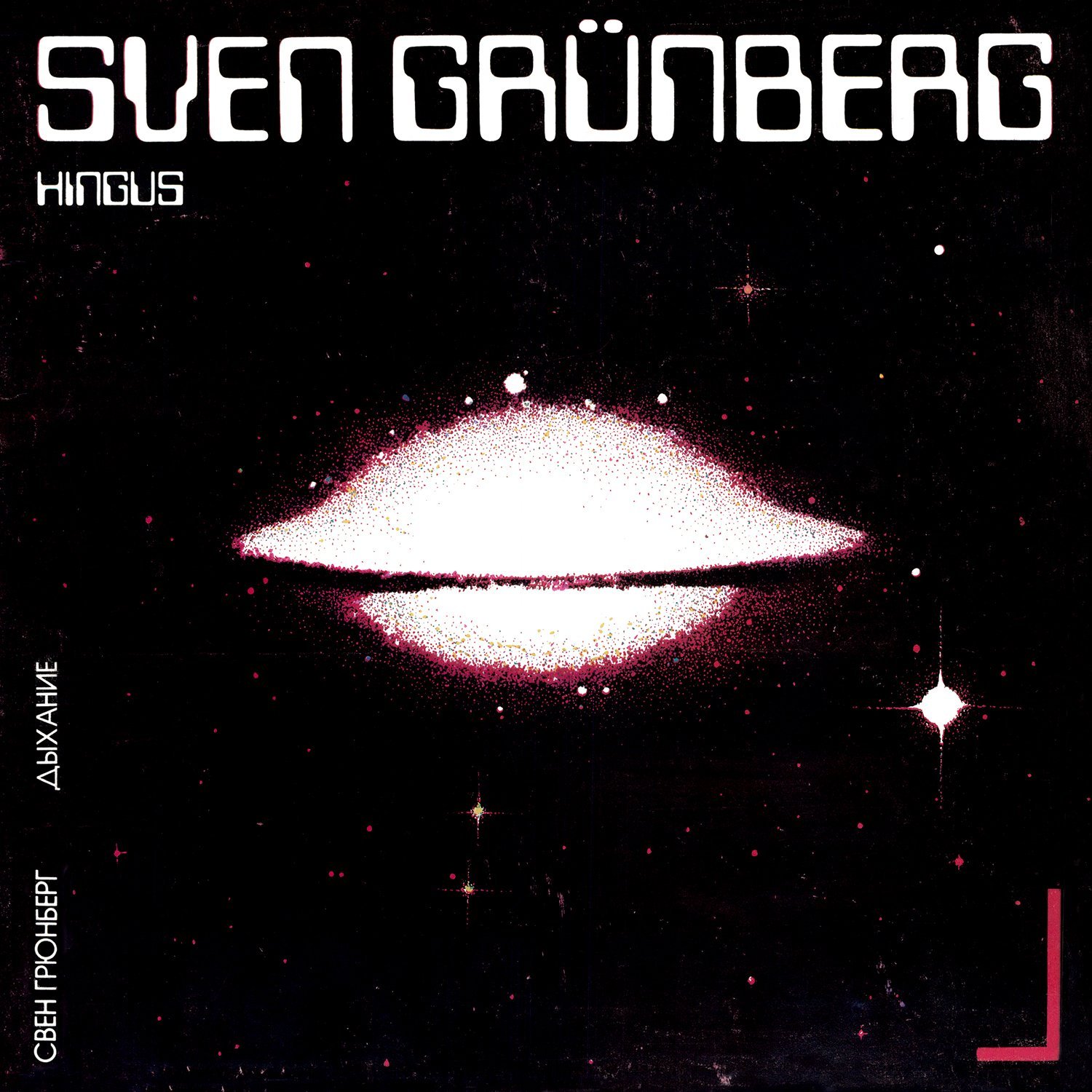
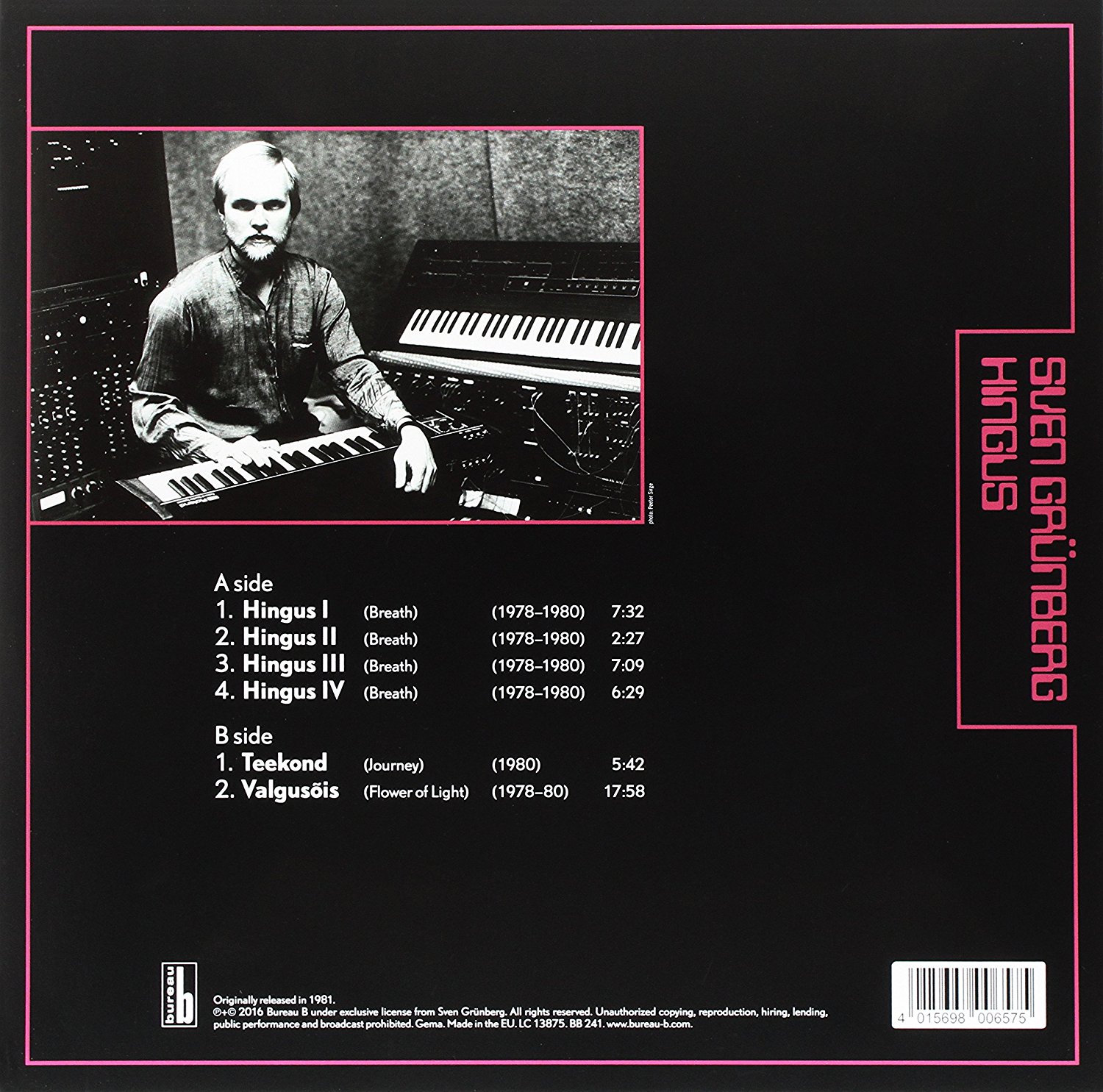
ZAKARY THAKS-TEXAS GARAGE KINGS.
ZAKARY THAKS-TEXAS GARAGE KINGS.
During the sixties, garage bands sprung up all over Texas. Some recorded a handful of singles, before disappearing. Others never got that far. Many recorded just the one single, and played a handful of gigs, before calling it a day. Nowadays, they’re long forgotten. They however, played just a walk-on part in the history of Texan garage rock. However, fifty years later, one name looms large in the history of Texan garage rock, Zakary Thaks. They’re now regarded as the Kings of Texan garage rock. Their story began in the early sixties, in Corpus Christi, Texas.
That’s where, one summer, a group of school friends decided to form a band. This wasn’t unusual. Groups sprung up on a regular basis in the port of Corpus Christi. Nobody took any notice when a new band was formed. After all, groups came and went. The Riptides were just the latest rock ’n’ roll group to be formed in Corpus Christi.
It was at the home of guitarist Pete Stinson, that The Riptides were formed. The initial lineup featured vocalist Chris Gerniottis, drummer Rex Gregory, bassist Wayne Harrison and guitarists Pete Stinson, Shelby Jordan and Glenn Jauer. This was the lineup of The Riptides that played at local parties.
Not long after The Riptides formed, they changed their name. There was, a well known surf rock band with the same name. So, The Riptides became The Marauders, who were soon, establishing a reputation as one of Corpus Christi’s best up-and-coming band.
When The Marauders played live, their music was influenced by the recent British Invasion. Initially, it was just The Beatles that influenced The Marauders. Soon, they discovered The Kinks and The Yarbirds. Their driving rock sound appealed to The Marauders. It played a huge part in shaping The Marauders’ sound. So did blues, rock and surf rock. That’s not surprising. Corpus Christi was a popular surf resort, and The Marauders were on their way to becoming one of its most popular bands. Especially with a new guitarist, John Lopez, onboard.
John Lopez had no formal guitar lessons. A self-taught guitarist, his playing style is remembered as fiery. It was a case of John taming the tiger that was his guitar. With the flamboyant guitarist onboard, The Marauders dispensed with instrumentals and instead, relied more upon Chris Gerniottis’ vocals.
This proved a minor masterstroke. With each performance Chris’ confidence grew. He was inspired by the the Rolling Stones’ Mick Jagger and Eric Burdon of The Animals. However, it was Keith Yelf of The Yarbirds that Chris modelled himself on. Things it seemed, were looking up for The Marauders. Then Rex Gregory had to leave the band.
Rex hadn’t been doing well at school. So, his father took him out of school, and sent him to Houston. This left The Marauders without a drummer. His replacement was David Fore. He was a better fit. While Rex was essentially a jazz drummer, David was more suited to garage rock. David was what The Marauders had been looking for. Maybe he was the final piece in the jigsaw?
That looked like being the case. Then a few months later, Rex returned. This presented The Marauders with a dilemma. David was a better drummer. They couldn’t get rid of him. So, they offered Rex the chance to become The Marauders’ bassist. Rex agreed. However, nobody thought to tell Wayne Harrison. The first he knew, was when he arrived at their concert at The Carousel. Wayne wasn’t pleased, and decided to leave The Marauders, who were about to change their name again.
Having been first The Riptides and then The Marauders, at last, the group were going to settle on a name. This came about when Chris Gerniottis was reading a teen magazine. In the letters page, he came across the name Zakary Thaks. It sounded much better than The Marauders. There was an air mystery and intrigue to Zakary Thaks. This change of name coincided with a change in fortune for Zakary Thaks.
With their new name, things started to look up for Zakary Thaks. The Carousel, where Rex made his debut on bass, became their new headquarters. Zakary Thaks became ostensibly the house band, playing at dances. Quickly, their popularity grew, with Zakary Thaks appearing on a local television show, Teen Time. It was at Teen Time that Zakary Thaks discovered what was definitely, the final piece of the musical jigsaw.
That was Stan Moore. He was the drummer for a rival group The Last Fyve, when Zakary Thaks first heard him play. Straight away, they realised he was what Zakary Thaks had been looking for. Although David Fore was a good drummer, Stan Moore was better. Chris and the rest of Zakary Thaks knew the importance of a good drummer. The rhythm section was central to the future success of Zakary Thaks. Stan Moore could improve Zakary Thaks’ rhythm section. So, an approach was made to Stan Moore, and he became Zakary Thaks’ new drummer. At last, the final piece in the jigsaw was in place. Now, Zakary Thaks were set to become Kings of Texan garage rock.
With their new drummer in place, Zakary Thaks style continued to evolve. Folk-rock and blue-eyed soul influenced Zakary Thaks. Among the groups influencing Zakary Thaks, were The Byrds and The Young Rascals. With their constantly evolving set list, Zakary Thaks took part in a battle of bands at The Carousel.
Given The Carousel was Zakary Thaks unofficial headquarters, they didn’t want to loose face on their home turf. They didn’t. Instead, Zakary Thaks were approached by Carl Becker, who worked with a small airline. Carl and his brother-in-law Jack Salyers had setup J-Beck Records and wanted tor to manage Zakary Thaks. Part of the deal included Zakary Thaks making their debut recording. An added bonus was that Carl and Jack promoted concerts, and would be able to get Zakary Thaks regular gigs. After consulting their parents, Zakary Thaks agreed, and the next step in the rise of Zakary Thaks began.
Realising that Zakary Thaks were bristling with energy and enthusiasm, Carl and Jack soon got the band regular bookings. Zakary Thaks were well received by the audience. They were obviously a talented band. So, soon, Carl and Jack suggested Zakary Thaks write their debut single.
After some time, Zakary Thaks returned with what would become their debut single, Bad Girl. Fittingly, given Zakary Thaks’ love of the British music, the B-Side was a cover of The Kinks’ I Need You. Bad Girl marked the beginning of Zakary Thaks’ recording career began in mid-1966.
Bad Girl was released on J-Beck Records in mid-1966. Bad Girl, an explosion of teenage angst, that’s influenced by the British Invasion, struck a nerve. It became a local hit in Texas. It hit the top of the charts just at the right time.
By then, Zakary Thaks had just supported The Seeds. The Seeds were in disarray, and were blown away by Zakary Thaks. Despite this, The Seeds’ lead singer, Mike Taylor, would later write Zakary Thaks’ sophomore single Please Me. Before that, Zakary Thaks played at a battle of the bands at the Aqua Festival, in Austin, Texas. By then, Zakary Thaks’ star in the ascendancy. Now was the time to record the followup to Bad Girl.
Carl Becker took Zakary Thaks to Gold Star studios, Houston. That’s where recording of Zakary Thaks’ sophomore single Please took place. With its folk rock sound, Please was a stylistic departure for Zakary Thaks. This change of style didn’t please the members of Zakary Thaks. Mike Taylor, who was now working alongside Carl, convinced Chris this was the way to go. He acquiesced and Please, with Won’t Come Back on the B-Side became Zakary Thaks’ sophomore single.
Please didn’t quite replicate the success of Bad Girl. Inwardly, Zakary Thaks thought they’d released the wrong song. At the same session, they had recorded two rocky tracks, She’s Got You and It’s The End. Both were penned by members of Zakary Thaks. Again, there’s a strong British Invasion influence, as Chris oozing attitude, and accompanied by a moody, rocky backdrop, struts his way though the track. Despite these blistering performances, both tracks were rejected by Carl Becker, who was currently negotiating with Mercury Records.
After the success of Bad Girl locally, Chris decided to lease the single to a major label. Eventually, after some contractual problems, he struck a deal with Mercury. Bad Girl was released by Mercury in October 1966. Due to the nationwide release of Bad Girl, Carl put a followup single on hold. By then, Zakary Thaks had met one of their musical heroes.
The Yarbirds were on what became their last American tour, before Jeff Beck quit the group. On 30th October 1966, The Yarbirds played at Corpus Christi, at the Memorial Coliseum. Somehow, Carl had convinced the promoter to let Zakary Thaks open the bill. The next day, at the airport Zakary Thaks, who were en route to Houston, to a recording session, met Jeck Beck. Having met their hero, Zakary Thaks boarded a flight to Houston.
At Gold Star studios, Houston, Zakary Thaks recorded Passage To India, which was very different to their previous recordings. Its modal, Eastern influenced riffs were almost a homage to The Seeds. Other tracks recorded at the Gold Star sessions, included Won’t Come Back and Face To Face. Once the recording sessions were over, Zakary Thaks returned home.
With three new tracks to show for their trip to Houston, Zakary Thaks hoped one would be their third single. That wasn’t to be. Carl Becker rejected the songs. However, after Face To Face was reworked in late December 1966, and then January 1967. With Carl’s help, Zakary Thaks nailed Face To Face. It would give Zakary Thaks’ another hit single.
Released in February 1967, Zakary Thaks’ long awaited third single, Face To Face, which had Weekday Blues on the flip side, caught the attention of DJs. Across the Gulf Coast, Face To Face received heavy airplay. However, during this period, members of Zakary Thaks’ rhythm section were working overtime.
Following his departure from The Seeds, Mike Taylor was touring as Michael. There was a problem. He was without a band. So, when he needed a rhythm section, who did he call? Zakary Thaks. They accompanied him live, and played on I’d Only Laugh, People Sec IV and Gotta Make My Heart Turn Away. Of this trio of tracks, the Dylan tonged People Sec IV, was released as a single. Meanwhile, Face To Face, Zakary Thaks’ was riding high in the charts.
With another hit single in Face To Face, featuring on television, constantly playing live and working with Mike Taylor, things were looking good for Zakary Thaks during the first half of 1967. To onlookers, this was pretty good going, considering Zakary Thaks were still in their final year at high school. However, Zakary Thaks’ next single marked a change in the group’s fortunes.
By June 1967, Zakary Thaks released their next single. This wasn’t a new song. Won’t Come Back had been recorded at Gold Star Studios, in December 1966. It was paired with a rerecorded version of their debut hit single, Please. However, it failed to match the commercial success of Face To Face. This was a huge disappointment. Still, Zakary Thaks were busy playing live, appeared on television and even had a documentary made about them. Then in the spring 1967, Carl Becker announced he was leaving J-Beck Records.
For Zakary Thaks this was a worrying time. Lofton Kline, formerly of The Poco-Seco Singers took over A&R duties for Zakary Thaks. This resulted in a change of sound. Zakary Thaks’ releases took on a more polished sound. Instruments were layered, and the production style was much more noticeable. This is apparent on Zakary Thaks’ final single for J-Beck Records.
Recording of the Mike Taylor penned, Can You Hear Your Daddy’s Footsteps began in April 1967. Then when Lofton took charge of A&R, he decided that overdubbing should take place. It was well worth the extra effort. The vocal arrangement, where harmonies interact with the lead vocal, is much more complex. Then there’s the blistering guitars, and driving rhythm section. On the B-Side was the reflective, baroque influenced Mirror Of Yesterday. With its heavily orchestrated arrangement, this marked a change in style from Zakary Thaks. This wasn’t the only change about to happen. Little did one of their number realise, that Can You Hear Your Daddy’s Footsteps was Zakary Thaks’ swansong.
Eventually, Can You Hear Your Daddy’s footsteps was released in November 1967. It failed to replicate the commercial succes of earlier singles. Zakary Thaks’ recording career seemed to have stalled. Maybe, the loss of Chris Becker had affected Zakary Thaks more than they realised? Lofton, although well intentioned, maybe, seemed to be taking Zakary Thaks in the wrong direction? Then there was a problem with Chris Gerniottis.
For some time, there had been tension within Zakary Thaks. Eventually, it came to a head in January 1967. John Lopez, Stan Moore and Pete Stinson decided the time had come to fire Chris Gerniottis. Chris seemingly a believer in the maxim get your retaliation in first, joined Zakary Thaks’ fiercest rivals Liberty Bell. Zakary Thaks. Replacing Chris in Zakary Thaks was Maxine Sands. However, her time as Zakary Thaks lead singer was short-lived. Pete Stinson joined the U.S. Army and Zakary Thaks split-up. Can You Hear Your Daddy’s Footsteps proved to be Zachary Thaks’ final single for J-Beck Records.
There was subsequent talk of the remaining members of Zakary Thaks forming a new band. However, John Lopez joined The Farm. He played with The Farm until Zakary Thaks reformed in May 1968 as a trio. This being the age of the power trio, drummer Stan Moore, bassist Rex Gregory and guitarist John Lopez became the latest incarnation of Zakary Thaks.
Not long after reforming, Zakary Thaks released a new single, Green Crystal Ties, which featured My Door on the B-Side. Both sides were psychedelic rockers, and despite their indisputable quality, failed commercially. For the newly reformed Zakary Thaks, this was a disappointment. Maybe their luck would change when they became a quartet?
Liberty Bell disbanded in January 1969. This left Chris Gerniottis without a group. Differences were put to one side, and Chris Gerniottis rejoined Zakary Thaks. With three becoming four, Zakary Thaks signed to Carl Becker’s new label Cee Bee Records.
In March 1969, Zakary Thaks recorded what would prove to be the final single of their career. Originally, Everybody Wants To Be Somebody was destined to be the single. However, the B-Side Outprint had more of the original Zakary Thaks’ sound. Sadly, that proved to be wishful thinking. Zakary Thaks sunk without trace. The group that had been, Kings of Texan garage rock split up in June 1969. The dream may have been over for Zakary Thaks, but they had written their way into garage rock history.
Thirty-six years after Zakary Thaks split-up, they’re still remembered as Kings of Texan garage rock. That’s despite releasing six singles. Three of these singles, Bad Girl, Face To Face and Won’t You Come Back are remembered as Texan garage rock classics. They’re a tantalising reminder of Zakary Thaks, the Kings of Texan garage rock,
ZAKARY THAKS-TEXAS GARAGE KINGS.




MIROSLAV VITOUS-THE BASS.
MIROSLAV VITOUS-THE BASS.
In 1967, twenty year old Miroslav Vitous was playing alongside Clark Terry in a Chicago club. It was just the latest gig for the up-and-coming Czech bassist. He had made America his home in 1966, when he won a scholarship to study at Berklee College of Music, in Boston. Now he was putting into practise everything he had learnt at the Prague Conservatory and then Berklee College of Music. As he played, Miroslav Vitous didn’t see a familiar figure in the audience…Miles Davis.
After the set finished, Miroslav Vitous was approached by Miles Davis. After introducing himself and complimenting him on his performance, Miles Davis told Miroslav Vitous how his band had been booked to play at The Village Gate for a week during August 1967. However, his regular bassist, Ron Carter was unavailable. Would Miroslav be willing to deputise for Ron Carter at The Village Gate? This was a huge break for the young bassist.
Just under a year later, the lineup of Miles Davis’ band began to change. Bassist Ron Carter left. Not long after his departure, Miroslav received a call from Miles Davies. By then, his music was changing, and moving towards fusion. Within this new sound, Miles Davis envisaged the bass playing just “repetitive motifs.” This was a very specific and disciplined role. Miroslav wanted more freedom and to be able to express his creativity.The two musicians were on different pages musically. As a result, Miroslav Vitous proved to be just a temporary replacement for Ron Baker until Miles Davis could secure the services of Dave Holland.
After leaving Miles Davis’ employ, Miroslav Vitous’ services were in demand. He joined Stan Getz’s band, which included tenor saxophonist Chick Corea. This proved to be a another lucky break for Miroslav.
Not long after this, Chick Corea got the chance to record an album for the Solid State label. He decided to record to put together a trio. Its lineup included Chick Corea, Miroslav Vitous and drummer Roy Haynes. They recorded Now He Sings, Now He Songs, which was released to critical acclaim later in 1968. Nowadays, Now He Sings, Now He Songs is regarded as one of the most important and influential trio albums.
Later in 1968, Miroslav Vitous joined Roy Ayers when he was recording Stoned Soul Picnic. This was just the followup to Virgo Vibes, which had found favour with critics. So did Stoned Soul Picnic, with its fusion of soul and jazz. It was released in 1968, the same year Miroslav Vitous made his recording debut as part of flautist Herbie Mann’s band.
Having joined Herbie Mann’s band in 1968, Miroslav Vitous made his debut on Windows Opened. When it was released in 1968, it was hailed a classic. The following year, Herbie Mann released Live At The Whisky A Go Go in 1969. Miroslav Vitous and Roy Ayers were part of the band on this memorable live album. It was just one of the albums Miroslav Vitous played on during 1969.
Among the others were Jack DeJohnette’s eclectic and genre-melting album The DeJohnette Complex. It was released in 1969. So was Wayne Shorter’s Super Nova. Miroslav Vitous was chalking up the credits and proving the go-to-guy for anyone looking for a bassist. However, Miroslav Vitous was looking beyond a career as a sideman, and one as a solo artist.
The opportunity arose when Herbie Mann was setting up his Embryo Records label. He had managed to secure a distribution deal with Atlantic Records. Now, Herbie Mann began adding to Embryo Records’ small roster. One name he was keen to add the roster was Miroslav Vitous.
That was how Miroslav Vitous found himself making his way to A&R Studios, New York in November 1969. That was where Herbie Mann was waiting to produce his debut album. It’s an album that would eventually be released under three different titles. This includes The Bass, which was recently remastered and rereleased by BGO Records. It was the album that Herbie Mann hoped would launch the career of the Miroslav Vitous.
He was already more than a musician. Miroslav Vitous was also a composer, and had written most of his debut album. This included Mountain In The Clouds, Epilogue, Infinite Search, I Will Tell Him On You and When Face Gets Pale. The only composition that Miroslav Vitous decided to cover, was Eddie Harris’ classic Freedom Jazz Dance. It would prove the perfect showcase for Miroslav Vitous’ all-star band.
Despite being a month short of his twenty-second birthday, some of the biggest names in jazz accompanied Miroslav Vitous on Bass. That was no surprise. He was already an experienced and well respected musician. Miroslav had played alongside Miles Davis, Stan Getz, Roy Haynes, Chick Corea, Roy Ayers, Herbie Mann and Jack DeJohnette, and had more than held his own musically. So when it came to putting together a band, Miroslav was able to choose from the creme de la creme of jazz,
They joined Miroslav Vitous and producer Herbie Mann at A&R Studios, in New York. This included drummer Jack DeJohnette, whose album The DeJohnette Complex Miroslav had played on. Jack DeJohnette slotted into the rhythm section alongside This included one of the musicians Miroslav Vitous had played alongside bassist Miroslav Vitous and guitarist John McLaughlin. They were augmented by Herbie Hancock on electric piano and tenor saxophonist Joe Henderson. During the session, Joe Chambers was brought in to deputise for Jack DeJohnette on When Face Gets Pale. For the rest of the recording, the band remained unchanged. Backed by such an experience and talented band, and with Herbie Mann taking charge of production, the album was soon complete.
As the sixties gave way to the seventies, Herbie Mann’s Embryo Records began preparing for the release of Miroslav Vitous’ debut album in spring of 1970. By then, Miroslav had decided to name his debut album Infinite Search. It featured six of the tracks that had been recorded, Freedom Jazz Dance, Mountain In The Clouds, When Face Gets Pale, Infinite Search, I Will Tell Him On You and Epilogue. Before the release of Infinite Search, copies of this carefully sequenced album were sent to critics.
They lauded Infinite Search, which hailed as an ambitious, progressive and innovative album. Accompanied by some of the biggest names in jazz, bandleader Miroslav Vitous pioneered the nascent fusion sound. To do this, he combined fusion with elements of free jazz, modal jazz and a hint of bebop. There’s a fluidity, invention and energy to the all-star band’s playing. Other times, the rhythm section probe or drive the music forward, as they play with an urgency. Sometimes, the music is rhythmic, dramatic or melodic. However, other times, the music is thoughtful, understated, languid and mellow. Infinite Search was a captivating and groundbreaking album that showcased the nascent fusion sound.
That was the apparent from the opening bars of Eddie Harris’ Freedom Jazz Dance through to the closing notes of Epilogue. Miroslav Vitous gave his audience a foretaste of the new fusion sound that saved jazz from obscurity and irrelevance.
Accompanied by critical acclaim, Infinite Search was released in the spring of 1970. The album wasn’t a huge seller, but found an audience within the jazz community. Especially those who had latched onto the emerging fusion sound. It was already growing in popularity.
By 1972, fusion’s popularity had soared, and in the process, had saved jazz from obscurity and irrelevance. Pre-fusion, jazz’s popularity was at all-time low. However, since the birth of fusion, the genre’s popularity had soared. One of the genre’s most popular bands was Weather Report. Miroslav Vitous confounded Weather Report with Joe Zawinul and Wayne Shorter. As their popularity grew, so did interest in Miroslav Vitous’ solo albums.
This resulted in Hör Zu Black Label a German experimental label licensing Infinite Search from Atlantic Records. They owned Herbie Mann’s Embryo Records. Previously, Hör Zu Black Label had released a myriad of jazz, progressive and avant-garde albums. Their back-catalogue included everything from Alice Coltrane to Karlheinz Stockhusen to Soft Machine. However, Hör Zu Black Label didn’t plan to rerelease Infinite Search exactly.
Instead, they decided to give Infinite Search a new title. It became The Bass. The track listing was also totally resequenced. That wasn’t the end of the changes. A seventh track was added, Cerecka to The Bass. By now, it was a very different album.
Upon its release by Hör Zu Black Label in 1972, the track listing was Mountain In The Clouds, Epilogue, Cerecka, Infinite Search I Will Tell Him On You and When Face Gets Pale. This is the track listing that features on BGO Records’ recently reissue of The Bass. It was released scheduler for release by the Hör Zu Black Label later in 1972.
Just like two years earlier, The Bass was released to critical acclaim and found an audience within the jazz and fusion communities. This groundbreaking album had found a new audience for the second time.
That was no surprise. Fusion was still popular in 1972, and Miroslav Vitous continued to pioneer the genre. He was enjoying a successful solo career and was still a member of Weather Report until 1974. By 1976, fusion was no longer as popular.
Despite this, Warner Bros decided to released The Bass in Europe in 1976 as Magical Shepherd. To give the album broader appeal, a bonus track was added, New York City. Its disco-tinged sound was meant to appeal to dancers and DJs. Alas, that wasn’t the case and Magical Shepherd wasn’t the success that Warner Bros. had hoped for.
Despite this, The Bass was still a groundbreaking album, and one that pioneered the nascent fusion sound. Forty-five years later, and The Bass is regarded quite rightly regarded as innovative and influential fusion classic. Not only did The Bass launch Miroslav Vitous solo career, and helped popularise fusion, it ensured that jazz remained relevant and saved it from potential obscurity.
MIROSLAV VITOUS-THE BASS.

JOHN WETTON-THE OFFICIAL BOOTLEG-ARCHIVE VOLUME 1.
JOHN WETTON-THE OFFICIAL BOOTLEG ARCHIVE VOLUME 1.
For the best part of fifty years, artists and record companies have been plagued by bootleggers smuggling recording equipment into concerts. This started when bootleggers began smuggling tape into concerts. Often the tape recorders were hidden under coats or in bags. As a result, the sound quality was often poor quality. This forced a rethink by the bootleggers.
Eventually, they realised that they had place their tape recorders in places where they could they could best capture the sound quality. After all, they planned to release recordings on vinyl. This marked the birth of the first rock bootlegs.
Little did anyone realise that this was the start of an underground record industry, that would do untold damage to the music industry. However, in the early days, there was an element of cloak and dagger to buying bootlegs.
Some of these recordings were sold almost clandestinely in small record shops. Other bootlegs labels sold their releases via mail order. Usually, record buyers sent their money to a Post Office Box. They eventually received their bootleg album. This included some of the biggest recording artists of the day. Everyone from Bob Dylan to Led Zeppelin, and the Rolling Stones to Pink Floyd fell victim to the bootleggers.
Especially, as bootlegging became an underground industry. The recording equipment used by bootleggers was improving, and some went as far as investing in top of the range professional equipment. This meant recordings were much more professional sounding. It was a worrying time for the music industry. They were caught on the hop, and soon, seemed to be fighting a losing battle.
The bootleggers had nurtured contacts with pressing plants, concert arenas and even record companies. Some of the contacts within record companies smuggled out recordings of unreleased material. These stolen recordings were then released by the bootleggers. This was just the latest worrying trend.
Another was that some bootleggers seemed to have access to a band’s soundboard at concerts. Some bootleggers were able to setup recording equipment onstage. Questions were asked about the road crew? Had they been involved, and did they facilitate the recording of these bootlegs? They often proved costly.
Especially if these bootlegs were released just before a band planned to release a live album. This could prove costly. Efforts were made find the bootleggers. Sometimes this proved successful. Mostly, though, it was a costly and frustrating cat and mouse game.
This has continued for decades. Often, a few bootleggers are caught, and inroads are made into the supply chain. Still, though, bootleggers continue to prosper. This is no victimless crime. It costs record companies and artists money. However, over the years, some artists have fought back, including John Wetton.
Recently, John Wetton released The Official Bootleg Archive Volume 1, a six CD box set through his own website. It’s a collection of three of John Wetton’s previously released Official Bootlegs, which have been out of print for the best part of ten years. These three concerts were recorded between 1996 and 1999. The first is Live In Argentina 1996 which features on discs one and two. Live In Osaka 1997 features on discs three and four. On discs five and six, is Live At The Sun Plaza Tokyo 1998. With his tongue firmly in his cheek, John Wetton decided to call this box set The Official Bootleg-Archive Volume 1. It’s the latest addition to John Wetton’s burgeoning back-catalogue.
John Wetton served his musical apprenticeship in Bournemouth, where he grew up. That’s where he first met Richard Palmer-Jones. They were members of The Corvettes, The Palmer-James Group, Tetrad, and Ginger Man. After that, John Wetton joined Mogul Thrash. That’s where he made his breakthrough.
Mogul Thrash-Mogul Thrash.
Mogul Thrash were a prog rock band, who had evolved out of Brotherhood. They released their debut single Sleeping in the Kitchen in 1970. Then a year later, Mogul Thrash released their eponymous debut album in 1971. It was produced by Steampacket founder Brian Auger. On its release, Mogul Thrash was well received by critics. The future looked bright for Mogul Thrash. Sadly, that wasn’t the case.
As Mogul Thrash was released, the group were locked in a legal battle with their management. It didn’t end well. Mogul Thrash had no option but to disband. So, 1971s Mogul Thrash proved to be group’s only album. For bassist John Wetton, and the rest of Mogul Thrash, this was a huge disappointment. Mogul Thrash looked like they were going places. Luckily, Family were looking for a bassist.
John Wetton fitted the bill. Not only could he play bass, but he was a guitarist and vocalist. So, the multitalented twenty-two year old joined Family. He played on their next two albums, starting with Fearless
Family-Fearless,
Family’s fifth album, was released on 29th October 1971. This marked John Wetton’s Family debut. He played bass, guitars, and keyboards. Family were almost getting three musicians for the price of one. He would more than play his part in Fearless’ sound and success.
On its release, Fearless was well received by critics. The new lineup of Family seemed to have gelled quickly. Fearless was littered with highlights, including Spanish Tide, Save Some for Thee and Take Your Partners. So, it’s no surprise that Fearless sold well.
After its release, Fearless climbed the British and American charts. Eventually, it reached number fourteen in Britain and number 177 in the US Billboard 200. This was a first for Family. Never before had any of their albums charted in America. John Wetton it seemed, was Family’s good luck charm.
Bandstand.
After the success of Fearless, Family returned to the studio, and recorded Bandstand at Olympic Studios, London. This was where they had recorded Fearless. Just like Fearless, Bandstand was produced by George Chkiantz and Family. However, it marked a change in style for Family.
Bandstand was released in September 1972. It marked a stylistic departure for Family. Their music moved towards the mainstream. Partly, this was because Roger Chapman and Charlie Whitney had accepted the standard method of songwriting. It made life a lot easier. However, this move towards the mainstream risked alienating Family’s fans.
Prior to Bandstand’s release, critics had their say. Critics liked Family’s more mainstream sound. The album was released to near critical acclaim. A few contrarian critics disagreed. However, the people that mattered were the record buying public.
As Bandstand hit the shops, the members of Family wondered how their new sound we he received? When the dust settled, Bandstand had reached number fifteen in Britain and number 183 in the US Billboard 200. This was almost the same as Fearless. It seemed their new sound had neither lost, nor gained, Family any new fans. However, before long, Family had lost their bassist.
By 1972, John Wetton had attracted the attention of King Crimson. They were prog rock royalty, and one of the biggest and most innovative bands of the prog rock era. So, when John was asked to join King Crimson, he couldn’t say no. He made his debut on Larks’ Tongues In Aspic.
King Crimson-Larks’ Tongues In Aspic.
Larks’ Tongues In Aspic was King Crimson’s fifth album. The album marked an almost new lineup of King Crimson. This was the third lineup in the group’s history. Joining Robert Fripp were bassist John Wetton, ex-Yes drummer Bill Bruford, percussionist Jamie Muir and David Cross, who played violin, viola, Mellotron, electric piano and flute. This new lineup saw the band head in a new direction.
King Crimson incorporated different instruments, including percussion and African mbira. They moved away from their jazz sound, to a fusion of prog rock and experimental music on what became Larks’ Tongues In Aspic.
It was released in March 1973, to critical acclaim, reaching number twenty in the UK and number sixty-one in the US Billboard 200. With a new lineup and having released their strongest album in recent years, King Crimson looked as if they were about to become one of the biggest bands of the early seventies.
Starless and Bible Black.
Just about every prog rock band released a concept album. Starless and Bible Black, which is a quotation from the first two lines of Dylan Thomas’ Under Milk Wood, was King Crimson’s concept album. The album is a commentary on the sleaziness and materialism that was blighting society. Richard Palmer-James, a former member of Supertramp, cowrote four of the songs on Starless and Bible, which saw King Crimson take a different approach to recording.
Unlike previous albums, there’s no drums on Starless and Bible. Despite the lack of drums, drummer Bill Bruford played percussion and cowrote three tracks. While he played on Starless and Bible, Jamie Muir didn’t. He’d left the band. Another change was that only the first two tracks on Starless and Bible, The Great Deceiver and Lament recorded in the studio. The rest of the tracks were recorded live, with the applause edited out. This was a very different approach from previous King Crimson albums.
Despite this, Starless and Bible Black was well received. Some critics hailed Starless and Bible Black as King Crimson’s best album since their debut. With its fusion of prog rock and experimental music, it was an ambitious and groundbreaking album. On its release in March 1974, it reached number twenty-eight in the UK and number sixty-six in the US Billboard 200. With King Crimson having released two consecutive critically acclaimed albums, it looked as if they were about to join the royalty that included Pink Floyd and Led Zeppelin. However, that wasn’t to be.
Red.
Having just released to consecutive critically acclaimed albums, Larks’ Tongues In Aspic and then Starless and Bible Black, critics and fans wondered what direction King Crimson seventh album Red would take? Being King Crimson, fans and critics had learnt to expect the unexpected. The first change was in the lineup. After their 1974 summer tour, David Cross left King Crimson. This meant the band was now a trio consisting of Robert Fripp, bassist John Wetton and drummer Bill Bruford. They cowrote much of Red.
Red featured just five tracks. Recording of Red began on 30th June 1974 at Olympic Studios, London and finished in August 1974. Four of the songs on Red were recorded live. The exception was One More Red Nightmare, which was recorded live. In the studio, Robert Fripp played guitar and mellotron. He was joined by bassist John Wetton and drummer Bill Bruford. They were augmented by a variety of musicians who often, played on just one track. These musicians played their part in not only what’s a landmark album, but an album that marked the end of an era.
On its release in October 1974, Red reached just number forty-five in the UK and number sixty-six in the US Billboard 200. Critics hailed Red as an innovative album. There are obvious similarities with Larks’ Tongues In Aspic and Starless and Bible Black in sound and quality. One change was the lack of the acoustic guitars that featured on previous albums. With its fusion of prog rock and classic music, Red proved to be a hugely influential and innovative album. Sadly, it was the last King Crimson studio album to feature John Wetton.
Uriah Heep-Return To Fantasy.
Having left King Crimson, John joined Uriah Heep. They had already realised seven albums since their 1970 debut …Very ‘Eavy …Very ‘Umble. John was brought in to replace Gary Thain. He joined just in time to play on their eighth album Return To Fantasy. John it seemed had the Midas touch.
Return To Fantasy was recorded at Lansdowne Studios and Morgan Studios, London. Just like previous albums, Gerry Bron took charge of production. Initially, Mick Box thought found that the chemistry he had with Gary Thain was missing. However, soon, John was making his presence felt, playing bass, mellotron and adding backing vocals. He played an important part in Return To Fantasy’s success.
When critics heard Return To Fantasy, they hailed it a vast improvement on 1974s Wonderworld. Return To Fantasy was the album critics knew Uriah Heep were capable of recording. Critical acclaim accompanied Return To Fantasy’s release.
It wasn’t just critics who loved Return To Fantasy. So did the recording buying public. On its release on 30th June 1975, Return To Fantasy reached number seven in Britain and was certified silver. Return To Fantasy reached number thirty-eight in the US Billboard 200 charts, selling 450,000 copies. The new lineup of Uriah Heep had just released their biggest selling album, Return To Fantasy. The problem was following it up.
High and Mighty.
Nearly a year later, Uriah Heep released High and Mighty on 8th June 1976. It was the last Uriah Heep album to feature vocalist David Byron. He had been battling with alcohol. Sadly, his drinking was beginning to affect the band. So, he was sacked after the release of High and Mighty.
What didn’t help, was that High and Mighty wasn’t well received by critics. Some critics slated the album. They weren’t impressed by the move towards the mainstream. Nor did the lack of lengthy tracks please critics. The longest song on High and Mighty was just under six minutes. This was quite unlike Uriah Heep. So was the chart placing.
High and Mighty stalled at number fifty-five in Britain. This was their lowest chart placing since their sophomore album, Salisbury. Across the Atlantic, American record buyers turned their back on Uriah Heep, with High and Mighty reaching number 161 in the US Billboard 200. For Uriah Heep, something had to give.
David Byron was sacked by Uriah Heep. John Wetton decided that this also was the time to part company with Uriah Heep. He had plenty of session work and collaboration to keep him busy.
For the next couple of years, John was kept busy. John played on Roxy Music’s 1976 album Viva! He also accompanied Bryan Ferry on 1976s Let’s Stick Together, 1977s In Your Mind and 1978s The Bride Stripped Bare. This wasn’t John’s only collaboration with members of Roxy Music.
Previously, John had played on Andy McKay’s 1977 album, Score. Then in 1978, Phil Manzanera asked John to play on his 1978 album K-Scope. The pair had worked together on Phil’s 1975 debut Diamond Head. So, this was no surprise. Neither was John joining a new band UK.
UK-UK.
UK were another prog rock supergroup. Their lineup included John, Yes drummer Bill Bruford, keyboardist Eddie Jobson and guitarist Allan Holdsworth. This was the lineup that recorded two critically acclaimed albums. The first was UK.
Recording of UK took place between December 1977 and January 1978. It was released in March 1978. Although critics gave UK glowing reviews, referring to the music as innovative and progressive, UK passed record buyers by. The four members of UK were going to give up.
Danger Money.
Nearly a year to the day, UK returned with their sophomore album, Danger Money. It featured a new lineup of UK. Bill Bruford and Allan Holdsworth had left the group. Replacing them was Terry Bozzio. So, with UK reduced to a trio, they returned to the studio.
The new lineup were set record six songs at Air Studios, London. These songs were penned by John and Eddie. They were recorded between November 1978 and January 1979. Once Danger Money was recorded, it was ready for release in March 1979.
History repeated itself, when Danger Money was well received by critics, but failed to chart. At least Nothing to Lose reached number sixty-seven in the British charts. Despite this modicum of success, it was a frustrating time for groups like UK. They certainly weren’t lacking in talent. Far from it. UK were a hugely talented group. Part of the problem was the changing musical landscape.
The nihilist sound of punk and post punk was polluting the airwaves. Many critics were little more than cheerleaders for the talentless punks. It truly was the great rock ’n’ roll swindle. Its victims were talented prog rock groups who punks referred to as dinosaurs. However, little did they realise that in three years time, John Wetton would have the last laugh. Before that, UK released their swan-song.
Night After Night.
Danger Money was John Wetton’s final studio album with UK. He featured on their live album Night After Night. It was recorded during UK’s tour of Japan, in early June 1979. The album was recorded at Nakano Sun Plaza and Seiken Kan, in Tokyo. It was released in September 1979.
This was perfect timing. UK were about to head out on tour, supporting Jethro Tull on their American tour. So, the release of Night After Night was timed to coincide with the American tour. Sadly, Night After Night wasn’t a commercial success. This resulted in John leaving UK.
John Wetton-The Solo Years
Caught In The Crossfire.
Following his departure from UK, John decided that now was the time to embark upon a solo career. So he began work on what became Caught In The Crossfire.
Given John Wetton is a talented multi-instrumentalist, he was able to record much of Caught In The Crossfire himself. He played bass, guitars, keyboards and added vocals. To play the drum and percussion parts, John drafted in Simon Kirke of Bad Company. Another guest artist, was saxophonist Malcolm Duncan. They played their part on Caught In The Crossfire, John Wetton’s long-awaited debut album.
On its release in 1980, Caught In The Crossfire was well received by critics. Although quite different from his work with Family, King Crimson and Uriah Heep, it showed John’s versatility and ability to create ambitious and innovative music. Although the album sold well, it wasn’t a huge success. Despite that, ecord buyers awaited John’s sophomore album. It would be a long time coming.
There was a reason for this. John was a busy man. He worked with Roger Chapman on their 1980 album Mail Order Magic and 1981s Hyenas Only Laugh for Fun. The former Family frontman had reinvented himself as a solo artist. However, later in 1981 John joined Wishbone Ash, where he replaced Martin Turner.
Wishbone Ash-No Smoke Without Fire.
With Martin Turner leaving Wishbone Ash, the English rock group found themselves with a problem. They had an album to record, but had no bassist. This was where John Wetton came in. He joined in time to record No Smoke Without Fire.
No Smoke Without Fire was a stylistic departure for Wishbone Ash. Previously, their music had taken on an American influence. Some fans didn’t take to this. What they wanted was Wishbone Ash to return to the prog rock of their past. Other fans wanted Wishbone Ash to return to their hard rocking best. With Derek Lawrence returning as producer, for the first time since 1972s Argus, they did both.
When No Smoke Without Fire was released later in 1978, the album has hailed Wishbone Ash’s heaviest album to date. Critics welcomed the inclusion of prog rock epic The Way Of The World. Wishbone Ash many thought were back.
Sadly, The Way Of The World stalled at number forty-three in Britain, and failed to chart in America. For John Wetton and the rest of Wishbone Ash, this was a huge disappointment. Especially considering The Way Of The World was John’s only album with Wishbone Ash. He left the group to join Asia.
Asia-Asia.
Asia were another British prog rock supergroup. Its lineup featured John, guitarist Steve Howe and keyboardist Geoff Downes. They were both members of Yes. The final piece of the jigsaw was Carl Palmer, or E.L.P. With Asia’s lineup complete, they began working on their eponymous debut album.
Recording of Asia took place at the Townhouse Studios, London. For the five months between June and November 1981, the four members of Asia recorded nine tracks. Eventually, the album was finished and ready for release on 18th March 1982.
After their five months of hard work, reviews of Asia were mixed. This some critics felt, didn’t bode well for the release of Asia. They were wrong.
On its release, Asia’s 1982 eponymous debut album sold eight million copies worldwide, and reached number one in the US Billboard 200 charts. This lead to Asia being certified platinum four times over. John Wetton it seemed had the Midas touch.
Alpha.
Following the commercial success of Asia, the four members of the band started work on their sophomore album Alpha. John and Geoff penned nine of the ten tracks. The other track, The Smile Has Left Your Eyes, was a John Wetton composition. These tracks were recorded between February and May 1983.
It was never going to be easy following up Asia. The album had sold eight million copies. Unsurprisingly, Alpha wasn’t as popular. Again, reviews of Alpha were mixed. Critics pointed towards the change in sound. Asia, just like Family had done a decade earlier, had moved towards the mainstream. Part of Asia’s appeal, was their progressive sound. While it was less prominent, Alpha was still a commercial success.
On its release on 26th July 1983, Alpha reached number six in the US Billboard 200 and number five in Britain. This resulted in Alpha selling two million copies worldwide. Alpha was certified platinum in America and gold in Britain. Sadly, after Alpha, Asia never reached the same heights
Astra.
There was a gap of two years between Alpha, and Asia’s third album Astra. It marked the end of an era. Astra was the last album to feature founding member John Wetton. He didn’t return until 2008s Phoenix. No wonder. All wasn’t well within Asia.
Astra had been two years in the making. Recording started in 1983. However, John left in September 1983, and was replaced temporarily by Greg Lake. He featured during some of Asia’s live shows. When John returned, Steve Howe departed. This was blamed on the tension between Steve and John. Replacing Steve, was Mandy Meyer, who brought a harder edge to Asia’s sound.
Asia’s new lineup spent much of 1984 and 1985 recording Astra. The band moved between studios. Eventually, Astra was finished, and ready for release in November 1985.
When critics heard Astra, reviews were mixed. While some critics weren’t impressed, other called Astra a solid album. The jury were well and truly out. As usual, the record buying public had the deciding vote.
On its release, Astra stalled at number sixty-seven in the US Billboard 200 and number sixty-eight in Britain. This was a far cry from Asia and Alpha.
Following Astra, John Wetton left Asia. While they enjoyed a degree of commercial success, Asia never reached the same heights. The lineup of Asia with John, Steve Howe, Geoff Downes and Carl Palmer proved to be the classic lineup of Asia. We wouldn’t see their likes again until 2008s Phoenix. By then, John Wetton was enjoying a successful solo career. Before that, John and members of rock royalty collaborated on an album.
John Wetton and Phil Manzanera decided to collaborate on an album where rock met pop. The resultant album, Wetton Manzanera was released on 1987. It was well received by critics. However, there was still no sign of John releasing his sophomore album. Eventually, it would be released in 1994.
Battle Lines.
Fourteen years after John Wetton released his debut solo album Caught In The Crossfire, he returned with his sophomore album Battle Lines in 1994. It marked the return of a musical innovator.
Throughout his career, John was also an early adopter of technology. That was the case on Battle Lines. He made good use of the new technology that had become available. Keyboard parts were programmed and samples were used to create orchestral arrangements. With its mixture of technology and traditional instruments, Battle Lines was a captivating album.
Critics agreed. Battle Lines veered between beautiful and elegiac, to dramatic and innovative. Genres melted into one, as with elements of folk, folk rock, progressive rock and rock shine through. John and his small, talented band made a welcome return on Battle Lines.
Battle Lines, John Wetton’s long awaited sophomore album found him evolving musically and as a musician. This ensured his music continued to stay relevant in an ever-changing musical landscape. John’s fans welcomed the release of Battle Lines, but the album failed to find a wider audience. Despite this, John returned with a live album in 1995.
Chasing The Dragon.
This was Chasing The Dragon, Johhn Wetton’s first live album. It was recorded during John’s 1994 Japanese tour. During the tour, John played songs from Caught In The Crossfire and Battle Lines. When the tour arrived in Osaka and Tokyo, John ensured that the tapes were running. These shows were recorded, and later, became Chasing The Dragon.
It features fifteen tracks from the Osaka and Tokyo shows. This included Heat Of The Moment, Caught In The Crossfire, In The Dead Of Night, Only Time Will Tell, Hold Me Now and Battle Lines. John revisited the King Crimson back-catalogue on Starless and Book Of Saturday. This also made Chasing The Dragon an attractive proposition for King Crimson fans upon its release in 1995.
Upon its release, Chasing The Dragon proved popular. Alas, not enough for the album to chart. It was a similar story to John’s previous albums. Despite this, John continued to record and release live albums. This includes The Official Bootleg-Archive Volume 1.
Live In Argentina 1996.
The first of the three concerts that features on The Official Bootleg-Archive Volume 1, in Live In Argentina 1996. It was recorded on 19th of October 1996, at Broadway Theatre, Buenos Aries, during John’s South American tour.
That night, John Wetton was accompanied by a small band. John plays bass, acoustic guitar and takes charge of lead vocals. He’s joined by drummer Thomas Lang, guitarist Billy Liesegang and keyboardist and vocalist Martin Orford. With his band, John works his way through seventeen tracks.
The show opens with In The Dead Of Night, and includes Sole Survivor, Only Time Will Tell, The Smile Has Left Your Eyes, Hold Me Now, Caught In The Crossfire, Battle Lines and closes with Don’t Cry. Disc two opens with Thomas Lang’s Drum Solo. It’s a six minute drumming masterclass that’s a reminder of rock’s over-indulgent glory days. Thomas is important member of this small, but tight and talented band. Their performance was recorded for posterity.
Alas, seven years passed before the release of Live In Argentina. It was released in 2003, complete with a number of spelling mistakes on the sleeve notes. These have been rectified on the remastered version of Live In Argentina on The Official Bootleg-Archive Volume 1. However, it’s not alone.
Live In Osaka 1997.
Live In Osaka 1997 features on discs three and four of The Official Bootleg-Archive Volume 1. It was recorded on the 2nd of October 1997, at the Club Quattro, Osaka, Japan during John’s Japanese tour. That night, he and his band worked their way through eighteen tracks.
For the Japanese tour, there was a new member of John Wetton’s band. Keyboardist and vocalist John Young replaced Martin Orford. Apart from that,drummer Thomas Lang and guitarist Billy Liesegan joined John who switched between bass and acoustic guitar, whilst adding vocals during the eighteen song set.
This time around, The Last Thing On My Mind opens the set. After this, Sole Survivor, I Can’t Lie Anymore and Battlelines follow. They give way to John Young’s Solo. The keyboardist enjoys in moment in the spotlight, before John delivers some of his finest songs, including like The Smile Has Left Your Eyes, The Night Watch and Hold Me Now. Later, the Osaka audience are privileged to hear another Thomas Lang’s Drum Solo. John then follows this with Easy Money and In The Dead Of The Night. Closing the show are Starless and Don’t Cry, which like so many of the sings, prove the perfect showcase for John’s considerable talents. However, despite recording the show in 1997, it was six years before it was eventually released.
Live In Osaka was released in 2003, the same year as Live In Argentina. Since then, Live In Osaka has never been released..until now. It’s been remastered and is the perfect companion to Live In Argentina. However, John Wetton has kept a rerecording of one of his favourite concerts until last, Live At The Sun Plaza Tokyo 1999.
Live At The Sun Plaza Tokyo 1999.
Discs five and six of of The Official Bootleg-Archive Volume 1 feature Live At The Sun Plaza Tokyo 1999. The concert was recorded during a concert that took place on 5th August 1999. That night, a different lineup of John Wetton’s band accompanied him.
For the 1999 Japanese tour, John’s band featured a new drummer Steve Christey. He was joined by guitarist Billy Liesegan and keyboardist Martin Orford who had returned to the fold. They accompanied John who took charge of lead vocal and switched between acoustic guitar as he worked his way nineteen tracks.
Opening the concert was The Circle Of St. Giles, which featured on his 1997 album Arkangel. It gave way to The Last Thing On My Mind, Sole Survivor and Battle Lines. John like during the two previous concerts was playing some of his best, and best loved tracks. After Book Of Saturday came Martin Orford’s Solo. The keyboardist gives a dazzling display before the baton passes to John.
More old favourites, including The Smile Has Left Your Eyes, Hold Me Now and Only Time Will Tell follow. So do In The Dead Of The Night and Easy Money. However, for the final three songs of show, John’s kept back Starless, Heat Of The Moment and Don’t Cry. He then takes his bow, on what he remembers as one of his favourite concerts.
I Live At The Sun Plaza was released a year later, in 2000. John Wetton’s fans welcomed the release of this latest live album. However, before long, it was out of print. It was a similar story with Live In Argentina and Live In Osaka 1997.
So it made sense to reissue this trio of live albums. After all, these three Official Bootlegs have been out of print for over ten years. This meant newcomers to John Wetton’s music were unable to discover Live In Argentina, Live In Osaka 1997 and Live At The Sun Plaza Tokyo 1999. John decided that the time had come to rectify this. Each of the three concerts were remastered and are reissued as part of The Official Bootleg-Archive Volume 1. It’s a six CD box set that has recently been released by the Primary Purpose label.
The Official Bootleg-Archive Volume 1 box set is a reissue that will appeal to many music fans. This includes fans of Mogul Thrash, Family, King Crimson, Uriah Heep, UK and Asia. Then there’s John Wetton’s loyal fans, who have followed his solo career closely over the past four decades. Especially during the nineties, when the three concerts on The Official Bootleg-Archive Volume 1 were recorded. They’re sure to bring back memories of John Wetton live, in the late nineties, which was one of the most fruitful periods of his solo career.
JOHN WETTON-THE OFFICIAL BOOTLEG-ARCHIVE VOLUME 1.
THE KRAUTROCK AND PROGRESSIVE BOX SET.
THE KRAUTROCK AND PROGRESSIVE BOX SET.
Looking back with the benefit of hindsight, the late-sixties was the start of a golden age for music. It continued right through the seventies. During this period, some of the most important music ever recorded was released. This included countless classic albums. These classic albums ranged from classic rock, psychedelia, heavy rock, pop and even soul. That’s not forgetting two often misunderstood genres, progressive rock and Krautrock.
Despite being somewhat misunderstood, progressive rock was one of the most popular genres from the late-sixties through to the end of the seventies. That was the case in North America, Europe and especially in Britain. No wonder. Many of the best and most successful progressive rock bands were British. This included some of the giants of British progressive rock, Yes, King Crimson, Genesis, Jethro Tull and Emerson Lake and Palmer. Meanwhile, in Germany another misunderstood musical movement was blossoming, Krautrock.
Across Germany, this new musical movement was producing some of the most inventive and innovative music of the seventies. Despite this, much of this music failed to find an audience. This wasn’t helped by many within the music press failing to understand never mind cover the music properly. As a result, groups like Can, Neu!, Kraftwerk, Tangerine Dream, Amon Düül II, Cluster and Harmonia was largely unknown outside of a small coterie of discerning record buyers.
It was only much later, that Krautrock began to find the audience it so richly deserves. Since then, it’s grown in popularity. Still, though, most people know very little about Krautrock, and can only name a few bands. It’s a similar case with progressive rock, with many people able to name some of the genre’s giants. After that, they start to struggle. What they need is an introduction to progressive rock and Krautrock.
That’s what the good people at the Music Brokers label have spent time compiling. The result is The Krautrock and Progressive Rock Box Set. It’s a mammoth six CD set that features many well known name. However, don’t expect to find Yes, King Crimson, Genesis, Jethro Tull. Nor Can, Cluster, Kraftwerk or Neu! Despite that, The Krautrock and Progressive Rock Box Set features many familiar faces.
Representing progressive rock are Steve Hackett, Atomic Rooster, GTR, Gong, Van Der Graaf Generator, Third Ear Band, Ginger Baker, Anthony Philips, Blonde On Blonde and Hawkwind. Krautrock is represented by Annexus Quam, Birth Control, Cosmic Jokers Hölderlin, Embryo, Mythos and Sergius Golowin. They were part of the burgeoning Krautrock movement, and far too often, their music is often. Not on The Krautrock and Progressive Rock Box Set. It features fifty-nine tracks which are spread across six CDs.
Disc One-Looking For An Answer In The Sky.
Former Genesis guitarist Steve Hackett opens disc one with Watcher Of The Skies. It was originally released as a single by Genesis in 1972 and featured on the Foxtrot album. Twenty-four years later, Watcher Of The Skies featured on his 1996 Genesis Revisited album. It’s foretaste of the progressive rock delights still to come on The Krautrock and Progressive Rock Box Set.
Giles, Giles and Fripp’s I Talk To The Wind is taken from their 1968 album, The Cheerful Insanity Of Giles, Giles And Fripp. It’s a beautiful, dreamy mixture of folk rock and progressive rock. So too is God If I Saw Her Now, a track from Anthony Phillips’ 1977 album The Geese And The Ghost. It too has an understated sound. Joining Anthony Phillips is his old Genesis bandmate Phil Collins. Despite his presence, the album wasn’t a huge success.
Very different to the two previous tracks is Atomic Rooster’s 1970 single Friday The 13th. It features Carl Palmer of Emerson, Lake and Palmer. Friday The 13th is much quicker, and features a rockier sound. This shows another side to progressive rock. So too does the music of Rick Wakeman. He pioneered and legitimised the use of synths in progressive rock during the early seventies. Thirty years later, Rick Wakeman and The New English Rock Ensemble released a new album in 2003, Out There. One of its highlights was The Mission, which showcased the skills of a musical pioneer.
So were Steve Hackett and Steve Howe. They were among the musicians who pioneered progressive rock in the early seventies. By 1986, they were part of GTR, when they released their eponymous debut album. It featured The Hunter, which was one of GTR’s finest moments. While GTR released just one album, Gong were prolific and enjoyed an enviable longevity. Their music is a mixture of musical genres and influences, including fusion, progressive rock, psychedelia and space rock. An example of this is Gong’s OM Riff a track from their 1987 album Shapeshifter. Just like the rest of disc one, OM Riff shows that progressive rock popularity continued way past the seventies.
Disc Two-The Unanswerable Passion Of The Strands.
Just like Gong, Van Der Graaf Generator who open disc were formed in 1967, and broke up in 1978. The classic lineup of Peter Hammill, Guy Evans, Hugh Banton and David Jackson were reunited in 2004 and released the album Present in 2005. A year later, David Jackson left in September 2006. Van Der Graaf Generator’s first studio album as a trio was Trisector in 2008. It featured Lifetime, where the veteran progressive rockers roll back the years. Suddenly, it’s the seventies, when progressive rock was King.
Fission Trip were formed by John Billings and Michael Clay thirty years after the golden age of progressive rock. They’ve released just the one album, Volume One in 2005. It features King Crimson vocalist Adrian Belew. He can be heard on Santa Maria, which is an introduction to this sadly, short-lived band. Audience released a quartet of studio albums between 1969 and 1972. Their 1969 eponymous debut album featured Heaven Was An Island, where elements of jazz and progressive rock are combined by Audience. They’re a vastly underrated band.
Third Ear Band’s career began in 1967. Thirty years later, they released the Magic Music. It featured Gog and Magog, where Elements of modern classical, improv, trance and neofolk are combine to create a captivating track. Gong’s very own space whisper Gilli Smyth, a.k.a. Mother Gong contributes the genre-melting The House Is Not The Same. She and her band combine free jazz, psychedelia and progressive rock on a track from 1994 live album Tree In Fish. Mother Gong, just like Third Ear Band, Fission Trip and Audience shows a different side to progressive rock.
Disc Three-Visions And Marmalade Thoughts.
Opening disc three are Cressida with To Play Your Little Game. This was a track from their 1970 eponymous debut. It’s melodic as hints of jazz and psychedelia combine with progressive rock. Cressida only released two albums in the early seventies, but made a welcome comeback in 2013 with their album Choices.
Warhorse only released two albums between 1970 and 1971. Their 1970 eponymous debut features the rocky ballad No Chance. It’s an introduction to another talented band who should’ve gone on to greater things. It’s a similar case with Audience, who return with Poet, a ballad track from their 1970 eponymous debut album. Field Of Eternity is an understated and thoughtful acoustic instrumental from Anthony Philips’ 1978 album Parts And Pieces. Blonde On Blonde’s The Rut is taken from their third and final album Reflections On A Life. Psychedelia meets progressive on this moody, ruminative track.
Slapp Happy were an Anglo-German avant-pop group were formed in 1972 in Hamburg. In 1998, they released the album Ça Va, which featured Scarred For Life. With its avant-pop sound, its very different to many of the tracks on disc three. So is Stroking The Tail Of The Bird, Daevid Allen’s collaboration with Gilli Smyth and Harry Williamson. It’s a beatific ambient track that was the title-track from their 1990 album. Hawkwind were one of the pioneers of the space rock sound. Their music evolved over the years. However, their space rock roots can be heard on Clouded Vision, an understated track from their 1997 album Distant Horizons. It’s part of what’s the most eclectic disc of The Krautrock and Progressive Rock Box Set…so far.
Disc Four-Phosphorescent Creatures On German Skies.
Walpurgis open disc four with Hey You Over There, a track from Queen Of Saba. It was released on the Ohr label in 1971, and is a fusion of blues rock, psychedelia and progressive rock. Sadly, Queen Of Saba was the only album Walpurgis released, and their career is a case of what might have been?
Birth Control’s released their eponymous debut album in 1970. A year later, they returned with one of their finest albums Operation. It was released in Ohr, and featured Stop Little Lady and The Work Is Done. Both tracks feature Birth Control at their hard rocking best, at the start of what was a long and successful career. Atlantis also enjoyed successful career. They were formed in 1972, and later that year, the progressive rockers released their eponymous debut album on Vertigo. In 1975, Atlantis released Get On Board, which featured Change My Mind. It’s one of the highlights of what’s a melodic and accessible progressive rock album. Three years later, in 1978, Atlantic released their swan-song, Top Of The Bill. That was fitting, as they were one of the most successful German progressive rock bands. He’s Got A Gun In His Hand is a reminder of Atlantis just before they took their final bow.
Unlike Birth Control and Atlantis, Annexus Quam’s career lasted just two albums. They released their debut album Osmose on Ohr in 1970. It featured Osmose 1, where Krautrock is combined with avant-garde, experimental and improv. The result was ambitious and innovative track that’s part of an album that later, would be hailed a cult classic. A year later, Annexus Quam returned with their sophomore album Beziehungen, which featured Troubluhs El E Isch. Just like the music Osmose, it’s ambitious and groundbreaking. Sadly, the album failed to find an audience until much later. Like so much Krautrock and Berlin School music, it was way ahead of its time.
Originally, Hölderlin were a folk band who played covers of songs by Pentangle and Fairport Convention. This soon changed as they became part of Düsseldorf’s thriving and eclectic music scene. Suddenly, Hölderlin’s music was transformed. It became lysergic and cosmic as the music moved towards progressive folk. There’s more than a hint of this on their 1972 debut album Hölderlins Traum, which features Requiem Für Einen Wicht. For Hölderlin, this was the start of a musical journey that lasted eight albums. However, disc four is just a tantalising taste of what Krautrock has in store for the newcomer to the genre.
Disc Five-5: Trippin´ On Krautrock Lands.
The adventure through Krautrock continues on disc four with Embryo’s Got No Time. This is a track from the Munich jazz-rockers 1970 debut album on Ohr. It’s a mesmeric genre-melting track where elements of avant-garde and ambient combine with improv and jazz.
When Mythos released their 1972 eponymous debut album on Ohr, tracks like Hero’s Death epitomised the Kruatrock sound. By the time Mythos released their sophomore album Dreamlab in 1975 their music had changed. It had taken on a much more experimental sound, and was reminiscent of Manuel Göttsching’s 1975 album Inventions For Electric Guitar. Mythos certainly hadn’t stood still and were determined to stay relevant.
Swiss born author Sergius Golowin released his Lord Krishna Von Goloka album on Ohr in in 1973. It featured Die Weisse Alm, that’s variously dreamy, lysergic and mediative. Walter Wegmüller was a Swiss painter and musician who released the cult album Tarot in 1973. Both Die Hohepriesterin and Die Sterne have a trippym hypnotic and captivating. Sadly, these tracks are the nearest most people come to hearing Tarot. It’s one of the rarest Krautrock albums, with copies changing hands for up to £600. Another rare album is the Cosmic Jokers’ 1974 eponymous album where Krautrock meets psychedelia on the two lengthy jams. One of them is Galactic Joke, which is uber trippy Krautrock. Some of the tracks on disc four are the most psychedelic Krautrock tracks ever recorded.
Disc Six-Isolated Mansions On Faraway Weekends.
Opening the sixth and final disc in The Krautrock and Progressive Box Set is Carmen’s Stepping Stone. It’s a track from the Anglo-American band’s 1973 debut album Fandangos In Space. Carmen successfully fuse folk rock with progressive rock to create a melodic and memorable track.
Space rockers Hawkwind released Choose Your Masques in 1982. The title-track is a slice of psychedelic space rock from Hawkind, who were in the midst of one of the most prolific periods of their long career.
In 1972, Wallenstein released their sophomore album Mother Universe on Pilz. The title-track, like the rest of the album, married folk rock with progressive rock and Krautrock. This resulted in one of Wallenstein’s finest albums. A year later, in 1973, Wallenstein released Cosmic Century. It featured Silver Arms, the final part of the three part suite The Symphonic Rock Orchestra. It’s a ten minute progressive rock epic.
Mogul Thrash are one of the many bands who released only one album. That was their 1971 eponymous debut album. It featured Elegy where Mogul Thrash unleash a musical masterclass combining fusion and progressive rock. The same year Mogul Thrash released their debut album, Blonde On Blonde released their swan-song Reflections On A Life. It features the wistful sounding Sad Song For An Easy Lady,
The final track on The Krautrock and Progressive Box Set is Guy Evans’ Der Traum Von Julius. This is a track from his 1983 album The Long Hello Volume Four. It’s a compelling mixture of free jazz and progressive rock, that’s shows the enduring nature of this misunderstood genre, progressive rock.
It outlasted many other musical movements. This included punk, who the gunslinger critics forecast was the future of music in 1976. Progressive rock the misguided gunslinger critics called musical dinosaurs. How wrong they were.
Over the next forty years, progressive rock’s popularity continued. Many of the giants of progressive rock continued to tour and record and release new music. Meanwhile, new progressive rock bands were formed and released albums. That’s still the case today. However, there’s more than progressive rock on The Krautrock and Progressive Box Set.
There’s also progressive folk, space rock and psychedelia. The Krautrock and Progressive Box Set is about much more that progressive rock. This includes Krautrock.
Over the last few years, Krautrock has grown in popularly. Nowadays, Krautrock is more popular than ever. Many of the albums that failed to find an audience first time round, are now regarded as classics. This includes a number of albums from artists that feature on The Krautrock and Progressive Rock Box Set. Some of these artists and bands are often overlooked by compilers, so the inclusion of Anexus Quam, Birth Control, Cosmic Jokers Hölderlin, Embryo, Mythos and Sergius Golowin is to be welcomed.
They show a very different side to the Krautrock that Can, Cluster, Harmonia, Kraftwerk and Neu! These are the groups that most people are familiar with. That’s no surprise, as they’re Krautrock royalty. However, that is just the tip of the Krautrock iceberg. There’s much more to discover. It’s a similar case with progressive rock. Most music fans know Yes, King Crimson, Genesis, Jethro Tull and Emerson Lake and Palmer. However, they may not have heard of Steve Hackett, Atomic Rooster, GTR, Gong, Van Der Graaf Generator, Third Ear Band, Ginger Baker, Anthony Philips, Blonde On Blonde and Hawkwind. Now is the perfect opportunity to do so. Especially for newcomers who want an introduction to Krautrock and progressive. The perfect place to start is The Krautrock and Progressive Rock Box Set a mammoth six CD set.
THE KRAUTROCK AND PROGRESSIVE BOX SET.

ADELBERT VON DEYEN-NORBORG AND ATMOSPHERE.
ADELBERT VON DEYEN-NORBORG AND ATMOSPHERE.
After Adelbert Von Deyen released his debut album Sternzeit on Günter Körber’s Sky Records in 1978, the label became his home for the next nine years. This was the most productive period of Adelbert Von Deyen’s career. His creativity blossomed and he released eight studio albums and one live album. This included his sophomore album Norborg in 1980, and his third album Atmosphere in 1979. Both were recently reissued by Bureau B, and mark the next chapter in the career of Adelbert Von Deyen, who originally, began making music as a hobby.
By 1977, Adelbert Von Deyen was working as a retoucher for a Berlin newspaper. While this kept him busy during the day, Adelbert had plenty of free time in the evenings. Wanting to put his free time to good use, Adelbert decided to take up a hobby. The hobby Adelbert Von Deyen chose was music.
This was no surprise, as at that time, Berlin had a thriving music scene. Many of the Krautrock bands, were formed in Berlin. Meanwhile, Tangerine Dream, Klaus Schulze, and Manuel Göttsching were pioneering the Berlin School of electronic music. However, Adelbert Von Deyen didn’t just want to listen to the music being made in Berlin, he wanted to make music.
The type of music Adelbert Von Deyen wanted to make was electronic music. So he began to working out what type of equipment he would need to buy. Having made a “shopping list” of equipment, Adelbert headed out and bought a second hand synth, a Revox A77 tape recorder and keyboards. Little did he realise that this was just the first of numerous shopping trips he would make.
Having started making music in the evenings as a hobby, gradually Adelbert Von Deyen was bitten by the music making bug. Soon, he was adding new pieces of equipment to his home studio. This meant making sacrifices. Sometimes, when Adelbert hadn’t enough money to buy new pieces of equipment, he borrowed from the funds from the bank. Adelbert was dedicated to making music.
When he returned from work each night, Adelbert Von Deyen began making music. He often worked late into the night, and sometimes, into the early hours of the morning as he perfected his elegiac soundscapes. This took time, patience and determination.
After eight months, Adelbert Von Deyen had finished his first compositions. He decided to tape the compositions, and send a copy to various German record companies. Maybe he hoped, one of the record companies would interested in his album? This was a long shot. Adelbert Von Deyen was a new artist, who had only been making music for eight months. However, it was a case of fortune favouring the brave.
One of the record companies Adelbert Von Deyen had sent his tape to, was Hamburg based Sky Records. They had been formed just three years earlier, in 1975 by Günter Körber. Since then, Sky Records’ had only released eighteen albums. However, Sky Records had released albums by Bullfrog, Streetmark, Wolfgang Riechmann, Michael Rother, Cluster, and Hans-Joachim Roedelius. This was already an impressive roster, and one that many musicians were keen to sign to.
Sky Records had already established a reputation for releasing groundbreaking music. Just like most record companies, Sky Recordswere being sent many tapes during 1978. Usually, the tapes would range from good and bad to indifferent. One of the tapes that Günter Körber had been sent was Adelbert Von Deyen’s. Having listened to the tape, Günter Körber made the decision to add a new name to the Sky Records’ roster,.. Adelbert Von Deyen.
Sternzeit,
Günter Körber contacted Adelbert Von Deyen to offer him a recording contract. Sky Records were willing to record Adelbert Von Deyen’s debut album worldwide. The as yet unnamed album became Sternzeit, which featured a distinctive cover painted by Adelbert Von Deyen.
Sky Records’ release of Sternzeit rewarded all the time and effort Adelbert Von Deyen’s had spent recording his debut album. From March to August 1978, Adelbert worked on the two lengthy tracks that became Sternzeit. They were Per Aspera Ad Astra ,which was a three-part suite, featuring Mental Voyage, Stellardance and Astral Projection. Then on the second side of Sternzeit was the title-track a twenty-five minute epic. These tracks were recorded in Adelbert new home studio.
Although Sternzeit was recorded in his home studio, Adelbert Von Deyen had access to an enviable array of equipment. This included a myriad of strings including an ARP Odyssey. They were joined by synth strings, an organ, electric piano and electric guitar. Adelbert Von Deyen played each instrument, and produced Sternzeit. Once the album was recorded, it was mixed at Star-Studio, in Hamburg. Now Sternzeit was ready for release.
When Sternzeit was released later in 1978, it was well received by critics. Sternzeit sold reasonably, well and certainly was more successful than many Krautrock and Berlin School albums. It was only later that Adelbert Von Deyen’s music would receive the credit and critical acclaim it deserved. By then, Adelbert Von Deyen had an enviable back-catalogue.

Norborg.
After the commercial success of Sternzeit, Adelbert Von Deyen was able to give up his job as a a retoucher for a Berlin newspaper and devote his energies to making music. This was a dream come true. Adelbert Von Deyen had also become something of a celebrity in his home town of Lübeck. He began to receive fan mail from record buyers, and was being booked to sign autographs. However, Adelbert Von Deyen wasn’t going to let his newfound celebrity status go to his head. Not when he had music to make.
When Adelbert Von Deyen had signed with Günter Körber’s Sky Records, the contract specified that he must deliver one album each year. So Adelbert Von Deyen’s thought’s turned to his sophomore album. Part of the inspiration for one of the tracks came something that happened during a short holiday after the release of Sternzeit.
To celebrate the success of Sternzeit, Adelbert Von Deyen decided to book a short holiday in Nordborg, on the Danish island of Alsen. This would allow Adelbert to recharge his batteries. He had spent the best part of a year juggling his full-time job and recording his debut album. Sometimes, Adelbert had worked into the wee small hours of the morning. So he was due a break. Little did Adelbert realise as he journeyed to Norborg, that his short break would later, provide the inspiration for his much-anticipated sophomore album.
On his return to Lübeck, Adelbert Von Deyen began work on his sophomore album, which he decided to call Norborg. His holiday provided plenty of inspiration for an album. On Side One, which Adelbert decided to call Moonrise, he decided to replicate sounds of life on Norborg from the moment the moon begins to rise. To do this, Adelbert decided to recreate the sound of nature and the elements taking their toll on Norborg. He remembered the wind blowing, eddying and swirling. Meanwhile, Seagulls cry and protest as they battled the buffeting wind. Other times, Adelbert remembered a calmness that descended. This brought with it a sense of serenity that he planned to replicate in a ruminative, ethereal and elegiac soundscape. It would invite introspection and reflection. Then on the B-Side, Adelbert planned to recreate a ferocious blizzard that he had witnessed during his break. This he decided to call Iceland. Having plotted the ideas for his sophomore album, Adelbert Von Deyen headed into his Turm-Studio, in Lübeck.
That was where Adelbert Von Deyen kept his enviable array of instruments. He was gradually adding new equipment to the studio. He would play on Norborg, a variety of instruments. This would include his ARP Odyssey, It was joined by a Farfisa String Orchestra, Hohner Electronic Piano, Farfisa Organ and Rhythm-Computer. These instruments were recorded into a Revox A 77 Taperecorder and mixed using a Roland Mixer. Gradually, the album began to shape.
Eventually, Norborg was completed. By then, Adelbert Von Deyen had written, recorded, played each instrument, produced and mixed Norborg. This was quite incredible, considering Adelbert was still a relative newcomer to music. He was making up for lost time.
With Norborg complete, Adelbert Von Deyen turned his attention to the album cover. Just like Sternzeit, Adelbert painted a picture that became the album cover to Norborg. This distinctive painting depicts perfectly the music on Norborg.
Now that the album was completed, Adelbert Von Deyen delivered the album to Günter Körber at Sky Records. Just like Sternzeit, he was won over by the music on Norborg. Its release was scheduled for later in 1979.
Before that, copies of Norborg were sent to critics. They too, were won over by the music on Norborg and the album received critical acclaim. That was no surprise.
Norborg is evocative, ethereal, elegiac and has a cinematic quality. So much so, that it’s possible to imagine the moon rising over Norborg as nature and the elements take centre-stage on Moonrise. Synths swirl, replicating the gusts of eddying winds, before the sound of seagulls battle the buffeting winds. Meanwhile, Adelbert Von Deyen continues to improvise, sculpting and carefully creating the ruminative, introspective, meditative and sometimes dramatic soundscape that is Moonrise.
Iceland where Adelbert Von Deyen recreates the ferocious blizzard he witnessed during his holiday in Norborg. What follows is the perfect musical storm. To create this, he deploys his arsenal of instruments effectively and creates an authentic sounding soundscape. It builds, ebbing and flowing, veering between dramatic to wistful and melancholy. Always, there’s a cinematic quality to this second ambient soundscape. It finds Adelbert successfully combining ambient, avant-garde, Berlin School and electronica on much-anticipated sophomore album Norburg. Its ethereal beauty was sure to find an audience.
That proved to be the case. When Norborg was released by Sky Records later in 1979, it was to widespread critical acclaim and commercial success. Norborg sold reasonably well, outselling many similar albums. It also surpassed the success of Adelbert Von Deyen’s debut album Sternzeit. The Adelbert Von Deyen success story would continue into the eighties.
Atmosphere.
Having released Norborg, there was no chance that Adelbert Von Deyen would rest on his laurels. He was already contemplating his third album. This would be an album where Adelbert sonically explored the subject of Atmosphere, which lent its name to the album. To help Adelbert on what was essentially a concept album, he enlisted the help of a few musical friends.
This included drummer Wolfgang Zabba Lindner. In the early seventies, he had previously been a member of the progressive rock band Tomorrow’s Gift. They released their eponymous debut album in 1970, with their sophomore album Goodbye Future following in 1973. That marked the end of Tomorrow’s Gift’s recording career. However, in 1974 Wolfgang collaborated with Carsten Bohn on an experimental percussive album Vollbedienung Of Percussion. It was released in 1974 and hailed an innovative album. Six years later, he joined forces with Adelbert Von Deyen.
When work began on Atmosphere, Adelbert Von Deyen headed to Studio Norgaard in August 1979. This would become a second home for him. Apart from the drums on Time Machine and Silverrain, Adelbert deployed his trusty synths on Atmosphere Part I and Atmosphere Part II. Both were four part suites, where swathes of glacial and ethereal synths were layered and glide elegiacally as sustained drones are added. Sometimes, they seem omnipresent as they last for minutes on end. Just like drums beats and a myriad of effects, they play an important part in the sound and success of Atmosphere. Adelbert worked tirelessly honing and sculpting the atmospheric soundscapes. Eventually, after eleven months work, Adelbert completed his work on Atmosphere in June 1980. He dispatched the tapes to Lars Hidde in Hamburg
At the Star Studio, Hamburg, Lars Hidde added a few finishing touches to Atmosphere. After that, he mixed and mastered Atmosphere. Now that Adelbert Von Deyen’s third album Atmosphere was completed, it was sent to Günter Körber at Sky Records.
Having listened to Atmosphere, he scheduled the release for later in 1980. Günter Körber liked what he heard, and decided to that Time-Machine should be released as the lead single. This would test the water, and give some indication of whether Atmosphere would be a commercial success.
Upon the release of Time-Machine, the instrumental gave Adelbert Von Deyen his first hit single. Eventually, 50,000 copies of Time-Machine were sold. Adelbert Von Deyen’s had never been higher. This bode well for the release of Atmosphere. Before that, the critics had their say on Adelbert Von Deyen’s third album.
The critics spoke as one, calling Atmosphere, Adelbert Von Deyen’s finest album. Many critics referred to the album as an epic, others went further, calling Atmosphere a Magnus Opus. No wonder.
Atmosphere begins with the pulsating, hypnotic Electro-Krautrock of Time-Machine. Synths buzz, adding an almost futuristic sound, while swathes glacial synths add the melody. Silverrain with its ethereal, ambient sound, meanders melodically along. Beauty is omnipresent on this atmospheric soundscape. Atmosphere Part 1 is a three part cinematic soundscape, where Sunrise gives way to Altitude Flight and Astralis. Swathes of glacial synths and drones combine with sound effects to create a soundscapes that are variously elegiac, crystalline, dramatic, moody and futuristic. Always, they captivate with their timeless and cinematic sound. It’s a similar case with Atmosphere, Pt. II, which is a five part sci-fi suite. What follows is a voyage of discover as Skywards gives way to Spaces of Infinity then Crystal Clouds, Voices of Infinity and Dawn. Without doubt, this twenty-two minute epic is one of the finest moments not just of Atmosphere, but Adelbert Von Deyen’s three album career. Record buyers agreed.
Upon Atmosphere’s release later in 1980, record buyers across Germany sought out Adelbert Von Deyen’s third album. It had received ringing endorsements from each and every critic. They confidently told record buyers that Atmosphere was Adelbert Von Deyen’s finest hour. When record buyers heard Atmosphere, they too agreed that Atmosphere was indeed, Adelbert Von Deyen’s Magnus Opus. In Germany, Atmosphere became Adelbert Von Deyen’s biggest selling album.
Elsewhere, Adelbert Von Deyen’s music was growing in popularity. Especially in Britain and France, where both Krautrock and Berlin School were popular. The Adelbert Von Deyen success story continued. He had come a long way in just two years.
By 1980, Adelbert Von Deyen was well on his way to becoming one of Germany’s most successful musicians. He was helping popularise the music of the Berlin School. This he did with his hit single Time-Machine. It sold 50,000 copies and was a staple of German radio for part of 1980. Suddenly, many German record buyers were hearing the music of the Berlin School for the first time. It wasn’t new. The Berlin School had been around since the early seventies. However, very few of its practitioners had enjoyed widespread commercial success.
Time-Machine and the album it was taken from, Atmosphere were the exception rather, than the rule. Suddenly, it looked liked Adelbert Von Deyen was about to become one of the biggest names in German music. He certainly had the talent.
Proof of this is the music on Norborg and Atmosphere, which were recently reissued by Bureau B. Both album were the result of many months of hard work and dedication. In his home studio, gradually, Adelbert Von Deyen. honed and sculpted two of his finest albums, Norborg and Atmosphere. They’re variously atmospheric, cinematic, elegiac and ethereal. Occasionally an element of drama and darkness is introduced. So too are futuristic, sci-fi sounds. Sometimes the soundscapes reveal a melancholy, wistful sound. They’re sometimes ruminative and invite introspection and reflection. There’s also beauty, sense of melancholia and wistfulness Norborg and Atmosphere. Both albums reveals nuances secrets and subtleties aplenty, on two classic albums from Berlin School pioneer Adelbert Von Deyen.
He’s one of the few artists whose first three albums are now regarded as genre classics. Sternzeit in 1978 started the ball rolling, with Norborg following in 1979. It became Adelbert Von Deyen’s second classic album. However, Atmosphere was Adelbert Von Deyen’s finest hour. It was his Magnus Opus, and the album all of his future albums would be compared too. With its mixture of ambient, avant-garde, Berlin School, electronica, experimental and Krautrock, Atmosphere was a career defining album from Berlin School pioneer, Adelbert Von Deyen.
ADELBERT VON DEYEN-NORBORG AND ATMOSPHERE.
GEOFF MULDAUR-IS HAVING A WONDERFUL TIME AND MOTION.
GEOFF MULDAUR-IS HAVING A WONDERFUL TIME AND MOTION.
After leaving Paul Butterfield’s Better Days in 1975, Geoff Muldaur decided to resume his solo career. So he signed to Warner Bros. and began work on what would be the followup to his 1964 debut album Sleepy Man Blues.
Later in 1975, Geoff Muldaur released his much anticipated sophomore album, Is Having A Wonderful Time on the Reprise Records imprint. It was an eclectic album with widespread commercial appeal. So was the second album Geoff released for Reprise Records. This was his third album Motion, which was released in 1976. Sadly, it was the last album Geoff Muldaur would release on Reprise Records.
Forty years after Geoff Muldaur released Motion, it’s receiving a welcome reissue. Both Is Having A Wonderful Time and Motion have been digitally remastered and are being reissued by BGO Records on one disc. These two albums were another chapter in the career of Geoff Muldaur.
He was born in Pelham, New York, on August 12th 1943. Growing up, Geoff Muldaur developed a love music. This lead to Geoff learning to play the guitar. Soon, he developed into a talented blues guitarist. Little did he realise that this would be how he would make a living.
Jim Kweskin and The Jug Band.
Geoff Muldaur’s musical career began in the early sixties, while he was living in Boston. That was where he first met Jim Kweskin, who founded Jim Kweskin and The Jug Band. It would eventually become a nine piece band, that nowadays, is regarded is the original Americana band.
To create this new sound, Jim Kweskin and The Jug Band incorporated a variety of different musical genres into their music. Elements of blues, country, folk were combined with the influence of the jug bands of the thirties and even ragtime and rock ’n’ roll.This unique fusion of musical genres and influences made Jim Kweskin and The Jug Band stand out from the crowd.
During the early sixties, Boston’s music scene was thriving. A number of jug bands played in the pubs and clubs of Boston. However, Jim Kweskin and The Jug Band were a cut above the competition. They were a tight and talented band who were young, enthusiastic and energetic. It was only a matter of time before a record company signed them up.
That proved to be the case. In 1963, Jim Kweskin and The Jug Band signed to Vanguard. Later in 1963, Jim Kweskin and The Jug Band released their eponymous debut album. Its mixture of blues, country, folk and ragtime was well received by critics, and found favour within the folk community. The only downside was that the album hadn’t reached a wider audience. However, when Jim Kweskin and The Jug Band returned to the studio, their number would have risen from five to seven.
In 1964, Jim Kweskin and The Jug Band recruited a new vocalist and violinist, Maria D’Amato. Soon, Geoff Muldaur began a relationship with Maria D’Amato, and later in 1964, the pair married. By then, Geoff had released his debut solo album Sleepy Man Blues on Prestige Folklore.
The Solo Years Begin-Sleepy Man Blues.
Given Geoff Muldaur’s love of blues music, it was no surprise that he decided to record a blues album for Prestige Folkways. For the twenty-one year old blues guitarist and vocalist, this could be the perfect showcase for his considerable skills. Especially if he chose the right songs.
For his debut album Sleepy Man Blues, Geoff Muldaur decided to record twelve blues songs by some giants of the Delta Blues. This included Lonnie Johnson’s Jelly Roll Baker; Blind Willie Johnson’s The Rain Don’ Fall On Me; Bukka White’s Sleepy Man Blues, Good Gin Blues and Aberdeen, Mississippi Blues; Jim Jackson’s This Morning She Was Gone and I Have Had My Fun. They were joined by Robert Hick’s Motherless Chile Blues; Peg Leg Powell’s Georgia Skin Game and Sleepy John Estes’ Everbody Ought To Make A Change and Drop Down Mama. These songs were recorded with bassist Fritz Richmond and Eric Von Schmidt on mandolin and harmonica. Once the twelve songs were recorded, they became Sleepy Man Blues.
Upon its release later in 1964, Geoff Muldaur’s debut album Sleepy Man Blues was well received by the critics. The album found a following within the blues and folk community. However, it failed to make much of an impression with the wider record buying public. So Geoff returned to Jim Kweskin and The Jug Band.
Jim Kweskin and The Jug Band.
A year later in 1965, the Jim Kweskin and The Jug Band returned to the studio to record their sophomore album. It featured the debut of vocalist and violinist Maria Muldaur. When the album was completed, it became Jug Band Music.
Later in 1965, Vanguard released Jug Band Music. It was a similar to story to Jim Kweskin and The Jug Band, with the album being well received by critics. Especially the cover of Memphis, where the song is rem imagined by Jim Kweskin and The Jug Band. Despite a resurgence in interest in folk music, Jug Band failed to find a wider audience. Despite this Jim Kweskin and The Jug Band were influencing a number of band, including members of the Grateful Dead.
After the release of Jug Band Music, Jim Kweskin decided to launch his solo career during 1966. The recorded and released his debut album Relax Your Mind in 1966. Then in 1967, work began on Jim Kweskin and The Jug Band’s third album See Reverse Side For Title.
By then, Jim Kweskin and The Jug Band had signed to Elektra, which home to many of music’s rising stars. Executives at Elektra hoped that Jim Kweskin and The Jug Band would become the label’s latest rising stars. However, music was changing, and changing fast. Folk rock and psychedelia had overtaken folk in popularity. This didn’t bode well for the release of See Reverse Side For Title in 1967.
Jim Kweskin and The Jug Band decided not to change their trademark sound. However, they decided to use a heavier production style. This they hoped would make the album relevant and appeal to a new audience. However, the results were somewhat mixed. When See Reverse Side For Title was released, the album wasn’t the commercial success Jim Kweskin and The Jug Band had hoped.
It was the end of the line for Jim Kweskin and The Jug Band. They split-up after the release of See Reverse Side For Title. Meanwhile, Maria and Geoff Muldaur signed to Reprise.
Maria and Geoff Muldaur.
Maria and Geoff Muldaur could’ve and should’ve enjoyed much more critical acclaim and commercial success than they did. Geoff was a talented and versatile guitarist. Although blues was his first love musically, he could seamlessly flit between genres. So could Maria as she breathed life and meaning into lyrics. She did this on the two albums Maria and Geoff Muldaur recorded and release two albums for Reprise.
The first of these was Pottery Pie in 1970. When it was released in 1970, commercial success eluded Pottery Pie. However, the couple weren’t lacking in talent, and surely, a success couldn’t be far away?
Two years later, and the followup Sweet Potatoes was released. While reviews of Sweet Potatoes were mostly positive, history repeated itself. Again, commercial success passed Sweet Potatoes by. However, by then Maria and Geoff’s relationship was at end. They would divorce later in 1972. By then, a new chapter in Geoff’s career had begun.
Paul Butterfield’s Better Days.
Next stop for Geoff Muldaur was the Paul Butterfield’s Better Days. This was the group Paul Butterfield formed after the break-up of the Paul Butterfield Blues Band. For Geoff, Paul Butterfield’s Better Days would be his musical home for the next few years.
Joining Paul and Geoff in the lineup of Paul Butterfield’s Better Days were Amos Garrett, Bill Rich, Chris Parker and Ronnie Barron. With its stellar, multi-talented lineup, Paul Butterfield’s Better Days were the band that should’ve become one of the biggest bands of the seventies.
Sadly, the story of Paul Butterfield’s Better Days is one of what might have been. They released just two studio albums during 1973. The first was Better Days, with It All Comes Back following later in 1973. Of the two albums, Better Days is considered one of the great lost albums. It showcases the considerable talents of what was more than a blues rock band.
Paul Butterfield’s Better Days’ combined various sub-genres of
blues, including boogie-woogie, cosmopolitan, New Orleans and rural with country, R&B and even, soul. Their unique sound, meant that Paul Butterfield’s Better Days became a popular live draw. However, by 1975 Geoff time with Paul Butterfield’s Better Days was over. Geoff Muldaur decided to resume his solo career
The Solo Years-Part Two.
Later in 1975, Geoff Muldaur signed to Warner Bros. Never before had he been signed to a major label. This was unknown territory. However, Warner Bros had the financial and marketing muscle to bring Geoff’s music to the attention of the wider record buying public. So he began work on the followup to his 1964 debut album Sleepy Hollow Blues.
Is Having A Wonderful Time.
For his sophomore album Is Having A Wonderful Time, Geoff Muldaur wrote Why Should I Love You? The other eight songs were cover versions. They were an eclectic selection of songs, including some that would be familiar to many record buyers.
None more so than Carl Smith, Gary Jackson and Raynard Miner’s Higher and Higher, which gave Jackie Wilson a hit single. It was joined by Al Lewis and Al Sherman’s Livin’ In The Sunlight (Lovin’ In The Moonlight); Andy Razaf and Don Redman’s Gee Baby Ain’t I Good To You; Dorothy Love Coates’ 99 1/2 and Robert Denham and Miklós Rózsa’s I Want To Be A Sailor. The other songs Geoff chose were Pam Carrier and Merl Saunders’ Wondering Why, Walter Vinson’s Jailbird Love Song; Huey “Piano” Smith and John Vincent’s High Blood Pressure and Bobby Charles’ Tennessee Blues. These nine songs were recorded A&R Studios, New York.
To produce what became Is Having A Wonderful Time, Geoff Muldaur was joined by producer Joe Boyd and engineer John Wood. Both were vastly experienced and successful. This was the perfect partnership to kickstart Geoff’s career. Joining him, was a huge all-star band.
At least sixty musicians and backing vocalists would eventually work on Is Having A Wonderful Time. The band’s lineup changed from track to track. However, on every track Geoff Muldaur was working with top musicians. This ranged from musicians Geoff had played with previously, a few of his friends and many of New York’s top session players. It was an impressive and enviable array of musical talent.
Included in Geoff’s all-star band, were drummer Bernard “Pretty” Purdie, bassist Ron Carter, guitarists Amos Garrett, lead guitarists Cornell Dupree, Billy Butler and Richard Thompson. John Cale formerly of the Velvet Underground, played viola; Bob Siggins of Jim Kweskin and The Jug Band played banjo and Geoff’s ex-wife Maria Muldaur played violin and added backing vocals. They were joined by a horn section, backing vocalists and The Capitol City Stars. With such an abundance of talent on display, Warner Bros. must have had high hopes for Is Having A Wonderful Time, once it was completed.
With Is Having A Wonderful Time completed, now the might of Warner Bros’ marketing machine could get behind the album. It was due to be released later in 1975 on Warner Bros’ Reprise Records’ imprint. Before that, critics had their say on Is Having A Wonderful Time.
On receiving their copies of Is Having A Wonderful Time, critics discovered a truly eclectic album. Geoff Muldaur transports the listener back in time, as he croons his way through Livin In The Sunlight and Gee Baby Aint I Good To You. This gives way to the funky blues of 99 1/2. Jazz and blues then combine on I Want To Be A Sailor, as Geoff delivers a needy, hopeful vocal. Higher and Higher is totally transformed as the tempo is dropped, and horns punctuate what becomes a joyous ballad. It’s followed by Wondering Why, a spacious, jazz-tinged ballad, where Geoff breathes meaning and emotion into the lyrics. Jailbird Love Song finds Geoff and band seamlessly fusing elements of blues and country to create a heady musical brew. The same can be said of High Blood Pressure where elements of boogie-woogie, blues and jazz combine head-on, Closing Is Having A Wonderful Time, is a beautiful, understated cover of Bobby Charles’ Tennessee Blues. Without doubt, the best has been kept until last on this captivating album.
Given the quality and variety of music on Is Having A Wonderful Time, it was no surprise that the album received critical acclaim from the critics. This was half the battle. However, how would record buying public react?
Is Having A Wonderful Time was released later in 1975. Alas, the album wasn’t a success and failed to even trouble the charts. Geoff Muldaur’s genre-melting album Is Having A Wonderful Time, slipped under the musical radar. For Geoff, this was a huge disappointment.
Motion.
Despite the disappointing sales of Is Having A Wonderful Time, Geoff Muldaur began work on the followup album, Motion. He chose another nine songs. This included a couple of familiar songs, Southern Nights and I Don’t Want To Talk About It. These tracks had given Glen Campbell and Rod Stewart hit singles. Now was the time for Geoff to rework them. Among the other tracks he decided to record on Motion, were Let It Out, Since I’ve Been With You Babe, What Do You Want The Girl To Do? Motion, When You Touch Me This You, Why Don’t We Live Together and Hooray For Hollywood. These songs were recorded with a different producer, Trevor Lawrence.
He replaced producer Joe Boyd, who had produced Is Having A Wonderful Time. Another change was that the huge, all-star band had been scaled back. Maybe Warner Bros. were having second thoughts about Geoff Muldaur and were scaling back the budget?
Still though, Geoff Muldaur was accompanied by a tight, talented band. Their lineup changed throughout the album. However, what had changed was the quality of musicians in Geoff’s band. It included drummers Jim Keltner and Ed Greene; bassists James Jamerson and Klaus Voormann plus guitarists Dean Parks, Dennis Coffey and Jesse Ed Davis. They were joined by saxophonist Bobby Keys, keyboardist Dr John and Bonnie Raitt who featured on two songs, Since I’ve Been With You Babe and Motion. Geoff and his new band and producer got to work. Eventually, nine songs were recorded and became Motion.
Reprise Records scheduled the release of Motion later in 1976. Before that, critics received copies of Motion. They had given Geoff’s previous album their seal of approval. Geoff and executives at Warner Bros held their breath while they awaiting the reviews. Bad reviews had the potential to kill an album.
Motion opened with Let It Out, a driving and irresistible fusion of blues, country, funk and rock where Geoff sound not unlike John Fogerty. Since I’ve Been With You Babe is another uptempo track, where Bonnie Raitt proves the perfect foil to Geoff. They combine to create a slick, radio friendly track. What Do You Want The Girl To Do is the first of the ballads on Motion, and marries elements of AOR with country and soaring gospel harmonies. It’s one of the highlights of Motion. So too is Motion, which is another ballad. It marks the return of Bonnie Raitt, who provides the perfect accompaniment to Geoff’s vocal on this understated and beautiful ballad. After this, it’s all change.
The tempo rises on When You Touch Me This Way, where the hooks haven’t been rationed as rock combines with funk. Geoff’s band create a funky backdrop as sultry and soaring harmonies accompany him. This results in another slick, radio friendly track. It’s a similar case with Why Don’t We Live Together, where elements of AOR, country and pop stylings combine seamlessly. Southern Nights is then reinvented as the tempo drops, and Geoff delivers a languid, heartfelt cover. He stays true to the original of I Don’t Want To Talk About It. So much so, it’s as if he’s lived the hurt and heartache. Closing motion is a string-drenched cover of Hooray For Hollywood. It bursts into life, with a piano, harp and harmonies playing a leading role as Geoff Muldaur takes his bow with this dance-floor friendly track.
Critics were won over by Motion, which continued to showcase Geoff Muldaur’s versatility. He was equally at home on the uptempo tracks as he was on the ballads. Motion was a slick, polished album that was commercial and radio friendly. More so than its predecessor, Is Having A Wonderful Time. Surely, the much more commercial, radio friendly Motion would transform the fortunes of Geoff Muldaur?
Sadly, it wasn’t to be. History reposted itself and Motion failed to chart. It was the wrong album at the wrong time. Again, music was changing, and changing fast. Rock was still King, but disco was growing in popularity by 1976. Punk had just reared its ugly head and the repercussions were already being felt. Sadly, it was a similar case for Geoff Muldaur.
Following the commercial failure of Motion, Geoff Muldaur was dropped by Warner Bros. He been with the label since 1975, and released two hugely underrated albums, Is Having A Wonderful Time and Motion. They’ve been digitally remastered and have recently been reissued by BGO Records on one disc. This is the perfect opportunity to discover two hidden musical gems.
They’re two very different albums. On Is Having A Wonderful Time, Geoff and his band combine elements of blues, boogie-woogie, country, folk, gospel, R&B and rock. Then on Motion, Geoff is steered in different directions by his new producer Trevor Lawrence. Motion takes on a much slicker, radio friendly, commercial sound. Geoff combines AOR and country with gospel, pop and rock. Ballads rub shoulders with uptempo tracks on Motion which should’ve caught the imagination of the record buying public. Sadly, it wasn’t to be.
After just two albums, Is Having A Wonderful Time and Motion, Geoff Muldaur left Warner Bros. It was a case of what might have been for Geoff Muldaur? He was and still is a hugely talented and versatile vocalist. That’s apparent from his much anticipated sophomore album Is Having A Wonderful Time, and the followup Motion. They showcase the different sides to Geoff Muldaur on two hidden musical gems, Is Having A Wonderful Time, and the followup Motion.
GEOFF MULDAUR-IS HAVING A WONDERFUL TIME AND MOTION.
JETHRO TULL-STAND UP AND AQUALUNG BOX SETS.
JETHRO TULL-STAND UP AND AQUALUNG BOX SETS.
When Jethro Tull were formed in December 1967, little did they realise that this was the beginning of a adventure that would last five decades. Jethro went on to release thirty-eight studio albums. This includes their debut album This Was.
Just fifteen months after they were first formed, Jethro Tull released This Was in February 1969. It reached number ten in Britain and sixty-two in America. For a relatively new group, this regarded as a success.
Seven months later, Jethro Tull released their sophomore album Stand Up in September 1969. It reached number one Britain and gave Jethro Tull their first gold disc in America. Commercially Stand Up was a landmark album, and taste of what was in store for Jethro Tull in the future.
The commercial success continued when Jethro Tull released their third album, Benefit in April 1970. It followed in the footsteps of Stand Up, and was certified gold in America. This would pale in comparison compared to the success of their fourth album, Aqualung.
Jethro Tull released Aqualung in March 1971. Aqualung sold three million copies in America, and was certified triple platinum. This surpassed the success of their three previous albums. Not only was Aqualung was the most successful album of their career, but it marked the coming of age of Jethro Tull. It became classic album, and regarded as one of the most important albums of Jethro Tull’s career.
Aqualung is one of two Jethro Tull box sets that were recently released as box sets by Chrysalis. The first is Stand Up-The Elevated Edition-Remixed and Remastered Edition which was remixed by Steven Wilson. It’s part of a two CD and one DVD set. Meanwhile, Aqualung-40th Anniversary Adapted Edition-Remixed and Remastered Edition is a two CD and two DVD set.. Both Stand Up and Aqualung were important albums in the long and illustrious career of Jethro Tull.
The origins of Jethro Tull can be traced to Blackpool, in 1962, That’s when Ian Anderson formed his first group Blades. Originally a four piece, featuring Ian Anderson on vocals and harmonica, they became a quintet in 1963 and sextet in 1964. By that time, they were a blue eyed soul band. After three years, the band decided to head to London.
Having moved to London, the band split-up within a short time. Just Ian Anderson and bassist Glen McCornick were left. This proved a blessing in disguise. They were soon joined by blues guitarist Mick Abrahams and drummer Clive Bunker. This was the lineup that featured on their debut album This Was. That was still to come.
Before that, the band had to settle on a name. Various names were tried. Then someone at a booking agent christened them Jethro Tull, after the eighteenth century agriculturalist. Not long after that, Ian Anderson acquired his first flute.
Up until then, Ian Anderson played just harmonica and was trying to learn to play the guitar. He realized wasn’t a great guitarist though. So, decided the world had enough mediocre guitarists, decided to expand his musical horizons. So he bought his flute. Little did he realize this would be one of Jethro Tull’s trademarks. After a couple of weeks, Ian had picked up the basics of the flute. He was learning as he played. Not long after this, Jethro Tull released their debut single.
Sunshine Day was penned by Mick Abrahams, with Derek Lawrence producing the single. On its release, the single was credited to Jethro Toe. It seemed thing weren’t going right for Jethro Tull. The single wasn’t a commercial success and failed to chart. Despite this disappointment, thing got better when they released their debut album This Was.
This Was.
Recording of This Was took place at Sound Techniques in London. The sessions began on 13th June 1968, and finished on 23rd August 1968. Unlike later albums, Jethro Tull recorded This Was on a tight budget. Only £1,200 was spent recording Jethro Tull’s debut album This Was. This money would soon be recouped when This Was released.
Having released their debut album This Was in 25th October 1968, it reached number ten in the UK. This Was was well received by critics. They were won over by Jethro Tull’s fusion of blues rock, R&B and jazz. This lead to This Was being launched at the Marquee Club.
Jethro Tull were only the third band to launch their debut album at the Marquee Club. The other two were The Rolling Stones and The Who. Both were now amongst the biggest bands in the world. They had certainly conquered America. So would Jethro Tull.
When This was released in the US on 3rd February 1969, it reached just number sixty-two in the US Billboard. This was seen as a success by Island Records in Britain and Reprise in America. Jethro Tull had made inroads into the most lucrative music market in the world. It was a successful start to Jethro Tull’s career, which was about to enter a period where critical acclaim and commercial success were almost ever-present. However, there was a twist in the tale.
Prior to the recording of Stand Up, Jethro Tull’s sophomore album, Mick Abrahams left the band. Mick and Ian Anderson disagreed over the future direction of Jethro Tull. The problem was, Mick wanted Jethro Tull to stick with blues rock. Ian Anderson realised there was no real future in blues rock. He wanted to take Jethro Tull in different directions, exploring a variety of musical genres. So Mick left Jethro Tull and was replaced by Michael Barre. Neither Mick nor Michael realised that Jethro Tull’s sophomore album Stand Up would be a game changer for the band.
Stand Up-The Elevated Edition-Remixed and Remastered Edition.
Following the departure of Mick Abrahams, who was replaced by Michael Barre work began on Jethro Tull’s sophomore album. It would be very different to This Was.
Stand Up was a much more eclectic album. Ian Anderson, who was now the primary songwriter, penned nine of the ten tracks. He drew inspiration from everything from blues rock, Celtic, classical, folk and rock. The ten tracks became Stand Up, which was recorded over three months in 1969.
Recording of Stand Up took place at Morgan Studios and Olympic Studios. The sessions began at Morgan Studios on the 17th April 1969. Unlike many bands in the late sixties, Jethro Tull were a disciplined and organised band. Each morning, they arrived at the studios around 9am, and would work until 5pm. By then, they would worked on at least one, but more likely two songs. This disciplined and organised approach worked. Before long, the early sessions produced A New Day Yesterday, Back To The Family, Fat Man and Jeffrey Goes To Leicester Square. Everything was going well until April 24th, when Jethro Tull were told that Morgan Studios was double booked.
Olympic Studios was free, so Jethro Tull made the journey to South London. It was well worthwhile, with Jethro Tull recording Bourée during their brief stay at Olympic Studios. The next day, April 25th, Jethro Tull returned to Morgan Studios.
Recording continued through to May 1969. Stand Up was almost finished. Three months later, Jethro Tull briefly reconvened at Morgan Studios in August 1969. Soon, Stand Up was ready for release in September 1969. Before that, critics had their say on Stand Up.
Before the release of Stand Up in September 1969, reviews of the album were positive. The musicianship and production were praised. So were Ian Anderson’s lyrics. Some of the songs dealt with his relationship with his parents. Especially on Back To The Family and For A Thousand Mothers. Other songs, including Fat Man and Jeffrey Goes To Leicester Square, are best described as observational poetry. Then on We Used To Know, Ian Anderson remembers the early days of the band as they struggled to make a breakthrough. Ian Anderson it seemed, was already maturing as a songwriter. Meanwhile, Jethro Tull’s music was beginning to evolve.
Whilst there was still a blues rock sound on Stand Up, Jethro Tull were expanding their musical palette. Elements of Celtic, classical, folk and rock can be heard throughout the album. The blues rock of This Was, can be heard on A New Day Yesterday and Nothing Is Easy. Elsewhere, Jethro Tull stretch their legs musically. Jeffrey Goes To Leicester Square combines elements of traditional Celtic with folk music. This folk sound features on Fat Man and Reasons For Waiting. However, on Bouree Back To The Family and Look Into The Sun Jethro Tull move towards folk rock. It’s combined with a more traditional rock sound on We Used To Know and For A Thousand Mothers. This new and more eclectic sound struck a nerve with critics and record buyers.
On its release in September 1969, Stand Up reached number twenty in the US Billboard 200 Charts and number twenty in Britain. This resulted not just in the start of Jethro Tull’s first gold disc of their career and the beginning of a golden period in their career.
The album that marked the beginning of this golden period was recently released as The Elevated Edition-Remixed and Remastered Edition of Stand Up. Disc one features the original album remixed and remastered by Steven Wilson. He has remastered several Jethro Tull albums, and as usual, has done a good job. Stand Up certainly has’t become a victim of the loudness wars. However, remastering was only part of Steven Wilson remit.
Steven Wilson’s remixes result in a quite different album. His mix is larger, wider and has a more open sound the than original album. There’s a greater degree of separation, while some instruments sounding much clearer. That’s apparent from A New Yesterday, which is a taste of what’s to come. However, there lies a subject that will always provoke debate, remixing an entire album. Maybe the way to view The Elevated Edition isn’t as a replacement to an original copy, but something to complement it.
Complimenting the remastered and remixed version of Stand Up on disc ore are six bonus tracks. This includes the 1969 single mono version of Living in the Past and the Morgan version of Bourée. There’s also four tracks recorded for a BBC Session, Bourée, A New Day Yesterday, Nothing Is Easy and Fat Man. These were likely recorded in June 1969, just as Jethro Tull were completing recording Stand Up. They’re welcome additions and complete disc one.
Disc two features Jethro Tull in concert at the Stockholm Konserthurst, 9th January 1969. Other tracks include mono single versions of Living in the Past and Driving Song. The DVD features 5.1 surround mix, a flat transfer of the original stereo album, film footage and Jethro Tull live at the Stockholm Konserthurst,on 9th January 1969. However, by December 1969, Jethro Tull were about to record another album in this golden period, Benefit.

Benefit.
Following the commercial success of Stand Up, Jethro Tull returned to the studio in December 1969. Ian Anderson had written ten new tracks. These ten tracks were recorded at Morgan Studios, London. For the first time, Ian Anderson was the sole producer of a Jethro Tull album. He started as he meant to go on, producing what would become a much more experimental, and darker album, Benefit. It was completed in January 1970 and release in April and May 1970.
Before the release of Benefit, the critics had their say. They remarked upon the much more experimental sound of Benefit. Ian Anderson had allowed Jethro Tull more freedom to express themselves. He also wanted Benefit to have a live sound. This shines through. So, does Benefit’s darker sound. This Ian Anderson claimed was because of the pressure of a forthcoming American tour, and his disillusionment with the business side of the music industry. However, this didn’t affect sales.
When Jethro Tull released Benefit in the America. It was released 20th April 1970, and reached number eleven in the US Billboard 200 Charts. This meant another gold disc for Jethro Tull. However, how would British record buyers react to Benefit?
Already, Jethro Tull were more popular in America, than in Britain. Stand Up, Jethro Tull’s previous album was more successful in America, than Britain. It seemed American record buyers “got” Jethro Tull more than their British counterparts. Benefit just reinforced this. Upon its release on May 1st 1970, Benefit reached number three in Britain. While there was no gold disc, Jethro Tull were on a roll, and about to release a classic album.
Aqualung-40th Anniversary Adapted Edition-Remixed and Remastered Edition.
By December 1970, Jethro Tull had just returned from their American tour. They were on a gruelling schedule, where they recorded an album, then embarked upon long, exhausting tours. It wasn’t ideal, and already, Ian Anderson wasn’t enjoying the months away from home. He missed his friends and family. However, this was one of the downsides of being a member of one of the most successful rock bands in the world. So, while others were readying themselves for the forthcoming festive season, Ian Anderson and the rest of Jethro Tull were about to begin recording their fourth album, Aqualung.
Despite Jethro Tull’s gruelling touring schedule, Ian Anderson’s creativity hadn’t been stifled. Far from it. Ian returned with the lyrics to Jethro Tull’s most ambitious and cerebral album, Aqualung. It was a concept album that examined ”the distinction between religion and God.” This seemed an unlikely subject for an album, even a seventies concept album. However, Aqualung, which feature two new members, would transform Jethro Tull’s fortunes.
As Jethro Tull arrived at Island Studios in December 1970, two new members made their debut. Keyboardist John Evans and bassist Jeffrey Hammond were the latest recruits to Jethro Tull. Right through to February 1970, Jethro Tull recorded their most cerebral and philosophical album. Aqualung was produced by Ian Anderson and Terry Ellis. It was also their most successful album.
Once Aqualung was completed, neither Chrysalis in Britain, nor Reprise in America wasted time in releasing Jethro Tull’s fourth album. Given the subject matter, there must have been a some trepidation amongst the executives at Chrysalis and Reprise. After all, concept albums were controversial. However, what about a concept album that examined ”the distinction between religion and God?”
As copies of Aqualung were sent out to critics, executives at Chrysalis and Reprise awaited their reviews with baited breath. They need not have worried. Most of the reviews were positive. Reviews remarked upon the quality of the music, the standard of the musicianship and Ian Anderson’s lyrics. Many critics hailed Aqualung Jethro Tull’s finest album. It was certainly one of their most eclectic.
Throughout Aqualung, Jethro Tull combined progressive rock with folk, blues, hard rock and even psychedelia. The music features Jethro Tull at their most cerebral as they explore the distinction between religion and God.
On Aqualung, Ian Anderson comes of age as a songwriter. Sometimes, his lyrics are introspective, other times, there’s irreverence to them. Both sides of Ian Anderson can be heard the case on My God, Hymn 43 and Wind-Up. Other times, the lyrics are observational and character based. An example is Cross-Eyed Mary, about a teenage prostitute and Aqualung which tells the story of an elderly homeless man. A couple of songs Ian Anderson based on his own experiences. This includes Cheap Day Return, which he based upon visiting his critically ill father. This song would become part of Aqualung, a classic and cerebral album. Aqualung was music for the mind, and music that critics and record buyers worldwide would embrace.
On the release of Aqualung on 19th March 1971, it reached number seven in the US Billboard 200, and was certified triple platinum. Across the Atlantic, Aqualung reached number four in Britain. Elsewhere, Aqualung reached number five in Germany, and was certified gold. In total, Aqualung sold over seven million copies. Forty-five years later, Aqualung 40th Anniversary Adapted Edition-Remixed and Remastered Edition has been reissued by Chrysalis.
The 40th Anniversary Adapted Edition-Remixed and Remastered Edition of Aqualung follows a similar formula to Stand Up. Disc one features a remastered and remixed version of the original album. Again, Steven Wilson appears to have taken great care with the remastering. It’s certainly not over loud and has a punchiness. Comparing the album to the 40th Anniversary Collector’s Edition version, the remix version seems slightly larger and wider. There’s also a slightly more open sound than the 2011 remaster. This remix also benefits from a greater degree of separation, while some of the instruments much clearer. However, this remix won’t suit everyone, and just like the remix of Stand Up is bound to promote debate. That’s why the 40th Anniversary Adapted Edition-Remixed and Remastered Edition of Aqualung should be seen as something to compliment the original album. It’s definitely not a replacement for the original album, which was how Jethro Tull intended the album to sound. Having said that, it’s a worthwhile addition to a collection and would make the perfect companion to the 40th Anniversary Collector’s Edition of Aqulung.
There’s much more to the 40th Anniversary Adapted Edition-Remixed and Remastered Edition of Aqualung than a remix of the original album. This includes disc two, which features sixteen “associated recordings” from 1970 and 1971. This includes alternate takes of Slipstream, an early version of My God, Wind Up and Up The ‘Pool. There’s also the original EP Stereo Mixes of Life is a Long Song, Up The ‘Pool, Dr. Bogenbroom, From Later and Nursie. Other songs includes include Lick Your Fingers Clean, Just Trying To Be, a version of Wondering Aloud recorded on 13th December 1970 and Take 2 of Slipstream. Some of the songs are work-in-progress, and it’s interesting to compare them to what they eventually became. Some of the songs never found their way onto Aqualung, This will make them an interesting musical document for fans of Jethro Tull. So will the two DVDs.
DVD one features the Steven Wilson 5.1 surround and stereo mixes of the Aqualung, and associated recordings 1970-1971. In total, thirty-nine tracks feature on DVD one. This includes the “associated recordings” from 1970 and 1971. Then on DVD two, there’s flat transfer of the original album and EP, plus stereo and quadrophonic mixes. There’s also a promotional film of Life Is A Long Song promotional film with new remixed stereo soundtrack. Both the flat transfer of the album and the quadraphonic mixes are interesting musical artefacts from a musical point of view. They’re a fascinating insight into Aqualung, the album that transformed Jethro Tull. They were now one of the biggest rock bands in the world.
For the two new members of Jethro Tull, this must have been hard to take in. Suddenly, they were part of a band who had just sold over seven million albums. This doesn’t happen often, even in the seventies, the heyday of the album. However, after the success of Aqualung, another member of Jethro Tull decided to call it a day.
Drummer Clive Bunker had been a member of Jethro Tull since the early days. He was part of the furniture, and replacing him wasn’t going to be easy. However, at least Clive Bunker had been able to enjoy what was the most successful album of Jethro Tull’s career, Aqualung. Following up Aqualung many critics said, wasn’t going to be easy.
Jethro Tull returned in 1972 with their fifth Thick As A Brick on the 3rd March 1972. It reached number one in Britain and five in America, where it was certified gold. Following up Aqualung hadn’t been easy. However, the Jethro Tull success story continued.
It lasted five decades. During that period, Jethro Tull released thirty-eight studio albums, nine live albums and fifteen compilations. They sold over sixty million copies. That figure continues to rise with the release of reissues.
This includes The Elevated Edition-Remixed and Remastered Edition of Stand Up which were both remixed by Steven Wilson and released by Chrysalis. Stand Up is a CD and one DVD set. The 40th Anniversary Adapted Edition-Remixed and Remastered Edition of Aqualung is a two CD and two DVD box sets. Both are released in book form, and feature lengthy, detailed and informative sleeve notes. They will tell the listener everything about Stand Up, which was Jethro Tull’s breakthrough album and their classic album Aqualung. It marked a coming of age for Jethro Tull, and was the most successful album of their long and illustrious career.
That’s why Chrysalis Stand Up and Aqualung were remastered and remixed by Jethro Tull. This has provoked debate among critics and music fans. Should any album, never mind a classic album be remixed? After all, surely the original album is how Jethro Tull meant Stand Up and Aqualung to be heard? If not, why wait so long to do something about it? Therefore, are the remixes of Stand Up and Aqualung purely a money making exercise, and yet another attempt to make music fans to buy copies of albums they already own? That may sound cynical. However, it’s what many music fans are saying about remixed albums. There is another point of view.
Many people, this critic included, welcome the remixed versions of Stand Up and Aqualung. They’re welcome additions, and compliment the original albums. The remix brings new life to both albums, as Steven Wilson makes good use of 21st Century technology to give Stand Up and Aqualung a welcome makeover. Add to this, the release of myriad of different formats, bonus tracks and concerts, make Stand Up and Aqualung welcome additions to any music collection. They’re certainly not a replacement to the original version of Stand Up and Aqualung and weren’t meant to be. Instead, they belong on a collection beside the original version Stand Up and Aqualung. This will allow the listener to compare and contrast the remixed versions of Stand Up and Aqualung, to the originals, which were two of the most important albums of Jethro Tull’s five decade career.
JETHRO TULL-STAND UP AND AQUALUNG BOX SETS.
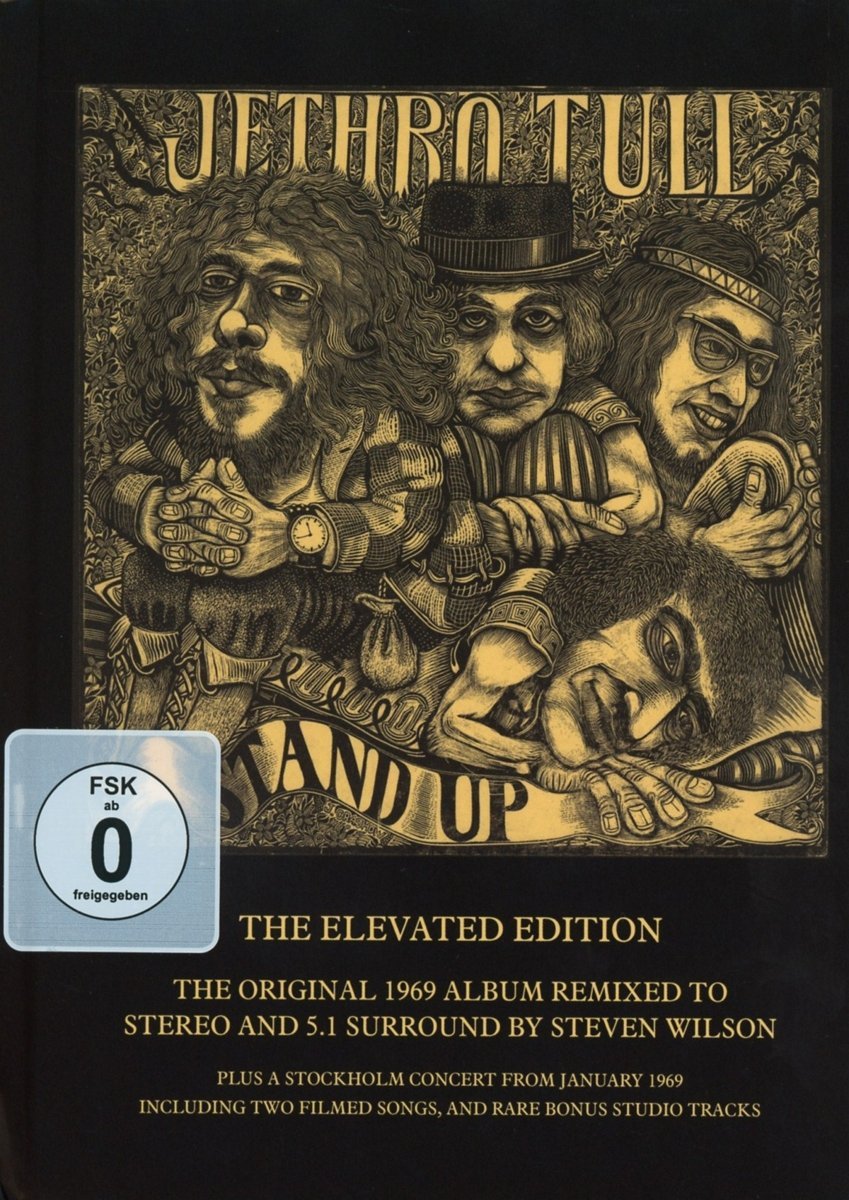
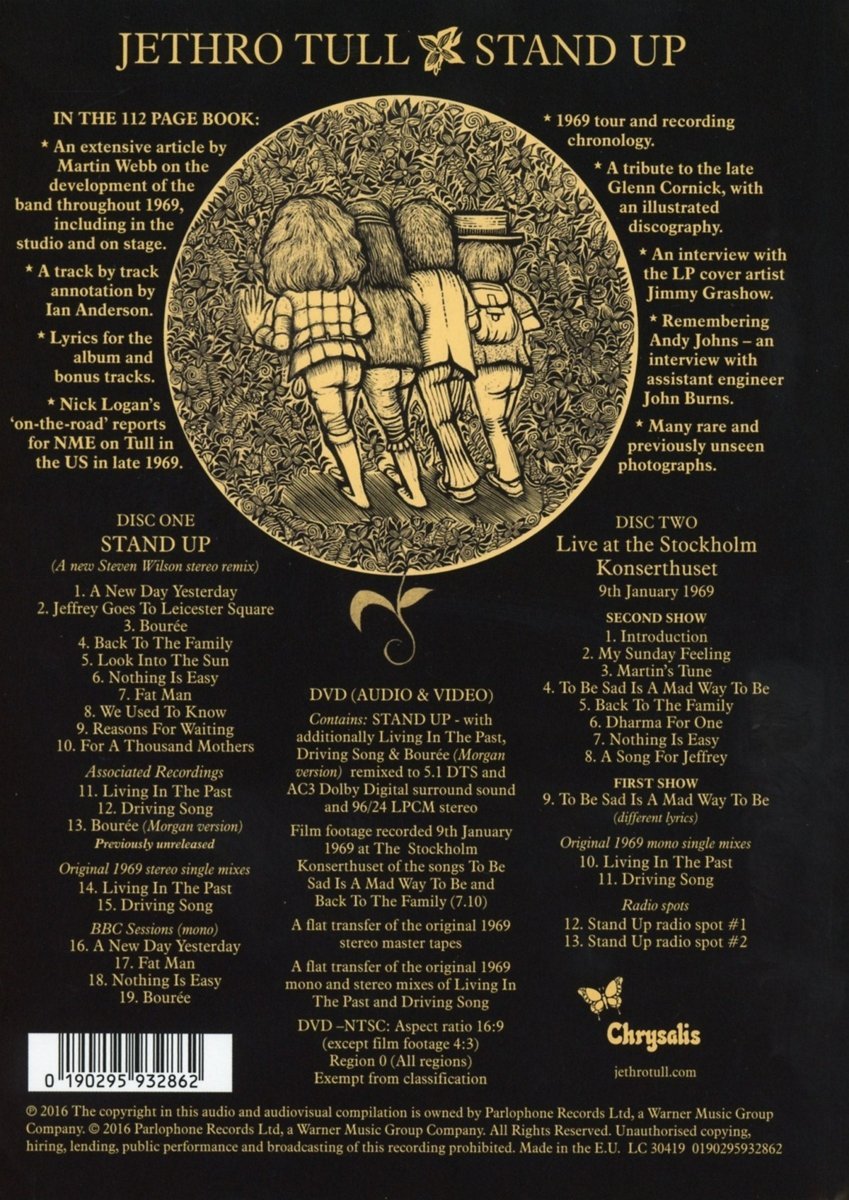
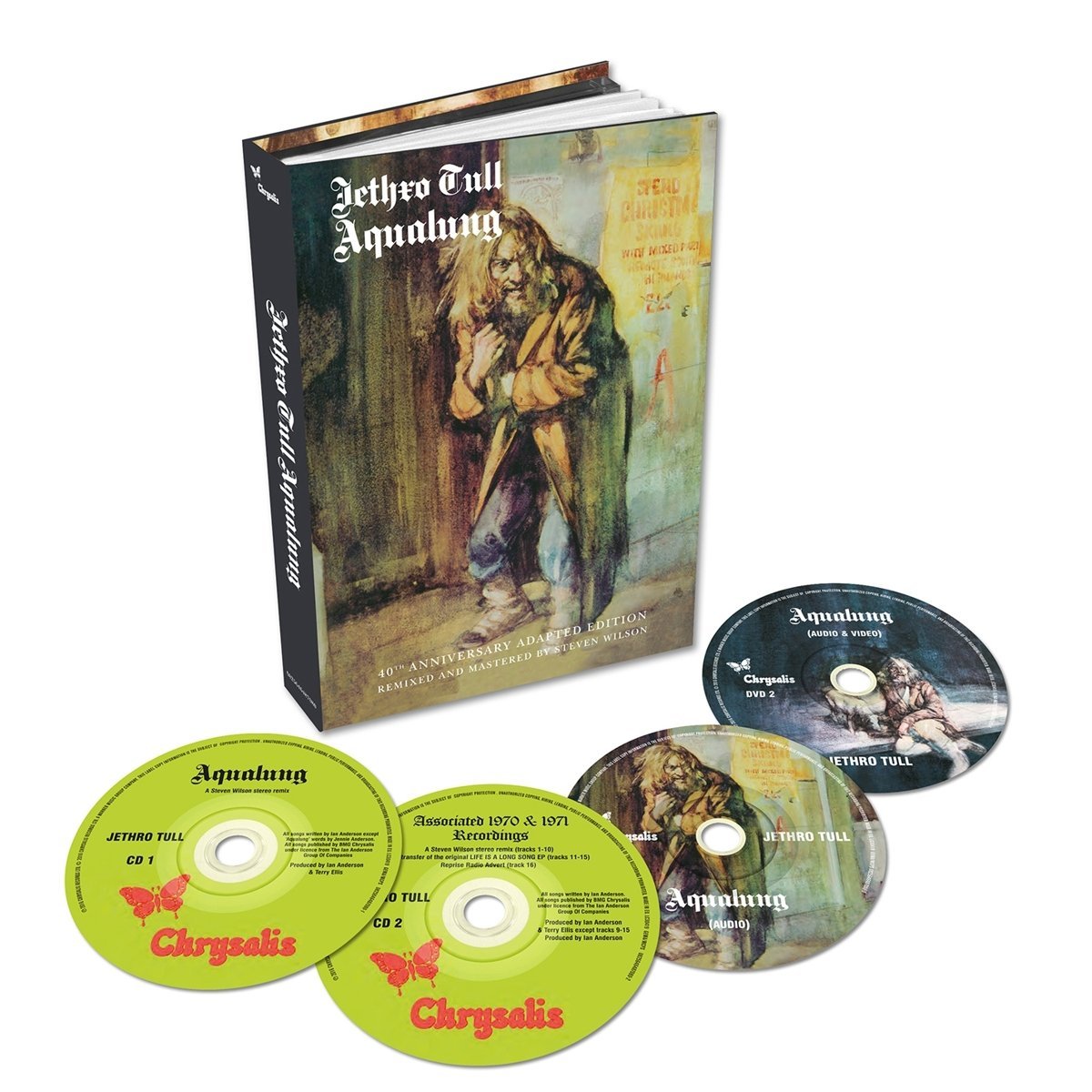
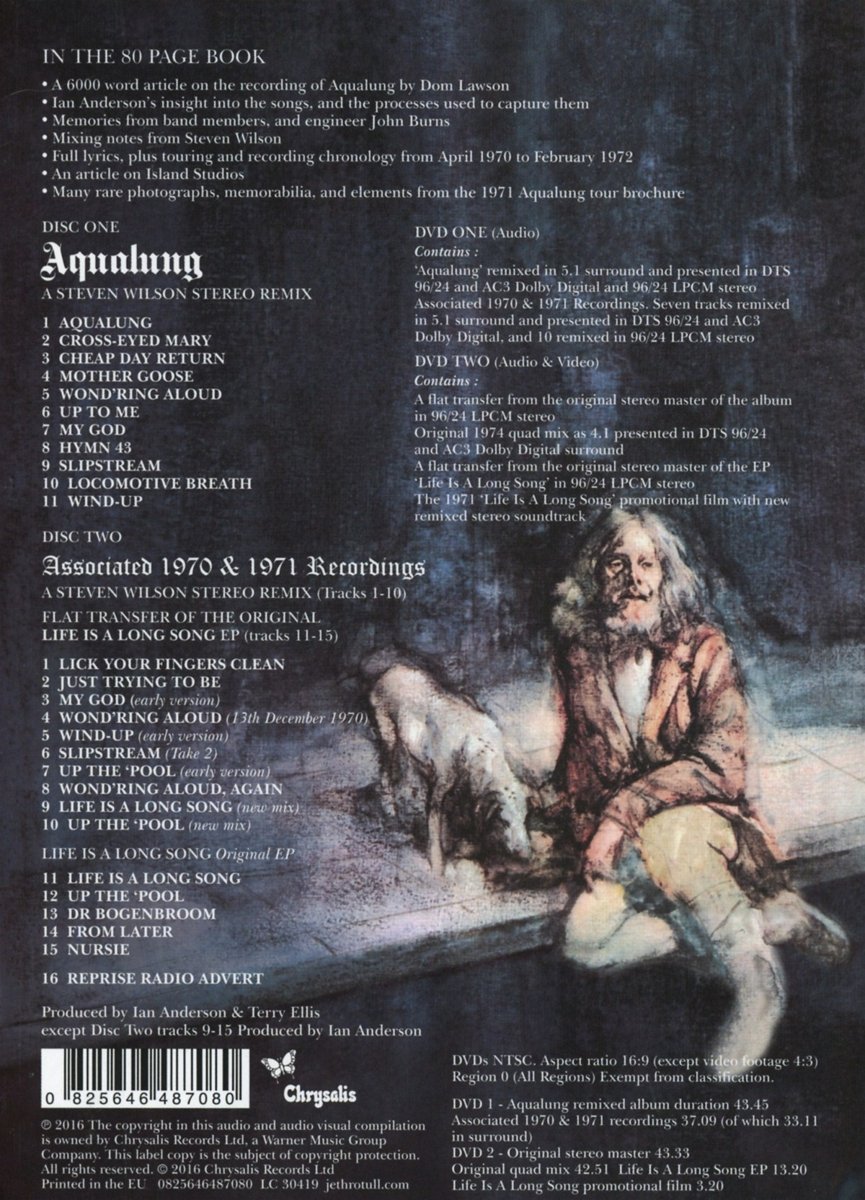
THE CHARLATANS-WHAT MIGHT HAVE BEEN.
THE CHARLATANS-WHAT MIGHT HAVE BEEN.
Between 1964 and 1969, The Charlatans’ star shawn bright. During that period, The Charlatans were larger than life mavericks. They dressed like 19th Century outlaws, and embraced the rock ’n’ roll lifestyle. L.S.D. and pot were part of The Charlatans’ diet. It fuelled The Charlatans as they took San Francisco by storm. Commercial success and critical acclaim looked a formality. It wasn’t to be.
By 1969, The Charlatans were no more. They were just the latest band that should’ve enjoyed widespread critical acclaim and commercial success. However, for whatever reason, commercial success passes these bands by. That was the case with The Charlatans whose story begins in the summer 1964.
That’s when The Charlatans were formed in San Francisco, by autoharp player George Hunter, and bassist Richard Olsen. Soon, they were joined by lead guitarist Mike Wilhelm; keyboardist Mike Ferguson and drummer Sam Linde. With the lineup complete, The Charlatans began to practice. Before long the the band realised they had a problem.
The Charlatans had an achilles heel. This was drummer Sam Linde. He just wasn’t good enough for the band moving forward. So a decision was made to replace Sam Linde. His replacement was none other that Dan Hicks. With a new, improved lineup in place, The Charlatans moved forward.
When The Charlatans began to play live, they looked like a cross between 19th Century, wild west outlaws and Victorian dandies. This image wasn’t just thrown together. It was carefully cultivated. Despite this, it soon began to prove popular with the audience at their gigs. They arrived dressed in similar attire. Little did The Charlatans realise that their stage clothes would influence the a generation.
With the hippie counter culture about to blossom, The Charlatans image would go on to influence a generation. They would dress like dandies and outlaws. By then, The Charlatans a familiar face in the San Francisco music scene.
In June 1965, The Charlatans had secured a six week residency at at the Red Dog Saloon in Virginia City, Nevada.. For this residency, two members of The Charlatans had to produce a concert poster. What Mike Ferguson and George Hunter came up with, is regarded as the first psychedelic rock poster. Since then, ordinal copies of The Seed have become prized items among collectors of psychedelia. However, the Red Dog Saloon residency marked a first for The Charlatans.
During the residency, the five members of The Charlatans took L.S.D. for the first time. It wouldn’t be the last. Soon, The Charlatans had a penchant for acid, and were tripping whenever they could. Despite their penchant for acid, The Charlatans weren’t an acid rock band. They were much more than that.
Instead, The Charlatans’ music would veer between folk rock, country rock and psychedelia over the next four years. Their recording career should’ve began in September 1965.
Fresh from their residency at the Red Dog Saloon, The Charlatans had an audition Autumn Records September 1965. They didn’t sign to Tom “Big Daddy” Donahue’s label. He was a local DJ, promoter and producer. However, The Charlatans didn’t sign to Autumn. There were disputes between Tom “Big Daddy” Donahue and The Charlatans over what they would record and money. Soon, though, it became apparent that The Charlatans had had a close escape.
Autumn Records was teetering on the edge of insolvency. Financially, the cupboards were bare. Eventually, Warner Bros. bailed Autumn Records out, and The Charlatans lived to fight another day.
As 1966 dawned, The Charlatans signed to Kama Sutra Records. The Charlatans wasted no time in recording a number of songs. Once the recording sessions were complete, The Charlatans had decided that they wanted to release Codine as their lead single. That executives at Kama Sutra Records said wasn’t going to happen.
They obviously hadn’t listened to Buffy Sainte-Marie’s song about the dangers of drugs. Mistakenly, executives at Kama Sutra Records thought that Codine glorified or encouraged drug taking. So Codine wasn’t releases as a single. It features on he Limit Of The Marvellous. So does The Shadow Knows and 30-20 as The Shadow Knows E.P.
Instead of Codine, The Shadow Knows was chosen as the lead single. On the B-Side was 32-20. When The Shadow Knows was released by Kapp Records in October 1966, the label failed to adequately promote The Charlatans’ debut. Unsurprisingly, The Charlatans debut single failed. This was The Charlatans’ one and only release on Kama Sutra Records. The remainder of the songs weren’t released until 1996, when they resurfaced on the Amazing Charlatans’ album.
Following their departure from Kama Sutra Records, The Charlatans’ lineup changed. Mike Ferguson was sacked in 1967, and replaced by Patrick Gogerty. Not long after this, Dan Hicks vacated The Charlatans’ drum stool. He moved to rhythm guitar and became the lead vocalist, singing many of his own compositions. It was a time of transition for The Charlatans.
During this period, The Charlatans were mostly playing live. They didn’t have a record contract, and watched as many of their contemporaries signed with record companies and enjoyed successful careers. This was galling as The Charlatans had played at the Fillmore Auditorium, California Hall, Avalon Ballroom and Longshoreman’s Hall. They were a popular live draw, and had been since their live debut in 1965. By 1968, The Charlatans must have wondered if a record contract would elude them?
By then, The Charlatans had embraced the rock ’n’ roll lifestyle fully. Their dropped L.S.D. and smoked pot regularly. Many who enjoyed the same diet of drugs would become acid casualties. Not The Charlatans. They were still one of San Francisco’s top live bands. Then in 1968, one of The Charlatans called it a day.
In 1968, Dan Hicks decided to form his own band, Dan Hicks and The Hot Licks. This was always going to happen. It was almost written in the stars. Dan Hicks was a talented singer, songwriter and musician. He seemed destined for greater things. However, this left a huge void in The Charlatans. Filling it wouldn’t be easy.
Worse was to come. Throughout 1968, arguments were commonplace within The Charlatans’ camp. Gradually, the escalated, and reached a breaking point. However, Mike Wilhelm, Richard Olsen and Terry Wilson had a cunning plan.
To all intents and purposes, it looked as if they had decided to disband The Charlatans. However, the cunning plan was that shortly afterwards, they would reform The Charlatans without George Hunter. It was a musical coup d’état. This would ultimately backfire on The Charlatans.
At first, things looked up for The Charlatans. They drafted in a new keyboardist and vocalist, Darrell DeVor. Not long after this, The Charlatans secured a deal with Phillips, and began recording their debut album.
Recording of what became The Charlatans took place at Pacific High Recorders, San Francisco. Dan Healy co-produced what became The Charlatans with the band. Eleven songs were recorded. Five were cover versions and six were written by members of The Charlatans Mike Wilhelm penned Ain’t Got the Time and The Blues Ain’t Nothin’; while Richard Olsen contributed When I Go Sailin’ By. New recruit Darrell DeVore wrote Easy When I’m Dead, Time to Get Straight, Doubtful Waltz and When the Movies Are Over. However, when the album was released, The Charlatans luck changed.
By then, music had changed, and the music on The Charlatans was beginning to sound dated. As a result, The Charlatans failed commercially. So did the the Van Dyke Parks’ penned lead single High Coin. To make matters worse, one of The Charlatans had been busted on a drugs charge.
Drummer Terry Wilson had been caught in possession of marijuana. In 1969, this was a serious offence in America, where the drug laws were quite strict. So when Terry Wilson received a prison sentence he had to leave The Charlatans. This resulted in a u-turn from two members of The Charlatans.
Mike Wilhelm and Richard Olsen agreed to join a reunited lineup of The Charlatans. Mike Ferguson who had previously been sacked returned. So did George Hunter who had been ‘misled’ into thinking that The Charlatans had disbanded in 1968, even was willing to let bygones be bygones. Even Dan Hicks returned to the fold.
While The Charlatans continued as a quintet until the end of 1969, the writing was on the wall. The Charlatans’ music was regarded as outdated, and yesterday’s sound. It was almost inevitable that The Charlatans would split-up at the end of 1969. This was the end of the road for The Charlatans.
Four years earlier, the future looked bright for The Charlatans when they enjoyed their six week residency at Red Dog Saloon. When they returned to San Francisco, The Charlatans looked as if they were going to join the elite of city’s music scene. They had the talent, and their music which veered between country rock to folk rock and psychedelic rock should’ve found a wider audience.
Sadly, The Charlatans struggled to get a record deal. The time they spent at Kama Sutra Records resulted in The Charlatans recording the best music of their five year career.
Little did Kama Sutra Records realise that, they had captured The Charlatans at the peak of their powers. At that moment in time, their music was bang on trend. That was the time to release an album, not 1969.
When The Charlatans released their eponymous debut album for Phillips in 1969, their music hadn’t evolved. Instead, it sound outdated to record buyers who had moved on musically. Sadly, The Charlatans hadn’t. They came late to the party with an album that would’ve fared better if released in 1967. However, by then, the end was neigh for The Charlatans.
Despite getting the classic quintet together, The Charlatans’ story was over by late 1969. Their musical legacy amounted to one album, two singles and material they had recorded for Kama Sutra Records. It was a case of what might have been.
Fiver years earlier, ,usical mavericks The Charlatans, had taken San Francisco by storm. They should’ve found fame and fortune. Sadly, it wasn’t to be. After several breakups, makeups and changes in lineup, The Charlatans, called time on a career that promised much, but ultimately, through bad luck and misfortune, came to little.
THE CHARLATANS-WHAT MIGHT HAVE BEEN.


BEVERLEY MARTYN-WHAT MIGHT HAVE BEEN?
BEVERLEY MARTYN-WHAT MIGHT HAVE BEEN?
It was fifty-one years ago, when Beverley Martyn made her recording debut. Back then, she was a member of The Levee Breakers, a jug band that featured Mac McGann, Johnny Joyce and Beverley Martyn. They released their debut single Babe, I’m Leaving You on Parlophone in 1965. Beverley was just sixteen and already, The Levee Breakers were a regular fixture on the folk circuit. It looked like Beverley Martyn was destined for a great things. However, since 1965, Beverley has only released two solo albums.
Beverley Martyn somewhat belatedly released her debut album No Frills in 1998. It was sixteen years later, before Beverley Martyn returned with The Phoenix and The Turtle in 2014. Since then, folk’s reluctant star hasn’t returned with the followup to The Phoenix and The Turtle. However, back in the mid-sixties, it looked as if Beverley Martyn was destined for commercial success and critical acclaim.
The Solo Years.
A year after The Levee Breakers released their debut single, Beverley Martyn’s solo career began in 1966, when she signed to the newly formed Deram Records. This was a new imprint of Decca Records. It’s raison d’être was to showcase stereo. The pop and rock music Deram were about to release would feature more space. This would allow record buyers to hear the difference between mono and stereo. So executives at Deram began the search for the what would be Deram’s first single. It had to fit the vision they had for their new label. The single chosen was Beverley Martyn’s debut single Happy New Year. It featured Beverley and what would later be regarded as an all-star band,
Accompanying Beverley were future members of Led Zeppelin John Paul Jones and Jimmy Page. Then there was Nicky Hopkins who had collaborate with The Beatles and Rolling Stones. Drummer Andy White was best known as having played the drums on The Beatles’ Love Me Do. He went on to forge a career as one of the top session musicians. Each of these musicians featured on Beverley Martyn’s debut single.
Released as Beverley, Happy New Year wasn’t the commercial success many people envisaged. Worst was to come. Picking Up The Sunshine, Beverley’s sophomore album was recorded, but not released. However, Beverley’s luck was changing.
It was during this period, Beverley met Bert Jansch. He taught Beverley how to play guitar and encouraged Beverley to write her own songs. Meanwhile, Beverley was relying on other people to write songs for her. Donavon wrote her third single Museum. Denny Cordell who would produce Joe Cocker, The Move, Procul Harum and The Moody Blues was drafted in to produce Museum. Sadly, Museum wasn’t a commercial success. So, Beverley moved to New York with another stalwart of the folk scene Paul Simon.
Paul Simon was a regular on the British folk scene. He’d arrived a few years earlier. Back then, he was an up-and-coming folk singer. Now with Art Garfunkel, he was about to record Bookends. This was Simon and Garfunkel’s fourth album. Recorded in New York, Beverley wrote Fakin’ It. She also sings a line in the song. Things were looking up for Beverley. Especially when she appeared at the 1967 Monterey International Pop Music Festival. However, two years later, Beverley would meet the man she recorded two critically acclaimed albums with, John Martyn.
John Martyn and Beverley Martyn.
He who was already an established name of the British folk circuit. H had already released two solo albums, 1967s London Conversation and 1968s The Tumbler. Beverley and John would release two albums in 1970.
Stormbringer was released in February 1970, with Beverley penning four tracks and John six. Recording of Stormbringer took place in Woodstock, with Joe Boyd producing Stormbringer. Upon its release, Stormbringer wasn’t the success Island Records had hoped for, but nowadays is regarded as a British folk classic. Despite the failure of Stormbringer, John and Beverley entered the studio again.
This time it was in London. That’s where The Road To Ruin, the followup to Stormbringer, was recorded. It was released in November 1970, and it features one of Beverley’s finest songs, Primrose Hill. It’s a song about what Beverely calls the “joys of domesticity.” Apart from Primrose Hill, Beverley cowrote three songs with John for The Road To Ruin They had just written and recorded another British folk classic. Sadly, on the release of The Road To Ruin, the album failed commercially. This proved to be the end of John and Beverley’s collaboration.
Island Records decided that with John and Beverley’s two albums failing commercially, it would be best to market John as a solo artist. Right through until John Martyn was recording Grace and Danger in 1980, Beverley divided her time between spending time with her family and working on John’s solo albums.That came to an end in 1980.
John and Beverley Martyn were divorced whilst John was recording Grace and Danger. It proved to be a highly personal album, which featured a cathartic outpouring of emotion from John. After their divorce in 1980, Beverley took a break from music, concentrating on her family.
The Comeback.
By the nineties, Beverley’s family had grownup, and she decided the time was right to make a comeback. This began with Beverley supporting Loudon Wainwright III. Then in 1998, Beverley released her long awaited debut album No Frills. It was released to widespread critical acclaim. Beverly Martyn was back.
Over the next few years, Beverley worked with some of the biggest names in music. This includes Jimmy Page of Led Zeppelin, Levon Helm of The Band, Richard Thompson, Dave Pegg and Sandy Denny of Fairport Convention and British folk guitarist Davy Graham. Then in 2004, a new generation were introduced to Beverley Martin’s music.
Fatboy Slim sampled Primrose Hill from John and Beverley Martin’s 1970 album Stormbringer. It featured on North West Three, a track from his Palookaville album. This introduced Beverley to another generation of music. For many musicians, they’d have rushed out a new album. Not Beverley. That isn’t her style. It wasn’t until 2014 that Beverley releasedThe Phoenix and the Turtle.
At the time of its release, Beverley described The Phoenix and the Turtle “as a very personal album.” It featured songs that she had written throughout her fifty year career. This includes the first song she wrote, Sweet Joy. Reckless Jane was a song Beverley and Nick Drakes started to write. Sadly, they never finished it. Belatedly, Beverley finished the song. When The Levee Breaks and Going To Germany were songs Beverley used to sing with her first group The Levee Breakers. Women And Malt Whiskey was a song based on Beverley’s late husband John Martyn. Along with Potter’s Blues, Nighttime, Mountain Top and Jesse James, these nine tracks became The Phoenix and The Turtle, Beverley Martyn’s sophomore album, which was recorded in Wales and California.
When The Phoenix and The Turtle was released in 2014, it was to the same critical acclaim that accompanied No Frills in 1998. The nine songs were variously beautiful, poignant and wistful. Heartbreak and hurt sits side-by-side pathos and melancholia. Beverley’s lyrics have a cinematic quality and each of the songs to life. As a result, The Phoenix and The Turtle is like a series of musical journeys, where Beverley takes on the role of narrator on a captivating album that was the finest album of Beverley Martyn’s solo career.
Nearly two years have since Beverley Martyn released The Phoenix and The Turtle. Theres no sign of her returning with her third solo album. That is a great pity, as Beverley Martyn is a hugely talented singer-songwrter. Just like a fine wine, Beverley Martin has improved with age. She’s now sixty-nine, and it’s fifty years since Beverley Martyn made her recording debut. That was the start of her career that promised much.
Sadly, Beverley Martyn’s discography amounts to just four albums. However, it’s a case of quality rather than quantity.
Nowadays, the two albums Beverley and John Martyn released, Stormbringer and The Road To Ruin are both regarded as British folk classics. Nearly a generation later, Beverley Martyn released two solo albums No Frills and The Phoenix and the Turtle. They were a reminder of a truly talented singer-songwriter who had the potential to one of the finest British folk singers of her generation. Sadly, that never came to pass, and nowadays, the Beverly Martyn is one of unfullfied potential and what might have been.
BEVERLEY MARTYN-WHAT MIGHT HAVE BEEN?
SYLVIE-EN ANGLAIS…ET EN AMERICAIN.
SYLVIE-EN ANGLAIS…ET EN AMERICAIN.
Sylvie Vartan was just seventeen when she embarked upon a career as a ye-ye singer. Little did she realise that this was the start of a five decade career, where Sylvie would be crowed queen of French pop. By then, she was one of the most successful of the new generation of French singers. This success was set to continue.
Ye-ye’s popularity didn’t last for ever. Towards the late sixties, its popularity began to dwindle. That marked the end of many ye-ye singers’ career. However, unlike many of her contemporaries, Sylvie went on to enjoy a long and successful career.
It’s spanned five decades, and during that period, Sylvie released over fifty albums. This resulted in Sylvie becoming one of the biggest names in French music. Her music also found an audience outside of France. Especially, Sylvie’s English language recordings.
Just like many ye-ye singers, Sylvie recorded in French and English. That was the case throughout the sixties. Nearly all of Sylvie’s English language recordings feature on En Anglais…Et En Americain, which was recently released by Ace International, an imprint of Ace Records. It documents the period between 1962 and 1968, when Sylvie’s star was in the ascendancy and she was one half of France’s golden couple. That was still to come.
Before that Sylvie was born on August the 15th 1944 in Iskretz, Bulgaria. Life was tough for the Vartan family in post war Bulgaria, so they moved back to France in 1952, where her father was born.
In Paris, life was tough for the Vartan family for the first couple of years. The family lived in just one room. Eventually, things began to improve for the Vartan household, where music was omnipresent.
Sylvie’s father George was a composer and pianist. Music was a constant in the Vartan household. Later, Sylvie’s brother who was seven years her senior began to play the French horn. Soon, he switched to the trumpet, and later, joined a jazz group. Meanwhile, Sylvie was struggling to learn French. Soon, though she would master not just French, but English too,
In high school, Sylvie’s language skills improved. She became fluent in French, and later English. Her love of English novels helped her learn English. So did her love of American jazz, which her brother introduced her too. Later, Sylvie started going to the movies and later, discovered jazz and later, rock ’n’ roll. This she preferred to French music. Sylvie’s love of music, movies, art and literature would result in her becoming fluent in English. So much so, that later, she was equally comfortable recording in English and French.
Despite her love of music, Sylvie never contemplated a embarking upon a musical career. That was until her brother Eddie decided to he no longer wanted to study law. Upon leaving university, he got a job working in A&R at Decca Records.
One of the artists Eddie was responsible for was Frankie Jordan. He was going to cover the John D. Loudermilk penned Out Of Gas in French. To make the song work, it needed a female vocalist to provide the counterpoint. Eddie Vartan decided that Sylvie would be perfect for the part.
First he had to persuade his parents to all seventeen year old Sylvie to sing on the Panne D’essence. They eventually agreed, and Sylvie made her recording debut on Panne D’essence. The single was released in late 1961, and became a hit.
The success of the single resulted in Sylvie having to appear on French television. This lead to Sylvie being given the nickname collégienne du twist by the press. Soon, the the twisting schoolgirl would leave the Victor Hugo High School and embarked upon a musical career.
This began when Sylvie signed with RCA Victor, and released the E.P. Quand Le Film Est Triste. It featured a cover of another John D. Loudermilk song Sad Movies (Make Me Cry). The E.P. was released in December 1961, and gave Sylvie her first hit single as a solo artist.
In 1962, the hits kept coming for Sylvie. She enjoyed hits with covers of What’d I Say, The Locomotion and Baby It’s You. There’s an unreleased alternate take of the ballad Baby It’s You. This was one of Sylvie’s earliest English language recordings. It features on En Anglais…Et En Americain, This version of Baby It’s You is a reminder that although Sylvie’s career was in its infancy, she was already a talented vocalist. Her music was about to reach a much wider audience in 1963.
Especially as music began to play an important part in the life of French youths. Pop and rock music grew in popularity. Meanwhile, the ye-ye scene began to explode. So did Sylvie’s popularity. She was well on her way to becoming one of the stars of French music. So much so, that Sylvie travelled to Nashville to an album record with The Jordanaires, A Nashville.
When Sylvie returned to Paris, having recorded A Nashville, an EP was released. This was Sylvie À Nashville 1, which features Since You Don’t Care. Later in 1963, Paul Anka offered a number of songs to Sylvie. One of these, was one of her first English language recordings, (I’m Watching) Every Little Move You Make. It was released later in 1963, and gave Sylvie a hit single. By then, she was part of French music’s golden couple.
Earlier in 1963, Sylvie had met French singer Johnny Hallyday, and the pair embarked upon a high profile relationship. They would later marry two years later in 1965. During that two year period, Sylvie’s career had blossomed.
1964 was a huge year for Sylvie. She shared the bill with The Beatles in Paris. This was a huge step, considering her career only began in 1961. Now she was rubbing shoulders with musical royalty. She was also a prolific artist.
During 1964, Sylvie release her eponymous album Sylvie Vartan. It featured He Understands Me, which Sylvie would release again in 1995. She also released her Sha La La EP, which featured the Paul Anka penned USA. However, one of Sylvie’s most-anticipated releases of 1964 was her A Nashville album in 1964.
Most of the songs on A Nashville had been recorded in French. That is apart from Love Has Laid His Hands On Me, Since You Don’t Care and I Wish You Well. They’re part of an album that features Sylvie maturing as a singer, on an album where she flitted between different styles. Already Sylvie was a versatile and hugely popular singer with an international fan-base. This would continue to grow in 1965.
In March 1965, Sylvie released I Made My Choice as a single, with One More Day as the B-Side. This was a high profile release, with the might of RCA Victor getting behind the single. This includes a round of television and radio appearances, including an appearance on Shindig and the Tonight Show in America. RCA Victor were trying to launch Sylvie’s career the lucrative American and Canadian market.
To help do this, Sylvia released the LP Gift Wrapped From Paris in 1965. Some of its highlights were I Can’t Make Him Look At Me, My Boyfriend’s Back, Alley Oop and It’s Not A Game, One More Time and Encore Une Fois. Gift Wrapped From Paris introduced Sylvie to an even wider audience internationally.
Back home, Sylvia continued to release singles and EP’s throughout 1965. This included the Quand Tu Es Là, which featured an emotive reading of It’s Not A Game. The Dans Tes Bras EP featured Sylvie’s heartfelt cover of Gonna Cry. Sylvie was a prolific and popular artist. She also recorded the ballad Another Heart and delivers a needy vocal Thinking About You. These two tracks from 1965 are welcome additions to En Anglais…Et En Americain compilation. 1965 had been another successful year for Sylvie.
As 1965 drew to a close, was crowned France’s top female pop singer for the third consecutive year. Sylvie now an international star, whose music had made inroads into the European and Japanese markets. However, the biggest change in her life was she had married Johnny Hallyday. The pair were regarded as French music’s golden couple. Soon, two would become three.
Before that, Sylvie’s brother became her manager in March 1966. By then, Sylvie was pregnant and expecting her first child. Still, she continued to release singles and her album Sylvie. Later in 1966, Sylvie gave birth to her son David Hallyday on August 14th 1966. Then as 1966 gave way to 1967, Sylvie’s successful career continued.
Still Sylvie continued to enjoy hit singles in 1967. She also released a new album, Ballade Pour Un Sourire. This was quite different to her earlier ye-ye sound. Sylvie who was still just twenty-three was maturing as a singer, and reinventing herself.
That’s one of the reasons why she has enjoyed such longevity. The success that she had enjoyed since 1961 continued. Sylvie’s singles were hits, and early seven years after her career began, she returned with a new album, Sylvie Vartan. This was the eighth album of her career. However, this was just the start for Sylvie.
Eventually, Sylvie would release around fifty studio and live albums. Her career has spanned five decades. The Ace International compilation En Anglais…Et En Americain features Sylvie’s English language recordings the period between 1962 and 1968. As well as featuring singles and tracks from EP’s and albums, En Anglais…Et En Americain includes a number of previously unreleased bonus tracks.
This includes You Please Me So, Stupid Cupid, Baby It’s You, Whirlpool and Friends In Need Are Friends Indeed. These tracks show different sides to Sylvie. They also document how she evolves and matures as a singer. Especially by 1965
That’s when Sylvie released her single I Made My Choice. This is a beautiful song that’s bristling with emotion. However, two of the best of the previously unreleased tracks are I Heard Somebody Say and Gonna Cry. They were recorded during the sessions for Sylvie’s 1965 album Gift Wrapped From Paris. Both tracks are welcome additions to En Anglais…Et En Americain, which was recently released by Ace International, an imprint of Ace Records.
For the newcomer of Sylvie, then En Anglais…Et En Americain is the perfect introduction to her music. It features twenty-five ylvie’s English language recordings the period between 1962 and 1968. They range from singles, tracks from from EP’s and albums and a number of unreleased tracks. These songs document the first six years of the Sylvie’s long and illustrious career.
During this period, Sylvie was one of French music’s most successful artists. She won the title of the best French pop singer on serval occasions. Sylvie’s music became popular across Europe and as far afield as Japan and North America. Already she was an international artist, who enjoyed commercial success and critical acclaim. That’s no surprise.
Sylvie was a hugely talented and versatile vocalist, who was capable of breathing emotion and meaning into a song. This does throughout the twenty-five songs on En Anglais…Et En Americain. It charts and charts the rise and rise of the Queen of French Pop, Sylvie.
SYLVIE-EN ANGLAIS…ET EN AMERICAIN.

SPACE ROCK: AN INTERSTELLAR TRAVELLER’S GUIDE.
SPACE ROCK: AN INTERSTELLAR TRAVELLER’S GUIDE.
Music like fashion is cyclical. One minute a musical genre is hugely popular, the next it falls from grace. That usually, isn’t the end of the story. There’s usually always a resurgence in popularity of that musical genre at a later date. This has been the case with countless musical genres. Everything Krautrock to progressive rock and psychedelia have made a comeback. So has space rock.
Over the last few years, there’s been a huge resurgence in popularity in space rock. This has fuelled by the formation of new generation of space rock bands. Groups like Sons Of Hippies, Electric Orange, Yuri Gagarin, The Spacelords, Aqua Nebula Oscillator, Magic Wands, Vibration Eater and Nexatras have introduced space rock to a new generation of music fans. After hearing these bands, many music fans have decided to investigate the origins of space rock.
What would’ve made this voyage of discovery much easier, was if newcomers to space rock could buy a box set featuring some of the genre’s finest exponents. Now they can. Just last week, Cleopatra Records released their much anticipated six disc box set Space Rock: An Interstellar Traveler’s Guide. This is the perfect starting place for newcomers to space rock.
Soon, they will be able to discover the delights of some of the most popular space rock groups. This includes Hawkwind, Gong, Nik Turner, Ozric Tentacles and Omega. They’re joined by Gilli Smith, Daevid Allen Weird Quartet and even William Shatner and Alice Cooper. The new generation of space rockers are also well represented, with Aqua Nebula Oscillator, Electric Orange, Magic Wands, Nexatras, Sons Of Hippies, The Spacelords, Vibration Eater and Yuri Gagarin all making a welcome appearance. So do a number of groups whose space rock credentials are sure to be challenged.
Among the bands on Space Rock: An Interstellar Traveler’s Guide are a number of Krautrock groups. This is a is regarded by some as a catch-all category where a wide variety of groups are brought under the one musical umbrella. Some of these bands aren’t Krautrock bands in the true sense of the word. However, Can, Tangerine Dream, Faust, Popol Vuh, Guru Guru, Amon Düül II and Nektar have all been previously categorised as Krautrock bands. Other music fans may well disagree, and define their music differently, including space rock.
Similarly, some of the music on Space Rock: An Interstellar Traveler’s Guide may be perceived as progressive rock. Others can be defined as avant-garde, Berlin School, electronica, experimental or psychedelia. That may well be the case. Despite that, there’s an element of space rock on each of the seventy-three tracks on Space Rock: An Interstellar Traveler’s Guide.
Disc One.
Can are one of several Krautrock bands that feature on disc one of Space Rock: An Interstellar Traveler’s Guide. Their contribution is All Gates Open a track from their 1979 album Inner Space. There’s a definite a space rock influence to this Krautock track. Another of the Krautrocker bands are Popol Vuh. They contribute the dramatic and genre-melting Sateh Auf, Zieh Mich Dir Nach Das Hohelied Salomos. It’s taken from their 1975 album Das Hohelied Salomos. This is one of their finest albums. The other Krautrock band on disc one is Guru Guru Groove Band. They’re an early incarnation of Guru Guru, who are still going strong today. When they recorded UFO Love in 1969, their career was in its infancy. Recently, UFO Love featured on a compilation of the Guru Guru Groove Band’s music, The Birth Of Krautrock 1969. However, there’s much more to disc one that Krautrock.
Hedersleben are one of the new breed of space rock bands. Their most recent album was 2015 The Fall Of Chronopolis. It features Gulf Of Lost Souls, which is an introduction to one of the rising stars of space rock. By comparison, Øresund Space Collective have been together since 2004, and are best described as a Scandinavian supergroup. They’re also one of the most prolific space rock bands. The Trichophantic Spire is taken from their 2014 album Music For Pogonologists. It showcases a truly talented band.
The same can be said of the band Joel Vandroogenbroeck went on to form, Brainticket. Before that, he released a trio of albums in the early seventies. Then in 1980, he released Biomechanoïd, which featured the futuristic Sign From Space. It’s the perfect introduction to this pioneering veteran musician.
Other veterans on disc one include Ozric Tentacles, who contribute Space Out from their 1995 album Become The Other. Another space rock veteran and pioneer, is Nik Turner, formerly of Hawkwind. He contributes Out Of Control which originally featured on Hawkwind’s Space Ritual album. Gong are another group who pioneered the space rock sound, and in 1972 recorded the live version of Fohat Digs Holes In Space that closes disc one of Space Rock: An Interstellar Traveler’s Guide.
Disc Two.
Just like disc one, disc two of pace Rock: An Interstellar Traveler’s Guide features thirteen tracks. Again, several bands who many music fans would classify as space rock bands. This includes Tangerine Dream, who released their sophomore album Alpha Centauri in 1971. It features Ultima Thule Part 1, which has a space rock influence. However, Tangerine Dream were musical chameleons, whose music constantly evolved. The same can be said of musical pioneers Faust who contribute Parasiten. Their music constantly evolved and they as a result, they continued to create innovative music.
They weren’t alone. Brainticket were based in Switzerland and featured Belgium born multi-instrumentalist Joel Vandroogenbroeck. They released a total of seven studio album. Their 1971 eponymous debut album featured Watchin’ You. It’s part of a genre-melting album, where Krautrock, psychedelia and space rock shine through in this lysergic classic. Groups like Brainticket would inspire the new generation of space rock bands.
This includes Spanish space rockers, Pyramidal who were formed in 2009. They’ve obviously been influenced by classic seventies, space rock.l That’s apparent on their contribution, Black Land, the title-track from their 2011 eponymous debut album. Het Droste Effect are another relatively new band. They’re also one of the best. You Know That I Knew a track from their 2015 sophomore album Soar, showcases a truly talented band. It’s similar case with Oranssi Pazuzu, who released their third album Valonielu in 2013. It features Reika Maisemassa, where Oranssi Pazuzu combine elements of black metal, psychedelia and space rock. In doing so, they pay homage to some of the veterans on disc two.
This includes Daevid Allen who cofounded Gong. This time he’s with the Daevid Allen Weird Quartet, and contributes The Cold Stuffings Of November. This is a track from their 2016 debut album Elevenses. However, it’s Omega who are the true veterans of disc two. They were formed in 1962, released their Time Robber album in 1976. It featured Don’t Keep Me Waitin’ seven minutes where psychedelia and progressive rock become one seamlessly. In doing so, they create one of the highlights of disc two.
Disc Three.
There’s just eleven slices of space rock on disc three of Space Rock: An Interstellar Traveler’s Guide. Again, familiar faces rub shoulders with new names. Two of the familiar faces are Steve Hillage and William Shatner. They covered Rocket Man on Steve Hillage’s Madison Square Garden 1977. When the album was released in 2015, Rocket Man was one of the bonus tracks. It’ll be of interest to Trekkies everywhere.
So will Hawkdope a track from Italian psych fuzz rockers Black Rainbows. It was the title-track of their fourth album, which was released in 2015. They’re another of the new generations of space rockers. So are The Spacelords, a German band who released their third studio album Synapse in 2014. One of its highlights is Pyroclastic Monster, an eleven minute epic that showcases their considerable skills. They’re not alone.
Since Aqua Nebula Oscillator were formed in 2000, their music has been impossible to define. They combine disparate musical genres and draw inspiration from a variety of cultures, literature. films and art. The live live version of Human Toad on disc four was recorded in 2014, a year after the track made its debut on their third album Spiritus Mundi.
Another of the new wave of space rockers are Magic Wands, who released their sophomore album Jupiter in 2013. The title-track features on disc four, and features Magic Wands at their hard rocking best, as they fusea variety of musical genres. So do Yuri Gagarin who were formed in 2012. They’re without doubt, one of the finest of the new space bands. Proof of that is At The Center Of All Infinity, the title-track of their 2015 album. It’s a future space rock classic. However, the artist that closes disc three is anther of space rock’s rising stars.
Forty-two year old Federico Farnè has been a member of bands all his adult life. However, he only started writing music in 2010. Since then, he’s been a member of various bands and has released albums under a variety of monikers. Federico is multitalented, and wrote, produced and played all the instruments on rocky, futuristic What Illuminates The Night. It closes disc three and is one the highlights.
Disc Four.
Disc four of Space Rock: An Interstellar Traveler’s Guide features another thirteen slices of space rock. This includes Spaceship, from Krautrock band Guru Guru’s 1971 sophomore album Hinten. This is one of their finest albums, and is the perfect introduction to one of the most underrated Krautrock bands. By comparison, Hawkwind became one of biggest space rock bands in history. Their 1971 debut album Hawkwind featured Seeing It As You Really Are. It was part of an album launched the career of Hawkwind. They featured writer, poet and lyricist Robert Calvert. He also enjoyed a solo career, and contributes Lemmy and I Swallowed Massive Amounts Of Drugs to disc four. Meanwhile, Gong’s space whisperer Gilli Smyth contributes a live version of What Do You Really Want. It was recorded at the Roundhouse, London in 1971. That was way before many of the members of the new space rock bands were born.
Psychedelic rockers It‘S Not Night- It‘s Space were formed in New York in 2010. Two years later, they released their debut album Bowing Not Knowing To What in 2012. It featured Vibration Eater, which heads in the direction of space rock and showcases a truly talented band. They’re not alone. There are a number of talented space rock bands are based in Europe.
First stop, is the North West England where the Earthling Society were formed in 2004. Since then, this talents band have been prolific, and have released twelve albums. Their 2009 album Sci-Fi Hi-Fi featured EA1729, is akin to a homage to Can. It’s an inventive and genre-melting track that’s sure to introduce Earthling Society to a whole new audience. Next stop is Moscow, where The Re-Stoned were formed in 2008. By 2012, they were ready to release their fourth album Plasma. It features Faces Of Earth, a hard rocking eleven minute epic. For newcomers to The Re-Stoned, this is a perfect introduction to their music. The final leg of this pan European journey takes the listener to Portugal, which is home to the Equations. In 2015, they released their sophomore album Hightower, which featured Sssuuunnn. This fusion of Krautrock, psychedelia and space rock proves a heady and delicious brew from this new and exciting band, Equations.
Disc Five.
Disc five has a stellar lineup of space rockers. This includes one of the most innovative and influential Krautrock bands, Amon Düül II. They released their sophomore album Yeti in 1970, and it featured Archangels Thunderbird. It’s a tantalising taste of one of the founding fathers of Krautrock in full flight. Since releasing Yet, Amon Düül II have influenced countless bands. This could includes some of the new bands on disc five of Space Rock: An Interstellar Traveler’s Guide.
Naxatra are one of this new wave of space rock bands. They were founded in Greece in 2012, and three years later, released their debut album Naxatras in 2015. It features Space Tunnel, where stoner rock meets psychedelia to create a memorable slice of space rock. Equally memorable is Celestial Bums’ lysergic cover of the Rolling Stones’ Child Of The Moon, which featured on the 2015 Cleopatra Records compilation Stoned-A Psych Tribute To The Rolling Stones.
There are a trio of Finnish space rock bands on disc five. Dark Buddha Rising is the first. Their recording career began in 2007. Six years later in 2013, they released their fifth album Dakhmandal. It includes L, where Dark Buddha Rising successfully fuse post rock, doom metal and psychedelia. Fellow countrymen Hidria Spacefolk released their eponymous debut album in 2001. A year later, they returned with their sophomore album Symbiosis in 2002. One of the tracks from the album, Kaneh Bosm epitomises everything that’s good about space rock, and indeed, Hidria Spacefolk. The last of Finnish space rockers, Dasputnik were formed in 2006, and take a differnt approach to music. They released their sophomore album, Cyclokosmia in 2011. It features Orbitary Volcano, which has a progressive sound, as Dasputnik combine fusion, with psychedelia and space rock to create one of the highlights of disc four.
Another of the highlights of disc four is MKM’s Retorn Al Planeta Imaginari. It’s a track from their 2014 album Ad Astra Per Aspera. A myriad of disparate influences, including art rock, expeiremtal, electronica, Krautrock and progressive rock combine to create Retorn Al Planeta Imaginari. The result is a compelling soundscape closes disc four, and is sure to make the listener want to here more from MKM.
Disc Six.
Eleven tracks feature Nektar on Space Rock: An Interstellar Traveler’s Guide. The first comes courtesy of Nektar, a British band who were formed in Hamburg, Germany. Nektar would be heavily influenced by Krautrock. Proof of that is Astronaut’s Nightmare, a track from their 1972 debut album Journey To The Centre Of The Eye. It’s a fusion of psychedelia, progressive rock and Krautrock that launched the career of Nektar.
Space Debris were formed in Germany in the early nineties. Since then, they’re released twelve albums. These albums have been ispired by psychedelia and Krautrock. That’s the case with their 2014 albim Phonomorphosis. This fusion of psychedelia and Krautrock results in space rock Space Debris’ style, on the title-track. However, space rock like Krautrock seems to be catch-all genre.
In 1980, Chrome released their fifth album Red Exposure. It features a much more expirmental sound that earlier albums. That’s the case on Eyes In The Center. Despite this much more experimental sound, it’s still regarded as space rock. This is sure to provoke debate among conissuers of space rock. So is the inclusion of a live track from Alice Cooper. B.B. On Mars was recorded in 1969. However, it showcases a space rock sound, and is a reminder of what Alice Cooper sounded like before fame came his way.
Leroy Powell and The Messengers never enjoyed the commerical sucess and critical acclaim that Alice Cooper enjoyed. Recently though, Leroy Powell and The Messengers’ inimitable and unique brand of music has been finding a wider audience. No wonder; given
the quality of the genre-melting Weightlessness. It’s a track from
the 2015 album The Overlords Of The Cosmic Revelation. This is the perfect intrdoduction to Leroy Powell and The Messengers.
One of the finest and most prolific of the new wave of space rock bands are Electric Orange. They were founded in 1992, and since then, have released over twenty albums. These albums feature a mixture of musical genres, including Krautrock and psychedelia. They’re combined successfully on Meals Of Confusion, which is a tantalising taste of what’s awaiting the newcomer to space rock pioneers Electric Orange.
Two Russian bands feature on disc six, including Gdeva, who were formed in Saint-Petersburg in 2005. They recorded Autobahn for their 2007 debut album Bubbles, Bubbles… Elements of post rock, psychedlia and progressive rock are combined scucessfully on Autobahn, and create a captivating, genre-melting track. The other Russian band are Vespero. They were formed in Astrakhan, in Southern Russia in 2003. Since then, they’ve been a prolific band, relsasing fourteen studio album. This incldues their 2015 album Fitful Slumber Until 5 AM . It features Vision 7. Kidish Hail where Vespero showcase and talent as they combine folk rock meets jazz, Krautrock, psychedlela and progressive rock on what’s one of the highlighs of disc six.
Alas, the final track on disc six of Space Rock: An Interstellar Traveler’s Guide is one that will divide opinion and indeed, disappoint. That’s the 1975 Interview with Nik Turner. While he’s played an important part in the devlopment of space rock, the interview has no place on the compilation. It’s adition is a mistake. It’s nearly eleven minutes that could’ve been given over to music. This is eleven minutes you’ll never get back.
Apart from the interview with Nik Turner, Space Rock: An Interstellar Traveler’s Guide is the perfect inroduction to space rock. This six CD box set could very well be the start of a voyage of discovery through the history of space rock. Forty-seven years worth of music features on the six discs, and features familiar faces and new names. All of them are referred to as space rockers. That will provoke debate anong some music historians and indeed, music fans.
Some of these bands on Space Rock: An Interstellar Traveler’s Guide weren’t originally aren’t know as space rock bands. This incldues Can, Tangerine Dream, Faust, Popol Vuh, Guru Guru andAmon Düül II. Their music has often been described as Krautrock. However, many music fans will debate this. Faust and Tangerine Dream’s constantly evolved throughout their career. So did Popol Vuh’s. That’s why many music historians are so reluctant to
label many of these bands definitively.
What is Krautrock to one person, could be regarded differently by another. It’s all a matter of interpretation.That’s the case throughout Space Rock: An Interstellar Traveler’s Guide.
Many of the bands in the box set combine several different genres. This includes everything from avant-garde, Berlin School, doom metal, electronica, experimental, free jazz, Krautrock, progressive rock, psychedelia and of course space rock. With several musical genres being combined by bands on the one song, many music fans will struggle to define the musical genre that they’re listening to. Some may even disagree with the use of words space rock on some of the tracks. However, on nearly every track, there’s at least a hint of space rock. That’s the case throughout Space Rock: An Interstellar Traveler’s Guide.
For newcomers to space rock, then Cleopatra Records’ six CD box set, Space Rock: An Interstellar Traveler’s Guide is good starting point. It might result in a voyage of discovery through the history of space rock. Similiarly, Space Rock: An Interstellar Traveler’s Guide could be the start of lifelong love affair with space rock. Espeically, for those yet to discover the delights of space rock. For them, Space Rock: An Interstellar Traveler’s Guide box set is everything you wanted to know about space rock, but were too afraid to ask.
SPACE ROCK: AN INTERSTELLAR TRAVELLER’S GUIDE.
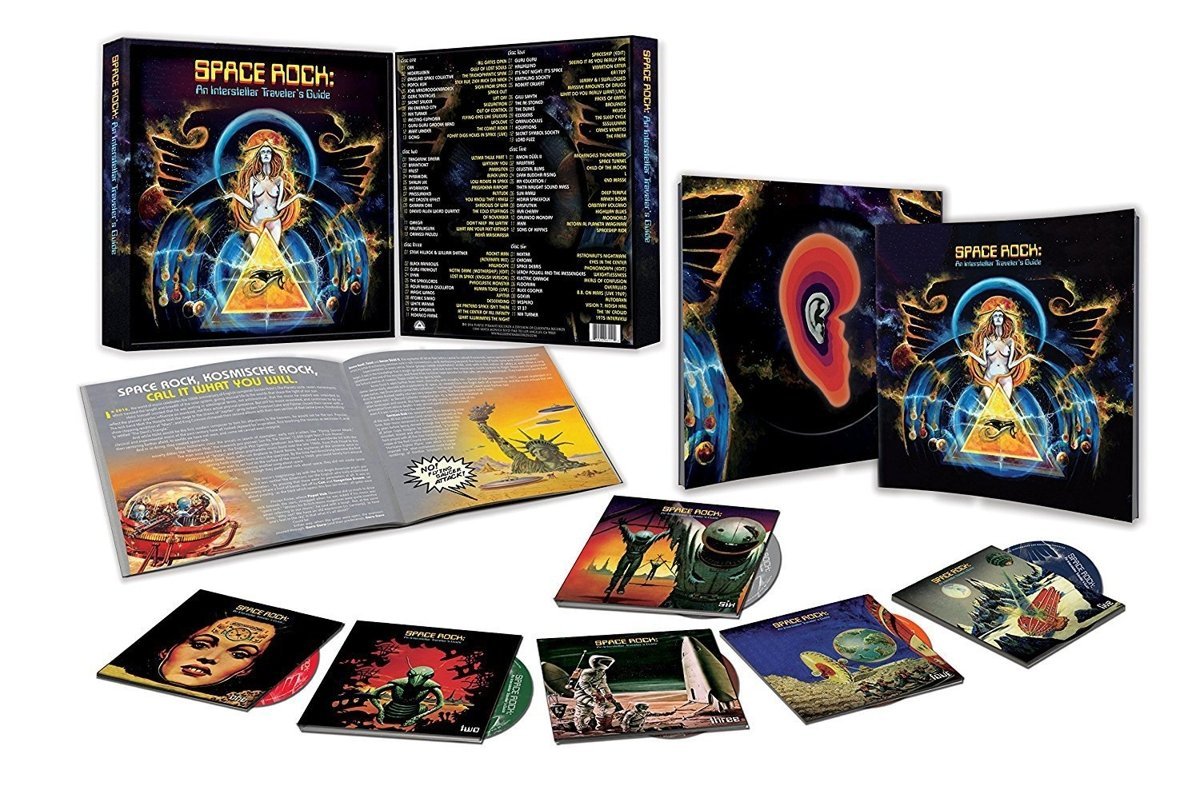
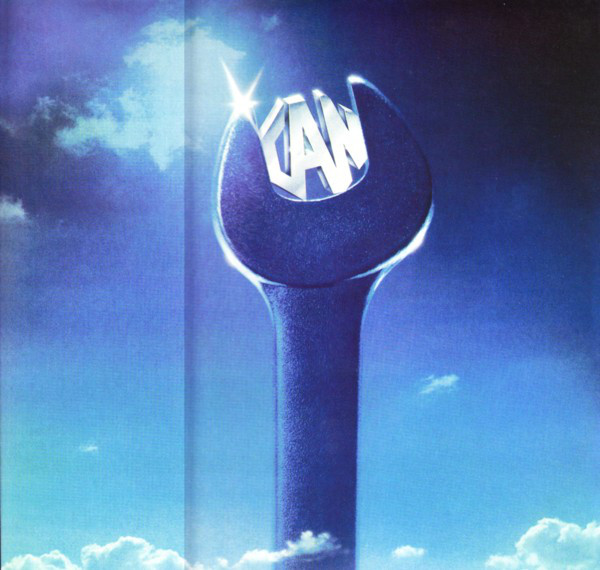

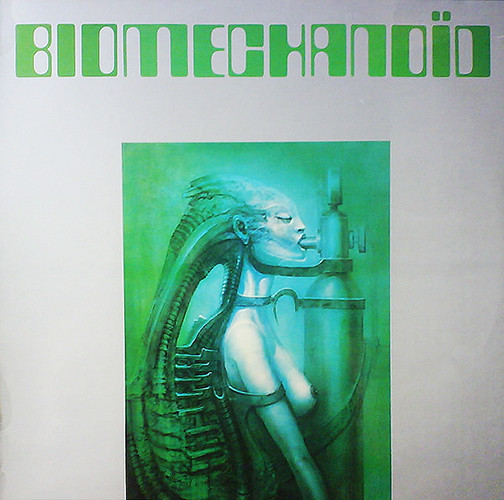
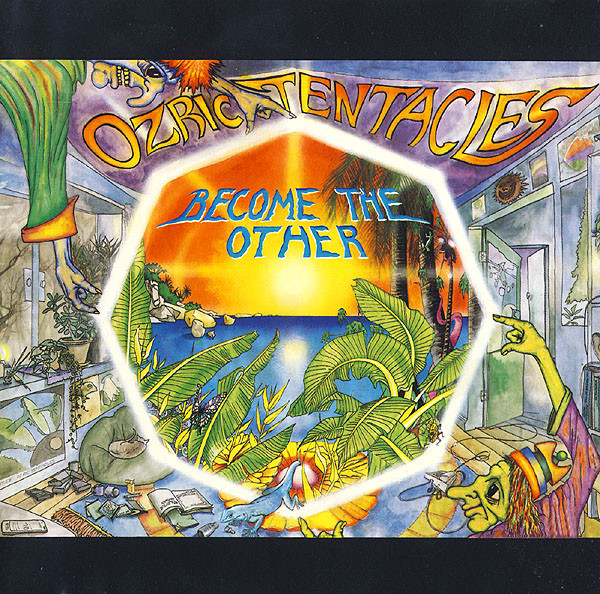


MOTORPSYCHO-ANGELS AND DAEMONS AT PLAY.
MOTORPSYCHO-ANGELS AND DAEMONS AT PLAY.
Nowadays, not many bands stay together twenty-seven years. Longevity seems to be a thing of the past in the music business. Sadly, so is releasing an average of an album a year. That was common in the sixties and seventies. Not any more. Very few bands come close to releasing an album a year. Instead, many bands spend several years working on an album. However, there is one band still that average an album a year, Motorpshycho, who have been together twenty-seven years.
Motorspycho were formed in Trondheim, central Norway, in October of 1989. Since then, Motorpsycho have become a musical institution. They’re now veterans of the Norwegian music scene, and continue to influence a new generation of musicians. These new bands aspire to follow in the footsteps of Motorpsycho.
They’ve come a long way since releasing their debut album Lobotomizer in 1991. Since then, Motorpsycho have been a prolific band, averaging nearly an album a year. This includes studio albums, live albums, mini albums and collaborations. These albums have been released to critical acclaim and commercial success.
That is almost an understatement. Since the release of their fourth full length album Timothy’s Monster in 1994, Motorspycho’s last fifteen albums have reached the top ten in the Norwegian charts. Motorspycho’s music has also found an audience across Europe, with their albums regularly charting in Belgium, Germany and Holland. They’re also a hugely popular live band, and are familiar faces across Europe and further afield. Motorpsycho it seems, are one of Norwegian most successful musical exports.
Meanwhile, back at home in their native Norway, Motorpsycho have scooped some of the most prestigious musical prizes. This includes an Edvardprisen and a total of four Spellemannprisen Awards. These are the Norwegian equivalent of the Grammy Awards. Winning a Spellemannprisen is a huge honour. Most groups are lucky to be nominated for one award. So far, Motorpsycho have won four. One of the Spellemannprisen awards was for their 1997 double album Angels and Daemons At Play. It was a landmark album for Motorpsycho, and marked their coming of age musically. This makes Angels and Daemons At Play one of the most important albums in Motorpsycho’s back-catalogue.
Given the importance of Angels and Daemons At Play this made it a prime candidate to become the fourth instalment in Motorpsycho’s luxury box set eissue program. Angels and Daemons At Play will be reissued by Rune Grammofon as a six CD set on the 23rd of December 2016. This loving curated box set features the album as Motorpsycho meant the listener to hear it.
Angels and Daemons At Play is spread across the first three discs in the box set. Disc four features is entitled The Ones That Got Away: Rarities and Live Recordings, and featuresB-Sides, outtakes and live tracks. Discs five and six feature Parts 1 and 2 of Motorpsycho Live At Rockefeller, on March 14th 1997. This brings to an end the six CD Angels and Daemons At Play box set. It’s an in-depth and comprehensive retrospective of Motorpsycho’s sixth studio album, Angels and Daemons At Play. However, how did they get to Angels and Daemons At Play?
Motorpsycho’s musical journey began in Trondheim, in central Norway in October 1989. That was when three local musicians decided to form a new band. They were drummer Kjell Runar “Killer” Jenssen, bassist and vocalist Bent Sæther and guitarist and vocalist Hans Magnus “Snah” Ryan. Now the began to think of a name for their new band.
This is a problem many bands are faced with. The three friends were faced with a similar situation, and were struggling to come up with a name. This problem was solved during a trip to London. The bandmates decided to watch a Russ Meyer double bill featuring Mudhoney and Faster Pussycat. Both would’ve been the perfect name for their new band. However, someone had beaten them to it. One name that was still free, was Motorpsycho, and that day, a Norwegian musical institution was born.
Maiden Voyage.
Recording of Maiden Voyage began on the 29th of April 1990, when How Was I To Know recorded How Was I To Know at UFFA, which was a youth club in Trondheim. It was also a meeting place for local musicians. This was where Motorpsycho returned to, between the 2nd and 6th June 1990. They recorded another four tracks. With one track left to record, Motorpsycho moved to Studentradion on the 6th of June. That was where they recorded Blueberry Daydream. This was the final track that would feature on Maiden Voyage.
Later in 1990, Maiden Voyage was released on cassette as a limited edition, mini album. Only 100 copies of Maiden Voyage were released by the Knallsyndikatet fanzine. It’s now one of Motorpsycho’s rarest releases. Maiden Voyage introduced Motorpsycho’s genre-melting sound to a wider audience. It helped launch the career of Motorpsycho, who in 1990, were a new and up-and-coming band.
Lobotomizer.
Later in 1990, Motorpsycho returned to the studio to begin work on their debut album, Lobotomizer. They recorded six of the tracks on Lobotomizer at the Warehouse, in Oslo during December 1990. Then three months later, in March 1991, Motorpsycho reconvened at Studentradioen. Two more tracks were recorded, Eternity and Lobotomizer. It would lend its name to Motorpsycho’s debut album.
After completing their debut album, another nine more months passed before Motorpsycho released their debut album, Lobotomizer in December 1991. This allowed them to further hone their sound, and continue to build a following. Motorpsycho did this the tried and trusted way, by playing live. By the time, the release of Lobotomizer came round Motorpsycho were already a popular live draw.
Lobotomizer was released by Voices Of Wonder Records in December 1991. Initially, the album was only released on vinyl, as a limited edition of 1,000 copies. This was because Motorpsycho were still a relatively unknown band. Not for much longer though.
When Lobotomizer was released, it was to critical acclaim. Motorpsycho with their unique fusion of grunge with heavy metal and indie rock were hailed as the future of Norwegian music. Things were looking up for Motorpsycho.
Especially, after the shock departure of drummer Kjell Runar “Killer” Jenssen earlier in 1991. That was huge blow for the band. Kjell was replaced by Håkon Gebhardt who made his Motorpsycho debut on the mini album Soothe.
Soothe.
The new lineup of Motorpsycho made their recording debut at Brygga Studios on the 2nd of January 1992. Over the next four days, five tracks were recorded. This included a cover of the Mamas and Papas’ California Dreamin’, which featured Lars Lien on backing vocals. This cover of California Dreamin’ became part of Motorpsycho’s second mini album, Soothe.
Later in 1992, Voices Of Wonder Records were preparing to release the Soothe mini album. It was a limited edition of 100, with seventy copies of Soothe being released in a signed steel box. They would later become highly collectable. Before that, the Motorpsycho success story continued apace.
Again, critical acclaim accompanied the release of Soothe. Critics were won over by Motorpsycho’s fusion of hard rock and psychedelia. Soothe was quite different to previous releases. Already, Motorpsycho’s music was evolving as they continued to reinvent themselves. This would be the case throughout Motorpsycho’s career.
After the release of Soothe, Motorpsycho returned to the studio in July 1992 and recorded their single 3 Songs For Rut. On its release later in 1992, 3 Songs For Rut didn’t receive the same reception as Lobotomizer and Soothe. Gone was the critical acclaim that had accompanied previous releases. For Motorpsycho, self doubt entered the equation, just when everything had been going so well.
8 Soothing Songs For Rut.
Despite the critics reaction to 3 Songs For Rut, Motorpsycho 8 Soothing Songs For Rut decided to included the songs on their sophomore album. This would also feature the songs from the Soothe mini album. These eight songs became Motorpsycho’s sophomore album, 8 Soothing Songs For Rut.
It was released later in 1992, and 8 Soothing Songs For Rutwas well received by critics. They were won over by Motorpsycho’s mixture of hard rock, psychedelia, stoner rock and grunge. Again, this proved popular with Norwegian record buyers. However, not as popular as Motorpsycho’s next album, Demon Box, which was a game-changer.

Demon Box.
After the release of 8 Soothing Songs For Rut, a new name joined Motorpsycho. This was sonic scientist Helge “Deathprod” Sten. His sonic noise experiments would move Motorpsycho’s music in a very different direction as they pondered their next album.
By then, Motorpsycho had only one roll of the dice left. Their contract with Voices Of Wonder Records was almost up. They owed the record company one more album. In such a situation, most groups would’ve tried to replicate their debut album Lobotomizer. However, Motorpsycho weren’t most bands. Instead, they decided to moved their music in a new direction, and in the process, created an ambitious, double album, Demon Box.
Recording of Demon Box took place in December 1992. On a number of tracks, Motorpsycho brought in a few musical friends. Their job was augmenting Motorpsycho’s sound. To create this new sound, Motorpsycho’s friends deployed an eclectic selection of instruments. This included a sitar, violin, mellotron, synths, percussion and organ. None of these instruments had featured on a Motorpsycho album. This was a first, with Motorpsycho and their friends crafting a very different album. Demon Box found Motorpsycho’s music heading in new directions.
During the recording of Demon Box, Motorpsycho drew inspiration from a wide variety of musical influences and genres. This included everything from avant-garde, electronica, folk and free jazz and grunge, to heavy metal, indie rock, jazz, Krautrock, psychedelia and rock. They all shine through on Demon Box. Often, there’s only the merest of glimpses of these influences. However, they can be heard, and made Demon Box a captivating, innovative and progressive album that launched the career of Motorpsycho.
When Demon Box was released later in 1993, Motorpsycho hit the jackpot. Demon Box received praise, plaudits and critical acclaim from critics and cultural commentators. They couldn’t praise Demon Box highly enough. It was a hailed an ambitious, groundbreaking and genre-melting album of innovative music. Suddenly, Motorpsycho were bring described as one of the most important Norwegian bands. Motorpsycho’s plan to reinvent their music had worked, and resulted in a career defining, classic album. Demon Box was also the most successful album of their career. This however, would soon change.
Timothy’s Monster.
After the release of Demon Box, Motorpsycho’s contract with Voices Of Wonder Records came to an end. By then, the success of Demon Box had brought Motorpsycho to the attention of what was, one of the world’s biggest, and most prestigious record labels, EMI. They were keen to sign to sign Motorpsycho, whose star was very much in the ascendancy.
For Motorpsycho, this was a dream come true. They were about to sign to a major label. It was what they had been working towards since 1989. This was the start of a new chapter in the Motorpsycho story.
Motorpsycho decided to launch their career at EMI by recording the most ambitious album of their career. This was Timothy’s Monster, q sprawling triple album that featured fifteen tracks. To record this Magnus Opus, Motorpsycho were joined by Lars Lien and Helge “Deathprod” Sten. He would coproduce Timothy’s Monster with Motorpsycho.
Recording of Timothy’s Monster took place during the winter and spring of 1994. Most of the album was recorded at Brygga Studio, in Trondheim. Some sessions took place at Strype Audio, where the album was later mastered.
Then EMI could prepare for the release of Timothy’s Monster. The release was scheduled for the 6th of August 1994. This was a huge step for Motorpsycho, as Timothy’s Monster was their major label debut.
Before that, the critics had their say on Timothy’s Monster. Just like previous albums, critical acclaim accompanied the release of Timothy’s Monster. Things got even better when the album was released. It entered the Norwegian charts, and eventually reached number seven. For Motorpsycho this was a proud moment.
So was when the album cover for Timothy’s Monster was nominated for the most prestigious Norwegian music award, a Spellemannprisen. At the award ceremony, Timothy’s Monster won Motorpsycho their first Spellemannprisen award. It certainly wouldn’t be the last. Not by a long chalk.
Blissard,
Following the commercial success of Timothy’s Monster, Motorpsycho spent much of 1994 and the early part of 1995 touring. They were determined to build up their following outside of their native Norway. However, by September 1995, Motorpsycho returned to their studio with Bent Sæther and Helge “Deathprod” Sten taking charge of production.
This time around, Motorpsycho decided to change their modus operandi. Rather than spending time experimenting and working on ideas in the studio, Motorpsycho arrived with songs already written and committed to tape. The theory was, that Motorpsycho would be more focused and spend less time recording their new album, Blissard. This new idea worked, and by December 1995, Motorpsycho, with the help of a few of their musical friends, had recorded another ambitious double album Blissard.
Two months later, and EMI subsidiary Columbia were preparing to release Blissard. Just like previous albums, Blissard won over critics, and it was released to widespread critical acclaim. Again, critics were impressed by what was another genre-melting album. Motorpsycho combined alternative rock, avant-garde, electronica, psychedelia and stoner rock on Blissard. It was a captivating album that was sure to capture the imagination of record buyers.
That proved to be the case. When Blissard was released on February 16th, 1996, the album proved popular amongst Norwegian record buyers. The album began to climb the charts, and eventually reached the top ten. Still Blissard kept climbing the charts. Eventually, it reached number three. This made it Motorpsycho’s most popular album. That however, wasn’t the end of the success story that was Blissard.
Later in 1996, Motorpsycho found themselves being nominated for a second Spellemannprisen award. Blissard had been nominated for the best album in the hard rock category. This was always a category where the competition was tough. Despite this, Motorpsycho triumphed when Blissard won the group their second Spellemannprisen award. Soon, two would become three.
Angels and Daemons At Play.
Motorpsycho had just released the most successful album of their seven year career, Blissard. Following this up wasn’t going to be easy. If any Norwegian group was capable of surpassing Blissard, it was Motorpsycho.
Throughout their career, they had built on their previous success. Motorpsycho were determined that this would continue on their sixth album Angels and Daemons At Play. It’s about to be reissued by Rune Grammofon as a six disc box set. This is the definitive version of the album, and features Angels and Daemons At Play as Motorpsycho intended.
The Angels and Daemons At Play story began in October 1996, when Motorpsycho entered the studio to record a new album. It would be co-produced by sonic scientist Helge “Deathprod” Sten. He would also feature on Angels and Daemons At Play.
Ever since Helge “Deathprod” Sten first began working with Motorpsycho, their sound had changed. Partly, this was because of the array of instruments and effects used. Similarly, Motorpsycho were now using a much more eclectic selection of instruments. This was the case on Angels and Daemons.
As Motorpsycho and their friends arrived at the studio, they brought began setting up a vast arsenal of musical instruments and effects. Drummer Håkon Gebhardt would play banjo, percussion, piano and add vocals. Bassist Bent Sæther played acoustic and electric guitars, double bass, mellotron, Fender Rhodes, Moog Taurus, percussion, organ, piano and drums on Sideway Spiral I. He too, would add vocals. So would Hans Magnus Ryan, who would play acoustic and electric guitars, bass, double bass, percussion, vibes, piano, organ, Moog Taurus and drums on Atlantic Swing. The three members of Motorpsycho were joined by three of their friends.
This included co-producer and associate member of Motorpsycho, Helge “Deathprod” Sten. He brought with him oscillators, an echoplex, reverators and a ring modulator. Ole Henrik Moe arrived with an alto and soprano saw, violin and would play piano. Morten Fagervik brought with him his guitar, which he played on Atlantis Swing. It was one of fourteen songs that Motorpsycho recorded during October 1997. They were meant to become Motorpsycho’s next album, Angels and Daemons.
Before that, Motorpsycho decided to release the tracks that had been recorded during the Angels and Daemons sessions as a trio of limited edition E.P.s. Only 500 copies of each E.P. would released early in 1997.
As 1997 dawned, Motorpsycho began to prepare for the release of the three limited edition E.P.s This was a first for them. Never before had they released three E.P.s on consecutive weeks. The first E.P. was due to released in the last week of January 1997.
Baby Scooter-Disc One.
This was the Baby Scooter E.P It was released on the 27th of January 1997, and featured five tracks. This included Sideway Spiral, Walking On The Water, Heartattack Mac, Pills Powders and Passion Plays and In the Family. These tracks proved popular amongst record buyers in Norway.
When the Baby Scooter E.P. was released, it reached number fourteen in the Norwegian charts. This was just the latest success to come Motorpsycho’s way. That was no surprise. The Baby Scooter E.P. which features on disc one of the Angels and Daemons box set, showcases the different sides to Motorpsycho.
Throughout the Baby Scooter E.P, Motorpsycho showcased their versatility throughout the Baby Scooter E.P. This ranges from the thoughtful psychedelia of Sideway Spiral to the hard rocking Heartattack Mac. Other times, elements of alt and indie rock shine through. So does Krautrock on Pills, Powder And Passionplays (Miss Mitchell In The Ladies Room). Sometimes, several genres melt into one, including on In The Family. It’s a fusion of alt rock and post rock, where as usual, Motorpsycho stay one step ahead of musical trends. That had been the case throughout their career, and continued on the next E.P
Have Spacesuit Will Travel-Disc Two.
A week later and Have Spacesuit Will Travel was released on the 3rd of February 1997. It was a very different E,.P. This time, the E.P. consisted of one epic track, that featured three parts.
The three parts to Have Spacesuit Will Travel are truly captivating. Constantly, Motorpsycho spring surprises as the music changes direction. Seamlessly, they shift between disparate musical genres, and incorporate a variety of musical influences. All the time, subtleties and surprises are sprung during this musical Magnus Opus. It’s no surprise that Have Spacesuit Will Travel proved popular amongst Norwegian music fans.
Upon its released, Have Spacesuit Will Travel charted, and eventually, reached number thirteen in the Norwegian charts. Motorpsycho’s decision to release the trio of E.P.s had been vindicated, as it gave them another hit single. The Have Spacesuit Will Travel E.P. is replicated on disc two of the Angels and Daemons box set, and is a reminder of Motorpsycho at their groundbreaking best.
Lovelight-Disc Three.
The third and final E.P. that Motorpsycho released, was Lovelight. It was released on the 10th of February 1997, and featured another six tracks. This included Sideway Spiral II, Like Always, Stalemate, Starmelt, Lovelight, Timothy’s Monster and Atlantis Swing. Again, a myriad of musical genres and influences can be heard throughout Lovelight.
Elements of alt rock, post rock, psychedelia and space rock could be heard on Lovelight as Motorpsycho flit between and combine genres on the six tracks. They ooze quality. Especially when Motorpsycho kick loose and rock hard on Like Always, Starmelt, Lovelight and Timothy’s Monster. Just like the two previous E.P.s, Lovelight proved popular upon its release.
When Lovelight was released, it followed in the footsteps of Baby Scooter and Have Spacesuit Will Travel, and reached thirteen in the Norwegian charts. This meant that each of the E.P.s from the Angels and Daemons sessions. For Motorpsycho, this augured well for the release of Angels and Daemons later in 1997.
Angels and Daemons.
Later in 1997, Motorpsycho were preparing to release their sixth album Angels and Daemons. It was a truly eclectic album stylistically, and it wasn’t going to be easy to program the album so that the album flowed. However, Motorpsycho had a plan that would ensure that the album ‘worked’ and made sense sonically.
Motorpsycho wanted Columbia, who in 1997, were owned by Sonym to release three separate versions of the album on CD and LP. This included a shortened CD version that featured just twelve tracks. There would be a three CD box set that replicated the three E.P.s, Disc one would replicate Baby Scooter, disc two Have Spacesuit Will Travel and disc three Lovelight. The vinyl version was a double album. However, given the constraints of vinyl, two tracks were omitted and only fourteen tracks made their way onto the double album. This was a complicated project, and one that took a lot of planning. Producing three different versions of an album was almost unheard of in 1997. Nowadays, it’s commonplace. Not for the first time, Motorpsycho were pioneers.
Now that Motorpsycho had worked out how they wanted to release Angels and Daemons, Columbia started to make plans for the release of the album later in 1997. Eventually, Angels and Daemons was ready for release.
Just like previous albums, critical acclaim accompanied the release of Motorpsycho’s sixth album Angels and Daemons. It was one of their most eclectic album, with Motorpsycho drawing inspiration from a myriad of musical genres and influences. This found favour with the Norwegian music buying public.
Upon the release of Angels and Daemons, it entered the Norwegian charts. It began to climb the charts, and eventually reached the top ten. Angels and Daemons didn’t stop there. Eventually, it reached number two becoming the most successful album of Motorpsycho’s career. That however, wasn’t the end of the success for Motorpsycho.
Later in 1997, Motorpsycho found themselves being nominated for a third Spellemannprisen award. Angels and Daemons was nominated in the hard rock category. This was the category that Motorpsycho won with Blissard in 1996. They made it two in a row in 1997, when Angels and Daemons won Motorpsycho the third Spellemannprisen award of their career. This they won with what many critics called the most eclectic album of their career. It features on the first three discs of the Angels and Daemons six disc box set.
Discs 4-B-Sides, The Ones That Got Away: Rarities and Live Recordings.
The fourth disc in the Angels and Daemons box set is entitled The Ones That Got Away: Rarities and Live Recordings. It features sixteen tracks. Many of these tracks make their debut on disc four. Others however, have been released before.
This includes the five tracks that featured on the Starmelt E.P. It was released on Columbia in 1997, and featured Starmelt/Lovelight, a live cover of Humble Pie’s Up Our Sleeves and what was then a new song, Wishing Well. The other two tracks included a rerecording of Flick Of The Wrist and a version of Instamatic recorded in April 1997. That however is just part of the story of disc four.
There are a number of outtakes on disc four. This indues Back To Source, which later featured on the Ozone E.P. Another outtake is a captivating version of Caterpillar, which was recorded for the AADAP sessions. It’s never been released until now. Neither has this version of King Bong Hop, which is a welcome addition to disc four of the Angels and Daemons box set.
The same can be said of the three songs that featured on a split-CD that was released to benefit a local housing cooperative, Star Dancer Vs Car Cancer, La’Moen Rag and Baby Jesus II. They’re an eclectic trio of tracks that show a very different side to Motorpsycho. Especially the country tinged Baby Jesus II, which is a hidden gem in the Motorpsycho back-catalogue. It’s not alone.
Another five tracks feature on disc four, and they were songs that Motorpsycho contributed to various compilations. They’ve never been collected together before. That is until now. Two of the highlights are understated Mad Sun and Nature’s Way. They join Syk, and the post rock soundscapes Un Chien D’Espace and Timothy In The Magic City. They’re both welcome additions to disc four and again, showcase Motorpsycho’s versatility as they flit between and combine musical genres. This they do in the studio and live.
Discs 5 and 6-Rockefeller, March 14th 1997 Parts 1 and 2.
The final two discs in the Angels and Daemons box set feature Motorpsycho live. This is no ordinary live recording. Instead, it’s a live broadcast Motorpsycho recorded for the Norwegian radio station NRK/P3. It was recorded on March 14th 1997, just a month after the release of the Lovelight E.P. Sadly, the show was never broadcast in its entirety. Nor was the show released as one of Motorpsycho’s live albums. It’s lain in the archives for nearly twenty years, and makes a welcome debut on the Angels and Daemons box set.
That night at the Rockefeller, Helge “Deathprod” Sten took to the stage on March 14th 1997. He is joined by Ole Henrix Moe and two percussionists, and they open the show with one of Helge’s tracks Komet. This is no ordinary track. Instead, it’s a twenty-six minute genre-melting musical adventure featuring twists and turns aplenty. Once Komet draws to a close, Hege introduces Motorpsycho, and he and his band accompany them throughout the next sixteen tracks.
Motorpsycho open their set with STG, which featured on the Definitivt Beat Nr 1 · 96 compilation the previous year. It’s one of their lesser known tracks. Soon though, Motorpsycho unleash one of the tracks from Timothy’s Monster, Kill Some Day. Already Motorpsycho are up and running.
There is no let up as Motorpsycho revisit a trio songs that would later feature on Angels and Daemons for the first time. Like Always gives way to Heartattack Mac and Pills, Powders And Passion Plays. After this, Motorpsycho return to their 1995 album Blissard, and revisit The Nerve Tattoo, and then Young Man Blues from the 1996 Ozone E.P. As disc five draws to a close, Motorpsycho return to Angels and Daemons and deliver a blistering version of Starmelt/Lovelight. This seems a fitting way to close disc five of the Angels and Daemons box set. However, it’s only half time in football terms
Motorpsycho who in 1997, were already one of Norway’s top bands return on disc six of the Angels and Daemons box set. They open the second part of their set with a seventeen minute, genre-melting, experimental epic, Un Chien d’Espace. It’s another track that would appear on Angels and Daemons later in 1997. So would Sideway Spiral II and You Lied. After this, Motorpsycho dip into their impressive back-catalogue.
First stop is Hogwash, a track from Motorpsycho’s debut album Lobotomizer. That was the album that introduced Motorpsycho to the record buying public. Hogwash gives way to The One That Went Away, which is another hidden gem from Motorpsycho’s back-catalogue. This is followed by Nothing To Say, from Motorpsycho’s first classic album Demon Box. It was released in 1993, the same year as Motorpsycho’s split-single Into The Sun. It’s another of their lesser known tracks, but features a performance that veers between dramatic, rocky to melodic. Motorpsycho never miss a beat, and are at their tightest. However, they’ve only time for one more track, The Golden Core from Timothy’s Monster. This is another epic, and for fifteen minutes, Motorpsycho are at their most innovative as they push musical boundaries to their limit, and sometimes, way beyond. After such in impressive closing track, Motorpsycho take their leave, expecting the whole show to be broadcast in its entirety.
Sadly, that never happened, and nearly twenty years later, the recording makes a belated debut on the six CD Angels and Daemons box set. It’s a snapshot of Motorpsycho live, as the musical chameleons continued to reinvent their music. This they had been doing throughout their eight year career. That would the case as their career progressed.
Never again, would Motorpsycho sound like the band that took to the stage at the Rockefeller on March 14th 1997. Instead, they moved forward, their music constantly and continually evolving as the years passed and the new millennia dawned. Nineteen years later, and Motorpsycho are a very different band from the band that features on discs five and six of the Angels and Daemons box set. One thing hasn’t changed though, Still, Motorpsycho are musical pioneers who create ambitious, innovative and genre-melting music.
That has been the case since they released their mini album Maiden Voyage in 1990. Since then, Motorpsycho have been a truly prolific band, averaging nearly an album a year. This includes studio albums, live albums, mini albums and collaborations. These albums have been released to critical acclaim and commercial success. However, when Motorpsycho released Angels and Daemons in 1997, it was their sixth album.
Motorpsycho had already released their first classic album, Demon Box. It’s one of the most important albums of Motorpsycho’s early career. That is why Rune Grammofon decided to reissued Demon Box in 2014 as port of Motorpsycho’s luxury box set reissue program. Two years later, and Angels and Daemons become the fourth instalment in Rune Grammofon’s luxury box set reissue program. That is fitting.
Angels and Daemons a groundbreaking, genre-melting, classic album, where Motorpsycho combined elements of alt rock, avant-garde, electronica and experimental music with Krautrock, post rock, psychedelia, space rock and stoner rock. All these genres can be heard on Angels and Daemons. Some are only glimpsed briefly, while others play a larger part in the sound and success of Angels and Daemons. It marked a coming of age musically for Motorpsycho, who were also well on their way to becoming one of the most successful Norwegian bands in 1997.
Especially after Angels and Daemons reached number two in the Norwegian charts, and became the most successful album of Motorpsycho’s career. It also went on to win a Spellemannprisen awards in the hard rock category later in 1997. This was the third Spellemannprisen awards of Motorpsycho’s career so far. So it’s fitting that Rune Grammofon have decided to celebrate the release of Motorpsycho’s sixth album Angels and Daemons with the release of this lavish, luxurious and lovingly curated six CD box set. It will be released on 23rd of December 2016, and is a fitting way to celebrate Angels and Daemons which was Motorpsycho’s coming of age musically and nowadays, is regarded as one of their classic albums.
MOTORPSYCHO-ANGELS AND DAEMONS AT PLAY.
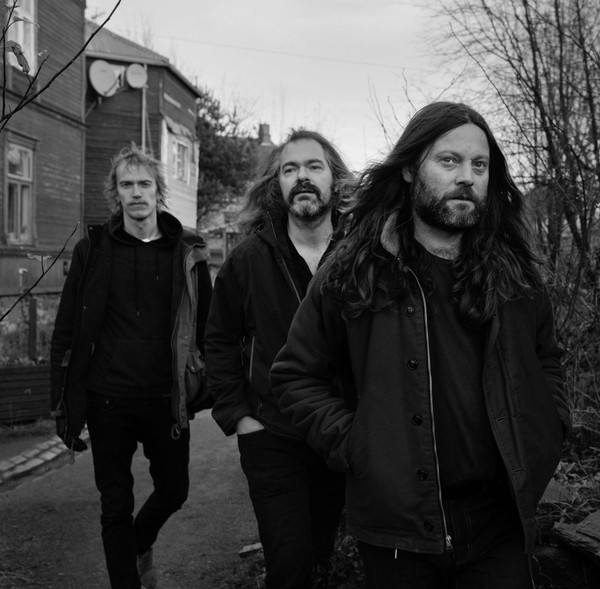
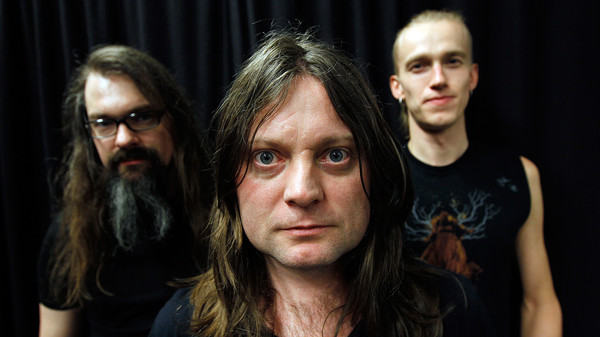
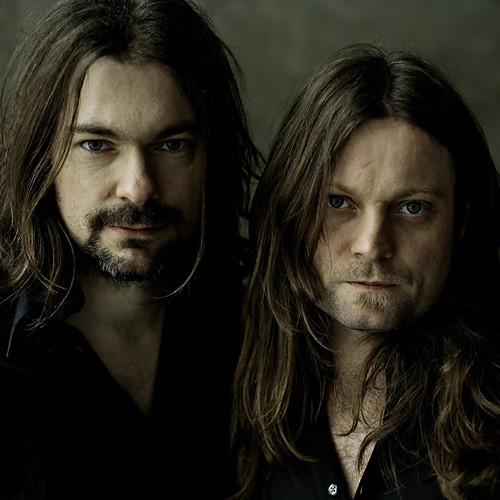
LINDA JONES-PRECIOUS: THE ANTHOLOGY 1963-1976.
LINDA JONES-PRECIOUS: THE ANTHOLOGY 1963-1976.
The story of Linda Jones is one of triumph and tragedy. Growing up, Linda Jones was diagnosed with diabetes. Despite this, Linda Jones went on to forge a successful career as a soul singer.
Her breakthrough single, was Hypnotised, which reached twenty-one in the US Billboard 100 and number four in the US Billboard R&B charts in 1967. Suddenly, great things were being forecast for Linda Jones. These forecasts proved prescient.
As 1972 dawned, twenty-seven year old Linda Jones was a successful soul singer. She had already enjoyed five hit singles and a successful debut album. This looked like it was just the start of a long and successful career for a singer who had the potential to rival Aretha Franklin, Gladys Knight and Irma Thomas for the title Queen of Soul. Sadly, that wasn’t to be.
On March the 13th 1972, Linda Jones was resting at her mother’s home between a matinee and evening show at the Harlem Apollo. She took unwell and an ambulance was called. The following day, Linda slipped into a diabetic coma. Later that day, Linda Jones was pronounced dead on the 14th February 1972. Linda Jones was just twenty-seven. Tragedy had robbed soul music of his its talented and promising singers, Linda Jones.
Her career is documented on a new compilation, Precious: The Anthology 1963-1976. It was recently released by Kent Soul, an imprint of Ace Records and celebrates the life and music of Linda Jones.
Linda Jones was born on December 14th 1944, in New Jersey. By the age of six, Linda Jones had joined the family gospel group The Jones Singers. They sang in churches in the New Jersey area. This was Linda’s introduction to music. However, as Linda became a teenager, she discovered another type of music…R&B.
Discovering R&B transformed Linda Jones’ life. This was a revelation. Suddenly, Linda knew what she wanted to do with her life…sing soul. So when she left high school, Linda had a plan. By days, she worked a series of dead end jobs. Then at night, she became Linda sang in local clubs in Newark, New Jersey. That was where she came to the attention of an A&R scout for MGM Records.
He spotted the potential in the nineteen year old Linda Jones. Soon, Linda was signed on a short term deal, and was net into the studio to record her debut single. The song that was chosen was a cover of Lonely Teardrops, which had given Jackie Wilson a hit single. When it was released, MGM billed Linda Jones as Linda Lane. Despite the change in name, Lonely Tears failed to make an impression on the charts. Linda’s time at MGM was over before it had even begun.
Despite the disappointment, Linda Jones remained stoic and returned to working dead end jobs by day, and singing in clubs at night. That was where she met Jerry Harris, a staff songwriter at Jobete Music, Motown’s publishing company.
Straight away, Jerry Harris realised that Linda Jones was a cut above most of the singers he came across. He promised Linda that he would do all he could to help her. Jerry Harris was as good as his word.
He introduced Linda Jones to producer George Kerr. Little did Linda realise, that this was the start of a six year partnership.
Not long after their initial meeting, George Kerr booked a session at a New York recording studio in October 1964. For the session, Jerry Harris had recorded some top session players. The rhythm section included drummer Bernard “Pretty” Purdie, bassist Cornell Dupree and guitarist Eric Gale. They were joined by pianist Richard Tee. This was the band that would be by Linda’s side for the next six years. However, during that first session, Linda recorded the two songs that featured on her next single, Take The Boy Out Of The Country, I’m Taking Back My Love.
After the recording sessions, George Kerr shopped the tracks to various record companies. When executives at Atco, a subsidiary of Atlantic Records, heard the two songs, they were keen to sign Linda Jones. When the contract was signed, Linda Jones’ Take The Boy Out Of The Country, was released in March 1965 as Linda Jones’ sophomore single. Tucked away on the B-Side was the heart-wrenching ballad I’m Taking Back My Love. Despite the quality of both sides, Linda’s sophomore single failed commercially. This marked the end of her time at Atco.
George Kerr wasn’t about to give up on Linda Jones. After leaving Atco, Linda returned to the club circuit. This was the equivalent of serving a musical apprenticeship. It helped Linda hone her style. Eventually, George took Linda back into the studio, and they recorded Fugitive From Love and You Hit Me Like T.N.T. These two tracks George took to Blue Bird Records.
Again, executives at Blue Bird Records liked the two tracks, and agreed to release them as Linda Jones’ third single. Linda was maturing as a vocalist, and combined power and emotion on Fugitive From Love. It became her next single when it was released on Blue Cat Records in July 1966. On the flip-side was You Hit Me Like T.N.T., which later would find an audience on the Northern Soul scene. Sadly, Blue Cat Records lacked the funds to promote Fugitive From Love properly. Unsurprisingly, it failed to find an audience, and Linda Jones was once again, looking for a new label.
Still though, George Kerr continued to believe in Linda Jones. Undaunted he managed to find the funds to finance another session. One of the songs he planned to record was Hypnotised. George Kerr took Linda and her band into the studio and they cut the two tracks. Then Jerry went looking for a label to release Linda’s fourth single.
First stop for George Kerr was Brunswick. However, they weren’t in the market for any more female singers. They already had Barbara Acklin, who they were promoting heavily. However, a Brunswick staffer suggested that George head over to Warner Bros, and meet Ron Moseley. He was working for Warner Bros’ R&B imprint Loma. That’s what George decided to do.
At Warner Bros, George Kerr met with Ron Moseley. He took out a copy of Hypnotised and began to play it to Ron. At that moment, Jerry Ragovoy walked past. The song stopped the songwriter and producer in his tracks. He thought it had hit potential. Within a matter of minutes, a deal had been struck. After that, George headed home to Florida.
On his return to New York, Jerry Ragovoy and staffers from Loma had been looking for Linda Jones. They wanted her to play some shows to support Hypnotised. This she did, and when Hypnotised was released in May 1967, the single began to climb the charts. Eventually, it reached twenty-one in the US Billboard 100 and number four in the US Billboard R&B charts in 1967. After four years and four singles, Linda Jones had made her breakthrough. This was just the start of the journey for Linda.
Four months later, and Linda Jones released the followup to Hypnotised was released in September 1967. The song that was chosen was the soul-baring ballad What’ve I Done (To Make You Mad). Again, the single climbed the charts, and eventually, reached sixty-one in the US Billboard 100 and number eight in the US Billboard R&B. This gave Linda Jones back-to-back top ten single in the US R&B charts.
Buoyed by this success, Loma decided to send Linda into the studio to record her debut album. Hypnotised was released later in 1967. It featured the singles Hypnotised and What’ve I Done (To Make You Mad). Other songs included the rueful If Only (We Had Met Sooner), A Last Minute Miracle reached twenty-six in the US R&B charts. By then, great things were being forecast for Linda Jones.
As 1967 drew to a close, Linda Jones released her third single of the year. This was the hopeful power ballad Give My Love A Try. This is one of the highlights of Precious: The Anthology 1963-1976. It was released in December 1967. Despite its quality, Give My Love A Try failed to make an impression on the charts. However, 1967 had still been the most successful year of Linda Jones’ career.
Just two months after the released of Give My Love A Try, Linda Jones returned with her first single of 1968, My Heart Needs A Break. This Sammy Turner composition was produced by George Kerr. When it was released in February 1968, the single charted but stalled at ninety-four in the US Billboard 100. In the US R&B charts, Give My Love A Try fared better, reaching thirty-four. It seemed that Give My Love A Try’s failure to chart had been a minor blip. Or was it?
In June 1968, Linda Jones returned with a new single, What Can I Do (Without You). It doesn’t feature on Precious: The Anthology 1963-1976. When What Can I Do (Without You) was released, it failed to trouble the chart. Hopefully, this was another minor blip and the hits would soon resume.
Three months later, and Linda Jones returned with her new single It Won’t Take Much (To Bring Me Back). It’s also omitted from Precious: The Anthology 1963-1976. When What Can I Do (Without You) was released in September 1968, but it too, failed to chart. This was a further disappointment for Linda Jones. Worse was to come.
By 1969, Warner Bros. had realised that there was more money to made in rock than soul. Warner Bros. called time on their Loma imprint. It wasn’t part of their future plans. Nor it seemed was Linda Jones. She only released one more single for Warner Bros.
This was My Heart (Will Understand), which is omitted from Precious: The Anthology 1963-1976. My Heart (Will Understand) was released the main Warner Bros. label in April 1969. When the single failed commercially, this must have made Warner Bros’ mind up. Linda Jones left Warner Bros not long after this.
Later in 1969, George Kerr took Linda Jones back into the studio with her usual band. They recorded a cover of The O’Jays’ I’ll Be Sweeter Tomorrow and That’s When I’ll Stop Loving You. These songs, George Kerr shopped to various labels.
Eventually, George Kerr agreed to lease the songs to Gamble and Huff’s Neptune Records. For Linda, this in a step down in career terms. She had previously, been signed to a major label, that was one of the most famous labels in music. Now she was about to release her next single small independent label.
The only saving grace was that Neptune Records had signed a distribution deal with Chicago based Chess Records. This should’ve helped get Neptune Records’ releases into more shops than other independent labels. One of these releases was Linda Jones’ single I’ll Be Sweeter Tomorrow.
It was released in October 1969, with That’s When I’ll Stop Loving You on the B-Side. Upon its release, I’ll Be Sweeter Tomorrow entered the US R&B charts, and eventually, reached forty-five. Meanwhile, some DJs took to playing the B-Side That’s When I’ll Stop Loving You on the radio. The song became so popular, that it too charted, reaching number forty in the US R&B charts. Linda had enjoyed two hit singles. Maybe Linda’s luck was changing?
She was certainly busy with live work when I’ll Be Sweeter Tomorrow and That’s When I’ll Stop Loving You charted in January 1970. Linda Jones was part of package shows that toured America. At each show, Linda appeared three times, singing between three and five songs. This introduced her to a much wider audience. However, this must have been taking its toll on Linda.
She had been diagnosed with diabetes at an early age. Like all diabetics, Linda had to take medication and be careful with her diet. Linda had to eat regularly and watch her blood sugar level. Out on tour, this wasn’t always easy, and sometimes, Linda suffered from diabetes attacks. Gradually, they began to happen more often. For Linda and her mother, this must have been a worry. Despite this, the twenty-five year old continued her career.
In May 1970, Linda Jones recorded a cover of Ooh Baby You Move Me. It had previously been recorded by Ben Aitken in 1968. On the B-Side, was Can You Blame Me? Again, producer George Kerr decided to lease Ooh Baby You Move Me to Neptune Records. This wasn’t his best decision.
At the time, Gamble and Huff were planning on launching a a new label, Philadelphia International Records. Neptune Records was being wound down, so the pair could focus their attention on the new label. Maybe George Kerr wasn’t aware of these plans? As a result, Ooh Baby You Move Me wasn’t promoted properly on its release in May 1970. This proved to be the last Linda Jones record leased to Gamble and Huff.
That wasn’t the only change in the offing. Linda Jones moved to Turbo Records, which was a subsidiary of All Platinium Group, a New Jersey funk, R&B, and soul label. This was the start of a new chapter in the career of Linda Jones. However, changes were afoot.
For Linda Jones Turbo Records’ debut, Stay With Me Forever was chosen. It was penned by George Kerr with Sharon Seiger and Nate Edmonds. He would co-produce Stay With Me Forever with George Kerr. On the B-Side was I’ve Given You The Best Years Of My Life, which Linda cowrote with Gerald Harris. He co-produced the song with Toby Henry. What was Linda’s thirteenth single was released in May 1971
This was Stay With Me Forever, Linda Jones’ first single for her new label, Turbo Records. It was released in May 1971 and featured a vocal tour de force from Linda. She showcased every vocal trick in the book during what was a musical masterclass. The record buying public agreed, and the single reached forty-seven in the US R&B charts. Given the success of Stay With Me Forever work began on the followup.
The song chosen was a cover of the Goffin and King composition, I Can’t Make It Alone. It was ‘produced’ by a veteran of the New York music scene, Sylvia Robinson. She would go on to found and become the CEO of Sugar Hill Records. Meanwhile, Al Goodman and Nate Edmonds co-produced the B-Side, Don’t Go (I Can’t Bear To Be Alone). The single was released in November 1971. However, the single failed to replicate the success of Stay With Me Forever.
As 1971 gave way to 1972, Linda Jones entered the studio to record her next single, Your Precious Love. It was released in February 1972. Soon, it had entered the charts and began to climb. Then tragedy struck and suddenly music no longer mattered.
On the afternoon of March the 13th 1972, Linda Jones performed at a matinee at the Harlem Apollo. She returned to mother’s home, where she lived to rest between shows. That was where tragedy struck.
Later that afternoon, Linda Jones became unwell. An ambulance was called and she was taken to hospital. The following day, George Kerr visited the Jones’ household. He was told by a neighbour of Linda becoming unwell and an ambulance taking her to the hospital. By the time George made his way to the hospital, Linda had slipped into a diabetic coma. Later, that day, 14th February 1972 Linda Jones was pronounced dead. She was just twenty-seven.
Meanwhile, Your Precious Love continued to climb the charts, reaching number seventy-four in the US Billboard 100 and fifteen in the US R&B charts. Ironically, this was Linda Jones most successful single since What’ve I Done (To Make You Mad) in 1967. However, Your Precious Love was Linda’s final hit single.
Despite her death, Turbo Records continued to release singles bearing Linda Jones’ name. This included Linda Jones And Whatnauts’ collaboration I’m So Glad I Found You. It was released in June 1972, but failed to chart. That wasn’t the last Linda Jones single Turbo Records would release.
Let It Be Me was then released in September 1972. It doesn’t feature on the Precious: The Anthology 1963-1976 compilation. However, it features on an album released by the All Platinum Group, Your Precious Love.
It featured number of tracks had been stockpiled during various recording sessions. These tracks were somewhat hastily released as a Linda Jones’ sophomore studio album. Among the tracks that featured on Your Precious Love, were Your Precious Love, Behold, Stay With Me Forever, Not On The Outside and I Can’t Make It Alone. When it was released later in 1972, Your Precious Love didn’t replicate the success of the single. Despite this, Turbo Records released another posthumous album of Linda Jones’ music.
The second Turbo Records’ album was Let It Be Me. One of the highlights was a beautiful, soulful ballad I Do. It allows Linda Jones to use her full vocal range. It’s a poignant reminder of a truly talented singer. Meanwhile, however, Turbo Records continued to release singles bearing Linda Jones’ name.
This included a new versions of Fugitive From Love. It was released in 1973, with Things I’ve Been Through on the B-Side. However, the single failed to trouble the charts. Later in 1973, the single was flipped over and Things I’ve Been Through was released as a single. Still success eluded the single which marked the end of the Turbo Records years.
By then, the first anniversary of Linda Jones death was approaching. However, her music lived on. That’s still the case today.
Nowadays, her music is growing in popularity, and she is reaching a wider audience. Hopefully, that audience with increase with the release of a new compilation, Precious: The Anthology 1963-1976. It was recently released by Kent Soul, an imprint of Ace Records and celebrates the life and music of Linda Jones.
Linda Jones is now remembered for possessing one of the finest and most versatile voices in soul music. If she had lived, Linda Jones had the potential to rival Aretha Franklin, Gladys Knight and Irma Thomas for the title Queen of Soul. Sadly, that wasn’t to be, and Linda Jones died far too young. She passed away on 14th of December 1972. Today, Linda Jones would’ve been celebrating her seventy-second birthday. Instead, today we’re celebrating Linda Jones musical legacy. This includes the music that features on Precious: The Anthology 1963-1976. It’s the perfect introduction to another of soul music’s best kept secrets, Linda Jones.
LINDA JONES-PRECIOUS: THE ANTHOLOGY 1963-1976.


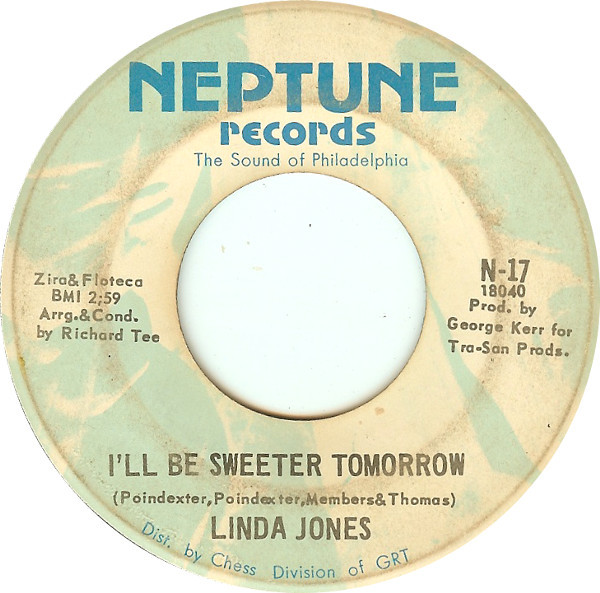


CONRAD SCHNITZLER-FILMMUSIK 1.
CONRAD SCHNITZLER-FILMMUSIK 1.
Conrad Schnitzler was, without doubt, one of the most important and influential figures in German music. Having studied under Joseph Beuys, he cofounded the legendary Zodiak Free Arts Lab in Berlin with Hans-Joachim Roedelius.
For next the two years, the Zodiak Free Arts Lab became one of Berlin’s cultural hubs. Artists and musicians made their way to the Zodiak Free Arts Lab, seeking out like minded individuals. They found them. This included Klaus Schulze, plus members of Can, Ash Ra Tempel, Agitation Free and Tangerine Dream, who Conrad Schnitzler joined in 1969.
By then, Tangerine Dream had become the Zodiak Free Arts Lab’s house band right up until its closure in March 169. Regularly Tangerine Dream played five and six our sets of loud, improvised music. Often these sets ended with the band smashing their equipment up. Tangerine Dream it seemed, were making a statement. This they certainly did on their debut album.
Tangerine Dream.
Conrad Schnitzler joined Tangerine Dream just in time to play on their groundbreaking debut album Electronic Meditation in October 1969. Tangerine Dream fused elements of avant-garde, electronic music, free jazz and rock. This proved popular with critics and cultural commentators.
Nine months later, Electronic Meditation released on Rolf-Ulrich Kaiser’s Ohr label. Critical acclaim accompanied the release of this future Krautrock classic. However, by the time Electronic Meditation was released Conrad Schnitzler had parted company with Tangerine Dream.
Kluster.
After leaving Tangerine Dream, a new chapter in the career of Conrad Schnitzler began later in 1969. He and Hans-Joachim Roedelius decided to form a new band, Kluster with Dieter Moebius.
Kluster wasted no time in recording their debut album. To record their debut album, Kluster had managed to secure sponsorship from a local church. This would offset the cost hiring the Rhenus-Studio on 21st December 1969. That day, Kluster were joined by Christa Runge who added religious texts to Kluster 1. Just like Kluster 2, it was an ambitious improvised piece where Kluster combined avant-garde and experimental music.These tracks became Klopfzeichen, which was released in November 1970. By then, Kluster had recorded their sophomore album.
Just two months after recording their debut album, Kluster returned to the Rhenus-Studio on February 23rd 1970 to record Zwei-Osterei. Just like Klopfzeichen, it was financed by a local church. Manfred Paethe added religious texts Electric Music and Text. It became part of Zwei-Osterei., a fusion of avant-garde, experimental music and Krautrock. However, Kluster’s sophomore album wasn’t released until 1971.
Later in 1971, Kluster performed what would be their swan-song. That night, the tapes were running and captured Kluster at their purest. There were no religious texts accompanying the two lengthy improvised pieces. They find Kluster’s music evolving towards the electronic sound that featured on later Cluster albums. That night, Kluster came of age musically, having saved the best until last. It was released in late 1971 as Schwarz. By then, Conrad Schnitzler was contemplating a solo career.
The Solo Years.
Conrad Schnitzler’s solo career began in 1973 would span four decades. During his long career, Conrad Schnitzler continued to create ambitious and pioneering music.
This includes the music on the first two albums of Conrad Schnitzler’s career. Con was released in 1972 with Blau following in 1973. Both albums were self-released by Conrad Schnitzler and featured intriguing electronic patterns, tape manipulations and dark, moody experimental sounds. These albums were later hailed as classics, and would introduce Conrad Schnitzler’s music to a wider record buying public.
So did the first in a series of cassette albums Conrad Schnitzler released. Cassettes were the perfect medium for Conrad Schnitzler. They were much more affordable than vinyl, and it was easy to run off further copies as and when they were needed. The first cassette album Conrad Schnitzler released was The Red Cassette in 1973. It was followed by The Black Cassette in 1974. Both albums feature Conrad Schnitzler experimenting and pushing musical boundaries, as he combines musical genres with his sonic palette. The two cassette albums increased interest in Conrad Schnitzler’s music.
Despite this, Conrad Schnitzler next album, Work In Progress was a limited edition box set. Only 100 copies were pressed, and each box set included three LPs and a cassette. This included copies the Kluster live Schwartz and Conrad Schnitzler’s first two solo albums, Rot and Blau. After the box set was released, Conrad Schnitzler returned the master tapes to his archives.
That’s where Conrad Schnitzler stored all the music he recorded during a career that spanned five decades. By the time of Conrad Schnitzler’s death in 2011, his vast, sprawling archives featured the master tapes to several hundred recordings. The job of organising the master tapes fell to Conrad Schnitzler’s former musical partner Wolfgang Seidel.
He was appointed guardian of Conrad Schnitzler’s archive. This is a important role, and one Wolfgang Seidel has dedicated himself to. He realises the importance of the music within Conrad Schnitzler’s archive. This includes everything from the master tapes to albums, to recordings of concerts that were committed to cassette. Some of the master tapes and cassettes Wolfgang Seidel discovered, only featured the one track. The archive was proving to be a treasure trove. Especially when Wolfgang Seidel discovered long lost, hidden treasure.
Tucked away in Conrad Schnitzler’s archive were two tapes which were mysteriously marked Filmmusik 1975 and Filmmusik 1980. Wolfgang Seidel dusted these down, and looked at them. However, there was no other information with the tapes. Conrad Schnitzler hadn’t noted down if the tracks were meant to accompany a film or video. The tapes was turning into a mystery.
So Wolfgang Seidel setup the tape machine and began to listen to the music that featured on Filmmusik 1975 A and Filmmusik 1980. In an instant, Wolfgang Seidel was transported back to 1975 and then 1980. He was listening to his old friend Conrad Schnitzler at his most accessible.
Mesmeric, entrancing and pulsating bass lines are joined by washes of ethereal, elegiac synths on Mrz 80, which opens Filmmuzik 1. Other times, including on Okt 75 and Okt 80 the synths are futuristic and take on a cinematic, sci-fi sound. Both tracks still sound like the soundtrack-in-waiting to a sci-fi film. Then Apr 80 takes on a proto-techno, cinematic sound. There’s a moody and menacing undercurrent to Dez 80 as drones wash in and out. These drones return on Sep 75, as it veers between haunting and wistful to melodic and beautiful. Soon, though, it’s all change.
A pumping, pulsating bass provides the heartbeat to Feb 80 on this example of ethno-electro. Jul 80 then features Conrad Schnitzler at his most inventive. He combines synths and drones to create an eerie, otherworldly and chilling cinematic soundscape. It has the word soundtrack written all over it. So does Aug 75 which somehow, manages to be minimalist, menacing and futuristic all at once. This is quite an achievement. The closing track Jan 80 features oscillating synths that sound as if they were meant to feature on a film about space travel. Jan 80 paints pictures, and sets the listener’s imagination racing. That has been the case throughout Filmmuzik 1.
It’s a welcome release and a reminder of a true musical pioneer, as his solo career began to unfold. Conrad Schnitzler was in a rich vein of musical form by 1975. He had already recorded classic albums with Tangerine Dream and Kluster. These albums featured inventive and innovative music that would influence further generations of musicians. So would Conrad Schnitzler’s first two albums, 1972s Con and 1973. Both of these albums are nowadays, regarded as classics. Along with the release of Black Cassette and Red Cassette albums, Conrad Schnitzler was in the midst of one of the most creative periods of his career.
This continued between 1975 and 1980. Proof of this is the music on Filmmuzik 1. It has lain unreleased in Conrad Schnitzler’s archives until relatively recently. That was until the tapes were discovered by Wolfgang Seidel, who is the guardian of Conrad Schnitzler’s archive. He realised the importance of the music on Filmmuzik 1, so approached the Hamburg based label Bureau B about releasing some of the music. Ten of these featured on the recently released Filmmuzik 1. It looks like the start of a series.
Already, Bureau B have announced that were will be a followup to Filmmuzik 1. The second volume in this series, Filmmuzik 2 will be released in February 2017. This is a welcome release. Especially if the music is as good as that on Filmmuzik 1.
On Filmmuzik 1, Conrad Schnitzler combines elements of ambient and avant-garde, Berlin School and Krautrock with electronic and experimental music. Usually, several genres are combined by Conrad Schnitzler to create a soundscape. To create these soundscapes, Conrad Schnitzler deploys an array of keyboards, synths, drum machines, sound effects and found sounds. They’re Conrad Schnitzler’s sonic palette, which he puts to good use on on Filmmuzik 1.
Each of the soundscapes on Filmmuzik 1 have a cinematic sound. They’re guaranteed to set the listener’s imagination racing. Some of the tracks futuristic, with a sci-fi sound, while others are eerie, moody and otherworldly. Some have a mesmeric quality, while others are ethereal, elegiac or melodic and have an inherent beauty. However, each of the tracks on Filmmuzik 1 have one thing in common…they’re timeless.
Despite being recorded in 1975 and 1980, there’s a freshness to the music which still sounds relevant today. Indeed, it’s hard to believe that some of tracks are forty-one years old. These tracks have aged well. They’re also among the most accessible music that Conrad Schnitzler has recorded.
That’s why Filmmuzik 1 is the perfect starting place for newcomers to the music of Conrad Schnitzler. It’s a gateway album to the rest of Conrad Schnitzler’s back-catalogue. Filmmuzik 1 is sure to be the first step in a voyage of discovery through the delights of Conrad Schnitzler’s back-catalogue. However, this is no ordinary back-catalogue. Conrad Schnitzler’s back-catalogue is vast. He was a prolific solo artist and collaborator. The journey through Conrad Schnitzler’s back-catalogue brings to mind Loa’s quote that: “a journey of a thousand miles begins with a single step.” The first step in the journey through Conrad Schnitzler’s back-catalogue is Filmmuzik 1.
CONRAD SCHNITZLER-FILMMUSIK 1.
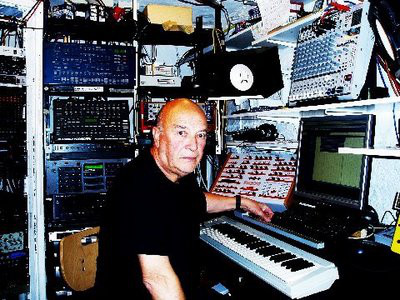
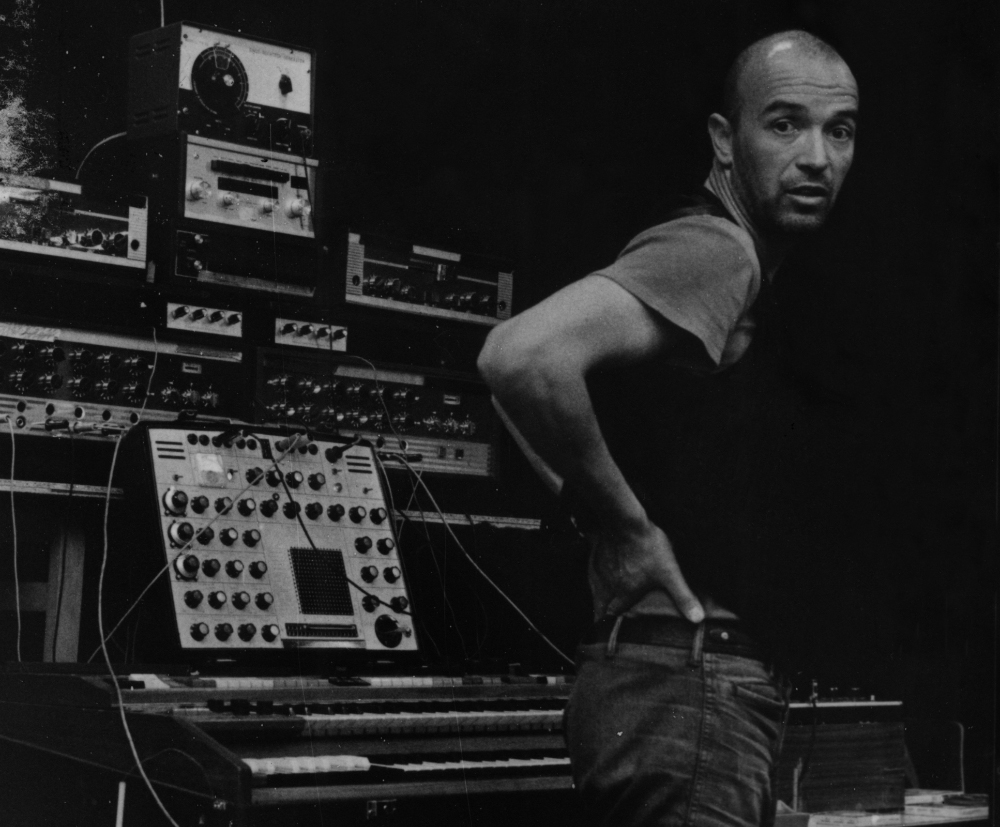
TIM MAIA 1970.
TIM MAIA 1970.
For many musicians, choosing the title for an album can prove problematic. Especially, for a debut album. As a result, many of new artists and bands have gone done this route. This includes everyone from Black Sabbath, Led Zeppelin and The Allman Brothers Band to Art In America and Ash Ra Tempel. Then there’s Cluster, Dire Straits and 10CC, The Band, The Beta Band and The Doors. Eponymous debut albums it seems, have always been popular over with new artists. This included Tim Maia.
When he released his debut album in 1970, it was entitled Tim Maia. It seemed he was following in the footsteps of many other artists. Following the success of his debut album, Tim Maia returned in 1971 with his sophomore album. It too was entitled Tim Maia. So were his third and fourth albums. This was guaranteed to cause confusion.
Nowadays, Tim Maia’s debut album is known as Tim Maia 1970. It was recently reissued, by Oficial Arquivoknown, and marks the start of the reissue of the Tim Maia quartet. These four albums were released between 1970 and 1973 and feature some of the best music Tim Maia released during his long and illustrious career. This reissue program is also a celebration of Tim Maia and his music.
He was hugely talented, charismatic and larger life singer, who lived life on the edge, and was determined to do things his way. Early on, Tim Maia realised he was only here for a visit, and was going to live life to the full. It was as Tim Maia was determined that he would have no regrets. Tim Maia packed a lot of living into fifty-years, but still left behind a rich musical legacy. However, the Tim Maia story began in Brazil in 1942
On September 28th 1942. Tim Maia born in Rio De Janeiro. He was the eighteenth of nineteen children. Aged just six, Tim earned a living delivering homemade food, which his mother cooked. This would be the nearest Tim got to an ordinary job. From then on, Tim devoted himself to music.
At the age of eight, Tim Maia had already written his first song. By the time he was fourteen, Tim had learnt to play the drums and formed his first group Os Tijucanos do Ritmo. They were only together for a year. During that period, Tim took guitar lessons. He was soon a proficient guitarist, and was able to teach his friends. With some of his friends, Tim formed a new group in 1957.
This time, it was vocal harmony group, The Sputniks. It was formed in 1957, and made a television appearance on Carlos Eduardo Imperial’s Clube do Rock. Alas, the group was a short-lived affair, which resulted in Tim embarking upon a solo career. This lasted until 1959, when seventeen year old Tim made the decision to emigrate.
Tim Maia decided to head to America, which he believed he was heading for the land of opportunity. With just twelve dollars in his pocket and unable to speak English, Tim arrived in America. He called himself Jimmy at customs, and bluffed his way into the country, saying he was a student. Living with extended family in Tarrytown, New York Tim worked various casual jobs and augmented his meagre earnings by allegedly, committing petty crimes. Soon, he learnt to speak and sing English. This lead to him forming a vocal group The Ideals.
During his time with The Ideals, they recorded a demo of New Love, which Tim Maia had written the lyrics to. Making a guest appearance on the demo, was percussionist Milton Banana. Nothing came of the demo, and Tim later resurrected the song for his album Tim Maia 1973. However, by the time Tim recorded New Love with The Ideals, he planned on never returning home to Brazil. America was now his home. That was until things went awry for Tim.
Confusion surrounds why Tim Maia left Brazil. There’s two conflicting accounts. The first and more rock ’n’ roll version is that Tim was arrested on possession of cannabis in 1963, and deported shortly thereafter. That seems unlikely. There were punitive penalties for possession of even a small quantity of cannabis in the sixties. This meant it was unlikely Tim would’ve been just deported, without serving a jail sentence. This lends credence to the allegation that Tim was caught in a stolen car in Daytona, Florida. After serving six months in prison, Tim was deported back to Brazil in 1964.
Now back home in Brazil, Tim Maia’s life seemed to be going nowhere. He got and lost several jobs, and was arrested several times. So Tim decided to move to São Paulo, where he hoped maybe, he could get his career back on track.
Having moved to São Paulo, Tim Maia, hoped he would be reunited with one of The Sputniks. Ironically, it was Carlos, who Tim had insulted before he left The Sputniks. However, Carlos proved inaccessible, and Tim had to make his own way in the São Paulo music scene. Tim made an appearance on Wilson Simonal’s radio show, and then appeared with Os Mutantes on local television. Still, though, Tim was determined to contact Carlos, and sent a homemade demo. Eventually, Tim’s persistence paid off.
Carlos on hearing the demo, recommended Tim Maia to CBS. They offered him a recording deal for a single, and an appearance on the Jovem Guarda television program. Tim’s first single was Meu País in 1968. It failed commercially. So did the followup These Are the Songs, which Tim recorded in English. Things weren’t looking good for Tim Maia.
His luck changed when Tim wrote These Are the Songs for Carlos. It gave his friend a hit single. At last, things were looking up for Tim Maia.
Things continued to improve when Elis Regina became entranced by Tim’s song These Are the Songs. Elis Regina asked Tim to duet with her on the song. They recorded the song in English and Portuguese, and the song featured on Elis’ 1970 album Em Pieno Veroa. This gave Tim’s career a huge boost. Recording with such a famous Brazilian singer lead to Tim signing a recording contract with Polydor.
1970.
Having signed to Polydor, Tim Maia somewhat belatedly began to work on his eponymous debut album. Tim Maia was fast approaching his twenty-eighth birthday, and musically, had a lot of catching up to do.
Soon, work began on Tim Maia’s debut album. He began writing new songs and choosing cover versions for his what became Tim Maia 1970. Eventually, Tim had the twelve songs he planned to record.
This included three Tim had penned himself, and three he cowrote. Tim wrote Jurema, Flamengo and Azul Da Cor Do Mar, and cowrote Cristina and Cristina Nº 2 with Carlos Imperial. His other collaboration was Padre Cícero, which Tim cowrote with Cassiano. He penned Você Fingiu and cowrote Eu Amo Você and Primavera (Vai Chuva with Silvio Rochael. The other three cover versions included João Do Vale and Luiz Wanderley’s Coroné Antônio Bento, Fabio and Paulo Imperial’s Risos and Claudio Roditi’s Tributo À Booker Pittman. These songs were recorded with producers Arnaldo Saccomani and Jairo Pires.
Accompanying Tim Maia, was a relatively small, but tight and talented band. The rhythm section provided the heartbeat, and were augmented by keyboards, piano percussion and vibes. Meanwhile, Tim laid down his vocals, and added acoustic guitar. Later, strings were overdubbed on six tracks. Only then was Tim Maia 1970 complete. Little did any of the musicians realise that they know that they were about to make musical history.
When Tim Maia 1970 was released later in 1970, the album was hailed a groundbreaking, genre-melting classic by critics. The album was a successful and seamless marriage disparate genres. Soul and funk rubbed shoulders with samba and Baião. There’s even hints of easy listening and soul jazz on Tim Maia 1970. It also featured three future Tim Maia classics, that showed different sides to Tim Maia. This includes the album opener Coroné Antonio Bento. It’s a stomping fusion of soul and funk, where Tim’s vocal becomes a vamp. Primavera (Vai Chuva) and Azul Da Cor Do Mar are both beautiful ballads. This is were Tim seems to come into his own.
There’s several ballads on Tim Maia 1970. Cristina and Padre Cícero are soul-baring ballads. So are Você Fingiu and Eu Amo Você, where the lushest strings prove the perfect accompaniment to Tim’s vocal. Then on Cristina, Tim combines power, passion and emotion. However, there’s more to Tim Maia 1970 than ballads.
Risos is a mid-tempo track that floats along, constantly captivating. Jurema sounds as if was recorded in Memphis. Stabs of brassy horns and soaring harmonies accompany Tim, as his soulful vocal becomes a vamp. It’s a similar case on Cristina Nº 2, where soul meets funk and Tim’s vocal becomes a swaggering vamp. Tributo À Booker Pittman which closes Tim Maia 1970 has a jazz-tinged, soulful sound. This shows Tim’s versatility. Seamlessly, he switches between, and combines musical genres. This he’s been doing throughout Tim Maia 197o.
When Tim Maia 1970 was released, this marriage of soul and funk with samba and Baião was a first. No Brazilian artist had attempted this before. It was unheard of. However, it proved popular amongst record buyers.
Tim Maia was released in 1970, and spent twenty-four weeks in the upper reaches of the Brazilian charts. It had been a long, hard struggle. Ever since he was deported from America, Tim Maia had been struggling to make a breakthrough. Now as he approached his twenty-eighth birthday, Tim Maia’s star was in the ascendancy. This should’ve been the start of a long and glittering career.
Instead, Tim Maia’s career was a mixture of genius, farce and tragedy where the hugely talented, charismatic and larger life singer proved to fundamentally flawed. Thing went well for Tim Maia initially.

In 1971, Tim Mai released his much anticipated sophomore album, Tim Maia 1971. Just like its predecessor, Tim Maia 1971 was hailed as another groundbreaking album. Critics were won over by Tim Maia 1971’s imaginative fusion of soul and funk with samba and Baião. There were even hints of jazz, psychedelia and rock, during what was hailed as an ambitious and innovative album of genre-melting music. Having won over critics, Tim Maia 1971 was released to critical acclaim.
On its release, Tim Maia 1971 entered the Brazilian charts, and gave Tim another hit album. It also featured two hit singles, Não Quero Dinheiro (Só Quero Amar) and Preciso Aprender a Ser Só. Tim Maia’s star was still in the ascendancy, and at this rate, it looked as if he was well on his way to becoming one of the biggest stars in Brazilian music. That should’ve been the case, given the quality of music on Tim Maia 1971.
After the success of Tim Maia 1971, Tim headed to London to celebrate. He had just enjoyed two successful albums, after six years of struggling to make a breakthrough. Tim wanted to celebrate, and enjoy the fruits of his labour. It was during this trip to London, that Tim first discovered his love of the rock ’n’ roll lifestyle.
Realising that he was only here for a visit, Tim Maia embraced the rock ‘n’ roll lifestyle. Almost defiantly, Tim Maia lived each day as if it was his last. He hungrily devoured copious amounts of drugs and alcohol. They became part of Tim Maia’s daily diet. Fortunately, his new found lifestyle didn’t seem to affect Tim’s ability to make music. That was until Tim discovered a new drug that would prove to be his undoing.
In London, Tim discovered L.S.D. He became an advocate of its supposed mind opening qualities. He took two-hundred tabs of L.S.D. home to Brazil, giving it to friend and people at his record label. Little did Tim know, but this was like pressing the self-destruct button.
Over the next two years, Tim Maia’s released two further albums, Tim Maia 1972 and Tim Maia 1973. Both albums were released to critical and enjoyed commercial success in Brazil. The only problem was after Tim Maia 1973, Tim became unhappy at the royalty rate he was receiving from his publisher. So Tim founded his own publishing company Seroma. This coincided with Tim signing to RCA Victor.
They offered Tim Maia the opportunity to record a double album for his fifth album. Tim excited by this opportunity, agreed to sign to RCA Victor, and began work on his fifth album. Somehow, Tim was still seemed able to function normally on his daily diet of drink and drugs. He had already recorded the instrumental parts. All that was left was for Tim to write the lyrics.
Seeking inspiration for the lyrics, Tim Maia decided to visit Tibério Gaspar. They had previously written together. That was where Tim found a book that would change his life, and sadly, not for the better. That book was the Universo em Desencanto (Universe in Disenchantment), which revolved around the cult of Rational Culture. They didn’t believe in eating red meat or using drugs. Considering Tim had a voracious appetite for drink and drugs, it seemed unlikely that he would join the cult. However, he did.
Straight away, the cult’s beliefs affected Tim Maia and his music. Ever since he joined cult of Rational Energy, who fixated on UFOs, Tim was now clean-shaved, dressed in white and no longer drank, ate red meat, smoked or took drugs. Always in his hand was a mysterious book. Even his music changed.
The lyrics for his fifth album, and RCA Victor debut, were supposedly about his newly acquired knowledge. This came courtesy of Universo em Desencanto. With the ‘lyrics’ complete, Tim’s vocals were overdubbed onto what became Tim Maia Racional, Volumes 1 and 2. With the album completed, Tim took it to RCA Victor. They who promptly rejected the album.
Tim Maia Racional, Volumes 1 and 2 it appears, wasn’t of a commercial standard. To make matters worse, the lyrics made absolutely no sense. The only small crumb of comfort was that Tim’s voice was improving. That hardly mattered for RCA Victor, who weren’t going to release the album. For RCA Victor, it was huge disappointment.
They thought they had signed an artists who would become one of the biggest names in Brazilian music. Instead, their star signing had joined a cult, and handed over the worst album of his career. Tim and RCA Victor at an impasse. There seemed to be no way forward.
That was until decided to buy the master tapes from RCA Victor. Tim then released the album independently. However, it failed to match the commercial success of his four previous albums. For his many fans, Tim Maia was no longer the artist he once was. Then in 1976, Tim quit the cult.
When Tim quit the cult, after Racional Volume 2, he’d fallen out with its leader. He felt duped and wanted Tim Maia Racional, Volumes 1 and 2 destroyed. That was the past. Now Tim wanted to move forward.
Tim Maia’s music changed after Tim Maia Racional, Volumes 1 and 2. He released a new album in 1976, entitled Tim Maia, released in 1976. This was the start of the most prolific period of Tim’s career.
From 1976 right through to 1998, Tim Maia continued to release albums. He released another twenty-five albums between 1977 and 1998. By then, Tim had released around thirty-four albums.
Just like his live shows, the albums were hit and miss affairs. Sometimes Tim would turn up, play an outstanding set. Other times he would play a mediocre or shambling set. On many occasions, he’d fail to turn up. He returned to is rock and roll lifestyle, living life to the fullest.
The last album Tim released was Nova Era Glacial in 1995. Other albums were released bearing Tim’s name right up until 1998. However, Nova Era Glacial is regarded as Tim Maia’s swan-song He passed away on March 15th 1998, aged just fifty-five. Sadly, by then Tim’s shows and behaviour had become predictable. That had been the case since his 1976 post-Racional comeback. Tim Maia was never the same man or musician after his dalliance with the cult of Rational Culture.
It’s fair to say that the four album Tim Maia released prior to joining the cult were the highlights of a career that spanned three decades and thirty-four albums. The album that introduced Brazilian record buyers to one of their most talented sons, was Tim Maia 1970, which was recently reissued, by Oficial Arquivoknown . This genre-melting album was one the highlight of Tim Maia’s career.
After Tim Maia 1970, Tim returned with his second classic album album, Tim Maia 1971. He followed this up with Tim Maia 1972 and Tim Maia 1973. They complete a quartet of albums that feature Tim Maia at his very best. Between 1970 and 1973, his star shawn the brightest.
Sadly, since his death in 1998, Tim Maia’s music has been a well-kept secret outside of his native Brazil. Even within Brazil, many record buyers haven’t heard Tim Maia’s music. Those that have, speak about his music with reverence and in hushed tones.
Like many maverick musicians, Tim Maia’s story sees myth and reality become intertwined. Truth and reality become one, just like his music was fusion of influences and musical genres. However, over the past few years, Tim Maia’s music has started to find a wider audience. They will embrace the reissue of Tim Maia 1970, which offers further insight into his music.
Just like many maverick singer-songwriters, Tim Maia was touched by genius but fundamentally flawed. He could’ve, and should’ve, been a huge star. Sadly, something held him back, and stopped him from enjoying the widespread commercial success and critical acclaim his music richly deserved. This was music shaped by a multiplicity of musical influences, genres and of course, his lifestyle. His music is a compelling, captivating fusion influences and musical genres.
Everything from soul, funk, jazz, rock, samba, bossa nova and baiao thrown into Tim Maia’s mystical and psychedelic musical melting pot. Similarly, Tim’s lifestyle including drink, drugs, multiple-marriages and imprisonment all shaped and influenced Tim Maia’s music. It’s then given a stir by one of music’s true maverick’s, who on the verge of critical acclaim and commercial success, made a couple of decisions he would later come to regret.
The first of these was Tim’s dalliance with L.S.D. in 1971. If that was his first mistake, his second was definitely, his decision to join a cult derailed his career. Maybe if Tim had never celebrated his success in London, then things might have been very different? Somewhat ironically, given the amount of music Tim Maia recorded and released, the two albums he recorded during his time with cult, have gained cult status. These two albums, however, were just a snapshot of his career, but one that affected his future.
After leaving the cult, Tim continued releasing music, but his live shows became unpredictable. They were either outstanding, mediocre or didn’t happen. All this fuelled the mythology that surrounds Tim Maia.
In a cruel and tragic twist of fate, Tim Maia died young, like many maverick musicians. He was just fifty-five when he died in 1998. Since then, the mythology and rumours surrounding Tim have increased, as has his popularity.
The recent rerelease of Tim Maia 1970 will fuel the increase in interest in Tim Maia and music. He’s one of music’s larger than life characters. Tim Maia realising he was only here for a visit, embraced the excesses of the rock and roll lifestyle and lived life in the fast line.
Maybe without living his life in this way, Tim Maia’s music wouldn’t have been as memorable, magical, eclectic and timeless? Tim Maia 197o is all these things and more. It’s also a classic album that influence and inspired several generations of songwriters. So did the followup Tim Maia 1971. Both albums are regarded as classic albums in Brazil, and are without doubt, among the highlights of Tim Maia’s three decade recording career. However, the album that launched his career, was Tim Maia 1970. It’s the work of a charismatic singer-songwriter career, who was touched by genius and fundamentally flawed, Tim Maia,.
TIM MAIA-1970.
 dereksmusicblog
