EMMA POLLOCK-IN SEARCH OF HARPERFIELD.
EMMA POLLOCK-IN SEARCH OF HARPERFIELD.
Most people haven’t heard of Castle Douglas. Why should they? It’s a small market town in Dumfries and Galloway, in south-west Scotland. However, Castle Douglas has been home to some famous faces over the last 224 years. This includes a potter, politician, footballer and two rugby players. However, they’ve been usurped as Castle Douglas’ most famous former resident. Nowadays, former Delgado and singer-songwriter Emma Pollock is regarded as CD’s most famous former resident.
Emma Pollock just happens to have released her third solo album, In Search Of Harperfield on Glasgow’s premier label, Chemikal Underground. It’s Emma’s first solo album since The Law of Large Numbers in 2010. Since then, Emma has been busy, not just making music, but running Chemikal Underground, which in 2015, celebrated its twentieth anniversary. Businesswoman is just another addition to Emma Pollock’s impressive CV.
Her story began back in 1994, when The Delgados were formed. Emma’s boyfriend Paul Savage had been a member of the band Bubblegum. That was until a coup d’état. Suddenly, Paul, Alun Woodward and Stewart Henderson found themselves out in the cold. Their only option was to form a new band.
The Delgados.
That’s when The Delgados were born. The three former members of Bubblegum asked Emma to join the nascent band. She became The Delgados vocalist and guitarist. Little did Emma or the rest of the band realise that this was the start of an eleven year journey.
During that journey, The Delgados released a string of singles and E.P.s; not forgetting five albums. However, the first anyone heard of The Delgados was when Liquidation Girl featured on a compilation Skookum Chief Powered Teenage Zit Rock Angst. Those that heard Liquidation Girl realised that The Delgados were rising stars of the Scottish music scene. Surely, record companies would soon be chasing their signature?
That’s not how it worked out. Rather than sign to a record company, The Delgados decided to form their own record label, Chemikal Underground. Two of the new label’s first signings were Mogwai and Arab Strap. Just like The Delgados, they eventually became Scottish music royalty.
Chemikal Underground’s first release came in 1995, when The Delgados debut single Veronica Webster was released. This was the first of a string of singles and E.P.s that Mogwai would release over a ten year period. They would also release five albums. Their debut album was released in 1996.
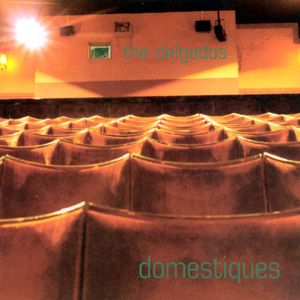
Domestiques.
Just over years after The Delgados were formed, they released their debut album Domestiques in November 1996. By then, The Delgados were combining running a record label with touring and recording. It was like spinning plates. However, The Delgados made it seem easy.
When Domestiques was released. it was to almost overwhelming critical acclaim. Indie rock met pop and even a punk aesthetic on Domestiques, which was hook-laden and melodic. The Delgados hadn’t yet been shorn of their rough edges, had won over even the mist hard bitten gonzo music critic. So was DJ John Peel.
He began championing The Delgados music in 1996. Soon, his The Delgados were a favourite of his listeners. So much so, that when the votes were counted for John Peel’s Festive Fifty, The Delgados Under Canvas, Under Wraps was number three. This was an unexpected Christmas present, as the adventure continued for The Delgados.
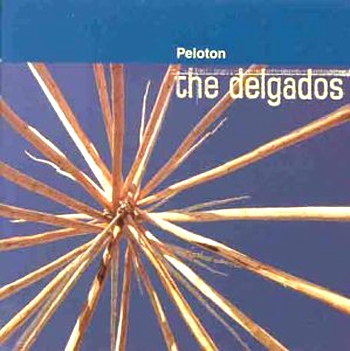
Peloton.
In June 1998, The Delgados returned with their sophomore album, Peloton. Just like Domestiques, its title was another reference to cycling. Another similarity was that the critical acclaim accompanied the release of Peloton.
Critics pointed at a more polished album, which showcased The Delgados unique brand of indie rock. Gone were The Delgados rough edges. It was a very different band to the one that featured on Domestiques, and one that were about to enjoy their first hit single.
Pull the Wires From the Wall was released as a single, and reached number sixty-nine in the UK charts. For The Delgados this was definitely another step in the right direction.
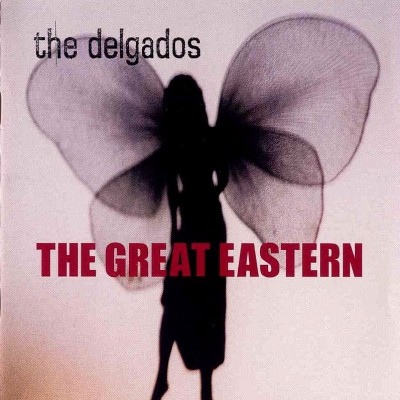
The Great Eastern.
As the new millennia dawned, The Delgados returned with what was their Magnus Opus, The Great Eastern. It was produced by American producer Dave Fridmann, who previously, had worked with Mercury Rev and The Flaming Lips. Now he turned his attention to The Delgados, and played his part in a career-defining album.
Released in 2000, the title referenced a famous Glasgow landmark, a one-time textile mill that in 2000, was home to the city’s homeless. However, for a generation of music lovers, The Great Western meant The Delgados’ third, and best album. Critics agreed.
When the critics had their say, they hailed The Great Western The Delgado’s finest hour. Elements of folk and indie rock combined on The Great Western, a dreamy, sometimes elegiac, minimalist and thoughtful opus. Everything it seemed, had been leading up to The Great Western. The Delgados were hot property. However, things got even better for The Delgados.
American Trilogy reached sixty-one on the UK charts. Then when the end of year awards were announced, The Great Western won prizes galore. The Spirit Of Scotland Award, the Nordoff-Robbins Best Newcomer Award and Jockrock Tartan Cleft Award. Then The Great Western was nominated for the Mercury Music Prize. For Emma Polock and the rest of The Delgados, 2000 had been the most successful year of their six year career.
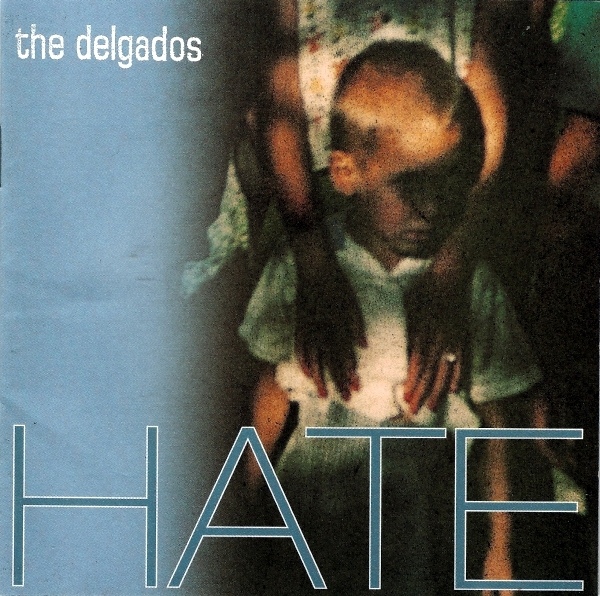
Hate.
Following up a career-defining album is never easy for a band. That’s been the case throughout musical history. That was the case for The Delgados. The Great Western was their finest hour, and nowadays, is regarded as one of the greatest Scottish albums. However, The Delgados were determined to produce another award winning album.
The four Delgados returned to the studio with producer Dave Fridmann. Over the next few months, they recorded what became Hate. This time around, Dave Fridmann who had worked with the Flaming Lips, seems to use them as a template. This was noticed by critics.
Unlike previous Delgados albums, Hate was released on the Mantra label in October 2002. Reviews of Hate were mostly positive. A few critics even compared Hate to The Flaming Lips 1999 album The Soft Bulletin. That wasn’t surprising.
Both albums had been produced by Dave Fridmann. His star was in the ascendancy. Despite that, Hate didn’t quite receive the same critical acclaim as The Great Western had. Normally, this would’ve been disappointing. However, that was almost expected. The Great Western had been The Delgados’ Magnus Opus. Most groups never reach the same heights as The Great Western, never mind releasing a quartet of successful albums. Soon, four would become five.
Universal Audio.
For The Delgados’ fifth album, they decided to change direction. Dave Fridmann didn’t return for a third time. Instead, Tony Doogan, who had worked with Mogwai, co-produced what became Universal Audio with The Delgados.
It was recorded at Chem 19, Chemikal Underground’s own recording studio. Universal Audio was a much more understated album. Gone was the orchestral sound of previous albums. The Delgados seemed to be reinventing their music. The did this with the help of Belle and Sebastian’s Stevie Jackson and Mother and The Addicts. Once Universal Audio was complete, it was released in September 2004.
Reviews of Universal Audio ranged from positive to critically acclaimed. Mostly, critics embraced the new Delagados. So did record buyers, when the album was released. When they bought Universal Audio, little did they realise it would be The Delgados swan-song.
Eight months after the release of Universal Audio, came the shock news that The Delgados were splitting up. Alan Henderson had announced that he was leaving the band. Rather than seek a replacement, The Delgados called time on their career, but continued to run Chemikal Underground. However, two former members of The Delgados embarked on solo careers, Alun Woodward and Emma Pollock.

The Solo Years.
Later in 2005, Emma Pollock signed a record contract with London based independent label 4AD. She was going to combine a solo career with running Chemikal Underground. It was by then, the most successful Scottish record label. Still, Emma was spinning plates. This was no problem for someone with a degree in physics from Strathclyde University.
Two years later, and Emma Pollock returned with her debut solo album, Watch The Fireworks.
Watch The Fireworks.
Watch The Fireworks featured eleven new songs written by Emma Pollock. She had recorded Watch the Fireworks with Australian producer, Victor Van Vugt. He had an impressive track record; and previously, had worked with everyone from Nick Cave and The Bad Seeds to Beth Orton, Depeche Mode and Einstürzende Neubauten. With a CV like that, he seemed the ideal person to produce Emma’s debut album, Watch The Fireworks. When it was complete, it was scheduled for release in September 2007.
Before then, Adrenaline was released as the lead single from Watch the Fireworks in May 2007. It was paired with A Glorious Day, a poem by Irish poet Brendan Cleary set to music. Adrenaline was a tantalising taste of what Emma Pollock had in store on Watch The Fireworks.
In the lead up the release of Watch The Fireworks, critics had their say on Emma Pollock’s debut album. For any artist, this is a nerve-wracking moment. It doesn’t matter if it’s their first or tenth album. Emma needn’t have worried. Watch The Fireworks was well received by critics. Most of the reviews were positive. They were won over by an eclectic album from a hugely talented, versatile vocalist.
There was everything from waltz, ballads, indie pop and indie rock on Watch The Fireworks. Some critics drew comparisons with The Degados. That wasn’t surprising. Paul Savage played on Watch The Fireworks, and watched as Emma made the transition from band member to solo artist seem ridiculously easy. Effortlessly, Emma changed direction on Watch The Firework as the music veered between atmospheric, emotive, melodic, mesmeric, playful, urgent and wistful. The result was a triumphant debut album from the former Delgado. Now all Emma Pollock had to do, was do it all again.

The Law Of Large Numbers.
And so she did. Three years later, and Emma Pollock returned with her sophomore album The Law Of Large Numbers in 2010. Emma had written twelve new tracks, and recorded them with a tight, talented band of Scottish musicians. This included her partner Paul Savage, who by then, had established a reputation as one of the top Scottish producers. He replaced Victor Van Vugt, and produced The Law Of Large Numbers. It was more than a fitting followup to Watch The Fireworks.
Critics agreed. Critical acclaim accompanied the release of The Law Of Large Numbers. Just like Watch The Firework, The Law Of Large Numbers showcased a talented songwriter. Emma Pollock was a skilled wordsmith, capable of writing clever, catchy songs that didn’t lack in hooks. She was also able to adapt her delivery to suit the song.
Seamlessly, Emma could deliver a vocal with emotion, anger, frustration, joy or even with a weariness. On Chemistry Will Find Me and The Loop, Emma’s thoughtful and introspective. The Child in Me and House on the Hill finds Emma transformed into a folk singer. She handles the role with aplomb, before changing direction again. Then on Hug the Harbour and Confessions are delicious slices of perfect pop. By the end of The Law Of Large Numbers, Emma Pollock had come of age as a solo artist. Surely a third album would follow soon?
In Search Of Harperfield.
That proved not to be the same. Nearly six years have passed since Emma released The Law Of Large Numbers. Since then, a lot has happened.
Chemikal Underground, the label Emma Pollock cofounded, has grown into the most successful Scottish record label. Nowadays, it has an enviable roster. Helping run Chemikal Underground understandably, takes up a lot of Emma’s time. Sadly, for a while, so did family matters.
At one point, both of Emma’s parents were ill at the same time. Her father who still lived in Castle Douglas, was in hospital there. Emma’s mother, who lived in Glasgow, was in one of the city’s hospitals. So Emma, who is an only child, found herself journeying up and down the motorway, visiting her parents in different hospitals. Sadly, things took a turn for the worst in February 2015, when Emma’s mother passed away. This must have been devastating for Emma. Part of the grieving process for Emma was writing what became her third album, In Search Of Harperfield.
It’s an incredibly personal and powerful album. Harperfield Lodge was the first home Emma’s parents, Guy and Kathleen Pollock bought. They eventually bought and sold thirty houses during their marriage. This includes the five Emma lived in, in Castle Douglas alone. However, it’s Harperfield Lodge that has a special place in Emma’s heart. She remembers it vividly. So much so, that she can remember how the light shawn, the sense of space and being surrounded by nature. Harperfield Lodge sounds like a rural idyll that will forever, be imprinted on Emma’s memory. So will her parents.
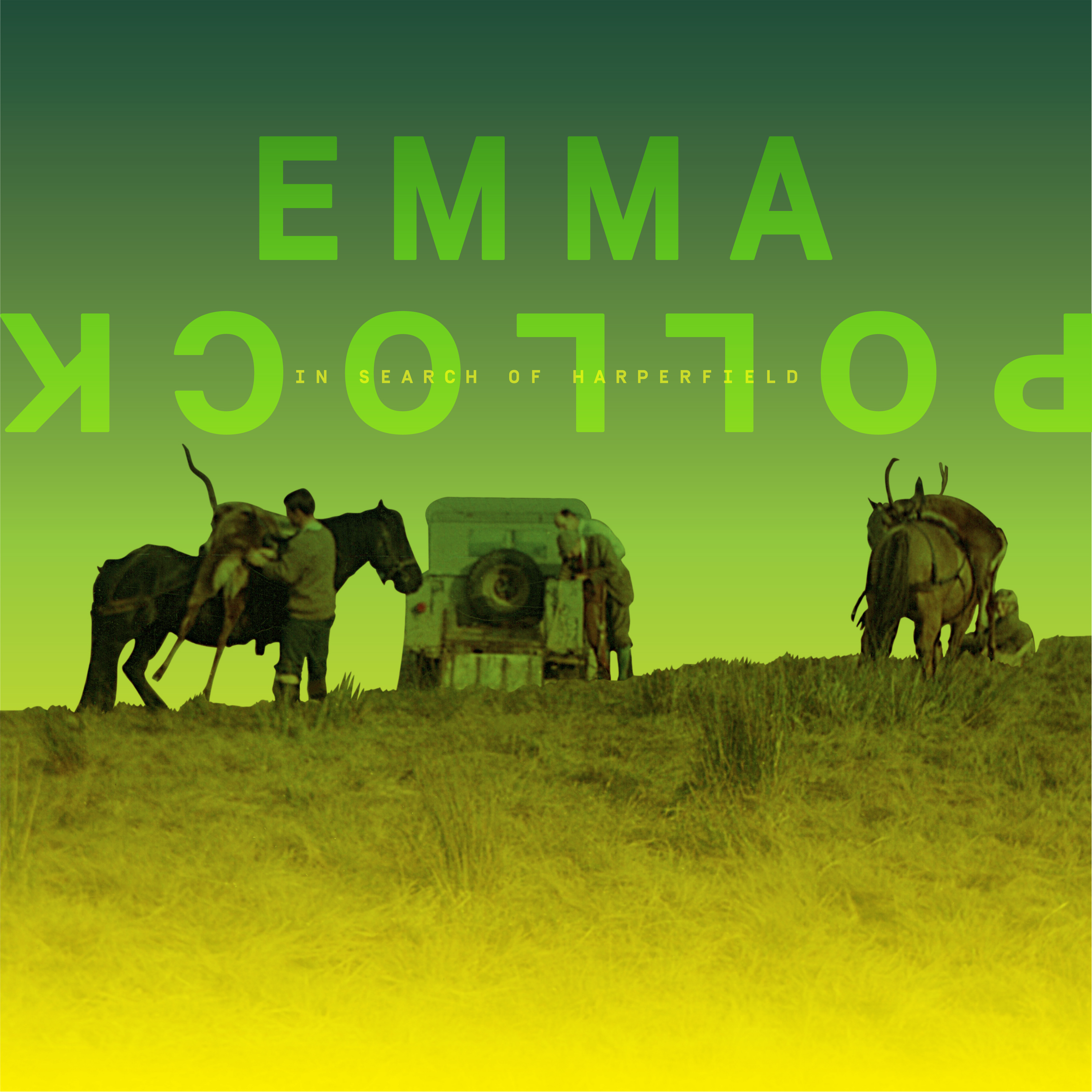
Maybe that’s why a photograph of a young Guy Pollock dawns the album cover of In Search Of Harperfield? He’s pictured tending his animals on the hillside, on his land at Blair Atholl. That’s not the only time Guy or Kathleen Pollock feature on In Search Of Harperfield. They’re forever in the shadows on what’s the most personal and intense album of Emma Pollock’s career, In Search Of Harperfield.
It’s almost an autobiographical album. Emma looks back at her youth, which was spent growing up in the beautiful Galloway countryside. Other times, Emma introduces a series of characters. They play walk-on parts as Emma deals with a variety of subjects, including some many people would’ve chosen to forget. This includes bullying on Parks and Recreation. It’s one of the eleven songs on In Search Of Harperfield. The making of the album was a family affair.
Producing In Search Of Harperfield, was Emma’s husband, Paul Savage. He’s aided and abetted by Malcolm Lindsay. They provide the perfect backdrops to Emma’s vocals. They frame her vocals beautifully, and are like yin to Emma’s yang. on her much anticipated third album In Search Of Harperfield.
Cannot Keep A Secret opens In Search Of Harperfield. It deals with what Emma describes as “patriarchal machinations of Irish gender politics.” From the opening bars the listener is captivated, and the story unfolds. A distant piano plays, before pensive cooing harmonies usher in Emma’s heartfelt, thoughtful vocal. It’s accompanied by just the bass and harmonies before the piano and drums enter. They augmented by occasional finger clicks, and later as what’s an enchanting and beautiful song literally waltzes along, clicking hi-hats. Later, the arrangement becomes dramatic, elegiac and cinematic. By then the listener is spellbound, as they wonder what every happened to the characters in the song? Did: “they eddy and they flow and bring your sisters home?”
Pizzicato strings and a strident muted guitar combine on Don’t Make Me Wait. As the strings sweep, Emma is transformed into a sixties siren, as she delivers a slice of perfect pop. The hooks haven’t been spared, as Emma accompanied by choppy guitars, lush strings and a tinkling piano. She delivers a needy, but frustrated vocal. Soon, she’s delivering an ultimatum, “Don’t Make Me Wait.” She then rubs salt into wound when she tells her errant love he’ll: “never make it on your own.” What a way to round off a gorgeous slice of perfect pop, with the perfect pay off.
Alabaster opens with the sound of a Tube announcement. “The next stop is Strawberry Hill” signals an arrangement that slowly, plods, lysergically along. Meanwhile, Emma’s vocal is rueful and tinged with sadness and regret. She remembers better days, when: “like king and queen we ruled it all.” Not any more. As the arrangement and drama builds, this tale of betrayal unfolds. Soon, dramatic becomes melancholy, as Emma’s sings: “these little secrets do betray you see.” It’s a four minute soap opera with a pay off that packs a punch.
Quivering, shivering strings join a piano and guitar on Clemency. They set the scene for Emma’s folk-tinged vocal, on what’s another song about betrayal and an errant partner. Anger and frustration are omnipresent. She won’t forgive him in a hurry. He’s looking for clemency. However, hell hath no fury like a woman scorned. “If you confess all, you really think you still won’t face the fire?” Emma is determined to make him suffer, and has revenge on her mind. No ordinary revenge. Instead, it’s Old Testament revenge. As shimmering strings and piano, combines Emma’s mind turns to revenge: “pushed down, fell down..,from every point of view you’ve tumbled.” The woman scorned has been avenged.
Intermission is a truly powerful song. It’s impossible not to be moved by a Intermission. A violin plays, and is joined by a cello. Soon, they’re reaching a dramatic crescendo. It’s then that Emma’s vocal enters. It’s a mixture a sadness, despair and panic. She’s having to watch her parents grow old, and become ill. Suddenly, she’s caring for the people who cared for her. They’re “the man I know best” and ‘“the woman who made me.” Now they’re dependant on Emma. Accompanied by swells of strings, Emma delivers what’s a heart-wrenching song, that many people will be able to relate to, and find solace in, knowing someone else has travelled the road they’re on.
As Parks and Recreation unfolds, there’s a rocky, sometimes post punk sound. Emma sounds like one time Pretender Chriss Hynde. As drums pound and guitars are sprayed across the arrangement, By then, memories come flooding back for Emma. She remembers the bullies who tormented her growing up. “I came down for a game of basketball, but you threw me a punch instead.” By then, the arrangement is rocky, rowdy and features call and response vocals. Mostly, Emma’s vocal is rueful. However, she’s had the last laugh. What are the bullies doing now? They’re certainly not making records, touring the world and running a record company.
Background chatter gives way to a motorbike, percussion and machine gun guitars on Vacant Stare. Soon, Emma’s delivering a questioning, rueful vocal. “How can I dive from over 15 metres high, when I can’t even swim?” Behind her, Paul is responsible for a stomping, rocky arrangement. It’s complete with chiming guitar, bubbling bass and harmonies. Emma’s vocal has been multi-tracked and they fit hand in glove with her vocal. It delivers what are clever, witty vocals. They become part of another hook laden song from Galloway’s finest singer-songwriter.
As In The Company Of The Damned unfolds, it sounds as it’s been recorded by a sixties girl group. The rhythm section and chumming guitars accompany Emma and her younger self. The older and wiser Emma, asks “do you really want to stay here, In the company of the damned, as they prepare to take your hanshd, torment with true ambition?” Like a seer, Emma can see if she had, there wouldn’t be a happy ending. Luckily, she had the courage and foresight to get out, and should be a shining light to a new generation, not just in CD, but small towns across Scotland.
Emma is accompanied by an acoustic guitar and the lushest of strings on Dark Skies. She’s in a thoughtful mood. Meanwhile occasional rolls of timpani and pizzicato strings punctuate the arrangement. All the time, Emma strums her guitar as she delivers a tender, pensive vocal, as the arrangement grows, becoming dramatic. Still there’s a sense of wonderment in Emma’s vocal as she delivers lyrics that are poetic and cerebral.
Monster In The Pack is another guitar lead track. Emma plays the guitar, before scrubbing at in. This adds an element of drama, before dark strings sweep in adding the perfect accompaniment to the cinematic lyrics. Desperation and loneliness in Emma’s voice. She’s also lost her faith. That’s apparent as she sings: “and I only go to church cause my friends are out today.” When Emma sings: “my head is full of noise, won’t you listen it’s so loud in here, my heart and my silence break,” despair and loneliness become a cry for help. That becomes apparent as she sings of the “Monster In The Pack,” in this emotive, cinematic, folk-tinged track.
Closing In Search Of Harperfield is Old Ghosts. What sounds like an eighties drum machine rings out. It’s joined by a poignant sounding piano. As the drum machine shuffles along, Emma who sounds like Karen Carpenter, is having a conversation with her mother. She’s older and wiser, and is speaking with the benefit of maturity. “I’m not sorry that you’re gone, the hell we raised was always fun, but I’m not sorry that you’re gone” is an acknowledgement that the pain and suffering is over, but the love Emma has for her mother isn’t. Soon, Emma is walking through her parents house, reminiscing, talking to them. Like so many adult Emma who’ve argued with their parents, she struggles to understand: “why so reasonable now?” As the song draws to a close, Emma realises she’s alone; and how am I supposed to speak to, those I ridiculed but still looked up to?” Poignant and moving describes what’s a truly beautiful way to end In Search Of Harperfield.
It’s the long-awaited, and much-anticipated, followup to Emma Pollock’s sophomore album In Search Of Large Numbers. It was released in 2010. Since then, a lot has happened in Emma Pollock’s life. At one point, both her parents were ill, and in hospital. Suddenly, Emma was no longer singer, songwriter or businesswoman. Instead, she was a loving and dutiful daughter, who was caring for “the man I know best” and ‘“the woman who made me.” Then in February 2015, Emma’s mother passed away. This must have left a massive void, and been a lot for Emma to cope with. She began to grieve, and part of the grieving process was writing and recording.
Hopefully, writing and recording Search Of Harperfield was cathartic. It’s certainly an album that many people will be able to relate to. Many of the songs are beautiful, moving and poignant. Especially Intermission and Old Ghosts, which is one of the most moving, emotive and beautiful songs I’ve heard in a long time. That’s testament to Emma Pollock’s skills as a singer and songwriter.
From the opening bars of Cannot Keep A Secret, right through to the closing notes of Old Ghosts, Emma Pollock tells a series of stories. Often, her lyrics are cinematic. That’s the case on Cannot Keep A Secret, where harmonies and an orchestral arrangement accompany and augment Emma’s vocal. The arrangement comes courtesy of Paul Savage. He provides a backdrop for Emma, as she sings of betrayal and revenge on Alabaster and Clemency. Very different is Don’t Make Me Wait, a delicious hook-laden slice of perfect pop. Hooks certainly have’t been rationed on In Search Of Harperfield. That’s the case on Cannot Keep A Secret, and Parks and Recreation where Emma remembers the bullies who tormented her younger self. Emma however, has the last laugh. Later, on In The Company Of The Damned an older, wiser Emma advises her younger self on her future. It has a happy ending, with Emma fulfilling her early potential.
That’s almost an understatement. Emma Pollock is the small town girl who headed to the city, and graduated with a degree in physics. She joined a band, they toured the world and released five albums. Then when the band broke up, Emma Pollock embarked on a solo career, and somewhere along the way, married the drummer. Now Emma has just released her third and best solo album, In Search Of Harperfield, on Chemikal Underground.
In Search Of Harperfield is a career defining, autobiographical album from Emma Pollock. Hopefully, writing and recording In Search Of Harperfield has been cathartic for Emma Pollock. The last few years have been tough for her. However, the future looks bright for CDs most famous famous former resident, if she continues to release albums of the quality of In Search Of Harperfield. It has to be an early contender for the 2016 Scottish Album Of The Year Award.
EMMA POLLOCK-IN SEARCH OF HARPERFIELD.
IKARUS-IKARUS.
IKARUS-IKARUS.
In Greek mythology, Icarus, the son of the master craftsman Daedalus, who created the Labyrinth, met a tragic ending. Icarus and Daedalus were desperate to escape from Crete. So Daedalus constructed wings made of feathers and wax. As Icarus prepared to make his escape, Daedalus warned his son of complacency and hubris.
Icarus shouldn’t neither fly too high, nor too low. If he flew too high, the sun would melt the wax. However, if he Icarus flew too low, the dampness of would weigh down the feathers. It seemed Icarus was between the devil and the deep blue sea.
And so it proved to be. Icarus chose to ignore his father’s wise words, and flew too close to the sun. The sun’s rays melted the wax, and Icarus fell into the sea. He became the first of many people who flew too close to the sun.
Sadly, this includes many musicians. Among them are Syd Barrett, Skip Spence and Brian Wilson. These three legendary musicians flew too close to the sun, and as a result, never quite filled their early potential. Sadly, neither did Ikarus.
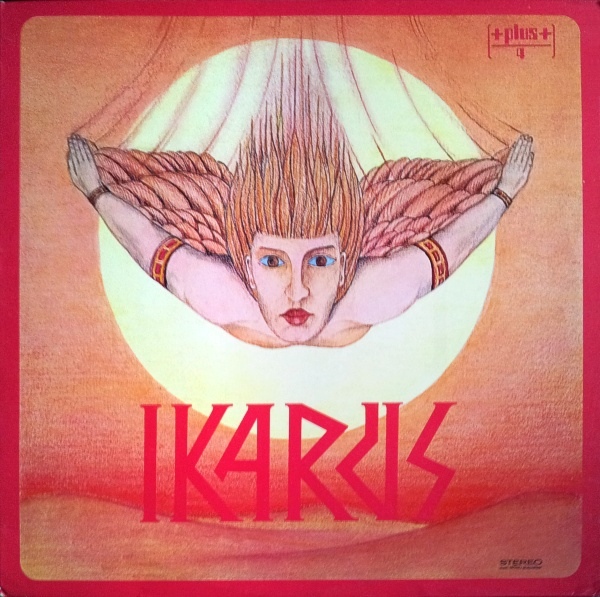
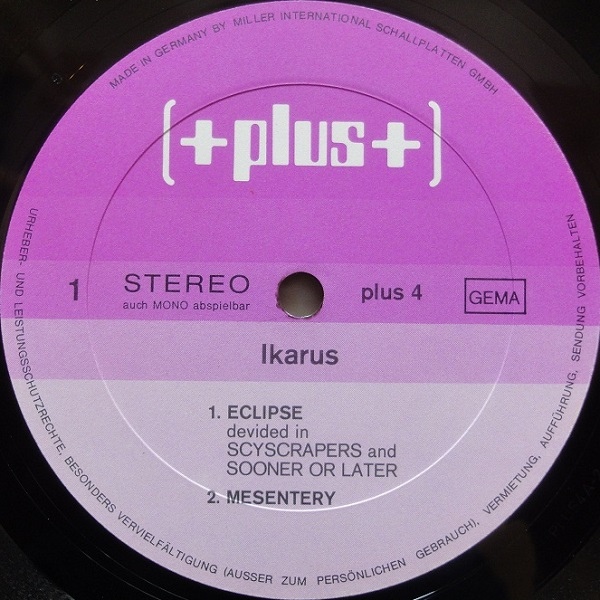
They could’ve gone on to become one of the greatest German rock bands of their generation. Sadly, Ikarus’ discography consists of just one studio album Ikarus. It was released on the Plus label in 1971, and has just been reissued by the reissue label Long Hair. Ikarus showcased a talented, pioneering group, who many thought were destined for greatness. Their story began a few years earlier..
It was in the mid-sixties, in the musical hotbed that was Hamburg, that Ikarus were formed. Ikarus were just the latest beat group that had been formed in Hamburg. This was where The Beatles served their musical apprenticeship a few years earlier. Now a whole host of local groups wanted to follow in the fab four’s footsteps.
Ikarus were no different. So they spent evenings and weekends practising in various Hamburg basements. They were determined to hone their sound, before making their debut.This didn’t take long, as Ikarus featured some talented musicians.
This included classically trained keyboardist Wulf Dieter Struntz and bassist Wolfgang Kracht. His party trick was to play a violin with his gloves on. Music seemed to come easily to the members of Ikarus, and it wasn’t long until they began to play live.
By 1966, Ikarus made tentative steps onto Hamburg’s live scene. Ikarus’ earliest concerts took place in youth clubs, where they played cover versions of popular song. At first,Ikarus were called Beautique In Corporation. Soon, this was soon shortened to BIC. This found favour among the band’s audience.
Although a relatively new group, BIC quickly won over audiences. Soon, they had large and enthusiastic audience. BIC played what they wanted to hear. They weren’t above playing covers of hits by Elvis Presley and Tom Jones. This was easy on the ear of the audience. However, before long, BIC’s setlist changed.
The band members began to write their own songs. Audiences expected to hear original material. They didn’t just want to hear cover versions. This suited the members of BIC, who were classically trained musicians. Composition came easy to them.
These new songs were added to BIC’s sets. Some of these songs had a psychedelic sound. BIC’s music was evolving, as music evolved. This proved popular when BIC played live.
By then, BIC had graduated from the youth club circuit, and were by now familiar faces on the Hamburg and North German music scene. Their music was a mixture of psychedelia and rock. However, there was an element of comedy in BIC’s sets.
Some of the members of BIC enjoyed the new generation of German vaudeville comedians. So they began to combine vaudeville comedy with their psychedelic sound. It proved a potent and successful combination.
Soon, BIC were one of the most successful Hamburg bands. They were well on their way to becoming one of the leading lights of the Hamburg scene. So when they saw an advert for the 1969 Hamburg student beat band competition, BIC decided to enter.
All of the top Hamburg bands entered. The competition was fierce. Hamburg had a thriving music scene. While the other bands were professional, BIC were still an amateur band. This didn’t matter. When BIC took to the stage, they quickly won over the judges with their psychedelic sound. Once all the bands had played, the judges conferred and the winner was announced. It was BIC, the only amateur band in the competition. They had triumphed, and won what was Hamburg’s most prestigious competition.
Having won the 1969 Hamburg student beat band competition, BIC were invited to in the 1970 Hamburg Pop and Blues festival. It took place between the 1st and 3rd of April 1970. BIC were going to rub shoulders with some of the biggest band on that early seventies. Among them, were Chicken Shack, Steampacket, Alexis Corner and Hardin and York. Despite such an illustrious lineup, it was the hometown band that won the hearts and minds of the audience. BIC had stolen the show.
After their performance at the 1970 Hamburg Pop and Blues festival, things happened quickly for BIC. A live album of BIC’s performance at the Hamburg Pop and Blues festival was released as their debut album. It was augmented by performances from Frumpy and Tomorrow’s Gift. The album sold fairly well, and it looked like BIC’s star was in the ascendancy.
Just a few months later, BIC’s lineup changed, when two new names joined the band. Now BIC was a five piece band. The new lineup of BIC was then asked to open for British band Uriah Heep on their forthcoming tour. This was the start of the rise and rise of BIC.
Not long after this, BIC acquired a manager, who was also a concert promoter, Will Jahncke. One of his first suggestions was that BIC changed their name to Ikarus. While this seemed more in keeping with the psychedelic and progressive rock scene, BIC were a popular and successful band. However, the five members decided to change the band’s name to Ikarus.
Following the name change, Ikarus’ music changed. They were inspired to do so, by King Crimson, Yes, Colosseum and Frank Zappa. Soon, Ikarus were fusing fusion with progressive rock and experimental music. There was still a slight psychedelic sound to their music. However, the new sound didn’t please everyone.
When Ikarus played live, the audience were divided by the stylistic change. While some embraced and welcome Ikarus’ new sound, some weren’t as sure. They weren’t won over by the move towards progressive rock. Instead, they felt the lengthy songs, and changes in tempo and time signature were self-indulgent. However, critics disagreed, and continued to champion Ikarus.
With the critics championing their music, it made sense for Ikarus to record their debut album in the second half of 1971. So the five members of Ikarus made their way to the Windrose Studio, Hamburg.
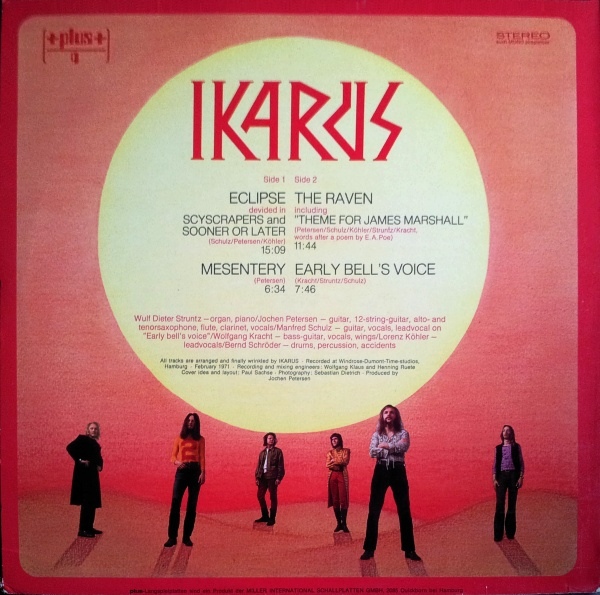
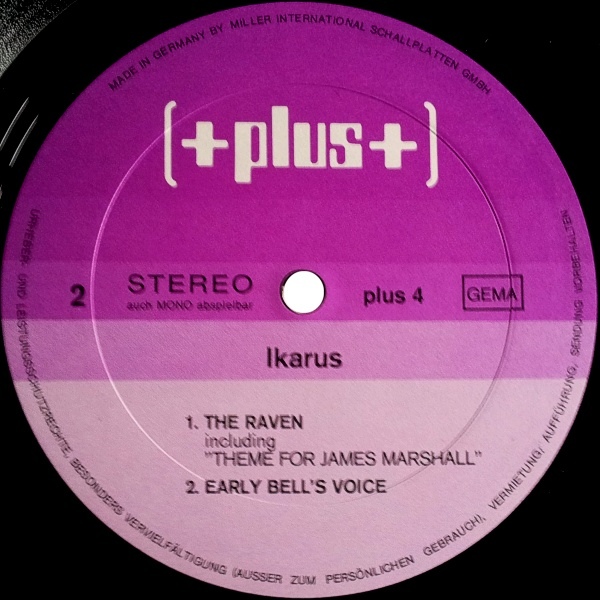
By then, the members of Ikarus had written four songs. Each of the songs were collaborations between members of the band. That was apart from The Raven Including “Theme For James Marshall.” It was an Edgar Allan Poe poem set to music written by four members of Ikarus. This became a near twelve minute epic that featured on side two of Ikarus. With the album written, the band began recording their debut album.
At the Windrose Studio, there was a sense of anticipation.The original members of the band had spent six years playing in clubs and festivals. All this was preparation for the day that Ikarus recorded their eponymous debut album. If things went to play, Ikarus music would be heard by a much wider audience.
The members of Ikarus realised this as they setup their equipment. By then, Ikarus’ rhythm section featured drummer Bernd Schröder, bassist Wolfgang Kracht and guitarist Manfred Schulz. Jochen Petersen played guitar, but also switched between 12-string guitar, alto saxophone, tenor saxophone, flute and clarinet. Wulf Dieter Struntz played organ and piano. Lorenz Köhler took charge of the lead vocals on three tracks; while Manfred Schulz featured on Early Bell’s Voice. Producing Ikarus was Jochen Petersen. Eventually, Ikarus was complete. Now all that was left was to release Ikarus.
With Ikarus complete, it was scheduled for release in February 1972. Miller International had decided to release it on their Plus imprint. However, before that, critics had their say on Ikarus.
For some time, critics had championed Ikarus’ music. Their eponymous debut album was no different. Ikarus, with its combination of fusion, progressive rock and psychedelia met with the critics approval. Critically acclaimed reviews followed, and Ikarus, who were still an amateur band, looked like they had a successful album on their hands.
So it proved to be. Ikarus sold well, and soon, the band were playing sellout shows across Germany. In Hamburg, Ikarus’ home town, they were asked open for Deep Purple. It looked like Ikarus were were well on their way to becoming one of the stars of the German music scene. Those that heard Ikarus concurred.
Although Ikarus only featured four tracks, they ooze quality. That’s apparent from Eclipse, where Skyscrapers gives way to Sooner Or Later. It’s a fifteen minute epic, featuring Lorenz Köhler on lead vocal. Eclipse epitomises Ikarus’ sound. They combine progressive rock with fusion, classic rock and jazz. King Crimson, Yes, Pink Floyd, Soft Machine and the pioneers of fusion seem to have influenced Ikarus, as they take the listener on a Joycean musical journey.
Blazing, blistering dual guitars are unleashed, as the rhythm section create a hypnotic backdrop on Skyscraper. They’re augmented by brief washes of Hammond organ. Then when Lorenz delivers the lyrics, it’s apparent that Ikarus have a social conscience. They saw Skyscrapers as despoiling cities, and were worried about the effect it was having on the ecosystem. Their lyrics are an impassioned plea: “to save nature it’s a treasure.” Gradually, the arrangement builds, as a flute, clarinet and Hammond organ are added. Everything is added at just the right time. The addition of a clarinet proves to be a masterstroke as as fusion meets progressive rock. When an acoustic guitar is added, it’s reminiscent of Pink Floyd’s later sound. By then, Ikarus have dropped the tempo, before rebuilding, and creating a dramatic backdrop to Lorenz’s latest plea. This is something Ikarus continue to do, and it always proves effective. There’s also continual stylistic changes, as Ikarus switch between disparate genres. After another tempo change, strings sweep adding to the emotion of the song, before Lorenz urges the listener to: “think about the situation.” Later, Ikarus jam with the Hammond organ and rhythm section becoming one. Swathes of strings which add a dramatic, symphonic sound as this genre-melting journey is almost over. By then, the arrangement is choppy and urgent. That’s down to the searing, mesmeric guitars, and the bass that walks the arrangement along. They accompany Lorenz’s vocal, before it drops out. Now it’s time for Ikarus to jam, and showcase their considerable skills, before this Joycean musical epic reaches a close.
Mesentry is another thought provoking song from Ikarus. It has an understated pastoral introduction. Birdsong punctuates the arrangement, which quickly, heads in the direction of folk-rock. There’s an element of theatre to the vocal. This makes me think of Queen in their pomp. However, quickly, Ikarus change direction. The Hammond organ, rhythm section and chiming guitars accompany Lorenz’s thoughtful vocal. It’s augmented by choral harmonies. Again, Ikarus experiment, changing tempo and style. There’s a soulfulness to the vocal and harmonies. Then Ikarus throw a curveball, and the track heads in the direction of avant garde and experimental music. Sci-fi sounds, moans and drones are augmented by lush strings as an otherworldly soundscape meanders beautifully along, proving how versatile inventive and imaginative Ikarus were.
Another epic is The Raven Including “Theme For James Marshall. This was a poem by Edgar Allen Poe set to music by Ikarus. It’s another lengthy track, lasting nearly twelve minutes. The introduction sounds like theme to an early seventies television show. Saxophones play, and the rhythm section join the fray, driving the jazzy arrangement along. Soon, Ikarus are in full flight. Again, they tease the listener, dropping and increasing the listener, as they switch between fusion and progressive rock. Sometimes, the two become one. Ikarus deploy every weapon in their considerable musical arsenal.
This includes braying saxophones, washes of Hammond organ, a driving bass, rolling, cascading drums and searing guitars, Then at 2.22 it’s all change. The arrangement grinds to a halt, before awakening from its slumbers. A myriad of sound gradually fill the arrangement, before elements of free jazz, progressive rock, fusion and classic rock unfolds. Slow, moody, gothic and lysergic describes the backdrop to the vocal. That could change at any moment and does. Instruments are added, and disappear. So do sound effects. A cannon explodes, water flows and thunder sounds. By then, cinematic describes the arrangement. That’s until, there’s a nod to Jethro Tull around 8.30. Then the cinematic sound returns as the tracks becomes melodic, elegiac and ethereal as folk-rock meets progressive rock and jazz.
Early Bell’s Voice closes Ikarus. Just a lone piano plays thoughtfully. That’s enough to capture the listener’s attention. Soon, the rest of Ikarus enter. The rhythm section are joined by a Hammond organ, saxophone and guitar. Gradually, the tempo rises, and Ikarus are in full flight. They’re powered along by the drums. Washes of Hammond organ, searing guitars and bursts of braying saxophone combine, before the tempo drops. Harmonies soar above the arrangement, as fusion meets progressive rock. Constantly, Ikarus experiment with the tempo, and on occasions vary the time signature. Even the vocals change. This time, their theatrical, more than hinting at their love of vaudeville. It’s an interesting and innovative combination. Especially, with the changes tempo. Later, Ikarus can’t resist throwing one last curveball. Bells ring, before the tapes speeds up, giving the arrangement a cartoon quality. Ikarus seem determined to put a smile on the listener’s face, as they close their eponymous debut album.
Sadly, Ikarus was the only album that Ikarus ever released. The Ikarus’ story is a case of unfilled potential.
On Ikarus, listeners were introduced to what could’ve been one of the most successful German bands of the seventies. Their was bang ‘on trend’. Progressive rock and fusion were both hugely popular by the mid-seventies.
That’s when Ikarus were offered a contract by Metronome. They were the owner of the legendary Brian label. For Ikarus, this was the opportunity to dine at the top table in German rock music. Surely, this was an offer that Ikarus couldn’t and wouldn’t resist?
They did. In the mid-seventies, Ikarus were still an amateur band. Its member felt that becoming a professional band was risky. There was no guarantee that their albums would sell. As an amateur band, they had the best of both worlds. Music was a hobby, one they were good at and that they made money with.
The live circuit was lucrative. It was a good way for the members of Ikarus to augment their income. However, to become a full-time band was a step too far for some members of Ikarus, and they decided the band should split-up. It was a case of what might have been.
Listening to Ikarus nearly forty-four years after its release, and one can’t help but wonder if the members of Ikarus regret their decision? Do they ever wonder what would’ve happened if they had signed to Metronome? Maybe they would’ve gone on to enjoy the same success as Can, Guru Guru, Eloy or Birth Control. Or maybe, it would’ve been another generation before Ikarus’ music finally received the recognition it deserves. That was the case with Neu!, Harmonia and Cluster. What I do know, is that Ikarus had the talent to reach the higher echelons of German rock music.
That’s apparent on Ikarus, which was recently reissued by the Long Hair reissue label. The reissue includes a bonus track, Sunwave, a sixteen minute epic, which is welcome addition. Just like the rest of the music on Ikarus, it’s a tantalising reminder of another of the nearly men of German rock, Ikarus, who could’ve and should’ve, enjoyed a long and successful career.
IKARUS-IKARUS.
THE VELVET UNDERGROUND-LIVE AT MAX’S KANSAS CITY.
THE VELVET UNDERGROUND-LIVE AT MAX’S KANSAS CITY.
1970 should’ve been the start of a new era for The Velvet Underground. They had just signed a two album deal with Atlantic Records in late 1969. This should’ve been the dawn of a new era for The Velvet Underground, where they belatedly made a commercial breakthrough.
Instead, 1970 was The Velvet Underground’s annus horribilis. They released their fourth studio album Loaded, on 15th November 1970. By then, Lou Reed had left the group he had cofounded.
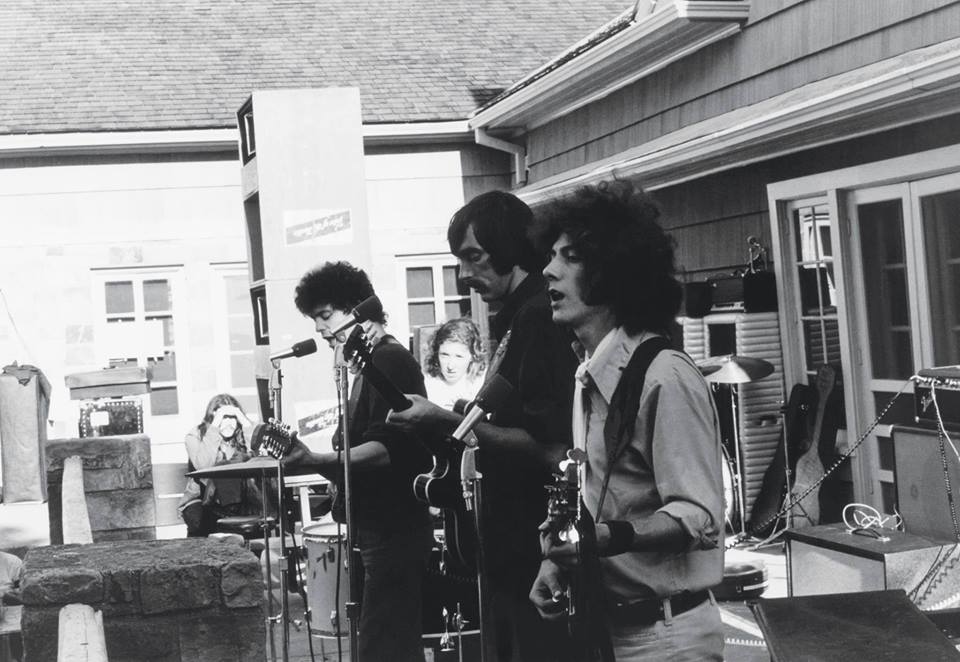
This presented a problem for The Velvet Underground. They were due to tour North America, promoting Loaded. So bassist Doug Yule switched to bass and took charge of lead vocals. To play bass, Walter Power was drafted in. This new lineup of The Velvet Underground spent part of 1971 touring North America. During the tour, the members of The Velvet Underground wrote some new songs for the album they owed Atlantic Records.
When The Velvet Underground returned home, they headed to Atlantic Records’ headquarters, where they showcased their new songs. These songs, they hoped, would feature on their fifth album. However, The Velvet Underground without Lou Reed was a totally different band to the one Atlantic Records had signed in 1969. They were like a rudderless ship heading perilously close to the rocks.
Executives at Atlantic Records realised this. They also realised that the new songs weren’t good enough, so rejected them out of hand. For the members of The Velvet Underground this was a crushing blow. To make matters worse, The Velvet Underground still owed Atlantic Records an album. Atlantic Records had a solution though.
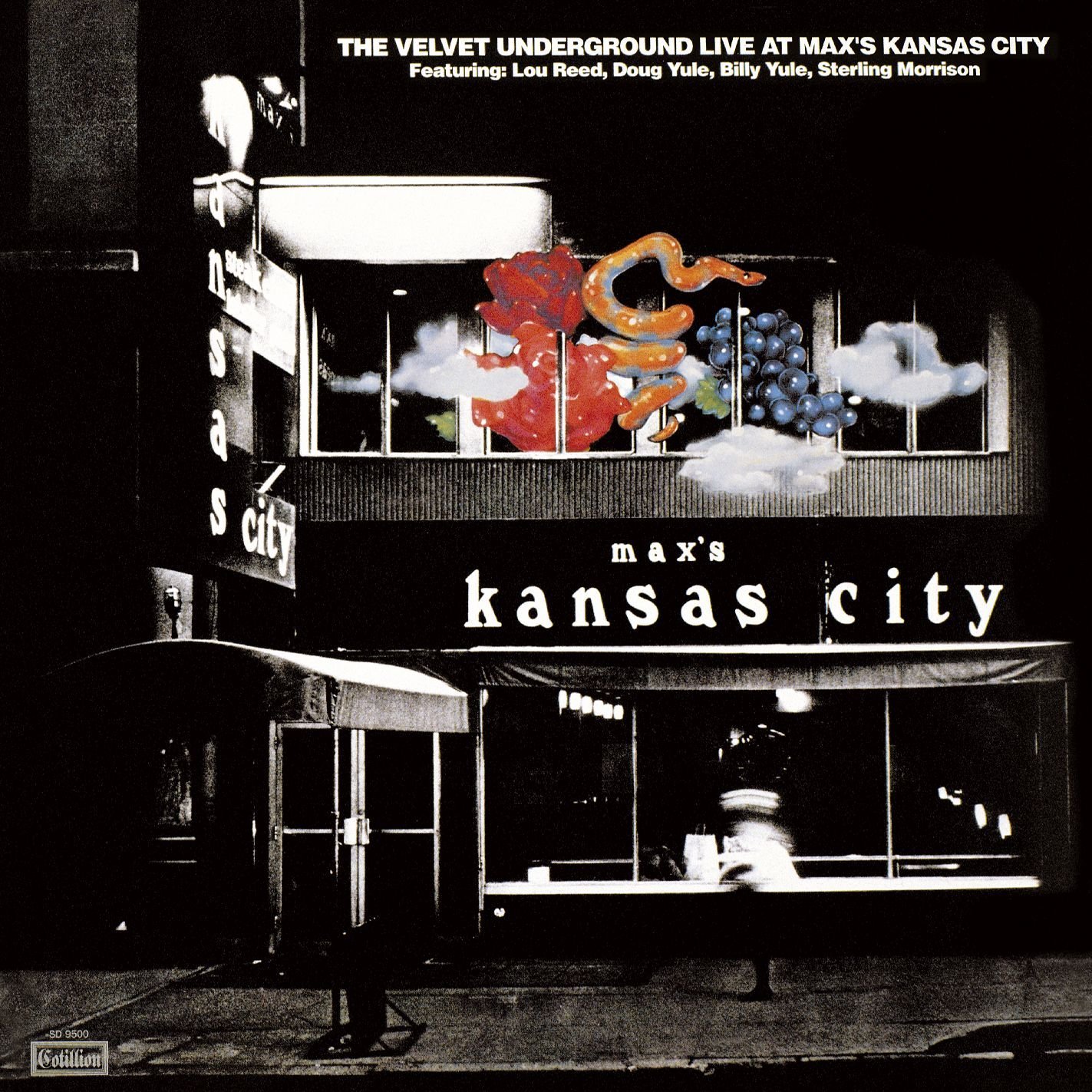
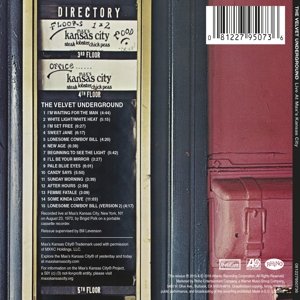
They looked through the Atlantic Records’ archives, and decided to release an album of live material. This became Live at Max’s Kansas City, which was released on May 30th 1972. It became The Velvet Underground’s first live album, which was reissued by Rhino on 22nd January 2016. Live at Max’s Kansas City also fulfilled The Velvet Underground’s contractual obligations to Atlantic Records, and marked the end of an era. Things had been so different in 1969. It was the start of a bright new dawn.
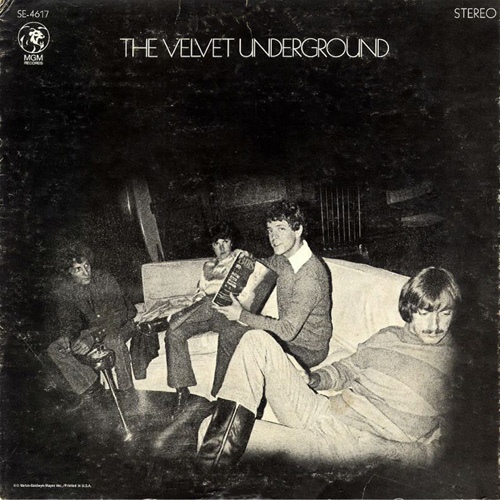
For The Velvet Underground, 1969 had been a turbulent year. They had released their third album The Velvet Underground in March 1969. It featured the debut of Doug Yule, who was brought in to replace John Cale. This was meant to the start of a bright new future for The Velvet Underground.
After two albums which had failed commercially, Lou Reed decided that The Velvet Underground had to change tack. They had to release music that was much more pop oriented, and therefore, commercial. John Cale however, didn’t agree with how Lou Reed’s master-plan.
This had been a bone of contention between the pair for some time. John Cale wanted The Velvet Underground to continue to innovate, and create experimental music like White Light/White Heat, The Velvet Underground’s sophomore album. Lou Reed didn’t agree.
Lou Reed believed that The Velvet Underground’s music should become more pop oriented. This he felt, would broaden their appeal. No longer would they be an art rock group whose music appealed to discerning music lovers. Eventually, Lou Reed won over the rest of The Velvet Underground. For John Cale this was hugely disappointing. So, he decided the only option was to leave The Velvet Underground.
The Velvet Underground.
Following the departure of John Cale, The Velvet Underground began looking for a replacement. Eventually, Doug Yule was chosen as John Cale’s replacement. He made his Velvet Underground eponymous third album in November 1968, at TTG Studios, Hollywood. The Velvet Underground recorded ten songs penned by Lou Reed. By December 1968, The Velvet Underground was completed it was released in March 1969.
Before that, critics had their say on The Velvet Underground. The majority of the critics were won over by The Velvet Underground’s new sound. Some critics went as far as to say that the album was The Velvet Underground’s finest hour. They were impressed The Velvet Underground’s much more accessible sound. The Velvet Underground were congratulated on the quality of songwriting, and the delivery of the lyrics. However, there was a but.
Some critics felt that The Murder Mystery was an experiment that hadn’t worked. Others ant further, lamenting that The Murder Mystery fell short of the quality of White Light/White Heat. Other critics remarked that The Velvet Underground lacked the eclectic sound of its predecessors. Even the quality of recording was criticised. Mostly though, critics thought that The Velvet Underground were on the right road. However, as usual, record buyers had the casting vote.
When The Velvet Underground was released in March 1969, the album crept into the US Billboard 200, reaching just 197. This was a disaster for The Velvet Underground. Lou Reed’s decision to embrace a more commercial sound had backfired.
Following the release of The Velvet Underground, the band headed out on tour. They spent much of 1969 touring America and Canada. Night after night, they reworked tracks from their first three albums. The audience watched as a tight band fought for their very future. Some nights, The Velvet Underground debuted new songs.
New Age, Rock and Roll and Sweet Jane found their way onto the set list. This trio of songs found their way onto Loaded, which was released in 1970. Throughout the tour, The Velvet Underground showcased these new songs on what was a lengthy tour.
As The Velvet Underground’s seemingly never ending tour continued, they continued to hone their sound. They were a very different band to just a few years previously when they were Warholian disciples. That was the past. Now The Velvet Underground were willing to forsake what many thought was their true sound, for commercial success. That proved ironic.
After three albums that had failed commercially, MGM were starting to loose patience with The Velvet Underground. It didn’t help that MGM had been haemorrhaging money for a couple of years. They had too many loss making acts on their roster. Something had to give.
During the night of the long knives, executives at MGM decided to cancel the contracts of eighteen loss making acts. This included The Velvet Underground. They were invited to the headquarters of MGM, and told that their contract had been cancelled. However, was the decision to cut The Velvet Underground loose purely a business decision?
Since then, there has been speculation that The Velvet Underground were dropped just because they were losing MGM money. Maybe, it was more to do with The Velvet Underground’s image being at odds with MGM’s corporate image? That proved to be the case. In 1970, an executive of MGM said: “it wasn’t eighteen groups, Mike Curb was misquoted. The cuts were made partly to do with the drug scene—like maybe a third of them had to do with drug reasons. The others were dropped because they weren’t selling.” It seemed that MGM’s mattered more than selling records. MGM it seemed, only wanted artists whose lifestyle they approved of.
Many thought that being dropped by MGM must have been devastating for The Velvet Underground. It seems it was, and it wasn’t. When Lou Reed was interviewed in 1987, he admitted: “we wanted to get out of there.” That may just be bravado. After all, the music industry is a small village, and word would’ve spread like wildfire why The Velvet Underground had been dropped. Some critics however, thought the situation was ironic.
Back in 1968, The Velvet Underground had made what many regarded as the ultimate musical sacrifice. They had changed direction musically on their eponymous third album. No longer were they seen as an art rock band by championed by many critics and cultural commentators. Instead, the move towards a more populist sound was seen as the ultimate betrayal from The Velvet Underground. This resulted in John Cale’s departure from the band. Now that The Velvet Underground had been dropped by MGM, the loss of one of their main creative forces, had been for nothing. Given what had happened, it was the ultimate irony.
Now without a record contract, The Velvet Underground headed back out on tour. Touring was now their main source of income. So they spent much of 1969 on the road. Mostly, it was the tight version of The Velvet Underground that took to the stage. Other times, they revisited their past.
The Velvet Underground decided to reinvent songs, during lengthy improvisations. This mixture of art rock, avant garde and free jazz showed that the old Velvet Underground weren’t dead. Some critics believed it was merely being suppressed in the search for commercial success.
During their gruelling touring schedule, The Velvet Underground made occasional forays into the recording studio. Some of the songs The Velvet Underground recorded, were seen as having potential. However, they couldn’t be released, as The Velvet Underground were in dispute with MGM. With no recording contract, and locked in what could prove a biter, lengthy and expensive dispute with MGM, things looked bleak for The Velvet Underground.
By November 1969, The Velvet Underground arrived in San Francisco, and were due to play at The Matrix and The Family Dog. These shows were recorded, and were meant to be released as live albums. However, that didn’t happen until the next millennia.
The Bootleg Series Volume 1: The Quine Tapes were released in 2001, and The Complete Matrix Tapes box set was released in 2015. 1969 was fast proving to by The Velvet Underground’s Annus horriblis. Surely, things would improve as when the new decade dawned.
That proved to be the case. 1970 saw The Velvet Underground’s luck improve. They were signed by Atlantic Records, and told to record an album: “loaded with hits.” This would be a first.
Loaded.
Commercial success had eluded The Velvet Underground. Three albums into their career, and they hadn’t enjoyed a hit single. The nearest they came to commercial success was when their 1967 debut album, The Velvet Underground and Nico reached 129 in the US Billboard 200. It was all downhill from there. In 1968, White Light/White Heat struggled into the US Billboard 200 at 199. Then when The Velvet Underground was released in 1969, it stalled at 197 in the US Billboard 200. The Velvet Underground were faced with a mammoth task to produce an album: “loaded with hits.”
With these words ringing in his ears, Lou Reed went away and wrote the ten tracks that became Loaded. Then recording began at Atlantic Recording Studios, New York with Geoff Haslam, Shel Kagan and The Velvet Underground producing Loaded. However, one member of The Velvet Underground was missing.
Maureen Tucker missed the Loaded recording sessions. They took place between April and August 1970. Her only contribution was singing on the outtake I’m Sticking With You, and adding drums on a demo of I Found a Reason. Loaded was the first Velvet Underground album Maureen Tucker was missing from.
Various musicians replaced Maureen Tucker on Loaded. Engineer Adrian Barber, who played on Who Loves the Sun and Sweet Jane. Tommy Castagnaro then played drums on Cool It Down” and Head Held High. Billy Yule, Doug Yule’s brother deputised on drums on Lonesome Cowboy Bill and Oh! Sweet Nuthin.’ Even bassist Doug Yule played drums.
Although hired as a bassist, Doug Yule played fuzz bass, piano, keyboards, lead guitar, percussion and added backing vocals. He added the lead vocals on Who Loves the Sun, New Age, Lonesome Cowboy Bill and Oh! Sweet Nuthin’. Sterling Morrison played lead and rhythm guitar. Lou Reed, who was now The Velvet Underground’s main creative and driving force, played lead and rhythm guitar, plus the piano. This depleted version of The Velvet Underground, plus a few friends eventually, finished recording of Loaded in August 1968. The release was scheduled for 15th November 1970. A lot would happen before then.
With Loaded completed, usually, The Velvet Underground would’ve been readying themselves for the usual round of promotion that takes place before an album is released. Not this time.
Lou Reed called time on his career with The Velvet Underground on 23rd August 1970. This left The Velvet Underground like a rudderless ship.
With The Velvet Underground having lost their leader and creative force, others took charge of final mix of the album. That was fatal. Lou Reed should’ve handed Atlantic Records the final mix, and then left.
When Lou Reed saw and heard a copy of Loaded, he was in for a shock. The claimed that Loaded had been re-sequenced. This hadn’t been authorised. That was bad enough. No longer would Loaded flow as it was meant to. Much worse, was that some of Lou Reed alleged that some of the songs on Loaded had been edited.
Lou Reed railed against the edited version of Mary Jane. So badly edited was the song, that it was bereft of its very melody. A heartbroken Lou Reed described the melody as: “heavenly wine and roses.” Sadly, it was gone. New Age was another song that had fallen victim to the razor blade in the editing suite. However, one of the remaining members of The Velvet Underground disputed Lou Reed’s claims.
It was newcomer Doug Yule who spoke out. Despite being a relative newcomer to the band, he disputed what Lou Reed said. Doug Yule claimed that it was Lou Reed who edited Mary Jane, before he left The Velvet Underground. This essence of his explanation was that Lou Reed edited the song so that it would be a hit. However, it was claim and counter-claim. If Lou Reed edited the song, why did he edit the “heavenly wine and roses” of the melody from the song? The editing was just one of several grievances Lou Reed had.
The ten songs on Loaded came from the pen of Lou Reed. However, when Lou Reed received his copy of Loaded, he discovered that the songs were credited to The Velvet Underground. What made this worse, was that Lou Reed was third in the credits. He felt he wasn’t receiving the credit he deserved. Rubbing salt into the wound was a large photograph of Doug Yule playing the piano. The Velvet Underground’s creative force was overshadowed by the newcomer. Was this a deliberate slight seen Lou Reed had left The Velvet Underground?
As Lou Reed studied Loaded album’s cover, he discovered that Maureen Tucker was credited as the drummer. She hadn’t played on Loaded, as she was pregnant. It was the only Velvet Underground she didn’t play on. Ironically, many critics felt Loaded was one The Velvet Underground’s finest albums. However, even another member of the band didn’t agree with this.
Sterling Morrison had been ever-present on the four albums The Velvet Underground had released. This made him well qualified to critique the album. He had mixed feelings on the absence of Maureen Tucker and Doug Yule’s increased influence on Loaded. Without Maureen Tucker: “it’s still called a Velvet Underground record. But what it really is is something else.” Then when asked about Doug Yule playing a bigger part on Loaded he said: ”the album came out okay, as far as production it’s the best, but it would have been better if it had real good Lou vocals on all the tracks.” It seems the newcomer hadn’t convinced The Velvet Underground guitarist. What did the critics think?
Most critics were won over by Loaded. It followed in the footsteps of The Velvet Underground, which showcased a much more populist, commercial sound. Among Loaded’s highlights were the hook-laden, Sweet Jane and Rock and Roll. Even without the “heavenly wine and roses” of the melody, Sweet Jane was a timeless classic. Along with Rock and Roll, they became favourites on American FM radio stations. Other tracks that were mentioned in dispatches by critics were the soulful infused I Found a Reason and New Age. However, not everyone was convinced by Loaded.
Rolling Stone magazine wasn’t impressed by Loaded. They were the highest profile critic of Loaded. Ironically, they’ve performed a volte face, and nowadays, Loaded is one Rolling Stone magazine’s 500 best albums of all time. However, Rolling Stone weren’t being contrarian, like some critics.
While Loaded is indeed, a minor classic, it could’ve and would’ve been a better album. Especially, if Lou Reed took charge of all the lead vocals. Sterling Morrison had a point. Lou Reed was The Velvet Underground’s best vocalist. Having written the lyrics, he was able to bring them to life. From Sweet Jane and Rock and Roll, to Cool It Down, Head Held High, I Found A Reason and Train Round The Bend, Lou Reed unleashes a series of vocal masterclasses. Sadly, he only sung six of the ten vocals. That proved to be a a mistake.
In another group, Doug Yule would’ve been a more than adequate replacement. However, he couldn’t quite live the lyrics like Lou Reed. That’s not to say his performance is disappointing on on Who Loves the Sun, New Age, Lonesome Cowboy Bill and “Oh! Sweet Nuthin’. Far from it. Instead, they’re just not as good as The Velvet Underground’s worldweary leader, Lou Reed. Those were big shoes to fill. Even Sterling Morrison agreed.
Similarly, Maureen Turner was missed. While her replacements are more than adequate, it could be argued that there’s no continuity. Each drummer has their own sound and style. Despite that, Loaded came to be regarded as a minor classic. Very few people thought that would be the case in 1970.
When Loaded was released on 15th November 1970, the album failed to chart. It stopped just short, reaching 202 in the US Billboard 200. So near, but yet so far. This was a familiar story for The Velvet Underground.
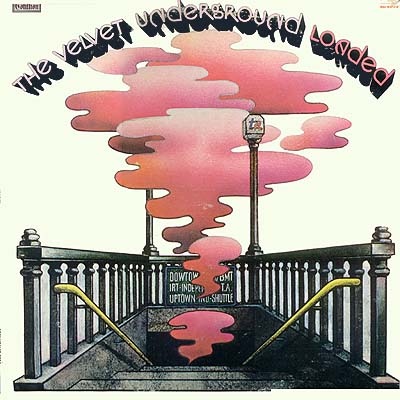
Their fourth album Loaded deserved to fare better. They had sacrificed and suppressed their true sound to deliver an “album loaded with hits.” Loaded had everything going for it. It benefited from a much more commercial sound, and plethora of hooks. This meant that Loaded was The Velvet Underground’s most accessible album. Surely this was what record buyers wanted The Velvet Underground reasoned?
Record buyers had shied away from The Velvet Underground and Nico and White Light/White Heat. Then on The Velvet Underground, which was released in 1969, Lou Reed and Co. moved towards a more populist, accessible sound. This came at the cost of John Cale. Still The Velvet Underground failed commercially, and MGM dropped the Velvets. This proved the ultimate irony.
Just under a year later, and Lou Reed was gone too. This left just Sterling Morrison and the returning Maureen Tucker. That presented a problem for The Velvet Underground. They were due to tour America and Canada promoting Loaded.
It was bassist Doug Yule who came up with a solution. He switched to bass and took charge of lead vocals. To play bass, Walter Power was drafted in. Drummer Maureen Tucker returned, and her place behind her drum kit. While this was a long way from the classic lineup of The Velvet Underground, it meant that the group would be to tour North America.
After rehearsing, and Walter Power learning The Velvet Underground’s songs, the band headed out on tour. It was with a degree of trepidation that they took to the stage for the first time. Never before had this lineup played live. Gradually, though, they found their feet, and for part of 1971, this new lineup of The Velvet Underground toured North America.
During the tour, the members of The Velvet Underground began working on their fifth studio album. They were some new songs for the album they owed Atlantic Records. Maybe, it would the album that saw The Velvet Underground make their long-awaited commercial breakthrough?
That wasn’t the case. The Velvet Underground didn’t even come close to getting the opportunity to record another album for Atlantic Records.
Once The Velvet Underground’s North American tour was over, the band returned home. Now they were ready to begin work on their fifth album. So, they made an appointment with executives at Atlantic Records, where The Velvet Underground played some of their new songs. These songs, they hoped, would feature on their fifth album. However, The Velvet Underground without Lou Reed was a totally different band to the one Atlantic Records had signed in 1969.
Executives at Atlantic Records realised this. They also realised that the new songs weren’t good enough, so rejected them out of hand. For the members of The Velvet Underground this was a crushing blow. To make matters worse, The Velvet Underground still owed Atlantic Records an album. Atlantic Records had a solution though.
They looked through the Atlantic Records’ archives, and decided to release an album of live material. This became Live at Max’s Kansas City, which was released by Atlantic Records on May 30th 1972.
Live At Max’s Kansas City.
It’s fitting that The Velvet Underground’s Atlantic Records’ swan-song had been recorded at Max’s Kansas City, in New York. It was one of The Velvet Underground’s favourite venues. So much so, that it was like a second home.
It was in 1965, that Max’s Kansas City first opened its doors. This just the year that The Velvet Underground were born. Since then, Max’s Kansas City had been a favourite hangout for The Velvet Underground. They weren’t alone.
Max’s Kansas City was a hangout for the actors, hipsters, models, scenesters and singers. It was where the beautiful, famous and contrarian came to play. Even Andy Warhol and his Warholian disciples were known to hang out at Max’s Kansas City. So was Rolling Stone Mick Jagger. Even the staff at Max’s Kansas City had designs of fame and fortune.
This included Debbie Harry in her pre-Blondie days. She waited tables, while awaiting her big break. Debbie Harry would witness the recording of The Velvet Underground’s first live album, Live At Max’s Kansas City.
The album may never have happened, if Brigid Polk, a close friend of The Velvet Underground hadn’t decided to tape the show. For some reason, that night, Brigid Polk brought along her tape recorder and pressed play.
She captured the essence of The Velvet Underground live on Live At Max’s Kansas City. It was remastered by Rhino for its recent release. This has improved the sound slightly. Despite that, its still slightly rough around the edges. That can’t be helped. Brigid Polk didn’t have access to top quality recording equipment. Her recording was probably only ever meant for her own, and band’s enjoyment. She didn’t know she was recording history being made, as Live At Max’s Kansas City features Lou Reed’s last performance with The Velvet Underground.
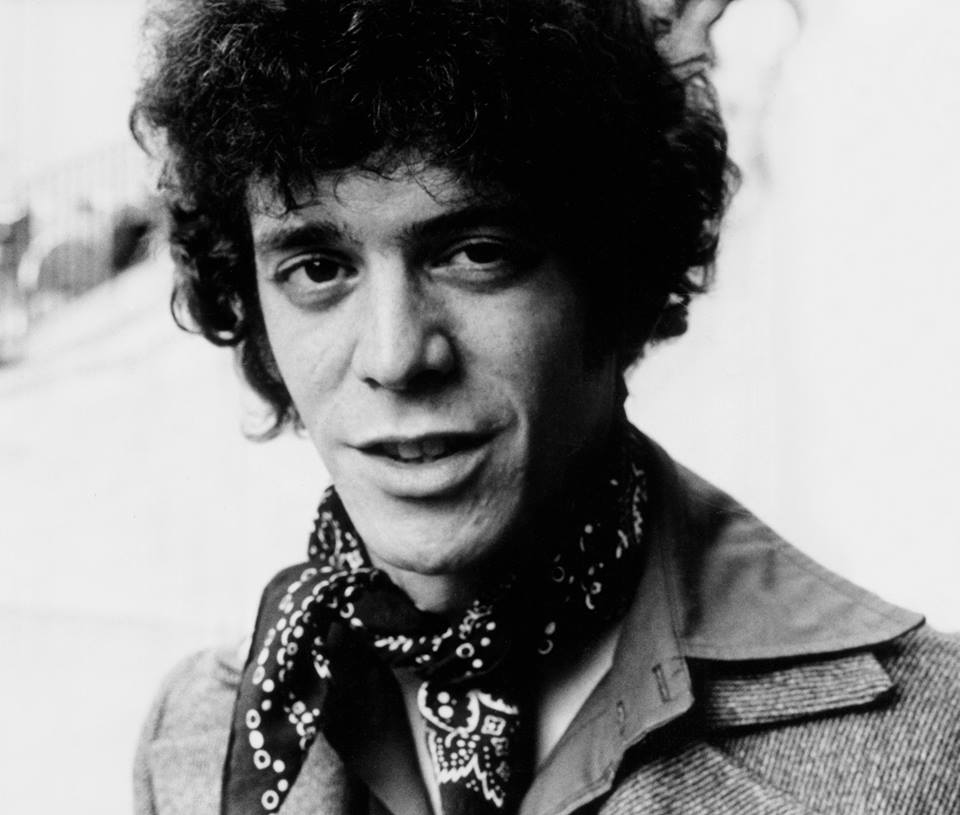
When Lou Reed takes to the stage, he’s part entertainer, part bon viveur. As the band tune their instruments and audience make small talk, Lou Reed takes to the stage. Drolly he says “you’re allowed to dance, in case you don’t know.” Then The Velvet Underground start with a stonewall classic.
That’s the only way to describe I’m Waiting For The Man, from The Velvet Underground and Nico. That grabs the audience’s attention, before The Velvet Underground showcase Sweet Jane and Lonesome Cowboy Bill from what would be Lou Reed’s swan-song Loaded. Then The Velvets go back in time.
Beginning To See The Light was from the 1969 album The Velvet Underground. This was the first Velvet Underground album since the departure of cofounder John Cale. After that, Lou delivers a heartfelt version of I’ll Be Your Mirror, one of the most beautiful songs in The Velvet Underground’s back-catalogue. It’s another song from The Velvet Underground and Nico, which is a classic album. That’s the case with the first four Velvet Underground albums.
That includes their 1969 eponymous album. It featured Pale Blue Eyes, which The Velvet Underground revisit on Live At Max’s Kansas City. It’s akin to a best of live, with Sunday Morning from The Velvet Underground and Nico being next on the setlist. Lou Reed seems to reserve one of his finest vocals. Then he brings things up to date with New Age, which would feature on Loaded. That was the straw that broke the camel’s back. Things had been so different three years earlier.
Back in 1966, when The Velvet Underground and Nico was released, the band’s whole career was stretching out in front of them. Anything was possible. That included releasing one of the greatest and most influential albums in musical history, The Velvet Underground and Nico. One of its highlights was the timeless Femme Fatale. As Lou Reed delivers the lyrics, was he remembering four years ago, when their career was in its infancy? Maybe that’s the case, as he prepares to deliver his final song as The Velvet Underground’s frontman.
The song he chose, was After Hours, from The Velvet Underground. This seems fitting, as its nearly the wee small hours of the morning. As The Velvet Underground prepare to take their leave, on what became Live At Max’s Kansas City, the audience treat The Velvet Underground like conquering heroes. However, it proved to be a pyrrhic victory.
The Velvet Underground had won over the crowd at Max’s Kansas City. However, Lou Reed lost the battle that was Loaded.
The album didn’t turn out as he had planned. Songs he alleged had been edited, and the running order changed. This didn’t please Lou Reed. He felt he had no option but to call time on his career with The Velvet Underground on 23rd August 1970. This left The Velvet Underground like a rudderless ship.
The Velvet Underground had not just lost its creative and driving force, but its de facto leader. Without Lou Reed, The Velvet Underground were but a shadow of their former self. It didn’t take Atlantic Records long to realise that. After hearing a few new songs, executives at Atlantic Records rejected the songs. They weren’t good enough, and The Velvet Underground never recorded another album for Atlantic Records.
This left a problem. The Velvet Underground owed Atlantic Records an album. They solved this by searching the Atlantic Records archives, where they found the tapes to Live at Max’s Kansas City, which was released on May 30th 1972. It became The Velvet Underground’s first live album, which was reissued by Rhino on 22nd January 2016. Live at Max’s Kansas City also fulfilled The Velvet Underground’s contractual obligations to Atlantic Records, and marked the end of an era.
Live at Max’s Kansas City was Lou Reed’s swan-song, and essentially, the end of one of the greatest bands in rock history. Without Lou Reed, The Velvet Underground were a pale shadow of the band they had once been.
When The Velvet Underground headed out on their North American tour, to promote Loaded, the end was neigh. Bassist turned guitarist and vocalist Doug Yale was never going to replace Lou Reed as The Velvet Underground’s frontman. It was the end of the road for The Velvet Underground.
While The Velvet Underground struggled on without Lou Reed, they were never the same again. Loaded was the last album The Velvet Underground released. Squeeze which was released in 1972, was a Velvet Underground in name only. The band had long ceased to exist.
Live at Max’s Kansas City was last time Lou Reed played live with The Velvet Underground. His swan-song was captured by Brigid Polk, a friend of The Velvet Underground. It was lucky she brought along her tape recorder and pressed play.
If she hadn’t, there would be no document of Lou Reed’s Velvet Underground swan-song. It would’ve have passed into the mists of musical history, and most likely, have achieved near mythical status. However, Brigid Polk captured musical history being made on what became Live At Max’s Kansas City. While the sound quality is slightly rough around the edges, the recent remastering has improved the sound quality, and Live At Max’s Kansas City is a fitting celebration of Lou Reed’s Velvet Underground swan-song.
THE VELVET UNDERGROUND-LIVE AT MAX’S KANSAS CITY.


 ]
]
GURU GURU-UFO.
GURU GURU-UFO.
By the late sixties, the members of many British and American bands were well on their way to becoming multi-millionaires. Especially groups like The Beatles and Rolling Stones. They had been at the top for the best part of a decade, and were now enjoying wealth beyond their wildest dreams.
To look after their wealth, these groups employed accountants, investment companies and tax advisers. They ensured that their clients minimised their tax liability and became even wealthier. It was changed days. No longer were the angry young men angry. Instead, they were affluent and aspirational. Where had the spirit of rock ’n’ roll gone?
It was alive and well, and living in Heidelberg, Germany. That’s where The Guru Guru Groove, who later became Guru Guru, had been formed in 1968 by drummer Mani Neumeier, bassist Uli Trepte and guitarist Eddy Naegeli. However, even The Guru Guru Groove hadn’t started off as a rock ’n’ roll band.
Instead, The Guru Guru Groove’s roots were in the German free jazz scene. They had previously worked with Swiss pianist Irène Schweizer. Drummer Mani Neumeier was also a stalwart of the German free jazz scene, and already, had won a several prizes. However, by 1968, when The Guru Guru Groove was born, its members were embracing psychedelic rock.
The three members of The Guru Guru Groove had been won over by American and British psychedelic rock. Jimi Hendrix and Franz Zappa had inspired Mani Neumeier, Uli Trepte and Eddy Naegeli. So had The Crazy World of Arthur Brown, the Rolling Stones and Pink Floyd. These bands inspired not just The Guru Guru Groove, but Amon Düül, Can and Xhol Caravan. They would play an important part in the nascent, but burgeoning German music scene of the late sixties.
Unlike the American and British rock scenes, commune culture played an important part in the German music scene at that time. The three members of The Guru Guru Groove lived in a commune in the Odenwald region, where they experimented with various hallucinogenic drugs. Many of The Guru Guru Groove’s early concerts took place in communes. Soon, though, The Guru Guru Groove were a familiar face on they university circuit.
The Guru Guru Groove organised concerts with the Socialist German Student Union. This wasn’t surprising. Like many German bands of this period, The Guru Guru Groove were politically to the left. They were essentially a socialist band, who unlike many of their American and British counterparts, had a social conscience. This became apparent during concerts.
Concerts organised by The Guru Guru Groove and the Socialist German Student Union were spectacles. The band didn’t just take to the stage, play a few songs then say their goodbyes. Instead, members of The Guru Guru Groove read political texts between the songs. Sometimes though, the concerts descended into near anarchy. This didn’t seem to matter. All that mattered was the music.
It was a fusion of free jazz, avant garde, psychedelia and rock. The three musical alchemists combined elements of these disparate genres, wherever they played. Sometimes, this included prisons, where The Guru Guru Groove introduced inmates to their mind bending sound. By then, they were well on their way to becoming one of the leading groups in the German underground scene.
It wasn’t all smooth sailing though. Change was afoot. The Guru Guru Groove became Guru Guru, who would become one of the leading lights of German music. Guru Guru’s lineup would also change twice. Guitarist Eddy Naegeli was replaced by American Jim Kennedy. Then Ax Genrich was drafted in to replace Jim Kennedy. By then, Guru Guru’s lineup featured drummer Mani Neumeier, bassist Uli Trepte and guitarist Ax Genrich. This is regarded as the classic lineup of Guru Guru, and the one that recorded their debut album UFO in June 1970.
When Guru Guru entered the studio for the first time, Julius Schittenhelm who was a producer for the Ohr label, and his wife Doris must have realised that they were about to record what was, no ordinary band. Guru Guru were far from a power trio, featuring drums, bass and guitar.
The three members of Guru Guru unpacked, and setup a wide array in instruments and electronics. Drummer and vocalist and Neumeier added cymbals, gongs and a tape to his setup. Bassist Uli Trepte added various electronic items, including a transistor radio, mixer and intercom. New guitarist Ax Genrich added an array of effects pedals, including an Echogerät Pedal. Ax and the rest of Guru Guru were determined to record a debut album nobody would forget.
So it proved to be. Guru Guru released UFO on the Ohr label, later in 1970. It was released to almost overwhelming critical acclaim, and hailed as a groundbreaking fusion of genres and influences. These growing reviews lead to UFO selling reasonably well, and launched Guru Guru’s career. They’ve released over forty studio and live albums over a forty-three year period. The first of these albums was UFO.
Stone In opens UFO. Ax’s searing, Hendrix inspired psychedelic guitar cuts through the arrangement. Its effects laden sound dominates the arrangement. The rest of rhythm section are left playing supporting roles. Briefly, Mani’s improvised vocal flits in and out. By then, Guru Guru are in full flow. Mani’s urgent drums join with Uli’s bass in driving the arrangement along. They’re still not equal partners. Not when Ax is unleashing a mesmeric, spellbinding solo. His fingers fly up and down the fretboard, as Ax delivers a guitar masterclass. It’s a stunning start to UFO, which showcases the combined talented of the classic lineup of Guru Guru, as they make their recording debut.
Sci-fi sounds arrive from the distance, before Girl Call bursts into life. Ax’s bristling guitar, a buzzing bass and crashing cymbals join with pounding drums. There’s even a burst of feedback. Quickly, Ax tames the tiger, before taking centre-stage. He unleashes another scorching, psychedelic solo. Then the baton passes to Mani, who showcases his trademark drumming style. Uli’s bass matches him every step of the way. As the rhythm section power the arrangement among, the Ax man returns. Soon, he spraying blistering, machine gun licks above the rhythm section. Seamlessly, Ax combines speed and accuracy, as the musical shaman works his magic on a psychedelic, rocky opus.
Literally, Next Time See You At The Dalai Lhama explodes into life. Guru Guru dive feet first into the track, with Mani and Uli creating a hypnotic, mesmeric groove. This allows Ax to unleash another barnstorming solo. Mani’s determined not to be outdone, and powers his way round his kit. Neither is Uli. The three members of Guru Guru raise their game. Elements of Led Zeppelin and Black Sabbath shine through. So do elements of avant garde, free jazz, psychedelia and progressive rock. Guru Guru play with confidence, swaggering their way through this genre-melting soundscape.
UFO finds Guru Guru at their most inventive. They utilise the array of electronic that they took into the studio. The briefest bursts of guitar make an appearance as Guru Guru improvise. Elements of avant garde, experimental and musique concrète shine through, as Guru Guru eschew traditional song structure. What follows is a cinematic soundscape, where the listener supplies the script to what sounds like a journey. That journey is on Guru Guru’s UFO, as they take the listener to an unknown destination.
A droning sound arrives from the distance on Der LSD-Marsch, which closes UFO. Like the previous track, Guru Guru improvise. This time, they create a lysergic soundscape. It’s dark, moody, eerie and ominous. Washes of guitar shimmer, while otherworldly noises squawk. Later there’s a series of beeps, as if Guru Guru’s UFO has landed, and is about to be impounded at. After that, Guru Guru return to a much more traditional song structure. Ax’s guitar references both blues and psychedelia. Mani’s pounds and powers his drums, while Uli’s bass runs match him every step of the way. However, stealing the show is Ax, who was the final piece of the jigsaw. His addition was a masterstroke. Not to be outdone, Mani unleashes another solo where his jazz roots are apparent. Later, Guru Guru become one, as they bring to a close their debut album. It’s Ax who steps forward and delivers another psychedelic solo, as Guru Guru close UFO with a flourish, and in the process, make their mark in German musical history.
UFO was one of the best debut albums of the nascent Krautrock era. Nowadays, UFO is still regarded as a Krautrock classic, and is, without doubt, one of Guru Guru’s finest albums. That’s no surprise.
The lineup of Guru Guru that played on UFO, is regarded as the classic lineup of the band. This lineup were together until 1975, when former Kollective guitarist Jürgen “Jogi” Karpenkiel replaced Ax. However, between 1970 and 1975, Guru Guru released eight albums. This includes 1971s Hinten, 1972s Känguru and 1973 Guru Guru and Don’t Call Us, We Call You. By then, Guru Guru were on a roll, and releasing some of the finest music of the Krautrock era. This music found a wider audience that many other Krautrock bands.
That’s why, forty-three years after the release of UFO, Guru Guru released Electric Cats in 2013. This meant that they had released over forty studio and live albums. Guru Guru were still going strong after six decades and several changes in lineup. The one constant was drummer and vocalist Mani Neumeier, who nowadays, is regarded as one of the finest German drummers of his generation. He’s made a lot of music since UFO in 1970.
UFO is a timeless Krautrock classic, which features the classic lineup of Guru Guru. Seamlessly, the three musical alchemists fuse avant garde, blues rock, free jazz, musique concrète, progressive rock, psychedelia and rock. The result is a truly groundbreaking journey, where gradually, Guru Guru show their inventiveness.
Rather than dive in feet first with one of the more experimental tracks, Guru Guru showcase their considerable psychedelic talents on Stone In, Girl Call and Next Time See You At The Dalai Lhama. It’s only then that they introduce the listener to their most experimental music on UFO, and the the first half of Der LSD-Marsch. Guru Guru it seems, have been breaking the listener in gently, and educating them. Only then, are they ready to hear Guru Guru at their music inventive and innovative on two groundbreaking soundscapes. These two tracks show another side to Guru Guru, which references the group’s free jazz roots. UFO particularly, finds Guru Guru improvising, and pushing musical boundaries to their limits. In doing so, Guru Guru proved pioneers.
Even today, Guru Guru’s influence an be heard on the latest generation of Norwegian musicians. Many of them, seem to have been influenced by groups like Guru Guru, and are picking up where they left off. It seems that Guru Guru’s music lives on through a new generation of musicians; and through a new generation of music lovers who have discovered their music.
Many of those who are discovering albums like UFO, weren’t even born when the classic lineup of Guru Guru made their first tentative steps into the recording studio. They recorded what became a timeless Krautrock classic, UFO. Part of its success is down to Guru Guru’s latest recruit, Ax Genrich. His addition to Guru Guru was a masterstroke, in what was a musical marriage made in heaven, UFO.
GURU GURU.
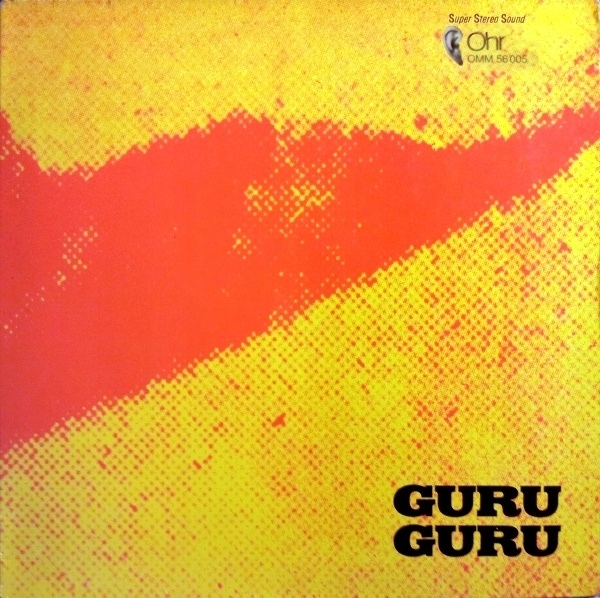
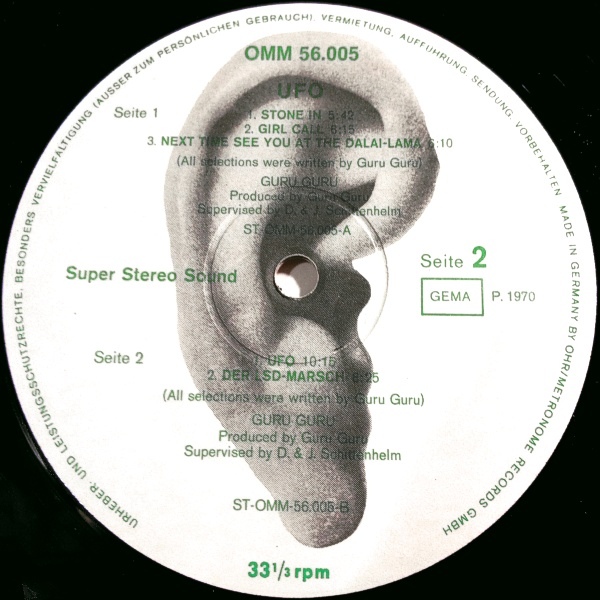
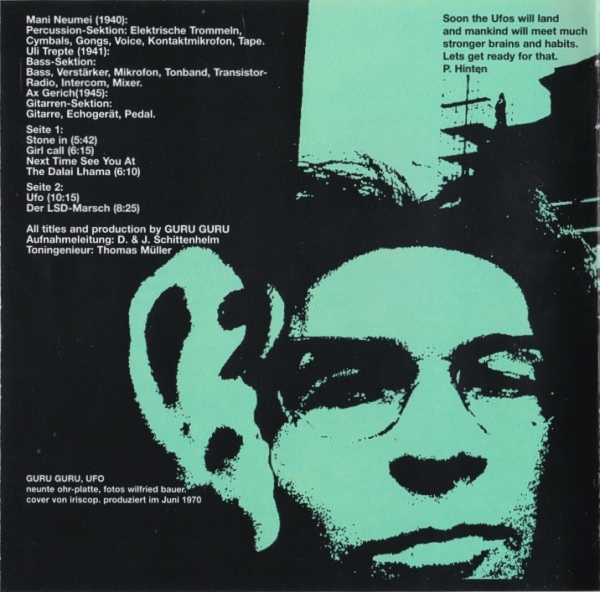
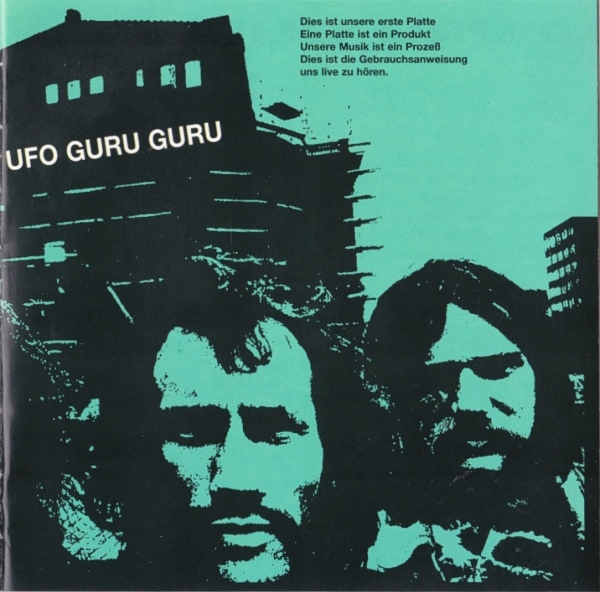
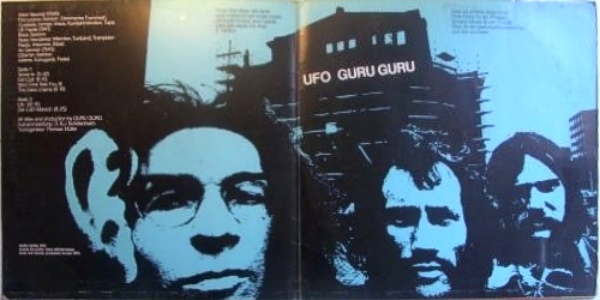
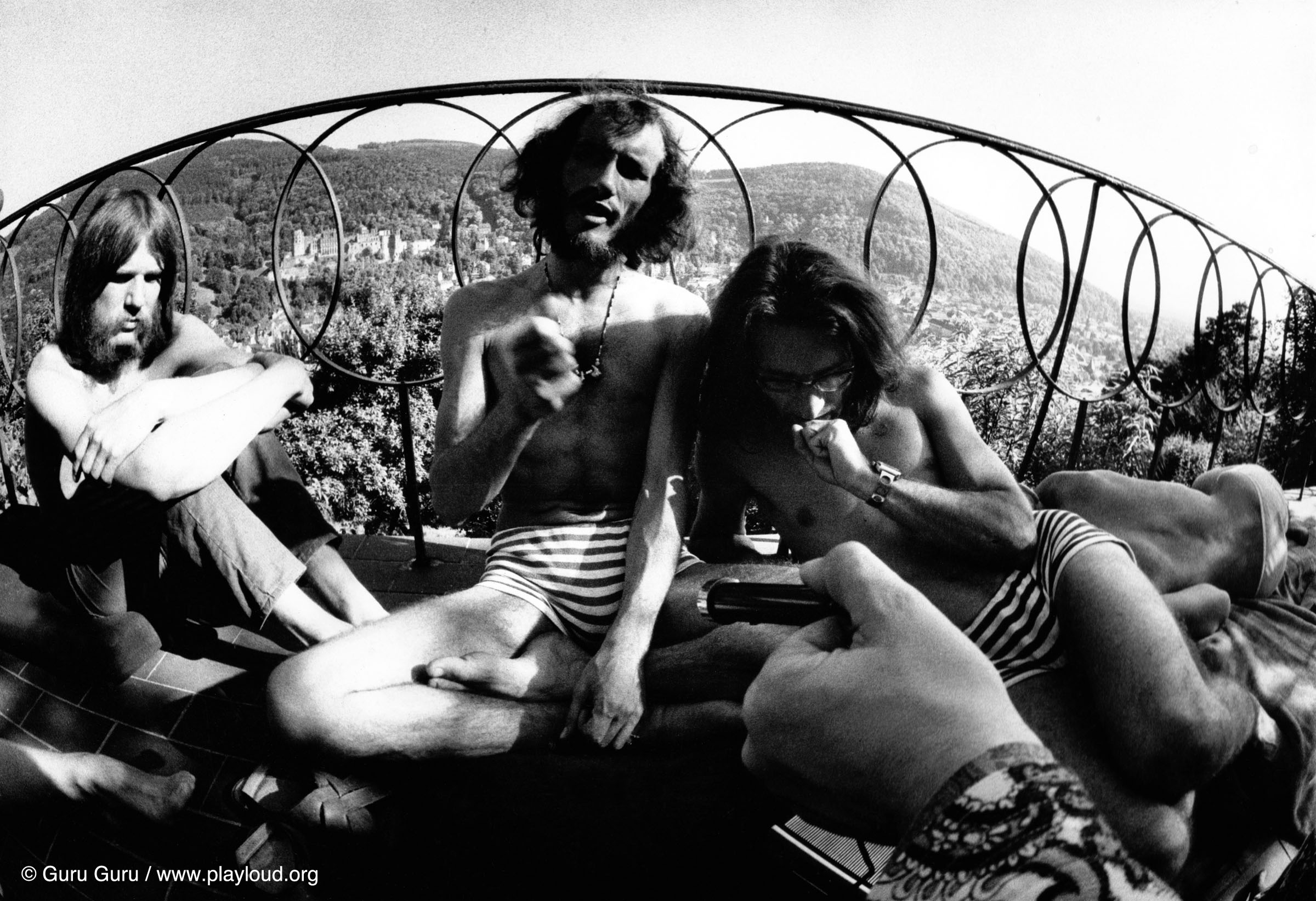
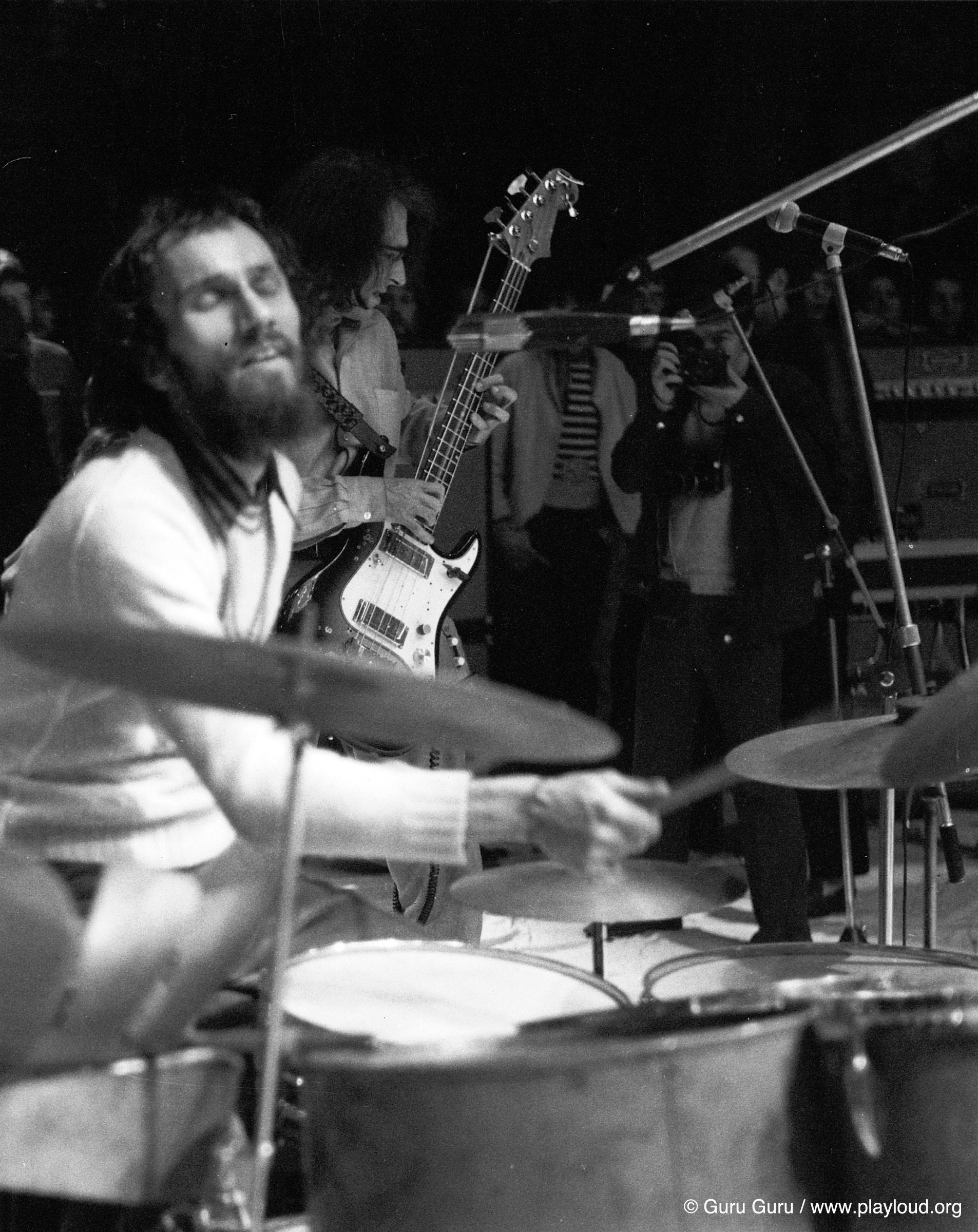
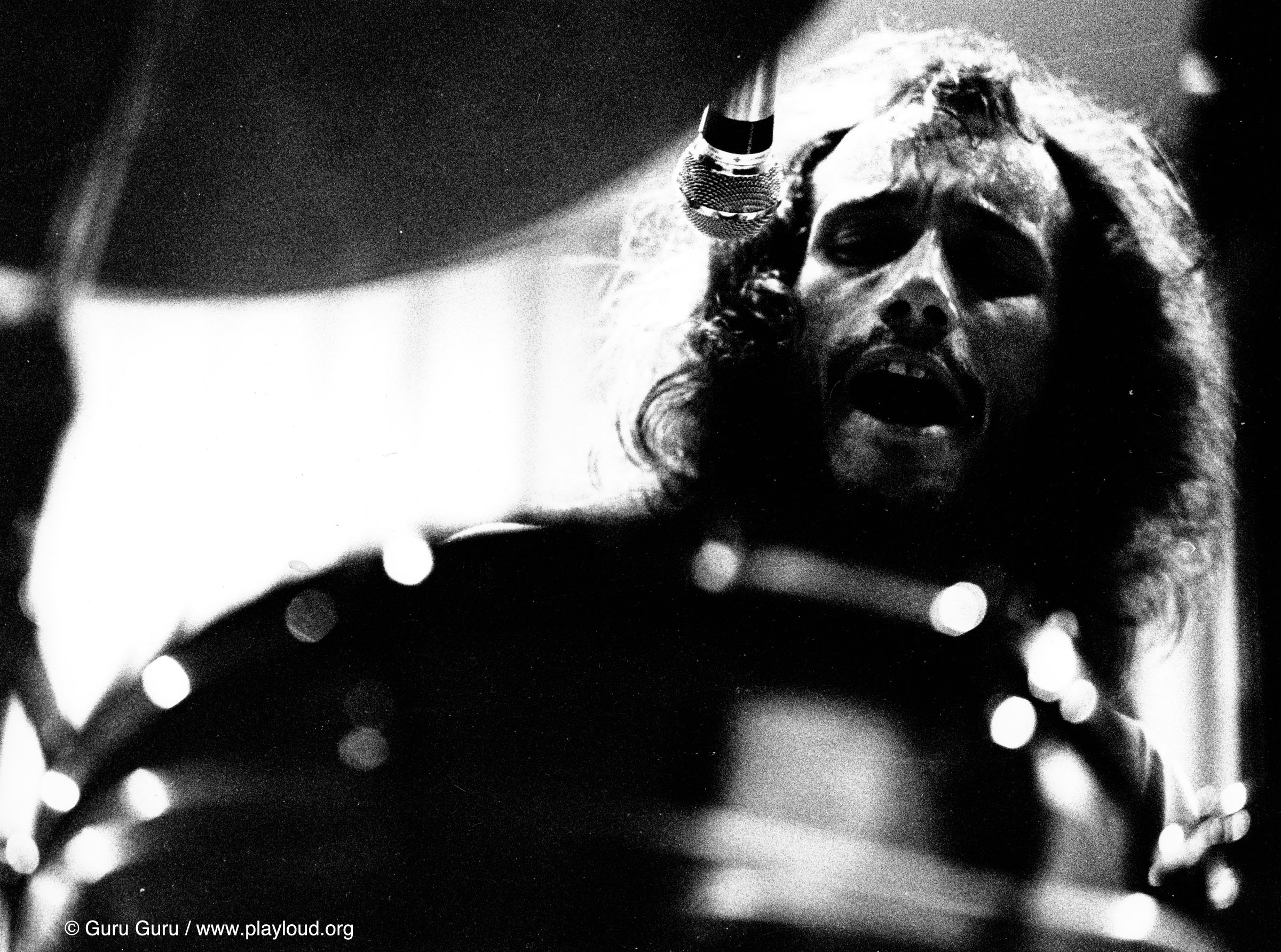
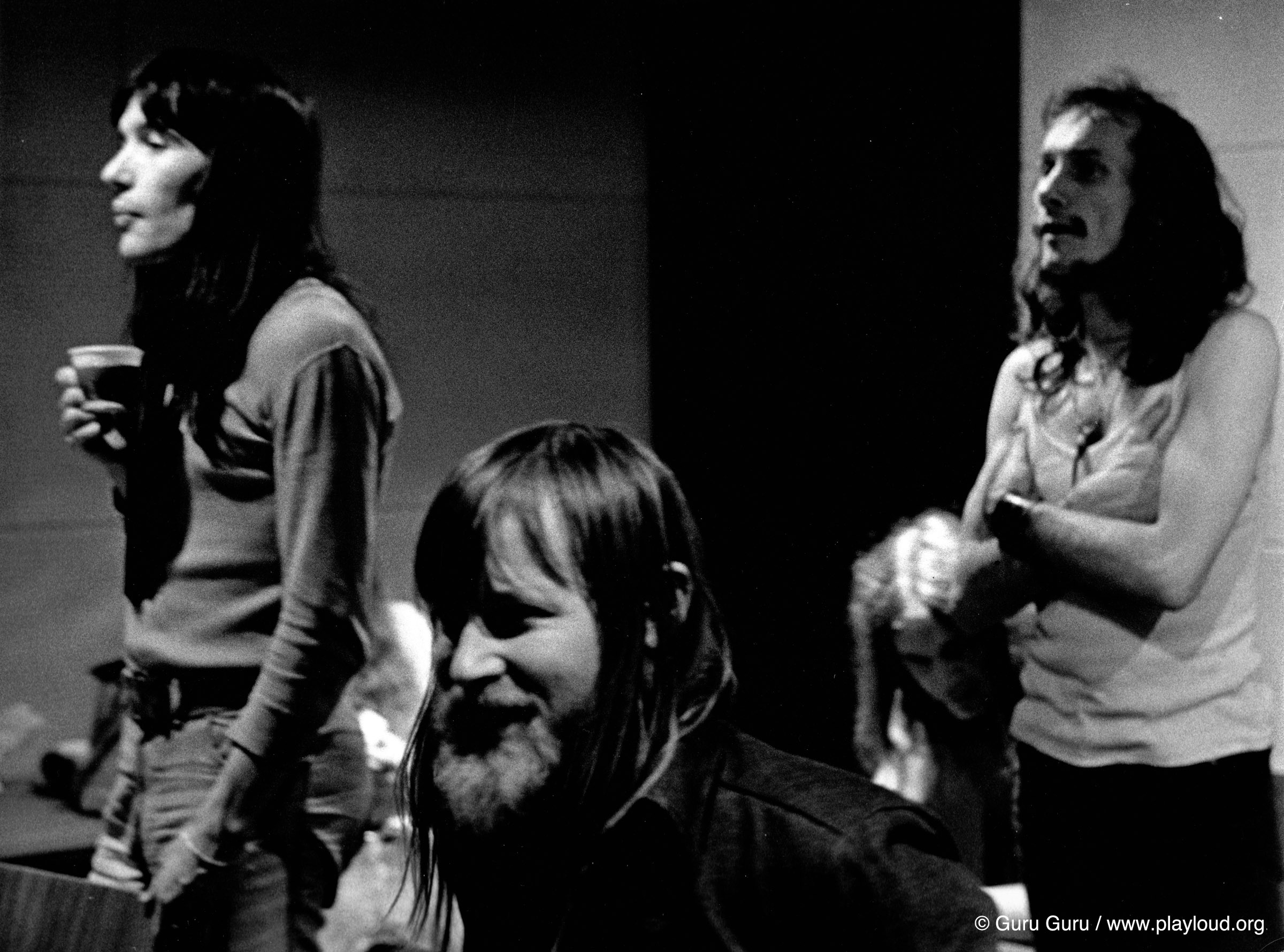
KOLLECTIV-KOLLECTIV.
KOLLECTIV-KOLLECTIV.
Musical history is littered with bands who only ever released one album. Often, that album fails to find the audience it deserves. This can come as a bitter blow, and sometimes, can lead to the band breaking up. By then, the rock star dream is over. The only option left, is to return to the tedium of the 9 to 5 lifestyle.
Gone forever, is the dream of a glittering musical career. It’s consigned to the past. So is the dream of million selling albums, gold or platinum discs and sell-out worldwide tours. Nor will they be able to live rock ’n’ roll lifestyle. Excess, decadence and dalliances with Hollywood stars are but a pipe dream. It could’ve been so different.
Especially, when their debut album was released to widespread critical acclaim. Discerning record buyers embraced and championed the album. Critics and cultural commentators even nominated the album for a prestigious award. Despite this, widespread commercial success eluded the album, and within two years the band had split-up. That band were Kollectiv, who released their eponymous debut album on Brain, in 1973.
Kollectiv had the potential, talent and confidence to become one of the biggest German bands of the early seventies. They pioneers, musical mavericks who made ambitious, genre-melting music. Sadly, commercial success eluded Kollectiv, whose roots can be traced to Krefeld, in 1964.
By 1964, the new waves of British rock and pop groups were influencing teenagers across Europe and America to form a band. They all wanted to live the dream, like The Beatles and Rolling Stones. Brothers and high school students Jürgen “Jogi” Karpenkiel and Waldemar “Waldo” Karpenkiel were no different.
So in 1964, they formed The Generals. Jürgen “Jogi” Karpenkiel was a bassist, and his brother Waldemar “Waldo” Karpenkiel played the drums. They were joined guitarist Jürgen Havix. In the early days, The Generals were a beat group. They were inspired by much of the music coming out of Britain. However, as the psychedelic era dawned, The Generals music changed.
Different artists began to inspire and influence The Generals. They began to listen to Frank Zapppa’s early albums, plus King Crimson and Blodwyn Pig. Around this time, The Generals discovered jazz, and particularly, Cannonball Adderley, Jimmy Scott and Wes Montgomery. All these artists would later influence Kollectiv. However, back in the mid to late sixties, The Generals were serving their musical apprenticeship. This paid off for Jürgen “Jogi” Karpenkiel.
Around 1967, he was asked to join another local group, The Phantoms. Their whose lineup included flautist and saxophonist Klaus Dapper; and organist and future Kraftwerk founded Ralf Hutter. For the next year or so, Jürgen “Jogi” Karpenkie was a member of The Phantoms. However, in 1968, Jürgen had a big decision to make.
The Generals wanted Jürgen to return to the group he cofounded. He agreed, and when he returned to The Generals, brought with him Klaus Dapper. In effect, Kollectiv had just been born, while Ralf Hutter went on to found The Organisation, a forerunner of Kraftwerk. That was all to come.
It was another two years before The Generals became Kollectiv in 1970. After six years, The Generals became a footnote in musical history. The dawn of a new decade was a new musical dawn, where anything was possible.
For Kollectiv, the seventies was a brave new world. Kollectiv believed anything was possible. They set out to experiment, and push musical boundaries to the limits, and sometimes…way beyond. Kollectiv weren’t content just to combine musical genres, they wanted to combine traditional instruments with effects and handmade instruments. These instruments, whether traditional, handmade or exotic, were used to play lengthy improvised pieces as Kollectiv played live.
By 1971, Kollectiv were ready to make head out on tour. The members of Kollective had spent part of the last year modifying and making new instruments. These instruments were used during Kollectiv’s lengthy and intensive practise sessions. Gradually, the group honed its sound. So did the tracks that would feature on their setlist, when Kollectiv played live.
Before the tour began, the four members of Kollectiv pooled their resources, and bought an old VW bus for DM400. This would travel the length and breadth of West Germany on their forthcoming tour. It didn’t even mater that the VM bus had Campari-Bitter emblazoned on its side. All that mattered, was that Kollectiv were about to embark upon their first tour.
With their newly bought tour bus packed with equipment, Kollectiv began their tour. The firs venue was four-hundred kilometres away from Krefeld, in Wilhelmshaven, in North Germany. This journey was a tantalising taste of what life as a professional musician was like.
Over the next two years, Kollectiv criss crossed West Germany in their old VW bus. They played everywhere from pubs and clubs, to the university circuit and festivals big and small. By 1973, Kollectiv were almost mainstays of the live circuit. The band came alive as they took to the stage. Kollectiv seemed to be intoxicated by life as a professional musicians. They were living the dream.
For any band, part of the ‘dream’ is to release an album. By 1973, Kollectiv had been together for three years, but had still to set foot in the studio. That would change in March 1973.
Recorded of Kollectiv’s eponymous debut album would take place during March 1973, at Windrose-Studio, Hamburg. Guiding Kollectiv through the recording process, was recordist and co-producer Conny Plank. He had already worked with some of the biggest names in German music. I was something of a coup having Conny Plank record and co-produce Kollectiv. He was working was a talented and pioneering group.
This wasn’t unusual. Germany featured some of the most innovative European bands of the seventies. Kollectiv were just the latest Conny Plank had encountered. He watched as Kollectiv setup their instruments.
The rhythm section featured drummer Waldemar “Waldo” Karpenkiell; bassist Jürgen “Jogi” Karpenkielm and guitarist Jürgen Havix, who also played zither. Klaus Dapper switched between flute and saxophone. Augmenting Kollectiv, were violinist Volkmar Han; guitarist Axel Zinowski; bassist Georg Fukne; and Christoph on electric piano. Along with Kolectiv, the guest artists cut four tracks. They became Kolectiv.
Once Kolectiv was complete, Germany’s premier label Brain released the album later in 1973. Things were looking good for Kolectiv. Critically acclaimed reviews preceded the album’s release. It looked as if Kolectiv were about to have a successful album on their hands.
Sadly, that proved not to be the case. Kolectiv didn’t sell in huge quantities. Instead, it was a cult album, embraced and appreciated by musical connoisseurs and discerning record buyers. Most record buyers didn’t ‘get’ what was an album of ambitious, groundbreaking and genre-melting music. Kolectiv was far removed from the populist music in the charts during 1973. Kolectiv wanted to take the listener on a magical mystery tour. Listeners however, seemed reluctant to get onboard. They missed hearing one of the great lost albums of 1973, Kolectiv.
Opening Kolectiv is Rambo Zambo. For the first ninety seconds, it’s just Klaus’ flute. It’s slow, spacey and sometimes, has echo added. Sometimes, sci-fi sounds augment the dubby flute. Then after ninety seconds, the rhythm, section join the fray. By then, the flute is panned thirty degrees left, as the Karpenkielm brothers lay down a groove. Jürgen’s bass sits slightly in front of the drums. He’s joined by Jürgen Havix’s chiming, chirping guitar. He flits between jazz, funk and rock, and at one point, unleashes machine gun licks. Meanwhile, Klaus’ flute references avant garde and free jazz. Echo is to his flute, distorting and disguising the sound. This result is an otherworldly sound. Later, as the Karpenkielm brothers provide the heartbeat, Jürgen Havix unleashes a spellbinding guitar solo. He’s like a shaman, unleashing musical magic. However, Kollectiv aren’t a one man band. Everyone plays their part, on improvised rocky epic, where Kollectiv take detours via avant garde, free jack, funk and jazz. This whets the listener’s appetite, as this magical mystery tour begins.
A chirping, chiming, crystalline guitar is played urgently as Baldrian unfolds. Washes of saxophone have been distorted by effects, adding a lysergic sound. Meanwhile, cymbals shimmer and crash, while a violin protests. Drum rolls add an element of drama. Later, a zither, and a sixty-four stringed instrument made by Kollectiv play their part on this cinematic soundscape. It features Kollective at their most innovative. Later, the music becomes slow, sultry, jazz-tinged and melodic. Washes of shimmering guitar add a dreamy, lysergic sound to this atmospheric soundscape.
Försterlied is a two minute musical experiment. Kollectiv are counted in, and launch into genre-defying, stop-start track. Lyrics aren’t so much sung, but dramatically spoken. Meanwhile, Kollectiv take free jazz as their starting point. They add hints of avant garde and experimental, as a wailing saxophone, urgent rumbling drums, chirping guitar and a myriad of miscellaneous percussion and sound effects combine. Then all of a sudden, the track grinds to a halt, only to start again. This happens several times, before Kollectiv call to a halt this captivating musical experiment
Closing Kollective, is Gageg, which is a three part suite. Andante gives way to Allegro before Pressluft closes this near twenty minute epic. Originally, it took up side two of Kollectiv. Allegro just meanders lazily into being. A guitar is panned right while a myriad of hypnotic sound are panned left. They’re replaced by an airy flute, while washes of guitar reverberate. Drums are eschewed, and Waldo keeps time on the ride. Everyone plays tenderly, as the arrangement begins to unfold. Chirping, shimmering guitars, a fluttering flute and slow, thoughtful drums combine with a probing bass. Kollectiv it seems, are about to stretch their legs.
The guitars grows in power, a blistering rocky solo taking ship. Then when drums pound, that looks like the signal for Kollectiv to kick loose. It’s not. They’re still playing within themselves. Even when another guitar solo unfold. Meanwhile, the rhythm section match each other every step of the way. Above the arrangement, the flute soars. Still the arrangement meanders along, before Kollectiv stretch their legs. When they slow things down, it’s a signal that things are about to change.
At 8.49 the arrangement becomes jazz-tinged, and the bas drives the arrangement along. Then a blistering guitar cuts through the arrangement. The drums add a jaunty beat. A saxophone is added as jazz and rock unites seamlessly. From there, Kollectiv are at their most inventive. Later, Klaus lays down a funky sax solo, while the rest of the band drive the arrangement along. By now the chirping guitar is playing a supporting role. That’s until three minutes before the ending, and a scorching guitar threatens to explode. However, Kollectiv are jamming, on what’s been an epic journey through funk, fusion, jazz, rock and space rock. After twenty memorable minutes, it reaches a magical crescendo, bringing Kollectiv to a close.
After the release of Kollectiv, the band began rehearsing, in preparation for their sophomore album. They eventually recorded some demo tracks, and sent them to SWF. This lead to SWF inviting Kollectiv to record some new material. Sadly, Kollectiv didn’t get as for as releasing their sophomore album.
Kollectiv split-up in 1975, when Jürgen “Jogi” Karpenkiel joined Guru Guru. They were, by then, one of Germany’s most successful bands. So it was no surprise that Jürgen “Jogi” Karpenkiel joined Guru Guru. By then, Kollectiv still hadn’t made a commercial breakthrough. They were still an underground band.
What maybe made Jürgen “Jogi” Karpenkiel’s mind up, was that Kollectiv were no nearer releasing their second studio album. So four became three. Then Klaus Dapper left, and three became two. The first part of the Kollectiv story was almost over.
In 1976, a new lineup of Kollectiv played a few concerts. Joining the two remaining members of Kollectiv was pianist and organist Klaus Hackspiel. However, this lineup only played a few concerts, before splitting up.
The third lineup of Kollectiv featured Jürgen “Jogi” Karpenkiel, guitarist Axel Zinowski, bassist Georg Fukne, and Christoph on electric piano. They even recorded a few tracks at the band’s rehearsal rooms. These tracks feature on the Long Hair label’s reissue of Kollectiv. It features Intro, Pull Moll, Pap-Jack and Rozz-Pop, which showcase the combined talents of Kollectiv Mk. III. Just like the two previous lineups of Kollectiv, they were musical pioneers.
That had been the case since Kollective were born in 1970. Three years later, Kollectiv released their eponymous debut album. It’s the only musical document from a truly groundbreaking group, Kollectiv. From the day they were formed, they were determined to do things their way.
There was no way that Kollectiv were going to blindly follow other groups. Instead, they were innovators, who made ambitious, inventive music. They did this, by combining their array of traditional, handmade and exotic instruments with effects and nascent technology. The result was an album of innovative, genre-melting music.
Kollectiv is best described as a captivating journey throughout disparate and eclectic musical genres. It works though. Seamlessly, Kollectiv combine elements of avant garde, experimental, free jazz, funk and fusion with progressive rock, psychedelia and rock. The result is an album that veers between cinematic, dramatic and melodic, to blissful and wistful. Other times, the music is dreamy, melodic, atmospheric and lysergic. The result was an album which could’v, and should’ve, launched the career of musical mavericks Kollectiv, whose eponymous debut album takes listeners on a magical mystery tour.
KOLLECTIV-KOLLECTIV.
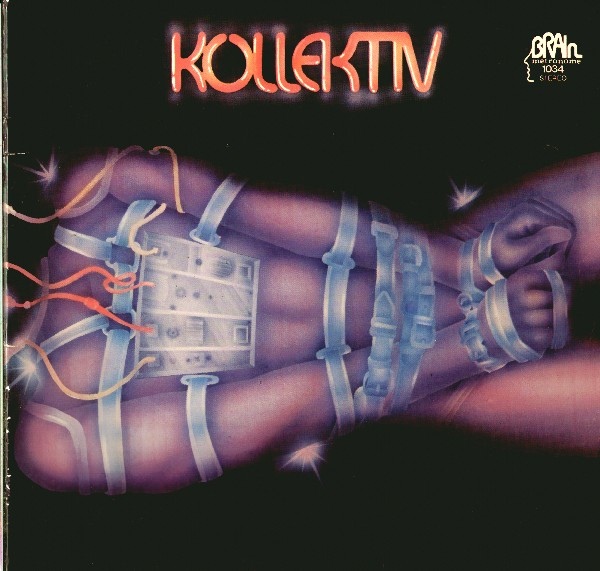
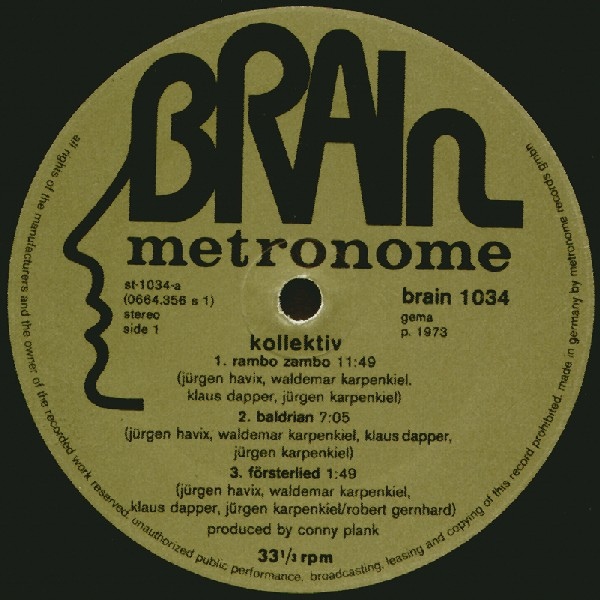
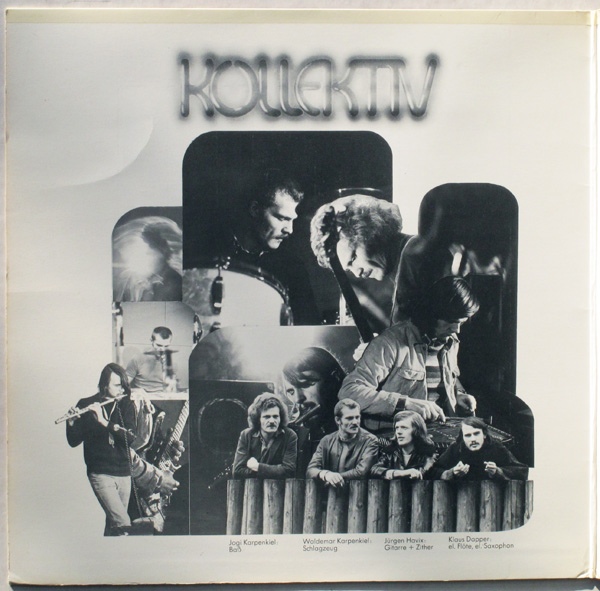
IRMIN SCHMIDT-ELECTRO VIOLET BOX SET-IMPORT.
IRMIN SCHMIDT-ELECTRO VIOLET BOX SET-IMPORT.
One of the most eagerly awaited box sets of 2015 was Irmin Schmidt’s twelve disc career retrospective, Electro Violet. It was released by Mute Records in December 2015. However, only 1,000 copies of Electro Violet were available. They were like gold dust and finding one of the Electro Violet box sets wasn’t easy.
Finding one of the few signed box sets was even more difficult. Some lucky people prevailed, and count their signed copy of Electro Violet as one of their most prized musical possessions. Some people however, would’ve been happy just to find a copy of Electro Violet.
For them, the search for a copy of Electro Violet was akin to treasure hunt. Countless music lovers went in search of what they regarded as musical gold. Those that found a copy of Electro Violet were overjoyed. Sadly, there were a lot of disappointed people. They were wanting. However, now, they have another chance to strike gold.
Recently, Mute Records released an import version of Electro Violet. It features the same twelve discs, that feature some of Irmin Schmidt’s best music. This music represented his post Can career.
After eleven years and eleven studio albums, Can called time on their career in 1979. By then, Can were rightly regarded as one of the most innovative bands of the Krautrock era. They had enjoyed an almost unrivalled longevity.
Can were formed in 1968, by Holger Czukay and Irmin Schmidt. Both had been students of Karlheinz Stockhausen and graduated in 1966.
By then, Irmin Schmidt was twenty-nine. He born in Berlin on 29th May 1937, and grew up playing piano and organ. Soon, it was apparent that he was a talented musician. So it came as no surprise that Irmin headed to the conservatorium in Dortmund, to study music. This was just the start of Irmin’s studies.
From there, Irmin moved to Folkwang University of the Arts in Essen, before moving to Austria, and the Mozarteum University of Salzburg. The final part of Irmin’s musical education took place in Cologne, where Irmin met Holger.
The two future founding members of Can were studying composition under Karlheinz Stockhausen at the Cologne Courses For New Music. Between 1962 and 1966, Irmin and Holger studied composition. However, after they graduated, their lives headed in different directions.
Holger Czukay became a music teacher, and began a career educating a new generation of young Germans. Meanwhile, Irmnin Scmidt headed to New York.
During his time in New York, Irmnin Scmidt spent time with avant-garde musicians like Steve Reich, Terry Riley and La Monte Young. Soon, Irmin Scmidt was aware of Andy Warhol and Velvet Underground. This inspired him to form his own band when he returned home to Cologne.
By the time Irmin Scmidt returned home, Holger Czukay what he described to me “as a life-changing moment…the music of the past and present came together.” At last, “here was music that made the connection between what I’d studied and I was striving towards” With the innovative use of bursts of radio and the experimental sound and structure, “I went in search of similar music.”
He found Velvet Underground. Holger remembers Velvet Underground when he first heard them. “They were different…and really influential.” They influenced the music I made. This would include the music Holger Czukay made with Can.
When Irmin Scmidt returned home, he decided to form a band with his old friend Holger Czukay. So in Cologne in 1968, Can was born.
Pianist and organist Irmin Scmidt formed Can with American avant garde flautist David C. Johnson and bassist Holger Czukay. Up until then, the trio had exclusively played avant-garde classical music. Now their ambitions lay beyond that. Their influences included garage, rock, psychedelia, soul and funk. So they brought onboard three new members of the group, which started life as Inner Space, and then became The Can. Eventually, they settled on Can, an acronym of communism, anarchy, nihilism
The first two new additions were guitarist Michael Karoli and drummer Jaki Liebezeit. Vocalist and New York-based sculptor Malcolm Mooney joined the band midway through 1968. By then, they were recording material for an album Prepare To Meet Thy Pnoom. Two tracks, Father Cannot Yell and Outside My Door were already recorded. Unfortunately, record companies weren’t interested in Prepare To Meet Thy Pnoom. As a result, it wasn’t released until 1981, when it was released as Delay 1968. Undeterred, Can continued to record what became their debut album, Monster Movie.
Despite not being able to interest a record company in Prepare To Meet Thy Pnoom, Can were confident in their own ability. So Can continued recording what would become their debut album Monster Movies. However, soon, there was a problem.
David C. Johnson left Can at the end of 1968. He was disappointed at the change in musical direction. Little did he realise that he’d lost the chance to be part of one of the most groundbreaking band’s in musical history, Can.
Monster Movie.
Monster Movie had been recorded in Schloss Nörvenich, a 14th-century castle in North Rhine-Westphalia. Can recorded Monster Movie between 1968-69. It was the released in August 1969. This marked the debut of Can. Their career started as they meant to go on. A groundbreaking, genre-melting fusion of blues, free jazz, psychedelia, rock and world music, Monster Movies has a Velvet Underground influence. It’s as if Can have been inspired by Velvet Underground and pushed musical boundaries to their limits.
Throughout Monster Movie, Can improvised, innovated and experimented. Multilayering and editing played an important part in Monster Movie’s avant garde sound. So did spontaneous composition, which Can pioneered.
Spontaneous composition was hugely important in Can’s success. Holger Czukay remembers “that the members of Can were always ready to record. They didn’t take time to think. It was spontaneous. The music flowed through them and out of them.” Holger remembers that he was always “given the job of pressing the record button. This was a big responsibility as the fear was failing to record something we could never recreate.” In some ways, Can were an outlet for this outpouring of creativity, which gave birth to a new musical genre.
This new musical genre was dubbed Krautrock by the British music press. So not only was Monster Movie the album that launched Can’s career, but saw a new musical genre, Krautrock coined. The founding father’s of Krautrock were Can.
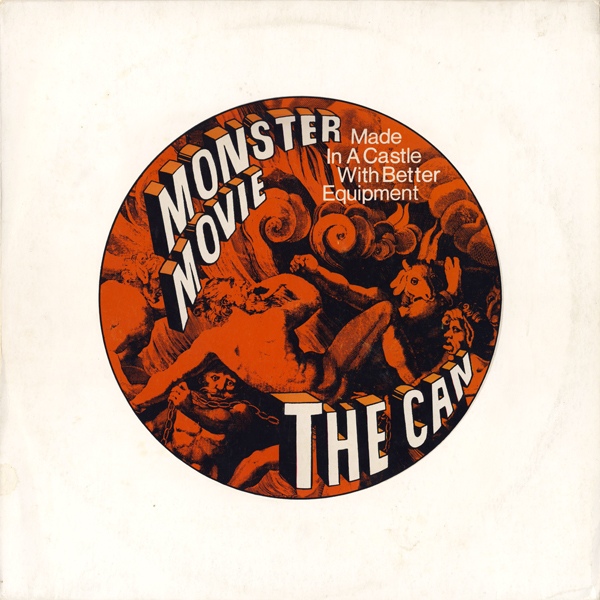
Soundtracks.
Released in 1970, Soundtracks, was Can’s sophomore album. Essentially, Soundtracks is a compilation of tracks Can wrote for the soundtracks to various films. It’s the album that marked the departure of vocalist Malcolm Mooney. Replacing him, was Japanese busker, Kenji Damo Suzuki. He features on five of the tracks, contributing percussion and vocals. The addition of Damo wasn’t the only change Can were making.
Soundtracks was a coming of age for Can. It marked a move away from the psychedelic jams of Monster Movie and a move towards their classic sound. That saw the music becoming much more experimental and avant-garde. The music took an ambient, meditative, mesmeric and thoughtful sound. This marked the beginning of what became known as Can’s classic years, when albums like Tago Mago, Ege Bamyasi and Future Days were released.
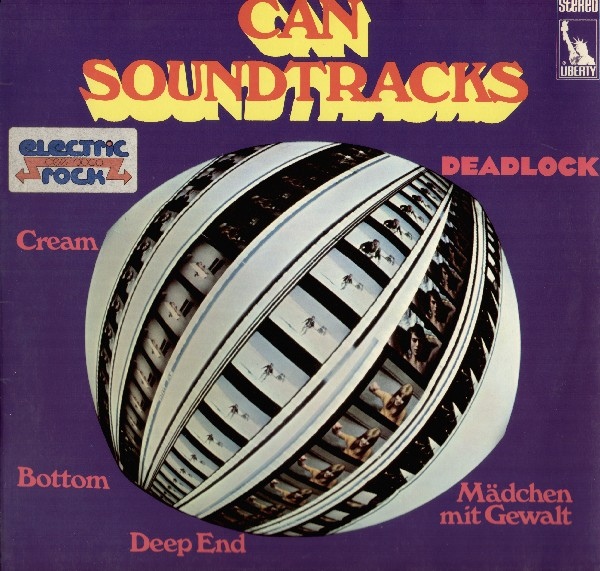
Tago Mago.
The first instalment in the golden quartet was Tago Mago. This was the first album where Kenji Damo Suzuki was a permanent member of Can. He and the rest of Can spent a year in the castle in Schloss Nörvenich. It was owned by an art collector named Mr. Vohwinkel. He allowed Can to stay at Schloss Nörvenich rent free. For what Holger described as “a poor man’s band,” this was perfect.
Holger remembers Can during this year as “just jamming and seeing what took shape. Songs started as lengthy jams and improvised pieces.” This Holger says “how Can always worked” After that, Holger edited the songs which became and the mini masterpieces featured on Tago Mago, which was four months in the making.
For four months between November 1970 and February 1971, Can recorded what would become one of their most innovative and influential albums, Tago Mago.
A double album, it featured seven groundbreaking tracks. Tago Mago was released in February 1971. Straight away, critics realised the importance of Tago Mago. Here was a game-changer of an album. It has an intensity that other albums released in 1971 lacked. Jazzier with an experimental sound, the music is mysterious, mesmeric and multilayered. It’s innovative, with genres and influences melting into one. Nuances, subtleties and surprises reveal themselves. No wonder. Can deliver an avant garde masterclass.
This comes courtesy of jazz-tinged drumming, improvised guitar playing and showboating keyboard solos. Then there was Kenji Damo Suzuki’s unique vocal style. All this, resulted in an album that was critically acclaimed, influential and innovative.
Released to widespread critical acclaim in 1971, Tago Mago was the start of a golden period for Can. Their reputation as one of the most innovative groups of the seventies started to take shape. Can had released one of the most innovative albums, Tago Mago. Holger remembers the reaction to Tago Mago. “I knew Tago Mago was an innovative album, but I never realised just how innovative an album it would become?
On Tago Mago’s release, it was hailed as their best album yet. Since then, several generations of musicians have been inspired by Tago Mago, a true Magnus Opus, that belongs in every record collection. So does the followup Ege Bamyasi.
Ege Bamyasi.
Can were on a roll. It seemed they could do no wrong. They released Spoon as a single in 1972. It reached number six in Germany, selling over 300,000 copies. That was helped no end, by the single being used as the theme to a German thriller Das Messer. It seemed nothing could go wrong for Can. The money the made from Spoon, allowed Can to hire disused cinema to record what became Ege Bamyasi.
Can adverted for a space to record their next album, Ege Bamyasi. Recording began in a disused cinema, which doubled as a recording studio and living space. The sessions at Inner Space Studio, in Weilerswist, near Cologne didn’t go well. Irmin Schmidt and Kenji Damo Suzuki took to playing marathon chess sessions. As a result, Can hadn’t enough material for an album. This resulted in Can having to work frantically to complete Ege Bamyasi. Despite this, Can were still short of material. So Spoon was added and Ege Bamyasi was completed.
Ege Bamyasi was a fusion of musical genres. Everything from jazz, ambient, world music, psychedelia, rock and electronica melted into one. When it was Ege Bamyasi released in November 1972, it was to the same critical acclaim as previous albums. Critics were won over by Can’s fourth album. It was perceived as a more accessible album than its predecessors. Just like Can’s previous albums, the quality of music was consistent.
Critics hailed Can as one of the few bands capable of creating consistent and pioneering albums. They were one of the most exciting bands of the early seventies. Can were continuing to innovate and influence musicians and music lovers alike. Just like its predecessor, Tago Mago, Ege Bamyasi is an essential part of any self respecting record collection. Having released two consecutive classic albums and their first single, it seemed nothing could go wrong for Can.
Future Days.
Despite Tago Mago and Ege Bamyasi being referred to as two of the most influential albums ever released, Holger Czukay prefers Future Days. This is the album he calls “my favourite Can album.” It was the third in Can’s golden quartet, and marked a change in direction from Can.
Future Days saw Can’s music head in the direction of ambient music. The music is atmospheric, dreamy, ethereal, melancholy, expansive and full of captivating, mesmeric rhythms. It’s also pioneering and progressive, with elements of avant garde, experimental, psychedelia and rock melting into one. Rather than songs, soundscapes describes the four tracks. Future Days and Bel Air showcase Can’s new sound. Bel Air was the Future Day’s epic. It lasted just over nineteen minutes, and sees can take you on an enthralling musical journey. Just like the rest of Future Days, critics hailed the album a classic.
On its release in August 1973, Future Days was hailed a classic by music critics. The move towards ambient music may have surprised some Can fans. However, Brian Eno was just one artist pioneering ambient music. This move towards ambient music must have pleased Holger’s guru Karlheinz Stockhausen. He must have looked on proudly as Can released the third of a quartet of classic albums. The final album in this quartet, Soon Over Babaluma was released in 1974.
Soon Over Babaluma,
Soon Over Babaluma marked the end of Can’s golden period. It was the end of a period where they were releasing some of their most innovative and groundbreaking music. There was a change of direction on Soon Over Babaluma. Can were without a vocalist. Kenji Damo Suzuki left Can and married his German girlfriend. He then became a Jehovah’s Witness. Despite the lack of a vocalist, Can continued as a quartet. They released Soon Over Babaluma in November 1974.
When Can released Soon Over Babaluma in November 1974, it received praise from critics. With a myriad of beeps, squeaks and sci-fi sounds, Soon Over Babaluma is like musical journey into another, 21st Century dimension. A musical tapestry where layers of music are intertwined during five tracks on Soon Over Babaluma. It followed in the ambient footsteps of Future Days and brought to a close the most fruitful period of Can’s career. Following the “golden quartet,” Can didn’t go into decline. Instead, Can continued to reinvent themselves and their music.
Landed.
Landed was released in September 1975. It had been recorded between February and April 1972 at Inner Space Studios. Just like previous albums, Can produced Landed. Holger and Tony Robinson mixed the first four tracks at Studio Dierks, Stommeln. The other two tracks were mixed by Holger at Inner Space Studios. These six tracks marked a change of direction from Can.
As well as a change in direction musically, Landed was the first Can album to be released on Virgin Records. Gone is the ambient sound of Soon Over Babaluma. Only Unfinished on Landed has an ambient influence. Instead, Landed has a poppy, sometimes glam influence. With uptempo, shorter songs, Landed was a much more traditional album. How would the critics react?
Critics were divided about Landed. Some critics saw Landed as the next chapter in the Can story, while others praised the album as adventurous, eclectic and innovative. Others thought Can were conforming. Surely not?
Flow Motion.
Flow Motion was Can’s eight album. As usual, it was recorded at Inner Space Studios. Produced by Can, Flow Motion was an album that drew inspiration from everything from funk, reggae, rock and jazz. It was an eclectic, genre-melting album. It’s also one of Holger Czukay’s favourite Can albums.
Holger remembers Flow Motion as an “Innovative and eclectic” album. He calls it “one of Can’s underrated albums,” Flow Motion marked a another change in Can’s way of working.
Released in October 1976, Flow Motion featured lyrics written by Peter Gilmour. This was a first. Never before, had anyone outside the band had written for Can. It worked. Can enjoyed their first UK single I Want More. It would later be recorded Fini Tribe and then Italo disco group Galaxis. With what was just their second hit single in seven years, maybe Can were about to make a commercial breakthrough?
Saw Delight.
Sadly, that wasn’t to be. Saw Delight which was released in March 1977, wasn’t the commercial success many people forecast. That’s despite the new lineup of Can embracing world music.
Joining Can were bassist Rosko Gee and percussionist and vocalist Rebop Kwaku Baah. They’d previously been members of British rock band Traffic. Rosko Gee replaced Holger on bass. Holger decided to add a percussive element, Holger added a myriad of sound-effects. This was Holger at his groundbreaking best. Experimental sounds including a wave receiver was used. The result was one of the most ambitious albums can had released.
Despite the all-star lineup and a bold, progressive and experimental album, Saw Delight wasn’t a commercial success. It was well received by critics. The problem was, Saw Delight was way ahead of its time. If it had been released in the eighties, like albums by Paul Simon or Peter Gabriel, it would’ve been a bigger commercial success. Sadly, by then Can would be no more. That was still to come. However, things weren’t well within the Can camp.
Out Of Reach.
Nine years after Can had released their debut album Monster Movie, they released their tenth album, Out Of Reach. It was released in July 1978. The title proved to be a prophetic. After all, commercial success always seemed to elude Can. Not only did Out Of Reach fail commercially, but the Out Of Reach proved to be Can’s most controversial album.
So much so, that they disowned Out Of Reach. On Out Of Reach Holger was left to add myriad of sound-effects. Bassist Rosko Gee and percussionist Rebop Kwaku Baah of Traffic returned. They were part of the problem. Holger confirms this.
When I asked him what he meant by this, he said “During the recording of Out Of Reach, I felt an outsider in my own group. I was on the outside looking in. I was on the margins. All I was doing was add sound-effects.” For Holger, he felt his group had been hijacked by Rosko Gee and and Rebop Kwaku Baah. Things got so bad, that Holger quit Can.
Rosko Gee and Rebop Kwaku Baah dominated Out Of Reach. Gone was the loose, free-flowing style of previous albums. Even Jaki Liebezeit’s play second fiddle to Baah’s overpowering percussive sounds. The only positive thing was a guitar masterclass from Michael Karoli. Apart from this, things weren’t looking good for Can. It was about to get worse though.
The critics rounded on Out Of Reach. They found very little merit in Out Of Reach. Gee and Baah were rightly blamed for the album’s failure. Even Can disliked Out Of Reach. They later disowned Out Of Reach. Despite this, Rosko Gee and and Rebop Kwaku Baah remained members of Can.
Unable to play with the necessary freedom Can were famed for, the two ex-members of Traffic stifled Can. Rebop’s percussion overpowers Jaki’s drums, which have always been part of Can’s trademark sound. At least Michael’s virtuoso guitar solos are a reminder of classic Can. A nod towards Carlos Santana, they showed Can were still capable of moments of genius. There wouldn’t be many more of these. Can would breakup after their next album.
Can.
Following the failure of Out Of Reach, the members of Can began recording what became Can. Remarkably, Rosko Gee and Rebop Kwaku Baah were still part of Can. Sadly, Holger was not longer a member of Can. He’d left during the making of Out Of Reach. His only involvement was editing Can.
Can, which is sometimes referred to as Inner Space, was released in July 1979. Again, critics weren’t impressed by Can. It received mixed reviews. No longer were Can the critic’s darlings. The music on Can was a fusion of avant garde, electronica, experimental, psychedelia and rock. Add to that, a myriad of effects including distortion and feedback, and here was an album that divided the opinion of critics. The critics agreed, it was better than Out Of Reach. They agreed that Holger was sadly missed.
Even Holger’s renowned editing skills couldn’t save Can. Try as he may, he could only work with what he was given. He did his best with Can, which the eleventh album from the group he co-founded. By the time Can was released, Holger “had come to a realisation, that it was time to go his own way.” Holger describes this as “necessary.”
Can had split-up after the release of Can. That was their swan-song. However, even before that, Holger “felt marginalised, this had been the case since Rosko Gee and Rebop Kwaku Baah became part of Can. They’d hijacked Can.” This lead to the death of a great and innovative band.
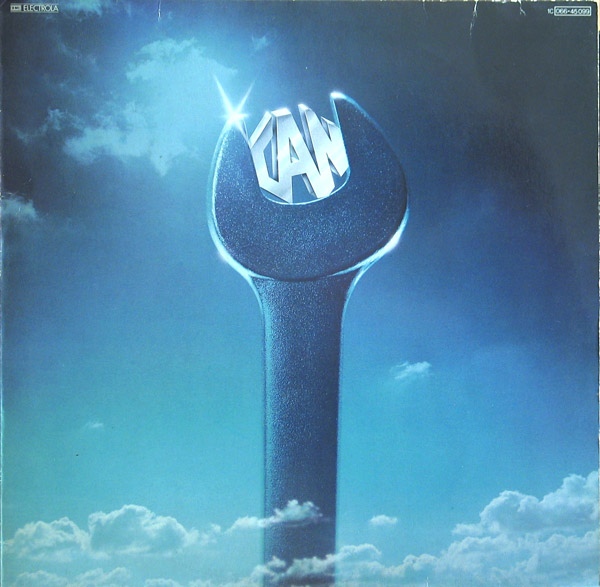
With Can now part of musical history, Irmin Schmidt, Holger Czukay, Michael Karoli and Jaki Liebezeit set about reinventing themselves. Music critics wondered whether they would form new bands or embark upon solo careers? Irmin Schmidt, Holger Czukay and Michael Karoli all embarked upon solo careers. The most prolific of the trio was Irmin Schmidt.
Since Can disbanded in 1979, Irmin Schmidt has established a reputation as the most prolific former member of Can. Irmin has written the scores for over 100 films and television programs. Some of this music features in the recently released Irmin Schmidt box set Electro Violet. This twelve disc box set, which was recently released by Mute, features not just the five volumes of the Filmmusik Anthology, but a previously unreleased sixth volume. Then there’s Irmin Schmidt’s first four solo albums, 1981s Toy Planet, 1987s Musk At Dusk and 1991s Impossible Holidays. Then there’s Irmin Schmidt’s two collaborations with Kumo, 2001s Master Of Confusion and 2008s Axolotl Eyes. The final disc in the Electro Violet box set is opera Gormenghast, which was released in 2000, and was based on Mervyn Peake’s classic novel. Gormenghast shows the versatility of Irmin Schmidt, the classically trained musician who become part of Can, one of the most successful bands of the twentieth century. Sadly, by 1980, Can was history, and it was a brave new world for Irmin Schmidt.
Filmmusik.
Just a year after Can released their swan-song, Irmin Schmidt released the first volume in his Filmmusik series. This eight track compilation, was an introduction to the music Irmin had been writing for film and television. It would become a popular, and much anticipated series, which introduced many people to Irmin’s solo music. On the first volume of Filmmusik, Irmin was joined by old friends and some new names.
Among the old friends, was Can guitarist Michael Karoli. He featured on the eight minute, cinematic epic Im Herzen Des Hurrican (Verfolgung) and Im Herzen Des Hurrican (No. 5). Michael Karoli played his part in the success of Filmmusik. So did what was a new name to many Can fans was tenor saxophonist Bruno Spoerri.
He had been making electronic music since 1965, and by 1980, the forty-five year old, was running his own studio in Zurich. This was Studio Für Elektronische Musik Spoerri, where some of the Filmmusik sessions took place. Most of the recording of Filmmusik took place at Can’s Inner Space Studio, near Cologne. This had been where Can recorded some of the best music of their career. It would be no different for Irmin Scmidt.
While the cinematic sound of Filmmusik was very different to the music Can had been releasing, it showed just how versatile a composer and musician Irmin was. He had created eight tracks that were evocative, and had the ability to paint picture’s. This was important for anyone composing music for film and television. It looked like Irmin Schmidt had a big future ahead of him. He had stepped out of the shadow of Can and was about to enjoy his moment in the spotlight.
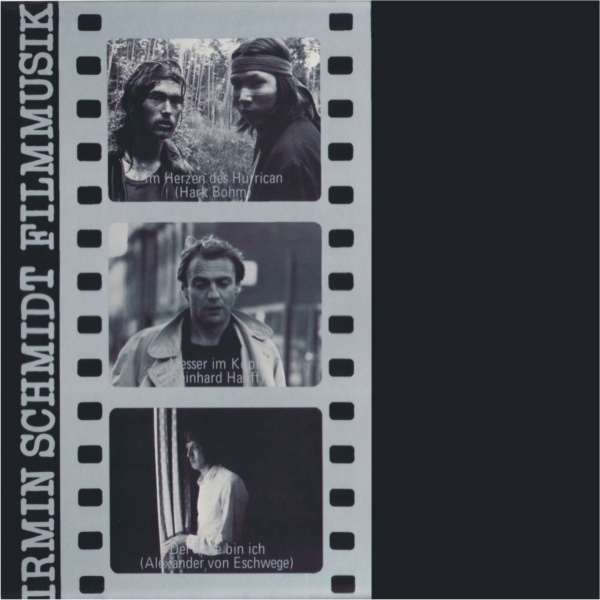
Filmmusik Volume 2.
So much so, that Irmin Schmidt released two albums during 1981. This included Filmmusik Volume 2. By then, Irmin was forging a reputation as the go-to-guy for anyone looking for a soundtrack to a film or television series in Germany. Eventually, Irmin would write over 100 scores. However, in 1981, his career was in its early days.
On Filmmusik Volume 2, it’s akin to Can reunion. Guitarist Michael Karoli and drummer Jaki Liebezeit feature on Endstation Freiheit-Titelmusik, Endstation Freiheit-Loony’s Walk and on Endstation Freiheit-Decision. So does bassist Rosko Gee. He’s replaced by Holger Czukay on Flächenbrand-Lurk and Flächenbrand-Titelmusik. Then on Die Heimsuchung Des Assistenten Jung-Man On Fire, Jaki Liebezeit added percussion. It seemed that the former bandmates were still friendly, and were happy to play on each other’s albums. Maybe, Can weren’t history after all?
That’s what some critics remarked when they saw the credits to Filmmusik Volume 2. With its all-star cast, it was a tantalising prospect. The critics weren’t disappointed when they heard Filmmusik Volume 2. It seemed Irmin Scmit was playing his part in reinventing what a soundtrack should sound like. He was just one of a new breed of composers determined to do so. However, Irmin wasn’t content to just write soundtracks. A solo career beckoned.
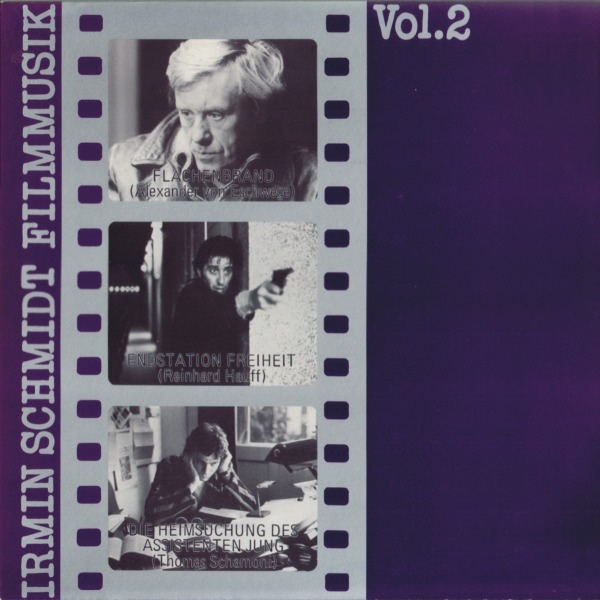
Toy Planet.
Irmin Schmidt also wanted to enjoy a solo career. This could run in parallel with his career composing soundtracks. For his debut solo album, Irmin Schmidt decided to collaborate with Bruno Spoerri, on what became Toy Planet.,
Zurich based Bruno Spoerri was two years older than Irmin. Bruno had been a pioneer of electronic music since 1965. Back then, Irmin was still studying under Karlheinz Stockhausen. However, within two years, he would be embracing new, experimental music in New York. That was sixteen years ago. Now Irmin Schmidt was regarded as a musical innovator and pioneer. His debut album would be much anticipated.
Critics and record buyers weren’t disappointed when Toy Story was released in 1981. It’s best described as a genre-melting opus. Everything from ambient, jazz and electronica, combines with rock and classical and psychedelia. There’s even a nod to the Berlin School, progressive rock and Phillip Glass, as a myriad of sounds assail you. Listening intently, instruments and sounds flit in and out. Sometimes, you question what you heard? Were there birds and a variety of animal noises on The Seven Game? Then on the title-track, futuristic and otherworldly describes what can be a haunting track. What follows is a minor musical masterpiece, which sadly, has been overlooked by the majority of music lovers since its release in 1981. Those that bought Toy Planet, eagerly awaited the followup.
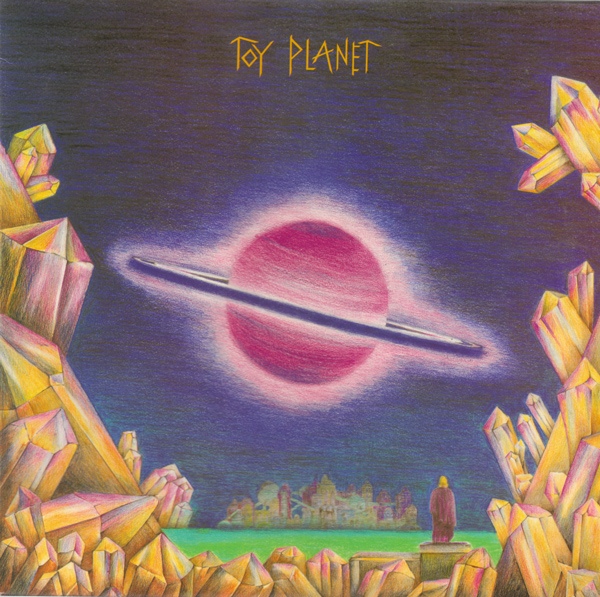
Rote Erde.
It was a long time coming. Four years to be precise. To record buyers, it seemed that Irmin Schmidt was in no hurry to release the followup to Toy Planet. That wasn’t the case.
Instead, he was just incredibly busy. Irmin had been commissioned to compose the soundtrack to Rote Erde. It was released in 1983, and featured Michael Karoli and a former member of Can, David Johnson. Rote Erde, a journey through art rock and electronica, would give Irmin Schmidt’s fans something to listen to, while he continued to work on his burgeoning soundtrack career.
Filmmuzik Volumes 3 and 4.
Proof of this, was the release of Filmmuzik Volumes 3 and 4. This double album featured another twelve tracks Irmin Scmidt had written for film and television. On some of the tracks, Irmin was joined by Michael Karoli and Jaki Liebezeit. Only Holger Czukay was missing from what would’ve been a Can reunion.
On the twelve tracks on Filmmuzik Volumes 3 and 4, Irmin Schmidt shows his versatility, as stylistically, the music shifts between disparate genres. This includes everything from classical and experimental, to jazz and rock. With a tight, talented and hugely experienced band for company, Irmin provided the soundtrack German film and television. Again, for many younger viewers, this would be their first exposure with Irmin Schmidt’s music. Given the quality of music on Filmmuzik Volumes 3 and 4, it wouldn’t be their last.
Mostly, the reviews of Filmmuzik Volumes 3 and 4 were positive. That had been the case throughout Irmin Schmidt’s career. He hadn’t released a disappointing album. However, most of Irmin’s albums had either been compilations or soundtracks. They hadn’t sold in vast quantities. It seemed that Irmin Schmidt had a small, but loyal following. However, with every release, Irmin Schmidt’s music seemed to be finding a wider audience. Maybe the release of his sophomore solo album Musk At Dusk would result in Irmin Schmidt’s music reaching a much wider audience?
Musk At Dusk.
That should’ve been the case. Can had reunited in 1986. The first Can reunion had been a success. Now Irmin Scmidt was ready to begin work on his second solo album, Musk At Dusk, some familiar faces were present. This included Michael Karoli and Jaki Liebezeit.
Only Michael Karoli had released a solo album, Deluge, his 1984 collaboration with Polly Eltes. Jaki Liebezeit was content to work as a hired gun, playing on other artist’s albums. This included Holger Czukay and Irmin Schmidt’s albums. They were fortunate to have one of the top German drummers of Krautrock era providing the heartbeat to their albums.
That was the case on Musk At Dusk. It was another stylistically eclectic album. Elements of ambient, electronica, jazz, lounge and even progressive rock shawn through, on what was another ambitious, captivating and innovative solo album from Irmin Schmidt.
Critics agreed when Musk At Dusk was released. Irmin Scmidt seemed determined to reinvent himself on the long-awaited followup to Toy Planet. Six years after the release of Toy Planet, Musk At Dusk was released in 1987.
Sadly, Musk At Dusk wasn’t a huge commercial success. A small crumb of comfort was that gradually, word seemed to be spreading about Irmin Schmidt’s music. Meanwhile, Kraftwerk were enjoying commercial success and critical acclaim. They seemed unable to do no wrong. This must have been frustrating for Irmin, whose music was no nearer to reaching a wider audience. Aged fifty, he was still regarded as an underground artist. So, Irmin Schmidt returned to composing music for film and television.
Filmmuzik Volume 5.
Two years after the release of Musk At Dusk, Irmin Schmidt released Filmmuzik Volume 5. By then, the Filmmusik series was becoming a much anticipated and highly regarded series. It showcased Irmin’s music to many people who had neither seen the films nor television programs it featured in. Back in 1989, satellite television was in its infancy.
Filmmuzik Volume 5 featured another eight eclectic tracks. Again, the Can connection was strong. Drummer Jaki Liebezeit played on Zu Nah Dran. This was the only track to feature drums. Guitarost Michael Karoli featured on Mountain Way, Rita’s Tune, Bohemian Step, Geld and Geister and Zocker. These tracks featured on an album veered between cinematic, electronic and rocky. Just like the previous volumes in the Filmmuzik series, it caught the imagination of critics and record buyers.
It didn’t matter that many of the people buying Filmmuzik Volume 5 had neither seen the films, nor television programs they were taken from. The tracks worked as standalone pieces of music. Critics agreed. They felt Irmin Scmidt was maturing as a composer with each instalment in the Filmmuzik series. Those that bought Filmmuzik Volume 5 agreed, and eagerly awaited the next instalment in this popular series. Little did they know, they would have to wait twenty-six years.
Impossible Holidays.
By 1991, Can were back on the comeback trail. This was their second reunion. Can’s popularity had grown since their last reunion in 1986. Never before, had Can been as popular. They were somewhat belatedly receiving the plaudits they so richly deserved. The Can reunion was part of one of the busiest years of Irmin Schmidt’s recent career.
Still Irmin Schmidt was busy composing music for films and television programs. Four years had passed since Irmin had released a solo album. Critics and record buyers wondered when the followup to 1987s Musk At Dusk would be released?
Little did they realise that in studios in Nice, Paris, Berin and Cologne, Irmin Schmidt had been working on his long-awaited, and much-anticipated third solo album, Impossible Holidays.
For Impossible Holidays, Irmin Schmidt worked with lyricist Duncan Fallowell. Gradually, Irmin’s third solo album Impossible Holidays began to take shape. Once the lyrics and music were written, Impossible Holidays was recorded at various studios in France and Germany.
When work began on Impossible Holidays, two familiar faces were present. Can drummer Jaki Liebezeit and guitarist Michael Karoli. Bassist Franck Ema-Otu, a long term collaborator of Irmin Schmidt was present. He had also played on Michael Karoli’s 1984 debut solo album Deluge. Along with backing vocalists and session players, Irmin and co-producer Gareth Jones recorded Impossible Holidays. This they hoped would be Irmin’s breakthrough solo album.
Impossible Holidays was released in 1991, when Irmin Scmidt was fifty-five. He was approaching veteran status, and was regarded as one of the finest German composers of soundtracks for film and television programs. However, Irmin’s solo career had proved disappointing. He had released a two critically acclaimed solo albums. Sadly, neither Toy Planet nor Musk At Dusk had been sold in vast quantities. Maybe Impossible Holidays would be a game-changer for Irmin Schmidt?
When Impossible Holidays was released, reviews were positive. Irmin Schmidt was regarded as one of the grand old men of Germen music. However, he was still regarded as an innovator, and someone who was capable of releasing ambitious, groundbreaking music. Impossible Holidays was no different.
Elements of avant garde, electronica, Krautrock and rock could be heard on Impossible Holidays. So could something that no previous Irmin Schmidt solo album featured…lyrics. They came courtesy of Irmin, while Claudia Stülpner, Gitte Haenning and Özay Fecht added backing vocals. Despite these stylistic changes, Impossible Holidays didn’t sell in huge quantities. While more people had discovered Impossible Holidays, Irmin Schmidt was still one of music’s best kept secrets.
Masters Of Confusion.
Just a year after the release of Gormenghast, Irmin Schmidt returned with Masters Of Confusion, his first collaboration with Kuno. Irmin had met Kuno when recording Gormenghast.
Kuno was none other that Jono Podmore, who co-produced Gormenghast with Irmin. Just like Irmin, Jono was a musical adventurer. He had released two solo albums, 1997s Kaminari and 2000s 1+1=1. It was an album of drum ’n’ bass, which was released by Mute, the same label that Irmin was signed to. After the release of Gormenghast, Irmin and Kuno decided to collaborate. The result was Masters Of Confusion.
When Masters Of Confusion was released in 2001, critics were aghast. They couldn’t help but admire Irmin Schmidt’s ambition and bravery. Masters Of Confusion was totally unlike anything that Irmin Schmidt had released in a career spanning five decades. He had taken a huge leap of faith, which was rewarded when a new generation of music lovers embraced Masters Of Confusion, a journey through drum ’n’ bass, ambient and experimental music. Suddenly, Irmin Schmidt was the toast of dance-floors in clubs across Europe. So Irmin Schmidt and Kuno returned with the followup Axolotl Eyes. This however, took time.

Axolotl Eyes.
Seven years passed before Irmin Schmidt and Kuno returned with the followup Axolotl Eyes. It was released in 2008, and just like Masters Of Confusion, was an eclectic album.
Irmin Schmidt and Kuno took listeners on a roller coaster journey through avant garde, cinematic, dark ambient, experimental and even Krautrock. This was a return to Irmin’s musical roots, and the glory days of Can. That was fitting
Since the release of Masters Of Confusion in 2001, Can guitarist Michael Karoli was dead. Irmin’s longtime collaborator and friend, had died on 17th November 2001 in Essen, Germany. It seemed fitting that Irmin Schmidt and Kuno revisited Krautrock on Axolotl Eyes.
When Axolotl Eyes was released in 2008, seven years had passed since Masters Of Confusion took dance-floors by storm. Seven years is a long time in dance music. During that period, genres came and went. Luckily, Axolotl Eyes wasn’t a remake of Masters Of Confusion. Far from it.
Axolotl Eyes was hailed an ambitious and groundbreaking album. It was released to critical acclaim. Partly, this was because Irmin Schmidt was never determined to stand still. Constantly, he was looking to reinvent his music. He had never released the same album twice, and wasn’t going to start after five decades.
Filmmusik Volume 6.
Since the release of Axolotl Eyes in 2008, Irmin Schmidt has been busy. He provided the soundtrack to Wim Wenders’ film Palermo Shooting. It as released in 2008. Then in 2009, Irmin collaborated with Inner Space Production on Kamasutra-Vollendung Der Liebe. Since then, Irmin Schmidt has been kept busy.
He continues to write music for film, theatre and television. As of 2015, Irmin Schmidt had written over 100 film and television soundtracks. This meant there was plenty of material for at least another volume in the Filmmusik series.
Twenty-six years had passed since Irmin Schmidt had released Filmmusik Volume 5 in 1989. Since then, nothing. That was until recently, when Mute announced the release of the twelve disc Electro Violet box set. The good news was, that included in this luxurious and lovingly compiled box set was Filmmusik Volume 6. This brought the story of Irmin Schmidt’s soundtrack career up to date. The seventy-eight year old hasn’t lost his magic touch, and is still able to create music that evocative, emotive and most importantly, cinematic. It helps tell the story. However, the music on Filmmusik Volume 6 works as standalone pieces of music. They feature the same quality that one expects from Irmin Schmidt. That’s not surprising.
Throughout a career that’s spanned five decades, Irmin Schmidt has been regarded as a musical innovator. While that’s an oft-overused word, in the case of Irmin Schmidt, innovator describes one of the greatest musicians of his generation.
That’s been the case from Irmin Schmidt’s days with Can, right through to his solo years and the various collaborations he’s been involved with. Much of Irmin Schmidt’s post-Can career has been spent composing soundtracks for film, theatre and television. A tantalising taste of this can be found on the six volumes of Filmmuzik. That’s not forgetting Irmin’s first three solo albums, 1981s Toy Planet, 1987s Musk At Dusk and 1991s Impossible Holidays. Then the opera Gormenghast, which was released in 2000. It lead to Irmin Schmidt’s two collaborations with Kumo, 2001s Master Of Confusion and 2008s Axolotl Eyes, which closes the Electro Violet box set.
The Electro Violet box set is a celebration of the first five decades in Irmin Schmidt’s post can career. Throughout what has been a long and illustrious career, Irmin Schmidt has released music that’s ambitious, innovative, inspiring and influential. Irmin Schmidt is a musical visionary, who as a member of Can, and as a solo artist, has released groundbreaking music that was often, way ahead of the curve. A reminder of this is the music in the Electro Violet box set, which like the music of Can, will forever influence and inspire further generations of musicians and continue to captivate discerning music lovers.
IRMIN SCHMIDT-ELECTRO VIOLET BOX SET-IMPORT.

BLACK SABBATH-PARANOID-IMPORT.
BLACK SABBATH-PARANOID-IMPORT.
Just seven months after Black Sabbath released their eponymous debut album in February 1970, they were back with the album that defined their career, Paranoid. It was released in September 1970 and features three Black Sabbath classics Paranoid, Iron Man and War Pigs. They’ve since become staples of Black Sabbath’s live performances. They’re also three reasons why Paranoid, which has just been reissued by Rhino on import, as a two disc set, sold twelve-million copies. Incredibly, Black Sabbath had only been formed two years earlier.
In 1968, guitarist Tony Iommi and drummer Bill Ward found themselves with a band. Mythology, their previous band had just split-up. Tony and Bill decided to form a new band. So they got in touch with vocalist Ozzy Osbourne and bassist Geezer Butler. Ozzy had placed an advert in a local music shop saying “Ozzy Zig Needs Gig.” They were joined by slide guitarist Jimmy Phillips and saxophonist Alan Clarke. This was the birth of what would later become Black Sabbath.
At first, the new band was called The Polka Tulk Blues Band. This was shortened to Polka Tulk, and later, Earth. The band’s name wasn’t the only thing that changed. So did the lineup.
Tony Iommi became concerned that Jimmy Phillips and lan Clarke weren’t taking the band seriously. So they hatched a plan. Earth would breakup, and straight away, reform as a quartet. The quartet were still called Earth and recorded several demos. These demos were penned written by Norman Haines. Among them were The Rebel, Song For Jim and When I Came Down. It looked as if Earth were going places. Then in December 1968, another member of Earth left.
This was Tony Iommi. He left to join Jethro Tull and featured on the Rolling Stones’ Rock and Roll Circus television show. He didn’t spent long as a member of Jethro Tull. No. Unhappy with the direction Jethro Tull were heading, Tony rejoined Earth. Tony’s time working alongside Ian Anderson inspired him. Now he was determined that Earth were going to become a successful band.
Before long, Earth realised that there was a problem. With another band called Earth, this was causing confusion. So, when the members of Earth noticed that a cinema near their rehearsal room was showing a rerun of Moris Bava’s horror film Black Sabbath, which starred the inimitable Boris Karloff, they were inspired to write a song.
The inspiration was seeing people queue up to watch horror film. Essentially, people were paying to be scared. This the band felt was strange. So Ozzy and Geezer penned Black Sabbath, which was inspired by writer Dennis Wheatley. The lyrics were dark and gothic. Indeed, the song was later referred to as: ”probably the most evil song ever written” by Rob Halford of Judas Priest. Having written this dark opus, Earth decided to change their name to Black Sabbath.
Black Sabbath made their debut in Workington, in Cumbria on 30th August 1969. Four months later, in November 1969, Black Sabbath signed to Phillips Records. They released their debut single Evil Woman through Vertigo Records, which was Phillips Records’ new prog rock label. After appearing on BBC radio, Black Sabbath began work on their debut album.
With producer Rodger Bain, Black Sabbath began recording their debut album. Ominously, Black Sabbath was released on 13th February 1970. It wasn’t a case of unlucky for Black Sabbath. Their debut reached number eight in the UK and number twenty-three in the US Billboard 200. Despite mixed reviews, Black Sabbath was certified gold in the UK and platinum in the US. Just two years after they formed, Black Sabbath were one of the most successful of a new generation of rock bands. Their sophomore album Paranoid would be a game-changer.
Geezer Butler wrote the lyrics to six of the eight tracks on Paranoid. The exception were Planet Caravan and Fairies Wear Boots, which Geezer and Ozzy penned. Black Sabbath wrote the music the eight tracks. These tracks would be recorded at two studios in London.
Recording of Paranoid took place in Regent Sound Studios and Island Studios, in London. Geezer played bass, Tony guitar and flute and Bill Ward drums and congas. Tom Allom played piano on Planet Caravan. Producing Paranoid was Rodger Bain, who’d produced Black Sabbath. Once Paranoid was completed, it was released in September 1970 in the UK and Europe. Paranoid wasn’t released until January 1971.
On the release of Paranoid in September 1970, it reached number one and was certified gold. Then in January 1971, Paranoid reached number twelve and was certified platinum four times over. Ironically, in the US, Paranoid wasn’t well received by critics. Just like Black Sabbath, Paranoid was slated. Black Sabbath, as you’ll realise, had the last laugh.
Opening Paranoid is War Pigs, an anti Vietnam War song. Here, Black Sabbath provide a slow, moody backdrop. The rhythm section and flourishes of searing guitar are joined by wailing sirens. They set the scene for Ozzy. His angry, frustrated vocal is the signal for Black Sabbath to become a power trio. Guitar doubles are panned left and right, balancing he mix. Meanwhile, the rhythm section drive the arrangement along. A buzzing bass, blistering guitar and pounding drums provide the backdrop for Ozzy’s strutting vocal. The result is not just one of the best anti-war songs you’ll hear, but a Black Sabbath classic.
Make that two. Paranoid is another Black Sabbath classic. From the opening bars, the track is instantly recognisable. It’s like meeting old friends. They just happen to be raucous, rabble rousers. Black Sabbath burst into life. They’re at their rockiest best. Machine gun guitars join the driving, rhythm section. Listening to Ozzy’s grizzled vocal, it’s as if he can empathise with the character in the song. It’s as if he’s experienced and suffered the paranoia he’s singing about. That, together with a blistering performance from Tony, Geezer and Bill made this a heavy metal classic.
Planet Caravan sees a change in direction from Black Sabbath. They head in the direction of psychedelia. Ozzy’s distant, lysergic vocal is full of mystery, while the arrangement meanders along, bathed in echo. The rhythm section and guitar take care never to overpower Ozzy’s vocal. Later, Tony’s guitar references Peter Green of Fleetwood Man. Understated, lysergic and psychedelic it’s another side of Black Sabbath, one I’d like to hear more of.
Iron Man sees a return to heavy metal. Drums pound relentlessly before menacingly, Ozzy announces “I am Iron Man.” From there, Black Sabbath are back doing what they do best, playing heavy metal. Tony delivers a guitar masterclass, while the rhythm section lock into a groove, becoming one. Ozzy’s vocal is a mixture of menace and raw power as he sings about a time traveller. It’s Tony that steals the show. His guitar playing is some of the best on Paranoid.
Menacing describes the introduction to Electric Funeral. That’s down to the rhythm section, Tony’s guitar playing and Ozzy’s vocal. Black Sabbath become one. The tempo is slow and sounds dark and dramatic. There’s even a nod to prog rock. Mostly, though it’s Black Sabbath’s unique brand of heavy metal. With Tony wielding his guitar like a musical wizard, Ozzy vamps his way through the track, singing about a futuristic world. He mixes menace, drama and theatre. Then later, the rhythm section want in on the act. When the baton is passed from Tony’s guitar, they enjoy their moment in the sun. They prove that Black Sabbath wasn’t just a one man band.
Hand Of Doom was written by Black Sabbath after noticing the number of American soldiers arriving in the UK. Many of them were traumatised, and resorted to taking drugs to blot out the horrors they’d witnessed. Sadly, the drugs destroy them. As a result, there’s a darkness to this song. Dark and dramatic. The arrangement meanders along, understated before exploding into life. Ozzy unleashes a vocal that brings to life the horrors these soldiers have witnessed. Anger, frustration and pain fills his vocal as the arrangement builds and grows. Soon, Black Sabbath are in full flow. That’s a joy to behold. Especially, as machine gun guitars are unleashed and Ozzy delivers one of his finest vocals on Paranoid.
Rat Salad sees Black Sabbath return to their blues’ roots. They jam, mixing blues, jazz and rock. It’s a case of sitting back and enjoying this musical masterclass. Whether playing as a unit or unleashing solos, Black Sabbath are peerless. They’re a power trio par excellence. Geezer’s bass playing, Bill’s drumming and Tony’s guitar solos play their part in delicious jam.
Closing Paranoid is Fairies Wear Boots. Blistering guitars and the rhythm section lock horns. They drive the rocky arrangement along. Bill’s around the kit, while Tony’s fingers flit up and down the fretboard. Geezer joins Bill in glueing everything together. Then having enjoyed their moment in the sun, Ozzy struts centre-stage. His grizzled, rocky vocal is the perfect accompaniment to one of the hardest rocking arrangements. It’s as if Black Sabbath are determined to lift their game one last time. This they do, closing Paranoid on blistering rocky high.
Whilst Paranoid wan’t released to the critical acclaim that accompanies many classic albums, it’s gone on to become one of the most important albums in the history of heavy metal. It redefined heavy metal. So much so, that Paranoid became the blueprint for the genre. If someone asked what heavy metal sounded like, Paranoid was the album to play them. Indeed, in the history of heavy metal, there are only two periods, B.P. and A.P. Before Paranoid and After Paranoid. Ironically, music critics panned Paranoid.
Among them was the so called doyen of critics Lester Bangs. This self styled tastemaker seemed to have a downer on Black Sabbath. Along with many American critics, they felt the album was too heavy. Then there were criticism of the aggression and satanic lyrics. Not for the first time, the critics got it wrong.
Paranoid was certified platinum four times over in the UK. It was the album that rewrote the rules of heavy metal. Now it was a case of the heavier the better when it came to heavy metal. At the forefront were Black Sabbath. Eventually, Paranoid sold twelve million copies worldwide and Black Sabbath became a musical phenomena.
Right through until 1981s Mob Rules, gold and platinum discs came Black Sabbath’s way. So did controversy. Much of it concerned Ozzy Osbourne. He parted company with the band in 1979. Sacked by the group he formed, both Ozzy and Black Sabbath survived to tell the tale. However, back in 1970, the Black Sabbath story was just beginning.
It started with Black Sabbath in February 1970 and then Paranoid in September 1970. Since then, critics have reappraised Paranoid and belatedly, realised it was actually a classic. Twelve million people could’ve told them that Paranoid was a stonewall classic. That’s why it’s fitting that Paranoid will be reissued by Rhino on import, as a two disc set. It’s a celebration of what’s a classic album. I’d go much further than that. I’d say that Paranoid, Black Sabbath’s 1970 sophomore album was a groundbreaking release. Paranoid saw Black Sabbath rewrite the rules of heavy metal, with what was the most successful and most innovative album of their long and illustrious career, Paranoid.
BLACK SABBATH-PARANOID-IMPORT.
AGITATION FREE-2ND.
AGITATION FREE-2ND.
Berlin, 1967. That was where the Agitation Free story began. That was when Lutz ‘Lüül’ Ulrich, Michael ‘Fame’ Günther, Lutz ‘Ludwig’ Kramer and Christoph Franke formed Agitation. This new band quickly established a reputation as one of the pioneers of Berlin’s underground music scene.
When Agitation played live, their sets were like the “happenings” that were popular in London, New York and San Francisco’s underground scenes. At clubs like UFO in London, Pink Floyd played against a backdrop of liquid projectors. So did Agitation, who were also establishing a cult following.
Crowds packed Berlin’s clubs to see Agitation play. When Agitation took to the stage, it quickly became apparent that their music was a fusion of disparate influences. They improvised, playing with a freedom during sets that featured innovative improvised pieces. Agitation seamlessly combined elements of free jazz, rock and avant garde with electronic, trance and world music. As they played, liquid projectors were used to show slides and short films made my members of Agitation. This added lysergic backdrop to Agitation’s set, which was much more than a concert. Instead, it was a multi-media event, or “happening.” Members of the audience and other club owners were captivated.
Berlin in the late-sixties had a thriving underground arts and music scene. New clubs had opened, including the Zodiak Free Arts Lab in West Berlin. It had been founded in 1968, at the height of the psychedelic era by Hans-Joachim Roedelius and Conrad Schnitzler. Soon, all the freelance musicians in Berlin made their way to Zodiak Free Arts Lab. This included members of Can, Tangerine Dream, Ash Ra and Neu! However, in 1968, the Zodiak Free Arts Lab’s new house band was Agitation. For what was a relatively new band, this was a coup.
Being the Zodiak Free Arts Lab’s house band lifted Agitation’s profile. It was where the great and good of Berlin’s music scene met. They were joined by artists, poets, writers, philosophers and sometimes, revolutionaries plotting change. Meanwhile, Agitation concentrated on honing their sound. A new member had joined the band.
This was vocalist John L. His addition meant that Agitation were now a six piece band. However, John L’s addition proved to be a controversial, and short-lived one.
John L was sacked by Agitation within a year. It’s thought that this was down to John L’s habit of taking to the stage naked. This didn’t go down well, and within a year, John L exited stage left. However, after John L’s departure, Agitation got the opportunity to play at a prestigious festival.
This happened in early 1970, when Agitation were invited to play at the First German Progressive Pop Festival, at the Berliner Sportpalast. By then, Agitation’s star was in the ascendancy. They had collaborated with John Cage, Erhard Großkopf, Peter Michael Hamel and Ladislav Kupkovi at The Electronic Beat Studio. So, it was no surprise that Agitation were invited to appear at such an important festival. It seemed the dawn of a new decade coincided with an improvement in Agitation’s fortunes. That proved not to be the case.
Instead, two original members of Agitation left the band during 1970. The first was Ludwig Kramer, who was replaced by Ax Genrich. Not long after he joined Agitation, Guru Guru asked if they could “borrow” Ax Genrich. Agitation agreed, but Ax Genrich never returned. To make matters worse, Christoph Franke left to join Tangerine Dream. He became the third departure from Agitation. They were looking for two new recruits.
The first was guitarist Jörg Schwenke, who replaced Ax Genrich. Then Gerd Klemke was drafted in. However, was only a member for a year, and in 1971, Agitation’s lineup changed again.
With Gerd Klemke heading for the exit door, two new names joined Agitation. The first was synth player Michael Hoenig. Next to join Agitation was drummer and vocalist Burghard Rausch. These two additions became the classic lineup of what became Agitation Free.
In the early seventies, Agitation discovered that there was another band with the same name. At that time, Agitation were due to play a free concert, and free was added to the name. This just happened to coincide with an upturn in the band’s fortunes.
1972 was the most important year in Agitation Free’s five year career. Agitation Free who were now a quintet, at last had a stable lineup. They were now regarded as one of the most innovative groups of the Berlin School. So much so, that in 1972, Agitation Free were sponsored by the Goethe-Institut, a German cultural association, to tour Egypt, Greece, Lebanon and Cyprus. This tour proved inspirational, and inspired Agitation Free’s debut album, Malesch.
Malesch.
On Agitation Free’s return to Berlin, they had been inspired by their journey to the Near East. Part of the inspiration was the sights and sound of their recent tour. Essentially, Malesch was a fusion of exotic Near Eastern sounds which were combined with Agitation Free’s trademark sound.
When Agitation Free entered Audio Tonstudio, in Berlin on February 25th 1972, they were joined by recordist Stan Regal and producers Wolfgang Sander and Peter Strecker. They would guide the five members of Agitation Free sound the recording process.
Without a producer, recording Malesch would’ve proved difficult. Malesch was Agitation Free’s debut album. They also planned to use an eclectic and exotic sounding selection of instruments on Malesch. This was perfect for their purpose.
Guitarist Jörg Schwenk was joined by Lutz Ulbrich on zither and keyboards. Burghard Rausch played drums, percussion and added vocals. Michael Hoenig switched between synths, keyboards and steel guitar; while bassist Michael Günther also took charge of live tapes. This mixture of tradition instruments and technology would play their part on the seven soundscapes that would eventually feature on Malesch.
Malesch was released later in 1972, on the Music Factory label. The critics who reviewed Malesch, were immediately won over by what his hailed as an innovative, genre-melting album. Elements of free jazz, rock and avant garde, rub shoulders with ambient, progressive rock, psychedelia, electronic, world music and Krautrock. However, it’s not just musical genres that combine.
Layers of music intertwine on Malesch, resulting in spacey, intricate, leisurely, luxuriant, exotic and sometimes smooth and sumptuous music. Other times, the music’s mesmeric, or there’s an element of drama. Especially as guitars duel, in what seems like a fight to the death. Always, though, the music is innovative, as Agiation Free push musical boundaries. Despite this, Malesch wasn’t a huge commercial success.
While Malesch was a popular album, it seemed as if Agitation Free were destined to be forever, an underground band. That was until they were invited to perform at the 1972 Munich Olympics.
Playing at the Munich Olympics meant that people from all over the world heard Agitation Free’s music. This was publicity money couldn’t buy. However, Agitation Free were no strangers to playing live.
By 1972, Agitation Free had been constantly touring Europe for the past few years. This was the only way to build an audience. It was also the only way to promote Malesch. So Agitation Free embarked on arduous and gruelling tour.
In early 1973, Agitation Free were in France, on their first French tour. For two months, Agitation Free played in concert halls the length and breadth of France. Then on their return home, Agitation Free were asked to join the biggest names in German music.
The German Rock Super Concert was due to take place in May 1973, in Frankfurt. Agitation Free were asked to appear. This was a huge honour, and meant that Agitation Free’s music would be heard by a much wider audience. This was perfect timing, as Agitation Free were about to record their sophomore album 2nd
2nd.
Agitation Free decided to record 2nd during July 1973. It had been a busy year for the group, with their two month tour of France and preparing for German Rock Super Concert. Then there were other live appearances in Germany. So finding time to record an album, wasn’t easy. However, found time during July 1973, where they locked themselves away in the studio.
This time, Agitation Free decided to head to Munich, where they recorded 2nd at Studio 70. It was the first recording session with the latest member of Agitation Free, guitarist Stefan Diez.
He had replaced Jörg Schwenk, who had left the band. This was unfortunate timing, as Agitation Free had a settled lineup. Now the latest recruit would have to earn his stripes in Agitation Free’s rhythm section.
For 2nd, Agitation Free’s rhythm section featured Burghard Rausch on drums, percussion, mellotron and vocals; bassist Michael Günther; and guitarists Stefan Diez and Lutz Ulbrich who also played bouzouki. Michael Hoenig, the final member of Agitation Free played keyboards and synths. Unlike Malesch, 2nd was produced by Agitation Free, and released later in 1974.
For Agitation Free it was a familiar story. Critical acclaim accompanied the release of 2nd, but the album failed to sell in vast quantities. Agitation Free seemed destined to forever be a cult band. That sadly, proved to be the case. It shouldn’t have been, given the quality of music on 2nd.
First Communication opens 2nd, and almost explodes into life. It’s like being in a rock as it heads for a distant galaxy. Especially with a myriad of sci-fi sounds flitting in and out. Meanwhile,urgent flourishes of keyboards are joined by slow, crystalline guitars. They’re joined by keyboards as the lysergic arrangement meanders, lazily along. Guitars are panned left and right, complimenting each other, while the rhythm section provide the heartbeat.Stealing the show is the guitar panned right. It soars above the arrangement, a spellbinding, searing solo. As it shimmers and bristles, a Hammond organ enters, adding another layer. Soon the chiming guitar panned left enjoys a moment in the sun. Fingers fly up and down the fretboard as another stunning solo takes shape. It’s aided and abetted by the second guitar, which interjects, but is played tenderly and subtly. By then, every member of Agitation Free has played their part in sound and success of this eight minute epic, where musical genres seamlessly unite.
A dramatic crash of a piano opens Laila, Part 1. After it dissipates, a chiming guitar enters. Gradually, the understated arrangement changes course. Searing rocky guitars join the rhythm section as Agitation Free freewheel into a glorious slice of timeless rocky music.
It’s all change on Laila, Part 2. Washes of Hammond organ provide a backdrop that’s been inspired by progressive rock. With the rhythm section and guitars playing as one, there’s no showboating. That’s until the first guitar solo. The guitar panned left takes centre-stage, as the rest of the band provide a driving backdrop. Then the second guitar steps forward. It seems to have been inspired by the first solo. What follows is a game of daring do, with each guitarist trying to outdo the other. At one point, jazzy runs are tinged with hints of rock. By then, the second guitar is augmenting the first guitar. Their performance inspires the rest of the band, as they head for home, having combined elements of jazz, progressive rock, psychedelia and rock. As they do, Agitation Free show why in 1973, they were considered one of the leading lights and innovators of the German music scene.
As In The Silence Of The Morning unfolds, it’s as if a code is being tapped up. Birdsong interjects as Agitation Free experiment. They combine ambient and avant garde, before slowly, the arrangement takes shape. Burghard Rausch keeps the beat playing just the ride. Meanwhile, a slow, probing bass, washes of Hammond organ and dual guitars combine. Agitation Free play slowly, creating a moody groove. Still, the sci-fi sounds punctuate the arrangement. So does a crystalline guitar solo. The second guitar plays a supporting role. His time will come. By now, Agitation Free are combining jazz, rock, avant garde and progressive rock. This results is a track that’s variously laid-back, melodic, mesmeric, innovative, futuristic and cinematic. That’s thanks to multitalented, musical alchemists Agitation Free.
A Quiet Walk finds Agitation Free putting their trusty tapes to good use. They’re augmented by a bass, guitar and synths. For just over four minutes, they’re part of what sounds like an ambient soundscape. This allows the listener to let their imagination run riot. Understated and minimalist, sounds and instruments drift in and out. It’s up the listener to supply to pictures to this soundtrack as they enjoy A Quiet Walk. Then as futuristic, sci-fi sounds beep and squeak, and a dramatic, droning organ plays, this is a signal that things are about to change. Agitation Free are stirring. An acoustic guitar plays, adding a Celtic influence. A bristling, searing guitar flits in and out, wah-wah-ing, while a hand drums is panned left. They’re playing supporting roles to the urgent acoustic guitar, and compliment it perfectly on what’s not just A Quiet Walk, but an enjoyable one.
Closing 2nd is Haunted Island. From the opening bars, there’s an eerie, otherworldly sound. Especially when the haunting, whispery vocals enter. They sound as if they belong on an early seventies progressive rock album. Soon, though, the vocals drop out, and what sounds like gusts of wind join a droning organ. They sit well together, as Agitation Free head for the Haunted Island. Later the rhythm section join keyboards, and the vocal returns. Synths strings, a bounding bass and blistering guitars are added. Soon another solo is underway. What follows is a guitar masterclass. It seems to lift the rest of the band, as they head for home on what’s been a career defining album…2nd.
Agitation Free should’ve built on 2nd. However, by 1974, all the years spent touring was beginning to take its toll. Agitation Free had also taken port in an experimental radio program, which was a forerunner of reality television. This “fly on the wall” documentary gave listeners an insight into life within Agitation Free. Sadly, all wasn’t well.
In 1974, the band split-up, and the five members went their separate ways. Agitation Free’s swan-song was 2nd, released in 1973. 2nd was a groundbreaking album where the Berlin based musical alchemists released what was a career defining album.
Partly, that was because Agitation Free refused to stand still. Instead, their music changed on 2nd. It was a very different album from Malesch. Elements of ambient, avant garde, electronic, jazz, progressive rock, psychedelia and rock are combined by Agitation Free. The result was an album that should’ve transformed Agitation Free’s fortunes.
That wasn’t the case. When Vertigo released 2nd, it pass record buyers by. Just like so many German bands of this era, commercial success eluded Agitation Free. The relentless and gruelling touring schedule had all been for nothing, and in 1974, Agitation Free went their separate ways.
Despite the demise of Agitation Free, a third album, Last, was released in 1976 on the Barclay label. By then, the five members of Agitation Free had embarked on solo careers.
When Last was released in 1976, Agitation Free part of Germany’s illustrious and rich musical history. Last was a reminder of what Agitation Free were capable of. Agitation Free were the nearly men, who could’ve sat at the top table of German music. Malesch and 2nd are a reminder of that.
AGITATION FREE-2ND.


THE BATHERS ARE BACK, AND ON THE COMEBACK TRAIL.
THE BATHERS ARE BACK, AND ON THE COMEBACK TRAIL.
Nowadays, anniversaries are a cause for celebration in music. They’re also the perfect excuse for record companies to reissue an album. Especially, if it happens to be a the twenty-fifth or thirtieth anniversary of an album’s release. This gives a record company the perfect excuse for record companies to reissue albums on a myriad of formats. That was the case last year, and in previous years.
Last year, not only were their reissues celebrating the twenty-fifth or thirtieth anniversary of an album’s release, but reissues celebrating the thirty-fifth and forty-fifth anniversary of an albums release. For the umpteenth time, record buyers were expected to by yet another copy of an album they’ve bought countless times before. Many people did, and welcomed what were often, lavish and luxuriant reissues. They were seen as the perfect way to celebrate a whole host of important musical anniversaries. Sadly, one important anniversary passed unnoticed.
2015 marked the thirtieth anniversary of a Scottish musical institution, The Bathers. They were formed in Glasgow, in 1985, by singer, songwriter and troubled troubadour Chris Thomson.
Between 1987 and 1999, The Bathers released six albums of critically acclaimed music. Despite this critical acclaim, The Bathers remained Scottish music’s best kept musical secrets. Things should’ve been so different for The Bathers.
With Chris Thomson at the helm, the Glasgow based quintet could’ve, and should’ve, been one the biggest Scottish bands ever. After all, The Bathers music was variously articulate, beautiful, dramatic, ethereal and elegiac It was also emotive, languid, literate and melancholy. This is music for those that have loved, lost and survived to tell the tale. Sadly, however, The Bathers never reached the heady heights their music deserved. As a result, the six albums The Bathers released between 1987s Unusual Places To Die and 1999s Pandemonia, never reached the audience it deserved. Since then, it’s all been quiet on The Bathers front.
After Pandemonia, many critics thought that The Bathers would return with a new album after two or three years. The Bathers never were, the most prolific band. Instead, The Bathers were like master craftsman, gradually creating a mini musical masterpiece. Sadly, not this time.
Two years became three, and three became four. Soon, five years had passed. Five became ten, and ten became fifteen. By now, many Bathers’ devotees had realise that it was highly unlikely that The Bathers would release another album. It seemed The Bathers’ story was over. Or was it?
Last year, I heard that Chris Thomson was in the process of recording some new music with The Bathers. These rumours weren’t new. Every couple of years they seemed to circulate. This time, though, there seemed some substance to the rumours. However, surely The Bathers weren’t on the comeback trail?
Then on 20th October 2015, came the announcement that The Bathers would be playing at The Celtic Connections festival on 21st January 2016. Cue celebrations from Bathers fans all over the globe. Flights are booked by expats, who have decided to head back to Caledonia to see The Bathers as the hit the comeback trail. It would be the first Bathers gig in a long time.
The last time The Bathers took to the stage, was with James Grant of Love and Money in June 2015. They even recorded a love session for BBC Scotland. However, nobody thought that The Bathers were about to awake from their slumbers.
Three days before Christmas, came the announcement that The Bathers were playing a second date at The Celtic Connections festival on 22nd January 2016 at The Mackintosh Church. However, that wasn’t the end of the good news. There was more to come.
The rumours that The Bathers were about to release a new album were getting stronger. It looked increasingly possible that The Bathers were going to release their seventh album, and first in seventeen years. This was almost too good to be true. However, it seems that The Bathers were release their comeback album later in 2016, some thirty-one years after Chris Thomson founded The Bathers.
The Bathers were formed in Glasgow in 1985. They formed after Chris Thomson’s previous group Friends Again split up. Initially, The Bathers were a vehicle for singer-songwriter Chris Thomson. However, in 1987, The Bathers secured their first record deal with Go! Discs Records, and released their debut album Unusual Places To Die.
The Bathers were formed in Glasgow in 1985. They formed after Chris Thomson’s previous group Friends Again split up. Initially, The Bathers were a vehicle for singer-songwriter Chris Thomson. However, in 1987, The Bathers secured their first record deal with Go! Discs Records, and released their debut album Unusual Places To Die.
Unusual Places To Die.
For their debut album Unusual Places To Die, Chris Thomson penned ten tracks. These tracks were recorded by The Bathers’ original lineup. This included bassist Sam Loup, drummer James Locke and Chris on guitar and keyboards. Joining The Bathers, were Michael Peden of The Chimes, Douglas Macintyre and James Grant of Love and Money. They played walk on parts on Unusual Places To Die, which was released later in 1987.
When Unusual Places To Die was released in 1987, it was to widespread critical acclaim. Chris Thomson’s songs seemed to strike a nerve with critics. They described the music as variously engaging, emotive and dramatic. One critic went as far to wonder whether Unusual Places To Die was the work of a genius? Despite this critical acclaim Unusual Places To Die wasn’t a commercial success. This was nothing to do with the music though.
Instead, Unusual Places To Die fell victim to the internal politics within the record company. As a result, sales of Unusual Places To Die were poor. Given the critical response to Unusual Places To Die, this was disappointing. So, it wasn’t a surprise when The Bathers switched labels for their sophomore album, Sweet Deceit.
Sweet Deceit.
After the Go Discs! internal problems sabotaged the release of Unusual Places To Die, The Bathers moved to Island Records, where the recorded Sweet Deceit.
For Sweet Deceit was an epic album, featuring fifteen tracks. Chris wrote thirteen of the tracks, and cowrote the other two. He co-produced Sweet Deceit with Keith Mitchell, and the album was released in 1990.
Three years had passed since Unusual Places To Die was released. The Bathers were back, and according to critics, better than ever. Sweet Deceit was described as impressionistic, beautiful and spellbinding. One critic, quite rightly referred to the album as a mini masterpiece. However, The Bathers had been here before with Unusual Places To Die.
On Sweet Deceit’s release, lightning struck twice for The Bathers. Sales of Sweet Deceit were disappointing. Despite the critically acclaimed reviews, Sweet Deceit seemed to pass record buyers by. For The Bathers, this was a huge disappointment.
Especially when Island Records didn’t renew The Bathers’ contract. There would be another gap of three years before we heard from The Bathers again. However, Chris was still making music.
Following Sweet Deceit, Chris Thomson joined with two former members of Lloyd Cole and the Commotions, Stephen Irvine and Neil Clark, to create a Scottish supergroup, Bloomsday. They released just one album, Fortuny, which is now regarded as a classic Scottish album. Just like The Bathers two previous albums, Bloomsday’s debut album Fortuny was released to critical acclaim. Unfortunately, commercial success eluded Fortuny. However, a more fruitful period was round the corner for The Bathers.
Lagoon Blues.
After signing a record contract with a German record label Marina, the group released three albums in a four year period. In 1993, they released Lagoon Blues, their Marina debut.
Just like Sweet Deceit, Lagoon Blues was another epic album penned by Chris Thomson. It featured sixteen songs, which were the perfect showcase for Chris’ octave defying vocal. Accompanied by what was essentially The Bathers and friends, sixteen tracks were recorded at Palladium Studios, Edinburgh and mixed at Palladium Studios and Cava Studios, Glasgow. Once Lagoon Blues was completed, it was released in 1993.
On its release in 1993, critics remarked that Lagoon Blues was a more eclectic album. There were diversions into jazz-skiffle on Pissor, while the album opener Lagoon Blues showcased a string quartet. The strings would play an important part on Lagoon Blues, which was hailed as poetic, elegant, sumptuous and intense. The same critical acclaim accompanied Lagoon Blues, however, this time The Bathers’ music found a wider audience. It seemed after three albums, The Bathers’ star was in the ascendancy.
Sunpowder.
For The Bathers’ fourth album, and followup to Lagoon Blues, they returned with Sunpowder. It marked the debut of a new lineup of The Bathers.
Sunpowder marked The Bathers’ debut of drummer and percussionist Hazel Morrison, keyboardist Carlo Scattini and string players Ian White and Mark Wilson. These new additions would change The Bathers’ sound greatly. Many people refer to this as the classic lineup of The Bathers. This classic lineup, plus guest artist ex-Cocteau Twin, Liz Fraser, who features on four tracks, made its debut on Sunpowder.
For Sunpowder, Chris Thomson had written eleven new songs. They were recorded a at Palladium Studios, Edinburgh. Chris and Keith Mitchell produced Sunpowder, which was released in 1995.
When Sunpowder was released, it received the same critical acclaim as The Bathers’ three previous albums. Sunpowder was called sumptuous, sensual, dramatic and ethereal. Liz Fraser, an honorary Bather was the perfect foil to Chris, forever the troubled, tortured troubadour. The result was, what was The Bathers most successful album, Sunpowder. That however, would change with Kelvingrove Baby.
Kelvingrove Baby.
Kelvingrove Baby would be The Bathers’ Marina swan-song. They were certainly eaving the German label on a high.
Chris Thomson had written thirteen new songs for Kelvingrove Baby, which was recorded in Glasgow and Edinburgh. It was at these locations that The Bathers’ expanded lineup reconvened.
Picking up where they left off, were The Bathers’ new lineup, plus a few friends. The Bathers’ rhythm section included bassists Sam Loup, Douglas MacIntyre and Ken McHugh, drummers Hazel Morrison and James Locke, who also played percussion. Joining them in the rhythm section were guitarist Colin McIlroy. They were joined by accordionist, pianist and and organist Carlo Scattini, string players Ian White and Mark Wilson. Fermina Haze plays organ, James Grant of Love and Money plays acoustic guitar and with with Hazel Morrison and Justin Currie of Del Amitri, adds backing vocals. Chris Thomson plays acoustic guitar, piano and adds his unmistakable vocals. He produced most of Kelvingrove Baby, apart from Thrive, which was produced by James Locke. Once Kelvingrove Baby was completed, it was released in 1997.
Just like each of The Bathers’ four previous albums, Kelvingrove Baby was released to overwhelming critical acclaim. Kelvingrove Baby was hailed The Bathers’ finest hour. It seemed everything had been leading up to Kelvingrove Baby.
For The Bathers, Kelvingrove Baby was a musical coming of age. It’s as if everything they’d been working towards was leading to Kelvingrove Baby. The music was variously atmospheric, cerebral, dramatic, ethereal, heartfelt, hopeful, literate, needy and sensual. It’s also tinged with pathos, regret and sadness. No wonder, given the tales of love found and lost. They’re brought to life by The Bathers’ very own troubled troubadour Chris Thomson. Along with the rest of The Bathers, they’re responsible for Kelvingrove Baby, a truly enthralling album.
On Kelvingrove Baby, the music is captivating. So much so, that you’re drawn into Kelvingrove Baby’s lush, atmospheric sound. Having captured your attention, The Bathers don’t let go. Before long, the listener has fallen in love. They fall in love with music that’s hauntingly beautiful, emotive, dramatic and pensive. Much of this is thanks to Chris Thomson’s peerless vocal performances. He plays the role of the troubled troubadour, to a tee.
His worldweary, emotive, heartfelt and impassioned vocal sounds as if it’s lived the lyrics he’s singing about. Lived them not just once, but several times over. As a result, Kelvingrove Baby is akin to a snapshot into Chris Thomson’s life, and very soul. Indeed, Kelvingrove Baby sounds a very personal album from The Bathers’ troubled troubadour, Chris Thomson. Musically, Kelvingrove Baby was a career high from The Bathers.
The Bathers fifth album Kelvingrove Baby, was unquestionably a minor classic. It was one of the finest Scottish albums ever released. Sadly, Kelvingrove Baby and The Bathers is a story of what might have been.
Sadly, Kelvingrove Baby didn’t sell in vast quantities. If ever an album deserved to reach a much wider audience, it was Kelvingrove Baby. This almost flawless epic passed almost unnoticed, except in The Bathers’ native Scotland. Even there, it was only discerning music lovers that embraced Kelvingrove Baby. No wonder.
Kelvingrove Baby was filled with devotionals, paeans and songs about unrequited love. They sat along tales of betrayal, hurt and heartbreak. Kelvingrove Baby was an emotional roller coaster. It was brought to life by Chris Thomson’s lived-in, worldweary vocals, which were augmented by ethereal, elegiac harmonies. Despite The Bathers’ having released what many critics regarded as their Magnus Opus, they still hadn’t made a commercial breakthrough. All they could hope was their next album, Pandemonia, would result in a change in fortune for Scotland’s best kept musical secret.
Pandemonia.
Two years passed before The Bathers returned with their sixth album, Pandemonia. By then, The Bathers had signed to Wrasse Records. Maybe this would coincide with a change in The Bathers’ fortunes?
That should’ve been the case. Pandemonia was a fourteen track epic. However, it wasn’t just the work of Chris Thomson. Instead, Chris, Calum McNair, Alison Watt, Terence Kilmarton and Charles Kenneth Scott Moncrief had all laboured long and hard to write what what would become, a career defining album, Pandemonia.
Recording of Pandemonia had taken place mostly in Glasgow, Scotland’s musical capital. At St. Vincent Crescent, CaVa and Hyndland Church Hall Glasgow tracks were laid dawn. Sometimes, The Bathers headed east, to Drummond Place, Edinburgh. That’s where The Bathers began recording the fourteen tracks on Pandemonia,
There were a few changes to The Bathers lineup, The Bathers’ core lineup was augmented by a few friends. This included strings and horns. Even the rhythm section of drummer, percussionist and vocalist Hazel Morrison; bassist Ken McHugh and Callum McNair on guitar, Arco bass and backing vocals was augmented. Bassist Mario Caribé; drummer Richard Colburn and Neil Cameron on double bass all played walk on parts. They were joined by percussionist David Adam; saxophonist Barry Overstreet, trumpeter Robert Henderson and violinists Davy Crichton and Ian White who also played viola. Adding vocals on three tracks was Catherine Leroy. However, Chris Thomson not only played acoustic guitar, piano and adds his unmistakable vocals, but produced Pandemonia. which was released in 1999.
Just like Kelvingrove Baby, the critically acclaimed Pandemonia, should’ve transformed The Bathers’ career. Sadly, despite oozing quality, The Bathers’ cerebral, literate and melodic brand of chamber pop failed to find the wider audience it deserved. As a result, Pandemonia remained almost unknown apart from loyal band of discerning music lovers.
Those that bought Pandemonia discovered tales of adoration, admiration,and love from afar. Then there’s songs about deceit, heartbreak, hurt and love lost. Just like Kelvingrove Baby, an emotional roller coaster unfolds. The music is lush, ethereal, elegiac, dramatic and cinematic. It’s also very beautiful and emotive.
Glasgow’s troubled troubadour, Chris Thomson delivers a series of heartfelt, emotive vocal. It’s as if he’s lived the lyrics to this cinematic epic, set in Glasgow. On some tracks, Catherine Leroy co-stars, proving the perfect foil to Chris. They’re like a musical yin and yang. Mostly, though, it’s Chris that plays the starring role. However, this wouldn’t be possible without the rest of The Bathers.
They provide the backdrops to Chris’ vocals. They frame his vocals with the lushest of strings, melancholy horns and ethereal, elegiac harmonies. It’s captivating, enchanting, powerful. So much so, that the listener can’t help but empathise with the love lost, deceit, betrayal and regret. Other times, the music is hauntingly beautiful. That’s not surprising, as Pandemonia finds The Bathers at their very best.
That was the case from opening bars of Twenty-Two to the closing notes of Pandemonia, a thirteen minute epic. In between, The Bathers produced what was, a career defining album. If Pandemonia had been their swan-song, then The Bathers had saved the best to last. Sadly, this musical masterpiece passed most people by.
It was a familiar story for The Bathers, when Pandemonia failed to commercially. Just like Kelvingrove Baby, Pandemonia should’ve been the start of a glittering career. Sadly, Pandemonia sell in the vast quantities that The Bathers’ talent deserved. Instead, it remained one Scottish music’s hidden gems.
After Pandemonia, most people expected The Bathers to return after a couple of years with their seventh album. That wasn’t to be. Two years became three, became five, ten and fifteen. Now, seventeen years have passed since the release of Pandemonia, and at last, The Bathers have awaked from their slumbers, and have decided to hit the comeback trail.
The first step on The Bathers’ comeback comes tonight, at The Mackintosh Church, in Glasgow. It’s one of countless events being held at The Celtic Connections festival. Then on Friday 22nd January 2016, The Bathers return to The Mackintosh Church, and continue their comeback. Hopefully, the next step in The Bathers’ comeback will the release of their seventh album. We can only hope. After all, The Bathers have always strived to do things their way.
The Bathers are unlike most bands. They’re enigmatic, almost reclusive and publicity shy. Quite simply, The Bathers aren’t exactly your normal band. Not for them the rock “n” roll lifestyle favoured by other bands. In many ways, musical fashions and fads didn’t affect them. Their attitude was almost contrarian. Albums were recorded slowly and methodically. It was as if The Bathers were striving for perfection. On Kelvingrove Baby and Pandemonia, they almost achieved the impossible. What’s more they did it their way.
This means The Bathers aren’t willing to jump onto a musical bandwagon in pursuit of fame, fortune or starlets. Quite the opposite. It seemed to be their way or no way, in the pursuit of musical perfection. By perfection this means music that cerebral, dramatic, emotive, ethereal, literate and melodic. That describes The Bathers’ fifth album Kelvingrove Baby perfectly. Kelvingrove Baby saw The Bathers strive for perfection, and very nearly achieved the impossible.
THE BATHERS ARE BACK, AND ON THE COMEBACK TRAIL

SUNBIRDS-SUNBIRDS
SUNBIRDS-SUNBIRDS.
Back in the seventies, the only German band most British people had heard of was Kraftwerk. A few more knowledgeable music lovers have heard of Can, and maybe, Neu!, Cluster or Harmonia. That however, was the extent of their knowledge of German music. That was a great shame, as Germany in the seventies, had one of the most vibrant and eclectic music scenes. One of the best kept secrets of the German music scene was Sunbirds, who released two albums between 1971 and 1973.
Sunbirds were a Munich based jazz-rock band, who released their eponymous debut album on the BASF label in 1971. Two years later,and Sunbirds returned with their sophomore album Zagara. Sadly, Zagara was also Sunbirds’ final album. After just two albums, Sunbirds recording career was over. Zagara was Sunbirds’ swan-song, and brought to a close what could’ve been a glittering career.
No wonder. Sunbirds lineup featured five talented and experienced musicians. They came from Germany, Austria, Holland, England and America. These five musicians had worked with some of the biggest names in jazz, before Sunbirds recorded their eponymous debut album on 21st August 1971.
Drummer Klaus Weiss was born in Gevelsberg, Germany, in 1942. By 1971, he ahd previously alongside Bud Powell, Johnny Griffin and Kenny Drew. Klaus Weiss had also been a member of the Klaus Dinger Quartet. However, since 1967, Klaus Weiss was the drummer Erwin Lehn Orchestra. In his downtime, Klaus collaborated with many musicians, including Hampton Hawkes, Leo Wright and free jazz pioneer Don Cherry. Although he was only twenty-nine, Klaus was an experienced musician. So were other future members of Sunbirds, including Klaus Weiss’ partners in the rhythm section.
Bassist Jimmy Woode was born in Philly in 1928, and compared to the other members of Sunbirds, was almost a veteran. Jimmy had already enjoyed a glittering career, and had been a professional musician for over twenty years.
Originally, Jimmy Woode had played piano and trombone, but later, switched to double bass. On graduating high school, Jimmy studied music in his home town of Philly, and then in Boston. He then went on to play alongside some of the great and good of jazz.
This included Charlie Parker, Miles Davis, Dizzy Gillespie, Ella Fiztgerald, Sarah Vaughan and Louis Armstrong. Then in 1955, Jimmy Woode joined Duke Ellington’s big band. For the next five years, Jimmy was part of the Duke’s band. However, in 1960 he left the Duke’s employ, and headed to Europe.
Jimmy Woode wasn’t the first American jazz musician to head to Europe. Many jazz musicians had made Europe their home, and were enjoying a renaissance in their career. So Jimmy headed to Sweden, and later, made Germany his home. By the time he joined the Sunbirds, Jimmy was living in Munich. So was guitarist Philip Catherine.
Just like Jimmy Woode, Philip Catherine had made Munich his home. He was born in London in 1942, into a musical family. Phillip’s grandfather had, at one point, been the first violinist with the London Symphony Orchestra. Phillip was similarly talented.
Phillip Catherine had been inspired to play the guitar after hearing George Brassens. From the first time he picked up a guitar, music seemed to flow from Phillip. Soon, he had developed into a talented guitarist. Unlike Jimmy Woode, he didn’t study music. Instead, he learnt from listening to the great jazz men of the day. Eventually, he was playing alongside them.
From 1969, right through until he joined Sunbirds, Philip Catherine accompanied Lou Bennett, Dexter Gordon and Stéphane Grappelli. Philip’s versatility allowed him to adapt to playing alongside a wide variety of artists. That was also the case with Dutch saxophonist Ferdinand Povel.
He was born in the Haarlem, near Amsterdam, in 1947.Growing up, Ferdinand Povel learnt to play the saxophone. Eventually, Ferdinand Povel was equally comfortable playing the tenor and alto sax. Ferdinand could also play the flute. Success came early in Ferdinand’s career.
In 1964, when Ferdinand Povel was only seventeen he won the prestigious Loosdrecht, the Netherlands Jazz Festival. This essentially launched Ferdinand’s career. By 1969, he was touring with Goykovich’s Summit Quartet, where he switched between the tenor and occasionally the alto saxophone. It was only when Ferdinand joined Sunbirds that he switched to flute full time. The final member of Sunbirds’ cosmopolitan lineup was Austrian pianist Fritz Pauer.
He was born in Vienna born pianist, was born in 1943, and was the youngest member of the Sunbirds. However, he already had a wealth of experience. Fritz Pauer had played alongside Fatty George and Hans Koller in the early sixties. Then as the sixties drew to a close, Fritz formed a trio with Erich Bachtragi and Jimmy Woode. Then in 1970, Fritz joined the ORF Radio Band By 1971, Fritz Pauer had written a number of new songs, and was about to show them to another future member of Sunbirds.
Having written some new songs, pianist Fritz Pauer decided to take them to Klaus Weiss. When Klaus saw the songs, he was impressed, so much so, that he suggested to Fritz that they record these songs with a new band.
Gradually, the new band took shape. Cosmopolitan described its lineup. The rhythm featured Klaus on drums, American bassist, and Fritz’s friend Jimmy Woode and English guitarist Phillip Catherine. Augmenting them, were Fritz on electric piano, and Ferdinand Povel on flute. However, there was a problem, the new band didn’t have a name.
It was then that one of the band was looking at the three songs Fritz had written. They had were Sunrise, Sunshine and Sunbirds, and were all written in the key of E. There was a reason for this. E was regarded as the sun note in esotericism. That’s why one of the band suggested Sunbirds as the name of the band. It stuck, and Sunbirds began work on their debut album, Sunbirds.
Given Fritz had already written Sunrise, Sunshine and Sunbirds, the members of Sunbirds only had to write a few more songs before they could record their debut album. Eventually, another five tracks were written. However, only three would feature on Sunbirds’ eponymous debut album; the Phillip Catherine composition Kwaeli; the Jimmy Woode penned Blues For D.S. and Spanish Sun, which was penned by the five members of Sunbirds. These tracks were recorded on 24th August 1971 at Union Studios, München, Germany.
The five members of Sunbirds worked with Reinhold Mack at the Union Studios. He recorded what became Sunbirds, while twenty-nine year old Klaus Weiss produced the album. Sunbirds recorded eight tracks in one day. All that was left was to mix the tracks.
On 25th August 1971, the five members of Sunbirds returned to Union Studios. As they began to mix Sunbirds, they chose the songs that would make it onto the album. Eventually, two tracks didn’t make the cut. The first was Fire Dance, which would be rerecorded on Sunbirds’ sophomore album Zagara. Now there were only seven tracks left. Still it was too long to fit on one album. Something had to give. Eventually, it was decided that Dreams a ten minute epic would be cut from the album. The six remaining tracks became Sunbirds. Now all they needed to do was get a label interested in Sunbirds.
Luckily, Klaus Weiss had connections at BASF, one of Germany’s biggest labels. When Klaus let the the A&R people at BASF hear the album, they were so impressed by Sunbirds that they signed the new band. Things began to happen quickly.
Later in 1971, Sunbirds was released on BASF. However, there were no critically acclaimed reviews. Instead, Sunbirds seemed to pass critics by. This however, wasn’t unusual.
In the early seventies, across Germany, many talented groups were releasing albums of groundbreaking music. Often, this music was way ahead of its time. Kraftwerk and Amon Düül II were finding this out the hard way. So would Sunbirds, and would only be later that their music found the audience it deserved.
Sadly, when Sunbirds was released in 1971, the album sunk without trace. Part of the problem was, by 1971, BASF was a vast conglomerate. A record company was just part of its business portfolio. However, BASF didn’t seem to have the personnel to run what was a pan European record company.
They seemed to lack the expertise to promote Sunbirds. That essentially killed the album. BASF seemed to lack a proper distribution network that ensure the album found its way into shops. That was the last straw. So it was no surprise that Sunbirds across not a commercial success.
Far from it. Only a few discerning record buyers bought Sunbirds’ eponymous debut album. At most, only a few thousand copies of Sunbirds were sold. For Sunbirds, this was a huge blow. A bigger blow came when BASF pulled the plug on Sunbirds.
For the five members of Sunbirds, this came as a crushing blow. A tour had been planned to promote Sunbirds. That fell by the wayside. As it was, Fritz didn’t have the time to head out on tour. So a decision was made that Sunbirds remainder a studio project. It was a case of what might have been. Especially, when one revisits Garden Of Delights reissue of Sunbirds.
Opening Sunbirds is Kwaeli, where the the Klaus’ drums provide the backdrop to Jimmy’s bass. As it’s plucked confidently and deliberately, it takes centre-stage. Meanwhile, Klaus provides the heartbeat, before pounding the cymbals. That’s the signal for Fritz’s Hohner Electra-piano and Ferdinand’s flute enter. By then, the arrangement is moodily meandering along, with Phillip’s chiming guitar joining the fray. Soon, the tempo increases as Sunbirds enjoy the opportunity to stretch their legs, as elements of fusion and progressive rock melt into one. The result is a truly timeless track.
Sunrise is the first of a trio of tracks penned by Fritz Pauer. From the distance, the sound of Sunbirds’ rhythm section draws closer. They seem to almost gallop along. That however, is down to the way Klaus plays the cymbals. He eschews the drums, allowing the rest of the rhythm section to join forces with the flute and chirping guitar. Repetition is the key as Sunbirds thoroughly explore the groove. Once they’ve taken things as far as they possibly can, they throw a curveball. Washes of keyboards and wah-wah guitar add a psychedelic hue. By then, it’s fusion meets psychedelia and classic rock. Soon, Sunbirds are off and running, as they head in the direction of progressive rock. Sci-fi sounds are added to the arrangement. So is a Hendrix-esque performance from guitarist Phillip Catherine, as Sunbirds become sonic explorers, adding space rock to their heady musical brew.
Spanish Sun is a twelve minute epic. Its elegant sound gradually unfolds. Just a wistful flute accompanies the probing bass, and soon, the unmistakable sound of Fritz Pauer’s Hohner Electra. Everyone is playing within themselves, leaving space in the music. That’s until the bass is let off the lease, and a smattering sci-fi sounds show that it’s all change. Another clue is Klaus’ drums. They lock horns with the rumbling bass and glistening guitar. By now, the tempo is rising, and Phillip Catherine has stepped forward and begins to unleash his finest solo so far. Seamlessly, he and his guitar become one. Behind him, the rhythm section lock into a groove where jazz and rock unite. Swirls of sci-fi sounds dance, while Sunbirds’ rhythm section take centre-stage. Later, Fritz lays down a solo on his eclectic piano. It’s augmented by Phillip’s guitar, while the rhythm section drive the arrangement along. For twelve magical minutes, Sunbirds combine to create what’s their Magnus Opus, Spanish Sun.
From the get-go, Sunbirds kick loose on Sunshine. Klaus’ hypnotic drums provide backdrop as for the buzzing bass and airy flute. Soon, a chiming, funky guitar is unleashed. Choppy licks accompany the Fritz Pauer’s Hohner Electra. His fingers fly across the keyboards, as he and Phillip seem to drive each other to greater heights. Meanwhile, the rest of the rhythm are content to let them enjoy the limelight. Later, Klaus gets in on the act, and works his way round his kit. Ferdinand then joins the fray, and Sunbirds are in full flight. Later, Phillip steps forward and steals the show; delivering what’s without doubt, his best solo on the album. His fingers flit up and down the fretboard, as he delivers a fluid, jazz-tinged musical masterclass. This proves to be the icing on a particularly tasty musical cake.
Dramatic describes the introduction to Sunbirds. Space is left as the bass hums menacingly and cymbals shimmer. Ferdinand’s flute adds to the cinematic sound. Meanwhile, the keyboards add a brief otherworldly sound. Soon, Sunbirds are playing as one, and the arrangement meanders along. The feel-good sound they create brings back memories of long, sunny summer days. At 3.26 guitarist Phillip Catherine steps forward, and delivers another of his trademark glistening solos. It’s another stunning solo. Sometimes, it seems Phillip has nowhere to go, but he seems to find another note. It’s like slight of hand. Behind him, swathes of otherworldly sounds are joined by the rhythm section. Later, when Phillip’s guitar drops out, Sunbirds play as one. They fuse elements of fusion, classic rock, psychedelia, space rock and avant garde, as they take the listener on a magical, musical mystery tour.
Closing Sunbirds, is Blues For D.S. The title is ironic. By 1971, many new German groups had rejected the blues influence on music. This included pioneers like Kraftwerk, Kluster, Cluster and Neu! For them, the blues was the ghost of music past. It wasn’t part of Germany’s musical past. So a new generation of German musicians rejected the blues influence on modern music. Still, though, many other German bands embraced blues, and blues rock was a popular genre. However, Sunbirds were musical alchemists.
Granted there’s a brief blues influence on Blues For D.S. However, jazz is the most obvious influence. Keyboards and the rhythm section combine, before the mellow, airy sound of the flute breeze along. It’s accompanied by chirping, funky guitar licks. Soon, jazz funk shines throughs. When Phillip Catherine takes charge, Fritz Pauer is at his side. They breeze their way through the track. His guitar runs are augmented by stabs of electric piano, before Ferdinand’s flute takes centre-stage. He’s helped on his way by Jimmy’s bass and Phillip’s chiming guitar. Then it’s Fritz’s turn to shine, when he delivers a glorious solo. Meanwhile, Klaus is content to let other people take the limelight, as this wistful, but beautiful sounding track draws to a close.
That’s not the end of Garden Of Delights reissue of Sunbirds. They’ve included the Dreams, another ten minute epic, plus Fire Dance. This means that for the first time, ever, people got the opportunity to hear Sunbirds as the band intended. The eight tracks on Sunbirds feature a band who could’ve and should’ve, had a glittering career.
The problem was, Sunbirds signed to the wrong label. BASF in 1971, seemed to a be somewhat dysfunctional record company. It wasn’t equipped to promote new artists. If they had been, then Sunbirds would’ve found a much wider audience. Sunbirds, it seemed, had signed to the wrong label.
Who knows what might have happened if Klaus Weiss had had contacts at Ohr, Brain or even Liberty? Maybe these labels would’ve promoted Sunbirds more effectively, and the band wouldn’t have been relegated to a studio project. That’s why it was another two years before Sunbirds returned with their sophomore album Zagara in 1973. Sadly, it didn’t fare any better than Sunbirds. However, Sunbirds weren’t alone.
Far from it. In the early seventies, countless bands released albums of groundbreaking music. However, many of these albums sunk without trace. Often, it was through no fault of the band. Many had the misfortune to sign to the wrong label. Some of these labels lacked the knowledge, nous or funds to promote an album. As a result, albums that could’ve played an important part in German musical history were lost for a generation.
That was the case with Sunbirds. It was forty years before Sunbirds was officially reissued by Garden Of Delights in 2011 on CD. Then in 2015, Garden Of Delights rereleased Sunbirds on vinyl as a limited edition of 1,000. That was a fitting homage to Sunbirds’ eponymous debut album, which had been recorded more than a generation earlier, in 1971.
It’s hard to believe that Sunbirds was recorded back in 1971. Sunbirds has a timeless sound, and could’ve been recorded anywhere between 1971 and 2015. While fusion is the most prominent genre on Sunbirds, and to some extent, provides the biggest clue to the date of Sunbirds’ ‘birth’. However, Sunbirds it isn’t just a fusion album. There’s diversions via avant garde, classic rock, jazz, funk, progressive rock and psychedelia. These curveballs disguise Sunbirds’ age, and play their part their part in the album that should’ve launched what was a long and illustrious career for Sunbirds.
Sadly, that wasn’t to be. However, a small crumb of comfort to the four remaining members of Sunbirds is that their eponymous debut album is being discovered by a new generation of music lovers are discovering Sunbirds’ music. They’re discovering one of German music’s best kept secrets. Not any more.
The genie is out the bottle, and somewhat belatedly, Sunbirds are receiving the credit, critical acclaim and hopefully, the commercial success their music deserves. At last, Sunbirds’ timeless eponymous debut album is being heard by a much wider, and appreciative audience than heard it upon its release back in 1971. They’ll cherish Sunbirds’ groundbreaking, genre-melting album, which is a musical treasure trove, from what was, one of the finest Munich based bands of the early seventies.
SUNBIRDS-ZSUNBIRDS.
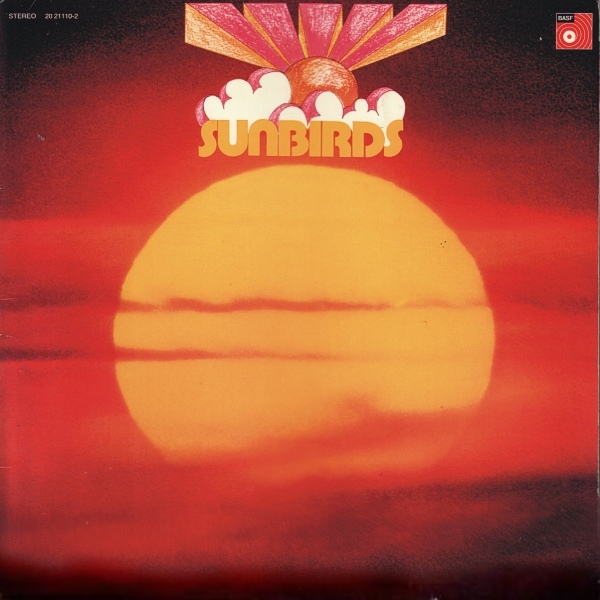
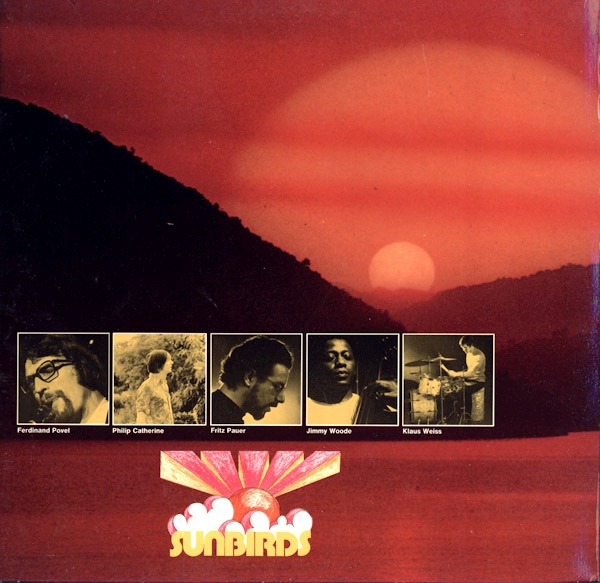
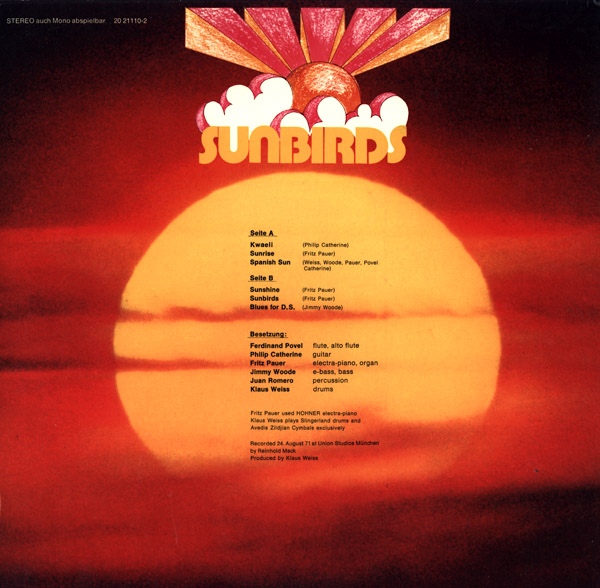
THE BEST LIVE ALBUMS OF 2015.
THE BEST LIVE ALBUMS OF 2015.
The final category in my best of series is live albums. For some reason, live albums seem to divide opinion. While some people love live albums, others loathe them. There seems to be no middle ground. Partly that’s down to how an artist approaches a live album.
It may be that in concert, some artists tend to take a song in a different direction. Some music fans see this as a no-no. Deviating from original song is seen as sacrilege. Instead, they want artists just to play songs as they were recorded. Especially if it’s a live recording by some of the more ‘populist’ artists. They’re expected to the churn out their greatest hits as they were recorded for a live album. However, the more innovative and adventurous artists took listeners on a sonic adventure on a live album.
Anyone who buys a Sun Ra, Miles Davis or Jimi Hendrix live album knows that a sonic adventure is about to unfold. Each of legends took the original song as a starting point, and reinvented it. That was the case on their live albums. For the listener, it’s a case of sit back and enjoy the ride. For the more adventurous and discerning listeners, this is why they love and cherish live albums. And during 2015, there were plenty of live albums released.
These live albums came in all shapes and sizes. They ranged from single albums, to double albums and box sets. One live albums was even released on a medium that many modern music fans won’t even remember. And I don’t mean vinyl. Instead, this was a glorious reminder of music’s past. Another live albums came as part of a two for one. It seems, live albums come in all shapes and sizes. Each of the one on my list packs a punch, and would be a worth addition to any record collection. So for the last time in the 2015 best of series, let’s have a look at the best live albums released during the past twelve months.
DION RECORDED LIVE AT THE BITTER END AUGUST 1971.
After being one of the biggest selling artists of the late fifties and early sixties, the hits started to dry up for Dion. He had been one of the most successful artists of the rock ’n’ roll era. By 1971, times were tough for Dion. His last major hit was Abraham, Martin and John in 1968. Since then, times had been tough. However, at least Dion was a popular like act.
This had been the case since 1967, when Dion decided to reinvent himself as a finger picking, folk and blues singer. So in 1971, Dion’s record company decided to record a live album, Dion Recorded Live At The Bitter End August 1971, which was released by Ace Records.
On Dion Recorded Live At The Bitter End August 1971 Dion shows his versatility. Seamlessly he switches between covers of Chuck Berry’s Too Much Monkey Business, Bob Dylan’s One Too Many Mornings, Lennon and McCartney’s Blackbird and Leonard Cohen’s Sisters Of Mercy. That’s not forgetting blues like of Sam Hopkins’ You Better Watch Yourself and Sonny Williamson’s Don’t Start Me Talking. While Dion is just as comfortable playing the blues, he’s not above throwing in a few of his greatest hits, including Abraham, Martin and John, The Wanderer and Ruby Baby. They prove popular choices. Closing the show, was one of Dion’s own song, Harmony Sound. Then after seventeen songs in fifty-five minutes, Dion leaves the stage to rapturous applause. It’s a fitting response for a captivating performance from Dion. A reminder of that spellbinding performance Dion Recorded Live At The Bitter End August 1971, which features Dion the musical chameleon.
HARMONIA-DOCUMENTS 1975.
Before the Harmonia box set Complete Works was released by Grönland Records in October 2015, I received something that I hadn’t seen for years…a cassette. On that cassette, Documents 1975, were four unreleased tracks Harmonia had recorded during 1975. This included a version of Tiki-Taka that for forty years, had been feared lost. Both tracks had been recorded at Harmonia’s legendary Forst studio. The other two tracks were live tracks, and showcases Harmonia’s live sound. Any music fan would’ve been licking their lips. Luckily, I still had a cassette deck and didn’t have to use the download code. This meant I would be able to listen to this delicious reminder of Harmonia in their heyday.
Soon, I was enjoying four tracks from one of the most innovative, inventive and influential groups in the history Kosmische musik, Harmonia. Documents 1975 was however, an amuse bouche.
In October 2015, Grönland Records released the Harmonia box set Complete Works, one of the five vinyl albums was Documents 1975. It sat proudly alongside Musik Von Harmonia, Deluxe, Tracks and Traces and Live ’74 in what was a luxurious and lovingly compiled box set. Complete Works stood head and shoulders above every other box set released during 2015. However, the cassette version of Documents 1975 was tantalising taster reminder of another musical age, and a group how defined it, Harmonia.
JOHN MARTYN-LIVE AT LEEDS (D ELUXE EDITION).
Just a month after the release of John Martyn’s eighth studio album Sunday’s Child, John Martyn and his band took to the stage at Leeds University on 13th February 1975. That night, the concert was recorded. For a while, Johh had been contemplating releasing a live album. This he realised, would allow the record buying public to experience what John Martyn live sounded like. So, with the tapes about to get rolling, John Martyn and his band took to the stage at Leeds University on 13th February 1975. That night, John was accompanied by a small, talented band. This included his bassist, and longtime confidante, Danny Thompson. They worked their way through the six tracks that would later feature on the original album version Live At Leeds which was released during 2015 by UMC.
When John Martyn took Live At Leeds to Island Records in 1975, they refused to release, the album. This would prove costly. John resorted to selling signed copies of this future legendary live album from his home.
Since then, Live At Leeds has become one of the legendary live albums. Forty years and five reissues of Live At Leeds later, and still, John Martyn fans haven’t tired of his classic albums. While some purists prefer the original version, that John sold from his house, which is now a collector’s item, the expanded 2015 Deluxe Edition of Live At Leeds is a very welcome reissue. It features one of John Martyn’s legendary concerts, and for his legions of fans, is a reminder of a musical maverick live in concert.

LITTLE BOB STORY-OFF THE RAILS PLUS LIVE’78.
Back in October 2015, I reviewed Ace Records’ reissue of Little Bob Story’s albums Off The Rains and Live ’78. They had been released on one CD complete with five unreleased tracks recorded in 1978. For music fans old and new, this was perfect opportunity to discover Little Bob Story’s unique brand of high energy rock ’n’ roll.
Off The Rails was released in 1977, and by then, Little Bob Story was a popular live act on both France and Britain. Night after night, he played to packed houses. A reminder of Little Bob Story live can be found on Live ’78. It was recorded at
Dingwalls in March 1978, and Little Bob Story fuses blues rock, pub rock and rock ’n’ roll. There’s even a nod to punk. Mostly, though, it’s blistering, hi-energy rock ’n’ roll. Little Bob Story’s turbo charged sound is like a musical dervish on both Off The Rails and Live ’78. This is the perfect introduction to Little Bob Story.
Not only will veterans of Little Bob Story’s music enjoy the opportunity to rediscover their music, but a new generation of music fans will be able to discover an iconic French group from the seventies. Little Bob Story went on to enjoy commercial success across Europe. Especially when Little Bob Story played live. They wowed huge audiences, with their unique brand of hi-energy brand of rock ’n’ roll, which can be heard on Little Bob Story’s sophomore album Off The Rails and Live ’78.

MAGMA-KOHNZERT ZUND.
The Köhnzert Zünd box set is a welcome reissue for fans of Magma, and is the perfect companion to the Studio Zund twelve disc box set. When Studio Zund was released in 2009, Magma fans wondered why there was no live material in the box set? Now they know. Even back then, it looks like plans were afoot to release the definitive box set of Magma’s live material. So, what can be found in the the twelve-disc Köhnzert Zünd box set?
One can’t help be impressed by the sculptural quality of the Köhnzert Zünd box set. It’s akin to a mini work of art. A great deal of time and effort was put into the design of Köhnzert Zünd. It puts many of the cheaply made box sets to shame. Jazz Village deserve to be congratulated on the design of Köhnzert Zünd box set. Without doubt, Köhnzert Zünd features Magma’s best live albums, and a bit more. However, copies of Köhnzert Zünd are limited
Fans of Magma will have to be quick.The Köhnzert Zünd box set is a limited edition release. Only 5,000 copies are available of the definitive retrospective of Magma’s live career. Köhnzert Zünd is the perfect companion to the Studio Zund box set, and shows why after forty-six years, twelve studio albums and countless changes in lineup, that Magma are still one of France’s progressive rock Kings.

MILES DAVIS AT NEWPORT 1955-1975-THE BOOTLEG SERIES VOLUME 4.
Miles Davis’ hard bop era had finished in 1954, and 1955 was the start of a new era. It featured Miles Davis’ first great quintet. As Miles played trumpet, the rhythm section featured drummer Philly Joe Jones and bassist Paul Chambers. They were augmented by pianist Red Garland and tenor saxophonist John Coltrane. This all-star lineup was would become part of jazz history. However, this wasn’t the band that took to the stage at the second Newport Jazz Festival on 17th July 1955. Excerpts from this performance feature on Miles Davis At Newport 1955-1975-The Bootleg Series Volume 4, which was released as a four disc set by Sony Music in 2015. It documents the first twenty years of Miles Davis thirty year association with the famous festival.
Miles Davis was associated with the Newport Jazz Festival until 1985. Their relationship had lasted thirty years, and during that period, Miles Davis continued to reinvent his music. Continually, he innovated and pushes musical boundaries. That was the case right up until his death in 1991. His career had spanned five decades, during which Miles Davis released forty-eight studio albums. This include classic albums like 1957s Birth Of The Cool and ’Round About Midnight, 1959s, Kind Of Blue and 1970s Bitches Brew. Tracks from each of these albums feature on Miles Davis Live At Newport 1955-1975-The Bootleg Series Volume 4, which document and celebrates the first twenty years of Miles Davis association with the Newport Jazz Festival.
P-FUNK ALL-STARS LIVE AT THE BEVERLEY THEATRE IN HOLLYWOOD.
By 1983, George Clinton had a new band up-and-running. Just like before, George Clinton was using a variation on a theme. Whereas previously, there was George Clinton and The P-Funk All-Stars. they had metamorphosed into the P-Funk All-Stars.
1983 would be a big year for George Clinton’s new band. They released two albums that year. The first came in April 1983, when the P-Funk All-Stars took to the stage at the Beverley Theatre in Hollywood. That’s when they recorded the ten tracks that became P-Funk All-Stars Live At The Beverley Theatre In Hollywood.
After the recording of P-Funk All-Stars Live At The Beverley Theatre In Hollywood in April 1983, those who had attended the concert awaited the release of the live album. So did those that hadn’t been fortunate enough to get a ticket. They had a long wait. Seven years passed before P-Funk All-Stars Live At The Beverley Theatre In Hollywood was released in 1990. By then, music had changed. Some remembered Parliament and Funkadelic’s glory days fondly. Others remembered just their greatest hits. However, for many people, P-Funk was a footnote in musical history. So when P-Funk All-Stars Live At The Beverley Theatre In Hollywood was belatedly released, it failed to find an audience. Since then, very few people have heard P-Funk All-Stars Live At The Beverley Theatre In Hollywood. That changed recently.
P-Funk All-Stars Live At The Beverley Theatre In Hollywood was reissued by Westbound Records, an imprint of Ace Records during 2015. The reissue is a reminder, if any was needed of how good George Clinton and Co. were. Live they were legendary, and often, played three hour shows. That was the case with Parliament, Funkadelic and the P-Funk All-Stars, whose live album P-Funk All-Stars Live At The Beverley Theatre In Hollywood makes a welcome return twenty-five years after its initial release.
SLY AND THE FAMILY STONE-LIVE AT THE FILLMORE EAST-OCTOBER 4TH AND 5TH 1968.
For whatever reason, Bill Graham didn’t see what other people saw in Sly and The Family Stone. Initially he wasn’t won over by their unique brand of dance music. As a result, he was reluctant to book Sly Stone and his band. Eventually, though, Bill Graham was persuade to go and see Sly and The Family Stone live. Having seen Sly and The Family Stone in full flight this changed his mind.
So much so, that Bill Graham booked Sly and The Family Stone to open for Eric Burdon and The Animals at four concerts and the Fillmore East in October 1968. These four concerts were recorded, but never released. That’s until Live At The Fillmore East-October 4th and 5th 1968 was released by Sony Music as a four disc box set during 2015. It’s a reminder of what Sly and The Family Stone once were.
They were one of the most successful bands of their generation, releasing five albums, which sold over ten million copies. This run of commercial success and critical acclaim began with Stand, which was certified platinum, and ended with Small Talk, which was certified gold. In between, Sly and The Family Stone were one of the most groundbreaking groups of the late sixties and early seventies. Their music influenced several generations of musicians, and much of it is timeless.
SUN RA ARKESTRA UNDER THE DIRECTION OF MARSHALL ALLEN-BABYLON LIVE.
2014 marked the 100th anniversary of the birth of one of most enigmatic and innovative musicians in the history of music, Sun Ra. So, last year, Marshall Allen decided to celebrate the 100th anniversary of Sun Ra’s birth by taking the Sun Ra Arkestra on the road, choosing the setlist can’t have been easy. Literally, Marshall Allen was spoiled for choice. However, when the Sun Ra Arkestra reached the Babylon Club, Istanbul on 21st May 2014, the concert was recorded. Eight of the eleven tracks feature on Babylon Live which was recorded by the Sun Ra Arkestra Under The Direction Of Marshall Allen. It was released on the German label, In-and-Out Records.
Babylon Live was recorded at the Babylon Club in Istanbul, Turkey on the 21st May 2014. That was always 100 years to the day that Sun Ra was born Herman Poole Blount. Little did anyone realise that, that day, one of most enigmatic and innovative musicians in the history of music was born. He combined Egyptian history and space-age cosmic philosophy with freeform jazz. Some felt that Sun Ra hid behind his newly adopted personal. Throughout his life, he remained an enigmatic figure. So much so, that many people referred to Sun Ra as Mr. Mystery. Despite being an enigma, he was one of jazz music’s great innovators.
Sun Ra’s approach to music was unique. He combined Egyptian history and space-age cosmic philosophy with freeform jazz. Over a career that spanned nearly forty years, Sun Ra and His Arkestra pushed musical boundaries. He was a perfectionist and a relentless taskmaster. Continually, he surrounded himself with some of most talented, inventive and adventurous musicians of their generation. They became the Sun Ra Arkestra, who celebrated the 100th anniversary of the birth of their founder, the man born Herman Poole Blount.
THE JIMI HENDRIX EXPERIENCE-FREEDOM: ATLANTA POP FESTIVAL.
On the 4th of July 1970, Jimi Hendrix journeyed 100 miles south of Atlanta. His destination was the second Atlanta International Pop Festival. It was being billed as the second Woodstock, and the Jimi Hendrix Experience were about play a starring role.
When the Jimi Hendrix Experience arrived at the Atlanta International Pop Festival, they were greeted by a crowd estimated to be between 300,000-400,000. What is now remembered as the “last great rock festival” was an unlikely event for Jimi Hendrix to appear at. Byron, in Atlanta was in the heart of old the Deep South. This was Klan country. Racial tensions were always threatening to bubble over. The organisers of the 1970 Atlanta Pop Festival were well aware of this. So they made the conscious decision that the star of the show should be someone who appealed to everyone. This was Jimi Hendrix, whose performance that day, features on the Freedom: Atlanta Pop Festival box set.
That day, The Jimi Hendrix Experience wrote heir place into music history by playing a starring role in what’s now remembered as the “last great rock festival.” Jimi had united a region that had been divided. His message of unity, universal love and Freedom had him friends on both sides of the racial divide can be heard on the Freedom: Atlanta Pop Festival box set. It features one of the most influential and innovative guitarists of his generation, Jimi Hendrix.
THE VELVET UNDERGROUND-THE MATRIX TAPES BOX SET.
For a while, The Matrix had one of The Velvet Underground’s favourite venues on The West Coast. It seemed to bring out the best in The Velvet Underground. So there was no better place for The Velvet Underground to record a live album. These two nights at The Matrix featured The Velvet Underground at their very best. However, until late 2015, only some of live at The Matrix album has been released.
Only five tracks from live at The Matrix featured on Bootleg Series Volume 1: The Quine Tapes when they were released on 2001. Despite this, many critics felt this was the finest live recording of The Velvet Underground. It was, they felt, a shame that The Matrix Tapes hadn’t been released in all their glory. Some of The Matrix Tapes made their way on one of the discs on the recent Velvet Underground Loaded box set. Again, it was a tantalising taste of this musical pandora’s box. Little did anyone know, that a couple of weeks later, that The Matrix Tapes would be released by UMC as a four disc box set. At last, this legendary recording is available for all to hear and enjoy.
The two nights at The Matrix, are documented on The Matrix Tapes box set. This four disc box set, features forty-two tracks. There’s Velvet Underground classics, and hidden gems like New Age on The Matrix Tapes. It’s regarded by many critics as as the definitive Velvet Underground live album. Especially now, that it’s available in it entirety. That’s never been the case before. That’s despite The Matrix Tapes being recorded forty-six years ago. Somewhat belatedly, this legendary live album can be heard in its entirety, and features one of the most innovative and influential bands in the history of music, The Velvet Underground. They’re in full flight, reinventing classics and hidden gems on what’s considered a legendary live album The Matrix Tapes.
That’s almost my list of the best live alums of 2015. However, there’s a but. There always is in life. On many of the albums and box sets I’ve released during 2015, there have been live tracks, even some live albums.
This includes Harmonia’s legendary Live ’74 album. It featured in Grönland Records’ Complete Works box sets. Live ’74 is a stunning live album, and features musical pioneers Harmonia, at the peak of their powers. Hopefully, Live ’74 will be reissued sometime soon. However, Live ’74 is just one of many live albums that could be found in box sets during 2015.
Another was The Doobie Brothers’ 1983 Farewell Tour. Although not a classic album by a long stretch of the imagination, it’s a welcome makeweight in The Warner Bros. Years 1971-1983 box set. Similarly, the America box set, The Warner Bros. Years 1971-1977 features America Live. It was released in 1977, and although America Live isn’t a classic; is a welcome addition to The Warner Bros. Years 1971-1977 box set. The same could be said of Van Halen’s 2012 live album Tokyo Dome Live in Concert, which was part of the Deluxe box set. Tokyo Dome Live in Concert featured a hard rocking Van Halen feature on two discs. Hawkwind go one better on their This Is Your Captain Speaking…Your Captain Is Dead box set. It featured a trio of live albums.
This Is Your Captain Speaking…Your Captain Is Dead featured four studio albums, a greatest hits and the three live albums. The Greasy Truckers Party The Space Ritual Alive and The 1999 Party (Live At The Chicago Auditorium) showcase the space Rock pioneers live take the listener on a sonic adventure. For Hawkwind fans, the three live albums were a welcome addition to the box set. That was the case on so many of the live tracks on other albums and box sets released during 2015.
On the A Love Supreme-The Complete Masters three disc box set, John Coltrane strike gold on disc three. It features the John Coltrane quartet playing A Love Supreme in its entirety, live in Juan-les-Pins, France. This performance has entered jazz folklore, and is a very welcome addition to A Love Supreme-The Complete Masters. Fans of many other artists and bands will be saying the same thing.
A case in point is a live recordings of Fotheringay on Nothing More: The Collected Fotheringay. It’s a glorious reminder of Sandy Denny’s other group. So are the live tracks on the four disc The Jimi Hendrix Experience box set. People said the same when some of the tracks from The Matrix Tapes featured on The Velvet Underground’s Loaded box set. Then just a few weeks later, The Matrix Tapes box set was given a welcome release. However, with other reissues released during 2015, the addition of live tracks were meant to entice music fans.
Sometimes, these live tracks were a welcome addition. Especially on reissues by Jethro Tull, Led Zeppelin, King Crimson and The Rolling Stones, to name just four. These tracks allow the listener to enjoy rock royalty live. Sometimes, it’s like listening to history being made.
That proves to be the case with several albums on my list of the best live albums of 2015. From Harmonia and John Martyn, to Miles Davis, The Jimi Hendrix Experience and The Velvet Underground each of these artists made musical history on the albums that feature on my list of the best live albums of 2015. The reissue of these albums allow record buyers to eavesdrop as musical history is made.
THE FIFTY-FIVE BEST COMPILATIONS OF 2015-PART 1.
THE FIFTY-FIVE BEST COMPILATIONS OF 2015-PART 1..
The next stop in my look back at 2015, is the compilations released during the last twelve months. Again, I started with a long-list, and over the course of a few weeks, gradually, narrowed it down to fifty-five albums. That took some doing. After all, 2015 was a good year for compilations. The compilations are an eclectic selection, and cover an eclectic selection of musical genres. Theres’s something for everyone as I celebrate the best fifty-five compilations of 2015.
A GUIDE TO THE BIRDSONG OF SONG AMERICA.
A Kickstarter funded A Guide To The Birdsong Of South America was the brainchild of environmental activist and music lover, Robin Perkins. For many years, Robin has been a keen bird watcher. Recently, he has become increasingly concerned about the problem with endangered species in South America. Something had to be done. However, Robin was only one man. After some thought, Robin decided that by combining two of the passions in his life, music and birds, he could raise awareness and much needed funds for the endangered species across South America. The answer lay in a Kickstater campaign, which resulted in A Guide To The Birdsong Of South America.
On the compilation, the musicians and producers use the recording of birdsong. Some put the recording at the forefront of their song, using it throughout the track. On other tracks, the recording places what can only be described as a walk on role. Regardless of which approach the musicians and producers take, the ten tracks are very different. Indeed, eclectic describes them. They are a representation of contemporary South American music. Essentially, A Guide To The Birdsong Of South America is an introduction to some of the most ambitious, innovative and inventive musicians and producers South America has to offer. One listen to A Guide To The Birdsong Of South America and you’re bound to agree.

ALL ABOARD! 25 TRAIN TRACKS CALLING AT ALL MUSICAL STATIONS.
In August 2015, Ace Records released All Aboard! 25 Train Tracks Calling At All Musical Stations. This twenty-five track is described as: “25 tracks with a train theme or rhythm from across the musical spectrum.” There’s everything from blues, funk, gospel, jazz, pop, psychedelia, R&B, reggae and soul on All Aboard! 25 Train Tracks Calling At All Musical Stations. Everyone from Rufus Thomas, Peggy Lee, Dusty Springfield, James Carr, The Shangri-Las, Chuck Berry, Luther Ingram, Neil Sedaka, Little Walter and The Ethiopians feature on All Aboard! 25 Train Tracks Calling At All Musical Stations.
It was compiled by Vicki Fox, who is responsible for the perfect compilation for anyone who likes their music eclectic. That’s almost an understatement. All Aboard! 25 Train Tracks Calling At All Musical Stations which features: “twenty-five tracks with a train theme or rhythm from across the musical spectrum,” is a musical journey not to be missed

AMARA TOURE-1973-1980.
Amara Touré’s recording career lasted just seven years. It started in 1973, and finished in 1980. His discography consists of just ten tracks. This includes three singles, and the four tracks on his 1980 album Accompagné Par L’Orchestre Massako. These ten tracks comprise Amara Touré’s discography. While that might not seem like much, but for seven years, Amara Touré released groundbreaking music. Thirty-five years later, and Amara Touré is remembered as one of the most influential and inventive artists of his generation. His recording career is documented on Analog Africa’s eighteenth release, Amara Touré 1973-1980. It features the ten tracks Amara Touré released during his all too brief career.
That amounts to Amara Touré recording career. He recorded with songs with L’Ensemble Black and White and four with L’Orchestre Massako. These songs showcase a musical pioneer at the height of his career, as he fuses elements of African, Afro-Cuban and Latin music. He even adds elements of funk, jazz, soul and rock. This results in a tantalising musical fusion, one which is continually captivating. That’s thanks to Amara Touré and some of the best African musicians of their generation. They’re responsible for then ten tracks on Amara Touré 1973-1980, which documents the career of one of the best, but most underrated African singers you’ve never heard.

ANNIE PHILIPPE-SENSATIONNEL! YE YE BONBONS 1965-1968.
Growing up in Brittany, Annie Philippe always loved to sing and dance. Sometimes, she dreamt of making a living as a singer. That looked unlikely to happen. Annie’s parents were what she described as “simple people.” They didn’t have a musical background. Nor did didn’t realise their daughter was talented. She was; and went on to enjoy a successful musical career.
Annie Philippe became one of Ye Ye music’s biggest stars. For three years, she epitomised the Ye Ye sound. A reminder of this is the music on Ace International’s recent Annie Philippe’s compilation Sensationnel! Ye-Ye Gems 1965-1968. This twenty-four track compilation is a reminder of an underrated and important musical genre, Ye Ye. It’s a reminder of one of the most important, innovative and influential decades in history…the sixties.
During this period, although there was a political, social, cultural and musical revolution throughout Europe. Especially in France. Between 1965 and 1968, Annie Philippe was part of the musical backdrop to the major upheaval was taking place in France. Annie Philippe’s music, which is documented on Sensationnel! Ye-Ye Gems 1965-1968, epitomises the sights and sounds of the musical and cultural revolutions that took place during the sixties.
BETTYE SWANN-THE VERY BEST OF BETTYE SWANN.
The Bettye Swann story was a case of what might might have been. She could’ve and should’ve been one of the biggest names in Southern Soul. That looked like being the case. Bettye Swann released her debut single Don’t Wait To Long in 1964. Three years later, Betty Swann was topping the US R&B charts with Make Me Yours. The future looked bright for Bettye Swann. Critics forecast she was about to enjoy a long and successful career. Sadly, that wasn’t to be. Bettye Swann never scaled the same heights. Apart from a couple of minor hit singles, commercial success eluded Bettye Swann. Her recording career was over by 1976. In 1980, Bettye Swann gave her last concert. One of music’s most talented singers had called time on her career, aged just twenty-six. Her musical legacy included just two albums and a strings of singles.
A tantalising taste of Bettye Swann’s musical legacy can be found on The Very Best Of Bettye Swann. It was recently released by Kent Soul, an imprint of Ace Records. This twenty-four track covers Bettye Swann’s time at Money, Capitol Records, Atlantic Records and Fame Records. There’s even three previously unreleased on The Very Best Of Bettye Swann. It’s the definitive collection of Bettye Swann’s music, and without doubt is The Very Best of Bettye Swann.
BOB DYLAN-THE BEST OF THE CUTTING EDGE 1965-1966: THE BOOTLEG SERIES.
Between 1965 and 1966, Bob Dylan released a trio of classic albums. This started with Bringing It All Back on March 22nd 1965. Just over five months later, Bob Dylan returned with Highway 61 Revisited on August 30th 1965. This became Bob Dylan’s second consecutive classic. Two became three when Bob Dylan released Blonde On Blonde on May 16th 1966. By then, Bob Dylan was one of the most successful and celebrated musicians of the mid-sixties. He was a musical chameleon, the folk singer who had plugged in, and divided music. Even today, critics and cultural commentators still debate what Bob Dylan’s eschewing his folk stylings and plugging in.
This debate started again, when The Best Of The Cutting Edge 1965-1966: The Bootleg Series, Volume 12 was released by Sony Music. It’s a two disc set that features thirty-six unreleased tracks recorded between 1965 and 1966. These tracks show how some of the songs on Bringing It All Back, Highway 61 Revisited and Blonde On Blonde took shape. It’s a fascinating insight to three classic albums.
BOBBY GILLESPIE PRESENTS SUNDAY MORNIN’ COMIN’ DOWN.
One of the most eagerly awaited compilations of 2015, was Bobby Gillespie’s Sunday Mornin’ Comin’ Down, which was released by Ace Records. It featured twenty-five tracks especially picked by Bobby Gillespie. There’s tracks from the 13th Floor Elevators, The Beach Boys, The Byrds, Tim Buckley, Alexander “Skip” Spence, Gram Parsons, Little Feat and Jerry Lee Lewis. Bobby Gillespie’s Sunday Mornin’ Comin’ Down is an eclectic soundtrack that one once have heard in the Gillespie household, on a Sunday morning after “a night on it.” Not any more. Bobby’s a changed man. His wild days are long gone. However, still, playing in the background in chez Gillespie on the sabbath, will be the music on Bobby Gillespie’s Sunday Mornin’ Comin’ Down.
For Bobby Gillespie’s Sunday Mornin’ Comin’ Down, the familiar and obvious have been eschewed. Instead, Bobby introduces some of music’s best kept secrets. This including the 13th Floor Elevators, Tim Buckley, Alexander “Skip” Spence and Gram Parsons. They’re still some of music’s bed kept secrets. Even when Bobby decides to choose a track by a familiar face, he reaches for a B-Side, album track or alternate mix. This results in a captivating compilation full of musical treasure. There’s everything from folk, pop and psychedelia to country, rock and Southern Rock. Bobby even chooses John Barry’s Midnight Cowboy. It’s a beautiful addition to the wonderfully eclectic Bobby Gillespie’s Sunday Mornin’ Comin’ Down. It showcases Bobby Gillespie’s impeccable musical taste, and shows that his formative years in Glasgow garnering a musical education in the city’s record shops and concert halls, was time well spent. The musical treasure chest that’s Bobby Gillespie’s Sunday Mornin’ Comin’ Down, is proof of this, and is awaiting discovery at your local record shop.
BOPPIN’ BY THE BAYOU-ROCK ME MAMA!
July 2015 saw Ian Saddler returns with the eleventh volume in the The Bayou series, Boppin’ By The Bayou Rock Me Mama! This eagerly awaited compilation was recently released by Ace Records, and is a meaty reminder of Louisiana’s illustrious musical past. No wonder. The twenty-eight tracks on Boppin’ By The Bayou Rock Me Mama! re from the vaults of J.D. Miller, Eddie Shuler and Floyd Soileau. This includes Jeff Daniels, Warren Storm, Joe Carl, Tony Perreau, Al Ferrier, Bennie Fruge, Billy Blank, Rocket Morgan, Johnny Jano and Collay and The Satellites. As a result, Boppin’ By The Bayou Rock Me Mama! was a welcome addition to the By The Bayou series.
It’s no exaggeration to say that Boppin’ By The Bayou Rock Me Mama! oozes quality. That’s the case from the opening bars of Jeff Daniels’ Switch Blade Sam, to the closing notes of Collay and The Satellites’ Little Girl Next Door. For twenty-eight tracks and sixty-five minutes, Boppin’ By The Bayou Rock Me Mama! transports you to Louisiana, where you enjoy the soundtrack the soundtrack to eighteenth state’s illustrious musical past By The Bayou.
CHANGE-REACH FOR THE SKY AN ANTHOLOGY.
Part of the soundtrack to the disco era was recorded by studio bands. They featured mostly anonymous session musicians and unknown vocalists. Many of these musicians and vocalists were just at the start of their careers, including Luther Vandross. He was a member of Change, who released six albums between 1981 and 1985. That’s not forgetting a a string of successful singles, including number one singles on the US Dance charts. Despite the success Change enjoyed, their music is sometimes overlooked. Not any more.
In December 2015, Glasgow based label, Groove Line Records released Reach For The Sky-Anthology. This two disc, twenty-eight track extravaganza is definitive Change compilation. It features not just their singles, but 12” mixes and even a trio of unreleased tracks. They’re part of what’s a lovingly compiled compilation; that’s a fitting reminder of Change, one of the most successful studio bands of the post disco era. Their music was soulful, funky and dance-floor friendly. Much of it, is also timeless, and sounds as good in 2015, as it did back in the early eighties. That becomes apparent as you enjoy the two disc, twenty-eight track extravaganza that is Reach For The Sky-Anthology.
CIAO BELLA! ITALIAN GIRL SINGERS OF THE 60S.
Ace International’s first compilation of 2015 was Ciao Bella! Italian Girl Singers Of The 60s. It’s described as “groovy girl-pop.” That’s the perfect description of the latest compilation of girl-pop. It features twenty-four tracks from some of the biggest names in Italian girl-pop. This includes Caterina Caselli, Catherine Spaak, Isabella Iannetti, Mina, Ornella Vanoni, Rita Monico and Wilma Goich. They’re part of an all-star lineup, which be tantalising prospect for connoisseurs of sixties girl-pop.
Ciao Bella! Italian Girl Singers Of The 60s will hopefully be he first of many volumes of Italian girl-pop. It’s a welcome addition to Ace International’s discography. The music epitomises the sixties, one of the most important, innovative and influential decades in history. During the sixties, a political, social, cultural and musical revolution swept Europe. No country was left untouched, including Italy. Proof of this is Ciao Bella! Italian Girl Singers Of The 60s. This is a welcome release. Especially for anyone yet to discover the charms and delights of Italian girl-pop. For them, Ciao Bella! Italian Girl Singers Of The 60s is the perfect starting place.
THE FIFTY-FIVE BEST COMPILATIONS OF 2015-PART 2.
THE FIFTY-FIVE BEST COMPILATIONS OF 2015-PART 2.
DISC0 2: A FURTHER FINE SELECTION OF INDEPENDENT DISCO, MODERN SOUL AND BOOGIE 1976-80.
Just seven months after Soul Jazz Records released Disco: A Fine Selection of Independent Disco, Modern Soul and Boogie in November 2014, the London based label return with the sequel, Disco 2: A Further Fine Selection of Independent Disco, Modern Soul and Boogie 1976-80 on 29th June 2015. Just like its predecessor, Disco 2: A Further Fine Selection of Independent Disco, Modern Soul and Boogie 1976-80 is a double album, featuring nineteen tracks. These tracks range from tracks from the vaults of disco’s biggest labels, including Salsoul Records and T.K Records, right throughout to private pressings. This mixture of the well known and unknown records were released during an important part in disco, and dance music’s history.
Soul Jazz Records taken time to compile Disco 2: A Further Fine Selection of Independent Disco, Modern Soul and Boogie 1976-80. It’s a lovingly combined compilation, where familiar tracks and hidden gems sit side-by-side. These tracks document a in important four year period in the history of dance music. This period is covered on what is without doubt, one of the finest disco compilations of 2015, Disco 2: A Further Fine Selection of Independent Disco, Modern Soul and Boogie 1976-80.
DJ SPINNA PRESENTS THE SOUND BEYOND STARS.
For many people, DJ Spinna is synonymous with hip hop. That’s not the case. Seamlessly, DJ Spinna adapted from the hip hop, to the house scene. However, it wasn’t just house DJ Spinna was playing. No. He incorporated disco and soul into his sets. Soon, DJ Spinna had established a reputation for the soulful house he was playing and producing. Eighteen of DJ Spinna’s remixes feature on DJ Spinna Presents The Sound Beyond The Stars, a double album, which was released on BBE Music
DJ Spinna Presents The Sound Beyond The Stars features some of the DJ Spinna’s best known remixes. There’s eighteen remixes in total. This includes DJ Spinna’s remixes of Shaun Escoffery’s Space Rider, and Shaun’s soulful house anthem Days Like This. Then there’s remixes of tracks by producers Kerri Chandler, Karizma and Louie Vega. Add to this remixes of tracks by artists like Raul Midon, Bah Samba, saxophonist Jimmy Sommers with Rahsaan Patterson, Fertile Ground and Tortured Soul. These are just a few of the remixes on DJ Spinna Presents The Sound Beyond The Stars, which shows that there’s much more to DJ Spinna, that hip hop, including house, disco and soul.
DORE L.A. SOUL SIDES 2.
Last year, there were many soul compilations released. This included Doré L.A. Soul Sides 2. The second retrospective of Lew Bedell’s label was much anticipated compilation. It featured twenty-four tracks. Most had been released on Doré Records. That’s apart from two unreleased tracks. Some of the trace were penned by Lew Bedell. He was a dyed in the wool music man, who was determined to turn Doré Records into one of the most successful independent labels. Playing a part in the success of Doré Records, were many of the artists on Doré L.A. Soul Sides 2.
Lew Bedell thought each of the artists on Doré L.A. Soul Sides had potential. Sometimes he was right. Some of these artists
went on to play an important part in the Doré Records’ story. Others, played a mere walk-on part. However, whether the twenty-four tracks on Doré Records Doré L.A. Soul Sides 2 were hits or hidden gems, they each have one thing in common, their quality. That becomes apparent from the first time one discovers the delights of on Doré Records on Doré L.A. Soul Sides 2, which was released by Kent Soul, a imprint of Ace Records.
GARNET MIMMS-LOOKING FOR YOU-THE COMPLETE UNITED ARTISTS AND VEEP SINGLES.
Sometimes, an artists fails to fulfil their potential. Often, it’s not their fault. It can be down to bad luck or bad decisions. Both played their part in the Garnett Mimms story. The charismatic singer signed to United Artists as Garnett Mimms and The Enchanters. By the time Garnett Mimms left Veep, he was a solo artist. The last few years had been a roller coaster ride for Garnett Mimms. His story is told on Kent Soul’s Garnett Mimms’ compilation Looking For You-The Complete United Artists and Veep Singles, which was released by Ace Records.
Things looked promising for Garnet Mimms when his first three single charted. Suddenly, he was the rising star of soul. However, that was a false dawn, and by the time Garnet Mimms left Veep, he had enjoyed nine hit singles between 1963 and 1966. Many were only minor hits, for one of the most talented soul men of that time. Garnet Mimms could breath life, meaning and emotion into it was ballads or dancers, Garnett Mimms breathed life and meaning into the tracks on Looking For You-The Complete United Artists and Veep Singles They feature Garnett Mimms, one of the most talented soul men of sixties, at the peak of his soulful powers.
GEORGIE FAME HEARD THEM HERE FIRST.
Not many artists have enjoyed the longevity and success Georgie Fame, Britain’s “original mod hero. He was asked during 2015 to pick some of the music that had influenced him. That wasn’t going to be easy. Georgie Fame has been making music for over fifty years, and was growing up as rock ’n’ roll was born. So On Georgie Fame Heard Them Here First was going to be interesting and eclectic compilation.
So it proved to be. There were tracks from The Spinners, Major Lance, Rufus Thomas, Mose Allison Trio, Paul Anka, Fats Domino, William Bell, Lee Dorsey, The Miracles and Jimmy McGriff. It’s an eclectic selection of music. Never, does your hand stray towards the remote control. Instead, you’re captivated, as Georgie Fame takes you on a guided tour through the music that influenced and shaped him musically. His taste is not just eclectic, but impeccable. Georgie Fame digs out singles, hidden gems, B-Sides, instrumentals and album tracks for Georgie Fame Heard The Here First, which is a fitting way for Ace Records to celebrate the tenth anniversary of the Heard It Hear series.
GEORGE JACKSON AND DAN GREER AT GOLDWAX.
Back in 1966. Stax Records had just signed Sam and Dave. They were riding the crest of the wave of commercial success, having released Hold On I’m Comin’ and Double Dynamite. However,Goldwax Records had their very own in-house double act of George Jackson and Dan Greer. The two singer-songwriters, seeing the success of Sam and Dave, volunteered their services as Goldwax Records’ very own double act, whose story is told on the Kent Soul compilation, George Jackson and Dan Greer At Goldwax. It features twenty-two tracks from the multitalented duo.
Sadly, theirs is a case of what might have been? What might have happened if Goldwax Records had allowed George and Greer to release a string of singles? Would they have come close to replicating the commercial success and critical acclaim that Sam and Dave enjoyed? Sadly, we’ll never know. What we do know, is that George and Greer certainly weren’t lacking in talent. Both were talented singer and songwriters. However, as solo artists, neither George Greer nor enjoyed the commercial success their talents deserved. History repeated itself when in 1966, George and Greer released their one and only single, You Didn’t Know It, But You Had Me. Again, commercial success and critical acclaim eluded George and Greer, whose music is celebrated on George Jackson and Dan Greer At Goldwax. It tells the story of George and Greer, who could’ve been Double Dynamite.
GIRL ZONE-VINYL EDITION.
Many record buyers want to hear music as the artist intended. Often, that’s on vinyl. That’s the case with the artists on Girl Zone, which was recently released on vinyl by Ace Records. It’s an addition to Ace Records’ Where The Girls Are series. However, it’s not the next instalment in the series. Instead, Girl Zone is a musical amuse bouche, to whet the listener’s appetite for the next instalment in the Where The Girls Are series. However, Girl Zone gives no indication of the direction that the Where The Girls Are series is heading. It’s a collection of twelve eclectic tracks.
On Girl Zone, there’s contributions from The Angels, The Darlettes, The Teardrops, The Drake Sisters, The Fashionettes, The Charmaines and The Ikettes. There’s a total of twelve tracks on this slab of delicious 180 gram, heavyweight red lava vinyl. It’s like a work of art, and seems almost too good to play. However, having lowered the stylus onto the red lava vinyl, pop, soul and garage rock come blasting out of speakers. Suddenly, it’s the sixties again. Compiler Mick Patrick has put together twelve tantalising tracks for Girl Zone, a delicious musical amuse bouche for fans hungry for the next instalment in the Where The Girls Are series.
GILES PETERSON PRESENTS-SUN RA AND HIS ORCHESTRA TO THOSE OF EARTH…AND OTHER WORLDS.
For those looking for an introduction to Sun Ra’s recording career, Giles Peterson Presents-Sun Ra and His Orchestra To Those Of Earth…and Other Worlds is the perfect starting point. It was released on Strut Records, and features a selection of Sun Ra’s best and most innovative works. They come not just from his best known albums, but some of his lesser known albums. And there were plenty of these.
During a career that spanned six decades, Sun Ra released around 125 albums. These were no ordinary albums. They featured Sun Ra and His Orchestra combining Egyptian history and space-age cosmic philosophy with freeform jazz. It was unlike anything anyone had heard before. That wasn’t surprising. Musically, Sun Ra was a maverick. He did things his way. Soon, he was one of jazz music’s pioneer. No wonder. Sun Ra was determined to create music that was both innovative and groundbreaking. This meant that constantly, Sun Ra’s had to push musical boundaries. He was never content to stand still musically. Similarly, he was always striving to reinvent his music.
That’s why twenty years-two years after his death, interest in Sun Ra’s music is growing. So Strut Records couldn’t have picked a better time to release Giles Peterson Present-Sun Ra and His Orchestra To Those Of Earth…and Other Worlds. It’s the perfect introduction to a musical pioneer, whose career spanned six decades band spanned six decades and 125 albums of groundbreaking and inventive music.
GOLDEN STATE PSYCHEDELIA.
Hundreds of recording took place at Golden State Records. Many of these recordings have never been released before. This includes sixteen of the tracks on Golden State Psychedelia, which was recently released by Big Beat Records, an imprint of Ace Records. This includes The Goody Box, The Immediate Family, Just Slightly Richer, Celestial Hysteria, The Bristol Boxkite, Carnival and The Giants. The tracks on Golden State Psychedelia are the perfect introduction to one of top producers of the Bay Area’s psychedelic scene, Leo De Gar Chukka.
He was a pioneer of the Bay Area psychedelic sound, and helped many bands on their way. This includes the various bands on Golden State Psychedelia, which was recently released by Big Beat Records, an imprint of Ace Records. Sadly, many of these bands never enjoyed the commercial success their talent warranted. Indeed, listening to some of the tracks on Golden State Psychedelia, one can’t help but wonder why they weren’t released as singles? Similarly, one can’t help but wonder why some of the bands on Golden State Psychedelia never went on to enjoy commercial success and critical acclaim? That wasn’t to be.
Many of the bands proved to be short-lived, and split-up not long after they enjoyed their moment in the sun, at Golden State Recordings. These groups had hoped they would become part of the Bay Area’s rich and lysergic musical history. Sadly, that didn’t happen, and many of these bands are long forgotten. Not anymore. They make a welcome return on Golden State Psychedelia, which is a reminder of the Bay Area’s psychedelic heyday. Back then, happenings were commonplace, and the Merry Pranksters conducted Acid Tests against a backdrop of Golden State Psychedelia.
GRITS AND GRAVY-THE BEST OF THE FAME GANG.
By the late sixties, Rick Hall’s Fame Records was enjoying one of the most successful periods in its history. This wasn’t just because of the records Fame Records were releasing. No. Fame Studios was often where the great and good headed to record singles or albums. However, the attraction wasn’t just the Fame Studio’s facilities, or Rick Hall’s skills as producer. Instead, it was The Fame Gang, Fame Records’ house band. There were three separate lineups of The Fame Gang, a truly multitalented group of musicians played their way into musical history; and feature on Ace Records’ Grits and Gravy-The Best Of The Fame Gang
Over the years, The Fame Gang played their part in the sound and success of many Fame Records’ released; and numerous records recorded at Fame Studios. So, it made sense for The Fame Gang to release their own records. Sadly, the weren’t as successful as many of the singles the played on. However, the tracks on Grits and Gravy-The Best Of The Fame Gang ooze quality. The Fame Gang never miss a beat. Seamlessly, they take familiar tracks in a new direction. Each of the members of The Fame Gang Mk. 3 seemed to know exactly what the others were going to do next. They’re not afraid to tae a track in a new direction, and reinvent it. This only the very best musicians can do. However, as Grits and Gravy-The Best Of The Fame Gang shows, The Fame Gang were a truly inventive and versatile group of musicians, who were part of the one of the greatest house bands in musical history.
THE FIFTY-FIVE BEST COMPILATIONS OF 2015-PART 3.
THE FIFTY-FIVE BEST COMPILATIONS OF 2015-PART 3.
GROOVE WITH A FEELING-SOUNDS OF MEMPHIS-BOOGIE, SOUL AND FUNK 1975-1985.
By 1975, soul music was no longer as popular as it had once had been. Executives running the Sounds Of Memphis label realised this; and between 1975 and 1985, the label released a much more eclectic selection of music. Boogie, funk and soul were recorded and released by Sounds Of Memphis during that period. This includes the nineteen tracks on Groove With A Feeling-Sounds Of Memphis-Boogie, Soul and Funk 1975-1985, which was released by BGP, an imprint of Ace Records. It shows a very different side to Sounds Of Memphis.
Not only did Sounds Of Memphis’ evolve musically, but they incorporated the new technology that was making its way into studios across America. By the late-seventies, this included drum machines, synths and sequencers. They were playing a much more important part in music. Sounds Of Memphis am braced this technology which can be heard on Groove With A Feeling-Sounds Of Memphis-Boogie, Soul and Funk 1975-1985. It documents how music evolved during this ten year period. No longer was Sounds Of Memphis a soul label. Instead, the music they released was much much more eclectic and included the captivating collection of boogie, funk and soul that features on Groove With A Feeling-Sounds Of Memphis-Boogie, Soul and Funk 1975-1985.
HAPPY LOVIN’ TIME-SUNSHINE POP FROM THE GARPAX VAULTS.
By 1967, Gary S. Paxton was one of L.A.’s top producers. His production skills had the uncanny ability to transform an artist’s reputation and fortunes. However, Gary wasn’t just a producer. He was also an A&R man, arranger, engineer, musician and songwriter. Versatile described Gary in more ways than one. Gary didn’t just specialise in one type of music. He was just as comfortable producing garage rock, psychedelia, R&B, country or the sunshine pop that features on Happy Lovin’ Time-Sunshine Pop From The Garpax Vaults. It was released by Big Beat Records, an imprint of Ace Records.
Happy Lovin’ Time-Sunshine Pop From The Garpax Vaults features twenty-four slices of sunshine pop, including thirteen previously unreleased tracks. This includes a mixture of familiar faces and hidden gems. Among the artists on Happy Lovin’ Time-Sunshine Pop From The Garpax Vaults are Augie Moreno, The Black Box, The Chocolate Tunnel, Jim Gordon, The Jaybees, The Bakersfield Poppy Pickers, The Lords, Mary Saxton and Dave Antrell. They’re part of what’s a glorious compilation of perfect sunshine pop, produced by the multitalented Gary S. Paxton.
HENRY STONE’S MIAMI SOUND-THE RECORD MAN’S FINEST 45S.
Henry Stone’s Miami-Sound-The Record Man’s Finest 45s features a total of twenty tracks. This includes contributions from Little Beaver, Milton Wright, Lynn Collins, Wildflowers, Funky Nassau, Oceanliners and T-Connection. That’s just a tantalising taste of the music on Henry Stone’s Miami-Sound. There’s much more awaiting discovery. How about Jimmy “Bo” Horne, Leno Phillips, Robert Moore and Friday, Saturday and Sunday? These tracks were described as “The Record Man’s Funkiest 45s” on the cover.
Compilers Ian Wright and Euan Fryer have dug deeper into the T.K. Records’ vaults than previous compilers. In doing so, they’ve eschewed the obvious and familiar. That’s no bad thing. Now was the time to scratch below the surface. This meant forgotten releases, rarities, B-Side, plus a few familiar faces. Then there’s a few glittering, hidden gems, on a compilation that has something for everyone. Whether you like your music funky, soulful or dance-floor friendly, then there’s something for you on Henry Stone’s-Miami Sound. All these tracks have one thing in common…their quality. Henry Stone’s-Miami Sound oozes quality and soulfulness, and as the cover states, features “The Record Man’s Funkiest 45s.”
HERE TODAY!-THE SONGS OF BRIAN WILSON.
Here Today!-The Songs Of Brian Wilson features twenty-five cover versions of Brian Wilson songs. These songs have been covered by Darian Sahanaja, Bobby Vee, The Tokens, The Castells, Jan and Dean, The Tymes, Keith Green, Peggy March, Betty Everett, Carmen McRae and Kirsty MacColl. Among the twenty-five tracks are six cover versions of songs from Pet Sounds. That’s fitting as Pet Sounds was Brian Wilson’s progressive, psychedelic Magnus Opus.
The twenty-five tracks on Here Today!-The Songs Of Brian Wilson, which was recently released by Ace Records, is a reminder of the quality of songs Brian Wilson wrote in his heyday. He was, without doubt one of the most talented songwriters of his generation. That’s indisputable. However, for some people, Brian Wilson was much more than a songwriter. They describe Brian Wilson as the closest thing music has had to a genius. Certainly Brian Wilson was a visionary who has influenced two generations of music. This includes the artists on Here Today!-The Songs Of Brian Wilson, which was released by Ace Records.
HIGHLIFE ON THE MOVE-SELECTED NIGERIAN AND GHANIAN RECORDINGS FROM LONDON AND LAGOS-1954-1966.
Highlife documented the pre and post independence period in Ghana and Nigeria. Musicians provided a voice for the people of Ghana and Nigeria, voicing their fears and hopes, hopes for the future of countries newly reborn. This can be heard on Highlife On The Move-Selected Nigerian and Ghanian Recordings From London and Lagos-1954-1966, which covers the pre and post independence periods in Ghana and Nigeria. This however, is no ordinary music.
Instead, the music on Highlife On The Move-Selected Nigerian and Ghanian Recordings From London and Lagos-1954-1966 is also celebratory joyous, pensive and uplifting. It features songs about hardship, hope, love and religion. There’s songs from the Windrush Generation, telling of their new life. Meanwhile, Steve Rhodes and His London Hi-lifers take Highlife in the direction of gospel, which shows yet another side to Highlife. That’s why Highlife On The Move-Selected Nigerian and Ghanian Recordings From London and Lagos-1954-1966, which was released by Soundway Records, is best described as a lovingly compiled, and eclectic compilation, that charts the development of Highlife between 1954 and 1966, which was a hugely important period in Ghanian and Nigerian history.

HUNG ON YOU-MORE FROM THE GERRY GOFFIN AND CAROLE KING SONGBOOK.
Nowadays, the Goffin and King songwriting partnership is one of the most celebrated. No wonder. They were a truly prolific partnership, who throughout the sixties and early seventies, enjoyed critical acclaim and commercial. So much so, that to pay homage to Gerry Goffin and Carole King’s songwriting partnership, it’s taken Ace Records eight years and four compilations. The latest was, Hung On You-More From The Gerry Goffin and Carole King Songbook.
It featured an eclectic selection of tracks, with The Righteous Brothers and Dusty Springfield rubbing shoulders with Skeeter Davis, The Shirelles, Dion, Bobby Vee, The Drifters, Walter Jackson and and The Crystals. Sixties girl and soul groups sit side-by-side with pop, soul and R&B singers on Hung On You-More From The Gerry Goffin and Carole King Songbook. It’s a captivating and eclectic collection that shows how versatile the Goffin King partnership were. They could write songs for anyone. Many of their songs became timeless classics, including some on Hung On You-More From The Gerry Goffin and Carole King Songbook, which isa perfect reminder of one of the greatest songwriting partnership ever.
JOHN WETTON-ANTHOLOGY-THE STUDIO RECORDINGS VOLUME 1.
Not many artists have been a member of several successful groups. John Wetton has. He’s been a member of Family, King Crimson, Uriah Heep, progressive rock supergroup UK, Wishbone Ash and Asia. Somehow, John Wetton has found time to enjoy a successful solo career.. Thirty-two tracks from John’s solo albums features on the recently released Anthology-The Studio Recordings Volume 1. It was recently on the Primary Purpose label, and and is an introduction to John Wetton’s solo work.
John Wetton is an ambitious and innovative artist, who pushes musical boundaries, mixing musical genres and influences. Seamlessly, they morphed into something new, magical and often quite beautiful. Other times the music is dramatic, rocky and progressive. That’s the case throughout Anthology-The Studio Recordings Volume 1 which was recently released by Primary Purpose. Anthology-The Studio Recordings Volume 1 is the perfect primer, and a welcome reminder of a true musical innovator’s four decade solo career.
JON SAVAGE’S 1966: THE YEAR THE DECADE EXPLODED.
1966 was a game-changer. Nothing would ever be the same again. Jon Savage explains why in his forthcoming book 1966: The Year the Decade Exploded, which will be released by Faber and Faber on the 19th November 2015. To compliment his book, Jon has compiled a double album. This forty-eight track compilation Jon Savage’s 1966: The Year the Decade Exploded was recently released by Ace Records. It features an eclectic selection of the music that made 1966 such an influential and important one.
From folk, rock, pop and psychedelia, to soul and funk, Jon Savage’s 1966: The Year the Decade Exploded is a truly eclectic, must-have compilation. It’s representative of 1966. There’s contributions from innovators like The Association, The Velvet Underground, The Seeds, Freaks of Nature and The Thirteenth Floor Elevators, Love and The Human Expression. Rock royalty The Who and The Yarbirds feature on 1966: The Year the Decade Exploded. So does a young David Bowie, who was just beginning his journey to stardom. Folk singer Tim Hardin’s Hang On To A Dream which provided a hopeful anthem to this new beginning as a new musical era, which was about to unfold.
KARIN KROG-DON’T JUST SING-AN ANTHOLOGY: 1963-1999.
One of the most overused words in music journalism is innovative. That’s been the case throughout the last forty years. However, innovative describes Karin Krog, the veteran Norwegian jazz singer. She is a true innovator, who has pushed musical boundaries to their limits, and sometimes, way beyond. Despite this, Karin Krog is almost unknown outside of Norway. That’s despite being a prolific recording career that began in 1963. Part of Karin Krog’s recording career is celebrated on Don’t Just Sing-An Anthology-1963-1999, which was released by Light In The Attic Records. It featured sixteen tracks, and includes collaboration Steve Kuhn, Dexter Gordon and John Surman. These are just three of the artists that have worked with Karin Krog during her long and illustrious recording career.
Now aged seventy-eight, Karin Krog’s recording career has spanned six decades. Continually she ha pushed musical boundaries to their limits, and sometimes, way beyond. That’s apparent on Don’t Just Sing-An Anthology-1963-1999. Despite being one of music’s true innovators, Karin Krog is almost unknown outside of Norway. That’s despite releasing over one-hundred albums. Sadly, that’s often the case with musical innovators. Often their music is way ahead of its time, and its only much later, that it’s understood and appreciated. Maybe that will be the case with Karin Krog, and the release of Don’t Just Sing-An Anthology-1963-1999 will result in her music being understood and appreciated by a much wider audience.
THE FIFTY-FIVE BEST COMPILATIONS OF 2015-PART 4.
THE FIFTY-FIVE BEST COMPILATIONS OF 2015-PART 4.
KEB DARGE AND LITTLE EDITH’S LEGENDARY WILD ROCKERS VOLUME 5.
Summer wouldn’t be summer without the latest instalment of the Legendary Wild Rockers’ series. So, in May 2015, Keb Darge and Little Edith’s Legendary Wild Rockers Volume 5 was released by BBE Music.
Somehow, Keb Darge and Little Edith’s Legendary Wild Rockers Volume 5 have managed to do what looked almost impossible, and surpassed the quality of the previous volumes in the series. That took some doing. Volume 4 especially, was crammed full of quality cuts. However, Keb Darge and Little Edith pulled out all the stops for Keb Darge and Little Edith’s Legendary Wild Rockers Volume 5. The result is the finest instalment in the series, Keb Darge and Little Edith’s Legendary Wild Rockers Volume 5.
KEEP A HOLD ON HIM! MORE GARPAX GIRLS.
Eleven years passed before Ace Records announced the release of Keep A Hold On Him! More Garpax Girls. The long awaited sequel to Boy Trouble: Garpax Girls hit the shops at the end of May 2015. That was almost eleven years to the day since Ace Records released Boy Trouble: Garpax Girls. However, it was well worth the wait.
Keep A Hold On Him! More Garpax Girls featured another twenty-four of Gary S. Paxton’s finest productions for a variety of female singers between 1960 and 1966. During this period, Gary S. Paxton was establishing his reputation as a hotshot producer. He had the ability to transform an artists career and fortunes. So, it’s no surprise that The Idols, Beatrice Lee, Josephine Sunday, Chris Darlin and Dorothy Berry and The Swans all found their way to Gary’s Hollywood studio.
With various songwriters, arrangers and producers, Gary set about making dreams come true. Sometimes it worked, and artists enjoyed hits single. Other times, commercial success eluded artists. Often that’s despite creating a single that oozed quality. That’s the case on the thirteen singles, and the eleven unreleased tracks on Keep A Hold On Him! More Garpax Girls. They’re part of what’s a worthy sequel to Boy Trouble: Garpax Girls. Although it may have been eleven years in the making, but Keep A Hold On Him! More Garpax Girls has been well worth the wait.
LOS ANGELES SOUL-KENT-MODERN’S BLACK MUSIC LEGACY.
During the fifties, the Los Angeles’ based, Modern and Kent labels were two of the most successful independent record labels. They signed some of the most successful soul, blues and R&B artists of the fifties. However, as the sixties dawned, music was changing. That was the case right through to the seventies. While some labels stood still, the Biharis were determined to released music that was relevant. So, between 1962 and 1972, the period Los Angeles Soul-Kent-Modern’s Black Music Legacy covers, the Modern and Kent labels released an eclectic selection of music. This includes country soul, funk, gospel, psychedelia, R&B, soul, Southern Soul and sweet soul. It seemed the Bihari brothers were covering all bases in their constant search for his. That’s reflected in Los Angeles Soul-Kent-Modern’s Black Music Legacy’s track listing.
Los Angeles Soul-Kent-Modern’s Black Music Legacy was recently released by Kent Soul, an imprint of Ace Records, featured twenty-four tracks. They’re an eclectic selection. Everyone from Johnny Adams to Johnny Copeland, The Intentions, Jimmy Bee, Earl Wright, Pat Hunt, The Windjammers, Tommy Youngblood, Jackie Shane, Millie Foster, Ruth Davis and Wally Cox all feature. They’re just a few of the artists on Los Angeles Soul-Kent-Modern’s Black Music Legacy. It’s the perfect introduction to a pioneering label, who constantly, sought to reinvent itself.
LOST WITHOUT YOU-THE BEST OF KENT BALLADS 2.
Secretly, everyone loves a ballad. At least everyone of a certain age. For many, it’s something they grow into, and cherish. If that’s the case, then Lost Without You-The Best Of Kent Ballads 2, which was released by Kent Soul, an imprint of Ace Records, will be a must have. It found Mick Patrick and Tony Rounce digging deep into the Kent vaults, and coming up with twenty-four heartbreaking ballads. They became Lost Without You-The Best Of Kent Ballads 2.
Included on Lost Without You-The Best Of Kent Ballads 2, were songs from Jerry Washington, Lorraine Chandler, J.J. Jackson and The Jackaels, Julius Wright, The Exotics, Peggy Gaines and The Turquinettes. They’re just some of the tracks that make a belated debut on Lost Without You-The Best Of Kent Ballads 2. Some of these tracks are good enough to have been released as a single. For whatever reason, that never happened. Now somewhat belatedly, this plethora of hidden gems prove a welcome addition to Lost Without You-The Best Of Kent Ballads 2, the latest addition to Kent Soul’s burgeoning discography.
LOW DOWN-ORIGINAL MOTION PICTURE SOUNDTRACK.
One of my favourite jazz compilations of 2015, was Low Down-Original Motion Soundtrack, which was released by Cinewax and Light In The Attic. Low Down-Original Motion Soundtrack tells the story of jazz pianist Joe Albany. It’s based on his daughter Amy-Jo Albany’s memoirs. She chose the fifteen tracks on Low Down-Original Motion Soundtrack. It includes seven tracks from Joe’s back-catalogue. This Amy-Jo Albany hopes that will be a primer for her father’s work. There’s also tracks from Coleman Hawkins, Max Roach and Thelonious Monk. These tracks may introduce a new generation to three jazz giants. There’s also tracks from Ohad Talmor’s score. His tracks pay stylistic homage to Joe Albany, whose been described as “Hollywood’s notorious jazz hustler.”
Joe Albany was hugely talented pianist whose music is cherished by many. However, sadly, there are still people have yet to discover Joe Albany’s music. Amy-Jo Albany hopes that the Low Down-Original Motion Soundtrack will act as a primer for her father’s music. I certainly hope that that’s the case. Let’s also hope that any newcomer to jazz who buys the Low Down-Original Motion Soundtrack, will embark upon a lifelong love affair with jazz.
MOGWAI-CENTRAL BELTERS.
2015 finds post rock pioneers Mogwai celebrating their twentieth anniversary. A lot has happened in that twenty year period. Mogwai have released eight studio albums and three soundtracks. These albums have been critical acclaimed and commercially successful not just in Britain, but in America. That’s why nowadays, Mogwai are regarded as Scottish music’s elder statesmen. So it was fitting when Mogwai released a three disc retrospective box set, Central Belters, on Rock Action Records. Central Belters tells the story of twenty years of Mogwai.
For the last twenty years, Mogwai’s music has been ambitious, bold, challenging, influential and innovative music. It’s full of nuances, subtleties and surprises as Mogwai seamlessly combine musical genres. They fuse ambient, avant garde, classic rock, electronica, experimental, indie rock, psychedelia and Krautrock, to create their unique post rock sound. All the time, Mogwai continue to push musical boundaries to their limits and even sometimes, way beyond. Mogwai have never been willing to stand still. The Mogwai Young Team’s music has continued to evolve, and doubtless will continue to do so.
Glasgow’s famous five are due a new musical adventure. It’s nearly two years since the release of Rave Tapes. Hopefully, Mogwai are hard at work in their Castle Of Doom studios on their next adventure. This isn’t the type of adventure Enid Blyton’s Famous Five once enjoyed. There’s no picnics, lemonade and bicycle trips. Instead, it’s a bit more edgy and gritty.That’s the case with Central Belters Mogwai’s career retrospective.
NEXT STOP SOWETO-ZULU ROCK, AFRO DISCO AND MBQANGA 1975-1985.
March 2015 saw Strut Records release Next Stop Soweto-Zulu Rock, Afro Disco and Mbqanga 1975-1985. This was the fifth volume in Duncan Brooker’s Next Stop Soweto critically series. The latest volume found Duncan choosing fifteen tracks from what was an dark period, in South South Africa’s history, Apartheid period. During this period, South Africa was a county divided. However, music was beginning to play an important part in bringing about change.
The songs chosen by Duncan Brooker document the changing face of South Africa. His in-depth knowledge of South African music means he knows where musical gold is buried. Next Stop Soweto-Zulu Rock, Afro Disco and Mbqanga 1975-1985 is literally a musical treasure trove. As compilations go, oNext Stop Soweto-Zulu Rock, Afro Disco and Mbqanga 1975-1985 oozes quality, and is crammed full of quality music. So much so, that Next Stop Soweto-Zulu Rock, Afro Disco and Mbqanga 1975-1985 is the finest instalment in the Next Stop Soweto series. That’s saying something.
NICK CAVE HEARD THEM HERE FIRST.
For the fourth volume in Ace Records’ Heard Them Here First series, the latest artist in the spotlight is shawn on Australian troubadour, Nick Cave. On Nick Cave Heard Them Here First, there’s twenty-two tracks that have influence the career of Nick Cave. His career began over thirty hers ago, when he was the lead singer of Australian band The Birthday Party. In the post Birthday Party years, Nick Cave embarked upon what was to prove to be, a successful solo career. His music however, has always been influenced by the music he heard growing up.
Some of the music that influenced Nick Cave featured on Nick Cave Heard Them Here First. He was impeccable and discerning taste. The Stooges, Nina Simone, Johnny Cash, Gene Pitney, The Sensational Alex Harvey Band, Leonard Cohen, Serge Gainsbourg and Jane Birkin, Bob Dylan, Hank Williams, Blind Willie Johnson and John Lee Hooker all feature on Nick Cave Heard Them Here First, which quite simply, is crammed full of quality music.
NORTHERN SOUL’S CLASSIEST RARITIES VOLUME 5.
Through their Kent imprint, Ace Records have been releasing Northern Soul compilations for over twenty years. Their most recent Northern Soul compilation, was Northern Soul’s Most Classiest Rarities Volume 5, which was released by their Kent Dance subsidiary. It has everything you could want in a Northern Soul compilation.
That’s not surprising. Northern Soul’s Most Classiest Rarities Volume 5 was compiled by veteran compiler Ady Croasdell. He’s a man steeped in Northern Soul. With an almost encyclopaedic knowledge of all things soulful, Ady combines classics and collectors items with future classics, hidden gems, obscurities, rarities and a even a quartet of unissued tracks. The result is Northern Soul’s Most Classiest Rarities Volume 5, a welcome addition to the Northern Soul’s Most Classiest Rarities’ series.
PIED PIPER FOLLOW YOUR SOUL.
Back in 2013, Kent Soul, released Pied Piper Presents A New Concept In Detroit Soul. It was one of the most eagerly anticipated compilations of 2013. Soul fans weren’t disappointing, and Pied Piper Presents A New Concept In Detroit Soul made its way onto many end of year lists. Since then, soul fans have been wondering when a followup to Pied Piper Presents A New Concept In Detroit Soul would be released? During 2015, Kent Soul announced the release of Pied Piper Follow Your Soul.
Compiler Ady Croasdell returned to the Pied Piper vaults, and chose twenty-four tracks for Pied Piper Follow Your Soul. They’re a mixture of classics, old favourites and hidden gems. Fifteen tracks have been released before. This includes contributions from Sharon Scott, The Cavaliers, The Dynamics, The Metros, The Dynamics and Freddy Butler. The other nine, make their debut on Pied Piper Follow Your Soul. This includes some soulful delights from September Jones, Nancy Wilcox and Lorraine Chandler. Throughout, Ady Croasdell’s exquisite taste and encyclopaedic knowledge of all things soulful, shines through on what’s the perfect followup and companion to Pied Piper Presents A New Concept In Detroit Soul.
THE FIFTY-FIVE BEST COMPILATIONS OF 2015-PART 5.
THE FIFTY-FIVE BEST COMPILATIONS OF 2015-PART 5.
PRIVATE WAX VOLUME TWO.
Private Wax Volume Two was released on BBE Music in October 2015. This is another compilation of “Super Rare Boogie and Disco Compiled By Zaflovevinyl.” Given their rarity, it’s no wonder it’s taken three years to compile Private Wax Volume Two. However, if anyone was going to hunt down the vinyl on Private Wax Volume Two, it was going to be Zaf Chaudry. He’s a veteran crate-digger and record collector whose been collecting records since the mid-seventies. Zaf’s impeccable taste in music shines through on Private Wax Volume Two.
It’s quality all the way on Private Wax Volume Two. Zaf Cahudry has chosen well. The sixteen tracks rarities are funky, soulful and dance-floor friendly. There’s also disco and boogie on Private Wax Volume Two, which somehow, manages to surpass the quality of Private Wax. That’s down to the compiler. Zaf Chaudry’s time spent searching for long lost rarities and hidden gem has been time well spent.
REACHING OUT! CHESS RECORDS AT FAME STUDIOS.
Reaching Out! Chess Records At Fame Studios, which was released on Kent Soul, an imprint of Ace Records, featured twenty-four tracks recorded the legendary studios. This included tracks by Irma Thomas, Charles Chalmers, Etta James, Laura Lee, Lee Webber and Maurice and Mac. Each artist made the long journey to Alabama. By then. the Chess brothers no longer had their own studio band So they sent their artists to Alabama, hoping that they would enjoy the same success as their counterparts at Atlantic Records.
Sadly, that wasn’t to be. While the music had a similar quality, Chess Records didn’t have the same power as Atlantic Records. They didn’t have the budget for promotion. Nor did Chess Records have the staff to ensure their singles were played on radio. To some extent, labels like Chess Records were fighting a losing battle. As a result, singles that oozed quality, stalled in the lower reaches of the charts. For artists, this was heartbreaking. Some, including Irma Thomas, turned their back on music. Nearly fifty years later, and the singles on Reaching Out! Chess Records At Fame Studios can be heard by a new generation of music lovers, who will surely cherish each and every hidden, soulful gems.
RHYTHM ’N’ BLUESIN’ BY THE BAYOU-MAD DOGS, SWEET DADDIES AND PRETTY BABIES.
It was back in August 2012, that Ian Saddler released what was the first in the By The Bayou series, Boppin’ By The Bayou. Critics welcomed this lovingly compiled retrospective of Louisiana’s musical past. Surely a followup would be released? That proved to be the case. Soon two became three, and three four. Last year, Ace Records’ By The Bayou series celebrated its tenth anniversary with Rhythm ‘N’ Bluesin’ By The Bayou-Mad Dogs, Sweet Daddies and Pretty Babies. Compiler Ian Saddler had pulled out all the stops for this anniversary.
The twenty-eight tracks on Rhythm ‘N’ Bluesin’ By The Bayou-Mad Dogs, Sweet Daddies and Pretty Babies come from the vaults of five of South Louisiana’s top producers. This includes tracks recorded at J.D. Miller’s Crowley studio and Eddie Shuler’s Goldband studio. Other tracks were released on, Floyd Soileau’s Rod label, Sam Montel’s Montel label and Golen Richard’s Richland imprint. Most of these tracks were discovered in the musical goldmine that’s the music store originally founded by J.D. Miller. It yielded much of the “rompin’, stompin’ music” on Rhythm ‘N’ Bluesin’ By The Bayou-Mad Dogs, Sweet Daddies and Pretty Babies, that’s bound to set “feet a-tappin’.”
RHYTHM ‘N’ BLUESIN’ BY THE BAYOU-VOCAL GROUPS.
For too long, the music of the state of Louisiana was neglected by compilers. Ian Saddler decided to rectify this a few years ago, and in 2015, Ace Records released the twelfth instalment of his critically acclaimed By The Bayou series, Rhythm ’N’ Bluesin’ By the Bayou-Vocal Groups. It features twenty-eight tracks, where familiar faces and new names rub shoulders. Among them, are The Velvetiers, Sonny Martin, Charles Morris, The Del-Chords, Henry Clement, Sticks Herman, The Raves and Katie Webster. The result is a very welcome addition to the long running By The Bayou series.
Whereas most compilations loose their mojo after just a few volumes, the By The Bayou series is still going strong after twelve volumes. That’s thanks to compiler Ian Saddler. He’s responsible for what’s one of the best compilation series of recent years, By The Bayou compilation series. After its twelfth instalment, Rhythm ’N’ Bluesin’ By the Bayou-Vocal Groups its going strong and Ian Saddler continues to document and celebrate Louisiana’s rich and illustrious musical past.
SAM DEES-IT’S OVER-70s SONGWRITER DEMOS AND MASTERS.
Sometimes, for whatever, reason, an artist doesn’t enjoy the commercial success and critical acclaim they deserve. Instead, their music is only enjoyed a discerning circle of music lovers. That’s the case with Sam Dees, whose been described as: “a prolific songwriter and occasional performer.” As a singer and songwriter, Sam Dees excels. That’s apparent on It’s Over-70s Songwriter Demos and Masters, which was released by Kent Soul, an imprint of Ace Records.
It’s Over-70s Songwriter Demos and Masters is the most comprehensive retrospective of Sam Dees time at Clintone Records. There’s singles, demos and thirteen unreleased tracks. This includes two alternate takes of tracks from Sam Dees’ 1975 album, The Show Must Go On. Quite simply, It’s Over-70s Songwriter Demos and Masters is essential listening for anyone interested in Sam Dees music, and a tantalising taste of Sam Dees during his seventies heyday.

SENEGAL 70-SONIC GEMS AND PREVIOUSLY UNRELEASED GEMS FROM THE 70S.
For their final release of 2015, Senegal 70 Sonic Gems and Previously Unreleased Recordings From The 70s, Analog Africa return to what was the musical capital of West Africa, Senegal. It had one of the most vibrant musical scenes in West Africa. That’s apparent on this compilation.
Eclectic describes the music on Senegal 70 Sonic Gems and Previously Unreleased Recordings From The 70s. It’s a reminder of Senegal’s vibrant music scene was during the seventies. The twelve artists fuse elements of everything from Afro-beat, blues, funk, jazz, Mbalax, R&B, soul, Son Montuno from Cuba and the inimitable Mandigue. The result is Senegal 70 Sonic Gems and Previously Unreleased Recordings From The 70s, which features twelve glittering gems from some of the biggest names in Senegalese music.
SOAPKILLS-THE BEST OF SOAPKILLS.
Back in 2005, that Soapkills, one of the most influential and innovative bands in Lebanese musical history split-up. Soapkills were a trailblazing band, and one of the first indie bands to emerge from the Middle East’s nascent music scene. Since then, Soapkills’ music has continued to influence a new generation of music lovers. The Soapkills story began in Beirut, in the late-nineties, and is documented on The Best Of Soapkills, which was released by Crammed Discs during 2015.
The Best Of Soapkills, which is a musical reminder of Lebanese indie pioneers, Soapkills. They were trailblazers, who inspired a new generation of musicians to embark upon a musical career. That’s not all. Soapkills are a hugely talented band, one who deserved to enjoy widespread critical acclaim and commercial success. Sadly, Soapkills never qute enjoyed the critical acclaim and commercial success, their music deserved. Maybe the release of The Best Of Soapkills will introduce Soapkills music to a much wider audience, and no longer will they be one of music’s best kept secrets.
SOUL EMISSARIES-SUPERFUNK.
2015 saw the release of the SuperFunk series, Soul Emissaries-SuperFunk. It was released by BGP, an imprint of Ace Records. Soul Emissaries-SuperFunk, and is the eighth volume in the SuperFunk series. However, nearly four years have passed since the previous volume, SuperFunk’s Mission Impossible: Hard To Find And Unreleased Funk Masters was released in July 2011. Since then, compiler Dean Rudland has been looking for tracks for Soul Emissaries-SuperFunk.
With only the occasional volume in the SuperFunk series being released, the compiler has plenty time to seek out the best music. That’s how it should be, and why after fourteen years, the SuperFunk series is stroll going strong. No wonder. Soul Emissaries-SuperFunk oozes quality. Forgotten classics, hidden gems, rarities and killer tracks sit side-by-side on Soul Emissaries-SuperFunk, the latest instalment in the SuperFunk series. Soul Emissaries-SuperFunk features music that’s best described as funky soul. That’s why Soul Emissaries-SuperFunk is bound to appeal to both funk and soul fans alike.

SOUTH TEXAS RHYTHM ’N’ SOUL REVUEW 2-FROM THE VAULTS OF CRAZY CAJUN RECORDS.
South Texas Rhythm ‘N’ Soul Revue 2-From The Vaults Of Crazy Cajun Records was released by Kent Soul, an imprint of Ace Records, during 2015. It’s a twenty-four track compilation, featuring some old friends. Among them, are Johnny Adams, Jackie Paine, Jean Knight, Warren Storm and Margo White. They’re joined by Chet McDowell, Eugene Gamble, Ronnie Milsap, Henry Moore and Joe Hughes. These are just a few of the artists that feature on South Texas Rhythm ‘N’ Soul Revue 2-From The Vaults Of Crazy Cajun Records, the much anticipated followup to South Texas Rhythm ‘N’ Soul Revue. Was South Texas Rhythm ‘N’ Soul Revue 2-From The Vaults Of Crazy Cajun Records been worth the two-and-a-half year wait?
Definitely. South Texas Rhythm ‘N’ Soul Revue 2-From The Vaults Of Crazy Cajun Records isnot just a fitting follow to South Texas Rhythm ‘N’ Soul Revue, but a compilation that surpasses the quality of its predecessor. The much anticipated followup to South Texas Rhythm ‘N’ Soul Revue has been worth the long wait. As compilations go, it’s all killer, and no fillr..
There’s everything from blues and Northern Soul, through to R&B and Southern Soul. Similarly, dancers and ballads feature on South Texas Rhythm ‘N’ Soul Revue 2-From The Vaults Of Crazy Cajun Records, which anyone who likes their music soulful, will enjoy and cherish.
STONED-A PSYCH TRIBUTE TO THE ROLLING STONES.
Early in 2015, Cleopatra Records released Stoned-A Psych Tribute To The Rolling Stones. This is the long awaited, next instalment in the A Psych Tribute series. This time around, groups like Lorelle Meets The Obsolete, The KVB, Shiny Darkly, Sons of Hippies, The Vacant Lots, Celestial Burns, Pink Velvet, Pure X and The Tulips. They cover what can only be described as Rolling Stones classics, old favourites and hidden gems.
Every band on Stoned-A Psych Tribute To The Rolling Stones combines musical genres. The result is a captivating fusion of musical genres and influences. This makes Stoned-A Psych Tribute To The Rolling Stones a fitting followup to A Psych Tribute To The Doors. Just like its predecessor, Stoned-A Psych Tribute To The Rolling Stones is one of the best tribute albums money can buy. No wonder. Stoned-A Psych Tribute To The Rolling Stones, features fourteen of the best up-and-coming bands, paying homage to one of the biggest names in music, The Rolling Stones.
THE FIFTY-FIVE BEST COMPILATIONS OF 2015-PART 6.
THE FIFTY-FIVE BEST COMPILATIONS OF 2015-PART 6.
SWEET THINGS FROM THE ELLIE GREENWICH AND JEFF BARRY SONGBOOK.
Ellie Greenwich and Jeff Barry formed what would prove to one of the Brill Building’s most successful songwriting partnerships. So much so, that it’s taken Ace Records three compilations to celebrate the Ellie Greenwich and Jeff Barry partnership. The latest volume is Sweet Things From The Ellie Greenwich and Jeff Barry Songbook, was recently released on Ace Records.
Sweet Things From The Ellie Greenwich and Jeff Barry Songbook features twenty-four tracks. There’s contributions from Darlene Love, The Crystals, Dusty Springfield, Lesley Gore, The Shangri-Las, The Ronettes, The Strangeloves, Wilson Pickett and Freddie Scott, to name but a few. These artist help celebrate one of the most successful and prolific songwriting partnerships ever, on Sweet Things From The Ellie Greenwich and Jeff Barry Songbook.
THE BIRTH OF SURF VOLUME 3,
The Birth Of Surf Volume 3 was a twenty-six track compilation. It was compiled by Alan Taylor and Dave Burke of Pipeline Magazine. They also put their extensive knowledge of surf rock to good use, when thy wrote the sleeve-notes. They’re detailed and informative, which is ideal for the newcomer to surf rock. What better way to learn out the genre, than through Ace Records The Birth Of Surf compilation series.
This lovingly compiled compilation series guaranteed to whet the appetite of veterans and newcomers to surf rock. No wonder. It features some of the genre’s best known names, plus a few new names. The Best Of Surf Volume 3, with its mixture of familiar faces and hidden gems, is not just a welcome addition to the series, but the perfect primer to surf music.
TOJOURS CHIC! MORE FRENCH GIRL SINGERS OF THE 1960s.
Tojours Chic! More French Girl Singers Of The 1960s, which was recently released by Ace International. It’s the third in Ace Records’ series which looks back at France’s vibrant ye-ye scene. The series began nearly five years ago, when C’est Chic: French Girl Singers Of The 1960s was released in November 2010. Just under three years later, and Chic! More French Girl Singers Of The 1960s followed in July 2013. Since then, compiler Mick Patrick has been working on Tojours Chic! More French Girl Singers Of The 1960s. The result is a twenty-four track compilation that features not just the great and good of the French ye-ye scene, but some new names.
Among the twenty-four tracks on Tojours Chic! More French Girl Singers Of The 1960s France Gall, Annie Philippe, Valérie Lagrange and Françoise Hardy rub shoulders with Brigitte Bardot, Charlotte Walters, Christie Laume, Fabienne, Laura Ulmer, Pussy Cat, Sheila Stone and Zouzou all feature. The majority of the tracks were released between 1964 and 1970. That’s apart from Laura Ulmer’s Amoureux D’une Affiche. It’s never been released before, and makes its debut on Tojours Chic! More French Girl Singers Of The 1960s.
The tracks on Tojours Chic! More French Girl Singers Of The 1960s are reminder of a thriving, exciting, vibrant and colourful. It was also a cosmopolitan scene. Many of the artists, including Françoise Hardy, were happy to record their singles and E.P.s in numerous languages. They could switch between German, Italian, Portuguese, English and French. This helped the ye-ye scene to spread the length and breadth of Europe. This proves that ye-ye music was far from the throwaway pop its critics would have you believe. That’s why the ye-ye music scene lasted longer than most musical genres. It lasted the whole of the sixties, and in the process, outlived even The Beatles. However, ye-ye music didn’t have the same impact or enjoy the same success. Many artists careers lasted just two or three years. Then they turned their back on music. However, for a few short years, ye-ye music, including that on Tojours Chic! More French Girl Singers Of The 1960s, succeeded where generations of politicians had failed to do, and unified Europe.
TOO SLOW TO DISCO VOLUME 2.
In 2014, How Dare You Are Recordings released Too Slow To Disco. It was compiled by DJ Supermarket. Featuring nineteen tracks, Too Slow To Disco was like a who’s who of the West Coast sound. So it’s no surprise that Too Slow To Disco caught the attention of music lovers. In a compilation market full of third rate compilations, Too Slow To Disco was a glittering gem. Surely there had to be a followup?
Just over a year later, and Too Slow To Disco Volume 2 was released in June 2015. Just like Too Slow To Disco, it featured a glittering array of artists, including Daryl Hall and John Oates, Jimmy Gray Hall, Eric Kaz, Dave Raynor, Paul Davis, Michael Omartian and Michael Nesmit. These artists were part of compilation that was a fitting addition to the series, and ensure that the resurgence in interest of the West Coast sound continues. If that continues to be the case, then Too Slow To Disco Volume 2 won’t be the last in the series.

WARREN STORM-THE BAD TIMES MAKE THE GOOD TUNES-CLASSIC TEXAS RECORDINGS 1964-1986.
Warren Storm first worked with Huey Meaux in 1964. They worked together right through until 1982. However, Warren Storm had recorded so much music with Huey Meaux, that there was plenty of music left in the vaults. Right through to 1986, singles Huey Meaux produced for Warren Storm were being released. Many of these singles Huey Meaux produced for Warren Storm feature on a recent compilation released by Ace Records, The Good Times Make The Good Tunes-Classic Texas Recordings 1964-1986. It documents the most successful and productive period of Warren Storm’s career.
This became part of Warren Storm’s musical legacy. It is a rich one. However, some of the best music of Warren Storm’s career was recorded with producer Huey Meaux. It’s featured on The Good Times Make The Good Tunes-Classic Texas Recordings 1964-1986, which was recently released by Ace Records. The Good Times Make The Good Tunes-Classic Texas Recordings 1964-1986 features the best music of Warren Storm’s long and illustrious career.
ZAKARY THAKS-IT’S THE END-THE DEFINITIVE COLLECTION.
One name looms large in the history of Texan garage rock, Zakary Thaks. They’re now regarded as the Kings of Texan garage rock. That’s why recently, Big Beat, an imprint of Ace Records, released It’s The End-The Definitive Collection, a twenty-two track compilation of Zakary Thaks’ music.
It’s The End-The Definitive Collection was, without doubt, the most comprehensive compilation of Zakary Thaks’ music.ever released It features singles, B-Sides, alternate takes, rarities and unreleased tracks. This makes It’s The End-The Definitive Collection, the perfect introduction to Kings of Texan garage rock, Zakary Thaks.
So that’s my fifty-five best compilations of 2015. It’s a six part guide to what were the best compilations of 2015. It was a good year for compilations. I could easily have picked sixty or seventy compilations. However, I limited myself to fifty-five of the compilations I reviewed. The compilations I reviewed were the creme de la creme. Mind you, I had plenty to choose from.
Last year, Even more compilations were released than previous years. They came from all over the world, and feature just about every genre possible. Some are from major labels, other are from a variety of independent labels. While some of the compilations feature familiar music, many others feature music that will be new to most people. Sometimes, one of these compilations take the listener on a voyage of discovery, where they investigate a label or artist’s back-catalogue.
That’s the beauty of compilation, they introduce people to new music. For that, we should be grateful to the people that spend countless hours compiling a compilation. Often, it’s for little or no reward. Don’t be fooled into thinking that every compilation that’s released makes someone rich. Far from it. Sometimes, compilations lose money, and often, those that are involved, do do for the love of the music. For that we should be grateful, and hope they’ll continue to do so for years to come.
2016 looks like being another good year for music, compilations included. However, before you look at 2016s releases, check out the compilations released during 2015, there might be something that’s escape your attention. The way to do so, is by checking out this six part series that will be published over three days.
JO MANGO-WRACK LINES.
JO MANGO-WRACK LINES.
Over the last few years, Glasgow based Jo Mango has been busier than most singer-songwriters. She managed to combine her solo career, with being a member of Vashti Bunyan’s band; yet still found time to collaborate with some of the biggest names in music. Then in her downtime, Jo Mango found time to complete her Doctorate in Musicology. This meant that Jo Mango is in fact, Dr. Jo Mango. However, the good doctor shows no sign of slowing down.
Jo Mango is just about to release her new E.P. Wrack Lines, on Glasgow’s Olive Grove Records on 15th January 2016. Wrack Lines will be launched at Celtic Connections, in Glasgow, at a very special one-off concert on the 21st January 2016. The profits from the Wrack Lines E.P. will go to the charity Creative Carbon Scotland, and will hep to support their work to put culture at the heart of a sustainable Scotland. This is part of a wider project.
The Wrack Lines E.P. is part of a research project called “Fields of Green: Addressing Climate Change Through Music Festival Communities”. Its aims are to investigate what stakeholders, including audiences, organisers and musicians can do to encourage environmentally sustainable behaviour around and within music festivals. They’re something that Jo Mango, and her collaborators on Wrack Lines have plenty of experience of.
Wrack Lines finds Jo collaborating with some of the biggest names in Scottish music, including Rachel Sermanni, R.M. Hubbert, Louis Abbott of Admiral Fallow and The Pictish Trail. They feature on five: “songs they have written together that explore a gamut of emotions related to travel, the environment and music.” Inspiration for what became Wrack Lines, came about back in 2007.
Back in 2007, Jo was touring with singer-songwriter Vashti Bunyan, who was on the comeback trail. Jo was part of Vashti Bunyan’s band. They were in America, on what was their third flight of the day. There was no sign of the flight landing. Instead, it was in what pilots call a holding pattern. It was then that Jo began to think of the nomadic lifestyle of a musician; and what the possible effect it could have on her and the wider world. This was the start of Jo beginning to question how sustainable the lifestyle of a musician was in the longterm? Surely, it would eventually take its toll? Could anyone continue such a gruelling schedule indefinitely? For an academic like Jo, this needed further investigation. However, given Jo’s gruelling schedule, this took longer than she had hoped.
Ever since Jo Mango’s career began, she’s been one of the hardest working Scottish artists. It was back in 2005, that Jo released her debut album, Paperclips and Sand. This was the debut album from Scotland’s latest, up-and-coming folk singer. Paperclips and Sand wasreleased on Lo-Five Records, and introduced the world to a hugely talented singer, songwriter and multi-instrumentalist. Jo showcases her versatility on Paperclips and Sand, proving equally comfortable playing kalimba, harmonium, omnichord, bowed glock and piano. Meanwhile, she delivered a series of vocals that were variously ethereal, emotive and heartfelt. Jo Mango it seemed, was an artist with a big future.
Two year later, Jo released her single My Lung, in 2007. Just like Paperclips and Sand, it was released on Lo-Five Records. Later that year, Jo collaborated with David Byrne at the Carnegie Hall, in New 2007. Working with such a musical luminary showed how highly regarded Jo Mango was. However, David Byrne wasn’t the only big name Jo was working with by then.
By 2007, Jo was part of Vashti Bunyan’s band. Vashti Bunyan had been on the comeback trail for a few years. She had released her long-awaited sophomore album, Lookaftering, in 2005. Since then, Vashti Bunyan’s star was in the ascendancy. Jo Mango was now part of Vashti Bunyan’s band, and would play an important part in the followup to Lookaftering, in 2005. Since then, Vashti Bunyan’s star was in the ascendancy, Heartleap. It was released in 2014. Before, that, Jo was busy.
In 2010, Jo released the limited edition The Moth and The Moon on Lo-Five Records. The following year, 2011, was a busy year for Jo. She worked with Glasgow based Teenage Fanclub, Devendra Banhart and Coco Rosie in 2011. In 2012, Jo worked with another another Scottish band, Admiral Fallow. That year, Jo released her sophomore album Murmuration.
Murmuration was released on Olive Grove Records. Producing Murmuration, was Adem Ilhan, who Jo knew from her time touring with Vashti Bunyan. On its release in November 2012, Murmuration received critical acclaim. Critics were enchanted by her voice and the way she delivered her cerebral, thoughtful lyrics. Then there’s the eclectic choice of instruments that feature on Murmuration. This was a winning combination, that resulted in a career defining album from Jo Mango. She was about to head out on tour again.
Less than a month after the release of Murmuration, Jo was asked to support Laetitia Sadlier of Sterolab. This resulted in Jo’s music being heard by a much wider audience. Seven years after releasing her debut album, Jo Mango’s career was in the ascendancy. However, she wasn’t going to rest on her laurels.
Within a month, she’d penned and recorded what became her latest E.P. When We Lived In The Crook Of A Tree. The songs on When We Lived In The Crook Of A Tree are based upon Angela Carter’s Book Of Fairy Tales. This famous book was the perfect inspiration for Jo. An eclectic collection of enthralling stories, they gave birth to the four songs that became Jo Mango’s When We Lived In The Crook Of A Tree E.P. They were ethereal, bewitching, captivating and haunting, and believe me, made a lasting impression. Since then, Jo Mango has been busier than ever.
She’s continued to work with Vashti Bunyan, and played an important part in the sound and success of her critically acclaimed third album, Heartleap. Jo played kalimba and dulcimer, on what was Vashti Vunyan’s first album for nine years. After the release of Heartleap, Jo has continued to tour with Vashti Vunyan. However, that’s not all she’s been doing.
Jo Mango recently completed her Doctorate in Musicology, and is now Dr. Jo Mango. However, Jo Mango hasn’t neglected her solo career. She continues to play live, write and record. This includes Wrack Lines, Jo’s new E.P.
For Wrack Lines, Jo decided to collaborate with other Scottish artists. This includes by Rachel Sermanni, RM Hubbert, Louis Abbott of Admiral Fallow and The Pictish Trail. This however, was an ambitious project.
On Wrack Lines, Jo Mango was going to be joined by some of the biggest names in Scottish music. It was going to be almost impossible to get them into a studio together. So, it was a case of writing and recording the five songs when their schedules permitted. Eventually, five very special songs were recorded. Jo explains: “they explore a gamut of emotions related to travel, the environment and music.” However, many people will be wondering how Jo came up with the title to the E.P.?
Anyone whose walked along a deserted beach after the tide has gone out, will have seen a Wrack Lines. It’s the trail of flotsam and jetsam that’s left behind by the tide. For Jo Mango, not only did this conjure up images of travelling across the ocean; but also the waste and pollution that’s left behind as a result of this journey. Jo also relates Wrack Lines to the music making process, and points out that “music itself is made of waves.”
Having written and recorded the five songs that became Wrack Lines, all that was left to do, was the artwork. That was the one time the five artists touring schedules came in useful. Each musician involved in the Wrack Lines’ project, supplied a map of their touring schedule. The five schedules were then combined, and became the basis for Wrack Lines’ artwork. It showed where Jo Mango, Rachel Sermanni, R.M. Hubbert, Louis Abbott of Admiral Fallow and The Pictish Trail. They had travelled far and wide, all in the name of music. That had also been the case for the Wrack Lines E.P., which was nearing completion.
All that was left was to schedule a release date. The 15th of January 2016 was chosen, which was just before the Celtic Connections’ festival brings Glasgow to a standstill. What better time to release such a captivating and enchanting E.P. as Wrack Lines.
Loneliness and Rhythm opens the Wrack Lines E.P. It was written by Louis Abbott and Jo Mango. Straight away, there’s a sense of sadness to this piano lead track. That’s even before Jo is joined by Louis Abbott of Admiral Fallow. Their voices unite and together, they deliver the cinematic lyrics, while subtle waves of the rhythmic arrangement seems to rise and fall. By the time an understated plucked guitar enters, Jo and Louis are living the lyrics; breathing life, meaning and emotion into them. Later, chiming guitars are panned left and right, adding to the mesmeric nature of a melodic, cathartic confessional.
Sustain sees Jo joined by RM Hubbert, who in 2014, won the Scottish Album Of The Year Award. Hubby has a very distinctive style of playing the guitar. It provides a contrast to; and compliments Jo’s tender, pensive vocal. She leaves space as she delivers the vocal. It adds an element of drama, and Jo sounds not unlike Suzanne Vega. By then, the distinctive sound of the harmonium joins Hubby’s guitar. There’s a sense of sadness and longing in Jo’s voice; longing to return home. However, “there’s always another” concert. That’s the nomadic and lonely life of the musician, as they travel from town to town, week after week, year after year.
The Pictish Trail joins Jo Mango on Believe Me, I Know. It’s the first track to feature drums. They’ve a big, bold, rounded and moderne sound. They’re panned, while guitars and later percussion accompany Jo and The Pictish Trail. Jo’s vocal is tender, and sits back in the mix. Meanwhile, The Pictish Trail sits at the front of the mix. Meanwhile, a myriad of effects and sound effects are added, to what’s an irresistible slice of hook-laden indie pop meets folk.
It’s just Jo Mango on The Sky Exploded. Her ethereal vocal is accompanied by just an acoustic guitar. This sound harks back to halcyon days of the Laurel Canyon sound. So does The Sky Exploded, and Jo’s deliver of it. It’s a song that could just as easily have been recorded in the early seventies. There’s a hint of Joni Mitchell, as Jo delivers her cinematic lyrics. She paints picture with her vocal. They unfold as the captivated listener eavesdrops on Jo’s reminisces. All of a sudden, memories come flooding back. She remembers travelling down the freeway with her partner Later, “we were wild and we watched as The Sky Exploded.” As Jo delivers these words, she’s almost rueful, as if life has never been the same, since that night “The Sky Exploded.”
Bitter Fruit finds Jo joined by Rachel Sermani. They’re like yin and yang, their voices complimenting each other perfectly. Behind tem, just a subtle but hypnotic drum, is accompanied by an acoustic guitar. Meanwhile, Scotland’s finest vocalists uniting. They wonder: “what should I do with this desire, please, it won’t leave me?” Their voices are filled with emotion, confusion and torment as they deliver the lyrics, breathing life, and meaning into them.
Jo Mango is to be congratulated for bringing to completion a project whose roots can be traced back to 2007, when she was touring with Vashti Bunyan. That was when she found herself circling an American airport. They were in a holding position, on what was the third plane of the day. Jo began to think of the nomadic lifestyle of a musician; and what the possible effect it could have on her and the wider world. Nine years later, and Jo Mango has completed the project, with a little help from her friends.
Rachel Sermanni, RM Hubbert, Louis Abbott of Admiral Fallow and The Pictish Trail all joined Jo Mango on Wrack Lines, which will be released by Olive Grove Records on 15th January 2016. Wrack Lines will be launched at Celtic Connections, in Glasgow, at a very special one-off concert on the 21st January 2016. The profits from the Wrack Lines E.P. will go to the charity Creative Carbon Scotland, and will hep to support their work to put culture at the heart of a sustainable Scotland. That’s an admirable gesture from Jo Mango, who has made the Wrack Lines project such a success.
Throughout Wrack Line the songs veer between captivating, ethereal, haunting and heartfelt, to beautiful, irresistible and melodic. Sometimes, there’s a cathartic quality to the songs, and they’re akin to a very personal confessional from Jo Mango. Always, though, the songs on Wrack Lines ooze quality, as one of Scotland’s finest songsmiths, chanteuse and doctor of music weaves her magic on fives tales of the “emotions related to travel, the environment and music.”
JO MANGO-WRACK LINES.

THE BEST 50 REISSUES OF 2015-PART ONE.
THE BEST 55 REISSUES OF 2015-PART ONE.
The next stop in my look back at 2015, is the reissues released during the last twelve months. Again, I started with a long-list, and over the course of a few weeks, gradually, narrowed it down to fifty albums. These albums are an eclectic selection, and cover an eclectic selection of musical genres. Theres’s something for everyone as I celebrate the best fifty-five reissues of 2015.
AKSAK MABOUL-ONZE DANSES POUR COMBATTRE LA MIGRAINE-VINYL EDITION.
Deep down, everyone has a dream. For most young musicians, it’s to record and release an album. That was Marc Hollander and Vincent Kenis’ dream in the spring of 1977. They had recently formed a new band, Aksak Maboul, and were determined to record and release an album. So Aksak Maboul entered the studio in April 1977 and began recording their debut album.
The resultant album was Onze Danses Pour Combattre la Migraine, which was recently reissued by Crammed Discs, the label Marc Hollander founded in 1981. Thirty-four years later, and Crammed Discs is still going strong, and releasing groundbreaking music, including the reissue of Onze Danses Pour Combattre la Migraine.
This long lost avant-pop classic was Aksak Maboul’s finest hour. Although they released two further albums, Aksak Maboul never surpassed Onze Danses Pour Combattre la Migraine. It’s an avant-pop classic, that set the bar high for those that followed in their footsteps. Very few came even close. No wonder. Onze Danses Pour Combattre la Migraine was Aksak Maboul’s finest hour, and is best described as an avant-pop equivalent of a perfect storm.

ARTHUR-DREAMS AND IMAGES.
The story of Arthur Lee Harper is a familiar one. He was a talented singer-songwriter who looked as if he was destined for great things. Sadly, that proved not to be the case. Arthur only ever released one album, Dreams and Images which was released on Lee Hazelwood’s LHI Records 1968. Dreams and Images was rereleased by Light In The Attic, and could’ve and should’ve been the first of many successful albums from Arthur. That wasn’t case. Arthur’s recording career was over before it began.
Sadly, Dreams and Images was the only album Arthur recorded. Not long after leaving LHI Records Arthur turned his back on the music industry.Arthur became a Christian, and took to writing religious songs. He worked as an engineer, and then as a special education teacher. However, Arthur still played and wrote music as a hobby. His shot at fame and fortune was long gone. Sadly, tragedy struck for Arthur in 2002.
On the 10th of January 2002, Arthur’s wife Lori tragically, died in a car crash. That night, Arthur died of a heart attack. Arthur Harper Lee, the man who could’ve and should’ve been a star was forever lost to music. However, Arthur left behind a quite beautiful, captivating, haunting and mesmeric musical legacy, Dreams and Images, a lost psychedelic folk classic.
ATA KAK-OBAA SIMA.
Back in 1994, Ata Kak originally released his debut album Obaa Sima. It was no ordinary album. Obaa Sima was released with the help of his college professor and Ata’s twin brother. His brother designed the artwork for the cassette, and Professor O.A. DeGraft Johnson, helped release Obaa Sima through the university’s publishing department. Eventually, the release date arrived, and fifty cassette copies of Obaa Sima were made and released.
Ata and his brother decided fifty copies of Obaa Sima was enough to be going on with. They were essentially testing the market in in Ghana and Canada, to see how DJs and record buyers would react to Ata’s lo-fi fusion of highlife, Twi-language rap, funk and disco. Delivered with the energy and enthusiasm heard on early Prince albums, surely Obaa Sima would capture the imagination and hearts of critics, DJs and music lovers? Sadly, that wasn’t the case.
Since then, illegal copies of Obaa Sima were available on the internet. Meanwhile, Ata Kak was struggling financially. That’s when Brian Shimkovitz, the founder of Awesome Tapes From Africa tracked Ata Kak down. The two men agreed to reissue Obaa Sima in March 2015. Somewhat belatedly, Ata Kak should make some money out of what’s a a true hidden gem of an album, that’s bound to appeal to many people, Obaa Sima.
AUDIENCE-FRIENDS, FRIENDS, FRIEND.
In October 1969, Audience were booked to open for Led Zeppelin at the Lyceum in London. This proved to be the break Audience were looking for. Unknown to Audience Tony Stratton-Smith was watching. He had just formed a new label, Charisma, and was impressed by Audience. He managed to make his way backstage, where he met Audience. Tony Stratton-Smith started telling the band how impressed he was by them, and how he wanted to sign them to his new label, Charisma. Realising that here was someone who was interested in their music, and believed in them, Audience agreed and quickly, began work on their sophomore album Friends, Friends, Friend.
When Friends, Friends, Friend was released in 1970, it featured a minor hit single, Belladonna Moonshine. This lead to an appearance on British television. Despite this, Friends, Friends, Friend, with its fusion of art rock, country, classical, folk, pop, progressive rock and rock wasn’t a commercial success. Forty-five years later, and Friends, Friends, Friend has been reevaluated. It’s an album that’s best described as eclectic and innovative. Sadly,Friends, Friends, Friend their music has found the Audience it deserved.
BAD COMPANY-BAD COMPANY (DELUXE EDITION).
From their 1974 debut album Bad Company, right through to 1979s Desolation Angels, Bad Company were one of the biggest selling bands on both sides of the Olympics. In Britain and America, Bad Company could do now wrong. Their eponymous debut album was released to critical acclaim, and certified gold in Britain and five times platinum in America. Not many bands sold five million copies of their debut album. However, Bad Company did. Their classic debut album was reissued by Rhino as a double album.
With its mixture of rocky tracks and ballads, Bad Company caught the imagination of the record buying public. Across Europe, North America, Australasia and Britain, Bad Company were the latest supergroup to become part of rock royalty. They were at the top for five years.
From 1974, right through to 1979, Bad Company were rubbing shoulders with the great and good of rock music. They were one of the most successful British rock bands, and also, one of the most successful rock supergroups.
BAD COMPANY-STRAIGHT SHOOTER (DELUXE EDITION).
Given the commercial success of Bad Company, the band’s record company Swan Song and manager Peter Grant were keen to strike while the iron was hot. They decided that Bad Company should return to the studio as soon as possible. So, in September 1974, Bad Company found themselves back in the studio, and recorded Straight Shooter which was released in 2015 as a double album.
Reviews of Straight Shooter were mixed. How wrong the critics were. Straight Shooter was certified gold in Britain and Canada. In America, Straight Shooter sold over three million albums, and was certified triple platinum. Bad Company were now one of the biggest rock bands in the world. It seemed they could do no wrong.
Straight Shooter became the second classic album of Bad Company’s nascent career. For five years and five albums, Bad Company could do no wrong. Bad Company were a musical behemoth, who sold over fourteen million albums and released two classic albums, including 1975s Straight Shooter.

BONNIE DOBSON-DEAR COMPANION.
Not long after the release of her debut album She’s Like A Swallow, Bonnie Dobson began work on her sophomore album Dear Companion. It was reissued by Big Beat Records, an imprint of Ace Records during 2015. This was a welcome and overdue reissue of an album by a musical pioneer, who was one of the first female folk singers of the sixties folk boom.
Before to the release of Dear Companion in 1961, critics had their say on Bonnie Dobson’s sophomore album. They were impressed by Dear Companion, and its disparate selection of songs. Each were brought to life by Bonnie Dobson. She was a combination of singer and storyteller. Bonnie who was a rising star of the folk scene, was quickly coming to the attention of the press and media. She was a trailblazer, who had made inroads into the previously male dominated folk scene.
Dear Companion finds Bonnie Dobson at her most versatile. There was everything from blues and folk ballads to French-Canadian, Czechoslovakian and Yugoslavian songs. Each and every one of these songs are brought to life by Bonnie Dobson. She’s a combination of singer and storyteller on Dear Companion, where she veers between folk, blues and country. As she does, the songs come to life. Not every singer can do that. However, Bonnie Dobson was a pioneer of the sixties folk scene and deserves at one time, was spoken in the same breath as Joan Baez, Judy Collins and Carolyn Hester.
BRIAN ENO-AMBIENT 1/MUSIC FOR AIRPORTS.
Ambient 1/Music For Airports would prove to be the first in a quartet of the “Ambient” series. Brian came up with the Ambient term to differentiate his music from what many people referred to as “canned music.” Originally, Brian perceived the music on Ambient 1/Music For Airports as being played continually at airport to calm people down and defuse tension. This idea came to Brian when he was waiting for a plane at Bonn airport in the mid-seventies. Brian found the lack of a soundtrack uninspiring. Music like that on Ambient 1/Music For Airports was the answer. So, he recorded what he’d have liked to hear in Bonn airport.
It’s no exaggeration to say that Brian Eno’s Ambient 1/Music For Airports, his sixth solo album, is an ambient classic. I’d go further and say that Ambient 1/Music For Airports is a classic album. Minimalist, understated, spacious, ethereal, haunting and becalming, it was an ambient Magnus Opus. That’s quite fitting. Back in 1975, Brian drew inspiration from Erik Satie for his fourth album Another Green World. On Ambient 1/Music For Airports Brian took this concept further. Much further.
Rather than record what Erik described as “furniture music,” Brian Eno expanded this concept. He recorded an album that could and would provide the soundtrack to everyday life. He envisaged this providing the backdrop at airports, becalming the weary traveller and diffusing tension. In some ways, Brian meant the music is utilitarian. Brian also envisaged the music as providing a constant backdrop to art installations. So, Ambient 1/Music For Airports could be all things to all people. This was neither an abstract nor elitist music, like some ambient, experimental and avant garde was perceived. Ambient 1/Music For Airports also marked the blossoming of Brian Eno’s creativity. A lifelong musical pioneer, Ambient 1/Music For Airports was the start of the most creative period of Brian Eno’s long career. He released another three albums in the “Ambient” series. They feature the Godfather of ambient music at his creative zenith. Since then, Brian Eno has continued to release ambitious, challenging, groundbreaking and innovative music. However, one of his finest albums isAmbient 1/Music For Airports, a groundbreaking classic album.
DAVID KAUFFMAN AND ERIC CABOOR-GREETINGS FROM SUICIDE BRIDGE.
Often, when recording an album, an artist thinks about an album cover only once they’ve finished recording. Not David Kauffman and Eric Caboor. They put the cart before the horse, in the spring of 1983, and came up with an album cover before they had even recorded their debut album. The photo shoot for the album cover took place in the spring of 1982. Recording however, didn’t take place between June and October of 1983. David Kauffman and Eric Caboor recorded thirteen songs. There was one problem, only ten would fit on Greetings From Suicide Bridge. It was reissued last by Light In The Attic Records.
Greetings From Suicide Bridge find David and Eric creating music that is understated, rueful, wistful, melancholy, despairing, poignant, hopeful and beautiful. Other times, the music on Greetings From Suicide Bridge is also stark and personal. Sometimes, the music is cathartic, when David or Eric unleash their hurt and heartbreak. When this is the case, Greetings From Suicide Bridge becomes like a confessional.
Always though, the music on Greetings From Suicide Bridge is captivating. Not once does the listener one think about missing a track. Far from it. On every track the listener is drawn in, just in case David and Eric throw one of their curveballs.They do that several times on Greetings From Suicide Bridge. When this happens, the song changes totally. Often it’s totally unexpected. This is another reason why Greetings From Suicide Bridge is such a compelling album. It’s also an album where David and Eric flit between, and fuse musical genres. Everything from blues, folk rock, country and rock is combined . Meanwhile, the playing is mostly subtle, and proves the perfect foil for the vocals. The vocals breath life and meaning into the lyrics. That’s why by the end of Greetings From Suicide Bridge, one can’t help but wonder why someone, somewhere didn’t spot the potential in David Kauffman and Eric Caboor’s debut album?
EARTH AND FIRE-TO THE WORLD OF THE FUTURE.
In 1974, things looked good for Earth and Fire. Their live shows received rave reviews in the music press. There was talk of Earth and Fire touring with Mott The Hoople in September 1974. This never came to anything. However, they released their fourth album To The World Of The Future.
It moved away from the symphonic sound of earlier albums. Critics were impressed by what was a stylistic departure from Earth and Fire. It showed they weren’t content to stand still. Instead, Earth and Fire released a genre-melting album. They fuse everything from electronica, funk and jazz, to progressive rock, psychedelia, rock and symphonic rock. It was a journey through musical genres, with Earth and Fire as the listener’s tour guide. Sadly, despite the change of direction, and determination to innovate, To The World The Future wasn’t as successful as previous albums. However, To The World The Future is an oft-overlooked album in Earth and Fire’s back-catalogue, that’s well worth discovering.
THE BEST 50 REISSUES OF 2015-PART TWO.
THE BEST 55 REISSUES OF 2015-PART TWO.
EJI OYEWOLE- CHARITY BEGINS AT HOME.
In the sixties and seventies, the Nigerian music scene was thriving. New bands were constantly being formed. Similarly, new artists were making an impression on Nigerian music. This included Eji Oyewole. However, the flautist, saxophonist and future bandleader was different from his contemporaries and peers. Eji Oyewole was descended from royalty. So in reality, Eji Oyewole was really Prince Eji Oyewole. Despite this, Prince Eji Oyewole was determined to forge a career as a musician.
He succeeded in doing so, but only ever released one solo album, Me and You. It was released on the Nigerian label Top Records in 1985. It wasn’t. EMI Africa chose not to release Me and You. Since then, Me and You lay unreleased. That’s until 2015, when BBE Africa released Me and You.
Maybe Eji Oyewole’s lyrics were seen as too controversial? The Nigerian economy was booming, and inward investment was at an all-time high. Many people were getting rich. This didn’t include many ordinary, working class Nigerians. They were living in abject poverty. If they had heard Prince Eji Oyewole’s message of unity and togetherness, they could’ve rebelled. That couldn’t be allowed to happen. So Charity Begins At Home was pulled. If that is the case, then Nigerian musical history could’ve changed? Maybe, Highlife would’ve evolved, and gone in a new direction. It may have taken on a funk fuelled sound. That wasn’t to be. Instead, the status quo remained, and it wasn’t until much later that highlife began to evolve, and musically, become more relevant. By then, Eji Oyewole had moved on, and joined the band Piliso, who had just released an album. Me and You was part of Eji Oyewole’s past, and wouldn’t be released until 2015.
EMERSON. LAKE AND PALMER-TRILOGY (DELUXE EDITION).
By the time Emerson, Lake and Palmer set about recording their third studio album Trilogy, it seemed everything they touched turned gold. Their first two studio albums had been certified gold in America. So had their two live albums. Already, Emerson, Lake and Palmer were on their way to becoming one of the biggest bands in progressive rock.
When Trilogy was released in 1972, Emerson, Lake and Palmer they received their fourth gold disc in America alone. Eventually, Emerson, Lake and Palmer would sell over forty million albums. Their most successful period was the seventies. During that period, very few bands were as innovative, inventive and influential as Emerson, Lake and Palmer. Continually, they pushed musical boundaries to their limits, and sometimes, it seemed beyond. This worked. They never stood still, and their music became stale. That’s why, forty-three years after the release of Emerson, Lake and Palmer’s third studio album Trilogy, it sounds as innovative and ambitious as it did in 1972.
Trilogy found Emerson, Lake and Palmer growing,evolving and maturing as a band. They had come a long way in the past two years. Now they were tight and multitalented. Emerson, Lake and Palmer were also a visionary band, who seamlessly, were capable of fusing classical music, folk, jazz prog rock, psychedelia, rock and symphonic rock. All these disparate musical genres played their part in the sound and success of Trilogy, Emerson, Lake and Palmer’s timeless epic.
GIL SCOTT-HERON-SMALL TALK AT 125TH AND LENNOX.
Back in 1970, Bob Thiele recorded Gil-Scott Heron’s Small Talk At 125 and Lenox for his Flying Dutchman Productions. Sadly, when Small Talk At 125th and Lenox was released, it wasn’t a commercial success. However, a small crumb of comfort was, that The Revolution Will Not Be Televised found its way onto radio play lists. That was encouraging for Bob and Gil. The Revolution Will Not Be Televised introduced a wider audience to Gil Scott-Heron’s scathing take on politics, social comment and satire. This was first heard on Small Talk At 125th and Lenox, which was reissued by BGP, an imprint of Ace Records in 2015.
Gil rails and rages against corruption, hypocrisy, inequality, poverty and racism. Gil Scott-Heron a long-term political activist and advocate for change warns against inactivity. He longs for change, and is determined to make America a better country. His manifesto for change was Small Talk At 125th and Lenox.
This potent, powerful and explosive mix of social and political comment was a reflection of where America was, socially and politically. Racism still blighted America. Gil took this personally. It was like a personal affront. He felt obliged to speak up for those without a voice on Small Talk At 125th and Lenox.
GONG-CAMEMBERT ELECTRIQUE.
Camembert Electrique is remembered as the first album in Gong’s PhP phase. The pothead pixies made their debut on Gong’s trailblazing sophomore album.
Gong were one of the earliest prog rock bands. Unlike other prog rock bands their music was a fusion of musical genres. Elements of psychedelia, jazz, avant garde, and pop are combined. Other times, the music is ethereal, spacey and atmospheric. Always though, there’s an intensity throughout Camembert Electrique, as Gong take you on a trailblazing journey.
The destination is planet Gong. Providing the soundtrack to the journey was the now legendary radio gnome, which dips in and out of Camembert Electrique. Radio gnome plays its part in a truly groundbreaking album which was recorded in 1971, but released by Charly in 2015.
GONG-YOU.
In the summer of 1974, Gong began work on the final instalment in the Radio Gnome Trilogy, You. It featured eight tracks that were recorded at The Manor Studios, in Oxfordshire. On its release, critics realised Gong had kept the best part of the Radio Gnome Trilogy until last, You which was released in 2015 by Charly.
You found Gone at their most innovative and inventive. Genres were combined, and melted into one. Elements of psychedelia, prog rock, space rock, jazz, pop and rock shine through, as Gong deploy their unique and unmistakable combination of instruments and effects. This creates an album that’s totally unique and unmistakable. After all, what album featured a gnomic narrative, where pothead pixies and octave doctors are introduced to flying teapots?
Only You; where Gong combine drama, surrealism and urgency. Like much of the rock music released in 1974, there’s a sense of theatre. However, where Gong differ, is they’ve a sense of humour. They’re determined not to take themselves too seriously on You, third and final instalment in the Radio Gnome Trilogy. Gong had kept the best of the Radio Gnome Trilogy until last. While Flying Teapot and Angel’s Egg were groundbreaking albums, Gong went one better on You. It featured Gong at their most ambitious, innovative and inventive. That’s why You is considered one of Gong’s finest albums. Fittingly, the three instalments in the Radio Gnome Trilogy, Flying Teapot, Angel’s Egg and You have recently reissued by Charly. This trilogy features the musical mavericks as they transform a recording studio into a laboratory.
GUITAR SLIM GREEN’S “STONE DOWN BLUES” WITH JOHNNY AND SHUGGIE OTIS.
Guitar Slim Green was never the most prolific of musicians. That’s despite his career lasting four decades. However, during that period, Guitar Slim Green only released a handful of recordings. This included his one and only album, Stone Down Blues, which features Johnny and Shuggie Otis. It was released in 1970, five years before Guitar Slim Green’s death aged just fifty-five. Since then, Stone Down Blues has never been rereleased. That’s until BGP, an imprint of Ace Records reissued Stone Down Blues in 2015. It showcases the multitalented Guitar Slim Green.
Together, Johnny and Guitar Slim Green wrote the ten tracks on Stone Down Blues. Johnny brought his seventeen year old son onboard for the recording of Stone Down Blues. The young virtuoso almost stole the show on several occasions. This seemed to spur Johnny and Guitar Slim Green on. They unleashed a series of spellbinding performances. Guitar Slim Green was like a man reborn. Surely, his career was about to be reborn?
Sadly, that wasn’t to be. Guitar Slim Green’s debut album, Stone Down Blues sunk without trace. It was the age old story. Stone Down Blues was the wrong album at the wrong time. Blues was no longer as popular. While the blues enjoyed a brief resurgence in interest, music had moved on. What also didn’t help was that Kent was no longer the force it once was. So, it’s no surprise Stone Down Blues failed to be heard by a wider audience. Hopefully, the reissue of this long-lost, and hugely underrated album, Stone Down Blues will result in a new audience discovering the late, great blues virtuoso.
HARMONIA-DELUXE.
Forty years after Harmonia released their sophomore album in 1975, by Grönland Records reissued this classic album in December 2015. Somewhat belatedly, Harmonia were regarded as one of the greatest German groups of the seventies. Deluxe is proof of this.
On Deluxe, Harmonia changed direction musically. Michael Rother encouraged the other members of Harmonia to incorporate traditional song structures on the album. This he told them, would be easier to replicate live. The result was a finely sculpted and structure album, where Harmonia combine disparate genres. Elements of ambient, avant garde, experimental and progressive rock can be heard on Deluxe. So can psychedelia and classic rock. However, Deluxe has a much more prominent Kominische influence than Musik Von Harmonia. Partly, this comes courtesy of Guru Guru’s legendary drummer Mani Neumeier. He played on three tracks on Deluxe, and his drums add a Kominische influence. Another change was that Michael Rother’s guitar played a more prominent role. It steps out of the shadows of the keyboards and synths, and helps transforms Harmonia’s sound. The other change from Musik Von Harmonia, was the addition of Conny Plank, who co-produced Deluxe.
By then, Conny Plank was a vastly experienced producer. He had worked with Michael Rother on Kraftwerk’s aborted album, and then on Neu!’s first three albums. The two men had established a good working relationship, and Conny Plank was the perfect man to help sculpt and structure Harmonia’s new sound on Deluxe. It was a remarkable transformation. One can’t help but wonder what Harmonia’s next album would’ve sounded like. Sadly, Deluxe was Harmonia’s swan-song. Nowadays, Deluxe is quite rightly regarded as a classic album, from one of the most innovative, inventive and influential bands of their generation.
HARMONIA-MUSIK VON HARMONIA.
Harmonia are regarded as Germany’s first supergroup. They were born when Neu!’s Michael Rother travelled to the Forst Commune. He wondered if Dieter Moebius and Hans-Joachim Roedelius would be interested in joining an extended lineup of Neu!? They would become a supergroup. It didn’t turn out that way, but still a supergroup was about to be born. This was Harmonia, which was born after a jam session in Forst. At that initial jam session, Ohrwurm, a track from Harmonia’s 1974 debut album Musik Von Harmonia took shape. By January 1974, Harmonia had released their debut album, Musik Von Harmonia which was reissued by Grönland Records in December 2015.
On hearing Musik Von Harmonia, Brian Eno called Harmonia: “the most important band in the world.” Harmonia went on to inspire and influence several generations of musicians during the seventies, including David Bowie, Brian Eno and Iggy Pop. Since then, several generations of musicians have been inspired by Harmonia, and their critically acclaimed debut album Musik Von Harmonia.
Innovative and timeless, Musik Von Harmonia is not just a Koninische classic, but a classic album, and one that deserves to find its way into every record collection. Musik Von Harmonia is a reminder of one of the most important, influential and innovative bands in Kominische muzik history, Harmonia, who deserve to sit at its top table alongside Can, Kraftwerk and Neu!

JADE WARRIOR-FLOATING WORLD.
All too often, musical innovators don’t get the credit they deserve. That was the case with Jade Warrior. Their fourth studio album, Floating World was released in 1974, and pioneered both ambient and world music. Floating World was the most ambitious album of Jade Warrior’s career.
Jade Warrior take the listener on a musical journey. The listener becomes “a gourd floating along the river current.” There’s plenty of twists and turns along the way on what’s best described as a genre-hopping album, Elements of African, ambient, avant-garde, classical, experimental, funk, fusion, post rock, prog rock, rock and world music. Continually, curveballs are thrown and surprises sprung. One minute the music is ethereal, serene and understated, the next it becomes dramatic and urgent. Always, though, the music on Floating World is ambitious, and innovative. Floating World is captivating. There’s a reason for this. The listener never knows what direction this music journey is heading? Is it heading for calm or rocky waters? It’s a case of waiting and seeing, as what’s a truly groundbreaking album reveals it secrets. Sadly, when Jade Warrior released Floating World, very few people discovered its delights. The album passed most people by.
It was only later, when a new generation of critics and record buyers reappraised Floating World that Jade Warrior’s fourth album found the audience it deserved, Since then, Floating World has been recognised as a groundbreaking album from a group who pioneered ambient and world music. Somewhat belatedly, Jade Warrior are receiving recognition for one of the great lost albums of the seventies, Floating World their cerebral concept album based on an ancient Japanese philosophy is a glorious aural adventure awaiting discovery.
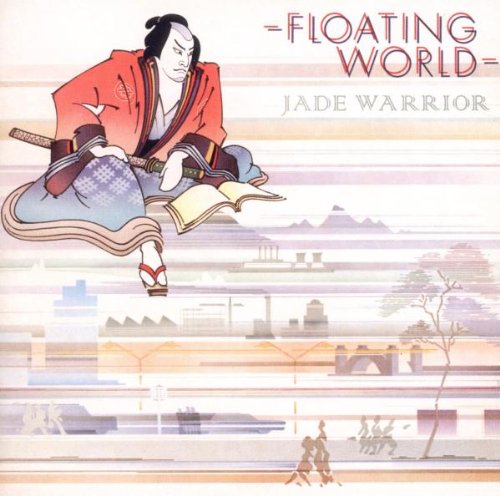
JERRY LEE LEWIS-WHO’S GONNA PLAY THIS OLD PIANO…THINK ABOUT IT DARLIN’ AND SOMETIMES A MEMORY AIN’T ENOUGH.
In February 2015, BGO Records released Who’s Gonna Play This Old Piano… (Think About It Darlin’) and Sometimes A Memory Ain’t Enough as a two-on-one. These two albums are a reminder of Jerry Lee Lewis’ reinvention as a country singer.
For four years, The Killer was one of country music’s hottest properties. This was still the case when Jerry Lee Lewis released Who’s Gonna Play This Old Piano… (Think About It Darlin’) in 1973. However, after the release of The Session Recorded In London With Great Guest Artists, The Killer required redemption.
Sadly, redemption wasn’t forthcoming. Jerry Lee Lewis, the man who seemed to have nine lives, looked down and out. That proved not to be the case. Following Sometimes A Memory Ain’t Enough, Jerry Kennedy and Jerry Lee Lewis were reunited and The Killer, one of the most talented and versatile singers of his generation, began his latest comeback.

 dereksmusicblog
