JETHRO TULL-BENEFIT-STEVEN WILSON 2013 STEREO MIX.
JETHRO TULL-BENEFIT-STEVEN WILSON 2013 STEREO MIX.
For Jethro Tull fans, 2015 looks like proving an expensive year. Much of Jethro Tull’s back catalogue has been released on import. This includes Thick As A Brick, Passion Play, War Child, Stand Up and Benefit. 2015 was proving an expensive year for fans of the Tull. It was soon,about to get a lot more expensive.
Last week, PLG released the new 40th Anniversary: La Grande Edition of Minstrel In The Gallery. Given Minstrel In The Gallery is one of Jethro Tull classic albums, the box set was a must have for Jethro Tull fans. The same day, what billed as the Standard Edition of Minstrel In The Gallery was released. By comparison, it seemed to have a much more low profile release. Grudgingly, Jethro Tull completists added the Standard Edition to their collections. However, soon, Jethro fans will be dipping into their wallets again for two new reissues.
Aqualung and Benefit are being reissued on 25th May 2015 by PLG. This however, isn’t a reissue of the original album. No. It’s Steven Wilson Mix of Aqualung and Benefit Steven Wilson Mix. For some Jethro Tull fans, the thought of two of their beloved group’s best albums being remixed, will sound like sacrilege. That’s not the case.
Previously, Steven Wilson has worked wonders with some of King Crimson’s back-catalogues. So, allowing him to work his magic on Aqualung and Benefit is a calculated gamble. Having heard Steven Wilson’s 2013 mix of Benefit, which I’ll tell you about, his mix of Benefit will be a welcome addition to any Jethro Tull’s fans music collection. However, before I tell you Benefit, I’ll tell you about about the roots of Jethro Tull and their journey to becoming one of the most successful, groundbreaking and innovative of the prog rock bands in musical history. The Jethro Tull story starts in Blackpool, in 1962.
That’s where the origins of Jethro Tull began, It was in Blackpool, in 1962, that Ian Anderson formed his first group The Blades. Originally a four piece, featuring Ian Anderson on vocals and harmonica, they became a quintet in 1963 and septet in 1964. By that time, they were a blue eyed soul band. After three years, the band decided to head to London.
Having moved to London, the band split-up within a short time. Just Ian Anderson and bassist Glen McCornick were left. This proved a blessing in disguise. They were soon joined by blues guitarist Mick Abrahams and drummer Clive Bunker. This was the lineup that featured on their debut album This Was. That was still to come.
Before that, the band had to settle on a name. Various names were tried. Then someone at a booking agent christened them Jethro Tull, after the eighteenth century agriculturalist. Not long after that, Ian Anderson acquired his first flute.
Up until then, Ian Anderson played just harmonica and was trying to learn to play the guitar. He realized wasn’t a great guitarist though. So, having decided the world had enough mediocre guitarists, he decided to expand his musical horizons. So he bought his first flute. Little did he realize this would be one of Jethro Tull’s trademarks. After a couple of weeks, Ian had picked up the basics of the flute. He was learning as he played. Not long after this, Jethro Tull released their debut single.
Sunshine Day was penned by Mick Abrahams, with Derek Lawrence producing the single. On its release, the single was credited to Jethro Toe. It seemed thing weren’t going right for Jethro Tull. The single wasn’t a commercial success and failed to chart. Despite this disappointment, thing got better when they released their debut album This Was.
Having released their debut album This Was in October 1968, it reached number ten in the UK. Then when This was released in the US in February 1969, it reached just number sixty-two in the US Billboard. Critics praised This Was, which cost just £1,200 to record. Featuring mostly original material, which was penned by members of Jethro Tull, This Was was a fusion of blues rock, folk, jazz and prog rock. This Was was a successful start to Jethro Tull’s career, which was about to enter a period where critical acclaim and commercial success were almost ever-present.
Prior to the recording of Stand Up, Jethro Tull’s sophomore album, Mick Abrahams left the band. Mick and Ian Anderson disagreed over the future direction of Jethro Tull. The problem was, Mick wanted Jethro Tull to stick with blues rock. Ian Anderson realised there was no real future in blues rock. He wanted to take Jethro Tull in different directions, exploring a variety of musical genres. So Mick left Jethro Tull and was replaced by Michael Barre. Little did either Mick nor Michael realise that Stand Up marked the start of a period where Jethro Tull sold over sixty-million albums.
Drawing inspiration from everything from blues rock, Celtic, classical, folk and rock work began on Stand Up. With Mick Abraham having left Jethro Tull, Ian Anderson was the primary songwriter. He penned nine of the ten tracks. They became Stand Up, which was released in August 1969 in the UK, where in reached number one. A month later, in September 1969, Stand Up reached number twenty in the US Billboard 200 Charts. This resulted not just in the start of Jethro Tull’s first gold disc, but the beginning of a golden period in their career. The next album in this golden period was Benefit.
For what became Benefit, Ian Anderson had written ten tracks. These ten tracks were recorded at Morgan Studios, London, during December and January 1970. Ian played flute, keyboards, guitar and sang lead vocals. The rest of Jethro Tull included Clive Bunker, who played drums, guitarist Martin Barre and bassist Glen Cornick who also played Hammond organ. John Evan, who’d later become a member of Jethro Tull, played piano and organ. David Palmer took charge of the orchestral arrangements, while Ian Anderson produced Benefit. It was released in April 1970.
Unlike Jethro Tull’s two previous albums, Benefit was released simultaneously in the US and UK and was well received by critics. Upon its release in April 1970, Benefit reached number three in the UK and number eleven in the US Billboard 200 Charts. This meant another gold disc for Jethro Tull. Not only were they were on a roll, but as Benefit shows, continually reinventing their music.
Opening Benefit is With You There to Help Me. Straight away, there’s some studio trickery at work, with a flute played backwards. Then, Jethro Tull remind me somewhat of The Moody Blues. Ian’s earnest, heartfelt vocal is enveloped by harmonies, while searing, scorching guitars answer his call. Soon, we hear a different side to Jethro Tull. They’re rocking, and rocking hard. Driven along by the rhythm section and bursts of scorching, sizzling guitars, while flourishes of flute cascade above the arrangement. They prove a foil for the vocal and guitar, on a track where folk, blues, jazz and rock intertwine seamlessly and mesmerically.
Despite being recorded in 1970, Nothing To Say sounds way ahead of its time. It sounds more like a track recorded around 1973 or 1974. Again musical genres are fused. Rock becomes prog rock and then thanks to Ian’s wistful vocal and the languid arrangement, almost pastoral and then rocky. Then thanks to echo and filters, a lysergic, psychedelic sound can be heard. With Jethro Tull’s rhythm section joining forces with fiery guitars and piano, they provide a fitting backdrop for Ian’s dramatic, hurt-filed and defiant vocal. Shrouded in echo, it takes on an almost mysterious sound. From there, harmonies combine with the band as a timeless track unfolds where Jethro Tull, musical visionaries, showcase their inconsiderable skills.
A piano sets the scene for Ian’s vocal on Alive And Well And Living In. Stabs of piano are matched by the bass before Ian’s vocal enters. It’s deliberate and definite. He seems to be taking care as he articulates the lyrics. Meanwhile flourishes of flute and bursts of guitar are fired off. By now we’re hearing a harder rocking side of Jethro Tull. Then the arrangement is stripped back to the piano and bursts of flute which accompany Ian’s dramatic, powerful vocal. A fusion of blues, orchestral, classical, prog rock and rock it’s a continuation of Jethro Tull’s reinvention.
Son is a stomping, hard rocking number. Here, Ian Anderson reminds me of Alex Harvey, of the Sensational Alex Harvey Band. His vocal is almost a theatrical sneer. Strutting his way through the track, machine gun guitars accompany him, while the rhythm section provide the heartbeat. Midway through the track, it’s all change. The tempo drops and Ian’s vocal becomes pensive, probing and questioning. Then the drama returns as the track heads to its glorious hard rocking crescendo.
Crystalline, chiming guitars join Ian’s tender vocal on For Michael Collins, Jeffrey and Me. The meandering guitars and vocal are a potent partnership. You’re drawn to them. Soon, you’re enchanted. Then with a burst of guitar the tempo picks up and Jethro Tull combine folk, blues, rock, classical and Celtic music. Just like what’s gone before, what follows is enthralling, beguiling and enchanting. It also shows another side to Jethro Tull.
To Cry You A Song sees a return to Jethro Tull’s blues rock sound. Driven along by a powerhouse of a rhythm section and dual guitars, it’s Jethro Tull at their best. Ian’s vocal is a mixture of power and emotion. When it drops out, Jethro Tull concentrate on mixing blues rock with prog rock. A captivating combination the music of the past, present and future collides head on. Later, Ian’s vocal is enveloped by harmonies and bursts of guitar, showcasing Jethro Tull at their hard rocking, bluesy best.
A Time For Everything bursts into life. It’s best described as a fusion of rock, Celtic and folk. Scorching guitars, boron, flute and acoustic guitar create a wall of dramatic, rocky music. As if inspired, Ian launches himself into the lyrics. He becomes a seer or philosopher, as he delivers the lyrics. A wash of feedback envelops a vocal that’s pensive, thoughtful and dramatic. Later, as the track heads towards a sudden and poignant ending Ian’s vocal is akin to an unanswered question. It’s as if he’s asking is there: “A Time For Everything?”
Inside is one of the highlights of Benefit. A rousing, anthemic combination of folk, rock and blues music. Meandering gently, there’s a slight Eastern influence. That’s maybe down to Ian’s flute. His vocal has a folk influence. Tender, veering between wistful and joyously, his vocal is crucial to the song’s success. Behind him, the rest of Jethro Tull combine musical genres on this breezy, joyous and irresistibly catchy track.
The rhythm section are at the heart of this hard rocking, bluesy Play In Time. Ian adds a grizzled vocal and plays the flute. Again, there’s some studio trickery, with the piano and guitars speeded up. This works, adding a psychedelic influence on this driving, dramatic and genre-melting track. Cascading flute, thunderous drums and wizened guitars provide the backdrop for what’s one of Ian’s best vocals. Strident and confident he struts his way through the track, as Jethro Tull kick loose. They’re a tight and talented unit who never miss a beat. As they jam, the earlier psychedelic influence adds the finishing touch.
Sossity You’re A Woman which closes Benefit, is very different from any of the other tracks. It’s like something from an other age. It’s as if Ian Anderson has been transported back in time as has been given the job of entertaining at a medieval feast. Just acoustic guitars accompany him, before later an organ adds an almost gothic sound. Later, the arrangement is a mass of acoustic guitars, tambourine, shakers and organ, before reaching its melancholy, thoughtful ending.
Benefit was just the second album in the most successful and productive period of Jethro Tull’s career. Between 1969 and 1979, nine of Jethro Tull’s albums were certified gold. Aqualung, Jethro Tull’s 1971 Magnus Opus was certified triple-platinum. It seemed Jethro Tull could do no wrong. They were one of the most successful, groundbreaking and innovative of the prog rock bands in musical history. Several times, Jethro Tull reinvented themselves musically. Jethro Tull weren’t content to stand still. Far from it. In their early years, Jethro Tull were experimenting musically, so they could come up with their trademark sound and style. This saw Jethro Tull become one the most groundbreaking and inventive bands of the prog rock era. Despite being one of the most innovative bands of the prog rock era, sadly, Jethro Tull never received the recognition they deserved.
After the advent of punk, critics and music lovers shied away from prog rock. Confessing to liking prog rock wasn’t the done thing. No. It wasn’t fashionable. Critics who previously, had championed prog rock, referred to prog rock groups like Jethro Tull as dinosaurs. Despite that, Jethro Tull gold discs kept coming Jethro Tull’s way. Right through to 1979s Stormwatch, Jethro Tull were hugely successful. The reason for that was their music never stood still. It constantly evolved. Jethro Tull’s music was groundbreaking, genre-melting and innovative. That’s why Jethro Tull enjoyed so much critical acclaim and commercial success.
Having released their debut album This Was in 1968, Jethro Tull went on to release another twenty studio albums. Their final album was 2003s The Jethro Tull Christmas Card. Over five decades, where they released twenty-one albums, Jethro Tull were more successful in the US than the UK. Ten of their albums were certified gold and one triple-platinum. Over in the UK, five of Jethro Tull’s albums were certified silver. Worldwide, Jethro Tull sold over sixty-million albums, making them one of the most successful prog rock bands ever. Despite that, Jethro Tull haven’t received the critical acclaim and recognition their music deserves.
Hopefully, that’s starting to change, especially with the rerelease of the Stephen Wilson mix of Jethro Tull’s third album Benefit, which will be rereleased by PLG on 25th May 2015. The Stephen Wilson mix of Benefit first featured on the 2013 Collector’s Edition. For those who haven’t got the Collector’s Edition of Benefit, Stephen’s mix brings out Benefit’s subtleties and nuances. The albums shares its hidden secrets. In many ways, Benefit takes on new life and meaning. All this is down to Stephen Wilson remixing Benefit, which is the perfect introduction to Jethro Tull’s music.
Along with Benefit, I’d recommend Aqualung. They’re the perfect starting point to Jethro Tull, one of the most innovative, groundbreaking, commercially successful and critically acclaimed prog rock bands of all time, whose music is truly timeless, innovative and groundbreaking.
JETHRO TULL-BENEFIT-STEVEN WILSON 2013 STEREO MIX.

CLARENCE “FROGMAN” HENRY-BABY AIN’T THAT LOVE-TEXAS AND TENNESSEE SESSIONS 1964-1974.
CLARENCE “FROGMAN” HENRY-BABY AIN’T THAT LOVE-TEXAS AND TENNESSEE SESSIONS 1964-1974.
New Orleans is one of America’s great musical cities. It always has been. That’s always been the case for just over a hundred years. Back then, blues and gospel provided Big Easy’s soundtrack. Next came Dixieland and swing. By then, New Orleans lived and breathed music. Even prohibition couldn’t stop the musical party in New Orleans.
Speakeasies sprung up across the city, as the Jazz Age took shape. New Orleans, one of America’s musical capitals came alive. Especially when one New Orleans’ most successful sons, Louis Armstrong took to the stage.
In 1924, Louis Armstrong became the featured soloist in the Fletcher Henderson dance band. Louis Armstrong spent the year with the Fletcher Henderson dance band. This was part of his musical education. It paid off, and
Louis Armstrong became one of the legends of jazz. However, Louis Armstrong wasn’t the only New Orleans’ native making a name for himself back then.
The Big Easy was the birthplace of Jelly Roll Morton, Sidney Bechet and Mahalia Jackson. Just like Louis Armstrong, they were all making forging a successful career in music. Later, so would Professor Longhair and Fats Domino. They would become two of New Orleans’ most successful musical exports, and influenced the next generation of musicians. This included Clarence “Frogman” Henry, whose career is celebrated on Baby Ain’t That Love-Texas and Tennessee Sessions 1964-1974 which was recently released by Ace Records. It documents a ten year period in Clarence “Frogman” Henry’s career. His story began in New Orleans, back in 1937.
Clarence “Frogman” Henry was born in Algiers, New Orleans, on March 19th 1937. He was one of seven children, but the only one who showed any musical aptitude.
His musical aptitude became apparent from an early age. There was a battered old piano in the Henry household. Young Clarence looked at it as a challenge. He was determined to teach himself to play it. However, he was only a child. This wasn’t going to stop Clarence. Eventually, through persistence, practice and determination, Clarence became a proficient pianist. For Clarence, this was his Everest. Next, he moved onto the trombone. Like the piano, Clarence conquered the trombone. So, when Clarence enrolled at Algiers High School, he was already a proficient in two instruments.
When his teachers saw that Clarence was a talented musician, they encouraged him. He improved under their tutelage. However, it was the breakthrough of another New Orleans’ native, Fats Domino, that inspired Clarence musically.
From that day that Clarence first saw Fats Domino, he was determined to become a singer. For many teenagers, this was the stuff of dreams. Not Clarence. He was determined to make his dream a reality. By the time his school days were almost at an end, Clarence had taken his first foray into music.
This was with Bobby Mitchell and The Toppers. They were well known in New Orleans. Despite their potential and talent, they struggled to make a name for themselves further afield. Clarence was a longtime fan of Bobby Mitchell and The Toppers. So when they were looking for a trombonist, Clarence auditioned. Bobby Mitchell thought Clarence fitted the bill, and Clarence became a Topper. He was now a professional musician.
The only problem was Clarence was still a student. He wanted to graduate, so had to juggle his studies with playing with Bobby Mitchell and The Toppers. This wasn’t ideal. However, Clarence made the best of it, playing live dates with Bobby Mitchell and The Toppers. Then on 9th February 1953, Clarence played the trombone on four tracks with Bobby Mitchell and The Toppers. During this session, Clarence started to write his now songs. It seemed Clarence was looking to the future. Especially when, after two years as a Topper, Clarence called time on his career with Bobby Mitchell.
Looking back, Clarence was taking a risk, turning his back on Bobby Mitchell and The Toppers. Maybe he realised they were never destined for fame and fortune? For Clarence, the future looked bright.
Not long after leaving Bobby Mitchell and The Toppers, Clarence formed his own group. They were mostly, a covers band. Sometimes, though, Clarence sung some of his own songs. That’s where Clarence was spotted by Pascal Marcello. He offered Clarence a gig at the Joy Lounge, in Gretna. That’s where Clarence got his break.
Paul Gayten was known locally as an R&B singer and pianist. He was also Chess’ A&R man. When he heard Clarence, he liked what he heard. Clarence was what Chess Records were looking for.
Following the emergence of Fats Domino, every record label was looking for their very own Fats Domino. So, A&R men set off across America looking for the next big thing. Paul Gayten thought he found it with Clarence Henry.
Having heard Clarence, Paul phoned Leonard Chess. He told his boss about this young, unknown singer, Clarence Henry. Leonard Chess not wanting to risk losing a potential star, made his way to New Orleans. Paul urged the owner of Chess Records to sign Clarence to their Argo imprint. When Leonard Chess heard Clarence sing, he knew his trip was worthwhile. Clarence Henry, and also Bobby Charles, were both signed to Chess Records the same day. Now Clarence’s solo career was underway.
Before his first recording session, Clarence and Paul penned two tracks, Driving Troubles and Ain’t Got No Home. The two tracks were recorded. When the time came to release Clarence’s debut single, Driving Troubles was chosen as the single. Ain’t Got No home was destined for the flip side…for the time being.
On the release of Driving Troubles, the single looked like it was about to sink without trace. Then DJ Poppa Stoppa flipped the single over. From the moment ge played Ain’t Got No Home, the radio station was getting calls to play what listeners called “the frog song, by that frog man.” Not only was Clarence well on the verge of having his first hit single, but his nickname was born.
By January 1957, Ain’t Got No Home entered the top twenty on the US Billboard 100, and reached number three in the US R&B charts. It looked like Clarence was about to enjoy a successful career at Chess.
That wasn’t to be. Clarence’s next four singles flopped. After that, Chess Records stopped taking Clarence’s calls. Already, he was yesterday’s man.
Four years later, in 1961, Clarence heard from Chess Records again. Although he hadn’t recorded anything recently for Chess, he was still under contract. So, Leonard Chess was within his rights to ask Clarence to cover a Bobby Charles song, I Don’t Know Why.
When Clarence arrived at the studio, Chess Records had put together their A-Team. They accompanied Clarence on I Don’t Know Why. However, there was a problem. A song from the forties had the same title. So, I Don’t Know Why became But I Do, and in the process, rejuvenated Clarence’s career.
When it was released, But I Do reached number four in the US Billboard 100, and number three in Britain. The followup, a cover of the Mills Brothers’ You Always Hurt, The One You Love gave Clarence another hit single. It reached number twelve in the US Billboard 100 and number six in Britain. With two hit singles on both sides of the Atlantic Clarence “Frogman” Carter’s was the comeback king.
As comebacks go, it was somewhat brief. After You Always Hurt, The One You Love, Clarence’s next couple of singles failed to chart. The timing couldn’t have been worse. Clarence was due to tour Britain with Bobby Vee and Tony Orlando. By the time the tour began, Clarence was a forgotten man.
To coincide with the British tour, Pye released A Little Too Much. Clarence even lip synched his new single on the British pop program Thank Your Lucky Stars. However, it was too little too late.
By 1963, Clarence hadn’t had a hit single for two years. Chess in America, and Pye in Britain had had enough. They were pouring good money after bad, trying to transform Clarence’s career. The time had come to pull the plug when Clarence’s cover of Nat King Cole’s Looking Back sunk without trace. There was no Looking Back for Chess or Pye. They turned their back on Clarence “Frogman” Carter. Music was changing, and in Britain especially, Clarence seemed to represent music’s past.
Bob Astor, Clarence’s longtime manager, refused to give-up on Clarence. They had been together a while, and been through good and bad times. So, once Clarence’s contract with Chess expired, Bob took Clarence to see Huey Meaux. However, there was a problem.
Huey and Cosimo Matassa had been partners in what was then, New Orleans’ premier studio. However, the pair fell out. There was no mending their relationship. This meant that Huey had no regular recording studio To call home.
That however, didn’t seem to matter. It seemed that whatever studio Huey decided to use, he was able to conjure up his trademark New Orleans sound. That’s what Bob Astor was looking for, for his client Clarence “Frogman” Henry.
Huey, who back then, was one of the Big Easy’s top producers, agreed to help. From 1964, right through to 1966, it’s thought that Heuy Meaux and Clarence “Frogman” Henry worked together.
Ironically, though, Huey was never officially credited as Clarence “Frogman” Henry’s producer. Instead, Bob Astor and Peter Paul were. That’s disputed by some as Huey’s voice can be heard on the master tapes. There could be an innocent explanation. It could be that for two years, Huey and Clarence attempted to rejuvenate the “Frogman” ailing career.
By 1966, the two men went their own ways. However, they had managed to record a plethora of music, some of which finds its way onto Ace Records’ recently released compilation Baby Ain’t That Love-Texas and Tennessee Sessions 1964-1974.
There’s a total of twenty-eight tracks on Baby Ain’t That Love-Texas and Tennessee Sessions 1964-1974. This includes nine unreleased tracks. Eight tracks made their way onto an Edsel compilation released in 1999. The other eleven tracks on Baby Ain’t That Love-Texas and Tennessee Sessions 1964-1974 were released between 1964 and 1974.
Having found a new producer for Clarence, Bob Astor, his manager, found him a new label, Parrot, a subsidiary of London Records. Clarence was still in the game. However, would his career take off at Parrot?
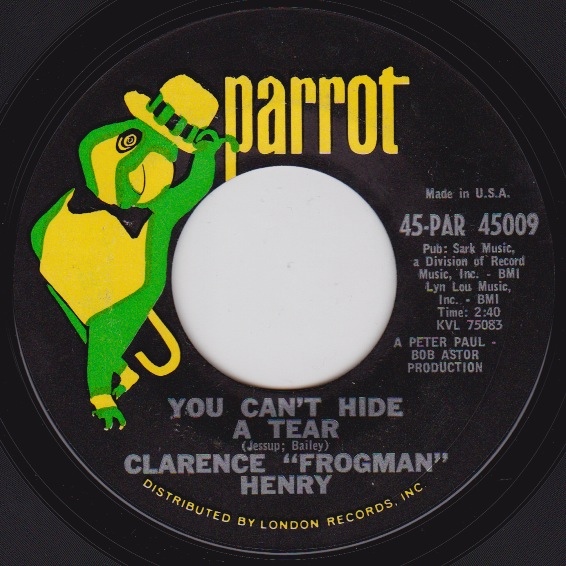
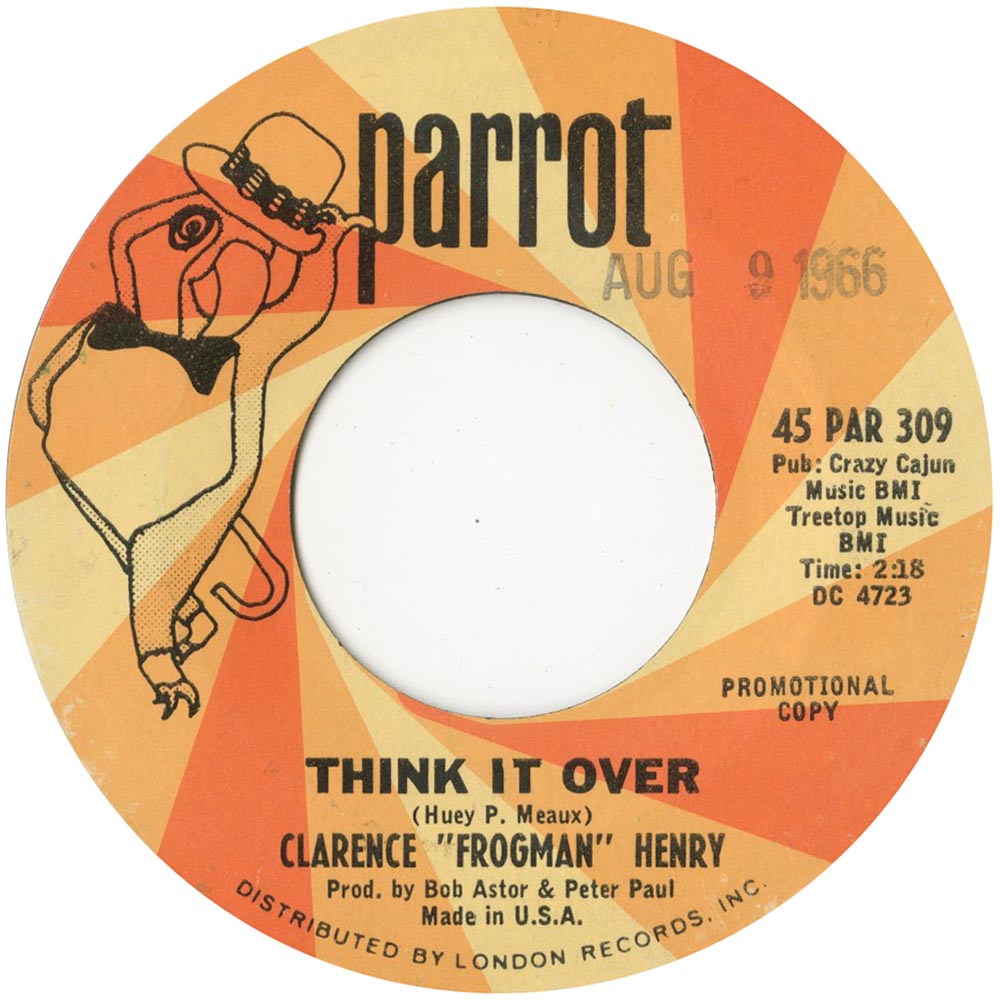
Now signed to Parrot, Clarence released five singles for Parrot. The first three singles don’t feature on Baby Ain’t That Love-Texas and Tennessee Sessions 1964-1974. However, the inclusion of You Can’t Hide A Tear and Cajun Honey more than make up for this. So, does the inclusion of Baby Ain’t That Love, the Huey Meaux penned Think It Over, and a remake of Clarence’s first hit single Ain’t Got No Home. It’s transformed. A stomping beat and blazing saxophones accompany Clarence, as he unleashes a vampish vocal. His biggest hit takes on new meaning. Despite the quality of Clarence’s releases on Parrot didn’t sell well. This left Clarence “Frogman” Henry’s career at the crossroads.
It had been five years since Clarence “Frogman” Henry had enjoyed a hit. Clarence was a talented singer, songwriter and musician. However, during the two years he spent with Parrot, commercial success passed Clarence by. He couldn’t live on his past glories. So Parrot release Clarence from his contract.
Clarence wasn’t without a contract long. He soon signed to Nashville based, Dial Records. It was owned by musician turned musical impresario, and publisher, Buddy Killen. With Buddy’s help, Clarence recorded two singles at Chips Moman’s American Studio. If anyone could turn Clarence’s career around in 1967, it was Chips Moman.
After cutting four sides at American Studio, the time came for Clarence to release his Dial debut. Hummin’ A Heartache, was chosen and released as a single in 1967.
On the B-Side was This Time. Sadly, it wasn’t This Time for Clarence “Frogman” Henry. Despite its quality, this fusion of pop and R&B flopped. This wasn’t the time for Clarence “Frogman” Henry. Maybe next time?
That wasn’t to be. Clarence released That’s When I Guessed as a single in 1968. With its country-tinged sound, it marked a stylistic departure from Clarence. So did the flip side, Shake Your Moneymaker. It was a slice of good time, funky soul. However, despite Clarence’s best efforts, history repeated itself. The single sunk without trace. That was the end of Clarence “Frogman” Henry’s time at Dial.
Nothing was heard of Clarence “Frogman” Henry until 1969. Although he charmed the crowds on Bourbon Street, Clarence never entered the studio until he was asked to record a live album for Roulette.
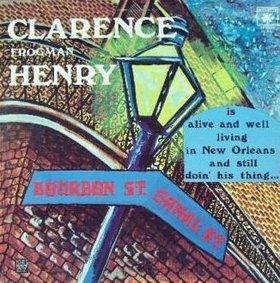
Clarence “Frogman” Henry Is Alive And Well Living In New Orleans was released on Roulette in 1970. For some, this was a blast from the past. With Clarence not having had a hit since 1961, many people had forgotten about him. However, still Clarence hadn’t entered the recording studio since 1967. It would be another three years before he set foot in Huey Meaux’s studio.
After seven years apart, Clarence and Huey reunited in 1973. The result of the sessions were a trio of singles released on the American Pla-Boy label. The first single, In The Jailhouse Now was released in late 1974, with We’ll Take Our Last Walk Tonight on the B-Side. Just like Clarence’s previous singles, it passed most people by. Hot on the heels of In The Jailhouse Now, came You Can Have Her. This was the last single Clarence released on the American Pla-Boy label. Still a hit single continued to elude Clarence “Frogman” Henry.
You Can Have Her is the final single that features on Baby Ain’t That Love-Texas and Tennessee Sessions 1964-1974. However, there’s still plenty more music to enjoy, including the nine previously unreleased tracks on Baby Ain’t That Love-Texas and Tennessee Sessions 1964-1974.
The unreleased tracks on Baby Ain’t That Love-Texas and Tennessee Sessions 1964-1974, show different sides to Clarence “Frogman” Henry. Among their highlights of the unreleased tracks are covers of Billy Hill’s The Glory Of Love and a driving version of You Made Me Love You. Looking Back is transformed into a beautiful, soul-baring ballad. Then Clarence strolls his way through You’ve Got A Lot To Learn. Long, Lost And Worried, a Mac Rebennack composition, sounds as if it was written for Clarence. He breathes life and meaning into the song. Just like Clarence’s cover of Heartaches By The Number, it’s a real find. However, it’s not the last.
Eight tracks that feature on Baby Ain’t That Love-Texas and Tennessee Sessions 1964-1974, made their way onto an Edsel compilation released in 1999. This includes slow, moody and bluesy Cheatin’ Traces. So does an upbeat, poppy version of Huey Smith’s Sea Cruise. A real find is I Can’t Take Another Heartache. As Clarence delivers a worldweary vocal, gospel-tinged backing vocals accompany him. Mathilda has a country blues influence, as Clarence delivers a truly heartfelt vocal. It’s one of the best of the tracks that Edsel licensed back in 1999. So, it’s fitting it features on Baby Ain’t That Love-Texas and Tennessee Sessions 1964-1974, which was recently released by Ace Records.
Baby Ain’t That Love-Texas and Tennessee Sessions 1964-1974 documents a ten year period in Clarence “Frogman” Henry’s long and illustrious career. Sadly, it wasn’t the most successful period of Clarence “Frogman” Henry’s career. There’s a reason for this.
From the British Invasion of 1964, neither R&B nor soul music was as popular in America. Blues and jazz had suffered the same fate. Pop, psychedelia, rock and then prog rock was what most people were listening to during this period. This meant that soul and R&B were marginalised. It seemed that the upsurge in interest in pop and rock was affecting sales of other genres in music.
The only soul label that seemed to be enjoying any sort of success was Motown. They were continuing to churn out their unique brand of poppy soul. Apart from Motown, soul singers signed to Stax and Atlantic enjoyed a degree of success. This would be the case with soul music throughout the period that Baby Ain’t That Love-Texas and Tennessee Sessions 1964-1974 covers.
Between 1964 and 1974, the soul factories of Detroit, Memphis and Philly would enjoy their moment in the sun. They seemed to find a winning formula. However, their sound was formulaic, and the success didn’t last.
This meant that the singles charts on both sides of the Atlantic were dominated by pop and rock. For soul singers like Clarence “Frogman” Henry, it meant their music often passed record buyers by.
That proved to be the case. Between 1964 and 1974, commercial success eluded Clarence “Frogman” Henry. He never enjoyed the commercial success that enjoyed at Argo. This was ironic. During this period, Clarence “Frogman” Henry was continuing to mature as a singer and musician. He was a much better singer by 1974, than he was when has signed to Argo. However, throughout that ten year period, commercial success eluded Clarence.
That’s despite the best efforts of producers Chips Moman and Huey Meaux. So, Clarence “Frogman” Henry returned to where it all began, the Big Easy.
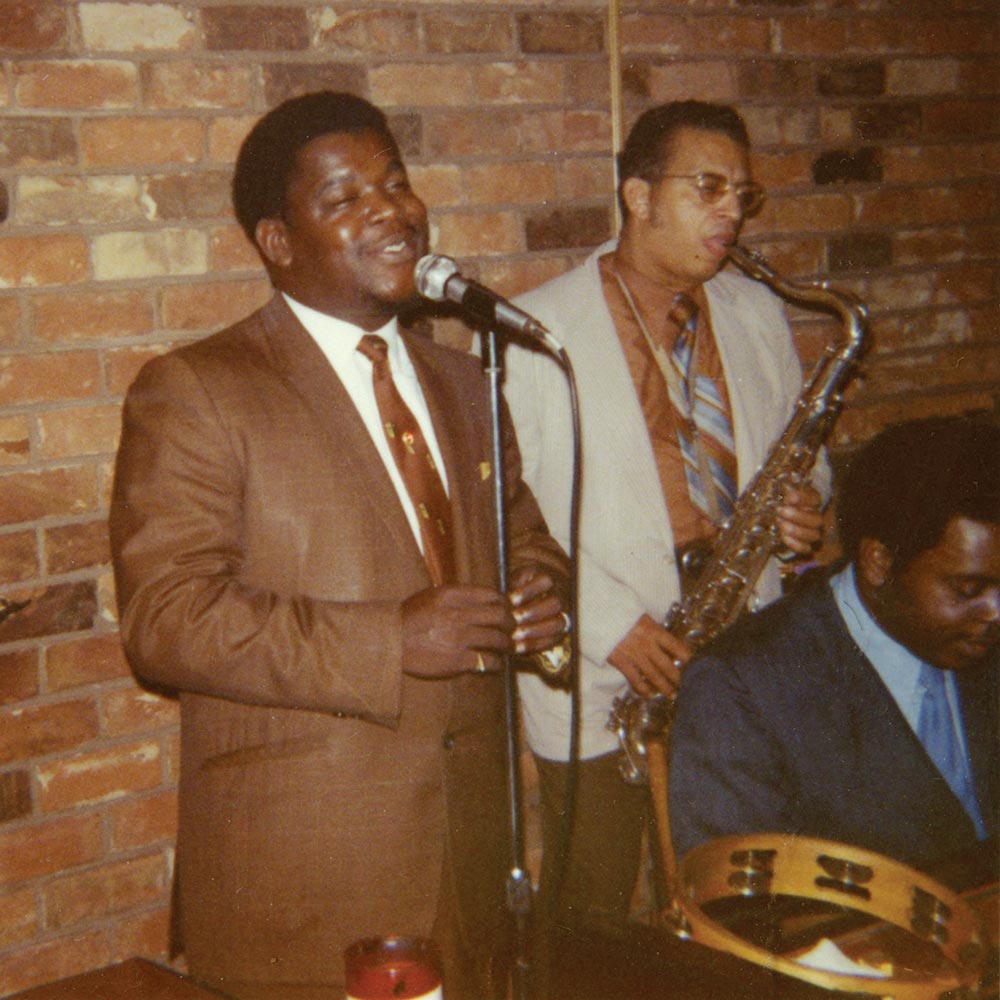
For nineteen years, Clarence “Frogman” Henry made his money on Bourbon Street. Each night, locals and tourists flocked to Bourbon Street, where Clarence “Frogman” Henry won friends and influenced people. Clarence “Frogman” Henry was one of the biggest draws on Bourbon Street, where he played a selection of his finest moments, including some of the music on Baby Ain’t That Love-Texas and Tennessee Sessions 1964-1974.
CLARENCE “FROGMAN” HENRY-BABY AIN’T THAT LOVE-TEXAS AND TENNESSEE SESSIONS 1964-1974.




LAU-THE BELL THAT NEVER RANG.
LAU-THE BELL THAT NEVER RANG.
Ever since the release of their 2007 debut album. Lightweights and Gentlemen, Lau have been variously described as “adventurous,” and “modern folk’s most innovative band.” That’s no exaggeration. Lau are, without doubt, one of the most exciting and ambitious folk bands of their generation. That’s why Kris Drever, Martin Green and Aidan O’Rourke have been winning awards, praise and plaudits ever since. This includes, winning the BBC Folk Award for the best group four times in six years. That takes some doing. However, Lau are no ordinary band.
Far from it. Lau are a groundbreaking group who release pioneering music. They’re also perfectionists. They always have been.
Ever the perfectionists, Lau freely admit to spending up to three weeks on a song. That’s been the case since Lau’s early days. They spent a year honing their songs and sound before releasing their debut album, Lightweights and Gentlemen. There was no way that Lau were going to release Lightweights and Gentlemen until they, and the album was ready. Their patience paid off, and ever since the release of Lightweights and Gentlemen, Lau’s star has been in the ascendancy.
Over the next eight years, Lau have released four further albums. Their latest album, The Bell That Never Rang, was recently released on Reveal Records. It’s the first album Lau have released since 2012s critically acclaimed Race The Loser. That’s not unusual though.
Ever since the early days of Lau, the three members have worked on other projects. Despite these other projects, they’ve always returned to Lau, which the three members fondly describe as “the mothership.”
On their return to the “the mothership,” Kris Drever, Martin Green and Aidan O’Rourke hit the live circuit with Lau. Soon, Lau had established a reputation as one of Scotland’s best live bands. Whether it was festivals or small intimate venues, Lau lifted the roof with their unique brand of folk music. Proof of this came on their second album Live. Combining electronic and traditional instruments Lau soon garnered a large, loyal following, who waiting Lau’s next studio album with baited breath.
Two years after their debut album Lightweights and Gentlemen, Lau released their sophomore studio album Arc Light, in 2009. Released to critical acclaim, critics hailed Arc Light as further proof that Lau were the future of folk music. Soon, other artist were wanting to collaborate with Lau.
First to collaborate with Lau was Karine Polwart. Five new songs were recorded. When Lau Vs. Karine Polwart released Evergreen, this reinforced and enhanced both Lau and Karine’s reputation as two of modern folk’s most best artists. Then in 2010, acoustic and electronic artist and producer Adem collaborated with Lau. Together, they recorded seven new tracks, which were released as Lau Vs. Adem’s Ghosts. The second in the Vs. Lau series proved just as successful as the first. As if this wasn’t encouraging enough, Lau’s reputation as a live band was still growing at home and abroad. All that was needed was another studio album from Lau.
Back in Castlesound Studios, Pencaitland, Lau recorded the nine tracks that became Race The Loser in May 2012. Lead vocalist Kres Drever played guitars and harmonica, Martin Green played accordion, Wurlitzer organ and electronics, while Aidan O’Rourke played the fiddle. Producing Race The Loser was Grammy Award nominated producer Tucker Martine. With a C.V. that included working with Sufjan Stevens, Camera Obscura, R.E.M. and Laura Veirs, having Tucker produce Race The Loser was quite a coup. However, would it pay off?
When Race The Loser was released in 2012. Praise, plaudits and critical acclaim came Lau’s way. Race The Loser was no ordinary folk album. It was much more than that. While folk was the most predominant influence, but were elements of jazz, rock, electronica and soul. The soul comes in the shape of Kris’ world-weary, all-knowing vocal. His vocal played a part in what was a folk album for the 21st Century. Race The Loser was a career defining album from Lau. However, would Lau followup an album like Race The Loser?
Lau’s loyal fans have been waiting three years to find out the answer to that question. Now the wait is over. Lau released recently The Bell That Never Rang. This six track album is the next chapter in the Lau story.
For The Bell That Never Rang, Kris Drever penned the lyrics to the six songs. These six songs were recorded at Lau’s studio of choice, Castlesound Studios. Producing The Bell That Never Rang, was Joan Wasser, a.k.a. Joan As Police Woman. Adam Sachs and Stuart Hamilton took charge of engineering duties. This allowed Lau to do what they did best, make music.
As The Bell That Never Rang sessions got underway, vocalist Kres Drever played guitars, Martin Green played accordion and “electronics,” while Aidan O’Rourke played the fiddle. They were joined by the Elysian Quartet. Its lineup features violinists Emma Smith and Jennymay Logan, Vince Sipprell on viola and Laura Moody on cello. Joan Wasser added vocals on The Bell That Never Rang. Once the recording of The Bell That Never Rang was completed, it was mastered in New York by Fred Kevorkian. All that was left was for The Bell That Never Rang to be released.
Just like previous albums, The Bell That Never Rang was released to widespread critical acclaim. Lau were back, and back to their innovative best. The Bell That Never Rang was triumphant return from Lau. So, when
The Bell That Never Rang was released earlier this week it should’ve been a joyous occasion. It was. However, there was a sense of sadness. When recording The Bell That Never Rang, Lau brought onboard a string quartet, the Elysian Quartet. They player their part in The Bell That Never Rang’s sound and success. Sadly, their viola player, Vince Sipprell, had died on 30th January 2015. By then, The Bell That Never Rang recording session were completed. So, Lau dedicated The Bell That Never Rang to Vince Sipprell, a talented and dedicated musician. He played his part in the success of Lau’s new album The Bell That Never Rang.
Opening The Bell That Never Rang is First Homecoming. It’s a track that showcases Lau’s unique brand of innovative folk. A rumbling sound in joined by a plink plonk guitar and wistful strings. Soon, thunderous drums signal the arrival of Kris’ vocal and a chirping guitar. There’s a sense of hope and joy in Kris’ vocal as he delivers the cinematic lyrics. He’s a changed man. No longer is he alone, now that he’s found someone to love: “in this new place I call my home.” Previously, this seemed out of reach, but: “I’ve lost the urge to be by myself.” By the time Kris delivers that line, seamlessly, the arrangement has come together. As the strings dance, drums pound and the guitar chimes, as Kris experiences hope, happiness and joy.
Martin Green’s accordion and Kris Drever’s chirping guitar unite on the irresistible The Death of the Dining Car. Soon, the Elysian Quartet add dancing strings. Lau it seems are returning to their traditional Scottish roots. However, being Lau, there’s always expect a twist. It comes when pounding, mesmeric drums accompany Kris’ vocal. He dawns the role of a storyteller. Meanwhile the drums inject a sense of urgency and drama. It’s with a sense of sadness that Kris delivers the lyrics. They too have a cinematic quality, as the rest of Lau fuse musical genres. Everything from electronica, folk, indie rock and Scottish traditional music are combined seamlessly, on his stomping anthem.
Back in Love Again has a much more understated sound. Kris strums his trusty acoustic guitar. Soon, lush strings sweep in from the distance. They flit in and out of the arrangement, playing yin to Kris’ yan. That’s until gradually, things begin to change. From the distance, a wash of sound enters. Gradually, it grabs your attention. That was its raison d’être. Now you’re paying attention, Kris delivers another hopeful vocal. Or is should it be cautious optimism, given he’s: “falling Back in Love Again?” As he delivers his hopeful vocal, the accordion and guitar propel the arrangement along. Augmenting Kris’ vocal are tender harmonies, they add to the beauty and soulfulness of this captivating, ethereal ballad.
A Lau album is not unlike Forest Gump’s box of chocolates, you never know what you’re gonna get.” Tiger Hill (Armoured Man) marks another change of direction. With its plink plonk guitars and myriad of disparate sounds, it’s as if Lau have been inspired by Fridge. Soon, a wash of moody, broody music sees a change of tack, before briefly, Lau pay homage to firstly Cream and then C.S.N.&Y. It’s the harmonies that leads to the C.S.N.&Y comparison. Later, washes of strings and a quivering, shivering guitar are added. They play their part what’s beginning to sound like another a cinematic sounding track. That’s until later, when Lau are transformed into an innovative power trio. Stabs of mellow keyboard accompany harmonies, as musical chameleons Lau, bring this magical, musical mystery tour on a melodic high.
The one way to describe The Bell That Never Rang is a seventeen minute epic. Slowly, and gradually, the arrangement begins to take shape. At the heart of its sound and success are the Elysian Quartet. Their elegiac and balletic strings, meander and skip across the arrangement, adding an ethereal, and sometimes wistful beauty. Later, they add an element of drama, as they’re played firmly and with a sense of purpose. As they reach a crescendo, the arrangement briefly bubbles dramatically. It then returns to its wistful, ethereal sound. Especially with Kris adding guitar, Martin accordion and Aidan his fiddle. Seamlessly, Lau the Elysian Quartet feed off each other, inspiring each other to greater heights. Sometimes, the music becomes cinematic, other times the Celtic influence is unmistakable. The Celtic influence is the signal for Kris to deliver his vocal. With just Lau accompanying him, he delivers a pensive, wistful and emotive vocal. Sadness is omnipresent as he sings: “nobody knows when you’ll go and no-one thinks to tell you.” While Kris delivers a thoughtful vocal, the rest of Lau add harmonies adding to the ethereal beauty and wistfulness of this seventeen minute Magnus Opus.
Ghosts closes The Bell That Never Rang. It’s another understated ballad. This is something Lau do so well. As Kris plays his acoustic guitar, he hums. It’s as if he’s just sitting at home playing his guitar. Instead, the red light is shining, and the tape is running. He delivers an inspired performance, singing of the “Ghosts” of his past. They surround him, and are everywhere. He realises that as he wonders where he would go to escape them. His lyrics, and his delivery of them are both beautiful and haunting. Especially with washes of accordion and a pulsating drums that plays in the background. They prove the perfect accompaniment to Kris on this hauntingly beautiful ballad.
Although it’s three years since we last heard from Lau, the three year wait for The Bell That Never Rang has been well worth the wait. The Bell That Never Rang oozes quality and beauty. From the opening bars of First Homecoming, right through to the closing notes of Ghosts, The Bell That Never Rang is a captivating album. The music is beautiful, dramatic, elegiac, ethereal, haunting and wistful. Other times it’s anthemic, hopeful and joyous. Quite simply, it’s an album that’s designed to toy with your emotions.
Throughout The Bell That Never Rang, Lau toy with your emotions on what’s akin to a magical, musical mystery tour. As mystery tours go, Lau spring surprises aplenty. No two tracks are the same. Indeed, often during the same track, Lau throw a curveball. The song heads in a totally different direction. It’s as if Lau are determined to keep the listener on their toes during The Bell That Never Rang. They succeed in doing so, on this old school album.
There’s a reason I refer to The Bell That Never Rang as an old school album. It features just six songs and lasts forty-four minutes. This means that The Bell That Never Rang would fit perfectly onto a vinyl album. That’s what bands used to do. However, that’s until the CD.
Since then, bands release sprawling, fifteen track albums. It’s as if they feel obliged to fill the CD. Ironically, they’re doing themselves a huge disservice. Usually, by the tenth track, the quality is starting to suffer. By the fifteenth and final track, the track should’ve stayed on the cutting room floor. Quality control, it seems, is sadly lacking. That, however, isn’t case with Lau.
Far from it. Only the creme de la creme makes it onto a Lau album. Remember, Lau are the archetypal perfectionists. They home and shape song until they’re totally satisfied with it. Only then, will they make it onto an album. That was the case with The Bell That Never Rang.
Each of the six of songs that made it onto The Bell That Never Rang, feature the Edinburgh based musical alchemists at their innovative best. The Bell That Never Rang sees Lau seamlessly combine disparate musical genres. Everything from Celtic, electronica, electro, folk, indie rock and rock is thrown into Lau’s melting pot. Producer Joan Wasser sprinkles some sonic magic and then gives this musical melting pot a stir. Only then is this musical treat ready to serve.
And what a dish it is. It’s fit for a king or queen. Lau have surpassed their previous efforts. The Bell That Never Rang marks a triumphant return from Lau. After three years away, Edinburgh based musical mavericks Lau, make a welcome return with their genre defying Magnus Opus, The Bell That Never Rang.
LAU-THE BELL THAT NEVER RANG.

DON’T BE BAD! 60S PUNK RECORDED IN TEXAS.
DON’T BE BAD! 60S PUNK RECORDED IN TEXAS.
Not everyone can spot a hit record. Especially over a variety of musical genres. That takes a very special person. It also takes “good ears.” Not many people are blessed with good ears. However, Huey Purvis Meaux was. Good ears are what Huey credits his success to.
Huey Purvis Meaux knew a hit record when he heard one. It didn’t matter if it was blues, country, garage, R&B, rock ’n’ roll, swamp pop or Tex Mex, Huey knew a hit when he heard one. So it’s no surprise that for two decades, Huey who owned Crazy Cajun Enterprises, became one of the leading lights of the Texan music scene.
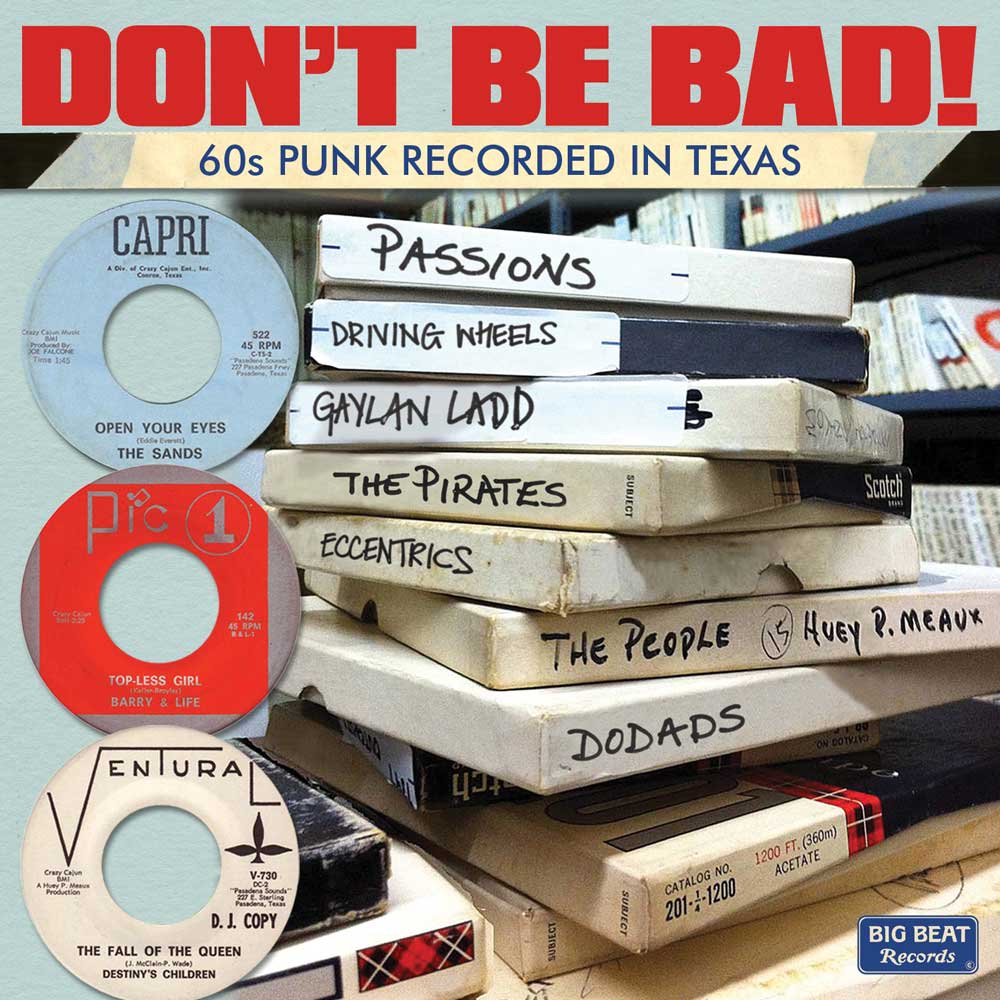
During the sixties and seventies, Huey established a reputation as one of the top producers in Texas. He produced many of the twenty-six tracks on Don’t Be Bad! 60s Punk Recorded In Texas. This collection of Texan garage was recently released by Big Beat Records, an imprint of Ace Records. It includes ten previously unreleased tracks. The other sixteen tracks were released on the various labels Huey owned. These labels were a necessity in the post-Payola age.
Any record label who had several songs played on the radio at the same time, risked being on the wrong end of a Payola investigation. After what had happened in the late-fifties, and early-sixties, this was every record label owner’s worst nightmare.
Payola had blighted the music industry for three decades. It was commonplace for record labels to pay DJs to play their records. Some record labels gave DJs gifts. Often the bribery was a bit more subtle. Record labels paid for advertising on radio stations. By the late fifties, the US Government were keen to clean up the music industry.
The Congressional Payola Investigations of 1959 was the start of US government’s attempt to clean up the music industry. Then in 1960, the first Payola investigations began. Witnesses were called and soon, the clean up began.
DJ Alan Freed was called as a witness to the committee hearings. He proved an uncooperative witness. This didn’t please the committee, or his employers. After the committee hearings, Alan Freed was fired. One of his contemporaries survived, but only just.
Just like Alan Freed, Dick Clack was known across America. He was also asked to testify at the committee hearings. Dick Clark testified, and survived the hearings, but only after agreeing to sell his personal investments in music publishing and recording companies. Quite rightly, the committee considered these investments a conflict of interest. So, having sold his investments, Dick Clark lived to fight another day.
Following the Payola investigations, record label owners were worried about further investigations. This included Huey Purvis Meaux. Like many successful producers, he could have any number of songs in the charts at one time. They would all be played on radio. If that happened, he might find himself on the wrong end of a Payola investigation. However, there was a way round this.
Just like other record label owners, Huey setup different labels for different genres of music. Before long, in addition to Crazy Cajun, Huey had a string of labels, including Capri, Pacemaker, Pic One, Shane, Tear Drop, Tribe and Ventural. Each of these labels was a subsidiary of Huey’s Crazy Cajun Enterprises, which was housed at 227 Sterling Street, Pasadena, Texas. These labels allowed Huey to sleep safe in the knowledge that he wasn’t going to find himself on the wrong end of a Payola investigation.
This allowed Heuy to do what he did best, finding new talent and producing hit records. This is what Huey Purvis Meaux had been doing for years. He seemed to have the Midas touch. It didn’t seem to matter what musical genre it was, Huey could make magic happen in his recording studio in Pasadena.
Huey’s recording studio was situated in a former radio station in a suburb of Pasadena. Part of the old radio station was Huey’s recording studio. It had been built by Huey, albeit with the help of local teenage musicians. He told them he was building a recording studio, and somehow, the charismatic Texan managed to convince them to help build the recording studio. Next door was a club for teenagers. This gave the musicians and bands somewhere to hang out before the red light went on. Plenty of bands spent time there. Especially, between 1965 and 1967, which is remembered as as sixties punks golden era.
By 1965, American music was changing, and changing fast. The British Invasion of 1964 was a game-changer. Suddenly, America “got” The Beatles. Coast to coast, Beatlemania swept the States. This kick-started the British invasion. Suddenly, American artists no longer monopolised the American charts. Instead, British artists stole the limelight from their American counterparts. Soon, the Rolling Stones, The Kinks, The Who and later, The Animals and Cream would take America by storm. However, by 1965, a new musical genre was making its presence felt, and it was unashamedly American.
This new musical genre divided opinion in many ways. Even its name. Many called it garage rock, while others called it punk. One of the leading lights of sixties punk was Huey Purvis Meaux. Between 1965 and 1967, Huey was at the heart of the Texan punk scene. Any Texan punk band looking for a break, made their way to Huey’s Crazy Cajun Enterprises, at 227 Sterling Street, Pasadena, Texas. This includes the twenty-six bands who feature on Don’t Be Bad! 60s Punk Recorded In Texas, which I’ll pick the highlights of.
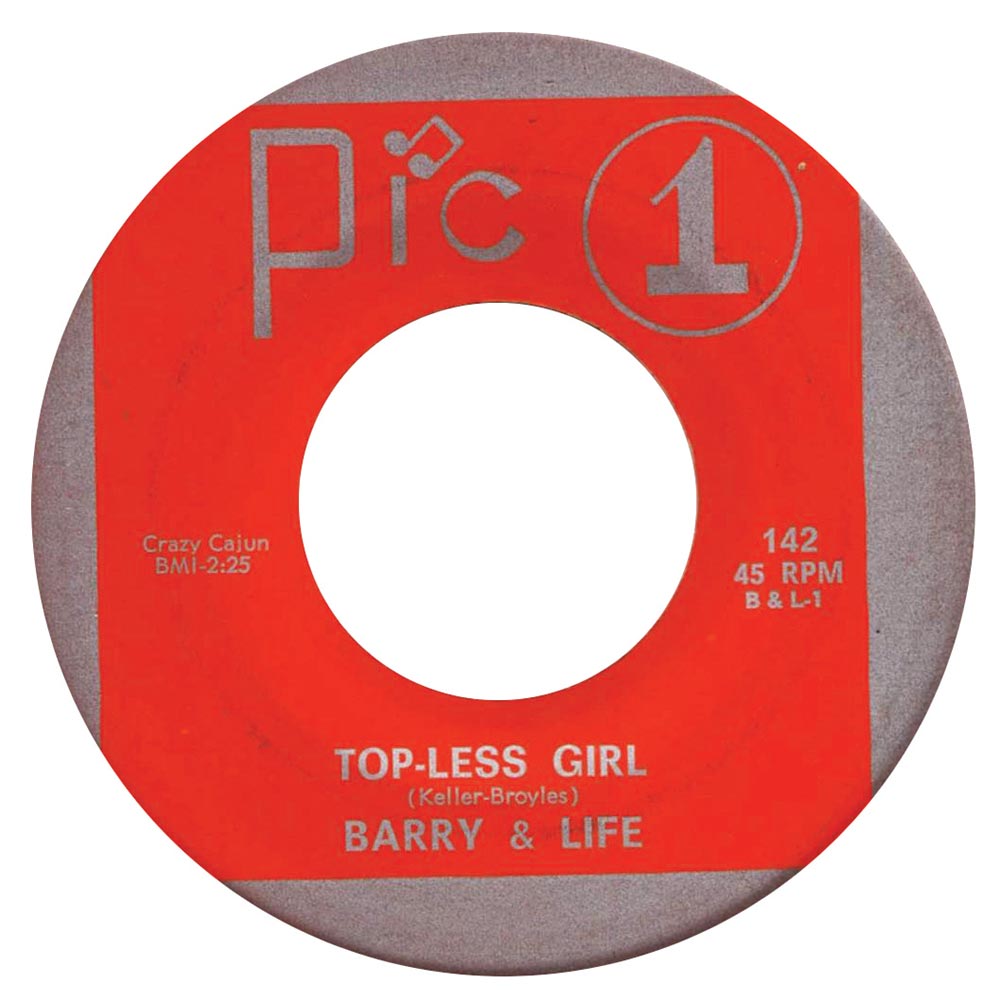
Opening Don’t Be Bad! 60s Punk Recorded In Texas is Barry and Life’s Top-Less Girl. It was recorded in late 1966, and released on Heuy’s Pic-1 label in 1967. It’s not just punk that can be heard on Top-Less Girl. So can garage, rock and psychedelia. There’s a noticeable Doors’ influence. Mostly, that’s down to the keyboards. At the start, there’s also a similarity to Lou Reed’s classic 1972 single Walk On The Wild Side. After that, a melodic and technically proficient slice of garage rock unfolds. It’s bound to have inspired later a generation of punks in 1976.
The Driving Wheels only released one single, One Year Ago Today. It was written by Tommy Bolton. He also penned Don’t Be Bad and She Comes Running, two of the unreleased tracks on Don’t Be Bad! 60s Punk Recorded In Texas. Both tracks were recorded on 10th October 1966, but never released. For The Driving Wheels this was a missed opportunity. They were obviously a talented band. That’s apparent on the two tracks. Don’t Be Bad epitomised the sixties punk sound, while She Comes Running has a much more poppy, chart-friendly sound.
Destiny’s Children are another group who only released one single. Their moment in the sun came in 1966. They entered Huey’s studios earlier in 1966, recording Your First Time and The Fall Of The Queen. When Destiny’s Children released their debut single, The Fall Of The Queen was destined for the flip-side. Ironically, Your First Time wasn’t a commercial success. The Fall Of The Queen, is a hugely underrated track. Jim McClain seems to have been inspired by Mick Jagger, as he struts his way through the lyrics, delivering an attitude packed, gravelly vocal.
1965 was the start of the sixties punk explosion. One of the groups at the vanguard of the Texan punk movement were The Pirates. On 27th July 1965, they made their way to Huey’s recording studio. That’s where they recorded Cuttin’ Out and Mona/Who Do You Love. Cuttin’ Out, a Stanley Chaisson and Mike Moore composition was released as a single later in 1965. Its introduction seems to have been inspired by John Lee Hooker’s Boom Boom. This motif reappears during the track, albeit only briefly. However, it plays a part in one of the best, and most melodic tracks on Don’t Be Bad! 60s Punk Recorded In Texas. The Pirates other contributions are covers of Mona/Who Do You Love. Both tracks are given a rocky and vampish makeover by The Pirates, as they take on new meaning.
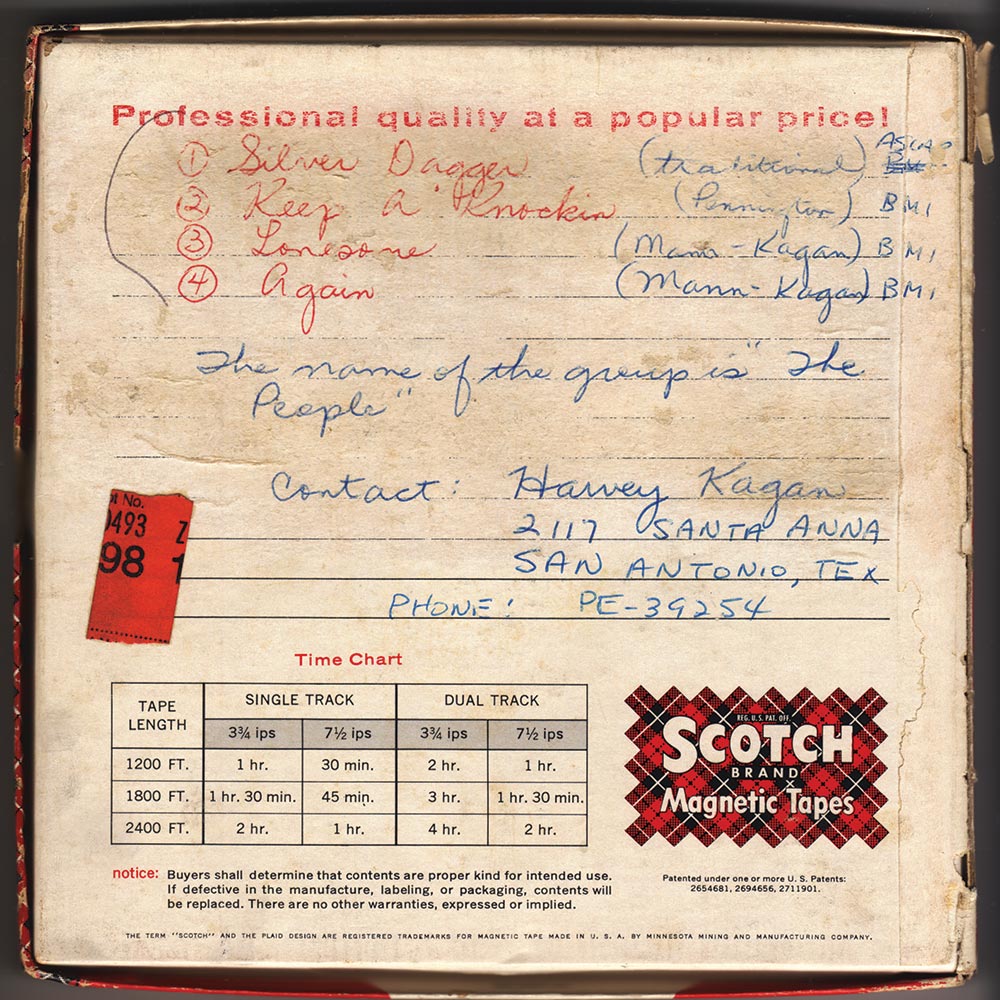
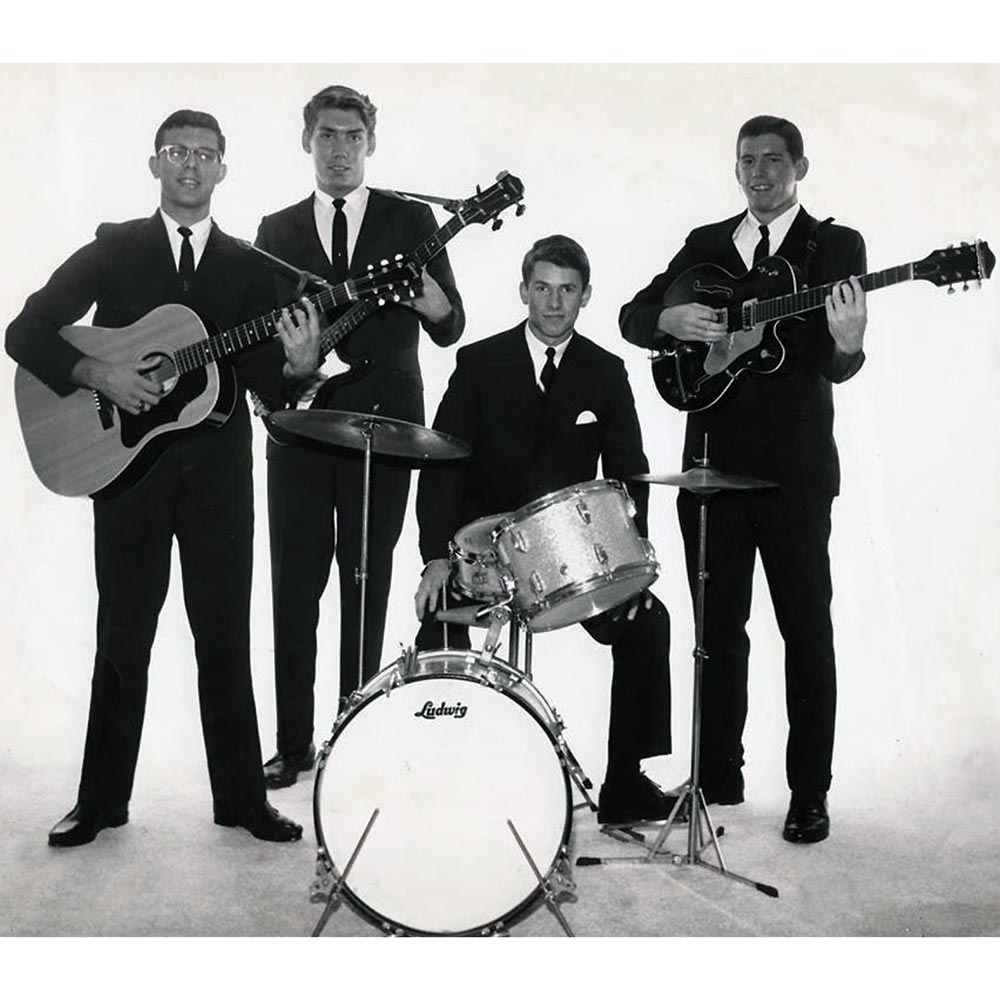
Just a day after The Pirates recorded the two tracks that feature on Don’t Be Bad! 60s Punk Recorded In Texas, The People recorded Again. This Harvey Kagan penned track was recorded on 28th July 1965. It’s something of a slow burner. It has a slow, spacious and moody, that gradually unfolds. Soon, The Pirates are fusing pop, psychedelia and rock. In doing so, they don’t spare the hooks on what’s another of Don’t Be Bad! 60s Punk Recorded In Texas’ highlights.
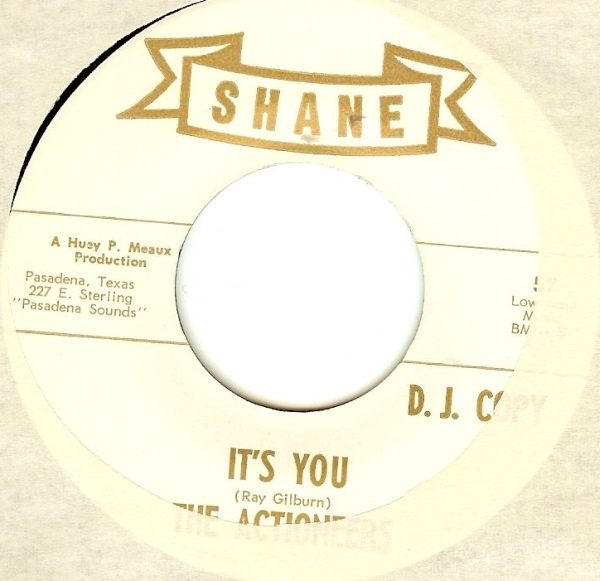
The Actioneers recorded It’s You on 15th November 1965. It was penned by Ray Gilburn and produced by Huey Meaux. It’s You was then released on Huey’s Shane label. Sadly, It’s You came to nothing. This explosive fusion of surf, garage and rock disappeared without trace. Nearly fifty years later, it makes a welcome return on Don’t Be Bad! 60s Punk Recorded In Texas.
Another group who headed to Huey Meaux’s studio seeking fame and fortune were The Phinx. Sadly their trip in June 1966 was in vain. Neither To No Place Of Its Own, nor Everything’s Right were ever released. Again, that’s a great shame. They were obviously a talented band. Proof of that is the wistful sounding To No Place Of Its Own, and the Rolling Stones’ inspired Everything’s Right. Both tracks have bags of potential. However, it wasn’t to be. For The Phinx, it was a case of what might have been?
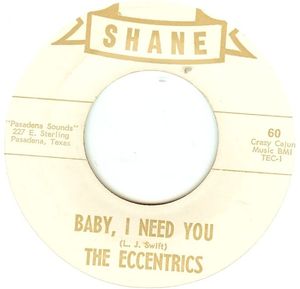
Baby, I Need You was recorded by The Eccentrics in January 1966. Later in 1966, this Les Swift penned was released on Huey Meaux’s Shane label. Huey, it didn’t seem, had much faith in the single. he only had 200 copies pressed. That’s ironic, given how polished sounding Baby, I Need You is. It’s polished sounding track that’s been influenced by the British Invasion. Especially The Beatles and the Rolling Stones. However, Baby, I Need You disappeared without trace. How different things might have been. With the right record label behind Baby, I Need You, maybe it would’ve given The Eccentrics that elusive hit single.
Blue Diamonds’ Gotta Tell Her is another of the unreleased tracks on Don’t Be Bad! 60s Punk Recorded In Texas. It was recorded on 9th June 1966, and since then, has lain in Huey Meaux’s vaults. It’s a real find.Elements of surf, garage, psychedelia and rock combine during this moody, stomper.
The Chancellors’ roots were in Louisiana. They however, made the pilgrimage to Pasadena to record Don’t Tell Me at Huey Meaux’s studio in 1965. Later that year, Don’t Tell Me was released as a single. This Howard Lee and Rusty Shafer was The Chancellors’ second single. They were obviously a tight, talented and proficient group. Don’t Tell Me is melodic, and almost Byrdsian, given its use of harmonies. Despite having all this going for it, Don’t Tell Me passed record buyers. Thankfully, it makes a welcome return on Don’t Be Bad! 60s Punk Recorded In Texas.
Closing Don’t Be Bad! 60s Punk Recorded In Texas is Dodad’s Bring Me. It was recorded in January 1966, but never released. With its raw, almost aggressive and punky sound, it’s the perfect way to close Dodad Don’t Be Bad! 60s Punk Recorded In Texas. After all, it goes a long way to defining the sixties Texan punk sound.
Probably the best way to describe Don’t Be Bad! 60s Punk Recorded In Texas is eclectic. While the music is described as punk, that is slightly misleading. Some of the tracks could be described as garage, pop, psychedelia, rock or surf. Other tracks are a fusion of musical genres. They’ve also been influenced by a variety of musicians.
Among the influences, arethe British Invasion groups. Two of the most noticeable influences are The Beatles and Rolling Stones. Other influences include The Byrds and The Doors early releases. These influences shine through on Don’t Be Bad! 60s Punk Recorded In Texas, which was recently released by Big Beat Records, an imprint of Ace Records. These tracks were produced by Huey Purvis Meaux, a leading light of the Texan music scene.
Huey Purvis Meaux was blessed with what he calls “good ears.” This meant he knew a hit record when he heard one. It didn’t matter if it was blues, country, garage, R&B, rock ’n’ roll, swamp pop or Tex Mex, Huey knew a hit when he heard one. By 1965, Huey turned his attention to Texan punk.
His studio became the go-to place for aspiring punk bands. Huey many young punk musicians thought could make their dreams come true. He could turn them into stars. Fame and fortune was only a hit single away. Then the doors to the rock ’n’ roll lifestyle would be thrown wide open. Sadly, many of the bands on Don’t Be Bad! 60s Punk Recorded In Texas didn’t get the chance to live the dream.
Some bands enjoyed a regional hit. For others, releasing a single was a status symbol. This meant they were a cut above their rivals on the Texan punk scene. They were meant to be going places. Often, that wasn’t the case. Like many bands over the last fifty years, they only released the one single. The lucky ones maybe released two or three singles. After that, the dream was over. That was the case for many Texan punk bands by 1967.
By 1967, music was changing. The psychedelic age was dawning. Punk had had its day, for the time being.
Nine years later, in 1976, punk made a return. It was very different to the music on Don’t Be Bad! 60s Punk Recorded In Texas. Although the twenty-six tracks on Don’t Be Bad! 60s Punk Recorded In Texas are described as punk, the title is slightly misleading.
The Texan punk that features on Don’t Be Bad! 60s Punk Recorded In Texas is very different from the punk of 1976. Let’s get this clear, this isn’t the punk of 1976. Far from it. Instead, the music is much more accomplished, melodic and polished. The music incorporates garage, pop, psychedelia, rock and surf. Unlike their seventies counterparts, the bands that feature on Don’t Be Bad! 60s Punk Recorded In Texas can actually play their instruments. They’re proficient and talented musicians. Some would say they’re too talented to be classified as punk musicians. I would. So will you, once you’ve heard the delights of Don’t Be Bad! 60s Punk Recorded In Texas.
DON’T BE BAD! 60S PUNK RECORDED IN TEXAS.
WOW, WOW, BABY! VOLUME 3-1950S R&B, BLUES AND GOSPEL FROM DOLPHIN’S OF HOLLYWOOD.
WOW, WOW, BABY! VOLUME 3-1950S R&B, BLUES AND GOSPEL FROM DOLPHIN’S OF HOLLYWOOD.
By 1958, Fred Grayton Dolphin was living the American dream. The Toast of The Coast was a successful businessman, who owned a record shop and independent record label. Fred was also a record producer and political activist. He was well respected within the Los Angeles’ community. However, not by everyone.
February the 1st 1958, was just like any other day. Fred had spent much of the day in his office, running his various businesses. Later, some young, up-and-coming musicians, including Sandy Nelson, Dave Shostac and future Beach Boy Bruce Johnson, came into Fred’s office. They were trying to interest Fred in their music. That was when shipping clerk and singer Percy Ivy burst into Fred’s office. Percy was clutching a gun. A moment later, and Fred Grayton Dolphin was dead.
Fred Grayton Dolphin had packed a lot of living into fifty-six years. He was born in Beatrice, Alabama, on 1st April 1902. Before long, the Dolphin family were on the move. Next stop was Boley, Oklahoma, Fred was brought up. However, he didn’t settle in Boley.
After leaving high school, Fred moved to Detroit, Michigan. For a while, Motortown was home for Fred. However, he then moved to Los Angeles. That proved to be the place Fred Grayton Dolphin called home. It’s where his business career began.
In 1948, Fred decided to open a record shop. This was no ordinary record shop. Dolphin’s Of Hollywood was open twenty-four hours a day. It was based on Central Avenue, Los Angeles. This proved a perfect location for a record shop, as Central Avenue was where the great and good of jazz and blues hung out. Everyone from Billie Holiday, Big Joe Turner, Charlie Parker, Duke Ellington, Jelly Roll Morton, Lionel Hampton, Louis Armstrong and Nat King Cole hung out in Dolphin’s Of Hollywood. Soon, Dolphin’s Of Hollywood became a hub for blues, jazz and later, R&B music.
As R&B became the most popular musical genre, Dolphin’s Of Hollywood played an important part in R&Bs rise and rise. Dolphin’s Of Hollywood was one of Los Angeles’ biggest, and most important shops. Fred, always a pioneer, encouraged local R&B DJs, Hunter Hancock and Dick Hugg to broadcast live from Dolphin’s Of Hollywood. This was a first. By then, Fred had expanded his musical empire.
In 1950, Fred founded his first label, Recorded In Hollywood. A year later, in 1951, the nascent label enjoyed its first hit single with Once There Lived A Fool. This came courtesy of Jimmy Grissom, Duke Ellington’s vocalist. For Fred Dolphin, this was the first of many hit singles his labels would release.
Unlike some label owners, Fred Dolphin didn’t concentrate specifically on one musical genre. Fred realised that music was constantly changing. So, he released everything from blues, gospel, and jazz, to R&B, rock ’n’ roll and soul. He produced singles by Charles Mingus, Gene Forrest, Illinois Jacquet, Linda Hayes, Major Lance, Pee Wee Crayton, Percy Mayfield and Sam Cooke on the various labels he founded.
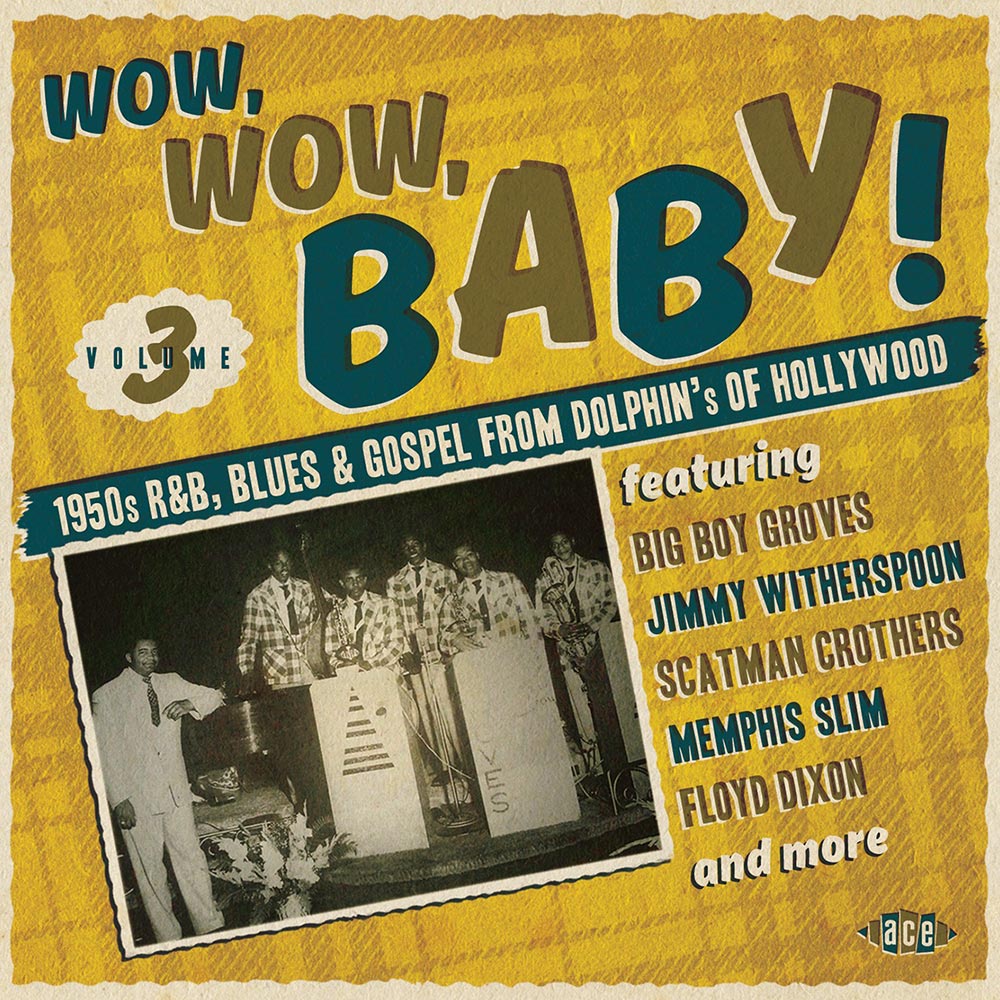
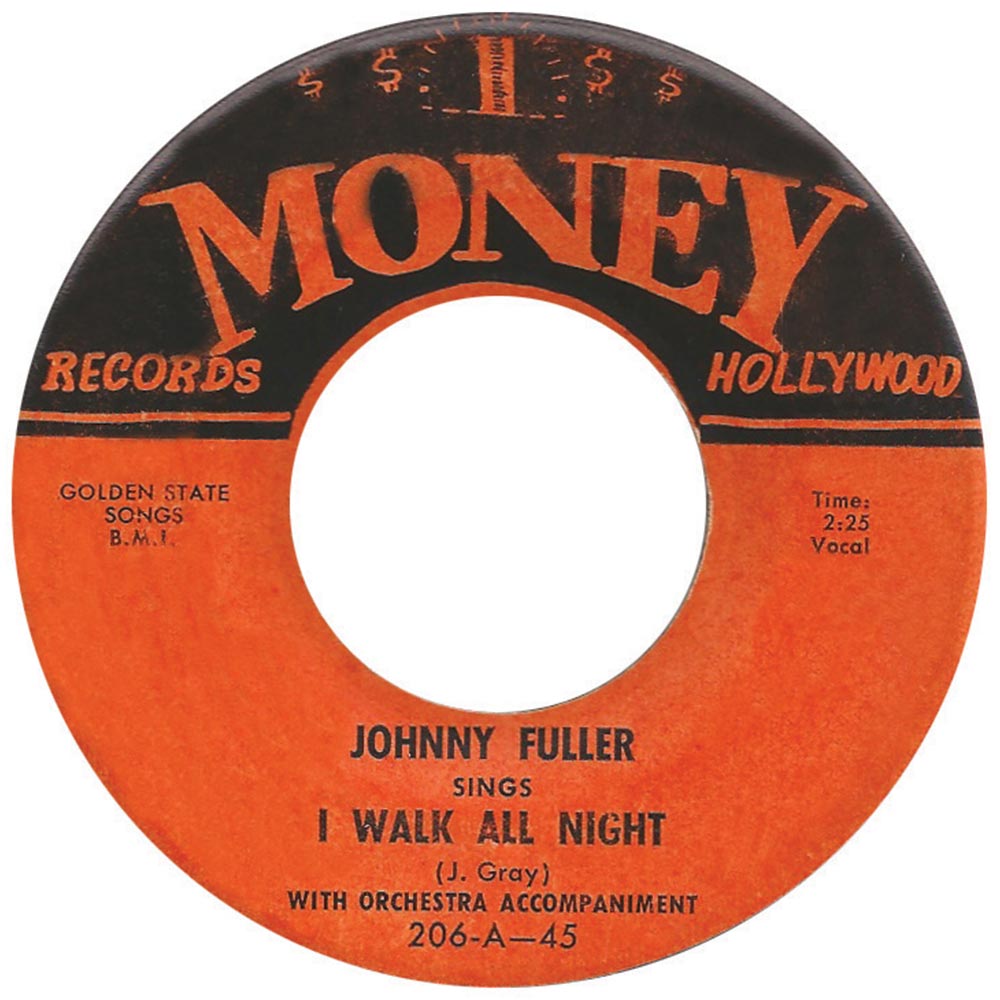
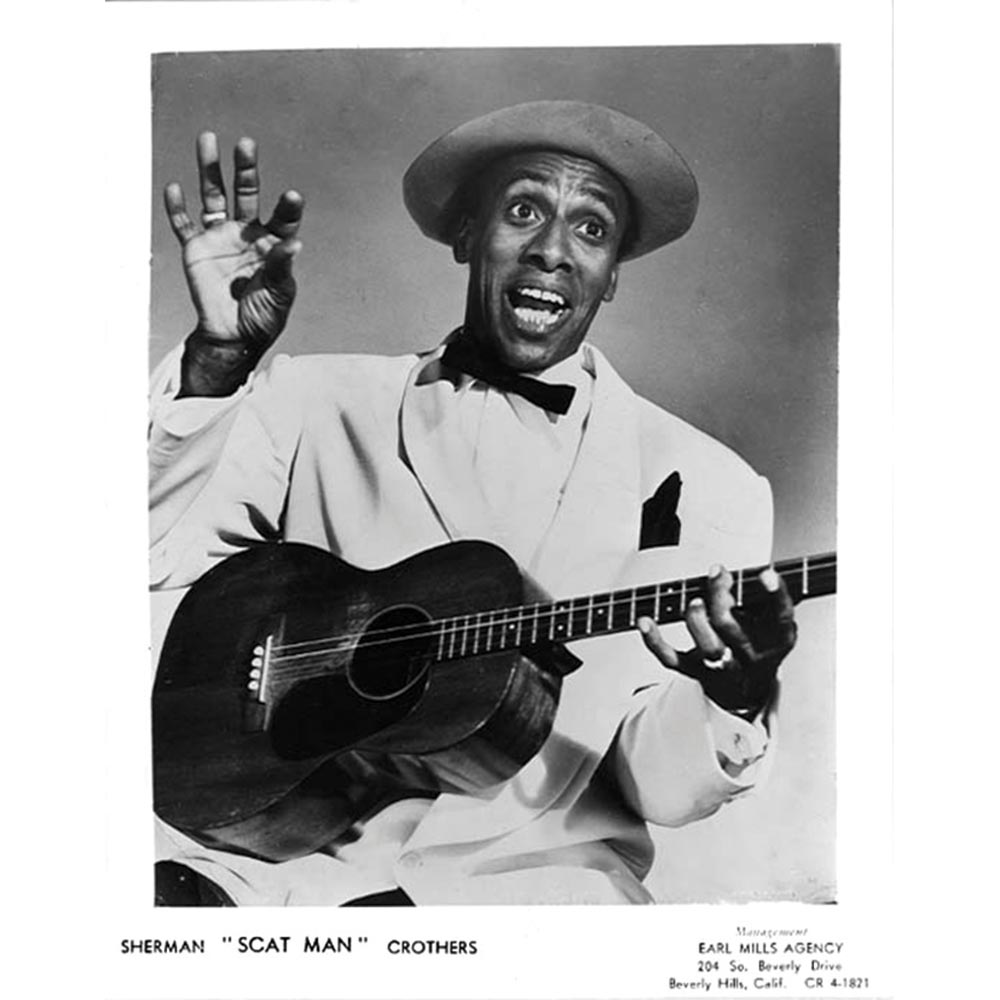
Fred Dolphin’s first label was Recorded In Hollywood. He then founded Lucky Records, and later, Money Records and Cash Records. Tracks from each of these labels feature on Ace Records’ recent celebration of Fred Dolphin’s career, Wow, Wow, Baby! Volume 3-R&B, Blues and Gospel From Dolphins Of Hollywood. This twenty-four track compilation features Memphis Slim, Jimmy Witherspoon, James Reed, Scatman Crothers, The Mellow Tones, Johnny Fuller, Earl Burton and The Mellow Tones. They’re just a few of the names on Wow, Wow, Baby! Volume 3-R&B, Blues and Gospel From Dolphins Of Hollywood, which I’ll pick the highlights of.
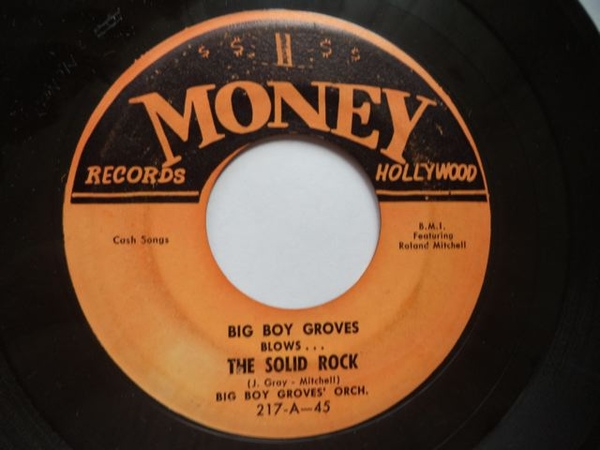
Big Boy Groves and His Orchestra open Wow, Wow, Baby! Volume 3-R&B, Blues and Gospel From Dolphins Of Hollywood with Heavy Artillery (Aka The Solid Rock). It’s the first of two unreleased tracks from Big Boy Groves and His Orchestra. This is an unedited version of Heavy Artillery (Aka The Solid Rock). It features a blistering tenor saxophone solo from Roland Mitchell. The original version was released as a single on Money Records. On the B-Side was Traffic Ticket. The version included features Big Boy Groves on lead vocal, while the rest of the group add the chorus. Just like the unreleased version of Heavy Artillery (Aka The Solid Rock), Traffic Ticket is a welcome addition, and shows just why Big Boy Groves and His Orchestra were so popular in the fifties.
In 1951, Scatman Crothers released his second single for Recorded In Hollywood. This was a cover of Wynonie Harris’ Man Have I Got Trouble. On the flip side was Elaine, a Scatman Crothers composition. When Man Have I Got Trouble was released as a single, it flopped. That’s despite Scatman breathing life and meaning into the lyrics. His vocal is an outpouring of despair. It’s almost cathartic, and it sounds like Scatman has lived and survived the lyrics.
Memphis Slim is one of the true legends of blues music. He was playing a few live dates in L.A. when he recorded a session for Fred Dolphin. This included Pete’s Boogie. It was recorded, but never released until 1991, when it featured on a compilation. Pete’s Boogie is a glorious reminder, one of the greatest blues pianists. He and his band ensure Pete’s Boogie swings, and then some.
Jimmy Witherspoon is another blues great. He was a truly prolific artist, who for ten years, seemed to flit between labels. By the early fifties, Jimmy was signed to Dolphin. Among the tracks he cut, were S.K. Blues. It features a needy, hopeful vocal from Jimmy. Then on Take 1 of Teenage Party, Jimmy accompanied by a tight, talented band, reinvents himself as a rock ’n’ roller. This works, and could’ve helped Jimmy to break into the profitable youth market. That wasn’t to be. These tracks, which show two sides of Jimmy Witherspoon, weren’t released until 1991, when they found their way onto a compilation released by the Speciality label. They make a welcome return on Wow, Wow, Baby! Volume 3-R&B, Blues and Gospel From Dolphins Of Hollywood.
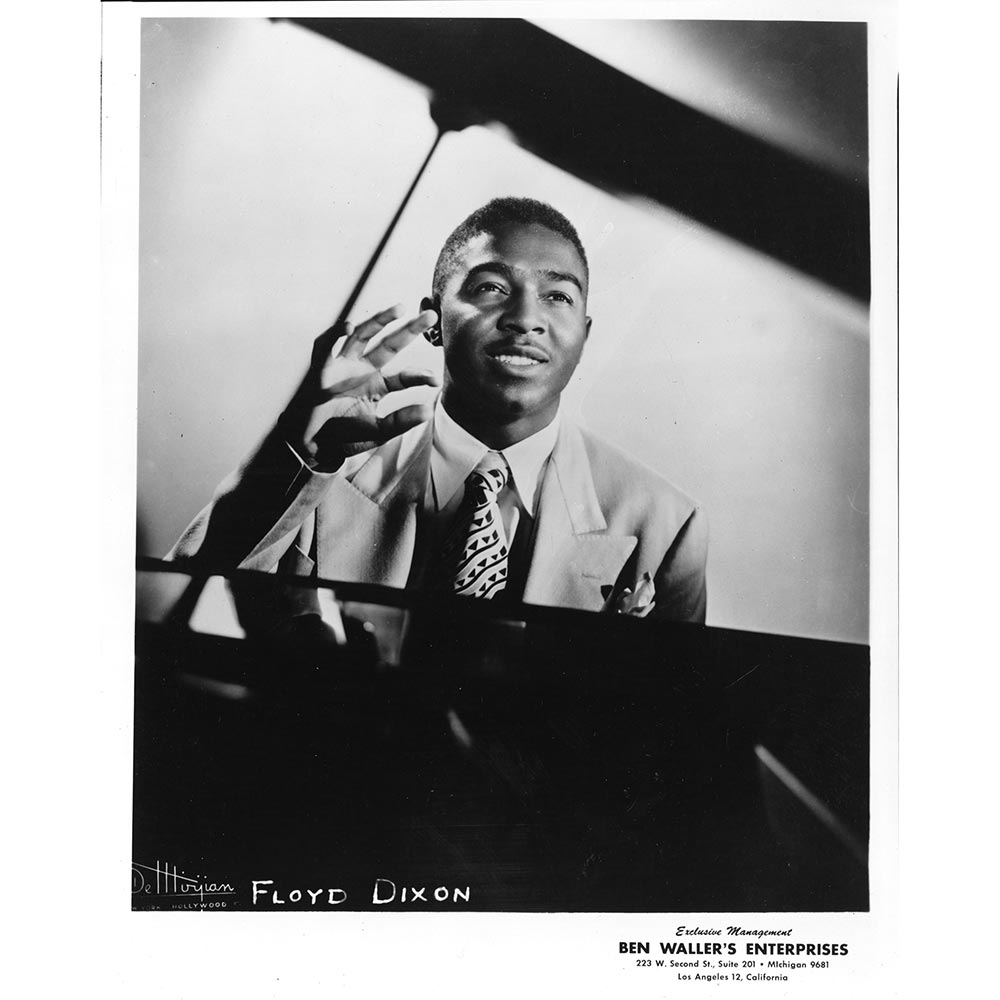
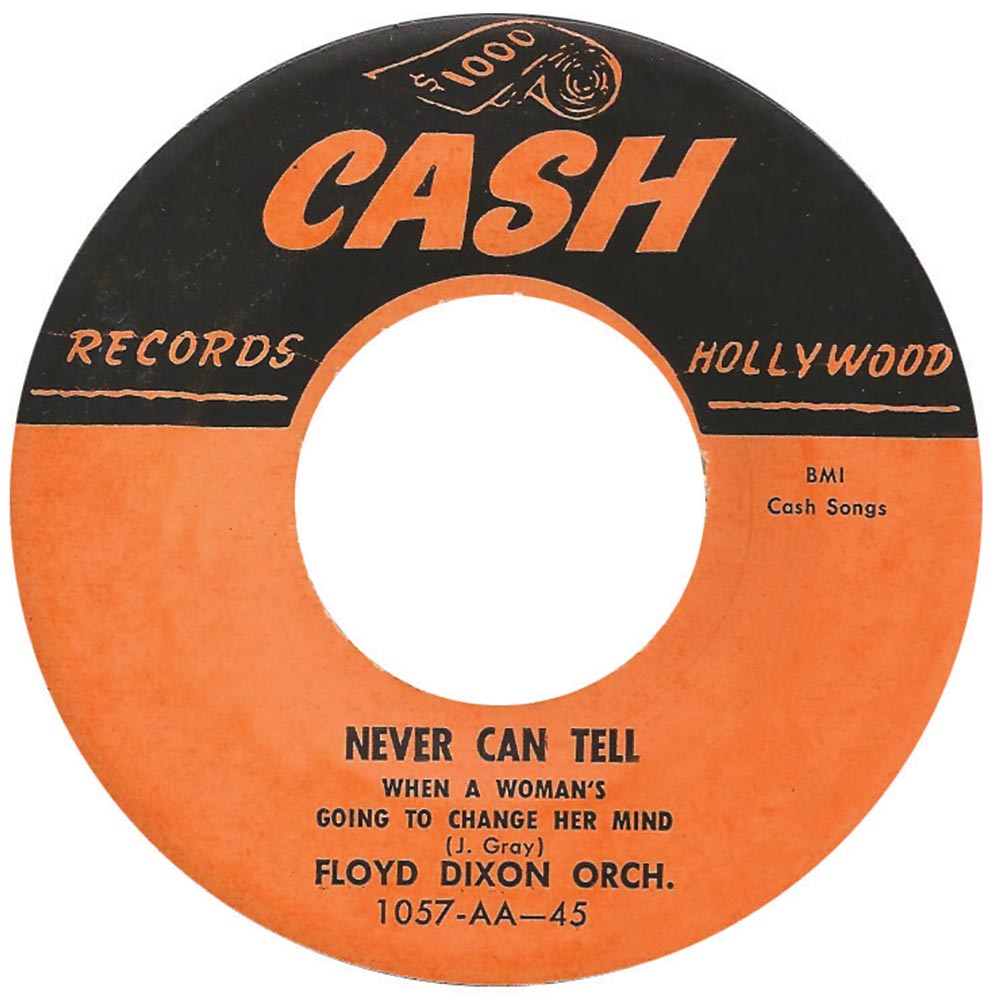
Just like Jimmy Witherspoon, Floyd Dixon was a rolling stone. After cutting forty sides for Modern, Floyd moved from label to label. He never staying long anywhere. By the time Floyd arrived at Cash Record, his career at a crossroads. Despite that, two of the tracks he recorded, Oh Baby and Never Can Tell (When A Woman’s Going To Change Her Mind) saw Floyd roll back the years. They were released as singles in 1958. Sadly, by then, Floyd’s brand of piano driven R&B was no longer as popular. Oh Baby and then Never Can Tell (When A Woman’s Going To Change Her Mind) passed the record buying public by. However, they’re a welcome addition to Wow, Wow, Baby! Volume 3-R&B, Blues and Gospel From Dolphins Of Hollywood, and are a reminder of just what Floyd Dixon was capable of.
In 1956, Fred Dolphin decided to add gospel singer Brother Prince Dixon to Cash Records’ roster. Two years later, in 1958, Brother Prince Dixon released Step In The Right Direction as a single on Cash Records. It was a rousing gospel track. Sadly, it failed commercially. Brother Prince Dixon’s other contribution is an unreleased track, I Need The Lord To Guide Me Everyday. Just like Stepping In The Right Direction, it’s a stirring slice of gospel from Brother Prince Dixon.
Earl Burton signed to Money Records in 1954. A year later, he turned his back on the music industry. His musical swan-song was Eat, Sleep, Drink And Play. It was attributed to The Earl Burton Combo, and was released on Money Records, in 1955. Although it wasn’t a commercial success, Eat, Sleep, Drink And Play falls into the category of hidden gem. That’s due to Earl’s hopeful vocal and the sometimes sultry saxophone.
Before signing to Money Records, James Reed was signed to the Bihari Brothers’ Modern Records. Next stop for James Reed was Money Records. That’s where he released My Love Is Real as a single in 1954. It’s a slow, wistful blues full of hurt and heartache. My Love Is Real proved to be James Reed’s only release for Money Records. Ironically, if Fred Dolphin had been a bit more patient, then maybe James would’ve released his hit single Fool’s Paradise on Money Records.
Another of the unreleased tracks on Wow, Wow, Baby! Volume 3-R&B, Blues and Gospel From Dolphins Of Hollywood is Tap Anthony and His Orchestra’s Fancy Pants. It’s one of just four tracks they recorded with Fred Dolphin. However, Fred never released the tracks. However, somehow, they found their way onto an E.P. Cavalcade Of Jazz. Whether it was with Fred Dolphin’s permission, that’s unclear. What’s clear is that Fancy Pants finds Tap Anthony and His Orchestra at the peak of their powers.
Closing Wow, Wow, Baby! Volume 3-R&B, Blues and Gospel From Dolphins Of Hollywood is Chuck Higgins and The Mellotones’ Oh Yeah! (Aka Rock And Roll). It was penned by Chuck and James Thomas, and released on Money Records in 1956. Oh Yeah! (Aka Rock And Roll) saw Fred Dolphin jump onboard the rock ’n’ roll bandwagon. No wonder. Rock ’n’ roll and groups like Chuck Higgins and The Mellotones were seen as the future of music. Especially, if they were capable of unleashing a barnstorming performance like Chuck Higgins and The Mellotones do on Oh Yeah! (Aka Rock And Roll).
Wow, Wow, Baby! Volume 3-R&B, Blues and Gospel From Dolphins Of Hollywood, sees Ace Records return to the vaults of Fred Dolphin’s record companies. There’s tracks from Recorded In Hollywood, Cash Records and Money Records. This includes blues, doo wop, jazz, R&B and rock ’n’ roll. That’s not a surprise.
Fred Dolphin was always looking for the “next big thing.” He realised that music was constantly changed. Musical genres fell in and out of fashion. This was the case throughout his eight year career as record label owner. It seemed Fred was always a step ahead of the pack.
When jazz was no longer as popular, Fred Dolphin moved onto R&B. Then when piano driven R&B had had its day, Fred jumped onboard the rock ’n’ roll bandwagon. Sadly, Fred Dolphin never lived to see the pop, rock and psychedelic ages.
On February 1st 1958, Fred Dolphin had spent much of the day in his office. He had a record shop and four record labels to run. So there was always a steady stream of aspiring musicians wanting to see Fred. That day, three young, up-and-coming musicians, Sandy Nelson, Dave Shostac and Bruce Johnson, came into Fred’s office. They were trying to interest Fred in their music. That was when shipping clerk and singer Percy Ivy burst into Fred’s office. Percy was clutching a gun. A moment later, and Fred Grayton Dolphin was dead. That day, music lost one of its pioneers.
Throughout his career, Fred Dolphin was a pioneer. He was partly responsible for the upsurge in R&B’s popularity. Fred managed to market R&B to a white audience. That was something that many had previously thought impossible. That was until Fred Dolphin played R&B on Los Angeles’ KRKD radio station. Soon, R&B had crossed America’s then racial divide. Suddenly, many talented R&B singers, who previously were struggling to make ends meet, were making a comfortable living. For Fred, who was a political activist, this was just one of his proudest achievements.
Another of Fred Dolphin’s proudest moments came in 1954. That was when Fred organised a protest against intimidation that was directed at interracial trade. Fred managed to get 150 other business owners onboard. There was safety in numbers. Together, they reacted against an organised campaign against African-American owned businesses. This included Dolphin’s of Hollywood, which was the biggest selling record shop in Los Angeles. If the campaign of intimidation continued, Fred feared his customers would be scared off. So, he and other business owners stood shoulder-to-shoulder. In doing so, the campaign of intimidation came to an end. After this, the success story that was Dolphin’s of Hollywood continued.
By the time of Fred Dolphin’s death in 1958, he was a successful businessman, political activist and record producer. He was running four record companies and L.A.’s most successful record shop. Fred Grayton Dolphin was living the American dream. Sadly, his life was cut tragically short, aged just fifty-six. However, Fred Dolphin left behind a rich musical legacy.
Fred Dolphin’s musical legacy is in good hands. It’s owned by Ace Records, who have released a string of lovingly compiled compilations. The latest compilation is Wow, Wow, Baby! Volume 3-R&B, Blues and Gospel From Dolphins Of Hollywood, which is a fitting tribute to Fred Dolphin, musical pioneer, record producer, label owner and the man they called The Toast of the Coast.
WOW, WOW, BABY! VOLUME 3-1950S R&B, BLUES AND GOSPEL FROM DOLPHIN’S OF HOLLYWOOD.
SWEET THINGS FROM THE ELLIE GREENWICH AND JEFF BARRY SONGBOOK.
SWEET THINGS FROM THE ELLIE GREENWICH AND JEFF BARRY SONGBOOK.
Ever since it was built in 1931, The Brill Building was synonymous with the music industry. Its eleven floors housed music industry offices and recording studios. The Brill Building was also home to some of the greatest songwriting teams in musical history.
Especially during the fifties and sixties. Back then, everyone from Bacharach and David, Lieber and Stoller, Barry Mann and Cynthia Weil and Gerry Goffin and Carole King called the Brill Building Home. They made their name at The Brill Building. So did Ellie Greenwich and Jeff Barry.
Ellie Greenwich and Jeff Barry first met in 1959, at a Thanksgiving Dinner. It was hosted by Ellie’s maternal cousin, who just happened to be married to Jeff’s cousin. Straight away, Ellie and Jeff realised they had something in common…music.
By 1959, Ellie Greenwich and Jeff Barry were aspiring singers. They were also songwriters. However, Ellie and Jeff had enjoyed different degrees of success.
Jeff had already written a number one single in Britain and America, Tell Laura I Love Her. He and Ben Raleigh cowrote the teen-tragedy ballad. It was recorded by Ray Peterson in America, and Ricky Valance in Britain. Both versions reached number one. For the twenty-one year old songwriter, it would the first of many hits. Especially with Ellie Greenwich.
Ellie Greenwich was only nineteen when she met Jeff Barry. However, she had packed a lot of living into the previous two years. In 1957, she enrolled at Queens College, where she studied music. Later that year, Ellie wrote and released her debut single, Silly Isn’t It on RCA Records. However, Silly Isn’t It didn’t make the charts. Neither did the followup.
In 1958, Ellie released her sophomore single, Cha-Cha Charming. This caused controversy at Queens College. One of lecturers belittled Ellie’s for daring to release a pop single. Ellie wasn’t going to stand for that. So she transferred to Hofstra University. Ironically, Cha-Cha Charming wasn’t a commercial success. A year later, and Ellie decided to put her singing career on hold.
That’s when Ellie met Jeff. After that Thanksgiving Dinner, Ellie Greenwich and Jeff Barry formed what would prove to one of the Brill Building’s most successful songwriting partnerships. So much so, that it’s taken Ace Records three compilations to celebrate the Ellie Greenwich and Jeff Barry songwriting partnership. The latest volume is Sweet Things From The Ellie Greenwich and Jeff Barry Songbook, which was recently released on Ace Records.
Sweet Things From The Ellie Greenwich and Jeff Barry Songbook features twenty-four tracks. It features tracks from Darlene Love, The Exciters, The Crystals, Dusty Springfield, Lesley Gore, The Shangri-Las, The Butterflys, The Ronettes, The Strangeloves, Wilson Pickett, Freddie Scott and Paley Brothers. Given the quality of music on Sweet Things From The Ellie Greenwich and Jeff Barry Songbook isn’t going to be easy.
Opening Sweet Things From The Ellie Greenwich and Jeff Barry Songbook is Bob B. Soxx and The Blue Jeans’ Why Do Lovers Break Each Other’s Hearts? Ellie, Tony Powers and Phil Spector cowrote Why Do Lovers Break Each Other’s Hearts? It was arranged by Jack Nitzsche and produced by Phil Spector. Why Do Lovers Break Each Other’s Hearts? was released on Phil Spector’s Philles Records, in March 1963, giving Bob B. Soxx and The Blue Jeans a top forty hit. No wonder. Darlene Love’s lead vocal and harmonies play an important role. So, does Phil Spector’s innovative production style. He combines elements of doo wop, pop and soul to create a slick, poppy track that’s full of hooks.
By April 1963, Darlene Love had already featured on singles by the Crystals, Duane Eddy and on Bob B. Soxx and The Blue Jeans’ top forty single Why Do Lovers Break Each Other’s Hearts? However, still, Darlene hadn’t released her debut single. Her time came in April 1963. (Today I Met) The Boy I’m Gonna Marry was chosen as Darlene’s debut sing. This was another Ellie Greenwich, Tony Powers and Phil Spector composition. It was arranged by Jack Nitzsche and produced by Phil Spector. On its release on London American Recordings, it gave Darlene a minor hit single. For Darlene, this soulful single was the start of a long and successful solo career.
The Crystals’ Then He Kissed Me typifies not just the early sixties girl group sound, but Phil Spector’s production style. However, Phil was more than a producer. He was the owner of a record label and a successful songwriter. He cowrote Then He Kissed Me with Ellie Greenwich and Jeff Barry. Jack Nitzsche was drafted in to arrange Then He Kissed Me. It featured La La Brooks’ debut as lead vocalist. She played her part in a genre classic. On its release in March 1963, Then He Kissed Me reached number six in the US Billboard 100. Since then, Then He Kissed Me is remembered as one of The Crystals’ finest moments, and one of Phil Spector’s best productions.
Although the Ellie Greenwich and Jeff Barry partnership began as songwriters, it was inevitable that they would become producers. Other songwriting teams were doing so. However, by September 1964, Ellie and Jeff had formed their own group, The Raindrops. They released six singles and an album. The Raindrops’s final single was One More Tear, which reached number ninety-seven in the US Billboard 100. Tucked away on the B-Side was the hidden gem, Another Boy Like Mine. It was far too good to be a B-Side, and is a welcome addition to Sweet Things From The Ellie Greenwich and Jeff Barry Songbook.
The Shangri-Las feature twice on Sweet Things From The Ellie Greenwich and Jeff Barry Songbook. Their contributions are Leader Of The Pack and its B-Side, Heaven Only Knows. Leader Of The Pack was a teen-tragedy ballad Jeff and Ellie cowrote with Shadow Morton. It was produced by Shadow and Jeff. On its release, Leader Of The Pack reached number one in late 1964. Heaven Only Knows, the flip-side, was penned by Jeff and Ellie, and produced by Shadow Morton. It’s a vastly underrated track.For too long its lived in Leader Of The Pack’s shadow. That’s not surprising. Leader Of The Pack is a girl group classic, and a song that forever, will be synonymous with The Shangri-Las.
In early 1965, Lesley Gore was recording her album My Town, My Guy and Me. Ellie and Jeff penned What’s A Girl Supposed To Do with Lesley Gore in mind. Once the song was written, Lesley and her friends recorded a demo. The demo was submitted to Claus Ogerman, Lesley’s arranger. He and Lesley like the track. So it was included on My Town, My Guy and Me, which was produced by Quincy Jones. When the time came to record What’s A Girl Supposed To Do, Ellie and her friends were asked to add backing vocals. They play their part in making What’s A Girl Supposed To Do one of My Town, My Guy and Me’s highlights.
It’s fitting that there’s tracks from Ellie and Jeff on Sweet Things From The Ellie Greenwich and Jeff Barry Songbook. Ellie Contributes her 1965 single You Don’t Know. She cowrote the single with Jeff and Shadow Morton. Jeff and Shadow produced the single. They worked hard on the single. Eventually, it was completed. Great things were forecast for You Don’t Know. Sadly, it failed commercially. That was the case with Jeff’s single Our Love Can Be Saved. This was another Ellie Greenwich and Jeff Barry composition. It was produced by Jeff and released in 1965. Just like Ellie’s single, Our Love Can Be Saved failed commercially. After this, Jeff concentrated on his songwriting career.
After enjoying a successful songwriting partnership, a disagreement over Chapel Of Love lead to Ellie and Jeff not working with Phil Spector for a while. In 1966, they decided to put aside their differences. However, by then, Phil Spector was enjoying the same success. Girl groups were no longer fashionable. Despite this, one of the first songs Ellie, Jeff and Phil wrote, was recorded by The Ronettes. I Wish I Never Saw The Sunshine was produced by Phil. The song but never released. Ellie Grenwich didn’t like the recording. So, it wasn’t released until 1976, when the song was released by Phil Spector on a compilation. Although not a Ronettes’ classic, it’s well worth including on Sweet Things From The Ellie Greenwich Songbook.
Freddie Scott’s Am I Grooving You was penned by Jeff and Bert Berns, who produced the track. It was released on the Shout label in 1967. Am I Grooving You is quite different from much of the music on Sweet Things From The Ellie Greenwich and Jeff Barry Songbook. It has a slow, smouldering, funky groove. The addition of gospel tinged harmonies are just the finishing touch to this irresistible fusion of soul, funk and gospel.
Mention Sugar Sugar, and most people think of The Archies, not Wilson Pickett. Sugar Sugar, which was penned by Jeff and Andy Kim, gave The Archies a hit worldwide in 1969. A year later, in 1970, Wilson Pickett covered Sugar Sugar. His cover was produced by Tom Dowd and released on Atlantic. Wilson Pickett delivers a gravelly, vampish, R&B version of Sugar Sugar, and in doing so, transforms the song.
Following the breakdown of Ellie and Jeff’s marriage, they decided to divorce. While Jeff’s career was on the up, Ellie’s career stalled. She signed to United Artists in 1966. Apart from a minor hit with I Want You To Be My Baby in 1967, it wasn’t the most successful period of Ellie’s career. So, she formed another songwriting and production partnership with Mike Rashkow. By 1970, Ellie was signed to Bell, a subsidiary of Atlantic. She was was all set to release What Good Is I Love You as a single. That was until Jerry Wexler of Atlantic heard the song.
Jerry Wexler felt What Good Is I Love You was perfect for Dusty Springfield. So, Ellie and Mike produced Dusty Springfield’s cover of their composition, What Good Is I Love You. On its release in January 1971, the single failed commercially. Given its undoubted quality, What Good Is I Love You could’ve rejuvenated Dusty’s career. However, by then Dusty’s career was on the slide. Chart success would continue to elude her, and never again would Dusty reach her earlier heights.
That’s the story of Sweet Things From The Ellie Greenwich and Jeff Barry Songbook. Or should I say, it’s part of the story. I’ve only mentioned fourteen of the twenty-four tracks on Sweet Things From The Ellie Greenwich and Jeff Barry Songbook. Choosing just a few of the highlights wasn’t easy. Not when the twenty-four tracks were penned by two of the most talented songwriters in musical history.
Ellie Greenwich and Jeff Barry, just like Bacharach and David, Lieber and Stoller, Barry Mann and Cynthia Weil and Gerry Goffin and Carole King are graduates of the Brill Building. That’s where they made their name. Over the next few years, they became one of the most successful and prolific songwriting partnerships of the sixties.
Not only did Ellie Greenwich and Jeff Barry write together, but they wrote with other songwriting partners. This included Phil Spector and Shadow Morton. These partnerships proved fruitful, and resulted in a string of hit singles. Other times, it would be just Ellie or Jeff that worked with other songwriting partners. It seemed that Ellie and Jeff were able to write with a variety of songwriting partners. Not every member of a great songwriting partnership is able to do this.
Often, once a songwriting partnership splits up, the hits dry up. Luckily, that wasn’t the case with Ellie and Jeff. They weren’t just songwriting partners. By 1962, they were married. Sadly, the marriage didn’t. This affected their songwriting partnership. It soon followed in the footsteps of their marriage.
Following their divorce, Jeff continued to enjoy a successful career. For Ellie, success was more sporadic. She returned to her career as a singer. After her singing career stalled, Ellie formed a songwriting and production partnership with Mike Rashko. Their partnership enjoyed a degree of a success. However, it was Jeff that enjoyed the more successful career following their divorce. Ironically, together, Ellie Greenwich and Jeff Barry enjoyed more success, than they did apart.
Who knows what heights Ellie Greenwich and Jeff Barry might have enjoyed if they had stayed together? They certainly were one of the most successful and prolific songwriting partnerships in American musical history. That’s why it has taken Ace Records three volumes to celebrate the career of Ellie Greenwich and Jeff Barry.
Sweet Things From The Ellie Greenwich and Jeff Barry Songbook follows in the footsteps of Do Wah Diddy: Words and Music By Ellie Greenwich and Jeff Barry and Da Doo Ron Ron: More From The Ellie Greenwich and Jeff Barry Songbook. While Sweet Things From The Ellie Greenwich and Jeff Barry Songbook is the third volume in the series, will it be the last? Maybe not. Ellie Greenwich and Jeff Barry were one of the most successful songwriting partnerships of the sixties. So it wouldn’t be surprising if there’s a followup to Sweet Things From The Ellie Greenwich and Jeff Barry Songbook, which is a reminder of one of American music’s most successful songwriting partnerships.
SWEET THINGS FROM THE ELLIE GREENWICH AND JEFF BARRY SONGBOOK.


ERRORS-LEASE OF LIFE.
ERRORS-LEASE OF LIFE.
After weeks of speculation, the long-list for the Scottish Album Of The Year Award 2015 was recently announced. Most of the albums that made the final twenty got there on merit. Belle and Sebastian, Mogwai, Phantom Band, Withered Hand, King Creosote,Twihlight Sad and Kathryn Joseph all deserve their place on the long-list. So, do Errors, whose fifth album Lease Of Life was released in March 2015. This meant Lease Of Life was eligible for the Scottish Album Of The Year Award 2015. Lease Of Life is the result of eleven years hard work.
Errors have come a long way since they were formed in Glasgow, in 2004, by Simon Ward, Greg Paterson and Stephen Livingstone. Back then, Errors’ makeshift studio was a bedroom. That was the Glasgow based musical alchemists laboratory. Through experimentation and innovation, Errors sound began to evolve. A years later, in 2005, Errors were signed to Mogwai’s Rock Action Records.
That’s been their home for the past ten years. Indeed, it was on Rock Action Records that Errors recently released their fifth album Lease Of Life. It shows a band that have come a long way since their debut single Hans Herman in 2005.
Having signed to Rock Action Records in 2005, Errors released their debut single Hans Herman. It was released as a limited edition single. Soon, the single sold out. Copies are now a prized item among record collectors. The future looked good for Errors.
The following years, Errors returned with their first E.P. How Clean Is Your Acid House? E.P. Released in 2006, How Clean Is Your Acid House? E.P. was well received. It proved the springboard for Errors’ career.
Not long after the release of How Clean Is Your Acid House? three became four, when drummer James Hamilton was recruited. He was part of Errors’ lineup when they headed out on tour with Underworld. For a group formed just three years earlier, Errors had come a long way.
It’s Not Something But It Is Like Whatever.
Touring with Errors’ meant their music was heard by a much wider audience. The audiences were receptive to Errors music. So, it made sense for Errors to begin work on their debut album, It’s Not Something But It Is Like Whatever.
Recording of It’s Not Something But It Is Like Whatever took place at Mogwai’s Castle Of Doom studios, in Glasgow. That’s where Errors recorded the ten tracks that became their debut album, It’s Not Something But It Is Like Whatever.
When It’s Not Something But It Is Like Whatever was released in June 2008, it was well received by critics. Great things were forecast for Errors, who some critics compared to American experimental rock group, Battles. Errors knew they were doing something right, so set out on the road with a spring in their step.
Just like any band who had just released their debut album, Errors set off on a gruelling touring schedule. Through the rest of 2008, Errors toured with Mogwai, Forward Russia and 65daysofstatic. Although it was a gruelling schedule, Errors, mentored by Mogwai, learnt a lot from their 2008 tour. When they returned, they were a stronger and better band. This became apparent when Errors set off on tour again in 2009.
For part of 2009, Errors spent months touring Europe. Again they toured with Mogwai, and Danish electro-rock band Whomadewho. Errors also made an appearance at the Eurosonic Festival. All this constant touring paid off. Errors music was being heard by a much wider audience, and they were maturing as a band. Now was the time to release their sophomore album.
Come Down With Me.
For their sophomore album, Come Down With Me which is a play on the title of a British television program, Errors took control. They wrote, recorded and produced the ten tracks that became Come Down With Me. Errors were even responsible for the artwork. So when Come Down With Me was released, it was very much Errors’ musical baby.
Come Down With Me was released on 29th March 2010. When critics heard Come Down With Me, they were won over by the music on Errors’ sophomore album. Plaudits and praise accompanied the release of Come Down With Me. However, Errors didn’t have time to enjoy the plaudits.
No. Errors had to tour Come Down With Me. Through the spring and summer of 2010, Errors toured Come Down With Me. Just like with It’s Not Something But It Is Like Whatever it was a gruelling schedule. However, it was worth it. Errors’ star was in the ascendancy, as they played bigger venues. Then in October 2010, Errors and Twilight Sad headed out on tour, where they shared top billing. By then, Errors had another album to promote.
Celebrity Come Down With Me’.
To coincide with the tour, Errors released a remix album entitled Celebrity Come Down With Me. It saw everyone from Mogwai, Wax Stag and Gold Panda remix tracks from Come Down With Me. So, as Errors toured, Celebrity Come Down With Me provided an alternative soundtrack to their latest tour which took them through until the end of 2010.
As 2011 dawned, Errors found themselves invited to the prestigious South by Southwest, in Austin, Texas. For Errors, all their hard work was paying off. Then in April and May of 2011, Errors toured North America. Sadly, as 2011 drew to a close, it was the end of era for Errors. Founding member Greg Paterson left Errors. Some critics wondered what the future held for Errors?
Have Some Faith in Magic.
The loss of Greg Paterson could’ve proved fatal to some bands. Not Errors. Now reduced to a trio, they seemed to come back stronger. It was as if they were desperate to prove their doubters wrong.
Errors headed into the studio to record their third studio album, Have Some Faith in Magic. It featured nine tracks penned and produced by Errors. Once Have Some Faith in Magic was completed, it became the first of two albums Errors released during 2012.
Have Some Faith in Magic was the album everyone knew Errors was capable of. It was the highlight of their eight year career. When the critics heard Have Some Faith in Magic, they agreed. Despite the loss of Greg Paterson, Have Some Faith in Magic, they agreed. Despite the loss of Greg Paterson was released to widespread critical acclaim. Errors had just released the album that would transform their career. However, Errors would release another album during 2012.
Relics.
Later in 2012, Errors decided to release a mini-album, Relics. It was an eight-track mini album with a twist. Rather than release Relics on CD or vinyl, Errors released Relics on two Relics’ of music’s past, cassette and VHS cassette. Despite this unusual choice of medium, Relics was well received, and ensured that Errors remained hot property. So, they headed out on tour.
During the remainder of 2012, Errors were on tour. They piled up the Airmiles touring Britain, Europe and America. By the end of this exhaustive tour, Errors were ready for a break.
After releasing two albums and touring three continents, Errors took a sabbatical for much of 2013. Then at Glasgow’s legendary Barrowlands Ballroom, Errors became the comeback kings. The three members of Errors were joined by former bandmate Greg Paterson. At this secret show, Errors rolled back the years during their only concert of 2013. However, they more than made up for it during 2014.
After a year of taking things easy, Errors got back to work. They embarked upon their first tour of Japan. However, Errors weren’t the headliners. No. Chvrches were the headline act. This didn’t matter, as the two Glaswegian bands took Japan by storm. Once the tour was over, Errors returned home to begin work on their fifth album Lease Of Life.
Lease Of Life.
Lease Of Life was written and recorded by Errors after they returned from their Japanese tour. Rather than record Lease Of Life in Glasgow, Errors headed to the beautiful island of Jura. Other parts of Lease Of Life were recorded in Errors’ home studio. Joining them, were a few familiar faces.
Having written the nine tracks that would become Lease Of Life, Errors got to work. Simon Ward and Stephen Livingston played guitars, keys and took care of programming. Drummer James Hamilton provided Lease Of Life’s heartbeat. Joining Errors were a number of guest artist. This included Bek Olivia. She wrote lyrics to Putman Caraibe and added the vocal. Cecila Stamp added vocals on Slow Rotor and Dull Care. The Glad Community Choir added vocals on the thirteen minute epic, Through The Knowledge Of Those Who Observe Us. Hannah Dent played saxophone on Genuflection and Through The Knowledge Of Those Who Observe Us. Once all these parts were completed, Lease Of Life was ready for release.
Nearly three years after the release of Have Some Faith in Magic, Errors released Lease Of Life on 23rd March 2015. Just like their previous album, Lease Of Life was released to critical acclaim. They might have been away from the studio for nearly three years, but Errors were back with another critically acclaimed album, Lease Of Life which I’ll tell you about.
Opening Lease Of Life is Colossal Estates. Washes of ethereal synths cascade. They’re joined by a probing bass synth. It provides the heartbeat to this cinematic soundscape. That’s until thunderous drums take centre-stage. This combination works. Seamlessly, everything falls into place, and an ethereal, cinematic anthem unfolds.
Lease Of Life is an enigmatic track. At the start, it doesn’t sound like a song recorded in 2014. Instead, the synths sound as if they belong on an eighties album. Think Yazoo, and you’re not away. Then a pulsating drumbeat thunders in. They’re accompanied by roller coaster synths. What follows is a track the veers between dance-floor friendly, moody, hypnotic and thanks to the vocal, haunting. Errors, forever the musical chameleons, continue to reinvent themselves, complete with a healthy supply of space-age sounds.
Straight away, Slow Rotor reminds me of Chvrches. Maybe Errors touring with Chvrches has rubbed off. The deliberate synths have a Chvrches influence. Atop the arrangement sits a dreamy vocal from Cecila Stamp. It literally floats lazily away, its lysergic, quixotic sound proving captivating and compelling.
As New Winged Fire unfolds, it’s as if the filters have been deployed. The synth sound is distant. Not for long. It’s as if a new day has dawned. Crispy drums accompany the swirling synths. So does the urgent, panicky vocal, as it sings: “I want out.” Later, synths bubble and there’s a sense of urgency in the keyboards and drums. Again, there’s a cinematic influence to a track full of drama and mystery.
There’s a dark, ominous sound as Early Nights begins. Slowly the broody, moody synths creep across the arrangement. They’re accompanied by cinematic synths. Together, they provide a hair raising backdrop, that would be the perfect soundtrack to a short film.
Dull Care is another track with a Chvrches influence. It’s the chirpy synths and Cecila Stamp’s vocal that lead to this comparison. Filling out the arrangement are dark, moody synths and drums. They’re part of an arrangement that’s slow, moody, dramatic and again, cinematic. So much so, that the music paints pictures in your minds eye. Just like their label mates Mogwai have been doing, Errors have a future providing soundtracks to films and documentaries.
Plink plonk synths open Genuflection. This is very different from previous tracks. Errors seem to be heading for the dance floor. Drums pound, providing the 4/4 beat and a soaring vocal. Add to this banks of synths and the second vocal. It’s very different, but they work well together, and play their place in a joyous hands in the air anthem.
from the opening bars of Putman Caraibe, it’s obvious that something special is unfolding. Synths and drums combine, creating the backdrop for Bek Olivia’s ethereal vocal. It has a dreamy quality. Adding to this are equally ethereal synths. They’re very different to the dark, bassy synths and crispy drums. However, they sit well together and play their part in a dreamy, sometimes dark and dramatic, floaty track.
Through The Knowledge Of Those Who Observe Us closes Lease Of Life, Errors’ long awaited comeback album. Eighties synths are scene setters. They meander along, while hi-hats hiss and effects swell. Soon, a dark synth enters. These layers of instruments are joined by the massed voices of The Glad Community Choir. As the synths bubble, The Glad Community Choir combine soulfulness, emotion and beauty. Later, during a breakdown some of the synths take on an ethereal sound. Then Hannah Dent unleashes the sultriest of saxophones. It’s the perfect addition. This however, is no ordinary saxophone. Hannah Dent delivers a saxophone masterclass. Searing, blistering guitars are unleashed as the saxophone soars, and zips across the arrangement. By then, the saxophone and guitars are like yin and yang, on this thirteen minute epic which features Errors’ at their best.
After three long years away, Errors return like conquering heroes. Lease Of Life picks up where they left off on Have Some Faith In Magic. By that, I mean making innovative, groundbreaking music.
To do this, Errors headed off to the beautiful island of Jura. That must have inspired Errors. Revitalised, they created music that’s variously beautiful, cinematic, dance-floor friendly, dark, dramatic, ethereal, hook laden and tinged with an air of mystery. Lease Of Life is a musical roller coaster journey. It’s a case of sit back, hold on and enjoy the ride.
Over nine songs, lasting fifty-three minutes Errors paint pictures with your music. Sometimes, they toy with your emotions on tracks like New Winged Fire and Early Nights. For much of the time, it’s as if Errors are providing the soundtrack to a series of short films. You can’t help let your imagination run riot. Before your eyes, plots and scenarios unfold. It’s an intriguing and captivating listen. Maybe Errors will follow in Mogwai’s footsteps and start making soundtracks? They certainly have the ability to do so.
Then other times, Errors head for the dance-floor. Errors aren’t afraid to drop in the occasional dance-floor anthem. They don’t make any apologies for doing so. Neither should they. Not when Errors can make joyous, hands in the air anthems like Genuflection. Other tracks including Slow Rotor, have that irresistible summery vibe. It’s the type of track that’ll go down a storm at festivals this summer, when Errors take the stage. When they do, they’ll win friends and influence people.
No wonder. Somehow, Errors have managed to make an album that will appeal to everyone. Whether it’s the slower cinematic tracks, or the hands in the air anthems, there’s something for everyone on Lease Of Life, which was recently released by Mogwai’s Rock Action Records. Lease Of Life, Errors first album since 2012, sees the comeback kings, return to form with what’s undoubtably a career defining album. That’s why Lease Of Life should see Errors among the favourites to win the 2015 Scottish Album Of The Year Award.
ERRORS-LEASE OF LIFE.

NICK CAVE HEARD THEM HERE FIRST.
NICK CAVE HEARD THEM HERE FIRST.
For the fourth volume in Ace Records’ Heard Them Here First series, the latest artist in the spotlight is shawn on Australian troubadour, Nick Cave. On Nick Cave Heard Them Here First, there’s twenty-two tracks that have influenced the career of Nick Cave. His career began over thirty hers ago, when he was the lead singer of Australian band The Birthday Party.
It was in 1978, just after the birth of punk rock, that The Boys Next Door were formed at Caulfield Grammar School, Melbourne. The Boys Next Door had been influenced by punk. So, it was no surprise that their music was a mixture of punk and proto punk. Before long, The Boys Next Door sound changed.
They began combining blues, free jazz, punk and rockabilly. Often, the music defied categorisation. This didn’t seem to matter. By then, The Boys Next Door had established a reputation as one of Melbourne’s best bands. However, after playing hundreds of live shows, The Boys Next Door decided to move to Britain in 1980. That’s when The Boys Next Door changed their name to The Birthday Party.
Having moved to London in 1980, The Birthday Party set about establishing themselves. It didn’t take long. After a year, The Birthday Party had released their debut album Prayers On Fire. A year later, in 1982, they released another two albums 1982, Junkyard and The Birthday Party. However, by then, things were pretty chaotic within The Birthday Party.
Drummer Phil Calvert was thrown out The Birthday Party in 1982. Things came to a head when Phil struggled to lay down the beats to Dead Joe. So, guitarist Mick Harvey became The Birthday Party’s new guitarist. Then Tracy Pew was jailed for drink driving and theft. To make matters worse, Shivers, The Birthday Party’s most popular song was banned from the radio. Could things get any worse? They did.
By 1983, Nick Cave and Rowland S. Howard weren’t getting on. It seemed inevitable that things would come to a head. They did. Many expected either Nick or Rowland to leave the band. Instead, Mick Harvey was first to leave. This couldn’t have happened at a worst time.
The Birthday Party were about to head out on tour. So, Des Hefner was drafted in to play the drums. After the tour, The Birthday Party split-up, and Nick Cave formed his own band, Nick Cave and The Bad Seeds.
After The Birthday Party disbanded, Nick Cave, Mick Harvey and Blixa Bargeld, the former Einstürzende Neubauten guitarist, founded Nick Cave and The Bad Seeds. This was the band that established Nick Cave’s reputation.
Success didn’t come overnight for Nick Cave and The Bad Seeds. It very rarely does. Their 1984 debut album From Her To Eternity, to reached just number forty in the British album charts. However, it would be another eight years and six albums before Nick Cave and The Bad Seeds reached the same heights.
By then, Nick Cave and The Bad Seeds’ lineup had changed. So had the group’s sound. It had evolved from the group’s early years. Now, Nick Cave and The Bad Seeds were about to become one of the most successful indie bands.
Henry’s Dream, released in 1992, was a landmark album for Nick Cave and The Bad Seeds. It reached number twenty-nine in the British album charts. This was their first album to reach the top thirty in Britain. It wouldn’t be the last.
After Henry’s Dream, Nick Cave and The Bad Seeds could do no wrong. 1994s Let Love In reached number twelve in the British album charts. Then 1995s Murder Ballads reached number eight in the British album charts. The icing on the cake was when Murder Ballads became Nick Cave and The Bad Seeds most successful album in Australia, reaching number three.
Two years later, Nick Cave and The Bad Seeds returned in 1997 with The Boatman’s Call. Critics hailed it one of Nick Cave and The Bad Seeds’ finest albums. Despite this, it stalled at number twenty-two in Britain. However, it reached number 155 in the US Billboard 200. After fourteen years, Nick Cave and The Bad Seeds were enjoying commercial success on both sides of the Atlantic. This would continue for the next sixteen years.
Four years passed before Nick Cave and The Bad Seeds released their eleventh album, No More Shall We Part. Nick Cave had been through the wars. He managed to overcome heavy heroin and alcohol addictions. What’s more No More Shall We Part was released to critical acclaim, reaching number fifteen in Britain and number 180 in the US Billboard 200. Nick Cave has back, and back to his very best.
When Nocturama was released in 2003, it didn’t received the same critically acclaimed reviews. Instead, the reviews of Nocturama were mixed. Mostly, though, they were favourable. Nocturama reached number twenty in Britain and number 180 in the US Billboard 200. This was slightly disappointing. However, Abattoir Blues/The Lyre of Orpheus marked a return to form from Nick Cave and The Bad Seeds.
Abattoir Blues/The Lyre of Orpheus was released in September 2004. It was one of the most ambitious albums of Nick Cave and The Bad Seeds. Seventeen tracks featured on this ambitious double album. When critics heard Abattoir Blues/The Lyre of Orpheus, they hailed it one of Nick Cave and The Bad Seeds’ finest albums. So, it was no surprise that Abattoir Blues/The Lyre of Orpheus reached number eleven in Britain and number 126 in the US Billboard 200. This was, however, the start of the most successful period of Nick Cave and The Bad Seeds’ career.
Nearly another four years passed before Nick Cave and The Bad Seeds released Dig, Lazarus, Dig!!! It had taken just five days to record. Dig, Lazarus, Dig!!! was an old school album. With its fusion of garage rock and alternative rock, Dig, Lazarus, Dig!!! won over critics and record buyers. Critical acclaim accompanied the release of Dig, Lazarus, Dig!!!, which reached number four in Britain and number sixty-four in the US Billboard 200. However, the best was still to come.
Push the Sky Away was the fifteenth studio album by Nick Cave and The Bad Seeds. It was released in February 2013, and was a landmark album. This was the first album not to feature Mick Harvey. He had picked the wrong time to leave the band.
Thirty years after Nick Cave and The Bad Seeds were first formed, they enjoyed the most successful album of their career. Critical acclaim accompanied Push the Sky Away’s release. There were no dissenting voices. Push the Sky Away reached number three in Britain and number twenty-nine in the US Billboard 200. Elsewhere, Push the Sky Away reached number one in Australia, Denmark, Holland and Norway. After thirty years hard work and persistence, Nick Cave was one of the most of the most successful artists of the indie era.
No wonder. Over the past thirty years, Nick Cave has refused to stand still. His music has been constantly changing. Through his music continuing to evolve, Nick Cave has continued to stay relevant. He realised that an artist that stands still, risks becoming irrelevant. Nick Cave, just like the artists who influenced him, has refused to stand still. He’s constantly influenced himself since his early days with The Birthday Party and then Nick Cave and The Bad Seeds. However, who are the artists who have influenced Nick Cave?
Nick Cave Heard Them Here First is a twenty-two track compilation. It was recently released by Ace Records, and is a truly eclectic compilation. The Stooges, Nina Simone, Johnny Cash, Gene Pitney, The Sensational Alex Harvey Band, Leonard Cohen, Serge Gainsbourg and Jane Birkin, Bob Dylan, Hank Williams, Blind Willie Johnson and John Lee Hooker. Quite simply, Nick Cave Heard Them Here First is crammed full or quality music. Choosing some of the highlights isn’t going to be easy, but here goes.
Opening Nick Cave Heard Them Here First is The Stooges’ Fun House. The Stooges were formed by Iggy Pop in Michigan, in 1967. Two years later, they released their eponymous debut album in 1969. It featured the classic single I Wanna Be Your Dog. The Stooges 1970 sophomore album Fun House, features another Stooges’ classic, Fun House. It’s a blistering fusion of rock ’n’ roll and proto punk, which would provide the template for punk.
During the sixties, Nina Simone was one of the most prolific recording artists. In 1964, Nina released five albums. Then in 1965, she released another three albums, including I Put A Spell On You. One of Nina’s finest performances is on I Put A Spell On You. It’s a truly spellbinding performance, where Nina combines soul and jazz, during this vocal masterclass.
Bn 1979, Johnny Cash was already veteran of country music. However, he hadn’t lost his Midas touch. He released a new album Silver during 1979. One of its highlight was an understated and poignant ballad, Muddy Waters. It was later covered by Nick Cave and The Bad Seeds on their 1986 album Kick Against The Pricks. This was their homage to Johnny Cash, the man in black.
As the sixties took shape, Gene Pitney was enjoying a successful career as a singer and songwriter. He enjoyed a string of hit singles, including of Gene’s best known songs, Something’s Gotten Hold Of My Heart. This was a Roger Cook and Roger Greenaway composition. It was produced by Stanley Kahan, and released in 1967, on the Stateside label. Something’s Gotten Hold Of My Heart reached number five in Britain, and is new regarded as a timeless classic.
The Sensational Alex Harvey Band are without doubt, one of the most underrated bands of the seventies. Lead by the charismatic Glaswegian, Alex Harvey, The Sensational Alex Harvey Band released a string of successful albums. This included Hammer Song, a track from Framed, The Sensational Alex Harvey Band’s 1972 debut album. It’s one The Sensational Alex Harvey Band best albums. Hammer Song, an Alex Harvey composition, features what can only be described as a vocal powerhouse. It’s a tantalising taste of what the inimitable Alex Harvey was capable of.
Leonard Cohen has influenced several generations of musicians, including Nick Cave. One of Nick’s favourite Leonard Cohen track is Tower Of Song. This is a track from Leonard’s 1988 album I’m Your Man. On I’m Your Man, Leonard Cohen reinvented himself. He incorporated synths into the understated arrangements. However, on Tower Of Song, it’s mostly Leonard and female backing vocalists that play their part in this beautiful, understated, ballad.
Maverick and innovator. They’re two words that described the late, great, Serge Gainsbourg. In 1969, he collaborated with Jane Birkin. Their album Jane Birkin Serge Gainsbourg and Jane Birkin featured one of the greatest tracks Serge wrote and recorded, Je T’aime… Moi Non Plus. Despite the controversy that surrounded its release, forty-six years later, Je T’aime… Moi Non Plus is now regarded as a classic from one of music’s true innovators.
There can’t be many artists who haven’t been influenced by Bob Dylan. In 1988, twenty-six years after he released his eponymous debut in 1962, Bob Dylan was continuing to reinvent himself. He was like a musical chameleon, having released folk, rock, country and gospel albums. Down In The Groove was Bob Dylan’s twenty-fifth album. Commercially, it was a disappointing album, stalling at number sixty-one in the US Billboard 200, and number thirty-two in Britain. Critics weren’t impressed with Down In The Groove. Rolling Stone went as far as to describe Down In The Groove, as Bob Dylan’s worst album. One of the album’s highlight was the poignant Death Is Not The End.
The word legend is used far to often. However, in Hank Williams’ case, it’s the only way to describe one of the greatest country singers. That’s despite Hank Williams dying aged just twenty-nine. Hank Williams packed a lot of living into his short life. He was born on September 17th 1923, in Mount Olive, Alabama. By the time he was twenty-four, Hank released his debut single Hey Good Lookin’ in 1947. Then in 1949, Hank Williams recorded a track that’s become synonymous with him, I’m So Lonesome I Could Cry. Sadly, on New Year’s Day 1953, Hank Williams was found dead in the back of his car. That day, country music lost one of its legends.
J.B. Lenoir and His African Hunch Rhythm recorded I Feel So Good in 1963. I Feel Good has been recorded by a number of artists, including bluesmen like Skip James and Blind Willie Johnson. However, J.B. Lenoir and His African Hunch Rhythm’s version of I Feel So Good is one of the best. No wonder. Producing it was produced in Chicago, by producer, singer and songwriter, Willie Dixon. With his help, J.B. Lenoir and His African Hunch Rhythm breath life and meaning into I Feel So Good.
The blues influenced Nick Cave. That was apparent in the early days of The Birthday Party. One of Nick’s favourite bluesmen was Blind Willie Johnson. However, Blind Willie Johnson wasn’t just a bluesman. He also sung gospel. When Blind Willie Johnson released John The Revelator as a single 1930. On John The Revelator, Blind Willie Johnson combines gospel and blues. This was one of ten singles Blind Willie Johnson released on Columbia between 1927 and 1931.
Closing Nick Cave Heard It Hear First, is John Lee Hooker’s Burnin’ Hell. It was penned by John Lee Hooker and released as a single in 1949. By then, John Lee Hooker was already thirty-two. His recording career had only started a year earlier, in 1948. John Lee Hooker’s debut single was Sally May. A year later, John Lee Hooker was spreading about the Mississippi born guitarist and singer. The man with the unmistakable voice, many said, was going places. That proved to be the case. Not only did John Lee Hooker become one of the biggest names in blues music, but he enjoyed an almost unrivalled longevity.
Most compilations I review, feature just one type of music. This means that they’ll only appeal to someone interested in that type of music. That’s not the case with Nick Cave Heard It Here First, which was recently released by Ace Records. It’s a truly eclectic compilation.
No wonder. There’s everything from blues, country, jazz, pop, proto punk, rock, rock ’n’ roll and soul on Nick Cave Heard It Here First. With The Stooges, Nina Simone, Johnny Cash, Gene Pitney, The Sensational Alex Harvey Band, Leonard Cohen, Serge Gainsbourg and Jane Birkin, Bob Dylan, Hank Williams, Blind Willie Johnson and John Lee Hooker all featuring on Nick Cave Heard It Here First it’s akin to a musical adventure. It’s also like being able to look through Nick Cave’s record collection.
Each and every one of the tracks on Nick Cave Heard It Here First means something to Nick Cave. They’re among his favourite tracks. That’s not all. Every one of the twenty-two tracks have been covered by Nick Cave during his career. Often, he’s reinvented the tracks, transforming them into something very different. However, on Nick Cave Heard It Here First, Nick shares the original versions of these tracks. Some of the tracks are classics, others album tracks and others fall into the category of hidden gems. They all have one thing in common, their quality.
That’s why Nick Cave Heard It Here First is the best volume in the series so far. I thought it would be hard to beat Bowie Heard Them Here First. However, Nick Cave Heard It Here First manages to do so. There’s a reason for this. Much of the music is influential and innovative. It has influenced several generations of musicians, including Nick Cave. However, other artists aren’t so well known.
Many people won’t have heard of The Sensational Alex Harvey Band, Tim Rose, J.B. Lenoir and His African Hunch Rhythm or Blind Willie Johnson. They do now. Hopefully, their inclusion on Nick Cave Heard It Here First will inspire people to go out and buy albums by these artists. If they do, then Nick Cave Heard It Here First will be the start of a musical journey of exploration. On that journey, you’ll discover albums you’v never heard before. These albums are a treasure trove of ambitious, groundbreaking, innovative, inventive and influential music.
The music on Nick Cave Heard It Here First certainly inspired Nick Cave. With The Birthday Party and then Nick Cave and The Bad Seeds, Nick Cave created music that was groundbreaking. It was inspired by the music on Nick Cave Heard It Here First.
NICK CAVE HEARD THEM HERE FIRST.
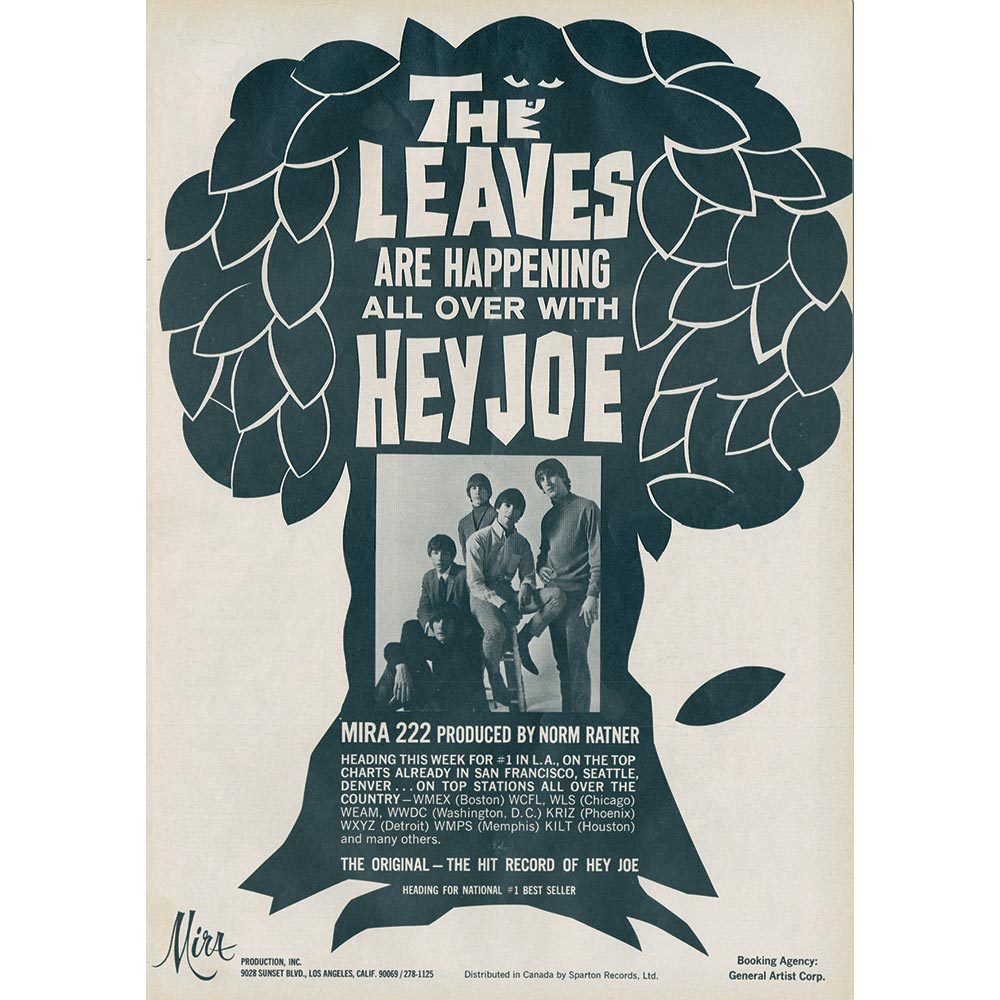
PSYCHEMAGIK PRESENTS MAGIK SUNSET-PART ONE.
PSYCHEMAGIK PRESENTS MAGIK SUNSET-PART ONE.
Most people have no idea the time and effort it takes to compile a compilation. Done properly, it can be a frustrating and time consuming. The Psychemagik team realised that last year, when they started to compile Psychemagik Presents Magik Sunset-Part One, which was released on Leng Records on 27th April 2014. It’s the final chapter in Psychemagik’s “Magik” series, and the result of over a years hard work.
Work began on Psychemagik Presents Magik Sunset-Part One last year. That’s when the Psychemagik began picking the tracks that they hoped would find their way onto the compilation. That took time. The Psychemagik team had to wade through a mountain of music.
This is music that Psychemagik have discovered on previous crate-digging trips. Whether it’s record shops, thrift stores, dusty warehouses or garage sales, no source of vinyl is left undisturbed. If it was, that would lead to sleepless nights. After all, that pile of vinyl might just contain that elusive hidden gem. Often, it does.
That’s why. when Psychemagik were compiling Psychemagik Presents Magik Sunset-Part One, they had plenty quality of music to choose from. Their previous crate digging mission had paid off. Psychemagik found themselves surrounded by rarities aplenty. However, there was a problem.
Many of the tracks Psychemagik had chosen, were private pressings. Often, they were released in limited numbers. Sometimes, only a few hundred copies were pressed. These tracks were often only released in America or parts of Europe. This really complicated matters.
If a compiler wants to use a track on a compilation, they need to license it. This is fairly straightforward with major labels. One particular label has a website where they take the compiler through the licensing process, step-by-step. However, private pressings are another matter.
Tracking down the artist can be time consuming and often, ultimately fruitless. Especially, if the tracks was recorded thirty or forty years ago. For the compiler, they’re forced to become Dick Tracey, Private Investigator. However, quickly, the compiler can run into any manner of obstacles. The artist can have moved, changed their name or sadly, even died. For a compiler sitting on a killer track, this is hugely frustrating.
Some labels unable to get clearance for the killer track, will still take a chance, and release the compilation with the track included. That’s not advisable. If they do that, they should then hold royalties in an escrow account. Sadly, not all record companies do that. Thankfully, nowadays, most labels and compilers ensure they have clearance to use a track.
Psychemagik were lucky, they managed to track down all the artists whose tracks they wanted to use. They were delighted that tracks they had recorded twenty or thirty years ago, as a private pressing, were about to reach a new audience on the newly released Psychemagik Presents Magik Sunset-Part One.
Just like previous instalments in Psychemagik’s “Magik” series, Psychemagik Presents Magik Sunset-Part One is a double album. Disc one features the fourteen tracks. This includes contributions from Bobby Brown, Kathy Stack, Mother Funk, Nathan Perkins Band, Al-Dos Band, Jake Hottell, The Electric Connection, Gene Lawrence, P’Cock and Terry Brooks and Strange. Quite simply, Psychemagik Presents Magik Sunset-Part One brings new meaning to the word eclectic.
There’s everything from ambient, Balearica, boogie, cosmic disco and electronica, to jazz, folk rock, psychedelia and soul. That’s not forgetting Eastern influences, prog rock, soft rock on this breathtaking and mind-blowing musical journey, which I’ll pick the highlights of.
Bobby Brown’s My Hawaiian Home opens disc one of Psychemagik Presents Magik Sunset-Part One. It’s a track from Bobby’s 1972 debut album The Enlightening Beam Of Axonda By Bobby. Released in 1972, on Destiny Records, The Enlightening Beam Of Axonda By Bobby is a real rarity. Copies in good condition change hands for $125. No wonder. My Hawaiian Home, with its fusion of psychedelia, folk rock and Eastern influences it’s a captivating track. You’re hooked and will want to hear more from Bobby Brown.
Summer Wind is a track from Kathy Stack’s 1982 eponymous album. It was released on the Canadian label, Clam Flats Music. Copies of the original album are hard to come by. That’s not surprising. Kathy Stack was a private pressing, so a limited number of albums would be pressed. Those who own copies, seem reluctant to sell. No wonder. Kathy Stack is a talented vocalist, who combines elements of country, folk and even funk on the beautiful Summer Wind.
Mother Funk are responsible for a truly beautiful, hopeful ballad Sunshine. Stylistically, it sounds similar to Knockin’ On Heaven’s Door. It’s akin to a homage to Bob Dylan’s classic track. Bobby Cirilli cowrote and co-produced this glorious slice of musical Sunshine, that makes the world a better place.
Jack Adkins released his American Sunset album back in 1984. It was the only album released on Boink Records. Sadly, it seems to have been the only album Jack released. That’s a great shame. He’s a obviously a talented singer-songwriter. His lived-in vocal brings the lyrics to American Sunset alive, leaving you wanting to more from the mysterious Jack Adkins.
In 1978, Greg Sonnleitner contributed a trio of tracks to a compilation Music From Santa Cruz Volume 1. It was released on Aardvark Records. Greg’s first contribution was As Long As I’m With You. He then collaborated with Phil Danielson with California Has It’s Faults. However, his finest moment is Misunderstood. It’s a fusion of blues, rock and a soulful vocal from Greg. His vocal is a mixture of frustration and sadness as he breathes emotion and meaning into the poignant lyrics.
The Nathan Perkins Band’s contribution is Soul Keepers. It sees Psychemagik Presents Magik Sunset-Part One head in a different direction. The music veers between understated, wistful and hopeful. Elements of folk and jazz shine through on this thoughtful sounding hidden gem.
Straight away, musical genres melt into one on Crosssection’s Over Again. Soft rock and funk are omnipresent. Chuckie Huff’s vocal and the additional harmonies add a soulful twist, to this Michael Richards’ penned track. It sounds as if it has been inspired by the Electric Light Orchestra circa, out Out Of The Blue. Sadly, Over Again, which is a real rarity, proved to be Crosssection’s only single.
Majik’s Take Me There was edited by Psychemagik. It’s their only edit on Psychemagik Presents Magik Sunset-Part One. Take Me There was penned by songwriter and saxophonist Tom McCormick, and produced by Ray Cork, Jr. The track is best described as a fusion of jazz, soul jazz and prog rock. However, the finishing touch is the vocal. It sounds as if it’s been inspired by Tom Waits and Dr. John. This results in a truly captivating and memorable track.
The Al-Dos Band only ever released one single, Doing Our Thing With Pride. It was released in 1977, on Warner Production, a label based in South Carolina. William and Elizabeth Robinson wrote Doing Our Thing, which in thanks to the Al-Dos Band, becomes a hopeful slice of funky, soulful music.
Thirty years ago, in 1985, Jake and Sharon Hottell released their debut album, Break The Chains. It was released on Horizon Records And Tapes. Sadly, it proved to be their only album. I say sadly, because Horizon, a track from Break The Chains shows that Jake had potential. On Horizon, Derald McCabe delivers a half-spoken vocal above slow, moody arrangement. Elements of ambient and new age music combine, to create what’s without doubt, a hidden gem.
1979 wasn’t the best year for The Electric Collection to release their only single. However, Groovy, which was released on Japanese label Casablanca Records, hit the shops in 1979. Back then, disco was at death’s door. However, Groovy was a fusion of disco, boogie and rocky guitars. When the guitars drop out, a vocoder is used to deliver a futuristic vocal. It’s as if The Electric Collection realised the end was neigh for disco, and were readying themselves for boogie’s onslaught.
Gene Lawrence’s After Sunrise was a track from his Sunset To Sunrise album. It was released on the Semp Production label, which was based in Trinidad and Tobago. After Sunrise is an eclectic track. Elements of Latin, jazz and sci-fi sounds melt seamlessly together with soulful harmonies, creating a laid-back vibe.
Klaus Schulze is credited with discovering German prog-rock band P’Cock. Seamlessly, they were able to fuse electronica, jazz and rock. That’s apparent on Telephone Song, from 3, their third and sadly, final album. It was produced by Achim Albrecht, and released on Ohrwurm Records, in 1983. Telephone Songs is laid-back, melodic, soulful and blessed with a summery sound.
Closing Psychemagik Presents Magik Sunset-Part One is High Flyer, a track from Terry Brooks and Strange. High Flyer was the title of Terry Brooks and Strange’s fourth album. It was released in 1981, on the Star People Records Inc. label. Moody and atmospheric, it’s the perfect type of track for a chill out set, when people are unwinding after a night’s clubbing. It’s also the perfect way to close disc one of Psychemagik Presents Magik Sunset-Part One
Then on disc two of Psychemagik Presents Magik Sunset-Part One, the fourteen tracks are mixed seamlessly by Psychemagik. Although I’m not a fan of mixed CDs, the tracks are well mixed by Psychemagik. That can’t have been easy given how eclectic Psychemagik Presents Magik Sunset-Part One is.
Referring to Psychemagik Presents Magik Sunset-Part One as eclectic, is almost an understatement. After all, how many other compilations see the compiler take the listener on genre-hopping musical adventure. Everything from ambient, Balearica, boogie, cosmic disco and electronica, to jazz, folk rock, psychedelia and soul melts into one. Then there Eastern influences, prog rock, soft rock and soul jazz on this breathtaking and mind-blowing musical journey.
Over Psychemagik Presents Magik Sunset-Part One’s fourteen tracks, were introduced to familiar faces and new names. There’s contributions from Bobby Brown, Kathy Stack, Mother Funk, Nathan Perkins Band, Al-Dos Band, Jake Hottell, The Electric Connection, Gene Lawrence, P-Cock and Terry Brooks and Strange. They play their part in what’s without doubt, the best compilation in Psychemagik’s Magik series, Psychemagik Presents Magik Sunset-Part One. It was recently released by Leng Records, and was meant to bring to a close Psychemagik’s “Magik” compilation series. Or does it?
Usually, a compiler starts with a long-list when compiling a compilation. This is in case they can’t get clearance to use some tracks. However, Psychemagik hit the jackpot. All the artists they contacted looking for clearance to use their tracks, said yes. This meant Psychemagik had too many tracks for one compilation. Hence the Part One. So, Psychemagik’s “Magik” compilation series swan-song, will be a swan-song in two parts.
That means we’ve another volume of Psychemagik’s “Magik” compilation series to look forward to. If it’s as good as Psychemagik Presents Magik Sunset-Part One, then it’ll be well worth adding to your collection. After all, Psychemagik Presents Magik Sunset-Part One, which was released by Leng Records, is the best compilation Psychemagik have released.
Eclectic, compelling and captivating Psychemagik Presents Magik Sunset-Part One marls a musical coming of age from Psychemagik. They’ve just released their most eclectic and best compilation. Psychemagik Presents Magik Sunset-Part One perfect late night listening. In some ways, Psychemagik Presents Magik Sunset-Part One is reminiscent of the downtempo albums that were popular in the late nineties, early noughties. However, very few of those compilations features the quality of music on Psychemagik Presents Magik Sunset-Part One.
There’s a reason for this. Psychemagik are renowned crate diggers. That’s why they’re the go-to-guys for DJs looking for that hard to find track. Thankfully, they’ve kept a few hidden gems for themselves. They feature on Psychemagik Presents Magik Sunset-Part One, the latest critically acclaimed compilation from Psychemagik, crate-diggers extraordinaire.
PSYCHEMAGIK PRESENTS MAGIK SUNSET-PART ONE


LABFIELD-BUCKET OF SONGS.
LABFIELD-BUCKET OF SONGS.
Five years after the release of their sophomore album Collab, LabField, one of the leading lights of the European improv scene make a welcome return. Their genre-melting third album Bucket of Songs, was recently released on Hubro Music. Bucket Of Songs marks the start of a new era for LabField. Not only have they changed direction musically, but a new member has joined the band. It’s exciting times for LabField.
The LabField story began when Swedish guitarist, David Stackenäs, met Norwegian percussionist Ingar Zach. Both were experienced musicians, and among the leading lights of the European improvisational scene.
Previously, Swedish guitarist David Stackenäs has played with a number of bands. Since 2002, David has been a member of numerous bands. This includes Agape, Boots Brown, Fire! Orchestra, Hot Four, Pipeline, Seval, SURD, The Christer Bothén Trio, Territory Band and Tri-Dim. Each of these bands have one thing in common, they produce groundbreaking music. That’s the same with the various bands Ingar Zach has been a member of.
Just like David, Norwegian percussionist Ingar Zach has an illustrious musical pedigree. Previously, Ingar has been a member of Batagraf, Dans Les Arbres, Huntsville, LOOPer, Mural, Muta, No Spaghetti Edition, the Magnetic North Orchestra and the Trondheim Jazz Orchestra. However, it was when Ingar was a a member of Tri-Dim, that he played alongside David Stackenäs, his future partner in LabField.
Tri-Dim released their one and only album 2 Of 2 in 2002. 2 Of 2 was billed as a collaboration between Tri-Dim, Jim O’Rourke and Barry Guy. It was well received upon its release. However, it proved to be the only album Tri-Dim released.
Eventually, Tri-Dim ran its course. While saxophonist went Håkon Kornstad his own way, David and Ingar decided to form a duo. This duo became LabField. Their musical manifesto was to create music that was radical and groundbreaking. However, before that, Ingar and David had a lot of music to make.
Apart from playing in various bands, Ingar has also played alongside some of the biggest names in the Norwegian improv scene. This includes Arve Henriksen and Erik Honoré. When they’re looking for a percussionist, it’s Ingar’s number they dial. So, given how busy Ingar and David have been, it’s no surprise that LabField have only released three albums since 2008.
It was in 2008, that LabField released their debut album Fishforms on the Bottrop-Boy label. On its release, Fishforms was well received by critics. Fishforms was hailed an ambitious and groundbreaking albums. Critics and cultural commentators forecast great things for LabField.
They were right. Two years later, LabField returned with their sophomore album Collab. It featured guest appearances from Ståle Storløkken and Milanese guitarist and composer, Giuseppe Ielasi. He featured on Crucial, and is credited with taking charge of “electronics.” However, Giuseppe had played an important part in Collab’s success.
When critics and cultural commentators heard Collab, they recognised that this was a career defining album. It transformed LabField’s career and fortunes. Suddenly, they were rubbing shoulders with the great and good of Norwegian music.
Despite the critical acclaim that accompanied Collab, it’s taken LabField five years to release their third album, Bucket Of Songs. However, the songs had been recorded over a three year period, by LabField’s new lineup.
Recording of Bucket Of Songs took place in various locations in Europe. The first session took place in Stockholm in October 2009. By then, LabField were a trio. Guitarist and electronics virtuoso Giuseppe Ielasi had joined LabField on a full-time basis. The Milan born musician was the perfect fit for LabField. He was an experienced musician.
Before joining LabField, Giuseppe Ielasi has released numerous solo albums, including several for the 12K label. Giuseppe has also collaborated with a number of artists, including Taku Sugimoto, Jerome Noetinger, Phill Niblock and Oren Ambarchi. When he’s not busy recording, Giuseppe finds time to run his own label, School Map. However in 2009, Giuseppe Ielasi became LabField’s third man.
Following the initial recording sessions in Stockholm, it wasn’t until March 2011, that LabField returned to the studio. This time, the location was Madrid. Nearly two years passed before a further session took place in Madrid, in January 2013. Gradually, Bucket Of Songs was taking shape.
The last recording session took place in July 2013. That’s when Mariam Wallentin of Wildbirds and Peacdrums, Mariam The Believer and the Fire! Orchestra added her distinctive vocals. Once Mariam added her vocals, all that was left was for Bucket Of Songs to be mastered.
Giuseppe Ielasi mastered Bucket Of Songs in Milan. He had been involved in Bucket Of Songs since March 2009. He plays on the album, and with the other two members of LabField, produced Bucket Of Songs. It was released recently to widespread critical. You’ll realise why, when I tell you about Bucket Of Songs.
Ragged Line Reversed opens Bucket Of Songs. The arrangement jitters, becoming jagged and dramatic. Soon, the arrangement drones, as washes of powerful music assail you. LabField are at their inventive best, improvising, and feeding off each other, taking their music in a new direction. Previously, LabField focused on lengthy, detailed and multi-textured soundscapes. A feature was long, slow, flowing drones. While that’s still present, the soundscapes are shorter, with more focus on improvisation. Here, LabField combine avant-garde, drone, experimental and industrial music, as they reinvent their music. One thing that hasn’t changed, is that still, LabField are musical pioneers.
Page 55 continues the reinvention of LabField. The tempo is slow, a scrabbled guitar, rustling drums and chimes ringing out. Sometimes, a cymbal crashes. Then Mariam Wallentin delivers a jazz-tinged vocal that’s variously breathy, whispery and urgent. She even adds harmonies, as the arrangement meanders ominously along, its heartbeat pulsating as the soundscape reaches a crescendo.
The tempo increases on Temporary Reasons. A crystalline guitar plays, before a myriad of percussion joins. David Stackenäs’ guitar playing seems to have been influenced by world music. Listen carefully and there’s a Latin influence. Ingar Zach’s percussion is urgent and dramatic. He plays with a sense of urgency. Somehow, David manages to keep up, matching Ingar all the way. In doing so, they create a track that’s dramatic, urgent and mesmeric.
As Bucket Of Songs unfolds, guitar is slowly strummed thoughtfully. Soon, what sounds like Morse Code interjects. This gives the soundscape a cinematic sound. Occasionally, a guitar is strummed. Still the beep, beep, beep of the Morse Code sends out its signal. By now, percussion punctuates the arrangement. Bells ring out. Briefly, feedback cackles and crackles. Then a synth creates a buzzing sound. It sweeps and soars above the arrangement. It’s like a plane looking for somewhere to land. With the addition of what sounds like Morse Code, this conjures up pictures of night-time sorties over enemy territory. This is Boys Own stuff from LabField, purveyors of cinematic music par excellence.
A plucked string plays opens Intensive Course In Bad Manners. It contributes to the understated backdrop. However, soon, a wash of droning music enters. Machine gun synths are unleashed. Still, the plucked chiming string can be heard. By now, it’s almost been overpowered as this droning soundscape reaches its crescendo.
Is it bells or a clock that chime on The Boy Who Never Remembered To Forget? Whichever it is, it contributes towards an eerie cinematic soundscape. Especially when the thunderous, rumbling sound combines with a detuned guitar and chiming clocks. It’s creates an eerie, ominous sound. The result is what sounds like the soundtrack to a 21st Century, improv remake of the soundtrack to Alfred Hicthcock’s The Birds.
Thunderous drums pound, a cymbal crashes and a harpsichord plays as Straight A’s In Constant Sorrow shows its secrets. Meanwhile, a buzzing sound underpins the arrangement. As the elegiac, crystalline guitar plays slowly, adding a wistful sound, drums and cymbals are pounded and punished. Still, the buzzing sound adds a sci-fi sound. Later, the guitar is strummed with a sense of purpose. Despite its lack of volume, it’s still at the heart of the arrangement where beauty, drama and raw power sit side-by-side. Quite simply, this is improvisational music at its most ambitious and innovative.
Just an acoustic guitar and Mariam Wallentin’s tender, thoughtful vocal combine on Members Crossed. Mariam delivers her vocal slowly, as if ruminating over lyrics. When she pauses, so does the guitar. This is highly effective. Gradually, though, the arrangement builds. Washes of feedback shriek, but are tamed. As percussion is added Mariam improvises. Her vocal becomes an instrument, as she scats. Later, her vocal becomes veers between powerful to ethereal. By then, LabField are pushing musical boundaries to their limits. They’re at their most adventurous, fusing avant-garde, experimental, free jazz, improv, industrial and rock during this sonic adventure.
Last Passacaglia closes Bucket Of Songs. A guitar is strummed, reverberating into the distance. It’s accompanied by jittery, persistent percussion and Mariam Wallentin’s elegiac vocal. It soars above the arrangement. Just at that moment, a roll of drums and crashing cymbals interject. They add drama and urgency. So does Mariam’s powerhouse of a vocal and David’s guitar. LabField it seems, are feeding off each other as they improvise. In doing so, they ensure that Bucket Of Songs finishes on a resounding high.
Five years after LabField’s critically acclaimed sophomore album Collab, they make a welcome return with Bucket Of Songs, which was recently released by Hubro Music. It’s a career defining album from LabField, who are now a trio. After featuring on Collab, Giuseppe Ielasi now joins LabField on a full-time basis. His addition comes at a time when LabField’s music was undergoing a change.
On Collab, LabField’s previous album, it featured just two soundscapes. Cebollon was a thirty-six minute epic, and Crucial, which featured Giuseppe Ielasi, lasted nearly eight minutes. Both tracks were full of detail and multi-textured. The two slow, flowing drones captured the imagination of critics, cultural commentators and music lovers. However, LabField felt it was time for a change.
So between March 2009, and July 2013, LabField recorded nine soundscapes. They’re much shorter. The shortest soundscape lasts just three minutes, the longest, just over six minutes. These nine soundscapes allow LabField to stretch their legs musically, and mix things up. Over the nine songs on Bucket Of Songs, LabField combine elements of ambient, avant-garde, electronica, experimental, free jazz, industrial, Latin, post rock, pop, rock and world music. However, at the heart of Bucket Of Songs’ sound and success, is LabField’s trademark brand of improvisational music. As LabField improvise, they visit a variety of disparate musical genres. Somehow, though, this fusion of all these disparate musical genres hangs together, and make perfect sense. It seems seamlessly, LabField have the ability to feed of each other, taking the music in a new and unexpected directions. That’s why you should never, ever, try and second guess LabField. That would be impossible.
That’s why the best way to describe LabField is musical mavericks. Their ability to manipulate sound sees the three sonic explorers take their listeners on a magical musical mystery tour. They take you places that other groups can only dream of. In doing so, LabField create music that’s variously ambitious, challenging, cinematic, dramatic, inventive, innovative minimalist and urgent. It’s also music that’s guaranteed to make you think.
Sometimes, the music on Bucket Of Sounds sets your mind racing. Don’t fight it, enjoy the ride. LabField will take you to places you’ve never been before. It’s just a case of letting your imagination run riot. If you do, LabField will richly reward you, as you experience Bucket Of Songs’ nine captivating and groundbreaking soundscapes.
LABFIELD-BUCKET OF SONGS.
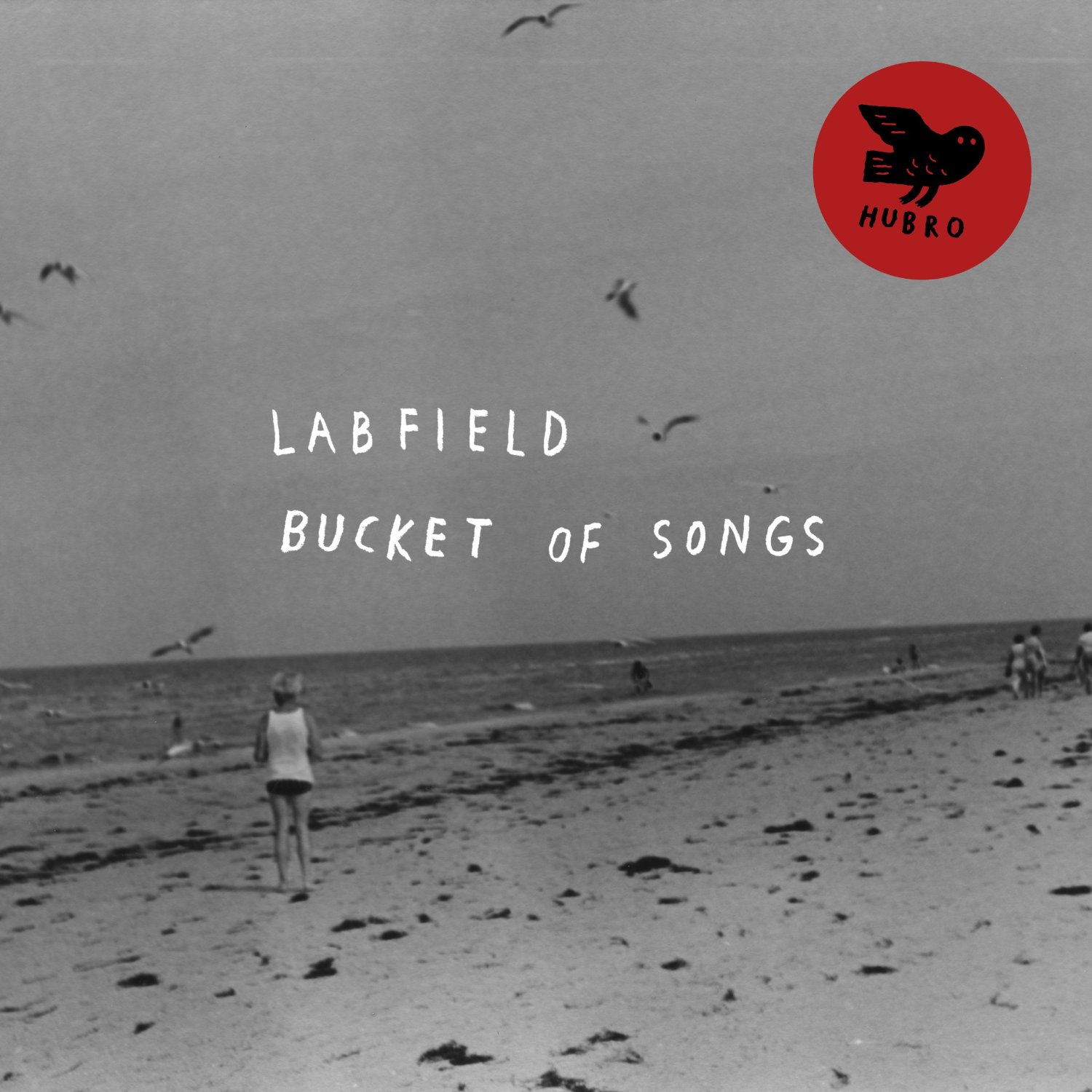
TOUCHING THE VOID-LOVE, LONGING AND LOSS.
TOUCHING THE VOID-LOVE, LONGING AND LOSS.
Andy Oppenheimer and Mark Warner formed Touching The Void back in 2010. Two years later, Touching The Void released their debut single Parallel Lives, in 2012. It was well received by critics. Great things were forecast for Touching The Void.
So, a year later, in 2013, Touching The Void released their debut E.P. Obsession. It was released to critical acclaim. Surely it wouldn’t be long before Touching The Void released their debut album?
That wasn’t the case. A year passed, and still, there was no sign of Touching The Void’s long awaited debut album. Soon, a year became two. However, the good news is the wait is almost over. Love, Longing and Loss Touching The Void’s debut album will be released on SubCulture Records on 22nd May 2015. However, there’s a reason for the near three year wait. Touching The Void is just one part of Andy Oppenheimer and Mark Warner’s lives.
Music has been part of Andy and Mark’s lives for over thirty years. However, while Mark has been a career musician, Andy’s life has taken a few twists and turns along the way. The pair met in 2010. By then, the pair had sixty years of musical experience behind them.
Mark Warner is the elder statesman of Touching The Void. His career began in 1978, when he joined The Firm, becoming their guitarist. That’s where Mark served his musical apprenticeship. Four years later, Mark was on the move.
In 1982, Mark joined Sudeten Creche as their guitarist, keyboardist and songwriter. Sudeten Creche had been formed two years earlier in 1980, by Yvette Döll. She was then joined by Paul Carlin. Other associate members would later join the band. This included Mark in 1982.
Having joined Sudeten Creche in 1982, Mark cowrote Are Kisses out of Fashion?, which featured on the Europe In The Year Zero E.P. It also featured Yazoo’s Goodbye 70s. The Europe In The Year Zero E.P. reached number forty-three in the British charts. A year later, in 1983, Sudeten Creche, released another E.P.
The Kindergarden E.P was released in 1983. Mark cowrote Dance with Paul Carlin and Yvette Döll. Although he had only been a member of Sudeten Creche since 1982, Mark was playing an important role in the band. However, his time with was at an end.
Later in 1983, Mark joined The Virgin Brides as lead guitarist and drummer. For the next two years, Mark was a member of The Virgin Brides. However, in 1985, Mark left The Virgin Brides.
Having left The Virgin Brides in 1985, Mark’s next band was World Gone Mad. He joined World Gone Bad in 1987, and was a member until 1988. Another four years passed before Mark joined another band.
For Mark, it was a case of feast or famine. He joined Miles From Luton in 1992 and was a member until 1993, when he joined Tokyo Rose.
Mark was a member of Tokyo Rose for the next four years. He joined in 1993, and spent four years with the band. However, in 1994, Mark joined Three Fiddlers Not.
So between 1994 and 1997, Mark was dividing his time between Tokyo Rose and Three Fiddlers Not. However, in 1997, Mark left Tokyo Rose. This allowed him to concentrate on Three Fiddlers Not. Then in 1998, Mark left Three Fiddlers Not.
After leaving Three Fiddlers Not, Mark was still immersed in music. In 2006, he reformed Sudeten Creche. They released their comeback single Wounds, in 2007. A year later, Sudeten Creche released the first of two E.P.s. A Kiss From The Creche was released in 2008, with Are Kisses Out Of Fashion? following in 2009. However, just as Sudeten Creche were hitting the comeback trail, further opportunities arose for Mark.
By 2010, Mark was looking for a new musical vehicle. That was the year that Touching The Void was born. So was Rossetti’s Compass.
It was in Berlin in 2010, that Rossetti’s Compass was born. Mark was working with Andy Oppenheimer of Oppenheimer Analysis and Touching The Void. The third member of Rossetti’s Compass was the late Mark Warner. For the next two years Mark used Rossetti’s Compass to explore Mark Warner was keen to explore the wider EBM scene. However, it was Sudeten Creche that paid the bills. That was until late 2012.
As 2012 drew to a close, Mark split from Sudeten Creche. So, he turned his attention to Rossetti’s Compass and Touching The Void.
Touching The Void released their debut single Parallel Lives, in 2012. Parallel Lives was well received by critics. It looked like Touching The Void were going places. However, 2013 would be an important year for Touching The Void, and Rossetti’s Compass.
2013 was one of the busiest years of Mark’s thirty-five year musical career. Rossetti’s Compass released their debut E.P. Tear Garden in March 2013. It featured a new lineup of the band. Per Aksel Lundgreen, who previously, was a member of the critically acclaimed Norwegian band, Apoptygma Berzerk joined Rossetti’s Compass. Mark and Per wrote and recorded Tear Garden, which caught the attention of critics upon its release. So, did Rossetti’s Compass’ sophomore E.P.
The release of Rossetti’s Compass sophomore E.P. My Beloved, saw the band become a trio. Martin Bowes became the third member of the band. He arrived in time for the release of My Beloved in August 2013, which was a busy month for Mark Warner.
Not only had Mark been busy with Rossetti’s Compass, but he and Andy Oppenheimer had been working on Obsession, Touching The Void’s debut E.P. It was also released in August 2013. Critical acclaim accompanied its release. Great things were forecast for Touching The Void. Surely they would begin work on their debut album? Now was the time. Not quite.
Rossetti’s Compass had agreed to released The Cage Sessions, a semi-live album. It was released in November 2013. The new lineup of Rossetti’s Compass was augmented by John Costello, Martin Bowes’ partner in Engram. He added vocals to The Cage Sessions, which was released in November 2013. With The Cage Sessions behind him, surely Touching The Void could begin work on their debut album. That would depend on Andy Oppenheimer.
Just like Mark, Andy Oppenheimer has a busy career. However, unlike Mark, Andy enjoys a parallel career. His “other” jobs include working as author, analyst and lecturing in counter-terrorism. Andy Oppenheimer you’ll realise, is no ordinary singer-songwriter. Maybe once, but not now.
Andy Oppenheimer was born in Leeds in 1953, and in 1974, graduated from Liverpool University. By the early eighties, Andy had formed synth-pop duo Oppenheimer Analysis with producer Martin Lloyd. However, unlike Mark, music wasn’t going to become Andy’s full-time career.
Throughout the eighties and nineties, Andy worked as a researcher. His research included nuclear weapons, the Cold War and the I.R.A. Twenty years later, in 2008, Andy wrote a book on the I.R.A. By then, Andy was a renowned and respected academic.
For the last thirty years, Andy Oppenheimer has contributed to academic studies, worked as a lecturer and written for various defence journals. This makes Andy an unlikely musician. However, in 2005, Andy reformed Oppenheimer Analysis.
Not long after reforming, Oppenheimer Analysis released an E.P. of their early music. It was released on the New York based Minimal Wave label. Two further singles were released by Oppenheimer Analysis.
Five years later, in 2010, and Oppenheimer Analysis released their eponymous single. Science/Washington followed in 2011. Then in 2013, Oppenheimer Analysis released their long awaited their long awaited album, The Presence of the Abnormal as Oppenheimer MkII. It had been a longtime coming. However, it proved to be a bittersweet moment as Martin Lloyd died in 2013. The Oppenheimer Analysis’ story was over. However, a new chapter in Andy’s musical career had just begun.
Three years earlier, Andy and Mark Warner had formed Touching The Void. They released their debut single Parallel Lives, in 2012. It was well received by critics.A year later, in 2013, Touching The Void released their critically acclaimed debut E.P. Obsession. However, since then, nothing has been heard of Touching The Void…until now.
On 22nd May 2015, Touching The Void will release their debut album Love, Longing and Loss. It features fourteen tracks. There’s nine tracks from Touching The Void, plus five remixes on Love, Longing and Loss, which I’ll tell you about.
Fittingly, Parallel Lives, Touching The Void’s 2012 debut single opens Love, Longing and Loss. It’s a hauntingly beautiful ballad. The piano lead arrangement is sparse. This is the perfect accompaniment to Andy’s vocal. He plays the part of a stay at home husband, as his wife a soldier, goes away to defend her country. Andy’s admiration is obvious. He feels proud and afraid, afraid he’ll loose the woman he loves.
Crystalline synths opens Obsession. Soon, a buzzing bass synth grabs your attention. Andy’s vocal is slow and moody. There’s an element of darkness and menace in his vocal. So much so, his Obsession seems real.
In This Together originally gave Stephan Groth of Norwegian band Apoptygma Berzerk a hit single. Here, Touching The Void give the song a makeover. The arrangement is stripped bare. Just a piano and backing vocals accompany Andy’s vocal. His vocal sounds not unlike Morrissey. He delivers a vocal full of emotion and desperation. His relationship if falling apart and he’s desperate to save it. That’s apparent when pleadingly he sings: “don’t you see, we’re in this together, it’s you and me, one-on-one forever.” Later, strings are added. They add a melancholy sound, as Touching The Void reinvent In This Together, transforming the song into a beautiful soul-baring ballad.
Just a lone piano plays as Fragment unfolds. A synth buzzes in, and a roll of drums interject. Gradually, the pounding arrangement on Love, Longing and Loss unfolds. When Andy’s vocal enters, it’s full of hurt and heartbreak. His vocal is full of despair, as he sings of the love he lost. So meaningful is Andy’s delivery, it’s as if he’s loved, lost and lived to tell the tale on this anthemic track.
Banks of synths and drums machines provide the musical backdrop to Andy’s vocal on Inspiration. It’s song about how some people worship power. This is apparent in the song as Andy sings of it “becoming my Inspiration,” and “the villain of my mind.” Again, Andy breaths meaning and emotion into the lyrics, while the synths and drums machines accompany him. They provide a timeless accompaniment, to Andy and Mark’s cautionary tale about power.
The piano lead Highbury Fields is a ballad about living in London. It’s another song that Andy and Mark cowrote. As Mark plays the piano, Andy paints pictures about life in Highbury Fields. As the song unfolds, ethereal synths and then drums are added. They add an element of drama. Later, strings, like the ethereal synths, add to the beauty of the song. It’s without doubt one of the highlights of Love, Longing and Loss.
The synths on I’ll Be Here have an eighties influence. They work well though, underpinning Andy’s vocal. He tells the story of a friend whose fallen in love. Andy knew it wouldn’t last. That’s the case. So, Andy extends the hand of friendship. “Whatever you decide, I’ll be there for you.” Behind him, the synths frame Andy’s vocal, while the drums provide the heartbeat on this tale of betrayal and heartbreak
Love, Longing And Loss is a heartachingly beautiful ballad. Fittingly, the arrangement is understated, allowing Andy’s vocal to take centre-stage. It’s like a confessional as he songs: “I’d love to be near you, I’m longing to see you and I’m lost here without you.” In three lines, Andy brings together the themes that run through the album. Later, as Andy’s vocal drops out, Mark’s synth proves the perfect replacement. It sets the scene for Andy’s pleading, needy, hopeful vocal.
Then And Now closes Love, Longing And Loss. Woodblocks give way to a thunderous drums and washes of synths. Slowly, and gradually, the arrangement unfolds. When Andy’s vocal enters, it sounds vulnerable. His vocal is full of emotion and sadness as he wonders: “where did our love go, miss it every day?”
The other five tracks on Love, Longing And Loss consist of remixes. There’s two remixes of Obsession, plus remixes of Then and Now, Fragment and In This Together. These remixes bring something new to the original tracks. Sometimes, they take the track in a new direction. Other times, they stick closely to the original. Thankfully, there’s no cases of throwing the baby out with the bathwater. That’s a mistake many remixers make. Rather than remix a track, they rebuild it from the ground up. Not here. That would be a step too far, as the original songs are very special.
That’s the case throughput Love, Longing And Loss. Each and every one of the tracks oozes quality. There’s no filler whatsoever. Instead, each of the nine songs are like short stories, where you experience Love, Longing And Loss. Sometimes, you experience two or more of these themes. The songs seem very real. It’s as if Andy Oppenheimer and Mark Warner have drawn on personal experience. As a result, the lyrics come to life.
Especially with Andy Oppenheimer delivering them. Whether it’s love, love lost, hurt, longing, admiration, empathy or Obsession Andy makes it seem very real. Meanwhile, Mark Warner who produced, recorded and mixed Love, Longing And Loss, creates a musical backdrop for Andy’s vocal. Together, as Touching The Void, they form a potent partnership. Andy and Mark it seems, are like a musical yin and yang.
That’s despite being an unlikely musical partnership. Mark is a career musician. Music is all he’s ever known, whereas Andy is an author, analyst and lecturer in counter-terrorism. Although they’re an unlikely musical partnership, Love, Longing And Loss, Touching The Void’s long-awaited debut album has been well worth the wait. Love, Longing And Loss will be released on Subculture Records on 22nd May 2015. It’s an album I can’t recommend highly enough.
That why, come 22nd May 2015, I’d recommend adding a copy of Love, Longing And Loss, Touching The Void’s long-awaited, and highly anticipated debut album to your music collection. Love, Longing And Loss is a hauntingly beautiful, captivating and soul-baring album from Touching The Void; where they sensitively, and thoughtfully, explore the the themes of Love, Longing And Loss.
TOUCHING THE VOID-LOVE, LONGING AND LOSS.
HUNTSVILLE-POND.
HUNTSVILLE-POND.
Ever since 2006, Huntsville have established a reputation as one of the most innovative, inventive and imaginative bands in Europe. For the past nine years, Huntsville have been seamlessly been combining musical genres and influences. In doing so, musical boundaries are pushed to their limits, and sometimes, way beyond. Never do Huntsville play things safe. No. That’s not Huntsville’s style. Instead, they’re musical alchemists.
Ever since Ivar Grydeland, Tonny Kluften and Ingar Zach first met, they realised that they were kindred spirits. Music they realised, had to continue to evolve to stay relevant. So, Huntsville set about creating music that was innovative.
To do that, the three members of Huntsville combine musical genres and influences. They combine everything from rock and jazz, to electronica and psychedelia. Huntsville also draw inspiration from some of their musical heroes, including Miles Davis, Steve Reich, Ennio Morricone and early Tortoise. That’s an eclectic mix. However, each and every one of these artists have influenced Huntsville’s forthcoming fifth album Pond, which will be released on Hubro Music on 4th May 2015. It’s the long-awaited followup to Past Increasing, Future Receding. It was one of the best albums of 2013. Past Increasing, Future Receding was just the latest chapter in Huntsville’s career, which began back in 2006.
It was back in 2006 that the Norwegian trio Huntsville recorded their debut album For The Middle Class. A genre-sprawling album, critics realised that Ivar Grydeland, Tonny Kluften and Ingar Zach weren’t just talented, but truly innovative musicians and producers. A great future was forecast for Huntsville.
That proved to be the case. Two years after the release of For The Middle Class came their sophomore album Echo, Arches and Eras. This was no ordinary album. Quite the opposite. It was an ambitious double album where musical genres melted into one. One track, Eras, was a fifty-four minute opus, where Huntsville were joined by Glen Kotche and Nels Cline. If critics weren’t taking notice of Huntsville, they were after Echo, Arches and Eras. However, their next album would surpass everything that’s gone before.
Released in 2011, Music For Flowers, Cars and Merry Wars was the album that launched Huntsville. They’d switched labels, joining Hubro Music, a progressive label with a reputation for releasing innovative music. That was the perfect way to describe For Flowers, Cars and Merry Wars. Innovative, mesmeric and blessed with an ethereal beauty, critics and connoisseurs of good music awaited the followup to For Flowers, Cars and Merry Wars.
Following the release of For Flowers, Cars and Merry Wars, Huntsville were busy. They released a collaboration with Splashgirl. Entitled Splashgirl/Huntsville, it showcased two of Norway’s most forward thinking groups. After that, work began on Huntsville’s forthcoming album, Past Increasing, Future Receding.
Recording of Past Increasing, Future Receding took place in Emanuel Vigeland’s Mausoleum. For Huntsville, that was the only place the album could be recorded. After all, so important are the Mausoleum’s famed acoustics, that they refer to it as the fourth member of the group. Its dark, some would say bleak and gloomy surroundings are full of ghosts of the past. Atmospheric and evocative, full of historical and darkness, the surroundings proved inspirational for Huntsville.
Referring to Past Increasing, Future Receding as a critically acclaimed album is almost an understatement. Past Increasing, Future Receding was an epic album that surpassed Huntsville’s three previous album. It seemed that with every album, Huntsville were maturing and evolving as a band. Huntsville were now one of the most exciting and innovative bands in Europe.
Since the release of Past Increasing, Future Receding, Huntsville have spent time touring and recording their fifth album Pond. Huntsville are always busy. They’ve now played over a hundred concerts. With every tour, Huntsville’s music reaches a wider audience. It’s the same with their albums.
After the success of Past Increasing, Future Receding, Huntsville began work on their fifth album, Pond in June 2014. Just like previous albums, Pond was written and produced by Huntsville. Pond features four lengthy songs Er, Ing, Age and Ok. They allow Huntsville to improvise and embark upon a sonic voyage of discovery. That’s what happened over a week in Oslo at Amper Tone studio in Oslo.
Unlike Past Increasing, Future Receding, Huntsville decided to use a traditional recording studio. So, they chose Amper Tone studio in Oslo. Assisting Hunstsville was sound engineer Johnny Skalleberg. With his help, Huntsville got to work in June 2014. Ivar Grydeland played electric guitar, pedal steel and added electronics, Tonny Kluften played bass and Ingar Zach added percussion and timpani. Huntsville worked quickly. Within a week, the four songs that became Pond were recorded. Now Huntsville’s fifth album, Pond, was nearly complete.
Three months later, Pond was mixed by Johnny Skalleberg at Amper Tone studio. The album was then mastered by Helge Sten, at the Audio Virus Lab, in Oslo in October 2014. That was the final part in the process. Now Huntsville were ready to release Pond, which I’ll tell you about.
Age opens Pond. It’s best described as a moody, atmospheric soundscape. From the opening bars, there’s a cinematic sound. Distant bells chime, drums pound and a whip cracks. Washes of eerie, otherworldly create a captivating soundscape. Nothing is as it seems. Instruments are transformed into something totally different. Ivar Grydeland’s guitar becomes a quivering wash. He plays the strings of his guitar like a violin. Other times it takes on a brief Jimi Hendrix influence. Ingar Zach’s percussion veers between avant-garde and industrial. Later, what sounds like gunfire can be heard. It’s not though. As I said, nothing is quite like it seems. There’s even a brief nod to Pink Floyd’s cash register on Money. Soon, a sense of urgency emerges. Bursts of guitar are unleashed while percussion and sound effects fill the gaps. This is improvisation at its innovative best. Huntsville have drawn you in. Intently, you listen to hear what happens next. The music becomes ethereal, urgent, dramatic and captivating. Everything from ambient, avant-garde, electronica, free jazz, industrial, psychedelia and rock melts into one, creating a truly innovative and captivating soundscape.
As hypnotic drums play a shaker creates a rustling sound on Er. Tonny Kluften’s adds a probing, bounding bass line. Sound effects are added. Just like the bass line and drums, they draw you in. You focus on them, as Huntsville continue to paint pictures. A chiming guitar and Huntsville’s cash register effect is added. Soon, Ivar Grydeland play a note on his guitar. He stretches into the distance. Having seen this work he tries again. Same thing. The rest of Huntsville take confidence from this and continue to improvise. Percussion and a myriad of sound effects are added. So, is a pedal steel. It creates a lysergic wash. It’s impossible not to wallow in its beauty. Meanwhile, the drama is building underneath. Once its reached a crescendo, the arrangement glides along, Kraftwerk style. Think Autobahn or Trans Europe Express. Occasionally, Ivar unleashes bursts of quivering guitars. Much later, the arrangement becomes an ethereal soundscape, where neo-classical, ambient and avant-garde unite seamlessly to create an elegiac, mesmeric and cinematic soundscape.
Just the distant sound of scrabbled strings open Ing. Again, they’ve a cinematic sound. Already, Ing sounds like it would make the perfect soundtrack to a thriller or horror film. Atop the arrangement, industrial percussion is added. So too is Tonny Kluften moody bass. Behind his bass, the plink plonk percussion and scrabbled strings vie for your attention. They work well together, and make an unlikely musical yin and yang. Later, Ivar adds occasional washes of detuned guitar. Mostly though, it’s the bass and percussion that you focus on. That’s until Ivar adds ethereal washes of guitar. They’re reminiscent of John Martyn circa Solid Air. They prove the perfect finishing touch to a track that’s not just inventive, but spacious and lysergic. No wonder, with Huntsville fusing ambient, electronica, free jazz, industrial and post rock.
Ok, an eleven minute epic closes Pond. Percussion resonates into the distance. Soon, bells chime hypnotically. A buzzing sound sits low in the mix. Then a clock strikes. It has a Hitchcock sound. Meanwhile, scrabbled and plucked strings flit in and out. So does feedback. It’s transformed and shaped. As it beeps and squeaks, it adds to the arrangement. So do melancholy washes of guitar. They’re joined by wistful strings. Elements of avant-garde, classical, experimental, free jazz, post rock and psychedelia melt into one. Together, they play their part in Huntsville’s futuristic soundscape for the post industrial generation.
After two years away, Huntsville are back and better than ever. The Norwegian musical alchemists have released what’s without doubt, the greatest album of their nine year career, Pond. Somehow, they’ve managed to surpass their previous album Past Increasing, Future Receding. No wonder. Huntsville have pushed musical boundaries to their limits, and way beyond on Pond, which will be released by Hubro Music on 5th May 2015.
As a result, Pond is without doubt, Huntsville’s most ambitious and innovative album. It features a quartet of groundbreaking soundscapes. Pond, with its combination of innovative music and futuristic, sci-fi sounds is guaranteed to pique your imagination. It’s articulate and intelligent music. This is music for the mind. Pond’s four soundscapes are guaranteed to make you think. That’s why cinematic is a perfect description of the music on Pond, where Huntsville take you on a musical adventure.
Over four epic tracks, Huntsville take you on a journey. They supply the music. All you need to do is let your imagination run riot. What follows is akin to a four part play, where Huntsville supply a musical backdrop. The music can be melancholy and thoughtful. Other times, it’s moody and broody, but can just as easily become crystalline, elegiac and ethereal, as musical influences and genres melt into one.
Just like on previous albums, Huntsville have combined a disparate combination of musical genres and influences on Pond. They add to their musical melting pot, elements of ambient, avant-garde, electronica, experimental, free jazz, industrial, post rock, psychedelia and rock. Huntsville also draw inspiration from some of their musical heroes, including Miles Davis, Steve Reich, Ennio Morricone and early Tortoise. Other influences include Brian Eno, Can, Harold Budd, John Martyn, Mind Over Midi, Neu and Pink Floyd. That’s an eclectic mix. However, all these influences can be heard on Pond, a truly captivating and innovative album from musical alchemists Huntsville.
HUNTSVILLE-POND.

JOHNNY AND THE HURRICANES-HURRICANE FORCE-RARE AND UNISSUED.
JOHNNY AND THE HURRICANES-HURRICANE FORCE-RARE AND UNISSUED.
There aren’t many bands that have featured three hundred musicians. That was the case with Johnny and The Hurricanes. They were formed by Johnny Paris in 1958, and were together forty-eight years. It was only after Johnny Paris’ death on 1st May 2006 that the Johnny and The Hurricanes’ story was over. By then, an estimated three hundred musicians had been in the various lineups of Johnny and The Hurricanes. Not many bands had enjoyed the same longevity as Johnny and The Hurricanes, whose music is celebrated on Hurricane Force-Rare and Unissued, which was released by Ace Records on 27th April 2015.
They were formed in 1958 by saxophonist Johnny Paris. He was still a high school student, in Ohio, Toledo. Johnny and four of his fellow high school students, Dave Yorko, Tony Kaye, Tommy Curran and Paul Tesiuk became Johnny and The Hurricanes.
Johnny and The Hurricanes’ origins can be traced back to the eighth grade at Rossford High School. Some of the eighth-graders decided to form a band. This included Paul Tesiuk and Johnny Poscick, who arrived at Rossford High School.
Johnny’s mother was from a Ukrainian family, and his father was Polish. So, they lived in the Polish quarter of town. Money was constantly tight, and the Poscick family struggled to make ends meet. Then in 1954, Johnny’s father got a job in Libbey Owens Ford, a glass manufacturer. The Poscick family moved to the outskirts of town. It’s at that point, Johnny who was then fourteen, joined the Rossford High School Marching Band.
Initially, Johnny Poscick played the tuba. He didn’t find that easy. So, he switched to the baritone saxophone. It was the saxophone that Johnny Poscick would make his name playing in Johnny and The Hurricanes.
With the Rossford High School junior years students keen to form a dance band, it’s no surprise that Johnny was one of the earliest members. Recently, he had become much more involved in music. Soon, the band took shape. Joining Johnny and trumpeter Paul Tesiuk were joined by guitarist Lionel “Butch” Mattice, drummer Don Staczek and trumpeter Mike Woods. However, Paul was the nascent dance band’s trumpeter.
This could’ve presented a problem. It didn’t. Paul decided he would switch to piano accordion. Johnny, meanwhile, switched from baritone to tenor saxophone. Gradually, Johnny’s band begin to take shape. However, this wasn’t the only band Johnny and Paul played in.
Paul’s brother had a polka band called The Silver Tones. When Johnny and Paul weren’t busy with Johnny’s band, they played with The Silver Tones. This only lasted a short time. Before long, Johnny’s began to make a name for themselves.
Before that, Johnny’s band spent time practising, and honing their sound. It was during this period, that guitarist Dave Yorko joined the band. He was a couple of years older than the rest of the band. Despite the age gap, Dave fitted into the band. However, Dave’s joining the band lead to a few changes in lineup.
Lionel “Butch” Mattice, switched from guitar to bass. Trumpeter Mike Woods left the band. If a trumpet part was needed, Paul Tesluk could play it. With the lineup settled, the next thing the band needed was a name.
That was vital. The senior carnival wasn’t far away. So, the unnamed group had to settle on a name. Eventually, they settled on The Black Cats.
As the big day approached, someone suggested The Black Cats charge an entrance fee. While it might seem somewhat risky, a new band charging an entrance fee, it worked, and worked well. By the end of the day, The Black Cats had made more than the rest of the carnival had. This left The Black Cats with a decision to make.
The Black Cats could either market themselves as a dance or a polka band. After some thought, The Black Cats decided to become a rock ’n’ roll band. They had made the right choice. Rock ’n’ roll was about to explode in popularity.
Soon, The Black Cats were a familiar face on the local rock ’n’ roll circuit. That’s where they honed their sound. Before long The Black Cats were one of the biggest names on the Toledo circuit. Despite this, The Black Cats decided to change their name.
The space race was in its infancy. There was much speculation about satellites and moon landings. This captured a generation’s imagination. So, it was no surprise when The Black Cats became The Orbits. This wasn’t the only change that was about to happen.
Paul decided to switch from piano-accordion to Hammond organ. His parents agreed to help him buy a Hammond organ. It was a much more versatile instrument. Inspired by Johnny Rank, Paul was soon taking The Orbits’ sound in a new direction. The crowd loved the new sound.
Soon, The Orbits were being asked to play in ballrooms and nightclubs. This included Sylvia’s nightclub, where The Orbits secured a residency. Playing the club on Toledo’s south side was just a stepping stone. Before long, The Orbits were asked to play at Kathie’s Colonial five nights a week. While this was a huge opportunity, for one member of The Orbits, it was a step too far.
Most of the members of The Orbits were still at high school. Playing five nights a week could affect their education. This worried drummer Don Staczek. So he quit The Orbits, to be replaced by Tony Kaye, a regular on the Toledo club circuit. Next to go was guitarist Lionel Mattice. Ostensibly, Lionel was having a sabbatical. His replacement was Tommy Curran, of The Raging Storms. This new lineup of The Orbits was about to make a breakthrough.
Whilst playing the Toledo club circuit, The Orbits got to know Freddie and The Parliaments. They were managed by Harry Balk and Irving Micahnik, who ran an agency in Detroit. Harry Balk and Irving Micahnik were always on the lookout for new bands. So, an audition was arranged with Harry and Irving.
Before the audition, The Orbits learnt to play a number of Freddie and The Parliaments’ songs. That’s what they played at the audition. After than, they were asked to play some of their usual numbers. Having done so, Harry Balk and Irving Micahnik signed The Orbits to their Artists Inc. agency. It looked like skies the limits for The Orbits.
Now signed to Artists Inc., The Orbits would practice and rehearse at their offices. Sometimes, The Orbits accompanied other artists signed to the Artists Inc. agency. Soon, this would include accompanying artists when they recorded a single.
Previously, Harry Balk had run cinemas and theatres. He decided to return to the world of the theatre. So, Harry and his son Stuart bought the disused Carmen Towers Theatre. Rather than use it as a theatre, the pair transformed it into a recording studio. This would be where artists signed to the Artists Inc. agency recorded their singles.
One of the first groups to make their recording debut at the Carmen Towers Theatre studio, was Freddie and The Parliaments. Soon, Freddie Kelly, Harold “Chops” Hedges, Ray Hunt and Fred Kuntze made their recording debut at the Carmen Towers Theatre studio. Soon, it was time for The Orbits to record their debut single.
A year later, in 1959, Harry Balk and Irving Micahnik of Twirl Records singed Johnny and The Hurricanes. They sent the group out on tour. Ostensibly, this was to allow the group to hone their sound. Then when Johnny and The Hurricanes returned, they were ready to cut their first single.
Recording of Crossfire took place in February 1959. They had just finishing backing The Dream Girls at a session at the Carmen Towers Theatre studio. The recording of Crossfire didn’t exactly go smoothly. It took around thirty takes. Eventually, The Orbits recorded Crossfire and it was ready for release.
Harry Balk thought Crossfire was going to be a hit single. So he headed to New York, looking for a record company to release the single. He was out of luck. His only alternative was to release Crossfire via his own record company.
So, Harry went ahead and formed his own record company Twirl. It was then that Harry decided that The Orbits should become Johnny and The Hurricanes. Johnny, Harry decided, should become Johnny Paris. Given that The Orbits was already well known in Ohio, this was a risky move. However, it was one he was willing to take, and one that paid off.
When Crossfire was released, later in 1959, it reached number twenty-three in the US Billboard 100 charts. Crossfire spent fourteen weeks in the charts. Johnny and The Hurricanes career was off and running. They were about to sign to Warwick Records.
Following the success of Crossfire, Harry Balk’s partner Irving Micahnik, started negotiating with Warwick Records. By then he had setup EmBee Productions. It owned the masters, and licensed them to Warwick Records. After a short period, the licenses reverted back to EmBee Productions. Irving and Harry set up publishing companies. Harry’s was Vicki Music and Irving’s Melanie Music. Both companies were named after their daughters. Irving and Harry managed the artists. So every time they played live, they were making money. So, were artists like Johnny and The Hurricanes.
For the followup to Crossfire, Johnny and The Hurricanes were sent to Bell Studios, New York. It was one of the city’s finest studios. That’s where Red River Rock was recorded. It became Johnny and The Hurricanes’ sophomore single.
Red River Rock was released later in 1959.reached number twenty-five in the US Billboard 100 and US R&B charts. Over the Atlantic, Red River Rock reached number three in Britain. Little did Johnny and The Hurricanes realise it, but Red River Rock was Johnny and The Hurricanes’ biggest selling single. This was proving to be a somewhat bittersweet success.
There was a controversy about who wrote Red River Rock? T.J. Fowler cowrote Crossfire, Johnny and The Hurricanes’ debut single. However, he was under contract to Fred Mendelson. So, to avoid an expensive writ, Fred received a share of Red River Rock’s royalties. Meanwhile, all wasn’t well within the band.
Johnny and The Hurricanes had embarked upon a tour after the release of Red River Rock. They got as far as Indiana, when Tony Kaye quit. That’s when Don Staczek got the call to rejoin Johnny and The Hurricanes. There was a problem though. Don was in a new band. He couldn’t rejoin Johnny and The Hurricanes for another week.
Meanwhile, Bill Savich was drafted in to play drums. Then Don rejoined, just in time to play a few live dates, and then the Dick Clark and Alan Freed television shows. Don even played on some of the tracks for Johnny and The Hurricanes’ debut album, Beatnick Fly. The sessions were hard going. Johnny and The Hurricanes were packed into a small studio, and had to do countless takes of the tracks. Thunderbolt, took twenty-three takes. Throughout the recording, Don gave his all. However, he was in for a shock.
After playing on the album tracks at Bell Studio, Don Savich played a few more live dates. The tour ended in Toledo, Ohio. Once the show was over, and Don was packing up his drums, he was unceremoniously sacked by Johhny.
Unbeknown to Don, Bill Savich was due to join as Johnny and The Hurricanes’ new drummer. For Don, this came as a huge blow. Johnny and The Hurricanes’ debut album Beatnick Fly was just about to be released. Don never received any royalties, never mind any promotional copies of the album. Johnny Paris it seemed, was ruling his group with an iron fist. However, the success kept on coming.
Reveille Rock would become Johnny and The Hurricanes’ third single. It was released late in 1959, reaching number twenty-five in the US Billboard 100 and number seventeen in the US R&B charts. Over the Atlantic, Reveille Rock reached number fourteen in Britain. This meant Johnny and The Hurricanes had enjoyed three singles in America, and two in Britain. With a new decade about to dawn, would Johnny and The Hurricanes take the sixties by storm?
As the sixties dawned, Johnny and The Hurricanes embarked upon the six week The Biggest Show Of Stars Show. For the next six weeks, Johnny and The Hurricanes rubbed shoulders with Frankie Avalon, The Shadows, The Isley Brothers, Clyde McPhatter and Bobby Rydell. For Johnny and The Hurricanes this was a huge learning experience. After the tour, Johnny and The Hurricanes released the first of five singles during 1960.
Their first single of 1960, was Beatnik Fly, which reached number fifteen in the US Billboard 100 and number eight in Britain. Beatnik Fly was the final single Johnny and The Hurricanes released on Warwick Records. Ironically, that was as good as it got for Johnny and The Hurricanes.
It was downhill all the way after Beatnik Fly. Down Yonder was Johnny and The Hurricanes’ first single for Big Top Records. It stalled at number forty-eight in the US Billboard 100, but reached number eight in Britain. Revival sneaked briefly into the US Billboard at number ninety-seven. Rocking Goose fared better, reaching number sixty in the US Billboard 100, but reached number three in Britain. By then, Bill Savich had left Johnny and The Hurricanes.
For some time, Bill was getting tired of the continual touring. What didn’t help was the way Johnny conducted himself. Eventually, things came to a head. Luckily, Bill got the opportunity to join Joe Coe and The Gigoloes. Their former drummer Lynn Cole joined Johnny and The Hurricanes, and played on their final single of 1960, You Are My Sunshine.
Before the recording of You Are My Sunshine, Harry Balk decided to add string and horn players. The session players that played on You Are My Sunshine were vastly experienced. Johnny and The Hurricanes were still teenagers. They were in the studio with veteran professional musicians. So, it’s no surprise that some of Johnny and The Hurricanes were slightly nervous. Despite this, the You Are Mt Sunshine session went well. Sadly, the single stalled at number ninety-one in the US Billboard 100. 1960 had been a roller coaster year for Johnny and The Hurricanes. 1961 didn’t get any better.
Ja-Da was Johnny and The Hurricanes’ first single of 1961. It reached number eighty-six in the US Billboard 100. That proved to be Johnny and The Hurricanes’ last US hit single. They had enjoyed two years of hit singles. Meanwhile, Ja-Da fared better in Britain, reaching number fourteen. So did Old Smokie. While it failed to chart in America, it reached number twenty-four in Britain. That was Johnny and The Hurricanes’ final hit single. 1961 hadn’t been a good year for Johnny and The Hurricanes in more ways then one.
With the hits running dry, all wasn’t well within Johnny and The Hurricanes. Some members of the group tired of Johnny’s arrogance. When introduced to Connie Francis’ father, he blew smoke in Mr. Francis’ face. Other members of the band were shocked. However, Johnny had always in charge. From the early days, he lead the band. Some members joked that he was a dictator. Now that the hits had run dry, it was no longer a laughing matter.
Dave Yorko left in July 1961. A couple of weeks later, Lionel Mattice left. This left Paul Tesluk as the only other original member of Johnny and The Hurricanes. He left shortly afterwards. Not long after this Lynn Cole quit. That was the end of an era. However, it wasn’t the end of Johnny and The Hurricanes.
New lineups of Johnny and The Hurricanes continued to release singles through the sixties, and into the seventies. Similarly, Johnny and The Hurricanes played live for the next four decades. While they were still a popular draw live, Johnny and The Hurricanes
never again enjoyed the commercial success that original and classic lineup of Johnny and The Hurricanes enjoyed between 1959 and 1961. That was Johnny and The Hurricanes’ golden age. However, there’s more to the Johnny and The Hurricanes than three years of music.
Hurricane Force-Rare and Unissued, which was released by Ace Records on 27th April 2015, is proof of this. This two disc, fifty-two track compilation features a disc of studio recordings, and a disc of live tracks. There’s rarities aplenty on Hurricane Force-Rare and Unissued.
Disc One.
Disc one of Hurricane Force-Rare and Unissued, features twenty-six tracks. This includes a trio of tracks from 1967. They’re among the highlights of disc one. The Psychedelic Worm, which opens disc one, is one of the best tracks from the new lineup of Johnny and The Hurricanes. Their cover of The Beatles’ Because I Love Her and Judy’s Moody see Johnny and The Hurricanes try to become America’s answer to The Beatles. While this didn’t transform their fortunes, it shows that Johnny and The Hurricanes weren’t going to stand still.
That was the case with the other members of the original lineup of Johnny and The Hurricanes. This includes The Fascinators, which features Dave Yorko, Paul Tesluk, Lionel Mattice and Lynn Bruce. Back in Toledo, they became The Fascinators. Tracks like
You’re To Blame, Survived and The Charmer show that they were a group who should’ve reached greater heights. That’s also the case with Dave and The Orbits, contribute Cheetah’s Uncle and Chilli Beans. Sadly, these bands didn’t enjoy the longevity or success of Johnny and The Hurricanes.
Twenty-six years after the original lineup of Johnny and The Hurricanes split-up, a new lineup was still recording new music. This includes Home Baby and Strange and from a 1987 album. Twelve years later, and Johnny and The Hurricanes are still going strong. Ten Little Indians is a track from a CD released on Repertoire in 1999. However, what will really interest fans of Johnny and The Hurricanes are the unreleased tracks.
Among the unreleased tracks on disc one are Hurricane Force-Rare and Unissued are Home Baby and Night Train. Then there’s Cannon Blast, Um Um Um, Jamaican Moon and Sax Man. Alternate versions include Rockin’ T and Sand Storm. These tracks have never been released before and are a reminder of what Johnny and The Hurricanes in full flight, sounds like.
We hear another side to Johnny and The Hurricanes when they’re accompanying other artists from the Artists Inc. agency. This includes Freddie and The Parliaments and The Dream Girls. The Freddie and The Parliaments tracks chosen, are That Girl and Darlene. Crying In The Night is the only track from The Dream Girls included. However, it’s a very welcome inclusion to disc one of Hurricane Force-Rare and Unissued. What about disc two?
Disc Two.
On disc two of Hurricane Force-Rare and Unissued, there’s twenty-six tracks from Johnny and The Hurricanes. They were recorded between 1962 and 1990. This means that several lineups of Johnny and The Hurricanes feature. Sadly, there’s no tracks from the original, and classic lineup of Johnny and The Hurricanes. At least all their best known tracks are there.
This includes all the singles. From Crossfire, Red River Rock, Reveille Rock and Beatnik Fly, right through to Down Yonder, Rocking Goose, You Are My Sunshine, Ja-Da and Old Smokie. Other highlights include Honky Tonk, Come On Train, The Hurricane and Sand Storm. These tracks feature various lineups of Johnny and The Hurricanes rolling back the years, as they combine their unique blend of rock ’n’ roll and surf.
For forty-eight years, Johnny and The Hurricanes, with its various lineups, proved a popular draw. Even after the classic lineup of Johnny and The Hurricanes split-up, the group carried on. Johnny Paris drafted in around three hundred musicians over the next four decades. It was as if his motto was “the show must go on.” Go on it did.
Right through the rest of the sixties, into the seventies, Johnny and The Hurricanes continued to release singles and albums. Once they stopped releasing singles so regularly, Johnny and The Hurricanes continued to release albums. Sadly, never again did the original members of Johnny and The Hurricanes record with Johnny.
They came close. In 1991, Johnny tried to get the original band back together. By then, Johnny was living in Germany. Dave Yorko flew to Germany, but sadly, Johnny couldn’t interest a record label. His time had passed.
Despite this, Johnny and The Hurricanes continued to play live. Right through until six months before his death on Mayday 2006, Johnny and The Hurricanes were playing live. By then, Johnny and The Hurricanes had received the recognition they so richly deserved.
For some time, Johnny and The Hurricanes’ role in the history of rock ’n’ roll was overlooked by some. Gradually, though, critics and cultural commentators recognised the part that Johnny and The Hurricanes played. They were a pioneering band, whose genre-melting music was way ahead of its time. That’s why several generations of musicians have been influenced by Johnny and The Hurricanes. Even to this day, a new generation of musicians cite Johnny and The Hurricanes an influence. So, it’s fitting that Ace Records will release the Johnny and The Hurricanes’ compilation, Hurricane Force-Rare and Unissued on 27th April 2015. Hurricane Force-Rare and Unissued, is a reminder of Johnny and The Hurricanes, the long lamented, musical pioneers.
JOHNNY AND THE HURRICANES-HURRICANE FORCE-RARE AND UNISSUED.
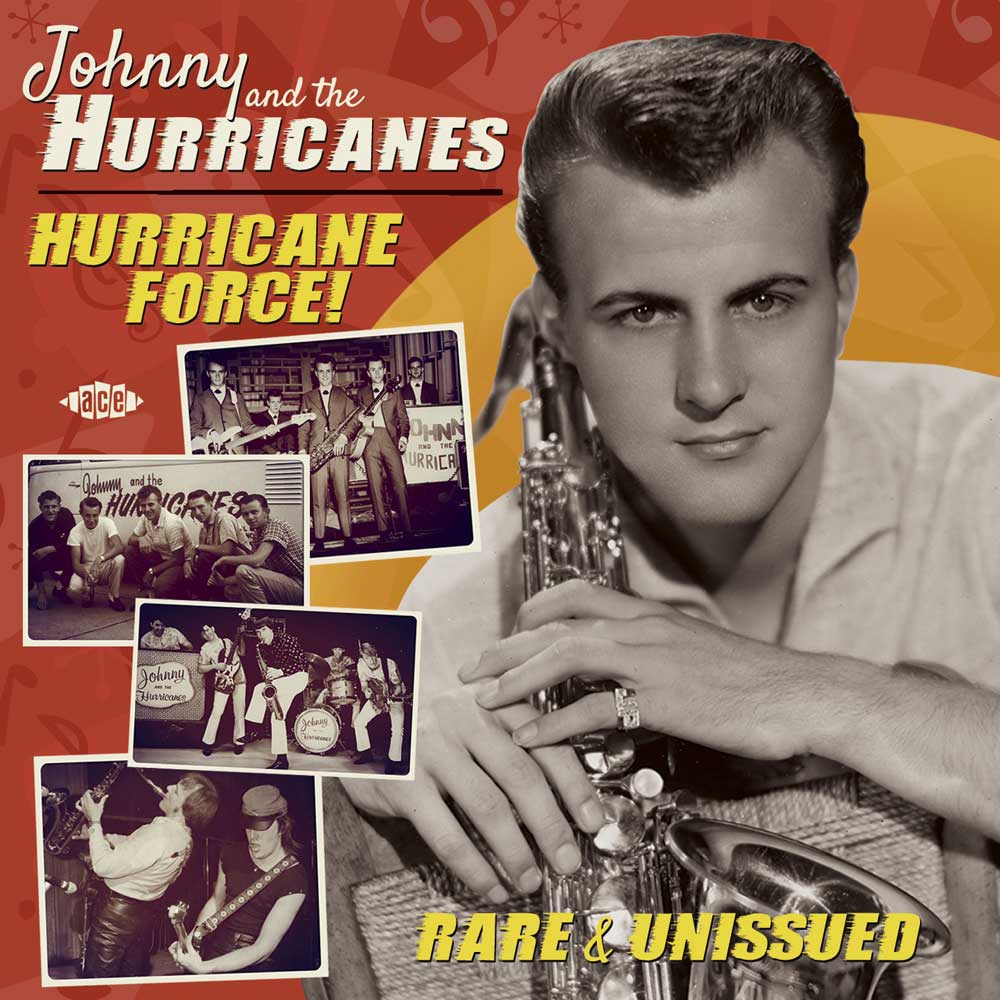
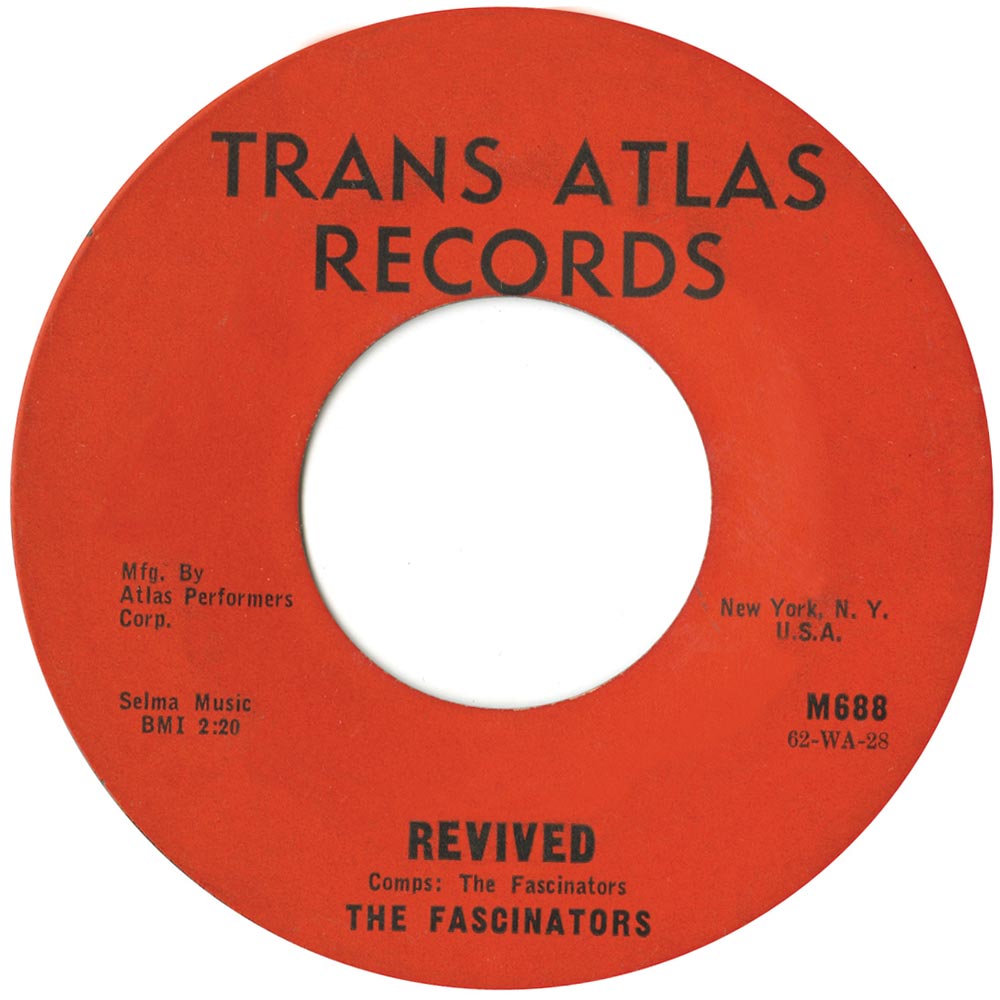
SHUGGIE OTIS-FREEDOM FLIGHT.
SHUGGIE OTIS-FREEDOM FLIGHT.
What’s the best way to describe Shuggie Otis? A musical virtuoso. So is vastly underrated. That’s a good start. Certainly Shuggie was something of a child prodigy. He first playing the guitar aged two, and was playing with his father Johnny’s band from the age of twelve. As if that wasn’t impressive enough, Shuggie released his debut solo album aged seventeen. It’s certainly no exaggeration to call Shuggie a musical virtuoso.Not once you’ve heard him play guitar.
Then you’ll realise that’s almost an understatement. It’s not just guitar he plays. No. He’s a true multi-instrumentalist. Shuggie can play bass, drums, organ and piano. Sadly, despite Shuggie’s music is vastly underrated, partly because as yet, he’s still not made a commercial breakthrough. The music he makes is best described as a fusion of R&B, soul, funk, jazz, rock and blues, which when combined, sounds quite incredible.
Back in 1971, aged just nineteen, Shuggie released his second album, Freedom Flight the follow-up to 1969s Here Comes Shuggie Otis. Among the musicians accompanying Shuggie on Freedom Flight are keyboard player George Duke, drummer Aynsley Dunbar, bassist Wilton Felder and Johnny Otis, Shuggie’s father. Johnny played drums, piano and tambourine, as well as singing backing vocals. Together with Shuggie and the rest of his band, seven tracks were recorded, which became Freedom Flight. Of the seven tracks on the album, Shuggie wrote four, and cowrote two others.
Probably the best known track from Freedom Flight is Strawberry Letter 23, which was later covered by The Brothers Johnson in 1977. Their version was produced by Quincy Jones and reached number five in the US Billboard 100 and number one on the US R&B Charts. This eclipsed the success of both Shuggie’s original version of Strawberry Letter 23, which entered the US Billboard 100, but didn’t scale the heights of The Brothers Johnson’s version.
On Freedom Flight’s release in September 1971, it reached number twenty-three in the US Billboard 200, becoming Shuggie’s most successful album. Sadly, this was as close as Shuggie’s music got to being a commercial success. Three years after the release of Freedom Flight, came the release of Inspiration Information in October 1974. This was the last solo album Shuggie released, reaching number 181 in the US Billboard 200 and number fifty-six in the US R&B Charts. Again, commercial success eluded Shuggie, and after this no further albums by Shuggie were release. However, by the nineties interest in his music was growing, with Shuggie gaining a cult following. This was helped by artists like Lenny Kravitz and Prince praising his music. Since then, all of Shuggie’s albums have been rereleased, including Freedom Flight, which will be released by Music On Vinyl on 27th April 2015. Freedom Flight which I’ll now tell you about, features the musical coming of age, of from the nineteen year old Shuggie Otis.
Freedom Flight opens with Ice Cold Daydream, one of the four tracks written by Shuggie. With wah-wah guitars and rhythm section and organ combining elements of funk with soul, R&B and blues, the track literally bursts into life. As Shuggie’s vocal enters, it’s noticeable that his voice has a soft, youthful sound, that’s a contrast to much more powerful arrangement that’s unfolding behind him. Meanwhile, behind him, the arrangement is fast, with a fuller sound. Searing, soaring, rock guitars compete with the rhythm section and organ for your attention. However, it’s Shuggie that wins the day, demonstrating his virtuoso skills as a guitarist, dominating the sound and stealing the show from a group of much more experienced and seasoned musicians. Quite simply, it’s an astonishing display of guitar playing from a nineteen year old, who plays like a veteran.
Strawberry Letter 23 is by far, the best known track on Freedom Flight. As good as The Brother Johnson’s version was, this is quite simply the definitive version of this beautiful slice of sunshine pop. It’s almost impossible not to feel uplifted after hearing this track. It’s four minutes of pop perfection, and very different from the opening track. It’s easily the best track on Freedom Flight. A piano, percussion, guitar and rhythm section combine with Shuggie’s emotive, thoughtful vocal as the song meanders along beautifully. Backing vocalists accompany Shuggie’s subtle vocal, while percussion and acoustic guitar combine. After two minutes twenty seconds, the sound changes, filters are used to blur the sound when guitars chime and sear, climbing and climbing, repeating same notes. They combine with understated, lilting backing vocalists and this glorious combination continues for over a minute, until the song’s dramatic climax. It’s pop perfection .
Sweet Thang sees another change in sound and style. Shuggie combines with his band to create a real rootsy, bluesy sound. It’s a combination of soaring, chiming guitars, piano, wailing Hammond organ and rhythm section. During the track, there’s some stunning guitar and piano playing, with occasional haunting backing vocals. Add to this the atmospheric sound of the Hammond organ and some exotic sounding percussion and the result is a very different sounding track to Strawberry Letter 23, but one that demonstrates Shuggie’s versatility and talent.
The only track on Freedom Flight not written or co-written by Shuggie is Me and My Woman, which was written by Gene Barge. It closes side one of the album. Again, there’s a bluesy sound to the track, with Shuggie’s chiming guitar accompanied by flourishes of piano and rhythm section, before a similarly bluesy vocal from Shuggie. It’s an irresistible sounding track, one where Shuggie’s voice sounds stronger and much more mature. Driven along by the rhythm section and guitar, and augmented by the subtle piano, Shuggie’s talent shines through, contributing slick licks aplenty on this authentic sounding electric blues track.
Side two of Freedom Flight opens with Someone’s Always Singing a slow, moody sounding track, where a distant, wailing Hammond organ, slow rhythm section and searing guitar accompany Shuggie. It’s a very different sounding track from its predecessors. There’sa slight gospel influence, thanks to the backing vocalists. Mostly though, it’s just Shuggie’s soaring, chiming guitar combining with the Hammond organ, percussion and rhythm section. The track sees Shuggie the free spirit wanting to live “from day to day,” without ties nor commitments. However, it’s a slightly disappointing track, not up to the standards of its predecessors. It almost lacks a musical direction. Indeed, it almost has an unfinished sound, with an arrangement that’s neither as full for good as its predecessors.
Purple sees the quality return on a slow, bluesy sounding track. Here, Shuggie’s crystalline guitar, chimes and sears, as the rhythm section combine to play a shuffling blues. Augmenting the sound are piano and atmospheric sounding Hammond organ. However, like other tracks, Shuggie’s guitar playing takes centre-stage. It has an almost mesmerizing sound, as the track chugs along. Adding to the authenticity of the bluesy sound, is a stunning harmonica solo, which almost competes with Shuggie’s guitar playing. This adds to the track’s slightly dramatic sound. Later, the Shuggie plays bass and show-cases his versatility, before returning to guitar for the rest of track’s seven minute blues epic.
Freedom Flight closes with the album’s epic title track Freedom Flight. It’s just Shuggie’s guitar that opens the album, his fingers nimbly meandering up and down the fretboard. After nearly two minutes, dramatic drums, crashing cymbals and a wailing saxophone combine with Shuggie. Together, they combine to create a sound that has almost a free jazz sound. Eventually, Shuggie and his band come together for a prolonged jam lasting twelve memorable minutes. The track has a much fuller yet, spacious sound. For the remainder of the track, a rasping, wailing, soaring saxophone, keyboards and percussion, combine with the rhythm section and of course, Shuggie’s masterful guitar playing. Having vied with the saxophone for prominence, Shuggie’s guitar goes on to dominate the track, chiming, searing and soaring until the end of this absolutely magical, epic track that closes the album.
Although Shuggie was just nineteen when he released Freedom Flight, it was a really mature sounding album, that combined a variety of styles. From blues to R&B and rock to jazz, funk and sunshine pop there’s a bit of everything on the album. With just seven tracks, lasting only thirty-nine minutes Shuggie Otis, musical virtuoso, takes you on a tour of musical styles and his musical influences.
Not only does he play guitar, but plays bass and organ. However, it’s his guitar playing that dominates Freedom Flight. That’s no bad thing. Shuggie Otis is one of the most underrated guitarists of his generation. Too often, the word virtuoso is overused, but when applied to Shuggie Otis this title is fully deserved. He truly is a guitar virtuoso, playing every note with passion, seamlessly bringing the music to life. Apart from Someone’s Always Singing, which is a slightly disappointing track, the other six tracks feature some of the music music Shuggie Otis recorded. The highlight of Freedom Flight is Strawberry Letter 23, a slice of sunshine pop with a twist. On Strawberry Letter 23, Shuggie Otis and his all-star band reach new heights. It’s a joy to behold, and a reason why every record collection should contain a Shuggie Otis album.
If you don’t own a Shuggie Otis album, then you’ve let you to experience one of music’s best kept secrets. That’s no exaggeration. The publicity shy son of Johnny Otis is one of the most underrated musicians of his generation. Shuggie Otis for whatever reason, never seemed to want ti reach the heights his contemporaries did. Instead, he recorded a trio of albums, and disappeared for over thirty years. However, for the last ten years, there’s been a resurgence in interest in Shuggie Otis’ music. Sadly, still, however, many people haven’t heard Shuggie Otis’s music.
If you’ve let to hear the wonderful music of Shuggie Otis, then you’re very definitely in for a treat. Freedom Flight, which will be released by Music On Vinyl on 27th April 2015, features some of the best music Shuggie Otis ever recorded, and is without doubt, the perfect introduction to a true musical virtuoso.
SHUGGIE OTIS-FREEDOM FLIGHT.
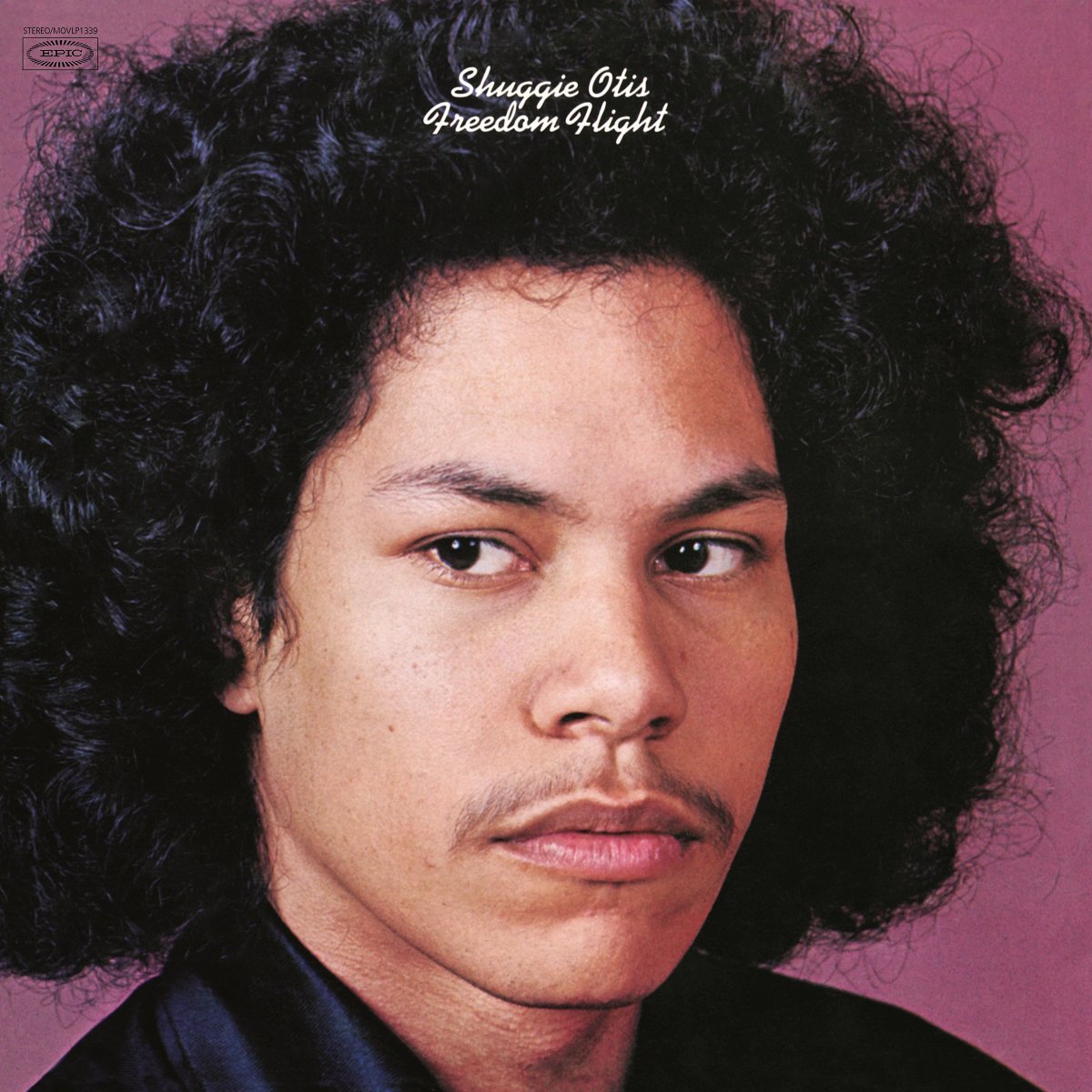
GILLAN-THE ALBUM COLLECTION.
GILLAN-THE ALBUM COLLECTION.
From the late sixties, right through to the seventies, fusion was one of the most popular musical genres. Fusion was popular on both sides of the Atlantic. However, by the late seventies were tiring of the fusion of jazz and rock. This included former Deep Purple frontman Ian Gillan.
In July 1978, Ian Gillan called time on The Ian Gillan Band, which he formed three years earlier in 1975. Since then, The Ian Gillan Band had released a trio of albums. Their debut was 1976s Child in Time. However, The Ian Gillan Band began two years earlier.
That’s when vocalist Ian Gillan left Deep Purple. He played his part in the recording of Deep Purple’s 1974 album Who Do We Think We Are? It was released in America in January 1973, and a month later, in February 1973, in Britain. By then, Ian Gillan was exhausted. He and the band were desperately in need of a rest. That however, wasn’t going to happen.
Deep Purple, one of the unholy trinity of British hard rock, were about to go out on tour. However, Deep Purple desperately needed a rest. Their management wanted Deep Purple to tour Who Do We Think We Are? Reluctantly, they agreed. So they headed out on tour. Before long, tensions arose within Deep Purple.
By the summer of 1973, Deep Purple were in Japan. This was their second Japanese tour. Unlike their first tour, all wasn’t well within the band. Arguments arose between members of the band. Lead vocalist Ian Gillan and Bob Glover clashed with guitarist Richie Blackmore. Whatever had happened or been said, there was no going back. Ian Gillan and Bob Glover quit Deep Purple in June 1973.
On his return home, Ian Gillan announced he had retired from the music business. He wanted to focus on other business ventures, including a business building motorcycle engines, a country hotel ands the Kingsway Recording studio. However, Ian didn’t stay retired for long.
By April 1974, Ian was using the Kingsway Recording studio to begin work on his first solo tracks. He debuted them at Roger Glover’s Butterfly Ball at the Albert Hall, on 16th October 1975. This whet Ian’s appetite. Before long, he was putting a new band together. It eventually became The Ian Gillan Band.
The Ian Gillan Band-Child in Time.
Originally, Ian called his new band Shand Grenade. This was a combination of Shangri-la and Grenade. The name didn’t go down well with his management. They managed to persuade Ian to change the name to The Ian Gillan Band, which was an Anglo-American band.
The first lineup featured the rhythm section of drummer and percussionist Mark Nauseef, a native of New York. The rest of the band, including bassist John Gustafson and guitarist Ray Fenwick were British. So were keyboardist Mike Moran and Ian, who added vocals and harmonica. They headed to the Musicland Studios in Munich, which was then, one of the most famous European studios.
That’s where The Ian Gillan Band recorded their debut album Child in Time. Recording took place between December 1975 and January 1976. Seven songs were recorded, including six which were penned by members of The Ian Gillan Band. Then once Child in Time was completed, the album was mixed at Mountain Studio, Montreux, February 1976. Five months later, Child in Time which was produced by Roger Glover, was ready for release.
Child in Time was well received by critics. That’s despite the change in style. Ian Gillan was no longer the hard rocking musician of his Deep Purple days. The Ian Gillan Band had turned their back on rock, in favour of fusion and even, funk. This shocked fans of Deep Purple.
Especially when Deep Purple fans realised that Child In Time, a Deep Purple classic, was given a funky makeover. This was perceived as an act of sacrilege. It certainly didn’t help sales of Child Of Mine, which was released on Island.
When Child in Time was released in July 1976, it reached number fifty-five in Britain. Elsewhere, Child in Time reached number thirty-six in Sweden. Little did Ian Gillan and rest of The Ian Gillan Band realise, that that was as good as it got for them.
Clear Air Turbulence.
After the release of Child In Time, The Ian Gillan band returned to the studio in July 1976. Right through to September 1976, they recorded the six tracks that became Clear Air Turbulence which doesn’t feature in The Album Collection. Once the album was completed, The Ian Gillan Band were set to head out on tour.
That never happened. While the concerts were scheduled, and the tour promoted, it was eventually cancelled. Things weren’t going well for The Ian Gillan Band. It was just about to get worse.
Ian Gillan wasn’t happy with Clear Air Turbulence’s sound. So much so, that the album’s release was postponed. This allowed Clear Air Turbulence to be remixed. Once the remixing was completed, the release of Clear Air Turbulence was schedule for April 1977.
On the release of Clear Air Turbulence, reviews were mixed. The Ian Gillan Band experimented on Clear Air Turbulence. Hard rock, prog rock and fusion sat side-by-side. Some critics felt this didn’t work. However, on tracks like Money Lender and the jazz-fusion of Over The Hill and Goodhand Liza, The Ian Gillan Band find form. However, this was too little too late.
When Clear Air Turbulence was released on 15th April 1977, it wasn’t a commercial success. For Ian Gillan this was a huge disappointment. All his efforts had been in vain.
Scarabus.
Scarabus which is also omitted from The Album Collection, proved to be The Gillan Band’s swan-song. The ten tracks had been recorded at Kingsway Recorders, London, between July 1977 and August 1977. Three months later, Scarabus was released.
When the critics heard Scarabus, they were disappointed by what they heard. Ian Gillan seemed ill at ease by Scarabus’ somewhat contrived jazzy sound. Critics longed for Ian to kick loose. He never does. Even when Scarabus heads in the direction of rock, it’s more like faux rock. So, it’s no surprise that Scarabus was the weakest and least successful album by The Ian Gillan Band.
On its release, Scarabus wasn’t a commercial success. It didn’t trouble the charts. For The Ian Gillan Band it was a disappointing end to their career. However, before long, Ian Gillan was back to his hard rocking best with a new band, Gillan, who recently released a box set Gillan-The Album Collection, on Edsel.
Gillan (The Japanese Album).
With The Ian Gillan Band history, Ian Gillan began the next chapter in his musical career, Gillan. It saw Ian return to a much harder, rocky sounding style of music. For Ian Gillian, this was what he did best. His new band Gillan featured a familiar face and some new names.
The only member of The Ian Gillan Band that joined Gillan was Colin Towns. He was joined by guitarist Steve Bryd, bassist John McCoy and drummer Pete Barnacle. However, although Pete featured on Gillan’s eponymous debut album, he was soon replaced by Liam Genockey. This was just one of several changes in Gillan’s lineup over the next four years.
With his new band in tow, Ian headed to what were familiar settings, Kingsway Recorders, in London. That’s where the ten tracks that became Gillan, were recorded between July 1978 and August 1978. Gillan would be released in September 1978.
Straight away, there was a problem. Gillan didn’t have a record deal in Britain. However, Gillan had a record deal for Japan, Australia and New Zealand. So, Gillan was only released in these three countries.
On the release of Gillan it sold well in Japan, Australia and New Zealand. That wasn’t surprising. The reviews of Gillan were positive. So were the reviews in the British music press. However, with Gillan unavailable in Britain, it had to be imported from Japan. This lead to Gillan being referred to as The Japanese Album. When copies of the album arrived, it quickly became apparent that Gillan marked a return to form from Ian Gillan and his hard rocking band. They weren’t going to be long without a recording deal in Britain.
Mr.Universe.
That proved to the case. By the time Gillan returned to Kingsway Recorders in April 1979, Gillan had signed to Acrobat. For the next two months, the classic lineup of Gillan recorded the ten tracks that became Mr. Universe.
By the time of the Mr. Universe sessions, Gillan were already onto their third drummer. Mick Underwood was Gillan’s drummer, having replaced Liam Genockey. Mick was joined in the rhythm section by bassist John McCoy and guitarist Berne Tormé. Colin Towns played keyboards and flute and Ian Gillan played harmonica and added vocals. This is regarded as the classic lineup of Gillan.
The new lineup of Gillan worked hard for the next two months. Eventually, by June 1979, Mr. Universe was completed. Gillan were ready to release what was their first British album.
Prior to the release of Mr. Universe, critics were sent a copy of Gillan’s sophomore album. For Ian, this was a worrying time. Latterly, during his days with The Ian Gullan Band, the critics hadn’t been kind to him. That wasn’t the case with Mr. Universe. The critics were won over by Gillan’s hard rocking sound. They were pleased to hear Ian Gillan back what he did best.
Equally happy were the record buying public. When Mr. Universe was released in October 1979, it reached number eleven in the British charts. Ian Gillan had just announced his return. He wasn’t going anywhere.
Glory Road.
After the success of Mr. Universe, Ian Gillan was keen to strike while the iron was hot. So, having toured Mr. Universe, work began on Gillan’s third album, Glory Road.
Recording of Glory Road began in April 1980. For two months, Gillan were locked away at the studio Ian built, Kingsway Recorders. That’s where he had recorded all The Ian Gillan Band and Gillan albums. It’s where Gillan recorded the ten tracks that became Glory Road, the album they hoped would give them their first transatlantic hit.
After the success of Mr. Universe in Britain, Gillan were determined to crack the lucrative American market. Ian knew, that was where the big money was to be made. His time with Deep Purple showed him the riches that were capable of being made in America. However, in hoping to break America, this presented a problem.
Many bands didn’t release the same version of their album in America. That was the case with Glory Road. The running order was different, and Your Mother Was Right replaced Sleeping on the Job. The release date was scheduled as October 1980.
Before the release of Glory Road, the critics had their say. For any band, this can be a nervous time. A bad review can prove costly. Fortunately, most of the reviews of Glory Road were positive. Granted, there were a few dissenting voices. Mostly, though, Gillan looked as if they were heading down the Glory Road.
When Glory Road was released, in October 1980, Gillan fans made a beeline for the limited edition double album. It contained the free album For Gillan Fans Only, which can also be found in The Album Collection. Most fans had to settle for ordinary version of Glory Road.
Plenty did. Glory Road became Gillan’s biggest selling album. Not only did it reach number three in Britain, but was certified solver. This made Glory Road Gillan’s biggest selling album. However, that wasn’t the end of Glory Road’s success.
In America, Glory Road crept into the US Billboard 200, reaching 183. This was the first time a Gillan album had charted in America. Were Gillan about to crack the lucrative American market?
Future Shock.
Buoyed by the success of Glory Road in both Britain and America, Gillan set about recording the followup. The last few months had been among the busiest in Gillan’s career. What with promoting Glory Road in Britain and America, plus a gruelling touring schedule, Gillan had hardly any time to think about their fourth album, until now.
Just like previous albums, Gillan headed to Ian’s studio, Kingsway Recorders, in London, UK. The recording began in December 1980. After breaking for Christmas and New Year, Gillan returned to Kingsway Recorders in January 1981. They finished their fourth album later that month.
Much of what became Future Shock was penned by Ian, John McCoy and Bernie Tormé. This included the title-track. It was was inspired by Alvin Toffler’s book Future Shock. As for Future Shock’s distinctive artwork, it was created by Alan Daniels for Young Artists. With its eye-catching, futuristic image, Future Shock was guaranteed to grab record buyers attention. So was the music.
Before Future Shock was released in March 1981, the critics had their say. They were one over by Future Shock. So much so, that they called Future Shock one of the greatest hard rock albums. This bode well for the release of Future Shock.
When Future Shock hit the shops, it became Gillan’s biggest selling album in Britain. Future Shock reached number two, and was certified silver. However, across the Atlantic, Future Shock failed to chart. This was a disappointment. After all, America was the most lucrative market. Especially, for hard rock. Sadly, it looked like Gillan were never going to be as successful in America, as they were in Britain.
Double Trouble.
Just seven months after the release of Future Shock, Gillan were back with their fifth album Double Trouble. Unlike previous albums, it was a double album. However, this was a double album with a difference.
For their fifth album, Gillan had decided to release a double album. The first album contained studio recordings, while the second album featured Gillan live. Double Trouble had been recorded during 1981, just as Gillan’s lineup was changing.
Gillan had returned to the studio in August 1981. This was the first time since Bernie Tormé had been sacked. Gillan had been asked to play on British pop show Top Of The Pops. Their single No Laughing in Heaven had charted. However, Bernie didn’t want to play on Top Of The Pops. So he was sacked.
Bernie’s replacement was Janick Gers. he featured on the eight tracks recorded at Kingsway Recorders. However, Bernie featured on If You Believe Me, which was recorded at the Rainbow Theatre, London on 4th March 1981. The remainder of the live tracks were recorded at the Reading Festival, on 29th August 1981. These live tracks showcased what Gillan in concert sounded like.
For Gillan, Double Trouble was akin to their calling card. It featured studio recordings and live tracks. This was the perfect introduction to Gillan. However, it was always risky releasing a hybrid album like Double Trouble.
Other groups had tried this. For some groups, it worked, and worked well. However, for other groups it backfired on them. They were accused of throwing together an album. So, were Gillan risking their reputation with Double Trouble?
That proved to be the case. The critics weren’t impressed with Double Trouble. Reviews were mixed. It seemed Gillan’s decision to combine studio recording and live tracks on Double Trouble seemed to have backfired.
When Double Trouble was released in October 1981, it reached number twelve in Britain. After the mixed reviews, the members of Gillan breathed a collective sigh of relief. The Gillan success story continued apace.
Magic.
Nine months after releasing Double Trouble, Gillan returned to the studio in July 1982. At Kingsway Recorders, in London, Gillan began recording what would become Magic. A total of eighteen tracks were recorded between July and August 1982. However, only ten made the cut. They became Magic.
With Magic completed, Gillan’s sixth album was scheduled for release later in 1982. However, before that, the critics had their say.
Just like Double Trouble, Magic failed to excite the critics. They weren’t won over by Magic. The reviews were mixed. This didn’t bode well for Magic.
On its release, Magic reached just number seventeen in Britain. This was Gillan’s least successful album in Britain. It was also their last.
The end was neigh for Gillan. Not long after the release of Magic, Black Sabbath were looking for a new lead singer. This was a huge opportunity for someone. Black Sabbath knew who they wanted. The chosen one, was Ian Gillan.
It was an offer Ian Gillan couldn’t refuse. Still, Black Sabbath were one of the biggest names in rock. So, he disbanded Gillan became the new lead singer of Black Sabbath. Ironically, his new job didn’t last long.
Ian Gillan’s time with Black Sabbath lasted just one album and one tour. Then Ian Gillan returned home. He rejoined Deep Purple, the group where he started his career. Gillan was now history.
Gillan lasted four years. During that period, they released six albums. Five of these albums were released in Britain, and reached the top twenty in the album charts. The two most successful albums were 1980s Glory Road and 1981s Future Shock. Both albums were certified silver. Along with Gillan’s 1978 eponymous debut album and 1979s Mr. Universe, these albums feature Gillan at their hard rocking best. Each of these albums, plus 1981s Double Trouble and 1982s Magic, feature in the Gillan-The Album Collection box set, which was recently released by Edsel, a subsidiary of Demon Music Group.
The Gillan-The Album Collection box set is a welcome reissue. However, there’s several buts. Missing from the box set is Gillan’s 1978 eponymous album. That’s probably down to licensing issues. However, it’s a shame that Gillan is missing from the box set. Another complaint is the the albums haven’t been remastered. Most likely, the albums are the 2007 reissues. Granted they were remastered back then, but eight years have passed since then. A sympathetic remastering wouldn’t have gone amiss. As for the packaging and sleeve-notes, they leave a lot to be desired. They leave you thinking that this is very much a low budget product. However, what matters is the music.
Gillan-The Album Collection finds Gillan at their hard rocking best. Quite simply, it’s a joy to behold. That describes Gillan on Mr. Universe, Glory Road and Future Shock. They don’t hold back. In full flow, they’re torchbearers for British rock. As rock goes, it doesn’t get much harder or heavier than Gillan. They were one of the last great British rock bands, and were responsible for rebuilding Ian Gillan’s career.
After the disappointment of The Ian Gillan Band’s last two albums, Ian Gillan’s career was at a crossroads. When he formed Gillan his reputation had taken a bruising. Four years later, Ian Gillan had reinvented himself. His jazz-fusion years were long gone. Ian Gillan was back to his hard rocking best with Gillan, whose rise and rise is documented and celebrated on Gillan-The Album Collection.
GILLAN-THE ALBUM COLLECTION.
EMERSON. LAKE AND PALMER-TRILOGY (DELUXE EDITION).
EMERSON. LAKE AND PALMER-TRILOGY (DELUXE EDITION).
By the time Emerson, Lake and Palmer set about recording their third studio album Trilogy, it seemed everything they touched turned gold. Their first two studio albums had been certified gold in America. So had their live albums Pictures At An Exhibition and Welcome Back My Friends to the Show That Never Ends… Ladies and Gentlemen. Already, Emerson, Lake and Palmer were on their way to becoming one of the biggest bands in prog rock.
Eventually, Emerson, Lake and Palmer would sell over forty million albums. Their most successful period was the seventies. Between 1970s Emerson, Lake and Palmer and 1978s Love Beach, the prog rock giants released six albums. Each album was certified gold in America. However, like many prog rock bands, Emerson, Lake and Palmer were more popular in America than Britain.
Only two of Emerson, Lake and Palmer’s albums were certified gold in Britain and two silver. However, in 1972, Emerson, Lake and Palmer’s star was on the ascendancy. Their first live album had been released in 1971 and was certified silver in Britain. Then Emerson, Lake and Palmer’s 1972 sophomore album Tarkus reached number one in Britain,
It surpassed the success of Emerson, Lake and Palmer’s eponymous debut album on both sides of the Atlantic. So, as Emerson, Lake and Palmer began work on their third studio album Trilogy, which will be released as a three disc Deluxe Edition on 27th April 2015, by Sony Music, it looked like they could do no wrong. On both sides of the Atlantic, Emerson, Lake and Palmer were enjoying commercial success and critical acclaim. This had been the case since their 1970 eponymous album
Emerson, Lake and Palmer.
The Emerson, Lake and Palmer story begins in 1970. That was the year Emerson, Lake and Palmer was founded and they released their eponymous debut album.
Keith Emerson and Greg Lake first met at the Fiilimore West, in San Francisco. Both of them were at a musical crossroads. Keith was a member of The Nice, while Greg Lake was a member of King Crimson. Nether Keith nor Greg felt fulfilled musically. So, the decided to form a new band.
This new band would feature Keith on keyboards, Greg on bass and a drummer. Their first choice for a drummer was Mitch Mitchell, who was without a band, after The Jimi Hendrix Experience split-up. They agreed to jam together. Then the music press heard about this jam session.
Rumours started doing the rounds that Jimi Hendrix was going to join this new supergroup. That put an end to the jam session. It never took place. Jimi Hendrix had never been asked to join the supergroup. Mitch Mitchell meanwhile, lost interest in the project. This presented a problem. Keith and Greg still didn’t have a drummer. Then Robert Stigwood, who was then the manager of Cream, suggested Carl Palmer’s name.
Carl Palmer was another experienced musician. He’d previously been a member of The Crazy World Of Arthur Brown. At that time, he was a member of Atomic Rooster. So Carl was approached. He was, at first, reluctant to leave Atomic Rooster, which he’d cofounded. However, when he spoke to Keith and Greg he realised that he could be part of something special.
Having left Atomic Rooster, he became the third member of the newly formed supergroup Emerson, Lake and Palmer. They made their debut was at The Guildhall, Plymouth, on 23rd August 1970. Then on 26th August 1970, Emerson, Lake and Palmer stole the show at the Isle Of Wight Festival. This resulted in Emerson, Lake and Palmer being offered a recording contract by Atlantic Records.
Ahmet Ertegün the President of Atlantic Records realised the potential in Emerson, Lake and Palmer. Here was a band who wouldn’t just sell a huge amount of records, but could fill huge venues. So, not long after signing Emerson, Lake and Palmer, Ahmet Ertegün sent them into Advision Studios, London.
At Advision Studios, Emerson, Lake and Palmer recorded ten tracks. They became Emerson, Lake and Palmer. Although this was meant to be the birth of a supergroup, the ten tracks on Emerson, Lake and Palmer came across as a series of solo pieces. However, Emerson, Lake and Palmer were a new band, who’d just recorded an eclectic and innovative album.
Although many people refer to Emerson, Lake and Palmer as prog rock band, they’re much more than that. Their music is eclectic. They draw inspiration from a variety of sources. This includes classical, folk rock, jazz, psychedelia and rock. Some of the music is futuristic. That’s in part to Keith Emerson’s use of the Moog synth. The result was a pioneering, innovative album that would launch Emerson, Lake and Palmer’s career.
When critics heard Emerson, Lake and Palmer, they hailed the album as innovative and influential. On its release in the UK in October 1970, i Emerson, Lake and Palmer reached number four. Three months later, on New Year’s Day 1970, Emerson, Lake and Palmer was released in the US. It reached number eighteen in the US Billboard 200 and was certified gold. Ahmet Ertegün, the President of Atlantic Records had been vindicated. Emerson, Lake and Palmer were on their way to becoming rock royalty.
Tarkus.
It was a case of striking when the iron was hot for Emerson, Lake and Palmer. They returned to Advision Studios, in London to record what became their sophomore album Tarkus. It was much more of a “band” album. Emerson, Lake and Palmer were now a tight, musical unit. This was very different from Emerson, Lake and Palmer, which was more like an album of solo pieces. Tarkus saw the birth of Emerson, Lake and Palmer as one of the giants of prog rock.
Tarkus was released in June 1971. That wasn’t originally the plan. Instead, Pictures At An Exhibition was meant to be Emerson, Lake and Palmer’s sophomore album. This was a live album which was recorded in March 1971. It saw Emerson, Lake and Palmer interpret Modest Mussorgsky’s opus Pictures At An Exhibition. it was a groundbreaking album. There was a problem though. Emerson, Lake and Palmer’s management didn’t agree. They weren’t sure that what essentially a interpretation of a classical suite was the direction Emerson, Lake and Palmer should be heading. So, Tarkus became the followup to Emerson, Lake and Palmer.
On its release in June 1971, critics realised that Tarkus marked a much more united Emerson, Lake and Palmer. They were well on the way to finding their trademark sound. Gone were ballads and jazz-tinged tracks. Instead, it was prog rock all the way. Record buyers loved Tarkus. It reached number one in the UK. Over the Atlantic, Tarkus reached number nine in the US Billboard 200 and was certified gold. Following the commercial success of Tarkus, Pictures At An Exhibition was released later in 1971.
Pictures At An Exhibition.
Pictures At An Exhibition was released as a budget priced album in November 1971. It reached number three in the UK. In America, Pictures At An Exhibition reached number ten in the US Billboard 200. This resulted in Emerson, Lake and Palmer’s third consecutive gold album. A year later, three became four.
Trilogy.
Just like previous albums, Emerson, Lake and Palmer were determined to push musical boundaries on Trilogy, their third studio album. Just like their two previous albums, Trilogy was recorded at Advision Studios, London. That’s where the nine tracks that became Trilogy took shape.
For Trilogy, Keith Emerson and Greg Lake cowrote four tracks, The Endless Enigma (Part One), The Endless Enigma (Part Two), The Sheriff and Trilogy. Keith Emerson also wrote Fugue and Abaddon’s Bolero, while Greg Lake contributed From The Beginning. Living Sin was the only song the three members of Emerson, Lake and Palmer cowrote. However, they arranged the cover of Aaron Copland’s Hoedown. It was given a makeover on Trilogy, the latest groundbreaking album from Emerson, Lake and Palmer.
At Advision Studios, Emerson, Lake and Palmer began work on Trilogy.Keith Emerson played Hammond organ, Steinway piano, Moog synth, Mini Moog Model D and and a zurna. Greg Lake took charge of vocals, acoustic, electric, and bass guitars. Carl Palmer played drums and percussion. Just like previous Emerson, Lake and Palmer albums, Greg Lake produced Trilogy. It found Emerson, Lake and Palmer at their innovative best, producing progressive rock, but with a twist.
An example of this was the inclusion of Abaddon’s Bolero on Trilogy. Rather than the usual 3/4 rhythm a Bolero would have, it was turned into a march by using a 4/4 rhythm. Emerson, Lake and Palmer also pioneered the beating heart sound on Trilogy. Pink Floyd would use it to such good effect on Dark Side Of The Moon. So would Jethro Tull on A Passion Play and Queen on Queen II. This sound was first heard on Endless Enigma Part One. It came courtesy of Carl Palmer’s Ludwig Speed King bass drum pedal. Once again, Emerson, Lake and Palmer were demonstrating that they were one of the most innovative progressive rock bands. Their efforts were rewarded.
When critics heard Trilogy, they hailed the album a classic. It was a truly captivating and eclectic album, where Emerson, Lake and Palmer combined musical genres and influences. Apart from prog rock, everything from classic rock, symphonic rock, classical, folk and world music can be heard. Emerson, Lake and Palmer continued to embrace the latest technology in what seemed like their quest for musical perfection. They also made use of overdubbing. This made their music difficult to replicate live. The band always felt they came up short live. Despite this, Trilogy well and truly wowed the critics. It would do the same with the record buying public.
On its release in January 1972, Trilogy reached number two in the US. As usual, Emerson, Lake and Palmer enjoyed more success in the US. Trilogy reached number five in the US Billboard 200. This resulted in another gold disc for Emerson, Lake and Palmer. They were now prog rock royalty, thanks to their latest epic Trilogy, which I’ll tell you about.
Opening Trilogy is The Endless Enigma (Part One). This is the first of three parts that makeup The Endless Enigma. The introduction lasts ninety-six seconds. A bass drum replicates a heartbeat, while a Moog adds sci-fi sounds. Keith’s piano adds sudden bursts of cinematic sounds. By now, the arrangement is reminiscent of an early seventies thriller. That’s until the synths burst into life, and with the rhythm section, urgently drive the arrangement along. Keyboards continues to inject a sense of urgency and drama. This is replicated in Greg’s vocal. It veers between tender to despairing, dramatic and frustrated. As Greg experiences a wide range of emotions, there’s a brief nod to The Who as the prog rock gives way to classic rock. Mostly though, it’s prog rock all the way, as Emerson, Lake and Palmer combine drama, urgency and emotion on the first track on The Endless Enigma trilogy.
Fugue is the second part in The Endless Enigma. Just a lone, melancholy piano plays. Gradually, though, the tempo increases, and an acoustic guitar is strummed. However, it’s Keith’s piano that plays the starring role. Greg’s acoustic guitar plays a supporting role in a track that veers between wistful and ethereal, to urgent and dramatic.
The third and final part in The Endless Enigma movement, is The Endless Enigma (Part Two). Just like Fugue, it’s a relatively short track, lasting just two minutes. During that period, Emerson, Lake and Palmer make their presence felt. Urgent stabs of a driving piano are joined by drums. Soon, the arrangement is stripped bare, and bells ring out. They set the scene for the synths and Greg’s deliberate vocal. Briefly, a vortex of futuristic synths accompany him, as The Endless Enigma, a truly ambitious epic reaches its crescendo.
Greg Lake wrote From The Beginning. It’s a Trilogy’s acoustic ballad. Every Emerson, Lake and Palmer album had one. Just a lone acoustic guitar is plucked and strummed. The playing veers between tender to firm. Similarly tender is Greg’s vocal. It’s also heartfelt and needy. Meanwhile, space is at a premium in the arrangement. Emerson, Lake and Palmer don’t feel the need to fill it. Instead, just understated drums and an electric guitar join the acoustic guitar. They replace Greg’s vocal. So do the futuristic, sci-fi synths on this beautiful, atmospheric ballad.
Hesitantly, The Sheriff unfolds. It’s as if Emerson, Lake and Palmer are looking for an in. When they find it, there’s no stopping them. The rhythm section and synths combine rock and even a touch of funk. Briefly, Emerson, Lake and Palmer jam, before Greg’s vocal enters. He becomes a storyteller, telling the story of The Sheriff and Josie. As the story unfolds, Greg’s vocal grows in power. Eventually, he delivers a vocal powerhouse. Then when his vocal drops out, Emerson, Lake and Palmer enjoy another opportunity to jam. When Greg’s vocal returns, he completes the story. It’s then that Keith throws a curveball adding twenty seconds of honky tonk piano while Carl plays woodblocks. This shows Emerson, Lake and Palmer at their inventive and innovative best.
Hoedown seems an unlikely song for Emerson, Lake and Palmer to cover. However, they transform the track. This required them to rearrange the track. An organ and banks of synths play important roles. So do the rhythm section. They join the synths and organ in driving the arrangement along. Literally, the arrangement unfolds at breakneck speed, resulting in the musical soundtrack to a space-age Hoedown.
Trilogy is a near nine minute epic. Its orchestral introduction gives way to Keith’s piano and Carl’s tender, thoughtful vocal. His heartbroken vocal plays a part in the pastoral quality of the track. No wonder. Just lush strings, flourishes of piano and Greg’s vocal sweeping in and out. However, thing soon change. Keith’s piano playing injects a sense of urgency. Soon, a buzzing synth and the rhythm section have kicked loose. Now we hear a very different side to Emerson, Lake and Palmer. Gone is the symphonic, pastoral sound. Replacing it is Emerson, Lake and Palmer at their hard rocking best. They combine prog rock and classic rock. There’s even a nod to sixties psychedelia and jazz. Seamlessly, musical genres become one on this musical Magnus Opus.
Jazz-tinged synths opens Living Sin. They’re played with a swagger. This suits the throaty vocal that drifts in and out the track. It’s accompanied by banks of synths and the rhythm section. Together, they power the arrangement along. By then, Greg’s vocal is a gravelly powerhouse. It’s as if he’s been inspired by Robert Plant. Later, when Emerson, Lake and Palmer jam it’s as if they’ve been inspired. They pull out the stops and show just why, Emerson, Lake and Palmer in 1972, were regarded as prog rock royalty.
Closing Trilogy is Abaddon’s Bolero, which is played in 3/4 time. This makes the track sound like a march. Indeed, Emerson, Lake and Palmer march to the beat of Carl’s drums. They’re understated, allowing Keith’s keyboards to take centre-stage. Gradually, as the melody is continually repeated, the arrangement builds. Layers are added. This includes strings, flutes, a Hammond organ, a Moog synth, a mellotron and a probing bass. Many of these instruments had to be overdubbed. While this took time, it was well worth it. From the earlier understated arrangement, a glorious wall of sound emerges on this eight minute orchestral epic.
Just like their two previous albums, Emerson, Lake and Palmer and Tarkus, Trilogy was a complex, innovative, genre-melting album. Emerson, Lake and Palmer embraced the latest technology in what seemed like their quest for musical perfection. They also made use of overdubbing. This made their music difficult to replicate live.
The more complicated and multilayered, Emerson, Lake and Palmer’s became, the more difficult it was to replicate live. An example was Abaddon’s Bolero, where overdubbing was used extensively. Layer upon layer of instruments were added, resulting in a complex orchestral arrangement. However, playing it live was impossible. After several attempts to play the track live, they couldn’t make it work. Eventually, they gave up, and cut it from their set. That was the problem with some of Emerson, Lake and Palmer’s music. Its complexity made playing it live a huge challenge. For a band as popular as Emerson, Lake and Palmer this could’ve proved a problem.
It didn’t. Instead, their sets featured songs that were possible to replicate live. This was just as well. By the time Trilogy had been released in 1972, Emerson, Lake and Palmer were a hugely successful band on both sides of the Atlantic. They were festival favourites and stadium fillers. Emerson, Lake and Palmer were also one of the most innovative prog rock bands.
That’s apparent on Trilogy, which will be rereleased by Sony Music on 27th April 2015, as a three disc box set. Disc one features a remastered version of Trilogy. Then on disc two, there’s an alternate take of From The Beginning. The other nine tracks are a new stereo mix of Trilogy. On the DVD, is a 5.1 mixes by Jakko Jakszyk. Accompanying the two CDs and DVD is a sixteen page page booklet, with insightful liner notes. This is the perfect accompaniment to the forthcoming reissue of Trilogy, which is one of Emerson, Lake and Palmer’s classic albums.
By 1972, Emerson, Lake and Palmer were hitting their stride. Trilogy saw Emerson, Lake and Palmer receive their fourth gold disc in America alone. Eventually, Emerson, Lake and Palmer would sell over forty million albums. Their most successful period was the seventies.
Between 1970s Emerson, Lake and Palmer and 1978s Love Beach, the prog rock giants released six studio albums. Each of them were certified gold. So were their two live albums Pictures At An Exhibition and Welcome Back My Friends to the Show That Never Ends… Ladies and Gentlemen. This made Emerson, Lake and Palmer one of the biggest prog rock bands of the seventies. They were also one of the most innovative.
Very few bands were as innovative, inventive and influential as Emerson, Lake and Palmer. Continually, they pushed musical boundaries to their limits, and sometimes, it seemed beyond. This worked. They never stood still, and their music became stale. That’s why, forty-three years after the release of Emerson, Lake and Palmer’s third studio album Trilogy, it sounds as innovative and ambitious as it did in 1972.
Trilogy found Emerson, Lake and Palmer growing,evolving and maturing as a band. They had come a long way in the past two years. Now they were tight and multitalented. Emerson, Lake and Palmer were also a visionary band, who seamlessly, were capable of fusing classical music, folk, jazz prog rock, psychedelia, rock and symphonic rock. All these disparate musical genres played their part in the sound, and success, of Trilogy, Emerson, Lake and Palmer’s timeless epic.
EMERSON. LAKE AND PALMER-TRILOGY (DELUXE EDITION).
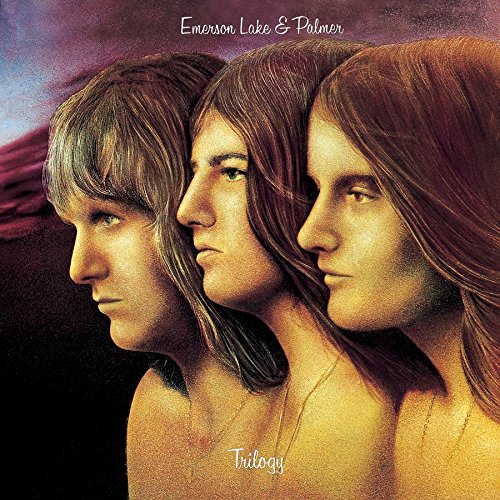
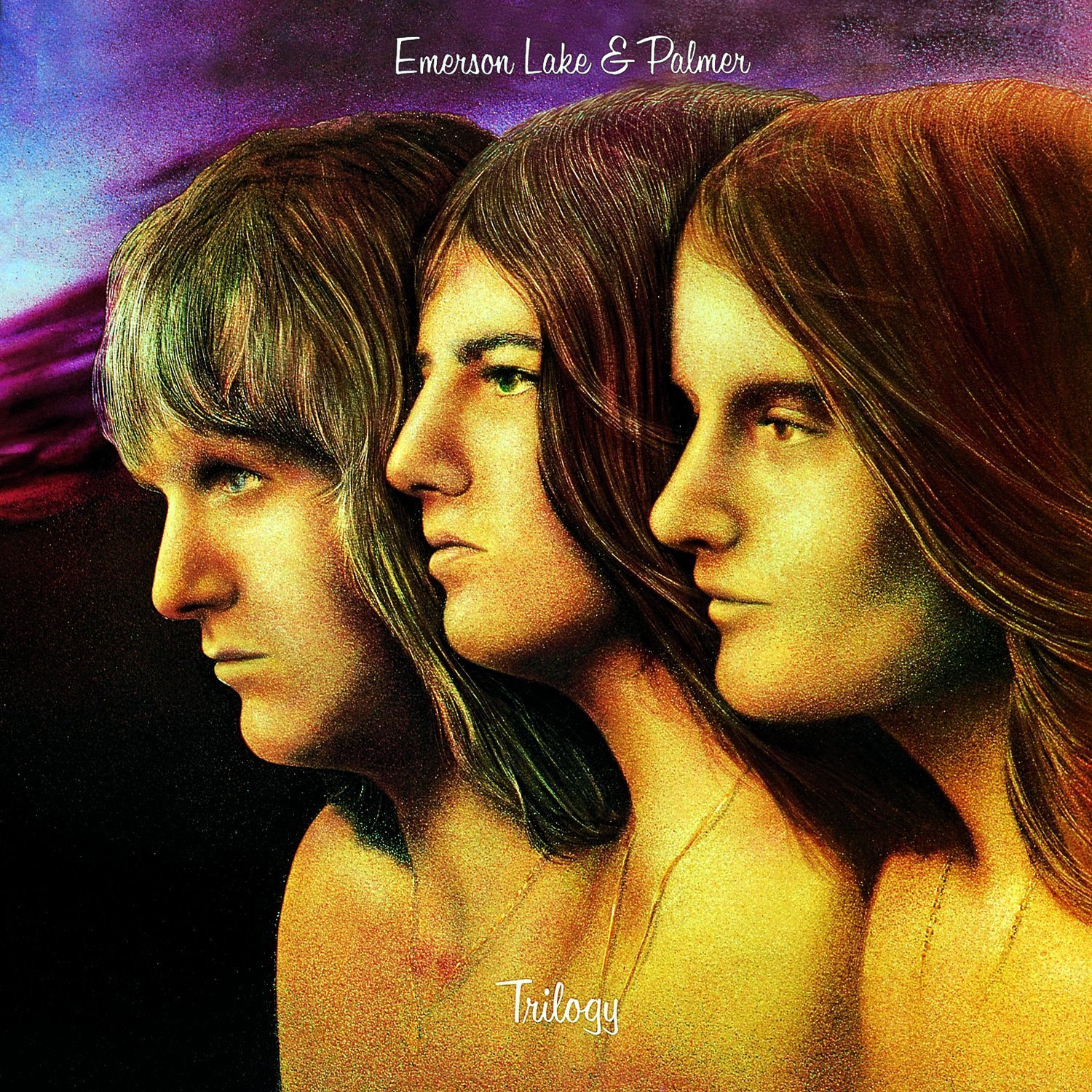
JOHN WETTON-ANTHOLOGY-THE STUDIO RECORDINGS VOLUME 1.
JOHN WETTON-ANTHOLOGY-THE STUDIO RECORDINGS VOLUME 1.
Most musicians are lucky to be in one successful band. A few become members of two successful bands. John Wetton has been a member of numerous successful bands. His career started with Mogul Thrash, before moving onto Family, King Crimson and Uriah Heep. He then joined prog rock supergroup UK, who released two critically acclaimed albums. Next stop for John Wetton was Wishbone Ash, before he joined another prog rock supergroup Asia. Their first two albums sold in excess of nine million copies. John Wetton was living the dream. However, he was working harder than ever.
By the early eighties, John Wetton was still working as a session musician. The great and good of music had John’s number. He worked with Roxy Music, Brian Ferry, Tony Banks, Phil Manzanera, Roger Chapman and members of E.L.P., Genesis and Yes. It seemed John had an insatiable appetite for music. So, it’s no surprise that in 1980, he embarked upon a solo career.
Caught In The Crossfire, which was released in 1980, was John Wetton’s debut solo album. Further albums would follow over the next thirty-two years. It was as if when John had time, he would return to his solo career. These albums were welcome releases, from a musical innovator. Thirty-two tracks from John’s solo albums features on the recently released Anthology-The Studio Recordings Volume 1. It was recently on the Primary Purpose label, and and is an introduction to John Wetton’s solo work.
It took nine years before John Wetton got round to recording his debut album, Caught In The Crossfire. By then, John Wetton was almost a musical veteran. The previous nine years had been a whirlwind. It was a long way from John’s early days in Bournemouth.
John Wetton served his musical apprenticeship in Bournemouth, where he grew up. That’s where he first met Richard Palmer-Jones. They were members of The Corvettes, The Palmer-James Group, Tetrad, and Ginger Man. After that, John Wetton joined Mogul Thrash. That’s where he made his breakthrough.
Mogul Thrash.
Mogul Thrash were a prog rock band, who had evolved out of Brotherhood. They released their debut single Sleeping in the Kitchen in 1970. Then a year later, Mogul Thrash released their eponymous debut album in 1971. It was produced by Steampacket founder Brian Auger. On its release, Mogul Thrash was well received by critics. The future looked bright for Mogul Thrash. Sadly, that wasn’t the case.
As Mogul Thrash was released, the group were locked in a legal battle with their management. It didn’t end well. Mogul Thrash had no option but to disband. So, 1971s Mogul Thrash proved to be group’s only album. For bassist John Wetton, and the rest of Mogul Thrash, this was a huge disappointment. Mogul Thrash looked like they were going places. Luckily, Family were looking for a bassist.
John Wetton fitted the bill. Not only could he play bass, but he was a guitarist and vocalist. So, the multitalented twenty-two year old joined Family. He played on their next two albums.
Family-Fearless.
Fearless, Family’s fifth album, was released on 29th October 1971. This marked John Wetton’s Family debut. He played bass, guitars, and keyboards. Family were almost getting three musicians for the price of one. He would more than play his part in Fearless’ sound and success.
On its release, Fearless was well received by critics. The new lineup of Family seemed to have gelled quickly. Fearless was littered with highlights, including Spanish Tide, Save Some for Thee and Take Your Partners. So, it’s no surprise that Fearless sold well.
After its release, Fearless climbed the British and American charts. Eventually, it reached number fourteen in Britain and number 177 in the US Billboard 200. This was a first for Family. Never before had any of their albums charted in America. John Wetton it seemed, was Family’s good luck charm.
Bandstand.
After the success of Fearless, Family returned to the studio, and recorded Bandstand at Olympic Studios, London. This was where they had recorded Fearless. Just like Fearless, Bandstand was produced by George Chkiantz and Family. However, it marked a change in style for Family.
Bandstand was released in September 1972. It marked a stylistic departure for Family. Their music moved towards the mainstream. Partly, this was because Roger Chapman and Charlie Whitney had accepted the standard method of songwriting. It made life a lot easier. However, this move towards the mainstream risked alienating Family’s fans.
Prior to Bandstand’s release, critics had their say. Critics liked Family’s more mainstream sound. The album was released to near critical acclaim. A few contrarian critics disagreed. However, the people that mattered were the record buying public.
As Bandstand hit the shops, the members of Family wondered how their new sound we he received? When the dust settled, Bandstand had reached number fifteen in Britain and number 183 in the US Billboard 200. This was almost the same as Fearless. It seemed their new sound had neither lost, nor gained, Family any new fans. However, before long, Family had lost their bassist.
By 1972, John Wetton had attracted the attention of King Crimson. They were prog rock royalty, and one of the biggest and most innovative bands of the prog rock era. So, when John was asked to join King Crimson, he couldn’t say no. He made his debut on Larks’ Tongues In Aspic.
King Crimson-Larks’ Tongues In Aspic.
Larks’ Tongues In Aspic was King Crimson’s fifth album. The album marked an almost new lineup of King Crimson. This was the third lineup in the group’s history. Joining Robert Fripp were bassist John Wetton, ex-Yes drummer Bill Bruford, percussionist Jamie Muir and David Cross, who played violin, viola, Mellotron, electric piano and flute. This new lineup saw the band head in a new direction.
King Crimson incorporated different instruments, including percussion and African mbira. They moved away from their jazz sound, to a fusion of prog rock and experimental music on what became Larks’ Tongues In Aspic.
It was released in March 1973, to critical acclaim, reaching number twenty in the UK and number sixty-one in the US Billboard 200. With a new lineup and having released their strongest album in recent years, King Crimson looked as if they were about to become one of the biggest bands of the early seventies.
Starless and Bible.
Just about every prog rock band released a concept album. Starless and Bible Black, which is a quotation from the first two lines of Dylan Thomas’ Under Milk Wood, was King Crimson’s concept album. The album is a commentary on the sleaziness and materialism that was blighting society. Richard Palmer-James, a former member of Supertramp, cowrote four of the songs on Starless and Bible, which saw King Crimson take a different approach to recording.
Unlike previous albums, there’s no drums on Starless and Bible. Despite the lack of drums, drummer Bill Bruford played percussion and cowrote three tracks. While he played on Starless and Bible, Jamie Muir didn’t. He’d left the band. Another change was that only the first two tracks on Starless and Bible, The Great Deceiver and Lament recorded in the studio. The rest of the tracks were recorded live, with the applause edited out. This was a very different approach from previous King Crimson albums.
Despite this, Starless and Bible Black was well received. Some critics hailed Starless and Bible Black as King Crimson’s best album since their debut. With its fusion of prog rock and experimental music, it was an ambitious and groundbreaking album. On its release in March 1974, it reached number twenty-eight in the UK and number sixty-six in the US Billboard 200. With King Crimson having released two consecutive critically acclaimed albums, it looked as if they were about to join the royalty that included Pink Floyd and Led Zeppelin. However, that wasn’t to be.
Red.
Having just released to consecutive critically acclaimed albums, Larks’ Tongues In Aspic and then Starless and Bible Black, critics and fans wondered what direction King Crimson seventh album Red would take? Being King Crimson, fans and critics had learnt to expect the unexpected. The first change was in the lineup. After their 1974 summer tour, David Cross left King Crimson. This meant the band was now a trio consisting of Robert Fripp, bassist John Wetton and drummer Bill Bruford. They cowrote much of Red.
Red featured just five tracks. Recording of Red began on 30th June 1974 at Olympic Studios, London and finished in August 1974. Four of the songs on Red were recorded live. The exception was One More Red Nightmare, which was recorded live. In the studio, Robert Fripp played guitar and mellotron. He was joined by bassist John Wetton and drummer Bill Bruford. They were augmented by a variety of musicians who often, played on just one track. These musicians played their part in not only what’s a landmark album, but an album that marked the end of an era.
On its release in October 1974, Red reached just number forty-five in the UK and number sixty-six in the US Billboard 200. Critics hailed Red as an innovative album. There are obvious similarities with Larks’ Tongues In Aspic and Starless and Bible Black in sound and quality. One change was the lack of the acoustic guitars that featured on previous albums. With its fusion of prog rock and classic music, Red proved to be a hugely influential and innovative album. Sadly, it was the last King Crimson studio album to feature John Wetton.
Uriah Heep-Return To Fantasy.
Having left King Crimson, John joined Uriah Heep. They had already realised seven albums since their 1970 debut …Very ‘Eavy …Very ‘Umble. John was brought in to replace Gary Thain. He joined just in time to play on their eighth album Return To Fantasy. John it seemed had the Midas touch.
Return To Fantasy was recorded at Lansdowne Studios and Morgan Studios, London. Just like previous albums, Gerry Bron took charge of production. Initially, Mick Box thought found that the chemistry he had with Gary Thain was missing. However, soon, John was making his presence felt, playing bass, mellotron and adding backing vocals. He played an important part in Return To Fantasy’s success.
When critics heard Return To Fantasy, they hailed it a vast improvement on 1974s Wonderworld. Return To Fantasy was the album critics knew Uriah Heep were capable of recording. Critical acclaim accompanied Return To Fantasy’s release.
It wasn’t just critics who loved Return To Fantasy. So did the recording buying public. On its release on 30th June 1975, Return To Fantasy reached number seven in Britain and was certified silver. Return To Fantasy reached number thirty-eight in the US Billboard 200 charts, selling 450,000 copies. The new lineup of Uriah Heep had just released their biggest selling album, Return To Fantasy. The problem was following it up.
High and Mighty.
Nearly a year later, Uriah Heep released High and Mighty on 8th June 1976. It was the last Uriah Heep album to feature vocalist David Byron. He had been battling with alcohol. Sadly, his drinking was beginning to affect the band. So, he was sacked after the release of High and Mighty.
What didn’t help, was that High and Mighty wasn’t well received by critics. Some critics slated the album. They weren’t impressed by the move towards the mainstream. Nor did the lack of lengthy tracks please critics. The longest song on High and Mighty was just under six minutes. This was quite unlike Uriah Heep. So was the chart placing.
High and Mighty stalled at number fifty-five in Britain. This was their lowest chart placing since their sophomore album, Salisbury. Across the Atlantic, American record buyers turned their back on Uriah Heep, with High and Mighty reaching number 161 in the US Billboard 200. For Uriah Heep, something had to give.
David Byron was sacked by Uriah Heep. John Wetton decided that this also was the time to part company with Uriah Heep. He had plenty of session work and collaboration to keep him busy.
For the next couple of years, John was kept busy. John played on Roxy Music’s 1976 album Viva! He also accompanied Bryan Ferry on 1976s Let’s Stick Together, 1977s In Your Mind and 1978s The Bride Stripped Bare. This wasn’t John’s only collaboration with members of Roxy Music.
Previously, John had played on Andy McKay’s 1977 album, Score. Then in 1978, Phil Manzanera asked John to play on his 1978 album K-Scope. The pair had worked together on Phil’s 1975 debut Diamond Head. So, this was no surprise. Neither was John joining a new band UK.
UK-UK.
UK were another prog rock supergroup. Their lineup included John, Yes drummer Bill Bruford, keyboardist Eddie Jobson and guitarist Allan Holdsworth. This was the lineup that recorded two critically acclaimed albums. The first was UK.
UK had been recorded between December 1977 and January 1978. It was released in March 1978. Although critics gave UK glowing reviews, referring to the music as innovative and progressive, UK passed record buyers by. The four members of UK were going to give up.
Danger Money.
Nearly a year to the day, UK returned with their sophomore album, Danger Money. It featured a new lineup of UK. Bill Bruford and Allan Holdsworth had left the group. Replacing them was Terry Bozzio. So, with UK reduced to a trio, they returned to the studio.
The new lineup were set record six songs at Air Studios, London. These songs were penned by John and Eddie. They were recorded between November 1978 and January 1979. Once Danger Money was recorded, it was ready for release in March 1979.
History repeated itself, when Danger Money was well received by critics, but failed to chart. At least Nothing to Lose reached number sixty-seven in the British charts. Despite this modicum of success, it was a frustrating time for groups like UK. They certainly weren’t lacking in talent. Far from it. UK were a hugely talented group. Part of the problem was the changing musical landscape.
The nihilist sound of punk and post punk was polluting the airwaves. Many critics were little more than cheerleaders for the talentless punks. It truly was the great rock ’n’ roll swindle. Its victims were talented prog rock groups who punks referred to as dinosaurs. However, little did they realise that in three years time, John Wetton would have the last laugh.
Night After Night.
Danger Money was John Wetton’s final studio album with UK. He featured on their live album Night After Night. It was recorded during UK’s tour of Japan, in early June 1979. The album was recorded at Nakano Sun Plaza and Seiken Kan, in Tokyo. It was released in September 1979.
This was perfect timing. UK were about to head out on tour, supporting Jethro Tull on their American tour. So, the release of Night After Night was timed to coincide with the American tour. Sadly, Night After Night wasn’t a commercial success. This resulted in John leaving UK.
John Wetton-Caught In The Crossfire.
Following his departure from UK, John decided that now was the time to embark upon a solo career. So he began work on what became Caught In The Crossfire.
Given John Wetton is a talented multi-instrumentalist, he was able to record much of Caught In The Crossfire himself. He played bass, guitars, keyboards and added vocals. To play the drum and percussion parts, John drafted in Simon Kirke of Bad Company. Another guest artist, was saxophonist Malcolm Duncan. They played their part on Caught In The Crossfire, John Wetton’s long-awaited debut album.
On its release in 1980, Caught In The Crossfire was well received by critics. Although quite different from his work with Family, King Crimson and Uriah Heep, it showed John’s versatility and ability to create ambitious and innovative music. Three of Caught In The Crossfire’s highlights were the title-track, Woman and Cold Is The Night. Fittingly, they feature Anthology-The Studio Recordings Volume 1. These tracks are a tantalising taste of what John Wetton was capable of as a solo artist. Record buyers awaited John’s sophomore album. It would be a long time coming.
There was a reason for this. John was a busy man. He worked with Roger Chapman on their 1980 album Mail Order Magic and 1981s Hyenas Only Laugh for Fun. The former Family frontman had reinvented himself as a solo artist. However, later in 1981 John joined Wishbone Ash, where he replaced Martin Turner.
Wishbone Ash-No Smoke Without Fire.
With Martin Turner leaving Wishbone Ash, the English rock group found themselves with a problem. They had an album to record, but had no bassist. This was where John Wetton came in. He joined in time to record No Smoke Without Fire.
No Smoke Without Fire was a stylistic departure for Wishbone Ash. Previously, their music had taken on an American influence. Some fans didn’t take to this. What they wanted was Wishbone Ash to return to the prog rock of their past. Other fans wanted Wishbone Ash to return to their hard rocking best. With Derek Lawrence returning as producer, for the first time since 1972s Argus, they did both.
When No Smoke Without Fire was released later in 1978, the album has hailed Wishbone Ash’s heaviest album to date. Critics welcomed the inclusion of prog rock epic The Way Of The World. Wishbone Ash many thought were back.
Sadly, The Way Of The World stalled at number forty-three in Britain, and failed to chart in America. For John Wetton and the rest of Wishbone Ash, this was a huge disappointment. Especially considering The Way Of The World was John’s only album with Wishbone Ash. He left the group to join Asia.
Asia.
Asia were another British prog rock supergroup. Its lineup featured John, guitarist Steve Howe and keyboardist Geoff Downes. They were both members of Yes. The final piece of the jigsaw was Carl Palmer, or E.L.P. With Asia’s lineup complete, they began working on their eponymous debut album.
Recording of Asia took place at the Townhouse Studios, London. For the five months between June and November 1981, the four members of Asia recorded nine tracks. Eventually, the album was finished and ready for release on 18th March 1982.
After their five months of hard work, reviews of Asia were mixed. This some critics felt, didn’t bode well for the release of Asia. They were wrong.
On its release, Asia’s 1982 eponymous debut album sold eight million copies worldwide, and reached number one in the US Billboard 200 charts. This lead to Asia being certified platinum four times over. John Wetton it seemed had the Midas touch.
Alpha.
Following the commercial success of Asia, the four members of the band started work on their sophomore album Alpha. John and Geoff penned nine of the ten tracks. The other track, The Smile Has Left Your Eyes, was a John Wetton composition. These tracks were recorded between February and May 1983.
It was never going to be easy following up Asia. The album had sold eight million copies. Unsurprisingly, Alpha wasn’t as popular. Again, reviews of Alpha were mixed. Critics pointed towards the change in sound. Asia, just like Family had done a decade earlier, had moved towards the mainstream. Part of Asia’s appeal, was their progressive sound. While it was less prominent, Alpha was still a commercial success.
On its release on 26th July 1983, Alpha reached number six in the US Billboard 200 and number five in Britain. This resulted in Alpha selling two million copies worldwide. Alpha was certified platinum in America and gold in Britain. Sadly, after Alpha, Asia never reached the same heights
Astra.
There was a gap of two years between Alpha, and Asia’s third album Astra. It marked the end of an era. Astra was the last album to feature founding member John Wetton. He didn’t return until 2008s Phoenix. No wonder. All wasn’t well within Asia.
Astra had been two years in the making. Recording started in 1983. However, John left in September 1983, and was replaced temporarily by Greg Lake. He featured during some of Asia’s live shows. When John returned, Steve Howe departed. This was blamed on the tension between Steve and John. Replacing Steve, was Mandy Meyer, who brought a harder edge to Asia’s sound.
Asia’s new lineup spent much of 1984 and 1985 recording Astra. The band moved between studios. Eventually, Astra was finished, and ready for release in November 1985.
When critics heard Astra, reviews were mixed. While some critics weren’t impressed, other called Astra a solid album. The jury were well and truly out. As usual, the record buying public had the deciding vote.
On its release, Astra stalled at number sixty-seven in the US Billboard 200 and number sixty-eight in Britain. This was a far cry from Asia and Alpha.
Following Astra, John Wetton left Asia. While they enjoyed a degree of commercial success, Asia never reached the same heights. The lineup of Asia with John, Steve Howe, Geoff Downes and Carl Palmer proved to be the classic lineup of Asia. We wouldn’t see their likes again until 2008s Phoenix. By then, John Wetton was enjoying a successful solo career.
Battle Lines.
Fourteen years after John Wetton released his debut solo album Caught In The Crossfire, he returned with his sophomore album Battle Lines. It marked the return of a musical innovator.
Throughout his career, John had been an innovator. That was the case on Battle Lines. He made good use of the new technology that had become available. Keyboard parts were programmed and samples were used to create orchestral arrangements. They feature on Hold Me Now, Battle Lines and You’re Not The Only One, which all feature on Anthology-The Studio Recordings Volume 1. John also programmed parts of Right Where I Want To Be and Walking On Air, where he also deploys synths. However, John hadn’t turned his back on traditional instruments. He uses guitars on several tracks, including Cold Is the Night and the acoustic version of Battle Lines. With its mixture of technology and traditional instruments, Battle Lines was a captivating album.
Battle Lines veers between beautiful and elegiac, to dramatic and innovative. Genres melted into one. Elements of folk, folk rock, prog rock and rock can be heard, as John and his small, talented band make a welcome return on Battle Lines.
After Battle Lines, John continued to concentrate on his solo career. He released Chasing The Dragon in 1995. However, none of the tracks from Chasing The Dragon feature on Anthology-The Studio Recordings Volume 1. The next studio album that features on Anthology-The Studio Recordings Volume 1, is Arkangel.
Arkangel.
Given Arkangel is one of John Wetton’s finest solo albums, it’s fitting that seven tracks from Arkangel feature on Anthology-The Studio Recordings Volume 1.
One of the most beautiful is The Circle Of St Giles, which features Mike Stobbie’s digital orchestra. They also feature on After All, a beautiful, wistful track which closes Anthology-The Studio Recordings Volume 1. It was penned by John with John Young, and features a reflective John at his soulful best. However, there’s much more than orchestral tracks on Arkangel.
Among the other tracks on Arkangel, are The Last Thing On My Mind, the rocky I Can’t Lie Anymore and the ballad Arkangel, where John delivers a heartfelt, tender vocal. The other tracks from Arkangel, are the ballads
You Against and Emma. Both tracks show another side of John Wetton. Emma with its understated arrangement, is another Arkangel’s of highlights. It features John Wetton, as he continued to reinvent himself.
After Arkangel, John Wetton released Chasing The Deer in 1998, and then No Mans Land in 1999. No tracks from these albums feature on Anthology-The Studio Recordings Volume 1. However, there’s seven tracks from John’s first album of the new millennia, Sinister.
Sinister.
Sinister was released by John in 2001. It featured an all-star lineup. Robert Fripp, Ian McDonald, John Mitchell and Gary Chandler are among the guest artists. They play their part in what many regard as one of John Wetton’s finest solo albums. That’s not surprising given the lineup.
The musicians that feature on Sinister are among some of the most talented of their generation. This includes prog rock royalty. Gone are the samples and synths, as John returns to his rock roots.
That’s the case on tracks like Where Do We Go from Here? Another Twist of the Knife, Heart of Darkness and Say It Ain’t So all have a rocky sound. They bring back memories of the big, bold, anthemic sound that defined rock in the eighties and nineties. Second Best and Silently are dramatic, soul-baring ballads. John’s vocal is full of emotion as he lays bare his hurt. With its mixture of rock anthems and ballads, there was something for everyone on Sinister, where John Wetton and his all-star band roll back the years.
Following Sinister, John released two collaborations with Ken Hensley during 2002, More Than Conquerors and One Way Or Another. The next year, John made a welcome return with his next solo album Rock Of Faith.
Rock Of Faith.
Rock Of Faith was released by John Wetton in 2003. It was his first solo album since 2001s Sinister. However, Rock Of Faith was well worth the two year wait.
When critics heard Rock Of Faith, they described the album as a fusion of classic, rock, prog rock and symphonic rock. For John, it was akin to a return to the seventies. What’s more it was a return to form for John Wetton.
The ballad on Rock Of Faith are among the album’s highlights. This includes I’ve Come to Take You Home, which is a mixture of beauty and emotion. Then there’s the ethereal beauty that’s I Lay Down. Quite simply, it’s one of the highlights of Anthology-The Studio Recordings Volume 1. So is the spiritual sounding Who Will Light A Candle? Nothing’s Gonna Stand in Our Way is a hopeful sounding ballad. It’s a welcome inclusion on Anthology-The Studio Recordings Volume 1. Take Me to the Waterline. It has a much more rocky, progressive sound. Rock of Faith has an almost funky, dramatic sound, and shows just how versatile an artist John Wetton is.
Seamlessly, John flits between ballads and rocky tracks on Rock Of Faith. In doing so, he combines musical genres, producing an album that’s beautiful, dramatic, soulful and wistful. John Wetton was maturing like a good wine, and would continue to do so.
After the release of Rock Of Faith, John released Amata later in 2003. With John Wetton, it was a case of feast or famine. His fans hoped that after two albums in a year, there wasn’t going to a long wait for his next album.
That wasn’t case. In 2004, John released Agenda. Just like Amata, no tracks from Agenda feature on Anthology-The Studio Recordings Volume 1. However, three tracks from John’s most recent album feature on 2011s Raised In Captivity.
Raised In Captivity.
The last time we heard from John Wetton, was back in 2011. That’s when he released his most recent solo album, Raised In Captivity. Again, John’s joined by some of his musical friends.
This includes guitarist Steve Hackett, formerly of Genesis and Asia keyboardist Geoff Downes. Former Deep Purple guitarist Steve Morse lays down some blistering licks on the uber rocky Lost for Words. It’s one of three tracks from 2011s Raised In Captivity that feature on Anthology-The Studio Recordings Volume 1. The others are the rocky Raised in Captivity and the folk-tinged ballad Steffi’s Ring. Again it showcases John Wetton’s versatility.
Seamlessly, John Wetton switches between musical genres throughout Raised In Captivity. There’s never a dull moment, as John draws inspiration from his musical past. Elements of prog rock, classic rock and folk can be heard, as John and his musical friends play their part in a truly captivating album, Raised In Captivity. It’s a welcome addition to John Wetton’s discography.
And what a discography it is. From his early days with Mogul Thrash, John Wetton seemed destined for musical greatness. After Mogul Thrash disbanded, John joined Family. That was a huge step for him. However, it was nothing compared to what came next.
After releasing two albums with Family, John Wetton joined King Crimson. That was fitting. He was already an innovative musician. King Crimson were one of the most innovative groups of the prog rock era. With John’s help, their music moved in a different direction. John it seemed had the Midas touch.
That proved to be the case. Having joined Uriah Heep in 1975, he played his part in their biggest selling album, Return To Fantasy. After Return To Fantasy, the wheels started to come off Uriah Heep. So, John Wetton reyurned to session work.
Soon, John Wetton was working with the great and good of music had John’s number. He worked with Roxy Music, Brian Ferry, Tony Banks, Phil Manzanera, Roger Chapman and members of E.L.P., Genesis and Yes. It seemed John had an insatiable appetite for music. However, there was one thing John hadn’t done, released a solo album. So, in 1980, John embarked upon a solo career.
Caught In The Crossfire, which was released in 1980, was John Wetton’s debut solo album. However, John’s solo career was put on hold when he joined Wishbone Ash for one album.
With John playing bass, Wishbone Ash rolled back the years. It was a welcome return to form from the veteran group. However, John was just passing through. He formed Asia, whose 1982 eponymous debut album sold eight million copies. The followup sold another million copies. Astra was John’s final outing with Asia. By then, all wasn’t well within Asia. So, when Astra failed to replicate Asia’s first two albums, John called it a day. This allowed him to concentrate on collaboration and his solo albums.
With John now a solo artist, he showed he was still an ambitious and innovative artist. He pushed musical boundaries, mixing musical genres and influences. Seamlessly, they morphed into something new, magical and often quite beautiful. Other times the music is dramatic, rocky and progressive. That’s the case throughout Anthology-The Studio Recordings Volume 1 which was recently released by Primary Purpose.
It features tracks from five of John Wetton’s finest solo albums. This compilation is the perfection introduction to John Wetton’s solo career. Most people will be familiar with his work with Family, King Crimson, Uriah Heep and Asia. However, they make not have heard John Wetton’s solo albums. Anthology-The Studio Recordings Volume 1 is the perfect primer, and a welcome reminder of a true musical innovator’s four decade solo career.
JOHN WETTON-ANTHOLOGY-THE STUDIO RECORDINGS VOLUME 1.
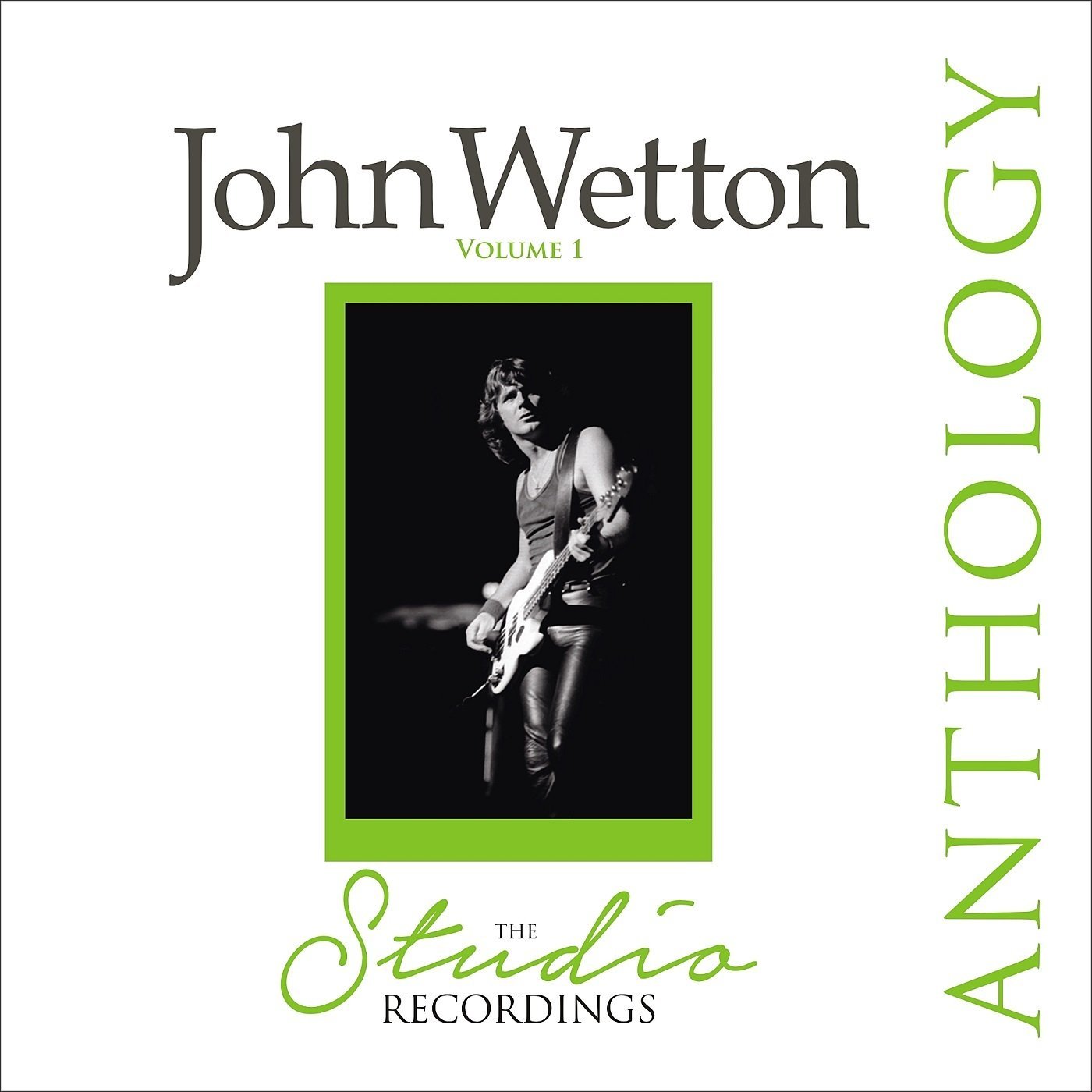
JACKIE WILSON-NYC 1961-1966.
JACKIE WILSON-NYC 1961-1966.
1957 was a landmark year in Jackie Wilson’s career. That’s when Jackie Wilson left Billy Ward and His Dominoes, to embark upon a solo career.
Previously, Jackie Wilson had spent four years with Billy Ward and His Dominoes. He was only nineteen when he joined Billy Ward and His Dominoes in 1953. Already Jackie Wilson had a chequered past.
Twice, Jack Leroy Wilson, Jr. had spent time in the Lansing Corrections system for juveniles. That was where a sixteen year old Jackie Wilson first took up boxing. Soon, he was a promising amateur boxer. His Golden Gloves record was 2 and 8. However, his mother didn’t like the thought of her son boxing. So, she forced Jack to turn his back on boxing. Jack’s nascent career was over, before it had even started. That was maybe just as well.
By the time Jack turned seventeen, he was married with a child. Jack was now working at Lee’s Sensation Club as a solo singer. This was no surprise. Like many soul singers, Jack had first sung in church. Music had always been part of his life. It would be a constant throughout the future Jackie Wilson’s life.
After starting his career as a solo singer, Jack and his cousin Levi Stubbs, formed a group called The Falcons. However, before long, talent agent Johnny Otis discovered Jack.
Johnny Otis convinced Jack to join The Thrillers. They would later, change their name to The Royals. By then, Jack was long gone.
In 1953, Clyde McPhatter left Billy Ward and His Dominoes, to form his own group, The Drifters. This presented a problem for Billy Ward. Clyde McPhatter, not Billy Ward was the lead singer of Billy Ward and His Dominoes. He had played an important part in the rise of Billy Ward and His Dominoes. So, they were big shoes to fill. Little did anyone expect Jack Leroy Wilson, Jr. an almost unknown, to replace Clyde McPhatter. That however, was the case.
When Jack joined Billy Ward and His Dominoes, he thought that Jack needed a stage name. It had to be a name would fit the group’s image. So Jack Leroy Wilson, Jr. became Jackie Wilson. This was just the start of the reinvention of Jack Leroy Wilson, Jr.
The next four years were like a musical apprenticeship for Jackie Wilson. Billy Ward was the consummate professional. He was also a strict disciplinarian, who expected members of his band to act in a professional manner. If they didn’t, they risked being fined. For Jackie, this was what he needed. It would transform his life and career. His wild days were behind him.
For the next four years, Jackie Wilson picked up where Clyde McPhatter. During what was akin to a musical apprenticeship, Billy Ward helped mould Jackie Wilson. He learnt the art of showmanship, which would later see Jackie crowned Mr. Excitement. Sadly, during this period, Billy Ward and His Dominoes were no longer enjoying the same success. They weren’t able to replicate the success they enjoyed with Clyde McPhatter at the helm. So, in 1957, after four years with Billy Ward and His Dominoes, Jackie Wilson felt that it was time to embark upon a solo career.
Having left Billy Ward and His Dominoes, Jackie Wilson signed to Brunswick, a subsidiary of Decca Records. It was at Brunswick where Jackie Wilson enjoyed the most successful period of his career. During his time at Brunswick, Jackie Wilson released around fifty singles and twenty-five solo albums. There were also collaborations with Linda Hopkins and Count Basie. Jackie Wilson, it seemed, was a truly prolific artist. So, it’s no surprise that not all of the music Jackie Wilson recorded, has been released.
Even thirty-one years after Jackie Wilson’s untimely death in 1984, there’s still plenty music within Brunswick’s vaults. For fans of Jackie Wilson this has always been a tantalising prospect. They’ve always wondered what hidden gems are awaiting discovery? Recently, Ace Records were able to answer that question when they released a two disc compilation NYC 1961-1966.
The best way to describe NYC 1961-1966, is a musical treasure trove. It features fifty tracks.They’re a mixture of unreleased tracks and alternate takes. There’s also album tracks and collaborations with Lavern Baker and Linda Hopkins. Then there Rob Hughes’ lengthy and informative sleeve-notes. They tell the story of the music on NYC 1961-1966. However, Jackie Wilson’s time at Brunswick began four years earlier, in 1957.
Having signed to Brunswick in 1957, Jackie Wilson released his debut single for his new label, Reet Petite. This was the first of fifty singles Jackie released on Brunswick. Reet Petite stalled at number sixty-two in the US Billboard 100 charts. This was an inauspicious start to Jackie career at Brunswick. Little did anyone realise, that in the future, many would regard Reet Petite as a soul classic.
The followup to Reet Petite was To Be Loved. It was released later in 1957, reaching number twenty-two in the US Billboard 100 charts and number seven in the US R&B charts. Jackie’s career was up and running.
A year later, Jackie enjoyed the first number one US R&B single of his career. Jackie hit the jackpot with Lonely Teardrops. It reached number one in the US Billboard 100 charts and number seven in the US R&B charts. Jackie also released his debut single, He’s So Fine. Suddenly, people were taking notice of Jackie Wilson.
Soon, one became two in 1959, when Jackie enjoyed another number one with You Better Know It. It reached number thirty-seven in the US Billboard 100 charts and number one in the US R&B charts. Jackie released two albums during 1959, So Much and Lonely Teardrops. Already he was prolific artist. So, as another decade dawned, many thought that Jackie Wilson would become one of the biggest soul singers of the sixties.
It looked that way. 1960 proved to be the most successful year of Jackie’s career. He enjoyed five hit singles. Two of these singles reached number one in the US R&B charts. A Woman, A Lover, A Friend, which became the title of Jackie’s first album of 1960, reached number fifteen in the US Billboard 100 charts and number one in the US R&B charts. Incredibly, so did Doggin’ Around, a track from Jackie’s album Jackie Sings The Blues. After Doggin’ Around topped the US R&B charts, Am I The Man reached number ten. It seemed Jackie Wilson could do no wrong.
For Jackie, 1961 was pretty much business as usual. He enjoyed three hit singles. The Tear Of The Year and I’m Coming Back To You reached the top ten in the US R&B charts. However, Jackie was losing his crossover appeal. My Empty Arms reached number nine in the US Billboard 100. I’m Coming Back To You the reached number nineteen. After I’m Coming Back To You, Jackie only enjoyed four hit singles in the US Billboard 100 charts. To make matters worse, the hits were drying up for Jackie.
1962 was the least successful year of Jackie Wilson’s five year solo career. The hits dried up. The only small crumb of comfort was that Jackie Wilson At The Copa charted. This was a first. Although Jackie Wilson At The Copa was Jackie’s ninth album, none of the previous eight had bothered the charts. Even Jackie Wilson At The Copa reached just number 137 in the US Billboard 200. So, 1962 was more or less a year to forget for Jackie Wilson. However, Jackie’s luck began to change.
In 1963, Jackie found himself back at the top of the US R&B charts with Baby Workout. It reached number five in the US Billboard 100. Later in 1963, Jackie released the most successful album of his career, Baby Workout. When it reached number thirty-six in the US Billboard 200, it looked like Jackie’s luck was changing. That proved not to be the case.
For the next three years, the hits dried up again for Jackie. Right through to 1966, Jackie was a stranger to the US Billboard 100 and US R&B charts. Then in 1966, Jackie’s luck changed for the better.
Whispers (Gettin’ Louder) was released as a single in 1966. It reached number eleven in the US Billboard 100 and number five in the US R&B charts. Jackie’s Whispers album then reached number 108 in the US Billboard 200 and number fifteen in the US R&B charts. This marked the return of Jackie Wilson.
Jackie Wilson hit a musical home run in 1967. That’s when he released his classic single, (Your Love Keeps Lifting Me) Higher and Higher. Not only did it reach number six in the US Billboard 100, but reached number one in the US R&B charts. It inspired the title of Jackie’s 1967 album Higher and Higher, which reached number 163 in the US Billboard 200 and number twenty-eight in the US R&B charts. For Jackie, 1967 had been another successful year. His comeback continued. However, never again would he enjoy a number one single.
That’s despite Jackie releasing what many regard as one of his finest songs in 1968, I Get the Sweetest Feeling. It reached just number thirty-four in the US Billboard 100 and number twelve in the US R&B charts. When Jackie released then his I Get the Sweetest Feeling album, it failed to chart. However, his Do Your Thing album reached number fifty in the US R&B charts later in 1968. This proved to be the end of era.
Never again would a Jackie Wilson album chart. It seemed many regarded Mr. Excitement as yesterday’s man. He certainly never enjoyed another hit in the US Billboard 100 charts. For Jackie, I Get the Sweetest Feeling was his swan-song. Indeed, in America Jackie only ever enjoyed one more hit single.
As Jackie embarked upon the third decade of his recording career, he released This Love Is for Real (I Can Feel These Vibrations) as a single. It peaked at number nine in the US R&B charts. That’s as good as it would get for Jackie Wilson in America.
Although Jackie Wilson continued to release albums for Brunswick right through to 1976, never again would he scale the same heights. However, forty-five years after Jackie Wilson’s final American hit single, he’s still regarded by some, as one of the biggest names in soul music.
So, Ace Records release of their two disc NYC 1961-1966 compilation, will be welcomed by many fans of Mr. Excitement. Especially given there’s a plethora of rarities and unreleased tracks on both discs.
Disc One.
On disc one of NYC 1961-1966, there’s twenty-four tracks. This includes ten previously unreleased tracks. Among the highlights of the unreleased tracks are Me, My Mother’s Son, All My Lovin’, I Can’t Stand Another (Hurt In My Heart), Change Me and Hold Me, Need Me. Apart from unreleased tracks, there’s alternate takes.
On disc one, there’s a trio of alternate take. The earliest alternate take was Twisting and Shoutin’ (Doing The Monkey). It was recorded for Jackie’s Somethin’ Else album in 1964. This version didn’t make the cut. Other alternate takes include She’s All Right and Big Boss Line. She’s All Right was recorded in March 1964. Four months later, Jackie recorded Big Boss Line in August 1964. Since then, these tracks have never been released..until Ace Records released NYC 1961-1966.
That’s also the case with the unedited version of Soul Galore. It was recorded fifty years ago, in 1965. It was meant to be the title-track to Jackie’s 1965 album. That wasn’t to be. Instead, it makes its debut on NYC 1961-1966. However, there’s more to disc one than unreleased tracks and alternate takes.
There’s also Jackie’s collaborations with Laverne Baker, Think Twice and Please Don’t Hurt Me (I’ve Never Been In Love Before). Although Please Don’t Hurt Me (I’ve Never Been In Love Before) was released in 1965, this version of Think Twice been released before. This is another reason why NYC 1961-1966 will appeal to Jackie Wilson completists. However, they’ll be familiar with some of the other tracks.
This includes some of Jackie’s singles. There’s No Pity (In The Naked City) and I Believe I’ll Love On, which were released in 1965. A year later, Jackie released 3 Days 1 Hour 30 Minutes in 1966. While it failed to chart, it’s something of a hidden gem, and is a welcome inclusion on NYC 1961-1966. It’s not alone.
That’s also the case with Silent One. It wasn’t released until 1987. It was released on one of Jackie’s posthumous albums. The reissue of Silent One is yet another welcome inclusion on disc one of NYC 1961-1966, that’s a reminder of the man many called Mr. Magnificent.
Just like the unreleased tracks and alternate takes, the singles and collaborations show Jackie Wilson evolving and maturing as a singer. So do the twenty-six tracks on disc two of NYC 1961-1966.
Disc Two.
Just like disc one of NYC 1961-1966, disc two features a mixture of unreleased tracks, alternate takes, singles and collaborations. This includes Jackie’s collaborations Linda Hopkins.
During his career, Jackie Wilson collaborated with a number of artists. This included Laverne Baker, Linda Hopkins and later, Count Basie. In 1962, Jackie and Linda Hopkins duetted on the single I Found Love, which featured There’s Nothing Like Love on the B-Side. The single was released later in 1962. This proved a successful pairing.
So a year later, on 28th February 1963, Brunswick brought Jackie and Linda back into the studio. They recorded Shake A Hand as a single. For the B-Side, Say I Do was chosen. It would later prove a favourite amongst R&B fans. Sadly, Shake A Hand didn’t replicate the success of I Found Love. However, it wouldn’t put Jackie of collaborating. He would later collaborate with Count Basie. Before that, Jackie had a lot of music to record.
Throughout his career, Jackie Wilson was a prolific artist. So, it’s no surprise that there’s still plenty of music in Brunswick’s vaults. This includes eleven tracks on disc two of NYC 1961-1966. Among their highlights are Love (Is Where You Find It), The Dancing Man and The Test Of Time.
That’s not all. There’s a trio of tracks from session in 1962. On 7th August 1962, Jackie recorded three tracks in New York. This includes I Hurt So Bad (Somebody Help Me), Tears (Don’t Mind Who Cries Them) and Baby That’s All. Jackie unleashes three emotive performances, pouring part of himself into the tracks. Sadly, these tracks were never released. That’s also the case with Shake! Shake! Shake! which Jackie recorded on 28th February 1963. The version on NYC 1961-1966 is an alternate take, and finds Jackie heading to the dance-floor. However, one of the most interesting inclusions in the version of Jackie’s 1963 number one US R&B single Baby Workout. This version is take seven, features a false start. This shows another side to one of Jackie’s best known tracks.
While many of the tracks on disc two of NYC 1961-1966 are unreleased tracks, there’s four singles included. This includes 1961s Years From Now, which was paired with My Empty Arms. A year later, in 1962, Jackie released What Good Am I Without You? as a single. It failed to chart. So did I Just Can’t Take It, which was paired with My Tale Of Woe. During this period, Jackie was going through one of several lean periods he endured. These four singles fall into the category of hidden gems, and are a reminder of what Jackie Wilson was capable of. That’s the case throughout NYC 1961-1966, which was recently released by Ace Records.
During the five year period, which NYC 1961-1966 covers, Jackie Wilson was one of the hardest working men in soul music. The recording studio was like a second home for Jackie. Sadly, Jackie’s efforts weren’t rewarded.
Between 1961 and 1966, Jackie Wilson only enjoyed three hits in the US Billboard charts. Jackie faired slightly better in the US R&B charts. He enjoyed four hit singles, including a number one single with Baby Workout. It was the biggest selling single of Jackie’s career. However, that was as good as it got for Jackie.
The problem was, that during the period NYC 1961-1966 covers, music was changing, and changing fast. With the British Invasion, psychedelia and rock taking America by storm, suddenly, singers like Jackie Wilson seemed liked yesterday’s men. Some of Jackie’s old fans turned their back on him.
They were won over by a new generation of artists. This included a new breed of soul singers. Singers like Otis Redding, Percy Sledge, James Carr and Sam and Dave were making a name for themselves. So was two recent graduates of Motown, Stevie Wonder and Marvin Gaye. The competition amongst soul singers was fierce. Jackie Wilson didn’t walk away from a challenge.
Between 1966 and 1968, his career enjoyed an Indian Summer. Sadly, two years later, Jackie Wilson enjoyed his final hit single, This Love Is for Real (I Can Feel These Vibrations). It peaked at number nine in the US R&B charts. That was good as it got for Jackie Wilson in America.
Although Jackie Wilson continued to release albums for Brunswick right through to 1976, never again would he scale the same heights. However, forty-five years after Jackie Wilson’s final American hit single, he’s still regarded by some, as one of the biggest names in soul music.
While other soul singers are long forgotten, Jackie Wilson is still seen by some as a giant of soul. He was one of the most talented and prolific soul singers of his generation. The man they call Mr. Excitement released around fifty singles and twenty-five albums. However, there’s still much more music awaiting discover within the Brunswick vaults. That included the fifty songs that found their way onto NYC 1961-1966.
Recently, Ace Records released their two disc NYC 1961-1966 compilation. It features fifty tracks from Jackie Wilson. NYC 1961-1966 features a plethora of singles, album cuts, alternate takes and unreleased tracks. The fifty tracks on NYC 1961-1966, are a reminder why, many people called Jackie Wilson, Mr. Excitement.
JACKIE WILSON-NYC 1961-1966.

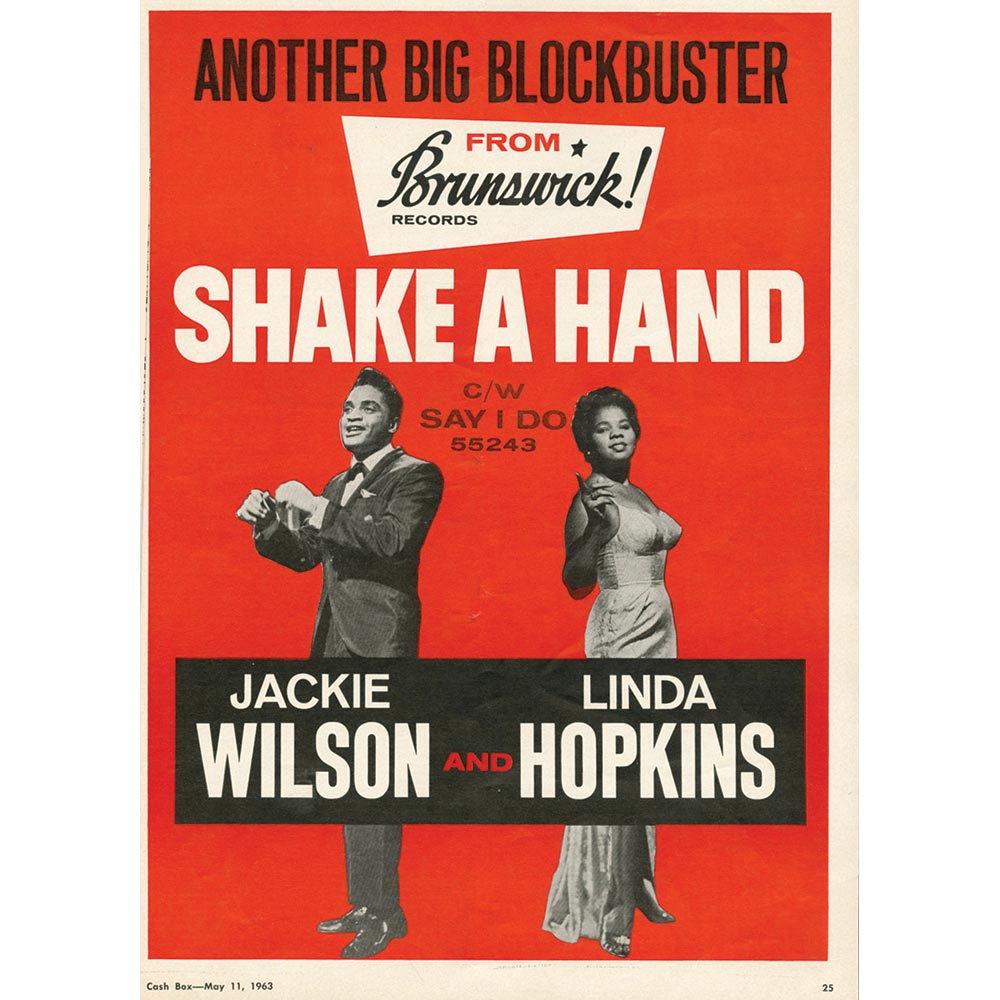

BAD COMPANY-STRAIGHT SHOOTER (DELUXE EDITION).
BAD COMPANY-STRAIGHT SHOOTER (DELUXE EDITION).
Just a year after supergroup, Bad Company were formed, they were one of the biggest bands in Britain. Their eponymous debut album, Bad Company was well on its way to selling five million copies in America alone. Bad Company reached number one in the US Billboard 200, and was certified platinum five times over. In Britain, Bad Company reached number three, and was certified gold. For Paul Rodger, Simon Kirke, Mick Ralphs and Boz Burrell their lives were transformed.
Each of the four members of Bad Company had been members of successful bands. Vocalist Paul Rodger and drummer Simon Kirke were previously, members of Free. Guitarist Mick Ralphs and bassist Boz Burrell had been members of Mott The Hoople. While Free and Mott The Hoople were commercially successful, the success Bad Company were enjoying would surpass this.
From their 1974 debut album Bad Company, right through to 1979s Desolation Angels, Bad Company were one of the biggest selling bands on both sides of the Atlantic. Their first five albums sold an estimated 13.8 million albums in America and Britain alone. It seemed that Bad Company could do wrong. That proved to be the case, when Bad Company released their sophomore album Straight Shooter, which was recently rereleased by Rhino as a two disc deluxe edition. Straight Shooter saw Bad Company pickup where they left off on their eponymous debut album.
Given the commercial success of Bad Company, the band’s record company Swan Song and manager Peter Grant were keen to strike while the iron was hot. They decided that Bad Company should return to the studio as soon as possible. So, in September 1974, Bad Company found themselves back in the studio.
Recording of Straight Shooter, Bad Company’s sophomore album began was scheduled to begin at Clearwell Castle, Gloucestershire, England, in September 1974. That’s where Bad Company began recording eight new songs, written by the four band members.
For Straight Shooter, Paul Rogers penned Shooting Star and Call On Me. He also cowrote Feel Like Makin’ Love, Deal With the Preacher and Wild Fire Woman with Mick Ralphs. Mick contributed Good Lovin’ Gone Bad, while Simon Kirke penned Weep No More and Anna. These eight tracks became Straight Shooter.
At Clearwell Castle, the band began work in September 1974. Bad Company’s rhythm section of drummer Simon Kirke and bassist Boz Burrell were joined by Mick Ralphs on guitar and keyboards. Lead vocalist Paul Rodger played guitar and piano. Bad Company worked quickly, recording and producing Straight Shooter’s eight songs during September 1974. They also recorded Whisky Bottle, which became the B-Side of Good Lovin’ Gone Bad. It was another Paul Rogers and Mick Ralphs composition. Once these tracks were recorded, recording engineer Ron Nevison mixed Straight Shooter.
Mixing of Straight Shooter took place during December 1974. Ron Nevison mixed Straight Shooter at Air Studios in London. While this was happening, Straight Shooter’s iconic cover was being designed.
London based art design group Hipgnosis, were chosen to design Straight Shooter’s cover. Hipgnosis had already designed legendary covers for Pink Floyd, Genesis, Led Zeppelin, The Alan Parsons Project, Electric Light Orchestra, Al Stewart and T-Rex. Bad Company were Hipgnosis’ latest high profile client. For Straight Shooter, Hipgnosis pulled out all the stops. Straight Shooter’s iconic “rolling dice” cover, would become a classic album cover. It was a cover befitting a classic rock album. The question was, had Bad Company just recorded their second classic album? Bad Company held their breath until the critics delivered their verdict.
Review copies of Straight Shooter were sent out to critics. After they had time to digest Bad Company’s sophomore album, it was time for the critics to deliver their verdict. Unusually, there was no consensus. Different critics responded differently to Straight Shooter. Some saw Straight Shooter as a much better album than Bad Company. Partly, this was because, the members of Bad Company maturing as songwriters. However, one thing that divided critics was how to describe Straight Shooter?
Many people, including music critics, described Bad Company as a hard rock group. Some critics weren’t convinced. They felt Straight Shooter wasn’t heavy enough to be described as a hard rock album. Their reasoning was that Paul Rodger’s voice wasn’t strong enough, and that the music didn’t have a hard enough sound. Other critics cited the ballads Shooting Star and Feel Like Makin’ Love as proof. Surely, a hard rock band they argued, didn’t sing ballads? Bad Company did, and this proved a successful formula.
Good Lovin’ Gone Bad was chosen as the lead single from Straight Shooter. It was released in March 1975, and reached number thirty-six in the US Billboard 100. This was a disappointment for Bad Company. Greater things had been forecast for Good Lovin’ Gone Bad. However, this proved to be teething problems for Bad Company.
When Straight Shooter was released on April 2nd 1975, it reached number three in Britain, Canada and the US Billboard 200 charts. Straight Shooter was certified gold in Britain and Canada. In America, Straight Shooter sold over three million albums, and was certified triple platinum. Bad Company were now one of the biggest rock bands in the world. It seemed they could do no wrong.
Feel Like Makin’ Love was released in July 1975, and became the second single to be released from Straight Shooter. It reached number twenty in Britain and number ten in the US Billboard 100. Bad Company, like Led Zeppelin before them, were more popular in America, than their home country, Britain. That had been the case with their eponymous debut album, Bad Company, and Straight Shooter, which I’ll tell you about.
Good Lovin’ Bad opens Straight Shooter. Straight away, Bad Company kick loose, and return to their hard rocking best. The thunderous rhythm section of drummer Simon Kirke and bassist Boz Burrell kick loose. They’re joined by Mick Ralphs’ blistering, searing guitars. Soon, Paul Rodger delivers a powerhouse of a vocal. How anyone could question how he lacks the power to front a hard rock band, seems incredible. He hollers and struts his way through the lyrics, revelling in the line: “baby I’m a bad man.” Behind him a glorious wall of sound unfolds, providing the backdrop to Paul’s hard rock vocal masterclass.
Just a chiming guitar opens Feel Like Makin’ Love, where Bad Company through a curveball. The guitar is joined by Paul’s tender, needy vocal as he sings: “when I think about you, I think about love.” Meanwhile, the three part harmonies and an understated rhythm section accompany Paul. However, this proves to be no ordinary ballad. Crunchy, rocky, guitars are briefly unleashed. Mostly, though Bad Company show their sensitive side on what’s a beautiful ballad.
A guitar ascends the arrangement to Weep No More, climbing above the swathes of lush, cascading string and braying horns. Soon, the rhythm section and a tack piano sets the scene for Paul’s vocal. By now, the arrangement is heading in the direction of blues rock. Flourishes of piano, washes of Hammond organ and the guitar see to that.S Swathes of strings almost dance in delight, as Paul sings of his imminent homecoming.
Shooting Star is another of Straight Shooter’s ballads. It tells the story of a rock star who lived fast, and died young. Inspiration for the song came from the lives of Jimi Hendrix, Jim Morrison and Janis Joplin. There’s several similarities to Feel Like Makin’ Love. Again an acoustic guitar is used extensively. Then there’s the use of three part harmonies. The other similarity is how Bad Company veer between their rocky, and understated sounds. This proves a winning combination. Especially, with guitarist Mick Ralphs unleashing some of his best licks. Everything is in place for Bad Company’s timeless homage to Jimi, Jim and Janis.
Deal With The Preacher sees Bad Company kick loose from the opening bars. They’re at their heaviest. Machine gun guitars accompany hypnotic drums and a probing bass. Paul delivers another his strutting, swaggering vocals. It can only be described as a powerhouse, complete with whoops and hollers. Guitarist Mick Ralphs delivers some blistering licks. They’re among his best on Straight Shooter. The same can be said of Deal With The Preacher. This stunning slice of classic seventies rock allows Bad Company to showcase their considerable skills.
Bad Company drop the tempo on Wild Fire Woman. They also reign in the power slightly. Still drummer Simon Kirke and bassist Boz Burrell provide the heartbeat. Guitarist Mick Ralphs fires off rocky licks. Then when Paul’s vocal enters, his lived-in vocal is a bit more understated. Washes of Hammond organ and blistering guitars accompany his vocal. Before long, he kicks loose, and combines power and passion. The rest of Bad Company match him every step of the way. When his vocal drops out at the bridge, the rest of Bad Company jam. This inspires Paul to return with another of his trademark vocal powerhouses. He vamps his way though the track, to its rocky crescendo.
Anna was one of the tracks that divided the opinion of critics. Forty years later, that seems somewhat unjust. It’s a soul baring ballad, where again, Bad Company show their sensitive side. Paul’s emotive, heartfelt vocal takes centre-stage. Meanwhile, the rest of Bad Company drop the tempo and play within themselves. It’s just the rhythm section, guitar and Hammond organ that frames Paul’s needy, soul-baring vocal.
Call On Me closes Straight Shooter. A piano and washes of panned guitar set the scene for Paul’s vocal. Soon, the rhythm section and harmonies are added to this ballad. Again, Bad Company play within themselves. This leads me to wonder what the track would’ve sounded like at a quicker tempo, with crunchy crystalline guitars? When a , Mick Ralphs guitar solo replaces Paul’s vocal, Mick Ralphs’ doesn’t kick loose. It’s as if Bad Company were keen to keep the volume consistent throughout. Maybe that’s a mistake, and if Bad Company had been allowed to kick loose, what’s a good song, might have become a great song.
For Bad Company, it was never going to be easy following up their 1974 eponymous, debut album. Bad Company was one of the biggest selling albums of 1974, and transformed Bad Company into one of the biggest British rock bands of the seventies.
The former members of Free and Mott The Hoople had only formed Bad Company a year earlier. They then signed to Led Zeppelin’s Swan Song label. Led Zeppelin’s manager, Peter Grant, became Bad Company’s manager. He was the perfect man to guide Bad Company’s career. Peter Grant advised Bad Company to get back in the studio straight away, So, in September 1974, Bad Company recorded their sophomore album Straight Shooter. It was released in April 1975, just ten months after their debut album, Bad Company.
On its release, Straight Shooter divided opinion. There was no consensus. Some critics argued that Straight Shooter was a better album. Others argued it wasn’t a hard rock album. That is partly true. Straight Shooter features a trio of ballads. This shows a very different side to Bad Company. They’re no longer, the hard rocking, swaggering rock band. Instead, they show their sensitive side. Then on Call on Me, Bad Company reign in their hard rock sound, and produce an A.O.R. sounding track. The rest of Straight Shooter sees Bad Company kick loose, and unleash some hard rock. Bad Company in full flow, is a glorious sound. It still is.
Forty years after Straight Shooter was released, the music on Straight Shooter sounds as good as it did back in 1975. What’s more, the music on Straight Shooter has aged well. Indeed, I’d go as far as describe Straight Shooter as a timeless album. It could’ve been recorded anytime between 1975 and 2015. However, although it’s hard to believe, it’s almost forty years to the day, when Straight Shooter was first released. That’s why it’s so fitting that Rhino have released a two disc Deluxe Edition of Straight Shooter.
On disc one of the Deluxe Edition of Straight Shooter, is the original album. It’s been remastered. The sources were the original master-tapes. As remasters go, this is one of the best I’ve heard this year. Literally, the music on the Deluxe Edition of Straight Shooter comes alive. That’s the case on disc two of the Deluxe Edition of Straight Shooter.
Disc two of the Deluxe Edition of Straight Shooter features fourteen tracks. They’re mostly alternate takes of tracks from Straight Shooter. That’s apart from Sunlight, All Night Long and Whisky Bottle, which was the B-side to Good Lovin’ Gone Bad. Whether it’s unreleased tracks or alternate takes, they’re well worth taking the time to listen to. The alternate takes show how the songs evolved. Especially the Early Slow Version of Weep No More and the Alternate Vocal of Anna. On Wild Fire Woman, the guitar and vocal is different. On one of the versions of Feel Like Makin’ Love, a harmonica has been added. This takes the song in a different direction. Each of the alternate tracks show how Straight Shooter evolved and became one of Bad Company’s most successful albums.
Eventually, Straight Shooter sold over three million copies in America alone. Across the world, Bad Company, the latest British supergroup were enjoying critical acclaim and commercial success with Straight Shooter, the second classic album of their career. For five years and five albums, Bad Company could do no wrong. Bad Company were a musical behemoth, who sold over fourteen million albums and released two classic albums, including 1975s Straight Shooter.
BAD COMPANY-STRAIGHT SHOOTER (DELUXE EDITION).
BELLE AND SEBASTIAN-GIRLS IN PEACETIME WANT TO DANCE.
BELLE AND SEBASTIAN-GIRLS IN PEACETIME WANT TO DANCE.
Over four years have passed since Belle and Sebastian released their eighth studio album, Belle and Sebastian Write About Love. Since then, Belle and Sebastian’s only release was The Third Eye Centre, a nineteen track retrospective released in August 2013. It featured rarities, remixes, B-Sides, non-album tracks and tracks from E.P.s. Eighteen months after the release of The Third Eye Centre, Belle and Sebastian return with their long awaited ninth album, Girls In Peacetime Want To Dance, which marks a series of firsts.
Girls In Peacetime Want To Dance, which was released on 19th January 2015, is the first Belle and Sebastian album to be released worldwide on Matador Records. It’s also the first Belle and Sebastian album to be produced by Ben H. Allen III. The third and final first, is that Girls In Peacetime Want To Dance is the first Belle and Sebastian album to be recorded in Atlanta, Georgia. Belle and Sebastian it seems, are refusing to stand still on Girls In Peacetime Want To Dance, as their twentieth anniversary draws nearer. Still, Belle and Sebastian are still releasing ambitious, and groundbreaking music.
That’s been the case throughout their career, and why it would be fitting if Belle and Sebastian were to win the 2015 Scottish Album of The Year Award with Girls In Peacetime Want To Dance. It’s eligible for the 2015 Scottish Album of The Year Award, and is definitely one of the contenders. No wonder. For nearly twenty years Belle and Sebastian have been innovating.
It was back in 1996, at Stow College, in Glasgow that Belle and Sebastian were formed. The band was formed by two students, Stuart Murdoch and Stuart David, and was named after Cecile Aubry’s 1965 book Belle et Sebastien. Since then, many members have joined and left the group, one of the most influential being, Isobel Campbell, who joined in 1996 and left the group in 2002, singing vocals and playing cello. Other members include Chris Geddes and Sarah Martin.
Whilst at college, in 1996, Belle and Sebastian recorded some demo tracks with the college’s music professor Alan Rankin. Yes. That Alan Rankin, formerly the keyboardist and guitarist in The Associates alongside the late Billy Mackenzie. The demos came to the notice of the college’s business studies department, who each year, released a single on the college’s record label. Belle and Sebastian, by then, had recorded a number of songs, enough to fill an album. Having been so impressed by Belle and Sebastian’s music, that year, the label decided to release an album, called Tigermilk.
Tiigermilk, which was produced by Alan Rankin. It was recorded in just three days. Just one-thousand copies vinyl were pressed. Tigermilk was well received and the album sold out quickly. The original copies of Tigermilk are prized possessions of Belle and Sebastian fans. Following the success of Tigermilk, Belle and Sebastian decided to make a career out of music.
Stuart Murdoch and Stuart David decided that Belle and Sebastian would become a full-time band. Soon, further members joined the band. Isobel Campbell joined on vocals and cello, Stevie Jackson on guitar and vocals, Richard Coburn on drums and Chris Geddes on keyboards.
After Tigermilk’s success, the group signed to Jeepster Records in August 1996, they released their sophomore album If You’re Feeling Sinister. Produced by Tony Doogan, it was released in November 1996. Many people believe that this is their finest album. American magazine Spin, liked the album so much, that they put it at number seventy-six in their top one-hundred albums released in the twenty year period between 1985-2005. Rolling Stone magazine put the album in its list of essential albums of the 1990s.
After the release of If You’re Feeling Sinister, the group released series of E.P.s during 1997. The E.P.s were Dog On Wheels, Lazy Line Painter Jane and 3, 6, 9 Seconds of Light. Dog On Wheels featured four songs that were recorded before the formation of Belle and Sebastian. It reached number fifty-nine in the UK charts. Lazy Line Painter reached number forty-one in the UK charts, and 3, 6, 9 Seconds of Light became the group’s first top forty single, reaching number thirty-two in the UK charts. That was the start of the rise and rise of Belle and Sebastian.
September 1998, saw Belle and Sebastian release their third album The Boy With The Arab Strap. It reached number twelve in the UK charts. Unlike previous Belle and Sebastian albums, Stuart Murdoch doesn’t feature on vocals. Instead, they’re shared amongst Isobel Campbell, Stevie Jackson and Stuart David. The album received mixed views from the music press. Long time supporter of Belle and Sebastian, Rolling Stone and The Village Voice praised The Boy With The Arab Strap, while others weren’t as impressed. However, since its release, many people, myself included, believe The Boy With The Arab Strap to be Belle and Sebastian’s finest hour. Despite the success of The Boy With The Arab Strap, Belle and Sebastian changed direction musically.
Two years after the release of The Boy With The Arab Strap, Belle and Sebastian released Fold Your Hands Child, You Walk Like A Present. Released in June 2000, the album was produced by Tony Doogan. It’s best described as chamber pop. Fold Your Hands Child, You Walk Like A Present has a much more laid-back, mellow sound. The tempo is slower, while vocals are shared amongst band members. Then there’s the strings. They’re used more extensively. Sadly, this was the last album to feature founder member Stuart David. For their next album, Belle and Sebastian would try their hand at writing a film score.
Although Storytelling was both Belle and Sebastian’s fifth album, it was their first film score. Released in June 2002, only six minutes of the thirty-five minutes of music recorded by Belle and Sebastian made it into Todd Solondz’s movie. It sounds as if the experience was somewhat frustrating for the band. They had problems communicating with Todd Solondz. Worse was to come. Belle and Sebastian were about to lose one of their most important members… Isobel Campbel
Having released and toured Storytelling, Isobel Campbell left Belle and Sebastian. She decided to pursue a solo career. Many critics wondered what effect this would’ve on Belle and Sebastian? They came back, but briefly, were different band
Much of the summer of 2003 saw Belle and Sebastian recording their sixth album. Losing Isobel Campbell wasn’t the only change in the life and times of Belle and Sebastian. No.They’d left Jeepster and signed to Rough Trade. Tony Doogan was replaced as producer. His replacement was Trevor Horn. His credentials seemed somewhat questionable.
Previously, ex-Buggle Trevor Horn had he’d been an award winning producer and songwriter. Recently, he’d been working with Charlotte Church and Lee Ann Rimes. Considering Belle and Sebastian were one of the hottest indie bands, they seemed strange and awkward bedfellows. It seemed Trevor Horn had been brought in to polish of the band’s rough edges. Rough Trade, a supposed indie label, were polishing away part of the group’s charms. Many onlookers were horrified, afraid of the direction Trevor Horn would take Belle and Sebastian.
In some ways, these fears were justified. Gone was the folksie, melancholy, chamber pop of their roots. Dear Catastrophe Waitress was the polar opposite of previous albums. Replacing it, was the slick, poppy charms of the Trevor Horn produced Dear Catastrophe Waitress. On its released in October 2003, it was nominated for an Ivor Novello award. Critics gave Dear Catastrophe Waitress favorable reviews. On both sides of the Atlantic, Dear Catastrophe Waitress appealed to critics. Despite the positive reviews Dear Catastrophe Waitress received, thankfully, Belle and Sebastian and Trevor Horn never renewed their aquaintance when they released their next album, three years later.
Between the release of Dear Catastrophe Waitress and 2006s The Life Pursuit, Belle and Sebastian kept busy. In 2005, they released a twenty-five track compilation entitled Push Barman To Open Old Wounds. Featuring a series of E.P.s Belle and Sebastian had released, critics adored the album. Hailed as vintage Belle and Sebastian, they were crowned the best indie band. Very different from Dear Catastrophe Waitress, Push Barman To Open Old Wounds was the Belle and Sebastian their fans knew and loved. Push Barman To Open Old Wounds wasn’t Belle and Sebastian’s only release during 2005.
No. Belle and Sebastian released their first live album, If You’re Feeling Sinister: Live At The Barbican. Released in December 2005, this allowed Belle and Sebastian to revisit their 1996 album If You’re Feeling Sinister and rectify what the band believed to be the mistakes of the original album. That night in September 2005, Belle and Sebastian took the Barbican by storm, playing an encore lasting over an hour. This encore would prove to be somewhat prophetic.
When Belle and Sebastian released The Life Pursuit in February 2006, it proved to be their most successful album. The Life Pursuit was produced by Tony Hoffer, who previously, produced Air, Turin and Beck. He was a much better fit than Trevor Horn. On its release, The Life Pursuit reached number eight in the UK and number sixty-five in the US Billboard 200. Funny Little Frog gave Belle and Sebastian the biggest hit single of their ten year career. Despite that, it would be four years until Belle and Sebastian released their next studio album.
Following the release of The Life Pursuit, Belle and Sebastian headed out on tour. They were now well versed in the album, tour, album, tour routine. To ensure their fans didn’t forget them, Belle and Sebastian released The BBC Sessions in November 2008. A double-album, the first disc featured many songs that featured Isobel Campbell. These songs had never been heard before. So for fans of Belle and Sebastian this was a real must have. As for the second disc, it features Belle and Sebastian live in Belfast, which sees the group cover Thin Lizzy’s The Boys Are Back In Town. While The BBC Sessions kept Belle and Sebastian’s fans occupied, the group recorded their most successful album to date.
October 2010, saw Belle and Sebastian released their eighth studio album. Entitled Belle and Sebastian Write About Love, it was the second Belle and Sebastian album produced by Tony Hoffer. Recorded in Los Angeles, rather than Glasgow this surprised some people. Tony’s decision to take Belle and Sebastian out their comfort zone worked. He was proving to be the perfect foil for Belle and Sebastian’s foibles. Featuring contributions from Norah Jones, Sarah Martin and Carey Mulligan, Belle and Sebastian and friends struck musical gold.
Reaching number eight in the UK, Belle and Sebastian Write About Love reached number fifteen in the US Billboard 200. Critically acclaimed and a hot worldwide, this was a long way from recording Tigermilk in three days as part of a college project. Belle and Sebastian were indie Queens and Kings. Despite this, the continued to things their way.
While many bands would’ve headed straight back into the studio and had a followup to Belle and Sebastian Write About Love release A.S.A.P, this isn’t the Belle and Sebastian way. No. Not only do Belle and Sebastian do things their way, but they care about their fans. So, whilst taking their time recording a followup to Belle and Sebastian Write About Love, they’ve released a nineteen track retrospective, The Third Eye Centre.
This nineteen track retrospective, The Third Eye Centre, features rarities, remixes, B-SIdes, non-album tracks and tracks from E.P.s. The music spans Belle and Sebastian’s career. There’s tracks from albums produced by Tony Doogan, Trevor Horn and Tony Hoffer. Bonus tracks sit side by side with remixes, while B-Sides and charity singles. In some ways, The Third Eye Centre allows the listener to hear another side to Belle and Sebastian. The Third Eye Centre was the perfect amuse bouche until Belle and Sebastian released their ninth studio album.
Work began on Belle and Sebastian’s ninth album back in 2014. By then, the members of Belle and Sebastian had written twelve tracks. These tracks would become Girls In Peacetime Want To Dance, which somewhat surprisingly, was produced by Ben H. Allen III.
This was a strange, and somewhat controversial decision. Many people thought Tony Hoffer, who produced Belle and Sebastian’s previous album, Belle and Sebastian Write About Love would return.Belle and Sebastian Write About Love was the second Belle and Sebastian album produced by Tony Hoffer. The first was The Life Pursuit. Tony seemed to bring out the best Belle and Sebastian. However, this being Belle and Sebastian, it’s always a case of expect the unexpected. After all, previously, Belle and Sebastian hired Trevor Horn, who gave their music a slick, polished sheen. So maybe, bring in Ben H. Allen III to produce Girls In Peacetime Want To Dance would work?
Some sceptics had their doubts. After all, Ben H. Allen III’s C.V. showed that previously, he had produced Animal Collective and Washed Out. This was very different to Belle and Sebastian. However, maybe, Belle and Sebastian and Ben H. Allen III would prove a potent partnership.
For their ninth studio album, Girls In Peacetime Want To Dance, Belle and Sebastian penned twelve tracks. Much of the recording took place in Atlanta, Georgia. That’s where Belle and Sebastian recorded nine tracks. They were produced by Ben H. Allen III, who mixed seven of the tracks with Jason Kingsland. Additional recording took place at other studios. This included adding strings at Human Win studios, in Minneapolis, Minnesota and recording three tracks in the familiar surroundings of Glasgow’s Castle Of Doom Studios.
The other three tracks on Girls In Peacetime Want To Dance, The Everlasting Muse, Born To Act and Perfect Couples were recorded at Castle Of Doom Studios, in Glasgow. These three tracks, plus A Politician’s Silence and Nobody’s Empire were mixed by veteran Scottish producer, Tony Doogan, who previously, has produced four Belle and Sebastian albums. Once Girls In Peacetime Want To Dance was completed, it was released on 19th January 2015.
Prior to the release of Girls In Peacetime Want To Dance, The Party Line was chosen as the lead single on 29th October 2014. It was a taste of what to expect from the Ben H. Allen III produced Belle and Sebastian. Then on 19th January 2015, Girls In Peacetime Want To Dance was released. Mostly, the reviews were favourable. Critics noted that Belle and Sebastian were still, among the most talented modern day songwriters. However, their music had been given a makeover.
Girls In Peacetime Want To Dance is akin to a call to dance. Thanks to Ben H. Allen III, much of Girls In Peacetime Want To Dance has a faux disco beat. This is Belle and Sebastian as you’ve never heard them. It’s not just Girls In Peacetime Want To Dance, but Belle and Sebastian too. Just like Belle and Sebastian have always done, several times before, they’ve reinvented themselves on Girls In Peacetime Want To Dance.
Opening Girls In Peacetime Want To Dance is Nobody’s Empire, one of the four songs mixed by Tony Googan. His mix is perfectly balanced, Chiming guitars are panned left, a bass probes its way through the mix and the incessant 4/4 beat sets the scene for Stuart’s wistful vocal. As Stuart delivers cerebral, thoughtful lyrics he’s accompanied by a piano, washes of synths and later, cooing, ethereal harmonies and percussion. Later, horns sound, as other members of Belle and Sebastian add backing vocals. They add to what’s an anthemic, dance-floor friendly track full of social comment and hooks aplenty.
A scatted vocal pensive piano and firmly strummed guitar opens Allie. Soon, the rocky arrangement bursts into life. Stuart’s vocal is mixture of frustration, anger and pity, at “Allie…you want to hurt yourself.” He sees Allie as selfish, and either unable, or unwilling to see the bigger picture. This includes war, crime and cutbacks. Throughout the song, Stuart’ frustration, is omnipresent, as he delivers a heartfelt plea. As he does this, urgently, the rhythm section and guitars drive the arrangement along. This is the perfect foil for Stuart, as Belle and Sebastian return to what’s nearer their traditional, trademark sound, while reminding the listener that they’re songsmiths par excellent.
The introduction to The Party Line is bathed in filters. below the filters is a pulsating, dance-floor friendly arrangement. It comes courtesy of synths, drums and percussion. Stuart’s vocal is a sultry vamp. It’s augmented, and complimented, by backing vocalists. They add to what’s a polished slice of dance-floor friendly electro pop. This is Belle and Sebastian like you’ve never heard them before. For some people, this will come as a shock. The only similarity is Belle and Sebastian’s insightful observations on life. They’re omnipresent throughout Girls In Peacetime Want To Dance.
As drums pound, an orchestral arrangement quivers on The Cat With The Cream. Soon, Stuart’s despairing vocal sets the scene. You’re soon empathising with Cathy’s loneliness and fear. Later, her imagination runs riot. Scenes unfold before her eyes. The “freak parade” unfolds. Before her eyes, a parade of corrupt politicians and a country’s grubby history unfolds. Then she’s praying, “praying for the light.” Having done so, she waits for a “sign…her instructions.” Cathy hopes that she’s “destined for greatness, I want to be Queen.” Longingly, she wills herself back to a time and place when “in days of old when knights were bold, it was settled by the King.” Sadly, that’ll never happen, and still, Cathy sits lonely and fearful. Poignant, and tinged with sadness and beauty, Belle and Sebastian are still master craftsmen when it comes to songwriting.
Enter Sylvia Plath has in its roots of eighties Euro Disco. Against this pulsating dance beat, one thing stays the same. That’s Stuart’s vocal. It’s tinged with emotion as he delivers lyrics that are typically cerebral and cinematic. Again, he paints pictures. Meanwhile, Sarah’s sultry female vocal flits in and out, as the arrangement grows in power and tempo. It powers along, with Belle and Sebastian seemingly enjoying the journey.
The Everlasting Muse has a much more understated, atypical Belle and Sebastian sound. That’s partly, down to Tony Doogan, who mixed the track. His mix doesn’t seem as loud as the tracks mixed by Ben H. Allen III. This suits the track. Just a standup bass and drums set the scene for Stuart’s hopeful vocal. Soon, a Fender Rhodes panned left shimmers, while clunky percussive sound is panned right. That’s the sign for the tempo to quicken and Stuart’s vocal to veer between hopeful, needy and occasionally, joyful. Soft, ethereal harmonies and a soaring trumpet add the finishing touch to what’s a captivating, hopeful paean.
Tony Doogan also mixed Perfect Couples, which again, seems to have more space than the tracks mixed by Ben H. Allen III. Afrobeat seems to have influenced introduction the introduction. Perucssion plays, before washes synths bubble and whoosh. They’re joined by rocky guitars pounding drums and Stevie Jackson’s vocal. He seems to relish his starring role in this dance track. His chameleon like vocal veers between deliberate, to dramatic and even, briefly, a croon, as tongue firmly in cheek, he mocks his “Perfect Couples.” By then, his vocal is bather in filters and accompanied by harmonies. Add in scorching, searing guitars and advice and the result is one of the highlights of Girls In Peacetime Want To Dance.
Ever Had A Little Faith? is a return to Belle and Sebastian’s traditional sound. Just acoustic guitars accompany Stuart’s pensive vocal. Soon, drums and an accordion add to the wistful, but beautiful sound as Stuart asks “Ever Had A Little Faith?”
Play For Today sees the musical adventure that’s Girls In Peacetime Want To Dance continue. There’s yet another change in direction, as Play For Today has its roots in Euro Pop and Euro Disco. Against a pulsating backdrop of drums and washes synths the arrangement bounds along. Atop the arrangement sits the vocal. They come courtesy of Stuart and Dee Dee Penny. Their vocals sit well together. Mind you, so would Stuart and Sarah Martin. Having said that, Stuart and Dee Dee combine angst, drama and emotion on this seven minute epic.
Sarah Martin makes a welcome return on The Book Of You. Her tender vocal sits above an arrangement that’s variously clunky, industrial, dark and dance-floor friendly. As the arrangement buzzes, guitars, drums, harmonies and sci-fi synths accompany Sarah. The coup de tat is a blistering guitar solo. It’s panned at thirty degrees right and although slightly muted, takes the track the next level.
Closing Girls In Peacetime Want To Dance is Today (This Army’s For Peace). It’s a thoughtful, wistful track with an understated arrangement. The rhythm section, chiming guitars and occasional swathes of lush strings join Stuart on what’s a beautiful, hopeful way to close Girls In Peacetime Want To Dance, Belle and Sebastian’s ninth album.
Girls In Peacetime Want To Dance is unlike any of Belle and Sebastian’s previous eight albums. Producer Ben H. Allen III took Belle and Sebastian way out of their comfort zone. On several tracks, Ben H. Allen III added a pulsating faux disco beat. The nearest to Girls In Peacetime Want To Dance Belle and Sebastian have come, is the Trevor Horn produced Dear Catastrophe Waitress. With its slick, polished, poppy sheen, Dear Catastrophe Waitress was the polar opposite of what we’ve come to expect from Belle and Sebastian.
Belle and Sebastian have their own unique sound. It took shape on the quartet of albums produced by Tony Doogan. From 1996s If You’re Feeling Sinister, through 1998s The Boy With The Arab Strap, Fold Your Hands Child, 2000s You Walk Like a Peasant and 2002s Storytelling, Belle and Sebastian’s trademark sound gradually take shape. Then came the Trevor Horn Dear Catastrophe Waitress. That was a one-off. Tony Hoffer then produced 2006s Belle and Sebastian Write About Love and 2010s The Life Pursuit. However, Tony Hoffer didn’t return for Girls In Peacetime Want To Dance. Instead, Ben H. Allen III took his place on what’s a quite different album from Belle and Sebastian.
Before the release of Girls In Peacetime Want To Dance, it was hard to imagine Belle and Sebastian ever making a dance album. However, with Belle and Sebastian, never rule anything out. They’re a contrarian band, always determined to do things their way. This includes making a dance album.
On Belle and Sebastian’s “dance album,” Girls In Peacetime Want To Dance, there are some tracks with a pulsating 4/4 dance beat. Other tracks are less “in your face.” They’ve a more indie dance sound. By that, I mean that they’re more tracks that you can dance to. Some tracks, however, feature the more traditional Belle and Sebastian sound. They’re a reminder of who Belle and Sebastian really are. One thing remains the same throughout Girls In Peacetime Want To Dance, the lyrics.
As usual, Girls In Peacetime Want To Dance showcases the literary talents of Belle and Sebastian. They’re wordsmiths extraordinaire. Each song features lyrics that are cerebral, eloquent, emotive, joyous, melancholy and poignant. Beauty is feature of many of the lyrics. However, others are full of pathos and sadness, and relentlessly tug at your heartstrings. Especially when delivered by Stuart Murdoch, Sarah Martin and Stevie Jackson. Even when accompanied by Ben H. Allen III’s pulsating faux disco beat.
With Ben H. Allen III’s help, Belle and Sebastian, not for the first time, reinvented themselves again. Some would have as believe that Girls In Peacetime Want To Dance it seems, is the musical equivalent of a midlife crisis. That’s far from the truth. Girls In Peacetime Want To Dance was an ambitious album where Belle and Sebastian were taken out of their comfort zone. However, they’ve made their dance album, it’s now time to move on.
By that, I mean change direction again. Belle and Sebastian find themselves in a similar situation after Dear Catastrophe Waitress. Belle and Sebastian couldn’t release Dear Catastrophe Waitress II. They had to move on. This is the case once again. For their tenth album, Belle and Sebastian shouldn’t release Girls In Peacetime Want To Dance II. No. It’s time to return to what many people regard as the classic Belle and Sebastian sound, where elements of chamber pop, folk, lo-fi and indie pop combine. That’s what Belle and Sebastian’s fans want. Especially for their tenth album, and twentieth anniversary.
Next year, 2016, Belle and Sebastian celebrate their twentieth anniversary. Hopefully, this celebration will involve the release of their tenth album. An added bonus would be the return of Tony Doogan as producer. Tony played an important part in the rise and rise of Belle and Sebastian, producing four albums between 1996 and 2002.
Next year, will make fourteen years since the chameleon-like Belle and Sebastian and Tony Doogan last worked together. Both parties are older and wiser, so it would be a tantalising prospect to see what they would come up with? Who knows, it could either be a return to the classic Belle and Sebastian sound, or a dance album like Girls In Peacetime Want To Dance, which is a contender for the 2015 Scottish Album of The Year Award?
BELLE AND SEBASTIAN-GIRLS IN PEACETIME WANT TO DANCE.
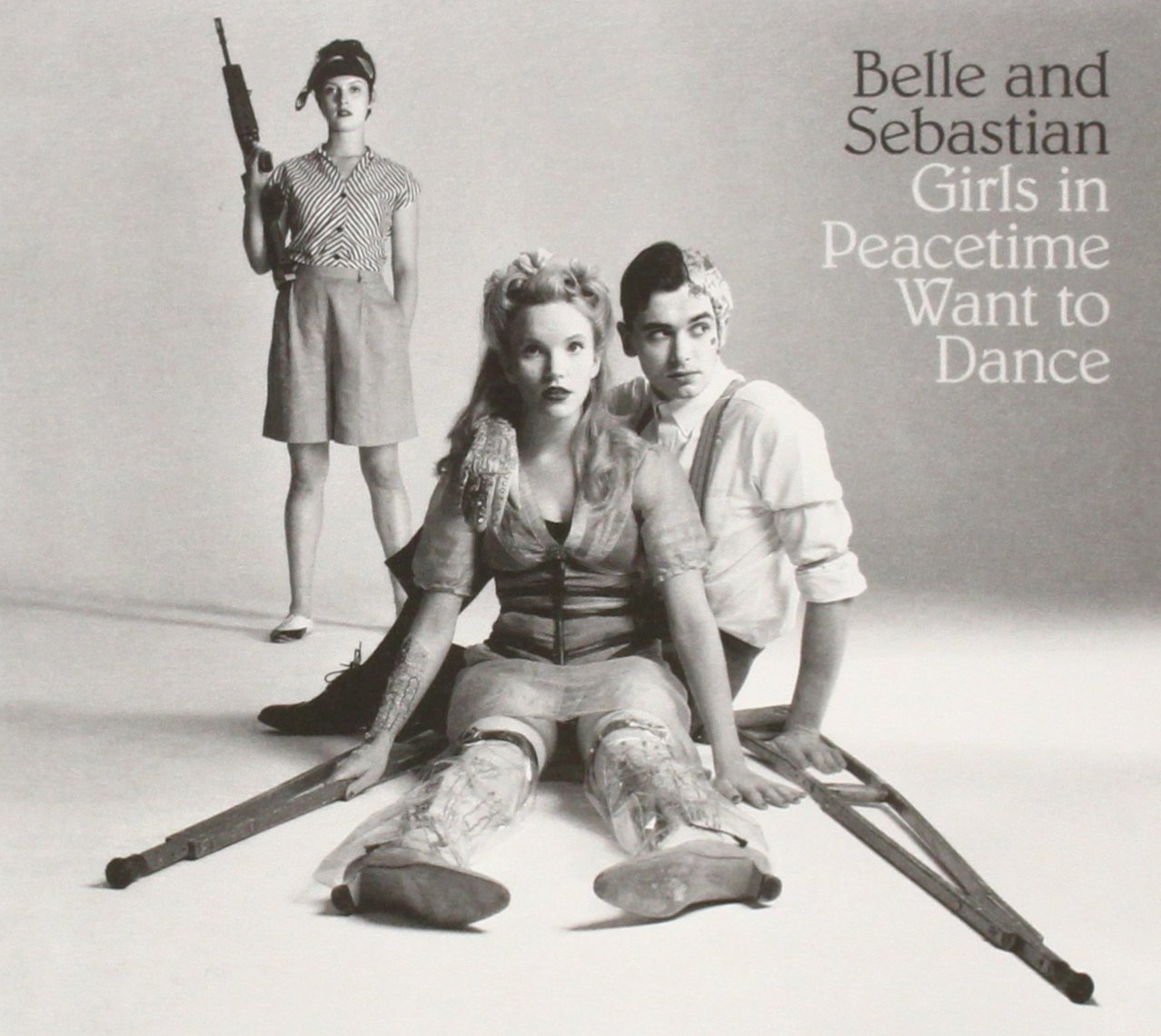
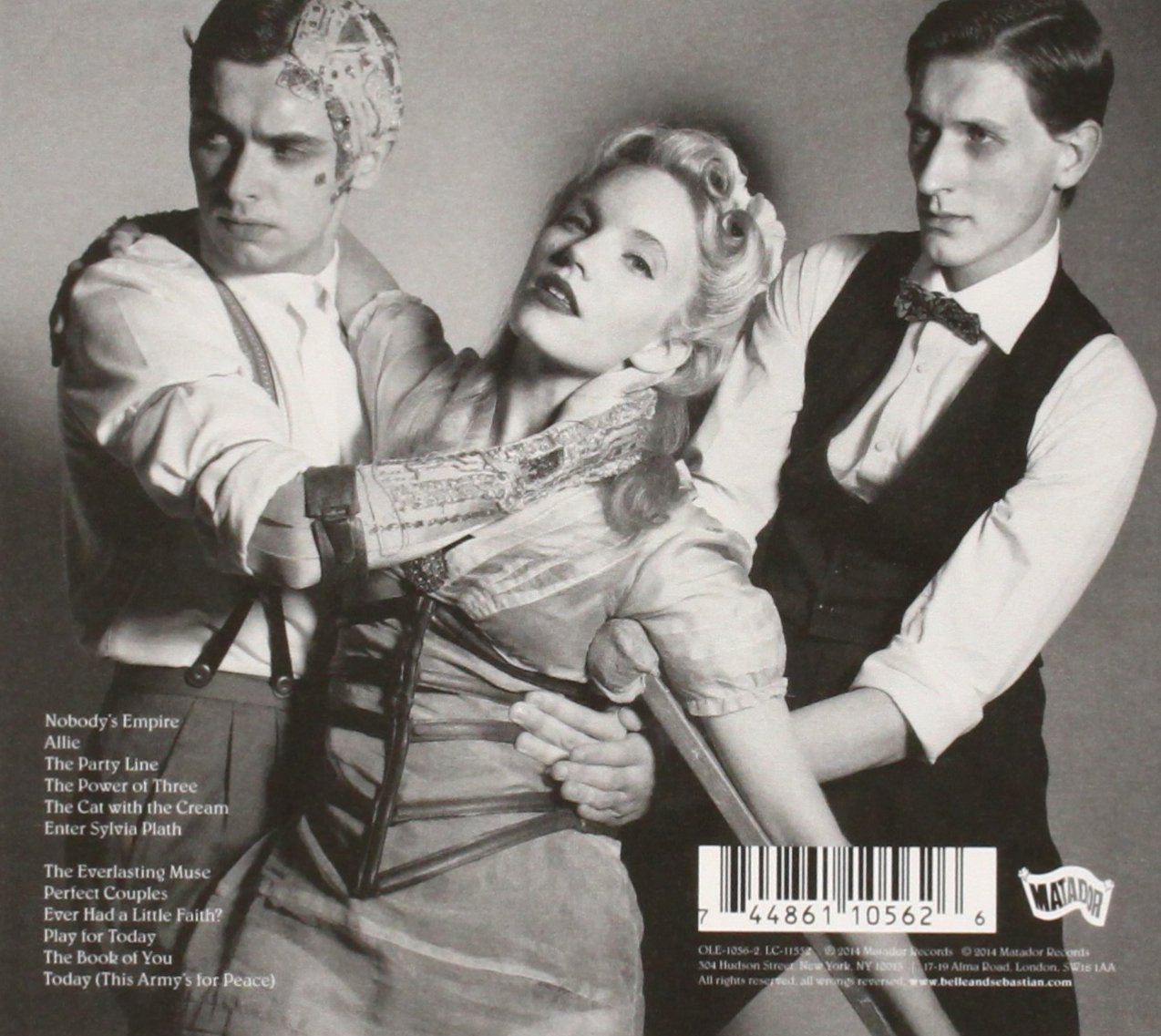
 dereksmusicblog
