VAN HALEN-DELUXE.
VAN HALEN-DELUXE.
Not many bands enjoyed the longevity that Van Halen enjoy. They were released their debut album Van Halen in 1978. It was hailed as one of the greatest debut albums in musical history. Soon, Van Halen was climbing the charts, reaching number nineteen. As Van Halen’s popularity grew, sales of their debut album sold.
By 1999, when Van Halen were put on hold, their eponymous debut album had sold ten million copies. Van Halen was certified diamond, something that happens to only a handful of albums. However, by then Van Halen were one of the most successful and biggest selling bands in musical history.
After the release of Van Halen in 1978, the California based band released another ten albums. Each and every one of these albums were certified multi-platinum. In America alone, Van Halen’s next ten studio albums sold an incredible forty-million copies. Their most successful studio album released during this period was 1984.
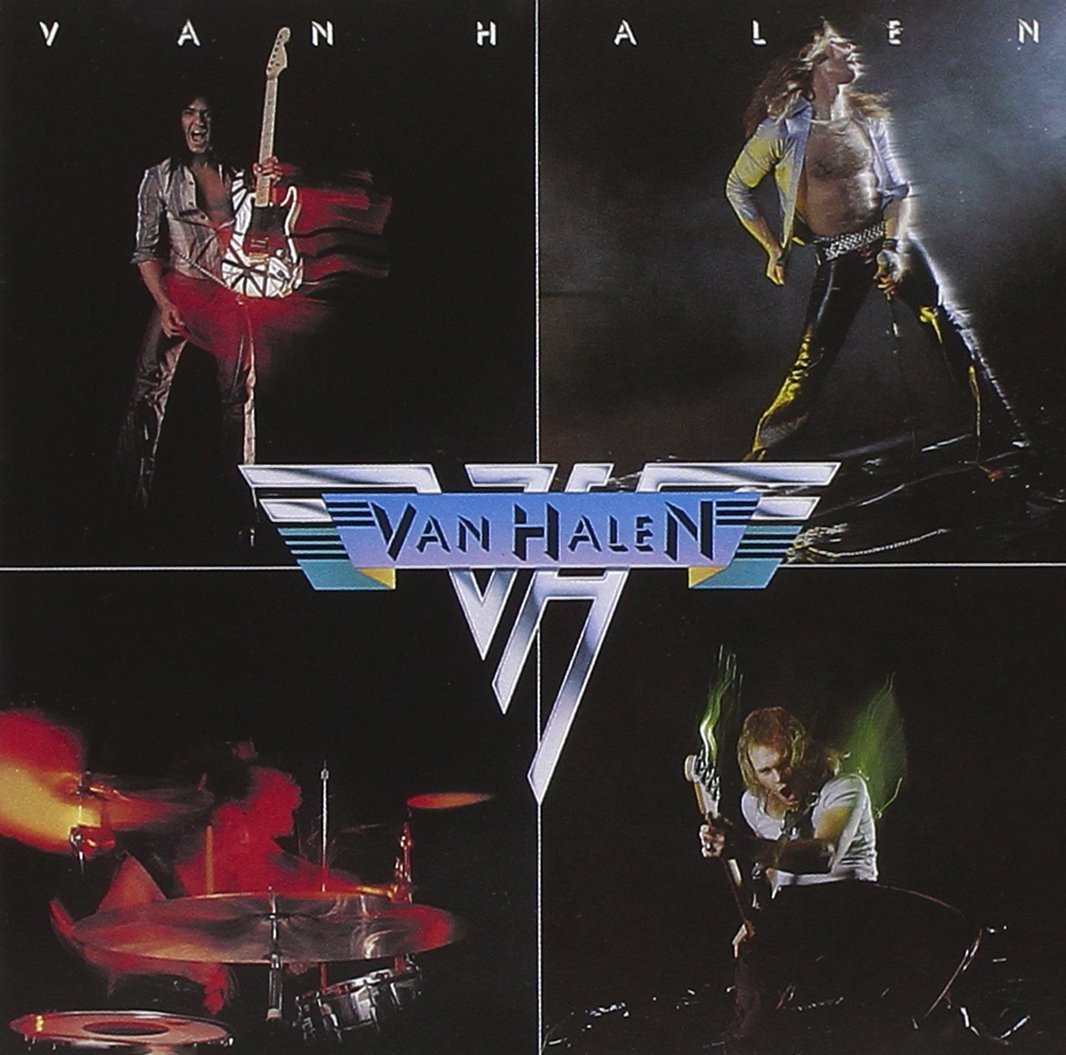
Released on 9th January 1984, 1984 took the world by storm. It was certified diamond in America and five times platinum in Canada. In Europe, 1984 was certified platinum in Germany and gold in France and Britain. That’s no surprise. Van Halen were at their hard rocking best on Van Halen, unleashing classics like Jump, Panama and Hot For Teacher. It seemed that Van Halen could do no wrong.
That proved to be the case. Right through to 1995s Balance, Van Halen’s studio albums sold millions. So did their 1993 live album Live: Right Here, Right Now. It sold two million copies in America along. Van Halen were enjoying a glittering, multi-platinum career. That’s despite fall-outs, changes in lineup and a love of the rock ’n’ roll lifestyle.
When Van Halen released Van Halen III on March 17th 1998, it failed to match the commercial success of previous albums. It was “only” certified gold. Four years later, when Van Halen released A Different Type Of Truth on February 7th 2012, it was to controversy.
Seven of the songs on A Different Type Of Truth had been demoed in the late seventies, early eighties. However, they were never released. So, when the songs featured on A Different Type Of Truth, Van Halen’s fans weren’t happy. They voted with their feet.
No longer were Van Halen selling millions of albums. Very few groups were. On the release of A Different Type Of Truth, it reached number two on the US Billboard 200 and sold 411,000 copies. This wasn’t even enough for a gold disc. The only place that A Different Type Of Truth was certified gold, was in Canada. It was changed days for Van Halen, one of rock’s biggest, most successful and hardest living bands.
Rock ’n’ roll’s great survivors comeback wasn’t the success that they had hoped. Van Halen couldn’t leave it there. Not after thirty-eight years together. Surely, they would release one more album. They did.
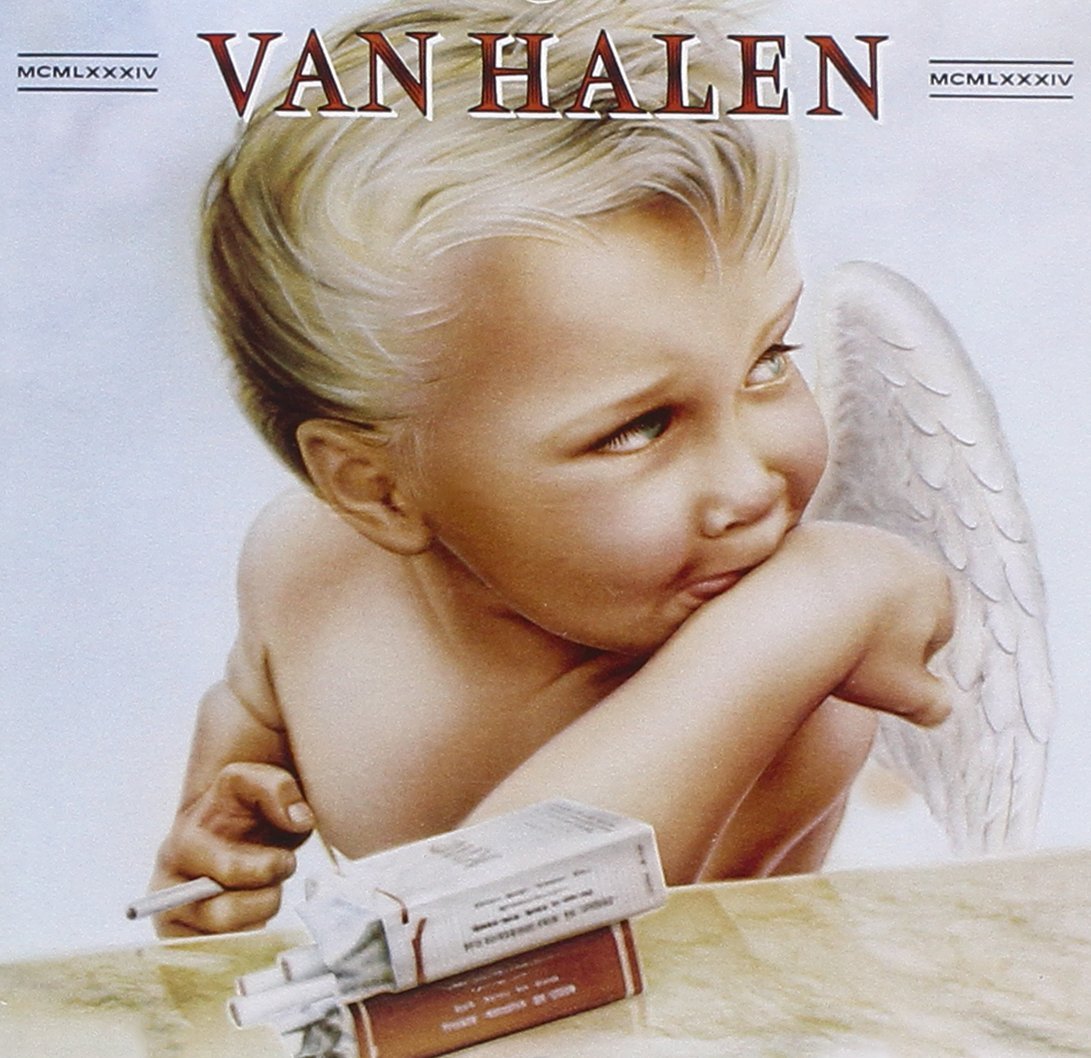
It wasn’t another studio album. Instead, Van Halen released the second live album of their career. Forty-one years since they changed their name to Van Halen, they released Tokyo Dome Live in Concert on March 31st 2015. Tokyo Dome Live in Concert was no ordinary live album. Instead, it’s a twenty-five track double album featuring some of Van Halen’s biggest singles and best known songs. Two weeks later, and Tokyo Dome Live in Concert is climbing the American charts It’s already reached number twenty in the US Billboard 200 charts. However, over the last few days, a much wider audience will have heard Tokyo Dome Live in Concert.
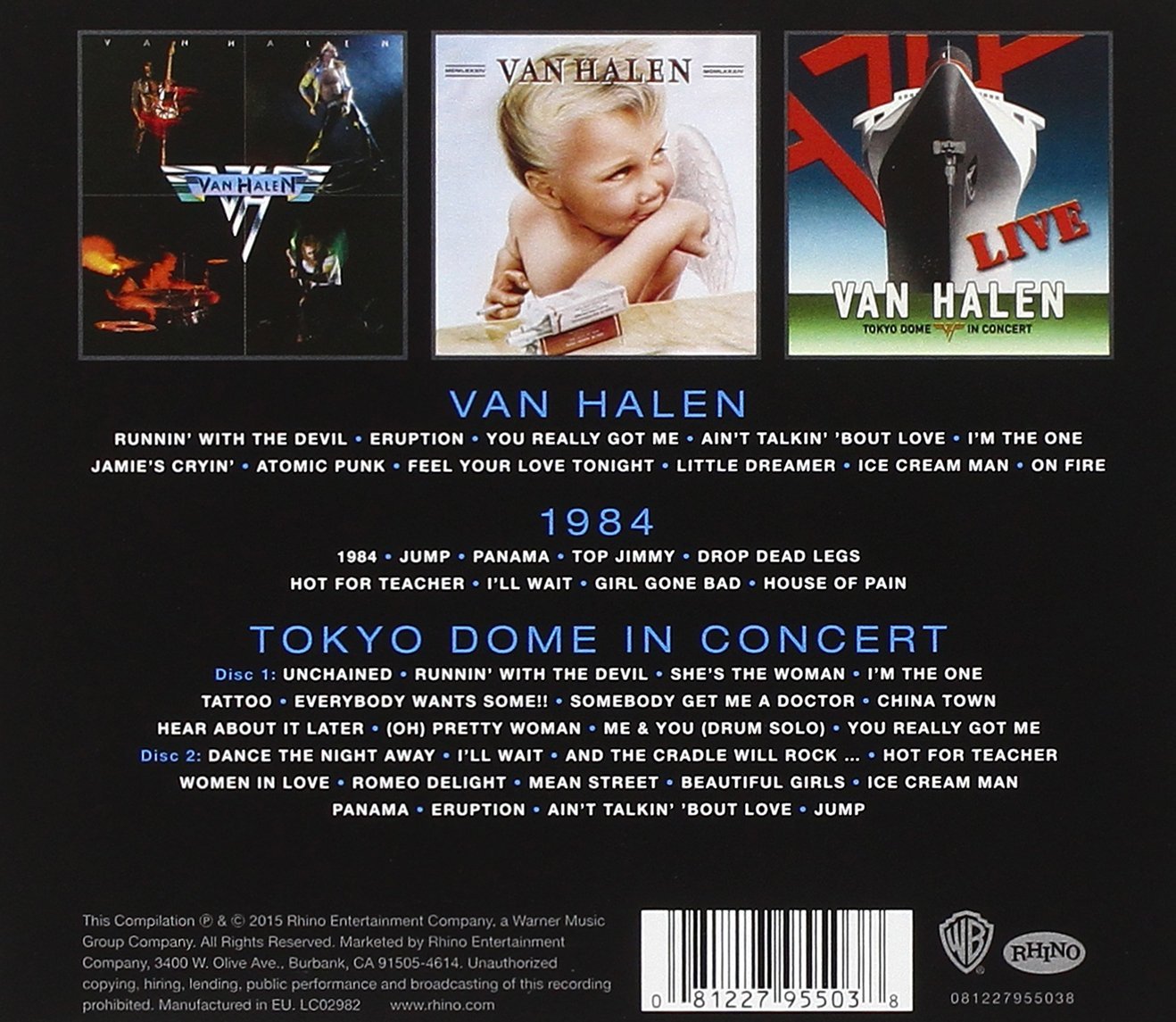
When Tokyo Dome Live in Concert was released by Rhino on March 31st 2015, so were remastered version two of Van Halen’s classic albums, Van Halen I and 1984. Two weeks later, and Rhino released a four disc box set Deluxe, which features Van Halen I, 1984 and Tokyo Dome Live in Concert. For newcomers to Van Halen, this is the ideal starter pack. Van Halen I and 1984 feature Van Halen at the peak of their powers. Tokyo Dome Live in Concert allows the listener to experience what Van Halen live sounds like. Just like Van Halen and 1984, it’s’s a reminder of Van Halen at the peak of their powers. The story began back in the early seventies.
It was in 1977, that Van Ha;en signed to Warner Bros. Records. Mo Ostin and Ted Templeman of Warner Bros. Records saw Van Halen perform at the Starwood in Hollywood. The two men were so impressed with Van Halen that they signed the group within a week. At last, Van Halen were starting to go places.
Van Halen were no overnight success story. Instead, they had paid their dues. Brothers, Eddie and Alex Van Halen had formed a band in the early seventies. Like many bands, they found it difficult to settle on a name. Initially, they were called The Broken Combs, then changed the name to The Trojan Rubber Co. By then, The Trojan Rubber Co. had a settled lineup.
Their lineup featured Alex on drums and Eddie on guitar. They were joined by bassist Mark Stone and vocalist David Lee Roth, who they had hired a sound system from. Eddie had initially failed the audition. However, Eddie and Alex were realists. Money was tight, so if they brought David onboard, they would save having to hire a sound system. They also thought that David might improve as a vocalist. However, in 1974, The Trojan Rubber Co. changed its name and its lineup.
1974 was a pivotal year for The Trojan Rubber Co. By then, bassist Mark Stone had been replaced by bassist Michael Anthony. His audition was unorthodox. Only after Michael took part in an all night jam session, was he hired. So, Michael left local band Snake and joined The Trojan Rubber Co. Soon, The Trojan Rubber Co. changed its name to Mammoth, and then Van Halen. For the next three years, Van Halen spent honing their sound.
Van Halen played wherever they could. Backyard parties, clubs and dive bars, they weren’t proud. Far from it. They certainly were loud. Too loud some thought.
When Van Halen went to audition at Gazzarri’s, a bar on Sunset Strip, that was down on its luck, the owner Bill Gazzarri, told them they were “too loud, and refused to hire them.” However, Van Halen’s new managers stepped in. Mark Algorri and Mario Miranda had just taken over the booking at Gazzarri’s. So, Van Halen were installed as the house band. Not long after this, Van Halen entered the studio for the first time.
The four members of Van Halen headed to Cherokee Studios, which had recently housed Steely Dan. At Cherokee Studios, Van Halen recorded their demo tape. It would become their calling card, and see them play some of L.A.’s top clubs, including the famous Whisky-A-Go-Go.
Soon, Van Halen were a permanent fixture in L.A.’s top clubs. That’s where they continued to hone their sound. It’s also where they came to the attention of Kiss’ Gene Simmons.
Gene Simmons had heard good things about Van Halen. So, he went to check out Van Halen. According to what he had heard, they were one of the rising stars of L.A.’s music scene. When Gene Simmons arrived at the Gazzarri club in the summer of 1976, he was won over by Van Halen. He knew they were going places.
So, Gene Simmons took Van Halen to Village Recorders in L.A. to produce a new demo tape. Overdubs then took place at Electric Ladyland in New York. Things were looking good for Van Halen. The only thing Van Halen baulked at, was Gene’s suggestion to change the band’s name to Daddy Longlegs. That was a step too far. The next step was for Gene to take the newly recorded demo tape to Kiss’ management.
When Kiss’ management heard the demo, they were pretty disparaging about Van Halen. According to Kiss’ managers, Van Halen “had no chance of making it.” These words would come back to haunt them, after Van Halen sold over forty-two million albums in America alone. However, with Kiss’ management not interested in signing Van Halen, Gene Simmons bowed out of the story. He would be replaced a year later by Mo Ostin and Ted Templeman.
Down but not out, Van Halen returned to the club circuit. For the next year, they continued to hone their sound on the club circuit. One night, in the middle of 1977, Van Halen were playing at the Starwood in Hollywood. There wasn’t much of an audience. However, little did Van Halen know, that two very special guests were in the audience, Mo Ostin and Ted Templeman of Warner Bros. Records. The pair liked what they heard and less than a week later, Van Halen had signed to Warner Bros. Records. Mo Ostin dispatched Van Halen to Sunset Sound Records with producer Ted Templeman, where recording of Van Halen began.
Van Halen.
Like many bands recording their debut album, Van Halen were fearless. They had no apprehension. Mind you, this wasn’t exactly a new experience. Van Halen had been in studios before, recording two different demo tapes. However, this was for real. The band had written nine tracks. The other two were covers of The Kinks’ You Really Got Me and John Brim’s Ice Cream Man. These eleven tracks would eventually become Van Halen’s debut album, Van Halen.
Recording of Van Halen began in the middle of September 1977. Van Halen’s rhythm section of drummer Alex Van Halen and bassist Michael Anthony set about proving the album’s pulsating heartbeat. A week was spent recording Eddie’s guitar parts. Another two weeks were spent recording David’s vocals and the backing vocals. By early October 1977, recording of Van Halen was all but complete. The decision was made not to do much in the way of over-dubbing. This meant Van Halen was much more like hearing Van Halen live. How would critics respond to this?
Before the release of Van Halen, critics had their say. For everyone at Warner Bros. Records, they held their breath. Back in 1978, critics could be venomous. It was hardly rock critic’s finest hour. They were in the throes of a love affair with punk. Many critics took great pleasure in trashing rock albums. The critics didn’t hold back when it came to Van Halen. Most of the reviews were negative. One of the worst reviews came from the so called doyen of critics, the contrarian Robert Christgau. The equally contrarian Rolling Stone were not fans of Van Halen. At least they admitted that Van Halen were going places. Mostly, the reviews panned Van Halen. However, soon, critics would be eating their words.
When Van Halen was released on 18th February 1978, it began climbing the charts. Eventually, it reached number nineteen in the US Billboard 200 charts. This was just the start of the rise and rise of Van Halen.
Three singles were released from Van Halen. A cover of The Kinks’ You Really Got Me reached number thirty-six in the US Billboard 100. Runnin’ With The Devil Stalled at number eighty-four in the US Billboard 100. The final single released from Van Halen was Ain’t Talkin’ ’bout Love. It failed to chart. While the singles failed to replicate the success of Van Halen, it showcased the band at their hard rocking best.
Literally, Van Halen strut and swagger through the eleven tracks on their debut album Van Halen. It’s no surprise that rock and heavy metal fans were won over by Van Halen. It’s a track full of some of Van Halen’s biggest songs, including Runnin’ With The Devil, Eruption, You Really Got Me, Ain’t Talkin’ ‘Bout Love, Jamie’s Cryin’ and Ice Cream Man. Van Halen’s rhythm section of Alex and Michael provide the backdrop to Eddie’s blistering guitars and David’s lived-in vocal. From the opening bars of Runnin’ With The Devil, right through On Fire, Van Halen win friends and influence people. The band who just a year ago, were being hailed L.A.’s best bar band, were on their way to becoming a one of the biggest bands on planet rock.
Six years later, everything Van Halen had touched turned multi-platinum. The four albums Van Halen released between 1979s Van Halen II, to 1982s Diver Down had transformed Van Halen’s fortunes. These four albums had sold an estimated fourteen million copies. Then there was Van Halen, their debut album. It was belatedly being referred to as a classic album.
With Van Halen one of America’s biggest selling bands, critics were forced to rethink their opinion on the band’s eponymous debut album. Belatedly critics had realised the error of their ways. Not for the first time, critics were forced to do an about turn. They realised that Van Halen was a classic rock album. Now they were referring to Van Halen as one of rock ’n’ roll’s greatest debut albums. No longer were Van Halen seen as a bar band who caught a lucky break. Not when their albums were selling by the million. This included Van Halen.
As Van Halen got ready to release their sixth album 1984, Van Halen reentered the US Billboard 200, reaching number 117. Over the next fifteen years, Van Halen consistently sold well. By 1999, when Van Halen were put on hold, their eponymous debut album had sold ten million copies. Van Halen was certified diamond, something that happens to only a handful of albums. Meanwhile, Van Halen was continuing to sell well throughout Europe and Canada by 1999.
Van Halen had been certified gold in Britain, Finland, France and Germany. In Canada, Van Halen was certified platinum four times over. When sales were added up, Van Halen had sold just over eleven million copies. However, Van Halen wasn’t the band’s biggest selling album. That honour fell to 1984.
1984.
During the six years since Van Halen released their eponymous debut album, Van Halen were without doubt, the biggest bands in planet rock. Van Halen were certainly the highest paid band in rock music. No wonder. Each album reached a higher chart placing than its predecessor. So, it’s no surprise that Van Halen had sold fourteen million albums in America alone. 1984, however, was a game-changer, in more ways than one.
Behind the scenes, all wasn’t well within Van Halen. David Lee Roth, Van Halen’s charismatic frontman would quit after 1984. In some ways, the writing had been on the wall.
During the recording of Van Halen’s previous album, Diver Down, released in 1982, David, Eddie and producer Rod Templeman had clashed. The problem was, Eddie wanted to make keyboards a prominent part of the Van Halen sound. David and Rod disagreed. Thinking that Van Halen was a democracy, the two men thought the matter was settled. They were wrong.
Despite this, Eddie went ahead and recorded much of Diver Down at his home studio. When the band heard it, it was keyboard heavy rock rubbed shoulders with Van Halen’s trademark sound. Presented with what seemed like a fait accompli, David began to reconsider his position. He was far from happy with Eddie’s sudden discovery and love of synths. For a rock ’n’ roller like David, this was sacrilege. However, David decided to continue with Van Halen…meantime.
Recording of 1984 took place during 1983 at 5150 Studio, in Studio City, California. Van Halen cowrote all of 1984s songs. Michael McDonald however, received a credit for I’ll Wait. Van Halen’s rhythm section of drummer Alex Van Halen and Michael Anthony’s thunderous bass set about providing the 1984’s heartbeat. Eddie Van Halen played guitar and keyboards. For the last time, David Lee Roth added vocals. Once 1984 was completed, it was that time again, time for critics to have their say on Van Halen’s sixth album.
When reviews of 1984 were published, mostly, they were positive. As usual, there was the odd dissenting voice. One Napoleonic critic described 1984 as a one sided album. For him, the second side received the consolation prize. What he failed to see, was that side one set the bar high.
From the instrumental 1984, through the the Van Halen classics Jump and Panama, Van Halen could do wrong. They were well on their way to hitting a home run. Top Jimmy and Drop Dead Legs rounded off side one, and left you wanting more of Van Halen’s heavy rocking music. Everything just dropped into place. Even the synths had their place, and played their part in a classic album. The fun didn’t stop there.
Hot For Teacher was the perfect way to start side one. An anthemic track, it gave way to I’ll Wait, one of the singles from 1984. Girl Gone Bad was another fist pumping anthem, that showcased what Van Halen were capable. By the time House Of Pain closed 1984 it was apparent that Van Halen had released the second classic album of their career.
1984s fusion of keyboard heavy rock, combined Van Halen’s trademark hard rocking sound proved a winning combination. These two sides of Van Halen resulted in a classic album that would become the biggest selling album of Van Halen’s career.
On its release on January 9th 1984, 1984 started climbing the charts. Eventually, it reached number two in the US Billboard 200. This was the highest chart placing of Van Halen’s six album career. It also became the biggest selling album of Van Halen’s career. Eventually, 1984 sold twelve million copies. 1984 became Van Halen’s second album to be certified diamond. Elsewhere, 1984 was a huge seller.
In Canada, 1984 was certified five times platinum. Over the Atlantic, 1984 was certified gold in Britain and France. Meanwhile, 1984 was certified platinum in Germany. That wasn’t the end of the commercial success.
Four singles were released from 1984. Jump reached number one in the US Billboard 100. I’ll Wait then reached number thirteen in the US Billboard 100. Panama became the third single to be released from 1984. It reached number two in the US Billboard 200. The final single released from 1984, was Hot For Teacher, which stalled at number fifty-six in the US Billboard 200. By then, 1984 had become Van Halen’s most successful album of their career, and their second classic album. However, it was the end of an era.
Following the release of 1984, David Lee Roth left Van Halen. The disagreements with Eddie Van Halen had taken their toll. Relations had been strained since the recording of Diver Down. Eddie was pro synths, David a died in the wool rock ’n’ roller, wasn’t in favour of this stylistic departure. When the pair couldn’t resolve their disagreements, David called time on his career with Van Halen.
David had had a good run. Especially since he was originally seen as a stopgap singer. He had failed the original audition. However, David lasted six albums. They sold thirty-six million copies. Not bad for what one critic referred to as a bar band. It would be another twenty-two years before David Lee Roth rejoined Van Halen.
That was during the 2006 reunion of Van Halen. This was their second reunion. However, it took another six years before they recorded an album. A Different Kind of Truth was released in 2006, it was to controversy.
Seven of the songs on A Different Type Of Truth had been demoed in the late seventies, early eighties. However, they were never released. So, when the songs featured on A Different Type Of Truth, Van Halen’s loyal fans weren’t happy. They voted with their feet.
No longer were Van Halen selling millions of albums. Very few groups were. On the release of A Different Type Of Truth, it reached number two on the US Billboard 200 and sold 411,000 copies. This wasn’t even enough for a gold disc. It was changed days from when Van Halen and 1984, released ten and twelve million copies respectively. Music might have changed but Van Halen were still a hard rocking band capable of playing blistering rock music. They do this on their recent live album Tokyo Dome Live in Concert.
Tokyo Dome Live in Concert.
It was on February 5th 2015 that one of the worst kept secrets in music was conformed. Van Halen were about to release the second live album of their career, Tokyo Dome Live in Concert. The concert had been recorded on June 21st 2013, when Van Halen were touring their A Different Type Of Truth album. However, Tokyo Dome Live in Concert was going to be no ordinary album.
Tokyo Dome Live in Concert the announcement read, was going to be a double album, featuring twenty-five tracks. It was released on 31st March 2015, then as part of the Deluxe box set on 13th April 2015.
After its release, Tokyo Dome Live in Concert started climbing the charts. Quickly, it had reached number twenty in the US Billboard 200. That was early days. Once Van Halen fans hear snippets of Tokyo Dome Live in Concert, the album will keep climbing the charts.
Quite simply, Tokyo Dome Live in Concert features some of Van Halen’s best known songs. Classics and old favourites sit by side, as the original, and classic lineup of Van Halen roll back the years. They might be older, and somewhat worse for years of hard living, but they’re still one of best rock bands on planet rock. That’s the case from the moment they take to the stage.
Opening disc one of Tokyo Dome Live in Concert is Unchained from 1981s Fair Warning. After that, they turn to Runnin’ With The Devil and from their 1978 debut album Van Halen. From there, they turn to She’s The Woman, the first track from 2012 A Different Type Of Truth album. Later, the return to their first classic album Van Halen, for I’m the One and You Really Got Me. Other highlights include Everyone Wants Some from 1981s Woman and Children First, Somebody Get Me a Doctor from Valen II and Hear About It Later from 1981s Fair Warning. However, Van Halen aren’t finished yet.
Having worked their way through twelve tracks, they return with another thirteen. These tracks are taken from Van Halen, Van Halen II, Women and Children First, Fair Warning and 1984.
Dance The Night Away from 1979s Van Halen II kicks disc two of Tokyo Dome Live in Concert. It’s the first of three tracks from Van Halen II. The others are Beautiful Girls and Women in Love. Before then, Van Halen unleash I’ll Wait from 1984, And The Cradle Will Rock from Women and Children First and the anthemic Hot For Teacher. That’s the first of the track from the eighties.
It’s not the last. Romeo Delight from Women and Children First and Mean Street from Fair Warning follow. Then it’s back to the seventies, when Van Halen’s star were on their way to becoming one of rock’s biggest bands.
Beautiful Girls gives way to Ice Cream Man from 1978s Van Halen. Then it’s time for one of Van Halen’s hands in the air anthems, Panama. Van Halen are on a roll. So, they return to their debut album Van Halen, and unleash Eruption and Ain’t Talkin’ ’bout Love. That leaves Van Halen’s most famous single to close Tokyo Dome Live in Concert. For twenty-five tracks and over two hours, Van Halen at their hard rocking best swagger and strut their way through their second live album, Tokyo Dome Live in Concert. It’s the final album on the four disc box set Deluxe, which was recently released by Rhino.
For anyone unfamiliar with Van Halen’s music, the Deluxe box set is the perfect introduction to their music. It features their two classic albums, Van Halen and 1984. They’re without doubt, the two best albums Van Halen released.
Van Halen is now recognised as one of the greatest debut albums in rock music history. That is a big statement to make, and looked unlikely back in 1978. Critics slated Van Halen. However, they were in the throes of a love affair with punk and post punk. Later, when the critics reevaluated Van Halen, they realised how wrong they were. By then, it was a multi-platinum album. Eventually, Van Halen sold ten million copies. Somehow, Van Halen surpassed this with 1984.
By 1984, Van Halen had been given a musical makeover by Eddie Van Halen. He introduced synths on 1982s Diver Down. This didn’t please David Lee Roth. Eddie however, wasn’t going to change his mind. So, following the release of 1984, David left Van Halen. The original and classic lineup of Van Halen were no more.
It wasn’t until 2012s A Different Kind of Truth that the original lineup of Van Halen returned to the studio. A year later, Van Halen were touring A Different Kind of Truth. On June 21st 2013, Van Halen were in Tokyo, ready to record the second live album of their five decade career, Tokyo Dome Live in Concert. It was released on March 31st 2015, and as part of the Deluxe box set on 13th April 2015. Tokyo Dome Live in Concert sees Van Halen, one of the hardest rocking bands in the history of rock, roll back the years. They dig deep into their back-catalogue and unleash a string of classics and old favourites. This includes tracks from Van Halen and 1984, the other two albums on the Deluxe box set, which is the perfect introduction to Van Halen, one of the biggest and best selling bands in America’s illustrious musical history.
VAN HALEN-DELUXE.




STORNOWAY-BONXIE.
STORNOWAY-BONXIE.
It was nine years ago that Brian Briggs first met Jon Quin, at a Freshers Week at Oxford University. Brian’s first words to Jon were that he looked like a member of Scottish indie rock band Teenage Fanclub. That broke the ice. Brian and Jon realised they both shared a love of music. So, they started making music together. Soon, Brian and Jon decided to form a band.
With Brian a guitarist, and Jon a keyboardist, this meant they were looking for a rhythm section. So, like several generations of bands before them, they placed an advert, and waited.
Eventually, bass player Oli Steadman replied to the advert. He was the only person to reply to their advert. Oli was auditioned, and joined the nascent group. Soon, so did his younger brother.
The as yet unnamed band consisted of bass, guitar and keyboards. They needed a drummer. Fortunately, Oli Steadman’s younger brother Rob, played the drums. Rob Steadman was asked to audition, and became the final piece in the musical jigsaw. All the band needed was a name.
For some bands, naming a band can be a tortuous process. That was the case with Brian, Jon, Oli and Rob’s nascent band. All they knew was that they wanted to name their band after a town. Not just any town though. It had to be a town that was “a bit remote and coastal.” This gave them plenty of scope. So they settled down, and waded through a huge list of names of coastal towns. At one point, the band even took to studying books about the weather. Names were considered. None seemed to fit. Eventually, though, Brian, Jon, Oli and Rob settled on Stornoway, a town on the Outer Island of Lewis. It was the only name that seemed to work. What’s more it was a name everyone knew.
Every time the BBC weather forecast is broadcast, the name Stornoway is mentioned. For Brian, Jon, Oli and Rob this they joked, was like to a free advert. It seemed that already, Stornoway were thinking big. That’s despite their career being in its early stages.
After less than a year together, Stornoway had put together a demo tape, The Early Adventures Of Stornoway. It included I Saw You Blink, which was played on the BBC Oxford Intorducing program in March 2006. This was the first time Stornoway were heard on radio. Their radio debut was well received. Stornoway were on their way.
Three years later, Stornoway caught a break when they featured on Radio 1’s Big Weekend. It was held at Lydiard Park, Swindon. That day, saw Stornoway winning friends and influencing people. This inspired Stornoway to self-release their debut single Zorbing in July 2009. For Stornoway, this was just the start of a magical summer.
Right through the summer of 2009, Stornoway’s music was being heard by a much wider audience. Their finest hour came at the Glastonbury Festival. Stornoway played six times over the three day Festival. Then as summer became autumn, Stornoway headlined a show at the Tate Modern, London on the 1st of September 2008. It highlighted the climate change campaign. For Stornoway, this was a defining moment in their career. No longer were Stornoway were one of music’s best kept secrets. They were one of British music’s rising stars.
Later in September, on the 29th, Stornoway released their sophomore single Unfaithful. So, a launch concert was held at the Institute of Contemporary Arts, in London on the 21st September 2009. Eight days later, Unfaithful was released on CD, 7” single and as a download. Stornoway it seemed were going places.
To promote Unfaithful, Stornoway headed out on tour. Between the 16th and 30th October 2009, Stornoway toured Britain, spreading the Stornoway gospel. Then a month later, Stornoway caught the biggest break of their three year career.
Stornoway were asked to appear on the BBC TV show, Later…With Jools Holland. They became the first unsigned band to appear on the show. Their appearance on the show hugely increased their profile. Suddenly, millions had heard of Stornoway. This resulted in Stornoway featuring on the long list to the BBC’s Sound of 2010 competition. It seemed Stornoway could do no wrong.
As 2010, got underway, Stornoway headed out on another tour of Scotland and Ireland in March 2010. For the first time, Stornoway played the place they were named after. This was akin to a spiritual homecoming. It was also a cause for celebration.
No longer were Stornoway one of Britain’s best unsigned bands. They had signed to indie label 4AD, and released their third single their third single, I Saw You Blink on 22nd March 2010. Two months later, after four years hard work, patience and persistence Stornoway released their debut album, Beachcomber’s Windowsill.
Beachcomber’s Windowsill.
Even before they signed to 4AD, Stornoway were busy recording their debut album, Beachcomber’s Windowsill. It featured eleven eleven tracks. Brian penned eight tracks, and cowrote two with Jon. Stornoway’s principal songwriters also produced Beachcomber’s Windowsill, which was released on 24th May 2010.
On its release on 24th May 2010, Beachcomber’s Windowsill was well received by critics. Most of the reviews were positive. That’s not surprising, as Stornoway were already a reasonably well established band. The critics knew what to expect of them. By then, Stornoway’s fusion of folk rock and indie rock had won over critics. Soon, Stornoway were winning over British record buyers.
When it was released, Beachcomber’s Windowsill charted at number fourteen in the UK album charts. Soon, Beachcomber’s Windowsill had sold in excess of sixty-thousand copies. This resulted in Beachcomber’s Windowsill being certified silver. That wasn’t the end of the success for Stornoway.
Although I Saw You Blink had only reached number 119, in the UK top 150, it reached number twelve in the UK Indie Charts. Then Zorbing was re-released as a single. It and reached number seventy-four in the charts and number four in the UK Indie Chart. However, word was spreading about Stornoway. Zorbing gave them a number eleven hit in Belgium. Stornoway were on their way.
After the release of Beachcomber’s Windowsill, Stornoway headed out on tour. They returned to Glastonbury, and later played at the Womad Festival. Soon, Stornoway were heading of on a tour of Germany.
This was the second time Stornoway had played in Germany. Just like the first, it proved a success. So, buoyed by the success of their German tour, later in 2010, Stornoway headed to Italy, Luxembourg and Switzerland.
Stornoway took the three countries by storm. It was the perfect way to end what had been the biggest year of their career.
As 2011 dawned, Stornoway announced their touring schedule. This included a third appearance at Glastonbury, one of many festivals Stornoway played at. However, their first concert of 2011 took place at Somerset House, in London. That set the ball rolling for Stornoway’s summer. By September, Stornoway were ready to return home.
Stornoway played a gig at the Regal, in Cowley Road, Oxford. After this, Stornoway’s thoughts turned to their sophomore album Tales From Terra Firma.
Tales From Terra Firma.
For Stornoway, most of 2012 was spent in the recording studio. A total of nine songs were recorded. They became Tales From Terra Firma. Just like their debut album, Brian wrote most of the songs. He penned seven of the songs, and cowrote one with Jon. The only song Jon wrote himself was Knock Me On The Head, one of Tales From Terra Firma’s highlights. However, there’s more to Tales From Terra Firma than one song.
Throughout Tales From Terra Firma, elements of folk-rock, indie pop, jazz and psychedelia melt into one. It’s a potent, enthralling and mesmeric musical fusion. So, it’s no surprise that Tales From Terra Firma won over the hearts and minds of critics and record buyers.
Tales From Terra Firma was scheduled for release on 11th March 2013. To give Stornoway’s loyal fans a tantalising taste of their forthcoming album, Knock Me On the Head was released as the lead single on 1st January 2013. This hook-laden single was the perfect amuse bouche to Tales From Terra Firma.
When Tales From Terra Firma was released on 11th March 2013, it was to critical acclaim. This time, there were no dissenting voices. Each and every critic was won over by Tales From Terra Firma. Great things were forecast of Stornoway’s sophomore album.
On its release, Tales From Terra Firma peaked at number twenty in the UK Album Charts. Given the reviews, and the undeniable quality of Tales From Terra Firma, this was somewhat disappointing.
Following the release of Tales From Terra Firma, Stornoway embarked upon a gruelling world tour. Nobody thought that Stornoway would release any more music during 2013. They were wrong.
You Don’t Know Anything.
In September 2013, Stornoway surprised their fans by announcing they were releasing a mini-album, You Don’t Know Anything. It featured outtakes Tales From Terra Firma.
You Don’t Know Anything was released to coincide with Stornoway’s British tour at the end of 2013. The release of You Don’t Know Anything showed that Stornoway were a group thoroughly in touch with the modern music industry.
Stornoway, realising that that music industry was constantly changing, decided to make use of the latest innovations. Allmusic were given the exclusive rights to stream You Don’t Know Anything. Rolling Stone magazine offered a free download of Tumbling Bay. So did BBC Radio Six’s Lauren Laverne. All this was great publicity for Stornoway. Their star was in the ascendancy.
So, as 2013 drew to a close, Stornoway released another single Tales From Terra Firma, Farewell, Appalachia. It was accompanied by a video directed by Matt Cooper, whose a member of another Oxford Band, Spring Offensive. The release of Farewell, Appalachia brought the biggest year of Stornoway’s career to a close. 2014 would be another busy year for Stornoway.
Bonxie.
By June 2014, Stornoway were in the midst of one of the busiest periods of the year. They had toured Britain, and were just about to embark upon the busiest period of many band’s year, the festival season. That’s when Stornoway announced their intention to use crowd funding to fund their third album Bonxie.
Like many bands before them, Stornoway had decided to use the PledgeMusic crowd funding site. That’s where initially, copies of Bonxie would be available from. Within just four days of the announcement, Stornoway had 222% of their target funding. With the money raised, Stornoway could enjoy the festival season safe in the knowledge that they had already funded Bonxie.
Once the festival season was over, Stornoway began work upon their third album Bonxie. Eleven tracks were written by Brian Briggs and Jon Quin Stornoway’s two principal songwriters. These tracks were recorded by Stornoway, with the help of producer Gil Norton, whose previous credits, include the Pixies and Foo Fighters.
For Stornoway this was a first. Never before had they brought onboard a producer. Brian and Jon were already experienced producers. So, this caused more than a few raised eyebrows. Would Gil Norton’s inclusion change Stornoway beyond recognition. It was a case of wait and see.
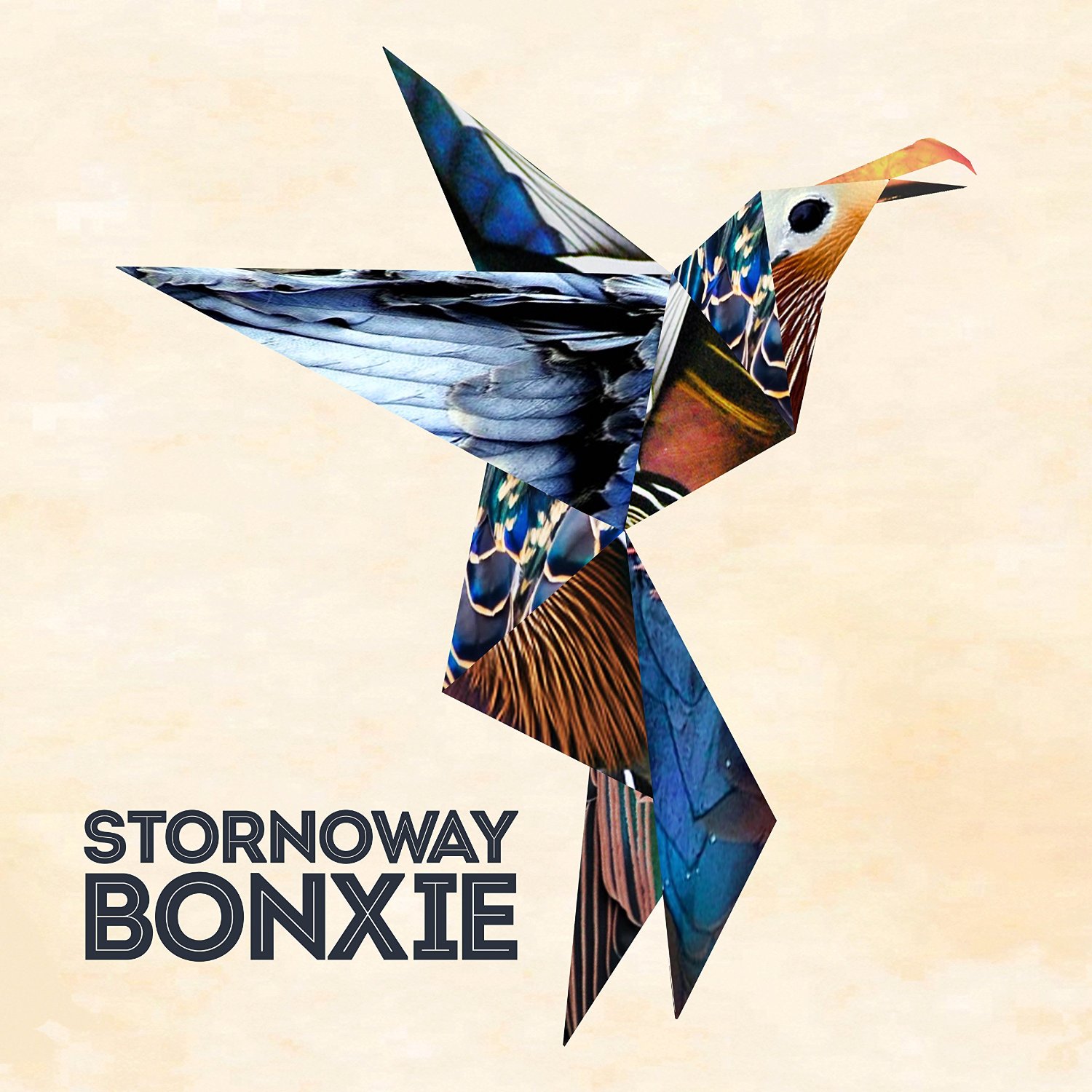
As recording began, Jon played guitar, Brian keyboards and the Steadman brothers Oli and Rob played bass and drums respectively. Just like their two previous albums, other musicians were brought in to add textures and colours to Bonxie, which is the Shetland nickname for the Great Skua. It’s a quite magnificent, but some would say terrifying seabird, that’s found in northern climes. The Bonxie will be familiar to Stornoway, who have never hid their love of wildlife. Its picture sits proudly on Stornoway’s third album, which was released on 13th April 2015.
Just like their sophomore album, Tales From Terra Firma, Bonxie was released to unequivocal critical acclaim via Cooking Vinyl Records. Many critics hailed Bonxie as Stornoway’s finest album. Is that the case?
Birdsong gives way to a the sound of a boat leaving the harbour on Between The Saltmarsh and the Sea, which opens Bonxie. As it drops out, there’s near silence, just a brief burst of birdsong. Then maudlin keyboards play, setting the scene for Brian’s thoughtful vocal. In the distance, retro drums inject a sense of urgency. Soon, the arrangement unfolds. Stornoway’s rhythm section, guitars and keyboards envelop Brian’s vocal. It veers between needy and grateful, to heartbroken. Deep down, Brian is suspicious, wondering where his lover goes when she leaves him? His vocal grows in power, and is filled with emotion and confusion, as he delivers this beautiful, soul searching ballad.
Straight away, it’s obvious that the hooks haven’t been spared on Get Low. It’s a delicious fusion of influences, including indie pop, folk rock, Americana and Nu Country. There’s a nod to The Jayhawks and Wilco. As for the synths, they have an eighties sound. They drift in and out. Mostly, it’s Stornoway’s rhythm section, guitar and harmonies that are at the heart of everything that’s good. Especially, when combined with Brian’s vocal. Together, they play their part in a glorious hook-laden anthem.
The sound of city life opens Man On Wire. It paves the way for Stornoway’s thunderous rhythm section. Oli and Rob Steadman never miss a beat. They’re accompanied by Brian’s searing, chiming guitar. Atop the arrangement sits Brian’s vocal. He combines power and emotion. It’s a cathartic outpouring of his feeling. Soon, strings are added. They prove the perfect addition, filling in the gaps and adding texture. The strings dance their way across the breakdown. By then, Stornoway are well on their scoring a home run, on this fist pumping anthem.
Just a plucked guitar opens The Road You Didn’t Take. Brian’s vocal is accompanied by close harmonies. His vocal is rueful, at what he sees as missed opportunities. He ponders “The Road You Didn’t Take.” Meanwhile, ethereal keyboards, drums and wistful strings are added. However, it’s Brian’s vocal and the harmonies that grabs your attention. It’s as if he’s lived and survived the lyrics. You’re captivated by his delivery, right through to the arrangement reaches its dramatic crescendo.
Lost Youth marks a change in style from Stornoway. It’s a musical potpourri of influences. There’s everything from indie pop, folk-rock and even the merest hint of reggae. An acoustic guitar gives way to synths and sound effects. Stabs of drums are added as Brian delivers an urgent, questioning, vocal. He sings of a boy struggling to become a man. He’s confused, struggling to come to terms with adulthood, and who and what he is. That’s apparent from the lyrics: “we know just what we want, but we don’t know how to describe it” and “we don’t know where we stand, but we think we know what we stand for.” As Brian delivers his vocal, the bounding bass, chirping guitar and dancing strings sweep in. Just like previous tracks, there’s hooks aplenty, as we hear another side to Stornoway.
Washes of a Shadow-esque guitar opens Sing With Our Senses. Adding to the already atmospheric sound, is a bass and Hammond organ. Now Stornoway have your attention, the vocal enters. So, the rest of Stornoway pull back. This allows Brian’s vocal to take centre-stage. That’s where it belongs. Harmonies accompany him, before the arrangement unfolds and grows. Drums drive the arrangement along, keyboards add textures and harmonies coo and sweep. They’re the perfect accompaniment to Brian’s impassioned plea to “Sing With Our Senses.”
We Were Giants has a country influence. It’s the guitar and washes of atmospheric music that lead to this comparison. So do the lyrics. They’re cinematic, delivered wistfully by Brian. He sometimes, sounds not unlike Al Stewart. Ruefully he remembers: “tell me of the time we could walk for miles on roads to nowhere…when we were happy to stagger through the fields to the lights of the house.” As Brian paints pictures, the rest of Stornoway add colour to the arrangement. Strings sweep, drums are played with brushes and bass helps drive this beautiful, but rueful ballad along.
Melancholy describes the introduction to When You’re Feeling Gentle. However, Stornoway are just toying with you. Soon, an electronic arrangement unfolds. It’s best described as electro-folk with a rocky hue. As the arrangement is propelled along, Brian delivers an urgent, needy vocal. Harmonies accompany him. Later, when the arrangement is stripped bare, Brian’s vocal oozes emotion. His vocal is then swept along by a glorious wall of sound. This is akin to a call to dance, once that’s truly irresistible.
A lone Hendrix-esque guitar opens Heart Of The Great Alone. It’s joined by the rhythm section and winds its way through the arrangement. Having set the scene, Brian’s vocal enters. It’s thoughtful and emotive. This is the signal for the arrangement to slow down. In doing so, Brian’s vocal becomes the focus of your attention. He delivers a heartfelt vocal, before the arrangement takes on a trippy, psychedelic sound. Then a blistering rocky guitar is unleashed, as this genre-melting track reaches it dramatic finale.
Brian sings unaccompanied on Josephine. Soon, harmonies and a strummed guitar and walking bass join him, as he delivers an ultimatum. He sings: “it’s now or never for me,” on this beautiful folk-tinged ballad.
Guitars, keyboards, bass and handclaps open Love Song of the Beta Male, the closing track on Bonxie. They grab your attention. Soon, Brian’s vocal enters. Thunderous drums accompany his vocal. It’s as if he’s suffering from a crisis of confidence. He feels like he can’t do anything right. That’s apparent when he sings: “don’t ask me to sweep you up and carry you across the threshold, I’d only hurt myself.” As the arrangement unfolds, it grows in drama. Strings are added and drums continue to pound, as an insecure Brian delivers lyrics that are cerebral and witty. They play their part in a rueful track that’s tinged with sadness and humour.
Two years after the release of their sophomore album, Tales From Terra Firma, Stornoway return with what’s without doubt, the best album of their career, Bonxie. It features eleven tracks of hook-laden music. Bonxie it appears, is a coming of age from Stornoway.
Hook heavy anthems aren’t in short supply on Bonxie. Two of the best are Get Low and Man On Wire. They’re sure to be festival favourites during the summer months. Then there’s Bonxie’s soul-baring ballads like Between The Saltmarsh and the Sea, We Were Giants, The Road You Didn’t Take, Josephine and Love Song of the Beta Male. Apart from ballads and anthems, Bonxie features When You’re Feeling Gentle, an irresistible call to dance. It seems, there’s something for everyone on Bonxie.
That’s no surprise. Stornoway combine everything from Americana and country, to electronica, folk, folk rock, indie pop, indie rock, psychedelia and rock. Musical genres melt into one. So do influences. Everyone from Fairport Convention, R.E.M. and Teenage Fanclub to The Beatles, The Jayhawks and Wilco seem to have influenced Stornoway. Their influence can be heard during Bonxie, Stornoway’s career defining album.
Everything, it seems has been leading up to Bonxie, Stornoway’s third album. Bonxie is the best album of Stornoway’s career, and should transform their fortunes. It was released via Cooking Vinyl Records, to widespread critically acclaim. That’s no surprise.
After nine years together, Stornoway’s time has come. It’s time for Stornoway, one of the most exciting and talented British groups, to step out of the shadows, and enjoy the limelight with Bonxie, an album of hook laden, genre-melting music.
STORNOWAY-BONXIE.
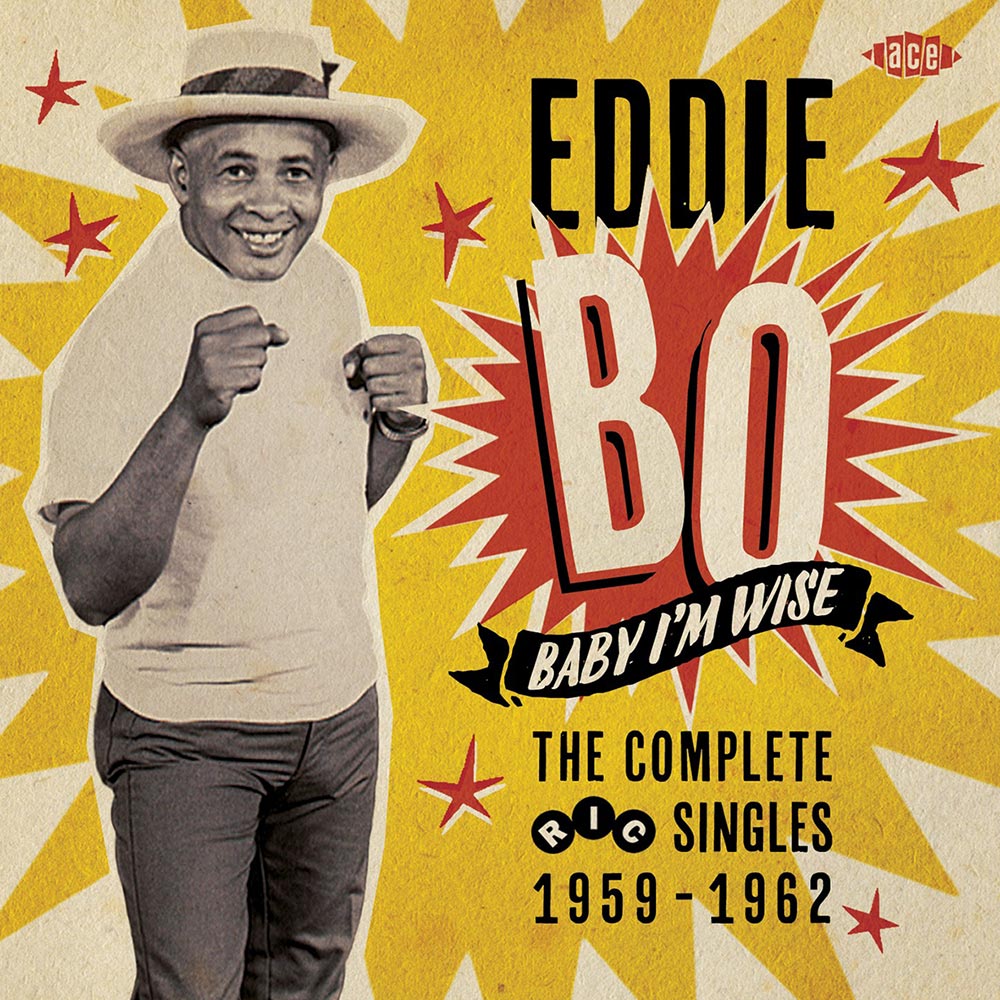
EDDIE BO-BABY I’M WISE THE COMPLETE RIC SINGLES 1959-1962.
EDDIE BO-BABY I’M WISE THE COMPLETE RIC SINGLES 1959-1962.
New Orleans is one of America’s great musical cities. It always has been. That’s been the case for the last hundred years. Back since the delta blues, and later Dixieland provided the soundtrack to New Orleans at play, the city has given the world some of the most talented and successful musicians. This includes everyone from Dr. John, and Professor Longhair to gospel great Mahalia Jackson, Big Star’s Alex Chilton, singer-songwriter Randy Newman and jazz saxophonist Lester Young. That however, is just the tip of the iceberg. The Big Easy’s roll call of musical greats includes many more, including Eddie Bo.
Eddie Bo was born on 20th September 1930, in New Orleans. While his father was a carpenter, Eddie’s mother played the piano. She was a talented player, who had been influenced by one of New Orleans’ musical legends, Professor Longhair. So, it’s no surprise that when Eddie discovered music, he decided to play the piano.
With his mother and Professor Longhair’s help and guidance, Eddie Bo was soon developing into a talented musician. Growing up, Eddie began to discover and explore New Orleans’ musical heritage. His older cousins, who were all traditional jazz musicians, became Eddie’s musical guides and mentors. Soon, with his cousins guidance, Eddie was absorbing New Orleans’ proud musical past. Before long, it looked inevitable that Eddie would become a musician. However, Eddie was enlisted and two years in the U.S. Army interrupted Eddie’s musical career.
For the next few years, Eddie’s career was put on hold. Then when Eddie’s tour of duty was over, he enrolled at the Grundwald School of Music. This was where Eddie learned to read and write music. He also learned how to improvise. It was also during this period that Eddie discovered bebop.
Soon, Eddie had fallen under the spell of the bebop greats. Back then, this included Art Tatum and Oscar Peterson. They influenced Eddie. So much so, that he formed The Spider Bocage Band.
For a while, The Spider Bocage Band were busy. They played all over New Orleans. However, the times they were a changing. By 1954, rock ’n’ roll and R&B were beginning to prove more popular in New Orleans. At the vanguard of this musical revolution, was Fats Domino. Eddie looked at Fats Domino and realised he was earning far more than jazz musicians. For Eddie Bo, this was a eureka moment. That day, Eddie Bo turned his back on jazz.
Two years later, in January 1956, twenty-six year old Eddie Bo was ready to make his recording debut. We Like Mambo, which was released on Ace Records, was credited to Eddie Bo. This wasn’t strictly true. While Eddie played on the single, so did another famous pianist, Huey Smith. Despite this, Eddie Bo’s career was underway. However, he never released another single on Ace Records.
Johnny Vincent had signed Eddie on a short contract. However, despite realising just how talented Eddie was, Johnny spent the next few months recording other artists. So, when Eddie’s contract expired, he was free to sign for another label.
This time, Johnny signed to the Apollo label. Its glory days seemed long gone. When Eddie’s debut single I’m Wise was released, it flopped. Later, Little Richard used I’m Wise as “inspiration” for Slippin’ and Slidin,’ his million selling single. This proved profitable, despite Eddie having to split the royalties with the writers of I Got The Blues For You, which “inspired” I’m Wise. This was the only one of Eddie’s singles that proved profitable.
Eddie’s next four singles all failed to chart. Despite their quality, Eddie’s singles passed record buyers by. For Eddie this was a disappointing chapter in his career. So, he left Apollo in the spring of 1957, and signed to Chess Records.
Paul Gayten, Chess Records head of A&R in New Orleans, offered Eddie a two single deal. Neither single was a success. Oh-Oh proved popular in New Orleans, but nowhere else. Three years later, the B-Side My Dearest Darling, was covered by Etta James and reached number thirty-four in the U.S. Billboard 100 and number five in the U.S. R&B charts. Again, Eddie was making more money when other people covered his songs. While this was more than welcome, Eddie’s career as a singer seemed to have stalled. He left Chess Records after the two single deal expired, and rejoined Ace Records.
Having left Chess Records, Eddie Bo briefly signed to Ace Records. He only released one single, I Love To Rock ’N’ Roll. Just like his earlier Ace Records release, I Love To Rock ’N’ Roll flopped. Eddie Bo, it seemed, couldn’t buy a hit. His career seemed at the crossroads.
Things got so bad, that Eddie was working as a carpenter. He couldn’t make a living out of music. Then one day, Joe Ruffino, the owner of the Ric and Ron labels, got in touch with Eddie. Joe, who had formed Ric and Ron a year earlier, in 1958, wanted a new office built. Eddie who had been taught carpentry by his father, was given the job. When the two men goth talking, Joe realised his “carpenter” was actually a singer-songwriter. So, they hatched a plan. As soon as Eddie’s contract at Ace Records was over, Eddie signed to Ric and became the ninth artist to sign to Joe Ruffino Ric and Ron labels.
At Ric and Ron, Eddie Bo released nine singles. They feature on the recent Ace Records’ release, Baby I’m Wise-The Complete Ric Singles 1959-1962. It’s a twenty-two track compilation, which includes a quartet of tracks that were recorded by Eddie at Ric, and released by Rounder in 2013, four years after Eddie’s death. However, Nothing Without You, Satisfied With Your Love, Ain’t You Ashamed and I’ll Do Anything For You show how Eddie Bo had evolved, and developed, as a singer and songwriter. These four tracks were also a reminder of what music lost on March 18th 2009, the day Eddie Bo died. Fifty years prior to Eddie’s death, he had just signed to the Ric label.
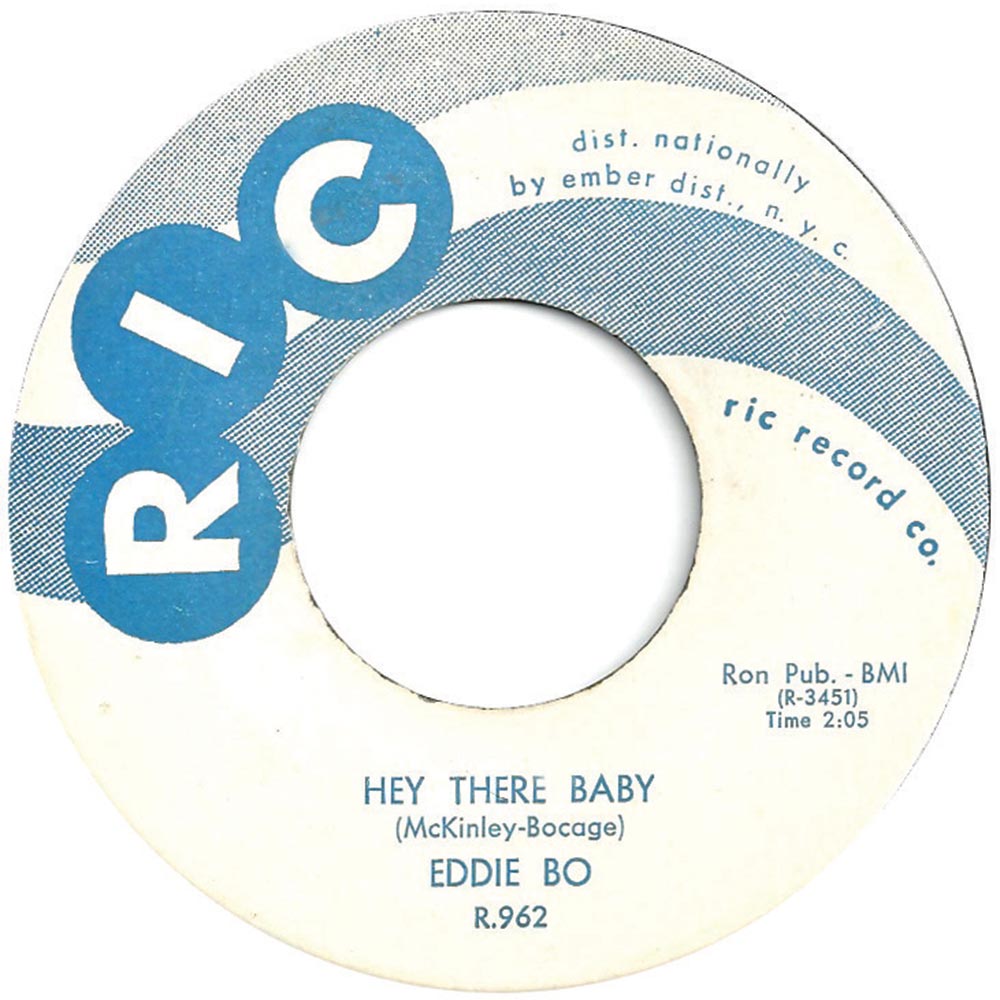
Now signed to Ric, a new chapter began in Eddie Bo’s career. His debut single was Hey There Baby, which Eddie cowrote. Using the alias Edwin Bocage, Eddie and Larry McKinley penned Hey There Baby, an upbeat, driving slice of R&B. On the flip side was I Need Someone, a bluesy ballad written by Eddie. With growling horns for company, Eddie delivers a needy vocal. It oozes quality, and could just as easily have been released as a single. Sadly, Eddie’s Ric debut flopped. This was an inauspicious start to Eddie’s Ric career.
November 1959 saw Eddie release his second single on Ric, You Got Your Mojo Working Now, which Bill Allen and Eddie wrote. It’s another slow, bluesy and soulful song. The B-Side, Everybody Knows, was another Eddie and Larry McKinley composition. Just like his debut single, both songs oozed quality. They should’ve found a much wider audience. That wasn’t to be. You Got Your Mojo Working Now neither sold well, nor received any radio play. Still, Eddie Bo was looking for that elusive hit single.
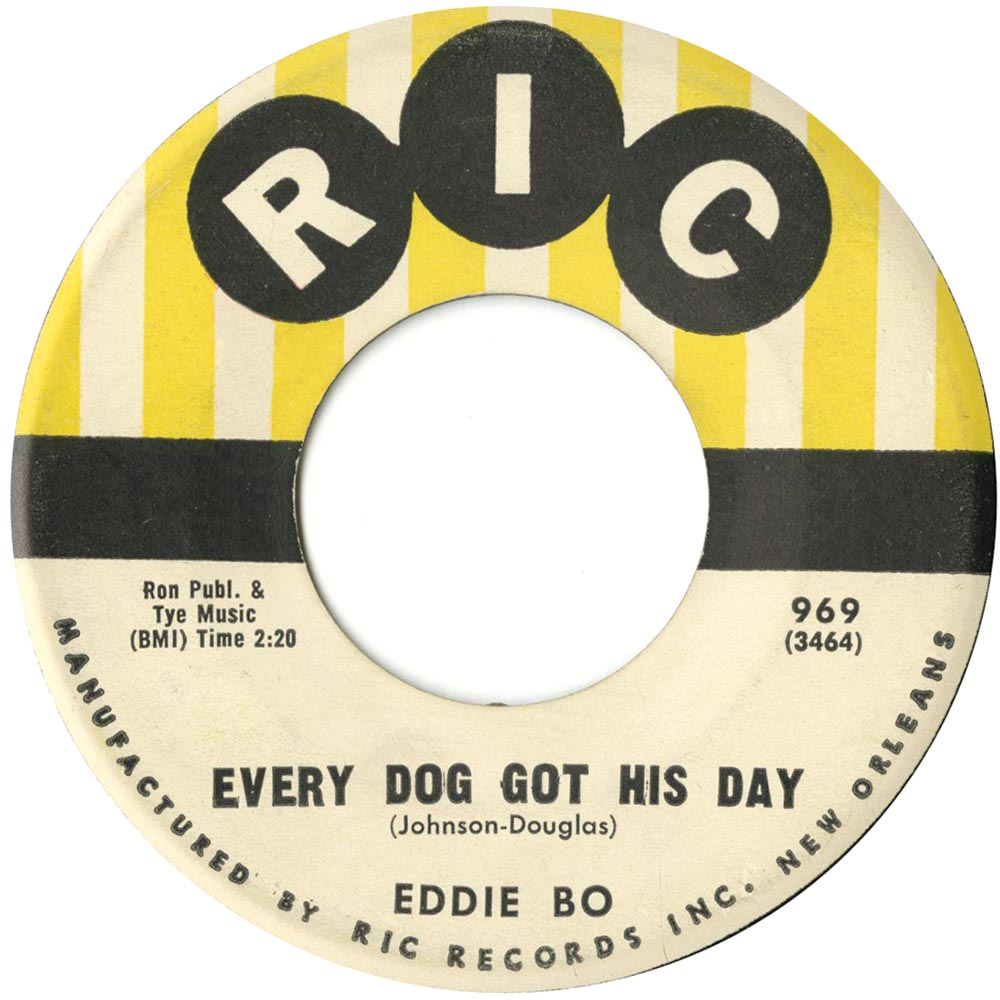
Down but far from out, Eddie returned with his third single Tell It Like It Is, which he cowrote with Bill Allen. It’s an explosive dance track released in early 1960. Straight away, it grabs your attention, and doesn’t let go. Eddie testifies his way through the track, while the band match him every step of the way. The B-Side, Every Dog Got His Day is another dance track, written by Eddie and New Orleans DJ and musical impresario Larry McKinley. Despite its undeniable quality, Tell It Like It Is passed record buyers by. For Eddie this was a disappointing time.
The only consolation was, that the songs he was writing for other artists on the Ric and Ron artist were proving successful. Joe Ruffino it seemed, was willing to give Eddie some leeway?
Unlike many label owners, Joe Ruffino was willing to allow Eddie time to develop as a singer. Despite three consecutive singles failing to chart, Joe gave Eddie another chance. For Eddie’s fourth single, Warm Daddy was chosen.
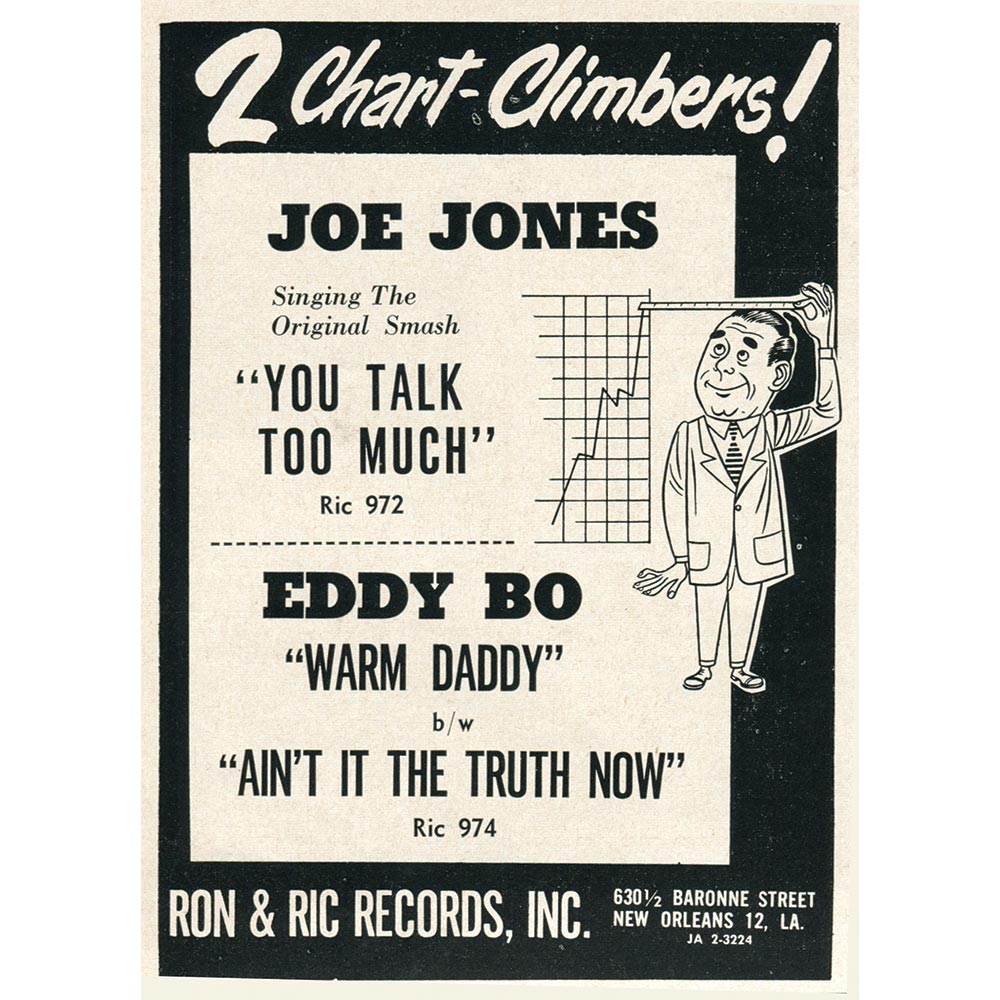
Eddie had written the bluesy Warm Daddy with Bill Allen and Frank Douglas. On the B-Side was Ain’t It The Truth Now which Eddie and Daris Burnam cowrote. It’s almost too good to be tucked away on a B-Side. This slice of R&B is a real hidden gem. Sadly, neither Warm Daddy nor Ain’t It The Truth Now were heard by a wider audience. History repeated itself when Warm Daddy failed to chart. This resulted in a rethink from Joe Ruffino.
After the first four singles Eddie Bo released for Ric flopped, Joe Ruffino decided something had to give. Many label owners would’ve shook Eddie’s hand and called it a day. Not Joe. Eddie was still proving hits for other artists on the Ric and Ron roster. So, Joe couldn’t let Eddie Bo go. Having thought about the situation, Joe thought the answer lay in strings.
It Must Be Love, another of Eddie’s composition was chosen as Eddie’s fifth single. Joe Ruffino had decided to change Eddie’s sound. So, he added strings to It Must Be Love. He did the same to the B-Side, the rueful What A Fool I’ve Been. Sadly, Joe’s master plan didn’t work, and It Must Be Love didn’t come close to troubling the charts. However, Joe’s strings transformed It Must Be Love, into a quite beautiful, Sam Cooke inspired ballad. While Joe’s plan hadn’t worked, he wasn’t ready to give up.
Joe’s strings were retained for Eddie’s next single, Dinky Doo and the flip side Everybody, Everything Needs Love. Both tracks were penned by Eddie. Harold Battiste arranged and produced both tracks. He also brought the A.F.O. Combo onboard to accompany Eddie. The introduction of Harold, the A.F.O. Combo and Joe’s strings worked. Capitol Records hearing Dinky Doo, decided to lease the track. Things looked as if they were looking up for Eddie Bo. Sadly, it wasn’t to be. Dinky Doo disappeared without trace. Eddie would only released one more single during 1961
This was I Got To Know, which was written by Harold Battiste and Melvin Lastie. It was released late in 1961, and finds Eddie in fine voice. Having vamped his way through the first thirty seconds of I Got To Know, a whoop paves the way to his homage to Ray Charles. Then on the flip side, Eddie turns his hand to balladry on Bless You Darling. We hear another side to Eddie, on a song that epitomises the New Orleans’ sound. Sadly, Eddie’s final single of 1961 failed commercially. Again, Eddie’s career was at a crossroads.
While Eddie’s singles failed to chart, he was still providing singles for other artists on the Ric and Ron roster. When Eddie wasn’t writing songs or recording, he wasn’t above turning his hand to some carpentry. He designed and built Ric and Ron’s offices. However, sadly, Joe Ruffino wouldn’t get much use out of his new offices.
As 1962 dawned, Eddie released Check Mr. Popeye as a single. This was one of many Popeye dance tracks being released at this time. On the flip-side was Now Let’s Popeye, which instructed newcomers how to do the Popeye dance. Both tracks were penned by Eddie and proved hugely popular in New Orleans. So much so, that Check Mr. Popeye nearly made it into the U.S. Billboard 100. However, it stopped just short, at number 102. Soon, though, Check Mr. Popeye was being heard further afield.
So, Bernie Binnick of Swan Records was encouraged to license Check Mr. Popeye by DJ Dick Clark. He proceeded to promote the single on his television program American Bandstand. Despite Bernie sending copies of Check Mr. Popeye to DJs across America, the single just couldn’t break into the U.S. Billboard 100. For Eddie Bo, this was the closes he got to a hit on Ric. His next single proved to be his last.
Later in 1962, Eddie released Roamin-Titis. This was another song Eddie had written. Baby I’m Wise, a remake of Eddie’s Slippin’ and Slidin’ featured on the B-Side. Given the quality of both sides, everyone at Ric had high hopes for Roamin-Titis. On its release, it was hailed as the finest single Eddie had released on Ric. Despite the rave reviews, Roamin-Titis didn’t come close to making it into the U.S. Billboard 100. That meant Eddie’s nine Ric singles had failed to chart. For Eddie, this was the end of the road. His time at Ric was over.
For Eddie Bo his time at Ric had come to an end. He had enjoyed four years at Joe Ruffino’s label. While commercial success had eluded Eddie, he wrote a number of successful singles for artists on the Ric and Ron roster. However, still, Eddie Bo wanted to forge a career as a singer. It didn’t look like this would happen at Ric. So he moved on, just as Ric and Ron were thrown into chaos.
Ever since Joe founded Ric, he had worked tirelessly. Eventually, all the years of long days and hard work caught up with Joe Ruffino in August 1962. He died suddenly of a heart attack. His family and the wider New Orleans’ music community were shocked.
With Joe gone, his two sons were left to run the Ric and Ron labels. They tried to follow in their father’s footsteps. That, however, proved impossible. Eventually, Joe’s brother-in-law Joe Assunto took over the running of Ric and Ron. By then, the Ron label was on its last legs. It released its final single in August 1962. By then, Eddie Bo had moved on.
For the rest of the sixties, Eddie Bo moved between labels. He never seemed to stay at a label long. Eddie was a musical nomad, who constantly was seeking somewhere to call home. Maybe, Eddie was looking for somewhere like Ric?
Ric had been a special place for Eddie Bo. Joe Ruffino had proved patient, allowing Eddie Bo to develop and mature as a singer and songwriter. Eddie repaid Joe’s patience and faith, penning hits for a number of artists on Ric and Ron’s roster. Despite this, commercial success and critical acclaim eluded Eddie Bo, who at Ric, never reached the heights he could’ve and should’ve.
While commercial success eluded Eddie Bo at Ric, his career continued right up until his death in 2009. During his career, Eddie Bo proved a versatile and talent performer. What’s more, Eddie Bo was loved and respected in equal measures. While Eddie Bo never enjoyed the fame and fortune some of contemporaries did, he enjoyed an enviable longevity. His determination to reinvent himself ensured this. However, between 1959 and 1962, Eddie Bo was already one of the stars of the New Orleans R&B and soul scene. The nine singles Eddie Bo released on Joe Ruffino’s Ric label are proof of this. They feature on Ace Records’ recent release, Baby I’m Wise-The Complete Ric Singles 1959-1962 which features Eddie Bo, as he became one of the rising stars of the New Orleans’ thriving and vibrant R&B and soul scene.
EDDIE BO-BABY I’M WISE THE COMPLETE RIC SINGLES 1959-1962.
GARNET MIMMS-LOOKING FOR YOU-THE COMPLETE UNITED ARTISTS AND VEEP SINGLES.
GARNET MIMMS-LOOKING FOR YOU-THE COMPLETE UNITED ARTISTS AND VEEP SINGLES.
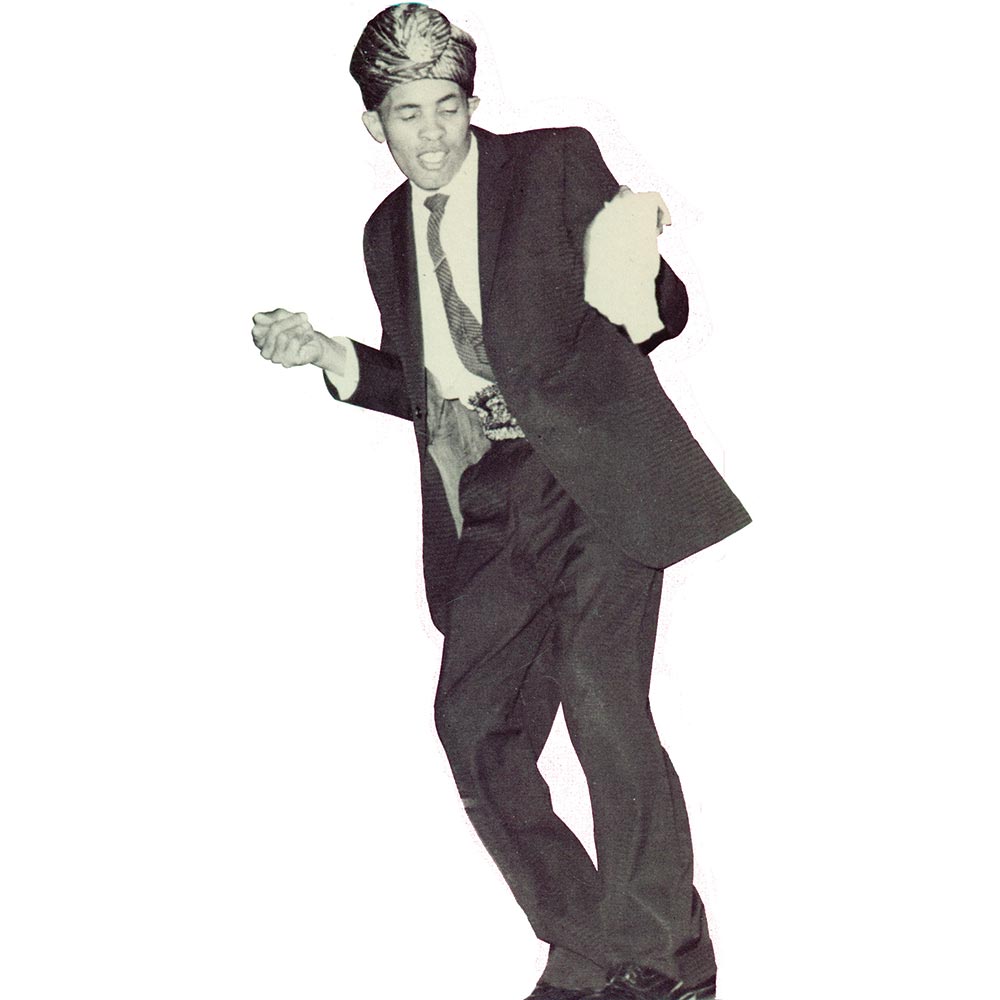
The Garnet Mimms story began in November 1933, in Ashton, West Virginia. That’s where he was born and spent his early years. It’s also where his love of music began.
From an early age, Garnett’s mother took him to church. Like many future soul singers, this was Garnet Mimms’ first exposure to music. He was hooked. By the early fifties, Garnet Mimms decided to move to Philly, where he joined his first gospel group.
In Philly, Garnett’s nascent career as a gosepl singer began. He joined his first gospel group. Soon, Garnett was a member of some of Philly’s top gospel groups, including The Norfolk Four and The Evening Star Quartet. It was with The Evening Star Quartet that Garnett made his recording debut. However, Garnett was never going to get rich singing gospel.
By day, Garnett worked in the Temple Laundry. As he worked, Garnett listened to Jackie Wilson and Sam Cooke on the radio. Soon, they began in influence and inspire Garnett Mimms. This lead to Garnett forming his first R&B group.
By then, Garnett was serving with the U.S. Army. This was only a temporary measure. Garnett knew how he wanted to make a living, singing R&B. So, Garnett formed his first R&B group, The Deltones. Having done so, Garnett knew that once he finished his tour of duty, his days of working in a laundry would be behind him.
In 1958, Garnett left the U.S. Army, and straight away, formed a new group, The Gainors with Sam Bell from The Evening Star Quartet, and another future soul star, Howard Tate. Soon, the group found a manager in Irv Nathan. He signed them to his Red Top label.
With The Gainors signed to the Red Top label, they entered the studio for the first time. Their debut single was Gonna Rock Tonight. On its release, it gave The Gainors their first hit single. It was then picked up by Cameo Parkway. So were were The Gainors next six singles.
Between 1960 and 1963, The Gainors released another six singles. They were picked up by labels like Mercury, Cameo Parkway and Talley-Ho. However, by 1963 The Gainors were no more. After releasing the Van McCoy penned Tell Him, Garnett and Sam Bell disbanded The Gainors.
Garnett and Sam Bell decided to form a new band, which would be billed as Garnett Mimms and The Enchanters. So, they brought Charles Boyer onboard. They knew Charles from their gospel days. He was joined by Zola Pearnell, who was the final piece in this musical jigsaw. With the final piece in place, they started rehearsing.
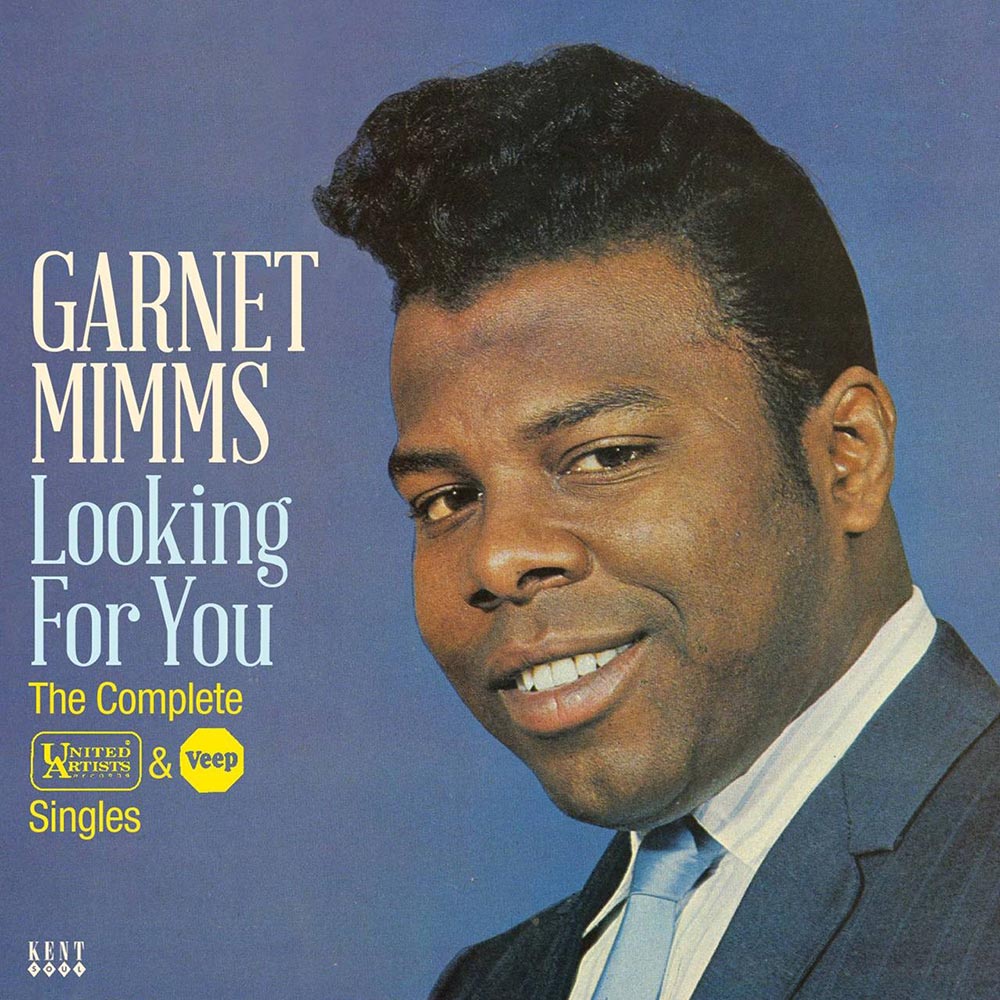
Their rehearsals paid off. Soon, Garnett Mimms and The Enchanters were auditioning for songwriter and producer, Jerry Ragavoy. Sam Bell knew Jerry, and asked him along to a club to see Garnett Mimms and The Enchanters, whose music is documented on Kent Soul’s Garnett Mimms’ compilation Looking For You-The Complete United Artists and Veep Singles, which was recently released by Ace Records.
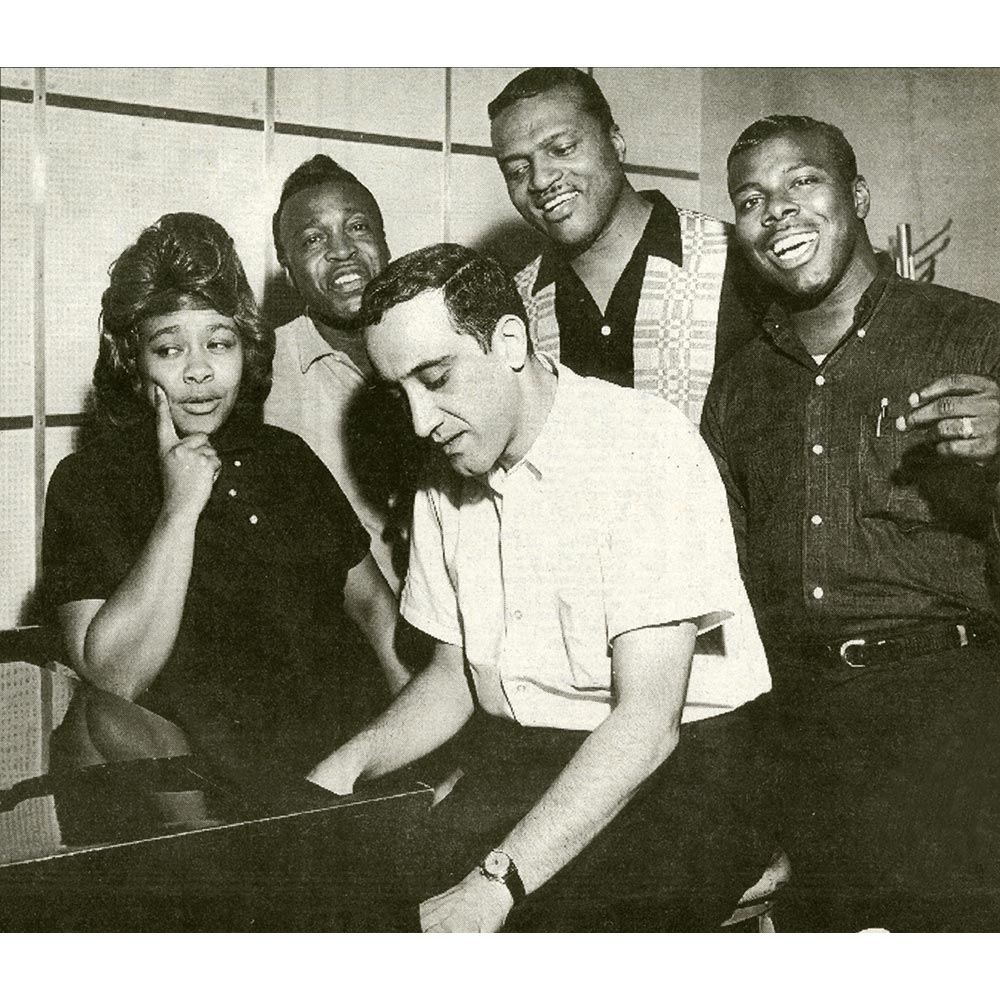
Jerry Ragavoy was based in Philly. However, he was about to move to New York, where he had formed a songwriting partnership with Bert Sterns. However, Jerry found time to go to the club. Straight away, he liked what he saw. Garnett Mimms was a charismatic and talented frontman. It was obvious Garnett was going places. However, Garnett Mimms and The Enchanters came as a package. They also worked well together. The Enchanters were the perfect foil for Garnett. There was no need for Garnett Mimms and The Enchanters to do a hard sell. Quite the opposite. They were holding all the aces.
It wouldn’t be long before Garnett Mimms and The Enchanters had record companies beating a path to their door. So, Jerry had to act quickly. Luckily, Jerry and Bert Sterns had just finished a new song, Cry Baby. It was one of the first songs Jerry and Bert cowrote, using the nom de plumes Norman Meade and Bert Russell. Once it was finished, Jerry phoned Garnett and asked Garnett if he would like to record Cry Baby?
The answer was a resounding yes. So, studio time was booked. Jerry also booked his favoured session players, including drummer Gary Chester, guitarist Eric Gale and keyboardist Paul Griffin. Everything was in place for Garnett Mimms and The Enchanters to make their recording debut.
With everything in place, Garnett Mimms and The Enchanters arrived in the Big Apple. They made their way to the studio, and recording got underway. Two tracks were due to be recorded, Cry Baby and the B-Side Don’t Change Your Heart. It was penned by Sam Bell. Soon, arnett Mimms and The Enchanters were taking care of business. Garnett delivered a cathartic, soul baring vocal. It was as if he was unburdening himself of hurt and heartbreak. Jerry was spellbound. Everyone in the gallery held their breath. Little did they know a number one single had just been recorded. All Jerry needed was label to release Cry Baby.
Having recorded Cry Baby, Jerry set about finding a label willing to release Garnett Mimms and The Enchanters’ debut single. There was a problem. It was unlike any soul single that been released before. Stylistically, this was very different. So, any label willing to release Cry Baby, were taking a leap of faith. Time and time again, labels turned Jerry down. Eventually, he tried United Artists. He wasn’t holding out much hope. However, they were willing to take a chance on Garnett Mimms and The Enchanters’ debut single Cry Baby. They would be richly rewarded for doing so.
When Cry Baby was released in August 1963, it began its slow climb up the charts. Eventually, in October 1963, Cry Baby reached number four in the U.S. Billboard 100 and number one in the U.S. R&B charts. For Garnett Mimms and The Enchanters, it was a storybook start to their nascent career. Would it last?
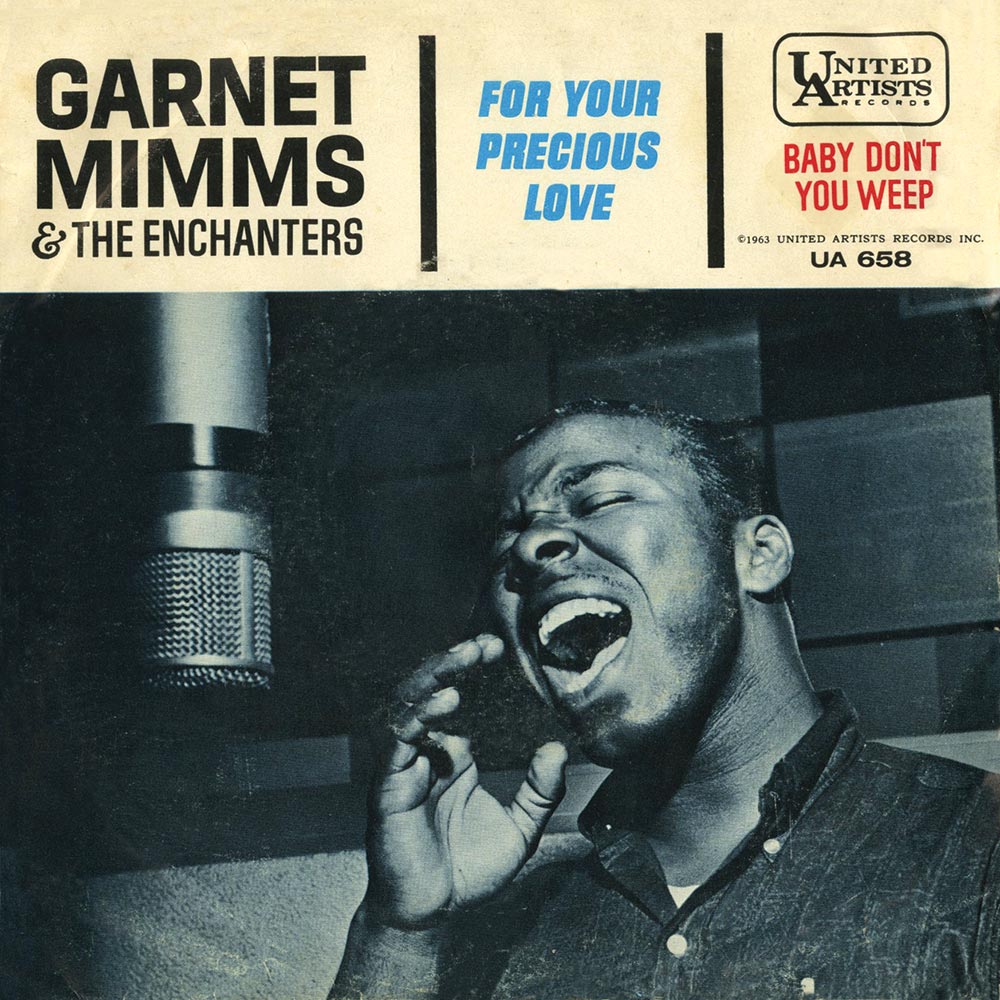
The followup to Cry Baby was meant to be Jerry Ragavoy’s Baby Don’t You Weep. On the flip side was For Your Precious Love, which was written by Arthur and Richard Brooks with Jerry Butler. On its release Baby Don’t You Weep reached number thirty on the US Billboard 100 and number eleven on the US Cashbox charts. However, some DJs started playing the B-Side, For Your Precious Love. Soon, it was climbing the charts, reaching number twenty-six in the US Billboard 100 charts and number nine on the US Cashbox charts. This meant Garnett Mimms and The Enchanters’ had scored two hit singles at the same time. It seemed nothing could go wrong for the Philly quartet.
Given the success of Garnett Mimms and The Enchanters, they released their debut album Cry Baby and 11 Other Hits. This was a case of all that glitters isn’t gold. The Enchanters only sung on three of the tracks. Providing the harmonies were the future Sweet Inspirations. However, soon, Garnett Mimms and The Enchanters were back with their third single, Tell Me Baby.
Having enjoyed three consecutive hit singles, Garnett Mimms and The Enchanters were on a roll. Their fans hungrily awaited their next single. They were in for a shock. Tell Me Baby, a Bob Halley and Carl Spencer penned track was released as Garnett Mimms’ debut solo single. With Anytime You Want Me on the flip side, Tell Me Baby, a Jerry Ragavoy production, was released in 1964. It was quite different from previous releases. Soul and gospel combine, harmonies and handclaps encourage Garnett to greater heights of soulfulness. This stylistic change didn’t prove as popular with record buyers, reaching number sixty-nine in the US Billboard 100 and number sixteen in the US R&B charts. While this was disappointing for Garnett, he hoped it was just a blip.
Three months passed before Garnett returned with his next single, a beautiful, heartfelt ballad, One Girl. The flip side, A Quiet Place, was a track from Garnett Mimms and The Enchanters’ Cry Baby album. However, the addition of The Enchanters didn’t result in a change of fortune. One Girl stalled at number sixty-eight in the US Billboard 100 and number thirty-one in the US R&B charts. Despite the undeniable beauty and quality of One Girl, Garnett seemed unable to replicate the success he had enjoyed with The Enchanters.
Just a month after One Girl disappeared from the charts, A Quiet Place, entered the charts. The B-Side of One Girl reached number seventy-eight in the US Billboard 100 and number twenty-five in the US R&B charts. History was repeating itself. The same had happened with Baby Don’t You Weep and Your Precious Love, the second single released by Garnett Mimms and The Enchanters. This proved ironic, as Garnett Mimms and The Enchanters had just gone their separate ways.
After that, The Enchanters signed to Warner Bros. and released a quartet of singles on their Loma imprint. Garnett, meanwhile, continued with his solo career.
Later in 1964, Garnett released his debut album, As Long As I Have You. The uptempo, driving title track looked destined to be a single. That wasn’t to be. As Long As I Have You was only ever released as a single in France, and is now a real rarity. However, it features on Looking For You-The Complete United Artists and Veep Singles, and is a welcome addition. So, is One Woman Man, Garnett’s next single.
One Woman Man was a released as a single later in 1964, with Look Away on the flip side. It’s one of Garnett’s finest singles. His vocal veers between emotive, hopeful, joyous and needy. It could’ve and should’ve gotten Garnett’s career back on track. Sadly, it was a case of close, but no cigar. On its release, One Man Man reached number seventy-five in the US Billboard 100 and number fourteen in the US R&B charts. So, in an attempt to kickstart Garnett’s career, it was decided he should cover the Bert Berns’ penned A Little Bit Of Soap.
Four years earlier, A Little Bit Of Soap gave The Jarmels a hit single. That, however, was another, more innocent musical age. In the four intervening years, music had changed. Despite this, Garnett stayed true to The Jarmels’ original. He didn’t try to reinvent the wheel. For many A Little Bit Of Soap was the wrong choice of single. The B-Side, Jerry Ragavoy and Ben Raleigh’s I’ll Make It Up To You, was a better choice given the change in musical tastes. That wasn’t to be. On its release in January 1965, A Little Bit Of Soap spent a week in the US Billboard 100, peaking at number ninety-five. For Garnett, this was a huge disappointment.
Little did Garnett know, that things would get worse, before they got better. Garnett’s next four singles all failed to chart. The first of these singles was It Was Easier To Hurt Her, a Bert Sterns and Jerry Ragavoy composition. This rueful ballad was the perfect showcase for Garnett. So was the punchy B-Side Too Close, which Sam Bell and Jerry Ragavoy penned. Sadly,
It Was Easier To Hurt Her failed to chart, is a hidden gem in Garrett Mimms’ back-catalogue. However, it isn’t the only one.
Welcome Home, which was written by Chip Taylor, was chosen as Garnett’s next single. Everytime, another Jerry Ragavoy and Ben Raleigh composition was chosen as the B-Side. There was a problem though.
As Garnett entered the studio with Jerry Ragavoy, so was Walter Jackson. He was in the studio with producer Carl Davis. Their version shipped first, and hit the charts. Garnett’s version, which is a beautiful, wistful ballad was withdrawn. It seemed Garnett was all out of luck.
After the disappointment of Welcome Home, Garnett released That Goes To Show You as a single. Everytime featured on the B-Side. Sadly, there was no Welcome Home for Garnett, when That Goes To Show You failed to chart. Neither did the soulful dance track, Looking For You. It was coupled with More Than A Miracle, but failed to chart. Given that Looking For You was one of Garnett’s best recordings, he must have wondered where his next hit was coming from?
Little did he know that as 1966 dawned, his luck was about to change. I’ll Take Good Care Of You was another Bert Sterns and Jerry Ragavoy song. Prove To Me, which Jerry wrote with Ed Marshall was chosen as the B-Side. When I’ll Take Good Care Of You was released in January 1966, it reached number thirty in the US Billboard 100 and number fifteen in the US Billboard charts. The success of I’ll Take Good Care Of You, would result In Garnett releasing the third album of his career, I’ll Take Good Care Of You. Garnett Mimms it seemed, was back.
Although Garnett Mimms was back, United Artists decided to move him to their newly formed Veep R&B imprint. His Veep debut was It’s Been Such A Long Way Home. It saw Garnett swagger his way through this Jerry Ragavoy and Mort Shuman track. Jerry also cowrote the flip side Thinkin’ with Chip Taylor. It’s a string laden ballad, where Garnett lays bare his soul. Just like It’s Been Such A Long Way Home, Thinkin’ oozed quality. Despite this, the single failed to chart. Garnett’s Veep debut had flopped.
So did the followup My Baby, another track from the pen of Jerry Ragavoy and Mort Shuman. On the B-Side was a Garnett Mimms’ composition Keep On Smilin.’ My Baby was one Garnett’s finest recordings. However, with its unusual time signature and deep soul sound, it was very different from other soul singles. As a result My Baby failed to chart. Time was running out for Garnett Mimms.
After returning from a British tour, Garnett’s next single Only Your Love was cancelled before it was even pressed. All About Love, with The Truth Hurts on the B-Side was chosen as Garnett’s next single. When All About Love failed to chart. It proved to Garnett Mimms United Artists/Veep swan-song.
When United Artists UK released Roll With The Punches, back hime, United Artists passed on the chance to release the single. It was the end of the road for Garnett Mimms. His time at United Artists was over. He had enjoyed nine hit singles between 1963 and 1966. However, it could’ve and should’ve been more.
Sadly, many of the singles Garnett Mimms released failed to chart. That’s despite their undeniable quality. Whether it was ballads or dancers, Garnett Mimms breathed life and meaning into each and every one of these tracks.
They’re documented on Kent Soul’s Garnett Mimms’ compilation Looking For You-The Complete United Artists and Veep Singles, which was recently released by Ace Records. Looking For You-The Complete United Artists and Veep Singles is a reminder of Garnett Mimms, one of the most talented soul men of sixties, at the peak of his soulful powers.
GARNET MIMMS-LOOKING FOR YOU-THE COMPLETE UNITED ARTISTS AND VEEP SINGLES.


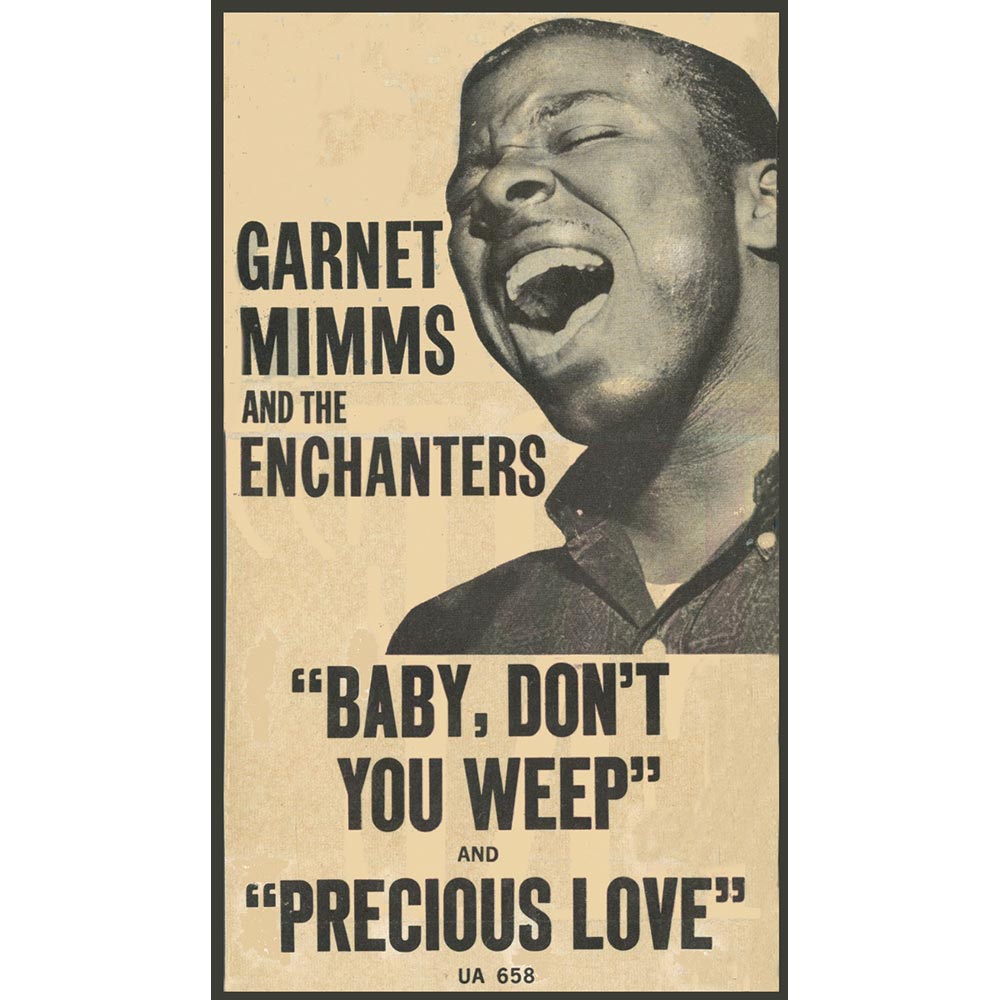
DION RECORDED LIVE AT THE BITTER END AUGUST 1971.
DION RECORDED LIVE AT THE BITTER END AUGUST 1971.
After being one of the biggest selling artists of the late fifties and early sixties, the hits started to dry up for Dion. He had been one of the most successful artists of the rock ’n’ roll era. For the last six years, it seemed Dion could no wrong. This had been the case since Dion first entered a recording studio.
Having signed to Bob and Schwarz’s Laurie label, Dion first recording session was in 1957. Dion DeMucci was scheduled to record a single for Laurie’s Mohawk imprint. However, when he arrived at the studio, Dion wasn’t happy. The Schwarz brothers had arranged that The Timberlanes would accompany Dion. He wasn’t having that. So, Dion went out and recruited his friends Fred Milano, Angelo D’Aleo and Carlo Mastrangelo. They became The Belmonts. Soon, Dion and The Belmonts were enjoying commercial success.
Between 1957 and 1960, Dion and The Belmonts released nine singles and three albums. Their debut single We Went Away, was released in October 1956. When it failed to chart, this was an inauspicious start to their career.
Dion and The Belmonts’ next eight singles charted. A Teenager In Love reached number five in the US Billboard 100 in March 1959. Eight months later, Where Or When became Dion and The Belmonts’ most successful single, when it reached number three in the US Billboard 100 in November 1959. That was as good as it got for Dion and The Belmonts.
They only released two more singles. When You Wish Upon A Star reached number thirty in the US Billboard 100, in April 1960. Two months later, In The Still Of The Night reached reached number thirty-eight in the US Billboard 100. With Dion and The Belmonts’ popularity on the slide, Dion DeMucci decided it was time to embark upon a solo career.
Things started well for Dion. His debut single Lonely Teenager reached number twelve in the US Billboard 100, in 1960. However, the next year, Dion could do no wrong.
During 1961, Dion released five singles. Havin’ Fun and Kissin’ Game gave Dion minor hits. Then Somebody Nobody Wants failed to chart. For Dion, his solo career wasn’t going as planned.
Things changed when Dion released Runaround Sue. It gave Dion his only number one single. The followup to Runaround Sue, was The Wanderer, which reached number two in US Billboard 100. Given the success of his last two singles, Dion released his debut album, Runaround Sue, which reached number twelve in the US Billboard 200. This was the perfect way to close 1961, the most successful year of Dion’s career.
1962 saw Dion pickup where he left off in 1961. He released a quartet of singles that all reached the top ten. The year started well when Lovers That Wander reached number three in the US Billboard 100. The momentum continued when Little Diane reached number eight and Love Came To Me reached number ten. Then as 1962 drew to a close Ruby Ruby reached number two in the US Billboard 100. That was as good as it got for Dion.
After two years where Dion could do no wrong, 1963 saw music change. During 1963, Dion released seven singles. Although Sandy and This Little Girl both reached number twenty-one in the US Billboard 100, Come Go With Me stalled at number forty-eight. Things seemed to be improving for Dion when Be Careful Of Stones That You Throw reached number thirty-one. It was a false dawn. Lonely World failed to chart. For Dion, who for two years was one of the biggest selling artist, it was indeed, a Lonely World.
Just when Dion must have been thinking his luck had run dry, his next two singles, Donna The Prima Donna and Drip Drop reached number six in the US Billboard 100. However, this proved another false dawn.
As 1964 dawned, The Beatles took America by storm. While America didn’t “get” The Beatles until 1964, their effect was soon, being felt. So was the rest of the “British Invasion” bands. They were the toast of American record buyers. Dion, once one of America’s biggest selling artists, felt this backlash.
During 1964, Dion released another five singles. Then I’ll Be Tired Of You failed to chart. It was seen as yesterday’s sound, and failed to chart. So did Dion’s covers of the blues classic Hoochie Coochie Man, and The Isley Brothers’ Shout. Dion just couldn’t buy a hit. For the latest generation of record buyers, Dion was fast becoming yesterday’s man.
Desperately seeking a hit, Dion decided to cover Johnny B. Goode. Again, Dion was looking to the past to kickstart his career. This time, it nearly worked. Dion’s cover of Johnny B. Goode reached number seventy-one in the US Billboard 100. However, it was another false dawn.
By 1965, Dion had decided that now was the time to reinvent himself. He was Columbia Records’ most successful artist. However, Dion realised music had changed, and if didn’t change direction, he risked becoming irrelevant. So, Dion decided that his future lay singing folk and blues. This didn’t please everyone at Columbia Records.
For many at Columbia Records, Dion seemed to forget about the commercial viability of singles. Dion released four singles during 1965, Unloved, Unwanted Me, Kickin’ Child, Tomorrow Won’t Bring The Rain and I Got The Blues. None of the singles charted. Some of the executives at Columbia Records were far from pleased. Their most successful artist was releasing singles that weren’t commercial? For some onlookers, this was sure to end badly.
In 1966, Dion released two further singles. However, neither Time In My Heart For You nor Two Ton Feather charted. That meant two years had passed since Dion enjoyed a hit single. For executives at Columbia Records, their once prized asset seemed to be devaluing at a rate of noughts.
During 1967, Dion didn’t release a single. Dion’s career was at the crossroads. Many thought he had taken a wrong turning, when he decided to reinvent himself as a folk and blues singer. Dion however, who had been inspired by two generations of musicians, was playing the long game.
For many years, Dion had been inspired by blues legends like Robert Johnson, Mississippi John Hurt and Son House. He was also inspired and influenced by the new generation of folk singers, including Bob Dylan, Joan Baez, Phil Ochs and Tim Hardin. They inspired Dion musically and stylistically. Soon, he was finger picking.
This was something Dion had never done before. However, in the mid-to-late sixties, a generation of folk singers were finger picking. So, was Dion. He gently caressed his guitar and sung softly. This was a revelation, and transformed his fortunes. What also helped, was Dion getting clean in 1968.
Like many within the music industry, Dion had a penchant for the rock ’n’ roll lifestyle. However, in 1968 Dion made the decision to get clean. He had tired of alcohol and drugs. So, Dion decided now was the time to change. This decision transformed him. Suddenly, he felt at peace with the world. A Zen like calm descended, and Dion’s comeback began.
For his comeback, Dion covered a song recently written by Dick Holler, Abraham, Martin and John. It was his tribute to four Americans who affected social change. Dion recorded his understated, folk rock single at the Allegro Sound Studios, with Phil Gernhard producing Dion’s comeback single. It caught a nation’s imagination.
When Abraham, Martin and John was released in 1968, it reached number four in the US Billboard 100. However, the followup, a cover of Purple Haze stalled at just number sixty-three. Although this was a disappointment, Dion was back. He released his comeback album Dion later in 1968.
Over the next few years, Dion’s comeback continued. After two hit singles during 1968, a newly reinvigorated Dion released four singles, and the album, Wonder Where I’m Bound, during 1969. Things didn’t go to plan. I Can’t Help But Wonder Where I’m Bound failed to chart. Then From Both Sides Now stalled at number ninety-one. Dion’s luck didn’t change, when He Looks A Lot Like Me and If We Only Have Love both failed to chart. As a new decade dawned, Dion was looking increasingly like yesterday’s man.
1970 was a quiet year for Dion. He released just one single, Your Own Back Yard. It reached number seventy-five on the US Billboard 100. He also released another album, Sit Down Friend. Although it wasn’t a commercial success, Dion was by now a popular live act. So, it’s no surprise that Dion and his record company decided to record a live album, Dion Recorded Live At The Bitter End August 1971, which was recently released by Ace Records.
The decision to record a live album, couldn’t have been timed better. During 1971, singer-songwriters were among the biggest selling acts. Carole King and James Taylor had just made their commercial breakthroughs. Dion had released his latest album, Sanctuary. It wasn’t a huge commercial success. So, Dion needed an album that would kickstart his career. Maybe, just maybe, Live At The Bitter End 1971 would transform Dion’s fortunes?
For Dion Live At The Bitter End August 1971, Dion worked his way through seventeen tracks. They were a mixture of classics, cover versions and Dion’s own songs.
Fittingly, Dion opened his set with a Bob Dylan song. Dion, like all folk singers, owed Bob Dy;an a debt of gratitude. He was partly responsible for the resurgence of interest in folk music. However, Dion had repaid the debt, playing on a couple of songs on The Freewheeling Bob Dylan. Here, however, he delivers a pensive, poignant reading of Mama, You’ve Been On My Mind. From there, Dion moves onto the first of his own songs.
Dion wrote four songs on Dion Recorded Live At The Bitter End August 1971. Brand New Morning, a heartfelt, hope filled ballad is the first. Then there’s Sunshine Lady, a paean with a feel good sound. Willigo and Harmony Sound, which closes Dion’s set, showcase Dion’s skills as a singer-songwriter. That’s also apparent on the two tracks Dion cowrote with Tony Fasce, Your Own Backyard and Sunniland. Both tracks leave you wondering why Dion never enjoyed more commercial success and critical acclaim, during this period of his career.
That’s the case throughout Recorded Live At The Bitter End August 1971. After all, there aren’t many singers who are versatile enough to switch between Chuck Berry’s Too Much Monkey Business, Bob Dylan’s One Too Many Mornings, Lennon and McCartney’s Blackbird and Leonard Cohen’s Sisters Of Mercy. Seamlessly, Dion adapts to the change of style, including the blues.
After covers of Chuck Berry, Bob Dylan, Lennon and McCartney and Leonard Cohen, Dion returns to the blues. He covers Sam Hopkins’ You Better Watch Yourself and Sonny Williamson’s Don’t Start Me Talking. Dion it seems, is just as comfortable playing the blues. However, he’s not above throwing in a few of his “greatest hits.”
This includes the Dick Holler penned Abraham, Martin and John. Dick also cowrote Sanctuary, the title-track of Dion’s 1971 album, with Don Burnham. However, as the show drew to a close, Dion covered two of his best known songs, The Wanderer and Lieber and Stoller’s Ruby Baby. They proved popular choices. Closing the show, was one of Dion’s own songs, Harmony Sound. After seventeen songs in fifty-five minutes, Dion left the stage to rapturous applause.
Fourteen years after releasing his debut single with The Belmonts, Dion was still going strong. The last few years hadn’t been easy. The hits had dried up for Dion. No longer was he enjoying top ten singles. However, was still making a living out of music. To do that, he had to reinvent himself as a singer-songwriter.
That proved a shrewd move. During the early seventies, singer-songwriters like Carole King and James Taylor were among the biggest selling artists. Sadly, Dion didn’t enjoy the same success. Although Dion didn’t sell millions of albums, he still had a loyal fan-base. They continued to buy his albums, and would continue to do so.
This would be the case through the seventies and eighties. Dion regularly released albums. In 1989, Dion was inducted into the Rock and Roll Hall of Fame. After four decades in music, Dion a true musical chameleon, got the recognition he deserved. This didn’t mean Dion’s career was at an end.
Far from it. By the nineties, Dion was still going strong. He wasn’t releasing albums as regularly as he once had. However, he occasionally released a new album. That was the case as a new millennia dawned. Still, Dion was writing and recording. He never lost his enthusiasm for music. Now aged seventy-six, the Bronx-born musician is a musical veteran, whose recording career has lasted over fifty years. Part of the secret of Dion’s longevity, is his willingness to evolve musically. That’s apparent on Dion Recorded Live At The Bitter End August 1971, which was recently reissued by Ace Records, and shows the former wanderer and musical chameleon, reinvent himself as a singer-songwriter.
DION RECORDED LIVE AT THE BITTER END AUGUST 1971.
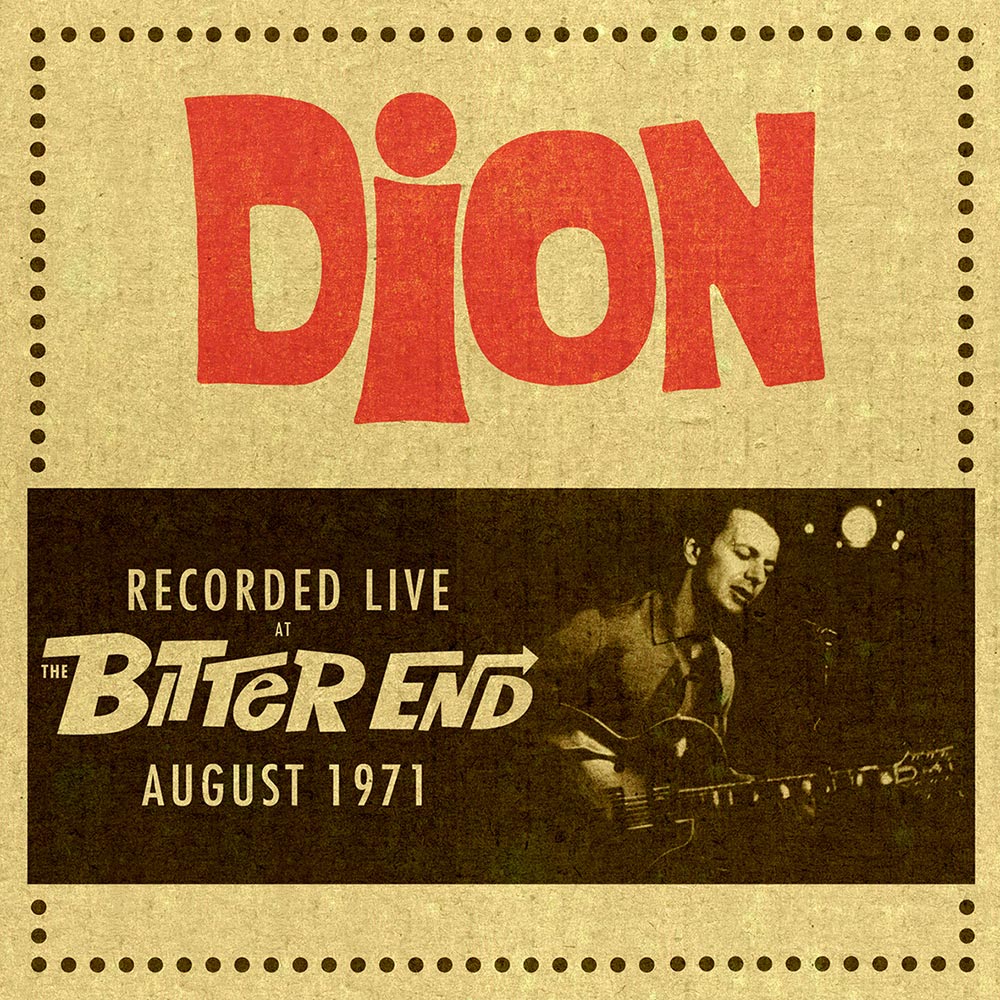

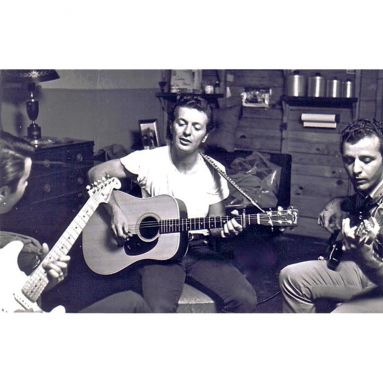
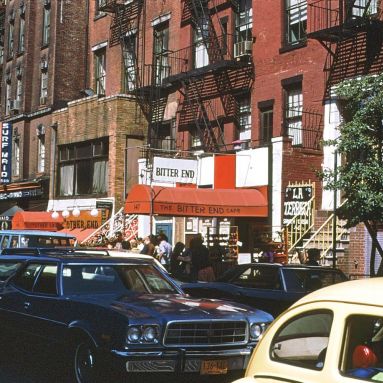
WITHERED HAND-NEW GODS.
WITHERED HAND-NEW GODS.
It’s at this time of year, everyone within the Scottish music industry starts thinking of the Scottish Album Of The Year Award. It’s without doubt, the most prestigious award in Scottish music. There’s a lot of kudos attached to the Award. Then there’s the £20,ooo cheque the winner is handed. For many Scottish artists, this will be a lifeline. It certainly could help Withered Hand, who took five years to produce his sophomore album Good News.
Six long years have passed since Withered Hand recorded their debut album Good News. It was released to critical acclaim, and praised for its stark honesty. There was a reason for this. The man behind Withered Hand, Dan Willson was a latecomer to music. He was already thirty when he wrote his first song. So, Dan had lived a life and had stories to tell. Many of them were based upon his life. This is also the case with Withered Hand’s sophomore album New Gods.
New Gods was released on 17th March 2014. With the help of funding from Creative Scotland, Dan was able to record New Gods, the long awaited followup to Good News. It was released via Fortuna POP! in the UK and Europe and Slumberland in the US and Canada. New Gods features more songs based on Dan’s life. That’s been the case since Dan wrote his first song.
This came during a period when Dan’s life had been turned upside down. A close friend had just died, and he was about to become a father, for the first time. Dan was reflecting on what life was about. He found himself asking the “big questions.” To help him find answers and express how he was feeling, Dan wrote his first song. For Dan, this proved a cathartic experience. It helped Dan to make sense of what had been happening in his life. This is when Dan realised he was a talented songwriter.
Aged thirty, he began writing the songs that became Good News. Rather than release the album as Dan Willson, Dan dawned the persona of Withered Hand. Maybe, it was easier for Dan to write and perform the songs via his alter ego? On Good News’ release, critics on both sides of the Atlantic and musicians like Jarvis Cocker were won over by Good News. Where had Withered Hand all these years?
Previously, Dan had been active in the world of visual art. He was interested in music and “dabbled.” However, it wasn’t until he dawned the persona of Withered Hand, that Dan decided to make a career as a musician.
Following the release of Good News, Withered Hand has established a reputation as a prolific live performer. That’s no bad thing. It allowed Withered Hand to further hone his sound. This has resulted in Withered Hand establishing a reputation as one of Scotland’s best singer-songwriters. During this period, Withered Hand has continued to win friends and influence people. Among them, are fellow musicians.
Many of Withered Hand’s fellow musicians are delighted to share a stage with one of Scotland’s rising musical stars. Recently, this has included Pam Berry, of America noisepop band Black Tambourine. Pam also joins Withered Hand on New Gods, adding backing vocals. Pam isn’t the only guest artist on New Gods. Far from it.
For New Gods, Dan penned eleven tracks. These songs deal with the big issues in life. This includes love, death, friendship and infidelity. There’s also songs about road trips, stargazing and cough mixture abuse. New Gods is a grownup album from a perceptive and talented songwriter. That’s why when Withered Hand recorded New Gods, he was joined by some of the biggest names in Scottish music.
When the recording of New Gods got underway at Mogwai’s Castle Of Doom Studios, Withered Hand’s band was augmented by a who’s why of Scottish music. Withered Hand’s band includes a rhythm section of bassist Fraser Hughes, drummer Alun Thomas and guitarist Malcolm Benzie. Peter Liddle plays accordion and Pam Berry of Black Tambourine, adds backing vocals and plays tambourine. Other guest artist include Pete Harvey on cello, Andy Robinson on djembe and Rob St. John on mellotron. They were joined by King Creosote, who Dan describes as his mentor. There were also guest appearances from some of Scottish music’s biggest names. Among them were Eugene Kelly of The Vaselines, Stevie Jackson and Chris Geddes of Belle and Sebastian and Scott Hutchison of Frightened Rabbit. Producing New Gods was another legend of Scottish music, Tony Doogan who previously, has produced Mogwai, Teenage Fanclub and Belle and Sebastian. It was this all-star lineup that recorded New Gods, which was funded in a different way to most albums.
Making an album is an expensive business, especially without a record company behind you. So, to fund New Gods, Withered Hand turned to Creative Scotland. They’ve previously helped Quickbeam and Blood Relatives to record and release albums. They helped Withered Hand to fund New Gods, which has just been released. Would New Gods be well received?
On its release New Gods critics have heaped praise upon New Gods. Just like Withered Hand’s debut, Good News, New Gods has been critically acclaimed. New Gods has been described as the equivalent of a “confessional” that’s variously wistful, joyous and “life-affirming.” That’s some recommendation. New Gods it seems, is one of the best Scottish albums of 2014 so far. Is that the case? That’s what I’ll tell you.
Opening New Gods is Horseshoe, which demonstrates Dan’s skill as a singer and songwriter. It’s a poignant and powerful song about fear and loss. Just a lone acoustic guitar accompanies Dan’s vocal. Fear and despair fill his vocal as he sings: “Please don’t put a shadow on her lung.” Accompanying him are distant harmonies, a strident rhythm section, searing guitars and keyboards. The arrangement grows, matching the despair in Dan’s vocal. He unburdens himself, revealing his deepest fears. His vocal is a cathartic outpouring of despair, fear and grief and results in a poignant, powerful and beautiful song.
Crystalline and jangling guitars join the rhythm section and harmonies as Black Tambourine unfolds. It’s a slice of perfect pop that’s described as an “anti-hipster anthem.” Think Lloyd Cole and The Commotions circa Rattlesnakes and that’s a fair comparison. Dan even finds his inner rocker, as blistering guitars are unleashed. Mostly, though, it’s the sweetest and purest perfect pop that’s melodic and anthemic.
Love Over Desire is a relationship song, sung from the point of view of a musician on the road. It has a much more understated arrangement. It’s just Dan and his trusty acoustic guitar. Gradually, the arrangement builds, with weeping guitars and the rhythm section combining. Later, an organ, cello and backing vocals enter. However, it’s Dan’s lyrics and vocal that grabs your attention.His lyrics paint pictures. They’ve a cinematic quality, and when Dan delivers them, his worldweary vocal brings them to life.
Joyously, King of Hollywood bursts into life. Folk and rock combine as Dan twists his way through the song. Accompanied by an accordion, rhythm section and guitars Dan tells the story of a night out in Los Angeles with King Creosote. As Dan reminisces, the accordion helps power this hook-laden opus along. Melodic, memorable and truly infectious describes this song.
California is the polar opposite of the previous track. The arrangement is moody and understated. Acoustic guitars accompany Dan’s wistful vocal his time in California, when he experienced its darker side. Dan reminisces, remembering how it all unfolded. It started well, “beer, ice cold, in my hand, I’m on my way” then later; “stopping for a burger in the In-n-Out” and then: “bag of powder,” “heart beating in my chest like a jackhammer.” Meanwhile, the rest of band provide a moody backdrop to Dan vocal, as he remembers what he’d sooner forget.
Chiming guitars and the the rhythm section set the scene for Dan on Fall Apart. His vocal is tender and thoughtful, before growing in power. Stabs of piano and harmonies accompany Dan. Memories come flooding back. Sadly, they mean more to him. Dan remembers: “you and I were dancing, by the light of every dead star” and “put your hand in mine, I remember the first time.” These lyrics are part of another anthem that showcases Dan’s talents as a singer and songwriter. Just like the other tracks, his all star band provide the perfect backdrop for his vocal powerhouse.
Between True Love and Ruin is another relationship song, but one with a twist in the tale. He loves and needs her, while she’s “dreaming of freedom.” That’s because of her insecurity. Dan sings: “you said when people say nice things to you, you found it hard to believe them.” Horns rasp, while the rhythm section provide the arrangement’s heartbeat. Dan’s vocal is melancholy and needy, as he lays bare his soul, constantly reassuring her: ”don’t you know you had a friend?” This results in a quite beautiful and perceptive song about the nature of relationships.
Life Of Doubt is a song about addiction and specifically, being addicted to cough medicine. With a blues harmonica, that’s reminiscent of a Neil Young album setting the scene, one of the most poignant and moving songs unfolds. Just the blues harp and acoustic guitar accompanies Dan’s vocal. His vocal is a mixture of hope, fear and despair. He knows he’s an addict, but doesn’t know if he can or wants to get clean. Bleak, despairing and brutally honest, it’s one of the best songs about addiction I’ve heard in a long time.
New Gods has an understated, folk influence. The song is set in Switzerland. Dan’s vocal is tender and heartfelt. He delivers the song to a woman mourning her youth. Dan describes running across the fields late at night, staring spellbound, at the sky above. With just tambourine, acoustic guitar and harmonies for company, Dan delivers an impassioned plea. Later, he reassures her by singing: “someday, you’ll be beautiful again.”
Heart Heart is a raucous slice of singalong rock-tinged folk. Withered Hand kick loose. It’s as if the spirit of ’76 has inspired them. Rebel rouser in chief is Dan. His vocal is powerful as he helps the rhythm section, guitars and keyboards drive the arrangement along. When the tempo drops, this is a curveball in a track that’s best described as a raucous everyman anthem.
Not Alone close New Gods. It’s a wistful and poignant song. The understated arrangement suits the song. This allows Dans’ delivery of the lyrics to take centre-stage. That’s until the braying horns, mellotron and la-la-la harmonies take charge. Soon, the wistfulness is gone, becoming celebratory as if saying goodbye for the final time.
“It’s been a long time coming”, so sang Sam Cooke. The same thing can be said about New Gods, Withered Hand’s sophomore album. However, it has been worth every minute of that long wait. New Gods features eleven songs dealing with the big issues in life. This includes love, death, friendship and infidelity. There’s also songs about road trips, stargazing and cough mixture abuse. That’s why I’d describe Withered Hand’s sophomore album New Gods is a grownup album from a perceptive and talented songwriter. That was the case with Good News, Withered Hand’s debut album. Released to critical acclaim, Good News followed from Withered Hand. A new album, New Gods, was due out on 17th March 2014 via Fortuna POP! in the UK and Europe and Slumberland in the US and Canada.
Much anticipated, New Gods was released to critical acclaim. No wonder. Cathartic, cerebral, heartbreaking, perceptive and witty describes New Gods, which was the first album Withered Hand recorded in a recording studio. With a the experienced producer Tony Doogan at the helm Withered Hand headed to Mogwai’s Castle Of Doom studios, in Glasgow. Joining Withered Hand were some of the biggest names in Scottish music. So it’s no surprise Withered Hand’s sophomore album New Gods is one of the finest Scottish albums of recent years. There’s a reason for this.
Dan is one of the most talented and perceptive songwriters around. His songs can make you laugh, cry and dance with joy. From the opening bars of Horseshoe, right through to the closing notes of Not Alone, New Gods is a spellbinding album. That’s why I’d describe it as a cathartic confessional. New Gods veers between wistful, joyous and everything in between. That’s why Withered Hand have a big future. With their unique brand of Americana, blues, country, folk and rock Withered Hand are one of Scotland’s most exciting bands, whose sophomore album New Gods, was one of the best albums of 2014, and would be a worthy winner of the Scottish Album Of The Year Award.
WITHERED HAND-NEW GODS.
BAD COMPANY-BAD COMPANY (DELUXE EDITION).
BAD COMPANY-BAD COMPANY (DELUXE EDITION).
When Free split-up in for the second and final time in 1973, vocalist Paul Rodger and drummer Simon Kirke joined the latest rock supergroup Bad Company. Completing Bad Company’s lineup, were Mott the Hoople guitarist Mick Ralphs and bassist Boz Burrell. They would become part of the most successful supergroup of the seventies.
From their 1974 debut album Bad Company, right through to 1979s Desolation Angels, Bad Company were one of the biggest selling bands on both sides of the Olympics. In Britain and America, Bad Company could do now wrong. Three of their five albums were certified gold in Britain. Across the Atlantic, Bad Company enjoyed four multi-platinum albums. They sold an estimated 13.5 million albums. This meant Bad Company were shoulders with the biggest, and most successful supergroups of the late-sixties and early seventies. The album that started this run of commercial success and critical acclaim, is Bad Company, which was recently released as a Deluxe Edition by Rhino.
Before long, Bad Company were signed to Led Zeppelin’s newly formed Swan Song label. Soon, they had acquired a manager. This was Led Zeppelin’s manager, Peter Grant. He would guide Bad Company through the most successful period of their career. It began in November 1973.
That’s when Bad Company began recording their eponymous debut album. Recording began in November 1973, when Ronnie Lane’s mobile recording studio became available. This came about purely by chance.
Having released their fifth album in February 1973, Led Zeppelin were due to return to the studio in November 1973. So, they had hired Ronnie Lane’s mobile recording studio, which Led Zeppelin had sent to Headley Grange. However, things didn’t go well. The recording session ground to a halt, and Bad Company who were about to record their eponymous debut album, used the studio time.
At Headley Grange, Bad Company would record the eight tracks that became their debut album Bad Company. Each of the eight tracks were written by members of the band. Drummer Mick Ralphs wrote Can’t Get Enough, Movin’ On and Ready for Love, which Mott The Hoople had already recorded. Mick and Paul Rodgers cowrote Don’t Let Me Down and Seagull. Vocalist Paul Rodgers contributed Rock Steady and The Way I Choose. He also cowrote Bad Company with drummer Simon Kirke. These eight tracks were recorded by Bad Company during November 1973.
Using Ronnie Lane’s mobile recording studio, Bad Company began recording and producing their debut album at Headley Grange. Vocalist Paul Rodger played rhythm guitar on Can’t Get Enough, piano on Bad Company and Don’t Let Me Down. He also played all instruments on Seagull. Bad Company’s rhythm section featured drummer Simon Kirke, bassist Boz Burrell and guitarist Mick Ralph. Augmenting Bad Company, were saxophonist Mel Collins, and backing vocalists Sue Glover and Sunny Leslie. They feature on Don’t Let Me Down. By the end of November 1973, Bad Company was completed. It would prove to be one of the most successful debut albums of the early seventies.
Before Bad Company was released, the critics had their say. They were won over by Bad Company’s spartan, stripped back brand of rock. There were no dissenting voices, just critically acclaimed reviews of Bad Company. Things were looking good for Bad Company.
Can’t Get Enough was chosen as the lead single from Bad Company. It reached number fifteen in Britain, number three in Canada and number five in the US Billboard 100. Then when Bad Company was released on June 26th 1974, it reached number three in Britain, number seven in Canada and number one in the US Billboard 200. This resulted in Bad Company being certified gold in Britain and five times platinum in America. The second single from Bad Company was Movin’ On, which reached number thirty in Canada and number seventeen in the US Billboard 100. Bad Company, the third and final single released from Bad Company failed to chart. However, Bad Company, which I’ll tell you about, was one of the biggest selling albums of 1974. It was also just the start of the rise and rise of Bad Company.
Opening Bad Company is the classic, lead single Can’t Get Enough. Drummer Simon Kirke counts Bad Company, before the rhythm section and bursts of scorching guitars sets the scene for Paul’s needy, hopeful vocal. Soon, a fist-pumping, future rock classic is unfolding. It’s apparent the four members of Bad Company are talented and experienced musicians. They never miss a beat, as they fuse rock and blues. Later, guitarist Mick Ralph delivers a guitar masterclass. This inspires Paul. He goes on to deliver a swaggering, powerhouse of a vocal on this classic rock anthem.
Rock Steady was penned by Paul Rodgers. Bursts of rocky licks are unleashed, before Bad Company’s rhythm section enter. They join Mick Ralph’s guitar, providing the backdrop for Paul’s vocal. His vocal veers between soulful and thoughtful, to powerful, and bluesy. Backing vocalists accompany him, adding further bursts of backing soulfulness. Soon, though, Bad Company are ready to kick loose. That’s the signal for Paul’s vocal to drop out. The rest of Bad Company jam, allowing the opportunity to showcase their considerable talents. They’re at their rocky best. As the rhythm section lay down a rocky groove, guitarist Mick Ralph unleashes searing, crystalline licks. When Paul returns, again, he’s a man inspired. He struts, whoops and hollers his way through the rest of Rock Steady, as Bad Company look set to join supergroup royalty.
Originally, Mick Ralphs wrote Ready For Love for Mott The Hoople, his former band. They recorded it. This didn’t stop Mick’s new band reworking the track. Some saw this as a brave move, as there would be the inevitable comparisons. Bad Company stay true to the original. It’s a case of dropping the tempo, and turning Ready For Love into a thoughtful ballad. Paul delivers a pensive, pleading vocal and plays piano. Cooing harmonies sweep above the arrangement. Meanwhile, the rest of Bad Company seem to play within themselves. They take care not to overpower Paul’s vocal or piano. The piano plays in important part in the song. Especially during the breakdown, where piano carries the melody. Then when Paul’s vocal returns, Bad Company threaten to kick loose. However, they never do, allowing the listener to hear another side to Bad Company during this beautiful ballad.
Slowly, and dramatically, Don’t Let Me Down unfolds. Guitar riffs, drums rolls and subtle bursts of piano accompany Paul’s probing, questioning vocal. He pleads “Don’t Let Me Down,” laying bare his soul for all to hear. Meanwhile, cooing, sweeping, gospel tinged harmonies join searing guitars, piano and sultry saxophone. Then when the saxophone drops out, guitarist Mick Ralph unleashes one of his best solos. This inspires the rest of Bad Company on this fusion of rock, soul and gospel harmonies.
Hesitantly and gently, Bad Company begins to unfold. Paul’s vocal is tender, as he remembers his younger days. Meanwhile, a piano plays and the rhythm section play within themselves. That’s until Paul delivers the lyric: “that’s what they call me Bad Company.” That proves the signal for Bad Company to cut loose. This they do briefly, before returning to the understated sound. From there, they veer between the understated and rocky sound. In doing so, Bad Company enjoy the opportunity to showcase their versatility
The Way I Choose has an understated, thoughtful sound. As the rhythm section play slowly and subtly, a chiming, crystalline guitar accompanies Paul’s vocal. It’sfull of emotion. One minute he sings: “I don’t need nobody,” the next, “I only love you baby.” No wonder. His partner isn’t sure. Paul pleads; “answer my question, don’t say goodbye,” on this soul-baring paean.
After the balladry of The Way I Choose, Bad Company turn to good time rock on Movin’ On. From the opening bars, it’s apparent why it was chosen as a single. Hooks haven’t been rationed, on this rocky anthem. Bad Company combine the rhythm section and blistering guitars. They provide the backdrop for Paul’s strutting vocal. As he sings about life as a rock star on the road, harmonies are added. They’re the perfect foil for Paul’s vocal. Then when his vocal drops out, guitarist Mick Ralph delivers a blistering, searing solo. It’s one of his best. It drives Paul and the rest of Bad Company to greater heights on this rocky anthem.
Seagull closes Bad Company and disc one of the Deluxe Edition. It’s another understated song. Mostly, it’s just Paul’s vocal and his guitar. As he strums his acoustic guitar, Paul wistfully delivers the lyrics. He’s very different from the swaggering, strutting rocker on Can’t Get Enough Of Your Love and Movin’ On. That’s no bad thing. It shows that Bad Company weren’t one trick ponies, never would be.
On Rhino’s recently released Deluxe Edition of Bad Company, disc two features another thirteen tracks. They’re a compelling collection of tracks. There’s demos of Little Miss Fortune and The Way I Choose. B-Sides include Little Miss Fortune, which was the B-Side to Can’t Get Enough, and Easy On My Soul, the B-Side of Movin’ On. Then there’s the long versions of Easy On My Soul and Superstar Woman. Can’t Get Enough features three times. There’s the single edit, take one and the Hammond Mix. This shows how the song evolved into a true rock classic. For anyone interested in Bad Company, or even classic rock, then disc two will provide an insight into one of the biggest, and most successful bands of the seventies.
Right through until 1979s Desolation Angels, Bad Company’s fifth album, they were one of the biggest selling bands on both sides of the Atlantic. In Britain and America, Bad Company, it seemed, could do now wrong. Three of their five albums were certified gold in Britain. Across the Atlantic, Bad Company enjoyed four multi-platinum albums. In America alone, Bad Company sold an estimated 13.5 million albums. The album that started the rise and rise of Bad Company, was their 1974 eponymous album, Bad Company.
With its mixture of rocky tracks and ballads, Bad Company caught the imagination of the record buying public. Across Europe, North America, Australasia and Britain, Bad Company were the latest supergroup to become part of rock royalty. They were at the top for five years, right through until 1979. After that, the hits dried up for six years.
By then, Paul Rodgers had left Bad Company. He left in 1982, and played a huge part in Bad Company’s success. The former Free vocalist struck gold with his second band, Bad Company. However, Bad Company weren’t a one man band.
Far from it. Each of the four members of Bad Company player their part in the band’s success. That was the case on their debut album Bad Company, which was recently released as a Deluxe Edition by Rhino. The rhythm section of bassist Boz Burrell and drummer Simon Kirke provided Bad Company’s rocky heartbeat. Guitarist Mick Ralphs unleashed a series of blistering, scorching and crystalline solos. Adding the final piece to the jigsaw, was Paul Rodger’s vocal. It veered between needy and hopeful, to a strutting, swaggering powerhouse. Together, the four members of Bad Company became an unstoppable musical juggernaut.
From 1974, right through to 1979, Bad Company were rubbing shoulders with the great and good of rock music. They were one of the most successful British rock bands, and also, one of the most successful rock supergroups. While some supergroups released just a couple of albums, Bad Company enjoyed an unenviable longevity. Their recording career lasted twenty-two years and twelve albums. However, Bad Company’s most successful album was their 1974 eponymous debut, Bad Company which forty-one years later, is regarded as a classic album.
BAD COMPANY-BAD COMPANY (DELUXE EDITION).
GRITS AND GRAVY-THE BEST OF THE FAME GANG.
GRITS AND GRAVY-THE BEST OF THE FAME GANG.
Back in the sixties, many soul and R&B labels had their own house band. One of the earliest examples in the sixties, were the Funk Brothers, Motown’s house band. They provided Motown’s trademark sound. Motown however, weren’t alone.
As the seventies dawned, HI Records was about to become one of Southern Soul’s leading labels. Their secret weapons were the Hi Rhythm Section and the Memphis Horns. They graced many a Hi Records release, and helped transform Al Green and Anne Peebles’ fortunes. Meanwhile, in Philly, M.F.S.B. were the session players the Mighty Three called upon.
The Might Three consisted of Thom Bell, Kenneth Gamble and Leon Huff. They would become Philly’s most successful producers. Thom Bell used M.F.S.B. on his recordings with The Deltonics, The Detroit Spinners and The Stylistics. By 1971, Gamble and Huff had founded Philadelphia International Records. Right through to 1975, the original lineup of M.F.S.B. would provide the backdrop to Gamble and Huff’s recording of Billy Paul, The O’Jays, The Three Degrees and Harold Melvin and The Bluenotes. M.F.S.B. played an important part in the success of Philadelphia International Records. That was the case with house bands across America.
On the West Coast, the legendary Wrecking Crew were Los Angeles’ go-to band for many producers. Unlike many of the bands who toiled in the soul factories like Motown, the Wrecking Crew were truly versatile. They played on everything from film and television soundtracks, to pop, psychedelia and rock, right through to soul and R&B recordings. The Wrecking Crew accompanied everyone from Phil Spector and Frank Zappa, right through to The Beach Boys, The Byrds, Leonard Cohen and The Association. Their versatility meant their services were always in demand. What also helped, was that the Wrecking Crew could improvise. Their off-the-cuff additions often transformed a recording. However, in Memphis, The Fame Gang were also able to transform a recording.
By the late sixties, Rick Hall’s Fame Records was enjoying one of the most successful periods in its history. This wasn’t just because of the records Fame Records were releasing. No. Fame Studios was often where the great and good headed to record singles or albums. However, the attraction wasn’t just the Fame Studio’s facilities, or Rick Hall’s skills as producer. Instead, it was The Fame Gang, Fame Records’ house band.
Just like many labels, The Fame Gang’s lineup gradually evolved. Musicians came and went. By the late sixties, three separate lineups of The Fame Gang had passed through Fame Records’ doors.
The Fame Gang story began in the early sixties. That’s when The Fame Gang Mk. 1 made their recording debut. Their lineup featured Terry Thompson, Jerry Harrigan, David Briggs and Norbert Putnam. They were responsible for Fame Records’ nascent soul sound. However, like many house bands, The Fame Gang’s lineup began to evolve.
Musicians came and went. Gradually, some of the most talented musicians in Muscle Shoals gravitated to Fame Records. This included Roger Dawkins, Jimmy Johnson, David Hood, Spooner Oldham and Junior Lowe. For five years, The Fame Gang Mk. 2 played on Fame Records’ releases. They also played on numerous other releases.
Many record companies sent their artists to Muscle Shoals, because of The Fame Gang Mk. 2 and of course, producer, Rick Hall. This included Atlantic Records, who sent Aretha Franklin to Muscle Shoals. With the help of The Fame Gang Mk. 2, Aretha Franklin recorded I Never Loved A Man the Way I Loved You. It was the album that transformed Aretha Franklin’s career and fortune. Suddenly, she was on her way to becoming the Queen of Soul. As for The Fame Gang Mk. 2, they were busier than ever.
Suddenly, artists were making their way to Muscle Shoals, looking to have their fortunes transformed. Often The Fame Gang Mk. 2 worked their magic. So, it’s not surprising that people would try to lure The Fame Gang Mk. 2 away from Muscle Shoals.
Eventually, The Fame Gang Mk. 2 were lured away from Muscle Shoals in early 1969. Their destination was Nashville, the home of country music. In Nashville, The Fame Gang Mk. 2 showcased their versatility, and unlike some soul house bands, showed they weren’t one trick ponies.
While The Fame Gang Mk. 2 were keen to show they were versatile musicians, capable of seamlessly switching between musical genres, Rick Hall wasn’t a happy man. Rick complained to friends that he had spent years nurturing The Fame Gang Mk. 2. He played an important part in their success. Without him, he fumed, The Fame Gang Mk. 2 wouldn’t have reached the same heights. However, little did he know The Fame Gang Mk. 3 would be even better than The Fame Gang Mk. 2.
With The Fame Gang Mk. 2 having headed to Nashville, Rick Hall needed a new band. Gradually, the new band took shape. Soon, The Fame Gang Mk. 3 were picking up where they left off. Many thought that filling The Fame Gang Mk. 2’s shoes wasn’t going to be easy. Rick Hall smiled knowingly. He had watched and heard The Fame Gang Mk. 3, as they evolved. They would prove to were the greatest lineup of The Fame Gang. They feature on some of the recordings on Grits and Gravy-The Best Of The Fame Gang, which was recently released by BGP, an imprint of Ace Records.
Ace Records’ Grits and Gravy-The Best Of The Fame Gang is a twenty-five track compilation. Essentially, it traces the development of The Fame Gang’s lineup. There were three separate lineups of the The Fame Gang. Each lineup featured some legendary musicians. They played their part in the sound and success of many Fame Records’ release, and numerous records recorded at Fame Studios. So, it made sense for The Fame Gang to release their own records.
Sadly, The Fame Gang’s recording career was all too brief. They released just a handful of singles, and one album. That represents this legendary house band’s output. The Best Of The Fame Gang feature’s seven tracks that have released before. However, the other eighteen tracks have never been released before. They’re a reminder of one of the hottest house bands, as they deliver their potent and smoking fusion of soul and funk. The Fame Gang’s story began in 1965.
That’s when a little known single Wish You Didn’t Have To Go, was released by Spooner and The Spoons. It was released on Fame Records in 1965. The single passed most people buy. Those that heard Wish You Didn’t Have To Go wondered at the identity of Spooner and The Spoons. Those in the know, realised that Spooner and The Spoons were Fame Records’ house band. That was all that was heard of what became The Fame Gang until 1968.
The Fame Gang Mk. 2 made their recording debut in 1968, when they released Spooky as a single on Atlantic Records. Spooky doesn’t feature on The Best Of The Fame Gang. Indeed, only seven of the twenty-five tracks on Grits and Gravy-The Best Of The Fame Gang have been released before. These tracks showcase The Fame Gang Mk. 3.
As The Fame Gang Mk. 3 took shape, people realised that this latest lineup of the Fame Records’ house band was the best. Playing a huge part in its success was The Fame Gang Mk. 3’s rhythm section.
Drummer Freeman Brown laid down the loose, fatback beats. Meanwhile, Jesse Boyce proved a versatile and inventive bassist. Guitarist Junior Lowe added some of his trademark, crystalline, soulful licks. Keyboardist Mickey Buckins was the final piece of the jogsaw. Together, they provided The Fame Gang Mk. 3’s heartbeat. Augmenting The Fame Gang Mk. 3’s rhythm section, were a quartet of horn players.
This was a new addition. Never before had a horn section been a feature of The Fame Gang. Instead, horns, if required, were overdubbed later. However, the horn section weren’t a permanent fixture at Fame Studios. Instead, they were brought onboard as and when, they were needed.
Manning the board was Mickey Buckins, another legend of Muscle Shoals’ music. He sprinkled some magic on the sessions, adding colour and texture. With his help, The Fame Gang Mk. 3 became Rick Hall’s secret weapon, accompanying not just those on Fame Records’ roster, but increasingly, the great and good of music. In 1968, Rick Hall signed The Fame Gang Mk. 3 to Fame Records’ roster. They can be heard on The Best Of The Fame Gang.
The earliest recording on The Best Of The Fame Gang, was released in 1969. This was The Fame Gang’s single Soul Feud, a blistering fusion of soul, funk and blues. Searing guitar licks and stabs of blazing horns grab your attention. From there, The Fame Gang Mk. 3’s rhythm section get funky, adding a wah-wah guitar and blistering horns. A bluesy harmonica proves the finishing touch to a truly smoking The Fame Gang Mk. 3. On the flip side of Soul Feud, Grits And Gravy is a driving slice of funk. The version on The Best Of The Fame Gang, is an extended version. It wouldn’t sound out of place on a Blaxpoloitation soundtrack. Nor would it sound out of place if it been released in 1973. Rick Hall had caught a break with his latest lineup of The Fame Gang.
Later in 1969, The Fame Gang Mk. 3 released what would be their one, and only, album, Solid Gold From Muscle Shoals. It featured fifteen tracks, including many cover versions. They were recorded at Fame Recording Studios 603 East Avalon Ave. Muscle Shoals. This included The Isley Brothers’ It’s Your Thing, Isaac Hayers and David Porter’s Your Good Thing and Curtis Mayfield’s Choice Of Colors. Sometimes, on Choice Of Colors, The Fame Gang Mk. 3 take the track in the direction of jazz. This is perfect, as it allows The Fame Gang Mk. 3 to showcase their versatility, switching between the soulfulness of It’s Your Thing and Choice Of Colors, to the heavy duty, futuristic funk of It’s Your Thing. Despite the quality of music on Solid Gold From Muscle Shoals, the album didn’t sell well. It didn’t look as if The Fame Gang were going to become stars in their own right.
As the seventies dawned, The Fame Gang released another single, Twangin’ My Thang. It was penned by Travis Wammack, and features The Fame Gang fusing funk and soul. There’s even a nod to Sly and The Family. However, this isn’t the only version of Twangin’ My Thang on The Best Of The Fame Gang. The closing track is an alternate take of Twangin’ My Thang. On the flip side of Twangin’ My Thang, was Turn My Chicken Loose. It’s a novelty slice of uber funky music. This brought to an end The Fame Gang’s recording career.
Sadly, The Fame Gang’s discography numbers just one album, and a trio of singles. However, for forty-five years, another seventeen tracks have lain unloved in the Fame Records’ vaults. They feature The Fame Gang fusing funk and soul seamlessly. It’s a joy to behold, and will appeal to anyone who likes their music funky or soulful.
Among the unissued tracks are covers of Syl Stone’s Stand and the Jimi Hendrix classic Hey Joe. That’s not all. The Fame Gang rework the blues classic Smokestack Lightning. Herbie Hancock’s Cantaloupe Island is also given an makeover. Elements of funk, soul and jazz are combined by The Fame Gang. They’re just a few of the highlights. Other highlights included the slow, languid Shoalin’ and Muscle Soul, a fusion of jazz and funk. Twenty Five Miles, which Johnny Bristol cowrote with Harvey Fuqua, Edwin Hatcher and Bert Russell takes on new meaning. That’s thanks to The Fame Gang’s talent and versatility.
Throughout Grits and Gravy-The Best Of The Fame Gang, which was recently released by BGP, an imprint of Ace Records, The Fame Gang Mk. 3 never miss a beat. They take familiar tracks in a new direction. This they were able to do effortlessly. Each of the members of The Fame Gang Mk. 3 seemed to know exactly what the others were going to do next. They also knew how to give a track a new twist.
This they do throughout Grits and Gravy-The Best Of The Fame Gang. They’re an inventive and versatile group of musicians. That’s why many regard The Fame Gang Mk. 3 as the greatest lineup of Fame Records’ legendary house band. However, The Fame Gang Mk. 2 enjoyed huge success, and were seen as the go-to band for many of artists. That would be the case with The Fame Gang Mk. 3. So, choosing the best lineup of The Fame Gang isn’t easy.
What it’s possible to say, is that they were one of the greatest house bands in soul music. That’s apparent when you listen to Grits and Gravy-The Best Of The Fame Gang, which features The Fame Gang Mk. 3, which Rick Hall regards as Fame Records finest house band. Coming from such a legendary producer, that’s high praise indeed.
GRITS AND GRAVY-THE BEST OF THE FAME GANG.
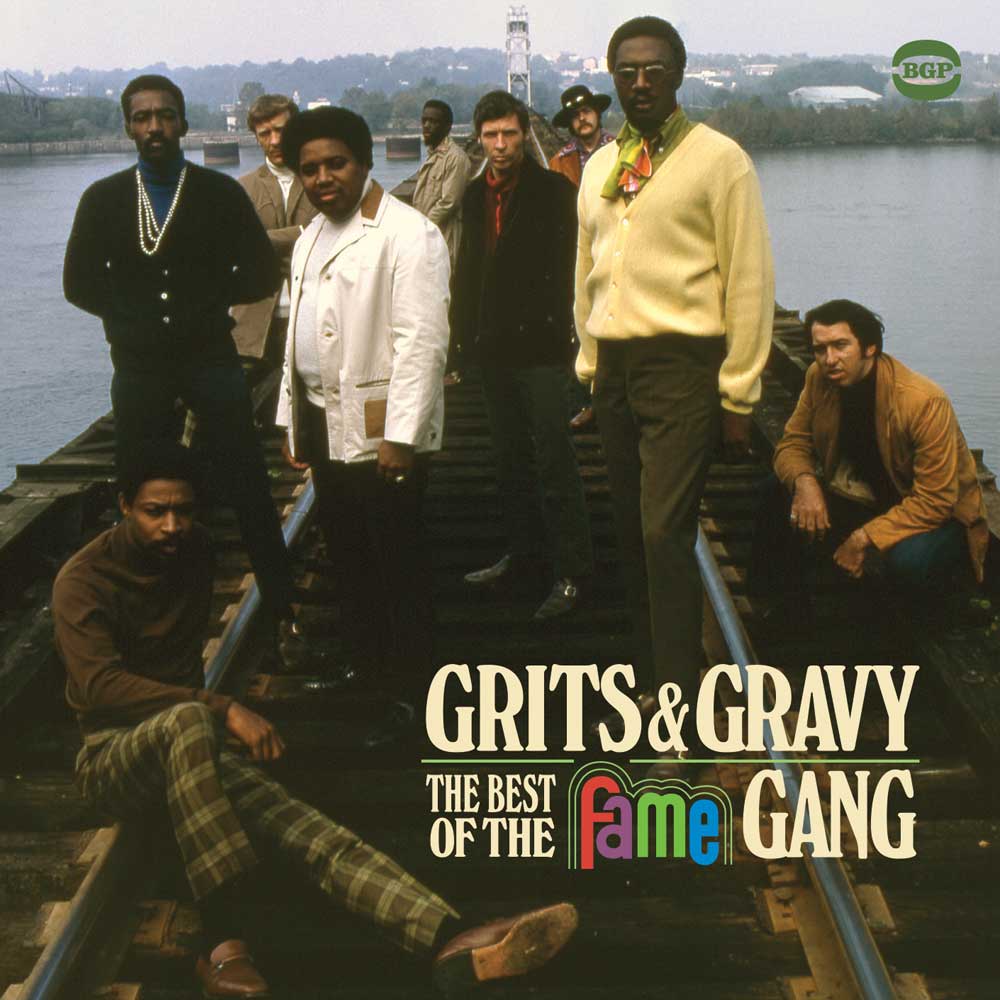
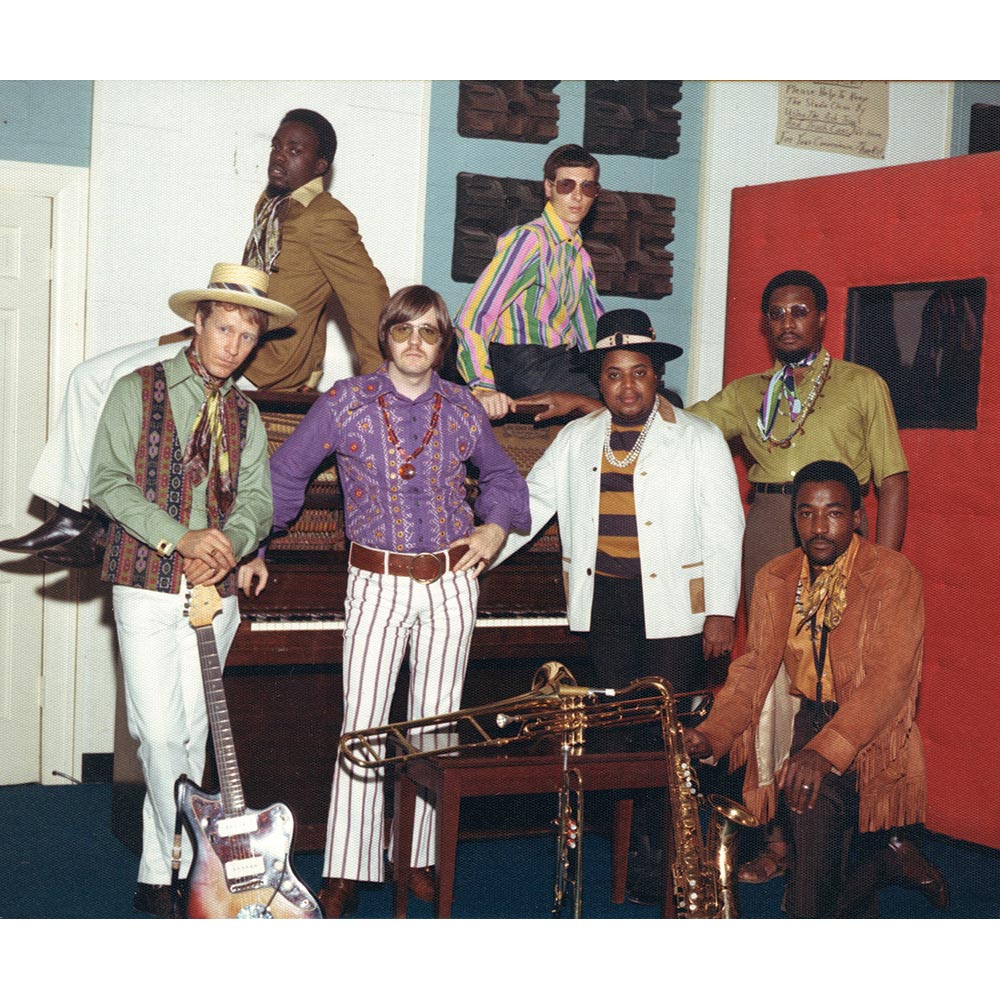


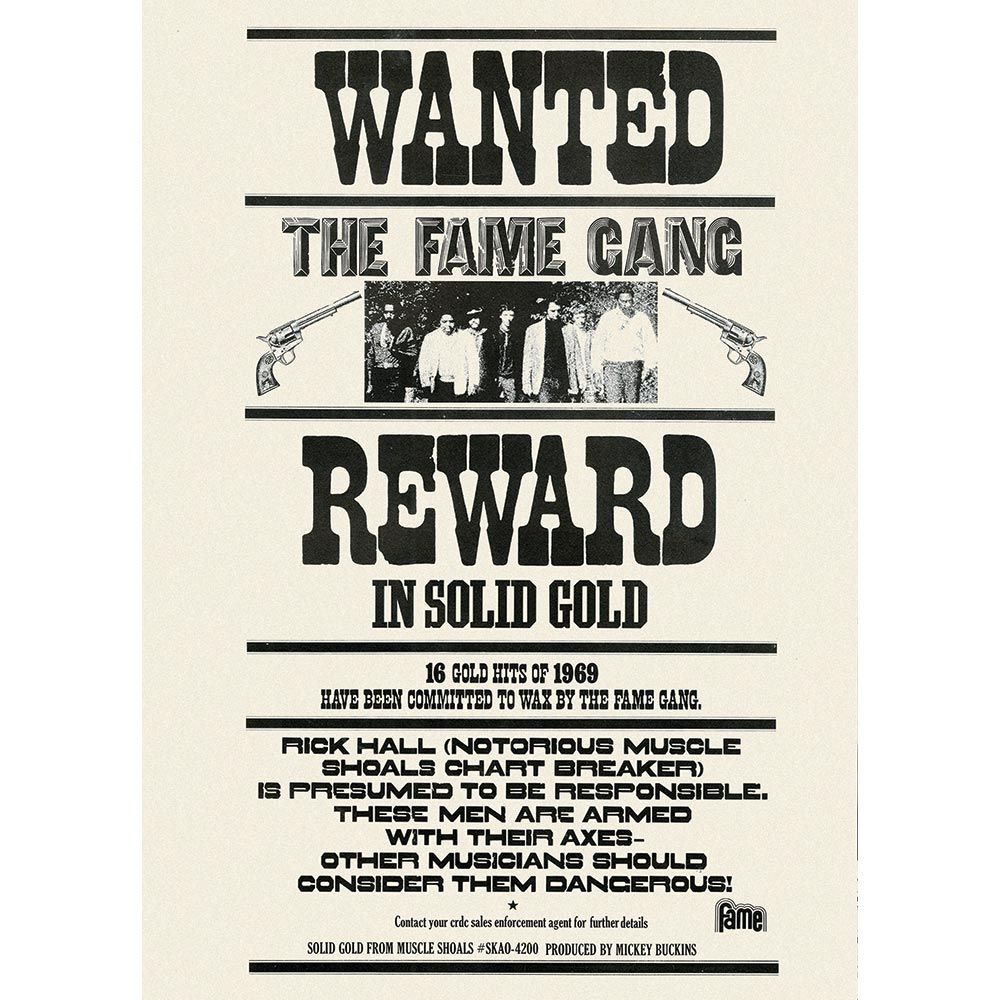
JOHN MARTYN-LIVE AT LEEDS (DELUXE EDITION).
JOHN MARTYN-LIVE AT LEEDS (DELUXE EDITION).
In January 1975, John Martyn released his eighth studio album, Sunday’s Child. John had been away from the studio for fifteen months. His previous album, Inside Out, was released in October 1973. Since then, John had been concentrating on touring. However, in August 1974, John headed to Island Studios, in London, where he recorded the eleven songs that became Sunday’s Child.
For Sunday’s Child, John had penned nine of the eleven tracks. The other two tracks on Sunday’s Child. were cover versions of the traditional ballad, Spencer the Rover, and the country standard, Satisfied Mind. These eleven tracks became Sunday’s Child, which marked the return of one of music’s maverick’s John Martyn.
Sunday’s Child was very different from John’s previous albums. Gone was the experimental sound of previous albums. Replacing it was a much more, melodic, song orientated album. John’s lived-in, worldweary vocal and effects driven guitar style were at the heart of Sunday’s Child. Then on My Baby Girl, Beverley Martyn, John’s former wife, added backing vocals. Beverley had played a small part in Sunday’s Child’s sound and success.
On its release in January 1975, Sunday’s Child was well received by critics. Like many of John’s albums, Sunday’s Child sold well, but not in huge quantities. Island Records were beginning to notice this.
After the release of Sunday’s Child, John headed back out on the road. That’s where he spent much of the seventies. He enjoyed the nomadic lifestyle and camaraderie. John was also a showman, born to perform. When he took to the stage, he seemed to come alive. So, it was no surprise that John began thinking about releasing a live album. This would become Live At Leeds, which was recently released by UMC as a Deluxe Edition double album.
Just a month after the release of John’s eighth studio album Sunday’s Child, John Martyn and his band took to the stage at Leeds University on 13th February 1975. That night, the concert was recorded. For a while, Johh had been contemplating releasing a live album. This he realised, would allow the record buying public to experience what John Martyn live sounded like. So, with the tapes about to get rolling, John Martyn and his band took to the stage at Leeds University on 13th February 1975.
That night, John was accompanied by a small, talented band. This included his bassist, and longtime confidante, Danny Thompson. Joining Danny in the rhythm section was drummer John Stevens, one of the founding members of the Spontaneous Music Ensemble. The final band member was Free guitarist Paul Kossoff. This trio of top class musicians accompanied John Martyn, who took charge of vocals played guitar. They worked their way through the six tracks that would later feature on the original album version Live At Leeds.
When John took to the stage, he was enthusiastically greeted by the audience. Soon, he and has band launched into a nineteen minute version of Outside In. This epic veers between atmospheric and lysergic, to dark and dramatic. The music envelops you, proving elegiac, ethereal and mesmeric. John has you where he wants you.
From there, John returns to one his classic tracks, Solid Air, the title-track of his 1973 classic album. It proves a crowd pleaser, and would continue to be throughout John’s career. This proved the perfect way to close side one of the original version of Live At Leeds.
So, with the crowd hanging on John’s every word, he returns to his Inside Out album, and delivers a soul-baring version of Make No Mistake. That’s followed by another John Martyn classic, Bless This Weather, the title-track of John’s 1971 album. John, by now, a veteran of hundreds of concerts, knew how to work an audience. So for his final two songs, he returned to his first classic album, Solid Air.
Solid Air was the best album of John’s career. It was an innovative and experimental album where John’s sound began to evolve. The success of Solid Air transformed John’s career. So, it’s no surprise that John closed Live At Leeds with two tracks from Solid Air. The Man In The Station was penned by John, and delivered with an urgency. I’d Rather Be The Devil was written by Skip James. However, John brought the song to life, and like many of the tracks on Live At Leeds, would become some of John’s favourite live tracks. The eight tracks which became the original version of Live At Leeds, were well received by the audience. John thought he would have no problem convincing Island Records to release Live At Leeds.
He was wrong. Island Records felt it was the wrong time in John’s career for him to release a live album. They refused to release Live At Leeds. John however, was determined to release Live At Leeds.
John decided to release Live At Leeds himself. The original working title for Live At Leeds was Ringside Seat. Its cover was going to feature a photo of John and bassist Danny Thompson sitting in a boxing ring. Eventually, John decided on the title Live At Leeds. He had ten thousand copies printed, and decided to sell them from his home. Everything seemed to be going fine.
When the ten thousand copies of Live At Leeds arrived, there was a problem. The record sleeve stated that Live At Leeds had been recorded during October 1975. There was nothing John could do about this. Not with, Live At Leeds due to be released in October 1975.
John held his breath as the critics had their say on Live At Leeds. He needn’t have worried. They were won over by the album. Its fusion of folk rock, jazz, psychedelia and rock was a winning combination. Especially, the way John combined his worldweary vocal with the washes of his guitar. Bather in effects, it gave the album textures and hues. John’s trusty Echplex was proving to be a potent secret weapon. It played an important part in Live At Leeds’ sound and subsequent success.
As Live At Leeds went on sale, the ten thousand copies began to sale. Quickly, they disappeared. Even without a record label behind Live At Leeds sold well. John’s loyal fans all seemed desperate to get a copy. This must have left Island Records ruing their decision to release John’s live album Live At Leeds.
In the past forty years, Live At Leeds is now regarded as a classic live album. The album that was released without a record company, back when record companies were king, now rubs shoulders with the greatest live albums in musical history. That’s why Live At Leeds has been rereleased so often.
The latest rerelease of Live At Leeds comes courtesy of UMC. Their Deluxe Edition is a double album. The first thing you notice is that the track listing is different. That was the case on Universal’s 2010 rerelease. Back then, Live At Leeds’ track listing was expanded to eight tracks. It’s the same track listing the features on the 2015 Deluxe Edition of Live At Leeds.
Disc One.
Disc One of the 2015 Deluxe Edition of Live At Leeds opens with upbeat May You Never, followed by Live At Leeds’ epic Outside In. It’s followed by Spencer The Rover, another track that wasn’t on the original version of Live At Leeds. However, No Mistake and Bless The Weather featured on the original version of Live At Leeds. What’s changed is the running order. That was the case back in 2010. Neither My Baby Girl, nor You Can Discover featured on the original version of Live At Leeds. Nor did Solid Air close the concert. The whole concert has been reprogrammed, with I’d Rather Be The Devil (Devil Got My Woman) being omitted from disc one. This change of running order isn’t new.
No. That was the case the last time Live At Leeds was reissued in 2010. Back then, further tracks were added. This made sense, as John and his band didn’t just turn up and play six tracks. They played for a couple of hours. However, there was a limit to how much music could fit on an LP. So, only six tracks were chosen. Now, forty years later, the CD allows music lovers to hear more of the tracks John Martyn and his band played on 13th February 1975.
Disc Two.
On Disc Two of the 2015 Deluxe Edition of Live At Leeds, there’s the version of I’d Rather Be The Devil (Devil Got My Woman), which was on the original version of Live At Leeds. It features on disc two of the 2015 Deluxe Edition of Live At Leeds. So does So Much In Love With You, Clutches and Mailman. Other tracks include rehearsals of May You Never, The Message, Outside In, Head and Heart and Clutches. The additional tracks that John played live on 13th February 1975 are a very welcome addition. They allow you to discover what one John’s sets in the mid-seventies sounded like. In some ways, the original version of Live At Leeds was almost a snapshot of John live. The 2015 Deluxe Edition of Live At Leeds is almost like John Martyn uncut. Similarly, the rehearsals are a welcome addition.
As for the rehearsals, they allow you to compare the rehearsal to the live version. No two tracks are the same. That was the case throughout John’s career. You could see him on two consecutive nights, and he’d play the tracks in different ways. He remade old favourites, giving them a new twist. It was as if John never wanted his fans to grow tired of him. They never will.
Forty years, and five reissues of Live At Leeds later, and still, John Martyn fans haven’t tired of his classic albums, including his classic live album Live At Leeds. While some purists prefer the original version, that John sold from his house, which is now a collector’s item, the expanded 2015 Deluxe Edition of Live At Leeds is a very welcome reissue. Live At Leeds features one of John Martyn’s legendary concerts, and for his legions of fans, is a reminder of a musical maverick live in concert.
JOHN MARTYN-LIVE AT LEEDS (DELUXE EDITION)

GUITAR SLIM GREEN’S “STONE DOWN BLUES” WITH JOHNNY AND SHUGGIE OTIS.
GUITAR SLIM GREEN’S “STONE DOWN BLUES” WITH JOHNNY AND SHUGGIE OTIS.
Guitar Slim Green was never the most prolific of musicians. That’s despite his career lasting four decades. However, during that period, Guitar Slim Green only released a handful of recordings. This included his one and only album, Stone Down Blues, which features Johnny and Shuggie Otis. It was released in 1970, five years before Guitar Slim Green’s death aged just fifty-five. Since then, Stone Down Blues has never been rereleased. That’s until now. BGP, an imprint of Ace Records have recently reissued Stone Down Blues which showcases the multitalented Guitar Slim Green. His story began in Oklahoma in 1920.
That’s where Guitar Slim Green was born Norman G. Green on 25th July 1920. Growing up, Norman played guitar. As he daydreamed, he had dreams of making a living as a musician. However, that seemed just a dream. Even when Norman moved to Las Vegas in his early twenties.
Las Vegas was home to Norman G. Green until 1947. In 1947, Norman G. Green decided to move to California. That’s where his dreams came true. Norman G. Green became a musician, and Guitar Slim Green was eventually born.
Norman’s inspiration was one of music’s most flamboyant showmen, T-Bone Walker. He had pioneered the electric guitar. Through listening to T-Bone Walker, Norman developed his own distinctive style. His distinctive style resulted in Norman making a breakthrough.
This came when Norman got the chance to work with J.D. Nickelson. Norman featured on the singles, Strange Woman Blues and Bouncing Boogie. They were released on Courtney Records. Not long after this, Norman released his debut single.
Alla Blues was credited to R. Green and Turner, and released on the J&M Fullbright label. This song would eventually become a blues standard. The followup to Alla Blues was Baby I Love You, released on the Murray label. It was credited to R. Green, and essentially was, Norman’s debut solo single. The two singles were well received, and showed the future Guitar Slim Green evolving from a country blues singer, to a much more urban, contemporary sound.
Having released his debut single, Guitar Slim Green moved to Fresno, where he played alongside Jimmy McCracklin and L.C. Robinson. Then in 1957, Norman headed to Los Angeles, where he formed his own band.
In Los Angeles, Guitar Slim Green and his band The Cats recorded two singles during 1957. This included My Woman Done Quit Me, where Guitar Slim Green takes charge of the vocal. Both singles were produced by Johnny Otis, who would reenter Guitar Slim Green’s life in 1970. Before that, Guitar Slim Green had more music to make.
Another two years passed before Guitar Slim Green released another single. Scratch My Back was released in 1959, and would be the last single Guitar Slim Green released until 1968.
Having been away from a recording studio for nine years, Guitar Slim Green was keen to record some new music. So, he recorded singles on the Gee Note and Solid Soul labels. These singles sunk without trace. Guitar Slim Green’s career looked as if it was at a crossroads. His music critics remarked, hadn’t evolved. What Guitar Slim Green needed, was someone who could get his career back on track.
Luckily, Johnny Otis was about to reenter Guitar Slim Green’s life. Johnny had turned his back on music for much of the sixties. Instead, he had been concentrating on Democratic politics and community projects. However, he still kept practising. By the end of the decade Johnny was ready to make a comeback.
Encouraged by his friend Frank Zappa, Johnny Otis returned to music. He signed to Kent and recorded two albums, Cold Shot and Snatch and The Poontangs. Johnny also signed Preston Love to Kent, and produced his Omaha Bar-B-Q album. The other artist Johnny Otis signed to Kent was Guitar Slim Green.
Although Guitar Slim Green had released a number of singles, he had never released an album. This was about to change. Johnny and Guitar Slim Green set about to write material for Guitar Slim Green’s comeback album.
Eventually, Guitar Slim Green and Johnny had penned ten tracks. Shake Em Up, Bumble Bee Blues, Make Love All Night, My Little Angel, You Make Me Feel So Good, Big Fine Thing and Play On Little Girl. 5th Street Alley Blues and Old Folk Blues were written by Guitar Slim Green. Johnny contributed This War Ain’t Right. These ten tracks would become Stone Down Blues.
When recording of Stone Down Blues began, Guitar Slim Green played guitar and added vocals. Producer Johnny Otis played drums. Johnny’s seventeen year old Shuggie Otis, played bass, guitar, piano and harmonica. Roger Spotts played piano on Bumble Bee Blues. Once Stone Down Blues was completed, it was released in 1970.
On the release of Stone Down Blues in 1970, on Kent, the album sunk without trace. For Guitar Slim Green, Stone Down Blues was an inauspicious end to his recording career. Never again, would he set foot in a recording career. Five years later, Guitar Slim Green was dead, aged just fifty-five. His musical legacy included Stone Down Blues, Guitar Slim Green’s only album which deserves to be reappraised. That’s what I’ll do.
Shake Em Up opens Stone Down Blues. It’s Guitar Slim Green’s attempt to launch a dance craze. he unleashes a chiming, crystalline guitar. He’s accompanied by a funky rhythm section. It comes courtesy of Shuggie and Johnny Otis. Meanwhile, Guitar Slim Green vamps his way, accompanied by some searing, blistering licks. They play their part in a contemporary sounding track, where Guitar Slim Green delivers a guitar masterclass.
Bumble Bee Blues sees a return to a much more traditional bluesy sound. The arrangement is slow, moody and bluesy. As the rhythm section create a churning arrangement, Shuggie blows a blues harmonica and a piano plays slowly. Guitar Slim Green delivers a needy, hopeful vocal. Then when his vocal drops out, the blues harp blows. It’s joined by the rhythm section and piano. Together, they provide a glorious bluesy backdrop, before Guitar Slim Green returns, to deliver a hopeful vocal.
Johnny and Shuggie Otis provide a driving arrangement on Make Love All Night. Meanwhile, Guitar Slim Green delivers a bravado fuelled, vampish vocal. Then when his vocal drops out, he unleashes a searing guitar solo. All the time, crystalline guitar licks and the rhythm section drive the bluesy arrangement along, as Guitar Slim Green struts his way through the lyrics to Make Love All Night, one of Stone Down Gone’s highlights.
Guitar Slim Green takes centre-stage on My Little Angel. Meanwhile, Johnny’s drums provide the heartbeat and Shuggie’s bass adds a bluesy hue. Flourishes of piano accompany Guitar Slim Green’s soul-baring vocal, as he lays bare his hurt and heartbreak to hear. His guitar playing is just as good. Especially when accompanied by Shuggie on piano. He’s the perfect foil for Guitar Slim Green, as he unleashes some of virtuoso licks and tricks.
Slow, moody and bluesy describes 5th Street Alley Blues. That’s down to the rhythm section and chirping, searing guitars. They join the piano, and play slowly, as Guitar Slim Green delivers a despairing vocal. As he sings: “where can my baby she went down 5th Sreet Alley and left me in misery,” it’s as if Guitar Slim Green’s lived and survived the lyrics.
A bass bounds, guitars ring out and hi-hats hiss on Old Folk Blues. Guitar Slim Green seems to be paying homage to John Lee Hooker. Both his vocal and guitar are similar in sound. Guitar Slim Green is like a man inspired. He unleashes some searing, ringing licks and a vocal full of emotion and hope.
This War Ain’t Right was an ant-war song penned by Johnny Otis. As Guitar Slim Green delivers a slow, pensive vocal, a jangling piano plays. It’s accompanied by a shuffling rhythm section and chiming, chirping guitar licks. However, Guitar Slim Green’s vocal takes centre-stage. This allows you to focus on the lyrics. That’s until it’s time for Guitar Slim Green to unleash what’s easily, one of his best solos. After that, he considers the folly of war, on this poignant anti-war blues.
The tempo rises on You Make Me Feel So Good. Straight away, the piano and rhythm section drive the arrangement along. They provide a backdrop for Guitar Slim Green’s vocal. It veers between joyous, to frustrated. Later, Shuggie unleashes a blistering guitar solo, as Guitar Slim Green vamps his way through the lyrics. Shuggie proves the perfect foil for Guitar Slim Green, as they drive each other to greater heights.
Big Fine Thing sounds as if it was recorded in the late fifties. It’s best described as a vintage sounding blues, with much more stripped down sound. As the rhythm section leave space, Shuggie blows his blues harmonica. Meanwhile, Guitar Slim Green delivers a vampish vocal, paying homage to his “Big Fine Thing.” He also unleashes some crystalline, searing licks. They’re the perfect accompaniment to Shuggie’s bluesy harmonica. Together, they add the finishing touches to this vintage sounding blues.
Play On Little Girl closes Stone Down Blues. It sees the tempo drop. It’s slow, broody and bluesy. The rhythm section join a jangling piano and Guitar Slim Green’s crystalline guitar. As it rings out, flourishes of piano accompany Guitar Slim Green’s despairing, hurt-filled vocal. It soars above the arrangement, as he lays bare his broken heart. Accusingly and despairingly, he sings “Play On Little Girl keep on playing till you break up your happy home.” The way Guitar Slim Green sings the lyrics, it’s as if he’s been there, and survived to tell the tale.
For forty-five years ago, Guitar Slim Green belatedly released his debut album. He had been a musician for twenty-three years, but had only released a handful of singles. When Johnny Otis reentered Guitar Slim Green’s career, he got him a recording contract with Kent.
Back then, Kent were no longer the powerhouse they once were. Neither was Johnny Otis. He was once one of the biggest names in R&B. However, music had change. That’s partly why Johnny sat out much of the sixties. Then in the late sixties, he made a comeback. Johnny signed to Kent and released two albums. Despite their quality, they didn’t fare well. Johnny Otis, it seemed, was no longer a big star. However, he was a talented musician and producer. This made him the ideal person to kickstart Guitar Slim Green’s career.
Together, Johnny and Guitar Slim Green wrote the ten tracks on Stone Down Blues. Johnny brought his seventeen year old son onboard for the recording of Stone Down Blues. The young virtuoso almost stole the show on several occasions. This seemed to spur Johnny and Guitar Slim Green on. They unleashed a series of spellbinding performances. Guitar Slim Green was like a man reborn. Surely, his career was about to be reborn?
Sadly, that wasn’t to be. Guitar Slim Green’s debut album, Stone Down Blues sunk without trace. It was the age old story. Stone Down Blues was the wrong album at the wrong time. Blues was no longer as popular. While the blues enjoyed a brief resurgence in interest, music had moved on. What also didn’t help was that Kent was no longer the force it once was. So, it’s no surprise Stone Down Blues failed to be heard by a wider audience. Hopefully, that’s about to change.
Stone Down Blues, Guitar Slim Green’s debut album, was recently released by BGP, an imprint of Ace Records. This is a welcome reissue of a long-lost, and hugely underrated album, Stone Down Blues where blues virtuoso, Guitar Slim Green made a welcome comeback.
GUITAR SLIM GREEN’S “STONE DOWN BLUES” WITH JOHNNY AND SHUGGIE OTIS.
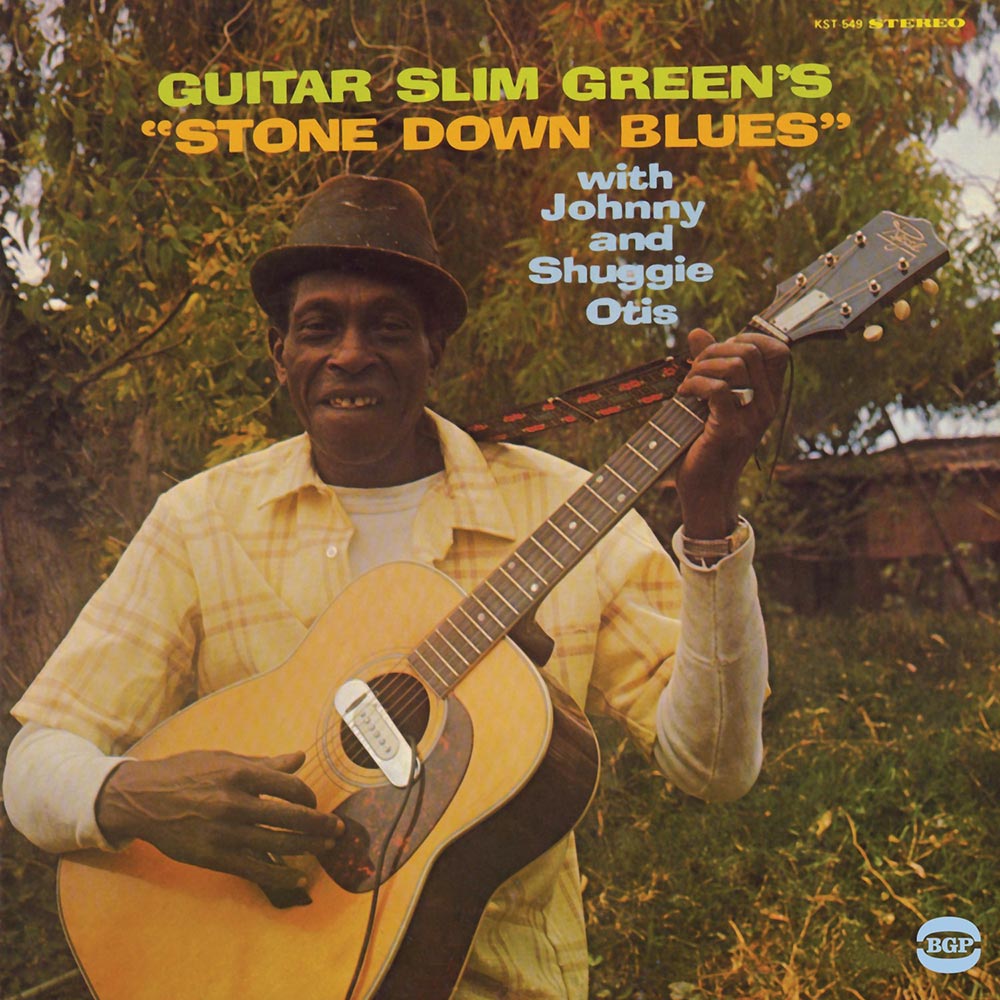


GORAN KAJFES SUBTROPIC ARKESTRA-THE REASON WHY VOLUME 2.
GORAN KAJFES SUBTROPIC ARKESTRA-THE REASON WHY VOLUME 2.
For the last three decades, Goran Kajfeš has been a key figure in the Swedish music scene. There’s a reason for this. Goran Kajfeš has constantly been releasing groundbreaking, genre-melting music. To do this, Goran has pushed musical boundaries to their limits, and sometimes, way beyond. That’s been the case throughout Goran Kajfeš’ career, and has paid off.
Over the last fifteen years, Goran has been a member of various Swedish bands. This includes Goran Angles 8, Angles 9, Club Killers, Fire! Orchestra, The Moon Ray Quintet, Nacka Forum, Oddjob, Regis, Rocking Babooshkas and The Solution. However, still Goran has found time to pursue a solo career and form the Goran Kajfeš Subtropic Arekestra.
It was in 2000, when Goran Kajfeš, who was born in Croatia, but raised in Sweden, released his debut album Home. However, four years passed before Goran Kajfeš returned with his sophomore album Headspin. That’s no surprise. During that period, Goran Kajfeš was a member of various bands. He was also working as a session musician, songwriter, arranger and producer. So, it’s not surprising that there were four years between Goran’s debut and sophomore albums. However, six years would pass before Goran released his third album.
X/Y, however, was worth the wait. Released in 2010, on Headspin Records, critics hailed the album one of the most groundbreaking albums of the year. So, it wasn’t a surprise when X/Y won the prestigious Nordic Music Prize. For Goran Kajfeš all his hard work was beginning to pay off.
During this period, Goran Kajfeš seemed to hardly stop working. When he wasn’t working on his own projects, he was working with other artists. Goran was central figure in the Swedish music scene. He was also a musical pioneer.
If critics, cultural commentators and music fans didn’t realise this, they did in 2013. That’s when the Goran Kajfeš Subtropic Arekestra released The Reason Why Volume 1 on Headspin Records. Critics hailed The Reason Why Volume 1 as an ambitious album, of innovative, and eclectic music. Music lovers agreed, but weren’t surprised.
For the last year, the Goran Kajfeš Subtropic Arekestra had been winning friends, and influencing critics and music lovers with what Goran described as “acid rock with horns.” Wherever the Goran Kajfeš Subtropic Arekestra went, rave reviews followed them. This wasn’t a surprise to anyone who had seen the Goran Kajfeš Subtropic Arekestra live. They knew that they were a band with a big future ahead of them.
When the Grammy Awards’ nominations were released in 2013, the members of the Goran Kajfeš Subtropic Arekestra discovered that The Reason Why Volume 1 had been nominated. This was a huge honour. For Goran, all his hard work during the last nineteen years had been recognised.
Sadly, The Reason Why Volume 1 didn’t win a Grammy Award. However, many more people were aware of the Goran Kajfeš Subtropic Arekestra. They anticipated the release of the followup to The Reason Why Volume 1.
Two years later, and The Reason Why Volume 2 was released on Headspin Records, on 6th April 2015. The Reason Why Volume 2 marks the long-awaited return of the Goran Kajfeš Subtropic Arekestra. Joining them, are a few of their musical friends.
This includes a legend of Brazilian music, Milton Nascimento, American indie band Grizzly Bear and Cameroonian author and musician Francis Bebey. Other guest artist include Okay Temiz, Bayaz Kelebekler, Mahzar Ve Fual and Sevada. They join the Goran Kajfeš Subtropic Arekestra in making The Reason Why Volume 2 an eclectic, genre-defying album.
Recording of The Reason Why Volume 2 took place at Sturepark Studio. That’s where the six songs took shape. Providing the Goran Kajfeš Subtropic Arekestra’s heartbeat was a rhythm section of drummer and percussionist Johan Holmegard, bassist Johan Berthing and a trio of guitarists. Andreas Söderström played acoustic, electric and pedal steel guitar; Reine Fiske played guitar and mellotron; and Robert Ostlund played guitar and synths. They were joined by keyboardist Jesper Nordenström. He plays organ, upright piano, synths and omnichord. José González adds vocals. Then there’s the Goran Kajfeš Subtropic Arekestra legendary horn section.
At the heart of the horn section, is founding member, and bandleader, Goran Kajfeš. He’s a multi-instrumentalist, who plays trumpet, cornet, percussion and synths. The other two members of the horn section are also multi-instrumentalists. Per “Ruskträsk” Johansson, plays baritone, alto and soprano saxophones, plus clarinet and flutes, and Jonas Kullhammar plays tenor and soprano saxophone, clarinet and flute. This multitalented horn section plays an important part in The Reason Why Volume 2’s sound. So do Swedish mix engineer Mattias Glavå and producer Goran Kajfeš. They’re responsible for another album of pioneering music, from Goran Kajfeš Subtropic Arekestra, The Reason Why Volume 2, which I’ll tell you about.
Opening The Reason Why Volume 2 is Dokuz Seki Esmerim. Stabs of psychedelic keyboards add an element of drama. They’re the signal for the Goran Kajfeš Subtropic Arekestra to cut loose. The rhythm section and blistering, wah-wah guitars are at the heart of the arrangement. Searing guitars cut through the arrangement. They’re joined by an organ, percussion and blazing horns. Together, they combine Turkish psychedelia and Balkan tinged sounds. Add to that, the Goran Kajfeš Subtropic Arekestra’s unique brand or acid rock, plus elements of folk, funk, free jazz and rock. Later horns howl and wail, they’re akin to a soul-baring confessional. They’re aided and abetted by machine gun guitars, and a powerhouse of a rhythm section. Together, they create a dramatic, genre-melting opus, that shows the Goran Kajfeš Subtropic Arekestra at their best.
Wistful sounding, crystalline guitars weave their way across the arrangement to Adimiz Miskindir Bizim. They’re soon joined by braying horns and the rhythm section. The horns add to the melancholy, laid-back sound. So do guitars that gently wah-wah, plus the lushest of strings. Together, they’re responsible for the arrangement’s cinematic sound. Soon, the horns change. Then it’s the guitars. They add an element of drama. Still, though, the arrangement has a beautiful, cinematic and jazz-tinged sound, where the Goran Kajfeš Subtropic Arekestra show another side to their music.
Scrabbled guitars are panned left, a muted bass panned right on New Track. Soon, a guitar reverberates, hi-hats hiss and drums roll. Stabs of instruments are added, before braying, growling horns are unleashed on this nine minute epic. The Goran Kajfeš Subtropic Arekestra are enjoying the opportunity to head on a sonic voyage of discovery. It’s as if they’re feeding off each other. Instruments flit in and out. Whether it’s the pounding drums, screaming guitars or a growling horn, everything makes sense. It fits perfectly, and is akin to a musical jigsaw. Putting the pieces together, is Goran. Carefully he combines elements of free jazz, funk, psychedelia and rock. The result is a track that’s inventive, innovative, funky, mesmeric and truly captivating. No wonder, for nine minutes, you’re spellbound.
As melancholy horns plays on A Lua Girou, the sense of sadness and loss embraces you. Washes of guitars and synths dissipate. However, it’s the horns that play the starring role. Slowly, they create a poignant, and heartachingly beautiful sound. Again, cinematic describes the music. That’s still the case when a muted guitar attempts to cut loose. So do the drums and horns. They’re reigned in. Instead, the guitar sits way back in the mix, horns rasp and only the cymbals are played. By then, a piano, percussion and tender, dreamy scatted vocal have been added. They play their part in a cinematic sounding track, where beauty, melancholy and drama are omnipresent.
The arrangement to Tamzara quivers and shivers. As a horn adds a wistful hue, the rhythm section play with an urgency. Still, though, they’re playing within themselves. Gradually, they begin to kick loose. When the horn cuts loose, this is the signal. A blistering guitar solo joins the horn, as the rhythm section drive the arrangement along. Soon, another guitar is added, adding another layer of drama and urgency. Flourishes of piano, free jazz horns and a driving, dramatic rhythm section combine. Elements of free jazz, prog rock, psychedelia and rock melt into one. It’s a glorious and irresistible fusion. Especially when the Goran Kajfeš Subtropic Arekestra cut loose, and become one.
Yet Again closes The Reason Why Volume 2. Here, the Goran Kajfeš Subtropic Arekestra are joined by American indie rockers, Grizzly Bear. Drums add a sense of urgency while a mellotron and organ add colour. So, do the horns. They bray and blaze, while psychedelic washes trail across the arrangement. By then, the Goran Kajfeš Subtropic Arekestra are in full flow on what’s another cinematic track. It also has an uplifting, feel-good sound. Throughout Yet Again, the Goran Kajfeš Subtropic Arekestra toy with you. Several times the arrangement almost grinds to a halt. This allows the Goran Kajfeš Subtropic Arekestra to rebuild and unleash this glorious fusion of jazz, psychedelia and rock. Despite being an instrumental, the track has a fist pumping, anthemic sound. What a way to close The Reason Why Volume 2, with one of its most memorable tracks.
Two years after the release of their critically acclaimed, and Grammy Award nominated album, The Reason Why Volume 1, the Goran Kajfeš Subtropic Arekestra make a triumphant return with The Reason Why Volume 2. It’s a career defining album that should transform the Goran Kajfeš Subtropic Arekestra’s career.
They pickup where they left on The Reason Why Volume 1, and push musical boundaries even further on The Reason Why Volume 2. The result is another album of groundbreaking, genre-melting music. Everything from Balkan music, experimental, free jazz funk, jazz, prog rock, psychedelia and rock are combined on The Reason Why Volume 2’s six tracks. During these six tracks, we hear different sides to the Goran Kajfeš Subtropic Arekestra.
Throughout The Reason Why Volume 2 the music constantly changes. It veers between dramatic and urgent, to languid and laid back. Other times the music is beautiful, ethereal, cinematic and lysergic. It can also be captivating, spellbinding and mesmeric. That’s the case whether the music is funky, jazz-tinged or rocky. Always though, the music on The Reason Why Volume 2 innovative, inventive and is sure to prove influential.
Other musicians are bound to look at the Goran Kajfeš Subtropic Arekestra, and want to follow in Goran Kajfeš’ footsteps. That’s easier said than done. Founding member and bandleader, Goran Kajfeš has been a mainstay of Sweden’s thriving music scene for just over twenty years. He’s a talented multi-instrumentalist, arranger, producer and songwriter. He’s played in numerous bands, and has worked with many of Sweden’s leading musicians. Some of them feature on the Goran Kajfeš Subtropic Arekestra. Along with a few of Goran’s musical friends, the multitalented Goran Kajfeš Subtropic Arekestra have created a career defining album.
The Reason Why Volume 2, which was out on April 6th 2015, on Headspin Records, surpasses The Reason Why Volume 1. That took some doing. After all, The Reason Why Volume 1 was nominated for a Grammy Award. However, two years later, the multitalented Goran Kajfeš Subtropic Arekestra have come of age on The Reason Why Volume 2. They seem to have matured as a band. What’s more, the music on The Reason Why Volume 2 is even more eclectic and almost flawless. That takes some doing. However, Goran Kajfeš is a musical innovator. With Goran at the Arekestra’s helm, they’re definitely destined for greater things.
While the Goran Kajfeš Subtropic Arekestra are already popular in Europe and America, their latest album, The Reason Why Volume 2, should transform their career. Hopefully, the Goran Kajfeš Subtropic Arekestra’s star is in the ascendancy. This should lead to them playing bigger venues, and becoming the toast of the festival season. No wonder.
The Goran Kajfeš Subtropic Arekestra are musical pioneers. They’re responsible for the groundbreaking, genre-melting, music found on The Reason Why Volume 2, the Goran Kajfeš Subtropic Arekestra’s musical Magnus Opus, which showcases one of Europe’s most exciting bands at the peak of their musical powers.
GORAN KAJFES SUBTROPIC ARKESTRA-THE REASON WHY VOLUME 2.
NORTHERN SOUL’S CLASSIEST RARITIES VOLUME 5.
NORTHERN SOUL’S CLASSIEST RARITIES VOLUME 5.
Let’s make no bones about it, nowadays, Northern Soul compilations are two a penny. Hardly a week goes by and yet another Northern Soul compilation is released. That’s been the case for the last few years. Nothing has changed in the first few months of 2015. Most of the compilations are third rate. They’re just attempts to cash-in on Northern Soul’s popularity. That’s the case whether it’s the cheap budget label releases or the budget breaking box sets.
Part of the problem is that many compilations rehash the same songs. Pick up a pile of Northern Soul compilations and you’ll soon realise that’s the case. That’s why it’s a case of caveat emptor when buying a Northern Soul compilation. If you don’t, you risk disappointment.
My advice is “don’t believe the hype.” Especially when they come baring the words “featuring songs played at the Wigan Casino or Blackpool Mecca.” These words seem to suggest that the compilations ooze quality. All too often, that’s not the case. Having been played at the Wigan Casino or Blackpool Mecca isn’t a guarantee of quality. Far from it.
There’s several ways to separate the wheat from when the chaff, when it comes to Northern Soul compilations. Who compiled the compilation is hugely important. So, is the label that released the compilation. Some labels have established a reputation for releasing Northern Soul compilations. Others are just jumping on the bandwagon, looking to make a quick buck. They neither care about the music, nor the people that made it. However, labels like Ace Records do.
Through their Kent imprint, Ace Records have been releasing Northern Soul compilations for over twenty years. Their most recent Northern Soul compilation, was Northern Soul’s Most Classiest Rarities Volume 5, which was released by their Kent Dance subsidiary. It has everything you could want in a Northern Soul compilation.
That’s not surprising. Northern Soul’s Most Classiest Rarities Volume 5 was compiled by veteran compiler Ady Croasdell. He’s a man steeped in Northern Soul. With an almost encyclopaedic knowledge of all things soulful, Ady combines classics and collectors items with future classics, hidden gems, obscurities, rarities and a even a quintet of unissued tracks. The result is Northern Soul’s Most Classiest Rarities Volume 5, a welcome addition to the Northern Soul’s Most Classiest Rarities’ rarities series.
No wonder. Northern Soul’s Most Classiest Rarities Volume 5 features tracks from Marva Holiday, The Steelers, Clifford Curry, Terri Goodnight, Soul Brothers, The Ballads, Ray And Dave and Little Johnny Hamilton. Then there unissued tracks from The Avons, J. J. Barnes, Jeanette Jones, The Webb People and Jesse Cowan. However, one of the most intriguing tracks comes from the legendary blues shouter Big Joe Turner. These are just a few of the twenty-four tracks on Northern Soul’s Most Classiest Rarities Volume 5, which I’ll pick the highlights of
The opening track of any compilation, is always the most important. It’s got to grab your attention. That’s the case here, with When The Boy That You Love (Is Loving You), an unreleased track from The Avons. They were formed in Nashville, and featured Paula Hester, Beverly Bard and Fran Bard. Between 1963 and 1968, they released singles on the Groove, Sound Stage, Abet, Excello and Ref-O-Rea labels. Their last three singles were produced by Bob Holmes. He also wrote and produced When The Boy That You Love (Is Loving You). Bob adds cascading strings, braying horns and vibes, as The Avons deliver a mid-tempo slice of musical sunshine. This whets your appetite for the rest of Northern Soul’s Most Classiest Rarities Volume 5.
Tracks like The Volumes’ That Same Old Feeling restore your faith in Northern Soul. It’s something of an obscurity and proof you should always flip a single over. Many times, there’s a hidden gem awaiting discovery. That’s the case here. That Same Old Feeling was the B-Side to The Volumes’ 1966 single The Trouble I’ve Seen. It was released on Impact Records, and produced by Duke Browner. Here, the veteran producer plays in his part in what’s a wistful sounding track, tinged with hurt and heartbreak that quite simply, epitomises everything that’s good about Northern Soul.
Clifford Curry’s career began in Knoxville, Tennessee, where he was a member of various vocal groups. Then in 1964, Clifford released his debut single Kiss, Kiss, Kiss on Georgia based, Ridgecrest Records. After that, it was another three years before Clifford released another single. His comeback came at Elf, Buzz Cason and Bobby Russell’s label. That was home for Clifford until 1968. He went on to release eight singles, including I Cant Get Hold Of Myself. It was written by Buzz Cason and Mac Gayden. With its dancing strings, stabs of horns, soaring quivering harmonies and a despairing vocal, it should’ve replicated the success She Shot A Hole In My Soul. Sadly, that wasn’t the case. Despite that, the hook-laden I Cant Get Hold Of Myself is still guaranteed to fill dance-floors.
Terri Goodnight’s They Didn’t Know is one of the rarities on Northern Soul’s Most Classiest Rarities Volume 5. Copies are extremely rare. They Didnt Know was the B-Side to Terri’s sophomore single The Fighting Is Over. It was released on Johnny Cochran Sr.’s Phelectron Records in 1966. Ken Easton produced They Didn’t Know, which was penned by Jean Cochran. Sadly, The Fighting Is Over wasn’t a commercial success. However, a few years later, its flip side, They Didn’t Know became a favourite of Northern Soul DJs. No wonder, given its wistful, soulful and dance-floor friendly sound.
At one time, girl groups were popular within the Northern Soul scene. Not any more. For thirty years they’ve been out of favour. That means so many great songs are being overlooked. This includes Mousie and The Traps’ 1966 single It’s All In The Way (You Look At It Baby). It was released two years after sisters Genevieve and Susan Hernandez and Thelma Flores formed Mousie and The Traps at high school. Two years later, they released It’s All In The Way (You Look At It Baby) on Toddin’ Town. It’s an overlooked and underrated song that hopefully, one day, will find favour within the Northern Soul scene.
For thirty years, Roy Wright’s Hook Line and Sinker has been a favourite amongst Northern Soul fans. They head for the dance-floor when they hear Hook Line and Sinker’s driving beat and blazing horns. Hook Line and Sinker was released on Vick Records in 1966. By then, Roy was an experienced artist. He made his debut in the late fifties, when he recorded a quartet of singles for Drexel. After leaving Drexel, he released single on Vick and Crash Records. However, one of Roy’s finest singles is the version of Hook Line and Sinker, the Northern Soul floor-filler he recorded for Vick.
Darondo Pulliam’s How I Got Over is one of the real finds on Northern Soul’s Most Classiest Rarities Volume 5. It was released in 1972, on the Oscampo Records. How I Got Over was penned by Darondo and producer John Al Tanner. They’re responsible for a track that brings to mind early Al Green. The similarities are uncanny. Even the arrangement has a Hi Records’ influence. Sadly, Darondo Pulliam only ever released two more singles after How I Got Over. That was the last anyone heard from Darondo until 2006, when he released his debut album Let My People Go. Five years later, BGP Records released Listen To My Song: The Music City Sessions. At last, Darondo Pulliam’s music was finding a wider audience. However, tragedy struck in 2013, when Darondo Pulliam died on 9th June 2013. That day, soul music lost one of its best kept secrets.
Another of the five unreleased tracks is this version of The Webb People’s I’m Sending Vibrations. Originally, this Dave Hamilton and John C. Smith production was the B-Side to Bump With Me. That was a different take of I’m Sending Vibrations. There’s a reason for this. For many years, the multitrack master tapes of the version on Northern Soul’s Most Classiest Rarities Volume 5 were missing. They were only found recently. This is a real discovery, and finds The Webb People seamlessly combining soul and funk on I’m Sending Vibrations.
Two Loves Have I features Big Joe Turner as you’ve never heard him. The former blues shouter was transformed into a soul singer by Bob Thiele in 1970. That’s when Big Joe Turner signed to Bob Thiele’s Flying Dutchman Productions. His only album for Flying Dutchman Productions, was The Real Boss Of The Blues. Released in 1970, Big Joe Turner is at his soulful best on this mid-tempo ballad.
Back in the sixties, Eddy Giles was enjoying a career as a Southern Soul singer. Given his undeniable talent, many within the record industry, thought that Eddy would enjoy a long and illustrious career. While Eddy enjoyed some commercial success and critical acclaim, he never reached the heady heights he seemed destined for. His career was a case of what might have been? That’s despite being able to bring new meaning to a song. That’s what Eddy does on Floyd Jenkins country song Pins and Needles. Sadly, Eddy’s version of Pins and Needles was never released, and only made its debut on the Kent Soul compilation Southern Soul Brother-The Murco Recordings 1967-1969. It’s the perfect introduction to Eddy Giles, who could’ve, and should’ve, rubbed shoulders with the great and good soul music.
Jesse Cowan’s This Man Wants You closes Northern Soul’s Most Classiest Rarities Volume 5. It’s the fifth, and final unreleased track. This Man Wants You was written by Wally Cox. He and Jesse performed as a duo. However, they never recorded any material. They both recorded as solo artist. Their only release was Jesse’s Strange Love, which was released on the duo’s Golden State label. Among the unreleased tracks was Jesse’s This Man Wants You. It’s soulful, funky and dance-floor friendly. It also features a needy, pleading vocal that’s brings the lyrics to life.
Featuring twenty-four tracks, where classics and collectors items rub shoulders with future classics, hidden gems, obscurities, rarities and a even a quintet of unissued tracks, Northern Soul’s Most Classiest Rarities Volume 5 is essential listening for all Northern Soul fans. It was recently released by Kent Dance, an imprint of Ace Records. Northern Soul’s Most Classiest Rarities Volume 5 is a very welcome addition to the Northern Soul’s Most Classiest Rarities’ series. There’ a reason for this.
Northern Soul’s Most Classiest Rarities Volume 5 was compiled by veteran complier Ady Croasdell . He’s a man steeped in Northern Soul. With an almost encyclopaedic knowledge of all things soulful. However, Ady won’t rest on his laurels. He knows that there’s still mountains of soulful delights awaiting discovery. Ady also knows that in the cutthroat world of compilations, competition is fierce. So, still Ady is determined to dig deeper than other compilers.
This means many a crate-digging expedition, searching for elusive, hard to find tracks. This takes time, effort and patience. Warehouses, damp, dusty basements, backstreet record stores, thrift stores and charity shops are the territory of the crate-digger. That’s where often, they find the hidden gems, rarities and killer tracks are to be found. Then there’s Ady’s other habitat, record company vaults.
Often there’s a myriad of delights awaiting in a record company vaults. A hidden gem could be hidden in a mislabelled tape box. Within that box, could be a killer track, that crate-diggers find a lifetime searching for. Ady knows his way around record company vaults. He’s spent hours, days, weeks and months searching. That takes patience and dedication. However, in the case of Northern Soul’s Most Classiest Rarities Volume 5, Ady’s efforts have been worthwhile.
Northern Soul’s Most Classiest Rarities Volume 5 is a classy compilation, chock full of classics, hidden gems and rarities. Truly, it belongs in every Northern Soul fan’s collection. Ady Croasdell, man with the encyclopaedic knowledge of all things soulful, has done it again and compiled what’s the best Northern Soul collection of 2015, so far.
NORTHERN SOUL’S CLASSIEST RARITIES VOLUME 5.
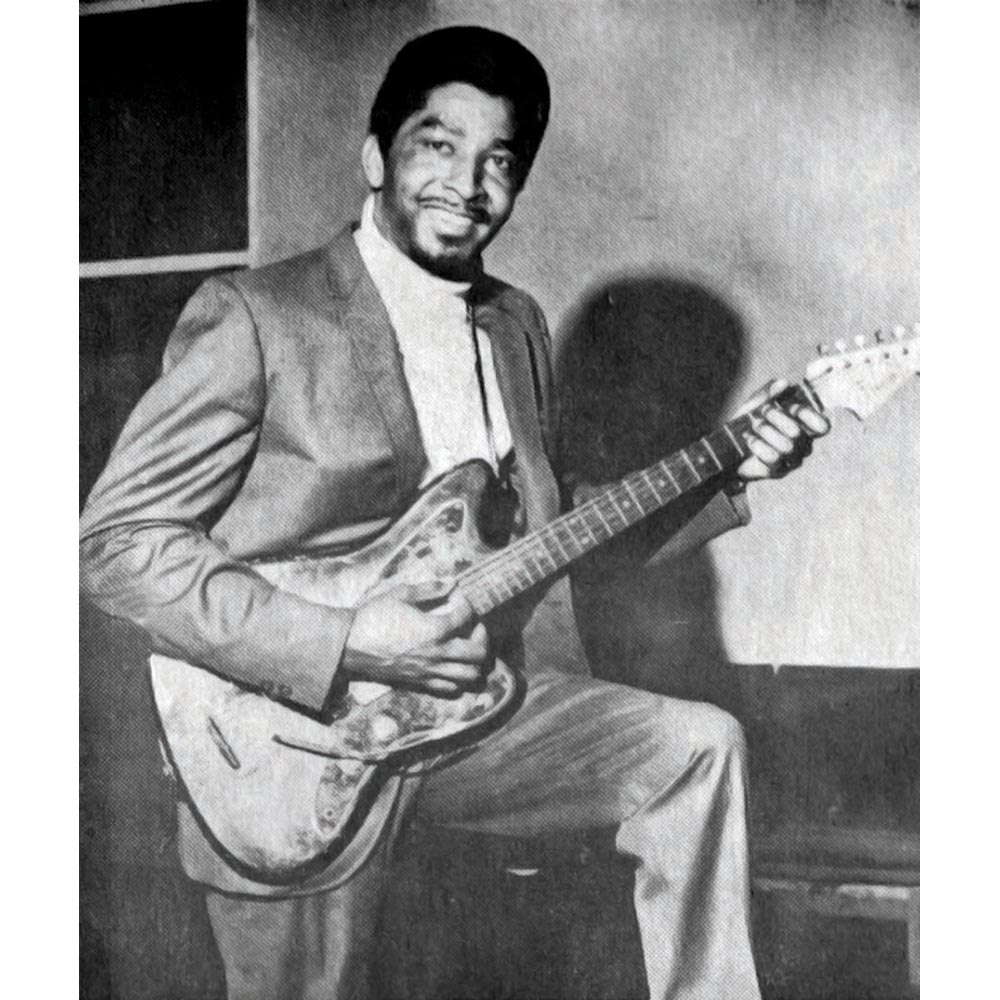
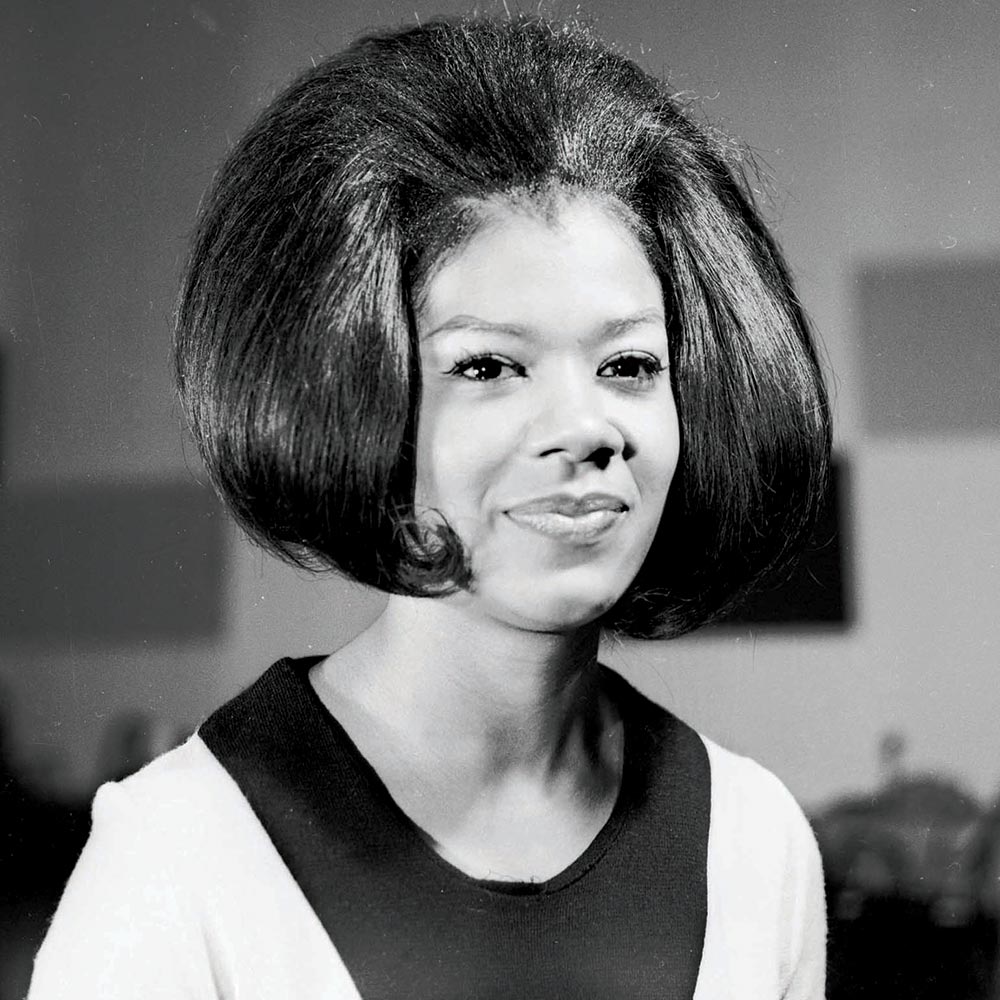
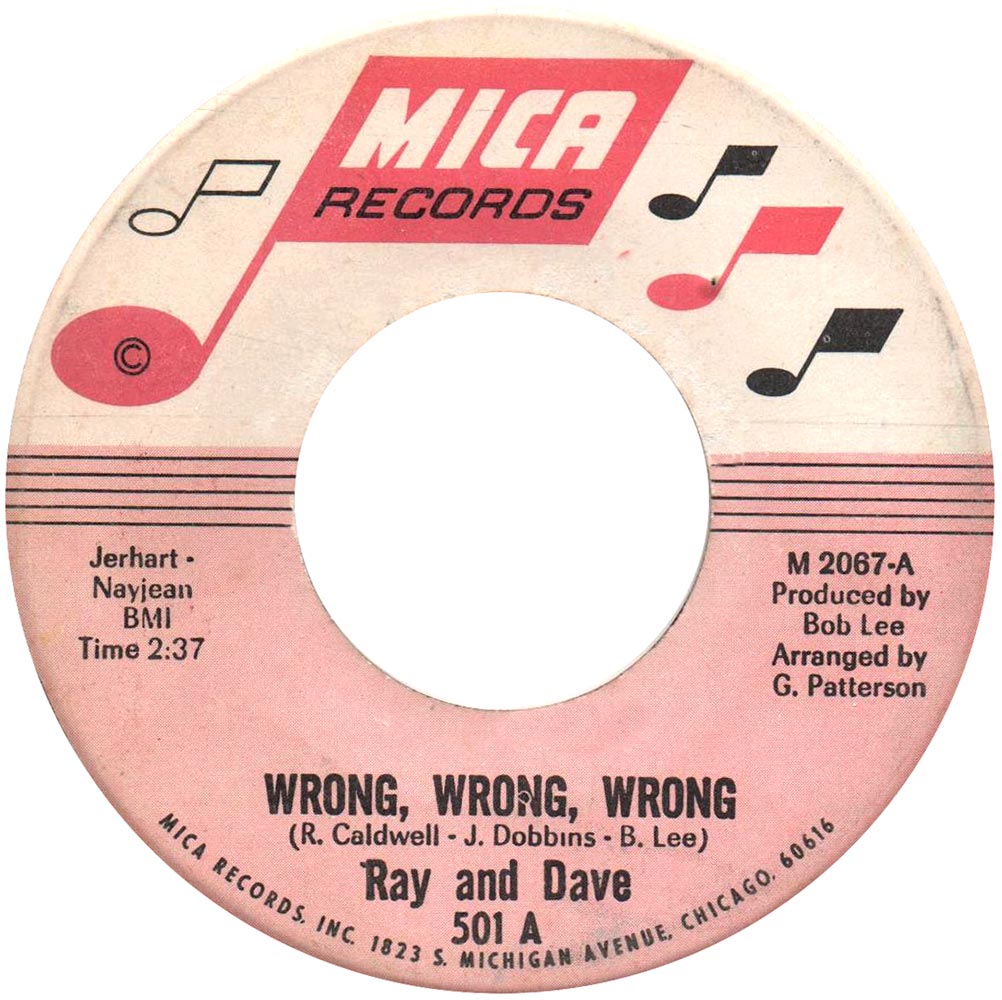
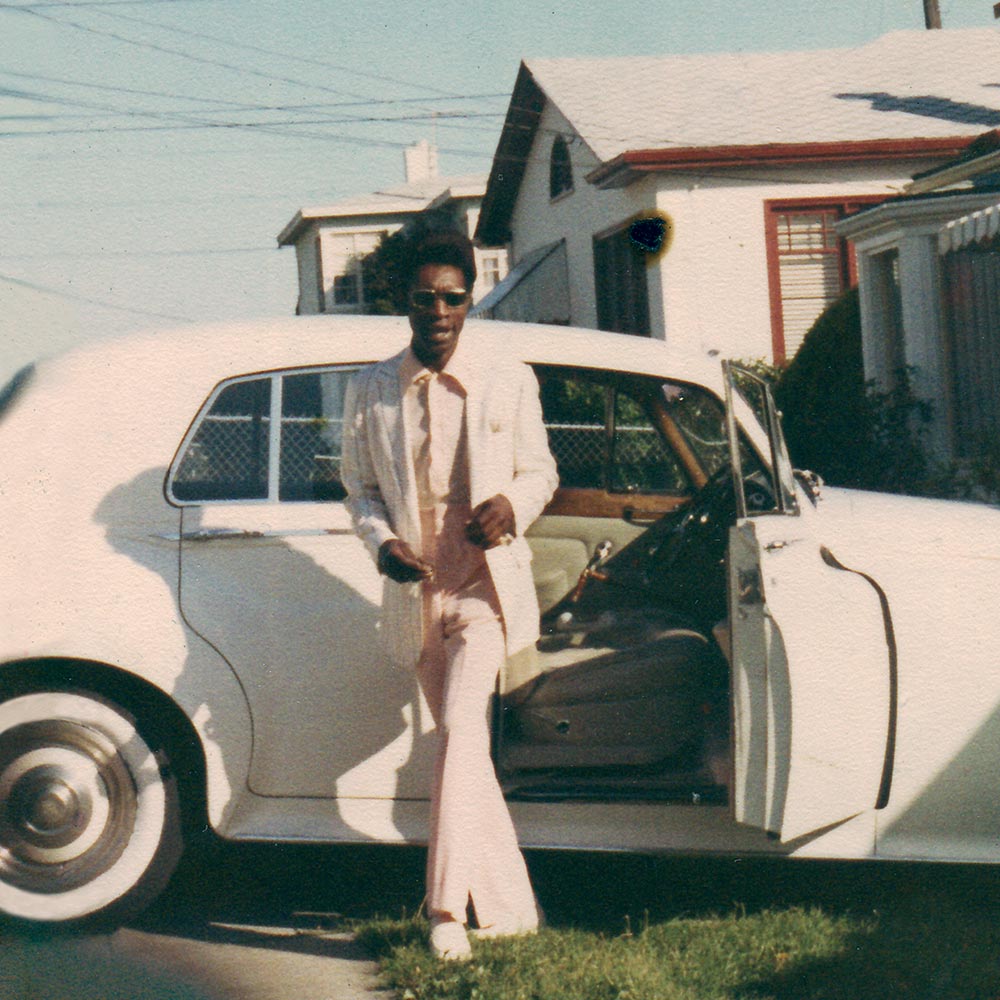
MOGWAI-RAVE TAPES.
MOGWAI-RAVE TAPES.
With the Scottish Album Of The Year Award looming, the big question in Scottish music is, who are the contenders? This year, we’re spoiled for choice. It’s been a vintage year, or to be a accurate, fifteen month period. There’s a reason for this. The three-month extension of the eligibility window for the Scottish Album Of The Year Award 2015 will allow the qualifying period for future awards to run from April to March. This aligns the qualifying period more closely with the prestigious and glittering award ceremony in June. It’ll be attended by the great and good of Scottish music. This should include Mogwai, who released Rave Tapes back on 20th January 2014.
Rave Tapes features ten tracks, which were written by Mogwai. Recording took place at Castle Of Doom Studios, Glasgow. Producing Rave Tapes was ex-Delgado Paul Savage. He’s produced previous Mogwai albums and knew how the band worked. This was important, given Mogwai were at last, enjoying the critical acclaim and commercial success their music deserved. Work began on Rave Tapes back on the 28th August 2013.
This was like the first day back at school. Mogwai were ready to begin recording what was their eighth studio album. The lineup of Mogwai has been settled for a few years. This included a rhythm section of bassist and guitarist Dominic Aitchison, drummer Martin Bulloch and guitarists Stuart Braithwaite and John Cummings who also played piano. Barry Burns plays organ, piano and guitar at Castle Of Doom Studios, Glasgow, Mogwai recorded the ten tracks that became Rave Tapes.
Rave Tapes was one of the most anticipated albums of recent months. The big question was, what direction Mogwai’s music would head? After all, Mogwai’s music never stands still. It’s in a constant state of evolution. That’s no bad thing. Standing still is akin to going backwards in Mogwai’s book. On Rave Tapes, Mogwai’s music continues to evolve. Musical genres and influences melt into one. One of the most prominent influences was Krautrock. Add to this ambient, avant-garde, electronica, experimental, indie rock and rock. We hear different sides to Mogwai on Rave Tapes. Whether it’s fuzzy soundscapes or kicking out the jams, Mogwai don’t disappoint on Rave Tapes, which I’ll tell you about.
Heard About You Last Night opens Rave Tapes. It has an ambient sound, with keyboards and broody bass prowling along. The keyboards remind me of a setting in Ableton 9. Then as the bass and keyboard meander along, sneering guitars take centre-stage. Along with the drums, this transforms the track. Post rock, ambient and indie combine. Guitars reverberate, washes of synths sweep in and the bass pulsates, as the drama grows and builds. After reaching a crescendo, the arrangement takes on an understated sound as Mogwai settle into a groove. They’ve picked up where they left off on Les Revenants, by producing music that’s variously atmospheric, dramatic and ethereal.
Simon Ferocious sees a change in style. It’s best described as a fusion of post rock, electronica and Krautrock. Buzzing synths, pounding rhythm section and chiming, snarling guitars combine. The synths are at the heart of the arrangement, while everything revolves around them. Mogwai dig deep, drawing inspiration from Can, Harmonia, Neu and Kraftwerk. There’s also a nod to classic sixties and seventies rock when Mogwai kick loose on this genre-melting track. Mogwai are inspired by the music of the past, to create the music of the future
Remurdered is a track that gradually reveals its secrets. Mogwai throw a few curveballs in the process. An understated ethereal synth and pulsating bass are joined by keyboards before it’s all change. Having built up the drama, Mogwai take the track in the direction of post rock. There’s still a Krautrock influence in the groove. A combination of blistering post rock guitars and Krautrock drums and synths prove a potent combination. Especially with the electro influence. It gives the track an early eighties New York sound. That’s before Mogwai kick out the jams as they showcase their versatility and ability to constantly innovate and reinvent themselves and their music.
Briefly, Hexon Bogon has a nineties guitar sound. That’s before Mowai join forces and jam. Their rhythm section are at the heart of the track’s success. They’re augmented by keyboards and drive the arrangement along, fusing classic rock and post rock. It’s a glorious combination. Mogwai prove their doubters wrong by proving they were born to rock.
Repelish is one of the most captivating tracks on Rave Tapes. Against a moody, broody and eerie backdrop a speech by the Reverend Lee Cohen is played. This is the perfect foil for the dramatic backdrop of washes of synths, drums and guitars. They play their part in a haunting, menacing and dramatic soundscape which finds Mogwai experimenting and pushing musical boundaries.
Master Card is four minutes of swaggering rock. It’s as if Mogwai are paying their own unique homage to groups like the New York Dolls and Led Zeppelin. However, they’re doing it their way. Blistering, sneering guitar solos, washes of Krautrock synths and pounding drums combine. Later, machine guitars are unleashed. All the time, synths add drama and darkness. Right up until the track reaches its dramatic and rocktastic crescendo.
Deesh sees the tempo drop and Mogwai combine post rock, electronica and Krautrock. Driven along by the hypnotic rhythm section, banks of keyboards add drama and darkness. They’re aided and abetted by blistering guitars. This results in a soundscape that’s variously dark and dramatic, but also hypnotic, mesmeric and sometimes, ethereal.
Blues Hour has a mysterious, understated introduction. You wonder which direction it’s heading? What follows is a beautiful, wistful soundscape. Just a lone piano and acoustic guitar accompany Stuart’s vocal. It’s melancholy and accompanied by harmonies as the arrangement grows. Having reached a crescendo, the understated sound returns. This results in a wistful, melancholy fusion of ambient, electronica and post rock.
No Medicine For Regret has a Neo Gothic introduction. Played on an organ, this not only is dramatic but grabs your attention. Having gotten your attention, Mogwai don’t let go. Guitars, keyboard and rhythm section play their part in this track’s dramatic, cinematic sound.
Closing Rave Tapes is The Lord Is Out Of Control. Keyboards and guitars combine before a vocoder makes its entrance. This is really effective. In the wrong hands, i.e. Daft Punk, a vocoder can be annoying. Used properly and sparingly it can transform a track. Here, it adds drama and body to this soundscape. It’s a vital part of Mogwai’s futuristic orchestral sound. Just like so many tracks on Rave Tapes this reinforces that Mogwai are still one of the most innovative bands in music.
Rave Tapes is best described as a groundbreaking, genre-melting musical journey from Mogwai. They’ve been together for nineteen years and still, are creating music that’s influential, innovative and inventive. This is what they’ve been doing since 1997, when they released their debut album Mogwai Young Team. Sixteen years later, Mowai are still striving to reinvent their music. They’re not content to stand still. After all, what would the fun in that that be? Mogwai leave that to stadium rock groups and has-been remixers. They’re not the future. Mowai are. Why?
Well, Mogwai have just released Rave Tapes, another album of ambitious, bold, challenging, influential and innovative music. This is music full of nuances, subtleties and surprises. During a ten track journey through ambient, avant garde, classic rock, electronica, experimental, indie rock and Krautrock, Mogwai push musical boundaries to their limits and beyond. During these ten tracks, the music constantly changes. You never know what’s about to happen. The only thing you can expect, is the unexpected. That’s no bad thing though. After all, we’d be complaining if Rave Tapes was full of predictable music. It’s not. Far from it.
Throughout Rave Tapes, Mowai’s music constantly changes. Sometimes, it’s hard to believe it’s the same band. The music veers between wistful, melancholy and pensive, to dark, dramatic and disturbing. It’s also eerie and moody. Sometimes, it’s beautiful and melancholy. The music on Rave Tapes is always ambitious, bold, challenging, influential and innovative as Mogwai take you on a genre-hopping musical journey that is Rave Tapes. It was released on Rock Action Records on 20th January 2014 and is a must have album, which is sure to be a contender for 2015s Scottish Album Of The Year Award.
MOGWAI-RAVE TAPES.

KING CREOSOTE-FROM SCOTLAND FROM LOVE.
KING CREOSOTE-FROM SCOTLAND FROM LOVE.
At this time of the year, Scottish artists start to think of the Scottish Album Of The Year Award. It’s the most prestigious Scottish musical award. So the great and good of Scottish music wait with baited breath the announcement of the long-list of twenty. It’s then narrowed down to just ten albums. A winner is then announced at the Scottish Album Of The Year Award ceremony in June. That’s where artists will be hoping to join R.M. Hubbert, and Bill Wells and Aiden Moffat and Young Fathers, the last three award winners. This year, the award covers the fifteen month period between 1st January 2014 and 31st March 2015, and features one of the strongest field. Scottish music is in rude health. However, some artists are bound to feature on the long-list, including King Creosote.
There aren’t many artists who’ve released over forty albums. Scottish singer-songwriter Kenny Anderson has. However, many people won’t have heard of Kenny Anderson. They will have heard of King Creosote.
King Creosote is just one of a number of aliases Kenny Anderson records records under. He’s been a one man music making machine since 1995. That’s when he formed his own label Fence Records. After that, there was no stopping Kenny.
Kenny went onto record as the Skuobhie Dubh Orchestra, Khartoum Heroes, Kid Canaveral and Jokes. He also collaborates with Jon Hopkins. They record together as The Burns Unit. Another of their other collaborations proved hugely successful. King Creosote and Jon Hopkins released Diamond Mine in 2011. It resulted in them being nominated for the Mercury Prize. Since then, King Creosote’s music has been reaching a much wider audience.
Especially since King Creosote teamed up with Domino Records. They co-release some of King Creosote’s albums. This has helped to spread the word about the delights of King Creosote far and wide. King Creosote’s latest album is From Scotland From Love which was recently released by Domino Records.
From Scotland With Love is a the soundtrack to a documentary feature film directed by Virginia Heath. The film was commissioned as part of the Cultural Festival, which accompanied the 2014 Commonwealth Games in Glasgow.
During the Commonwealth Games, a screening of From Scotland With Love took place on Glasgow Green. It was accompanied by live music. This was fitting. After all, Glasgow Green has been the scene of many memorable musical events. The screening of From Scotland With Love was just the latest.
As films go, From Scotland With Love is quite unusual. The seventy-five minute film features no dialogue. That’s not surprising. The documentary was created entirely from archive film material from the National Library of Scotland and the Scottish Screen Archive. With no voiceover, Virginia Heath decided to add a musical backdrop. That’s where King Creosote came in.
Virginia Heath brought King Creosote onboard. “We came to Kenny because we felt he had a great storytelling ability in his lyrics. We knew that to get across some of the complexity of the sequences we wanted, we needed someone who could translate feelings and stories into song.”
King Creosote does this wonderfully well on From Scotland With Love. He gets to the nub of the themes that run through the film. This includes love, loss, resistance and migration. There’s a reminder of how Scotland has changed when the film touches on urbanisation and emigration. many Scottish people emigrated to Australia, Canada and New Zealand in the fifties and sixties. From Scotland With Love also shows Scotland at work and play. There’s a sense of sadness too. Especially when reminders of Scotland’s past.
Back then, shipbuilding, heavy industry and the fishing industry, were just three of Scotland’s industrial heavyweights. Not any more. Tragically, they’ve been brought to their knees. Another sense of sadness is when From Scotland With Love touches on the war. Far too many Scottish people died in battlefields around the world. From Scotland With Love is a reminder of that.
For From Scotland With Love, King Creosote wrote eleven tracks. This took place during composing session in a studio near Loch Fyne. For King Creosote, the surrounding beauty proved inspirational. Now he was ready to record From Scotland With Love.
Recording of From Scotland With Love took place at Chem 19 Studios, Blantyre. David McAulay produced From Scotland With Love. Ex-Delgado and now seasoned producer Paul Savage, also helped on From Scotland With Love. Paul had worked with King Creosote on his 2009 album Flick the Vs and his 2013 album That Might Well Be It, Darling. The band that accompanied King Creosote were similarly experienced.
At Chem 19 Studios, King Creosote’s band included a rhythm section of drummers Paul Savage and Andy Robinson who also played percussion. Pete Macleod played bass and David McAulay played electric and acoustic guitar, keyboards, synths, banjo, mandolin, percussion and added backing vocals. Derek O’Neil played piano, keyboards and organ. Kevin Brolly of Admiral Fallow played clarinet. Two members of Meursault, violinist Kate Miguda and cellist Pete Harvey made guest appearances. Asher Zaccardelli and Emma Peebles played viola. Backing vocalists included Jenny Reeve, Grant Keir, ex-Delgado Emma Pollock, Jim Sullivan of Sparrow and The Workshop and Louise Abbot of Admiral Fallow and the Beatroute Street Singers. Quite simply, an all-star case of musicians accompanied King Creosote on From Scotland With Love. It was released on 21st July 2014.
On the release of release of From Scotland With Love on 21st July 2014, it was critically acclaimed. So was Virginia Heath’s film. When several generations of Scots saw the film it seemed to strike a chord. People from eight to eighty looked back on Scotland’s past. Poignant, heartbreaking, joyous, uplifting and funny, memories came flooding back. For King Creosote, he was winning friends and influencing people with From Scotland With Love, which I’ll tell you about.
The wistful and beautiful Something To Believe In opens From Scotland With Love. A lone accordion sets the scene for King Creosote’s needy, hopeful vocal as he longingly sings: “you promised me a feeling, Something To Believe In.” As he sings, a piano and slow, steady drums add to the sense of melancholy.
Cargill is a song the refers to the part fishing has played in Scotland’s history. Kenny’s lyrics are truly poignant. Especially the lyric: “the dread of counting home the fleet, the sudden thrill of seeing that you’re back.” Again, there’s a sense of drama and sadness in the song. That comes courtesy of pounding piano, drums and melancholy strings. Along with a female vocal, they provide the backdrop for his vocal. It’s delivered with feeling and sincerity, as he paints pictures with his lyrics.
Largs for those unfamiliar with its delights, is a affluent seaside town just twenty miles from Glasgow. It’s where generations of Glaswegians have headed for a day out, or even holiday. That’s what this song is about. Instantly, King Creosote brings back memories. The song explodes into life. Strings swirl, drums pound and clarinet provide athe galloping arrangement. It provides the backdrop for King Creosote. He sings about ice creams, broken deck chairs, sea, sun and promises of romances for some. Not for others. It’s knock backs all the way. A wistful, wiser King Creosote’s sings against an understated backdrop: “maybe kid on I’m from Largs.”
Just thoughtful keyboards open Miserable Strangers. That’s before an acoustic guitar and sweeping strings enter. It’s a truly beautiful backdrop for King Creosote’s vocal. His vocal is tinged with sadness, as he sings about being one of a generation of Scots who emigrated in the fifties and sixties. He’s standing at the quay, tears in eyes and doubts in his mind. Eventually, he decides it’s for the best. So, he puts on a brave face. Strings sweep and swirl, a choir sings and the rhythm section provide the backdrop for a soul-baring vocal. All this results in a truly beautiful, but heartbreaking songs. Without doubt, it’s a long time since I heard a more powerful song.
Just pensive strings, acoustic guitar and drums accompany King Creosote on a story with a twist in its tale. He sings about a crofter struggling to make a living out the land their father worked. King Creosote’s weary vocal brings home their struggle to make ends meet. However, it’s not all bad. He sings: “that’s when I clap eyes upon my lass, and I find I’m singing like a lark.” Quite simply, poignant and beautiful.
For One Night Only tells the story of a Scot’s couple heading out for a night on the town. They’ve saved all week and now it’s time to celebrate. Firmly strummed guitars build the drama. Then pounding drums and sweeping strings join in. Last but not least is King Creosote’s vocal. His vocal is a mixture of joy and relief. He’s worked all week and wants to celebrate. Shrewdly, his wife is pocketing the change. After all, there’s still the rest of the week to go. Handclaps accompany King Creosote during this joyous, rocky track that paints a picture of a million Friday nights in the West of Scotland.
Bluebell, Cockleshell, 123 begins with children singing and clapping their hands. It sounds like the type of traditional rhyme children used to sing when they played in the streets. It is. They’re singing about becoming a fisherman’s wife. King Creosote sings from the point of view of the view fisherman. He’s accompanied by acoustic guitar and handclaps. His vocal is a mixture bravado, pathos and sadness. It’s as if death is almost inevitable for a fisherman. Especially when he sings about being buried: “beside my only brother, my coffin shall be black.”
Strings and a shuffling beat provide the backdrop for King Creosote’s needy vocal. Later, a Hammond organ and tender harmonies sweep in. His vocal is tinged with equal amounts of sadness and hope. Sometimes King Creosote reminds me of Lloyd Cole. Always though, he’s a troubled troubadour who breaths life and meaning into lyrics. Especially here, were he croons his way through the track.
Crystal 8s is an atmospheric instrumental. The arrangement shimmers and quivers, drawing you in. After that, a wistful acoustic guitar makes its way across the arrangement as it draws to an atmospheric close.
Paupers Dough one of the most poignant songs on From Scotland With Love. It has an understated, piano lead arrangement. The lyrics are tinged with social comment. They’re about a group of brave, determined people who demanded social justice. They wanted a better life for them and their families. That’s apparent from the lyrics: “and I want better for my boy, to bury my father in dry desecrated ground.” A truly poignant song designed to make you think and be thankful, for those brave, determined people.
Closing From Scotland With Love is A Prairie Tale. It’s another instrumental. Wistful, melancholy strings tug at your heartstrings. They’re a reminder of Scotland’s rich musical heritage. The track also has a cinematic quality, which encourages your imagination to run riot.
I can’t rate From Scotland With Love highly enough. It’s easily one of the best albums I’ve heard all year. Without doubt, From Scotland With Love was on the list of best albums of 2014. That’s testament to a hugely talented singer-songwriter, King Creosote.
Since 1995, Kenny Anderson, a.k.a. has been a musical machine. He’s released over forty albums. From Scotland With Love has to be a coming of age musically from King Creosote. Especially given the themes that run through From Scotland With Love. This includes love, loss, resistance and migration. There’s also a reminder of how Scotland has changed because of urbanisation and emigration. From Scotland With Love deals with Scotland and work and play. Scotland has always been a country who work and play hard. This is apparent on From Scotland With Love.
King Creosote sings of holidays in Largs. That was where people from the West of Scotland went on holiday. Some still do. It’s songs like Largs that make From Scotland With Love an album that will appeal to anyone between the age of eight and eighty. Any Scot will be able to relate to From Scotland With Love. Having said that, From Scotland With Love will appeal to much more than Scottish people.
Why? From Scotland With Love is a beautiful, joyous, melancholy, poignant, uplifting and wistful album. The music tugs at your heartstrings. Especially, when King Creosote is delivering vocals that are heartfelt, hopeful, needy, joyous and inspirational. King Creosote is the latest in a long line of Scottish troubadours. His Magnus Opus, From Scotland With Love, marks a coming of age from Scotland’s newly crowned musical King, King Creosote, whose sure to be a contender for 2015s Scottish Album Of The Year Award.
KING CREOSOTE-FROM SCOTLAND FROM LOVE.
SOUL EMISSARIES-SUPERFUNK.
SOUL EMISSARIES-SUPERFUNK.
Over the last ten years, I’ve watched as many record companies, especially small, independent labels, release a compilation that catches the record buying public’s imagination. For these record companies, they’ve hit the jackpot. Sometimes, they even hit the jackpot twice, when another compilation series proves popular. So, every year, as they’re working out their release schedule, you can guarantee that another volume in each of the compilation series is released. While this might seem like good business sense, in the medium to long term, they end up risking alienating their audience.
Previously, I’ve watched as record companies year in, year out, released another volume in what originally was a popular compilation series. Soon, though, record companies see these compilation series as a safe bet. They’re viewed as easy money. So, often these compilation becomes an annual event. That’s often when the quality suffers. The compilation is hurriedly thrown together. No longer is the compilation lovingly compiled. However, sometimes there’s often another reason for the quality beginning to suffer.
Often, the longer a compilation goes on, the amount of hidden gems and rarities reduces. Replacing them, are tracks that are best described as filler. Eventually, this once successful compilation series is a shadow of its former self. Its once loyal audience turns its back on the series, and eventually, this once successful compilation series is no more. The compiler and record company are left regretting making the compilation an annual event.
After all, releasing a compilation annually isn’t easy. Ask Dean Rudland. He compiled the latest instalment in the SuperFunk series, Soul Emissaries-SuperFunk. It was recently released by BGP, an imprint of Ace Records. Soul Emissaries-SuperFunk is a lovingly compiled compilation, and is the eighth volume in the SuperFunk series. However, nearly four years have passed since the previous volume, SuperFunk’s Mission Impossible: Hard To Find And Unreleased Funk Masters was released in July 2011. Since then, Dean Rudland will have been looking for potential tracks for Soul Emissaries-SuperFunk. That’s not surprising.
Finding and licensing the tracks takes time. The best compilers, including Dean Rudland, take time looking for the right tracks. They’re unwilling to throw together a selection of random tracks. No. Instead, they often they head off on a crate-digging expedition, searching for elusive, hard to find tracks. This takes time, effort and patience. Warehouses, damp, dusty basements, backstreet record stores, thrift stores and charity shops are the territory of the crate-digger. That’s where often, they find the hidden gems, rarities and killer tracks, including many of the tracks on Soul Emissaries-SuperFunk.
Soul Emissaries-SuperFunk features a total of twenty tracks. There’s forgotten classics, hidden gems, rarities and killer tracks from George Jackson, Billy Cee, William Bostic, Mary Love, Viola Wills, Tribe, McKinley Mitchell and Chuck Brooks. There’s even a quartet of unreleased tracks from Raymond Parker, The Funky Kids, Obrey Wilson and LaMont Johnson. They’re real finds, and are real hidden gems. However, much of the music on Soul Emissaries-SuperFunk is best described as funky soul.
Recently, the funk and soul scenes seem to have been converging. Whereas previously, they were two very different genres, there’s a commonality between the soul and funk scenes. So, Soul Emissaries-SuperFunk, which I’ll pick the highlights of, will appeal to both the soul and funk fraternities.
Samson And Delilah’s You Bring The Tears opens Soul Emissaries-SuperFunk. It’s a real rarity, released on Polydor in 1972. Polydor licensed You Bring The Tear from Malaco Productions. It was written by Anthony Mitchell and produced by Jerry Puckett. This was only Samson And Delilah’s second single. Will You Be Ready? had been released on ABC Records in 1967, but wasn’t a commercial success. That seemed to be the story of Samson And Delilah’s career. While they went on to release singles on various labels, including King James Records, Match Records and Saturn Records, commercial success eluded them. Their finest hour was the funky soulful sound of You Bring The Tears.
George Jackson’s recording career began in the early sixties, when he was signed by Ike Turner. After that, George spent the rest of the sixties touring, writing and recording. One of his most productive periods was spent at Fame Recording Studios. That’s when George wrote one of his best known, and most successfuls songs, One Bad Apple. It gave The Osmonds a million selling single. Later, George penned songs for Candi Staton and Clarence Carter. However, he hadn’t turned his back on his recording career. In 1971, George released Love Highjacker as a single on Verve. This fusion of funk and soul, sounds as if it belongs on an early seventies Blaxploitation soundtrack. It’s also the perfect introduction to one of the biggest names on Soul Emissaries-SuperFunk.
Funky. That describes William Bostic’s Sweet Thang. So, does soulful and irresistible. This little known single, was produced by Scorpio Productions, and released on Sound Of Richmond Records in 1984. It was the followup to William’s 1983 debut single, What You Do To Me which also features on Soul Emissaries-SuperFunk. It’s a funky, soulful and inventive track where William seamlessly combines soul and funk. While What You Do To Me is a good track, the hook laden Sweet Thang is a truly irresistible, funky and soulful dance-floor friendly track.
As the seventies dawned, Mary Love signed to a new label, Elco. Her one, and only, release was Born To Live With Heartache, which was released in 1971. It saw Mary given a musical makeover by arranger Roger Hamilton Spotts and producer John W. Cole. Stabs of blazing horns, wah-wah guitars and a funky rhythm section set the scene for Mary. She’s reinvented and delivers a vocal powerhouse. It’s a mixture of power, bravado, emotion and hurt. Especially, with cooing, soaring harmonies accompanying Mary. They play their part in what’s without doubt, one of the highlights of Soul Emissaries-SuperFunk.
In 1973, The Huck Daniels Co. released Foolish Man (Pt1) as a single on Kent. On the flip side was Foolish Man (Pt2). Just like the A-Side, it was a fusion of jazz and funk. Mostly, though, The Huck Daniels Co. kept things funky. However, there’s a noticeable jazz-tinged sound, as The Huck Daniels Co., featuring Johnny Adams enjoy the opportunity to stretch their legs on this long forgotten rarity.
Earl Foster only ever released one single. That was Jodine, which was released on the Earthquake label in 1971, and distributed by Kent. It was penned by Earl and Larry Nettles. It’s a tale of infidelity, caused by Jodine. Against a slow, funky, bluesy backdrop Earl delivers a vocal that can only be described as judgmental and soulful. He turns the track into a modern day morality tale, with Jodine is cast as the “other woman.” Sadly, Earl Foster never released another, single, but continued to write, arrange and produce. However, if you’re only going to release one single, make it one as good as Jodine.
McKinley Mitchell’s career began in 1959, when he released Lazy Dizzy Daisy as a single. This was the start of a career that lasted four decades. By 1976, McKinley Mitchell was signed to Chimneyville Records, a subsidiary of Jackson based Malaco Records. His first single on Chimneyville Records, was Trouble Blues. On the flip side was one of McKinley’s compositions Days Got Brighter. It’s a fusion of funk, soul and blues where McKinley delivers a needy, hopeful vocal. It proves the perfect showcase for a talented, and versatile vocalist, who sadly, died in 1986, aged just fifty-two.
Many artists have covered the Lennon and McCartney classic We Can Work It Out. Mostly, they’ve stayed true to the original. Not Raymond Parker. When he covered We Can Work It Out in 1976, he was determined to reinvent the track. That was a brave move. After all, the definitive version had been released. That didn’t bother Raymond. He and his band combined a wah-wah guitar, an uber funky bass and effects. To that, they added Raymond’s tender, heartfelt vocal. The result was the funkiest version of We Can Work It Out that you’ll ever hear.
Back in 1971, Chet Ivey and His Fabulous Avengers covered Johnny Otis’ So Fine. It was released as a single on the Sylvia label, and finds Chet drawing inspiration from James Brown. He vamps his way through the track, yelping and hollering. Meanwhile His Fabulous Avengers provide a funky backdrop on this funky rarity.
If ever a track was designed to tug at the heartstrings, it’s Obrey Wilson’s Daddy Please Stay Home. It was recorded in 1975, and produced by Phillip Rault. However, it was never released. Since then, this tale impassioned plea to a two-timing father “Daddy Please Stay Home,” has remained in the vaults. Thankfully, not any more. Obrey’s impassioned plea, the funky arrangement and soulful harmonies make a very welcome debut on Soul Emissaries-SuperFunk, where it’s one of the compilation’s highlights.
Closing Soul Emissaries-SuperFunk, is LaMont Johnson’s Forgotten. Just like the other unreleased tracks, Forgotten was produced by Phillip Rault in 1975. By then, disco was more popular than soul. That’s despite Forgotten being full of hooks and dance-floor friend. There’s even a Northern Soul sound, to the version on Soul Emissaries-SuperFunk. It’s mixed by Alec Palao and is the perfect way to close, Soul Emissaries-SuperFunk, as it leaves you wanting more, much more.
That’s the way it should be with any compilation. It should be a musical journey, which when it finishes, leaves you wanting more. That’s the case with Soul Emissaries-SuperFunk, which was recently released by BGP, an imprint of Ace Records. Soul Emissaries-SuperFunk is the eighth volume in the SuperFunk series, but the first in nearly four years. No wonder.
Soul Emissaries-SuperFunk is best described as a lovingly compiled compilation. Compiler Dean Rudland must have searched high and low to find the hidden gems, rarities and killer tracks on Soul Emissaries-SuperFunk. This means spending countless hours on crate-digging expeditions, searching for elusive, hard to find tracks. Often, it’s soul destroying search. Hidden gems and rarities are in short supply. There’s always the temptation to call it a day. Whether it’s record company vaults, warehouses, damp, dusty basements, backstreet record stores, thrift stores or charity shops there’s always the thought that long lost rarity will turn up. The crate digger, it seems, has to be the eternal optimist, always hoping to strike musical gold.
Dean Rudland, who compiled Soul Emissaries-SuperFunk struck gold several times when compiling the latest in the SuperFunk series. There’s a couple of reasons for this. He’s one of the most knowledgeable compilers of soul and funk compilations. His almost encyclopaedic knowledge of soul and funk was put to good use compiling Soul Emissaries-SuperFunk. However, the other reason for the success of Soul Emissaries-SuperFunk, is that volumes of the SuperFunk are churned out annually. They’re an occasional series. Three or four years can pass before another volume in the SuperFunk series is released. That’s no bad thing.
With only the occasional volume in the SuperFunk series being released, the compiler has plenty time to seek out the best music. That’s how it should be, and why after fourteen years, the SuperFunk series is stroll going strong. During that period, other compilation series, and indeed record companies have come and gone. However, the SuperFunk series is still going strong.
No wonder. Quite simply, Soul Emissaries-SuperFunk oozes quality. Forgotten classics, hidden gems, rarities and killer tracks sit side-by-side on Soul Emissaries-SuperFunk, the latest instalment in the SuperFunk series. Soul Emissaries-SuperFunk features twenty slices of funky soul. So, Soul Emissaries-SuperFunk is bound to appeal to both funk and soul fans alike. Soul Emissaries-SuperFunk will make a welcome addition to any music collection, and for newcomers to the SuperFunk series, then Soul Emissaries-SuperFunk is sure to whet their appetite.
SOUL EMISSARIES-SUPERFUNK.

DANIELE CIULINI-DOMESTIC EXILE (COLLECTED WORKS 82-86).
DANIELE CIULINI-DOMESTIC EXILE (COLLECTED WORKS 82-86).
Nowadays, the word innovator is used far too often. However, in Daniele Ciullini’s case, it’s a fitting description of a groundbreaking musician. The music on his forthcoming compilation, Domestic Exile is proof of that. Domestic Exile is the first reissue to be released on the Ecstatic label on sixth April 2015. Domestic Exile (Collected Works 82-86) is the perfect introduction to Daniele Ciullini’s music.
Domestic Exile features a total sixteen innovative tracks. These tracks were released in the eighties. They were way ahead of their time. In fact, it’s hard to believe that Daniele Ciullini released the music on Domestic Exile (Collected Works 82-86), between 1982 and 1986. It’s no exaggeration to say that, Daniele Ciullini’s music was way ahead of the curve. Sadly, it was never heard by a wider audience.
There’s a reason for that. Daniele Ciullini self-released his music. He released his music on cassette, and it sold by way of word of mouth. Mostly, Daniele Ciullini’s music was only heard by a small discerning group of music lovers. However, some journalists familiar with the groundbreaking TRAX collective discovered Daniele Ciullini’s music. Sadly, despite their efforts to promote Daniele Ciullini’s music, it remained one of the best kept secrets of the Italian music scene in the eighties.
Now, nearly thirty years later, recently there’s been a resurgence in interest in Daniele Ciullini’s music. This resurgence in interest began in 2012, when thirty years after he released his debut single, Oxidized Sounds in 1982, Daniele Ciullini returned with his Il Bacio Della Sirena E.P. It was released on the Italian label Quantum Bit. At last, Daniele Ciullini was back what he did best, making music. For the Florence born musician, it was welcome return.
Daniele Ciullini was born and brought up in Florence, Italy. From an early age, Daniele Ciullini was interested in music and art. It soon became his passion. So, it was no surprise when Daniele Ciullini joined the groundbreaking TRAX collective.
The TRAX collective were a pan-European collaboration network. Artists and musicians throughout Europe, were able to exchange ideas, and if they wanted, collaborate on art and musical projects. For a generation of artists and musicians, this increased connectivity across borders.
Suddenly, new opportunities arose for musicians. Now it was possible for an Italian musician like Daniele Ciullini, to collaborate with musicians in other parts of Europe. It was an exciting time in the pre-internet age, and was a godsend for musical innovators, including Daniele Ciullini who played an important part in the TRAX collective. Similarly, the TRAX collective would help him promote his music.
The early eighties was a very different time. This was way before the birth of the internet and social media networks. Computers were in their infancy. So was the new music technology.
As the eighties began to unfold, Daniele Ciullini realised he wanted to experiment musically. He was fortunate, that the new music technology was now within the budget of an aspiring musician. Drum machines, sequencers and synths although still expensive, had recently come down in price. No longer were they just found in recording studios. No. Now an aspiring musician like Daniele Ciullini could use them to record an album. He could do this at home, without the expense of hiring a recording studio. That’s what Daniele Ciullini decided to do in 1982.
Of the sixteen tracks on the Domestic Exile (Collected Works 82-86) compilation, the first eight tracks comprise the original Domestic Exile album. Opening Domestic Exile was Violet, an understated, spacey, minimalist track. There’s a darkness, and even, a sense of hopelessness. This is reflection of the early eighties for many young Europeans.
From there, Marbles In The Garden is a pulsating proto-techno track. It shows another side to Daniele Ciullini. It’s almost a hands in the air, fist pumping dance track. Thirty years later, it’s sure to light up a dance-floor.
Trance is aptly titled. Its lo-fi, hypnotic sound is almost mesmeric. Daniele fuses the nascent musical technology to good effect, creating an innovative industrial sounding track.
If carbon dating was used on Lipstick On The Glasses, it would date the track to circa 1982, 1983. Musically, it’s reminiscent of that era. It takes you back to a time and place. Again, there’s a lo-fi sound, as the bouncy, pulsating and crackling synths join drums that crack. They create a cinematic sounding track.
Decadence has a thoughtful, pensive sound. The arrangement is almost dark and bleak. It’s as if it’s how Daniele Ciullini sees the world, and his future.
Distant drums pound and pulsate, while synth bound and bubble on Naked And White. Others have a moody, sci-fi sound. Together, they create captivating cinematic sounding track. Just like previous tracks, it’s inventive and sees Daniele push musical boundaries.
Flowers In The Water is another track with a sci-fi sounding arrangement. Just synths and drum machines are deployed by Daniele. Just like previous tracks, everything is improvised. This could’ve gone badly wrong. It doesn’t. He creates a bubbling, meandering and sometimes persistent sounding arrangement. Its unapologetically lo-fi in sound. Despite that, it’s melodic and memorable, and has aged remarkably well.
The Shadow Whisper closes the Domestic Exile album. It’s a shock to the system. Straight away, there’s a sharpness to the arrangement. Drums literally crack like whips. They’re joined by sci-fi synths. They fill the gaps, beeping and squeaking, proving yin to the drums yang.
Daniele Ciullini’s 1983 debut album Domestic Exile showcased an innovative musician, as he embarked upon his career. Over eight short tracks, Daniele Ciullini was determined to push musical boundaries to their limits, sometimes, way beyond. That’s what he did. The music on Domestic Exile was variously broody, challenging, dance-floor friendly, ethereal, innovative, lo-fi, melancholy and reflective. The music was also cinematic.
For anyone growing up in Europe in 1983, it paints a picture of what the continent was like. With much of Europe in the throes of a recession, poverty, unemployment and unrest were rife. Daniele Ciullini was a realist. He was determined to paint a picture of Europe circa 1983. That’s why the music veers between bleak, broody and dance-floor friendly, to ethereal and reflective. While many Europeans suffered, others celebrated. It was a time of great inequality and injustice. Many people had nothing to celebrate. That’s apparent on Domestic Exile, Daniele Ciullini’s genre-melting portrayal of early eighties Europe.
Domestic Exile was a fusion of ambient, avant-garde, experimental, electronica and industrial music. These musical genres are combined by Daniele Ciullini over Domestic Exile’s eight tracks. They caught the imagination not just of the TRAX collective, but people who could relate to Domestic Exile. This would be the case with the rest of the music on Domestic Exile (Collected Works 82-86).
The rest of Domestic Exile (Collected Works 82-86) features on various compilations released by various labels. This includes two tracks released on compilations during 1983.
Deep Water featured the Hate’s Our Belief compilation. It was released in 1983 as a double cassette, on the Italian label Aquilifer Sodality. The same year, 1983, Daniele’s dark, dramatic industrial track Bloody Machine featured on the Italiano Industriale compilation. This compilation was released by the Area Condizionata label, and helped spread the word about Daniele’s music.
During 1984, three of Daniele Ciullini’s tracks featured on compilations. Marbles In A Garden featured on The Other Side Of Futurism compilation. Chinese Program featured on Grand Trax, a compilation released by the TRAX collective. The third compilation Daniele Ciullini featured on, was the Nouances compilation. It featured Silence, which features on Domestic Exile (Collected Works 82-86). After a busy 1984, there was not letup during 1985.
The TRAX collective released another compilation in 1985. This was the Neoist Ghosts compilation. It featured Dead Aids, a collaboration with Vivenza. Theme, another of Daniele’s tracks featured on L’Enfer Est Intime-Volume Général, which was released by the French label VP231. For Daniele, this meant his music was finding an audience outside his native Italy. Surely, Daniele Ciullini’s star was in the ascendancy?
A year later, in 1986, French electronic experimental label Actéon were compiling L’Archange Enflammé Vol. B. They decided that Daniele Ciullini’s Silence 3 should feature on the compilation. It’s another track on the forthcoming compilation Domestic Exile (Collected Works 82-86). However, after the release of L’Archange Enflammé Vol. B very little was heard of Daniele Ciullini.
Another twenty-six years passed before Daniele Ciullini released any more music. This coincided with a resurgence in interest in Daniele Ciullini’s music. So in 2012, thirty years after he released his debut single, Oxidized Sounds, Daniele Ciullini returned with his Il Bacio Della Sirena E.P. It was released on the Italian label Quantum Bit. At last, Daniele Ciullini was back what he did best, making music.
Two years later, and Daniele Ciullini returned with his long-awaited sophomore album. This was Resti, which was released by the Portugal based netlabel, founded by Portuguese musician João Ricardo. Resti had been a long time coming, but was worth the while. Daniele Ciullini had matured as a musician since the release of Domestic Exile in 1982. However, one thing remained the same, Daniele Ciullini’s ability to create innovative music.
That had been the story of Daniele Ciullini’s career. The music on his forthcoming compilation, Domestic Exile is proof of that. Domestic Exile (Collected Works 82-86) is the first reissue to be released on the Ecstatic label on sixth April 2015. It’s the perfect introduction to Daniele Ciullini’s music.
The sixteen tracks on Domestic Exile (Collected Works 82-86) show Daniele Ciullini maturing as an artist. Throughout this four year period, Daniele Ciullini’s music continued to evolve. As a result, Daniele Ciullini’s music was way ahead of its time. Back then, Italian “mail-artist” Daniele Ciullini was pushing musical boundaries to their limits.
As a result, Daniele Ciullini’s music was variously broody, challenging, cinematic, dance-floor friendly, ethereal, innovative, lo-fi, melancholy and reflective. It’s a fusion of musical genres. Elements of ambient, avant-garde, experimental, electronica and industrial music can be heard on the forthcoming compilation, Domestic Exile. That’s not all. There’s also a proto-techno sound on Marbles In A Garden. Thirty-two years later, this hands in the air anthem will still fill a dance-floor. It’s also proof that thirty-two years after Daniele Ciullini released his debut album Domestic Exile, the music on the forthcoming Domestic Exile (Collected Works 82-86) compilation is still innovative, influential and relevant.
DANIELE CIULINI-DOMESTIC EXILE (COLLECTED WORKS 82-86).
GONG-CAMEMBERT ELECTRIQUE.
GONG-CAMEMBERT ELECTRIQUE.
There aren’t many bands who have enjoyed the longevity that Gong have enjoyed. The Franco-British band were formed back in Paris, in 1967 by Daevid Allen, an Australian musician and Gilli Smyth a professor of the Sorbonne. They were joined by vocalist Ziska Baum and flautist Loren Standlee. This was the first lineup of Gong. However, it wouldn’t be the last.
Over the next six decades, Gong’s lineup was best described as fluid. Around thirty musicians came and went. Some left of their own accord. Others left in acrimonious circumstances. However, in 1967, when Gong were formed almost accidentally, it looked like a brave new world. Four years later, Gong released their debut album Camembert Electrique, which was recently remastered and released by Charly.
In 1967, Australian musician, Daevid Allen, was a member of Soft Machine. Daevid had been spending time in Paris, France. However, the time came to return to London, where Soft Machine were based. When Daevid arrived in London, there was a problem with his visa. He was denied entry into Britain, and returned to Paris where he met Gilli Smyth a professor of the Sorbonne, one of France’s most prestigious universities.
Daevid Allen and Gilli Smyth decided to form a band, which they named Gong. The pair, who were both vocalists, were joined by another vocalist, Ziska Baum, and flautist Loren Standlee. This was the first of numerous lineups of Gong, a group who six decades and forty-eight years later, are still going strong. That’s quite remarkable, given their turbulent history.
A year after Gong formed, France was in the throes of a student revolution. Police and students clashed on the streets during May 1968. This was a worrying time for the members of Gong. So much so, that Daevid Allen and Gilli Smyth fled from Paris, and eventually, settled in Deià, in Majorca.
This resulted in the first changes in Gong’s lineup. After fleeing Paris, the band’s lineup changed. Rumour has it, that Daevid and Gilli discovered saxophonist Didier Malherbe living in a cave in Deià. He would soon join Gong, when they headed to France to record the soundtrack toJérôme Laperrousaz’s movie Continental Circus.
Continental Circus.
For the recording of Continental Circus, Gong returned to France. Things were much calmer, than when they had been force to flee the country. On their return, Gong were a very different band.
Since they left France for Deià, the first changes in Gong’s lineup took place. Vocalist Ziska Baum and flautist Loren Standlee. However, saxophonist Didier Malherbe had joined Gong, who were now reduced to a trio. This was the lineup that recorded the soundtrack to Continental Circus.
The Continental Circus soundtrack kickstarted Gong’s nascent career. They were signed to Jean Karakos’ newly formed BYG label, on a multi-album deal. Their first album for BYG was Magick Brother.
Magick Brother.
Recording of Magick Brother, which is regarded as Gong’s debut album, took place in Paris. Between September and October 1969, recording of Magick Brother, took place at Studio ETA and Studio Europa Sonor. The same personnel that featured on Continental Circus, featured on Magick Brother, which was produced by Jean Georgakarakos and Jean-Luc Young.
They guided Gong through the recording of their debut album. Just like on Continental Circus, Daevid Allen played guitar and added vocals. Gilli Smyth was credited as adding vocals and a “space whisper.” Didier Malherbe played saxophone and flute. Augmenting Gong, were some top session musicians.
With Gong lacking a rhythm section, drummer Rachid Houari was brought onboard. So were Earl Freeman, Dieter Gewissler and Barre Phillips, who played contrabass on various tracks. Free jazz pianist, Burton Greene, a native of Chicago, was also brought onboard. The final piece of the jigsaw, was Tasmin Smyth. Her vocal features on Mystic Sister/Magick Brother. Tasmin and the rest of the guest artists, played their part in Gong’s debut album Magick Brother, which was released in March 1970.
On the release of Magick Brother in March 1970, Gong’s debut album was well received by critics. Gong were hailed as an innovative group, one who weren’t afraid to push musical boundaries. Their music was a fusion of musical influences and genres. Everything from psychedelia, free jazz, pop, rock and prog rock can be heard on Magick Brother. The future Kings of the potheads had made their presence felt. However, as was their want, Gong’s music wouldn’t stand still. continue to evolve. This would result in the first classic album of their career, and their first PhP album, Camembert Electrique.
Camembert Electrique.
Camembert Electrique is remembered as the first album in Gong’s PhP phase. The pothead pixies made their debut on Gong’s trailblazing sophomore album.
Gong were one of the earliest prog rock bands. Unlike other prog rock bands their music was a fusion of musical genres. Elements of psychedelia, jazz, avant garde, and pop are combined. Other times, the music is ethereal, spacey and atmospheric. Always though, there’s an intensity throughout Camembert Electrique, as Gong take you on a trailblazing journey. The destination is planet Gong. Providing the soundtrack to the journey was the now legendary radio gnome, which dips in and out of Camembert Electrique. Radio gnome plays its part in a truly groundbreaking album which was recorded in 1971.
Gong had some new additions to their lineup when work began in May 1971. The first of the new additions was bassist and guitarist Christian Tritsch. Drummer Pip Pyle slotted into the rhythm section. Eddy Luiss played Hammond organ and piano. They joined guitarist and vocalist Daevid Allen, vocalist and space whisperer Gilli Smyth and Didier Malherbe on saxophone and flute. This was the the lineup of Gong that headed to Michel Magne’s Strawberry Studios, in north west Paris where they recorded Camembert Electrique, which was mostly, written by Daevid Allen.
Eight of the tracks on Camembert Electrique were written by Daevid Allen. He wrote the other two tracks with new additions to Gong’s lineup. Bassist and guitarist Christian Tritsch cowrote And You Tried So Hard. These songs became Camembert Electrique, which Gong began recording in May 1971.
For Gong’s sophomore album Camembert Electrique, Gong headed to Michel Magne’s Strawberry Studios, in north west Paris. Gong couldn’t have picked a better studio. It was stocked with the latest equipment. This was the perfect location for a groundbreaking band. Over ten days in May 1971, Gong recorded what was the basis for the ten tracks that became Camembert Electrique. Two months later, Gong returned to the studio.
In July 1971 returned to Strawberry Studios, to finish recording of Camembert Electrique. Just like the sessions in May, everything was off the cuff. There was an experimental side to Gong. The used tape recorders that played backwards. Tape loops added bursts of laughter. Gong were making music with a smile on their face. To do this, they fused musical genres and influences. Elements of psychedelia, jazz, avant garde, and pop shine through on Camembert Electrique, which was eventually completed in September 1971, when Gong returned to Strawberry Studios. Little did they realise that they had recorded their first classic album, Camembert Electrique.
Camembert Electrique was released in 1971. Critics hailed the album a classic. The album also marked the debut of the pothead pixies (PhP). They made their debut on Gong’s trailblazing, genre-melting sophomore album Camembert Electrique.
Opening Camembert Electrique is Radio Gnome Prediction. Amidst the myriad of sci-fi sounds, sits Radio Gnome. He sounds like a create from another planet. That’s the case, he’s from the planet Gong.
Gong’s new rhythm section get to work on You Can’t Kill Me. They’re joined by searing guitars and Daevid’s vocal. It veers between frustrated, angry and a sneer. Meanwhile, Gilli vamps, and later a scorching saxophone is unleashed. By now, Gong are at their tightest, fusing prog rock, psychedelia and rock. later, the track heads in the direction of free jazz. The saxophone and guitars are unleaded, and go toe-to-toe. They play their part in a track that’s an innovative, lysergic and ambitious fusion of musical genres.
With a church organ for company, Daevid proudly sings I’ve Been Stoned Before. A subtle, sultry saxophone is added. It’s panned left. Later, a scrabbled bass and rolls of urgent drums are combined. By then Daevid’s vocal is a yelping vamp and drops out. When it returns, Daevid delivers an emotive plea. Accompanying him are the saxophone and rhythm section. They drive the arrangement to it’s urgent crescendo.
Straight away, Mr. Long Shanks/O Mother/I Am Your Fantasy has a languid, lysergic sound. The arrangement meanders lazily along, sweeping Gilli’s whispery vocal in its wake. Her vocal is dreamy and ethereal, the perfect accompaniment to the lysergic arrangement.
There’s a sense of urgency from the opening bars of Dynamite/I Am Your Animal. Repeatedly, Daevid sings “Dynamite.” It’s as if he’s delivering a warning shot across the Gong’s bows. The rest of Gong pickup on this sense of urgency, fusing rock, psychedelia and free jazz. Then on I Am Your Animal, Gilli delivers a wailing, teasing vocal. Still, Gong play with an urgency. Their new rhythm section are at the heart of this urgency, aided and abetted by chirping guitars and a wailing saxophone. Together, they play their part in an urgent, mesmeric and innovative track.
Wet Cheese Delirium is another announcement from planet Gong. Radio Gnome makes his pronouncement against a hypnotic backdrop. He returns on Squeezing Sponges Over Policemen’s Heads, a thirteen second track that ushers in one of the spaciest tracks on Camembert Electrique, Fohat Digs Holes In Space.
Straight away, Fohat Digs Holes In Space has a spacey, triply sound. The arrangement is constantly panned. Washes of subtle, but futuristic sounds almost hypnotise. Meanwhile, Gong’s rhythm section provide an equally hypnotic heartbeat. However, things are about to change. A saxophone is added. Daevid then adds his unique brand of lyrics. They’re akin to a proto-rap, where he combines humour, surrealism and social comment. Bursts of soaring harmonies and a scorching guitars and thunderous bass are added, as Daevid hollers in the distance. It’s a very different track. Indeed, Fohat Digs Holes In Space is more like two separate tracks, where we very different sides to Gong.
Chiming guitars open And You Tried So Hard. Soon, the rhythm section are playing softly. Daevid’s vocal, when it enters, is laid-back and dreamy. There’s a West Coast influence to the track. Then it’s all change. Blistering guitars are added, and an edhy rocky track unfolds. From there, they veer between the two different sides, showing Gong’s versatility. Later, Gilli adds a dreamy, lysergic vocal, taking this captivating musical adventure into yet another direction.
Tropical Fish/Selene literally bursts into life. The rhythm section and scorching guitars kick loose, driving the arrangement along. Accompanied by a braying saxophone, David delivers an urgent vocal. It’s not unlike a stream of consciousness. When his vocal drops out, Gong enjoy the opportunity to stretch their legs. They jam, fusing prog rock, jazz, psychedelia and rock. Then when Daevid’s vocal returns, it’s lysergic. Briefly it drifts in and out, as Gong jam. Later, Gilli delivers one of her trademark space whispers. After that, the arrangement and vocals become choppy, as Gong continue their mission to innovate.
Camembert Electrique closes with Gnome The Second. This is the final pronouncement from Radio Gnome. A gong sounds, and Radio Gnome delivers a short, futuristic sounding speech. After twenty-six seconds, he returns to planet Gong.
Camembert Electrique, which was recently reissued by Charly, was the first classic album of Gong’s forty-eight year career. It was a trailblazing and ambitious album. No other prog rock band had released such an ambitious album. That’s not surprising.
Gong were one of the earliest prog rock bands. Unlike other prog rock bands their music was a fusion of musical genres. They fused prog rock with psychedelia, jazz, avant garde, and pop. As a result, the music is atmospheric, challenging, ethereal, languid, lysergic, spacey, surreal and trippy. Other times, it’s jazz-tinged, rocky. It’s a true musical magical mystery tour. However, throughout Camembert Electrique the music has an intensity. That’s the case from the opening bars of Radio Gnome Prediction, right through to the closing notes of Gnome The Second, when legendary radio gnome makes his pronouncements. He’s part of this trailblazing journey to planet Gong. It’s a journey that must be experienced.
No wonder. Camembert Electrique is one of the most innovative, and ambitious albums of the early seventies. Seamlessly, musical genres and influences melt into one on Camembert Electrique. Gong continually push musical boundaries to their limits, and sometimes, way beyond. This was risky. They risked alienating their audience.
Neither Gong, nor their record company BYG Actuel, need have worried. When it was released in France in 1971, it was to widespread critical acclaim. However, in Britain, music lovers didn’t get the chance to hear Camembert Electrique until 1974.
Virgin Records reissued Camembert Electrique in Britain in 1974. To encourage record buyers to purchase Camembert Electrique, Virgin Records sold copies for 59p, which was the price of a single. The theory was, that having discovered the artist, record buyers would continue to buy their back-catalogue and new albums. This marketing strategy had worked well for Virgin Records a year earlier, when they released Faust’s 1973 album The Faust Tapes. It worked well for Faust and a year later, worked for Gong. There was a problem though. Albums sold at a discounted price, didn’t qualify for the British charts. However, at least many record buyers discovered Gong’s music. For many, it would be the start of a lifetime love affair with Gong’s music.
That’s why, when many people are asked what their favourite Gong album is, many will say Camembert Electrique. For them, Camembert Electrique was their introduction to Gong. Camembert Electrique was Gong’s first classic album. However, it wasn’t their last. They were about to release the Gnome Trilogy. It started with Flying Teapot and Angel’s Egg in 1973. The last in the Gnome Trilogy was 1974s You. Just like Camembert Electrique, they’re Gong classics. However, Gong, who will forever will be remembered as a trailblazing group, who released innovative and genre-melting music, including their first classic album, Camembert Electrique in 1971.
GONG-CAMEMBERT ELECTRIQUE.

THE ELECTRIC PEANUT BUTTER CO.-TRANS-ATLANTIC PSYCH CLASSICS VOLUME 1.
THE ELECTRIC PEANUT BUTTER CO.-TRANS-ATLANTIC PSYCH CLASSICS VOLUME 1.
From the mid sixties, right through the early seventies was the golden age of psychedelic music. During that period, psychedelic music was King. Originally, folk rock and blues rock bands were influenced by psychedelia. Soon, psychedelia’s influence could be heard throughout music. Everything from folk, funk, jazz, pop, rock and soul was being influenced by psychedelia’s new and innovative sound.
Psychedelia was a fusion of new recording techniques, effects, with non Western music. This often included the ragas and drones that could be heard in Indian music. Other influences included instruments like the Mellotron, harpsichords, Hammond organs and electric guitars drenched in feedback. To do this, guitarists deployed wah wah and fuzzbox effects pedals. Among the other secret weapons used by a psychedelic bands were effects like panning, phasing, delay, reverb, looping and playing tapes backwards. Anything was possible. All it took was imagination. This resulted in innovative music that sounded as if the doors of perception had been opened fully. However, having become a musical phenomenon, psychedelia’s popularity began to decline.
By the late sixties, psychedelia was no longer as popular. Several factors had contributed in psychedelia’s decline. L.S.D. was now illegal on both sides of the Atlantic. The drug that had fuelled the psychedelic revolution had been outlawed. Then there was the trail of destruction left by The Manson Family.
America was in a state of shock as The Manson Family embarked upon a murderous spree. They were then shocked to discover that songs like Helter Skelter, from The Beatles’ White Album may have influenced The Manson Family. This resulted in a backlash against both psychedelia and the hippie movement. The final nail in psychedelia’s coffin happened at The Altamont Free Concert.
The Rolling Stones decided to put on free concert at Altamont Speedway, in Northern California. What was meant to be a concert featuring the great and good of psychedelia went badly wrong. Santana, Jefferson Airplane, The Flying Burrito Brothers, Crosby, Stills, Nash and Young, The Rolling Stones and Grateful Dead were all booked to play. It was meant to be a major event in psychedelic music’s history. After the carnage in Los Angeles, everyone hoped this would be a good news story. It wasn’t.
As the Rolling Stones took to the stage, the concert descended into chaos. The Hell’s Angels fought with the audience, and Meredith Hunter, a black teenager, was allegedly stabbed by a member of the Hells’s Angels who were meant to be providing security at Altamont. After this, the event was cancelled. The Grateful Dead never even took to the stage. Altamont had been a disaster. There were three accidental deaths, many were injured, property was destroyed and cars stolen. As the sixties drew to a close, the events at Altamont played its part in the decline of psychedelia.
While psychedelia continued into the early seventies, its popularity declined. No longer was psychedelia King. The King it seemed, had lost its crown. However, psychedelia’s influence has never been forgotten.
Far from it. For the next forty-five years, psychedelia’s influence can be heard in modern music. From glam rock, funk, fusion, synth pop, electro, Acid House and trance, psychedelia’s influence shines through. That’s still the case today.
Recently, Ubiquity Records released The Electric Peanut Butter Co.’s new album Trans-Atlantic Psych Classics Volume 1. It’s a collaboration between Shawn Lee and Adrian Quesada.
They wrote and recorded the twelve tracks on Trans-Atlantic Psych Classics Volume 1, which they describe as 35% psychedelia, 25% soul, 20% rock and 20%^ funk. By fusing these four musical genres, The Electric Peanut Butter Co. set out to make a psychedelic album for the 21st Century.
To do this, Shawn Lee and Adrian Quesada got to work. Shawn began work at his London studio, where he laid down the vocals. Meanwhile, Adrian, who lives in Austin, Texas, was on tour. So, he turned his hotel room into a makeshift recording studio. While this wasn’t the ideal way to record an album, it seemed to work.
Gradually, the twelve tracks on Trans-Atlantic Psych Classics Volume 1 began to take shape. Instrumental parts were added, and eventually, the two musicians and producers had completed Trans-Atlantic Psych Classics Volume 1. The only thing left was for Trans-Atlantic Psych Classics Volume 1 to be mixed.
Mixing of Trans-Atlantic Psych Classics Volume 1 took place at Trans Yank Studios. That’s where Pierre Duplan and Shawn Lee mixed Trans-Atlantic Psych Classics Volume 1. It was then ready to be released on Ubiquity Records. At last, this transAtlantic collaboration was ready to hit the shops. What did record buyers find? That’s what I’ll tell you.
Opening Trans-Atlantic Psych Classics Volume 1, is Flexi Funk. From the moment the song is counted in, fuzzy keyboards, scorching guitars and ratty, lo-fi drums combine. Soon, The Electric Peanut Butter Co. are kicking loose. They embark upon a slow, churning jam. Stabs of keyboards, bursts of urgent guitars and the rhythm section unite. There’s also a trippy, crystalline, cinematic sound. It has a real sixties influence. Mostly, though the music is cinematic, moody, dramatic and urgent, as The Electric Peanut Butter Co. combine elements of blues, psychedelia, rock and space rock. In doing so, they turn the clock back nearly fifty years.
Beer Good is a driving jam, where guitars and the rhythm section. Together, they continue to roll back the years. It sounds as if the Jimi Hendrix Experience have influenced The Electric Peanut Butter Co. Later, keyboards are added, and effects used sparingly. They play their part in another track with a late-sixties, early-seventies sound. All too soon, it’s over, leaving a reminder of music’s golden age.
After The Electric Peanut Butter Co. are counted in, drums pound on Spread The Jam, providing the heartbeat. Futuristic sound effects are unleashed, and Shawn delivers the vocal to this slice of lysergic pop. A his guitar rings out, languid harmonies and sound effects combine. Later, subtle keyboards are added. So, is percussion, as the track takes a Latin twist. With blistering guitars and Shawn’s punchy, sometimes dreamy vocal, the track heads to its surreal, lysergic high.
Stealio has a slow, trippy sound. Distant drums and a hypnotic bass, are joined by washes of guitars and a piano. By then, the arrangement almost quivers and shimmers. Later, keyboards add an element of drama. Guitars chime, reverberate and shiver. Still, the arrangement is quivering, and has taken on a cinematic hue. The sixties psychedelic sound is omnipresent. The sci-fi sound effects that close the track see to this.
Drums are at the heart of the arrangement to Mary’s Chair. That’s before washes of guitar, trip across the arrangement. The bass helps anchor the arrangement. Shawn’s vocal is swathed in effects, and takes on a trippy sound. Stabs of keyboards and harmonies are added. Later, the arrangement briefly takes on a cinematic sound. Soon, a sense of urgency is injected, as rock, funk and psychedelia are combined, as this magical musical mystery tour continues. It’s best described as melodic, dramatic, funky, lysergic and cinematic.
There’s a surf influence to the chiming guitar that opens Go Go Go. Drums and a buzzing bass are added. Along with Shawn’s vocal, they add a sense of urgency. He hollers and vamps, as he unleashes guitar licks swathed in effects. Urgent and dramatic, this fusion of rock, surf and psychedelia, sounds like a lost psychedelic track from sixties San Francisco.
As Tennis Elbow unfolds, it sounds like the type of track a power trio would unleash in the late sixties. It’s just the rhythm section, complete with buzzing bass, and blistering, searing guitar licks. They’re joined by a grinding Hammond organ. Later, myriad of effects are deployed, and a guitar masterclass unfolds. It plays its part in one of Trans-Atlantic Psych Classics Volume 1’s highlights.
Drums crack and reverberate on Mister Pink. Soon, a bass, keyboards and woodwind combine. Soon, searing, scorching guitars soar above the arrangement. By now, everything from from rock and reggae, to funk, psychedelia and prog rock can be heard. This jam veers between rocky to laid back, and sometimes, a summery vibe shines through.
Straight away, Damn Skippy takes on a hypnotic, cinematic sound. It sounds like part of the soundtrack to a seventies detective program. The rhythm section, and bristling, chiming guitars combine. They combine drama and urgency, before a lingering drone soars above the cinematic arrangement. As the track ends, I’m reminded me of a track from an old KPM library record.
Drums and keyboards combine on Austin City Limiter, to give the track a late-sixties sound. Drums sit smack bang in the middle of the track. They’re loud, maybe too loud. With the drums taking centre stage, other instruments are spread out. Keyboards are panned right and chirping, chiming, crystalline guitars are panned left. Good as the guitar playing is, it’s somewhat dwarfed by the drums and keyboards. That’s my only criticism of this mesmeric, psychedelic jam.
Just like the previous track, drums set the scene on Jenn Wu. They’re joined by Shawn’s Texan drawl. Meanwhile, guitars chime and a trippy Hammond organ accompanies Shawn’s dramatic vocal. Adding to the drama are bells that chime. Later, blistering guitar licks and effects add yet another layer of drama. They play their part in what could’ve been a the soundtrack to a psychedelic Spaghetti Western.
Fat Budda closes Trans-Atlantic Psych Classics Volume 1. Just the rhythm section, persistent percussion and washes of trembling guitar combine. Together, they create a melodic, trippy track. The only thing that could be accused of spoiling the trip is the percussion. After a while it grates. Everything else sits nicely in the mix, and is responsible for an early seventies fusion of rock and psychedelia.
When Shawn Lee and Adrian Quesada began work on Trans-Atlantic Psych Classics Volume 1, the album could’ve ended up going two ways. They could either have remade a late-sixties or early-seventies psychedelic album, or made a a psychedelic album for the 21st Century. What The Electric Peanut Butter Co. have come up with, is a bit of both.
To record Trans-Atlantic Psych Classics Volume 1, The Electric Peanut Butter Co. combined the same instruments that musicians had in late-sixties or early-seventies. This meant guitars, drums, bass, keyboards and a Hammond organ. To that, they added the new technology that’s available to 21st Century musicians.
A modern musician’s studio is often no more than a laptop, audio interface and Digital Audio Workstation. This means that the modern musician is no longer limited to 8, 16, 24 or 32 tracks. No. Now, in DAWs like Pro Tools, Logic, Reason and Ableton Live, there’s no limit to the tracks. These DAWs come packed full of plug-ins. This allow tracks to be polished to perfection. Even once the tracks have been recorded in the box, they can be transferred back onto tape. For Adrian, who recorded much of Trans-Atlantic Psych Classics Volume 1 in hotel rooms whilst on tour, this meant the album was finished much quicker. Meanwhile, Shawn was busy in his London studio.
Shawn Lee recorded his parts of Trans-Atlantic Psych Classics Volume 1 in his London studio. Helping him, was his engineer and fellow musician Pierre Duplan. Using his analogue equipment and wide array of instruments, Shawn laid down his parts. Then once Adrian had completed his parts, Trans-Atlantic Psych Classics Volume 1 came together.
The result of Shawn and Adrian’s transAtlantic collaboration, is best described as an album that’s been inspired by late-sixties and early seventies psychedelia, but with a much more polished sound. Trans-Atlantic Psych Classics Volume 1 sees The Electric Peanut Butter Co. pay homage to the golden age of psychedelia. To do this, The Electric Peanut Butter Co. combined musical genres.
On Trans-Atlantic Psych Classics Volume 1’s sleeve, The Electric Peanut Butter Co. describe their music as 35% psychedelia, 25% soul, 20% rock and 20% funk. That maybe be slightly tongue-in-cheek. The psychedelic and rocky sides shine through. That’s when The Electric Peanut Butter Co. are at their best. They also make music that’s funky, and sometimes soulful. However, other musical genres make brief appearances on Trans-Atlantic Psych Classics Volume 1. Blues and even prog rock can be heard briefly on Trans-Atlantic Psych Classics Volume 1. There’s even brief Eastern influences. Mostly thought, Trans-Atlantic Psych Classics Volume 1 is a fusion of rock, psychedelic, funk and soul, where The Electric Peanut Butter Co. pay homage to the golden age of psychedelia.
THE ELECTRIC PEANUT BUTTER CO.-TRANS-ATLANTIC PSYCH CLASSICS VOLUME 1.

FAIRPORT CONVENTION-MYTHS AND HEROES.
FAIRPORT CONVENTION-MYTHS AND HEROES.
There aren’t many groups that enjoy the longevity that Fairport Convention have. They were formed in 1967, and are widely recognised as the founding fathers of English folk rock. Since then, Fairport Convention have influenced several generations of folk musicians. However, it’s not all been smooth sailing for Fairport Convention.
The story began in 1966, when bassist Ashley Hutchings met guitarist Simon Nichols were both members of the Ethnic Shuffle Orchestra. The band rehearsed above Simon Nichols’ father’s medical practice, in a house called Fairport, in Fortis, Muswell Hill. This house would lend its name to a future musical institution a year later.
A year later, in 1967, guitarist Richard Thompson and drummer Shaun Frater joined bassist Ashley Hutchings met guitarist Simon Nichols, and became Fairport Convention. However, quickly, Fairport Convention’s lineup changed.
The newly formed Fairport Convention played their first concert at St Michael’s Church Hall, Golder’s Green, North London. That night, a member of the audience Martin Lambie convinced the rest of Fairport Convention that he could play better than their drummer Shaun Frater. This would be the first of many changes in lineup over the next forty-eight years.
Things have never gone smoothly for Fairport Convention. There’s been numerous changes in lineup, fallouts and even the occasional musical sabbatical. Despite this, Fairport Convention have still managed to release twenty-five studio albums between their eponymous debut album in June 1968, and their twenty-fifth album, Myths and Heroes, which was released on Matty Grooves Records.
For any group, releasing their twenty-fifth album is quite an achievement. However, in the case of Fairport Convention, the founding fathers of English folk rock, this was an amazing achievement. Several times, it looked as if Fairport Convention were about to become history. Somehow, they pulled through, though not necessarily without the occasional casualty. Fairport Convention have lived to fight another day, and last year, recorded their twenty-fifth album Myths and Heroes.
Myths and Heroes features thirteen tracks, including the Chris Leslie composition Myths and Heroes, Theodore’s Song, Love At First Sight and Grace and Favour. Chris Leslie cowrote The Fylde Mountain Time/ Roger Bucknall’s Polka with Dave Pegg, and Weightless/The Gravity Reel with James Wood. Ric Sunders penned The Gallivant and Jonah’s Oak. The other five tracks on Myths and Heroes were cover versions. This includes Ralph McTell’s Clear Water, Rob Beattie’s The Man in the Water, Anna Ryder’s Bring Me Back My Feathers and P.J. Wright’s Home. John Condon was written by Richard Laird, Sam Starrett and Tracey McRory. These thirteen tracks became Myths and Heroes, which was recorded at Woodworm Studios, in Barford St. Michael, Oxfordshire.
Recording of Myths and Heroes started at Woodworm Studios, in March 2014, and was completed in November 2014. For seven months, Fairport Convention worked on the twenty-fifth studio album of their career. They brought onboard their favoured producer, John Gale, who co-produced Myths and Heroes with Fairport Convention. Their lineup included founding member and vocalist Simon Nichols, who played guitar and electric guitar. Dave Pegg played bass, double bass, mandolin, bass ukulele, bouzouki, tenor banjo and added vocals. Chris Leslie played violin, mandolin, bouzouki, banjo, Celtic harp, tenor guitar, chromatic harmonica, whistle and added vocals. Ric Saunders played violin, ukulele, bass ukulele and keyboards. Gerry Conway played drums and percussion. However, to complete Myths and Heroes Fairport Conventions brought in some guest artists, and a member of the Fairport Convention family.
This included bassist Matt Pegg, who played on four tracks. However, most of the guest artists were brought in to play on just one track, The Gallivant. The string section included violinists Joe Broughton, Paloma Trigas and Aria Trigas. They were joined by a horn section that featured trumpeter Rob Spalton, tenor saxophonist Emma Jones and alto saxophonists Jake Thornton and Benjamin Hill. These guest artists all played their part in Myths and Heroes, which was released in two stages.
As 2015, dawned, Fairport Convention were on their Winter Tour. During the tour, Fairport Convention played tracks from Myths and Heroes. So, it made sense to sell the album after shows. Fairport Convention fans could also buy copies of Myths and Heroes from their website from the 1st of January 2015. However, everyone else had to wait until March 2015. That’s when Myths and Heroes was eventually released. By then, the critics had had their say.
Mostly, reviews of Myths and Heroes were positive. Yet again, critical acclaim accompanied the release of a Fairport Convention album. This seemed fitting, given Myths and Heroes was Fairport Convention’s twenty-fifth album since they formed in 1967. However, what Fairport Convention’s latest album, Myths and Heroes sound like? That’s what I’ll tell you.
Myths and Heroes opens with the title-track, Myths and Heroes. Straight away, Fairport Convention’s rhythm section, guitars and violins drive the arrangement along. Chris Leslie delivers a questioning, probing vocal. His lyrics draw inspiration from the Romulus and Remus, the main characters in Rome’s foundation myth. As Chris paints pictures with his lyrics, violins urgently sweep and swirl. Meanwhile, the rhythm section, guitars and mandolin match the urgency of the violins. It’s Fairport Convention doing what they do best, playing their award winning brand of folk rock.
Clear Water was penned by Ralph McTell, who in the sleeve-notes writes of his admiration and respect for Fairport Convention. His lyrics are delivered by Simon Nichol, against a much more traditional arrangement. Everything from an acoustic guitar, violins, percussion, drums and ukelele combine with harmonies. Simon’s vocal is full of hope as sings: “I want clear water from here to the horizon.” This is a metaphor for the journey that’s life. He’s a realist though. He knows it won’t always be plain sailing. Despite this, Simon is forever an optimist, with hope filling his voice during this quite beautiful song.
The traditional folk sound continues on The Fylde Mountain Time/Roger Bucknall’s Polka. Fairport Convention deploy a myriad of traditional instruments. At the heart of the song is multi-instrumentalist Dave Pegg. If he can strum or pluck it, he’s guaranteed to get a tune out of it. Bazoukis add to the Greek influence and sound on Roger Bucknall’s Polka which is truly joyous and uplifting.
From the opening bars, it’s obvious that Theodore’s Song is more than a little special. The song tells the story of Theodore, a travelling watch and clock repairer and musician, who travelled across Oxfordshire in the first half of the 20th Century. He had been hurt, and hurt badly. Chris Leslie takes charge of the vocal and tell his story. His worldweary vocal brings the lyrics to life. Meanwhile, drummer Gerry Conway marks time. An acoustic guitar, ukelele and tenor guitar combine, as Chris tells the story of how Theordore was jilted at the altar, and how he never was the same after that. Together, Fairport Convention play their part in a song that manages to be heartbreaking, emotive and also, beautiful.
Violins urgently play, drums pound and Fairport Convention’s rhythm section kick loose on Love at First Sight. Bursts of search guitars are added, as Fairport Convention get into their stride. They’ve been transformed into a hard rocking folk rock band. Chris Leslie tells the story of the lengths a woman goes to join become a Morris dancer. Having done so, she finds love. This hook laden, irresistible rocky track tells her story as only Fairport Convention can do.
John Condon marks a return to a more traditional folk sound. Wistful violins play and a guitar is strummed, before Simon Nichol delivers melancholy vocal. He tells the story of those who fell on the Belgian battlefields during World War 1. In John Condon’s case, he was a “wee lad who’ll not grow old, heroes who won’t come home, here they lie in Belgian fields and Picardy.” It’s a heartbreaking song, that brings home the folly of war, and reminds the listener of all the lives that were lost, including many like John Condon, who were just boys.
For recording of The Gallivant, Fairport Convention brought onboard the Broughton’s Conservatoire Folk Ensemble. They supply the string and horn section. Meanwhile, Fairport Convention drive the arrangement. Again, they deploy an eclectic selection of instruments. Drums and keyboards are joined by an Ibanez bass, a mandolin, and electric violins. They play their part in a stirring, scorching slice of folk that’s guaranteed to get any party started.
Rob Beattie wrote the wistful sounding The Man in the Water. From the opening lines: “there’s a man in the river, policemen standing in a circle, round the man, man in the water, who sees nothing but circles,” you’re captivated. The track has a cinematic sound. Especially with the understated arrangement, and Chris’ wistful, questioning vocal. He’s searching for answers. Who was he, what did he do? Meanwhile, swathes of melancholy strings, a Celtic Harp, drums and a bouzouki join the fretless bass. Fairport Convention play thoughtfully and with subtlety, framing Chris’ vocal, on what’s one of Myths and Heroes’ highlights.
Anna Ryder wrote Bring Me Back My Feathers on what was originally a five-string banjo. However, when she bought it in a charity shop in 1987, it had lost a string. She’s never rectified this, and still managed to write this song. Chris Leslie sings the lead vocal and plays a banjo. Gerry Conway’s drums provide the heartbeat. Soon, the arrangement unfolds. An electric violin, Ibanez bass, percussion and electric guitar enter, and drive the arrangement along. It has a much more traditional folk sound. So has Chris’ vocal. It’s needy and hopeful as he sings: “bring me back me sweetheart, else I cannot live, bring me back me sweetheart, anything I give.” Chris’ vocal plays an important part in the sound and success of Bring Me Back My Feathers.
Grace and Favour was written by Chris Leslie after visiting the Grace Darling Museum in Bamburgh. That’s where he saw the gold medal awarded to Grace Darling from the Humane Society. She rescued nine people from a raging storm. Here, Fairport Convention tell her story, and pay tribute to a incredibly brave woman. From the opening bars, Chris’ lyrics are cinematic. So much so, that if you close your eyes, the scenes unfold before your eyes. Meanwhile, a violin, electric guitar, bouzouki and the rhythm section provide the backdrop, as this breathtaking story of courage and selflessness unfolds.
As Weightless/The Gravity Reel unfolds, Chris delivers a despairing vocal. He brings to life Weightless’ lyrics, which deal with loss. The arrangement floats along slowly. Drums mark time, violins add a melancholy sound and Chris’ vocal is full of despair. Then as a crystalline guitar weaves its way across the arrangement and Celtic violins sweep and swirl, The Gravity Reel begins. It was inspired by the film Gravity, which tells the story of a woman rebuilding her life after losing a child. The deliver of the lyrics: “I am striving, am striving to rebuild,” is heartfelt and full of hope, hope for the future. Just like Weightless, The Gravity Reel is a truly poignant and moving song.
Home was written by P.J. Wright. An acoustic guitar is strummed before Chris vocal enters. He’s in a reflective mood, realising that the years are passing by. That’s why he sings: “this is home and where I’ll stay.” He wants to be with his family and friends. Later, there’s a sense of realisation: “were any of us ever aware, we’re living on borrowed time?” By the, a guitar and violin combine with the rhythm section and percussion play. They provide a backdrop to Chris’ sudden realisation of how “we’re living on borrowed time.” It’s a wakeup call, and makes him realise how precious life is.
Jonah’s Oak closes Myths and Heroes. A melancholy violin plays, a guitar is strummed and they rhythm section play slowly, thoughtfully and with a subtlety. Together, they provide a beautiful, wistful track that’s the perfect way to close Myths and Heroes.
Myths and Heroes is Fairport Convention’s twenty-fifth album since they formed in 1967. Since then, there’s been numerous changes in lineup, fallouts and even the occasional musical sabbatical. Despite this, Fairport Convention have still managed to release twenty-five studio albums between their eponymous debut album in June 1968, and their twenty-fifth album, Myths and Heroes, which was released on Matty Grooves Records. It’s a very welcome addition to Fairport Convention’s discography.
On Myths and Heroes, we hear three different sides to Fairport Convention. There’s the traditional folk sound, balladry and Fairport Convention where they kick loose, and rock out. Much as I like the traditional folk sound, Fairport Convention are at their best delivering beautiful ballads and unleashing their trademark folk rock sound. Both feature the veteran band at the peak of their powers. All their years of experience shines through on Myths and Heroes, Fairport Convention’s twenty-fifth album in forty-eight years. Fairport Convention, the founding fathers of English folk rock, might be reaching veteran status, but as Myths and Heroes shows that they’re still a band with much to offer.
FAIRPORT CONVENTION-MYTHS AND HEROES.

HENRY AND FLEETWOOD-ON THE FOREST FLOOR E.P.
HENRY AND FLEETWOOD-ON THE FOREST FLOOR E.P.
Recently, I’ve noticed that there’s been a shortage of quality new music. At one point, it looked like the well had almost run dry. While the first couple of months of the year are always quiet, this year was worst than most. That’s apart from a few European labels, who continually, manage to release innovative music. Granted the reissue market was still vibrant. Nostalgia it seems, is the future for the music industry. Then over the last couple of weeks, things started to change. Gradually, the music industry was beginning to awake from its slumber. More and more new albums were starting to hit the shelves of record shops. Even better, some of the best music was coming out of Scotland.
This included Bill Wells and Aidan Moffat’s The Most Important Place In The World, Errors Lease Of Life and The Phantom Band’s Fears Trending. They were they of the best albums of 2015, so far. Newcomer David Knowles had just released his debut album Footsteps. It showcased one Scotland’s rising stars. David Knowles however, isn’t Scotland’s only rising star.
Far from it. Two more rising stars of Scotland’s vibrant music scene are Henry and Fleetwood, who will release their On The Forest Floor E.P. on Glasgow’s Olive Grove Records, on 13th April 2015. The One The Forest Floor E.P. is the first collaboration between Martin John Henry of De Rosa and Gillian Fleetwood of the State Broadcasters.
Martin and Gillian first met when Martin was the opening act for Danish songwriter Agnes Obel. Gillian was playing the harp for Agnes Obel. During the tour, they Martin and Gillian bonded over their shared love and appreciation of Hamish Imlach, Michael Marra and The Blue Nile’s music. Soon, the pair were playing live together.
They didn’t waste any time. Realising they shared a lot in common musically, they made their debut at none other than Cirque Royal in Brussels. That’s where they covered Elliott Smith’s Between the Bars. This was just the start of their musical relationship.
Originally, Gillian Fleetwood, who was born and brought up in Inverness, grew up playing traditional Scottish music. This resulted in Gillian pursuing a career in music.
Since then, Gillian has released two albums, including Aventine, which was released on the Play It Again Sam label on 2013. Gillian has also also toured the world, playing in Europe, USA, Mexico and Brazil with the Scottish harp duo The Duplets. That’s not the only band Gillian has been a member of.
Somehow, Gillian has found the time to record two critically acclaimed albums with the Glasgow based folk-pop band, State Broadcasters. Their debut album was The Ship and The Iceberg, which was released in 2009. Three years later, and the State Broadcasters returned with Ghosts We Must Carry in 2012. Since then, Gillian’s been developing her skills as a composer.
Gillian was part of the Distil programme, which helped her to hone her skills as a composer. She proved a natural, and in 2015, was a featured composer by Mr McFall’s chamber at Glasgow’s prestigious Celtic Connections festival. Not long after that, Gillian and Martin John Fleetwood recorded their On The Forest Floor E.P.
For those unfamiliar with Martin John Henry’s work, he’s a songwriter who hails from Bellshill, in Lanarkshire. Bellshill has previously produced many musicians, including members of the Teenage Fanclub, Soup Dragons and BMX Bandits. Martin is just the latest graduate of Bellshill.
Previously, Martin was the lead singer of De Rosa. They released three albums. Their debut was Mend, released on Chemikal Underground in 2006. Two years later, in 2008, De Rosa self released their sophomore album Appendices 2008. However, a years later, and De Rosa were back on Chemikal Underground, where they released what was their swan-song, Prevention. After that, Martin embarked upon a solo career.
Two years after De Rosa released their final album, Martin released his debut The Other Half Of Everything. It had been funded by Creative Scotland, and was released on Gargleblast Records in 2011. Since then, Martin has collaborated with other Scottish musicians, including Malcolm Middleton, King Creosote. Malcolm has also worked with author Michel Faber, and had his music featured in the movie The Great Hip Hop Hoax. His latest coloration is with Gillian Fleetwood.
Following the tour with Danish songwriter Agnes Obel, Gillian and Martin headed into Gargleblast Studios to record their debut E.P. On The Forest Floor. It features four tracks, where Gillian and Martin explore themes like birth, wildness, partnership and solitude. To do this, they combine Gillian’s harp with a guitar and synths. The result was the On The Forest Floor E.P.
Opening the On The Forest Floor E.P. is The Forest Floor. A guitar is strummed insistently, a harp is plucked and Martin delivers a needy, hopeful vocal. Invitingly he sings: “so you found the rest of me at chapel door, come and find the best of me on the Forest Floor.” As Martin lays bare his soul, flourishes of an elegiac harp, keyboards and ethereal harmonies accompany him. Later, a searing electric guitar cuts through the arrangement. Then a droning synths and harmonies close It plays a part in an song that’s beautiful, dramatic, emotive and haunting song.
Forestry has a sparse, understated arrangement. Just a slow, broody bass and crystalline guitar accompany Martin’s tender, emotive vocal. So, do harmonies and crispy drums. Gillian’s harp adds another contrasting and disparate sound. Meanwhile, Martin delivers an impassioned vocal, about living life in the wilderness. By now, elements of folk, pop and rock are combining seamlessly. Together, they create another track where drama, beauty are omnipresent. Its success is down to the genre melting backdrop, and Martin’s ability to bring the lyrics to life.
Urgently synths beep and squeak on Timber. Strings sweep. They’re joined by short, sharp, swathes of ethereal harmonies. Gillian plucks her harp, while drums provide the heartbeat and guitars help drive the arrangement along. Joining them are melancholy strings and those ethereal harmonies. Together, they combine elements of Scottish traditional music, folk, prog rock and rock. It’s a potent and irresistible fusion, where music’s past and present combine.
Closing the On The Forest Floor E.P is A Perfect Mess. It’s quite different from the previous track, but a very beautiful song. Martin’s vocal veers between despairing and hopeful. Accompanying him, are swells of strings, washes of synths and harmonies. Later, drums are added. Slowly, they add a thoughtful backdrop. Then Gillian’s elegiac harp and a searing guitar are added just at the right time. Everything just seems to fall into place, resulting in the perfect way to close the On The Forest Floor E.P.
As P.T. Barnum once said, leave them wanting more. That’s what Henry and Fleetwood do. The four tracks on the On The Forest Floor E.P. whet your appetite. You’re left wanting to hear more of from this unlikely partnership.
Martin John Henry and Gillian Fleetwood might seem like unlikely collaborators. After all, John was part of De Rosa, an indie rock band, while Gillian was a member of Scottish harp duo The Duplets. However, Gillian was also a member of folk-pop band State Broadcasters. However, it was over their mutual love and appreciation of The Blue Nile, Hamish Imlach and Michael Marra they bonded.
These three artists have one thing in common, they’re hugely talented songwriters and storytellers. Almost seamlessly, they bring lyrics to life. So does Martin. His worldweary voice sounds as if he’s lived several lives. He brings life and meaning to the lyrics. Meanwhile, Gillian contributes to the ethereal harmonies and plays harp. Both of Gillian’s contributions are part of innovative, genre-melting soundscapes.
Over the four tracks on the On The Forest Floor E.P., Martin and Gillian combine disparate musical genres. There’s everything from elements of classical, electronica, folk, pop, prog rock, rock, soul and Scottish traditional music on On The Forest Floor E.P. Seamlessly, these musical genres melt into one, and play their part in four flawless and innovative tracks, which will be released on Glasgow’s Olive Grove Records, on 13th April 2015 as Henry and Fleetwood’s debut E.P.On The Forest Floor E.P.
The release of Henry and Fleetwood’s On The Forest Floor E.P. is the first of what’s hopefully, many collaborations between Henry and Fleetwood. It’ll also whet your appetite for, Henry and Fleetwood’s debut album which will be released on Olive Grove Records later in 2015. If Henry and Fleetwood’s debut album is as good as their On The Forest Floor E.P., it’ll find them rubbing shoulders with the great and good of Scottish music when the award are handed out at the end of 2015.
HENRY AND FLEETWOOD-ON THE FOREST FLOOR E.P.
 dereksmusicblog
 dereksmusicblog