LOS ANGELES SOUL-KENT-MODERN’S BLACK MUSIC LEGACY.
LOS ANGELES SOUL-KENT-MODERN’S BLACK MUSIC LEGACY.
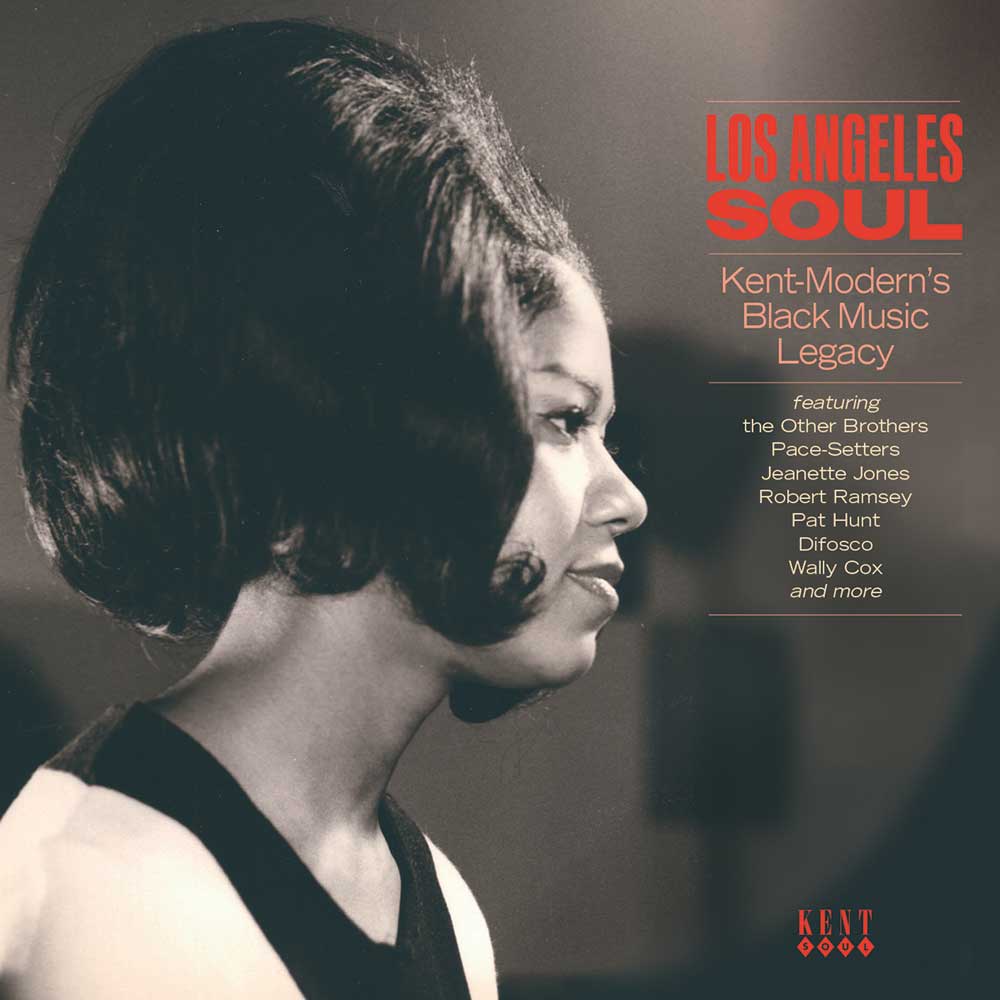
During the fifties, the Los Angeles’ based, Modern and Kent labels were two of the most successful independent record labels. Their star was definitely in the ascendancy. Modern and Kent signed some of the most successful soul, blues and R&B artists of the fifties, including John Lee Hooker, B.B. King, Etta James, The Cadets and Richard Houston. A few years later, and the Modern and Kent labels were more than labels.
With the profits of their hit singles, the Bihari brothers, owners of the Modern and Kent labels, built a recording studio, pressing plant, distribution centre and offices. The Bihari brothers had come a long way in a relatively short space of time.
As the sixties dawned, music was changing. That would be the case throughout the sixties, and into the seventies. While some labels stood still, the Biharis were determined to released music that was relevant. So, between 1962 and 1972, the period Los Angeles Soul-Kent-Modern’s Black Music Legacy covers, the Modern and Kent labels released an eclectic selection of music. This includes country soul, funk, gospel, psychedelia, R&B, soul, Southern Soul and sweet soul. It seemed the Bihari brothers were covering all bases in their constant search for hits. That’s reflected in Los Angeles Soul-Kent-Modern’s Black Music Legacy’s track listing.
Los Angeles Soul-Kent-Modern’s Black Music Legacy, which was recently released by Kent Soul, an imprint of Ace Records, features twenty-four tracks. They’re an eclectic selection, including contributions from Johnny Adams, Johnny Copeland, The Intentions, Jimmy Bee, Earl Wright, Pat Hunt, The Windjammers, Tommy Youngblood, Jackie Shane, Millie Foster, Ruth Davis and Wally Cox. These tracks were recorded between 1962 and 1972. However, not all of the tracks were released during thus period. Indeed, twenty of the tracks were released between 1962 and 2000. The other four tracks from Los Angeles Soul-Kent-Modern’s Black Music Legacy have never been released before.
This includes Jeanette Jones’ I Want Action, which opens Los Angeles Soul-Kent-Modern’s Black Music Legacy. Recorded in October 1968, I Want Action was penned by Andy Badale and Albert Elias, and gave Ruby Winters a hit single. Sadly, Jeanette’s gospel tinged cover was never released, until now. It’s mixed by Alex Palao and is the perfect way to open Los Angeles Soul-Kent-Modern’s Black Music Legacy. Having whetted your appetite, it leaves you wanting more, much more.
Don’t let the name DiFosco fool you. They’re not a disco group. Far from it. Their contribution, You Saved Me From Destruction is a fusion of soul and psychedelia was released in 1971. It was penned by Frank Clark. He also arranged and co-produced this single with Ervin Clark. The lead singer is none other than Dee Erwin, who previously, had a hit single with Little Eva with Swinging On A Star. Billed as Di Fosco Erwin Jr, he plays his part in an innovative and impassioned slice of 21st Century, psychedelic soul.
Johnny Copeland was a veteran of the Houston blues and soul scene, releasing over forty singles during the period between 1958 and 1980. Sadly, I Was Born To Love You, which was recorded in 1970, never made it only any of Johnny’s singles. Instead, it lain unloved unloved in the Modern’s vaults until it featured on Kent’s 1995 compilation Serious Shades Of Soul. At last this uptempo dancer was heard by a wider audience. Ten years later, and another generation of music lovers can hear a vocal powerhouse from Johnny that oozes emotion and hope.
I Only Have Eyes For You is an oft-covered track. In 1970, Jimmy Bee covered this Al Dublin and Harry Warren penned track. It was produced by Clarence Brown, and arranged and conducted by Rene Hall. It’s another track mixed by Alec Palao. Originally made famous by The Flamingoes in 1959, Jimmy stays true to the original. Elements of blues, jazz, doo wop, R&B and soul combine, as Jimmy delivers a heartfelt, seductive vocal.
Originally, Earl Wright’s I Don’t Know was released on the Hue label. It was a small independent label. Later, I Don’t Know was picked up by the Virgo label, who had a pressing and distribution deal with Kent. Virgo hoped to bring this beautiful, but wistful fusion of blues and soul to a wider audience. Sadly, I Don’t Know was just a regional his. That’s despite Earl’s despairing vocal, tinged with hurt and heartbreak.
Before embarking upon a solo career, Felice Taylor and her sisters Norma and Darlene, recorded as The Sweets. They released Satisfy Me Baby on the Soultown label. By 1966, Felice had embarked upon a solo career. She released her only single, It May Be Winter Outside (But In My Heart It’s Spring) on Mustang Records. It reached number forty-two on the US Billboard 100. While Felice’s next two singles failed to chart, her third single, I Feel A Love Coming On reached number eleven in Britain. Sing Me A Love Song however, is one that got away. Penned by Richie Adams and Irwin Levine, it was recorded but never released. That’s until now. Sing Me A Love Song, where Felice sounds remarkably like Diana Ross, is bound to find favour within the Northern Soul scene.
In 1971, The Windjammers covered All That Shines Is Not Gold. It was penned by Wally Cox, and produced by Leo Kulka, under his George Benz alias. Originally, All That Shines Is Not Gold was meant to be released on Golden State Records. The record was pressed, but when the bill wasn’t paid by label owner Willie Hoskins. So, the record was pulled. Leo Kulka then signed The Windjammers and took them back into the studio. One of the songs they recorded was Poor Sad Child Pt. 1, which was released as a single. All That Shines Is Not Gold was relegated to the flip side. This was an opportunity lost, as All That Shines Is Not Gold features The Windjammers at their soulful best.
Many blues aficionados will know the name Tommy Youngblood. He forged a reputation as a blues guitarist, vocalist and songwriter. In 1969, Tommy released an album The Soul Of Tommy Youngblood. It was released on Kent, and featured one of Tommy’s compositions, Gone On Home.. Accompanied by stabs of horns and driving, stomping rhythm section, Tommy delivers a joyous and soulful vocal.
Jackie Shane was originally born in Nashville, the capital of country music. He then moved to Toronto, before releasing singles on labels in Washington, New York and Boston. By 1967, Jackie released a cover of the standard You Are My Sunshine on Modern. This familiar track is transformed. Elements of blues, gospel, R&B and soul unite, as Jackie releases a vocal powerhouse.
Millie Foster signed to Modern Records in 1967. Before this, she’d only released a trio of singles between 1962 and 1964. At Modern, Millie recorded a quartet of cuts. They’ve never been released before. That’s until now. Compiler Ady Croasdell struck gold when he discovered Millie’s version of Maxwell Davis’ Move A Little Closer. It’s sassy, sultry and seductive. Quite simply, it’s musical gold from one of soul’s best kept secrets, Millie Foster.
Robert Ramsey and James Day cowrote Take A Look In Your Mind. It was then recorded by Robert and was originally meant to be released as a single on Kent, in 1971. However, when the release date came nearer, Kent decided to flip the single over. Like It Stands became the single and the country soul of Take A Look In Your Mind become the B-Side. This was another case of opportunity lost. On its release, Like It Stands failed commercially, and Robert never released another single. However, Take A Look In Your Mind is a reminder of what Robert Ramsay is capable of.
Closing Los Angeles Soul-Kent-Modern’s Black Music Legacy is Maurine Williams and The Mount Olive 2nd B.C. Choir’s version of the Betty Gouche ballad Your Gonna Miss Your Chance. This was a gospel track was pressed by Modern for a Los Angeles church. Accompanied by just a lone piano, Maurine Williams, accompanied by the choir delivers a heartfelt, impassioned vocal that’s both beautiful and oozes emotion.
Choosing just twelve of the tracks on Los Angeles Soul-Kent-Modern’s Black Music Legacy, to tell you about, wasn’t easy. Quite simply, Los Angeles Soul-Kent-Modern’s Black Music Legacy is crammed full of quality music. Whether it’s blues, country soul, funk, gospel, psychedelia, R&B, soul, Southern Soul or sweet soul, each and every track has quality written all over it. That’s no exaggeration.
You can cast aside the remote control when listening to Los Angeles Soul-Kent-Modern’s Black Music Legacy, which was recently released by Kent Soul, an imprint of Ace Records. As compilations go, Los Angeles Soul-Kent-Modern’s Black Music Legacy is all killer and no filler. From the opening bars of Jeanette Jones’ I Want Action, which opens Los Angeles Soul-Kent-Modern’s Black Music Legacy, right through to the closing notes of Maurine Williams and The Mount Olive 2nd B.C. Choir’s version of the Betty Gouche ballad Your Gonna Miss Your Chance, not once are you tempted to reach for the remote control. That’s testimony to Ady Croasdell’s crate-digging skills.
Ady Croasdell must be one of the hardest working men in music. Hardly a month goes by, without Ady having compiled a compilation. If Ady’s not compiling compilations, he’s writing sleeve-notes. It seems Ady Croasdell lives and breathes music. That’s apparent on his latest compilation, Los Angeles Soul-Kent-Modern’s Black Music Legacy, which oozes quality. Los Angeles Soul-Kent-Modern’s Black Music Legacy is a welcome addition to the Kent Soul discography.
LOS ANGELES SOUL-KENT-MODERN’S BLACK MUSIC LEGACY.
ATA KAK-OBAA SIMA.
ATA KAK-OBAA SIMA.
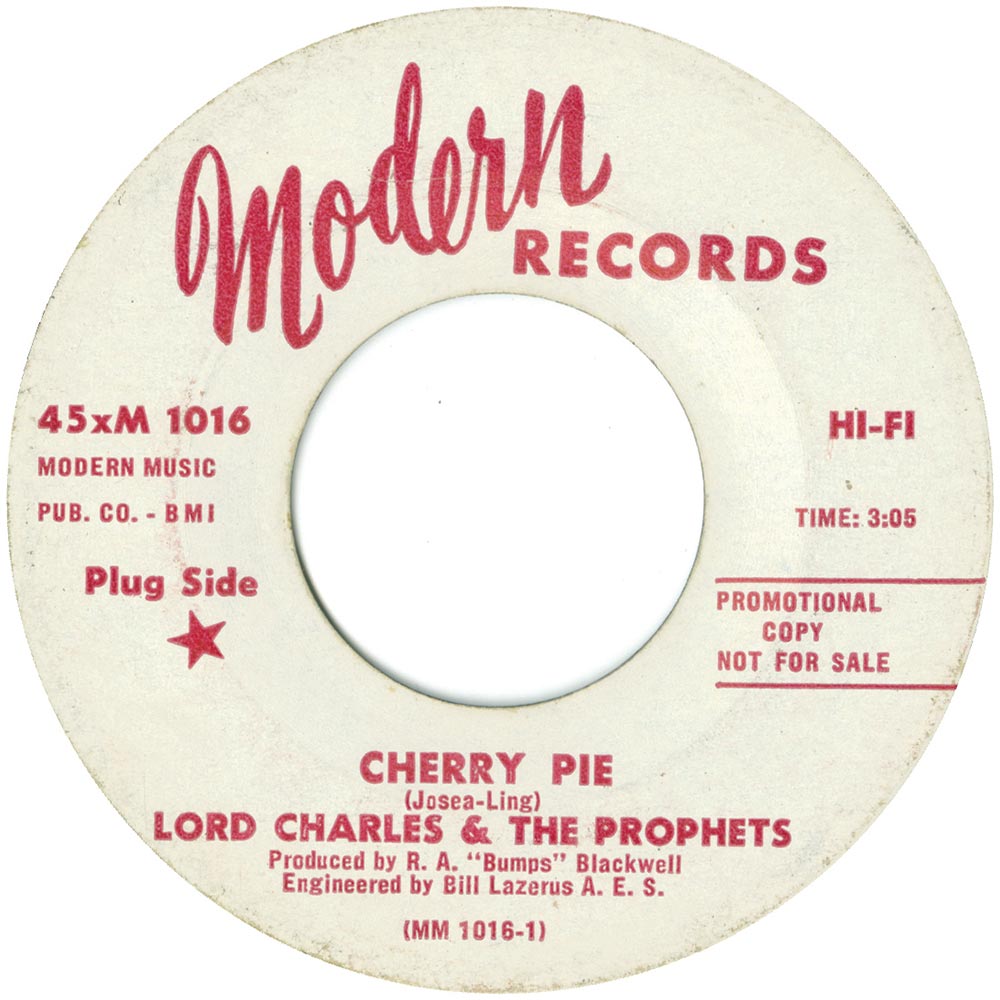
Twenty-one years ago, back in 1994, Ata Kak originally released his debut album Obaa Sima. It was no ordinary album. Obaa Sima was released with the help of his college professor and Ata’s twin brother. His brother designed the artwork for the cassette, and Professor O.A. DeGraft Johnson, helped release Obaa Sima through the university’s publishing department. Eventually, the release date arrived, and fifty cassette copies of Obaa Sima were made and released.
Ata and his brother decided fifty copies of Obaa Sima was enough to be going on with. They were essentially testing the market in in Ghana and Canada, to see how DJs and record buyers would react to Ata’s lo-fi fusion of highlife, Twi-language rap, funk and disco. Delivered with the energy and enthusiasm heard on early Prince albums, surely Obaa Sima would capture the imagination and hearts of critics, DJs and music lovers?
Sadly, that wasn’t to be the case. DJs wanted paid to play Obaa Sima. With Ata unable to afford to promote Obaa Sima, he was between a rock and a hard place. So, Obaa Sima passed Canadian and Ghanian music lovers by. Only three of the fifty copies of Obaa Sima were sold. So, with a heavy heart, and his dreams in tatters Ata’s nascent music career was all but over.
Later, with Ata living in Toronto, he played some friends Obaa Sima. They loved his music. That must have proved ironic for Ata. After all, he’d poured his heart, hopes and dreams into Obaa Sima. It could’ve been the start of a career in music. Sadly, that wasn’t to be. Then in 2002, a copy of Obaa Sima fell into the hands of the owner and founder of a record company.
This was Brian Shimkovitz, founder Awesome Tapes From Africa. In 2002, he was travelling through Ghana, when he came across someone selling cassettes at the roadside. As a lover of African music, Brian bought a copy. However, he never got round to playing what just so happened to be, Obaa Sima. A few years passed, and eventually, Brian decided to listen to Obaa Sima. Straight away, Brian was blown away with Obaa Sima. So, much so, that Brian founded the Awesome Tapes From Africa blog.
Having founded the Awesome Tapes From Africa blog, Brian posted the songs from Obaa Sima on the Awesome Tapes From Africa blog. Soon, the floodgates opened. There were literally hundreds of thousands of downloads, YouTube views, music video homages and remixes. There was a problem though. Nobody knew where Ata Kak was.
For years, nobody knew of Ata Kak’s whereabouts. Brian asked his contacts within the music industry if they knew anything about Ata Kak. The answer was always the same, no. Ata Kak, even in the internet age, was a mysterious and enigmatic musician. Eventually, the search was over and Brian made contact with Ata Kak. This resulted in the recent reissue of Obaa Sima by Awesome Tapes From Africa on 2nd March 2015. At last, the story behind the much traveled Ata Kak can be told.
Ata Kak was born Yaw Atta-Owusu, on 29th September 1960, in Kumsai, Ghana. He attended Mfantisipim Senior High School. When Ata left school, his first job was managing the bar at the Kumsai Golf Club. Living at home with his father, and working at the golf club, this was Ata’s life for several years. However, in 1985, when Ata was twenty-five, he moved to Germany, to join his wife.
For the first nine months Ata spent in Germany, he took German lessons. Ata planned to go to university. However, his plans changed when Mary became pregnant. This resulted in a change in plan for Ata.
By the time Kevin, Ata and Mary’s first son was born, Ata was worked as a labourer and farmhand during the day. At night, Ata taught English. In his spare time, Ata listened to music.
His favourite genres were disco, soul, funk and R&B. Ata was soon immersing himself in the music of Stevie Wonder, Michael Jackson, The Staple Singer and K.C. and The Sunshine Band. Soon, Ata went from listening to music, to making music.
Moving to Germany had opened doors for Ata and his wife. He worked in Dortmund and Dusseldorf, made friends, and through these friends, got the opportunity to join a band.
The opportunity arose when Ata was standing in line in the Post Office. An acquaintance approached Ata, and asked if he could play the drums? Ata for some reason, decided to say yes. That’s despite having never played the drums before. Despite this, Ata joined the band, and within five weeks, he was playing proficiently. Not long after this, Ata was singing lead vocals, in the reggae cover’s band. This was the start of Ata’s musical career.
Throughout the rest of Ata’s stay in Germany, he played in bands. Then in 1989, Ata moved to Canada, and Ata settled in Toronto, and was asked if he’d like to join a highlife band?
Again, Ata agreed. However, there was a problem. Ata had never played highlife. He preferred reggae. Despite this, Ata became a member of Marijata, who played all over Canada and recorded three albums. By then, Ata had immersed himself in highlife, pop, soul, R&B and funk. This would stand Ata in good stead when in 1991, he embarked upon a solo career.
Having decided to embark upon a solo career, Ata realised his bandmates, couldn’t, or wouldn’t, be able to play the music he wanted to make. So, he had to play all the parts himself. To do this, Ata whose budget was restricted, set about buying some musical equipment. He bought a second hand computer and Atari Notator music software. He bought a new synth with built in drum sounds, a reel-to-reel tape recorder and a twelve channel mixing desk. Now Ata was ready to record his own music.
Writing songs, Ata found, came naturally. Recording them, however, took time. Without money to hire a recording studio, Ata’s Toronto apartment became a makeshift studio. Helping Ata to record his own music was his friend, Yanson Nyantakyi, who took on the role of assistant enegineer. Slowly, Ata laid down the various parts. He added raps and vocals. Ata even added backing vocals. Then he realised his friend Lucy Quansah was better suited. She complimented Ata perfectly. As the tracks that would become Obba Sima came together, Ata’s baby son Jeffrey watched on. Little did Jeffrey realise that by the time he’d grown up, Obba Sima would’ve become an internet sensation.
Once Obba Sima was completed, Ata wanted to release his lo-fi fusion of highlife, Twi-language rap, funk and disco. So, Ata sent Obba Sima to Ghana to be mastered. It was much cheaper to send his tapes from Canada to Ghana, than have the mastering done locally. This was also the case with having the tapes duplicated. Fifty tapes were duplicated in Ghana, and sent to Ata in Toronto. With Ata’s brother providing the artwork for the cassette, Obba Sima was ready for release in 1994.
Unfortunately, when Obba Sima was released in Canada and Ghana in 1994. Ata approached DJs, asking them if they would play Obba Sima. The DJs wanted paid to play Obaa Sima. Ata couldn’t afford to do so. Nor could he afford to promote Obaa Sima, he was between a rock and a hard place. So, Obaa Sima passed Canadian and Ghanian music lovers by. Only three of the fifty copies of Obaa Sima were sold. So, with a heavy heart, and his dreams in tatters Ata’s nascent music career was all but over. That’s until a copy fell into the hands of Brian Shimkovitz, founder Awesome Tapes From Africa.
In 2002, Brian Shimkovitz was travelling through Ghana, when he came across someone selling cassettes at the roadside. As a lover of African music, Brian bought a copy. A few years passed, and eventually, Brian decided to listen to Obaa Sima. However, a few years passed before Brian played Obaa Sima. When he did, Brian was blown away with the music on Obaa Sima. So, much so, that Brian founded the Awesome Tapes From Africa blog.
After founding the Awesome Tapes From Africa blog, Brian posted the songs from Obaa Sima on the Awesome Tapes From Africa blog. Soon, the floodgates opened, and Obaa Sima became an internet sensation. So, Brian set about tracing Ata.
This proved problematic. Nobody knew of Ata Kak’s whereabouts. Brian asked his contacts within the music industry if they knew anything about Ata Kak. The answer was always the same, no. Ata Kak, even in the internet age, was a mysterious and enigmatic musician. Eventually, though, the search was over and Brian made contact with Ata Kak. This resulted in the recent reissue of Obaa Sima which I’ll tell you about.
Opening Obaa Sima is the title-track. Thunderous, pounding, drums and washes of synths bathed in filters add hypnotic, dance-floor friendly backdrop. Then a roll of drums sets the scene for the vocal. It sits in the midst of an arrangement where elements of disco, funk, highlife, hip hop and soul combine. The occasional holler or whoop is added. Mostly, though it’s just a soulful, heartfelt vocal. Later, the vocal’s augmented by backing vocal. They’re the perfect addition to this irresistible, lo-fi, dance-floor friendly track.
The tempo drops on Moma Yendodo. Occasional bursts of pitched up backing vocals, thunderous drums and a bounding bass join Ata’s Twi-language rap. Just like the previous tracks, genres melt into one. Elements of hip hop, soul, funk and Twi-language rap become one. At breakneck speed, Ata delivers a strutting, swaggering rap. All the time, backing vocals accompany him, as he shows another side Ata Kak, musical chameleon and showman.
Straight away, Ata’s love of soul can be heard on Adagya. Stabs of warm synths and a scrabbled bass pay homage to eighties soul. Then it’s all change. The track takes on a lo-fi, electronic sound as Ata urgently, delivers a Twi-language rap. He certainly doesn’t lack confidence. Literally, he swaggers through the track, with the soulful stylings of backing vocalists for company.
Medofo is a track whose roots are in Afro-beat and funk. It’s the dusty sounding Hammond organ and funky rhythm section that leads to this comparison. Then it’s all change. Ata delivers another of trademark raps. However, stealing the show is the sweet, soulful sound of Lucy Quansah. She adds backing vocals, that sometimes, head in the direction of a rap. Later, when the vocals drop out, elements of eighties funk, soul and R&B combine. The arrangement is panned right to left. It’s irresistible sound is the perfect replacement for the vocals, on what’s one of Obaa Sima’s highlights.
Drums pound as Daa Nyinaa gets underway. Soon, a sprinkling of percussion, washes of synths and the bass combine. Again, a drum roll announces the arrival of Ata. It’s as if its saying: “here’s Ata.” He veers between a rap and a vocal. Behind him, the arrangement has a real lo-fi sound. What sounds like an accordion briefly, weeps. later, Lucy Quansah makes a welcome entrance. She’s the perfect foil for Ata. Together, they drive each other to greater heights. Ata becomes a man inspired, his vocal soulful and funky, complete with hollers, whoops and one of his trademark raps.
Yemmpa Aba has a lo-fi, sci-fi and electronic sounding arrangement. Synths, eighties electronic drums combine with an organ that sounds as if it’s come straight of a highlife album. Then there’s the bounding bass. They provide the backdrop for Ata’s as he delivers another vocal cum rap at breakneck speed. Lucy adds backing vocals, as Ata hits his stride. It’s as if he’s been inspired by James Brown and Melle Mel, on this blistering track.
Closing Obaa Sima Bome Nnwom, which straight away, has you hooked. Exploding into life, Ata gets into the groove on this instrumental. Pounding drums drive the arrangement along. They’re joined by a scrabbled bass, washes of relentless synths and the occasional sci-fi sound. Sometimes, the track takes on industrial sound. However, mostly, it’s mesmeric, hypnotic and akin to a call to dance. What a way to close Obaa Sima.
Twelve years after recording and releasing Obaa Sima, Ata Kak became an internet sensation. While the album he recorded in 1994, in his Toronto apartment went viral, Ata Kak never knew. Ata was also unaware that across the world, hundreds of thousands of people were downloading the songs on Obaa Sima. The floodgates had opened. Obaa Sima was an internet sensation.
Soon, Ata Kak’s album Obaa Sima was one of the most viewed items on You Tube. Before long, remixes and edits were being posted. Still, Ata was unaware of this. Nor was he going to become rich.
As is often the case, songs were downloaded illegally. People were making money out of remixing and editing the songs on Obaa Sima. They posted them on their You Tube channels, and soon, these remixes and edits went viral. Still, Ata Kak never knew about this.
Ata Kak was, by now, back in Ghana. He’d returned home in 2006, where he invested in a business that dug wells. Sadly, equipment failure lead to the company’s failure. This meant that Ata could no longer make music. The situation was akin to a Greek tragedy. While Ata struggled to make ends meet financially, reputations were built, and money made thanks to his album Obaa Sima.
Eventually, Brian Shimkovitz, founder of Awesome Tapes From Africa tracked Ata Kak down. The two men agreed to reissue Obaa Sima on 2nd March 2015. Somewhat belatedly, Ata Kak should make some money out of Obaa Sima. That should be the case.
Hopefully, everyone who downloaded either songs from Obaa Sima, or the entire album, will buy a copy. So, should anyone who made money out of remixes and edits. That’s only fair and just. In return, everyone who buys Obaa Sima will discover a true hidden gem of an album, that’s bound to appeal to many people.
There’s elements of everything from Afro-beat, disco, electronica, funk, highlife, hip hop, R&B, soul and Twi-language rap on Obaa Sima’s seven songs. During Obaa Sima, Ata Kak, aided and abetted by backing vocalist Lucy Quansah, created an album of dance-floor friendly, genre-melting music that quite simply, oozes quality, and is guaranteed to get any party started.
ATA KAK-OBAA SIMA.
DOM LA NENA-ELA.
DOM LA NENA-ELA.
Not many people are willing to devote their life to music. No. It takes a very special person to make the sacrifices that are needed to master an instrument. Most people are unwilling to make the commitment that’s required. This wasn’t the case for Dom La Nena. From the moment the Brazilian born chanteuse first discovered the cello, it was literally love at first sight. Since then, the Brazilian born cellist and vocalist’s life has revolved around music. That was the first step in a musical journey that lead to the release Dom La Nena’s debut album Ela. It’s just been rereleased in Japan on 25th February 2015, on the Six Degrees Records. This is perfect timing, because very soon, Dom La Nena will release her sophomore album Soyo, However, that’s till to come. Before that, I tell you about Ela, I’ll tell you about Dom La Nena’s life and career.
Dom La Nena was born in 1989, inPorto Alegre, Southern Brazil. Aged five, curiosity got the better of Dom. She discovered something she’d seen every day of her young life, the family piano. Curiosity became a voyage of discover. Her discovery of the piano lead to the cello. Straight away, Dom La Nena realized that the cello was her way of expressing herself. So, she decided to devote her life to music and specifically, the cello.
By the time Dom was eight, her family moved to France. Her father was studying for a doctorate. During this period, Dom musical education began. She received a classical training during the five years her family lived in France. Once her father’s doctorate was completed, the family returned to Brazil. In Dom’s case, this wasn’t for long.
Already, Dom was an admired of American cellist Christine Walevska, who in 1997, was living in Buenos Aries, Argentina. Dom wrote to Christine and not long after this, she moved to Buenos Aries. Her parents realized this was a once in a lifetime opportunity. Never again, would Dom get the chance to be a student of a legendary musician. So, Dom’s parents allowed her to move to Argentina.
Aged just thirteen, Dom moved to Buenos Aries. Dom spent five years studying with Christine Walevska and some of the country’s most influential classical musicians. It was during her time in Argentina that Dom adopted the name La Nena. This was affectionate name which means “the girl,” was bestowed on her by Christine and her grandparents, who Dom would visit in Uruguay. Little did they realize that it would stick. After five years, Dom, aged eighteen, had finished what was the another stage in her musical eduction. Next stop for her, was Paris, where her musical career would begin.
It was 2007 when Dom moved to Paris. Soon, she was working with some of the biggest names in French music. Dom accompanied Jeanne Moreau, Etienne Daho and Camille. Then in 2009, Dom worked with Anglo-French singer and actress Jane Birkin on her worldwide tour. It was during Jane Birkin’s tour that Dom decided she’d begin work on her debut album.
On her return from touring with Jane Birkin, Piers Faccini offered Dom the chance to use his home studio. The rural location was perfect. It was high in Cevennes Mountains in France. Isolated, and miles away from anywhere, it gave Dom the chance to concentrate purely on her music. Within a week, Dom had recorded all the cello, piano and vocal parts. Dom decided to send the songs to Piers. He’d not planned to work on the album. Then he heard the songs.
After one listen, Piers wanted to work with Dom. He threw himself into the project. They proved a potent partnership. Dom and Piers were like ying and yang. Soon, an understanding arose. Quickly, Piers knew what was needed to improve a song. They fed off each other, inspired each other. Eventually, thirteen songs were finished. These thirteen songs became Ela, Dom La Nena’s debut album, which I’ll tell you about.
Anjo Gabriel is the perfect track to open Ela. This is case from the opening bar to the closing notes. Atmospheric describes the introduction. When a creaky door gives way to an accordion you’re interest in piqued. They provides a wistful and understated backdrop to the pizzicato strings and piano. They accompany Dom’s fragile, ethereal vocal. Accompanied by a subtle sprinkling of percussion and harmonies, the song heads towards its beautiful, crescendo.
No Meu Pais has a minimalist, understated arrangement. Just piano and cello set the scene for Dom’s vocal. There’s a sadness in her vocal. She’s grownup without roots, traveling between Brazil, France, Argentina and Brazil, never putting roots down. She’s missed out on so much. It’s as if she’s realizing what she’s sacrificed for her first love, music. A poignant coming of age song, is it a case of no regrets?”
From the opening bars of O Vento, the tension builds. Quivering strings and meandering guitars accompany Dom’s vocal. It’s sung in Portuguese. There’s a sense of melancholia in her vocal. Tinged with sadness and regret, Dom’s vocal is a window into the soul of the weary adventurer.
There’s a vibrancy to Dom’s vocal on Batuque. Multi-tracked backing vocals accompany her. Just like her vocal, they’re ethereal and crystalline. The drums are the polar opposite. They’e bold and dramatic, while the percussion is subtle. Later, when they join with Eastern percussion and Dom’s scatted vocal, they prove a mesmeric combination.
Dom’s cello provides a wistful, heartbreaking backdrop to Dessa Vez, which sees Piers Faccini join Dom. When her vocal enters, it veers between hurt-filled and hopeful. Longing and loneliness are omnipresent. She wonders and hopes, but dare not think that this time she might find love. She’s been hurt before is scared of being hurt again. Piers assures her this time it’s different, this time, it could be for real.
Conto de Fadas, which translates as Fairytale, is one of the highlights of Ela. Just a piano, then cello accompany Dom’s vocal. It’s tender, emotive and soothing. Despite being sung in Portuguese, its inherent beauty will transcends any barrier,
Ela the title-track has a sense of suspense. That’s thanks to the cello. It provides a dramatic backdrop for Dom’s despondent vocal. Soon, it quicken, becoming breathy. It’s as if she’s overcome with sadness and sorrow at the situation she finds herself in.
Buenos Aries features another guest artist, Argentinian singer Thiago Pethit. The song is a celebration of the time Dom spent in Buenos Aries. There’s a classical influence to this piano lead song. Dom delivers a a tender, wistful and ethereal vocal. Then an accordion tugs at her heartstrings. It provides a reminder of her old life in Argentina. When it drops out, Thiago delivers an impassioned, pleading vocal. Later, as Thiago and Dom’s vocals are swept along by the accordion and harmonies, memories come flooding back. For Dom, they’re good and bad. Instead of a celebration, it proves to be a bittersweet journey.
Breathtakingly beautiful and heartbreaking describes Menina Dos Olhos Azuis. With just harmonies and later, a piano for company, Dom lays bare her feelings. What follows is an outpouring of emotion, with a cello solo proving the final straw.
Sambinha is a very different track. It’s a much more upbeat song, that’s like a call to dance. You can’t help but submit to this songs irresistible charms. An acoustic guitar and percussion join Dom’s lilting, sensual vocal. Cooing harmonies, handclaps and accordion combine to create a backdrop to Dom’s sultry vocal.
When I first heard Canção Boba it reminded me of another song. Having racked my brains and played the songs numerous times, I realized what it was, U2’s One Love. Although there’s similarities, it’s also very different. Just a pensive piano provides an understated backdrop for Dom’s vocal. Her vocal oozes emotion, sincerity and joy. Gradually, the arrangement builds and reveals its beauty and secrets. As bass and cello combine with harmonies, the song takes on an anthemic quality. Thankfully, Dom doesn’t resort to posturing, relying on the ethereal, crystalline beauty of her vocal to shine through.
Vocé sees Dom joined by Camille, a French singer who she’s previously worked with. Inspiration for this song came from a childhood game she played. Memories come flooding back. That was when she was carefree, and started her globetrotting life as a musician. As the song ends, Dom’s vocal has become melancholy, at what she lost and the sacrifices she made. Was it worth it?
Saudade closes Ela. That’s the perfect way to describe not just Dom’s vocal on this track, but much of the album. Melancholia or wistfulness is a way of describing it. It’s more than that. There’s a sense of longing, as if desperate to recapture something that’s long-gone. That’s apparent from her vocal, which is accompanied by the cello. It reflects the regret in Dom’s vocal. What caused the regret? Maybe it’s the childhood and youth Dom never got the chance to enjoy. After all, she was living away from home and devoting her life to music?
Thirteen songs and just thirty-six minutes long, Dom La Nena’s debut album Ela, is a beautiful, but melancholy album. It’s a poignant and powerful window into the world of Dom La Nena. The thirteen songs feature mostly understated, acoustic arrangements. This allows Dom’s vocal to take centre-stage. You’re spellbound by each of her vocals. She’s a natural storyteller, whose worldweary, wistful voice brings the lyrics to life. Despite being sung in Portuguese and Spanish, you can feel, share and empathize with her pain and anguish. Dom sounds a complex character, whose music is a reflection of her childhood.
First of all, Dom and her family moved from Brazil to Paris. Aged just eight, she left behind her friends and had to travel across the world. She had meet new friends and make a new life. Then there was the language barrier. This couldn’t have been easy. Then five years later, she moved from France back to Brazil. Then came the biggest decision of her life. Aged just thirteen, Dom left home and headed to Buenos Aries. Leaving behind friends and family, she followed her dream of becoming a professional musician. In doing this, she sacrificed so much, maybe too much? Some would say she sacrificed her childhood? Traveling to Argentina she spent five years there. From her songs, they weren’t always happy times. Bittersweet times they were. From Argentina, Dom headed back to France. Living a nomadic existence, she never puts roots down. That’s what makes No Meu Pais autobiographical.
Indeed, many of the songs on Ela which was rereleased in Japan on 25th February 2015, on the Six Degrees Records, are autobiographical. Featuring articulate, intelligent lyrics, Ela is an emotional roller coaster journey that many people can relate to. After all, many people have made sacrifices that later, they wonder whether were worthwhile? In Dom’s case, it’s a journey full of highs and lows. Sadly, it seems the emotional lows outnumber the highs. That’s why one song epitomizes Dom La Nena’s music. That song is Saudade. It’s a Brazilian word that describes a deep-rooted sense of loss or longing. To me, that describes much of Dom’s music. That’s also why Dom’s music is so moving, poignant and powerful.
As an outsider looking in, Ela was an opportunity for Dom La Nena to reflect on her unorthodox life so far. I wonder whether she thinks that the sacrifices she made were worthwhile? Listening to the songs on Ela, melancholia is almost a constant companion for Dom. So often, her voice sounds melancholy, wistful and distant. It’s as if the songs bring back memories, some she’d rather forget. Maybe, Ela will prove cathartic for Dom La Nena, and this outpouring of emotion and memories will help her to move on and enjoy the next chapters in what I’m sure will be a long and successful musical journey?
DOM LA NENA-ELA.

MODERNISTS-A DECADE OF RYHTHM AND SOUL DEDICATION.
MODERNISTS-A DECADE OF RYHTHM AND SOUL DEDICATION.
Since the birth of rock ’n’ roll, youth cults have come and gone. Some have proved to be nothing more than passing fads. Others however, have lasted longer. However, none of the youth cults of the past fifty years have enjoyed the same longevity as the modernists.
The modernists came to prominence in the late fifties. Their name came about because of their love of modern jazz. However, by the early sixties, the modernists had become mods.
Musically, mods had eclectic taste. Mods embraced American R&B and soul music. Especially labels like Stax and Tamla Motown. They also listened to ska and reggae. However, mods didn’t turn their back on British music. The mods enjoyed pop and rock music. Groups like The Rolling Stones, The Who, Small Faces and The Kinks were perceived as “mod” groups. However, music was only part of the mod movement.
Image was everything for mods. They carefully tried to cultivate an air of coolness. The suits they wore were often tailor made. Sometimes, their suits were made out of cashmere, with narrow lapels. They also sported button-down collar shirts, thin ties and wool or cashmere jumpers All this was de rigour for a mod around town. So were fishtail parkas, desert boots, Chelsea boots and bowling shoes. A few mods even took to wearing makeup. In sixties Britain, this didn’t go unnoticed. However, mods were unlike no other youth subculture. Mods even had their own mode of transport.
Lambretta or Vespa scooters were the mods’ choice of transport. They drove them around town, where they visited dance-halls, coffee bars, and cinemas. At cinemas, mods took to watching French and Italian films. This was all part of a sense of continental coolness they were attempting to cultivate. After all, image was everything to the mod. So was music.
Every time there’s been a mod revival in the last fifty years, at the heart of the revival has been music. Whether it was in the late-seventies or mid-nineties, music and fashion was at the heart of these mod revivals. The music being made during the mod revivals during the late-seventies and mid-nineties, was inspired by the music of the sixties. For mods of all vintage, this was a golden era for music.
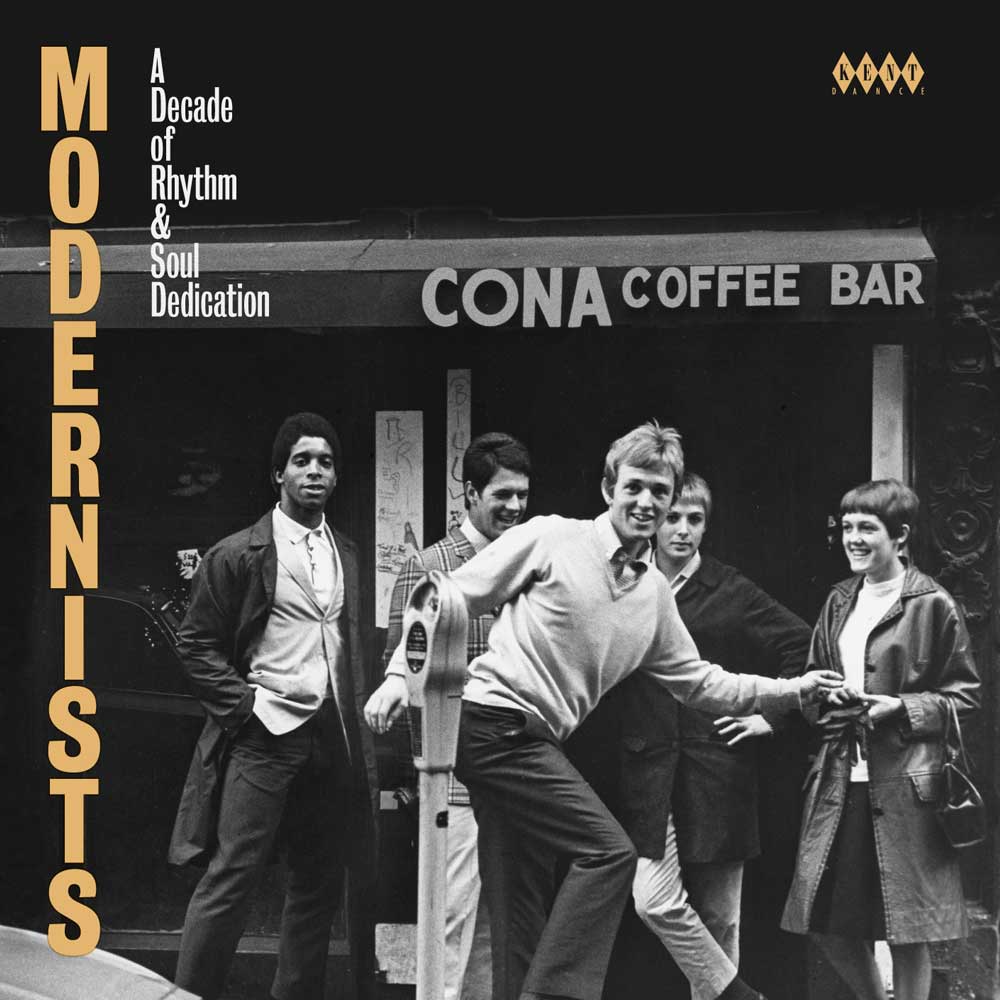
So it’s no surprise that Ady Croasdell and Dean Rudland have compiled a new compilation celebrating this golden age. This is Modernists-A Decade Of Rhythm and Soul, which was recently released by Kent Soul, an imprint of Ace Records. It came about when Ady and Dean were compiling the most recent instalment in the Mod Jazz series. They spoke about compiling a compilation of rhythm and soul. The result is Modernists-A Decade Of Rhythm and Soul.
Modernists-A Decade Of Rhythm and Soul features twenty-four tracks. This includes contributions from Jeb Stuart, Lewis Clark, Clifford Curry, Mel Williams, Little Bob, The Hustlers, Lee Bernard, Timmy Wilson, Eddy Giles and Charles Hodges. Most of the tracks were released between 1963 and 1968. That’s apart from three previously unreleased tracks.
The first is Little Eva’s version of Dynamite. It was recorded in 1965 and was meant to be the reply to James Brown’s hit single Papa’s Got A Brand New Bag. By then, Little Eva was struggling to replicate the success of Locomotion. Bob Feldman, Jerry Goldstein and Richard Gottehrer, who penned and produced Dynamite, hoped it would replicate the success of Little Eva’s Locomotion. On its release on Amy, Dynamite failed commercially. Since then, this version of Dynamite has lain unreleased. Not any more. Now this sassy slice R&B an be heard by a wider audience. That’s also the case with Clarence Daniels and Obie Jessie’s Good Thing Going On.
From the opening bars, Clarence Daniels and Obie Jessie’s Good Thing Going On has a jazz-tinged sound. That’s not surprising. Bassist Clarence Daniels had been a fixture of the Los Angeles’ music scene since the forties. A veteran of countless sessions, Clarence had even backed The Platters. However, in the late fifties, he joined forces with vocalist Obie jessie, whose career began in the mid-fifties, when he began recording a string of singles for Modern. A few years later, Clarence and Obie recorded Good Thing Going On, where jazz meets R&B. It’s quite simply, one of Modernists-A Decade Of Rhythm and Soul highlights, and like Timmy Wilson’s Long Ways To Go, is a real find.
Timmy Wilson wrote Long Ways To Go, and recorded it on 27th November 1965, at Capital City Sound, in Columbus. It was meant to Timmy’s debut single on the 3J label. For whatever reason, the release was cancelled, and this blistering R&B track remains, a long lost, hidden gem. Long Ways To Go is just one of many hidden gems, delights awaiting discovery on Modernists-A Decade Of Rhythm and Soul.
Jeb Stuart’s Soul Jerk opens Modernists-A Decade Of Rhythm and Soul. It’s an uptempo track, that sounds as if writers Jeb Stuart, Charles Jones and Clarence Taylor were hoping it would start a dance craze. Released on King Records in 1967, Jeb vamps and hollers his way through Soul Jerk, a hook-laden dance track.
Robert Relf and Earl Nelson penned Harlem Shuffle in the early sixties. They released it as a single in 1963. For many, this is the definitive version of Harlem Shuffle. Penned by Earl Nelson. This didn’t stop Robert Moore covering Harlem Shuffle in 1968. Released on the Hollywood label, it’s one of the best covers of Harlem Shuffle. A year later, however, Bob and Earl rereleased their definitive version.
The In Crowd were a group of session musicians. They recorded Cat Dance, an instrumental that epitomises the sixties club sound. Penned and arranged by Milton Shorty Rogers, it was released on the Brent label in 1965.
Although Oliver Morgan’s Hold Your Dog is credited to Sax Kari, by all rights, Rufus Thomas should get a co-credit. It’s essentially a remake of Rufus’ 1963 hit single Walking The Dog. Released on GNP Crescendo in 1964, Hold Your Dog is essentially a homage to Rufus Thomas’ Walking Your Dog, and again, epitomises the early sixties soul, R&B sound.
Bob Calille had enjoyed a long and varied career before he wrote I Got Loaded. He played drums in Good Rockin’ Bob, and then formed his own dance band, The Lollipops. By 1965, Bob had dawned the alias Little Bob. That year, he released I Got Loaded, on La Louisianna. From the get-go, it’s obvious I Got Loaded oozes quality. Dance-floor friendly, and full of hooks, it’s a delicious R&B cut. So much so, that’s one of the highlights of Modernists-A Decade Of Rhythm and Soul.
That’s the case with John Fred and His Playboy Band’s 1959 single Shirley. This slice of Louisiana R&B is truly irresistible. Penned by Thomas Bryan and John Fred Gournier, Shirley was released on the Montel label in 1959. It’s akin to a call to dance that’s truly timeless.
Danny and The Velaires released Shaggy Dog in 1967. Penned by Daniel Matousek, Shaggy Dog was released on the Brent label. It’s another instrumental. As the arrangement unfolds, the grinding arrangement takes on a mesmeric sound. That’s until the Hammond organ, makes its entrance. It transforms the track. What follows is an irresistible instrumental. Especially, when washes of wailing harmonica are unleashed. They’re just the finishing touch, to another instrumental that epitomises the sixties modernist sound.
Leroy Harris’ Crow Baby was released on the Swan label in 1966. It was written by Leroy and Ellis Taylor, who produced Crow Baby. Accompanied by gospel tinged harmonies, Leroy unleashes a funky, soulful slice of R&B.
While singer-songwriter Eddy Giles, a native of Shreveport, Louisiana, only enjoyed a short recording career, it was a case of quality rather than quantity. A talented soul man, with the ability to bring a song to life, he demonstrates that on Tingling. Written by Jimmy Ray Johnson and Dick Martin, Tingling was released on Murco in 1968. It’s the perfect showcase for one of Southern Soul’s best kept secrets.
Closing Modernists-A Decade Of Rhythm and Soul, is Rick and Paul’s After Hours. This was the B-Side to Hen House, which was released as a single in 1967. After Hours is one of the best finds on the compilation. Written by Buddy Bruce, Buddy Feyne and Andy Parrish, it was produced by Scott Seely and Buddy Merrill. Rick and Paul drop the tempo as a smokey, late-night sound unfolds. Aided and abetted by handclaps and hollers, Rick and Paul close Modernists-A Decade Of Rhythm and Soul on a resounding high.
Modernists-A Decade Of Rhythm and Soul, which was recently released by Kent Soul, an imprint of Ace Records. is the first in what hopefully, will be a regular series of modernist rhythm and soul. Especially, if future volumes are as good as Modernists-A Decade Of Rhythm and Soul.
Modernists-A Decade Of Rhythm and Soul features twenty-four tracks. They’re an eclectic selection. B-Sides and hidden gems rub shoulders with rarities, singles and unreleased tracks. This includes contributions from Jeb Stuart, Lewis Clark, Clifford Curry, Mel Williams, Little Bob, The Hustlers, Lee Bernard, Timmy Wilson, Eddy Giles and Charles Hodges. Most of the tracks were released between 1959 and 1968. That’s apart from three previously unreleased tracks from Little Eva, Timmy Wilson and Clarence Daniels and Obie Wilson. These tracks, were, most likely, recorded between 1959 and 1968, which was the age of the modernists.
The modernists, or as they became, mods, are celebrated on Modernists-A Decade Of Rhythm and Soul. The twenty-six tracks, chosen by Ady Croasdell and Dean Rudland, will bring back memories of a musical golden age. Especially for the original mods.
Back in the early sixties, the mod about town, would dawn their cashmere suits, complete with narrow lapels. Completing the look were button-down collar shirts, thin ties and a wool or cashmere jumpers and Chelsea boots. Before climbing aboard their Vespa or Lambretta, the most fastidious of mods would dawn a fishtail park. This wasn’t so much a fashion statement, as a means of protecting their precious tailor made suit. Only then would the Modernist climb aboard, and head into town, where they’d enjoy a music just like that on Modernists-A Decade Of Rhythm and Soul. However, for many modernists, these days are long gone. Their days of dawning tailor made suits and fishtail parkas, then jumping onboard a Lambretta are long gone. So, Modernists-A Decade Of Rhythm and Soul allows them to relive the music of their youth, in the comfort of their own home.
MODERNISTS-A DECADE OF RYHTHM AND SOUL DEDICATION.


HUNG ON YOU-MORE FROM THE GERRY GOFFIN AND CAROLE KING SONGBOOK.
HUNG ON YOU-MORE FROM THE GERRY GOFFIN AND CAROLE KING SONGBOOK.
Two heads are better than one. So, the saying says. That’s certainly the case with songwriting. Some of the best, and most successful songs in the history of popular music have been written by songwriting teams. That’s been the case throughout the history of popular music.
Jerry Leiber and Mike Stoller provided the soundtrack to much of the fifties, with songs like Kansas City, Hound Dog and Jailhouse Rock, to name but a few. Then in 1957, another of the legendary songwriting partnerships was born, Burt Bacharach and Hal David.
Bacharach and David’s songwriting partnership would last sixteen years. Right through to 1973, Bacharach and David penned countless classics, including Raindrops Keep Fallin’ On My Head, Walk On By, The Look Of Love, (They Long to Be) Close to You and This Guy’s In Love With You. However, in 1960, another songwriting partnership made its debut, Barry Mann and Cynthia Weil.
Just like Leiber and Stoller and Bacharach and David, Barry Mann and Cynthia Weil would go on to become one of the most successful and influential songwriting partnership in the history of popular music. Classics aplenty flowed from the pen of Barry Mann and Cynthia Weil, including classics like Saturday Night At The Movies, You’ve Lost That Loving Feeling and We Gotta Get out of This Place. It seemed that Barry Mann and Cynthia Weil could do no wrong. The same can be said of Gerry Goffin and Carole King.
Nowadays, the Goffin and King songwriting partnership is one of the most celebrated. No wonder. They were a truly prolific partnership, who throughout the sixties and early seventies, enjoyed critical acclaim and commercial. So much so, that to pay homage to Gerry Goffin and Carole King’s songwriting partnership, it’s taken Ace Records eight years and four compilations.
The first compilation of Gerry Goffin and Carole King songs that Ace Records released, was Goffin and King: A Gerry Goffin and Carole King Song Collection 1961-1967, which was released on 8th October 2007. Two years later, Ace Records returned with the followup, Honey and Wine: Another Gerry Goffin and Carole King Song Collection on 30th March 2009. Then another three years passed, before Something Good From The Goffin and King Songbook was released on 26th March 2012. Another three years passed before Ace Records released Hung On You-More From The Gerry Goffin and Carole King Songbook, on 2nd March 2015.
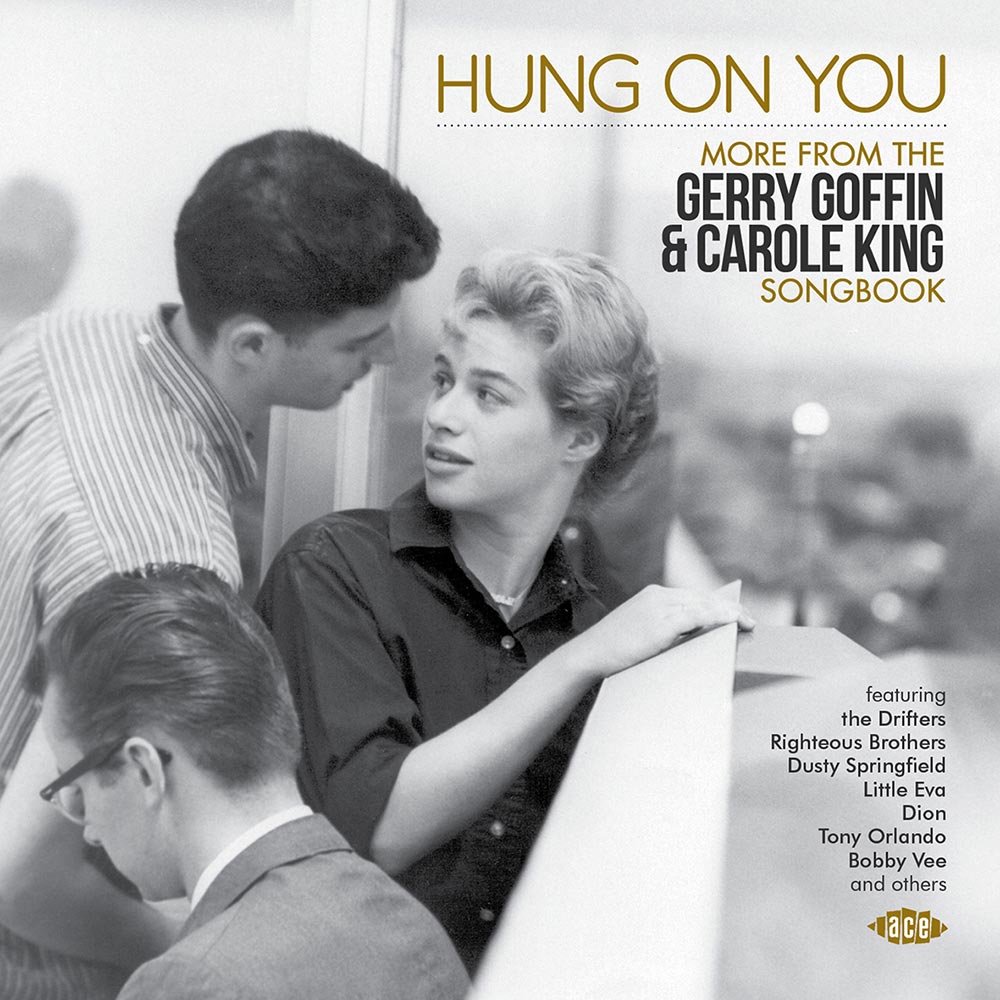
Hung On You-More From The Gerry Goffin and Carole King Songbook is a twenty-six track compilation, compiled by Mick Patrick. It features an eclectic selection of tracks, with The Righteous Brothers and Dusty Springfield rubbing shoulders with Skeeter Davis, The Shirelles, Dion, Bobby Vee, The Drifters, Walter Jackson, Henry Alston, The Crystals and The Countrymen. With sixties girl and soul groups sitting side-by-side with country, pop, soul and R&B singers, Hung On You-More From The Gerry Goffin and Carole King Songbook looks like a captivating and eclectic collection. Is that the case?
Opening Hung On You-More From The Gerry Goffin and Carole King Songbook is The Righteous Brothers’ Hung On You. This is a track Gerry Goffin and Carole King cowrote with Phil Spector, who produced the track. It was released on his label Philles Records as the followup to You’ve Lost That Loving Feeling. When it was released as a single in 1965, Hung On You reached number forty-seven in the US Billboard 100 chart. Fifty years later, Hung On You is a heartfelt hidden gem from The Righteous Brothers.
In 1968, Dusty Springfield recorded her classic album, Dusty In Memphis in 1969, for Atlantic Records. She had already recorded a number of Goffin and King songs. Another four featured on Dusty In Memphis. It could’ve been five. However, That Old Sweet Roll (Hi-De-Ho), which was recorded during the Dusty In Memphis sessions didn’t make the cut though. Instead, it featured on the B-Side of Dusty’s 1969 single Willie & Laura Mae Jones. This was Dusty’s first single after the release of Dusty In Memphis. Thirty years later, in 1999, That Old Sweet Roll (Hi-De-Ho) was one of the bonus track on the 30th anniversary reissue of Dusty In Memphis. Sadly, by then, Dusty Springfield had just died. So, That Old Sweet Roll (Hi-De-Ho) was a reminder of Dusty, at her soulful best.
Mention Skeeter Davis to anyone interested in country music, and they’ll wax lyrical. Skeeter enjoyed over forty hit singles between the late-fifties and mid-seventies. This includes her 1964 single What Am I Gonna Do With You. On the flip side was Don’t Let Me Stand In Your Way. Penned by Goffin and King and produced by Chet Atkins, pop meets country Don’t Let Me Stand In Your Way. This became known as the countrypolitan sound. One of its finest exponents was Skeeter Davis.
It wasn’t just The Shirelles career, that was transformed by their million selling single, Will You Still Love Me Tomorrow. So were Goffin and King’s. They were offered an advance on their future royalties. This allowed Gerry Goffin to quit his daytime job as a lab technician. Now he could concentrate all his efforts on writing hits. Soon, this paid off, when he penned What A Sweet Thing This Was for The Shirelles. Produced by Luther Dixon, it reached number fifty-four. Although slightly disappointing, compared to Will You Still Love Me Tomorrow, nowadays, What A Sweet Thing This Was sounds ahead of its time.
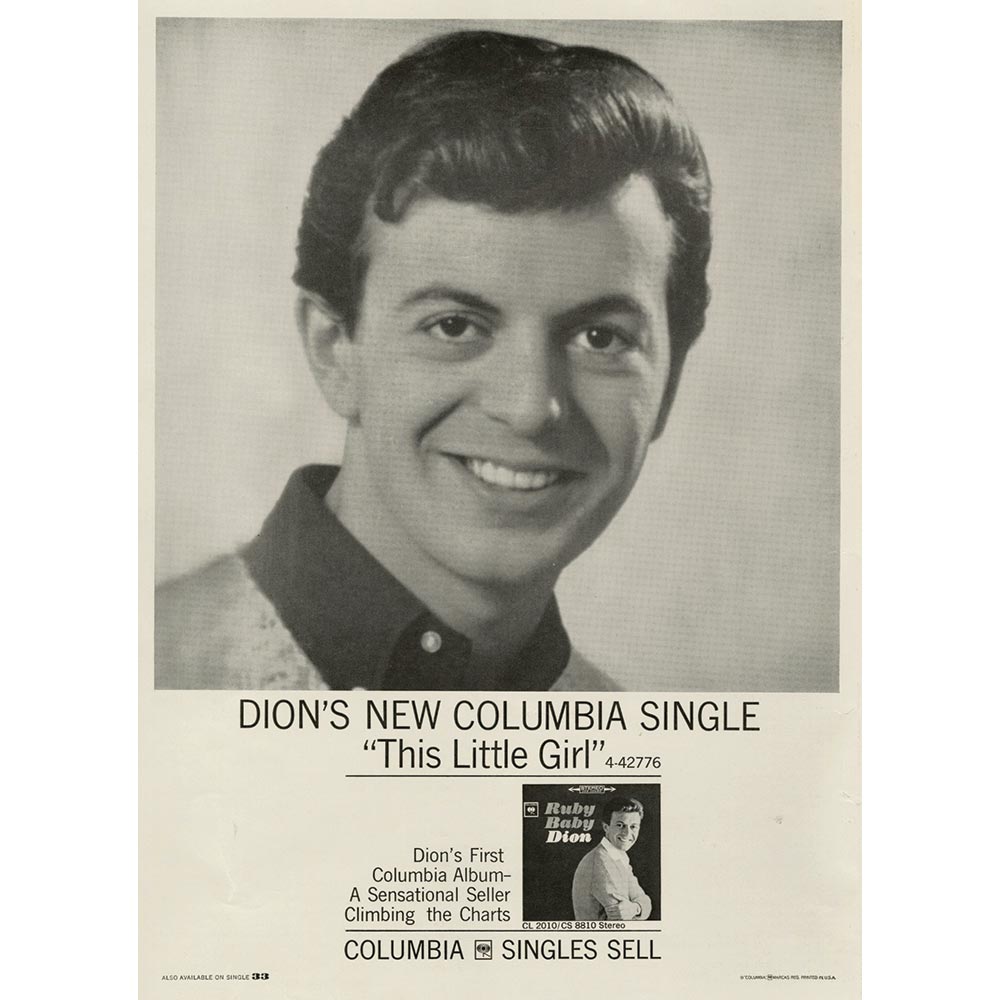
When Dion released This Little Girl as a single in 1963, he had already enjoyed a number one single with Goffin and King’s Take Good Care Of My Baby in 1962. Two years later, in 1963, Dion released This Little Girl on Columbia. It only reached number twenty-one in the US Billboard 200 charts. This Little Girl also featured on Dion’s 1963 album Donna The Prima Donna. Hook-laden and truly irresistible, This Little Girl was one of Donna The Prima Donna’s highlights.
In 1988, The Drifters were inducted into the Rock ’N’ Roll Hall Of Fame. Formed in 1953, The Drifters went on to enjoy a long, and successful career. By 1962, The Drifters were one of the biggest R&B groups. That year, they released the Goffin and King penned When My Little Girl Is Smiling. Produced by Leiber and Stoller, it reached number twenty-eight in the US Billboard 200 charts and number thirty-one in Britain. However, Craig Douglas and Jimmy Justice also released When My Little Girl Is Smiling as a single in Britain during 1962. The best of the three versions, were The Drifters, who made it their own.
Walter Jackson signed to Columbia in 1962. At his first session, the former Velvetones’ singer recorded four tracks, including Anything Can Happen. It wasn’t released for another forty-four years, until 2006, when Ace Records rereleased Walter’s debut album It’s All Over. Anything Can Happen was one of the bonus track. This was a welcome addition, as Walter delivers a heartfelt, hopeful vocal where he mixes power and passion.
Theola Kilgore only ever released six singles during her career. She enjoyed minor hits with The Love Of My Man and This Is My Prayer. In 1966, Theola released her swan-song, the Goffin and King penned It’s Gonna Be Alright. Produced by Bill Silva and Chuck Silva it failed to chart, but is a reminder of one of soul music’s best kept and most soulful secrets.
After a sabbatical from the music industry, Henry Alston, a former member of The Hurricanes, embarked upon a solo career. His debut single was Hey Everybody, released in 1964. The flip side was the Goffin and King penned, So Many Lonely People. It features a soul-baring vocal from Henry. Sadly, when Hey Everybody failed to chart, Henry didn’t release another single. His recording career as a solo artist, proved short-lived.
The first of the Philly soul factories, Cameo Parkway, opened its doors in 1956. Before long, R&B and soul singles were rolling out its doors. They were penned, played and produced by a small group of songwriters, musicians and producers. For the next twenty-five years, they gave the music Philly its own unmistakable sound. The Orions’ Keep Your Hands Off My Baby is a forerunner of this. Written by Goffin and King, it’s one of the highlights of their 1963 album All The Hits By The Orlons.
The Crystals were one of the most successful of the sixties girl groups. Formed in Philly in 1960, their biggest hits were He’s A Rebel and Da Doo Ron Ron (When He Walked Me Home). However, in 1962, they released the most controversial single of their career, He Hit Me (And It Felt Like A Kiss. Produced by Phil Spector, and released on his Phillies Records, the lyrical content shocked Americans. So much so, that the single failed to chart, and the song was omitted from The Crystals’ next album, Twist Uptown. It featured No One Ever Tells Me, the B-Side to He Hit Me (And It Felt Like A Kiss. Penned by Goffin and King, it’s a wistful, haunting ballad from The Crystals.
My final choice from Hung On You-More From The Gerry Goffin and Carole King Songbook, is The American Breed’s Sometime In The Morning. It’s a track from Bend Me, Shape Me, The American Breed’s 1968 album. Released on Acta Records, Bend Me, Shape Me’s best know track was the title-track. When it was released as a single in 1968, it reached the top five in the US Billboard 200 charts. This was The American Breed’s biggest single. However, The American Breed bring new life and meaning into Sometime In The Morning, which was also covered by The Monkees. The two versions are quite different. Of the two versions, The American Breed’s is the best.
Hung On You-More From The Gerry Goffin and Carole King Songbook, which was recently released by Ace Records, is the fourth compilation of songs penned by Goffin and King. It’s a twenty-six track compilation, compiled by Mick Patrick. His selection is truly eclectic. The Righteous Brothers and Dusty Springfield rubbing shoulders with Skeeter Davis, The Shirelles, Dion, Bobby Vee, The Drifters, Walter Jackson, Henry Alston, The Crystals and The Countrymen. Sixties girl and soul groups sitting side-by-side with pop, soul and R&B singers. There’s even crooners, country and psychedelia. Quite simply, there’s something for everyone.There’s a reason for this.
Gerry Goffin and Carole King were versatile songwriters. They could write songs for a wide variety of artists and groups. Whether it was country, pop, R&B or soul, Gerry Goffin and Carole King could pen a track for an artist. Goffin and Kin g were just as happy writing for sixties girl groups like The Ronettes and The Crystals, as they were penning tracks for Dusty Springfield, The Righteous Brothers and Skeeter Davis. Often, these tracks were then covered by an eclectic selection of artists. That wasn’t the case with other songwriting partnerships.
During the sixties, other songwriting partnerships emerged. Right through to the seventies, other songwriting partnerships discovered their own songwriting style. It proved successful, so their style never evolved. Their songwriting style and sound was formulaic. Especially, in Detroit’s soul factory. Eventually, this style and sound fell out of fashion. Despite this, other songwriting partnerships never learnt from their mistakes and history continued to repeat itself. For Goffin and King, they continued to enjoy commercial success and critical acclaim.
As the seventies dawned, the Gerry Goffin and Carole King partnership was all but over. They had divorced in 1968, and since then, gradually, began to lose contact. Carole embarked upon a solo career, and released her Magnus Opus Tapestry in 1971. It sold twenty-five million copies and won four Grammy Awards. After this, Carole combined her solo and songwriting careers. Just like former husband Gerry, she worked alongside several songwriting partners. However, for ten years the Gerry Goffin and Carole King partnership were one of the most successful songwriting partnerships.
Over forty years later, many of the songs Gerry Goffin and Carole King penned are regarded as classics. They’re truly timeless, and continue to be covered by a new generation of artists. Meanwhile, the originals, including The Shirelles’ Will You Love Me Tomorrow and Aretha Franklin’s (You Make Me Feel Like) A Natural Woman are part of musical history. So, is the Gerry Goffin and Carole King songwriting partnership. No wonder. For nearly ten years, they could do no wrong. That’s why, Gerry Goffin and Carole King, just like Bacharach and David, Leiber and Stoller and Barry Mann and Cynthia Weil, are regarded as one of the most important songwriting partnerships in the history of popular music. One listen to Hung On You-More From The Gerry Goffin and Carole King Songbook, and you’ll soon realise why.
HUNG ON YOU-MORE FROM THE GERRY GOFFIN AND CAROLE KING SONGBOOK.


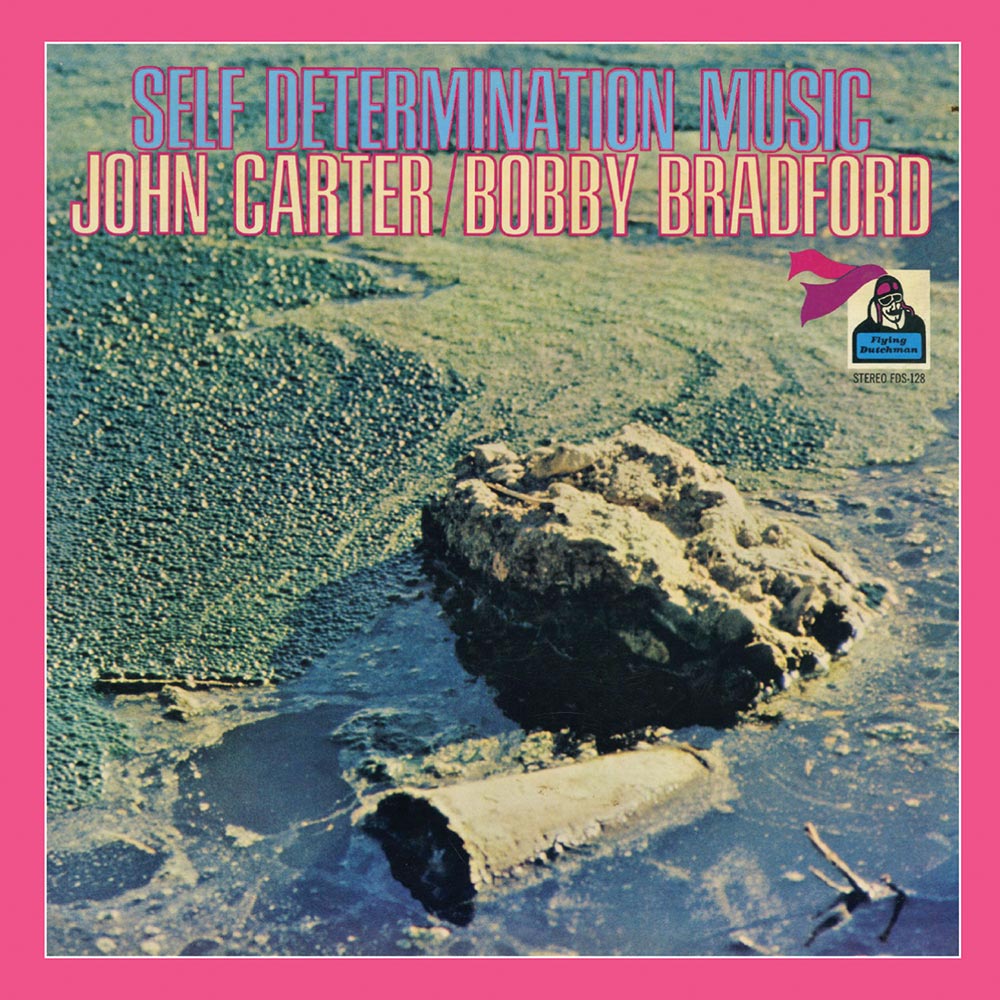
JOHN CARTER/BOBBY BRADFORD-SELF DETERMINATION MUSIC.
JOHN CARTER/BOBBY BRADFORD-SELF DETERMINATION MUSIC.
By 1970, when John Carter and Bobby Bradford released Self Determination Music, Bob Thiele’s Flying Dutchman Productions had established a reputation for releasing groundbreaking music. This had been the case since Bob left Impulse Records in 1969.
Impulse Records had been home for Bob Thiele since 1961. Over the next eight yearsDuring that time, Bob Thiele enjoyed the busiest period of his career. Bob, who was hardly away from the studio, produced over 150 albums in eight years. This included John Coltrane’s seminal album A Love Supreme. However, not all of Bob Thiele’s production’s were as successful. Innovative music didn’t always equate to commercially successful music.
Through working with some of the most innovative and creative musicians in the history of jazz, Bob must have realised that often, large record companies aren’t the best environment for innovative and creative musicians. Often, these musical mavericks didn’t thrive within such an orthodox environment. Their creativity is restricted, meaning they’re unable to experiment and innovate like they’d like.
Soon, Bob Thiele, would be able to create an environment where this would be possible. By 1969, Bob had been at Impulse for eight years. He’d been responsible for producing some of the most important jazz music of the sixties. However, there’s no sentiment in music. In the musical equivalent of a musical coup d’tat, Bob Thiele was ousted from his role at Impulse. This proved to the start of the next chapter in his career.
Leaving Impulse in 1969, Bob founded Flying Dutchman Productions. This would become home to everyone from Ornette Coleman, through Gil Scott Heron, Leon Thomas, Eddie “Cleanhead” Vinson, Louis Armstrong to Lonnie Liston Smith and His Cosmic Echoes. Within the right environment, Bob wanted to prove that innovative musicians could thrive, creating music that’s influential and forward-thinking. That describes the music on John Carter Carter and Bobby Bradford’s 1970 album, Self Determination Music perfectly.
Released in 1970, Self Determination Music was a collaboration between two musical innovators. This was their second collaboration. Their first was the John Carter and Bobby Bradford Quartet’s Flight For Four, which had been released on Flying Dutchman Productions, in 1969. The sessions had been challenging for producer, Bob Thiele. However, the end result made it all worthwhile. Flight For Four was the type of music he wanted to record, produce and release. Inventive, innovative and influential, Flight For Four was different to much of the music other labels were releasing. It would, he hoped, influence a generation of musicians. So, Bob commissioned a second album.
Whereas Flight For Four was credited to The John Carter and Bobby Bradford Quartet, Self Determination Music was credited to John Carter and Bobby Bradford. They put together a quintet which recorded the four songs on Self Determination Music, which was recently reissued by BGP Records, an imprint of Ace Records. Self Determination Music marked the next step in the career of two pioneering jazzmen.
Saxophonist John Carter was forty-one when he recorded Self Determination Music. He had been born in Fort Worth, Texas. Growing up, John attended I.M. Terrell High School, alongside Ornette Coleman and Charles Moffett. Originally, John played the saxophone. However, later, John began to spread his wings musically.
By the time John Carter headed to college, in 1945, he was already starting to play other instruments. Soon, he was becoming something of a multi-instrumentalist. Eventually, John could play clarinet, flute, plus alto, tenor and soprano saxophone. For a future music teacher, this was no bad thing.
In 1949, John graduated college, and began teaching. This allowed him to make a living, and also, to hone his skills. Deep down, maybe John hadn’t given up hope of making a living as a musician, like his old class mate Ornette Coleman. Eventually, it was Ornette Coleman that helped John get a break.
Ornette Coleman knew both John and Bobby Bradford. He felt they had much in common, professionally and musically. They had, he felt, similar hopes and aspirations. Both John and Bobby were teachers, who hoped to make a living as musicians. So, Ornette put them in touch.
When John met Bobby Bradford, he discovered he was a native of Cleveland, Mississippi. Bobby was thirty-six, five years John’s junior. He was born in 1934, and began playing the trumpet at an early age. By the age of fifteen, Bobby was playing in clubs around Dallas.
Despite his tender years, Bobby was rubbing shoulders with impressive company, including Ornette Coleman, James Clay and David Newman. This stood Bobby in good stead when he moved to Los Angeles in the early fifties.
Now living in Los Angeles, Bobby kept in touch with, and played alongside Ornette Coleman. Both shared a passion for free jazz, which was transforming jazz music. However, by the mid-fifties, Bobby’s career was interrupted. He was drafted.
With Bobby drafted, Don Cherry took his place in Ornette Coleman’s band. Then when Bobby was discharged from the Army, he picked up where he left off.
Bobby returned to Ornette Coleman’s band. Mostly, the lineup of Ornette Coleman’s band which featured Bobby played live. They did enter the recording studio. Sadly, these recordings were never heard. In 1962, a fire devastated the Atlantic Records’ vaults the master tapes were kept in. By then, Bobby had realised he wasn’t going to make a living as a musician.
So, like John Carter, Bobby turned to teaching. That’s how was making a living, when Ornette Coleman introduced John and Bobby.
With the two musicians turned teachers, having so much in common, they taught by day, and practised by night. Both men shared a love of free jazz, and were looking for like minded musicians.
Trying to form a band wasn’t easy. The problem was finding musicians who wanted to play free jazz. Some arrived with good intentions, but weren’t suited to free jazz. Eventually, though, the lineup took shape.
After trying out several bassists, Tom Williamson, a technical writer, by day, got the gig. Next to join was drummer Bruz Freeman, who was a stalwart of The West Coast scene. Previously, Bruz had been a member of the Hampton Hayes Quartet since the fifties. Bruz was the final piece of the jigsaw, who initially, called themselves The New Art Ensemble.
With the lineup in place, The New Art Ensemble practised together. However, given the band were part-time musicians, The New Art Ensemble only played a few gigs. When they did, they often played alongside Horace Tapscott and His Pan-African People. After one of these gigs at the Occidental College, The New Art Ensemble caught a break.
John William Hardy, a professor at Occidental College had founded a record label, Revelation, with one of his former students, Jonathan Harwich. They asked The New Art Ensemble if they wanted to record an album? The answer was a resounding yes.
John Carter penned five of the six tracks that became Seeking, The New Art Ensemble’s one and only album. This ambitious and pioneering album was released in January 1969. It was the perfect showcase for The New Art Ensemble, who were about to come to the attention of Bob Thiele.
Bob had just left Impulse, after eight years, and had just founded Flying Dutchman Productions. He was looking for musicians to accompany him on his debut album Head Start. Having come across The New Art Ensemble and Horace Tapscott, and been impressed with them, he realised he had found his backing band.
The New Art Ensemble and Horace Tapscott accompanied Bob Thiele on Head Start, which was released in 1969. Bob however, was impressed with The New Art Ensemble, so offered them a recording contract. However, he wasn’t impressed with their name. So, The New Art Ensemble became The John Carter and Bobby Bradford Quartet.
Flight For Four.
The John Carter and Bobby Bradford Quartet’s debut album would be Flight For Four. It featured five tracks. Four songs were penned by John, and one by Bobby. Some of the arrangements were extremely complicated. So much so, that when the recording session began, multiple takes were required. However, once the session were finished, The John Carter and Bobby Bradford Quartet and Bob Thiele were impressed by Flight For Four.
When Flight For Four was released in 1969, critics hailed it an album of ambitious and groundbreaking music. It was a timeless homage to The John Carter and Bobby Bradford Quartet’s collected love of free jazz. Despite the glowing reviews, Flight For Four wasn’t a huge seller. However, it sold well enough for Bob Thiele to commission a second album. Bob believed in The John Carter and Bobby Bradford Quartet, and was willing to back the free jazz pioneers.
Self Determination Music.
For their sophomore album, Self Determination Music, John Carter penned a trio of tracks, The Sunday Afternoon Jazz Blues Society, Loneliness and Encounter. Bobby Bradford contributed the other track on Self Determination Music, The Eye Of The Storm. These four tracks would become Self Determination Music, which saw The John Carter and Bobby Bradford Quartet, become a quintet.
For Self Determination Music, it was decided to add a second bassist. This presented a problem. No longer could they call themselves The John Carter and Bobby Bradford Quartet. So, Self Determination Music was billed as an album by John Carter/Bobby Bradford. It featured the debut of second bassist Henry Franklin.
Producer Bob Thiele too the quintet into the studio, where they recorded the four tracks. Drummer Bruz Freeman and bassists Tom Williamson and Henry Franklin provided the rhythm section. John Carter played reeds and Bobby Bradford trumpet. This new lineup worked their way through the four tracks, which became Self Determination Music, which was released in 1970.
Before its release in 1970, Self Determination Music was described as an ambitious and innovative album by critics. The quintet were perceived as pioneers, who were determined to push musical boundaries. They do this throughout Self Determination Music’s four tracks as free jazz moves in new and unexpected directions. However, how would record buyers react to Self Determination Music?
Sadly, when Self Determination Music was released, history repeated itself. Self Determination Music wasn’t a huge seller. Just like many of Flying Dutchman Productions’ releases, they found a discerning audience. However, still many jazz lovers still didn’t “get” free jazz. It seemed to go over their head. As a result, Self Determination Music hasn’t been rereleased since it was originally released back in 1970. So, BGP Records reissue of Self Determination Music, which I’ll tell you about, is a welcome reissue.
The Sunday Afternoon Jazz Blues Society opens Self Determination Music. A scrabbling bass, joins hissing hi-hats and blistering trumpet solo. Soon, what was an understated, spacious arrangement has been transformed. It’s a dramatic, musical roller coaster ride. At the heart of the arrangement is the trumpet, which plays a starring role. The rest of the quintet, however, aren’t reduced to playing supporting roles. No. They more than play their part in the sound and success of The Sunday Afternoon Jazz Blues Society. Especially, the sultry saxophone that joins aboard the roller coaster. Aided and abetted by the rhythm section, a mesmeric and inventive free jazz track takes shape, leaving you wanting more.
The Eye Of The Storm is a fifteen minute epic. Hesitantly, the two basses toy with the listener. They’re playing call and response, varying the tempo. It rises and falls, as if Tom and Henry are playing a game of cat and mouse. This continues when the horns enter. Accompanied by the rhythm section, which powers the arrangement along, horns sound. Sometimes, it’s as if they’re duelling, vying for supremacy. Mostly, though a glorious trumpet solo weaves its way across the arrangement. Not to be outdone, rumbling rolls of drums, the scrabbled bass and stabs of saxophone vie for your attention. Then the sultriest of saxophone solos takes centre-stage. It’s as if the gauntlet has been thrown down. Later, as the arrangement becomes much more understated, one things stays the same. Subtleties, surprises and nuances aplenty unfold, during this free jazz epic.
Loneliness opened side two of the original version of Self Determination Music. It’s nine minutes where beauty and melancholia are omnipresent. Understated, hesitant, wistful and beautiful describes the way percussion, subtle stabs of horns and a probing bass unite. Soon, the track takes on an orchestral sound. Still, though, the understated sound remains. Then as bass if plucked, a saxophone sounds. Its sultry, soul-searching sound is akin to an unburdening of hurt and heartbreak. Scrabbled strings, a muted, melancholy trumpet and string play. Drums are caressed, as if Bruz is afraid to overpower the beautiful, wistful arrangement. As Loneliness’ continues to unfold, its cinematic sound grows. By the end of the track, Loneliness, with its beautiful, wistful cinematic sound, is painting pictures of hurt, heartbreak and of course, Loneliness.
Closing Self Determination Music is Encounter. It’s a thirteen minute track. From the get-go, the quintet stretch their legs. Theres a sense of urgency in the rhythm section, who power the arrangement along. They provide the backdrop for the wailing, braying horns. Soon, though, as the tempo rises, it’s just the trumpet that remains. With the rhythm section injecting urgency, Bobby kicks loose. His scorching, searing horn cuts through the arrangement. Not to be outdone, John returns, playing gently and within himself. When he drops out, it’s just the frenzied rhythm section that accompanies Bobby. Later, John returns, still playing within himself. Even when Bobby bows it. The horns are constantly searching for an in, during the rhythms laid down by the powerhouse of a rhythm section. This becomes even more apparent when the horns drop out. They, like John and Bobby more than play their part in what’s an urgent, explosive, free jazz tour de force which closes Self Determination Music.
It was forty-five years ago, in 1970, that John Carter/Bobby Bradford released Self Determination Music. This was the second album they had released on Flying Dutchman Productions. Sadly, although it found an audience within the free jazz community, and among the more adventurous record buyers, mostly, Self Determination Music passed music lovers by. That’s not surprising. Very few record buyers understood free jazz.
Used to traditional, more mainstream jazz music, free jazz was another world to them. Bebop, hard hop and the West Coast jazz they could understand, but not free jazz. It went against jazz’s fundamentals. Free jazz was akin to jazz’s maverick genre. This was a step too far. As a result, many jazz lovers were missing out on many ambitious and innovative albums, including John Carter/Bobby Bradford’s Self Determination Music, which was recently reissued by BGP Records, an imprint of Ace Records.
Self Determination Music is yet another of the hidden gems that for far too long, has been hidden away in Flying Dutchman Productions’ vaults. Not any more. Forty-five years after its original release, music lover have another chance to rediscover a truly groundbreaking album, Self Determination Music which John Carter/Bobby Bradford released back in 1970. Self Determination Music, which is a truly beautiful, ambitious, dramatic and innovative album, which will challenge music lovers both musically and intellectually. If they give Self Determination Music a chance, they will be richly rewarded by John Carter/Bobby Bradford’s long forgotten, free jazz epic.
JOHN CARTER/BOBBY BRADFORD-SELF DETERMINATION MUSIC.


RICK WAKEMAN-THE MYTHS AND LEGENDS OF KING ARTHUR AND THE KNIGHTS OF THE ROUND TABLE.
RICK WAKEMAN-THE MYTHS AND LEGENDS OF KING ARTHUR AND THE KNIGHTS OF THE ROUND TABLE.
In January 1973, Rick Wakeman released his sophomore album The Six Wives Of Henry VIII. It was a groundbreaking album, one that would forever change prog rock. The Six Wives Of Henry VIII was the album that legitimised synths in prog rock. This was a game-changer.
Following the success of The Six Wives Of Henry VIII, synths became commonplace in prog rock. However, without Rick Wakeman and The Six Wives Of Henry VIII, maybe, the history of prog rock would’ve been very different? Two years later, and Rick Wakeman, prog rock pioneer’s life was turned upside down. However, before that, Rick Wakeman would enjoy further success with another concept album, Journey To The Centre Of The Earth.
Journey To The Centre Of The Earth.
Following the success of The Six Wives Of Henry VIII, Rick Wakeman began work on his third album, Journey To The Centre Of The Earth. This was another concept album. It was based on Jules Vernes’ science fiction novel Journey To The Centre Of The Earth, which was published in 1864. It inspired Rick to write and record another prog rock opus.
Journey To The Centre Of The Earth featured two lengthy tracks written by Rick Wakeman. The Journey/Recollection, which lasted twenty-one minutes, would fill side one of Journey To The Centre Of The Earth. Side two featured The Battle/The Forest, which lasted nearly nineteen minutes. However, these two tracks weren’t recorded in a studio.
No. Journey To The Centre Of The Earth was recorded at the Festival Hall, London. On 18th January 1974, Rick Wakeman, accompanied by the London Symphony Orchestra, the English Chamber Choir and a select group of musicians who Rick named The English Rock Ensemble. With such an ambitious project, Rick wasn’t taking chances. Two concerts were scheduled and both were recorded. The second concert would feature on the completed version of Journey To The Centre Of The Earth, which was released on 9th May 1974.
Before the release of Journey To The Centre Of The Earth, critics had their say. To say reviews were mixed is an understatement. Among the less favourable reviews, words like a “classical pastiche” “genuinely appalling” and “brutal synthesiser overkill” peppered reviews. For Rick this was hugely disappointing. It had been a hugely ambitious project, one which took a lot out of him. However, other critics, especially the rock critics, were much more open minded. They gave Journey To The Centre Of The Earth glowing reviews. Maybe, Rick’s hard work was about to pay off?
When Journey To The Centre Of The Earth was released on 9th May 1974, Rick Wakeman had the last laugh. Journey To The Centre Of The Earth reached number one in Britain and number three in the US Billboard 200 charts. This resulted in Journey To The Centre Of The Earth being certified gold in America. Rick Wakeman had been vindicated. However, his world was about to be turned upside down.
The Myths and Legends Of King Arthur and The Knights Of The Round Table.
Following the release of Journey To The Centre Of The Earth, Rick Wakeman was getting ready to begin work on his fourth album. Then disaster struck. Rick had the first of three minor heart attacks. He was taken to Wexham Park Hospital, near Slough, in Berkshire. That’s where Rick recuperated and began writing The Myths and Legends Of King Arthur and The Knights Of The Round Table, which was recently rereleased as a double album by Universal Music Group.
When Rick was admitted to the Wrexham Park Hospital, the prognosis wasn’t good. Far from it. The doctor advised Rick to stop playing and touring. If he retired, his health might improve. Rick wasn’t amenable to this suggestion. So, that night, he penned The Last Battle, the track which would eventually, close The Myths and Legends Of King Arthur and The Knights Of The Round Table. This was the start of Rick Wakeman’s recovery.
The suggestion that Rick Wakeman retired seemed to inspire him. So, whilst recovering from the heart attack, Rick wrote most of The Myths and Legends Of King Arthur and The Knights Of The Round Table at Wrexham Park Hospital. Before long, his health had improved and he was ready to record The Myths and Legends Of King Arthur and The Knights Of The Round Table.
Recording of The Myths and Legends Of King Arthur and The Knights Of The Round Table began at Morgan Studios, London, on 16th October 1974. Right through to the 10th January 1975, Rick and his band recorded the seven tracks that became The Myths and Legends Of King Arthur and The Knights Of The Round Table. Rick’s band included the rhythm section of drummer Barney James, bassist Roger Newell and Geoff Crampton on lead and acoustic guitar. They were joined by percussionist John Hodgson and The English Chamber Choir. Taking charge of the lead vocals were Gary Pickford-Hopkins and Geoff Crampton. Rick who produced The Myths and Legends Of King Arthur and The Knights Of The Round Table, played synths, keyboards and grand piano. Once recording was completed on 10th January 1975, The Myths and Legends Of King Arthur and The Knights Of The Round Table was released in April 1975.
Before that, the critics had to have their say about The Myths and Legends Of King Arthur and The Knights Of The Round Table. This time, generally, reviews were more favourable. Gone were the scathing, jaundiced reviews that preceded Journey To The Centre Of The Earth. Things were looking good for Rick Wakeman.
On the release of The Myths and Legends Of King Arthur and The Knights Of The Round Table, in April 1975, it reached number two in Britain and number twenty-one on the US Billboard 200 charts. This resulted in Rick’s third consecutive gold disc in America. The Myths and Legends Of King Arthur and The Knights Of The Round Table also was certified gold in Japan, Australia and Brazil. Things were indeed, looking up for Rick Wakeman. However, according to the musical rumour mill, there was a problem.
Rick had decided to tour The Myths and Legends Of King Arthur and The Knights Of The Round Table, to support the album. This included three nights at Wembley, which was billed as King Arthur On Ice. Although these nights sold out, rumours persisted that Rick Wakeman had taken a large financial hit. Some rumour mongers went as far as to suggest that Rick had been declared bankrupt. That was far from the truth.
Later, it became apparent that Rick never lost money on the tour that accompanied The Myths and Legends Of King Arthur and The Knights Of The Round Table. Indeed, the tour and album had been a profitable venture, selling over twelve million copies worldwide. Not bad for an album Rick Wakeman wrote in his hospital bed, and released forty years ago, when prog rock, like Arthur was King? Has The Myths and Legends Of King Arthur and The Knights Of The Round Table stood the test of time though?
Opening The Myths and Legends Of King Arthur and The Knights Of The Round Table is Arthur. From the spoken word introduction, the drama unfolds. Horns sound, drums roll and strings sweep. They add a dramatic, theatrical backdrop. Soon, a harpsichord plays, and then synths. They’re the polar opposite of the harpsichord. They work though. Especially, as horns sound, stabs of piano punctuate the arrangement, while the lushest of strings sweep. Only then, is it time for the vocal to enter. Everything has been leading up to this moment, when he tells the story of the “bravest knight”and his quest. From there, slowly, and dramatically, they provide the backdrop for his story. Eventually, as the choir sing, strings cascade, drums pound, a piano plays and Rick’s bank of synths are prevalent, as “his quest for the sword complete…Arthur is the king of all this land.” Dramatic and stirring, with a sense of theatre, Rick Wakeman brings to life the Arthur’s quest.
Lady Of The Lake is just a short track, lasting less than a minute. However, it features a heartfelt delivery from The English Chamber Choir. Unaccompanied, they sing: “I am the lady of the lake, come take my sword, wear it by your side.”
Seamlessly, Lady Of The Lake melts into Guinevere. Rick’s lone, wistful piano plays. It’s a scene setter. When it drops out, shimmer, almost sci-fi synths are sprinkled across the arrangement. They’re then joined by flourishes of piano. Although unlikely bedfellows, they’re like yin and yan, providing the perfect backdrop for a needy, hopeful vocal. Swathes of strings float above the arrangement, adding another contrast. So do bells that ring out, and harmonies from The English Chamber Choir. With flamboyant flourishes of Rick’s piano and his bubbling, squeaking, synths for company, the arrangement seamlessly comes together, taking on a joyous, celebratory sound. Adding the finishing touch to the now jaunty arrangement, are searing, blistering guitars and a masterclass from Rick on piano, on what’s a beautiful, dramatic marriage of prog rock and neo classical.
Straight away, Sir Lancelot and the Black Knight sounds like a soundtrack. String sweep and cascade urgently. Horns sound, and The English Chamber Choir interject urgently and dramatically. Then adding to the drama, are Rick’s synths and a powerhouse of a vocal. It’s a mixture of urgency, drama and emotion. Especially, with The English Chamber Choir answering its call. Drums pound, strings cascade and horns sound. Synths add to the drama, as music’s past, present and future unite. Together, they provide a timeless, cinematic sounding track.
The English Chamber Choir open Merlin The Magician. They sing unaccompanied, adding to the sense of theatre and drama. So, does the piano and drama. In their own wistful way, they help paint pictures. That’s also the case with the strings and the dreamy washes of synths. Their lysergic sound floats above the arrangement, before the rhythm section and percussion interject. They add urgency and drama, as they add a glorious rocky sound. Later, it’s time for some of Rick’s sci-fi synths. Along with flourishes of piano, they help drive this near nine minute epic along. Quite simply, it’s beautiful, captivating, dramatic, elegiacal, graceful and urgent.
Just like the previous track, The English Chamber Choir open Sir Galahad. It’s a case of closing your eyes and letting their collected voices wash over you. That’s also the case with Rick’s lone, melancholy piano and lush synths. Then he throws a curveballs. The arrangement literally explodes, heading in the direction of rock opera. With a powerful, emotive vocal at the heart of the arrangement, the rhythm section, synths and percussion frantically drive the arrangement along. Then midway through the track, a sense of calm is restored. Just the vocal and flourishes of piano combine. However, it’s apparent that the arrangement is about to explode back into life. When it does, it references rock, funk, prog rock and choral music. Seamlessly, this genre-melting track makes sense and is one of the highlights of The Myths and Legends Of King Arthur and The Knights Of The Round Table.
Closing The Myths and Legends Of King Arthur and The Knights Of The Round Table is The Last Battle. It’s another epic track, one that lasts nearly ten minutes. The arrangement is understated washes of synths, hissing hi-hats and bells subtly ringing out. As the arrangement makes a cooing sound, an impassioned vocal takes centre-stage. It’s accompanied by a bass, and soon, banks of synths, drums and percussion. They’re responsible for building the arrangement. So are The English Chamber Choir and horns that sound triumphantly. Later, strings cascade and the synths skip along, accompanied by a bounding bass. Percussion and bursts of piano interject, as Rick Wakeman and his multi-talented band have save the best until last. It’s a triumphant way to end any prog rock album, never mind a timeless genre classic, like The Myths and Legends Of King Arthur and The Knights Of The Round Table.
Forty years have passed since Rick Wakeman released The Myths and Legends Of King Arthur and The Knights Of The Round Table. It’s an album that’s stood the test of time. I’ll go much further than that. The Myths and Legends Of King Arthur and The Knights Of The Round Table is a stonewall, prog rock classic. However, it’s an album that very nearly, never was recorded.
Back in 1974, Rick Wakeman was recuperating from a minor heart attack. His doctor recommended that Rick retire. However, Rick was only twenty-five. That wasn’t going to happen. Music was his life. As if determined to prove the doctor wrong, that day, Rick began work on The Myths and Legends Of King Arthur and The Knights Of The Round Table, and penned The Last Battle, which closed this prog rock Magnus Opus. A year later, and The Myths and Legends Of King Arthur and The Knights Of The Round Table was released to critical acclaim and commercial success.
Eventually, The Myths and Legends Of King Arthur and The Knights Of The Round Table sold over twelve million copies worldwide, and was certified gold in four continents. Forty years later, and Universal Music Group have reissued The Myths and Legends Of King Arthur and The Knights Of The Round Table as a double album.
This is a very welcome reissue. On disc one is the remastered reissue, while disc two is a DVD, featuring the stereo and quadrophonic mixes. Accompanying the two discs, are the sleeve notes, which faithfully replicate the lyrics and artwork. It’s a lavish and lovingly reproduced booklet, one that many record company would do well to take inspiration from.
Nowadays, many record company rush out albums. Neither care, nor attention, is taken to the mastering or packaging. Instead, a mountain of third albums of Nu-Soul, hip hop and remixes that are released each month. This month’s releases, are next month’s landfill. That’s a great shame, as a generation of music lovers are being short changed. Sadly, they’re not lucky enough to have grownup in an era where all that mattered was the quality of the music.
Back in the seventies, when prog rock, like Arthur, was King, artists like Rick Wakeman were constantly striving for perfection. This started with the music. Once an album, including Rhe Myths and Legends Of King Arthur and The Knights Of The Round Table was completed, then the rest of the package was completed. Neither effort, nor expense was spared. That’s apparent on Universal Music Group’s recent reissue of The Myths and Legends Of King Arthur and The Knights Of The Round Table, which is a very welcome reissue.
For far too long, Rick Wakeman’s music has been unavailable. That’s a missed opportunity. After all, Rick Wakeman was a musical pioneer, who pushed musical boundaries. That’s the case on The Myths and Legends Of King Arthur and The Knights Of The Round Table. Over seven songs, Rick combines everything from choral and classical to folk and funk, right through to classic rock and prog rock. The music is variously beautiful, captivating, cinematic, elegiacal, ethereal and graceful, right through to dramatic, rousing, stirring and urgent. The music on this prog rock classic, where Rick Wakeman paints pictures, and in doing so, transports you back in time, to another place, where you discover The Myths and Legends Of King Arthur and The Knights Of The Round Table.
RICK WAKEMAN-THE MYTHS AND LEGENDS OF KING ARTHUR AND THE KNIGHTS OF THE ROUND TABLE.
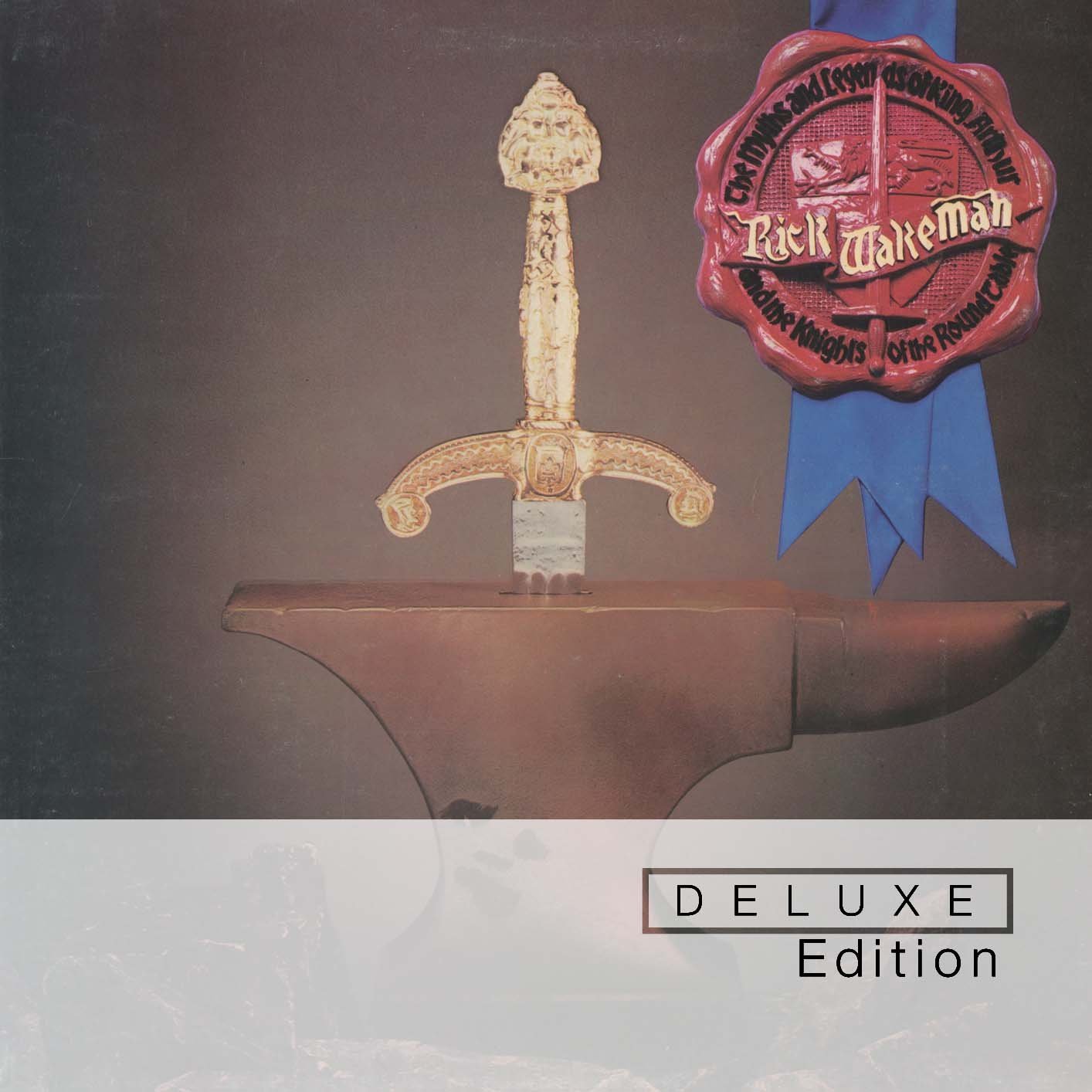
MICHAEL CHAPMAN-WINDOW.
MICHAEL CHAPMAN-WINDOW.
Michael Chapman never set out to be a make a living as a musician and originally, he was a teacher. By day, Michael Chapman taught art and photography and music was something he did in his spare time. However, there was a sense of inevitability that one day soon, Michael Chapman would leave the classroom behind.
Although Michael Chapman was a part time musician, he travelled the length and breadth of England. He was a regular on the folk circuit and often, traveled from his home county of Yorkshire, as far afield as London and Cornwall. Maybe in the back of his mind, Michael Chapman was hoping to make a living from music? If that was the case, eventually, his persistence paid off in 1967.
For Michael, 1967 was the year zero. That was the year that Michael Chapman was “discovered.” By then, hel was already twenty-six. However, it was another two years before Michael Chapman released his debut album Rainmaker on Harvest.
Rainmaker.
Harvest Records, a subsidiary of Capitol Records, was home to Pink Floyd, Kevin Ayers, Third Ear Band and Deep Purple. Michael Chapman found himself in illustrious company. Here were some of the most progressive musicians of the late-sixties. Michael was well thought of. Executives at Harvest thought Michael had a big future. They brought in Gus Dudgeon to produce Rainmaker, Michael’s 1969 album.
On its release, Rainmaker was released to critical acclaim. A cut above mainstream British folk, Rainmaker showcased Michael Chapman’s skill as a songwriter, musician and singer. Sadly, the fusion of folk, blues and rock that was Rainmaker, wasn’t a commercial success. Harvest persisted with Michael Chapman, believing success wasn’t far away. So, a year later, in early 1970, Michael released his sophomore album, Fully Qualified Survivor.
Fully Qualified Survivor.
Fully Qualified Survivor, Michael Chapman’s sophomore album. Released in early 1970, Fully Qualified Survivor saw Michael focusing on strengthening his songwriting skills. He seemed to be a perfectionist when it came to songwriting. This paid off.
For Fully Qualified Survivor, which like his debut album, was produced by Gus Dudgeon, Michael Chapmanbrought a new lead guitarist onboard. This was Mick Ronson, who’d later, make his name as David Bowie’s guitarist. A combination of some of Michae Chapmanl’s best songs, Gus’ production work and a guitar masterclass resulted in critics hailing Fully Qualified Survivor as a mini-masterpiece. It struck a nerve with music fans, reaching number forty-five in the UK.
After the commercial success and critical acclaim Fully Qualified Survivor enjoyed, it looked like Michael Chapman was about to become one of the most successful artists of the early seventies. However, that wasn’t to be. Window, Michael Chapman’s third album, which was the most controversial album of his short career.
Window.
Over the last few years, Michael Chapman had been constantly touring. Taking time off to record an album was almost an inconvenience. Michael Chapman was a realist and knew that if he wasn’t touring, he wasn’t making money. That meant Michael Chapman couldn’t pay the three meters of his band, and obviously they weren’t going to be happy. After all, “man cannot live by bread alone.” Michael Chapman had realised this the hard way, and was faced with a problem.
Harvest Records wanting him to record his third album which would become Window. Michael Chapman was reluctant to do so, and eventually he decided to record the album quickly as possible. It would get his label off his back.
For some time, Harvest Records had been wanting Michael Chapman to record the followup to Fully Qualified Survivor. He wasn’t keen, and had managed to stall them. However, eventually, their patience ran out and faced with no alternative, Michael Chapman was told to record his third album.
Michael Chapmanhad already written the nine songs that became Window and all he needed was a studio. Harvest Records told him to book a studio. Michael Chapman chose Trident Studios, in London, which in 1971, was one of the most expensive studios in Britain. However, it was one of the best sounding rooms in London and full of the latest equipment. That’s why it was home to some of the top musicians, including Michael Chapman.
When recording began at Trident Studios, Michael Chapman’s usual band accompanied him. This included drummer and tambourinist Richie Dharma and bassist Rick Kemp who also played maracas. They were joined by a number of guest artists including lead guitarist Phil Greenberg. He adopted the alias P. Harold Fatt, so as not to attract the attention of the British immigration department. He was joined by violinist Johnny Van Derek and pianist Alex Atterson. Producing Window, was Gus Dudgeon, who was now, making a name for himself with Elton John.
When work began on Window, Gus Dudgeon decided to take a different approach with Michael Chapman. Gus Dudgeon seemed to allow him more freedom. After all, Window was Michael’s third album and he knew how things worked by now. The result was a much more eclectic album than Rainmaker or Fully Qualified Surveyor, Window.
As soon as Window was completed, Michael Chapman and his band got back on the road. He was keen to make some money as the time he ad spent in the studio meant no money was coming in. Deep down, Michael Chapmanhad his doubts about Window. Forever the realist he realised Window wasn’t going to make him rich and headed back out on tour, which didn’t please Michael’s wife. However, the rest of the band liked life on the road which was a form of escapism from the drudgery of daily life.
With Michael Chapman on tour, he wasn’t around to handle the fallout from the release of Window. When critics heard Window, Michael Chapman’s third album divided opinion. Compared to Rainmaker and Fully Qualified Survivor, Window critics didn’t perceive as Window as progression and some critics felt Michael Chapman’s music seemed to have stood still. Maybe Gus Dudgeon’s decision to give Michael more freedom had backfired? Either that, or his decision to record Window as quickly as possible had backfired on him? That seemed to be the case.
When Window was released in 1970, it failed to chart on its release in 1970. Record buyers turned their back on Window. So did Michael Chapman.
Following the release of Window, Michael Chapman disowned Window allegeding it comprised a series of unfinished demos, which Harvest released whilst he was on tour. Ironically, Window, the album Michael Chapmandisowned, has been have reevaluated by critics and it’s now seen as Michael’s most underrated album.
Opening Window is Lady On The Rocks/Song For September. A firmly strummed guitar is soon joined by the rhythm section. It’s propelled along by Rick Kemp’s pounding bass and dramatic rolls of drums. They set the scene for Michael’s despairing, hurt-filled vocal. He’s hurt at what he sees as his partner’s betrayal. Later, when the vocal drops out, the band showcase their combined talents. Especially, Phil Greenberg’s bristling, searing guitar licks and Rick’s strident bass. When Michael returns, he’s made his mind up that this is the end of the affair. There’s no going back and with harmonies for company, a despairing Michael shares his frustration and hurt. Then as the track reaches its crescendo, Michael throws another curveball as congas help drive the arrangement along to its dramatic ending.
Last Lady Song is another relationship song. This time, however, they’re ships that pass in the night. Michael’s guitar is panned right, and drives the arrangement along. Then when his band enter, things get funky. This shows another side to Michael Chapman. Against this backdrop, Michael delivers a hopeful, needy vocal, asking: “will you stay another day?” He knows that’s unlikely. They’re ships that pass in the night. As he realises this, Paul Greenberg delivers a show stealing solo. Aided and abetted by Michael’s tight, talented band they seamlessly combine elements of folk, folk, funk and rock, showing another side of Michael’s music.
The slow, melancholy and thoughtful Among The Trees, sees Michael return to his folk roots. As Michael delivers a lived-in vocal, he strums his trusty acoustic guitar. Along with Rick Kemp’s bass, they play leading roles in framing Michael’s reflective vocal. It’s accompanied by harmonies, as Michael remembers times gone by. They were it seems better times, and maybe, “the best of times.”
Urgently Michael’s fingers flit up and down the fretboard as An Old Man Remembers unfolds. Soon, he’s joined by the rhythm section. This signals the entrance of Michael’s vocal. Again he’s reflecting, this times on an old relationship. With harmonies for company, a melancholy Michael remembers days gone by, when he was young, carefree and in love.
A hesitant, crystalline acoustic guitar opens In The Valley and is a scene setter for Michael’s Dylan-esque vocal. Against this understated arrangement, his vocal enters. Again, there’s a sense of melancholy in the vocal. That’s apparent when he sings: “days pass so slowly In The Valley of my mind,” and how far is it down, why must a fall?” Accompanying his vocal, are chiming, crystalline guitars and washes of percussion that add to an almost ominous sounding arrangement. This reflects the darkness and despair in Michael’s vocal.
First Lady Song is less than a minute long. Michael’s worldweary vocal is accompanied by just his acoustic guitar, as he remembers a femme fatale from his past. However, before long, First Lady Song is over. With a flourish of guitar, Michael bids farewell, on what’s a tantalising taste of what might have been.
Just like many of the tracks on Window, Michael’s acoustic guitar opens Landships. It sets the scene for Michael’s Bowie-esque vocal. He’s accompanied by harmonies, as he accentuates, and highlights, words and phrases. Meanwhile, rolls of drums, acoustic guitars and percussion accompany Michael. They all add to the drama, as we hear another side to Michael Chapman. It’s very different to what’s gone before. No wonder, with elements of country, folk, pop and rock shining through.
Having previously been inspired by Bob Dylan and David Bowie, Led Zeppelin and inspire Michael on A Scholarly Man. That only becomes apparent later. As the song opens, it’s Michael’s guitar that sets the scene. Soon, Michael delivers a tormented vocal, while frantically strumming his guitar. It’s akin to a cry for help, from a man on the edge. Later, there’s an Eastern influence as the arrangement glistens and shimmers. Sometimes, his guitar playing is reminiscent of Jimmy Page. However, Michael’s vocal is unique and unmistakable, as he delivers a despairing vocal, as the lyrics come to life.
Closing She Came In Like The “6.15” And Made A Hole In The Wall. From the get-go, it has a looser sound. That’s not surprising. It’s just Michael and some of his musician friends enjoying a singalong. It sounds like a good night has been had by all one and all on what’s a unusual choice of track to close Window
Fifty years have passed since Michael Chapman released Window. Back in 1970, it was an album that divided the opinion of critics. Window was Marmite music, you either loved or loathed it. Michael Chapman fell into the latter category and disliked Window so much, that after its release, he disowned his third album. This was hugely controversial.
Record buyers were hardly inclined to buy an album the artist has disowned. However, that’s what Michael Chapman did which didn’t please executives at Harvest Records. The album failed commercially and it was a frustrating time for Michael Chapman and Harvest Records.
Looking back at Window, the album finds Michael Chapman flitting between musical genres. Country, folk, folk rock, funk, pop and rock can be heard on Window which was, without doubt, the most eclectic album of his three album career. That’s not surprising.
Producer Gus Dudgeon gave Michael much more freedom on Window. Michael repaid him with Window, an eclectic album, where we hear various sides of Michael Chapman. Sadly, neither the critics, nor his fans, who were won over by Window. However, forty-five years later, and critics have reappraised Window.
Nowadays, Window, is seen as one of the most underrated albums in Michael Chapman’s discography. It features Michael Chapman at his cerebral and reflective best, as he paints pictures of love, love lost and times gone by. That’s why Window is certainly one of Michael Chapman’s most eclectic albums, and showcases a talented singer, songwriter and storyteller on the most underrated album of his career, Window.
MICHAEL CHAPMAN-WINDOW.
DALINDEO-KALLIO.
DALINDEO-KALLIO.
It was back in 2003, that Dalindèo, the Finnish jazz-sextet were founded by composer and guitarist Valtteri Laurell Pöyhönen. Since then, Dalindèo have released a trio of albums. Dalindèo released their debut album Open Scenes in 2007. Then after a gap of three years, Dalindèo returned with Soundtrack For The Sound Eye. By then, Dalindèo’s star was in the ascendancy. However, their third album Kallio, which will be released by BBE Music on 9th March 2015, was a game-changer.
Another three years passed before Kalindèo returned with their third album, Kallio. Kallio was released in Finland, in 2013, on the Finnsh label Suomen Musiikki. Widespread critical acclaim accompanied Kallio’s release. Critics and cultural commentators hailed Kallio the best album of Kalindèo’s ten year career. Everything Kalindèo had been through in the past ten years had been leading towards Kallio. Only now were they album to release an album that would transform their career.
On its release in March 2013, Kallio reached number thirteen on the Finnish album charts. This made Kallio one of the highest ranking jazz albums in the history of Finnish music. For the next six weeks, Kallio were a fixture of the Finnish album charts, and before Finnish long, radio stations.
Local radio stations and national radio stations picked up on Kallio. After ten years of trying, Kalindèo’s music was being heard by a wider audience. Kalindèo’s homage to the Kallio district of Helsinki seemed to have touched a nerve with Finish music lovers. This lead to Kalindèo heading out on tour.
Following the success of Kallio, Dalindèo headed out on tour. Over the next few months, Dalindèo played at all of Finland’s biggest, and most important, jazz festivals. This included Pori Jazz, Tampere Jazz Happening, Helsinki-Festival, Flow-festival and Jazzkaar in Tallinn, the capital of nearby Estonia. At each of these festivals, Dalindèo won over audiences with their cinematic sound. Once the festival season was over, things were going to get even better for Dalindèo.
When the nomination for the 2013 Emma Awards, the Finnish equivalent of the Grammy Awards were published, Dalindèo’s name featured proudly. Kallio was one of the nominees for the Best Jazz Album of 2013. For Dalindèo this was a huge honour. However, things were to get even better. On the night of the Emma Awards, Dalindèo won their first Emma Award for the Best Jazz Album of 2013. For the six members of Dalindèo, it made the past ten years of struggling to make a breakthrough worthwhile.
The Dalindèo story started back in 2003. That’s when composer and guitarist, Valtteri Laurell Pöyhönen, decided to found Kalindèo, which he decided should feature some of Finland’s top jazz musicians. Eventually, Valtteri put together a sextet. Joining him in the rhythm section were drummer Jaska Lukkarinen and Pekka Lehti on double bass. They were augmented by the horns of saxophonist Pope Puolitaival and trumpeter Jose Mäenpää. Adding a percussive twist was percussionist Rasmus Pailos. They became Dalindèo.
Ever since they founded in 2003, Kalindèo have toured extensively. They’ve played over 150 concerts in Finland, and in twelve other European countries. This allowed Dalindèo to hone their skills, and gain a reputation as one of Finland’s top jazz groups. However, it took time.
Originally, Kalindèo’s music was a fusion of Brazilica and jazz. However, before long, Kalindèo’s music began to evolve into the post modern style they describe as cinematic jazz. Kalindèo have been pioneers of this style of music. They’ve drawn inspiration from everyone from Henry Mancini and Lalo Schifrin, to Duke Ellington and Dick Dale, right through to the films of Finnish cinematographer Aki Kaurismäki. This unique, and eclectic fusion of influences has inspired Kalindèo to make groundbreaking music for the 21st Century.
Two years after Valtteri Laurell Pöyhönen founded Kalindèo, they released their debut 12” single Poseidon in 2005. It was released on the Finnish label Ricky-Tick Records, which would become home for Kalindèo for the next five years.
A year after releasing their debut 12” single, Kalindèo returned with their sophomore single Go Ahead. Released in 2006, word was spreading about Kalindèo. They were already a familiar fixture in concert halls and festivals in Finland. So it made sense for Kalindèo to release their debut album, Open Scenes.
Open Scenes, Kalindèo’s debut album was released in 2007. It was well released to critical acclaim by critics. Superlatives weren’t spared. One critic went as far as to use the b word. “The trusty Finnish sextet goes once again about the business of brilliance” Another critic remarked that: “Young Scandinavia continues to offer welcome relief from the furrowed brows of much American jazz. This Finnish sextet are a case in point.” Suddenly, Kalindèo were hot property and people were taking notice of the Finnish sextet. However, still, Kalindèo were content to do things their way.
With Kalindèo’s star very much in the ascendancy, it seemed that Kalindèo were in no rush to release the followup to Open Scenes. 2008 passed, without Kalindèo releasing any new music. Then in 2009, Kalindèo released two singles, including The Vintage Voyage-EP and New Creation, which featured Bajka. For fans of Kalindèo, this would keep them happy until the release of their sophomore album in 2010.
Soundtrack For The Sound Eye was released by Kalindèo in 2010. It was their final release on Ricky-Tick Records. However, what a swan-song Soundtrack For The Sound Eye proved to be.
Soundtrack For The Sound Eye was released to the same critical acclaim as Open Scenes. Reviews heaped praise on Kalindèo’s latest offering. It was variously described as: “a party for your ears” and “essential.” One critic went as far as to say compare Dalindéo to a “Ferrari.” So, it’s no surprise that other record labels were getting ready to swoop.
By 2013, Dalindéo had been making music for ten years. They were almost veterans of the Finnish jazz scene. They constantly toured and were a familiar face not just in Finland, but a dozen other European countries. This had its advantages. Word was spreading about Dalindéo, who had been constantly honing their sound. By now, they were one of the biggest names in Finnish jazz. This was the perfect time to release Kallio.
Having signed to Finnsh label Suomen Musiikki, Dalindéo released the third album of their ten year career. This was Kallio. It was released in 2013 to widespread critical acclaim accompanied. Critics and cultural commentators hailed Kallio the best album of Kalindèo’s ten year career. One hailed Kallio a future classic. Others called it variously joyous and cinematic.
Released in March 2013, Kallio reached number thirteen on the Finnish album charts. This made Kallio one of the highest ranking jazz albums in the history of Finnish music. For the next six weeks, Kallio were a fixture of the Finnish album charts, and before Finnish long, radio stations. After this, Kallio embarked upon a tour of the major Finnish festivals. However, the highlight was Kallio winning an Emma Award for the Best Jazz Album of 2013. By then, Dalindéo had ambitions beyond Finland.
Kallio had been a huge success within Finland. However, the six members of Dalindéo wanted their music heard further afield. When they played live, their cinematic jazz sound was winning friends and influencing people. So, they needed a label that could release Kallio worldwide.
This is where BBE Music came in. They signed Dalindéo, and will release Kallio on the 9th of March 2015. At last, Dalindéo’s cinematic sound, which references everything from the soundtracks of Henry Mancini and Lalo Schifrin, to Duke Ellington and Dick Dale, right through to the surf guitar of Dick Dale. That’s not all. Another major influence are the films of Finnish cinematographer Aki Kaurismäki. Occasionally, there’s a nod to the edginess and tension of Quentin Tarentino’s movies. All this plays its part in the sound and success of Dalindéo’s third album, Kallio, which I’ll tell you about.
Opening Kallio is Ota Linja 8! (Take The Line 8!), which could well be part of the soundtrack for Quentin Tarentino’s next movie. Bursts of horns join the rhythm section and percussion. They provide a Latin tinged backdrop before Dale Dale influenced surf guitars take their bow. Later, there’s even a twist of cocktail jazz. It’s a heady and explosive brew. Especially, when Dalindéo are in full flow. Flourishes of piano, dramatic stabs of blazing horns join shimmering guitars, as the track reaches its crescendo. By then, you’ve been transported back to the early sixties by the glorious sound of Dalindéo’s cinematic sounding jazz.
The cinematic sound continues on Karhupuiston Kuningatar (Queen of Bear Park). Braying horns, percussion and the rhythm section propel the arrangement along. Drizzled atop the arrangement are washes of surf guitar. However, it’s the muted horns that captivate and paint pictures on this joyous, swinging track.
There’s a sense of anticipation as Pyöräily Hämeentiellä (Biking On Hämeentie) unfolds. With just a guitar playing, you wonder where the track is heading? Soon, growling horns enter. They’re accompanied by percussion, while the rhythm section drive the arrangement along. What follows is an arrangement the veers between dramatic, moody, atmospheric and irresistible. Later, haunting washes of surf guitars are added. They’re just the finishing touch to a genre-melting track that’s explosive, dramatic, moody, atmospheric and truly, irresistible.
For anyone whose a fan of surf music or jazz, Ilta Tokoinrannassa (Evening at Tokoi-Beach) will win their hearts over. Slow, sultry, cinematic and jazz tinged, it’s three minutes of musical magic from Dalindèo, that’s both beautiful and haunting.
Kurvi (Twist) sees Dalindèo raise the tempo, on another irresistible, dance-floor friendly track. If this is a Twist, it’s a Twist like no other. Braying horns, a pounding, hypnotic rhythm section and some peerless surf guitar has you hooked. It’s almost impossible to keep still. All you want to do is Twist, Dalindèo style.
Just like Kurvi (Twist) ,Jäähyväiset Hesarille (Farewell to Helsinki-Street) is fast and furious. That’s the case from the get-go. The rhythm section join punchy horns in driving the arrangement along. Briefly, washes of moody, atmospheric surf guitar transform the arrangement, producing a haunting sound. Just like a braying horn, it’s used sparingly and effectively. They add to the cinematic sound. Later, so do the Hammond organ, crystalline guitars and horns. By now, Dalindèo are in the groove and enjoying the opportunity to stretch their legs, as they bid Farewell to Helsinki-Street.
Piritori (Shuffle) is the perfect description of this marriage between the rhythm section and horns. The rhythm section provide the backdrop for growling, grizzled and later, sultry and muted horns. They soar above the shuffling arrangement. It’s variously, dramatic, moody and sometimes, haunting and atmospheric. That partly, is down the surf guitar. Later, having worked its magic, this seems to lift the rest of Dalindèo who become inspired, and produce another barnstorming performance.
Ammattilaiset (The Professionals), sounds as if it’s the theme to a sixties, or early seventies television series. Sonically, and stylistically, it could just as easily come from the vaults of KPM or Bosworth’s libraries. However, it doesn’t. This is another barnstorming performance from Dalindèo. Especially, when their rhythm and horn sections unite. They go toe-to-toe, and are at the heart of what can only be described as a breathtaking and blistering, performance, from Dalindèo, Finnish cinematic jazz pioneers.
Kallion Rytmi (Rhythm of Kallio) sees Dalindèo slow things down. A mid-tempo, choppy arrangement unfolds. This allowsDalindèo to showcase their unique brand of cinematic jazz, where elements of jazz, Latin, cocktail jazz and surf music combine. The result is a track that’s variously sultry, atmospheric, joyous and moody. One thing however, Dalindèo’s music always is is, captivating.
Just like Jäähyväiset Hesarille (Farewell To Helsinki-Street), there’s a sense of urgency from the opening bars of Pitkänsillan Parempi Puoli (Better Side Of The Long Bridge). That’s not all. From the get-go you’re hooked, and head off on a breathtaking journey. What follows is three minutes of urgent, irresistible music as Dalindèo take you to the Better Side Of The Long Bridge.
Pengerkadulla (On Terrace Street) closes Kallio, Dalindèo’s third album. It has a much more understated, jazzy sound. Percussion, including vibes, join the rhythm section and rasping horns. They ensure that the arrangement floats, and sweeps, elegantly along. Midway through the track, the solos come round. Valtteri Laurell Pöyhönen is first to enjoy his moment in the sun. After his performance, you think it won’t be bettered. However, it’s a case of anything you can do, I can do better. Then when Dalindèo unite, together they play their part in a quite beautiful, joyous track that’s bound to bring back memories of nights On Terrace Street.
Two years have passed since Dalindèo’s third album, Kallio, was released in Finland, by Suomen Musiikki. During that period, Dalindèo’s star has been in the ascendancy. They’ve enjoyed critical acclaim and commercial success. Dalindèo have also won their first Emma Award, Finland’s equivalent of Grammy Award. Kallio won award the Best Jazz Album of 2013. That was the finishing touch to what was the best year of Dalindèo’s ten year career. However, still, Dalindèo’s albums were yet to be heard by a wider audience.
So, Dalindèo signed to BBE Music and will release Kallio on 9th March 2013. Hopefully, the reissue of Kallio will have the desired effect, and see Dalindèo’s profile rise outside of Finland. Dalindèo deserve to enjoy widespread critical acclaim and commercial success.
Dalindèo are a hugely talented sextet. Their unique brand of cinematic jazz, is bound to win friends and influence people around the world. They’be been inspired by everyone from Henry Mancini and Lalo Schifrin, to Duke Ellington and Dick Dale. Then there’s the films of Finnish cinematographer Aki Kaurismäki and even, Quentin Tarintino. This unique, eclectic and disparate fusion of influences has inspired Kalindèo’s to make groundbreaking music.
The music on Kallio veers between atmospheric and cinematic, to beautiful, dramatic, irresistible, joyous, melancholy and moving. Other times its captivating, intense, moody and has a sense of urgency. Kallio, quite simply, is a musical roller coaster where Kalindèo toy with your emotions.
They do this for the twelve tracks on the original version of Kallio. However, on BBE Music’s reissue, there’s two bonus tracks. The first is The Devil Of Portham Street. Then there’s a remix of Rhythm Of Kallio, by none other than BBE Music stalwart, Mr. Bird. These two tracks are an added bonus, and make Kallio the perfect introduction to the cinematic jazz sound of Kalindèo.
Kalindèo are just the latest in a long line of hugely talented Scandinavian artists who are making groundbreaking music. Previously, many of these artists have come from Norway, which currently, has some of the most inventive and innovative musicians in Europe. This Nordic Wave has resulted in Norway becoming one of Europe’s musical cultural capitals. That looks like continuing for the some time. Some of the best, and most groundbreaking music of the last few years has come out of Norway. This includes everything from ambient and avant-garde, to jazz, fusion and rock. Norway it seems, is at the vanguard of musical revolution. Will this musical revolution sweep across Scandinavia?
Let’s hope that’s the case. Hopefully, in the coming months and years, a new generation of Finnish artists and groups will produce equally innovative and ambitious music. Maybe, Kalindèo, will be the first of many Finnish artists and groups to enjoy commercial success and critical acclaim? Especially, if they can produce music as groundbreaking and atmospheric as that on Kallio, Kalindèo’s forthcoming third album.
DALINDEO-KALLIO.

THE VELVET UNDERGROUND-THE VELVET UNDERGROUND.
THE VELVET UNDERGROUND-THE VELVET UNDERGROUND.
Following disagreements about The Velvet Underground’s future musical direction, John Cale left the group. This was almost inevitable. For some time, John Cale and Lou Reed views about The Velvet Underground’s future differed. John Cale wanted The Velvet Underground to continue to innovate and create experimental music like White Light/White Heat, The Velvet Underground’s second album. Lou Reed, however, didn’t agree.
Lou Reed believed that The Velvet Underground’s music should become more pop oriented. This he felt, would broaden their appeal. No longer would they be an art rock group whose music appealed to discerning music lovers. Eventually, Lou Reed won over the rest of The Velvet Underground. For John Cale this was hugely disappointing. So, he decided the only option was to leave The Velvet Underground.
Replacing John Cale in the The Velvet Underground was Doug Yule. He made his Velvet Underground debut on their 1969 eponymous album, which will be released on vinyl on 16th March 2015 as a double album by Universal Music. The Velvet Underground was the start of a new chapter in the band’s career.
This new chapter began in November 1968, at TTG Studios, Hollywood. That’s where ten songs penned by Lou Reed were recorded by the new lineup of The Velvet Underground.
Lou Reed played piano, lead and rhythm guitar and added lead vocals. Sterling Morrison played rhythm and lead guitar. Maureen Tucker added percussion and sang lead vocal on After Hours. New member, Doug Yule, played bass, organ and sang lead vocal on Candy Says. These ten songs became The Velvet Underground, which debuted the band’s new sound.
The songs on The Velvet Underground were a mixture of ballads and rock songs. This was very different from The Velvet Underground’s first two albums. Lou Reed influence is writ large all over The Velvet Underground. That’s despite the production of The Velvet Underground being credited to the band. However, the rest of The Velvet Underground were happy with the change of direction.
Of the three other members of The Velvet Underground, Lou Reed had been the most vocal when it came to the band’s future direction. He was determined not to record White Light/White Heat II. So it seems, were the rest of The Velvet Underground. Percussionist Maureen Tucker was also willing to sacrifice the group’s old sound. She wanted to be part of a successful rock band. Especially now that Velvet Underground were signed to MGM Records. For the new lineup of The Velvet Underground, The Velvet Underground was a new start in more than one way.
On the release of The Velvet Underground in March 1969, the album was hailed to the most accessible of their career. Critics remarked upon the quality of the lyrics and vocals. The Velvet Underground was described as melodic and tuneful. It seemed that The Velvet Underground’s new sound had won over the critics. That wasn’t the case.
Lester Bangs, who, in 1969, was writing for Rolling Stone magazine, felt The Velvet Underground wasn’t as good as White Light/White Heat. However, he did concede that the much more accessible sound of The Velvet Underground would win over new fans.
That proved not to be the case. When The Velvet Underground was released in March 1969, it failed to chart. Neither of the singles charted. What Goes On was the lead single. It failed to chart. Neither did Pale Blue Eyes, the follow-up. However, seventeen years later, in 1985, somewhat belatedly, The Velvet Underground reached number 197 in the US Billboard 200 charts. By then, The Velvet Underground had been hailed as one of the group’s finest moments. However, is that the case?
Opening The Velvet Underground is Candy Says. It’s a pensive ballad about Candy Darling, a transsexual actress who Andy Warhol ‘discovered.’ She would provide the inspiration to Lou Reed’s 1972 single Walk On The Wild Side. Doug delivers a tender, melancholy vocal. He tells the story of a tortured soul, who died in 1974, aged just twenty-seven. Accompanying him are subtle drums played by brushes, a probing bass and jangling guitars. They frame the vocal, allowing it to shine. The way he delivers lyrics like “I wish I could walk away from me,” it’s as if this resonates with Doug. He’s able to breath meaning and emotion into the lyrics.
What Goes On has a rockier sound. Lou’s vocal is grizzled, while the rhythm section and jangling guitars power the arrangement along. Lightning fast slap bass and guitars join forces with a Hammond organ, as Lou struts his way through the lyrics. Then when his vocal drops out, The Velvet Underground kick out the jams. Rock meets psychedelia as the two sides of the old Velvet Underground collide head on, before later, Lou returns. By then, the ghost of John Cale has made an appearance as The Velvet Underground’s past and present combines to create one of the highlights of The Velvet Underground.
Drums and percussion combine with chiming, searing guitars on Some Kinda Love. They provide a pounding, pulsating, hypnotic backdrop for Lou’s drawling vocal. It’s a taste of what was to come from Lou Reed after The Velvet Underground. Guitars are panned left to right. Full use is made of the full stereo spectrum. As a result, the guitars envelop Lou’s vocal. The mesmeric drums provide the heartbeat, as Lou swaggers and drawls his way through Some Kinda Love.
An understated rhythm section and tambourine combine on Pale Blue Eyes another ballad. They provide the backdrop for Lou’s fragile, thoughtful vocal. Again chiming, crystalline guitars envelop his vocal. The rhythm section sit in the middle of the mix, providing the heartbeat. Meanwhile, Lou delivers a vocal on what’s a beautiful devotional that was inspired by Shelley Albin, Lou’s first love.
Jesus, which closed side one of The Velvet Underground, has a thoughtful, understated sound. A spartan arrangement meanders into being. Just a guitar, bass and harmonies accompany Lou’s vocal. It veers between needy, desperate and hopeful as he sings: “Jesus help me find my proper place.” A driving, strident, confident guitar and a dark moody bass accompany Lou. So do harmonies. They sound similarly fragile, as if able to empathise with Lou’s plight.
Originally, Beginning To See The Light opened side two. It’s the perfect track to do so. It literally explodes into life, The Velvet Underground’s rhythm section and guitars driving the arrangement along. Lou takes his lead from them, and unleashes a swashbuckling vocal. Literally, it oozes confidence as he joyously half sings, half screams “I’m Beginning To See The Light.” The result is a hook laden anthem from The Velvet Underground that inspired thousands of other groups.
I’m Set Free sees the tempo drop, but the drama remains. It comes courtesy of a lone pounding drum. It sits in the middle of jangling guitars. Gradually, it grows in power, moving forward in the mix. In doing so, it matches Lou’s vocal every step of the way. Then when his vocal drops out, a shimmering guitar and pounding drum vie for your attention. They then join with harmonies and Lou’s hopeful, heartfelt vocal as the track reaches a crescendo.
Unlike many of the tracks on The Velvet Underground, That’s The Story Of My Life has an unmistakable sixties sound. However, it’s a sound that’s inspired two generations of bands. The jaunty arrangement skips along. Just the rhythm section and chiming guitars accompany Lou’s wistful, lived-in vocal. He’s come to terms with his life, and realised he can’t change anything. Despite the sixties sound, it’s a track that’s aged well and shows another side of The Velvet Underground.
The Murder Mystery is the only track on The Velvet Underground to feature the four band members. However, it’s a much more avant-garde track. This is more like the music John Cale would’ve created. This is down to the structure. During each verse, Lou and Sterling recite different verses of poetry simultaneously. One vocal is panned left, the other right. Then during the choruses, Maureen and Doug sing different lyrics and melodies simultaneously. They too, were panned either left of right. All this gives the track a much more experimental sound. Especially with the free jazz backdrop. It comes courtesy of rolls of drums, washes of Hammond organ and crystalline guitar. All this sounds like a homage to John Cale, The Velvet Underground’s former creative force.
Closing The Velvet Underground is After Hours. It’s an acoustic track and sounds like something from another era. Here, Maureen delivers the lead vocalist. She is accompanied by a strummed acoustic guitar that’s panned right. A bass is panned left, but is way too loud. It should sit further back in the mix. Even then, After Hours wouldn’t rise above average. It’s a far from an innovative track. The best way to describe After Hours is ironic, in a late-sixties hipster sort of way. This proves a disappointing way to close The Velvet Underground.
When The Velvet Underground was released in March 1969, it marked the end of an era. For their first two albums, The Velvet Underground were one of the most innovative groups of the sixties. Their pioneering fusion of art rock, avant-garde, experimental, psychedelia and rock would inspire several generation of musicians. However, neither 1967s The Velvet Underground and Nico, nor White Light/White Heat were commercial successfully. This lead to a split in The Velvet Underground.
John Cale wanted The Velvet Underground to continue to create cutting-edge music. Lou Reed and Maureen Tucker eyed commercial success. They wanted to be part of a successful band. Even if this meant changing direction musically.
Lou Reed and Maureen Tucker won out. John Cale, left The Velvet Underground with his principles intact. He wasn’t in favour of The Velvet Underground releasing pop oriented music. He was an innovator, someone who was constantly ahead of the musical curve. Pop music didn’t interest him. So he went his own way.
The rest of The Velvet Underground brought onboard Doug Yule as John’s replacement. This was the lineup that recorded The Velvet Underground, an album of ballads and rocky tracks. It was meant to transform The Velvet Underground’s fortunes. However, fate intervened.
On The Velvet Underground’s release, it failed to chart. Lou and Maureen’s dreams of being part of a successful rock band lay in tatters. They’d sacrificed being part of one of the most innovative bands in musical history. It was all for nothing. Riches and fame still eluded The Velvet Underground.
Since then, The Velvet Underground has found a wider audience. Nowadays, every self-respecting record collection contains The Velvet Underground’s albums. However, not every Velvet Underground album was created equally.
For the newcomer to The Velvet Underground, then 1969s The Velvet Underground is their most accessible album. It’s far from their best album. 1967s The Velvet Underground and Nico was The Velvet Underground’s finest hour. It features The Velvet Underground at their innovative and influential best. 1968s White Light/White Heat comes a close second. Again, it features The Velvet Underground pushing musical boundaries to their limits, on what was a truly groundbreaking album. So much so, that critics wondered what was coming next from The Velvet Underground?
They certainly didn’t expect The Velvet Underground, with its ballads and rock-oriented tracks. For many people, The Velvet Underground had sold out. They’d sacrificed their creative force at the altar of fame and fortune. That was disappointing. After all, The Velvet Underground could’ve continued to transform music for years to come. Instead, they released just two more albums, 1970s Loaded and 1973s Squeeze. However, forty-six years have passed since the release of The Velvet Underground.
The dust has well and truly settled, and on 16th March 2015 Universal Music will reissue The Velvet Underground on vinyl. This welcome release allows everyone to reevaluate The Velvet Underground. It’s a reminder of a pioneering group, as they evolved, and changed direction musically. Beautiful, and sometimes, wistful ballads, rub shoulders with rocky, anthems on The Velvet Underground. This makes The Velvet Underground’ the most accessible album from one of music’s most innovative bands. However, one can’t help wonder what type of album The Velvet Underground would’ve released if they hadn’t sacrificed their creative force at the altar of fame and fortune?
THE VELVET UNDERGROUND-THE VELVET UNDERGROUND.
DEKE LEONARD-ICEBERG.
DEKE LEONARD-ICEBERG.
Four years after founding Man in 1968, Deke Leonard was on a sabbatical from the Welsh rockers. Deke left Man for the first time in May 1972. This allowed Deke to do something he’d always wanted, record his debut solo album. Over the next twenty months, Deke with a few of his musical friends, including Martin Ace of Man, recorded Iceberg, Deke Leonard’s debut album.
Deke had picked the perfect time to take a sabbatical from Man. Although Man’s fourth studio album, Do You Like It Here Now, Are You Settling In?, which was released in November 1971, things weren’t going well for Man.
After appearing on German television, Man embarked upon their latest tour. This time, Man were heading off on a tour of Iceland, with Badfinger. However, it seemed Man were never off the road. Life for some members of Man, was becoming like one never-ending tour. Unsurprisingly, this lead to tensions within the band. Arguments became commonplace. Eventually, the tensions took their toll.
First to leave was Clive John in January 1971. He left to form Lowerth Pritchard and The Neutrons. Now a quartet, Man made their debut at a charity concert at the Roundhouse, in London.
Man’s reduced lineup made their debut at the Roundhousem where they supported Hawkwind and Brinsley Schwarz. Not long after the concert, a double album was released, entitled Greasy Truckers Party. Then on 8th April 1972, Man recorded another live album.
This was Live at the Padget Rooms, Penarth. Man decided that Live at the Padget Rooms, Penarth should be a limited edition, low budget album. So, only eight thousand copies were pressed. They sold within a week, resulting in Man reaching number one on the low budget album chart. However, Man it seemed, were riding a roller coaster, where commercial success, controversy and disaster were commonplace.
Following the success of Live at the Padget Rooms, Penarth, Man decided to start work on their next album. When they sat down to write the album, Man it seemed, had collective writer’s block. Making matters worse, Martin Ace left Man, form a new band The Flying Aces. This however, wasn’t the end of the departures.
Around this time, Man should’ve had a revolving door, fitted to recording studios. Members came and went. Next to go was Deke Leonard. Micky Jones and Terry Williams sacked Deke Leonard. Replacing Deke was Clive John, who brought Phil Ryan and and Will Youatt, who previously, had been Lowerth Pritchard and The Neutrons. With this latest lineup of Man, Deke Leonard found himself out in the cold. So, it seemed the perfect time to embark upon a solo career.
After his departure from Man, Deke Leonard was offered a recording contract by Andrew Lauder of United Artists. Initially, Deke was to record four tracks. However, soon, Deke was recording his debut album, Iceberg.
Work began on Iceberg in May 1972. Deke penned nine tracks and cowrote three other tracks, including Nothing Is Happening with Martin Ace, while Deke and Crosby Eischer wrote Crosby (Second Citizen Blues). The other track on Iceberg, The Ghost Of Musket Flat, was penned by Deke, Martin Ace, Mickey Jones, Terry Williams and Dave Phillips. These tracks became Iceberg.
When recording of Iceberg began, Deke was accompanied by some of his musical friends. This included another former member of Man, bassist Martin. They were joined in the rhythm section by drummers Beau Adams, Dave Charles, Tommy Riley and Terry Williams, bassists Paul Burton and guitarist Tommy Morley. Other musicians included Byron Berlin on fiddle, violinist Dave Phillips and rather cryptically, Ralph Down on electronics. Deke a true multi-instrumentalist, played guitar, harmonium, keyboards, mellotron, organ, piano, slide guitar and added vocals. Eventually, after twenty months and three co-producers, Iceberg was completed. Would it sink like the Titanic or launch Deke Leonard’s solo career?
Before its release, critics had their say on Deke Leonard’s debut solo album. Described as roots rock, critics were won over by most of Iceberg. However, the instrumentals and more experimental tracks veered towards filler. However, even despite these musical faux pax, Iceberg is regarded by some critics as Deke Leonard’s finest solo album, on its release in 1973.
On its release in 1973, Iceberg sold well. This was the first of two albums Deke released before returning to Man’s ranks, for another tour of duty. However, the album that launched Deke’s solo career was Iceberg.
Opening Iceberg is Razorblades and Rattlesnake, a track later covered by Quicksilver Messenger Service. Deke’s blazing, blistering guitar takes centre-stage, dramatically driving the arrangement along. The rhythm and urgent stabs of piano provide the backdrop for Deke’s virtuoso performance and later, accusing vocal. Playing an important part are the backwards drums played by Dave Charles. They add to the drama and urgency. When the vocal drops out, it’s time for another breathtaking solo.Deke’s fingers fly up and down the fretboard, producing what can only be described as musical magic.
I Just Can’t Win was released as a single before the release of Iceberg. So, it was never meant to feature on Iceberg. However, it was too good a track to omit. Here, Deke and his band roll back the years. What follows is a track whose roots are in rock ’n’ roll. From the moment the arrangement bursts into life, bassist Martin Ace and drummer Tommy Riley produce the heartbeat Deke delivers a vocal that’s filled with frustration and anger. To reinforce this frustration and anger, the arrangement stops, only to start again. Deke’s other addition are chiming, searing guitar licks he unleashes chiming. They’re the perfect addition to this irresistible radio friendly track.
Lisa marks a stylistic change from Deke Leonard. It’s a folk tinged ballad sung with feeling. Deke’s delivery is impassioned, but tinged with confusion. He can’t decide whether Lisa is for him, and if she is, will she change her ways. As Deke delivers the lyrics, fiddles, acoustic guitars and rolls of drums accompany him. The arrangement grows, and all the time, Deke paints pictures, with the lyrics, allowing the listener to hear another side of Deke Leonard.
Just a brief burst of a Spanish guitar opens Nothing Is Happening. With an acoustic guitar, rhythm section and harmonium for company Deke delivers a tender, thoughtful vocal. Accompanying him are the Rockfield Choir, which includes Martin Ace, formerly of Man. Soon, it’s all change and an electric guitar cuts through the arrangement, which veers between psychedelic and rocky. By then, Deke’s vocal is almost despairing, as he sings “Nothing Is Happening,” on what proves to be a captivating song of two parts.
After Deke and his band are counted in, Looking For A Man, which like Nothing Is Happening was co-produced by Tom Boyle. Unlike previous tracks, the rhythm section features two drummers. They’re put to gut use, driving the grinding, buzzing arrangement along. Atop the arrangement Deke unleashes some blistering licks, and adds a grizzled vocal. Together, they play their part in this blistering fusion of blues and rock.
Deke and his band are at their heaviest on A Hard Way To Live. It’s co-produced by Deke’s fellow Celt, Dave Edmunds. Bursts of guitars set the scene for the rhythm section and piano. Together, they provide a glorious rocky backdrop for Deke. As if inspired, Deke seems to draw inspiration from Robert Plant, as he and his band at his heaviest combine blues, boogie and heavy rock.
Hesitantly, Broken Ovation gets underway. Again, guitars are scene setters, chiming and wah-wah-ing. There’s then a nod to The Who, in the harmonies. For the next minutes, the track veers between rocky and experimental. A Man style jam unfolds. Then after ninety seconds, Deke’s vocal enter. It’s urgent and dramatic. So is the arrangement, which sees Deke and his band return to their heaviest. Later, when the vocal drops out, another Man style jam unfolds. Tinged with an experimental hue, it shows yet another side of the chameleon-like Deke Leonard.
Jesse sees another stylistic change from Deke Leonard and his band. It’s a dramatic piano lead ballad. Soon, an organ enters, giving the track an almost spiritual sound. Maybe that’s not surprising, given the Church’s importance in Wales in the seventies. By then, Deke’s vocal is filled with emotion as he despairingly sings: “Jesse get back home, there’s nothing here for you.” Later, as the rhythm section and the Rockfield Choir accompany a desperate and protective Deke he pleads “Jesse get back home, I’m begging on my knees.” This results in one of the most moving tracks on Iceberg.
Ten Thousand Takers sees Deke switch to slide guitar. He seems just as comfortable, unleashing washes of guitar on this shuffle. With just the rhythm section and harmonies for company, Deke’s guitar takes centre-stage. The only let down are the lyrics. While they’ve a cinematic quality, and it’s possible to imagine the “Ten Thousand Takers” circling like sharks, they’re without doubt, the weakest on Iceberg. That’s a great shame as Deke and his band produce a blistering performance. Maybe Ten Thousand Takers would’ve been better as an instrumental jam?
The Ghost Of Musket Jam is a genre-melting track. Elements of folk, folk-rock and prog rock are combined by Deke, Mickey Jones and The Manband. They quickly get into a groove and are responsible for a track that has a hypnotic, mesmeric quality.
Crosby (Second Class Citizen) is aptly titled. With a myriad of growls, beeps, squeaks and buzzes an experimental track with a sci-fi sound unfolds. If ever there was a case of an artist trying to be too clever, this is it. Describing Crosby (Second Class Citizen) as filler is being kind. It’s very much the second classic citizen of Iceberg, and is unlikely to endear itself to the listener.
717 551 closes Iceberg. It’s a welcome return to Deke’s more familiar rocky sound. Again, two drummers are deployed. This proves effective. The arrangement marches along to the beat of the Tommy Riley and Dave Charles’ drums. Meanwhile, Deke dawns the role of guitar hero and unleashes some blistering licks. For a minute this jam unfolds. Only then does Deke’s vocal enter. Still the arrangement marches along, with the rhythm section in the tightest of grooves. Martin Ace’s bass is joined by occasional rolls of drums. Then there’s Deke’s guitar masterclass. It’s one of his most impressive performances, and bookends Iceberg perfectly.
As debut albums go, Iceberg was well received by music critics. Their only criticism was that there were a couple of weak tracks. That’s still the case forty-two years later.
Ten Thousand Takers and and Crosby (Second Class Citizen) are the guilty parties. Neither track should’ve made it onto the album. The problem with Ten Thousand Takers was the lyrics. They’re without doubt, the weakest on Iceberg. That’s a great shame as Deke and his band produce a blistering performance. Maybe Ten Thousand Takers would’ve been better as an instrumental jam? Crosby (Second Class Citizen), an experimental, sci-fi sounding track is the low point of Iceberg. If ever there was a case of an artist trying to be too clever, this is it. Why Crosby (Second Class Citizen) made it onto Iceberg is puzzling. Quality control went awry there. Without these two tracks, Iceberg is a much better album.
Indeed, Iceberg would become a great album, rather than merely a good album. Ironically, on Estoric Recordings’ newly released version of Iceberg, six bonus tracks are added. It seems lessons haven’t been learnt. Sprawling albums don’t work.
Back in 1973, trying to release an album featuring twelve tracks was ambitious. Very few groups or artists were capable of this. The ones that were able to release such a sprawling album, were among rock royalty. They were able to write and record twelve songs where the quality is consistent. That doesn’t include Deke Leonard. After all, Iceberg was only his debut album. Maybe in the future that would the case. However, not in 1973.
If Iceberg had been released as a ten track album, minus Ten Thousand Takers and and Crosby (Second Class Citizen), it would’ve been a much better album. Iceberg might have received widespread critical acclaim and been a much bigger commercial success. Sadly, that wasn’t the case. Instead, Deke Leonard only released one further album for United Artists.
This was Kamikaze, which was released in 1974. Just like Iceberg, it was also recently released. However, a cheaper way to buy Iceberg and Kamikaze is to buy BGO Records two-on-one which was released in December 2008. After Kamikaze, Deke Leonard returned to Man, for another lengthy tour of duty. Deke for much of the next forty years, was a member of Man. He eventually left Man in 2004. During that period, Deke only released one album, 1981s Before Your Eyes. Then a year after leaving Man for the second time, Deke Leonard released his fourth and final album Freedom And Chains. However, Deke Leonard’s best album is 1973s Iceberg, which sadly, is two songs short of being a great album.
DEKE LEONARD-ICEBERG.
MAN-REANIMATED MEMORIES.
MAN-REANIMATED MEMORIES.
There aren’t many bands whose recording career spans six decades. That’s the case with Man. Founded in 1968, Man released their debut album Revelation, a year later in 1969. Since then, the Welsh rockers have enjoyed a long, prolific and sometimes, controversial career.
Since their 1969 debut, Man have released over twenty albums and more live albums than they care to remember. However, it’s not always been smooth sailing for Man.
Far from it. There had been controversy and changes in Man’s lineup. When touring Germany, Man were suspected of being terrorists and found themselves in a German jail. On a tour of Belgium, Man were jailed for drugs offences. Then there’s numerous changes in Man lineup.
In 1976, Man had were touring the US when Ryan Williams and John MacKenzie announced they were leaving the group. This was the beginning of the end. Arguments had been rife within the group. The atmosphere during the tour was terrible. This wasn’t conducive to making music. So, the rest of Man decided the band would split-up. There was a problem though.
Man had just signed to MCA Records and owed them three albums. Nobody wanted to record even one album. None of the members of Man wanted to contribute any songs. Cover versions were considered. However, Man this idea was soon forgotten about. Man’s attempts at cover versions floundered. It seemed that Man as a group were finished. So, Man agreed to release a live farewell album, All’s Well That Ends Well. It was recorded at the Roundhouse, London between 11th and 13th December 1976. Three days later, on 16th December 1976, Man announced they were splitting up.
After Man announced All’s Well That Ends Well was their finale, everyone thought that was the last we’d heard from Man. Especially, after all the arguments, backbiting and changes in lineup. That looked like being the case.
Then in 1983, Man announced they were reforming. Those in the know wondered how long the Man reunion would last?
The newly reformed Man headed into the studio and recorded Friday The 13th. This was their first album since 1976s The Welsh Connection. It was well received. Man’s loyal fans awaited a followup. They waited nine long years.
1992 saw Man released what was their tenth studio album, The Twang Dynasty. It had been recored back in 1983. However, Man fell out with producer Peter Kerr. He was also the promoter of the album. So The Twang Dynasty wasn’t released until November 1992.
Onlookers said that this could only happen to Man. They’d shot themselves in the foot again. Hopefully, this would the last time.
Two years later, in November 1994, Man entered the studio for the first time since 1983. Man had written nine tracks which would become Call Down The Moon. When Call Down The Moon was released in 1995, it was a disappointing album, spoiled by a few average tracks. For Man’s fans, Call Down The Moon hadn’t been worth the twelve years wait. However,at least Man were back in business. There was, at least, the opportunity for redemption.
In the past twenty years, Man have been making up for the twelve years they lost during the eighties and nineties. Two years after the release of Call Down The Moon in 1995, Man released To Live For To Die in 1997. After this, Man didn’t release another album until a new millennia dawned.
This was Endangered Species, which was released in 2000. After Endangered Species, six years passed before Man released another studio album. However, there seemed to be no shortage of live albums. Then in 2006, after six years away, Man released Diamonds and Coal. Another three years passed before Man released what was one of their most controversial albums, Kingdom Of Noise.
Released in 2009, Kingdom Of Noise divided the opinion of Man’s loyal fans. Many loathed Kingdom Of Noise, calling it the most disappointing albums in Man’s career. Some went as far to suggest that Man called it a day. Other Man devotees suggested people give Kingdom Of Noise a chance. They were in the minority. Man’s career seemed to at a crossroads. Maybe it was time for them to call it a day, allowing their long standing fans to remember Man’s glory days, when they were capable of releasing genre classics like Rhinos, Winos, And Lunatics?
That looked like the case. In the six years since Man released Kingdom Of Noise, the only music Man have released were two live albums in 2011, Live At The Marquee 13th May 1983 in 2011 and The Live Adventures Of Man. That however, was the last music Man released. Many of Man’s fans thought maybe, Man had decided to call time on their six decade career?
That proved not to be the case. Four years later, and Man returned on 23rd February 2015 with their latest studio album Reanimated Memories, which was released by Esoteric Antenna.
Over the last forty-seven years, the lineup of Man has changed many times. Since Kingdom Of Noise, Man’s lineup has featured Josh Ace, James Beck, Martin Ace, Rene Robrahn and Phil Ryan. Reanimated Memories is the second album they’ve recorded. However, Martin Ace is the veteran in Man’s current lineup. He made his recording debut on Maximum Darkness, which was released nearly forty years ago in September 1975. Martin plays an important role in Reanimated Memories.
For Reanimated Memories, Martin Ace penned four of the eleven tracks, including The Ballad Of Billy Lee, One More Ride On The Waltzers, Got No Monet In My Pocket and All The Birds. Josh Ace wrote No Solution, We Know, God Delusion and Events of Yesterday. Phil Ryan cowrote Ordinary Man and wrote In Time and Nothing Fails Like Success. These eleven tracks were recorded and mixed at The Cowshed, London during a fourteen day period in November 2014.
At The Cowshed, Martin Ace played bass and added vocals. Martin is joined in the rhythm section by drummer Rene Robrahn and guitarist James Beck and Josh Ace. Phil Ryan plays organ and piano. Adding pedal steel on three tracks, is veteran session musician B.J. Cole. Once Reanimated Memories was completed in November 2014, Man’s latest album was ready for release in late February 2015. Would Reanimated Memories see Man redeem themselves in the eye of their fans?
The Ballad of Billy Lee opens Reanimated Memories. A strummed guitars sets the scene. Before long, Man heads take the track in the direction of country rock. Guitars are key to this country sound. Especially the weeping pedal steel. The vocal is best described as faux country in style. Along with deliberate stabs of piano, he add an element of drama to this song about the American Civil War. Soon,the arrangement builds. It’s time for the rhythm section to earn their money. As the bass powers the arrangement along, flourishes of piano, weeping guitars and accompany Martin during this cinematic sounding, dramatic country track.
Blistering guitars, bursts of thunderous drums and washes of Hammond organ open No Solution. Straight away, you’re hooked by the uber rocky sound. Then when the vocal enters, it’s apparent that there’s been a change of vocal. It suits the track. It’s much softer, tinged with melancholy and despair. Meanwhile, the arrangement flows along, framing the vocal. The rest of Man take care not to overpower the vocal, or the wistful harmonies. When they drop out, it’s time for Man’s rhythm section and blistering guitars to stretch their legs. From there, the two sides of Man enjoy their moment in the sun, during this hook laden, rocker.
Straight away, In Time takes on a sci-fi sound. That’s just a curveball. Scrabbled guitars are joined by Man’s powerhouse of rhythm section. They’re augmented by prog-rock pianos. When the piano drops out, a deliberate, dramatic vocal enters. It’s joined by thundering drums, flourishes of piano and harmonies. By now, it’s obvious Man are trying recapture their seventies glory days with this classy slice of prog-rock. Especially, from the four minute mark. For the next three minutes, there’s a nod to Pink Floyd before Man drive what’s one of Reanimated Memories to its dramatic crescendo.
It doesn’t take long to realise that One More Ride On The Waltzers is another of Reanimated Memories’ highlights. From the opening bars, the track takes on a cinematic sound. Man’s rhythm section, searing guitars and a Hammond organ provide a backdrop for a wistful vocal, that paints pictures of first love and heartbreak. As memories come flooding back, Martin hopefully sings: “One More Ride On The Waltzers with you.” The result is an irresistible, radio friendly song with hooks to spare.
The introduction to Ordinary Man grabs your attention. Harmonies sing: “Ordinary Man, Ordinary Man.” This sets the scene for a shuffling arrangement, where the rhythm section, grinding guitars and bursts of piano provide the backdrop for an emotive vocal. It tells the story of an Ordinary Man, full of sadness, dreams and hopes, hopes for the future. Then when the vocal drops out, it’s time for Man to showboat. Stars of the show are the guitars and piano. Man seem to roll back the years. It’s a tantalising reminder of what Man in their prime were capable of.
Slowly, and dramatically the Jason Ace penned God Delusion unfolds. Drums, slowly and ominously, set the scene for strummed guitars, bass and piano. Jason’s vocal is slow, emotive and filled with frustration. He brings to life the lyrics, whose most telling line is: “people still die in the name of a spirit in the sky.” Frustration and anger fills his vocal. When it drops out, Man unleash a slow, moody, bluesy, jam. It’s proves to be the icing on the cake.
Washes of guitar add an atmospheric hue to Got No Money in My Pocket. Meanwhile, the rhythm section, chiming guitars and keyboards provide a slow, moody backdrop. This suits the despairing, needy vocal. When the vocal drops out, briefly, Man jam. Later, they get the opportunity to stretch their legs on a track where elements of blues, rock and country unite. While this is where Man shine, Got No Money in My Pocket fails to match the quality of other tracks. Indeed, it just manages to rise above filler.
Phil Ryan wrote Nothing Fails Like Success. Scorching, searing guitars and Man’s driving rhythm provide the backdrop for a gravelly vocal. It’s full of irony. Especially when delivering the lyrics: “Nothing Fails Like Success.” Accompanied by harmonies, Man tell the truth about the cost of fame. The lyrics are almost spat out. Especially: “No money some distress…lied about in the press…friends we lost.” Although these lyrics tell the story about the cost of fame, Man show no sign of calling it a day. Maybe for Man, a taste of fame was the most addictive drug of all?
Stabs of guitars and Man’s rhythm section set the scene on Events of Yesterday. Then Jason’s vocal enters. It’s wistful, full of hurt and longing. Bursts of guitar and piano join the Hammond organ in powering the arrangement along on this tale of love lost. At the bridge, momentum is lost when the vocal becomes too slow. However, Man manage to redeem themselves, fusing rocky licks and a driving rhythm section.
All the Birds, a ballad, that promises much, closes Reanimated Memories. Flourishes of elegiac piano and crystalline are joined by thunderous drums. Straight away, it’s obvious the drums are far too loud. The drums overpower the arrangement, including Martin’s pensive vocal. That’s a pity, as he’s saved one of his best until last. Along with the piano and guitars, washes of Hammond add an atmospheric sound. Later, when the vocal drops out, Man jam for one last time. As the vocal returns, thankfully, the drums don’t seem as loud. Along with the rest of Man they provide a melancholy backdrop for the vocal on this beautiful paean.
Forty-seven years after they formed in 1968, Man return with Reanimated Memories. It’s an eclectic offering from the Welsh rockers. There’s blues, country, country rock, prog rock and classic rock. Sometimes, Man show glimpses of their seventies heyday. That however, was a long time ago.
A lot has happened since then. This includes controversy and changes in Man’s lineup. When touring Germany, Man were suspected of being terrorists and found themselves in a German jail. Then on a tour of Belgium, Man were jailed for drugs offences. Since then, Man’s lineup has evolved. Martin Ace is the longest serving member of Man. He’s first appeared on Maximum Darkness,which was released nearly forty years ago in September 1975. However, like the rest of Man, Martin Ace wasn’t one of the founding members.
No. Man’s current lineup features Josh Ace, James Beck, Martin Ace, Rene Robrahn and Phil Ryan. Reanimated Memories is the second album they’ve recorded. They made their debut on Kingdom Of Noise, which for many of Man’s loyal fans, was a low point in their recording career. This latest lineup of Man owed their fans an album. Reanimated Memories also offered Man the chance to redeem themselves.
While Man haven’t completely redeemed themselves, Reanimated Memories is a much better album than Kingdom Of Noise. Reanimated Memories is just a few songs short of allowing Man redemption. The Ballad Of Billy Lee is spoiled by the faux country vocal. No Money In My Pocket is a disappointing track, that’s best described as filler. Mostly, though, Man have produce an eclectic album featuring some quality music.
This includes No Solution, a classy slice of prog rock, while One More Ride On The Waltzers is a radio friendly song with hooks to spare. God Delusion, which is full of social comment, features some of the best lyrics on Reanimated Memories. So does Nothing Fails Like Success. The wistful Events Of Yesterday and All the Birds, a beautiful ballad, proves a perfect way to close Reanimated Memories. Only the thunderous drums take the edge of All the Birds. However, apart from that, All The Birds is one of Reanimated Memories’ highlights, of which there are quite a few,
Reanimated Memories, Man’s latest albums, sees the Welsh rockers go some way to making amends for the disappointing Kingdom Of Noise. It’s a good album, but not a great one. Just like the last Man album I reviewed, Call Down the Moon, Reanimated Memories, it’s a couple of tracks short of being a great album. Sadly, it looks increasingly likely that never again, will Man reach the dizzying heights of their early seventies heyday. However, there’s more than a few fleeting glimpse of Man’s seventies heyday on Reanimated Memories, where Man go some way to make amends for Kingdom Of Noise.
MAN-REANIMATED MEMORIES.
JERRY LEE LEWIS-WHO’S GONNA PLAY THIS OLD PIANO…THINK ABOUT IT DARLIN’ AND SOMETIMES A MEMORY AIN’T ENOUGH.
JERRY LEE LEWIS-WHO’S GONNA PLAY THIS OLD PIANO…THINK ABOUT IT DARLIN’ AND SOMETIMES A MEMORY AIN’T ENOUGH.
As 1972 drew to a close, Jerry Lee Lewis was back where he belonged, at the top. It had taken four years since he began his latest comeback. However, Jerry Lee Lewis had been here before.
In 1964, six years after he committed career suicide, Jerry was on the comeback trail. He was still seeking redemption. Persona non gratis in his home country, Jerry Lee Lewis was trying to rebuild his tattered reputation in Europe. So, in 1964, Jerry and The Nashville Teens had agreed to appear at The Star Club, Hamburg. That night, Jerry powered his way through thirteen tracks. It was a peerless performance, which was recorded for posterity.
Later in 1964, that legendary concert was released as Live at the Star Club, Hamburg. Released to critical acclaim, Live at the Star Club, Hamburg was a tantalising reminder of of what the man they called The Killer, was capable of. However, to many Americans, Jerry Lee Lewis was still persona non gratis. They never could and never would forgive him. Despite this, Mercury Records decided to take a chance on Jerry Lee Lewis, and signed him in 1974.
For the next fourteen years, Jerry Lee Lewis released albums on the main Mercury label and their Smash Records’ imprint. This included some of the best music of his career. Jerry enjoying the opportunity to showcase his versatility, released albums of rock ’n’ roll, gospel and country music. However, it was country music that helped Jerry become the comeback King.
In 1968, Jerry had enjoyed two hit singles, Me and Bobby McGhee and Chantilly Lace. They were Jerry’s first singles to reach the US Billboard 100 charts. This lead to Jerry signing a new, and improved contract with Mercury Records. Four years later, and Jerry’s comeback was complete.
He released Who’s Gonna Play This Old Piano… (Think About It Darlin’) in 1972. By then, Jerry Lee Lewis was one of country music’s biggest names. However, country music demanded consistency and discipline. This proved problematic.
On a break from the recording of Who’s Gonna Play This Old Piano…(Think About It Darlin’), Jerry headed to London on 25th February 1972. That’s where he recorded The Session Recorded In London With Great Guest Artists. It was a mixture of rock and blues. Released in January 1973, this didn’t go down well with the country music establishment. That’s despite becoming the biggest selling album of Jerry Lee Lewis’ career. So, Jerry, not for the first time, had to redeem himself.
Later in 1973, redemption came in the shape of Sometimes A Memory Ain’t Enough. With its lush, string drenched arrangements Sometimes A Memory Ain’t Enough was one of Jerry Lee Lewis’ finest country albums. Jerry, who seemed to have nine lives, had redeemed himself yet again. It seemed whatever happened, he came back stronger. Jerry Lee Lewis, despite his faults, was one of the most talented and versatile singers of his generation. That’s apparent on Who’s Gonna Play This Old Piano… (Think About It Darlin’) and Sometimes A Memory Ain’t Enough,which were released as a two-on-one by BGO Records on 23rd February 2015. These two albums mark the redemption and comeback of Jerry Lee Lewis, whose career began in December 1956.
That’s when Jerry Lee Lewis first met Sam Phillips. He was just twenty-one, and a month earlier, had travelled all the way from Ferriday, Louisiana to Memphis, Tennessee. When Jerry arrived in Memphis, Sam Phillips was Florida. However, producer and engineer Jack Clement had Jerry record a version of Ray Price’s Crazy Arms and a Jerry Lee Lewis original, End of The Road. This was the start of Jerry Lee Lewis’ career at Sun Records.
A month later, Jerry made the return trip to Memphis, and started what was, the first of many, recording sessions. Jerry wasn’t just a solo artist, but a session player. He played on tracks by Billy Lee Riley, Carl Perkins and Johnny Cash. However, a year later, in 1957, Jerry Lee Lewis made his breakthrough.
A Whole Lotta Shakin’ Goin’ On was recorded in February 1957, and released as a single in May 1957. It reached number three in the US Billboard 100 charts and number one in the US R&B charts. This transformed The Killer’s career. Suddenly, he was rock ’n’ roll royalty, and rubbing shoulders with Elvis. This success continued.
Then in November 1957, Jerry released Great Balls Of Fire, which featured in the 1957 movie Jamboree. It sold one million copies within the first five days of its release. Eventually, Great Balls Of Fire sold in excess of five million copies. However, still, Jerry Lee Lewis had his critics.
America’s moral guardians chastised Jerry Lee Lewis for lyrics they deemed crude, suggestive and had sexual undertones. His performances some commentators suggested, were lewd. Ironically, Jerry Lee Lewis wasn’t entirely comfortable with the lyrics he was singing.
Unknown to many people, Jerry Lee Lewis was a devout Christian. His faith was important to him. When he cut songs like A Whole Lotta Shakin’ Goin’ On, Jerry Lee Lewis had a crisis of confidence. However, music was now his career. He had made his choice back in 1956. Since then, his life had changed beyond recognition. He was hero worshipped, by the first generation of teenagers. That was, until controversy entered his life.
May 1958 will forever be etched in Jerry Lee Lewis’ memory. So will the name Ray Berry. He enjoyed his fifteen minutes of fame during Jerry’s 1958 British tour. Ray Berry made a disturbing discovery. Jerry’s third wife, Myra Gale Brown, it transpired, was only thirteen when they married. Myra was Jerry’s first cousin, once removed. Straight away, Jerry Lee Lewis’ management set about firefighting the situation, but only made the situation worse.
Jerry’s management claimed that Myra was fifteen when the marriage took place. So did Jerry and Myra. This didn’t placate a horrified public. After all, a world famous rock ’n’ roller had married a minor. It was essentially, career suicide.
Soon, Jerry Lee Lewis’ British tour was cancelled. He’d only played three dates. When he got back home, Jerry Lee Lewis incurred the wrath of the American music industry. He was blacklisted from American radio, and was no longer a familiar face on Dick Clark’s American Bandstand. Jerry’s fans turned their back on their former idol.
Right up until 1963, Jerry Lee Lewis recorded for Sun Records. He continued to released records. They failed to sell. So Sun tried releasing Jerry’s singles as The Hawk. Radio stations quickly realised who The Hawk was, and dropped the singles from their roster. For Jerry, his career had hit the buffers.
Once, Jerry could command $10,000 per night. Not any more. He was lucky to be picking up $250 per night, in some of the less salubrious nightspots. It seemed that the party was over for Jerry Lee Lewis.
That proved not be the case. Just like many other American musicians and singers, Europe allowed Jerry the opportunity to rebuild his tattered reputation. Gradually, Jerry’s popularity grew. He found favour with British and European audiences. This resulted in Jerry Lee Lewis heading to Hamburg in 1964.
When Jerry arrived in Hamburg, his destination was The Star Club. This was the club where a few years earlier, The Beatles learnt their trade. On 5th April 1964, Jerry accompanied by The Nashville Teens made their Star Club debut. This concert was recorded and became a legendary live album, Live at the Star Club, Hamburg.
For Jerry Lee Lewis, he found redemption that night in Hamburg. The Killer was the comeback King. He made his way through thirteen tracks. It’s a truly flawless performance, where Jerry and The Nashville Teens power their way through Down The Line, You Win Again, High School Confidential, Your Cheatin’ Heart, and Great Balls of Fire. Jerry combines raw power, passion, aggression and six years of frustration. It’s a cathartic performance, where The Killer struts his way through the set, and in the process, lays down his marker, saying I’m back.
Released in 1964 to widespread critical acclaim, Live at the Star Club, Hamburg, marked the Jerry Lee Lewis’ comeback. Not long after this, Jerry signed to Mercury Records.
Six years after the music industry turned its back on Jerry, one of music’s original outlaws and rabble rousers was back. What’s more, he was about to embark upon one of the most fruitful periods of his career.
Having signed to Mercury Records in 1964, that was his home until 1978. During that period, Jerry released albums on Mercury Records, and their Smash Records’ imprint. This included some of the best music of his career. Whether it was rock ’n’ roll, gospel or country, Jerry was like a man reborn Mercury Records was the perfect showcase for his talent and versatility.
By 1968, Jerry’s fortunes were improving. He had enjoyed two hit singles, Me and Bobby McGhee and Chantilly Lace. They were Jerry’s first singles to reach the US Billboard 100 charts. Ironically, this was the tenth anniversary of the scandal that engulfed Jerry’s career. However, for Jerry that was the past. In the here and now, Jerry was just about to sign g a new, and improved contract with Mercury Records. It seemed Mercury Records were putting their faith in The Killer. This paid off.
Who’s Gonna Play This Old Piano…(Think About It Darlin’).
Four years later, and Jerry’s comeback was complete, when he released Who’s Gonna Play This Old Piano… (Think About It Darlin’) in late 1972. By then, Jerry Lee Lewis was one of country music’s biggest names. This had been the case since 1968. Still executives at Mercury Records were nervous. They never knew what The Killer might do next. However, earlier in 1972, Jerry Lee Lewis was enjoying his fourth year at the top of country music.
As The Killer set about recording what would become Who’s Gonna Play This Old Piano… (Think About It Darlin’), it was decided that he should stick to the same formula as previous albums. This made sense, as Jerry Lee Lewis was enjoying one of the most successful periods of his career. Partly, this was down to the judicious choice of material on Jerry’s albums.
This included one of Jerry’s former number one country hits, Think About It Darlin.’ It had never featured on one of Jerry’s albums. This was one of two tracks penned by Bill Rice and Jerry Foster, who also contributed The Mercy Of A Letter. Doodle Owens and Dallas Frazier cowrote She’s Reachin’ For My Mind and We Both Know Which One Of Us Was Wrong. Other tracks included Ray Griff’s Who’s Gonna Play This Old Piano, Harlan Howard’s Too Many Rivers, Jerry Chesnut’s No More Hanging On and Woodrow Webb’s No Traffic Out Of Abilene. The Billy Joe Shaver and Danny Finley composition Bottom Dollar, was joined by two tracks that Jerry Lee Lewis cowrote.
Jerry’s cowrote Wall Around Heaven with Carmen Holland and Cecil Harrelson. He also penned Parting Is Such Sweet Sorrow with Cecil Harrelson. Two of these eleven tracks would provide the title to Jerry’s new album.
It seemed one song wasn’t enough for The Killer’s latest album. So, two became one, and Who’s Gonna Play This Old Piano…(Think About It Darlin’) became the title of Jerry’s latest country album, which were recorded on 14th January 1972 and on 19th July 1972.
When recording of Who’s Gonna Play This Old Piano…(Think About It Darlin’) began at Mercury Custom Recording Studio Nashville, Tennessee, Jerry was accompanied by a crack band of musicians. They had ten tracks to record. No Traffic Out Of Abilene had already been recorded. However, this wasn’t going to take long. Accompanying Jerry were some of Nashville’s finest musicians and backing vocalists.
The rhythm section featured Buddy Harman, bassist Bob Moore and guitarists Chip Young, Dale Sellers, Harold Bradley, Jerry Kennedy, Pete Wade and Ray Edenton. Augmenting the rhythm section was Pete Drake on pedal steel. They were joined by organist Bill Strom trombonist Wayne Butler, trumpeter Bob Phillips and clarinetist Bob Sefsik. Adding backing vocals were Carol Montgomery, Delores Dinning Edgin, Hurshel Wiginton, Joe Babcock, Millie Kirkham, Ricky Page and Trish Williams. Producing Who’s Gonna Play This Old Piano…(Think About It Darlin’), was Jerry Kennedy. However, the star of the show was Jerry Lee Lewis, the man they called The Killer. Eventually, after the two sessions, Who’s Gonna Play This Old Piano…(Think About It Darlin’) was completed. It was ready for release in 1973.
When Who’s Gonna Play This Old Piano…(Think About It Darlin’) was released later in January 1973, it was well received by critics. No wonder. What was a who’s who of songwriters provided material for Who’s Gonna Play This Old Piano…(Think About It Darlin’). Then with some of Nashville’s best musicians and backing vocalists accompanying Jerry, he cut the eleven tracks. So, it’s no surprise that Who’s Gonna Play This Old Piano…(Think About It Darlin’) was well received by most critics. However, other critics noticed that Who’s Gonna Play This Old Piano…(Think About It Darlin’) wasn’t strictly a country album in the purest sense. Sometimes, it took detours via other musical genres, heading in the direction of popular country and gospel. Despite, or because of this, Who’s Gonna Play This Old Piano…(Think About It Darlin’) climbed the country charts all the way to number three. Still, The Killer was one of the hottest properties in country music.
No wonder. Who’s Gonna Play This Old Piano…(Think About It Darlin’) features The Killer at his best. That’s the case from Who’s Gonna Play This Old Piano, where a maudlin Jerry produces a barnstorming performance. With cooing harmonies, Dixieland horns and flamboyant flourishes of the piano for company, it’s obvious “the killer ain’t through yet.” A similar song is the hook-laden and irresistible Bottom Dollar. This fusion of Nashville and New Orleans is one of Who’s Gonna Play This Old Piano…(Think About It Darlin’)’s highlights.
She’s Reachin’ For My Mind and is the first of two songs penned by Doodle Owens and Dallas Frazier, features a heartfelt, soul-baring vocal from Jerry. Their other contribution, We Both Know Which One Of Us Was Wrong, sees Jerry produces one of his best performances on piano, as he delivers a rueful, vocal. Then on Too Many Rivers, The Killer delivers a vocal that’s needy, hopeful and emotive. With harmonies, lush string and a weeping pedal steel for company, Jerry seems born to sing country music.
That’s apparent on a Wall Around Heaven, where country and gospel collide head on. Jerry’s worldweary vocal seems tailor-made for this Cecil Harrelson and Carmen Holland composition. Especially with cooing harmonies, fiddles and washes of peddle steel accompanying Jerry. No More Hanging On picks up where Wall Around Heaven left off. As Jerry delivers a vocal tinged with hurt and heartbreak, it’s as if he’s lived, loved and survived the lyrics.
Think Abount It Darlin’ has an early seventies country sound. Swathes of lush string accompany Jerry as his vocal veers between heartfelt and hopeful to needy. No Traffic Out Of Abilene sees a continuation of the early seventies country sound. Having said that, for many people, No Traffic Out Of Abilene was one of the highlights of Who’s Gonna Play This Old Piano…(Think About It Darlin’). No wonder. It oozes quality.
Parting Is Such Sweet Sorrow provides the perfect showcase for The Killer’s piano playing. Jerry takes centre-stage, and is augmented by his crack band of session players and harmonies. This allows you hear that still, piano player extraordinaire, Jerry Lee Lewis at his best. After this, a heartbroken Jerry closes Who’s Gonna Play This Old Piano…(Think About It Darlin’) with The Mercy Of A Letter, another tale of love lost.
After Who’s Gonna Play This Old Piano…(Think About It Darlin’) was well received by critics, and reached number three on the country charts Jerry remained one of the biggest names in country music. Still, however, executives at Mercury Records remained nervous. Jerry was something of a loose cannon. He lived life to the full, and sometimes, his private life was far from that. That wasn’t what Mercury Records wanted.
The Session Recorded In London With Great Guest Artists.
On 25th February 1972, during some downtime, Jerry headed to London. He was on a break from the recording of Who’s Gonna Play This Old Piano… (Think About It Darlin’). So with time on his hands, Jerry headed to London and recorded The Session Recorded In London With Great Guest Artists.
When executives at Mercury Records heard The Session Recorded In London With Great Guest Artists, they realised that it was an album of rock and blues. This didn’t please them. They wanted Jerry to consistently release albums of quality country music. By releasing an album of raucous rock and blues, this would complicate matters. Despite this, The Session Recorded In London With Great Guest Artists was released after Who’s Gonna Play This Old Piano… (Think About It Darlin’).
Released later in 1973, Who’s Gonna Play This Old Piano… (Think About It Darlin’), didn’t go down well with the country music establishment. That’s despite becoming the biggest selling album of Jerry Lee Lewis’ career, reaching number thirty-seven in the US Billboard 200 and number four in the US Country charts. Despite the success of The Session Recorded In London With Great Guest Artists, Mercury Records weren’t happy. So, Jerry, not for the first time, had to redeem himself.
Sometimes A Memory Ain’t Enough.
By the summer of 1973, Jerry was offered the chance to redeem himself, by recording his next country album Sometimes A Memory Ain’t Enough. However, there was a problem.
Jerry Kennedy, who had produced The Killer since 1967, had had enough of Jerry’s volatility. It was getting that producing Jerry Lee Lewis wasn’t fun any more. Dealing with Jerry’s increasingly erratic behaviour was tough. So, Jerry Kennedy decided to produce other acts on Mercury Records’ country roster. The responsibility of producing Jerry passed to Stan Kesler, who Mercury hoped, would prove to be the perfect foil for The Killer.
For Sometimes A Memory Ain’t Enough, eleven tracks were chosen. Producer Stan Kesler penned Sometimes A Memory Ain’t Enough and cowrote I’m Left, You’re Right, She’s Gone with Bill Taylor. He also cowrote Think I Need To Pray with Cecil Harrelson. Mama’s Hands was a Frank Dycus and Larry Kingston composition, while George Jones, Earl Montgomery and Billy Sherril penned What My Woman Can’t Do. Other tracks included Billy Joe Shaver’s She’s Ride Me Down Easy, Leon Russell’s My Cricket and Me, Mack Vickery’ Honky Tonk Wine, Ray Griff’s Mornin’ After Baby Let me Down and Paul Craft’s Keep Me From Blowing Away. These tracks became Sometimes A Memory Ain’t Enough.
With Stan Kesler producing Sometimes A Memory Ain’t Enough, recording began at Mercury Custom Recording Studio during the summer of 1973. Just like Who’s Gonna Play This Old Piano… (Think About It Darlin’), Jerry was accompanied by some of the best musicians and backing vocalists in Nashville. This included some of those who’d featured on Who’s Gonna Play This Old Piano… (Think About It Darlin’). Despite the new producer, Jerry and his band worked quickly, and before long, it seemed Sometimes A Memory Ain’t Enough was completed.
Sadly, that wasn’t the case. The vocals on Sometimes A Memory Ain’t Enough weren’t right. So, they had to be recorded and over-dubbbed. Rather than return to Mercury Custom Recording Studio, over-dubbing took place at Sam Phillips Jr’s Phillips Studios, in Memphis. It was a case of second time lucky. Freed from the shackles of Nashville, The Killer rerecorded the vocals. Now Sometimes A Memory Ain’t Enough was ready for release.
It wasn’t until 1974, that Sometimes A Memory Ain’t Enough was released. Before its released, critical opinion was divided. Some hailed Sometimes A Memory Ain’t Enough a progressive country album. Others weren’t convinced by Sometimes A Memory Ain’t Enough. Despite this, when Sometimes A Memory Ain’t Enough was released, it reached number seven on the US Country charts. Jerry Lee Lewis was still one of country music’s hottest property, thanks to Stan Kesler, with a little help from Sam Phillips Jr.
That becomes apparent when you hear the opening track, Sometimes A Memory Ain’t Enough. With lush strings and a weeping pedal steel for company, Jerry’s wistful vocal combines elements of country and gospel. This continues on Ride Me Down Easy, a jaunty, piano lead track. Accompanied by cooing harmonies, fiddles and flamboyant flourishes of his piano Jerry sets the bar high. Jerry doesn’t let his standards don’t drop on melancholy reading of George Jones’ Mama’s Hands. Swathes of strings and the weeping pedal steel allow Jerry to breath life and meaning into this country standard.
What My Woman Can’t Do is another song made famous by George Jones. For many people, George’s version is the definitive version. Jerry seems to struggle with the lyrics. Rather than making them his own, he vamps, padding out the lyrics. This proves an opportunity lost, as everything was in place for The Killer to claim the song as his own. That’s not the case with My Ticket And Me.
It’s a very different track. On My Ticket And Me, where Jerry delivers a heartfelt, rueful vocal. Remembering better times, The Killer accompanied by the lushest of strings, lays bare his soul and his broken heart. There’s another change of tack on I’m Left, You’re Right, She’s Gone. It becomes a jaunty track with hooks aplenty. The quality continues on the driving Honky Tonk Wine, where Jerry and his trusty piano, are accompanied by harmonies. They seem to drive each other to greater heights, on this Mack Vickery song.
Stylistically, Falling To The Bottom and I Think I Need To Pray are similar. On both tracks, Jerry delivers despairing vocals. The way he delivers: “drowning in a sea of mistakes and falling to the bottom,” it’s as if Jerry can empathise with this sentiment. After the despair, Jerry experiences on Falling To The Bottom and I Think I Need To Pray, Jerry experiences heartbreak on The Morning After Baby Let Me Down. Just like so many times before, The Killer delivers the lyrics like he’s lived them. That’s also the case on Keep Me From Blowing Away, where the despair returns and threatens to overwhelm Jerry Lee Lewis.
With its lush, string drenched arrangements the Stan Kesler produced Sometimes A Memory Ain’t Enough divided the opinion of The Killer’s fans. Some loved Sometimes A Memory Ain’t Enough, calling it one of his finest albums. Others saw Sometimes A Memory Ain’t Enough as one of Jerry Lee Lewis’ weakest albums for Mercury Records. Despite this, Sometimes A Memory Ain’t Enough still reached number seven on the US Country charts. Sometimes A Memory Ain’t Enough had failed to match the success of Who’s Gonna Play This Old Piano… (Think About It Darlin’) and The Session Recorded In London With Great Guest Artists. For Mercury, this was a worrying time.
Part of the problem was The Killer’s increasingly erratic behaviour. He was living life to the full. This didn’t please Mercury Records. They were looking for artists who could consistently release albums of country music. Jerry by 1974, Mercury Records felt, wasn’t able to do that. That’s despite having been one of country music’s hottest properties.
Now new artists were enjoying the commercial success The Killer had enjoyed. Ironically, this included Jerry’s cousin Mickey Gilley. he and Charlie Rich were about to replace The Killer as Kings of country. That’s despite Jerry Kennedy replacing Stan Kesler as The Killer’s producer. He hadn’t been able to tame Jerry Lee Lewis. However, forty-one years later and Sometimes A Memory Ain’t Enough is now perceived as one of the most overlooked albums in Jerry Lee Lewis’ discography.
Forty-one years after its release it’s time to rediscover Sometimes A Memory Ain’t Enough. While it’s an album that divided opinion upon its release, it’s well worth rediscovering the string drenched sound of Sometimes A Memory Ain’t Enough. Especially when it’s paired with Who’s Gonna Play This Old Piano… (Think About It Darlin’).
On 23rd February 2015, BGO Records released Who’s Gonna Play This Old Piano… (Think About It Darlin’) and Sometimes A Memory Ain’t Enough as a two-on-one. These two albums are a reminder of Jerry Lee Lewis’ reinvention as a country singer. For four years, The Killer was one of country music’s hottest properties. This was still the case when Jerry Lee Lewis released Who’s Gonna Play This Old Piano… (Think About It Darlin’) in 1973. However, after the release of The Session Recorded In London With Great Guest Artists, The Killer required redemption.
Sadly, redemption wasn’t forthcoming with Sometimes A Memory Ain’t Enough. Jerry Lee Lewis, the man who seemed to have nine lives, looked down and out. That proved not to be the case. Following Sometimes A Memory Ain’t Enough, Jerry Kennedy and Jerry Lee Lewis were reunited and The Killer, one of the most talented and versatile singers of his generation, began his latest comeback.
JERRY LEE LEWIS-WHO’S GONNA PLAY THIS OLD PIANO…THINK ABOUT IT DARLIN’ AND SOMETIMES A MEMORY AIN’T ENOUGH.
CHRIS REA-WHATEVER HAPPENED TO BENNY SANTINI?
CHRIS REA-WHATEVER HAPPENED TO BENNY SANTINI?
Musically, Chris Rea was something of a late developer. Chris only bought his first guitar when he was twenty-two. This seemed to give Chris a sense of purpose. Before this he was drifting.
Chris, who was born Middlesborough, England in March 1951, had drifted between jobs. He’d worked as a labourer, then tried working in his father’s ice-cream shop. However, Chris was restless. He couldn’t settle to the drudgery of everyday life. However, there was thing that Chris lived, music.
Especially the music of Ry Cooder and Joe Walsh. Their music inspired twenty-two year old Chris Rea to buy his first guitar.
When Chris set out to by his first guitar, there was a problem. Chris was naturally left handed. However, back in the seventies, left handed guitars weren’t as easy to come by. Especially, if you had a limited budget. So, Chris, like many guitarists before him, bought and learnt to play a right handed guitar.
Soon, Chris was making up for lost time. Before long, Chris had mastered the guitar. He may have been a late developer musically, but Chris wasn’t going to let this stop him. After all, maybe, music, which was one of the loves of Chris Rea’s life offered an escape route from the dead end jobs?
In 1973, Chris Rea joined the Middlesborough group Magdalene. He replaced David Coverdale, who was about to join Deep Purple. David Coverdale’s were big shoes to fill. However, Chris Rea wasn’t fazed and picked up where David Coverdale left off. However, nothing lasts for ever. That was the case with Magdalene. It proved to be a stepping stone for Chris Rea.
Despite things going well for Magdalene, Chris decided to form a new group, Beautiful Losers. This was where Magnet Records discovered Chris Rea in 1974.
Having signed to Magnet Records, Chris Rea released his debut single later in 1974. This was So Much Love. It failed to chart, and proved an inauspicious start to Chris Rea’s solo career. It would be four more years before Chris released his debut album, Whatever Happened To Benny Santini?, which was reissued by Warner Music Japan on 25th February 2015.
During that four year period, Chris continued to hone his sound and songwriting skills. However, the nearest Chris got to a recording studio was working as a session musician. Chris played on Hank Marvin’s 1977 album The Hank Marvin Guitar Syndicate. The same year, Chris was asked to play guitar on Catherine Howe’s The Truth of the Matter E.P. These two sessions would stand Chris Rea in good stead, when he recorded his debut album a year later.
Four years after the release of his debut single So Much Love, Magnet Records thought that it was time for Chris Rea to record his debut album. There was a but.
Magnet Records wanted Chris to adopt the stage name Benny Santini. They felt Benny Santini had more commercial appeal than Chris Rea. However, Chris wasn’t happy with this idea. He stood his ground, and when the time came to give his debut album a title, Whatever Happened to Benny Santini? seemed apt. Benny Santini was no more. Instead, it was Chris Rea who entered the studio early in 1978.
Chris Rea had penned the ten tracks that became Whatever Happened to Benny Santini? The rhythm section featured drummers Dave Mattacks and Norman Nosebait, bassists Pat Donaldson, Dave Markee and guitarists Paul Keogh and Eddie Guy and Phil Curtis who also played banjo. Rod Argent played synths and piano, while Pete Wingfield played piano and organ. Steve Gregory played saxophone and soprano saxophone. Percussionists included George Woodhead on clams and Frank Ricotti on block, cabasa, congas, shakers and tambourine. Backing vocals came courtesy of Stuart Epps and Chris Rea who added acoustic electric and slide guitar, keyboards and synths. Producer Gus Dudgeon added tambourine and percussion. Once Whatever Happened to Benny Santini? was completed, it was released in June 1978.
Once Whatever Happened to Benny Santini? was completed, Chris Rea had the opportunity to hear the finished album. When Chris heard the final mix of Whatever Happened to Benny Santini?, he’s thought not to have been happy with it. Chris, however, was in between a rock and a hard place. Whatever Happened to Benny Santini? was his debut album, and Gus Dudgeon was a successful producer, who previously, had enjoyed commercial success and critical acclaim with Elton John. For Chris, it was a disappointing start to his recording career.
Prior to the release of Whatever Happened to Benny Santini? in June 1978, critics had their say on Chris Rea’s debut album. In what was the post punk age, artists like Chris Rea, were the polar opposite to what the critics and cultural commentators deemed fashionable. Artists like Chris Rea, the new breed of critics thought, represented music’s past. Other critics however, were willing to give Whatever Happened to Benny Santini? a fair hearing.
Some critics compared Chris Rea was compared to Joe Cocker. They also acknowledged that Whatever Happened to Benny Santini? was a well crafted album of A.O.R., pop and rock. However, some critics had two criticisms. The first was that the album’s production was too polished. Chris must have groaned inwardly. He too had had his concerns about Whatever Happened to Benny Santini?’s production. The second criticism was the quality of songs. Some critics described them as a mixed bag. However, one song stood head and shoulders above the rest, Fool (If You Think It’s Over).
Unsurprisingly, Fool (If You Think It’s Over) was chosen as the lead single from Whatever Happened to Benny Santini? Despite its undoubted quality, it failed to chart. However, in America, Fool (If You Think It’s Over) reached number twelve in the US Billboard 100 charts. It also spent three weeks at number one on the Billboard Adult Contemporary Charts. Given the success Fool (If You Think It’s Over), it was rereleased in Britain, reaching number thirty. With Fool (If You Think It’s Over) giving Chris a hit single in America, Whatever Happened to Benny Santini? was released on both sides of the Atlantic and in Europe.
Whatever Happened to Benny Santini? was a bigger success in America, than Britain. It reached number forty-nine in the US Billboard 200 charts. In Britain, Whatever Happened to Benny Santini? wasn’t a commercial success. Neither was the sophomore single Whatever Happened to Benny Santini? However, in America the single reached number seventy one Whatever Happened to Benny Santini? Chris Rea, it seemed, was more popular in America than in Britain.
That’s not surprising. America was made for artists like Chris Rea. A.O.R. was huge, and had stations dedicated to playing nothing but Adult Orientated Rock. Chris with his gravelly, worldweary sound fitted in perfectly. Especially, when he was capable of writing songs like Fool (If You Think It’s Over). However, his critics said that Fool (If You Think It’s Over) was the highpoint of Whatever Happened to Benny Santini? That’s somewhat unfair.
Fool (If You Think It’s Over) was, and is, a classic track. It’s a stalwart of radio stations on both sides of the Atlantic. It’s the standout track on Whatever Happened to Benny Santini? So, when other tracks are compared to Fool (If You Think It’s Over) it’s no wonder they come up short. However, there’s more to Whatever Happened to Benny Santini? than one song.
Opening Whatever Happened To Benny Santini?, is the title-track. A firmly strummed guitar sets the scene for blistering, searing guitars. Then the arrangement bursts into life. With the rhythm section driving the arrangement along, washes of Chris’ slide guitar and later, the sultriest of saxophone accompanies his vocal. It’s powerful, as he wonders: “Whatever Happened To Benny Santini?” Benny was meant to be contender? Not in Chris’ eyes. Chris paints a picture of the manufactured pop star he was determined not to be, “designed and ready to be sold.” That wasn’t for Chris, whose parting shot was: “they don’t know it all.
Urgent, rocky guitars open The Closer You Get. They’re joined by the rhythm section and Chris’ swaggering, strutting vocal. It’s full of innuendo and bravado, and augmented by some boogie woogie piano. Later, when Chris’ vocal drops out, he unleashes a blistering solo. With the rhythm section and piano for company Chris and his tight band power there way through this fusion of blues rock.
Because Of You is the polar opposite of the two previous tracks. It’s a piano lead ballad, where a lovestruck Chris delivers a beautiful, heartfelt ballad. His life has been changed, and it’s down to the woman he’s met. He’s thankful and promises to: “pay you back some day.” With a piano plays and a spacious bass for company the understated arrangement unfolds. Then when it gets to the bridge, it’s all change shimmering synths, searing, rocky guitars and stabs of piano accompany Chris heartfelt, hopeful vocal on this beautiful ballad.
As the guitars open Dancing With Charlie you realise they’re reminiscent of The Closer You Get. The only difference is there quieter. Not for long. Soon, an urgency shines through. The rhythm section, blistering guitars and percussion combine, as Chris and his band veer between seventies A.O.R., blues and rock. Chris tells the story of Charlie, whose life was transformed with one roll of a dice. “Treated like a sinner, no one give a damn, till Charlie through two sixes, now he’s got them in his hands.” Anger seems to fill Chris’ voice, as he sings of the hypocrites and hangers-on. When Chris’ vocal drops out, pounding drums, percussion and a braying saxophone take centre-stage. As Chris returns so does the frustration and anger, as delivers the lines: “and they were waiting in line, to go dancing with Charlie.”
Just like the previous track, Chris dawns the role of storyteller on Bows and Bangles. This time, there’s no happy ending. A slow, understated arrangement accompanies Chris as he tells the story of a young woman, who dreams of a better life. Chiming guitars, washes of Hammond organ, piano and ominous drums accompany Chris as he sings: “she hated the smell of typing paper, office so smokey and dry.” So, she “married a guy with prospects, and so became his wife.” Still, she’s not happy, forever dreaming of being a movie star during this wistful sounding song.
Fool (If You Think It’s Over) was the centrepiece of Whatever Happened To Benny Santini? Lo-fi drums set the scene, before percussion and keyboards ensure the arrangement shuffles along. This is perfect for Chris’ vocal. He empathises at his newly heartbroken friend’s plight. However, as lush strings sweep in, a piano, vibes and percussion play Chris offers hope for the future, and love. The finishing touch is the soprano saxophone. It plays as Chris sings: “I’ll buy your first good wine, we’ll have a real good time…fool if you think it’s over, it’s just began.” A combination of some beautiful lyrics, the best arrangement on Fool (If You Think It’s Over) and Chris’ heartfelt, hopeful vocal make this is a stonewall A.O.R. classic.
Three Angels begins with the familiar flurry of guitars, before Chris, accompanied by the rhythm section, delivers a vocal powerhouse. His vocal is powerful, emotive and needy, as he delivers another cinematic sounding track. It’s as if Chris has been inspired by Joe Walsh and J.J. Cale, as he paints pictures. Behind him, his band help Chris combine elements of Americana, rock and country.
The tempo drops on Just One of These Days, a country-tinged ballad. Just the rhythm section and country guitars accompany a lovestruck Chris, who at last has found happiness. They’re the perfect accompaniment for Chris on this joyous, hopeful ballad. That’s apparent from lyrics like: “I’ve been thinking, how much happier I’ve been, since you came around.”
Standing In Your Doorway is another cinematic sounding track where Chris sings of love lost. It’s a true hidden gem from Chris Rea’s back catalogue. With guitars, the arrangement and later, an accordion for company, Chris delivers a rueful, wistful vocal. Enviously, he delivers the line: “oh that lucky, oh that lucky man, who is standing in your doorway now.”
Fires Of Spring, a bluesy rocker closes Whatever Happened To Benny Santini? From the get-go, the rhythm section join forces with searing, blistering guitars to drive the arrangement along. Chris and his band become on. He unleashes some slide guitar and delivers a lived-in, worldweary vocal. Here, Chris tells the story of a free spirit, “your phoenix flies you high on crazy wings, as your caught in the Fires Of Spring.”
When Whatever Happened To Benny Santini? was released in June 1978, it was the polar opposite of what was deemed fashionable. This was the age of post punk. A new breed of critics, musicians and music lovers perceived everything from singer-songwriters to prog-rock and rock as music’s past. They were seen as dinosaurs, no longer relevant to music’s future. For many artists, including Chris Rea, this impacted upon their careers.
The new breed of music critic didn’t give many artists a fair hearing, purely because of the music they released. Recently, one high profile critic admitted he didn’t even listen to some singles and albums before writing a review. With this happening, some artists didn’t stand a chance. Then when their albums were reviewed, they often received disparaging reviews. To some extent, Chris Rea’s debut album suffered from “the slings and arrows of outrageous” critics. It’s no wonder that in Britain, Whatever Happened To Benny Santini? wasn’t a commercial success.
Over the Atlantic, Whatever Happened To Benny Santini? was a commercial success. Partly, that was down to the commercial success of Fool (If You Think It’s Over), Chris’ debut single. It reached number twelve in the US Billboard 100 charts and number one in the Billboard Adult Contemporary charts. For Chris this was the perfect start to his career in America. His music seemed made for A.O.R. radio.
That’s where Gus Dudgeon’s polished production came into its own. It was suited for A.O.R. radio, which coast to coast in America, had a huge audience. Ironically, Chris didn’t like the polished production on Whatever Happened To Benny Santini? However, it had proved hugely popular in America, reaching number forty-nine in the US Billboard 200 charts. Despite its success in America, Whatever Happened To Benny Santini? wasn’t a success in Britain.
Part of the problem, critics said, was that Fool (If You Think It’s Over) stood head and shoulders above the rest. Other songs, the critics said lacked the quality of Fool (If You Think It’s Over). They were, the critics said, a mixed bag. Then there was the polished production, which the critics, just like Chris, didn’t like. With all this going against it, the critics in Britain in 1978 weren’t fans of Whatever Happened To Benny Santini? However, thirty-seven years later, Whatever Happened To Benny Santini? is a better album than critics would have you believe.
While Fool (If You Think It’s Over) stood head and shoulders above other songs, there was much more to Whatever Happened To Benny Santini? than one song. Chris was at his best on the ballads, including Because Of You, Bows and Bangles and Standing In Your Doorway. Then when Chris and his band kick loose on Whatever Happened To Benny Santini?, The Closer You Get and Dancing With Charlie you hear another side to Chris Rea. However, regardless of whether it’s ballads or rocky tracks, Chris dawns the role of storyteller.
Over the ten tracks on Whatever Happened To Benny Santini?, which was reissued by Warner Music Japan on 25th February 2015, Chris Rea introduces you to a cast of characters. This includes gamblers, losers, lovers and those that have loved and lost. They play their part in Whatever Happened To Benny Santini?, a well crafted, polished album, where elements of A.O.R., blues, country, pop and rock sit side-by-side. Whatever Happened To Benny Santini? Chris Rea’s debut album, was the album that launched Chris Rea’s five decade career.
Seven years later, in 1985, and Chris Rea made a commercial breakthrough with his seventh album, Shamrock Diaries. At last, Chris Rea was enjoying success in his home country. Previously, Chris Rea had enjoyed commercial success in America, and then Europe. However, at home, Chris Rea was still an unknown quantity. Not any more. 1985s Shamrock Diaries transformed Chris Rea’s career. Right through the rest of the eighties and the nineties, Chris Rea was one of the biggest names in music. Sadly, tragedy struck for Chris Rea in 2001.
In 2001, Chris Rea was diagnosed as having pancreatic cancer. Thankfully, one of music’s survivors pulled through. Since then, Chris was collaborated with other artists, briefly retired and made a welcome return to music. Thirty-seven years after the release of his debut album Whatever Happened To Benny Santini?, Chris Rea’s career is still going strong, and many still wonder Whatever Happened To Benny Santini?
CHRIS REA-WHATEVER HAPPENED TO BENNY SANTINI?
TOM RUSH-TOM RUSH.
TOM RUSH-TOM RUSH.
For many people, Tom Rush was a trailblazer. He was the first of the singer-songwriters. His career began in 1961, when Tom, who was born in Portsmouth, New Hampshire began singing in clubs. Back then, Tom was still a student at Harvard University, where he studied English literature. A year later, in 1962, Tom Rush released his debut album Tom Rush At The Unicorn. That was the start of a six decade recording career.
During that period, Tom Rush has influenced several generations of artists. That’s not all. He’s also helped many artists to gain recognition by performing their songs. This includes everyone from David Wiffen, Jackson Browne, and James Taylor, to Joni Mitchell, Murray McLauchlan and William Hawkins. By Tom Rush covering their songs, each of these artists received much needed publicity early in their careers. After this, Jackson Browne, James Taylor and Joni Mitchell went on to enjoy commercial success and critical acclaim. While Tom Rush never quite enjoyed the same commercial success or critical acclaim, he’s recognised as one of the most talented singer-songwriters of his generation. His recording career began fifty-three years ago in 1962.
Tom Rush At The Unicorn.
That’s when Tom Rush released his debut album Tom Rush At The Unicorn. This was a live album, which was recorded at The Unicorn, a favourite of the new generation of folk singers. Released on LyCornu Records, Tom Rush At The Unicorn was well received by critics. While Tom Rush At The Unicorn wasn’t a commercial success, it helped spread word about this up-and-coming folk singer, Tom Rush.
Mind Rambling.
Just a year after the release of Tom Rush At The Unicorn, Tom caught the biggest break of his nascent career. A friend of his, Paul Rothschild got a job at Prestige Records in the A&R department. One of Paul’s first signings was Tom Rush.
Now, Tom Rush, whose recording career began only a year ago, found himself signed to one of the most prestigious labels of the early sixties, Prestige Records. It was a favoured label for folk and blues singers. Prestige Records, it seemed, was the perfect fit for Tom Rush.
Mind Rambling, Tom Rush’s first studio album was released on Prestige in 1963. It was well received by critics, who praised Tom’s mixture of cover versions and original songs. They were a mixture of folk and covers of early blues. While Mind Rambling wasn’t a huge commercial success, Tom Rush’s star was in the ascendancy.
Following the release of Mind Rambling, Tom Rush was already a stalwart of the Cambridge folk circuit. With his career starting to take off, Tom dropped out of Harvard. He decided to take a year out. This would allow Tom to see if he could make a career out of music. The year out also allowed Tom to see how he would cope financially.
Quickly, Tom discovered playing the Cambridge folk circuit wasn’t exactly profitable. Each night, Tom took home around ten dollars. Despite this, Tom persevered and spent a year working the Cambridge folk ciruit. Then after his year out, Tom returned to Harvard and graduated a year later with a degree in English literature. By then, Tom was ready to release his third album, Blues, Songs and Ballads.
Blues, Songs and Ballads.
Blues, Songs and Ballads was released in 1965. Just like Mind Rambling, Blues, Songs and Ballads was an album of most blues songs. Duncan and Brandy, the opening track was penned by Tom Rush, and showcased a talented songwriter. Along with the mixture of traditional songs and blues, these songs became Blues, Songs and Ballads.
On its release, critics wrote reviews praising Blues, Songs and Ballads. Some critics questioned the choice of some song on Blues, Songs and Ballads. However, they all were agreed on one thing, Tom Rush was destined for greater things.
That proved to be the case. In 1965, Tom Rush signed to Elektra Records. It was a musical marriage made in heaven. Elektra Records had been signing some of the best up-and-coming singer-songwriters. Judy Collins, Judy Henske, Tim Hardin, Tim Buckley, Phil Ochs and Fred Neil would call Elektra Records home. Now so would Tom Rush.
Tom Rush.
With a new label, Tom Rush set about recording this fourth album, and third studio album. Again, it was a mixture of Tom Rush penned songs and cover versions. Among them were Woody Guthrie’s Do Re Mi, Kokomo Arnold’s Milk Cow Blues, Leiber and Stoller’s When She Wants Good Lovin’ and Bukka White’s Panama Limited. These thirteen tracks were produced by Paul Rothschild and recorded by Tom, accompanied by a tight, talented band. The result was Tom Rush, which was released in 1965.
On Tom Rush’s released in 1965, the album received glowing reviews. Tom’s album of acoustic blues seemed to appeal to critics and discerning record buyers. Critically acclaimed, Tom Rush was a coming of age for Tom Rush. Still, however, commercial success eluded Tom. So, Tom changed tack for his next album, Take A Little Walk With Me.
Take A Little Walk With Me.
For Take A Little Walk With Me, Tom decided to change take. He decided to use electric instruments on the album. Al Kooper plays guitar and keyboards, Bruce Langhorne guitar and bassist Bill Lee. This was a first. Previous Tom Rush albums had been acoustic. That wasn’t the end of changes though.
Another change was Tom decided to cover Chuck Berry’s Too Much Monkey Business and Buddy Holly and Bobby Montgomery’s Love’s Made a Fool of You. However, still, Tom continued to cover his beloved blues, including Willie Dixon’s You Can’t Tell a Book by the Cover. Tom however, did write one of Take A Little Walk With Me’s highlights, the country tinged On The Road. His other contribution was Galveston Flood, which Tom cowrote with John Duffey. It’s another ofTake A Little Walk With Me’s many highlights.
When Take A Little Walk With Me was released in 1966, it was well received by critics. Critics notice and welcome the stylistic departure. Tom’s previous albums had been acoustic. The new electric sound of Tom Rush won over critics and music lovers alike. Despite this, commercial success continued to elude Tom. It would be another two years before Tom Rush released an album.
The Circle Game.
After two long years, Tom Rush returned in 1968 with a concept album, The Circle Game. During that period, Tom had been working with Arthur Gorson and Paul Harris. Together, the three men chose songs from some of the best up-and-coming songwriters. Among the songs chosen, were Joni Mitchell’s Tin Angel, Urge for Going and The Circle Game. Then there’s James Taylor’s paean Something in the Way She Moves and the joyous Sunshine, Sunshine. Jackson Brown’s Shadow Dream Song was another song from one of music’s rising stars. However, Tom Rush had penned a classic of his own, No Regrets, which in 1976, would be made famous by the reformed Walker Brothers’ Tom’s other contribution was Rockport Sunday. These ten tracks became The Circle Game, which was released in 1968.
On its release in 1968, The Circle Game received critically acclaimed reviews. The judicious choice of songs was at the heart of The Circle Game’s success. A change of producer also played its part in The Circle Game’s success. Arthur Gorson, who was now managing Tom, replaced Paul Rothshild as producer. The result was Tom Rush’s biggest selling album.
When Elektra Records released The Circle Game, it reached number sixty-eight in the US Billboard 200 charts. For Tom, it had been a long time coming, but the success was well worth the wait. However, two years later, when Tom released his next album Tom Rush, Tom would be signed to Columbia. Would his next album, Tom Rush, surpass the success of The Circle Game?
Tom Rush.
By then, Tom had left Elektra Records. Next stop was Columbia. where Tom would release the seventh album of his career, Tom Rush. This was Tom’s sixth studio album. However, unlike on The Circle Game, Tom Rush was an album of cover versions.
Just like the last time, Tom picked songs by some of music’s rising stars. This included Jackson Browne’s These Days and Colours Of The Sun. Again, Tom covered a James Taylor track Rainy Day Man, which James cowrote with Zachary Wiesner. Canadian singer-songwriter, Murray McLauchlan, another of music’s rising stars, contributed Old Man’s Song and Child’s Song. David Wiffen’s Driving Wheel, which nowadays is considered a standard, was chosen by Tom. So was a track from one of Tom’s label mates at Elektra Records, Fred Neil. His composition Wild Child was given a makeover. Given Tom’s love of blues music, it was no surprise that he chose to cover Sleepy John Estes’ Drop Down Mama. The other track on Tom Rush, was Livin’ in the Country, a Day and Wisnstead composition. These ten tracks became Tom Rush, which was recorded in early 1970.
Accompanying Tom Rush, who plugged in for the second time, was a tight, talented band. The rhythm section featured acoustic bassist Ron Carter, electric bassist Duke Bardwell, drummer Herbie Lovelle and guitarist Trevor Veitch who also played mandolin and mandocello. Ed Freeman played twelve-string guitar and Red Rhodes steel guitar. They were joined by David Bromberg on dobro, organist Paul Griffin and Warren Bernhardt on organ and piano. This was the band that recorded the ten tracks that became Tom Rush, which was produced by Ed Freeman. Tom Rush was then released in March 1970.
When Tom Rush was released in March 1970, it was to the same critical acclaim that accompanied The Circle Game. Folk-rock and a hint of country can be heard on Tom Rush’s ten tracks.
Key to the success of Tom Rush, was Tom’s judicious choice of material. This resulted in Tom Rush reaching number seventy-six in the US Billboard 200 charts. While this was a lower chart placing than The Circle Game, Tom Rush was a bigger selling album. Tom’s star was still in the ascendancy. It was a long way from when Tom was making just ten dollars a night. Now Tom was signed to Columbia, and had signed the biggest selling album of his career, Tom Rush.
Opening Tom Rush is Driving Wheel, which nowadays, is regarded as a standard. Back in 1970, Tom was one of the first people to record Driving Wheel. He’s accompanied by an understated, country-tinged arrangement. Just a picked guitar and Hammond organ create a slow, wistful arrangement. Above the arrangement sits Tom’s heartfelt vocal. With sincerity in his vocal, he sings “just called to tell you that I need you, just called to tell you how I feel about you.” With washes of guitar and mesmeric drums and the atmospheric sound of the Hammond organ Tom delivers a needy, hopeful, soul-baring vocal. As he does this, he breathes meaning into this beautiful paean.
Just a firmly strummed guitar sets the scene for Tom’s thoughtful vocal on Rainy Day Man. Soon, the rhythm section and mandolin join the mix. Drums and occasional hissing hi-hats play leading roles, as the story unfolds. The lyrics have a cinematic quality, and you can imagine the scenes unfolding, with Tom the Rainy Day Man riding to the rescue.
Drop Down Mama is an old blues penned by Sleepy John Estes. It literally bursts into life, taking on a Dylan-esque sound. Straight away, you’re hooked. This is folk rock at its best. Before long, it becomes apparent that it’s not just the arrangement that’s reminiscent of Bob Dylan, sometimes it’s Tom’s vocal. Accompanied by handclaps, blistering guitars and the rhythm section, Tom and his band transform Sleepy John Estes’ old blues standard.
Old Man Song has a much more traditional folk sound. Tom is just accompanied by his acoustic guitar. His vocal is wistful on what’s a poignant song about an old man ageing. One of the most poignant lyrics is “old man with too few tomorrows.” Later, scrabbled mandolin and strings sweep in, adding to this poignant, melancholy and beautiful song.
Just like Old Man Song, Lullaby has an understated sound. Only Tom’s guitar accompanies him. As Tom plucks his guitar, he adds some washes of slide guitar. However, it’s Tom’s tender vocal that proves captivating. The lyrics are a father singing a Lullaby to his daughter. With sincerity Tom sings: “you know darn well your daddy wouldn’t lie to you.” It’s a moving line. Especially with swells of strings underpinning the sparse arrangement. They don’t overpower Tom’s vocal, and allow it to take centre-stage, where it deserves to be.
Most people will have heard Jackson Browne’s version of These Days. It’s one of the finest songs he wrote and recorded. Tom’s cover version is quite different. It’s quicker, with a much more understated, folk sound. Just plucked guitars, piano and later swathes of subtle strings accompany Tom. His voice is rueful, and full of regret, as he showcases what would become a Jackson Browne classic.
A stridently strummed guitar accompanies Tom’s drawling vocal on Wild Child (World Of Trouble). Soon, Tom’s band are straining at the leash. They’re wanting to kick loose. Knowing what they’re capable of, it’s a tantalising prospect. When they do, it’s well worth the wait. As Tom delivers a drawling vocal, blistering, searing guitars and the rhythm section drive the arrangement along. Meanwhile, Tom’s vocal is looser, and floats in and out of the arrangement. It’s as if he’s happy for the band to showcase their considerable skills. While they do this, we hear another side to Tom, as his vocal heads in the direction of country. This shows there’s more to Tom Rush than blues and folk.
Straight away, Colors Of The Sun has a dreamy sound. That’s down to the spacious arrangement. Tom’s accompanied by his carefully strummed guitar. Meanwhile, chiming guitars augment his vocal. Later, the arrangement fills out, growing in power and drama. The it returns to its understated sound. When it dies, ethereal, angelic harmonies accompany Tom. They’re yin to Tom’s yang, before the arrangement veers between understated to dramatic. Always though, this beautiful, dreamy and dramatic song proves captivating, ethereal and occasionally, lysergic.
Previously, Tom has toyed with country music on Tom Rush. On Livin’ In The Country, Tom return embraces it fully. This stylistic departure suits him. Especially with such a talented band accompanying him. Seamlessly, they switch from folk to country, sounding as if they’ve just flown in from Nashville. So does Tom, as he narrates this Day and Winsted penned country-rock track.
Closing Tom Rush, is the second Murray McLauchlan song, Child’s Song. Here, Tom combines folk and country, as he sings about a child leaving home for the first time. Tenderly, with his trusty guitar and wistful strings for company, Tom delivers the lyrics. Sadness vies with excitement at the thought of making his own way in the world. Tom brings to life the trepidation and hope in the lyrics, as a young man begins to make his own way in the world. It’s a quite beautiful and moving track to close Tom Rush, one that leaves you wanting to hear more from one of music’s best kept secrets.
Tom Rush was a definitely trailblazer. He was the first of the singer-songwriters. He released his debut album the same year as Bob Dylan. Sadly, Tom Rush, a hugely talented singer-songwriter never reached the heights he could and should’ve.
His biggest selling album was Tom Rush, which was released in 1970, on Columbia. Tom Rush showcases the music of Jackson Browne, James Taylor, Fred Neil and Murray McLauchlan. Sadly, Tom Rush never scaled the heights they did. Instead, Tom Rush remains for most people, one of music’s best kept secrets. That’s despite most people knowing his most successful song, No Regrets.
Tom Rush penned No Regrets for his 1968 album, The Circle Game. However, it wasn’t until The Walker Brothers reformed and released No Regrets as a single in 1976, that it became a hit single. Since then, No Regrets has become a classic, and oft-covered song. Sadly, most people wouldn’t be able to tell you who wrote No Regrets. That’s a great shame, as Tom Rush deserves much better.
In the thirty-nine years since The Walker Brothers enjoyed a hit with No Regrets, Tom Rush has kept recording and performing. No Regrets which Tom became a staple of Tom’s live shows, is just one of the many songs Tom has penned. He’s far from a one trick pony. Tom has been writing songs for over fifty years. Indeed, 2015 marks Tom’s fifty-fourth year in music. During that period, Tom Rush has released around twenty albums. However, his biggest selling album was 1970s Tom Rush, which features one of music’s pioneers and best kept secrets, at his charismatic best, breathing life, meaning and emotion into ten tracks.
TOM RUSH-TOM RUSH.
BIG STAR-KEEP AN EYE ON THE SKY.
BIG STAR-KEEP AN EYE ON THE SKY.
Sadly, in music, talent doesn’t equate to commercial success. If it did, Big Star would’ve been the biggest bands in musical history. That wasn’t the case. Lady luck failed to smile on Big Star when they released a trio of albums between 1972 and 1978. Despite this, nowadays, Big Star are regarded as one of the most influential bands in musical history. That’s why Big Star have gone to influence two generations of bands. Their story is told on the recently released box set Keep An Eye On The Sky, which was recently reissued by Rhino. The Big Star story began in 1971, in Memphis, Tennessee.
Memphis was twenty-one year old Alex Chilton’s hometown. It’s where his career began five years earlier, when he recorded a solo album. Then when Alex was seventeen, he became lead singer with The Box Tops.
Alex Chilton was The Box Top’s lead singer between 1967 and 1970. During that period, The Box Tops enjoyed a number one single with The Letter. However, by 1970, Alex’s time with The Box Tops was over. Aged twenty, he was offered the chance to join one of the biggest bands of the time.
This was Blood, Sweat and Tears. They approached Alex, asking if he would consider joining as their lead singer. That wasn’t going to happen. Alex rejected the idea out of hand, saying Blood, Sweat and Tears were “too commercial.” Not long after this, Alex Chilton met Chris Bell.
Alex Chilton and Chris Bell had known each other for a while. Both spent time at Ardent Recording Studios, Memphis. That’s where Alex Chilton first asked Chris Bell to collaborate with him. Originally, Alex Chilton’s idea was that he and Chris Bell would become a duo like Simon and Garfunkel. Chris Bell however, rejected the idea, and instead, asked Alex Chilton to join his band IceWater.
IceWater’s lineup featured guitarist Chris Bell, drummer Jody Stephens and bassist Andy Hummel. Alex having heard the group’s music liked it. However, Alex felt he could improve IceWater. So, Alex brought along a new song he’d written Watch The Sunrise. The other members of IceWater liked what they hear. Soon, IceWater’s had a new addition, Alex Chilton, who compared to the rest of Icewater, seemed a musical veteran. Unsurprisingly, before long, Alex was making his presence felt.
This included suggesting Icewater changed their name to Big Star. This came about during a recording session.Alex headed out to the local Big Star Markets for some food. The Big Star Markets were a chain of stores across Memphis. Their logo was a five pointed star. Within the five pointed star was Big Star Markets. Seeing this logo was a eureka moment for Alex Chilton.
Once in the store, he realised that Big Star was a name that matched his ambitions for his new band. The five pointed star would make the perfect logo for the band. That was, as long as he didn’t infringe the copyright. They wouldn’t, as long as they didn’t put Big Star within the five pointed star. With these ideas flying around his head, Alex returned to the studio to convince the rest of IceWater to change their name to Big Star.
Not long after this, IceWater became Big Star. By now, the band had written several songs, of which two, Thirteen and Watch the Sunrise, would appear on their debut album, Number One Record.
Number One Record.
By April 1972, Big Star were ready to release their debut album, Number One Record. They’d signed to Ardent Records, and the company founder John Fry would record Number One Record.
Initially, all four band members of Big Star were going to contribute songs for Number One Record. It didn’t pan out that way. Instead, Alex and Chris wrote eleven of the twelve tracks. The exception was The India Song, penned by Andy Hummel. These twelve tracks would become Number One Record.
Recording of Number One Record took place at Ardent Studios Memphis. The rhythm section of drummer Jody Stephens and bassist Andy Hummel were joined by the twin guitars of Alex and Chris. Augmented by Terry Manning’s piano, Number One Record, which was produced by Jon Fry began to take shape.
During the Number One Record sessions at Ardent Studios, Big Star became one of the first groups to use a sixteen track tape recorder. This allowed Big Star to experiment and learn how best to best use the new technology to their advantage. The result was a polished album of power pop, featuring elegiac harmonies.
By the time Number One Record was due for release in June 1972, critics already loved Big Star’s music. The release of Number One Record further enhanced critics love affair with Big Star. Released to critical acclaim, many, critics including Billboard and Cash Box thought that Big Star were on their way to becoming music’s next big thing. Record World Magazine went as far to say that Number One Record “was one of the albums of 1972.” Surely, Big Star were on the verge of greatness when they released Number One Record?
Sadly, when Number One Record was released in June 1972, there were problems with distribution. Stax Records couldn’t get copies of Number One Record into record shops. For Big Star, this was hugely frustrating. Especially, after such critically acclaimed reviews. This resulted in plenty of demand for Number One Record. Big Star watched on feeling helpless, as Number One Record sold less than ten thousand copies. For Big Star, this was a disaster. Things would get even worse.
Eventually, Stax signed a deal with Columbia Records to distribute their whole catalogue. However, Columbia didn’t seem interested is using the independent distributors previously used by Stax. This resulted in Number One Record being removed from the stores who previously sold Stax releases. After this tensions arose within Big Star.
Following the problems regarding the distribution of Number One Record, tensions arose within the band. Fights erupted between band members, instruments were destroyed and Chris Bell left the group, to record his own solo album. Not long after this, Big Star split-up, for the first time.
After a few months, they decided to reform the group who by now, were down but not deterred or defeated. Problems galore occurred. There was drug abuse, instruments destroyed, band members became ill and a master tape went missing. Again the band spilt up.
Radio City.
Eventually, Big Star reconvened and Alex Chilton, Jody Stephens and Andy Hummel decided to record an album as a three piece band. This would become Radio City.
For Radio City, Alex Chilton wrote six tracks and cowrote four others, including three with Andy Hummel, who contributed Way Out West. Alex and Andy wrote Daisy Glaze with Jody Stephens. One name was missing though, Chris Bell. It later emerged that Chris Bell did help write some songs on Radio City, but wasn’t credited. This includes O My Soul, and the Big Star classic Back of a Car. Chris’ omission would prove an expensive one. However, during the period Radio City was written and recorded, Chris was no longer a member of Big Star.
Recording of Radio City took place at Ardent Studios, Memphis in the autumn of 1973. John Fry and Big Star co-producer Radio City, which was Big Star’s first album as a trio. This being Big Star, things didn’t go to plan.
Alex, Jody and Andy only recorded part of Radio City. With nine tracks completed, Alex was left without a rhythm section. So, to complete Radio City, Alex brought in the rhythm section of drummer Richard Rosebrough and occasionally, bassist Danny Jones. Together, they finished recording Mod Lang, She’s A Mover and What’s Going Ahn. Eventually, Radio City was released in February 1974.
Just like Number One Record, Radio City was released to widespread critical acclaim. Radio City was seen as Big Star’s breakthrough album. It was described as commercial, polished and even brilliant and addictive. Surely, Big Star were about to make a breakthrough with Radio City?
Sadly, not. History repeated itself when Stax Records failed to get Radio City into record shops. Stax Records’ disagreement with Columbia Records made a bad situation worse. What many regarded as a future classic, and the definitive power pop album was stuck in a distributor’s warehouse. Eventually, when Stax Records counted sales of Radio City, the sales amounted to just twenty thousand. For Alex Chilton and co. this was a huge body blow.
Third/Sister Lovers.
So, when Big Star returned to the recording studios in September 1974 to record what would eventually become Third/Sister Lovers, Big Star’s numbers were reduced. Andy Hummel had left the band. It was a case of and then there were two.
For Third/Sister Lovers, Alex contributed twelve of the fourteen tracks. Jody Stephens penned For You. The other track was a cover of The Velvet Underground classic Femme Fatale, penned by Lou Reed. These tracks would become Third/Sister Lovers, which was produced by Jim Dickinson.
With just Alex Chilton and Jody Stephens remaining, Big Star entered the recording studio for what would proved to be the last time. Given their numbers were reduced, the two members of Big Star had to bring onboard various session musicians and a few friends.
This included drummer Richard Rosebrough, Alex’s girlfriend, vocalist Lesa Aldridge and guitarist Steve Cropper. With Jim Dickinson producing Third/Sister Lovers, Big Star proceeded to produce music that was variously beautiful, ethereal, experimental, haunting and innovative. That’s not surprising. Many of the songs were Alex had written were deeply personal. Many onlookers thought that Third/Sister Lovers wasn’t going to be a Big Star album.
At the time, Third/Sister Lovers looked more like an Alex Chilton solo album. Other onlookers remember seeing the session sheets naming the band as Sister Lovers. However, this was a reference to Alex and Jody dating sisters Lesa and Holliday Aldredge. Eventually, however, Third/Sister Lovers was completed on 13th February 1975, when Larry Nix completed the mastering. However, it would be another three years before Third/Sister Lovers was released.
Following the completion of Third/Sister Lovers, producer Jim Dickinson and John Fry headed to New York looking for a record label willing to release Big Star’s third album. By then, Big Star were history. Despite this, 250 copies had been pressed for promotional purpose. Sadly, nobody expressed an interest in releasing Third/Sister Lovers. Record company executives didn’t understand Third/Sister Lovers. The music seemed too stark, emotive and occasionally, disturbing. In a way, that’s not surprising.
Alex Chilton wasn’t in a good place during the recording of Third/Sister Lovers. Third/Sister Lovers was a cathartic album, where he unburdened himself. This made Third/Sister Lovers a very personal album. However, within Third/Sister Lovers there was beauty. It wasn’t until 1978, that Third/Sister Lovers’ beauty was heard.
Eventually, three years after Third/Sister Lovers was completed, the album was released. Previously, Third/Sister Lovers was perceived as uncommercial by record companies. Neither Alex nor Jody had shown any interest in releasing Third/Sister Lovers. Then there were the continuing financial problems. That’s why three years passed before the release of Third/Sister Lovers.
Prior to the release of Third/Sister Lovers, the critics had their say. Critics recognised the Third/Sister Lovers’ potential when the group were promoting it. Many wrote paeans exalting the Third/Sister Lovers’ beauty. However, it was only in later years that many critics realised the importance of Third/Sister Lovers. By then, it was being hailed as a minor classic. So were Number One Record and Radio City. Big Star were by then, one of the most influential bands in musical history. Not in 1978.
On the release of Third/Sister Lovers commercial success eluded what became Big Star’s third album. While many saw this a disaster for Big Star, much worse was around the corner.
Not long after Third/Sister Lovers was eventually released, tragedy struck, and Chris Bell died in a car crash. It was a tragedy for music and Big Star. That was the last anyone heard of them for fifteen years.
Interest in Big Star grew and in 1993, the group reformed. Alex Chilton and Jody Stephens, were joined by guitarist Jon Auer and bassist Ken Stringfellow. Their first concert was at the University of Missouri Music Festival. This concert was recorded, and released as an album entitled Columbia: Live At Missouri. The new line up toured extensively, and a new album was released in 2005.
In Space.
In Space consists mostly of new songs, songs written by Alex Chilton, Jody Stephens, Jon Auer and Ken Stringfellow. When it was released, it was well received by critics, who welcomed the return of Big Star. Sadly after over ten years of belated success and recognition, Alex Chilton died of cancer on 19 July 2010. That day, music lost one of its most creative and greatest musicians. His genius is celebrated on the Big Star box set Keep An Eye On The Sky, which was recently reissued by Rhino.
Keep An Eye On The Sky is a four disc box set, which features ninety-nine songs. This is the perfect companion for Big Star’s first three albums, Number One Record, Radio City and Third/Sister Lovers. Keep An Eye On The Sky is a treasure trove of Big Star’s music. There’s demos, alternate mixes, singles, rehearsals and live tracks spread over the four tracks. It marks the development of Big Star, from their early days, right through till they split-up.
Disc One.
On disc one of Keep An Eye On The Sky, there’s twenty-six tracks. The opening track is Chris Bell’s Psychedelic Stuff, which is followed by IceWater’s All I See Is You. These two tracks are welcome additions. So are Alex Chilton’s Every Day As We Grow Closer and two tracks from Rock City. There’s an early version of Try Again and an excerpt of The Preacher. The rest of disc one is Big Star.
There’s everything from singles, alternate mixes, completed tracks and demos on disc one. Singles include Watch The Sunrise and an alternate mix of In The Street. Just like other alternate mixes, including Thirteen, The India Song, When My Baby’s Beside Me, Give Me Another Chance and The Ballad Of El Goodo, they show how a song develops. Especially when you compare it to the completed version. Among the completed songs on disc one are The Ballad Of El Goodo and Country Morn. There’s also demos of I Got Kinda Lost, Back Of A Car and Motel Blues. For fans of Big Star, it’s the start of a musical treasure trove.
Disc Two.
Having unearthed Big Star gold on disc one, this continues on disc two. Just like disc one, alternate mixes, completed tracks and demos feature on disc two. Demos include There Was A Light, Life Is White, What’s Going On?, Blue Moon, Femme Fatale, Night Time, Take Care and You Get What You Deserve. While these tracks are work in progress, comparing them to what they became. The completed tracks include Oh My Soul, Life Is White, Way Out West, What’s Going On?, You Get What You Deserve, Daisy Glazer, She’s A Mover, I Am the Cosmos and You and Your Sister. That’s not forgetting the classics September Girls, and I’m In Love With a Girl two minutes of pop perfection. By comparing the demos and completed tracks, you get an insight into how Big Star worked. That’s also the case with the alternate mixes.
Among the alternate mixes are an explosive versions of Mod Lang and power pop classic Back of a Car. It shows another side of a Big Star classic. The other alternate mixes include Morpha, Too, Oh, My Soul and She’s A Mover. Then there’s a rehearsal version of Daisy Glazer. With its mixture of rarities, hidden gems, firm favourites and power pop classics, is a welcome addition to Big Star’s discography. So is disc three.
Disc Three.
Just like the first two discs, alternate mixes, completed tracks and demos rub shoulders on disc three. Demos include Lovely Day, Downs, Jesus Christ, Holocaust and Big Black Car. Alternate mixes include Till The End Of The Day and Nature Boy. Then there’s completed versions of Mañana, Jesus Christ, Femme Fatale, Nighttime, Dream Lover, Big Black Car, Blue Moon, For You, Downs, Thank You Friends and Lovely Day. Each and every one of these tracks are a fascinating insight into Big Star.
With either demo or alternate versions sitting side by side with completed versions, this allows the listener to compare and contrast the track. You’re able to see how a track evolves. Often, the completed version is very different from the demos and alternate versions. That’s the case through the first three discs on Keep An Eye On The Sky. Disc four however, features Big Star live.
Disc Four.
What better way to close Keep An Eye On The Sky than with Big Star playing a hometown show. At Lafayette’s Music Room Memphis, Big Star produce a barnstorming performance. They make their way through twenty tracks. Opening with When My Baby’s Beside Me, Big Star run through She’s A Mover, The Ballad Of El Goodo, Back Of A Car, Thirteen, The India Song, Watch The Sunrise and Lie To Me. It’s a breathtaking performance. Big Star aren’t finished yet though.
There’s still eight more songs. I Got Kinda Lost, Baby Strange, There Was A Light, Come On Now and the closing track O My Soul, see Big Star return to their hometown as conquering heroes, winning the day with their unique brand of power pop.
Disc four, the live disc is the perfect way to complete Keep An Eye On The Sky. The three previous discs have concentrated on Big Star in the studio. However, as disc four shows, Big Star on their day, could be one of the finest live bands of their day. Sadly, the original lineup of Big Star never got the opportunity to tour often, never mind record a live album. Four became three after Chris Bell left following Number One Record. Then three became two after Radio City. Andy Hummel left Big Star following the disappointing sales of Radio City. Alex Chilton and Jody Stephens were the last men standing.
Looking back, things could’ve been very different if Stax Records hadn’t been responsible for distributing Big Star’s first two albums. With another record company distributing Number One Record and Radio City, Big Star could’ve and should’ve been one of the biggest bands of the seventies. Sadly, while their first two albums enjoyed critical acclaim, commercial success eluded them. By 1975, Big Star were history.
Big Star third album, Third/Sister Lovers, was completed forty years ago, in February 1975. Sadly, Third/Sister Lovers, which was eventually released in 1978, proved to be Big Star’s final album for four decades.
After a resurgence in interest in Big Star Alex and Jody reformed the band and released their fourth and final album, In Space, in 2005. By now, Big Star’s trio of albums were considered minor classics, which feature in Rolling Stone magazine’s list of the 500 greatest albums of all time. Meanwhile, Big Star were being hailed as one of the most influential, innovative and inventive bands in musical history. That’s apparent when you listen to their trio of albums Number One Record, Radio City and Third/Sister Lovers, plus Keep An Eye On The Sky, the four disc box set, which celebrates the music of Big Star.
Keep An Eye On The Sky, which has been reissued by Rhino, celebrates the music of power pop pioneers, Big Star, whose three albums belatedly, have been recognised as the classics they were.
BIG STAR-KEEP AN EYE ON THE SKY.

ETTA JAMES-AT LAST!
ETTA JAMES-AT LAST!
Etta James had one of the most recognizable, charismatic and soulful voices you’ll ever have privilege of hearing. From her 1960 debut album At Last, until her final album The Dreamer,which was released in November 2011, Miss Peaches’ music touched the hearts of millions of people. That was throughout a career that lasted fifty-eight years. Etta’s career began in 1954,
Six years later, and Etta James was an experienced artist. Now she was ready to release her debut album At Last! which was reissued on vinyl as a double album by Doxy/Forced Exposure, on 17th February 2015. At Last! features a quartet of her best known tracks, A Sunday Kind of Love, I Just Want To Make Love To You, At Last and Stormy Weather. At Last! was the first album in a career that lasted fifty-eight years and was the first of twenty-nine studios Etta would record. However, the first of these albums was recorded fifty-five years ago, in 1960, and would become At Last!
Back in 1960, between January and October of 1960, Etta James headed into the recording studio to record what was her debut album. The songs chosen for what would become At Last!, were a combination of R&B, jazz and blues standards. This included a trio tracks that would become almost synonymous with Etta A Sunday Kind of Love, I Just Want To Make Love To You A Sunday Kind of Love, I Just Want To Make Love To You, At Last and Stormy Weather. With an orchestra arranged and conducted by Riley Hampton, and Phil and Leonard Chess producing the album, ten tracks in total were recorded. Now that At Last! was recorded, the album was scheduled for release in 1961.
On At Last’s release on Argo Records, a subsidiary of Chess Records in 1961, the album was well received by critics, who were hugely impressed by Etta’s ability to handle a wide variety of songs. She flitted between everything from R&B and blues, to jazz and pop. At Last! reached number sixty-eight in the US Billboard 100, while four singles were released from the album.
The first two singles released from At Last!, All I Could Do Was Cry and My Dearest Darling preceded At Last’s release. All I Could Do Was Cry reached number thirty-three in the US Billboard 100 and number two in the US R&B Charts, while My Dearest Darling reached number thirty-four in the US Billboard 100 and number five in the US R&B Charts. In 1961, the title track, At Last! was released as a single reaching number forty-seven in the US Billboard 100 and number two in the US R&B Charts. Trust In Me was the fourth and final single released from At Last!, reaching number thirty in the US Billboard 100 and number four in the US R&B Charts. Amazingly, A Sunday Kind of Love, I Just Want To Make Love To You and Stormy Weather were released as a single. Looking back, this seems strange, given how they’ve become some of Etta’s best known and best loved tracks. However, maybe this was a reflection of the quality of music on At Last!, which I’ll now tell you about.
At Last! opens with Anything To Say You’re Mine, written by Sonny Thompson. With a full orchestra accompanying her, Etta’s voice is full of sadness and hope, as she longs to here from the man she loves. Strings play a part in the hugely sad arrangement, while a bass, guitar and piano all play minor parts. What’s noticeable about the arrangement is its lovely old-fashioned sound, that’s very different from arrangements on the other Etta James albums I’ve reviewed. Considering Call My Name and Tell were recorded in 1966 and 1968 respectively, there’s a huge change in Etta’s music. However, it’s Etta’s powerful and emotive voice that steals the show, bringing out the pain and heartache in the song’s lyrics.
Rasping horns and shimmering strings open My Dearest Darling, before Etta’s thoughtful vocal enters. She’s accompanied by the rhythm section enter, her voice enveloped in swathes of strings, while brief bursts of horns punctuate the arrangement. As the song progresses, Etta’s vocal grows in power and passion, displaying her wide vocal range. Sometimes, the sound almost distorts, which is through no fault of Etta’s, more the equipment that was being used. This track demonstrates perfectly both the power and passion that that would become trademarks of Etta’s music.
Trust In Me has a much more gentle sound, with a piano, subtle rhythm section and quivering strings combining with Etta’s vocal. Etta pleads with her man to trust, as her voice grows stronger. Meanwhile, the arrangement has a lovely jazzy sound, just meandering along, while Etta’s voice grows in strength, power and emotion as the song heads to its impressive climax.
One of the best known tracks on At Last! is A Sunday Kind of Love. Etta sings slowly and thoughtfully, her voice full of loneliness and longing. Meanwhile a standup bass, guitar, drums and lush strings accompany her. As Etta sings of her loneliness, and longing for someone to love, her delivery is so impassioned that you almost believe that this song is personal for her. Combined with that beautiful, slow and string laden arrangement, this is easily one of the album’s highlights, and became a song synonymous with Miss Peaches.
Closing Side One of At Last! is Tough Mary, a Lorenzo Manley song. It has a very different almost poppy sound, probably to give Etta crossover appeal in the pop charts. With a quick tempo, backing vocalists accompany Etta’s powerful, roaring vocal, while the rhythm section drive the track along. A flute, and later, blazing saxophone augment the quick-fire, populist arrangement. This track sounds out of place on the album, and although it’s a decent enough track seems a strange choice for Etta’s debut album.
Opening Side Two is a much better, classic Etta James’ track, which is instantly recognisable, I Just Want To Make Love To You, written by Willie Dixon. With those familiar rasping horns, opening the swinging arrangement, the rhythm section, piano and swirling, sweeping strings accompany a sassy, confident and powerful vocal from Etta. Her voice soars, laden with power, passion and emotion. When the rasping horn solo enters, things just get even better, as the arrangement swings along brilliantly, resulting in a true classic from Etta. During this track, she delivered and outstanding, sassy, strutting vocal, and was fortunate to have such an excellent arrangement accompanying her. Even fifty-five years later, the track is a true, timeless classic.
Of the four singles released from the album, the title track, At Last is easily the best. Like the previous track, it’s one of Etta’s great track. Against a jazz tinged arrangement where a standup bass and slow sweeping strings play important parts, Etta’s voice veers between a tenderness and an impassioned, powerful style, as she sings about meeting someone to love. It’s a quite beautiful and timeless track, with a slow, subtle and gorgeous arrangement, that’s from another era.
All I Could Do Is Cry was the first single released from At Last! and is a slow, sad song. With the rhythm section, woodwind and shivering strings accompanying Etta, her voice is full of sadness and regret, the man she loved have married another woman. Here, backing vocalists accompany Etta, adding to the sense of sadness in the song. Later, the rhythm section inject some drama into the arrangement, as Etta’s voice soars full of sadness and loneliness. Like so many other tracks on the album, Etta can bring the lyrics to life, making you believe in the story behind the lyrics. Not many singers have ability to do this, but Etta could.
The last of the quartet of tracks synonymous with Etta is Stormy Weather, written by Harold Arlen and Ted Koehler. With a shuffling beat, where the rhythm section and sad sounding strings combine, Etta’s vocal is tinged with sadness and regret at the break-up of her relationship, and the loss of her partner. While the arrangement meanders along, a piano plays its part in the sad arrangement, while Etta delivers one of her most emotive, yet beautiful vocals, where a combination of sadness, regret and power result in another classic track.
Closing At Last! is another track with a poppy sound, Girl of My Dreams. With piano, rhythm section and backing vocalists accompanying her, Etta gives an impassioned delivery of the lyrics. Her vocal is a combination of passion and power, delivered against an arrangement where piano and backing vocalists play important roles in the arrangement. Like the other tracks on the album, Etta throws herself into the song, even though it’s not one of the album’s highlights, and the result is a good, but not great song. There’s nothing wrong with Etta’s vocal, it’s just the song isn’t as good as others on the album.
As debut albums go, At Last! was packed full of quality songs. Some of which would become synonymous with Etta James. Her voice displays a combination of emotion, passion and power. During each song, she almost seems to have lived the lyrics, getting across the heartache and pain, loneliness and longing. This is something she’d do throughout her career, bring a song alive with a credible and believable interpretation of its lyrics. In the case of At Last!, that’s quite remarkable, given Etta didn’t choose the material
On At Last!, Etta didn’t choose the material, instead the record company chose each of the ten songs. That’s why two of the songs Tough Mary and Girl of My Dreams don’t really suit Etta’s voice or style. Chess were trying to give Etta popular appeal, which in a way worked, given the relative success of the four singles. Although At Last! was only recorded in 1960, by the time Call my Name was released in 1966, there was a huge change not only in Etta’s music, but music itself.
Out were orchestrated albums like At Last!, in was a very different Southern Soul style, with Rick Hall and the Muscle Shoals Rhythm Section accompanying Etta. This demonstrates how Etta’s music was constantly changing and evolving. Over twenty-nine studio albums, Etta honed and refined her sound, becoming one of the most popular and celebrated soul singers. Not only did she sing soul, but could handle jazz, blues and even funk music. Her talent new no bounds and was a hugely versatile and talented singer. Even until just a few months before her untimely death, Etta was recording music, with The Dreamer what would be her final album, released in November 2011. After this, Etta announced her retirement from music. Tragically, even then, Etta was in poor health, and she didn’t get either the chance or time to enjoy her retirement. Instead, she died on January 20 2012, aged seventy-four. However, Etta James left behind a wonderful legacy, her music, including her critically acclaimed debut album, At Last!, which launched the career of Miss Peaches.
ETTA JAMES-AT LAST!
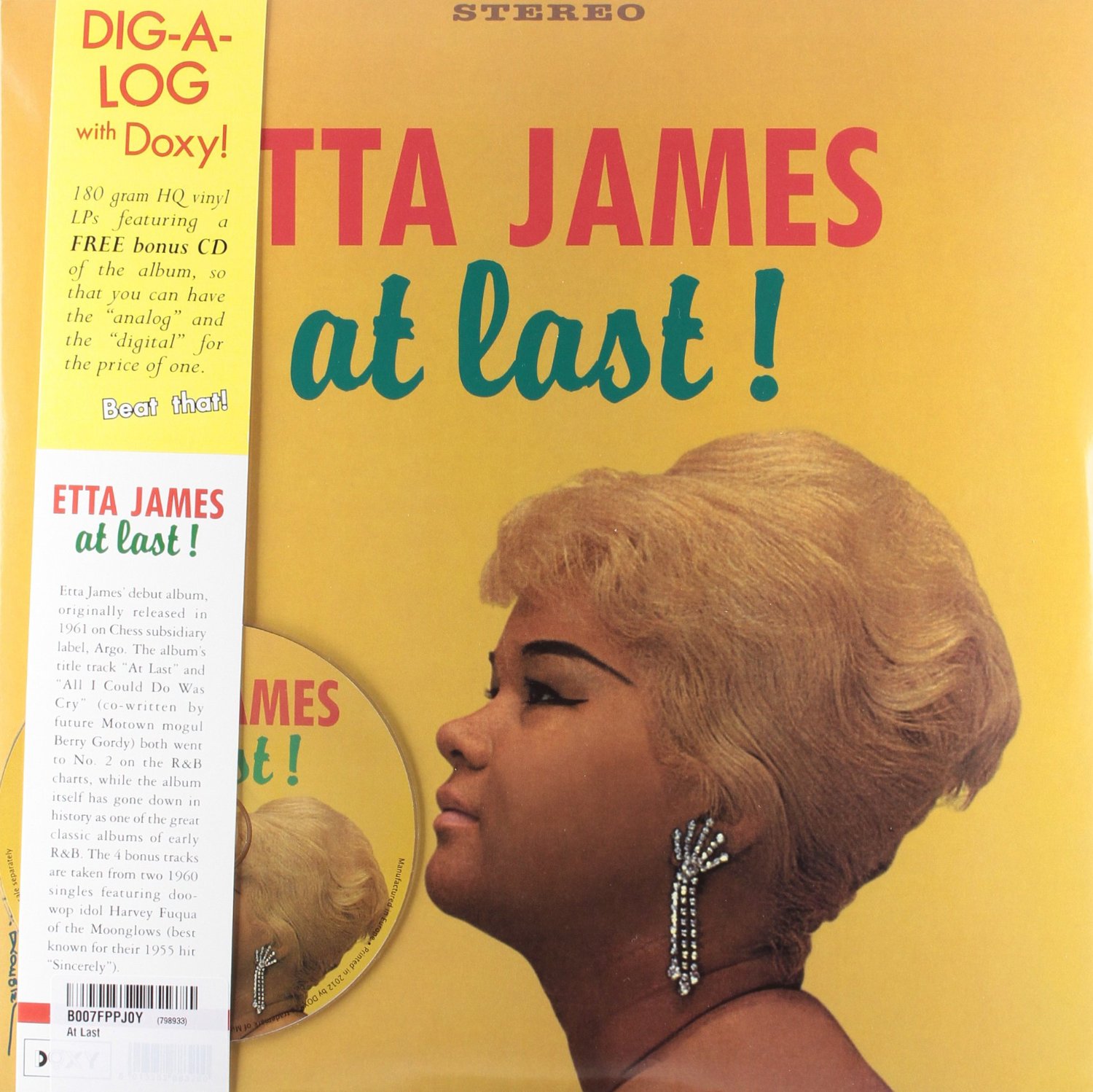
BACK AGAINST THE WALL-A TRIBUTE TO PINK FLOYD.
BACK AGAINST THE WALL-A TRIBUTE TO PINK FLOYD.
Nowadays, the word “classic” is used far too often. There’s a reason for this. Much of the music being released today isn’t as good the music being released during the sixties and seventies. That was without doubt, the golden age of music. Forty years later, and we’ve entered an age of musical mediocrity. In a way, that’s not surprising.
In the past fifteen years, the music industry has been forced to reinvent itself. During this period, record companies have amalgamated, others have folded and others are teetering on the brink. It’s been a tumultuous time. Even the way we consume music has changed.
Nowadays, many people to music on the move. It’s reduced to mere background music, an incidental soundtrack to the drudgery of daily life. This soundtrack is delivered via iPods, phones and tablets. Oh how times have changed. Gone sadly, is the ritualistic side to music.
It used to be that listening to music involved sitting down in front of a hi-fi system, and immersing yourself in the music. Having spent time looking for your weekly fix of music in your local record shop, you returned home. That’s when the rituals began.
Having removed the vinyl from the sleeve, you placed the pristine vinyl on the turntable. Then carefully, you lowered the tonearm and placed the stylus on the vinyl. Only then did the music come out of the carefully placed speakers. As you sat down and let the music wash over you, you examined the artwork, and began to study the sleeve-notes, poring over the credits and lyrics. Then as side one drew to a close, it was a case of turning the vinyl over. This was another ritual the record buyer enjoyed. However, then came the compact disc.
The advent of the compact disc promised greater sound quality. They were sold as indestructible. You could literally disabuse them and allegedly they would work perfectly. Another advantage of the compact disc, was the first compact discs lasted seventy-four minutes. That meant longer albums. Now albums can last as much as eighty minutes. However, that’s not always a good thing.
Back in the days of vinyl, an artist was restricted by the length of the album. So, mostly, they included their best work. With the introduction of the compact disc, artists are tempted to release longer albums. Often they’re sprawling, unfocused affairs. So, it’s no surprise that the amount of “classic” albums released during the age of the compact disc fell. Sprawling, unfocused albums didn’t find favour with critics. However, it wasn’t just the music that suffered during the vinyl age.
Previously, an album cover was akin to a work of art. Think Velvet Underground’s debut album, The Beatles’ Sgt. Peppers’ Lonely Heart’s Club Band, Led Zeppelin’s Physical Graffiti, Steely Dan’s Aja and The Doors’ L.A. Woman. Along with the sleeve-notes, this had been a thing of beauty. However, come the age of the compact age, this was reproduced in miniature. For many music lovers, this was a step too far. Then came the MP3.
For many music lovers who had lived through the age of vinyl, eight-track, cassette, compact disc and mini disc, the thought of buying music as a computer file was mind boggling. After all, it wasn’t tangible. You couldn’t sit down, study the sleeve-notes and artwork they argued. Then there was the sound quality. It was lossy and didn’t compare favourably to vinyl and the compact disc. MP3s, the purists argued would never replace vinyl and compact disc. Sadly, the purists were wrong.
Nowadays, many albums are released on MP3 only. This fits in with the new 21st Century record company model. Record companies, nowadays, are risk averse. They’re unwilling to commit to a compact disc or vinyl release, as this ties up much needed scarce resources. So, instead, many albums are released as a digital download. This allows the record company to test the waters. If the album sells well, their next album can be released on compact disc. This is a far cry from the golden age of music.
Back in the sixties and seventies, some of the greatest music ever recorded was released. That’s when according to critics and cultural commentators, most of the real “classic” albums were released. Little did anyone realise that it was the best of times. No wonder, with groups like Pink Floyd releasing classic albums like The Wall.
Pink Floyd released The Wall back on 30th November 1979, thirty-six years ago. The Wall, a landmark concept album, Pink Floyd’s eleventh album. It also marked the end of an era. This was the last studio album released with the classic lineup of David Gilmour, Roger Waters, Rick Wright and Nick Mason. After the release of The Wall, Rick Wright left Pink Floyd. Sadly, never again would the classic lineup of Pink Floyd record another album. However, their swan-song The Wall was a classic album, which recently was celebrated by Cleopatra Records.
Recently, Cleopatra Records decided to replicate The Wall. To do this, they brought together what can only be described as prog rock royalty. This includes Adrian Belew and Tony Levin of King Crimson, Emerson, Lake and Palmer’s Keith Emerson, Jethro Tull’s Ian Anderson. Yes’ Rick Wakeman, Steve Howe, Alan White and Tony Kaye. That’s not all. How about some of the great and good of rock. Among them, are The Doors’ Robby Krieger and Deep Purple’s Glenn Hughes and Steve Morse. They’re joined by Styx’s Tommy Shaw and Toto’s Steve Lukather and Steve Porcaro. Joining this all-star cast, is award-winning actor Malcolm McDowell. Together, they recreate Pink Floyd’s classic album, The Wall, whose story began in 1979.
Just like Pink Floyd’s three previous albums, The Wall was another concept album. That’s not surprising. The seventies was the age of the concept album, which explored the themes of abandonment and personal isolation. However, The Wall was Pink Floyd’s most ambitious and personal project.
The Wall, a rock opera, would be a double album, featuring twenty-six tracks. Roger Waters penned twenty-two tracks. He also cowrote Young Lust, Comfortably Numb and Run Like Hell with Dave Gilmour. The other track was The Trial, which Roger and Bob Erzin, one of the co-producers wrote. These twenty-six tracks told the story of Pink, who Roger Waters modelled on Pink Floyd’s former leader, Syd Barrett.
Pink’s story begins when his father is killed during World War Two. When he goes to school, Pink he’s abused by sadistic schoolteachers. At home, Pink is smothered by his overprotective and overbearing mother. Then when Pink grows up, he marries and before long, his marriage breaks up. This leads to Pink becoming isolated from society, which is represented by a metaphorical wall. Roger came up with The Wall two years earlier.
In 1977, Pink Floyd had embarked upon their In The Flesh Tour. During the tour, Roger Waters became frustrated with the audience. So much so, when he imagined a wall between the audience and the stage. This proved to be the genesis of The Wall, which was recorded between July 1978 and November 1979.
Recording of The Wall took place at various studios in London, Correns in France, New York and Los Angeles. At six studios, Pink Floyd, accompanied by a cast of nearly thirty additional musicians and backing singers, plus three choirs recorded The Wall. It was quite an undertaking. Twenty-six songs, were recorded and produced by Roger Waters, Dave Gilmour, Bob Erzin and James Guthrie. All this took time.
Especially, with sound effects and dialogue to be added. Eventually, after sixteen months, The Wall was completed. It had taken its toll.
Things hadn’t exactly gone smoothly. The Wall was very much Roger Waters’ baby. He drove the project along. Not everyone was receptive to his ideas. Arguments and dissent were common currency. So its no surprise that following the release of The Wall, Rick Wright left Pink Floyd. However, he left on a high.
With The Wall completed, Pink Floyd took it to Columbia’s headquarters. That’s where a selected group of executives would hear The Wall for the first time. Not everyone was impressed. They weren’t convinced that The Wall would prove a commercial success. As if that wasn’t bad enough, there was a problem with the publishing rights.
To make matters worse, with The Wall being a double album, Roger Waters was offered a smaller percentage for the publishing rights. Straight away, Roger Water refused. One Columbia executive offered to settle the dispute by flipping a coin. Roger Waters refused, asking why should he gamble with something he already owned? Eventually, Roger Waters was given the deal he wanted, and The Wall was released on 30th November 1979.
Prior to the release of The Wall, copies were sent out to critics. Mostly, it was to critical acclaim The Wall was released. There were, some dissenting voices. That’s not surprising. It was the post punk era, and a new breed of cynical gunslingers were masquerading as critics. They were among The Wall’s fiercest critics. So were Robert Christgau and Rolling Stone magazine. Forever the contrarian, they weren’t won over by The Wall. However, record buyers had the final say.
When The Wall was released on 30th November 1979, it was a huge commercial success. The Wall reached number three in Britain and number one in America, Australia, Austria, Canada, France, Germany, Holland and New Zealand. Across the world, The Wall was certified gold, platnum, multi-platinum and diamond. Eventually, The Wall was certified double-platinum in Britain and twenty-three times platinum in America. This equated to 11.5 million sales of The Wall in America alone and nearly seventeen million copies worldwide. Pink Floyd had been vindicated with The Wall.
Somewhere in Columbia’s headquarters, several executives were rather embarrassed. They weren’t convinced by The Wall. How wrong they were. Now, thirty-six years later, and The Wall has sold nearly seventeen million copies worldwide. The Wall, which was Pink Floyd’s biggest selling album, is now regarded as a classic album. Even its old nemesis, Rolling Stone magazine realises that The Wall is a stonewall classic. That’s why Cleopatra Records have assembled the great and good of rock music, to remake The Wall.
The result is a double album Back Against The Wall-A Tribute To Pink Floyd. It features not just the twenty-six tracks on The Wall, but five bonus tracks. Quite simply, Back Against The Wall-A Tribute To Pink Floyd is a fitting tribute to the classic lineup of Pink Floyd. Their eleventh album, The Wall was their swan-song.
The idea behind Back Against The Wall-A Tribute To Pink Floyd is simplicity itself, getting some of the best, most successful and talented musicians to remake The Wall. So much so, that it’s a wonder that nobody has thought of the concept before? However, nobody it seems, thought this idea feasible logistically or financially. That’s until Cleopatra Records decided to get involved. With the great and good of music on their side, The Wall is reinvented on Back Against The Wall-A Tribute To Pink Floyd.
Disc One.
That’s the case from the opening bars of In The Flesh?, which opened The Wall and now, Back Against The Wall-A Tribute To Pink Floyd. Toto’s Steve Porcaro unleashes a blistering, dramatic remake of In The Flesh? This whets your appetite. It’s a case of sit back and enjoy the show.
The inimitable Ian Anderson of Jethro Tull delivers a thoughtful, understated version of The Thin Ice. Then Steve Morse of Deep Purple delivers a moody, dramatic remake of Another Brick in the Wall, Part 1. From there, Vinnie Coliauta, singer, songwriter and session player to everyone from Leonard Cohen to Sting, brings to life The Happiest Days of Our Lives. So much so, that you can’t help empathise with Pink, as he suffers at the hands of his sadistic teachers. With emotions running high, Fee Waybill the lead singer and songwriter of The Tubes, delivers an emotive, frustrated version of Another Brick in the Wall, Part 2. After this the tempo drops.
What follows is However, one of the most heartfelt performances is Adrian’s Belew of King Crimson’s rendition of Mother. By then, Pink, it seems, is teetering on the brink, a broken man, his sanity in tatters. Goodbye Blue Sky, a song about the Blitz, has a wistful understated sound.It’s the perfect followup to Mother. Especially with Yes’ Steve Howe delivering the lyrics. From there, Bobby Krieger of The Doors features on Empty Spaces.
This is the first of two tracks Bobby Krieger features on on disc one. Then Glenn Hughes’ delivers his a blistering vocal on Young Lust. With searing guitars for company it’s rocky and dramatic. However, one of disc one’s finest moments is Tommy Shaw’s take on One Of My Turns. He gets across Pink’s mental pain and suffering. Then Bobby Krieger returns on Don’t Leave Me Now. The former Doors guitarist delivers a despairing vocal. So, does Tony Levin on Goodbye Cruel World. Before that, he delivers a gravelly vocal on Another Brick in the Wall, Part 2. Tony however, shows his sensitive side on Goodbye Cruel World, which closes disc one. His delivery gets across Pink despair and his belief that isolation was the only answer.
Disc Two
John Wetton, formerly of King Crimson, Family and Wishbone Ash delivers an impassioned version of Hey You, which opens disc two of Back Against The Wall-A Tribute To Pink Floyd. Adrian Belew, another former member of King Crimson takes charge of Is Anyone Out There? He sounds almost haunted, as he gets across the Pink’s paranoia. Then on Nobody Home, Rick Wakeman describes Pink’s lonely life of isolation, behind the mental wall he’s created. It’s without doubt, one of the most moving tracks. By now, Pink has retreated behind The Wall, and is a shadow of his former self. Suffering from neurosis and paranoia, on Vera, sung by Steve Howe of Yes, Pink fixates on Vera Lynn. He can relate to her, as she also lost her father during the war. “Vera, Vera, what has become of you,” Pink sings, against an understated backdrop. This sets the scene for one of The Wall’s highlights, Bring The Boys Home.
Jay Schellen, the drummer of Hurricane, takes charge of the vocal on the anthemic Bring The Boys Home. It features an orchestral arrangement, which is interspersed with harmonies and dialogue. Bring The Boys Home, an anti-war song, is one of The Wall’s highlights. So is Comfortably Numb, sung by Chris Squire. It takes on a laid-back, lysergic sound. Staying true to the original, Chris delivers what’s best described as a homage to Pink Floyd.
For The Show Must Go On and the refrain of In The Flesh and Waiting for the Worms, Vinnie Coliauta takes over the lead vocal. There’s a sense of despondency in Vinnie’s vocal on The Show Must Go On. You get the sense Pink, trapped in his own world, is somewhere he doesn’t want to be. Then on the refrain of In The Flesh, Vinnie replaces Steve Porcaro. His final performance is on Waiting for the Worms, which follows Tony Kaye’s urgent performance of Run Like Hell, another of The Wall’s highlights. However, on Waiting For The Worms, Pink is dejected, depressed and has what’s best described as a morbid curiosity. He’s a shadow of his former self.
On Stop, the hallucination that Pink has been suffering from ends. No longer does he think he’s a fascist dictator. A despairing Billy Sherwood, who dawns the role of Pink sings: “I want to go home, have I been guilty all this time?” So Pink decides to put himself on trial. During The Trial, actor Malcolm McDowell the leading role.
Pink, who throughout his life, suffered emotional trauma and substance abuse has reached a critical psychological breakthrough. He’s shown feelings. In doing this, and trying to interact with others, Pink has committed a crime against himself. This leads to Pink being sent to trial, where he is confronted by the main influences of his life, his overprotective mother, the abusive teacher and his wife. They’re introduced during The Trial and explain their actions. Eventually, however, the judge’s sentence for Pink “to be exposed before your peers” and orders Pink to “Tear down the wall.”Having done so, Pink has to adjust to life Outside The Wall which is sung by Billy Sherwood. He plays an important track in the song’s cinematic, hopeful sound, as Pink is “free, free at last.”
That’s almost the story of Back Against The Wall-A Tribute To Pink Floyd. Apart from five bonus tracks. This includes electro, house, dub and radio remixes of Another Brick In The Wall, Part 2, plus a version of Comfortably Numb by Blackburner. Along with the twenty-six tracks on The Wall, Back Against The Wall-A Tribute To Pink Floyd is the perfect homage to Pink Floyd’s rock opera, and biggest selling album, The Wall.
While this isn’t the first tribute album Cleopatra Records have released, it’s the most ambitious. Never before have they tried to recreate an album. Until now. Setting the bar remarkably high, Cleopatra brought together some of the biggest names in rock music. Among them, were prog rock royalty, including Adrian Belew and Tony Levin of King Crimson, Emerson, Lake and Palmer’s Keith Emerson, Jethro Tull’s Ian Anderson). Yes’ Rick Wakeman, Steve Howe, Alan White and Tony Kaye. That’s not all. How about some of the great and good of rock. Among them, are The Doors’ Robby Krieger and Deep Purple’s Glenn Hughes and Steve Morse. They’re joined by Styx’s Tommy Shaw and Toto’s Steve Lukather and Steve Porcaro. Joining this all-star cast, is award-winning actor Malcolm McDowell. Together, this cast of musical greats lovingly recreate The Wall, on Back Against The Wall-A Tribute To Pink Floyd. It’s sure to appeal to both veterans and newcomers to The Wall and of course, Pink Floyd.
Whether you’re a seasoned veteran of Pink Floyd’s music, or a relative newcomer, The Wall and Back Against The Wall-A Tribute To Pink Floyd are must haves. The Wall was one of Pink Floyd’s most ambitious and personal albums.
The Wall’s central character Pink, was essentially based upon Syd Barrett, former leader and founder of Pink Floyd. The Wall tells his story, and his descent into isolation. Syd Barrett, who suffered emotional trauma and substance abuse, couldn’t cope with with fame and adulation that came with being a rock star in the late sixties. He turned to drugs to help him cope. Sadly, Syd Barrett, whose described as “emotionally fragile” flew too close to the sun. Before long, Syd Barrett suffered from mental illness. The emotional trauma and substance abuse took its toll. So, he retreated into isolation, becoming a reclusive figure. The Wall is his story, which thirty-six years later, is lovingly recreated and retold on Back Against The Wall-A Tribute To Pink Floyd. However, Back Against The Wall-A Tribute To Pink Floyd isn’t just a fitting tribu to Syd Barrett, but a fitting tribute to the classic lineup of Pink Floyd, who took their final bow on The Wall.
BACK AGAINST THE WALL-A TRIBUTE TO PINK FLOYD.
DAVID KNOWLES-FOOTSTEPS.
DAVID KNOWLES-FOOTSTEPS.
It’s nearly twenty years since singer-songwriter David Knowles first picked up a guitar. Back then, grunge was King. Straight away, David Knowles was hooked. Inspired by the musical vortex that was grunge, David began to explore other musical genres.
It made sense to start at what was the genesis of modern music, the blues. One of David’s earliest discoveries was Leadbelly, a giant of the blues who cheated the hangman and survived the notorious Angola prison. While other bluesmen caught David’s attention, so did some of the greatest American lyricists.
This included Woody Guthrie, folk singer, songwriter and back in the thirties, music’s social conscience. David appreciated, and could relate to the music of Woody Guthrie, the “Dust Bowl Troubadour” It spoke to him. So did the music of Bob Dylan, who two generations later, followed in the footsteps of Woody Guthrie.
Just like so many aspiring singer-songwriters, Bob Dylan would go on to influence David Knowles as a singer and songwriter. Just like Woody Guthrie before him, Bob Dylan was the spokesman for a generation. He spoke to, and for them. When David discovered Bob Dylan, his music was just as relevant. Like all good music, it has a timeless quality.
The same can be said of another of David Knowles’ inspirations, Jimi Hendrix. As an aspiring guitarist, David could appreciate Jimi’s effortless talent and stagecraft. A flamboyant, virtuoso performer, Jimi, who had been inspired by T-Bone Walker, seemed to revel in the limelight. As he took to the stage, Jimi came alive. He was totally transformed, and in a tragically short career, released albums that would influence two generations. This included David Knowles whose debut solo album Footsteps will be released on 9th March 2015.
Footsteps comes hot on the heels of David Knowles’ debut E.P. The Alchemist. It was released on 19th January 2015. Hailed as “mesmeric,” The Alchemist found its way onto radio playlists, where it became a firm favourite of DJs and listeners. This bodes well for Footsteps, which is the album David Knowles has dreamt about making for nearly twenty years.
Growing up, with hopes and dreams of making a career out music, David’s musical tastes became eclectic. As well as blues, folk and rock, David discovered proto punk pioneers The Velvet Underground. This was the latest discovery in David’s musical journey. It seemed each discovery lead to another. David was in the midst of a musical and literary awakening.
It wasn’t just music David was soaking up like a sponge. No. Before long, David was discovering literature. This included the poetry of William Blake, the doyen of the Romantic Age. From William Blake, David discovered Oscar Wilde, playwright, poet and cultural commentator. For a future songwriter, this would stand him in good stead. So would David’s love of Hunter S. Thompson, who in his own inimitable way, said: “The music business is a cruel and shallow money trench, a long plastic hallway where thieves and pimps run free, and good men die like dogs. There’s also a negative side.” Despite this, David wasn’t put of following his dream of making a career out of music. It would be a music career in two parts, interrupted by a twelve year road trip inspired by Jack Kerouc’s seminal novel On The Road. Before that, however, David would serve his musical apprenticeship.
David’s dreams of becoming a musician became reality when he was a teenager. In the time honoured fashion, David played in a series of bands. That stood David in good stead. He then joined Manchester indie band Solarslide as their guitarist. This was a step up the musical ladder. By then, however, David had caught the travel bug.
Inspired by Jack Kerouac’s seminal road trip novel, On The Road, David Knowles hit the road. This was no gap year though. Far from it. David road trip took him slightly longer. Twelve years to be precise. During that period, David’s travels took him to three continents, Latin America, Asia and Europe. This leisurely stroll round the world, broadened David’s mind.
On his return home to Britain, David who for twelve years, had lived a nomadic lifestyle, settled in Edinburgh, the self-style Athens of the North. There the second part of David’s career took shape. He decided to embark upon a solo career. His travels would inspire his music, including that on his debut solo album Footsteps.
Wanderlust never quite leaves someone. Once they’ve had a tantalising taste of the nomadic lifestyle it never quite leaves them. David has been there. He’s slept on beaches, with the stars as a blanket. So, settling back into to “normal” life wasn’t going to be easy. However, life as a musician is very different from that of a pen pusher or desk jockey. A musician spends much of his time on the road, travelling between concerts and festivals. The rest of the time is spent writing songs and recording them. For David Knowles, this was the perfect career.
Now living in Edinburgh, David started playing live. Soon, he was establishing a reputation as one of the rising stars of Edinburgh’s music scene. Then David discovered musical soul mates in the form of cellist Claire Schiavone and percussionist, keyboardist and producer Matt Varty. They would feature on Footsteps, David’s debut solo album.
Footsteps features nine tracks. This includes seven songs penned by David and two cover versions. The cover versions are Bill Withers’ Ain’t No Sunshine and Jimi Hendrix’s classic Hey Joe. These tracks are given a makeover by David, who dawns the role of musical Alchemist. To do this, he relies upon a selection of instruments he discovered on his road trip. This includes a didjeridoo, African djembe drum and far eastern dulcimer. These instruments play a part in David Knowles highly anticipated debut album Footsteps.
Somewhat fittingly, On The Road opens Footsteps. Straight away, ominous drums pound and the unmistakable, droning sound of a didjeridoo plays. Urgently, a strummed guitar accompanies David’s worldweary, rueful vocal. Constantly, he wonders: “where are you now, do you think of me, when you’re alone”? Do they share his hurt and loneliness? Do they “see what see, feel what I feel?” The way David delivers the lyrics, it’s as if he’s loved, lost and survived the hurt and heartbreak.
The arrangement to The Air You Breathe is stripped bare. Just a lone, plucked guitar accompanies David’s melancholy vocal. It’s needy and tinged with longing. As David’s fingers flit up and down the fretboard, he delivers a soul-baring vocal.
Satisfy My Soul sees David pay homage to his blues roots. His detuned guitar accompanies a vocal that’s visceral. It’s an outpouring of emotion and hurt. As the cello adds to the moody backdrop, David’s vocal becomes a hurt-filled howl. You can’t help but empathise and sympathise with his plight, as he sings: “all I need is your precious love, satisfy my soul.”
Ain’t No Sunshine is an oft-covered track. Originally written and recorded by Bill Withers in 1971, it’s been reinvented many times. This time, David, accompanied by a scrabbled guitar transforms Ain’t No Sunshine into an outpouring of emotion, hope and desperation.
Child Soldier shows another side of David Knowles. Ominous drums play in the distance. In front of the drums, sits David’s guitar and vocal. A roll of drums, hissing hi-hats and grungey guitars is the signal for David to kick loose. What follows is wall of sound and social comment. Blistering, driving guitar licks and David’s staccato vocal combine. Desperately, David sings: “I want to leave this behind,” as if the horrors of the Child Soldier are burnt on his retinas.
The Alchemist was the title of David’s debut E.P. No wonder. From the opening bars, it’s apparent something special is unfolding. Swathes of strings accompany David’s crystalline guitar as he delivers a seductive paean. His vocal is reminiscent of Damien Rice, as hopefully he sings: “come on baby take my hand, gonna take me to the promised land.” From their a beautiful, polished, radio friendly ballad unfolds. It’s David Knowles’ finest hour on Footsteps.
Given David’s love of Jimi Hendrix, it’s fitting that he covers Hey Joe. David doesn’t try to copy Jimi’s licks and tricks. Instead, with his trusty acoustic guitar for company, he injects a sense of urgency and emotion into this classic track. So much so, that can sense time ebbing away, as David delivers the closing line: “it’s gonna put a rope around me.”
From the get go, Howlin’ At the Moon is reminiscent of Nick Drake. A contemplative David, delivers the lyrics against a moody, cinematic backdrop. With swathes of cascading strings for company, David’s former nomadic lifestyle comes to life. So much so, you can imagine him travelling from town to town, late at night with only his thoughts for company.
Closing Footsteps is Silence in the Storm. Waves break against a deserted beach. Soon, the eerie, ominous sound of cinematic strings sweep in. They’re the perfect accompaniment for David’s heartbroken, reflective vocal. With longing in his voice, he sings: “I miss you.” As he does so, the arrangement builds, becoming moody and broody. His vocal becomes a cathartic outpouring of hurt and regret. Especially when he sings: “you’ve got to loose yourself, to find out who you are.” These wise words from David Knowles singer, songwriter and philosopher, close Footsteps, his debut album.
Featuring nine songs, lasting twenty-nine minutes, Footsteps is an old school album. It’s the antithesis to the modern album. Mostly, they’re sprawling affairs, featuring upwards of fifteen tracks. It seems most artists are determined to fill the eighty minutes a CD lasts. Not David Knowles. He remembers how an album used to be.
Way before the cassette, mini disc and CD, the length of an album was restricted to around forty minutes. That was all a single vinyl album could hold. So, artists would release songs of eight to ten songs. Often, they lasted no more than thirty minutes. In Nick Drake’s case, he never released an album that lasted thirty minutes. By then, the reclusive genius had said all he had to say. Brevity, could be excused back then, in the vinyl age. Sadly, in the age of the CD brevity is longer fashionable.
This often leads to a sprawling album full of songs of varying quality. Not in the case of David Knowles.
From the opening bars of On the Road, right through to the closing notes of Silence in the Storm, David Knowles ensures the quality never drops. The music is variously understated, cinematic, beautiful, melancholy, poignant and soul-baring. Other times, hurt and heartache is omnipresent, as David draws inspiration from everyone from Damien Rice, Nick Drake, Jimmy Hendrix, Leadbelly, Jose Gonzales and the “Dust Bowl Troubadour,” Woody Guthrie. Then there’s the literary works of William Blake, Oscar Wilde, Hunter S. Thompson and Jack Kerouac. That’s not forgetting the twelve years David spent travelling. They’ve without doubt influenced his music, which includes tales of love, love lost, road trips and Child Soldiers. All these things have influenced David Knowles’debut solo album Footsteps will be released on 9th March 2015.
Footsteps, which is the perfect introduction to one of music’s rising stars, David combines old, new and blues’ songs. There’s seven new songs from the pen of David Knowles sit side-by-side with covers of Ain’t No Sunshine and Hey Joe. Then there’s Satisfy My Soul, where David pays homage to his blues roots. This combination of old, new and blues on Footsteps, proves a tantalising taste of one of music’s rising stars, David Knowles who hopefully, we’ll be hearing much more of.
DAVID KNOWLES-FOOTSTEPS.
LED ZEPPELIN-PHYSICAL GRAFFITI-DELUXE EDITION BOX SET.
LED ZEPPELIN-PHYSICAL GRAFFITI-DELUXE EDITION BOX SET.
February 24th 2015 marks the 40th anniversary of what was Led Zeppelin’s most ambitious and eclectic album, Physical Graffiti. This was Led Zeppelin’s sixth album since their 1969 eponymous debut. However, Physical Graffiti was a first for Led Zeppelin.
Physical Graffiti the first double album that Led Zeppelin had released. Originally, though Physical Graffiti was meant to be a single album. However, the eight songs overran. So, Led Zeppelin decided that Physical Graffiti should become a double album. Considering the circumstances, this was an ambitious project.
Houses Of The Holy, released on February 28th 1973, Led Zeppelin’s previous album, proved to be the last album they released on Atlantic Records. Led Zeppelin who were then one of the biggest bands in the world, decided to form their own record label, Swan Song. It’s first release would be Led Zeppelin’s sixth album Physical Graffiti, which will be reissued on 23rd February 2015 by Atlantic Records.
Just like the five previous Led Zeppelin rereleases, Physical Graffiti will be available in various formats. There’s double CD, double album and various box sets. It’s Led Zeppelin nirvana. The version I’m reviewing is a deluxe three CD version. It features the original artwork, plus the newly created negative artwork for the companion audio. The newly remastered version of Physical Graffiti features on CDs one and two. Then on CD three are previously unreleased studio outtakes.
Among the previously unreleased studio outtakes on disc three of Physical Graffiti are initial/rough mixes of Brandy and Coke (Trampled Under Foot) and In My Time Of Dying. Other tracks include an early version of Sick Again and a rough mix with overdubs of Houses Of The Holy. For anyone interested in Led Zeppelin, they’re a fascinating insight into how a song evolves. Especially, the early/in transit version of Make It Through, the sunset sound mix Boogie With Stu and the Kashmir Rough Orchestra Mix of Driving Through Kashmir. These tracks are a treasure trove for dedicated fans of Led Zeppelin. They’re also the finishing touch to this lovingly compiled, newly remastered version of Physical Graffiti, which celebrates one of Led Zeppelin’s biggest selling albums.
Having released their fifth album in February 1973, Led Zeppelin returned to the studio in November 1973 at Headley Grange. Led Zeppelin had hired Ronnie Lane’s mobile recording studio. However, things didn’t go well. The recording session ground to a halt, and Bad Company who were about to record their eponymous debut album, used the studio time. It wouldn’t be until January 1974, that Led Zeppelin returned to the studio.
In January 1974, Led Zeppelin resumed the recording of Physical Graffiti. During January and February 1974, Led Zeppelin recorded eight tracks at Headley Grange.
Just like previous albums, Jimmy Page and Robert Plant played a huge role in the writing of Physical Graffiti. They wrote four albums and cowrote the other four. Custard Pie, Ten Years Gone, The Wanton Song and Sick Again were penned by Jimmy Page and Robert Plant. In My Time Of Dying was credited to Led Zeppelin. Trampled Under Foot and In The Light were written by Jimmy Page and Robert Plant with John Paul Jones. The other track recorded during that session was Kashmir, which John Bongam wrote with Jimmy Page and Robert Plant. These eight tracks were produced by Jimmy Page and were destined to become Physical Graffiti. However, there was a problem.
With the eight songs that became Physical Graffiti recorded, Led Zeppelin took a listen to the finished album. They were pleased with what they heard. Just like previous albums, Led Zeppelin had improvised during the sessions. The result was Led Zeppelin at their hard rocking, raunchiest best. In interviews, Robert Plant referred to these tracks as “belters.” Other tracks saw Led Zeppelin’s music move in a different direction. Physical Graffiti, a mixture of the old and new, looked like being one of their most exciting releases. However, there was a problem.
Unfortunately, the eight tracks on Physical Graffiti were too long to fit on one album. For most groups, this would’ve been a disaster. Not Led Zeppelin. They decided to release a double album. By then, double and triple albums were commonplace. Better still, Led Zeppelin didn’t even need to return to the recording studio.
Over the last five years, Led Zeppelin had recorded more music than they needed. In the Led Zeppelin vaults, were a number of completed tracks. So, Led Zeppelin got to work, and chose another seven songs.
The seven songs had been recorded between 1970 and 1972. The earliest song was, Bron-Yr-Aur, an instrumental recorded in July 1970, during the sessions for Led Zeppelin III. Night Flight and Boogie With Stu were recorded between December 1970 and January 1971, while Down By The Seaside was recorded in February 1971. These three tracks were recorded during the Led Zeppelin IV sessions, but didn’t make the final album. The Rover, Houses Of The Holy and Black Country Woman had been recorded in May 1972, when Led Zeppelin were recording Houses of the Holy. For some reason, these tracks didn’t make the album. Two years later, however, Led Zeppelin were having second thoughts. They would feature on Led Zeppelin’s sixth album Physical Graffiti.
With the seven songs from the Led Zeppelin vaults chosen, Physical Graffiti, which was now a double album, was scheduled for release on 24th February 1975. This was nearly two years since Led Zeppelin had released Houses Of The Holy. A lot had happened since then.
This included Led Zeppelin leaving Atlantic Records. They then formed their own label, Swan Song in May 1974. It was a vehicle for Led Zeppelin to release their albums and merchandise. Later, Bad Company, The Pretty Things, Dave Edmunds, Mirabai, Maggie Bell and Sad Cafe would sign to Swan Song. However, Atlantic Records continued to distribute all Swan Song’s releases, included Physical Graffiti.
Before the release of Physical Graffiti, the album was sent to critics. The first thing they saw was the now legendary album cover. It featured a photograph of a New York City tenement block. It was taken by Peter Corriston and made the 96 and 98 St. Mark’s Place, New York one of music’s most famous landmarks. Inside Physical Graffiti’s famous cover, was the thirteen track double album.
When critics heard Physical Graffiti, most were won over by Led Zeppelin’s latest album. Critical acclaim accompanied Physical Graffiti’s release. However, a couple of high profile critics weren’t as won over as their colleagues. Unfortunately, one of the dissenting voices were Billboard. They weren’t as impressed as most critics. Neither were Led Zeppelin’s old nemesis, Rolling Stone magazine.
Just like Billboard, Rolling Stone didn’t give Physical Graffiti a glowing review. This was nothing new. Rolling Stone had previous. Ever since Led Zeppelin’s eponymous debut album, Rolling Stone had never been won over by Led Zeppelin, who currently were on their tenth American tour. However, despite Rolling Stone’s review, Physical Graffiti was a huge commercial success.
Even before the release of Physical Graffiti on 26th February 1975, advance orders were huge. On both sides of the Atlantic, Physical Graffiti reached number one. Physical Graffiti was certified double platinum in Britain and sixteen times platinum in America. This meant Physical Graffiti sold eight million copies in America alone. The commercial success and critical acclaim continued across the world.
In Canada, Physical Graffiti reached number one. Physical Graffiti was certified gold in Argentina, France and Germany. From Australia through Austria, France, New Zealand, Norway and Spain, Physical Graffiti reached the top ten. This resulted in Physical Graffiti becoming Led Zeppelin’s second biggest selling album. No wonder.
Physical Graffiti was a fusion of Led Zeppelin old and new. On Custard Pie, The Wanton Song, Sick Again and Houses of The Holy, Led Zeppelin were back to their hard rocking best. This was the Led Zeppelin that had sold over thirty million albums. From there, seamlessly, Led Zeppelin switched between musical genres.
On Kashmir, a future Led Zeppelin classic, genres melted into one. This was orchestral rock with an Eastern orchestral twist. Then on In The Light, Led Zeppelin moved in the direction of prog rock. Trampled Under Foot was a mesmeric marriage of musical genres. After its uber funky introduction, Led Zeppelin get into a groove and hit their hard rocking best. It’s a spellbinding fusion. Still, Led Zeppelin continue to change direction.
Boogie With Stu and Black Country Woman see Led Zeppelin roll back the years, with some acoustic rock ’n’ roll. Then Led Zeppelin show their softer side on the ballad Ten Years Gone. Bron-Yr-Au is an acoustic instrumental that Led Zeppelin recorded in 1970. It’s two wistful minutes of music. Then on the soft rock of Down By The Seaside, the melancholy sound continues. Again, it shows Led Zeppelin’s softer side. On their journey through musical genres, Led Zeppelin aren’t afraid to kick loose.
Paying homage to their bluesy roots, Led Zeppelin unleash In My Time of Dying, eleven minutes of blues rock. A slow burner, it’s well worth the wait when eventually, Led Zeppelin unleash their bluesy licks. It’s Led Zeppelin at their best as they strut their way through this blues rock Magnus Opus. That’s not the end of the hard rocking Led Zeppelin. Night Flight sees Physical Graffiti head in the direction of country rock, as Led Zeppelin finish what can only be described as genre hopping album.
Featuring thirteen tracks, spread over four sides of vinyl, Physical Graffiti was Led Zeppelin’s most ambitious and eclectic album. From Led Zeppelin’s usual hard rocking style, Physical Graffiti took diversions via acoustic rock ’n’ roll, balladry, blues rock, country rock, prog rock and soft rock. There was even the fusion of orchestral rock and Eastern influences that was Kashmir, a Led Zeppelin classic. With such an eclectic album, it’s no surprise that Physical Graffiti won over to critics, cultural commentators and record buyers.
Released to widespread critical acclaim, and having sold over ten million copies, Physical Graffiti was well on its way to becoming a classic album. That’s why Physical Graffiti was nominated for a Grammy Award in 1976.
When the nominations for 1976s Grammy Awards were released, Physical Graffiti was nominated for a Grammy Award for Best Recording Package. Sadly, it was a case of close but no cigar. However, after this, Physical Graffiti was hailed a classic by Rock and Roll Hall of Fame and somewhat ironically, Rolling Stone magazine. According to these musical institutions, Physical Graffiti is one of the best 100 albums ever released. That’s definitely the case.
Physical Graffiti, which will be reissued by Atlantic Records on 23rd February 2015, is without doubt a classic album. Although it was released forty years ago, Physical Graffiti is a truly timeless album, one that has stood the test of time and has gone on to inspire several generations of musicians. That’s why Physical Graffiti deserves to find its way into any self respecting record collection.
With Physical Graffiti having just been remastered now is the perfect opportunity to do so. There are various formats available. However, probably the best value for money is the Deluxe Edition Box Set of Physical Graffiti. It features the original double album on the first two CDs, and on CD three, are previously unreleased studio outtakes. For fans of Led Zeppelin, the newly remastered version of Physical Graffiti, is the opportunity to either discover, or rediscover what is regarded as Led Zeppelin’s final classic album Physical Graffiti.
Despite releasing three further albums, 1976s Presence, 1979s In Through The Out Door and 1982s Coda, Led Zeppelin never scaled the heights of Physical Graffiti. Everything from car crashes, excess’, tax exile and sadly, the untimely death of Jon Bonham meant that Led Zeppelin never reached the heights of Physical Graffiti. Sadly, Physical Graffiti, an ambitious, eclectic and timeless album, proved to be the final classic album of Led Zeppelin’s nine album career.
LED ZEPPELIN-PHYSICAL GRAFFITI-DELUXE EDITION BOX SET.

 dereksmusicblog
 dereksmusicblog