CAMERA OBSCURA-BIGGEST BLUEST HI-FI.
CAMERA OBSCURA-BIGGEST BLUEST HI-FI.
Ever since they formed in 1996, Camera Obscura have been doing things their way. It’s paid off though. Nineteen years later, and Camera Obscura have established a reputation as one of finest purveyors of hook heavy, perfect pop. During that period, Camera Obscura released five albums. Their debut album was 2001s Biggest Bluest Hi-Fi, which was recently reissued by Domino Records.
Unlike many new bands, Camera Obscura didn’t rush into the studio to record their debut album. Instead, they spent five years honing their sound. It also allowed Camera Obscura to establish a settled lineup. Their story began back in 1996
It was back in 1996, that lead singer Tracyanne Campbell, John Henderson and Gavin Dunbar formed Camera Obscura. Just like many new bands, Camera Obscura’s lineup was somewhat fluid. Their lineup has changed several times. The first was when David Skirving joined as guitarist.
David Skirving played on their first two singles. Park and Ride was released in March 1998 and Your Sound released in December 1998. Both singles were released on Andmoresound. After that, it took three long years before they released their debut album. By then, their lineup had changed.
The next change in Camera Obscura’s lineup came when drummer Lee Thompson joined in 2000. Then in 2001, keyboardist Lindsay Boyd joined, while Kenny McKeeve replaced David Skirving. This was the lineup that played on Camera Obscura’s 2001 debut album Biggest Bluest Hi-Fi.
For what became Biggest Bluest Hi-Fi, Camera Obscura’s inimitable lead singer Tracyanne Campbell, penned ten tracks. These the track became Camera Obscura’s debut album, Biggest Bluest Hi-Fi. It was produced by a stalwart of Glasgow’s music scene, Stewart Murdoch of Belle and Sebastian.
Before the release of Biggest Bluest Hi-Fi, it was well received by critics. They compared Camera Obscura to Belle and Sebastian. Melodic, full of poppy hooks, captivating and charming, Biggest Bluest Hi-Fi was the antithesis of much of the music being released in 2001. However, how would music fans react to Biggest Bluest Hi-Fi?
When Biggest Bluest Hi-Fi was released on Andmoresound, on November 12th, 2001, Camera Obscura’s debut album failed to chart. This was a huge disappointment. Especially after the critically acclaimed reviews of Biggest Bluest Hi-Fi and comparisons to Belle and Sebastian. However, a year later, and Biggest Bluest Hi-Fi was reissued.
By 2002, Camera Obscura had just signed to Spanish independent record label Elefant in 2002. They were in the process of recording their sophomore album, Underachievers Please Try Harder. Given it would be some time before Camera Obscura had a new album to release, Elefant decided to reissue Biggest Bluest Hi-Fi. Although the reissue of Biggest Bluest Hi-Fi wasn’t a huge success, it introduced a wider audience to the delights of Camera Obscura. No wonder. Biggest Bluest Hi-Fi, which I’ll tell you about, is a bewitching album.
Happy New Year opens Biggest Bluest Hi-Fi. Crystalline, country-tinged guitars, percussion and the rhythm section set the scene for Traceyanne Campbell’s vocal. It’s tinged with hope and sometimes, realism. Especially when Traceyanne sings “friendships sometimes die young.” Behind her, plink plonk percussion, chiming guitars, sweeping harmonies and handclaps combine. They play their part in a hook heavy track, that sweeps along, introducing the listener to Camera Obscura.
Straight away, Eighties Fan seems to pay homage to sixties girl groups. It’s the drums that are a giveaway. Oh, and of course Traceyanne’s wistful, rueful vocal. She delivers lyrics that are akin to a kitchen sink drama. This includes: “you know it really wont surprise me, if you’re a wreck by the age of fourteen.” It’s as if it’s inevitable. As evidence, she offers up: “drinking vodka on the fly.” There’s not going to be a happy ending. Traceyanne sings: “ run away to a bed and breakfast, console yourself with the Reader’s Digest.” Then, strings sweep in, reinforcing this, as Camera Obscura paint pictures of gritty realism during this cinematic track.
Houseboat is a paean Camera Onscura style. It’s a song with a quite a pedigree. Stylistically and sonically, Camera Obscura seem to have been inspired by Lloyd Cole and The Commotions and Belle and Sebastian. That’s the case from the get go. Traceyanne counts the vocal in, and a chiming guitar sets the scene for John Henderson’s vocal. With an understated, retro arrangement for company, John and Traceyanne duet. They’re like yin and yang. Meanwhile, crystalline guitars and sweeping harmonies accompany them on this irresistible slice of perfect pop.
Accompanied by a lone piano, Traceyanne delivers a melancholy, searching vocal on Pen and Notebook. Occasionally, a bass fills the spaces left by the piano. Later, lush, ethereal strings replace Traceyanne’s vocal. They sweep, then quiver and shiver, before a braying horn adds to the wistful, melancholy sound as accusingly Traceyanne sings: “we’re not the same.”
From the opening bars of Swimming Pool you’re hooked. It’s perfect pop Camera Obscura style. Having said that, like other tracks, there’s a Belle and Sebastian influence. That’s not surprising, with Belle and Sebastian’s Stuart Murdoch producing Biggest Bluest Hi-Fi. A roll of drums signals the entrance of crystalline guitars and Traceyanne’s thoughtful vocal. There’s a sense of melancholy in her voice. John hopes to change that. Maybe. He’s a dreamer, promising everlasting love. Traceyanne, however, is cautious and a realist. It’s as if she’s been hurt before, and can’t believe what’s he’s promising.
Guitars that sound as if they belong in a Spaghetti Western are joined by pounding drums and then John’s vocal on Anti-Western. It’s another love song from Camera Obscura that references Nancy Sinatra and Lee Hazlewood’s 1969 album. There’s similarities. On both cases, it’s a case of opposites attract. Traceyanne isn’t fooled by John’s hitherto charms. Far from it. She rebuffs them with “you listen to rubbish I really despise, and tell me that sand is just grit in your eyes.” As musical put me downs go, Traceyanne’s is easily one of the best.
Not for the first time, there’s a Belle and Sebastian influence on I Don’t Do Crowds. Drums and Camera Obscura’s trademark crystalline guitars combine. They set the scene for Traceyanne’s vocal. There’s a sense of sadness and fragility in her vocal. She’s not as strong as she seems. Storms and crowds scare her. This is her guilty secret, one she’s ashamed of. As Traceyanne lays bare her soul, she’s joined by harmonies and later, a Hammond organ and percussion. They frame her vocal, which by the end of the song, is akin to a confessional.
The Sun On His Back, it seems, has a lo-fi arrangement. Drums are prominent in the mix, while Traceyanne’s vocal and the chiming guitars sit further back. This is the wrong way around. Thankfully, before long it’s rectified, and the crystalline guitars almost jump out ofthe mix. Traceyanne’s vocal is also further forward in the mix. It’s tinged with sadness and longing, while cooing harmonies empathise with her plight.
Meandering guitars add a melancholy sound as Double Feature unfolds. This sense of melancholia washes over you. Then cymbals signals a change. Deadened drums dominate the arrangement, while Traceyanne’s vocal is wistful and distant. There’s a cinematic quality to the lyrics. It’s almost possible to imagine Traceyanne and John heading to the Glasgow Film Theatre where she sings: “we’ll see a Catherine Deneuve double feature, and our lives will fade as in darkness we will bathe.” Soon, this atmospheric soundscape changes. Chiming guitars and a harmonica take centre-stage, replacing the vocal. Moody and cinematic describes the arrangement. When Traceyanne returns, she’s aided and abetted by John’s tender vocal. They add the finishing touch to what’s an example of cerebral and erudite perfect pop, Camera Obscura style.
Arrangements of Shapes and Space closes Biggest Bluest Hi-Fi. Slowly, and gradually, a spacious, understated arrangement unfolds. Just guitars are joined by the rhythm section and washes of Hammond organ. Firmly strummed guitars are at the heart of arrangement, while the Hammond organ adds its inimitable sound. Later, and briefly, the urgency gives way to a much more understated sound. That doesn’t last long. Camera Obscura are saving themselves for a big finish. Veering between flamboyant flourishes and understated and thoughtful, they close Biggest Bluest Hi-Fi on a high, with this instrumental track.
For Camera Obscura, their 2001 debut album, Biggest Bluest Hi-Fi, was the next chapter in their rise to becoming indie pop royalty. Success wasn’t going to come overnight. It rarely did. Camera Obscura had released a couple of singles. Then, after spending five long years honing their sound came Biggest Bluest Hi-Fi, Camera Obscura’s debut album.
Biggest Bluest Hi-Fi, could’ve and should’ve launched Camera Obscura’s career. It was packed full of perfect pop songs full of delicious melodies and poppy hooks. What more could the record buying public want?
Sadly, it wasn’t the perfect pop of Camera Obscura’s debut album Biggest Bluest Hi-Fi. Instead, third rate Beatles’ tribute bands were still selling albums by the bucketload. Then there was the cult of the DJ. The DJ, critics and cultural commentators tried to tell us, was the new rock ’n’ roll. At first glance, it looked like the record buying public weren’t appreciate of the delights of Camera Obscura. This took time.
Two years after releasing their debut album Biggest Bluest Hi-Fi, Camera Obscura signed to Spanish independent record label Elefant in 2002. They rereleased Biggest Bluest Hi-Fi while recording of the followup was taking place. Then in August 2003, Camera Obscura released Underachievers Please Try Harder. It was produced by another stalwart of the Scottish music scene, Geoff Alllan. It was released to critical acclaim. Despite this, Underachievers Please Try Harder failed to chart. At least the lead single charted.
Teenager had been choses as the lead single. On its release, it gave Camera Obscura a minor hit single, when it reached number 182 in the UK singles charts. Things however, would get better.
Following the release of Underachievers Please Try Harder, Camera Obscura headed out on their first nationwide tour. After touring Britain and Ireland, Camera Obscura toured America. Apart from releasing Keep It Clean from Underachievers Please Try Harder, Camera Obscura’s only other single was I Love My Jean. This was Robert Burns’ poetry put to music. The collaboration between Scotland’s national bard and Camera Obscura, resulted in their biggest hit single. Reaching number 101 in the UK would be a sign of what was about to happen.
Change was on the cards for Camera Obscura. Whereas their two previous albums had been recorded in Scotland and produced by Scottish producers, Camera Obscura headed to Sweden and worked with Swedish producer, Jari Haapalainen, of The Bear Company. He produced their third album Let’s Get Out Of This Country. Released in June 2008, this was Camera Obscura at their best, with a plentiful supply of perfect pop.
On its release in June 2008, Let’s Get Out Of This Country was released to critical acclaim. Sadly, it only reached number 125 in the UK. The hook-laden Lloyd, I’m Ready To Be Heartbroken was chosen as the lead single. This was the reply to Lloyd Cole and The Commotions’ classic Are You Ready To Be Heartbroken. Tragically, Lloyd, I’m Ready To Be Heartbroken stalled at number 144. Maybe being signed to an indie was hampering Camera Obscura’s progress?
After Let’s Get Out Of This Country, Camera Obscura signed to 4AD in November 2008. They arrived at their new label with fourth album already recorded. My Maudlin Career was produced by Jari Haapalainen and released in April 2009. Most critics loved My Maudlin Career. However, there were a few dissenting voices. They felt My Maudlin Career was sounded the same as Let’s Get Out Of This Country. They’d have to eat their words when My Maudlin Career proved to be the most successful album of Camera Obscura’s career.
Not only did My Maudlin Career reach number thirty-two in the UK, but number eighty-seven in the US. After thirteen years and four albums, Camera Obscura had enjoyed the most successful album of their career. Then things started to change.
The first change was Nigel Baillie became a father. He decided quite rightly, to put his family before his career, so became a part-time member of the band. This must have started a trend. Other members of Camera Obscura headed off on maternity leave. Just now, Camera Obscura are officially on maternity leave. Despite this, Camera Obscura released their fifth album Desire Lines.
Jari Haapalainen was replaced as producer. Camera Obscura decided to move their music forward. Replacing him, was Tucker Marine. To work with Tucker, Camera Obscura headed to Portland, Oregon, where they recorded the twelve song written by Traceanne Campbell. This was a brave move for Camera Obscura. After all, they’d enjoyed the most successful album of their career with My Maudlin Career. Would this risk pay off?
On the release of Desire Lines, it was released to critical acclaim. Critics hailed Desire Lines as their finest album so far. Sadly, it didn’t quite replicate the success of My Maudline Career. Desire Lines reached just number thirty-nine in the UK and number 106 in the US Billboard 200. Despite that, the new Camera Obscura on Desire Lines was welcomed.
Twelve years after the release of Biggest Bluest Hi-Fi, Camera Obscura were now indie pop royalty. They’d released five albums since they formed in 1996. The album that launched Camera Obscura’s career was their 2001 debut album, Biggest Bluest Hi-Fi, which is packed full of perfect pop songs full of delicious melodies and poppy hooks.
CAMERA OBSCURA-BIGGEST BLUEST HI-FI.

THE SOUL STIRRERS-JOY IN MY SOUL-THE COMPLETE S.A.R. RECORDINGS.
THE SOUL STIRRERS-JOY IN MY SOUL-THE COMPLETE S.A.R. RECORDINGS.
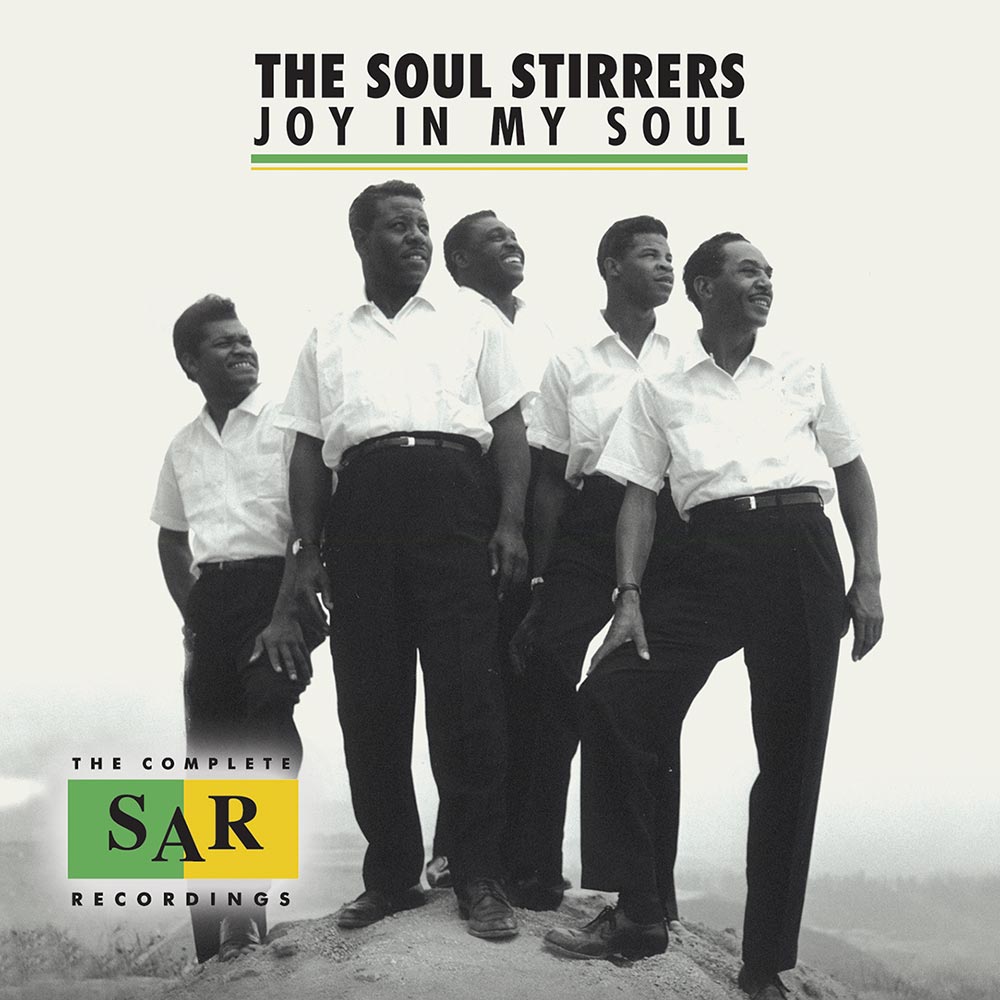
The loss of a lead singer can prove fatal to even the most successful groups. Not The Soul Stirrers though. Despite the loss of Sam Cooke in 1957, it was business as usual for The Soul Stirrers. Johnnie Taylor was drafted in to replace Sam Cooke, who had decided now, was the time to pursue a career in soul music. This could’ve spelt the end for The Soul Stirrers, whose music is celebrated on Joy In My Soul-The Complete S.A.R. Recordings, which was recently released by Ace Records.
It didn’t though. Johnnie Taylor filled the gap left by Sam Cooke. These were big shoes he was being asked to fill. A lesser man that Johnnie, might have crumbled under such pressure. Not Johnnie Taylor. He and Rebert E. Harris, the other lead tenor were determined that that The Soul Stirrers remained one of gospel’s top groups.
That had been the case since 1926, when Senior Roy Crain and some of his friends formed his own gospel group, at Mount Pilgrim Baptist Church, Trinity, Texas. This new group soon became a popular draw. Then one night, after a performance, a member of the congregation congratulated Senior Roy Crain on a “stirring performance.” That night, The Soul Stirrers were born.
Sadly, the original lineup didn’t last long. By 1933, Senior Roy Crain had moved to Houston. His reputation had preceded him. Before long, he was asked to join another gospel group, The New Pleasant Green Singers. While Senior Roy Crain was happy to accept the invitation, there was a but. The group had to change their name to The Soul Stirrers.
So, The New Pleasant Green Singers became The Soul Stirrers. This latest lineup of The Soul Stirrers would pioneer the use of double lead vocals. Their ability to innovate set The Soul Stirrers apart. They were a cut above most gospel groups. Despite this, members came and went.
Sometimes, when their numbers were low, The Soul Stirrers had to “borrow” a one of the congregation for a performance. For a night, they became an honorary Soul Stirrer. However, three years after the latest lineup of The Soul Stirrers took to the stage, they added a new member, bass singer Jesse Harris.
As gospel singers go, Jesse Harris was unique. He sung high tenor lead. This was a new development in gospel music. An added bonus was, that Jesse Harris had been writing songs since he was eight. With Jesse onboard, The Soul Stirrers were on their way to becoming gospel’s biggest group.
This had its advantages. Now the top gospel songwriters were willing to give The Soul Stirrers first pick of their new material. Among them, were Kenneth Morris and Thomas A. Dorsey. They had established a reputation as the top gospel songwriters. Now gospel’s top group were singing songs written by the top gospel songwriters. It seemed that The Soul Stirrers’ star was in the ascendancy.
That proved to the the case. The Soul Stirrers made their recording debut in 1939. Then a year later, in 1940, The Soul Stirrers were given their own show on WIND radio. This meant The Soul Stirrers’ music was heard by a much wider audience. For The Soul Stirrers, this was just the start of their rise and rise.
Soon, The Soul Stirrers were touring coast to coast. Hailed as gospel’s best, and most innovative groups, The Soul Stirrers played to pack houses night after night. Each night, The Soul Stirrers were winning friends and influencing people. So, it’s no surprise that in 1946, they signed to Los Angeles’ based Aladdin Records.
The Mesner Brothers had founded Aladdin Records. It was perceived as a suitable label for The Soul Stirrers’ recordings. With Rebert Harris and James Medlock sharing lead vocals, they recorded The Lord Will Make A Way and Remember Me. They became The Soul Stirrers’ first two releases. This was the start of The Soul Stirrers’ lengthy recording career.
For the next three years, The Soul Stirrers called Aladdin Records home. Their final session was in December 1948. That day, the seven members of The Soul Stirrers recorded twelve tracks. By then, James Medlock had decided he no longer would tour with The Soul Stirrers. However, he still appeared on a few tracks. His replacement was Paul Foster, who joined The Soul Stirrers in later 1949.
This was perfect timing. With The Soul Stirrers having left Aladdin Records, they signed to Speciality Records, another Los Angeles’ based independent label. Their first recording for Speciality Records took place in February 1950. That day, they recorded several tracks, including By and By, which featured one of Jesse Harris’ finest moments. Sadly, it proved to be one of his final recordings for The Soul Stirrers.
Five months later, The Soul Stirrers returned to the studio. This was the last time Jesse Harris featured on a Soul Stirrers’ session. Not long after this, he founded The Christland Singers. For The Soul Stirrers, this presented a problem.
For a while, Paul Foster tried to carry the burden of being the sole lead singer. However, it was too much. The Soul Stirrers desperately needed someone capable of filling Jesse Harris’ shoes. However, Senior Roy Crain, Jesse James Farley and R.B. Robinson had a man in mind…Sam Cooke.
The three members of The Soul Stirrers had been mentoring Sam Cooke for a while. It was as if they realised that this day might come. However, the only problem was Sam Cooke was a member of The Highway QCs, another gospel group. With their blessing, Sam Cooke left The Highway QCs and made his Soul Stirrers’ debut in January 1951.
That night, in January 1951, Sam Cooke took to the stage with rest of The Soul Stirrers in Pine Bluff, Arkansas. Straight away, it was apparent that Sam Cooke was more than capable of filling the gap left by Jesse Harris. Some people, however, still had their doubts.
When Sam Cooke arrived for his first recording session with The Soul Stirrers, it was decided that the rookie should take the lead on Jesus Gave Me The Water. Art Rupe, who owned Speciality Records, had his doubts. Then he heard Sam Cooke deliver a spellbinding performance. So impressed was Art Rupe, that he agreed that Jesus Gave Me The Water should be The Soul Stirrers’ next single. This was the start of five years of unrivalled commercial success for The Soul Stirrers.
Between 1951 and 1956, The Soul Stirrers’ reputation as gospel’s biggest and most successful group was reinforced. A new member, guitarist Bob King, joined in 1953. Sadly, he died a year later. His replacement was Leroy Crume, a friend of Sam Cooke’s. Just like Sam, Leory was able to enjoy some of the most successful times in The Soul Stirrers’ history. Hit singles included He’s My Friend Until The End, Touch The Hem Of His Garment, Wonderful and Nearer To Thee. Then in 1956, Sam Cooke announced he was leaving The Soul Stirrers.
This wasn’t a surprise to members of The Soul Stirrers. Sam Cooke had been toying with crossing over. Their was more money to be made singing soul. Commercial success and critical acclaim was tantalisingly within reach. So was fame and fortune. It was hard to resist. Eventually, Sam Cooke left The Soul Stirrers, and eventually, was replaced by Johnnie Taylor.
Before that, Johnny Jones of The Swannee Quartet tried to fill the gap left by Sam. Johnny made his way from Augusta, Georgia, and was given the role of filling Sam Cooke’s shoes. His were big shoes to fill. Although Johnny tried his best, things didn’t work out. He got homesick and seemed to have Georgia on his mind. So Johnny headed home. This presented a problem. The Soul Stirrers needed a lead singer.
So, in early 1958, Leroy Crume was sent on a mercy mission. His job was to convince Johnnie Taylor to join The Soul Stirrers. Johnnie Taylor, it seemed, had been in The Soul Stirrers’ for some time.
Senior Roy Crain and the rest of The Soul Stirrers had been keeping an eye on their future lead tenor. This included Leroy Crume, who remarked that Johnnie Taylor sounded not unlike Sam Cooke. Sonically, it seemed The Soul Stirrers were replacing like with like.
Johnnie Taylor made his Soul Stirrers on The Love Of God. After this, The Soul Stirrers only recorded one more session for Art Rupe’s Speciality Records. He freed them from their contract in 1959. This could’ve spelt disaster for The Soul Stirrers.
It didn’t. Freed from the shackles of their recording contract, Sam Cooke, J.W. Alexander and Senior Roy Crain formed their own record company, S.A.R. Records. Two of its first and biggest signings were Sam Cooke and The Soul Stirrers.
The Soul Stirrers’ S.A.R. Records debut was Stand By Me Father, with He’s Been A Shelter For Me on the B-Side. Both tracks were recorded on 1st September 1959 at Chicago’s Universal Recording. Producing the two tracks was former lead singer, Sam Cooke, who penned both tracks with J W. Alexander. Stand By Me Father was released as a single in October 1959. Despite its undoubtable quality, commercial success eluded Stand By Me Father. However, Sam Cooke and J.W. Alexander had the perfect followup, Wade In The Water.
When Sam Cooke and J.W. Alexander penned Wade In The Water, they had Paul Foster in mind. He comes into his own on Wade In The Water, which had been recorded at the sessions on 1st September 1959. For the B-Side, He Cares was chosen. Not to be outdone Johnnie Taylor delivers a vocal masterclass on He Cares. With two quality cuts, The Soul Stirrers’ second single for S.A.R. Records was released. Again, although it was successful within gospel circles, Wade In The Water failed to crossover. While this was worrying, The Soul Stirrers had a bigger problem.
Johnnie Taylor’s private life was proving messy. He’d been involved in a car crash, where he ran over a young girl. Afterwards, it transpired that Johnnie was under the influence of marijuana. For the squeaky clean Soul Stirrers, this was bad news.
Realising this was the end of the road for Johnnie with The Soul Stirrers, he quit the group. Seeking redemption, he became a preacher. Briefly. By 1961, Johnnie Taylor was back, in The Soul Stirrers.
Now The Soul Stirrers were looking for a replacement for Johnnie Taylor. Ronnie Williams threw Jimmy Outler’s name in the ring. He met The Soul Stirrers in Philly. Sam Cooke however, had his own thoughts. He favoured Joe Ligon. With the two men vying to replace Johnnie Taylor in The Soul Stirrers, the only solution was hearing the both live.
Luckily, both men were starring at a concert with their respective quartets. When the big night came, Jimmy Outler and Joe Ligon went head to head. Eventually, The Soul Stirrers’ original choice won out, Jimmy Outler was a Soul Stirrer. He made his recording debut between the 6th and 7th September 1960.
Over two days, the latest lineup of The Soul Stirrers recorded a number of tracks. By the 7th September 1960, they were finished and had enough material for several singles.
The first single taken from the September 1960 sessions was Jesus Be A Fence Around Me. It was penned by Sam Cooke especially for Jimmy Outler. He delivers an impassioned rendition of Jesus Be A Fence Around Me. On the flip side was I’m A Pilgrim. What was Jimmy Outler’s Soul Stirrers’ debut was released in September 1960. Hard on its heels came Listen To The Angels Sing.
Just a month later, in October 1960, Listen To The Angels Sing, with Tolling On on the B-Side was released as The Soul Stirrers’ fourth single for S.A.R. Records. Just like Jesus Be A Fence Around Me, Listen To The Angels Sing proved that The Soul Stirrers were still one of gospel’s biggest draws. However, they weren’t crossing over. What S.A.R. Records needed, was that elusive crossover single.
Despite a hit single eluding The Soul Stirrers, they released their debut album Jesus Be A Fence Around Me in January 1961. It consisted twelve songs, including the previously unreleased Don’t Leave Me Alone. The twelve tracks were recorded by The Soul Stirrers during 1959 and at the sessions on 6th-7th September 1960. This was the last anyone heard from The Soul Stirrers for five months.
It wouldn’t until June 1961 that The Soul Stirrers released another single. That was the Paul Foster penned I Love The Lord. On the flip side was I’m Thankful on the flip side. Both tracks had been recorded during the September 1960 sessions and featured on The Soul Stirrers’ debut album, Jesus Be A Fence Around Me. However, in September 1961, Sam Cooke decided it was time for The Soul Stirrers to enter the recording studio again.
On 20th September 1961, just over a year after their last recording session. It hadn’t exactly proved fruitful. The Soul Stirrers still hadn’t crossed over. Maybe this session would prove more fruitful?
Just like before, The Soul Stirrers recorded a number of tracks. This included Lead Me Jesus and Heaven Is My Home. They became The Soul Stirrers’ next single. Released in October 1961, this was one of The Soul Stirrers’ finest efforts. Even the B-Side, Heaven Is My Home, which trod the line between gospel and soul, oozed quality. To onlookers, success wasn’t far away for The Soul Stirrers. It seemed they were on the right lines.
The September 1961 sessions spawned The Soul Stirrers’ next single, the Leroy Crume penned Lead Me Jesus. With Johnnie Taylor’s God Is Standing By on the B-Side, these two tracks became The Soul Stirrers second single of 1961. It was released in October 1961, complete with over-dubbed strings. The two tracks also featured on The Soul Stirrers’ sophomore album, Gospel Pearls, which was released in 1962. By then, The Soul Stirrers would’ve released their first single of 1962.
This was Must Jesus Bear The Cross Alone. Released in January 1962, The Soul Stirrers were still one of gospel’s leading groups. Meanwhile, their label mate and former member, Sam Cooke was one of soul’s biggest names. What The Soul Stirrers would’ve given for just a modicum of that success.
To enjoy that success, The Soul Stirrers would have to release a single. They hadn’t released a single since January 1962. The rest of 1962 passed without The Soul Stirrers entering the recording studio. It wasn’t until February 1963 that the call came. The Soul Stirrers were to head to Universal in Chicago.
At Universal, The Soul Stirrers recorded nine tracks. Praying Ground was released as a single in March 1963. On the flip side, was the Leroy Crume composition No Need To Worry. These two tracks became The Soul Stirrers’ first single since January 1962. Still a hit single eluded The Soul Stirrers. Maybe next time?
Another six months passed, before The Soul Stirrers released Free At Last. This was another Leroy Crume penned track. An inspirational track, driven along by the rhythm section, The Soul Stirrers married gospel and soul. It seemed, The Soul Stirrers weren’t going to stand still. They realised it was a case of evolve or become irrelevant. Despite this, success eluded them. For The Soul Stirrers, it would be another eleven months before they returned to the studio. Before that, The Soul Stirrers would release their sophomore album.
This was Encore!! With The Soul Stirrers. Released in 1963, it featured the ten tracks recorded at Universal on 27th February 1963. The Soul Stirrers wouldn’t release another studio album for four years. By then, The Soul Stirrers were signed to Checker Records. In the three preceding years, lot of water had flown under the bridge.
As 1964 began, The Soul Stirrers entered the studio on 28th January 1964. They recorded their next single Oh Mary, Don’t You Weep. Penned by Sam Cooke, it was recorded at United Recording, Hollywood. For the B-Side, Clyde Otis and Brooke Benton’s Looking Back was chosen. Released in February 1964, the single failed to chart. Worse was to come though.
On 20th July 1964, The Soul Stirrers recorded what would prove to be their S.A.R. Records’ swan-song, Lead Me To The Cavalry. It was arranged by Sam Cooke, who also sung backing vocals. Released in August 1964, this would prove fitting.
Four months later, on December 11th 1964, tragedy struck. That night, Sam Cooke died on 11th December 1964 aged just thirty-three. Police reports state that Sam Cooke booked into the Hacienda Motel, Los Angeles earlier on the 11th December 1964. Later, things went awry. Sam Cooke burst into the manager’s office-apartment in a rage, wearing nothing but one shoe and a sports jacket. A furious Sam Cooke, wanted to know where the woman who accompanied him into the Hacienda Motel was. Feeling threatened, Bertha Franklin, the motel manager, shot Sam Cooke through the heart.
When the L.A.P.D. arrived, Sam Cooke was found wearing just his sport’s jacket and a shoe. It was a surreal sight. Since then, Sam Cooke’s somewhat unsavoury death has been shrouded in controversy. Nobody knows for certain what happened. Was Sam in the wrong or wronged? Even today, nobody knows. Rumours and conjecture surround what happened at the Hacienda Motel, Los Angeles. Sadly, we’ll never know for sure the truth surrounding Sam Cooke’s death. His death impacted on all the groups on S.A.R. Records. This included The Soul Stirrers.
The death of Sam Cooke affected The Soul Stirrers badly. He was their producer and previously, had written songs for The Soul Stirrers. Some would go as far as say that Sam Cooke was The Soul Stirrers’ mentor. Certainly, his death impacted badly upon The Soul Stirrers’ career.
After the death of Sam Cooke, SAR Records folded. Sam Cooke was its driving force. Without him, SAR Records collapsed. This left The Soul Stirrers without a label. They continued, but it was getting harder for The Soul Stirrers to make a living. Gospel was no longer as popular as it had been. It wasn’t until 1967 that The Soul Stirrers released their next studio album Resting Easy. By then, secular music had usurped gospel. Its glory days were long gone.
That may have been the case, but The Soul Stirrers’ name will forever be synonymous with gospel music. They were innovators, who pioneered the swing lead, where two singers share the lead vocal. This added to the emotional quality of the song, without disturbing the harmonies. pioneered the “swing lead”, in which two singers would share the job of leading the song. This increased the emotional quality of the song, with disturbing the harmonies. The Soul Stirrers’ innovation transformed gospel, and can still be heard today in soul music. So, although The Soul Stirrers’ glory days are long gone, their influence can still be heard today.
Fifty-one years after The Soul Stirrers’ S.A.R. Records’ swan-song, The Soul Stirrers music is celebrated on Joy In My Soul-The Complete S.A.R. Recordings, which was recently released by Ace Records. Joy In My Soul is a two-disc, thirty three track compilation featuring the music The Soul Stirrers recorded for S.A.R. Records between 1959 and 1964. There’s singles, B-Sides, album tracks and previously unreleased tracks. For anyone interested in The Soul Stirrers’ music, then Joy In My Soul-The Complete S.A.R. Recordings is a two disc treasure trove, featuring The Soul Stirrers’ post Sam Cooke years.
THE SOUL STIRRERS-JOY IN MY SOUL-THE COMPLETE S.A.R. RECORDINGS.
TERESA BREWER WITH COUNT BASIE & THAD JONES -THE SONGS OF BESSIE SMITH/DUKE ELLINGTON WITH TERESA BREWER-IT DON’T MEAN A THING IF IT AIN’T GOT THAT SWING.
TERESA BREWER WITH COUNT BASIE & THAD JONES -THE SONGS OF BESSIE SMITH/DUKE ELLINGTON WITH TERESA BREWER-IT DON’T MEAN A THING IF IT AIN’T GOT THAT SWING.
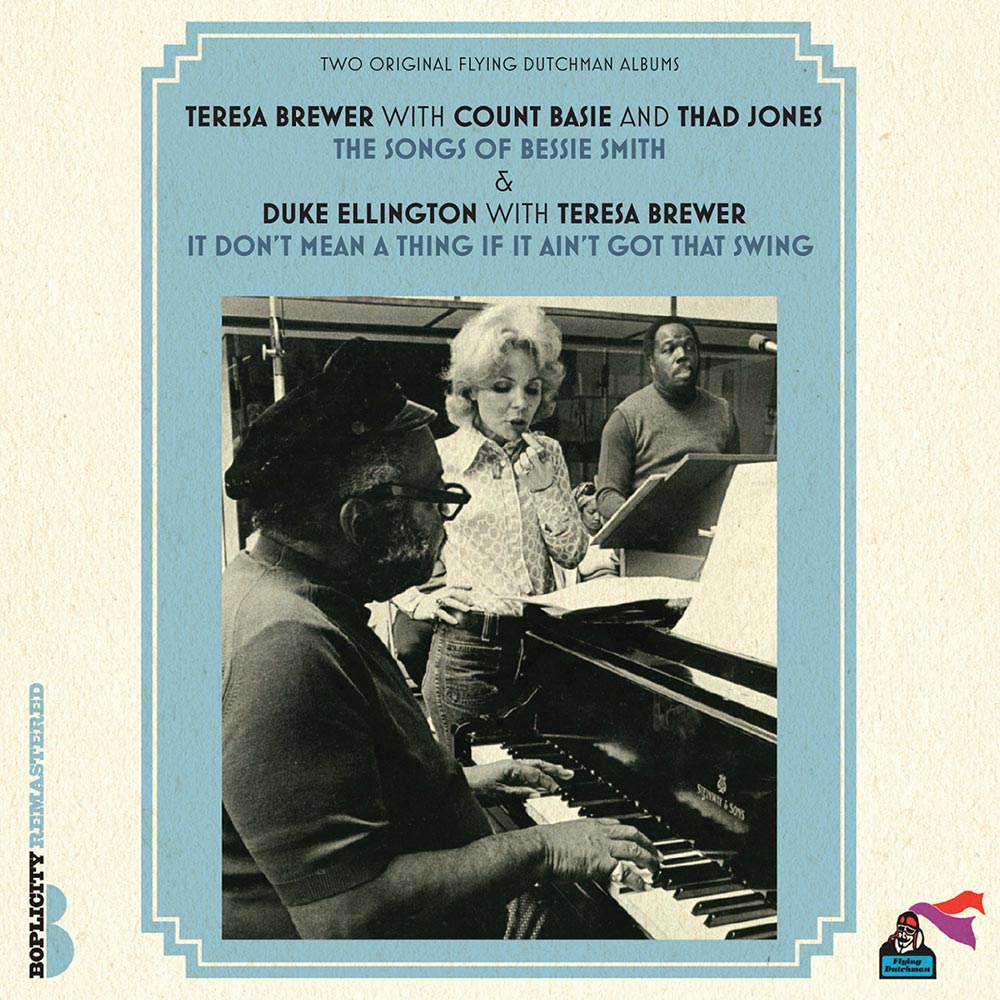
Eighteen years after releasing her debut album Music, Music, Music on Coral, Teresa Brewer was signed to Bob Thiele’s Flying Dutchman Productions. Theresa’s career was now into its fourth decade. The former teen idol, was now in the process of reinventing herself as a jazz singer. This started in 1973, when Teresa entered the recording studio with Count Basie and Thad Jones.
By then, Count Basie was sixty-nine. The pianist and bandleader was looking forward to working with Teresa Brewer. It was a challenge, one he was looking forward to. He was the leader of the Thad Jones-Mel Lewis Big Band. They would accompany Teresa Brewer on her 1973 album The Songs Of Bessie Smith. Billed as Teresa Brewer With Count Basie and Thad Jones, this collaboration was the start of the reinvention of Theresa Brewer.
The start of the reinvention of Teresa Brewer was The Songs Of Bessie Smith. This continued on Duke Ellington With Teresa Brewer collaboration It Don’t Mean A Thing If It Don’t Have That Swing. These two albums have been released as a two on one by Boplicty, an imprint of Ace Records. It’s marks the beginning of the reinvention of Theresa Brewer, which began with The Songs Of Bessie Smith, in 1973.
The Songs Of Bessie Smith.
Having spent so much of her life singing popular music, by the early seventies, Teresa Smith was tired of being pigeonholed. She wanted to be taken seriously as an artist. So, with her husband Bob Thiele’s help, Teresa set about reinventing herself as a jazz singer.
Bob a producer, who owned his own record label, Flying Dutchman Productions could make this happen. He had the means and the contacts. However, he could only make this happen if his wife Teresa Brewer had the potential to make it as a jazz singer. To Bob, and those around him, it was obvious Teresa had the potential to switch to jazz.
Over the last four decades, Teresa had enjoyed unrivalled commercial success and critical acclaim. She seemed to have the ability to breath life and meaning into a wide range of songs. So, switching from pop and standards to jazz didn’t seem beyond Teresa Brewer. The only way to find out, was to have Teresa release her jazz debut, The Songs Of Bessie Smith.
For her jazz debut, Teresa Brewer decided to revisit the songbook of Bessie Smith, The Empress Of The Blues. She was, without doubt, one of the greatest female blues singers ever. Her recording career began in the twenties, and before long Bessie was the highest paid African-American performer of the twenties. So, Teresa chose nine songs made famous by The Empress Of The Blues for her jazz debut.
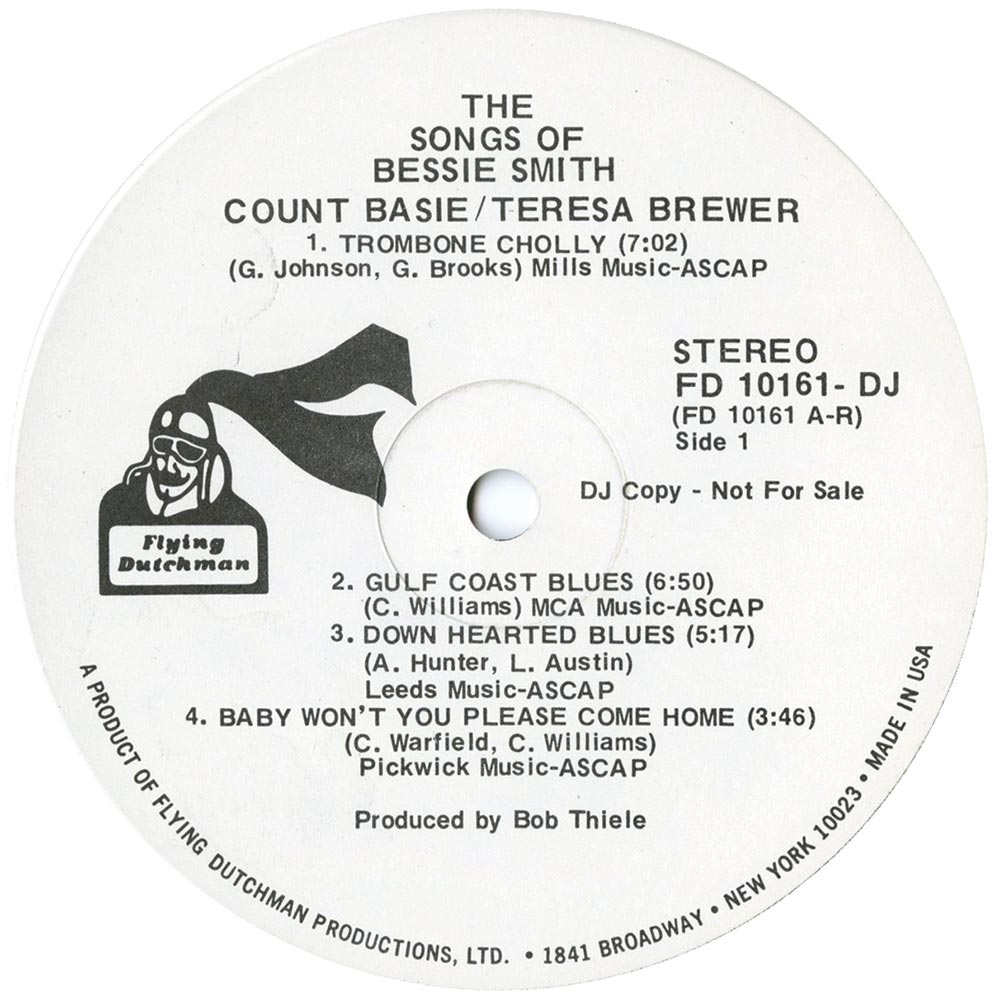
Teresa was spoilt for choice when she visited the Bessie Smith songbook. Eventually, she chose nine songs. This included Trombone Cholly, Gulf Coast Blues, Down Hearted Blues, Baby Won’t You Please Come Home and St. Louis Blues. Other tracks were After You’ve Gone, I Ain’t Got Nobody, Gimme A Pigfoot and I Ain’t Gonna Play No Second Fiddle, these tracks became The Songs Of Bessie Smith.
When recording of The Songs Of Bessie Smith got underway, Teresa Brewer was accompanied by Count Basie and the Thad Jones-Mel Lewis Big Band. Arranging and conducting the nine tracks was Thad Jones. Bob Thiele produced The Songs Of Bessie Smith, where Theresa pays homage to The Empress Of The Blues.
Before the release of The Songs Of Bessie Smith, the critics had their say on the reinvention of Teresa Brewer. Critical acclaimed accompanied The Songs Of Bessie Smith.They hailed the reinvention of Teresa Brewer. This was Teresa Brewer as she’d never been heard before. Critics were spellbound.
Sadly, music lovers weren’t. There was a reason for this. On its release in 1973, The Songs Of Bessie Smith wasn’t a commercial success. With only a few discerning music lovers buying The Songs Of Bessie Smith, most people mussed out in what was the start of the reinvention of Teresa Brewer.
Teresa couldn’t have picked a better track to open The Songs Of Bessie Smith, that Trombone Cholly. Her sassy vocal breathes new life and meaning into Trombone Cholly. All the time, she’s accompanied by blazing horns, bursts of drums and Count Basie’s understated piano. He’s the perfect foil for Teresa, as her vocal veers between sassy, to a feisty roar. From there, Teresa has you captivated.
Gulf Coast Blues is given a similar big band makeover. Teresa combining melancholia and power, makes the song her own. She doesn’t want to be compared to Bessie Smith. After all, there was only ever one Empress Of The Blues. Stylistically, the pair are far removed. Bessie sounded as if she’d lived the blues she was singing. Teresa wasn’t a blues singer, and her career as a jazz singer was in its infancy.
You wouldn’t realise that as Teresa interprets the heartache of Down Hearted Blues. Especially, when accompanied by Count Basie and the Orchestra. They provide a smokey, late-night arrangement. This continues on Baby Won’t You Please Come Home, where Teresa delivers a needy, hopeful vocal. Then it’s all change.
On St. Louis Blues, Teresa, accompanied by braying horns, grabs the song and makes it swing. At this moment, Teresa’s reinvention was complete. She delivers a vocal powerhouse, before ensuring After You’ve Gone swings, and then some. It’s an irresistible sound. Especially, when the big band for company. Later, they take centre-stage, and prove a perfect foil for Teresa. No wonder, with Count Basie as bandleader and pianist.
Count Basie, whose playing has been understated, but has played a crucial part in the success of The Songs Of Bessie Smith so far, delivers one of his best solos on I Ain’t Got Nobody. Teresa drops the tempo, and with a vocal full of loneliness and regret, swings her way through I Ain’t Got Nobody. Then when her vocal drops out, up steps Count Basie. He delivers a masterclass on piano. This continues on Gimme A Pigfoot, a Bessie Smith classic.
Realising that there was only one Empress Of The Blues, Teresa doesn’t try to copy Bessie Smith. That’s been the case throughout The Songs Of Bessie Smith. Instead, kicking loose, and combining power and passion, she reinterprets Gimme A Pigfoot. With the big band for company, Teresa pays homage to a true blues legend, Bessie Smith.
I Ain’t Gonna Play No Second Fiddle closes The Songs Of Bessie Smith. Teresa digs deep, and embraces the role of jazz singer. With the big band for company, she produces one of her best performances. There’s even a bluesy hue to her vocal. Teresa almost struts her way through the lyrics, delivering them with a defiance. This seems a fitting finale to Teresa Brewer’s homage to Bessie Smith.
The Songs Of Bessie Smith was the start of the reinvention of Teresa Brewer. After four decades singing pop and standards, she was determined to change direction. It was a case of needs must.
No longer was Teresa enjoying the commercial success she enjoyed in the forties and fifties. While she enjoyed a degree of success during the sixties, by the seventies, Teresa Brewer’s career had stalled. She had no option, but to reinvent herself as a jazz singer. This was a risky move.
Not everyone could switch seamlessly from pop to jazz. Many had tried, and many had failed. So, Teresa was putting her career on the line. After all, she risked alienating her loyal fans. However, their numbers were greatly reduced, so Teresa felt she’d nothing to loose.
Unfortunately, The Songs Of Bessie Smith wasn’t a commercial success. It didn’t sell, and initially, it seemed as if the reinvention of Teresa Brewer had been a failure. Then Teresa Brewer’s collaboration with Count Basie and Thad Jones was heard by another jazz legend, Duke Wellington.
So impressed was the Duke, that he asked “when are we going to make a record?” Teresa didn’t need to be asked twice, and they would collaborate on It Don’t Mean A Thing If It Don’t Have That Swing.
It Don’t Mean A Thing If It Don’t Have That Swing.
When the collaboration between Teresa and Duke Ellington began, the Duke was seventy-four. He was one of jazz’s legendary figures. In a six decade career, the Duke had achieved just about everything. Critical acclaim and commercial success had accompanied the Duke throughout his career. However, during the early seventies, his popularity had declined. Maybe, working with Teresa Brewer, could rejuvenate his career?
For Teresa, who’d enjoyed a four decade career, but who was a relative newcomer to jazz, working with Duke Ellington, was one of the highlights of her career. It was an honour and privilege. In less than a year, she’d worked with Count Basie and now, Duke Ellington. Surely, it couldn’t get better than this?
For her collaboration with Duke Ellington, It Don’t Mean A Thing If It Don’t Have That Swing, Teresa chose ten tracks penned by the Duke. He’d written I’ve Got To Be A Rugcutter and cowrote the other nine tracks on It Don’t Mean A Thing If It Don’t Have That Swing. This included classics It Don’t Mean A Thing If It Ain’t Got That Swing, Satin Doll, Mood Indigo and Don’t Get Around Much Anymore. Other tracks included I Ain’t Got Nothin’ But The Blues, I’m Beginning To See The Light, I Got It Bad And That Ain’t Good, Tulip Or Turnip, It’s Kinda Lonesome Out Tonight and Poco Mucho. These ten tracks became Teresa’s collaboration with Duke Ellington, It Don’t Mean A Thing If It Don’t Have That Swing.
For recording of It Don’t Mean A Thing If It Don’t Have That Swing. The usual practice for a Flying Dutchman Productions’ session, was that Bob Thiele brought in his favoured musicians. However, this time, Bob Thiele’s rhythm section of drummer Bernard Purdie, guitarist Joe Beck and percussionist Mtume only played on three tracks, Tulip Of Turnip, Mood Indigo and Poco Mucho. Replacing Bob’s favoured players, were some of the Duke’s sidemen. While this may have put a few of Bob’s sidemen’s nose out of joint, it was most likely the Duke’s way or no way. So, between 4th-6th September 1973, the ten tracks that became It Don’t Mean A Thing If It Don’t Have That Swing were recorded and were released as 1973 drew to a close.
At the end of 1973, It Don’t Mean A Thing If It Don’t Have That Swing was released. The album was well received by critics, who remarked that It Don’t Mean A Thing If It Don’t Have That Swing featured a much more mature Teresa Brewer. She was no longer a pop singer. Her, transformation to jazz singer was complete on It Don’t Mean A Thing If It Don’t Have That Swing.
What better way to start It Don’t Mean A Thing If It Ain’t Got That Swing, than with the title-track. Teresa and the Duke, accompanied by stabs of blazing horns, swing their way through the classic. Later, the Duke and Teresa even add a scat, which seem to inspire them to greater heights, on a blistering version of a classic from the Great American Songbook.
On I Ain’t Got Nothin’ But The Blues, Teresa lives the lyrics, as she combines blues and jazz. Accompanied by the big band, it’s a reminder of another age. So are covers of two of the Duke’s best known tracks, Satin Doll and Mood Indigo.
From the opening bars, Satin Doll swings. Teresa takes the song in a slightly different direction. With stabs of braying horns, the Duke’s slinky piano and an understated rhythm section for company, new life is breathed into an oft-covered classic. The same can be said of Mood Indigo. With the help of Bob Thiele’s rhythm section, Mood Indigo is reinvented. Especially with Teresa delivering a vocal that veers between sultry and sensual to moody and wistful. The continued reinvention of the Duke Ellington songbook continues with Don’t Get Around Much Anymore. From the get-go, it takes on an old school jazz sound. Teresa doesn’t hold back, delivering a vocal that’s a mixture of power, regret and emotion. After this, there’s a change in direction.
Encouraged by the Duke, I’m Beginning To See The Light literally explodes into life. Teresa’s urgent vocal and the Duke’s piano play leading roles. It’s fast and furious. Despite this, it’s a flawless performance, as the reinvention of Teresa Brewer and the Duke Ellington songbook continues. I’ve Got To Be A Rug Cutter has a similar urgency as it unfolds. With its vintage sounding arrangement, jazz and blues merge into one, before Teresa and Duke Ellington swing their way through I’ve Got To Be A Rug Cutter.
I Got It Bad And That Ain’t Good has a moody, late-night sound. Teresa’s voice is transformed. She sounds as if she’s living the hurt and heartache in the arrangement. Behind her, understated arrangement compliments her vocal, on what’s one of the highlights of It Don’t Mean A Thing If It Ain’t Got That Swing.
Tulip Or Turnip features the return of Bob Thiele’s rhythm section. The Duke’s piano and Joe Beck’s crystalline guitar join the bass in producing a jaunty arrangement. Atop it, sits Teresa and the Duke’s vocal. They swing their way through the track, before Joe Beck almost steals the show with his guitar solo. However, this inspires Teresa and the Duke, who proceed to raise their game.
The two final tracks on It Don’t Mean A Thing If It Don’t Have That Swing had never been released before. Stabs of piano open the wistful sounding It’s Kinda Lonesome Out Tonight. Soon, the arrangement unfolds and the Orchestra frame Teresa’s heartbroken vocal. They’re like yin and yang on this hidden gem, complementing each other perfectly. Poco Mucho is the other unreleased track. Here, Bob Thiele’s favoured rhythm section and the Orchestra join forces with Teresa. She delivers another jazzy vocal powerhouse. Meanwhile, the Duke adds another understated performance on piano. He takes care not to steal the show, as Teresa Brewer’s produces another captivating performance.
It Don’t Mean A Thing If It Don’t Have That Swing was a landmark album for Teresa Brewer. Her transformation from pop to jazz singer was complete. The reinvents of Teresa Brewer was complete on It Don’t Mean A Thing If It Don’t Have That Swing. However, it was a bittersweet moment.
Despite proving a talented jazz singer on The Songs and Bessie Smith and It Don’t Mean A Thing If It Don’t Have That Swing, which were recently reissued as a two on one by Boplicity, an imprint of Ace Records, neither album was a commercial success. Lightning it seemed, had struck twice. Following the disappointing sales of The Songs and Bessie Smith, It Don’t Mean A Thing If It Don’t Have That Swing fare much better. It seemed that Teresa Brewer’s decision to move from pop to jazz had been in vain.
That’s despite releasing two underrated albums The Songs Of Bessie Smith and It Don’t Mean A Thing If It Don’t Have That Swing are two hidden gems in Teresa Brewer’s discography. These two albums marked a turning point in her career. After The Songs Of Bessie Smith and It Don’t Mean A Thing If It Don’t Have That Swing, Teresa Brewer concentrated on jazz music. These two albums marked the birth of a jazz singer. However, for Duke Ellington, It Don’t Mean A Thing If It Don’t Have That Swing was his swan-song.
Less than six months after the release of It Don’t Mean A Thing If It Don’t Have That Swing Duke Ellington died on May 24th 1974. After a long and illustrious career, jazz music lost one of its legendary figures. Fittingly, on what proved to be his swan-song, It Don’t Mean A Thing If It Don’t Have That Swing, Duke Ellington was acting as mentor to Teresa Brewer, whose jazz career was in its infancy. With the Duke Ellington and Count Basie’s help, Teresa Brewer enjoyed a long and successful career. However, the albums that launched Teresa Brewer’s career as a jazz singer, were The Songs Of Bessie Smith and It Don’t Mean A Thing If It Don’t Have That Swing.
TERESA BREWER WITH COUNT BASIE & THAD JONES -THE SONGS OF BESSIE SMITH/DUKE ELLINGTON WITH TERESA BREWER-IT DON’T MEAN A THING IF IT AIN’T GOT THAT SWING.
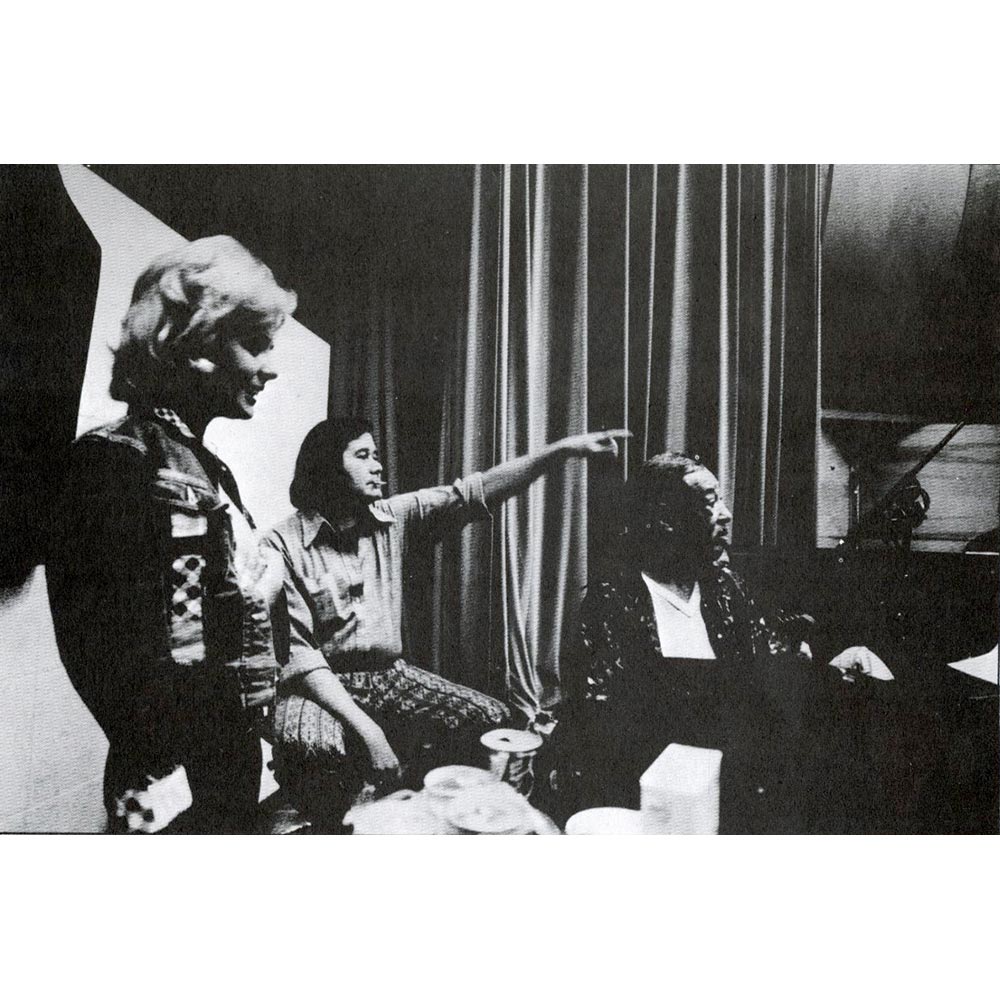
JOHN MARTYN-GRACE AND DANGER.
JOHN MARTYN-GRACE AND DANGER.
In November 1977, John Martyn released what’s was undoubtably one the finest albums of his career, One World. It was an atmospheric, experimental and genre-defying album. Everything from folk, jazz, reggae and rock melted together over eight tracks. Released to overwhelming critical acclaim, One World was hailed a classic album. This was the second classic album of John Martyn’s ten year recording career.
The first came four years earlier, in February 1973, when John released Solid Air. Released to widespread critical acclaim, Solid Air critics realised, was without doubt, the finest album of John Martyn’s career. It was also the album that saw the Glasgow born troubadour make a commercial breakthrough. This should’ve been the start of the rise and rise of John Martyn.
For his eighth album, Sunday’s Child which was released in January 1975, John reigned in his experimental sound. However, Sunday’s Child was a much more eclectic album, with John flitting between country, folk and rock. The result was an eclectic and critically acclaimed album. However, controversy wasn’t far away for John.
In 1975 Island Records refused to release Martyn’s live album, Live At Leeds. So, John resorted to selling signed copies by mail from his home. After the release of Live At Leeds in 1977, John headed to Jamaica on holiday.
What started out as a holiday, ended up with John collaborating with reggae producer Lee “Scratch” Perry. One World is seen by some people as the first ever trip hop album. As a resuly, John Martyn is perceived as the father of trip hop and One World a John Martyn classic. After One World, John didn’t release an album for three years. There was a reason for this.
By the end of the seventies, John’s marriage had broken down. This led to John pressing “the self destruct button” as he described it. John became addicted to alcohol and drugs. He later said this was a very dark period in his life. Grace and Danger, which will be reissued as a double album by Commercial Marketing on 23rd February 2013, was released in October 1980, was the album that came out of this period, and the start of a turbulent time for John Martyn, both personally and professionally.
Grace and Danger was an autobiographical album, that described what he was going through at that time. John’s marriage had broken down and divorce proceedings were underway. This makes the music on Grace and Danger very personal. It’s akin to a snapshot to the pain, hurt and regret John was experiencing. This shines through on Grace and Danger.
Eight of the nine tracks that became Grace and Danger, were written by John. They describe what he was going through emotionally. The only track not penned by John was Johnny Too Bad, which was written by Slickers. These nine tracks were recorded by a tight, but talented band.
For Grace and Danger, John played guitars and added vocals. His friend Phil Collins, played drums and sung backing vocals. Tommy Eyre played synths and keyboards, while John Giblin played bass. These three musicians and producer Martin Levan were responsible for a soul baring album from John Martyn’s, Grace and Danger.
Once Grace and Danger was completed, John delivered the album to Chris Blackwell at island Records. When Chris Blackwell realised just how personal an album Grace and Danger was, held the album’s release back a year. Partly, this was because of his friendship with both John and Beverley Martyn. However, Chris also felt that Grace and Danger was “too depressing and didn’t want it released.” This angered John Martyn.
When John heard what Chris Blackwell thought of Grace and Danger, he wasn’t happy. He responded to Chris Blackwell saying: “please get it out! I don’t give a damn how sad it makes you feel-it’s what I’m about: direct communication of emotion.’” Eventually, a year later, Grace and Danger was released.
By then, the relationship between John and Island Records was damaged beyond repair. Grace and Danger was released in October 1980. Contrary to Chris Blackwell’s expectations, Grace and Danger was well received by critics. They realised just how personal an album Grace and Danger was, and empathised with what John had gone through. He had just suffered the breakup of a relationship, and was hurting badly. This however, wasn’t the last relationship that broke down during this period.
After the release of Grace and Danger, John’s relationship with Island Records deteriorated. John submitted another album to Island Records, The Apprentice. Island Records rejected The Apprentice. However, John had the last laugh. The Apprentice was eventually released in 1990, it was hailed as John’s comeback album. By then, it was nine years since John Martyn parted company with Island Records.
A year after the release of Grace and Danger, John left Island Records. This was the end of a fourteen year relationship. During this period, John had released eight albums for Island Records. His Island Records’ swan-song, was Grace and Danger, one of his most underrated and personal albums.
Opening Grace and Danger, is Some People Are Crazy. Just a broody bass, shimmering synths and bold keyboards combine with drums and crystalline guitars. They provide the backdrop for John’s vocal. It’s more a confessional that a vocal. There’s an honesty in his vocal. Belatedly, John’s come the conclusion that people either loved or loathed the hell raising John Martyn of the late seventies. He sings “some people are crazy about him, some people can’t stand his face.” He’s even chased the woman he loves away. This hurts. As if in desperation, John delivers the lyric “yes this loving kind of business, might be the best find you ever had.” Whether John believes this, though, is another matter? His parting line in this confessional is“some people are crazy, some people are just like me.”
Searing guitars and the rhythm section drive the rocky arrangement to Grace and Danger along. John’s vocal has a melancholy quality, as he realises what he’s lost. Against a backdrop of chiming, blistering guitars, keyboards and the rhythm section, John’s vocal is akin to an outpouring of pain. Reflecting, he sings: “I never knew the road that carried me along.” It’s obvious he had no idea where it would lead. It lead to him losing the woman he loved. Despite his being broken, he wishes Beverley well. He’s loved, lost and wishes her “sweet grace, no danger.”
Lookin’ On has a jazz tinged arrangement. A bass plays, guitars chime and stabs of keyboards are joined by drums played tenderly. As the drama builds, a tormented John paints a picture. It’s easy to visualise John returning from a night out, to Beverley who quite rightly, is less than happy. John comes “stealing in, with an innocent grin, to leave you staring, at the empty ceiling, feeling nothing, lookin’ on, I’m just lookin’ on.” At that moment, John wonders what’s gone wrong with his marriage? Previously, this type of behaviour would’ve elicited a laugh. Not any more. Things have gone to far. That’s reflected in the urgent jazz tinged arrangement. It accompanies John’s despairing vocal, on this tale of love gone wrong.
While Johnny Too Bad wasn’t written by John, it sums up the situation he finds himself in. Just like John, Johnny Too Bad has a penchant for hard living. “With your running, and shooting,looting and tooting, you’re too bad, cos one of these days, you’re going to make your woman cry,” these lyrics could’ve been written about John. It’s as if he realises this, and delivers a gravelly, vampish vocal. Again, he makes the lyrics sound like a confessional. Accompanying him are the rhythm section and guitars. One of the guitars is played through John’s trusty echoplex. Then later, John dawns the role of guitar hero, unleashing washes of a blistering, crystalline solo. It’s the perfect foil for John as he vamps his way through the rest of what could be an autobiographical song.
Sweet Little Mystery marks a change in direction on Grace and Danger. It’s the first of a series of ballads. Against a backdrop of twinkling keyboards, synths strings and the rhythm section John tenderly delivers a beautiful, heartfelt ballad about a relationship that’s all but over. Accopanied by backing vocals, John lays bare his soul. His vocal is full of sadness, hurt and melancholy as he sings: “it’s not the letters you just don’t write, it’s not the crying in the dead of the night.” Instead, “it’s that sweet little mystery that’s in your heart, it’s just that sweet little mystery that makes me cry.” These lyrics show just how talented a lyricist John was. He wrote about what he’d experienced, including the breakup of his marriage. It was the inspiration for such a beautiful, poignant tale of love lost.
Deliberately, chords are played on the shimmering keyboards as Hurt In Your Heart unfolds. They’re joined by weeping guitars. They reflect the heartbreak in John’s weary vocal. It’s akin to a cathartic outpouring of hurt and regret, regret at the way he behaved, and how it caused his marriage to end. However, although his marriage is over, John hope that “when that hurt in your heart has gone, I’ll still be your friend, right to the end of our river, and further still.”
Baby, Please Come Home is another beautiful, soul baring ballad. Against a backdrop of an understated rhythm section, glistening keyboards and a sometime, scorching guitar, John delivers a needy, hopeful vocal. Full of regret, he wants to make things right, and almost begging and pleading, sings “Baby, Please Come Home.”
Save Some (For Me) sees John change direction. It’s a mid-tempo track with a punchy, spacious introduction. Drums and synths combine, before John’s tender vocal enters. He leaves space between the lyrics. This adds to the urgency of the arrangement. Soon, John, accompanied by backing vocals from Phil Collins, combines power, emotion and urgency. Behind him, sci-fi synths, shimmering keyboards and the rhythm section combine. They play a supporting role in another emotional roller coaster.
Our Love closes closes Grace And Danger, John Martyn’s Island Records’ swan-song. Phil Collins’ drums set the scene for the rhythm section, keyboards and John’s needy, hurt filled vocal. Memories come flooding back, back to a time when their love was young. Things were good, the future looked bright. “Our love, once was you and me against this world, made a man from a boy and made a woman from a little girl.” Not any more. Now I find I have to beg before you call my name, please call my name, please call my name, and baby take a look, take a good look, baby, baby take a look in your heart.” As John delivers these lyrics he wells up, regrets omnipresent at the hurt he caused, and the love he lost.
While Grace and Danger was well received upon its release, it wasn’t the commercial success that John Martyn classics like Solid Air or One World. This had nothing to do with the music. Partly, it was to do with the type of music that was popular in 1980. By then, John Martyn’s music was the polar opposite of the post punk, hip hop, electronica and new romantic music that filled the charts. Then there was the fact that Chris Blackwell didn’t like Grace and Danger.
Chris Blackwell found the music on Grace and Danger “too personal” and “depressing.” As a result, Island Records didn’t seem to cover themselves in glory when it came to promoting Grace and Danger. This was a huge mistake. After all, here was an album that spoke to many people. Grace and Danger was the story of many a failed relationship and marriage. For many, who had loved and lost, Grace and Danger spoke to them. It said everything that they wished they could. Thirty-five years later, that’s still the case.
Many suffering the heartbreak of a marriage breakup, have found solace in Grace and Danger. John speaks for, and too them on Grace and Danger. He’s been where they’ve been, and experienced the hurt, heartbreak and regret. Each song brings back a memory, often, a memory of better times. Especially Our Love, which closes Grace and Danger.
John is at his most eloquent, writing “Our love, once was you and me against this world, made a man from a boy and made a woman from a little girl.” Not any more. “Now I find I have to beg before you call my name, please call my name, please call my name, and baby take a look, take a good look, baby, baby take a look in your heart.” Not only does this prove the perfect way to close Grace and Danger, but sums up succinctly, the thin line between love and hate. That’s one of nine reasons why Grace and Danger is a forgotten classic in John Martyn’s back catalogue. Not any more.
Commercial Marketing will reissue Grace and Danger as a double album on 23rd February 2015. Disc one features seven bonus tracks, including Sweet Little Mystery and Lookin’ On from BBC TV ‘Old Grey Whistle Test. There’s also versions of Some People Are Crazy, Grace And Danger and Save Some (For Me), which were recorded for BBC TV’s Rock Goes To College. Then on disc two, there’s a further twelve bonus tracks.
Disc two of Grace and Danger, is a treasure for John Martyn fans. There’s first versions of Johnny Too Bad, Sweet Little Mystery, Some People Are Crazy, Baby, Please Come Home, Grace And Danger and Our Love. Then there’s an instrumental version of Hurt In Your Heart and a dub version Johnny Too Bad. Other tracks include Small Hat, Running Up The Harbour, Dead On Arrival, After Tomorrow Night and Lilo Blondino. These thirteen tracks are a welcome addition to Grace and Danger, a truly soul-baring album.
Quite simply, Grace and Danger is best described as the most personal album John Martyn ever released. It’ tells the story of one of the worst periods in his life, where the newly heartbroken John Martyn lays bare his soul for all to see and hear. What would’ve been fascinating, is if Beverley had replied to Grace and Danger. We could’ve heard her side to the story. Sadly, that never happened, and despite Beverley making a recent comeback, is unlikely to ever happen. As a result, Grace and Danger, one of John Martyn’s most underrated albums, remains one of the most soul-baring and cathartic breakup albums ever released.
JOHN MARTYN-GRACE AND DANGER.

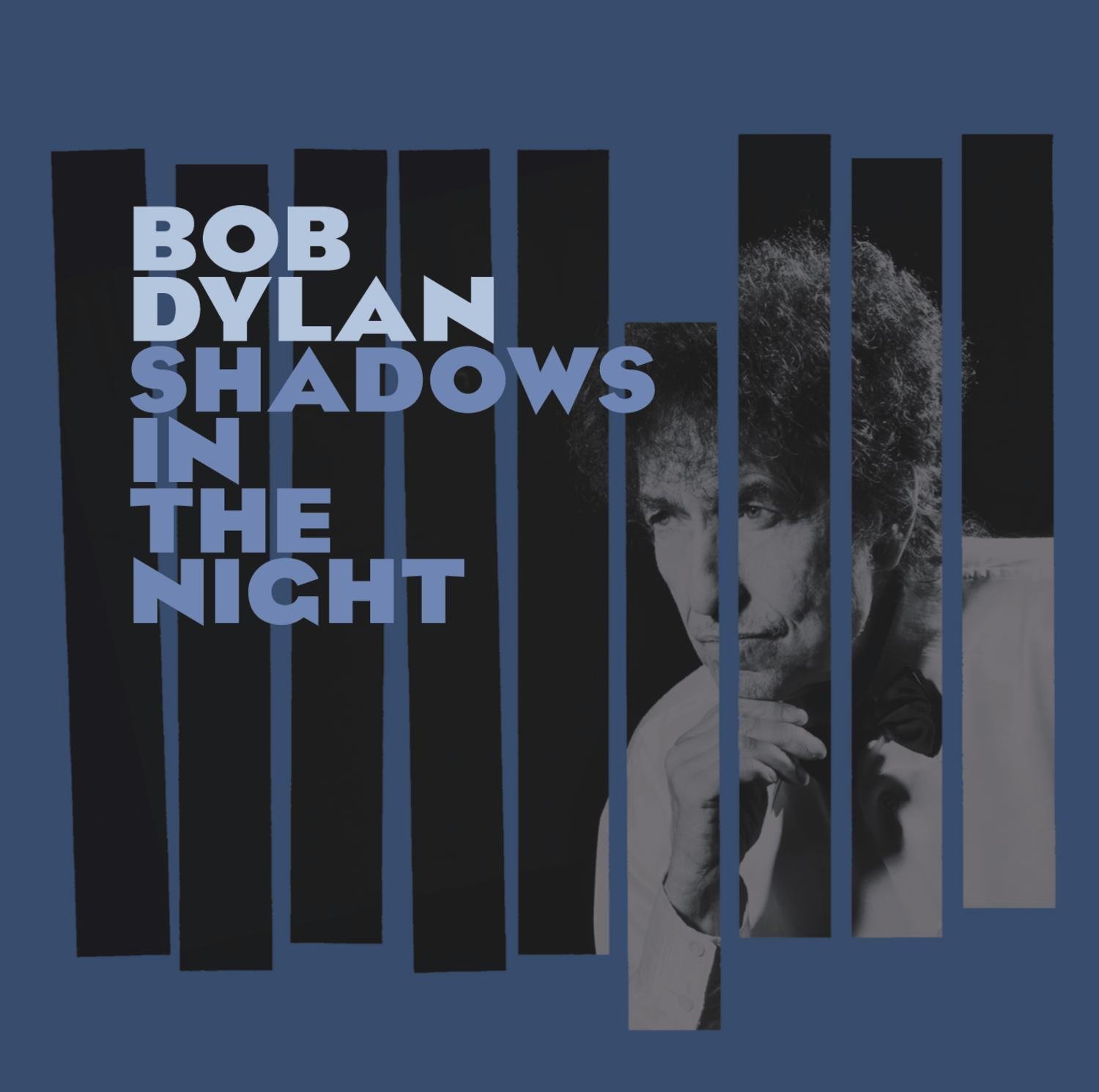
BOB DYLAN-SHADOWS IN THE NIGHT.
BOB DYLAN-SHADOWS IN THE NIGHT.
There aren’t many recording artists whose career spans fifty-three years. Bob Dylan’s has. There’s a reason for this. Constantly, Bob Dylan has sought to reinvent himself. Having began life as a folk singer, he’s released albums of country, gospel, blues, rock ’n’ roll and rockabilly to jazz and even the Great American Songbook. Bob Dylan it seems, is the original musical chameleon.
That’s why Bob Dylan has enjoyed a career that’s spanned fifty-three years and thirty-eight albums. These thirty-eight albums have sold over a 100 million copies. Then there’s Grammy Awards, Golden Globes, Academy Awards and being inducted into the Rock ’N’ Roll Hall Of Fame. Bob Dylan, it seemed, has done everything. Not quite. There was one thing Bob Dylan had still to do…croon.
That however, seemed unlikely. Not many people saw Bob Dylan as a crooner. However, he did. For his thirty-sixth album, Bob Dylan inspired by the music of Frank Sinatra crooned his way through ten of his favourite jazz and pop standards. This became Shadows In The Night, Bob Dylan’s thirty-sixth album, which was recently released on Columbia. Shadows In The Night however, has divided opinion.
It’s safe to say that ever since the release of Shadows In The Night, it’s an album that’s divided the opinion of even the most loyal Bob Dylan fan. They seem to either love or loath Shadows In The Night. There appears, is no middle ground. Essentially, Shadows In The Night is a Marmite album, which Bob Dylan recorded back in 2014.
For Shadows In The Night, Bob Dylan chose ten tracks made famous by Frank Sinatra. This included I’m A Full To Want You, The Night We Called It A Day, Stay with Me, Autumn Leaves and Why Try to Change Me Now. The other tracks were Some Enchanted Evening, Full Moon and Empty Arms, Where Are You, What’ll Do and Lucky Old Sun. These ten standards were recorded at Capitol Studios, Los Angeles.
At Capitol Studios, Los Angeles, where Frank Sinatra recorded many of classic recordings, work began on Shadows In The Night. Producer Jack Frost and Bob Dylan were joined by a rhythm section of bassist Tony Garnier and guitarists Charlie Sexton and Stu Kimbal. They were joined by percussionist George Receli and Donnie Herron on pedal steel guitar. The horn section featured trumpeter Larry G. Hall, trombonists Alan Kaplan, Andrew Martin and Francisco Torres. Dylan Hart and Joseph Meyer added French horn. Recording and mixing Shadows In The Night was Al Schmitt. Once Shadows In The Night was completed, it was scheduled for release in early February 2015.
Before the release of Shadows In The Night, critics had their say on the latest Bob Dylan album. Mostly, Shadows In The Night received critical acclaim. It seemed the latest reinvention of Bob Dylan had proved successful. The former folk singer, was now a crooner. This however, divided the opinion of fans.
Prior to the release of Shadows In The Night, 50,000 copies of the album were sent to selected readers of AARP The Magazine. Shadows In The Night was also made available for streaming before the release. This allowed opinions to be formed about Shadows In The Night. Opinions, it seemed were divided. Not everyone was won over by the “new” Bob Dylan. This didn’t seem to affect sales.
In Britain, Shadows In The Night reached number one. Over the Atlantic, Shadows In The Night reached number seven in the US Billboard 200 charts. Across the world, Shadows In The Night reached the top ten. From Australia to Austria, through Belgium, Finland, Germany, Holland, Ireland, Italy and New Zealand, through Portugal, Spain, Sweden and Switzerland, Shadows In The Night reached the top ten. However, not everyone was a satisfied customer.
Not everyone was happy with Shadows In The Night. Opinions were divided, to say the least. Some people loved Shadows In The Night, other loathed it. Some thought Bob Dylan suited the role of 21st Century crooner. Others weren’t convinced. It seemed there was no consensus. So, is Shadows In The Night the reinvention of Bob Dylan or his latest New Morning, which three months after its release, Bob Dylan apologised for?
Shadows In The Night opens with I’m A Fool To Want You. It was written by Frank Sinatra with Jack Wolf and Joel Herron. Bob’s rueful vocal is tinged with melancholy. Accompanying him is a understated, pared back arrangement. It has a lush sound. Amidst the arrangement, a lone guitar rings out, as Bob delivers a vocal full of regret.
Matt Dennis and Tom Adair penned The Night We Called It a Day, which became a favourite of Frank Sinatra. Fast forward a generation, and Bob Dylan is paying homage to the Chairman of The Board. Against a backdrop of muted horns, lush strings and a ponderous bass and chiming guitar, memories and hurt come flooding back, as Bob remembers The Night We Called It a Day.
Stay with Me was written by Jerome Moross and Carolyn Leigh. A guitar chimes and a pedal steel weeps. They set the scene for Bob’s weary, lived-in vocal. It’s charismatic and able to breath meaning and emotion into the poignant lyrics.
Joseph Kosma and Jacques Prévert joined with Johnny Mercer to pen Autumn Leaves. Little did they realise that Bob Dylan, one day would cover this track. With a weeping pedal steel, wistful strings and guitar for company, Bob delivers a wistful vocal bristling with emotion.
Cy Coleman and Joseph McCarthy’s Why Try to Change Me Now takes on new life in Bob Dylan’s hands. The arrangement is slow, understated and quickly, takes on a late night sound. This suits the lyrics. Bob’s been unlucky in love. With time on his hands, “I sit and daydream, I’ve got daydreams galore.” Hurt is omnipresent, on this heartachingly beautiful cover of an old standard.
When Bob Dylan released his eponymous debut album in 1962, who would’ve believed fifty-three years later, he’d be covering Roger and Hammerstein’s Some Enchanted Evening. That’s the case though. With an understated, moody arrangement for company, Bob delivers a croaky croon. It might be Some Enchanted Evening as you’ve never heard it, but it’s truly enchanting.
Full Moon and Empty Arms was written by Buddy Kaye, Ted Mossman, Sergei Rachmaninoff. Guitars shimmer, setting the scene for Bob’s husky vocal. It’s tinged with sadness and regret, as slowly and thoughtfully, Bob delivers the lyrics. Behind him, a crystalline guitar chimes. Meanwhile, seems to consider the lyrics, as he delivers them with emotion and feeling.
Where Are You was written by Harold Adamson, Jimmy McHugh. It seems almost tailor made for Bob Dylan. His vocal is tinged with melancholia, as a pedal steel weeps. It’s as if its empathising with Bob’s plight during this tale of love lost.
Irving Berlin was without doubt, one of the great American songwriters. What’ll I Do is one of many standards he wrote, that Frank Sinatra covered. Guitars chime gently, while drums are played with brushes. Later, the pedal steel sweeps in. They provide an atmospheric backdrop for Bob, as he delivers a vocal full of despair, doubt and heartbreak.
Closing Shadows In The Night is Haven Gillespie and Beasley Gillespie. That Lucky Old Sun. This is the perfect way to close Bob’s crooning debut, Shadows In The Night. The lyrics veer between wistful to uplifting, as Bob delivers them. He paints pictures with the lyrics, especially as he delivers the lyrics That Lucky Old Sun has nothing to do, but roll around heaven all day.”
Shadows In The Night, Bob Dylan’s crooning debut, has without doubt, divided the opinion of many people. However, that’s been the case since Bob Dylan plugged in 1966. With every change in direction, Bob Dylan has attracted the slings and arrows of music fans. So, why should Shadows In The Night be any different?
However, by constantly changing, Bob Dylan has enjoyed an unrivalled longevity. That’s why Bob Dylan’s recording career spans fifty-three years and thirty-six albums. There’s a reason for this. Constantly, Bob Dylan has sought to reinvent himself. Having began life as a folk singer, he’s released albums of country, gospel, blues, rock ’N’ roll and rockabilly to jazz and even the Great American Songbook. Bob Dylan it seems, is the original musical chameleon. Crooning, is just the latest reinvention of Bob Dylan.
It’s a role that Bob Dylan suits and should embrace. His lived-in, world-weary vocal breathes life, meaning and emotion into the ten tracks on Shadows In The Night. Bob Dylan sounds as he’s lived, loved and survived to tell the tale. Although he might not have the smooth voice of Frank Sinatra, he still has the ability to bring the songs to life. This means they speak to you. It’s as if Bob Dylan’s lived the songs. He’s not so much singing songs, but has lived them. That’s why Bob Dylan suits the role of crooner.
That’s why I hope there’s a followup to Shadows In The Night. There may well be. After all, Bob recorded twenty-three tracks. So, maybe, after the commercial success and critical acclaim of Shadows In The Night, the other thirteen tracks will be released. It would be a shame, given the quality of Shadows In The Night, where Bob Dylan embraces crooning, and does so, with aplomb, as successfully, Bob Dylan reinvents himself yet again.
Shadows In The Night, is the latest reinvention of Bob Dylan. There’s been many before. He’s never reinvented himself as a crooner. Mind you, it’s never been the time. It’s a role you grow into. Only now is the time for Bob Dylan to croon. With Bob Dylan’s lived-in, worldweary vocal and Shadows In The Night late-night, smokey sound, this captivating album, is far removed from New Morning.
BOB DYLAN-SHADOWS IN THE NIGHT.
JIMMY HOLIDAY-SPREAD YOUR LOVE-THE COMPLETE MINIT SINGLES.
JIMMY HOLIDAY-SPREAD YOUR LOVE-THE COMPLETE MINIT SINGLES.
Jimmy Holiday was an accidental singer-songwriter. Originally, he wanted to be a boxer, and fought in the annual Golden Gloves competition. Then Jimmy started to get beat. That wasn’t in his plans. Realising he was never going to be more than a contender, Jimmy Holiday hung up his gloves aged thirteen. That presented a problem. What was he going to do with his life?
Eleven years later, in 1958, Jimmy Holiday, who born on 24th July 1934, in Durant, Mississippi, was about to embark upon a career as a singer-songwriter. Jim Holiday and The Futuretones released their debut single Voice Of The Drums, on the Hollywood based Four Star label. Voice Of The Drums sunk without trace, and this proved an inauspicious start to Jimmy Holiday’s recording career. It would be another five years before Jimmy Holiday released his sophomore single.
It wasn’t until 1962, that Jimmy Holiday returned with How Can I Forget, which was the first of two singles he released on Everest Records. How Can I Forget, penned by Ed Townsend, proved to be one of Everest Records’ most successful singles of 1963. At last, it looked as if Jimmy Holiday’s career was going places.
With How Can I Forget proving a regional hit single, Jerry Wexler at Atlantic Records decided he wanted to license the single. Everest Records declined Jerry Wexler’s overtures. So, Jerry Wexler had Ben E. King cover How Can I Forget. This backfired on Atlantic Records.
The Ben E. King cover of How Can I Forget stayed in the US R&B charts for one week. Meanwhile, Jimmy’s version reached number fifty-seven in the US Billboard 100 and number eight in the US R&B charts. This looked like being the start of the rise and rise of Jimmy Holiday at Everest Records.
That proved not to be the case. None of the other singles Jimmy Holiday released on Everest Records failed to chart. So, Jimmy moved on, next stop K.T. Records.
At K.T. Records, one of many short lived labels, Jimmy Holiday released just one single, Shield All Round. History repeated itself when Shield All Round failed commercially. This resulted in Jimmy moving on.
Next stop for Jimmy Holiday was Tip Records, another indie label. He released just the one single, A Friend Of Mine. Still, commercial success eluded Jimmy. Like a musical nomad, he moved on again.
This time, Jimmy called Diplomacy Records home for some time. Jimmy released just two singles, 1965s The New Breed and 1966s I Can’t Stand It. Both tracks proved popular locally. So much so, that Joe Biharis’ Kent Records’ licensed The New Breed and I Can’t Stand It, releasing them in 1967. By then, Jimmy Holiday was signed to the label where he enjoyed the best music of his career, Minit Records.
Between 1966 and 1970, Jimmy Holiday was signed to Minit Records. It had been bought by Liberty Records in 1963, when they bought Imperial Records. A few months later, Minit closed its doors. Then in 1966, Minit arose, like a phoenix from the ashes, and became a dedicated soul label. Calvin Carter, formerly head of A&R at Vee Jay was brought in to take charge of A&R at Minit. His first signing was Jimmy Holiday in May 1966.
At Minit, Jimmy Holiday would go on to release a string of singles and two albums. Spread Your Love-The Complete Minit Singles, which was recently released by Kent Soul, an imprint of Ace Records, features Jimmy Holiday’s Minit singles. They’ve never been released on CD before. So, Spread Your Love is a first, and celebrates Jimmy Holiday’s time at Minit. His time began in 1966, when Jimmy Holiday released his minute debut Baby I Love You.
Accompanied by the studio band that Calvin Carter worked with at Vee Jay, Jimmy Holiday entered the studio to record Baby I Love You and the B-Side, the bluesy You Won’t Go Away. Baby I Love You, a soul-baring ballad struck a nerve. On its release, it climbed up the US R&B charts, reaching number twenty-one. By then, Baby I Love You was a favourite of radio DJs. Following the success of Baby I Love You, the signing of Jimmy Holiday seemed like a masterstroke.
Especially when Jimmy’s second single for Minit, The Turning Point, proved to be a minor soul classic. Even nearly fifty years later, The Turning Point, penned by Jimmy, is still guaranteed to tug at the heartstrings. Tucked away on the B-Side was I’m Gonna Move To The City. It’s a mid tempo track that might have been autobiographical. As B-Sides go, it’s a hook heavy hidden. Despite the quality of The Turning Point and I’m Gonna Move To The City, the single failed to chart. For Jimmy this was disappointing. However, after the success of Baby I Love You, surely this was merely a blip?
Still, Minit went ahead with the release of Jimmy’s debut album, Turning Point. Complete with a testimonial from Ray Charles, Turning Point hit the shops. However, Turning Point didn’t enjoy the same success as its namesake. However, several of the tracks on Turing Point would resurface as B-Sides. Two of the tracks from Turning Point, I’ve Got To Live While I Can and Nobody’s Fault But Your Own have been added as bonus tracks on Spread Your Love. They’re both Jimmy Holiday compositions. So was what was meant to be Jimmy’s third single.
In The Eyes Of My Girl, a beautiful, needy, heartfelt ballad was scheduled to be Jimmy’s third single of 1966. On the flip side was Give Me Your Love, where accompanied by backing vocalists, Jimmy struts and vamps his way through this horn driven track. What should’ve been Jimmy’s third single, oozed quality. It could’ve relaunched Jimmy’s faltering career, and showcased the two sides of Jimmy Holiday. Sadly, at the last minute, the release of In The Eyes Of My Girl was cancelled. For Jimmy, this was a crushing blow.
As 1966 became 1967, Jimmy Holiday returned with his long awaited third single, Everybody Needs Help, another ballad. The B-Side was Give Me Your Love, which originally, was destined to be the flip side of In The Eyes Of My Girl. On its release, Give Me Your Love stalled at number thirty-six in the US R&B charts. Although this was disappointing, at least the single had charted. A small crumb of comfort was Jimmy’s popularity was increasing in Britain.
On both sides of the Atlantic, Jimmy’s next single was a duet with Clydie King, Ready Willing And Able, an uptempo dancer. The flip side was We Got A Good Thing Goin’ a track from Jimmy’s debut album Turning Point. This mid tempo ballad, sees Jimmy and Clydie feed off each other, and transform the track. Sadly, Ready Willing And Able wasn’t a commercial success. However, Jimmy would write Clydie’s single I’ll Never Stop Loving You. Before that, Jimmy would’ve released his next single.
This was I Wanna Help Hurry My Brothers Home. It’s another ballad, full of social comment. With the Vietnam War raging, Jimmy with anger, emotion and sadness filling his voice, sings “ I Wanna Help Hurry My Brothers Home.” It’s an impassioned plea. On the B-Side is the rueful We Forgot About Love, another ballad. It featured on Jimmy’s debut album Turning Point. Sadly, I Wanna Help Hurry My Brothers Home wasn’t a Turning Point in Jimmy’s career. The single disappeared without trace. For Jimmy, his career seemed to be at a crossroads.
With 1967 drawing to a close, Jimmy recorded The Beauty Of A Girl In Love. It’s an impassioned, string driven ballad. Jimmy accompanied by backing vocalists combines emotion and power. However, despite the quality of The Beauty Of A Girl In Love, it failed to chart. Minit desperate for a hit single, decided something had to change.
So, Jimmy was sent South, to work with Buddy Killen. They recorded the funky, soulful Spread Love at Chips Moman’s American Studios, in Memphis. This was very different from what people expected from Jimmy Holiday. The B-Side, however, was business as usual. It featured the ballad, We Got A Good Thing Goin’ from Jimmy’s debut album Turning Point. However, on the release of Spread Love, the decision to bring
Buddy Killen onboard was vindicated. Spread Love reached number thirty-five in the US R&B charts. This looked like being the boost Jimmy’s career needed.
Sadly, that wasn’t the case. Having just finished a concert in June 1968, Jimmy left the stage and collapsed. He was rushed to hospital, where it was discovered he required open heart surgery. Following the operation, Jimmy was told to rest. Stuck at home, Jimmy continued to write songs. This meant, when Jimmy’s health improved, he could head back down South and work with Buddy Killen again.
That’s what Jimmy did. Having recovered from the open heart surgery, Minit sent Jimmy South again. With Buddy Killen, Jimmy recorded the string drenched, ballad I’m Gonna Use What I Got (To Get What I Need). For the flip side, Minit chose another track from Turning Point. This time, it was the ballad I Don’t Want to Hear It. These two tracks became Jimmy’s comeback single, I’m Gonna Use What I Got (To Get What I Need). Although I’m Gonna Use What I Got (To Get What I Need) was a far better song than Spread Love, Jimmy’s comeback single flopped. Despite this setback, two other tracks recorded at American Studios, Memphis became Jimmy’s next single.
For Jimmy’s next single, Baby Boy’s In Love was chosen. It’s an uptempo, driving slice of soul. Jimmy accompanied by a crack band of musicians and backing vocalists kicks loose. Here, we hear a very different side of Jimmy. The same can be said of the B-Side, a cover of If You’ve Got The Money, I’ve Got The Time. Originally recorded by Larry Frizzel, this hillbilly song heads in the direction of country soul and funk. There’s even a few yodels thrown in for good measure. This is Jimmy Holiday as he’s never been heard. However, still the commercial success that accompanied The Turning Point eluded Jimmy.
For Jimmy, this was hugely frustrating. He certainly wasn’t lacking in talent. Jimmy Holiday was, after all, a talented singer-songwriter. However, for whatever reason, he wasn’t a consistent hit maker. So, he spent much of 1969 writing with Jackie DeShannon and her brother Randy Myers. One of their compositions, Yesterday Died became Jimmy’s next single for Minit. It sees Jimmy head in another direction. Nobody Died sees elements of soul, gospel and rock unite. It’s a welcome stylistic departure. The flip side Would You Like To Love Me, had been recorded a couple of years before, but never release. It’s another ballad, where Jimmy’s vocal veers between wistful to hopeful. These two very different sides to Jimmy Holiday became his next single. Yet again, however, commercial success eluded Jimmy. This proved to the beginning of end for Jimmy at Minit.
With commercial succes proving elusive for Jimmy Holiday, it was only a matter of time before his career at Minit drew to a close. His swan-song was A Man Ain’t Nothin’ Without A Woman.It features an understated, gospel-tinged arrangement. A despairing Jimmy, accompanied by testifying backing vocalists ensures Jimmy’s time at Minit ends on a high. Especially, with I’m In Love With You on the B-Side. This should’ve been a recipe for success. Sadly, it wasn’t to be.
Worse was to come. Minit closed its doors for the second time. Its final release was Jimmy’s swan-song A Man Ain’t Nothin’ Without A Woman. This was the end of the line for a once great label.
Jimmy Holiday’s career at Minit spanned four years and two albums. He was Calvin Carter’s first signing when Minit reopened its doors in 1966. Having signed in May 1966, Jimmy Holiday released a string of singles and two albums. Sadly, success eluded him. Apart from a few minor hit singles, Jimmy’s time at Minit is a case of what might have been?
That’s a great shame. Jimmy Holiday deserved better. After all, he was a talented singer-songwriter. In some quarters, Jimmy Holiday is regarded as an equal of Marvin Gaye, Otis Redding and Stevie Wonder. Sadly, Jimmy Holiday never enjoyed the same success as a singer. However, he forged a successful career as a songwriter.
As a songwriter, Jimmy Holiday penned songs from everyone from Bobby Womack, Ray Charles, Ry Cooder, Jimmy Lewis, Jackie DeShannon, James Brown, Doris Duke, Z.Z. Hill and Little Milton. That’s not forgetting Al Perkins, Willie Hobbs, Jerry Lee Lewis and Velma Perkins. However, one of Jimmy Holiday’s best known songs is Put A Little Love In Your Heart.
Originally recorded by Jackie DeShannon, Put A Little Love In Your Heart was then recorded by everyone from Al Green, Ella Fitzgerald, Dolly Parton and David Ruffin. Put A Little Love In Your Heart became Jimmy Holiday’s most successful song and changed his life.
During the seventies, Jimmy enjoyed a successful career as a songwriter. His recording career took second place to songwriting. Then in the eighties, very little was heard of Jimmy Holiday.
Ill health had taken its toll, and during the eighies, Jimmy Holiday decided now was the time to take things easy. Sadly, on 15th February 1987, Jimmy Holiday died of heart failure. He was only fifty three. That day, soul music lost one of its most talented singer-songwriters.
Sadly, during the four years Jimmy Holiday spent at Minit, he never enjoyed the commercial success and critical acclaim his music deserved. Jimmy Holiday could’ve and should’ve become one of the biggest names in soul music. That wasn’t to be. Instead, Jimmy Holiday established a reputation as a talented songwriter. This sometimes, leads to Jimmy Holiday’s career as a singer being overlooked. Not any more.
Spread Your Love-The Complete Minit Singles, which was recently released by Kent Soul, an imprint of Ace Records, features Jimmy Holiday’s Minit singles. They’ve never been released on CD before. So, Spread Your Love-The Complete Minit Singles writes this wrong, and celebrates the four years Jimmy Holiday spent at Minit.
JIMMY HOLIDAY-SPREAD YOUR LOVE-THE COMPLETE MINIT SINGLES.
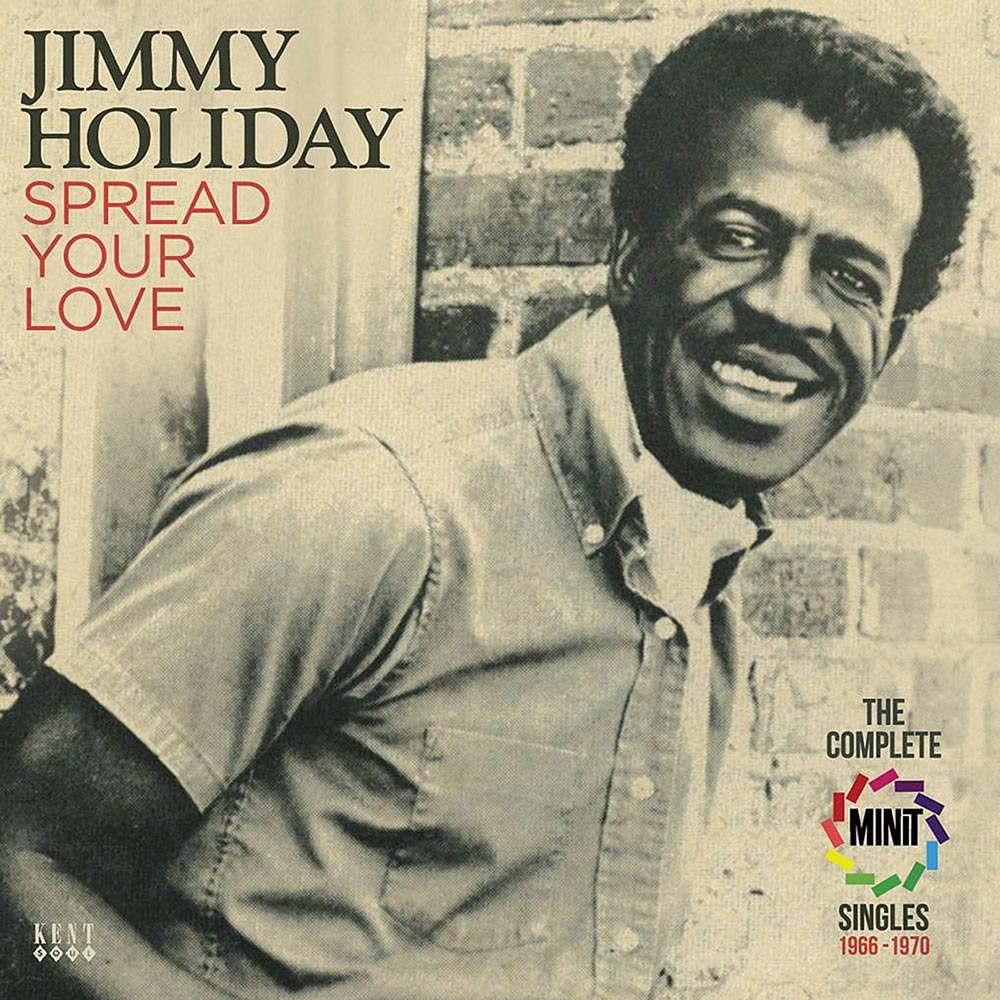

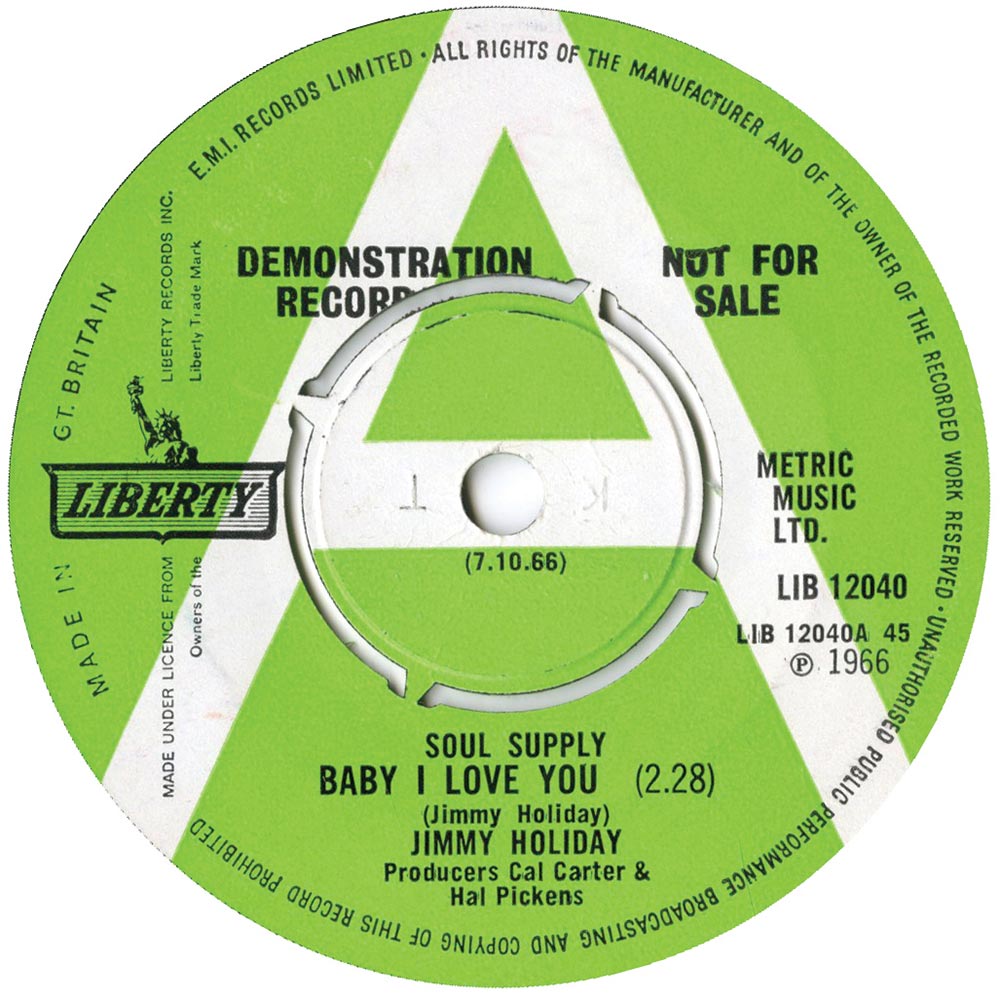
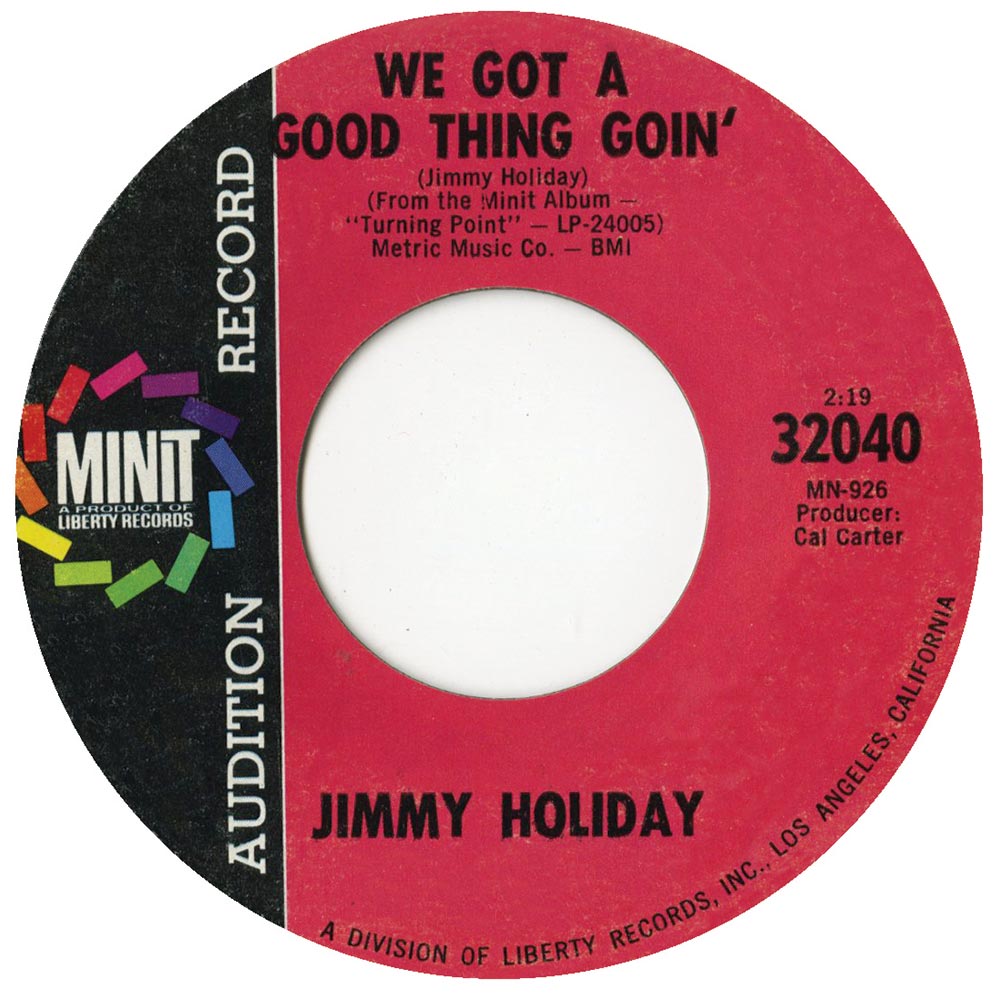
THE COMPLETE HISTORY OF THE BLUES 1920-1962.
THE COMPLETE HISTORY OF THE BLUES 1920-1962.
The blues influence on modern music can never be underestimated. Without the blues, there would be no jazz, R&B or rock music. Quite simply, the blues provided the foundations for the music of the twentieth century. That’s no exaggeration, and for the last fifty years, many musicians realise that.
Back in the sixties, everyone from Jimi Hendrix, Led Zeppelin, Cream and The Animals through to The Rolling Stones, and The Yarbirds paid tribute to the influence the blues has had on modern music. They covered blues classics on their albums and often, asked blues legends to open for them on their tours. This resulted in a brief resurgence in popularity in blues music. Sadly, before long, the bubble burst.
After this, blues legends like Muddy Waters, T-Bone Walker, Lightnin’ Hopkins and Howlin’ Wolf were back too eking out a living wherever they could.
During this period, many blues musicians were struggling to make a living. They were finding it tough to adapt to the changes in musical tastes. While rock groups played huge venues, blues players were relegated to playing some of the many smaller, run-down clubs that could be found in every part of America. Many of these musicians raised on the blues, stubbornly refused to change their style of music. Eventually, it became a case of adapt or die.
If blues musicians didn’t adapt, the music risked dying. It would become a relic of music’s past. If this happened, the future looked bleak for a generation of blues musicians. So, they had to adapt to survive.
During their sets, some blues musicians decided to adapt. They didn’t want to. This went against the grain. Despite this, they started throwing in some funky licks, soulful hollers and screams into their music. It became hugely popular with their audiences. The funky licks, hollers and screams added an element of showmanship to the music. Suddenly, their was another brief resurgence of interest in blues music. The music that gave birth to modern music in the late nineteenth century, came back from the brink. Forty-years later, and blues music is still going strong. However, the blues is nowhere as popular as it was between 1920 and 1962, the period Proper Records’ recently released box set The Complete History Of The Blues 1920-1962 covers.
The Complete History Of The Blues 1920-1962 is a four disc box set, featuring 100 tracks. For a newcomer to the blues, it’s the perfect introduction to what is, without doubt, one of the most important musical genres ever. Its the foundation which popular music was built in. Without the Kings and Queens of the blues on The Complete History Of The Blues 1920-1962, modern music would be very different.
Any students of modern music will tell you that. Blues styles, forms, melodies and the blues scale have influenced numerous musical genres. This includes jazz and rock ’n’ roll. Then there’s call and response, which is prominent in many musical styles, including soul music. Finally, there’s the use of the blue note, whose expressive, worried sound is at the heart of the blues. It would then go on to influence jazz, and then many major musical genres. These are just a few of the reasons that the blues is the foundation of modern music. That’s why we should never forget blues music, and its legacy.
Part of the blues’ legacy is the music on The Complete History Of The Blues 1920-1962. This box set, features four discs, featuring twenty-five tracks. Each disc has a theme and features what can only be described as the great and good of blues music. For either the newcomer to blues, or a veteran of blues’ compilation The Complete History Of The Blues 1920-1962 is essential listening. That’s the case from disc one of The Complete History Of The Blues 1920-1962, which covers the twenties.
Disc One-Crazy Blues.
Disc one of The Complete History Of The Blues 1920-1962, covers the period between 1920 to 1928. This was a golden age for blues music. That quickly becomes apparent. The track listing reads like a who’s who of blues music. Kings and Queens of the blues sit side-by-side.
Fittingly, Mamie Smith one of the biggest names in blues history opens disc one. Next up is none other than the Empress Of The Blues, Bessie Smith. She’s one of the most important female blues singers ever. A true musical pioneer, no blues compilation would be complete without her. Then there’s contributions from Ma Rainey and Bertha Chippie Hill, two other Queens of the Blues. They’re joined by some of the Kings of twenties blues.
Quite simply, disc one is peppered with some of the biggest names in the blues. This includes Blind Lemon Jefferson, Luke Jordan, Lonnie Johnson, Blind Willie Johnson, Mississippi John Hurt, Leroy Carr and Blind Willie McTell. That’s not forgetting The Mississippi Sheiks, one of the most popular and influential country blues groups of the twenties. However, one of my favourite tracks on disc one, is from a true musical pioneer, Sylvester Weaver. He was a pioneer of both the country blues and slide guitar. On Guitar Rag, Sylvester Weaver showcases his skills as a slide guitarist. Guitar Rag, is without doubt, one of the hidden gems on disc one of The Complete History Of The Blues 1920-1962, which features innovative and influential blues music. What about disc two?
Disc Two-Roll and Tumble.
Essentially, disc two of The Complete History Of The Blues 1920-1962, Roll and Tumble, picks up where disc one left off. It covers the period between 1927 and 1936. This nine year period saw the golden age of the blues continue.
As the twenties draw to a close, artists like William Harris, Bo Carter and Charley Patton, Robert Wilkins and Sleepy John Estes were establishing a reputation as some of the biggest names in blues music. They were pioneers and innovators, who shaped blues music. So were Kansas Joe McCoy and Memphis Minnie, who duet on When The Levee Breaks, a blues classic which would later be covered by Led Zeppelin on IV. However, the version by Kansas Joe McCoy and Memphis Minnie, who were husband and wife, is the original version of this oft-covered track. Just like many blues songs, it would later provide inspiration for further generations of artists.
This would be the case with The Mississippi Sheiks’ Sitting On Top Of The World, Skip James’ Devil Got My Woman and Roosevelt Sykes’ Honey Dripper, which feature on The Complete History Of The Blues 1920-1962. They would later, be covered by numerous artists. Like other artists who came to prominence in the thirties, they’d influence artists for several generations.
Meanwhile, as the twenties became the thirties, new names began to make a name for themselves. Blind Joe Reynolds, Son House and Peetie Wheatstraw. Later, in the thirties, Leadbelly, a convicted murderer made a name for himself as the bluesman who’d cheated the hangman and survived the brutal regime of Angola prison. Along with Roosevelt Skyes, Kokomo Arnold, Washboard Sam, Oscar Woods and Buddy Moss, making a living singing the blues offered an alternative way if living in the post depression years. Of these artists, some would go on to create innovative and influential music, music that still influences artists seventy years later.
Disc Three-Boogie Chillen.
Boogie Chillen, disc three, covers the widest period of the four discs in The Complete History Of The Blues 1920-1962. It starts in 1936 with Johnnie Temple’s Louise, Louise Blues and covers a sixteen year period. During this period, some of the great and good of blues music take a bow.
Choosing the highlights of disc three of The Complete History Of The Blues 1920-1962 is almost impossible. After all, there’s contributions from blues royalty. The late thirties alone, include everyone from Robert Johnson, T-Bone Walker, Bukka White, Sonny Boy Williamson, Big Joe Turner and Blind Boy Fuller. Each and every one of these artists played a huge role in shaping blues music. Whether its guitarist, pianists, harmonica players or blues shouters, they’re all here. And then there’s the forties to consider.
Still, the quality keeps on coming. There’s tracks from Big Bill Broonzy, Tampa Red, Big Maceo, Charles Brown and Arthur Crudup. Then Big Joe Williams’ Please Don’t Go and T-Bone Walker’s Stormy Monday follow one after the other. It’s blues heaven. Can it get any better?
It does. There’s still contributions from a sextet of blues legends. The standard is set with John Lee Hooker’s classic Boogie Chillen. After that, Robert Nighthawk, Lightnin’ Hopkins and Jimmy Rogers make welcome appearances. Then Elmore James delivers his classic blues, Dust My Broom (I Believe My Time Ain’t Long). Closing disc three of The Complete History Of The Blues 1920-1962 is one of the finest blues harmonica players, Little Walter with Juke. Quite simply, disc three oozes quality and whets your appetite for disc four of The Complete History Of The Blues 1920-1962.
Disc Four-Smokestack Lightnin’.
While disc four of The Complete History Of The Blues 1920-1962 oozed quality, so does disc four. It’s a tantalising prospect, featuring twenty-five blues released between 1952 and 1962. This includes contributions from some of the biggest names in the history of blues music.
What better way to start disc four, Smokestack Lightnin’, than with B.B. King’s 3 O’Clock Blues. Having whetted your appetite, Eddie Boyd, Junior Wells and Guitar Slim all make an appearance. Then Jimmy Witherspoon, King of the jump blues delivers When The Lights Go Out. After this, Lowell Fulson’s Reconsider Baby leads into the Muddy Waters’ classic Mannish Boy. Hopefully, disc four of The Complete History Of The Blues 1920-1962 isn’t peaking too soon.
No chance. There’s still contributions from Sonny Boy Williamson, Billy Boy Arnold, Howlin’ Wolf, Snooky Pryor and Otis Rush to come. That’s not forgetting Sunnyland Slim, Magic Sam, Buddy Guy, Bobby “Blue” Bland and Jimmy Reed. Then Etta James’unleashes a classic track, one that will forever be synonymous with her, I Just Want To Make Love To You. With just a quartet of blues to go, will disc four of The Complete History Of The Blues 1920-1962 end on a high.
No. Not when one blues Kings follow hard on the heels of another. Freddie King is first up with You’re Got To Love Her With A Feeling, followed by Albert King with Don’t Throw Your Love On Me So Strong. Then eschewing the obvious, the penultimate track on disc four of The Complete History Of The Blues 1920-1962 is Frank Frost’s Jelly Roll King. This leaves Johnny Copeland’s to close disc four of The Complete History Of The Blues 1920-1962 on a high.
After four discs and 100 blues, the only way to describe The Complete History Of The Blues 1920-1962 is essential listening. Blues music is the foundation that all modern music was built on. Musically, it’s of historical importance. The blues influence on modern music can never be underestimated. Without the blues, there would be no jazz, R&B or rock music. Quite simply, the blues provided the foundations for the music of the twentieth century. For that, we should be eternally grateful.
After all, without blues music, the modern musical landscape wouldn’t exist. Thankfully, it does, and blues music has left behind a rich legacy. That’s apparent when you listen to The Complete History Of The Blues 1920-1962.
During this forty-two year period, the blues music came of age. In the twenties and thirties, it became one of the most popular genres. Then in the post war years, jazz overtook blues in popularity. By the time rock ’n’ roll was born, blues was no longer as popular. Its popularity had declined and would continue to do so, until the early sixties, when a new generation of artists paid tribute to the influence the blues has had on modern music. They covered blues classics on their albums and often, asked blues legends to open for them on their tours. This resulted in a brief resurgence in popularity in blues music. Sadly, before long, the party was over.
Since then, blues music has never regained its popularity. However, still, a small, discerning group of music lovers have still got the blues. They recognise its importance on modern music and appreciate its musical legacy. This includes the 100 tracks on The Complete History Of The Blues 1920-1962, which was recently released byProper Records.
The Complete History Of The Blues 1920-1962, a four disc box set, will appeal to newcomers to the blues and blues veterans alike. It features musical innovators and pioneers, whose influence is still being felt several generations later. Not many musical genres have such a long-lasting effect on music. Blues music does. It’s gone on to influence numerous musical genres. Indeed, blues music is the foundation modern music was built upon. Its importance can’t be underestimated and The Complete History Of The Blues 1920-1962 is a reminder of the role blues music had on modern music.
THE COMPLETE HISTORY OF THE BLUES 1920-1962.

STONED-A PSYCH TRIBUTE TO THE ROLLING STONES.
STONED-A PSYCH TRIBUTE TO THE ROLLING STONES.
Last year, Cleopatra Records released A Psych Tribute To The Doors, where a new generation of bands covered thirteen Doors’ classics. These tracks were given a makeover by everyone from Elephant Stone, The Black Angels, Sons of Hippies, Dead Skeletons, VietNam and Geri X. The idea was simplicity in itself, and resulted in what’s one of the best tribute albums money can buy. So, it was only a matter of time before the next instalment in the A Psych Tribute series was released.
Just under a year later, Cleopatra Records released Stoned-A Psych Tribute To The Rolling Stones. This is the long awaited, next instalment in the A Psych Tribute series. This time around, groups like Lorelle Meets The Obsolete, The KVB, Shiny Darkly, Sons of Hippies, The Vacant Lots, Celestial Burns, Pink Velvet, Pure X and The Tulips. They cover what can only be described as Rolling Stones classics, old favourites and hidden gems.
Among the Rolling Stones classics are Sympathy For The Devil, Under My Thumb, It’s Only Rock and Roll (But I Like It), Gimme Shelter and (I Can’t Get No) Satisfaction. Then there’s old favourites including Beast Of Burden, Stoned, As Tears Go By and Wild Horses. That’s not forgetting what can only be described as a mixture of hidden gems and left-field choices. This includes What A Shame, Sway, She Smiled Sweetly, Child Of The Moon and Take It Or Leave It. These classics, old favourites and hidden gems all features on Stoned-A Psych Tribute To The Rolling Stones, which was recently released by Cleopatra Records. However, does Stoned-A Psych Tribute To The Rolling Stones, match the quality of A Psych Tribute To The Doors? That’s what I’ll now tell you.
Opening Stoned-A Psych Tribute To The Rolling Stones, is Lorelle Meets The Obsolete’s cover of What A Shame. This is a track from The Rolling Stones Now, an American album, released in 1965. It reached number five in the US Billboard 200 charts, and was certified gold. With its fuzzy, and later searing guitars, pounding drums and bounding bass, a psychedelic wall of sound assails you. In the midst of this wall of sound is a distant, mysterious vocal. It’s like being transported back to Ashbury Heights in 1967. What A Shame this captivating cover has to end.
While What A Shame was a left-field choice, The KVB decide to give Sympathy For The Devil a moody, trippy cover. Elements of psychedelia and garage rock collide head on. They transform the track. It’s very different from the Rolling Stones version on their 1968 album Beggars Banquet, which reached number three in Britain and number five in the US Billboard 200 charts. This resulted in Beggars Banquet being certified gold in Britain and platinum in America. Strangely, Sympathy For The Devil wasn’t a commercial success upon its release as a single. Despite that, it’s a favourite of many Rolling Stones’ fans, including The KVB, who transform Sympathy For The Devil.
Under My Thumb made its debut on The Rolling Stones 1966 album Aftermath, which reached number one in Britain and number two in America. Aftermath was then certified gold in Britain and platinum in America. However, Under My Thumb was never released as a single. That doesn’t matter. It’s still one of the most popular Rolling Stones of the mid-sixties. Released just as psychedelia was about to explode, Under My Thumb is perfect for a makeover by Shiny Darkly. They combine Byrdsian jangling guitars, cooing harmonies and a pounding, rhythm section with a vamping, whooping vocal. It’s almost Jaggeresque. The result is what can only be described as a strutting, psychedelic homage to The Rolling Stones.
Yeti Lane, from Paris, France, who have been keeping the flag flying for psychedelia, cover Sway, which was the B-Side to Wild Horses, released in 1971. Wild Horses reached number two in Britain and number one in America. It was a track from the classic album Sticky Fingers, which reached number one in Britain and America in 1971. Sticky Fingers was certified gold in Britain, and triple platinum in America. One of the most underrated tracks on Sticky Fingers is Sway, which is transformed Yeti Lane. In their hands, it becomes a lysergic wash of sound. Blistering guitars tremble and wah-wah, while the rhythm section, harmonies and moody vocal unite. For three minutes they combine elements of psychedelia, power pop and garage rock to create a captivating, trippy cover of Sway.
In 1974, The Rolling Stones’ released another classic album It’s Only Rock and Roll (But I Like It). It was released to critical acclaim, reaching number two in Britain and number one in the US Billboard 200 charts. The album was certified gold in Britain and platinum in America. It’s Only Rock and Roll (But I Like It), which Clinic cover on Stoned-A Psych Tribute To The Rolling Stones was released as a single, and reached the top twenty on both sides of the Atlantic. Clinic’s decision to cover a stonewall classic like It’s Only Rock and Roll (But I Like It) is brave. After all, the definitive version has been recorded. Where do you take the track. The answer is, in a very different direction. The arrangement is understated and lo-fi, with the vocal best described as a dramatic, sometimes dark vamp. While this is psychedelia, it’s not psychedelia, but I like it.
Sons Of Hippies are veterans of the A Psych Tribute series. They featured on A Psych Tribute To The Rolling Stones. For Stoned-A Psych Tribute To The Rolling Stones, they cover Gimme Shelter, from Let It Bleed. It was released in 1969, and reached number one in Britain and number three in Britain and number one in the US Billboard 200 charts. Let It Bleed was then certified platinum in Britain and double-platinum in America. From the get-go, the Sons Of Hippies stay true to the original version. Searing guitars, the rhythm section and synths drive the arrangement along. Atop the arrangement is Katherine Kelly’s vocal. It’s yin to the arrangement’s yang, and plays an important part in this dreamy and melodic cover of Gimme Shelter where rock, psychedelia combine seamlessly.
Unlike some of the bands that feature on The Vacant Lots ignore Rolling Stones classics, and choose She Smiled Sweetly. It’s a track from their 1967 album Between The Buttons. It reached number three in Britain and number two in the US Billboard 200 charts. This resulted in Between The Buttons being certified gold in America. The Vacant Lots’ cover takes the track in a different direction. Old and new collide head on, as the music of the past and present unite. Elements of electronica, garage rock and psychedelia are combined to create a wash of sound. The vocal is the polar opposite of Katherine Kelly’s. It’s almost lacking in emotion. However, this suits the arrangement. So do the swirling, searing guitars. They play their part in a genre-melting track, where an old track takes on new meaning.
Celestial Bums also eschew the obvious, by choosing . Child of the Moon, which was the B-Side to Jumping Jack Flash. It was released as a single in May 1968, and reached number one in Britain and number three in America. Neither Jumping Jack Flash nor Child of the Moon featured on a studio album. Instead, Jumping Jack Flash featured on the compilation Through The Past, Darkly (Big Hits Vol. 2), which was released in September 1969, just after Brian Jones’ death. Child of the Moon however, remains a hidden gem in the Rolling Stones’ discography. Here, Celestial Bums give the track an uber trippy makeover. There’s even an Eastern twist, as the music veers between dark, dreamy, fuzzy and rocky and this glorious musical potpourri cocoons you.
Los Angeles based trio Tashaki Miyaki, decided that Take It Or Leave It was the Rolling Stones track they wanted to cover. This is another track from Aftermath, released in 1966. Tashaki’s cover could just as easily have been released in 1966. It’s a sympathetic cover of what’s an often overlooked track. Despair and melancholia fills the vocal. It’s accompanied by an arrangement that sounds as if it was produced by Phil Spector. Elements of folk rock, pop and psychedelia collide to create a quite beautiful, but wistful track.
Stoned was originally the B-Side to The Rolling Stones’ sophomore single, I Wanna Be Your Man, which reached number twelve in 1963. It’s not the most obvious choice for the Allah-Las to cover. Chiming, crystalline and choppy guitars join the rhythm section and occasional whoops and hollers. They produce what can only be described as a lysergic Shadowesque performance, as the Allah-Las totally reinvent Stoned.
It was inevitable that one of the groups on Stoned-A Psych Tribute To The Rolling Stones, would cover (I Can’t Get No) Satisfaction. It’s a track you either love or loath. Released in May 1965, it reached number one on both sides of the Atlantic, and featured on the 1965 album Out of Our Heads. It reached number two in Britain and number one in America. This resulted Out of Our Heads being certified platinum in America. Fifty years later, and Pink Velvet grab (I Can’t Get No) Satisfaction by the scruff of the neck and transform it. What follows is a blistering, melodic fusion of garage rock and psychedelia, that’s the perfect way for (I Can’t Get No) Satisfaction to celebrate its fiftieth birthday.
Without doubt, Beast Of Burden, a track from Some Girls, released in 1978, is another The Rolling Stones’ oft overlooked track. It was released as a single in 1979, reaching number eight in the US Billboard 100 charts. Some Girls reached number two in Britain and number one on the US Billboard 200 charts. This resulted in Some Girls being certified gold in Britain and six times platinum in America. One of my highlight of Some Girls was Beast Of Burden, which the Stones play in a really laid back way. Pure X take the track in a different direction. A breathy vocal is central to the track. It’s accompanied by an arrangement where electro and psychedelia combine to create a new and innovative take on Beast Of Burden.
By 1965, Mick Jagger and Keith Richards were on their way to becoming a successful songwriting partnership. They cowrote As Tears Go By with their manager Andrew Loog Oldham. It was the B-Side to 19th Nervous Breakdown and reached number two in Britain and America. A year later, in 1965, As Tears Go By featured on December’s Children (And Everybody’s), The Rolling Stones’ fifth American album. It reached number four in the US Billboard 200 and was certified platinum. However, one of the album’s highlights has to be As Tears Go By. Two versions of As Tears Go By stand out, The Rolling Stones and Marianne Faithful’s cover. Cheval Sombre’s cover on Stoned-A Psych Tribute To The Rolling Stones makes that three. Wistful and dreamy, its sixties influenced sound stays true to the original.
Closing Stoned-A Psych Tribute To The Rolling Stones is The Tulips’ cover of Wild Horses. The original version of Wild Horses was released in 1971, and stalled at number twenty-eight in the US Billboard 100. However, Sticky Fingers, the album Wild Horses was taken from, reached number one on both sides of the Atlantic. This resulted in Sticky Fingers being certified gold in Britain and triple-platinum in America. 0n what’s a stonewall classic album, there’s plenty of highlights. Wild Horses has to be one of them. The Tulips take a very different approach to the original. It’s dreamy, ethereal and elegiac. Quite simply, The Tulips cover of Wild Horses is like floating in your very own little fluffy cloud.
So, that’s the story to Stoned-A Psych Tribute To The Rolling Stones, the long awaited followup to the critically acclaimed A Psych Tribute To The Doors. Just under a year later, and the A Psych Tribute compilation makes a very welcome return.
Once again, a new generation of bands, including Lorelle Meets The Obsolete, The KVB, Shiny Darkly, Sons of Hippies, The Vacant Lots, Celestial Burns, Pink Velvet, Pure X and The Tulips are determined to fly the flag for psychedelia on Stoned-A Psych Tribute To The Rolling Stones. Despite pushing fifty, psychedelia is a musical genre which never goes out of fashion. That’s because psychedelia constantly, seeks to reinvent itself.
The bands on Stoned-A Psych Tribute To The Rolling Stones, aren’t sixties tribute bands. That’s far from the case. These bands are innovators, who incorporate psychedelia into their own music. This includes dream pop, electro, electronica, indie pop and shoe gaze. Then there’s garage rock and the trippiest of psychedelia. Stoned-A Psych Tribute To The Rolling Stones is a glorious musical potpourri, that pays tribute to one of the most successful bands in the history of music…The Rolling Stones.
Since 1962, The Rolling Stones have been making music. They’ve released twenty-nine studio albums, eighteen live albums and countless compilations. In total, The Rolling Stones have sold over 250 million albums. That makes The Rolling Stones rock ’n’ roll royalty. There’s a reason for that.
Over the last fifty-three years, The Rolling Stones have been musical chameleons. They’ve flitted between musical genres, releasing blues, country, folk rock, psychedelia and rock. That’s why, The Rolling Stones stayed relevant as long as they did. Now with The Rolling Stones approaching their latter years, it’s fitting, that a new generation of artists pay homage to a group who are, without doubt, rock ’n’ roll royalty.
To do that, Cleopatra Records gathered together some of the most talented up-and-coming bands. Each of them reinvent a Rolling Stone song. Some are classics, others old favourites and some hidden gems and rarities. Every one of these tracks is given a new twist. Some head in a totally different direction, whilst others stay true to the original. However, each and every track on Stoned-A Psych Tribute To The Rolling Stones has one thing in common, quality.
There’s no filler on Stoned-A Psych Tribute To The Rolling Stones. Quite the opposite. Just when you think you’ve heard the highlight of Stoned-A Psych Tribute To The Rolling Stones, something trumps it. However, just like A Psych Tribute To The Doors, Sons Of Hippies, with their cover of Gimme Shelter steal the show. The Sons Of Hippies dreamy and melodic cover of Gimme Shelter sees rock and psychedelia combine seamlessly. It’s a potent and lysergic combination. That’s the case throughout Stoned-A Psych Tribute To The Rolling Stones.
Every band on Stoned-A Psych Tribute To The Rolling Stones combines musical genres. The result is a captivating fusion of musical genres and influences. This makes Stoned-A Psych Tribute To The Rolling Stones a fitting followup to A Psych Tribute To The Doors. Just like its predecessor, Stoned-A Psych Tribute To The Rolling Stones is one of the best tribute albums money can buy. No wonder. Stoned-A Psych Tribute To The Rolling Stones, features fourteen of the best up-and-coming bands, paying homage to one of the biggest names in music, The Rolling Stones.
STONED-A PSYCH TRIBUTE TO THE ROLLING STONES.
ZAKARY THAKS-IT’S THE END-THE DEFINITIVE COLLECTION.
ZAKARY THAKS-IT’S THE END-THE DEFINITIVE COLLECTION.
During the sixties, garage bands sprung up all over Texas. Some recorded a handful of singles, before disappearing. Others never got that far. Most recorded just the one single, and played a handful of gigs, before calling it a day. They’re long forgotten, having played just a walk-on part in the history of Texan garage rock. However, fifty years later, one name looms large in the history of Texan garage rock, Zakary Thaks. They’re now regarded as the Kings of Texan garage rock. That’s why recently, Big Beat, an imprint of Ace Records, released It’s The End-The Definitive Collection, a twenty-two track compilation of Zakary Thaks’ music. Their story began fifty years ago.
The Zakary Thaks story began in the early sixties, in Corpus Christi, Texas. That’s where, one summer, a group of school friends decided to form a band. This wasn’t unusual. Groups sprung up on a regular basis in the port of Corpus Christi. Nobody took any notice when a new band was formed. After all, groups came and went. The Riptides were just the latest rock ’n’ roll group to be formed in Corpus Christi.
It was at the home of guitarist Pete Stinson, that The Riptides were formed. The initial lineup featured vocalist Chris Gerniottis, drummer Rex Gregory, bassist Wayne Harrison and guitarists Pete Stinson, Shelby Jordan and Glenn Jauer. This was the lineup of The Riptides that played at local parties.
Not long after The Riptides formed, they changed their name. There was, a well known surf rock band with the same name. So, The Riptides became The Marauders, who were soon, establishing a reputation as one of Corpus Christi’s best up-and-coming band.
When The Marauders played live, their music was influenced by the recent British Invasion. Initially, it was just The Beatles that influenced The Marauders. Soon, they discovered The Kinks and The Yarbirds. Their driving rock sound appealed to The Marauders. It played a huge part in shaping The Marauders’ sound. So did blues, rock and surf rock. That’s not surprising. Corpus Christi was a popular surf resort, and The Marauders were on their way to becoming one of its most popular bands. Especially with a new guitarist, John Lopez, onboard.
John Lopez had no formal guitar lessons. A self-taught guitarist, his playing style is remembered as fiery. It was a case of John taming the tiger that was his guitar. With the flamboyant guitarist onboard, The Marauders dispensed with instrumentals and instead, relied more upon Chris Gerniottis’ vocals.
This proved a minor masterstroke. With each performance Chris’ confidence grew. He was inspired by the the Rolling Stones’ Mick Jagger and Eric Burdon of The Animals. However, it was Keith Yelf of The Yarbirds that Chris modelled himself on. Things it seemed, were looking up for The Marauders. Then Rex Gregory had to leave the band.
Rex hadn’t been doing well at school. So, his father took him out of school, and sent him to Houston. This left The Marauders without a drummer. His replacement was David Fore. He was a better fit. While Rex was essentially a jazz drummer, David was more suited to garage rock. David was what The Marauders had been looking for. Maybe he was the final piece in the jigsaw?
That looked like being the case. Then a few months later, Rex returned. This presented The Marauders with a dilemma. David was a better drummer. They couldn’t get rid of him. So, they offered Rex the chance to become The Marauders’ bassist. Rex agreed. However, nobody thought to tell Wayne Harrison. The first he knew, was when he arrived at their concert at The Carousel. Wayne wasn’t pleased, and decided to leave The Marauders, who were about to change their name again.
Having been first The Riptides and then The Marauders, at last, the group were going to settle on a name. This came about when Chris Gerniottis was reading a teen magazine. In the letters page, he came across the name Zakary Thaks. It sounded much better than The Marauders. There was an air mystery and intrigue to Zakary Thaks. This change of name coincided with a change in fortune for Zakary Thaks.
With their new name, things started to look up for Zakary Thaks. The Carousel, where Rex made his debut on bass, became their new headquarters. Zakary Thaks became ostensibly the house band, playing at dances. Quickly, their popularity grew, with Zakary Thaks appearing on a local television show, Teen Time. It was at Teen Time that Zakary Thaks discovered what was definitely, the final piece of the musical jigsaw.
That was Stan Moore. He was the drummer for a rival group The Last Fyve, when Zakary Thaks first heard him play. Straight away, they realised he was what Zakary Thaks had been looking for. Although David Fore was a good drummer, Stan Moore was better. Chris and the rest of Zakary Thaks knew the importance of a good drummer. The rhythm section was central to the future success of Zakary Thaks. Stan Moore could improve Zakary Thaks’ rhythm section. So, an approach was made to Stan Moore, and he became Zakary Thaks’ new drummer. At last, the final piece in the jigsaw was in place. Now, Zakary Thaks were set to become Kings of Texan garage rock.
With their new drummer in place, Zakary Thaks style continued to evolve. Folk-rock and blue-eyed soul influenced Zakary Thaks. Among the groups influencing Zakary Thaks, were The Byrds and The Young Rascals. With their constantly evolving set list, Zakary Thaks took part in a battle of bands at The Carousel.
Given The Carousel was Zakary Thaks unofficial headquarters, they didn’t want to loose face on their home turf. They didn’t. Instead, Zakary Thaks were approached by Carl Becker, who worked with a small airline. Carl and his brother-in-law Jack Salyers had setup J-Beck Records and wanted tor to manage Zakary Thaks. Part of the deal included Zakary Thaks making their debut recording. An added bonus was that Carl and Jack promoted concerts, and would be able to get Zakary Thaks regular gigs. After consulting their parents, Zakary Thaks agreed, and the next step in the rise of Zakary Thaks began.
Realising that Zakary Thaks were bristling with energy and enthusiasm, Carl and Jack soon got the band regular bookings. Zakary Thaks were well received by the audience. They were obviously a talented band. So, soon, Carl and Jack suggested Zakary Thaks write their debut single.
After some time, Zakary Thaks returned with what would become their debut single, Bad Girl. Fittingly, given Zakary Thaks’ love of the British music, the B-Side was a cover of The Kinks’ I Need You. Both tracks feature on It’s The End-The Definitive Collection, which documents the musical history of Zakary Thaks. Their recording career began in mid-1966.
Bad Girl was released on J-Beck Records in mid-1966. Bad Girl, an explosion of teenage angst, that’s influenced by the British Invasion, struck a nerve. It became a local hit in Texas. It hit the top of the charts just at the right time.
By then, Zakary Thaks had just supported The Seeds. The Seeds were in disarray, and were blown away by Zakary Thaks. Despite this, The Seeds’ lead singer, Mike Taylor, would later write Zakary Thaks’ sophomore single Please Me. Before that, Zakary Thaks played at a battle of the bands at the Aqua Festival, in Austin, Texas. By then, Zakary Thaks’ star in the ascendancy. Now was the time to record the followup to Bad Girl.
Carl Becker took Zakary Thaks to Gold Star studios, Houston. That’s where recording of Zakary Thaks’ sophomore single Please took place. With its folk rock sound, Please was a stylistic departure for Zakary Thaks. This change of style didn’t please the members of Zakary Thaks. Mike Taylor, who was now working alongside Carl, convinced Chris this was the way to go. He acquiesced and Please, with Won’t Come Back on the B-Side became Zakary Thaks’ sophomore single.
Please didn’t quite replicate the success of Bad Girl. Inwardly, Zakary Thaks thought they’d released the wrong song. At the same session, they had recorded two rocky tracks, She’s Got You and It’s The End. Both were penned by members of Zakary Thaks. Again, there’s a strong British Invasion influence, as Chris oozing attitude, and accompanied by a moody, rocky backdrop, struts his way though the track. Despite these blistering performances, both tracks were rejected by Carl Becker, who was currently negotiating with Mercury Records.
After the success of Bad Girl locally, Chris decided to lease the single to a major label. Eventually, after some contractual problems, he struck a deal with Mercury. Bad Girl was released by Mercury in October 1966. Due to the nationwide release of Bad Girl, Carl put a followup single on hold. By then, Zakary Thaks had met one of their musical heroes.
The Yarbirds were on what became their last American tour, before Jeff Beck quit the group. On 30th October 1966, The Yarbirds played at Corpus Christi, at the Memorial Coliseum. Somehow, Carl had convinced the promoter to let Zakary Thaks open the bill. The next day, at the airport Zakary Thaks, who were en route to Houston, to a recording session, met Jeck Beck. Having met their hero, Zakary Thaks boarded a flight to Houston.
At Gold Star studios, Houston, Zakary Thaks recorded Passage To India, which was very different to their previous recordings. Its modal, Eastern influenced riffs were almost a homage to The Seeds. Other tracks recorded at the Gold Star sessions, included Won’t Come Back and Face To Face. Once the recording sessions were over, Zakary Thaks returned home.
With three new tracks to show for their trip to Houston, Zakary Thaks hoped one would be their third single. That wasn’t to be. Carl Becker rejected the songs. However, after Face To Face was reworked in late December 1966, and then January 1967. With Carl’s help, Zakary Thaks nailed Face To Face. It would give Zakary Thaks’ another hit single.
Released in February 1967, Zakary Thaks’ long awaited third single, Face To Face, which had Weekday Blues on the flip side, caught the attention of DJs. Across the Gulf Coast, Face To Face received heavy airplay. However, during this period, members of Zakary Thaks’ rhythm section were working overtime.
Following his departure from The Seeds, Mike Taylor was touring as Michael. There was a problem. He was without a band. So, when he needed a rhythm section, who did he call? Zakary Thaks. They accompanied him live, and played on three recordings that feature on It’s The End-The Definitive Collection, I’d Only Laugh, People Sec IV and Gotta Make My Heart Turn Away. Of this trio of tracks, the Dylan tonged People Sec IV, was released as a single. Meanwhile, Face To Face, Zakary Thaks’ was riding high in the charts.
With another hit single in Face To Face, featuring on television, constantly playing live and working with Mike Taylor, things were looking good for Zakary Thaks during the first half of 1967. To onlookers, this was pretty good going, considering Zakary Thaks were still in their final year at high school. However, Zakary Thaks’ next single marked a change in the group’s fortunes.
By June 1967, Zakary Thaks released their next single. This wasn’t a new song. Won’t Come Back had been recorded at Gold Star Studios, in December 1966. It was paired with a rerecorded version of their debut hit single, Please. However, it failed to match the commercial success of Face To Face. This was a huge disappointment. Still, Zakary Thaks were busy playing live, appeared on television and even had a documentary made about them. Then in the spring 1967, Carl Becker announced he was leaving J-Beck Records.
For Zakary Thaks this was a worrying time. Lofton Kline, formerly of The Poco-Seco Singers took over A&R duties for Zakary Thaks. This resulted in a change of sound. Zakary Thaks’ releases took on a more polished sound. Instruments were layered, and the production style was much more noticeable. This is apparent on Zakary Thaks’ final single for J-Beck Records.
Recording of the Mike Taylor penned, Can You Hear Your Daddy’s Footsteps began in April 1967. Then when Lofton took charge of A&R, he decided that overdubbing should take place. It was well worth the extra effort. The vocal arrangement, where harmonies interact with the lead vocal, is much more complex. Then there’s the blistering guitars, and driving rhythm section. On the B-Side was the reflective, baroque influenced Mirror Of Yesterday. With its heavily orchestrated arrangement, this marked a change in style from Zakary Thaks. This wasn’t the only change about to happen. Little did one of their number realise, that Can You Hear Your Daddy’s Footsteps was their Zakary Thaks’ swansong.
Eventually, Can You Hear Your Daddy’s footsteps was released in November 1967. It failed to replicate the commercial succes of earlier singles. Zakary Thaks’ recording career seemed to have stalled. Maybe, the loss of Chris Becker had affected Zakary Thaks more than they realised? Lofton, although well intentioned, maybe, seemed to be taking Zakary Thaks in the wrong direction? Then there was a problem with Chris Gerniottis.
For some time, there had been tension within Zakary Thaks. Eventually, it came to a head in January 1967. John Lopez, Stan Moore and Pete Stinson decided the time had come to fire Chris Gerniottis. Chris seemingly a believer in the maxim get your retaliation in first, joined Zakary Thaks’ fiercest rivals Liberty Bell. Zakary Thaks. Replacing Chris in Zakary Thaks was Maxine Sands. However, her time as Zakary Thaks lead singer was short-lived. Pete Stinson joined the U.S. Army and Zakary Thaks split-up. Can You Hear Your Daddy’s Footsteps proved to be Zachary Thaks’ final single for J-Beck Records.
There was subsequent talk of the remaining members of Zakary Thaks forming a new band. However, John Lopez joined The Farm. He played with The Farm until Zakary Thaks reformed in May 1968 as a trio. This being the age of the power trio, drummer Stan Moore, bassist Rex Gregory and guitarist John Lopez became the latest incarnation of Zakary Thaks.
Not long after reforming, Zakary Thaks released a new single, Green Crystal Ties, which featured My Door on the B-Side. Both sides were psychedelic rockers, and despite their indisputable quality, failed commercially. For the newly reformed Zakary Thaks, this was a disappointment. Maybe their luck would change when they became a quartet?
Liberty Bell disbanded in January 1969. This left Chris Gerniottis without a group. Differences were put to one side, and Chris Gerniottis rejoined Zakary Thaks. With three becoming four, Zakary Thaks signed to Carl Becker’s new label Cee Bee Records.
In March 1969, Zakary Thaks recorded what would prove to be the final single of their career. Originally, Everybody Wants To Be Somebody was destined to be the single. However, the B-Side Outprint had more of the original Zakary Thaks’ sound. Sadly, that proved to be wishful thinking. Zakary Thaks sunk without trace. The group that had been, Kings of Texan garage rock split up in June 1969. The dream may have been over for Zakary Thaks, but they had written their way into garage rock history.
Thirty-six years after Zakary Thaks split-up, they’re still remembered as Kings of Texan garage rock. That’s despite releasing six singles. Three of these singles, Bad Girl, Face To Face and Won’t You Come Back are remembered as Texan garage rock classics. They’re a tantalising reminder of just what Zakary Thaks were capable of. However, there’s more to Zakary Thaks than three singles.
It’s The End-The Definitive Collection, a twenty-two track compilation of Zakary Thaks’ music, released recently by Big Beat, an imprint of Ace Records is the most comprehensive compilation of Zakary Thaks’ music. It features singles, B-Sides, alternate takes, rarities and unreleased tracks. This makes It’s The End-The Definitive Collection, the perfect introduction to Kings of Texan garage rock, Zakary Thaks.
ZAKARY THAKS-IT’S THE END-THE DEFINITIVE COLLECTION.




GEORGE JACKSON AND DAN GREER AT GOLDWAX.
GEORGE JACKSON AND DAN GREER AT GOLDWAX.
Often, the maxim “imitation is the sincerest form of flattery” applies to the music industry. This was certainly the case back in 1966. Stax Records had just signed Sam and Dave. They were riding the crest of the wave of commercial success, having released Hold On I’m Comin’ and Double Dynamite. Other record companies looked on enviously. They wanted a slice of the action. So they went looking for their own double act. Not Goldwax Records.
Goldwax Records had their very own in-house double act of George Jackson and Dan Greer. The two singer-songwriters, seeing the success of Sam and Dave, volunteered their services as Goldwax Records’ very own double act, George and Greer, whose story is told on a recently released Kent Soul compilation, George Jackson and Dan Greer At Goldwax. It features twenty-three tracks from the multitalented George and Greer. Given their musical pedigree, could George Jackson and Dan Greer replicate the success of Sam and Dave?
George Jackson was born in March 1945. Until he was five, his family lived in Indianola, Mississippi. Then when he was five, his family moved to Greenville, in Washington County. From an early age, it was apparent that George would become a singer or songwriter. He was already writing songs when he was just a teenager. Then when he was eighteen, he met a famous producer.
This was Ike Turner. The encounter took place in 1963. George was just eighteen. Despite his youth, George found the confidence to introduce himself to Ike Turner. George told Ike about his music and showed him some songs. So impressed was Ike, that he took George Jackson to New Orleans, to Cosimo Matassa’s studio. They recorded Nobody Wants To Cha Cha With Me. It was released on Ike’s Prann label, but wasn’t a commercial success. This however, marked the start of George’s career.
Two years later, in 1965, George recorded Rufus Come and Get Your Dog for Doro. The same year, he released Blinkity Blink for Dot Records. Neither single gave George the commercial success he was wanting. He wasn’t going to give up though.
After that, George headed to Memphis, which was home to Stax Records. George auditioned for Stax, but they passed him over. Little did they realise they’d missed out on a prolific and talented singer and songwriter. Next stop for George was Goldwax, where he cofounded The Ovations with Louis Williams. George penned and sang on their 1965 classic, It’s Wonderful To Be In Love. It reached number twenty-two in the US R&B Chart, while reaching number sixty-one in the US Billboard 100. For George Jackson, this was his first hit single.
Soon, he was writing for other artists on Goldwax’s roster. Spencer Wiggins and James Carr were beneficiaries of George’s songwriting skills. George also teamed up with Dan Greer, forming the duo George and Greer. The two men had much in common, including having grownup in Mississippi.
Dan Greer was born in Holy Springs in Mississippi. Born into a farming family in 1942, two things were central to life in the Greer family…the church and music. A variety of musical instruments lay around the family home. Dan’s father played blues and gospel and soon, Dan was soon able to play the piano. Then when his parent’s marriage broke-up, Dan moved to Memphis. For someone who loved music, Memphis was the place to be.
Having settled in Memphis, Dan and his mother joined the local church. Soon, they were singing in the local church. Meanwhile, Memphis was vibrant. It had a thriving musical scene. This was when Beale Street was thriving. Providing the soundtrack were B.B. King, Bobby “Blue” Bland and Junior Parker. Memphis was alive and Dan Greer was absorbing this melting pot of musical styles. However, it was at school that Dan met what be some of the next generation of great Memphis musicians.
When Dan attended Leath Elementary School, he met Louis Williams, the future lead-singer of The Ovations. They forged a lifelong friendship. Then at Booker T. Washington High School, Dan met what reads like a who’s who of Memphis music. William Bell, Maurice White, David Porter and Homer Banks. That’s not forgetting The Mad Lads and the Wiggins’ brothers Percy and Spencer. Thankfully, the pupils indisputable musical talent was encouraged. By the time they left school, the next generation of Memphis’ musicians were about to play their part in one of the most successful eras in the city’s musical history.
Although other nascent musicians embarked upon musical careers, Dan studied art in Holy Springs. He didn’t give up music though. Instead, his music career was part-time, running parallel with his studies. Then once his studies were finished, Dan returned to Memphis. First stop was Stax, where he spent some time. While he didn’t record any music, he was using the experience to learn about music and the music business. After leaving Stax, next stop for Dan was the Fleetwood Studio, where he recorded his first song.
Owned by Slim Wallace, Fleetwood Studios had been built on the proceeds of Thomas Wayne and The DeLons million-selling single Tragedy. At Fleetwood, Dan met Scotty Moore. The pair recorded a single Old Beale Street, which although it wasn’t a commercial success, started Dan’s recording career. Not long after that, Dan met George Jackson at Fleetwood. This would be someone that would play an important part in Dan’s career. Especially at Sounds Of Memphis. Before that, Dan’s career would take a few twists an turns.
By now, Dan was embarking on a career as a singer and songwriter. Working with producer Dorothy Hester he recorded two singles. He also released a further two singles for Nashville label Dot. During this period, Dan was working as a songwriter for Goldwax Records. His songwriting partner was George Jackson. They penned tracks for James Carr, Spencer Wiggins and The Ovations. While Dan and George forged a potent songwriting partnership. Sadly, this songwriting partnership, just like George and Greer didn’t last. However, when George Jackson and Dan Greer decided to form George and Greer, in 1966, they had dreams of matching the success of Sam and Dave at Stax Records.
Having formed their nascent partnership, George and Greer, the two men set about penning their debut single. The result was You Didn’t Know It, But You Had Me, which was released in 1966.
When Goldwax released You Didn’t Know It, But You Had Me, in 1966, George and Greer’s debut single didn’t even come close to replicating the success of Sam and Dave’s singles. Far from it. You Didn’t Know It, But You Had Me sunk without trace. That’s a great shame, given the quality of George and Greer’s debut single.
You Didn’t Know It, But You Had Me is a stomping, slice of hook heavy Southern Soul. Augmented by stabs of horns and Hammond organ, You Didn’t Know It, But You Had Me is two minutes of irresistible music. On the flip side was a cover of Sam Cooke’s Good Times. George and Greer don’t try to reinvent Good Times. Instead, it’s a sympathetic cover of the track. Despite the quality of You Didn’t Know It, But You Had Me and Good Times, this was the only single George and Greer released.
Having recorded their debut single, George and Greer set about writing and recording other tracks. This included what was meant to be their sophomore single, Do The March. It was penned by George and Greer with Quinton Claunch and Rudolph Russell. This was George and Greer’s belated attempt to start a dance craze. They had been popular in the early sixties. Maybe, Do The March was George and Greer’s attempt to rekindle the dance craze flame? On the flip side of Do The March was the reflective To Me It’s Storming, It’s reminiscent of The Temptations, and to me, is a better track. Another version of To Me It’s Storming features on George Jackson and Dan Greer At Goldwax. What’s billed as the “first version” features just the vocal and piano. It has a heartachingly beautiful, wistful sound. Sadly, just like Do The March and To Me It’s Storming it was never released.
There would be no followup to George and Greer’s debut single, You Didn’t Know It, But You Had Me. Do The March was never released, and George and Greer’s recording career was cut short. Since then, Do The March and To Me It’s Storming have never been released. Neither have any of the other nineteen tracks on George Jackson and Dan Greer At Goldwax.
The rest of the tracks on George Jackson and Dan Greer At Goldwax was recorded during the rest of 1966 and early 1967. They were recorded during a series of songwriting sessions that took place at Goldwax Studios. Details of the session are sketchy. Some tracks feature just Dan or George, other feature George and Greer. Even working out who wrote some of the tracks has proved troublesome. As a result, these tracks are credited to Dan Greer and George Jackson, who for a short time, proved to be a potent partnership.
Of the songs credited to Dan Greer and George Jackson, the soul-baring Nothing Can Touch My Love I Have For You is a real find. So is A Road To Nowhere. On both tracks, the arrangements feature just piano and slow, pensive drums. The only difference is that Road To Nowhere, whose roots are in the church, features harmonies. Despite the understated arrangements, they prove effective and compelling. However, other tracks are even more understated.
Many of the tracks on Dan Greer and George Jackson At Goldwax feature just the piano and vocal. That’s not surprising. These tracks were demos, work and progress. This doesn’t matter. They’re absolutely captivating. This includes the celebration of love That’s Why I Love You, the needy, Come On and Make Up Your Mind, the hopeful Will You Be Around and It’s So Nice, a piano lead paean. It’s a real hidden gem that sounds as if it belongs on an Ovations album. Other tracks are tales of love lost, and love gone wrong.
This included Come Back And Help Me Save Our Romance, I’m Still In Love With You, I Can See Sadness Ahead Of Me and If I Thouht I Could Ride My Troubles Away. Each of these tracks are tinged with hurt and heartache. They feature vocals that sound as if they’ve lived the lyrics. I Don’t Want To Be Hurt sounds almost prophetic. It’s as if he’s been here before, and doesn’t want to make the same mistake twice. The same can be said of I Don’t Wanna Take A Chance, another tale of love gone wrong. Other tracks however, move in a different direction.
I’m Going To Straighten Up And Do Right has a spartan, jazz-tinged arrangement. What Do You Do has an upbeat, jaunty arrangement featuring flamboyant flourishes of piano and a charismatic. It oozes potential and who knows, might have been the track to give George and Greer a commercial breakthrough? However, that wasn’t to be.
George and Greer left no stone unturned in their quest for a hit single. They recorded covers of two George Jackson penned tracks, Don’t Wake Me Up and Fascination. Don’t Wake Me Up features one of the best arrangements, with swathes of cooing harmonies and a piano accompanying the vocal. Fascination is a piano lead ballad, that’s a reminder, if any was needed, of George Jackson’s songwriting skills. The other two tracks on George Jackson and Dan Greer At Goldwax, saw George collaborate with other songwriting partners.
George Jackson wrote with a variety of songwriting partners. This included Quinton Claunch, who George cowrote Love Attack with. It was released as a single by James Carr in 1966, on Goldwax and reached number twenty-one in the US R&B charts and number ninety-nine in the US Billboard 100 charts.
On the flip side was Coming Back To You Baby, which was penned by George and Dan with Quinton Claunch and Rudolph Russell. These two cover versions show how George Jackson though these tracks should sound. They’re a very welcome addition to George Jackson and Dan Greer At Goldwax.
The George and Greer story doesn’t have a happy ending. They only released one single, You Didn’t Know It, But You Had Me. It sunk without trace. There was no followup to You Didn’t Know It, But You Had Me. George and Greer didn’t become the next Sam and Dave. No. Fate intervened.
In 1966, Dan Penn decided to leave FAME Records. He decided to join Chips Moman at American Studios. For Rick Hall, owner of FAME, suddenly, he found himself looking for a new songwriter. Hearing good things about George Jackson, Rick Hall signed him to FAME. Now Dan Greer was without a songwriting partner. This prompted a change in career for Dan.
Rather than look for a new songwriting partner, Dan decided to concentrate on his sign-writing business, DSigns. He still wrote songs and released the occasional single. Another venture was production. Dan produced Marjorie Ingram’s singe A Good Man Is Hard To Find. It was released on Burnett Records, a New York label, owned by Eugene Bennett. He was an admirer of Dan’s work, so pointed him in the direction of Ode Records, who released Dan’s single Curiosity Killed The Cat. Sadly, the single wasn’t commercially successful. Despite this, Ode Records decided to release an album by Dan. So rather than record it in New York, Dan recorded it at Sounds Of Memphis’ studios, which was owned by Gene Lucchesi and Mike Curb, who just so happened to be president of MGM.
Gene had the latest equipment, he neither had an A&R man, nor a songwriter. That is, until Dan Greer arrived on the scene. Dan filled a huge void. Not only was he a songwriter, but he was producer. Then when he’d time, he was a recording artist. By then, George and Greer was just part of a career full of twists and turns.
The George and Greer story, which is documented on George Jackson and Dan Greer At Goldwax, which was recently released by Kent Soul, an imprint of Ace Records, is also a case of what might have been? What might have happened if Goldwax Records had allowed George and Greer to release a string of singles? Would they have come close to replicating the commercial success and critical acclaim that Sam and Dave enjoyed? Sadly, we’ll never know. What we do know, is that George and Greer certainly weren’t lacking in talent. Both were talented singer and songwriters. However, as solo artists, neither George Greer nor enjoyed the commercial success their talents deserved. History repeated itself when in 1966, George and Greer released their one and only single, You Didn’t Know It, But You Had Me. Again, commercial success and critical acclaim eluded George and Greer, whose music is celebrated on George Jackson and Dan Greer At Goldwax. It tells the story of George and Greer, who could’ve been Double Dynamite.
GEORGE JACKSON AND DAN GREER AT GOLDWAX.
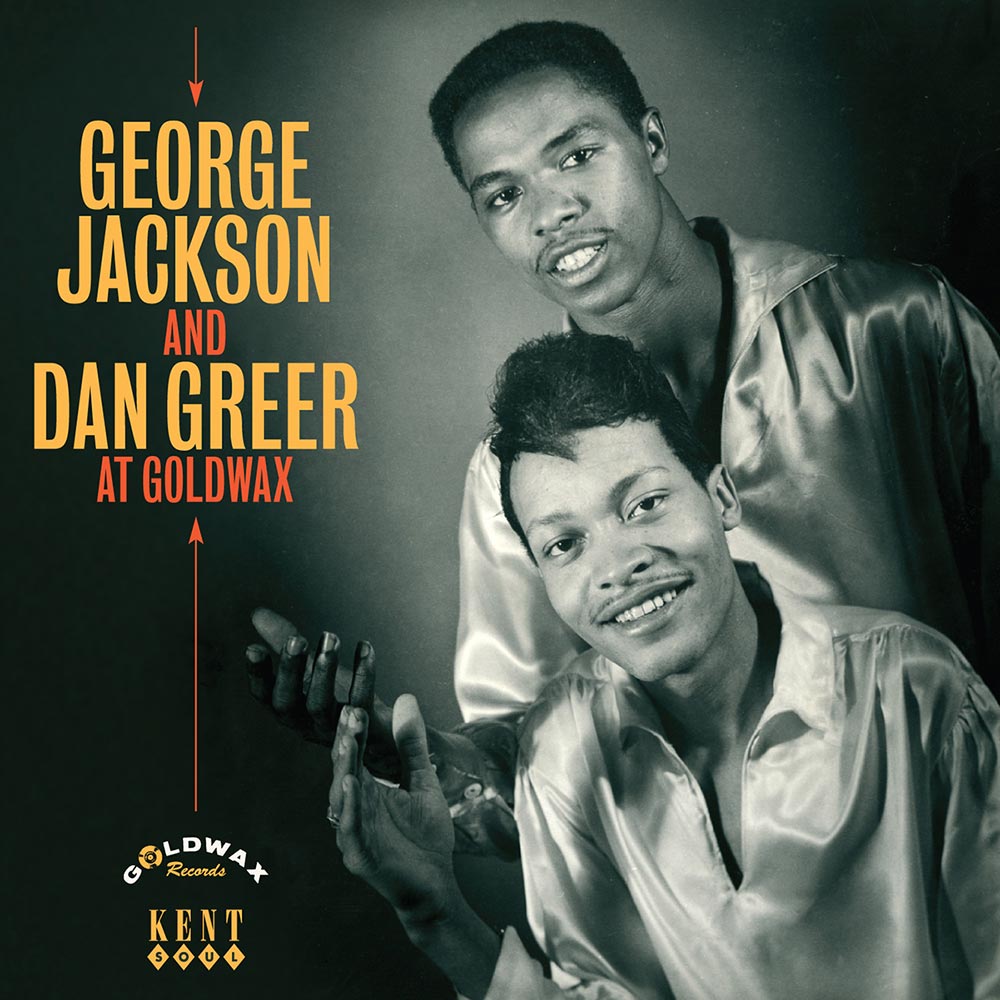
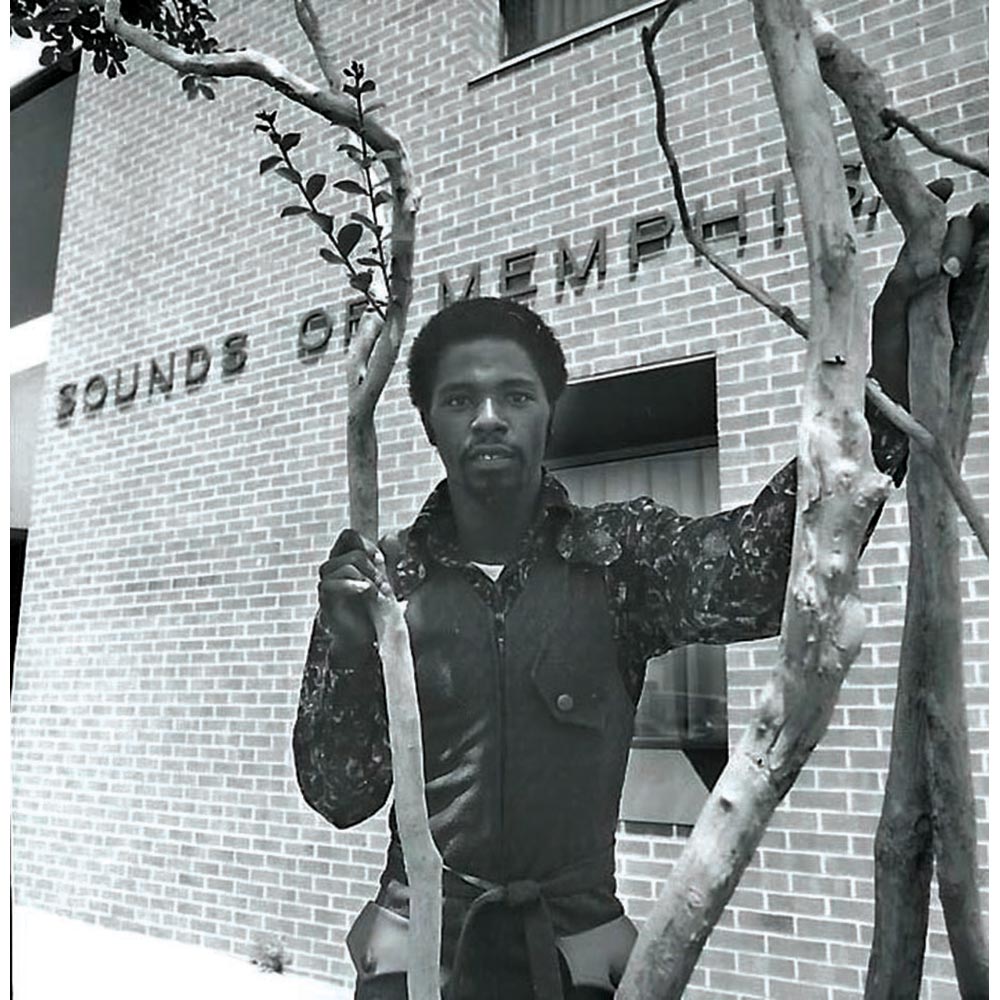
THE MANHATTANS-THERE’S NO ME WITHOUT YOU.
THE MANHATTANS-THERE’S NO ME WITHOUT YOU.
Like so many other groups, success took time to come The Manhattans’ way. Indeed, The Manhattans released seven albums before making a commercial breakthrough with 1976s The Manhattans. It was certified gold, and 1977s It Feels So Good and 1980s After Midnight repeated the feat. However, before their 1976 breakthrough album, The Manhattans were one of soul music’s best kept secrets.
Their recording career had started in 1965, when The Manhattans released Dedicated To You on Carnival Records. Sing For You and Yours followed in 1968 on Carnival, before they released two albums on Deluxe Records. These were 1971s With These Hands and 1972s A Million To One. For their fifth album, 1973s There’s No Me Without You, The Manhattans signed to Capitol Records, where the next chapter in their career began.
Now signed to Capitol Records, the five members of The Manhattans Richard Taylor, Edward Bivins, Winfred “Blue” Lovett, Kenneth Kelly and Gerald Alston were about to encounter a man who’d play a crucial role in their career. This arranger and producer Bobby Martin, who was something of a musical veteran. He was playing an important part in Philadelphia International Records’ rise and rise. Bobby wasn’t the only member of Philly’s musical elite to play a part in the recording of There’s No Me Without You. M.F.S.B. Philadelphia International Records’ legendary house-band would accompany The Manhattans on their major label debut.
For There’s No Me Without You, which will be released on Funky Town Grooves, on 16th February 2015, The Manhattans contributed six of the ten tracks. Edward Bivins wrote There’s No Me Without You and cowrote The Other Side of Me with Gerald Alston. Wilfred Lovett wrote We Made It and Wish That You Were Mine. He also cowrote Soul Train with Little Harlem and It’s So Hard Loving You with Charles Reed. Other tracks included Kenneth Kelly’s The Day The Robin Sang To Me and You’d Better Believe It penned by John Fowlkes and Roger Genger.Teddy Randazzo cowrote the other two tracks. With Roger Joyce he cowrote I’m Not A Run Around and with Victoria Pike and Souren Mozian penned Falling Apart At The Seams. These ten tracks became For There’s No Me Without You, which was recorded at Joe Tarsia’s Sigma Sound Studios in Philly.
At Sigma Sound Studios, M.F.S.B. were accompanying The Manhattans on There’s No Me Without You. M.F.S.B’s lineup included the Baker, Harris, Young rhythm section, plus guitarists Bobby “Electronic” Eli and Roland Chambers. They were joined by organist Lenny Pakula, Larry Washington on congas, vibes virtuoso Vince Montana Jr and violinist Don Renaldo, who was the string and horn contractor. Adding backing vocals were The Sweethearts of Sigma, Barbara Ingram, Evette Benton and Carla Benson. Once There’s No Me Without You was recorded, it was released in 1973. Would The Manhattans major label debut There’s No Me Without You prove a commercial success.
On the release of There’s No Me Without You in 1973, it reached number 150 in the US Billboard 200 and number nineteen in the US R&B Charts. This made There’s No Me Without You The Manhattans’ most successful album. The title-track There’s No Me Without You reached number forty-three in the US Billboard and number three in the US R&B Charts, becoming The Manhattans’ most successful single. Wish That You Were Mine then reached number nineteen in the US R&B Charts. It seemed The Manhattans’ Philly Soul makeover by Bobby Martin had transformed their career and fortunes. You’ll realize why, when I tell you about There’s No Me Without You.
There’s No Me Without You opens with the title-track There’s No Me Without You. Earl Young’s pounding drums, Vince Montana Jr’s vibes and percussion combine to create a heartbreakingly beautiful backdrop for Gerald Alston’s pleading vocal. Harmonies sweep in. Elegantly and beautifully, they sooth Gerald’s hurt. Meanwhile, the Baker, Harris, Young rhythm section add drama, while Vince’s vibes, lush strings and Norman Harris’ guitar add to the beauty. Later, when a half-spoken vocal enters, it adds to sadness and emotion. Add to this the tight, tender harmonies and the result is track filled with sadness, emotion and heartbreak.
From the opening bars of We Made It, you realize something special is unfolding. Understated, wistful and meandering describes the arrangement. So too does sensual and beautiful, which describes The Manhattans harmonies and vocals. Here, they indulge themselves, demonstrating that when it comes to harmonies, The Manhattans were one of the best. Their cascading, pleading and hopeful harmonies, are perfection. They’re laden with emotion, joy and hope. Quite simply, We Made It, with its doo wop influence is simply sensual and beautiful.
Wish That You Were Mine is another of the slow, beautiful ballads that The Manhattans do so well. Percussion, Vince Montana Jr’s vibes and Norman Harris jazzy guitar provide a melancholy backdrop for the half-spoken vocal. Gerald’s vocal is tinged with regret at the hurt at the hurt he’s about to cause his friend. As the drama builds, harmonies sweep in, adding to the chaos and heartache that’s about to be unleashed. Muted horns, sweeping strings and an understated Baker, Harris, Young rhythm section add to the atmospheric, emotive backdrop as Gerald unleashes a vocal tour de force.
Swathes of strings sweep and horns rasp as I’m Not A Run Around unfolds. Norman Harris’ guitar chimes and Earl Young’s drums pound dramatically. Having set the scene for Gerald, he lays bare his soul. He assures and pleads with sincerity and emotion: “I’m Not A Run Around.” Harmonies cascade, adding further reassurance, while Baker, Harris, Young provide the arrangement’s heartbeat. By the end of the track, so impassioned and heartfelt are his pleas that you can’t help but believe him.
Soul Train closes SIde One of There’s No Me Without You. There’s an increase in tempo as The Manhattans kick loose, against a tougher, funkier arrangement. Baker, Harris, Young provide the necessary funk, while Gerald’s vocal is sassy and powerful. Chanted harmonies, blazing horns and searing guitars play their part in adding a dramatic and funky backdrop for your journey on the Soul Train.
You’d Better Believe It opens Side Two of There’s No Me Without You. It’s a return to the balladry of much of Side One, but with a twist. Heartfelt, tender harmonies are cascading strings and Vince Montana Jr’s vibes, while Baker, Harris, Young add to the emotion and beauty. The only differences are guitars drenched in reverb, while the arrangement has a real sixties influence. This works well, bringing out the interplay between the lead vocal and some peerless harmonies.
Norman Harris’ chiming guitar dances across the introduction to It’s So Hard Loving You. Cooing harmonies from The Sweethearts of Sigma and Manhattans accompany the pleading, impassioned vocal. The harmonies and lead vocal take centre-stage, with M.F.S.B. providing a subtle backdrop. This includes growling horns that add to the sheer emotion of The Manhattans’ vocal prowess.
It doesn’t take long to realize that The Day The Robin Sang To Me is one of the best tracks on Side Two. Ron Baker’s probing bass joins swathes of lush strings, woodwind and cooing harmonies from The Sweethearts of Sigma and Manhattans. Their tenderness and beauty are the perfect foil for Gerald’s vocal, while the husky half-spoken vocal provides a contrast. Add to this Larry Washington’s congas, a wistful flute and sensual harmonies. A combination of a gorgeous meandering, intricate arrangement and The Manhattans at their very best make this fusion of jazz, Latin and Philly Soul an enchanting and timeless track.
Keyboards and the Baker, Harris, Young rhythm section open Falling Apart At the Seams. Soon, producer Bobby Martin works his magic. Strings sweep and swirl, Norman Harris adds his jazzy guitar and Vince Montana Jr sprinkles his vibes. This seems to encourage The Manhattans to raise their game. Gerald’s lead vocal is even more heartfelt and impassioned, while the harmonies are tighter, more soulful and filled with feeling and meaning.
The Other Side of Me closes Side Two of There’s No Me Without You. It seems The Manhattans are determined to close the album on a soulful, emotive high. Just keyboards, Baker, Harris, Young and Vince Montana Jr’s vibes accompany Gerald’s heartbroken vocal. Harmonies sweep in, trying to sooth his hurt and heartache. He delivers each word as if he’s experienced the hurt he’s singing about. Baker, Harris, Young add to the drama, while pizzicato strings pluck at your heartstrings and The Manhattans bring There’s No Me Without You to a heartbreakingly sad, but beautiful close.
While There’s No Me Without You, which will be released on Funky Town Grooves, on 16th February 2015, was The Manhattans’ fifth album, it was their major label debut. Producer Bobby Martin and M.F.S.B. play their part in the sucess of There’s No Me Without You. From the opening bars of There’s No Me Without You right through to the closing notes of The Other Side of Me, The Manhattans never miss a beat. Their vocal and harmonic prowess is peerless. So, it’s no surprise that There’s No Me Without You was the most successful album of their career. Sadly, it would be three more years until they made their commercial breakthrough with 1976s million-selling The Manhattans. They’d repeat this feat with 1977s It Feels So Good and 1980s After Midnight.
Albums like There’s No Me Without You demonstrate that there’s much more to The Manhattans’ music than these three albums. Indeed, There’s No Me Without You is an album packed full of quality soul music. There’s No Me Without You is helped no end by the producer Bobby Martin, M.F.S.B. and The Sweethearts of Sigma. They played their part in ensuring The Manhattans Philly Soul makeover There’s No Me Without You, launched them onto the road marked critical acclaim and commercial success.
THE MANHATTANS-THERE’S NO ME WITHOUT YOU.
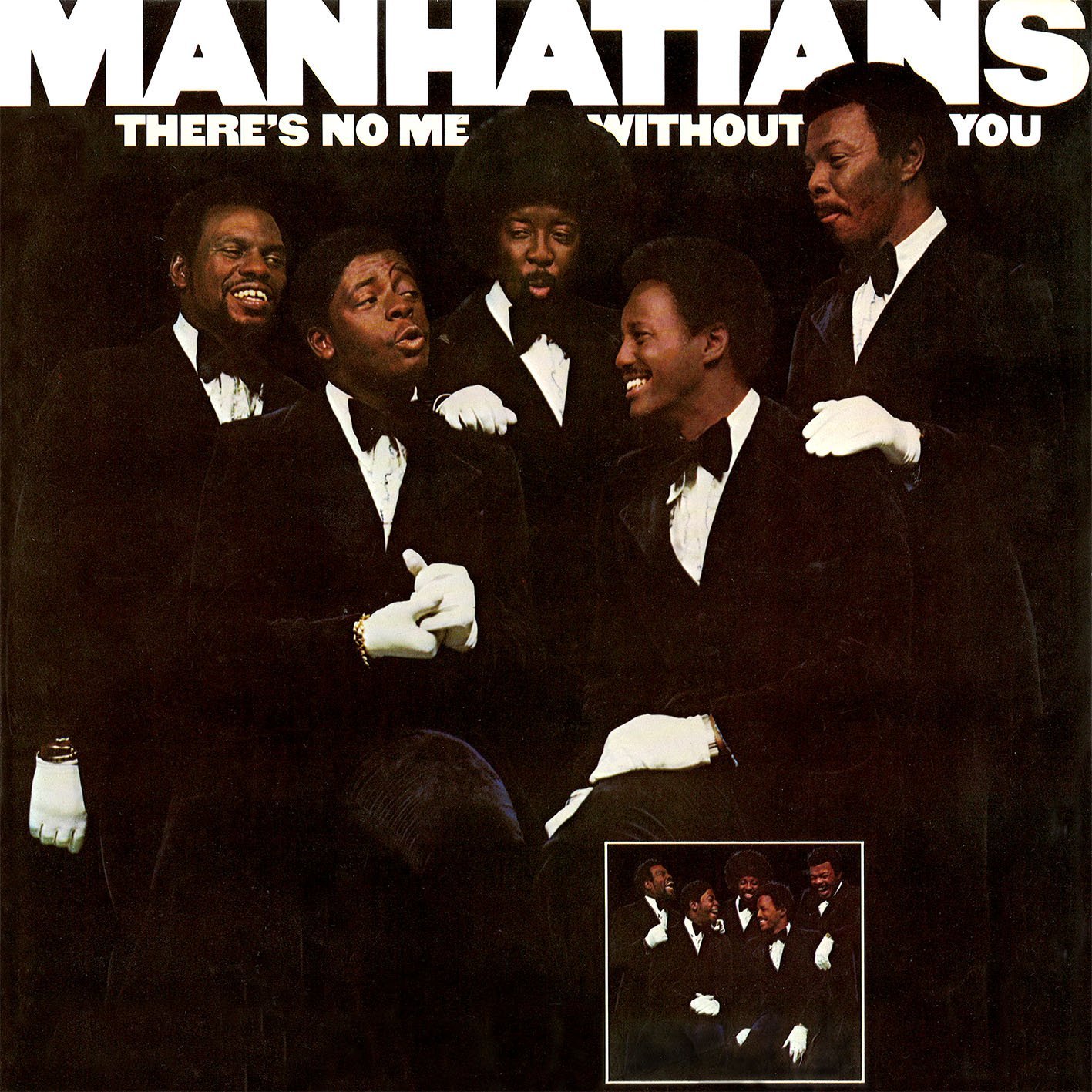
A GUIDE TO THE BIRDSONG OF SONG AMERICA.
A GUIDE TO THE BIRDSONG OF SONG AMERICA.
Previously, the only way to release an album was via a record company. Not any more. Nowadays, there are numerous ways to release an album. This includes crowd-funding, which since 2010, has raised $89bn. Crowd-funding, however, is far from a new phenomenon. Although the term was first coined by Michael Sullivan, in August 2006, its roots can be traced to 2003, when ArtistShare was launched.
ArtistShare was a groundbreaking venture, which was essentially, the first crowd-funding site. It was marketed as a “record label and business model for creative artists.” With the slogan “where the fans make it happen/ first in fan funding,” ArtistShare promised an alternative to the traditional model for releasing an album. This alternative model proved successful.
A total of eighteen projects funded by ArtistShare were nominated for a Grammy Award. Nine of these projects went on to win a Grammy Awards. Other entrepreneurs, realising the potential in the ArtistShare model, jumped on the bandwagon.
Soon, similar sites to ArtistShare followed. Sellaband was founded in 2006, with Indiegogo following in 2008 and Pledge Music joining the fray in 2009. Then a year later, came Kickstarter in 2010. Since 2010, it’s received pledges totalling £1.5bn from 7.8 million backers. This has allowed Kickstarter to fund 200,000 creative projects. This includes in the summer of 2014, A Guide to the Birdsong of South America, which is billed as a project where “Art Meets Activism.”
The man behind the Kickstarter campaign that resulted in A Guide To The Birdsong Of South America, is environmental activist and music lover, Robin Perkins. For many years, Robin has been a keen bird watcher. Recently, he has become increasingly concerned about the problem with endangered species in South America. From Argentina, Brazil, Chile and Ecuador, through to Peru the situation looked grave. According to the IUCN’s Red List, the number of endangered species across South America were increasing. Something had to be done. However, Robin was only one man.
After some thought, Robin decided that by combining two of the passions in his life, music and birds, he could raise awareness and much needed funds for the endangered species across South America. The answer lay in a Kickstater campaign.
The Kickstarter campaign took place during the summer of 2014. To help publicise the campaign, Robin used his global music blog Rhythm and Roots, which later, funded the production, mastering and distribution of A Guide To The Birdsong Of South America, which is sui generis and innovative.
As projects go, A Guide To The Birdsong Of South America, is totally unique. It’s safe to say, it’s never been done before, and is a truly innovative project. The inspiration behind this crowd-funded project is birdsong. Not just any birdsong though. This is endangered birdsong from South America, including the Royal Cinclodes, Yellow Cardinal, Grey-Breasted Parakeet, Hooded Grebe and Sun Parakeet. The birdsong of these eleven endangered species is incorporated into a track by eleven of South America’s most talented young musicians and producers.
Among the musicians and producers who feature on A Guide To The Birdsong Of South America, are Lulacruza, Chancha Via Circuito, Alessandra Leão, Nicola Cruz, Dengue Dengue Dengue, Tremor and Matanza. They each take the recording of an endangered species from their country, and create an original track. These ten tracks then feature on A Guide To The Birdsong Of South America, which hopefully, will release awareness of these endangered species. It will be released on 3rd March 2015.
When A Guide To The Birdsong Of South America is released on 3rd March 2015, the album will be available in three formats, digital download, CD and LP. Fittingly, the proceeds from sale of A Guide To The Birdsong Of South will go towards those charged with protecting the endangered species featuring on the album.
All the proceeds to A Guide To The Birdsong Of South America will be donated to two Ecuadorian non governmental organisation birding charities. The first of these charities is Fundación Jocotoco. They work with the local community to protect the last habitat of the endangered Jocotoco Antpitta. Aves y Conservación are the second charity that A Guide To The Birdsong Of South America will fund. It has been an important part in the conservation of birds, their habitats and the biodiversity of Ecuador, for nearly thirty years. Part of the proceeds will also go towards paying the salary of chief ranger of the Tapichalaca reserve, Franco Mendoza. All this should make a huge difference to the various endangered species. This wouldn’t have been possible without the founder Robin Perkins, the backers and of course, the ten artists and producers, who made A Guide To The Birdsong Of South America possible.
The ten artists who feature on A Guide To The Birdsong Of South America, had a choice of twenty different recordings of birdsong. Recording the various birdsongs wasn’t easy. It took time and patience. Even then, Robin says “many birdsong haven’t ever been recorded or at very poor quality which created a big challenge.” So to source the required birdsong, Robin began working with Xeno-Canto, who are a global online community that are dedicated to recording and sharing bird songs worldwide. This allowed Robin to find recording of the twenty endangered species. After that, it was game on.
With all the recordings in place, Robin asked each of the ten musicians and producers to choose their song and species. After that, it was up to how each of the musicians and producers utilised the recording.
Some put the recording at the forefront of their song, using it throughout the track. On other tracks, the recording places what can only be described as a walk on role. Regardless of which approach the musicians and producers take, the ten tracks are very different. Indeed, eclectic describes them. They are a representation of contemporary South American music. Essentially, A Guide To The Birdsong Of South America is an introduction to some of the most ambitious, innovative and inventive musicians and producers South America has to offer. One listen to A Guide To The Birdsong Of South America and you will realise that.
A Guide To The Birdsong Of South America is an eclectic album that showcases some of South America’s most talented musicians and producers. These are no ordinary musicians and producers. No. They’re innovators, who produce an eclectic selections of music. That is the case from the get-go.
Lulacruza’s Cucarachero de Niceforo opens A Guide To The Birdsong Of South America. It’s an understated, ethereal soundscape. The chirping sample flits in and out, while Lulacruza’s tender, sweet vocal is surrounded by an arrangement that veers between minimalist to hypnotic. Always though, Cucarachero de Niceforo is bewitching and captivating. The same can be said of Chancha Via Circuito’s El Macá Tobiano.
It’s a welcome addition from a musical innovator, whose partly, been responsible for the reinvention of cumbia. Last year, Chancha Via Circuito released his fourth album Amansara. It was best described as genre-melting. The same can be said of the moody, broody, cinematic sound of El Macá Tobiano.
There is no drop of the quality on Alessandra Leão’s Saíra Apunhalda. A a fusion of Latin percussion, probing drums, a broody bass and a rocky guitar set the scene for Alessandra. She delivers a soul-baring, vocal. Meanwhile, the arrangement quiver and shimmers, growing dramatic and moody. This proves the perfect foil for Alessandra’s vocal powerhouse.
The samples play a more prominent role on Barrio Lindo’s Capuchino de Pecho Blanco. They’re akin to aural sunshine, as they assail you. Soon, a thunderous drum makes its presence felt. Gradually, drums and a myriad of flutes enter. They go on to play their part in a joyous, slice of of musical sunshine from the Argentinian producer.
Equally uplifting and joyous is Ecuadorian producer Nicola Cruz’s Jocotoco Antpitta. Here, Nicola makes good use of the birdsong recording. It flit in and out of the dubby soundscape, which takes on a contemporary sound. Elements of ambient, dub and dance music unite with birdsong. It’s a truly enthralling experience, as the arrangement pulsates along.
Just like the two previous tracks, Algodon Egipcio’s Cotorra del Sol is feel-good music. You can’t help be won over by the charms and delights of Cotorra del Sol. A tender, pensive vocal sits amidst a cacophony of disparate sounds and instruments. This includes the birdsong and swathes of strings. Seamlessly, they unite to produce a what can only be described as feel-good music.
One of the biggest names on A Guide To The Birdsong Of South America, is Peru’s very own Dengue Dengue Dengue. They’ve played a part in the reinvention of Peruvian cumbia. To do this, they’ve introduced synths to cumbia. The result is Remolinera Real, a dark, dramatic, atmospheric and reggae tinged slice digital Peruvian cumbia. It’s quite simply, irresistible and the equivalent of a journey through the Peruvian rainforest, with Dengue Dengue Dengue as your tour guides.
Argentinian rhythm trio Tremor, contribute Cardenal Amarillo, another captivating and musical adventure. It veers between understated and minimalist, to atmospheric, bold, broody, dramatic and even ethereal. Tremor combine disparate sounds, instruments and influences which eventually, reaches an elegiac ending.
Psilosamples’ Soldadinho d Araripe/Periquito Cara-Suja glides wistfully along. Then Psilosamples starts to throw curveballs. What follows is a groundbreaking, genre-melting fusion of the old and new. Latin music’s past combines with the moderne sound, of electronica. The result is an innovative, genre-melting track, where musical boundaries are pushed to their limit, and sometimes, way beyond.
The futuristic, space-age sound of Matanza’s Gallineta Chica gradually unfolds. From what was an understated arrangement, thunderous, pounding drums, washes of ghostly synths and birdsong unite. Throw in some handclaps, and what follows is a pulsating dance-floor friendly anthem in waiting.
There are several ways to describe A Guide To The Birdsong of South America. One would be a celebration of the eclectic and innovative music that currently, is being produced within South America. It comes from some of the continent’s most talented musicians and producers. These however, are no ordinary musicians and producers. No. They’re innovators, who produce an eclectic selections of music. That is the case throughout A Guide To The Birdsong of South America, which I would also described as where “art meets activism.”
This example of “art meets activism,” was the idea of Robin Perkins, who became increasingly concerned about the problem with endangered species of birds in South America, wanted to raise awareness of the problem. Robin also wanted to raise funds for two birding charities. To do that, Robin decided to combine two of the passions in his life, birds and music.
Before he could do that, Robin launched a Kickstarter campaign. This proved successful, and allowed Robin to move to the next stage. That was collecting twenty recordings of endangered species in South America. Ten artists were then asked to make a track, incorporating one of the recordings of the endangered species. The result is A Guide To The Birdsong of South America,
As compilations go, A Guide To The Birdsong of South America, is variously captivating, dark, dramatic, elegiac, enchanting, joyous, moody and up-lifting. No two tracks on A Guide To The Birdsong of South America are the same. They’re all unique. That is quite fitting, given A Guide To The Birdsong of South America is a unique project.
Nobody has tried to do anything similar before. A Guide To The Birdsong of South America is a first, that is innovative and ambitious way to raise money for two very worthwhile charities. Hopefully, when A Guide To The Birdsong Of South America is released on 3rd March 2015, it will raise much needed funds for the two charities. Just as importantly, A Guide To The Birdsong Of South America aims to raise awareness of the plight of the endangered species in South America. I’m sure that will be the case. After all, as products go, A Guide To The Birdsong Of South America is one that oozes quality.
That is down to the way each of the musicians and producers use the recording of birdsong. Some put the recording at the forefront of their song, using it throughout the track. On other tracks, the recording places what can only be described as a walk on role. Regardless of which approach the musicians and producers take, the ten tracks are very different. Indeed, eclectic describes them. They are a representation of contemporary South American music. Essentially, A Guide To The Birdsong Of South America is an introduction to some of the most ambitious, innovative and inventive musicians and producers South America has to offer. One listen to A Guide To The Birdsong Of South America and you’re bound to agree.
A GUIDE TO THE BIRDSONG OF SONG AMERICA.


RICK WAKEMAN-THE SIX WIVES OF HENRY VIII.
RICK WAKEMAN-THE SIX WIVES OF HENRY VIII.
In early 1972, Yes were touring America to promote their fourth studio album Fragile. On a stopover in Richmond, Virginia, Rick Wakeman, who had joined Yes in August 1971, and made his debut on Fragile, was perusing the airport bookshop. Eventually, Rick bought four books, including Nancy Brysson Morrison’s The Private Life Of Henry VIII.
On the subsequent flight from Richmond to Chicago, Rick began reading Private Life Of Henry VIII. As he began reading about Anne Boleyn, Rick remembered a recording he had made in 1971. Since then, Rick had done nothing with that piece of music. After recording the music, Rick had been struggling to come up with lyrics to accompany it. This being the age of the concept album, what Rick was looking for, was a theme that could run through the recording. Not any more.
Suddenly, everything came together. The notes Rick made about Anne Boleyn on the flight to Chicago were just the start. Over the next few weeks and months, whether at home or on tour, Rick focused on each of Henry VII’s six wives. At his piano, he continued to make notes. Eventually, Rick’s notes became the thread that ran through his sophomore album, The Six Wives Of Henry VIII, which was recently reissued by Commercial Marketing as a double album.
For the reissue of The Six Wives Of Henry VIII, the album was remastered at Abbey Road studios. On disc one of this deluxe, remastered version of The Six Wives Of Henry VIII, are the original album and a trio of bonus tracks. This includes the first mix of Catherine Of Aragon, and single edits of Anne Boleyn The Day Thou Gavest Lord Hath Ended and Catherine Parr. Then on disc two, a DVD, there are Quadraphonic and stereo mixes of The Six Wives Of Henry VIII. There is also a live version of Catherine Howard, recorded in 1973, on BBC TV. By then, The Six Wives Of Henry VIII had been released, and had transformed Rick Wakeman’s solo career.
Prior to the release of The Six Wives Of Henry VIII in January 1973, Rick Wakeman had only released one solo album, 1971s Piano Vibrations. However, controversy surrounds Piano Vibrations. Rick doesn’t even consider Piano Vibrations as part of his discography. Rick’s involvement was minimal. He neither wrote, nor chose the material on Piano Vibrations. Eight of the ten tracks were cover versions of popular songs, and the two other tracks were cowritten by producer, John Schroeder. All Rick who was working as a session musician, had to do, was turn up and play piano. The result was what is best described as a cheesy sounding album, that failed to chart. This was the polar opposite to Rick’s sophomore album The Six Wives Of Henry VIII.
Having joined Yes in August 1971, Rick played on their fourth album, Fragile. It was released on 29th November 1972 in Britain, reaching number seven. This resulted in Fragile being certified silver. Across the Atlantic, Fragile was released on 4th January 1973, and reached number four in the US Billboard 200. Fragile was certified double platinum, and became the most successful album of Yes’ career. This would also be the case with Rick’s sophomore album, The Six Wives Of Henry VIII.
Recording of The Six Wives Of Henry VIII took place between February and October 1972. A&M Records gave Rick an advance of £4,000 to help with recording of The Six Wives Of Henry VIII. That wasn’t going to go far. Luckily, Rick was a multi-instrumentalist, who could rely upon members of Yes, and his former band The Strawbs.
On The Six Wives Of Henry VIII, Rick played Minimoog and ARP synths, Mellotron, Hammond organ, church organ, electric piano, grand piano and harpsichord. Accompanying Rick, who produced The Six Wives Of Henry VIII, were some of the top musicians of the early seventies.
Among Rick’s band were what can only described as prog rock royalty. This included Yes’ rhythm section of drummers Bill Bruford and Alan White, bassist Chris Squire and guitarist Steve Howe. They were joined by The Strawbs bassist Chris Cronk and Dave Cousins, who played electric banjo. These were just a few of the musicians who played on The Six Wives Of Henry VIII.
Other musicians who played a part in the making of The Six Wives Of Henry VIII were drummer Barry de Souza, bassists Dave Winter and Les Hurdle and guitarist Mike Egan. They were joined by percussionists Ray Cooper and Frank Ricotti and vocalists Laura Lee, Sylvia McNeill, Judy Powell, Barry St. John and Liza Strike. Once the six tracks were recorded, the cost of The Six Wives Of Henry VIII had risen to £25,000. A&M Records’ advance hadn’t come close to covering the cost of The Six Wives Of Henry VIII. Rick needed The Six Wives Of Henry VIII to be a huge success.
Prior to the release of The Six Wives Of Henry VIII, Rick was booked to appear on BBC TV’s The Old Grey Whistle Test, where he would play excerpts of The Six Wives Of Henry VIII. That should’ve given The Six Wives Of Henry VIII a huge boost. However, back then, there were only three television channels. On one of the other channels, ITV a documentary about Andy Warhol was scheduled to be released. The documentary was much anticipated, and as many as ten million viewers were expected to view it. Luckily, at the last minute, it was banned. With ten million people looking for something to watch, many turned to BBC 2, and The Old Grey Whistle Test. That night, excepts from Rick Wakeman’s sophomore album, The Six Wives Of Henry VIII were heard by a huge audience. This was just what he needed.
Reviews of The Six Wives Of Henry VIII hadn’t been good. Only Time magazine and Rolling Stone seemed to appreciate The Six Wives Of Henry VIII. They published glowing reviews. However, they were the only ones. Other critics weren’t won over by The Six Wives Of Henry VIII. Neither were many people at A&M Records. Behind the scenes, staff at A&M Records referred to The Six Wives Of Henry VIII as “unsellable.” They reckoned that an instrumental prog rock album was unlikely to sell well. So, only 12,500 copies of The Six Wives Of Henry VIII were pressed prior to release. How wrong executives at A&M Records were.
On the release of The Six Wives Of Henry VIII on 23rd January 1973, it topped the charts in four countries. The Six Wives Of Henry VIII reached number seven in Britain, and number thirty in the US Billboard 200 charts. This resulted in The Six Wives Of Henry VIII being certified gold in America. However, things would get even better for Rick Wakeman.
By July 1973, The Six Wives Of Henry VIII was certified platinum, having sold two million albums. Eventually, The Six Wives Of Henry VIII sold over fifteen million copies. As 1973 drew to a close, Time magazine named The Six Wives Of Henry VIII as the best album of 1973. Since then, it’s attained classic status. What was described as an “unsellable,” instrumental prog rock album is now regarded as one of the genre’s best examples. No wonder.
Over the six tracks on The Six Wives Of Henry VIII, Rick Wickman manages to do what is seemingly impossible, paint pictures with what are, six instrumental tracks. From Catherine Of Aragon right through to Catherine Parr, Rick’s music has an unmistakable cinematic quality. A case in point is Catherine Of Aragon.
In the space of three minutes and forty-six seconds, Rick manages breath life, meaning and emotion into the story of Henry VIII and Catherine’s marriage. To do this, he uses a wide palette of instruments. This includes piano, synths, a rhythm section and harmonies. They’re Rick’s musical palette, played by what were some of the most talented, and sought after musicians and backing vocalists of the early seventies. What follows is a heart wrenching portrayal of a doomed marriage, which promised much, but sadly, was sabotaged by obsession.
As Catherine Of Aragon unfolds, Henry VIII and Catherine’s marriage is young, and there’s a sense of hope and joy. Henry VIII hopes for a son and heir. As time passes, this becomes more unlikely. The one thing he longs for, he can’t have, a son. Despite his wife giving birth to a daughter, Henry VIII becomes melancholy and maudlin. This is reflected in the music. Soon, the melancholia leads to drama and sadness. The understated arrangement veers between wistful and ethereal. It translates what Henry VIII and Catherine must have been feeling. Later, as the music becomes dark and dramatic, Catherine is asked to leave the court, her eighteen year marriage at an end. In just under four minutes, you experience despair, drama, heartache, hope, joy, melancholy, pain and sadness. You find yourself empathising and sympathising, mostly, with Catherine. Her marriage had been ruined, ruined by her husband’s obsession for a son and heir. This heart wrenching, cinematic tale is just the start of what is, without doubt, an innovative, influential and ambitious concept album.
Over thirty-six minutes, Rick tells the story of The Six Wives Of Henry VIII. Inspired by Nancy Brysson Morrison’s book, The Private Life Of Henry VIII, Rick Wakeman takes prog rock in a new direction. To do that, he combines various musical genres and instruments.
Listen carefully to The Six Wives Of Henry VIII, and elements of classic rock combine with classical music, folk, jazz and prog-rock. Sometimes when you hear the synths, there is even a funk influence. Another musical influence is the music of the church.
Given the role it played in Henry VIII’s day, that is quite fitting. Two of the most obvious influences of the church can be heard on The Six Wives Of Henry VIII are on Jane Seymour and Anne Boleyn.
When Rick was struggling to find the right organ sound for Jane Seymour, he headed to St Giles-Without-Cripplegate church, in London. The engineers setup the recording equipment, and Rick played the church organ. It plays an important part in the track’s sound and success. Another influence of the church can be heard on Anne Boleyn ‘The Day Thou Gavest Lord Hath Ended. It features an excerpt from St. Clement, played to the tune of the hymn The Day Thou Gavest, Lord, is Ended. Rearranged by Rick, it was an important part of Anne Boleyn ‘The Day Thou Gavest Lord Hath Ended, which is best described as a genre melting track. It’s bold, dramatic, elegiac, energetic, ethereal, flamboyant and spiritual. These are just a few of the words that describe Anne Boleyn The Day Thou Gavest Lord Hath Ended, which like the rest of The Six Wives Of Henry VIII marked a first in prog rock.
Before The Six Wives Of Henry VIII, the synth had struggled to be taken seriously in prog rock. It was almost frowned upon. The synth, to some, was prog rock’s bastard child. That is, until they heard it played by Rick Wakeman. This proved an eye opener. Suddenly, the synth gained legitimacy within prog rock. Before long, most self-respecting prog rock group had a keyboardist, playing a bank of the latest synths. That wouldn’t have happened without Rick Wakeman, and The Six Wives Of Henry VIII.
That is why, forty-two years after the release of The Six Wives Of Henry VIII, it’s now considered a stonewall prog rock classic. Rick Wakeman is now perceived as a musical pioneer. After all, The Six Wives Of Henry VIII is also the prog rock album that legitimised synths in prog rock. Without Rick Wakeman and The Six Wives Of Henry VIII, maybe, things would have been very different? Certainly, prior to the release of The Six Wives Of Henry VIII very few people thought that it would prove such a landmark reviews.
Neither critics, nor many of the staff at A&M Records foresaw the commercial success of The Six Wives Of Henry VIII. Only Time and Rolling Stone recognising that The Six Wives Of Henry VIII was a future classic. Even they never thought that Rick Wakeman’s sophomore album would become one of his best selling albums. Eventually, however, that proved to be the case. Since its release in 1973, The Six Wives Of Henry VIII sold over fifteen million copies. Rick Wakeman, a true musical pioneer, had the last laugh, when what many considered prog rock’s ugly duckling, The Six Wives Of Henry VIII, turned into a swan.
RICK WAKEMAN-THE SIX WIVES OF HENRY VIII.

CIAO BELLA! ITALIAN GIRL SINGERS OF THE 60S.
CIAO BELLA! ITALIAN GIRL SINGERS OF THE 60S.
Ciao Bella! Italian Girl Singers Of The 60s, Ace International’s first compilation of 2015, is described as “groovy girl-pop.” That’s the perfect description of the latest compilation of girl-pop from Ace Records.
Previously, Ace Records have released compilations of American, French and Japanese girl-pop. Other record companies have released compilations British and German girl-pop. However, until very recently, Italian girl-pop has been overlooked. Not any more.
Ace International released Ciao Bella! Italian Girl Singers Of The 60s on 26th January 2015. It features twenty-four tracks from some of the biggest names in Italian girl-pop, including Caterina Caselli, Catherine Spaak, Isabella Iannetti, Mina, Ornella Vanoni, Rita Monico and Wilma Goich. Given Ciao Bella! Italian Girl Singers Of The 60s has such an all-star lineup, it’ll be tantalising prospect for connoisseurs of sixties girl-pop. You’ll realise why, when I tell you about the highlights of Ciao Bella! Italian Girl Singers Of The 60s.
What better way is there to open Ciao Bella! Italian Girl Singers Of The 60s, than with Brunetta E I Suoi Balubas’ Baluba Shake. It literally bursts into life. Having gotten your attention, it doesn’t let go. What follows is a storming, hook-laden dance track. It’s sure to have filled many a dance floor on its release in 1966, on the Rifi label. This was the first release by Brunetta E I Suoi Balubas. Previously, she had released singles as The Explosive Brunetta and Ciclone. However, her change of name resulted in a change of fortune for Brunetta E I Suoi Balubas.
One of the biggest and most successful names in Italian girl-pop was Mina. Her career started in the late fifties, and in 1959, she enjoyed her first number one. After this, there was no stopping Mina. She became one of Italian girl-pop’s most prolific artists. So, it’s only right that she features three times. The earliest of the three tracks is Più Di Te, where Mina covers the Tracy Dey-Bob Crewe classic. Released in 1965 on Ri-Fi, Più Di Te epitomises everything that’s good about girl pop. A year later, Mina released Se Telefonando in 1966, on Ri-Fi. This beautiful, heartfelt, wistful ballad shows another side of Mina. So does No, released on Ri-Fi in 1967. Here, Mina delivers a defiant vocal, accompanied by jangling, Byrdsian guitars on this folk rock track.
Just like Mina, Ornella Vanoni was one of the top Italian girl-pop singers. With Mina, she vied for the title of Queen of Italian girl-pop. However, Mina one out. Ornella Vanoni however, enjoyed an almost unrivalled longevity. Ornella is best know for ballads. That’s where she shines. Proof of this is Il Mio Posto Qual’e, released on Ariston in 1967. Against a lush backdrop that’s augmented by a sitar, Ornella delivers a soul-baring vocal. Then on L’Appuntamento, released in 1970, on Ariston, the tempo drops and Ornella delivers a thoughtful, melancholy vocal against an orchestrated arrangement. In doing so, she shows that when it came to balladry, Ornella Vanoni was one of the best.
When Isabella Iannetti’s first two singles failed to chart, she moved the Royal record label to Durium. This resulted in a change of fortune for Isabella Iannetti. She would go on to release twenty singles and an album for her new label. One of Isabella’s first releases for Durium was Quanti Ragazzi, released in 1964. Its jaunty arrangement is propelled along by strings, while pizzicato string and harmonies prove foil for Isabella’s show-stopping vocal. Four years later, in 1968, Isabella released Un Amore Inutile. Tinged with drama, the arrangement veers between understated to an almost grandiose orchestral sound. This frames Isabella’s powerful, emotive vocal perfectly, resulting in three minutes of drama.
Not many of the artists on Ciao Bella! Italian Girl Singers Of The 60s enjoyed the longevity that Rita Pavone has. Having won a talent show in 1962, Rira released her debut single later that year. This was the first over 100 singles Rita released. Then there’s the small matter of around twenty-five albums Rita released. Rita is without doubt, one of Italian pop’s biggest names. Her first contribution on Ciao Bella! Italian Girl Singers Of The 60s, is Cuore, released on RCA Italiana in 1963. Against an arrangement that veers between understated to dramatic, Rita delivers a vocal that’s akin to an outpouring of emotion. It’s truly captivating performance. That’s what executives at RCA though. Rita, they thought, looked like being a huge international star.
That’s why, in 1964, Rita headed to America, where in New York, she recorded a trio of English language albums. They were heavily promoted, with Rita appearing on the Ed Sullivan Show. Despite the extensive promotion, Rita enjoyed just one American single, Remember Me. Two years later, in 1966, Rita who was constantly recording, released Il Geghege on RCA Italiana. This irresistible, hook heavy single sees Rita let her hear down, as she delivers a barnstorming performance.
Catherine Spaak was born in Belgian and brought up in France. However, throughout her career as actress and singer, Catherine called Italy home. She released her debut single Perdono, in 1962. Two years later, in 1964, Catherine released her sophomore album Noi Siamo I Giovani, on the Ricordi label. It features Penso A Te, a melancholy ballad, delivered against a cinematic backdrop. With its pensive marching drums and wistful horns, it sounds like part of the soundtrack to a Spaghetti Western. No wonder. It’s composed by Ennio Morricone. However, the piece de resistance to Penso A Te, is Catherine’s vocal. Three years later, Catherine featured on another soundtrack.
This was La Notte È Fatta Per Rubare, directed by Giorgio Capitani. Catherine featured on the soundtrack and acted in the movie. One of her finest moments, was on the bossa-nova tinged La Notte È Fatta Per Rubare, where Catherine delivers a breathy, sultry vocal.
Ennio Morricone is one of the most prolific soundtrack composers. At the last count, he’s penned 500 soundtracks. One of these soundtracks was Thrilling (La Regola Del Gioco). It was released in 1964, on the ARC label, and featured the vocal prowess of Rita Monico. She features on the title track, which became Rita’s sophomore single. Straight away, it takes on a moody, cinematic sound. Then comes Rita’s vocal. It’s heartfelt, dramatic and powerful. She paints pictures with her voice. They unfold before your eyes, and the combination of Ennio Morricone and Rita Monico proves a potent one. Two years later, Rita and the Maestro renewed their partnership, with a very different single.
This time, Rita decided to cover Dressed In Black, a track made famous by American girl-group, The Shangri Las. It was released on ARC, in 1966, as Non E Mai Tardi. The track is transformed, becoming a slow burner. At the start, the arrangement is minimalist and understated. Gradually, though, the drama builds, and Rita’s vocal becomes an outpouring of emotion and grief. Accompanied by an dramatic orchestral arrangement, Dressed In Black takes on new meaning.
Wilma Goich is remembered by many connoisseurs of ye ye music, as being Italy’s finest exponent of the genre. She is said to have been blessed with the finest voice. So, it’s fitting that she features twice on Ciao Bella! Italian Girl Singers Of The 60s. Her earliest contribution is Un Bacio Sulle Dita, released in 1965 on the Ricordi label. Quickly, it becomes apparent why Wilma is perceived as the Queen if Italian ye ye. Three years later, in 1968, the Queen still hadn’t lost her crown when she released Finalmente as a single. Tucked away on the flip side was Come Un Anno Fa, a quite beautiful ballad, accompanied by a lush, orchestral arrangement.
My final choice from Ciao Bella! Italian Girl Singers Of The 60s is Patty Pravo’s Ragazzo Triste. It was released as Patty’s debut single in 1966, on ARC. Two years later, Ragazzo Triste featured on Patty’s eponymous debut album. By then, Patty Pravo was well on her way to becoming one of Italian music’s most popular artists. No wonder, with singles like Ragazzo Triste.
With each year that passes, girl-pop increases in popularity. That’s why Ace Records have released compilations of American, French and Japanese girl-pop. Other record companies have released compilations British and German girl-pop. However, until very recently, Italian girl-pop has been overlooked. Not any more. Ace International recently released Ciao Bella! Italian Girl Singers Of The 60s. It features twenty-four tracks from the great and good of Italian girl-pop.
This includes Caterina Caselli, Catherine Spaak, Isabella Iannetti, Ornella Vanoni, Rita Monico and Wilma Goich. That’s not forgetting Mina, the undisputed Queen of Italian girl-pop. Mina and the other artists on Ciao Bella! Italian Girl Singers Of The 60s deliver ballads, cinematic tracks and dance tracks. This eclectic selection of music is variously dramatic, joyous, melancholy, moody, uplifting and wistful. Loves songs sit side-by-side with tracks about love lost. Other tracks take on a celebratory sound. Often, the hooks haven’t been spared, and instantly, you’re won over by the music on Ciao Bella! Italian Girl Singers Of The 60s. It’s just the latest instalment in Ace International’s series of music celebrating girl-pop.
Previous volumes have concentrated on America, France and Japan. However, Ciao Bella! Italian Girl Singers Of The 60s which hopefully, is the first of many volumes of Italian girl-pop is a welcome addition to Ace International’s discography. The music epitomises the sixties, one of the most important, innovative and influential decades in history. During the sixties, a political, social, cultural and musical revolution swept Europe. No country was left untouched, including Italy.
Proof of this is Ciao Bella! Italian Girl Singers Of The 60s, which was recently released by Ace International, an imprint of Ace Records. This is a welcome release. Especially for anyone yet to discover the charms and delights of Italian girl-pop. For them, Ciao Bella! Italian Girl Singers Of The 60s is the perfect starting place. To misquote Woody Allen, the music on Ciao Bella! Italian Girl Singers Of The 60s features : “all you’ve ever wanted to know about Italian girl-pop music but were afraid to ask.”
CIAO BELLA! ITALIAN GIRL SINGERS OF THE 60S.


THE VALENTINOS-LOOKIN’ FOR A LOVE-THE COMPLETE SAR RECORDINGS.
THE VALENTINOS-LOOKIN’ FOR A LOVE-THE COMPLETE SAR RECORDINGS.
The story of The Valentinos began back in 1952, in Cleveland, Ohio. That’s when the Reverend Friendly Womack first heard his five sons sing. Before long, Friendly, Curtis, Bobby, Harry and Cecil had adopted the moniker The Womack Brothers. They then made their debut in their father’s church in the East 85th and Quincy district of Cleveland. A years later, in 1953, The Womack Brothers met a man who would help launch their career, Sam Cooke.
By 1953, Friendly Womack Jr, who sung bass, was twelve, while ten year old Curtis and Bobby aged nine, sang lead. Harry, who was only eight, was first tenor, and later, would play bass. Cecil who at aged six, was the youngest Womack Brother, sang baritone. He and the rest of the Womack Brothers modelled themselves on The Swan Silvertones, The Swanee Quintet and of course, The Soul Stirrers, who were lead by Sam Cooke. He was a huge influence on The Womack Brothers’ nascent career. So, Friendly Womack decided to take his sons to see Sam Cooke.
Straight away, Sam Cooke was impressed by The Womack Brothers. When he saw them wearing their uniform, he remarked that “you look like singers.” With the naivety of youth, one of The Womack Brothers replied “we are singers.” So, Sam Cooke told The Womack Brothers “if you can sing, you can open the program.” The other members of The Soul Stirrers weren’t pleased, arguing that there was no room for The Womack Brothers. Sam dug his heels in, saying if The Womack Brothers didn’t sing, neither did he. This worked. After an impromptu audition, Sam decided that The Womack Brothers were opening the show.
Later that day, The Womack Brothers opened for The Soul Stirrers at Cleveland’s Friendship Baptist Church. That night, The Womack Brothers won over the congregation. Sam Cooke was more than a little impressed, and would later, play a part in the rise and rise of The Womack Brothers.
Before that, The Womack Brothers made their recording debut in 1954. Their debut single was Buffalo Bill, which was released on the Cleveland based Pennant label. On its release in 1954, Buffalo Bill sunk without trace. This was an inauspicious start to The Womack Brothers’ twenty year recording career.
As the fifties drew to a close, no other record company had showed any interest in The Womack Brothers. So, they continued to tour, resulting in The Womack Brothers becoming one of gospel music’s best up-and-coming groups. Then fate intervened.
Roscoe Robinson, who sung second lead with The Blind Boys, was working with The Womack Brothers. He chauffeured them from concert to concert. One night, The Womack Brothers told Roscoe what they were looking to sign to a record label, but so far, were having no luck. That’s when Roscoe mentioned that Sam Cooke had just founded his own record label, SAR Records. He said would speak to Sam Cooke.
When Roscoe phoned Sam Cooke, he told his old school friend just how talented a group The Womack Brothers were. So, Sam Cooke agreed to meet The Womack Brothers in Detroit, where he The Soul Stirrers were appearing live, two weeks later.
Two weeks later, The Womack Brothers made their way to Detroit. When Sam heard The Womack Brothers he was immediately won over. Straight away, Sam signed The Womack Brothers to SAR Records, the label he founded with his business partner and ex-Pilgrim Traveller J.W. Alexander and Soul Stirrers’ founder S.R. Crain. Little did any of the three owners of SAR Records realise, that The Womack Brothers would become one of their most successful signings.
Between 1961 and 1964, The Womack Brothers, who became The Valentinos, were signed to SAR Records. During that period, they released ten singles. Each of these singles feature on Lookin’ For A Love-The Complete SAR Recordings, which was recently released by Ace Records. Lookin’ For A Love-The Complete SAR Recordings, which features twenty-three tracks, including four unreleased tracks, tells the story of The Womack Brothers shift from gospel music, to secular music with The Valentinos. This transformed The Womack Brothers’ career.
Originally, when The Womack Brothers signed to SAR Records, they were a gospel group. That’s what Sam Cooke signed The Womack Brothers as. Their SAR Records debut was Somebody’s Wrong, with Yield Not To Temptation on the B-Side. It was recorded in Chicago on 28th June 1961, and released in July 1961. On its release, Somebody’s Wrong failed to chart. Neither did The Womack Brothers’ sophomore single, Couldn’t Hear Nobody Pray, which featured Somewhere There’s A God on the flip side. With The Womack Brothers’ first two singles failing to chart, Sam Cooke realised something had to give.
The answer was staring him in the face. What The Womack Brothers had to do, was turn their back on gospel music. This wouldn’t please many people.
For the past ten years, The Womack Brothers’ name was synonymous with gospel. Crossing over was a big decision. The Womack Brothers were making a good living singing gospel. Through touring America, they had established a reputation as one of gospel’s biggest groups. This was all very well. However, chart success eluded The Womack Brothers. So the decision to cross over was made on 28th February 1962. It didn’t please the man who founded The Womack Brothers.
Friendly Womack, The Womack Brothers’ father, wasn’t happy with his son’s decision to turn their back on gospel. For the past ten years, he had encouraged and supported them. Now, less than a year after signing to SAR Records, his sons were turning their back on gospel music. However, this wasn’t the end of the bad news for Friendly Womack.
With The Womack Brothers’ name synonymous with gospel, it made sense for the group to rebrand, and change their name. So The Womack Brothers became The Valentinos. This marked a change in fortune for the Womack brothers.
On 28th February 1962, the day The Womack Brothers crossed over, and became The Valentinos, they entered the recording studio, and recorded two songs. This included their debut, secular single Lookin’ For A Love. It’s a stonewall classic, that would four months later, would launch The Valentinos’ solo career. On the flip side was the often overlooked Somewhere There’s A Girl, a beautiful heartfelt paean, full of longing. Just under four months later, Lookin’ For A Love was released as a single.
On the release of Lookin’ For A Love, in June 1962, it reached number seventy two in the US Billboard 100 and number eight in the US R&B charts. Lookin’ For A Love would become, without doubt, The Valentinos’ best known song. It would later, be rerecorded by Bobby Womack, and become one of his best known songs. That was still to come. Before that, The Valentinos looked like they were on their way to becoming one of the top soul groups of the early sixties.
It wasn’t until December 20th 1962, that The Valentinos entered the United Recording studio again. With engineer Bob Kidder, and Sam Cooke acting as producer, The Valentinos recorded Darling, Come Back Home, I’ll Make It Alright and Tired Of Livin’ In The Country. Two of these tracks became The Valentinos’ next single, while Tired Of Livin’ In The Country has lain unreleased for fifty-three years.
I’ll Make It Right was released as The Valentinos’ sophomore single in January 1963. On the B-Side was the tender, pleading ballad, Darling, Come Back Home. Both tracks were penned by Curtis Womack, who was flourishing as a songwriter. Bobby, meanwhile, was flourishing as a singer. He delivers a gravelly, vampish vocal on I’ll Make It Right, which stalled at just number ninety-seven in the US Billboard 100. For The Valentinos, this was something of a disappointment. This was the last that was heard of The Valentinos until July 1963.
July 1963 saw The Valentinos return to the recording studio. This time, they headed to Bell Sound Studio, New York. That’s where The Valentinos recorded three tracks. This included the Bobby Womack and Sam Cooke composition She’s So Good To Me, Baby, Lots Of Luck and the Bobby Womack penned Bitter Dreams. The Valentinos that one of these tracks would get their recording career back on track?
Away from the recording studio, The Valentinos were a successful live band. They were, at one point, earning $1,500 a week. The only rub was, that The Valentinos had to play five concerts a day. So a million selling single would prove more profitable. Sadly, that wasn’t to be.
The John Greek penned Baby, Lots Of Luck was released as a single in August or September 1963, with She’s So Good To Me on the B-Side. Despite being one The Valentinos’ finest and smoothest singles, it failed to chart. Neither did Bitter Dreams, The Valentino’s fifth single. It was the perfect showcase for a blistering vocal powerhouse from Bobby Womack. This was a tantalising taste of what Bobby was capable of. Sadly, very few people heard Bitter Dreams. Sam Cooke must have been having nightmares.
Another six months passed before The Valentinos returned to the recording studio. On March 24th 1964. That day, The Valentinos recorded five tracks. By then, Bobby Womack had become The Valentinos principal songwriter. He wrote I’ve Got Love For You and Don’t Go Away. Bobby cowrote It’s All Over Now with Shirley Womack. His other contribution was Rock In The Cradle Of Love, which he penned with Zelda Samuels. The other two tracks recorded that day, were Sam Cooke’s Sugar Dumpling and Tired Of Living In The Country, which featured Johnnie Morisette on deep bass vocal. Only two of these tracks were ever released by The Valentinos.
Two months after the recording sessions, It’s All Over Now was released as The Valentinos next single. On the flip side, was Tired Of Living In The Country. It’s All Over Now got The Valentinos’ career back on track. It reached number ninety-four on the US Billboard 100 charts, and number twenty-one in the US R&B charts. At last, it looked as if The Valentinos luck had changed.
For the followup to It’s All Over Now, The Valentinos didn’t release any of the other tracks recorded in March 1964. Instead, I’ve Got Love For You wasn’t released until Sam Cooke’s SAR Story was released in 1994. The other three tracks, Don’t Go Away, Rock In The Cradle Of Love and Sugar Dumpling make their debut on the recently released Ace Records’ compilation Lookin’ For A Love-The Complete SAR Recordings. To record the followup to It’s All Over Now, The Valentinos headed to RCA Studios, Hollywood, on 19th September 1964.
At RCA Studios, The Valentinos recorded Everybody Wants To Fall In Love, Put Me Down Easy, To Show My Love and Shakin’ This Way And That (Lassie). This would be The Valentinos’ final recording session for SAR Records. Things were about to take an unexpected twist.
Everybody Wants To Fall In Love proved to be the final single The Valentinos released on SAR Records. It failed to chart. Sadly, there was no followup and Put Me Down Easy, To Show My Love and Shakin’ This Way And That (Lassie) remained unreleased until the release of Lookin’ For A Love-The Complete SAR Recordings. That might have different, if not for the events of December 11th 1964.
That night, Sam Cooke died on 11th December 1964 aged just thirty-three. Police reports state that Sam Cooke booked into the Hacienda Motel, Los Angeles earlier on the 11th December 1964. Later, things went awry. Sam Cooke burst into the manager’s office-apartment in a rage, wearing nothing but one shoe and a sports jacket. A furious Sam Cooke, wanted to know where the woman who accompanied him into the Hacienda Motel was. Feeling threatened, Bertha Franklin, the motel manager, shot Sam Cooke through the hurt. When the L.A.P.D. arrived, Sam Cooke was found wearing just his sport’s jacket and a shoe. It was a surreal sight. Since then, Sam Cooke’s somewhat unsavoury death has been shrouded in controversy. Nobody knows for certain what happened. Was Sam in the wrong or wronged? Even today, nobody knows. Rumours and conjecture surround what happened at the Hacienda Motel, Los Angeles. Sadly, we’ll never know for sure the truth surrounding Sam Cooke’s death. His death impacted on The Valentinos’ career.
The death of Sam Cooke affected The Valentinos badly. He was their mentor, and the man who had guided their career for the past three years. For a few months, The Valentinos mourned their mentor. However, it wasn’t just The Valentinos that were affected by the death of Sam Cooke.
Following the death of Sam Cooke, SAR Records folded. Sam Cooke was its driving force. Without him, SAR Records collapsed. This left The Valentinos without a record label.
Nor for long. Having mourned the loss of Sam Cooke, The Valentinos signed to Chess Records in 1965, and in 1966, released two singles, Do It Right and Let’s Get Together. Neither single charted, and The Valentinos were dropped by Chess. However, by then, The Valentinos had been engulfed in scandal and become a quartet.
In March 1965, Bobby Womack turned twenty-one. He also announced he was about to be married. His bride-to-be was none other than Barbara Campbell, Sam Cooke’s twenty-nine year old widow. This didn’t go down well with the public and Sam Cooke’s fans. The Valentinos were engulfed in scandal.
When Bobby married Barbara, such was his admiration for Sam Cooke, that he even wore one of Sam’s suits. Later, Bobby said Barbara had asked him to do so. He also later claimed that at first, he only wanted to console Barbara, as he was scared she “may do something crazy.” However, within a few months, they were married. This came at a great cost to Bobby and The Valentinos.
Following his marriage to Barbara, Bobby left The Valentinos, and embarked upon a solo career. However, DJs boycotted Bobby’s singles and many record buyers turned their back on Bobby Womack. Briefly, he was a musical pariah. So much so, that the only work he could get, was as a session musician. However, the loss of Bobby also affected The Valentinos.
Listening back to Lookin’ For A Love-The Complete SAR Recordings, the loss of Bobby Womack affected The Valentinos badly. Bobby Womack played a huge part in The Valentinos sound. His unmistakable voice and harmonies from the rest of The Valentinos were like musical yin and yang. When Bobby combined power and passion, it was a joy to behold. So when Bobby left The Valentinos, it left a gaping hole, one that they would struggle to fill.
After Bobby left what many people believe was the classic lineup of The Valentinos, they had to audition for several labels before signing to Chess Records. Following two unsuccessful singles, The Valentinos were dropped by Chess Records. This lead to Cecil Womack leaving The Valentinos. Not long after this, The Valentinos disbanded.
With Bobby’s solo career struggling, and The Valentinos on hold, later in 1966, Bobby approached his brothers about getting the family band together. However, not long after this, Bobby’s star was in the ascendancy again and the idea was scrapped. He would work with his brothers again, but this time, they would add backing vocals on his solo albums. Never again, would the classic lineup of The Valentinos reunite.
That was a missed opportunity. The Valentinos could’ve and should’ve been one of soul’s biggest bands. The Valentinos released the best music of their career between 1961 and 1964, when they were a quintet. Songs like Lookin’ For A Love, I’ll Make It All Right, It’s All Over Now and Everybody Wants To Fall In Love is a reminder of just what The Valentinos were capable. Sadly, fate intervened and the rise of rise of The Valentinos came to a halt with Sam Cooke’s death. After that, the collapse of SAR Records and loss of Bobby and then Cecil Womack, sabotaged the rise of The Valentinos. Never again, would The Valentinos reach the heights they enjoyed at SAR Records. That three year period, which is documented on Lookin’ For A Love-The Complete SAR Recordings, finds The Valentinos at their very best, when their star was on the ascendancy.
THE VALENTINOS-LOOKIN’ FOR A LOVE-THE COMPLETE SAR RECORDINGS.
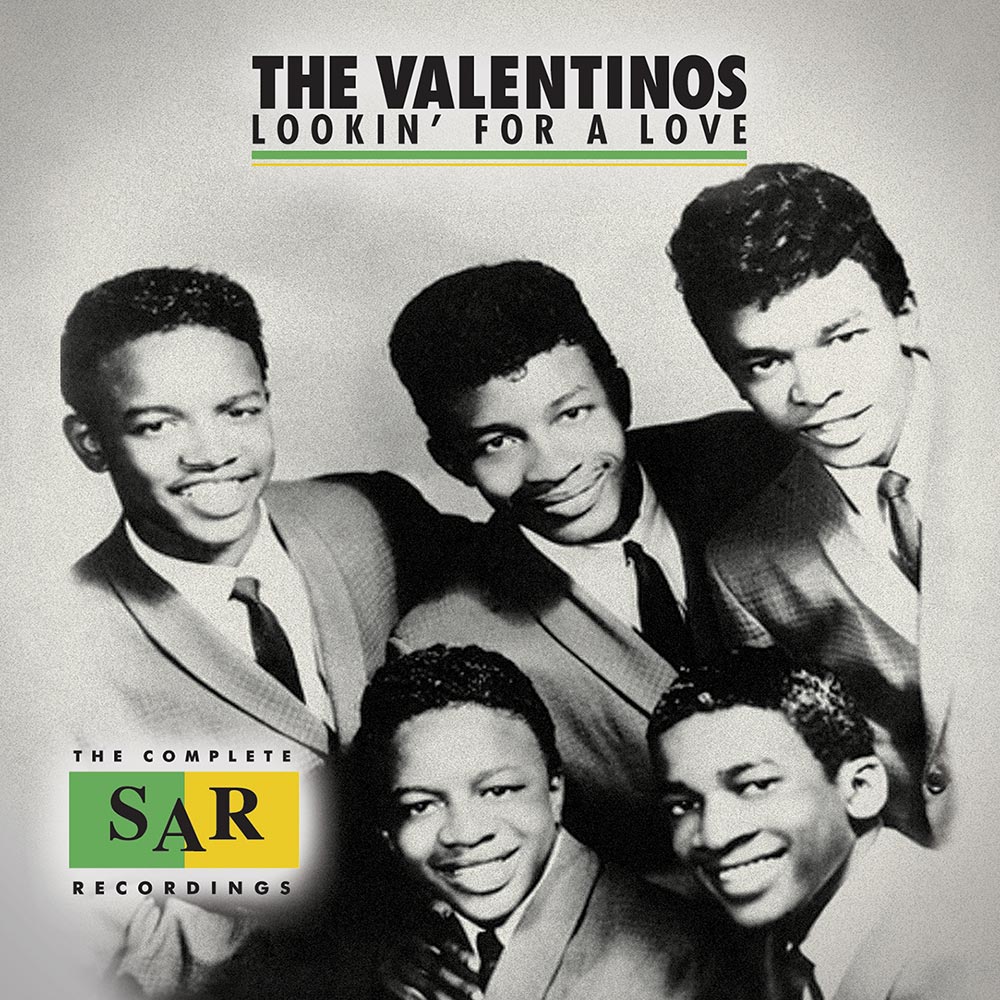
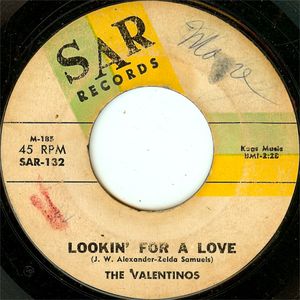

RHYTHM ’N’ BLUESIN’ BY THE BAYOU-MAD DOGS, SWEET DADDIES AND PRETTY BABIES.
RHYTHM ’N’ BLUESIN’ BY THE BAYOU-MAD DOGS, SWEET DADDIES AND PRETTY BABIES.
Not many compilation series survive to celebrate their tenth anniversary. Usually, a compilation series runs out of steam after four or five compilations. By then, the compiler has exhausted the supply of new music. However, as with every rule, there is an exception. In this case I give you Ian Saddler’s By The Bayou series.
It was back in August 2012, that Ian Saddler released what was the first in the By The Bayou series, Boppin’ By The Bayou. Critics welcomed this lovingly compiled retrospective of Louisiana’s musical past. Surely a followup would be released?
That proved to be the case. Boppin’ By The Bayou Again was released in January 2013. It picked up where Boppin’ By The Bayou left off. Then a month later, Rhythm ‘N’ Bluesin’ By The Bayou was released in February 2013. This wasn’t the last we would hear from Ian Saddler during 2013.
Three months passed, and the next instalment in the By The Bayou series was released. This was Bluesin’ By The Bayou. Then five months later, Boppin’ By The Bayou-More Dynamite was released in October 2013. This was the fifth instalment in the By The Bayou series. Despite this, there was no drop in quality. That’s not surprising. Louisiana is a musical hotbed, one that for far too long, has been overlooked by compilers. For Ian Saddler, compiler of the By The Bayou series, this was good news. There was plenty of music left for further volumes in the By The Bayou series.
As 2014 dawned, Rhythm ‘N’ Bluesin’ By The Bayou-Rompin’ and Stompin’ was released in January 2014. Another three further volumes in the By The Bayou series were released during 2014. In March 2014, Swamp Pop By The Bayou was released. Three months later, in July 2014, came Bluesin’ By The Bayou-Rough ‘N’ Tough. Then in September 2014 Boppin’ By The Bayou-Made In The Shade was released. Bluesin’ By The Bayou-Rough ‘N’ Tough was the ninth instalment in the By The Bayou series. 2015 would see the By The Bayou series celebrate its tenth anniversary.
We didn’t have long to wait before the tenth instalment in the By The Bayou series was released. On 26th January 2015, Rhythm ‘N’ Bluesin’ By The Bayou-Mad Dogs, Sweet Daddies and Pretty Babies was released. It sees Ian Saddler return to South Louisiana, where he discovered twenty-eight tracks. These are no ordinary tracks though.
The twenty-eight tracks on Rhythm ‘N’ Bluesin’ By The Bayou-Mad Dogs, Sweet Daddies and Pretty Babies come from the vaults of five of South Louisiana’s top producers. This includes tracks recorded at J.D. Miller’s Crowley studio and Eddie Shuler’s Goldband studio. Other tracks were released on, Floyd Soileau’s Rod label, Sam Montel’s Montel label and Golen Richard’s Richland imprint. Most of these tracks were discovered in the musical goldmine that’s the music store originally founded by J.D. Miller.
Indeed, twenty-two of the tracks on Rhythm ‘N’ Bluesin’ By The Bayou-Mad Dogs, Sweet Daddies and Pretty Babies were discovered in the music store founded by J.D. Miller. It’s situated in the same place, in North Parkerson Avenue, Crowley. Nowadays, the shop is run by J.D. Miller’s youngest sun, Mark. He runs what’s best described as a musical emporium. It has everything a musician, or music lover could want. Whether its guitars, picks, plugs or CDs, Mark Miller has it in his shop. That’s not forgetting a recording studio, complete with master tapes galore.
It’s at Mark Miller’s studio, where Mark, a record producer, sound engineer and bassist, transferred twenty-two of the tracks on Rhythm ‘N’ Bluesin’ By The Bayou-Mad Dogs, Sweet Daddies and Pretty Babies from the original master tapes. Eight of these tracks have never been released before. Other tracks on Rhythm ‘N’ Bluesin’ By The Bayou-Mad Dogs, Sweet Daddies and Pretty Babies are from veterans of the By The Bayou series.
Among the names on Rhythm ‘N’ Bluesin’ By The Bayou-Mad Dogs, Sweet Daddies and Pretty Babies are Lester Robertson, Leroy Washington, Mad Dog Sheffield, Carol Fran, Clifton Chenier, Katie Webster, Wonder Boy Travis, Guitar Gable, Clarence Garlow or Lazy Lester. New names include Eddie Williams, Frank Simien and Anna Mae Rogers. That’s why Rhythm ‘N’ Bluesin’ By The Bayou-Mad Dogs, Sweet Daddies and Pretty Babies is described as “rompin’, stompin’ music,” that’s bound to set “feet a-tappin’.” Let’s hope so, as it would be a fitting way for the By The Bayou series to celebrate its tenth anniversary.
What better way to open Rhythm ‘N’ Bluesin’ By The Bayou-Mad Dogs, Sweet Daddies and Pretty Babies than with Little Victor’s Papa Lou and Gran. It’s an explosive, wild eyed rocker. Penned by Victor Phillips, Little Victor and His Orchestra recorded Papa Lou and Gran. for J.D. Miller in 1954. Seven long years later, and Papa Lou and Gran was released on the Morgan City based, Richmond label in 1961. Sadly, commercial success eluded this bug eyed rocker, which is one of just a few tracks Little Victor recorded for J.D. Miller.
Katie Webster was part of Louisiana’s musical royalty. She was famed for her piano playing and vocal ability. So, it’s fitting she appears three times on Rhythm ‘N’ Bluesin’ By The Bayou-Mad Dogs, Sweet Daddies and Pretty Babies. Her first contribution is the sassy Hoo Wee, Sweet Daddy, which she recorded for J.D. Miller. It was then released in 1959, and is a tantalising taste of a musical legend. A year previously, in 1958, Katie Webster and Ashton Conroy collaborated on I Want You To Love Me. Here, Katie lays down her distinctive piano licks, and Ashton delivers a hopeful vocal on another J.D. Miller production, which was released on the Kry label. The third and final track featuring Katie Webster is Hey Mr. Love, where Katie duets with Bobby Jay on a track released in 1988, on the Flyright label. On Hey Mr. Love, Katie delivers a vocal powerhouse, that’s key to the song’s success.
Just like Katie Webster, Lester Robertson features three times. Each of these songs were written by Lester. Two of his contributions, Pretty Woman (Take It Home To Grandma) and Hoo Wee Pretty Baby have never been released before. Hoo Wee Pretty Baby is something of a hidden gem. It sounds as if it was recorded in the late fifties, when rock ’n’ was in its infancy. From the get-go, Lester grabs the song and makes it swing. Lester’s final contribution is Take It On Home To Grandma. He’s accompanied by The Upsetters on a hook-laden, swinging track released on the Motel label in 1958. Sadly, Lester didn’t enjoy the commercial success his music deserved, and went into religious exile.
Anna Mae Rogers is better known as the pianist in Clarence Garlow’s band. However, during a recording session at J.D. Miller’s studio in 1954, Anna delivered the vocal on I Called You Up Daddy. It was released on the Feature label in 1954, and showcases a talented vocalist and pianist, who could’ve and should’ve reached greater heights.
Mad Dog Sheffield features twice on Rhythm ‘N’ Bluesin’ By The Bayou-Mad Dogs, Sweet Daddies and Pretty Babies. On Mad Dog, a blistering, piano driven track, Mad Dog Sheffield howls and hollers, delivering his own unique vocal masterclass. Penned by Eddie Shuler and Mad Dog, Mad Dog was released as a single in 1956, on the Goldband label. It’s without doubt, one of the highlights of Rhythm ‘N’ Bluesin’ By The Bayou-Mad Dogs, Sweet Daddies and Pretty Babies. Thirty-one years later, in 1987, Mad Dog released I Got Fever (Wicked Fever) on the Flyright label. Even after all these years, Mad Dog was still a hugely talented vocalist. Sadly, in the intervening years, Mad Dog never got the breaks he deserved.
Two of the real finds on Rhythm ‘N’ Bluesin’ By The Bayou-Mad Dogs, Sweet Daddies and Pretty Babies come courtesy of Carol Fran. She learnt her trade singing in Lafayette nightclubs, before signing a contract with producer J.D. Miller. Knock Knock and One More Time are both tracks that were recorded, but never released. That’s a great shame, as Carol can breath life, meaning and emotion into a track.
With some of the artists on Rhythm ‘N’ Bluesin’ By The Bayou-Mad Dogs, Sweet Daddies and Pretty Babies, one track doesn’t do the artist justice. That’s the case with Leroy Washington. So, compiler Ian Saddler has included a trio of tracks from the Palermo born, singer, songwriter and guitarist. Sally Lou, which Leroy wrote, has never been released before, and makes a welcome debut on Rhythm ‘N’ Bluesin’ By The Bayou-Mad Dogs, Sweet Daddies and Pretty Babies. Baby Please Come Home, another track Leroy penned, was released in 1981, on Flyright. It features a needy, hopeful vocal. Then on Hello Baby, What You Know, Leroy unleashes some blistering guitar licks, before he and his band ensure the track swings. Released in 1985 on Flyright, Hello Baby, What You Know will have you longing to hear more from Leroy Washington.
Lionel Torrance was the saxophonist in Clifton Chernier’s band. That was a much prized position. After all, Clifton Chernier’s band featured some of the top musicians in Louisiana, including pianist Katie Webster. It was through playing in Clifton Chernier’s band that Lionel came to the attention of J.D. Miller. When J.D. Miller heard Lionel, he signed him on a recording contract. One of the five singles Lionel recorded for J.D. Miller was Rooty Tooty, which was released in 1962, on Zynn. During Rooty Tooty, Lionel unleashes his braying, blistering saxophone. It’s akin to a masterclass, from the Franklin born saxophonist.
Lazy Lester is a veteran of the By The Bayou series. He’s featured on previous volumes. However, his contribution on Rhythm ‘N’ Bluesin’ By The Bayou-Mad Dogs, Sweet Daddies and Pretty Babies is Tell Me Pretty Baby, which, until now, has never been released. Thankfully, Ian Saddler has rectified this. What follows is another of the compilation’s highlights from the Louisiana based harmonica player and vocalist, Lazy Lester.
Clifton Chenier contributes a slice of zydeco to Rhythm ‘N’ Bluesin’ By The Bayou-Mad Dogs, Sweet Daddies and Pretty Babies. This is Hey Ma Ma, where Clifton and his trusty accordion propel this roller coaster of an arrangement along. Hooks certainly haven’t been spared, on a track from the former Grammy Award winner and Blues Hall of Fame inductee.
My final choice from Rhythm ‘N’ Bluesin’ By The Bayou-Mad Dogs, Sweet Daddies and Pretty Babies is Charles Morris’ When It Rains It Pours. This is another of the unreleased tracks. Given the quality of the track, that’s quite incredible. Slow and moody, bluesy and soulful, Charles delivers a soul-baring vocal that oozes hurt and heartache. Quite simply, this is easily, one of my highlights of Rhythm ‘N’ Bluesin’ By The Bayou-Mad Dogs, Sweet Daddies and Pretty Babies.
The recently released Rhythm ‘N’ Bluesin’ By The Bayou-Mad Dogs, Sweet Daddies and Pretty Babies is the perfect way for the By The Bayou series to celebrate its tenth anniversary. Quite simply, Rhythm ‘N’ Bluesin’ By The Bayou-Mad Dogs, Sweet Daddies and Pretty Babies oozes quality. From the opening bars of Little Victor and His Orchestra’s Papa Lou and Gran, right through to the closing notes of Lester Robertson and The Upsetters’ Take It Home To Grandma, it’s quality all the way. That’s what we’ve come to expect from Ian Saddler’s By The Bayou compilation series.
Each of the nine previous compilations in the By The Bayou series, were lovingly compiled by Ian Saddler. That’s the case with Rhythm ‘N’ Bluesin’ By The Bayou-Mad Dogs, Sweet Daddies and Pretty Babies. Somehow, however, Ian Saddler has managed to compiled a compilation that’s managed to surpass everything that’s gone before. That takes some doing. After all, Ian has set his standards high on each of the nine previous instalments in the By The Bayou series. However, Rhythm ‘N’ Bluesin’ By The Bayou-Mad Dogs, Sweet Daddies and Pretty Babies is Ian Saddler’s finest hour.
No wonder. The twenty-eight tracks on Rhythm ‘N’ Bluesin’ By The Bayou-Mad Dogs, Sweet Daddies and Pretty Babies come from the vaults of South Louisiana music royalty. This includes tracks recorded at J.D. Miller’s Crowley studio, and Eddie Shuler’s Goldband studio. Other tracks were released on, Floyd Soileau’s Rod label, Sam Montel’s Montel label and Golen Richard’s Richland imprint. There’s contributions from By The Bayou veterans Lester Robertson, Leroy Washington, Mad Dog Sheffield, Carol Fran, Clifton Chenier, Katie Webster, Wonder Boy Travis, Guitar Gable, Clarence Garlow or Lazy Lester. New names include Eddie Williams, Frank Simien and Anna Mae Rogers. Each and every one of these artists play their part in the success of Rhythm ‘N’ Bluesin’ By The Bayou-Mad Dogs, Sweet Daddies and Pretty Babies. It the finest instalment in Ace Records’ By The Bayou series, so far.
Hopefully, further volumes of the By The Bayou series will follow. After all, in just three short years, Ian Saddler’s By The Bayou compilation series is one of Ace Records’ most popular compilation series. No wonder. The music on the By The Bayou series epitomises everything that’s good about the music of Louisiana. That’s the case in the tenth instalment of this hugely popular series, Rhythm ‘N’ Bluesin’ By The Bayou-Mad Dogs, Sweet Daddies and Pretty Babies. Just like Rhythm ‘N’ Bluesin’ By The Bayou-Mad Dogs, Sweet Daddies and Pretty Babies promises, its “rompin’, stompin’ music,” that’s bound to set “feet a-tappin’.”
RHYTHM ’N’ BLUESIN’ BY THE BAYOU-MAD DOGS, SWEET DADDIES AND PRETTY BABIES.
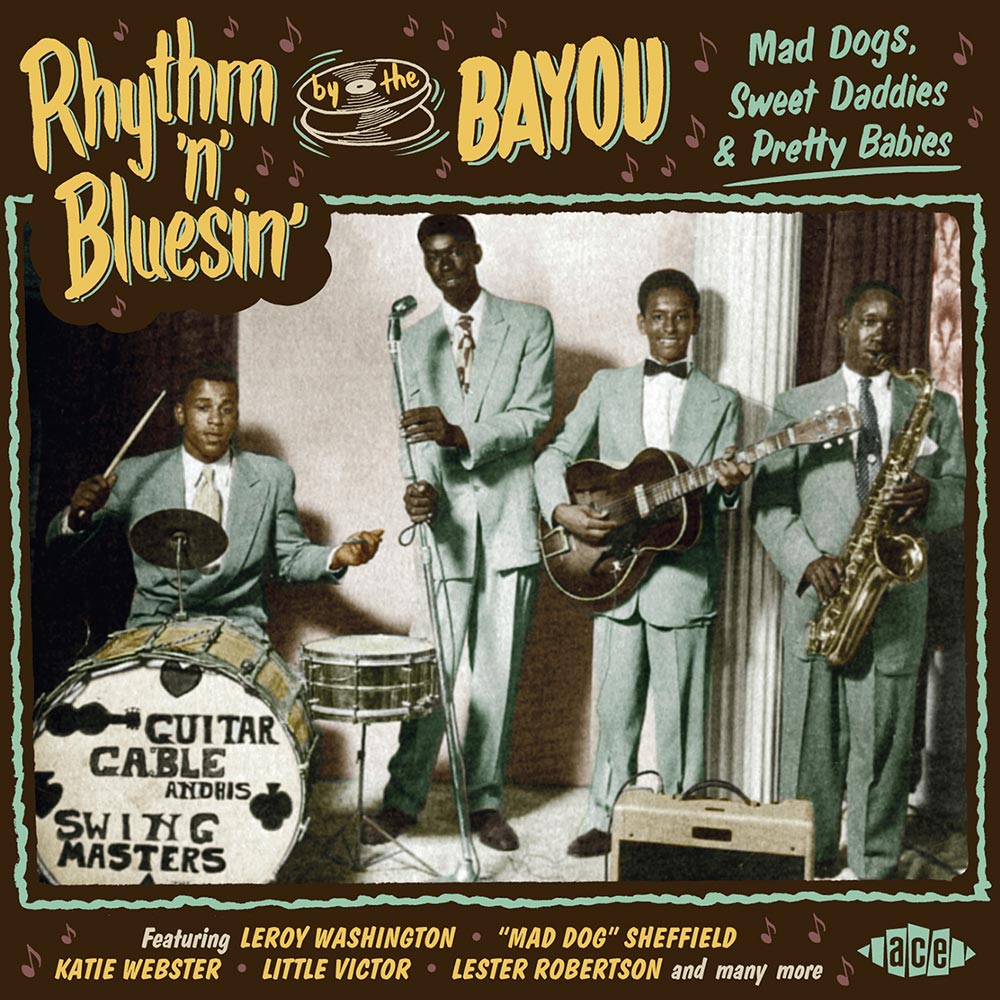
SAM DEES-IT’S OVER-70s SONGWRITER DEMOS AND MASTERS.
SAM DEES-IT’S OVER-70s SONGWRITER DEMOS AND MASTERS.
Sometimes, for whatever, reason, an artist doesn’t enjoy the commercial success and critical acclaim they deserve. Instead, their music is only enjoyed a discerning circle of music lovers. That’s the case with Sam Dees. He is, without doubt, one of soul music’s best kept secrets. Sam Dees could’ve, and should’ve, been one of the biggest names in music. Sadly, that’s not the case. Instead, Sam Dees is better known as a songwriter.
That’s why Sam Dees is described as: “a prolific songwriter and occasional performer.” That’s true. While Sam has written nearly four-hundred songs, he’s only released three albums. Sam’s debut album was 1975s The Show Must Go On. After a gap of fourteen years, Sam returned in 1989 with Secret Admirer which was released on his own label, Pen Pad Records. Another nine years passed, before Sam released 1998s Lovers Do. Since then, nothing has been heard of Sam Dees. As a result, it looks as if Sam Dees will never fulfil his potential. Things, however, looked very different in the early seventies.
Back in the early seventies, Sam Dees had just signed to Clintone Records. It would be home for Sam Dees for the next few years. Sam released one of his best known singles, Claim Jumping on Clintone Records. It’s one of nineteen tracks on It’s Over-70s Songwriter Demos and Masters, which was recently released by Kent Soul, an imprint of Ace Records.
It’s Over-70s Songwriter Demos and Masters is the most comprehensive retrospective of Sam Dees time at Clintone Records. There’s singles, demos and thirteen unreleased tracks. This includes two alternate takes of tracks from Sam Dees’ 1975 album, The Show Must Go On. Quite simply, It’s Over-70s Songwriter Demos and Masters is essential listening for anyone interested in Sam Dees music.
Sam Dees was born in Birmingham, Alabama, in December 1945. He was born into a large family. Sam stood out though. The reason for that was his voice. From an early age, it was obvious that Sam was a talented singer. When he was just nine, Sam was a veteran of talent contests. He’d won numerous talent shows, so decided to form his own group The Bossanovians. By the time Sam was ten, it became apparent Sam had a way with words.
Unlike most ten year olds, Sam was writing poetry and songs. Looking back, Sam Dees was something of a musical prodigy. So, it’s no surprise that he would make a career as a songwriter. Before that, he had dreams of becoming a singer.
Although Sam was a still teenager, he was already travelling from his Birmingham home to perform. This was the equivalent of Sam serving his musical apprenticeship. Then in 1968, Sam caught a break, He got the chance to record his debut single.
Given Sam was an aspiring soul singer, it sees strange that he made his recording debut in Nashville. I Need You Girl was released on SSS International. Sadly, it wasn’t a commercial success. Neither were Easier To Say Than Do nor It’s All Right (It’s All Right), which sam released on Lo Lo Records in 1969. Then as a new decade dawned, Sam’s luck changed.
Since 1968, Clarence Carter had been signed to Atlantic Records. He’d released a trio of albums, to varying degrees of success. His fourth album, Patches, was released in 1970. Produced by Rick Hall, and featuring some of Memphis’ top musicians and backing vocalists, including Chalmers, Rhodes, Chalmers, Patches featured songs from some top songwriters. This included Sam Dees. He wrote Changes, a heartbreakingly beautiful slice of Southern Soul. For Sam Dees, an up-and-coming singer and songwriter, writing a song for Clarence Carter was something of a coup. He was, after all, signed to Atlantic Records, one of the biggest soul labels. Little did Sam realise that in a few years, he’d be signed to Atlantic Records. Before that, Sam signed to another famous label, Chess Records.
1971 proved to be an important year for Sam Dees. He signed to Chess Records, releasing two singles, the Larry Weiss penned Maryanna and Can You Be A One Man Woman. Despite the quality of music, Sam wasn’t making that important commercial breakthrough. At least other artists were covering his songs.
Rozetta Johnson covered A Woman’s Way. It was the B-Side to her single Mine Was Real. Sam wrote both songs with his wife Lillian Dees. He co-produced the songs with Clinton Moon. Released on Clintone Records, it reached number ninety-four in the US Billboard 100 and thirty-nine in the US R&B Charts. This was the first hit single Sam had written. Despite this, Sam saw himself as a singer first, and then a songwriter.
Having written and produced his first hit single, Sam hadn’t given up hope of forging a successful career as a songwriter. After leaving Chess, Sam signed to Clintone Records as a solo artist in 1972.
By then, Sam was no stranger to Clintone Records. Using the alias Black Haze Express, he had released Won’t Nobody Listen as a single in 1971. A year later, Sam’s solo career began at Clintone Records.
Just like his time time at SSS International, Lo Lo Records and Chess Records, Sam Dees wasn’t exactly prolific at Clintone Records. Far from it. He only released one single on Clintone Records. This was Claim Jumping Man, which was released in 1972.
Claim Jumping Man is one of the nineteen tracks on the Kent Soul compilation, It’s Over-70s Songwriter Demos and Masters. It’s one of Sam’s finest hours. Penned by Sam and Bill Brandon, Claim Jumping Man is an outpouring of anger, frustration and emotion from Sam, as he delivers what’s akin to a vocal powerhouse. On the flip side, was I’m So Very Glad, which was wrongly credited to Phase IV. However, I’m So Very Glad enjoyed its moment in the sun three years later, when it featured on Sam’s classic album The Show Must Go On. So would two other tracks on The Show Must Go On, What’s It Gonna Be and So Tied Up.
The versions of What’s It Gonna Be and So Tied Up on It’s Over-70s Songwriter Demos and Masters are alternate versions. They’re quite different from the versions on The Show Must Go On. What’s It Gonna Be is shorter, and doesn’t have such a heavily orchestrated arrangement. However, it’s a heartachingly beautiful track, one that features a heartfelt, pleading vocal. Sam then drops the tempo on So Tied Up.
So Tied Up is Sam Dees at his best. It’s a tender ballad, where lush strings and backing vocal accompany Sam’s soul baring vocal. These backing vocals don’t feature on the version on The Show Goes On. However, they feature more heavily on the Atlantic single. This alternate version of what’s beautiful, heartfelt, ballad, shows another side to what’s one of the best tracks on Sam’s debut album. There’s more to It’s Over-70s Songwriter Demos and Masters than just two tracks.
This includes dance floor friendly tracks. It’s Over-70s Songwriter Demos and Masters is a proto disco track, where Sam delivers a gravely vamp. Total Love is a hook laden dancer, that could’ve filled dance floors forty years ago. So could A Case Of The Boogie, where Sam Dees does disco. After this, the tempo drops again.
The mid paced Today Is A New Day is best described as a slice of musical sunshine. Sam delivers the lead vocal, while what sounds like Fredrick Knight adds whispery backing vocals. This whets your appetite for Sam Dees doing what he does best, delivering ballads.
I Know Where You’re Coming From is one of thirteen unreleased tracks on It’s Over-70s Songwriter Demos and Masters. Originally, it was released as a single by Loleatta Holloway in 1975, on Aware Records. It also featured on Loleatta’s 1975 album Cry To Me. By then, Sam had recorded a version of I Know Where You’re Coming From. Sam takes the track in a very different direction from Loleatta, transforming it into a tender, thoughtful ballad. We’ve Got To Get It Together is another ballad. Keyboards add an element of drama, before Sam tenderly, tells the story of young love. Soon, his vocal grows in power, becoming emotive and needy, during a long lost hidden gem of a ballad.
Anything Is Fair In Love And War is another ballad, that was first released in 2000. Penned by Sam with Jesse Lewis, Sam breathes life, meaning and emotion into the lyrics, against an understated arrangement. This reinforces that when it comes to ballads, Sam Dees is one of the best. That’s obvious on Married, But I’m Still In Love With You, which was originally released in 2014, on the Kent LP Take One. Here, Sam’s trapped in a loveless marriage, unleashes a needy vocal. It’s akin to a heartfelt, confessional, where Sam sounds as if he’s lived the lyrics. You think the ballads can’t get any better. However, they do.
Slow and sultry describes Someone To Run To. Gimme A Little Action is similar to Someone To Run To. However, sultry becomes sensual as Sam delivers a needy, hopeful vocal. This isn’t the end of the ballads. Touch Me With Your Love features a lovestruck Sam, he delivers a needy, pleading vocal on a track that’s bristling with sexual energy. Not for the first time, do you think things can’t get any better. They do. It’s Over-70s Songwriter Demos and Masters, Nobody Wins, which closes It’s Over is an outpouring of emotion. Without doubt, one of Sam’s finest ballads, and leaves you wondering why Sam Dees wasn’t one of soul’s superstars?
That looked like being the case. Later in 1973, after his brief spell at Clintone Records, Sam Dees signed to Atlantic Records.
Later in in 1973, Sam release two singles for Atlantic, So Tied Up and I’m So Very Glad. Despite their undoubted quality, they weren’t the commercial success they deserved to be. At least a song Sam cowrote proved much more successful.
Stop This Merry-Go-Round was was a song Sam, Albert Gardner and Clinton Moon had written. Originally, Bill Brandon took the song to number thirty-three in the US R&B Charts. Now, John Edwards a future Detroit Spinner would record the track. His Johnny Taylor styled cover was released on Aware in 1973, reaching number forty-five in the US R&B Charts. Again, Sam was enjoying more success writing songs than singing them. He wasn’t for turning his back on his solo career,
Sam returned to his solo career in 1974. He released two singles, Worn Out Broken Heart and Come Back Strong. Neither were a commercial success, but Come Back Strong proved to be prophetic.
With the last couple of years proving unsuccessful for Sam Dees, 1975 was a big year for him. Sam was about to release his debut album The Show Must Go On. It featured ten tracks. Four were penned by Sam, including The Show Must Go On, Come Back Strong, What’s It Gonna Be and Good Guys. Sam cowrote Claim Jumpin’ and So Tied Up with William Brandon. He also cowrote Just Out Of Reach with James Lewis and Worn Out Broken Heart with Sandra Drayton. Child Of The Streets was a collaboration between Sam and David Cammon. The pair cowrote Troubled Child with Al Gardner. These ten tracks became The Show Must Go On, and were recorded at two studios in Birmingham, Alabama.
To record his debut album The Show Must Go On, Sam headed to home to Birmingham, Alabama. He recorded The Show Must Go On at two studios, New London Studios and Sound Of Birmingham. For the recording sessions, Sam drafted in a small, tight band. The rhythm section featured drummer Sherman “Fats” Carson. bassist David Camon and guitarist Glen Woods. Arrangers included Randy Richards, Ronnie Harris, Skip Lane and Sam. Aaron Varnell arranged the horns on Claim Jumpin.’ Sam played piano and produced The Show Must Go On, which was released in 1975.
Sadly, when The Show Must Go On was released, musical tastes had changed. Disco was now King. Soul albums weren’t selling well. The Show Must Go On wasn’t a commercial success. Neither were the singles The Show Must Go On, nor Fragile, Handle With Care. For Sam, this must have been a huge disappointment. Here he was signed to one of soul’s most prestigious labels, but at the wrong time. Belatedly, however, The Show Must Go On has come to be regarded as a Southern Soul classic, and was the last time we heard from Sam until 1989.
After a gap of fourteen years, Sam returned in 1989 with Secret Admirer which was released on his own label, Pen Pad Records. Another nine years passed, before Sam released 1998s Lovers Do. Since then, nothing has been hear of Sam Dees. As a result, it looks as if Sam Dees will the commercial success and critical acclaim he deserved.
This wasn’t down to a lack of talent. Far from it. Sam Dees is, without doubt, one of the most talented soul singers of his generation. Sadly, commercial success and critical acclaim eluded him. That’s why nowadays, Sam Dees is better known as a songwriter.
Realising he was never going to become one of soul’s superstars, Sam Dees decided to concentrate on writing songs. He’s enjoyed a long and successful career, writing songs for the great and good of soul music. That’s why nowadays, Sam Dees is described as: “a prolific songwriter and occasional performer.” However, back when Sam was signed to Clintone Records, he still had dreams of enjoying a career as a successful singer.
No wonder. Throughout It’s Over-70s Songwriter Demos and Masters, the nineteen songs literally ooze quality. It’s a case of all killer, no filler. Love songs sit comfortably side-by-side with dance tracks and songs full of social comment. Back in the early seventies, it Southern Soul had found its conscience. However, Sam Dees is at his best writing love songs.
That’s where Sam shines, especially on ballads. He breathes life, meaning and emotion into ballads like I Know Where You’re Coming From, Anything Is Fair In Love And War, Married, But I’m Still In Love With You, Someone To Run To, Gimme A Little Action and It’s Over-70s Songwriter Demos and Masters, Nobody Wins feature Sam Dees at his very best. During these tracks, the betrayal, hurt and loneliness come to life. So do the hope and joy. Sam sings the lyrics as if he’s lived, loved and survived the lyrics. Other times, he sounds as if he’s experienced the hope and joy that love brings. This makes the music on It’s Over-70s Songwriter Demos and Masters sound very personal. It also makes the music on It’s Over-70s Songwriter Demos and Masters absolutely captivating. That’s why, Sam Dees is, without doubt, one of soul music’s best kept secrets.
Sam Dees could’ve and should’ve been one of the biggest names in music. You’ll realise why, when you hear It’s Over-70s Songwriter Demos and Masters, which was recently released by Kent Soul, an imprint of Ace Records. It’s Over-70s Songwriter Demos and Masters is a welcome addition to Sam Dees’ discography, and is a tantalising taste of a man who, nowadays, is described as: “a prolific songwriter and occasional performer.” However, a better of description of Sam Dees is a man who could’ve and should’ve been King of seventies soul.
SAM DEES-IT’S OVER-70s SONGWRITER DEMOS AND MASTERS.
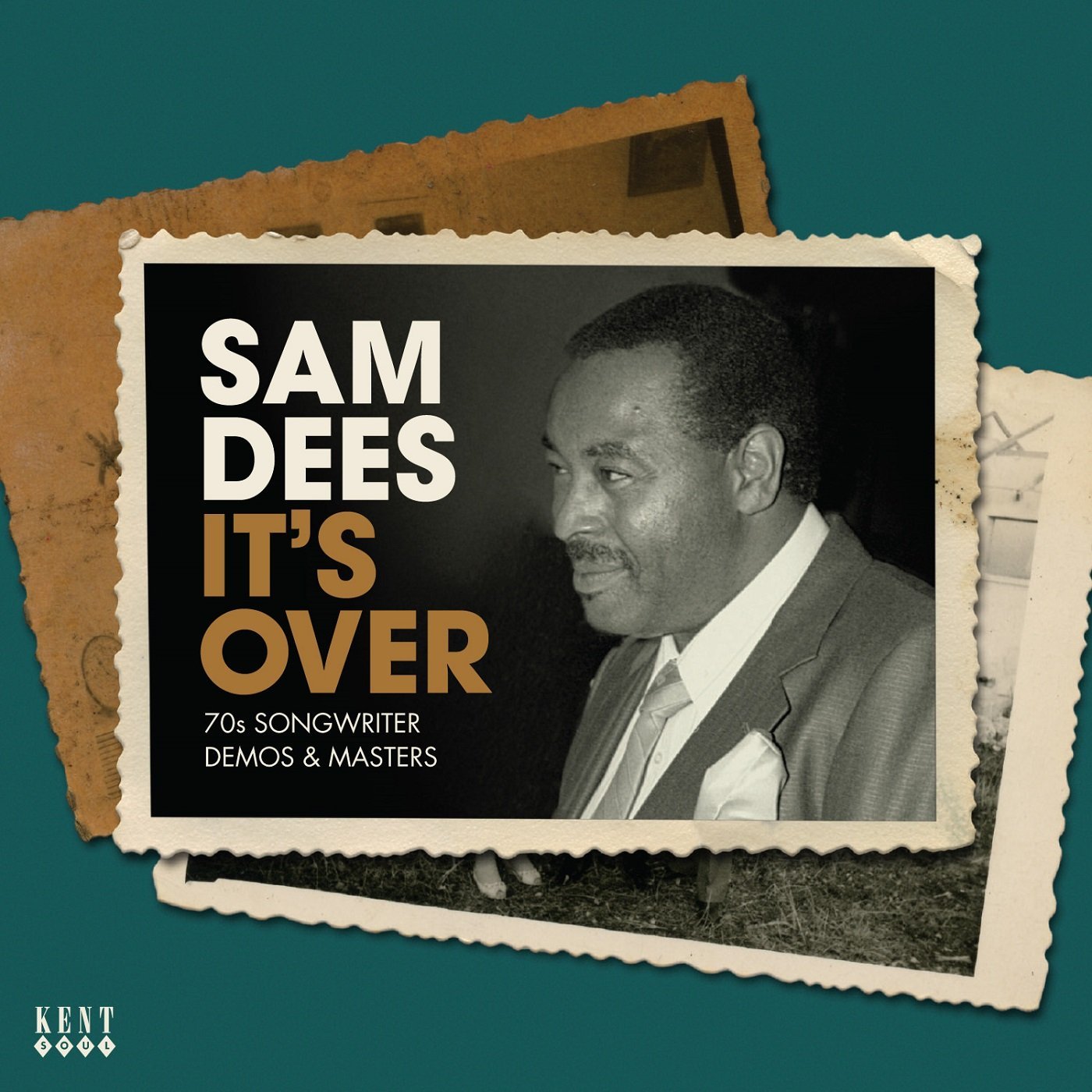
CERRONE-LOVE IN C MINOR.
CERRONE-LOVE IN C MINOR.
Recently, I wrote about Cerrone’s second album Cerrone’s Paradise, released in 1977. The album that inadvertently started Marc Cerrone’s solo career was Love In C Minor, released the year before, in 1976. After this, Marc Cerrone would go on to become one of the biggest selling artists of the disco era, selling over thirty million albums worldwide. This made Marc Cerrone one of the most successful European disco artists. Apart from being a hugely successful artist, Marc is an innovator. He realized the importance of the kick drum in modern dance music, and is credited with positioning the kick drum at the front of the mix. However, when Mark Cerrone recorded his debut album Love In C Minor, which was recently rereleased by Because Records, he never envisaged a long and successful solo career. Instead, this was Marc bowing out from music, but determined to do so with a bang, rather than a whimper.
Having left his previous group Kongas after the group decided to change direction musically, the now twenty-three old Marc Cerrone found himself married with a young family. Now was the time to heed the advice of his father, and get himself a “regular” job. Using a portion of his royalties from the sales of the Konga’s music, Marc bought a record shop Import Music. However, rather than settle for family life and working in his record shop, he wanted one last hurrah musically. This he said was farewell to music from Marc Cerrone. So, to make sure this was a memorable musical farewell, Marc enlisted the help of Alec R. Constandinos, a writer and producer. Together, the pair would ensure that Marc farewell was a Magnus Opus, fitting his premature farewell to music.
Marc had an idea for his farewell, an album that was a sensuous symphony of delicious disco music. Grandiose and lavish this album would be, tinged with funk and spread over two sides of the album. Initially, Alex was unsure, but quickly came round to Marc’s way of thinking. Now convinced in the project’s merits, the pair headed across the channel, destination the Trident Studios in London.
Once Marc and Alex arrived in London, they spent September and October of 1976, recording what would become Love In C Minor. With three tracks written, two by Marc and Alex, who’d also produce the album, they put together a band and backing singers. Joining Marc on the album, would be keyboard player Don Ray, with whom he’d colaborate on Marc’s second album Cerrone’s Paradise and Don’s Garden of Love. Among the other musicians were bassist Mo Foster, percussionist Tony Carr and guitarist Hughie Burns. The backing vocalists were Madeline Bell and Jackie Sullivan who both sang on Cerrone’s Paradise, plus Stephanie De Sykes, Joanne Williams and Jean Hawker. With John Watson’s brass section and the Pat Halling String Ensemble, Love In C Minor was indeed going to a lavish album, worthy of any farewell to the music industry. However, would Love In C Minor prove a successful farewell to music from Marc Cerrone?
Now that Love In C Minor was recorded, Marc tried to get a French record label interested in the album. Regardless of who he approached, no-one was interested. Instead, he decided to have five-thousand copies pressed, and sell them himself. Alex wasn’t convinced, trying to stop Marc from making what he thought was a huge mistake. Sadly, this lack of belief in Marc’s music caused a split in their relationship. Undeterred, Marc had the record pressed, with five-thousand copies of Love In C Minor pressed for his own Malligator Records label. Then fate would intervene when an error was made in shipping an order.
This shipping error resulted in copies of Love In C Minor finding their way across the Atlantic, finding there way to New York. Love In C Minor took the Big Apple’s discos by storm. Atlantic Records realizing the potential of the album, struck a deal to license it through their Cotillion Records subsidiary. Before Love In C Minor was released in America, Love In C Minor (Part 1) was released as a single reaching number thirty-six in the US Bilboard 100, while reaching number twenty-nine in the US R&B Charts. Meanwhile, the single reached number twenty-six in the UK. On the release of Love In C Minor, the album reached number 153 in the US Billboard 200, number fifty-five in the US R&B Charts and number two in the Disco Charts. Quickly, Love In C Minor had become a hugely popular album, resulting in Atlantic desperately trying to persuade Marc to tour the US to promote the album and tour. Marc was insistent that he’d finish his second album, which would become Cerrone’s Paradise. It seemed that Marc Cerrone’s farewell to music would’ve to be put on hold, after the success of Love In C Minor which I’ll now tell you about.
Opening Love In C Minor is Love In C Minor (Part 1) which was released as a single, a track that lead to the term Euro Disco being coined. It’s a sprawling, sensuous sixteen minute Magnus Opus, that took up one side of Love In C Minor. As the track opens, there’s badinage and double entendres from Marc’s backing vocalists, before pounding drums, lush cascading strings, percussion and the rhythm section combine with flourishes of keyboards. The tempo is 126 beats per minute, perfect for a disco track. While the strings swirl and sweep, horns rasp as the rhythm section drive the track along. By now, the sound is a combination of a dramatic arrangement and sensuality from the backing vocalists. They in turn change from sweet and innocent backing vocalists, before being are transformed into a hedonistic, sensuous and ultimately orgiastic chorus. Later, the funk influence makes its presence felt, when the rhythm section and percussion combine to create a pulsating, dramatic backdrop complete with wah-wah guitars. A musical contrast in provided by the lush strings, sultry sax solo and punchy keyboards from Marc. Subtle backing vocalists reenter, very different from their earlier erotic sound. By the end of the track, you realize not just how innovative a track this was, but how inluential it was, helping launch Euro Disco. Truly, this was a moment of genius from Marc Cerrone, a brave musical visionary of the disco era.
Black Is Black is the only track on Love In C Minor not written by Marc and Alex. Instead it co-written by Michelle Grainger, Steve Wadey and Tony Hayes. Here, the tempo increases, reaching 132 beats per minute. There’s more of a Euro Disco sound, when the track opens, with keyboards giving way to chiming guitars, rhythm section and lush strings. Listen carefully, and there’s even a hustle sound to the arrangement. Beautiful, understated, breathless backing vocalists enter, combining well with the swirling strings. Meanwhile the keyboards and pounding drums sit well together, helping give the track its Euro Disco sound. Adding an uplifting, joyful sound to the track are the cascading strings, blazing horns and backing vocalists. Combine this with some catchy lyrics sung by the backing vocalists, and classic American disco given a European twist by Marc Cerrone, and you’ve the recipe for a timeless sounding track, that over thirty years later still has a contemporary sound.
Closing Love In C Minor is Midnite Lady, the fastest of the trio of tracks on the album. Hissing hi-hats open the track, before the track takes on a moody, thoughtful sound. Accompanying Marc’s breathless, sensual vocal, is an arrangement that promises drama. This is signaled by the relentless, pounding beats, keyboards and percussion. They sprinkle funk throughout the arrangement, especially when the rhythm section and percussion combine, before being joined by blazing horns. Then when the lushest of strings and backing vocalists enter, there’s still a funky sound, which combines with the Euro Disco sound. Later, the track takes on a pulsating, dramatic sound, thanks to the drums, while strings and backing vocalists provide a contrast. It’s almost impossible not to get caught up in the track’s irresistible sound. Quickly, you’re drawn in and just as quickly, swept away by this Midnite Lady.
Listening to Love In C Minor you only begin to realize just how innovative and influential this album was. Marc Cerrone was brave, releasing an album that was unlike anything before. In doing so, he helped invent a new genre of music Euro Disco. The three tracks on Love In C Minor have a timeless quality like all good music. Unlike many similar albums, Love In C Minor’s release, the album retains a contemporary sound. Given that it’s now thirty-six years since Love In C Minor’s release, this is quite remarkable. It seems ironic that this was meant to be Marc Cerrone bowing out of music and bidding the music industry farewell. If it hadn’t been for a shipping error, then Marc Cerrone may have ended up behind the corner in his record shop Import Music. Thankfully, fate intervened, resulting in the start of a long and successful career, and over twenty further albums. However, the album that started his career was Love In C Minor, which was recently rereleased by Because Records.
Rather than released Love In C Minor separately on vinyl and CD, Because Records packaged both together. This is extremely good value for money. It’s the equivalent of buying the vinyl version, and getting the CD free. What’s more, Because Records have given Love In C Minor a much needed remaster. This has resulted in a far superior sound quality, than previous reissues. For disco lovers looking to either discover or rediscover the delights on Marc Cerrone’s innovative and influential debut album Love In C Minor, then Because Music’s recent reissue is the perfect opportunity to do so.
CERRONE-LOVE IN C MINOR.
ERIC CLAPTON-461 OCEAN BOULEVARD.
ERIC CLAPTON-461 OCEAN BOULEVARD.
By 1974, Eric Clapton had established a reputation as a survivor. He had managed to overcome heroin and alcohol addiction. His life had spiralled out of control after releasing his debut solo album, Eric Clapton in August 1970. It reached number seventeen in Britain and number thirteen in the US Billboard 200. To onlookers, it looked as if Eric Clapton was going to enjoy the commercial success he enjoyed with Cream, Blind Faith and Derek and The Dominoes. Surely, a glittering career was about to unfold? Things however, didn’t work out like that.
Nearly four years would pass before Eric Clapton released another album. Very little was heard of Eric Clapton during that period. He made brief appearances at the Concert For Bangladesh in August 1971. By then, Eric Clapton was deep in the throes of heroin and alcohol addiction. He was also infatuated with Pattie Boyd, who was then married to his friend George Harrison. However, despite Eric all but turning his back on music, George Harrison managed to convince Eric to play at the Concert For Bangladesh.
Eric’s appearance at the Concert For Bangladesh didn’t quite go to plan, when he passed out on-stage. After being revived, he managed to continue his performance. That was the last time Eric Clapton played live for nearly two years.
It wasn’t until January 1973 that Eric Clapton made a comeback. During that period, Eric struggled with his drug addiction. Things got so bad, that Eric even sold some of his treasured guitars. Then came the comeback, organised by Pete Townsend, The Who’s guitarist, organised the Rainbow Concert at London’s Rainbow Theatre. The Rainbow Concert was meant to help Eric beat his addiction to drugs and alcohol.
A year later, and Eric Clapton was no longer addicted to heroin. He had a new partner, Pattie Boyd, formerly the wife of George Harrison. The only downside was Eric started drinking heavily. However, for the first time for four years, Eric Clapton released an album, 461 Ocean Boulevard.
Having overcome his addiction to heroin, Eric was given a demo tape by his old friend, Carl Radde, who had been the bassist in Derek and The Dominoes. On the tape, were a set of songs played by Carl Radle, keyboardist Dick Sims and drummer Jamie Oldaker. They would form be the genesis for 461 Ocean Boulevard.
Now that Eric had decided to make a comeback, his manager Robert Stigwood decided to bring in producer Tom Dowd. Studio time was then booked at Criteria Sound Studios, Miami. At last, the man many music lovers called God,was ready tp return to the studios.
For 461 Ocean Boulevard, Eric recorded ten tracks at Criteria Sound Studios, Miami. Of the ten tracks that became 461 Ocean Boulevard, seven were cover versions. This included Bob Marley’s I Shot The Sheriff, and unsurprisingly, given Eric’s love of blues music, covers of Robert Johnson’s Steady Rollin’ Man and Elmore James’ I Can’t Hold Out. Other covers included Johnny Otis’ Willie and The Hand Jive, Charles Scott Boyer’s Please Be With Me and George Terry’s Mainline Florida. Eric wrote Give Me Strength, Let It Grow and cowrote Get Ready with Yvonne Elliman. The other track on 461 Ocean Boulevard was Motherless Child. It was rearranged by Eric and Carl Radle. These ten tracks would become 461 Ocean Boulevard.
At Criteria Sound Studios, recording of 461 Ocean Boulevard began in April 1974. The rhythm section included bassist Carl Radle, drummer Jamie Oldaker and George Terrry and Eric on guitar. They were joined by keyboardist Dick Sims and vocalist Yvonne Elliman. Augmenting this tight, talented, band were Al Jackson, Jr. who played drums on Give Me Strength, Albhy Galuten who played synths, piano and clavichord. Marc Levy played harmonica, and with Tom Bernfield, added backing vocals. After two months, the Tom Dowd produced 461 Ocean Boulevard was completed. Two months later, Eric Clapton’s comeback was complete.
On the release of 461 Ocean Boulevard, in July 1974, mostly the reviews were positive. Some reviewers remarked upon 461 Ocean Boulevard’s honesty. Others called the music groundbreaking. However, Eric couldn’t please all the people, all the time. A few reviewers accused Eric of hiding behind his band. They believed Eric’s playing had lost its sparkle. If that was the case, that wasn’t surprising. After all, Eric had been to hell and back during the last four years. However, mostly, 461 Ocean Boulevard won over the hearts and minds of critics and record buyers.
When 461 Ocean Boulevard was released in July 1974, it reached number fifteen in Britain and number twenty-one on the US Billboard 200 charts. This resulted in 461 Ocean Boulevard being certified gold in Britain and America. This however, wasn’t the end of the commercial success.
I Shot The Sheriff was released as the lead single from 461 Ocean Boulevard. It reached number nine in Britain and number one in the US Billboard 100 charts. Then when Willie and The Hand Jive was released as a single, it reached number twenty-six in the US Billboard 100 charts. Eric Clapton’s comeback was complete. 461 Ocean Boulevard marked the return of the comeback King, Eric Clapton.
Opening 461 Ocean Boulevard is Motherless Child, a blues standard, first recorded by Blind Lemon Jefferson in 1927. The song is autobiographical, as Blind Lemon Jefferson’s mother died when he was young. Here, Eric and Carl Radle arranged Motherless Child. Blistering guitars are unleashed, as music lovers get a taste of what they’ve been missing for four years. Soon, the rhythm section of Jamie Oldaker’s drums and Carl’s bass power the arrangement along. They’re joined by washes of Hammond organ and scorching guitars that accompany Eric’s vocal. It’s tender and thoughtful. Eric eschews power, and in doing so, brings meaning to the lyrics. Then when Eric’s drops out, he and the rest of his band join forces. Before long, they’re in full flight. It’s a joy to behold. When Eric’s vocal returns, it’s as if he’s been reenergised. He seems to be feeding off the rest of the band, in an attempt to reach the heights he’s previously scaled. In doing so, it’s obvious Eric’s comeback is well underway.
Give Me Strength is one of two tracks Eric wrote himself. A slide guitar, slow hypnotic drums and a Hammond organ set the scene for Eric’s vocal on what’s a very personal track. Recovering from heroin addiction, Eric is in a fragile state. The slightest thing could set him back. Almost pleading, he sings “Give Me Strength to carry on.” As he delivers these lyrics, the track takes on an almost spiritual quality and you empathise with Eric’s plight.
The Johnny Otis’ penned Willie And The Hand Jive, might seem a strange choice for Eric to cover. However, Eric was always a fan of blues and R&B. Johnny Otis’ name was synonymous with blues and R&B. Here, Willie And The Hand Jive is transformed, and becomes a slow, laid-back track. Guitars chime, before the bass rhythm section and washes of guitar combine with Eric’s vocal. Soon, he’s ensuring the song swings. Carl Radle’s bass and Dick Sim’s Hammond organ play important parts, as this oft covered track is given a makeover.
Get Ready was written by Eric with Yvonne Elliman, who also shares the lead vocal. Shakers set the scene for the rhythm section, a chugging Hammond organ and searing guitars. They provide a dramatic backdrop for Eric’s vocal. He’s had his heartbroken, and has his mind set on revenge. However, he’s not the only one. When Yvonne’s vocal enters, it’s far from a case of mea culpa. No. She’s also looking for revenge. Anger and frustration fill her vocal. later, when Eric and Yvonne deliver the lyrics, against a stripped down groove, this proves effective. Their hurt, anger and frustration shines through, on tale of love gone wrong. It seems hell hath no fury like a man or woman scorned.
I Shot The Sheriff is very different from previous tracks. It’s a cover of a Bob Marley track. It stays true to the original, with the arrangement taking on a reggae vibe. Eric, accompanied by Yvonne Elliman’s backing vocals delivers what’s akin to a confession. Behind him, a chugging, shuffling, rhythm section, washes of Hammond organ and a piano combine with rocky guitars. They provide the perfect backdrop for Eric’s vocal, where elements of reggae and rock combine. Stylistically, it’s as if he’s determined to stay true to the original. Especially with the addition of backing vocals and Hammond organ. They add the finishing touch to what was, the most successful version of I Shot The Sheriff, which some believe, surpasses the original.
Hesitantly, and slowly, Eric begins his cover of Elmore James’ I Can’t Hold Out. Just guitar licks and hissing hi-hats combine, before the bass and washes of Hammond organ accompany Eric’s needy, hopeful vocal. Despite his vocal being stronger than on previous tracks, there’s an intimacy to Eric’s vocal. I Can’t Hold Out seems made to measure for Eric Clapton. It brings out the best in him, and apart from I Shot The Sheriff, is the best cover on 461 Ocean Boulevard.
Against an understated backdrop, crystalline guitars and backing vocals accompany Eric on Please Be With Me. Again, his vocal is needy, but sometimes, becomes wistful. It’s both effective and beautiful. So, are the singalong backing vocals and the slide guitar Eric plays. They result in a beautiful needy, paean.
Eric delivers a tender vocal and gently, strums his guitar as Let It Grow unfolds. He plays dobro and sing sabout his new partner Pattie Boyd, and their love blossoming. Gradually, the drama and emotion builds. Singalong harmonies, the rhythm section, chiming guitars and washes of Hammond organ accompany Eric as he delivers what can only be described as a soul baring vocal.
For a blues lover like Eric Clapton, covering a track by Robert Johnson was a must. The problem was, which one? For 461 Ocean Boulevard, Eric chose Steady Rollin’ Man. Straight away, Eric is reborn. It’s as if he’s determined to pay a fitting homage to a blues great. He leads from the front, delivering some glorious bluesy licks. Even his vocal has a swagger. His band pickup on this. They lift their game, seamlessly combining blues and rock, to create one of 461 Ocean Boulevard’s highlights.
Mainline Florida closes 461 Ocean Boulevard. It’s as if Eric and his all-star band are determined to close 461 Ocean Boulevard on a high. Blistering, rocky guitars and a pounding, driving rhythm section join washes of Hammond organ. As the band roar out of the blocks, Eric sings call and response with his backing vocalists. His vocal isn’t as powerful, until later, when he vamps as his band kick out the jams. With gospel tinged harmonies and his band in full stride, this is a joy to behold and proves that Eric Clapton’s comeback was complete.
After four years away, where Eric Clapton had been to hell and back, he made his long awaited comeback with his sophomore album 461 Ocean Boulevard. Expectantly, critics and music lovers awaited the release of 461 Ocean Boulevard in July 1974. The big question was, had four years of constant hard living affected Eric Clapton?
Mostly, critics thought that musically, Eric Clapton was none the worse for what had been a tumultuous four year period of full on hard living. He was still a far better guitar player than most of the pretenders to his crown. Time and practice would see Eric return to where he had once been, before he became addicted to heroin. However, he was still able to unleash some blistering, spellbinding licks on 461 Ocean Boulevard. Apart from few critics, who accused Eric of hiding behind his fellow guitarists, it seemed Eric was still one of the top guitarists. Nor had his vocal prowess been affected.
Eric was still able to breath life and meaning into songs. Other times he could make them swing. Occasionally, he delivered a swaggering vocal. Sometimes, though, Eric’s vocal seemed weak. This however, worked in his favour. It meant you were captivated by his delivery. So, it seemed Eric Clapton had survived four years of addiction to tell the tale.
That proved to be the case. These years of turmoil also inspired Eric to write Give Me Strength, where he lays bare his soul for all to see. Then there was his paean Let It Grow, which seems directed at Eric’s new partner Pattie Boyd. These two tracks were part of what’s now considered a classic album, 461 Ocean Boulevard.
While 461 Ocean Boulevard was the first classic album from Eric Clapton as a solo artist, it wasn’t his last. After 461 Ocean Boulevard, commercial success and critical acclaim would accompany Eric Clapton for the next thirty years. Just about everything Eric Clapton released, turned to silver, gold or platinum. Eric Clapton became one of the most successful solo artists. Musically, it seemed he could do no wrong. However, things might have been very different if Eric Clapton hadn’t managed to get himself clean.
If Eric Clapton remained in the throes of heroin and alcohol addiction, the commercial success and critical acclaim he enjoyed might never have happened. Thankfully, it did. However, the album that relaunched Eric Clapton’s career, was his 1974 sophomore album, 461 Ocean Boulevard, where the man they once called God becomes the comeback King.
ERIC CLAPTON-461 OCEAN BOULEVARD.

TIM BUCKLEY-LORCA.
TIM BUCKLEY-LORCA.
2015 marks the fortieth anniversary of the death of one of the most talented, and innovative, vocalists of his generation, Tim Buckley. He died on June 29th 1975, aged just twenty-nine. That day, music lost a true visionary. Tim Buckley was, and always will be remembered as a musical chameleon, who believed his raison d’être was to constantly reinvent his music.
That’s why, the nine studio albums Tim released between 1966s Tim Buckley, and his 1974 swan-song, Look At The Fool, saw Tim Buckley constantly change direction. Over eight years and nine albums, Tim Buckley flitted between jazz, funk, psychedelia and avant-garde. Then on his three final albums, Tim even toyed with sex funk on 1972s Greetings from L.A., 1973s Sefronia and 1974s Look at the Fool. However, this alienated some of his fans and resulted in Tim’s music being banned by radio stations. This was just the latest in many twists and turns in the career of Tim Buckley.
Earlier in his career, during 1969, Tim decided to write and record trio of albums simultaneously. The first in this trio of albums was Blue Afternoon, released in November 1969. On Blue Afternoon, the first album Tim produced, he takes his folk rock sound as a starting point, and gives it a jazz tinged twist. After Blue Afternoon, came Lorca, released in May 1970.
Lorca, was without doubt, one of Tim’s most ambitious album. It was one of two avant-garde albums Tim released. On Lorca, Tim all but banishes his trademark folk rock sound, and pushes musical boundaries to their limits, and sometimes, way beyond. That’s what people had come to expect from the twenty-three year old singer songwriter. By 1970, Tim Buckley had packed a lot of living into just twenty-three years.
Tim Buckley was born on 14th February 1947, in Washington DC, and later, moved to Amsterdam, New York. His first exposure to music was listening to his mother’s progressive jazz records. Throughout his childhood, he was introduced to a wide range of music, from the blues of Bessie Smith and Billie Holiday, to the jazz sounds of Miles Davis, and the country music of Hank Williams and Johhny Cash.
At high school, he sang he was inspired by the Kingston Trio and formed a group influenced by their music. Towards the end of his school career, he started missing classes to focus more of his attention on music. He was fortunate that he would meet Larry Beckett who was later, to write lyrics for Tim, and Jim Fielder who played bass in two of the groups he joined. These two groups were The Bohemians, who played popular music, and The Harlequin 3 who were a folk group.
Another fortunate meeting for Tim Buckley occurred in 1965, when he met Mary Guibert, a year younger than Buckley. Guibert became pregnant not long after, and they married in October 1965, giving birth to Jeff Buckley, who later became a talented singer songwriter. Mary Guibert would inspire much of Tim Buckley’s music. The marriage allowed Tim Buckley to spend time away from home, where his father a much decorated, US Army veteran, had became unstable, and sometimes violent. The marriage was turbulent, and Buckley soon moved into his own apartment, and soon after he realised he could not cope with married life, and the couple saw each other only occasionally thereafter. They divorced a year later in 1966, a month prior to Mary gave birth to Jeff.
After Tim left high school in 1965, he headed to college. However, college and music were too much for Tim to cope with, and he left college after two weeks to concentrate on his musical career. He spent time playing the folk clubs in LA during 1965, and then played a number of coffee houses in Orange County. In February 1966, Tim Buckley’s big break came.
He had played a concert at a club in LA called It’s Boss, when he was spotted by Jimmy Carl Black, the drummer in The Mother’s of Invention. He recommended Tim Buckley to Herb Cohen the manager of The Mother’s of Invention. Herb Cohen liked what he saw, and arranged for Buckley to play a concert at the Nite Owl, in Greenwich Village, New York. It was while Tim Buckley was there, that he met guitarist, Lee Underwood, who went on to be Buckley’s guitarist, playing on his albums. At the same time, Herb Cohen became Buckley’s manager, and arranged for him to record a demo with six tracks on it. This demo was sent to Jac Holzman at Elektra Records. Cohen liked what he heard, and after seeing Tim Buckley live, he signed him to Elektra.
Tim Buckley.
Tim’s debut album was Tim Buckley, which Tim and Larry Beckett wrote whilst at high school. It was recorded during August 1966, at Sunset Sound, Los Angeles. Producing Tim Buckley were Jac Holzman, Paul A. Rothchild. Along with a small band of top session musicians, which included pianist Van Dyke Parks, the twelve tracks that became Tim Buckley were recorded. Tim Buckley was released later in 1966.
On its release in October 1966, Tim Buckley was well received by critics. They forecasted a bright future for Tim Buckley. The nineteen year old singer-songwriter looked like he was going places.
Goodbye and Hello.
Less than a year later, Tim Buckley returned with his sophomore album Goodbye and Hello. This would be the final album to feature lyrics penned by Larry Beckett. This was the end of an era in the Tim Buckley story. Producing Jac Holzman
Recording of Goodbye and Hello took place in in June 1967, in Los Angeles. Some of the same musicians who played on Tim Buckley returned. They played their part in what’s one of Tim Buckley’s finest albums, Goodbye and Hello.
Goodbye and Hello was released in August 1967, just two months after the recording sessions were completed. Released to critical acclaim, Goodbye and Hello is today, is regarded as one of Tim’s finest albums. After Goodbye and Hello, it was nearly two years before Tim released another album.
Happy Sad.
When Tim Buckley returned with Happy Sad in July 1969, this proved to be the start of Tim Buckley’s experimental period. There’s a departure from the binary form of Tim’s first two albums. The songs on Happy Sad were longer, jazz tinged and marked the debut of the vibraphone, which gave the tracks a much more laid back sound. However, the main difference was the way Tim used his vocal.
On Happy Sad, Tim transformed the way he used his voice. Just like Leon Thomas, Tim Buckley’s voice became another instrument. Combined with his wide vocal range, this would prove hugely effective throughout the remainder of Tim’s career.
Happy Sad was the first album where Tim Buckley wrote all of the tracks. Having stepped out of Larry Beckett’s shadow, Tim proved to be a talented songwriter, often, drawing upon personal experience for inspiration. This proves effective. One of the most personal songs was Dream Letter. It’s akin to an apology to his former wife, Mary Guibert, and their song Jeff Buckley. Strange Feelin’ was inspired by Tim new-found appreciation of Miles Davis. All Blues, a track from Miles Davis’ classic album, Kind Of Blue, inspired Strange Feelin’. These two tracks, plus the rest of Happy Sad, were recorded during December 1968 at Elektra Sound Recorders, Los Angeles.
Eight months later, Happy Sad was released in July 1969. This was the start of what was, without doubt, the most prolific period of Tim’s career. Happy Sad was released to the same critical acclaim as his two previous albums. The only difference was Happy Sad sold in greater numbers, reaching number eighty-one in the US Billboard 200. Many thought Tim Buckley was about to become Elektra’s latest rising star.
Blue Afternoon.
After the commercial success and critical acclaim, many critics thought that having found the winning formula, Tim would stick with it. That wasn’t to be. Tim was a musical chameleon, who constantly, changed direction. He seemed to enjoy reinventing his music. That’s what he did on Blue Afternoon.
As a starting point for Blue Afternoon, Tim Buckley took his trademark folk rock sound. However, he took this in the direction of jazz. Coupled with his newly discovered vocal dexterity, that he showcased on Happy Sad, Blue Afternoon was the start of an experimental period in Tim Buckley’s career.
The eight songs on Blue Afternoon were a mixture of new songs, and some songs that Tim intended to record on his three previous albums. These eight tracks, plus the five tracks on Lorca, Tim’s fifth album, and part of Starsailor were recorded at Whitney Studios, Glendale, during a four week spell in 1969.
By then, the lineup of Tim’s band was fairly settled. All he needed was a drummer for the recording of Blue Afternoon. Luckily, Jimmy Madison was able to fill the void. He played his part in what was the beginning of another chapter in the Tim Buckley story.
Having recorded Blue Afternoon, Elektra released the album in November 1969. Despite the change in style on Blue Afternoon, it was well received by critics. They admired Tim constant striving to reinvent his music. After all, too many artists remained within their comfort zone. Not Tim Buckley.
Lorca.
Although Lorca was recorded at the same time as Blue Afternoon, it’s a very different album. Lorca is best described as an album of avant-garde music. Tim turned his back on traditional musical structures. Gone was the binary form of his previous albums. It seemed the verse, chorus, verse, style was no longer for Tim. Replacing it, was a fusion of free jazz, folk, experimental, avant-garde style. Even Tim’s songwriting style change. His lyrics became more abstract and descriptive. This isn’t surprising. At the time, Tim was heavily influenced by poet Federico García Lorca. So much so, that Tim paid homage to the poet in the album title. However, this change of style didn’t please some of Tim’s closest allies.
Larry Beckett, Tim’s former songwriting partner, saw Lorca as Tim trying to alienate his fan-base. Lorca, he believed, was Tim trying to sabotage his burgeoning career. Lee Underwood, Tim’s guitarist, was, however, another disciple of Federico García Lorca. He welcomed the Tim’s change of style. However, critics and record buyers had the casting vote.
On its release in May 1970, critics hailed Lorca as an ambitious and innovative album. They realised that Lorca was very different from Blue Afternoon, but had come to expect each new Tim Buckley album to be very different from what’s gone before. When Lorca was released, it wasn’t as successful as previous Tim Buckley albums. It seemed that many record buyers didn’t understand Lorca, Tim’s fifth album. Since then, Lorca is an album that’s been overshadowed by some of Tim Buckley’s better known albums. That’s a great shame, as Lorca is a captivating, album from a musical chameleon.
Opening Lorca, is the title-track, Lorca. It’s a nine minute, genre defying epic. A myriad of beeps, shimmering strings and an urgently strummed guitar combine. They create a free jazz arrangement. Soon, a rocky guitar, Tim’s scatted, vampish vocal and swathes of strings unite. A dark, mesmeric guitar and keyboards join in. By then, Tim’s vocal veers between heartfelt and dramatic. Elements of folk, free jazz, classical and rock melt into one. When Tim’s vocal drops out, neo classical strings and Doors’ inspired keyboards play leading roles. They then become yin to Tim’s yang, playing their part in a track that’s variously melodic, mesmeric, dramatic and soul-baring.
Just like Lorca, Anonymous Proposition is another lengthy track, clocking in at nearly eight minutes. It’s very different though.Against an understated, jazz-tinged backdrop of standup bass and jazz guitar, Tim delivers a slow, deliberate and emotive backdrop. His delivery is impassioned, full of sadness and regret. He highlights words and phrases, lengthening them, as if desperate to draw your attention to them. The result is a beautiful, moving song, that’s akin to an outpouring of emotion.
As I Had A Talk With My Woman unfolds, Byrdsian guitars, and keyboards combine. They provide an understated backdrop for Tim’s heartfelt vocal. He combines power, clarity and emotion. Gone is the vocal gyrations of Lorca, where his vocal was transformed into an instrument. Here, Tim returns to his “old” style, that featured on his first three albums. In doing so, you’re able to concentrate more on the lyrics. They’re personal, and tell of Tim’s troubled relationship. As the song unfolds, toys with the lyrics. It’s as if he’s still coming to terms with the breakup of his relationship. Later, he resists the scatted, vampish style of Lorca. He does however, accentuate words or phrases. So does Lee Underwood’s guitar, as another beautiful, soul searching ballad concludes.
Hesitantly, chiming guitars play, before Tim’s vocal enters and Driftin’ slowly, shows its secrets. Tim’s vocal is tinged with sadness and regret. “I’ve been Driftin’ in bad dreams.” Memories come flooding back, as he realises what he’s lost. Meanwhile, a suitably understated arrangement provides the perfect backdrop. Just guitars, bass and congas accompany Tim’s vocal. It veers between needy and hopeful, as quivering,and soaring emotively and hopefully above the understated backdrop. Later, as Tim scats, his vocal becomes an outpouring of hurt, that’s akin to a confessional.
Closing Lorca is Nobody Walkin.’ Urgently, Tim’s guitar and congas drive the arrangement along. They’re joined by a bass and keyboards. Meanwhile, Tim is hollering and scatting. Soon, it’s all change, and Tim delivers a vocal that’s a mixture of power and emotion, where memories come flooding back. This time, Tim transforms his vocal into another instrument. Highlight words, phrases or even parts of words, this effectively changes their meaning. Behind him, his band play with a sense of urgency. This spurs Tim on. He unleashes his wide vocal range, combining elements of blues, folk, jazz and rock. What follows, is one of Tim’s most potent vocals. It helps lift the song to the next level, resulting in Lorca ending on a dramatic, emotive high.
On Lorca, the chameleon-like Tim Buckley began the next chapter in his career. For the past four years, Tim Buckley had constantly reinvented himself, changing his sound and style. He flitted between folk, jazz, funk and soul. Now, on Lorca, Tim Buckley’s music headed in the direction of an avant-garde, experimental, folk and free jazz. This was quite unlike his four previous albums. However, that was no bad thing.
If after the release of Happy Sad, Tim had stuck to the same formula, he would’ve been castigated by music critics. Standing still, was in the eyes of music critics and record buyers, was the equivalent of going backwards. This was something Tim Buckley could never have been accused of. He was a musical adventurer.
With each album, Tim Buckley’s music evolved. Lorca was Tim’s fifth album in four years. This was the start of the most prolific period of his career. Eleven months later, Starsailor, Tim’s second avant-garde album was released in November 197o. After this, Tim Buckley’s music headed in the direction of sex funk.
From Greetings From L.A., which was released in October 1972, was the first in a trio of sex funk albums from Tim Buckley. Sefronia followed in May 1973. Then nineteen months later, in November 1974, Tim released what would prove to be his final album, Look at the Fool. Just seven months later, on June 29th 1975, Tim Buckley died.
On June 28th 1975, Tim Buckley played what would prove to be his final concert in Dallas, Texas. The day after attending an end of tour party, Tim Buckley died of an heroin overdose.
For some time, Tim had managed to control his drug habit. However, in doing so, Tim’s tolerance level was no longer as high as it had been. So when Tim took a combination of heroin and alcohol at a party, he reacted badly. His friends took him home, where it’s thought Tim took more heroin. At some point, Tim collapsed on the floor. When his wife Judy found him on the floor, she put Tim to bed. Later, when she went to see how Tim was, Judy found Tim blue and unresponsive. Tim Buckley was dead, aged just twenty-nine. He left behind a rich musical legacy.
Although Hello and Goodbye and Happy Sad are regarded as Tim Buckley’s finest albums, an oft overlooked album is Lorca. Many people shy away from Lorca, when they hear it’s an avant-garde album. However, it’s much more than that. Everything from blues, experimental, folk, free jazz and rock shine through on Lorca. That’s why Lorca is a truly captivating album of music that’s veers between understated to dramatic, right through to beautiful, emotive and melodic.
TIM BUCKLEY-LORCA.

 dereksmusicblog
 dereksmusicblog