CHRISTIAN WALLUMROD-PIANOKAMMER.
CHRISTIAN WALLUMROD-PIANOKAMMER.
Christian Wallumrød’s recording career began nearly twenty years ago, in 1996, when the Christian Wallumrød Trio released their debut album Birch. Released to widespread critical acclaim, Birch launched the career of Christian Wallumrød. Since then, Christian Wallumrød star has been in the ascendancy.
To the onlooker, it seems Christian Wallumrød has done everything in music. He’s worked with the great and good of Norwegian music on a variety of groundbreaking projects, and formed the Christian Wallumrød Trio, who have released five albums. Their last album, Outstairs, released in 2013, won a Spellemannspris, a Norwegian Grammy. However, there’s one thing Christian Wallumrød has still to do, release a solo album.
That will be rectified on 9th February 2015, when Christian Wallumrød releases his debut solo album Pianokammer on Hubro Music. As we’ve come to expect from Christian Wallumrød, Pianokammer features groundbreaking, innovative music. That’s what Christian Wallumrød has been creating since his 1996 debut album Birch.
Following the release of Birch, Christian Wallumrød became one of the rising stars of Norwegian music. Suddenly, he was hot property. His services as a collaborator were in demand.
Christian’s first collaboration was with Elin Rosseland and Johannes Eick on the 1997 album Fra Himmelen. This was just the first of many successful projects Christian has worked with.
After Fra Himmelen, Christian has worked with Norwegian music royalty. Christian was worked with everyone from Arve Henriksen, Jan Bang, Erik Honoré, Sidsel Endresen, Helge Sten and Ingar Zach. However, these collaborations have to fit around Christian’s work with the Christian Wallumrød Trio.
Seven years after the Christian Wallumrød Trio launched Christian’s career, he was back with a new band. His new band was the Christian Wallumrød Ensemble, who since 2003, have released a quintet of critically acclaimed and commercially successful albums.
The Christian Wallumrød Ensemble’s debut album was Sofienberg Variations, released in 2003. Just like the Christian Wallumrød Trio’s debut album, Birch, Sofienberg Variations was released to critical acclaim. Over the next ten years, four further albums followed.
Two years after the release of Sofienberg Variations was released, came A Year From Easter followed in 2005. It further reinforced Christian’s reputation as one of the Norwegian music’s most talented and innovative musicians. So did the Christian Wallumrød Trio’s third album, The Zoo Is Far. Released in 2007, The Zoo Is Far was another album of groundbreaking, genre melting music.
With every release, it seemed, the Christian Wallumrød Trio’s constantly evolving lineup were able to seamlessly combine everything from baroque, folk, gospel, jazz and contemporary music. The result was music that won over critics, cultural commentators and music lovers. That was the case on Fabula Suite Lugano, which was released in 2009. It was released to widespread critical acclaim. Fabula Suite Lugano was hailed as the Christian Wallumrød Trio’s finest albums, and nominated for the 2010 Nordic Council Music Prize. Christian Wallumrød’s star was still in the ascendancy. However, four years later, the Christian Wallumrød Trio released Outstairs, their musical Magnus Opus.
After a four year gap, where Christian bad been busy collaborating with other artists, the Christian Wallumrød Trio returned with their fifth album, Outstairs. Here, was the album the Christian Wallumrød Trio had been working towards. Everything that had gone before, had been leading towards Outstairs. In a sense, Outstairs was ten years in the making. So, it’s no surprise that on its release, critics hailed Outstairs the Christian Wallumrød Trio’s finest hour. Following this critical acclaim, Outstairs won Spellemannspris, a Norwegian Grammy. Christian Wallumrød was now, one of the biggest names in Norwegian music. However, there was one thing he still hadn’t done, release a solo album.
Following the success of Outstairs, now was the time for Christian Wallumrød to release his debut album, Pianokammer, which will be released on Hubro Music on 9th February 2015. Pianokammer, as befits a musical innovator like Christian Wallumrød, is an album full of twists and turns, and subtleties and surprises. That’s why, Pianokammer is without doubt, such a captivating album from Christian Wallumrød.
For Pianokammer, Christian Wallumrød wrote six tracks, which he played himself on three different grand pianos. This included Christian’s personal grand piano. The six tracks were recorded between December 2013 and April 2014. During the recording sessions, Christian experimented with different recording techniques, overdubs, natural resonance and editing. The result is music that veers between dynamic to intriguing, inspiring musical journeys to irresistible, insouciant, melodic tracks. Other times, the music intimate to innovative. Always, Pianokammer is captivating and compelling. You’ll realise that, as I take you on the musical journey that’s Christian Wallumrød’s debut album Pianokammer.
Fahrkunst opens Christian Wallumrød’s debut album, Pianokammer. Straight away, a crackly, analogue sound can be heard. It’s soon overshadowed by a dark, dramatic, ominous waves of sound. They’re akin to tremors of sound. In the distance, as what sounds like rain falls. It’s not, but given the moody, cinematic sound that’s unfolding, you can’t help but paint pictures. Scenes and scenarios unfold as you listen intently. You wonder, is that the sound of birds squawking in the distance? Christian Wallumrød’s avant-garde soundscape is proving captivating. He sculpts the soundscape, taking the edge of it. It’s still moody and broody, but becomes almost futuristic, in what could easily be a post apocalyptic soundscape.
Hoksang is the polar opposite of the previous track. It’s as if a new day has done, and to quote the Chairman of The Board, “spring has sprung.” There’s a sense of hope, as a beautiful, insouciant, melodic track begins to share its secrets and subtleties. Deftly, and sometimes boldly, Christian’s fingers flit across the keyboard, as the arrangement meanders along. Almost seamlessly, the music veers between thoughtful to hopeful, to needy and soul-searching. Sometimes, there’s an element of drama and frustration, in Christian’s playing. By then, he’s playing boldly, almost pounding the piano. It’s as if this is a form of Primal Scream Therapy. This adds an element of drama and emotion. Never though, does this overshadow the track’s ethereal beauty.
An urgent stab of the piano is accompanied by what can only be described as a dark, ominous wash of sound. From the opening bars, it’s obvious Second Fahrkunst is a close relation of Fahrkunst. They’re also both ambitious, innovative soundscapes, where Christian dawns the role of musical sculptor. He uses tape echo, to ensure the soundscape quivers and trembles. Then Christian subtly strums at the strings of the piano. Later, he scrabbles the piano strings, adding another layer to this intriguing, imaginative soundscape.
From the get-go, it’s obvious that Boyd 1970 is dramatic and melodic. It’s a track with its roots in both gospel and jazz. That’s fitting, given Christian’s musical roots are in the church. Unaccompanied, he plays what’s the most orthodox track on Pianokammer so far. Boyd 1970 is an irresistible, joyous, spiritual, that’s sure to gladden and touch the heart of everyone who hears it.
The introduction to School of Ecofisk resonates, taking on a dubby, spacious sounds. Notes hang in the air, leaving a pleasant, pleasing memory. Then all of a sudden, darkness descends. School of Ecofisk heads in a different direction, as Christian toys with the listener. He takes the track in the direction of avant-garde, experimental and free jazz, on what’s without doubt, the most ambitious, innovative track on Pianokammer.
Closing Pianokammer, Christian Wallumrød’s long awaited debut album is Lassome, a near nine-minute epic in two parts. It has a dark, mesmeric and jaunty introduction. Christian finds a groove, and explores it. Having found an in, he heads on a magical musical mystery tour. Elements of blues and jazz shine through, before his fingers fly up and down the keyboard. By then the music veers between dark and dramatic to dreamy, intriguing, irresistible and even hypnotic. Gradually, you’re mesmerised by Lassome’s beauty and hook laden sound. Then after just over five minutes, Christian Wallumrød throws a curveball. A wall of sci-fi sound descends, replacing Lassome’s beauty. It’s as if Christian is being transported to some distant galaxy. As this happens, he tames this wash of sound. Producing a Hendrix-esque performance, Christian tames the tiger, making it part of this epic track, which closes Pianokammer.
That’s the story of Christian Wallumrød’s eagerly awaited debut album, Pianokammer. As Sam Cooke once sang, “it’s been a long time coming.” However, it’s been well worth the nineteen year wait.
Although it’s difficult to believe, it was nineteen years ago, in 1996, when the Christian Wallumrød Trio released their debut album, Birch. Since then, Christian Wallumrød has divided his time between his work with the Christian Wallumrød Ensemble, and collaborations with the great and good of Norwegian music. During this period, critical acclaim, commercial success and plaudits have come Christian Wallumrød’s way. So has the most prestigious award in Norwegian music.
Two years ago, in 2013, when the Christian Wallumrød Trio released their last album, Outstairs, released in 2013, won a Spellemannspris, Norwegian Grammy. This was richly deserved. For three decades, Christian Wallumrød has been one of the most innovative, inventive and influential artists in Norwegian music. However, there was still one thing Christian Wallumrød had to do, release a solo album.
Less than two years later, Christian Wallumrød returned with Pianokammer, his debut solo album. It was as if winning the Spellemannspris, inspired Christian to release his long awaited debut album, Pianokammer. It’s an album that epitomises everything that’s good about Christian Wallumrød’s music.
Pianokammer, which will be released on Hubro Music on 9th February 2015, is what we’ve come to expect from a musical innovator like Christian Wallumrød. It’s an album full of twists and turns, and subtleties and surprises. That’s the case from the opening bars of Fahrkunst, right through the closing notes of Lassome, which closes Pianokammer.
Quite simply, Pianokammer is a spellbinding album, of innovative, groundbreaking and genre defying music. Christian combines ambient, avant-garde, blues, experimental, free jazz and jazz. The result is a captivating collection of six songs, that are variously ambitious, bold, dark, dramatic, ethereal, haunting, hopeful, irresistible, joyous, ominous and uplifting. That’s why, Pianokammer is, without doubt, such an ambitious and captivating album from musical innovator and adventurer, Christian Wallumrød.
CHRISTIAN WALLUMROD-PIANOKAMMER.

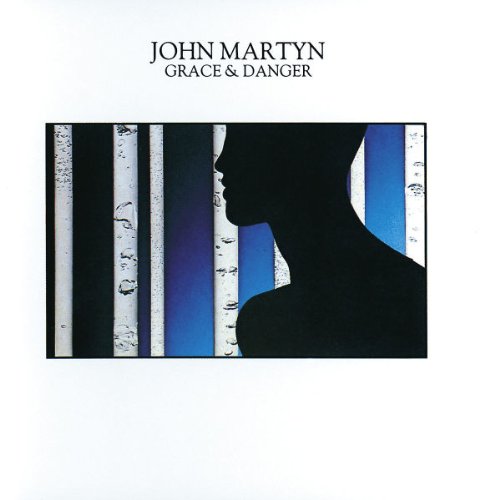
JOHN MARTYN-GRACE AND DANGER.
JOHN MARTYN-GRACE AND DANGER.
In November 1977, John Martyn released what’s was undoubtably one the finest albums of his career, One World. It was an atmospheric, experimental and genre-defying album. Everything from folk, jazz, reggae and rock melted together over eight tracks. Released to overwhelming critical acclaim, One World was hailed a classic album. This was the second classic album of John Martyn’s ten year recording career.
The first came four years earlier, in February 1973, when John released Solid Air. Released to widespread critical acclaim, Solid Air critics realised, was without doubt, the finest album of John Martyn’s career. It was also the album that saw the Glasgow born troubadour make a commercial breakthrough. This should’ve been the start of the rise and rise of John Martyn.
For his eighth album, Sunday’s Child which was released in January 1975, John reigned in his experimental sound. However, Sunday’s Child was a much more eclectic album, with John flitting between country, folk and rock. The result was an eclectic and critically acclaimed album. However, controversy wasn’t far away for John.
In 1975 Island Records refused to release Martyn’s live album, Live At Leeds. So, John resorted to selling signed copies by mail from his home. After the release of Live At Leeds in 1977, John headed to Jamaica on holiday.
What started out as a holiday, ended up with John collaborating with reggae producer Lee “Scratch” Perry. One World is seen by some people as the first ever trip hop album. As a resuly, John Martyn is perceived as the father of trip hop and One World a John Martyn classic. After One World, John didn’t release an album for three years. There was a reason for this.
By the end of the seventies, John’s marriage had broken down. This led to John pressing “the self destruct button” as he described it. John became addicted to alcohol and drugs. He later said this was a very dark period in his life. Grace and Danger, which was released in October 1980, was the album that came out of this period, and the start of a turbulent time for John Martyn, both personally and professionally.
Grace and Danger was an autobiographical album, that described what he was going through at that time. John’s marriage had broken down and divorce proceedings were underway. This makes the music on Grace and Danger very personal. It’s akin to a snapshot to the pain, hurt and regret John was experiencing. This shines through on Grace and Danger.
Eight of the nine tracks that became Grace and Danger, were written by John. They describe what he was going through emotionally. The only track not penned by John was Johnny Too Bad, which was written by Slickers. These nine tracks were recorded by a tight, but talented band.
For Grace and Danger, John played guitars and added vocals. His friend Phil Collins, played drums and sung backing vocals. Tommy Eyre played synths and keyboards, while John Giblin played bass. These three musicians and producer Martin Levan were responsible for a soul baring album from John Martyn’s, Grace and Danger.
Once Grace and Danger was completed, John delivered the album to Chris Blackwell at island Records. When Chris Blackwell realised just how personal an album Grace and Danger was, held the album’s release back a year. Partly, this was because of his friendship with both John and Beverley Martyn. However, Chris also felt that Grace and Danger was “too depressing and didn’t want it released.” This angered John Martyn.
When John heard what Chris Blackwell thought of Grace and Danger, he wasn’t happy. He responded to Chris Blackwell saying: “please get it out! I don’t give a damn how sad it makes you feel-it’s what I’m about: direct communication of emotion.’” Eventually, a year later, Grace and Danger was released.
By then, the relationship between John and Island Records was damaged beyond repair. Grace and Danger was released in October 1980. Contrary to Chris Blackwell’s expectations, Grace and Danger was well received by critics. They realised just how personal an album Grace and Danger was, and empathised with what John had gone through. He had just suffered the breakup of a relationship, and was hurting badly. This however, wasn’t the last relationship that broke down during this period.
After the release of Grace and Danger, John’s relationship with Island Records deteriorated. John submitted another album to Island Records, The Apprentice. Island Records rejected The Apprentice. However, John had the last laugh. The Apprentice was eventually released in 1990, it was hailed as John’s comeback album. By then, it was nine years since John Martyn parted company with Island Records.
A year after the release of Grace and Danger, John left Island Records. This was the end of a fourteen year relationship. During this period, John had released eight albums for Island Records. His Island Records’ swan-song, was Grace and Danger, one of his most underrated and personal albums.
Opening Grace and Danger, is Some People Are Crazy. Just a broody bass, shimmering synths and bold keyboards combine with drums and crystalline guitars. They provide the backdrop for John’s vocal. It’s more a confessional that a vocal. There’s an honesty in his vocal. Belatedly, John’s come the conclusion that people either loved or loathed the hell raising John Martyn of the late seventies. He sings “some people are crazy about him, some people can’t stand his face.” He’s even chased the woman he loves away. This hurts. As if in desperation, John delivers the lyric “yes this loving kind of business, might be the best find you ever had.” Whether John believes this, though, is another matter? His parting line in this confessional is“some people are crazy, some people are just like me.”
Searing guitars and the rhythm section drive the rocky arrangement to Grace and Danger along. John’s vocal has a melancholy quality, as he realises what he’s lost. Against a backdrop of chiming, blistering guitars, keyboards and the rhythm section, John’s vocal is akin to an outpouring of pain. Reflecting, he sings: “I never knew the road that carried me along.” It’s obvious he had no idea where it would lead. It lead to him losing the woman he loved. Despite his being broken, he wishes Beverley well. He’s loved, lost and wishes her “sweet grace, no danger.”
Lookin’ On has a jazz tinged arrangement. A bass plays, guitars chime and stabs of keyboards are joined by drums played tenderly. As the drama builds, a tormented John paints a picture. It’s easy to visualise John returning from a night out, to Beverley who quite rightly, is less than happy. John comes “stealing in, with an innocent grin, to leave you staring, at the empty ceiling, feeling nothing, lookin’ on, I’m just lookin’ on.” At that moment, John wonders what’s gone wrong with his marriage? Previously, this type of behaviour would’ve elicited a laugh. Not any more. Things have gone to far. That’s reflected in the urgent jazz tinged arrangement. It accompanies John’s despairing vocal, on this tale of love gone wrong.
While Johnny Too Bad wasn’t written by John, it sums up the situation he finds himself in. Just like John, Johnny Too Bad has a penchant for hard living. “With your running, and shooting,looting and tooting, you’re too bad, cos one of these days, you’re going to make your woman cry,” these lyrics could’ve been written about John. It’s as if he realises this, and delivers a gravelly, vampish vocal. Again, he makes the lyrics sound like a confessional. Accompanying him are the rhythm section and guitars. One of the guitars is played through John’s trusty echoplex. Then later, John dawns the role of guitar hero, unleashing washes of a blistering, crystalline solo. It’s the perfect foil for John as he vamps his way through the rest of what could be an autobiographical song.
Sweet Little Mystery marks a change in direction on Grace and Danger. It’s the first of a series of ballads. Against a backdrop of twinkling keyboards, synths strings and the rhythm section John tenderly delivers a beautiful, heartfelt ballad about a relationship that’s all but over. Accopanied by backing vocals, John lays bare his soul. His vocal is full of sadness, hurt and melancholy as he sings: “it’s not the letters you just don’t write, it’s not the crying in the dead of the night.” Instead, “it’s that sweet little mystery that’s in your heart, it’s just that sweet little mystery that makes me cry.” These lyrics show just how talented a lyricist John was. He wrote about what he’d experienced, including the breakup of his marriage. It was the inspiration for such a beautiful, poignant tale of love lost.
Deliberately, chords are played on the shimmering keyboards as Hurt In Your Heart unfolds. They’re joined by weeping guitars. They reflect the heartbreak in John’s weary vocal. It’s akin to a cathartic outpouring of hurt and regret, regret at the way he behaved, and how it caused his marriage to end. However, although his marriage is over, John hope that “when that hurt in your heart has gone, I’ll still be your friend, right to the end of our river, and further still.”
Baby, Please Come Home is another beautiful, soul baring ballad. Against a backdrop of an understated rhythm section, glistening keyboards and a sometime, scorching guitar, John delivers a needy, hopeful vocal. Full of regret, he wants to make things right, and almost begging and pleading, sings “Baby, Please Come Home.”
Save Some (For Me) sees John change direction. It’s a mid-tempo track with a punchy, spacious introduction. Drums and synths combine, before John’s tender vocal enters. He leaves space between the lyrics. This adds to the urgency of the arrangement. Soon, John, accompanied by backing vocals from Phil Collins, combines power, emotion and urgency. Behind him, sci-fi synths, shimmering keyboards and the rhythm section combine. They play a supporting role in another emotional roller coaster.
Our Love closes closes Grace And Danger, John Martyn’s Island Records’ swan-song. Phil Collins’ drums set the scene for the rhythm section, keyboards and John’s needy, hurt filled vocal. Memories come flooding back, back to a time when their love was young. Things were good, the future looked bright. “Our love, once was you and me against this world, made a man from a boy and made a woman from a little girl.” Not any more. Now I find I have to beg before you call my name, please call my name, please call my name, and baby take a look, take a good look, baby, baby take a look in your heart.” As John delivers these lyrics he wells up, regrets omnipresent at the hurt he caused, and the love he lost.
While Grace and Danger was well received upon its release, it wasn’t the commercial success that John Martyn classics like Solid Air or One World. This had nothing to do with the music. Partly, it was to do with the type of music that was popular in 1980. By then, John Martyn’s music was the polar opposite of the post punk, hip hop, electronica and new romantic music that filled the charts. Then there was the fact that Chris Blackwell didn’t like Grace and Danger.
Chris Blackwell found the music on Grace and Danger “too personal” and “depressing.” As a result, Island Records didn’t seem to cover themselves in glory when it came to promoting Grace and Danger. This was a huge mistake. After all, here was an album that spoke to many people. Grace and Danger was the story of many a failed relationship and marriage. For many, who had loved and lost, Grace and Danger spoke to them. It said everything that they wished they could. Thirty-five years later, that’s still the case.
Many suffering the heartbreak of a marriage breakup, have found solace in Grace and Danger. John speaks for, and too them on Grace and Danger. He’s been where they’ve been, and experienced the hurt, heartbreak and regret. Each song brings back a memory, often, a memory of better times. Especially Our Love, which closes Grace and Danger.
John is at his most eloquent, writing “Our love, once was you and me against this world, made a man from a boy and made a woman from a little girl.” Not any more. “Now I find I have to beg before you call my name, please call my name, please call my name, and baby take a look, take a good look, baby, baby take a look in your heart.” Not only does this prove the perfect way to close Grace and Danger, but sums up succinctly, the thin line between love and hate. That’s one of nine reasons why Grace and Danger is a forgotten classic in John Martyn’s back catalogue.
Quite simply, Grace and Danger is best described as the most personal album John Martyn ever released. It’ tells the story of one of the worst periods in his life, where the newly heartbroken John Martyn lays bare his soul for all to see and hear. What would’ve been fascinating, is if Beverley had replied to Grace and Danger. We could’ve heard her side to the story. Sadly, that never happened, and despite Beverley making a recent comeback, is unlikely to ever happen. As a result, Grace and Danger, one of John Martyn’s most underrated albums, remains one of the most soul-baring and cathartic breakup albums ever released.
JOHN MARTYN-GRACE AND DANGER.
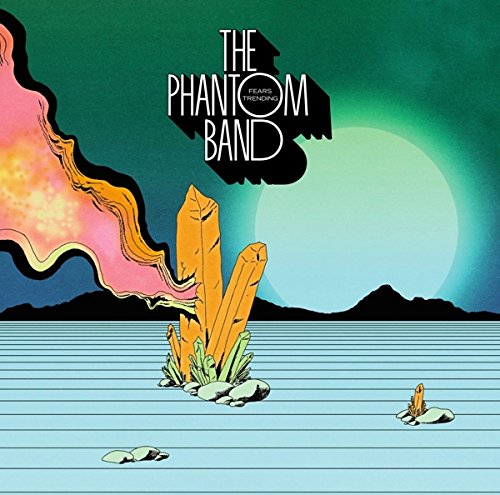
THE PHANTOM BAND-FEARS TRENDING.
THE PHANTOM BAND-FEARS TRENDING.
For fans of The Phantom Band, it’s either a case of feast of famine. Having released their debut album Checkmate Savage in January 2009, The Phantom Band returned in October 2010 with their sophomore album The Wants. After that, nothing was heard from The Phantom Band for four long years.
During that period, the six members of The Phantom Band were working on solo albums or side projects. Then in June 2014, The Phantom Band were back with their long-awaited third album Strange Friend. After nearly four years, the Glasgow based sextet were back. However, the cynical amongst the music cognoscenti wondered who long it would be before The Phantom Band returned with album four? Many people thought years. Very few however, thought seven months.
That’s how long has passed between the release of Strange Friend, and The Phantom Band’s fourth album Fears Trending. It was released on 26th January 2015, on Glasgow’s premier label Chemikal Underground, thirteen years after The Phantom Band’s career began back in 2002.
In the early days of The Phantom Band’s career, the band’s name constantly seemed to change. So much so, that it took four years before The Phantom Band settled on a permanent name. That was the case with The Phantom Band.
Formed in 2002, The Phantom Band changed names numerous times. The Phantom Band were variously called NRA, Les Crazy Boyz, Los Crayzee Boyz, Tower of Girls and Wooden Trees. Then in 2005, they adopted the name Robert Redford. That didn’t go down well.
The band were asked to change their name. They also had to remove all references to it from their online presence. As a result, Robert Redford’s only release, The Mummy and Daddy Dance, has become something of a collector’s item. Following their controversial dalliance with Hollywood, the band reformed, under the name Robert Louis Stevenson.
Their new moniker didn’t last long. Having played a series of concerts in Glasgow and Edinburgh, Robert Louis Stevenson released a limited edition cassette. Only 150 cassettes were sold and they too, have become a collector’s edition. After that, Robert Louis Stevenson changed name again. After four years together, The Phantom Band were born in 2006.
The Phantom Band was a how the band’s fans affectionately referred to the band’s activities, or some would say lack of activity. A year later, The Phantom Band released their debut single Throwing Bones on the London label Trial and Error Recordings. Released to critical acclaim, Throwing Bones resulted in Glasgow’s premier label, Chemikal Underground signing The Phantom Band.
Since then, Chemikal Underground has been home to The Phantom Band. They’ve released a trio of albums since signing to Chemikal Underground. Their debut album was 2009s Checkmate Savage. The Wants followed in 2010. After that, nothing has been heard of The Phantom Band. That’s until June 2014, when The Phantom Band released their third album, Strange Friend, on Chemikal Underground. It was released five years after The Phantom Band’s debut album Checkmate Savage.
Before heading into the studio to record their debut, The Phantom Band headed out on the road. They played some of the biggest festivals during the summer of 2007. Then in early 2008, The Phantom Band headed into the studio.
Checkmate Savage, The Phantom Band’s debut album was recorded at Chem 19 Studios in Blantyre, Lanarkshire. Recording began in early 2008, with former Delgado Paul Savage producing Checkmate Savage. The lineup of The Phantom Band on Checkmate Savage included a rhythm section of drummer Damien Tonner, bassist Gerry Hart and guitarists Duncan Marquiss, Greg Sinclair and Rick Anthony, the lead vocalist. Andy Wake played keyboards. Together, they recorded nine tracks which became Checkmate Savage. They were then mixed at Franz Ferdinand’s studio in Govan, Glasgow. Once recording of Checkmate Savage was completed, it was released in January 2009.
On its release in January 2009, Checkmate Savage received widespread critical acclaim. Critics realised this was no ordinary debut. Instead, it was an ambitious and cerebral release. The Phantom Band examined a various themes on Checkmate Savage. This included over-population and dwindling natural resources. Checkmate Savage were a band with a social conscience. They also looked like being Scotland’s next big band.
Following the commercial success and critical acclaim of Checkmate Savage, The Phantom Band headed out on a series of UK and European tour. Across Britain and Europe, The Phantom Band played to sell-out shows. One of the most memorable gigs was T In The Park, where the Glasgow based The Phantom Band were hailed conquering heroes. There were also barnstorming appearances at London Calling in Amsterdam, the Storasfestivalen near Trondheim and Sound City in Liverpool. Then as 2009 drew to a close, The Phantom Band played at the prestigious Transmusicales festival in Rennes. 2009 had been a huge year for The Phantom Band. Now they had to begin work on their sophomore album, which became The Wants.
Sophomore albums are notoriously difficult. Often, a band write some of their best material before they’re signed. They’re young, hungry for success and dedicate themselves to getting a record deal. They spend inordinate amounts of time writing their songs. Then when they sign to a record label and enjoy a successful debut album, things change. No longer have they the same time to write an album. Instead, they’re writing on the road, as they tour their debut album. As a result, often, the quality of music suffers. For The Phantom Band, the recording of their sophomore album The Wants, wasn’t easy.
When The Phantom Band entered Chem 19, to record The Wants, the album wasn’t written. So, much of The Wants was written in the studio. The other problem was time was tight. They couldn’t take their time recording The Wants.This caused problems within The Phantom Band. However, with Paul Savage producing The Wants, the album was recorded within the timeframe. However, after The Wants was recorded, The Phantom Band lost its drummer.
Having recorded The Wants, drummer Damien Tonner left The Phantom Band. Considering The Phantom Band were about to tour The Wants, this presented the band with a problem. A new drummer would’ve have learn all their songs and then head out on the longest and most gruelling tour of their career. Before that, The Wants was released in October 2010.
Despite all the problems the band had encountered, The Wants was released to the same critical acclaim as their debut album Checkmate Savage. The Phantom Band had overcome the problem of the difficult second album. Now they headed out on tour, with a new drummer Greg Sinclair.
Greg Sinclair was brought in to fill the void left by the departure of Damien Tonner. It couldn’t have been easy. The Phantom Band had been together since 2002. Despite this, Greg settled in to his new role.
On the day The Wants was released, The Phantom Band played the CMJ festival in New York. After that, they hooked up with another Scottish band, Frightened Rabbit. The Phantom Band supported them as they played Boston, Philadelphia, Washington, New York and Chicago. Having won over American audiences, The Phantom Band headed home.
There was no time for rest. It was a case of saying hello to friends and family and heading out on a brief tour of Britain. After that, The Phantom Band spent two months touring Europe. It was one of the most gruelling schedules they’d embarked upon. Having started in March 2011, the tour finished just in time for the festival season to begin. There was no rest for The Phantom Band. They played at festivals like Latitude in Suffold, Walk the Line in Den Haag and The Camden Crawl in London. Then to crown this summer of festivals, The Phantom Band played T in the Park in their native Scotland. By now, they were well on their way to becoming one of Scotland’s best bands. However, since then all has been quiet on The Phantom Band front.
Away from The Phantom Band, the six members of the band have various side-projects to keep them occupied. Rick Redbeard enjoys a successful solo career. He released his debut solo album, No Selfish Heart in 2013, on Chemikal Underground. Iain Stewart is a member of Bronto Skylift, an experimental rock band. Duncan Marquiss, Andy Wake and Greg Sinclair sometimes, perform as Omnivore Demon. They’re best described as an improvisational group. All these various side-projects are what has been keeping the members of The Phantom Band busy. However, recently, they headed back into the studio to record their third album Strange Friend.
For Strange Friend, The Phantom Band wrote nine tracks. These tracks marked the recording debut of The Phantom Band’s new lineup. The lineup of The Phantom Band on Checkmate Savage included a rhythm section of drummer Iain Stewart, bassist Gerry Hart and guitarists Duncan Marquiss, Greg Sinclair and Rick Anthony, the lead vocalist. Andy Wake played keyboards. It wasn’t just the band’s lineup that had changed.
For the first time in their career, Paul Savage didn’t produce The Phantom Band. Instead, Strange Friend was produced by The Phantom Band with Derek O’Neill. He also engineered Strange Friend with Paul Savage. Strange Friend was mastered by Kenny MacLeod. It was then released in June 2014.
It was a case of all hail the returning heroes when Strange Friend was released in June 2014. Critics hailed the album as a triumph for the Glasgow-based sextet. Critical acclaim and plaudits came the way of The Phantom Band, on the release of Strange Friend. It’s been a long time coming, but well worth the wait. So, hopefully, will Fears Treading, The Phantom Band’s fourth album.
There’s a reason for that. The seven tracks on Fears Treading were recorded at the same recording sessions as Strange Friend. These sessions took place at Chem 19 studios, Blantyre, which previously, has been a musical home from home for The Phantom Band.
That’s where all The Phantom Band’s albums were recorded. At the sessions that took place during 2014, nine tracks were chosen and became Strange Friend. This left seven tracks. The temptation for many bands is to release a sprawling, epic album. However, often that doesn’t work. After eight or nine tracks, the listener’s attention wanders. So, it made sense to keep the other seven tracks in reserve. They became Fears Trending.
At the recording sessions at Chem 19, The Phantom Band recorded the seven tracks they’d written. These tracks marked the recording debut of The Phantom Band’s new lineup. The lineup of The Phantom Band on Checkmate Savage included a rhythm section of drummer Iain Stewart, bassist Gerry Hart and guitarists Duncan Marquiss, Greg Sinclair and Rick Anthony, the lead vocalist. Andy Wake played keyboards. This was the start of a new era in the history of The Phantom Band.
That new era began in June 2014, when Strange Friend was released to critical acclaim. Seven months later, Fears Trending was released to similar critical acclaim on 26th January 2015. This should further enhanced the reputation of The Phantom Band as one Scotland’s biggest bands. Is that the case though?
Tender Castle opens Fears Trending. Dark, moody, broody buzzy synths set the scene, before the rhythm section explodes into action. They’re joined by scorching guitars and banks of shimmering synths. In the midst of the arrangement is Alasdair Robert’s dreamy, lysergic vocal. He’s accompanied by close harmonies, while the rhythm section, synths and keyboards drive the arrangement along. They play their part in a melodic, dramatic fusion of art rock, electronica, post rock and indie rock.
Local Zero sees the tempo drop as retro sounding synths and the rhythm section accompany Rick’s vocal. It veers between hopeful and joyous, through thoughtful and wistful. As memories coming flooding back, Rick experiences a gambit of emotion. All the time, the rhythm section and searing, blistering guitars combine. They take the track in a much more traditional, rocky sound, as emotively Rick delivers the cinematic lyrics. The result is a love song Phantom Band style.
A wash of glimmer, shimmer synths sweep as play Denise Hopper unfolds. Soon, a crystalline guitars that sounds as if it should feature in a Spaghetti Western plays. By then, Rick’s vocal is a cathartic outpouring of equal parts emotion and drama. It’s joined by buzzing, fuzzy synths, chiming guitars and the rhythm section. They provide the backdrop for Rick’s despairing vocal, on this cinematic post rock opus.
Deliberate guitars drive the staccato arrangement to Dark Tape along. Meanwhile, punchy harmonies soar above the arrangement and rolls of drums add an element of drama. Taking centre-stage is Rick’s vocal. It’s a mixture of emotion, drama and pain. The pain runs deep. Desperation and loneliness fill his vocal. He makes the lyrics come to life. So much so, it’s as if he’s experienced what’s he’s singing about. The rest of The Phantom Band pickup on this, and lift their game even higher, and compliment Rick’s vocal. Later, they even add soothing, calming harmonies, as if trying to heal his pain and hurt.
Briefly, Spectrelegs has a somewhat eerie, futuristic, sci-fi sound. That’s until the arrangement bursts into life. It’s as if The Phantom Band were just toying with you, before kicking out the jams. In full flight, they’re an old school rock band, albeit one with a twist. Their rhythm section and machine gun guitars furiously drive the arrangement along. Meanwhile, Rick happily adopts the role of moody rock ’n’ front man. There’s a twist though. Bursts of sci-fi synths punctuate the arrangement. Then all of a sudden, the arrangement almost grinds to a halt. It takes on a dreamy, lysergic, post rock sounds. That’s until drum rolls and machine gun guitars join the futuristic sounds, and the arrangement reaches a captivating, genre-melting crescendo.
A subtle sprinkling of shakers are joined by stabs of a gothic organ as gradually, The Kingfisher unfolds. Cinematic guitars, that sound as if they belong on a Wim Wenders soundtrack, resonate, as they’re panned right. Meanwhile, drums match the organ step for step. Just like Rick’s slow, broody, soul-searching vocal, they add to the drama. Rick’s vocal is yin to the arrangement’s yang. Together they combine to create a dramatic epic, whose roots are in seventies rock.
Olden Golden closes Fears Trending. It has an understated introduction, with just a guitar and banjo accompanying Rick’s pensive vocal. As remembers the past, an ominous drum beat dominates the arrangement. Rick’s vocal is sombre, and as it soars filled with sadness. Later, as Rick’s emotive vocal soars above the arrangement, washes of keyboards, guitars and the thunderous, ominous drum combine to close the melancholy, heart wrenching Olden Golden.
Although Fears Trending was recorded at the same time as The Phantom Band’s third album, Strange Friends, they’re two very different albums. Duncan Marquiss, The Phantom Band’s guitarist seems to agree. He commented that “maybe it’s the evil twin of Strange Friend?” That’s maybe taking things a bit far. The two albums, wordsmiths amongst you will realise, are certainly related. Fears Trending is an anagram of Strange Friend. Apart from that, they’re two very different albums.
The songs on Fears Treading are longer, darker and filled with drama. Some of the songs have a much more experimental sound. Bursts of futuristic, sci-fi, shimmering synths augment the fusion of art rock, folk rock, indie rock, post rock and psychedelia on Fears Treading. It’s an eclectic and ambitious combination of influences. However, it’s a combination that works.
Fears Trending is a captivating combination of musical genres and influences, where The Phantom Band, and guest artist Alistair Roberts, continued to push musical boundaries. That’s been the story of The Phantom Band’s career.
Since they released their debut album, Checkmate Savage, in January 2009, The Phantom Band have released a two further albums, 2010s Strange Friends and 2014s Strange Friend. Now seven months after the release of Strange Friend, The Phantom Band released their fourth album Fears Trending, on 26th January 2015, on Chemikal Underground. Fears Trending is perfect foil for Strange Friend. Listening to Strange Friend and then Fears Trending, is akin to seeing two sides of The Phantom Band.
Although Strange Friend and Fears Trending are very different albums, they’re both are captivating and groundbreaking albums from one of Scotland’s top bands, The Phantom Band, who for thirteen years, have been pushing musical boundaries to their boundaries, and sometimes, beyond.
THE PHANTOM BAND-FEARS TRENDING.
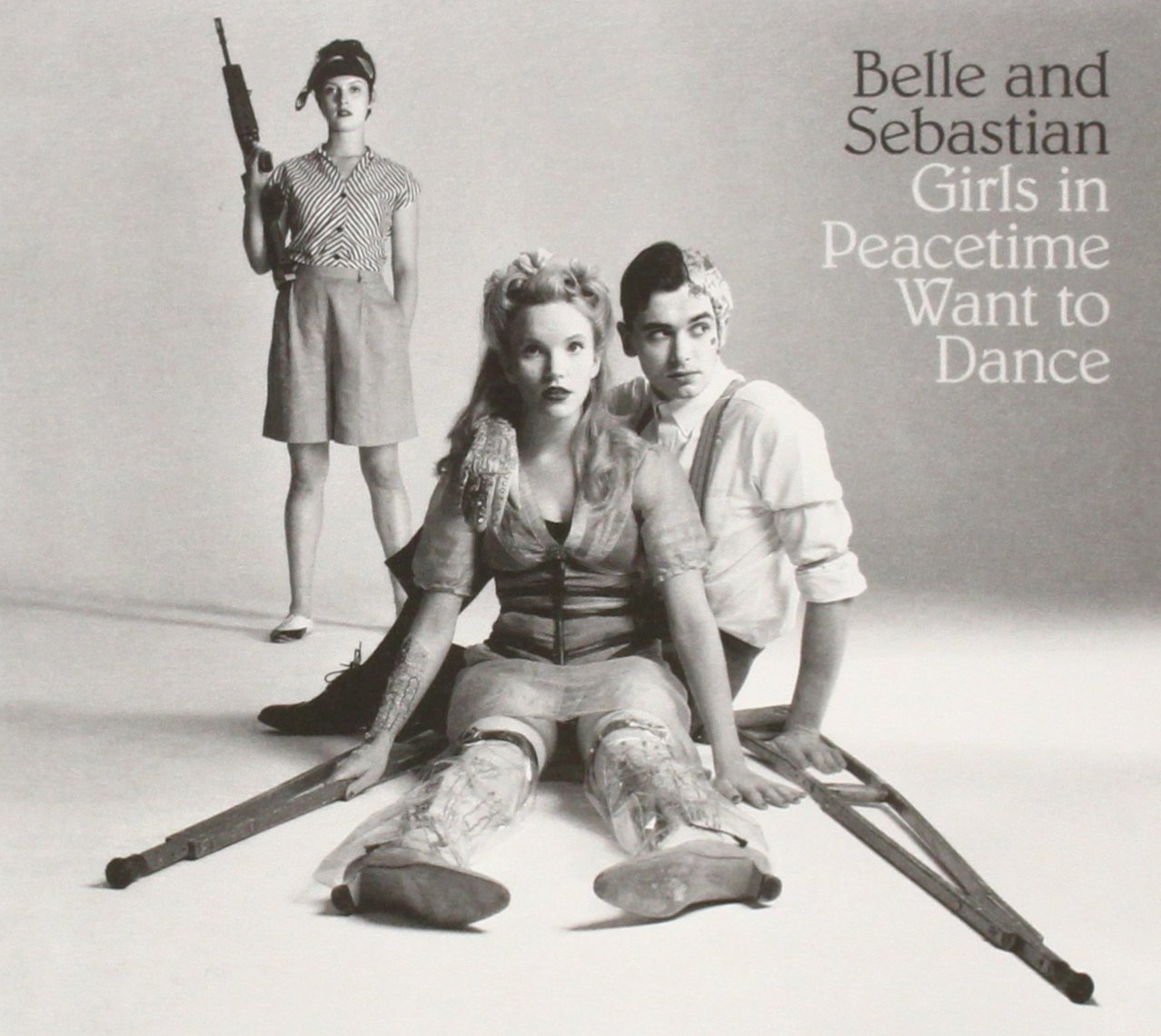
BELLE AND SEBASTIAN-GIRLS IN PEACETIME WANT TO DANCE.
BELLE AND SEBASTIAN-GIRLS IN PEACETIME WANT TO DANCE.
Over four years have passed since Belle and Sebastian released their eighth studio album, Belle and Sebastian Write About Love. Since then, Belle and Sebastian’s only release was The Third Eye Centre, a nineteen track retrospective released in August 2013. It featured rarities, remixes, B-Sides, non-album tracks and tracks from E.P.s. Eighteen months after the release of The Third Eye Centre, Belle and Sebastian return with their long awaited ninth album, Girls In Peacetime Want To Dance, which marks a series of firsts.
Girls In Peacetime Want To Dance, which was released on 19th January 2015, is the first Belle and Sebastian album to be released worldwide on Matador Records. It’s also the first Belle and Sebastian album to be produced by Ben H. Allen III. The third and final first, is that Girls In Peacetime Want To Dance is the first Belle and Sebastian album to be recorded in Atlanta, Georgia. Belle and Sebastian it seems, are refusing to stand still on Girls In Peacetime Want To Dance, as their twentieth anniversary draws nearer.
It was back in 1996, at Stow College, in Glasgow that Belle and Sebastian were formed. The band was formed by two students, Stuart Murdoch and Stuart David, and was named after Cecile Aubry’s 1965 book Belle et Sebastien. Since then, many members have joined and left the group, one of the most influential being, Isobel Campbell, who joined in 1996 and left the group in 2002, singing vocals and playing cello. Other members include Chris Geddes and Sarah Martin.
Whilst at college, in 1996, Belle and Sebastian recorded some demo tracks with the college’s music professor Alan Rankin. Yes. That Alan Rankin, formerly the keyboardist and guitarist in The Associates alongside the late Billy Mackenzie. The demos came to the notice of the college’s business studies department, who each year, released a single on the college’s record label. Belle and Sebastian, by then, had recorded a number of songs, enough to fill an album. Having been so impressed by Belle and Sebastian’s music, that year, the label decided to release an album, called Tigermilk.
Tiigermilk, which was produced by Alan Rankin. It was recorded in just three days. Just one-thousand copies vinyl were pressed. Tigermilk was well received and the album sold out quickly. The original copies of Tigermilk are prized possessions of Belle and Sebastian fans. Following the success of Tigermilk, Belle and Sebastian decided to make a career out of music.
Stuart Murdoch and Stuart David decided that Belle and Sebastian would become a full-time band. Soon, further members joined the band. Isobel Campbell joined on vocals and cello, Stevie Jackson on guitar and vocals, Richard Coburn on drums and Chris Geddes on keyboards.
After Tigermilk’s success, the group signed to Jeepster Records in August 1996, they released their sophomore album If You’re Feeling Sinister. Produced by Tony Doogan, it was released in November 1996. Many people believe that this is their finest album. American magazine Spin, liked the album so much, that they put it at number seventy-six in their top one-hundred albums released in the twenty year period between 1985-2005. Rolling Stone magazine put the album in its list of essential albums of the 1990s.
After the release of If You’re Feeling Sinister, the group released series of E.P.s during 1997. The E.P.s were Dog On Wheels, Lazy Line Painter Jane and 3, 6, 9 Seconds of Light. Dog On Wheels featured four songs that were recorded before the formation of Belle and Sebastian. It reached number fifty-nine in the UK charts. Lazy Line Painter reached number forty-one in the UK charts, and 3, 6, 9 Seconds of Light became the group’s first top forty single, reaching number thirty-two in the UK charts. That was the start of the rise and rise of Belle and Sebastian.
September 1998, saw Belle and Sebastian release their third album The Boy With The Arab Strap. It reached number twelve in the UK charts. Unlike previous Belle and Sebastian albums, Stuart Murdoch doesn’t feature on vocals. Instead, they’re shared amongst Isobel Campbell, Stevie Jackson and Stuart David. The album received mixed views from the music press. Long time supporter of Belle and Sebastian, Rolling Stone and The Village Voice praised The Boy With The Arab Strap, while others weren’t as impressed. However, since its release, many people, myself included, believe The Boy With The Arab Strap to be Belle and Sebastian’s finest hour. Despite the success of The Boy With The Arab Strap, Belle and Sebastian changed direction musically.
Two years after the release of The Boy With The Arab Strap, Belle and Sebastian released Fold Your Hands Child, You Walk Like A Present. Released in June 2000, the album was produced by Tony Doogan. It’s best described as chamber pop. Fold Your Hands Child, You Walk Like A Present has a much more laid-back, mellow sound. The tempo is slower, while vocals are shared amongst band members. Then there’s the strings. They’re used more extensively. Sadly, this was the last album to feature founder member Stuart David. For their next album, Belle and Sebastian would try their hand at writing a film score.
Although Storytelling was both Belle and Sebastian’s fifth album, it was their first film score. Released in June 2002, only six minutes of the thirty-five minutes of music recorded by Belle and Sebastian made it into Todd Solondz’s movie. It sounds as if the experience was somewhat frustrating for the band. They had problems communicating with Todd Solondz. Worse was to come. Belle and Sebastian were about to lose one of their most important members… Isobel Campbel
Having released and toured Storytelling, Isobel Campbell left Belle and Sebastian. She decided to pursue a solo career. Many critics wondered what effect this would’ve on Belle and Sebastian? They came back, but briefly, were different band
Much of the summer of 2003 saw Belle and Sebastian recording their sixth album. Losing Isobel Campbell wasn’t the only change in the life and times of Belle and Sebastian. No.They’d left Jeepster and signed to Rough Trade. Tony Doogan was replaced as producer. His replacement was Trevor Horn. His credentials seemed somewhat questionable.
Previously, ex-Buggle Trevor Horn had he’d been an award winning producer and songwriter. Recently, he’d been working with Charlotte Church and Lee Ann Rimes. Considering Belle and Sebastian were one of the hottest indie bands, they seemed strange and awkward bedfellows. It seemed Trevor Horn had been brought in to polish of the band’s rough edges. Rough Trade, a supposed indie label, were polishing away part of the group’s charms. Many onlookers were horrified, afraid of the direction Trevor Horn would take Belle and Sebastian.
In some ways, these fears were justified. Gone was the folksie, melancholy, chamber pop of their roots. Dear Catastrophe Waitress was the polar opposite of previous albums. Replacing it, was the slick, poppy charms of the Trevor Horn produced Dear Catastrophe Waitress. On its released in October 2003, it was nominated for an Ivor Novello award. Critics gave Dear Catastrophe Waitress favorable reviews. On both sides of the Atlantic, Dear Catastrophe Waitress appealed to critics. Despite the positive reviews Dear Catastrophe Waitress received, thankfully, Belle and Sebastian and Trevor Horn never renewed their aquaintance when they released their next album, three years later.
Between the release of Dear Catastrophe Waitress and 2006s The Life Pursuit, Belle and Sebastian kept busy. In 2005, they released a twenty-five track compilation entitled Push Barman To Open Old Wounds. Featuring a series of E.P.s Belle and Sebastian had released, critics adored the album. Hailed as vintage Belle and Sebastian, they were crowned the best indie band. Very different from Dear Catastrophe Waitress, Push Barman To Open Old Wounds was the Belle and Sebastian their fans knew and loved. Push Barman To Open Old Wounds wasn’t Belle and Sebastian’s only release during 2005.
No. Belle and Sebastian released their first live album, If You’re Feeling Sinister: Live At The Barbican. Released in December 2005, this allowed Belle and Sebastian to revisit their 1996 album If You’re Feeling Sinister and rectify what the band believed to be the mistakes of the original album. That night in September 2005, Belle and Sebastian took the Barbican by storm, playing an encore lasting over an hour. This encore would prove to be somewhat prophetic.
When Belle and Sebastian released The Life Pursuit in February 2006, it proved to be their most successful album. The Life Pursuit was produced by Tony Hoffer, who previously, produced Air, Turin and Beck. He was a much better fit than Trevor Horn. On its release, The Life Pursuit reached number eight in the UK and number sixty-five in the US Billboard 200. Funny Little Frog gave Belle and Sebastian the biggest hit single of their ten year career. Despite that, it would be four years until Belle and Sebastian released their next studio album.
Following the release of The Life Pursuit, Belle and Sebastian headed out on tour. They were now well versed in the album, tour, album, tour routine. To ensure their fans didn’t forget them, Belle and Sebastian released The BBC Sessions in November 2008. A double-album, the first disc featured many songs that featured Isobel Campbell. These songs had never been heard before. So for fans of Belle and Sebastian this was a real must have. As for the second disc, it features Belle and Sebastian live in Belfast, which sees the group cover Thin Lizzy’s The Boys Are Back In Town. While The BBC Sessions kept Belle and Sebastian’s fans occupied, the group recorded their most successful album to date.
October 2010, saw Belle and Sebastian released their eighth studio album. Entitled Belle and Sebastian Write About Love, it was the second Belle and Sebastian album produced by Tony Hoffer. Recorded in Los Angeles, rather than Glasgow this surprised some people. Tony’s decision to take Belle and Sebastian out their comfort zone worked. He was proving to be the perfect foil for Belle and Sebastian’s foibles. Featuring contributions from Norah Jones, Sarah Martin and Carey Mulligan, Belle and Sebastian and friends struck musical gold.
Reaching number eight in the UK, Belle and Sebastian Write About Love reached number fifteen in the US Billboard 200. Critically acclaimed and a hot worldwide, this was a long way from recording Tigermilk in three days as part of a college project. Belle and Sebastian were indie Queens and Kings. Despite this, the continued to things their way.
While many bands would’ve headed straight back into the studio and had a followup to Belle and Sebastian Write About Love release A.S.A.P, this isn’t the Belle and Sebastian way. No. Not only do Belle and Sebastian do things their way, but they care about their fans. So, whilst taking their time recording a followup to Belle and Sebastian Write About Love, they’ve released a nineteen track retrospective, The Third Eye Centre.
This nineteen track retrospective, The Third Eye Centre, features rarities, remixes, B-SIdes, non-album tracks and tracks from E.P.s. The music spans Belle and Sebastian’s career. There’s tracks from albums produced by Tony Doogan, Trevor Horn and Tony Hoffer. Bonus tracks sit side by side with remixes, while B-Sides and charity singles. In some ways, The Third Eye Centre allows the listener to hear another side to Belle and Sebastian. The Third Eye Centre was the perfect amuse bouche until Belle and Sebastian released their ninth studio album.
Work began on Belle and Sebastian’s ninth album back in 2014. By then, the members of Belle and Sebastian had written twelve tracks. These tracks would become Girls In Peacetime Want To Dance, which somewhat surprisingly, was produced by Ben H. Allen III.
This was a strange, and somewhat controversial decision. Many people thought Tony Hoffer, who produced Belle and Sebastian’s previous album, Belle and Sebastian Write About Love would return.Belle and Sebastian Write About Love was the second Belle and Sebastian album produced by Tony Hoffer. The first was The Life Pursuit. Tony seemed to bring out the best Belle and Sebastian. However, this being Belle and Sebastian, it’s always a case of expect the unexpected. After all, previously, Belle and Sebastian hired Trevor Horn, who gave their music a slick, polished sheen. So maybe, bring in Ben H. Allen III to produce Girls In Peacetime Want To Dance would work?
Some sceptics had their doubts. After all, Ben H. Allen III’s C.V. showed that previously, he had produced Animal Collective and Washed Out. This was very different to Belle and Sebastian. However, maybe, Belle and Sebastian and Ben H. Allen III would prove a potent partnership.
For their ninth studio album, Girls In Peacetime Want To Dance, Belle and Sebastian penned twelve tracks. Much of the recording took place in Atlanta, Georgia. That’s where Belle and Sebastian recorded nine tracks. They were produced by Ben H. Allen III, who mixed seven of the tracks with Jason Kingsland. Additional recording took place at other studios. This included adding strings at Human Win studios, in Minneapolis, Minnesota and recording three tracks in the familiar surroundings of Glasgow’s Castle Of Doom Studios.
The other three tracks on Girls In Peacetime Want To Dance, The Everlasting Muse, Born To Act and Perfect Couples were recorded at Castle Of Doom Studios, in Glasgow. These three tracks, plus A Politician’s Silence and Nobody’s Empire were mixed by veteran Scottish producer, Tony Doogan, who previously, has produced four Belle and Sebastian albums. Once Girls In Peacetime Want To Dance was completed, it was released on 19th January 2015.
Prior to the release of Girls In Peacetime Want To Dance, The Party Line was chosen as the lead single on 29th October 2014. It was a taste of what to expect from the Ben H. Allen III produced Belle and Sebastian. Then on 19th January 2015, Girls In Peacetime Want To Dance was released. Mostly, the reviews were favourable. Critics noted that Belle and Sebastian were still, among the most talented modern day songwriters. However, their music had been given a makeover.
Girls In Peacetime Want To Dance is akin to a call to dance. Thanks to Ben H. Allen III, much of Girls In Peacetime Want To Dance has a faux disco beat. This is Belle and Sebastian as you’ve never heard them. It’s not just Girls In Peacetime Want To Dance, but Belle and Sebastian too. Just like Belle and Sebastian have always done, several times before, they’ve reinvented themselves on Girls In Peacetime Want To Dance.
Opening Girls In Peacetime Want To Dance is Nobody’s Empire, one of the four songs mixed by Tony Googan. His mix is perfectly balanced, Chiming guitars are panned left, a bass probes its way through the mix and the incessant 4/4 beat sets the scene for Stuart’s wistful vocal. As Stuart delivers cerebral, thoughtful lyrics he’s accompanied by a piano, washes of synths and later, cooing, ethereal harmonies and percussion. Later, horns sound, as other members of Belle and Sebastian add backing vocals. They add to what’s an anthemic, dance-floor friendly track full of social comment and hooks aplenty.
A scatted vocal pensive piano and firmly strummed guitar opens Allie. Soon, the rocky arrangement bursts into life. Stuart’s vocal is mixture of frustration, anger and pity, at “Allie…you want to hurt yourself.” He sees Allie as selfish, and either unable, or unwilling to see the bigger picture. This includes war, crime and cutbacks. Throughout the song, Stuart’ frustration, is omnipresent, as he delivers a heartfelt plea. As he does this, urgently, the rhythm section and guitars drive the arrangement along. This is the perfect foil for Stuart, as Belle and Sebastian return to what’s nearer their traditional, trademark sound, while reminding the listener that they’re songsmiths par excellent.
The introduction to The Party Line is bathed in filters. below the filters is a pulsating, dance-floor friendly arrangement. It comes courtesy of synths, drums and percussion. Stuart’s vocal is a sultry vamp. It’s augmented, and complimented, by backing vocalists. They add to what’s a polished slice of dance-floor friendly electro pop. This is Belle and Sebastian like you’ve never heard them before. For some people, this will come as a shock. The only similarity is Belle and Sebastian’s insightful observations on life. They’re omnipresent throughout Girls In Peacetime Want To Dance.
As drums pound, an orchestral arrangement quivers on The Cat With The Cream. Soon, Stuart’s despairing vocal sets the scene. You’re soon empathising with Cathy’s loneliness and fear. Later, her imagination runs riot. Scenes unfold before her eyes. The “freak parade” unfolds. Before her eyes, a parade of corrupt politicians and a country’s grubby history unfolds. Then she’s praying, “praying for the light.” Having done so, she waits for a “sign…her instructions.” Cathy hopes that she’s “destined for greatness, I want to be Queen.” Longingly, she wills herself back to a time and place when “in days of old when knights were bold, it was settled by the King.” Sadly, that’ll never happen, and still, Cathy sits lonely and fearful. Poignant, and tinged with sadness and beauty, Belle and Sebastian are still master craftsmen when it comes to songwriting.
Enter Sylvia Plath has in its roots of eighties Euro Disco. Against this pulsating dance beat, one thing stays the same. That’s Stuart’s vocal. It’s tinged with emotion as he delivers lyrics that are typically cerebral and cinematic. Again, he paints pictures. Meanwhile, Sarah’s sultry female vocal flits in and out, as the arrangement grows in power and tempo. It powers along, with Belle and Sebastian seemingly enjoying the journey.
The Everlasting Muse has a much more understated, atypical Belle and Sebastian sound. That’s partly, down to Tony Doogan, who mixed the track. His mix doesn’t seem as loud as the tracks mixed by Ben H. Allen III. This suits the track. Just a standup bass and drums set the scene for Stuart’s hopeful vocal. Soon, a Fender Rhodes panned left shimmers, while clunky percussive sound is panned right. That’s the sign for the tempo to quicken and Stuart’s vocal to veer between hopeful, needy and occasionally, joyful. Soft, ethereal harmonies and a soaring trumpet add the finishing touch to what’s a captivating, hopeful paean.
Tony Doogan also mixed Perfect Couples, which again, seems to have more space than the tracks mixed by Ben H. Allen III. Afrobeat seems to have influenced introduction the introduction. Perucssion plays, before washes synths bubble and whoosh. They’re joined by rocky guitars pounding drums and Stevie Jackson’s vocal. He seems to relish his starring role in this dance track. His chameleon like vocal veers between deliberate, to dramatic and even, briefly, a croon, as tongue firmly in cheek, he mocks his “Perfect Couples.” By then, his vocal is bather in filters and accompanied by harmonies. Add in scorching, searing guitars and advice and the result is one of the highlights of Girls In Peacetime Want To Dance.
Ever Had A Little Faith? is a return to Belle and Sebastian’s traditional sound. Just acoustic guitars accompany Stuart’s pensive vocal. Soon, drums and an accordion add to the wistful, but beautiful sound as Stuart asks “Ever Had A Little Faith?”
Play For Today sees the musical adventure that’s Girls In Peacetime Want To Dance continue. There’s yet another change in direction, as Play For Today has its roots in Euro Pop and Euro Disco. Against a pulsating backdrop of drums and washes synths the arrangement bounds along. Atop the arrangement sits the vocal. They come courtesy of Stuart and Dee Dee Penny. Their vocals sit well together. Mind you, so would Stuart and Sarah Martin. Having said that, Stuart and Dee Dee combine angst, drama and emotion on this seven minute epic.
Sarah Martin makes a welcome return on The Book Of You. Her tender vocal sits above an arrangement that’s variously clunky, industrial, dark and dance-floor friendly. As the arrangement buzzes, guitars, drums, harmonies and sci-fi synths accompany Sarah. The coup de tat is a blistering guitar solo. It’s panned at thirty degrees right and although slightly muted, takes the track the next level.
Closing Girls In Peacetime Want To Dance is Today (This Army’s For Peace). It’s a thoughtful, wistful track with an understated arrangement. The rhythm section, chiming guitars and occasional swathes of lush strings join Stuart on what’s a beautiful, hopeful way to close Girls In Peacetime Want To Dance, Belle and Sebastian’s ninth album.
Girls In Peacetime Want To Dance is unlike any of Belle and Sebastian’s previous eight albums. Producer Ben H. Allen III took Belle and Sebastian way out of their comfort zone. On several tracks, Ben H. Allen III added a pulsating faux disco beat. The nearest to Girls In Peacetime Want To Dance Belle and Sebastian have come, is the Trevor Horn produced Dear Catastrophe Waitress. With its slick, polished, poppy sheen, Dear Catastrophe Waitress was the polar opposite of what we’ve come to expect from Belle and Sebastian.
Belle and Sebastian have their own unique sound. It took shape on the quartet of albums produced by Tony Doogan. From 1996s If You’re Feeling Sinister, through 1998s The Boy With The Arab Strap, Fold Your Hands Child, 2000s You Walk Like a Peasant and 2002s Storytelling, Belle and Sebastian’s trademark sound gradually take shape. Then came the Trevor Horn Dear Catastrophe Waitress. That was a one-off. Tony Hoffer then produced 2006s Belle and Sebastian Write About Love and 2010s The Life Pursuit. However, Tony Hoffer didn’t return for Girls In Peacetime Want To Dance. Instead, Ben H. Allen III took his place on what’s a quite different album from Belle and Sebastian.
Before the release of Girls In Peacetime Want To Dance, it was hard to imagine Belle and Sebastian ever making a dance album. However, with Belle and Sebastian, never rule anything out. They’re a contrarian band, always determined to do things their way. This includes making a dance album.
On Belle and Sebastian’s “dance album,” Girls In Peacetime Want To Dance, there are some tracks with a pulsating 4/4 dance beat. Other tracks are less “in your face.” They’ve a more indie dance sound. By that, I mean that they’re more tracks that you can dance to. Some tracks, however, feature the more traditional Belle and Sebastian sound. They’re a reminder of who Belle and Sebastian really are. One thing remains the same throughout Girls In Peacetime Want To Dance, the lyrics.
As usual, Girls In Peacetime Want To Dance showcases the literary talents of Belle and Sebastian. They’re wordsmiths extraordinaire. Each song features lyrics that are cerebral, eloquent, emotive, joyous, melancholy and poignant. Beauty is feature of many of the lyrics. However, others are full of pathos and sadness, and relentlessly tug at your heartstrings. Especially when delivered by Stuart Murdoch, Sarah Martin and Stevie Jackson. Even when accompanied by Ben H. Allen III’s pulsating faux disco beat.
With Ben H. Allen III’s help, Belle and Sebastian, not for the first time, reinvented themselves again. Some would have as believe that Girls In Peacetime Want To Dance it seems, is the musical equivalent of a midlife crisis. That’s far from the truth. Girls In Peacetime Want To Dance was an ambitious album where Belle and Sebastian were taken out of their comfort zone. However, they’ve made their dance album, it’s now time to move on.
By that, I mean change direction again. Belle and Sebastian find themselves in a similar situation after Dear Catastrophe Waitress. Belle and Sebastian couldn’t release Dear Catastrophe Waitress II. They had to move on. This is the case once again. For their tenth album, Belle and Sebastian shouldn’t release Girls In Peacetime Want To Dance II. No. It’s time to return to what many people regard as the classic Belle and Sebastian sound, where elements of chamber pop, folk, lo-fi and indie pop combine. That’s what Belle and Sebastian’s fans want. Especially for their tenth album, and twentieth anniversary.
Next year, 2016, Belle and Sebastian celebrate their twentieth anniversary. Hopefully, this celebration will involve the release of their tenth album. An added bonus would be the return of Tony Doogan as producer. Tony played an important part in the rise and rise of Belle and Sebastian, producing four albums between 1996 and 2002.
Next year, will make fourteen years since the chameleon-like Belle and Sebastian and Tony Doogan last worked together. Both parties are older and wiser, so it would be a tantalising prospect to see what they would come up with? Who knows, it could either be a return to the classic Belle and Sebastian sound, or a dance album like Girls In Peacetime Want To Dance?
BELLE AND SEBASTIAN-GIRLS IN PEACETIME WANT TO DANCE.
ROXY MUSIC-FLESH AND BLOOD.
ROXY MUSIC-FLESH AND BLOOD.
By June 1980, when Roxy Music released their seventh and penultimate album, Flesh and Blood, they were reduced to a trio. Only Bryan Ferry, Phil Manzanera and Andy McKay remained. Phil Thompson had by now, left the band, and original members. Brian Eno and Graham Simpson had long left the band. Since then, many members had joined, and left Roxy Music. For Flesh and Blood, the lineup of Roxy Music changed again.
For Flesh and Blood, a number of session musicians were enlisted to help record what would be Roxy Music’s penultimate album. This would include Paul Carrack, who played piano and organ and Andy Newmark, who formerly, was Sly and the Family Stone’s drummer. He was joined in the rhythm section by some of the most experienced session plays. This included drummer Allan Schwartzberg, bassists Alan Spenner Neil Jason and Jason Tibbs and guitarist Neil Hubbard. They were joined by percussionist Simon Phillips when the recording sessions began at London’s Basing Street Studios and Gallery Studios. That’s where Roxy Music recorded the ten tracks that became Flesh and Blood.
For Flesh and Blood, Bryan Ferry penned Oh Yeah, Same Old Scene, Flesh and Blood, My Only Love and Yeah, Yeah, Yeah. Bryan Ferry and Phil Manzanera cowrote Over You, No Strange Delight and Running Wild. The other two tracks were covers of Wilson Pickett’s In The Midnight Hour and The Byrds’ Eight Miles High. Once these tracks were recorded, Flesh and Blood was released on 23rd May 1980.
When Flesh and Blood was released, the reviews were mixed. The songs were described as a mixed bag. Some critics went as far as to suggest that Roxy Music were running out of ideas. For what had been one of the most pioneering groups of the seventies, this must have stung. However, Roxy Music had the last laugh.
On Flesh and Blood’s release, it reached number one in the UK album charts, spending a week there in June 1980, and other three weeks in August. So successful was Flesh and Blood, that it was certified platinum in October 1980. In the US, the album reached number thirty-five in the US Billboard 200. Four singles were released from the album. The first was Over You in May 1980, which reached number five in the UK singles charts. Three further singles followed, Oh Yeah, Same Old Scene and a cover version of Wilson Pickett’s In the Midnight Hour. That wasn’t the only cover version on the album. Eight Miles High, a cover version of The Byrds’ track was also included on the album. Sadly, after Flesh and Blood, which I’ll tell you about, Roxy Music would only release one further album, Avalon in May 1982.
Opening Flesh and Blood is the cover of Wilson Pickett’s In the Midnight Hour. Previously, Brian Ferry had spoken of his love of soul music, and here he pays homage to one of soul music’s great singers. Straight away, there’s a difference between the original and Roxy Music’s version. As the track slowly begins, instruments reverberate and the song’s counted in. After that things totally change, the rhythm section, saxophones and synths accompanies Bryan’s vocal. His voice is perfect for the songs, strong and clear, his phrasing careful. Behind him, the arrangement is slower than the original, and quite busy. Partly this is caused by the wall of sound that accompanies the band. It slightly distracts you from the band. It’spresent throughout the track, accompanying the main part of the arrangement. Regardless of this, it’s a cover version with a twist, where Bryan Ferry’s soulful vocal pays homage to a soul legend.
Oh Yeah was the first single taken from Flesh and Blood. It’s a song recalling memories of a summer in love, and drenched in sadness when remembering a relationship that has since ended. A piano opens the track, and plays a big part throughout the track. The tempo is slow, drums and guitars join in. Percussion plays, then Bryan Ferry sings. Sadness is apparent in his voice. Around him, a slow, full and sometimes, dramatic arrangement emerges. His voice soars, strongly, as the arrangement grows, combination of bass, drums, guitars and strings surround him. To me, both the arrangement, and the vocal are the reason for the success of the track. It’s a combination of an emotional vocal and dramatic and sympathetic arrangement.
Same Old Scene is very different from the previous track. It has a quicker tempo, and brighter sound. Percussion and drums combine with guitars as the song bursts into life, the arrangement quickly filling out. From there on it’s a full and powerful arrangement the rhythm section, guitar, keyboards and saxophone accompanying Bryan Ferry’s pessimistic vocal. During the song he sings about an old relationship that haunts him. This makes him to realize that nothing lasts forever and that he should to return to dating, what he calls the “same old scene.” Alan Spenner’s bass playing during the track is brilliant, fast, tinged in funk, as it helps drives the song along. Likewise, Andy MacKay’s saxophone drenches both Bryan’s vocal and the arrangement in a beautiful, lush, dramatic sound. Key to the song’s success are then vocal, arrangement and lyrics. Here, the lyrics have a pathos, in them and a strong narrative, painting a picture for the listener.
Flesh and Blood, sounds totally different to any of the preceding tracks. It has more in common with some of Roxy Music’s earlier music. A bass plays in the distance, gradually getting louder. It throbs slowly. Quickly, drums, guitar and synths join in. However, it’s the bass that’s most prominent, played really well. By now the arrangement is full, synths sweeping as Bryan sings above the band. His voice is stronger and louder, as if he’s trying to make himself heard over the fuller arrangement. It’s an unusual track. Gone are smoother arrangements of Oh Yeah and Same Old Scene. Replacing it, is a rockier sound, with just a little funk courtesy of the bass, as Roxy Music’s past and present collide head on.
After the change in sound on Flesh and Blood, the style changes again with My Only Love. It has more in common with Oh Yeah and Same Old Scene, and begins with keyboards playing slowly, providing an almost moody, thoughtful, even dramatic sound. Then, the bass and percussion play before Bryan sings, they too, seem to be building up a moody and dramatic sound. When he does sing, his vocal is has a thoughtful, pensive sound as he sings about being in love and the one he loves. Behind him, a piano and the rhythm section play a large part in the arrangement, the bass especially. Like on other tracks, strings and saxophone are used to good effect. Later in the track, Bryan’s vocal quickens, it soars high and he prolongs some of the notes. After that, a guitar solo plays and by now, a great arrangement is unfolding. It continues throughout the remainder of this dramatic, soulful track
Over You is a return to the smoother sound of Oh Yeah and Same Old Scene. The rhythm section and keyboards are joined by handclaps. Bryan’s vocal is quicker, higher, slight strained, as if almost overcome with emotion. Here the arrangement has a similar sound to many tracks released at this time, it’s the drum, bass and keyboard sound that does it. There’s an electronic sound and feel present. This doesn’t mean the track sounds dated. Quite the opposite, it’s far better than many from this time. Later in the track, the arrangement really grows, and towards the end, lovely piano and saxophone solos play, add the finishing touches to one of Flesh and Blood’s highlights.
The second cover version on the album is Eight Miles High, a cover of a song originally made famous by The Byrds psychedelic rock classic. Back in 1966, the song was banned from the radio because it was allegedly about drug taking. Here, Roxy Music give the track a makeover, adding a new twist to an old song. It works well, with Bryan’s vocal perfectly suited to the track. Likewise a funky bass sound is a good addition, as are the drums, which have an electronic sound. During the song a guitar reverberates, and Bryan’s voice soars and quivers, full of character. What I especially like about the song is Brian Ferry’s delivery of the lyrics. He brings the song to life. Also, the addition of the pulsating, funky bass is a masterstroke.
A dark broody electronic sound greets the listener as Rain, Rain, Rain begins. Drums then pound, keyboards play and Bryan gives a slow, pensive sounding vocal. Around him, the arrangement grows. Keyboards, guitars and rhythm section combine. Strange, atmospheric sounds enter the mix, as Bryan sings. Still, his vocal sounds thoughtful. Again, there’s an electronic sound on this track, again courtesy of drums and keyboards. In some ways, there’s almost a reggae sound in the rhythm emerging. Like other tracks, the bass playing helps drive the track along. However, the success of the track is down to more than one person, everyone contributes to what is a slow and atmospheric song.
After a hesitant, almost false start, No Strange Delight begins with pounding repetitive drums, joined by that funky sounding bass. As Bryan sings, keyboards play. His voice isn’t as high but has a richness, he leaves space in the vocal. Behind him the rhythm section drive the song along. They’re a constant, joined by guitar, keyboards and an oboe. This isn’t the usual type of instrument you’d expect on a rock album, but this is Roxy Music, expect the unexpected. As the song progresses, the arrangement builds and builds. Near the end, the sound reaches an almost chaotic climax, but thankfully, the band rescue the track just in time.
Flesh and Blood closes with Running Wild a much slower song. Just a piano accompanies Bryan. The song is perfectly suited to his voice. His vocal is slow and thoughtful, the arrangement much more subtle than on other tracks. It just meanders along beautifully. Drums set the tempo, and everyone follows their lead. What really makes the track is the addition of a piano, Andy MacKay’s saxophone Paul Carrack’s organ playing. They all play their part in creating a lovely, lush backdrop for Bryan’s vocal. Then, when the guitar solos at the end the track, it’s the perfect way to close both the track and Flesh and Blood. It seems Roxy Music kept one of the best songs until the end of the album.
Released in May 23rd 1980, Flesh and Blood was Roxy Music’s penultimate album. By then, Roxy Music had been released to a trio. Only Bryan Ferry, Phil Manzanera and Andy McKay remained. Bryan was the main songwriter. He wrote five tracks and cowrote three more. However, on Flesh and Blood’s release, it wasn’t to the same critical acclaim as previous albums. Instead, Flesh and Blood was perceived as a mixed bag. Some critics wondered aloud whether Roxy Music had run out of ideas. That was taking things too far.
While Flesh and Blood may not be remembered as one of Roxy Music’s classic albums, it certainly one of their most accessible. Just like Avalon, Flesh and Blood are two of their more accessible albums. This is perfect for someone wanting an introduction to Roxy Music. In the case of Flesh and Blood, many of the songs will be familiar to the newcomer to Roxy Music. After all, four singles were released from Flesh and Blood, which like many Roxy Music albums, will be released on SACD, by EMI, on 28th January 2015. Flesh and Blood was the penultimate chapter in the Roxy Music story.
Two years after the release of Flesh and Blood, Avalon released their swan-song, Avalon in May 1982. Avalon, Roxy Music’s eighth album, saw their music complete its move towards the smooth, A.O.R. sound they toyed with on Flesh and Blood. This was very different from the early days of Roxy Music.
Between 1972s Roxy Music, through 1973s For Your Pleasure and Stranded, 1974s Country Life to 1975s Siren, Roxy Music could do no wrong. They were one of the most groundbreaking groups of the early, to mid seventies. That’s no surprise, given Roxy Music featured musical pioneers like Brian Eno, Bryan Ferry, Andy Mackay and Phil Manzanera. They were responsible for the rise and rise of Roxy Music. For a ten year period, Roxy Music were one of the most successful British groups.
From 1972s Roxy Music, right through to 1982s Avalon, Roxy Music received six gold discs in Britain and two platinum discs. Ironically, Roxy Music’s most successful albums were Flesh and Blood and Avalon, which were certified platinum. Over the Atlantic, Avalon sold over a million copies, and was certified platinum. Rather than Roxy Music’s more innovative side, it seemed that the record buying public on both sides of the Atlantic, preferred the much more accessible sound of Roxy Music on Flesh and Blood and Avalon.
ROXY MUSIC-FLESH AND BLOOD.
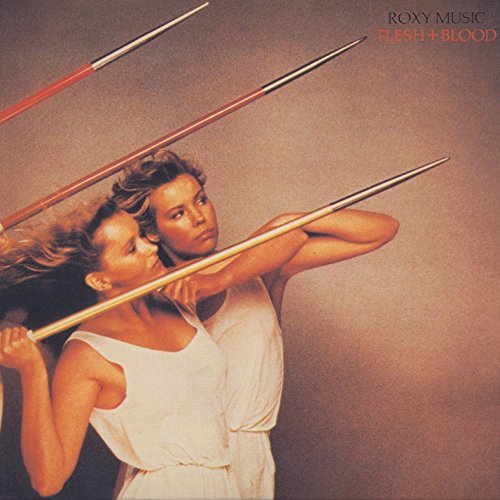
DIRE STRAITS-DIRE STRAITS.
DIRE STRAITS-DIRE STRAITS.
In 1977, punk was at the peak of its popularity. For the last year, bands were being formed all over Britain. Suddenly, it seemed, everyone was a musician. That was all very well. However, there was a problem.
Many of these bands weren’t very good. The problem was, many of this new breed of musicians could neither sing, nor play their instrument. This wasn’t meant to matter. The DIY ethos of punk meant anyone who wanted to become a musician, could be. René Descartes, the founding father of philosophy, it seemed, was right when he said, “I think, therefore I am.” That, however, wasn’t the case.
The truth lay in Hans Christian Andersen’s The Emperor’s New Clothes. It summed up punk perfectly. Playing the swindlers in The Emperor’s New Clothes, were punk groups and their managers. Dawning the role of the Emperor were critics and cultural commentators. They genuinely believed that this wall of discordant sound was the future of music. What made this worse, was while these critics and cultural commentators wrote puff stories praising punk, they wrote disparaging reviews of perfectly good albums. There was a reason for this.
These albums were by punk’s “supposed” enemies. The enemies of punk were many. This included the prog-rock and rock. They were perceived as the musical establishment, and therefore, enemies of punk. It was a case of them and us. The battle-lines, it seemed, were drawn, and a battle for music’s future was about to take place. However, one of the winners were formed in 1977. They were everything that punk wasn’t, and would become one of the biggest groups of the seventies, eighties and nineties, Dire Straits.
The Dire Straits’ story began in 1977, when Mark Knopfler left his job as a journalist with the Yorkshire Post, to pursue a career in music. Next stop for Mark, was London, where he moved into his brother David’s flat.
David’s flatmate was another future member of Dire Straits, bassist John Ilsley. With the three future bandmates sharing a flat, Mark got a job teaching at Loughton College. At night, the college lecturer dawned the role of musician.
By then, Mark had formed what would become Dire Straits. He was the lead vocalist and guitarist. His brother David became rhythm guitarist and John Ilsley played bass. The final piece in the Dire Straits jigsaw, was drummer Pick Withers. With the band’s lineup in place, all they needed was a name.
Having been christened Dire Straits by a flatmate of Pick Withers or Mark Knopfler, the newly christened band started playing alongside Brewer’s Droop and Cafe Racers on the London pub circuit. This would stand them in good stead, for the tortuous tours Dire Straits would soon undertake. In the early days, the music they played an eclectic mixture of musical genres. Everything from blues, folk, jazz, rock and roots music influenced Dire Straits’ early sound. Their music was stripped down, understated and totally at odds with punk. However, within a year, Dire Straits would have the last laugh.
After establishing a reputation on the London pub circuit, Dire Straits by decided the time was right to record a demo tape. They chose five songs, including four written by Mark Knopfer, Dire Straits’ principal songwriter. He penned Sultans of Swing, Water of Love, Down to the Waterline and Wild West End, which would feature on Dire Straits’ 1978 eponymous debut album. The other track on the demo, was a David Knopfler composition Sacred Loving. These five tracks were recorded and taken to Charlie Gillett.
Charlie Gillett was a well known Radio London DJ, whose show Honky Tonk was something of a musical institution in London. Dire Straits took their demo tape to Charlie, who straight away, started playing Sultans Of Swing. This resulted in two month later, Dire Straits signing to Phonograph Records.
Recording of what became Dire Straits took place at Basing Street Studios, London, between 13th February 1978 and 5th March 1978. That’s where the nine Mark Knopfler penned songs were recorded. Mark Knofler played lead guitar and sang lead vocals. David Knofler played rhythm guitar, while drummer Pick Withers and John Ilsley provided Dire Straits’ rhythm section. Producing what became Dire Straits, was Muff Winwood. Once Dire Straits was completed, it was released seven months later on 7th July 1978.
Before the release of Dire Straits, Dire Straits set off on a fifty-five date tour. It began on 6th June 1978 at the Lafayette Club, Wolverhampton, and ended on 18th November 1978 at the College of Education in Hitchin. After that, Dire Straits embarked upon a European tour. By then, Dire Straits had released their eponymous debut album,
On the release of Dire Straits, on 7th July 1978, the album was well received by critics. That’s despite Dire Straits being the polar opposite of the post punk music that filled the charts. Critics enjoyed Mark Knopfler’s autobiographical lyrics, where humour, bitterness and irony shawn through. Having struck a chord with critics, Dire Straits proved popular with record buyers. It took some time though.
It wasn’t until Sultans Of Swing was released as a single in the spring of 1979, that Dire Straits made a commercial breakthrough. Sultans Of Swing became a staple of American radio. It reached number four in the US Billboard 100 and number eight in Britain. Water Of Love was then released as a single in some countries. By then, Dire Straits was a hugely popular album.
In America, Dire Straits reached number two in the US Billboard 200 and number five in Britain. Across the world, Dire Straits was a huge success. From Australia to France, Germany, New Zealand, Norway and Sweden, reached the top ten in the album charts. Dire Straits was a glittering success.
By February 1979, Dire Straits was certified silver in Britain. Eventually, it was certified gold in November 1979 and double platinum in February 1986. Over the Atlantic, Dire Straits was certified gold in America in February 1979 and double platinum in January 1987. Elsewhere, Dire Straits was certified platinum in Australia, France Germany and New Zealand. By 1979, Dire Straits had sold over six million copies worldwide. Dire Straits had the last laugh. Quietly, this unfashionable quartet had taken the world by storm. Meanwhile, punk was but a distant memory. The former punk heroes were back to the mundane reality of everyday life. Their fifteen minutes of fames was all but over. For Dire Straits, a musical adventure was about to unfold, starting with their eponymous debut album.
Down To The Waterline opens Dire Straits. It has an almost, eerie, moody, introduction. A foghorn sounds and sets the scene for the crystalline sound of Mark Knopler’s guitar playing slowly. Then all of a sudden, the rest of Dire Straits join forces, and the arrangement bursts into life. As the rhythm section provide the heartbeat, Mark paints pictures with his autobiographical lyrics. He remembers distant teenage assignations, walking along the quayside with his girlfriend. Meanwhile, he unleashes dazzling, chiming licks. They flit in and out of the arrangement, giving the listener a tantalising taste of what’s still to come from Dire Straits.
Water Of Love has a much more understated, laid-back sound. Mark’s slide guitar takes pride of place in the in the country tinged, shuffling arrangement. It’s reminiscent of Ry Cooder, early seventies albums. Meanwhile, Mark’s wistful vocal describes the breakup of his marriage. Hurt, heartbreak and regret are omnipresent. That’s apparent from the lyric “once I had a woman I could call my own, once I had a woman now she is gone.” Mark delivers it wistfully, longing for what he had, and has lost.
Setting Me Up sees the tempo and temperature rise. Mark’s relationship has gone wrong. He’s not pleased, as he sings “you’re setting me up to put me down, you’re making me up to be your clown”. As Mark bitterly describes a relationship gone wrong, he delivers some blistering, scorching licks. David his brother proves a perfect foil. As guitarists, they’re like yin and yang. Pick and John play their part too, driving the arrangement along, before this country-tinged tale of romantic woe reaches a crescendo.
The tempo drops and Six Blade Knife takes on a melancholy, but laid-back sound. It comes courtesy of Dire Straits’ rhythm section and a sprinkling of chiming guitars. Soon, Mark’s worldweary, lived-in vocal enters. He longs for one thing, freedom. “I’d like to be free of it now-I don’t know no more.” Everyone he realises a slave to something: “a needle a wife or something you can’t see.” His longing for freedom shines through as he delivers the lyrics deliberately and emotively. However, deep down, Mark knows this is just a dream.
Crystalline guitars and the rhythm section join forces on Southbound Again. They provide a jaunty backdrop for Mark’s gravelly vocal. His vocal is tinged with frustration and melancholy, as he sings “southbound again got no money, I’ve got no place to go.” The way Mark delivers the lyrics, he’s been there and experienced the despair and hardship. This however, was before the rise and rise of Dire Straits.
Sultans Of Swing is a song full of imagery and contrasts. Inspiration for the song came from Mark seeing a jazz band play in an empty bar. The musicians were scruffy, but at the end of the set, announce that they’re the Sultans Of Swing. After seeing this scenario unfold, Mark went home and wrote the song. The lyrics fell into place and tell the story of the Sultans Of Swing. Straight away, the crystalline guitar sits above the rhythm section, which powers the arrangement along. Mark and his guitar play starring roles, as he tells the story of the Sultans Of Swing, who forever, will remain contenders. Of all the songs on Dire Straits, the cinematic delight of Sultans Of Swing is the best.
In the Gallery tells the story of Harry, a coal miner, who at nights, becomes a sculptor. Despite his undoubted talent, he’s “ignored by all the trendy boys in London and in Leeds.” This is just one, of many stories of people with Britain’s long lamented industrial heartland, were hugely talented, but were victims of circumstances, and never fulfilled their potential. That’s why, when Mark delivers the lyrics, frustration, and sometimes, anger fills his voice. His guitar chimes and glistens, while the rhythm section provide the perfect backdrop for this tale of talent scorned.
Wild West End has a much more pared back, understated, country-tinged sound. Here, Dire Straits have been influenced by Americana, country and roots music on what’s akin to another short story. Mark’s literary background shines through. His lyrics paint pictures. So much so, that it’s possible to imagine the scenes unfold before your eyes. One minute, he’s im walking down Shaftesbury Avenue, the next getting on the number nineteen bus and falling in love with the conductress-“she was a honey, pink toenails and hands dirty with money.” The result, is a kitchen sink drama, Mark Knopfler style.
Lions brings Dire Straits to a melancholy close. There’s a particular English quality to Lions. Maybe it’s the mention of “Evensong” and “flags on poles.” They’re a remnant of what England once was. However, the characters in Lions are just as relevant today, as always. Some are damaged, damaged by the ravages of alcohol, others living in hope for a “stranger in the night.” Slowly, and wistfully, Dire Straits tell these stories. Mark’s weeping guitar, and a slow, thoughtful rhythm section provide the backdrop for his weary vocal. His cerebral, perceptive lyrics are akin to social commentary set to music.
Back in 1978, when Dire Straits released their eponymous debut album, it was a welcome distraction from the remnants of punk. Punk was on its last legs. It had become a parody of what was essentially a musical paradox. What had once been hailed a musical revolution, descended into commerciality and violence. Novelty punk songs were released, and concerts descended into chaotic scenes of violence. At least Dire Straits offered a welcome alternative and distraction.
After two years of music from bands who could barely play their instruments, the release of Dire Straits in July 1978 came as a welcome release. Here were a band of talented musicians, lead by a musical wordsmith. That describes Mark Knopfler perfectly.
Mark Knopfler came from a literary background. A former journalist, who was working as a teacher when he formed Dire Straits, words were Mark’s stock in trade. He was observer of daily life, who eavesdropped on the comings and goings of ordinary people. Almost seamlessly, he translated their lives into song. Their lives come to life. You empathise and sympathise with their stories. Other times, especially during the tales of love and love lost, you share their pain and hurt. It seems real. Especially when delivered by Mark’s lived-in, worldweary vocal. Mark has the uncanny ability of being able to bring this pain and hurt to life. Partly, that’s because Mark has lived the lyrics. He’s experienced the pain and hurt. However, there’s more to Dire Straits than Mark Knopfler’s lyrics and vocals.
Apart from having the ability to write and deliver cerebral and perceptive lyrics, Mark Knopfler was one of the most talented guitarists of his generation. Mark’s guitar complimented and augmented his poignant lyrics. Aided and abetted by his brother David’s guitar, bassist John Ilsley and drummer Pick Withers, Dire Straits were a hugely talented quartet. They would dominate British music for the next seventeen years.
Right through until 1995, Dire Straits were one of the biggest British bands. Each of their six studio albums and two live album were certified gold, platinum or multi-platinum worldwide. However, Dire Straits’ most successful album was 1985s Brothers In Arms. It was certified platinum nine time over in America alone. Right through until Dire Straits split-up in 1995, they could do no wrong. For three decades this proudly unfashionable quartet ruled the musical roost. The album that started this uninterrupted run of commercial success and critical acclaim was Dire Straits, an album of autobiographical and cinematic music, from the pen of musical wordsmith Mark Knopler.
DIRE STRAITS-DIRE STRAITS.
BRIAN ENO-HERE COME THE WARM JETS.
BRIAN ENO-HERE COME THE WARM JETS.
For Brian Eno, 1973 was the year the second chapter in his career began. Brian had just left Roxy Music after touring their sophomore album, For Your Pleasure. By the end of the tour, Brian had realised the life of a rock star wasn’t for him. He found the life of a rock star tedious. The constant touring, and spending half his life either on stage, or in an anonymous hotel room, wasn’t for Brian Eno. Then there were the disagreements with Roxy Music’s flamboyant frontman, Bryan Ferry. All this meant that Brian’s time with Roxy Music was at an end. This however, was a huge decision.
Leaving Roxy Music was a brave and controversial decision for Brian Eno. Roxy Music were one of the most successful British bands of the early seventies. However, Brian Eno’s creativity was being stifled. He felt that he had much more to offer music. Having toured For Your Pleasure, a frustrated and restless Brian Eno left Roxy Music, and embarked on a solo career.
Having left Roxy Music, straight away, Brian Eno began work on his debut album Here Come The Warm Jets. It’s best described as a fusion of art rock, avant garde, experimental and glam rock. Here Come The Warm Jets was an innovative album from Brian Eno.
Freed from the shackles of Roxy Music, Brian Eno wrote six songs for what became Here Come The Warm Jets. He also cowrote four other tracks. He penned Needles in the Camel’s Eye and Cindy Tells Me with ex-Roxy music colleague, Phil Manzanera. Brian and King Crimson founder Robert Fripp cowrote Blank Frank. The other track on Here Come The Warm Jets, was Some Of Them Are Old. It was a collaboration between Brian, Paul Thompson, Busta Jones and Nick Judd. These ten tracks became Here Come The Warm Jets, which was recorded over twelve days in September 1973, at Majestic Studios, London.
When recording of Here Come The Warm Jets began at Majestic Studios, London, Brian was accompanied by the great and good of British rock. Over twelve days in September 1973 at Majestic Studios, London, Brian, and sixteen guest musicians recorded the ten tracks that became Here Come The Warm Jets.
Joining Brian Eno for recording of Here Come The Warm Jets, were some of biggest names in music and some of the top session players. This included guitarists Robert Fripp of King Crimson, Roxy Music’s Phil Manzanera, Chris Spedding and Paul Rudolph. Lloyd Watson, who had opened for Roxy Music and King Crimson played slide guitar. Bassists included John Wetton of King Crimson and Family, Chris Thomas, Busta Jones and Bill MacCormick. Keyboardists included Roxy Music’s Andy MacKay, Nick Judd and Nick Kool and the Koolaids. Percussion came courtesy of Simon King, Marty Simon and Paul Thompson, who was then the Roxy Music drummer. Sweetfeed added the all important backing vocals on On Some Faraway Beach and Blank Frank. Brian produced Here Come The Warm Jets, added vocals and played guitar, synths and keyboards. Once Here Come The Warm Jets was completed later in September 1973, Brian Eno was ready to release his debut album.
On its release in January 1974, Here Come The Warm Jets was mostly well received, by critics. Reviews ranged from favourable to positive. There were some contrarian critics, namely Rolling Stone. However, since then, Here Come The Warm Jets has been reappraised by a new generation of critics. They realised that Here Come The Warm Jets was an ambitious, innovative album. As a result, Here Come The Warm Jets is now regarded as a classic album, one that shows what Brian Eno, freed from the restraints of Roxy Music was capable of. However, the record buying public didn’t seem to “get” Here Come The Warm Jets.
When Here Come The Warm Jets was released in January 1974, it only reached number twenty-six in the UK and number 151 in the US Billboard 200. This must have been a disappointment for Brian, who previously, had been part of one of the most successful British bands of the early seventies. Belatedly, however, Here Come The Warm Jets record buyers recognised the quality of music on Brian’s debut album. Here Come The Warm Jets, Brian Eno’s debut album was the album he had been longing to make.
Needle In The Camel’s Eye opens Here Come The Warm Jets. It’s a guitar driven, explosion of energy. From the get-go, a wall of joyous, melodic and hook laden music assails you. As guitars drive the arrangement along, drums pound urgently. The guitars are panned left and right. They surround and assail you. Meanwhile, Brian delivers the vocal with energy and enthusiasm. Later, as his vocal drops out, a sixties influenced guitar solo takes centre-stage. It toys with the listener, before Brian and his all-star band kick loose during the rest of this anthemic track.
Listening to The Paw Paw Negro Blowtorch, it’s obvious that this track influenced David Byrne’s Talking Heads. This is the case from the moment Brian’s delivers a vampish, flamboyant vocal. He’s accompanied by chiming, funky and searing guitars, the rhythm section and harmonies. Later, a myriad of futuristic, sci-fi sounds and a piano adds to what’s an ambitious and innovative track that spawned a thousand imitators.
Urgent and dramatic describes the ominous, slightly sci-fi introduction to Baby’s On Fire. Again, Brian’s vocal is vampish. It’s as if each track is a short story, and he’s playing a starring role. As a result, he adapts his vocal to suit each song’s lyrics. Keyboards, the rhythm section and sci-fi sounds join a searing, bristling, scorching guitar solo from Robert Fripp. He steals the show, wielding his guitar like a musical wizard. This adds a healthy dose of drama to what, thanks to Robert’s guitar, and earlier, Brian’s vocal, is an epic track.
Cindy Tells Me has a vintage sound, one that brings back memories of a musical era. Think late fifties, early sixties. However, this being Brian Eno, he gives the music of the past a makeover. Stabs of piano and cooing harmonies join Brian’s vocal. It veers between wistful to ironic. Sometimes, seems to mock, even pity those he’s singing about. Above his vocal, washes of guitar are akin to musical vapour trails. They’re joined by angelic, ethereal harmonies. They prove to be the finishing touch to what’s a fusion of music’s past, present and future.
Driving Me Backwards has an almost Bowie-esque sound. However, it’s taken further than before. Brian’s impassioned, soul-baring vocal is accompanied by a piano which is bathed in effects. Meanwhile, guitars reverberate, a bass buzzes and drama abounds. The result is a track that’s moody, broody and given that it paints pictures in your mind’s eye, cinematic.
Just a lone piano and ethereal harmonies combine on On Some Faraway Beach. In the distance drums and keyboards and a searing guitar plays. As the arrangement grows, they almost overpower the piano. Almost but never quite. Instead, and like Brian’s tender vocal they compliment what’s already beautiful, dramatic arrangement.
Blank Frank is very different from the previous track. They’re polar opposites. Raw power and nihilistic describes Blank Frank. Brian delivers a snarled vocal tinged with irony and anger. Meanwhile his band play loosely and with aggression. They almost attack their instruments. Guitars growl, while keyboards and drums are pounded. Soon, the track becomes a captivating jam. However, the aggression and anger of Blank Frank might well have played a part in inspiring punk two years later.
As drums and a piano play, you wonder where what direction Brian will take Dead Finks Don’t Talk. Against a backdrop of drums and piano, Brian sounds like a preacher delivering an ironic, spoken word vocal. It soon changes, becomes a tender, thoughtful vocal. He’s accompanied by howling backing vocals. Then when they drop out, a blistering guitar solo is unleashed. It’s replaced by handclaps and Brian’s chameleon like vocal. It veers between tender, thoughtful, comedic and ironic on what’s best described as a mixture of music, theatre and comedy.
Straight away, Some Of Them Are Old has wistful, melancholy sound. Just an organ and deliberate harmonies accompanies Brian on what’s a beautiful, wistful and lysergic track.
Here Come The Warm Jets closes with the title-track. Guitars bathed in effects, accompany the driving rhythm section and keyboards. Later, they’re joined by harmonies. They’re responsible for a driving, everyman, anthem.
Just ten months after leaving Roxy Music, Brian Eno released Here Come The Warm Jets, his much anticipated debut album in January 1974. Here Come The Warm Jets was well received upon its release. Reviews ranged from favourable to critically acclaimed. Despite that, Here Come The Warm Jets only reached number twenty-six in the UK and number 151 in the US Billboard 200. This must have been a disappointment for Brian, who previously, had been part of one of the most successful British bands of the early seventies. Belatedly, however, Here Come The Warm Jets record buyers recognised the quality of music on Brian’s debut album.
Nowadays, Here Come The Warm Jets, which is best described as a fusion of art rock, avant garde, experimental and glam rock is considered one of Brian Eno’s finest albums. Belatedly, this genre defying album is considered a classic. No wonder. Here, was a bold, ambitious, innovative album. This was the album Brian Eno had been longing to make. However, as a member of Roxy Music this wasn’t possible.
No. Here Come The Warm Jets was a step too far from the music Roxy Music released. They couldn’t risk releasing an album like Here Come The Warm Jets, so early in their career. That would risk everything Roxy Music had worked towards. So, the only alternative for Brian was to leave Roxy Music, the group he co-founded. Roxy Music had just made that all important commercial breakthrough, and were the critic’s darlings. That was a lot to sacrifice. Brian Eno however, was willing to make that sacrifice. It paid off.
Between 1974 and 1983, Brian Eno could do no wrong. He was one of the most innovative musicians of his generations. This run of critically acclaimed albums continued with his sophomore album Taking Tiger Mountain (By Strategy), which was released in November 1974. While Taking Tiger Mountain (By Strategy) wasn’t a commercial success, critical acclaim accompanied its release. That was the case from 1975s Another Green World and Discreet Music, to 1977s Before and After Science and 1978s Music For Films, which is another classic album. After that, Brian embarked upon a string of innovative albums. This includes 1982s Ambient 4: On Land, 1983s Apollo: Atmospheres and Soundtracks and then 1983s More Music For Films. This was one of the most fruitful periods of Brian Eno’s career.
Ten years after leaving Roxy Music, Brian Eno wasn’t just enjoying a solo career. He collaborated with a wide range of artists and had reinvented himself as a successful producer. His decision to leave Roxy Music had paid off.
While Brian Eno didn’t enjoy the same commercial success as a solo artist, as he would’ve with Roxy Music, Brian Eno’s self respect was in tact. For the last ten years, Brian Eno had been making music he believed in. Much of this music was groundbreaking, innovative and influential. This includes Brian Eno’s debut solo Here Come The Warm Jets, where freed from the shackles of Roxy Music, Brian Eno embarked upon a career as a musical pioneer.
BRIAN ENO-HERE COME THE WARM JETS.
KING CRIMSON-LARK’S TONGUES IN ASPIC.
KING CRIMSON-LARK’S TONGUES IN ASPIC.
It was in October 1969, that King Crimson burst onto the scene with their debut album In The Court Of The Crimson King. A true prog rock classic, In The Court Of The Crimson King was was released to critical acclaim and commercial success on both sides of the Atlantic. In The Court Of Crimson King reached number five in the UK, and was certified gold in America, when it reached number twenty-eight. Following the success of In The Court Of The Crimson King in America, King Crimson headed on their first American tour.
On their return home from their American tour, Ian McDonald and Michael Giles left King Crimson. This was the first of numerous lineup changes in the history of King Crimson.
The next member of the band to exit stage left was Greg Lake. He was approached by Keith Emerson to join what became Emerson, Lake and Palmer. Having lost three members of the band, Robert Fripp was left as the only member of King Crimson. This presented a problem, King Crimson had an album to record.
So former members, Peter and Michael Giles returned to play bass and drums, while Keith Tippett played piano. Robert played keyboards and guitars, while session musicians augmented the band’s lineup. Without a lead singer, an unknown singer Elton John was in the running to become King Crimson’s lead singer. However, instead, Robert Fripp sang the lead vocals. This proved a winning formula.
On its release in May 1970, In The Wake Of Poseidon reached number four in the UK and number thirty-one in America. In The Wake Of Poseidon would prove to be King Crimson’s most successful album, during a five year period where King Crimson were one of the most successful prog rock bands.
From In The Court Of Crimson right through to Panegyric, King Crimson were one of the most successful prog-rock bands. Quite simply, King Crimson were prog-rock royalty. For five years, King Crimson could do no wrong. This five year period was a golden period in King Crimson’s long and illustrious career. During this period, King Crimson were a prolific band.
Following the success of In The Wake Of Poseidon, King Crimson released their third album seven months later on 3rd December 1971. Again, King Crimson’s lineup seemed to be constantly evolving.
Jazz pianist Keith Trippett and flautist and saxophonist Mel Collins returned. They were joined by drummer Andy McCulloch and Yes’ frontman Jon Anderson. Lizard, which was produced by Robert Fripp and Peter Sinfield at Command Studios, London.
Lizard was a much more jazz oriented album. Despite its undoubtable quality, Lizard stalled at a disappointing number twenty-six in the UK and number 113 in the US Billboard 200. Equally disappointing was that this lineup of King Crimson never got the opportunity to tour. Having released two albums in seven months, it was another year before King Crimson released their fourth album, Islands.
Islands marked the end of era for several reason. The first was that Islands was the last album to feature Peter Sinfield’s lyrics. This was the last album to feature what was King Crimson’s trademark fusion of progressive, symphonic sound. Again there were changes in lineup. Boz Burrell played bass and sang lead vocals, while Ian Wallace played drums and percussion. On the release of Islands, the album divided opinion.
Some critics felt that Islands didn’t match the quality of King Crimson’s three previous albums. Despite this, Islands, which was released in December 1971, reached number thirty in the UK and number seventy-six in the US Billboard 200. Then there was the controversy surrounding Ladies Of The Road. King Crimson found themselves in the midst of a controversy where they were accused of misogyny. For King Crimson this wasn’t the best way to end an era.
For their fifth album, Larks’ Tongues In Aspic, the album marked the debut of the third lineup of King Crimson. Joining Robert Fripp were bassist John Wetton, ex-Yes drummer Bill Bruford, percussionist Jamie Muir and David Cross, who played violin, viola, Mellotron, electric piano and flute. This new lineup saw the band head in a new direction.
King Crimson incorporated different instruments, including percussion and African mbira. They moved away from their jazz sound, to a fusion of prog rock and experimental music on what became Larks’ Tongues In Aspic.
Larks’ Tongues in Aspic featured just six tracks. Robert Fripp, King Crimson’s founder member, wrote Larks’ Tongues in Aspic, Part Two and cowrote the other five tracks. David Cross, Robert Fripp, Bill Bruford and Jamie Muir cowrote Larks’ Tongues In Aspic, Part One and The Talking Drum. Robert Fripp, John Wetton and Richard Palmer James wrote Book Of Saturday and Easy Money. The trio of Robert, John and Richard collaborated with David Cross on Exiles. These six tracks became Larks’ Tongues In Aspic, which was recorded at Command Studio, London.
At Command Studio, the five members of King Crimson began recording and producing Larks’ Tongues In Aspic in January 1973. King Crimson spent January and February 1973 recording the six tracks that became Larks’ Tongues in Aspic. One Larks’ Tongues In Aspic was completed, it was released on 23rd March 1973.
On the release of Larks’ Tongues In Aspic, on 23rd March 1973, it received the same critical acclaim as previous albums. Critics called Larks’ Tongues In Aspic innovative and inventive. The music was experimental and jazz tinged. Comparisons were made to Yes’ Close To The Edge. However, Larks’ Tongues In Aspic stole the show. Some critics referred to Larks’ Tongues In Aspic as the most important prog-rock album of 1973. Given the opposition, this was quite an accolade.
Despite the critical acclaim and accolades that surrounded the release of Larks’ Tongues in Aspic, it only reached number twenty in Britain. While this was an improvement on 1970s Lizards and 1971s Island, Larks’ Tongues In Aspic failed to scale the heights of 1969s In the Court of the Crimson King or 1970s In the Wake of Poseidon. This was also the case in America. In America, Larks’ Tongues In Aspic reached just number sixty-one in the US Billboard 200. However, since its release in 1973, Larks’ Tongues In Aspic has been regarded as a prog-rock classic.
Larks’ Tongues in Aspic opens with the centre-piece of the album, Larks’ Tongues in Aspic, Part One. It’s a fourteen minute instrumental epic. Jamie Muir contributes a lengthy, understated percussive introduction. Everything from chimes, bells, a thumb piano, mbiras, a musical saw, shakers and rattles feature. Gradually, though, the arrangement changes. Soon, urgent, sweeping, strings take centre-stage. Then the percussion is soon joined by a taste of a blistering, guitar driven driven section. It then exposed into life. Robert Fripp’s searing, scorching guitar is at the heart of everything that’s good about the arrangement. Not to be outdone, Bill Bruford powers around his drum kit and John Wetton unleashes a funky bass. By then, King Crimson are in full flight. It’s a joy to behold. Later, the arrangement does a volte face, becoming wistful and minimalist. Just a lone violin plays, its melancholy sound taking centre-stage, until later, it’s joined by a distant, cinematic backdrop. That’s the signal for King Crimson to unite, as this epic track reaches a captivating crescendo.
Book of Saturday is very different from the previous track. The arrangement is much more understated and spacious. Just a crystalline guitar and probing bass joins John’s pensive vocal, as memories come flooding back. Soon, wistful strings sweep in, adding to the sense of melancholy as John scats. Later, heartfelt harmonies add to the ethereal beauty of Book of Saturday.
Disturbing, droning, eerie, futuristic, sci-fi sounds assail you as Exiles unfolds. Soon, the arrangement bubbles and drama builds. it’s not unlike a journey to a lost planet. Just like Larks’ Tongues in Aspic, Part One, there’s a nod to Pink Floyd. That becomes more apparent as the arrangement becomes melodic, and the myriad of disparate sounds dissipate. A wistful violin and a probing bass joining John’s pensive vocal. Before long, melodic becomes dramatic. From there, they two unite. Melancholy strings, chiming guitars and the rhythm section join with John’s heartfelt, pensive vocal. He delivers the lyrics with emotion, bringing meaning to the lyrics, on what would become a a staple of many a King Crimson concert.
Slow, dramatic and moody, describes the arrangement to Easy Money as it marches along to the beat of Bill’s drums. It’s augmented by soaring harmonies, gongs and then, when the arrangement is stripped bare, a chiming guitar. However, it’s John’s vocal that sits amidst the dramatic, broody arrangement. It pulsates and creeps along. Stabs of keyboards, cinematic strings, sound effects unite with Robert’s scorching, rocky guitar masterclass. It’s one of Robert’s finest solos. Add to that, John’s vocal and cerebral lyrics, and it’s one of Larks’ Tongues in Aspic’s highlights.
The Talking Drum is another instrumental. Understated, atmospheric and somewhat eerie describes the arrangement. Its minimalist sound toys with you. Then slowly, it builds. Drums play in the distance, then a bass is plucked, adding to the atmospheric backdrop. Soon, a fuzzy guitar and violins join. Still, the arrangement is understated. Gradually, it grows in power. Eventually, King Crimson kick loose. By then, elements of jazz, rock and world music are uniting. Combining disparate instruments and influences, they create an innovative, genre-straddling track.
Larks’ Tongues In Aspic, Part Two closes Larks’ Tongues In Aspic. Straight away, the track has a heavier sound. It’s as if King Crimson’s driving rhythm section and searing guitars are heading in the direction of heavy metal. That’s until the track takes on a classical sound. Later, the two combine. Whistles sound, drums pound and Robert’s scorching, riffing guitar plays a leading role. King Crimson it seems, are determined to close Larks’ Tongues In Aspic on a high, and succeed in doing so, with another instrumental epic.
When King Crimson released Larks’ Tongues In Aspic in 1973, they were in the midst of a five year period where King Crimson could do no wrong. Between In The Court Of Crimson right through to Panegyric, King Crimson were one of the most successful prog-rock bands. They released seven albums. During that period, commercial success and critical acclaim were constant companions of King Crimson. As a result, King Crimson became part of prog-rock royalty.
For five years, King Crimson could do no wrong. Larks’ Tongues In Aspic was the fifth album King Crimson had released since 1969. That’s quite an achievement, considering King Crimson’s ever changing lineup. This, however, didn’t affect the quality of music.
There’s a reason for this. Robert Fripp had the uncanny knack of bringing in the right musicians. They always seemed to compliment the other members of King Crimson. This was the case on Larks’ Tongues In Aspic, King Crimson’s fifth album.
Larks’ Tongues In Aspic marked the debut of the third lineup of King Crimson. Joining Robert Fripp were bassist John Wetton, ex-Yes drummer Bill Bruford, percussionist Jamie Muir and David Cross, who played violin, viola, Mellotron, electric piano and flute. This new lineup took King Crimson in a new direction.
On Larks’ Tongues In Aspic, King Crimson incorporated different instruments, including percussion and African mbira. They moved away from their jazz sound, to a fusion of prog rock and experimental music. There was even a nod to heavy metal on a couple of tracks. This made Larks’ Tongues In Aspic another captivating and critically acclaimed album, from one of prog-rock’s leading lights.
Indeed, Larks’ Tongues In Aspic is a genre classic. It’s one of the finest prog-rock albums released during the seventies. Seamlessly, the new lineup of picked up where the previous lineup of King Crimson left off on Islands. In doing so, the new lineup of King Crimson were responsible for one of the group’s finest hours.
Of the seven albums King Crimson release during their golden period, Larks’ Tongues In Aspic was a stonewall classic. Starting with the fourteen minute, instrumental epic Larks’ Tongues In Aspic, Part One and continuing through favourites like Book of Saturday, Exiles and Easy Money, King Crimson bring their A-Game to Larks’ Tongues In Aspic. Not once do they disappoint. The two other instrumentals, The Talking Drum and Larks’ Tongues In Aspic, Part Two allow King Crimson to showcase their considerable talents. It’s a joy to behold as what’s akin to a supergroup stretch their legs, taking the listener in unexpected directions. However, Larks’ Tongues In Aspic is a compelling and breathtaking journey, with King Crimson at the top of their game during their golden period.
Following Larks’ Tongues In Aspic, King Crimson released just two more albums during this golden period. They were 1973s Starless and Bible Black and 1974s Red. Neither of these albums replicated the critical acclaim and commercial success of Larks’ Tongues In Aspic. No. Larks’ Tongues In Aspic was a landmark album, and is one of the finest albums King Crimson released during their five year golden period. During that period, musical pioneers King Crimson, could do no wrong. Proof if any was needed, is King Crimson’s fifth album Larks’ Tongues In Aspic.
KING CRIMSON-LARK’S TONGUES IN ASPIC.
TANGERINE DREAM-RUBYCON.
TANGERINE DREAM-RUBYCON.
Tangerine Dream are, without doubt, the original musical chameleons. Since forming in 1967, Tangerine Dream’s music has been constantly evolving. As a result, they can never be accused of standing still. Far from it.
During the last six decades, Tangerine Dream have flitted between musical genres as they recorded over 125 studio albums. Like musical butterflies, Tangerine Dream have toyed with psychedelia, Krautrock, the Berlin School, progressive rock, ambient, avant-garde, experimental, new age and electronica. Then as the age of electronic music unfolded, Tangerine Dream embraced drum and bass and progressive house. Still, Tangerine Dream remained relevant. That’s despite Tangerine Dream’s lineup being somewhat fluid.
When Edgar Froese founded Tangerine Dream in 1967, he was briefly joined by drummer Klaus Schulze. However, before long, Klaus left Tangerine Dream. This was a brief taste of the future.
Little did Edgar realise, that over the next forty-eight years, that another twenty-four musicians would play a part in the Tangerine Dream story. Some, however, like Klaus Schulze, would only play a walk-on part in Tangerine Dream’s story. Others, including Christopher Franke and Peter Baumann played a starring role in the rise and rise of Tangerine Dream.
Christopher Franke and Peter Baumann were part of the what is regarded as the classic lineup of Tangerine Dream. The first to join Tangerine Dream was Christopher Franke.
He joined in time to record Alpha Centauri, Tangerine Dream’s sophomore album. It was recorded in early 1971, and the spacey, atmospheric soundscape was released to critical acclaim in March 1971. Alpha Centauri was the second album in what became known as Tangerine Dream’s “Pink Years.”
Electronic Meditation.
The “Pink Years” had began a year earlier when Tangerine Dream released their debut album Electronic Meditation in June 1970. However, Electronic Meditation was recorded a year earlier in 1969.
Recording of Electronic Meditation took place in in a disused factory in Berlin, using just a two-track Revox tape recorder. The lineup of Tangerine Dream included Tangerine Dream’s founder member Edgar Froese, Klaus Schulze and Conrad Schnitzle. They were joined by session musicians Jimmy Jackson and Thomas Keyserling. During October 1969, Tangerine Dream started as they meant to go on. This meant recording a genre defying album.
On Electronic Meditation, Tangerine Dream recorded what critics hailed as a genre defying album. They combined free jazz, rock, avant-garde and electronic music. These genres melted into one. The result was Electronic Meditation, an album that was well received by critics. This was the start of the “Pink Years.”
Alpha Centauri.
The followup to Electronic Meditation was Alpha Centauri. This was the album that saw Christopher Franke make his Tangerine Dream debut. He played his part in a truly groundbreaking album, Alpha Centauri.
Recording of Alpha Centauri too place in early 1971. Then in March 1971, Alpha Centauri, which is best described as a spacey, atmospheric soundscape was released to critical acclaim. It’s a timeless album, one that it’s hard to believe was recorded forty-four years ago. It has stood the ravages of time, and is a tantalising taste of what was still to come from one of music’s most innovative groups.
Zeit.
Having released the first two albums in the “Pink Years,” Tangerine Dream recorded their third album in 1972. That’s when Peter Baumann joined Tangerine Dream in 1972. He was part of the lineup of Tangerine Dream that recorded Zeit, which was a landmark album.
Zeit was the first Tangerine Dream to feature what became known as the group’s classic lineup. They recorded some of Tangerine Dream’s best music. That’s quite a statement, given how prolific Tangerine Dream were. They would record over sixty-five studio albums and a further sixty soundtracks. Then there’s countless live albums. Each album shows Tangerine Dream’s music evolving.
That was the case with Zeit. The music was slower, and much more atmospheric. It was also way innovative, and way ahead of its time. Indeed, on Zeit, Tangerine Dream pioneered the drone music that’s seen as cutting edge in 2015. Tangerine Dream always were ahead of the musical curve. So much so, that Zeit is now regarded as a timeless, Krautrock classic. This wouldn’t be Tangerine Dream’s only classic album.
Atem,
Following Zeit, the musical changelings continued to change direction. Atem, which marked the end of Tangerine Dream’s “Pink Years,” was a much more eclectic album. It veered between the slow, atmospheric tracks of previous albums, right through to much more experimental, aggressive tracks.
On Atem, Tangerine Dream made effective use of a Mellotron, experimental vocals and a myriad of percussion. This resulted in the album that saw Tangerine Dream make a commercial breakthrough in Britain.
Phaedra.
While Atem saw Tangerine Dream make a commercial breakthrough in Britain, Phaedra was a game-changer of an album. Phaedra was the first Tangerine Dream album to feature their sequencer driven sound. It was also the album that launched the Berlin School sound.
As recording of Phaedra took place during December 1973, Tangerine Dream decided to improvise on what would become the title-track. However, before long, problems started to arise. As the temperature rose in the studio, oscillators started to detune. This resulted in a marked change in the sound. This happy accident played an important part in Phaedra’s sound. Other tracks, including Movements Of A Visionary, showcased the nascent technology. This included a Moog synth. It played its part on what critics called one of the most important electronic albums in musical history.
On the release of Phaedra, on 20th February 1974, critics called the album a classic. It also struck a nerve with record buyers. Phaedra reached number fifteen in Britain and was certified gold. After five albums Tangerine Dream had struck gold. It looked like they were on their way to becoming part of rock royalty.
Rubycon.
Having made the all important breakthrough, Tangerine Dream were determined to prove that Phaedra wasn’t a one off. So, they began work on their sixth album Rubycon.
Rubycon saw Tangerine Dream pickup where they left of on Phaedra. This meant moving their Berlin School sequencer based sound forwards on Rubycon. As founders of the Berlin School, Tangerine Dream felt a responsibility to progress the sound.
Standing still wasn’t in Tangerine Dream’s nature. It never had been. That had been the case since Tangerine Dream released their 1970 debut album Electronic Meditation. Since then, Tangerine Dream had been musical changelings, moving between musical genres. Having left their “Pink Years” behind them after Atem, Phaedra saw Tangerine Dream founding the Berlin School. With this in mind, Tangerine Dream began work on Rubycon.
Rubycon was very different from previous Tangerine Dream albums. It consisted of just two lengthy tracks. Each lasted just over seventeen minutes. This meant each track filled one side of Rubycon. The two tracks, Rubycon (Part One) and Rubycon (Part Two), were written by Edgar Froese, Christopher Franke and Peter Baumann. They recorded Rubycon at Richard Branson’s The Manor Studio, in Shipton-on-Cherwell.
At The Manor Studio, the three members of Tangerine Dream began recording and producing what became Rubycon. Edgar Froese played mellotron, guitar, a VCS 3 synth and gong. Christopher Franke played a similarly eclectic collection of instruments. This included a double Moog synth, organ, prepared piano, Synthi A and gong. Peter Baumann played an organ, Synthi A, Fender Rhodes, piano and ARP 2600. With this eclectic selection of instruments at their disposal, the result was another critically acclaimed album from Tangerine Dream.
On Rubycon’s release, critics hailed it another innovative album from Tangerine Dream. Record buyers agrede. Rubycon reached number fourteen in the UK. Despite this, Rubycon didn’t sell as well as Phaedra. However, Rubycon was still commercially successful and critically acclaimed.
Rubycon (Part One) opens Rubycon. The arrangement has an eerie, haunting cinematic sound. It’s slow and spacious. Washes of synths shimmer, gentle stabs of keyboards add a sense of urgency and drama. Soon, the arrangement is beginning to sound like the soundtrack to a lost horror film. Then all of a sudden, it’s akin to an awakening, as the arrangement becomes ethereal and elegiac. As the arrangement coos, shimmers and glistens, it then takes on a futuristic, sci-fi sound. Before long, Tangerine Dream have transformed the arrangement. It stretches its legs, lazily unfolding, and allowing you a glimpse of its hidden depths. Later, it becomes dark and ominous, as it drives and pulsates along. By now, there’s a Krautrock influence. Still, however, the music has a dark, atmospheric and cinematic sound. Later, arrangement drives along. Gone is pulsating sound, but the drama remains. It’s as if Tangerine Dream are providing the soundtrack to a long forgotten film.
Washes of synths assail you as Rubycon (Part Two) unfolds. They come towards you, assailing and surrounding you. It’s as if the end is neigh. Their ominous sound is like a battalion of otherworldly creatures droning above you, just waiting to spring some unpleasant surprise. Then the music changes. It becomes ethereal and elegiac. What sounds like a choir angels sweeps down, trying soothe your fears. Before long, the music takes on an almost spiritual quality. Soon, it’s all change again. The arrangement pulsates and pumps along. What follows makes Tangerine Dream sound like the rightful Godfathers of modern electronic music. This is techno, long before the term was coined. Later, Rubycon (Part Two) in a different direction. It sounds like a cinematic soundscape, where the listener supplies the scenes to music. From there, the music on this seventeen minute epic veers between evocative and atmospheric, to moody and broody, right through to ethereal and elegant to dark and dramatic. As Rubycon (Part Two) and therefore, Rubycon draws to a close, you long to hear more from of the same from Tangerine Dream. Rubycon has been a tantalising taste of what Tangerine Dream are capable of.
Eight years after Tangerine Dream had been founded by Edgar Froese in 1967, they were one of the most innovative groups of the seventies. Rubycon was their sixth album, and is a genre-defying album featuring two epic soundscapes lasting seventeen minutes each. They see Tangerine Dream, the original musical butterflies, toying with disparate musical genres on the two soundscapes. Everything from psychedelia, Krautrock, Berlin School, progressive rock, ambient, avant-garde, experimental, new age and electronica can be heard on Rubycon, a truly captivating, innovative and timeless album. That’s not all.
Listening again to Rubycon, it’s quite unlike most of the studio albums released during 1974. Instead, Rubycon sounds like a soundtrack album, something Tangerine Dream would become famous for. They released over sixty soundtrack albums. Along with live albums, that was one of their specialities. Rubycon, Tangerine Dream’s sixth album, is a reminder of that.
Rubycon has that cinematic quality, that a good soundtrack album has. No wonder. It has everything a good soundtrack album needs. The music is variously atmospheric, eerie, evocative, haunting and spacious. Slowly, the arrangement shimmers and glistens, before becoming ethereal and elegiac. Other times, the music is dark, dramatic and ominous, before heading in the direction of a futuristic, sci-fi sound. Constantly, Tangerine Dream, musical adventurers extraordinaire, dare the listener to second guess them. It’s not worth trying. Instead, sit back, and enjoy the music. Let it was over you, and immerse yourself in its beauty and drama. Listen to, and enjoy, Rubycon’s subtleties and nuances, as slowly, and gradually they begin to unfold. However, it’s impossible to discover all of Rubycon’s delights in one listen.
No. It takes time, and several listens to discover the many delights of Rubycon, an epic, genre classic. Rubycon was, without doubt, one of Tangerine Dream’s best albums. It’s a classic of the Berlin School, and essential listening for anyone interested in either electronic music, Krautrock or prog-rock. These three genres shine through on Rubycon. So do ambient, avant-garde, free jazz, psychedelia and rock. All these genres play their part in one Tangerine Dream’s finest hours, Rubycon, which is the perfect introduction to one of the most progressive, influential and innovative bands of the past fifty years, Tangerine Dream.
TANGERINE DREAM-RUBYCON.
COCTEAU TWINS-BLUE BELL KNOLL.
COCTEAU TWINS-BLUE BELL KNOLL.
By 1988, the Cocteau Twins’ star was in the ascendancy. They were officially, one of music’s rising stars. So it’s no surprise that major labels were starting to take an interest in the Cocteau Twins.
That wasn’t surprising. The Cocteau Twins had already served their musical apprenticeship. They had already released four solo albums and nine E.P.s since forming in 1980. Critical acclaim accompanied each released. This included the Cocteau Twins’ collaboration with Harold Budd on The Moon and The Melodies, released in 1986. The Moon and The Melodies further reinforced the Cocteau Twins’ credentials as the hottest indie band of the eighties.
Since releasing their debut album Garlands in 1982, the Cocteau Twins had been indie darlings. Garlands reached number four in the UK indie charts and was certified silver. For the Cocteau Twins, this the perfect start to their career.
The followup to Garlands, 1983s Head Over Heels reached number one in the UK indie charts and number fifty-one on the main UK charts. Just like Garlands, Head Over Heels was certified silver. It seemed the Cocteau Twins could do no wrong.
Treasure, released in 1984 then reached number two in the UK indie charts and number twenty-nine on the main UK charts. Two became three when Treasure was certified silver. With each release, the Cocteau Twins’ popularity was growing.
This continued with Victorialand in 1985. It reached number one in the UK indie charts and number ten on the main UK charts. By then, major labels were beginning to show an interest in the Grangemouth trio of Liz Fraser, Robin Guthrie and Simon Raymone. So were other artists.
Among them were Harold Budd, the American avant-garde composer and poet. He collaborated with the Cocteau Twins on The Moon and The Melodies, which reached number one in the UK indie charts and number forty-six on the main UK charts. This high profile, critically acclaimed collaboration increased the Cocteau Twins’ profile.
Before long, major labels were showing an interest in the Cocteau Twins. Eventually, a deal was struck where Capitol Records would license the Cocteau Twins’ releases from 4AD in the US. This suited everyone, as the Cocteau Twins had still to make a breakthrough in the lucrative American market. With the marketing muscle of Capitol Records behind the Cocteau Twins, maybe, just maybe, their fifth album Blue Bell Knoll, would chart in America?
For the recording of Blue Bell Knoll, recording took place at September Sound, Twickenham, London. That’s where the Cocteau Twins recorded the ten tracks on Blue Bell Knoll. Each of these tracks were penned by the three members of the Cocteau Twins. They played their part in ten atmospheric, ethereal and cinematic soundscapes full of imagery.
At September Sound, the three members of the Cocteau Twins got to work. They picked up where they left off on Treasure, the Cocteau Twins’ previous album. Liz Fraser added her inimitable vocals, Robin Guthrie played guitar and Simon Raymonde added bass. Once the ten tracks were completed, Blue Bell Knoll was released on 19th September 1988.
When Blue Bell Knoll was released on 19th September 1988, it was to almost overwhelming critical acclaim. Blue Bell Knoll, was perceived as the Cocteau Twins’ finest album. Despite that, the usual contrarian critics had their knives out for Blue Bell Knoll. That was to be expected, as these critics enjoyed the controversy that came with such contrarianism. However, what mattered was sales.
Blue Bell Knoll reached number fifteen on the main UK charts and number one on the UK indie charts. This was the Cocteau Twins third number one indie album. However, things however, got even better for the Cocteau Twins. On its release in America, Blue Bell Knoll reached number 109 on the US Billboard 200 charts. The combination of Capitol Records’ marketing muscle and the Cocteau Twins’ considerable talent, the Grangemouth trio were well about to reach new heights of commercial success and critical acclaim. This started with Blue Bell Knoll.
Opening Blue Bell Knoll, is the title-track. What sounds like flourishes of harpsichord are joined by Liz’s inimitable, ethereal vocal. She delivers the vocal in what’s akin to a secret language. It is, however, heartachingly beautiful. Especially, with a subtle bass, drum and harpsichord for company. They take care never to overpower Liz’s vocal. Only when her vocal drops out, does a wall of music assail you. This includes a fuzzy and later, searing guitar. They play their part in a post punk soundscape that’s variously beautiful, dramatic and ethereal.
The drama continues on Athol-Brose. It comes courtesy of Liz’s impassioned vocal. It’s multi tracked and accompanied by a plodding drum, bass and chiming guitars. They add an element of urgency, as Liz unleashes a heartfelt, soul-baring that’s akin to a cathartic unburdening.
Deliberately Carolyn’s Fingers Robin runs his fingers down his guitar. It shimmers and glistens, before a wash of sound encircles Liz’s deliberate, soaring vocal. Soon, her vocal grows in power, as ethereal harmonies are panned right. Behind her, the arrangement is melodic and dreamy, the perfect foil to the ethereal quality of Liz’s vocal.
Slowly, the dreamy arrangement for For Phoebe Still a Baby unfolds. Before long, it envelops, and cocoons you. What follows is an innovative soundscape. The Cocteau Twins pioneered this type of music on their previous album, Victorialand. Again, Liz’s fragile, tender vocal is key to the song’s success. It has an almost vulnerable sound. Especially when it combines with her dreamy harmonies, resulting in an innovative, but timeless soundscape.
Driven guitars chime, and are drenched in reverb on The Itchy Glowbo Blow. They join drums and Liz’s cooing, floaty vocal. Together, they play their part in an elegiac, lysergic soundscape.
Cico Buff has a floaty minimalist, cinematic sound. A drum machine plays thoughtfully, and guitars chime and shimmer. They set the scene for Liz’s melancholy, tender dreamy vocal. This is easily one of her best vocals. It cascades above the arrangement, which is akin to a journey on a musical merry-go-round.
Suckling The Mender takes the cinematic sound of the previous track further. This could easily have been part of the soundtrack to a lost Wim Wenders’ movie. Indeed, if a followup to Paris Texas had been made, this would’ve been perfect. The soundscape is simplicity itself. Drums pitter patter, guitars shimmer and glisten. The final piece in the musical jigsaw is Liz’s cooing, ethereal vocal.
From the get-go, Spooning Good Singing Gum has the Cocteau Twins’ name written all over it. They combine a minimalist mixture of trembling guitars and crispy drums with Liz’s vocal. It veers between an understated, ethereal, cooing sound to powerful, impassioned and dramatic. The result is a potent, and heady brew that paints pictures and takes you places, places you’ve never been before.
As A Kissed Out Red Floatboat begins, it’s mostly business is usual. The only difference are a few sci-fi sounds that soar above the arrangement. Then when Liz’s vocal enters, her delivery is much more tradition. She’s not improvising as much. That comes later. By then she’s flitting been a traditional and her trademark style. It’s a captivating combination. Especially with the other Cocteau Twins creating a dreamy, otherworldly backdrop.
Ella Megalast Burls Forever closes Blue Bell Knoll. It has the perfect sound to close any album, especially one as good as Blue Bell Knoll. From the opening bars, Robin and Simon provide a dramatic backdrop for Liz’s vocal. It’s equally dramatic, and heartfelt. As she delivers the lyrics, it’s with equal parts emotion, hope and sincerity. This proves a beautiful conclusion to Blue Bell Knoll, the first in a golden quartet of albums from the Cocteau Twins.
For the Cocteau Twins, Blue Bell Knoll was a landmark album. It was the start of an eleven year period where they could do wrong. From Bell Knoll, through 1990s Heaven Or Las Vegas, 1993s Four-Calendar Cafe and their final album, Milk Or Kisses, released in 1997 the Cocteau Twins enjoyed commercial success and critical acclaim. Their final three albums all reached the top twenty in the UK. The most successful of these three albums was Heaven Or Las Vegas, which was certified silver in the UK. That’s not surprising, as it’s one of the Cocteau Twins’ best album. Meanwhile, the Cocteau Twins were belatedly, enjoying commercial success in America. Heaven Or Las Vegas, Four-Calendar Cafe and Milk Or Kisses all reached the top hundred in the US Billboard 200 charts. No longer were the Cocteau Twins just an indie band.
No. The Cocteau Twins were now enjoying mainstream success. It had been a longtime coming. It had taken eight years before the Cocteau Twins made their breakthrough in America with Blue Bell Knoll. Now, however, all the years of trying had paid off. For Liz, Fraser, Robin Guthrie and Simon Raymone, Blue Bell Knoll was a game-changer.
Of the five studio album the Cocteau Twins had recorded, Blue Bell Knoll was their finest hour. It featured ten tracks lasting thirty-five minutes. The music on Blue Bell Knoll was variously beautiful, cinematic, dramatic, dreamy, elegiac, ethereal, lysergic and otherworldly. During Blue Bell Knoll, the Cocteau Twins music washes over you, cocooning, enveloping and sometimes, assailing you. Its otherworldly sound is akin to a journey to a lost world. On this journey, you float along, a spectator on this forgotten kingdom and its hidden secrets. Providing the backdrop are the Cocteau Twins, who provide music that’s innovative, timeless and unique.
Try as the pretenders may, no one can replicate the dream pop sound of the Cocteau Twins. They showcased this sound on Victorialand, and then perfected it on Blue Bell Knoll. Crucial to this sound was Liz Fraser’s beautiful, ethereal vocal. The Cocteau Twins’ First Lady played a huge part in the rise and rise of the Cocteau Twins. However, the Cocteau Twins weren’t a one woman band.
Far from it. Robin Guthrie and Simon Raymone provided the backdrop for Liz’s vocal on their seven studio albums. They were yin to Liz’s yang for seventeen years. Sadly, in 1997, the Cocteau Twins split-up. However, the Cocteau Twins left behind a rich, innovative and truly timeless musical legacy, including Blue Bell Knoll, which transformed the career of the Cocteau Twins.
COCTEAU TWINS-BLUE BELL KNOLL.
TARAF DE HAÏDOUKS-OF LOVERS, GAMBLERS AND PARACHUTE SKIRTS.
TARAF DE HAÏDOUKS-OF LOVERS, GAMBLERS AND PARACHUTE SKIRTS.
Twenty-five years ago, Taraf de Haïdouks made their debut. Little did anyone realise that this was the start of musical journey that would see Taraf de Haïdouks crowned “the best Gypsy band in the world.” That’s quite an accolade. However, anyone that’s seen Taraf de Haïdouks live, will agree with this.
Live, Taraf de Haïdouks seamlessly flit between heartfelt ballads to love songs, through old school dance tunes and Turkish tinged instrumentals. It’s a potent mix of musical genres. This mix of musical genres also features on Of Lovers, Gamblers and Parachute Skirts, Taraf de Haïdouks’ latest album, which will be released on Crammed Discs, on 26th January 2015.
Of Lovers, Gambers and Parachute Skirts sees Taraf de Haïdouks celebrate their twenty-fifth anniversary. Fittingly, Taraf de Haïdouks revisit the music that’s influenced them. They also revisit their back-catalogue. However, what should be a celebration, is tinged with sadness.
Sadly, Of Lovers, Gambers and Parachute Skirts features a very different lineup of Taraf de Haïdouks. Four of the original members of Taraf de Haïdouks have passed away. The loss of Ion Manole, Neculae Neacsu, Cacurica and Ilie Iorga was a huge blow to Taraf de Haïdouks. That could’ve derailed many groups. Not Taraf de Haïdouks. They continue to tour relentlessly, and record albums.
Their latest album, Of Lovers, Gamblers and Parachute Skirts is Taraf de Haïdouks’ sixth solo album. To celebrate twenty-five years together, Taraf de Haïdouks have enlisted three old friends The first is vocalist Tsagoi, the son of the legendary, late Neacsu. He’s joined by Gheorghe Manole, who is following in the footsteps of his father, the late, great Ion Manole. The final guest artist is Viorica Rudareasa, who sang Taraf de Haïdouks’ iconic song Dumbala Dumb. Along with Taraf de Haïdouks, they play their part in a celebration of the music of “the best Gypsy band in the world.” Their story began back in 1990.
Taraf de Haïdouks roots are in Clejani, in Romania. That’s where they were formed twenty-five years ago, in 1990. Previously, the members of Taraf de Haïdouks had been playing at baptisms, weddings, funerals and harvests. However, during the next twenty-five years, Taraf de Haïdouks’ music was constantly changing.
The first change was when accordions found their way into the traditional bands, like Taraf de Haïdouks. This was a first. Previously, just violins and cymbalums featured. However, Taraf de Haïdouks embraced this change, and would continue to do so for the next twenty-five years.
Then the urban cabaret style started to feature heavily. Soon, Turkish melodies and rhythms influenced Taraf de Haïdouks. Later, the harmonies and structures became more complex. This suited Taraf de Haïdouks. They enjoyed the opportunity to showcase their talent. It was during this period, that instrumental music became more popular. However, Taraf de Haïdouks didn’t just jump onboard a passing bandwagon. No. They mixed the old and the new. That’s why Taraf de Haïdouks have been together twenty-five years and released eleven albums.
Having formed in 1990, Taraf de Haïdouks released their debut album in 1990. This was Musique Des Tziganes De Roumanie, which was released on Cramworld. Musique Des Tziganes De Roumanie caught the attention not just just of critics, cultural commentators and record buyers, but a film director.
Not long after releasing Musique Des Tziganes De Roumanie, Taraf de Haïdouks became stars of the sliver screen. They appeared in Tony Gatlif’s influential Latcho Drom film. This brought Taraf de Haïdouks to the attention of a much wider audience. Since then, Taraf de Haïdouks have rubbed shoulders with fashion designers and film stars. They’ve worked with fashion designer Yohji Yamamotos on Paris and Tokyo shows, and appeared alongside Johnny Depp and Christina Ricci in Sally Potter’s The Man Who Cried. Despite this, Taraf de Haïdouks live quietly in the village of Clejani, in the Valachian countryside. That’s apart from when they’re making music.
Making music is what Taraf de Haïdouks seem to do most of the time. Having released their debut album in 1991, Taraf de Haïdouks released their sophomore album in 1994. This was Honourable Brigands, Magic Horses And Evil Eye (Musique Des Tsiganes De Roumanie – Volume 2). After its release on Cramworld, Taraf de Haïdouks’ star continued to be in the ascendancy.
It seemed that word was continuing to spread about Taraf de Haïdouks. Norwegian rock star Åge Aleksandersen asked Taraf de Haïdouks to collaborate on his 1997 album, Fredløs | Dylan På Norsk. This allowed a wider audience to hear Taraf de Haïdouks’ music.
So, when they released Dumbala Dumba in 1998, it was to a much wider audience. What also helped in the rise and rise of Taraf de Haïdouks, was that they toured relentlessly. It seemed that Taraf de Haïdouks were constantly on tour. However, they still found time to record their next album.
During 2001, Taraf de Haïdouks worked on three albums. This included their fourth solo album, Band Of Gypsies. Taraf de Haïdouks also collaborated with Outlaws Of Yore on two albums Outlaws Of Yore II / Les “Haïdouks” D’Autrefois I and Outlaws Of Yore II / Les “Haïdouks” D’Autrefois II. It seemed that Taraf de Haïdouks were getting a taste of life in the recording studio. Sadly, that wasn’t the case.
Four years passed before Taraf de Haïdouks released another album. The Continuing Adventures Of Taraf De Haïdouks was released in 2005. Critical acclaim accompanied The Continuing Adventures Of Taraf De Haïdouks, which was the first of a quartet of albums Taraf de Haïdouks released for Crammed Discs.
Two years after the release of The Continuing Adventures Of Taraf De Haïdouks, came Maškaradă. This was Taraf De Haïdouks’ fifth solo album. Maškaradă was released to critical acclaim. Indeed, so good was Maškaradă that Taraf de Haïdouks were crowned “the best Gypsy band in the world.” That’s quite an accolade. So, most people thought Taraf De Haïdouks would be in a hurry to record their next studio album.
Wrong. Four years passed before Taraf De Haïdouks with Band Of Gypsies 2. No. It was the fourth collaboration of Taraf De Haïdouks’ career. However, what a collaboration Band Of Gypsies 2 was. Taraf De Haïdouks couldn’t have picked a better collaborator. Macedonia based, Koçani Orkestar, are without doubt, one of the best, and most innovative Balkan brass bands. They were yin to Taraf De Haïdouks’ yang on Band Of Gypsies 2. That’s why Band Of Gypsies 2 was one of the best collaborations of Taraf De Haïdouks’ career. However, Taraf De Haïdouks’ fans longed for another solo album. Surely, it wouldn’t be much longer?
Another four years passed before Taraf De Haïdouks announced that Of Lovers, Gamblers and Parachute Skirts would be released on Crammed Discs, on 26th January 2015. This will be a fitting tribute to not just Taraf De Haïdouk’s twenty-five year career, and Ion Manole, Neculae Neacsu, Cacurica and Ilie Iorga who sadly, have passed away. They all played their part in the rise and rise of Taraf De Haïdouks. Of Lovers, Gamblers and Parachute Skirts is a celebration of a twenty-five year musical journey, and those who played a part and made it possible. This includes the latest lineup of Taraf De Haïdouks.
Taraf De Haïdouks’ lineup of on features flautist Gheorghe Falcaru, violinists Anghel Gheorghe “Caliu,” Robert Gheorghe, Constantin Lautaru “Costica” and Paul Giuclea “Pasala. They’re joined by accordionist Marin Manole and “Marius” Marin P. Manole. Filip Simeonov plays clarinet and Ion Tanase “Ionica” plays cymbalum. Constantin Lautaru “Costica and Marin P. Manole also add lead vocals on two tracks each. With a little help from their friends, Taraf De Haïdouks recorded Lovers, Gamblers and Parachute Skirts.
On Lovers, Gamblers and Parachute Skirts, Taraf De Haïdouks fuse musical genres and influences over fourteen disparate tracks. Seamlessly, Taraf De Haïdouks flit between heartfelt ballads to love songs, through old school dance tunes and Turkish tinged instrumentals. It’s a potent mix of musical genres that’s a reminder of why Taraf De Haïdouks are called “the best Gypsy band in the world.”
That’s apparent from the opening bars of Balalau From Bucharest. Propelled along by gypsy violins, a bass and accordions, musical influences old and new combine. They’re joined by Viorica Rudareasa’s vocal. It’s the perfect addition this irresistible and joyous musical celebration. It’s the perfect way to begin celebrating twenty-five years of Taraf De Haïdouks.
There’s no let up on Moldavian Shepherds’ Dance. Again the bass, and scratchy, gypsy violins drive the arrangement along. This is the first of the instrumentals and is a tantalising taste of another side of Taraf De Haïdouks, one that’s akin to a call to dance.
Very different from the previous tracks is Cold Snowball. It features a soul-searching vocal from Constantin Lautaru “Costica. Accompanied by a wistful, dramatic arrangement, Taraf De Haïdouks’ relentlessly toys with your heartstrings.
The Fields Are Blooming follows in the footsteps of Moldavian Shepherds’ Dance. It’s best described as an explosion of joy, where Taraf De Haïdouks give thanks for a plentiful harvest.
As the tempo drops, Clejani Love Song is akin to an outpouring of emotion. As the violins, accordion and bass play, a heartachingly beautiful vocal from Marin P. Manole tugs at your heartstrings. It’s captivating, beautiful, needy and hopeful.
Manele Pomak sees Taraf De Haïdouks. Sharp stabs of violins and accordion give the track an almost cinematic sound. Then a clarinet adds a Turkish influence. By then, Taraf De Haïdouks are painting pictures with their music. You imagine Manele Pomak as the soundtrack to a thriller set in downtown Istanbul.
Bursting into life, The High Balcony In Ciolpan grabs your attention. Then the tempo slows, and the violins and accordion play deliberately. They provide the backdrop for a vocal bathed in emotion. Sadness and melancholy are ever-present, as memories come flooding back. The result is a poignant and moving track.
Where Do You Come From, Dear Lady? sees Taraf De Haïdouks up the tempo. As the bass drives the arrangement urgently along, violins sweep and accordions play. As the dramatic, urgent arrangement unfolds, a tender, thoughtful and questioning female vocal enters. She’s determined to discover Where Do You Come From, Dear Lady? before the track reaches its dramatic crescendo.
Slow, deliberate and minimalist describes the introduction to No Snow, No Rain. So does eerie, atmospheric and cinematic. Mostly, that’s down to the scratchy violin that takes centre-stage. Its accompanied by a subtle bass and accordion. For a minute, it provides a cinematic backdrop. Then its replaced a male vocal. His vocal is emotive and impassioned. He delivers each word with feeling, while an understated arrangement compliments what’s akin to a vocal masterclass.
Urgently and joyously, I’ll Tell You How It Is In The Other World bursts into life. Violins, bass and accordions urgently drive the celebratory arrangement along. They’re joined by Constantin Lautaru “Costica’s deliberate, thoughtful vocal. Meanwhile, the rest of Taraf De Haïdouks play thoughtfully. When the vocal drops out, they’re allowed to stretch their legs. After this, Constantin and the rest of Taraf De Haïdouks play with urgency, emotion and drama.
Dance Suite a la clejani is another of the instrumentals on Of Lovers, Gamblers and Parachute Skirts. As the bass provides the heartbeat and accordions interject. Taking centre-stage is Gheorghe Falcaru’s flute, and later, Filip Simeonov’s clarinet. Scratchy gypsy violins take charge, and with the rest of Taraf De Haïdouks drive the arrangement to a dramatic high.
Mother, My Little Mama is a heartfelt ballad with a difference. While the vocal is slow and deliberate, the arrangement races along. Propelling it along, are accordions, violins and the ever-present bass. After the vocal drops out, the rest of Taraf De Haïdouks enjoy the opportunity to showboat. It’s as if the beauty and emotion of the vocal has driven them to greater heights. What follows is proof that Taraf de Haïdouks are “the best Gypsy band in the world.”
Abruptly, and deliberately, violins set the scene for the vocal on I’ve Got A Parachute Skirt. Again, it’s an outpouring of emotion. The vocal takes centre-stage, while the urgent, dramatic, violins, bass and accordions play a supporting role. That’s until the vocal drops out. Mostly, though, it’s the vocal that plays a starring role on I’ve Got A Parachute Skirt.
Marius’ Lament closes Of Lovers, Gamblers and Parachute Skirts. Straight away, wistful violins join with accordions in a heart wrenching, but beautiful, melancholy, lament.
There aren’t many groups that get to celebrate their twenty-fifth anniversary. This year, however, Taraf de Haïdouks celebrate twenty-five years making music. They’ve come a long way in the past twenty-five years.
In the early days, Taraf de Haïdouks played weddings, festival and baptisms. That was just a starting point. Soon, Taraf de Haïdouks’ star was in the ascendancy. They became stars of the silver screen and rubbed shoulders with fashion designer Yohji Yamamotos and film stars Johnny Depp and Christina Ricci. Despite this, Taraf de Haïdouks stayed true to their roots. They never left in the village of Clejani, in the Valachian countryside. That’s apart from when they’re making music.
Over the past twenty-five years, Taraf de Haïdouks have spent a great deal of time making music. They’ve collaborated on five albums and recorded six studio albums. Taraf de Haïdouks’ latest album is Of Lovers, Gamblers and Parachute Skirts, which will be released on Crammed Discs, on 26th January 2015. Of Lovers, Gamblers and Parachute Skirts features Taraf de Haïdouks doing what they do best.
That’s seamlessly flitting between heartfelt ballads to love songs, through old school dance tunes and Turkish tinged instrumentals on Of Lovers, Gamblers and Parachute Skirts. It’s a captivating, potent and powerful mix of musical genres. Over the fourteen tracks on Of Lovers, Gamblers and Parachute Skirts, Taraf de Haïdouks take you on a musical and emotional journey. The music veers between beautiful, cinematic and dramatic, to heartfelt and irresistible and urgent. Relentlessly, Taraf de Haïdouks toy with your emotions on Of Lovers, Gamblers and Parachute Skirts. That’s why, by the time Of Lovers, Gamblers and Parachute Skirts draws to a close that your realise Taraf de Haïdouk are still “the best Gypsy band in the world.”
TARAF DE HAÏDOUKS-OF LOVERS, GAMBLERS AND PARACHUTE SKIRTS.
THE O’JAYS SHIP AHOY.
THE O’JAYS SHIP AHOY.
In August 1972, when The O’Jays’ released Back Stabbers, little did they realize how important an album it would become. Back Stabbers was certified gold, and fourteen years after The O’Jays were formed, were on their way to becoming one of the most critically acclaimed and commercially successful groups in the history of Philly Soul. Between 1972s Back Stabbers and 1979s Identify Yourself, The O’Jays released eight studio albums. Three were certified gold and five platinum.
Back Stabbers helped launch Gamble and Huff and their newly founded label, Philadelphia International Records as one of soul music’s premier labels. In the process, it established Gamble and Huff’s reputation as one of the most innovative, influential and pioneering production and songwriting teams. Indeed, The O’Jays followup to Back Stabbers, Ship Ahoy, released in October 1973, cemented Gamble and Huff’s reputation not just innovators and pioneers, but with a social conscience.
Ship Ahoy featured songs about slavery, racism, greed and pollution. Side-by-side on Ship Ahoy, sat love songs and songs with a social conscience. While The O’Jays may have sung sweetly about love, but they weren’t afraid to become the conscience of a nation, using their music to shame those who they thought were bringing their country to its knees, by their actions. Through the medium of music, politicians, corporate America and race, were all subjects that they dealt with in the music on Ship Ahoy, which will be rereleased on vinyl by Music On Vinyl on 26th January 2015. Before I tell you about some of the most powerful, potent and moving songs The O’Jays recorded, I’ll tell you about the background to Ship Ahoy.
By 1973, Philadelphia International Records had established its reputation as a pioneering label, who’d released critically acclaimed and commercially successful albums. During 1972, Philadelphia International Records had released Billy Paul’s 360 Degrees of Billy Paul, Harold Melvin and The Blue Notes’ I Miss You and The O’Jays’ Back Stabbers. Further success had come Philadelphia International Records’ way with Harold Melvin and The Blue Notes’ Black and Blue M.F.S.B’s sophomore album Love Is The Message and The Three Degrees’ eponymous album The Three Degrees. Gamble and Huff and Philadelphia International Records were on a roll by the time The O’Jays released Ship Ahoy.
Ship Ahoy featured four tracks penned by Gamble and Huff. They wrote Put Your Hands Together, Ship Ahoy and Now That We Found Love, while they cowrote the seven minute epic For The Love Of Money With Anthony Jackson. Kenny Gamble cowrote The Air That I Breathe and Don’t Call Me Brother with Bunny Sigler, who also contributed You Got Your Hooks Into Me. The songwriting team of Gene McFadden, John Whitehead and Victor Castarphen cowrote People Who Keep Tellin’ Me, which closes Ship Ahoy. Recording of Ship Ahoy took place at the familiar surroundings of Joe Tarsia’s Sigma Sound Studios.
At Philly’s Sigma Sound Studios, Gamble and Huff were joined by the classic lineup of M.F.S.B, Philadelphia International Records’ legendary house-band. This included the Baker, Harris, Young rhythm section, plus bassist Anthony Jackson and guitarist Bobby “Electronic” Eli. They were joined by organist Lenny Pakula, percussionist Larry Washington, vibes virtuoso Vince Montana Jr and violinist Don Renaldo, who was part of the trademark string and horn sound that featured on many Philadelphia International Records’ recordings. Arrangers who worked on Ship Ahoy included Norman Harris, Dennis Williams, Lenny Pakula and Bobby Martin. Producing Ship Ahoy at Sigma Sound Studios were Gamble and Huff. Once Ship Ahoy was recorded, it was released in October 1973. Would Ship Ahoy match the success of 1972s Back Stabbers?
On the release of Ship Ahoy in October 1973, it surpassed the success of Back Stabbers, reaching number eleven in the US Billboard 200 and number one in the US R&B Charts, resulting in The O’Jays first platinum disc. Put Your Hands Together was the lead single, released in November 1973. It reached number ten in the US Billboard 100 and number two in the US R&B Charts. For The Love Of Money was released in March 1974, reaching number nine in the US Billboard 100 and number three in the US R&B Charts. In the UK, three singles were released, Put Your Hands in November 1973, For The Love Of Money in March 1974 and Now That We Found Love in August 1974. Unbelievably, they all failed to chart. However, Ship Ahoy had surpassed the success of Back Stabbers, and in the process, transformed The O’Jays’ career. Why was that? That’s what I’ll tell you, when I tell you about the music on Ship Ahoy.
Put Your Hands Together opens Ship Ahoy. It’s a paean to cooperation and optimism in the face of hard times. Forty years later, The O’Jays message is just as relevant. When the track reveals its secrets, the sound is dramatic, moody and funky. The Baker, Harris, Young the rhythm section, guitars and keyboards combine drive the arrangement along. Having set the scene, Eddie Levert’s growling, vampish vocal enters. It soars passionately and emotively. Urgent harmonies sweep, sweetly and soulfully in. Meanwhile, strings dance and growl, while Earl Young’s drums and stabs of keyboards and percussion add to the drama. A funky bass and wah-wah guitar accompany The O’Jays, as they spread their message of optimism, in the face of adversity. Emotive and impassioned, filled hope and optimism The O’Jays, helped no end by M.F.S.B. create an uptempo, hook-laden track with a social message.
The title track, Ship Ahoy deals with a shameful subject, slavery. It tells the story African people being taken captive, transported on a ship as part of the slave trade. Originally, Gamble and Huff had hoped the track would be part of the soundtrack for the film Shaft In Africa, but this never happened. Complete with the sound of crashing waves and whips cracking this powerful track unfolds. They’re joined by keyboards, a slow plodding bass and a guitar, before deliberate strings enter. When Eddie’s emotive vocal enters, The O’Jays sing tight harmonies. Their voices are tinged in anger, as the drama builds and grows. Stirring, dramatic and pounding drums join strings that sweep in loud and grand. Blazing horns add to the drama and emotion. Later, guitars soar, screaming and screeching, as if empathising with the pain suffered. It’s impossible not to be moved by the lyrics, and their delivery. Like Norman Harris’ arrangement, they bring the lyrics to life. Such is the power of the music, that by the end, you feel moved, angry and upset. To be able to achieve these emotions through the power of soul music, is testament to the talent of The O’Jays and Gamble and Huff.
The Air That I Breathe has a slightly Latin sound and feel. Norman Harris’ chiming guitar, percussion, piano and rasping horns uniting. The Baker, Harris, Young rhythm section provide the heartbeat, as this anthemic, hooky song with a message unfolds. When Eddie’s vocal enters, it’s laden with emotion. Almost with disbelief he powerfully rages at the pollution around him. Still there’s a joyous sound, as M.F.S.B. and The O’Jays kick loose. His vocal soars heavenwards, his vocal tinged anger and resentment. As if spurred on, the harmonies are tighter, sweeter and more soulful. M.F.S.B. are similarly spurred on. Braying horns, Baker, Harris, Young, percussion and piano provide the backdrop for Eddie’s moving, emotive and soulful masterclass. Like Put Your Hands Together, their message is one of optimism, hoping things will improve. By the end of the track, you can only salute The O’Jays for managing to get their message across in such a deeply soulful and melodic way.
Bunny Sigler and Kenny Gamble cowrote You Got the Hooks In Me, which Bobby Martin arranged. A piano slowly and subtly plays, before Eddie’s vocal enters. It’s accompanied by Earl Young’s drums and short sharp bursts of organ. The tempo is slow, the playing subtle. Soon, the arrangement reveals is soulful secrets. Eddie’s heartfelt, heartbroken vocal soars, and soothing, soulful harmonies sweep in. They’re enveloped by melancholy horns, lush strings and Lenny Pakula’s Hammond organ. By now, The O’Jays are at their soulful best, delivering a track that’s heartbreakingly sad, where Eddie lays bare his soul, hurt and heartbreak to hear.
For the Love Of Money is another protest song, this time against materialism, that was and is, contributing to the world’s problems. During the track, Anthony Jackson contributes one of the most famous bass lines in popular music. It was played through a phaser, then bathed in echo. Since then, it’s been sampled by many hip hop artists. Originally, the track was written around the bass line. Straight away, that bass line pounds, weaving its way across the arrangement. It’s fast and funky, surrounded by crisp crashing cymbals, pounding drums, angry horns and harmonies. They yell “money” over and over. When Eddie’s vocal enters, it’s strong, angry and filled with frustration. His ire is directed at people’s “Love Of Money. Bobby Martin’s arrangement mixes elements of soul and funk masterfully. A combination of searing, soaring guitars solos, loud, angry, drums, percussion and grizzled horns accompany a vocal that’s angry, frustrated and impassioned. Like other tracks on Ship Ahoy, the lyrics, are still relevant today. Oh and that bass line sounds just as good, forty years on.
Now That We’ve Found Love is a beautiful, heartfelt love song, arranged by Norman Harris. This is what many people think of when The O’Jays are mentioned, beautiful love songs. They aren’t aware of their socially aware protest songs. Keyboards, percussion and the Baker, Harris, Young rhythm section unite, before tight, tender harmonies enter. Eddie’s vocal takes centre-stage, with a heartfelt delivery of the lyrics, which preach forgiveness. His vocal is swathed in lush strings and rasping horns. Like other tracks, the arrangement veers between lush and dramatic, as The O’Jays deliver another beautiful, heartfelt and impassioned love song. Indeed, it’s one of the most beautiful love songs The O’Jays ever recorded.
Don’t Call Me Brother is a protest song, and finds The O’Jays at their angriest and fieriest. A jazz-tinged backdrop, complete with Norman Harris’ chiming, jazz guitar, wistful horns and the lushest of strings cascades along. Dramatic bursts of Earl Young’s drums signal The O’Jays to unleash their anger. They do this is style that’s part Philly Soul, part doo wop. Close, impassioned and angry harmonies sing about the false claims of racial harmony from people who would just as soon stab you in the back. Eddie’s angry vocal rails against the hypocrisy and lies of politicians and leaders. Bobby Martin’s arrangement, like the anger and frustration, builds up, reaching a dramatic musical crescendo. Thunderous drums, blazing horns, strings and guitars unite. Then as if spent, returns to a much more gentle and melodic sound. For nearly nine minutes, The O’Jays vent their anger and frustration, passionately and peerlessly. By the end of the track, it’s impossible to not be touched and moved by their powerful, deeply moving message, where doo-wop, Philly Soul, jazz and gospel unite.
People Keep Tellin’ Me closes Ship Ahoy is People Keep Tellin’ Me. It’s an upbeat and uplifting track, arranged by Norman Harris. Strings sweep and swirl, horns rasp and growl and Baker, Harris, Young provide the track’s heartbeat. Harmonies sweep in soaring soulfully and joyously. Even the, you sense something special is unfolding. Washes of Hammond organ and Vince Montana Jr’s vibes join forces, before Eddie’s heartfelt, impassioned vocal enters. He and the other O’Jays drive each other to greater heights. M.F.S.B. are enjoying the opportunity to kick loose. Something very special has unfolded. Joyous and emotive describes this irresistible slice of Philly Soul. It features The O’Jays and M.F.S.B. at their very best, as they bookend Ship Ahoy perfectly. As the song closes, you can’t help but Put Your Hands Together for The O’Jays, as they close Ship Ahoy in a way that’s not just sweet and soulful, but uplifting, melodic and memorable.
Following up an album as critically acclaimed and commercially successful as Back Stabbers, wasn’t going to be easy for The O’Jays. However, they were no ordinary group. Even by their second album for Philadelphia International Records, The O’Jays had earned a reputation as one of Philly Soul’s great groups. By 1973, The O’Jays were seasoned performers, the group having been formed in 1957. Over the previous fifteen years, they’d refined their sound. A combination of Eddie Levert’s lead vocal and sweet, tight vocal harmonies becoming huge polished and deeply soulful. It was as if all these years of experience were coming to fruition on Back Stabbers and then Ship Ahoy. While Back Stabbers was critically acclaimed and commercially successful, Ship Ahoy surpassed its success.
During the eight tracks on Ship Ahoy, The O’Jays mixed beautiful love songs with songs filled with social comment. Ship Ahoy featured songs about slavery, racism, greed, materialism and pollution. Social comment and protest songs stood side by side, and the emotion, anger and frustration wells up in The O’Jays’ voices. They were also preaching a message of optimism and togetherness on Ship Ahoy. Many of the songs on Ship Ahoy, their messages are just as relevant forty years after the album’s release in 2013. Still people are seduced by materialism, greedy for money and willing to do anything to gain even more. Sadly, racial discrimination, like many other forms of discrimination is prevalent, and the backstabbers mentioned in Don’t Call Me Brother, are still around, still causing trouble, when they claim to be a force for good and harmony. Ship Ahoy features The O’Jays sing emotionally and passionately. Just below the surface, tension, frustration and anger is palpable, at the various problems that faced society. Then when The O’Jays sing the love songs on Ship Ahoy, we hear the side of their music most people are aware of. Their delivery of these gorgeous love songs feature the peerless combination of Eddie Levert’s vocal, laden with emotion and passion and tight, sweet and soulful harmonies. These two sides of The O’Jays’ music come to the fore on Ship Ahoy.
Forty years after the release of The O’Jays sophomore album for Philadelphia International Records, the music Ship Ahoy is just as relevant in 2013, as it was in 1973. To celebrate the fortieth anniversary of one of The O’Jays’ classic albums Ship Ahoy,which will be rereleased on vinyl by Music On Vinyl on 26th January 2015. Ship Ahoy is a stonewall Philly Soul classic, where songs filled with social comment sit side-by-side with beautiful love songs. Indeed, the platinum certified Ship Ahoy is one of the best albums ever released, and is one of several classic albums The O’Jays released between 1972 and 1979.
THE O’JAYS-SHIP AHOY.
JOHAN AGEBJORN-NOTES.
JOHAN AGEBJORN-NOTES.
In music, some artists are content to jump onto the latest bandwagon, in the search of fame and fortune. Other artists however, are musical mavericks. They’re determined not to stand still. Instead, their raison d’être is to create music that pushes musical boundaries. As a result, with each album, their music evolves and constantly changes direction. That’s the case with Gothenburg based producer, Johan Agebjörn.
Since 2006, Johan Agebjörn, has released a quartet of albums and a dozen remixes. Each of these releases are very different. Johan has refused to stand still. No. He constantly reinvent his music. Johan it seems, is a musical shapeshifter. That’s been the case since his 2006, when Johan released his debut album and began living a musical double life.
Johan, it seemed wasn’t content to embark upon a solo career. He decided to lead a double life, as a member of Italo disco group Sally Shapiro. Since then, Sally Shapiro have released seven albums, and four solo albums. However, four will become five, when Johan Agebjörn releases Notes on the Paper Bag label on February 10th 2015.
Notes, which is best described as dreamy, ethereal and melancholy, is an album of mostly instrumental soundscapes. Joining Johan on his latest ambient offering, Notes, are guest vocalists Sally Shapiro, Loney Dear and Young Galaxy. They play walk-on parts in Notes, which sees Johan Agebjörn change direction yet again.
That’s been the case throughout Johan Agebjörn’s career. Since his 2006 debut album Music With Less Electricity, he’s released everything from ambient and electro, right through to Italo disco, 8bit and classical piano music. Eclectic, it seems, is the best way to describe the Gothenburg based musical adventurer, whose career began in 2006.
It was back in 2006, that Johan Agebjörn embarked upon his musical double life. He released his debut album, Music With Less Electricity on the Swedish label Husmus Media. The same year, Johan joined forces with disco pop princess Sally Shapiro.
The two Gothenburg based musicians formed the Italo disco duo, and released their debut single Anorak Romance in 2006. Later that year, Sally Shapiro released their debut album Disco Romance. This was just the start of Johan’s musical double life.
Two years after releasing his debut solo album, Johan released his sophomore album, Mossebo. It featured vocalist Lisa Barra on five of the eleven tracks. On its release, in 2008, Mossebo was well received by critics. Johan’s music was evolving, and the critics approved. Meanwhile, Sally Shapiro had been busy.
During 2008, two volumes of remixes of Sally Shapiro tracks were released. Remix Romance Volume 1, and then Remix Romance Volume 2, saw DJs transform Sally Shapiro’s original track. This whetted record buyers appetite for Sally Shapiro’s second studio album.
Just a year later, in 2009, Sally Shapiro returned with what was essentially their sophomore album, the aptly titled, My Guilty Pleasure. After all, Johan was living a double life, flitting between his solo career and Sally Shapiro, which was his guilty pleasure. With Sally Shapiro, Italo disco was given a noughties makeover. This struck a nerve with DJs and dancers. So, in 2010, Sally Shapiro released My Guilty Pleasure-Remixes. This was the last Sally Shapiro album for three years.
During this three year period, Johan was kept busy. He released two solo albums in 2011, Casablanca Nights and The Mountain Like. Johan and Ercola collaborated on their 2011 single The Last Days Of Summer. This wasn’t Johan’s only collaboration. He also collaborated with Le Prix on the Watch The World Go By in 2011. That was the last we heard from Johan as a solo artist until now.
Sally Shapiro however, were busy. They released What Can I Do as a single in 2012. Then 2013 was a busy year for Sally Shapiro. Somewhere Else became Sally Shapiro’s third studio album. Hot on its heels came Elsewhere, an album of remixes. That’s not all. Sally Shapiro released a remix of If It Doesn’t Rain and Starman, their collaboration with Electric Youth for Elsewhere. 2013 had been another big year for Italo disco’s pop princess. However, what about Johan Agebjörn’s solo career?
Johan had been contemplating the direction his career was heading, when he was asked to do a remix for Jam & Spoon. Whilst he was doing the remix, he needed what he describes as “a cheap electric piano sound.” That’s when he first encountered the Casio MT-52, a cheap keyboard from the early eighties. It was never envisaged as being used by professional musicians. No. The Casio MT-52 was favoured mostly by amateur musicians. However, having discovered the Casio MT-52, it changed the way Johan worked.
Whereas previously Johan used without the kind of drum, bass and pad sounds on previous albums, he eschews them on Notes. Instead, he uses the Casio MT-52 extensively on Notes. The Casio MT-52 “turned out to be the perfect sound to express feelings I had inside me that I wanted to turn into music.” This resulted in a eureka moment for Johan.
Whilst recording Notes, Johan realised how much his previous recordings have been influenced by the electronic music of the eighties and nineties. That’s not surprising. It’s writ large all over his four previous albums. Not Notes though. Notes you’ll realise, is a stylistic departure from Johan Agebjörn.
The Right To Play opens Notes. It has a jaunty minimalist arrangement, one that almost skips joyously along. Later, synth strings compliment he lo-fi keyboards, before a dark bass adds an ominous backdrop. Soon, percussion and sound effects flit in, and out. They add to what’s already a captivating track, one that whets your appetite for the rest of Notes.
Spin My Head Through Times is best described as a short, cinematic soundscape. A child’s vocal is cocooned amidst a crackling, analogue sound. Meanwhile a melancholy keyboard adds to the cinematic sound.
The arrangement to The Boy Who Thought It Was A Good Idea To Cry literally bounds, carefully along. This arrangement is made up of layers of instruments and sound effects. They veer between dark and broody, to angelic and ethereal. Key to the track are the big, bold, confident keyboards. They’re aided and abetted by a bass synth, synth strings and sound effects. They’re responsible for this compelling fusion of ambient, classical and electronic music.
Malala’s Dream is another of the short soundscapes on Notes. At just over a minute long, it’s akin to the soundtrack to a new day summer day dawning.
The Leftovers features the first of the guest artists, Lonely Dear. Flourishes of keyboards and washes of ethereal synths are joined by dark, dramatic and ominous drums. They provide the backdrop to Lonely Dear’s heartfelt vocal, which sits in the middle of washes of the swirling arrangement. It has a noticeable eighties, nineties influence, where drama and emotion are omnipresent.
Ethereal and dreamy describes You Passed Through. Confident, strident keyboards, washes of synths, percussion and sound effects provide the backdrop to Young Galaxy’s vocal. It’s ethereal, needy and sensual. Literally, the arrangement cocoons and caresses her vocal. Later, the arrangement grows, matching the neediness in the vocal, which plays a starring role in this ethereal, dreamy tracks’s success.
Careful features mysterious, Italo disco, pop princess, Sally Shapiro. Johan moves through the gears, creating a bold, dramatic arrangement. Keyboards are played confidently, while washes of synths sweep in and out. Soon, drums pound and crack. Eventually, the mysterious diva makes an appearance. Her tender, fragile vocal sits back in the arrangement, sweeping in and out. This works. It adds to what sounds like a mid tempo ambient track, whose ethereal quality cocoons you.
Again, the sound of children playing opens Will They Forgive Us. Keyboards and a guitar play briskly. Washes of weeping synths add to what’s a beautiful, atmospheric soundscape. Later, drums are added, and drive this mesmeric soundscape along.
Alpha Beta Gamma features another of the guest artists, Brain Machine. Here, Johan has remixed the original track, giving it a dance-floor friendly sound. Atop the pumping 4/4 beats, sit glistening keyboards. Adding depth and a contrast is another synth. It sits below, filling out the arrangement to this driving dance track. It’s akin to an atmospheric musical journey through the Swedish countryside, aboard an SJ High-speed train.
It Was Never A Challenge To Love You has an understated introduction. It’s as if the arrangement is loathe to reveal its secrets. However, gradually, the arrangement unfolds. A bass synth, hissing hi-hats join percussion. Throughout the track, stabs of synths make their presence felt. They’re later joined by bursts of ethereal, angelic sounds. Surprises assail you, as gradually, It Was Never A Challenge To Love You reveals its secrets.
As a storm breaks, a piano plays and The Best Thing unfolds. A bold, broody bass is joined by a briskly played piano and keyboards drenched in reverb. Then there’s Sally Shapiro’s tender, dreamy vocal. It’s the perfect fit for the arrangement. They’re both suitably understated, as Sally proves to be yin to the arrangement’s yang, on one of Notes’ highlights.
On Golden Wings I Fly closes Notes. The sound of a deserted beach or desolate hillside, gives way to keyboards. As they play, you drift away. You loose yourself in this dreamy, ethereal and cinematic soundscape. Adding to the cinematic sound a sample of a child speaking. When it drops out, the cinematic sound becomes dreamy and ethereal, resulting in Notes closing on a high.
Four years after releasing his previous albums, Casablanca Nights and The Mountain Like, Johan Agebjörn returns with Notes, which will be released on the Paper Bag label on February 10th 2015. It’s the latest offering from a musical shapeshifter.
Since 2006, Johan Agebjörn, has released a quartet of solo albums. He’s also released seven albums with mysterious disco pop princess, Sally Shapiro. Each of these albums are very different. That’s what you’d expect from a musical changeling.
Throughout his career, Johan has constantly reinvented his music. He’s released he’s everything from ambient and electro, right through to Italo disco, 8bit and classical piano music. Eclectic, it seems, is the best way to describe the Gothenburg based musical chameleon. This is the case on Notes, Johan’s fifth album.
Notes is best described as cinematic, dramatic, dreamy, ethereal, melancholy and even, mesmeric. Sometimes Notes is beautiful, emotive, sensual and sultry. Other times Notes is bold and dark. Always, Johan Agebjörn’s fifth solo album, Notes, is a captivating and compelling album, that, full of surprises aplenty.
JOHAN AGEBJORN-NOTES.

SIDSEL ENDRESEN AND STIAN WESTERHUS-BONITA.
SIDSEL ENDRESEN AND STIAN WESTERHUS-BONITA.
One of the most eagerly awaited albums of 2015 is Sidsel Endresen and Stian Westerhus’ sophomore album Bonita. It was released on Rune Grammofon, on 12th January 2015. Bonita was the followup to Sidsel Endresen and Stian Westerhus’ debut album Didymoi Dreams. Just like Didymoi Dreams, Bonita is another album of groundbreaking, innovative music. However, while Didymoi Dreams was a live album, Bonita was recorded in the studio.
Didymoi Dreams was a recording of a concert that took place at the prestigious Nattjazz festival in Bergen, Norway. This was a meeting of musical minds. Seamlessly, two of Norway’s finest musicians, Sidsel Endresen and Stian Westerhus, became one. Their understanding was almost telepathic. They fed off each other, driving each other to greater heights. Sidsel was yin to Stian’s yang on Didymoi Dreams. It’s no wonder that when Didymoi Dreams was released, it was to widespread critical acclaim.
On its release in August 2012, critics were won over by what was hailed as a groundbreaking album of innovative music. Critics called Didymoi Dreams one of the best Norwegian albums of 2012. Discerning music lovers agreed. They too, were won over by Didymoi Dreams. Just like the critics, they hoped that there would be a followup to Didymoi Dreams.
Little did they realise that two-and-a-half years would pass before Sidsel Endresen and Stian Westerhus released the followup up to Didymoi Dreams. In a way, that’s not surprising. Sidsel Endresen and Stian Westerhus are two of the hardest working Norwegian musicians. They’ve enjoyed long and illustrious careers.
Sidsel Endresen’s career as a singer-songwriter began back in the eighties. Since then, she’s established a reputation as one of the top vocal improvisers in the world. The rise and rise of Sidsel Endresen began in the early nineties.
Between 1990 and 1994, Sidsel Endresen was signed to ECM Records. During this period, she released two albums for ECM Records. So I Write was released in 1990, with Exile following in 1994. After this, Sidsel collaborated with Bugge Wesseltoft.
The collaboration between Sidsel and Bugge Wesseltoft proved fruitful. They released a trio of albums, 1994s Nightsong, 1998s Duplex Ride and 2002s Out Here In There. This resulted in two Norwegian Grammys for Sidsel and Bugge. Since then, Sidsel has been constantly, collaborating, recording and touring.
In 2003, Sidsel collaborated with Christian Wallumrød and Helge Sten on Merriwinkle. Then eight years later, in 2011, Sidsel worked on two collaborations.
The first of the collaborations was between Sidsel and Humcrush. Their critically acclaimed album Ha!,was released on Rune Grammofon in 2011. Sidsel’s other collaboration was with Bram Stadhouders and Jim Black. They released Bell Time on the Muzieklab Brabant label. A year later, Sidsel was involved in another groundbreaking collaboration.
Joining Sidsel were Jan Bang, Erik Honoré, David Sylvian and Arve Henriksen. They collaborated on the 2012 album Uncommon Deities. It’s best described as groundbreaking and genre-melting album music. It was well received by critics, and hailed as an ambitious album. However, Sidsel’s other collaboration of 2012, Didymoi Dreams received widespread critical acclaim.
Sidsel collaborated with Stian Westerhus on Didymoi Dreams. Released to widespread critical acclaim, this meeting of musical minds resulted in one of the best Norwegian albums of 2012. No wonder. Sidsel’s collaborator, Stian Westerhus, was a hugely talented musician.
Over the last few years, Stian Westerhus has established a reputation as one of Europe’s most accomplished and innovative abstract guitar players. This has been the result of a lifetime’s work. That’s how long it’s taken to hone and tame his unique sound. As a result of his dedication, Stian has been constantly in demand as a session player, mixer, recordist and producer. Then there’s three solo albums and numerous collaborations with the great and the good of Norwegian music. The story began back in 2006.
Back then, Stian was a member of Puma, who released their debut album Isolationism in 2006. Puma’s sophomore album was the brilliantly titled Discotheque Bitpunching. It was released in 2008. Then in 2010, Puma released their final album Half Nelson Courtship, which was released on Rune Grammofon. However, this wasn’t the only album Puma released.
No. In 2009, Puma and Lasse Marhaug joined forces. Their successful collaboration was Fist Full Of Knuckles. It was released to widespread critical acclaim and was seen as a union of innovators. This isn’t the only collaboration Stian’s been involved in.
A year before the release of Fist Full Of Knuckles, Stian had collaborated with Eldbjørg Raknes and saxophonist Eirik Hegda. The result was From Frozen Feet, released in 2008. The same year, Stian collaborated with Norwegian percussionist Terje Isungset on Laden With Rain. Together with his work as a session musician, this stood Stian in good stead for his solo career.
It was 2009 that Stian’s solo career began, when he released Galore. Released on The Last Record Company, a subsidiary of Rune Grammofon, Galore was mixed, recorded and produced by Stian. His 2010 sophomore solo album, Pitch Black Star Spangled was released on Rune Grammofon and saw Stian further develop his abstract guitar style. Critically acclaimed, Stian was seen as one of Norwegian music’s leading musicians. That’s why he was constantly in-demand as a guitarist, vocalist and later, a producer
This includes adding vocals to Bladed’s 2009 album Mangled Dreams. Then in 2010, Stian played on Jaga Jazzist’s One Armed Bandit album. Stian played everything from percussion, harp,effects, twelve-string guitar, baritone guitar and electric guitar. Then to round off 2010, Stian played on Maurhaug’s All Music At Once. 2010, had been, without doubt, the most productive year of Stian’s career.
2011 saw Stian play on Ulver’s War Of The Roses album. He also played harmonium, mixed and produced Nils Petter Molvær’s Baboon Moon. For Stian, this was all good experience for his solo career, which he returned to in 2012.
The Matriarch And The Wrong Kind Of Flowers was Stian’s fourth solo album. It was released in 2012 to critical acclaim. Critics hailed this genre melting album Stian’s finest album. That wasn’t the end of 2012 for Stian. Far from it.
During 2012, Stian collborated with Bol and Snah. Billed as Bol, Westerhus, Snah, they released Numb, Number. Then Stian collaborated with Norwegian jazz vocalist Sidsel Endresen on Didymoi Dreams. This was an album that pushed musical boundaries to their limits, and sometimes, and way beyond. Stian’s blistering, searing guitar licks and Sidsel’s explosive bursts of vocal were a potent partnership. Genres melted into one as Stian and Sidsel challenged musical norms. Ambitious, brave and groundbreaking describes this opus. After this, Stian decided to change direction and founded Pale Horses.
Pale Horses are an electronic rock trio, but they’re not exactly a new band. Stian, keyboardist Øystein Moen and drummer and percussionist Erland Dahlen all played together in Puma. Øystein Moen also was a member of Jaga Jazzist. Stian made a guest appearance on their 2010 album One Armed Bandit. So musically, they knew each other really well. The only difference is the type of music that Pale Horses will be playing. Puma’s music is best described as a fusion of experimental, jazz and post rock. That’s quite different to the music on Maelstrom, which without doubt, was one of the finest Norwegian albums of 2014. Given the success of Stian’s previous collaboration, then this bodes well for Bonita, his collaboration with Sidsel Endresen.
Recording of Bonita took place at Oslo Klang Studio in August 2014. It was recorded by Johnny Skalleberg. Stian mixed and produced Bonita during September 2014. Mastering took place during September 2014, by Helge Sten at the Audio Virus Lab. Once Bonita was recorded, it was ready for release on 12th January on Rune Grammofon. It had been a long time coming.
Two-and-a-half years to be precise. However, at last, one of the most eagerly awaited albums of the last six months is out, Bonita. It’s the much anticipated followup to Sidsel Endresen and Stian Westerhus’ debut album Didymoi Dreams. However, was Bonita worth the wait?
Opening Bonita is the title-track, Bonita. As Sidsel delivers a vocal that veers between sultry, to urgent, dramatic and confrontational and even sensual. Meanwhile, Stian wields his guitar. Briefly, it heads in the direction of surf guitar. Soon, machine gun licks are unleashed. Amidst the sound of effects and feedback, Stian tames and transforms the guitar. This is done via pedals and effects. At one point, his guitar sounds as if it’s providing the soundtrack to a futuristic computer game. Still, Sidsel is combining drama, urgency, emotion and power, as she and Stian deliver a virtuoso performances.
Stabs of spacious, space-age sounds open Ripper Silk. Filling some of the space, is Sidsel’s enquiring, inquisitive vocal. Soon, it’s apparent she’s asked a question she shouldn’t have. Behind her, an eerie, sinister, chilling and cinematic backdrop unfolds. It’s no wonder her vocal is full of fear. She literally bristles with emotion and tension, as crashes bursts of guitar and bubbling sounds assail her. Sidsel reacts to Stian’s cinematic backdrop, delivering a powerful, emotive performance, one that’s chilling and realistic.
Baton, like Ripper Silk, has a cinematic sound. A buzzing sound moves towards you, growing in power. Strident, chiming guitars, plink and clink. They join sci-fi sounds and Sidsel’s vocal. Seamlessly, she reacts to the music that’s unfolding. That’s because Stian and Sidsel have an almost telepathic musical understanding. Her vocal’s croaky, improvised, vocal is, tinged with emotion, and urgency. Meanwhile, Stian produces a swirling soundscape. His guitar chimes, sears and blisters above the arrangement. Using effects he transforms the dry signal. It becomes what can only be described as Hendrix-esque. The addition of sci-fi sounds proves the perfect addition to a seven minute epic.
Boom Boom has an understated arrangement. This comes courtesy of washes of ethereal guitar. They provide the backdrop to Sidsel’s tender, heartfelt vocal. It’s full of emotion and has a vulnerability. Behind the vocal, swells of music rise and fall. They come courtesy of Stian’s guitar Theyre the perfect accompaniment to Sidsel, on this beautiful, ethereal and melodic track.
The arrangement to Knuckle Tattoo sweeps along, occasionally beeping and squeaking. It’s hard to believe this is the work of one man’s guitar. It is though. Mind you, that guitarist is Stian Westerhus. With his guitar and trusty effects, he’s responsible for an arrangement that compliments Sidsel’s melancholy vocal. Sometimes, the arrangement grows dark and dramatic. However, never does it overpower SIdsel’s vocal. Instead, it compliments and frames her fragile, thoughtful vocal.
White Mantilla is the centrepiece of Bonita. It’s an eight minute epic. Sidsel’s husky, atmospheric vocal becomes frail and fragile, as the arrangement grows and builds. Buzzing, chiming and sometimes, taming feedback, Stian showboats. Meanwhile, Sidsel’s vocal is akin to a cathartic outpouring of emotion and hurt. Later, Stian takes centre-stage. His backdrop becomes dark, then stops, starts, and bathes in walls of feedback. After that, it heads different directions, crackling, buzzing and paying homage to Pink Floyd, circa Dark Side Of The Moon, and Wish You Were Here. As the arrangement pulsates, it makes its way towards you. That’s when Sidsel’s tender, wistful vocal reappears. Sung against the minimalist, moody arrangement it’s spellbinding and captivating. Literally, it stops you in your tracks.
The Pink Link is a short soundscape. Thanks to Stian, his gutar and effects, it has a cinematic quality. As the arrangement buzzes, squeaks, beeps and creaks, Stian successfully tames feedback. This isn’t easy, and takes a talented guitarist. Having done this, it becomes part of a soundscape that’s best described as cinematic, experimental and futuristic.
Having tamed the tiger that’s feedback on The Pink Link, Stian successfully uses washes of reverb on Solemn Vista. This allows his chiming, crystalline guitar to trip, slowly into the distance. Accompanying it is a slow, thoughtful bass line. They provide a subtle, thoughtful, accompaniment to the ethereal beauty of Sidsel’s improvised vocal.
Blue Punch closes Sidsel Endresen and Stian Westerhus’ sophomore album Bonita. A myriad or crashes, banges are joined by muted guitars and then futuristic sound effects. Meanwhile, Sidsel delivers a strutting, swaggering vocal. She feeds of Stian’s playing. As his muted, machine gun licks grow in power, and drama, so does Sidsel’s vocal. She’s determined to match him ever step of the way. The result is a grounbreaking, innovative collaboration between two generations of Norway’s top musicians.
Sidsel Endresen and Stian Westerhus’ sophomore album, Bonita, was one of the most eagerly awaited albums of past the sixth months. It was released on Rune Grammofon, on 12th January 2015. Bonita was released two-and-a-half years after Sidsel Endresen and Stian Westerhus released their debut album Didymoi Dreams. Just like Didymoi Dreams, Bonita is another album of groundbreaking, innovative music from two of Norway’s most adventurous and prolific artists.
Both Sidsel Endresen and Stian Westerhus have collaborated with a wide range of artists. This has stood them in good stead. The music on Bonita is best described as ambitious, adventurous, bold, eclectic, groundbreaking and innovative. Seamlessly, two the best Norwegian musicians of their generations fuse musical genres and influences. This includes elements of ambient, avant-garde, experimental, jazz, psychedelia and rock. These genres melt into one, resulting in music that can only be described as unique.
On Bonita, Sidsel Endresen and Stian Westerhus pickup where they left off two-and-a-half years ago on their debut album Didymoi Dreams. Somewhat belatedly, Sidsel Endresen and Stian Westerhus two of Norway’s finest musicians, became one, yet again. They renew their almost telepathic relationship on Bonita.
It’s as if Sidsel reacts to Stian’s guitar playing. Similarly, as Sidsel improvises, her music veers between dramatic, ethereal, heartfelt, sensual and urgent. Listening intently, Stian picks up on a change of direction. Straight away, Stian reacts. His trusty guitar and effects take the listener on a musical adventure. He’s responsible for washes of blistering, dramatic ethereal, jagged, fuzzy, scorching and understated music. This is the perfect compliment for Sidsel’s vocals. Feeding off each other, they drive each other to greater heights on Bonita. That’s why Bonita manages to surpass the quality of music on Didymoi Dreams. Sidsel Endresen and Stian Westerhus seem to be a musical marriage made in heaven.
Hopefully, Bonita won’t be the last collaboration between Sidsel Endresen and Stian Westerhus. After all, what could be better than another collaboration between two of the most talented and successful Norwegian artists? They’re like yin and yang on Bonita. Sidsel’s vocal is the perfect accompaniment to Stian’s guitar. They bring out the best in each other, driving each other to greater musical heights. That’s apparent throughout Bonita’s nine tracks. From the opening bars of Bonita, right through to the closing notes of Blue Punch, Bonita proves an ambitious, captivating, innovative and genre defying album, from Sidsel Endresen and Stian Westerhus,who are, without doubt, two of Norwegian music’s most talented artists.
SIDSEL ENDRESEN AND STIAN WESTERHUS-BONITA.
THE VELVET UNDERGROUND-WHITE LIGHT/WHITE HEAT.
THE VELVET UNDERGROUND-WHITE LIGHT/WHITE HEAT.
It was in September 1967, that The Velvet Underground began recording their sophomore album White Light/White Heat. A lot had happened since The Velvet Underground released their debut album The Velvet Underground and Nico in March 1967.
The Velvet Underground and Andy Warhol had decided to go their separate ways. Their relationship had been on the slide for some time. Eventually, things had deteriorated so badly that, the only option was for The Velvet Underground and Andy Warhol to go their own way. This however, wasn’t the end in the changes.
Nico had also left The Velvet Underground, after the commercial failure of their debut album The Velvet Underground and Nico.
On its release, The Velvet Underground and Nico failed commercially and wasn’t well received by critics. Worse was to come. The Velvet Underground and Nico was banned in many places. That wasn’t surprising, given the moral climate. Songs about drug abuse, prostitution, sadism and masochism and sexual deviancy weren’t what America’s moral guardians wanted the American youth to hear. As a result, what would later become one of the most ambitious, gritty, influential, innovative and revolutionary albums passed most record buyers by. Maybe, The Velvet Underground’s sophomore album would fare better?
Undeterred, in September 1967, The Velvet Underground set set about recording their sophomore album, White Light/White Heat. The changes that had taken place resulted in a very different band entering Scepter Studios, New York.
The major change was the loss of Nico. She took charge of the lead vocal on three tracks on The Velvet Underground and Nico. This wasn’t the only loss. Andy Warhol had been credited as co-producer. However, with The Velvet Underground having severed all ties with Andy Warhol, Tom Scott was named as producer. He joined The Velvet Underground in Specter Studios, New York, in September 1967.
At Specter Studios, The Velvet Underground would record six tracks. Lou Reed contributed White Light/White Heat, Lady Godiva’s Operation and I Heard Her Call My Name. He also cowrote Here She Comes Now with John Cale and Sterling Morrison. The other two tracks, The Gift and Sister Ray, were credited to The Velvet Underground. These six song were recorded by the new lineup of The Velvet Underground and became White Light/White Heat.
At Specter Studios, the recording of White Light/White Heat took place during September 1967. Lou Reed took charge of lead vocals and played lead and rhythm guitar. Sterling Morrison played lead, rhythm and bass guitar. Maureen Tucker added percussion and John Cale played bass, organ, electric viola, piano and added sound effects. John also sang the lead vocal on Lady Godiva’s Operation. When the six songs were recorded, White Light/White Heat was released on 30th January 1968.
When critics heard White Light/White Heat, reviews were mixed. Many critics didn’t get White Light/White Heat. Nor did they know what to make of White Light/White Heat. They were left scratching their head. It was, after all, unlike anything else released during this period.
White Light/White Heat can be described as an avant garde cacophony of sound. This feedback driven album would prove hugely influential, and can be credited as one of the albums that gave birth to punk. However, just like The Velvet Underground and Nico, the lyrics on White Light/White Heat were controversial. Again, The Velvet Underground weren’t going to submit to establishment censorship. The Velvet Underground it seemed, were determined to do things their way. This would prove costly.
On the release of White Light/White Heat, it wasn’t a commercial success, stalling at just number 199 in the US Billboard 200 charts. Neither of the singles, White Light/White Heat, nor I Heard Her Call My Name would prove commercially successful. For The Velvet Underground, this was a huge disappointment.
Still, The Velvet Underground were awaiting their commercial breakthrough. The Velvet Underground were at a crossroads. Little did they realise that belatedly, White Light/White Heat would be regarded as a hugely influential and innovative album. That would come later. By then, The Velvet Underground would be reduced to a trio. For one member of The Velvet Underground, White Light/White Heat was their swan-song. However, did they leave on a high?
White Light/White Heat opens with the title-track. It’s akin to an explosion of aggression. The Velvet Underground seem to vent their frustration and anger. A fuzzy, driving rhythm section and stabs of pounding piano accompany Lou’s drawling vocal. Meanwhile, the rest of The Velvet Underground add sweeping, punchy harmonies. John’s bass is supposedly, the musical equivalent of a speed rush. Adding to this wall of sound that assails you, are blistering, shredded guitars. They add a proto punk sound to this an innovative a fusion of musical genres, which seven years later, would play its part in the birth of punk.
Equally innovative is The Gift, which is akin to an eight minute short story. John Cale delivers an emotionless, Germanic spoken word vocal. It’s panned through the left hand speaker. Meanwhile, the muted, musical accompaniment is panned through the right hand speaker. Scorching, searing guitars drenched in feedback join the rhythm section in accompanying John as he tells the story of Waldo Jeffers, a lovelorn youth who embarks upon a long-distance, one-sided relationship. He misses her, but the feeling doesn’t seem to me mutual. She’s having the time of her life. Eventually, Waldo decides to parcel himself up, and mail himself to his girlfriend. When he’s delivered, he hears his girlfriend discussing how she slept with another man. Then when she decides to open the box, she struggles. So, she takes a sheet metal cutter and frustratedly, stabs it through the lid, and Waldo’s head. This brings to an end a captivating marriage of music and literature, that just like White Light/White Heat, showcases that The Velvet Underground were a groundbreaking group.
After the somewhat muted sound of the arrangement to The Gift, Lady Godiva’s Operation has a much clearer sound. By comparison, it almost jumps out. Searing, grizzled guitars and a fuzzy rhythm section accompany John Cale’s vocal. He delivers the lyrics about Lady Godiva having an operation recapture her youth. However, it goes wrong. John describes the story with his trademark deadpan style. Behind him, panning is used effectively. The guitars are panned left and the rhythm section right. Then John’s vocal is panned left to right. So are ad-libbed backing vocals, that dramatically bound out of the arrangement. It seems that The Velvet Underground were determined to use the available studio equipment to create what’s best described as avant-garde musical theatre.
Here She Comes Now closed side one of White Light/White Heat. It’s the shortest and most melodic song on the album. That’s despite the lyrics being mired in controversy. They’ve been interpreted differently by different people. As Lou delivers them, chiming guitars and a subtle rhythm section provide a taste of the way The Velvet Underground’s music would head on their third album The Velvet Underground.
Just like White Light/White Heat, I Heard Her Call My Name is an explosion of aggression, energy and feedback. The music is unashamedly brash. As the rhythm section and screaming, searing, guitars drive the arrangement along, Lou delivers an urgent, hopeful vocal. The rest of The Velvet Underground add sweeping harmonies. Later, the coup de grace is Lou’s atonal guitar solo. Accompanied by healthy doses of feedback, it’s one of the highlights of White Light/White Heat.
In many people’s eyes, The Velvet Underground kept the best to last on White Light/White Heat. That’s Sister Ray an eighteen minute epic, about drug use, violence and sex. With the fuzzy rhythm section and guitars bristling with aggression, a shuffling arrangement unfolds. Meanwhile, Lou delivers a sneering, half-spoken vocal. When his vocal drops out, the arrangement becomes a cacophony of sound. It’s the equivalent to an avant-garde, lo-fi wall of sound. This continues for eighteen minutes. Remarkably, this influential and innovative song was mostly improvised and recorded in just one take. It would later, go on to inspire a generation of would be musicians.
Although White Light/White Heat was neither a critically acclaimed, nor commercially successful upon its release, critics would later look at the album with fresh eyes. Only at a later date would critics appreciate just how innovative and influential an album White Light/White Heat is.
Originally, when critics heard White Light/White Heat, they weren’t impressed. As a result, the reviews are best described as mixed. Critics didn’t get White Light/White Heat. Nor did they know what to make of White Light/White Heat. They were left scratching their head. It was, after all, totally unlike anything else released during this period.
White Light/White Heat is best described as an avant garde cacophony of sound. Elements of avant-garde, experimental, proto-punk, psychedelia and rock make their presence felt on White Light/White Heat. This feedback driven album would prove hugely influential, and can be credited as one of the albums that gave birth to punk. However, just like The Velvet Underground and Nico, the lyrics on White Light/White Heat were controversial.
Lyrics about drug use and sexuality peppered White Light/White Heat. As a result, White Light/White Heat felt the wrath of the censors. In some places, White Light/White Heat was banned. After all songs about drug use, drag queens and homosexuality weren’t likely to find their way onto radio stations in 1968. America’s moral guardians made sure of this. For John Cale, this was the end of the road.
Following disagreements about The Velvet Underground’s future musical direction, John Cale left the group. This was almost inevitable.
For some time, John Cale and Lou Reed views about The Velvet Underground’s future differed. John Cale wanted The Velvet Underground to continue to innovate and create experimental music like White Light/White Heat, The Velvet Underground’s second album. Lou Reed, however, didn’t agree.
Lou Reed believed that The Velvet Underground’s music should become more pop oriented. This he felt, would broaden their appeal. No longer would they be an art rock group whose music appealed to discerning music lovers. Eventually, Lou Reed won over the rest of The Velvet Underground. For John Cale this was hugely disappointing. So, he decided the only option was to leave The Velvet Underground.
As a result, White Light/White Heat was John Cale’s Velvet Underground swan-song. John Cale left on a high. White Light/White Heat features The Velvet Underground pushing musical boundaries to their limits, and sometimes, way beyond. The result was a truly groundbreaking album, White Light/White Heat which is one of The Velvet Underground’s classic albums.
Undoubtably, The Velvet Underground an Nico, which featured the classic lineup of The Velvet Underground, was this groundbreaking group’s finest hour. White Light/White Heat comes a close second. Again, it featured The Velvet Underground pushing musical boundaries to their limits, on an album that seven years later, would play its part in the birth of punk.
Only during the punk era, did critics realise how innovative and influential The Velvet Underground’s sophomore album White Light/White Heat was. Looking at White Light/White Heat with fresh eyes, the album was well on its way to attaining the much vaunted classic status. Now, forty-seven years after The Velvet Underground released White Light/White Heat, it’s considered one of the most important, influential and innovative albums in musical history. That’s why The Velvet Underground’s sophomore album White Light/White Heat, belongs in every self respecting record collection.
THE VELVET UNDERGROUND-WHITE LIGHT/WHITE HEAT.

STEPHANIE NICOLE-SOULOUTIONARY ONE.
STEPHANIE NICOLE-SOULOUTIONARY ONE.
Over the last fifteen years, music has been transformed beyond recognition. Everything from the way we consume music to how it’s delivered has changed. Nowadays, many people to music on the move. It’s reduced to mere background music, an incidental soundtrack to the drudgery of daily life. This soundtrack is delivered via iPods, phones and tablets. Oh how times have changed. Gone sadly, is the ritualistic side to music.
It used to be that listening to music involved sitting down in front of a hi-fi system, and immersing yourself in the music. Having spent time looking for your weekly fix of music, you returned home. That’s when the rituals began.
Having removed the vinyl from the sleeve, you placed the pristine vinyl on the turntable. Then carefully, you lowered the tonearm and placed the stylus on the vinyl. Only then did the music come out of the carefully placed speakers. As you sat down and let the music wash over you, you examined the artwork, and began to study the sleeve-notes, poring over the credits and lyrics. Then as side one drew to a close, it was a case of turning the vinyl over. This was another ritual the record buyer enjoyed. However, then came the compact disc.
The advent of the compact disc promised greater sound quality. They were sold as indestructible. You could literally disabuse them and allegedly they would work perfectly. Another advantage of the compact disc, was the first compact discs lasted seventy-four minutes. That meant longer albums. Now albums can last as much as eighty minutes. However, that’s not always a good thing.
Back in the days of vinyl, an artist was restricted by the length of the album. So, mostly, they included their best work. With the introduction of the compact disc, artists are tempted to release longer albums. Often they’re sprawling, unfocused affairs. Then there’s the album cover and sleeve-notes. What were a thing of beauty, were reproduced in miniature. For many music lovers, this was a step too far. Then came the MP3.
For many music lovers who had lived through the age of vinyl, eight-track, cassette, compact disc and mini disc, the thought of buying music as a computer file was mind boggling. After all, it wasn’t tangible. You couldn’t sit down, study the sleeve-notes and artwork they argued. Then there was the sound quality. It was lossy and didn’t compare favourably to vinyl and the compact disc. MP3s the purists argued would never replace vinyl and compact disc. How wrong they were.
Nowadays, many albums are released on MP3 only. This fits in with the new 21st Century record company model. Record companies, nowadays, are risk averse. They’re unwilling to commit to a compact disc or vinyl release, as this ties up much needed scarce resources. So, instead, many albums are released as a digital download. This allows the record company to test the waters. If the album sells well, their next album can be released on compact disc. This also works in the artist’s favour.
The cost of releasing an album is expensive. It can cost around £15,00 or $22,500 to release an album. However, the cost of a digital release is considerably less. So, this means record companies are able to release more albums digitally, than on compact disc. In effect, the digital release allows record companies to spread their risk on a larger portfolio of artists. For the music lover, it should allow them to hear a wider selection of artists, including Stephanie Nicole.
For many people, the first time they heard of Virginia born, Stephanie Nicole, was on the BBE Music compilation BamaLoveSoul Presents On Deck 2. It featured Diligence, which is the opening track on Stephanie Nicole’s debut album Souloutionary One, which will be released on BBE Music, on 26th January 2015. Souloutionary One is the long awaited new album from Stephanie Nicole.
Although Stephanie Nicole featured on BamaLoveSoul Presents On Deck 2 in 2014, she hasn’t released any new music since the spring of 2013. That’s when Stephanie release her Voices E.P. It was well received amongst the Nu-Soul community. They forecasted a bright future for the California-based singer-songwriter, whose career began in the theatre.
Just like many soul singers before her, Stephanie Nicole was a star of stage. This included a part in The Wiz. However, Stephanie has also a background in classical music.
Back home in Virginia, Stephanie worked with many celebrated composers and conductors. This resulted in Stephanie winning a number of awards, including the Festival Choir competition, which she won three years in a row 1999-2001 as a member of the Select Women’s Ensemble. This shows a very different side to the Stephanie Nicole that features on Souloutionary One
For Souloutionary One, Stephanie Nicole reunited with her cowriter and co-producer, Craig Perkins, who is better known as Classroom Craig. They collaborated on the eleven tracks that became Souloutionary One.
Souloutionary One is best described as Nu Soul with a social conscience. Many of the tracks on Souloutionary One are full of social comment. It seems that Stephanie is determined to follow in the footsteps of India Arie and Erykah Badu. In doing so, she produces music that’s variously uplifting, spiritual and stylistically, eclectic. That’s apparent throughout Souloutionary One.
Diligence opens Stephanie Nicole’s forthcoming, new album Souloutionary One. The arrangement reverberates moodily, as keyboards set the scene for Stephanie’s vocal. Straight away, her vocal is tinged with anger and frustration at the “corruption and devastation” around her. What is needed she sings is “education and emancipation.” Meanwhile, a broody bass probes it way through the arrangement and keyboards that add an element of drama. Drums provide the heartbeat, for this slice of Nu Soul with a social conscience.
There’s an almost ethereal, spiritual, sound as Replenish unfolds. Soon, the drama builds and the rhythm section and harmonies accompany Nicole. Percussion and guitars join the mix as Nicole delivers a questioning, probing, vocal. As the arrangement grows, it becomes busy. Layer upon layer of music assail you. A horn, a male vocal, percussion and ethereal harmonies all play their part, Meanwhile, Nicole asks “when will my dreams come true?”
As Cartographic College unfolds, the rhythm section, organ, keyboards and Nicole’s vocal join forces. She claps her hands as if encouraging the band along. They respond, producing an uplifting track. It’s quite unlike the previous tracks. Indeed, sometimes, the track takes on a indie sound, as Nicole becomes a musical chameleon.
From the get-go, Soulutionary One has a dubby sound. The arrangement reverberates into the distance, giving it a trippy sound. With the rhythm section and keyboard playing leading roles, Stephanie’s scatted vocal flits in and out. It washes over you. Similarly, sound effects and percussion make brief appearances, during this captivating, laid-back, soulful track.
Maha Meditation sees Stephanie change tack again. The track has Eastern influence. That’s apparent from the opening bars. Again, the arrangement has a dubby, trippy sound. That’s down to the effects deployed. As for the instruments used, they range from traditional to Eastern. This mixture of two cultures melts into one, providing a slow, atmospheric backdrop to Stephanie’s ethereal, soulful vocal.
Stephanie’s classical background shines through on Just Love Her. Ethereal harmonies sweep in, providing a contrast to Stephanie’s melancholy vocal. Wistfully, she sings “I always want, what I can’t have.” Accompanying her is an arrangement that’s understated. Just drums, piano and a guitar accompany Stephanie as elements of classical, folk, Nu-Soul and world music combine seamlessly to create one of Souloutionary One’s highlights.
Stabs and washes of keyboards join crunchy drums on Now You’re Here. They provide the backdrop for Stephanie’s vocal. It veers between tender to sassy. Meanwhile, a buzzy bass and harmonies accompany her on this heartfelt paean.
Thoughtfully, Stephanie delivers an impassioned vocal on Vow of Nevers. Accompanied by the rhythm section, keyboards and harmonies, she reflects: “what I’ve become, are the wolves that raised me.” Soon, she’s singing about “the Vow Of Nevers,” they took, and how she’s changed. “Your love has changed me forever and ever…your love gives me security.” Then the arrangement unfolds and grows. It veers between dramatic and understated, as Stephanie delivers a soul-baring, Nu-Soul vocal.
Be Strong stops you in your tracks. Straight away, it’s obvious that this is one of Stephanie Nicole’s finest tracks. This is the case from the ethereal harmonies that float above the arrangement. They give way to Stephanie’s heartfelt vocal. She’s accompanied by the rhythm section, woodblocks and Fender Rhodes. Then as the bass drives the arrangement along, it becomes jaunty. A crystalline guitar, gospel-tinged harmonies and harmonies accompany Nicole as she pleads and encourages those who are suffering to “Be Strong.”
Unaccompanied harmonies open Welcoming Change. They set the scene for Stephanie’s vocal. It’s influenced more by classic soul, than Nu-Soul. She’s accompanied by the rhythm section, organ and harmonies which are the perfect accompaniment to Stephanie. Especially, when the arrangement is stripped bare and the harmonies take on an ethereal quality.
Soulutionary Dub closes Soulutionary One. It takes the dubby sound of Soulutionary One even further. The arrangement is drenched in a wash of reverb, while instruments and Stephanies vocal flit in and out. This results in a track that’s dubby, laid-back and soulful.
Soulutionary One marks the return of Stephanie Nicole. It’s nearly two years since she released her Voices E.P. in the spring of 2013. Back then, Vouces was well received amongst the Nu-Soul community. They forecast a bright future for the California-based singer-songwriter. However, since then, Stephanie hasn’t released any further music. That will change on 26th January 2015.
That’s when Stephanie Nicole releases Soulutionary One, on BBE Music. Soulutionary One, which will be available as a digital download, will be the introduction to the California based singer-songwriter Stephanie Nicole.
Some critics believe, that Stephanie Nicole is one of Nu-Soul’s rising stars. They see Stephanie Nicole as the rightful heir to India Arie and Erykah Badu. If that’s the case, then Souloutionary One could be the first step in the journey that sees Stephanie Nicole crowned Queen of Nu-Soul. That could be the case. Stephanie Nicole isn’t lacking in talent.
On Souloutionary One, Stephanie Nicole is reunited with her cowriter and co-producer, Craig Perkins, who is better known as Classroom Craig. They collaborated on the eleven tracks that became Souloutionary One. It’s best described as Nu Soul with a social conscience.
Many of the tracks on Souloutionary One are full of social comment. Others appear to be personal, and based on Stephanie’s life and experiences. That’s why Stephanie is able to breath life, meaning and emotion into these songs. In doing so, Stephanie takes Nu-Sould as a starting point, and constantly, changes direction.
During Souloutionary One, Stephanie Nicole veers between classic soul, gospel, jazz, Nu-Soul, R&B and even rock. This results in an eclectic, but often soulful album. It seems that Stephanie is determined to follow in the footsteps of India Arie and Erykah Badu. In doing so, Stephanie Nicole produces music on Souloutionary One, that’s variously uplifting, spiritual and stylistically, eclectic.
STEPHANIE NICOLE-SOULOUTIONARY ONE.

SUPERTRAMP-CRISIS? WHAT CRISIS?
SUPERTRAMP-CRISIS? WHAT CRISIS?
Very few groups are overnight successes. Most groups spend years struggling, trying to make a commercial breakthrough. Then after years of trying, success comes the way of the fortunate few. That was the case for Supertramp. It took three albums, and several changes in lineup before Supertramp made a commercial breakthrough.
Supertramp’s commercial breakthrough came with Crime Of The Century, which was released in September 1974. On its release, Crime Of The Century received widespread critical acclaim. It was widely accepted that Crime Of The Century was by far, Supertramp’s finest album. That was reflected in sales. Crime Of The Century reached number four in Britain and number thirty-eight in the US Billboard 200 charts. This resulted in Crime Of The Century being certified gold in America and Britain. That, however, wasn’t the end of the commercial success.
Just over a year later, Supertramp returned with the followup to Crime Of The Century, Crisis? What Crisis?, Released in November 1975, Crisis? What Crisis? saw the rise and rise of Supertramp continue. They were now well on their way to becoming part of rock royalty.
As soon as Crime Of The Century was released, A&M Records were pushing Supertramp to record another album. However, Supertramp were touring North America. During the tour, Roger Hodgson injured his hand. This resulted in Spertramp having to to cancel the rest of the North American tour. With extra time on their hands, Supertramp decided to begin work on what would become Crisis? What Crisis?
While extra time would be welcomed by any band about to record an album, there was a problem. Rick Davies and Roger Hodgson’s principal songwriters didn’t have a vision for their fourth album. This had been the case with Supertramp’s sophomore album, Indelibly Stamped. So, when work began on what became Crisis? What Crisis?, Rick and Roger were having to think on their feet. This could prove costly.
For Crisis? What Crisis? Rick Davies and Roger Hodgson, who had formed a potent songwriting partnership, penned the ten tracks on Crisis? What Crisis? These ten tracks were recorded between summer and autumn 1975, at A&M Studios, Los Angeles, Ramport Studios and Scorpio Studios, London.
When Supertramp began recording of Crisis? What Crisis?, Ken Scott returned as co-producer. Along with Supertramp, he would produced Crisis? What Crisis? Crisis? What Crisis? As the sessions began in the summer of 1975, Supertramp’s rhythm section featured Bob C. Benberg played drums and percussion, Dougie Thompson bass and Roger Hodgson vocals, guitar and keyboards. They were joined by Rick Davies on keyboards and vocals, while John Helliwell played saxophone and clarinet. By autumn 1975, Crisis? What Crisis? was completed. It would be released in September 1975.
On the release of Crisis? What Crisis? in September 1975, it wasn’t well received by critics. Some went as far as to ridicule some of the songs on Crisis? What Crisis? For Supertramp, this was a disaster. However, over the past forty years, a new generation of critics have looked at Crisis? What Crisis? with fresh and unbiased eyes. Crisis? What Crisis? it seems was a better album than the original critics would’ve had you believe. Sadly, this was too little, too late.
Having made the breakthrough with Crime Of The Century, Supertramp were determined to became part of rock royalty. Given the poor reviews of Crisis? What Crisis?, the sales didn’t match Crime Of The Century.
When Crisis? What Crisis? was released, it reached just number twenty in Britain and number forty-four in the US Billboard 200 charts. This was a disappointment, as Crime Of The Century had been certified gold in America and Britain. At least Crisis? What Crisis? was certified platinum in Canada and gold in France and Germany. While this success was welcome, Supertramp had wanted to replicate the success of Crime Of The Century. Sadly, that wasn’t to be. Why though? That’s what I’ll tell you after I’ve told you about Crisis? What Crisis?
Easy Does It opens Crisis? What Crisis? The introduction is understated. It’s not unlike a city awakening. Just a carefree lone whistle sets the scene for the vocal. It’s accompanied by an understated rhythm section, keyboards and firmly strummed guitar. Roger’s vocal is tender, hopeful and tinged with envy. Here, the lyrics could easily be about any rock star. They’re about identity and coping away from the fame and limelight. Roger seems to envy people who know who they are and where they’re going.
Just strummed, chiming guitars accompany Roger’s impassioned vocal on Sister Moonshine. Memories come flooding back, about when he was younger. He wishes things had been different. So, his imagination runs riot, singing “I wish I was a minstrel.”It’s as if he wants to escape from reality, and the drudgery of everyday. With a probing bass for company, Roger makes his escape from reality.
Ain’t Nobody But Me is the first of three songs where Rick Davies takes charge of the lead vocal. The arrangement is dark, dramatic and even gothic. Swells of organ, a dark, deliberate piano and the rhythm section accompany Rogers vocal. He delivers it abruptly. This adds to the drama. So, do the searing guitar. Then seamlessly, the rest of Supertramp add harmonies and Roger’s vocal takes on a tenderness. When it drops out, a blazing saxophone, blistering guitar, washes of organ and driving rhythm section combine. They play their part in a heartfelt paean, where elements of doo-wop, R&B, rock and soul combine seamlessly, to create one of Crisis, Not Crisis? highlights.
Straight away, A Soapbox Opera sounds as like Pink Floyd. Snatches of conversation, washes of synths and a lone, melancholy pain sets the scene for Roger’s wistful vocal. When he’s alone, he’s searching, searching for something to believe in. He’s struggling though. Meanwhile, Supertramp produce one of their trademark arrangements. Later, swathes of strings dance and ethereal harmonies sweep in, as the arrangement veers between dramatic to melodic.
Rick Davies returns on Another Man’s Woman. Again, an understated arrangement emerges from the distance. Just a jaunty piano solo makes its presence felt. It’s joined by Rick’s vocal, a chiming guitar and then, the rhythm section. As the jaunty arrangement unfolds, Rick vocal ranges from tender to a swagger. Meanwhile, searing guitars, stabs of piano and harmonies provide a backdrop during this tale of being the “other man,” and the danger it entails.
A marimba plays before the arrangement to Lady unfolds. It gives the listener a brief taste of Breakfast In America. This comes courtesy of urgent keyboards. They’re joined by the rhythm section, who add an element of drama. Roger’s vocal is impassioned, needy and urgent. Later, there’s a brief nod to Come Up and See Me, Make Me Smile, as Supertramp stretch their legs. Their arrangement provides the perfect accompaniment for Roger’s needy plea to the “Lady” in his life, as it reaches a dramatic high.
Just a Normal Day sees Rick and Roger share the lead vocal. They did this effectively on Crime Of The Century. As a lone piano takes centre-stage, the arraignment looks as if it’s about to head in the direction of jazz. It takes on a laid-back sound as the lyric “I like nothing better than sitting here with you.” The “Poor Boy” isn’t for complaining “as long as you’re right here with me.” By then, the arrangement has grown, and is shuffling along. As the rhythm section provide the heartbeat, a clarinet plays and harmonies add to the laid-back, understated, irresistible jazz-tinged sound,
There’s an element of drama to the piano and eerie synths that swirl above the arrangement to Just A Normal Day. They provide the backdrop to Roger’s pensive vocal. So do the rhythm section, keyboards and swathes of strings. They’re the perfect accompaniment to Roger’s soul-baring vocal on this beautiful, moving and thoughtful song.
Just like many of the songs on Crisis? What Crisis?, The Meaning has an understated introduction. It emerges from the distance, a sci-fi sound and urgent vocal combining. Soon, they’re joined by keyboards, woodwind and the rhythm section. By now, it’s as if Supertramp are drawing inspiration from prog-rock, jazz and the theatre of the Sensational Alex Harvey Band. Later, the arrangement grows in drama and an almost desperate Roger searches for “The Meaning.”
Two Of Us closes Crisis? What Crisis? An organ adds an atmospheric, dramatic backdrop before Roger’s confused vocal. He wonders “where do we go from here?” Meanwhile, an acoustic guitar, washes of organ and later, drums accompany him. Hopefully, he sings “as long as we’ve got the “Two Of Us” I’ll carry on.” However, one wonders if it’s more in hope than expectation.
Forty years ago, when Supertramp released Crisis? What Crisis? it wasn’t to the same critical acclaim as its predecessor Crime Of The Century. When Crisis? What Crisis? was released in September 1975, it wasn’t well received by critics. Some went as far as to ridicule some of the songs on Crisis? What Crisis? which some critics said, was an unfocused album. For Supertramp, this was a disaster.
Especially when Crisis? What Crisis? failed to replicate the commercial success of Crime Of The Century. Just when Supertramp looked like becoming part of rock royalty, Crisis? What Crisis? stalled at number twenty in Britain and number forty-four in the US Billboard 200 charts. This was a disappointment, as Crime Of The Century had been certified gold in America and Britain. At least Crisis? What Crisis? was certified platinum in Canada and gold in France and Germany. While this success was welcome, Supertramp had wanted to replicate the success of Crime Of The Century. Sadly, that wasn’t to be.
Critics referred to Crisis? What Crisis? as a disjointed, unfocussed album. They also felt that Supertramp had rushed the recording of Crisis? What Crisis? That was down to A&M Records.
They were desperate for Supertramp’s fourth album. So, when Roger injured his hand on their North American tour, Supertramp got to work. The only problem was Rick and Roger didn’t have a vision for the album. It was a case of using leftover songs from Crime Of The Century. At one point, Supertramp run out material. So, they stopped recording and wrote and a two new songs, including Ain’t Nobody But Me. These songs formed the basis for Crisis? What Crisis?, which has been reevaluated by critics.
Over the past forty years, a new generation of critics have looked at Crisis? What Crisis? with fresh and unbiased eyes. Crisis? What Crisis? is a better album than the original critics would’ve had you believe. There’s a reason for this. Back in 1975, a new breed of critics were making a name for themselves. They saw groups like Supertramp as music’s past. As a result, many albums didn’t receive a fair hearing. That may be the case with Crisis? What Crisis?,
While Crisis? What Crisis? may not have been one of Supertramp’s classic albums, it’s a far better album than the original reviews would have you believe. Crisis? What Crisis? is variously, beautiful, dramatic, melancholy, melodic and thoughtful. Elements of jazz, prog-rock, R&B, rock and soul can be heard over Crisis? What Crisis? ten tracks. This makes for an intriguing and underrated album. That’s why Supertramp’s fourth album, Crisis? What Crisis? is one of the hidden gems in Supertramp’s back-catalogue.
SUPERTRAMP-CRISIS? WHAT CRISIS?
DJ OIL-PHANTOM.
DJ OIL-PHANTOM.
It was three years ago, that multi-instrumentalist Lionel Corsini dawned the role of DJ Oil, and released his debut album Black Notes on French label Discograph. Black Notes was well received by critics. That’s no surprise. After all, DJ Oil was an experienced artist.
Way before Lionel Corsini became DJ Oil, he was part of The Troublemakers. They released their debut E.P., Exodus, on Guidance Recordings. A year later, The Troublemakers released their debut album, Doubts and Convictions on Guidance Recordings. Three years later, The Troublemakers sophomore album was released on one of jazz’s legendary labels, Blue Note Records.
Following the release of Doubts and Convictions, The Troublemakers released two singles in 2002. They were Too Old To Die and Get Misunderstood. Then two years later, The Troublemakers made their Blue Note Records debut with Express Way.
2004 saw the release of The Troublemakers’ 2004 sophomore album, Express Way. It was well received by critics. Some critics forecast a bright future for The Troublemakers. However, Express Way was the last album The Troublemakers released.
Although The Troublemakers were no more, Lionel Corsini was still involved in music. He played an active part in Marseille’s music and party scene. Lionel also worked as producer and arranger. Then in 2012, Lionel Corsini became DJ Oil and released his debut album, Black Notes.
Three years after the release of Black Notes, DJ Oil returns with his sophomore album, Phantom, which will be released on BBE Music on 19th January 2015. Phantom is an eclectic, old school album.
There’s a reason for this. DJ Oil isn’t like many modern day producers. No. For Phantom, DJ Oil recorded the twelve tracks live. Unlike many modern producers, DJ Oil doesn’t rely on samples. No. He laid down the bass lines, beats, percussion, Moog and other synth sounds on Phantom. DJ Oil also uses a series of voices, street scenes and collaborations in the twelve tracks. These were taped during Lionel’s world travels. They, just like the songs that became Phantom, DJ Oil says “live on my computer like ghosts, waiting to get out, and some never did get out.” That’s until the 19th February 2015, when DJ Oil returns with Phantom, his sophomore album.
The moody, dramatic, old school R&B of Yes It Is opens Phantom. Drums pound, guitars quiver and shiver and DJ Oil vamps, yelps and hollers his way through the arrangement. Banks of synths join the rhythm section and a blistering, searing guitar in producing a wall of sound for DJ Oil. Against this grinding arrangement, his tender vocal flits in and out. All the time, this down and dirty, groove laden arrangement is reminiscent of Prince.
Straight away, DJ Oil gets into a groove on Drop Out. A dark, pulsating arrangement unfolds. Atop the arrangement one of DJ Oil’s Phantom vocal nuggets proves a compelling, somewhat disturbing accompaniment. Washes of haunting sounds and percussion sweep. They’re part of an angst ridden cry for help, wheres DJ Oil seems to draw inspiration from Frank Zappa, Captain Beefheart and classic hip hop.
Against a pulsating, moody arrangement a haunting, captivating female vocal sets the scene. It’s against this mesmeric backdrop, a vocal and broody bass combine. They grab your attention. Then later, a swaggering, jive taking vocal enters. It picks up where the equal rights activists of the sixties and seventies left off. Tinged with irony, it mocks the so called “white” establishment. This fusion of irony and social comment results in a hypnotic backdrop, and proves a powerful combination.
Against a backdrop of African drums, the arrangement to Paolo unfolds. Just like previous tracks, snippets of vocal sit atop the arrangement. Afrobeat influenced guitars chime and chirp. Sometimes, they briefly, head in the direction of surf guitar. Later, a myriad of sound effects, scratches, percussion and vocal samples flit in and out, of what’s a captivating track full of surprises aplenty.
At 120 beats per minute, Seasons has a dance-floor friendly tempo. That’s helped no end by the thunderous 4/4 drums. They’re augmented by subtle bursts of bells, percussion and sound effects. Gradually, they grow in power and the arrangement unfolds. It becomes powerful, dramatic and mesmeric. Then a sample of a scholar discussion rhythm is added. When it drops out, instruments and effects are added. Among them are a driving guitar, synths and sweeps of white noise. Later, sound effects flit in and out. At one point, there’s even a nod to Talking Heads. Mostly, though, Seasons is dance-floor friendly music with a twist, that’s bound to keep dancers on their toes.
Echoism is best described as a moody, broody, cinematic soundscape. Quite simply, it’s a six minute adventure in sound. The music is variously dramatic, eerie, gothic and spiritual. That’s quite a combination. Mind you, what do you expect when you combine elements of slow, spacey funk, downtempo and world music are combined with ethereal, sci-fi sounds? This unlikely combination results in a haunting, moody, otherworldly cinematic sound that’s Phantom’s finest hour.
Just like other tracks on Phantom, the arrangement to Beetlejuice is broody, moody, dark and dramatic. Washes of synths join drums, percussion and a vocal sample. It’s soon replaced by a swaggering rap. Then when it drops out, it’s replaced by the joyous sound of a group of female African vocalists. They add another contrast to what’s a roller coaster of eclectic sounds and influences. Each of them flit and out of the arrangement, as DJ Oil continues to spring surprises.
The cinematic Plastic Man sounds like a paranoia fuelled track. With its sinister, whispery vocal, it’s akin to the sound of someone unravelling before your eyes. Atop the arrangement sits pounding drums, washes of synths and a hypnotic holler. Soon, drums gallop along. They’ve a much sharper sound. In the distance, sci-fi synths play. They’re joined briefly, by a coke fuelled, comedic vocal sample. As the arrangement grinds along, a myriad of sounds escape from its midst. Some are disturbing, and reminiscent of a bad acid trip. It’s as if the Plastic Man has tried to open the doors of perception too far.
Le Rythme De La Vie is another Afro-influenced track. As the drums gallop along, percussion and sighs fill the gap. Meanwhile, a bass sits down in the mix, helping to provide the rhythm of life. Vocal samples flit in and out, while percussion and sound effects punctuate the track. Although slightly more minimalist than the previous track, it’s just as effective and later, eerie and dramatic.
A myriad of futuristic, sci-fi sounds bound along the arrangement to Burn It. Its hypnotic, mesmeric sounds like it belongs in a remake of Blade Runner. That’s until the vocal enters. It soon drops out, and the arrangement builds and grows. Before long, another dance-floor friendly track unfolds. While this version of Burn It is perfect for the album, it’s a track that’s ripe for a remix. In the right hands, DJ Oil could have a potential dance-floor anthem on his hands.
Crispy beats provide the backdrop to a bravado fuelled vocal on New Lord. The beats provide a minimalist backdrop to a vocal that’s equal parts bravado, drama and machismo. As the vocal drops out, the earnest vocal of the New Lord sings “God have mercy.” Meanwhile, the arrangement churns and grinds along. Later, a gospel tinged vocal replies half in earnest, half in jest “God have mercy.” Bravado it seems is omnipresent, and this isn’t one of the New Lord’s followers.
A Day closes Phantom, DJ Oil’s sophomore album. The ominous sound of pounding drums is joined by flourishes of quivering flutes. They’re joined by a tender, ethereal vocal. It’s a contrast to the drums. Soon, keyboards, percussion and a guitar enter. So do harmonies. They provide a soulful backdrop, as DJ Oil’s shows another side of his music. As this soulful side unfolds, the arrangement takes a brief diversion via jazz. Mostly, though, DJ Oil keeps this soulful, on Phantom’s finale.
Three years after the release of his debut album, Black Notes, DJ Oil returns with his sophomore album, Phantom. It will be released on 19th January 2015. Phantom features what were previously ten ghosts in the machine.
Previously, the songs on Phantom lay on DJ Oil’s computer. They were what DJ Oil describes as “ghosts, waiting to get out.” Other ghosts included the voices, street scenes and collaborations in the twelve tracks. They were taped during Lionel’s world travels. That’s where these ghosts remained, until the exorcism that was Phantom. Now these ghosts have come to life on Phantom. It’s a captivating album from the former member of The Troublemakers.
What makes Phantom such a captivating album is that, mostly, DJ Oil eschewed the use of samples. DJ Oil laid down the bass lines, beats, percussion, Moog and other synth sounds on Phantom. That’s a rarity nowadays. Most producers rely on samples. Another rarity was that the tracks on Phantom were recorded live. Again, that is unusual in modern music. So is the inclusion of what DJ Oil descries as “happy accidents.” Inadvertently, they improved Phantom. In a world where most producers will edit tracks to the nth degree, this is another rarity. It however, worked to DJ Oil’s advantage.
The “happy accidents” DJ Oil describes, play their part in the success of Phantom’s eclectic sound. Indeed, eclectic is almost an understatement. There’s everything from Afrobeat, country blues, electronic, house, jazz, psychedelia, rural French music and soul. Hip hop and trip hop play an important part in Phantom’s sound. Given such eclecticism, trying to categorise Phantom isn’t easy. However, hip hop and trip hop are two of the strongest influences. So too, is house. There’s even a couple of floor-fillers on Phantom. All this makes Phantom a captivating and eclectic album.
Given Phantom is such an eclectic album, then maybe this will be album that sees DJ Oil make his long awaited breakthrough? After all, Phantom is a musical roller coaster through genres courtesy of DJ Oil.
DJ OIL-PHANTOM.
CERRONE-CERRONE’S PARADISE.
CERRONE-CERRONE’S PARADISE.
During the disco era, it wasn’t just American labels like Salsoul, Casablanca, SAM and TK that were producing disco music. Over in Europe, producers like Giorgio Moroder, Frank Farian, Claude Francois, Don Ray and Cerrone were releasing some of the most cutting-edge dance music. One of these producers, Marc Cerrone started releasing albums in the mid-seventies, and during his career, sold over thirty-million albums. One of Marc Cerrone’s best albums, is his second solo album, the disco classic Cerrone’s Paradise, released in July 1977, and will be reissued on Because Music, on vinyl, 25th January 2015.
Marc Cerrone was neither a stranger to the music industry, nor a recording studio before he released his debut solo album Love In C Minor in 1976. Previously, he’d been a member of the Afro-rock band Kongas for three years. Having left Kongas, Marc decided to record one solo album, before bowing out of music forever. After struggling to find a record label who’d sign him, Marc decided to release Love In C Minor independently.
When by mistake, copies of Love In C Minor found there way to New York, they took the Big Apple’s discos by storm. Atlantic Records realizing the potential of the album, struck a deal to license it through their Cotillion Records subsidiary. Quickly, Love In C Minor became a hugely popular album, resulting in Atlantic desperately trying to persuade Marc to tour the US to promote the album and tour. Marc was insistent that he’d finish his second album, which would become Cerrone’s Paradise. If Cerrone’s Paradise matched the success of Love In C Minor, then Marc agreed to tour the US. The question was, would Cerrone’s Paradise prove as popular as its predecessor Love In C Minor?
While Marc Cerrone had enlisted the help of Alec R. Constansinos on his debut album Love In C Minor, Alec didn’t collaborate on Cerrone’s Paradise. The pair had fallen out due to Alec’s lack of faith in the potential success of Love In C Minor. Instead, Marc called upon Raymond Donnez, known as Don Ray. He wrote the arrangements for Cerrone’s Paradise. Joining Marc and Don, was Alain Wisniak, who cowrote the four tracks on Cerrone’s Paradise. With the songs written, Marc headed to London and the Trident Recording Studios.
At Trident studios, Marc used the same backing singers that featured on Love In C Minor. This included Madeline Bell, Sue Glover, Joy Yates, Joan Stones and Jackie Sullivan. Their backing vocals feature alongside a rhythm section that sprinkles funk among the disco, before Cerrone becomes a balladeer on Time For Love. With steel drums, synths and wah-wah guitars sitting comfortably beside percussion and strings, the four songs on Cerrone’s Paradise follow closely in the footsteps of Love In C Minor. Once Cerrone’s Paradise was completed, the album was set for release in July 1977.
Before the release of Cerrone’s Paradise, a sampler of four edited versions of the songs on the album was released to radio stations and DJs. Quickly, the music became hugely popular in both clubs and on radio.This resulted in the release reaching number six on Billboards’s Dance Music-Club Play charts. After this, Cerrone’s Paradise was released in July 1977, with the album reaching number 162 in the US Billboard 200 and number fifty-two in the US R&B Charts. Marc Cerrone then decided to release an independently funded promotional video for two tracks, Cerrone’s Paradise and Take Me. Sadly, these videos failed to ignite interest in these tracks. With that, Marc headed back to his new home in Los Angeles, where he’d start work on his next album Supernature, also known as Cerrone III. However, it’s Cerrone’s Paradise that is seen as Marc Cerrone’s classic album, and I’ll now tell you why.
Cerrone’s Paradise opens with the title track Cerrone’s Paradise, which is a sixteen minute Magnus Opus, complete with erotic sounding backing vocals. Opening with the sound of background noise and female conversations, chiming guitars, lush, cascading strings and chiming guitars combine with keyboards as the track gets underway. With strings, rhythm section and guitars driving the track along, bursts of rasping horns punctuate the track, while backing vocalists unite, contributing sweet, sultry harmonies. The strings swirl and sweep, drums pound relentlessly, while flourishes of keyboards and percussion augment the arrangement. A searing guitar solo, breathless, sensuous vocals and swathes of cascading strings, combine with the relentless pounding drums and percussion. Later they give way to erotic sounding vocals as the track reaches 126 beats per minute. For sixteen majestic minutes, a true, timeless disco classic reveals its charms, subtleties and sensuous sound.
Although Take Me has the same relentless pounding drumbeats, lush sweeping strings and sweet backing vocals, the track sees Cerrone add steel pan drums and a sprinkling of funk to the track. It has the same lovely lush sound, thanks to the strings and sensuous backing vocals. This is a much shorter track, coming in at just under six minutes. Similarly, the tempo is slower, at 119 beats per minutes. Later bursts of blazing horns are added to the disco strings, while the steel pan drums add a slight funky flavour. That’s not all. The track has lush and catchy sound which is absolutely laden with hooks aplenty.
A surprise awaits the listener on Time For Love, with the track seeing Cerrone transformed into a balladeer par excellence. With a slow, almost pedestrian tempo of just 65 beats per minute, the arrangement has a floaty, pensive sound. The verses are sung English, while the chorus in sung in French. Here, the backing vocalists unite to deliver some of their most beautiful, subtle vocals. This they do against an equally gorgeous arrangement, where slow, beautiful strings, meandering percussion and keyboards combine with the rhythm section and keyboards. Together, they play with a subtlety, resulting in a very beautiful, romantic sounding track with some lovely lyrics and that pensive, subtle arrangement.
Closing Cerrone’s Paradise is a reprise of Cerrone’s Paradise. The track gets underway with pounding drums, swirling string and bursts of punchy horns, before the backing vocalists unite to deliver some more of their almost trademark sweet vocal. They’re joined by sizzling guitars and percussion, while dramatic strings cascade and the drums drive the track along, as the song and album heads to a close. Like the Magnus Opus that was Cerrone’s Paradise, this reprisal has the same beauty and quality of the opening track, demonstrating the considerable talents of Marc Cerrone. With talent like this, it’s no wonder he sold over thirty-million albums.
Although there are just four tracks on Cerrone’s Paradise, they’re four of the finest tracks Marc Cerrone recorded. For many people, Cerrone’s Paradise was his finest hour, where he combined three delicious slices of disco music with the balladry of Time For Love. Whereas other albums recorded in the late seventies that featured synths haven’t aged well, Cerrone’s Paradise, still retains a contemporary sound, one that has an almost timeless sound. Given the timeless nature of Cerrone’s Paradise, it should’ve been a bigger commercial success in America. Instead, Cerrone’s Paradise only reached number reached number 162 in the US Billboard 200 and number fifty-two in the US R&B charts.
When Cerrone’s Paradise was released in 1977, disco was at the height of its popularity. Cerrone’s Paradise should’ve been a much bigger success. However, Cerrone’s brand of Euro Disco didn’t find favour with American DJs, dancers and record buyers. They preferred the classic American disco sound. Despite that, Cerrone’s Paradise, which will be reissued on vinyl, by Because Music, on 25th January 2015, is now perceived as one of the finest European disco albums. Indeed, Cerrone’s Paradise is regarded as Cerrone’s classic album.
CERRONE-CERRONE’S PARADISE.
PANORAM-BACKGROUND STORY.
PANORAM-BACKGROUND STORY.
Last year, Panoram released his much anticipated, debut album Everyone Is A Door. This album of laid-back, blissed out music, was released to critical acclaim. Everyone Is A Door caught the imagination of critics and music lovers alike. Everyone wondered what next for Panoram?
The answer to that is Background Story, Panoram’s sophomore album. Background Story, will be released on 9th March 2015, via Panoram’s own Wandering Eye imprint. Panoram, it seems hasn’t let the grass grown under his feet.
Far from it. Unlike many modern day musicians, Panoram doesn’t spend years making an album. No. He’s like an old school musician, whose worked quickly to complete what is a very special album, Background Story.
As the title suggests, there’s a Background Story to Panoram’s sophomore album. Panoram describes Background Story as “a meditation on the nature of memories and reality, each song digging deeper into the mind in the search for fragmentary details.” He goes on to further explain: “this process is an unpredictable journey in which we face a complex puzzle made by our own manipulations. Mood swings can make our minds questioning what we thought it was “real”. We can get easily lost among the infinite levels of reality.” From what Panoram says, Background Story is no ordinary album. Far from it. Background Story is a truly captivating album
Opening Background Story is Mind Puncture. It’s a tantalising taste of what’s to come from Panoram. Dark, dubby beats pound menacingly while washes of elegiac, spacey synths sweep in and out. Along with a myriad of sounds, they’re drenched in reverb. Meanwhile, a guitar wah-wahs, before feedback flits in and out. For just over a minute a captivating fusion of dark, dreamy and lysergic sounds unfolds.
Wistful described the the piano lead Background Story. There’s a sense of melancholia from the opening bars. As the song progresses, there’s an overwhelming sense of sadness, and a yearning for simplicity.
Straight away, Black Milk Shower takes on a cinematic, sound. It’s as if Panoram has been asked to recreate the soundtrack to Wim Wenders’ Paris Texas. Cinematic becomes sensual, when a sassy vocal sample enters. It’s accompanied by crunchy, compressed beats, washes of ethereal synths and later, a searing, blistering rocky guitar. It is slightly muted though, so as not to overpower the rest of the mix. Later, lush synth strings sweep in adding this grandiose, cinematic symphony for a new millennia.
Dead Plastic has laid-back, blessed out sound. It’s a case of sitting back, and letting the waves of music wash over you. From what sounds like waves hitting a deserted beach, keyboards add a trippy, somewhat sci-fi sound. Indeed, the ambient, trippy delights of Dead Plastic is akin to an interstellar journey to a newly discovered planet.
From the get-go, the aptly title Fog envelops you. Its slow, spacey, sci-fi sound cocoons you. You loose yourself in its many subtleties and surprises. This includes beeps and squeaks aplenty, and plodding, dubby drums. They’re aided and abetted by a myriad of sci-fi sounds and sometimes, prog rock keyboards. The result is a track that’s a Smoker’s Delight.
Hyperuranion has a much bolder, fuller sound that previous tracks on Background Story. With keyboards to the fore, driving the arrangement along washes of synths and sound effects become one. The track plays tricks with you. Amidst the lush washes of synths you wonder is that a bird cheeping? It is. This is just the latest surprise sprung by Panoram. Later, reverb is used sparingly, resulting in the arrangement shimmering and glistening into the distance, its beauty omnipresent.
As gradually, Mind Puncture takes on a rocky hue, you wonder what direction the track is heading? Is Panoram about to throw another curveball? Quite possibly. It’s always a case of expect the unexpected. That’s the case here. The track has a seventies influence. There’s a definite seventies prog-rock influence. Add to that swirls and washes of drama. They’re part and parcel of what’s sounds like the soundtrack to an art house film that’s yet to be made.
Slowly and gradually, The Persistant Image Of The Left Eye starts to reveal its hidden secrets. Synths beep and squeak, cymbals are caressed and drums help drive the arrangement along. Again, there’s a prog-rock influence in the keyboards. Having said that, elements of acid house, ambient and avant-garde make their presence, felt on what’s an intense, dramatic and compelling musical journey.
The tempo drops on There Was A Hole Here. It’s a slow atmospheric track that occasionally, features a dreamy vocal. It flits in and out of the track. Mostly, washes of ethereal, elegiac music, drenched in reverb caress you. Their dreamy, lysergic delights wash over you, transporting you to an altogether better place.
Closing Background Story is You Are Correctly Lost. Straight away, you’re enthralled by what’s best described as the lushest of interstellar ballads. It’s simplicity itself. Washes of ethereal synths and seraphic guitars play leading roles. These are no ordinary guitars though. No they’re suitably subtle, and are transformed by waves of reverb. This results in the perfect way for Panoram to close his much anticipated sophomore album, Background Story.
Featuring ten tracks, lasting just thirty-seven minutes, Background Story, Panoram’s sophomore album, is an unpredictable musical journey. No wonder. You never quite know what direction Panoram’s music is heading. It’s akin to a lysergic magical mystery tour through musical genres. Everything from ambient, avant-garde, drone pop, experimental, prog-rock and psychedelia can be heard on Background Story, on 9th March 2015, on via Panoram’s own Wandering Eye imprint. As a result, Background Story is a captivating and worthy followup to Panoram’s debut album Everyone Is A Door.
Just like Everyone Is A Door, Background Story is a highly accomplished album. It’s also a captivating exploration of memories and reality. This is what Panoram set out to do. He’s succeeded in doing so, in what’s best described as a journey into sound.
During this journey into sound, music’s past and present play leading roles. Traditional instruments and technology play their part in the sound and success of Background Story. As a result, Background Story, Panoram’s sophomore album, is cerebral, cinematic, dramatic, elegiac, ethereal, intense and lysergic. That’s not all. Background Story is a captivating and worthy successor to Panoram’s debut album Everyone Is A Door.
PANORAM-BACKGROUND STORY.

 dereksmusicblog
 dereksmusicblog