THE BATHERS-KELVINGROVE BABY.
THE BATHERS-KELVINGROVE BABY.
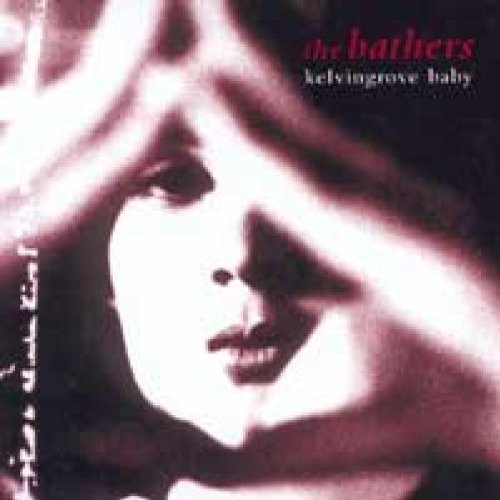
2015 marks the thirtieth anniversary of a Scottish musical institution, The Bathers. They were formed in Glasgow, in 1985, by singer, songwriter and troubled troubadour Chris Thomson and released six albums between 1987 and 1999. The Bathers fifth album was Kelvingrove Baby, a minor classic, that’s one of the finest Scottish albums ever released. Sadly, Kelvingrove Baby and The Bathers is a story of what might have been.
With Chris Thompson at the helm, the Glasgow based quintet could’ve, and should’ve, been one the biggest Scottish bands ever. After all, The Bathers music is articulate, beautiful, dramatic, ethereal, elegiac, emotive, languid, literate and melancholy. This is music for those that have loved, lost and survived to tell the tale. Sadly, however, The Bathers never reached the heady heights their music deserved. As a result, the six albums The Bathers released between 1987s Unusual Places To Die and 1999s Pandemonia, never reached the audience it deserved. For Chris Thomson, history was repeating itself.
The Bathers were formed in Glasgow in 1985. They formed after Chris Thomson’s previous group Friends Again split up. Initially, The Bathers were a vehicle for singer-songwriter Chris Thomson. However, in 1987, The Bathers secured their first record deal with Go! Discs Records, and released their debut album Unusual Places To Die.
Unusual Places To Die.
For their debut album Unusual Places To Die, Chris Thomson penned ten tracks. These tracks were recorded by The Bathers’ original lineup. This included bassist Sam Loup, drummer James Locke and Chris on guitar and keyboards. Joining The Bathers, were Michael Peden of The Chimes, Douglas Macintyre and James Grant of Love and Money. They played walk on parts on Unusual Places To Die, which was released later in 1987.
When Unusual Places To Die was released in 1987, it was to widespread critical acclaim. Chris Thomson’s songs seemed to strike a nerve with critics. They described the music as variously engaging, emotive and dramatic. One critic went as far to wonder whether Unusual Places To Die was the work of a genius? Despite this critical acclaim Unusual Places To Die wasn’t a commercial success. This was nothing to do with the music though.
Instead, Unusual Places To Die fell victim to the internal politics within the record company. As a result, sales of Unusual Places To Die were poor. Given the critical response to Unusual Places To Die, this was disappointing. So, it wasn’t a surprise when The Bathers switched labels for their sophomore album, Sweet Deceit.
Sweet Deceit.
After the Go Discs! internal problems sabotaged the release of Unusual Places To Die, The Bathers moved to Island Records, where the recorded Sweet Deceit.
Sweet Deceit was an epic album, featuring fifteen tracks. Chris wrote thirteen of the tracks, and cowrote the other two. He co-produced Sweet Deceit with Keith Mitchell, and the album was released in 1990.
Three years had passed since Unusual Places To Die was released. The Bathers were back, and according to critics, better than ever. Sweet Deceit was described as impressionistic, beautiful and spellbinding. One critic, quite rightly referred to the album as a mini masterpiece. However, The Bathers had been here before with Unusual Places To Die.
On Sweet Deceit’s release, lightning struck twice for The Bathers. Sales of Sweet Deceit were disappointing. Despite the critically acclaimed reviews, Sweet Deceit seemed to pass record buyers by. For The Bathers, this was a huge disappointment.
Especially when Island Records didn’t renew The Bathers’ contract. There would be another gap of three years before we heard from The Bathers again. However, Chris was still making music.
Following Sweet Deceit, Chris Thomson joined with two former members of Lloyd Cole and the Commotions, Stephen Irvine and Neil Clark, to create a Scottish supergroup, Bloomsday. They released just one album, Fortuny, which is now regarded as a classic Scottish album. Just like The Bathers two previous albums, Bloomsday’s debut album, Fortuny, was released to critical acclaim. Unfortunately, commercial success eluded Fortuny. However, a more fruitful period was round the corner for The Bathers.
Lagoon Blues.
After signing a record contract with a German record label Marina, the group released three albums in a four year period. In 1993, they released Lagoon Blues, their Marina debut.
Just like Sweet Deceit, Lagoon Blues was another epic album penned by Chris Thomson. It featured sixteen songs, which were the perfect showcase for Chris’ octave defying vocal. Accompanied by what was essentially The Bathers and friends, sixteen tracks were recorded at Palladium Studios, Edinburgh and mixed at Palladium Studios and Cava Studios, Glasgow. Once Lagoon Blues was completed, it was released in 1993.
On its release in 1993, critics remarked that Lagoon Blues was a more eclectic album. There were diversions into jazz-skiffle on Pissor, while the album opener Lagoon Blues showcased a string quartet. The strings would play an important part on Lagoon Blues, which was hailed as poetic, elegant, sumptuous and intense. The same critical acclaim accompanied Lagoon Blues, however, this time The Bathers’ music found a wider audience. It seemed after three albums, The Bathers’ star was in the ascendancy.
Sunpowder.
For The Bathers’ fourth album, and followup to Lagoon Blues, they returned with Sunpowder. It marked the debut of a new lineup of The Bathers.
Sunpowder marked The Bathers’ debut of drummer and percussionist Hazel Morrison, keyboardist Carlo Scattini and string players Ian White and Mark Wilson. These new additions would change The Bathers’ sound greatly. Many people refer to this as the classic lineup of The Bathers. This classic lineup, plus guest artist ex-Cocteau Twin, Liz Fraser, who features on four tracks, made its debut on Sunpowder.
For Sunpowder, Chris Thomson had written eleven new songs. They were recorded a at Palladium Studios, Edinburgh. Chris and Keith Mitchell produced Sunpowder, which was released in 1995.
When Sunpowder was released, it received the same critical acclaim as The Bathers’ three previous albums. Sunpowder was called sumptuous, sensual, dramatic and ethereal. Liz Fraser, an honorary Bather was the perfect foil to Chris, forever the troubled, tortured troubadour. The result was, what was The Bathers most successful album, Sunpowder. That however, would change with Kelvingrove Baby.
Kelvingrove Baby.
Kelvingrove Baby would be The Bathers’ Marina swan-song. They were certainly eaving the German label on a high.
Chris Thomson had written thirteen new songs for Kelvingrove Baby, which was recorded in Glasgow and Edinburgh. It was at these locations that The Bathers’ expanded lineup reconvened.
Picking up where they left off, were The Bathers’ new lineup, plus a few friends. The Bathers’ rhythm section included bassists Sam Loup, Douglas MacIntyre and Ken McHugh, drummers Hazel Morrison and James Locke, who also played percussion. Joining them in the rhythm section were guitarist Colin McIlroy. They were joined by accordionist, pianist and and organist Carlo Scattini, string players Ian White and Mark Wilson. Fermina Haze plays organ, James Grant of Love and Money plays acoustic guitar and with with Hazel Morrison and Justin Currie of Del Amitri, adds backing vocals. Chris plays acoustic guitar, piano and adds his unmistakable vocals. He produced most of Kelvingrove Baby, apart from Thrive, which was produced by James Locke. Once Kelvingrove Baby was completed, it was released in 1997.
Just like each of The Bathers’ four previous albums, Kelvingrove Baby was released to overwhelming critical acclaim. Kelvingrove Baby was hailed The Bathers’ finest hour. It seemed everything had been leading up to Kelvingrove Baby.
Opening Kelvingrove Baby, is the James Locke produced Thrive. Just a strummed acoustic guitar takes centre-stage, while subtle washes of keyboards flit in and out. They provide the backdrop for Chris Thomson’s vocal. For the first time on Kelvingrove Baby, Chris dawns the role of troubled troubadour, playing it to perfection. It’s as if he’s experience, lived through, and survived someone leaving him. His vocal is full of emotion of swells of strings sweep in. They’re the perfect accompaniment as Chris delivers the lyrics “up on the west coast waiting, I wear the rain like tears.” In doing so, Chris’ hurt and loneliness is there for all to see and hear.
Girlfriend is akin to a devotional from the pen of Chris Thomson. A piano and bass probe, while a cymbal is caresses. This sets the stage for Chris’ tender, emotive vocal. There’s almost disbelief in his voice that he’s found someone to call his own. He’s fallen head over heels, hence lyrics like “I’m the kind of guy, whose dreams rise unashamed, who will love you ’til the end, cos you’re my girlfriend.” With just a subtle, meandering piano, understated drums, washes of ethereal harmonies and crystalline guitar, Chris delivers a heartfelt devotional.
If Love Could Last Forever is the perfect showcase for The Bathers’ unique brand of cerebral, literate and poetic pop. After all, who apart from The Bathers write: “they flutter down like fireflies, tugging at your sleeves, somehow rise to shame you, bring you to your knees?” It’s a beautiful, soul-searching song about love. That’s the case from the opening bars, when an acoustic guitar is strummed, a guitar chimes and drums mark the beat. Then, longingly and hopefully, Chris, accompanied by cooing harmonies, sings “ If Love Could Last Forever, forever and a day.” Effortlessly, Chris breathes life, meaning and emotion into what’s a timeless paean.
While East Of East Delier has an understated arrangement, it allows Chris to unleash his full and impressive vocal range. Drums are caressed and a piano meanders. Meanwhile, a bass adds an element of darkness. This is reflected in the hurt, loneliness and regret in Chris’ vocal. His vocal soars above the arrangement, with frustration omnipresent at the love he once had and lost.
Accompanied by firmly strummed acoustic guitar No Risk No Glory, unfolds. A guitar chimes as fingers flit up and down the fretboard. Meanwhile, Chris’ vocal is a mixture of power, emotion and hurt. The hurt is obvious from the moment he sings “I was born to love her,” it’s a case of infatuation and unrequited love. With harmonies, an accordion and guitars for company, Chris delivers a cathartic outpouring of hurt. He wouldn’t have it any other way, singing ruefully “no risk, no glory.”
Dramatic and moody describes the dark, but sparse piano lead introduction to Once Upon A Time On The Rapenburg. If a picture tells a thousand stories, so does a piano. It sets the scene for Chris, as once again, he dawns the role of troubled troubadour. With shimmering strings and a deliberate gothic piano for company, Chris remembers the love affair that almost was.
Kelvingrove Baby is the centre-piece of Kelvingrove Baby. It’s a seven minute epic about an unnamed femme fatale from Glasgow’s West End who toyed with Chris’ affections. From just a strummed guitar and subtle piano, the arrangement builds. The piano plays a more prominent role, adding an element of drama. After ninety seconds drums pound and ethereal harmonies sweep in. They give way to Chris’ worldweary, lived-in vocal. Meanwhile, Hazel Morrison adds ethereal, elegiac harmonies. This seems to spur Chris on. Using his wide vocal range, he unleashes a needy vocal tour de force. Hopefully, he sings “someday I know, that you’ll be back…I don’t know, maybe then you can be my Kelvingrove Baby.” Behind him, the epic, ethereal and dramatic arrangement is the perfect accompaniment for what’s without doubt, The Bathers’ finest hour on Kelvingrove Baby.
Memories come flooding back to Chris on Girl From The Polders. Instantly, he’s transported back to another time and place. That’s when they first met, and where “I first kissed you.” With the rhythm section and piano providing a backdrop, Chris delivers another hopeful, needy vocal. He hopes that when summer returns, and heads back to Poolewe, his “songbird, melodious and pure,” is there.
Against a backdrop of quivering strings, Chris delivers a vocal on Lost Certainties that’s equal parts power, passion, frustration and sadness. Below the vocal and strings, the rhythm section drives the arrangement along, adding to the drama and intensity of this soul-baring refrain about a bewitching woman.
After the intensity of Lost Certainties, Dial has a much looser, laid-back sound. Chris eschews the power of the previous track, as The Bathers deliver an understated, spacious, melodic track. Hazel Morrison, James Grant and Justin Currie add harmonies that are yin to Chris’ yang, as he almost croons his way through Dial.
Orchestral strings and a pounding rhythm section set the scene for Chris’ vocal on The Fragrance Remains Insane. There’s an intensity in Chris’ lovelorn vocal, on this tale of love gone wrong. He’s struggling to come to terms with the breakup of his relationship, despite his claims “that I’m not crazy about you.”
If Chris Thomson had been born twenty years earlier, he’d have been a crooner. That’s apparent on Hellespont In A Storm, where he literally croons his way through the track. Accompanied by washes of accordion, swathes of strings, a subtle rhythm section and acoustic guitar. As Chris croons, emotion and regret are omnipresent. Especially when he sings “spread your wings, above you, the time has come to fly away, where I can’t follow.” Given this is the ultimate sacrifice, the beauty and emotion is almost overwhelming.
The piano lead Twelve, closes Kelvingrove Baby. Chris lays bare his soul, accompanied by his trusty piano. Later, swathes of lush strings sweep in. They provide the accompaniment to a telephone conversation, on this story of everlasting love.
For The Bathers, Kelvingrove Baby was a musical coming of age. It’s as if everything they’d been working towards was leading to Kelvingrove Baby. The music was variously atmospheric, cerebral, dramatic, ethereal, heartfelt, hopeful, literate, needy and sensual. It’s also tinged with pathos, regret and sadness. No wonder, given the tales of love found and lost. They’re brought to life by The Bathers’ very own troubled troubadour Chris Thompson. Along with the rest of The Bathers, they’re responsible for Kelvingrove Baby, a truly enthralling album.
On Kelvingrove Baby, the music is captivating. So much so, that you’re drawn into Kelvingrove Baby’s lush, atmospheric sound. Having captured your attention, The Bathers don’t let go. Before long, the listener has fallen in love. They fall in love with music that’s hauntingly beautiful, emotive, dramatic and pensive. Much of this is thanks to Chris Thomson’s peerless vocal performances. He plays the role of the troubled troubadour, to a tee. His worldweary, emotive, heartfelt and impassioned vocal sounds as if it’s lived the lyrics he’s singing about. Lived them not just once, but several times over. As a result, Kelvingrove Baby is akin to a snapshot into Chris Thomson’s life, and very soul. Indeed, Kelvingrove Baby sounds a very personal album from The Bathers’ troubled troubadour, Chris Thomson. Kelvingrove Baby was a career high from The Bathers. However, two years later, somehow, The Bathers managed to top Kelvingrove Baby.
Pandemonia, which was released in 1999, was The Bathers’ swan-song. Just like Kelvingrove Baby, the critically acclaimed Pandemonia, should’ve transformed The Bathers’ career. Sadly, despite oozing quality, The Bathers’ cerebral, literate and melodic brand of chamber pop failed to find the wider audience it deserved. As a result, The Bathers remained almost unknown apart from loyal band of discerning music lovers.
After Pandemonia, most people expected The Bathers to return after a couple of years with their seventh album. That wasn’t to be. Two years became three, became five, ten and fifteen. Now, sixteen years have passed since the release of Pandemonia. Throughout the last sixteen years, there have been rumours that another Bathers album is in the pipeline. With every year, that looks even more unlikely. However, maybe in the year that marks the thirtieth anniversary of The Bathers, they’ll return with their seventh album. We can only hope. After all, The Bathers have always strived to do things their way.
The Bathers are unlike most bands. They’re enigmatic, almost reclusive and publicity shy. Quite simply, The Bathers aren’t exactly your normal band. Not for them the rock “n” roll lifestyle favoured by other bands. In many ways, musical fashions and fads didn’t affect them. Their attitude was almost contrarian. Albums were recorded slowly and methodically. It was as if The Bathers were striving for perfection. On Kelvingrove Baby and Pandemonia, they almost achieved the impossible. What’s more they did it their way.
This means The Bathers aren’t willing to jump onto a musical bandwagon in pursuit of fame, fortune or starlets. Quite the opposite. It seemed to be their way or no way, in the pursuit of musical perfection. By perfection this means music that cerebral, dramatic, emotive, ethereal, literate and melodic. That describes The Bathers’ fifth album Kelvingrove Baby perfectly. Kelvingrove Baby saw The Bathers strive for perfection, and very nearly, achieve the impossible.
THE BATHERS-KELVINGROVE BABY.
BOBBY WHITLOCK-BOBBY WHITLOCK.
BOBBY WHITLOCK-BOBBY WHITLOCK.
Before embarking upon a solo career in 1971, Memphis born Bobby Whitlock, had worked with some of the biggest names in music. His career started when Bobby was just seventeen. That’s when Bobby Whitlock had signed to Stax Records. He went on to work with Albert King, Booker T. and The MGs, Sam and Dave and the Staple Singlers. Then in 1968, Bobby Whitlock joined one of rock’s supergroups, Delaney and Bonnie.
A year earlier, in 1967, Delaney and Bonnie Bramlett formed what would become one of rock’s first supergroups. Over the next five years, everyone from Dave Mason, Eric Clapton, George Harrison, King Curtis, Leon Russell,Rita Coolidge and the Allman Brothers were members of Delaney and Bonnie. In 1968, Bobby Whitlock joined Delaney and Bonnie and featured on two albums.
Home.
Bobby Whitlock made his Delaney and Bonnie debut, on their debut album Home. It was recorded during 1968 and 1969, at Stax Studios, Memphis. Accompanying Delaney and Bonnie, were the Stax house band plus a few friends. This included Bobby and Leon Russell. Once Home was completed, it was released later in 1969.
On the release of Home, it failed to chart. Delaney and Bonnie’s debut seemed to pass record buyers by. However, the reviews of Home were mostly positive, and the album would later be reissued. By then, critical acclaim and commercial success would’ve come Delaney and Bonnie’s way. This started with Delaney and Bonnie sophomore album, The Original Delaney and Bonnie and Friends (Accept No Substitute).
The Original Delaney and Bonnie and Friends (Accept No Substitute).
Released to widespread critical acclaim in July 1969, The Original Delaney and Bonnie and Friends (Accept No Substitute) saw everything from blue eyed soul, country, gospel and soul melt into one. Hailed as one of the best albums of 1969, it’s a surprise that The Original Delaney and Bonnie and Friends (Accept No Substitute) only reached number 175 on the US Billboard 200 charts. After the release of The Original Delaney and Bonnie and Friends (Accept No Substitute)., Delaney and Bonnie and Friends headed out on tour with Eric Clapton.
On Tour with Eric Clapton.
On their return from touring with Eric Clapton, Delaney and Bonnie released their live album, On Tour with Eric Clapton. It was released in March 1970, and peaked at number twenty-nine in the US Billboard 200 in April 1970. Over the Atlantic, On Tour with Eric Clapton reached number thirty-nine in Britain and was certified gold. Meanwhile, Delaney and Bonnie were working on their third album, To Bonnie from Delaney. However, by then, Bobby had joined Eric Clapton’s latest supergroup, Derek and The Dominoes.
Layla and Other Assorted Love Songs.
When Bobby Whitlock joined Derek and The Dominoes, he never realised, that he was about to become part of musical history. Layla and Other Assorted Love Songs would become a classic album.
For Layla and Other Assorted Love Songs, Eric Clapton wrote or cowrote nine tracks. This included Keep On Growing, Anyday, Tell The Truth and Why Does Love Got to Be So Sad with Bobby. Bobby also contributed Thorn Tree in the Garden, which closes Layla and Other Assorted Love Songs, Eric Clapton. These nine tracks, plus five cover versions, would become Layla and Other Assorted Love Songs, Eric Clapton, which was recorded in Miami.
At Criteria Studios, Miami, what can only be described as a supergroup began recording the fourteen tracks on 28th August 1970. Joining Eric and Bobby were guitarist Duane Allman, bassist Carl Radle and drummer Jim Gordon. This band recorded the fourteen tracks, including Layla and Other Assorted Love Songs’s centrepiece Layla, which tells of Eric Clapton’s infatuation for Patti Boyd, who was then married to George Harrison. It would become a track that will forever be synonymous with Eric Clapton. By the of 2nd October 1970, Layla and Other Assorted Love Songs was completed. It would released in November 1970.
When Layla and Other Assorted Love Songs was released in November 1970, reviews were mixed. That seems strange, given Layla and Other Assorted Love Songs is now regarded as a classic album. However, in 1970, some critics viewed Eric Clapton and Duane Allman’s guitar playing as macho posturing, and the love songs as lightweight. As is often the case, music critics are prone to rewrite history. Layla and Other Assorted Love Songs is a case in point. Still, the album sold well.
Despite the mixed reviews, and a limited promotional budget, Layla and Other Assorted Love Songs managed to reach number sixteen in the US Billboard 200 charts. This resulted in Layla and Other Assorted Love Songs being certified gold. Still, Polydor viewed Layla and Other Assorted Love Songs as a commercial failure. Part of the problem was some record buyers weren’t aware of Eric Clapton’s involvement.As a result, Layla and Other Assorted Love Songs was rereleased in 1972. However, there was no followup to Layla and Other Assorted Love Songs. Derek and The Dominoes was a one-off project. Following the demise of Derek and The Dominoes, Bobby Whitlock embarked upon his solo career.
Bobby Whitlock.
Having been a member of two supergroups, Bobby Whitlock decided to embark upon a solo career. He was determined to make the move from sideman to frontman. So Bobby got to work on what would become his eponymous debut album, Bobby Whitlock.
For what became Bobby Whitlock, Bobby wrote eight tracks and cowrote two more. Bobby cowrote Where There’s A Will with Bonnie Bramlett, and A Day Without Jesus with Don Nix. These ten tracks would become Bobby Whitlock, which was recorded at Olympic Studio’s Studio B.
Recording of Bobby Whitlock took place at Olympic Studio’s Studio B, between January and March 1971. Bobby was joined by what joined by what can only be described as an all-star band. This included Delaney and Bonnie and three members of Derek and The Dominoes. Bassist Carl Radle, drummer Jim Gordon and guitarist Eric Clapton provided an enviable rhythm section. They were joined by George Harrison on guitar. Bobby had played on George’s Magnus Opus All Things Must Pass, and was repaying the favour. Other guest artists included bassist Klaus Voormann, drummer Jim Keltner, saxophonist and trombonist Bobby Keys, trumpeter Jim Price and guitarist Jerry McGhee. As for Bobby, he played piano, organ, twelve-string guitar and acoustic guitar. Once the ten tracks were recorded, Bobby went looking for a record company for his debut album, Bobby Whitlock.
Before that, George Greif, Jimmy Miller’s manager got in touch. He wanted to become Bobby’s manager. So Bobby flew to Los Angeles to meet George and his business partner Sid Garris, at their offices on Beverley Boulevard. After a lengthy discussion, the three men headed to ABC-Dunhill Records’ headquarters. That’s where George and Sid introduced Bobby to Jay Lasker, President of ABC-Dunhill Records. Bobby played Jay his eponymous debut album. Having listened intently, Jay Lasker signed Bobby to a two album deal.
The first of these two albums, Bobby Whitlock, was released in March 1972. Bobby Whitlock’s release would’ve been earlier. However, ABC-Dunhill Records objected to some of the material. Eventually, Bobby Whitlock was released in March 1972. Reviews of Bobby Whitlock were mixed, ranging from critically acclaimed to favourable. One of the problems was, that critics kept comparing Bobby Whitlock to Layla and Other Assorted Love Songs. That wasn’t fair, as Bobby Whitlock was a solo album. It just so happened that many of the same personnel featured on both albums. Despite the mixed reviews, Bobby Whitlock reached number 140 in the US Billboard 200 charts. While Bobby Whitlock didn’t reach the heights of Layla and Other Assorted Love Songs, Bobby’s solo career was underway.
Where There’s a Will opens Bobby Whitlock. Literally, the arrangement explodes into life, with the all-star rhythm section driving the arrangement along. It includes drummer Jim Gordon and George Harrison on rhythm guitar. They’re joined by Eric Clapton on slide guitar. Bobby delivers a gravelly, rocky vocal and adds flamboyant flourishes of keyboards. Later, Bobby Key’s adds the finishing touch, when he unleashes a blistering saxophone solo. This seems to spur Bobby and his all-star band on, as the track reaches a rocky, dramatic crescendo where elements of blues, rock and Southern Rock unite.
Song For Paula shows a very different side of Bobby Whitlock. Just an acoustic guitar, bass and piano provide the backdrop for Bobby’s vocal. It’s tender, heartfelt and has a vulnerability. As it grows in power, so does the arrangement. Jim Gordon’s drums, guitars and Bobby’s Hammond organ are joined by a piano. By then, Bobby’s vocal veers between hopeful and needy. Accompanied by backing vocals he unleashes a soul-baring vocal. Then when the backing vocals drop out, Bobby’s all-star band kick loose. They add an element of drama, and add to the emotion in this hopeful paean.
As Bobby plays Eric Clapton’s twelve-string guitar, Traffic’s Chris Wood adds a wistful flute on A Game Called Life. Meanwhile, Delaney adds bass and a confused Bobby delivers a vocal full of bewilderment. His relationship’s at an end, he’s got his “suitcase in his hand,” and he wonders why? Backing vocals flit in, strings swirl and a flute wanders across the arrangement. All the time, hurt and confusion is omnipresent in Bobby’s vocal.
As Bobby plays acoustic guitar and delivers a worldweary vocal on Country Life, Jerry McGee’s crystalline guitar and Carl Radle’s bass marches the arrangement along. Meanwhile, Delaney and Bonnie add backing vocals. All the time, Jim Keltner’s drums add the heartbeat to this laid-back slice of country music.
The gospel tinged A Day Without Jesus was penned by Bobby and Don Nix. Bobby’s vocal is akin to an outpouring of emotion and sincerity. The rhythm section create a slow, sometimes dramatic backdrop. Meanwhile, washes of Hammond organ and gospel influenced backing vocals are the perfect foil to Bobby’s heartfelt vocal.
Back in My Life Again is quite different from the two previous tracks. A driving, scrabbling rhythm section and funky, chiming guitar drive the explosive arrangement along. They’re aided and abetted by stabs of blazing horns and a Hammond organ. Atop the arrangement sits Bobby’s gravelly, joyous vocal. He turns the track into a celebration, when he sings “now that you’re Back in My Life Again.” His all-star band raise the stakes, storming their way through the track. That’s until the tempo drops and a trombone soars above the arrangement. This allows Bobby and his band to regroup, before grandstanding their way through this celebration of love.
The Scenery Has Slowly Changed sees Bobby drop the tempo again. A crystalline guitar floats above the understated arrangement. It’s joined by Bobby’s croaky vocal and Eric Clapton and Jim Gordon on guitar. This allows Bobby’s vocal to take centre-stage. It’s rueful, and full of emotion and regret, at the love he’s lost and is missing. Later, Bobby’s vocal becomes a hurt fuelled vamp, where he delivers the vocal as if he’s lived and survived them.
I’d Rather Live the Straight Life is another country-tinged track. Seamlessly, Bobby, accompanied by his all-star band, create a track that sounds as if it was recorded in Nashville, not London. Unlike the other tracks, which were produced by Bobby and Andy Johns, Bobby and Joe Zagarino produce this track. It features bassist Carl Radle and Bobby and Jerry McGee on guitar. Their guitars are at the heart of the track’s success. Bobby’s vocal is throaty and charismatic. Later, Delaney and Bonnie add backing vocals, that give the track a raucous, singalong sound. They’re the perfect foil to Bobby, on this country-tinged track.
Just acoustic guitars and percussion accompany Bobby on The Dreams of a Hobo. His vocal is thoughtful, tender and wistful. This shows another side of Bobby. It’s captivating, beautiful and dreamy.
Closing Bobby Whitlock is Back Home in England. It’s another wistful, dreamy track. Just guitars, lush strings and drums accompany Bobby’s vocal. It’s a cathartic outpouring of emotion. Especially with the swathes of strings and meandering guitars for company. They ensure that Bobby Whitlock ends on a beautiful, emotive high.
Having been a member of two supergroups, Delaney and Bonnie and Derek and The Dominoes, Bobby Whitlock decided now was the time to move from sideman, to frontman. So, he signed to ABC-Dunhill Records and released his eponymous debut album, Bobby Whitlock, in March 1972 and reached just number 140 in the US Billboard 200 charts. However, Bobby Whitlock was released to mixed reviews.
Bobby Whitlock was an album that divided the opinion of critics. Partly, this was because they compared Bobby Whitlock to Layla and Other Assorted Love Songs. Given it was a classic album, released by Eric Clapton, an experienced artist, this was hardly comparing like with like. The critics also compared Bobby’s voice to Eric Clapton and Delaney Bramlett. Eric and Delaney, the critics announced were better singers. That may have been the case, but Bobby’s voice brought the ten songs on Bobby Whitlock to life.
Whether it was emotion, heartache, hope, hurt, joy, melancholy, neediness or sadness, Bobby was able to bring this to a song. Sometimes, his vocal sounded lived-in, worldweary and gravelly. Seamlessly, Bobby a versatile vocalist, could switch between country, gospel, rock and Southern Rock. So could his band. They also took diversions via blues and funk on Bobby Whitlock. The result was a captivating album, Bobby Whitlock.
Although Bobby Whitlock wasn’t a huge commercial success, and divided the opinion of critics upon its release, it’s an album that falls into the category of hidden gem. Just like so many albums, Bobby Whitlock passed many record buyers by. They never heard Bobby Whitlock, or any of Bobby’s other solo albums. That’s a great shame, as Bobby Whitlock is a hugely talented artist. Sadly, most people remember Bobby Whitlock as a sideman, rather than frontman.
No wonder. As a sideman, Bobby Whitlock played with everyone from Bonnie and Delaney, Derek and The Dominoes, George Harrison, Dr. John, Eric Clapton, John Lennon and The Rolling Stones. However, between 1972 and 1976, Bobby Whitlock released a quartet of solo albums. The first of these was Bobby Whitlock, an album that’s variously beautiful, celebratory, emotive, ethereal, joyous, laid-back and rocky.
BOBBY WHITLOCK-BOBBY WHITLOCK.

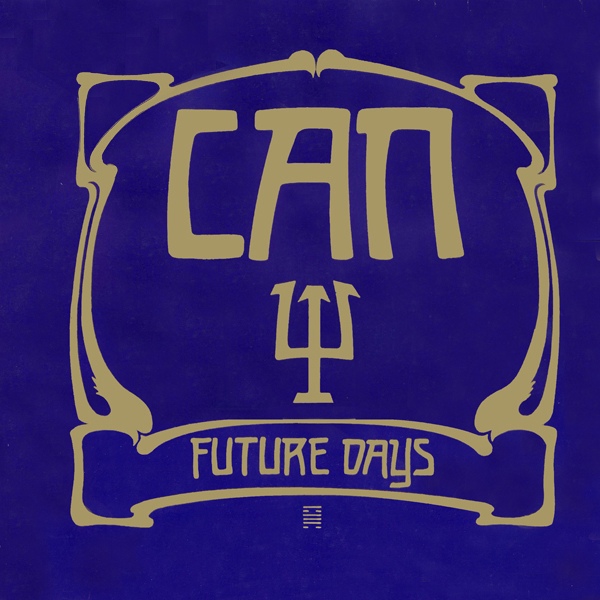
CAN-FUTURE DAYS.
CAN-FUTURE DAYS.
Last year, I was fortunate enough to interview a true musical legend, Holger Czukay. He was part of Can, who were undoubtably, one of the most ambitious and innovative groups in the history of music. Their music was constantly groundbreaking. So much so, that it was always way ahead of the musical curve. As a result, Can’s music is timeless, and has influenced several generation of musicians. Especially, Can’s “golden quartet” of albums.
Can’s “golden quartet” of albums started with a stonewall classic, Tago Mago, released in February 1971. The followup to Tago Mago, was another groundbreaking, classic album.
Ege Bamyasi was released in November 1972. Just like Tago Mago, critical acclaim accompanied the release of what was called a pioneering album. However, despite Tago Mago and Ege Bamyasi being recognised as two of the most important and innovative albums in musical history, Holger Czukay regards the third in the golden quartet, Future Days, as the “most influential” Can album.
This came about when I asked Holger Czukay what he regarded as Can’s best album? Straight away, Holger responded “Future Days,” which was released in August 1973. When I asked what his favourite Can album was, without hesitation Holger responded that “Future Days is my favourite Can album.” Holger spoke about Future Days almost evangelically. So much so, that he made me listen to Future Days afresh. Just like it’s two predecessors, Future Days is a classic album, but one where Can, constantly musical chameleons, reinvent themselves and their music. Can had come a long way since their early days in Cologne.
Can’s roots can be traced back to 1963. That’s when he met Conny Plank and Irmin Schmidt. Just like Holger, they were students of Karlheinz Stockhausen. The three studied under Karlheinz Stockhausen until the graduated in 1966.
Having graduated, Holger was enjoying life as a music teacher. Holger was enjoying his newfound career as an educator. He wasn’t a fan of pop or rock music. That was about to change in 1967.
That’s when Holger heard The Beatles’ I Am A Walrus in 1967, he was captivated by this psychedelic rock single. Holger describes this “as a life-changing moment…the music of the past and present came together.” At last, “here was music that made the connection between what I’d studied and I was striving towards” With the innovative use of bursts of radio and the experimental sound and structure, “I went in search of similar music.”
Soon, Holger discovered Velvet Underground, who Holger sad would later, influence Can.“Velvet Underground they were different, they were really influential” “They influenced the music I made…I remember the first time I heard Velvet Underground and where I heard it” This was “sitting in a friend’s flat looking through piles of albums. We’d study the sleeve-notes and then spread the album covers all over the floor. We scrutinised them, then immersed ourselves in the music. It was a shared experience. We listened and discussed the music. I can remember these times well.”
Inspired by what he’d heard, Holger decided to form his own band in 1968. In his new band, Holger was joined by another graudate of Karlheinz Stockhausen, Irmin Schmidt. They had spent three years studying together, so knew each other well. However, after graduating Irmin had headed to New York.
In New York, Irmin spent time with avant-garde musicians like Steve Reich, Terry Riley and La Monte Young. Soon, Irmin was aware of Andy Warhol and Velvet Underground. This inspired him to form his own band when he returned home to Cologne.
Back home, Irmin a pianist and organist formed Can with American avant garde flautist David C. Johnson and bassist Holger Czukay. Up until then, the trio had exclusively played avant-garde classical music. Now their ambitions lay beyond that. Their influences included garage, rock, psychedelia, soul and funk. So they brought onboard three new members of the group, which started life as Inner Space, and then became The Can. Eventually, they settled on Can, an acronym of communism, anarchy, nihilism
The first two new additions were guitarist Michael Karoli and drummer Jaki Liebezeit. Vocalist and New York-based sculptor Malcolm Mooney joined the band midway through 1968. By then, they were recording material for an album Prepare To Meet Thy Pnoom. Two tracks, Father Cannot Yell and “Outside My Door were already recorded. Unfortunately, record companies weren’t interested in Prepare To Meet Thy Pnoom. As a result, it wasn’t released until 1981, when it was released as Delay 1968. Undeterred, Can continued to record what became their debut album, Monster Movie.
Despite not being able to interest a record company in Prepare To Meet Thy Pnoom, Can were confident in their own ability. So Can continued recording what would become their debut album Monster Movies. That’s despite being what Holger referred to as “a poor man’s band.” They didn’t have the equipment that other groups did. What they did have was “an ambition to create innovative music.” However, before long, there was a problem.
David C. Johnson left Can at the end of 1968. He was disappointed at the change in musical direction. Little did he realise that he’d lost the chance to be part of one of the most groundbreaking band’s in musical history, Can.
Monster Movie.
Monster Movie had been recorded in Schloss Nörvenich, a 14th-century castle in North Rhine-Westphalia. Can recorded Monster Movie between 1968-69. It was the released in August 1969. This marked the debut of Can. Their career started as they meant to go on. A groundbreaking, genre-melting fusion of blues, free jazz, psychedelia, rock and world music, Monster Movies has a Velvet Underground influence. It’s as if Can have been inspired by Velvet Underground and pushed musical boundaries to their limits.
Throughout Monster Movie, Can improvised, innovated and experimented. Multilayering and editing played an important part in Monster Movie’s avant garde sound. So did spontaneous composition, which Can pioneered.
Spontaneous composition was hugely important in Can’s success. Holger remembers “that the members of Can were always ready to record. They didn’t take time to think. It was spontaneous. The music flowed through them and out of them.” Holger remembers that he was always “given the job of pressing the record button. This was a big responsibility as the fear was failing to record something we could never recreate.” In some ways, Can were an outlet for this outpouring of creativity, which gave birth to a new musical genre.
This new musical genre was dubbed Krautrock by the British music press. So not only was Monster Movie the album that launched Can’s career, but saw a new musical genre, Krautrock coined. The founding father’s of Krautrock were Can, lead by Holger Czukay. Can would soon, begin work on their sophomore album Soundtracks.
Soundtracks.
Released in 1970, Soundtracks, was Can’s sophomore album. Essentially, Soundtracks is a compilation of tracks Can wrote for the soundtracks to various films. It’s the album that marked the departure of vocalist Malcolm Mooney. Replacing him, was Japanese busker, Kenji Damo Suzuki. He features on five of the tracks, contributing percussion and vocals. The addition of Damo wasn’t the only change Can were making.
Soundtracks was a coming of age for Can. It marked a move away from the psychedelic jams of Monster Movie and a move towards their classic sound. That saw the music becoming much more experimental and avant-garde. The music took an ambient, meditative, mesmeric and thoughtful sound. This marked the beginning of what became known as Can’s classic years, when albums like Tago Mago, Ege Bamyasi and Future Days were released.
Tago Mago.
The first instalment in the golden quartet was Tago Mago. This was the first album where Kenji Damo Suzuki was a permanent member of Can. He and the rest of Can spent a year in the castle in Schloss Nörvenich. It was owned by an art collector named Mr. Vohwinkel. He allowed Can to stay at Schloss Nörvenich rent free. For what Holger described as “a poor man’s band,” this was perfect.
Holger remembers Can during this year as “just jamming and seeing what took shape. Songs started as lengthy jams and improvised pieces.” This Holger remembers is “how Can always worked” After that, Holger worked his magic. He edited them and these mini masterpieces featured on Tago Mago, which was four months in the making.
For four months between November 1970 and February 1971, Can recorded what would become one of their most innovative and influential albums, Tago Mago.
A double album, it featured seven groundbreaking tracks. Tago Mago was released in February 1971. Straight away, critics realised the importance of Tago Mago. Here was a game-changer of an album. It has an intensity that other albums released in 1971 lacked. Jazzier with an experimental sound, the music is mysterious, mesmeric and multilayered. It’s innovative, with genres and influences melting into one. Nuances, subtleties and surprises reveal themselves. No wonder. Can deliver a avant garde masterclass.
This comes courtesy of jazz-tinged drumming, improvised guitar playing and showboating keyboard solos. Then there was Kenji Damo Suzuki’s unique vocal style. All this, resulted in an album that was critically acclaimed, influential and innovative.
Released to widespread critical acclaim in 1971, Tago Mago was the start of a golden period for Can. Their reputation as one of the most innovative groups of the seventies started to take shape. Can had released one of the most innovative albums, Tago Mago. Holger remembers the reaction to Tago Mago. “I knew Tago Mago was an innovative album, but I never realised just how innovative an album it would become?
On Tago Mago’s release, it was hailed as their best album yet. However, not in Holger’s opinion. “Tago Mago is a classic album, but I much prefer Future Days.” Despite Holger’s preference, several generations of musicians have been inspired by Tago Mago, a true Magnus Opus, that belongs in every record collection. So does the followup Ege Bamyasi.
Ege Bamyasi.
Can were on a roll. It seemed they could do no wrong. They released Spoon as a single in 1972. It reached number six in Germany, selling over 300,000 copies. That was helped no end, by the single being used as the theme to a German thriller Das Messer. It seemed nothing could go wrong for Can. The money the made from Spoon, allowed Can to hire disused cinema to record what became Ege Bamyasi.
Can advertised for a space to record their next album, Ege Bamyasi. Recording began in a disused cinema, which doubled as a recording studio and living space. The sessions at Inner Space Studio, in Weilerswist, near Cologne didn’t go well. Irmin Schmidt and Kenji Damo Suzuki took to playing marathon chess sessions. As a result, Can hadn’t enough material for an album. This resulted in Can having to work frantically to complete Ege Bamyasi. Despite this, Can were still short of material. So Spoon was added and Ege Bamyasi was complete.
Ege Bamyasi was a fusion of musical genres. Everything from jazz, ambient, world music, psychedelia, rock and electronica melted into one. When it was Ege Bamyasi released in November 1972, it was to the same critical acclaim as previous albums. Critics were won over by Can’s fourth album. It was perceived as a more accessible album than its predecessors. Just like Can’s previous albums, the quality of music was consistent.
Critics hailed Can as one of the few bands capable of creating consistent and pioneering albums. They were one of the most exciting bands of the early seventies. Can were continuing to innovate and influence musicians and music lovers alike. Just like its predecessor, Tago Mago, Ege Bamyasi is an essential part of any self respecting record collection. Having released two consecutive classic albums and their first single, it seemed nothing could go wrong for Can.
Future Days.
Despite Tago Mago and Ege Bamyasi being referred to as two of the most influential albums ever released, Holger Czukay prefers Future Days. This is the album he calls “my favourite Can album.”
Future Days, was Can’s fifth album. It was the third in Can’s golden quartet, and marked a change in direction from Can. On Future Days, Can’s music head in the direction of ambient music. The music is atmospheric, dreamy, ethereal, melancholy, expansive and full of captivating, mesmeric rhythms. It’s also pioneering and progressive, with elements of avant garde, experimental, psychedelia and rock melting into one. Rather than songs, soundscapes describes the four tracks written by Can.
Recording of Future Days took place at Inner Space Studios. Can’s rhythm section featured drummer and percussionist Jaki Liebezeit, Holger Czukay played bass and double bass and Michael Karoli added guitar and violin. Irmin Schmidt keyboards and synths. Damo Suzuki who bade his farewell on Future Days, added vocals and percussion. Once the four tracks were recorded, Future Days was released in August 1973.
On its release in August 1973, Future Days was hailed a classic by music critics. The move towards ambient music may have surprised some Can fans. However, Can were constantly determined to reinvent their music. Standing still wasn’t an option. Instead, Can wanted to move forwards musically. That’s what they did. Critics described the music on Future Days, as variously atmospheric, dreamy, ethereal, expansive and melancholy. Here was an album full of captivating, mesmeric rhythms. Future Days, you’ll realise, is also a pioneering and progressive album, were Can music moved in the direction of ambient music. This must have pleased Holger’s guru Karlheinz Stockhausen. He must have looked on proudly as Can released the third of a quartet of classic albums, Future Days.
Opening Future Days is the title-track, Future Days. Straight away, ambient and avant-garde combine. Swells of futuristic, sci-fi music unfold, combining with elements of what nowadays, is referred to as “chill out” music. The music shimmers, quivers, glistens and bubbles. Sounds flit in and out of this cinematic soundscape. They’re variously captivating, dreamy, haunting, hypnotic, mesmeric and always, understated. Resistance is impossible. You’re captivated. Hungrily, you wait to see what’s about to unfold. Surprises aplenty make flitting appearances. Some last longer, their beauty almost omnipresent. For nine minutes, instruments, and the vocal, flit in and out, of this genre-melting arrangement. It’s variously beautiful, dramatic, dreamy and ethereal, as ambient, avant-garde, Krautrock and psychedelia melt into one. The result is a track that sounds both cinematic and one that could have given birth to modern “chill out music.”
There’s an element of tension and drama as Spray unfolds. Again, the track has a cinematic sound. A bubbling, gurgling Hammond organ joins a rhythm section that combines funk, Kraurock and free jazz. It’s as of Can are jamming, feeding off each other and seeing what direction their music will head. However, it thanks to Hall makes perfect sense. The disparate genres combine to create a compelling, dramatic, dreamy and lysergic musical journey. As journeys go, it’s akin to climbing onboard the DB Netz and enjoying a journey from Cologne into the surrounding Saxony countryside.
Moonshake is the shortest track on Future Days. It lasts just under four minutes. It’s very different from the previous tracks. Can’s rhythm section is joined by bursts of subtle, chiming guitars. They provide the backdrop for Damo Suzuki’s soft, pensive vocal. When it drops out, futuristic, robotic sounds grab your attention. This results in the track taking on a sci-fi sound. Then when Damo’s vocal returns, gone is the sci-fi sound. Replacing it, is one of the most accessible, poppy songs Can produced.
Bel Air closes Future Days. It’s the centre-point of Future Days. It’s a twenty-minute epic, that’s one of Can’s finest hours. The multi-layered, ambient arrangement meanders into being. This comes courtesy of a chiming guitar, probing bass and washes of synths. Meanwhile, waves break on a beach. Soon, an ad-libbed vocal and searing rocky guitar combine. Both sit back in the mix, ensuring neither overpowers the mix. At the heart of the mix, is the rhythm section, who provide the heartbeat. They take the arrangement in the direction of Krautrock, free jazz, avant-garde, experimental and rock. Joining them, are synths and percussion, in what at one point, is a freeform jam. However, it’s more than that. Later, Bel Air heads in the direction of minimalist, ambient music. There’s even a nod to avant-garde music. From there, the music grows in power, becoming bold, confident, expansive and rocky. Can are on a roll, and become a musical powerhouse during this musical tour de force. It’s the musical equivalent to an impressionistic painting, where layer upon layer of disparate musical genres are spread upon Can’s musical canvas. These genres and influences are the equivalent of colours and hues, and play their part in an innovative and expansive musical epic.
Future Days was the third in Can’s golden quartet. Just like Tago Mago and Ege Bamyasi, Future Days was hailed a classic. However, Future Days was very different from Tago Mago and Ege Bamyasi. It saw Can, forever the musical chameleons, reinvent themselves and their music. This time, Can’s music moved in the direction of ambient music.
On Future Days, the music is atmospheric, dreamy, ethereal, melancholy, expansive and full of captivating, mesmeric rhythms. It’s also pioneering and progressive, with elements of avant garde, experimental, psychedelia and rock melting into one. Rather than songs, soundscapes describes the four tracks. Future Days and Bel Air showcase Can’s new sound. Bel Air was the Future Day’s epic. It lasted just over nineteen minutes, and takes you on an enthralling musical journey. That’s why critics called Future Days, a classic. However, Future Days wasn’t Can’s final classic.
That was Soon Over Babaluma. It marked the end of Can’s golden period. This was the end of a period where Can were releasing some of their most innovative and groundbreaking music. There was a change of direction on Soon Over Babaluma. Can were without a vocalist. Kenji Damo Suzuki left Can and married his German girlfriend. He then became a Jehovah’s Witness. Despite the lack of a vocalist, Can continued as a quartet. They released Soon Over Babaluma in November 1974.
When Can released Soon Over Babaluma in November 1974, it received praise from critics. With a myriad of beeps, squeaks and sci-fi sounds, Soon Over Babaluma is like musical journey into another, 21st Century dimension. A musical tapestry where layers of music are intertwined during five tracks on Soon Over Babaluma. It followed in the ambient footsteps of Future Days and brought to a close the most fruitful period of Can’s career. Following the “golden quartet,” Can didn’t go into decline. Instead, Can continued to reinvent themselves and their music. That was the story of Can’s career.
Throughout their career, Can were innovators. Although innovative is an overused word, that’s the perfect description of Can. They were an innovative and pioneering group, who weren’t afraid to push musical boundaries to their limits, and sometimes, way beyond. That’s what record buyers came to expect from musical mavericks, Can, when they released their fifth album Future Days.
On Future Days, Can’s reputation for releasing ambitious, innovative, and influential music continued. Can had just released their third consecutive classic album. It seemed Can could do no wrong. That’s why forty-two years after Can released Future Days, they’re regarded as one of the most innovative and influential bands of the past fifty years. That’s why today, and in the future, Can music will continue to influence and inspire further generations of musicians. Especially, Can’s “golden quartet” of Tago Mago, Ege Bamyasi, Future Days and Soon Over Babaluma.
CAN-FUTURE DAYS.
NEIL YOUNG-STORYTONE (DELUXE EDITION VINYL).
NEIL YOUNG-STORYTONE (DELUXE EDITION VINYL).
Having left Buffalo Springfield in 1968, Neil Young decided now was the time to embark upon a solo career. So, Neil put together an all-star band to record his eponymous debut album.
It featured guitarist Ry Cooder, pianist Jack Nitzche and backing vocalist Merry Clayton. They recorded Neil Young between August and October 1969. Once Neil Young was recorded, it was released in November 1968. This was meant to be the album that launched Neil Young’s solo career. However, Neil Young was an inauspicious debut album.
When the original version of Neil Young was released, Neil wasn’t happy with the mix. There was a reason for this. Neil Young was the first album to use the Haeco-CSG encoding system. It was meant to make stereo records compatible with mono record players. Things however, didn’t go to plan. There was a side effect of the new system. The sound quality suffered.
In the case of Neil Young, his vocal was buried deep in the mix, giving the album a muddy sound. For Neil, this was not the way he envisaged his solo career beginning. Eventually, Neil bit the bullet, and decided the only solution was to remix the album.
After remixing Neil Young in the summer of ‘69, the album was rereleased later that year. Still Neil Young failed to chart. However, it was a hint of what was to come from one of music’s greatest singer-songwriters.
Since 1968s Neil Young, the Canadian maverick singer-songwriter has released another thirty-four studio albums. These albums show the many sides of Neil Young. This includes everything from blues rock, country, folk, folk rock, grunge, new wave, psychedelia, rock and rockabilly. Neil Young is the original musical chameleon. He’s never content to stand still. No. A musician who stands still, in Neil’s world, risks becoming irrelevant. That’s never going to happen. So he’s constantly changing direction and throwing musical curveballs. That was the case during 2014, when Neil Young released two very different album.The second of these albums, Storytone, was released on 3rd November 2014.
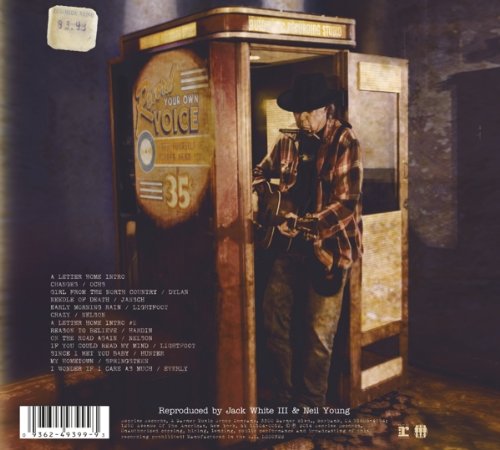
However, just a few days after Christmas 2014, on 29th December, a deluxe vinyl edition of Storytone was release. This double-album, just like the Deluxe CD version, features the two versions of Storytone. This means the solo album version of Storytone and the orchestral version. Both versions are on heavyweight vinyl. However, there’s a catch. the Deluxe Vinyl Edition of Storytone is £55 or $82. For many Neil Young fans, the price will be beyond their means. If that’s the case, other formats including CD and downloads are available. If however, you’re a purist, and prefer the warmth of vinyl, then Deluxe Vinyl Edition of Storytone is for you. It was Neil Young’s second album of 2014. The first was A Letter Home.
A Letter Home.
Neil Young has released two albums during 2014. His first album of 2014, was A Letter Home, which was released in April. It saw Neil cover twelve classic songs from Bert Jansch, Bob Dylan, Tim Hardin, Willie Nelson, Bruce Springsteen and Willie Nelson. These cover versions were perfect for Neil. His lived-in vocal could bring new meaning to them. However, Neil Young decided to throw another curveball on A Letter Home.
The curveball was the way A Letter Home was recorded. Rather than use a traditional recording studio, Neil decided to record A Letter Home in a refurbished 1947 Voice-O-Graph vinyl recording booth at Jack White’s Third Man Records recording studio in Nashville. Relying upon obsolete electro-mechanical technology was somewhat restrictive. Neil couldn’t bring onboard Crazy Horse. No. It was just Neil and his trusty acoustic guitar. When this slimmed down, lo-fi recording was released, opinion was divided.
This wasn’t the first time a Neil Young album polarised opinion. 1974s On The Beach Landing On Water, 1981s Re-actor, 1982s Trans and 1986s Landing On Water divided opinion. History repeated itself with A Letter Home.
There was no middle ground, critics either loved or loathed A Letter Home. It was either the act of a maverick genius, or a vanity project. Opinion was divided. So, record buyers had the casting vote.
When A Letter Home was released, it reached number thirteen in the US Billboard 200 and seventeen in Britain. Record sales were one thing though. What did people think of A Letter Home?
It was only after people had heard A Letter Home that they cast their vote. Record buyers, including even the most loyal Neil Young fans were similarly divided. Some were disappointed at what could’ve been a captivating project. Others felt the lo-fi sound suited the twelve songs, and they took on new meaning.
This was the case with Bert Jansch’s Needle of Death, Gordon Lightfoot’s Early Morning Rain and If You Could Read My Mind. They were tailor made for Neil’s voice. Later, Willie Nelson’s On The Road Again is given a lo-fi, old school, country makeover. A compelling take of Bruce Springsteen’s My Hometown caught the attention of some record buyers. Others, myself included, felt A Letter Home was a self-indulgent, vanity project where record buyers had been short changed. Neil Young owed record buyers an album.

Storytone.
Less than seven months later, Neil Young returns with his thirty-fifth album Storytone, which was recently released on Reprise Records. Just like A Letter Home, and countless other albums, Neil Young wanted to try something new.
For Storytone, Neil penned ten new songs. When it came to recording of Storytone, this wasn’t going to be another lo-fi album. Far from it. Instead, Neil decided to record an album that was the polar opposite of A Letter Home.
When the recording of Storytone began in April 2014, Neil and co-producer Niko Bolas, a.k.a. The Volume Dealers, had hired what seemed like a cast of thousands. There was a big band and a ninety-two piece orchestra. That’s not all. On some tracks, a choir was drafted in to record one of Neil Young’s most lavish albums. It was recorded at Capitol Studios, Sony Scoring Stage and East West Studios in Hollywood. Once Storytone was recorded, it was scheduled for release early in November 2014. Could Storytone unite critics and music lovers?
On its release, Storytone continued to divide critics. Some were won over by what was perceived as a combination of Harvest and This Notes For You, another Volume Dealers production. Other critics felt Storytone was a somewhat chaotic and messy album. Yet again, music lovers had the casting vote.
November 4th 2014, was D-Day. That’s when Storytone was released. It reached number thirty-three in the US Billboard and number twenty in Britain. On the face of it, record buyers had been won over by the maverick Mr. Young’s latest offering, Storytone. However, is that the case?
Plastic Flowers opens Storytone. It’s the first of the tracks where Neil is accompanied by an orchestra. Swathes of the lushest strings, muted horns and flourishes of harp give way to a piano, and Neil’s fragile vocal. Hurt and sadness fills his voice as memories come flooding back. Meanwhile, swells of strings sweep, adding an element of drama. Later, the strings replace Neil’s vocal, adding to the drama, emotion and beauty of this opus.
Dramatic sweeping strings and woodwind set the scene for Neil on Who’s Gonna Stand Up? It’s a stirring track filled with social comment. Neil Young becomes evangelic about the environment, turning his guns on fracking and fossil fuel. This is admirable and well meaning. Sadly, the lyrics are far from vintage Neil Young. Proof of this is “end fossil fuel, draw the line, before we build another pipeline.” Later, he sings “damn the dams, save the rivers, starve the takers and feed the givers.” These lyrics disappoint. However, not the arrangement. It makes up for Neil lyrical failings. Dramatic flourishes strings, woodwind and a choir accompany Neil’s deliberate, earnest and evangelical vocal, before reaching a dramatic, thoughtful crescendo.
I Want To Drive My Car sees the big band make their debut. Neil’s band play their way into the track. They’re loose and gradually, find their feet. Blistering guitar licks accompany Neil’s thoughtful vocal. Then, all of sudden, the big band kick loose. Braying, blazing horns kick loose. They’re joined by a Hammond organ and later, a bluesy harmonica. All the time, the bass marches the arrangement along. Meanwhile scorching guitars accompany Neil’s grizzly, lived-in vocal, on what’s the highlight of Storytone so far.
Glimmer has a wistful, dreamy arrangement. That’s down to the strings and woodwind. They play slowly, leaving space within the arrangement. Strings float above the arrangement. Before long, you forget this is a Neil Young album. That’s until his tender, melancholy vocal enters. Again, memories come flooding back. He thinks of better days, when he first met the woman he loved. Back then, their love was young. Now things are changing. “New love, brings back everything to you, all the feelings in your heart are reawakened.” As Neil delivers these lyrics, it’s as if they resonate and ring true. Especially when accompanied by a swathes of lush strings. All this makes Glimmer a truly beautiful ballad, which features a wistful heartfelt vocal from Neil Young.
Say Hello To Chicago bursts into life. With the return of the big band, it’s like a return to another musical era. Bursts of grizzled horns, rolls of drums and washes of Hammond organ join a piano and upright bass in creating a swinging arrangement. They set the scene for Neil’s vocal. As if inspired, he delivers a vocal that swings. It sits atop this glorious jazzy backdrop, that brings back memories of another musical era.
Tumbleweed has an understated, wistful sound. Just the subtlest strings and woodwind join with a flourishes of harpsichord in creating a meandering, spacious backdrop. They’re joined by a pensive, reflective Neil Young. Tenderly, he delivers his vocal. Shimmering strings or woodwind respond to his call. All the time, flourishes of harpsichord add to the ethereal beauty of a song where Neil Young’s at his tenderest and most thoughtful.
A bluesy harmonica opens Like You Used To Do, which again, is reminiscent of This Notes For You. As the bass, drums and piano create the backdrop for Neil’s weary vocal, horns bray and blaze. Then when his vocal drops out, he unleashes a bluesy harmonica. It’s the perfect replacement for Neil’s vocal, on this bluesy, jazz-tinged track.
I’m Glad I Found You is another of the tracks where a full orchestra accompanies Neil. Strings sweep, as if determined to tug at your heartstrings. In the midst of the mix, horns bray and a piano plays. When the arrangement becomes understated, this is the signal for Neil’s needy, hopeful vocal to enter. He throws himself into the song, bringing out the lyric’s beauty. Neil breathes meaning and sincerity into his lyrics. They’re some of the finest on Storytone, and far removed from the disappointing Who’s Gonna Stand Up?
Straight away, When I Watch You Sleeping has a country tinged sound. Just a lone harmonica plays. It’s soon joined by a picked guitar and weeping pedal steel. They join Neil’s vocal. He can’t believe he’s found love and happiness. Tenderly, he gives thanks. Meanwhile, swathes of strings sweep above. This orchestral backdrop and the country-tinged sound may be opposites, but opposites attract. Not just that, but the compliment each other perfectly on another beautiful ballad.
All Those Dreams closes Storytone. Keyboards, guitar and the rhythm section join a tambourine in providing the backdrop for Neil’s vocal. So does the orchestra. Strings are to the fore. They’re occasionally jaunty, dancing above the rest arrangement, which is reminiscent of Harvest or Harvest Moon. Just like these two albums, the lyrics to All Those Dreams ooze quality. They’re vintage Neil Young. They’ve a poetic and cinematic quality. So much so, that when you close your eyes, Neil’s lyrics paint pictures that unfold before your eyes. That however, isn’t the end of Storytone.
Not if you’ve bought the Deluxe Vinyl Version of Storytone. Neil Young includes another version of Storytone. This time, it’s an acoustic version. It’s very different from the original version. There’s neither an orchestra, nor a big band. Instead, it’s a much more stripped down sound. Sometimes, it’s just Neil and either his piano or guitar. This works, apart from Who’s Gonna Stand Up?, which becomes dirge like. That wasn’t Neil’s finest hour. Mostly, though the songs on Storytone work well with this stripped down approach. You tend to focus more on the lyrics, rather than the lavish arrangements. Having said that, the original version of Storytone is a joy to behold.
The songs on Storytone come alive with these lavish arrangements. Lush strings, woodwind and horns add to the emotion and potency of the songs. They take on new meaning. Much of that, is down to the strings. They’re perfect for adding emotion and drama to a song. On Storytone, Neil’s decision to work with the orchestra and big band was a masterstroke.
In the case of the tracks with the big band, this is reminiscent of This Notes For You. It was produced by The Volume Dealers, and is one of the most underrated albums in the Neil Young discography. For anyone who enjoys the tracks with the big band, then This Notes For You is well worth investigating. It shows yet another side to Neil Young, the original musical chameleon.
Over the past forty-six years, Neil Young has released thirty-five studio albums. He’s always determined to reinvent himself musically. He’s released albums of Americana, blues rock, country, folk, folk rock, grunge, new wave, psychedelia, rock and rockabilly. There’s n0 finding a winning formula, and then sticking with it. That’s not Neil’s style. The closest he came was during his dalliance with grunge. However, after that, Neil spread his wings and headed in a different direction. That’s what Neil has continued to do, and did in 2014.
During 2014, Neil Young released two albums. A Letter Home was one of the most disappointing Neil Young albums of recent years. It comes across as a self-indulgent. vanity project, from a musician who should’ve known better. That’s why A Letter Home is definitely not the starting place for a newcomer to Neil Young. The Deluxe Vinyl Edition of Storytone which was released on vinyl by Rhino, on 29th December 2014, is completely different.
Storytone marks a return to form from Neil Young. The original musical chameleon draws inspiration from previous albums like Harvest, Harvest Moon and This Notes For You. This is quite an eclectic source of inspiration. So it’s no surprise that Neil veers between melancholy and wistful, to soul-baring and soul-searching, right through to flat out hard rocking. It’s a glorious combination that comes to life on the Deluxe Vinyl Edition of Storytone. Ballads and rockers rub shoulders on Storytone, where not for the first time, Neil Young becomes the comeback King.
NEIL YOUNG-STORYTONE (DELUXE EDITION VINYL).

FAMILY-BANDSTAND.
FAMILY-BANDSTAND.
By 1972, it looked as if Family were on the verge of making a breakthrough in America. Their fifth album Fearless, released in October 1971, had reached number 177 in the US Billboard 200 charts. It looked as if Family were going to be the latest British group to conquer America. That, however, wasn’t the case. The proof was there for all to see.
As the seventies dawned, Family released their third album A Song For Me in 1970. It reached number four in Britain. This was an improvement on their two previous albums. Family’s 1968 debut album, Music In A Doll’s House reached just number thirty-five in Britain. However, things improved with 1969s Family Entertainment, which reached number six in Britain. By the time Family released A Song For Me in January 1970, it seemed as if they were on their way to becoming one of Britain’s most successful bands. That proved not to be the case.
A Song For Me proved to be Family’s most successful album. Things looked good for Family. That was until Family released Anyway, later in 1970.
Anyway failed to replicate the success of A Song For Me, reached just number seven in November 1970. This to some extent, was disappointing. Family’s fifth album, Fearless, released in October 1971. It stalled at number fourteen in Britain. However, Fearless reached number 177 in the US Billboard 200 charts. Maybe, just maybe, Family were on the verge of making a breakthrough in America? However, Family had been here before.
Back in April 1969, after the commercial success of Family’s first two albums, Family decided to try and make a breakthrough into the American market. Sadly, it all ended in tears.
Midway through the American tour, Ric Grech left Family to join Blind Faith. His replacement was former Animal, John Weider. However, that was just the start of a tour beset by problems.
On their Filmore East debut, Family were sharing the bill with Ten Years After and Nice. Lead singer, Roger Chapman, was swinging his microphone stand, when it flew out of his hands. Unfortunately, it nearly hit promoter Bill Graham. He thought that this was a deliberate act. Given, he was one of the most influential American promoters, Bill Graham wasn’t someone to get on the wrong side of. So, for the rest of the tour, Roger sung with his hands firmly by his side. Roger wasn’t taking any risks. Just when it seemed things couldn’t get any worse, it did.
By the end of the American tour, Roger Chapman had lost his voice. What could’ve and should’ve been Family’s breakthrough tour, was peppered with disaster. Sadly, Family never did make a breakthrough in America. Their 1969 tour hadn’t had the desired effect. On Family’s return home, things didn’t improve.
Having returned from their 1969 American tour, Family played two high profile concerts. The first was the Rolling Stone’s Hyde Park concert. Later in the summer of ’69, Family played at the Isle Of Wight Festival. That was one of the last concerts Jim King played. He was asked to leave family. The reason given was his “erratic behaviour.” Replacing Jim, was John “Poli” Palmer, a multi-instrumentalist.
John made his Family debut on 1970s A Song for Me, and played an important part on Anyway and Fearless. During this trio of albums, Family’s music continued to evolve. By 1972s Fearless, however, Family’s music moved towards the mainstream. Fearless was also the last album to feature bassist and guitarist John Wetton.
For Bandstand, the Charlie Whitney and Roger Chapman songwriting team penned seven of the nine tracks. They also cowrote Coronation with John Wetton. The other track was Dark Eye, a Roger Chapman and John “Poli” Palmer composition. These nine tracks became Bandstand, which was recorded at Olympic Studios, London during 1972.
At Olympic Studios, the five members of Family began recording Bandstand. Family’s rhythm section included drummer and percussionist Rob Townsend, bassist and guitarist John Wetton and guitarist and keyboardist Charlie Whitney. John “Poli” Palmer added keyboards, vibes, flute, percussion and guitar. Lead vocalist Roger Chapman added percussion and played soprano saxophone on Bolero Babe. Joining Family, was Linda Lewis, who added backing vocals. Producing Bandstand with Family, was recording engineer George Chkiantz. Once Bandstand was completed, it was released in September 1972.
On the release of Bandstand, in September 1972, the album was well received by critics. They remarked that Family had moved more towards the mainstream. Similarly, the song structure was more conventional than on previous albums. Charlie and Roger admitted relying more on what they perceived as an orthodox approach to songwriting. Allied with Family’s more conventional sound on Bandstand, many thought that Family would reach the heights of 1970s A Song For Me.
Sadly, that wasn’t to be. Instead, Bandstand reached just number fifteen in Britain. Across the Atlantic, Bandstand reached number 183 in the US Billboard 200 charts. This failed to match the heights of Family’s previous album Fearless. However, Bandstand was the final time Family charted in America. Bandstand Family’s move towards the mainstream, hadn’t proved as popular as Family had hoped.
Family’s sixth album, Bandstand, may have seen the band move towards the mainstream, but it also featured an eclectic selection of songs. Burlesque, a slow, rocky number, had been chosen as the lead single, and reached number thirteen in Britain. It’s about a bar called Burlesque in Charlie and Roger’s hometown of Leicester. Having whetted your appetite, Family spring a series of surprises.
Balero Babe is something of a slow burner. Family stretch their legs, before Roger’s weary vocal enters. It’s later replaced by strings, which help propel the arrangement along. Although not Family’s finest hour, it’s something of a slow burner. Coronation is a slow, thoughtful songs on Bandstand. It tells the story of a man living in an run down flat, wondering about the lives his neighbours live? From there, Dark Eyes is best described as folk tinged, while Broken Nose deals with the British class structure. After this, Family change tack.
My Friend The Sun is a beautiful ballad. This is very different from the rest of Bandstand. The quality continues on Glove, a power ballad with a soulful side. Ready To Go sees Family turn their guns on the British music press. Many members of the music press weren’t fans of Family. By 1972, Family had enough and eloquently, gave their critics both barrels on Ready To Go. Closing Fearless was Top Of The Hill, a slow, fusion of blues and rock. Moody and dramatic, it’s a fitting finale to Bandstand.
Although Bandstand saw Family move towards the mainstream, it’s without doubt their most accessible album. Elements of blues, folk, prog rock, psychedelia and rock can be heard on Fearless. Folk tinged tracks sit side-by-side with tender ballads, power ballads and rocky tracks. The only time Family come close to disappointing, is on Bolero Babe. However, it’s something of a slow burner. Mostly though, Bandstand is an album that could’ve and should’ve transformed Family’s fortunes. Sadly, that wasn’t to be.
Bandstand only reached number fifteen in Britain, but reached number 183 in the US Billboard 200 charts. Sadly, Bandstand didn’t reach the heights of family’s earlier albums, on either side of the Atlantic. After Bandstand, Family released just one more album, 1973 It’s Only A Movie. Before that, Family headed out on tour with Elton John.
Elton John chose Family as his support band when he toured America. What should’ve brought Family’s music to a wider audience backfired. Like many support band before them, Family played to half empty auditoriums. Those that were present were only interested in Elton John. For Family, this was a soul destroying experience. Things didn’t get any better after the tour.
When It’s Only A Movie was released in September 1973, it reached just number thirty in Britain, and failed to chart in America. That was Family’s final album. Later in 1973, Family split-up. They’d been together since 1966, and had released seven albums. Sadly, Family never really fulfilled their potential.
While each of Family’s seven albums charted in Britain, with three reaching the top ten, Family should’ve enjoyed greater success. They were a talented, versatile and innovative band. Family were never content to stand still. Instead, their music continued to evolve. Musical genres melted into one on Family’s albums. This, to some extent, was the case on Bandstand. Not as much as on previous albums. No. Bandstand had a much more mainstream sound. This means that Bandstand is the most accessible of Family’s seven albums. It’s also the perfect introduction to Family.
For anyone yet to discover Family, then Bandstand is the perfect starting place. After Bandstand. there’s still Family’s six other albums to discover. These albums are a reminder of one of British rock’s best kept secrets. However, Family’s most accessible album is Bandstand, which could’ve and should’ve transformed Family’s fortunes on both sides of the Atlantic.
FAMILY-BANDSTAND.


STEVIE RAY VAUGHAN AND DOUBLE TROUBLE-THE COMPLETE EPIC RECORDINGS.
STEVIE RAY VAUGHAN AND DOUBLE TROUBLE-THE COMPLETE EPIC RECORDINGS.
2015 marks the twenty-fifth anniversary of Stevie Ray Vaughan’s death. He was, without doubt, one of the most influential electric blues guitarists ever. Sadly, Stevie Ray Vaughan only enjoyed seven years in the spotlight.
Stevie Ray Vaughan came to prominence after his performance at 1982s Montreux Jazz Festival. After his performance on the 17th July 1982, Stevie Ray Vaughan career was transformed.
Ever since Stevie Ray Vaughan had dropped out of high school in 1971, he had been playing the blues. Having played in a series of bands, Stevie’s break came when he started playing with Marc Benno’s band The Nightcrawlers. After The Nighcrawlers, Stevie played with Danny Freeman in The Cobras. For Stevie, this was all part of his musical apprenticeship. Then in 1977, Stevie Ray Vaughan went from sideman to bandleader, when he formed Triple Threat Revue.
Triple Threat Revue would later become Double Trouble. This came about, when Stevie Ray Vaughan brought onboard the rhythm section of drummer Chris Layton and bassist Tommy Shannon. It was with Double Trouble at his side, that Stevie Ray Vaughan announced his arrival at 1982s Montreux Jazz Festival.
That night, at 1982s Montreux Jazz Festival, Stevie Ray Vaughan and Double Trouble announced their arrival. Stevie, playing vintage guitars, eschewed the use of effects. Effects were used sparingly during his performance. While Stevie turned his back on effects, he and Double Trouble liked to crank the sound up. To do this, they combined a series of amplifiers. This made the audience sit up and take notice. What they saw was a a blistering, virtuoso performance. By the time Stevie Ray Vaughan and Double Trouble left the stage, at 1982s Montreux Jazz Festival their star was in the ascendancy.
Eleven months later, Stevie Ray Vaughan and Double Trouble released their debut album Texas Flood on Epic. It sold over two million copies, and was certified double platinum. This was the start of the rise and rise, of Stevie Ray Vaughan and Double Trouble.
It’s documented in The Complete Epic Recordings, which was released by Epic. The Complete Epic Recordings is a twelve disc box set, that, without doubt, is the most comprehensive retrospective of The Complete Epic Recordings. It documents the seven year period, where Stevie Ray Vaughan and Double Trouble could do no wrong. This seven year period began with Stevie Ray Vaughan and Double Trouble’s performance at 1982s Montreux Jazz Festival and their debut album Texas Flood, right through to 1989s In Step. By then, Stevie Ray Vaughan and Double Trouble had sold eight million albums. The story begins in November 1982.
TEXAS FLOOD.
Before they signed to Epic, Stevie Ray Vaughan and Double Trouble headed to Jackson Browne’s recording studio in Los Angeles. Between 22nd to 24th November 1982, Stevie Ray Vaughan and Double Trouble recorded ten tracks that would become their debut album, Texas Flood.
At Jackson Browne’s recording studio, Stevie Ray Vaughan and Double Trouble hooked up with engineer Richard Mullen. He would co-produced Texas Flood with Stevie Ray Vaughan and Double Trouble.
Texas Flood featured ten tracks. Five were penned by Stevie, who also cowrote Dirty Pool with drummer Doyle Bramhall. Along with covers of Howlin’ Wolf’s Tell Me and Buddy Guy’s Mary Had a Little Lamb, these tracks became eventually become Texas Flood.
On the first of the three days at Jackson Browne’s recording studio, Stevie Ray Vaughan and Double Trouble spent setting up their equipment. The next two days, Stevie Ray Vaughan and Double Trouble recorded what would become Texas Flood. Now all Stevie Ray Vaughan and Double Trouble needed, was a label to release Texas Flood.
In early 1983, Epic signed Stevie Ray Vaughan and Double Trouble. Epic having heard the master tapes of Texas Flood, decided it needed remastered. So, a $65,000 advance was given to remaster the recordings. The advance also allowed Stevie to lay down his vocals at Riverside Sound in Austin, Texas. Then on June 13th 1983, Texas Flood was released.
On Texas Flood’s release, it was mostly, well received by critics. No wonder. Stevie Ray Vaughan was easily, one of music’s most exciting guitarists. However, Rolling Stone magazine and Robert Christgau, forever the contrarians, weren’t won over by Texas Flood. This didn’t affect sales of Texas Flood, which reached number thirty-eight in the US Billboard 200. Having sold two million copies, Texas Flood was certified double platinum. Following the success of Texas Flood, Stevie Ray Vaughan and Double Trouble headed out on a gruelling tour.
On 20th July 1983, Stevie Ray Vaughan and Double Trouble found themselves in Toronto. That night, they played at The El Mocambo. The concert was broadcast live, with Stevie Ray Vaughan and Double Trouble, billed as a A Legend In The Making.
Stevie Ray Vaughan and Double Trouble made their way through eight tracks. They were a mixture of original tracks and cover versions. Tracks from Texas Flood and Stevie Ray Vaughan and Double Trouble’s sophomore album Couldn’t Stand the Weather, sat side-by-side. These eight tracks were a tantalising taste of Stevie Ray Vaughan and Double Trouble live, and are a very welcome addition to The Complete Epic Recordings. Following the concert at The El Mocambo, the tour continued, before Stevie Ray Vaughan and Double Trouble returned to the studio in January 1984.
Couldn’t Stand the Weather.
Just like Texas Flood, Couldn’t Stand the Weather, Stevie Ray Vaughan and Double Trouble’s sophomore album Stevie penned half the tracks. He wrote four of the eight tracks. The other four tracks were cover versions, including a cover of Jimi Hendrix’s Voodoo Child (Slight Return). These eight tracks were recorded at The Power Station, New York.
Over nineteen days at The Power Station, Stevie Ray Vaughan and Double Trouble recorded Couldn’t Stand the Weather. Producing Couldn’t Stand the Weather, were Stevie Ray Vaughan and Double Trouble, Richard Mullen and Jim Capter. From the minute Stevie Ray Vaughan and Double Trouble laid down their cover of Tin Pan Alley, it was obvious to those in the control room that, here was a band at the top of their game.
That proved to be the case. On the release of Couldn’t Stand the Weather, on 15th May 1984, Stevie Ray Vaughan and Double Trouble’s fusion of blues rock, electric blues and Texas rock, won friends and influenced people. This included the programmers at MTV. They put the video for Couldn’t Stand the Weather on heavy rotation. For Stevie Ray Vaughan and Double Trouble this meant their music reached a much wider audience.
Then when critics heard Couldn’t Stand the Weather, it received widespread critical acclaim. So, it’s no surprise that Couldn’t Stand the Weather reached number thirty-one on the US Billboard 200 charts. This resulted in Couldn’t Stand the Weather being certified platinum. It seemed that Stevie Ray Vaughan and Double Trouble could do no wrong.
Soul To Soul.
In March 1985, Stevie Ray Vaughan and Double Trouble returned to the studio. This time, they headed to the Dallas Sound Lab. Between March and May 1985, Stevie Ray Vaughan and Double Trouble recorded the ten tracks that became Soul To Soul.
For Soul To Soul, Stevie only penned four of the ten tracks. They were Only Say What, Ain’t Gone ‘N’ Give Up On Love, Empty Arms and Life Without You. Drummer Doyle Bramhall contributed Lookin’ Out the Window and Change It. The other tracks were cover versions, including Willie Dixon’s You’ll Be Mine and Earl King’s Come On. Just like Texas Flood, Soul To Soul was co-produced by Stevie Ray Vaughan and Double Trouble and Richard Mullen. Soul To Soul would be released on September 30th 1985. Before that, Stevie Ray Vaughan and Double Trouble made a triumphant return to where it all began, the Montreux Jazz Festival.
Three years after making their breakthrough at 1982s Montreux Jazz Festival, Stevie Ray Vaughan and Double Trouble returned to where it all began. They played a storming ten song set. That night, just like three years earlier, Stevie Ray Vaughan and Double Trouble had the audience enthralled. Here was the most exciting blues band in the world. Since their Montreux debut, Stevie Ray Vaughan and Double Trouble had sold four million albums in America alone. Before long, four would become five.
On the release of Soul To Soul, it was well received by critics. Soul To Soul received the same critical acclaim as their two previous albums. Change It, one of two singles released from Soul To Soul, found flavour with MTV programmers. Despite this, Soul To Soul wasn’t as big a commercial success as Stevie Ray Vaughan and Double Trouble’s two previous albums.
On the release of Soul To Soul on September 30th 1985, the album reached number thirty-four in the US Billboard 200 charts. In Canada, where Stevie Ray Vaughan and Double Trouble’s two previous albums were certified platinum, Soul To Soul was only certified gold. This was a troubling time for Stevie Ray Vaughan and Double Trouble.
Live Alive.
After the release of Soul To Soul, it would be four years before Stevie Ray Vaughan and Double Trouble released another album. During this period, Stevie’s appetite for drink and drugs couldn’t be sated. After breakfast, Stevie would begin his daily diet of a quart of whiskey and a quarter ounce of cocaine. This was Stevie’s daily diet. It would’ve killed most people. Not Stevie. He continued to record and play live. One of Stevie Ray Vaughan and Double Trouble live performances was released in July 1986, as Live Alive.
Live Alive was a double album recorded during 1985 and 1986s Live Alive tour. Stevie Ray Vaughan and Double Trouble swagger their way through fourteen tracks on Live Alive. Despite his chaotic lifestyle, Stevie was still one of the best blues guitarists of his generation. Backed by the tightest of rhythm sections, Stevie unleashes a series of blistering performances. Whether it’s original songs or cover versions, they come alive in Stevie Ray Vaughan and Double Trouble’s hands. As a result, critics and record buyers were won over by Live Alive.
Most critics gave Live Alive positive reviews. A few critics disagreed. However, that’s not surprising. Live albums always divide opinion. Not record buyers. When Live and Alive was released in July 1986, it reached number fifty-two in the US Billboard 200 charts. Although this was the lowest chart placing of any Stevie Ray Vaughan and Double Trouble album, Live Alive was certified platinum in America and Canada. This would be the last album Stevie Ray Vaughan and Double Trouble would release for three years.
In Step.
By the time Stevie Ray Vaughan and Double Trouble returned with their fourth album, In Step, Stevie was a changed man. Gone was the hard living, wild man, with the insatiable appetite for drink and drugs. This was reflected in some of the songs on In Step.
For In Step, Stevie only wrote two tracks, Travis Walk and Riviera Paradise. However, Stevie cowrote four tracks with Doyle Bramhall. This included Wall of Denial and Tightrope, which reflect Stevie’s newfound sobriety. Along with covers of Willie Dixon’s Let Me Love You Baby, Buddy Guy’s Leave My Girl Alone and Howlin’ Wolf’s Love Me Darlin,’ these songs became In Step.
Recording of In Step began on January 25th 1989 and lasted right through to March 13th 1989. Further sessions took place at Kiva Sudios, Memphis, and then in Los Angeles at Sound Castle and Summa Studios, where Double Trouble and Jim Gaines co-produced In Step. Once In Step was finished, it was released on June 6th 1989.
Little did anyone know, but In Step would be the final album Stevie Ray Vaughan and Double Trouble would release. Less than a year later, on August 27th 1990, Stevie died in a helicopter crash. In Step was their swan-song.
When In Step was released on June 6th 1989, what would be Stevie Ray Vaughan and Double Trouble swan-songs, was well received. In Step’s fusion of blues, rock and soul was perceived as an incredibly honest, personal and autobiographical album. This appealed to record buyers.
On In Step’s release, it reached number thirty-three in the US Billboard 200 charts. This resulted in In Step being certified double platinum in America, and platinum in Canada. That meant that since 1983s Texas Flood, Stevie Ray Vaughan and Double Trouble had sold eight million albums. Sadly, In Step was the final Stevie Ray Vaughan and Double Trouble album released during Stevie’s lifetime.
Tragedy struck for Stevie Ray Vaughan on August 27th 1990, when he died in a helicopter crash. Stevie was only thirty-five. That day, music lost one of its most talented and charismatic sons. That’s apparent on the three live albums released after Stevie’s death, that feature in The Epic Recordings.
In the Beginning.
The first of these live albums was In the Beginning. It featured a recording of Stevie Ray Vaughan and Double Trouble recorded in Austin Texas, on April 1st 1980. In the Beginning is tantalising taste of a band finding, and honing their sound.
On In the Beginning, Stevie Ray Vaughan and Double Trouble work their way through nine tracks. They’re a mixture of cover versions and Stevie Ray Vaughan originals, including Slide Thing, Love Struck Baby and Live Another Baby. The result was a taste of what was to come from Stevie Ray Vaughan and Double Trouble.
Two years after Stevie’s death, In the Beginning was released on October 6th 1992. It reached number fifty-eight on the US Billboard 200 charts, and was certified gold. Five years later, Live At The Carnegie Hall was released.
Live At The Carnegie Hall.
Having already released two live albums from Stevie Ray Vaughan and Double Trouble, Live At The Carnegie Hall made it three.
Live At The Carnegie Hall, was a recording of Stevie Ray Vaughan and Double Trouble from October 4th 1984. This was the day after Stevie turned thirty. As a result, the set list features fourteen of Stevie’s personal favourites, which he dedicated to friends and family. During the set, a stoked up Stevie Ray Vaughan and Double Trouble are at their best.
The best way to describe Stevie Ray Vaughan and Double Trouble performance on Live At The Carnegie Hall, is celebratory. With their friends and family in attendance, their eager to please. This shines through throughout Live At The Carnegie Hall, which was released on July 29th 1997.
On its release on July 29th 1997, Live At The Carnegie Hall reached number forty on the US Billboard 200 charts. This resulted in Live At The Carnegie being certified gold. However, this wasn’t the last live album from Stevie Ray Vaughan and Double Trouble.
Live At Montreux 1982 and 1985.
Epic released the SRV Box Set on November 21st 2000. It reached number 148 in the US Billboard 200 and was certified gold. So a year later, on November 20th 2001, Epic decided to release Live At Montreux 1982 and 1985. However, lightning didn’t strike twice, and Live At Montreux 1982 and 1985 stalled at 178 in US Billboard 200. That’s a great shame, as Live At Montreux 1982 and 1985 features two of Stevie Ray Vaughan and Double Trouble’s best live performances. That’s apparent when you listen to the two concerts in The Complete Epic Recordings. They’re a reminder of just how good a band Stevie Ray Vaughan and Double Trouble were.
That’s despite it being twenty-six years since Stevie Ray Vaughan and Double Trouble released their final studio album, In Step. Having gotten himself clean, after years of hard living, the future looked bright for Stevie Ray Vaughan. Sadly, tragedy struck and Stevie died in a helicopter crash on August 27th 1990. Stevie was only thirty-five. That day, music lost one of its most talented and charismatic sons. As a result, Stevie Ray Vaughan and Double Trouble-The Complete Epic Recordings is a celebration of one of the greatest modern bluesmen, Stevie Ray Vaughan, who for seven years, could do no wrong.
STEVIE RAY VAUGHAN AND DOUBLE TROUBLE-THE COMPLETE EPIC RECORDINGS.

DJ SPINNA PRESENTS THE SOUND BEYOND STARS.
DJ SPINNA PRESENTS THE SOUND BEYOND STARS.
DJ Spinna first stepped behind the wheels of steel aged eleven. By then, Vincent Williams, the future DJ Spinna, was already immersed in music. Music surrounded DJ Spinna. His first major influence was the Caribbean and Latin music in his father’s record collection. Then DJ Spinna heard the hip hop being spun at the neighbourhood block parties. He was hooked. A lifetime love affair with hip hop began. However, there’s more to DJ Spinna than hip hop.
Soon, DJ Spinna heard Frankie Crocker and Shep Pettibone spinning soul and disco on late night radio. The next DJ to influence DJ Spinna, was Larry Levan, who was resident at The Paradise Garage. He was just the latest DJ to influence DJ Spinna. Since then, Brooklyn born DJ Spinna has been spinning everything from hip hop to house.
In the early days of his career, it was hip hop DJ Spinna played. By the late nineties, DJ Spinna was one of hip hop’s rising stars. He was establishing a reputation as a talented producer. DJ Spinna was part of production duo, The Jigmastas. They enjoyed commercial success between 1995 and 2001. Things were going well for both DJ Spinna and The Jigmastas. Then the hip hop scene was torn apart.
Hip hop was a scene divided, by the late nineties. The underground and commercial wings of hip hop split. Never would the two meet. For DJ Spinna, this presented him with a dilemma. He’d always been part of hip hop’s underground. If he stayed part of hip hop’s underground, then he risked playing to ever decreasing audiences. So, DJ Spinna decided to do what very few DJs had previously done, and made the switch to house.
Seamlessly, DJ Spinna adapted from the hip hop, to the house scene. However, it wasn’t just house DJ Spinna was playing. No. He incorporated disco and soul into his sets. Soon, DJ Spinna had established a reputation for the soulful house he was playing and producing. Eighteen of DJ Spinna’s remixes feature on DJ Spinna Presents The Sound Beyond The Stars, a double album, which will be released on BBE Music on 12th January 2015.
DJ Spinna Presents The Sound Beyond The Stars features some of the DJ Spinna’s best known remixes. There’s eighteen remixes in total. This includes DJ Spinna’s remixes of Shaun Escoffery’s Space Rider, and Shaun’s soulful house anthem Days Like This. Then there’s remixes of tracks by producers Kerri Chandler, Karizma and Louie Vega. Add to this remixes of tracks by artists like Raul Midon, Bah Samba, saxophonist Jimmy Sommers with Rahsaan Patterson, Fertile Ground and Tortured Soul. These are just a few of the remixes on DJ Spinna Presents The Sound Beyond The Stars, which I’ll tell you about.
Disc One.
Opening disc one of DJ Spinna Presents The Sound Beyond The Stars is one of DJ Spinna’s best known remixes, Days like This, Shaun Escoffery’s soulful house anthem. This is one of two tracks from the English soul singer on disc one. The other is Space Rider. Both these tracks played a part in establishing DJ Spinna’s reputation as one of house music’s go-to remixers. There’s more to disc one than two tracks though.
Having whetted your appetite, some of DJ Spinna’s most memorable house remixes follow. This includes Louie Vega featuring Raul Midon’s A Better Day and the sensual, soulful sound of Alison Crockett’s Crossroads. Keeping things soulful and dance-floor friendly is Stephanie Cooke’s If I Have To Change. It’s understated and mellow. Similarly soulful is Rideaway, Getaway, an Agent K production. It features the vocal prowess of Carleen Anderson, the former lead vocalist of the Young Disciples. Closing disc one is DJ Spinna’s remix of Tortured Soul Soul’s Why. Anthemic, soulful and slightly futuristic, thanks to a vocoder, it’s guaranteed to fill any dance-floor. This proves the perfect way to close disc one, in that it leaves you wanting more.
Disc Two.
Luckily, there’s still disc two of DJ Spinna Presents The Sound Beyond The Stars to come. This starts with DJ Spinna’s remix of Dear Friend. This is a Loftsoul production, featuring Lisa Millet’s tender, hopeful vocal. From there, Kerri Chandler with Harley and Muscle’s You Can’t Lie is reworked.
You Can’t Lie has a slightly tougher, albeit still soulful sound. This continues on DJ Spinna Galactic Soul Remix of Faith from Groove Addix featuring Annette Taylor. Here, Annette delivers what’s best described as a vocal powerhouse. It’s up there with the best vocals on DJ Spinna Presents The Sound Beyond The Stars. So is Yvette Rovira’s vocal on I Remember. It’s best described as a joyous and irresistible sounding track. Equally joyous, is I Got Life, where guest vocalist Terrance Downs struts his way through DJ Spinna’s remix of this KemeticJust track. After this the tempo rises slightly.
On Bah Samba’s Moonlight, the tempo rises to 127 beats per minute. Against a backdrop of percussion and synths, a sultry soulful emerges during this nine minute epic. That’s not the end of DJ Spinna Presents The Sound Beyond The Stars though. No. There’s still Ralf GUM and Monique Bingham’s DJ Spinna Galactic Soul Remix of Little W. 12th Street to come. Just like Bah Samba’s Moonlight, it’s in the key of Am. Its arrangements and vocal are similar to Moonlight. Indeed, like so many of the tracks on DJ Spinna Presents The Sound Beyond The Stars, the vocal is at the heart of the track and the remix’s success.
For many people, DJ Spinna’s name is synonymous with hip hop. That was the case. Now, DJ Spinna is one of house’s hottest DJs. However, there’s much more to DJ Spinna than DJing. He’s also one of house music’s top producers and remixers. That’s apparent when you listen to DJ Spinna Presents The Sound Beyond The Stars, which will be released by BBE Music on 12th January 2015.
DJ Spinna Presents The Sound Beyond The Stars features eighteen of DJ Spinna’s house remixes, spread across to discs. The remixes are deep and soulful. Key to the soulfulness, are the vocals. They’re at the heart of the track’s sound and success. No wonder. Look at the vocalists on DJ Spinna Presents The Sound Beyond The Stars. With names like Alison Crockett, Carleen Anderson, Stephanie Cooke, Yvette Rovira, Annette Taylor and Monique Bingham, it’s no surprise that the music is uber soulful. However, it’s not just divas on DJ Spinna Presents The Sound Beyond The Stars.
Vocalists including Shaun Escoffery, Raul Midon and Terrance Downs all play starring roles. So do producers like Louie Vega and Kerri Chandler. Mostly, though, the soul sisters steal the show on DJ Spinna Presents The Sound Beyond The Stars, which features eighteen remixes by DJ Spinna.
DJ Spinna Presents The Sound Beyond The Stars allows the listener to acquaint themselves with another side to DJ Spinna. That’s his house remixes and productions. They’re not as well known as his hip hop productions. That might be about to change on 12th January 2015. That’s when BBE Music the release of DJ Spinna Presents The Sound Beyond The Stars. Maybe, after the release of DJ Spinna Presents The Sound Beyond The Stars, DJ Spinna’s name will be synonymous with house, rather than hip hop?
DJ SPINNA PRESENTS THE SOUND BEYOND STARS.


THE BEST FIFTEEN BOX SETS OF 2014.
THE BEST FIFTEEN BOX SETS OF 2014.
As anyone with a penchant for box sets knows, that box shapes come in all shapes and sizes. Sometimes, the CDs or vinyl comes in a basic box, other times, the box set is luxurious and lovingly compiled. Examples of both feature in my list of the fifteen best box sets. Some of the box sets feature just one album, others feature an artists entire discography. A couple feature twenty albums from a label’s history. However, they all share one thing in common, they feature some incredible music. That’s why I’d recommend every one of these fifteen box sets. They’d make a welcome addition to any record collection.
ATLANTIC JAZZ LEGENDS-20 ORIGINAL ALBUMS FROM THE ICONIC LABEL.
Mention the great jazz labels, and automatically think of Blue Note, Impulse, Capitol Records and of course, Atlantic Records. It was founded in 1947, by Ahmet Ertegün and Herb Abramson. Eight years later, in 1955, Ahmet’s brother Nesuhi joined Atlantic Records. By then, Atlantic Records had embraced jazz.
Jazz, Atlantic Records, believed was the future of music. They were right. There was an explosion in jazz’s popularity. This just happened to coincide with the introduction of the twelve-inch LP. Soon, Atlantic Records became synonymous with jazz music. It was home to some of the most innovative and groundbreaking artists. Among them, were John Coltrane, Charles Mingus, Ornette Coleman, Rahsaan Roland Kirk, Herbie Mann, Chick Corea, Art Blakey and Thelonious Monk. Each of these artists feature on Atlantic Jazz Legends-20 Original Albums From The Iconic Label, which was recently released by Rhino.
For newcomers to jazz, the Atlantic Jazz Legends-20 Original Albums From The Iconic Label box set, is the perfect introduction to twenty years of jazz released by Atlantic Records. It’s meant to be the perfect primer to what’s without doubt, one of jazz’s legendary labels. The albums in the Atlantic Jazz Legends-20 Original Albums From The Iconic Label box set were released between 1956 and 1973, and a are a tantalising taste of an iconic jazz label, Atlantic Records.
CAPTAIN BEEFHEART-SUN ZOOM SPARK: 1970-1972.
Having signed to A&M Records in 1966, Captain Beefheart and His Magic Band released thirteen albums. This included 1970s Lick My Decals Off, Baby, 1971s Mirror Man and 1972s The Spotlight Kid. These three albums, plus a disc of rarities feature on Sun Zoom Spark: 1970-1972, which was recently released by Rhino.
For the newcomer to Captain Beefheart and His Magic Band. The three albums in the Sun Zoom Spark: 1970-1972 box set, 1970s Lick My Decals Off, Baby, 1971s The Spotlight Kid and 1972s Clear Spot are much more accessible than albums like Safe As Milk and Trout Milk Replica. They’re ambitious, adventurous albums of avant-garde, genre-melting music. This music is unique and innovate. So are the albums in the Sun Zoom Spark: 1970-1972 box set. The difference is, that albums like The Spotlight Kid and Clear Spot are much more accessible.
Of the three albums in the Sun Zoom Spark: 1970-1972 box set Lick My Decals Off, Baby is much more like the music on Safe As Milk and Trout Milk Replica. So, rather than listening to the Sun Zoom Spark: 1970-1972 box set in chronological order, it might be best to listen to the albums in terms of accessibility. That would mean listening to Clear Spot, The Spotlight Kid and then Lick My Decals Off, Baby. After that, the more challenging and avant-garde albums, including Safe As Milk and Trout Milk Replica will make more sense. They are, after all, two innovative classic albums from one of music’s mavericks.
Another classic from Captain Beefheart and His Magic Band was Lick My Decals Off, Baby. It’s an album that rivals Trout Mask Replica for the title of Captain Beefheart and His Magic Band’s finest hour. It’s the perfect way to open the Sun Zoom Spark: 1970-1972 box set. Following Lick My Decals Off, Baby are two of the most accessible albums Captain Beefheart released, The Spotlight Kid and Clear Spot. An added bonus is Out-Takes, which makes the Sun Zoom Spark: 1970-1972 box set the perfect introduction to another of music’s mavericks and pioneers.
He was way ahead of his time. That’s why commercial success eluded Captain Beefheart for much of his career. Captain Beefheart, like his old schoolfriend Frank Zappa, was always determined to push musical boundaries, sometimes, to their limits and beyond. Other times, like on The Spotlight Kid and Clear Spot, Captain Beefheart yearned for commercial success. Captain Beefheart wanted to share his music with a wider audience. Sadly, Captain Beefheart never reached the heady heights his music and talent deserved. At least belatedly, Captain Beefheart a musical pioneer, is recognised as one of the most innovative and adventurous musicians of his generations. That’s apparent when you listen to the Sun Zoom Spark: 1970-1972 box set, which features Captain Beefheart and His Magic Band at his creative and innovative best.
RY COODER-SOUNDTRACKS.
Ry Cooder’s solo career can be separated into two parts. There’s his studio albums and the soundtracks he’s recorded. In total, Ry Cooder has released sixteen soundtrack albums. Seven of Ry Cooder’s soundtracks feature on his Soundtracks’ box set.
Throughout the seven discs in the Soundtracks box set, which was released by Warner Bros. in September 2014, Ry Cooder’s versatility is showcased. His music never stands still. It’s constantly evolving. Never does he resort to releasing the same album twice. No. He’s determined to push musical boundaries. That’s been the case throughout a career that’s spanned fifty years.
That’s apparent on Soundtracks. There’s elements of everything from ambient, blues, country, experimental, free jazz, jazz and rock. Soundtracks is a truly eclectic collection of albums. However, these seven albums are just the tip of a musical iceberg. Ry Cooder has released many more soundtracks. There’s more than enough for a Soundtracks II. However, the albums that feature in the Soundtracks box set are some of Ry Cooder’s best work.
This includes Ry Cooder’s finest soundtrack album Paris, Texas. It played a huge part in the success of Paris, Texas. That’s the case with Crossroads. Without its award winning soundtrack, Crossroads wouldn’t be such a cult classic. Then there’s Ry’s soundtrack debut The Long Riders, the underrated Blue City and the groundbreaking Johnny Handsome. These Soundtracks are the perfect introduction to Ry Cooder’s soundtrack career.
EMERSON. LAKE AND PALMER-BRAIN SURGERY SALAD.
For their fourth album, Brian Surgery Salad, Emerson, Lake and Palmer set about recording an album they could replicate live. That hadn’t been the case with their their three previous albums. Something had to change, they realised. So, Brain Surgery Salad, which was recently released by Sony as a three disc box set, marked the start of a new era for Emerson, Lake and Palmer.
Brain Surgery Salad demonstrates Emerson, Lake and Palmer at their innovative and groundbreaking best. Here were Emerson, Lake and Palmer at their tightest and loudest. It was as if everything had been building up to Brain Surgery Salad. So when Emerson, Lake and Palmer released Brain Surgery Salad they were a tight, visionary band. Their fusion of prog rock, jazz and classical music resulted in an ambitious, powerhouse of an album, Brain Surgery Salad which features Emerson, Lake and Palmer were at the peak of their creative powers.
GEORGE HARRISON-THE APPLE YEARS.
After the breakup of The Beatles in 1970, John, Paul and Ringo embarked upon solo careers. Most of the attention centred around John and Paul. This suited George Harrison fine.
George Harrison’s solo career began in November 1968, nearly two before the breakup of The Beatles. That’s when George Harrison released the soundtrack to Wonderwall, which is one of six newly remastered albums to feature in the luxurious and lovingly compiled box set The Apple Years. It features some of the most of the most innovative, yet underrated music released by a former Beatle.
The Apple Years includes George’s first six albums, Wonderwall, Electronic Sound, All Things Must Pass, Living In The Material World, Dark Horse and Extra Texture (Read All About It). This luxurious box set includes newly digitally remastered versions of each album. These remasters have been taken from the analogue masters. There’s also previously unreleased material and a DVD that’s exclusive to the box set. For all Beatles and George Harrison fans The Apple Years is essential listening.
Especially since The Apple Years features George Harrison’s first two overlooked albums, Wonderwall and Electronic Sound. Both albums are truly groundbreaking, and feature music that was way ahead of its time. George Harrison was, and will always be remembered as a musical pioneer. However, there’s more to The Apple Years than two albums.
The Apple Years features George Harrison’s two classic album All Things Must Pass and Living In The Material World, which are career defining albums. Dark Horse and Extra Texture (Read All About It), complete The Apple Years and are a reminder of George Harrison, the man who forever will be remembered not just as a Beatle, but the Dark Horse.
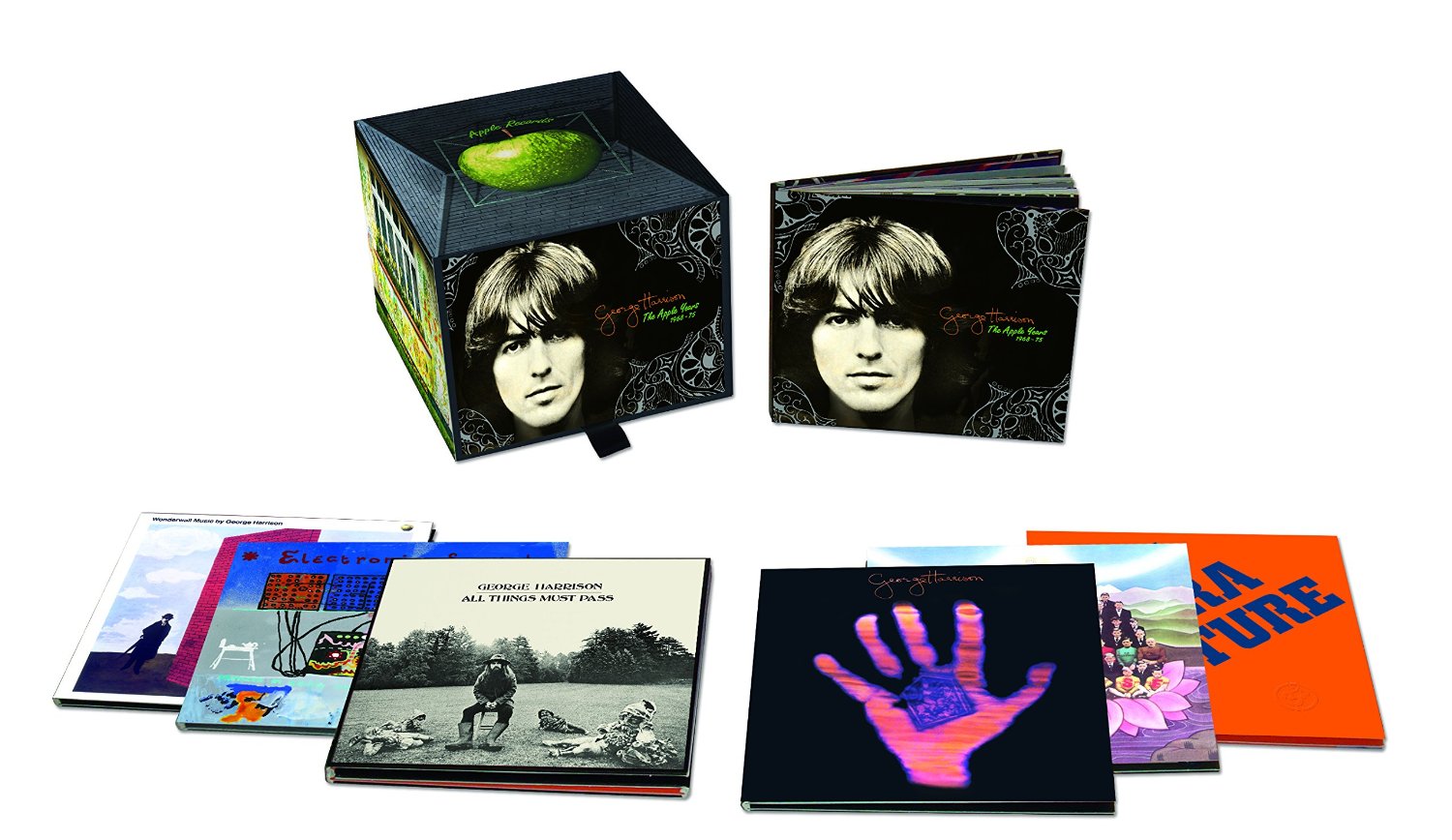
LITTLE FEAT-RAD GUMBO-THE COMPLETE WARNER BROS YEARS.
Before founding Little Feat in 1969, Lowell George was a member of Frank Zappa’s Mothers Of Invention. Then in 1969, Lowell met Bill Payne who previously, had auditioned for The Mothers Of Invention. Bill however, never joined The Mothers Of Invention. No. However, in 1969 pianist Bill Payne and guitarist Lowell George formed Little Feat. They were joined by former Mothers Of Invention bassist Roy Estrada, and drummer Richie Hayward. Previously, Richie had been a member of The Factory, Lowell’s previous band, and later, The Fraternity of Man, who found fame with Don’t Bogart Me, a track from the Easy Rider Soundtrack. With Little Feat’s lineup complete, they would become one of the most influential and successful bands of the seventies.
Having formed Little Feat in 1969, they signed to Warner Bros. in 1970. It was Frank Zappa that recommended Warner Bros. sign Little Feat. That was somewhat ironic. One rumour had it, that Frank Zappa had fired Lowell George from The Mothers Of Invention. Another rumour was that Lowell had written a song about drugs, Willin.’ A more plausible rumour is that Frank Zappa, realising just how talented Lowell George was, advised him to form his own band. He then recommended Little Feat to Warner Bros.
It was at Warner Bros. that Little Feat released the best music of their career. They released a total of eleven albums between 1970s Little Feat, and 1990s Representing The Gumbo. Each of these albums feature in the Little Rad Gumbo-The Complete Warner Bros. Years box set, which was recently released by Warner Bros. Little Rad Gumbo-The Complete Warner Bros. Years which charts the life and times of Little Feat.
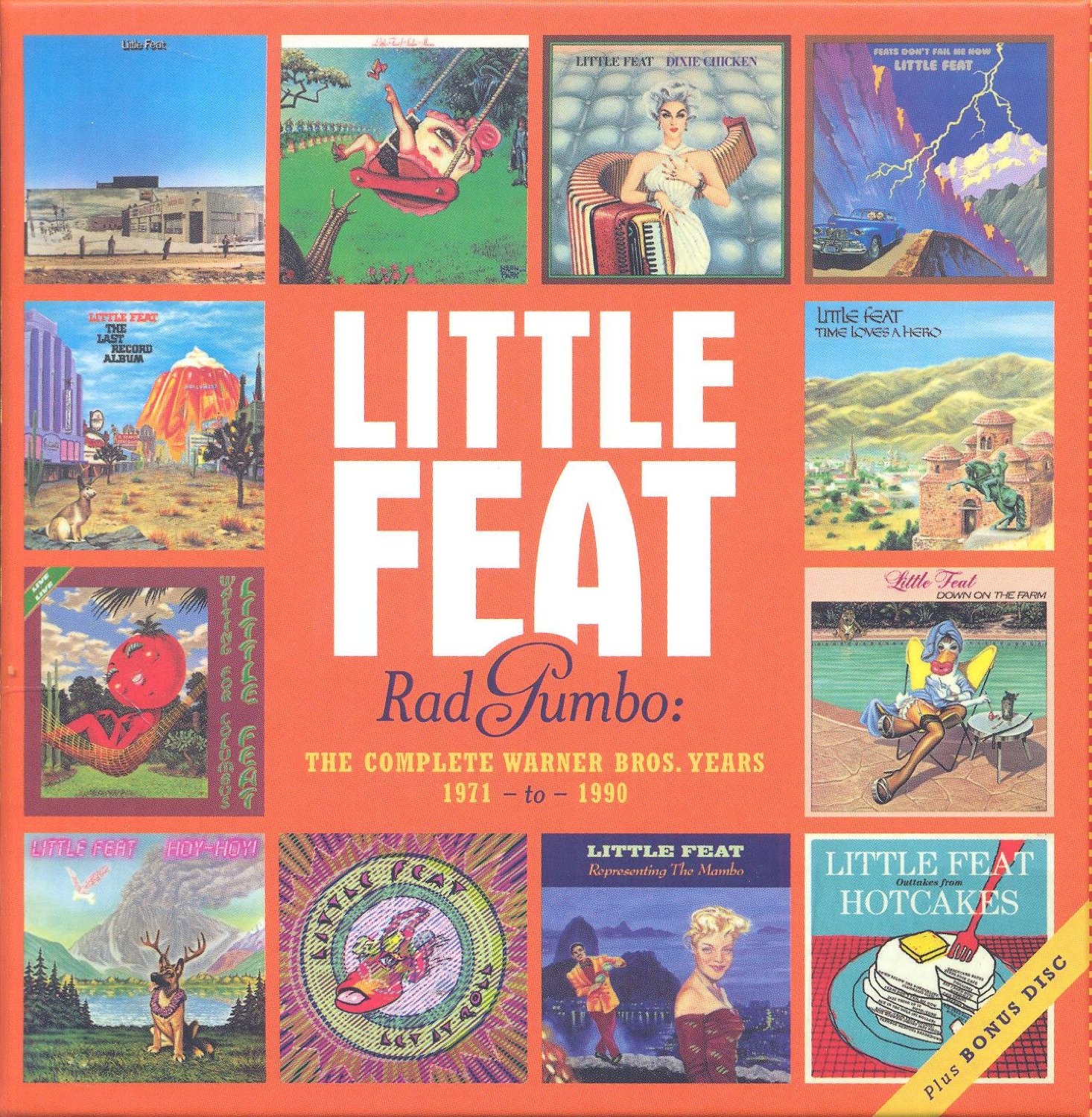
LOUISIANA SWAMP BLUES.
One of the most eagerly awaited box sets of 2014 is JSP Records Louisiana Swamp Blues. It’s a four disc that features 101 slices of swamp blues and zydeco. Compiled by Neil Slaven, Louisiana Swamp Blues features contributions from the great and good of Louisiana blues and zydeco.
Across Louisiana Swamp Blues’ four discs, there’s contributions from Leroy Washington, Jimmy Dotson, Lonesome Sundown, Big Chenier, Charles Sheffield, Tal Miller, Silas Hogan and Boozoo Chavis. There’s also contributions from groups like Cookie and The Cupcakes, Boogie Ramblers and Jay Nelson and The Jumpers. These tracks were released between 1954 and 1962. During this eight year period, Louisiana was a musical hotbed.
Between 1954 and 1962, low down, dirty, greasy blues R&B and zydeco provided the soundtrack to nights out in Louisiana. Providing the backdrop were many of the artists on Louisiana Swamp Blues. That’s how they started off. Soon, they were spotted by some of the producers that put Louisiana on the musical map.
This included J.D. Miller, Eddie Shuler, Sam Montel, Floyd Soileau and Carl Graffagnino. They were some of the most successful producers in Louisiana. They went in search of up-and-coming musical talent. This meant heading juke joints, night clubs, dive bars and wherever music was played. Sometimes, they struck musical gold.
This includes many of the artists on Louisiana Swamp Blues. Other times, the artists on Louisiana Swamp Blues were either discovered by talent spotters and A&R men. They introduced the artists to some of Louisiana’s top producers. Once the introductions were made, the artist was taken into the basic recording studios. Accompanied by a studio band, they cut the low down, dirty, greasy blues R&B and zydeco that features on Louisiana Swamp Blues.
Featuring four discs crammed full of quality music, Louisiana Swamp Blues is the perfect introduction to the music of Louisiana during the late-fifties and early sixties. They conjur up images of Louisiana, during another musical era. This means music that’s emotive, evocative and atmospheric. Sometimes, it’s joyous, hook-laden and irresistible. Always, the music paints pictures of what life was like in Louisiana, between 1954 and 1963. Back then, Louisiana was one of America’s musical capitals. That’s apparent on Louisiana Swamp Blues.
Throughout the four discs that comprise Louisiana Swamp Blues oozes quality. Whether it’s blues, R&B or zydeco, the music is of the highest quality. That’s no surprise. Louisiana Swamp Blues features the great and good of Louisiana music. They’re joined by some lesser known names. Together, they’re responsible for Louisiana Swamp Blues. It’s a combination of blues, zydeco and R&B. Classics, old favourites and hidden gems from Louisiana’s musical past sit side-by-side on Louisiana Swamp Blues, which is without the best box set JSP Records have released during 2014.
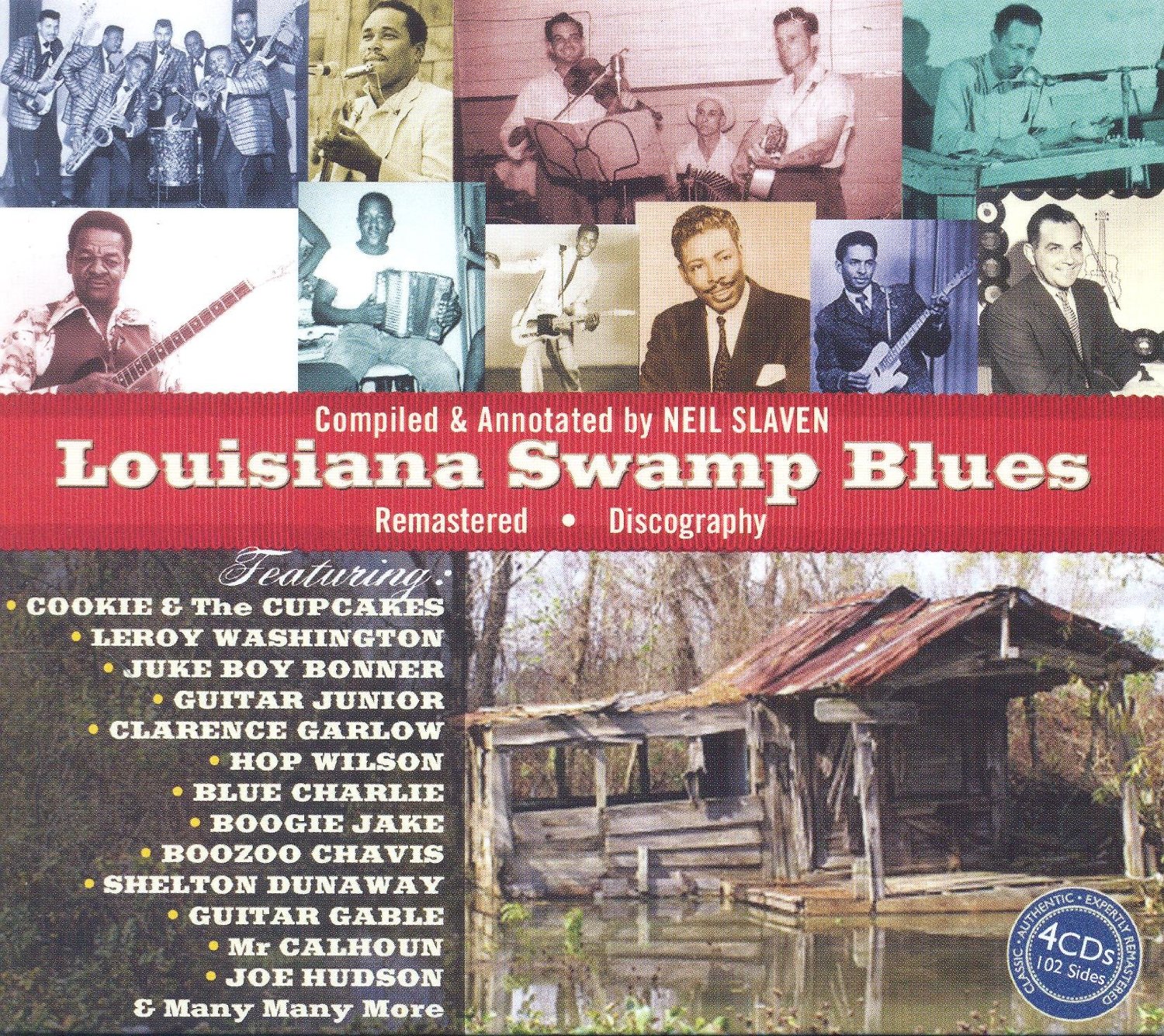
JOHN MARTYN-THE BEST OF THE ISLAND YEARS.
Last year, Commercial Marketing released The Island Years, an eighteen disc box set celebrating the twenty years John Martyn spent at Island Records. This included the seventeen albums John Martyn released between 1967 and 1987. Now, just over a year later, Universal Music have released The Best Of The Island Years a four disc box set. The Best Of The Island Years features fifty-six tracks spread across the four discs. These fifty-six tracks are a mixture of alternative takes and live tracks. This includes versions of John Martyn classics, including Bless The Weather, Solid Air, One World, May You Never, Glistening Glynebourne, Over The Hill and Angeline. However, there’s much more on The Best Of The Island Years than six classics. After all, John Martyn spent twenty-one years signed to Island Records.
John Martyn left Island Records in 1988. A lot had happened during that period. John had arrived at Island Records as a nineteen year old folk singer. He left aged forty, having released a string of classic albums. Among them, were Bless The Weather, Solid Air and One World. Each of these albums were very different, as John’s sound continued to evolve during his time at Island Records. That’s apparent when you listen to the four discs and fifty-six tracks on The Best Of The Island Years.
Over the twenty one year period The Best Of The Island Years covers, John’s music incorporated everything from blues, country, dub, folk, jazz, psychedelia and rock. Constantly, John was taking his music in different directions. He was never content to find a “sound” and stick with it. That was for other artists. John was his own man, with his own ideas about music. One of these ideas was to be constantly pushing music boundaries, exploring and experimenting. To some extent, he did that every time he stepped onstage.
Live, John Martyn never played the a song the same way twice. Always, he gave the song a new twist. While the songs remained the same, John aided and abetted by his partner in crime, bassist Danny Thompson reinvented songs. With a mischievous glint in his eye, classics like Bless The Weather, Solid Air, One World, May You Never and Angeline took on new life and meaning. Seeing John live, was a case of expect the unexpected. He could dip into his back-catalogue, and pick out a long forgotten hidden gem, and take in a new and unexpected direction. Not many musicians could do that. Mind you, most musicians aren’t blessed with a fraction of the talent and imagination that John Martyn had.

MILES AT THE FILMORE-MILES DAVIS 1970: THE BOOTLEG SERIES VOLUME 3.
Throughout his career, Miles Davis was a musical innovator and chameleon. He constantly sought to reinvent himself and his music. This had been the case throughout his career. Miles wasn’t the type of musician who could stand still. No. So, in 1968, Miles changed direction musically and his electric period began. Miles’ electric period is celebrated on Miles At the Filmore-Miles Davis 1970: The Bootleg Series Volume 3, a four disc box set released by Sony Music earlier this year. It features four concerts recorded between 17th and 20th June 1970. Each night, Miles Davis and his band took the stage at the Filmore East and played to a packed and appreciative audience.
Six months after the fourth and final show at the Fimore East, Miles Davis At Filmore: Live At The Fimore East was released in December 1970. It reached number 123 in the US Billboard 200 and number one on the US Jazz charts. Miles Davis’ career had been rejuvenated. He was enjoying commercial success, which for four long years, had eluded him. Now, into the fourth decade of his career, Miles was back.
Despite Miles being just forty-four, his career had lasted twenty-six years. He made his professional debut when he left high school as an eighteen year old. Since then, Miles Davis had proved to be one of the most innovative jazz musicians of his career. He was perceived as the Godfather and founding father of cool jazz and modal jazz. He’d been at the forefront of these musical genres. Twenty years later, Miles made musical history again.
Now he was the Godfather and founding father of fusion. He brought together jazz, funk, psychedelia and rock. To that, he added elements of avant garde, experimental, free jazz and modal jazz. However, mostly, it was jazz, funk, psychedelia and rock that inspired Miles as he sought to reinvent himself and his music. Miles had been inspired by artists like Jimi Hendrix, Sly Stone and James Brown. He met these artist through his second wife Betty Mabry. Having been inspired by these disparate influences, Miles fused them together on two classic albums In A Silent Way and Bitches Brew. They’re two of the best albums of Miles Davis’ “electric period.”
Tracks from In A Silent Way and Bitches Brew feature on Miles At the Filmore-Miles Davis 1970: The Bootleg Series Volume 3, a four disc box set recently released by Sony Music. It’s essentially Miles Davis At Filmore: Live At The Fimore East, which was released in 1970. The main difference is the tracks haven’t been edited. They can now be heard in all their glory. There’s even three bonus tracks on Miles At the Filmore-Miles Davis 1970: The Bootleg Series Volume 3. All this means that Miles At the Filmore-Miles Davis 1970: The Bootleg Series Volume 3 is the equivalent to having front row seats for the four nights as Miles Davis and his band make musical history.
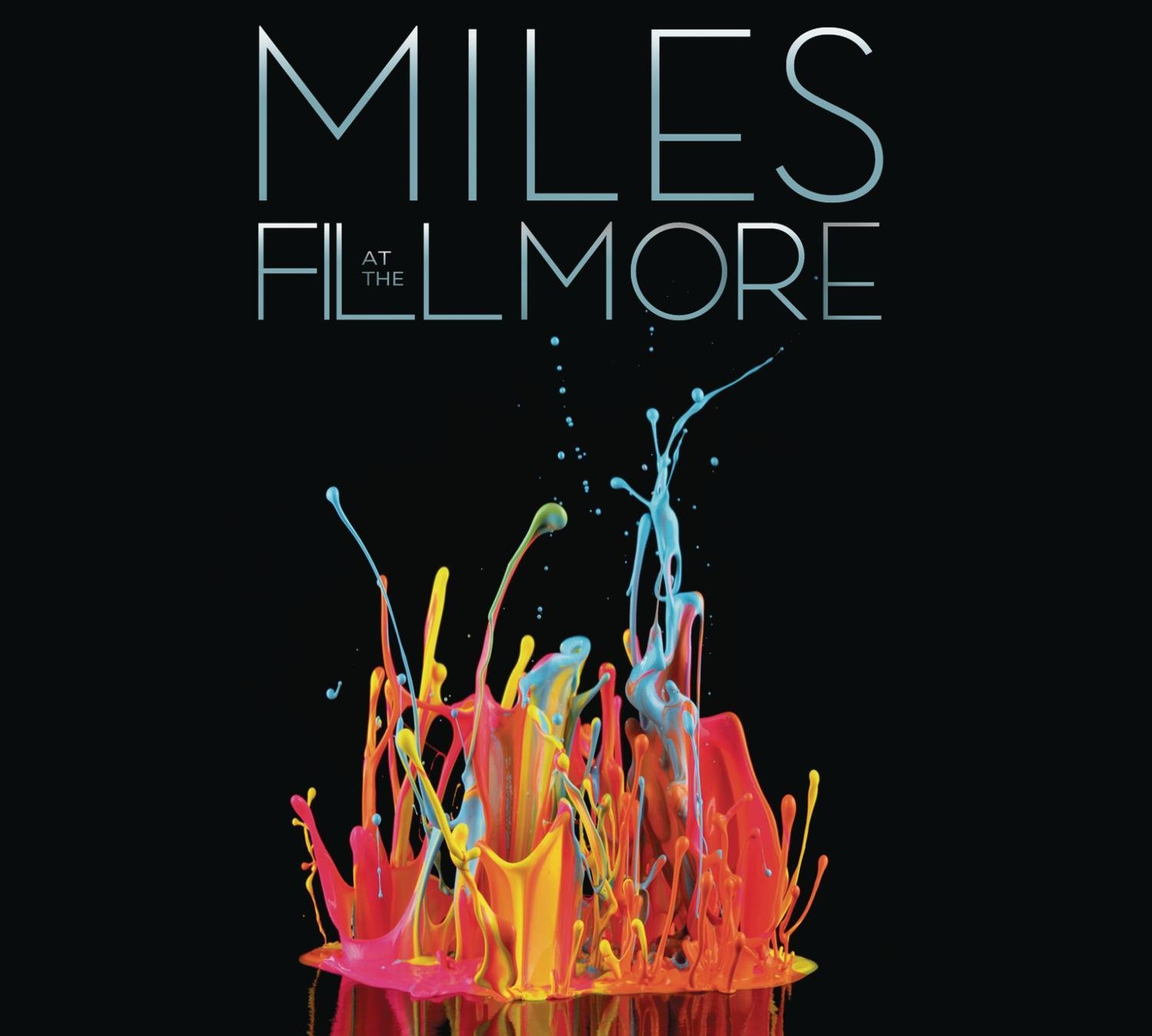
MOGWAI-RAVE TAPES.
Nowadays, it’s a common occurrence for bands to release their new albums in a variety of formats. Usually, this includes CD, vinyl and MP3. Sometimes, there’s also a box set available. This is the case with Mogwai’s ninth studio album Rave Tapes. It’s a limited edition of 4,000 was released in January 2014 on Rock Action Records. Quite simply, is one of the best box sets I’ve come across.
I realised this when I first opened up the Rave Tapes box set. Included is a heavyweight vinyl, CD and cassette version of Rave Tapes. A download code of Rave Tapes is also included in the box set. Then there’s twelve inch single and seven inch singles. Both feature tracks not on Rave Tapes. This includes Bad Magician 3 and Die 1 Dislike! on the twelve inch single and Tell Everybody That I Love Them on the seven inch single. There’s three 12″x12″ artwork art prints. They’re printed on 400 grams matt art paper and will look fantastic framed. Finally, there’s a forty page buckram wrap 12″x12″ hardback photograph book. It has a silver foil blocked cover design featuring exclusive images printed on 170 grams art paper. These photographs are taken by the legendary rock photographer, Steve Gullick, during the Rave Tapes album sessions in 2013. Essentially, the best way to describe the Rave Tapes box set is luxurious and lovingly compiled. However, what about the music on the Rave Tapes?
Rave Tapes is best described as a groundbreaking, genre-melting musical journey from Mogwai. They’ve been together for nineteen years and still, are creating music that’sThis is what they’ve been doing since 1997, when they released their debut album influential, innovative and inventive. Mogwai Young Team. Sixteen years later, Mowai are still striving to reinvent their music. They’re not content to stand still. After all, what would the fun of that be? Mogwai leave that to stadium rock groups and has been remixers. They’re not the future. Mowai are. Why?
Well, Mogwai’s Rave Tapes is another album of ambitious, bold, challenging, influential and innovative music. This is music full of nuances, subtleties and surprises. During a ten track journey through ambient, avant garde, classic rock, electronica, experimental, indie rock and Krautrock, Mogwai push musical boundaries to their limits and beyond. During these ten tracks, the music constantly changes. You never know what’s about to happen. The only thing you can expect, is the unexpected. That’s no bad thing though. After all, we’d be complaining if Rave Tapes was full of predictable music. It’s not. Far from it.
Throughout Rave Tapes, Mowai’s music constantly changes. Sometimes, it’s hard to believe it’s the same band. The music veers between wistful, melancholy and pensive, to dark, dramatic and disturbing. It’s also eerie and moody. Sometimes, it’s beautiful and melancholy. The music on Rave Tapes is always ambitious, bold, challenging, influential and innovative as Mogwai take you on a genre-hopping musical journey that is Rave Tapes.
MOTORPSYCHO-DEMON BOX.
Not many groups enjoy the longevity that Motorpsycho have. This year, Motorpsycho,who are one of Norway’s most successful bands, celebrate their twenty-fifth anniversary. They’ve come a long way since were formed in Trondheim back in 1989.
Originally, Motorpsycho were alternative metal band. However, before long, Motorpsycho’s music evolved. They began to fuse grunge with heavy metal and indie rock. Having found their own sound, it was time for Motorpsycho to release their debut album
Motorpsycho’s debut album was Lobotomizer. It was released in 1991, to widespread critical acclaim. Suddenly, great things were forecast for Motorpsycho. The future looked bright for Motorpsycho.
A year later, things looked very different. In August 1992, Motorpsycho released their single 3 Songs For Rut. However, it didn’t received the same critical acclaim as Lobotomizer. That’s despite Motorpsycho adding sonic scientist Helge “Deathprod” Sten to their lineup. Deathprod’s sonic noise experiments moved Motorpsycho’s music in a different direction. So as 1992 drew to a close, Motorpsycho knew that 1993 was going to be a pivotal year in their career.
The problem was, Motorpsycho’s contract was almost at an end. They only “owed” their record company one more album. It was a case of win or bust. Motorpsycho were up against it. This brought out the best in Motorpsycho.
In December 1992, Motorpsycho headed to Bragga Studios, where they recorded one of the most ambitious Norwegian albums of the nineties. This was Demon Box, a seventeen track double album. It was released in 1993 and proved to be a career defining album. Demon Box was received to the same critical acclaim as Lobotomizer and saved Motorpsycho’s career. After Demon Box, Motorpsycho became one of the most innovative and progressive Norwegian groups.
Given Demon Box has played such an important part in the rise and rise of Motorpsycho, it’s fitting that Rune Grammofon have just reissued Demon Box as a five CD box set. The first two discs, Demon Box Volume 1 and 2, feature 1993s landmark Demon Box album. The A and B side feature on disc one, while sides C and D feature on disc two. Disc three is entitled Demon Box Volume 3, features the Mountain E.P. and Another Ugly E.P. The fourth disc, Demon Box Volume 4, is entitled The Ones That Got Away-Rarities, Outtakes and Live Recordings. The fifth disc, Demon Box Volume 5, is a DVD, which features Motorpsycho live in concert at Vera, on 19th September 1993. Just like the previous Demon Box’s four discs, Demon Box Volume 5 is a snapshot of Motorpsycho evolving and maturing as a band.
Since the release of Demon Box in 1993, Motorpsycho have established a reputation as one of Norway’s most successful bands. Now Motorpsycho are Norwegian rock royalty. They’re a musical institution not just in Norway, but across Europe and much further afield. However, this was because Motorpsycho had the courage of their convictions.
That meant releasing a seventeen track, genre-melting double album, Demon Box. That took courage. If this gamble had backfired, Motorpsycho’s career could’ve been cut short. Thankfully, that wasn’t the case. Motorpsycho survived to tell the tale and thrive. Over twenty albums later, and Demon Box, which has just been released a five disc box set by Rune Grammofon. It was the album that launched the career of Motorpsycho. Demon Box, was an ambitious, innovative, genre-melting album; one that proved to be a career defining album for Motorpsycho; who went on to enjoy a twenty-five year career where commercial success and critical acclaim have been ever-present.
WILLIAM ONYEAEBOR 2.
Enigmatic. That’s the perfect word to describe synth funk pioneer, William Onyeabor. He is, without doubt, one of the most mysterious and elusive musicians. There’s a good reason for this, Much of William Onyeabor’s life is shrouded in mystery. After releasing deight albums between 1978 and 1985, which feature in Luaka Bop’s nine CD box set William Onyeabor 2, William became a born-again Christian. He turned his back on music and refused to talk about his life or music. In some ways, this has helped perpetuate the myths surrounding William Onyeabor.
With William Onyeabor refusing to discuss his past, numerous rumours surrounded his life after music. Rumours were rife about what happened next. Some believe William studied cinematography in the Soviet Union, then returned to Nigeria, where he founded his own film company, Wilfilms. Then there’s the rumour that William studied law in England, then became a lawyer in his native Nigeria. Others believe William became a businessman in Nigeria. According to other people, William worked for the Nigerian government. No-one can say with any degree of certainty. The only person who knows what happened next, is William Onyeabor.
William Onyeabor however, isn’t for telling. Thirty-nine after William Onyeabor found religion, and turned his back on music, he’s still refusing to discuss his past. This means still, little is known about Nigerian music’s most enigmatic musicians, William Onyeabor. The effect this has, is to perpetuate the myth of William Onyeabor. He’s a a musical riddle, wrapped in a mystery, inside an enigma. Sadly, one that looks like never being solved. There’s no clues in William Onyeabor’s discography, which is documented in William Onyeabor 2. However, what a discography it is.
Over a seven-year period, William Onyeabor released eight innovative and inventive, groundbreaking, genre-melting albums. On each of these albums, was music that was way ahead of the musical curve. Everything from Afro-beat, cosmic funk, gospel, jazz, post-disco, proto-house, psychedelia, reggae, rock and soul was thrown into the melting pot by William Onyeabor. This is apparent in William Onyeabor 2, which features all you need to know about William Onyeabor, but were afraid to ask.
The music on William Onyeabor 2 is the work of a musical visionary. That’s no exaggeration. After all, how many people could successfully mix sci-fi synths with soul and jazz? William Onyeabor could, and does on Let’s Fall In Love. Then on Fantastic Man, William like a mystic, foresaw the changing of the musical guard. The ghost of disco passes the musical baton to Chicago house. This fusion of post-disco and proto-house demonstrates the versatility of William Onyeabor.
Constantly, William Onyeabor’s music evolves throughout the period between William’s 1978 debut album Crash In Love and 1983s Good Name. Whilst other artists were churning out albums of similar music, William was pushing musical boundaries. He wasn’t content to stand still. .
From 1980 onwards, his music evolved. It became much more reliant on synths, keyboards and drum machines. Sometimes, it’s best described as futuristic, with a sci-fi sound. An example of this is Let’s Fall In Love, from his 1983 album Good Name. Buzzing, sci-fi synths are key to the track’s futuristic sound. To this inventive track, somehow, William welds soul and jazz. It’s a combination that shouldn’t work, but does. In a way, it’s just one example of the genius of William Onyeabor, which was lost to music after his 1985 album Anything You Sow.
That William Onyeabor turned his back on music, is music’s loss. Who knows what heights of innovation and inventiveness William Onyeabor might have reached? As a result, William Onyeabor 2 is a reminder of an elusive and enigmatic musical visionary.
PHILADELPHIA INTERNATIONAL-THE COLLECTION 20 ORIGINAL ALBUMS.
On February 13th 2014, Sony Music announced that it had acquired the worldwide rights to Philadelphia International Records’ post 1975 back-catalogue. At last, one label, Sony Music now had control of the rights to the entire Philadelphia International Records’ back-catalogue. This was progress. Maybe now, a proper reissue program of Philadelphia International Records’ back-catalogue could get underway?
Like many people, I hoped for lavish and lovingly compiled box sets, remasters of classic albums and rereleases of some of albums that have never before released on CD before. Sony Music it seemed were thinking along the same lines. Immediately, Sony Music announced they would be releasing a box set featuring twenty albums, Philadelphia International-The Collection 20 Original Albums.
Tantalisingly, there was no mention of what albums would feature in Philadelphia International-The Collection 20 Original Albums. Speculation was rife. Everyone had their wish-list of classics and hard to find albums. Ideally, Philadelphia International-The Collection 20 Original Albums would be a mixture of the familiar and hidden gems. When word got out about the contents of Philadelphia International-The Collection 20 Original Albums, that wasn’t what we were getting.
What people didn’t want, was a box set that was predictable. To some extent, that’s what we got. Obviously, Philadelphia International-The Collection 20 Original Albums had to feature artists and albums that played an important part in the label’s history between 1972 and 1975. This included Harold Melvin and The Blue Notes, The O’Jays, Billy Paul, The Three Degrees and M.F.S.B. Post-1975 successful and landmark albums were included by Lou Rawls, The Jacksons and Teddy Pendergrass. What frustrated some people, was that there were two albums from Harold Melvin and The Blue Notes, The O’Jays and Teddy Pendergrass. This meant there was less opportunity for hidden gems and rarities.
The rest of the artists that feature in Philadelphia International-The Collection 20 Original Albums didn’t enjoy the same commercial success and critical acclaim as Harold Melvin and The Blue Notes and The O’Jays enjoyed. However, there were welcome additions included The Intruders, the innovative Dexter Wansel and the underrated McFadden and Whitehead. Surprising choices were Edwin Birdsong, Bunny Sigler, Jean Carn, The Jones Girls and Patti LaBelle. They divided opinion among the Philadelphia International faithful. Personally, I wouldn’t have included any of these albums. They only had walk-on parts in the Philadelphia International story. As a result, Philadelphia International-The Collection 20 Original Albums was a box set that divided opinion. No wonder.
Trying to tell the story of Philadelphia International Records in twenty discs is impossible. Sony Music gave go on Philadelphia International-The Collection 20 Original Albums. Sony started well, concentrating on classic and landmark albums released between 1972 and 1975. They were responsible for transforming Philadelphia International Records into one of the most successful labels between 1972 and 1975. However, I’d have liked Philadelphia International-The Collection 20 Original Albums to feature more albums released between 1972 and 1975. Ideally, two box sets could’ve been released.
The first could’ve covered 1972 to 1975. Another could’ve focussed on 1975 onwards. This would’ve allowed classics, hidden gems and rarities to sit side-by-side. Quite simply, twenty discs and one box set doesn’t do Philadelphia International justice. Instead, Philadelphia International-The Collection 20 Original Albums is just a tantalising taste of one of soul’s legendary labels.
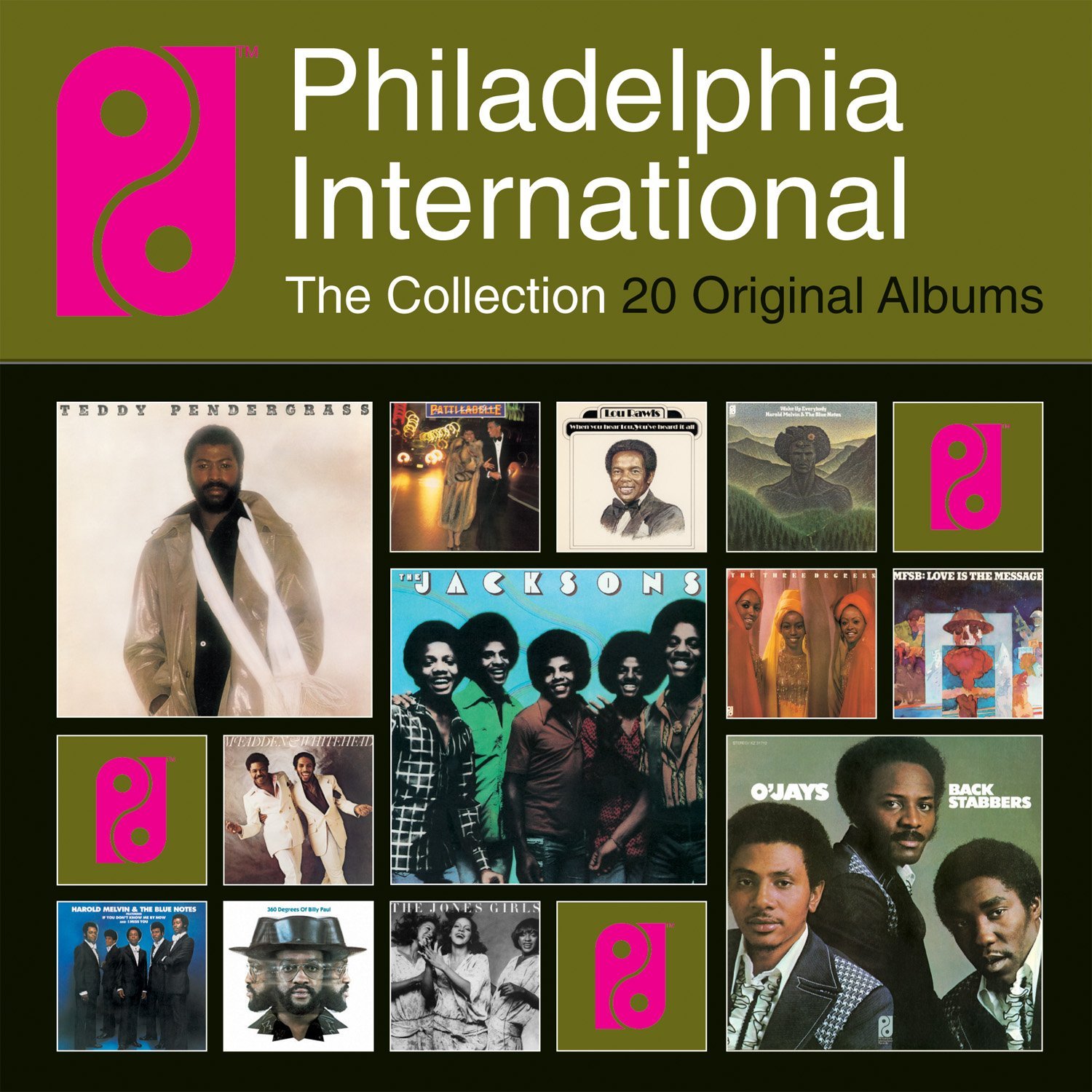
THE ALLMAN BROTHERS BAND-THE 1971 FILLMORE EAST RECORDINGS.
There aren’t many bands who make a commercial breakthrough with a live album. That, however, is what happened to The Allman Brothers Band. Their third album, 1971s At Fillmore East which was recently reissued as part of Universal as a six-disc box set The 1971 Fillmore East Recordings, was a game-changer. At Fillmore East reached number thirteen in the US Billboard 200 and was certified platinum, and in the process, transformed The Allman Brothers Band’ career.
Since its release in July 1971, At Fillmore East is regarded as one of the greatest live albums ever. Rolling Stone magazine included At Fillmore East in its 500 greatest albums of all time. That is quite an accolade. Not as much as the US Congress choosing At Fillmore East as one of city albums to be added to the National Recording Registry in 2004. By then, At Fillmore East had attained classic status, and is perceived as part of any self-respecting record collection. However, for some music lovers, the original version of At Fillmore East is a mere musical amuse bouche.
Having whetted their appetite, music lovers wanted ti hear more than the original double album of At Fillmore East. It featured just seven tracks on the four sides of vinyl. That’s just an introduction to the founding fathers of Southern Rock, The Allman Brothers Band. After all, over the three night in March 1971, The Allman Brothers Band played five concerts, over three nights At Fillmore East. So there was much more music in the Atlantic Records’ vaults.
Belatedly, Universal recently released a luxurious, and lovingly compiled, six-disc box set The 1971 Fillmore East Recordings. This was a game-changer. It features the five concerts At Fillmore East in their entirety. These groundbreaking concerts transformed The Allman Brothers Band’ career, and turned them into the Kings of Southern Rock.
THE NASHVILLE SOUND-COUNTRY MUSIC’S GOLDEN ERA.
By the mid-fifties, music was changing. Rock ’n’ roll had been born. This was a game-changer. Some genres, including blues and country, were no longer as popular. They were struggling to survive. It was a case of adapt or die. Country music realised this and changed.
Production values changed. The productions became much more polished. Immediately, the rough edges were smoothed away. Country music was transformed. Lush strings were added. Even the singing style change. Some singers adopted the crooning style that was popular amongst pop singers. All this this transformed the fortunes of country music. Not only was country music relevant, but the golden age of country music began.
The golden age of country music began in 1955. It lasted seven years, and finished in 1962. During that period, some of the greatest country music ever recorded was released. This came courtesy of country music legends like Patsy Cline, Jim Reeves, George Jones, Charlie Rich, Marty Robbins, Skeeter Davis, Don Gibson, Brenda Lee, Burl Ives, Stonewall Jackson, Dolly Parton and Slim Whitman. Each of these artists feature on Proper Records recently released box set The Nashville Sound-Country Music’s Golden Era.
The Nashville Sound-Country Music’s Golden Era is no ordinary box set. It features ninety-nine tracks spread over four discs. There’s also extensive sleeve-notes and a detailed discography. It’s obvious that a lot of time and effort has gone into compiling The Nashville Sound-Country Music’s Golden Era.
Each of the four discs on The Nashville Sound-Country Music’s Golden Era has a theme. Disc one is Four Walls, disc two I Fall To Pieces, disc three Lonesome Number One and disc four She Thinks I Still Care. On each disc, is a combination of classics and hidden gems. They all have one thing in common, their quality. That’s why, for a newcomer to country music, then The Nashville Sound-Country Music’s Golden Era is the perfect introduction the country music’s golden era.
THE FIFTY BEST NEW ALBUMS OF 2014-PART 1.
THE FIFTY BEST NEW ALBUMS OF 2014-PART 1.
RODRIGO AMARANTE-CAVALO.
Previously, Rodrigo Amarante was part of one of the most successful Brazilian bands of all time, Los Hermanos. However, this year, he embarked upon his solo career. His debut solo album Cavalo, was released in May 2014, on Mais Um Discos. Cavalo shows a new side to Rodrigo Amarante’s music.
It’s much more introspective and thoughtful. It’s as if the six years he’s spent in L.A. has resulted in inspiration for the eleven songs on Cavalo, where Rodrigo takes centre-stage. This is a role Rodrigo Amarante seems born for. He’s a storyteller who brings his lyrics to life. During each song, he sounds as if he’s lived, loved and survived the pain, hurt and heartbreak he’s singing about. So much so, that you find yourself empathizing with Rodrigo Amarante’s plight and pain. Then to life your spirits, he throws in a hook laden gem like Hourglass or Maná. This leaves you wanting more. The same can be said of Cavalo, Rodrigo Amarante’s critically acclaimed, genre-melting debut album, which belongs in the record collection of anyone who loves and appreciates music that’s ethereal, beautiful, wistful, heartfelt and joyous.

ALGEBRA BLESSETT-RECOVERY.
It was six years ago, that Atlanta born soul singer Algebra Blessett released her debut album Purpose. It was produced by Kedar Massenburg who previously, produced India Arie and D’Angelo. On its release in 2008, Purpose was released to critical acclaim. Comparisons were drawn with India Arie and Erykay Badu. Critics forecast great things for Algebra. Described as a charismatic and versatile singer-songwriter, Algebra Blessett was hailed as the most talented singer to come out of Atlanta in a long time. The future, critics said, looked bright for Algebra. Six years later Algebra returns with Purpose, the followup to Recovery, which was by BBE Music in February 2014.
Angela’s a hugely talented singer-songwriter. She has the uncanny ability to make a lyrics come to life. It’s as if she’s lived and survived the lyrics. Whether any of the lyrics are autobiographical, I don’t know, but the pain and hurt Algebra sings about seems very real. Maybe Algebra has suffered the heartache and disappointment she sings about on Recovery? If she has, I hope this proves cathartic for her. Should she not have experienced the heartache and disappointment, she’s obviously able to bring other people’s pain and problems to life. That’s not easy to do, because you’ve not suffered like they have. Whatever the truth is, Recovery is an emotional roller coaster of album from the hugely talented Algebra Blessett.
BLY DE BLYANT-HINDSIGHT BIAS.
Bly De Blyant are the equivalent of international musical superheroes. They dare to create innovative, groundbreaking and genre-melting music. To do this, they combine musical genres and influences. Through improvisation, Bly De Blyant fuse everything from classic rock, jazz, Krautrock and math rock. It’s an inventive and innovative combination. No wonder. This is what we’d expect from true musical mavericks like Bly De Blyant. They released their sophomore album, Hindsight Bias, will be released on Hubro Music in March 2014.
Hindsight Bias, just like Bly De Blyant’s debut album, ABC, is an old school album. Using vintage equipment, including a Hammond organ, Moog synth, and Fender Precision bass Bly De Blyant recorded eight tracks. During these eight tracks, Bly De Blyant fuse musical genres. Everything from ambient, avant-garde, blues, classic rock, electronica, experimental, free jazz, funk, jazz, Kratrock and math rock has been combined. This pot pourri of musical genres and influences became Hindsight Bias, a worthy followup to ABC.
It reinforces Bly De Blyant’s reputation as an inspirational, innovative and imaginative band. Bly De Blyant are the keeper of the flame for music that’s bold, challenging, innovative, inventive and influential. It’s a case of expect the unexpected on Hindsight Bias, which is a truly genre-melting album. Bly De Blyant after all, are no ordinary band. No way. Their music is exciting, innovative and progressive, where a fusion of musical influences and genres became one. That’s the perfect description of Bly De Blyant’s sophomore album Hindsight Bias.
BOMBAY MONKEY-DARK FLOW.
Mention Dark Flow and the words will mean different things to different people. To astrophysicists it’s a subject of conjecture and controversy. For music lovers, Dark Flow means something very different. Dark Flow is the highly anticipated fourth album from Bombay Monkey.
Combine ambient with classic rock, dub, electronica, indie rock, pop, prog rock, psychedelia and synth pop and the result is Dark Flow. It’s n album that’s variously dark, dramatic and eerie to beautiful and ethereal, right through to anthemic, dance-floor friendly, hook laden, irresistible and joyous. Dark Flow also veers between cinematic and subtle, to melodic and melancholy. That to me, is the perfect description of Dark Flow, which marks a coming-of-age from Bombay Monkey.
BUILDING INSTRUMENT-BUILDING INSTRUMENT.
Although Building Instrument formed in 2008, it’s taken them six years to release their eponymous debut album. Building Instrument, which was released on Hubro Music during 2014. Building Instrument was recorded over a period of several years. During that time, Building Instrument’s trademark sound evolved. This is apparent on Building Instrument’s eponymous debut album.
On Building Instrument, Building Instrument create what’s best described as genre defying music. It’s ambitious and innovative music. That’s why Building Instrument was released to widespread critical acclaim. No wonder. Building Instrument is best described as a beautiful, cinematic, ethereal, innovative and inventive. Musical boundaries to their limits, and sometimes, beyond, on an album that’s been six years in the making. That’s six years well spent.
VASHTI BUNYAN-HEARTLEAP.
For far too long, Vashti Bunyan was one of music’s best kept secrets. Vashti’s music was almost unknown outside of a small, loyal coterie of music lovers. This included a new generation of folk singers, including Devendra Banhart and Joanna Newsom. Their careers were influenced by Vashti Bunyan, and especially, her 1970 debut album Just Another Diamond Day. Sadly, after Just Another Diamond Day’s release, failed commercially and Vashti turned her back on music. Then in 2002, Vashti made a comeback. Her latest album is Heartleap, which was released on Fat Cat Records.
Vashti Bunyan was always a hugely talented singer and songwriter. That was the case in 1970, when she released Just Another Diamond Day. Sadly, Vashti Bunyan was ahead of the musical curve. When Just Another Diamond Day failed commercially, she turned her back on music. Gradually, though, a new generation of music lovers, critics and musicians discovered Just Another Diamond Day. Belatedly, Vashti Bunyan was receiving the critical acclaim that her music so richly deserves. No longer is Vashti Bunyan one of music’s best kept secrets. Instead, Vashti Bunyan is the comeback Queen, who has just released Heartleap, an album that oozes quality and ethereal beauty.
BUSHMAN’S REVENGE-THOU SHALT NOT BOOGIE!
Never before have I heard of a band named after a range of hot sauce. That’s until I came across Norwegian trio Bushman’s Revenge. The band discovered Bushman’s Revenge during a trip to South Africa back in 2003. During that trip, they enjoyed several memorable encounters with Bushman’s Revenge. It made a lasting impression. So much so, that when they discovered they’d a concert to play, but no name for their band, they decided to call their band Bushman’s Revenge. That was 2003. Ten years later, Bushman’s Revenge released their sixth album, Thou Shalt Not Boogie. It was released on Rune Grammofon in January 2014.
There’s no doubt, that Thou Shalt Not Boogi is the finest album of Bushman’s Revenge’s career. It’s an example of a tight and talented band who have spent the last ten years honing their sound. This has paid off. On Thou Shalt Boogie! Bushman’s Revenge veer between musical genres. There’s everything from ambient, blues, free jazz, prog rock, psychedelia and rock. Sometimes, Bushman’s Revenge seamlessly switch between musical genres. They throw a series of curveballs, lulling you into a false sense of security. Then they spring a surprise.
From a cinematic sounding ambient track, Bushman’s Revenge kick out the jams and become a hard rocking power trio. At times like that, they sound as if they’ve been influenced by Black Sabbath, Cream and the New York Dolls. Other times, their music sounds as if it’s been influenced by free jazz musicians Sun Ra, Cream, Alice Coltrane and Ornette Coleman. Seamlessly, Bushman’s Revenge are capable of flitting between musical genres. Soon, you learn to expect the unexpected. You can never tell where a track is going. Even, Rune and Gard are constantly throwing curveballs during Thou Shalt Boogie! Helping them to do this was guest artist David Wallumrod. He was ying to Bushman’s Revenge’s yang on Thou Shalt Boogie!, the best album of Bushman’s Revenge’s six album career.
CAKEWALK-TRANSFIXED.
It was May 2012, when Cakewalk released their genre-melting debut album Wired. Released to critical acclaim, Wired featured intense, mesmeric music. Featuring three experienced and talented musicians, Cakewalk became one. Each member of Cakewalk seemed to have know exactly what the other was about to do. The interaction between them was peerless. They fed off each other, and seamlessly, Cakewalk fused musical genres. Krautrock, experimental, electronica, free jazz and punk all melted into one. The result was music that veered between lively and vibrant, right through to frantic and frenzied. Influences included David Bowie’s Berlin trilogy, plus the Krautrock of Neu and Can. Wired was akin to a musical tapestry, full of nuances, surprises and subtleties. Critics who were won over by Cakewalk, hungrily awaited the followup to Wired. Thankfully, they’ve not had to wait long. No. Transfixed, Cakewalk’s sophomore album, was released by Hubro Music in January 2014.
Just under two years after the release of their debut album Wired, Cakewalk return with their sophomore album Transfixed. Transfixed is aptly titled. It’s an album that has you Transfixed from the opening bars of Ghosts to the closing notes of Dunes. During the six tracks, the music is variously atmospheric, cinematic, dark, dramatic, eerie, ethereal, evocative, experimental, gothic and haunting. Subtleties, surprises and nuances unfold. Soundscapes flower and blossom as genres and influences melt into one. This allows Cakewalk to hone and sculpt a song until they’re mini modernist works of art.
CHANCHA VIA CIRCUITO-AMANSARA.
Chancha Via Circuito released his fourth album Amansara in September 2014, on Crammed Discs. Amansara is Chancha Via Circuito’s first album for Crammed Discs. The long awaited followup to Rio Arriba marks a new chapter in the career of musical maverick, Chancha Via Circuito.
Listen carefully and Chancha Via Circuito combines a myriad of disparate musical influences. As a starting point, Chancha Via Circuito uses cumbia. He adds to that avant-garde, electronica, experimental, hip hop, industrial, Latin and soul. The soul comes courtesy of Lido Pimienta and Miriam García. Although they’re both Latin vocalists, they’re both deeply soulful. They provide a contrast to Chancha Via Circuito’s arrangements. Each of these arrangements are very different. During Amansara, Chancha Via Circuito seems determined to constantly reinvent himself and his music. He successes in doing so. Amansara is a genre-melting, musical journey. It’s a captivating journey full of twists and turns aplenty. Before long, you realise to expect the unexpected. The other thing you realise, is never try to second guess Chancha Via Circuito. He is after all, a musical maverick. That’s why Amansara is a truly refreshing, genre-melting and album of ambitious music.
ADRIAN CROWLEY-SOME BLUE MORNING.
In November 2014, Galway born singer-songwriter, Adrian Crowley released his new, critically acclaimed, album Some Blue Morning, on Chemikal Underground. It’s his seventh album since his 1999 debut.
Wistful, melancholy, hopeful and cinematic describes Some Blue Morning, which was recently released on Chemikal Underground. Some Blue Morning features eleven songs from the pen of Adrian Crowley. They’re based upon Adrian Crowley life and experiences. Many of the songs are akin to short stories. They unfold before your eyes, while as Adrian Crowley becomes a storyteller par excellence. His lyrics come to life, as Adrian breathes life, meaning and emotion to the lyrics. Accompanied by a tight, talented band, these songs become like the soundtrack to a film that’s yet to be made.
There’s a reason for this. Adrian Crowley’s songs have a cinematic quality. Some of the songs wouldn’t sound out of place in a David Lynch or Wim Wenders film. That’s how good they are. Indeed, the songs on Some Blue Morning include some of the best of Adrian Crowley’s careers. That’s why Some Blue Morning is a career defining album for Dublin based troubadour, Adrian Crowley.

THE FIFTY BEST NEW ALBUMS OF 2014-PART 2.
THE FIFTY BEST NEW ALBUMS OF 2014-PART 2.
DJ VADIM-DUBCATCHER.
For Dubcatcher, the followup to DJ Vadim’s critically acclaimed tenth album, Don’t Be Scared, he dawned the role of hip hop’s first DJ superhero. That’s apparent from the Dubcatcher’s album cover. Looking like a cross between Robin, Bananaman and Goldfinger, a vinyl wielding DJ Vadim’s raison d’être seems to be protect hip hip from bad beats. That’s something DJ Vadim has never been guilty of.
Far from it. DJ Vadim has never been, and never will be guilty of producing bad beats. His career began twenty years ago, and since then, critical acclaim and commercial success has come DJ Vadim’s way. He’s now a globetrotting DJ who released his eleventh album Dubcatcher, om BBE Music in June 2014. Dubcatcher however, is very different to Don’t Be Scared. It sees DJ Vadim turn his back on his beloved hip hop in favour of dancehall reggae on Dubctacher. This is just the latest of numerous twists and turns in the career of DJ Vadim.
Dubcatcher sees DJ Vadim make a welcome return to reggae. It’s a modern dancehall album, where DJ Vadim, with a little help from his musical collaborators create a fitting followup to Don’t Be Scared. The best way to describe Dubcatcher is an innovative dancehall album for the 21st century. On Dubcatcher, DJ Vadim has succeeded in reinventing his music once again. That’s what we’ve come to expect from DJ Vadim, one of modern music’s most innovative producers. Proof of that is DJ Vadim’s eleventh album Dubcatcher, which is a fitting way for DJ Vadim to celebrate twenty years in music.
DJESSOU MORY KANTE-RIVER STRINGS: MANIKA GUITAR.
Twenty years have passed since Djessou Mory Kanté released his debut album N’na Niwalé (Merci Les Mères). Since then, Djessou Mory Kanté has established a reputation as one of the most talented African guitarists. That’s why Djessou Mory Kanté is the go-to-guitarist for the great and good of African music. However, two years ago, in May 2012, Djessou decided it was time to record his sophomore album. This became Manika Guitar, which was released on Stern’s Music in December 2014. It marks the return of a musical master craftsman.
River Strings: Maninka Guitar is a beautiful album of stunning music. Over thirteen tracks, elements of African and Western music melt into one. last just over one hour. Elements of blues, classical, jazz and funk shine through. Mostly, though, its traditional African music that shines through on River Strings: Maninka Guitar, a truly captivating and beautiful musical journey.Its origins are in the Maninka tradition of Guinea and Mali.
This is the music Djessou Mory Kanté grew up playing. Now he’s one of Africa’s most talented musicians. He’s akin to a musical master-craftsman. That’s apparent from the opening bars of Djessou Mory Kanté’s sophomore album River Strings: Maninka Guitar, right through to the closing notes of this beautiful, captivating, elegiac and ethereal album.

ENO-HYDE SOMEDAY WORLD.
Brian Eno, the Godfather of electronic music returned in June 2014 with Someday World, his collaboration with Underworld’s Karl Hyde. Billed as Eno-Hyde, and released on Warp, Someday World featured an all-star cast. They played their part in an album that didn’t disappoint.Just like every album Brian Eno has released, it’s an album that sees him move forward.
For Brian Eno standing still is like going backwards. That’s never going to happen. Especially with three generations of groundbreaking musicians to collaborate with. The result was a genre-melting album. Everything from ambient, Afro-beat, blues, electronica, funk, jazz, pop, rock and soul melts into one during the musical journey that’s Someday World. The music veers between funky to futuristic to dark and dramatic and right through haunting and hypnotic. Other times it melodic or mesmeric. Sometimes, the music is uplifting and joyous. Especially when slick poppy hooks are unleashed on The Satellites and Witness. These tracks should introduce a new generation to Brian Eno and Karl Hyde’s music.
Awaiting them, are a cornucopia of musical delights. That describes the Brian Eno and Karl Hyde’s music. However, cornucopia of musical delights is also the perfect description of Eno-Hyde’s critically acclaimed album Someday World.

FIRE! ORCHESTRA-ENTER.
The newly named Fire! Orchestra were building on the music of some of the legendary free jazz big bands. This includes the big bands of Sun Ra, Charlie Haden’s Liberation Orchestra, Mike Westbrook and Mike McGregor. There was more to the Fire! Orchestra that free jazz. They incorporated funk, blues, rock and jazz. This became apparent when the Fire! Orchestra made their tentative first steps. They played a few live shows and then, in 2013, released their live debut album Exit. It was released to widespread critical acclaim. So a year later, and Fire! Orchestra return with Enter, which was released by Rune Grammofon in July 2014.
The best way to describe Fire! Orchestra’s debut album Enter is innovative and progressive. It’s also an album that will influence a new generation of musicians. Enter showcases the sound of the twenty-nine members of the Fire! Orchestra in full flight. This was an impressive sound. Especially given their fusion of mesomorphic rock rhythms, funk, free jazz and the bluesy, soul-baring vocals of the Fire! Orchestra’s three vocalists. Add to this the scorching free jazz saxophone of Joe McPhee and Enter, has a potent, powerful and captivating sound.
Enter is definitely an album that makes a big impression. It was written and produced by the three members of Fire! However, it’s not just Swedish musicians that feature in the Fire! Orchestra! No. Fire! Orchestra features some of the top Scandinavian musicians. They joined forces in the Fire! Orchestra to record Enter, a groundbreaking, genre-melting album featuring ambitious, innovative and progressive music that brings back memories of musical luminaries like Sun Ra, Charlie Haden’s Liberation Orchestra, Mike Westbrook and Mike McGregor.

HEDVIG MOLLESTAD-TRIO ENFANT TERRIBLE.
Norwegian guitar virtuoso Hedvig Mollestad Thomassen first picked up a guitar when she was just ten. It was her mother’s much loved nylon strung acoustic guitar. This was the start of a lifelong love affair with the guitar. Now twenty years later, Hedvig is now one of Europe’s finest guitarists. Hedvig’s group the Hedvig Mollestad Trio, released their third album Enfant Terrible in May 2014 on Rune Grammofon. It showcases Hedvig’s critically acclaimed guitar playing.
Enfant Terrible is, without doubt, a career defining album from the Hedvig Mollestad Trio. They seamlessly shift between musical genres. Bues, jazz, psychedelia and rock are thrown into the mix by the Hedvig Mollestad Trio’s. Sometimes, they seamlessly switch between musical genres mid track. Not every band can do this. Mind you, not every band is as talented as the Hedvig Mollestad Trio. They’re more than capable of throwing a series of curveballs, and lulling you into a false sense of security. It’s the Hedvig Mollestad Trio’s way of making sure you’re listening as they strut and swagger their way through the six tracks on Enfant Terrible.
For much of the time, the Hedvig Mollestad Trio are a hard rocking power trio. They can kick out the jams like the hardest rocking power trios. As the Hedvig Mollestad Trio kick out the jams, they bring back memories of rock legends like Jimi Hendrix, Led Zeppelin, Black Sabbath and Cream. Then there’s the electric jazz of Mahavishnu Orchestra, Santana and Miles Davis between 1968 and 1975. That’s the music that’s influenced Hedvig Mollestad Thomassen growing up. The same music has inspired the music on Enfant Terrible, which is without doubt, the finest album of the Hedvig Mollestad Trio’s career.

ERIK HONORE-HELIOGRAPHS.
Erik Honoré is no stranger to a recording studio. He’s played on, or produced, over fifty albums. These albums are all very different. They’re best described as eclectic. No wonder. This eclectic selection of albums features everyone from David Sylvian to Arve Henrikse, through Eivind Aarset, Jon Hassell and Laurie Anderson, to Brian Eno and Peter Schwalm. However, despite working with so many high profile artists, there’s one thing forty-eight year old Erik Honoré still has to do. That’s release a solo album. At last, the wait is over. Heliographs, Erik Honoré’s debut album was released by Hubro Music in 17th November 2014.
Just like each of the artists Erik has collaborated with, Erik creates music that’s groundbreaking. There’s no playing it safe for Erik Honoré on Heliographs. It’s a groundbreaking, genre-melting album. Everything from ambient, avant-garde, classical, experimental, free jazz and a hint of rock melt into one. It’s an eclectic and disparate fusion of musical influences and genres. That’s not surprising. Erik Honorè is a true musical innovator and explorer. On Heliographs, Erik Honorè dares to go, where other musicians fear to tread.
JARIBU AFROBEAT ARKESTRA-JARIBU.
Over the last few years, the JariBu Afrobeat Arkestra have established a reputation as one of the best live bands in Japan. That’s been the case since the JariBu Afrobeat Arkestra released their debut album Afro Sound System in 2009. Released to critical acclaim, Afro Sound System won over DJs and music fans. Two years later, and JariBu Afrobeat Arkestra released their sophomore album Mediacracy in 2012. By then, JariBu Afrobeat Arkestra were being referred to as Japan’s most exciting bands. They released their third album JariBu, on Tramp Records, in June 2014. It was a fitting followup to Mediacracy.
Fans of JariBu Afrobeat Arkestra has been rewarded. JariBu is a game-changer. A delicious fusion of Afrobeat, free jazz, funk, jazz, jazz-funk, rock and soul, JariBu is without doubt, the best album the JariBu Afrobeat Arkestra have released. It surpasses the quality of their two previous album. The JariBu Afrobeat Arkestra have matured as a band musically. As a result, JariBu is a much more eclectic album.
The best way to describe JariBu is a melting pot of musical genres and influences. Mostly, the tracks are the JariBu Afrobeat Arkestra’s unique brand of Neo Afrobeat. However, sometimes, the JariBu Afrobeat Arkestra take diversions via Afrobeat, free jazz, funk, jazz, jazz-funk, rock and soul. This keeps things interesting. You’re never sure which direction the music is heading? Sometimes, songs explode joyously into life, becoming irresistible and hook-laden. Other times, the music is veers between dramatic and urgent, to hypnotic and mesmeric, to beautiful and joyous, right through to laid-back and mellow. Always, the music on JariBu is captivating and compelling. No wonder. This is the JariBu Afrobeat Arkestra third album JariBu we’re talking about.

JENNY HVAL AND SUSANNA-MESHES OF VOICE.
Five years ago, in 2009, Jenny Hval and Susanna Karolina Wallumrød began writing to each other. A lot has happened to Jenny and Susanna since that initial exchange of letters. This began with Jenny and Susanna being invited to play at the Oslo Jazz Festival. Their second live performance was at the Henie Onstad Art Exchange. That was where Meshes Of Voice was recorded on 8th March 2009. Sadly, since then, Meshes Of Voice has never been released. Until now. Meshes Of Voice was released in August 2014, on Susanna’s label SusannaSonatta.
Belatedly, Meshes Of Voice will be released on Susanna’s label SusannaSonatta, on 18th August 2014. Hopefully, Meshes Of Voice won’t be the last collaboration between Jenny Hval and Susanna. After all, what could be better than another collaboration between two of the most talented and successful Norwegian singer-songwriters? They’re like yin and yang on Meshes Of Voice. Their voices are made for each other. They bring out the best in each other, and drive each other to greater musical heights. That’s apparent on Meshes Of Voice, which is a tantalising taste of two of the finest Nordic vocalists Jenny Hval and Susanna as their career unfolds. Maybe, Meshes Of Voice is just the beginning, and further collaborations between Jenny Hval and Susanna will follow? Let’s hope so.
JOZEF VAN WISSEM-IT IS TIME FOR YOU TO RETURN.
It was back in 2000, that avant-garde composer and baroque lutenist Jozef Van Wissem released his debut album, Retrograde Renaissance Lute. Since then, Josef has released a series of groundbreaking solo albums and collaborations. Jozef’s latest album It Is Time For You To Return, will be released by Crammed Discs in November 2014. It Is Time For You To Return is the latest instalment in Crammed Discs’ Made To Measure series. It’s also the perfect introduction to the music of a true musical innovator, Jozef Van Wissem.
For anyone yet to discover the music of avant-garde composer, and baroque lutenist, Jozef Van Wissem then It Is Time For You To Return is the perfect starting place. It’s a breathtaking aural adventure. Featuring nine understated and hypnotic tracks, It Is Time For You To Return features Jozef at his innovative best. The music is captivating, compelling, ethereal, hopeful, hypnotic, melancholy, mysterious and wistful. That’s not all.
On several of the tracks on It Is Time For You To Return, Jozef’s lyrics are full of social comment. Jozef isn’t averse to commenting on the state of the world. His lyrics are veer between hope to hopelessness. There’s hope on Love Destroys All Evil. Confinement paints a picture of hopelessness, as days become months, months become years. All the time, the clock is ticking. Then on You Can’t Take It With You, Jozef deals with greed and avarice. Wealth and possessions, he points out, You Can’t Take It With You. These tracks are the perfect showcase for Jozef Van Wissem, as he becomes poet and philosopher, on It Is Time For You To Return.
KASAI ALLSTARS-BEWARE THE FETISH.
2014 marked the return of the Kasai Allstars. They released their sophomore album, Beware The Fetish on Crammed Discs. It’s a double album featuring twelve-tracks of the Kasai Allstars trademark sound. The twelve tracks last over 100 minutes. They showcase the Congolese collective’s genre-melting sound. Just like their debut album, Beware The Fetish is music that you must immerse yourself in. If you do, you’ll discover music that’s irresistible, joyous, otherworldly, trance-inducing, mythical and mystical. That’s down to the fifteen members of the Kasai Allstars.
The Kasai Allstars are a collective of fifteen Congolese musicians, based in Congo’s capital Kinshasa Originally, they were members of five bands based in the Kasai region. They come from very different backgrounds. Five different ethnic backgrounds are represented in the Kasai Allstars. Different cultures, languages and musical traditions play their part in the success story that’s the Kasai Allstars. Essentially, the Kasai Allstars are a cross-cultural collaboration. They’re an example to the people of Congo, as they’re able to live side-by-side happily and peacefully. In doing so, they create their unique brand of irresistible music.
Throughout the twelve tracks on Beware The Fetish, you’re spellbound. You immerse yourself in the delights of Beware The Fetish. Surprises, subtleties and nuances are never far away. Neither is irresistible, joyous, hypnotic and hook-laden music. Whether its songs with a social conscience, or tracks to dance to, Beware The Fetish is truly irresistible. Especially, when they kick loose. That’s a joy to behold. The Kasai Allstars in full flight on Beware The Fetish, is something everyone should experience once in their life.

KING CREOSOTE-FROM SCOTLAND FROM LOVE.
From Scotland With Love, which was released by Domino, was a the soundtrack to a documentary feature film directed by Virginia Heath. The film was commissioned as part of the Cultural Festival, which accompanied the 2014 Commonwealth Games. They were held in Glasgow.
During the Commonwealth Games, a screening of From Scotland With Love took place on Glasgow Green. It was accompanied by live music. This was fitting. After all, Glasgow Green has been the scene of many memorable musical events. The screening of From Scotland With Love was just the latest.
As films go, From Scotland With Love is quite unusual. The seventy-five minute film features no dialogue. That’s not surprising. The documentary was created entirely from archive film material from the National Library of Scotland and the Scottish Screen Archive. With no voiceover, Virginia Heath decided to add a musical backdrop. That’s where King Creosote came in.
King Creosote provided a musical backdrop to the themes that run through the film. This includes love, loss, resistance and migration. There’s a reminder of how Scotland has changed when the film touches on urbanisation and emigration. many Scottish people emigrated to Australia, Canada and New Zealand in the fifties and sixties. From Scotland With Love also shows Scotland at work and play. There’s a sense of sadness too. Especially when reminders of Scotland’s past.
Back then, shipbuilding, heavy industry and the fishing industry, were just three of Scotland’s industrial heavyweights. Not any more. Tragically, they’ve been brought to their knees. Another sense of sadness is when From Scotland With Love touches on the war. It’s another of the subjects King Creosote tackles on From Scotland With Love.
From Scotland With Love is a beautiful, joyous, melancholy, poignant, uplifting and wistful album. The music tugs at your heartstrings. Especially, when King Creosote is delivering vocals that are heartfelt, hopeful, needy, joyous and inspirational. King Creosote is the latest in a long line of Scottish troubadours. His Magnus Opus, From Scotland With Love, marks a coming of age from Scotland’s newly crowned musical King, King Creosote.
THE FIFTY BEST NEW ALBUMS OF 2014-PART 3.
THE FIFTY BEST NEW ALBUMS OF 2014-PART 3.
KROKOFANT-KROKOFANT.
What do you get if you cross a crocodile with an elephant? A Krokofant. For those not familiar with this surreal hybrid, then you’ve never heard the popular Norwegian children’s song. The Krokofant has been described as “a lumbering trumpeting beast with a fearsome array of teeth in its snapping jaws.” However, Krokofant is also one of the name of Norwegian jazz most exciting and pioneering groups, whose debut album Krokofant was released on Rune Grammofon in March 2014.
Krokofant create music that’s not just bold and brave, but inventive, innovative and influential. That’s why Krokofant are leaders of this new and innovative musical movement that’s sweeping the Nordic region. Word is spreading about this trio of musical pioneers. There’s a reason for this.
Their music. Krokofant are determined to push musical boundaries. They’re constantly seeking to reinvent themselves and their music. That’s why Krokofant’s music can be described as variously dramatic, challenging, futuristic, moody, cinematic, understated and pensive. Every song is different and full of subtleties and nuances. Seamlessly, Krokofant change direction, and your hear another side to their music. Then musical influences and genres melt into one thanks to one of the most talented and groundbreaking Norwegian bands, Krokofant. Their debut album Krokofant showcases one of the most exciting, innovative and talented groups I’ve heard in a long time.

BEVERLEY MARTYN-THE PHOENIX AND THE FUTURE.
It’s nearly fifty years ago since Beverley Martyn made her recording debut. This was as a member of The Levee Breakers. They were a jug band which featured Mac McGann, Johnny Joyce and Beverley. Their debut single was Babe, I’m Leaving You, which they released on Parlophone in 1965. Beverley was just sixteen and already, The Levee Breakers were a regular fixture on the folk circuit. Beverley Martyn seemed destined for a great things. However, since 1965, Beverley has only released two solo albums. Her latest is Beverley’s sophomore album, The Phoenix and The Turtle, was recently released by Les Cousins’ label.
Beverley Martyn is an artist who could and should’ve enjoyed commercial success and critical acclaim. However, Beverley has been a stranger too long. She’s only released two albums since her solo career began in 1966. That’s not enough to do her talent justice. With her talent as a singer and songwriter, Beverley Martyn should be a huge star. Maybe, after the commercial failure of her her earlier solo material and the her collaborations with John Martyn, Beverley was reluctant to record any more albums. After all, it must be soul destroying for an artist who doesn’t receive the recognition it deserves. Who can blame them for turning their back on their solo career? That’s what Beverley did.
Thankfully, she’s made a belated comeback with The Phoenix and the Turtle. On The Phoenix and the Turtle Beverley combines folk, country, blues and rock on The Phoenix and the Turtle. The nine songs are variously beautiful, poignant and wistful. Heartbreak and hurt sits side-by-side pathos and melancholia. Beverley’s lyrics have a cinematic quality and each of the songs to life. As a result, The Phoenix and the Turtle is like a series of musical journeys, where Beverley takes on the role of narrator. You’re captivated and spellbound by what’s the finest album of Beverley’s solo career, The Phoenix and the Turtle.

MOGWAI-RAVE TAPES.
Rave Tapes, which was released on Rock Action Records, was one of the most anticipated albums of 2014. The big question was, what direction Mogwai’s music would head? After all, Mogwai’s music never stands still. It’s in a constant state of evolution. That’s no bad thing. Standing still is akin to going backwards in Mogwai’s book. On Rave Tapes, Mogwai’s music continues to evolve. Musical genres and influences melt into one. One of the most prominent influences was Krautrock. Add to this ambient, avant-garde, electronica, experimental, indie rock and rock. We hear different sides to Mogwai on Rave Tapes. Whether it’s fuzzy soundscapes or kicking out the jams, Mogwai don’t disappoint on Rave Tapes.
Rave Tapes, another album of ambitious, bold, challenging, influential and innovative music. This is music full of nuances, subtleties and surprises. During a ten track journey through ambient, avant garde, classic rock, electronica, experimental, indie rock and Krautrock, Mogwai push musical boundaries to their limits and beyond. During these ten tracks, the music constantly changes. You never know what’s about to happen. The only thing you can expect, is the unexpected. That’s no bad thing though. After all, we’d be complaining if Rave Tapes was full of predictable music. It’s not. Far from it.
Throughout Rave Tapes, Mowai’s music constantly changes. Sometimes, it’s hard to believe it’s the same band. The music veers between wistful, melancholy and pensive, to dark, dramatic and disturbing. It’s also eerie and moody. Sometimes, it’s beautiful and melancholy. The music on Rave Tapes is always ambitious, bold, challenging, influential and innovative as Mogwai take you on a genre-hopping musical journey that is Rave Tapes.
MOSTER-INNER EARTH.
The best way to describe Moster, is a Norwegian supergroup. Moster was founded by Bushman’s Revenge saxophonist and bandleader Kjetil Møster in 2010. He brought onboard some of the most talented Norwegian musicians of their generation. They made their debut at the Kongsberg Jazz Festival in 2010. Three years later, Moster released their long awaited debut album, Edvard Lygre Møster. Now, a year later, Moster returned in October 2014, with Inner Earth, which was released on Hubro Music.Stylistically, Inner Earth is very different from Edvard Lygre Møster. It was an album that was perceived as spontaneous, direct and fierce. Recorded live, Kjetil Møster remembers the band finding their sound on-stage. Fortunately, the show was being taped and was issued as Edvard Lygre Møster. Inner Earth which will be released by Hubro Music in October 2014, is very different.
The perfect description of Inner Earth, is a musical journey. Moster veer between avant garde, experimental, free jazz, jazz, prog rock, psychedelia and classic rock. Prog rock and psychedelia play prominent roles on Inner Earth. So does free jazz, on this compelling musical journey through Inner Earth. This journey veers between slow, moody and broody, to dramatic and ferocious. Other times, it’s dreamy, futuristic, lysergic and otherworldly. Then sometimes, Inner Earth becomes cinematic and melodic, as slow washes of music shiver, shimmer and glimmer. Always though, Inner Earth is an ambitious and innovative, magical musical mystery tour through musical genres, with Norwegian supergroup Moster as your musical tour guides.

MOEBIUS-STORY-LEIDECKER-SNOWGHOST PEICES.
One of the most eagerly awaked recent releases is Snowghost Pieces, a collaboration between Dieter Moebius of Cluster and Americans Tim Story and Jon Leidecker. This might seem like an unlikely collaboration, given how different the three musician’s pasts are. That’s not the case though. Each of the musicians have one thing in common. They’re all innovative musicians whose raison d’être is to create groundbreaking music. That’s apparent on Snowghost Pieces, which was released on the Bureau label, in June 2014.
Snowghost Pieces is music that’s challenging and cerebral. It’s music to make you think, and music that sometimes, will take you out of your comfort area. Especially when you hear the futuristic soundscapes. They’re innovative and have a dramatic, cinematic sound. Moebius-Story-Leidecke paint pictures with your music. All you need to do is open your mind and absorb this groundbreaking, cinematic music. Let your imagination run riot and you’ll hear this music’s full potential. Turn up the volume and let Snowghost Places assail and surround you. Experience and absorb what is without doubt one of the best electronic albums of 2014.
Everything from ambient, avant garde, electronica and experimental music combine to create Snowghost Places. It’s an album that’s guaranteed to change your mood and make you think. Captivating and compelling, it’s moody, broody, dramatic, pensive and thoughtful. Snowghost Places is also melancholy, ethereal and beautiful. These are just a few of the words to describe Snowghost Places. It’s an album that variously, washes over you, embraces you, and forces you to think, as it paints pictures in your mind’s eye. Snowghost Places is best described as the soundtrack to a film that’s yet to be made. Instead, for the time being, you supply the pictures to Snowghost Places.
MOSKUS-MESTERTYVEN.
It was back in 2012 that pioneering jazz trio, Moskus, released their critically acclaimed debut album, Salmesykkel. A lot has happened since then. In 2013, Moskus were nominated for two Spellemannspris. They’re the Norwegian equivalent of a Grammy. Moskus were nominated for the highly prized best jazz album and best new act. For the three members of Moskus, this was the perfect start to their recording career. Two years later, Moskus return with their sophomore album Mestertyven, which will be released by Hubro Music in May 2014. Mestertyven marks a change in approach and direction from Morkus.
On Mestertyven, Moskus continue to create pioneering and ambitious music. There’s no chance that Moskus would stand still. That’s not what they’re about. Far from it. For Moskus, every album has to be a step forward. Mostkus’ raison d’être is to create music that’s innovative and challenges musical norms. To do this, Moskus draw inspiration from various sources. This includes free jazz legends like Ornette Coleman, Charles Mingus, Albert Ayler and Sun Ra. They also reference ambient pioneers like Brian Eno and Harold Budd. There’s even a nod to Irmin Schmidt of Can’s soundtracks. The more you listen to Mestertyven, the more influences you hear. Everything from Afro-Cuban, ambient, avant garde, experimental, free jazz and jazz can be heard on Mestertyven. This results in music that’s variously ambitious, beautiful, challenging, dark, dramatic, ethereal, eerie, evocative, haunting, hypnotic and mesmeric. Mestertyven is also groundbreaking music from a band who had a vision.
When Moskus entered the Risør Church, where they recorded Mestertyven, they knew how they wanted their sophomore album to sound. There was no searching for an elusive sound. Instead, they plugged in pressed play. Moskus embarked upon a lengthy and inventive jam session. Every single idea was recorded. This made sense. There was no chance that a moment of genius would be missed. Songs were recorded from their genesis to fruition. Songs evolved on the tapes. Others took shape later when Moskus edited the tapes. Gradually, Mestertyven took shape. Eventually, Mestertyven, Moskus’ long-awaited sophomore album was finished. It’s an album that’s been well worth the two year wait.

MOTORPSYCHO-BEHIND THE SUN.
This year, Motorpsycho, one of Norway’s most successful bands celebrated their twenty-fifth anniversary with the release of Behind The Sun, which will be released in March 2014, on Rune Grammon. Motorpsycho were formed in Trondheim, central Norway in 1989. Since then, Motorpsycho have become a musical institution. They’ve released over twenty-albums. Their debut album was 1991s Lobotomizer. Demon Box followed in 1993, and Timothy’s Monster in 1994. Since then, Motorpsycho have averaged nearly an album a year. That’s no mean feat. Especially considering Motorpsycho have established a reputation as group who constantly reinvent themselves and their music.
Ever since their debut album 1991s Lobotomizer, then 1993s Demon Box 1994s Timothy’s Monster, Motorpsycho have been establishing a reputation as one of Norway’s most successful bands. Now Motorpsycho are Norwegian rock royalty. They’re a musical institution not just in Norway, but across Europe. Over the last twenty years, word has spread about Motorpsycho. However, there are still people who haven’t heard Motorpsycho. That’s where Behind The Sun comes in.
For anyone yet to discover Motorpsycho, Behind The Sun is the perfect place to start. Behind The Sun is a reminder that there are still groups capable of making rock music. This isn’t just any rock music. No. Motorpsycho make what I’d describe as classic rock music. So much so, that Behind The Sun is an album that could’ve been recorded anytime over the last forty years. It draws inspiration from everyone from The Byrds, Led Zeppelin, Pink Floyd, Black Sabbath and Def Leopard. The result is the hard rocking Behind The Sun, where Motorpsycho keep the flag flying for classic rock, in all its glories.

MR BIRD-LO-FI CLASSICS.
Mr. Bird’s Lo-Fi Classics, which was released in July 2014, by BBE Music, is best described as a homage to your beloved mixtape. It’s guaranteed to bring memories flooding back. Especially if your mixtape was funky and oozed soulfulness. That’s the case with Mr. Bird’s Lo-Fi Classics, which features two funky cats doing what they do best, making music. This isn’t just any music though. It’s sweet, soulful and full of poppy hooks. Even better, the music has an old school sound. It’s a reminder of the music on your beloved mixtape. There’s a reason for this. It has not been over compressed. This means you can hear Lo-Fi Classics full dynamic range. That’s a rarity in modern music. Usually, modern music has been over compressed, due to the ongoing loudness war. Thankfully, Lo-Fi Classics hasn’t been a victim of the loudness war. Even better, the music flows.
That’s thanks to Mr. Bird. Remembering how much care, time and attention it took to make a mixtape, Mr. Bird has lovingly sequence Lo-Fi Classics. This means Lo-Fi Classics is a reminder of the classic hip hop soul of the nineties. Having said that, the music is totally unique. No wonder. Look at the two men behind Lo-Fi Classics, Mr. Bird and Greg Blackman.
Many of the songs tell a story Lo-Fi Classic. There’s songs about love, love lost, heartbreak, hurt and hope. They’re delivered by Greg Blackman, who breathes life, meaning and emotion to the songs. He delivers the lyrics as if he’s lived them. It sounds as if Greg has felt the pain, heartbreak, hurt and sadness that he’s singing about. Thankfully, it sounds as if he’s also experienced the happiness, hope and joy he sings about on Lo-Fi Classics, the perfect replacement for your music cherished, mixtape.

1982-A/B.
For A/B, the fourth album from enigmatic Norwegian improvisational trio 1982, they drew inspiration from the past for another groundbreaking album. A/B, which was released on Hubro Music, in May 2014, is the followup to 2012s 1982 + B.J. Cole. This was the third album 1982 had released since they formed back in 2007. A/B harks back to the age of the vinyl album and is the latest chapter in the 1982 story.
The 1982 story began back in 2007. That’s when Sigbjørn Apeland, Øyvind Skarbø and Nils Økland formed what was essentially a Norwegian supergroup consisting of innovative musicals. Each member of 1982 was an experienced and inventive musician. They’d all played on albums by other bands. Nils Økland had already released a trio of solo albums. 1982 would become a vehicle to showcase their collective talents.
A/B, which is the fourth album from Norwegian improvisational trio 1982, is without doubt, the best album of their career. Flawless describes this Nordic minimalist epic. So does innovative, understated, wistful, melancholy, dramatic, dreamy, eerie, beautiful, broody, moody and haunting. Other times, A/B is emotive and tugs at your heartstrings. It’s also music that’s beautiful, complex and full of nuances. The music is multilayered, spectral and full of textures. A/B are all these things and more as 1982 seamlessly, mix musical genres. Everything from ambient, avant garde, classical, drone, experimental, free jazz and jazz is combined by 1982. The result is A/B an album of groundbreaking sonic journeys, from Norwegian improvisational trio 1982.

ORLANDO JULIUS WITH THE HELIOCENTRICS-JAIYEDE AFRO.
Nowadays, collaborations are commonplace in modern music. So much so, that many music lovers have become complacent. However, the new collaboration between Orlando Julius and The Heliocentrics, Jaiyede Afro, is guaranteed to refresh even the most jaded musical palettes. That’s no surprise. This is a collaboration between one of the legends of African music Orlando Julius, and The Heliocentrics, who are one of London’s most exciting groups. As collaborations go, it’s a tantalising prospect. There’s more to Jaiyede Afro which was recently released by Strut Records, than a collaboration between two musical cultures and genres. Jaiyede Afro is also a fusion between two generations of musicians.
During the Jaiyede Afro, Orlando Julius The Heliocentrics create a captivating, genre-melting album, Jaiyede Afro which was recently released by Strut Records. Everything from Afro-beat, dub, free jazz, funk, highlife, jazz, psychedelia and rock melt into one. Jaiyede Afro is a case of expect the unexpected.
You never quite know which direction Jaiyede Afro is heading. It’s the ultimate music mystery tour. Curveballs are thrown. They wrong foot you. You think Jaiyede Afro is heading in one direction. Then Orlando Julius The Heliocentrics do the musical equivalent of a handbrake turn. Suddenly, you hare off in the opposite direction. Subtleties and surprises then assail your senses. Sometimes it’s far from subtle. However, it’s jazzy, joyous, funky, soulful and truly irresistible. It’s a truly captivating, mesmeric and tantalising journey, one you wish would never end. When it does, you press play again and enjoy the glorious magical musical mystery tour that is Jaiyede Afro once again.

THE FIFTY BEST NEW ALBUMS OF 2014-PART 4.
THE FIFTY BEST NEW ALBUMS OF 2014-PART 4.
DOUG PAISLEY-STRONG FEELINGS.
Doug Paisley is a refreshing alternative to much of music that’s released nowadays. He’s not the result of major label hype or the winner of some tedious talent show. These are the type of artists who nowadays, are hyped as the future of music. They’re not and never will be. They’ll enjoy a fleeting fling with success and a few years later, be back to pumping gas or waiting tables. Meanwhile, Doug Paisley will be enjoying the fruits of his labor. He is the real thing and has a huge future ahead of him. For anyone yet to discover Doug Paisley’s music, you’ve been missing out on one of the most talented singer-songwriters of his generation. Born in Toronto, Canada, Doug has released his third album Strong Feelings on No Quarter Records earlier in 2014. Strong Feelings is a fusion of alternative country, Americana and folk.
There’s no doubt about it, Doug Paisley is a seriously talented singer-songwriter. He’s a reminder that there are still musicians who can write their own songs. Then when he sings these songs, they come alive. They’re like ten short stories. Tales of betrayal, love and love gone wrong, you can picture these scenarios unfolding. Many of the songs have a cinematic quality. Close your eyes and the scenes unfold in front of your eyes. Not many contemporary singers can do that. Doug Paisley can. That’s why listening to Doug’s third album Strange Feelings is like a return to the golden age of the singer-songwriter. Strange Feelings is also a coming of age for Doug Paisley.
Strange Feelings is the album where Doug Paisley’s music should attract a much wider audience. He’s come of age and deserves to be heard by a record buying public starved of quality new music. From the opening bars of Radio Girl, right through to the closing bars of Because I Love You, Doug Paisley has you captivated. It’s music that’s absorbing, beautiful, cathartic, cinematic, emotive, enthralling and heart-wrenching. That’s why Doug Paisley deserves to make a commercial breakthrough after five years of trying.
LINDA PERHACS-THE SOUL OF ALL NATURAL THINGS.
Back in 1970, twenty-seven year old dental hygienist Linda Perhacs released her debut album Parallelograms. It was released to critical acclaim, but sadly, this psychedelic folk classic wasn’t the huge commercial success it should’ve been. Many people within the music industry forecast a great future for Linda Perhacs. No wonder. Parallelograms is a beautiful, understated and enchanting album. From the opening bars of Chimacum Rain, right through to the closing notes of Delicious, it’s a captivating listen. Linda’s tender vocal and gently plucked guitar have you spellbound. The result was hopeful music that’s ethereal and dreamy. With baited breath, music industry insiders and music fans awaited the followup to Parallelograms. Forty-four years passed, and earlier this year, Linda Perhacs released Parallelograms, she was about to release the followup The Soul Of All Natural Things.
Although forty-four years have passed since Linda Perhacs released her debut album Parallelograms, she’s picked up where she left off on The Soul of All Natural Things. Accompanied by some of the best young musicians Los Angeles has to offer, they’ve played their part in a flawless fusion of folk, pop and psychedelia. There’s even diversions via ambient, experimental, jazz and drone pop. That comes courtesy of Chris Price and Fernando Perdomo who co-produced The Soul of All Natural Things with Linda Perhacs, whose now aged seventy. She’s lost none of her talent, and like Vashti Bunyan, whose career is enjoying an Indian summer.
ROBERT PLANT-LULLABY AND…THE CEASELESS ROAR.
For many musicians who were once part of one of the most successful bands in musical history, the day that band breaks up is one of the worst days in their life. That day, can mark the end of their career. Try as they may, they never reach the same heights as a solo artist. Musical history is littered with examples of artists who never reached the same giddy heights. This includes former members of The Beatles, Rolling Stones, Pink Floyd and Led Zeppelin. However, this doesn’t include Robert Plant, who released Lullaby and…The Ceaseless Roar earlier this year.
On Lullaby and…The Ceaseless Roar, Robert Plant relives his former glories. There’s a nod to Robert’s musical past, in the shape of blues, folk rock and rock. This is reminiscent of Led Zeppelin, as their music evolved. However, Robert combines other genres with rock. This includes electronica. Sometimes, washes of synths provide the backdrop to blistering guitars. It seems that, despite have just turned sixty-six, Robert Plant hasn’t been resting on his laurels.
No. Robert surrounded himself with a band of young, talented and innovative musicians. With their eclectic selection of instruments and an innovative way of working, Robert Plant, aided and abetted by The Sensational Space Shifters, played their part in a return to form from Robert Plant. Thirty-two years after the release of his debut solo album Pictures At Eleven, Robert Plant proves he’s still got the Midas touch on the genre-melting Lullaby and…The Ceaseless Roar, where the former Led Zeppelin frontman becomes a musical shapeshifter.
RODION G.A.-BEHIND THE CURTAIN-THE LOST ALBUM.
In October 2014, BBE Music released Rodion G.A.s debut album Behind The Curtain-The Lost Album. It contains a musical feast of innovative, groundbreaking music. Listening to the music, it was hard to believe it was recorded between 1975 and 1983. Here was music that was way ahead of its time. That’s still the case.
Although innovative is an overused word, Rodion G.A. were innovative group. They weren’t afraid to push musical boundaries. Rodion G.A. didn’t follow fashions or trends. Instead, they were innovators, who fused musical genres. The result was a unique, enthralling and captivating sound that was unlike anything else of its time.
Indeed, Rodion G.A. were way ahead of their time. That’s apparent on Behind The Curtain-The Lost Album. Only now, thirty years after Rodion G.A. entered a recording studio for the last time, is music gradually catching up on them. However, Rodion G.A. are content to know that they were trendsetters and innovators, whose music at last, is finding the audience it deserves.
SCOTT WALKER AND SUN O-SOUSED.
Released on 4AD on 20th October 2014, Soused is a collaboration between Scott and Sun O. It features five tracks written by Scott Walker. On these tracks, Scott and Sun O, plus a few friend unleash a myriad of interments and effects.
Soused is a groundbreaking, genre-melting fusion from Scott Walker and Sun O. They combine everything from ambient, avant-garde, drone rock, experimental, industrial, psychedelia and rock. These genres become one on Soused, where Scott Walker and Sun O push musical boundaries to their limits, and beyond.
SKADEDYR-KONGEKRABBE.
Recently, Skadedyr have been establishing a reputation as one of Norway’s most exciting up-and-coming bands. Skadedyr however, are no ordinary band. Far from it. Described as an anarchist/democratic band, Skadedyr feature twelve members. These twelve musicians play an eclectic selection of instruments. This includes a brass, string and rhythm section. Even their rhythm section is unlike most other bands. Skadedyr’s rhythm section features two drummers. Then there’s guitars, keyboards and even an accordion. As you can see, Skadedyr aren’t more like other bands. Instead, they were more like pioneering collective of avant-garde musicians when it came to recording their debut album Kongekrabbe, which was released by Hubro Music in January 2014.
Kongekrabbe is best described as a pot pourri of influences. Ambient, experimental, electronica, industrial, free jazz, Krautrock and rock can all be heard on Kongekrabbe. They’re part of the five atmospheric, dramatic, ethereal and evocative soundscapes. It’s bold, brave and inventive music that paints pictures in your mind’s eye. There’s a cinematic quality to the innovative and imaginative music on Kongekrabbe. I’d also describe Kongekrabbe as cerebral cinematic soundscapes. Sometimes, they’re understated and pessive, while other times they range from dramatic, challenging and futuristic, to moody and broody. Then seamlessly, the music can become crystalline and ethereal, as influences and genres melt into one. All the time the music on Kongekrabbe is articulate and intelligent. One thing Kongekrabbe never is, is boring. No way. This is music on Kongekrabbe is guaranteed to pique your imagination and keep you interested.

SLY AND ROBBIE-UNDERWATER DUB.
For over forty years. Sly and Robbie have been reggae’s go-to rhythm section. They’ve also established a reputation as a talented and innovative production team, producing reggae royalty like Prince Jammy, Peter Tosh, Linval Thompson, Bunny Wailer, Black Uhuru and The Revolutionaires. However, it’s not just reggae artists who Sly and Robbie produce. Far from it.
Sly and Robbie have produced the great and good or music. This includes everyone from Bob Dylan, Herbie Hancock, Serge Gainsbourg, Grace Jones, Mick Jagger and The Fugess. These are just a few of the artists Sly and Robbie have produced during the last forty years. This is just the tip of a musical iceberg. It’s estimated that Sly and Robbie have played on and produced several thousand recordings. The latest addition to Sly and Robbie’s discography is Underwater Dub, which was released in April 2014, on Groove Attack. Underwater Dub is the followup to 2012s Blackwood Dub. Just like Blackwood Dub, Underwater Dub was recorded at Harry J’s recording studio, in Jamaica. Producing Underwater Dub was Alberto “Burur” Blackwood of Slam Records and Groove Attack.
Underwater Dub is like nothing else Sly and Robbie have recorded. They’ve drawn inspiration from Afrobeat, drum ’n’ bass, electronica, hip hop, R&B, rock and soul. All these influences shine through on Underwater Dub, which is best described as an album of adventurous soundscapes. Sly and Robbie collaborated with some top musicians on Underwater Dub. Their rhythms were augmented by everything from bubbling synths, dusty Hammond organs, African percussion and rocky guitars. The result was an adventure in sound Sly and Robbie style. By this I mean the music is innovative and ambitious. It’s as if Sly and Robbie set out to rewrite dub’s rules and succeeded in doing so.
SPACE MONKEY-THE KARMAN LINE.
Over the last few years, Gard Nilssen has gained a reputation as one of Norway’s top drummers. He also deserves to be described as an innovator. Anyone whose heard Gard’s work with Astro Sonic, Puma, The Trondheim Jazz Orchestra and Susanne Sunfor’s band will realise realise this. Then there’s the six albums Gard has recorded with Bushman’s Revenge. Their most recent album was Thou Shalt Not Boogie. It was released in January 2014 to critical acclaim. It’s no exaggeration to say that Thou Shalt Not Boogie is one of the best albums of 2014.
In May 2014, Gard will return with his latest collaboration. This was with another of Norway’s most innovative musicians Morten Qvenild. Morten has an equally impressive CV. He’s previously worked with In The Country, Shining, Jaga Jazzist, Trinity and Susanna and The Magic Orchestra. The latest addition to Morten’s CV is sPace monKey, whose debut album The Karman Line was be released by Hubro Music. sPace monKey is, without doubt, one of the most exciting and innovative collaborations of 2014.
During the musical journey that’s The Karman Line, sPace monKey’s music is full of nuances, subtleties and surprises. sPace monKey combine everything from ambient, avant garde, classic rock, electronica, experimental, post rock and psychedelia on The Karman Line. It’s one of the most ambitious and innovative genre-melting albums of 2014. Featuring nine improvised soundscapes, it’s a mesmeric fusion that captivates and compels. You’re taken on a nine musical journeys. They veer between dramatic, dreamy, surreal and trippy, to beautiful, pensive, understated and melancholy Other times the music is dramatic, moody and broody. Subtleties and surprises are constantly sprung, sPace monKey aren’t afraid of changing direction. Throughout The Karman Line, it’s a case of expect the unexpected as sPace monKey innovate and create music that’s captivating, compelling and groundbreaking.

STEIN URHEIM-STEIN URHEIM.
It was in February 2014, that Stein Urheim, released his eponymous debut album on Hubro Music. Stein Urheim is a much anticipated album from the Bergen born multi-instrumentalist. Ostensibly a guitarist, Stein plays a wide variety of stringed instruments from different corners of the world. This brings an exotic sound to him music. On Stein Urheim, he plays everything from guitars, flutes, harmonica, slide tamboura, fretless bouzouki, gu qin, mandolin, langeleik, charango, banjo, analog synths and effects. He also plays a wide variety of stringed instruments from different corners of the world. This brings an exotic sound to his music.
Stein Urheim is virtually flawless. Over the five tracks, Stein fuses Afro-blues, avant-garde, blues, country, experimental, folk, jazz, Chinese gu qin music with langeleik, Norwegian zither music. Add to this the free jazz of Ornette Coleman and the music of American composers Lou Harrison and Steve Reich. The result is an eclectic and potent mix. This heady brew is best described as atmospheric, beautiful, ethereal, haunting, hypnotic, melancholy, sparse, thoughtful and wistful. It’s an album where less is more.
Throughout, Stein resists the temptation to overload the mix. Sometimes, only a few instruments are deployed. The result is music that’s sparse and minimalist. Sometimes, I’m reminded of Brian Eno and Ry Cooder. Indeed, on some tracks, it’s as if Brian Eno and Ry Cooder are collaborating. That’s one way of describing the music on Stein Urheim. It’s also music that’s cohesive, unique and understated. On Stein Urheim takes not just instrumental music, but his music in a new and unheralded direction. It’s a direction that it’s never headed before. No worries though. Stein is the equivalent to a swashbuckling musical pioneer. Helped along by his collection of eclectic and exotic stringed instruments from the four corners of the world, Stein created some of the most ambitious, exciting and innovative music of his career. As a result, Stein Urheim the best album of Stein’s career.

HAKON STENE-LUSH LAMENTS FOR LAZY MAMMAL.
Ambitious, fearless, groundbreaking and innovative. These are just a few of the words that describe the music of improvisational musicians Håkon Stene. His long awaited debut album, Lush Laments for Lazy Mammal, was released in April 2014, on Hubro Music. Lush Laments for Lazy Mammal marks a change in direction from Håkon Stene. That’s no surprise. Håkon is one of the most innovative Norwegian musicians. For Lush Laments for Lazy Mammal, Håkon has combined music by British composers Laurence Crane and Gavin Bryars with a new piece by the influential Norwegian composer and improvisational musician Christian Wallumrød. The result in music that’s the polar of the music he’s created so far.
Melodic, understated, ethereal, minimalist soundscapes describes the music on Lush Laments for Lazy Mammal. So does subdued, ambient, lush and wistful. This is far removed from the“noise-based” music Håkon Stene has been making. However, this won’t surprise anyone whose familiar with Håkon Stene’s groundbreaking music. Throughout his career, Håkon Stene’s music has never stood still. That’s why he’s established a reputation as one Norway’s most inventive musicians. Recently, Håkon has focused on “noise-based” music. This is a fusion of musical genres, including avant-garde, drone, experimental and post rock. This is music that’s complex and contemporary. However, there’s more to Håkon than “noise-based” music.
Lush Laments for Lazy Mammal is understated, subdued and ethereal music. It’s best described as ambient music. The nine tracks on Lush Laments for Lazy Mammal are guaranteed to change your mood and make you think. Moody, broody and pensive, plus dramatic, melodramatic, melancholy and beautiful are just some of the words that describe Monolog. It’s an album that variously, washes over you, embraces you, and forces you to think. It also has a cinematic quality. This results in the nine tracks painting pictures in your mind’s eye. That’s why I’d describe Lush Laments for Lazy Mammal as the soundtrack to a film that’s yet to be made. You supply the pictures, while Håkon Stene’s debut album Lush Laments for Lazy Mammals supplies the music.
THE FIFTY BEST NEW ALBUMS OF 2014-PART 5.
THE FIFTY BEST NEW ALBUMS OF 2014-PART 5.
SUPERSILENT-12.
Four long years have passed, since Supersilent released their eighth album 11 on Rune Grammofon. Since 2010, Supersilent’s fans have eagerly awaited the next chapter in the Supersilent story. At last, the wait is over. Supersilent recently released their ninth album 12, on Rune Grammofon. 12 marks a welcome return from the innovative Norwegian supergroup.
Everything from ambient, avant-garde, electronica, experimental, free jazz, psychedelia, jazz and rock can be heard on the thirteen tracks on 12. As these disparate musical genres melt into one, it’s apparent that the music is ambitious, bold, innovative and pioneering. 12 you see, is no ordinary album.
Instead, 12 is akin to an album of futuristic soundscapes. They veer between beautiful, broody, moody, chilling, cinematic, dramatic, eerie, ethereal, melancholy and wistful. Futuristic, sci-fi sounds are omnipresent on what’s like a long lost soundtrack album. All this makes 12 a truly compelling and captivating album from Norwegian musical pioneers, Supersilent, who are at the vanguard of Norway’s vibrant music scene.

THE GRITS-MAKE A SOUND.
It was five years ago that since The Grits released their debut eponymous debut album. Recently, however, The Grits have released their long awaited sophomore album, Make A Sound. It essentially, is The Grits’ comeback album. As comeback albums go, Make A Sound which was recently released on BBE Music is like no other.
The Grits made a funky, psychedelic and soulful return recently with Make A Sound. It’s a return to form from The Grits. They fused their own quintessential brand of English psychedelia with deep fried funk and soul. This compelling combination of musical genres, should see The Grits continue to win friends and influence people.
After all, The Grits music is funky, psychedelic and soulful. On some of the tracks, The Grits incorporate electronica and a myriad of sci-fi sounds. The result is music that’s futuristic, trippy and cinematic. Essentially, Make A Sound is a magic musical mystery tour through musical genres, where The Grits showcase just how tight, talented and versatile a band they are. Seamlessly, The Grits fuse and flit between musical genres. The result is Make A Sound, a captivating album of funky, soulful, psychedelic music from the Brighton quintet, The Grits.
THE PEARLFISHERS- OPEN UP YOUR COLOURING BOOK.
“Everything comes to he who waits.” So the sayings goes. Even a new album from The Pearlfishers. Recently, Scotland’s best kept musical secret, The Pearlfishers, released their seventh album, Open Up Your Colouring Book, on Marina Records. Open Up Your Colouring Book was released seven years after their previous album, Up With The Larks.
After a gap of seven long years, The Pearlfishers make a very welcome comeback. They’ve been away far too long. Open up Your Colouring Book is a reminder of what we’ve been missing. Hook-laden, joyous, cerebral, thoughtful, melancholy and wistful describe the music on Open up Your Colouring Book. That’s just a few words that describe Open up Your Colouring Book. So does captivating, bewitching and beautiful.
Especially when David Scott, dawns the role of troubled troubadour. His lived-in, weary vocal sees him breath life, meaning and emotion into the lyrics. For anyone whose lived, lost and lost love, then Open up Your Colouring Book speaks to and for them. It brings to life their heartache and hurt, their sense of how life will never be quite the same again.
Other songs have a cinematic quality. They’re akin to soundtrack to short films or plays. You can shut your eyes and imagine the lyrics unfolding before your eyes. The characters, their hurt and lives seem very reals. Sometimes, it’s as if they’re laying bare their soul. Not only do they lay bare their soul, but articulate their hopes, fears, frustrations and dreams. Articulating this gambit of emotions and musical vignet, is David Scott, another of Scotland’s troubled troubadours. Just like previous albums, David Scott, accompanied by the rest of The Pearlfishers. They play their part in Open up Your Colouring Book’s sound and success.
THE PHANTOM BAND-STRANGE FRIEND.
It was back in June 2014, when The Phantom Band released their third album, Strange Friend, on Chemikal Underground. Strange Friend was released five years after The Phantom Band’s debut album Checkmate Savage. Since then, The Phantom Band have set about reinventing their music.
To do this, The Phantom Band combine everything from ambient, folk, indie rock, Krautrock, pop, psychedelia, synth pop. There’s even a brief nod towards Acid House and prog rock. Strange Friend is without doubt, a truly eclectic album. It sees The Phantom Band draw inspiration from Can, Kraftwerk, Ultravox, Bob Dylan, Neil Young, Jeff Buckely, Johnny Cash and Brian Eno on Galápagos. The result is a rich, eclectic and captivating musical tapestry.
PINK FLOYD-THE ENDLESS RIVER.
I, like many people, never thought we would hear from Pink Floyd again. How wrong I was. Earlier this year, they released their musical swan-song, The Endless River. It’s an album where Pink Floyd revisit their musical past incorporating ambient music with post-rock on their swan-song. To do this, Pink Floyd utilised the latest musical technology on what’s akin to a musical tapestry. Music from Pink Floyd’s past was edited into music recorded in 2013. This allowed Rick Wright, the ghost of Pink Floyd to play an active role on The Endless River, an album full of twists and turns aplenty
As The Endless River slowly revealed its secrets and subtleties, musical genres sat side-by-side. The result was music that’s captivating, cinematic, dramatic, ethereal, haunting, intriguing, melancholy and wistful. One thing The Endless River never is, is predictable. You never know where Pink Floyd are heading, as they take you on a musical journey down The Endless River. They’re your tour guide on what’s much more than a homage to Pink Floyd’s past.
Innovative, ambient soundscapes and post-rock tracks feature on The Endless River. So do a number of tracks where Pink Floyd revisit elements of their illustrious back-catalogue. This makes you want to revisit More or Dark Side Of The Moon. As you do so, you’re reminded that Pink Floyd, in their heyday, were one of the most innovative, progressive groups. That will always be the case. That’s the case right up to Pink Floyd’s unexpected swan-song The Endless River.
After twenty years away, Pink Floyd made a welcome return on 10th November 2014. Reduced to a duo, after the loss of their keyboardist Rick Wright in 2008, Pink Floyd take their fans down on a trip down The Endless River. Memories of a forty-seven year and fifteen album career come flooding back. By the end of The Endless River, only then do you realise that this is the last we’ll hear from one of the most successful, innovative and progressive bands in musical history. This leaves me wondering when will we see their likes again?

THE WAR ON DRUGS-LOST IN THE DREAM.
Earlier this year, The War On Drugs released their third album Lost In The Dream, on the Strictly Canadian label. Lost In The Dream is the followup to The War On Drugs’ 2011 sophomore album Slave Ambient. Slave Ambient had been a long time coming. Three years had passed since The War On Drugs released their debut album Wagonwheel Blues. In the intervening years, The War On Drugs’ had been honing their sound. They were now perceived as one of America’s best up-and-coming groups. Since then, The War On Drugs have been winning friends and influencing people, including music loves and critics alike. This continued after the release of Lost In The Dream.
Released to critical acclaim, Lost In The Dream was a coming of age for The War On Drugs. Lost In The Dream was the finest album of The War On Drugs three album career. Soon, word was out. Here was a band with a big future ahead of them. There was a reason for this. The War On Drugs weren’t like many other bands. Far from it. They were innovators who created groundbreaking, genre-melting music.
Everything from alt-country, ambient, Americana, classic rock, indie rock, Krautrock, post rock and psychedelia can be heard on Lost In The Dream. Many tracks are a fusion of several genres. There’s anthems, ballads and experimental tracks. On other tracks, including Under The Pressure and In Reverse, The War On Drugs take you on a magical mystery tour. The track heads in one direction, before The War On Drugs throw a curveball. You’re then taken in a totally different direction. This results in two truly compelling tracks. As a result, you can’t help but admire producer Adam Granduciel’s vision. He’s played a huge part in the success of Lost In The Dream, the album that should transform The War On Drugs’ career.

IMARHAN TIMBUKTU-AKAL WARLED.
Over the last ten years, Imarhan Timbuktu have been providing the soundtrack at dance clubs and private parties in Northern Mali. Imarhan Timbuktu have starred at the famous Festival au Desert. Gradually, word began to spread about Imarhan Timbuktu. Recently, Imarhan Timbuktu’s music has been heard further afield. This includes in Europe and North America, where recently, Imarhan Timbuktu have been touring. For many people, this is their introduction to Tuareg music. However, still, many people have yet to discover the delights of Imarhan Timbuktu. Now everyone has the opportunity to hear the music of Imarhan Timbuktu. They’ve recently released their debut album Akal Warled, on Clermont Music. It’s been a long time coming, but well worth the wait.
No longer are Imarhan Timbuktu Mali’s best kept secret. Far from it. This makes this is the perfect opportunity for Imarhan Timbuktu to release their debut album, Akal Warled. It’s an innovative and unique fusion of traditional Tuareg instruments and electric instruments. The result is a meeting of two musical cultures. This was a first. Nobody had dared to do this. Thankfully, Mohamed Issa Ag Oumar El Ansari did. The result was music that crossed cultural borders. Tuareg desert blues meets Afro-beat, funk, jazz, psychedelia, rock and soul. The result isn’t just music to dance to, but music with a social conscience.
Over eight tracks, Mohamed’s vocal veers between worldweary, lovelorn, heartfelt and heartbroken. He delivers his vocals with power and passion. His vocal is variously hopeful, to needy to joyous and proud. Meanwhile, the music is hypnotic, irresistible, mesmeric and pulsating. Much of this is down to the unique fusion of traditional and Western instruments. This glorious fusion results in Akal Warled, a truly captivating album from Imarhan Timbuktu.

SHARON VAN ETTEN-ARE WE THERE.
Are We There is singer-songwriter Sharon Van Etten’s fourth album. Released in May 27th 2014, on Jaguarwar, Are We There was released to widespread critical acclaim. Critics hailed Are We There, the finest album of Sharon’s four album career. It surpassed everything that had come before.
During Are We There, Sharon continues to reinvent her music. The eleven songs are best described as a mixture of folk rock and indie rock. With a tight, talented band for company on Are We There, Sharon lays bare her soul. She tells you about her troubled relationship. You’re privy to the six troubled years she spent having every grain of confidence squeezed out of her. Sharon was traumatised. Fear, frustration, pain and hurt were constant companions. She couldn’t seem to do wrong for right. Often, she was left wondering what she’d done wrong. You can’t help but empathise with her plight. Nobody should’ve to endure what she did. That’s no way for anyone to live. So it’s no surprise Sharon left that relationship traumatised. Now, well on her way to putting those traumatic years behind her, Sharon used her experiences for Are We There.
Hopefully, Are We There will prove an inspiration to other woman who find themselves in a similar situation to Sharon Van Etten. Thankfully, she survived the hurt and pain to tell the tale on Are We There, It’s without doubt, the best album of Sharon Van Etten’s career. Are We There is also a cathartic and soulful confessional where Sharon Van Etten lays bare her soul for all to see.

STIAN WESTERHUS AND PALE HORSES-MAELSTROM.
Having established a reputation as one of the finest abstract guitarists in Europe, Stian Westerhus decided to change direction. After three critically acclaimed solo albums and several collaborations, Stian decided that now was the time to go from solo artist to frontman. Not long after this, Pales Horses, an electronic rock trio was born. This saw Stian joined by keyboardist Øystein Moen and drummer and percussionist Erland Dahlen. A group featuring three of Norway’s most innovative and inventive musicians was a truly captivating combination.
With their different musical backgrounds, Pale Horses set about reinventing a rock album on Maelstrom, which was released by Rune Grammofon in May 2014. Maelstrom is best described as a fusion of fluidity and improvisation. Everything from jazz, post-rock, psychedelia and rock melts into one. Then there’s Stian’s vocal. It oozes emotion. So, much so, that the lyrics come to life. That’s why Maelstrom is one of the most highly anticipated albums of 2014. It’s also why Stian Westerhus and Pale Horses have been compared to The Blue Nile, Talk Talk and Radiohead. That might seem like high praise, but Stian Westerhus and Pale Horses are three of Norway’s top musicians.
On Maelstrom, Stian Westerhus and Pale Horses combine everything from experimental, jazz, post-rock, psychedelia and rock. Stian Westerhus and Pale Horses play with a fluidity, intricacy and accuracy, before kicking out the jams. They’re then transformed into a power trio. This brings back memories of Cream and The Jimi Hendrix Experience. Other influences include The Blue Nile, The Bathers, Talk Talk, The Manic Street Preachers and Radiohead. This is a truly eclectic mix. However, each of these influences shine through on Maelstrom. Especially, The Blue Nile influence. Sometimes, Stian sounds not unlike Paul Buchanan. Both dawn the role of troubled troubadour, and sound as if they’ve lived the lyrics they’re singing about. Other times, Stian sounds like Chris Thompson of The Bathers and on On and On James Dean Bradford of The Manic Street Preachers. However, there’s more to the success of Maelstrom than Stian Westerhus’ vocal. innovative and maverick guitar stylings. However, keyboardist Øystein Moen and drummer and percussionist Erland Dahlen more than play their part in Maelstrom’s success. Just like Stian, they’re talented and inventive multi-instrumentalists. They’re all parts of a bigger picture. Without Øystein’s keyboards and Erland’s percussion parts Maelstrom wouldn’t be the same album. It’s just a case that’s it’s always the frontman who takes centre-stage. In this case it’s Stian Westerhus. Pale Horses are however, no one man band. Far from it.
Instead, Stian Westerhus and Pale Horses are an innovative, inventive and influential band. They comprise three of Norway’s top musicians, are responsible for Maelstrom one of the most anticipated albums of 2014. No wonder. Maelstrom oozes quality and hopefully, will be the first in a series of groundbreaking albums from hugely talented Stian Westerhus and Pale Horses.

WITHERED HAND-NEW GODS.
Five long years have passed since Withered Hand recorded their debut album Good News. It was released to critical acclaim and praised for its stark honesty. There was a reason for this. The man behind Withered Hand, Dan Willson was a latecomer to music. He was already thirty when he wrote his first song. So, Dan had lived a life and had stories to tell. Many of them were based upon his life. This is also the case with Withered Hand’s sophomore album New Gods, which was released in March 2014 with the help of funding from Creative Scotland. New Gods features eleven songs based on Dan’s life. For New Gods, Dan penned eleven tracks. These songs deal with the big issues in life. There’s songs about love, death, friendship and infidelity. There’s also songs about road trips, stargazing and cough mixture abuse. New Gods is a grownup album from a perceptive and talented songwriter. However, Dan is a relative newcomer to music. In fact, Dan’s best described as an accidental songwriter.
JAH WOBBLE PRESENTS: PJ HIGGINS-INSPIRATION.
Since1981, Jah’s solo career has been a sonic adventure. He’s never stood still. Each Jah Wobble album is different. He’s released over thirty albums since 1981, including albums of alt rock, ambient, dubby dance, experimental and world music. This is why Jah Wobble is considered one of music’s innovators. He’s constantly challenged musical norms and sought to push musical boundaries to their limits, and sometimes, beyond. That’s why no Jah Wobble album is the same. Far from it. Each new Jah Wobble album is akin to a sonic adventure. That’s still the case. One listen to Jah Wobble Presents: PJ Higgins-Inspiration, which was released on Sonar Kollektiv, in June 2014, and you’ll realise this.
During each of the eight songs on Jah Wobble Presents: PJ Higgins-Inspiration, musical influences and genres melt seamlessly into one. The result is spellbinding, captivating and enthralling. With each listen, you hear new sounds, influences and musical textures. Layer upon layer of music reveals itself. Musical subtleties, secrets and surprises gradually unfold. Other times, the During each song, musical influences and genres melt seamlessly into one. The result is spellbinding, captivating and enthralling. With each listen, you hear new sounds, influences and musical textures. Layer upon layer of music reveals itself. Musical subtleties, secrets and surprises gradually unfold. Other times, the music on Jah Wobble Presents: PJ Higgins-Inspiration is infectiously catchy. Irresistible, it’s akin to a call to dance. You can’t help but submit to its charms. Truly, Jah Wobble Presents: PJ Higgins-Inspiration is an eclectic magical musical mystery tour where two musical chameleons, Jah Wobble and PJ Higgins provide the soundtrack.
NEIL YOUNG-STORYTONE.
Over the past forty-six years, Neil Young has released thirty-five studio albums. He’s always determined to reinvent himself musically. He’s released albums of Americana, blues rock, country, folk, folk rock, grunge, new wave, psychedelia, rock and rockabilly. There’s no finding a winning formula, and then sticking with it. That’s not Neil’s style. The closest he came was during his dalliance with grunge. However, after that, Neil spread his wings and headed in a different direction. That’s what Neil has continued to do, and did in 2014.
During 2014, Neil Young released two albums, including Storytone, which marks a return to form from Neil Young. The original musical chameleon draws inspiration from previous albums like Harvest, Harvest Moon and This Notes For You. This is quite an eclectic source of inspiration. So it’s no surprise that Neil veers between melancholy and wistful, to soul-baring and soul-searching, right through to flat out hard rocking. It’s a glorious combination. Ballads and rockers rub shoulders on Storytone, where not for the first time, Neil Young becomes the comeback King.

That’s my look back on the fifty best new albums released during 2014. Choosing just fifty albums isn’t easy. After all, every week literally hundreds of new albums are released. Each week, I sift through these releases, choosing the creme de la creme. This year, these new releases have been an eclectic selection of albums. Everything from Afro-beat, ambient, avant-garde, blues, dub, experimental, free jazz, funk,indie rock, jazz, Latin, psychedelia and rock. These albums come from the four corners of the world. Most of the fifty finest were released by American, British and European labels. They played their part in what was a vintage year for new releases. Labels like BBE Music, Chemikal Underground, Crammed Discs, Hubro Music, Rune Grammfon, Sonar Kollectiv and Strut Records have been responsible for what I consider to be the fifty finest new albums of 2014. Each of these labels have searched high and low, far and wide for the best new music. They deserve our thanks, and hopefully, they’ll continue to do so for many years to come.
THE FIFTY BEST REISSUES OF 2014-PART 1.
THE FIFTY BEST REISSUES OF 2014-PART 1.
2014 is almost over. So it’s that time again, time for me to choose my fifty best reissues of 2014. To do that, I’ve listened to a mountain of music. Eventually, I came up with fifty albums. Here they are.
GATO BARBIERI-THE THIRD WORLD.
Bob Thiele signed Gato Barbieri to Flying Dutchman label. His Flying Dutchman debut would be The Third World, which was rereleased by BGP, an imprint of Ace Records. The Third World would be the first of five albums Gato Barbieri recorded for Flying Dutchman. From 1970s The Third World, through 1971s Fenix, 1972s El Pampero and 1973s Bolivia and Under Fire, Gato was on a roll. He released some of the most ambitious and pioneering jazz music of the early seventies. The album that started this of was The Third World.
With the perfect environment for creating groundbreaking music, Gato Barbieri released The Third World. With his all-star band, Gato combined the energy of free jazz and his Latin heritage. This may have been an unlikely pairing, but one that worked. The Third World was critically acclaimed. Critics hailed Gato as one of the most ambitious and inventive musicians. Others described his as a creative maverick. No wonder. His playing style was unique, fierce, blazing and dramatic. Playing with his inimitable style, this musical maverick and rebel got results. Proof of this is The Third World, where maverick jazzman Gato Barbieri musical comes alive. Gato plays as if his very life depended upon it. Playing with power, passion and emotion, The Third World, a rhythmic free jazz epic that launched the most successful, productive and innovative period of the career of a true jazz maverick, Gato Barbieri.
HAL BRADBURY-THIS IS LOVE.
Hal Bradbury’s This Is Love is, without doubt, one of the rarest Hawaiian records of all time. Indeed, it’s one of the rarest record per se. For many crate diggers, a copy of This Is Love is the Holy Grail. They lust over the thought of unearthing a copy. However, they’d need deep pockets. Really deep. Either that, or a friendly bank manager. Not any more. BBE Music rereleased This Is Love earlier this year. At last, what’s been described as: “a masterpiece of Modern Soul and AOR” is within the budget of everyone.
Now over thirty years after the release of This Is Love has been reappraised and is perceived as “a masterpiece of Modern Soul and AOR.” That’s why This Is Love became the Holy Grail for record collectors. Just like Robert Johnson, record collectors were willing to do a deal with devil, to find a copy of This Is Love. Now that’s no longer the case. At last, this legendary meeting of the Laurel Canyon sound and soul is available for all to hear. Finally, This Is Love will be heard by the wider audience that it so richly deserves. Hopefully and belatedly, Hal Bradbury’s debut album This Is Love will received the plaudits and critical acclaim it deserves.
BLACK SABBATH-PARANOID.
Just seven months after Black Sabbath released their eponymous debut album in February 1970, they were back with the album that defined their career, Paranoid. It was released in September 1970 and features three Black Sabbath classics Paranoid, Iron Man and War Pigs. They’ve since become staples of Black Sabbath’s live performances. They’re also three reasons why Paranoid sold twelve-million copies.
Although Paranoid wan’t released to the critical acclaim that accompanies many classic albums, it’s gone on to become one of the most important albums in the history of heavy metal. It redefined heavy metal. So much so, that Paranoid became the blueprint for the genre. If someone asked what heavy metal sounded like, Paranoid was the album to play them. Indeed, in the history of heavy metal, there are only two periods, Before Paranoid and After Paranoid. That’s why Paranoid is remembered as a groundbreaking release, where Black Sabbath rewrote the rules of heavy metal with what was the most successful and most innovative album of their long and illustrious career.
BREAKAWAY-BREAKAWAY AND STRAIGHT TO THE TOP.
Earlier this year, two of the rarest albums made their CD debut. This was Breakaway’s first two albums, 1977s Breakaway with 1978s Straight To The Top. They were released by BBE Music and belatedly, what are rare and prized assets amongst record collectors, are within the budget of most music fans. The release of these two albums on CD may ave been a long time coming, but it’s been well worth the wait.
On Breakaway, there’s everything from blue eyed soul, country, disco, funk, R&B, rock and soul. It was a real fusion of influences and genres. Straight To The Top was essentially, an album where blue eyed soul, disco, funk, rock and soul combined. Breakaway were at their best on the dance tracks and ballads. Indeed, Kathy comes alive during the ballads. Good as she is on the other tracks, she’s transformed during the ballads. She’s very much Breakaway’s secret weapon. Meanwhile the rest of Breakaway provided the backdrop for her vocals on Breakaway and then Straight To The Top, Kathy veered between diva to soul-baring balladeer. They were a perfect match. Sadly, commercial success eluded Breakaway, and in 1980, they split-up. A glrtrious reminder of what might have been are their two albums Breakaway with Straight To The Top, which thankfully, are now available on CD for the first time.
JACKSON BROWNE-LATE FOR THE SKY.
Late For The Sky was Jackson Browne’s third solo album, since leaving former Nitty Gritty Dirt Band. He penned eight new tracks, dealing with love, loss, identity and even apocalypse. Then Jackson put together a backing band featuring some top session musicians. They headed to Elektra Sound Recorders and Hollywood Sound Recorders, and recorded Jackson Browne’s best and most successful album.
On its release, in September 1973, Late For The Sky reached number fourteen in the US Billboard 200. This was his highest chart placing and resulted in Jackson’s third consecutive gold disc. Things were about to get even better in 1975. When the nominations for the Grammy Awards were announced in 1975, Late For The Sky was nominated. That’s not a surprise. Jackson’s lyrics were soul-baring, personal, insightful, cerebral, wistful and beautiful. Late For The Sky was like a window into Jackson Browne’s soul. Subjects like love, loss, identity and even apocalypse. There were similarities with Jackson’s eponymous debut album. However, Jackson decided to examine the subjects further. He did these subjects justice, with some of the best songs of his three album career. That’s why Late For The Sky was nominated for a Grammy Award in 1975 and is one of Jackson Browne’s greatest albums.
BOB FRANK-BOB FRANK.
In 2007, Jim Dickinson described Bob Frank as: “the best songwriter you never heard.” That’s no surprise. Jim Dickinson first met Bob Frank way back in the summer of 1963. Back then, Bob was part of a group of singers and songwriters hanging out in an old butcher’s shop in Crosstown Farmer’s Market. Bob was different from the rest of the group though. Aged just nineteen, the Memphis born singer had graduated in 1962. Already he was already writing his own songs. They were different from much of the music around in ’63. Nine years later, and Bob Frank was ready to release his eponymous debut album, which was reissued by Light In The Attic Records. Sadly, it sunk without trace. That’s why Jim Dickinson described Bob Frank as: “the best songwriter you never heard.”
Looking back at Bob Frank with the benefit of hindsight, there’s several reasons why the album wasn’t a commercial success. The main reason was it’s the wrong album at the wrong time. He was a singer, songwriter and musician who wrote the twelve songs on Bob Frank. Not only that, but Bob produced his debut album Bob Franks. The only problem was, that Bob Franks was an album that was realised too late. Folk, country and blues music wasn’t as popular. That’s what Bob Frank contains. Then there was the fact that neither Bob nor Vanguard promoted the album. This all stems to the launch party. At Bob Frank’s release party, Bob wasn’t happy. Rather than play songs from his album, he played a bunch of new songs. They reflected his new lifestyle. That Bob wasn’t playing his new songs, didn’t please the executives from Vanguard. When Maynard Solomon asked Bob to play songs from his new album, Bob suggested that they: “buy the f***ing album.” That was the last Bob heard from Vanguard. After that, Bob Frank sank without trace. Thankfully, forty-two years later, and Bob Frank, one of music’s best kept secrets, is finding the audience it so richly deserves.
BROTHERS AND SISTERS.
Music has many unsung heroes. This includes the Brothers and Sisters, whose debut album was reissued by Light In The Attic Records. Brothers and Sisters featured some of the L.A’s top session players. In total, twenty-seven session singers appeared on Dylan’s Gospel. Among them are Merry Clayton, Ruby Johnson, Shirley Matthews, Clydie King, Patrice Holloway, Julia Tillman. So too did Edna Wright of The Honeycones and Gloria Jones. They were part of an all-star lineup that transformed ten Bob Dylan songs at Sound Recorders Studios.
Described as a four-day party, where the great and the good of music swung by. Carole King came to hear the Brothers and Sisters. So did Peggy Lipton and Papa John Phillips. So did cousins, mothers, partners and friends of the Brothers and Sisters. They ate, drank and were merry. It was gospel rock ’n’ style. The sessions were like a four day party where the Brothers and Sisters transformed ten Bob Dylan tracks. During the sessions, onlookers must have thought that Dylan’s Gospel was bound to be a commercial success.
Sadly, when Dylan’s Gospel was released on Ode Records, in 1969, it wasn’t a commercial success. There was absolutely nothing wrong with the music. It oozes quality. Maybe the problem was that Lou Adler signed the Brothers and Sisters to the wrong label. Ode Records was too small and didn’t have the funds and personnel to promote Dylan’s Gospel. A major label like Columbia Records or A&M would. If either of these labels had released Dylan’s Gospel, it would’ve been a huge commercial success and the album would’ve been hailed an innovative modern classic. Sadly, that wasn’t to be. Instead, Dylan’s Gospel hasn’t been released since 1969. Thankfully, Light Of The Attic Records rereleased Dylan’s Gospel, and belatedly, a new generation will hear some of the finest Bob Dylan covers ever recorded.
BOB CARPENTER-SILENT PASSAGE.
Often, it looks as if a singer is destined for greatness. That was the case with Canadian singer-songwriter Bob Carpenter. He was signed to Warner Brothers in 1974. Straight away, Bob headed into the studio to complete his solo album, Silent Passage. This didn’t take long, asBob Carpenter had already recorded some of the ten songs he’d written for Silent Passage. He’d been working on Bob Carpenter since 1971. It was meant to be the start of a glorious career. Many people forecast that Silent Passage would be the start of a glorious career for Bob Carpenter. This included many within the music industry. Sadly, this wasn’t to be.
Bob Carpenter never enjoyed the commercial success and critical acclaim he deserved. A contract dispute saw to that. As a result, he turned his back on music. That’s a great shame. Silent Passage is flawless. Bob Carpenter was a hugely talented singer-songwriter. Sadly, his career was over before it had started. However, forty-two years after completing Silent Passage it was rereleased by No Quarter Records, on 19th August 2014. At last, this lost classic Silent Passage, will be discovered by a new generation of music lovers. Hopefully each and every one of them will cherish Bob Carpenter’s one and only album, the flawless Silent Passage.
MICHAEL CHAPMAN-PLAYING GUITAR THE EASY WAY.
Nine years after releasing his debut album Rainmaker, on Harvest Records, Michael Chapman released Playing Guitar The Easy Way which was released on CD for the first time by Light In The Attic Records. This is no ordinary reissue. Far from it. It’s a no expense spared reissue. Light In The Attic have faithfully recreated the sleeve-notes. They’ve also taken Michael Chapman’s own tapes and remastered them at 24bit/96kHz. All this results in what’s best described as a luxurious and lovingly compiled reissue of Playing Guitar The Easy Way. It’s very different to Michael’s previous albums.
Michael Chapman’s eleventh album, Playing Guitar the Easy Way, was very different to his previous albums. Playing Guitar the Easy Way was an album made up entirely of instrumentals. This proves the perfect showcase for Michael Chapman. After all, he’s without doubt, one of the best guitarists of his generations. That’s apparent from the first time you hear Playing Guitar the Easy Way. You’re spellbound by Michael’s playing. His hands fly up and down the fretboards. He draws inspirations from blues, country and western, country blues, folk and rock. Michael’s just as happy playing acoustic guitar as he is unleashing some slide guitar. In his hands, a guitar comes alive. Michael has the ability to make a guitar come to life. It sings. The music he creates veers between bluesy, hopeful, joyous, melancholy, thoughtful, uplifting and wistful. Other times, it’s beautiful and ethereal. Despite the undoubted quality of Michael Chapman’s music, he’s still one of British music’s best kept secrets.
CROSBY, STILLS, NASH AND YOUNG-1974.
Forty years ago, Crosby, Stills, Nash and Young put aside their differences, and headed out on tour. During that tour, ten concerts were recorded. They would become the live album 1974.
1974 is a reminder of a Crosby, Stills, Nash and Young at the peak of their powers. They were one of the biggest supergroups. However, they should’ve been a much bigger group than they were. They never really fulfilled their potential. Differences, grievances and excesses got in the way. As a result, between 1969 and 1999, Crosby, Stills, Nash and Young only released eight albums. That’s not much to show for what could’ve and should’ve been, one of the biggest supergroups ever. 1974 shows just what Crosby, Stills, Nash and Young were capable of.
THE FIFTY BEST REISSUES OF 2014-PART 2.
THE FIFTY BEST REISSUES OF 2014-PART 2
CRYSTAL WINGS-FIRST FLIGHT.
The story behind Crystal Wings began in 1981. That’s when Crystal Wings released their debut single, Signs Of Winter’s Time. This was a Paul Coleman and Joyce Alicia Lagrone composition. It was recorded at Chicago’s Streeterville Recording Studio. Producing Signs Of Winter’s Time was Paul Gibson, Cash Ear Records’ in-house producer and artistic coordinator for modern soul productions. On Signs Of Winter’s Time’s release, its jazz-tinged beauty showcased a talented band who looked as if they had a bright future ahead of them. That proved not to be the case.
Just like so many private pressings, First Flight never enjoyed the commercial success and critical acclaim the album could’ve and should’ve enjoyed. The failure of First Flight was nothing to do with the music. Far from it. Crystal Wings were a band with an abundance of potential. This is apparent throughout First Flight. Seamlessly, the flit between funk, jazz, R&B and soul. There’s even a nod to eighties rock on this captivating cult classic, which was reissued by BBE Music earlier this year. This long forgotten cult classic makes a very welcome return. Funky, soulful and jazz tinged, Crystal Wings’ one and only album First Flight, is also ethereal, hook-laden and irresistible. First Flight is a reminder that Crystal Wings could’ve and should’ve been a contender.
DEEP PURPLE-MADE IN JAPAN.
By 1972, everything Deep Purple touched turned to gold and platinum. Their sixth album, 1972s Machine Head was the most successful of their career. It was certified gold in the UK and double platinum in the US. As far afield as Argentina and France, gold and platinum discs were coming Deep Purple’s way. Four months after the release of Machine Head in March 1972, Deep Purple were touring their latest album.
That’s why Deep Purple were touring Japan in August 1972. Their Machine Head World Tour was scheduled to last the rest of 1972 and into 1973. On the 15th and 16th of August 1972, Deep Purple took to the stage in Osaka. Then on 17th August 1972, Deep Purple landed in Tokyo. These three concerts were recorded and became Made In Japan. It was released in December 1972 in the UK and April 1973 in the US. This further reinforced Deep Purple’s reputation as one of the greatest heavy metal bands. Since then, Made In Japan, which was recently rereleased as a double album, has attained legendary status. Made In Japan features Deep Purple at their hard rocking, hard living best and is one of the finest live albums ever.
DJIVAN GASPARYAN-I WILL NOT BE SAD IN THIS WORLD AND MOON SHINES AT NIGHT.
It was in 1988, that Brian Eno “discovered” Djivan Gasparyan, the Armenian” duduk master. Having heard Djivan’s haunting music, he was determined to sign him to his label. No wonder. When Brian first heard I Will Not Be Sad In This World he referred to the album as: “without doubt, one of the most beautiful and soulful recordings I have ever heard.” That’s no exaggeration. This becomes obvious when you hear Djivan Gasparyan’s albums I Will Not Be Sad In This World and Moon Shines At Night. They were reissued by All Saints Records during 2014.
Ten years passed between the recording of I Will Not Be Sad In This World and Moon Shines At Night. During that period, Djivan Gasparyan had matured as a songwriter and musician. That’s not all. By the time he recorded Moon Shine Bright At Night, Djivan had discovered his voice. He proved to be a talented vocalist, who had the ability to breath life, meaning and emotion into lyrics. That’s apparent on the poignant 7th December 1988 and the heartfelt Mother Of Mine. Just like the rest of Moon Shines At Night these two tracks ooze quality. That’s the same as I Will Not Be Sad In This World, a truly beautiful, ethereal album. These albums are the perfect introduction to Djivan Gasparyan and his music.
EMERSON. LAKE AND PALMER-BRAIN SURGERY SALAD.
For their fourth album, Brian Surgery Salad, Emerson, Lake and Palmer set about recording an album they could replicate live. That hadn’t been the case with their their three previous albums. Something had to change, they realised. So, Brain Surgery Salad, which was recently released by Sony as a three disc box set, marked the start of a new era for Emerson, Lake and Palmer.
Brain Surgery Salad demonstrates Emerson, Lake and Palmer at their innovative and groundbreaking best. Here were Emerson, Lake and Palmer at their tightest and loudest. It was as if everything had been building up to Brain Surgery Salad. So when Emerson, Lake and Palmer released Brain Surgery Salad they were a tight, visionary band. Their fusion of prog rock, jazz and classical music resulted in an ambitious, powerhouse of an album, Brain Surgery Salad which features Emerson, Lake and Palmer were at the peak of their creative powers.
EMMYLOU HARRIS-WRECKING BALL.
In 1995, Emmylou Harris was thirty-eight, and about to release the sixteenth album of her career Wrecking Ball which was recently rereleased as a three disc box set by Nonesuch. Emmylou hoped that Wrecking Ball would be the album that would transform her fortunes. Having enjoyed commercial success and critical acclaim between 1975 and 1981, Emmylou’s career had stalled. The problem was, she was no longer enjoying the mainstream success she’d previously enjoyed. For six years, Emmylou was one of the most successful country artists
Wrecking Ball was the most ambitious album of Emmylou Harris’ career. It had to be. Emmylou’s career was at the crossroads. If Wrecking Ball failed commercially, she’d nowhere to go. Her career could’ve been over. Fortunately, that wasn’t the case. Instead, Wrecking Ball saw Emmylou’s career rejuvenated. It became her most successful album since 1981s Cimarron. Fourteen years later, Emmylou Harris was back. Much of the credit must go to producer Daniel Lanois and engineer Mark Howard. They helped Emmylou to create a multilayered album that was variously atmospheric, moody, dark and haunting. Wrecking Ball is an album that’s ethereal and full of different textures. Americana, country, folk and rock shines through on Wrecking Ball, which features an all-star cast of musicians.
This includes U2 drummer Larry Mullen Jr. He provided the hypnotic heartbeat. Emmylou did what she does so well, deliver vocals that are variously beautiful, ethereal, heartfelt, rueful, wistful and full of sadness, hurt and regrets. Emmylou’s vocals are flawless. That’s the only way to describe them. Mind you, she was into her fourth decade as a singer, songwriter and musician. Like a good wine, Emmylou’s vocal matured with age. That’s apparent on Wrecking Ball. Her diction and phrasing are flawless. That’s what you’d expect from someone who’d won six Grammy Awards. That became seven in 1996, when Wrecking Ball won a Grammy Award in 1996 for Best Contemporary Folk Album. Since then, Wrecking Ball has been remembered as the album that reinvented and rejuvenated Emmylou Harris’ career.
MAJOR HARRIS-MY WAY.
For a member of a successful group, it’s always a risk to leave and embark upon a solo career. Often, the success they’ve enjoyed becomes a distant memory. Conversely, the success they’ve enjoyed is often surpassed upon embarking on a solo career. Everyone will have examples when an artists decision to embark upon a solo career either worked or didn’t. By 1974, Major Harris decided to leave The Delfonics and launch a solo career. Things hadn’t quite gone to plan with The Delfonics. Major Harris had joined a group at the peak of their career, having just released their most successful album. The next three years didn’t quite turn out as he’d hoped, so Major Harris left The Delfonics and signed a contract with Atlantic Records as a solo artist. His debut solo album was My Way, released in 1975, which would feature some of Philadelphia’s finest musicians.
Major Harris decision to leave The Delfonics and launch his solo career was vindicated with a top thirty album and number one US R&B single. On My Way, Major Harris was accompanied by some of Philly’s finest arrangers, producers, musicians and backing singers. Each of them played their part in making My Way a true Philly Sound classic. From the opening bars of Each Morning I Wake Up, until the closing notes of My Way, Major Harris produces a series of spellbinding performance on My Way. Unlike most albums, there isn’t a weak track on My Way, far from it. Each track is capable of provoking an emotion, from sadness to joy, and everything in between. One minute Major Harris tugs at your heartstrings, the next, comes up with a hook-laden and joyous track like Loving You Is Mellow. That’s why for anyone who loves the Philly Sound, then Major Harris’ My Way, which was reissued by WEA Japan, is an album the deserves to find its way into their collection.
GEORGE HARRISON-ALL THINGS MUST PASS.
Just six months after Paul McCartney announced that he was leaving The Beatles, George Harrison released his Magnus Opus, All Things Must Pass. It sold over seven million copies and reached number one in Australia, Britain, Europe and North America and was nominated for two Grammy Awards. This made All Things Must Pass the most successful solo album released by a former Beatle. That’s not all. All Things Must Pass is a stonewall classic, and one of the finest albums released by a former Beatle. Not bad for the man they called the Dark Horse.
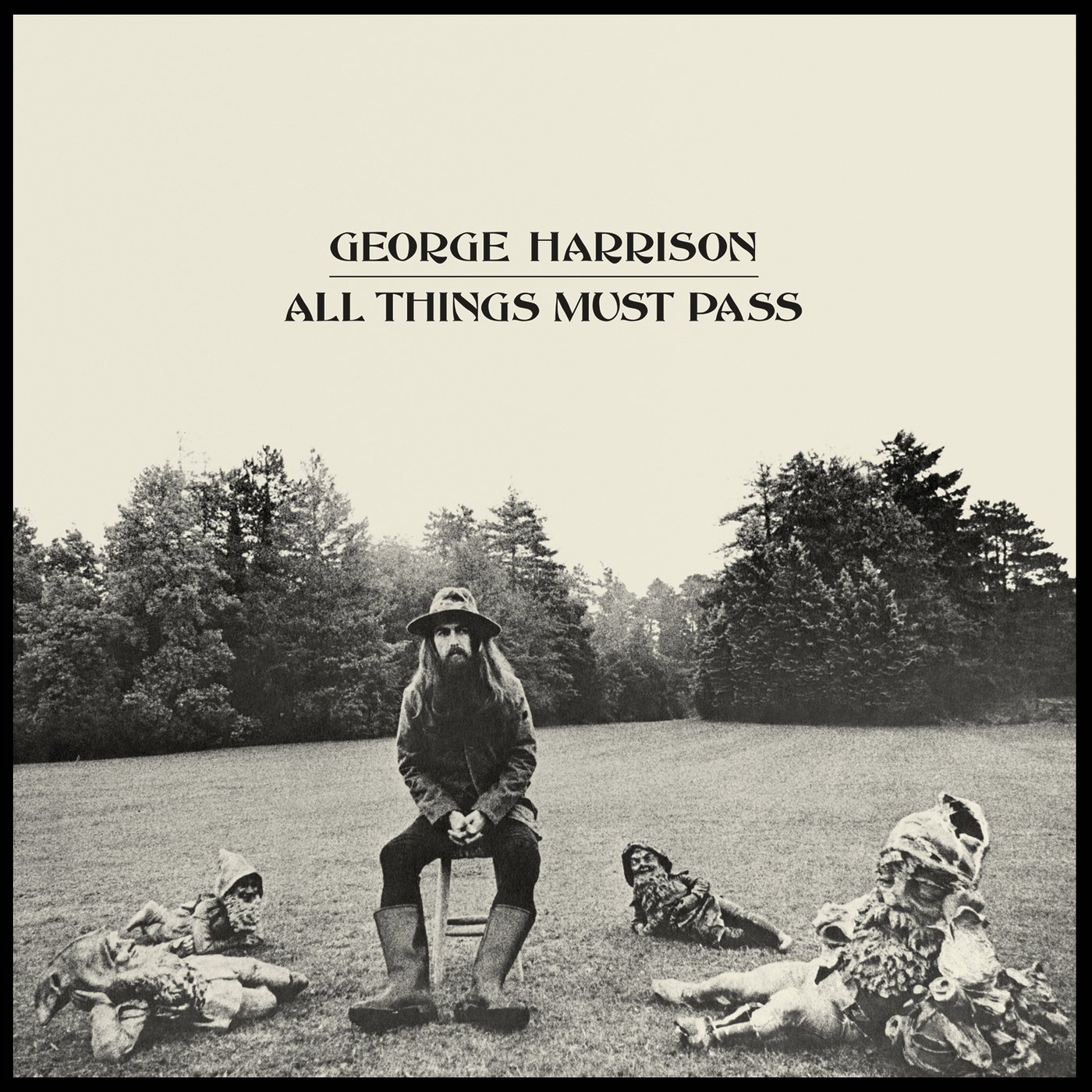
JIMI HENDRIX-THE CRY OF LOVE AND RAINBOW BRIDGE.
It was around 11a.m. on the 18th September 1970, that Jimi Hendrix was found unresponsive at an apartment in the Samarkand Hotel, in Notting Hill, London. He was rushed to the St. Mary’s Abbot’s Hospital, but pronounced dead at 12.45p.m. Jimi Hendrix was just twenty-seven. However, music had lost one of the most influential and innovative guitarists of his generation.
That’s despite Jimi’s solo career beginning just four years earlier. Since then, Jimi had released a trio of studio album and one live album. However, since Jimi’s death, twelve posthumous albums have been released. The first of these were The Cry Of Love and Rainbow Bridge. Both albums were released back in 1971. Remastered versions of The Cry Of Love and Rainbow Bridge have been recently released by Sony Music. These albums are a glorious reminder of a musical maverick at the peak of his considerable powers.
GIL SCOTT-HERON-PIECES OF A MAN.
Just a year after the release of his 1970 debut album Small Talk At 125 and Lenox, Gil Scott-Heron returned with his landmark album Pieces Of A Man which was recently rereleased by BGP Records, a subsidiary of Ace Records. Pieces Of A Man was Gil’s second collaboration with musician Brian Jackson. Gil was a poet, musician, and author. Together, their fusion of jazz, blues and soul music, highlighted the social and political problems of the early seventies.
Racism, poverty, corruption, inequality and drug addiction featured in Gil’s lyrics on Pieces Of A Man. Fearlessly, Gil tackled these subjects head on, delivering the lyrics with his proto-rap style. On Pieces Of A Man saw Gil Scott-Heron provide a voice for the disenfranchised. Fearlessly, Gil highlights the social and political problems that blighted America. He encouraged Americans to join together and change America for the better. This pioneering poet and protest singer made a difference politically. Gil made people aware of the problems people were facing and urged them to take action. That’s why Pieces Of A Man is Gil-Scott-Heron’s political and social Magnus Opus and the most important part of his rich musical legacy.
HOLGER CZUKAY-DER OSTEN IST ROT/ROME REMAINS ROME.
One of my personal highlights of 2014, was interviewing one of the most innovative musicians of his generation, Holger Czukay. I spend forty minutes talking about Can and Holger’s solo career. It was a truly fascinating insight into a musical legend. Two of the albums we discussed were Der Osten Ist Rot and Rome Remains Rome. There’s a reason for that. Berlin based Groenland Records today release a selection of ten tracks from Der Osten Ist Rot and Rome Remains Rome.
The ten tracks on ten tracks from Der Osten Ist Rot and Rome Remains Rome will be released on two 10” albums and as a digital download. As an added bonus, previously unreleased remixes versions are included on the album. For Can fans, this is the latest course in what’s veritable feast. Each of these albums showcase the talents of one of the most innovative and progressive musicians of his generation, Holger Czukay.

THE FIFTY BEST REISSUES OF 2014-PART 4.
THE FIFTY BEST REISSUES OF 2014-PART 4.
TERRY REID-RIVER.
By 1973, Terry Reid’s contract with Mickie Most was over. Now Terry’s career could resume. He signed to Atlantic Records and began work on his third solo album, River, which was rereleased by BGO Records during 2014. Produced by Yes’ Eddy Offord and Tom Dowd, River was the long awaited third album from Terry Reid.
When River was released in 1973, it was well received by critics. Many critics preferred the looser sound of River. They saw River as Terry and his band were jamming and experimenting, seeing where the tracks took them. This was very different to his first two albums. Sadly, River wasn’t a commercial success. It stalled at just number 172 in the US Billboard 200 charts. For Terry Reid, this was hugely disappointing. Having signed to Atlantic Records and with Tom Dowd producing River, this could’ve and should’ve been the start of the rise and rise of Terry Reid. Sadly, that wasn’t to be.
While Terry Reid enjoyed a successful career, he never quite fulfilled reached the heights he could’ve and should’ve. Things could’ve been very different. However, then Terry Reid would never have recorded River, a hugely underrated album, which shows the two sides of Terry Reid.

TODD RUNDGREN-RUNT AND THE ALTERNATE RUNT.
Singer, songwriter, multi-instrumentalist and producer describes Todd Rundgren. His career has spanned over forty years. During that period, Todd Rundgren released three albums with Nazz, and over twenty solo albums. His debut solo album was Runt which was released in 1970. Runt marked the debut of the man many thought would be be crowned King.
Although Runt was Todd’s debut album, he had matured as a singer and songwriter. This is apparent on Runt. It marked a coming of age from Todd Rundgren. He wrote, arranged, produced and played on Runt. It was the perfect showcase for Todd Rundgren’s talents. However, not everyone realised this. On its release in 1970, Runt wasn’t a commercial success. It divided the opinion of critics. Somewhat belatedly, they’ve changed their minds. Now, quite rightly, Runt is now perceived by critics as one of Todd Rundgren’s finest solo albums.
FRANK SINATRA-IN THE WEE SMALL HOURS OF THE MORNING AND SONGS FOR SWINGIN’ LOVERS.
It’s hard to believe that by the early fifties, Frank Sinatra’s career had stalled. Frank Sinatra’s career was at a crossroads. He hadn’t released an album since Sing and Dance with Frank Sinatra. Released in October 1950, Sing and Dance with Frank Sinatra was the final album he released for Columbia. This marked the end of an era for Frank Sinatra.
In 1953, Frank Sinatra signed to Capitol Records. This was one of the best decisions of his career. He was now thirty-eight and too old to be a teen idol. His music had to change direction. However, he couldn’t do this on his own. Fortunately, Capitol Records had the man who could rejuvenate Frank Sinatra’s career, arranger, Nelson Riddle, who was one of Capitol Records’ top arrangers. Almost single handedly, Nelson Riddle transformed and reinvented the career of Frank Sinatra. With Nelson Riddle’s help, Frank Sinatra recorded music that was much more grownup, darker, emotive and sometimes, melancholy. This included several classic albums, including In The Wee Small Hours and Sons For Swinging Lovers which were rereleased by Black Coffee Records.
LONNIE LISTON SMITH AND HIS COSMIC ECHOES-ASTRAL TRAVELLING.
Bob Thiele’s Flying Dutchman was the perfect label for Lonnie Liston Smith and His Cosmic Echoes’ unique brand of cosmic jazz. Through working with some of the most innovative and creative musicians in the history of jazz, Bob must have realised that often, large record companies aren’t the best environment for innovative and creative musicians. Often, these musical mavericks didn’t thrive within such an orthodox environment. Their creativity is restricted, meaning they’re unable to experiment and innovate like they’d like. So when Bob parted company with Impulse, who he’d transformed into one of jazz’s pioneering labels, he founded Flying Dutchman Productions. This was the label that Lonnie Liston Smith and The Echoes would release a quintet of groundbreaking albums. Their debut was Astral Travelling, which was rereleased by BGP Records, an imprint of Ace Records. Astral Travelling is a cosmic jazz classic.
Innovative, influential and way ahead of the musical curve, describes Lonnie Liston Smith. Proof of this is the music on Astral Travelling. It shows that Lonnie Liston Smith was way ahead of his time. Here was a musician determined to push musical boundaries to their limits, and sometimes, beyond. That describes what Lonnie Liston Smith was trying to achieve. On Astral Travelling, he drew inspiration from all the jazz greats he’d worked with. He borrowed from each of these artists, and the result was his unique brand of cosmic jazz. It’s gone on to influence several generations of musicians and music lovers. Despite this, Lonnie Liston Smith’s music wasn’t the huge success it deserved to be.
With its fusion of avant garde, experimental, free jazz and orthodox jazz, Lonnie Liston Smith’s music never found the wider audience it deserved. Maybe the problem was, that people didn’t understand Lonnie Liston Smith’s music? That’s why his music has only enjoyed a cult following, and never enjoyed the critical acclaim and commercial success enjoyed that came John Coltrane and Miles Davis’ way. Hopefully, now, somewhat belatedly, Lonnie Liston Smith’s music will be understood by a wider audience.
SUPERTRAMP-CRIME OF THE CENTURY.
For Supertramp, success didn’t come overnight. It wasn’t until Supertramp released their third album, Crime Of The Century, the commercial success and critical acclaim came their way. With a new lineup in place, Crime Of The Century, which was recently released by A&M Records, was the start of the rise and rise of Supertramp.
Their new lineup, proved to be the one that brought commercial success and critical acclaim Supertramp’s way. Crime Of The Century was certified gold in America and Britain. Critics hailed Crime Of The Century the finest album of Supertramp’s three album career. Fast forward forty years, and Crime Of The Century is a stonewall classic. It features in Rolling Stone’s 500 best albums of all time. However, Crime Of The Century wouldn’t be the last classic Supertramp released. Supertramp would release a series of classic albums, and become a member of the art-rock royalty.
SWAMP DOGG-RAT ON.
It’s not the music that Swamp Dogg’s 1971 sophomore album Rat On! is remembered for. Instead, it’s remember for having one of the worst album covers of all time. Rat On! features Swamp Dogg sitting on the back of an oversized white rat. That epitomises Swamp Dogg since his lysergic awakening. As the sixties drew to a close, Jerry Williams dropped acid. It was a life changing experience. The Doors of Perception, as Aldous Huxley said, had been well and truly opened. Jerry Williams changed. Psychedelics became his drug of choice. This stimulated his creativity. However, he desperately needed an outlet for this heightened creativity. So he adopted an alter ego Swamp Dogg. He was obsessed by sex, drugs, politics, culture and class. All these subjects came out in his music. His music was funny, prickly, gritty, acerbic and angry. Often, politicians felt the wrath of Swamp Dogg. The newly enlightened Jerry Williams made his debut on his 1970 album Total Destruction Of Your Mind.
When Total Destruction Of Your Mind was released in 1970, it wasn’t a commercial success. Only the single Mama’s Baby, Daddy’s Maybe charted, reaching number thirty-three in the US R&B Charts. For the newly enlightened Swamp Dogg, this was disappointing. Despite Total Destruction Of Your Mind being a groundbreaking album, it passed almost unnoticed. So Swamp Dogg set about working on his sophomore album Rat On! which was recently rereleased by Alive Naturalsound Records.
Just like Total Destruction Of The Mind, Rat On! which was recently rereleased by Alive Naturalsound Records, failed to chart. Since then, Rat On! has remained a hidden gem, better known for its record sleeve than its music. Rat On! reinforces that Swamp Dogg was one of the creative and groundbreaking musicians of the seventies. Comparisons have been drawn with Sly Stone. No wonder. Swamp Dogg, just like Sly Stone, could fuse musical genres and social comment, creating some of the most innovative music of the early seventies. That’s no surprise. After all, Rat On! finds Swamp Dogg at his creative zenith, producing music other musicians could only dream of.
THE BEATLES-RUBBER SOUL (US REISSUE).
Rubber Soul was the first album that The Beatles recorded during one recording session. Recording took place between 12th October to 11th November 1965. This was unlike previous albums. They’d been recorded quickly during a number of sessions. The new approach worked and resulted in a much more focused album which flowed. Another change was the music. On Rubber Soul, The Beatles moved away from the three chord pop of their previous albums. Everything from doo wop, folk rock, garage, Indian rock, pop, psychedelia, soul. Rubber Soul was a much more sophisticated and grown up album of eclectic music. In some ways, Rubber Soul marked a coming of age for The Beatles.
Rubber Soul is quite simply one of the finest albums The Beatles recorded. That’s saying something given the quality of music they released. Their American career began in 1963 and lasted until 1970. However, Rubber Soul saw The Beatles come of age. The music on Rubber Soul is slick, sophisticated, pensive, wistful and melancholy. This marked the start of the second chapter in The Beatles career. During the next five years, they released the best music of their career. From Rubber Soul, The Beatles went on to release classic albums like Revolver, Sgt. Peppers Lonely Heart’s Club Band and The White Album. However, without Rubber Soul, The Beatles would never have released these albums. Rubber Soul was a stepping stone in their career and is one of the most important, innovative and influential albums of The Beatles career.
THE BLACK HIPPIES-THE BLACK HIPPIES.
One of Nigerian music’s best kept secrets, are The Black Hippies. They only ever released two albums. Their finest moment was their 1977 debut album The Black Hippies. It was released in 1977, on EMI. Sadly, by then, disco and funk were flavour of the month. They’d replaced The Black Hippies’ captivating fusion of Afro-beat, fuzzy rock, psychedelia and voodoo funk. It was a case of a year too late.
If The Black Hippies had been released in 1976, commercial success and critical acclaim would’ve come The Black Hippies way. Instead, The Black Hippies disappeared without trace. It was a case of what might have been. Since then, a new generation have discovered The Black Hippies. It’s come to be regarded as a lost classic. However, copies of The Black Hippies are being increasingly hard to find. So, Academy LPs decision to rerelease The Black Hippies earlier this year was a welcome one. After all, The Black Hippies’ eponymous debut was, without doubt, their finest hour.
THE BLUE NILE-PEACE AT LAST (DELUXE SET).
The Blue Nile were no ordinary band. They did things their way. Enigmatic, reluctant and contrarian are words that best of describe the Blue Nile, whose third album Peace At Last was released as a Remastered Deluxe Set in March 2013. This reissue has been a long time coming. When The Blue Nile’s first two masterpieces 1984s A Walk Across the Rooftops and 1989s Hats were reissued back in November 2012, we were told a remastered version of Peace At Last would be released soon. As any Blue Nile fans knows, time moves slowly in the world of The Blue Nile. So a gap of fifteen months isn’t excessive. After all, there was a gap of seven years between The Blue Nile’s sophomore album Hats and 1996s Peace At Last. Whilst much is made of newly remastered albums, the remastered version of
Peace At Last is truly stunning. Previously unheard subtleties, secrets and nuances. Layers, textures and hidden depths can be heard. This was the case with the remeasured versions of A Walk Across The Rooftops and Hats. Now it’s possible to hear The Blue Nile’s underrated classic Peace At Last in all its glories. This Remastered Deluxe Set is worth every penny. It’s not unlike an old picture that after years covered in grime, is cleaned suddenly, a new picture emerges. That’s what remastering process has done to Peace At Last has done. Never again, will you reach for your original copy of Peace At Last, as the remastered version breathes new life into Peace At Last, which was The Blue Nile’s penultimate album.
THE DETROIT SPINNERS-MIGHTY LOVE.
Earlier this year, Rhino rereleased a about twenty soul and funk albums. One of them, was The Detroit Spinners’ sophomore album Mighty Love. Produced by Thom Bell, Mighty Love was the followup to Spinners, which was The Detroit Spinners’ breakthrough album. This success continued with Mighty Love.
The stars it seemed, were perfectly aligned for The Detroit Spinners. Producing them was Thom Bell, who brought onboard M.F.S.B., one of the legendary house bands. Add to this, backing vocalists the Sweethearts of Sigma, and its no wonder that Mighty Love reached number one in the US R&B charts and number sixteen in the US Billboard 200. Add to this three top ten US R&B singles, including the title track, Mighty Love, then 1973 had been a hugely successful year for The Detroit Spinners. Both Spinners, their first album for Atlantic Records, and Mighty Love reached number one in the US R&B Charts and were certified gold. This was the start of a three year period where The Detroit Spinners could do now wrong.
THE FIFTY BEST REISSUES OF 2014-PART 5.
THE FIFTY BEST REISSUES OF 2014-PART 5.
GEORGE RUSSELL PRESENTS THE ESOTERIC CIRCLE.
With Norwegian music going through something of a renaissance, it’s fitting that George Russell Presents The Esoteric Circle has reissued by BGP Records, a subsidiary of Ace Records. George Russell Presents The Esoteric Circle was one of the most important albums in Norwegian musical history. Released in 1971, George Russell Presents The Esoteric Circle featured four pioneering jazz musicians. Sadly, George Russell Presents The Esoteric Circle was The Esoteric Circle’s only album.
Listening back to George Russell Presents The Esoteric Circle, it could easily be an album that the latest generation of Norwegian jazz musicians could’ve released. Norwegian music, including jazz, is enjoying another golden age. So much good music is coming out of Norway. That was the case back in 1969, when George Russell Presents The Esoteric Circle was recorded. By 1971, Norwegian music was still thriving. Fast forward forty-three years, and George Russell Presents The Esoteric Circle is an album that has obviously influenced a new generation of Norwegian jazz musicians. Without George Russell Presents The Esoteric Circle, the latest generation of Norwegian jazz musicians may not have had the courage to innovate, and create bold, ambitious, groundbreaking and genre-melting music. Thankfully, they do. That in part, is down to five men, George Russell and The Esoteric Circle. They played their part in an important, innovative and groundbreaking album George Russell Presents The Esoteric Circle.
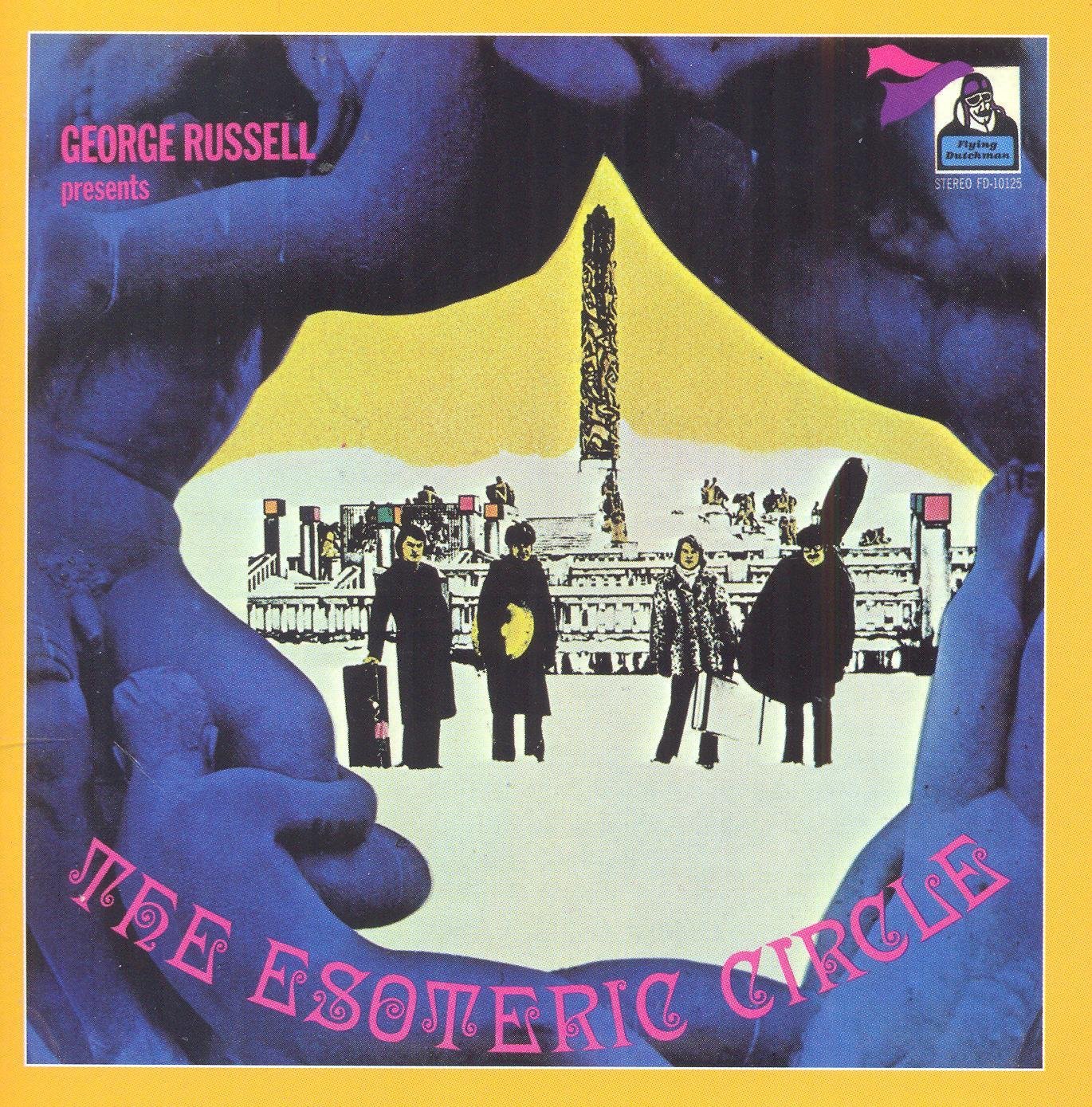
THE IMPRESSIONS-ABOUT TIME.
One of The Impressions most underrated albums was About Time. It featured eight tracks. Six of these tracks were penned by Melvin and Mervin Steals. They’d previously, as Maestro and Lyric, had written The Detroit Spinners, Major Harris, The Trammps, Gloria Gaynor, Ecstasy, Passion and Pain and Blue Magic. For The Impressions, Melvin and Mervin cowrote In The Palm Of My Hands, You’ll Never Find, Same Old Heartaches, I Need You, Stardust and and the aptly titled What Might Have Been.
Recording of About Time was a no expense spared affair. It seemed that Atlantic Records were determined to make About Time a success. Then after a concert in Atlanta, an alleged indiscretion by one the members of The Impressions proved costly. Atlantic Records were enraged. They felt they couldn’t back About Time. Not after what had happened. This had caused huge embarrassment to a musical institution, Atlantic Records. So, it’s no surprise that About Love reached a lowly 195 in the US Billboard 200 and number twenty-four in the US R&B charts. What was one of The Impressions’ finest albums in several years, passed record buyers by.
For producer McKinley Jackson this was a huge shame. About Time was variously a big, bold, dramatic and lush album. It was reminiscent of Philly Soul at it’s best. Sadly, through no fault of McKinley’s About Love failed commercially. Since then, About Love has languished in the vaults of Atlantic Records. Not any more. Rhino have rereleased About Time as part of their Japanese Soul and R&B range. Belatedly, music lovers can revisit The About Time one of The Impressions’ best albums of the seventies. Sadly, never again, did they come close to reaching these heady heights ever again.
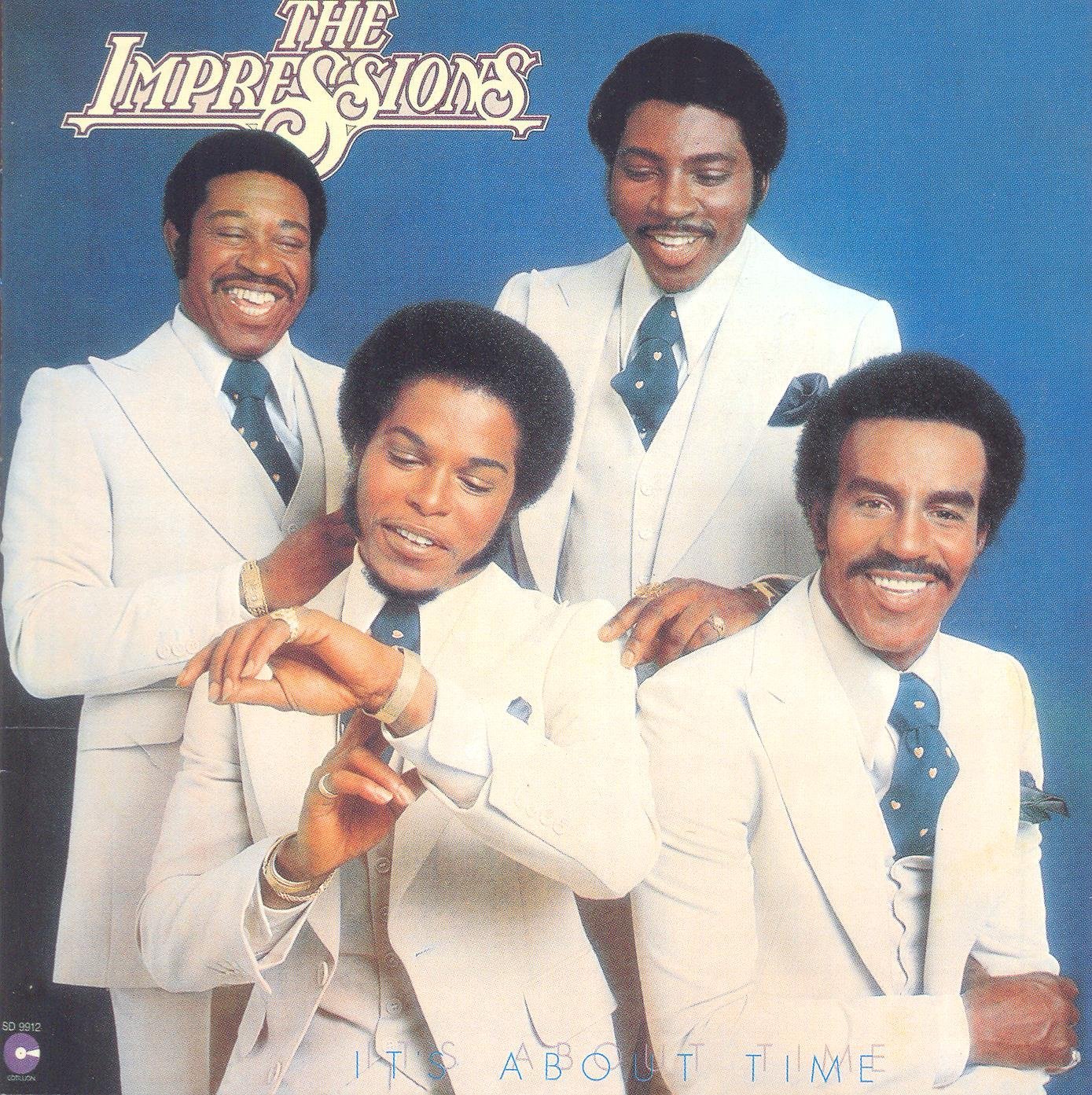
THE KINKS-LOLA VERSUS POWERMAN AND THE MONEYGROUND AND PERCY.
In 1970 The Kinks released Lola Versus The Powerman and The Underground. It was rereleased by Sony Music, along with the soundtrack to Percy, during 2014. Lola Versus The Powerman and The Underground was a landmark album for The Kinks, and should’ve transformed The Kinks career in America. They had the talent to be one of the biggest British bands in America. However, for five years, they’d been band from America
Then in 1969, the ban on The Kinks from playing in America had been lifted. This was perfect timing. The second single from Lola Versus The Powerman and The Underground, Lola, reached number nine in the US Billboard 200 charts. With The Kinks about to tour America, this should transform their fortunes. Sadly, members of The Kinks fell ill and the American tour was cancelled. As if this wasn’t bad enough, Lola Versus The Powerman and The Underground, one of The Kinks finest albums of the seventies failed commercially in America. Despite this, Lola Versus The Powerman and The Underground is regarded as one of the best albums The Kinks released, and the album that should’ve broke The Kinks in America.
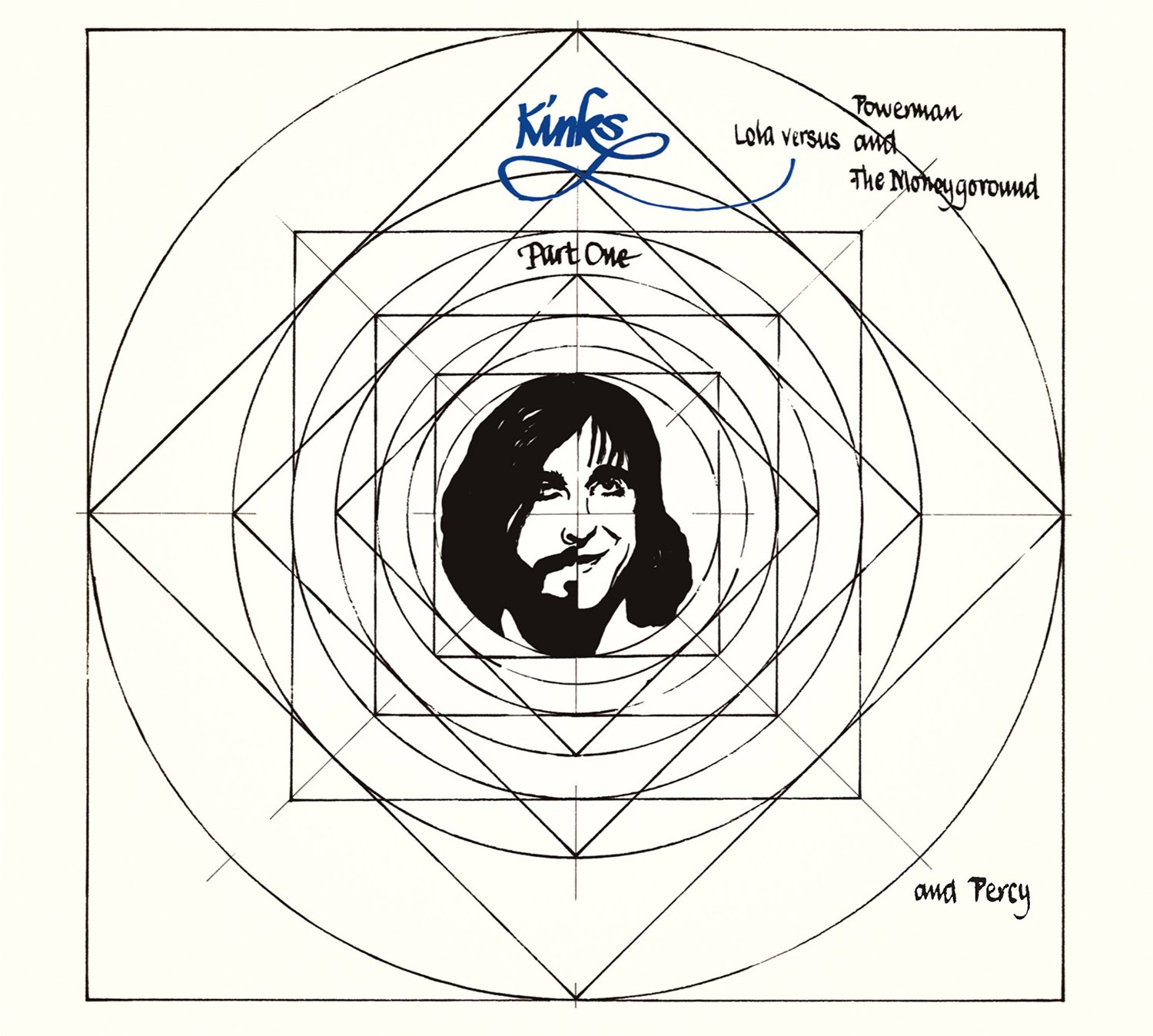
THE VELVET UNDERGROUND-THE VELVET UNDERGROUND.
Replacing John Cale in the The Velvet Underground was never going to be easy. Replacing John Cale, was Doug Yule. He made his Velvet Underground debut on their 1969 eponymous album, which was released as a double album by Universal Music. The Velvet Underground was the start of a new chapter in the band’s career.
They certainly didn’t expect this chapter to begin with The Velvet Underground, an album of ballads and rock-oriented tracks. For many people, The Velvet Underground had sold out. They’d sacrificed their creative force at the altar of fame and fortune. That was disappointing. After all, The Velvet Underground could’ve continued to transform music for years to come. Instead, they released just two more albums, 1970s Loaded and 1973s Squeeze. However, forty-five years have passed since the release of The Velvet Underground.
The dust has well and truly settled, and Universal Music’s 45th Anniversary edition allows everyone to reevaluate The Velvet Underground. It’s a reminder of a pioneering group, as they evolved, and changed direction musically. Beautiful, and sometimes, wistful ballads, rub shoulders with rocky, anthems on The Velvet Underground. This makes The Velvet Underground’ the most accessible album from one of music’s most innovative bands. However, one can’t help wonder what type of album The Velvet Underground would’ve released if they hadn’t sacrificed their creative force at the altar of fame and fortune?
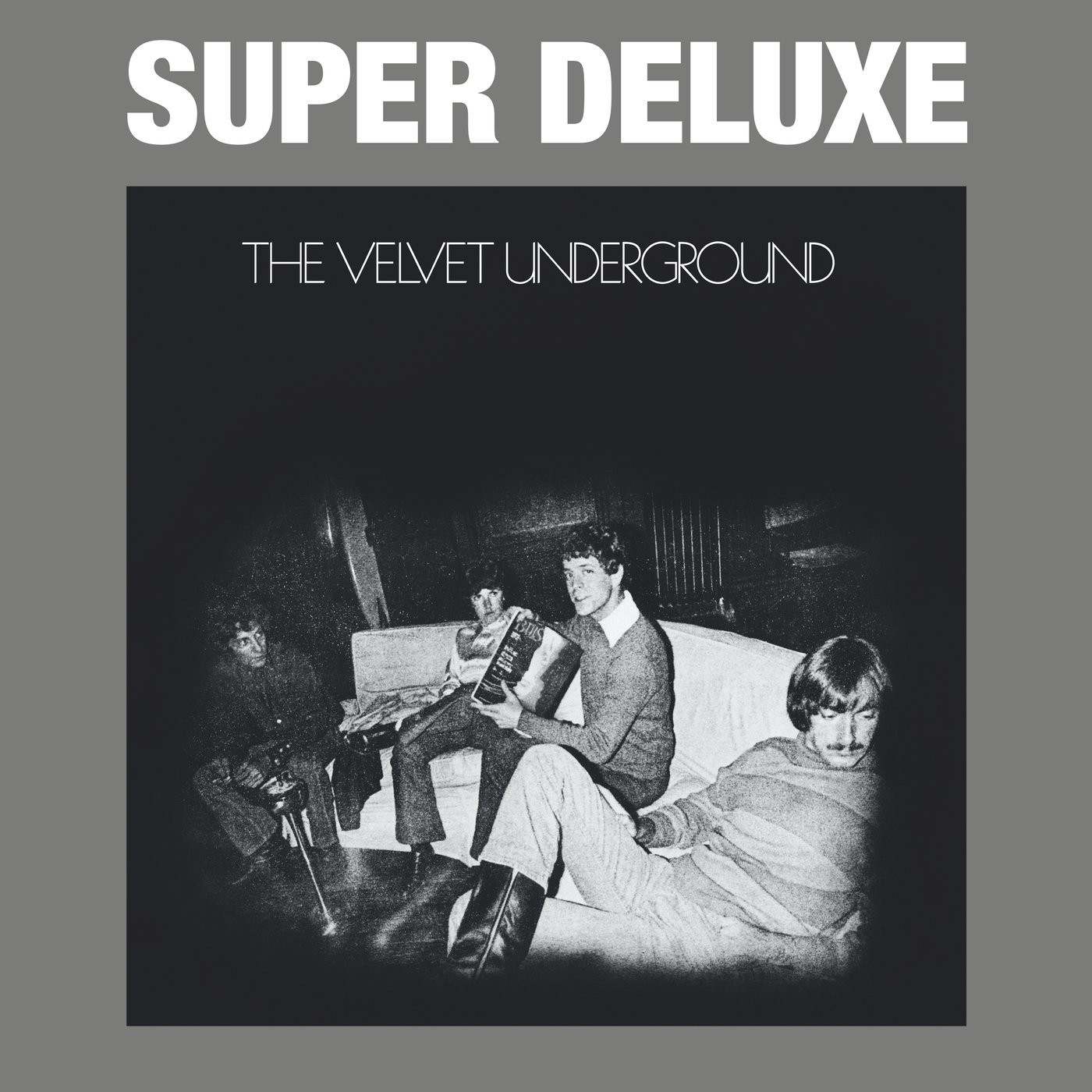
LEON THOMAS-BLUES AND SOULFUL TRUTH.
In 1972, Leon Thomas was at his creative zenith. So, when he entered the recording studio to record his third album, Blues And The Soulful Truth, Bob Thiele, owner of Flying Dutchman Productions, held his breath. Bob knew Leon Thomas was capable of creating innovative music. This was the case on Blues And The Soulful Truth, which was rereleased by BGP Records, an imprint of Ace Records. Blues and The Soulful Truth was Leon Thomas’ third album for Flying Dutchman Productions. His two previous albums hadn’t sold well. So, something had to change. What changed was Leon’s musical direction. Gone was Leon’s unique and inimitable free jazz style.
Whereas Leon scatted and yodelled on his two previous albums, Blues and The Soulful Truth had a much more traditional sound. Granted Leon returned to his trademark sound on Gypsy Queen. Apart from that, Leon eschews scatting and yodellng. Instead, he sticks to a much more traditional vocal jazz style. Leon Thomas had moved towards the jazz mainstream. It was maybe, a case of needs must.
No record label can continue to release albums that don’t sell. That would be folly and a recipe for insolvency. So Leon recorded his most accessible and mainstream album, Blues and The Soulful Truth. It was a revelation. Blues and The Soulful Truth should’ve been a huge commercial success. It showcased a versatile and multi-talented vocalist. He could sing blues, jazz, R&B, rock or soul. Leon’s band were equally versatile. They strut their way through eight tracks, flitting between and sometimes, fusing blues, free jazz, funk, jazz, psychedelia, R&B, rock and soul. Not once do they miss a beat. Sadly, despite their best efforts, Blues and The Soulful Truth wasn’t a commercial success. Leon Thomas it seemed, wasn’t going to enjoy the commercial success his music deserved. He’d even changed direction, and in the process, released the most accessible and mainstream album of his career, Blues and The Soulful Truth.
JOE TURNER-THE REAL BOSS OF THE BLUES.
When Bob Thiele formed blues label Bluestime, he signed some of the biggest names in blues. This included veteran blues man, Joe Turner. He became the latest signing to Bob’s contemporary blues label. Bob Thiele though this was a masterstroke. After all, there had been a resurgence in interest in the blues. So, why not release blues albums with a modern twist? One of the first was The Real Boss Of The Blues, which Ace Records reissued.
On The Real Boss Of The Blues, Joe Turner rolls back the years. It’s a vintage performance from the blues veteran. Accompanied by an all-star band, his music is given a modern makeover. Blues, jazz and rock combines. Drawing inspiration from rock music, riffing guitars and a bubbling bass feature on each of the eight tracks. Then there’s the horns. They variously blaze, soar and sound sultry. Add to this some stabs of piano and even some boogie woogie and the result is Joe Turner back to his best. Producer Bob Thiele and arranger Gene Page transformed Joe. The years rolled back and suddenly, Joe was producing some of the best music he recorded since leaving Atlantic. Sadly, not many people heard the music on The Real Boss Of The Blues. However, since then, a number of blues aficionados have championed The Real Boss Of The Blues, which finds Joe Turner, The Real Boss Of The Blues back to his very best.
EDDIE “CLEANHEAD” VINSON-THE ORIGINAL CLEANHEAD.
By 1970, Eddie “Cleanhead” Vinson was fifty-three. He was a musical veteran. His career was about to enter its fifth decade. Eddie had caught a break. He’d just signed to Bob Thiele’s Blues Time imprint. It was a subsidiary of Flying Dutchman Productions. In 1970, Eddie released his what was seen as his comeback album, The Original Cleanhead, which was rereleased on CD by Ace Records. The Original Cleanhead marked a change in fortune for Eddie “Cleanhead” Vinson. After a few years in the doldrums, Eddie’s career was on the up again. This was just the latest chapter in the Eddie “Cleanhead” Vinson story.
Listening back to The Original Cleanhead, it’s no surprise that the album rejuvenated Eddie “Cleanhead” Vinson’s career. From the opening bars of Cleanhead Blues, right through to the closing notes of I Needs To Be Be’d Wid, the music oozes quality. Eddie was into his fifth decade of a musician and singer. He put all his experience to good use on The Original Cleanhead. So, it’s no surprise that The Original Cleanhead was a commercial success. It rejuvenated Eddie’s career. Ironically, when other blues musicians were reinventing themselves, Eddie kept on what he’d been doing since the thirties. Eddie wasn’t for changing. Even if he’d wanted to. That wouldn’t be easy. After all, Eddie was known for his mixture of jump blues, swing and bebop. That was what people knew Eddie for. So, with some judicious choice of material, old and new, Bob Thiele set about attempting to rejuvenate Eddie’s career. This worked.
After The Original Cleanhead, Eddie’s career enjoyed something of an Indian Summer. He continued to record until his death in 1988. Eddie’s career had lasted over fifty years. However, one of the finest albums of Eddie “Cleanhead” Vinson’s career was The Original Cleanhead.
PETER WALKER-“SECOND POEM TO KARMELA” OR GYPSIES ARE IMPORTANT.
Back in 1967, Peter Walker released his seminal album Rainy Day Raga, which was released on Vanguard Records. Since then, it’s become a cult classic. Many people though, thought Rainy Day Raga was Peter’s only album. It wasn’t. The following year, 1968, Peter released his sophomore album “Second Poem To Karmela” Or Gypsies Are Important, which was released by Light In The Attic Records. It picks up where Rainy Day Raga left off, and proceeds to take things further. Much further. So much so, that “Second Poem To Karmela” Or Gypsies Are Important has been described as: “the missing link between Ravi Shankar, Sandy Bull and Timothy Leary, in more ways than one.” Indeed, “Second Poem To Karmela” Or Gypsies Are Important an album the everyone must hear once in their life.
It only takes one listen to Second Poem To Karmela” Or Gypsies Are Important to realise this. It’s a truly innovative and influential genre-melting album. Lysergic, experimental and groundbreaking, Peter Walker, like so many artists, was ahead of his time.
However, not all of these artists walk away from music for thirty-eight years. Peter Walker did, leaving behind two minor classics. The first of these is Rainy Day Raga in 1967. A year later, Peter Walker released the cult classic “Second Poem To Karmela” Or Gypsies Are Important which has been overlooked since its release in 1968. Not any more. Peter Walker’s sophomore album “Second Poem To Karmela” Or Gypsies Are Important is an groundbreaking, genre-melting lost classic, one that everyone should hear.
T-BONE WALKER-T-BONE BLUES.
When eventually, someone writes the history of blues music, T-Bone Walker’s name will loom large. There’s no doubt about that. T-Bone Walker was, without doubt, one of the most innovative and influential blues guitarists ever. He was a true musical pioneer. T-Bone Walker was pioneer of firstly, the jump blues, then the electric blues. His music evolved, in an attempt to stay relevant. That’s why T-Bone Walker is remembered as a musical pioneer and flamboyant showman, who released groundbreaking music. That may seem like a bold statement, but it’s not. It’s the truth. Proof of that is T-Bone Blues which was reissued by Rhino, earlier this year.
Released in 1959, fifty-five years ago, T-Bone Blues was a career defining album for T-Bone Walker. It was the greatest album of his long and illustrious career. For a newcomer to T-Bone Walker, then T-Bone Blues is the perfect starting point. To accompany T-Bone Blues I’d recommend the underrated Every Day I Have The Blues, which was recently reissued by Ace Records. However, the album that introduced many people to T-Bone Walker was T-Bone Blues. It’s a reminder of one of the most innovative and influential blues musicians. That’s not all. T-Bone Walker was a flamboyant showman who inspired a generation of musicians with his 1959 career defining album T-Bone Blues.
WIM MERTENS-MAXIMIZING THE AUDIENCE.
Anyone interested in avant garde and experimental music will know the name Wim Mertens. He’s a composer, pianist, guitarist, vocalist and producer. Wim is also a musicologist, who studied music theory and piano at the prestigious Ghent Conservatory in Belgian. Music, however, wasn’t what Wim originally studied. No. Originally, Wim studied studied social and political science at the University Leuven. After graduating in 1975, Wim enrolled at Ghent Conservatory. Since then, his life has revolved around music. Wim has released a string of pioneering albums, including 1985s Maximizing The Audience, which was rereleased by Rhino.
Maximizing The Audience marked a departure in style from Wim Mertens. Not only was it his first solo album, but it was his first album to feature lengthy compositions. The shortest track was The Fosse, which was just under five minutes long. Other tracks lasted as long as eighteen minutes. This was Wim Mertens Magnus Opus. He came of age musically on Maximizing The Audience, which featured some of the most groundbreaking music of his career.
Maybe freed from being part of a band allowed Wim to open the doors of perception. He was able to innovate and push musical boundaries, sometimes to their breaking point. The result was Maximizing The Audience, which contained some of the best music of Wim’s career. This was obvious from the opening track, Circles. Circles saw Wim draw inspiration from Steve Reich, as the clarinets intertwine, while the soprano saxophone cascades above the hypnotic arrangement. The piece de la resistance are the ethereal harmonies. All this, sets the tone for the rest of Maximizing The Audience. This proves a captivating combination. Then at the heart of Maximizing The Audience, is the title-track. It’s the album’s centrepiece and is best described as a beautiful, dramatic and ethereal Magnus Opus. Equally beautiful and poignant is The Fosse. Closing Maximizing The Audience is the haunting, hypnotic and mesmeric Whisper Me. It’s similar to Circles, as sometimes, the music heads in the direction of chamber music. These five tracks were part of a classic album Maximizing The Audience, which launched Wim Mertens’ solo career.
Picking just fifty reissues from the hundreds of albums I’ve received during the year isn’t easy. During 2014, I’ve listened to, and reviewed literally hundreds of albums. I started with what’s best described as a long-list, and whittled it down to just fifty. At times, I was tempted to make it sixty or seventy. However, that would defeat the purpose.
What I wanted to end up with, was a list of what I regard as the fifty finest reissues of 2014. They’re an eclectic selection, that feature everything from avant-garde, blues, country, folk, free jazz, funk, jazz, Philly Soul, pop, psychedelia and rock. Some of the music you’ll know, some you might not have heard of. However, I can recommend each and every one of this electric selection, that make up my fifty best reissues of 2014.
THE FIFTY BEST COMPILATIONS OF 2014-PART 1.
THE FIFTY BEST COMPILATIONS OF 2014-PART 1.
As 2014 draws to a close, it’s time to compile my fifty best compilations of 2014. So, here goes.
A BLUES TRIBUTE TO CREEDENCE CLEARWATER REVIVAL.
A Blues Tribute To Creedence Clearwater Revival was the third instalment in Cleopatra Records’ Tribute To series. Twelve tracks from Creedence Clearwater Revival’s back-catalogue were given a bluesy makeover by Mike Zito and Sonny Landreth, The Mynabirds, Blitzen Trapper, Spirit Family Reunion, Dead Man Winter, South Memphis Strung Band and Trampled Under Foot. They cover twelve singles released between 1968 and 1972. The result was a fitting tribute to Creedence Clearwater Revival
A Blues Tribute To Creedence Clearwater Revival was the perfect addition to the “Tribute To” series. Their music is often overlooked and underrated. That should’t be the case. After all, Creedence Clearwater Revival were one of the most talented groups of a generation. They enjoyed commercial success and critical acclaim. Sadly, their place in musical history is often forgotten. Maybe not any more. Maybe when a new generation of music lovers hear A Blues Tribute To Creedence Clearwater Revival, this will lead to a revival in interest in the music of Creedence Clearwater Revival.
A PSYCH TRIBUTE TO THE DOORS.
Usually, I’m not a fan of tribute albums. That changed earlier this year when A Psych Tribute To The Doors was recently released by Cleopatra Records. It features thirteen Doors’ classics. This includes L.A. Woman, Hello, I Love You, People Are Strange, Riders On the Storm, Light My Fire, Roadhouse Blues and The End. These tracks are given a makeover by everyone from Elephant Stone, The Black Angels, Sons of Hippies, Dead Skeletons, VietNam and Geri X. The idea is simplicity in itself.
As tribute albums go, A Psych Tribute To The Doors is the best tribute album money can by. A Psych Tribute To The Doors features thirteen hugely talented groups, paying homage to one of the greatest groups in musical history, The Doors. It’s the perfect introduction to these groups and a reminder of how important, innovative and influential The Doors were. The Doors’ music is truly timeless, even forty-seven years after the released of The Doors. Since then, The Doors’ genius has been recognised and celebrated. A Psych Tribute To The Doors is just the latest celebration of The Doors musical legacy. Indeed, A Psych Tribute To The Doors is a fitting and poignant homage to The Doors and The Lizard King.
BAMALOVESOUL PRESENTS ON DECK 2.
For BamaLoveSoul Presents On Deck 2, DJ Rahdu asked artists to submit a new track. The response was overwhelming. So, he spent time working his way through this mountain of soulful music. Eventually, he managed to settle on a dozen “future soul classic for the new b-boy generation.” This includes contributions from Rippy Austin featuring Stephanie Nicole, James Tillman, Jevon Reynolds, Fayth Hope, J Finesse and Aisha Mars. There were more than a few hidden gems on BamaLoveSoul Presents On Deck 2.
Bama LoveSoul Presents On Deck 2 allows a new generation of artists to have their music heard by a wider audience. They’ve drawn inspiration from the music of the past to create the music of the future. Listen carefully, and you’ll hear the twelve artists have been influenced by everything from ambient, Blaxploitation, electronica, funk, hip hop, jazz, Nu Soul, soul and soulful house. As a result, the music they’ve produced is funky, jazz tinged and soulful. I’d also describe the music on Bama LoveSoul Presents On Deck 2 as lush, dreamy, ethereal, heartfelt, hypnotic, lysergic and futuristic.
BLACK FIRE! NEW SPIRITS! RADICAL AND REVOLUTIONARY JAZZ IN THE USA 1957-1982.
Throughout the last hundred years, jazz music has been in a constant state of evolution. Jazz refused to stand still. New genres grew out of old ones. This was the case between the late fifties, right through to the seventies, when a group of innovative musicians, including Ornette Coleman, Sun Ra, Archie Shepp, Albert Ayler, Pharaoh Saunders and Cecil Taylor transformed jazz. This transformation was free jazz, one of the most ambitious and radical sub-genres of jazz. It features on Soul Jazz Records’ compilation Black Fire! New Spirits! It’s a deluxe double CD that explores some of the deep, radical and spiritual jazz released in America between 1957-1982. For much of the period, jazz music reflected and reacted to, American society’s troubles and ills.
Black Fire! New Spirits! is the perfect way to discover some of the most groundbreaking jazz released between 1957 and 1982. That’s no exaggeration. Much of the music on Black Fire! New Spirits! was way ahead of its time. No wonder. It was the work of some of groundbreaking and visionary musicians of their generation. Sadly, apart from a few members of the jazz cognoscenti, many of these musicians are hardly remembered. That’s a great shame. Thankfully, Black Fire! New Spirits! rights that wrong, and remembers fourteen pioneering musicians whose musical legacy was a potent mix of passion, political comment and hope, hope for a better future.
BLUESIN’ BY THE BAYOU-ROUGH ’N’ TOUGH.
Usually, when a compilation reaches its eighth instalment, the quality starts to suffer. Not the Bayou series. Just like a good wine, it appears to mature with age. That’s was apparent from listening to the eighth instalment, Bluesin’ By The Bayou-Rough ’N’ Tough, which was released by Ace Records earlier this year.
Compiler Ian Saddler has pulled out all the stops for Bluesin’ By The Bayou-Rough ’N’ Tough. He’s dug deep into J.D. Miller and Eddie Shuler’s vaults. He’s found what can only be described as a proverbial musical feast. It’s no exaggeration to say that Bluesin’ By The Bayou-Rough ’N’ Tough oozes quality. That’s down to Ian Saddler’s track selection. Ian has the ability to spot a hidden gem. There’s plenty on Bluesin’ By The Bayou-Rough ’N’ Tough. This includes contributions from familiar faces and new names. Blues legends like Slim Harpo, Lightnin’ Slim, Lazy Lester and Lonesome Sundown site side-by-side with Jimmy Anderson, Mad Dog Sheffield, Vince Monroe and Joe Mayfield. As a result, the quality keeps on coming on Bluesin’ By The Bayou-Rough ’N’ Tough, another welcome addition to one of my favourite compilation series.
BOMBAY DISCO VOLUME 2.
By 1979, disco sucked. Not in India. Belatedly, India ‘got’ disco and gave it, its unique twist. Soon, Bombay Disco provided the soundtrack to just about ever Indian movie released during that period. Literally, Bombay disco provided the backdrop to dramas, historical epics, curry westerns and horror films. What had become known as Bombay Disco was disco, but given a unique, flamboyant twist. This meant disco that was funky, soulful and lavish, tinged with sitars, tablas and grandiose orchestras. Sometimes, the music was better than the film. Eventually, Bombay Disco became popular outside of India and features on Cultures Of Soul Records’ recent compilation Bombay Disco Volume 2.
Bombay Disco Volume 2 is twelve tracks of hidden gems and long, forgotten Bombay Disco classics. Many of these tracks will be new to even the most dedicated and discerning fan of Bombay Disco. Compiler Brother Cleve has turned his back on the predictable and obvious tracks. That’s not for him. There’s a multitude of hidden gems awaiting discovery. It’s all just a matter of knowing where to dig, and having the patience and persistence. Brother Cleve has plenty patience, persistence and know how. That’s apparent when you listen to Bombay Disco Volume 2 and its predecessor Bombay Disco-Disco-Disco Hits From Hindi Films 1979-1985. They’re the perfect introduction to Bombay Disco.
CALYPSO-MUSICAL POETRY IN THE CARIBBEAN 1955-1969.
For many people, the twenties and thirties were the golden age of calypso. However, others would beg to differ. They would point to the fifties and sixties. That’s the period Soul Jazz Records’ compilationed Calypso-Musical Poetry In The Caribbean 1955-1969 covers.
It features nineteen tracks from another of calypso’s golden eras. They’re a mixture of calypso and mento. There’s contributions from some of the biggest names in calypso. This includes Lord Flea and Lord Kitchener. Then there’s contributions from Young Growler, Lord Hummingbird, Mighty Dougla, Viper, JB Williams Band, Brownie, Charlie Binger and His Quartet and Lord Byron and Orquesta Nueva Alegria. Several generation of calypso singers contribute to Calypso-Musical Poetry In The Caribbean 1955-1969, which is best described a a veritable feast of calypso.
COLD COLD HEART-WHEN COUNTRY MEETS SOUL VOLUME 3.
Just like Ace Records two previous volumes in the Where Country Meets Soul series, the release of Cold Cold Heart-Where Country Meets Soul Volume 3 has been eagerly awaited. No wonder. The track listing reads like a list of the great and good of soul music. There’s contributions from Percy Sledge, Solomon Burke, The Temptations, Arthur Alexander, The Supremes and Bobby Bland. Then there’s hidden gems from some of soul music’s best kept secrets. This includes from soul sisters Margie Joseph, Bettye Swann and Esther Phillips. Johnny Adams and Ralph “Soul” Jackson contribute two tracks that epitomise the country soul sound. However, one of the most intriguing tracks is George Benson’s 1969 My Woman’s Good To Me. It’s proof that George Benson found his voice way before the mid-seventies. This is just one of the may hidden gems on Cold Cold Heart-Where Country Meets Soul Volume 3
It seems that with each instalment in the Where Country Meets Soul surpasses the previous one. That’s the case with Cold Cold Heart-Where Country Meets Soul Volume 3. The man to thank for this, is compiler, Tony Rounce. He’s a man who knows his country soul. Tony has surpassed himself with Cold Cold Heart-Where Country Meets Soul Volume 3. It was recently released by Kent Soul, an imprint of Ace Records. So good is Cold Cold Heart-Where Country Meets Soul Volume 3 that I’m already looking forward to Volume 4.

COUNTRY FUNK 2 1967-1974.
Until two years ago, country funk was a genre with no name. That was until Light In The Attic Records released Country Funk 1969-1975, back in July 2012. At last, here was the perfect description of this irresistible music. It was a perfect description of the feel of the music. After years of struggling to come up with a description of this music, a musical genre was born. Two years after country funk was born, Country Funk 2 1967-1974 was released by Light In The Attic Records.
The music on Country Funk 2 1967-1974 is best described as a fusion of blues, country, funk, gospel and soul. It’s gritty, funky, sassy and soulful. Hip swaying, heartbreaking and hook-laden described country funk. It’s the type of music that brings to mind a honky tonk full of cowboy booted men sipping Jack Daniels and smoking Marlboro red. On the jukebox is the music of Willie Nelson, Townes Van Zandt, Jackie DeShannon, J.J. Cale, Bob Darin, Bill Wilson and Thomas Jefferson Kaye. They all feature on Country Funk 2 1967-1974, which is captivating introduction to what was once the genre with no name.
CRACKING THE COSIMO CODE-60S NEW ORLEANS R&B AND SOUL.
Between 1956 and 1968, Cosimo Matassa owned what was the most important recording studio in New Orleans. Situated at 521-525 Governor Nichols Street, Cosimo Matassa’s studios were where some of the most important soul and R&B to come out of New Orleans was recorded. Situated between J&M Recording Studios and the Jazz City Studio, Cosimo Matassa’s studio seemed to the only studio that mattered. That’s where the great and good of soul and R&B headed to record their latest single, including Eddie Bo, Earl King, Barbara Lynn, Dave Bartholomew and his Orchestra, Ronnie Barron, Lee Dorsey, Willie Tee, Aaron Neville and Joe Haywood. They all feature on Ace Records’ The Cosimo Code-60s New Orleans R&B and Soul.
Since then, Cosimo Matassa’s studio has become one of the most celebrated studios in the history of soul and R&B. That’s no surprise. Look at the music that was created within its four walls. It was one of the busiest and most successful studios in New Orleans. A huge amount of music was recorded within Cosimo Matassa’s studio. The twenty-four tracks on Cracking The Cosimo Code-60s New Orleans R&B and Soul are just a taste of the magic that happened at 521-525 Governor Nichols Street. There’s plenty more music still to be discovered. So, lets hope that Ace Records recently released compilation is Cracking The Cosimo Code-60s New Orleans R&B and Soul just the start of a series of compilations.
 dereksmusicblog
 dereksmusicblog