THE FIFTY BEST COMPILATIONS OF 2014-PART 2.
THE FIFTY BEST COMPILATIONS OF 2014-PART 2.
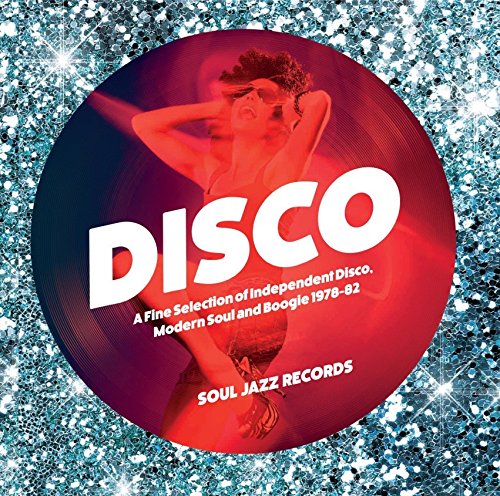
DISCO: A FINE SELECTION OF INDEPENDENT DISCO, MODERN SOUL AND BOOGIE 1978-82.
After the death of disco in 1979, boogie and Modern Soul provided the soundtrack to dance-floors. This includes the music on Soul Jazz Records’ compilation Disco: A Fine Selection of Independent Disco, Modern Soul and Boogie 1978-82.
It features private pressings from Superfunk, Jessie G, The Sunburst Band, Sparkle, Sympho State, Fantastic Alleems, Chemistry, Retta Young and Cordial. These tracks are incredibly rare. They’re also soulful, funky and dance-floor friendly. That’s no surprise. After all, Disco: A Fine Selection of Independent Disco, Modern Soul and Boogie 1978-82 is a lovingly compiled compilation, that’s all killer, no filler.
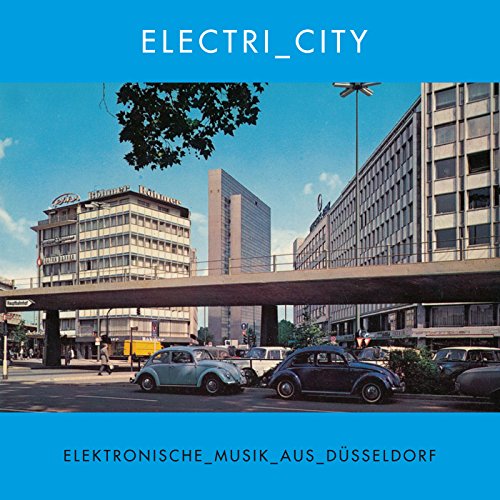
ELECTRI CITY-ELEKTRONISCHE MUSIK AUS DUSSELDORF.
Dusseldorf in the seventies and eighties was synonymous for electronic pop music. Some of the best electronic pop music came out of Dusseldorf. This includes La Dusseldorf, Harmonia and Eno, Der Plan, Daf, Neu!, Teja, Die Krups, Rheingold and Makrosoft. These are just a few of the artists that feature on Electri City-Electronische Musik Aus Dusseldorf. It’ll be released in October 2014 by Berlin based, Groenland Records. For anyone interested in electronic pop music, then Electri City-Electronische Musik Aus Dusseldorf will be a music have.
The music on Electri City-Electronische Musik Aus Dusseldorf is best described as important, innovative, influential and inspiring. It resulted in artists and producers rethinking how they approached music. This is still the case. Still, new generations of musicians are influenced by the music on Electri City-Electronische Musik Aus Dusseldorf. No wonder. Electri City-Electronische Musik Aus Dusseldorf, features some of the most important, innovative and influential music in German musical history.
FOLLOW ME DOWN-VANGUARD’S LOST PSYCHEDELIC ERA 1966-70.
Very few people are aware that between 1966 and 1970, A&R men Sam Charters and Maynard Solomon decided that Vanguard Records should climb onboard the psychedelic bandwagon. This being Vanguard Records, Sam Charters and Maynard Solomon ensured that the psychedelia being released was innovative and groundbreaking. It was far removed from much of the psychedelia being released during this period. That’s apparent from listening to Ace Records’ Follow Me Down-Vanguard’s Lost Psychedelic Era 1966-70. It’s a reminder that Vanguard Records’ psychedelia was guaranteed to open the doors of perception.
This includes the psychedelic delights within of The Third Power, Erik Heller, The 31st Of February, Circus Maximus, The Vagrants, The Serpent Power, The Family Of Apostolic and Far Cry. They all feature on Follow Me Down-Vanguard’s Lost Psychedelic Era 1966-70. It features some of the most innovative and groundbreaking psychedelia released during the psychedelic era.
HAITI DIRECT.
Mention Haitian music, and most people will think of either voodoo or Rara. That’s the stereotypical examples of Haitian music most people think of. There is, however, more to Haitian music than that. Much more. Especially during the sixties and seventies. Back then, Haiti was enjoying one of the most rich, vibrant and eclectic periods in its history. This is documented on Strut Records compilation of Haitian music, Haiti Direct. It’s a a double album featuring twenty-seven tracks. Haiti Direct documents the musical revolution that was happening in Haiti during the sixties and seventies. Out of merengue, compas direct was born. It begat cadence rampa which begat mini-jazz and cadence-lypso as Haitian music reinvented itself yet again. Another vibrant period in Haitian music began and was documented on Haiti Direct.
Compiled by Hugo Mendez, co-founder of the Sofrito record label and sound system, Haiti Direct, which will be released on 27th January 2014, shows that there’s more to Haitian music than voodoo and rara. Haiti Direct is proof of this. For anyone who thinks that Haitian music begins and ends with voodoo and rara, then Haiti Direct shows how wrong they are. There’s much more to Haitian music than that. Much more. Indeed, Haitian music is a treasure trove awaiting discovery. For anyone yet to discover the many and varied delights of Haitian music, then Haiti Direct is the perfect starting point. Haiti Direct will be your first compilation of Haitian music, but not your last.

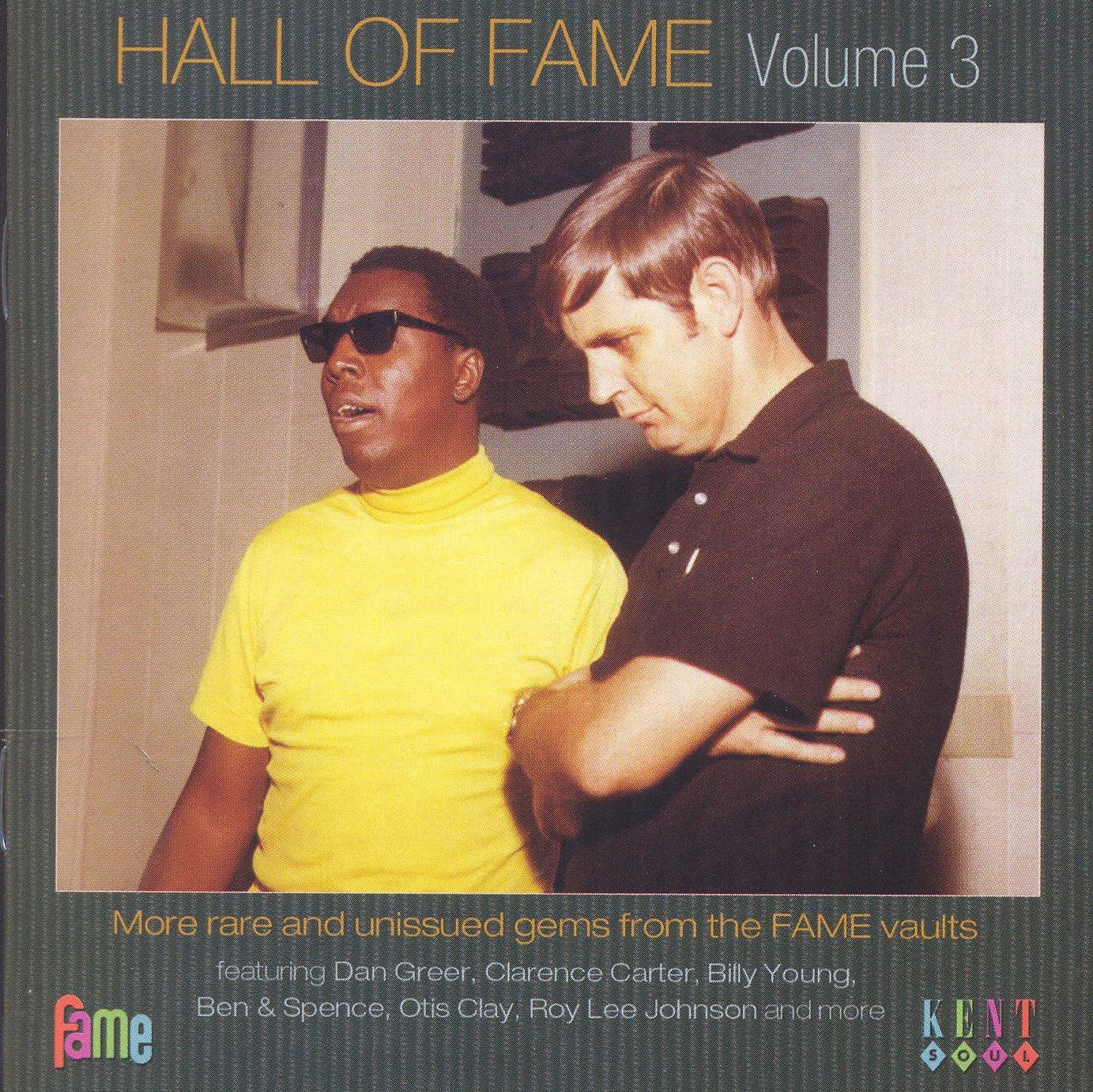
HALL OF FAME VOLUME 3.
Over the last few years, Ace Records have released a series of compilations from Fame Records’ vaults. Earlier this year, Kent Soul, an Ace Records imprint released Hall Of Fame Volume 3. It features another twenty-four tracks from Fame Records illustrious back-catalogue. This includes twenty-two previously unreleased tracks. They’re a fascinating insight into the music being made in Muscle Shoals between 1965 and 1970.
Just like the previous instalments in the Hall Of Fame series, Hall Of Fame Volume 3 features a whole host of hidden gems, emotive epics and tear jerkers. No wonder. With contributions from Clarence Carter, George Jackson, Joe Simon, Otis Clay, Dan Greer, Billy Young, Big Ben Atkins and Prince Phillip Mitchell. Some artists feature more than once. That’s no bad thing. These artists as each of these artist played a huge part in rise and rise of Fame Records, resulting in it becoming one of Southern Soul’s legendary labels.
HARD TO EXPLAIN-MORE SHATTERED BLUES-FUNKY BLUES 1968-1984.
More Shattered Blues-Funky Blues 1968-1984 might have been three years in the making, but it’s been well worth the wait. It’s the perfect followup to Funky Blues and Shattered Dreams 1967-1978. No wonder.
On More Shattered Blues-Funky Blues 1968-1984, contributions from Lowell Fulsom, Albert King, Icewater Slim and The Forth Floor, Earl Wright, Tommy Youngblood and Jimmy Robbins. That’s not all. Freddie Robinson, Artie “Blues Boy” White, Obrey Wilson, Big Daddy Rucker and Adolp Jacobs all feature on Hard To Explain-More Shattered Blues-Funky Blues 1968-1984. Familiar faces, cult classics and hidden gems sit side-by-side. The result is More Shattered Blues-Funky Blues 1968-1984, a captivating collection of funky blues.

HORSE MEAT DISCO VOLUME IV.
Three years after the release of Horse Meat Disco III, Jim Stanton, James Hillard, Luke Howard and Severino joined forces for Horse Meat Disco Volume IV, which was released in June 2014 on Strut Records. They’d picked sixteen tracks for their mix on disc one of Horse Meat Disco Volume IV. The result was a seamless and flawless mix. It features everyone from OPAL, K.S.B, The Sunburst Band, King Sporty and The Root Rockers, Phreek Plus One, Winners, Rena, Laura Taylor, Joey Negro Vs. Horse Meat Disco and Camouflage. Then there’s disc two to come.
On disc two of Horse Meat Disco Volume IV was full of tracks guaranteed to fill dance-floors. During discHorse Meat Disco take chances. They eschew the predictable for hidden gems, rarities and even one of the best B-sides I’ve heard in a long time, Laura Taylor’s Some Love. It’s one of the highlights of Horse Meat Disco IV. So is Rena’s Love Your Beat (Play It Again Sam). It’ll ensure that even the most reticent dancer will be heading for the dance-floor. Other tracks are funky, hook-laden, hypnotic, joyous, sassy and soulful. Most importantly, all the tracks on Horse Meat Disco IV are dance-floor friendly. This is regardless of whether it’s boogie, disco, electro and house. Hidden gems, rarities and classics sit side-by-side on Horse Meat Disco IV, which is the best instalment in the Horse Meat Disco series. So much so, that Horse Meat Disco IV is guaranteed to get any party started and fill dance-floors everywhere.

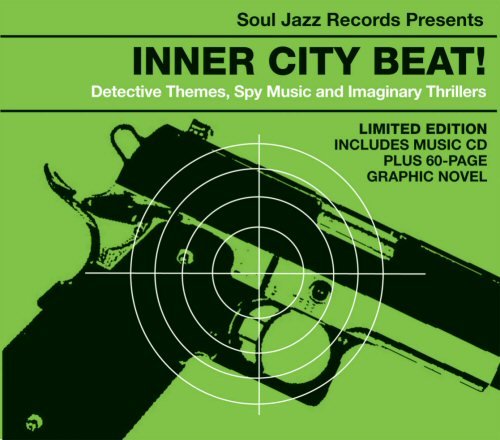
INNER CITY BEAT-DETECTIVE THEMES, SPY MUSIC AND IMAGINARY THRILLERS 1967-1975.
KPM, De Woife, Amphonic and Conroy. These names may not mean much to many people. However, for sample-hungry hip hop producers and crate-digging DJs alike, this means musical gold. One of music’s best kept secrets is library music. This has been the case for many years. However, for the past fifteen years library music has been growing in popularity. So much so, that several compilations have been released, including Inner City Beat-Detective Themes, Spy Music and Imaginary Thrillers 1967-1975 which was released by Soul Jazz Records. The mainly anonymous, young composers, musicians and producers responsible for library music could never have known the music they recorded would have. This includes the music on Soul Jazz Records’ recently released compilation Inner City Beat-Detective Themes, Spy Music and Imaginary Thrillers 1967-1975.
The tracks on Inner City Beat-Detective Themes, Spy Music and Imaginary Thrillers 1967-1975, come from the vaults of KPM, De Woife, Amphonic and Conroy. Much of the music was written, played and produced by anonymous writers, musicians and producers. Belatedly, their music is finding a wider audience. That’s no bad thing. After all, library music is still one of music’s best kept secrets. That’s despite it providing the musical backdrop for much of the music of the seventies. Much of that music is musical gold. It’s funky, soulful, cinematic and jazz-tinged. There’s something for everything. However, a perfect introduction to library music is Inner City Beat-Detective Themes, Spy Music and Imaginary Thrillers 1967-1975.
JOHN MORALES PRESENTS CLUB MOTOWN.
DJ and remixer John Morales, spent much of the last seven years working what he describes as his “labor or love,” John Morales Presents Club Motown. It’s a lovingly compiled double album which was recently released by UMC. John Morales Presents Club Motown features a total of twenty tracks from Motown’s eighties’ roster. These twenty tracks are a combination of stonewall classic and hidden gems. Among these hidden gems are five previously unreleased M+M mixes. This includes Tata Vega’s Get It Up For Love, Diana Ross’ The Boss, Teena Marie’s I Need your Lovin,’ Thelma Houston’s Saturday Night Sunday Morning and Val Young’s If You Should Ever Be Lonely. These five tracks alone should make John Morales Presents Club Motown a must have.
John Morales Presents Club Motown is best described as a lovingly compiled double album. It features a total of twenty tracks from Motown’s eighties’ roster. These twenty tracks are a combination of stonewall classic and hidden gems. Some of the biggest names in Motown’s history make an appearance. Others played just a walk on part in Motown’s history. However, each of the twenty tracks on John Morales Presents Club Motown are a reminder of Motown as it tried to reinvent itself during the post-disco eighties.

KEB DARGE AND LITTLE EDITH’S LEGENDARY WILD ROCKERS 4.
A lot has happened to Keb Darge and Little Edith since the release of Keb Darge and Little Edith’s Legendary Wild Rockers 3 in June 2013. The village in the Philippines where Keb Darge and Little Edith live was destroyed by a typhoon. Nothing was heard of Keb Darge and Little Edith for several days. Some people feared the worst. Then came the news, Keb Darge and Little Edith were safe. They’d survived one of the most devastating typhoons to hit the Philippines. It had been a harrowing period for Keb Darge and Little Edith. Despite this, they were determined to compile Keb Darge and Little Edith’s Legendary Wild Rockers 4 which will be released by BBE Music in June 2014.
Keb Darge and Little Edith’s Legendary Wild Rockers 4 features twenty slices of rare rockabilly and surf. These tracks were released between 1956 and 1964. They’re a mixture of rarities, cult classics and hidden gems. That’s what we’ve come to expect from the Keb Darge and Little Edith’s Legendary Wild Rockers compilation series. Somehow, despite the most traumatic year of their life, Keb and Little Edith have managed to surpass the quality of the previous instalment in the Legendary Wild Rockers’ compilation series. This year, they’ve dug deeper than they dug before to find the rare rockabilly and surf that features on Keb Darge and Little Edith’s Legendary Wild Rockers 4. The result, Keb Darge and Little Edith’s Legendary Wild Rockers 4, is without doubt, the finest instalments in the Legendary Wild Rockers’ series.

THE FIFTY BEST COMPILATIONS OF 2014-PART 3.
THE FIFTY BEST COMPILATIONS OF 2014-PART 3.
KENT’S CELLAR OF SOUL VOLUME 3.
Eight years after the release of Kent’s Cellar Of Soul Volume 2, Kent Soul have belatedly released the followup, Kent’s Cellar Of Soul Volume 3. It’s been well worth the wait. The Kent’s Cellar Of Soul seems to mature like a fine wine. That’s thanks to the two men behind this compilation series, Ady Croasdell and Tony Rounce. They’ve have been on another successful crate-digging expedition. The result is Kent’s Cellar Of Soul Volume 3, a compilation that features contributions from everyone from some of the biggest names is soul music including James Carr, Fred Hughes, Ruby Andrews, Clarence Carter and Lowell Fulsom right through to The Platters, Thelma Jones, The Inspirations and The Ikettes. Along with contributions from Brenton Wood, Cliff Nobles & Co, Clarence Carter and Jesse James and The Dynamic Four, Kent’s Cellar Of Soul Volume 3 was worthy addition to Kent’s Cellar Of Soul series.

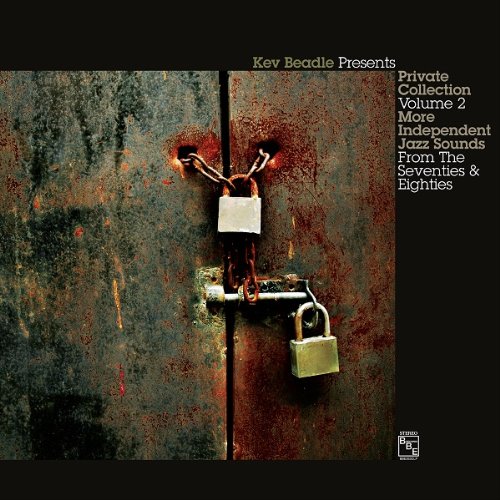
KEV BEADLE PRESENTS PRIVATE COLLECTION VOLUME 2.
A generation of DJs, record collectors and music lovers have dedicated themselves to discovering the best of these private pressings. This includes DJ, record collector,compiler and crate-digger extraordinaire Kev Beadle. He has dedicated his life to the pursuit of the hidden musical gem. As a result, Kev has an enviable record collection. A tantalising taste of his record collection can be found on Kev Beadle Private Collection Volume 2, which was released by BBE Music in July 2014. It’s the followup to the critically acclaimed Kev Beadle Private Collection.
Compiling a compilation like Kev Beadle Private Collection Volume 2 takes time, persistence and dedication. In Kev’s case, this has paid off. The twelve tracks on Kev Beadle Private Collection Volume 2 are a delicious mixture of rarities and hidden gems. Each track oozes quality. Kev’s taste is impeccable as he introduces us to jazz from America, Brazil, Britain, Hungary and Sweden. Indeed, so good is the music onKev Beadle Private Collection Volume 2, that it manages to surpass Kev Beadle Private Collection. That took some doing.
LES AMBASSADEURS-LES AMBASSADEURS DU MOTEL DE BAMAKO.
Stern Africa recently released a double-album of Les Ambassadeurs’ music. This includes their two albums Les Ambassadeurs du Motel De Bamako. These two albums feature the first appearance of a legend of African music, Salif Keifa. He would play an important part in the Les Ambassadeurs’ story.
Over the next few years, the lineup of Les Ambassadeurs changed. They released further singles and albums. However, Les Ambassadeurs du Motel De Bamako and then Les Ambassadeurs Du Motel De Bamako Volume One and Two feature Les Ambassadeurs at their best. They were about to embark upon a great musical adventure. Anything seemed possible. The future looked bright for Les Ambassadeurs. Their star was in the ascendancy for several years. Just about anything looked possible. Sadly, as is often the case Les Ambassadeurs never fulfilled their potential. The political climate changed and Les Ambassadeurs were forced into exile.
At least one of Les Ambassadeurs was able to fulfill their potential. That was Salif Keifa. He became one of the legends of African music. Salif Keifa enjoyed the critical acclaim and commercial success that Les Ambassadeurs could’ve and should’ve enjoyed. A reminder of Les Ambassadeurs’ music is Les Ambassadeurs du Motel De Bamako, which was recently released by Stern Africa.

LET THE MUSIC PLAY: BLACK AMERICA DOES BACHARACH AND DAVID.
On Ace Records’ Let The Music Play: Black America Does Bacharach and David compilation some of the most successful American artists cover of Bacharach and David. There’s everything from soul superstars and disco divas. This includes Dionne Warwick, Irma Thomas, Aretha Franklin, Cissy Houston. The Drifters, James Carr, Gloria Gaynor, Mavis Staples and Gladys Knight and The Pips. As compilations go, Let The Music Play: Black America Does Bacharach and David literally oozes quality.

MARSHALL ALLEN PRESENTS SUN RA AND HIS ARKESTRA-IN THE ORBIT OF RA.
Enigmatic and innovative describes the man whose been referred Mr. Mystery, Sun Ra. He was, without doubt, one of the most important figures in jazz music. Constantly, Sun Ra’s pushed musical boundaries. Sun Ra was never content to stand still musically. Similarly, he was always striving to reinvent his music. The original version of a song was merely the starting point. What it became, was anyone’s guess? Herman’s, forever determined to innovate, and reinvent a track, took his music in the most unexpected direction. That’s the case on Marshall Allen Presents Sun Ra and His Arkestra-In The Orbit Of Sun Ra, which was released by Strut Records, to celebrate the 100th anniversary of Sun Ra’s birth.
To create the music on Marshall Allen Presents Sun Ra and His Arkestra-In The Orbit Of Sun Ra didn’t come easy. It took time, patience and dedication. Sun Ra with like minded musicians recorded over 100 albums. This gave Art Yard, one of Sun Ra’s most loyal lieutenants in the Arkestra plenty of music to choose from. Eventually, Art narrowed the music down to the twenty tracks that feature on Marshall Allen Presents Sun Ra and His Arkestra-In The Orbit Of Sun Ra. This double album was released on Strut Records in September 2014. It’s the perfect starting point for anyone yet to discover an enigmatic musical innovator. For those familiar with Sun Ra’s music, then Marshall Allen Presents Sun Ra and His Arkestra-In The Orbit Of Sun Ra is a reminder of true a musical visionary as we celebrate the 100th anniversary of his birth.

MIDNIGHT RIDER-A TRIBUTE TO THE ALLMAN BROTHERS.
Midnight Rider-A Tribute To The Allman Brothers, which was released in June 2014. was the second instalment in Cleopatra Records’ Tribute To series. It features twelve tracks. Eleven of the tracks were taken from The Allman Brothers’ discography. The other track was taken from a Greg Allman album. These tracks were recorded by an all-star cast. Among the luminaries to feature on Midnight Rider-A Tribute To The Allman Brothers are Pat Travers, Leon Russell, Molly Hatchett, The Artimus Pyle Band, Steve Morse, Tinsley Ellis, Eric Gales and Eli Cook. This shows just how highly regarded The Allman Brothers are among their fellow musicians.
As tribute albums go, Midnight Rider-A Tribute To The Allman Brothers is just like A Psych Tribute To The Doors. It’s without doubt, one of the best tribute album money can buy. Midnight Rider-A Tribute To The Allman Brothers is a perfect reminder of one of the founding fathers of Southern Rock. The Allman Brothers were also one of the most successful groups in the history of Southern Rock. That’s why the calibre of artists have come together to pay homage to The Allman Brothers. They’ve done The Allman Brothers proud, on Midnight Rider-A Tribute To The Allman Brothers, which is a glorious reminder of the undisputed Kings of Southern Rock.

MILLIE JACKSON-ON THE COUNTRY SOUL SIDE.
Trying to describe Millie Jackson in just one word, is almost impossible. If I was asked to do so, the word I’d use would be versatile. She could breath life, meaning and drama into a variety of songs. Whether it was heartbreaking, soulful ballads or country soul, Millie could take you on a mesmerising musical journey. That was the case throughout Millie Jackson’s time at Spring Records.
Millie Jackson was, without doubt, one of the most talented and charismatic female vocalists of the seventies and eighties. That’s indisputable. What many people won’t realise, is that Millie Jackson was a country girl at heart. She was born in Thomson, in rural Georgia, in July 1944. Millie’s country roots influenced her unique brand of soul music. Especially the sixteen albums Millie recorded for Spring Records. Fans of Millie Jackson’s music will be aware of her country soul roots. However, other people may not be aware of Millie Jackson’s country soul side. For them, Millie Jackson-On The Country Soul Side will be the perfect introduction to this side of Millie Jackson’s music. For them, Millie Jackson-On The Country Soul Side is a tantalising taste of the country soul of Millie Jackson, one of the most talented soul singers of her generation.

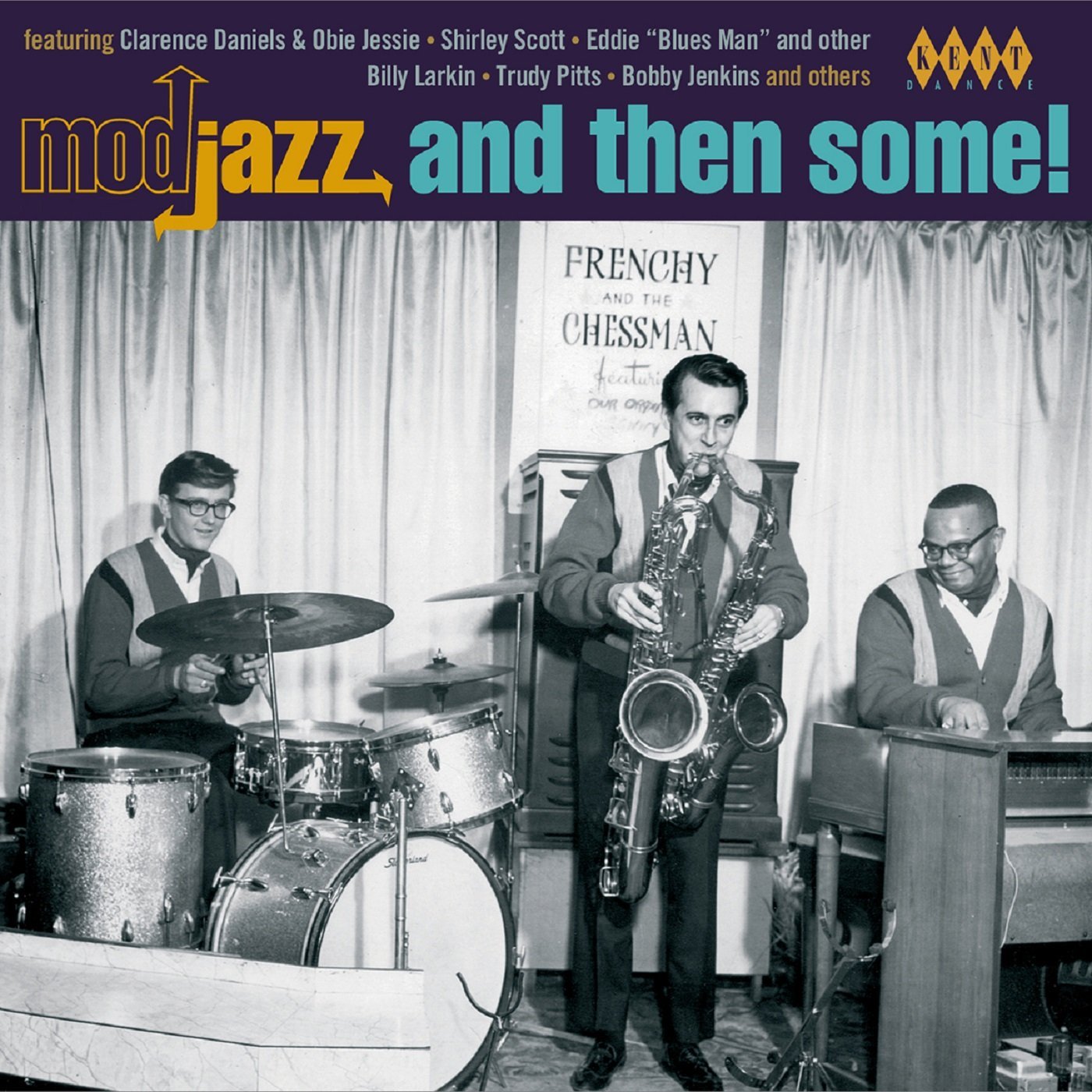
MOD JAZZ, AND THEN SOME!
It doesn’t seem like eighteen years since Kent Soul released the first instalment in the Mod Jazz series. However, that’s the case. The 30th September 1996 was when Mod Jazz first hit the shops. Released to critical acclaim, Mod Jazz was a commercial success. Mod Jazz was music for attendees of the Cool School. Featuring twenty-five slices of gritty dance-floor friendly jazz and smokey soulful dancers, Mod Jazz was one of the best compilations of 1998. Since then, another eight instalments in the Mod Jazz series have been released. The latest instalment is Mod Jazz, and Then Some, was released by Kent Soul, a subsidiary of Ace Records earlier this year.
Mod Jazz, and Then Some! was released by Kent Soul on 2nd June 2014. It features twenty-four tracks. There’s contributions from The Pac-Keys, Shirley Scott, King Curtis, T.K.O, The Five Counts, Freddy Washington’s Band, B.B. King, Chuck Higgins, Trudy Pitts and Etta Jones. Compilers Ady Croasdell and Dean Rudland dug deep into the vaults of labels like Hollywood, Class, Prestige, Kent, Musicor, Tru-Sound, Ten Star, Brent, Atlas, High Tone, Hill and Temple. On Mod Jazz, and Then Some, classics sit side-by-see with familiar faces, hidden gems and rarities. There’s everything from blues, jazz, Latin, R&B, soul and soul jazz feature on Mod Jazz, and Then Some! All this means that Mod Jazz, and Then Some! is a very welcome addition to the Mod Jazz series.
MOVEMENTS 6.
One of the longest running compilation series is the Movements, compiled by Tobias Kirkmayer. The first instalment in the series, Movements was released back in 2005 on Perfect Toy Records. In an ever crowded compilation market, Movements was well received. A year later, in 2006, came Movements. Then nothing. Four long years passed without another instalment in the Movement series. That’s a long time between Movements. Since then another two instalments have been released. Earlier this year, Movements 6 was released.
For fans of funk, jazz, R&B and soul, there’s plenty to get your teeth into on Movements 6. The same goes for crate-diggers and sample hungry hip hoppers. I guarantee there’s breaks aplenty on Movements 6. Tobias Kirkmayer has dug deep and come up with some musical gold.

THE FIFTY BEST COMPILATIONS OF 2014-PART 4.
THE FIFTY BEST COMPILATIONS OF 2014-PART 4.
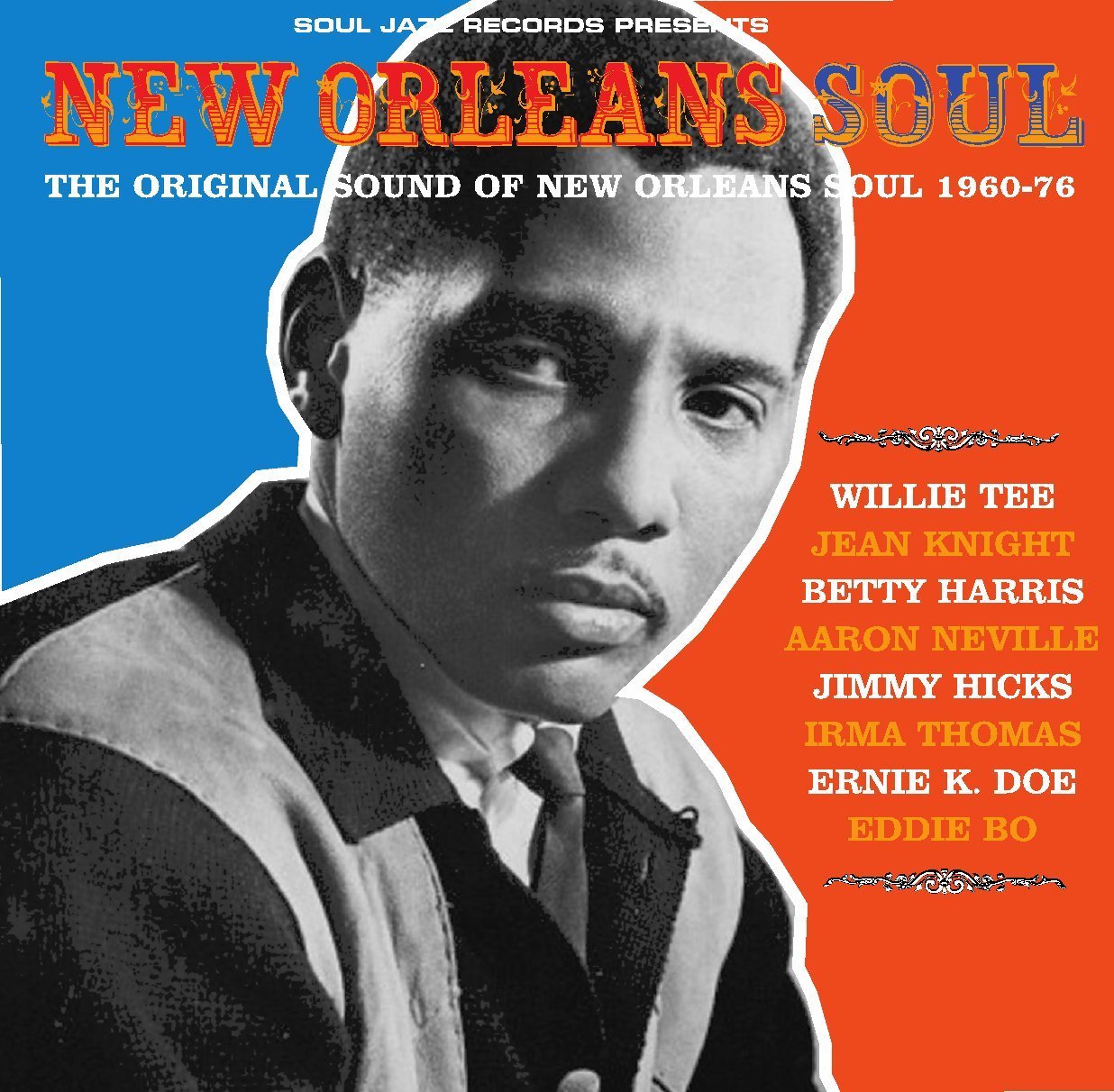
NEW ORLEANS SOUL: THE ORIGINAL SOUND OF NEW ORLEANS SOUL 1960-1976.
Over the past ten years, Soul Jazz Records have been documenting the history of New Orleans’ funk. They’ve released a number of lovingly compiled, and critically acclaimed compilations. These compilations were some of the best compilations of New Orleans’ funk released during that period. They were a labor of love. Having eloquently told the story of New Orleans’ funk, Soul Jazz Records have decided to move onto New Orleans’ soul. The starting point is New Orleans Soul: The Original Sound of New Orleans Soul 1960-76.
It’s no exaggeration to describe New Orleans Soul: The Original Sound of New Orleans Soul 1960-76 as littered with hidden gems and soulful surprises. New Orleans Soul: The Original Sound of New Orleans Soul 1960-76 features twenty-one tracks from the soul men and soul sisters of New Orleans. This is just the first of series of lovingly compiled compilations of New Orleans’ soul from Soul Jazz Records. Having documented the story of New Orleans’ funk, now it’s the turn of New Orleans’ soul. New Orleans Soul: The Original Sound of New Orleans Soul 1960-76 is just the beginning. Many more compilations will follow from Soul Jazz Records. I’m sure that just like New Orleans Soul: The Original Sound of New Orleans Soul 1960-76, they’ll be full of hidden gems and soulful delights.
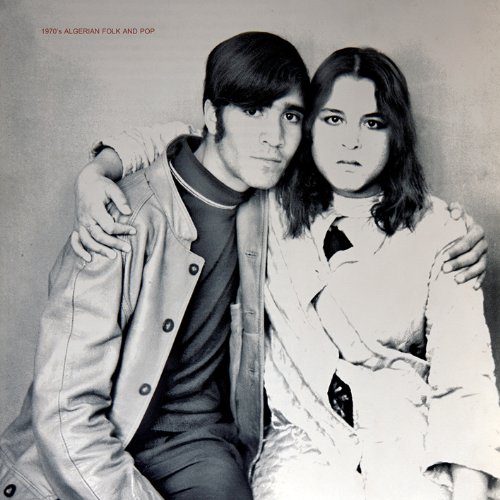
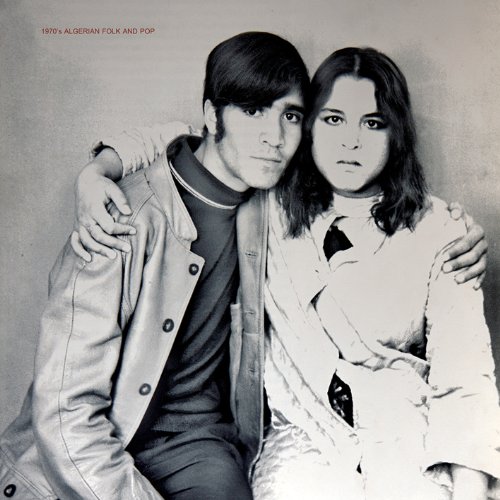
1970S ALGERIAN FOLK AND POP.
1970s Algerian Pop and Folk documents an underground, musical counterculture. This music brought together a generation of Algerians. They all had one thing in common, their shared love of music. Lifelong friendships were born through music. Music was both a means a way to protest against the authoritarian regime, and a way to escape it. After all, music is escapism. It takes the listener to another place, where the trauma and drudgery of daily life is forgotten. That was the case back in the seventies, and when Rachid and Fethi, Les Djinns, Kri Kri, Idir, Ahmed Malek and Abranis were playing an important role in the development of Algerian music. They all feature on 1970s Algerian Pop and Folk.
The music on 1970s Algerian Folk and Pop was released during one of the most turbulent times in Algerian history. Life was tough under the leadership of President Houari Boumediene. His authoritarian rule saw much of Algerian industry fall under state control. Anyone who spoke out against what was happening, was at risk. Especially from the military police and censors. They were constantly on the look out for anyone opposed to the policies of the state. Political dissidents and radicals’ lives were at risk. Yet musicians, who could voice the fears of ordinary people weren’t perceived as a risk to the state by Algeria’s military police. Ironically, the Algerian music scene thrived during the seventies. Everything from folk, pop, psychedelia, rock and soul was released. It can be heard on 1970s Algerian Folk and Pop. The music on 1970s Algerian Folk and Pop is best described as beautiful, eclectic, ethereal lysergic and melancholy and an enchanting introduction to Algerian music’s past.
1970s ALGERIAN PROTO-RAI UNDERGROUND.
For anyone with a passing interest in Algerian music, then 1970’s Algerian Proto-Rai Underground is the perfect starting place. It was released by Sublime Frequencies and features eight tracks, from four artists, who played a huge role in the rise and rise of Rai music, during the seventies. These eight tracks are sure to whet your appetite.
After immersing yourself in 1970’s Algerian Proto-Rai Underground, you’ll want to hear more music from one of the most important decades in the history of modern Algerian music. There’s much more to Rai music in the seventies than these eight tracks. 1970’s Algerian Proto-Rai Underground is just the start of this musical journey. Surely, further compilations of Rai music from the seventies must follow? I hope so. After all, 1970’s Algerian Proto-Rai Underground is a truly memorable musical journey, that’s bound to appeal to music lovers with eclectic and adventurous musical tastes.
PERU BRAVO-FUNK, SOUL AND PSYCH FROM PERU’S RADICAL DECADE.
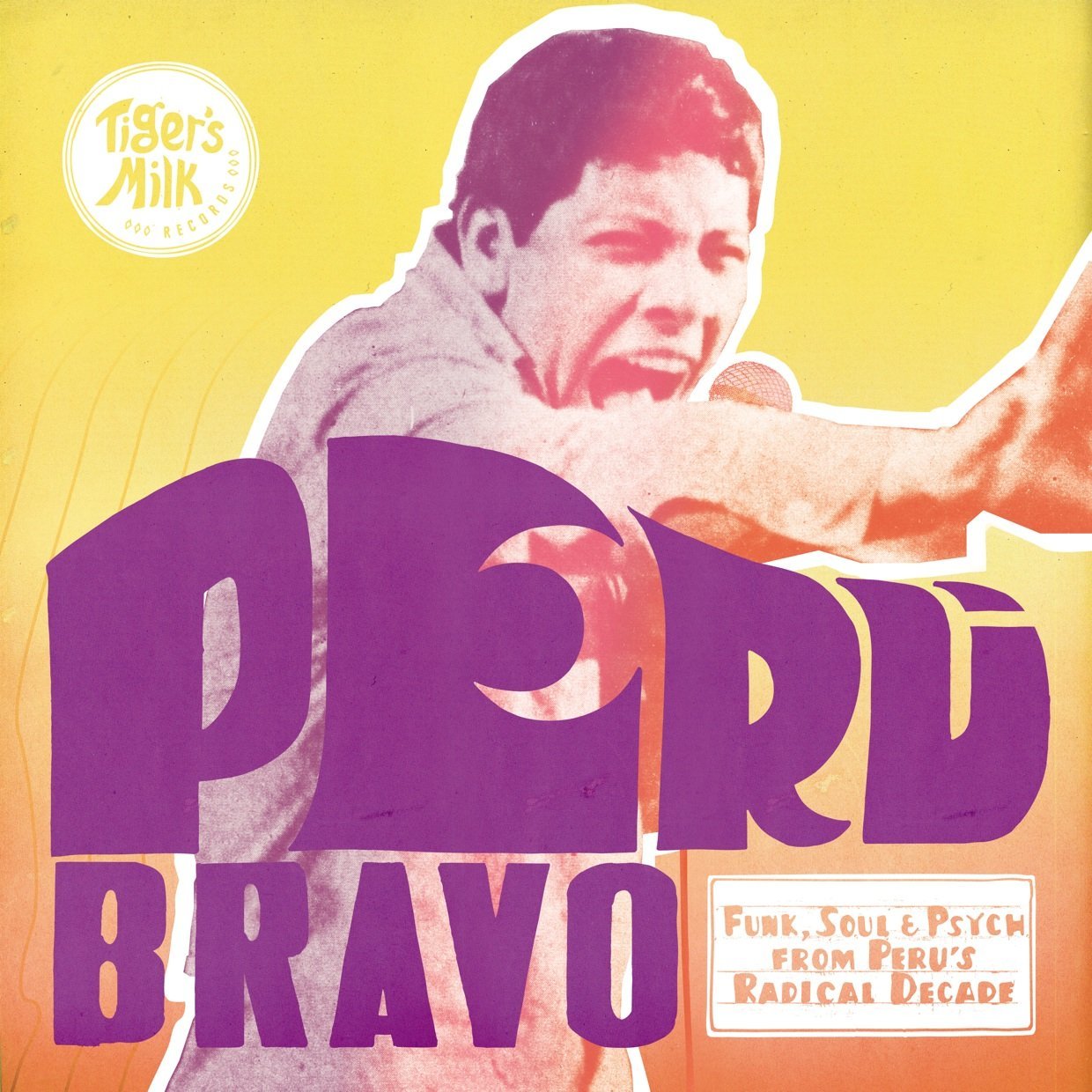
Never before, has a record label reissued a compilation of Peruvian psychedelic, soul and funk. That’s until earlier this year. Tiger’s Milk Records, an imprint of Strut Records, released Peru Bravo-Funk, Soul and Psych From Peru’s Radical Decade in October 2014. It features fifteen funky, soulful and psychedelic tracks, from what was one of the most traumatic times in Peruvian political history.
The music on Peru Bravo-Funk, Soul and Psych From Peru’s Radical Decade is a glorious musical melting pot of influences and genres. That’s why Peru Bravo-Funk, Soul and Psych From Peru’s Radical Decade is one of the best compilations of 2014. Tiger’s Milk Records seem to concentrate on quality, rather than quantity. That’s no bad things. Too many labels churn out mediocre compilations. Not Tiger’s Milk Records. They dig deep into the treasure trove that’s Peruvian music and compile genre-melting compilations of quality music like Peru Bravo-Funk, Soul and Psych From Peru’s Radical Decade.
RARE PSYCH MOOGS AND BRASS 1969-1981-MUSIC FROM THE SONOTON LIBRARY.
Earlier this year, the aptly names Buried Treasures’ label released a compilation of Rare Psych Moogs and Brass 1969-1981-Music From The Sonoton Library. It’s the latest compilation of library music that was released during 2014.
Nearly fifty years after the Sonoton music library was founded in 1965, it’s become one of the biggest independent production companies in the world. Its back-catalogue is truly eclectic. There’s a myriad of cult classics, hidden gems and rarities awaiting discovery. I say awaiting, because for some reason, many sample hungry producers and crate diggers have managed to overlook the Sonoton music library. Hopefully not any more. The many, and varied delights, contained on Rare Psych Moogs and Brass 1969-1981-Music From The Sonoton Library will whet your appetite to the delights awaiting discovery within the vaults of the Sonoton music library.
RHYTHM ’N’ BLUESIN’ BY THE BAYOU-ROMPIN’ AND STOMPIN’
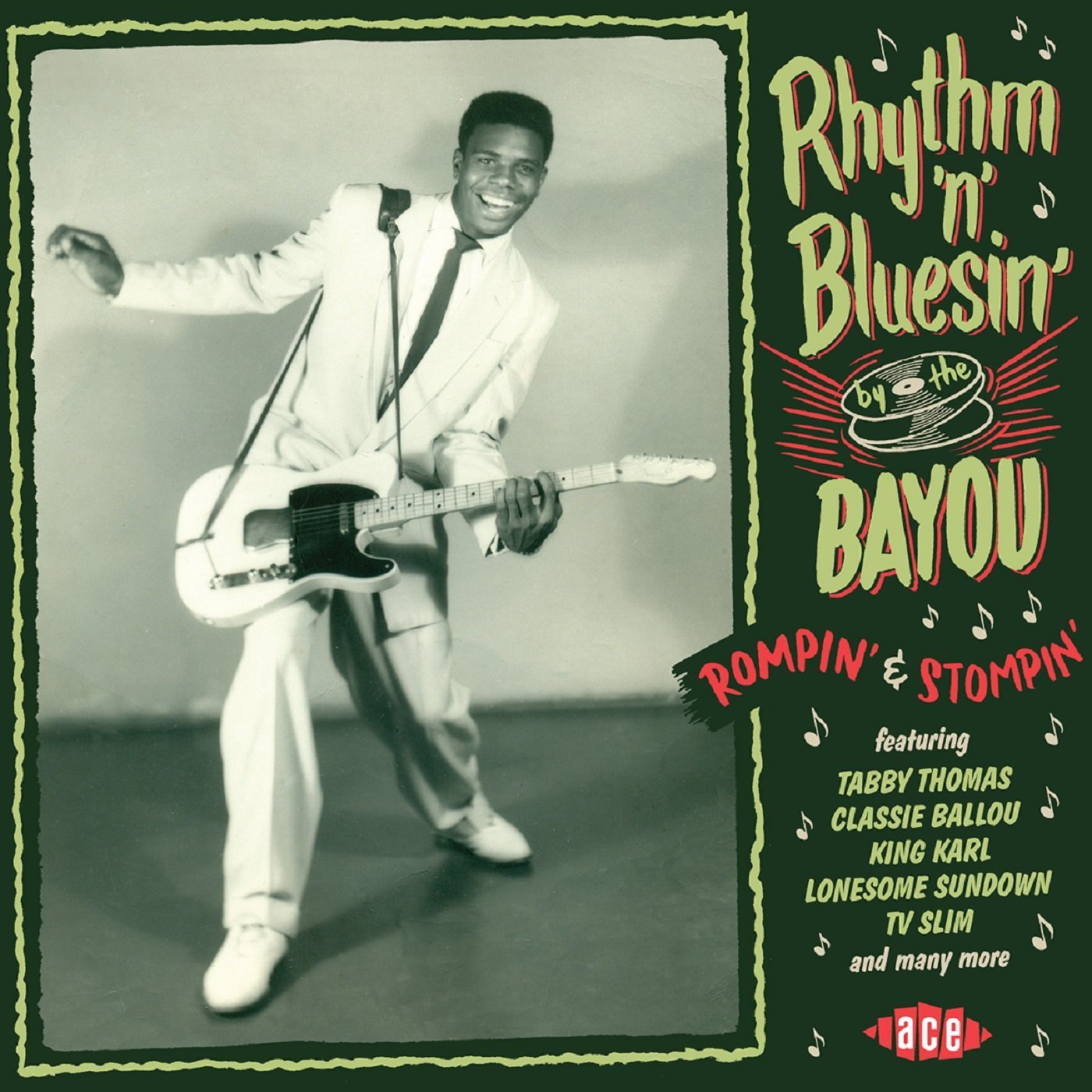
For anyone who likes “low down, dirty, greasy blues” R&B and zydeco,” then Rhythm ’N’ Bluesin’ By The Bayou-Rompin’ and Stompin,’ which was released by Ace Records was for them. This was the latest instalment in the By The Bayou series. Rhythm ’N’ Bluesin’ By The Bayou-Rompin’ and Stompin’ featured twenty-eight tracks, including nineteen tracks that have never been released before. The twenty-eight tracks were produced by some of the most important producers in Louisiana’s musical history. This includes J.D. Miller and Eddie Shuler. Their productions featured Boppin’ By The Bayou-More Dynamite. Other tracks on Rhythm ’N’ Bluesin’ By The Bayou-Rompin’ and Stompin’ were produced by Sam Montel, Floyd Soileau and Carl Graffagnino. These producers are responsible for what was billed as more “low down, dirty, greasy blues” R&B and zydeco “from Louisiana.”
Rhythm ’N’ Bluesin’ By The Bayou-Rompin’ and Stompin’ is just like its predecessors. They’re the perfect introduction to the music of Louisiana during the late-fifties and early sixties. They conjur up images of Louisiana, during another musical era. This means music that’s emotive, evocative and atmospheric. It paints pictures of what life was like in Louisiana, back then. Especially late at night in a juke joint, with a bourbon in one hand and Lucky Strike in the other. However, now you don’t need to go to Louisiana to hear this music. Instead, let the music come to you on Ace Records’ Rhythm ’N’ Bluesin’ By The Bayou-Rompin’ and Stompin.’
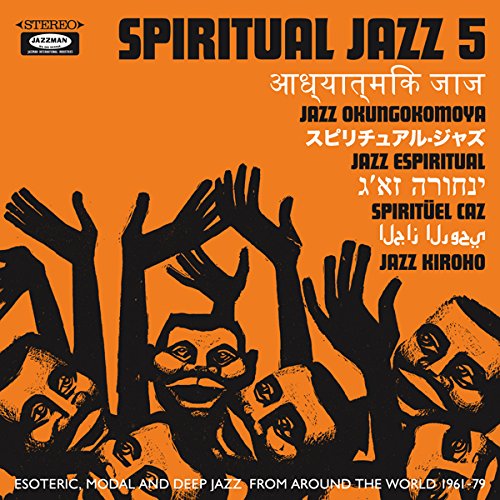
SPIRITUAL JAZZ 5: THE WORLD.
In the four previous volumes of their Spiritual Jazz series, Jazzman Records have mostly, focused on European jazz. For Spiritual Jazz 5: The World, Jazzman Records have travelled far and wide. They’ve been on what can be best described as a worldwide crate digging expedition. Hidden gems and rarities have been unearthed during this crate digging expedition. There’s tracks from artists as far afield as Argentina, Australia, India, Japan, South Africa, Turkey on Spiritual Jazz 5: The World. This includes the Charlie Munro Quartet, Jazz Work Shop, Jazz Semail, Ahmadu Jarr, Paul Winter Sextet and Aquilla. Many of the tracks on Spiritual Jazz 5: The World have never featured on CD before.
Spiritual Jazz 5: The World features a glittering array of jazz gems. This includes contributions from the Charlie Munro Quartet, Louis Banks, Jazz Work Shop, Jazz Semail, London Experimental Jazz Quartet and Horacio “Chivo” Borraro and Aquilla. These tracks are just a tantalising taste of the music on Spiritual Jazz 5: The World. There’s much more. In total, there are seventeen tracks to discover on Spiritual Jazz 5: The World. Each one has something different to offer. With a a mixture of hidden gems, rarities and underground classics, Spiritual Jazz 5: The World is a worthy and welcome addition to Jazzman Records Spiritual Jazz series.
STUDIO ONE DANCEHALL-SIR COXSONE IN THE DANCE: THE FOUNDATION SOUND.
After founding Studio One in 1963, Sir Coxsone Dodd’s legendary label went on to play a huge part in shaping the sound of Jamaican music. Everything from lover’s rock, ska, rocksteady, reggae, dub and dancehall was recorded in Studio One by the great and good Jamaican music. That’s why Studio One is remembered as one of the most influential and innovative Jamaican record labels. This is apparent on Soul Jazz Records’ recently released compilation Studio One Dancehall-Sir Coxsone In The Dance: The Foundation Sound.
Dancehall was quite different to much of the music recorded at Studio One. It saw a new breed of producers take classic Studio One rhythms, and got vocalists and DJs to add a vocal or rhyme. The result was a cross between disco and hip hop. This new musical genre was christened dancehall. Before long, dancehall was growing popularity. It was well on its way to becoming a musical phenomena. That’s when Sir Coxsone Dodd climbed onboard the dancehall bandwagon. Before that, much of the dancehall being released were good, but Sir Coxsone Dodd’s dancehall releases were showstoppers. No wonder. Sir Coxsone Dodd had a keen eye for a talented musician or vocalist. He brought onboard some of the best up-and-coming musicians and vocalists. The result was a rejuvenated Studio One. It enjoyed an Indian Summer, during the late-seventies and early eighties. That’s thanks to Sir Coxsone Dodd’s determination to innovate, and ensure that Studio One stayed relevant.

STUDIO ONE ROCKSTEADY.
Soul Jazz Records released Studio One Rocksteady, back in February 2014. It saw compiler Lloyd Bradley return to the vaults of Studio One Records. Previous visits to the Studio One vaults have resulted in rick pickings for Soul Jazz Records. No wonder. Studio One Records was one of reggae legendary labels. Comparisons have been drawn with both Motown and Stax. Indeed, Studio One Records was once described as the Motown of Jamaica. That’s why Soul Jazz Records have released a string of compilations of music released by Studio One Records. Studio One Rocksteady was just the latest compilation to be released.
Ever since they released their first compilation, Soul Jazz Records have concentrated on quality over quantity. Each of their releases must meet their exacting standards. That’s why it’s so fitting that Soul Jazz Records are the keeper of the flame for Studio One Records. So, if you’re a newcomer to rocksteady, then Studio One Rocksteady is the perfect place to start. Indeed, for anyone wanting to discover the music Studio One Records released, the Soul Jazz Records’ series of compilations is a perfect starting place. It’s another lovingly compiled, quality compilation from Soul Jazz Records.
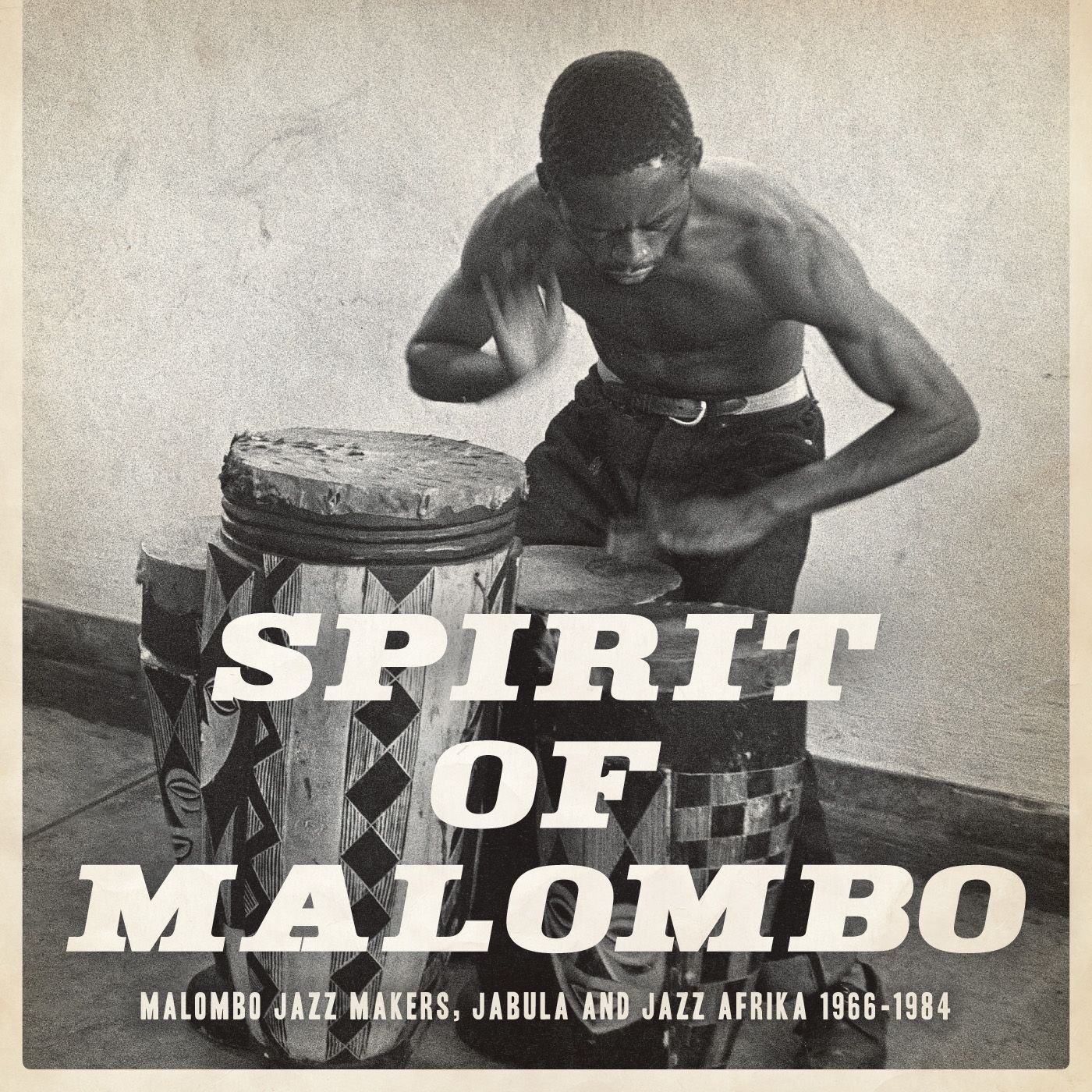
SPIRIT OF MALOMBO: MALOMBO JAZZ MAKERS, JABULA AND JAZZ AFRIKA 1966-1984.
Four years have passed, since the last instalment in Strut Records’ critically acclaimed Next Stop Soweto series. At last, however, the wait is over. Recently, Strut Records have released Spirit of Malombo: Malombo, Jazz Makers, Jabula and Jazz Afrika 1966-1984. This is a double album, which celebrates the life and music of influential drummer, and political activist, Julian Bahula.
His time as a political activist, and then in exile cost Julian Bahula. His family were persecuted. They suffered at the hands of the secret police. Julian was forced to flea South Africa, and until apartheid was defeated, he was unable to return home. This was a huge sacrifice. Another sacrifice was his career. Who knows what height he might have reached if he hadn’t become involved in the antiapartheid movement? He was a truly innovative and pioneering musician, who was capable of creating groundbreaking and genre-melting music. However, for much of his career, Julian sacrificed critical acclaim, fame and riches, in an attempt to change South Africa for the better. This he did. Julian Bahula was part of the antiapartheid movement, who transformed South Africa, and made it a better place. Only now, is Julian Bahula and his music receiving the recognition he deserves. Strut Records released Spirit of Malombo: Malombo, Jazz Makers, Jabula and Jazz Afrika 1966-1984, which is a celebration of Julian Bahula’s music.
Recently, Strut Records released Spirit of Malombo: Malombo, Jazz Makers, Jabula and Jazz Afrika 1966-1984. This twenty-five track double album celebrates the life and music of musician and political activist, Julian Bahula, who played a an important role in transforming South Africa.
THE FIFTY BEST COMPILATIONS OF 2014-PART 5.
THE FIFTY BEST COMPILATIONS OF 2014-PART 5.
STRANGE BREAKS AND MR. THING III.
One of the most commercially successful and critically acclaimed compilation series made a welcome return in May 2014. That’s Strange Breaks and Mr. Thing III. It’s been a long time coming. Five years in fact. So, after a five year back, Mr. Thing makes a very welcome return with Strange Breaks and Mr. Thing III, which is the result of five years of crate digging. Mr Thing. is without doubt, one of the most passionate and persistent crate-diggers, when it comes to unearthing hidden gems. No stone is left unturned in his search for elusive hidden gems. Quite simply, Mr. Thing digs where other crate diggers fear to tread. Whether it’s dusty basements, thrift stores, warehouses or record shops, nowhere is off limits. As a result, Mr. Thing’s choice of music is truly eclectic. That’s reflected on Strange Breaks and Mr. Thing III.
On Strange Breaks and Mr. Thing III, Mr. Thing chooses nineteen slices of soulful, funky and jazzy music. Among the nineteen artists on disc two of Strange Breaks and Mr. Thing III, familiar faces sit side-by-side with hidden gems, killer cuts and rarities. This includes Dynamic Concept, Disco Orchestral, Woolwich Polytechnic School Concert Band, Chuck Jackson, Sharon Cash, Harry Beckett and Zulema. These tracks become a musical journey, where the music veers between dramatic, dreamy, and trippy, to beautiful, understated and melancholy. Other times the music is moody and broody. On other tracks, the music is sassy and seductive. One thing the music never is, is boring. Not at all. Certainly not when Mr. Thing is in charge of the music. Subtleties and surprises are sprung. Mr. Thing isn’t afraid of changing direction. Using the musical equivalent of a handbrake turn, he performs a volte face. That’s what makes Strange Breaks and Mr. Thing III such a captivating and refreshing compilation that belongs in everyone’s record collection.

SWAMP POP BY THE BAYOU.
When the first compilation of Swamp Pop was released back in the early seventies, it was a genre without a name. So, the compilation was simply called The Other Sound Of The South. Then Bill Millar coined the term Swamp Pop. That day, a new musical genre was born. Swamp Pop is still as popular today, as back in the late-fifties, when some of the music on Ace Records’ compilation Swamp Pop By The Bayou was first released.
Swamp Pop By The Bayou is the latest instalment in Ian Saddler’s By The Bayou series. It was recently released on Ace Records and is the seventh compilation in the By The Bayou compilation series. There are twenty-eight tracks on Swamp Pop By The Bayou. Fourteen of the tracks were released between 1959 and 1964. This includes tracks from Vince Anthony With The Blue Notes, Jay Richards & The Blues Kings, Warren Storm, Rocket Morgan, Frankie Lowery and John Fred. Then there’s fourteen previously unreleased track. Among them, are tracks from Guitar Jeff, George, Tommy Strange, Bee Arnold and Rocket Morgan. For anyone interested in Swamp Pop, this mixture of familiar faces and hidden gems will be essential listening. Indeed, Swamp Pop By The Bayou takes the listener on a compelling, enthralling and mesmeric musical journey through Louisiana’s musical past.

THE COMPLETE FAME SINGLES VOLUME 1-1964-1967.
Mention Southern Soul, and certain labels spring to mind. Among them are Stax, Hi Records and Fame Records. These three labels are synonymous with Southern Soul. Together, they released some of the greatest music in the history of Southern Soul. Indeed, the artists who walked through the doors of Stax, Hi and Fame Records reads like a who’s who of Southern Soul. However, for far too long, Southern Soul has been overlooked. Instead, record labels have focused on labels like Philadelphia International Records and Motown. Thankfully, that’s no longer the case. Now reissue labels like Kent Soul, a subsidiary of Ace Records, are releasing a series of lovingly compiled compilations of music released by Fame Records. One of the most recent compilations is The Complete Fame Singles Volume 1-1964-1967.
The Complete Fame Singles Volume 1-1964-1967 is the first in a three disc series featuring every single released by Fame Records. It’s a double album featuring twenty-six tracks on each disc. With a mammoth fifty-two tracks, this is one of the most comprehensive retrospectives of singles released by Fame Records. This means there’s contributions from some of the most influential artists in Fame Records’ history. This includes twenty-two tracks from Jimmy Hughes, six from Clarence Carter and a quartet of tracks from Dan Penn, Terry Woodford, Arthur Conley and Art Freeman. Then June Conquest, Spooner and The Spoons, James Barnett and The Villagers contribute two tracks each. That makes fifty-two tracks. For a newcomer to Fame Records, then The Complete Fame Singles Volume 1-1964-1967 is the perfect introduction to one of Southern Southern’s greatest labels.

THE SOUND OF SIAM VOLUME 2.
For many people, Soundway Records’ compilation The Sound of Siam was their introduction to Thailand’s music. It was released to critical acclaim in November 2010. Sound of Siam was a trendsetting compilation. After that, interest in Asian music exploded. Record companies jumped on the bandwagon. Compilations of Indonesian, Cambodian, Vietnamese, South Korean and Singaporean music were released. Suddenly, Asian music was on trend. That’s still the case in May 2014, when The Sound Of Siam Volume 2 was released.
Compilers Chris Menist, Maft Sai and Miles Cleret have dug deep for what’s a combination of hidden gems, rarities and classics. That describes The Sound Of Siam Volume 2 perfectly. The Sound Of Siam Volume 2 also shows that there’s more to North East Thailand than molam. Much more. There’s also luk thung. Both genres sit side-by-side on n The Sound Of Siam Volume 2. However, often this is molar and luk thung with a twist. Everything from blues, funk, highlife, jazz, pop, psychedelia and rock melts into one on The Sound Of Siam Volume 2, which was recently released by Soundway Records. That’s why The Sound Of Siam Volume 2 is best described as a genre-melting compilation of Thai music released between 1970 and 1982.

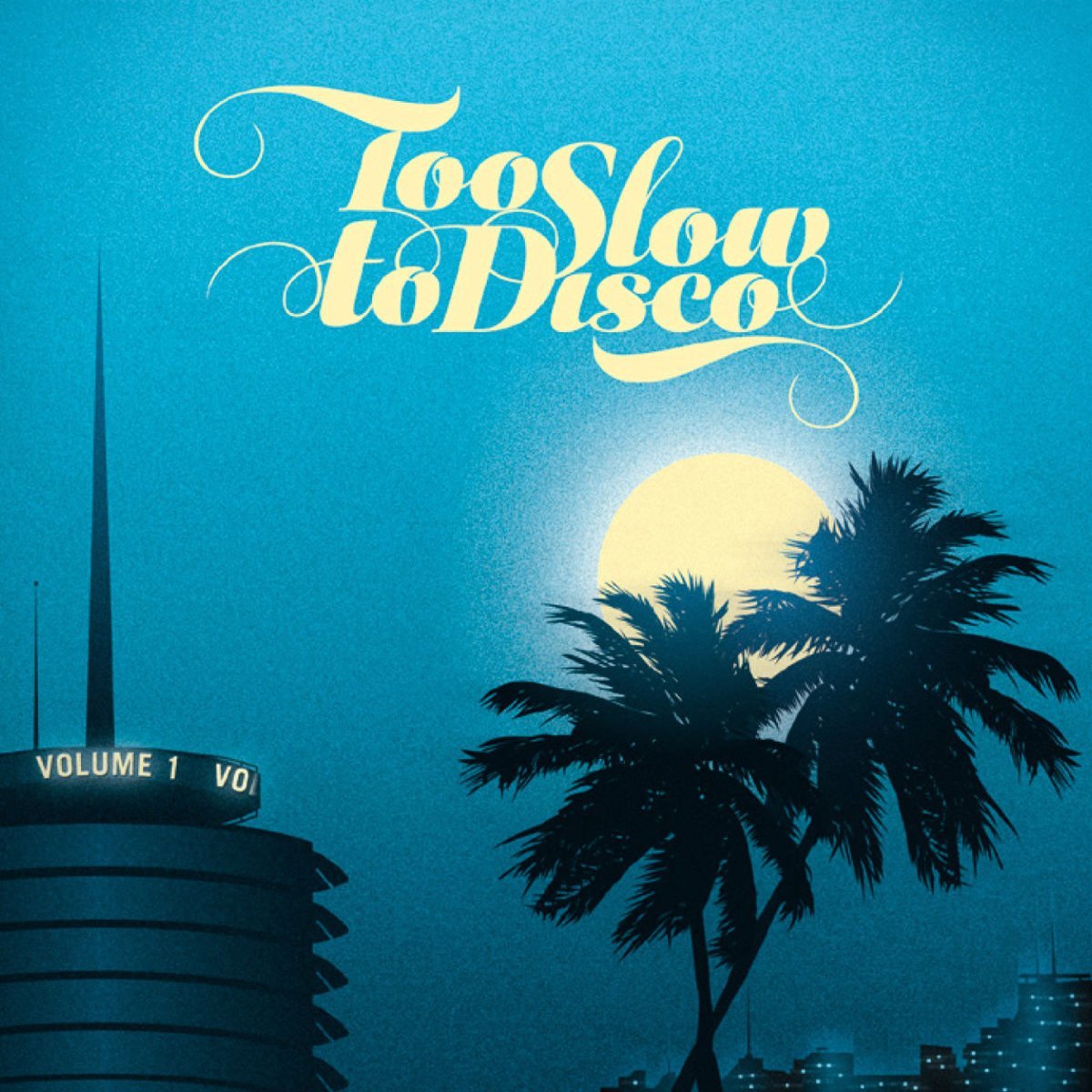
TOO SLOW TO DISCO.
For the last thirty years, many people have mocked the seventies West Coast sound. They viewed the lush harmonies, slick sound and clever chord progressions with disdain. One of the reasons for this was that West Coast rock was perceived as the music of the establishment. When punk came along, groups like the Sex Pistols, The Clash and The Stranglers took to mocking West Coast rock. These groups cast themselves as class warriors. Helping spread their message was the music press. Unquestionably, they parroted the message of these new class warriors. Their message was met by slavish approval. Now however, this wrong has been righted, and the seventies West Coast sound is back, and best of all, it’s fashionable. Recently, a number of compilations have celebrated the West Coast sound, including Too Slow To Disco, which was released on How Dare You Are Recordings.
Classics, hidden gems and rarities sit side-by-side. There’s contributions from West Coast royalty, including The Doobie Brothers, Fleetwood Mac, and Chicago. There’s also contributions from Tony Joe White, Rupert Holmes and Matthew Larkin Cassell on Too Slow To Disco. It’s the perfect introduction to the delights of the much maligned West Coast sound. It received a bad press in the late-seventies and early-eighties from blinkered musicians and music journalists. They perceived the West Coast sound as the music of the establishment. As a result, the West Sound incurred the wrath of these class warriors. They encouraged a generation to ignore the many, and varied, delights of the West Coast sound. That was a great shame. Hopefully, a new generation of music lovers won’t make the same mistake. After all, there’s a cornucopia of great music awaiting discovery. The nineteen tracks on Too Slow To Disco are an introduction to the West Coast sound. Hopefully, How Dare You Are Recordings will release further volumes in the Too Slow To Disco series and a new generation will discover the delights of the West Coast sound.
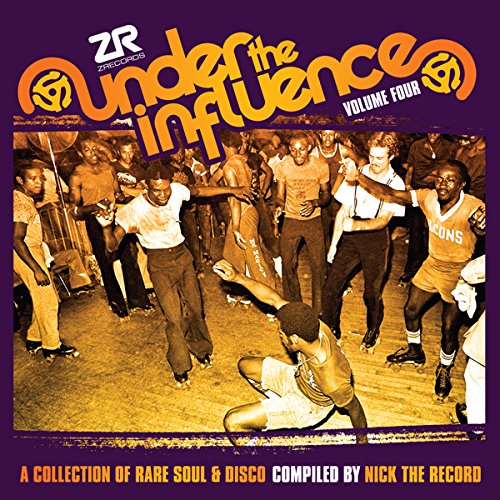
UNDER THE INFLUENCE VOLUME 4-COMPILED BY NICK THE RECORD.
For Under The Influence Volume 4, there is a a new compiler. Nick The Record takes over compiling duties on Under The Influence Volume 4. Nick is responsible for compiling the latest in the Under The Influence series. This means that Nick The Record has been busy. That’s an understatement. He has been on a crate digging expedition extraordinaire and has discovered some of the rarest disco, funk and boogie. Over the two discs on Under The Influence Volume 4-Compiled By Nick The Record, the listener is introduced to a platter of musical delights including Boogsie, The Family Tree, Jean Adebambo, Wild Fire, Leston Paul, Santth, Shelbra Deane, Ronnie Jones, Charlie Mike Sierra and State Of Grace.
Under The Influence Volume 4-Compiled By Nick The Record is, without doubt, the best of the four volumes. There’s no filler whatsoever. Instead, Under The Influence Volume 4-Compiled By Nick The Record is chock full of quality music. As one great song finishes, another begins. Just when you think you’ve heard the highlight of Under The Influence Volume 4-Compiled By Nick The Record, you’re forced to think again. Under The Influence Volume 4-Compiled By Nick The Record is an eclectic selection of floor-fillers. Some of them are familiar faces, others hidden gems. Boogie, disco, electronica, funk, Italo Disco and soul can all be found on Under The Influence Volume 4-Compiled By Nick The Record. They sit happily side-by-side on Under The Influence Volume 4-Compiled By Nick The Record, the latest and best in ZR Records Under The Influence series.
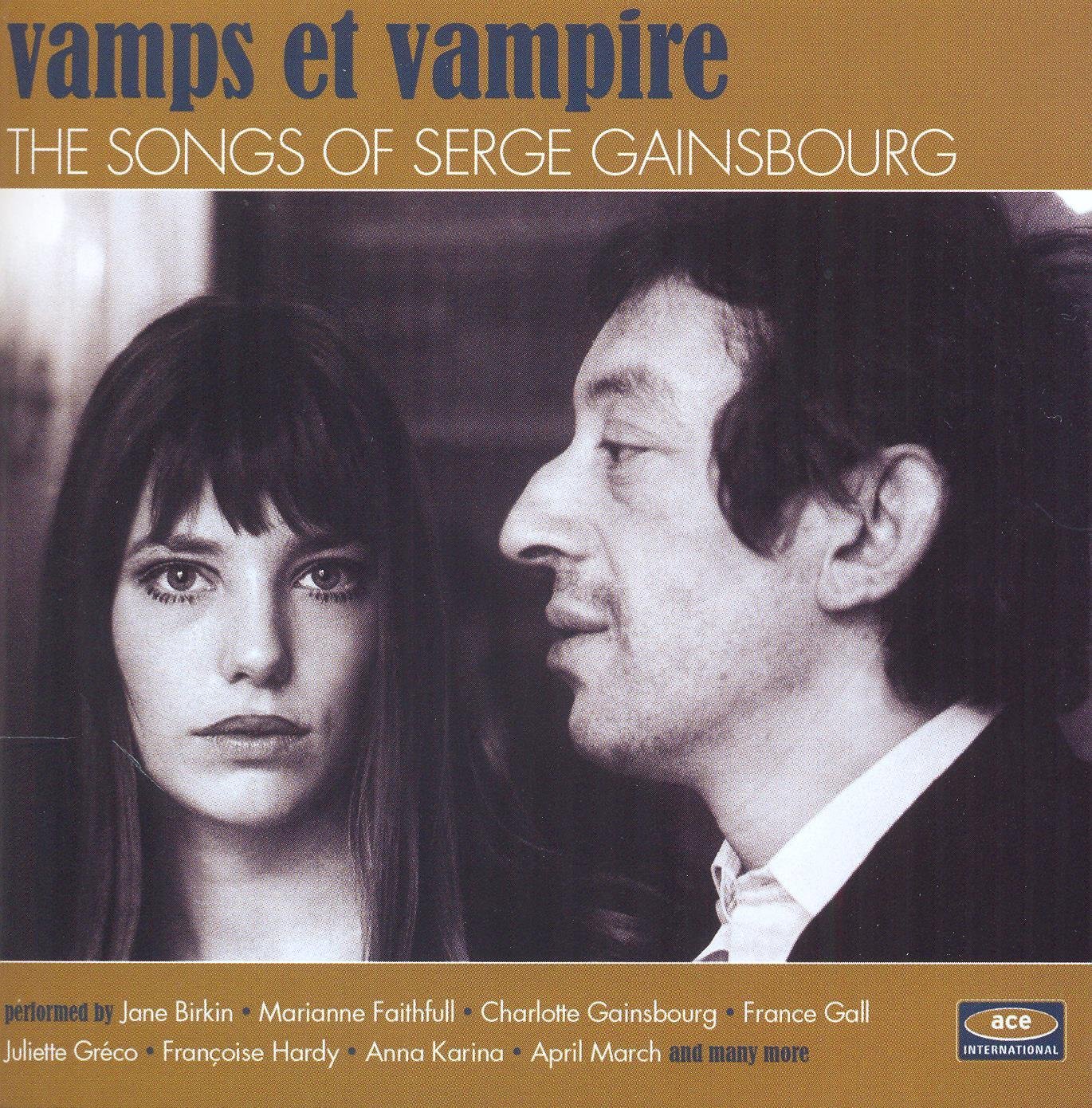
VAMPS ET VAMPIRE-THE SONGS OF SERGE GAINSBOURG.
Maverick, bon viveur, raconteur and rebel. These are just a few of the words that describe French singer, songwriter, poet, composer, artist, actor and director Serge Gainsbourg. He’s one of the most influential and controversial figures in French culture. Serge did things his way. Often that proved controversial. A master of wordplay his are lyrics funny, provocative, satirical, subversive, shocking and thought-provoking. This was the case throughout his career. During his career, it was impossible to categorise Serge’s music. His back-catalogue is best described as eclectic. He recorded everything from chanson, disco, jazz, mambo, new wave, pop, prog rock, reggae, rock ’n’ roll and ye ye. Serge’s music was recorded by a whole host of artists, including many female singers who feature on compilation Vamps Et Vampire-The Songs Of Serge Gainsbourg which was released by Ace Records.
Vamps Et Vampire-The Songs Of Serge Gainsbourg is the perfect introduction to Serge Gainsbourg’s music. It features contributions from some of the greatest French female vocalists. Among them are Françoise Hardy, Marianne Faithfull, Juliette Gréco, Marianne Faithfull, Jane Birkin, Brigitte Bardot and Michèle Torr. It’s like a who’s who of French music. Each of these songs have one thing in common, they were written by Serge Gainsbourg. He was one of the most influential and controversial figures in French culture. Serge did things his way. Often that proved controversial. A master of wordplay his are lyrics funny, provocative, satirical, subversive, shocking and thought-provoking. This was the case throughout his long and successful career. Sadly, Serge Gainsbourg passed away in March 1991. Twenty-three years ago, French music lost one of its legends. He’s sadly missed and Vamps Et Vampire-The Songs Of Serge Gainsbourg is a reminder of the man and his music.
VELVET REVOLUTIONS PSYCHEDELIC ROCK FROM THE EASTERN BLOC VOLUME TWO 1968-1971.
One of the last sources of undiscovered music has to be what was the former Eastern Bloc. Especially the music released during the psychedelic era. As a result, music lovers in the West never got to discover the psychedelic rock music that was popular within the Czechoslovakia, Yugoslavia, Poland and Hungary. Each of these countries had a thriving psychedelic scene between 1968 and 1971. However, many music lovers are still unaware of this.
It’s only very recently that Eastern European psychedelia is starting to be heard by a wider audience. One of the labels flying the flag for Eastern European psychedelia are Particles. They released Velvet Revolutions Psychedelic Rock From The Eastern Bloc Volume Two 1968-1971. It’s the followup to Velvet Revolutions-Psychedelic Rock From The Eastern Bloc 1969-1973. Released in 2013, this for many people, was their introduction to Eastern European psychedelia.This was just the tip of a musical iceberg, as Velvet Revolutions Psychedelic Rock From The Eastern Bloc Volume Two 1968-1971 proves.
There’s music from Czechoslovakia, Yugoslavia, Poland and Hungary. This includes Olympic, Progress Organisation, Kameloni, The Matadors, Romauld I Roman, Crupa 220, Breakout, Blue Effect, Omega and No To Co. The music is groundbreaking and genre-melting. Everything from avant garde, blues, folk, pop, psychedelia, prog rock and rock can be heard on Velvet Revolutions Psychedelic Rock From The Eastern Bloc Volume Two 1968-1971. Just like the best in American, African, British and Western European psychedelia, the music on Velvet Revolutions Psychedelic Rock From The Eastern Bloc Volume Two 1968-1971 has stood the test of time. It’s truly. timeless. Indeed, the music sounds way ahead of its time. Sadly, for most people, they’ll never have heard the music on Velvet Revolutions Psychedelic Rock From The Eastern Bloc Volume Two 1968-1971. Hopefully, this will change, and Velvet Revolutions Psychedelic Rock From The Eastern Bloc Volume Two 1968-1971 is just the start of a comprehensive reissue program of Eastern European psychedelia.

VERCKYS ET L’ORCHESTRE VEVE-CONGOLESE FUNK, AFROBEAT AND PSYCHEDELIC RUMBA 1969-1978.
Recently, on 8th Decmeber 2014, Analog Africa released Verckys Et L’Orchestre-Congolese Funk, Afrobeat and Psychedelic Rumba 1969-1978. It’s an eleven track celebration of the Orchestre Veve’s music.
Just as I’ve come to expect from Analog Africa, Verckys Et L’Orchestre-Congolese Funk, Afrobeat and Psychedelic Rumba 1969-1978, is a lovingly compiled compilation. It was compiled by label owner Samy Ben Redjeb. He’s dug deep into the Orchestre Veve’s vaults, and has compiled a compilation that reflects their eclecticism. As a result, Verckys Et L’Orchestre-Congolese Funk, Afrobeat and Psychedelic Rumba 1969-1978 is a fitting tribute to one of the most innovative, influential and pioneering Congolese orchestras, Orchestre Veve, which was lead by musical maverick Georges Mateta Kiamuangana.

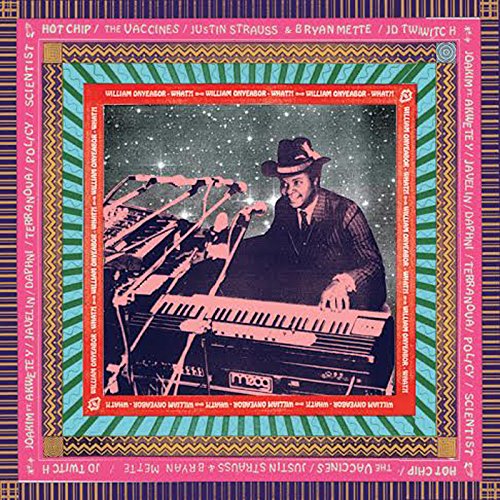
WILLIAM ONYEABOR-WHAT?
It was only when David Byrne’s Luaka Bop released World Psychedelic Classics 5: Who is William Onyeabor in October 2013, that the wider world first heard the music of one the most mysterious and elusive musicians. A year later, and it’s no longer just discerning musical connoisseurs who love the music of William Onyeabor. No. Many people within the music industry are fans of William Onyeabor’s music. So much so, that when Luaka Bop decided to release an album of cover versions and remixes of William Onyeabor’s music, that many high profile musicians and remixers offered their services. This includes Hot Chip, The Vaccines, Justin Strauss and Brian Mette, JD Twitch, Javelin, Policy and Scientist. They all feature on William Onyeabor-What?! It’s a ten track compilation which was released during September 2014.
These artists and remixers have taken some of William Onyeabor’s best known tracks and reinvented them on William Onyeabor-What?! The tracks are transformed. New life and meaning is breathed into a selection of William Onyeabor classics. As a result, William Onyeabor-What?! is the perfect companion to World Psychedelic Classics 5: Who is William Onyeabor. They’re the perfect introduction to a musical innovator, who fused a multiplicity of musical genres and influences to create his own unique and inimitable sound.
YOU TALK TOO MUCH-THE RIC AND RON STORY VOLUME 1.
Joe Ruffino founded his Ric and Ron labels in 1958. For the next five years, they were one of New Orleans’ premier independent R&B labels. During this five year period, artists of the calibre of Professor Longhair, Irma Thomas, Johnny Adams, Eddie Bo and Eddie Laing released singles on the Ric and Ron labels. Many of these singles were written or produced by Joe Ruffino. This was pretty good going for someone who originally, had started out in the record distribution business. Little did Joe realise that Ric and Ron would become so successful, so much so, that a whole host of labels would model themselves on his labels. What Joe would also surprised Joe Ruffino is that forty-one years after his labels shut their doors for the last time, interest in the music released by Ric and Ron has never been higher. That’s why Ace Records have recently released You Talk Too Much-The Ric and Ron Story Volume 1.
On You Talk Too Much-The Ric and Ron Story Volume 1, are twenty-four tracks from the vaults of Ric and Ron. There’s contributions from Professor Longhair, Irma Thomas, Al Johnson, Tommy Ridgley and Joe Jones. Compiled by Tony Rounce who wrote the sleeve-notes, this is the first in a series of compilations featuring the music released by Ric and Ron. The music on You Talk Too Much-The Ric and Ron Story Volume 1, is among the finest R&B released by New Orleans labels between 1958 and 1960. Well known artists and unknown artists sit side by side on You Talk Too Much-The Ric and Ron Story Volume 1. They have one thing in common, and that they recorded some timeless R&B. Backed by some of New Orleans’ finest musicians, these artists are responsible for some of the finest music released on Joe Ruffino Ric and Ron labels.

So, that’s what I regard as the best fifty compilations I’ve reviewed during 2014. It wasn’t easy choosing the fifty finest. I could just as easily chosen another ten or twelve compilations. However, after much contemplation this is what I regard as the best fifty compilations I’ve reviewed during 2014. I’ll do it all again in 2015.
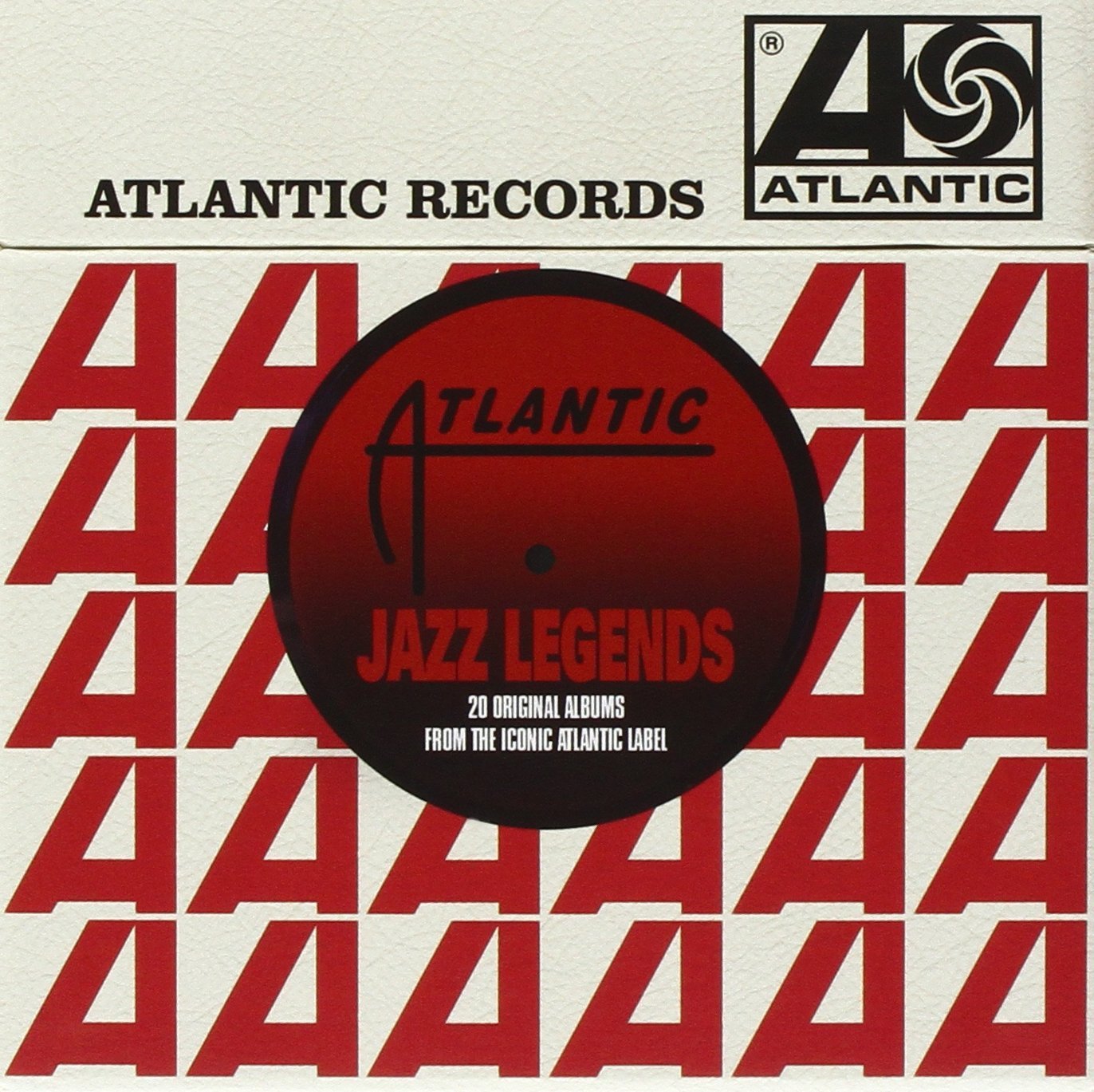
ATLANTIC JAZZ LEGENDS-20 ORIGINAL ALBUMS FROM THE ICONIC LABEL.
ATLANTIC JAZZ LEGENDS-20 ORIGINAL ALBUMS FROM THE ICONIC LABEL.
Mention the great jazz labels, and automatically think of Blue Note, Impulse, Capitol Records and of course, Atlantic Records. It was founded in 1947, by Ahmet Ertegün and Herb Abramson. Eight years later, in 1955, Ahmet’s brother Nesuhi joined Atlantic Records. By then, Atlantic Records had embraced jazz.
Jazz, Atlantic Records, believed was the future of music. They were right. There was an explosion in jazz’s popularity. This just happened to coincide with the introduction of the twelve-inch LP. Soon, Atlantic Records became synonymous with jazz music. It was home to some of the most innovative and groundbreaking artists. Among them, were John Coltrane, Charles Mingus, Ornette Coleman, Rahsaan Roland Kirk, Herbie Mann, Chick Corea, Art Blakey and Thelonious Monk. Each of these artists feature in the Atlantic Jazz Legends-20 Original Albums From The Iconic Label box set, which was recently released by Rhino.
For newcomers to jazz, the Atlantic Jazz Legends-20 Original Albums From The Iconic Label box set, is the perfect introduction to twenty years of jazz released by Atlantic Records. It’s meant to be the perfect primer to what’s without doubt, one of jazz’s legendary labels. The albums in the Atlantic Jazz Legends-20 Original Albums From The Iconic Label box set were released between 1956 and 1973, and a are a tantalising taste of an iconic jazz label, Atlantic Records.
The Atlantic Jazz Legends-20 Original Albums From The Iconic Label box set story starts in 1956. That’s when Chris Connor released her eponymous album Chris Connor. She works her way through a set of standards that includes Cole Porter’s I Get A Kick Out Of You, Get Out Of Town and Anything Goes. Along with Rogers and Hart’s He Was Too Good To Me, Chris Connor is an album of vocal jazz that heads off in bluesy, soulful tangents. Two years later, two jazz legends would collaborate
In 1958 Art Blakey and Thelonious Monk collaborated on Jazz Messengers. This coming together of giants, resulted in a critically acclaimed album of bop and hard bop. Not for the last time, would Art Blakey and Thelonious Monk play their part in a classic album.
Just like Art Blakey and Thelonious Monk, Ornette Coleman is remembered as a pioneer of jazz. His first release on Atlantic Records was 1959s The Shape Of Jazz To Come. That was no idle boast. Far from it, The Shape Of Jazz To Come was a groundbreaking album, from one of the founding fathers of free jazz. However, The Shape Of Jazz To Come isn’t the only Atlantic Records debut within the Atlantic Jazz Legends-20 Original Albums From The Iconic Label box set.
John Coltrane’s Giant Steps, which was released in 1960, was the first album ‘Trane released on Atlantic Records. It was case of start as you mean to go on. Giant Steps was a John Coltrane classic. Gone was bebop, to be replaced by hard bop. However, ‘Trane’s music continued to evolve. By 1961s My Favorite Things ‘Trane fused modal jazz and hard bop. That was still to come. During 1960, two hugely influential albums were released.
The first was Charles Mingus’ Blues and Roots. It was Charles Mingus’ Atlantic Records’ debut. Just like John Coltrane, Charles Mingus’ music was evolving. Blues and Roots was an ambitious album of post bop. Equally ambitious was The Modern Jazz Quartet’s 1960 album Pyramid. It was an album of West Coast Jazz tinged with bop. For The Modern Jazz Quartet, the cool school wasn’t out yet and would still be going strong in 1962.
That’s when Mel Torme released Comin’ Home Baby. For me, 1962s Comin’ Home Baby is a controversial inclusion. It’s a mixture of soul jazz and easy listening that I could’ve lived without. After all, there’s much more worthy inclusions, including albums that helped change musical history. However, doubtless the compilers will argue that Comin’ Home Baby’s inclusion shows just how eclectic Atlantic Records’ back-catalogue is. There’s everything from Mel Torme’s easy listening to Mose Allison’s post bop.
Just like so many artists that feature in the Atlantic Jazz Legends-20 Original Albums From The Iconic Label box set, Mose Allison was always looking to push musical boundaries. By 1964, when he released The Word From Mose his music is best described as post bop. Mose’s previous Atlantic Records’ albums veered between blues, jazz and soul jazz. He was a versatile artist, just like Joe Mooney, Dave Pike and Joe Zawinul.
During 1966, Joe Mooney, Dave Pike and Joe Zawinul all released albums on Atlantic Records. For some people, Joe Mooney’s Lush Life will be a controversial choice. However, once they’ve experienced the delights of Lush Life, they’ll be won over by Joe. Sometimes, swings, other times the music has a moody, late night sound. This slice of vocal jazz is the surprise package in the Atlantic Jazz Legends-20 Original Albums From The Iconic Label box set. Dave Pike’s Jazz For The Jet Set is another hidden gem. Vibes player Dave Pike switches to the marimba and is accompanied by guitarist Billy Butler and Herbie Hancock on Hammond organ. The result is an album of curios and obscurities that epitomise an era. Joe Zawinul’s Money In The Pocket is the other album released during 1966. It marks the debut of the Austrian fusion virtuoso, and hints at what’s to come from the future bandleader and Miles Davis’ sideman. A year after Joe Zawinul released his Atlantic debut, so did Freddie Hubbard and Roy Ayers.
By 1967, trumpeter Freddie Hubbard had released albums on Blue Note, Impulse and Prestige. Then in 1967, Freddie released Backlash on Atlantic Records. It’s a blistering debut from another of jazz music’s pioneers. Constantly, Freddie explored new genres. He never stood still, and during the sixties moved from bebop and hard bop to post bop. Backlash is the perfect introduction to one of jazz’s explorers. The same goes for Roy Ayers’ Atlantic Records’ debut Virgo Vibes. Back then, the future looked bright for Roy, who was one of jazz’s rising stars. On Virgo Vibes, one of Roy’s hidden gems, the vibes man taking hard bop in a new and unexpected directions. An equally adventurous album, is Rahsaan Roland Kirk’s The Inflated Tear.
Not many artists have to overcome blindness. Rahsaan Roland Kirk did and became a multi-instrumentalist. His disability didn’t hinder him. Far from it. By 1968, Rahsaan Roland Kirk was ready to release The Inflated Tear, an album of post bop. It was the followup to 1967s Here Comes The Whistleman. It’s a blistering album from the pioneering reeds-man.
The same year, 1968, two albums of free jazz were released. Free jazz pianist Keith Jarrett released his debut album Life Between The Exit Signs, on Atlantic Records’ subsidiary Vortex. It’s a tantalising taste of what the Keith Jarrett was capable of. However, the
Yusef Lateef’s The Blue Yusef Lateef is a stonewall classic. Elements of free jazz and hard bop combine to create an album where Yusef pushed musical boundaries to their limits, and sometimes, even beyond. As the sixties drew to a close, that’s what people expected from records bearing the Atlantic Records’ logo.
By 1969, flautist Herbie Mann had released a string of critically acclaimed albums on Atlantic Records. Memphis Underground, released in 1969, is best described as an album of soul-jazz. This was very different to his previous albums. That’s not surprising. Herbie never stood still. His music was constantly evolving and moving forward. This ensured as a new new decade was about to dawn, that his music stayed relevant.
There’s only three albums from the seventies in the Atlantic Jazz Legends-20 Original Albums From The Iconic Label box set. The first is Latin percussionist Mongo Santamaria’s 1970 album, Mongo ’70. On Mongo ’70, musical genres melt into one. Elements of Afro-Cuban, jazz, Latin and jazz-funk unite, playing their part in what’s a genre-melting album. That’s also the case on Billy Cobham’s album Spectrum.
Spectrum was drummer Billy Cobham’s 1973 debut album. By then, Billy was already twenty-nine. However, he was part of a new musical genre, fusion. Fusion was a marriage of jazz, funk and rock. This was the way the jazz was heading in 1973. Soon, fusion would be one of the most popular musical genres. Even jazz veterans like Chick Corea would jump on the fusion bandwagon. In 1973, Chick Corea released Inner Space, where elements of fusion and post bop collide, creating a groundbreaking album, which is the final album in the Atlantic Jazz Legends-20 Original Albums From The Iconic Label box set.
Earlier, I described the Atlantic Jazz Legends-20 Original Albums From The Iconic Label box set as the perfect primer to to what’s without doubt, one of jazz’s legendary labels. There’s twenty album from three decades. The twenty albums were released during a seventeen year period between 1956 and 1973.
1956 was the year after the twelve-inch LP was introduced. This played its part in the rise and rise of Atlantic Records. From the introduction of the album, Atlantic Records embraced jazz. Soon, Atlantic Records became synonymous with jazz music. It was home to some of the most innovative and groundbreaking artists. Among them, were John Coltrane, Charles Mingus, Ornette Coleman, Rahsaan Roland Kirk, Herbie Mann, Chick Corea, Art Blakey and Thelonious Monk. For the next seventeen years, Atlantic Records signed some of the jazz’s biggest names and rising stars. Many of them feature in the Atlantic Jazz Legends-20 Original Albums From The Iconic Label box set, which was released recently by Rhino.
Whether you’re a newcomer to, or veteran of jazz music, the Atlantic Jazz Legends-20 Original Albums From The Iconic Label box set deserves to find its way into your record collection. It features everything from Afro-Cuban, bebop, easy listening, free jazz, fusion, harp bop, jazz-funk, Latin, post bop and vocal jazz. As a result, the best way to describe the Atlantic Jazz Legends-20 Original Albums From The Iconic Label box set is eclectic. It’s also a box set that’s sure to provoke debate.
Just like any box set, where the compiler can only pick twenty albums, music lovers will debate the merits of the various albums. After all, there’s so many candidates within Atlantic Records’ vaults. This must have made choosing just twenty albums extremely difficult. However, mostly, the albums with the Atlantic Jazz Legends-20 Original Albums From The Iconic Label box set are their on merit. That’s apart from Mel Torme’s Comin’ Home Baby. I can think of many albums that are worthy of a place with the Atlantic Jazz Legends-20 Original Albums From The Iconic Label box set. Maybe however, they’ll find their way into Volume 2.
There must be a followup to the Atlantic Jazz Legends-20 Original Albums From The Iconic Label box set. After all, for three decades Atlantic Records was synonymous with jazz. That’s why The Atlantic Jazz Legends-20 Original Albums From The Iconic Label box set is a welcome release, a reminder of one of the heyday of one jazz’s greatest labels.
ATLANTIC JAZZ LEGENDS-20 ORIGINAL ALBUMS FROM THE ICONIC LABEL.
GEORGE HARRISON-THE APPLE YEARS.
GEORGE HARRISON-THE APPLE YEARS.
On the 10th April 1970, Paul McCartney announced his departure from The Beatles. A week later, he released his debut album McCartney. Meanwhile, The Beatles were in the process of releasing their swan-song, Let It Be.
Just a month later, the Phil Spector produced Let It Be, and the single The Long and Winding Road were released on the 8th May 1970. Let It Be was a disappointing swan-song from The Beatles. It was the only Beatles album not to be accompanied by glowing, critically acclaimed reviews. Worse was to come, later in May 1970, the documentary that accompanied Let It Be was released. Critics weren’t impressed by the documentary. Despite this, Let It Be won the 1970 Academy Award for Best Original Song Score. By then, the four former Beatles were concentrating on their solo careers.
After the breakup of The Beatles in 1970, John, Paul and Ringo embarked upon solo careers. Most of the attention centred around John and Paul. This suited George Harrison fine.
George Harrison’s solo career began in November 1968, nearly two before the breakup of The Beatles. That’s when George Harrison released the soundtrack to Wonderwall, which is one of six newly remastered albums to feature in the luxurious and lovingly compiled box set The Apple Years. It features some of the most of the most innovative, yet underrated music released by a former Beatle. This starts with George Harrison’s debut album, Wonderwall.
Wonderwall.
Wonderwall was the soundtrack to Joe Massot’s film. The soundtrack was a fusion of two musical cultures. Indian classical music and rock sat side-by-side on Wonderwall. This isn’t surprising. George Harrison had been interested in Indian music since 1966. Now George had the opportunity experiment with his new musical love.
Recording of Wonderwall took place between November 1967 and February 1968. On Wonderwall, George Harrison collaborated with renowned classical pianist and orchestral arranger John Barham. He played an important part in Wonderwall. So did a number of Indian musicians, including of the other Mahapurush Misra, Shivkumar Sharma and Aashish Khan. However, it wasn’t just classical musicians that featured on Wonderwall.
Eric Clapton, Ringo Starr and Peter Tork featured on Wonderwall. So did Tony Ashton and his band The Remo Four. Once recording of Wonderwall was complete, it was released on The Beatles’ new record label Apple.
Before Wonderwall was released, it failed to catch the attention of critics. Many didn’t even bother to review Wonderwall. They perceived it as just a soundtrack. However, since then, critics have reevaluated Wonderwall. It’s now perceived as a compelling and innovative album. Indeed, Wonderwall is now one of the most underrated solo albums by a former Beatle. Not many people would’ve realised this in 1968.
Wonderwall was released in Britain on 1st November 1968, it failed to chart. A day later, Wonderwall was released on 2nd November 1968. It peaked at number forty-nine in the US Billboard 200. This vindicated George Harrison’s decision to release such a groundbreaking album. The followup to Wonderwall saw George’s music head in a much more avant garde direction.

Electronic Sound.
Just over a year later, George Harrison released his sophomore album, Electronic Sound. It was an album of avant garde music. Electronic Sound was released on The Beatles’ short lived Zapple label in May 1969.
Zapple was an imprint of Apple. Its raison d’être was to release of avant garde music. However, Zapple didn’t last long. When Allen Klein started managing The Beatles, he closed the label down. This was one of his cost cutting measures. One of the few albums it released was Electronic Sound.
Electronic Sound was recorded during November 1968 and February 1969. The album featured just two lengthy pieces played on the Moog snyth. Under the Mersey Wall lasted nearly nineteen minutes and No Time or Space was a twenty-five minute epic. These two songs became Electronic Sound, which was released in May 1969.
Just like Wonderwall, critics weren’t interested in Electronic Sound. Reviews were few and far between. That’s not surprising. Here was an album that ahead of its time. Very few people understood what George was trying to achieve. Later, when critics revisited Electronic Sound, it was deemed as an album for completists only or those interested in pioneering electronic albums. Electronic Sound hadn’t stood the test of time. Neither was it a commercial success.
Electronic Sound was released in Britain on 9th May 1969, and failed to chart. Just over two weeks later, Electronic Sound was released in America on 25th May 1969. History repeated itself and Electronic Sound failed to chart. However, George’s luck was about to change. His third album All Things Must Pass, which was recently released by Commercial Marketing as a double album, would transform George Harrison’s career.

All Things Must Pass.
While his first two album had been adventurous and groundbreaking, George Harrison’s third album All Things Must Pass is much more traditional. All Things Must Pass showcases George’s talent as a songwriter.
For All Things Must Pass headed to the studio with eighteen tracks. Many of the songs were new songs. Some of the tracks on All Things Must Pass were written while George was a member of The Beatles. They turned down tracks like All Things Must Pass and Isn’t It A Pity. So George kept them for his solo career. Now was the time to showcase these songs on All Things Must Pass.
Sixteen of these tracks were written by George. The exceptions were I’d Have You Anytime, which George and Bob Dylan cowrote. If Not For You was the other track on All Things Must Pass. It was a cover of a Bob Dylan song. These eighteen songs were part of what became a triple album. It was recorded in three top studios and featured an all-star cast.
Recording of All Things Must Pass began on 26th May 1970 and finished in late October 1970. Three studios were used. This included Abbey Road Studios, Trident Studios and Apple Studios. During that five month period, the great and good of music played a walk on part on All Things Must Pass.
During the recording sessions for All Things Must Pass, Derek and The Dominos featured. Jim Gordon played drums, Carl Radle bass and Eric Clapton acoustic and electric guitars. Ex-Beatle Ringo Starr played drums. Billy Preston who played with both The Beatles and Rolling Stones played piano and organ. Another Beatles’ confident, Klaus Voormann, played guitar and bass. Ginger Baker of Blind Faith played drums. Dave Mason of Traffic played electric and acoustic guitars and Phil Collins of Genesis percussion. Alan White of Yes added drums. These big names were joined by some top session players.
This included Bobby Whitlock. He was formerly a member of Delaney and Bonnie, and in 1970, session musician to the stars. Bobby played piano, organ, tubular bells and harmonium. Horns came courtesy of saxophonist Bobby Keys and trumpeter and trombonist Jim Price and pedal steel Pete Drake. Playing acoustic guitar were Pete Ham, Tom Evans and Joey Molland. Pianists included Tony Ashton and Gary Brooker. Joining this crack band of session players was Beatles’ roadie Mal Evans, who played percussion. He played a small part in what would become the most successful album of George Harrison’s career, All Things Must Pass.
With All Things Must Pass completed, it was scheduled to be released on 27th October 1970. Before then, the music critics passed judgment on All Things Must Pass. There was not one dissenting voice. Critics hailed All Things Must Pass as a classic. Critical acclaim accompanied All Things Must Pass. It was, without doubt, the greatest album of George’s three album solo career. It was a coming of age for George Harrison.
It was as if George Harrison had been freed from the shackles that were The Beatles. He was being held back by the Lennon-McCartney axis. They dictated what songs featured on albums. George’s songs were rejected out of hand. He was about to have the last laugh though.
The cover of All Things Must Pass saw George Harrison surrounded by four comedic looking gnomes. They were meant to represent The Beatles. Beatles watchers saw this as George commenting on his removal from The Beatles. No longer was he a Beatle. After all these years as a Beatle, George was had his own identity back. Even better, he was about to release a classic album All Things Must Pass.
27th October 1970 was D-Day for George Harrison. That was the day All Things Must Pass was released as a triple album. The first four sides featured the main part of All Things Must Pass. It was produced by George and Phil Spector. On sides five and six, was Apple Jam. It featured five jams. The lavish triple album that was All Things Must Pass, was about to become one of the most successful solo albums by a former Beatle.
The lead single released from All Things Must Pass during 1970 was a double A-Side. This was My Sweet Lord/Isn’t It A Pity. It reached number one in America, Australia, Britain, Canada, Germany, Holland, Norway, Sweden and Switzerland. Having sold one million copies in America, My Sweet Lord was certified gold. It was then nominated for a Grammy Award. There was a problem though.
Anyone familiar with Ronnie Mack’s He’s So Fine, will immediately spot similarities between the two songs. So did Bright Tunes Music. They filed a write against George’s Harrisongs Music on 10th February 1971. Nearly five years later, on 23rd February 1976, the case was settled. It was held that George Harrison “subconsciously copied” He’s So Fine. Damages totalled $1,599,987, which was deemed 75% of the North American royalties. For George, the case caused him huge problems. He became so paranoid about subconsciously copying some else’s work, that he could hardly write. However, back in 1970, that wasn’t the case.
On the release of All Things Must Pass on 27th October 1970, it reached number one in America, Australia, Britain, Canada, Holland, Norway and Sweden. All Things Must Pass also reached number four in Japan and number ten in Germany. Given how successful All Things Must Pass was, it’s no surprise it was certified gold in Britain and Canada. In America, All Things Must Pass was certified platinum six times over. That equates to sales of six million copies of All Things Must Pass. Never again, would George Harrison reach these heights. After all, All Things Must Pass is a stonewall classic.
After the release of All Things Must Pass, no longer was George perceived as a junior partner in The Beatles. That was far from the case. He was a talented and prolific songwriter. The sixteen songs he wrote for were just the tip of a musical iceberg. For years, George had been quietly writing songs. By 1970, he had accumulated a vast body of work. Now was the time to let the record buying public hear what he was capable of on All Things Must Pass.
All Things Must Pass was George’s Magnus Opus. It’s an epic album. Lavish, epic arrangements are the perfect foil for George’s vocal. The music is both melodic and mystical. Especially when George draws inspiration from Indian music. This is part of All Things Must Pass’ spiritual sound.
During All Things Must Pass spirituality and religion play an important part. This is apparent on My Sweet Lord. Just like other tracks on All Things Must Pass, My Sweet Lord is a mixture of rock ’n’ religion. It’s an anthemic modern day hymnal. However, there’s other influences on All Things Must Pass.
This includes The Band, Bob Dylan and of course Phil Spector. His arrangements are part of the albums lavish, grandiose sound. Phil Spector co-produced All Things Must Pass. He was yin to George’s yang. Now that George was freed from the constraints of Lennon and McCartney, Phil helped the genie escape from the bottle.
In doing so, Phil Spector helped George Harrison record an album he’d never better, All Things Must Pass. Cerebral and spiritual, beautiful, thoughtful and spiritual, the music is sometimes wistful and melancholy. Always, you’re compelled during six sides of music. For George Harrison, many thought that following up All Things Must Pass was almost impossible.

Living In The Material World.
After the release of All Things Must Pass, George Harrison put his career on hold. Instead, he spent much of 1971 and 1972 raising money for the refugees in the newly independent Bangladesh. One of George’s biggest, and most ambitious, fundraising projects was The Concert for Bangladesh on the 1st August 1971.
Two concerts took place on the 1st August 1971. At 2.30pm and 8pm, George Harrison and Friends took to the stage. These “friends” included Bob Dylan, Eric Clapton, Ringo Starr, Billy Preston, Ravi Shankar, Leon Russell and Badfinger. These concerts were recorded and released as a triple album.
When The Concert For Bangladesh album and film were released in America on 20th December 1971 and on 10th January 1972 in Britain, it proved to be a huge success. The album topped the charts around the world, and won a Grammy for Album of the Year. Eventually, George’s fundraising efforts raised twelve million dollars, which was sent to Bangladesh. Only after the fundraising was over, would George’s career resume.
For his fourth album, and first since 1970, George penned the eleven new tracks that became Living In The Material World. It was a highly personal album. The songs dealt with George continued struggle for spiritual enlightenment. This wasn’t easy. Especially with George being viewed as a musical “superstar.” Living in the physical world, with all its temptations made it difficult for George to reach his spiritual goals. George a deeply spiritual man, it seemed, was struggling with Living In The Material World.
Recording of Living In The Material World began at George’s Oxfordshire home, Friar Park. In Friar Park’s guest room, George had a recording studio installed. It centred around sixteen-track tape machine. The sessions began during October 1972 and continued through to March 1973. Other sessions took place at the Apple Studios and Abbey Road Studios. This was where George’s band got to work.
When the recording of Living In The Material World, began, George had decided to use a smaller band. This included Gary Wright, Jim Keltner, John Barham, Klaus Voormann, Nicky Hopkins, Zakir Hussain and ex-Beatle Ringo Starr. They recorded the eleven tracks that became Living In The Material World. Later, in February and March 1973, overdubbing took place. Once Living In The Material World was recorded,it was scheduled for release in May and June of 1973.
Before the release of Living In The Material World, it was one of the most highly anticipated albums of 1972. No wonder. George Harrison hadn’t released an album since 1970. A taste of Living In The Material World was the single Give Me Love (Give Me Peace on Earth). On its release it reached number four in Britain and number one in the US Billboard 100. This augured well for Living In The Material World.
When critics heard Living In The Material World, they hailed the album a pop classic. Words like cerebral, profound and spiritual were used to describe the deeply personal Living In The Material World. This critically acclaimed classic was an insight into life as an ex-Beatle. What was obvious, was that George Harrison was obviously finding it difficult reconciling his spiritual needs, with life as a music legend. His legendary status was about to grow.
Living In The Material World was released in America on 30th May 1973, and reached number one in the US Billboard 200 charts. This resulted in a gold disc for George. When Living In The Material World was released in Britain on 22nd June 1973 it reached number two. Elsewhere, Living In The Material World reached number one in Australia and Canada, and reached the top ten in Holland, Japan, Norway and Sweden. George Harrison’s star was still in the ascendancy, having released his second classic album.

Dark Horse.
The aptly titled Dark Horse was George’s fifth album. After all, George had released the most successful solo album by a former Beatle, All Things Must Pass. He’d followed this up by his second solo album Living In The Material World. So by December 1975, critics and music lovers eagerly awaited the release of Dark Horse. However, the Dark Horse album will forever by mired in controversy, due to the accompanying tour. The story begins in November 1973.
For Dark Horse, George wrote seven of the nine tracks. He also cowrote two other tracks, including Far East Man, which George and Ron Wood wrote. George also cowrote Bye Bye Love with Felice and Boudleaux Bryant. These tracks, like much of of the music on Dark Horse is extremely honest and personal.
This begins with Simply Shady, which opens Dark Horse. A guilt ridden George, examines his pursuit of earthly pleasures, rather than spiritual fulfilment. So Sad addresses the failure of George’s first marriage. It’s a soul-baring, autobiographical song. Maya Love is a song about illusory nature of love. George’s solo success lead to him being called the Dark Horse. After all, most people thought that John or Paul would enjoy the most successful solo career. These people had underestimated George. It Is ‘He’ (Jai Sri Krishna) was penned by George after he visited Vrindavan, in northern India, with his friend Ravi Shankar, who later, would play an important role in the Dark Horse story.
Before that, recording of Dark Horse began in November 1973. Recording began at George’s home studio at Friar Park, Oxfordshire. After a break the sessions resumed in April 1974. Then between August and October 1974, Dark Horse was completed. Some of the sessions took place in Los Angeles, at A&M Studios. Accompanying George was an all-star band.
For the recording of Dark Horse, some of the musicians that played on Living In The Material World returned. Among them, were Gary Wright, Jim Keltner, Klaus Voormann, Nicky Hopkins and Beatle Ringo Starr. They were joined by Ron Wood, saxophonist Tom Scott, Roger Kellaway and Alvin Lee. Just like previous albums, Dark Horse which was released in December 1974, was produced by George.
On the 9th December 1974, Dark Horse was released in America. This coincided with George’s Dark Horse tour of North America. This was a controversial tour for two reasons. The first was, that Ravi Shankar was named as co-headliner. Given that this was the first North American tour by an ex-Beatle since 1966, this didn’t go down well.
Audiences wanted to see George, not what many audience members regarded as a “little known” Indian musician. This was far from the truth. Ravi Shankar was a well known, and highly regarded and respected musician. He was also a good friend of George, who was struggling with laryngitis during the tour.
Due to the laryngitis, George couldn’t feature as heavily as he wanted. However, he thought this was the perfect opportunity to let audiences hear more of Ravi Shankar. This backfired on George.
Critics, including some of the most influential music critics and cultural commentators rounded on George and his decision to allow Ravi Shankar to feature so heavily. Some of the concert reviews were scathing and the George Harrison-Ravi Shankar tour called a failure. This affected sales of Dark Horse.
Rather than judge Dark Horse on its merits, it was a case of guilt by association. What was a groundbreaking album, showcasing George’s new sound was trashed by some axe grinding, influential critics. Their view of Dark Horse was taken as gospel. Looking back, Dark Horse was an ambitious and innovative album, one that should’ve been a bigger commercial success.
Prior to the release of Dark Horse, the title-track was released as a single in America on 18th November 1974, and reached number fifteen in the US Billboard 100 charts. The second single was Ding Dong, Ding Dong, was released on 6th December 1974. It reached number thirty-eight in Britain and thirty-six in the US Billboard 100 charts. However, the album, Dark Horse fared better commercially.
Dark Horse was released on 9th December 1974. It reached number four on the US Billboard 200 charts. This resulted in another gold disc for George. However, in Britain, Dark Horse failed to chart. However, it was later certified silver, having sold over 50,000 copies. After Dark Horse, critics were left wondering if George’s star was no longer in the ascendancy?
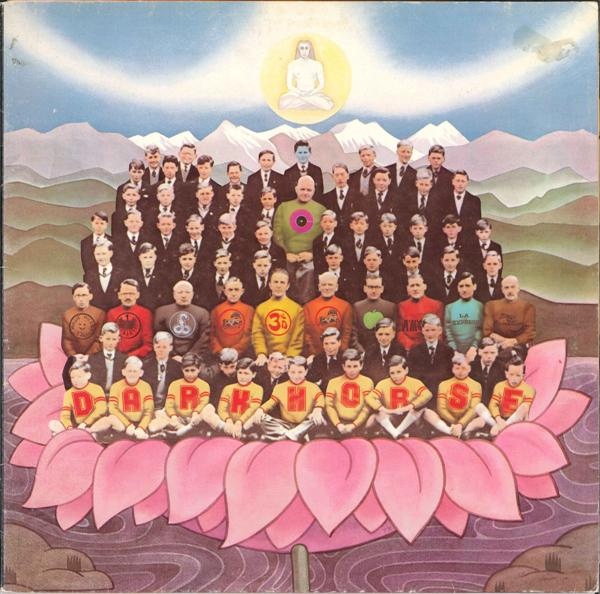
Extra Texture (Read All About It).
The criticism of the Dark Horse tour and album had affected George badly. Returning to Friar Park, George became melancholy and wistful. Some went as far as to say he was slightly depressed. This was reflected in some of the ten songs that George wrote for Extra Texture (Read All About It). They find a melancholy George in a reflective state. Unlike other albums, Extra Texture (Read All About It) has no spiritual message. It’s quite different from George’s five previous albums, right down to where it was recorded.
Whilst George had recorded previous albums in Britain, he decided to forsake his home country for Los Angeles. This made sense. After all, most of George’s band were Americans.
While most of Dark Horse was recorded in A&M Studios, Los Angeles, some recording took place at George’s home studio, in his Friar Park mansion. Abbey Road Studios were also used. However, for much of the time A&M Studios, Los Angeles was a home from home for George as he recorded Extra Texture (Read All About It).
That’s where George’s band, that included Gary Wright, Jim Keltner, Klaus Voormann, Nicky Hopkins and Beatle Ringo Starr. They were joined by Ron Wood, saxophonist Tom Scott, Billy Preston, Ronnie Spector and George’s wife Dhanni Harrison. They recorded Extra Texture (Read All About It), which was George Harrison’s Apple Records’ swan-song.
Ever since George was working on Dark Horse, he’d been working on founding his own record label, Dark Horse. It would release his future albums, and albums by artists George discovered or believed in. Getting a record label up and running, was taking time. However, at least this allowed him the opportunity to fulfil his obligations to Apple Records. Would however, George leave Apple Records on a high with Extra Texture (Read All About It),?
Critics didn’t think so. On its release, Extra Texture (Read All About It) was panned my critics. They called the album a series of sermons from George Harrison. These sermons were called aimless and pointless. Sometimes, there was air of pomposity about Extra Texture (Read All About It). Only Tired Of Midnight Blue and Can’t Stop Thinking About You were up to George’ usual high standards. This resulted in the critics turning on George. Rolling Stone savaged the album. Other critics followed suit. For George, Extra Texture (Read All About It) didn’t look like being the swan-song he’d hoped for.
Extra Texture (Read All About It)’s lead single was You, which was released on 12th September 1975. You reached number thirty-eight in Britain and number twenty in the US Billboard 200. Then when This Guitar (Can’t Keep from Crying) was released in America on 8th December 1975, it failed to chart. Two months later, history repeated itself, when This Guitar (Can’t Keep from Crying) was released in Britain. On its release on 6th February 1976, This Guitar (Can’t Keep from Crying) failed to chart. Had George lost his Midas touch?
Despite the scathing reviews, Extra Texture (Read All About It) was still a commercial success. It reached number sixteen in Britain and number eight in the US Billboard 200 charts. This resulted in another gold disc for George. While Extra Texture (Read All About It) wasn’t his most critically acclaimed album, it was a commercial success. This allowed George Harrison to leave Apple Records with his head held high.

After Extra Texture (Read All About It), a new era began for George Harrison. He released his future albums on his own Dark Horse label. It was distributed by A&M Records. For George, owning his own label made commercial sense, and just as importantly, for a musical innovator, gave him much more artistic freedom.
At Apple Records, George was one of four partners in the label. In the early days of Apple Records, George was allowed the freedom to experiment. This allowed him to record Wonderwall, a groundbreaking album, that for far too long, was underrated by critics. Then when Allen Klein became The Beatles’ manager, he wasn’t keen to release Electronic Sound, George’s sophomore album. It was far too experimental, for Allen Klein’s liking. He’d been brought in to sort out The Beatles and Apple Records’ finances. Allen Klein realised that albums like Electronic Sound, important and innovative they may be, weren’t going to be million sellers. However, Electronic Sound was released and for his third album, George Harrison released the most successful album by a former Beatle, All Things Must Pass.
Of all the albums George Harrison recorded, All Things Must Pass is his Magnus Opus. Featuring his classic single My Sweet Lord, All Things Must Pass was a career defining album. George was on a roll. He followed All Things Must Pass with Living In The Material World.
This was George’s second classic album. Living In The Material World showed, that, the man referred to as the Dark Horse had hidden depths. That was obvious from George’s Beatles’ days. He’d written If I Needed Someone, Taxman, Within You Without You, While My Guitar Gently Weeps, Something, Here Comes The Sun and I Me Mine. It was obvious to most people that George was a talented songwriter. The only people who it seemed, couldn’t see this, were Lennon and McCartney. They rejected many of George’s songs. As a result, George stockpiled these songs for his solo career.
By 1974, George was about to release Dark Horse. This was a controversial album. After two albums where seemingly, George could do no wrong, the critics turned on George. Partly, the scathing reviews were down to give Ravi Shankar equal billing. When George was struck down with laryngitis, Ravi Shankar played a bigger role in the tour. This didn’t please some high profile critics. They turned on George, giving both the Dark Horse tour and album scathing reviews. This affected sales of Dark Horse.
Although, Dark Horse was a success in America, back in Britain, the album flopped. No longer was the Dark Horse enjoying the same commercial success as he had. To make matters worse, his sixth album Extra Texture (Read All About It) was also panned by critics. However, the difference was, it was a bigger success in Britain and America. For George Harrison, this was a successful, if not critically acclaimed end to The Apple Years.
The Apple Years is also the name of the recently released George Harrison box. It includes George’s first six albums, Wonderwall, Electronic Sound, All Things Must Pass, Living In The Material World, Dark Horse and Extra Texture (Read All About It). This luxurious box set includes newly digitally remastered versions of each album. These remasters have been taken from the analogue masters. There’s also previously unreleased material and a DVD that’s exclusive to the box set. For all Beatles and George Harrison fans The Apple Years is essential listening.
Especially since The Apple Years features George Harrison’s first two overlooked albums, Wonderwall and Electronic Sound. Both albums are truly groundbreaking, and feature music that was way ahead of its time. George Harrison was, and will always be remembered as a musical pioneer. However, there’s more to The Apple Years than two albums.
The Apple Years features George Harrison’s two classic album All Things Must Pass and Living In The Material World, which are career defining albums. Dark Horse and Extra Texture (Read All About It), complete The Apple Years and are a reminder of George Harrison, the man who forever will be remembered not just as a Beatle, but the Dark Horse.
GEORGE HARRISON-THE APPLE YEARS.

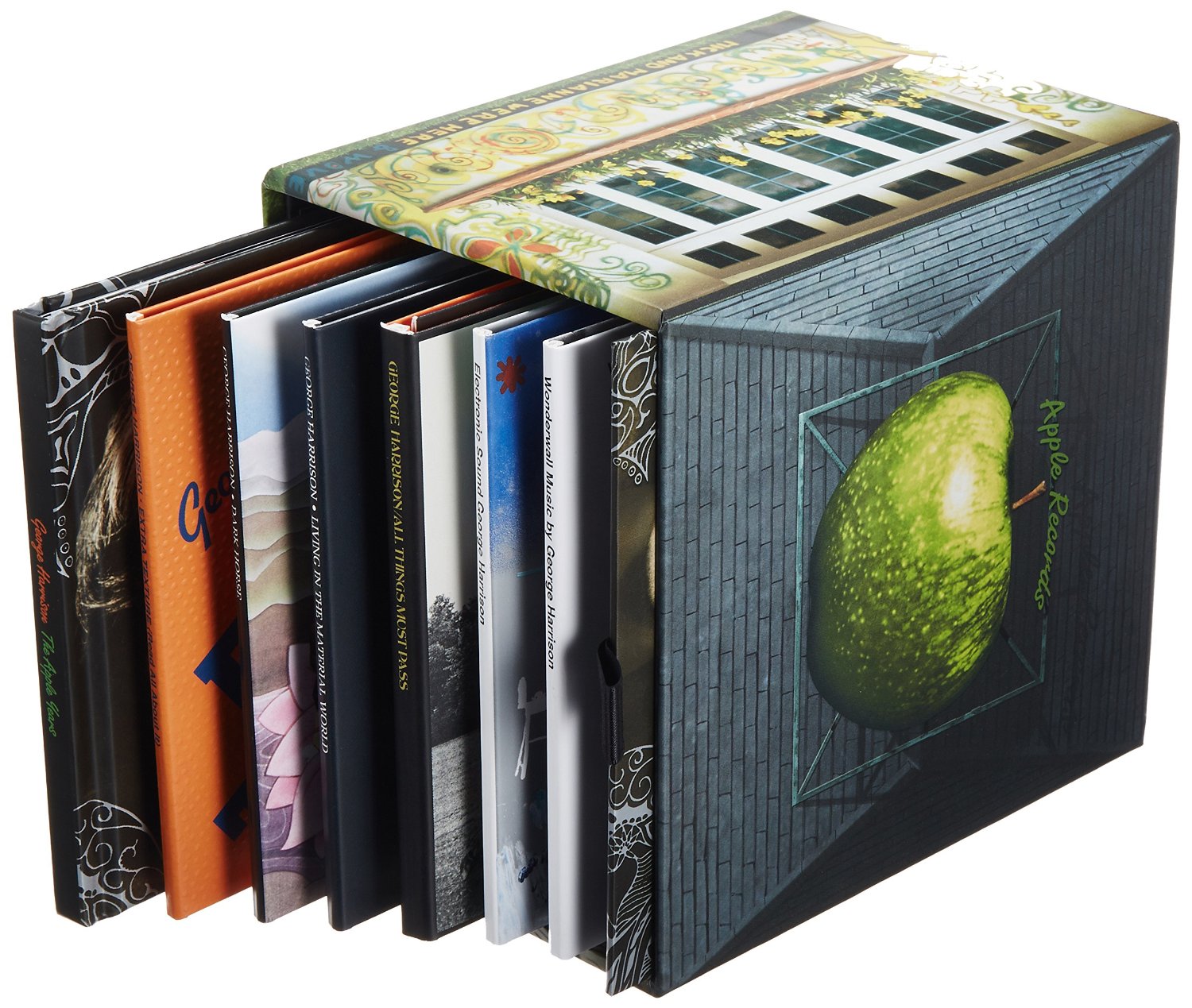
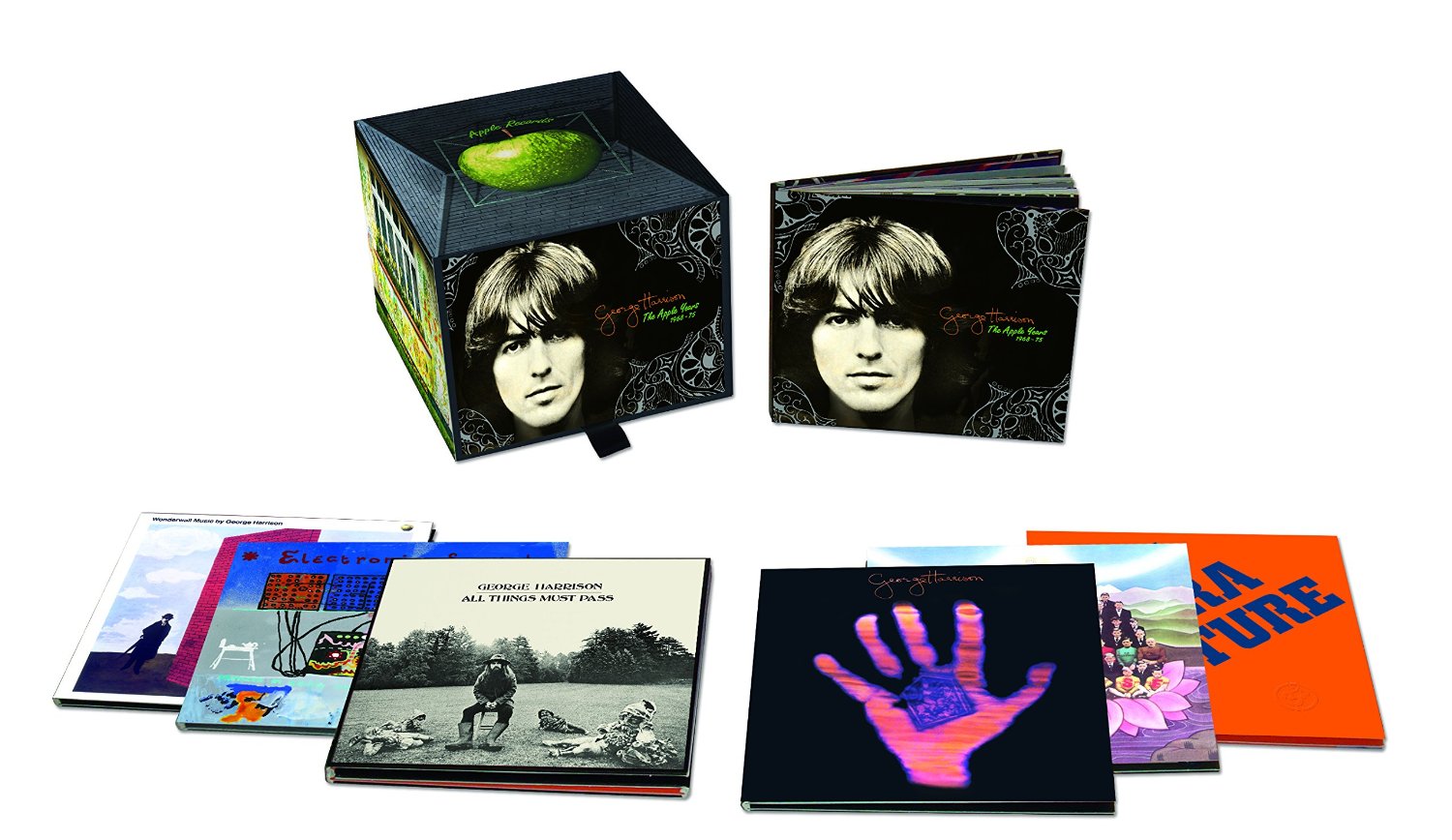
DEEP PURPLE-MADE IN JAPAN.
DEEP PURPLE-MADE IN JAPAN.
Recently, there’s been a real resurgence in vinyl releases. So much so, that in the last few weeks, vinyl releases have outnumbered CDs. It seems that vinyl is back, and back to stay. That’s backed up by sales of turntables. Just like vinyl sales, at their highest for years. What makes this all the more satisfying, is that a new generation of music lovers are discovering the delights of vinyl played on a decent turntable.
After all, there’s nothing better than listening to a classic album on vinyl. The music has a much warmer sound. Even with the inevitable snap, crackle and pop, the sound is far superior to the weedy sound of an MP3. Then there’s the artwork. On a vinyl album, it’s like viewing a mini artwork. Turn over, and there’s the list of everyone who played their part in the album. Often, there were inserts featuring lyrics or posters. Then on double albums, like Deep Purple’s Made In Japan, which will be reissued on 31st December 2014, by Friday Music, is the gatefold sleeve. It’s much mourned where, designers were able to let their imagination run riot. Thankfully, with the resurgence of interest in vinyl, the gatefold sleeve is back, including on Deep Purple’s Made In Japan.
During August 1972, Deep Purple were touring Japan. Deep Purple’s reputation preceded them. Their penchant for the rock ’n’ roll lifestyle was legendary. Chaos and carnage was omnipresent as Deep Purple toured the world. That’s why Deep Purple were referred to as the third member of the “unholy trinity of British hard rock and heavy metal.” Led Zeppelin and Black Sabbath were their main rivals for the crown of hardest living and most successful heavy metal band.
Although Deep Purple had only been formed in 1968, they’d already released six albums. From their 1968 debut album Shades Of Deep Purple, commercial success came Deep Purple’s way. America and Britain were won over by Deep Purple.
By 1972, everything Deep Purple touched turned to gold and platinum. Their sixth album, 1972s Machine Head was the most successful of their career. It was certified gold in the UK and double platinum in the US. As far afield as Argentina and France, gold and platinum discs were coming Deep Purple’s way. Four months after the release of Machine Head in March 1972, Deep Purple were touring their latest album.
That’s why Deep Purple were touring Japan in August 1972. Their Machine Head World Tour was scheduled to last the rest of 1972 and into 1973. On the 15th and 16th of August 1972, Deep Purple took to the stage in Osaka. Then on 17th August 1972, Deep Purple landed in Tokyo. These three concerts were recorded and became Made In Japan. It was released in December 1972 in the UK and April 1973 in the US. This further reinforced Deep Purple’s reputation as one of the greatest heavy metal bands. Since then, Made In Japan, which was recently rereleased as a double album, has attained legendary status. Not bad for a band who were only formed four years previously.
Deep Purple were formed in 1968 in Hertford. However, the story begins in 1967. That was when ex-Searchers drummer, Chris Curtis, contacted London based businessman, Tony Edwards, with a business proposition. Chris wanted to create a supergroup which he would name Roundabout. The idea behind the name was that the lineup was fluid. Members would come and go, on what was akin to a musical roundabout. Tony Edwards liked the idea and brought onboard Jon Coletta and Ron Hire. They named their new venture Hire-Edwards-Coletta (HEC) Enterprises. Now with financial backing, Chris Curtis started putting together Roundabout.
The first member of Roundabout was Jon Lord, a classically trained organist. He’d previously played with The Artwoods. Guitarist Richie Blackmore, who recently, had been working as a session musician is Hamburg auditioned. He too joined Roundabout. So did bassist Nick Simper, whose most recent band was The Flower Pot Men. Nick was a friend of Richie Blackmore. The two other members of Roundabout were also friends. Rod Evans was recruited as the lead vocalist. Previously, he was a member The Maze. Their drummer was Nick Paice. Nick became the final piece in the jigsaw. However, he was not the first choice drummer.
Originally, Bobby Woodman was meant to be Roundabout’s drummer. He was drummer when Rod Evans auditioned as vocalist. Richie Blackmore had seen Nick Paice playing before. Although just eighteen, Richie knew Nick Paice was a good drummer. So when Bobby headed out to buy cigarettes, Nick Paice was auctioned. Instantly, everyone realised Nick Paice was a better drummer. When Bobby returned with his cigarettes, he was no longer Roundabout’s drummer. However, at least Roundabout’s lineup was settled. Or so people thought.
Roundabout were kitted out with the finest equipment and lived at Deeves House in South Mimms, Hertfordshire. This was their home during March 1968. That was, until they headed out on a short tour of Denmark and Sweden. It was during this tour that Roundabout became Deep Purple.
It was Richie Blackmore that came up with the name Deep Purple. This was the name of his grandmother’s favourite song. That was the name he wrote on the blackboard, when everyone was asked to choose a new name for the nascent band. Deep Purple wasn’t the favourite though. That was Concrete God. However, the members of Roundabout decided against it. They felt the name was too harsh. So Roundabout became Deep Purple and began recording their debut album in May 1968.
Shades Of Deep Purple.
When Deep Purple entered Pye Studios, in Marble Arch, London Deep Purple in May 1968, they’d chosen ten songs for their debut album Shades Of Deep Purple. Seven songs were written by members of Deep Purple. The other three songs were cover versions. This included Joe South’s Hush, Lennon and McCartney’s Help! and Joe Roberts’ Hey Joe which is synonymous with Jimi Hendrix. These ten songs were recorded by the original version of Deep Purple. This included
vocalist Rod Evans, drummer Ian Paice, bassists Nick Simper, organist Jon Lord and guitarist Richie Blackmore. Producing Shades Of Deep Purple was a friend of Richie’s, Derek Lawrence. Once Shades Of Deep Purple was recorded, it was released later in 1969
When critics heard Shades Of Deep Purple they weren’t impressed. Reviews were mostly negative. Since then, critics have rewritten history and most reviews of Shades Of Deep Purple are positive. Back in 1968, things were very different. Shades Of Deep Purple was perceived as unfocused. It was a mix of psychedelia, progressive rock, pop rock and thanks to Richie’s guitar riffs, hard rock. That was why many critics disliked Shades Of Deep Purple. Record buyers had different ideas about Shades Of Deep Purple,
Shades Of Deep Purple was released in July 1968 in America. It reached number twenty-four in the US Billboard 200 charts. This was no doubt helped by Hush reaching number four in the US Billboard 100 charts. Two months later, Shades Of Deep Purple reached number fourteen in Britain. For Deep Purple their debut album had been a commercial success and their lives transformed.
After the commercial success of the single Hush and Shades Of Deep Purple, Deep Purple were booked into a gruelling tour of America. Their American record company, Tetragrammaton, decided that Deep Purple should record another album. So Deep Purple headed into the recording studio in September 1968 to record The Book of Taliesyn.
The Book of Taliesyn.
Time was against Deep Purple. There wasn’t long before their American tour began. Deep Purple only had five new songs written. They had to rely upon cover versions to complete The Book of Taliesyn. Neil Diamond’s Kentucky Woman, Lennon and McCartney’s We Can Work It Out and River Deep, Mountain High completed The Book of Taliesyn. It was released in America in December 1968,
Just like Shades Of Deep Purple, The Book of Taliesyn was a mixture of psychedelia and progressive rock. The only difference was it had a harder edge. Deep Purple’s trademark sound was evolving. Critics seemed to prefer The Book of Taliesyn. It received a much more favourable reception from critics. This was also the case upon the release of The Book of Taliesyn.
Released in December 1968, The Book of Taliesyn reached number fifty-four in the US Billboard 200. Two singles were released in America. Kentucky Woman reached number thirty eight in the US Billboard 100 charts. Then River Deep, Mountain High stalled at number fifty-three in the US Billboard 100 charts. The Book of Taliesyn charted in Canada and Japan. It seemed word was spreading about Deep Purple. However, in Britain, The Book of Taliesyn failed to chart. That wasn’t the only problem Deep Purple would have.
Deep Purple.
By 1969, Deep Purple were becoming a tight, talented band. Onstage and in the studio, they were growing and evolving. This included as songwriters. Although they’d only been together just over a year, they were a much better band. They’d released two albums and toured constantly. There was a problem though. Which direction should their music take?
Some members of Deep Purple wanted their music to take on a rawer, harder sound. This didn’t please everyone. Lead vocalist Rod Evans and bassist Nick Simper were in the minority. Organist Jon Lord, guitarist Richie Blackmore and drummer Nick Paice wanted the band to change direction. With the band split, this wasn’t the best way to prepare for the recording of their third album Deep Purple.
For Deep Purple, the band were keen to turn their back on cover versions. Deep Purple only featured one cover version, Donavon’s Lalena. The eight tracks were all written by members of Deep Purple. Just like their first two albums, Deep Purple would be produced by Derek Lawrence.
Recording of Deep Purple took place during a two-month tour. Deep Purple had ensured they had some free days where they could record their third album during January and March 1969. Recording took place at the De Lane Lea Studio, London. They were familiar with the De Lane Lea Studio. Previously, Deep Purple had rerecorded The Bird Has Flown there. So, they were familiar with the room. This allowed Deep Purple to work quickly. With their reputation in America growing, Deep Purple wanted their eponymous album released as soon as possible.
As soon as Deep Purple was recorded, Deep Purple jumped on a plane and headed back to America. They rejoined the tour of the country that had claimed them as their own. There was a problem though. Tetragrammaton, Deep Purple’s American label hadn’t pressed the album. Worse than that, the label had financial problems. Within a year, they would be insolvent and would be filing for bankruptcy. Already, this was affecting Deep Purple. Their manager John Colleta headed home. He decided that this would save on a hotel room. Things it seemed, couldn’t get any worse for Deep Purple.
On the release of Deep Purple in June 1969, the album had a harder sound. Elements of blues, progressive rock and heavy metal combined on seven tracks. The exception was The Bird Has Flown. It veered off in the direction of classical music. Mostly, though, Deep Purple’s trademark sound was evolving. How would critics and fans respond to Deep Purple?
Given the problems with Tetragrammaton, it’s no surprise that Deep Purple wasn’t a commercial success. Tetragrammaton couldn’t afford to promote Deep Purple properly. Despite generally positive reviews from critics, Deep Purple stalled at 162 in the US Billboard 200 charts. It failed to chart in the UK on its release in November 1969. At least Deep Purple charted in Japan. Things looked up when Deep Purple was certified gold in Germany. That was the only good news Deep Purple enjoyed.
Deep Purple In Rock.
The tension that was within Deep Purple bubbled over after the release of their third album. This lead to vocalist Rod Evans and bassist Nick Simper being replaced. In came vocalist Ian Gillan and bassist Roger Glover. Little did anyone realise that this would later, be perceived as the classic lineup of Deep Purple. It was also the lineup that recorded the album that saw Deep Purple make a commercial breakthrough in Britain, Deep Purple In Rock.
With their new lineup, Deep Purple Mk II entered the studio for the second time. They made their recording debut on Concerto for Group and Orchestra which was a collaboration between Deep Purple and The Royal Philharmonic Orchestra. However, Deep Purple In Rock was the start of a new era in Deep Purple’s history.
Recording of Deep Purple In Rock took place at IBC, De Lane Lea and Abbey Road Studios. A total of seven songs were recorded. They were written by Deep Purple. These seven songs showcased the new Deep Purple. The music was heavier and more like what would be seen as their classic sound. This was essentially hard rock or heavy metal. It was after the success of Deep Purple In Rock that lead to Deep Purple being referred to as the third member of the “unholy trinity of British hard rock and heavy metal.
Deep Purple released Deep Purple In Rock on 3rd June 1970. This was Deep Purple’s first album to be released to widespread critical acclaim and commercial success. It was the first Deep Purple album to reach the top ten in Britain. Deep Purple In Rock reached number four in Britain. In America, Deep Purple In Rock only reached number 143 in the US Billboard 200 charts. Elsewhere, Deep Purple In Rock was a huge commercial success worldwide.
From Europe to Argentina, America and Japan, Deep Purple In Rock was a huge success. This resulted in gold discs for Deep Purple in America, Argentina, Britain, France and Holland. For Deep Purple, Deep Purple In Rock was a game-changer. Their decision to change direction musically was vindicated. Now, Deep Purple were one of the biggest bands in rock music. Little did Deep Purple realise that they were entering the most successful period of their career.
Fireball.
Fireball was the first of three number one albums Deep Purple would have in Britain. Belatedly, Britain had “got” Deep Purple. They were their own, and were proud of that. The hard rocking quintet’s unique brand of hard rock was winning friends and influencing people. Having toured extensively, at last Deep Purple were now part of British rock royalty. This continued with Fireball.
Given Deep Purple extensive touring schedule, albums were recorded whenever the band had downtime. Fireball was recorded during various sessions that took place between September 1970 and June 1971. Recording took place at De Lane Lea Studios and Olympic Studios, London. Other sessions took place at The Hermitage, Welcombe, North Devon. During these sessions, seven tracks were recorded. Each of the tracks were credited to the five members of Deep Purple. Unlike other bands, everyone in Deep Purple played their part in the songwriting process. That had been the case since the first album Deep Purple Mk. II had recorded, Deep Purple In Rock. Just like Deep Purple In Rock, Fireball would be a commercial success.
Most critics gave Fireball favourable reviews. There were very few dissenting voices. Apart from later, members of Deep Purple. They felt Fireball wasn’t their best album. Record buyers disagreed.
Across the world, Fireball was a huge commercial success. Fireball was released in Britain in July 1971. Record buyers in America and Europe had to wait until September 1971. By then, Fireball had reached number one in Britain and was certified gold. Two singles were released in Britain. Strange Kind of Woman reached number eight and Fireball number fifteen. This was just the start of Fireball’s success.
When Fireball was released in America it reached number thirty-two in the US Billboard 200 charts and was certified gold. In Canada Fireball reached number twenty-four. Fireball proved one of Deep Purple’s most successful albums in Japan, reaching number sixty-six. Australians were won over by Fireball, when it reached number four. Deep Purple proved popular in Israel, where they enjoyed a top ten album. However, it was in Europe that Fireball burnt brightest.
On Fireball’s release in September 1971, it reached number one in Belgium, Denmark, Germany and Sweden. Fireball reached the top ten in Finland, France, Holland, Italy Norway. Despite the widespread commercial success and critical acclaim Fireball enjoyed in Europe, the only gold disc awarded was in Holland. However, Deep Purple would make up for this with their sixth album, Machine Head.
Machine Head.
By 1972, Deep Purple had established themselves as one of the hardest working bands in music. They seemed to be constantly touring. When they weren’t touring, they were recording. As a result, Deep Purple were about release their sixth album in less than four years, Machine Head.
Unlike their five previous albums, Deep Purple didn’t head into the recording studio. Instead, they brought the recording studio to them. They were booked to stay at the Grand Hotel, in Montreux Casino, Switzerland. So that’s where they brought the Rolling Stone’s sixteen track mobile recording studio to. Between the 6th and 21st December 1971, Deep Purple were meant to record their sixth album, Machine Head. However, there was a problem.
Lead vocalist Ian Gillan had contracted hepatits. His doctors advised him to rest. For Deep Purple, this was a disaster. The hotel rooms and mobile recording studio was booked. They’d already had to cancel their forthcoming American tour. Cancelling the recording of their sixth album would be an utter disaster. No doubt realising the gravity of the situation, and buoyed by the excitement of starting recording a new album, Deep Purple decided to head to Switzerland.
Deep Purple landed in Switzerland on 3rd December 1971. Only one further concert had to take place at Montreux Casino. That was Frank Zappa’s now infamous concert. It took place on the 4th December 1971. During Frank Zappa’s set, an over enthusiastic member of the audience fired a flare. It hit the roof, causing the Montreux Casino to go on fire. Fortunately, nobody was hurt. Unfortunately, the Montreux Casino was in no fit state to double as a makeshift studio. Luckily, the Montreux Casino’s owner Claude Nobs new a theatre nearby that could be transformed into a makeshift studio. So Deep Purple headed to the Pavilion, where they’d record a song based on the somewhat surreal experience at the Montreux Casino. This song would become a classic, Smoke On The Water.
For what became Machine Head, Deep Purple had six songs completed. They were all credited to the five members of Deep Purple. So would the unfinished song. It was provisionally titled “Title No. 1.” However, as the five members of Deep Purple spoke about the events at the Montreux Casino, bass player Roger Glover uttered the immortal words “Smoke On The Water.” A classic had been born.
During a sixteen day period between the 6th and 21st December 1971, Deep Purple recorded their sixth album, Machine Head. The conditions weren’t ideal. The mobile recording studio was parked outside and cables run through the Pavilion. They ran along corridors and under doors. It was far from the ideal conditions to record an album. Coupled with Ian Gillan’s medical condition, it’s a wonder Deep Purple were able to even record an album, never mind a career defining album.
Machine Head was released on 25th March 1972. Reviews varied between favourable to glowing. Although reviews mattered, what counted was sales. There was no problem there. On its release, Machine Head reached number one in eight countries. This included Argentina, Australia, Austria, Britain, Canada, Denmark, France and Yugoslavia. In Holland, Italy, Japan, Norway andSweden, Machine Head reached the top ten. Across the Atlantic, Machine Head became Deep Purple’s most successful album, when it reached number seven in the US Billboard 200 charts. Given the commercial success of Machine Head, it received a plethora of gold and platinum discs.
Having reached number one in their home country, Machine Head was certified gold in Britain. Across the English Channel, Machine Head was certified gold twice. In Argentina, Machine Head was certified platinum. However, Machine Head was most successful in America, where it was certified double-platinum. However, this wasn’t the end of the commercial success. Machine Head featured two singles.
Never Before was chosen as the lead single in Britain. Although it reached number twelve, this seemed a strange choice. After all, Smoke In The Water was a classic in waiting. It reached number four in the US Billboard 100 charts. It wasn’t until 1977 that belatedly, Smoke In The Water was released as a single, where it reached number twenty-one. How it wasn’t released as a single in 1972, remains a musical mystery. However, having released a career defining album, Machine Head, Deep Purple headed out on their Machine Head World Tour.
Made In Japan.
The Machine Head World Tour would be one of the most gruelling tours Deep Purple had embarked upon. It was scheduled to last the rest of 1972 and into 1973. Deep Purple were a hugely successful band. That’s why music lovers in the four corners of the globe wanted to see and hear Deep Purple. That included in Japan.
By August 1972 Deep Purple had arrived in Japan. They’d been popular in Japan for most of their career. However, Machine Head transformed Deep Purple’s fortunes. This included in Japan. On the 15th and 16th of August 1972, Deep Purple took to the stage in Osaka. Then on 17th August 1972, Deep Purple landed in Tokyo. These three concerts were recorded and became Made In Japan.
Seven of the songs recorded in Japan made it onto Made In Japan. This includes Highway Star and Child In Time. They were recorded in Osaka on 16th June 1972. From the opening bars of Highway Star, Deep Purple burst into life. It’s the fastest song on Made In Japan. You’re mesmerised by Deep Purple’s performance. The same can be said about Child In Time. It’s a protest song against the Vietnam War is transformed into a ten minute epic. Next up comes a future classic Smoke On The Water.
Smoke On The Water was recorded in Osaka on 15th August 1972. It was taken from Deep Purple’s most recent album Machine Head. It’s a defining point in Made In Japan. Featuring some of Richie Blackmore’s peerless guitar riffs. Thankfully these guitar riffs keep on coming.
On The Mule, which was recorded in Tokyo on 17th August 19792, a ten second tambourine solo opens the track. It’s a curveball. Soon the organist Jon Lord, bassist Roger Glover and Richie Blackmore combine. When Richie unleashes a spellbinding solo, it lasts a minute. Later, the final three and half minutes see Deep Purple reduced to a quartet. Ian Gillan’s vocal drops out. The rest of Deep Purple cut loose and give a heavy rock masterclass. This continues throughout Made In Japan.
Strange Kind Of Woman was released as a single in 1971. This is the third of four tracks recorded in Osaka, on 15th August 1972. It’s an autobiographical story about a friend of Deep Purple who became involved with an evil woman and eventually, married her. The track became a favourite of Deep Purple live. One of the high points of the song is when Richie’s blistering guitar licks and Ian’s vocal duel. It’s akin to call and response, as Deep Purple showcase their inconsiderable talents.
The version of Lazy on Made In Japan is different to the version on Machine Head. Recorded in Tokyo, on 17th August 1972, it’s transformed into a ten minute epic. There’s even an except from Hugo Alfvén’s Swedish Rhapsody incorporated into Lazy, as they mix rock and blues seamlessly. Just like the rest of Made In Japan, Richie Blackmore unleashes some peerless guitar licks.
All too soon, Made In Japan is over. The closing track is Space Truckin, which was recorded in Osaka on 16th August 1972. That night, Deep Purple played one of the best sets in the Japanese leg of the The Machine Head World Tour. Often, Space Truckin’ closed the show during a twenty minute Magnus Opus. There’s even an excerpt from Mandrake Root incorporated into the track, as Deep Purple take the original track in new and unheralded directions. This allowed drummer Ian Paice and Ian Gillan to take centre-stage. Having said that, every member of Deep Purple plays their part in making Space Truckin’ a success. Especially, that night in Osaka on 16th August 1972.
For anyone who couldn’t make the Machine Head World Tour, Made In Japan was the perfect reminder of a legendary tour. Especially the Japanese leg. Between the 15th and 17th August 1972, Deep Purple were at their hard rocking best.
This continued wherever they went. However, there were a lot of people who wanted a reminder of this legendary tour. For others, who for whatever reason, couldn’t get to see Deep Purple, a double album entitled Made In Japan was almost as good. So Made In Japan was released in Britain in December 1972 and in America in April 1973.
When critics heard Made In Japan, even the most cynical and hardbitten rock critic had to compliment Deep Purple. They were no one of the three best heavy rock bands in the word. Led Zeppelin were the best and Deep Purple and Black Sabbath fought it out for second place. So well received was Made In Japan, that it was heralded as one of the finest live albums ever. Made In Japan further reinforced Deep Purple’s reputation as one of the greatest heavy metal bands.
On its release in December 1972, Made In Japan reached number fifteen in Britain and was certified gold. Made In Japan reached number one in Austria, Germany and Canada. In Norway, Made In Japan reached number seven. Then in April 1973, Made In Japan reached number six in the US Billboard 200. For Deep Purple, this resulted in even more gold and platinum discs.
Across the word, Made In Japan was a commercial success. After being certified gold in Britain, it was then certified gold in France. Made In Japan was then certified platinum in America, Austria, Germany and Italy. In Argentina, Made In Japan was certified double platinum. Just four years after they first formed, Deep Purple were one of the most successful rock bands in the world. Their 1972 legendary live album, Made In Japan, is a reminder of Deep Purple at their very best.
Following Made In Japan, commercial success and critical acclaim continued for Deep Purple. There would also be changes in lineup, breakups and reunions. However, the classic lineup of Deep Purple features on Made In Japan. The classic line up of Deep Purple bid a farewell on 1973s Who Do We Think We Are.
Although the original lineup of Deep Purple made a comeback, it wouldn’t be until 1984s Perfect Strangers. Made In Japan is a reminder of what Deep Purple fans missed for that eleven year period. Good as the new lineup of Deep Purple were, they never quite came close to reaching the heights that Deep Purple Mk. II reached. From Deep Purple In Rock right through Fireball, Machine Head and Who Do We Think We Are were at their hard rocking best. During this period, Deep Purple were one of “unholy trinity of British hard rock and heavy metal.”
Deep Purple’s penchant for the rock ’n’ roll lifestyle was legendary. It came with the territory. This was after all, rock ’n’ roll. Chaos and carnage was omnipresent and expected as Deep Purple toured the world. This never seemed to affect Deep Purple’s music. They were always at their hard rocking, hard living best. A reminder of this is Deep Purple’s first live album Made In Japan, which will be reissued on 31st December 2014, by Friday Music, and is without doubt, one of the finest live albums ever released.
DEEP PURPLE-MADE IN JAPAN.


CAPTAIN BEEFHEART-SUN ZOOM SPARK: 1970-1972.
CAPTAIN BEEFHEART-SUN ZOOM SPARK: 1970-1972.
It was in 1964 that Don Van Vliet first dawned his Captain Beefheart persona. By then, Don was already twenty-three and had led an eventful life. He’d been called a child prodigy, attended art school, sold vacuum cleaners and for the last two years, been a member of Alex Snouffer’s Magic Band. His story began in Glendale, California in 1941.
That’s where the future Captain Beefheart, was born Don Glen Vliet on January 15th 1941. By the time Don was three, he was already sculpting. His speciality was animals. So, it’s no surprised that when Don was nine, he won a children’s sculpting competition organised by Los Angeles zoo. This was just the start of Don’s artistic career.
During the fifties Don worked as an apprentice with Rodrigues. He spoke in glowing terms about Don, referring to his as a child prodigy. He wasn’t wrong.
Growing up, all Don wanted to do was sculpt. Sometimes, he was so busy sculpting, that Don forgot to eat. All that mattered was his art. Don it seemed, was aiming for artistic perfection. So, when he was offered several scholarships, it seemed that Don would jump at the opportunity.
Sadly, Don’s parents didn’t approve of their son heading to art school. As a result, Don wasn’t heading to art school. Instead, he was heading to Lancaster, in the Mojave desert, where the aircraft industry was thriving. This would influence Don’s sculpting.
It was also where Don’s eclectic musical taste developed. Blues and jazz were favourites of Dons, including Son House, Howlin’ Wolf, Muddy Walters, John Coltrane, Thelonious Monk and Ornette Coleman. Soon, Don was spending all day listening to music and sculpting. However, sometimes, Don spent time socialising with members of local bands The Omens and The Blackouts. Mostly though, art dominated Don’s life.
So much so, that Don wasn’t a regular attendee at Antelope Valley High School, in Lancaster. That didn’t seem to matter, as he was a gifted student. After high school, Don attended Antelope Valley Junior College as an art major. A year later, Don quit and got a job selling vacuum cleaners. Again, this didn’t last long, and Don got a job managing a shoe shop. After a while, Don quit and headed to Rancho Cucamonga, California, where once again, he hooked up with Frank Zappa, on old school friend.
With Frank Zappa’s help, Don was confident enough to take to the stage, imitating Howlin’ Wolf and playing the harmonica. What became apparent, was that Don had a wide vocal range. This would prove useful when his career began in 1962.
It was in in Lancaster, California, that Don met Alex Snouffer, an R&B guitarist. He asked Don to join his Magic Band. This resulted in Alex Snouffer becoming Alex St. Clair, and Don Glen Vliet becoming Don Van Vliet. A year later, in 1965, Don Van Vliet became Captain Beefheart.
Just a year later, Captain Beefheart and His Magic Band signed to A&M Records. Little did anyone realise that that day, the career of one of the most innovative artists began.
For Captain Beefheart and His Magic Band’s debut single, they covered Bo Diddley’s Diddy Wah Diddy. The followup was Moonglow, penned by David Gates, who would find fame and fortune with Bread. By then, Captain Beefheart and His Magic Band would be pushing musical boundaries to their limits, and sometimes, beyond. That’s the case on the thirteen albums Captain Beefheart and His Magic Band would release.
This included 1970s Lick My Decals Off, Baby, 1971s Mirror Man and 1972s The Spotlight Kid. These three albums, plus a disc of rarities feature on Sun Zoom Spark: 1970-1972, which was recently released by Rhino. However, before that, Captain Beefheart and His Magic Band released two classic albums.
Safe As Milk.
In 1967, Captain Beefheart and His Magic Band’s released their debut album, Safe As Milk. It was recorded at RCA Studios, in Los Angeles, during April 1967. Safe As Milk was a tantalising taste of what Captain Beefheart and His Magic Band were capable of.
Safe As Milk, Captain Beefheart and His Magic Band’s debut album, was released in September 1967. It was produced by Richard Perry and Bob Krasnow and featured an all-star cast. This included Ry Cooder and Taj Mahal of Rising Sons plus guitarist Russ Titelman. They played their part in a groundbreaking album, Safe As Milk.
On hearing Safe As Milk, critics realised this was unlike anything they’d heard before. It was an innovative and experimental, genre-melting album. Captain Beefheart’s love of the delta blues was evident on Safe As Milk. There’s even a cover of Robert Pete Williams’ Grown So Ugly. It was arranged by Ry Cooder. The other eleven tracks on Safe As Milk are original tracks, which Captain Beefheart either wrote or cowrote.
These tracks feature lyrics that veer between surreal and absurd. Another difference was the time signatures. This wasn’t an album of music in a 4/4 time signature. Instead, different time signatures feature throughout Safe As Milk, which critics hailed a classic. However, despite this, neither record buyers nor Buddah Records agreed.
Record buyers didn’t seem to ‘get’ Safe As Milk. It failed to chart in Britain or America. This would be the case with many of Captain Beefheart and His Magic Band’s albums. Commercial success would continue to elude them. Buddah Records didn’t get Safe As Milk. They were beginning to come to the conclusion that Captain Beefheart and His Magic Band’s music was too left-field and unconventional. That’s despite releasing a classic album, Safe As Milk.

Strictly Personal.
After Safe As Milk was released, Captain Beefheart and His Magic Band began work on their sophomore album Strictly Personal. It featured eight tracks penned by Captain Beefheart. They were recorded at Sunset Sound Studios, Los Angeles, between April 25th and May 2nd 1968. Once Strictly Personal was completed, it was due to be released by Buddah Records.
However, by then, Buddah Records had decided that Captain Beefheart and His Magic Band’s music was too left-field and unorthodox. So, they decided not to release Strictly Personal.
Luckily, Bob Krasnow’s Blue Thumb Records were wiling to release Captain Beefheart and His Magic Band’s sophomore album Strictly Personal. However, there was a problem.
Bob Krasnow, who produced Strictly Personal, used phasing during the recording of Strictly Personal. It was used on many tracks. This production technique proved controversial. Initially, Captain Beefheart thought this was a good idea. However, later, he claimed that the phasing had been used without his permission or approval. As a result, Captain Beefheart claimed that he hated the psychedelic effects used on Strictly Personal. Never again, would effects be used on a Captain Beefheart and His Magic Band album. These effects would divide the attention of critics.
When Strictly Personal was released in September 1968, critics were divided. They were unable to decide if Strictly Personal was the work of a genius, or incoherent ramblings. Mostly, critics were won over by Strictly Personal. However, many critics felt that the effects jarred, and detracted from the music. Record buyers didn’t seem to have an opinion on Strictly Personal, as it failed to chart in America or Britain. Still, Captain Beefheart and His Magic Band were a cult band. That was about to change, with Captain Beefheart and His Magic Band’s second classic album, Trout Mask Replica.

Trout Mask Replica.
For their third album Trout Mask Replica, Captain Beefheart and His Magic Band headed to Sunset Sound Studios, Los Angeles, in August 1968. That’s where Captain Beefheart hooked up with his old school friend and musical soul mate, Frank Zappa. He would produce Captain Beefheart and His Magic Band’s most ambitious and innovative album Trout Mask Replica.
For Trout Mask Replica, Captain Beefheart had penned twenty-eight tracks. As a result, Trout Mask Replica would be a sprawling and genre-melting double album. After the sessions at Sunset Sound Studios, Captain Beefheart and His Magic Band reconvened at Los Angeles’ Whitney Studios in March 1969. That’s where Trout Mask Replica was completed. It was then released on June 16th 1969.
Trout Mask Replica was released on Straight Records on June 16th 1969. It failed to chart in America, but reached number twenty-one in Britain. Just like Safe As Milk, Trout Mask Replica was another classic album from Captain Beefheart and His Magic Band. Elements of Americana, avant-garde, blues, classical, experimental, folk, free jazz, psychedelia, rock and surrealism melted into one on Trout Mask Replica. The lyrics were cerebral and controversial, dealing with politics, religion, love, sexuality, the Holocaust, conformity, the environment and musical history. It was an ambitious, far reaching and genre-melting opus. Sadly, only music critics, cultural commentators and a few discerning music lovers realised the importance of Trout Mask Replica. It’s now regarded as one of the most important albums of the late sixties. Captain Beefheart and His Magic Band saw the sixties close with a classic. What, however, would the seventies bring for Captain Beefheart and His Magic Band?
Lick My Decals Off, Baby.
As the seventies dawned, a frustrated Captain Beefheart and His Magic Band returned to the studio. This frustration gave Captain Beefheart the inspiration for his fourth album’s title, Lick My Decals Off, Baby.
Captain Beefheart was a man on a mission. That mission was to to get rid of “labels”. Instead, he wanted people to evaluate things, including music, according to its merits, rather than according to superficial labels or “decals.” This was admirable. After all, Captain Beefheart had been a victim of labels. Trout Mask Replica was in some quarters, labelled an avant-garde album. Conservative record buyers recoiled in horror, rather than giving an innovative album an opportunity. Maybe after Lick My Decals Off, Baby, things would change.
For Lick My Decals Off, Baby, Captain Beefheart had written fifteen songs, including I Love You, You Big Dummy, Woe-Is-Uh-Me-Bop, The Smithsonian Institute Blues (Or The Big Dig) and The Clouds Are Full Of Wine (Not Whiskey Or Rye). They were recorded at United Recording Corporation, Los Angeles during May 1970. With Captain Beefheart producing Lick My Decals Off, Baby, Captain Beefheart and His Magic Band fused avant-garde, blues, experimental, free jazz, psychedelia and rock. Accompanied by His Magic Band’s ever evolving lineup, Lick My Decals Off, Baby was released in December 1970.
On Lick My Decals Off, Baby’s release, in December 1970, critics called the album a mini masterpiece. Some went as far as to say that Lick My Decals Off, Baby was better than Trout Mask Replica. Described as captivating, challenging, engrossing, humorous, innovative and playful, what started as pieces of music improvised on his home piano, became Captain Beefheart and His Magic Band’s third classic. It even surpassed the commercial success of Trout Mask Replica, reaching number twenty in Britain. It seemed things were looking up for Captain Beefheart and His Magic Band.
Mirror Man.
Just as things were looking up for Captain Beefheart and His Magic Band, Buddah Records decided to release Mirror Man. It was originally recorded as as part of an abandoned project, It Comes to You in a Plain Brown Wrapper album. However, the album was shelved and some of the material found its way onto Captain Beefheart and His Magic Band’s 1968 sophomore album. However, Buddah Records were obviously keen to cash-in on Captain Beefheart and His Magic Band’s popularity.
The Bob Krasnow produced Mirror Man was released in April 1971. Mirror Man features just four tracks. This includes three lengthy blues jams. They make Mirror Man’s release worthwhile. These tracks showcase Captain Beefheart and His Magic Band at the start of their career, and is very different from the band that features on On Lick My Decals Off, Baby.
Critics remarked upon that. They also remarked that Mirror Man wasn’t for newcomers to Captain Beefheart and His Magic Band. It was a case of only seasoned veterans of Captain Beefheart and His Magic Band should try Mirror Man, a hidden gem in Captain Beefheart and His Magic Band’s back-catalogue. It features Captain Beefheart and His Magic Band at their intensive and creative best. However, Captain Beefheart’s sixth album, The Spotlight Kid, was his most accessible.
The Spotlight Kid.
During autumn 1971, Captain Beefheart and co-producer Phil Schier, began work on what would become The Spotlight Kid. Captain Beefheart wrote nine tracks and cowrote Blabber ‘N Smoke with Jan Van Vliet. These ten tracks would become The Spotlight Kid, which was credited to Captain Beefheart.
Although His Magic Band featured on The Spotlight Kid, the album is just credited to Captain Beefheart. The starting point for The Spotlight Kid, is Captain Beefheart’s beloved blues. However, this is blues with a twist. Marimba, bells and percussion are added. They provide a contrast to the slide guitar, rhythm section and harmonica. The result was what critics called Captain Beefheart’s most accessible album.
From I’m Gonna Booglarize You Baby, through White Jam, Alice In Blunderland, Grow Fins and the closing track Glider, Captain Beefheart produces his most accessible album. Blues tinged, albeit with a twist, there’s more than a nod to Howlin’ Wolf and Muddy Waters. Critics hailed The Spotlight Kid as raw, intensive, powerful and accessible. The Spotlight Kid was seen as the perfect introduction to Captain Beefheart.
To some extent, this proved to be the case. In America, The Spotlight Kid reached number 131 on the US Billboard 200 charts. Over the Atlantic, The Spotlight Kid stalled at number forty-four in Britain. It was swings and roundabouts. At least, however, Captain Beefheart had made a breakthrough in his home country.

The final album in the Sun Zoom Spark: 1970-1972 box set is a disc entitled Out-takes. It features previously unreleased tracks. For anyone interested in Captain Beefheart’s music, and specifically, how it evolved over the early years of his career, this is essential listening. That’s also the case with the Sun Zoom Spark: 1970-1972 box set, which was recently released by Rhino.
Especially for the newcomer to Captain Beefheart and His Magic Band. The three albums in the Sun Zoom Spark: 1970-1972 box set, 1970s Lick My Decals Off, Baby, 1971s The Spotlight Kid and 1972s Clear Spot are much more accessible than albums like Safe As Milk and Trout Milk Replica. They’re ambitious, adventurous albums of avant-garde, genre-melting music. This music is unique and innovate. So are the albums in the Sun Zoom Spark: 1970-1972 box set. The difference is, that albums like The Spotlight Kid and Clear Spot are much more accessible.
Of the three albums in the Sun Zoom Spark: 1970-1972 box set Lick My Decals Off, Baby is much more like the music on Safe As Milk and Trout Milk Replica. So, rather than listening to the Sun Zoom Spark: 1970-1972 box set in chronological order, it might be best to listen to the albums in terms of accessibility. That would mean listening to Clear Spot, The Spotlight Kid and then Lick My Decals Off, Baby. After that, the more challenging and avant-garde albums, including Safe As Milk and Trout Milk Replica will make more sense. They are, after all, two innovative classic albums from one of music’s mavericks.
Another classic from Captain Beefheart and His Magic Band was Lick My Decals Off, Baby. It’s an album that rivals Trout Mask Replica for the title of Captain Beefheart and His Magic Band’s finest hour. It’s the perfect way to open the Sun Zoom Spark: 1970-1972 box set. Following Lick My Decals Off, Baby
are two of the most accessible albums Captain Beefheart released, The Spotlight Kid and Clear Spot. An added bonus is Out-Takes, which makes the Sun Zoom Spark: 1970-1972 box set the perfect introduction to another of music’s mavericks and pioneers.
He was way ahead of his time. That’s why commercial success eluded Captain Beefheart for much of his career. Captain Beefheart, like his old schoolfriend Frank Zappa, was always determined to push musical boundaries, sometimes, to their limits and beyond. Other times, like on The Spotlight Kid and Clear Spot, Captain Beefheart yearned for commercial success. Captain Beefheart wanted to share his music with a wider audience. Sadly, Captain Beefheart never reached the heady heights his music and talent deserved. At least belatedly, Captain Beefheart a musical pioneer, is recognised as one of the most innovative and adventurous musicians of his generations. That’s apparent when you listen to the Sun Zoom Spark: 1970-1972 box set, which features Captain Beefheart and His Magic Band at his creative and innovative best.
CAPTAIN BEEFHEART-SUN ZOOM SPARK: 1970-1972.

LITTLE FEAT-RAD GUMBO-THE COMPLETE WARNER BROS YEARS.
LITTLE FEAT-RAD GUMBO-THE COMPLETE WARNER BROS YEARS.
Before founding Little Feat in 1969, Lowell George was a member of Frank Zappa’s Mothers Of Invention. Then in 1969, Lowell met Bill Payne who previously, had auditioned for The Mothers Of Invention. Bill however, never joined The Mothers Of Invention. No. In 1969 pianist Bill Payne and guitarist Lowell George formed Little Feat. They were joined by former Mothers Of Invention bassist Roy Estrada, and drummer Richie Hayward. Previously, Richie had been a member of The Factory, Lowell’s previous band, and later, The Fraternity of Man, who found fame with Don’t Bogart Me, a track from the Easy Rider Soundtrack. With Little Feat’s lineup complete, they would become one of the most influential and successful bands of the seventies.
Having formed Little Feat in 1969, they signed to Warner Bros. in 1970. It was Frank Zappa that recommended Warner Bros. sign Little Feat. That was somewhat ironic. One rumour had it, that Frank Zappa had fired Lowell George from The Mothers Of Invention. Another rumour was that Lowell had written a song about drugs, Willin.’ A more plausible rumour is that Frank Zappa, realising just how talented Lowell George was, advised him to form his own band. He then recommended Little Feat to Warner Bros.
It was at Warner Bros. that Little Feat released the best music of their career. They released a total of eleven albums between 1970s Little Feat, and 1990s Representing The Gumbo. Each of these albums feature in the Little Rad Gumbo-The Complete Warner Bros. Years box set, which was recently released by Warner Bros. Little Rad Gumbo-The Complete Warner Bros. Years which charts the life and times of Little Feat. Their story begins in 1970, when they released their eponymous debut album.
Little Feat.
Recording of Little Feat took place during August and September 1970. During that period, Little Feat recorded eleven tracks. Ten of these songs were written by members of Little Feat. Lowell George cowrote four with Bill Payne, one with Roy Estrada and wrote three more. This included Willin’ the song that supposedly, resulted in Lowell leaving The Mothers Of Invention. Willin’ features a slide guitar part. Usually, Lowell would play this. However, there was a problem. Lowell had hurt his hand in an accident.
Ry Cooder, who back in 1970, was a session guitarist, was drafted in to play on Little Feat. He laid down the slide guitar part on Willin,’ and Sneaky Pete Kleinow played pedal steel. Producer Russ Titelman added percussion and piano on I’ve Been the One. Once Little Feat was completed, it was released in January 1971.
On its release, Little Feat, which can be described as a fusion of blues, garage rock, roadhouse blues, Southern Rock and swamp rock was released to overwhelming critical acclaim. Little Feat looked like they were music’s next big thing. However, record buyers didn’t agree and Little Feat failed to chart. For Little Feat, it was a case of back to the drawing board.

Sailin’ Shoes.
For Sailin’ Shoes, Little Feat’s sophomore album, Lowell George had written seven of the ten tracks. He also cowrote Easy to Slip with guitarist Martin Kibbe, who was making his Little Feat debut on Sailin’ Shoes. Previously, Martin was a member of The Factory, Lowell’s previous band. However, on Sailin’ Shoes Martin was billed as Fred Martin. Just like on Little Feat, Bill Payne contributed two tracks which were recorded in Los Angeles.
A new producer, Ted Templeman, was brought onboard for Sailin’ Shoes. Previously, he had worked with The Doobie Brothers on their first two albums. They had been a huge commercial success. Obviously, Warner Bros. were hoping Ted’s Midas touch would work with Little Feat.
When Sailin’ Shoes was completed, Little Feat’s sophomore album, marked a change in style for the group. They had refined their raw style on Sailin’ Shoes. This was a step towards the sound on their classic album Dixie Feat.
Just like their eponymous debut album, 1972s Sailin’ Shoes was released to widespread critical acclaim. It was Little Feat’s first album to feature Neon Park’s striking artwork. This would become a feature of their albums. However, what won critics over were songs like Easy to Slip, A Apolitical Blues and Sailin’ Shoes. They were among Sailin’ Shoes’ highlights and would become Little Feat favourites. Despite the rave reviews, still commercial success eluded Little Feat. After Sailin’ Shoes, bassist Roy Estrada quit Little Feat. That wasn’t his best decision.

Dixie Chicken.
Roy Estrada had jumped ship too early. Little Feat’s third album, 1973s Dixie Chicken, saw the band make their commercial breakthrough. Ironically, it was with a new lineup that this commercial breakthrough came.
With Roy Estrada gone, bassist Kenny Gradney replaced him. Other new members were guitarist Paul Barrere and conga player Sam Clayton. They would play their part in what is Little Feat’s finest hour.
For Dixie Chicken, Lowell penned five tracks and cowrote Dixie Chicken with Fred Martin. His other contribution was Lafayette Railroad, which he cowrote with Bill Payne. Bill also cowrote Walkin’ All Night with new recruit Paul Barrere. These tracks became part of Little Feat’s classic album, which was produced by Lowell George.
Dixie Chicken was the album the defined Little Feat’s sound. Until then, their sound was difficult to describe. However, Dixie Chicken, with its laid-back, funky, quirky, seductive New Orleans’ influenced sound, was a classic. There was no doubt about it, Little Feat had landed, and Dixie Chicken was a coming of age for Lowell George and his band. What’s more, Dixie Chicken saw Little Feat make their commercial breakthrough. Little Feat Mk.II were on their way.

Feats Don’t Fail Me Now.
Having made their commercial breakthrough with Dixie Chicken in 1973, Little Feat returned with Feats Don’t Fail Me Now in 1974. It was recorded during early 1974 at Blue Seas Recording Studio in Hunt Valley, Maryland. Just like Dixie Chicken, Lowell George’s name was written large all over the album. He wrote Down the Road and Spanish Moon and cowrote four other tracks. He also cowrote seven of the eight tracks at Blue Seas Recording Studio.
For the recording of Feats Don’t Fail Me Now, Bonnie Riatt returned to adding backing vocals. So did Emmylou Harris. Tower Of Power were drafted in to add horns. Van Dyke Parks was brought in to produce Spanish Moon. Once Feats Don’t Fail Me Now was completed, it was released in August 1974.
While Dixie Chicken is perceived as Little Feat’s finest hour, Feats Don’t Fail Me Now comes a close second. On Dixie Chicken, Lowell George played a huge part in the album’s success. However, on Feats Don’t Fail Me Now it’s much more of a band effort. It won over critics and music lovers. Critical acclaim and commercial success accompanied Feats Don’t Fail Me Now. Little Feat, it seemed could do no wrong.
The Last Record Album.
1975 saw Little Feat release their fifth album, The Last Record Album. It was another landmark album for Little Feat. Having climbed the mountain and discovered fame and critical acclaim, Little Feat were at a crossroads.
On The Last Record Album, Lowell only wrote Long Distance Love and Down Below The Borderline. He however, cowrote the classic Mercenary Territory, one of The Last Record Album’s highlights. By then, Bill Payne was playing a bigger part in the songwriting process. Bill wrote Somebody’s Leavin’ and cowrote four other tracks. Among the highlights were All That You Dream, one of Bill’s best compositions. These tracks became The Last Record Album, which was released in November 1975.
This wasn’t a good time for Little Feat. Bill Hayward had been involved in a serious motorcycle accident. Bill wasn’t insured and the medical bills were ruinous. So much so, that Bill moved back to Canada. By then, the cracks were beginning to show in Little Feat.
When The Last Record Album was released, critics wondered if Little Feat had hit the wall. They had released five albums in five years. This could be beginning to take its toll, they wondered. After all, The Last Record Album wasn’t as consistent an album. Neither was it as cohesive an album. There were however, a number of highlight. among them, were All That You Dream, Mercenary Territory and Long Distance Love. The problem was, there weren’t enough highlights. Little Feat realised that. When the lyrics featured on the back of the album cover, the words “maybe next time” from Hi Roller were highlighted.

Time Loves A Hero.
For Time Loves A Hero, Lowell George didn’t contribute any songs. He left the rest of Little Feat to write Time Loves a Hero. There was a reason for this. Lowell didn’t approve of the direction Little Feat’s music was heading. Little Feat was his baby, and they weren’t a fusion band. That however, was the direction Little Feat were heading. As a result, Lowell became disillusioned.
Recording of Time Loves a Hero took place at four recording studios in Los Angeles. The lengthy sessions took place during 1976 and 1977. Eventually, Time Loves a Hero was completed, and the album was released in May 1977.
On its release, critics remarked that Time Loves a Hero was a departure in sound from Little Feat. It’s a genre-melting album. Elements of jazz, fusion, Latin, psychedelia and Southern Rock melt into one. Little Feat’s past and present make their presence felt on the Ted Templeman produced Time Loves a Hero. It divided the opinion of critics. Some welcomed the new sound, others mourned for the Little Feat of Dixie Chicken and Feats Don’t Fail Me Now. Mostly, critics wondered what the future held for Little Feat?

Waiting for Columbus.
During 1978, Little Feat didn’t release a studio album. Instead, they released a live album, Waiting for Columbus. It had been recorded during seven concerts in 1977. Four were recorded in London and three in Washington. From the tapes, seventeen songs were chosen.
The seventeen songs on Waiting for Columbus, showcased just how good a live band Little Feat were. They reinvented familiar tracks, while other songs became lengthy jams. On others, a horn section augmented Little Feat’s lineup. These songs showed another side to Little Feat. For anyone who had just heard Little Feat’s studio albums, this was an eyeopener.
On its release February 10th 1978, Waiting for Columbus was well received by critics. Many of the critics were familiar with Little Feat live’s sound, and welcomed the release of Waiting for Columbus. After all, it was much more representative of Little Feat. They seemed to enjoy the opportunity to stretch their legs, jamming and improvising. Sadly, this was a false dawn.
Down On The Farm.
Ever since Time Loves a Hero, it had been apparent that Lowell George’s interest in Little Feat was waning. What many people didn’t realise was that Lowell’s health was failing. This soon became apparent.
Lowell began work on what would eventually become Down On The Farm. Before long, Lowell called time on Down On The Farm and Little Feat. He wasn’t a well man and died on 29th June 1979, aged just thirty-four.
Two weeks after Lowell’s death, Little Feat announced they had split-up. Down On The Farm, which was released in November 1979, would be the last Little Feat album for nine years. Ironically, Lowell George would play a big part in Down On The Farm.
Ironically, Down On The Farm featured many of Lowell’s songs. He contributed Kokomo and cowrote five of the other eight tracks. Lowell’s vocals also featured on Down On The Farm, his Little Feat swan-song.
As swan-songs go, Down On The Farm isn’t the finest. Critics called Down On The Farm, a mixed bag of songs. While there’s a hint of Little Feat’s earlier greatness, some of the songs don’t match the quality of their first four albums. It seemed Little Feat’s farewell was something of a damp squib.
Hoy-Hoy!
Two years after the release of Down On The Farm, Warner Bros. released Hoy-Hoy!, a double album of rarities, demos, alternate tracks and live tracks.
Hoy-Hoy! includes demos of Teenage Nervous Breakdown and an acoustic demo of Rocket in My Pocket. Live tracks include Skin It Back, Red Streamliner, The Fan, Teenage Nervous Breakdown, Two Train and Feats Don’t Fail Me Now. There’s a version of All That You Dream, from the Lowell George tribute concert, which features Linda Ronstadt. Fittingly, a version of Feats Don’t Fail Me Now closes Hoy-Hoy!
For Little Feat fans, Hoy-Hoy! was essential listening. It featured previously unheard and unreleased tracks. However, for newcomers to Little Feat, this wasn’t the case. Dixie Chicken and Feats Don’t Fail Me Now were the place to start.

Let It Roll.
Nine years after Little Feat had split-up, they reformed. Craig Fuller, the founder member of Pure Prairie League, joined Little Feat. He would take charge of many of the lead vocals and cowrote nine of the ten tracks. For Little Feat, their eighth album Let It Roll, was the start of a new era.
Producing Let It Roll were Bill Payne and George Massenburg. Craig Fuller had big shoes to fill. After all, Lowell George was Little Feat’s founder and driving force. It was natural that comparisons would be made between the pair. The new look Little Feat answered their critics with a gold disc.
Let It Roll was released in July 1988. Mostly, the reviews of Let It Roll were positive. Some critics, weren’t won over by the new look Little Feat. Despite this, Let It Roll was certified gold on St. Valentine’s Day 1989. Ironically, Let It Roll was Little Feat’s biggest selling album. Their ninth album, Representing the Mambo was their Warner Bros. farewell.
Representing The Mambo.
March 29th 1990, was the date that Little Feat entered the MTV age. That day, Little Feat released Representing The Mambo. Lowell George must have been spinning in his grave. Little Feat, it seemed, had sold their soul. The lead single, Texas Twister, aided and abetted by a populist video, was a staple of MTV. This wasn’t the only change.
Although Let It Roll saw Little Feat stay true to their past. Representing The Mambo saw Little Feat’s sound change. It was given a glossy makeover, with the dreaded sound of synths playing an important part of the tacky Texas Twister and other tracks. For many critics and fans, this was the end of an era.
Some critics were scathing of Representing The Mambo, while some loyal fans turned their back on Little Feat. It was the end of an era. So was the fact that Representing The Mambo was Little Feat’s final album for Warner Bros. They had had the best of Little Feat.
Representing The Mambo, is almost the end of the Little Rad Gumbo-The Complete Warner Bros. Years box set. That’s apart from Outtakes From Hotcakes. This is a disc of alternate takes, out-takes and demos. For anyone interested in Little Feat, this will be of interest. Hidden gems, classics and familiar songs take on new life and meaning. This includes live tracks, singles and out-takes from albums. However, the most important part of Little Rad Gumbo-The Complete Warner Bros. Years are the nine studio albums.
Especially Little Feat’s first four albums. From Little Feat, through Sailin’ Shoes, Dixie Chicken and Feats Don’t Fail Me Now, Little Feat, with Lowell George at the helm, could do no wrong. Only when Little Feat released The Last Record Album did the cracks start to show.
The Last Record Album was halfway to being a Little Feat classic. However, after The Last Record Album, Little Feat decided to change direction. Time Loves A Hero saw Little Feat in the direction of fusion. Despite that, Time Loves A Hero isn’t a bad album. It has its moments. Sadly, Down On The Farm, released five months after Lowell George’s death, was a mixed bag of songs. It wasn’t exactly a fitting farewell to Little Feat. That was the last that was heard of Little Feat until 1979.
As is often the case, replacing a legend isn’t easy. Lowell George was Little Feat’s founder, vocalist, guitarist, driving force and shining light. Nine months after Little Feat split-up after Lowell George’s death they returned with a new lineup. Craig Fuller was supposedly Lowell’s replacement. On 1988s Let It Roll, mostly, Little Feat stay true to their past. Ironically, this resulted in a gold disc and was Little Feat’s most successful album. Sadly, Little Feat followed this up with the worst record of their career, Representing The Mambo.
On Representing The Mambo, Little Feat’s music takes on a polished sheen and enters the MTV age. For many loyal fans, that was a step too far. The new lineup of Little Feat had tarnished the Little Feat name. They turned their back on a once great group, after what was their Warner Bros. swan-song.
Despite Representing The Mambo, the rest of Little Rad Gumbo-The Complete Warner Bros. Years box set is a welcome reminder of one of the most influential and greatest bands of the seventies. That was Little Feat’s decade.
That’s why personally, I wouldn’t have included the two Craig Fuller albums. For me, Lowell George is synonymous with Little Feat. Lowell died in 1979. Little Feat died when Lowell George died. The two post Lowell George albums may be Little Feat in name, but not in spirit. If Little Rad Gumbo-The Complete Warner Bros. Years, which was recently released by Warner Bros, had covered the years 1971 to 1979, it would’ve been a fitting homage to one of music’s mavericks and legendary figures, Lowell George, Little Feat’s founder and driving force.
LITTLE FEAT-RAD GUMBO-THE COMPLETE WARNER BROS YEARS.


JOHN MARTYN-THE BEST OF THE ISLAND YEARS.
JOHN MARTYN-THE BEST OF THE ISLAND YEARS.
Last year, Commercial Marketing released The Island Years, an eighteen disc box set celebrating the twenty years John Martyn spent at Island Records. This included the seventeen albums John Martyn released between 1967 and 1987. As if that wasn’t enough, The Island Years included previously unreleased mixes, out-takes, previously unheard songs and two complete, previously unreleased live solo concerts from 1972 and 1977. Along with the demos for The Apprentice, which was meant to be the last album John Martyn released on Island Records, The Island Years was the most comprehensive reissue of John Martyn’s Island Years. However, there was a problem, the price.
The Island Years cost around $200. For many people, that was out-with their price range. Many longstanding John Martyn fans were unable to afford what was obviously a luxurious and lovingly compiled box set.
Now, just over a year later, Universal Music have released The Best Of The Island Years a four disc box set. The Best Of The Island Years features fifty-six tracks spread across the four discs. These fifty-six tracks are a mixture of alternative takes and live tracks. This includes versions of John Martyn classics, including Bless The Weather, Solid Air, One World, May You Never, Glistening Glynebourne, Over The Hill and Angeline. However, there’s much more on The Best Of The Island Years than six classics. After all, John Martyn spent twenty years signed to Island Records.
For John Martyn, Island Records was where he released the best music of his career. It was also where a nineteen year old John Martyn released his debut album London Conversation on Island Records. This was the start of a twenty year association with Chris Blackwell’s Island Records.
John Martyn was born Iain David McGeachy, in 1948 in New Malden, Surrey, England. Both his parents were opera singers, so from an early age John Martyn was exposed to music. When John was five, his parents divorced and much of his childhood was spent at his grandmother’s in Glasgow.
His musical career began aged seventeen, playing a mixture of blues and folk music. Legendary folk singer Hamish Imlach was to prove to be an early influence, even a mentor, to John. Quickly, he became a leading figure on the London folk circuit. Thereafter, things started to move quickly for John Martyn.
Aged nineteen, John signed to Chris Blackwell’s Island Records in 1967. In October 1967, his debut album London Conversation was released. Just over a year later, his second album The Tumbler was released in December 1968. On The Tumbler album, the style of music was to change, to a much more jazz influenced sound. This would be the start of the evolution of John Martyn’s music.
By the time John Martyn released his third album Stormbringer in February 1970, he had met and and married Beverley Martin. Stormbringer was their first collaboration.
Previously, Beverley had been a solo artist, Beverley Kutner. She had worked with Jimmy Page and Nick Drake. On Stormbringer John’s sound changed again. John played his acoustic guitar through a fuzzbox, phase shifter and Echoplex. This would become part of John’s trademark sound, when he returned to his solo career. Before that, he released one further album with Beverley.
John and Beverley Martyn released one further album together. This was the The Road To Ruin, like Stormbringer released in November 1970. By then, Island Records wanted to market John Martyn as a solo artist. Beverley Martyn did make an appearance on further albums, singing backing vocals. Mostly though, Beverley returned to her career as a solo artist. So did John.
With Island Records now marketing John as a solo artist, he released six studio albums and one live album, 1975s Live At Leeds, between 1971 and 1977. the first of these albums was Bless The Weather.
November 1971 saw the release of Bless The Weather. It was hailed as the finest album of John’s solo career. Mostly, it features acoustic music. The exception is Glistening Glynebourne, which showcased John’s echoplex. It would become part of John’s trademark sound. This was a hint of what was to come from John.
By far, the best album of the seventies was his seminal album Solid Air. Released in February 1973, Solid Air is seen as one of the best albums of the 1970s. The title track was a tribute to Nick Drake, a close friend of Martyn’s who died tragically of an overdose. During the recording of Solid Air, John Martyn was to meet bassist, Danny Thompson. The pair collaborated right up until John’s death in 2009. John’s vocal style changed during the recording of Solid Air. At that time, he started to develop a new slurred vocal style. The timbre of this new vocal style resembled a tenor saxophone. Just like the echoplex, this new singing style became a feature of John’s future albums.
His next album Inside Out, was released in October 1973. It featured a much more experimental style of music. There was much more emphasis on improvisation. John’s sound and style it seemed, was constantly evolving.
For his eight album, Sunday’s Child which was released in January 1975, John reigned in his experimental sound. However, Sunday’s Child was a much more eclectic album, with John flitting between country, folk and rock. The result was an eclectic and critically acclaimed album. However, controversy wasn’t far away for John.
In 1975 Island Records refused to release Martyn’s live album, Live At Leeds. So, John resorted to selling signed copies by mail from his home. After the release of Live At Leeds in 1977, John headed to Jamaica on holiday.
What started out as a holiday, ended up with John collaborating with reggae producer Lee “Scratch” Perry. One World is seen by some people as the first ever trip hop album. As a result, John Martyn is perceived as the father of trip hop and One World a John Martyn classic. After One World, John didn’t release an album for three years.
The eighties were a turbulent time for John Martyn, both personally and professionally. By the end of the seventies, John’s marriage had broken down. This led to John pressing “the self destruct button” as he described it. John became addicted to alcohol and drugs. He later said this was avery dark period in his life. Grace and Danger, which was released in October 1980, was the album that came out of this period.
Grace and Danger was autobiographical, describing what he was going through at that time. Chris Blackwell, realising just how personal an album Grace and Danger was, held the album’s release back a year. Partly, this was because of his friendship with both John and Beverley Martyn. Following Grace and Danger, which is one of John’s most underrated and powerful albums, he left Island Records.
After leaving Island Records in 1981, John Martyn joined two albums for WEA. They thought they could transform John’s career, and turn him into a commercially successful artist. The way to do this, they thought, was to move away from John’s traditional sound, to a more mainstream sound. This didn’t appeal to John. So he only stayed at WEA for two albums.
Glorious Fool was released in September 1981, with and Well Kept Secret following in August 1982. This more mainstream sound didn’t prove successful. So John returned to Island Records.
Back at Island Records, John Martyn only released two studio albums. Sapphire released in November 1984, had a poppy sheen. It was quite unlike John Martyn. So was Piece By Piece, which was released in February 1986. Neither album proved particularly successful. So Island Records released a live album, Foundations, in 1987. This was much more representative of John Martyn. Sadly, still commercial success eluded John and Island Records dropped Martyn in 1988. This brought to an end a twenty year association with Island Records. It’s celebrated on Universal Music’s four disc box set, The Best Of The Island Years.
Disc One.
Disc one of The Best Of The Island Years features fifteen tracks. This includes twelve alternate takes. There’s alternate takes of John Martyn classics Bless The Weather, Glistening Glyndebourne and Solid Air. They’re joined by alternate takes of old favourites like Head And Heart, I’d Rather Be The Devil, Go Down Easy and Fine Lines. With these tracks being alternate takes, it’s an opportunity to hear classics and favourites with a twist. Sometimes, it’s a chance to hear a song evolving. Other times, familiar tracks are given a twist. Always though, it’s a compelling insight into John Martyn. That’s the case with live tracks.
The other three tracks on disc one May You Never, Head and Heart and I’d Rather Be The Devil are a tantalising taste of John Martyn live. These three songs were recorded live at The Hanging Lamp, in Richmond, on 8th May 1972. I’d Rather Be The Devil is transformed into an eight minute epic, and would forever be staple of John’s live shows.
Disc Two.
Just like disc one of The Best Of The Island Years, disc two sees alternate tracks and live tracks sit side-by-side. There’s a total of twelve tracks. Eight are alternate tracks and four are live tracks.
Ironically, the live tracks include Outside In, Solid Air and The Man In The Station from John’s 1975 Live At Leeds album, which Island Records rejected. For anyone yet to hear the Live At Leeds album, this will whet their album for this legendary live album. The other two live track Spencer The Rover, was recorded for BBC’s Sight and Sound concert series.
The other eight tracks on disc two of The Best Of The Island Years, are alternate tracks. Among the highlights is an alternate take of John’s classic track One World. Other highlights include Sunday’s Child, Outside In and Dealer, another staple of John’s live sets. A welcome addition is the instrumental Make No Mistake and Eight More Miles. They ensure that disc two includes The Best Of The Island Years. However, what about disc three?
Disc Three.
Of the four discs, disc three of The Best Of The Island Years, proves to be absolutely crammed full of John Martyn classics and favourites. It’s a case of sitting back and revelling in the delights of the thirteen tracks.
Of these thirteen tracks, twelve are alternate tracks. From the opening track, an alternate take of the soul-baring Couldn’t Love You More, John has you hooked. After that, tracks like Big Muff, Some People Are Crazy, Grace And Danger and Johnny Too Bad. They prove a reminder of one of the most talented, and underrated British musicians of the last fifty years. So do Dancing, Small Hours, Our Love and After Tomorrow Night. They’re a reminder of what music lost on 29th January 2009, the year John Martyn died. That day music lost one of its most talented sons.
John was also one of the most charismatic musicians when he performed live. His natural habitat was the road. He never seemed happier touring, especially with bassist and soul mate Danny Thompson by his side. Musically, they were yin and yang. They grew old together playing old favourites like Sweet Little Mystery. The version of Sweet Little Mystery was recorded for BBC TV’s much lamented Old Grey Whistle Test, where musicians like John were regular features. Indeed, for many people, that was their introduction to John Martyn. This would be the start of a love affair with his music.
Disc Four.
The fourth and final disc in The Best Of The Island Years box set, features sixteen tracks. They’re a mixture of alternate takes, live tracks and alternate mixes.
Only three live tracks feature on disc four. There’s versions of Solid Air and Bless The Weather recorded at the Glastonbury Festival in 1986. The other live track is a version of John Wayne recorded at the London Palladium, in 1986. Just like the other live tracks on The Best Of The Island Years box set, they’re a reminder of how good a live performer John was. Live he seemed to come alive, feeding off the audience. That was the case in 1986, when John played the Glastonbury Festival and the London Palladium. Sadly, 1986 was the year he released his last album for Island Records Sapphire.
There are four alternate mixes on disc four. They’re all from John’s 1984 album Sapphire. This was John’s Island Records’ comeback album. It was produced by John, and recorded at Compass Point Studios, Nassau, Bahamas and at CaVa Sound Workshops, Glasgow. Andy Lyden mixed Sapphire the title-track. However, on disc four of The Best Of The Island Years, there’s the opportunity to hear Andy Lyden mixes of Sapphire, Over The Rainbow, Fisherman’s Dream and Mad Dog Days. These three new mixes allow you to compare and contrast with the original versions. That’s also the case with the alternate takes on disc four.
Of the alternate takes on disc four, tracks like Lonely Love and Angeline from 1986s Piece by Piece are truly beautiful tracks. Some of the most underrated tracks on disc four are from The Apprentice sessions. This includes The River, Send Me One Line, The Apprentice and Patterns In The Rain. When The Apprentice was eventually released in 1990, it was hailed as John’s comeback album. However, in the eighties, Island Records rejected The Apprentice. By then, John’s time at Island Records was at an end.
After a twenty-one year association with Island Records, John Martyn left the label in 1988. A lot had happened during that period. John had arrived at Island Records as a nineteen year old folk singer. He left aged forty, having released a string of classic albums. Among them, were Bless The Weather, Solid Air and One World. Each of these albums were very different, as John’s sound continued to evolve during his time at Island Records. That’s apparent when you listen to the four discs and fifty-six tracks on The Best Of The Island Years.
Over the twenty one year period The Best Of The Island Years covers, John’s music incorporated everything from blues, country, dub, folk, jazz, psychedelia and rock. Constantly, John was taking his music in different directions. He was never content to find a “sound” and stick with it. That was for other artists.
Similarly, when WEA and Island Records tried to take John’s music in a much more commercial direction, it didn’t work. John was his own man, with his own ideas about music. One of these ideas was to be constantly pushing music boundaries, exploring and experimenting. To some extent, he did that every time he stepped onstage.
Live, John Martyn never played the a song the same way twice. Always, he gave the song a new twist. While the songs remained the same, John aided and abetted by his partner in crime, bassist Danny Thompson reinvented songs. With a mischievous glint in his eye, classics like Bless The Weather, Solid Air, One World, May You Never and Angeline took on new life and meaning. Seeing John live, was a case of expect the unexpected. He could dip into his back-catalogue, and pick out a long forgotten hidden gem, and take in a new and unexpected direction. Not many musicians could do that. Mind you, most musicians aren’t blessed with a fraction of the talent and imagination that John Martyn had.
That’s why John Martyn’s career lasted over forty years. There was life for John Martyn after Island Records. 1990s The Apprentice was John’s comeback album. After The Apprentice, John continued to release albums. He released five further albums, and continued to tour relentlessly. During these gruelling tours, new fans discovered John’s music.
These new fans delved deep into John Martyn’s back-catalogue, devouring the delights of albums like Bless The Weather, Sunday’s Child, Solid Air and One World, which John released on Island Records. They’re just the tip of a musical iceberg. There’s much more music awaiting discovery. This includes the seventeen albums John Martyn released on Island Records. They featured on the 2013 box set The Island Years. However, if your budget doesn’t stretch to $200, then Universal Music’s The Best Of The Island Years is the perfect introduction to John Martyn’s Island Years.
JOHN MARTYN-THE BEST OF THE ISLAND YEARS.

THE ALLMAN BROTHERS BAND-THE 1971 FILLMORE EAST RECORDINGS.
THE ALLMAN BROTHERS BAND-THE 1971 FILLMORE EAST RECORDINGS.
There aren’t many bands who make a commercial breakthrough with a live album. That, however, is what happened to The Allman Brothers Band. Their third album, 1971s At Fillmore East, which was recently reissued as part of Universal Music’s as six-disc box set The 1971 Fillmore East Recordings, was a game-changer. At Fillmore East reached number thirteen in the US Billboard 200 and was certified platinum, and in the process, transformed The Allman Brothers Band’ career.
Just two years previously, brothers Duane and Gregg Allman founded The Allman Brothers Band in Jacksonville, Florida. The pair had been involved in music since they attended high school in Dayton, Florida. Gregg was first to get the music bug. Then when Duane discovered music, he bought a guitar and set about mastering it. Before long, he quit high school, determined to make a living out of music. The Escorts was the first step on that road.
Not long after founding The Escorts, one of Gregg’s friend introduced him to R&B and soul. Gregg was hooked. Soon, The Escorts began to incorporate R&B and soul into their sets. Then in 1967, The Escorts made a breakthrough.
The Escorts were playing in St. Louis when a Los Angeles’ based music executive heard them. He suggested they move to Los Angeles and change their name to The Hour Glass.
Taking his advice, The Hour Glass. headed to L.A. That’s where they recorded two albums. Sadly, neither 1967s The Hour Glass, nor 1968s Power Of Love proved a commercial success. As a result, a disillusioned Duane left L.A. to make a living as a session musician. Gregg wanted to embark upon a solo career. However, the contract with Liberty meant this wasn’t possible. So Gregg stayed in L.A. For the first time in a year, the brothers were apart.
The only time the two brothers worked together, was when they produced 31st of February. They were a Florida based rock band, featuring Jacksonville Florida natives’ Scott Boyer, David Brown and Butch Trucks, who later, would play an important part in The Allman Brothers Band story. Before that, Duane was well on his way to establishing a reputation as one of the best session guitarists.
Having left Los Angeles, Duane travelled to Muscle Shoals, where he became the primary guitarist in Fame Records house band. Duane accompanied some of the biggest names in R&B and soul music, including Aretha Franklin, King Curtis and Wilson Pickett. Then after Duane suggested Wilson Pickett cover The Beatles’ Hey Jude, he was offered a five year recording contract. So, he began putting together a band.
Duane’s new band included Johnny Sandlin and Paul Hornsby. Soon, drummer Jai Johanny “Jaimoe” Johanson was recruited. Not only did Duane get a new drummer, but a place to stay. He moved into Jai’s house on the Tennessee River. Bassist Berry Oakley was next to come onboard Duane’s nascent band. Duane asked Berry to jam with his new band. However, this was very different to most bands around in the late-sixties.
Duane decided that his new band should feature two lead guitarists and two drummers. This didn’t please Rick Hall at Fame Records. He wasn’t impressed with the way Duane’s new band were approaching the recording sessions. So, Rick Hall offered Duane’s group’s five year contract to Jerry Wexler of Atlantic Records and Phil Walden, who formerly had managed Otis Redding. Phil was looking for rock groups to manage. Duane’s new band fitted the bill. Especially when Rick Hall was only asking $10,000 for their contract. Little did Rick Hall realise he’d sold what would’ve been his most successful band for $10,000.
Disillusioned with being a session guitarist at Fame Records, and playing the “house sound” day in, day out, Duane moved with Jaimoe to Jacksonville in early March 1969. As soon as he was settled, Duane sent out an invitation to local musicians that if they wanted to join his jam sessions, they were welcome to do so.
These sessions resulted in Dickey Betts of The Second Coming becoming The Allman Brothers Band second lead guitarist. Butch Trucks, who had been a member of 31st Of February, who Duane co-produced less than a year earlier, became The Allman Brothers Band’ second drummer. Keyboardist Reese Wynans briefly joined the band. He was however, replaced by Gregg Allman on 26th March 1969, who could also play keyboards. After a few months where the band’s lineup is best described as fluid, this was the lineup of Duane Allman’s yet unnamed band that moved to Macon, Georgia.
The reason for the move to Macon, was that’s where Phil Walden was going to base his Capricorn Records’ label. It was in Macon that The Allman Brothers Band met two of their most loyal lieutenants, roadies ike Callahan and Joseph “Red Dog” Campbell, a former disabled Vietnam veteran. Red Dog help fund the band by giving them his disability checks. Meanwhile, The Allman Brothers Band were ‘bonding.’
These ‘bonding’ sessions took place at The Allman Brothers Band’ self-styled Hippie Crash Pad and the Rose Hill Cemetery. That’s where they consumed copious amounts of psychedelic drugs, wrote their early songs and rehearsed. Then on the 30th and 31st May 1969, The Allman Brothers Band made their debut, opening for The Velvet Underground. This was the start of the rise and rise of The Allman Brothers Band.
The Allman Brothers Band Band.
In August 1969, flew to New York, where they were meant to record their eponymous debut album, The Allman Brothers Band Band with Tom Dowd. Unfortunately, the man who had produced Aretha Franklin, Cream and John Coltrane was double booked. Finding someone of the the calibre of Tom Dowd was almost impossible. Adrian Barber, an Atlantic Records’ engineer was given the job of producing The Allman Brothers Band Band Band. This was his production debut. For a new and up-and-coming band like The Allman Brothers Band, this was a big risk.
For The Allman Brothers Band Band, Greg Allman, who was now the principal songwriter, had written five songs. The other two tracks were cover versions. This included The Spencer Davis Group’s Don’t Want You No More and Muddy Water’s Trouble No More. These seven songs were recorded between the 3rd and 12th September 1969. Less than two months later, The Allman Brothers Band Band was released.
On November 4th 1969, The Allman Brothers Band Band was released, reaching just number 188 in the US Billboard 200. The Allman Brothers Band Band had sold just 35,000 copies. This was disappointing. Especially considering the critics response to The Allman Brothers Band Band.
Critics gave The Allman Brothers Band Band positive reviews. They were won over by this unique fusion of blues, blues rock and rock. The Allman Brothers Band Band critics forecasted, had a bright future in front of them. How right they were. Southern Rock was about to be born, and The Allman Brothers Band were its founding fathers.
Idlewild South.
Having failed to secure the services of Tom Dowd first time round, The Allman Brothers Band got their man for Idlewild South, their sophomore album. It was recorded between February and July 1970, while The Allman Brothers Band were on an extensive tour. As a result, three different studios were used to record Idlewild South.
Recording of Idlewild South took place at three studios, including Phil Walden’s new Capricorn Studios in Macon. Then as the tour continued, other sessions took place at Criteria Studio, Miami, and Regent Sound Studios in New York. That’s where Tom Dowd produced Idlewild South, The Allman Brothers Band sophomore album.
Idlewild South featured seven tracks. Just like their debut album The Allman Brothers Band Band, it was a mixture of original songs and cover versions. Gregg wrote Don’t Keep Me Wonderin,’ Please Call Home and Leave My Blues at Home. He also cowrote Midnight Rider with Robert Payne. Dickey Betts contributed Revival and In Memory of Elizabeth Reed. The only cover version was Willie Dixon’ blues’ classic Hoochie Coochie Man. These seven tracks became Idlewild South, which earlier this year, Rolling Stone called one of the forty most groundbreaking albums of all time.
On Idlewood South, Southern Rock was born. The Allman Brothers Band were its founding fathers. Only in later years, did critics and cultural commentators realise Idlewood South’s significance. On its release on 23rd September 1970, Idlewood South was released to critical acclaim. A new genre had just been born, so Idlewood South was a truly groundbreaking album. This was reflected in the record sales. Idlewood South reached number thirty-eight on the US Billboard 200. The Allman Brothers Band were on their way.
Atlantic Records, realised this. They encouraged The Allman Brothers Band to move to Los Angeles. Despite telling The Allman Brothers Band they could be one of the biggest groups of the seventies, they were content to stay in Macon, Georgia. However, within a year, The Allman Brothers Band’ lives were transformed.
At Fillmore East.
In between the recording of Idlewild South and At Fillmore East, Duane Allman had worked with Eric Clapton on his side project. Derek and The Dominoes.
Duane, who had been a huge fan of Cream, had been asked to work with Eric Clapton on his Derek and The Dominoes’ album, Layla and Other Assorted Love Songs. For Duane, this was a no-brainer. He met Eric Clapton after a show, and the pair jammed all night. Straight away, it became clear the pair were musical soul mates.
During the recording of Layla and Other Assorted Love Songs Duane and Eric Clapton became firm friends. Once the recording was completed, a reinvigorated Duane, returned to The Allman Brothers Band. All wasn’t well though.
For much 1970, The Allman Brothers Band toured America. At first, they travelled in a Ford Econoline van. Given how long The Allman Brothers Band tour was, this wasn’t practical. They would play over 300 concerts during 1970. So, they bought a Winnebago, which they nicknamed the Wind Bag. However, the first cracks were showing.
Some members of The Allman Brothers Band were struggling with drug addiction. Money was so tight, that the band were struggling to make ends meet. Things got so bad, that one night, when a promoter failed to pay the band, tour manager Twiggs Lyndon stabbed and killed him. For The Allman Brothers Band things weren’t looking good. Then their fortunes improved during 1971.
Legendary promote Bill Graham had always been a fan of The Allman Brothers Band. They first played the Fillmore East in 1969, when they opened for Blood, Sweat and Tears. Then in 1970, The Allman Brothers Band opened for Buddy Guy and B.B. King at the Fillmore West in San Francisco. After this, they opened for the Grateful Dead at the Fillmore East. These concerts were crucial in establishing The Allman Brothers Band reputation as one of the best up-and-coming bands. By 1971, however, The Allman Brothers Band were the finished article. They were ready to make the next step.
Bill Graham would play a big part in the rise and rise of The Allman Brothers Band. This began when Butch Trucks mentioned to Bill Graham that The Allman Brothers Band were frustrated recording studio albums. Their next album, The Allman Brothers Band hoped, would be a live album. This would allow The Allman Brothers Band to stretch their legs, as they jammed and improvised. So, Bill Graham made this live album happen. It became At Fillmore East.
A contract between The Allman Brothers Band and Bill Graham was drawn up. Bill Graham proposed that on the nights of March 11th, 12th and 13th 1971. For each of the five concerts, The Allman Brothers Band would be paid just $1,250. However, there’s a reason for that. The Allman Brothers Band weren’t the headline act.
The bill also featured Johnny Winter and The Elvin Bishop Group. The headline act was Johnny Winter. However, on the final night, The Allman Brothers Band would close the show. With the contracts signed, The Allman Brothers Band brought Tom Dowd onboard to produce At Fillmore East.
Over three nights, The Allman Brothers Band combined their trademark brand of blues, country, jazz and rock. This was something that no other band were doing. The Allman Brothers Band were musical pioneers. That’s apparent from the moment they walked onstage At Fillmore East and work their way through an eclectic set.
Over three nights, The Allman Brothers Band took to the stage five times. Each night, they played a set the featured between six and ten songs. These five concerts feature on Universal Music’s luxurious, and lovingly compiled, six-disc box set, The 1971 Fillmore East Recordings. It documents The Allman Brothers Band’s three nights and five concerts At Fillmore East.
Each night, the set-list At Fillmore East changed slightly. Some songs, however, were staples of The Allman Brothers Band’s sets. Among them were Blind Willie McTell’s Statesboro Blues, Muddy Waters’ Trouble No More, T-Bone Walker’s Stormy Monday, Wille Cobbs’ Don’t You Love Me and Elmore James’ Done Somebody Wrong. However, it wasn’t just cover versions The Allman Brothers Band’ played At Fillmore East.
The Allman Brothers Band featured some talented songwriters. Their songwriter-in-chief was Greg Allman. He penned Don’t Keep Me Wonderin’ and Whipping Post. Dickey Betts contributed In Memory of Elizabeth Reed and Hot ‘Lanta was credited to The Allman Brothers Band. Each of these songs were showcased during the five concerts At Fillmore East, where The Allman Brothers Band’ fortunes were transformed.
Over three nights and five concerts, the founding fathers of Southern Rock, The Allman Brothers Band went from contenders to title-holders. They blew away Johnny Bishop and The Elvin Bishop Band. The Fillmore East’s audiences only had ears for The Allman Brothers Band, as seamlessly the fused musical genres. Elements of blues, country, jazz and rock melted into one, as The Allman Brothers Band won friends and influenced people. No wonder.
For the three nights At Fillmore East, The Allman Brothers Band were at the peak of their powers. Over the past two years, they had honed their sound. By March 1971, this group of experienced and talented musicians were playing as one. Although they had only been together since 1969, The Allman Brothers Band had played 300 concerts during 1970. So, they were much more experienced, practiced and talented than similar bands. What also helped is that in Duane Allman, they had a guitarist who could have been one of the greatest guitarists in the history of rock music. Dickey Betts, The Allman Brothers other lead guitarist, was the perfect foil for Duane. They brought out the best in each other, and played an important part in the Live At Fillmore’s success. Before that, Jerry Wexler of Atlantic Records had to be convinced to release At Fillmore East.
When Phil Walden of Capricorn Records first spoke to Jerry Wexler about releasing At Fillmore East as a double album, he dismissed the idea. He asked why The Allman Brothers Band wanted to release what was essentially an album of jams? Phil Walden, The Allman Brothers Band’s manager explained that the band didn’t see themselves as a studio band. No. They were more of a live band. Eventually, Jerry Wexler agreed to release At Fillmore East as a live album. There was a but though. At Fillmore East should be sold at the price of a single album. For The Allman Brothers Band, this would prove expensive.
When At Fillmore East was released on 6th July 1971, it was to overwhelming critical acclaim. Critics hailed Live At Fillmore East The Allman Brothers Band’s finest hour. It was much more representative of The Allman Brothers Band. In some ways, their two previous studio albums didn’t do The Allman Brothers Band justice. At Fillmore East was Southern Rock at its finest, taking diversions via blues, country, jazz and rock. Record buyers agreed.
On its release At Fillmore East reached number thirteen in the US Billboard 200 and was certified platinum. This transformed The Allman Brothers Band’s career. Sadly, there was a twist in the tale.
Riding high on the commercial success of At Fillmore East, The Allman Brothers Band were no longer struggling to make ends meet. They had money to burn. This wasn’t good for a band with a drug problem. By October 1971, having completed their third studio album, Eat The Peach, Duane Allman, Berry Oakley, and roadies Robert Payne and Joseph “Red Dog” Campbell realised they had to do something about their drug problem. So they checked into the Linwood-Bryant Hospital to undergo rehab. That should’ve helped the situation. Sadly, for Duane it didn’t.
On 29th October 1971, Duane Allman was returning to the Linwood-Bryant Hospital from a trip to Macon. He was driving his motorbike at high speed when, he swerved to avoid hitting a flatbed lorry. This resulted in Duane hitting the back of crane. He was thrown off his bike. It then landed on top of him. With the motorbike on top of him, Duane skidded ninety feet along the road, all the time, the motorbike was crushing his internal organs. Despite being rushed to hospital, Duane Allman was pronounced dead a couple of hours later. The Allman Brothers Band founder and guitarist was just twenty-four.
After the death of Duane Allman, The Allman Brothers Band decided to continue as a quintet. The first thing the five members of The Allman Brothers Band had to do, was finish Eat A Peach, which would become The Allman Brothers Band’s third studio album.
Eat A Peach.
When Duane died, The Allman Brothers Band had just finished recording Eat A Peach. It was unlike any of their three previous albums.
On Eat The Peach, songs recorded in Criteria Studio, with producer Tom, between September and December 1971 sat side-by-side with live recordings, including Mountain Jam, a thirty-four minute jam that took up sides two and four of Eat The Peach. This ten track album became The Allman Brothers Band’s most successful album.
On its release on February 12th 1972, commercial success and critical acclaim accompanied Eat The Peach. Critics hailed the album a Southern Rock classic. Record buyers turned Eat The Peach into a million selling album, when it reached number four in the US Billboard 200. This resulted in another platinum disc for The Allman Brothers Band. For a band in the throes of drug addiction, this was quite an achievement.
After the release of Eat The Peach, The Allman Brothers Band bought 423 acres of land in Juliette, Georgia. Nicknaming it The Farm, this was a dream come true for bassist Berry Oakley. He had long talked of the band living communally. Sadly, the dream didn’t last long.
Berry Oakley missing his fallen comrade, started drink heavily and take excessive quantities of drugs. He lost weight, direction and ambition. Then on 11th November 1972, Berry Oakley was looking forward to leading a jam session the next day. However, he got high and drunk. Then he decided to go for a ride on his motorbike. Three blocks from where Duane Allman lost his life, Berry Oakley’s motorbike hit the side of a bus. Declining hospital treatment, Berry Oakley returned home, became delirious and died from a traumatic brain injury. Berry Oakley was buried next to his fallen comrade Duane Allman. His dream was over.
For The Allman Brothers Band, Eat The Peach marked the end of an era. It was the last time the original and classic lineup of The Allman Brothers Band can be heard. Although they continued to release albums the commercial success soon dried up.
1973s Brothers and Sisters reached number one on the US Billboard 200, and was certified platinum. The followup Win, Lose Or Draw reached number five on the US Billboard 200, and was certified gold. After that, only 1979s Enlightened Rogues was certified gold. By then, The Allman Brothers Band were in what seemed like a perpetual state of chaos.
Just like the early days, drug abuse was at the heart of the problem. That was nearly the end of the commercial success. Most of The Allman Brothers Band’s albums failed to scale the heady heights of At Fillmore East, Eat The Peach and Brothers and Sisters. However, when The Allman Brothers Band made a comeback as the nineties dawned, 1994s Where It All Begins was certified gold. That was the end of The Allman Brothers Band’s commercial success. Where it all began was with their landmark live album At Fillmore East.
Since its release in July 1971, At Fillmore East is regarded as one of the greatest live albums ever. Rolling Stone magazine included At Fillmore East in its 500 greatest albums of all time. That is quite an accolade. Not as much as the US Congress choosing At Fillmore East as one of city albums to be added to the National Recording Registry in 2004. By then, At Fillmore East had attained classic status, and is perceived as part of any self-respecting record collection. However, for some music lovers, the original version of At Fillmore East is a mere musical amuse bouche.
Having whetted their appetite, music lovers wanted ti hear more than the original double album of At Fillmore East. It featured just seven tracks on the four sides of vinyl. That’s just an introduction to the founding fathers of Southern Rock, The Allman Brothers Band. After all, over the three night in March 1971, The Allman Brothers Band played five concerts, over three nights At Fillmore East. So there was much more music in the Atlantic Records’ vaults.
Belatedly, Universal Music recently released a luxurious, and lovingly compiled, six-disc box set The 1971 Fillmore East Recordings. This was a game-changer. It features the five concerts At Fillmore East in their entirety. These groundbreaking concerts transformed The Allman Brothers Band’s career, and turned them into the Kings of Southern Rock.
THE ALLMAN BROTHERS BAND-THE 1971 FILLMORE EAST RECORDINGS.
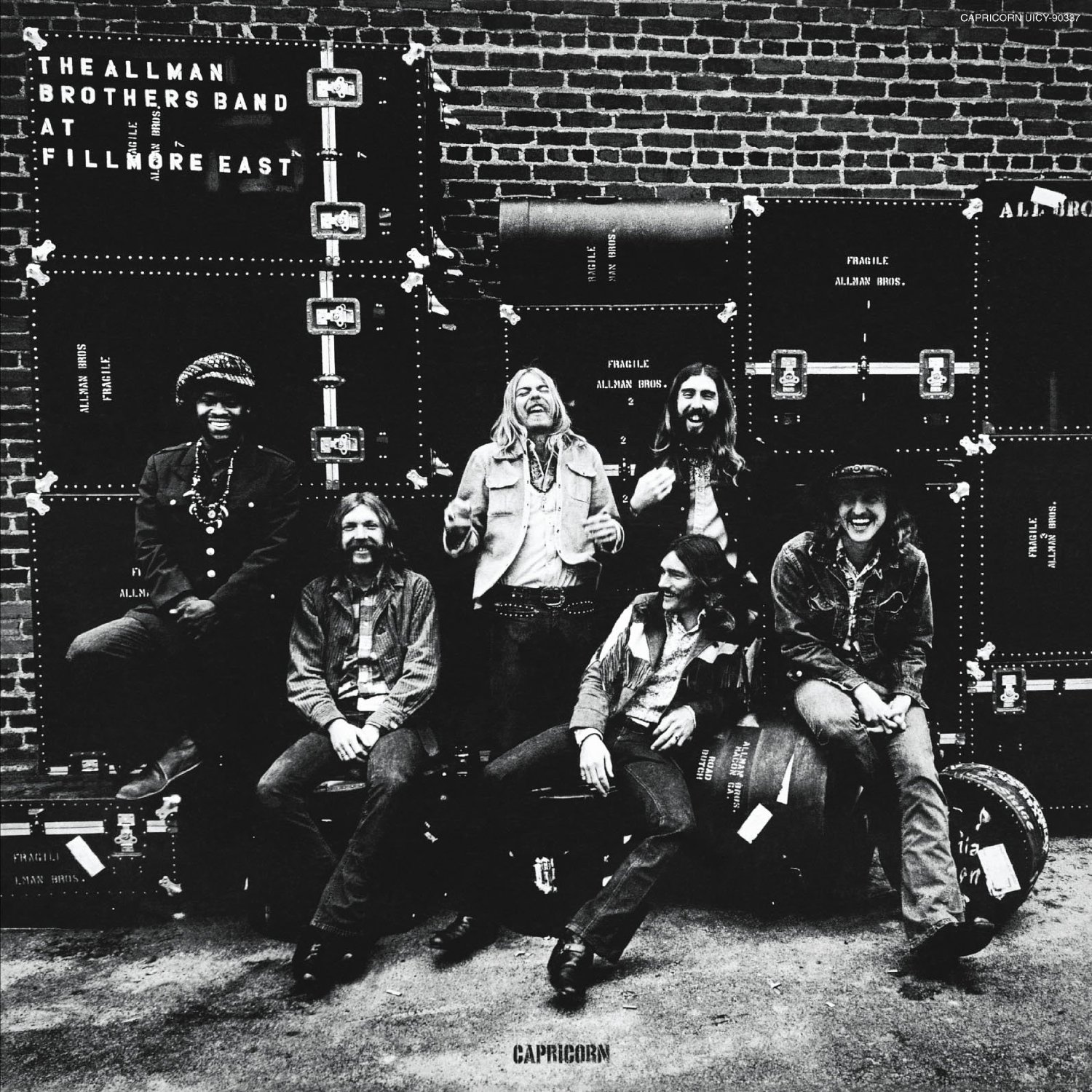
DUCT TAPE-LESS WE CAN.
DUCT TAPE-LESS WE CAN.
Back in the fifties and sixties, some of the greatest jazz albums were recorded over the course of a few days. Miles Davis recorded Kind Of Blue over the course of two days in 1959 and John Coltrane’s A Love Supreme was recorded over just one day in December 1964. However, it wasn’t just jazz artists who recorded albums quickly.
The Beatles took just a fortnight to record their 1966 classic Rubber Soul. Beggars Banquet was recorded by the Rolling Stones over the course of eight days in 1968. Both albums became classic albums. Recording albums quickly, it seemed, was a winning formula.
Into the seventies, some producers and artists continued to work quickly. Soul producers Thom Bell and Gamble and Huff had a formula for working quickly. They used the same songwriting teams, arrangers, producers, house band and backing vocalists. Even the same recording studio, and engineers were used. This worked, for a while within the soul genre. However, in other parts of the music industry, the recording process was slowing down during the seventies.
In rock music, especially within art rock, Krautrock and prog-rock sub-genres, groups like Can, Genesis, King Crimson, Pink Floyd, Queen and Yes took longer to record albums. They were utilising the advances in technology. With twenty-four and thirty-two tracks available, groups were keen to push musical boundaries. Soon, albums were taking six months, even a year or more to record. Critics accused groups of being self-indulgent. However, often, it had been time well spent.
After Pink Floyd spent seven months recording their 1975 classic album Dark Side Of The Moon, it became one of the best selling albums in the history of music. However, as time and technology progressed, taking seven months to record an album was seen as working quickly.
Fast forward to the nineties, and computers are starting to play an important role in the recording process. So are digital audio workstations. Both would become game-changers in the 21st Century music industry.
Early digital audio workstations became more popular as the new millennia dawned. This just happened to coincide with the advancement of the digital audio workstation. For an aspiring musician or producer, suddenly a home studio was much more affordable.
All they needed was an Apple MacBook Pro and a copy of Pro Tools, Logic, Cubase or Ableton Live. Add to this an audio interface and if they want, a mixing desk, and the possibilities become endless. Now it’s possible to record a million-selling album without leaving home. While this is progress, there is a downside.
Nowadays, artists don’t work as quickly as they used. There’s many reasons for this. The main one, is many artists don’t attach a value to their time. As they’re using their home studio, they don’t see it as costing them anything. So, they take their time to record an album. It becomes like the great unfinished novel. Suddenly, a year becomes two, three and in the case of Duct Tape, four years.
That’s how long it took Duct Tape to record their debut album Less We Can, which was recently released by BBE Music. It’s a collaboration between producers Wynton Kelly Stevenston and Batsauce.
Wyton and Batsauce first met in Berlin, Germany, one of Europe’s cultural capitals. That was the start of a firm friendship. Before long, the pair decided to collaborate on an album. This was the birth of Duct Tape. Their first album was four year in the making.
Nowadays, that’s not unusual. After all, producers might be working on several projects simultaneously. It’s a case of finding time around the two participant’s schedules. That’s the case with Duct Tape’s debut album, Less We Can.
Over the last four years, Duct Tape put together a rather unorthodox setup. They don’t use a collection of vintage Fender or Gresch or guitars or basses. Nor will you find a Fender Rhodes or Hammond organ in Duct Tape’s set up. They certainly didn’t rely on Shure E357 microphones to record Less We Can. Instead, Duct Tape’s cheap and cheerful setup includes cheap keyboards from the 1980s, various guitar pedals, a beat machine, a bass and a cheap microphone. This was how Duct Tape recorded over a hundred jams. From this long-list of one-hundred jams, Duct Tape set about choosing the sixteen tracks that became Less We Can.
Essentially, Duct Tape were looking for tracks that grabbed their attention. Often, these tracks were a either work-in-progress or a starting point for Duct Tape.
The two members of Duct Tape then started got to work. They began to take the tracks in new and unexpected directions. Wynton added vocals and keyboards, while Batsauce took charge of beats, bass and arrangements. Eventually, sixteen tracks penned by Duct Tape were completed. They became the genre-melting Less We Can.
From the opening bars of Start The Show, which opens Less We Can, it’s obvious that Duct Tape are about to combine a disparate selection of musical genres. Over sixteen tracks, everything from electronica, funk, hip hop, Nu Soul and psychedelic soul. The result is a captivating album where surprises and hooks haven’t been rationed.
Playing an important part in Less We Can’s success are Wyton’s tender, soulful vocals. Accompanying him are Duct Tape’s unique arsenal of musical instruments. They’re augmented by a healthy supply of samples. The result is an album that’s variously cinematic, dark, dramatic, ethereal, funky, soulful, trippy and wistful. Other times, the music takes on a laid-back, blissful, sunshine soul sound. Given Less We Can’s eclectic sound, choosing highlights isn’t easy.
Start The Show opens Less We Can, sounds like a 21st Century soul. With its mixture of crunchy beats, samples and Wynton’s soul-baring vocal, you’re hooked. From there, Don’t Stop, a mixture of electronica and Nu-Soul sounds like a homage to D’Angelo. The D’Angelo comparison continues on Party, where Wynton’s vamps his way through this hook heavy fusion of electronica, funk and Nu-Soul.
Both Times Are Changing and It’s All Love have dark, moody, electronic arrangements. However, on Times Are Changing Wynton unleashes one of his finest vocals. It’s his hopeful call for change. After that, It’s All Love takes on a moody, atmospheric and futuristic cinematic sound.
The best way to describe Above The Clouds is a slice of lysergic sunshine soul, with a hip hop twist. Get Up And Groove may be a mid tempo track, but it’s also funky and soulful.
Bad Man is another short musical interlude from Duct Tape. Although it’s just over a minute long it’s irresistible. The same can be said of Lost My Mind. It seems as Less We Can progresses, you’re drawn in to the album. Songs become captivating short stories. An example of this is Help, a truly haunting and memorable track. After this, You Can’t Find Me is a mixture of drama, mystery and soulfulness. Then It’s Bad features one of the best vocals on Less We Can. It’s a powerful, emotive mixture of despair and loneliness.
It’s Not Enough sees Duct Tape take Less We Can in a different direction. A myriad of sci-fi sounds and crispy drums create the backdrop for a vocal full of frustration and confusion. I Don’t Care, just like It’s Bad, features the lyrics of Rudy Stevenson, the legendary jazz pianist. They’re delivered against a genre-melting arrangement, where hints of electronica, jazz, hip hop, Nu-Soul and rock melt into one.
Fittingly, Adhesive closes Duct Tape’s debut album Less We Can. It’s another genre-melting, soundscape with a cinematic sound. Elements of avant-garde, electronica, experimental, psychedelia and rock create a track that’s ambitious, hypnotic and captivating.
It’s not just Adhesive that’s captivating, it’s Duct Tape’s debut album Less We Can. With each listen, you hear something new on Duct Tape’s debut album Less We Can. Some subtly or nuances shows its secrets. That’s no surprise. After all, there are sixteen tracks of multi textured music on Less We Can. However, Less We Can isn’t just an album full of subtleties, surprises and nuances. No. Less We Can is also a genre-melting album.
Armed with their low-budget setup, Duct Tape combine everything from avant-garde, electronica, experimental, funk, hip hop, jazz, Nu-Soul, psychedelia, pop, psychedelic-soul and rock on Less We Can. Musical genres flit in and out, sometimes only making the briefest of appearances. They all, however, play their part in the sound and success of Less We Can, an ambitious and innovative album that’s been four years in the making.
That’s the way that music is made nowadays. No longer do artists head into the studio and record a classic album in a couple of days. Far from it. Nowadays, albums are taking longer to record. That’s down to the new music industry. No longer are albums the money making machine they were. In the age of streaming and giving music away for nothing, an artist has numerous income streams. Recording is just one of them. This is the case with the two members of Duct Tape.
Batsauce juggles his solo career with parallel careers as a producer, remixer and songwriter. Earlier this year, Batsauce produced Lady Daisey’s album Music In My Headphones. That’s partly, why Duct Tape has taken so long to record Less We Can, which was recently been released by BBE Music.
However, it’s been worth the wait. Less We Can, Duct Tape’s debut album is a captivating album. It was recorded over the space of four years, using Duct Tape’s cheap and cheerful lo-fi setup. Lo-fi it Duct Tape’s setup may be, but it produces sixteen genre-defying tracks.
During Less We Can’s sixteen tracks, musical genres and influences melt into one. They create Less We Can an ambitious album of 21st Century soulful soundscapes, from Duct Tape.
DUCT TAPE-LESS WE CAN.

THE GRITS-MAKE A SOUND.
THE GRITS-MAKE A SOUND.
Five long years have passed since The Grits released their debut eponymous debut album. Recently, however, The Grits have released their long awaited sophomore album, Make A Sound. It essentially, is The Grits’ comeback album. As comeback albums go, Make A Sound which was recently released on BBE Music, is like no other.
After all, how many bands fuse quintessential English psychedelia with deep fried funk and soul? The Grits do. What’s more, The Grits do it their way. That’s with style and aplomb. However, who I hear you ask are The Grits?
The Grits are based in Brighton, on the South Coast of England. They’re led by multi-instrumentalist Stuart Carter. He plays everything from guitar to sitar, keyboards, synths, flute, sitar and violin. Joining Stuart are bassist James Porch, drummer Johnny Machin, percussionist Alex and vocalist Sophie. Together, The Grits have been winning friends and influencing people with their sophomore album Make A Sound, which I’ll tell you about.
Given The Grits’ love of funk, it’s no surprise they namecheck the self-styled Godfather of Funk on the opening track Make A Sound (Like James Brown). Straight away, the drums have a raw funky sound. Soon, the rest of the rhythm section enter. A guitar chimes hypnotically, before stabs of growling horns and sci-fi synths soar above the arrangement. There they join Sophie’s vocal. Just like the ‘Godfather’ her vocal veers between soulful and vampish. She hollers and whoops her way through the arrangement. She’s joined by percussion, a Hammond organ, blazing horns and pounding drums. Together, they pay homage to James Brown, albeit with a sci-fi twist.
Johnny Machin’s drums power the arrangement to Let Me Know along. Guitars reverberate, while Sophie draws inspiration from early sixties girl groups. She sings call and response. Not only does she deliver a powerhouse of a lead vocal, but adds harmonies. Later, as echo is added, a buzzing synth is added. So is a searing guitar and a myriad of percussion. This adds to the urgency, as The Grits continue to reinvent sixties music.
Just A Little Bit is funk, but not as we know it. A futuristic synth sets the scene for Sophie’s vocal and the funky rhythm section. They’re joined by handclaps, percussion and bursts of a chiming guitar. Before long, musical genres melt into one. Electronica, funk, Latin and reggae are combined, as Sophie delivers a sultry vocal.
Heel And Toe sounds like an early sixties dance craze. It’s not. Instead, it sees The Grits return to a much more traditional funky sound. The Grits rhythm section get into a funky groove. They’re joined by percussion and a a swaggering, vampish vocal. Meanwhile, Sophie adds backing vocal and horns blaze. Later, the addition of a synth sees the track stray from its traditional funky sound. Despite this, it’s an uber funky, groove delicious track.
Black Sambuca has a slow, moody sound. That’s down to The Grits’ rhythm section. Along with percussion, they’re responsible for the Eastern cinematic sound. Then later, sci-fi synths add a futuristic twist. Later, the synths become squelchy. As this happens, the Eastern cinematic sound becomes much more predominant, resulting in The Grits writing the soundtrack to a film that’s yet to be made.
Dark. That describes the opening bars to Six Pack. They come courtesy of the piano, handclaps, rhythm section and keyboards. Then when Sophie’s vocal enters, it has a sixties influence. Again, she sings call and response. Not only does she she deliver the lead vocal, but adds backing vocals. Her vocal grows in power and urgency, giving way to a blistering guitar solo from Stuart Carter. Later, the track takes a dramatic, psychedelic twist. This seems to reinforce the track’s sixties influence, which Sophie’s vocal plays an important part in.
(I’d Walk A) Funky Mile sees The Grits’ rhythm section and a jangly piano join a stabs of a chiming guitar. They drive the arrangement along. Especially, the uber funky bass. Sharp, stabs of grizzled horns escape from the arrangement. Atop it sits Sophie’s sassy vocal. It has a real sixties influence. Later, a blistering guitar is unleashed. Just like Sophie’s vocal, it plays a starring roles as The Grits Walk A Funky Mile.
Music’s past and present unites on Psycho. The rhythm section join synths that veer between dark, moody and futuristic, with a sci-fi sound. Amidst this fusion of traditional instruments and technology, sits Sophie’s tormented vocal. Later, its drenched in reverb, adding to the drama, as The Grits combine music’s past and present.
From the get-go, Yeah, No sounds like a homage to James Brown. That’s down to the rhythm section and hypnotic, chiming guitars, They’re augmented by percussion and Sophie’s despairing, defiant vocal. Synths and strings add a cinematic sound. This results in what’s best described as cinematic funk with a soulful side.
Skin and Bone closes Make A Sound. Searing guitars, the rhythm section and synths joint with blazing horns. Soon, The Grits kick loose. A scorching guitar solo is unleashed. Meanwhile, a myriad of left-field sounds flit in and out of the arrangement. Later, a Hammond organ, discordant synths and braying horns join a raucous, singalong vocal. The finishing touch are a blistering guitar solo and stabs of grizzled horns. Not only are they the icing on this musical cake, but the cherry too.
It’s been five years since The Grits released their eponymous debut album. However, it’s always risky leaving five years between a debut and sophomore album. After all, the people who bought their debut album may have forgotten about The Grits. So to some extent, Make A Sound is a new start for the Brighton based band.
They made a funky, soulful and psychedelic return recently with Make A Sound, which was recently released on BBE Music. Make A Sound is a return to form from The Grits. They fused their own quintessential brand of English psychedelia with deep fried funk and soul. This compelling combination of musical genres, should see The Grits continue to win friends and influence people.
After all, The Grits music is funky, psychedelic and soulful. On some of the tracks, The Grits incorporate electronica and a myriad of sci-fi sounds. The result is music that’s futuristic and trippy. That’s not all. There’s a cinematic sound to Black Sambuca and Yeah, No, which is best described as cinematic funk. Indeed, so good is Yeah, No that’s I’d described Yeah, No as The Grits’ finest moment on Make A Sound. Having said that, there’s more to Make A Sound than one track.
There’s a total of ten tracks on Make A Sound, The Grits magic musical mystery tour through funk, soul, psychedelia, electronica and rock. During these ten tracks, The Grits showcase just how tight, talented and versatile a band they are. Seamlessly, The Grits fuse and flit between musical genres. The result is Make A Sound, a captivating album of funky, soulful, psychedelic music from the Brighton quintet, The Grits
THE GRITS-MAKE A SOUND
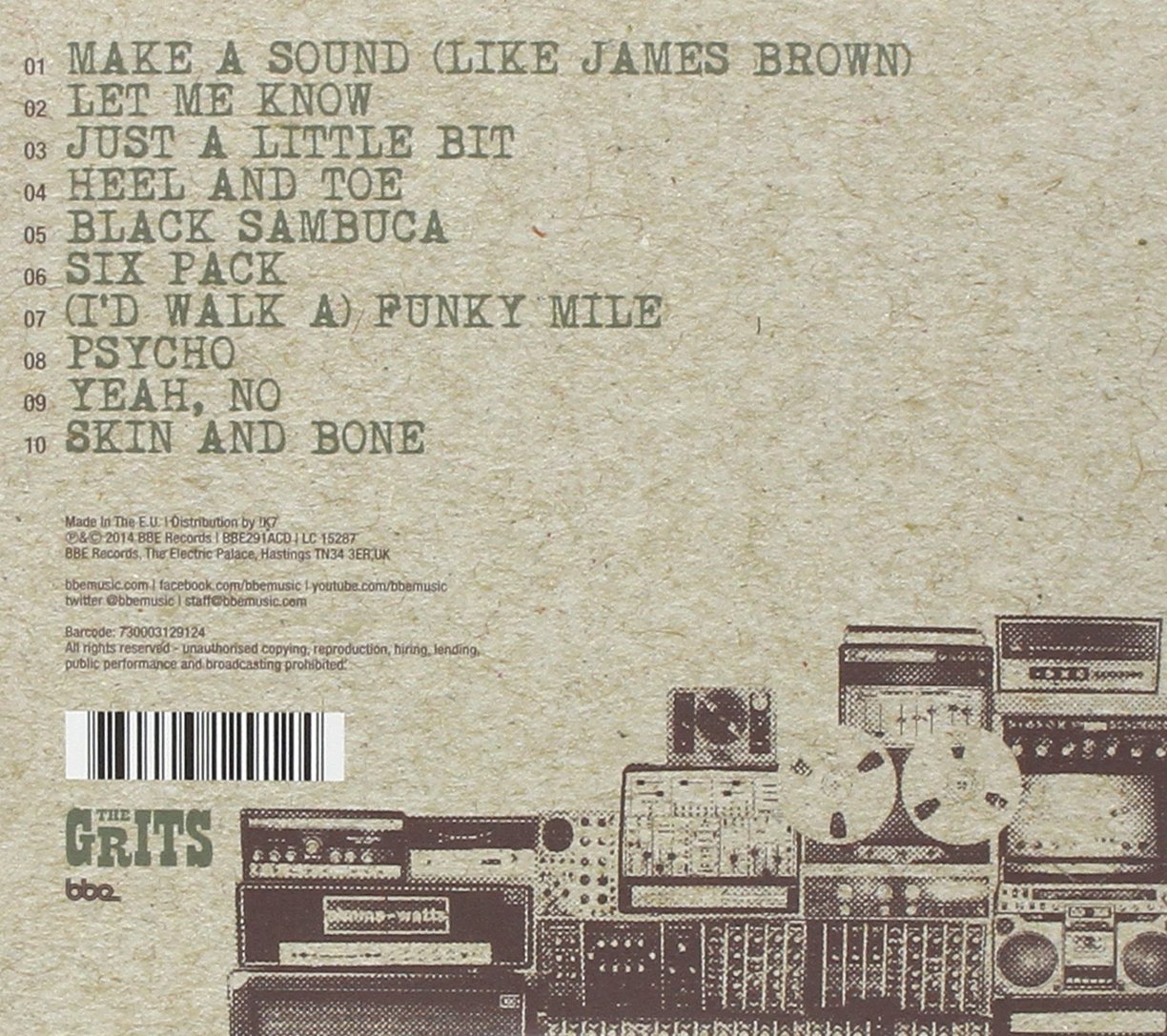
CRYSTAL WINGS-FIRST FLIGHT.
CRYSTAL WINGS-FIRST FLIGHT.
For many people, their introduction to the music of Crystal Wings was on BBE Music’s 2011 compilation, The Real Sound Of Chicago and Beyond: Underground Disco and Boogie. It featured It Ain’t Easy, a track from Crystal Wings one and only album, First Flight, which was a private pressing released back in 1982, on Chicago’s Cash Ear label. First Flight which was recently released by BBE Music, would belatedly become a cult classic.
The story behind Crystal Wings began in 1981. That’s when Crystal Wings released their debut single, Signs Of Winter’s Time. This was a Paul Coleman and Joyce Alicia Lagrone composition. It was recorded at Chicago’s Streeterville Recording Studio. Producing Signs Of Winter’s Time was Paul Gibson, Cash Ear Records’ in-house producer and artistic coordinator for modern soul productions. On Signs Of Winter’s Time’s release, its jazz-tinged beauty showcased a talented band who looked as if they had a bright future ahead of them.
Sadly, however, Signs Of Winter’s Time wasn’t a commercial success. Although it was popular within Chi-Town, that was as good as it got for Crystal Winds. However, it was obvious that Crystal Winds had potential. No wonder. Their lineup featured some experienced musicians.
The driving forces behind Crystal Winds were Paul Coleman and M.C. (Morris) Brown. Along with Crystal Winds’ drummer Frank Donaldson, they had been members of Rasputin’s Stash. They released two albums during the early-‘70s. Their debut album was 1971s Rasputin’s Stash, which was released on Cotillion, a subsidiary label of Atlantic Records. Three years later, in 1974, Devil Made Me Do It was released on Gemigo Records. Apart from their 1977 single Dance With Me, which was released on Curtis Mayfield’s Curton Records, that was the end of the Rasputin’s Stash story.
Four years later, in 1981, Paul Coleman, M.C. (Morris) Brown and Frank Donaldson had reinvented themselves as Crystal Wings. Having released their debut single Signs Of Winter’s Time, Crystal Wings pressed ahead with their debut album First Flight.
That’s not surprising. First Flight were perceived as a group with potential. So they began work on what would become First Flight. They already had recorded Signs Of Winter’s Time as a single. An instrumental version featured on the B-Side. Both tracks were Paul Coleman and Joyce Alicia Lagrone compositions. They also cowrote So Sad with Paul Coleman. He and M.C. (Morris) Brown contributed Love Ain’t Easy, Love Ain’t Easy II, It’s A Wonderous ThingRasputin’s Stash and Funk Ain’t Easy. The other track was Lovers Holiday, which Paul Coleman and M. Dunman Jr. wrote. These eight tracks became First Flight, which was recorded at Chicago’s Streeterville Recording Studio.
At Streeterville Recording Studio, Crystal Wings’s extensive lineup began recording the six new tracks. The rhythm section included drummers Wayne Stewart and E. Frank Donaldson, bassists Jimmy Allen and Tony Brown and guitarists Martin Dumas Jr, Henry Johnson and Baitsche. They were joined by Paul Coleman on congas, keyboards and percussion, while M. Cortez Brown played saxophone and percussion. Jimmy Dolan Jr. added orchestral bells and Frank Donaldson and Pennington McGhee congas. Lead vocals came courtesy Paul Coleman, M. Cortez Brown and Theresa Davis. Backing vocals were added by Paul Coleman, M. Cortez Brown, Martin Dumas Jr, Theresa Davis and Sherry Scott. Producing First Flight were Paul Coleman and M. Cortez Brown. Once the six new tracks were recorded, it was released in 1982.
On its release, First Flight passed American record buyers by. Not however, in Britain. Somehow, copies of First Flight found their way across the Atlantic. Straight away, it became a firm favourite amongst the British jazz-funk scene. To some extent, Cash Ear Records’ decision to release Crystal Wings debut album First Flight had been vindicated. First Flight, which I’ll tell you about, was well on its way to becoming a cult classic.
From the opening bars of Sad, which opens First Flight, it’s apparent that Crystal Wings’ music is very different from Rasputin’s Stash. Gone is the brash funk. Replacing it is a smooth, soulful, jazz-tinged sound. As the rhythm section create a slow, sultry heartbeat, seductive voice overlays sit atop the arrangement. They’re joined by Paul Coleman and M. Cortez Brown’s heartfelt, soulful vocal. Meanwhile, a slap bass, lush sweeping strings and harmonies flit in and out of the arrangement. It’s best described as a smooth, soulful, jazz-tinged, heartfelt paean.
Love Ain’t Easy is a two part track. Straight away, Crystal Wings’ rhythm section take the track in the direction of funk. This is early eighties funk. That’s down to the type of drums used. They’ve a slightly synthetic sound. That’s an observation, not a criticism. It was a sound of the time. Guitars chime, the bass is funky and a jazzy keyboard is joined by stabs of blazing horns. Atop the arrangement, voice overlays give way to Paul Coleman and M. Cortez Brown’s vocals and the track veers between soulful, funky and jazzy. Irresistible and hook-laden describes Love Ain’t Easy.
After the uptempo sound of Love Ain’t Easy, Love Ain’t Easy II takes on a different sound and style. It heads in the direction of a soulful jam. Crystal Wings’ rhythm section add a funky backdrop. They’re aided and abetted by keyboards and percussion. As for Paul Coleman and M. Cortez Brown’s vocals, they fill the spaces left by the rest of Crystal Wings. Their vocals are breathy, heartfelt and hopeful, soaring above this soulful jam.
Signs Of Winter’s Time was Crystal Wings’ debut single. Just a lone jazzy guitar sets the scene. It’s soon joined by the bass, keyboards and drums played by brushes. The lushest of strings sweep subtly in. By now, a beautiful, ethereal soundscape is unfolding. Then Paul and Theresa Davis deliver the tenderest of lead vocals. Chiming guitars, pizzicato strings and harmonies compliment their vocals, which grow in urgency. Later, a sultry saxophone is added. With flourishes of strings for company, this is the finishing touch to a a quite beautiful, ethereal track.
A swaggering, bravado fuelled vocal opens It’s A Wonderous Thing. Bursts of searing guitars, stabs of growling horns and Crystal Wings’ rhythm section combine. They’re responsible for a track that’s funky and soulful. That’s not all. The track has an unmistakable eighties sound. This comes courtesy of the rocky guitars, synths and drums. However, hooks haven’t been spared. Crystal Wings continue to create funky, soulful, dance-floor friendly music.
Lovers Holiday sees Crystal Winds drop the tempo, as they unleash more of their trademark, tight, smooth harmonies. They sit above a rhythm section that glides along, bursts of funky bass making its presence felt. So do the swathes of lush strings. This frames Paul and Theresa’s vocals, which sit well together. They’re akin to yin and yang, as they make the lyrics to this slice of slow, soulful music come to life.
The instrumental version of Signs Of Winter’s Time was the B-Side to Crystal Wings’ debut single. Just a lone jazzy guitar sets the scene. It’s soon joined by the bass, keyboards and drums played by brushes. The lushest of strings sweep subtly in. By now, a beautiful, ethereal soundscape is unfolding. Chiming guitars, pizzicato strings and harmonies unite. Later, a sultry saxophone is added. With flourishes of strings for company, this is the finishing touch to a a quite beautiful, elegiac ethereal track.
Closing First Flight is Funk Ain’t Easy, a short one-minute track. It’s a tantalising taste of what Crystal Wings were capable of. So much so, that you’re left wanting more. Sadly, there is no more. First Flight was Crystal Wings only album.
Just like so many private pressings, First Flight never enjoyed the commercial success and critical acclaim the album could’ve and should’ve enjoyed. The failure of First Flight was nothing to do with the music. Far from it. Crystal Wings were a band with an abundance of potential. This is apparent throughout First Flight. Seamlessly, the flit between funk, jazz, R&B and soul. There’s even a nod to eighties rock on this captivating cult classic. Sadly, upon its release First Flight passed most people by. There’s a reason for this, it was a private pressing.
Thirty-two years ago, the world was a very different place. Releasing an album on a small, independent label was much more risky. Most independent labels didn’t have the budget to properly promote an album. The best they could hope was that an album like First Flight was a local hit. Maybe then, the album would be picked up by a major label. Unfortunately, this didn’t happen with First Flight. That’s despite First Flight popularity in Britain.
Somehow, copies of First Flight made their way across the Atlantic. Some of the copies made their way into the hands of some of the leading lights of Britain’s jazz funk scene. These self-appointed tastemakers, started spinning First Flight. Soon, people picked up on the First Flight. Word was out about this little known album by Crystal Wings, a Chi-Town based band. However, soon, the self-appointed tastemakers picked up on what they thought would be the next big thing. That was the end of the First Flight story until 2003.
In 2003, I came across a review of First Flight in a soul magazine. The album was released on Escrow Records. However, nobody had asked Crystal Wings’ permission to release First Flight. For the members of Crystal Wings, this was a frustrating and worrying time. Someone was making money out of their one and only album. The bootleg reissue of First Flight was selling well. Unsuspecting record buyers however, never knew the version of First Flight was a bootleg. This meant that members of Crystal Wings didn’t see a penny. The only people who made anything were the people behind Escrow Records. The only avenue open to Crystal Wings was legal action. This however, was expensive. Frustratingly, it was a case of grin and bare it for Crystal Wings. However, eleven years later, and First Flight has been officially reissued for the first time.
Recently, BBE Music rereleased Crystal Wings’ debut album First Flight. This long forgotten cult classic makes a very welcome return. Funky, soulful and jazz tinged, Crystal Wings’ one and only album First Flight, is also ethereal, hook-laden and irresistible. First Flight is a reminder that Crystal Wings could’ve and should’ve been a contender.
CRYSTAL WINGS-FIRST FLIGHT.


SMALL FACES-OGDENS’ NUT GONE FLAKE.
SMALL FACES-OGDENS’ NUT GONE FLAKE.
For British music, the sixties were a golden era. This golden era started with The Beatles and Rolling Stones, two of music’s most influential groups. By 1964, the British Invasion began. British groups conquered America, and influenced American music. Suddenly, aspiring American musicians became sworn Anglophiles. As the sixties progressed, the next wave of British groups made their presence stateside. In 1968 this included The Who, The Kinks and the Small Faces, who were founded in London in 1965.
When Steve Marriott, Ronnie Lane, Kenney Jones and Jimmy Winston founded the Small Faces in 1965, London was still swinging. The Small Faces were origins can be traced to the J60 Music Bar, in Manor Park, London. That’s where Ronnie Lane and Steve Marriott first met. Steve was working in the bar, and Ronnie came in one night with his father to buy a bass. Ronnie and Steve both shared a common interest, music.
Later that, night they headed back to Steve’s flat to listen to music. Not long after this, they decided to form a band. They brought onboard Kenney Jones and Jimmy Winston. The nascent band became the Small Faces, who rehearsed in Jimmy Winston’s parents pub. Once they’d honed their sound, the Small Faces began playing live.
Early on in their career, the Small Faces played around the London area. Their sets featured a mixture of soul and R&B songs. Gradually, they began to incorporate Ronnie Lane and Steve Marriott compositions into their sets. A turning point in the Small Faces’ career was when singer Elkie Brooks heard them live. She recommended them to promoter Maurice King. This was the next step in the Small Faces’ career.
Maurice King was able to get the Small Faces’ bookings outside of London. Soon, they were playing further afield, including in the North of England. However, the Small Faces got another break when they were signed to Don Arden management agency in 1965. A year later, the Small Faces released their debut album.
Small Faces.
When the Small Faces released Small Faces in 1965, the band’s lineup had changed. Keyboardist Jimmy Winston had been replaced by Ian McLagan. The new lineup featured Steve Marriott, Ronnie Lane, Kenney Jones and Ian McLagan. They made their debut on Small Faces.
Small Faces featured twelve tracks. They were a mixture of cover versions and tracks penned by members of the Small Faces. The music was a mixture of R&B and British Invasion. This was well received by critics and music lovers.
On its release, critics were won over by Small Faces. The album was released to critical acclaim. Critics forecasted a bright future for the Small Faces. They were right.
Whatcha Gonna Do About It was the lead single from Small Faces. It was released in August 1965 and reached number fourteen in the UK. By the time Sha-La-La-La-Lee was released as a single in January 1966, Jimmy Winston had been replaced by Ian McLagan.
Ian played his part the success of Sha-La-La-La-Lee. It reached number three in the UK. Small Faces, the Small Faces debut album, was also a commercial success. It was the eleventh best selling single in Britain during 1966. The critics were right, it looked like the Small Faces were about to enjoy a successful career.
From the Beginning.
In 1967, the Small Faces moved from Decca to Immediate Records. Don Arden, the Small Faces’ manager, decided to release From The Beginning, an unofficial retrospective album.
From The Beginning, just like Small Faces, was a mixture of cover versions and new songs. This included a Small Faces’ classic All Or Nothing. It reached number one in Britain. Other covers Del Shannon’s included Runaway and Smokey Robinson’s You’ve Really Got a Hold on Me. These tracks were part of the Small Faces most successful album.
On its release on 2nd June 1967, From The Beginning reached number seventeen in the UK. Just like its predecessor, From The Beginning was well received by critics. This was perfect way to close another chapter in the Small Faces’ story.
Small Faces.
Having left Decca, the Small Faces signed to Immediate Records. They didn’t waste time releasing their debut album, Small Faces. It was released on the 23rd June 1967, just three weeks after the Decca album From The Beginning.
Small Faces, the Small Faces’ sophomore album, was quite different from their debut album. Gone were the cover versions. Replacing them, were songs penned by the band. The Steve Marriot and Ronnie Lane songwriting partnership were responsible for eleven of the fourteen tracks. They also cowrote two other tracks on Small Faces and produced Small Faces.
When Small Faces was released on 23rd June 1967, it was described as a a mixture of psychedelia and British Invasion. The mod influence also shawn through. That had been the case throughout the Small Faces’ career. They were, after all, one of the top mod groups. However, their music appealed to a far wider audience.
Critics, upon hearing Small Faces, hailed the album the group’s finest hour. This was reflected in record sales. Small Faces reached number twelve on the UK charts. For the Small Faces, this resulted in them rubbing shoulders with rock royalty. However, to keep their place at rock’s top table, depended upon the followup to Small Faces. The Small Faces returned with a career defining album, Ogdens’ Nut Gone Flake.
Ogdens’ Nut Gone Flake.
After the success of Small Faces, the four members of the Small Faces regrouped. They were contemplating what direction their music should head in. Previously, their music veered between the British Invasion and Mod sound, to pop, psychedelia and R&B. Eventually, the Small Faces decided to write a psychedelic concept album, Ogdens’ Nut Gone Flake which was recently reissued by Sanctuary.
For Ogdens’ Nut Gone Flake, the Steve Marriot and Ronnie Lane songwriting partnership got to work. They wrote seven songs, including Lazy Sunday and Afterglow Of Your Love. Steve and Ronnie also cowrote The Hungry Intruder and Happydaystoytown with Ian McLagan, who contributed Long Agos and Worlds Apart. The other two tracks Ogdens’ Nut Gone Flake and The Journey were written by the four members of the Small Faces. These twelve tracks were record during November and December 1967.
Recording of Ogdens’ Nut Gone Flake took place at Olympic Studios and Trident Studios, London. Producing Ogdens’ Nut Gone were Steve Marriot and Ronnie Lane, who’d produced the Small Faces’ previous albums. Just like previous albums, the vocals on Ogdens’ Nut Gone Flake were shared. Steve added vocals and played guitar and harmonica. Ronnie played bass, guitar, added backing vocals and took charge of the lead vocal on Song Of A Baker, The Journey and Happydaystoytown. Ian played keyboards, guitar, bass guitar. He also sung backing vocals and delivered the vocals on Long Agos and Worlds Apart. Once Ogdens’ Nut Gone Flake was completed, it was released on 24th May 1968.
On its release on 24th May 1968, the Small Faces’ concept album Ogdens’ Nut Gone Flake was released to widespread critical acclaim. Critics hailed Ogdens’ Nut Gone Flake as variously ambitious, innovative and surreal. It was unlike any of the Small Faces previous albums, and much of the music released during 1968.
Even the album cover to Ogdens’ Nut Gone Flake was different from other albums. When Ogdens’ Nut Gone Flake was originally released on vinyl, in a metal replica of a giant tobacco tin, which the album cover pastiched. Inside the tin, there was a poster created with five connected paper circles. Each circle featured a member of the Small Faces. Quickly, Immediate realised that manufacturing the poster and the tin was too expensive. So, Immediate replaced the tin with a cardboard replica. As a result, the original versions of Ogdens’ Nut Gone Flake in the tin, are sought after, collector’ items. However, Ogdens’ Nut Gone Flake was also the Small Faces most successful album and featured one of their classic songs.
The lead single from Ogdens’ Nut Gone Flake, was Lazy Sunday Afternoon. It was released in April 1968, against the Small Faces’ wishes. They didn’t think the song would make a good single. How wrong they were. Lazy Sunday Afternoon became a hit single, and is now regarded as a Small Faces classic. Afterglow Of Your Love was released in March 1969. It’s another of highlights. However, despite its quality, Afterglow of Your Love stalled at just number thirty-eight in Britain. This was the last single released from Ogdens’ Nut Gone Flake released in Britain. By then, Ogdens’ Nut Gone Flake had become the Small Faces biggest selling album.
When Ogdens’ Nut Gone Flake was released on 24th May 1968,, it reached number one in Britain. It spent six weeks at number one and became the Small Faces most successful album. Over the Atlantic, Ogdens’ Nut Gone Flake stalled at number 159 in the US Billboard 200. That partly, was down to parts of Ogdens’ Nut Gone Flake being a uniquely British album.
Throughout side one of Ogdens’ Nut Gone Flake, the Small Faces move their music in a rocky direction. That’s the case from the psychedelic sounding title-track. It’s a rocky instrumental that later, takes an orchestral twist. From there, Afterglow (Of Your Love), pays a brief homage to vaudeville, before heading in the direction of rock. Steve’s vocal is best described as soul-baring and proves truly captivating. It’s one of the highlights of side one of Ogdens’ Nut Gone Flake. Long Agos and Worlds Apart veers between lysergic and rock-tinged as side one continues in a similar rocky vein. Rene, Song of a Baker and Lazy Sunday see the Small Faces pay homage to their East London roots. These three songs are best described as a fusion of rock and a cockney sing-a-long. The best of the three has to be Lazy Sunday, which became a Small Faces classic. After Lazy Sunday, Ogdens’ Nut Gone Flake moves in a different direction.
Side two of Ogdens’ Nut Gone Flake was based upon a original fairy tale about a boy called Happiness Stan. To narrate side two, the Small Faces drafted in Stanley Unwin. He spent time with the Small Faces, and heard them using modern slang. So he incorporated this into Ogdens’ Nut Gone Flake surreal narrative.
During side two of Ogden’s Nut Gone Flake, Stan sets out one night to find the missing half of the moon. He only has one night to do this. This adventure begins on Happiness Stan. It has an understated Eastern influence, before heading in the direction of art-rock, jazz, psychedelia and rock. After this, Rollin’ Over is a dramatic, rocky workout, where the Small Faces sound not unlike The Who. On The Hungry Intruder, Stan saves a fly from starving. To repay Stan, the fly tells him about someone who can answer his question and also tell him the philosophy of life itself. During The Journey, a marriage of R&B, psychedelia and rock, the fly grows, becoming so big that Stan can sit upon its back. They head off on a psychedelic journey. Eventually, they reach Mad John the hermit’s cave. However, Stan has spent so long trying to find Mad John, that the moon is now whole again. To celebrate, the Small Faces close the album with Happy Days Toy Town, a choppy, cockney sing-a-long, that’s reminiscent of much of side one. This closes what critics referred to as the Small Faces finest hour.
Forty-six years have passed since the Small Faces released their third album, Ogdens’ Nut Gone Flake, hich was recently reissued by Sanctuary. Critics hailed Ogdens’ Nut Gone Flake, as the Small Faces’ finest hour. That’s despite the album being totally different from their two previous albums.
The big difference was that Ogdens’ Nut Gone Flake was a concept album. Side one saw the Small Faces pay homage to their London roots. It was a mixture of rock and a cockney knees-up. For the Small Faces, this would be the type of music they grew up hearing. However, incorporating it into Ogdens’ Nut Gone Flake was risky. After all, many people would be unable to understand the music, with its raucous rhyming slang. This was only half of the story of Ogdens’ Nut Gone Flake.
Then on side two of Ogdens’ Nut Gone Flake, the Small Faces’ concept album, the group took the listener on a surreal, lysergic musical adventure, which was narrated by Stanley Unwin. This was very different to anything that the Small Faces had released before. It was also quite different to much of the music released during 1968. No wonder. Ogdens’ Nut Gone Flake, was an ambitious and groundbreaking piece of music. So much so, that nowadays, Ogdens’ Nut Gone Flake is perceived as one of the finest British albums ever released. Having said that, it’s debatable whether Ogdens’ Nut Gone Flake is a classic album.
To some extent, the music on Ogdens’ Nut Gone Flake doesn’t translate well overseas. Many people across the Atlantic and in Europe didn’t understand the cockney, singalong sound. Similarly, the heavily accented music didn’t endear itself to them. This was also the case with Stanely Unwin. His surreal gobbledygook confused the listener. As a result, they failed to “get” Ogdens’ Nut Gone Flake. Since then, Ogdens’ Nut Gone Flake is an album that provokes debate amongst music lovers.
Personally, whilst I can appreciate that Ogdens’ Nut Gone Flake was an ambitious, groundbreaking, concept album, I don’t consider it a classic. I would however, describe Ogdens’ Nut Gone Flake as the Small Faces’ finest hour, and one of the best British albums of the sixties.
SMALL FACES-OGDENS’ NUT GONE FLAKE.
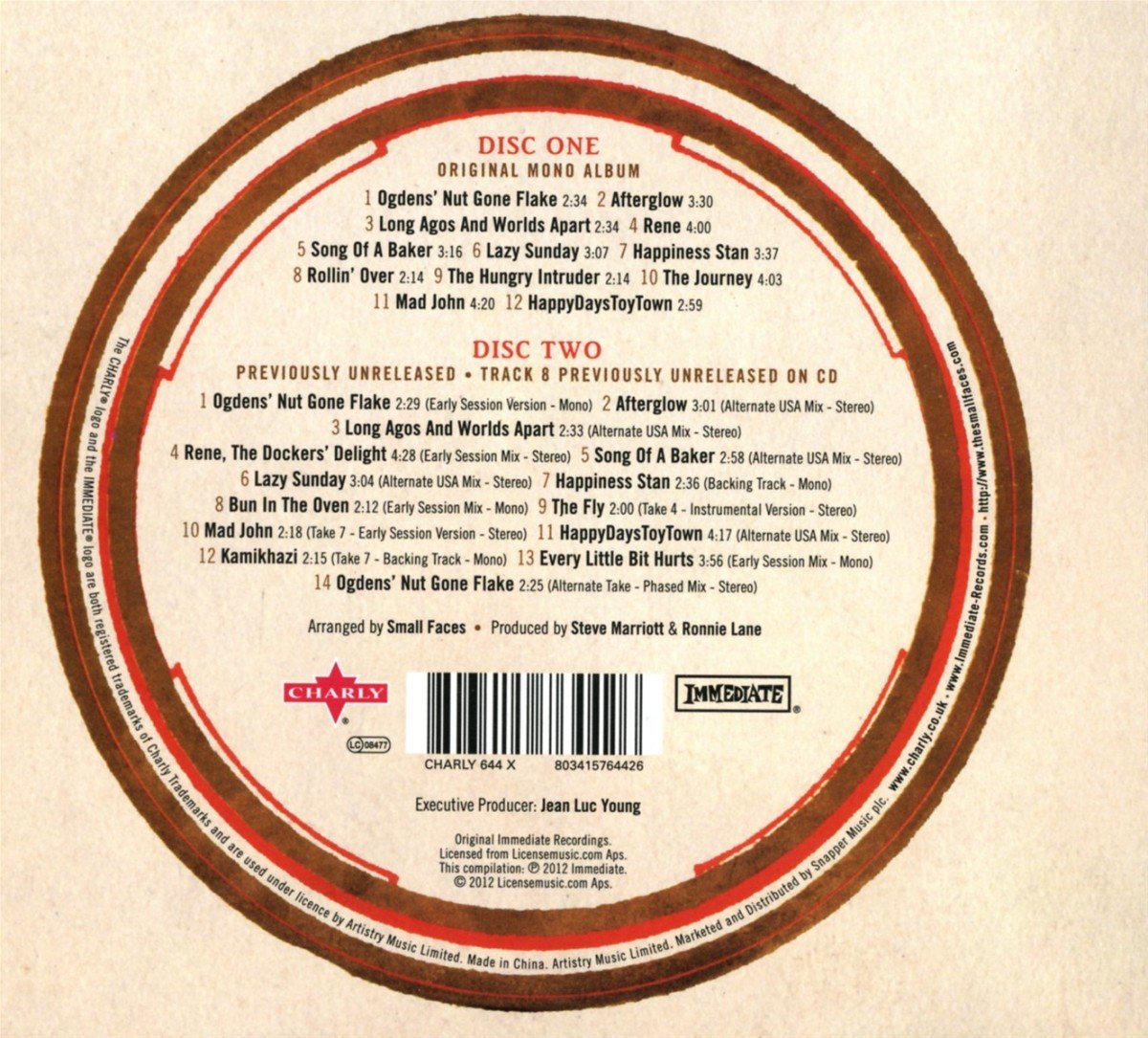
CRAIG PEYTON GROUP-PYRAMID LOVE.
CRAIG PEYTON GROUP-PYRAMID LOVE.
For Craig Peyton, the founder member of Band X, 1976 was the most important year of his nascent musical career. It was the year Band X released their debut album The Best Of Band X. However, The Best Of Band X a private pressing, wasn’t a commercial success. Instead, this innovative, genre-melting album passed record buyers, critics and cultural commentators by. Band X were left licking their wounds. They had hoped would be the start of a successful career. That wasn’t to be. Instead, Band X split-up, and its founder Craig Peyton moved on.
Craig Peyton’s next musical venture was the Craig Peyton Group, which featured bassist Victor Preston and reeds-man Al Gryzb of Band X. They were joined by guitarist Willie Upshaw and drummer and percussionist Chris Meisel. This was the lineup that recorded the Craig Peyton Group’s debut album Pyramid Love, which was released in 1977, on Broken Records.
Pyramid Love, which was rereleased in late November 2014, by BBE Music, was a very different album from Band X’s debut The Best Of Band X. Gone was the experimental sound of Band X. Replacing it was a jazzier sound. Essentially, this was a return to Craig’s roots. He’d grownup listening to, and playing fusion. Add to fusion elements of blue-eyed soul and rock, and this describes Pyramid Love, the Craig Peyton Group’s debut album, which was recorded in May 1977.
Members of the Craig Peyton Group wrote eight songs for Pyramid Love. Craig penned Snow, Pyramid Love, Marjorie and Waiting. Craig Meisel wrote Fire and Ice and Willie Upshaw Plupts 77. The other two tracks were written by former members of Band X. Bassist Victor Preston contributed Painted Desert and reeds-man Al Gryzb penned Funky Boogie. These seven tracks became Pyramid Love, the Craig Peyton Group’s debut album.
Recording of Pyramid Love took place during May 1977, with Craig Peyton producing. Two studios were used. Long View Farms was where Band X recorded The Best Of Band X. The other studio used Intermedia Sound. Craig played electric vibes, elka strings, orgasmitron and added vocals. Willie Upshaw played guitar, Chris Meisel drums and percussion and Victor Preston electric bass, string bass, trombone and trumpet. Al Gryzb added reeds, bassoon and clarinet. Once the eight tracks were recorded, Pyramid Love was released later in 1977.
Just like The Best Of Band X, Pyramid Love was an independent release. It was released in 1977, on Broken Records. Sadly, lightning struck twice for Craig Peyton. Pyramid Love suffered the same fate as The Best Of Band X. On its release, it disappeared without trace. This was the case with a plethora of independent releases during the seventies. Pyramid Love didn’t find the audience it deserved in 1977. That wasn’t the end of the story.
No. Fast forward thirty years, and belatedly, however, the Craig Peyton Group’s debut album Pyramid Love had became a collectable. Just like The Best Of Band X, Pyramid Love had been discovered by discerning record collectors. Soon, word spread about this little known album. With the Band X connection, Pyramid Love became a highly prized album. However, the problem was finding a copy. They’re real rarities, that are beyond the pocket of most music lovers. Soon, this problem was solved.
In late November 2014, BBE Music reissued the Craig Peyton Group’s debut album, Pyramid Love. This was just a few weeks after BBE Music reissued Band X’s The Best Of Band X. Belatedly, and deservedly, Craig Peyton’s music was belatedly, available to a wider audience. This includes Pyramid Love, which I’ll tell you about.
Snow, which opens Pyramid Love, allows the Craig Peyton Group to stretch their legs. Just the drums open the track, before an uber funky bass and lightning fast vibes glide across the arrangement. They’re joined by a braying horn. Soon, the Craig Peyton Group settle into a groove. The rhythm section sashay along, while guitarist Willie Upshaw unleashes a blistering guitar solo. Along with the sashaying rhythm section and Craig’s vibes, they showcase just what the Craig Peyton Group are capable of. In this case, it’s funky, dance-floor friendly music.
Pyramid Love has a much more understated sound. Just the thoughtful sound of the vibes set the scene for Craig’s needy, hopeful vocal. He sings call and response, before this slice of blue-eyed soul gets funky. That’s down to the rhythm section and a blazing horn. Stabs of urgent drums and searing guitars join the funky rhythm section and grizzled horn. Soon, the Craig Peyton Group are in full flow. The result is a track that’s veers between funky, jazz-tinged and soulful to understated and dramatic.
Straight away, Funky Boogie sounds like a musical pastiche. There’s a nod to the Charleston and an English pastoral sound. That’s down to reeds-man Al Gryzb and Craig on vibes. They play starring role, continue to do so. After that, the arrangement floats, and glides elegantly away. Later, with the rhythm section driving the arrangement along, it heads in the direction of fusion. This is no ordinary fusion. Instead, it’s a laid-back brand of fusion. Only, later do the Craig Peyton Group briefly kick loose. Briefly, the English pastoral sound returns and the Craig Peyton Group bid their farewell on this laid-back slice of fusion.
The understated arrangement to Marjorie meanders into being. Then when Craig’s vocal enter, he takes the track in the direction of blue-eyed soul. Meanwhile, the rest of the Craig Peyton Group drive the funky arrangement along. Bassist Victor Preston plays a starring role. So does guitarist Willie Upshaw. He unleashes some blistering licks. Not to be outdone trumpeter Al Gryzb and Craig on vibes joins in. By now, the Craig Peyton Group are in full flow. It’s a joy to behold, as they’re a tight, talented band. As for Craig, he delivers his best vocal. Heartfelt and emotive, this inspires the rest of the Craig Peyton Group, as they fuse blue-eyed soul, funk, jazz and rock.
Plupts 77 is the polar opposite of the previous track. It’s an adrenaline fuelled, genre-melting track. Think Weather Report and that’s a starting point. Screaming, searing, blistering guitars join the rhythm section and Craig’s vibes. Bursts of growling horns enter, as machine gun guitars are unleashed. From there, there’s diversions via jazz, fusion, rock and space funk, courtesy of the synths. What Plupts 77 shows, is that the five members of the Craig Peyton Group, individually were gifted musicians. When the solos come round, none of them are left lacking. Far from it, they revel in the opportunity to showcase their talents. Stealing the show, however, is guitarist Willie Upshaw, who delivers a series of breathtaking solos.
Waiting sees the tempo drop and a dreamy, wistful sounding track take shape. It’s the rhythm section and vibes that set the scene. Meanwhile, washes of guitar reverberate. Horns bray, drifting above the arrangement. For the time being, it becomes a dreamy, lysergic soundscape. That’s until Craig’s vocal enters. It shimmers, before becoming urgent and dramatic. The arrangement reflects the drama and urgency in Craig’s vocal. Then later, the arrangement becomes a vehicle for Al Gryzb’s braying horn and to some extent, Craig’s vibes. After the arrangement is stripped bare, it slowly and gradually rebuilds. Eventually, it becomes a droning, dramatic, futuristic epic, where reeds-man Al Gryzb becomes a sonic explorer.
Driving, dramatic, urgent and rock describes Fire and Ice. As the rhythm section provide a backdrop for the rest of the Craig Peyton Group, a marriage of funk, fusion and rock emerges. Al Gryzb’s sultry horn soars above the arrangement. Meanwhile Craig delivers a vibes masterclass. This inspires the rest of the Group. Especially, guitarist Willie Upshaw. He delivers a series of lightning fast, scorching, searing solos. With the choppy rhythm section and vibes for company, Willie more than plays his part in this musical opus.
Painted Desert closes Pyramid Love. From the get-go, the Craig Peyton Group drive the arrangement along. The rhythm section and a melancholy horn become one. Then they slow things down, before going through the gears and kicking loose. This gives them the opportunity to showcase their considerable talents. Craig adds vibes and Willie unleashes some crystalline guitar solos. After three minutes of this eight minute epic, it’s all change. A futuristic sound gives way to what’s best described as a marriage of ambient, avant-garde, experimental and modern classical. A cinematic sound emerges, before a futuristic, sci-fi inspired fusion of free jazz and space funk takes shape. It’s a truly captivating track, where the Craig Peyton Group take you in the most unexpected directions. Latterly, a much more orthodox combination of fusion and rock emerges, as the track reaches a dramatic crescendo.
Just a year after the release of Band X’s groundbreaking debut album, The Best Of Band X, Craig Peyton returned with his new group, the Craig Peyton Group. Their debut album, Pyramid Love, was a similarly ambitious, innovative album. However, this didn’t seem to matter. Still, it passed record buyers by.
The problem was, Pyramid Love was released on an independent label, Broken Records. Small labels were unable to compete with the budgets of majors. They couldn’t get their records on radio or in the racks of major record shops. Instead, the best that the Craig Peyton Group could hope for, was that Pyramid Love would be a local hit. Maybe then, Pyramid Love would be picked up by a bigger label. Then, maybe, the Craig Peyton Group would find the audience their music deserved. Sadly, that wasn’t the case. Just like Band X’s debut album The Best Of Band X, the Craig Peyton Group debut album, Pyramid Love wasn’t a commercial success. However, this wasn’t because of the music.
Far from it. Just like Band X, the Craig Peyton Group were musical pioneers. They didn’t stick to one musical genre. No. The Craig Peyton Group were musical adventurers, who combined everything from blue-eyed sound, classical, funk, fusion, pastoral, psychedelia, rock and space-funk. Elements of each and every one of these genres can be heard on Pyramid Love. It’s another album of eclectic music. That’s no bad thing.
While some bands resolutely stick by the same sound, that wasn’t for the Craig Peyton Group. They were determined to innovate and create ambitious, groundbreaking music. Back in 1977, very few bands were creating groundbreaking music. Instead, many musicians were jumping on the disco bandwagon. Not Craig Peyton.
With his new band, the Craig Peyton Group, he picked up where he left off with Band X. His new band’s music was just as ambitious, innovative and genre-melting. Just like The Best Of Band X, you never knew what direction the Craig Peyton Group were taking Pyramid Love in. It was another magical, musical, mystery tour. You jumped on and enjoyed the ride. During eight tracks, you heard musical genres melt into one. Sometimes, it was only briefly. Other times, these influences are much more obvious. That’s apparent throughout Pyramid Love, the one and only album from the Craig Peyton Group.
After Pyramid Love’s released in 1977, the Craig Peyton Group released no further albums. This was the case with Band X. However, belatedly, however, the Craig Peyton Group’s debut album Pyramid Love had became a collectable.
Fast forward thirty years, and just like The Best Of Band X, Pyramid Love was discovered by discerning record collectors. Soon, word spread about this little known album. With the Band X connection, Pyramid Love became a highly prized album. However, the problem was finding a copy. They’re real rarities. Even when a copy came up for sale, copies of Pyramid Love were beyond the pocket of most music lovers. Soon, this problem was solved.
In late November 2014, BBE Music reissued the Craig Peyton Group’s debut album, Pyramid Love. This was just a few weeks after BBE Music reissued Band X’s The Best Of Band X. Belatedly, and deservedly, Craig Peyton’s music was belatedly, available to a wider audience.
Belatedly, Pyramid Love, the Craig Peyton Group’s 1977 debut album, can now be heard by music lovers everywhere. For far too long, Pyramid Love was one of music’s best kept secrets. Not any more. The genie is out of the bottle. Now hopefully, Pyramid Love, the Craig Peyton Group’s 1977 groundbreaking, genre-defying debut album, will find the wider audience it so richly deserves.
CRAIG PEYTON GROUP-PYRAMID LOVE.

BAND X-THE BEST OF BAND X.
BAND X-THE BEST OF BAND X.
Back in 1976, musical maverick, Craig Peyton, was an up-and-coming musician, songwriter, arranger and producer. His latest musical vehicle was Band X, which he founded with Alan Grzyb, Victor Preston and Joey Bellomo. However, originally, Craig was a jazz drummer and vibraphonist. Then when synths started making inroads into music, Craig was one of the first musicians to realise their potential. So he bought a Fairlight and started experimenting with it. Before long, Craig had “tamed” the Fairlight, and was incorporating it into his music. This was the start of Craig’s interest interest in synths.
By 1976, Band X, with Craig at the helm, had established a reputation as an innovative group. They seamlessly married disparate musical genres. Their music was influenced by fusion, especially groups like Weather Report, Headhunters and Stone Alliance. However, Band X were determined to take fusion in a very different direction. So, they incorporated synths into the traditional fusion sound. The result was The Best of Band X, a genre-melting album of experimental and pioneering music, which was rereleased by BBE Music in November 2014. Originally, however, The Best Of Band X was released in 1976.
For their debut album, The Best of Band X, Band X had written seven songs. Craig wrote Afterthought, Home and Black-Hole. Victor Preston penned Trullion Alastor 2262 and cowrote Rip Van Winkle with Alan Grzyb. He contributed Red Cloud and Picking Mushrooms With Rabbit. These seven tracks would become The Best of Band X, which was recorded at Longview Farms.
Recording of The Best of Band X took place at Longview Farms on the 2nd, 3rd and 4th April 1976. Band X didn’t employ a producer. Instead, Band X produced The Best of Band X, which they recorded over three days
Craig played electric vibes, percussion and added vocals. Alan Grzyb played bassoon, tenor soprano, clarinet, keyboards and backing vocals. Victor Preston played trombone, electric bass and string bass. Joey Bellomo played synths, drums and percussion. Once The Best Of Band X was recorded, Band X took a novel approach to marketing.
Band X weren’t signed to a record label. Instead, The Best Of Band X was a private pressing. Some local record shops stocked The Best Of Band X. However, it was also possible to send $5 and fifty cents postage to Craig Peyton. In return, Craig would sent a copy of The Best of Band X. Unsurprisingly, The Best of Band X wasn’t a commercial success. It passed record buyers and critics by. This is often the case with private pressings. However, over thirty years later, The Best of Band X found a wider audience, when DJ Amir began to champion Home, one of the tracks from The Best Of Band X. This lead to the reissue of The Best Of Band X, which I’ll tell you about.
Rip Van Winkle opens The Best Of Band X. A probing bass, hissing hi-hats and floaty vibes are joined by a clarinet. Meanwhile, the rhythm section create a pulsating heartbeat. Briefly, they create a laid-back jazzy sound. That’s until Band X up the ante. A surge of power and drama grabs your attention. After that, Band X toy and tease you. They veer between the understated, laid-back sound and a much more dramatic, powerful sound. What’s apparent, is that the four members of Band X are talented musicians. Especially, reeds-man Alan Grzyb, who produces a virtuoso performance on this progressive, genre-melting track.
Straight away, there’s an element of drama and tension as Red Cloud unfolds. Strings, keyboards and rolls of drums set the scene. Stabs of keyboards, vibes and bursts of drums combine drama and tension. Having set the scene, a clarinet floats across the arrangement. It adds a sound that veers between wistful, hopeful joyous. As for the track, it’s a combination of influences. Elements of everything from classical, jazz, library music and briefly, rock can be heard on this cinematic sounding track.
Just a subtle vibes solo opens Trullion Alastor 2262. It’s joined by a melancholy clarinet, while the rhythm section ensure the arrangement glides and floats along. The focus of your attention are the vibes and the pastoral sounding horn. They take the track in the direction of prog-rock, modern classical and jazz. Again, there’s even a nod to library music on what’s a beautiful, dreamy, laid-back, wistful sounding track.
Trippy. That describes the introduction to Afterthought. After that, Afterthought reminds me of the Shuggie Otis. It has a similar psychedelic, blue-eyed soul sound. Mostly, that’s down to Craig’s vocal. It’s accompanied by a funky, bubbling bass, space-age synths, searing, rocky guitars and vibes. This results in an arrangement that’s a myriad of influences. Art-rock, jazz, prog-rock, psychedelia, rock and space funk. Add to this a healthy twist of lysergic free jazz and Craig’s blue-eyed soul vocal, and the result is Band X at their innovative, genre-melting best.
Just the wistful sound of a bassoon and vibes open Picking Mushrooms With Rabbit. Straight away, there’s an obvious classical influence. This being Band X, anything could happen. It does. Abrupt, choppy keyboards and bursts of horn join percussion and the vibes. They add a retro jazzy twist. Then it’s all change, as Band X take a diversion via military music. After that, Band X take another detour via fusion. There’s even nods to space funk and rock, on this magical, lysergic mystery tour, that’s a result of Band X Picking Mushrooms With Rabbit.
No two tracks on The Best Of Band X are the same. That’s obvious from the opening bars of Home. It’s a beautiful, heartfelt slice of blue-eyed soul. Key to its success is Craig’s soul-searching vocal. He’s accompanied by an understated arrangement. While the rhythm section create the heartbeat, a clarinet and vibes combine. They take care not overpower Craig’s vocal. Just like the backing vocals, they compliment what’s Craig’s best vocal on this beautiful, heartfelt slice of blue-eyed soul.
Black Hole closes The Best Of Band X. It has a dark, dramatic sound. That’s down to the bass and synths. They’re joined by subtle hi-hats and understated vibes. Soon, a growling horn makes its presence felt. A searing guitar is the latest addition, as gradually, the drama builds and grows. Eventually, the bass adds a funky twist and Band X kick loose. Briefly, elements of funk and fusion can be heard. Then Band X change tack. The spacious, futuristic arrangement slows down, heading in the direction of free jazz. This allows Band X to show yet another side to their music. It’s a welcome diversion. They’re true musical chameleons, who seamlessly veer between funkateers and free jazz pioneers in the space of nine minutes.
Although The Best Of Band X features only seven songs, and is thirty-eight minutes long, it’s a true hidden gem. For far too long, very few people were aware of the existence of this innovative, genre-melting album. There’s a reason for this.
Band X released The Best Of Band X in 1976, as a private pressing. With no record label behind them, The Best Of Band X received no promotion whatsoever.
Only a few record shops stocked The Best Of Band X. The only other way to buy The Best Of Band X was from Craig Peyton. So, looking back, it’s no surprise that The Best Of Band X passed most record buyers and critics by. That was the case for over thirty years.
Then some persistent and dedicated crate-diggers discovered The Best Of Band X. They realised that here was an album of groundbreaking, genre-melting music. The Best of Band X was essentially, a trip through musical genres. Everything from art-rock, blue-eyed soul, classical, funk, fusion, library music, prog-rock, psychedelia, rock and space-funk can be heard on The Best Of Band X. It’s best described as an ambitious and innovative album, where musical genres and influences melt into one.
It’s difficult to compare Band X to other artists, as their sound is quite unique. There are no real comparisons. Some people have compared Band X to Shuggie Otis and Steely Dan. However, only briefly do these comparisons shine through. Similarly, there’s a nod to Sun Ra on Black Hole. Mostly, though, Band X’s music was unique. That may have been part of the problem.
So unique was Band X’s music, that The Best Of Band X was way ahead of the musical curve. Even if it had been released on a major label, it might still have struggled. After all, it was too progressive an album for 1976. Record buyers were more interested in disco, than innovative, ambitious music. Coupled with the fact that The Best Of Band X was a private pressing, the album didn’t stand a chance.
Thankfully, thirty-eight years after its release, The Best Of Band X has found a wider audience. This started when crate-diggers discovered the delights of The Best Of Band X. Then DJ Amir began to champion Home, one of the tracks from The Best Of Band X. Since then, word has been spreading about The Best Of Band X.
For the curious crate digger, original copies of The Best Of Band X are now real rarities. Finding an original copy is almost impossible. If you do, it’ll be a lucky accident, as The Best Of Band X is now an extremely valuable album. Thankfully, BBE Music’s recently reissued The Best Of Band X. Their reissue of Band X’s debut album, The Best Of Band X, makes the album within everyone’s price-range. That’s no bad thing, as The Best Of Band X is an innovative, genre-melting album from musical pioneers, Band X.
BAND X-THE BEST OF BAND X.
VERCKYS ET L’ORCHESTRE VEVE-CONGOLESE FUNK, AFROBEAT AND PSYCHEDELIC RUMBA 1969-1978.
VERCKYS ET L’ORCHESTRE VEVE-CONGOLESE FUNK, AFROBEAT AND PSYCHEDELIC RUMBA 1969-1978.
There’s a very good reason Georges Mateta Kiamuangana a.k.a Verckys, can remember the 5th of April 1969. It was the exact date he founded Orchestre Vévé. He’d just returned from Paris, where he suffered a life-threatening illness. At the time, Georges was a member of Congo’s most successful and influential band, Franco’s OK Jazz, and had travelled to Paris to record an album. However, in Paris, he became seriously ill.
Franco, the band’s founder, couldn’t pay for Georges’ treatment. So, Franco´s OK Jazz returned home to the Congo, leaving Georges behind. Desperately ill, Georges travelled to Paris, where he headed to Decca’s headquarters. Having secured a meeting, Georges managed to sell some recordings he’d made in Congo’s capital Kinshasa. This may well have saved Georges’ life.
With the money he made from selling his recordings, Georges managed to cure himself. However, he had some money left over. He used that to buy new clothes, two cars and have a couple of weeks holiday. Once his holiday was over, Georges headed to Antwerp, where his cars would be shipped home to the Kinshasa, in the Congo.
On his return home to the Congo, Georges was in for a surprise. The journalists who awaited his arrival told Georges he was no longer a member of Franco´s OK Jazz. He’d been fired in absentia. For many musicians this body blow could’ve derailed their career. Not Georges Mateta Kiamuangana.
He founded Orchestre Vévé, in Congo’s capital Kinshasa, on 5th of April 1969. This would allow Georges to give Congolese music what he believed was a much needed makeover. With Georges, a talented multi-instrumentalist at the helm, Orchestre Vévé would fuse Congolese merengue, rumba and soukous with funk, jazz, psychedelia and rock. This was very different to Franco’s O.K. Jazz’s approach to music.
It was ambitious, innovative and influential. Soon, Orchestre Vévé would become one of Congo’s most successful bands. They released a series of successful albums. Orchestre Vévé were also hugely popular within Kinshasa’s clubs. For much of the seventies, they provided the soundtrack to dance-floors. Forty-five years later, and Orchestre Vévé’s are still remembered fondly by connoisseurs of African music.
Recently, on 8th December 2014, Analog Africa released Verckys Et L’Orchestre-Congolese Funk, Afrobeat & Psychedelic Rumba 1969-1978. It’s an eleven track compilation that’s best described as an introduction to Orchestre Vévé’s genre-melting music. Its origins can be traced back to 1963.
That’s when Georges joined O.K. Jazz. He was only eighteen. The six years Georges spent with O.K. Jazz, was akin to a musical apprenticeship, for the multi-instrumentalist.
Georges’ introduction to music was at school. That’s where he first started to play the flute. Not long after that, he joined a church big band, and switched to the trombone. After school, Georges decided to become a musicians. This was despite his father wanting Georges to further his education. Education didn’t interest Georges. All he wanted to do was make music.
So he joined O.K. Jazz. That’s where he met saxophonist Isaac Musekiwa. He would become an important influence on Georges, who tried to copy his style. However, after a few months, Georges joined Dewayons Conga Jazz Orchestra.
This came about after Georges spent time jamming with Johnny Bokelo. Dewayons Conga Jazz Orchestra was Johhny’s brothers band. However, Dewayons Conga Jazz Orchestra was only a stepping stone.
Georges decided that now he was ready to make a living as a professional musician. So he joined George Kazembe’s Jambo Jambo Orchestra, which played twist and jazz numbers. After a while though, Georges decided to approach his musical idol, Franco about joining his band, Franco’s Ok Jazz.
One night, Georges saw Franco and some of his band in a bar. Georges plucked up the courage to go across and play the saxophone. This impromptu audition worked. A few days later, one of Franco’s band came to visit Georges. Franco, apparently, wanted to speak to Georges.
This was the start of a six year period with Franco’s Ok Jazz. During that period, Georges flourished and developed as a musician, and also, as a businessman.
Whilst playing with Franco’s Ok Jazz, Georges started improvising. The way Franco’s Ok Jazz played, they left space for individual musicians to improvise. Georges thrived as a musician. He also thrived as a businessman, setting up his own publishing company.
This resulted in Georges recording some of Franco’s Ok Jazz’s songs. These would be the ones that they’d try to sell to Decca in Paris. However, Georges reason for heading to Paris was to record albums by Franco’s Ok Jazz.
During the Paris recording sessions, Georges suffered a life-threatening illness. As if this wasn’t bad enough, the band were penniless. Franco tried to sell some music Decca/Fonoir to raise money, but to no avail. As a resuly, neither Franco, the band’s founder, nor any of the band, could afford t pay for Georges’ treatment. So, Franco´s OK Jazz returned home to the Congo, leaving Georges behind.
Desperately ill, Georges travelled to Paris, where he headed to Decca’s headquarters. Having secured a meeting, Georges managed to sell some recordings he’d made in Congo’s capital Kinshasa. This may well have saved Georges’ life.
With the money he made from selling his recordings, Georges managed to cure himself. However, he had some money left over. He used that to buy new clothes, two cars and have a couple of weeks holiday. Once his holiday was over, Georges headed to Antwerp, where his cars would be shipped home to the Kinshasa Congo.
On his return home to the Congo, Georges was in for a surprise. The journalists who awaited his arrival told Georges he was no longer a member of Franco´s OK Jazz. He’d been fired in absentia. While this was a huge disappointment, Georges founded Orchestre Vévé on 5th of April 1969.
Having founded Orchestre Vévé, Georges brought onboard singers Bovic Bondo and a trio of other singers who’d become Madjesi. Accompanying them was Georges, a true-multi-instrumentalist. Whether in the studio, or on-stage, Georges flitted between guitar, saxophone and Hammond organ. Along with the rest of Orchestre Vévé, Georges created a genre-melting sound. Orchestre Vévé fused Congolese merengue, rumba and soukous with funk, jazz, psychedelia and rock. From the get-go, this new and innovative sound proved popular.
Straight away, Orchestre Vévé enjoyed hits with Mfumbwa and Fifi Salange. This however, was just the start, of the rise and rise of Orchestre Vévé and its founder Georges Mateta Kiamuangana.
Quickly, it became apparent that Georges was much more than a musician. He was a budding entrepreneur. First of all, Georges founded his own studio. Then record label Les Editions Vévé, a distributor called Zadis, and record shop followed. It was vertical distribution at its finest. Especially, when Georges began producing up-and-coming orchestras.
One of the first orchestras George produced was Les Grands Masquisards. After that, Georges would produce Orchestre Kiam, Orchestre Bella Bella, Lipua Lipua, Les Kamale and Baya Baya. He would then send them out on tour using one of the twelve sets of equipment he’d imported from Italy.
After starting with new artists, Georges quickly progressed to producing much more experienced artist. Georges pulled off a coup by signing Tabu Ley Rochereau, one of the legends of African music. He recorded a quartet of albums, including Maze, one of Tabu Ley Rochereau’s most successful albums. Meanwhile, Orchestre Vévé were establishing a reputation as one of the Congo’s most successful and innovative bands.
During the seventies, Orchestre Vévé released a series of albums. Their debut album was Verckys and Orchestre Vévé’s 1970 album Dynamite” Verckys. It was released just a year after Georges founded Orchestre Vévé. This would be the start of a series of genre melting albums, where Orchestre Vévé innovative and influential music evolved.
By 1972, Orchestre Vévé released one of their most controversial songs, Nakomitunaka, which translates as “I Ask Myself.” In the lyrics, Orchestre Vévé ask “why are angels and god white? why is the devil black?” In deeply religious Congo, this was a step too far. Georges was expelled from his church and ostracised. However, while his spiritual life was in tatters, his career was in the ascendancy.
In 1973, Orchestre Veve and Orchestre Les Grands Maquisards released an album Verckys. It featured the controversial song Nakomitunaka, plus a trio of other tracks from Orchestre Veve, who a year later, would accompany the self-styled Godfather of Funk.
1974 saw James Brown touch down in the Congo. He’d arrived for the Rumble In The Jungle between George Foreman and Mohamed Ali. The fight was delayed for a couple of weeks, after George Foreman suffered a minor injury. James Brown took the opportunity to opportunity to hear Congolese artists. This included Orchestre Veve, who blew James Brown away. He was not alone.
As the seventies progressed, Orchestre Veve released a series of singles and albums. This included Verckys and L’Orchestre Veve, which was released in 1975. It was released on the French label Sonafric. Still, Orchestre Veve’s music continued to evolve. Genres melted into one, with African and Western music becoming one. This is apparent on Verckys Et L’Orchestre-Congolese Funk, Afrobeat & Psychedelic Rumba 1969-1978.
On Analog Africa’s recent compilation, Verckys Et L’Orchestre-Congolese Funk, Afrobeat and Psychedelic Rumba 1969-1978, the eleven tracks showcase Orchestre Veve’s eclecticism.
No two tracks on Verckys Et L’Orchestre-Congolese Funk, Afrobeat and Psychedelic Rumba 1969-1978, are the same. That may seem like the case. It’s not. Far from it. Listen carefully and subtleties, surprises and nuances unfold. Elements of Congolese merengue, rumba and soukous with funk, jazz, psychedelia, rock and soul. The music veers between jazz-tinged, soulful, psychedelic and uber funky. This is the case throughout Verckys Et L’Orchestre-Congolese Funk, Afrobeat and Psychedelic Rumba 1969-1978,
Bassala Hot, which opens Verckys Et L’Orchestre-Congolese Funk, Afrobeat and Psychedelic Rumba 1969-1978, is best described as a fusion of funk and Afrobeat. It’s followed by the sultry, scorching horn lead Cheka Sana, and then the funky, psychedelia of Cheka Sana. It sounds Doors’ inspired. Sex Veve sounds as if Orchestre Veve have combined blues, jazz, rock and soul-jazz. As they fuse musical genres, they showcase their considerable skills. Talali Talala finds Orchestre Veve at their funky best. The rhythm section and horns join forces, producing a track that wouldn’t sound out of place on a seventies Blaxploitation movie. However, Orchestre Veve don’t turn their back on Congolese music.
Ya Nini has a traditional Congolese sound. Not as much as Nakobala Yo Denise, Sisa Motema and Zonga Vonvon. They’re beautiful, understated fusions of gospel and soul. Sultry horns add the finishing touch to Nakobala Yo Denise and Zonga Vonvon beautiful, spiritual and latterly, dramatic tracks. Nakomi Paralise is another track with a traditional sound. It’s a joyous marriage of African and Western music. Again, the Orchestre Veve’s vocalists play a starring role, as Georges gives traditional Congolese music a makeover. After that, there’s only one track left.
Matinda Comono, which closes Verckys Et L’Orchestre-Congolese Funk, Afrobeat and Psychedelic Rumba 1969-1978, you think is an urgent eleven minute epic, with a twist. You’re wrong. After 2. minutes 40 seconds, the music stops. You wonder what’s happened? Is the disc faulty? After two minutes silence, the music begins. It’s joyous, uplifting and irresistible. No wonder the Orchestre Veve filled Kinshasa’s dance-floors.
They continued to do this throughout the rest of the seventies. The Orchestre Veve’s unmistakable trademark fusion of Western and African music won friends and influenced people. No wonder. How many groups could seamlessly combine Congolese merengue, rumba and soukous with funk, gospel, jazz, psychedelia, rock and soul? Georges Mateta Kiamuangana, a.k.a Verckys’ Orchestre Veve could. That’s apparent from the first time you listen to Verckys Et L’Orchestre-Congolese Funk, Afrobeat and Psychedelic Rumba 1969-1978. Their mix of African and Western music is a heady, potent and irresistible brew, one that must be experienced.
From the opening bars of Bassala Hot, right through to the closing notes of Matinda Comono, the Orchestre Veve have you hooked. This you realise, is unlike so much of the African music released during 2014. There’s two reason for that. Orchestre Veve were unlike no other band. With Georges at the helm, their raison d’être was to create music that was innovative and moderne. Congolese music needed a makeover. The man to do that was Georges Mateta Kiamuangana, an ambitious and pioneering musician. For over a decade, he took Congolese music in the most unexpected directions. As a result, Georges played an important part in the development of Congolese music. However, Georges Mateta Kiamuangana was much more than a musician and bandleader.
He was an entrepreneur Georges owned a recording studio, pressing plant, record label, distribution company and record label. This allowed him to record an orchestra, press their album, distribute it and sell it in his shop. If the orchestra wanted to tour, Georges just happened to own twelve sets of equipment. Essentially, Georges offered a one stop shop for aspiring musicians and orchestras. This included his own orchestra, Orchestre Veve.
Recently, on 8th Decmeber 2014, Analog Africa have released Verckys Et L’Orchestre-Congolese Funk, Afrobeat and Psychedelic Rumba 1969-1978. It’s an eleven track celebration of the Orchestre Veve’s music. Just as I’ve come to expect from Analog Africa, Verckys Et L’Orchestre-Congolese Funk, Afrobeat and Psychedelic Rumba 1969-1978, is a lovingly compiled compilation. It was compiled by label owner Samy Ben Redjeb. He’s dug deep into the Orchestre Veve’s vaults, and has compiled a compilation that reflects their eclecticism. As a result, Verckys Et L’Orchestre-Congolese Funk, Afrobeat and Psychedelic Rumba 1969-1978 is a fitting tribute to one of the most innovative, influential and pioneering Congolese orchestras, Orchestre Veve, which was lead by musical maverick Georges Mateta Kiamuangana,
VERCKYS ET L’ORCHESTRE VEVE-CONGOLESE FUNK, AFROBEAT AND PSYCHEDELIC RUMBA 1969-1978.

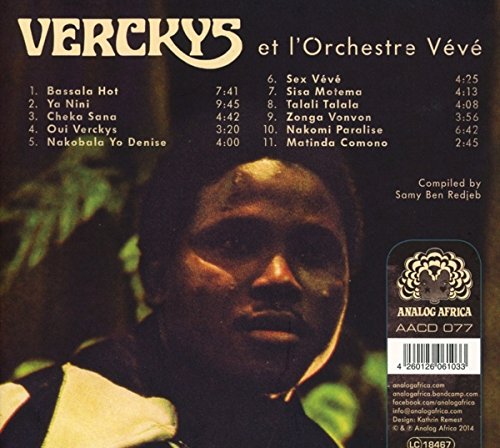
DJESSOU MORY KANTE-RIVER STRINGS: MANIKA GUITAR.
DJESSOU MORY KANTE-RIVER STRINGS: MANIKA GUITAR.
Twenty years have passed since Djessou Mory Kanté released his debut album N’na Niwalé (Merci Les Mères). Since then, Djessou Mory Kanté has established a reputation as one of the most talented African guitarists.
That’s why Djessou Mory Kanté is the go-to-guitarist for the great and good of African music. He’s accompanied Grand Papa Diabaté, Sona Diabaté, Salif Keita, and his elder brother Kanté Manfila of Les Ambassadeurs. Recently, however, Djessou Mory Kanté has played on and arranged Sékouba Bambino Diabaté’s album The Griot’s Craft. However, after eighteen years working as a session musician and arranger, Djessou Mory Kanté decided in 2012, to resume his solo career.
In May 2012, Djessou Mory Kanté, accompanied by some of Mali’s finest musicians, entered Studio Moffou and then Studio Rayle, in Mali. With his band, he recorded thirteen tracks. These were tracks that Djessou had written himself. Once the thirteen tracks were recorded, they became River Strings: Maninka Guitar. However, as is often the case, finding a label to release River Strings: Maninka Guitar took time.
That’s not surprising. Nowadays, record companies are unwilling to tie up even relatively small sums of money releasing an album on CD or vinyl. Before they do that, record companies will consider carefully the merits of each release. Often, the best an artist can hope is a digital release. Thankfully, though Djessou Mory Kanté was able to negotiate a better deal than that.
Just over two-and-a-half years later, on 8th December 2014, somewhat belatedly, Djessou Mory Kanté released his sophomore album, River Strings: Maninka Guitar on Stern’s Music. The album seemed to come out of nowhere. There was no hype. Far from it. Instead, River Strings: Maninka Guitar was just quietly released. Sadly, given the time of the year, River Strings: Maninka Guitar may be lost amidst the pre-Christmas compilations and cash-ins. That would be a great shame.
River Strings: Maninka Guitar features thirteen instrumentals, that last just over one hour. This is both traditional, beautiful and captivating African music. Its origins are in the Maninka tradition of Guinea and Mali. While this is the music Djessou Mory Kanté grew up playing, it’s the perfect showcase for one of Africa’s most talented musicians.
On River Strings: Maninka Guitar, Djessou Mory Kanté plays lead and accompanying guitars. He’s joined by multitalented band. It includes guest artist, guitarist Djelimady Tounkara, who features on Toubaka and Djandj. Other members of the band include bassist Karfala Kante and keyboardist Charly Couliba. Adding a traditional Maninka influence are Harouna Samake on kamala ngoni, Lamine Tounkara plays doumdouba, Jiby Diawara plays calabash, Bayela Dicko adds shekere and Almoudou “Mon Dieux” plays both diembe and doumbouba. This band join Djessou Mory Kanté on his long awaited, comeback album River Strings: Maninka Guitar.
The first thing that strikes you about River Strings: Maninka Guitar, is its crystal clear, clean sound. Obviously, close attention was paid when it came to capturing the sound during the sessions in Mali. It was then mixed by Ben Turner and Ian Scott in Weymouth, England. Their less is more attitude to mixing perfectly suits the music.
River Strings: Maninka Guitar’s opening track is Coucou, a Kante Manfila and Salif Keita composition. The music veers between understated and sparse, to melodic, rhythmic and joyous. That’s also the case with Harouna, Coucou and later Dounia Bara, a trio of understated, laid-back tracks. They whet your appetite, leaving you to wonder what delights are in store on River Strings: Maninka Guitar?
Nan Koura is quite different. It’s best described as thoughtful and wistful sound. This pensive, but heartachingly beautiful sound continues on Toubaka, which features guitarist Djelimady Tounkara. He also features on and Djandjo. Just like Denya, it’s dominated by a myriad of percussion, that goes toe-to-toe with Djessou’s guitar masterclass.
Earlier, I mentioned that some of the arrangements are sparse and understated. That’s not always the case. On some tracks, the arrangements have a much fuller, more developed sound. This includes Laban, where Djessou has been inspired by blues and funk.
Fakoly sits midway between the understated and fuller arrangement. That’s down to layers of guitars that interweave. As a result, there’s an element of urgency and drama. The result is a track that’s compelling and beautiful. So much so, that it’s akin to a snapshot into Djessou’s soul.
Confidently and deliberately, Djessou plays with urgency and precision on Senekela, Mbalia and Moussow. His guitar dominates the arrangement on these three tracks. He plays with fluidity and precision. Seamlessly, his fingers flitting up and down the fretboard. The guitar becomes as extension of Djessou, as he delivers three virtuoso performances. They’re a reminder why Djessou is the go-to-guitarist for the great and good of African music.
Not only does Kana Nka Kanu Sa close River Strings: Maninka Guitar, but it bookends the album perfectly. That’s down to the understated, sparse sound. Again, Djessou’s guitar plays a starring role, veering between melodic and rhythmic to tinged with melancholia and sometimes, joy.
Twenty years is a long time to wait before releasing a followup album. That, however, is how long it has taken Djessou Mory Kanté to release his sophomore album, River Strings: Maninka Guitar. It would’ve been released earlier, as it was recorded in May 2012. The problem was, one many artists experience, finding a record label to release River Strings: Maninka Guitar.
Many record labels nowadays, are risk averse. They’d rather play it safe. That’s why every week, a deluge of cash-in compilations and best of’s are released. However, not every record label is risk averse.
Stern’s Music released River Strings: Maninka Guitar on 8th December 2014. Just over two-and-a-half years after River Strings: Maninka Guitar was recorded, the album was belatedly released. Thanks goodness for that.
River Strings: Maninka Guitar is a beautiful album of stunning music. Over thirteen tracks, elements of African and Western music melt into one. last just over one hour. Elements of blues, classical, jazz and funk shine through. Mostly, though, its traditional African music that shines through on River Strings: Maninka Guitar, a truly captivating and beautiful musical journey.Its origins are in the Maninka tradition of Guinea and Mali.
This is the music Djessou Mory Kanté grew up playing. Now he’s one of Africa’s most talented musicians. He’s akin to a musical master-craftsman. That’s apparent from the opening bars of Djessou Mory Kanté’s sophomore album River Strings: Maninka Guitar, right through to the closing notes of this beautiful, captivating, elegiac and ethereal album.
DJESSOU MORY KANTE-RIVER STRINGS: MANIKA GUITAR.


SUPERTRAMP-CRIME OF THE CENTURY.
SUPERTRAMP-CRIME OF THE CENTURY.
For Supertramp, success didn’t come overnight. It wasn’t until Supertramp released their third album, Crime Of The Century, the commercial success and critical acclaim came their way. Crime Of The Century, which was recently released by A&M Records, was the start of the rise and rise of Supertramp. Their story began five years earlier, in 1969.
Back then, Supertramp’s future keyboard player, Rick Davies, was a member of The Joint. They were backed financially by Stanley ‘Sam’ August Miesegaes, a Dutch millionaire. By 1969, Stanley realised that The Joint weren’t going anywhere. However, one member of The Joint stood out, keyboardist Rick Davies. So, Stanley offered Rick the chance to form a new band, with his financial backing. Rick agreed, and soon, Daddy were formed.
With Stanley’s financial backing in place, Swindon born Rick Davies began putting together his new band. The way to do this, back in the sixties, was by putting an advert in one of the music papers. Rick chose the Melody Maker. Among the replies Rick received, were from bassist and vocalist Roger Hodgson, guitarist Richard Palmer and percussionist Keith Baker. Along with Rick they became Daddy. However, there would soon be a change in Daddy’s lineup.
Almost straight away, Keith Baker was replaced by former actor, Robert Millar. Although the group was in its infancy, they were already onto their second lineup. This new lineup of Daddy headed to Kent to hone their sound.
Straight away, the nascent group began honing their sound. They headed to a country house in West Hythe, Kent. That’s where Daddy began honing their sound. However, as the rehearsals drew to a close, it became apparent that Daddy didn’t have an extensive setlist. They only knew four songs. Two of these were cover versions and the other two were originals, penned guitarist Richard Palmer. He quickly emerged as Daddy’s songwriter in chief, as the grouped headed out on tour.
Daddy’s destination was Cologne, where they would play a series of concerts at the city’s P. N. Club. This allowed Daddy to further hone their sound. When Daddy returned home, they were a better band. There was however, a problem with their name though.
When Daddy were formed, Rick and the other members thought they were the only band with this name. That proved not to be the case. There was another band called Daddy Longlegs. This could lead to confusion. So, inspired by William Henry-Davis’ The Autobiography Of A Super-Tramp, Daddy became Supertramp. Little did anyone realise it, but one of the most successful groups of the seventies and eighties had just been born.
By 1970, Supertramp had signed to the British subsidiary of A&M Records. They were one of the first groups to sign to A&M UK. Supertramp would also become one of A&M UK’s most successful signings. Their debut album was Supertramp.
Supertramp.
For Supertramp’s eponymous debut album, Rick, Roger and Richard cowrote ten tracks. These ten tracks became Supertramp, which was recorded at Morgan Studios, in London.
At at Morgan Studios, the four members of Supertramp began work on their eponymous debut album. Although Supertramp was the group’s debut album, they were confident enough to produce it themselves. Rick sang lead vocal on six tracks. On Nothing to Show and Shadow Song, Rick shared the lead vocal with Roger. Then on Maybe I’m a Beggar and Try Again Roger and Richard shared lead vocal duties. Once the ten tracks were recorded during June 1970, Supertramp was released in July 1970.
On its release in July 1970, the reviews of Supertramp were mostly positive. Some critics spotted Supertramp’s potential. The music was described as melodic prog rock. Despite this, Supertramp was a commercial failure. This resulted in Supertramp rethinking their sound and direction.
Indelibly Stamped.
For their sophomore album Indelibly Stamped, Supertramp decided to change direction. They moved away from the prog rock of their debut album, to a much more traditional rock sound on Indelibly Stamped. This however, wasn’t the only change.
Supertramp’s lineup had changed drastically. Richard Palmer left just after the release of Supertramp. Flautist and saxophonist Dave Winthrop, bassist Frank Farrell and percussionist Kevin Currie joined. They replaced Roger Hodgson and Robert Millar. The new lineup made their debut on Indelibly Stamped.
For Indelibly Stamped Supertramp penned ten tracks. Nine of Indelibly Stamped’s ten tracks were written by the Rick Davies and Roger Hodgson. Roger also cowrote Rosie Had Everything Planned with new member Frank Farrell. These tracks were recorded at Olympic Studios, London.
The newly expanded line-up of Supertramp headed to Olympic Studios, London where they recorded Indelibly Stamped. Again, Supertramp produced Indelibly Stamped, which was recorded between April and May 1971. A mont later, in June 1971, Indelibly Stamped was released.
On the release of Indelibly Stamped, in June 1971, most critics praised Supertramp’s sophomore album. Just like their eponymous debut album, it received positive reviews. However, the only thing critics didn’t like were the lengthy instrumental parts. This to many critics weaned on the three minute pop song, was self-indulgent. However, music was changing, and Supertramp would be at the forefront of this change. The problem was, Supertramp were ahead of the musical curve.
On its release, Indelibly Stamped failed commercially. Their day was about to come though. That would be in 1974, when Supertramp released their third album, Crime Of The Century.
Crime Of The Century.
After the commercial failure of Indelibly Stamped, the group became disillusioned. Kevin Currie, Dave Winthrop and Frank Farrell left Supertramp. The last men standing were Rick Davies and Roger Hodgson. They began looking for the next lineup of Supertramp.
The new lineup of Supertramp featured bassist Dougie Thompson, drummer and percussionist Bob C. Benberg and John Helliwell, who played saxophone, woodwinds and keyboards. This was the lineup that recorded Crime Of The Century.
Before recording began, Supertramp had to choose the tracks that would feature on Crime Of The Century. This wasn’t easy. Supertramp had recorded forty-two demos. From that, eight tracks were chosen and became Crime Of The Century.
Despite their relationship faltering somewhat, the eight songs were credited to Rick Davies and Roger Hodgson. This wasn’t the case. Some tracks were written by Rick, others by Roger. However, Rick Davies and Roger Hodgson hadn’t managed to dissolve their songwriting partnership. This would be a lengthy and complicated process. Ironically, this would prove profitable for either Rick or Roger when Crime Of The Century was eventually recorded
Recording of Crime Of The Century took place at Ramport Studios, Scorpio Sound Studios and Trident Studios in London between February and June 1974. Supertramp and Ken Scott co-produced Crime Of The Century. As the sessions began in February 1974, Supertramp’s rhythm section featured Bob Siebenberg played drums and percussion, Dougie Thompson bass and Roger Hodgson vocals, guitar and piano. They were joined by Rick Davies on keyboards, harmonica and vocals, while John Helliwell played saxophone and clarinet. After four months recording, Crime Of The Century was completed in June 1974. It would be their breakthrough album.
On its release, in September 1974, Crime Of The Century received widespread critical acclaim. It was widely accepted that Crime Of The Century was by far, Supertramp’s finest album. That was reflected in sales. Crime Of The Century reached number four in Britain and number thirty-eight in the US Billboard 200 charts. This resulted in Crime Of The Century being certified gold in America and Britain. That, however, wasn’t the end of the commercial success.
Dreamer was chosen as the lead single from Crime Of The Century. It reached number thirteen in Britain, giving Supertramp their first British hit single. Bloody Well Right, the followup to Dreamer, reached number thirty-five in the US Billboard 100 charts, giving Supertramp their first American hit single. For the new lineup of Supertramp, Crime Of The Century, which I’ll tell you about, was a game-changer.
School opens Crime Of The Century. A haunting, lingering bluesy harmonica adds a melancholy sound. It floats above the arrangement as gradually, it unfolds. When the vocal enters, its heartfelt and tender. Meanwhile, keyboards and meandering guitars create an understated backdrop. Soon, the arrangement opens out and Supertramp spread their their wings. The new rhythm section join keyboards, percussion and searing guitars in creating an arrangement that veers between dramatic, understated and melancholy. During an instrumental breakdown, Supertramp take the opportunity to showcase their considerable skills, before this melodic, melancholy track reaches a dramatic crescendo.
Bloody Well Right was the second single release from Crime Of The Century. Keyboards create a jazz-tinged backdrop, while occasionally, the rhythm section interject. A wah-wah guitar climbs above the arrangement. It’s joined by keyboards and a blistering, rocky guitar. This sets the scene for Rick’s grizzled vocal. When it drops out, searing guitars and a braying horn enter. Later, their joined by Ray’s vocal. He sings call and response with the rest of Supertramp. The sultriest of saxophones proves the perfect addition to what’s one of Supertramp’s most memorable singles.
Just like many of the tracks on Crime Of The Century, Hide In Your Shell deals with the theme of loneliness and mental stability. They’re threads that run through Crime Of The Century. This makes Hide In Your Shell a soul baring track. When Roger delivers the lyrics, it’s as if he’s experienced the loneliness that he’s singing about. Behind him, Supertramp are at their melodic best. With the rhythm section providing the heartbeat, keyboards and a rasping horn combine. They’re the perfect accompaniment to Roger’s soul baring vocal.
Asylum is a song about a someone with mental health problems. They, however, don’t realise they’re ill. Pleadingly, he sings “don’t have me sent to some asylum.”Meanwhile, the arrangement builds and grows. From just keyboards, the drama builds. This frame the vocals, as it breathes, life and meaning and emotion into what are insightful, thoughtful lyrics.
Dreamer wasn’t a new song when it featured on Crime Of The Century. Roger penned the track when he was just nineteen. He wrote the song on a Wurlitzer piano, and shares the vocal with Rick. An urgent piano line accompanies the jaunty vocal. It’s accompanied by harmonies. Soon, instruments flit in and out of the track. The rhythm section, percussion and stabs of keyboards join ethereal, dreamy, then urgent harmonies. These urgent harmonies signal a change in direction. After that, the track becomes dramatic and urgent. In doing so, a Supertramp classic takes shape.
Rudy is another track where Supertramp throw a series of curveballs. Just a lone piano adds a wistful backdrop, before flourishes of piano set the scene for the vocal. It’s similarly understated, in a singer-songwriter style. Think Billy Joel. Then it becomes powerful and hopeful. Meanwhile, Supertramp unleash their trademark brand of art rock behind this vocal powerhouse. Stabs of piano, crystalline guitars and a sultry heartachingly beautiful saxophone combine with the rhythm section. Together with the vocal they create a mixture of drama, beauty and melancholy.
If Everyone Was Listening is another piano lead track. This time, Roger takes charge of the lead vocal. His tender, wistful vocal is perfectly suited to the track. He delivers the lyrics as if he’s lived them. Accompanying him are the rhythm section, piano and harmonies. They create the backdrop to his needy, hopeful vocal as he sings “oh please no, don’t let the curtain fall.”Swathes of lush strings sweep and are augmented by a clarinet and crate a quite beautiful, melancholy mini-masterpiece.
Crime Of The Century closes with the title-track. This time, Rick delivers the vocal. His vocal has a much tougher, powerful sound. It veers between a roar to understated. Behind him, stabs of piano, searing guitars and deliberate drums combine adding a dramatic backdrop. Gradually, the song unfolds, revealing its many secrets. Part of the song’s success is down to the swathes of strings. They add to the tension and drama. They’re augmented by the grizzled saxophone as Crime Of The Century, a five minute opus, reveals its considerable delights.
The Supertramp story isn’t one of overnight success. Far from it. It took Supertramp five years, and several lineups to make a breakthrough with Crime Of The Century. This was their third album. Their first two albums had failed commercially. For Supertramp, this was a huge disappointment.
Indeed, so disillusioned were three members of Supertramp, that they left the band after their sophomore album, Indelibly Stamped. For Rick and Roger this proved a blessing in disguise. It gave them the opportunity to start with a new lineup of Supertramp. This new lineup, proved to be the one that brought commercial success and critical acclaim Supertramp’s way.
Crime Of The Century was certified gold in America and Britain. Critics hailed Crime Of The Century the finest album of Supertramp’s three album career. Fast forward forty years, and Crime Of The Century is a stonewall classic. It features in Rolling Stone’s 500 best albums of all time. However, Crime Of The Century wouldn’t be the last classic Supertramp released.
Throughout the rest of the seventies, Supertramp were rock royalty. They rubbed shoulders with Genesis and Queen. Albums like 1975s Crisis? 1977s What Crisis?, Even in the Quietest Moments… and 1979s Breakfast in America saw Supertramp become one of the most successful bands in the world. This continued right into the eighties, through 1982s …Famous Last Words…, 1985s Brother Where You Bound and 1987 Free as a Bird, which was Supertramp’s last studio album for ten years. The album that started this run of commercial success and critical acclaim was Crime Of The Century, which was recently reissued by A&M Records, as a double album.
Disc one features the newly remastered version of Crime Of The Century. Then on disc two, there’s a concert recorded Live At The Hammersmith Odeon on March 9th 1975. That night, Supertramp play Crime Of The Century, augmenting it with Sister Moonshine, Just A Normal Day, Another Man’s Woman, Lady and A-You’re Adorable. These tracks feature Supertramp at the top of their game, and show just why they would go on to become rock royalty. The album that started the rise and rise of Supertramp was Crime Of The Century, an art-rock opus from a member of rock royalty.
SUPERTRAMP-CRIME OF THE CENTURY.

 dereksmusicblog
 dereksmusicblog