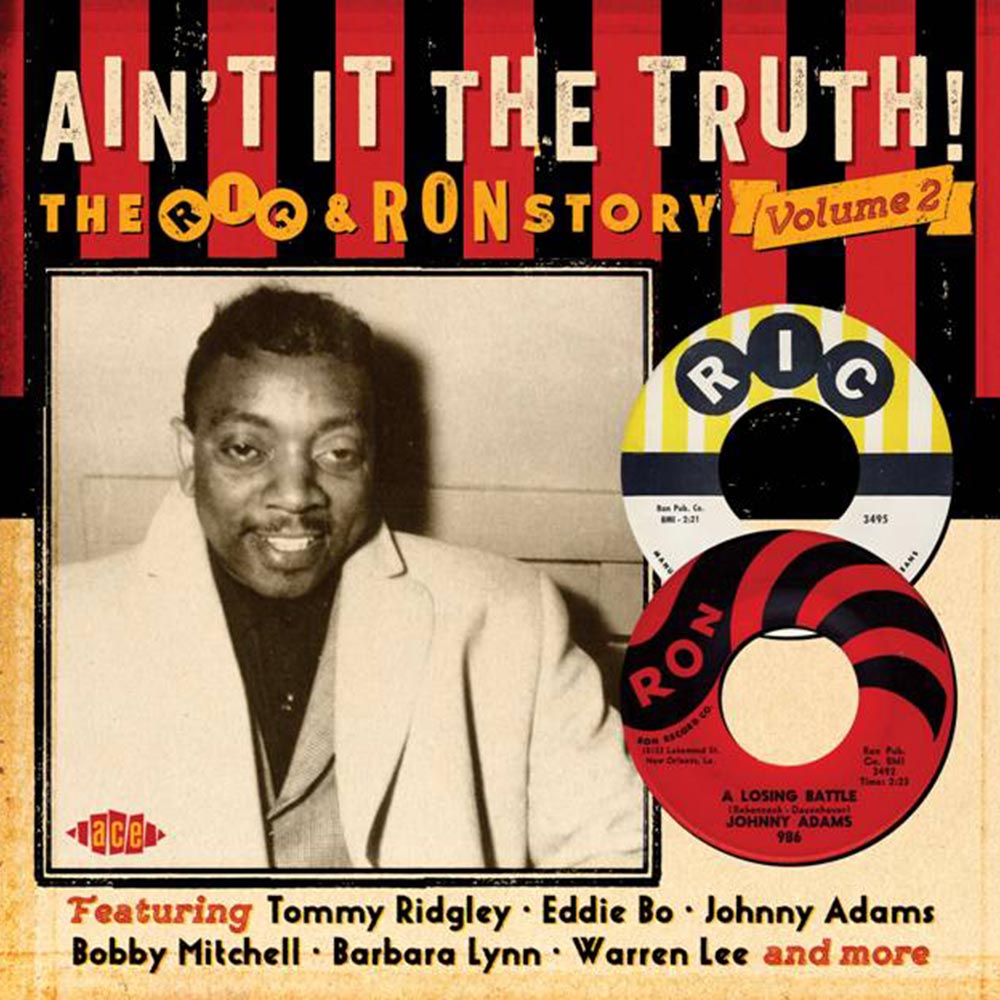
AIN’T THAT THE TRUTH-THE RIC AND RON STORY VOLUME 2.
AIN’T THAT THE TRUTH-THE RIC AND RON STORY VOLUME 2.
Having founded the Ric and Ron labels in 1958, Joe Ruffino spent the next four years, transforming them into two of New Orleans’ premier independent R&B labels. During this period, artists of the calibre of Professor Longhair, Irma Thomas, Johnny Adams, Eddie Bo and Eddie Laing released singles on the Ric and Ron labels. Many of these artists were brought to Joe by his A&R men.
This included Edgar Blanchard, Harold Battiste and Malcolm “Mac” Rebenack. They were Joe’s ears. He trusted them to find him artists who would bring success to his labels. His three A&R men had a good track record, they’d discovered artists like Irma Thomas and Chris Kenner, before they found fame.
They were brought to Joe Ruffino and he signed them to his Ric and Ron labels. For the first four years, many of the singles were written or produced by Joe Ruffino. That presented a problem.
Tragedy struck for the Ruffino family in 1962. Joe died suddenly of a heart attack. He had been the driving force behind the Ric and Ron labels. His drive and determination transformed them from a successful New Orleans label, into a label that was on the verge of nationwide success.
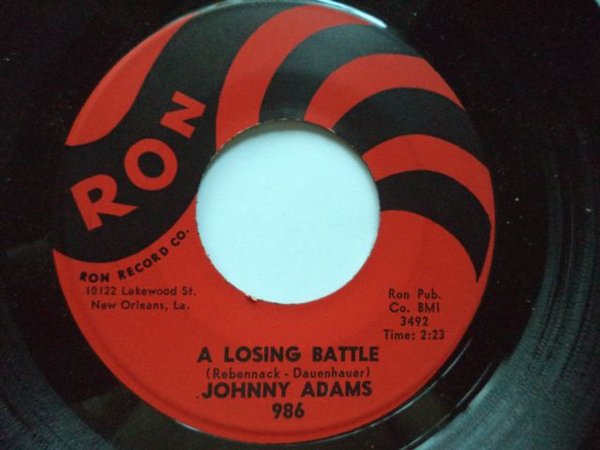
Three singles had transformed the fortunes of Ric and Ron. Joe Jones’ You Talk Too Much started the ball rolling. It was a success across America. Then Johnny Adams’ A Losing Battle and Eddie Bo’s Check Mr. Popeye came close to making a breakthrough nationwide. Joe Ruffino’s four years of hard work had paid off. However, following his death, there was a problem.
Joe was the only member of the Ruffino family who played an active role in the running of Ric and Ron. Following his death, this presented a problem. After all who would succeed Joe? This problem wasn’t unique to the Ruffino family. Many family businesses have problems regarding succession. However, the problem of succession hit the Ric and Ron labels hard.
In 1963, Ric only released two singles. Ron didn’t release any singles. Worse was to come. Harold Battiste and Malcolm “Mac” Rebenack, Joe’s trusty lieutenants moved to Los Angeles. The men that had been Joe’s ears, headed to the West Coast. As if this wasn’t bad enough, two of Ric and Ron’s top artists left.
The first to go was Eddie Bo. He went on to record for a number of New Orleans’ labels, enjoying a successful career. Johnny Adams recorded two more singles for Ron. They were produced by Walter Quezergue, who would go on to become one of the biggest players in the New Orelans’ soul scene. After the release of Johnny Adams’ two singles, Ric and Ron shut their doors.
After five years, Ric and Ron, the labels that Joe Ruffino gave birth to, were no more. Joe’s brother-in-law, Joe Assunto became the custodian of Ric and Ron’s master tapes. He repressed many of Ric and Ron’s most successful tracks. Then in the late seventies, Joe Assunto died.
His daughter took over the running of Joe’s label for a while. Then she moved on to other business ventures. By the late eighties, Rounder Records reissued some of Ric and Ron’s music. That was over a quarter of a century ago. A widespread reissue program of the back-catalogue is well overdue. That’s where Ace Records comes in.
Earlier this year, Ace Records released You Talk Too Much-The Ric and Ron Story Volume 1. This was a tantalising taste, of one of New Orleans’ most important, independent labels. However, there’s much more still to be heard. That includes the twenty-four tracks on Ain’t That The Truth-The Ric and Ron Story Volume 2. It was recently released by Ace Records.
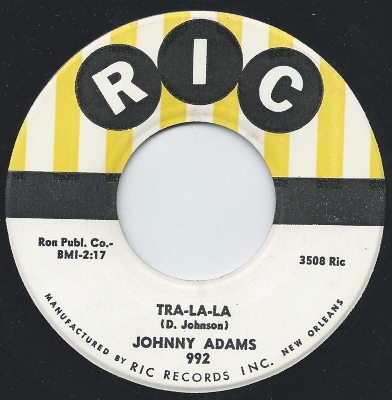
Ain’t That The Truth-The Ric and Ron Story Volume 2 features some of the biggest names in the Ric and Ron story. The majority of the music was released between 1960 and 1963. This includes contributions from Bobby Mitchell, Johnny Adams, Tommy Ridgely, Eddie Bo, Martha Carter, Joe Louis and Barbara Lynn, which I’ll pick the highlights of.
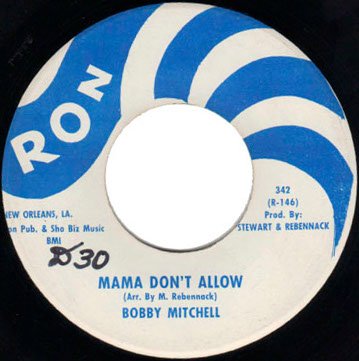
Bobby Mitchell opens Ain’t That The Truth-The Ric and Ron Story Volume 2 Send Me Your Picture. This is one of two tracks from Bobby. It was released in 1960 on Ron. A dramatic, piano driven arrangement provides the backdrop for Bobby’s needy, hopeful vocal. Bobby’s other contribution is Mama Don’t Allow. This was the the B-Side to There’s Only One Of You. Arranged by Mac Rebenack, it’s an irresistible fusion of pop, R&B and soul.
Given that Johnny Adams played such an important part in the Ric and Ron story, it’s no surprise he features five times on Ain’t That The Truth-The Ric and Ron Story Volume 2. His first contribution is Life Is Just A Struggle, the B-Side to his 1961, single on Ric, I Solemnly Promise. It features an emotive, vocal powerhouse from Johnny. There’s also an alternate take of Johnny’s 1961 single The Bells Are Ringing. It’s never been released before, and makes a welcome debut here. Another B-Side was A Losing Battle, which was the B-Side to Who’s Gonna Love You, Johhny’s 1962 single. Penned by John Dauenhauer and Mac Rebenack, despair and despondency are omnipresent in Johhny’s vocal. Showdown was also released in 1962. This was one of Johnny’s 1962 singles. Released on Ric, it features a wistful, hurt-filled vocal. The last contribution from Johnny is the previously unreleased How Come (And Why). Never before has this demo track been released. It’s best described as a hidden, soulful gem, with a nod to Sam Cooke.
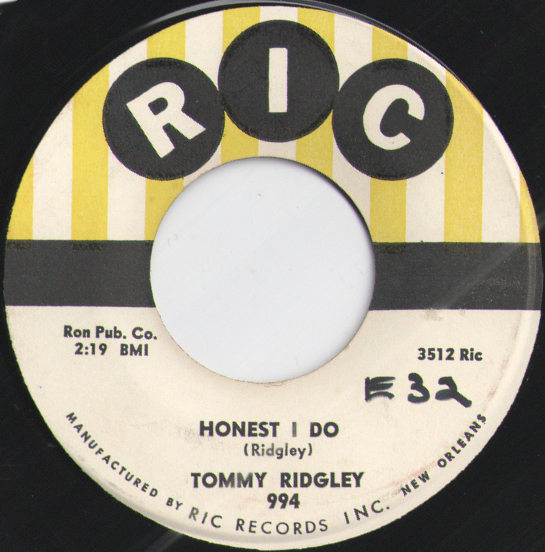
There’s a trio of tracks from Tommy Ridgely on Ain’t That The Truth-The Ric and Ron Story Volume 2. No wonder. He played an important part in the labels’ rise and rise. Should I Ever Love Again is the first contribution from Tommy. This was the B-Side to his 1961 single Double Eye Whammy. Released on Ric, Tommy lays bare his hurt and heartache for all to see. A year later, In The Same Old Way is the was released on Ric in 1962, and features a heartfelt vocal from one Joe Ruffino’s biggest success stories. Tommy’s final contribution is Honest I Do, the B-Side to I’ve Heard This Story Before. Written by Tommy, Honest I Do was his swan-song for Ric Records, and saw him leave on a soulful high.
Ain’t That The Truth-The Ric and Ron Story Volume 2 doesn’t just feature soul men. No. It features soul sisters like Martha Carter. She features three times. Her first contribution is I Don’t Talk Too Much, her 1960 single. It’s a tongue-in-cheek reply to a Joe Adams single. You Can If You Think You Can was the B-Side to One Man’s Woman. It’s an uptempo jewel written and arranged by Harold Battiste. For Then I’ll Believe, proved to be Martha’s final single. Penned by Eddie Bo, under his Dolores Johnson alias, Martha drops the tempo and releases a feisty, sassy vocal powerhouse. Sadly, not long after the release of Then I’ll Believe, Martha underwent a throat operation which went wrong. This left Martha unable to sing. That day, music lost a hugely talented vocalist.
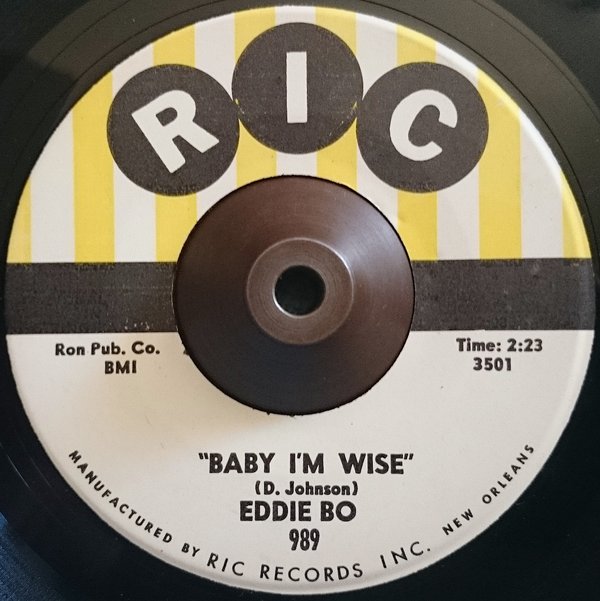
Eddie Bo has to feature on any compilation of Ric Records and Ron Records. He played such an important part in the labels’ success. Ain’t It The Truth Now is his first contribution. This was the B-Side to his 1960 single Warm Daddy. Released on Ric, it’s soulful and long on hooks. Two years later, Check Mr Popeye gave Eddie a nationwide hit. This slice of R&B helped raise the profile of Joe Ruffino’s burgeoning empire. Baby I’m Wise was Eddie’s Ric Records swan-song. Just like Check Mr Popeye, it was penned by Eddie Bo, under his Dolores Johnson alias. It’s Eddie at his best. He vamps and hollers his way through this driving fusion of R&B and soul.
My final choices from Ain’t That The Truth-The Ric and Ron Story Volume 2 come courtesy of the prolific, and sometimes, underrated Barbara Lynn. She recorded two demos for Joe Ruffino, Found My Good Thing and Question Of Love. Sadly, they were’t released until 2012. Found My Good Thing is a compelling track. Barbara gently strums a guitar, and delivers a vocal that’s equal parts hurt and hope. Question Of Love is delivered against an equally understated arrangement. That doesn’t matter, as Barbara’s accusing, angry vocal takes centre-stage. Despite these two tracks being demos, it’s apparent Barbara was destined for soul greatness.
Ain’t That The Truth-The Ric and Ron Story Volume 2 picks up where You Talk Too Much-The Ric and Ron Story Volume 1 left off. It goes some way to filling in the gaps in the story of Ric Records and Ron Records. There was no happy ending in this story. Just as Joe’s burgeoning empire was taking shape, he died of a heart attack.
Joe had been the driving force behind the Ric and Ron labels. His drive and determination transformed them from a successful New Orleans label, into a label that was on the verge of nationwide success. After Joe’s death, he left behind a huge void.
He was the only member of the Ruffino family who played an active role in the running of Ric and Ron. Following his death, this presented a problem. Who would succeed Joe? There was no answer to this question. None of the other members of the Ruffino family stepped up to the plate. That’s not surprising. They’d no experience of running a record label. Within a year of Joe’s death, the Ric and Ron labels were all but a memory.
In 1963, Ric only released two singles. Ron didn’t release any singles. Worse was to come. His A&R men jumped ship. Then some of Ric and Ron’s top artists exited stage left. Joe Assunto became the custodian of Ric and Ron’s master tapes. He repressed many of Ric and Ron’s most successful tracks. Then in the late seventies, Joe Assunto died. This, to all intents and purposes was the end of the Ric and Ron story.
Despite this, people were still interested in Ric and Ron’s back-catalogue. It’s never been reissued for twenty-five years. This meant a generation of music lovers have never heard Ric and Ron’s discography. Someone had to rectify this.
That’s where Ace Records come in. Earlier this year, Ace Records released You Talk Too Much-The Ric and Ron Story Volume 1. This was a tantalising taste, of one of New Orleans’ most important, independent labels. However, there was so much more music still to be heard. That includes the twenty-four tracks on Ain’t That The Truth-The Ric and Ron Story Volume 2. It was recently released by Ace Records.
Ain’t That The Truth-The Ric and Ron Story Volume 2 features some of the biggest names in the Ric and Ron story. The majority of the music was released between 1960 and 1963. This includes contributions from Bobby Mitchell, Johnny Adams, Tommy Ridgely, Eddie Bo and Martha Carter. They all played their part in transforming Ric and Ron from mom and pop labels, to labels on the verge of nationwide success. Then fate intervened.
Who knows what heights Ric and Ron might have reached? Especially with Joe Tuffino at the helm. He surrounded himself with people brought commercial success and critical acclaim to his labels. Edgar Blanchard, Harold Battiste and Malcolm “Mac” Rebenack were Joe’s ears. He trusted them to find him artists who would bring success to his labels. They had a good track record. Who knows who they might have gone on to discover if Joe had lived?
Maybe now, Ric and Ron would’ve been one of the most important soul labels? Sadly, we’ll never know. What we do know is that Ric and Ron released a wealth of quality soul and R&B. Proof of this is Ain’t That The Truth-The Ric and Ron Story Volume 2, which along with You Talk Too Much-The Ric and Ron Story Volume 1, is the perfect introduction to the Ric and Ron labels.
AIN’T THAT THE TRUTH-THE RIC AND RON STORY VOLUME 2.

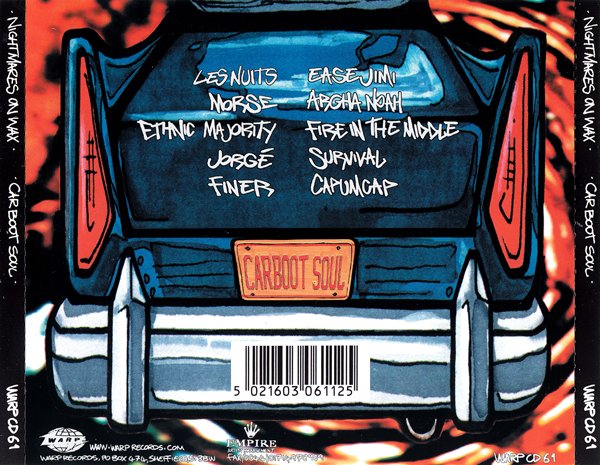
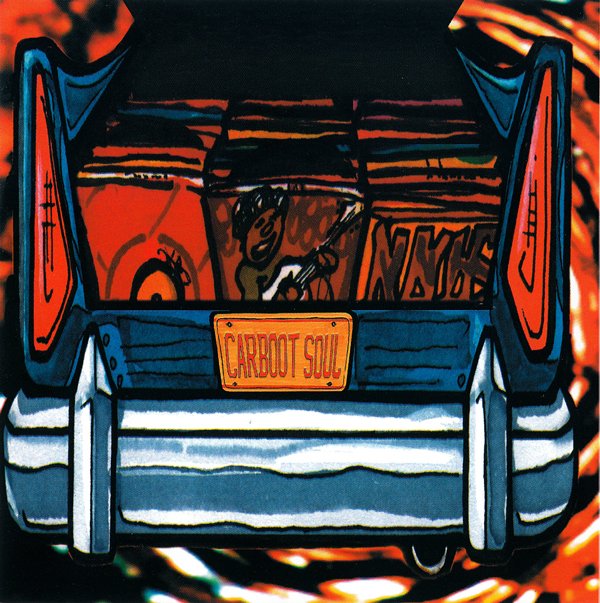
NIGHTMARES ON WAX-CAR BOOT SOUL.
NIGHTMARES ON WAX-CAR BOOT SOUL.
Have you ever thought after buying an album you know absolutely nothing about, just why you bought it? I have, many times. One of the explanations I’ve come up with, is the album cover. Imagine the scene, your in your local record store. You need your weekly fix of music, but there seems to be nothing new that you really want. However, you need something new to listen to. You feel that you must buy something. By now, desperation is taking over. The weekend won’t be complete without buying at least one new album. Do you head for the back catalogue section, and buy something buy some overblown, bloated and pompous 1970’s rock band? No. Here’s what many people, myself included do. We look for an interesting album cover. Now sometimes, this works. Other times, the results can be disastrous.
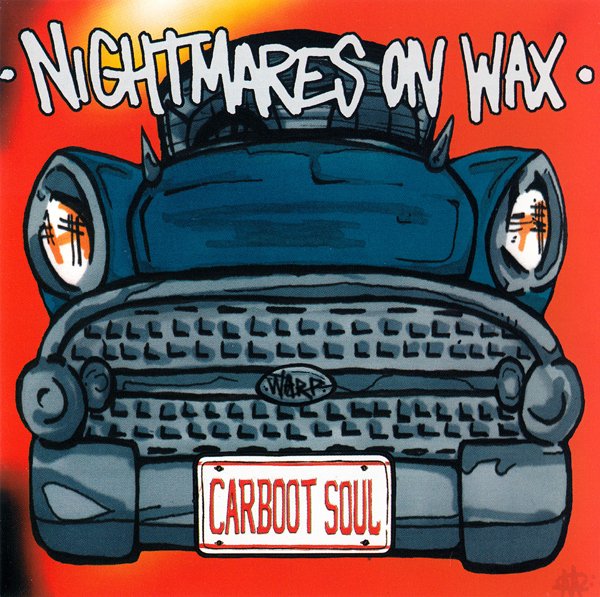
Imagine the scene, you’ve found an album the cover has a psychedelic design, looks interesting you think, so you part with your money, and head home. On arriving home, you put the album on, and it’s the most unlistenable cross between rock and free jazz. Ouch. Often though, the results can be the opposite, and you’re attracted to an album cover, pay your money, and you’ve discovered the most brilliant album. This happened to me back in April 1999, when I discovered the Nightmares On Wax third album, Car Boot Soul. I’m glad I did, because that day, I discovered a downtempo classic, Car Boot Soul. It’s being released as a double album by Warp Records to celebrate the twenty-fifth anniversary of Nightmares On Wax.
Back in 1999, Nightmares On Wax were celebrating their tenth anniversary. They’d already released two albums, 1991s A Word Of Science (The 1st & Final Chapter) and 1995s Smokers Delight. It was a downtempo classic. Nightmares On Wax, it seemed were maturing with age. However, they weren’t prolific. Instead, a Nightmares On Wax took around four years to make. That’s not surprising.
When George was recording Car Boot Soul, he didn’t have the technology that’s available today. DAWs like Ableton Live, Reason 8 and Pro Tools were a thing of the future. So were VSTs. Drum machines, synths, sequencers and samplers were around. The problem with samplers was that their memory was tiny. Sampling required the patience of a musical saint. However, Sampling was one of George Evelyn’s secret weapons when he made Car Boot Soul.
When George Evelyn began recording as Nightmares On Wax, he took a different approach to similar artists. He always records guitar, bass, keyboards and vocals live. Two other ingredients were required when he made the album. One was his trusty drum machine, the other was vinyl, lovely vinyl, and loads of it. George Evelyn is one of the hungriest of crate diggers, and it’s the vinyl that he discovers whilst crate digging in dark and dusty second hand shops. Flea markets are fare game, as well as back street record shops and record fairs. These places are is natural habitat and the gems found there, provide many of the samples on the album. These three things were key to the success of Car Boot Soul, a downtempo classic, which I’ll tell yopu about.
Car Boot Soul opens with Les Nuits. Immediately, the sound you hear is symphonic, as it sweeps almost grandiosely towards you. On its arrival, you’re smitten, enthralled by its subtle beauty. Slowly, the track opens out. Crisp drums and synths enter. A keyboard meanders, the tempo is slow, and the sound becomes spacious. It’s the keyboard and drums that become the focus of your attention. Then suddenly, out of nowhere, smooth, sweet, vocals interject, making the briefest of appearance. Layer upon layer of sounds emerge over nearly six and a half majestic minutes. During that time, you’ve been fortunate to have heard one of the most beautiful downtempo tracks ever recorded.
As Morse begins, bass and keyboard combine, an effect slightly muffles the sound, a sound that, once you’ve heard it you’re hooked. Then it fades away, the music pauses. You must hear it again. Thankfully, you do. It reappears, during a track that takes its influences from jazz and funk. As the track restarts, a bass plays, keyboards and drums combine. Snatches of vocal samples can be heard. A female vocal sings, her voice sweet, yet subtle. Repetition reinforces this understated and welcome addition. A guitar plays, its laid back jazzy influence joining joyously, adding another dimension. The guitar sounds not unlike George Benson, circa Breezin.’ Then, the most angelic vocal appears. Its appearance is sudden and unexpected, yet very welcome. For the remainder of the track, it soars above the rest of the arrangement. Drum, keyboards and synths bow to its superior sound. It proves to be the icing on the cake, combining with the vocal sample to complete what is a mini masterpiece from George Evelyn.
Ethnic Majority begins with what sounds like a James Last sample. This brings to mind memories of Abigail’s Party and fondue sets. Add in a drum machine, some crisp beats, and you get the picture. Honestly, the sound is pretty pleasing. It’s catchy, infectious, and hook laden. What you’re experiencing is a trip in George Evelyn’s time machine to the seventies. Unlike much of what the seventies had to offer, this is a welcome return to a desolate decade. Its more lounge-esque than downtempo. Like the previous two tracks, Ethnic Majority has worked his magic to produce in interesting, infectiously catchy song, that reminds those of us who are old enough to remember, a distant decade, the seventies.
When Jorge begins, it brings to mind another childhood memory, crackly vinyl. Jorge begins with spacious drums, a sample of a female vocalist plays, repeating the same phrase. Both the sample, and her voice are highly effective. Her voice is high, the sample short. Listen carefully, and you can hear what sounds like crackly vinyl. That reminds me of buying vinyl, taking it home and hearing it crackle, its surface never quite perfect. A warmth can be heard in this track. Whether that’s because when we think of vinyl, we think of a warm sound emerging from our speakers. That’s the case here. For nearly two and half minutes, this glorious sound emerges from the speakers, bringing back memories of the days when vinyl was King,
Finer begins with bass playing hesitantly, then you hear a scratch, drums crisp and loud join in. Then a female vocalist joins, her vocal sounds as if it’s hidden, just peaking out from the mix. It sounds nicely understated, and quite a contrast to the drums which, crisply and spaciously pound. The arrangement is quite sparse, just bass, drums, vocal and the occasional scratch. This arrangement suits the vocal, it allows your attention to focus on it, there’s little to distract you. Even the drums, don’t distract your attention, they proudly provide the track’s heartbeat. Overall, it’s a melodic melange of sounds, one which has it roots in US hip hop, and one that demonstrates George Evelyn’s talents as an artist and producer.
At the start of Easejimi, all you hear are drums pounding. Sometimes, a cymbal crashes. Apart from that not much happens, until after twenty-seconds, when suddenly, a rhythm emerges, repeating, then the track bursts into life. Trumpets unite, sounding fabulously funky, behind them, this rhythm plays. By now, a funk drenched, hook laden track has appeared. Rhythms appear, and disappear. Samples enter, only to disappear. Vocals can be heard, brass plays, a hip hop influence shows itself, scratches and vocal stabs, entering the equation. The sound is big, full and you find yourself struggling to take everything in. So much is happening, so many instruments, samples and even styles of music are present. For five and a half minutes, your senses are assailed. They’re a victim of a potpourri of glorious hooks, melodies and rhythms, that leave you marveling at the imagination and talent required to create such a masterful track.
Argha Noah begins with a dull distant sound reverberating, it’s atmospheric and mysterious. A spoken word sample appears, adding to the already dark mood. After this, a bass rumbles, the sound grows. Darkness is still present, as drums hesitantly join what is now, a space age sound. Although still dark, the addition of drums, crashing cymbals and synths slightly lighten the dark and mysterious mood. The track slowly meanders along, space present in the arrangement. Drums and bass play slowly, space between the notes vital, vital to add to the mood. It’s almost like the soundtrack to a science fiction film. A keyboard plays, providing light to the overwhelming darkness. This keyboard fills out the arrangement, filling spaces, but sometimes leaving space, this has the effect of adding to the sense of mystery. At the end of the track, you feel you’ve been on a magical musical journey, a journey through space, to another place, where Argha Noah is their national anthem.
Fire In the Middle when it begins, reminds me of Jose Padilla. It’s the guitar playing on the track, which has a lovely understated quality. Accompanying the guitars, are George Evelyn’s trademark crisp and loud drums, which almost crack, such is the clarity. A bass rumbles, sounding way back in the mix, synths sweep in. Suddenly, this combination has added almost a sweetness to the sound. Like many of the tracks on Car Boot Soul, it’s catchy, so infectious, it’s nearly contagious. Evelyn has ensured the track has hooks a plenty, which draw you in, and enthrall you. It seems one of his secrets is find a catchy sample or synth line, and repeat it many times. Then it almost worms its way into your subconscious, where it lurks, reappearing when you least expect it. Like many tracks on Car Boot Soul, there is a warmth to this track. It’s the musical equivalent of a log fire.
Survival begins brightly, melodically, with a mixture of drums, bass and keyboards playing. They’re joined by another sweet sounding female vocalist. Here, like on Finer, the vocal sits far back in the mix, sounding slightly hidden. This almost adds a touch of mystery to her. You wonder who she is? who is the owner of this beautiful voice? Similarly to Fire In the Middle, Survival is immediately catchy, hooks are everywhere. George Evelyn is a master of this type of track. Although not immediately noticeable, Survival has quite a full sound. It’s a mixture of a throbbing bass, buried deep in the mix, pounding drums, keyboards, synths and vocals. Overall, this combines beautifully, producing a summery sounding song, that your ears will never tire of hearing.
Car Boot Soul ends with Capuncap, a track that, from the start, is loud and full. Drums pound, the bass pulsates, synths sweep in, announcing their arrival, and strings emerge. It’s an impressive, almost grandiose start to the final track on the album. This sound continues majestically, then just as you’re enjoying letting the many layers of music wash over you, it pauses briefly. It’s as if it’s just allowing you to absorb the music’s power and quality. Thankfully, apart from the occasional brief pause, it’s a continuous flow of music, and Capuncap is a graceful and subtle way to end Car Boot Soul.
Every time I listen to Car Boot Soul, which is being re released as a double album by Warp Records to celebrate the twenty-fifth anniversary of Nightmares On Wax, it’s like meeting an old friend. This is an album I’ve listened to more times than I care to remember. Car Boot Soul is an album that is one I constantly return to, and one I never tire of hearing. Each time I listen to the album, I hear new things. Sounds that I’ve never heard before emerge. Subtleties and nuances reveal themselves. That’s why Car Boot Soul, is a much more complex album than you first think.
Especially considering that technology was much less evolved then, than now. Samplers and synths weren’t as good as they are now. Back then, even the computer’s role in making music was in its infancy. Discs full of samples are used now to make music, back then, all George Evelyn had was his trusted vinyl. So when you consider who difficult, and time consuming, it must have been to make this album, he should be commended.
What George Evelyn has produced is one of the finest downtempo albums ever made. That may sound like a big statement. It is, and not one I make lightly. Many other artists made similar albums, but Car Boot Soul stands head and shoulders above them. Car Boot Soul has stood the test of time, the music has a timeless quality, one that just as sounds as good in 2014, as at did in 1999, when I first discovered Car Boot Soul’s delights.
NIGHTMARES ON WAX-CAR BOOT SOUL.
BOPPIN’ BY THE BAYOU-MADE IN THE SHADE.
BOPPIN’ BY THE BAYOU-MADE IN THE SHADE.
For the last hundred years, Louisiana has been a musical hotbed. It’s given the world cajun, creole, Dixieland, swamp blues, swamp pop and zydeco. That’s not all. Many blues, country and jazz artist were born and bred in Louisiana. Despite being such a musical hotbed, Louisiana was for far too long, been overlooked by compilers.
Instead, compilers headed to Chicago, Detroit, Nashville, New York and Philly. They became favourite destinations for compilers of blues, country and soul compilations. That’s no longer the case. Some compilers dig deeper, much deeper. This includes Ian Saddler the man behind Ace Records Boppin’ In The Bayou compilation series.
Ian was one of the first compilers to head to Louisiana. Others, realising that Louisiana is a musical treasure trove, have followed in his wake. However, Ian was a trailblazer. He’s now a familiar face in the Bayou state, having compiled nine instalments of the in Boppin’ In The Bayou compilation series.
For the ninth instalment in Ace Records Boppin’ In The Bayou series, compiler Ian Saddler heads to South Louisiana and South East Texas. That’s where the twenty-eight tracks on the recently released Boppin’ By The Bayou-Made In The Shade were recorded.
Boppin’ By The Bayou-Made In The Shade includes twenty singles and eight previously unreleased tracks. Some of the tracks date back to the late fifties, the golden age of rock ’n’ roll. This includes tracks from Gene Dunlap and The Jokers, Guitar Jeff and The Creoles, Bobby Wheeler and Coastaleers and Gene Rodrigue. These tracks are just the tip of a musical iceberg.
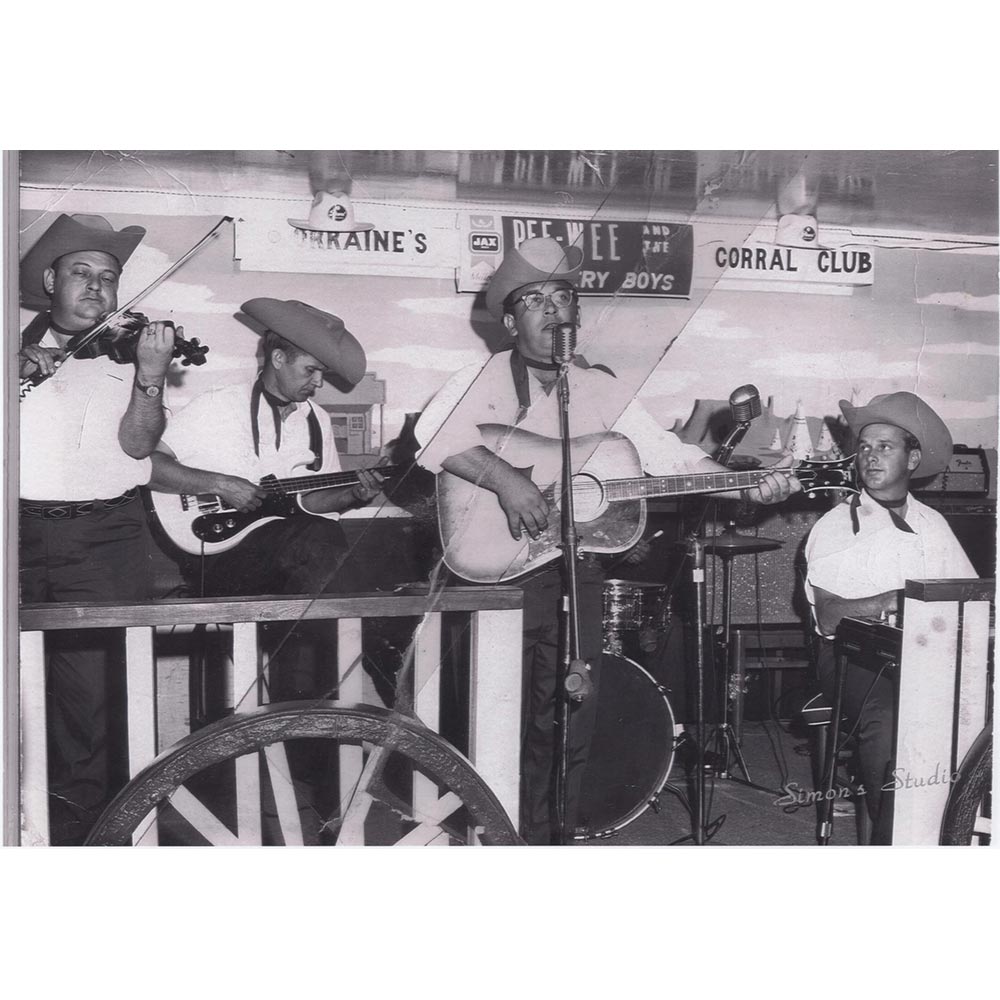
The other sixteen tracks were released between 1960 and 1983. There’s contributions from Joe Carl, Shelby Martin, Gene King and His Mecaton Band, Norman Wood, Pee Wee Trahan, Arnold Broussard and Erwin Babin. Then there’s unreleased tracks.
There’s a total of eight previously unreleased tracks on Boppin’ By The Bayou-Made In The Shade. This includes contributions from Vorris (Shorty) Leblanc and The Sugar Bees, Pee Wee Trahan, Peto Marlow and The Rhythm Kings, Frankie Lowery and Warren Storm and The Miller House Band. Then there’s two totally intriguing tracks.
The identity of the artists who recorded Can’t Stand This Living Alone and John (Don t Love Me No More) are unknown. Can’t Stand This Living Alone was recorded in J.D. Miller’s studio. However, despite the best efforts of Ian Saddler, the identity of the singer is unknown. This is also the case with John (Don t Love Me No More). Ian has been unable to identify the band who feature on John (Don t Love Me No More). Hopefully, someone listening to Boppin’ By The Bayou-Made In The Shade will recognise these hidden gems. However, there’s many more hidden gems on Boppin’ By The Bayou-Made In The Shade, which I’ll pick the highlights of.
Opening Boppin’ By The Bayou-Made In The Shade is the first of two tracks from Gene Dunlap & Jokers, Made In The Shade. It was released on Hitt Records in 1957. Written by Gene Dunlap, this is a track that harks back to the golden age of rock ’n’ roll. It explodes into life. What follows is best described as joyous and dance-floor friendly. This proves the perfect start to Boppin’ By The Bayou-Made In The Shade. Gene’s other contribution is Because I Love Her. It’s in a similar vain to Made In The Shade. Penned by Gene, it was the B-Side to the 1960 single on Hitt, What A Fool I’ve Been. Because I Love Her is a hook-laden hidden gem.
Singer and songwriter Clifford Trahan released singles as under a number of aliases. One of them was Pee Wee Trahan, who features twice on Boppin’ By The Bayou-Made In The Shade. His first contribution is Baby Hurry Home. It was written by Clifford and J.D. Miller. It was released as a single in 1974, and is a fusion of country and rock ’n’ roll. Pee Wee’s other contribution is the previously unreleased Keeping All My Loving. It’s a guitar driven ballad that showcases Pee Wee’s skills as a singer and songwriter.
Joe Carl released Too Hot To Handle in 1960. It was recorded at J.D. Miller’s studios. Accompanying Joe, were The Dukes Of Rhythms, a South Louisiana swamp pop band. They’d been formed by Joe Barry. However, Joe parted company with The Dukes. Saxophonist Harry Simmoneaux asked Joe to replace Joe Barry. He also cowrote Too Hot To Handle with Joe Carl. It sounds not unlike Too Much Monkey Business. Despite this, it’s a glorious melange of blues, R&B and rock ’n’ roll.
By 1959, Jimmy Dart was playing with Gene Dunlap and The Jokers. He was a talented singer and multi-instrumentalist. Jimmy could switch seamlessly between drums, guitar and piano. It was time for him to take centre-stage. So in 1959, as Jimmy Dart and Gene Dunlap and The Jokers, he recorded Please Don’t Doubt My Love. It’s a single that oozes quality.
Released on the Texas based Hitt label, Please Don’t Doubt My Love failed commercially. Despite this, Jimmy went on to enjoy a long career, playing until his death in 2000.
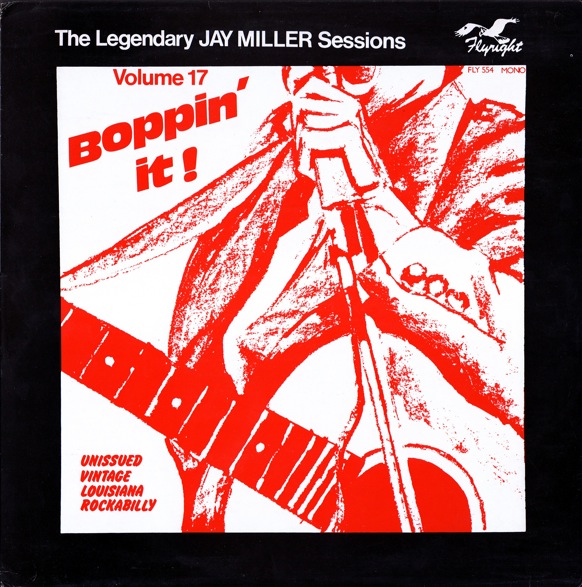
Singer and songwriter Arnold Broussard features twice on Boppin’ By The Bayou-Made In The Shade. He wrote both tracks. His first contribution is Somebody Knocked At My Door. It was released on Flyright Records’ 1980 compilation Boppin’ It. Moody and bluesy, it’s a cathartic outpouring of pain and hurt. Has Anyone Seen Spider? also featured on Boppin’ It. It sees the tempo rise and Arnold fuse elements of blues, R&B and rock ’n’ roll. Irresistible, dance-floor friendly and full of hooks, Has Anyone Seen Spider? is one of the highlights of Boppin’ By The Bayou-Made In The Shade. Tragically, Spider who the song is about, died in the same car crash that killed Arnold.
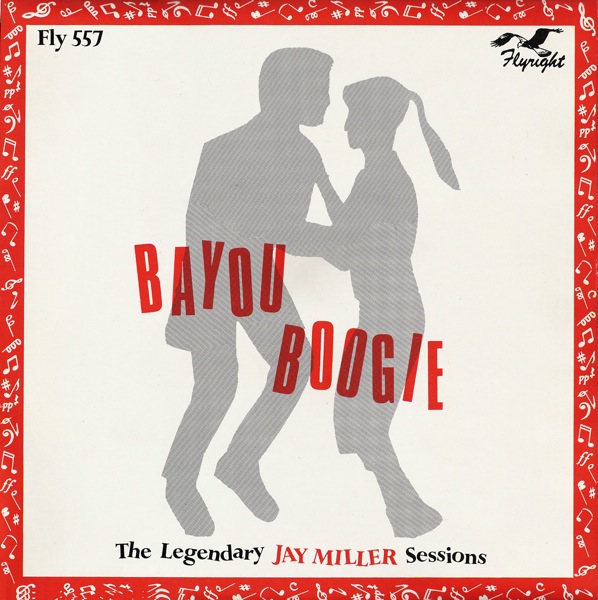
Not much is known about Johnny Bass. Rumour has it, that he was a hillbilly singer from Oklahoma. He contributes Don’t So Slow, which was recorded at J.D. Miller’s studio, Crowley, Louisiana. It featured on Flyright Records’ 1980 compilation Bayou Boogie. Johnny’s other contribution, Boppin’ it, features on Flyright Records’ 1980 compilation Boppin’It. These two compilations introduced music lovers to one of Louisiana music’s best kept secrets, Johnny Bass.
From the opening bars of Mickey Galley’s My Baby s Cheatin On Me, three words came into my mind…Jerry Lee Lewis. That’s no surprise, as Mickey and Jerry are cousins. Some of Jerry’s talent and charisma have rubbed of. My Baby s Cheatin On Me was recorded during the sixties at J.D. Miller’s studio. It’s an irresistible two minute soap opera, where cheating, hurt and heartbreak are omnipresent. Sadly, My Baby s Cheatin On Me was released until 1983, when it featured on a Flyright Records’ compilation.
There can’t be a compilation of music from Louisiana without some zydeco. It comes courtesy of Vorris (Shorty) Leblanc and All The Sugar Bees. He’s a talented accordionist who made his name playing with the Venicor Brothers. By the late fifties, Vorris was the singer with Cleveland Crotcher’s Hillbilly Ramblers. He featured on their classic Midnight Blues. After that, his solo career began. Kaw Liga was a cover of a Hank Williams song, that was released on Goldband Records. This is a previously unreleased stomping track, that was recorded at J.D. Shuler’s studios. It’s a tantalising taste of zydeco from Vorris (Shorty) Leblanc and All The Sugar Bees.
Back in 1962. Norman Wood released Black Lake Boogie on Tamm. Penned by Norman Wood, there’s briefly a nod to Bill Haley and The Comet’s Rock Around The Clock. Black Lake Boogie is thought to be Norman’s only record. Norman’s wandering vocal is accompanied by a tight, talented band. They play their part in an antediluvian slice of rockabilly.
Warren Storm is another artist who features twice on Boppin’ By The Bayou-Made In The Shade. He’s a familiar face to veterans of the Boppin’ By The Bayou series, having featured on every instalment. No wonder. Whether it’s playing drums or singing, Warren goes down a Storm. That’s the case on his version of Clifton Chernier and Jerry West’s Hey Ma Ma. Not only does he keep a jazz-tinged beat, but delivers a needy, pleading vocal. Accompanying him are braying horns and a pounding piano. It’s a musical masterclass. This Storm hasn’t blown out. He makes a welcome return on the previously unreleased Crowley Stomp. Never has a track been so aptly titled.
The version of Frankie Lowery’s Hey Little Girl on Boppin’ By The Bayou-Made In The Shade has never been released before. It’s an alternate take of a single released during Frankie’s short and sadly, unsuccessful time at Columbia. This slice of rockabilly was recorded at J.D. Miller’s studio. On its release, it never troubled the charts. Despite that, Frankie went on to enjoy a long career. That’s no surprise, given how good a voice he has.
My final choice from Boppin’ By The Bayou-Made In The Shade is Paul Marvin’s Cinderella. He’s another artist who we know very little about. What we do know, is he certainly didn’t lack talent. That’s apparent on the previously unreleased Cinderella, which epitomises everything that’s good about New Orleans rock ’n’ roll.
One thing never ceases to surprise me about the music of Louisiana, its sheer variety. That’s apparent on Boppin’ By The Bayou-Made In The Shade. There’s everything from blues, country, jazz, R&B, rockabilly, rock ’n’ roll and zydeco. This eclecticism makes Boppin’ By The Bayou-Made In The Shade a delicious musical roller coaster. Maybe a better comparison, is Forrest Gump’s box of chocolates. It’s a case of “you never know what you’re gonna get.” That’s part of the fun on as compiler Ian Saddler takes you on a journey to South Louisiana and South East Texas.
That’s where the music on Boppin’ By The Bayou-Made In The Shade was recorded. Familiar faces from previous volumes of the By The Bayou series sit next to newcomers. Similarly, singles, album tracks, unreleased tracks and hidden gems rub shoulders. They’ve one thing in common, is their quality. Sometimes, that’s not all.
Many of the tracks are dance-floor friendly. That is an understatement. They’re akin to a call to dance. Resistance is impossible. All you can do is submit to the call to dance. Much of the music on Boppin’ By The Bayou-Made In The Shade is also a reminder of a much more innocent musical age.
Especially with the tracks from the late fifties. This was the golden age of rock ’n’ roll. Tracks from Gene Dunlap and The Jokers, Guitar Jeff and The Creoles, Bobby Wheeler and Coastaleers and Gene Rodrigue feature on Boppin’ By The Bayou-Made In The Shade. Then there’s contributions from Joe Carl, Shelby Martin, Gene King and His Mecaton Band, Norman Wood and Pee Wee Trahan. Many of these tracks are a reminder of much more innocent times. That’s also the case with some of the tracks that weren’t released until the eighties. They were recorded in the sixties, but didn’t make their musical debut until released on compilations released by Flyright Records. Now thirty years later, these same tracks will be heard by a new generation of music lovers.
This isn’t new. For the past few years, music lovers old and new, are discovering the music of Louisiana, thanks to Ace Records’ By The Bayou series. Compiled by Ian Saddler, Boppin’ By The Bayou-Made In The Shade is the ninth instalment in the By The Bayou series. Just like a fine wine, By The Bayou series is maturing with age. Boppin’ By The Bayou-Made In The Shade, which was recently released by Ace Records, is the best, and most eclectic and dance-floor friendly, in the By The Bayou series.
BOPPIN’ BY THE BAYOU-MADE IN THE SHADE.


1970s ALGERIAN PROTO-RAI UNDERGROUND.
1970s ALGERIAN PROTO-RAI UNDERGROUND.
As the seventies dawned, Algerian music was changing. For the next ten years, Algerian music, was constantly evolving. This included Rai music. It was a controversial style of music, that originally came to prominence at the start of the twentieth century.
Rai music Rai music was first heard in Oran, an industrial port in northwest Algeria. Influenced by Bedouin music, Rai music was mostly sung by women. They were accompanied with derbouka and bendir rhythms. The finishing touch was the unique, wailing sound of the Gasba flute. Before long, Rai music’s popularity spread.
No longer was Rai music heard just in Oran. Soon, Rai music became a musical phenomenon. It was heard in the towns and villages in the Wahran area. In cafes, bars and at weddings, Rai music was the soundtrack to daily life and festivities. However, this didn’t mean Rai singers were treated like stars.
Far from it. In the early days, the Rai singers, who were referred to as sheiks, were perceived as outcasts. This continued to be the case in the thirties.
In Rai music, the thirties was the age of the innovator This was when Sheika Rimitti, Sheika Khaldi and Djillali Ain Tedless made a breakthrough. They were true pioneers. Their lyrics were full of social comment and controversy. Nothing was off-limits. Issues weren’t skirted around. Instead, they were tackled head on. This didn’t go down well within the Algerian establishment. They accused the innovators of celebrating sex, sin, depravity and degeneracy. By doing this, this didn’t help the cause of the Rai singers. They were still seen as outcasts. However, this would soon begin to change.
Radios and records were much more commonplace. They had made their way into more and more homes. This raised the profile of the Rai singers, whose music was beginning to change.
The stylistic changes in Rai music was as a result of people who had immigrated to Algeria. This included Egyptian, French and Spanish settlers. Their music played a part in the evolution of Rai music. Everything from flamenco, Mambo, Egyptian classical, Parisian cabaret and pop began to influence Rai music. One of the most influential and innovative artists was Blaoui Houari. He and a number of pioneering musicians ensured that never again, would Rai music be the same.
For the next few years, Algerian music veered between evolution and revolution. The Wahrani sound had changed. Arrangements changed. So did the instruments that musicians used. Then as the seventies dawned, Algerian music was forced to change.
By the early seventies, Algerian music was forced to go underground. It had too. Censors controlled what could be heard on the radio. They censored lyrics. If a song fell foul of the censor, it was banned. For Algerian musicians, they had no option but to go underground.
The Wahran seaside towns, proved a popular place for Algerian musicians looking to escape the reach of the censor. This included Belkacem Bouteldja, Cheik Benfissa, Boutaïba Sghir, Groupe El Azhar and Messaoud Bellemou. Their careers thrived during the early seventies. Espeically Messaoud Bellemou’s. His L’Orchestre Bellemou rewrote the musical rulebook.
Never before, had anyone used modern instruments or the trumpet in Wahrani music. That’s until L’Orchestre Bellemou did. This was a game-changer. Suddenly, all bets were off.
Suddenly, anything was possible in Wahrani music. Trumpets sat side-by-side with violins, synths, drums, derboukas and accordions. Elements of reggae, rock, jazz and Bollywood melted into one. Soundtracks also proved an inspiration for this new generation of innovative musicians. Then as the seventies drew to a close, Cheb Zurgui decided to experiment musically.
Cheb bought an instrument that had never been heard in Wahrani music. This was an electric guitar. To this, he added a wah wah pedal. Suddently, Wahrani music met Jimi Hendrix. It seems remarkable that nobody had thought of this before. However, just like L’Orchestre Bellemou, this proved a game changer.
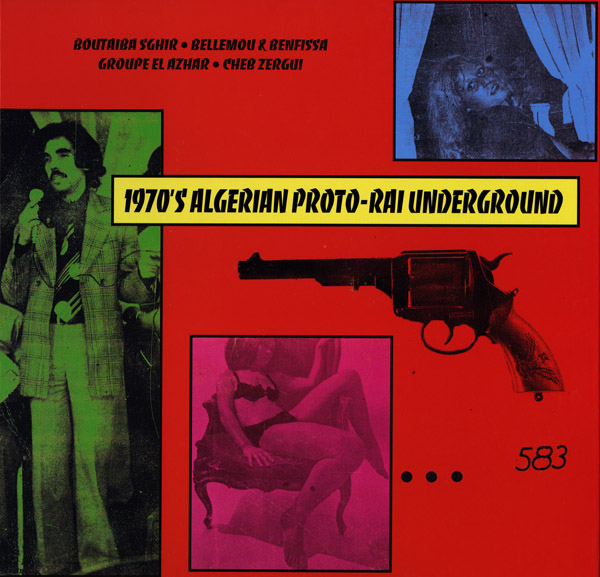
So it’s fitting that Cheb Zurgui features on 1970s Algerian Proto-Rai Underground, which was recently released by Sublime Frequencies. It features eight tracks from Bellemou and Benfissa, Groupe El Azhar, Boutaïba Sghir and Cheb Zergui. For newcomers to Algerian Proto-Rai, then 1970s Algerian Proto-Rai Underground is the perfect starting place. You’ll realise why when I tell you about 1970s Algerian Proto-Rai Underground.
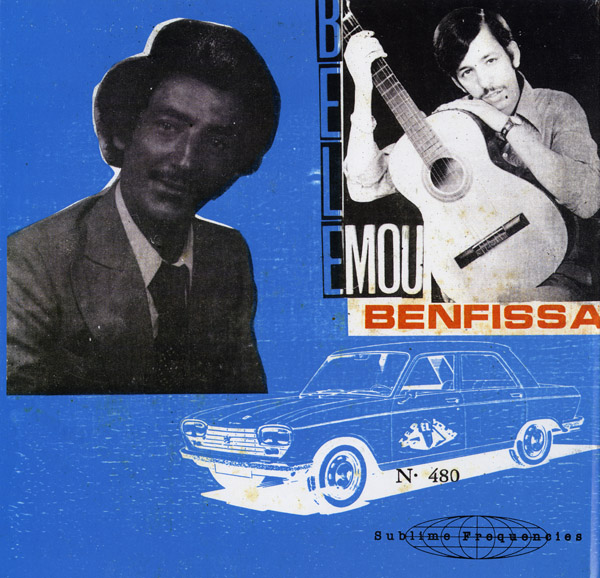
Bellemou and Benfissa’s Li Maandouche L’Auto opens 1970s Algerian Proto-Rai Underground. Their first contribution is Li Maandouche L’Auto (He, Who Doesn’t Own A Car). Bellemou Messaoud, the The Father of Raï, plays trumpet and guitarist Cheb Benfissa play their part in an irresistible fusion of influences. The starting point is Rai. Add to that elements of funk, jazz and Latin music. There’s even a nod to Afrobeat in the drums and percussion. Lah Lah Ya S’Habi is Bellemou and Benfissa’s other track. It translates as My God! My God! My Friends! It’s a fusion of drama, spirituality and frantic percussion. Punctuating the arrangement are ferocious stabs of trumpet. However, it’s a heartfelt, spiritual and soulful vocal that’s at the heart of the song’s success.
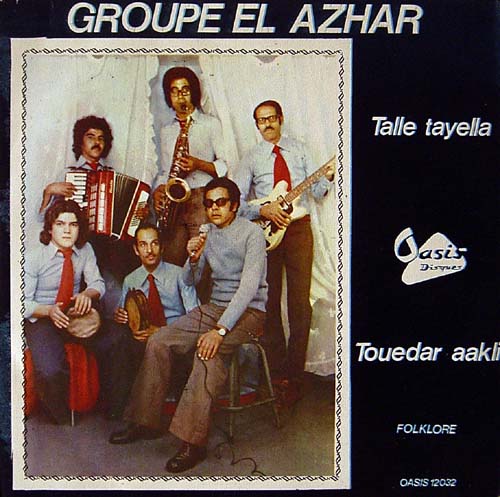
Groupe El Azhar also feature twice on 1970s Algerian Proto-Rai Underground. Mazal Nesker Mazal (I’m Still Getting Drunk…Still) is their first contribution. It’s sung in a call and response style, as an accordion drives the arrangement along. Stabs of horns punctuate an arrangement that’s a mixture of folk, jazz and Rai. Touedar Aakli (My Reason Is Lost), was the B-Side to Talle Tayella. It was released on the Oasis Disques. Stylistically, it’s similar to Mazal Nesker Mazal. Having said that, it’s infectiously catchy, and is akin to a call to dance.
It was in the late sixties Boutaïba Sghir’s career began. Soon, he was playing an important role in Algeria’s underground musical scene during the seventies. This included collaborating with Boussouar El Maghnaoui, Bouteldja Belkacem and Gana El Maghnaoui. So important is the role Boutaïba played in Rai music, that he’s referred to as one of the fathers of Modern Raï. A hugely talented vocalist, he breathes life, meaning and emotion into tracks like Dayha Oulabes (I’ll Marry Her Whether They Like It Or Not), Malgre Tout (Despire Everything) and El Fermlia (Nurse). His pain, determination and hurt, shine through, on these three tracks. Boutaïba Sghir would influence the next generation of musicians, including Cheb Zergui, who closes 1970s Algerian Proto-Rai Underground.
1970’s Algerian Proto-Rai Underground closes with Cheb Zergui’s Ana Dellali. It’s a case of keeping the best until last. Cheb is without doubt, an innovative musician. He was the first person to use an electric guitar and wah wah pedal in Rai music. On Ana Dellali (I Cuddle Myself), Cheb evokes the spirit of Hendrix. His impassioned, heartfelt pleading vocal is accompanied by a hypnotic, funky arrangement. It showcases one Algeria’s most talented and visionary musicians.
For anyone with a passing interest in Algerian music, then 1970’s Algerian Proto-Rai Underground is the perfect starting place. It features eight tracks, from four artists, who played a huge role in the rise and rise of Rai music, during the seventies. These eight tracks are sure to whet your appetite.
After immersing yourself in 1970’s Algerian Proto-Rai Underground, you’ll want to hear more music from one of the most important decades in the history of modern Algerian music. There’s much more to Rai music in the seventies than these eight tracks. 1970’s Algerian Proto-Rai Underground is just the start of this musical journey. Surely, further compilations of Rai music from the seventies must follow? I hope so.
Hopefully, the next compilation of Rai music Sublime Frequencies release, will last more than forty-three minutes. That’s all 1970’s Algerian Proto-Rai Underground lasts. The journey is almost over before it begins. However, at least 1970’s Algerian Proto-Rai Underground is a truly memorable musical journey, that’s bound to appeal to music lovers with eclectic and adventurous musical tastes.
1970s ALGERIAN PROTO-RAI UNDERGROUND.
PERU BRAVO-FUNK, SOUL AND PSYCH FROM PERU’S RADICAL DECADE.
PERU BRAVO-FUNK, SOUL AND PSYCH FROM PERU’S RADICAL DECADE.
By 1965, it wasn’t just America and Britain that were in the throes of a musical revolution. No. This was musical revolution whose tentacles reached much further afield. Word spread as far afield as Africa, Australasia, Europe and Latin America. That had been the case since The Beatles released Love Me Do in 1962. Since then, the sixties started to swing. However, in 1965, music started to change. Things got psychedelic. That meant the start of another revolution.
Gil Scott Heron once sung that The Revolution Won’t Be Televised. In Peru, in 1965, the revolution was televised. That’s when Los Saicos made their television debut. Musically, that was a game changer.
The music Los Saicos’ played on that never to be forgotten day in 1965, has variously described as a garage or garage punk. Whichever way you describe Los Saicos’ music, it was certainly revolutionary. So much so, that they sparked an underground musical revolution.
What followed, is best described has been described as “fuzz, funk and flower power.” Peruvian music was never the same.
Throughout Peru, a generation of young people decided to form bands. They were spurred on by the music that was being imported into Peru. This included the music that was sweeping America, Britain and Europe by storm. Soon, Peru was swinging. Then it was all change. The age of the garage band arrived. This inspired a generation of aspiring Peruvian musicians.
Just like punk eleven years later, garage bands made music sound easy. All you needed were a few instruments. They didn’t need to be new. In keeping with the genre’s image, the more battered the better. So, a generation of Peruvians beg, stole and borrowed musical instruments. They learnt the rudiments of these instruments, and before long, were forming bands.
Some of these bands were more successful than others. In some cases, it was a case of here today, gone tomorrow. Impromptu jam sessions took place throughout Peru. Sometimes, though, bands stayed together long enough to record a single.
This was repeated throughout the rest of the sixties, and into the early seventies. The only thing that changed was the music. After Peru’s garage bands laid down their instruments, psychedelia became the musical flavour of the month. It was a case of flower power, peace, love and patchouli. This was the case for the next few years. However, psychedelia wasn’t the only show in town.
Throughout the late sixties, soul was popular in Peru. This isn’t surprising. Soul music was imported into Peru. It became a popular musical genre. Soon, Peru had their own soul stars. This would be the case as a new decade dawned.
As the sixties became the seventies, psychedelia was no longer as popular. The Age Of Aquarius was almost over. Soul was still popular. It continued to evolve and reinvent itself. However, in the early seventies, funk became much more popular. People were realising there was more to funk than James Brown.
Funk was thriving by the early seventies. Its popularity had grown since funk announced its arrival in the mid-sixties. Now,a new generation of funk singers and bands were releasing albums. This included Sly and The Family Stone, Funkadelic, Parliament, Fatback Band and the Ohio Players. Their music was winning friends and influencing people far and wide. This included in Peru.
Peruvians were won over by funk. They first heard funk via the records that were imported into Peru. Soon, they embraced funk. Just like they had with psychedelia and soul, it became part of their musical culture.
Just like previous musical genres, Peruvian musicians released their own funk singles. Some of these singles were one-off, never to be repeated hidden gems. Other groups enjoyed longer, more successful careers. This was how it had been for a while.
Bands burst onto the Peruvian music scene in a blaze of glory, the released a glorious single, but are never heard of again. Meanwhile, other groups enjoy a steady rise. They enjoy successful careers. Peru was no different from America, Britain or Europe.
The only difference is no record label has reissued the music these Peruvian psychedelic, soul and funk records. That’s until now. Tiger’s Milk Records, an imprint of Strut Records, released Peru Bravo-Funk, Soul and Psych From Peru’s Radical Decade on 6th October 2014. It features fifteen funky, soulful and psychedelic tracks, from what was one of the most traumatic times in Peruvian political history.
Peru, during the sixties and seventies, was a country divided. It was on the cusp of cataclysmic change. Cuban communists were inspiring their Peruvian comrades. They used guerrilla tactics to try and win political power. This was a dangerous business.
Right up until 1963, Peru was ruled by a military junta. The junta were ruthless. Dissidents risked “disappearing.” Despite this, the rebels didn’t give up. Eventually, after two elections, Peru became a democracy in June 1963. Sadly, democracy lasted five short years.
In 1968, the armed forces staged a military coup. Juan Velasco Alvaradoo took power. He ruled Peru between 1968 to 1975. His title was President of the Revolutionary Government. It was only in 1975, that democracy was re-established, when General Francisco Morales Bermúdez came to power. Throughout this turbulent decade, the music on Peru Bravo-Funk, Soul and Psych From Peru’s Radical Decade, provided a backdrop to the Peruvian revolution.
This includes tracks from Laghonia, Traffic Sound, Cacique, Thee Image, Black Sugar, Los Belkings, Jeriko and Los Comandos. These groups provided the musical backdrop as Peru struggled for democracy. Many of these singles have long been forgotten. Most of them won’t have been heard outside of Peru. That’s until now. They make their debut on Peru Bravo-Funk, Soul and Psych From Peru’s Radical Decade, which I’ll pick the highlights of.
Laghonia’s Bahia opens Peru Bravo-Funk, Soul and Psych From Peru’s Radical Decade. This is a track from their 1971 debut album Glue. It was released on the Mag label. Bahia had originally been released by Saul and Manuel Cornejo as a single. It’s best described as a glorious slice of garage beat psychedelia that’s long on hooks.
Traffic Sound is a name well be familiar to many music lovers. Their contribution is La Camita. It was written by Traffic Sound and released on the Sono Radio in 1971. It’s psychedelic, funky and features some Santana-esque guitars. There’s even a nod to The Beatles circa Sgt. Pepper’s Lonely Hearts Club Band. Add to that an irresistible Latin influence and what more can you want?
Not much is known about Cacique. Mostly, the recorded for the El Virrey label. A student band, Cacique recorded on an ad hoc basis. Their label wanted a new single, they turned up and laid down two sides. This was the case in 1972, when they recorded Cacique, a blistering fusion of funk, Latin, psychedelia, rock and drama.
The Meters recorded the original version of Cissy Strut. Then in 1969, Los Holy’s covered Cissy Strut. It was the B-Side to their single Hawaii Cinco O. Cissy Strut is transformed. Nervy, edgy drums, searing scorching guitars and washes of Hammond organ melt into one, on this fusion of funk, Latin, psychedelia and rock.
Things get soulful, sassy and funky with Thee Image’s Outasit. It was released as a single in 1969. Cooing harmonies accompany Richie Zellon’s needy, heartfelt vocal. Behind him, the arrangement is best described as psychedelic soul. It’s yin to Richie’s yang. Sadly, this hidden gem was Thee Image’s only single. They split-up, with Richie and Manuel Flores, taking different musical roads.
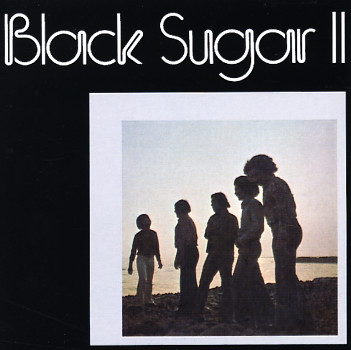
Black Sugar’s Cheean is an uber funky track. It’s taken from from their 1974 sophomore album Black Sugar II. Cheean literally explodes into life. What follows is a five minute fusion of funk, jazz, soul and rock. Frantic, funky, furious and innovative describes this genre melting track.
In 1971, Telegraph Avenue were one of the best bands in the Lima music scene. Their music was a marriage of psychedelic rock and Latin rhythms. Telegraph Avenue released their eponymous debut album in 1971. One of the highlights was Sungaligali, a track that’s soulful, explosive, dramatic and irresistible.
Covering a classic is never easy. Jeriko realised that when they covered Jimi Hendrix’s Hey Joe in 1971. Jeriko realise that Jimi is responsible for the definitive version. So Hey Joe is given a makeover. The tempo rises and Jeriko combine hypnotic Latin rhythms with a twist of rock. What follows is a complete remake of a classic. It veers between ethereal and soulful to mesmeric and urgent.
Los Nuevos Shains had been around since 1964. This makes them one of Peru’s first underground bands. Later, the band split into The Thomas Pepper Smelter and Los Nuevos Shains. Sadly, Los Nuevos Shains only ever released one album a couple of singles. Their musical swan-song was the single that featured Pancito Caliente. Released in 1970, Latin rhythms, rock and psychedelia unite seamlessly and peerlessly.
Given Peru was in the throws of a revolution, it’s apt that Los Comandos’ El Sermon is my final choice from Peru Bravo-Funk, Soul and Psych From Peru’s Radical Decade. El Sermon was released in 1970, before Los Comandos released their only album Moby Dick. Psychedelic, funky and jazz tinged, El Sermon becomes a driving jam where Los Comandos showcase their versatility and talent.
Choosing the highlights of Peru Bravo-Funk, Soul and Psych From Peru’s Radical Decade wasn’t easy. After all, Peru Bravo-Funk, Soul and Psych From Peru’s Radical Decade is literally crammed full of quality music. There’s funk, soul, psychedelia and rock. Add to that Latin rhythms and jazz. This music was produced during one of the most turbulent periods in Peruvian political history.
During the period Peru Bravo-Funk, Soul and Psych From Peru’s Radical Decade covers, Peru was ruled by a military junta. Inspired by Cuban communists, Peruvian freedom fighters used guerrilla tactics to try and win political power. Eventually, they succeeded in 1975. At last, Peru was free. However, despite living under the military junta, Peru’s underground musical scene was thriving.
Peru was no different to America or Britain. New groups sprung up on a daily basis. Some groups lasted longer than others. . In some cases, it was a case of here today, gone tomorrow. Using instruments that were begged, stolen and borrowed, impromptu jam sessions took place throughout Peru. Sometimes, though, bands stayed together long enough to record a single. This included those on Peru Bravo-Funk, Soul and Psych From Peru’s Radical Decade which was released by Tiger’s Milk Records, an imprint of Strut Records on 6th October 2014.
The fifteen groups on Peru Bravo-Funk, Soul and Psych From Peru’s Radical Decade are a tantalising taste of the music produced during Peru’s turbulent political past. However, there’s much more music from this period awaiting discovery.
Compilers Duncan Ballantyne, Andres Tapia and Martin Morales realise this. They know their way around Peruvian music. Their previous compilation Peru Maravilloso: Vintage Latin, Tropical and Cumbia, proves this. It was released to critical acclaim back in November 2013. Nearly a year later, and Tiger’s Milk Records’ return with another genre-melting compilation of Peruvian music, Peru Bravo-Funk, Soul and Psych From Peru’s Radical Decade. However, it’s been well worth the wait.
After all, Peru Bravo-Funk, Soul and Psych From Peru’s Radical Decade is a glorious musical melting pot of influences and genres. That’s why Peru Bravo-Funk, Soul and Psych From Peru’s Radical Decade is one of the best compilations of 2014. Tiger’s Milk Records seem to concentrate on quality, rather than quantity. That’s no bad things. Too many labels churn out mediocre compilations. Not Tiger’s Milk Records. They dig deep into the treasure trove that’s Peruvian music and compil genre-melting compilations of quality music like Peru Bravo-Funk, Soul and Psych From Peru’s Radical Decade.
PERU BRAVO-FUNK, SOUL AND PSYCH FROM PERU’S RADICAL DECADE.



VASHTI BUNYAN-HEARTLEAP.
VASHTI BUNYAN-HEARTLEAP.
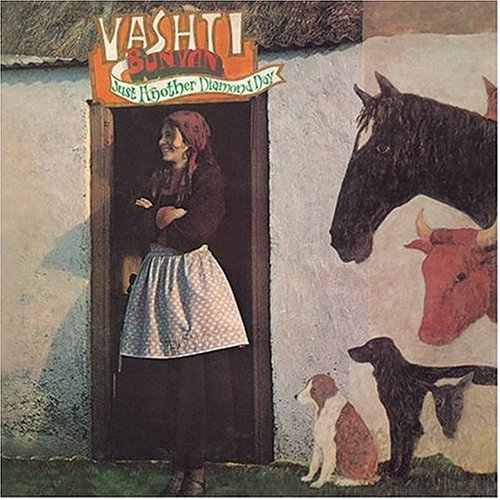
For thirty-two years, Vashti Bunyan was one of music’s best kept secrets. Vashti’s music was almost unknown outside of a small, loyal coterie of music lovers. This included a new generation of folk singers, including Devendra Banhart and Joanna Newsom. Their careers were influenced by Vashti Bunyan, and especially, her 1970 debut album Just Another Diamond Day.
Five years after Vashti’s career began in 1965, she released her debut album Just Another Diamond Day. It was well received upon its released on Phillips, in 1970. Sadly, Just Another Diamond Day failed commercially. This lead to Vashti retiring from music. She was gone, but not forgotten.
Over the next thirty-two years, gradually, Just Another Diamond Day found the audience it deserved. It was reappraised by a new generation of music lovers and critics. They realised that Just Another Diamond Day was a long lost classic. This resulted in Vashti Bunyan making a welcome return to music in 2002. The story that began in 1965, picked up where it left off in 2002.
Vashti Bunyan was just twenty when she was “discovered” by Andrew Loog Oldham. This wasn’t the direction Vashti envisaged her career heading when she left her London home and headed to the Ruskin School of Drawing and Fine Art, an art school at Oxford University.
The dreaming spires of Oxford University weren’t for Vashti Bunyan. It was a familiar story. Vashti failed to turn up for classes. Eventually, Vashti was expelled from the Ruskin School of Drawing and Fine Art. For Vashti Bunyan, this proved to be the start of a new chapter in her career.
Aged just eighteen, Vashti headed to New York. This was 1963. Bob Dylan had just released his classic album, The Freewheelin’ Bob Dylan. Vashti discovered Bob Dylan’s music. The gateway to Bob Dylan’s music was his opus, The Freewheelin’ Bob Dylan. Having immersed herself in Bob Dylan’s music, Vashti realised what she wanted to do with the rest of her life. She wanted to be a musician.
So Vashti headed home to London. It was there that she encountered Andrew Loog Oldham, The Rolling Stones’ manager. He spotted Vashti’s potential and became her manager. In June 1965, Vashti Bunyan released her debut single as Vashti.
This was no ordinary single. It was a single penned by Mick Jagger and Keith Richards. Some Things Just Stick in Your Mind had originally been released by The Rolling Stones on 13th February 1964. Just sixteen months later, the Jagger-Richards’ penned Some Things Just Stick in Your Mind was released in June 1965 on Decca. For Vashti, this was an inauspicious debut. It failed to chart. Maybe her sophomore single would fare better?
It wasn’t until May 1966, that Vashti Bunyan released her sophomore single. This was Train Song. Produced by Peter Snell, Train Song was released on Columbia. Lightning struck twice. Train Song disappeared without trace. For Vashti, her nascent musical career seemed to have stalled.
For the next two years, very little was heard of Vashti. Her only appearance was on The Coldest Night of the Year, a track from Twice as Much’s sophomore album That’s All. That proved to be an ironic title, as that’s all that was heard from Vashti during that period of her career.
Although Vashti released other songs for Andrew Loog Oldham’s Immediate Records, they were never released. For Vashti, this must have been disappointing. Maybe that’s why Vashti and her then partner, Robert Lewis, decided to head off on a road trip.
This was very different to Jack Kerouac’s legendary road trip in On The Road. Vashti and Robert headed off to the Hebridean Islands by horse and cart. That was where singer- songwriter Donavan, a friend of Vashti, had planned to established a commune. This trip proved to be inspirational for Vashti.
During the road trip to the Hebridean Islands, Vashti wrote the songs that featured on her 1970 debut album Just Another Diamond Day. It would be produced by Joe Boyd, who Joe met at Christmas, 1968.
It was through a mutual friend that Vashti and Joe Boyd met. When Joe saw the songs, he immediately offered Vashti the chance to record an album of her travelling songs for his Witchseason Productions. However, this didn’t happen immediately.
Just Another Diamond Day.
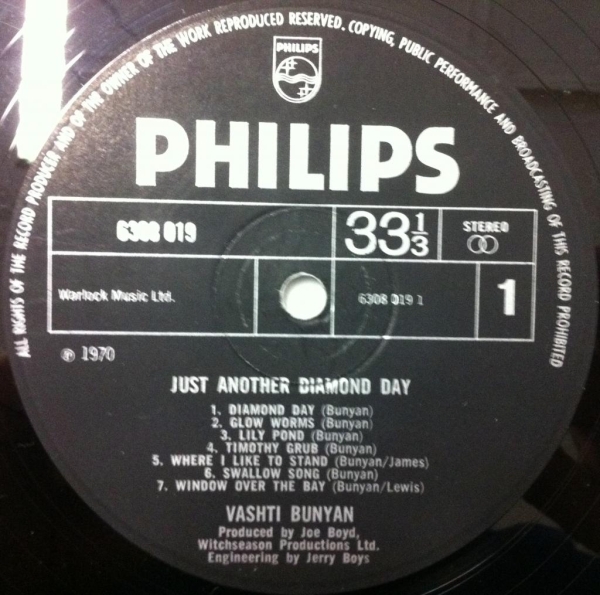
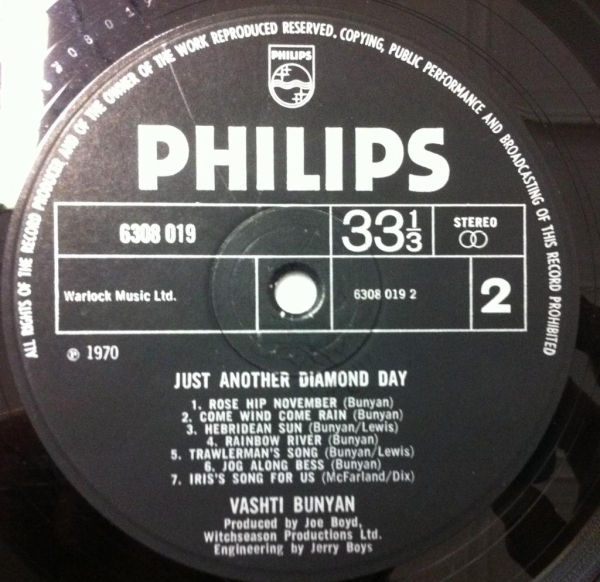
A year later, in 1969, Vashti returned to London to record her debut album Just Another Diamond Day, with Joe Boyd. Vashti had no band. This didn’t matter. An all-star folk band would join Vashti on Another Diamond Day.
This included Dave Swarbrick and Simon Nicol from Fairport Convention. They were joined by the Incredible String Band’s Robin Williamson. The final piece of the jigsaw was string arranger, Robert Kirby. Just like Joe Boyd, Robert Kirby would go on to work with Nick Drake. Before that, they worked on Just Another Diamond Day, which was recorded at Sound Techniques Studios, in London. Just Another Diamond Day was then released in December 1970.
When Just Another Diamond Day was released in December 1970, it was well received by critics. They appreciated Vashti Bunyan’s new sound. She was now a fully fledged folk singer. This suited Vashti. Just Another Diamond Day veered between pastoral, ethereal, lush, understated, rural, melancholy, cerebral and cinematic. Sadly, when Just Another Diamond Day was released, it failed commercially. Vashti took this badly.
She retired from music after the commercial failure of Just Another Diamond Day. At first, Vashti stayed in one of The Incredible String Band’s Glen Row cottages. After that, Vashti moved to Ireland, and then settled in to Scotland. For the next thirty years, Vashti settled into family life. She had three children. As her children grew up, little did Vashti realise that somewhat belatedly, Just Another Diamond Day found the audience it so richly deserved.
Since her retirement in 1970, gradually, Another Diamond Day found the audience it deserved. It was reappraised by a new generation of music lovers and critics. Among Just Another Diamond Day’s fans, were a new generation of musicians who had been influenced by Vashti Bunyan. They realised that Just Another Diamond Day, which was reissued in 2000, was a long lost classic. Eventually, Vashti Bunyan decided to make a welcome return to music in 2002.
This started with Vashti making guest appearances on Piano Magic’s 2002 single Writers Without Homes. Two years later, Piano Magic and Vashti collaborated on the Saint Marie E.P. This was just the start of a string of guest appearances and collaborations Vashti made.
Vashti’s next collaboration was on Devendra Banhart’s 2004 album Rejoicing In The Hands. This was quite fitting. Vashti is credited as the Queen of freak folk. Devendra Banhart was one of her disciples. It was a case of two generations of freak folk collaborating. This wasn’t the last of Vashti’s collaborations.
A year later, Vashti worked with another band who were influenced by her music. This was Animal Collective. Vashti appeared on their 2005 E.P. Prospect Hunter. However, the most important release for Vashti in 2005 was her sophomore album Lookaftering.
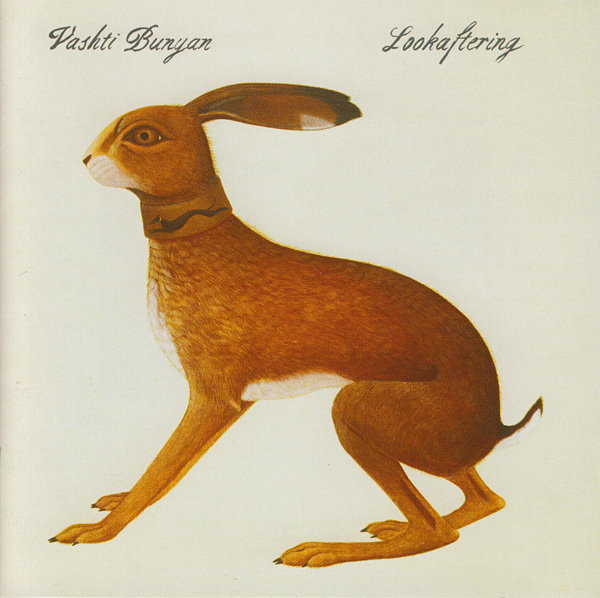
Lookaftering.
It had been a long time coming. Thirty-five years to be precise. However, eventually, Vashti made a very welcome return to the studio. The result was her sophomore album Lookaftering.
On Lookaftering, Vashti was joined by some of the artists she had influenced. This included Devendra Banhart and Joanna Newsom. A familiar face was Robert Kirby, who played such an important part in Vashti’s 1970 debut album Just Another Diamond Day. He played trumpet and French horn on Lookaftering, which was released on Fat Cat Records, in October 2005.
Just like when Just Another Diamond Day was released December 1970, Lookaftering was released to critical acclaim. Lookaftering was released to an appreciative audience. Understated, ethereal, cerebral, beautiful and ruminative, Lookaftering was a return to form from a reflective, philosophical Vashti. Older and wiser, Vashti Bunyan had matured with age. Surely, it wouldn’t be long before Vashti released her third album?
That’s proved not to be the case. Nine years have passed since Vashti released Lookaftering, Valerie released her third album Heartleap on Fat Cat Records.
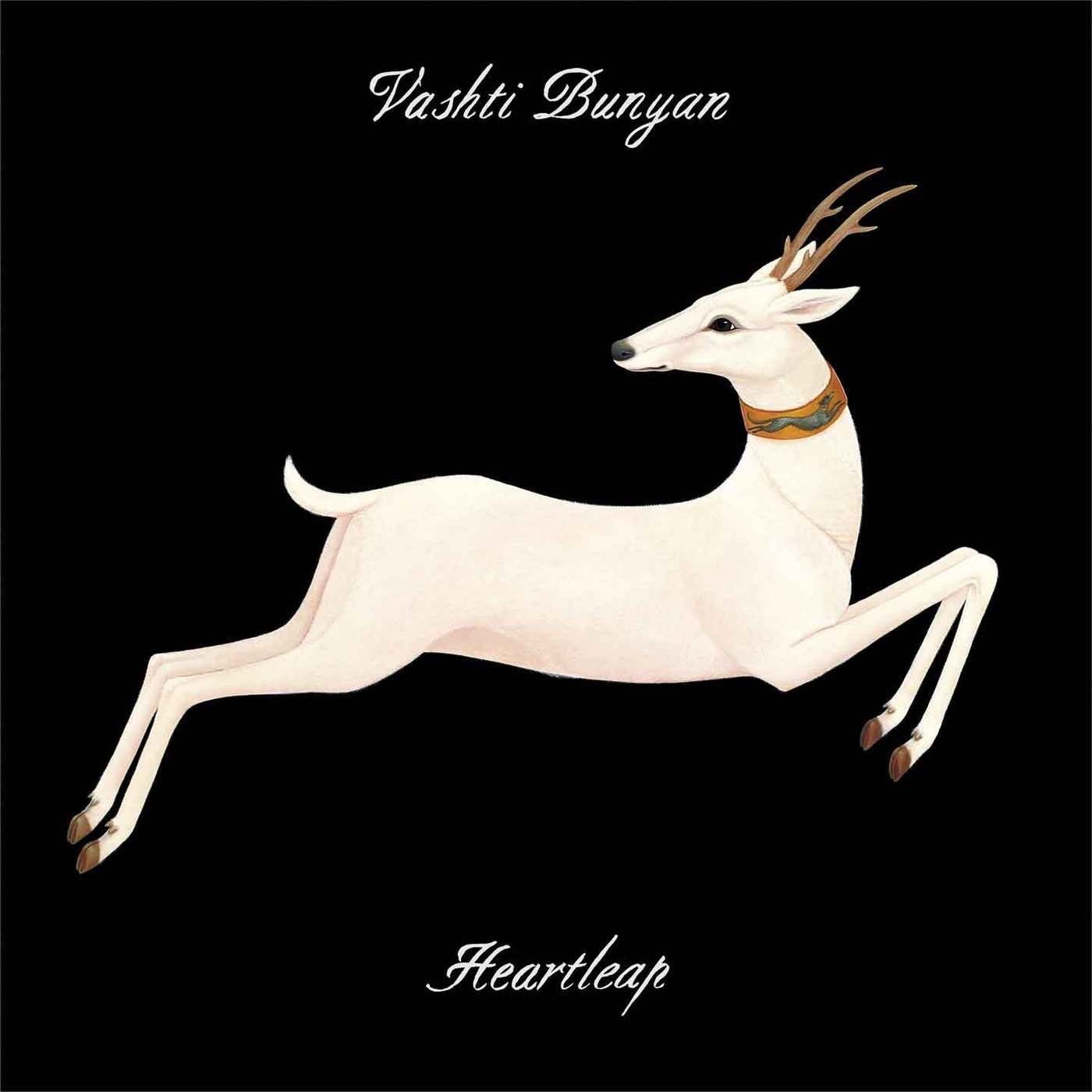
Heartleap.
Heartleap features nine songs written by Vashti. She plays acoustic guitar and is accompanied by a small, talented band.
This includes strings courtesy of Fiona Bruce, Ian Burdge and Gillian Cameron. Guitarists Garth Dickson and Andy Cabic are joined by Jo Mango on kalimba and dulcimer. Saxophonist Ian Wilson also plays recorder. Devendra Banhart, who featured on Lookaftering, makes a welcome return, adding backing vocals. These musicians played their part in the recording of Heartleap.
When Heartleap was released, critics hailed the album as a return to form from Vashti Bunyan. Thirty-five years after turning her back on music, and twelve years since she stepped back into the limelight, the Queen of Psych Folk was back, and better than ever.
Across The Water opens Heartleap. Just acoustic guitars and plucked strings accompany Vashti’s tender, wistful vocal. There’s a sense of sadness and melancholy in her vocal. That’s apparent when she sings: “every day is every day.” Later, strings tug at your heartstring, as Vashti sings: “learn to fall with the grace of it all.” This mixture of ethereal beauty and melancholy is the perfect way to open any album, never mind a long awaited comeback album like Heartleap.
Vashti’s vocal on Holy Smoke is breathy and understated. There’s an ethereal quality to her vocal. Guitars and synths accompany her. They create a mesmeric backdrop. Then sharp flourishes of strings enter. They’re joined by tender bursts of harmonies. However, what holds your attention is Vashti’s tender vocal and melancholy lyrics, including: “I’m only as lonely as I want to be.” The pastoral beauty of Holy Smoke is a reminder of what music lost when Vashti turned her back on music in 1970.
Mother is another piano lead song. You’re drawn in by the piano. You wonder where the song is heading. Vashti almost pounds the keys. Then when her wistful vocal enters, it’s quite a contrast. Accompanied by strings, there’s a sadness in Vashti’s vocal as she remembers her mother, as she sits playing the piano and smiling. This beautiful song is a snapshot of Vashti’s younger life.
As Jellyfish unfolds, an unlikely combination of instruments accompany Vashti. A recorder is joined by synths, acoustic guitar, plucked strings and synths. They enveloped Vashti’s lilting, dreamy vocal. Adding the finishing touches are swathes of lush strings. They play their part a dreamy, lysergic song.
Some of the arrangements on Heartleap have a sparseness. That’s the case at the start of Shell. Just meandering, chiming guitars and synths combine. They’re provide the backdrop for Vashti’s heartfelt vocal When her vocal drops out, the arrangement is panned. This proves effective. It holds your attention. Never does your mind stray. Not when Vashti is veering between storyteller and philosopher. Imagery and metaphors are omnipresent as a worldweary Vashti delivers some cerebral lyrics.
Straight away, The Boy has a cinematic quality. The lyrics paint pictures in your mind’s eye. As Vashti sings, you wonder what The Boy has seen and heard. You fear for him, and his future, during what’s one of the most moving songs on Heartleap.
Gunpowder is a song about love and love lost. A rueful Vashti is accompanied by strings, acoustic guitar and synths. She’s in a reflective mood, wondering what might have been. That’s apparent when Vashti sings: “I blew my chances, and you throw the years out, with all the merry dances you led me, you led me.”
Blue Shed features just a lone piano accompanying Vashti. There’s a sense of longing in her voice. She longs to be alone, longs to be away from people. Deep down, she realises this is wrong. “I might be sorry, oh it might be the end of me.” Despite this, Vashti longs to be alone. This is sure to be, a song that many people will be able to relate to.
The arrangement to Here swells up. Recorders, droning synths, guitars and a dulcimer combine. Very different is Vashti’s vocal. It’s almost a whisper. This works well. You listen intently to her vocal. What you hear are some beautiful, joyous lyrics about being with someone you love.
Heartleap closes with the title-track. It’s just Vashti’s breathy vocal, accompanied by her guitar and synths. This gives the arrangement an understated sound. Her lyrics are like a stream of consciousness. They’re also quite beautiful. As for the arrangement, there’s a brief nod to John Martyn’s Solid Air. Mostly, though it’s Vashti Bunyan, the comeback Queen, whose no longer one of music’s best kept secrets.
Unlike another inferior album released this week, Vashti Bunyan’s third album Heartleap was quietly released on Fatcat Records on 6th October 2014. There was no fuss and no hype. Vashti it seems, was content to let her music speak for itself. It does. However, Vashti I think, is being too modest. Heartleap is an album that she should be truly proud of.
Heartleap is an album that oozes quality and ethereal beauty. That’s the case from the opening bars of Across The Water, to the closing notes of Heartleap. It’s best described as dreamy, melancholy, beautiful, ethereal, haunting, cerebral and wistful. Elements of ambient, folk, jazz, freak folk and psychedelia can be heard during the ten songs on Heartleap. They only last thirty-four minutes. However, Heartleap is thirty-four flawless minutes of music.
The potent and heady brew that is Heartleap showcases Vashti Bunyan’s considerable talents. Sadly, however, Heartleap is only Vashti Bunyan’s third album. After the commercial failure of her debut 1970 debut album Just Another Diamond Day, Vashti turned her back on music.
It was thirty-five years until we heard from Vashti Bunyan. She released Lookaftering in 2005. Many thought Vashti was back for good. She flitted out of our lives for another nine years. Although she dabbled in music, she never released another album. That was until now.
Now aged sixty-nine, Vashti Bunyan decided to release her long awaited third album, Heartleap. For her legion of loyal fans, this was good news. They’d lived in hope that Vashti would release another album. With each year that passed, it looked like we’d heard the last of Vashti Bunyan. Thankfully, that wasn’t the case.
Twelve years after the release of Lookaftering, Vashti Bunyan has returned with Heartleap. It’s a career defining album. Heartleap surpasses 2005s Lookaftering, and comes close to rivalling Vashti Bunyan’s lost classic Just Another Diamond Day. That’s how good an album Heartleap is. I’m not surprised about this.
Vashti Bunyan was always a hugely talented singer and songwriter. That was the case in 1970, when she released Just Another Diamond Day. Sadly, Vashti Bunyan was ahead of the musical curve. When Just Another Diamond Day failed commercially, she turned her back on music. Gradually, though, a new generation of music lovers, critics and musicians discovered Just Another Diamond Day. Belatedly, Vashti Bunyan was receiving the critical acclaim that her music so richly deserves. No longer is Vashti Bunyan one of music’s best kept secrets. Instead, Vashti Bunyan is the comeback Queen, who has just released Heartleap, an album that oozes quality and ethereal beauty.
VASHTI BUNYAN-HEARTLEAP.
LEWIS BALOUE-ROMANTIC TIMES.
LEWIS BALOUE-ROMANTIC TIMES.
Earlier this year, music saw a ghost. The man who called himself Lewis arose from the dead. Lewis gave no explanation where he’d been or what he’d been doing. There was an element of bemusement that L’Amour, his 1983 debut album, had sparked such interest in his life and whereabouts. However, Lewis wasn’t for talking. Furthermore, he wanted his whereabouts to remain unknown. For someone who seemed to want to disappear again, Lewis was going the wrong way about it.
Deep down, I wondered if he was revelling in the publicity? This was his fifteen minutes of fame. He’d really lucked out.
Thirty-one years ago. Lewis released an album that sunk without trace. It wasn’t the music that people remembered. No. It was his image and playboy lifestyle. This was a story full of smoke and mirrors.
Nothing was ever as it seemed. The story began when Randall arrived in Los Angeles in 1983. Sporting perfectly coiffured blonde hair and movie star looks, Lewis lived the playboy lifestyle. Randall drove a white convertible Mercedes and booked into the Beverley Hilton.
Now ensconced in the Beverley Hilton, Randall dated a string of beautiful women. Models and movie stars accompanied him to the smartest parties in Los Angeles. Randall lived the playboy lifestyle. Wine, women and song were constant companions for Randall. However, before long, the party was over.
During his time in Los Angeles, Randall had been using the alias Lewis. He told people he was a musician and that he’d just recorded his debut album, L’Amour. That at least was true.
The recording sessions for L’Amour took place in the Fiasco Brothers Recording Studios in Vancouver, where Romantic Times was also recorded. Randall had recorded there before. After that, Randall headed to Los Angeles. That’s where he readied himself for release Lewis’ debut album, L’Amour. Rather than using his own name, Randall used the alias Lewis. This added to the air of mystery. So did the album cover, which was shot by one of the most famous photographers in music, Ed Colver.
He’d made his name photographing punk bands. That was the past. By 1983, Ed was expanding his musical portfolio. So when Randall called, Ed agreed to meet him in the Beverley Hilton.
When the two met, Ed wasn’t suspicious of Randall. Why should he be? After all, Randall was living in the Beverley Hilton, driving a Mercedes convertible and had a beautiful, model girlfriend. He’d also just recorded his debut album and was looking for someone to shoot some photographs for the cover of L’Amour. That would be Ed.
Randall agreed to pay Ed $250 for the photo shoot. Ed shot thirty different versions of the photo that agreed on the cover of L’Amour. It was a head and shoulders photo of Randall. That photo epitomises eighties fashion and attitudes. Looking like the archetypal eighties playboy. Randall looks longingly, moodily and mysteriously into the distance. However, just like everything else about Randall, this was all a facade.
When Ed went to cash the cheque for $250 it bounced. The cheque had been drawn on an account in Malibu. This was no help to Ed. So he headed to where Ed had met Randall, the Beverley Hilton. Staff at the Beverley Hilton told Ed that Randall had left. Randall, they told him, had headed to Las Vegas and then Hawaii. They didn’t have a forwarding address. For Ed this was a disaster. $250 was lot of money. So much, it took him four months to repay his bank. As security, Ed held on to the negatives to the photos for L’Amour, which was released in 1983.
L’Amour was released in 1983, on the unknown R.A.W. Records. No reviews of L’Amour exist. Just like most private pressings, L’Amour sunk without trace. That was the last Ed Colver thought he’d hear of Lewis.
Fast forward thirty-one years and L’Amour has just been rereleased by Light In The Attic Records. The Lewis story caught the imagination of the record buying public. Suddenly, everyone wanted to know what happened to Lewis. Not me.
I wasn’t interested in the smoke and mirrors of the Lewis story. It smelt suspiciously of hype. Something about the story didn’t seem right. There were too many unanswered questions. It seemed I was right.
Not long after I wrote my review, I forgot about the Lewis story. To be honest, the story didn’t interest me. What interests me is music, not smoke, mirrors, hype and hyperbole. So, having reviewed L’Amour I forgot about the story. Then I received an email from Donna, who had dated Lewis in the seventies. Back then, he was Randall Aldon Wulff.
Donna emailed me to tell me that Randall wasn’t related to Doris Duke, the heiress. That was part of the Lewis mythology. Previously, Randall claimed he was the nephew of heiress of Doris Duke. She was heir to the Duke Power fortune and a legendary philanthropist. I knew that the Doris Duke connection was a long-shot. Donna confirmed I was right to be suspicious.
The picture Donna painted about Randall Wulff was very different to the playboy who walked into the Beverley Hilton in 1983. Donna dated Randall for three years. During that time, “we were constantly broke… What kept us together was our mutual quest for sex, drugs and rock and roll… Randy was an attractive, sweet, artistic soul but uninterested in persuing an income through the construction trades and unable to make any money softly singing his original songs and playing his guitar.” Eventually, Unable to tolerate our precarious financial situation any longer, I split up with him in 1977 or 1978 and he left Victoria.” That wasn’t the last Donna saw of Randall.
Two years later, and Randall reentered Donna’s life. “I saw him again around 1980 when he returned to Victoria and called me. We met for dinner. He was with his older brother, Larry Wulff, who had been living “up island” on Vancouver Island and they were travelling in a limousine and seemed to have lots of money.” It seemed Randall had undergone a remarkable transformation since Randall and Donna split up. That was the last time Donna heard from Randall. That’s until he released his debut album.
Not long after Lewis released his debut album, Randall reentered Donna’s life. She remembers: “later in the 80s, he sent me a vinyl copy of his LP L’Amour.” However, that was the last Donna heard from Randall Wulff. “I never saw him again.” After that, Randall disappeared.
Nothing was heard of Randall Wulff or Lewis. It was even feared that Randall was dead. That’s what Donna believed. Others believed Randall had decided to disappear. Rumours were rife. Soon, a new industry had sprung up, with people dedicating their lives to finding Lewis. Ironically, nobody found Lewis. Instead, Lewis stepped briefly out of the shadows.
This just happened to coincide with the upcoming release of Lewis’ sophomore album Romantic Times by Light In The Attic Records. Romantic Times was released by Light In The Attic Records on 6th October 2014. However, the discovery of Romantic Times is shrouded in mystery.
Copies of what was thought to be Lewis’ sophomore album Romantic Times had turned out when Lewis stepped briefly out of the shadows. This is quite a coincidence. Indeed, what better way to promote Romantic Times, an album that originally, sunk without trace when it was released in 1985. However, just like everything to do with the Lewis story, nothing is straightforward. Two versions of how Romantic Times was discovered exist.
The first is that a Canadian record collector found a copy of Romantic Times, an album released by Lewis Baloue in 1985 and sold it to Light In The Attic Records. That sounds the most likeliest outcome. After all, dedicated crate diggers who look long and hard enough, will always have the opportunity to discover that elusive rare albums. After all, surely it’s not as easy as finding a copy of Romantic Times on Ebay?
That’s the second version of the story behind the discovery of Romantic Times. Allegedly, a copy of Romantic Times was offered for sale on eBay. To say a bidding frenzy followed is to put it mildly. The price reached $1,725. This is similar to what happened when copies of L’Amour were discovered. Nothing it seems was ever straightforward in the Lewis story.
Since the discovery of Romantic Times, many people have expectantly awaited its release. Adding to the hype, is the release being put back several times. This lead me to wonder whether Romantic Times would live up to the hype and hyperbole? Or would L’Amour prove to be Lewis’ very brief moment in the sun? That’s what I’ll tell you.
We Danced All Night opens Romantic Times. Swells and swathes of synthetic strings add an element of theatre, before Lewis dawns the role of wistful troubadour. His vocal is half-spoken. Meanwhile, cymbals resonate and an acoustic guitar is plucked. Later, a sultry saxophone adds to the sense of melancholy as a crooning Lewis lays bare his troubled soul.
As Bon Voyage unfolds, a moody backdrop of synths provides the backdrop for Lewis. Then, Lewis dawns the role of troubled troubadour. Subtle, understated synths accompany Lewis’ needy, hopeful vocal. Longing and desperation fill his voice. He made mistakes. So did she. Only now does he realise what he’s lost. That’s why now, his vocal is filled with longing, at the love he lost and the future he could’ve had.
The arrangement to Don’t Stop It Now meanders into being. Synths provide the backdrop to Lewis needy, heartfelt vocal. They’re joined by synthetic strings. Together, they provide a backdrop to Lewis’ quivering, shimmering vocal. It’s a mixture of insecurity and sensuality as he desperately pleads “Don’t Stop It Now.”
Just like the previous tracks, the tempo to It’s A New Day is slow. Synth provide an accompaniment to Lewis’ scatted vocal. Before long, his vocal becomes breathy, needy and hurt. His heart has been broken. It’s as if his life is in pieces. His vocal is akin to a cathartic outpouring of grief, longing and hurt.
There’s a sense of foreboding as dark synths and swathes of synthetic strings join forces on So Be In Love With You. They’re joined by Lewis’ vocal. It quivers and shivers. Emotion seems to pour from Lewis’ every pore. Meanwhile, swathes of strings cascade and a hauntingly beautiful saxophone solo plays. This is the perfect accompaniment to Lewis’ vocal on this spellbindingly beautiful track.
On Bringing You A Rose, Lewis’ shimmering vocal takes centre-stage. The synths and keyboards provide a mesmeric, minimalist backdrop. This allows Lewis to dawn the role of seducer in chief.
A wistful backdrop to Where Did My Love Go finds Lewis in a reflective mood. He’s had his heartbroken. There’s a sense of disbelief that this has happened. It’s as if he can hardly believe it. Deep down though, he knows it’s real. That’s why he’s hurting so much. His vocal is cathartic. It’s an outpouring of disbelief, hurt and regret. For the newly heartbroken, this is a song that will strike a chord with them.
As The Boats Go Away closes Romantic Times. A plucked guitar, the occasional washes of synths and Lewis’ scatted vocal combine. The spacious arrangement meanders. You wonder where it’s heading? Briefly, it loses direction. Then it gets back on track. Mostly, it’s just Lewis’ vocal and a sparse acoustic guitar. This is a welcome change from the omnipresent eighties synths. The result is compelling and moving.
Romantic Times finds Lewis pick up where he left off on L’Amour. This means minimalist, understated arrangements. Mostly, it’s just synths. While they’re similar to L’Amour, sometimes, the arrangements sound dated.
The synths sounds are very much a remnant of the eighties. Even when occasionally, strings are added, they too, have a synthetic sound. It’s just a pity Lewis didn’t try to change his sound. Maybe of course, Romantic Times was recorded at the same time as L’Amour? After all, it’s not as of the two years between album resulted in a change in Lewis’ sound. A welcome addition is the occasional saxophone or acoustic guitar that accompanies Lewis’ vocal.
Lewis’ vocals are similar in style to those on L’Amour. My only complaint is sometimes, his trademark style becomes a mumble. Mostly, though, we’re reacquainted with the Lewis who made his debut on L’Amour.
This means emotive, hopeful, needy and seductive. Especially when Lewis sings about heartbreak, hope and hurt. He delivers lyrics like he’s lived, loved and survived them. Other times his vocal is rueful, as he sings about love lost, and the woman who broke, or stole his heart. Often, there’s a sense of melancholia, as he remembers what he’s lost. That’s the case on Romantic Times, which sounds like a lost concept album.
That describes Romantic Times perfectly. It’s a concept album about love. Love and love lost, to heartbreak and hurt feature on Romantic Times. It showcases Lewis the troubadour and seducer in chief. However, these are roles that Lewis embraces. The result is an album for lovers and those who are newly heartbroken.
They’ll be won over by Lewis the troubadour. So will Lewis’ fans, who will have nothing said against their elusive hero. However, if they cast a critical eye over Romantic Times, it’s a case that not everything glitters is gold.
Romantic Times is a good, but not great album. It’s not as good as L’Amour. Partly, it’s because Lewis stood still. He didn’t try and move his music on. This seems a strange decision.
In 1983, L’Amour sunk without trace. Most musicians would’ve learnt from this, and changed stylistically. Not Lewis. When he returned in 1985 with Romantic Times, Lewis delivered what’s essentially L’Amour II. The same building blocks have been used. That means washes of minimalist synths accompanying Lewis’ trademark vocal. Unsurprisingly, Romantic Times also sunk without trace. For Lewis, Romantic Times, may have been the end of the road.
I say may have. Nobody knows for sure, if Randall Wulff recorded any further albums under his Lewis persona. Lewis is a ghost. Maybe in more than one sense. After all, music is full of ghosts nowadays. If Lewis recorded further albums, unless he changed his sound, it would be a case of the law of diminishing returns. That’s apparent on Romantic Times. It’s a good, but not great album that doesn’t match its predecessor. Even the incessant hype, smoke, mirrors and mystery that surrounds Lewis, can’t transform Romantic Times into a classic.
LEWIS BALOUE-ROMANTIC TIMES.

THE JANET LAWSON QUINTET-THE JANET LAWSON QUINTET.
THE JANET LAWSON QUINTET-THE JANET LAWSON QUINTET.
By 1981, jazz was no longer as popular as it once been. It was a long way from the days of Bird, Trane and Miles. Fusion was still popular on both sides of the Atlantic. However, traditional jazz was at a crossroads. Bebop, hard bop and West Coast jazz were almost a reminder of another musical era. What jazz needed was someone who could revive jazz’s fortunes.
Jazz needed someone who could help transform people’s perception of jazz. For many people, jazz was the music of an older generation. Its audience was perceived as mostly middle class. The other problem was, many people didn’t understand jazz music. They couldn’t differentiate between bee bop, hard bop, free jazz and West Coast jazz. As a result, jazz passed most people by.
As the eighties dawned, a new generation of music lovers were growing up listening to pop, rock, electronica and hip hop. They were the new musical colossi. These musical genres were where the musical pound, dollar and yen were being spent. Jazz was missing out on a new generation of music lovers. However, budget conscious major record labels new they were losing the battle.
So, major labels stopped throwing money at jazz. There was no point. The money could be better spent elsewhere. Hip hop and electronica were music’s equivalent of emerging markets. Rather than spend money on jazz, major labels would invest in these emerging markets. This, not jazz, made financial sense. However, some independent label took a different view on jazz.
One of these labels was Inner City Records. They had just signed The Janet Lawson Quintet, and their eponymous debut album was released n 1981 on Inner City. It’ll be rereleased by BBE Music on 6th October 2014. Inner City hadn’t given up on traditional jazz music.
Far from it. Inner City believed that The Janet Lawson Quintet were capable of transforming jazz’s fortunes. The reason for this was Janet Lawson. She sounded as if she was descended from Ella Fitzgerald and Sarah Vaughan. Others compared Janet to Anita O’Day. The reason for this was her diction,phrasing and interpretation. Janet didn’t just sing songs, she lived them. Then there was Janet’s ability to scat.
Scatting has always divided opinion in the jazz world. Joe Simms is credited by Jelly Roll Morton as inventing scatting. However, Louis Armstrong was one of the first jazz singers to scat on record. He pioneered scatting in his 1926 version of Heebie Jeebies. Soon, other artists were employing scatting.
Gene Greene, Al Jolson, Cab Calloway, Ella Fitgerald and Sarah Vaughan began to scat. Bessie Smith, Dinah Washington and Billie Holliday all avoided scatting. Later, scatting was used widely by the free jazz pioneers. However, always, scatting has had its critics. Some critics saw scatting as the vocalist enjoying an opportunity to improvise. Others felt scatting destroyed the lyrics. Another criticism was that scatting was a gimmick. This didn’t stop Janet Lawson scatting.
Just like some of her contemporaries, Ursula Dudziak and Norma Winstone, Janet Lawson scatted. She did this effectively. This was neither a gimmick nor musical showboating. Janet used scatting effectively on The Janet Lawson Quintet.
For The Janet Lawson Quintet, six tracks were chosen. This included Carman Moore and Sam Brown’s You Promised, Fats Wallers’ Jitterbug Waltz and Blossom Dearie and Len Saltzberg’s Sunday Afternoon on side one. Side two featured Cootie Williams and Thelonius Monk’s ‘Round Midnight, Diane Snow’s So High and Bob Dorough and Fran Landesman’s Nothin’ Like You. This brought to a close The Janet Lawson Quintet. However, not BBE Music’s reissue of The Janet Lawson Quintet.
Augmenting the original version of The Janet Lawson Quintet, are The Miles Davis Session Versions of Ira and George Gershwin’s It Ain’t Necessary So. There’s also versions of I Thought About You, It Never Entered My Mind and Joshua. These ten tracks feature on the reissued version of The Janet Lawson Quintet. It was recorded back in 1981.
When recording of The Janet Lawson Quintet began, the rhythm section featured ex Lionel Hampton drummer Jimmy Madison and bassist Ratzo B. Harris. They were joined by pianist Bill O’Connell and Roger Rosenberg who played flute, baritone saxophone and soprano saxophone. The final piece of jigsaw was vocalist Janet Lawson. Along with producer Jack Perricone, they recorded The Janet Lawson Quintet. It was released later in 1981.
On the release of The Janet Lawson Quintet, jazz critics acknowledged featured the debut of one of the finest jazz vocalists of the late-seventies and early-eighties. However, The Janet Lawson Quintet didn’t reach a wider audience. The album failed to chart and sunk without trace. It would be three more years before The Janet Lawson Quintet released Dreams Can Be. Sadly, it too failed to find a wider audience. After that, Janet never released another album. She was lost to music. The Janet Lawson Quintet is a reminder of what music lost.
Opening The Janet Lawson Quintet is You Promised, a near eleven minute epic. A meandering bass, drums and flourishes of piano set the scene for Janet’s coquettish, breathy vocal. Along with the flute, it cascades above the arrangement. Soon, it takes on a much more traditional sound. It’s tinged with disappointment and sadness. Then when the tempo rises slightly, the arrangement becomes jaunty. This is the perfect showcase for Janet’s ethereal vocal. As the tempo rises and falls, she and the rest of the Quintet showcase their inconsiderable skills. Pianist Bill O’Connell and veteran drummer Jimmy Madison join forces, locking into a groove. Not to be outdone, bassist Ratzo B. Harris’ joins in. His fingers flit up and down the fretboard as he delivers a masterclass. After that, Janet and the rest of the Quintet encourage each other to greater heights.
Jitterbug Waltz is reimagined by The Janet Lawson Quintet. Janet adds a scatted vocal while the Quintet propel the arrangement along. Crucial to the arrangement are the standup bass and piano. That’s until the sultry saxophone enters. It gives way to dramatic rolls of drums. All the time, Janet is delivering a breathtaking scat. It’s a fusion of speed, power and accuracy. As if spent, her vocal drops out. This allows the rest of the Quintet to deliver a floaty slice of summery sounding jazz. Then when Janet returns, she surpasses her previous efforts as the track reaches a dramatic crescendo.
Sunday Afternoon has a similar summery sound. The arrangement literally floats into being. Just the rhythm section and flute combine before Janet scats. Soon, she’s delivering a tender, thoughtful vocal. She carefully delivers her vocal, highlighting words and phrases. In doing this, she paints pictures. These pictures unfold before your eyes. So vivid are the pictures, it’s as if you’re there. Meanwhile, the rest of the Quintet create an understated arrangement. It literally floats along, sweeping you along in its midst. That’s until it grows in power. So does Janet’s vocal. It’s a vocal tour de force that showcases her vocal versatility and dexterity.
Anyone covering a classic like ‘Round Midnight can’t win. After all, the definitive version has already been recorded. Janet knows this, and decides to give this classic a late night, smokey sound. Her band play within themselves, allowing her needy, wistful vocal to take centre-stage. She literally toys with the lyrics, bringing out their subtleties and nuances. Then Janet launches into a impassioned scat. It’s a akin to a cathartic outpouring of emotion. Later, she’s joined by a jaunty piano and the sultriest and smokiest of saxophones. It oozes emotion and is the perfect replacement for Janet’s vocal. When she returns, it’s as if a gauntlet has been thrown down by the saxophone. Janet rises to the challenge, delivering a needy, soul searching scat.
On So High, a nimble fingered acoustic bass solo is joined by The Janet Lawson Quintet in full flight. It’s an impressive sound. The rhythm section add an element of drama. They’re joined by stabs and flourishes of piano. Add to that a cascading saxophone. This is the perfect backdrop for Janet. With the Quintet cutting loose, Janet delivers one of her finest vocals. There’s a freedom in her vocal. Later, Janet starts to force her vocal. Sometimes, though, it sounds as if she’s been two ambitious. You wonder if she can hit the highest notes? She does. Constantly, she pushes herself to her limits. Janet is the vocal equivalent of a tightrope walker. There’s no net though. Not to be outdone the Quintet quick loose. They match Janet every step of the way during this blistering slice of jazz.
Nothin’ Like You closes The Janet Lawson Quintet. It literally explodes into life. Janet’s urgent vocal is accompanied by the rhythm section and piano. Soon, the rest of the Quintet join Janet. They become one. They’re yin to Janet’s yang. Instantly, The Janet Lawson Quintet become the tightest of units. They’re the perfect foil for Janet’s emotive scat. Then when the solos come round, the Quintet take their final bow. Honourable mentions go to pianist, Bill O’Connell, and soprano saxophonist, Roger Rosenberg. Their contributions play an important part in this dramatic, urgent and joyous epic.
Although Nothin’ Like You closed the original version of The Janet Lawson Quintet, BBE Music’s reissue doesn’t end there. There’s still four tracks to enjoy. The Quintet augment the original version of The Janet Lawson Quintet with a quartet tracks
These four tracks include The Miles Davis Sessions Versions of It Ain’t Necessary So, I Thought About You, It Never Entered My Mind and Joshua. They’re a compelling quartet that plays to The Janet Lawson Quintet’s strengths.
It Ain’t Necessary So is reinterpreted. Rather than cover this classic, it’s totally reworked. It takes on a slinky sound as veers between a sultry vocal and a scat. I Thought About You takes on a late night, smokey sound. The beautiful, and understated, It Never Entered My Mind, sounds like a homage to Ella Fitzgerald. Joshua is an explosive, fluid slice of bop where Janet unleashes a dramatic, soul baring scat. It’s the perfect way to close BBE Music’s reissue of The Janet Lawson Quintet, as it’s a reminder of what music lost, the day Janet Lawson turned her back on music.
Sadly, The Janet Lawson Quintet only ever released one further album, after their 1981 eponymous debut. This was Dreams Can Be, which was released on Omnisound in 1984. Sadly, it wasn’t a case of Dreams Can Be.
Commercial success and critical acclaim eluded The Janet Lawson Quintet. They never recorded together again. Maybe Janet realised that the writing was on the wall for a jazz vocalist for her. Despite her undoubted talent, there was no market for her music. The same can be said about her band.
The other four members of The Janet Lawson Quintet oozed talent. Each of the four instrumentalists were masters of their art. That’s apparent on The Janet Lawson Quintet. It showcases their fluidity and versatility. Whether playing as a unit, or when they’re playing a solo, The Janet Lawson Quintet are peerless. They’re a reminder of one of the golden age’s of music. That was the problem.
Apart from a small coterie of jazz lovers who embraced The Janet Lawson Quintet’s music, the album passed most people by. Even some jazz purists cast a disapproving eye over The Janet Lawson Quintet. They preferred what they referred to as “the real thing.” By this, they meant classic jazz. For Janet and the rest of the Quintet, the commercial failure of The Janet Lawson Quintet was a huge disappointment. Things didn’t get any better.
Three years later, in 1984, The Janet Lawson Quintet released their sophomore album Dreams Can Be. After its commercial failure, Janet Lawson, one of the most talented vocalists of the late-seventies and early-eighties, turned her back on music. This was a huge lost for jazz.
Back in 1984, jazz was at a crossroads. Only the popularity of fusion was keeping jazz alive. Its popularity had been usurped by pop, rock, electronica and hip hop. They were the new musical colossi. These musical genres were where the musical pound, dollar and yen were being spent. Jazz was missing out on a new generation of music lovers. Thankfully, thirty years later, and jazz is thriving.
This is helped no end by the thriving reissue market. Baby boomers, and a new generation of more adventurous music lovers, with much more eclectic tastes than the previous generation, have a taste for jazz. Now not a week passes without a myriad of jazz reissues. This week, on 6th October 2014, The Janet Lawson Quintet is being reissued by BBE Music.
However, this is no ordinary reissue of The Janet Lawson Quintet. It comes complete with four bonus tracks. This is a welcome addition. BBE Music’s reissue of The Janet Lawson Quintet allows a new generation of music lovers to experience a lost cult classic. Hopefully, and somewhat belatedly, The Janet Lawson Quintet will find the audience and critical acclaim it so richly deserves.
THE JANET LAWSON QUINTET-THE JANET LAWSON QUINTET.
THE TEMPERANCE MOVEMENT-THE TEMPERANCE MOVEMENT (2 DISC TOUR EDITION).
THE TEMPERANCE MOVEMENT-THE TEMPERANCE MOVEMENT (2 DISC TOUR EDITION).
Many bands are touted as the future of rock ‘n’ roll. Mostly it’s either record company hype or wishful thinking. The Temperance Movement are different. They’re the real thing. They epitomize rock ‘n’ roll. Formed in 2011, they’ve come a long way in two years. They’ve conquered Britain, Europe and America with their unique fusion of rock ‘n’ roll, blues, country and soul. Somehow, whilst conquering much of the Western world, The Temperance Movement have found time to record and release their eponymous debut album.
What became The Temperance Movement, was recorded before the group signed to Earache Records last year. Earache Records were presented with the finished article. All that was left was to promote and release The Temperance Movement. It was released on last September 2013, and strutted its way to number twelve in the UK. Now just over a year later, on 6th October 2014, The Temperance Movement has been rereleased as a double album.
The forthcoming rerelease of The Temperance Movement contains the original album with a bonus disc. It containing five live tracks, selected and mixed by The Temperance Movement themselves. As an added bonus, there’s a photo booklet featuring archive shots and notes from the band themselves. For those who have yet to discover the swaggering Temperance Movement, their eponymous debut album should be a long and career, which began in 2011.
Although The Temperance Movement were only formed in 2011, the five members of the band have a wealth of experience. Glasgow-born lead vocalist, Phil Campbell, has released a string of solo albums. This includes 2008s After The Garden, 2009s Daddy’s Table and 2010s Saviour’s Song. As for the guitarists, Paul Sayer and Luke Potashnick, Luke is a former member of Rooster and Ben’s Brother. Bassist Nick Fyffe was in Jamiroquai’s band, while Australian-born drummer Damon Wilson counts Feeder, The Waterboy’s and Ray Davies as former employers. These five experienced and talented musicians joined forces to form The Temperance Movement.
Between 2011 and September 2012, The Temperance Movement concentrated on honing their sound. Quickly, they’d established a loyal following. Whether it was pubs, clubs, concert halls or festivals, the word was out. The Temperance Movement were seen as a group with a huge future. Some pundits hailed them as the future of rock ‘n’ roll. Strangely, The Temperance Movement weren’t signed to a record label
So when the time came to release their debut E.P, The Temperance Movement released it themselves. The Pride E.P. was released on 10th September 2012 and featured five tracks. Pride, Be Lucky, Only Friend, Ain’t No Telling and Lovers and Fighters were an introduction to The Temperance Movement’s kick ass brand of blistering rock ‘n’ roll. Pride was released to critical acclaim, and lead to The Temperance Movement playing at the Royal Albert Hall.
Every year, The Sunflower Jam Super Jam takes place at the Royal Albert Hall. This charity concert raises funds for The Sunflower Jam, a cancer charity. In September 2012, just a week after the release of the Pride E.P, The Temperance Movement were the opening act at the Super Jam. They played the first two tracks from the Pride E.P. Then in November 2012, The Temperance Movement played at Futurerock in the 100 Club, in Oxford Street, London. Playing such a prestigious venue early in their career was proof that The Temperance Movement were going places. 2012 it seemed, had been a good year. 2013 would be better.
So far, during 2013, The Temperance Movement haven’t stopped working. In April and May, they headed out on a grueling British tour. Then during the summer, they became festival favourites. All the time, they were spreading the word about the The Temperance Movement. In between, tours and festivals, The Temperance Movement managed to find time to record their eponymous debut album.
The Temperance Movement features twelve tracks. This includes the five tracks from the Pride E.P. plus seven new songs. Ten of the songs are written by Phil Campbell, Paul Sayer and Luke Potashnick. The other two tracks, Lovers and Fighters and Midnight Black were penned by Phil Campbell. These twelve tracks were recorded at the Fish Factory Studios and Submarine Studios, London. Producing The Temperance Movement, are Sam Miller and The Temperance Movement. These twelve tracks became The Temperance Movement.
With their debut album recorded, The Temperance Movement signed to Earache Records earlier this summer. By then, word was the spreading about The Temperance Movement. They were now regarded as the group who could and would save rock ‘n’ roll. Many of who had heard this before, knew The Temperance Movement were different. We weren’t surprised when The Temperance Movement reached number twelve in the UK Charts. I’m sure it’ll go higher. After all, given the quality of music on The Temperance Movement, which I’ll tell you about, rock ‘n’ roll’s in safe hands.
Only Friend, a glorious fusion of blues and rock opens The Temperance Movement. Screaming, scorching guitars, pounding drums and hi-hats take the track in the direction of AC/DC. Then when Phil’s grizzled vocal, there’s a real Led Zeppelin influence. It’s as if The Temperance Movement have been weened on classic rock. They never miss a beat. Spraying guitars across the arrangement, the rhythm section lock into a tight, steady groove, while Phil’s vocal references Robert Plant, Joe Cocker and Brian Johnson.
Ain’t No Telling doesn’t just see The Temperance Movement pick up where they left off on Only Friend. No. Things get better. The Temperance Movement kick out the jams. They become an unstoppable musical juggernaut. Jagged, crystalline guitars and a driving rhythm section drive the arrangement along. Phil Campbell’s vocal is a mixture of raw power and emotion. His powerful, impassioned pleas are heartfelt and sincere. They’re halfway between the barroom and church. His voice sounds as if it’s honed to perfection on Jack Daniels and Marlboro. Then all of a sudden, he’s a testifying preacher. This is the signal for the band to kick loose. Motoring through the gears, they produce a spellbinding performance. This proves that rock ‘n’ roll is alive and thriving, thanks to The Temperance Movement.
Pride sees a much more mellow side of The Temperance Movement. There’s a country rock sound to the track, Just acoustic guitar and meandering bass combine while Phil lays bare his weary soul. He’s loved, but lost. His Pride got in the way. Hurt and heartbreak are ever-present as Phil, accompanied by cooing harmonies, realizes what’s he’s lost.
Be Lucky sits midway between The Rolling Stones, Free, Bad Company and Primal Scream. It’s another strutting slice of classy rock. Enveloped by chugging, riffing guitars and the tightest of rhythm sections, Phil’s vocal sounds as if it belongs on a Free album. Here, he sounds not unlike Paul Rodgers. It’s hard to believe Phil comes from Glasgow. He sounds as if he was born just of Route 66. Oozing confidence and sass, he struts his way through the track, every inch the old school rock ‘n’ roll frontman.
Muted guitars open Midnight Black while Phil delivers a grizzled vocal. By now, the driving, pounding rhythm section and searing, scorching rocky guitars have become the tightest of units. Phil’s vocal is very much from the school of classic rock. He’s just the latest keeper of the flame of authentic rock ‘n’ roll. This is no one-man band. No. Everyone plays their part. Listen to the duel guitars and thunderous rhythm section. They’re every inch old school rock ‘n’ roll band, on this tale of hurt and heartache.
Chinese Lanterns sees The Temperance Movement change tack. There’s an alternative country sound to the track. Think Wilco or The Jayhawks. There’s even a touch of Gram Parsons. Weeping guitars accompany Phil, whose vocal is tinged with regret. It’s late at night, and memories come flooding back. He remembers what he’s lost. She’s moved on, but he hasn’t. Still he holds a candle for her, but realistically, he knows she’s gone and he should move on. That’s easier said than done, on this tale of love lost and a heart broken. Here, Phil paints pictures, pictures that unfold before your eyes.
Know for Sure returns to the rockier sound. The tempo is dropped and briefly, Phil sounds like Peter Gabriel. Indeed, briefly, Know For Sure reminds me slightly of Peter Gabriel’s Sledgehammer. That’s before it’s transformed into another slice of old school rock. Their duel guitars do battle. They’re not content to unleash the same notes. They play around each other, their playing inventive and dramatic. Then there’s the thunderous rhythm section. It provides the backdrop for Phil, as he revisits his role of rock ‘n’ roll preacher. Later, screaming guitars replace his testifying vocal as struts his way through this reminder of what music once sounded like.
Morning Riders sees The Temperance Movement toy with you. Then they unleash some of their trademark scorching guitar licks. Drummer Damon Wilson anchors the band. He provides the heartbeat, while Phil every inch the old school frontman, throws himself into the role. It’s as if this was his destiny. He’s a mixture of Slash, Robert Plant, Paul Rodgers, Brian Johnson and Chris Robinson. As he unleashes one of his best vocals, the band are spurred on to greater heights. Whether it’s playing as a unit, or during solo, this is a vintage performance. Some stunning, screaming guitar solos are unleashed. Then the band become a tight, slick unit who deliver an impassioned, dramatic fusion of blues and rock.
Lovers and Fighters sees a much more understated side of The Temperance Movement. Just an acoustic guitar accompanies Phil’s tender, husky soulful vocal. Weeping guitars add a country twist as the arrangement begins to reveal its secrets and beauty. Drums provide a pensive backdrop that matches Phil’s vocal. It too, has a melancholy sound. Not only that, but it shows a very different and quite beautiful side to The Temperance Movement’s music. Indeed, this is much more like some of Phil’s work as a solo artist.
When the drums count the band in on Take It Back, you know what’s coming next. The Temperance Movement are about to explode into action. You’re not disappointed. Machine gun drums and rhythm section join boisterous harmonies. They set the scene for Phil’s rasping vocal. Rolls of thunderous drums, searing, crystalline guitars and singalong harmonies play their part in a track whose roots are in seventies glam rock and rock ‘n’ roll. Everything from The New York Dolls, MC5, Iggy and The Stooges, went into the making of the boisterous, strutting Take It Back.
Smouldering is another country-tinged ballad. This is something Phil Campbell and the rest of The Temperance Movement do so well. His worldweary vocal sounds full of emotion and regret. Accompanying him are guitars and the rhythm section. They’ve locked into a tight groove. Their playing is sparse and effective. Rock and country becomes one, as Phil, accompanied by scatted harmonies delivers a heartfelt and heartbroken vocal opus.
Closing The Temperance Movement, is Serenity. It has understated bluesy, country sound. Just guitars accompany Phil’s tender, emotive vocal. Again, this allows us to hear a very different side to The Temperance Movement. They’ve returned to the balladry they do so well. They’re far from a one trick pony. Later, the track becomes a blistering slice of rock ‘n’ roll. Whether its ballads, loves songs or blistering rock ‘n’ roll, The Temperance Movement do it just as well. Serenity, brings all this together and showcases the multitalented The Temperance Movement at their very best.
Just two years after they formed, The Temperance Movement have played all over Britain, Europe and America. Having won over audiences throughout the Western world, The Temperance Movement released their debut E.P. in September 2012. Released to critical acclaim, The Temperance Movement spent the next year spreading the word about The Temperance Movement. Whether it was in concert halls or at festivals, The Temperance Movement gained a band of followers. No wonder. Here was the future of rock ‘n’ roll.
The Temperance Movement are an old school rock ‘n’ roll band. They reference everyone from AC/DC, Bad Company, Free, Primal Scream, Joe Cocker, Led Zeppelin, the Sensational Alex Harvey Band and The Rolling Stones. Add to that The Eagles, The Jayhawks and Wilco. Then there’s The New York Dolls, MC5, Iggy and The Stooges. All these groups have played their part in influencing The Temperance Movement, whose eponymous debut album reached number twelve in the UK. That’s just the start. There’s only one place The Temperance Movement are going…to the top.
No wonder. The Temperance Movement keep it real. Here’s an old school rock ‘n’ roll band. It sounds as if rather than nursery rhymes, The Temperance Movement were weened on classic rock ‘n’ roll. That’s worked out well. Drawing inspiration from the music of the past, The Temperance Movement have produced the music of the future. Fusing blues, country and blistering, old-school rock ‘n’ roll and soul, The Temperance Movement’s eponymous debut album is flawless. Whether it’s ballads or when they kick loose, The Temperance Movement live up to their reputation as the future of rock ‘n’ roll.
Many bands have been touted as the savior of rock ‘n’ roll. In their hands, the future of rock ‘n’ roll has been placed. Over the years, I’ve watched the contenders come and go. Some have sunk without trace, becoming the musical equivalent of the Titanic. As for the grand old men of rock ‘n’ roll, groups like The Who and the Rolling Stones they’re yesterdays men, living off their past glories. Thankfully, rock ‘n’ roll has found its saviour. The future of rock ‘n’ roll is safe, the future of rock ‘n’ roll is The Temperance Movement.
THE TEMPERANCE MOVEMENT-THE TEMPERANCE MOVEMENT (2 DISC TOUR EDITION).


GEORGE HARRISON-ALL THINGS MUST PASS.
GEORGE HARRISON-ALL THINGS MUST PASS.
Following the breakup of The Beatles in 1970, John, Paul and Ringo embarked upon solo careers. Most of the attention centred around John and Paul. This suited George Harrison fine.
George Harrison’s solo career began in November 1968, nearly two before the breakup of The Beatles. That’s when George Harrison released the soundtrack to Wonderwall Music.
Wonderwall Music.
Wonderwall Musicwas the soundtrack to Joe Massot’s film. The soundtrack was a fusion of two musical cultures. Indian classical music and rock sat side-by-side on Wonderwall. This isn’t surprising. George Harrison had been interested in Indian music since 1966. Now George had the opportunity experiment with his new musical love.
Recording of Wonderwall Music took place between November 1967 and February 1968. On Wonderwall Music, George Harrison collaborated with renowned classical pianist and orchestral arranger John Barham. He played an important part in Wonderwall Music. So did a number of Indian musicians, including of the other Mahapurush Misra, Shivkumar Sharma and Aashish Khan. However, it wasn’t just classical musicians that featured on Wonderwall Music.
Eric Clapton, Ringo Starr and Peter Tork featured on Wonderwall Music. So did Tony Ashton and his band The Remo Four. Once recording of Wonderwall Music was complete, it was released on The Beatles’ new record label Apple.
Before Wonderwall Music was released, it failed to catch the attention of critics. Many didn’t even bother to review Wonderwall Music. They perceived it as “just a soundtrack.” However, since then, critics have reevaluated Wonderwall Music. It’s now perceived as a compelling and innovative album. Indeed, Wonderwall Music is now one of the most underrated solo albums by a former Beatle. Not many people would’ve realised this in 1968.
Wonderwall Music was released in Britain on 1st November 1968, it failed to chart. A day later, Wonderwall Music was released on 2nd November 1968. It peaked at number forty-nine in the US Billboard 200. This vindicated George Harrison’s decision to release such a groundbreaking album. The followup to Wonderwall Music saw George’s music head in a much more avant garde direction.
Electronic Sound.
Just over a year later, George Harrison released his sophomore album, Electronic Sound. It was an album of avant garde music. Electronic Sound was released on The Beatles’ short lived Zapple label in May 1969.
Zapple was an imprint of Apple. Its raison d’être was to release of avant garde music. However, Zapple didn’t last long. When Allen Klein started managing The Beatles, he closed the label down. This was one of his cost cutting measures. One of the few albums it released was Electronic Sound.
Electronic Sound was recorded during November 1968 and February 1969. The album featured just two lengthy pieces played on the Moog snyth. Under the Mersey Wall lasted nearly nineteen minutes and No Time or Space was a twenty-five minute epic. These two songs became Electronic Sound, which was released in May 1969.
Just like Wonderwall, critics weren’t interested in Electronic Sound. Reviews were few and far between. That’s not surprising. Here was an album that ahead of its time. Very few people understood what George was trying to achieve. Later, when critics revisited Electronic Sound, it was deemed as an album for completists only or those interested in pioneering electronic albums. Electronic Sound hadn’t stood the test of time. Neither was it a commercial success.
Electronic Sound was released in Britain on 9th May 1969, and failed to chart. Just over two weeks later, Electronic Sound was released in America on 25th May 1969. History repeated itself and Electronic Sound failed to chart. However, George’s luck was about to change. His third album All Things Must Pass, which was recently released by Commercial Marketing as a double album, would transform George Harrison’s career.
All Things Must Pass.
While his first two album had been adventurous and groundbreaking, George Harrison’s third album All Things Must Pass is much more traditional. All Things Must Pass showcases George’s talent as a songwriter.
For All Things Must Pass, George headed to the studio with eighteen tracks. Many of the songs were new songs. Some of the tracks on All Things Must Pass were written while George was a member of The Beatles. They turned down tracks like All Things Must Pass and Isn’t It A Pity. So George kept them for his solo career. Now was the time to showcase these songs on All Things Must Pass.
Sixteen of these tracks were written by George. The exceptions were I’d Have You Anytime, which George and Bob Dylan cowrote. If Not For You was the other track on All Things Must Pass. It was a cover of a Bob Dylan song. These eighteen songs were part of what became a triple album. It was recorded in three top studios and featured an all-star cast.
Recording of All Things Must Pass began on 26th May 1970 and finished in late October 1970. Three studios were used. This included Abbey Road Studios, Trident Studios and Apple Studios. During that five month period, the great and good of music played a walk on part on All Things Must Pass.
During the recording sessions for All Things Must Pass, Derek and The Dominos featured. Jim Gordon played drums, Carl Radle bass and Eric Clapton acoustic and electric guitars. Ex-Beatle Ringo Starr played drums. Billy Preston who played with both The Beatles and Rolling Stones played piano and organ. Another Beatles’ confident, Klaus Voormann, played guitar and bass. Ginger Baker of Blind Faith played drums. Dave Mason of Traffic played electric and acoustic guitars and Phil Collins of Genesis percussion. Alan White of Yes added drums. These big names were joined by some top session players.
This included Bobby Whitlock. He was formerly a member of Delaney and Bonnie, and in 1970, session musician to the stars. Bobby played piano, organ, tubular bells and harmonium. Horns came courtesy of saxophonist Bobby Keys and trumpeter and trombonist Jim Price and pedal steel Pete Drake. Playing acoustic guitar were Pete Ham, Tom Evans and Joey Molland. Pianists included Tony Ashton and Gary Brooker. Joining this crack band of session players was Beatles’ roadie Mal Evans, who played percussion. He played a small part in what would become the most successful album of George Harrison’s career, All Things Must Pass.
With All Things Must Pass completed, it was scheduled to be released on 27th October 1970. Before then, the music critics passed judgment on All Things Must Pass. There was not one dissenting voice. Critics hailed All Things Must Pass as a classic. Critical acclaim accompanied All Things Must Pass. It was, without doubt, the greatest album of George’s three album solo career. It was a coming of age for George Harrison.
It was as if George Harrison had been freed from the shackles that were The Beatles. He was being held back by the Lennon-McCartney axis. They dictated what songs featured on albums. George’s songs were rejected out of hand. He was about to have the last laugh though.
The cover of All Things Must Pass saw George Harrison surrounded by four comedic looking gnomes. They were meant to represent The Beatles. Beatles watchers saw this as George commenting on his removal from The Beatles. No longer was he a Beatle. After all these years as a Beatle, George was had his own identity back. Even better, he was about to release a classic album All Things Must Pass.
27th October 1970 was D-Day for George Harrison. That was the day All Things Must Pass was released as a triple album. The first four sides featured the main part of All Things Must Pass. It was produced by George and Phil Spector. On sides five and six, was Apple Jam. It featured five jams. The lavish triple album that was All Things Must Pass, was about to become one of the most successful solo albums by a former Beatle.
The lead single released from All Things Must Pass during 1970 was a double A-Side. This was My Sweet Lord/Isn’t It A Pity. It reached number one in America, Australia, Britain, Canada, Germany, Holland, Norway, Sweden and Switzerland. Having sold one million copies in America, My Sweet Lord was certified gold. It was then nominated for a Grammy Award. There was a problem though.
Anyone familiar with Ronnie Mack’s He’s So Fine, will immediately spot similarities between the two songs. So did Bright Tunes Music. They filed a write against George’s Harrisongs Music on 10th February 1971. Nearly five years later, on 23rd February 1976, the case was settled. It was held that George Harrison “subconsciously copied” He’s So Fine. Damages totalled $1,599,987, which was deemed 75% of the North American royalties. For George, the case caused him huge problems. He became so paranoid about subconsciously copying some else’s work, that he could hardly write. However, back in 1970, that wasn’t the case.
On the release of All Things Must Pass on 27th October 1970, it reached number one in America, Australia, Britain, Canada, Holland, Norway and Sweden. All Things Must Pass also reached number four in Japan and number ten in Germany. Given how successful All Things Must Pass was, it’s no surprise it was certified gold in Britain and Canada. In America, All Things Must Pass was certified platinum six times over. That equates to sales of six million copies of All Things Must Pass. Never again, would George Harrison reach these heights. After all, All Things Must Pass is a stonewall classic.
After the release of All Things Must Pass, no longer was George perceived as a junior partner in The Beatles. That was far from the case. He was a talented and prolific songwriter. The sixteen songs he wrote for were just the tip of a musical iceberg. For years, George had been quietly writing songs. By 1970, he had accumulated a vast body of work. Now was the time to let the record buying public hear what he was capable of on All Things Must Pass.
All Things Must Pass was George’s Magnus Opus. It’s an epic album. Lavish, epic arrangements are the perfect foil for George’s vocal. The music is both melodic and mystical. Especially when George draws inspiration from Indian music. This is part of All Things Must Pass’ spiritual sound.
During All Things Must Pass spirituality and religion play an important part. This is apparent on My Sweet Lord. Just like other tracks on All Things Must Pass, My Sweet Lord is a mixture of rock ’n’ religion. It’s an anthemic modern day hymnal. However, there’s other influences on All Things Must Pass.
This includes The Band, Bob Dylan and of course Phil Spector. His arrangements are part of the albums lavish, grandiose sound. Phil Spector co-produced All Things Must Pass. He was yin to George’s yang. Now that George was freed from the constraints of Lennon and McCartney, Phil helped the genie escape from the bottle.
In doing so, Phil Spector helped George Harrison record an album he’d never better, All Things Must Pass. Cerebral and spiritual, beautiful, thoughtful and spiritual, the music is sometimes wistful and melancholy. Always, you’re compelled during six sides of music. There’s many highlights.
Some of the many highlights include My Sweet Lord is a stonewall classic. It’s one of the best songs from a former Beatle. A spiritual song, written in praise of the Hindu god Krishna, George calls for the abandonment of religious sectarianism. Sadly, forty-four years later, this beautiful song is just as relevant.
The thoughtful Isn’t It a Pity was written after the demise of The Beatles, George is in a reflective mood. There’s a sadness in his voice that no longer are The Beatles such close friends. On All Things Must Pass, it’s as if George has come to terms that The Beatles are no more. Considering they were a part of his life for so long, this couldn’t have been easy.
George is in an equally reflective mood on What Is Life? Written in 1969, it’s one of George Harrison’s love songs. This is something he does so well. In this song, the lyrics aren’t just about a woman, but a deity too.
Beware Of The Darkness is another spiritual song. The lyrics reflect the supposed philosophy of Radha Krishna Temple. It’s a song full of powerful imagery. This gives the track a cinematic sound and feel. Art Of Dying is another spiritual track. This time, it deals with reincarnation and the need to avoid rebirth. Closing All Things Might Pass is Hear Me Lord. Originally, George put the song forward for Let It Be. It was rejected and makes its debut on All Things Might Pass. A personal prayer in a rock gospel style, George asks for help and forgiveness from his deity.
Apple Jam, which fills sides five and six, allows George Harrison’s all-star band to cut loose. On the longer tracks Out of the Blue, I Remember Jeep and Thanks for the Pepperoni they showcase their versatility and considerable talents. This is a fitting way to end All Things Must Pass.
Although George released nine further solo albums, he none of them match All Things Must Pass in terms of success and quality. Most of his albums were commercially successful. However, All Things Must Pass was a career defining album. Never again would George Harrison reach the same heights.
Try as he may, George always came up short. All Things Must Pass was George Harrison’s Magnus Opus. Freed from the shackles of The Beatles, George blossomed. He was no longer the quiet Beatle. George was only quiet because he never had was given opportunity to speak musically. When he did, it was a case of tokenism. The Beatles would come to regret this.
Just six months after Paul McCartney announced he was leaving The Beatles in April 1970, George Harrison released All Things Must Pass. It sold over seven million copies and reached number one in Australia, Britain, Europe and North America. Then there was the small matter of two Grammy Award nominations.
When the Grammy Award nominations came out, George was nominated twice. All Things Must Pass was nominated for for the Album of The Year Award. My Sweet Lord was also nominated for Record of the Year. For George Harrison, he’d come of age as a solo artist.
George did it his way. This meant no bed ins or adaptations of nursery rhymes. Instead, George, one of the most respected figures in music, was joined by some of the biggest names in music.
The track listing to All Things Must Pass reads like a who’s who of music. They recorded twenty-three songs that became All Things Must Pass, which was recently released by Commercial Marketing as a double album. All Things Must Pass became the most successful solo album released by a former Beatle.
After the success of All Things Must Pass, none of the rest of The Beatles’ replicated this success. Forty-four years later, All Things Must Pass remains the most successful solo album released by a former Beatle. It’s no wonder that All Things Must Pass is a classic album.
Rolling Stone magazine agree. They included All Things Must Pass in their list of 500 albums of all time. It’s without doubt, an album that should feature in any self respecting record collection. All Things Must Pass was very different from George’s two previous albums.
1968s Wonderwall and 1969s Electronic Music were much more avant garde and groundbreaking albums. However, All Things Must Pass saw George Harrison return to a much more familiar sound. The only difference was All Things Must pass marked the debut of George Harrison’s trademark slide guitar sound. Washes of slide guitar play an important part in All Things Must Pass’ sound. This sound would feature on further George Harrison albums.
There would be another nine George Harrison albums. His final album was Brainwashed. It was released posthumously in 2002, a year after George Harrison’s death. He left behind a rich musical legacy. This includes the albums he recorded with The Beatles and the twelve solo albums he released between 1968 and 2002. George Harrison’s Magus Opus was All Things Must Pass, a stonewall classic, that’s the most successful album released by a former Beatle.
GEORGE HARRISON-ALL THINGS MUST PASS.
RY COODER-SOUNDTRACKS.
RY COODER-SOUNDTRACKS.
It was fifty years ago that Ry Cooder’s career began. He was a member of The Rising Sons, a six piece blues band. They signed to Columbia Records in 1964. Two years later, The Rising Sons split-up. Their legacy was an album that was released twenty-eight years later.
Rising Sons.
This was Rising Sons featuring Taj Mahal and Ry Cooder. Belatedly, it was released in 1992, on Columbia Records. It features most of the music The Rising Sons recorded. It’s a tantalising taste of an underrated band.
After all, The Rising Sons featured two of the greatest guitarists of their generation, Taj Mahal and Ry Cooder. Despite this being the start of their careers, it’s apparent that both men were destined for greatness. The Rising Sons was the start of two illustrious careers.
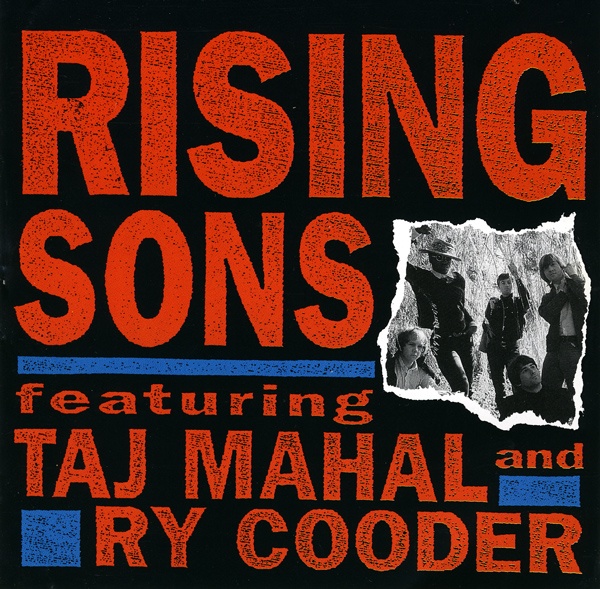
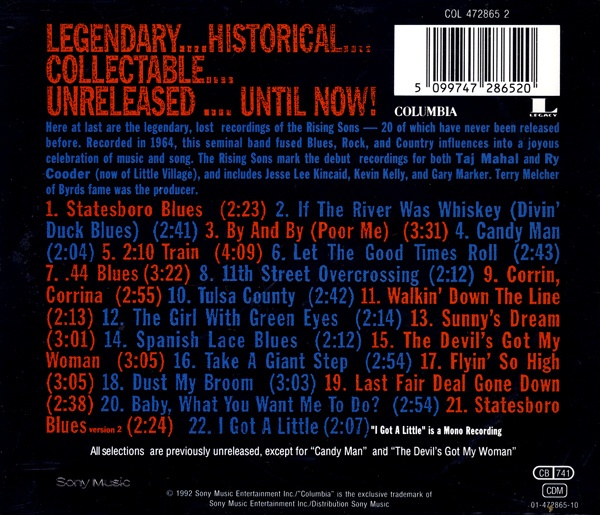
After leaving The Rising Sons, Ry Cooder joined Captain Beefheart and his Magic Band. He featured on their 1967 album Safe As Milk. However, Ry left Captain Beefheart’s employ after the legendary bandleader claimed to have seen a woman in the audience metamorphosis into a goldfish. That was too much for Ry.
Having left The Magic Band, Ry Cooder worked with some of the biggest names in music. This includes the Rolling Stones. Ry played on sessions during 1968 and 1969. His playing features on 1969s Let It Bleed and 1971s Sticky Fingers. The Rolling Stones were just one of many groups and artists Ry Cooder played alongside.
During the late sixties and seventies, Ry Cooder was a session player to the stars. He also accompanied Randy Newman and Van Dyke Parks. Ry featured on Randy Newman’s 1970 sophomore album 12 Songs. By the time 12 songs was released, Ry Cooder had embarked upon a solo career.
Ry Cooder’s solo career can be separated into two parts. There’s his studio albums and the soundtracks he’s recorded. In total, Ry Cooder has released sixteen soundtrack albums. The first soundtrack Ry Cooder featured on was Performance.
Performance.
Performance was a 1970 film that featured Nicolas Roeg and Donald Cammel. The man responsible for the soundtrack was Jack Nitzsche. He was brought onboard to produce the soundtrack. Jack also put together an all-star cast.
Jack Nitzsche’s band included Ry Cooder, Mick Jagger, Little Feat’s guitarist Lowell George, Byrds’ bassist Gene Parsons and percussionist Russ Titelman. was brought onboard to produce the soundtrack. The final piece of the musical jigsaw was Randy Newman, who conducted the soundtrack. It was released in September 1970.
Released in September 1970, Performance soundtrack’s was released to critical acclaim. Jack Nitzsche’s all-star cast had come good. One of the cast would get a taste for soundtracks.

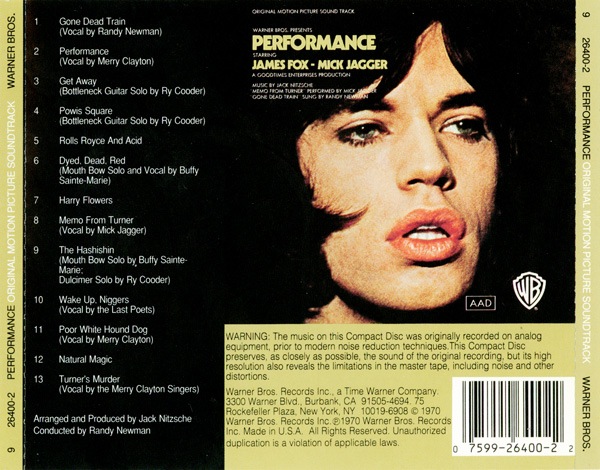
This was Ry Cooder. Ten years after the release of Performance, Ry Cooder had released nine album. He was still working as a session musician. As if that wasn’t enough, Ry was about to add another string to his musical bow. Ry was about to write, record and produce his first soundtrack in 1970, The Long Riders.
The Long Riders is one of seven soundtracks that feature on the the recently released seven disc box set Soundtracks. It was released by Warner Bros. on 29th September 2014. Soundtracks features seven soundtracks released between 1980 and 1993. This starts with The Long Riders and closes with 1993s Johnny Handsome.
The Long Riders.
Unlike Performance, Ry Cooder was given the job of writing, recording and producing The Long Riders. It tells the story of James-Younger gang in the years following the American Civil War. The Long Riders was directed by Walter Hill and produced by James Keach, Stacey Keach and Tim Zinnemann. Playing starring roles were James Keach, Stacey Keach, David Guest and Randy Quaid. With such a compelling story, and an all-star cast, Ry Cooder was brought in to provide the soundtrack to The Long Riders.
Ry Cooder wrote the soundtrack to The Long Riders and brought together some of the most talented session players. This included drummer Jim Keltner, guitarist David Lindley, pianist Jim Dickinson and trombonist George Bohanon. They recorded the thirteen tracks on The Long Riders’ soundtrack. The film was released on May 16th 1980.
When The Long Riders was released, it grossed nearly sixteen million dollars. The film was well received by critics. So much so, The Long Riders was entered in the 1980 Cannes Film Festival. Just as well received was Ry Cooder’s soundtrack.
The soundtrack to The Long Riders complimented the screenplay. Ry’s decision to use an eclectic selection of instruments was hailed a masterstroke. This helped Ry provide an authentic backdrop to the screenplay. Critics realised this.
Ry Cooder won the Best Music Award in 1980. It was award by the Los Angeles Film Critics Association. Despite The Long Riders being Ry’s screenplay debut, it proved a successful start to his “other” career.

Paris, Texas.
Four years after writing the score to The Long Riders, Ry Cooder was asked by director Wim Wenders to write the score to future cult classic, Paris Texas.
It was written by L.M. Kit Carson and Sam Sheppard. Paris, Texas stated Harry Dean Stanton, Nastassja Kinski, Dean Stockwell and Hunter Carson. They play their part in a truly compelling plot.
Essentially, the story focuses on an amnesiac Travis Henderson, whose played by Harry Dean Stanton. He’s walked out of the desert to try and rekindle familial relationships. Especially, the relationship between his brother and seven-year-old son. The other part of the plot is the attempt by Travis Henderson to find his former wife. She left her family years previously. Travis Henderson heads off in search of her. Providing the backdrop is Ry Cooder’s haunting, evocative soundtrack.
Given Paris, Texas’ much more understated sound, it’s no surprise that Ry Cooder only brought onboard guitarist David Lindley and pianist Jim Dickinson. They provided a soundtrack that’s without doubt, one of Ry Cooder’s best.
Without Ry Cooder’s soundtrack, Paris, Texas wouldn’t have been such a successful movie. It grossed $2,181,987 on its release in November 1984. Paris, Texas won some of the most prestigious awards. This included awards at the Cannes and Sundance film festival. Just as critically acclaimed was the soundtrack to Paris, Texas.
Looking back at Ry Cooder’s back-catalogue, Paris, Texas is one of his finest albums. It’s best described as evocative, haunting, mesmeric and spacious. Paris, Texas is Ry Cooder at his very best. This was the finest soundtrack of his career. Others came close though.

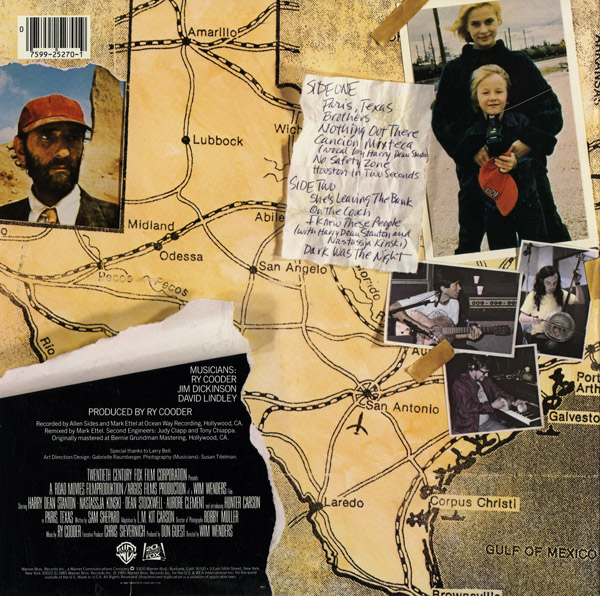
Alamo Bay.
By 1985, Ry Cooder had written five soundtracks. Alamo Bay was his latest project. It was a low budget film written by Alice Arlen. Louis Malle directed and produced Alamo Bay. It starred Ed Harris and Amy Madigan. Ed plays the part of a Vietnam War veteran who clashes with a group of Vietnamese immigrants in his Texas hometown. This may have seemed liked a good storyline, but that didn’t turn out to be the case.
For Alamo Bay, Ry Cooder wrote nine tracks. To record them, he brought onboard some familiar faces. This included drummer Jim Keltner, bassist Chris Ethridge, guitarist David Lindley and pianists Jim Dickinson and Van Dyke Parks. They fused blues, country and rock over nine tracks, which were produced by Ry. When Alamo Bay was released on 3rd April 1985, the soundtrack fared better than the film.
When Alamo Bay was released, it grossed only $380,970. No wonder. Reviews of Alamo Bay weren’t positive. The New York Times referred to Alamo Bay as “manufactured ‘art” that “is an unhappy experience that never becomes illuminating.” The film had no chance. For some critics, a small crumb of comfort was Ry Cooder’s soundtrack. It made the viewing experience worthwhile.

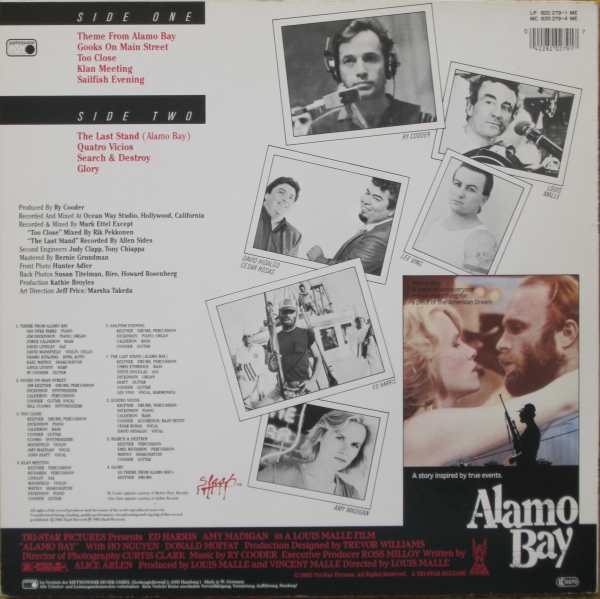
Blue City.
1986 was one of the busiest years of Ry Cooder’s career. He worked on two soundtracks, Blue City and Crossroads. The first of these soundtracks was Blue City.
Blue City was a film adaptation of Ross Macdonald’s novel. It was published in 1947 Thirty-nine years later, it was adapted as a film. Michelle Manning directed Blue City. Walter Hill, who Ry had worked with before, and William Hayward produced Blue City, which is a tale of revenge.
In Blue City, a young man returns to a small Florida town seeking justice. His father has been murdered. When the police won’t help, the young man seeks revenge. He’s determined to avenge the death of his father. However, the film didn’t go down well with critics.
When the original version of Blue City was shown to an invited audience, they disliked the film so much that parts were reshot.
Even after parts of the film were reshot, it wasn’t well received by critics. On its release on February 1985, critics disliked the film. Their reviews were poor, sometimes disparaging. So it’s no surprise, that Blue City only grossed just seven, of the ten million dollars, it cost to make. The only good thing about Blue City was the soundtrack.
The soundtrack to Blue City is one of the oft overlooked albums Ry Cooder recorded. Just like previous albums, Ry called upon many of the same musicians, including Jim Dickinson and Jim Keltner. They were joined by Miguel Cruz, David Paich and Steve Porcaro. This small, tight band recorded what’s without doubt one of the real hidden gems in Ry Cooder’s extensive discography.


Crossroads.
If Paris, Texas was Ry Cooder’s finest hours, then Crossroads comes a very close second. The Crossroads soundtrack allows Ry Cooder to showcase his mastery of the blues guitar. He delivers a series of blues’ masterclasses on Crossroads. Just like Paris, Texas, Ry’s soundtrack is crucial to the success of Crossroads.
Crossroads is another film directed Walter Hill. John Fusco wrote the script and Mark Carline produced Crossroads. It stars Ralph Macchio, Joe Seneca and Jami Gertz. The plot is loosely based around the story of Robert Johnson.
In Crossroad, Eugene Martone is a blues obsessed, classically trained guitarist. He claims to have “sold his soul to the devil at the Crossroads.” In return, he’s able to play like blues legend Robert Johnson. The other part of the plot surrounds the long lost Robert Johnson song. and Eugene Martone’s search for it. During Crossroads, Eugene Martone’s character delivers some stunning blues. They come courtesy of Ry and another legendary guitarist, Stevie Vai.
For the recording of the Crossroads soundtrack, Ry and Stevie Vai were joined by harmonica player Sonny Terry, drummer Jim Keltner, bassist Nathan East and pianist Jim Dickinson. This all-star cast whip up a bluesy storm on Crossroads. This soundtrack was crucial to the critical acclaim, commercial success and awards that came Crossroads’ way.
On Crossroads release on 15th March 1986, the film and soundtrack were released to widespread critical acclaim. Crossroads grossed nearly six million dollars. For a low budget movie, this was good going. Ry Cooder’s soundtrack to Crossroads won the Georges Delerue Prize for Best Original Music at the 1986 Flanders International Film Festival Ghent. This was fitting.
There’s no doubt that Crossroads is one of Ry Cooder’s finest soundtrack albums. For me, it’s up there vying with Paris, Texas for the number one spot. However, Paris, Texas just shades it. Coming a very close second in Crossroads. This isn’t the end of the Soundtracks box set.

Johnny Handsome.
Johnny Handsome saw Ry Cooder and director Walter Hill join forces again in 1989. The film was based on John Godey’s book The Three Worlds of Johnny Handsome. It was produced by Charles Roven and features Mickey Rourke, Morgan Freeman and Ellen Barkin. The plot features a double cross and revenge.
The central character is John Sedley. He has a disfigured face, and is mocked by others as Johnny Handsome. Johnny and his friend plot to commit a crime with two other people. These two others double-crossed Johnny and his friend. They’re caught and sent to jail. When Johnny gets out, he swears to get even. It was this plot that Ry Cooder had to provide the soundtrack to.
For Johnny Handsome, Ry Cooder was accompanied by just drummer and percussionist Jim Keltner and saxophonist Steve Douglas. Ry a true multi-instrumentalist, played guitar, keyboards, bass, accordion, fiddle and percussion. He also produced Johnny Handsome, which was released in September 1989.
On the release of Johnny Handsome, it wasn’t a commercial success. Johnny Handsome wasn’t well received by critics. At the box office, Johnny Handsome grossed $7,237,794. However, it cost twenty million dollars. For director Walter Hill, this was a disaster. At least Ry Cooder’s part in Johnny Handsome was a success.
Although Johnny Handsome wasn’t Ry Cooder’s most successful soundtrack album, it was well received. Critics marvelled at Ry’s ability to switch between musical genres for the various soundtracks he wrote, recorded and produced. Johnny Handsome was another example of this. It showcased one of the most talented soundtrack composers of his generation. Mind you, Johnny Handsome was Ry’s eleventh soundtrack. Number twelve came four years later in 1993. This was Trespass.


Trespass.
Trespass saw Ry Cooder change direction musically. His music headed in the direction of experimental and avant garde jazz. His cohorts in the Tresspass project were drummer Jim Keltner and trumpeter Jon Hassell.
For Trespass, Ry and Walter Hill renewed their working relationship. Previously, they’d worked on a number of films. The success of these films varied. Trespass was very different to anything they’d worked on before.
It was written by Robert Zemeckis and Bob Gale. Producing Trespass was Neil Canton. Trespass features can hardly be described as an all-star cast. The biggest names were the Emmy Award winning Bill Paxton and William Stadler. Their costars in what was described as an action crime thriller were Ice T and Ice Cube. This didn’t bode well.
When Trespass was released reviews varied. They ranged from mixed to favourable and positive. The public had the casting vote. Eventually, Trespass grossed $13,747,138. This presented a problem. Trespass cost seventeen million dollars to make. Even Ry Cooder’s groundbreaking soundtrack couldn’t save Trespass.
Ry Cooder has forever been a musical chameleon. That’s apparent throughout his soundtrack career. On Trespass, Ry brought onboard a band that featured familiar faces and new names. The familiar faces included drummer Jim Keltner and new names included trumpeter Jon Hassell. He’s a disciple of Karlheinz Stockhausen. Jon played an important part in Trespass’ sound.
When Trespass was released, it was described dark, moody, experimental and innovative. This marked a change in direction and sound for Ry Cooder. Just like the movie, Ry’s soundtrack divided the opinion of critics. Now opinions are beginning to change.
Twenty-one years after the release of Trespass, and this groundbreaking soundtrack has aged well. Its experimental, avant garde jazz sound was way ahead of its time. The other problem was that Tresspass wasn’t what people expected of Ry Cooder. Only now are people realising just how ambitious and innovative an album Trespass was.
It’s fitting that such a groundbreaking album like Trespass closes Ry Cooder’s Soundtracks’ box set. It showcases yet another side to Ry Cooder’s music. Since he released his 1970 eponymous debut album, Ry Cooder has been a musical chameleon. Especially, on the myriad of Soundtracks Ry Cooder has released.
Throughout the seven discs in the Soundtracks box set, which was released by Warner Bros. on 29th September 2014, Ry Cooder’s versatility is showcased. His music never stands still. It’s constantly evolving. Never does he resort to releasing the same album twice. No. He’s determined to push musical boundaries. That’s been the case throughout a career that’s spanned fifty years.
That’s apparent on Soundtracks. There’s elements of everything from ambient, blues, country, experimental, free jazz, jazz and rock. Soundtracks is a truly eclectic collection of albums. However, these seven albums are just the tip of a musical iceberg. Ry Cooder has released many more soundtracks. There’s more than enough for a Soundtracks II. However, the albums that feature in the Soundtracks box set are some of Ry Cooder’s best work.
This includes Ry Cooder’s finest soundtrack album Paris, Texas. It played a huge part in the success of Paris, Texas. That’s the case with Crossroads. Without its award winning soundtrack, Crossroads wouldn’t be such a cult classic. Then there’s Ry’s soundtrack debut The Long Riders, the underrated Blue City and the groundbreaking Johnny Handsome. These Soundtracks are the perfect introduction to Ry Cooder’s soundtrack career.
RY COODER-SOUNDTRACKS.
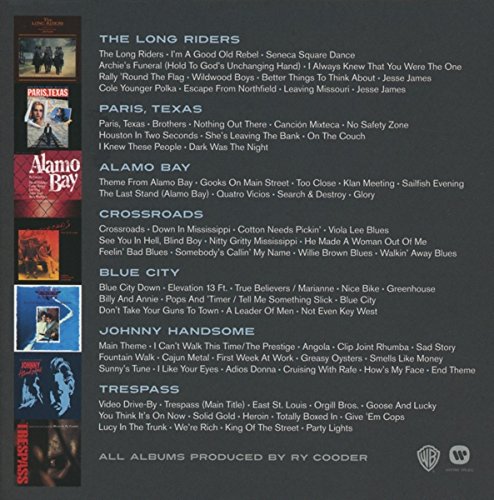
LOUISIANA SWAMP BLUES.
LOUISIANA SWAMP BLUES.
One of the most eagerly awaited box sets of 2014 is JSP Records Louisiana Swamp Blues. It’s a four disc that features 102 slices of swamp blues and zydeco. Compiled by Neil Slaven, Louisiana Swamp Blues features contributions from the great and good of Louisiana blues and zydeco.
Across Louisiana Swamp Blues’ four discs, there’s contributions from Leroy Washington, Jimmy Dotson, Lonesome Sundown, Big Chenier, Charles Sheffield, Tal Miller, Silas Hogan and Boozoo Chavis. There’s also contributions from groups like Cookie and The Cupcakes, Boogie Ramblers and Jay Nelson and The Jumpers. These tracks were released between 1954 and 1963. During this nine year period, Louisiana was a musical hotbed.
Between 1954 and 1963, low down, dirty, greasy blues R&B and zydeco provided the soundtrack to nights out in Louisiana. Providing the backdrop were many of the artists on Louisiana Swamp Blues. That’s how they started off. Soon, they were spotted by some of the producers that put Louisiana on the musical map.
This included J.D. Miller, Eddie Shuler, Sam Montel, Floyd Soileau and Carl Graffagnino. They were some of the most successful producers in Louisiana. They went in search of up-and-coming musical talent. This meant heading juke joints, night clubs, dive bars and wherever music was played. Sometimes, they struck musical gold.
This includes many of the artists on Louisiana Swamp Blues. Other times, the artists on Louisiana Swamp Blues were either discovered by talent spotters and A&R men. They introduced the artists to some of Louisiana’s top producers. Once the introductions were made, the artist was taken into the basic recording studios. Accompanied by a studio band, they cut the low down, dirty, greasy blues R&B and zydeco that features on Louisiana Swamp Blues, which I’ll tell you about.
Disc A 1954-1960.
The first of the four discs in the Louisiana Swamp Blues covers the period between 1954 and 1960. It features twenty-five tracks. Mostly, it’s blues all the way. However, there’s some zydeco thrown in for good measure. That’s the case from the opening bars of Cookie and The Cupcakes’ Married Life. It opens disc A.
Straight away, you’re transported back to another musical age. It’s 1958 and Shelton Dunaway and the rest of The Cupcakes are cooking up a storm. Shelton’s vocal and Marshall Ladee’s guitar go toe-to toe. They’re at the heart of this bluesy storm. This is a tantalising start to Louisiana Swamp Blues. You hungrily await the remainder of disc A.
Soon you’re revelling in the bluesy delights of Leroy Washington’s My True Life, Blue Charlie’s Don’t Bring No Friend, Shelton Dunaway’s I Had The Blues, Mr. Calhoun’s They Call Me Mr Calhoun, Juke Boy Bonner’s Can’t Hardly Keep From Cryin’ and Lonesome Sundown’s I Stood By. These tracks are just the tip of a musical iceberg. There’s more to Louisiana Swamp Blues than blues. There’s zydeco and R&B.
The zydeco comes from the legendary Boozoo Chavis. He contributes two tracks on disc A. They’re Paper In My Shoe and Gonna Boogie. The latter is a delicious fusion, where zydeco and blues collide head on. Apart from zydeco and blues, there’s some R&B to enjoy on disc A.
This includes the heartfelt R&B of Clarence Garlow’s Train Came Down The Track. Then there’s King Charles’ Bop Cat Stomp and Joe Hudson’s Hoo-wee Pretty Baby. They’re just a tantalising taste of the music that helped put Louisiana on the musical map.
Disc B-1954-1962/63.
Having enjoyed the twenty-five tracks on disc A, there’s twenty-seven more to discover on disc B. It too, is a mixture of blues, R&B and zydeco. The music was released between 1954 and 1963. Some of the artists on disc B featured on disc A. This includes Lonesome Sundown, Leroy Washington, Cookie and The Cupcakes, Mr. Calhoun, Charles Sheffield and Boozoo Chavis. That’s no surprise. These artists played a huge part in the rise and of Louisiana music.
Compiler Neil Slaven realises the importance of picking the right track to open disc B. His decision to choose Lonesome Sundown’s Gonna Stick To You Baby is a masterstroke. It’s a blistering, slice of blues music. This whets your appetite for the blues of Silas Hogan’s You’re Too Late Baby, Clarence Garlow’s Sound The Bell, Boogie Jake’s I Don’t Know Why and Big Walter Price’s Oh Ramona. These tracks are just a few of the bluesy delights on disc B. What about zydeco though?
There couldn’t be a compilation of the music of Louisiana without The King of Zydeco Big Chenier. He contribues Let Me Hold Your Hand, where blues and zydeco melt into one. Later, another member of zydeco royalty showcases their considerable skilss. That’s none other than Boozoo Chavis. Bye Bye Catin and Calcasieu Zydeco Blues demonstrate what this legendary musician is capable of. Having told you about the blues and zydeco, what about the R&B on disc B.
Mr Calhoun makes a very welcome return on disc B. He contributes I’m Ragged And Dirty. It’s one of the highlights of disc B. Cookie & The Cupcakes also make a return. They combine R&B with doo woo vocals on Close Up The Back Door. This shows another side to their music. They’re just one of several returnees on disc B. However, we’ve not heard the last of these artists.
Disc C-1954-1961.
Just like the two previous discs of Louisiana Swamp Blues, disc C features many of the same artists. This isn’t a criticism. No. It’s merely an observation. It makes sense not to change a winning formula? After all, the first two discs, ooze quality. So why change? The other benefit of sticking to the same artists, is you get to hear more of artists you may not have heard before.
For, newcomers to the music of Louisiana, then Louisiana Swamp Blues is the perfect companion to Ace Records critically acclaimed “By The Bayou” compilation series. They feature many of the same artists.
Just like the two previous discs, disc C explodes into life. There’s no better way to start than with the blues of Left Hand Charlie’s Whole Lotta Drinkin’ On The Block. It reminds me of A Whole Lot Of Shaking Going On. Musically, they’re related. After that, the tempo drops and the heartbreak begins.
This begins with Big Chenier’s Please Try To Realise. Big Chenier delivers vocal full of hurt and despair. That’s also the case with Shelton Dunaway on Keep Livin.’ They’ve got the blues. So has Tal Miller on Mean Old Kokamoo. He delivers a despairing vocal, as he waves goodbye to “the mean old city.” That’s not the end of the blues.
There’s much more. This includes Lonesome Sundown’s Learn To Treat Me Better, Leroy Washington’s Wild Cherry, the Boogie Ramblers’ I’m Goin,’ King Charles’ But You Thrill Me and Charles Sheffield’s Nights Of Misery. It’s a case of the quality keeps on coming. Choosing the highlights isn’t easy.
Jimmy Dotson’s Oh Baby features a needy, hopeful vocal. It’s the perfect introduction to a blues great. This is the case with Ivory Lee Jackson’s Got The News This Morning. A hidden gem, it’s an irresistible blues, that a glorious reminder of another age.
Away from the blues, there zydeco courtesy of Boozoo Chavis’ Boozoo Stomp and Forty One Days. It’s fitting Boozoo features twice. He’s zydeco royalty. So is Big Chenier. He’s known as the Kink of zydeco. His contribution is Please Try To Realise. It epitomises everything that’s good about zydeco. That however, is not the end of the story of disc C.
Many tracks on Louisiana Swamp Blues grab your attention. There’s too many to mention. One that can’t pass unmentioned is King Karl with Guitar Gable’s This Should Go On Forever. It’s a soulful hidden gem that’s a very welcome inclusion on disc C. Compiler Neil Slaven deserves credit for including it on Louisiana Swamp Blues. However, there may still be some more hidden gems to discover, as there’s one more disc to go on Louisiana Swamp Blues.
Disc D-1954-1962.
For the final disc on Louisiana Swamp Blues compiler Neil Slaven sticks with his tried and tested formula. What follows is in a similar vain to the three previous discs. This means blues, zydeco and even a hint of R&B. It’s a delicious musical stew. Especially when it starts with the jaunty, irresistible Guitar Rhumbo. It comes courtesy of Guitar Gable. Although very different to what’s gone before, it whets your appetite for the rest of disc D.
This starts with the moody, bluesy sound of Lonesome Sundown’s Lost Without Love. This is the first of two tracks he contributes. The other is No Use To Worry. Both tracks ooze quality. That’s the case with Hop Wilson’s Be Careful With The Blues and Silas Hogan’s Trouble At Home Blues. Other tracks see the tempo drop and a late-night sound unfold.
This is the case on Jimmy Dotson’s My Poor Heart In Pain. It’s easily one of the highlights of disc C. Jimmy delivers a heartbroken, soul-baring vocal. He sounds as if he’s lived the lyrics. Blue Charlie’s Miss My Lagnion has a similar late-night sound. An instrumental with braying saxophone and pounding piano, it’s akin to an outpouring of hurt and emotion. Tal Miller continues the late night sound. Straight away, he dawns the role of blues philosopher on Life’s Journey. Melancholy and hurt are omnipresent as he shares his heartbreak and despair. That’s not the end of the heartbreak.
Hop Wilson’s vocal on Always Be In Love With You is a mixture of hurt, heartbreak and hope. He hopes that one day, his partner will want him back on this uptempo track. Another uptempo blues is Charles Sheffield’s I Would Be A Sinner. It features a grizzled horn that’s at the heart of the track’s success. Leroy Washington is responsible for a driving blues on My Chinatown Gal. His soulful vocal and an arrangement that’s a marriage of blues and R&B proves a potent partnership. There’s more to disc D than blues though.
This includes two slice of zydeco from Boozoo Chavis. His two contributions are Long Black Curly Hair and Oh! Babe. They’re a reminder of one of zydeco’s greats at the top of his game. Apart from blues and zydeco, there some R&B to enjoy on disc D.
Cookie & The Cupcakes return with their unique and joyous brand of R&B on I’m Twisted. Guitar Gable with King Karl also makes a return with Walking In The Park (With Sally). The only way to describe this track is hook laden and irresistible. Just as irresistible is the track that closes Louisiana Swamp Blues.
The perfect way to close disc D of Louisiana Swamp Blues is Jay Nelson and The Jumpers’ Don’t You Want A Man Like Me. It bursts into life and is two minutes of musical magic. Bristling with electricity, you’re spellbound as Jay Nelson and The Jumpers’ work their musical magic.
For too long, Louisiana has been overlooked when people discuss America’s musical capitals. That’s no longer the case. Records labels are exploring Louisiana’s musical past. This includes Ace Records and now JSP Records.
Ace Records “By The Bayou” series was one of the first to showcase Louisiana’s musical heritage. The series features blues, zydeco and R&B. So does JSP Records’ Louisiana Swamp Blues. For anyone looking to discover the delights of Louisiana’s musical past, then the perfect introduction are the “By The Bayou” series and JSP Records’ Louisiana Swamp Blues.
Featuring four discs crammed full of quality music, Louisiana Swamp Blues is the perfect introduction to the music of Louisiana during the late-fifties and early sixties. They conjur up images of Louisiana, during another musical era. This means music that’s emotive, evocative and atmospheric. Sometimes, it’s joyous, hook-laden and irresistible. Always, the music paints pictures of what life was like in Louisiana, between 1954 and 1963. Back then, Louisiana was one of America’s musical capitals. That’s apparent on Louisiana Swamp Blues.
Throughout the four discs that comprise Louisiana Swamp Blues oozes quality. Whether it’s blues, R&B or zydeco, the music is of the highest quality. That’s no surprise. Louisiana Swamp Blues features the great and good of Louisiana music. They’re joined by some lesser known names. Together, they’re responsible for Louisiana Swamp Blues. It’s a combination of blues, zydeco and R&B. Classics, old favourites and hidden gems from Louisiana’s musical past sit side-by-side on Louisiana Swamp Blues, which is without the best box set JSP Records have released during 2014.
LOUISIANA SWAMP BLUES.
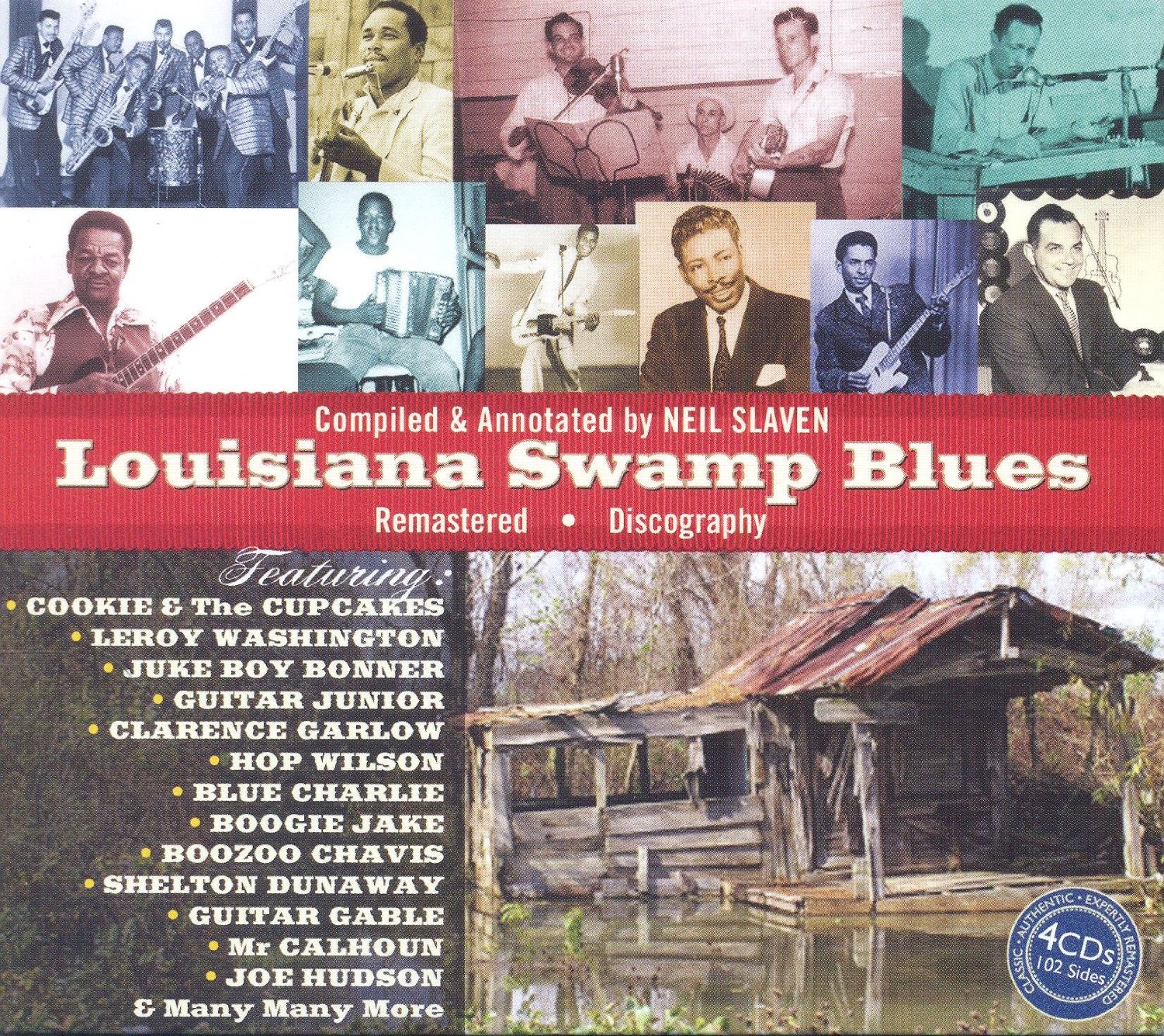
ORLANDO JULIUS WITH THE HELIOCENTRICS-JAIYEDE AFRO.
ORLANDO JULIUS WITH THE HELIOCENTRICS-JAIYEDE AFRO.
Nowadays, collaborations are commonplace in modern music. So much so, that many music lovers have become complacent. However, the new collaboration between Orlando Julius and The Heliocentrics, Jaiyede Afro, is guaranteed to refresh even the most jaded musical palettes. That’s no surprise. This is a collaboration between one of the legends of African music Orlando Julius, and The Heliocentrics, who are one of London’s most exciting groups. As collaborations go, it’s a tantalising prospect.
There’s more to Jaiyede Afro which was recently released by Strut Records, than a collaboration between two musical cultures and genres. Jaiyede Afro is also a fusion between two generations of musicians.
Tenor saxophonist and singer Orlando Julius has been around since the mid-sixties. Back then, Orlando Julius was fusing highlight and R&B with his band The Modern Aces. A year later, in 1966, Julius released his album Super Afro Soul.
It’s no exaggeration to say that Super Afro Soul, is one of the most important records in the history of Afro-beat. It was akin to a template for several generations of Afro-beat and Afro-funk artists. What Orlando did in 1966, they followed in his footsteps. As the seventies dawned, Orlando’s career took off.
Soon, Orlando was rubbing shoulders with the great and good of music. He met and played with Louis Armstrong, Hugh Masakela, The Crusaders and Lamont Dozier. Then in 1978, Orlando Julius released his critically acclaimed album Love, Peace and Happiness.
Orlando Julius and The Ahiko released Love, Peace and Happiness in 1978, on Jungle Records. It was a fusion of Afro-beat, folk, funk, soul and world music. Essentially, Love, Peace and Happiness was musical melting pot, a delicious one at that. Love, Peace and Happiness introduced the world to one of the rising stars of African music, Orlando Julius. A year later, Orlando returned with his most compelling album.
This was Disco Hi-Life. It was released in 1979 on the Nigerian label, Jofabro. Disco Hi-Life saw Julius jump on the disco bandwagon. He combined this with his unique brand of Afro-beat. As fusions go, this was a delicious one. The only problem was that Disco Hi-Life was only released in Nigeria and France. This meant that Orlando’s music wasn’t being heard by a wide audience. So he remained one of African music’s best kept musical secrets. Sadly, it would be another five years before Orlando released another album.
It wasn’t until 1984 that Orlando Julius released another album. This was Dance Afro-Beat. It was released on Afro-Beat Records. Just like previous albums, Dance Afro-Beat was a fusion of musical genres and influences. Despite the quality of music on Dance Afro-Beat, it failed to make a commercial breakthrough. Since then, a new generation of music lovers have discovered Orlando Julius.
This includes the London based group The Heliocentrics. They’re huge fans of Orlando Julius and invited him to their London studio. It’s an old school studio. Fully analogue, it’s where The Heliocentrics previously collaborated with Lloyd Miller and Mulatu Astatke. The Heliocentrics next collaboration was with Orlando Julius.
At The Heliocentrics’ North London studio, they recorded eight songs with Orlando Julius. These songs became Jaiyede Afro, which was recently released by Strut Records. It’s a breathtaking fusion of two musical cultures given a moderne twist. You’ll realise that, when I tell you about Jaiyede Afro.
Buje Buje opens Jaiyede Afro. Gradually, the arrangement unfolds. Soon, drums play, horns bray and percussion joins a crystalline guitar. They set the scene for Orlandos’ vocal. Heartfelt and tender, it’s enveloped by the hypnotic arrangement. It unfolds in waves and has you spellbound. Later, The Heliocentrics add a dramatic twist as Afro-beat, funk, highlife, jazz and soul melt seamlessly into one beautiful musical melange.
Uber funky. This describes Love Thy Neighbour. It sounds like a track from an African blaxploitation soundtrack. As The Heliocentrics rhythm section get busy, the horns drive the pulsating arrangement along. Percussion and a wah-wah guitar join keyboards as funk meets Afro-beat. It’s a glorious musical marriage where Orlando Julius with The Heliocentrics’ help rolls back the years.
Just like Buje Buje, Aseni featured on Orlando’s ultra rare Orlando Julius and The Sounders’ 1973 album. Literally, the track bursts into life. Hissing hi-hats, a probing bass and chirping guitars combine with growling horns. This is the perfect way to frame Orlando’s lived-in, all-knowing vocals. He sounds like a cross between a sage and shaman. Stabs of a dusty Hammond organ fill in the spaces left the blazing, swirling horns. Soon, they’re joined by chiming guitars. Mostly, it’s Orlando’s vocal and the horns that take centre-stage. Alongb with the rest of The Heliocentrics’ Aseni metamorphosis into a glorious, epic Afro-beat jam.
Sangolede is quite different from the previous track. It has a much more understated sound. It meanders moodily along. Guitars wah-wah, reverberating into the distance. Meanwhile, the rhythm section provide a moody backdrop. Crucial to this is the meandering, probing bass. Along with the shimmering guitar and keyboards, this gives the track a cinematic sound. This is best described as psychedelic funk, with a hint of Afro-beat.
Percussion, rhythm section and short, sharp stabs of horns signal the entrance of Jaiyede Afro. His vocal enters, and almost immediately, drops out again. When it returns he delivers an impassioned, soulful vocal. It’s accompanied by tender, heartfelt harmonies. Before long, Orlando’s vocal grows in power. This is the signal for The Heliocentrics to cut loose. They showcase their considerable skills as Afro-beat and funk become one. Add to this the heartfelt, soulful offerings of Orlando Julius. The result is a captivating, dramatic and beautiful, genre-melting track.
Oma Aba Blues is a traditional song Orlando sung at school. He later rearranged the song in 1965, for his band the Modern Aces. Here, he revisits the song and sings call and response with female backing singers. As for the arrangement, it’s understated, floaty and dreamy. It allows the vocal to take centre-stage. A bubbling bass and a myriad of percussion are omnipresent. Later, braying Afro-beat horns are unleashed. Their raison d’être is to provide a backdrop to Orlando’s vocal, as he reinvents a song he first sung covered nearly fifty years ago.
Back in 1985, Orlando was living on the West Coast of America. That’s where he wrote Be Counted. It was meant to feature on his 1985 album SIsi Sade. Sadly, the album was never completed. Be Counted makes its debut on Jaiyede Afro. With the help of The Heliocentrics, it becomes a spellbinding fusion of Afro-beat, fee jazz, funk, jazz and soul. Braying, screaming free jazz horns protest, as if demanding “Be Counted.” They’re accompanied by a pulsating rhythm section, chiming guitar and percussion. Just like previous tracks, the bass is prominent in the mix. It bubbles away, while horns bray and Orlando delivers an earnest, hopeful vocal. What follows is a moving, dramatic, funky and hopeful musical call to arms from Orlando Julius.
Straight away, In The Middle grabs your attention. The rhythm section combine with chiming guitars and percussion. Soon, free jazz horns are wailing and braying. Just like previous tracks, the horns play starring roles. Meanwhile, the rhythm section and guitars are in a groove. They’re determined to explore the grove to its funkiest and fullest. Atop this irresistible groove are stabs of grizzled, worldweary horns. Their all-knowing sound is reminiscent of a track from a classic seventies Blaxploitation album.
Alafia closes Jaiyede Afro. Stabs of keyboards set the scene for the rhythm section as they explode into action. They’re joined by blazing, jazz-tinged horns. Soon, the arrangement takes on a dubby sound. It’s drenched in reverb. As the wash of reverb dissipates blistering rocky guitars take centre-stage. By now the track as taken on a 21st Century psychedelic sound. There’s more than psychedelia to this track. Afro-beat, dub, funk, jazz and rock melt into one as Orlando Julius, and The Heliocentrics, close Jaiyede Afro on a genre-melting high.
For anyone whose musical palette has been jaded by disappointing collaborations, Jaiyede Afro is guaranteed to refresh even the most jaded musical palettes. That’s no surprise. This is a collaboration between one of the legends of African music Orlando Julius, and The Heliocentrics, who are one of London’s most exciting groups. When the project was announced, it was a tantalising prospect. Somehow, the reality is even better.
During the nine tracks, Orlando Julius The Heliocentrics create a captivating, genre-melting album, Jaiyede Afro which was recently released by Strut Records. Everything from Afro-beat, dub, free jazz, funk, highlife, jazz, psychedelia and rock melt into one. Jaiyede Afro is a case of expect the unexpected.
You never quite know which direction Jaiyede Afro is heading. It’s the ultimate music mystery tour. Curveballs are thrown. They wrong foot you. You think Jaiyede Afro is heading in one direction. Then Orlando Julius The Heliocentrics do the musical equivalent of a handbrake turn. Suddenly, you hare off in the opposite direction. Subtleties and surprises then assail your senses. Sometimes it’s far from subtle. However, it’s jazzy, joyous, funky, soulful and truly irresistible. It’s a truly captivating, mesmeric and tantalising journey, one you wish would never end. When it does, you press play again and enjoy the glorious magical musical mystery tour that is Jaiyede Afro once again.
ORLANDO JULIUS WITH THE HELIOCENTRICS-JAIYEDE AFRO.
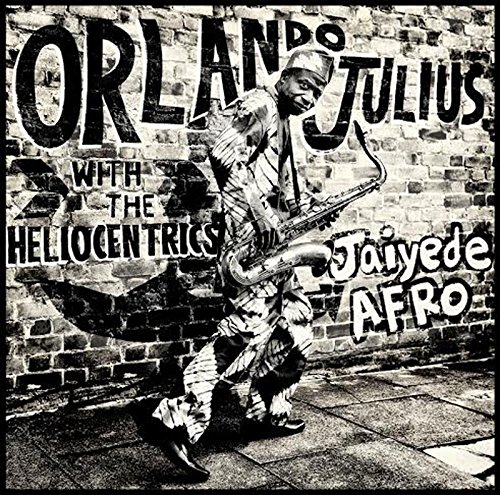
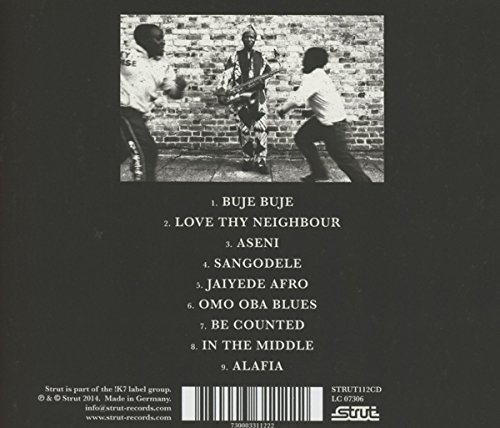
DUKE ELLINGTON’S MY PEOPLE.
DUKE ELLINGTON’S MY PEOPLE.
1st January 1863 was one of the most important dates in American history. It was the date of President Lincoln’s Emancipation Proclamation. It stated that all slaves in the ten rebel states would be free. A hundred years later, and Duke Ellington wrote a stage play that celebrated President Lincoln’s Emancipation Proclamation. This was Duke Ellington’s My People, which was recently rereleased by Boplicity, an imprint of Ace Records.
Duke Ellington’s My People was released in 1964. By then Duke Ellington was sixty-five. He was one of jazz music’s elder statesmen. His career began in 1914, when Duke Ellington was only fifteen.
Born in Washington D.C. on April 29th 1899, Duke Ellington was born into a middle class family. Growing up, Duke Ellington learnt to play the piano. Before long, he was a prestigious talent. It was no surprise that aged fifteen, Duke Ellington made his professional debut in 1914. This was just the start of a long and successful career. Bandleader, composer, pianist and political activist, Duke Ellington did it all.
He moved to New York in the early twenties. In 1923, Duke Ellington formed his own orchestra in 1923. He played at the Cotton Club during the twenties. In the thirties, Duke Ellington and his orchestra toured the world. Right up to his death in 1974, Duke Ellington was still leading his orchestra. However, it wasn’t all smooth sailing for Duke Ellington.
After the Second World War, music changed. Duke Ellington’s orchestra was perceived as the music of the past. Crooners were the future. Frank Sinatra and Jo Stafford were flavour of the month. This was just the start of a slump in Duke Ellington’s popularity. At one point, Duke Ellington’s income as a songwriter and performer was subsidising his orchestra. Thing would get worse before they got better.
During the early fifties, Duke Ellington’s orchestra lost some of its top musicians. Not long after this, Duke Ellington’s music was seen as old fashioned. Bebop was the future. Duke Ellington’s popularity suffered. Things got so bad that he had to scale back his orchestra. However, in 1956, Duke Ellington became the comeback King.
At the 1956 Newport Jazz Festival, Duke Ellington made his comeback. Ironically, two of the songs at the centre of his comeback were old songs. Diminuendo and Crescendo in Blue had been part of Duke Ellington’s show since 1937. They were often overlooked. Not at the Newport Jazz Festival. This was just part of an explosive set that introduced Duke Ellington to a new generation of music fans. Such was the effect of Duke Ellington’s appearance at the Newport Jazz Festival, that Duke Ellington made the front page of Time magazine. Following the Newport Jazz Festival, there was a revival of interest in Duke Ellington’s career.
Right through the rest of the fifties and early sixties, Duke Ellington recorded a number of film soundtracks. This included 1957s Such Sweet Thunder, 1959s Anatomy Of A Murder and 1961s Paris Blues. For Duke Ellington, his career was back on track.
Especially when he started working with some of the current biggest names in jazz. Duke Ellington worked with Coleman Hawkins, John Coltrane, Charles Mingus and Max Roach. Although Duke Ellington was seen as part of jazz’s past, the new generation of jazz musician’s embraced him. They enjoyed working with one of jazz music’s legends. Duke Ellington still had plenty to offer jazz music.
This became apparent in 1963. This was the hundredth anniversary of President Lincoln’s Emancipation Proclamation. It stated that all slaves in the ten rebel states would be free. Duke Ellington was determined that this date should be celebrated. However, America in 1963 was a troubled country.
Racism was still rife in parts of America. So was poverty and conflict. Then there were the problems America were encountering abroad. Tensions were rising between East and West. The Cold War was at a crucial juncture. Then there was the war in Vietnam. A generation of Americans were losing their lives in Vietnam. For many people, there wasn’t much to celebrate. However, Duke Ellington wasn’t going to let the centenary of President Lincoln’s Emancipation Proclamation pass unnoticed.
To celebrate what was one of the most important dates in America’s history, Duke Ellington wrote a stage play that celebrated President Lincoln’s Emancipation Proclamation. This was Duke Ellington’s My People.
When it made its debut, the idea was a stage play that brought to life the experiences of black Americans around 1863, before and after President Lincoln’s Emancipation Proclamation. To do this, Duke Ellington conceived a series of song and routines. Using this mixture of song, dance and drama, Duke Ellington brought to life the harsh reality of life in 1863. Duke Ellington managed to do this, by separating the play into two parts.
Duke Ellington’s My People is made up of two parts. The first part comprises Negro Spirituals. Part two features the blues. This leads up to King Fit The Battle Of Alabama. It’s the centre-piece of the stage play. An eloquent, rousing and speech that is comparable with many of the speeches by Civil Rights’ activists. After this, Duke Ellington’s My People closes with What Colour Is Virtue? This is a poignant, thoughtful way to end this groundbreaking and popular play.
The Arie Crown Theatre was where Duke Ellington’s My People made its debut. It played to sellout crowds twice daily. For the next couple of years, Duke Ellington’s My People toured America, and sometimes, further afield. However, in 1964, Duke Ellington got the opportunity to record the soundtrack to Duke Ellington’s My People. This was too good an opportunity to refuse. It meant his play would be recored for posterity.
Recording Duke Ellington’s My People was no small undertaking. This was, after all, the Original Cast Album. So, everyone that Duke Ellington had brought onboard to make Duke Ellington’s My People dream become a reality had to head to the recording studios. Logistically, this must have been a massive undertaking. This involved a huge cast of singers and musicians.
Originally, one of the first people Duke Ellington brought onboard was Joyce Sherill. She played a huge part in Duke Ellington’s My People. So much so, that Duke Ellington’s My People was billed as Duke Ellington’s My People with Joya Sherill. Then there was Percy Watkins, wo produced Duke Ellington’s My People. Billy Straythorn took charge of the orchestra and Jimmy Jones conducted it. Playing starring roles were Lil Greenwood, Jimmy McPhail, Bunny Briggs, Jimmy Grisson and The Irving Bunton Singers. Then there was the sixteen piece orchestra.
Pianist Jimmy Jones conducted an orchestra that featured trumpeters Bill Berry, Ray Nance, Ziggy Harrell and Nat Woodard. Trombonists Britt Woodman, John Sanders and Booty Wood joined forces with the reed section of Russell Procope, Rudy Powell, Bob Freedman, Harold Ashby and Pete Clarke. They were joined by a rhythm section of drummer Louis Bellson and bassist Joe Benjamin. Then there was Billy Straythorn on celeste and Juan Amalbert on conga. This was the orchestra that featured on Duke Ellington’s My People. Eventually, the eight songs written by Duke Ellington were recorded. The soundtrack to Duke Ellington’s My People was released later in 1964.
On Duke Ellington’s My People release in 1964, it was released on a brand new label, Contact Records. This was a subsidiary of ABC Records. Contact Records was setup by none other than Bob Theile. He transformed Impulse into one of jazz’s premier labels. So his bosses at ABC Paramount Records, seemed to give Bob some leeway. A case in point was Contact Records.
Short lived describes Contact Records. Duke Ellington’s My People was the nascent label’s first release. It was an inauspicious start to Contact Records’ life. On its release in 1964, Duke Ellington’s My People wasn’t a commercial success. Despite the success of the stage show Duke Ellington’s My People, the soundtrack failed to trouble the charts. For Bob Thiele, this was a disappointment. He’d staked his new label’s future on Duke Ellington’s My People. Since then, Duke Ellington’s My People has been an overlooked album in Duke Ellington’s discography.
Fifty years have passed since the release of Duke Ellington’s My People. Sadly, when many people discuss the music of Duke Ellington, they overlook Duke Ellington’s My People. That’s a great shame. It’s an important musical reminder of one of the most important events in American history, President Lincoln’s Emancipation Proclamation. Duke Ellington brought the events before and after President Lincoln’s Emancipation Proclamation, to life. To do this, he separated the story into two parts
Duke Ellington’s My People is made up of two parts. The first part comprises Negro Spirituals. This includes uplifting Ain’t But The One and the questioning Will You Be There? And 99%. It’s sung by The Irving Bunton Singers and Jimmy McPhail. It features The Irving Bunton Singers addressing the audience on the subject of race.
Jimmy then delivers a tender, heartfelt vocal on the medic Come Sunday. This isn’t a new song. No. It featured on Black, Brown and Beige. However, it’s given a makeover by Jimmy and is both beautiful and moving. Following Come Sunday is David Danced. It features tap dancer Bunny Briggs. She’s joined by The Irving Bunton Singers. The tempo rises and the song takes on a celebratory sound. This meant to signify an artist worshipping through their work.
Very different and moving is My Mother, My Father. Again, Jimmy McPhail takes charge of the vocal. As he delivers the lyrics, it’s apparent he’s proud of his family and their accomplishments. His vocal is a mixture of pride and sincerity.
The Billy Strayhorn Orchestra take charge on the instrumental Montage. It allows the dancers to take centre-stage during an uplifting, celebratory track. It sets the scene for Duke Elligton to narrate My People. He delivers a rousing speech, before Joya Sherill delivers the wistful The Blues Ain’t. From there it’s blues all the way.
Jimmy Grisson delivers a despairing vocal on Workin’ Blues. Then on My Man Blues, Lil Greenwood rolls back the years. She delivers a vocal that’s reminiscent of blues’ glory days. Then on Jail Blues Jimmy Grisson returns with a despondent vocal. He’s worried about his partner and sings “if you’ve got another man, let me know by mail.” This medley of blues is without doubt the highlight of Duke Ellington’s My People so far.
That’s until King Fit The Battle Of Alabama. It’s the centre-piece of the stage play. An eloquent, rousing and call to arms that is comparable with many of the speeches by Civil Rights’ activists. After this, Duke Ellington’s My People closes with What Colour Is Virtue? This is a poignant, thoughtful and soulful way to end this groundbreaking album, Duke Ellington’s My People.
When Duke Ellington’s My People was released as a stage play, it was a groundbreaking mixture of music, drama and theatre. It told the story of one of the most important events in American history, President Lincoln’s Emancipation Proclamation. Rather belatedly, all slaves within the ten rebel states were free. One of the most shameful parts of American history was over. It will never be forgotten and never should be. Duke Ellington’s My People ensures that this will never be the case.
Duke Ellington’s My People documented the time before and after President Lincoln’s Emancipation Proclamation. Using a mixture of negro spirituals and blues, Duke Ellington brought these events to life. The reality of these events come to life on Duke Ellington’s My People, which was recently rereleased by Boplicity, an imprint of Ace Records.
During the eight songs on Duke Ellington’s My People, Duke Ellington and his all star cast document for posterity the events of 1863. They’ll never ever be forgotten and never should be. The music on Duke Ellington’s My People ensures that will never be the case.
The music on Duke Ellington’s My People is moving, poignant, uplifting and joyous. It provokes a variety of emotions. This includes sadness, anger and frustration. No wonder. It took until 1863 that all slaves within the ten rebel states were free. That is truly shameful. Duke Ellington’s My People is a reminder of that. It’s also a reminder that President Lincoln’s Emancipation Proclamation changed things for those who were enslaved. That Proclamation changed lives for the better. Belatedly, those that were enslaved were free. They were free to make a better life for themselves. This is documented on Duke Ellington’s My People.
Although Duke Ellington’s My People wasn’t a commercial success, Bob Thiele realised that a project of such social and cultural importance had to be recorded and released. Bob had the ability to make this happen. He released Duke Ellington’s My People on the newly founded Contact Records. This was an imprint of ABC Paramount. Sadly, Contact Records was short lived. One of Contact Records most important culturally important releases was Duke Ellington’s My People.
DUKE ELLINGTON’S MY PEOPLE.


NEW ORLEANS SOUL: THE ORIGINAL SOUND OF NEW ORLEANS SOUL 1960-1976.
NEW ORLEANS SOUL: THE ORIGINAL SOUND OF NEW ORLEANS SOUL 1960-1976.
Over the past ten years, Soul Jazz Records have been documenting the history of New Orleans’ funk. They’ve released a number of lovingly compiled, and critically acclaimed compilations. These compilations were some of the best compilations of New Orleans’ funk released during that period. They eloquently told the story of New Orleans’ funk. Now Soul Jazz Records have decided to move onto New Orleans’ soul.
Their first compilation of New Orleans’ soul is New Orleans Soul: The Original Sound of New Orleans Soul 1960-76, which will be released on Soul Jazz Records on 29th October 2014. Featuring twenty-one tracks, New Orleans Soul: The Original Sound of New Orleans Soul 1960-76 is a compilation that showcases the various sub-genres of New Orleans’ soul.
Among the twenty-one tracks on New Orleans Soul: The Original Sound of New Orleans Soul 1960-76 is the deep soul of Aaron Neville, Robert Parker and Willie Tee. Then there’s the Northern Soul of Eldridge Holmes and Maurice Williams. That’s not all. If you like your soul funky, then there’s contributions from Eddie Bo, Ernie K-Doe and Lionel Robinson. However, New Orleans Soul: The Original Sound of New Orleans Soul 1960-76 isn’t just about New Orleans’ soul men.
Some of New Orleans’ soul sisters feature on New Orleans Soul: The Original Sound of New Orleans Soul 1960-76. There’s Barbara West, Betty Harris, Francine King and Inell Young. Then there’s the hugely underrated Jean Knight. Featuring twice is Irma Thomas, the undisputed Queen of New Orleans. Irma isn’t the only artist to feature twice.
If Irma Thomas was the Queen of New Orleans, Aaron Neville must be King. He’s from one of New Orleans’ leading musical families. Along with his brother Art Neville, they enjoyed commercial success as The Neville Brothers. Separately, Art and Aaron enjoyed successful solo careers. They played an important part in New Orleans’ musical history. It’s documented in New Orleans Soul: The Original Sound of New Orleans Soul 1960-76, which I’ll pick the highlights of.
Opening New Orleans Soul: The Original Sound of New Orleans Soul 1960-76 is Robert Parker’s Caught You in a Lie. This was the B-Side to Robert’s 1967 single Holdin’ Out. Released on Nola Records, Caught You In A Lie was penned by Wilbert Lee Diamond Smith. Caught You in a Lie was later recorded by Gregory Isaacs. However, Robert’s version is the definitive version. It’s an outpouring of despair, emotion and heartbreak. He delivers the lyrics as if he’s lived and survived them.
Willie Tee has always been synonymous with Deep Soul. His career started in 1962, when he released Always Accused on A.F.O. Records. Ten years later, Wille was signed to Gatur Records. He released Funky, Funky Twist as a single in 1972. Tucked away on the B-Side was First Taste of Hurt. Written by Wilson Turbinton, Taste of Hurt, Taste of Hurt is a glorious slice of Deep Soul featuring a hurt-filled vocal masterclass from Willie Tee.
In New Orleans, Irma Thomas is musical royalty. She’s referred to as the Queen of New Orleans. That’s why she contributes two tracks. They’re What’s So Wrong With You Loving Me and She’ll Never Be Your Wife. Both track from Irma’s 1973 album In Between Tears. It was produced by Swamp Dogg, and released on Fungus Records. In Between Tears was Irma’s comeback album. She hadn’t released an album since 1966. Sadly, it wasn’t a commercial success. However, In Between Tears is an underrated album that showcases the vocal talents of the undisputed Queen of New Orleans.
After the Queen of New Orleans, comes the King, Aaron Neville. He contributes three tracks. They show the two sides of Aaron Neville. There’s the balladry You Can Give But You Can’t Take and She’s On My Mind, then the dance-floor friendly A Hard Nut to Crack. You Can Give But You Can’t Take was the B-Side to Aaron’s single Where Is My Baby? It was released on Bell Records in 1969. It’s best described as Deep Soul ballad with gospel-tinged harmonies. She’s on My Mind was the B-Side to All These Things. This thoughtful ballad was arranged and produced by Allen Toussaint, a legendary figure in New Orleans music. Aaron’s final contribution is A Hard Nut to Crack, which was released as a single in 1967. Back then, Aaron was signed to Parlo Records. Written by George Davis and Lee Diamond, it’s an irresistible slice of stomping, dance-floor friendly soul music.
There are some artists that never reach the heights their talent deserves. Jean Knight falls into that category. Her contribution is What One Man Won’t Do Another Man Will. It was released as a single on Open Records in 1976. Written by James A. Cames, What One Man Won’t Do Another Man Will is reminiscent to the music Jean released on Stax Records. Braying horns and cooing harmonies punctuate the arrangement as Jean delivers a sassy, strutting vocal.
Another important figure in the New Orleans music scene is Eldridge Holmes. So it’s fitting that three of his tracks feature on New Orleans Soul: The Original Sound of New Orleans Soul 1960-76. Fifty years ago, in 1964, Eldridge released Gone, Gone, Gone as a single on Jet Set Records. Just like the B-SIde, Worried Over You, it was written and produced by Allen Toussaint. Both singles feature soul-baring vocals from Eldridge. Despair and despondency are omnipresent. It’s as if he’s felt the pain he’s singing about. Eldridge’s other contribution is Lovely Woman, which was written by Eldridge and produced by Allen Toussaint and Marshall E. Sehorn. Lovely Woman was released as a single in 1971, on Deesu, an imprint of Allen Toussaint’s Sansu label. It’s a mid-tempo track that’s bound to go down well within the Northern Soul crowd.
Barbara West contributes another Northern Soul track, Congratulations Baby. This was the B-Side to Barbara’s single Give Me Back The Man I Love. It was released on Ronn Records in 1969. Written by Touissant McCall and produced by Gene Kent, Congratulations Baby is an anthemic hidden gem that’s guaranteed to fill dance-floors.
It was Big Maybelle that encouraged Betty Harris to embark upon a musical career. Her debut single was a cover of Solomon Burke’sC ry To Me. It was released on Jubilee Records in 1963. Six years later, somewhat belatedly, Betty released her debut album Soul Perfection. It’s a fitting name for this much prized album. Released on Action Records, Soul Perfection was produced by Allen Toussaint and Marshall E. Sehorn. One of Soul Perfection’s many highlights was I Don’t Wanna Hear It. It was written by Naomi Neville, which was an alias of Allen Toussaint. I Don’t Wanna Hear It is the perfect showcase for one New Orleans’ best kept musical secrets. Quite simply, it’s two minutes of frustration, anger, emotion and controlled power.
Jimmy Hicks only released one single, I’m Mr Big Stuff. It was released in 1972 on Big Deal Records. However, it wasn’t I’m Mr Big Stuff that caught people’s attention. No. Instead, the B-Side Tell Her That I Love You found favour among the Northern Soul DJs. That’s not a surprise. Tell Her That I Love is a beautiful, wistful, track.
No compilation of New Orleans’ soul would be complete without an Eddie Bo track. There’s plenty to choose from. Don’t Turn Me Loose was the B-Side of Can You Handle It. It was released as a single on B-Sound in 1969. Edwin Bocage wrote Don’t Turn Me Loose and Eddie arranged and produced it. Funky and soulful, Eddie vamps his way through Don’t Turn Me Loose. This is the perfect introduction to one of New Orleans’ soul legends, Eddie Bo.
Closing New Orleans Soul: The Original Sound of New Orleans Soul 1960-76 is Inell Young’s I’ve Never Considered. Innel Young might be a new name to most people. That’s no surprise. She released just three singles. I’ve Never Considered the B-Side to His Love For Me. It’s a beautiful song that oozes quality. No wonder. Edwin Bocage wrote it, and it was arranged and produced by Eddie Bo. Released on the Busy-B label, His Love For Me sunk without trace. Maybe if if I’ve Never Considered had been released as a single, it would’ve fared better? After all, it’s a beautiful heartfelt ballad that’s delivered with feeling and emotion.
From the moment you put on New Orleans Soul: The Original Sound of New Orleans Soul 1960-76, you’re transported to the Big Easy. Memories of the Mardi Gras and Bourbon Street come to mind. They’re at the heart of what’s one of America’s musical capitals, New Orleans. It has a rich and eclectic musical history. Part of New Orleans’ musical heritage is soul music.
This means soul men like Aaron Neville, Eddie Bo, Robert Parker, Willie Tee, Eldridge Holmes and Maurice Williams. Then there soul sisters like Barbara West, Betty Harris,J ean Knight, Inell Young and the undisputed Queen Of New Orleans, Irma Thomas. They all feature on what’s the first of Soul Jazz exploration of New Orleans’ soul New Orleans Soul: The Original Sound of New Orleans Soul 1960-76. It’ll be released on Soul Jazz Records on 29th September 2014. This is a compilation not to be missed.
From the opening bars of Willie Tee’s Taste of Hurt, right through to the closing notes of Innel Young’s I’ve Never Considered, it’s quality all the way. There’s no filler, whatsoever, just quality soul music. Singles, album tracks, B-Sides and hidden gems sit side-by-side. The obvious has been eschewed. Instead, Soul Jazz Records have dug a lot deeper. They flipped singles over and found some soulful delights on B-Sides. Whether it’s dancers or ballads, they ooze quality. So do the two album tracks from Irma Thomas’ 1973 Swamp Dogg produced album In Between Tears. Then there’s the singles. Don’t expect hit singles. No. Hidden gems are the name of the game on New Orleans Soul: The Original Sound of New Orleans Soul 1960-76.
It’s no exaggeration to describe New Orleans Soul: The Original Sound of New Orleans Soul 1960-76 as littered with hidden gems and soulful surprises. New Orleans Soul: The Original Sound of New Orleans Soul 1960-76 features twenty-one tracks from the soul men and soul sisters of New Orleans. This is just the first of series of lovingly compiled compilations of New Orleans’ soul from Soul Jazz Records. Having documented the story of New Orleans’ funk, now it’s the turn of New Orleans’ soul. New Orleans Soul: The Original Sound of New Orleans Soul 1960-76 is just the beginning. Many more compilations will follow from Soul Jazz Records. I’m sure that just like New Orleans Soul: The Original Sound of New Orleans Soul 1960-76, they’ll be full of hidden gems and soulful delights.
NEW ORLEANS SOUL: THE ORIGINAL SOUND OF NEW ORLEANS SOUL 1960-1976.
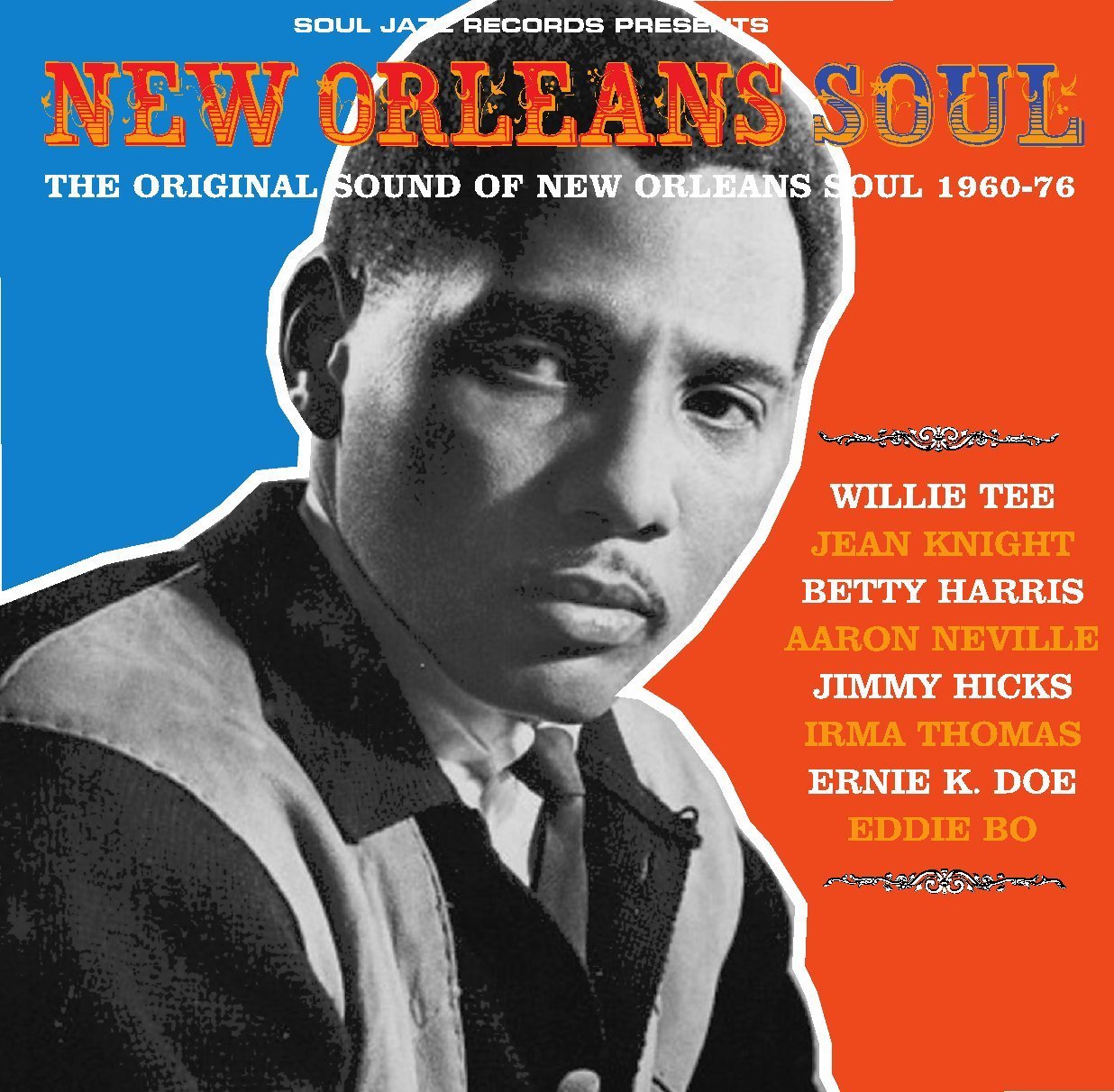
BELLE AND SEBASTIAN-THE BOY WITH THE ARAB STRAP.
BELLE AND SEBASTIAN-THE BOY WITH THE ARAB STRAP.
Unique. That describes Belle and Sebastian. They’re a band who do things their way. That’s been the case since Stuart Murdoch and Stuart David formed Belle and Sebastian in 1996. The two Stuarts met at Stow College in Glasgow. That’s where they formed Belle and Sebastian. They released their debut single and album on a college’s record label.
Two years later, and Belle and Sebastian were released to Jeepster. They released their third album The Boy With The Arab Strap on 7th September 1998. It reached number twelve in the UK and was certified gold. This resulted in Belle and Sebastian’s third consecutive gold disc. Belle and Sebastian were one of the biggest indie groups. Still they were determined to do things their way.
A year later, in 1999, somewhat belatedly, Belle and Sebastian won a Brit Award for best newcomer. Just a few months later, Belle and Sebastian were hosting their own weekender. At the 1999 Bowlie Weekender, Belle and Sebastian happily mingled with their fans. Belle and Sebastian were a rarity in music, an ego free group. That’s despite The Boy With The Arab Strap which will be rereleased on vinyl on 7th October 2014, transforming Belle and Sebastian’s career. It brought their unique brand of melancholy pop to a wider audience. For Belle and Sebastian, they couldn’t believe how far they’d come in three years.
Belle and Sebastian were formed in 1996, at Stow College, in Glasgow. The band was formed by two students, Stuart Murdoch and Stuart David, and was named after Cecile Aubry’s 1965 book Belle et Sebastien. Since then, many members have joined and left the group, one of the most influential being, Isobel Campbell, who joined in 1996 and left the group in 2002, singing vocals and playing cello. Other members include Stuart David, Chris Geddes and Sarah Martin.
Whilst at college, in 1996, Belle and Sebastian recorded some demo tracks with the college’s music tutor Alan Rankin, who played keyboards and guitars in The Associates alongside the late Billy Mackenzie. The Associates released three albums, The Affectionate Punch in 1980, Fourth Drawer Down in 1981 and Sulk in 1982. He also released four solo albums in the 1980s. By 1996, Alan Rankin was a tutor at Glasgow’s Stow College.
The demos Belle and Sebastian recorded with Alan Rankin came to the notice of the college’s business studies department. Each year, it released a single on the college’s record label. Belle and Sebastian, by then, had recorded a number of songs, enough to fill an album. Having been so impressed by Belle and Sebastian’s music, that year, the label decided to release an album, called Tigermilk. The album was recorded in three days, and one-thousand copies vinyl were pressed.
Tigermilk.
Tigermilk was well received and the album sold out quickly. Nowadays, original copies of Tigermilk are collector’s items. Copies don’t change hands often, but when they do, prices are in excess of £500. Back in 1996, Tigermilk was just the demo of an unknown Glasgow band. They wouldn’t be unknown for long.
The success of Tigermilk lead to Stuart Murdoch and Stuart David deciding to become a full-time band. Soon, new members joining the band. Isobel Campbell joined on vocals and cello, Stevie Jackson guitar and vocals, Richard Coburn on drums and Chris Geddes on keyboards. Not long after this, Belle and Sebastian signed to Jeepster Records in August 1996.
Now signed to Jeepster, Tigermilk was rereleased. When critics heard Tigermilk, they were bowled over by Belle and Sebastian. They were very different from the Britpop sound that was prevalent. Belle and Sebastian’s music was much more understated, cerebral, dreamy and wistful. It was the type of music that would be heard in thousands of student bedsits. That proved to the case.
With a major indie backing Tigermilk, the album reached number thirteen in the UK charts. Tigermilk was certified gold. Almost overnight, Belle and Sebastian became one of the hottest indie bands in Britain. This was just the start of the rise and rise of Belle and Sebastian.

If You’re Feeling Sinister.
Buoyed by the success of Tigermilk, Belle and Sebastian released their second album If You’re Feeling Sinister in November 1996. Critics were won over by Belle and Sebastian’s sophomore album. Released to widespread critical acclaim, If You’re Feeling Sinister is often perceived as Belle and Sebastian’s Magnus Opus. American magazine Spin, liked the album so much, that they put it at number seventy-six in their top one-hundred albums released between 1985-2005. Rolling Stone magazine put the album in its list of essential albums of the 1990s.
On its release, in November 1996, If You’re Feeling Sinister reached number nineteen. This resulted in If You’re Feeling Sinister being certified gold. It seemed that Belle and Sebastian had the Midas touch. Everything they touched turned to gold.
After the release of If You’re Feeling Sinister, the group released series of EPs during 1997. The EPs were Dog On Wheels, Lazy Line Painter Jane and 3.. 6.. 9 Seconds of Light. Dog On Wheels was actually four songs that were recorded prior to the group’s formation. It reached number fifty-nine in the UK charts. Lazy Line Painter reached number forty-one in the UK charts, and 3.. 6.. 9 Seconds of Light became the group’s first top forty single, reaching number thirty-two in the UK charts. However, in 1998, Belle and Sebastian would enjoy the most successful album of their nascent career.
The Boy With The Arab Strap.
For Belle and Sebastian the two previous years had been a whirlwind. In 1996, they were college students. Two years later, they were one of the most successful indie bands. Since the release of If You’re Feeling Sinister, Belle and Sebastian had divided their time between touring and recording. One of the bands Belle and Sebastian had toured with, Arab Strap, would provide inspiration for their third album, The Boy With The Arab Strap.
Before entering Glasgow’s Ca Va Studio, Belle and Sebastian had been busy. They’d penned twelve tracks. Unlike previous Belle and Sebastian albums, Stuart Murdoch does deliver every vocal. He shares vocal duties with Isobel Campbell, Stevie Jackson and Stuart David, sing vocals.Belle and Sebastian’s rhythm section was drummer Richard Colburn, bassist Stuart David and guitarists Stuart Murdoch and Stevie Jackson. Isobel Campbell played cello and guitar, Sarah Martin violin, Mick Cooke trumpet and Chris Geddes piano and keyboards. Ian McKay played bagpipes on Sleep the Clock Around. Producing The Boy With The Arab Strap, which released on 7h September 1998, was Tony Doogan.
When The Boy With The Arab Strap was released in September 1998, the name of the album caused a minor controversy within the Scottish music scene. There was a band called Arab Strap who consisted of Aiden Moffat and Malcolm Middleton. They recorded and performed between 1995-2006. Adiden Moffat was none to pleased that the name of his band featured in the title of Belle and Sebastian’s new album. This lead to a minor war of words between two of the Scottish music scene’s then, leading bands. Thankfully, this was quickly forgotten and people concentrated on Belle and Sebastian’s new album.
On its release, The Boy With The Arab Strap reached number twelve in the UK charts It received mixed views from music critics. Rolling Stone magazine, which had always been supportive of Belle had a different view of The Boy With The Arab Strap. Just like The Village Voice, Rolling Stone magazine praised the album. Others weren’t as impressed. However, as is often the case, music critics decided to rewrite history. They’ve revisited The Boy With The Arab Strap. Now critics believe The Boy With The Arab Strap, and not If You’re Feeling Sinister, is the band’s best album.
In 1999 Belle and Sebastian, won the award for Best Newcomer at the Brit Awards. This was a strange decision. By 1999, Belle and Sebastian had released three albums. Each album was certified gold. Despite this, those responsible for the Brit Awards perceived Belle and Sebastian as newcomers. That’s far from the case. They were an experienced group. That’s apparent on The Boy With The Arab Strap
Opening The Boy With The Arab Strap is It Could Have Been A Brilliant Career. This is a one of Belle and Sebastian’s best ever songs. It’s beautiful, poignant song that features some really thoughtful and pensive lyrics. A tender wistful vocal is accompanied by an understated arrangement. This allows the vocal to take centre-stage. The vocal sounds as if it’s been influenced by Nick Drake. As for the lyrics, they’ve a strong narrative. They’re delivered tenderly with more than a hint of pathos.
Sleep Around the Clock sounds totally different from It Could Have Been A Brilliant Career. The tempo is quicker, and sounds totally different from the opening track. What it has in common is the lyrics. Here the lyrics are strong, intelligent and tell a story. My one quibble with the arrangement is that the instruments, at times, almost overpower the vocal. That, to me, is a shame, given the quality of the vocal and lyrics. However, I still think this is a good song, albeit, one where the production could have improved the song, by making the vocal stronger, or more prominent in the mix.
Isobel Campbell sings the lead vocal on Is It Wicked Not To Care? She sings this song beautifully, and has just the right voice to carry the song off. Campbell has a fantastic voice, as she would later prove in her collaborations with Mark Lanegan. Here, she almost whispers the vocal, and is effectively accompanied by an acoustic guitar, and some glorious backing vocals. This track has a very retro sound, almost 1960s French feel to it. Is It Wicked Not To Care? has always been, and will always be, one of my favorite Belle and Sebastian tracks.
Ease Your Feet Into the Sea, is another of album’s best songs. The arrangement is perfect for the song. Stuart Murdoch gives one of his best performances on this track. His vocal, highlights the beauty of the song. Behind Murdoch, the band play beautifully, all the instruments come together beautifully. The use of purely acoustic instruments is highly effective, and Ease Your Feet Into the Sea, is a classic Belle and Sebastian track.
A Summer Wasting sees a change in style and tempo. The song starts slowly, and then the song quickens. When the drums enter the song, they play a strange beat. This makes you focus on the song. When you do, you hear lyrics about a student spending the summer relaxing, no work to do, books to read, just spending time not doing anything much, just watching time passing them by. This song is one any former student will be able to relate to. Although this is a just a short song, it is two minutes of beautiful music.
Seymour Stein sees Stevie Jackson take the lead vocal on this song. Immediately, the start of the song makes me think of a Nick Drake track. The chords and style are similar to those Drake used to such great effect. Here, Stevie Jackson’s vocal is a contrast to Stuart Murdoch’s vocal. The lyrics are cerebral, witty and perceptive. They’re about Seymour Sten, a record industry mogul, who is one of the most influential players in the music industry. Towards the end of the song if you pay close attention to the lyrics, they say “he reminded you of Johnny, before he went Electronic”. This is Johnny Marr, formerly of The Smiths and later, a member of Electronic. Cerebral, perceptive and witty, this track epitomises everything that’s good about Belle and Sebastian.
A Space Boy Dream, features a spoken word performance from Stuart David. It’s another example of Belle and Sebastian pushing musical boundaries. The music that plays behind David’s vocal features some nice rhythms. They’re yang to David’s yin.
Dirty Dream Number Two sees Murdoch retake the lead vocals. When you listen to the track carefully, there is a Northern Soul influence to the track. Take away the vocal, and what you have is almost a Norther Soul soul track. You could be transported back to Wigan Casino in an instant. This is a stomping track, one of The Boy With The Arab Strap’s best.
The title track The Boy With The Arab Strap, sees once again, the style and tempo change. On the track, the vocal is accompanied by handclaps, a piano and drums. They all play a prominent role in sound, later a Hammond organ enters the fray, and what sounds like a recorder. All of this melee of instruments and sounds, somehow, join together to produce a great track. The lyrics to the song are intelligent and witty. They tell a story about jailbirds, errant lovers and the seedy underbelly of city life. The Boy With The Arab Strap, is another mini-masterpiece from Belle and Sebastian.
Stevie Jackson returns to take the vocal lead on Chickfactor. The lyrics tell a tale about a young man going to New York and meeting a girl he falls in love with. They then enter into a long distance relationship, and the song tells about his insecurities when he can’t contact his estranged love. Reading the lyrics, they tell a story well, so well, you can almost imagine the scenes, but a couple of lines have an almost Lewis Carroll feel to them. For example, “something’s gone wrong, said the spider to the fly”. When I listen to the lyrics, I see parallels with the literate quality of the lyrics, on Lloyd Cole and Commotions albums, especially Rattlesnakes. Quite simply, another compelling track.
Simple Things is a short track. However, what it lacks in length, it makes up in quality. The lyrics feature an enigmatic young man, singing to the young lady of his dreams. In the track, he tells her how he feels, and what she has to do to to win his affections. Although the song only contains four verses, it tells a story, and has a cinematic quality.
The final song on The Boy With The Arab Strap, is The Rollercoaster Ride. While Simple Thing was a short track, this is, by far, the longest song on the album. Murdoch’s vocal is made for this song. He sings the song slowly, and is accompanied on backing vocals by Isobel Campbell. Their voices blend together beautifully. The remainder of the band play quietly in the background, their performance tailor-made to bring out the beauty of the lyrics. They never overpower the vocal, yet do not give a subdued performance. The guitars and drums provide a simple, yet effective backdrop, for Murdoch and Campbell’s voices. Belle and Sebastian have chosen a great track to close the album with, as the song almost winds down, slowly, gently, bringing the album to a glorious conclusion.
The Boy With The Arab Strap has only twelve songs on the album, and it lasts a mere forty five minutes. However, for those forty-five minutes your eyes and brain is given an aural treat. Throughout the twelve tracks you will experience a multitude of emotions, from joy to sadness. You will find yourself laughing and crying, sometimes within the space of a couple of minutes. Belle and Sebastian are wordsmiths of the highest standard. Their lyrics can paint a picture, or tell a story. On The Boy With The Arab Strap, they do this wonderfully. If you have never heard this album, or heard Belle and Sebastian’s music, this album is a must have for any record collection.
Even after releasing eight studio albums, Belle and Sebastian are one of Scotland and the music industry’s best kept secrets. Once you’ve heard a Belle and Sebastian album, you enter a love affair with their music. The best way to begin this love affair is with The Boy With The Arab Strap, which will be rereleased on vinyl by Jeepster Records on 6th October 2014. This will be the start of a long lasting love affair with Belle and Sebastian’s music. However, this is love affair where you won’t be cheated on. Nor will you walk away. There’s no chance of that. Once you’ve discover and experienced Belle and Sebastian’s music, you will neither stray nor regret, your new found relationship with the beautiful, thoughtful and intelligent music on The Boy With The Arab Strap.
BELLE AND SEBASTIAN-THE BOY WITH THE ARAB STRAP.
TODD RUNDGREN-RUNT AND THE ALTERNATE RUNT.
TODD RUNDGREN-RUNT AND THE ALTERNATE RUNT.
Singer, songwriter, multi-instrumentalist and producer describes Todd Rundgren. His career has spanned over forty years. During that period, Todd Rundgren released three albums with Nazz, and over twenty solo albums. His debut solo album was Runt which was released in 1970. Runt marked the debut of the man many thought would be be crowned King.
Runt which has been recently rereleased by Edsel, as a double album, marked the solo debut of Todd Rundgren. Disc one features the original version of Runt. Then on disc two, there’s what’s referred to as The Alternate Runt. It features the November 1970 miss-pressing of Runt. This includes previously unavailable songs like Say No More and an uncut Baby Let’s Swing. There’s an early version of Hope I’m Around, and alternate mixes of I Believe In Me, We Gotta Get You A Woman and Devil’s Bite. The Alternate Runt shows another side to Todd Rundgren’s debut album, Runt. It was the album that launched Todd Rundgren’s solo career.
Todd Rundgren was only twenty-two when he released Runt. Already, it looked like Todd Rundgren was destined for greatness. His career had started in 1967, when he was just nineteen. That’s when he joined Woody’s Truck Stop. They were a Philly based band who seemed to model themselves on Paul Butterfield’s Blues Band. This wasn’t the direction Todd saw his career heading. So Todd and bassist Carson Van Osten left Woody’s Truck Stop in 1967, and formed Nazz.
To complete the lineup of garage rock band Nazz, drummer Thom Mooney and keyboardist and vocalist Robert “Stewkey” Antoni were drafted in. Nazz released a trio of albums between 1967 and 1971. They were a fusion of garage, proto punk and psychedelia. Their debut was released in 1968.
Nazz.
By April 1968, Nazz were signed to SGC Records. They were ready to record their eponymous debut alum Nazz. It featured ten tracks. Todd wrote eight tracks and cowrote Wildwood Blues. Less than a year after forming, Nazz were ready to record their debut album.
To produce Nazz, two producers were drafted in. Bill Traut was a musical veteran. His career started in the forties and since then, he’d done everything. This included production. He produced four tracks.
Michael Friedman had no experience as a producer. However, this didn’t stop him producing Open My Eyes and Hello It’s Me. The other four tracks were produced by Nazz. Again, they had no experience. It was a case of learning on the job. This worked.
When critics heard Nazz, they realised that Nazz was a significant album. It’s best described as a fusion of garage rock, psychedelia, proto-punk and even blues. Nazz would go on to influence several generation of bands. Big Star, New York Dolls, Queen, Kiss and David Bowie. This groundbreaking album was released in 1968.
Open My Eyes was chosen as the lead single from Nazz. It reached number 112 in the US Billboard 100 charts. This was a huge disappointment. However, when Nazz was released in October 1968, it reached number 118 in the US Billboard 200 charts. Considering Nazz were a new band, they must have been relatively happy with this. Then things improved.
Hello It’s Me was released as a single, reaching number sixty-six in the US Billboard 100 charts.For Todd, his decision to leave Woody’s Truck Stop was vindicated.
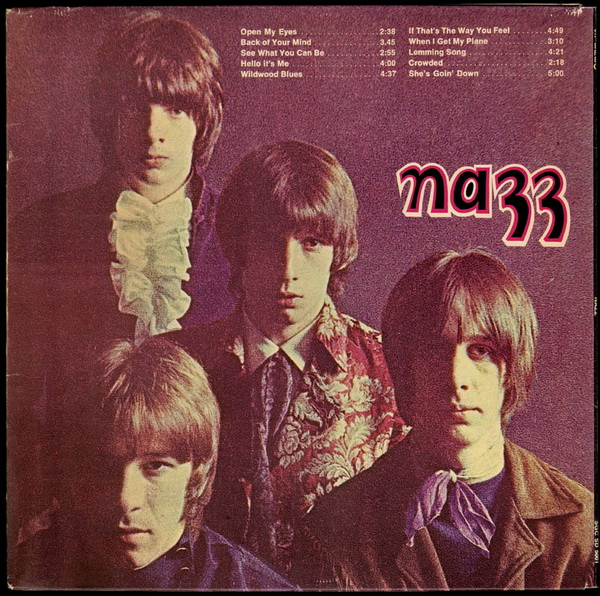
Nazz Nazz.
Not long after the release of their debut album, Nazz were back in the studio. They’d just returned from a UK tour. It was cut short after Nazz encountered problems with visas. So they headed home and got to work on their sophomore album Nazz Nazz.
Originally, Nazz Nazz was meant to be a double album. This wasn’t how it panned out. The band disagreed about whether they should release a single or double album. Some members of Nazz felt that given they were a young, almost unknown group, releasing a double album was a step too far. Double albums were more the territory of experienced and successful bands. Todd Rundgren disagreed.
Todd felt a double album allowed a band to experiment and take their music in unexpected directions. In Nazz’s case, Todd wanted to include piano-based songs, in the vain of Laura Nyro. Sadly, he was outvoted. Undeterred, Todd got to work.
For Nazz Nazz, Todd wrote the ten songs on the album. This wasn’t the only change. He took charge of the horn and strings arrangements. Nazz dispensed with a producer. They decided to produce Nazz Nazz themselves. This wasn’t a surprise. During the recording of Nazz, the band produced four tracks. The next logical step was producing an album. Their decision was vindicated in April 1969.
Released to critical acclaim in April 1969, Nazz Nazz reached number eighty in the US Billboard 200 charts. This should’ve been a cause for celebration. After all, back in 1969, groups had to sell a lot of albums to reach number eighty in the US Billboard 200 charts. Nazz had come a long way in two years. It looked as if Nazz were on the verge of making a breakthrough. That wasn’t to be.
The cracks had been showing since the recording of Nazz Nazz. The band were divided. Three members of Nazz wanted their music to move in the direction of Cream, The Beatles, The Yarbirds and The Who. Not Todd. He wanted take their music in unexpected directions. In Nazz’s case, Todd wanted to experiment and move Nazz’s music in unexpected directions. An example were the piano-based songs, in the vain of Laura Nyro. It was three against one. Nazz were a band divided. So Todd left Nazz and embarked upon a solo career.
Nazz III.
Nazz were all but over. They never recorded another album. Their final Nazz III comprised previously unreleased tracks. Originally, Nazz Nazz was meant to be a double album. When this never happened, a number of songs were left over. However, to some extent, Todd was rewritten out of Nazz’s history.
On Only One Winner, Resolution, Its Not That Easy, Take The Hand and How Can You Call That Beautiful, Todd Rundgren’s vocal doesn’t feature. No. Robert “Stewkey” Antoni’s vocals were overdubbed. This didn’t help sales of Nazz III.
Nazz III was released in May 1971, to coincide with the release of Todd’s sophomore album Runt, The Ballad of Todd Rundgren. This was the followup to Runt, which launched Todd’s solo career. However, Nazz III failed to chart. In some ways, this was an ignominious end to Nazz’s career. As Nazz’s career fizzled out, Todd’s career took off. It began with Runt.
Runt.
After leaving Nazz in 1969, Todd headed to New York and worked with Albert Grossman. This was what Todd refers to as his musical education. He was determined to learn everything he could about audio engineering and production. To do this, he worked alongside Albert Grossman and also, produced a number of groups. Todd also produced his own material. This included Runt.
For Runt, Todd penned ten tracks. He put together a tight, talented band for the recording of Runt. Recording took place in New York. Some musicians played on just one track. Others played on several tracks. The rhythm section featured drummer and percussionist Hunt Sales and bassist and percussionist Tony Sales. Guest artists included The Band’s drummer Levon Helm and bassist Rick Danko on Once Burned. Drummer Bobby Moses, bassist John Miller and Mark Klingman feature on I’m In The Clique. Bassist Don Ferris, drummer Mickey Brook and guitarist Don Lee Van Winkle featured on Birthday Carol, which closed Runt. It was released in 1970.
We Gotta Get You A Woman was chosen as the lead single from Runt. It reached number twenty in the US Billboard 100 charts. Then came the main event, Runt. On its release Runt divided the opinion of critics. Runt wasn’t a huge commercial success. It stalled at number 185 in the US Billboard 200 charts. For Todd this was a bitter blow. However, since then, Runt is perceived as one of Todd Rundgren’s finest albums. I’ll tell you why.
Broke Down and Busted opens Runt. Just a tenderly strummed guitar gives the arrangement a melancholy sound. Soon, Todd’s hurt-filled vocal sweeps in. It’s accompanied by the rhythm section and searing, blistering guitars. They mix blues and rock. Cooing, sweeping harmonies accompany Todd as he delivers an emotive, vocal powerhouse. Although only twenty two, Todd sounds like he’s lived and survived the lyrics. Sounding like a modern day bluesman, he and his band seamlessly fuse blues and rock. Crucial to the track’s success are the blistering, riffing guitars that drive the arrangement to its dramatic crescendo.
Believe In Me sees Todd change tack. He deliver a beautiful, heartfelt ballad on this piano lead track. This is the direction Todd envisaged taking Nazz in. There’s a nod to Laura Nyro. It’s also reminiscent of the direction Carole King’s music would head in. Accompanied by soothing, cooing harmonies, Believe In Me shows another side to Todd Rundgren.
Stabs of jaunty piano, cymbals and bass open We Gotta Get You A Woman. They set the scene for Todd’s urgent vocal. Accompanied by handclaps and harmonies, he dawns the role of singer-songwriter, and revels in it. He’s determined to mend his friend’s broken heart. They’ve tried everything. There’s no option. “We Gotta Get You A Woman.” As he delivers the lyrics, there’s similarities to Laura Nyro and Randy Newman. Just like this talented pair of songwriters, Todd paints pictures with his lyrics.
Who’s That Man bursts into life and is driven along by the rhythm section, pounding piano and scorching guitars. Todd has changed direction again. It’s an explosive slice of rock ’n’ roll. Blistering guitar riffs, Jerry Lee Lewis’ style piano, harmonies and a thunderous rhythm section are the perfect foil to Todd, as he charges through the lyrics. In doing so, he turns back the musical clock to rock ’n’ roll’s heyday.
Once Burned is a piano lead ballad featuring a wistful Todd. He’s had his heart broken, and is determined it won’t happen again. Here, he reminds me another troubled troubadour, Harry Nilsson. Both breath meaning and emotion into lyrics. With a piano and rhythm section for company, Todd lays bare his hurt and heartache. The result is a beautiful ballad tinged with melancholy.
From balladry, Devil’s Bite sees Todd turn his hand to power pop. After an understated introduction when Todd strums his guitar, Who style guitars cut loose and the rest of the rhythm section cut loose. Todd delivers a gravelly, lived-in vocal. It’s controlled power. Again, there’s a nod to The Who. As chugging guitars and pounding drums combine, percussion and harmonies accompany Todd cut loose. They unleash some virtuoso guitar licks. Duelling guitars ferociously fight for supremacy as Todd and his band deliver a barnstorming performance.
I’m In The Clique sees another change in direction. Straight away, there’s a prog rock influence. Todd’s vocal has a futuristic sound, as he delivers lyrics tinged with sarcasm and humour. This attempt at humour doesn’t quite work. The only saving grace is the arrangement, or at least parts of it. Horns rasp and help drive the arrangement along. Soon, the band kick loose. Elements of prog rock, jazz, funk, psychedelia and rock combine. This makes up for the lyrics. An eerie, howling sound sits above the arrangement, as Todd and his band showcase their skills. Just when you think the situation had been rescued, the ill advised, chanted vocal returns. As a result, I’m In The Clique is best described as a track that must have seemed a good idea at the time.
There Are No Words is a compelling track. It veers between haunting and eerie to ethereal. Washes of cooing harmonies sweep in. They have a Beach Boys’ influence. They’re unaccompanied and eventually, take on a relaxing, ambient and experimental sound.
Over five minutes, Todd and his band run through a medley of Baby Let’s Swing, The Last Thing You Said and Don’t Tie My Hands. Again, there’s a Beach Boys influence on the piano lead ballad Baby Let’s Swing. That’s down to the interplay between the lead vocal and harmonies. This continues on The Last Thing You Said. It’s as if Todd had drawn inspiration from Brian Wilson on this, joyous, hook laden track. Don’t Tie My Hands sounds has a late-period Beatles sound. This isn’t surprising, given Let It Be had just been released. Other influences include power pop and the Beach Boys, as Todd Rundgren seamlessly combines musical influences and genres.
Birthday Carol, a nine minute epic closes Runt. Wistful strings set the scene before Todd throws a curveball. After a minute, braying horns, blistering guitars and the rhythm section join forces. They combine blues and rock. With this being a longer track, Todd and his band enjoy the opportunity to take the music in different directions. This is apparent after three minutes. Suddenly it’s all change. Just Todd, his piano and harmonies combine. He’s transformed into a balladeer. Again, there’s a Beach Boys influence. Then for the last couple of minutes, Birthday Carol becomes an explosive, slice of good time, blues rock. It’s a delicious way for the musical chameleon, Todd Rundgren to close his debut album Runt.
Chameleon describes Todd Rundgren on Runt. He seamlessly moves between musical genres. There’s everything from balladry to blues, and power pop to prog rock. That’s not all. Piano ballads and pop, to rock and rock ’n’ roll melt into one on Runt. Influences include Laura Nyro, the Beach Boys, Randy Newman, The Beatles and Carole King. The result is an eclectic and intriguing album that oozes quality.
On Runt, you never know what direction the album is heading. After the blistering blues rock of Broke Down and Busted, it’s hard to believe Todd would dawn the role of balladeer. That’s what he does. Runt then becomes an album full of twists, turns and surprises. It’s a case of expect the unexpected.
Power pop, prog rock, piano ballads and rock ’n’ roll follow. Todd’s at his best on the ballads. He dawns the role of singer-songwriter and grows into the role. Augmented by harmonies and his trusty piano, some of Todd’s best performances are on ballads. Believe In Me and Once Burned feature two of Todd’s best performances. Then on the medley of Baby Let’s Swing, The Last Thing You Said and Don’t Tie My Hands, Todd showcases his versatility. The only low point is the ill-advised I’m In The Clique. It’s not all bad news. Briefly, Todd and his band cut loose, and show what they’re capable of. This was just another example of the chameleon-like Todd Rundgren.
Freed from the restrains of Nazz, Todd was able to make the music he’d been longing to make. He’d been wanting to change direction since Nazz recorded their sophomore album Nazz Nazz. That was Todd’s musical past. He no longer wanted to make garage rock, proto-punk or psychedelia. That was the past. Todd wanted to move on.That’s why he left Nazz. By embarking upon a solo career, he was able to do this. Runt which was recently rereleased by Edsel, as a double album, was the start of a new chapter in his career.
Although Runt was Todd’s debut album, he had matured as a singer and songwriter. This is apparent on Runt. It marked a coming of age from Todd Rundgren. He wrote, arranged, produced and played on Runt. It was the perfect showcase for Todd Rundgren’s talents. However, not everyone realised this.
On its release in 1970, Runt wasn’t a commercial success. It divided the opinion of critics. Somewhat belatedly, they’ve changed their minds. Now, Runt is now perceived by critics as one of Todd Rundgren’s finest solo albums. Critical acclaim and commercial success wasn’t far away for Todd.
Todd Rundgren’s third album Something/Anything? was released in 1972. It reached number twenty-nine in the US Billboard 200 charts and was certified gold. For Todd, this looked like the start of a long and successful career, where gold and platinum discs would follow every album. That wasn’t the case. Something/Anything? was Todd’s only album to be certified gold. Despite releasing over twenty albums, Todd Rundgren never reached the heights of Something/Anything? However, Todd Rundgren’s back-catalogue is littered with hidden gems and underrated albums. There’s also a number of minor classics.
This includes Runt. Eclectic and compelling Runt showcased a musical chameleon, Todd Rundgren. Seamlessly, Todd fuses musical genres and influences on Runt, his debut album which showcased one of the most talented singer, songwriter, multi-instrumentalist and producer’s of his generation.
TODD RUNDGREN-RUNT AND THE ALTERNATE RUNT.
INCREDIBLE STRING BAND- I LOOKED UP AND U.
INCREDIBLE STRING BAND- I LOOKED UP AND U.
For nine years and twelve albums, the Incredible String Band were pioneers within the somewhat staid folk scene. The Incredible String Band’s music was very different to what had gone before. It’s best described as a progressive and psychedelic style of folk music. This is apparent on U and I Looked Up, which were recently rereleased by BGO Records. These two albums show why the Incredible String Band’s music found favour not just in their native Scotland, but much further afield.
By 1969, the Incredible String Band had played the biggest venues in Britain and America. This included London’s Royal Albert Hall, the Filmore East in New York and the Filmore West in San Francisco. The Incredible String Band were one of the biggest and most successful folk bands per se. That’s why they were booked to play at Woodstock in 1969.
Rain delayed the Incredible String Band’s performance at Woodstock. They were due to play at 10.50 pm on Friday 15th August 1969. This was when all the other folk acts were due to play. The Incredible String Band were due to follow Ravi Shankar. However, as Ravi Shankar played, the heavens opened. This presented a problem for the Incredible String Band. They refused to go on. Realising that the Incredible String Band were one of the biggest folk bands of the day, their performance was rescheduled. Melanie was called in as a last-minute replacement for the Incredible String Band.
Between 6.00-6.30pm on Saturday 15th August 1969, the Incredible String Band took to the stage. They followed the Keef Hartley. From the moment the Incredible String Band took to the stage, they played a starring role in the Woodstock Festival. They had the audience in the palm of their hands. For the Incredible String Band, this was a long way from their early days in playing at Archie Fisher’s folk club in the Crown Bar, Edinburgh.
In fact, only six years had passed since Robin Williamson and Clive Palmer first played together. This was at the Crown Bar, Edinburgh, in 1963. Archie Fisher hosted the folk night where two years later, in 1965, Joe Boyd, who was then working as an A&R man for Elektra Records first saw the Incredible String Band. Joe Boyd would later, play an important part in the Incredible String Band story. Before that, two became three.
Later in 1965, Robin Williamson and Clive Palmer decided that the Incredible String Band should become a trio. They wanted someone to fill out their sound. This third man should play rhythm guitar. Enter Mike Heron. It was then that the band donned the moniker Incredible String Band. A year later, Joe Boyd reentered the Incredible String Band’s world.
By 1966, the Incredible String Band were the house band at Clive’s Incredible Folk Club. It was based on the fourth floor of a building on Sauchiehall Street, in Glasgow, Scotland’s musical capital. One night, Joe Boyd made his way to Clive’s Incredible Folk Club. He was a man with a mission. Joe was determined to sign the Incredible String Band. Elektra Records wanted to sign them. They were, after all, predominately, a folk label. However, another label were interested in the Incredible String Band, Transatlantic Records. However, Joe Boyd managed to sign the Incredible String Band and took them into the studio in May 1966.
The Incredible String Band.
To record their eponymous debut album, Joe Boyd took the Incredible String Band into the Sound Techniques’ studio in London. Joe Boyd would produce The Incredible String Band. It features a total of sixteen songs. They were a mixture of original and traditional songs. On these songs, the Incredible String Band deployed an eclectic selection of instruments. Guitars, fiddles, a mandolin, kazoo, violin and tin whistle featured on The Incredible String Band, which was completed in June 1966.
On its release, on 20th July 1966, The Incredible String Band was well received by critics. It was a much more traditional album than later Incredible String Band albums. The psychedelic imagery wasn’t present. That was still to come. In 1966, the Incredible String Band were still a traditional folk group and a popular one at that.
The Incredible String Band reached number thirty-four in the UK charts. It spent three weeks in the charts. For a debut album, by a group who had just signed to their label, this was good going. However, things went awry.
After recording The Incredible String Band, the band split-up. Clive Palmer decided to head off on the hippie trail to Afghanistan and India. Robin Williamson and his girlfriend also caught the travel bug. They headed to Morocco. Only Mike Heron remained in Edinburgh. He hooked up with Rock Bottom and The Deadbeats. With the Incredible String Band looking like history, this was his latest band. However, that wasn’t the case. The Incredible String Band reformed.
Robin Williamson returned from Morocco. He had run out of money. However, he brought back an eclectic selection of musical Moroccan instruments. They would feature on later Incredible String Band albums.
Clive and Robin decided that the Incredible String Band should reform, but as a duo. This was essentially the Incredible String Band Mk. II. They made their debut on a tour in November 1966, where they supported Judy Collins and Tom Paxton. After the tour, the Incredible String Band had an award to collect.
Their debut album The Incredible String Band won the Folk Album Of The Year in Melody Maker’s 1966 annual poll. The Incredible String Band was well regarded among their musical peers. Bob Dylan referred to October Song as one of his favourite songs of the mid-sixties in an interview in Sing Out magazine. With the Incredible String Band reforming, this was spurred them on to greater heights.

The 5000 Spirits or the Layers of the Onion.
Buoyed by winning the Folk Album Of The Year Award, and the praise of Bob Dylan ringing in their ears, the Incredible String Band set about writing and recording their sophomore album. Unlike many bands, the Incredible String Band didn’t write together. When they were apart, that is when they wrote their new songs. This was the case with their sophomore album The 5000 Spirits or the Layers of the Onion. Clive and Robin contributed seven songs each. They became The 5000 Spirits or the Layers of the Onion.
Reduced to a duo, the Incredible String Band brought onboard a number of guest musicians. This included Pentangle double bassist Danny Thompson, pianist Jon Hopkins and Soma, who played sitar and tamboura. Licorice McKechnie, Robin William’s girlfriend contributed percussion and added vocals. Joe Boyd produced The 5000 Spirits or the Layers of the Onion. It was completed early in 1967. When it was released, it marked a change in the Incredible String Band’s sound.
The 5000 Spirits or the Layers of the Onion was the start of the Incredible String Band’s psychedelic folk era. However, mostly, The 5000 Spirits or the Layers of the Onion drew upon traditional British folk music. What was apparent was that Robin and Mike had matured and evolved as musicians. They had honed their sound. It was also apparent that they were talented multi-instrumentalists. Almost seamlessly, they switched between instruments. What also shawn through was that Robin and Mike were talented songwriters. Their songs were cerebral and full of imagery and mystery. There was also a psychedelic hue. This fusion of the traditional and psychedelic, found favour among critics and music lovers.
When The 5000 Spirits or the Layers of the Onion was released in July 1967, it seemed to typify the underlying counter-culture. It struck a nerve with critics and music lovers. Critics hailed The 5000 Spirits or the Layers of the Onion as an eclectic and innovative album. The Incredible String Band had picked up where the left with their eponymous debut album.
With its eclectic, genre-melting style The 5000 Spirits or the Layers of the Onion appealed to a broad spectrum of people. It reached number twenty-five in the UK charts, where it spent five weeks. Gradually, the Incredible String Band’s popularity was growing. It seemed as if the Incredible String Band were on the verge of greatness.
The Hangman’s Beautiful Daughter.
They were. 1968 was the biggest year of the Incredible String Band’s nascent career. They released two albums. The first of these was The Hangman’s Beautiful Daughter.
For The Hangman’s Beautiful Daughter, Robin wrote seven songs and Mike three songs. The Hangman’s Beautiful Daughter wasn’t a sprawling album. Their two previous albums featured sixteen and fourteen songs. This time, only ten songs featured. They marked a coming of age for Robin Williamson and Mike Heron.
With Joe Boyd producing The Hangman’s Beautiful Daughter, the Incredible String Band entered the studio in December 1967. Robin and Mike played most of the instruments. They were joined by Licorice McKechnie, who was with the Incredible String Band until 1972. Other musicians were drafted in on an ad hoc basis. This included Fairport Convention’s Judy Dyble and Richard Thompson, who played piano on The Minotaur’s Song. During the recording sessions, the Incredible String Band made use of the new multi-track tape recorders. They were able to layer instruments on top of each other. For the Incredible String Band, this was a departure from their “usual sound.” It worked though, and played its part in what was the Incredible String Band’s Magnus Opus.
Released in March 1968, The Hangman’s Beautiful Daughter represented, promoted and epitomised the hippie ideal. This included Eastern mysticism, communal living and rational pantheism. The Hangman’s Beautiful Daughter was a cerebral and beautiful album. It featured songs that were dreamy, ethereal, cerebral and surreal. The Minotaur’s Song is essentially a parodic song, influenced by the British musical hall. It’s sung from the Minotaur’s perspective. Very different is the thirteen minute epic, A Very Cellular Song. It’s a reflective, thoughtful song that poses a series of big questions on life, love, and amoebas. Throughout The Hangman’s Beautiful Daughter, the Incredible String Band fuse musical genres. Mostly though, their unique brand of progressive, psychedelic folk shines through. It found an audience on both sides of the Atlantic.
Released to widespread critical acclaim, The Hangman’s Beautiful Daughter reached number five in the UK, where it spent twenty-one weeks in the charts. This was the Incredible String Band’s most successful UK album. The Hangman’s Beautiful Daughter became the Incredible String Band’s first album to chart in the US. It reached number 161 in the US Billboard 200. Having spent nine weeks in the US Billboard 200, The Hangman’s Beautiful Daughter the Incredible String Band was nominated for a Grammy Award. It seemed the Incredible String Band were going places.

Wee Tam and The Big Huge.
Having just released the most successful album of their career, the Incredible String Band were one of the most successful British groups. They were capable of filling the biggest venues. This wasn’t just in the UK. Over the Atlantic, the Incredible String Band were equally popular. This included the Filmore East in New York and the Filmore West in San Francisco. Their third album The Hangman’s Beautiful Daughter was a game-changer. It broke the Incredible String Band in America. Later, in 1968, they tried to do the same with Wee Tam and The Big Huge.
Wee Tam and The Big Huge was without doubt, the most ambitious album of the Incredible String Band’s career. It was released as a double album in the UK and as two individual albums, Wee Tam and The Big Huge, in the US. This meant that Robin and Mike had been busy. They had written eighteen tracks. Robin penned ten and Mike eight. When they recorded Wee Tam and The Big Huge, it would be with their usual eclectic selection of instruments and their two girlfriends.
Joe Boyd, who had produced the Incredible String Band’s three previous albums would produce Wee Tam and The Big Huge. Joe decided that the Incredible String Band should be recorded as a group, rather than overdubbing parts later. Given time was short, for the Incredible String Band this seemed a risky decision. It could’ve backfired. However, Joe wanted to capture the essence of the Incredible String Band live.
Given the variety of instruments Robin and Mike played, some overdubbing was necessary. Unlike previous albums, no guest artists featured. Only Licorice McKechnie and Rose Simpson, Robin and Mike’s respective girlfriends featured on Wee Tam and The Big Huge. They played their part on what was the Incredible String Band’s most electric album, Wee Tam and The Big Huge.
November 1968 saw the release of Wee Tam and The Big Huge. It was the followup to The Hangman’s Beautiful Daughter. This was a hard act to follow. The Incredible String Band realised this. So rather than make The Hangman’s Beautiful Daughter Mk. II, Wee Tam and The Big Huge was a very different album. Eclectic describes Wee Tam and The Big Huge. It’s an album of disparate influences. Similarly, a verity of different instruments were used. Even the arrangement differ. Themes included mythology, religion, awareness and identity. Critics appreciated this change of direction from the Incredible String Band. It was an ambitious release. However, it didn’t fare well commercially.
When it was released in the UK in November 1968 as a double album, Wee Tam and The Big Huge failed to chart. Four months later, Wee Tam and The Big Huge were released as separate albums in March 1969. Wee Tam reahed number 174 in the US Billboard 200 and The Big Huge stalled at just number 180 in the US Billboard 200. After spending just just three weeks in the charts, both albums disappeared. Despite their lack of commercial success, Wee Tam and The Big Huge are seen as one of the best albums the Incredible String Band released. After Wee Tam and The Big Huge, the Incredible String Band wouldn’t release another album until November 1969.
In 1969, the Incredible String Band hit the road. They embarked upon a gruelling tour. During this period, the Incredible String Band were living communally in a farmhouse in Newport, Pembrokeshire. It was during this time, that The Incredible String Band were interested in mixed media. This was something that would later influence their music. However, in 1969, touring was what kept them busy.
The most high profile date the Incredible String Band played was at Woodstock. The Incredible String Band were one of the biggest and most successful folk bands in the world. That’s why they were booked to play at Woodstock in 1969.
Rain delayed the Incredible String Band’s performance at Woodstock. They were due to play at 10.50 pm on Friday 15th August 1969. This was when all the other folk acts were due to play. The Incredible String Band were due to follow Ravi Shankar. However, as Ravi Shankar played, the heavens opened. This presented a problem for the Incredible String Band. So they refused to go on. Realising that the Incredible String Band were one of the biggest folk bands of the day, their performance was rescheduled. Melanie was called in as a last-minute replacement for the Incredible String Band.
Between 6.00-6.30pm on Saturday 15th August 1969, the Incredible String Band took to the stage. They followed the Keef Hartley. From the moment the Incredible String Band took to the stage, they played a starring role in the Woodstock Festival. They had the audience in the palm of their hands. Following their appearance at the Woodstock Festival, the Incredible String Band kept on touring.
Over the Labor Day Weekend, the Texas International Pop Festival was held at the Dallas International Motor Speedway. The Incredible String Band played on 30th August 1969. Their performance didn’t match their appearance at Woodstock. This was disappointing. So was their next album Changing Horses.
Changing Horses.
By November1969, things were changing for the Incredible String Band. Robin and Mike had split from their girlfriends. As a result, they moved from Newport to Innerleithen. That became the Incredible String Band’s new headquarters. Another change, was that the Incredible String Band had embraced the Church Of Scientology. They had been “believers” since 1968, but their “beliefs” never affected their music. Until Changing Horses.
As recording got underway, Joe Boyd produced Changing Horses. Robin and Mike unleash their eclectic array of instruments. He must have noticed a change in the Incredible String Band.
Converting to the Church Of Scientology meant that Robin and Mike had given up drugs. They allude to this in White Bird, one of two tracks Mike penned. The other four tracks were written by Robin. In total, Changing Horses lasts just fifty minutes. Of those fifty minutes, two songs White Bird and Creation make up thirty of the fifty minutes.
On its release in November 1969, Changing Horses was perceived as a disappointing album. It was very different to their previous albums. Changing Horses didn’t come close to previous Incredible String Band albums. Nowadays, it would be described as for completists only. Ironically, it fared better commercially than Wee Tam and The Big Huge.
On its release, Changing Horses reached number thirty in the UK. However, after a week, Changing Horses disappeared from the charts. Over the Atlantic, Changing Horses trotted to number 166 in the US Billboard 200. Three weeks later, it disappeared from the charts. If ever there was a missed opportunity, Changing Horses was it.
Having triumphed at Woodstock, the Incredible String Band should have headed straight into the recording studio. They had released two critically acclaimed albums and been one of the stars of Woodstock. The Incredible String Band were on their way to becoming musical royalty. Even if Changing Horses was recorded, they could have put it on hold. It was obvious it wasn’t going to capture the record public’s imagination. Their new found religion had gotten in the way of transforming the Incredible String Band’s fortunes. Not only that, they had released the most disappointing album of their career. Surely, things could only get better?


I Looked Up.
Five months after Changing Horses, the Incredible String Band returned in April 1970, with I Looked Up. A lot had happened since Changing Horses. Robin and Mike’s relationships were over. They had also moved back to Scotland. Then there was the forthcoming stage show U. It was an ambitious project. Time was short. However, Elektra needed a new Incredible String Band album.
Somehow, Robin and Mike found time to write I Looked Up. Just like its predecessor, Changing Horses, I Looked Up featured just six songs. Robin wrote Pictures in a Mirror and When You Find Out Who You Are. Mike penned Black Jack Davy, The Letter, This Moment and Fair As You. These songs became I Looked Up.
With time short, the Incredible String Band were forced to work quick. Licorice McKechnie and Rose Simpson were still members of the band. They may no longer be couples, but they were part of the band’s sound and previous success. So was Joe Boyd. He was by then, one the most successful producers. His job was to guide the Incredible String Band and get their career back on track. This meant no Changing Horses II.
Unlike their earlier albums, I Looked Up, like its predecessor Changing Horses, featured two lengthy songs. They were the Robin Williamson Pictures in a Mirror and When You Find Out Who You Are. They were nearly eleven minutes long. This Moment and Fair As You clocked in at six minutes. This was very different from the Incredible String Band’s earlier albums. However, would it mark a return to form from Incredible String Band?
When critics heard I Looked Up, they realised it was a vast improvement on Changing Horse. It was a return to form from the Incredible String Band. However, to some extent, I Looked Up divided opinion. Critics realised I Looked Up was good, but how did it compare with previous albums?
With four longer songs on I Looked Up, it was always inevitable that the Incredible String Band would accused of veering towards self-indulgent. Another criticism was I Looked Up was an unfocused album. However, apart from their eponymous debut album, the Incredible String Band’s album had always veered towards eclectic. That was the case with I Looked Up. The Incredible String Band were always determined to keep listeners on their toes.
That is the case from the get-go. I Looked Up begins with the traditional English folk of Black Jack Davey. This gives way to the uptempo electric folk of The Letter. It’s reminiscent of Fairport Convention. That isn’t surprising with Dave Mattacks, Fairport Convention’s drummer featuring on The Letter. Pictures In A Mirror is a mixture of folk, theatre and drama. An eleven minute gothic epic, the Incredible String Band become minstrels, as the retell the story of Lord Randall. Next up is This Moment, the highpoint of I Looked Up. It’s beautiful, heartfelt ballad.
When You Find Out Who You Are is another epic. A meandering track, it finds the Incredible String Band in a reflective mood. This isn’t surprising given their conversion to Scientology. However, there’s an element of theatre and drama present, during what’s best referred to as a reflective epic. Closing I Looked Up was Fair As You. Beautiful, understated and with a pastoral sound, the Incredible String Band scale the heights of earlier albums. However, despite a return to form from the Incredible String Band, I Looked Up fared better in Britain in America.
On May 5th 1970, the Incredible String Band released I Looked Up. It reached number thirty in the UK, where it spent four weeks. Two months later, on 25th July 1970, I Looked Up was released in America and stalled at 196 in the US Billboard 200 charts. Two weeks later, I Looked Up disappeared from the US Billboard 200 charts. For the Incredible String Band, I Looked Up’s failure in America was a disappointing. After all, a year earlier, they had taken Woodstock by storm. At least though, they had made amends for the disappointing Changing Horses.

U.
Just like 1968, which was the most successful year of the Incredible String Band’s career, they released two albums in 1970. It was a case of needs must.
U was a mixed media show that the Incredible String Band unveiled in 1970. The world wasn’t ready for U, and its combination of pantomime-like dancing and music. Unsurprisingly, U wasn’t a commercial success. For the Incredible String Band, this was a disaster. U’s commercial failure meant the Incredible String Band had lost a substantial sum of money. Considering their last couple of albums hadn’t been particularly successful, the Incredible String Band had to do something to recoup their losses. Joe Boyd, producer and the Incredible String Band’s sometime manager decided it was time to record another album.
Just like I Looked Up, the Incredible String Band didn’t have much time for the recording of U. Joe Boyd booked two days studio time. For the next forty-eight hours, the Incredible String Band worked almost non-stop. Very occasionally, they stopped to eat and sleep. Mostly, the Incredible String Band recorded. By the end of the two day sessions, the Incredible String Band had recorded eighteen songs. This was enough for a double album, which became U.
When Joe Boyd brought U together, it was a remarkable fusion of musical styles and influences. Everything from psychedelic and progressive folk sat side-by-side with traditional folk, blues, balladry, country, music hall, world music and rock. An exotic pot pourri, where the Incredible String Band push musical boundaries to their limits, and sometimes, beyond, U featured a band with their backs to the walls.
This seemed to focus the Incredible String Band’s attention. They desperately needed U to sell well. They lost a lot of money on I Looked Up. This was money they couldn’t afford to loose. Losing this money concentrated the mind. The Incredible String Band were focused on producing the best album they could. Ironically, it was deliciously unfocused and eclectic. Robin and Mike’s music veered between bawdy, beautiful, cerebral, witty, lush and innovative.
U featured a variety of delights. This includes the instrumentals Partial Belated Overtime and Bridge Theme. Astral Plane Theme features what can only be described as a guitar masterclass. Robot Blues then showcases some vintage barrelhouse piano. Light in Time of Darkness is without doubt, the highlight in beauty and balladry. It’s without doubt, the best track on U. Coming close is Rainbow, a fifteen minute Magnus Opus, where the Incredible String Band dawn the role of medieval minstrels. That closes U, which sees the Incredible String Band crowned comeback Kings.
It was a case of needs must. Having lost money on the stage-show U, needed to recoup their losses. When U was released to widespread critical acclaim in late 1970, it reached number thirty-four in the UK. In America, U reached just number 183 in the US Billboard 200 charts. U failed to fulfil its potential. This wasn’t unusual.
The Incredible String Band first six albums never sold in huge amounts in America. History repeated itself with U, the Incredible String Band’s seventh album. America didn’t seem to “get” the Incredible String Band. That’s not unusual.
Many successful British artists failed to enjoy the same success in America. This was the case with other folk artists. Nick Drake, John Martyn and Fairport Convention never enjoyed the same commercial success in America. With the Incredible String Band, they looked as if they were destined for greatness.
After taking Woodstock by storm, the Incredible String Band looked like becoming one of Britain’s most successful musical exports. Changing Horses was the wrong album at the wrong time. Why someone, somewhere at Elektra never realised this, seems strange. Ironically, Changing Horse followed what are regarded as the Incredible String Band’s two finest albums 1968s The Hangman’s Beautiful Daughter and Wee Tam and the Big Huge. These two critically acclaimed album should have transformed the Incredible String Band’s career. Then came Changing Horses.
Things improved with I Looked Up. It made amends for Changing Horses and got the Incredible String Band’s career back on track. While I Looked Up was a good album, U surpasses it. It was as if the Incredible String Band were determined to reach the heights of The Hangman’s Beautiful Daughter and Wee Tam and the Big Huge. They came close.
Looking back, The Hangman’s Beautiful Daughter was the finest album the Incredible String Band released. Many people perceive Wee Tam and the Big Huge as coming a close second. However, U vies with Wee Tam and the Big Huge for second place. Deliciously eclectic and unfocused, U finds the Incredible String Band scaling the heights of their earlier career. Sadly, U wasn’t a high commercial success.
For far too long, U has been an underrated album. Hopefully, not any more. Just like I Looked Up, U has been remastered and rereleased by BGO Records. Forty-four years after its release, a new generation have the opportunity to discover one of the hidden gems in the Incredible String Band’s back-catalogue. Along with The Hangman’s Beautiful Daughter and Wee Tam and the Big Huge, I Looked Up and U are the highlights of the Incredible String Band’s twelve album discography.
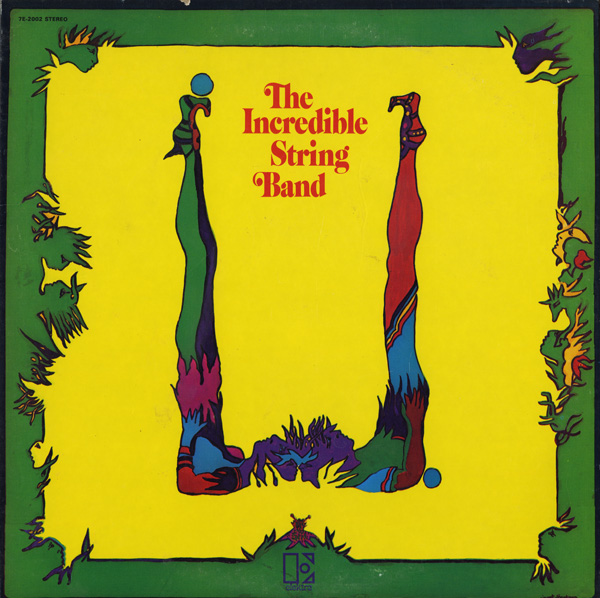
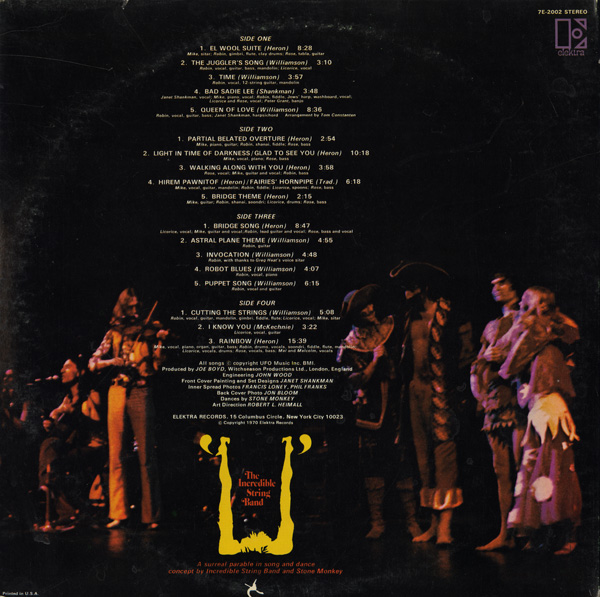
TERRY REID-RIVER.
TERRY REID-RIVER.
Music is all Terry Reid has ever known. It’s been his life. From the day he left St.Ivo School, St.Ives Cambridgeshire, in 1965, Terry Reid was destined to become a musician. His breakthrough came when he joined Peter Jay’s Jaywalkers.
Terry was spotted by Peter Jay, when his band The Redbeats were playing at the River Club, St. Ives. A year later, The Jaywalkers were supporting The Rolling Stones at the Royal Albert Hall. This lifted The Jaywalkers’ profile. Soon, people started taking notice of this up-and-coming band, including Graham Nash.
Not long after the concert at the Royal Albert Hall, Terry met Graham Nash of The Hollies. The pair became good friends. Graham impressed by The Jaywalkers, suggest that they sign to Columbia Records and work with producer John Burgess. This sounded like good advice, so producer The Jaywalkers signed to Columbia Records.
For their debut single, The Jaywalkers recorded The Hand Don’t Fit The Glove. It was produced by John Burgess. On its release in 1967, the soul-tinged The Hand Don’t Fit The Glove, gave The Jaywalkers a minor hit single. This could’ve and should’ve been the start of The Jaywalkers. Sadly, that proved not to be the case. Not long after this, The Jaywalkers split-up. Not long after this, Terry Reid embarked upon his solo career.
It was producer and musical impresario Mickie Most that first spotted Terry’s potential. Mickie became Terry’s manager. He also produced Terry’s solo debut single Better By Far. It was a favourite among radio DJs. This augured well for Terry’s debut album Bang Bang, You’re Terry Reid.
On its release in 1968, Bang Bang, You’re Terry Reid wasn’t a commercial success. It reached just number 153 in the US Billboard 200 charts. Undeterred, Terry headed across the Atlantic on his first American tour. He had been chosen to accompany Cream. This was a prestigious booking that could transform Terry’s nascent career.
Supporting Cream was a huge opportunity. The American market was huge. It was much more lucrative than the British or European markets. Terry and his manager Mickie Most realised this. So they put together a small, tight and talented backing band.
It featured organist Peter Solley and drummer Keith Webb. They provided the backdrop for Terry’s vocal and his virtuoso performances on guitar. This power trio won over American audiences. On the final night of the tour, Terry took to the stage at the Miami Pop Festival. His performance received plaudits and critical acclaim. Terry Reid was going places. However, by going out on tour with Cream, Terry lost the opportunity of a lifetime.
Before heading out on tour with Cream in 1968, word was spreading about Terry Reid. It got as far as Jimmy Page, The Yarbirds’ guitarist. In 1968, he was in the process of putting together a new band. The Yarbirds had just split-up.He was thinking of calling his new band, The New Yarbirds. Eventually, Jimmy’s new band became Led Zeppelin. Having heard good things about Terry Reid, Jimmy decided here was the lead singer he needed. There was a problem though.
For Terry, this was the opportunity of a lifetime. His name was in the frame to join what was essentially an established band. The Yarbirds had been together since 1963. Five years later, they had split-up. The New Yarbirds would pickup where The Yarbirds had left off. However, Terry had committed himself to touring with Cream. He passed on the opportunity to join The New Yarbirds, who eventually, would become Led Zeppelin. Terry however, recommended another singer to Jimmy Page, Birmingham based singer Robert Plant. Terry had seen Robert Plant’s band Band Of Joy and realised he was what Jimmy Page was looking for. That day, rock history was rewritten. This wouldn’t be the last time Terry was asked to join rock royalty.
1969 was an eventful year for Terry Reid. He and his backing band were supporting Jethro Tull and Fleetwood Mac. They also supported The Rolling Stones on their 1969 American tour. However, 1969 was the year Deep Purple were looking for a new lead singer. Rod Evans was being replaced as Deep Purple’s lead singer. Once again, Terry Reid fitted the bill. He was what Deep Purple needed. Lightning struck twice. Terry was under contract and had to decline the opportunity to join Deep Purple, due to contractual arrangements. Yet again, Terry helped rewrite rock history. That however, wasn’t the end of an eventful year.
During 1969, Terry had released his sophomore album, Terry Reid. Over the Atlantic, Terry Reid was entitled Move Over for Terry Reid. It reached number 147 in the US Billboard 200 charts. Again it was produced by Mickie Most, who had plans for Terry’s future career.
Mickie Most had plans for Terry to become a balladeer. This Mickie Most thought, was the direction Terry Reid’s career should take. Terry wasn’t having this. He had his own plans for the future and he wasn’t going to dance to anyone’s tune. So he packed his bags and headed for the sun.
Having landed California in 1970, Terry decided to he would just sit out the remainder of his career. During this period, Terry didn’t perform much. He returned to Britain to play at the 1970 Isle Of Wight Festival. After that, Later, Terry returned stateside and played at then Atlanta II Pop Festival. Then in 1971, Terry returned to Britain and played at the 1971 Glastonbury Fayre, which was the forerunner of the Glastonbury Festival. Despite the paucity of live dates, Terry didn’t enter a recording studio.
Terry was determined to see his contract with Mickie Most out. By 1973, Terry was a free man. His contractual problems were behind him, and he was ready to record again. He signed to Atlantic Records and would begin work on his third solo album, River, which was recently rereleased by BGO Records. Produced by Yes’ Eddy Offord and Tom Dowd, River was the long awaited third album from Terry Reid.
For River, Terry had written seven new songs. They were recorded in London and Atlantic Studios. Terry’s band featured a rhythm section of drummer Conrad Isidore, bassist Leo Miles and David Lindley on electric, slide and steel guitar. They were joined by percussionist Willie Bobo. Terry played guitar and sang the lead vocals on River’s seven tracks. Eddy Offord produced two tracks, Dream and Milestones. Tom Dowd produced the rest of River, which was released in 1973.
When River was released in 1973, it was well received by critics. Many critics preferred the looser sound of River. They saw River as Terry and his band were jamming and experimenting, seeing where the tracks took them. This was very different to his first two albums. Sadly, River wasn’t a commercial success. It stalled at just number 172 in the US Billboard 200 charts. For Terry Reid, this was hugely disappointing. Signed to Atlantic Records and with Tom Dowd producing River, this could’ve and should’ve been the start of the rise and rise of Terry Reid. Since the release of River in 1973, it’s always been an underrated album. You’ll realise why, when I tell you about River.
Opening River is Dean. A guitar is panned right and Terry scats. A crystalline guitar panned left is yin to the other guitar. In the middle sits Terry’s weary lived-in vocal. Providing the heartbeat are the rhythm section. Conrad Isidore drums and Leo Miles’ bass become one. All the time, Terry’s vocal grows in power and emotion. It becomes needy. Flanking the vocals are the guitars. They’re the perfect foil for each other and of course, Terry’s vocal powerhouse. That’s not surprising, when the track is produced by Tom Dowd.
The looser sound is apparent again on Avenue. It’s as if Terry and his small band are just jamming. They’re in search of ideas. It’s a case of saying where the arrangement leads. This works. As they unleash searing, rolling licks the rhythm section drive the arrangement. Then all of a sudden, Terry sees an in. His vocal sounds quite different to his two previous albums. It’s as if he’s lived a lot since then. Guitars scream and riff and cymbals constantly crash. They add an element of drama as Terry unleashes a whiskey soaked vocal. All the time, Terry and his band push boundaries and fuse musical genres. Rock, blues and even Southern Rock combine on this Avenue.
As Things To Try unfolds, Terry and his band get to work. A steel and slide guitar are panned left. A probing bass and acoustic guitar are panned right. Thunderous drums pound. Sometimes, flamboyant drum rolls punctuate the arrangement. Terry’s vocal is gravelly and raspy. It’s hard to believe Terry was only twenty-four when he recorded River. Sometimes, his lyrics are akin to a stream of consciousness. It’s as they’re constantly evolving with each take. Behind Terry, his crack band of musicians who are in full flow. They relish the opportunity to showcase their considerable talents on this genre-melting track where they’re at the peak of their powers. This is without doubt, one of River’s highlights.
An acoustic guitar is strummed urgently on Live Life. Percussion is added by Willie Bobo and a country-tinged guitar is panned left. The band are at their tightest. They get straight down to business and the track just flows. Terry’s vocal veers between tender to powerful and impassioned. Sometimes, he sounds like Robert Plant. When his vocal drops out, the band combine country-rock, Southern Rock and blues. They even indulge in a mini jam, before Terry’s vocal returns. From there the arrangement veers between dramatic to flowing. Briefly, it takes on a West Coast sound, as Terry’s vocal powerhouse drifts in and out.
River has a much more understated, laid-back sound. Melancholy describes the arrangement. It’s just crystalline guitars and a shuffling rhythm section that combine before Terry’s tender, thoughtful vocal enters. This shows another side to Terry Reid. His vocal is clearer as he delivers some of his finest lyrics on River. The arrangement is a fusion of jazz, folk and the West Coast sound, as Terry dawns the role of balladeer. It’s a role that suits him and is the finest track on River.
The last two tracks feature just Terry and his trusty acoustic guitar. Dream features a wistful Terry Reid. Confusion, doubt and emotion fill his vocal. So does hurt. Later, his vocal grows in power. It’s as if he’s unleashing the pain he feels. This is apparent in the way he plays the guitar. He almost pounds the strings as he delivers a soul-baring vocal.
Milestones closes River. Again, it’s just Terry and his acoustic guitar. His finger flit up and down the fretboard. He seems unsure. You can hear him breath, as he thinks about the direction the track is heading. Soon, he whistles and later, scats. It’s as if he’s trying to find an in. Eventually, his tender vocal pensive vocal enters. Quickly, it grows in power. Hurt and pain is omnipresent. For Terry playing and singing prove cathartic. He vents his feelings, hurt and pain. His vocal becomes a hurt-filled wail. In the midst of this cathartic outpouring, he plays a couple of wrong notes. This doesn’t seem to matter. You’re spellbound by Terry’s vocals. They’re panned left and right. Oozing emotion, hurt and pain it’s a potent and powerful way to close River.
Four years after Terry Reid released his eponymous sophomore album, Terry was back. He was now signed to Atlantic Records. Since Terry had been away, music had changed. Prog rock, heavy metal, the West Coast Sound, folk and Southern Rock were popular. Terry a musical alchemist, went his own way.
River sees Terry combining elements of blues, rock, folk, jazz, the West Coast Sound and Southern Rock. Some influences are stronger than others as Terry and his band jam their way through River. It has a much looser sound than his two previous albums. That’s no surprise.
During he recording of River, Terry and his band enjoyed lengthy jam sessions. It was a case of plug in and hit record. They played and saw where the track headed. That is apparent on River. Sometimes, it’s as if Terry and his band see where the track is heading. Then they find an in. From there, a song takes shape. Especially on the first four tracks.
The first four tracks feature Terry at his hard rocking best. Terry and the bend feed off each other. They drive each other on. Although he was only twenty-four, Terry was an experienced bandleader. With talented musicians at his side, Terry’s delivers four explosive tracks. It quickly becomes apparent why Jimmy Page thought Terry would be the perfect fit for The New Yarbirds. Sometimes, on River, Terry Reid reminds me of Robert Plant. That’s until the last three tracks on River.
River is an album where we hear both sides of Terry Reid. On the other three songs on River, we hear a very different side to Terry Reid. He’s transformed into a balladeer and lays bare his soul on the three tracks.
Dream and Milestones feature Terry and an acoustic guitar. It’s akin to an outpouring of hurt, pain and emotion. These tracks are some of the best on River. There’s an element of irony in this. It was as a balladeer that Mickie Most envisaged the future for Terry Reid.
Terry Reid balladeer was very different to what Terry envisaged. He had different ideas what the future held for him. That’s what lead to the split with Mickie Most. On River, Terry Reid has his cake and eats it. He veers between the hard rocking Terry Reid of the first four tracks and the balladeer of the final three tracks. That’s why River, which was recently rereleased by BGO Records, is such a compelling album.
It provides an insight to Terry Reid as he matured as a singer, songwriter and musician. He was twenty-four when he released River. His previous album Terry Reid, had been released in 1969, when Terry was just twenty. Much had happened to Terry in the previous four years. This included the dispute with Mickie Most. During that period, Terry Reid didn’t play many concerts. When he did, they were high profile dates, including the 1970 Isle Of Wight Festival, the 1970 Atlanta II Pop Festival and the 1971 Glastonbury Fayre. This meant people never forgot Terry Reid. Sadly, when Terry Reid returned in 1973, his third album wasn’t a commercial success.
Released in 1973, River stalled at number 172 in the US Billboard 200 charts. River which showed the two sides of Terry Reid didn’t even match the success of his two previous albums. Terry must have rued his decision to turn down the opportunity to join Led Zeppelin and Deep Purple. That was Terry Reid’s chance to become a member of rock royalty. He certainly had the talent. Sadly, Terry didn’t get the breaks.
While Terry Reid enjoyed a successful career, he never quite fulfilled reached the heights he could’ve and should’ve. Things could’ve been very different. However, then Terry Reid would never have recorded River, which shows the two sides of Terry Reid.
TERRY REID-RIVER.
THE SEEDS-SINGLES As and Bs 1965-1970.
THE SEEDS-SINGLES As and Bs 1965-1970.
Formed in 1965, The Seeds spent the next five years combining garage rock, psychedelia, acid rock and proto punk. During that period, The Seeds were one of the most exciting and groundbreaking groups. That’s apparent on the three albums The Seeds released.
Their debut was 1966s The Seeds. It was released in March 1965 and featured the singles Can’t Seem to Make You Mine and Pushpin Too Hard. This marked the debut of Sly Saxon, Daryl Hooper, Jon Savage and Rick Andridge. Released to critical acclaim, The Seeds reached number 132 in the US Billboard 200 charts. The Seeds hinted at what the Los Angeles’ based quartet were capable of.
A year later, The Seeds returned with A Web Of Sound. Produced by Marcus Tybalt and released in October 1967, A Web Of Sound was well received by critics. Among the album’s highlights were the singles Mr. Farmer and the fourteen minute epic Up In Her Room. It closed A Web Of Sound. Despite the quality of of A Web Of Sound, it failed to chart. However, when The Seeds returned with their third album, it would be their swan-song and a classic.
The Seeds final album was 1968s Future. It featured the single A Thousand Shadows, which reached number seventy-two in the US Billboard 100. Future the reached eighty-seven in the US Billboard 200. While Future hadn’t been a huge commercial success, it proved to be a minor classic. It’s best described as a mind-blowing, genre-sprawling, slice of sunshine-psychedelia. Quite simply, it’s a musical tour de force of trippiness. Sadly, however, Future would prove to be The Seeds swan-song. They never released any further albums. However, they released several singles after the release of Future. These singles feature on Singles As and Bs 1965-1970, which was recently released on Big Beat Records, an imprint of Ace Records.
Singles As and Bs 1965-1970 features twenty-four tracks. They’re essentially a history of The Seeds’ singles. This starts with 1965s Can’t Seem To Make You Mine and finishes with 1970s Love In A Summer Basket. There’s also Excuse Excuse from a 1965 E.P. released on Disques Vogue in 1965. Closing Singles As and Bs 1965-1970 is an unedited version of Pushin’ Too Hard, which is a synonymous with The Seeds. However, there’s more to The Seeds than one single. You’ll realise that when I tell you about Singles As and Bs 1965-1970.
Opening Singles As and Bs 1965-1970 is the single Can’t Seem To Make You Mine. The B-Side was Daisy Mae. On its released as a single in July 1965, Can’t Seem To Make You Mine failed to chart. A year later, The Seeds released their eponymous debut album. Can’t Seem To Make You featured on The Seeds.
Released in April 1966, The Seeds reached number 132 in the US Billboard 200. A year later, Can’t Seem To Make You Mine was rereleased in April 1967 with I Tell Myself as the B-Side. The rereleased version of Can’t Seem To Make You Mine reached number forty-one in the US Billboard 100. Can’t Seem To Make You Mine wasn’t the only single released from The Seeds.
Pushin’ Too Hard was The Seeds sophomore single. On the B-Side was Out of the Question. It was released in November 1965. There are similarities with Just like Can’t Seem To Make You Mine. Not only did Pushin’ Too Hard fail to chart, but it was rereleased. Before that Try To Understand was released as a single.
Try To Understand was the third album to be released from The Seeds eponymous debut single. Released in February 1966, The Other Place was chosen as the B-Side. Just like The Seeds’ previous single, Try To Understand failed to chart. A hit single wasn’t far away though.
When it was rereleased, in July 1966, Pushin’ Too Hard reached number thirty-six in the US Billboard 100. This would be the most successful single in The Seeds’ career. Little did they know that they’d never better what was a Seeds’ classic.
In 1966, The Seeds released their sophomore album A Web of Sound. Produced by Marcus Tybalt, A Web of Sound was released in October 1966. Although well received by critics, A Web of Sound failed to chart. One of A Web of Sound’s highlights was the single Mr. Farmer.
Mr. Farmer was the lead single from A Web of Sound. Tucked away on the B-Side first released of Mr. Farmer was the dramatic, choppy No Escape. It’s a real hidden gem from The Seeds’ back-catalogue. Coupled with Mr. Farmer, which showcases The Seeds’ garage sound, it’s surprising that this single failed to chart upon its release in December 1966. A month later, Mr. Farmer was rereleased.
As a new year dawned, Mr. Farmer was rereleased in January 1967. It featured a new B-side, Up In Her Room. This was an edited version of the fourteen minute epic that took up half of the second side of A Web of Sound. Mr. Farmer gave The Seeds a minor hit. However, Mr. Farmer stalled at just number eighty-six in the US Billboard 100. Later, in 1967, the Mr. Farmer E.P. was released.
The Mr. Farmer E.P. featured four tracks. On the A-Side was Mr. Farmer and a three minute edit of Up In Her Room. Then on the B-Side of the Mr. Farmer E.P was The Seeds classic Pushin’ Too Hard and Try To Understand. However, the Mr. Farmer E.P. failed to chart. Things didn’t get any better for The Seeds.
Their next single was meant to be A Thousand Shadows. The B-Side was A Faded Picture. It was due for release in early 1967. However, it was cancelled at the last minute. Apart from a rerelease of Pushin’ Too Hard, nothing was heard of The Seeds until June 1967.
It was in June 1967, that A Thousand Shadows was released as a single. March Of The Flower Children was the B-Side. The single reached number seventy-two in the US Billboard 100. Both tracks featured on The Seeds’ third album Future.
Future was released in 1967 and reached eighty-seven in the US Billboard 200. While Future wasn’t a huge commercial success, it’s since been regarded as a minor classic. It’s best described as a mind-blowing, genre-sprawling, slice of sunshine-psychedelia. This classic album spawned another single, The Wind Blows Your Hair. It epitomises The Seeds’ sunshine psychedelia. On the flip side of The Wind Blows Your Hair is Six Dreams, which oozes drama and theatre. It’s a reminder of The Seeds at the peak of their powers.
After Future, The Seeds’ popularity slumped. They were a victim of changing musical fashions. By mid-1968, The Seeds’ personnel began to change. The first change was the name. The Seeds became Sky Saxon and the Seeds. In August 1968, Satisfy You was released as a single. 900 Million People Daily (All Making Love) was chosen as the B-Side. A fusion of psychedelia and rock, The Seeds seemed to be heading in the direction of The Doors on Satisfy You. While it failed to chart, it’s a storming reminder that for The Seeds, they had a future after Future.
Falling Off The Edge Of My Mind was the final single The Seeds released for GNP Crescendo. Wild Blood was chosen as the B-Side for The Seeds GNP Crescendo swan-song. Released in January 1969, Falling Off The Edge Of My Mind failed to chart. A fusion of country, psychedelia and rock it saw The Seeds looking for a new direction. Ironically, the B-Side Wild Blood was a better track. Rocky, with a nod to The Rolling Stones, Sly struts his way through the track, as they bid their farewell to GNP Crescendo.
In 1969, The Seeds’ lineup changed. Guitarist Bob Norsoph and Don drummer Boomer replaced Jan Savage and Rick Andridge. Despite this change in lineup, Sky Saxon continued to use the name The Seeds. They didn’t release another single until August 1970.
By then, the best way to describe The Seeds’ lineup is fluid. Various backing musicians came onboard. It was more a band entity than band. Bad Part Of Town was released as a single in August 1970, on MGM. It was rocky track with a psychedelic twist. However, it failed to chart. The Seeds were out of luck. Hidden away on the B-Side of Bad Part Of Town, was the melancholy, lysergic and dreamy Wish Me Up. It’s another hidden gem from The Seeds’ back-catalogue. Four months after the release of Bad Part Of Town, The Seeds released their final single.
Love In A Summer Basket was released in December 1970. This was The Seeds’ second single for MGM. Slow, moody, pensive, dramatic and trippy it’s the sunshine psychedelia that The Seeds specialised in a few years earlier. While Love In A Summer Basket failed to chart, their recording career ended on a high. On the flip side of Love In A Summer Basket, was Did He Die. A driving slice of rocky, psychedelia, it showed that The Seeds still had something to offer music. There was only one problem, music was changing. This meant The Seeds had to change.
For the next two years, The Seeds continued. Sky Saxon kept The Seeds alive. However, The Seeds best days were between 1965 and 1967. During that period, they released a trio of genre-defying albums. They showcased one of the most exciting and adventurous bands of the late sixties. The Seeds were, without doubt, musical pioneers. Their three albums are proof of this.
From 1966s The Seeds through 1967s A Web Of Sound and their 1968 swan-song Future, The Seeds weave their magic. They combine a disparate combination of musical genres and influences. Everything from rock, garage rock, psychedelia, folk, jazz, doo-wop, free jazz, proto-punk and even prog rock. With every listen to The Seeds trio of albums, further surprises and subtleties reveal their hidden secrets. Rather than seamlessly flowing from one genre-specific track to another, The Seeds become a musical chameleon. Every track is like a surprise, with hidden depths awaiting the listener. However, The Seeds finest moment was their final album, Future.
The only way to describe Future is a genre-sprawling album. Magpie-like, The Seeds seem to collect musical genres and influences, put them into their lysergic melting pot and sprinkle some secret ingredients. What comes out of The Seeds melting pot was Future. Under appreciated upon its release, that’s no longer the case. Now Future is perceived as a mind-blowing, boundary breaking and genre-defying album, where The Seeds tore up the rule book and rewrote it. Future is essential listening for anyone interested in The Seeds’ music. So is Singles As and Bs 1965-1970, which was recently released on Big Beat, an imprint of Ace Records.
Featuring twenty-four tracks, Singles As and Bs 1965-1970, is the perfect introduction to The Seeds. It features Psychedelic classics and hidden gems. They sit side-by-side. Many of the hidden gems are hidden away on B-Sides. Many of the tracks on Singles As and Bs 1965-1970 also features tracks from The Seeds’ trio of albums, The Seeds, A Web Of Sound and their classic album Future. For the newcomer to The Seeds, then Singles As and Bs 1965-1970, is the perfect opportunity to dip your toe into the genre-defying music of The Seeds.
THE SEEDS-SINGLES As and Bs 1965-1970.


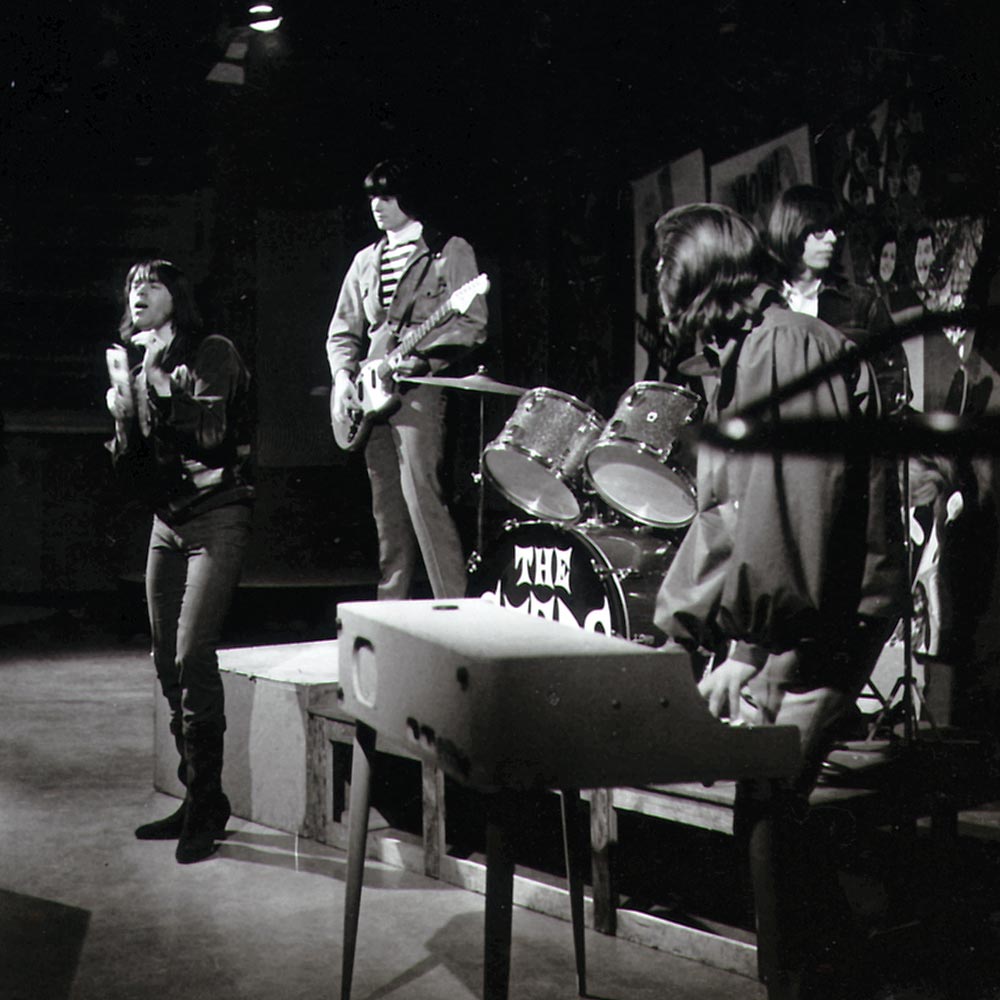

 dereksmusicblog
 dereksmusicblog